February 26, 1980
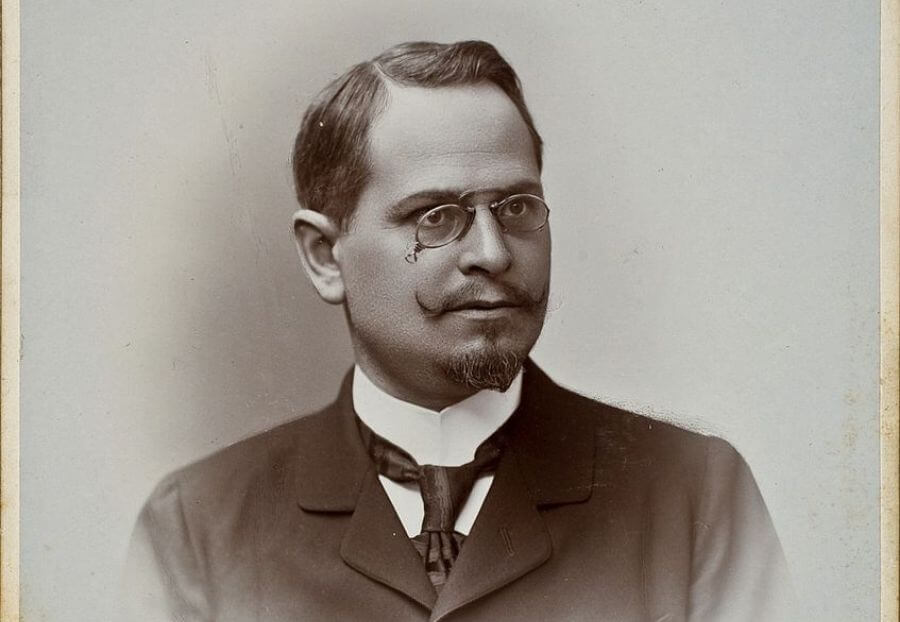
Alois Riegl (14 January 1858 – 17 June 1905) was an Austrian art historian, a member of the Vienna School of Art History, and one of the major figures in the establishment of art history as a self-sufficient academic discipline.
Riegl is best known for developing the concept of Kunstwollen (“artistic volition” or “will-to-art”), an immanent driving force within a culture or epoch that shapes its specific aesthetic style regardless of technical limitations or external influences. In seminal texts like Late Roman Art Industry (1901), Riegl shifted art history toward formal analysis, emphasizing the evolution of visual perception from a tactile (“haptic”) mode to a more distant, optical mode. This distinction, which was taken up by Worringer and Maldiney, would be developed by Deleuze in his many writings on painting.
In Problems of Style: Foundations for a History of Ornament, Riegl elevated decorative and “minor” arts like textiles and ornamentation. Deleuze and Guattari’s reflections on jewelry in the nomadology chapter of A Thousand Plateaus (401-2) seem to have been influenced by Riegl, though he is not explicitly cited.
February 17, 1981
May 26, 1981
May 19, 1981
May 12, 1981
February 28, 1984
April 15, 1986