February 5, 1985
Let’s return to the simplest example, Godard. A series of everyday attitudes tend towards a limit, their theatricalization. It’s not at all like a shift from everyday attitude to the theater. It is not a passage to daily life, from everyday attitude to the theater. It’s a trial of the theatricalization of everyday life. It is a process of theatricalizing of the everyday attitude.
Seminar Introduction
As he starts the fourth year of his reflections on relations between cinema and philosophy, Deleuze explains that the method of thought has two aspects, temporal and spatial, presupposing an implicit image of thought, one that is variable, with history. He proposes the chronotope, as space-time, as the implicit image of thought, one riddled with philosophical cries, and that the problematic of this fourth seminar on cinema will be precisely the theme of “what is philosophy?’, undertaken from the perspective of this encounter between the image of thought and the cinematographic image.
For archival purposes, the English translations are based on the original transcripts from Paris 8, all of which have been revised with reference to the BNF recordings available thanks to Hidenobu Suzuki, and with the generous assistance of Marc Haas.
English Translation
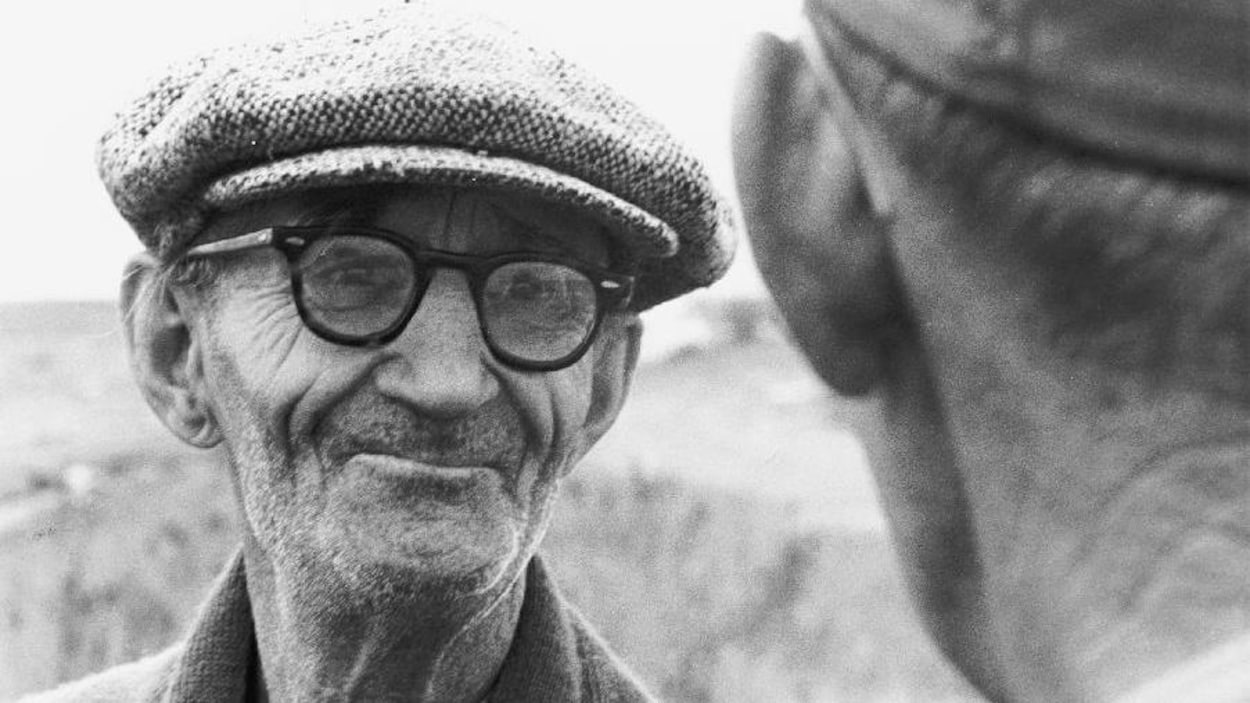
After reviewing earlier key points, Deleuze recalls Barthes’s commentary on the senses of “obvious” (obvie) and “obtuse” (obtus), linking the latter to the gesture’s definition and then outlines four questions arising from this connection, especially given Raymonde Carasco’s interpretation of Barthes. Carasco as guest participant “converses” with Deleuze on these questions (for 48 minutes), maintaining that the sense of “obtuse” passes through writing (écriture) or poetic art, attempting to explain how this “sense” emerges in Barthes’s reflections. She also reflects on the importance of a rhythm concept for understanding poetics of cinema which she links to a global mental film image or totality in different filmmakers and also to Blanchot’s sense of images’ duplicity. Deleuze then reflects on two of Barthes’s examples, considering the types of “masks” revealed by characters within the photo stills selected by Barthes, for Deleuze, a way of teasing out an understanding of the “obtuse” as a kind of limit. Exploring this understanding as a kind of fabulation, he refers to Quebec filmmaker Pierre Perrault and his “cinema of the living”, and then reflects on political cinema, third world cinema, (cf. Jean Rouch). Returning to Godard for what Deleuze calls a “cinema of attitudes and gestures”, he moves from attitude to gestus as in Godard’s forms of theatricalization, and also a cinema of politics which has inherent links to the kind of fabulation that Deleuze emphasizes. [Much of this development corresponds to The Time-Image, chapters 6 and 8.]
Gilles Deleuze
Seminar on Cinema and Thought, 1984-1985
Lecture 12, 05 February 1985 (Cinema Course 78)
Transcription: La voix de Deleuze, Laura Cécilia Nicolas (Part 1), Désirée Lorenz (Part 2) and Pierre Carles (Part 3); additional revisions to the transcription and time stamp: Charles J. Stivale
Translation: Graeme Thomson & Silvia Maglioni
Part 1
… Who knows the dates of the mid-term vacations? I think that there are students here who frequent other departments, right? Or other courses? No, no. Everything’s clear.
So, we’ll have an active break this time that won’t consist in you going across the concourse for coffee but instead I’m going to ask three volunteer messengers – three, because of possible contradictions – three messengers to go across the concourse and report back to me the dates of the vacations, the main question being… please understand how important this is… do they start on the 11th? Will we already be on vacation after this session? Or do they start on the 14th, in which case we still have one session? This isn’t a minor question, it’s a very important one. But I have the feeling that there are some here who should know…
Student: I think it’s the 11th.
Deleuze: You think it’s the 11th? I think it’s the 11th too.
A student: No, I don’t think so.
Deleuze: We can decide on the 11th… and if it isn’t the 11th, that would make it three weeks. That sounds reasonable but it’s better to confirm it. No, perhaps I’m not going to send you because you’d tell me it’s the 14th. You’re not a good messenger.
A student: [Inaudible remarks]
Deleuze: What?… Oh, well then, fine. So, three of you will ask for confirmation… this is what we should do. Okay.
Student: [Inaudible remarks]
Deleuze: It’s chilly, isn’t it? Well, let’s move on. I’d just like to make it very clear to all of you how the different elements of our current research link up. This is precisely what I’d like you to bear in mind for today’s session. For some time now, we’ve been searching for a formal definition of the series, a formal definition of the series. Once again, it wasn’t simply a question of taking the characteristics of a musical series and applying them. In terms of the problem of images, it was a question of constructing our own criteria for the series, making use, naturally, of certain notions borrowed from music, but no more than that. And the formal definition of a series was: a series of images reflected in a concept, genre or category, or rather in something that functions as a concept, genre or category, something of the order of images.
To this, we added two remarks: this concept, genre or category could perfectly well be individualized or personalized. And, secondly, the series thus defined – as a sequence of images reflected, or reflecting in a genre, concept or category – could be constructed in two ways: horizontally, where the genre appeared as a limit, or vertically, where the genre itself constituted an autonomous series, in which case two series were superimposed.
Examples were provided by or in Godard’s cinema, the horizontal construction being of the type: a sequence of images reflected in a genre, this genre intervening as a limit, for example theatricalization as a limit of everyday attitudes in a film like Une femme est une femme [1961]. In the other type of series, the vertical construction appeared when the limit or, rather, when the genre – instead of functioning as a limit of the preceding images – itself developed into a series, into a sequence of images juxtaposed with the first sequence, and this was the case with the two superimposed sequences both in Passion [1982], where the genre itself provided a pictorial or para-pictorial sequence, and even more clearly in Prénom Carmen [1983] where the genre itself produced a musical sequence in which the other sequence of images was reflected. So, there was a superimposition of series, a vertical construction of the series.
So, this is what we had attained… unless some of you want to go back over it, in which case all you have to do is say so. But as I was saying, we haven’t solved the whole problem through this formalism of the series, or through this formal determination of cinematographic series or series of images. We haven’t solved everything, because we still have one problem: not what constitutes the form of the series, but what will be the content of the series, what is the content of the series and no longer what is its form. And from the point of view of content, we established or constructed… through certain texts that we looked at or began to look at last time, we constructed a second type of definition that was a material definition rather than simply a formal one. This time, a series appeared as a sequence of attitudes reflected in a gestus. Note that luckily enough these two determinations echo and even refer to one another. We’ve only gone far enough to intuit these. I mean, given that the series is a sequence of images reflected in a genre, the question of content is: What kind of image can be reflected in a genre?
The first answer, which we haven’t explored at all, but which for us represents a working hypothesis, is that the sequence of images that are normally or regularly destined to be reflected in a genre are images that present bodily attitudes. But taken in terms of their content, that is, taken as attitudes, in what are they reflected? As we were saying, they are reflected in what we call a gestus, a gest. And here again, there was a new correspondence, so it was a reason for us – from the moment we grasped, or even sensed, these correspondences – it was a reason for us to tell ourselves we were on the right path. Because, in fact, there is a new correspondence between genre, or concept, from the point of view of formal definition, and gestus, from the point of view of material definition. Why is this? Because it seemed to us that this gestus, in the work of the very author from whom we borrowed this notion, namely [Bertolt] Brecht, was implicitly linked to the idea of a coherent discourse corresponding to attitudes, where the coherent discourse was implied…. where the virtual discourse was implied by a bodily attitude, or more precisely, as Brecht put it, where the decision was presupposed by the attitude. So, our two definitions, the formal definition and the material definition, could be mapped out quite closely. Again, I want to insist on this, so it all becomes quite clear.
And so we’d have a kind of double difference. I mean, the series became a kind of very delicate narrow thread, a very taut thread that passed or zigzagged between – how shall I put it? – it zigzagged between things, between givens from which it stood out. It zigzagged between what it was not. You see where we are: if it’s true that the series is formally a sequence of images reflected in a genre, but not every image can be reflected in a genre, and if it’s also true that the series is precisely a sequence of attitudes reflected in a gestus, the series is therefore a void between things that it is not, and with which it must not be confused.
So, thirdly, we need to define the series in terms of a set of differences and distinctions it maintains in relation to the things it should not be confused with. And at this point, we could identify those things with which neither the series nor the elements brought into play by the series should be confused. The elements brought into play by the series are: image, insofar as it is reflected in a genre, and attitude insofar as it is reflected in a gestus. Notice how there’s a literary advantage for us in all this, a literary advantage this time that will enable us to define what we call a gest, or the gest, in a way that, so it seems to me, is much more, much more… well, that’s different to the way it’s usually defined. I mean, a certain number of literary critics have taken an interest in what has been called a gest, the origin of which appears to be Scandinavian, though there are also Greek gests.
And gest is not the same thing as the epic, it’s not the same as myth, it’s not the same as tragedy, although the epic has elements of gest, as does tragedy. And what we call gest, a gest, is a very special genre in literature, hence the interest for us in trying to find a definition for this term, and for the moment, the one we do have is a story in which various attitudes are reflected. Gest would be like discourse, the discourse in which a series of attitudes are reflected. But then, I always come back to the question, in distinction to what? You see, I have three levels: the need for a formal definition of the series, the need for a material definition of the series and the need for a differential definition of the series. By differential, I only mean to assign the differences between a series and what doesn’t constitute a series, what isn’t a series. Is that clear? I feel I’m being very clear this morning.
[Someone arrives late]
Deleuze: You’ve missed the clearest part. That’s a pity.
Student: What are we talking about?
Deleuze: What are we talking about? Well, what the series and the terms of the series as we’ve just defined them must be distinguished from… So, I would say there are two things. On one hand, attitude must be distinguished from any lived state, attitude must be distinguished from lived experience. And lived experience has two meanings, very generally, and here I’m not referring to anything in particular… I’m just saying that, conventionally speaking, lived experience can be considered in two ways. Either it’s… [Recording interrupted] [18:42]
… it’s a question, right? But you can see what we mean by the lived experience of a real person. Like your experience, or mine. Or else a supposed experience, the supposed lived experience of a fictional character, in which case the experience corresponds to a role. For example, a fictional character on the screen or in the theater plays a role, the role of a character who’s grieving. The grief is the fictional character’s lived experience insofar as this fictional character is the role played by an actor. I would say that attitude must be distinguished from these two aspects of lived experience, real experience and fictional experience. Why do I say this? It’s obvious. An attitude is not part of lived experience. We constantly take attitudes from experience. But an attitude is not experience.
On the other hand, if attitude is to be distinguished from experience, in the same way gestus must be distinguished from the story or, what amounts to the same thing, the action. And here again, histoire has two meanings. Sometimes it means story, the plot of a fiction, sometimes it means history, meaning the historicity of human deeds. Well, gestus can be distinguished from both story and history. And why is this? Because it’s not an action. It doesn’t fit into the scheme or the sequence of actions and reactions, whether fictional or historical stricto sensu. As we saw last time, following [Roland] Barthes’ remark, Mother Courage’s gestus is not the Thirty Years’ War.
So, there you have it, my three determinations: formal determination, material determination, differential determination. And so, the last time, granted this clarity, this absolute clarity, the last time we ventured into the obscure. It was a question of trying to understand this attitude-gestus link insofar as it distinguishes itself on one hand from lived experience and on the other from story/history or action. And so, we ventured into a much more obscure realm where the following things occurred. After a quick examination of Brecht’s text, which already raised a number of problems for us, we moved on to a commentary by Barthes. Barthes’ commentary suited us insofar as he told us, in one quick sentence, that the gestus is a “coordination of attitudes”, and that the gestus is a signifying gesture, like Mother Courage biting the coin to check that it’s genuine. Okay, this helped us advance a lot, but at the same time it didn’t help us advance, it left us running on the spot. It was a confirmation that there was a fundamental link between attitude and gestus, independent of experience and historicity.[1]
Then we moved on to another Barthes text, this time distinguishing between the obvious meaning and the obtuse meaning.[2] And with much hesitation, we said to ourselves: Wouldn’t there be a link between these two texts, and wouldn’t the meaning – what he calls in a very mysterious way, it seemed to us, the obtuse meaning of the image – be a way of characterizing the gestus? And why did we say this? Because in all of Barthes’s examples, the problem clearly focused – and this was even our reason for comparing the two texts – the problem clearly focused on the notion of attitude. These were images that represented or presented attitudes. And it was regarding these images that Barthes distinguished between an obvious and an obtuse meaning. This raises four questions for us, which I’m not going to deal with on my own.
The first question, which is very subsidiary – I’ll give you all four, and then we’ll see how we can manage – the first question is very subsidiary: Is it fair to bring Barthes’s two texts together and establish a link between them, given that Barthes himself doesn’t establish a link between these two texts? I say this question is subsidiary because, in short, it can only be answered after we’ve answered the other questions. So, far from being the first, it will be the last. It will no longer be a problem. We’ll only be able to answer yes or no after we’ve answered the other questions.
Second question: What does Barthes… what does this obtuse sense that Barthes invokes consist in? I tried to explain why I didn’t understand, or even see very clearly, what he was speaking about. So, it was vexing for me. After rereading the text, I see even less well, so it’s getting worse and worse. Third question. Sorry, second question… What is this… what is this obtuse meaning? Even I understand well how subtle this is… I don’t ask for definitions, just for impressions, because Barthes doesn’t summon definitions, he summons impressions. He doesn’t want to impose his point of view. He says, this is how it is for me, fine, no problem. That’s all we ask, to try to understand what he sees or what he’s in the process of seeing.
Third question, where Barthes’ thesis becomes solid… supposing we have understood the obtuse meaning of the image, he says it has a privileged relation with the still. Not only a privileged relation with the still, but that it can only be grasped by and in the still. This is a very solid, very clear thesis. We don’t yet know what this obtuse meaning is, but what we can say is that, in any case, it can only be grasped in the still. Well, that’s very clear. Many questions arise for us at this third level. Does this mean that the obtuse meaning of the image is a characteristic of photography?
That’s not what Barthes means. So, what is the difference between a still and a photograph? It will be important for us to use of our series of problems to try and make some headway on this obscure question. Everyone knows that a still is not a photograph: what’s the difference between a still as a cinematographic element and a photograph? Barthes raises the question and deals with it in a little note which he leaves incomplete and he knows this full well.[3]
And continuing with this same group of questions, in his consideration that the obtuse meaning is fundamentally linked with the still, Barthes draws the idea that the obtuse meaning and the still constitute the filmic in its pure state, the filmic in its pure state, beyond all actual films, that is, purely filmic or – how shall I put it? – supra-cinematographic. And he goes so far as to say that cinema hasn’t begun, that cinema remains in its infancy, because it hasn’t yet unveiled or attained this pure element of the filmic, whose secret refers back to the still. What can this mean? You see, this third question concerns the relation between obtuse meaning and the still, and what constitutes the status of the still. Can we invoke the still to erect the notion of a supra-cinematographic filmic?
Fourth question: this pure filmic or, if you prefer, the obtuse meaning as it appears in the still, would be precisely a pure filmic because it lay beyond the movement-image. And being beyond the movement-image, the filmic could not therefore be defined by the movement-image. Here too, Barthes’ thesis is very solid. What’s more, it would also be beyond the time-image, at least in the sense of temporal succession, or chronological time, beyond the chronological time-image.
And now, following in Barthes’ footsteps, Raymonde Carasco, commenting on Barthes’ essay on the obtuse meaning, wants to go even further and tells us that this pure filmic is not only beyond the movement-image and beyond the chronological time-image, but beyond the time-image altogether, beyond all time-images, that is, beyond what I believe she calls inner duration, beyond duration or, if you prefer, according to what we covered last year, beyond what I would call non-chronological time.[4]
These are the three points, and the fourth, and the first and the fourth which depend on them, but these are the three points we’re going to deal with, relying on our excellent method, so we’ll now do… we’ll again conduct a sort of interview. But at the same time I’d have to… at the same time it’s not to pose any limits, but I’d like you to agree to respond to these questions, which doesn’t mean you can’t ask others of your own, or make your own elaborations. So, okay…
[Moving away from the microphone Deleuze changes places with Raymonde Carasco. Deleuze can be heard speaking as he sits down again]
Raymonde Carasco: It’s hard swapping places!
Deleuze: … So, the obtuse meaning, we talked a little bit about this last time. I’ll summarize the position… [inaudible remarks] You, you have your position… [Inaudible remarks] you see, you feel what it’s like… [Inaudible remarks] okay. All I had left was… [Inaudible remarks] once said that it concerns a sensation, to say he has this kind of sensation, it’s a feeling he has… [Inaudible remarks]
Carasco: Well, I think we’re getting into… the obscure, let’s say. How do you discover the obscure, as Blanchot would say? It seems to me that I had a kind of amorous relation with this text, which enabled me to… Barthes’ text – which in a way enabled me to crystallize the research I’d done on a text of Eisenstein – that appeared in Cahiers [du cinéma] a long time ago and was on this text. So, well…
Deleuze: Can you tell us a little bit about what this text is about… it’s a text that has aroused a great… [Inaudible remarks] it’s a greatly felt text… [Inaudible remarks] you can feel it, you can really feel it.
Carasco: Putting it in these terms makes it sound like we are trying to avoid the issue.
Deleuze: No, no, this is what’s missing… [Inaudible remarks]
Carasco: And… well, I think it comes down to my affection for a text, Barthes’ text, this affection which is perhaps of an amorous order – in Barthes’ sense of the word – of what this text could provoke, the pleasure of the text. That said, it’s a bit of a cop-out to say that. I’m not sure what you mean when you say “I don’t see it”. That is, if you ask me, Show me this image – the old peasant woman… what this “obtuse meaning” is, well, I’m not sure that it really falls under the order of seeing. Even what Barthes says, since he says it himself, when he takes the example of the old woman – we agree that this is what spurred him to write this essay – it seems to me that what Barthes says… he says that it “cannot be described”. You need the image. If there isn’t an image… if there isn’t an image, you can’t read the text in this way, without the image in front of you. It means nothing if there’s no image, so it has something to do with seeing… well, at least in the immediate sense of the word. But he says afterwards, he says afterwards, he says, finally he says, very well… [inaudible remarks] that it lies between saying and showing. He says that it is an anaphoric gesture, it’s a pure showing [monstration], which doesn’t have… it’s a gesture without a determined meaning. It’s a pure showing that designates not an elsewhere of meaning, but something that is beyond meanings that have already been catalogued, coded and known.
I don’t know how to deal with it, because it seems to me that he himself says that it cannot be described – I made a mistake earlier – he says that it can’t be described, it can only be said. So it comes down to this: to express the obtuse meaning, one has to write. It falls under what he calls the text of writing. It comes through writing, through a kind of poetic act of writing his text. So, then…
Deleuze: [Inaudible remarks]
Carasco: Well, “Drawn mouth, squinting eyes, Kerchief low over her forehead, she weeps”.[5] Well, it seems to me that this… this enigma, the unusual aspect too, what ultimately is the exciting side of what Barthes is saying, is something that in a way he says you can only see “over the shoulder” – like looking over the shoulder of someone writing – so it’s something between “seeing” – because you need the image, it’s a still – and, he says, “showing it” (a gesture). Perhaps there’s an internal relation here with gestus. I’m thinking of these two fragments of… these two poems, two lines by Hölderlin that say: “Man is a …”, what’s normally translated as “sign” – I don’t know German at all – “is a sign”, and in fact [Gerard] Granel in the French translation translates this “sign” as “monster”, in the sense of monstration [showing].
I think it’s the question of the sign that’s being raised here, that is, of a sign that is visual, or at least that begins from the visual, from the visual image and that in a way would be, could we say, a sign-principle, a pure sign, a sign whose meaning and significance has not yet been redetermined, and that is perhaps therefore still indeterminate, not yet determined? Well, when I put it like that, I don’t know if it clarifies anything.
Deleuze: [Inaudible remarks] … that raises another question that we can pursue… It marks a first difference between us… [Inaudible remarks] I have the feeling that what I understand is very different from what you understand… [Inaudible remarks]
So, we can move on to the second question: How do you manage to link the two… [Inaudible remarks] You say that it’s not exactly a matter of seeing, it’s a seeing-shown, it’s as if the eye is shown something. I agree. But I’d like to ask you a question: Are we supposed to see this in the course of the film, or are we supposed to stop and wait for the still?
Carasco: Well, excuse me, but Hölderlin ‘s phrase was important: “Man is a monster deprived of meaning… is a sign”. But, if you’ll forgive me, the etymology would seem more like monster. So, it’s an etymology that refers to people who… [Inaudible remarks] and Granel gives the etymology [inaudible remarks] as “monster” and not “sign”. Well, it’s more that it’s deprived of meaning, so it’s not a question of meaning.
So, I come back to your question. If, like everyone else, I read Barthes, if I read Barthes literally, I’m obliged to answer… For Barthes – and you have to hold on to this, I think you have to hold on to it first, and even not just at first but all the time – all the time you have to hold on to this literalness of Barthes, meaning you can only see it in the still. In any case, what’s important is that it can only be seen in one still, one still only, and outside the film. That’s what Barthes says, and well, I can’t say anything other than what he says, so this is what he says, well… that’s Barthes. At least, I permit myself to see something else.
Deleuze: [Inaudible remarks]
Carasco: Sorry?
Deleuze: [Inaudible remarks]
Carasco: Well, he says he saw it in a photo in Cahiers du cinéma, that is, outside the film, and that when he goes to the cinema, he doesn’t see it anymore.
Deleuze: Well, that’s different. He saw it in a photo…
Carasco: He saw it in a photo.
Deleuze: … and not on a still.
Carasco: My hypothesis, my personal feeling, is that if he had a slightly more trained eye, that is… if he had worked at the editing table, if he were a filmmaker, and if he had worked at the editing table, still by still, the old woman, well, maybe he’d see her in the film in motion. And I think that, after reading Barthes, this obtuse meaning is something I’ve seen in films a few times…
Deleuze: You can see it in the course of the film.
Carasco: That’s where I differ from Barthes. That said, I don’t think this difference is essential. It’s the third level, in a way… I think that whether we can see it, or when Barthes doesn’t see it, I don’t think it changes Barthes’s initial assertion, which seems to me to be related to the question of the still, namely that we can see it simply in a single still and therefore not between two, or between several… that the obtuse meaning is not a friction or collision or the serial-movement of two or several…
Deleuze: … that there is no rupture of relations.
Carasco: So, it seems to me an interesting question because I don’t feel that way, the way Barthes feels. But, at the same time, I say to myself that it doesn’t take anything away, it doesn’t in any way restrict the question in Barthes’ text on the obtuse, which he defines quite clearly as within a single still, and not at all as interval, collision, shock. So, it seems to me that…
Deleuze: So, let’s move on to what you think, since you accept, since you say so in a sense… [Inaudible remarks] So that was the first question, provisionally resolved. Second question: Do you, then, believe that the word “obtuse” is fundamentally related to… [Inaudible remarks] Even if you can grasp it in the course of a film, for itself, in itself, does it have a fundamental relation with… [inaudible remarks]?
Carasco: Well, insofar as I’ve, let’s say, merged the meaning of this text by Barthes [with Eisenstein] in order to read Eisenstein, that’s obviously the way I’ve merged them. That is, it’s not so much the development or analysis of the image that interests me, but it’s actually the entity – I don’t know if it’s a concept or a category – the entity of the filmic. I don’t think it’s a concept, no more than the obtuse meaning. I think it’s…
Deleuze: [Inaudible remarks]
Carasco: Yes, well. But it seems to me that the obtuse meaning and the filmic, which would be the basis of the obtuse meaning… the notion he proposes at the end of the text, almost on the last page, which is the densest part, this is what interests me, what interests us all. The rest is the writing, the pleasure of the text, but this is Barthes’ own impression, I hold onto that, yes I hold onto it, the idea that the obtuse meaning and the filmic are fundamentally and radically linked to the still. That’s what I think is important in Barthes’ text, otherwise it’s not that interesting.
Deleuze: [Inaudible remarks]
Carasco: Well, I don’t know what I’ve said. But I’ll try to say it differently.
Deleuze: [Inaudible remarks]
Carasco: What?
Student: [Brief inaudible question]
Deleuze: Yes, the filmic… [Inaudible remarks]
Carasco: In any case, in my view this is… this is the core of Barthes’ text. Either we agree that it’s interesting and says something important for our thinking about cinema, and that’s it, or it doesn’t say anything and we have to move on and find something else. But then, it seems obvious to me that it’s that…
Deleuze: Or nothing!
Carasco: … that it’s that or nothing, yes!
Deleuze: So here we are… [Inaudible remarks] and now we go on, because we have other questions… [Inaudible remarks] So, for you, what’s the difference between the still… [Inaudible remarks] between the filmic and a photograph, given that Barthes… [Inaudible remarks – Here Deleuze comments on how Barthes remains deliberately vague on these distinctions]
Carasco: Well, I’ll say right away that I don’t know how to answer that, but I do know that it’s the kernel of the question. So, I’ll try to say some things that I know, and that I don’t think illuminate the difference, alas, between a still and a photograph. I don’t like photography at all. I’m the opposite of Barthes in this, I detest photos, I don’t like photos. Really, I’m not interested in that, I’ve never read anything about it.
Deleuze: Me neither, me neither… [Inaudible remarks]
Carasco: Well, having said that, there’s one thing I’d be able to formulate a little – it’s just banalities but there we are… – it’s that I clearly understand not what a still is, but the between of two stills in relation to cinema, it’s… if I hadn’t read Barthes’s text, or if I put it out of my mind, well, if I’m asked a question, if someone says to me: What is cinema for you? What is the key cinematographic element? I’d say, not only… – I’d be very Eisensteinian in the end, as always – I’d say that cinema is montage. And what interests me is that for there to be montage… for there to be montage… for Eisenstein it’s always the out-of-shot – not at all the off-screen – but ultimately the shock, the collision of: first, an element, second, the figurative, the visual image, the still if you like, and then, third, what arises, but which is not of the order of the visible, or the image, or the still and which would perhaps be of the order of the concept, in any case, a third term. So, if I were asked what is the key cinematographic element, I’d answer, it’s the interval, the interval between two stills. So, it’s the interval, well, but… or it’s the out-of-shot… – ah, I think I’m getting somewhere now – it’s the out-of-shot as something included, first of all, in the horizontal succession of stills, like the interval between two stills, the shock between two stills. So that would be…
Deleuze: You mean between two stills or between two images?
Carasco: Between two images or stills, I’m saying they’re the same thing.
Deleuze: [Inaudible remarks]
Carasco: If I extract a still, as Barthes does, or if I isolate it at the editing table, it seems to me that cinema begins, or is born, from the shock between shots, well, between images, but at the elementary level, between two stills. I think it starts there, it’s born there. But that’s not what Barthes says.
Deleuze: So, there we have… [Inaudible remarks] for the moment, we have… [Inaudible remarks]
Carasco: Anyway, I’d like to finish because an idea came to me… what interests me in Barthes is what he calls the vertical reading within the still. And when he himself takes Eisenstein’s phrase about the counterpoint of audiovisual montage, and says that, in the end, we can transport what Eisenstein says regarding audiovisual montage, that is, images and sounds, sound cinema, as early as 1928, in the famous manifesto he wrote with [Vsevolod] Pudovkin and [Grigory] Alexandrov, when he finally says that what’s new is the verticality that sound introduces, when it falls upon the image in a concept that…
Deleuze: It’s not The Manifesto we’re talking about?
Carasco: No, that’s a text from 1938. But still, there’s already this in audiovisual counterpoint, the idea of a contrapuntal montage. I think Eisenstein used the term…
Deleuze: Ah, yes, in a very different sense, but I think we would agree… [Inaudible remarks in which Deleuze seems to be summarizing Eisenstein’s text known as The Manifesto]
Carasco: And that’s what invokes… what invokes… Well, that’s what seems central to me. Because for me, what interests me is Barthes and Eisenstein, the third meaning, the obtuse meaning and Eisenstein. So, this is the fundamental center of gravity, says Barthes regarding Eisenstein, in the text on audiovisual montage. I apologize for the confusion, it was my fault, so I completely withdraw…
Deleuze: Ah, there’s no need…
A student: [Inaudible remarks asking her for the exact reference]
Carasco: It’s in Cahiers du Cinéma 222, with reference to 218, the center… the text Barthes quotes in “The Third Meaning” is by Eisenstein.[6]
Deleuze: So, it’s in Cahiers du cinéma 150…
Carasco: I think it’s called “Montage 38”.
Deleuze: [Inaudible remarks]
Carasco: “The basic center of gravity…” – so says Eisenstein of audiovisual montage – “is transferred inside the fragment… into elements included within the image itself. And the center of gravity is no longer the element ‘between shots’ – the shock, but the element ‘inside the shot’ – the accentuation within the fragment”.[7] And taking this fragment, this quotation from Eisenstein, written it seems in 1938, in terms of audiovisual montage, he says: Finally, I take this fragment and I displace it onto the still, given that there is no sound, and that the obtuse meaning would fall on the visual image just like the sound and… on the interior of the fragment, and thus allow a vertical reading, as he says, of the still.
Deleuze: And even the fundamental form of… [Inaudible remarks]
Carasco: Yes.
Deleuze: [Inaudible remarks] … not only the fragment, but an interior of the fragment… [Inaudible remarks]
Carasco: In my view, this is the core of what’s interesting about Barthes’ text, his proposal of a theory of the still, based on the filmic.
Deleuze: So, the still gives us the interior of the fragment…
Carasco: Yes, that’s what interests me.
Deleuze: So, the last question: the interior of the fragment… [inaudible remarks] in the still, it’s beyond the movement-image, and according to you, beyond the time-image…
Carasco: Beyond the movement-image, I think there’s no need to… it follows, let’s say, from what Barthes says, beyond or beneath… Well, literally speaking… [Recording interrupted] [1:00:42]
Part 2
Carasco: Let’s say, in terms of the logical, diegetic time of the story, well, that’s obvious too. Is it obvious to you, this first level of time?
Deleuze: Actually, it’s not that important. You see, for me, the problem is… [Inaudible remarks] something else… sometimes the movement-image, sometimes the time-image, and there’s nothing else… [Inaudible remarks] If I’m told there’s something beyond or beneath the movement-image and the time-image… [Inaudible remarks] So, I would refer them back to you…
Carasco: I have to say that when I wrote the text we’re talking about, that is, the one in the Revue d’esthétique,[8] it was the first year, the very first year… it was during the period when you were beginning to work on the time-image, sorry, the movement-image, and you were beginning to distinguish between time-image and movement-image. So, it was, well, that’s why I didn’t, I didn’t quote you, for example, so as not to talk nonsense, let’s say… so as not to make someone say something they didn’t say.
Deleuze: [Inaudible remarks]
Carasco: Well, what I’m trying to say is that what I call the time-image is not something that we covered in the work you did last year. So today, I’d say… I’d probably see things differently, not only because of this work but, let’s say, in the very reading of Barthes’ text. I think I went a bit too fast, or too far. I overstepped the mark.
But there’s still something I’d keep, aside from the objective, chronological time-image or the story, well, logical time, objective time. So, that’s how I saw things, how I saw then… how I saw it at the time I wrote it, what it corresponded to, the temporality of the film. Well, it’s obvious that objective time, what Eisenstein would eventually call metric editing, the fact that it’s an hour and a half long, that you can measure each shot in seconds and see the relations between shots – well, the quantitative, objective and measurable level, the metric level of the film, isn’t what’s interesting. So, what I called duration – that’s why I introduced the term duration, taking it roughly from Bergson, let’s say… – what I called the duration-image or the duration of a film or the temporality of a film, I think I could say that it’s perhaps, it would correspond in any case, to what Eisenstein called… [Recording interrupted] [1:04:52]
… objective, metric and so on… it would be something that would probably have to be centered around the notion of rhythm. It would be a film’s own rhythm, its internal rhythm. So, each time, of this or that particular film. That’s what I was talking about, not a duration internal to a subject, but ultimately a film’s own, singular temporality, which would at least fall under the second level, which is the rhythmic level, and the qualitative level.
Deleuze: Did you mean to say, in fact, that it was beyond rhythm?
Carasco: Yes, because if I take, well, to put it crudely… there are films that you feel have something to do with time, the films of certain directors… we feel, quite clearly, I don’t know, the specific temporality of Murnau, for example, or Duras, in all of her films… or even Welles. These are big examples. Or Resnais. So, it has something to do with what you call the time-image. But for me, it’s the overall time-image of the film that I was talking about. Okay?
Deleuze: The time-image…?
Carasco: Of the film as a whole, that is the film as a time-image, and therefore the duration of a film.
Deleuze: The time-image either refers to chronological time… [Inaudible remarks] Well, you said that there’s another time-image which would consist in a non-chronological time and would relate to the whole film, or a part of the film. And that’s what we’re talking about… [Inaudible remarks] So, lastly, the rhythm…
Carasco: The rhythm? This is a time-rhythm, you see… And it’s not a metric rhythm, of course. It’s not a mathematical pattern, right? Rhythm is on the side of the time-image.
Deleuze: So, you want this obtuse time to be beyond the movement-image and beyond the time-image… [Inaudible remarks] is that right?
Richard Pinhas: Before moving on to the next point… I didn’t understand the relation between time, duration and rhythm…
Carasco: It’s not easy.
Pinhas: No… but can you explain the relation between the three? I don’t understand.
Deleuze: [Inaudible remarks]
Pinhas: No, no… okay, forget about that, but speaking about… [Inaudible remarks]Deleuze: [Inaudible remarks]… she puts rhythm on the side of non-chronological time.
Pinhas: I get that. But what, what… on the side of non-chronological time, namely pure duration, pure cinematic duration, a time specific to cinema… what are the relations and what are the definitions of time, duration and rhythm?
Deleuze: In my view, it doesn’t matter to her.
Pinhas: Really?
Deleuze: It doesn’t matter to Raymonde Carasco, because she’s made a… it’s a whole other problem… [Inaudible remarks] that’s another problem altogether…
Carasco: No, it does matter to me in the sense – I’m answering, I’m answering you, and I think we agree on that – it does matter to me. That is, it’s obvious that for me, the concept of rhythm is absolutely fundamental and central to thinking about, let’s say, what I call a poetics of cinema. Because my project isn’t about logic. I’m not trained to construct a logic of cinema. It’s not my job. But what I’m looking for is something more specific. What I’m working on isn’t so new. What I call poetics is perhaps a term that needs to be revised, that is to say a poiein, how it’s made, how a film is made. So, in terms of poetics, it seems to me that the concept of rhythm is absolutely central, fundamental, and that we need to think about it.
So, if you ask me, What does cinematic rhythm mean to you? I have to tell you, I don’t have… I haven’t produced a concept of cinematic rhythm, I’m still looking for one, but it’s obviously a very, very strong focus in my questioning, this question of rhythm. So, for me, it’s much more a question than a ready-made concept. Besides, it implies a lot of things, like analogies with music, poetic rhythm in the ordinary sense of the word, and cinematographic rhythm, so it’s a very complex thing.
Lucien Gouty: You don’t think it corresponds to style?
Carasco: Yes, but not entirely. I think the notion of style is insufficient, it’s too narrow. Well, maybe that’s another question, I don’t know if we should talk about that now.
Deleuze: [Inaudible remarks]
Carasco: That’s why I’m answering that it’s not at all obvious to me. Rhythm… is obviously an important question. And it has to be defined and constructed, it’s a concept to be constructed, depending on the filmmaker in question, and there are typologies of rhythms that need to be defined.
Deleuze: So, let’s go back to… [Inaudible remarks]
Carasco: Okay. The question I asked myself is… I had asked myself this question, I had established this distinction based on something that I find useful in Duras – a short text at the beginning of the introduction to India Song [1975], one of the rare, somewhat theoretical texts by Duras on cinema – in which she says that in the end, writing a script, a shot breakdown, is something she does for the technicians… the breakdown, shot by shot, but it’s not… it’s not that… I don’t need it. I do it to give it to the crew members, the director of photography, the cameraman and so on…
Deleuze: [Inaudible remarks] … and to the funding commission!
Carasco: [Inaudible remarks] … right, and she says that, ultimately, there is an idea of the film. Actually, she doesn’t say an idea, she says that there is an overall image of the film, a mental image of the film, even before she starts writing, even before shooting and so on, and that’s what interested me. And I said to myself that in this mental image of the film – so should we call it the idea of the film, as Eisenstein says, are they the same thing? I don’t know – but in the mental image of the film, you have a view of the film in its totality before you’ve even begun to write a word, and you start writing when you have this view. And then, precisely to establish… so I would say that it’s a kind of view, and that’s what interests me. So, is this a third level, beneath the movement-image… sorry, the duration-image, if you want to call it that… is it a third level? Or is it still and continually the duration-image? Well, that’s a question I’d like to ask you. And one that I ask myself too. It’s not simply… [inaudible remarks]
So, obviously, in this sense, is it from this mental image, this view that she herself says is an open totality? And on this point we agree. She takes the image of a river flowing into the sea, and then the sea flows into who-knows-where, and that would be the world, so the film as an open totality… It seems to me that it’s from this, from the idea of the film, from the overall mental vision of the film, perhaps the unconscious idea – I don’t know if it’s the same thing – well, from this, it seems to me that this is how the rhythm of a given film unfolds. The fact that we’re going to take, I don’t know, a rhythmic alternation of two sequence shots, and then time-image, and then on the other hand, a briefer, sharper montage of two still shots, for example, as in the early Resnais films, or the fact that Duras will make her film with such and such a rhythm, it’s in a way completely secondary, and it’s already decided, virtually contained in the idea of the film. What controls the idea, the rhythm of a film, what I call the rhythm of a film, is also the fact that here we’ll do a close-up, and there a long shot. You don’t think: If I do a close-up, I’ll also do a long shot. In the idea of the film, everything is already there. So that’s it, that’s what seems to me to be the point we should be reflecting on.
Deleuze: No, it’s not the same thing. You said it yourself, there’s a global image. My question was: Can we give a positive character to this beyond of the movement-image? In a sense that you’ve just defined as non-global, non-globalizable, since, as Barthes says, it’s within the fragment and can only occur in the still, namely the mental image…
Carasco: Ah, no, no, no, not at all…
Deleuze: My question, then, is the obtuse meaning… [Inaudible remarks] beyond the movement of time, is there still a… [Inaudible remarks] that is, … [Inaudible remarks]
Carasco: Or else it’s a kind of contracted duration, a contracted duration of the film, from which the film, and the rhythm of the film, will be able to unfold. Well, then, this is where I say I’m going back on what I wrote before. I’m now speaking about a contracted time, a contracted duration, but it’s still time and it’s still duration. So, how can I think outside of it, if it’s… well, if I call this an initial image of the film, global but initial? What I think now, rather… and this would be in line with Barthes, because Barthes speaks about reading, you know, reading the still, and his theory is a theory of the reading of the still. And he says that, in the end, in this reading, you always have the obvious meaning. The symbolic and obvious meaning, the communication, is always there, and the obtuse meaning doesn’t affect this meaning at all. And in a way, that’s it, these two meanings… they’re in a palimpsest relation, he says, and basically… in a palimpsest, at the level of… one which is real and not textual nor analogical, like… and it seems that it’s a meaning that has to be scraped off. There’s a layer, you scrape away, and then underneath another text appears, a double text. But then there’s a first one you have to scrape off, and the other one is underneath, okay. Whereas Barthes says…
Deleuze: That’s what drove Saussure crazy.
Carasco: Well, Barthes says that the first and second can be inverted, in his still and his reading of the still. In other words, there aren’t two separate meanings, they co-exist, and he says it’s a very twisted arrangement that implies a temporality of signification.
So, I’m about to leave Barthes, and I don’t know, maybe I’ll say something even more… [Inaudible remarks] Anyway, I came across a Blanchot text in The Infinite Conversation, “Speaking is not Seeing” [9], and there’s a moment where Blanchot gives a definition of the image. So he begins with the dream, with the fascination we can have with the image of a dream, and then, at one point, in a moment of dialogue, he speaks about the image, and says that there is always a duplicity in the image, and that higher, as he says, further than this duplicity, there is what he calls the turning point, the torsion – turning in the active sense – from which the duplicity of the image could unfold. So, I say to myself, if there is a turning and a torsion that is originary, that would in some way come before the image, before the duplicity of the image and before language, well… this turning nonetheless involves time. There can be no turning if there is no time. So that’s why I go back on my text. Is it…?
Deleuze: The answer to Barthes’ final question is very coherent… [Inaudible remarks] So, thank you very much. Do you have anything to add?
Carasco: No.
Deleuze: [Inaudible remarks]
Carasco: I hope I haven’t been too long or too obscure. What do you think?
Deleuze: No, no, it was very clear… What time is it?
Student: 11:30.
Deleuze: 11:30! But that means it’s break time! I think the points Raymonde Carasco made are very clear. So it’s not at all my intention to criticize. I find it very helpful and I needed her intervention to tell you how I myself see these three problems. I don’t see how I can make my own point of view chime with that of Raymonde Carasco but it doesn’t matter, we can maintain different points of view.
First point of view, I’d say, then, let’s not beat around the bush: What is this business, what do I retain – Raymonde said very well what she herself retained of this obtuse meaning – well, what do I… How do I feel about it, in the way Barthes’ text expresses the question? There’s one thing that troubles me. I stand by what I said, I stand by it. I still don’t understand it, because, basically, it tells me nothing, whereas other texts by Barthes tell me a lot.
But there’s one thing that strikes me. It’s in the two main examples he gives – I’ve already mentioned them – he tells us: It’s very difficult to say what I’d like to tell you, but here it is, the old lady who proclaims her sorrow in the image or in the special still, you’ll remember, where her bonnet has fallen almost on her eyebrows, where there’s the line of the bonnet, the eyebrows, the mouth, the eyelids, the mouth, in a special organization that forms part of the series of stills of this weeping woman. Well, there’s this one where the obtuse meaning is embodied, and what does he tell us? He tells us: You see, she looks as though she’s in disguise. In the others, she doesn’t look disguised. In the others, it’s just a woman crying. To translate this, we can say it’s an attitude, an attitude, or it’s a posture. Her whole body is engaged in her grief, it’s a bodily attitude.
But then, according to Barthes, a still of an image appears that is, for the moment let’s say, unusual, and which will disappear, giving the impression that she is disguised. You remember, “All these features (the absurdly low kerchief, the old woman, the squinting eyelids, the fish) have as a vague reference a somewhat low language, the language of a rather pathetic disguise. United with the noble grief of the obvious meaning” – you see, she bears a noble grief – “they form a dialogism so tenuous that there is no guarantee of its intentionality”.[10] Very fleeting. You get the impression that she is disguised. And he senses how dangerous what he’s saying is, because he then adds: above all, it’s not at all a “parody”. It’s not as if all of a sudden there’s a parody of grief, a kind of imitation. It’s not a parody. Nor is it that she doesn’t feel. Nor is it that she no longer experiences grief. She feels grief fully, but we have the bizarre impression that she is disguised, a disguise that perhaps only profound grief can produce.
The other example, which, as Raymonde Carasco was right to say, is Barthes’s essential example, because the other example he gives us leaves us even more confused… the example he gives, as I said very quickly last time, is during the coronation of Ivan the Terrible, when in Ivan the Terrible [1945], there’s the coronation scene, a magnificent scene, with the rain of gold that the two courtiers pour on the head, on the crown, and which trickles down onto Ivan the Terrible’s cloak. He says: Look at the courtiers, here they are. And it’s in a text where he says, I’m going to… I’m going to try to tell you what the third meaning, that is, the obtuse meaning, is. “I cannot give it a name, but I can clearly see the features – the signifying accidents of which this heretofore incomplete sign is composed.” – Listen carefully – “There is a certain density of the courtiers’ makeup, in one case thick” – since there are two of them, here in a still, the makeup of one of the courtiers, thick makeup – “thick and emphatic” – in the picture of the courtiers – “in the other smooth and distinguished; there is the stupid nose on one and the delicate line of the eyelids on the other, his dull blond hair, his wan complexion, the affected smoothness of his hairstyle which suggests a wig, the connection with chalky skin tints, with rice powder”.[11]
It’s all the more bizarre to tell us this at a ceremony. And he tells us, in the overall ceremony of the Tsar’s coronation, there is one still or a number of stills that are singular. How does he define them? The characters are not only disguised by virtue of the ceremony – that would be part of the obvious meaning – they look strangely disguised in another manner. They are disguised in disguise. They’re redisguised on top of the first disguise, that is, on top of the ceremonial costume. And this too is no parody. And it’s very dangerous. He’s in the process of… – and this is what interests me in the text – he’s touching on a bizarre notion of mask in relation to the two courtiers, their faces are a kind of mask.
In the case of the old woman, we also have a face-mask, a mask, a disguise. But what kind of mask? What kind of disguise? Generally speaking, masking or disguising oneself always means masking oneself as something else, or disguising oneself with something else. And this would indeed be the case with the courtiers in relation to the ceremony. They put on their ceremonial garb, just as the Tsar himself put on his ceremonial clothes. He is disguised as something other than himself. And when my face becomes a mask, the mask is something other than the face. So that’s what I’d call the “ordinary” situation. But isn’t Barthes… sensitive as he is, isn’t his sensibility drawing out something of a different order? And isn’t he saying something like: Careful! Sometimes we disguise ourselves as ourselves, or sometimes we mask ourselves with our selves. I can disguise myself with my own clothes, my everyday clothes. My face can mask itself with itself without needing to borrow another face.
And I sometimes have the impression that certain faces become their own mask. When a face becomes its own mask, it’s completely different from when a face dons a mask. When a body disguises itself as itself, it’s a completely different matter. This is not at all the case with a masked ball. In a masked ball, well, I buy a mask, I buy a costume, and I mask myself, and I disguise myself as another, as something else, I mask myself as something else. Here, I mask myself with my own face, I disguise myself with my own clothes. In other words, I mask and disguise myself as myself, as myself in the sense of “with” myself. My face has become its own mask. My body has become its own disguise.
Ultimately, this is an incomprehensible notion, or perhaps it refers only to furtive impressions. For example, I see someone, and I say to myself: What’s odd about them today? And I can’t answer because, in a sense, I can only answer one thing: Nothing! There’s nothing odd about them. In other words, there’s nothing that isn’t them. And yet it’s as if their face has become their mask. Perhaps death has this effect? To speak of cheerful matters, we always talk about a death mask. If Barthes didn’t use this example, I think it’s because he detested death. Because it seems to me that it’s death that helps us most to understand this. When death seizes the body, the face becomes its own mask. Death is what disguises us as ourselves. The recently deceased body is disguised as itself. The mask of death is the face itself as it secretes its own mask.
So here I see things differently, and this would be my first difference, with regard to the first problem we confronted. I would say, if I can give a sense to this expression “obtuse meaning”, for me it’s that the obtuse meaning would designate the moment when I am neither myself nor another, that is, when I am neither naked nor disguised, but when my nudity disguises me as myself, if you understand the “as” correctly. I am disguised as myself, exactly as I said last time at the end of my lesson, Kerouac, at the end of his life, feeling he was dying, said: “I’m tired, I’m sick of myself”. I’m the one who’s disguising myself as myself! I’m the one who’s sick of myself. It’s this woman’s grief that disguises her as a grieving woman. It’s the opposite of an imitation of grief. It’s the opposite of a parody of grief. The courtiers are disguised as themselves, that is, it’s their ceremonial costume that induces a second disguise on top of the disguise constituted by the ceremonial costume. So, I don’t see anything else. I don’t see anything else. Therefore, this is very different from what Raymonde Carasco sees.
But what can I draw from this? I draw something that, for us, may bring us back to our problem, namely that the obtuse meaning thus defined would indeed constitute a limit. It would indeed be a limit. But a limit from what to what? It would be the imperceptible passage, the imperceptible passage from an attitude, grief, to its self-disguise, that is, its gestus. Or, if you prefer, it would be the imperceptible passage from the everyday attitude to the… not to the ceremony but to the ceremonialization of the attitude. It would be, in the words of an American sociologist, “the presentation of self in everyday life”.[12]
Let’s go back to Godard’s most basic example. A series of everyday attitudes tend towards a limit, their theatricalization. This is not at all like a passage from everyday attitude to theater. It’s not a passage from everyday life, from everyday attitude to theater. It’s a process of theatricalization of everyday life. It’s a process of theatricalization of everyday attitudes. So I’m right back at the heart of my problem. We will say that there’s a series when a sequence of attitudes – for example, the attitudes of the grieving woman – tends towards a limit: the theatricalization or ceremonialization of these attitudes. And the everyday attitudes are reflected in this limit. And there aren’t two terms – the everyday and the ceremonial – there’s a truly vectorized process of passage from one to the other, in other words, a theatricalization of the everyday attitude, a ceremonialization, a staging of the everyday attitude. So, it’s in no way a parody. I’d just like to state in advance, before we have a short break, the point I’m trying to make.
It’s this. A limit, a limit is, as you prefer, reached or exceeded. The succession of attitudes, what Barthes isolates in a still, is the limit in which the preceding succession of everyday attitudes of the woman overwhelmed by grief is reflected. And what is this limit? It’s that grief disguises her as herself, grief disguises her as herself.
If you follow me a little, I’m getting ahead of myself. But if this were the case, we’d have made a considerable achievement, namely that, in this process, there would necessarily be a passage from a before to an after. There would be a passage from a before to an after. I can’t explain this very well yet, but I’d like you to at least have a vague idea. In other words, a limit is reached or exceeded. There’s a before and an after. A limit is reached or exceeded. A sequence of everyday attitudes reaches or exceeds the limit of theatricalization, of ceremonialization. From that point on, there’s an arrow, a vector. There’s a before and an after. There’s a before and an after.
But you’ll tell me that this is just a commonplace. Oh, not at all. Not at all. Why not? Because it’s a serial before and after. It’s a serial before and after. What does that mean, a serial before and after? Above all, you mustn’t confuse them with the before and after of chronological time. It’s fantastic what we’re doing here, if you follow what I’m saying. Well, kind of fantastic… I think it’s perfect, anyway. We’re tearing the before and after out of chronological time.
There is a before and an after according to chronological time. And what is this? I’d call it the course of time. The course of time is the determination of the before and after according to chronological time. But there’s also a completely different before and after. It’s the before and after not of the course of time, but of the series of time, and this before and after, this time, how are they defined? When a sequence is vectorized, that is, when it tends towards a limit, this is what defines the before and after.
Example: perhaps because it’s the most basic example, the staging of everyday life, the staging of everyday attitudes, in the sense that it gives us this limit. We pass, we pass, imperceptibly, from the attitudes to the gestus that… what does it do? That connects them? That connects them, but that connects them afterwards, once it has arisen, to the gestus that relinks them. There’s a serial before and after that mustn’t be confused with the chronological before and after. I’d say we’re already a long way from – we’ll get back to it, we’ve got to proceed very slowly here… because it would allow us to say something about the time-image that I hadn’t grasped last year, that I didn’t grasp – for the moment, we’re just at this point: the idea of the operation by which we disguise ourselves as ourselves, and in what way this operation propels us into a kind of vectorized time, of staging, of theatricalization, by which we move from attitudes to gestus. But we don’t pass from attitudes to gestus, without passing from a before to an after, but a before and an after that pertain to the series of time and no longer to the course of time. Well, we’ll have to… those who don’t understand yet shouldn’t be too worried.
I mean, again, I mean, it’s not like in [Jean] Renoir, where there is life and there is theater. I don’t mean that in Renoir this is insufficient. I mean that Renoir’s is a completely different problem. Here, this isn’t the problem at all, it’s not a question of life or theater. It’s not where one begins and the other ends. It’s not that at all. It’s the process of theatricalization that will relink attitudes once it has been reached. So there’s a serial before and after, which is not the same as the chronological before and after.
You might say, well, let’s assume this. Forget this business of the still for the moment, we’ll come back to that. But this is what we need, that’s what we need to specify. Where to capture it? How do we capture it? How do you capture it in cinema? I’m not concerned with the still at the moment, I’m not concerned with the still yet, I’m not concerned… I’ve dwelt on the obvious meaning, the obtuse meaning… obvious meaning, obtuse meaning… I can’t go any further with that. What interests me now is this passage, this serial passage which is not a chronological passage. How are we going to identify this passage this limit? How are we going to uncover this passage, or this limit? How are we going to redistribute the before and after? In other words, how are we going to redistribute the before and after, which once again amounts to saying: What does it mean to disguise oneself as oneself? [Recording interrupted] [1:48:03]
Part 3
… Well, I’ll tell you what it means to disguise oneself as oneself, or I’ll try to give you a preliminary answer. To make this as clear as possible, to disguise oneself and oneself means to fabulate.[13] It does not mean to lie. Let’s suppose that it means to fabulate, to create a legend, to be caught in the act. Caught in the act of what… lying? No. Being caught in the act: this would be the limit, the passage. Being caught in the act of theatricalization, being caught in the act of ceremonialization, being caught in the act of fabulation. So, this is what would define the moment before and the moment after. You might ask, is that so important? Is such a childish example sufficient? Is it really sufficient for us to distinguish a serial before and after? Well, perhaps it is.
I jump to a filmmaker who has nothing to do with all of this: the great Pierre Perrault, one of Quebec’s finest filmmakers. What does Pierre Perrault say? He makes a kind of cinema that he calls… he says, I don’t like the expression “direct cinema”. We’ll see why. We’ll see. We find ourselves thrown back into an almost unexpected type of problem, but we haven’t done it on purpose. I don’t like direct cinema, he says, I prefer to call what I do a “cinema of the lived”. But how does he define this cinema of the lived? Not as fiction, not as pre-established fiction. So, what does this mean? He will make a cinema of the lived. He’ll take his Canadians, his Quebecers, and then… But indeed, he began making reportage films. But very quickly he broke with reportage, no more reportage. And no doubt, right from the start, his reportages were something other than reportages.[14]
Why does he break with all fiction? He gives a very simple answer. He says, what interests me is when… [Recording interrupted] [1:41:00]
… character. Well, this is starting to become clear because it’s an odd idea. Our immediate reaction is, Well, what does it matter? What difference does it make whether the fiction comes from the character or from the filmmaker himself? And indeed, in a very curious dialogue that seems at cross purposes – but a dialogue is never entirely at cross purposes – French filmmaker René Allio and Quebec filmmaker Pierre Perrault talk about their problems, which they agree form a common problem. And Allio says to Perrault: I don’t know what you mean – you see, he’s not the only one… – I don’t know what you mean, I don’t see the difference between a fiction that I make as an author and in which I include authentic characters, and you, who want authentic, real-life characters, but want them to fictionalize themselves.[15]
And Allio goes so far as to say, why should a poor Native American’s fiction be better than mine? What interests Perrault is the moment when the Native American begins to make up a fiction. Whereas Allio replies, If I were to make a fiction, why should it be worse than the poor Native American’s? Why do you have to take a real character and push him to the point where he makes up a fiction? – you see, that’s the core of the problem we are dealing with here – And Perrault replies very kindly, but with typical Québécois politeness, You don’t understand anything, You don’t understand anything. You don’t see the difference between your own fiction and the Native American’s fiction, and you don’t even see the Native American’s fiction. And Allio says, No, I don’t understand, I don’t understand.
And Perrault says that when the Native American begins to make up a fiction, it’s in the name of what he calls a “fabulous memory”. You see, fabulation, fabulous, must be taken in the sense of the fabulation function. It’s in the name of a fabulous memory, in other words, it’s in his relation with his own people. Why does the relation with the people involve fiction, this time, the fiction of the poor Native American? In other words, Perrault develops a function, a formidable idea: fabulation as a function of the poor, fabulation as a function of the oppressed, legend as a function of the oppressed.
And this is quite normal, since he’s crushed by history. Crushed by history, he unleashes the fabulation function. What is fabulation? It’s an appeal to his people. While the filmmaker’s function, Perrault says, is to make people see the filmmaker’s function… by nature, the filmmaker is cultured. Not that much, in fact… but however little he may be, he is still cultured. He’s a cultivated person. In other words, says Perrault – and here Perrault’s words are splendid – he speaks on behalf of a colonizing people. By nature, the filmmaker speaks on behalf of a colonizing people. And Perrault says, Even I, a poor Quebecer, if I invent a fiction, you’ll see that the dominant ideas, that is, the ideas of the colonizing people, will always creep in.
So the filmmaker, even if he’s a native of the country, even if he’s a Quebecer, has to create – and this really is creation – by bringing the real characters, the poor, the oppressed, not to recount their truth, but to create a legend, fabulous memory. Why is this? Because, being oppressed, they have lost the people. The people have disappeared, the people are missing. To invent a people who nonetheless exist, says Perrault, to invent a people who nonetheless exist. This is true for the Palestinians, it’s true for the Kanaks, and today it’s also true for Quebecers.
This people exists, yes, but it exists outside history, it exists outside experience. So where does it exist? It exists insofar as it has to be invented, both at the same time. How will it be invented? Through fabulous memory. There is no history here, since history is always that of the colonizer. Fabulous memory, that is, what becomes essential is that there be no prior fiction, but that we pass, imperceptibly, from the everyday character’s lived experience of oppression to the fabulation function. We pass from the poor native American to his fiction making, to his activity of making fiction, of making a legend, and it’s in his activity of making a legend that the relinkage with the people takes place, the relinking with their people in a situation where there has never been any prior linking, because theirs was a crushed people.
If this is what Perrault is saying, he’s bringing something very important to our problem. You see, this passage where we are disguised as ourselves, in the same way, the character will make a fiction of themselves. They are not part of a prior fiction. Here, I’ll read you Perrault’s splendid text, the short exchange between Allio and Perrault. Allio: “Fiction… which consists in telling stories that one invents, makes just as much sense if it’s you who invents or if the one who invents is a real character in the film” – so, what’s the difference? – Perrault doesn’t say yes or no… – “If the Native American tells a legend, he finds himself in a state of making legends, caught in the act of making up legends. But the legend, proposed as an account of what happened, does not separate itself from lived experience.”
Under the name “cinema of the lived”, Perrault lays claim to a mixture of lived experience and fiction. But it’s not a question of mixing lived experience and fiction, as if there were both lived experience and fiction. It’s a mix such that, on the contrary, the character will pass from a vectorization of their lived experience to the fabulation function, their fabulous memory, through which they invent a relation with their people by finding it again. And here we have the figure we were discussing before. There’s a before and an after, and they meet again. If the Native American recounts a legend… let’s first imagine them there, without recounting a legend. Their life drags along. And then, little by little, and this is a very subtle movement in Perrault’s cinema, the characters start recounting legends to each other. There’s a before and an after, we’ve moved from one element to another. There’s been a fiction-making that’s the equivalent of what earlier on I called theatricalization. A series of lived attitudes is reflected in an act of fiction-making, in a fabulation function. There’s a before and an after, but this before and after are not chronological. They don’t refer to the course of time, they’re serial, they refer to a time series.[16]
A time series has nothing to do with the course of time. The time series is not chronological, and yet – and this is the pseudo-paradox that is so important to me but that I missed last year – and yet there’s a before and an after, a before and an after of the series, without this before and after having to be understood chronologically.
Let’s have a break. Let’s have a break. So, now I really need, could you be so kind… are there three people her incapable of lying? You, for example? You can go… you can go for a coffee… over there, you go for a coffee but at the gallop because we don’t have much time. So run, okay? Run very fast. Go get your coffee. And if the machine is out of order, you don’t stop, you go straight to the secretary’s office. And then if you can be so kind, if Zouzi is there, you know who Zouzi is, right? Give him… but I need someone else, I’d like someone else to go with you, yes, if you could be so kind… [Recording interrupted] [2:01:57]
So, the… no it’s not a vacation, the mid-term meditation runs from the 9th to the 25th. That’s a fortnight, two weeks? Okay? From the 9th to the 25th, so this is our last session. So we need to find a point that’s easy to remember, which is going to be hard. So we’re going to shorten this last session. It’s a… what day is the 25th ?
Student: It’s a Monday.
Deleuze: Yes, it’s a Monday! Wait… what day is it? Do I read… yes, maybe it’s the 27th. Okay, so if Monday is the 25th, then we’re back on the 26th, the 26th. Okay…
Yes, I insist, because I think it’s important, at least it is for me. You see, we’re right in the middle of the first question, aren’t we? For the moment, we’ve completely dropped the whole thing about the still. But what interests me is this… this kind of cinema that has been badly defined as direct…
Georges Comtesse: I’d like to ask you a question.
Deleuze: Yes… sorry, we have to close the door.
Comtesse: Based on what Raymonde Carasco said about what in cinema could – but which wasn’t clearly specified – what could be beyond the time-image and the movement-image, I’d simply like to take something that doesn’t necessarily pertain to cinema but which could be translated, which has perhaps been translated into cinema. I’d simply like to talk about the greatest defender, the most obstinate defender, or rather, the most relentless guardian of the order of time, not its mode, its course, but its order of series. I’d like to talk about the obsessive neurotic, and above all, when the obsessive neurotic… when the fiercest guardian of the order of time, is traversed by certain events that are literally uncontrollable. For example, the event of extreme tension, of a conflict that rages within them, of agitation, fever, disorder, vertigo, vertiginous disorder, that is, this event or this series of events where they are literally confronted with the most obscure stranger within themselves, when they are besieged, assaulted, even attacked by the stranger within.
It seems to me that this series of events can no longer, literally, be reinscribed in the order of time of which they are the defender. If they do this, it will necessarily… they will almost always do it, but if they do, it will be in a way that literally defines obsessional imposture. If, within this imposture, they begin to elaborate a philosophical theory of time in order to justify the order of time, or to find a time, or to imagine that there is a time before the stranger, that the stranger is a function of time, then it’s no longer simply obsessive imposture we’re dealing with. In terms of their philosophical theory, it will be imposture as fabulation. That’s all I have to say.
Deleuze: If I understand correctly, it’s for me… I’m the one doing all this. No, it’s not me? I thought I recognized myself!
Comtesse: It’s not something that’s necessarily assignable. I can talk about people I know, that’s all. That’s all there is to it…
Deleuze: Oh, yes!
Comtesse: Far be it from me to maliciously include you in this!
Deleuze: No, no, no, but… in any case, I couldn’t be part of that, since I’m not an obsessive neurotic. And so that puts me out of the category of imposture and imposture as fabulation, since I’m not an obsessive neurotic. So maybe it’s Raymonde… Well, I prefer to take a more neutral view of what you’re saying, the possibility that we could develop, as has been done in a very interesting way, psychiatric forms of temporality based on all this. But in fact, from what you’re saying, you wouldn’t be so much in favor of that. Well, listen, I’m still unsure. I feel it’s better not to… it’s better to move on. I take your point but indeed, as you say, you’ve got to let it, to let it… okay.
In any case, I think we’ll find this problem less at the level of psychiatry than at the level of politics, when, in the second term, we’ll have to deal with the relation between cinema and politics in relation to thought and you’ll understand the sense in which Pierre Perrault believes he’s making a political film. And in my view, what we’re speaking about here is the fundamental difference between old-style political cinema – not in any pejorative sense of the term – meaning that of the great Soviet directors, and modern political cinema. Here we have the whole question of how the relation with the people can only be achieved through fabulation, through the function of legend-making, since the relation with the people is now with minority peoples, unlike the situation in so-called classical political cinema. In other words, it’s a way to respond to the question: In what sense has political cinema today moved to the Third World? Despite the importance to political cinema of three great filmmakers, who it seems to me are the three greatest European directors – Godard, Resnais and Straub – it’s clear that…
Student: Who comes first?
Deleuze: Godard! It seems clear to me that the living source of political cinema is indeed in the Third World, and that it’s not by chance because it responds to a new type of relation with the people, and this is what we’re talking about with regard to Pierre Perrault. But I’ll give you a second example so that… but this time in very different conditions.
I’ll take the example we barely mentioned, it seems to me, last year or some other time – or maybe we didn’t speak about it, I don’t remember… – the example of Jean Rouch, since he too is comparable to Perrault.[17] In what sense? He, too, rejects the expression “direct cinema”, though at a certain point, early in his career, he may have made some, just as Perrault made some reportages. But what’s the important thing, in the case of Rouch? You see, here too we have the moment, or the limit – and once again the moment is a density of time, it’s a real density of time, it’s not a moment like an instant, not at all an instant – it’s the moment when a character begins to fabulate. And this is what you recognize in Rouch’s great films, just as you recognize in Perrault’s great films, the moment when the Québécois family, generally in Perrault’s work the Tremblays, the Tremblay family that he never stopped filming, the Tremblays begin to fabulate, or the Native American begins to fabulate. Okay.
What happens in Rouch’s cinema? It’s when the African begins to fabulate, when the African starts to create a legend. And what he manages to capture is exactly… – perhaps this will make things clearer by dint of repetition – is a sequence of attitudes that will be reflected in a gestus. The gestus is fabulation, the fabulation function. And it is through the fabulation function that the Black guy, the African guy will rediscover and reinvent his relations with his people.
And so, in this respect, although there are obvious differences between Perrault and Rouch, for me, their conception of cinema is fundamentally… fundamentally the same. And we can see this right from Rouch’s first major films. In Les maîtres fous [The Mad Masters, 1955], what is he trying to show? In Les maîtres fous, which is the first classic Rouch film, or one of his first, the point is to show Black people assuming – how shall I put it? – mythical functions… to be quick, I’ll just use the first terms that come to mind… mythical functions, sacrificial functions, theogonic functions and so on. But at first, they are shown engaged in their everyday activities: one is a street sweeper, the other this, the other something else, and we witness the passage from everyday attitudes to this fabulation, this ceremonialization, this theatricalization of attitudes that pass into a new element, that is, we move from attitudes to gestus. The Black man, the African man begins to make fiction. The street sweeper, the sheet metal worker, the tinsmith, whoever, they all… the postal worker, they all start to make fiction.
And what Rouch is trying to capture – not at all as an instant, which would be a kind of privileged instant – is the temporal process, which is no longer a process, and this becomes obvious, it’s not the course of time, since after the ceremony the mad masters will find themselves once again one as a street sweeper, the other a postal worker, and so on. It’s something quite different, establishing a before and an after which are that of the series of time and not that of the course of time, that is, everyday attitudes which tend towards their gestualization, which again becomes attitude only to return to gestualization and so on. And this is what we have here, attitudes and their corresponding discourse, then new attitudes and a new discourse that corresponds to them, one reflecting in the other and establishing the distinction of a before and an after in the series of time, a before and an after that are no longer chronological. I can’t say that, chronologically speaking, the Black man was first a street sweeper before exercising his function in the mythical mise-en-scène. No, it’s not chronological. It’s rather that one is a serial before, the other a serial after, and that it’s in the series of time that the distinction between before and after is made.
Another better-known example – since it’s one of Rouch’s best-known films – is Moi, un Noir [1958], where the opposite approach is taken. It’s through their fabulations that their real attitudes are captured. The unemployed man from Abidjan who identifies himself – but “identify” is the wrong term – who fabulates himself as a federal agent, Lemmy Caution, the prostitute who fabulates herself as Hollywood actress Dorothy Lamour, the passage, the return to their real situation as unemployed man and prostitute, the way they themselves judge the fabulation they’re engaged in, and so on. It is this serial passage from before to after, from after to before, that will constitute the series of time.
In Jaguar [1967], the same thing happens. In Jaguar, the three Black men leave, and as soon as they leave, they begin to make legends, they distribute the roles, and through a journey, this time, there’s almost a superposition of the two, of everyday attitudes and fabulation, since at each very ordinary everyday episode of their journey, they set up a fabulation function. For example, the unforgettable visit of the Black men to the “fetishists”, if you remember, for those who have seen Jaguar, the crossing of the border, the discovery of money, each time accompanied by a “making legend”. When does this “making legend” appear? For example, it already appears orally when the man working in the mine says… when he explains to his astonished friends, he says, Well, you understand what silver is used for, well… – or perhaps it’s a gold mine, I don’t recall… – we make piles of it – and here the camera shows the piles – we make piles of it, and then we lock up the piles, that’s what we do, we lock up the piles.
This becomes a kind of formidable activity of fabulation, and then… and then in Jaguar, there’s also when they invent their little haberdashery business, and you have the everyday attitude, and then there’s the “legend-making”, and what does this legend-making consist in? The astonishing formula invented by one of the three – sorry, I’ve obviously forgotten the unforgettable formula…
Student: [She reminds him of the phrase]
Deleuze: Yes, “Little by little, the bird makes its… bonnet”.[18] If he had said, “Little by little, the bird makes its nest”, it wouldn’t have been interesting. That’s not legend, or rather, it’s a pre-established legend, a ready-made legend. No, he has a stroke of genius: “Little by little, the bird makes its bonnet”… Well, isn’t that odd? Doesn’t it make you laugh? It’s very… I’ve never been able to hear the phrase “Little by little, the bird makes its bonnet” without being seized by intense joy!
And finally, if you take Rouch’s latest film, and I’ve only read one review of it, it hasn’t been released in Paris yet, but it looks wonderful, Dionysos [1983], which is Rouch’s great synthesis, where the dimensions of before and after, and the passage from everyday attitude to legend, is multiplied tenfold through Rouch’s unusual use of music, or rather, I’d say it’ll be exactly the same case, but with some differences.
And why is it that Rouch’s films are part of a political cinema and at the same time, as is often said – and this is something for which Africans have sometimes reproached him – he’s still a product of the colonizers? So, it’s not… we can’t say that this is African cinema, but what makes him a political filmmaker? Well, in Perrault’s case, everything is simple, or in the case of African filmmakers, everything is simple. It’s all about reinventing a people who already exist. It’s all very simple. It’s their own people. Reinventing my people who already exist, that’s the formula of the “Third World” and it’s the formula of all minorities, of all minority peoples. And indeed, it has to be reinvented, because although it already exists, it exists as a crushed, oppressed people. So, reinventing a people who already exist, and the second formula, that this can only be done through the function of fabulation, through making legend.
See how it relates to gesture? It’s this legend-making, the gest, the gestus. The case of Rouch, which is more complex, but has its equivalence, is that Rouch obviously feels such a hatred or contempt or malaise for the civilization he belongs to that for him, it’s not a question of inventing a people that doesn’t exist, it’s a question of… – not a colonized people that doesn’t yet exist or that already exists but that it would be necessary to reinvent and so on – it’s a question of fleeing the colonizing people of which he is a part. And he can only flee it through the intercession of Africa, through the intercession of the Black people that he will film, by filming them in their function of fabulation.
And that’s why, contrary to what Allio believes, he can’t substitute… he absolutely can’t substitute a fiction, and when our European cinema, cinema that is falsely political, makes a fiction, even if it’s linked to real events, it’s not political cinema, it’s doomed from the start. Because this is a formula that was only valid, that was only valid… before, before the war, it’s a formula that was valid before the war, meaning it’s a formula that was particularly valid for the Soviets at the time of their revolution, when they had every reason to believe that a people was making its revolution, a people that had not disappeared, it was the birth of a people just as the Americans filmed the birth of a nation. But insofar as this classical basis of political cinema has collapsed, it’s a completely different matter now. So, here we have this first schema.
But then, you see, even apart from…. why does Rouch call his cinema cinéma vérité rather than direct cinema? Because, you see, they have no reason to call it direct cinema. They all reject the term direct cinema. Maybe they began by making direct cinema but very quickly they went far beyond it, since what interests them is filming the moment of fabulation that distributes a before and an after in the series of time. That’s not direct cinema at all. I’d call it a cinema of attitudes and gestus, whereas Perrault calls it a “cinema of the lived”, which is somehow very ambiguous, and the best formula is obviously Rouch’s: cinéma vérité, cinéma verité, which, once again – as Rouch has said ten times, a hundred times – has never meant “cinema of truth” since, on the contrary, it has the function of pure fabulation, and so it means truth of cinema and the truth of cinema consists precisely in this operation we’re analyzing in relation to Rouch.
So, one more step to wrap things up. I don’t even need to engage with the special situation of a political cinema. This is also true for… even in a seemingly fictional cinema, where you have a plot – and this is what we’ve seen, what we’ve seen with… this is what we’ve seen with the Nouvelle Vague, and with Godard’s series – what happens? You can have the semblance of a plot. You don’t have to begin from the real attitudes of Quebec characters, or African characters and so on. You can just take characters that maybe have a sense of humor. You take some characters, with a minimum of plot, for example Godard’s Pierrot le fou, or the heroine of Une femme est une femme… okay.
But the important thing is that you will carry out your operation, which, in my view, derives from the misnomer “direct cinema”. Once again, to me, it seems that Godard owes an immense debt to Rouch. Godard has always said so. So, what do you do? Well, to obtain an effect similar to what we’ve just analyzed, you make a cinema of attitudes, which is neither a cinema of the lived nor an action cinema. You make a cinema of attitudes. And precisely in order to reveal these as everyday attitudes as those of every day… these are the everyday attitudes of the Nouvelle Vague. We start with a series of everyday attitudes from the Nouvelle Vague.
Well, ultimately, we could take any attitude – remember… I’m mixing everything up because we’re running out of time – think of [Yasujiro] Ozu for example. Ozu says: To start a film, what do I need? To vaguely discern the silhouette of characters engaged in a conversation of some kind and everything starts from there, a completely everyday conversation of some kind between their vaguely defined heads… a conversation of some kind and everything starts from there. So, in the case of taking on everyday attitudes, you have to have an idea first, you mustn’t try to… they have to impose themselves on you. You don’t have a story, or else the story will arise from the attitudes. It will be born of the attitudes. And then, you make them tend towards a gest. You vectorize them towards a gest, in other words, towards this disguise of yourself. Not a disguise that would be something else, but this process of disguising oneself as oneself or, what amounts to the same thing, the process of fabulation. And in this way, you obtain your series, your series that passes from attitude to gestus.
In Godard’s cinema, this will give us the theatricalization of everyday attitudes in Une femme est une femme, for example. Or in Pierrot le fou, where there’s the passage to the sung poem, to the stroll/ballad [balade], or to the theater, or to the improvised theater scene. In all of these, you have exactly the same passage, from the attitude to the resulting mise-en-scène of the everyday attitude, in other words to the gestus that will relink the attitudes and propel you into another, another sequence of attitudes.
And so, as we’ve seen, it’s not just Godard who will shape, it seems to me, what defines the Nouvelle Vague, the post-Nouvelle Vague, that is, a whole cinema that we should and could now call “the cinema of attitudes and gestus”, and which is transposed onto another plane that we’ve just seen in the political cinema of Perrault and Rouch. So, if you like, I think that, to make things clear – I haven’t finished with this point because… but I’ll try to finish it. You can see that it’s a point from our first term program, since we’d started on the topic of the cinema of bodies and attitudes in relation to gestus, and now we’re in the process of completing this – but it’s in the context of our first question, and our first question was: In what way do these images resemble an operation whereby someone disguises themselves as themselves? And then we extended it in a direction that, it seems to me, is very different from that of Barthes, by answering: Well, it’s the moment when someone is caught in the act of fabulation, or is caught in the act of legend-making, including the fundamental political dimension of this act.
So that, in fact, I’m thinking… Yes, following the vacation, we’ll have to bring some philosophical texts into dialogue, one by a great author that we hold dear, [Henri] Bergson. In his final book, The Two Sources of Morality and Religion,[19] Bergson gives great importance to something he discovers and which he is the first to define in this manner, what he calls the “fabulation function” [fonction fabulatrice].[20] So, we’ll certainly have to look at the Nouvelle Vague and the post-Nouvelle Vague period, but also at this fabulation function, and see if there isn’t a fundamental fabulation function in the cinema of this period that would be completely different from the fabulation function of other… of other types of cinema, precisely because it would be defined by the passage from attitude to gestus, and that would be the real fabulation function, or at least the fabulation function in cinema. So, I wish you a nice working vacation. [End of the session] [2:31:32]
Notes
[1] This text is contained in The Responsibility of Forms (Berkeley, Los Angeles: University of California Press, 1985), “Diderot, Brecht, Eisenstein”, pp. 89-97. However, rather than the phrase “coordination d’attitudes”, Barthes’ text contains the sentence: “The work only begins at the painting, when meaning is put into the gesture and into the coordination of gestures.”
[2] See “The Third Meaning – Research Notes on Several Eisenstein Stills” in The Responsibility of Forms, pp. 41-62. See also Roland Barthes, Œuvres Complètes, tome III (Paris: Seuil, 2002) pp. 500-01.
[3] See L’Obvie et l’obtus, note 1, p. 59. The notes are removed from the English translation.
[4] See Carasco’s text “L’image-cinéma qu’aimait Roland Barthes (le goût du filmique)”, Revue d’esthétique, Le Cinema en l’an 2000, 6 (1984), pp. 71-78.
[5] This is a haiku in the text “The Third Meaning”. See The Responsibility of Forms, p. 56.
[6] Barthes’ “The Third Meaning” appeared in issue 222 (July 1970). Issue 218 appeared in March 1970.
[7] This text by Eisenstein, from Cahiers du cinéma 218, is quoted by Barthes in “The Third Meaning”. See The Responsibility of Forms, p. 61.
[8] See full reference above.
[9] See Blanchot, The Infinite Conversation, University of Minnesota Press, pp. 25-32.
[10] See “The Third Meaning”, p. 48. See also Œuvres Complètes, tome III, p. 492.
[11] See p. 43, see also Œuvres Complètes, tome III, p. 487.
[12] See Erving Goffman, The Presentation of Self in Everyday Life, New York: Anchor Books, 1959.
[13] In The Time-Image, fabulation is translated as “story-telling”. We have chosen to retain the word ‘fabulation’ as it more clearly conveys the idea of inventing stories or making up legends.
[14] On the cinema of the lived and the story-telling function, see The Time-Image, pp. 150-152.
[15] See The Time-Image, p. 307, note 31, where Deleuze gives the reference to the interviews between Perrault and Allio, Écritures de Pierre Perrault: actes du colloque “Gens de parole”, 24-28 mars 1982 (Paris: Edilig, 1983), pp. 54-56.
[16] On this function, see The Time-Image, p. 320, note 49.
[17] On this aspect of Rouch, see The Time-Image, pp. 151-154.
[18] In The Time-Image, Deleuze presents this phrase as follows: “The invention of their little business under a title which replaces a ready-made formula with a figure capable of making legends: ‘Little by little the bird makes his bonnet’”. See p. 151.
[19] See H. Bergson, The Two Sources of Morality and Religion, NY: Doubleday, Anchor Books, 1956.
[20] The English translation of Bergson’s book expresses this as “myth-making function”. Here too, we have opted to stay close to the French fabulatrice for the reasons stated above in relation to The Time-Image.
French Transcript
Gilles Deleuze
Sur Cinéma et Pensée, 1984-1985
12ème séance, 05 février 1985 (cours 78)
Transcription : La voix de Deleuze, Laura Cécilia Nicolas (1ère partie), Désirée Lorenz (2ème partie) et Pierre Carles (3ème partie) ; révisions supplémentaires à la transcription et l’horodatage, Charles J. Stivale
Partie 1
… [La date de] ces vacances semestrielles, [Pause] qui la sait ? Mais enfin il y en a bien ici qui fréquentent d’autres départements ? [Pause] Non. Ou qui vont à d’autres cours, parfois ? Non. Non ! Tout est clair.
Donc nous ferons une recréation active, où il ne s’agira pas du tout pour vous d’aller prendre du café en face, mais où je demanderai à trois messagers volontaires [Rires] — trois, à cause des contradictions possibles — à trois messagers d’aller en face et de me rapporter la date [1 :00] des vacances, la question étant, comprenez son importance : Est-ce qu’elles commencent le 11 ? Donc est-ce que nous sommes déjà en vacances après cette séance ? Ou est-ce qu’elles commencent le 14, en quel cas nous avons encore une séance ? Ce n’est pas du tout indifférent ; ce n’est pas une question indifférente, c’est une question très importante. Mais quand même, j’ai le sentiment qu’il y en a ici, qui devraient le savoir. [Rires]
Une étudiante : Je pense que c’est le 11.
Deleuze : Vous pensez que c’est le 11 ? Moi aussi je pense que c’est le 11.
Un étudiant [près de Deleuze dit] : Non, je ne crois pas.
Deleuze : On peut décider le 11, et si ce n’était pas le 11, ça ferait trois semaines. Cela paraît raisonnable, mais enfin, il vaut mieux une confirmation. Non, toi, je ne t’y enverrai pas [2 :00] parce que tu me dirais que c’est le 14. Tu n’es pas un bon messager. [Rires]
Une étudiante : [Question inaudible]
Deleuze : Quoi ?… Oh, ben alors, très bien. Alors, trois d’entre vous, se le feront confirmer… et voilà, c’est une bonne chose de faite. Très bien. [Rires]
Un étudiant : [Inaudible] [Pause]
Deleuze : Il fait froid, non ? [Pause] [3 :00] Eh ben, continuons. Je voudrais juste que pour vous tous, soit très clair la poursuite, la manière dont s’enchaînent les différents éléments de notre recherche actuelle. Voilà exactement ce que je voudrais que vous ayez présent à l’esprit pour notre séance d’aujourd’hui. On a cherché pendant un certain temps une caractéristique formelle de la série, caractéristique formelle de la série. Encore une fois, il ne s’agissait pas de [4 :00] reprendre pour les appliquer les caractères d’une série musicale. Il s’agissait, au niveau du problème des images, de construire nous-mêmes nos critères de séries, bien entendu, en nous servant de certains thèmes empruntés à la musique mais sans plus. La définition formelle de la série, nous l’avons obtenue sous la forme : une suite d’images réfléchies dans un concept, un genre ou une catégorie, ou plutôt dans quelque chose faisant fonction de concept, de genre ou de catégorie, de quelque chose de l’ordre des images.
À cela, nous ajoutions deux remarques : ce concept, [5 :00] ce genre ou cette catégorie peuvent être parfaitement individualisé, personnalisé. [Pause] Et, deuxième remarque, la série ainsi définie — comme suite d’images réfléchies ou se réfléchissant dans un genre, concept ou catégorie — pouvait être construite de deux manières : construction horizontale où alors le genre apparaissait comme une limite, [Pause] ou bien construction verticale où le genre [6 :00] constituait lui-même une série autonome, si bien qu’il y avait superposition de deux séries.
Les exemples nous étaient fournis par ou dans l’œuvre de Godard, la construction horizontale étant du type : suite d’images qui se réfléchit dans un genre, ce genre intervenant comme limite, exemple : la théâtralisation comme limite d’attitude quotidienne dans, par exemple, Une femme est une femme [1961]. L’autre type de [7 :00] série, la construction verticale, apparaissait lorsque la limite ou lorsque le genre, au lieu de fonctionner comme limite d’images précédentes, se développait lui-même en une série, en une suite d’images se juxtaposant à la première suite, et c’était le cas des deux suites superposées, soit dans Passion [1982] [Pause] où alors le genre donnait lui-même une suite picturale ou para-picturale, ou bien encore plus nettement dans Prénom Carmen [1983] où le genre donnait par lui-même une suite musicale dans laquelle se réfléchissait l’autre suite d’images. [8 :00] Il y avait donc superposition de séries, là, donc construction verticale de la série.
Voilà, cela c’était de l’acquis, à moins que pour certains, il y ait lieu de revenir ; à ce moment, vous n’avez qu’à le dire. Et je disais, on n’avait pas par-là réglé tout le problème par ce formalisme de la suite, ou par cette détermination formelle de séries cinématographiques ou de séries d’images. On n’avait pas tout réglé parce qu’il restait un problème : non plus quelle est la forme de la série, mais quel est le contenu de la série ? Quel est le contenu des séries ? Non plus, quelle est la forme des séries ? Et du point de vue du contenu, on avait [9 :00] constitué, construit à travers certains textes qu’on avait examinés la dernière fois, qu’on avait commencé à examiner la dernière fois, on avait construit un second type de définition, donc définition matérielle et non plus formelle. Une série, cette fois-ci apparaissait comme une suite d’attitudes, réfléchie dans un gestus. [Pause] Remarquez que les deux déterminations, heureusement, se font écho, même se renvoient l’une à l’autre. Ça, on avait juste assez avancé pour le pressentir. Je veux dire, [10 :00] étant donné que la série est une suite d’images réfléchies dans un genre, la question du contenu est : quel type d’image se laisse réfléchir dans un genre ?
Première réponse, qu’on n’a pas du tout creusée mais qui est pour nous une hypothèse de travail, la suite d’image qui est normalement ou régulièrement vouée à se réfléchir dans un genre, ce sont des images qui présentent des attitudes de corps. [Pause] Mais, prises dans leur contenu, donc en tant qu’attitudes, elles se réfléchissent dans quoi ? [11 :00] Nous disions, elles se réfléchissent dans ce que nous convenons d’appeler un gestus, un geste. Et là, à nouveau, nouvelle correspondance, donc c’était une raison pour nous — dès le moment où on tenait ces correspondances, même où on les pressentait — c’était une raison pour nous de nous dire : nous sommes dans la bonne route. Car, en effet, nouvelle correspondance entre le genre ou le concept, d’une part, du point de vue de la définition formelle, et le gestus du point de vue de la définition matérielle. Pourquoi ? Car il nous avait semblé que le gestus chez l’auteur même auquel nous empruntions la notion, à savoir [Bertolt] Brecht, se trouvait [12 :00] au moins implicitement lié à l’idée d’un discours cohérent correspondant à des attitudes, le discours cohérent impliqué, le discours virtuel impliqué par une attitude de corps ou plus précisément, disait Brecht : la décision supposée par l’attitude. [Pause] Si bien qu’on pouvait mettre en correspondance assez étroite nos deux définitions, la définition formelle et la définition matérielle. Encore une fois, j’insiste sur ça, mais ça devrait être très, très clair, tout ça. [13 :00]
Et nous tenions alors une, comme une espèce de double différence. Je veux dire, la série devenait une espèce de fil étroit très délicat, un fil très tenu qui passait ou qui zigzaguait entre — comment dire ? — entre des choses, des données dont il se démarquait. Il zigzaguait entre ce qu’il n’était pas. Voyez où nous en sommes : s’il est vrai que la série est formellement suite d’images qui se réfléchit dans un genre, mais n’importe quelle image ne peut pas se réfléchir dans un genre, [14 :00] s’il est vrai aussi que la série précisément est une suite d’attitudes qui se réfléchit dans un gestus, la série est un vide entre des choses qui ne sont pas elle, et avec lesquelles il ne faut pas la confondre.
Donc en troisième point, il faut la définir par un ensemble de différences, de distinctions qu’elle entretient avec ce à quoi elle ne doit pas être confondue. Et au point où nous en étions, nous pouvions dégager ces choses avec lesquelles il ne fallait pas confondre ni la série, ni les éléments mis en jeux par la série. Éléments mis en jeux par la série, c’est l’image en tant qu’elle se réfléchit dans un genre et attitude [15 :00] en tant qu’elle se réfléchit dans un gestus. Remarquez qu’il y a un avantage littéraire pour nous de tout ceci, cette fois-ci avantage littéraire, ce sera de nous permettre de définir ce qu’on appelle un geste, le geste, d’une manière, il me semble, beaucoup plus, beaucoup plus, enfin, différente de celle dont on le fait d’habitude. Je veux dire, un certain nombre de critiques littéraires se sont intéressés à ce qu’on a appelé un geste, dont l’origine semble être scandinave, il y a aussi des gestes grecques.
Et le geste, c’est quelque chose qui ne se confond pas avec l’épopée, c’est quelque chose qui ne se confond pas avec le mythe, c’est quelque chose qui ne se confond pas avec la [16 :00] tragédie, bien qu’une épopée comporte des éléments de geste, la tragédie aussi. Et ce qu’on appelle le geste, un geste, c’est un genre très spécial en littérature, d’où l’intérêt pour nous d’essayer de trouver une définition à ce terme, et pour le moment, celle que l’on a, c’est une histoire où des attitudes se réfléchissent. Le geste, ce serait comme le discours, le discours dans lequel se réfléchissent une série d’attitudes. Mais donc, je reviens toujours à la question en tant que distincte de quoi ? Vous voyez, j’ai dans trois niveaux : nécessité d’une définition formelle de la série, nécessité d’une définition matérielle de la série, nécessité d’une définition différentielle de la série. [17 :00] Par différentielle, j’entends uniquement assigner les différences de la série à ce qui ne fait pas série, à ce qui n’est pas série. C’est clair ? Je me sens très clair ce matin. [Pause ; quelqu’un arrive en retard] Vous avez raté le plus clair. [Pause] C’est dommage. [Rires]
L’étudiante : C’est sur quoi ?
Deleuze : « C’est sur quoi ? » [Rires, Deleuze y compris] Bon, alors de quoi, de quoi doivent se distinguer la série et les termes de la série tels qu’on vient de les [18 :00] caractériser ? De deux choses, je crois. D’une part, l’attitude doit se distinguer de tout état vécu, l’attitude doit se distinguer du vécu. Et le vécu, cela a deux sens, [Pause] très généralement, là je ne me réfère à rien comme ça : je dis, par convention, le vécu, on peut l’envisager de deux façons. Ou bien, c’est … [Interruption de l’enregistrement] [18 :42]
… c’est une question, hein ? Mais on voit ce que veut dire le vécu d’un personnage réel. Votre vécu, le mien. Ou bien c’est un vécu supposé, [19 :00] vécu supposé d’un personnage fictif, et à ce moment-là, le vécu correspond à un rôle, [Pause] par exemple, un personnage fictif sur l’écran ou au théâtre joue un rôle, le rôle d’un personnage qui a du chagrin. Le chagrin est le vécu du personnage fictif en tant que ce personnage fictif est le rôle d’un acteur. Je dis : l’attitude doit être distinguée de ces deux aspects du vécu, vécu réel comme vécu fictif. [20 :00] Pourquoi je dis ça ? Parce que c’est évident. Une attitude, ce n’est pas du vécu. On prend constamment des attitudes dans le vécu. Mais une attitude n’est pas du vécu.
D’autre part, si l’attitude doit être distinguée du vécu, de la même manière, le gestus doit être distingué de l’histoire [Pause] ou, ce qui revient au même, de l’action. Et là aussi, l’histoire a deux sens. [Pause] [21 :00] Tantôt « l’histoire » signifie l’intrigue d’une fiction, [Pause] tantôt « l’histoire » signifie l’historicité des actes de l’homme. [Pause] Eh bien, le gestus se distingue de l’histoire dans un sens comme dans l’autre. Pourquoi ? Parce que ce n’est pas une action. Il n’entre pas dans le schème ou [22 :00] dans l’enchaînement des actions et des réactions, soit fictives, soit historiques à proprement parler. On l’a vu la dernière fois, suivant la remarque de [Roland] Barthes, le gestus de Mère Courage n’est pas la Guerre de Trente Ans. [Pause]
Donc voilà, j’ai mes trois déterminations : détermination formelle, détermination matérielle, détermination différentielle. Et voilà que la dernière fois alors, cette clarté, cette clarté absolue étant donnée, la dernière fois, nous entrions dans l’obscur. Il s’agissait, en effet, pour nous d’essayer de [23 :00] comprendre ce lien attitude-gestus en tant qu’il se sépare d’un côté du vécu et d’un autre côté de l’histoire, d’un autre côté de l’histoire ou de l’action. Et là, alors on entrait dans un domaine beaucoup plus obscur où il s’était passé ceci. Après un examen rapide du texte de Brecht qui déjà soulevait pour nous beaucoup de problèmes, on était passé à un commentaire de Barthes. Ce commentaire de Barthes nous convenait dans la mesure où il nous disait à peu près, tantôt dans une phrase rapide, le gestus, c’est une « coordination d’attitudes », [24 :00] tantôt le gestus, c’est un geste signifiant, Mère Courage qui mord la pièce de monnaie pour vérifier qu’elle est bonne. [Pause] Mais voilà, ça nous avançait beaucoup, mais ça ne nous avançait pas en même temps, ça nous avançait sur place. C’était une confirmation qu’il y avait un lien fondamental entre attitude et gestus, indépendamment et du vécu et de l’historicité. [Il s’agit d’un texte dans L’obvie et l’obtus (Paris : Le Seuil, 1982), « Diderot, Brecht, Eisenstein », pp. 86-93 ; pourtant, plutôt que la phrase « coordination d’attitudes », le texte de Barthes contient la phrase : « L’œuvre ne commence qu’au tableau, lorsque le sens est mis dans le geste et dans la coordination des gestes » (p. 92)]
Si bien qu’on passait à un tout autre texte de Barthes, où Barthes cette fois distingue le sens obvie et le sens obtus. [25 :00] [Il s’agit du texte « Le troisième sens – notes de recherche sur quelques photogrammes, sur quelques photogrammes de S.M. Eisenstein » dans L’obvie et l’obtus (Paris : Seuil, 1982), pp. 43-61) ; voir aussi Roland Barthes, Œuvres Complètes, tome III (Paris : Seuil, 2002) pp. 500-01] Et avec beaucoup d’hésitation, on se disait : est-ce qu’il n’y aurait pas quand même un lien entre ces deux textes, et est-ce que le sens, ce qu’il appelle d’une manière très mystérieuse, il nous avait semblé, le « sens obtus » de l’image, est-ce que ce ne serait pas ça une manière de caractériser le gestus ? Et pourquoi on se disait ça ? Parce que dans tous les exemples de Barthes, le problème était bien centré — et c’était même notre raison de confronter les deux textes — le problème était bien centré sur la notion d’attitude. Il s’agissait d’images qui représentaient ou qui présentaient des attitudes. Et ce sont dans ces images que [26 :00] Barthes distinguait un sens dit « obvie » et un sens dit « obtus ». D’où pour nous, quatre questions que dès lors je ne vais pas traiter tout seul.
La première question, qui est très subsidiaire — je les donne toutes les quatre et puis on va voir comment on se débrouille — première question très subsidiaire : est-il juste de rapprocher les deux textes de Barthes et d’établir un lien entre eux, une fois dit que Barthes n’établit pas de lien entre ces deux textes ? Je dis que cette question est subsidiaire parce que, en somme, on ne pourra y répondre qu’à la fin des autres questions. Donc loin d’être la première, ce sera la dernière. Elle ne fera plus de difficulté. On ne répondra oui ou non qu’après nos réponses aux autres questions.
Deuxième [27 :00] question : qu’est-ce que Barthes, et en quoi consiste, ce sens obtus invoqué par Barthes ? J’ai essayé de dire pourquoi je comprenais, ou même je voyais très mal, ce dont il parlait. Donc c’était embêtant pour moi. Après relecture du texte, je vois encore moins bien, alors donc c’est de pire en pire. Troisième question. Donc, deuxième question : qu’est-ce que c’est ce sens, qu’est-ce que c’est ce sens obtus ? Même je comprends bien, si délicat… si je ne demande pas des définitions, des impressions, puisqu’en effet, Barthes n’invoque pas de définitions, il invoque des impressions. Il ne veut pas imposer des points de vue du tout. Il dit, moi c’est comme ça, bon, et très bien. [28 :00] On ne me demande que ça, essayer de comprendre ce qu’il voit ou ce qu’il est en train de voir.
Troisième question, où la thèse de Barthes là devient ferme : le sens obtus de l’image étant supposé compris, il est dans un rapport privilégié avec le photogramme. Non seulement dans un rapport privilégié avec le photogramme, mais il ne peut être saisi que par et dans le photogramme. Ça, c’est une thèse très ferme, très claire. On ne sait pas encore ce que c’est ce sens obtus, mais nous, dire : vous savez que, de toute manière, vous ne pouvez le saisir que dans le phonogramme. Bon, ça c’est très clair. Beaucoup de questions se posent pour nous à ce troisième niveau. [29 :00] À savoir, bon, est-ce que ça veut dire que le sens obtus de l’image serait une caractéristique de la photographie ?
Ce n’est pas ce que veut dire Barthes. Mais alors quelle différence entre un photogramme et une photographie ? Ce sera important pour nous là de profiter de notre série de problèmes, là, pour essayer d’avancer dans cette question obscure. Tout le monde sent qu’un photogramme, ce n’est pas une photographie : quelle différence y a-t-il entre un photogramme comme élément cinématographique et une photographie ? Barthes soulève le problème et l’exécute dans une petite note qui, là aussi, que manifestement, il laisse dans un état insuffisant, [30 :00] lui le sachant très bien. [Voir dans L’obvie et l’obtus (Paris : Seuil, 1982), la note 1, p. 59]
Et toujours dans ce même groupe de questions, du fait que le sens obtus est en liaison fondamentale selon lui avec le photogramme, Barthes en tire l’idée que, dès lors, le sens obtus et le photogramme constituent le filmique à l’état pur, le filmique à l’état pur au-delà de tous les films, [Pause] c’est-à-dire un filmique pur — comment dire ? — supra-cinématographique. [31 :00] Et il va jusqu’à dire que le cinéma n’a pas commencé, que le cinéma reste dans son enfance parce qu’il n’a pas dégagé, ni atteint à cet élément pur, le filmique, dont le secret renvoie au photogramme. Qu’est-ce qu’il peut vouloir dire ? Voyez donc cette troisième question porte sur le rapport du sens obtus avec le photogramme, et quel est le statut du photogramme ? Est-ce qu’on peut invoquer le photogramme pour ériger la notion d’un filmique supra-cinématographique ? [Pause]
Quatrième question : ce filmique pur ou, si vous préférez, le sens obtus tel qu’il apparaît dans le photogramme, [32 :00] ce serait précisément un filmique pur parce qu’au-delà de l’image-mouvement, ce serait un au-delà de l’image-mouvement, si bien que le filmique ne pourrait pas se définir par l’image-mouvement. Là aussi, la thèse de Barthes est très ferme. Bien plus, ce serait un au-delà de l’image-temps, du moins au sens de succession temporelle, ou temps chronologique, un au-delà de l’image-temps chronologique. [Pause] [33 :00]
Et voilà que dans la suite de Barthes, Raymonde Carasco, commentant l’article de Barthes sur le sens obtus, veut aller encore plus loin et nous dit que ce filmique pur est non seulement au-delà de l’image-mouvement, au-delà de l’image-temps chronologique, mais au-delà de l’image-temps tout court, de toute image-temps, c’est-à-dire ce qu’elle appelle, je crois, au-delà de la durée intérieure, au-delà de la durée ou, si vous préférez, en fonction de ce qu’on a fait l’année dernière, moi ce que j’appellerais : au-delà du temps non-chronologique. [Pause] [Il s’agit du texte de Carasco, « L’Image-cinéma qu’aimait Roland Barthes (le goût du filmique) », Revue d’esthétique, « Le Cinema en l’an 2000 », 6 (1984) pp. 71-78]
Voilà ce sont [34 :00] ces trois points, et le quatrième, et le premier et le quatrième qui en dépend, mais ce sont ces trois points qu’on va traiter d’après notre méthode excellente donc, on refait, on refait une espèce d’interview. Alors voilà, à la fois je veux dire, moi il faudrait, à la fois que ce n’est pas du tout pour m’imiter, hein ? Je voudrais que vous acceptiez de répondre aux questions, ce qui n’exclut pas que vous n’en posiez d’autres vous-mêmes, que vous fassiez vos propres développements. Voilà, il s’agit de sentiment…
[Pause ; bruit des mouvements lorsque Deleuze change de place avec Raymonde Carasco, donc s’éloigne du microphone ; on entend Deleuze qui parle en se réinstallant] [35 :00]
Deleuze : … Alors, le sens de l’obtus, on a un peu parlé la dernière fois. Je résume la position ; [mots indistincts] Vous, vous avez votre position, [mots indistincts] vous voyez, vous sentez ce que c’est [Inaudible] voilà. Moi, il ne me restait que… [mots indistincts] … une fois dit qu’il s’agit de sentiments, de dire il [Barthes, apparemment] sent les choses comme ça, c’est un sentiment qu’il a… [mots indistincts] [Pause] [36 :00]
Raymonde Carasco : Bon, je crois qu’effectivement, on rentre dans des, disons, dans l’obscur. Comment découvrir l’obscur, comme dirait Blanchot ? Il me semble que, enfin, moi, j’ai eu une espèce de rapport amoureux à ce texte, qui m’a permis de… au texte de Barthes, qui m’a permis de cristalliser en quelque sorte toute une recherche que j’avais faite d’un texte de [Gerhard] Richter paru dans les Cahiers [du cinéma] il y a longtemps, sur ce texte. Donc, bon…
Deleuze : Vous pouvez nous dire un peu de quoi il s’agit ce texte ; on n’est pas dans ce texte ; c’est un texte qui a suscité un grand … [Rires] [mots distincts] [37 :00] … c’est un grand texte de sentiment, [mots indistincts] on le sent, on le sent vraiment.
Carasco : On a l’air de prendre la fuite quand on dit ça.
Deleuze : Non, non, c’est ça qui manque… [mots indistincts]
Carasco : Et… bon, moi je crois que ça relève de l’affect pour un texte, le texte de Barthes, cet affect de l’ordre amoureux – au sens de Barthes peut-être –, de ce qui pouvait provoquer ce texte, le plaisir du texte, bon. Ceci dit, c’est une fuite de dire ça. Je ne suis pas sure, quand vous dites « je ne vois pas ». C’est-à-dire, si vous me demandez, « montrez-moi sur l’image » — la vieille [dame], quoi, « le sens obtus », bon, je ne suis pas sûre que ça relève de l’ordre du voir, [38 :00] effectivement. Même ce que dit Barthes, puisqu’il dit lui-même, quand il prend la vieille, — mais d’accord pour dire que c’est à partir de ça qu’il a écrit ce texte — il me semble que ce que dit Barthes, il dit : « ça ne se décrit pas ». Il faut l’image. S’il n’y a pas l’image, s’il n’y a pas d’image, on ne peut pas lire le texte comme ça, sans l’image en face. Ça ne veut rien dire s’il n’y a pas d’image, donc ça a quelque chose à voir avec le voir, bon, au moins au sens immédiat du terme. Mais il dit après, il dit après, il dit, finalement il dit, très bien – [Propos indistincts, il s’agit d’un détail du texte] – il dit, c’est entre le dire et le montrer. Il dit, c’est un geste anaphorique, c’est une monstration pure, qui n’a pas un geste sans signification déterminée. [39 :00] C’est une monstration pure qui désigne non pas un ailleurs du sens, mais quelque chose qui est au-delà des sens déjà répertoriés, codés, connus.
Moi, je ne sais pas comment faire parce qu’il me semble qu’il dit lui-même : ça ne se décrit pas — j’ai fait une erreur tout à l’heure – il dit, ça ne se décrit pas, mais ça se dit. Donc ça relève : pour dire le sens obtus, il faut écrire. Ça relève de ce qu’il appelle le texte de l’écriture ; ça passe par l’écriture, par une espèce d’acte poétique de qui écrit son texte. Bon, alors…
Deleuze : [Propos indistincts brefs]
Carasco : Bon, « la bouche tirée, les yeux fermées qui louchent, coiffe bas sur le front, elle pleure » [il s’agit d’un haiku dans le texte « Le Troisième sens », p. 56]. Bon [40 :00] il me semble que ça, l’énigme, l’insolite aussi, le côté excitant finalement qu’il y a dans ce que dit Barthes, c’est quelque chose dont il dit qu’on ne voit en quelque sorte que « par-dessus l’épaule » [p. 55] — comme quand on regardait par-dessus de quelqu’un qui écrit — donc c’est quelque chose qui est entre le « voir » — parce qu’il faut l’image ; c’est un photogramme – et [Pause] il dit « le montrer » (un geste). Peut-être qu’il y a un rapport là, très interne au gestus. Moi, je pense là à ces deux fragments de, ces deux poèmes, deux vers de Hölderlin qui disent : « l’homme est un … », en générale on traduit par « signe » — je ne connais pas du tout l’allemand — « est un signe » [41 :00], et [un nom propre, Granesse] justement dans quelques traductions françaises traduit « signe » par « est un monstre », donc au sens de monstration.
Moi, je crois que c’est la question du signe qui est posée là, donc d’un signe qui est visuel, bon, qui part de ce visuel, d’image visuelle et qui serait en quelque sorte, bon, est-ce qu’on peut dire un signe principe, un signe pur, un signe dont le sens et la signification n’est pas encore indéterminée, et donc peut-être, voilà, encore indéterminée, pas encore indéterminée ? Bon, je dis comme ça, je ne sais pas si ça éclaire quoi que ce soit.
Deleuze : [Propos indistincts] Ça relève une autre question que l’on peut poursuivre … Ça fait une première différence entre nous… [42 :00] [Propos inaudibles] … j’ai le sentiment que ce que, moi, je comprends est très différent de ce que vous en comprenez … [Propos inaudibles] [43 :00]
D’où est-ce qu’on peut passer à la seconde question : comment vous vous débrouillez pour qu’il y ait un enchaînement entre les deux… [mots indistincts] ? C’est très joli. Vous dites que ce n’est pas exactement de l’ordre du voir, c’est un voir montré, c’est comme si l’œil est montré. D’accord. Mais alors je pose une question : on est censé de voir pas dans le déroulement du film et où il faut arrêter et attendre d’en avoir le photogramme ?
Carasco : Bon, alors, excusez-moi d’abord tout à l’heure, mais la phrase de Verny, c’était importante, c’était : « L’homme est un monstre privé de sens, est un signe ». Mais, excusez-moi, l’étymologie semblerait plutôt monstre. Donc, c’est une étymologie d’après les gens qui [44 :00] [mots indistincts] qui ne se démontre pas facilement, et Granesse donne l’étymologie [mots indistincts] c’est « monstre » et non pas « signe ». Bon, mais c’est davantage, c’est privé de sens, donc ce n’est pas la question du sens.
Alors je reviens à la question que vous me posez. Si je lis, comme tout le monde, Barthes, si je suis dans la lettre de Barthes, je suis obligée de répondre : pour Barthes — et il faut tenir ça, je crois qu’il faut d’abord le tenir, et même non seulement d’abord mais tout le temps — d’abord et tout le temps il faut tenir la littéralité de Barthes, à savoir : on ne le voit que sur le photogramme. En tout cas, ce qui est important, que sur un photogramme, on peut le voir sur un seul photogramme et en dehors du film. C’est ce que dit Barthes, et bon, je ne peux pas dire autre chose que ce qu’il dit, pour que lui, il dit ça, bon, ça c’est Barthes. Au moins, je me permets de voir autre chose. [45 :00]
Deleuze : [mots indistincts]
Carasco : Eh ?
Deleuze : [mots indistincts]
Carasco : Bon, il dit très bien qu’il a vu ça, dans une image des Cahiers du cinéma, c’est-à-dire, en dehors du film, et que quand il rentre dans le cinéma, il ne le voit plus.
Deleuze : Alors là, c’est différent. Il l’a vu sur une photo…
Carasco : Il l’a vu sur une photo.
Deleuze : … et non pas vu sur un photogramme.
Carasco : Moi, mon hypothèse, mon sentiment à moi, c’est que s’il avait l’œil un petit peu plus exercé, c’est-à-dire, s’il avait travaillé à la table de montage, s’il était cinéaste, et s’il avait travaillé à la table de montage, photogramme par photogramme, la vieille, bon, eh bien, peut-être qu’il la verrait dans le film en mouvement, voilà. Et moi, je pense que du sens obtus, et après avoir lu Barthes, je crois l’avoir vu des fois dans des films…
Deleuze : On peut le voir dans le déroulement du film.
Carasco : Voilà, ça c’est une différence avec Barthes. Ceci dit, [46 :00] je crois que cette différence n’est pas essentielle. C’est le troisième niveau en quelque sorte ; c’est que je crois que de toute façon qu’on puisse le voir, ou quand Barthes ne le voit pas, je ne crois pas que ça change l’affirmation initiale de Barthes, qui me paraît la question du photogramme effectivement, à savoir qu’on peut le voir simplement dans un seul photogramme et donc pas entre deux, ou entre plusieurs, que le sens obtus, il n’est pas du frottement ou de la collision ou de la mise en série-mouvement de deux ou de plusieurs.
Deleuze : … qu’il n’y a pas de rupture de rapports.
Carasco : Donc ça me paraît à la fois une question intéressante, ça, parce que moi, je ne le sens pas comme ça, comme Barthes. Mais, en même temps, je me dis que ça n’enlève rien, ça n’enferme absolument [47 :00] pas, la question du texte de Barthes de l’obtus, qu’il définit très, très nettement sur un seul photogramme, et pas du tout comme intervalle, collision, choc. Donc il me semble que…
Deleuze : Alors, passons à vous, puisque vous acceptez, puisque vous le dites en un sens … [mots indistincts] Donc ça, c’était la première question, provisoirement résolue. Deuxième question : est-ce que vous, alors, donc vous, croyez que le mot « obtus » est en rapport fondamental [48 :00] avec votre sens. [Mots indistincts] Même si vous pouvez le saisir dans le déroulement du film, est-ce que pour lui-même, en lui-même, il y a un rapport fondamental avec [mots indistincts] ?
Carasco : Ben là, dans la mesure où j’ai, disons, fondu en quelque sorte le sens sur ce texte de Barthes pour lire Eisenstein, c’est évidemment sur ça que j’ai fondu. C’est à dire, ce n’est pas tellement la croissance ou l’analyse de l’image qui m’intéresse, bon, mais c’est effectivement l’entité — je ne sais pas si c’est un concept ou une catégorie — l’entité du filmique, je ne pense pas que ce soit un concept, ni le sens obtus. Je crois que ce sont…
Deleuze : [mots indistincts]
Carasco : Oui, bon. Mais il me semble donc que le sens obtus et [49 :00] le filmique, donc qui seraient le fondement en quelque sorte du sens obtus, la notion qu’il produit à la fin du texte, la dernière page presque, qui est la plus serrée : c’est ça qui m’intéresse, qui nous intéresse à tous. Bon, le reste, c’est l’écriture, c’est le plaisir du texte, mais c’est l’impression de Barthes, mais quand même, je tiens ça, oui, je tiens, c’est-à-dire le sens obtus et le filmique dans son lien fondamental ou radical au photogramme. C’est ça qui me paraît important chez Barthes, sinon ça n’a pas d’intérêt.
Deleuze : [mots indistincts]
Carasco : Bon, je ne sais pas ce que j’ai dit. Mais je vais dire autrement.
Deleuze : [mots indistincts] … Quoi ?
Un étudiant : [une brève question inaudible] [50 :00]
Deleuze : Voilà, le filmique… [mots indistincts]
Carasco : En tout cas, c’est… à mon avis, si le sens du texte de Barthes ou bien c’est intéressant et il dit quelque chose d’important pour la pensée du cinéma et c’est ça, ou bien il ne dit rien et il faut le déplacer ou trouver autre chose. Mais bon, il me semble évident que c’est ça…
Deleuze : Ou rien !
Carasco : … et que c’est ça ou rien, oui !
Deleuze : Bon nous voilà [Rires], [mots indistincts] … D’où on enchaîne parce qu’on a d’autres questions [mots indistincts] [51 :00] Et alors, pour vous, quelle différence entre le photogramme [mots indistincts] le filmique, et une photographie une fois dit que Barthes …. [Mots indistincts ; Deleuze se réfère de nouveau à la note qu’offre Barthes qui, selon Deleuze, reste volontairement vague sur ces distinctions] ?
Carasco : Bon, alors, là, je réponds tout de suite que je ne sais pas répondre et que je sais bien que c’est l’os et que c’est la question. Bon, je vais essayer de dire des choses qui, dont je sais, et que je ne pense pas la différence – hélas — photogramme et photographie. Moi je n’aime pas du tout la photo. Je suis le contraire de Barthes : je déteste les photos, je n’aime pas les photos. Bon, alors, ça ne m’intéresse pas, [52 :00] je n’ai jamais lu des textes dessus, bon.
Deleuze : Moi non plus, moi non plus… [Rires] [mots indistincts, qui font rire]
Carasco : Bon, cette chose dite, il y a une chose que je serais un petit peu capable de formuler, — des banalités aujourd’hui, enfin bon, on est là — : c’est que je comprends bien ce que c’est non pas un photogramme, mais l’entre deux photogrammes par rapport au cinéma. C’est … si je n’avais lu le texte de Barthes, si je l’oublie, bon ben, si on me pose une question, qu’on me dit : « qu’est-ce que c’est, pour toi, le cinéma ? », et « qu’est-ce que c’est que l’élément cinématographique ? », je dirais, non pas seulement — je serais très eisensteinienne finalement, comme toujours — : je dirais, le cinéma, c’est le montage, [53 : 00] bon. Et ce qui m’intéresse et pour qu’il y ait montage, le montage, c’est toujours Eisenstein le hors-cadre — pas du tout le hors-champ — mais finalement le choc, la collision d’un élément, le second du figuratif de l’image visuelle, le photogramme si on veut, et puis, le troisième, qui se produit et qui n’est pas de l’ordre du visible, de l’image, du photogramme et qui serait peut-être de l’ordre du concept, en tout cas, le troisième terme. Donc si on me demandait quel est l’élément cinématographique ? Je répondrais, c’est l’intervalle, au moins, entre deux photogrammes, et donc c’est un intervalle là, bon, mais… ou c’est le hors-cadre compris — ah je crois que j’y suis maintenant — c’est le hors-cadre compris d’abord donc dans la succession horizontale des photogramme, comme au moins l’intervalle entre deux phonogrammes, le choc [54 :00] d’entre deux photogrammes. Donc ça serait…
Deleuze : Vous dites, entre deux photogrammes ou entre deux images ?
Carasco : Entre deux images ou photogrammes, je les identifie, là.
Deleuze : [mots indistincts]
Carasco : Si je prends, si je sors un photogramme, comme fait Barthes, ou si je le fixe à la table de montage, il me semble que le cinéma commence ou naît du choc entre les plans, bon, entre les images, mais au niveau élémentaire, entre deux photogrammes. Ça commencerait là, ça naîtrait là. Bon, alors, ça n’est pas ce que dit Barthes.
Deleuze : Alors là, on a [mots indistincts], pour le moment, on a [mots indistincts]
Carasco : Quand même, je voudrais terminer parce qu’une idée m’est venue, c’est que ce qui m’intéresse quand même dans Barthes, [55 :00] c’est ce qu’il appelle la « lecture verticale » à l’intérieur du photogramme. Et lorsqu’il prend lui-même la phrase de Eisenstein au sujet du contrepoint ou du montage audiovisuel, et où il dit que, finalement, on peut transporter ce que Eisenstein dit du montage audiovisuel, c’est-à-dire, d’images et sons, du cinéma sonore, qu’il dit dès [19]28, dans le fameux manifeste avec Poudovkine et d’Alexandrov, lorsqu’il dit finalement que ce qui est nouveau, c’est la verticalité qu’introduit le son lorsqu’il tombe sur l’image dans un concept.
Deleuze : Ce n’est pas “Le manifeste” dont il s’agit?
Carasco : Non, ça, c’est un texte de ‘38. Mais quand même, il y a déjà ça dans le contrepoint audiovisuel, l’idée d’un montage « contrabaltique ». Je crois que le terme est employé par Eiseinstein…
Deleuze : Ah, oui, en un sens très différent, mais je crois qu’on serait d’accord… [56 :00] [mots indistincts ; Deleuze semble résumer le texte d’Eisenstein dit « le manifeste »]
Carasco : Et c’est quand même ça qu’invoque… [57 :00] qu’invoque… Bon, c’est ça, quand même ça ce qui me paraît central. Parce que pour moi, ce qui m’intéresse, c’est Barthes et Eisenstein, le troisième sens, le sens obtus et Eisenstein. Bon. Donc c’est le centre de gravité fondamental, dit Barthes à propos d’Eisenstein, donc dans le texte de montage audiovisuel. Je m’excuse là pour la confusion, c’est une confusion de ma part, donc je retire complètement.
Deleuze : Ah, oui, non [Deleuze semble dire qu’elle n’a pas d’excuses à faire]
Un étudiant : [Quelqu’un lui demande la référence]
Carasco : C’est dans les Cahiers du Cinéma 222 [juillet 1970, où paraît « Le troisième sens » de Barthes] avec référence à 218 [mars 1970] le centre… le texte que Barthes cite dans “Le troisième sens”, est de Eisenstein. [Voici la note de Barthes à propos d’Eisenstein : « Tous les photogrammes de S.M. Eisenstein dont il sera question ici sont extraits des numéros 217 et 218 des Cahiers du cinéma », « Le troisième sens », p. 43]
Deleuze : Alors, c’est dans Cahiers du cinéma 150 [décembre 1963].
Carasco : [à quelqu’un près d’elle] Je crois qu’il s’appelle “Montage 38”.
Deleuze : [mots indistincts, Deleuze continue à préciser la référence] [58 :00]
Carasco : « Le centre de gravité fondamental » — dit Eisenstein donc, du montage audiovisuel,– « se transfère en dedans du fragment,… Le centre de gravité fondamental se transfère en dedans du fragment, dans les éléments inclus dans l’image elle-même. [Pause] Et le centre de gravité n’est plus l’élément ‘entre les plans’ – le choc, mais l’élément ‘dans les plans’ – l’accentuation à l’intérieur du fragment ». [Ce texte d’Eisenstein, des Cahiers du cinéma 218, est cité par Barthes dans “Le troisième sens”, p. 60 ; aussi dans Œuvres Complètes, tome III, p. 505] Et prenant ce fragment, cette citation d’Eisenstein, écrite semble-t-il en ‘38, au niveau du montage audiovisuel, il dit : finalement, je déprends ce fragment, et moi je le déplace sur le photogramme, étant entendu qu’il n’y a pas de son, et que le [59 :00] sens obtus tomberait sur l’image visuelle comme le sceau, et en faire sur le dedans du fragment, et permettrait donc une lecture verticale, comme il dit, du photogramme.
Deleuze : Et même la forme fondamentale du [mots indistincts]
Carasco : Oui.
Deleuze : [mots indistincts] non seulement le fragment, mais un dedans du fragment [mots indistincts]
Carasco : Ça c’est le centre de, à mon avis, de ce qui est intéressant chez Barthes, c’est-à-dire sa proposition de théorie du photogramme à partir du filmique.
Deleuze : Donc le photogramme donnerait le dedans du fragment…
Carasco : C’est pour ça que ça m’intéresse. [60 :00]
Deleuze : Bon, alors, la dernière question : le dedans du fragment… [mots indistincts] Dans le photogramme, il est au-delà de l’image-mouvement, et selon vous, il est au-delà de l’image-temps…
Carasco : Au-delà de l’image-mouvement, ce n’est pas la peine, je crois de… Ça découle, disons, de ce que dit Barthes, au-delà ou en deçà, hein ? … Bon, ça, littéralement… Bon… [Interruption de l’enregistrement] [1 :00 :42]
Partie 2
… Carasco : Disons, au niveau aussi du temps logique, diégétique, de l’histoire, bon, ça aussi, c’est évident. Ça vous est évident, ce premier niveau du temps ? [61 :00]
Deleuze : Eh ben, ça m’est égal. [Rires] Vous comprenez que mon problème, c’est, pour moi… [mots indistincts] tantôt l’image-mouvement, tantôt l’image-temps, et il n’y a rien d’autre… [mots indistincts] Si on me dit qu’il y a autre chose que l’image-mouvement et l’image-temps, [mots indistincts] [Rires] [62 :00] [mots indistincts] D’où du coup, je le renvoie à vous…
Carasco : Je dois dire que là, quand j’ai écrit le texte dont nous parlons, c’est-à-dire celui qui est dans la Revue d’esthétique [Voir la référence complète ci-dessus], c’était la première année, la toute première année et dans le courant où vous avez commencé à travailler sur l’image-temps, excusez-moi, l’image-mouvement, et vous amorciez la distinction de l’image-temps et de l’image-mouvement. [63 :00] Donc, c’était, bon, c’est pour ça que je n’ai pas, que je ne vous ai pas cité, par exemple, pour ne pas dire de bêtises, disons, c’est-à-dire pour ne pas faire dire à quelqu’un quelque chose qu’il n’a pas dit.
Deleuze : [mots indistincts]
Carasco : Alors ce que je veux dire là, c’est que, donc, ce que j’appelle l’« image-temps », ce n’est pas donc quelque chose qui était rempli par le travail que vous avez fait l’année dernière. Donc aujourd’hui, je dirais, je verrais sans doute les choses autrement, non seulement à cause de ce travail mais, disons, dans la lecture même du texte de Barthes. Je pense que je suis allée un peu vite, trop vite, ou trop au bout. Je suis passée à la limite.
Mais il y a quand même quelque chose que je garderais, en dehors évidemment de l’image-temps objective, chronologique, histoire, bon, du temps logique, du temps objectif. Alors voilà, moi, comment je voyais les choses, comment je voyais là, je vois… je voyais au moment où je l’ai écrit, [64 :00] à quoi ça correspondait, la temporalité du film. Bon, c’est évident que le temps objectif — ce que finalement Eisenstein appellerait le montage métrique, le fait qu’il fait une heure et demie, qu’on peut mesurer chaque plan en seconde et qu’on peut voir les rapports entre les plans, bon, le niveau quantitatif, objectif et mesurable, métrique donc, du film, ce n’est pas ça qui est intéressant. Alors ce que j’appelais la durée — c’est pour cela que j’ai introduit ce terme de durée, en le prenant, disons de façon très, peut-être vague, disons à Bergson — eh bien, donc ce que j’appelais l’image-durée ou la durée d’un film ou la temporalité d’un film, je crois que je pourrais dire que c’est peut-être, ça correspondrait en tout cas, à ce qu’Eisenstein appelle… [Interruption de l’enregistrement] [1 :04 :52]
… objectif, métrique, etc., ça serait quelque chose [65 :00] qui probablement aurait à être centré autour de la notion de rythme. Ce serait le rythme propre d’un film, son rythme interne, alors, à chaque fois, tel ou tel film singulier. Alors c’est de ça que je parlais, non pas d’une durée interne à un sujet, mais finalement de la temporalité propre, singulière d’un film, ce qui relèverait au moins du second niveau, qui est le niveau rythmique, et de niveau qualitatif.
Deleuze : C’est-à-dire, vous vouliez dire, en fait, que c’était au-delà du rythme ?
Carasco : Eh oui, parce que, si je prends, bon, pour dire les choses grossièrement : il y a des films dont on sent qu’ils ont quelque chose à voir avec le temps, les films des cinéastes. Bon, et on sent très bien, je ne sais pas ce que c’est que la temporalité chez Murnau, [66 :00] par exemple, ou bien chez Duras, [Pause] n’importe quel film, chez Welles pareil, c’est quand même des exemples gros. Chez Resnais, bon. Alors là, ça a quelque chose à voir avec ce que vous appelez l’image-temps. Mais moi, c’est quand même l’image-temps globale du film dont je parlais. Ça va ?
Deleuze : L’image-temps … ?
Carasco : Globale du film, c’est-à-dire le film considéré comme une image-temps, et donc la durée d’un film.
Deleuze : L’image-temps ou bien renvoie à un temps chronologique… [mots indistincts] [67 :00] Eh bien, vous dites : il y a une autre image-temps qui serait un temps non chronologique et qui a trait à l’ensemble du film ou une partie du film. Et par-là même, ce dont on parle [mots indistincts] Alors, dernier point, le rythme…
Carasco : Le rythme ?… C’est un rythme-temps, [68 :00] hein ? Ce n’est pas un rythme métrique évidemment, bon. Ce n’est pas un schéma mathématique, bon, c’est ça ? Le rythme, il est du côté de l’image-temps.
Deleuze : Alors vous voulez, donc, que ce temps obtus soit au-delà de l’image-mouvement et au-delà de l’image-temps [mots indistincts] Oui ?
Richard Pinhas : Avant de passer à la question suivante, moi, je n’ai pas compris les explications entre temps, durée et puis rythme…
Carasco : Ce n’est pas exacte, eh ?
Pinhas : Non, mais expliquez les rapports entre les trois. Là je ne saisis pas.
Deleuze : [mots indistincts]
Pinhas : Non, non, pas… d’accord, elle a trop [mots indistincts]
Deleuze : [mots indistincts] Elle met le rythme du côté du temps non chronologique.
Pinhas : Ça j’ai compris ! Mais qu’est-ce que, qu’est-ce que, du côté du temps non chronologique, à savoir d’une durée pure, d’une durée cinématographique pure, d’un temps propre au cinéma, quels sont les rapports, et quelles sont les définitions de temps, durée et rythme ?
Deleuze : Selon moi, [69 :00] elle, ça lui est égal.
Pinhas : Ah bon ?
Deleuze : Raymonde Carasco, ça lui est égal puisqu’elle a fait une, c’est un tout autre problème… [mots indistincts] c’est tout un autre problème…
Carasco : Non, ça ne m’est pas égal au sens — je réponds, je te réponds, et je pense que l’on est d’accord là-dessus — ça ne m’est pas du tout égal. C’est-à-dire il est évident que pour moi, le concept de rythme, c’est un concept absolument fondamental et central pour penser, disons, ce que j’appelle une poétique du cinéma, c’est-à-dire, parce que mon projet ce n’est pas une logique, je n’en suis pas capable d’abord. Je n’ai pas la formation de faire une logique du cinéma. Ce n’est pas par paresse. Mais ce que je cherche, moi, c’est quelque chose de plus étroit, disons. Ce sur quoi je travaille, ce n’est pas tellement nouveau. Ce que j’appelle poétique, c’est peut-être un terme à [70 :00] réviser, à savoir comment s’est fait, hein, un poïen, comment s’est fait un film, bon. Donc, au niveau d’une poétique, il me semble que le concept de rythme est tout à fait central, fondamental, et qu’il faut le penser.
Eh bien si tu me demandes, « qu’est-ce que c’est que le rythme cinématographique pour toi etc. ? », bien je te dis, j’en ai pour un an, je n’ai pas produit un concept de rythme cinématographique, je suis en train de chercher, mais c’est évidemment un centre de questionnement très, très, très fort, la question du rythme. Donc c’est beaucoup plus une question pour moi qu’un concept déjà fait, tout fait. D’ailleurs ça suppose des tas de choses, d’analogies du côté de la musique, du côté du rythme poétique au sens banal du terme, et le rythme cinématographique, bon, c’est quelque chose de très complexe.
Lucien Gouty : Ce n’est pas assorti au style selon vous ?
Carasco : Oui, mais pas seulement. Je pense que la notion de style est insuffisante ; elle est trop étroite. Bon mais ça, c’est peut-être une autre question, je ne sais pas s’il faut parler de ça.
Deleuze: [mots indistincts]
Carasco: C’est pour ça que je [71 :00] te réponds pour te dire que ce n’est pas du tout que c’est évident pour moi. Le rythme, le rythme, c’est une question évidemment. Et c’est à définir et à construire, c’est un concept à construire, peut-être d’ailleurs en fonction des cinéastes, etc., et qu’il y a des typologies des rythmes à faire.
Deleuze : Alors, on revient à… [mots indistincts]
Carasco : Voilà. La question que tu me poses, c’est… Je m’étais posée cette question, j’avais établi cette distinction à partir de quelque chose qui me va bien chez Duras, c’est-à-dire, un petit texte, au début d’une présentation de India Song [1975], un des rares textes un peu théoriques de Duras sur le cinéma dans lequel elle [72 :00] dit : finalement, écrire un scénario, un découpage, je le fais pour les techniciens, hein, le découpage, plan par plan, mais ce n’est pas… ce n’est pas ça… je n’en ai pas besoin. Je le fais pour le donner aux membres de l’équipe, à l’opérateur, au cameraman, bon, etc. , et…
Deleuze: [mots indistincts] … et à l’avance sur recettes justement… [Rires]
Carasco: [mots indistincts, réaction à Deleuze] Bon, et elle dit que finalement, il y a une idée du film. Elle ne dit pas une idée, elle dit qu’il y a une image globale du film, une image globale du film, une image mentale du film, avant même d’avoir commencé à écrire, avant même évidemment de tourner, etc., et c’est ça qui m’intéressait. Et moi, je me dis que dans cette image mentale du film — alors est-ce qu’il faut l’appeler l’idée du film, comme dit Eisenstein, est-ce que c’est la même chose ? Je n’en sais rien — mais enfin, dans l’image [73 :00] mentale du film, on a comme ça une vue de la totalité du film avant même d’avoir donc commencé même à écrire un mot et qu’on commence à écrire quand il y a cette vue. Et ensuite, justement établir, alors à mon avis, ça c’est une espèce, cette vue, c’est ça qui m’intéresse, bon. C’est donc, est-ce un troisième niveau, en deçà de l’image-mouvement ?… pardon, de l’image-durée si on l’appelle comme ça… est-ce donc un troisième niveau ? ou est-ce finalement encore et toujours l’image-durée ? Bon, ça c’est une question que je vous pose. Et que je me pose aussi, hein. Ce n’est pas simplement [mots indistincts]…
Alors, bon évident, là, est-ce que c’est à partir de ça, de cette image donc mentale, de cette vue dont elle dit elle-même que c’est une totalité ouverte ? [74 :00] Et là on est d’accord. Elle prend l’image d’un fleuve qui se jette dans la mer, et puis la mer se jette je-ne-sais-où, et c’est le monde, donc, le film comme totalité ouverte, bon. Il me semble que c’est à partir de ça, de l’idée du film, de la vision globale mentale du film, peut-être l’idée inconsciente — je n’en sais rien si c’est la même chose — eh bien, à partir de ça, moi il me semble que c’est comme ça que le rythme de tel film se déploie. Le fait que l’on va prendre, je ne sais pas qu’on va faire une alternance rythmique de deux plans séquences, et puis d’image-temps, et puis d’autre part, un montage plus bref et sec de deux plans fixes, par exemple, comme dans les premiers Resnais, ou bien le fait que Duras fera son film avec tel ou tel rythme, c’est en quelque sorte complètement second, et c’est déjà décidé, contenu virtuellement dans l’idée du film. Ce qui commande l’idée, le rythme d’un film, ce que j’appelle le rythme d’un film, est le fait aussi que là, on fera un gros plan, et là un plan d’ensemble. [75 :00] On ne se dit pas si je fais un gros plan, je fais un plan d’ensemble. Dans l’idée du film déjà, tout déjà, tout est déjà là. Alors c’est ça, c’est ça c’est qui me semble le [Pause] point de questionnement.
Deleuze : Non, ce n’est pas la même chose. Tu le dis toi-même, il y a une image globale. Moi, ma question, c’était : qu’est-ce qui donnait un caractère auditif à cet au-delà de l’image-mouvement, en un sens, qu’effectivement tu viens de définir comme non-global, non globalisable puisque c’est, comme dit Barthes, le dedans du fragment et qu’il ne peut se produire que dans le photogramme, c’est-à-dire l’image mentale…
Carasco : Ah, non, non, non, pas du tout… [76 :00]
Deleuze : Alors, ma question, c’est le sens obtus [mots indistincts] est-ce que, au-delà du mouvement du temps, il y a encore une [mots indistincts], c’est-à-dire [mots indistincts]…
Raymonde Carasco : Ou bien c’est une espèce de durée contractée, hein, de durée contractée du film à partir duquel le film, et le rythme du film, va pouvoir se déployer. Bon, alors à ce moment-là, c’est là que je dis que je recule par rapport à ce que j’ai écrit. Je vais parler d’un temps contracté, d’une durée contractée, mais c’est encore du temps et c’est encore de la durée. Bon, et puis comment penser en dehors, si c’est… bon, si j’appelle ça une image initiale du film, globale mais initiale, bon. [Pause] [77 :00] Maintenant ce que je penserais plutôt… Et ça, en plus, ça irait dans le sens de Barthes, parce que Barthes dit : il parle de lecture, hein, de lecture du photogramme, et sa théorie à lui, c’est une théorie de la lecture du photogramme, bon. Et il dit : il y a finalement, dans cette lecture, il y a toujours le sens obvie qui est là. Le sens symbolique et obvie, la communication, c’est toujours là, et le sens obtus, il n’entame pas du tout le sens, bon. Et en quelque sorte c’est ça, ces deux sens ; ils sont dans un rapport de palimpseste, dit-il, et c’est-à-dire un principe… dans un palimpseste, au niveau… un vrai quoi, et pas textuel, et pas analogique comme là, et c’est, paraît-il, un sens qu’il faut gratter. Il y a une couche, on gratte, et puis au-dessous apparaît un autre texte, un double texte. Mais donc il y en un premier qu’il faut gratter, l’autre est dessous, [78 :00] bon. Tandis que dit Barthes…
Deleuze : C’est ça qui a rendu fou Saussure. [Rires]
Carasco : Bon, ben, Barthes dit : il faut, le premier et le second sont invertissables, dans mon photogramme à moi et dans ma lecture du photogramme, dit Barthes. C’est-à-dire il n’y a pas deux sens, et les deux subsistent, et il dit : c’est une disposition très retorse qui implique une temporalité de la signification.
Alors là moi, là je vais sortir de Barthes, et je ne sais pas, je dirai peut-être des choses encore plus [mot indistinct], mais, je suis tombée là sur le texte de Blanchot qu’il y a dans L’Entretien infini [Paris : Gallimard, 1969] qui est le « Parler, ce n’est pas voir », et un moment où Blanchot donne une définition de l’image. Alors il part du rêve, de la fascination qu’on peut avoir sur l’image du rêve, et puis, à un moment donc, dans un moment du dialogue, il parle de l’image, et il arrive à dire qu’il y a toujours une duplicité dans l’image, [79 :00] et que plus haut, comme il dit, plus loin que cette duplicité, il y a ce qu’il appelle le tournant, la torsion, la tournure au sens actif, et à partir duquel la duplicité de l’image pourrait se déployer. Alors je me dis, s’il y a un tournant et une tournure, originels en quelque sorte, avant déjà l’image, de la duplicité de l’image et avant le langage, eh bien, je me dis, c’est quand même du temps, la tournure. Il ne peut pas y avoir tournure, s’il n’y a pas temps. Voilà. Alors c’est pour ça que je dis que je recule par rapport à ce texte. Est-ce que c’est… ?…
Deleuze : La réponse à la question finale posée par Barthes, c’est très cohérent [mots indistincts] … [80 :00] Eh bien, merci mille fois… [Pause] Tu n’as rien à ajouter ?
Carasco : Eh non.
Deleuze : [Propos inaudibles]
Carasco [à Deleuze] : J’espère que je n’ai pas été trop longue, ni trop obscure. Que penses-tu?
Deleuze : Non, non, c’était très clair …
[Pause ; bruit des mouvements; Deleuze revient à sa place près du micro]
Deleuze : Quelle heure est-il ?
Un étudiant : 11h30.
Deleuze : 11h30 ! Mais c’est l’heure de la récréation ! Alors voilà je crois que les points que Raymonde Carasco [81 :00] a dégagés, sont en effet très clairs. Alors ce n’est pas du tout dans l’idée de faire une critique. Ça me renforce et j’avais besoin de son intervention pour vous dire comment, alors du coup, moi j’essaie de comprendre ces trois mêmes problèmes. Alors je ne vois pas comment arranger mon point de vue avec celui de Raymonde Carasco ; ça n’a aucune d’importance, parce qu’on peut maintenir des points de vue.
Premier point de vue, moi je dirais, alors, fini de, fini de biaiser : qu’est-ce que c’est que cette histoire, qu’est-ce que je retiens — Raymonde a très bien dit ce qu’elle retenait elle, de ce sens obtus — ben moi, qu’est-ce que… Comment je le sens, [82 :00] d’après le texte de Barthes ? Il y a une chose qui me trouble, voilà. Je maintiens ce que j’ai dit, je le maintiens. Je ne comprends pas parce que dans le fond, ça ne me dit rien, alors que d’autres textes de Barthes me disent beaucoup.
Mais il y a un truc qui me frappe. C’est dans les deux exemples fondamentaux qu’il donne — j’avais déjà indiqué un jour — il nous dit : c’est très difficile à dire ce que je voudrais vous dire mais voilà, la vieille dame qui clame son chagrin dans l’image ou dans le photogramme spécial, vous vous rappelez, où son bonnet lui est tombé presque sur les sourcils, où il y a la ligne du bonnet, les sourcils, la bouche, les paupières, [83 :00] la bouche, dans une organisation spéciale qui va, dans la série des photogrammes de cette femme qui pleure, eh bien, il y a celui-là où s’incarne le sens obtus, il nous dit quoi ? Il nous dit : comprenez, elle a l’air déguisée. Dans les autres, elle n’a pas l’air déguisée. Dans les autres, c’est une femme qui pleure. Traduisons : c’est une attitude, une attitude, ou c’est une posture. Tout son corps est engagé dans son chagrin, c’est une attitude du corps.
Mais voilà que surgit, d’après Barthes, un photogramme d’une image, pour le moment, disons, insolite, qui disparaîtra, impression qu’elle est déguisée. [84 :00] Vous vous rappelez : « Tous ces traits … ont pour vague référence un langage un peu bas, celui d’un déguisement assez pitoyable ; joints à la noble douleur [du sens obvie] » — car elle a aussi une noble douleur — « ils forment un dialogisme si ténu, qu’on ne peut en garantir l’intentionnalité. » [« Le troisième sens », p. 49 ; aussi Œuvres Complètes, tome III, p. 492] Très fugitif. On a l’impression qu’elle est déguisée. Et il sent à quel point c’est dangereux ce qu’il est en train de dire parce qu’il ajoute : surtout, il ne s’agit pas du tout « de parodie » [p. 51]. Ce n’est pas comme si tout d’un coup, il y avait une parodie de chagrin, une espèce d’imitation. Ce n’est [85 :00] pas une parodie. Ce n’est pas non plus qu’elle n’éprouve pas. Ce n’est pas non plus qu’elle n’éprouve plus le chagrin. Elle éprouve pleinement le chagrin, mais on a bizarrement l’impression d’un déguisement que peut-être, seules, les grandes douleurs donnent.
L’autre exemple, qui alors est, comme Raymonde Carasco a eu raison de dire que c’était l’exemple essentiel de Barthes, parce que l’autre exemple qu’il donne, laisse encore plus songeur, évidemment. L’exemple qu’il donne, je l’avais dit très vite la dernière fois, c’est lors du couronnement d’Ivan le Terrible, quand dans Ivan le Terrible [1945], il y a la scène du couronnement, magnifique scène, avec la pluie d’or que les deux courtisans font tomber sur la tête, sur la couronne, [86 :00] et qui ruissellent sur le manteau d’Ivan le Terrible. Il nous dit : regardez les courtisans. Il dit : voilà. Et c’est dans un texte où il dit, je vais, je vais essayer de vous dire ce qu’est le troisième sens, c’est-à-dire le sens obtus. « Je n’arrive pas à le nommer, mais je vois bien les traits, les accidents signifiants, dont ce signe, [dès lors incomplet] est composé. » — Ecoutez bien – « c’est une certaine compacité du fard des courtisans, ici, épais » –puisqu’il y en a deux, ici dans un cadre, le fard d’un des courtisans, fard épais — « appuyé, là, » — dans le tableau des courtisans — « lisse, distingué ; [87 :00] c’est le nez ‘bête’ de l’un, c’est le fin dessin des sourcils de l’autre, sa blondeur fade, son teint blanc et passé, la platitude apprêtée de sa coiffure, qui sent le postiche, le raccord au fond de teint plâtreux à la poudre de riz » [p. 44, voir aussi Œuvres Complètes, tome III, p. 487]
C’est d’autant plus bizarre de nous dire ça lors d’une cérémonie. Et il nous dit, dans la cérémonie d’ensemble du couronnement du tsar, il y a un photogramme ou quelques photogrammes qui sont particuliers. Il les définit comment ? Les personnages [88 :00] ne sont pas seulement déguisés en vertu de la cérémonie — ça, ça ferait partie du sens obvie — ils ont l’air étrangement déguisés d’une autre façon. Ils sont déguisés de déguisés. Ils sont redéguisés sur le premier déguisement, c’est-à-dire sur le costume de cérémonie. [Pause] Et là aussi ce n’est pas une parodie. Et c’est très dangereux. Il est en train de — et c’est ça qui m’intéresse dans le texte — il est en train de frôler une notion bizarre autour d’un masque pour les deux courtisans ; c’est leur visage est une espèce de masque. [89 :00]
Pour le cas de la vieille, c’est aussi un visage-masque, masque, un déguisement. Mais quel type de masque ? Quel type de déguisement ? Généralement, se masquer ou se déguiser, c’est toujours se masquer d’autre chose ou se déguiser avec autre chose. Et ce serait, en effet, le cas des courtisans par rapport à la cérémonie. Ils ont mis leurs habits de cérémonie tout comme le tsar lui-même a mis son habit de cérémonie. Il est déguisé d’autre chose que soi. Et quand mon visage devient un masque, le masque est autre chose que du visage. [Pause] [90 :00] Voilà, c’est la situation, je dirais « ordinaire ». Est-ce que Barthes n’est pas en train — sensible comme il est — est-ce que sa sensibilité n’est pas en train de dégager quelque chose de différent ? Et est-ce qu’il ne nous dirait pas quelque chose comme : faites attention, il arrive qu’on se déguise avec soi-même ou il arrive qu’on se masque de soi-même. Je peux me déguiser de mes propres habits, de mes habits ordinaires. Mon visage peut se masquer de soi-même sans emprunter un autre visage.
Et j’ai parfois l’impression, en effet, que certains visages [91 :00] deviennent leur propre masque. Quand un visage devient son propre masque, c’est complètement différent de quand un visage se masque. Quand un corps se déguise de soi-même, c’est tout à fait autre chose. Ce n’est plus du tout le cas d’un bal masqué. Dans un bal masqué, bon, je vais m’acheter un masque, je vais m’acheter un costume, et je me masque, et je me déguise en l’autre, en quelque chose d’autre, je me masque de quelque chose d’autre. Là, je me masque de mon propre visage, je me [92 :00] déguise de mes propres habits. En d’autres termes, je me masque et me déguise de moi-même, « de moi-même » au sens de « avec » moi-même. Mon visage est devenu son propre masque. Mon corps est devenu son propre déguisement.
À la limite, c’est une notion incompréhensible, bon, ou bien peut-être qu’il renvoie à des impressions furtives. Quelqu’un, par exemple, je vois quelqu’un, et je me dis : qu’est-ce qu’il a de bizarre aujourd’hui ? Et je ne peux pas répondre parce qu’en un sens, je ne peux répondre qu’une chose : rien ! Il n’a rien de bizarre. Ça veut dire : il n’y a rien qui ne soit pas lui. Et pourtant c’est comme si son visage était devenu son masque. Peut-être que la [93 :00] mort fait ça ? On parle toujours d’un masque de mort, pour parler de choses gaies. Si Barthes n’a pas pris cet exemple, je crois que c’est parce qu’il détestait la mort. Parce que c’est la mort qui me paraît, pour moi, faire au maximum comprendre. Quand la mort saisit le corps, là le visage devient son propre masque. La mort, c’est ce qui nous déguise avec nous-même. Le cadavre récent est déguisé de soi-même. Le masque de mort, c’est le visage lui-même en tant que sécrétant son propre masque. Bon. [94 :00]
Alors là, j’aurais une différence, alors ce serait ma première différence, quant au premier problème qu’on a traité. Moi je dirais, si je peux donner un sens à cette expression de « sens obtus », c’est pour moi que le sens obtus désignerait le moment où je ne suis ni moi, ni l’autre, c’est-à-dire où je ne suis ni nu, ni déguisé, [Pause] mais où ma nudité me déguise de moi-même, si vous comprenez bien le « de ». Je suis déguisé de moi-même exactement comme je vous disais la dernière fois [95 :00] en finissant : Kerouac à la fin de sa vie, se sentant mourir, disait : « je suis fatigué, je suis tanné de moi-même ». C’est moi qui me déguise, moi ! C’est moi qui me fatigue, moi. [Pause] C’est le chagrin de cette femme qui la déguise en femme chagrinée. C’est le contraire d’une imitation de chagrin. C’est le contraire d’une parodie de chagrin. Les courtisans sont déguisés d’eux-mêmes, c’est-à-dire c’est leur costume de cérémonie qui induit un second déguisement sur le déguisement que constituait le costume de cérémonie. Bon alors, je n’y vois rien d’autre. Je n’y vois rien d’autre. [96 :00] C’est donc très différent de ce qu’y voit Raymonde Carasco.
Seulement qu’est-ce que j’en tire immédiatement ? J’en tire quelque chose qui, pour nous, va peut-être nous ramener à notre problème, à savoir [Pause] : le sens obtus ainsi défini, ce serait bien une limite. Ce serait bien une limite. Mais limite de quoi à quoi ? Ce serait le passage insensible, le passage insensible d’une attitude, [97 :00] le chagrin, à son auto-déguisement, [Pause] c’est-à-dire le gestus. Ou si vous préférez, ce serait le passage insensible de l’attitude quotidienne à la — non pas à la cérémonie — mais à la cérémonisation de l’attitude. Ce serait pour reprendre l’expression d’un sociologue américain, « la mise en scène de la vie quotidienne ». [Pause] [Il s’agit de Erving Goffman, The Presentation of Everyday Life, 1955] [98:00] [Pause]
Reprenons l’exemple de Godard, le plus simple. Une série d’attitudes quotidiennes tendent vers une limite, leur théâtralisation. C’est pas du tout comme un passage de l’attitude quotidienne au théâtre. Ce n’est pas un passage de la vie quotidienne, de l’attitude quotidienne au théâtre. C’est un procès de la théâtralisation de la vie quotidienne. C’est un processus de théâtralisation de l’attitude quotidienne. Alors je retrouve en plein mon problème. On dira qu’il y a une série lorsqu’une suite d’attitudes [99 :00] — par exemple, les attitudes d’une femme ayant du chagrin — tendent vers une limite : la théâtralisation ou la cérémonisation de ces attitudes. Et ces attitudes quotidiennes se réfléchissent dans cette limite. Et il n’y a pas deux termes, le quotidien et la cérémonie ; il y a un processus vraiment vectorisé du passage de l’un à l’autre, c’est-à-dire une théatralisation de l’attitude quotidienne, une cérémonialisation, une mise en scène, de l’attitude quotidienne. [100 :00] Donc, il ne s’agit pas du tout d’une parodie. Je voudrais juste vous, je voudrais juste dire d’avance, avant qu’on se repose un peu, où je veux en venir.
Voilà. Une limite, une limite est, à votre choix, atteinte ou franchie. La suite des attitudes, là, ce que Barthes isole dans un photogramme, c’est la limite dans laquelle se réfléchit la suite antécédente des attitudes quotidiennes de la femme pénétrée de chagrin. Et cette limite, c’est quoi ? C’est que le chagrin la déguise d’elle-même, [101 :00] que le chagrin la déguise, elle-même avec elle-même.
Si vous me suivez un peu, je prends de l’avance sur mon hypothèse. Si c’était ça, on aurait un acquis qui me paraît là très, très considérable, à savoir, dans ce processus, il y aurait nécessairement passage d’un avant à un après. Il y aurait passage d’un avant à un après. Là je ne m’explique pas encore très bien ; je voudrais que vous le sentiez vaguement. [102 :00] C’est-à-dire, une limite est atteinte ou franchie. Il y a l’avant et l’après. Une limite est atteinte ou franchie. Une suite d’attitudes quotidiennes atteigne ou franchissent la limite de la théâtralisation, de la cérémonisation. Il y a dès lors une flèche, c’est un vecteur. Il y a un avant et un après. Il y a un avant et un après.
Mais vous me direz : mais c’est très banal, ça. Oh, mais pas du tout. Mais alors là, pas du tout. Pourquoi ? Parce que c’est un avant et un après sériel. C’est un avant et un après sériel. Qu’est-ce que ça veut dire ça, un avant et un après sériel ? Surtout qu’il ne faut pas les confondre avec l’avant et l’après d’un temps chronologique. C’est formidable [103 :00] ce qu’on est en train de faire. Saisissez. Enfin formidable… [Deleuze rigole] Mais moi, je trouve ça parfait. On est en train d’arracher l’avant et l’après au temps chronologique.
Il y a un avant et un après conformément au temps chronologique. C’est quoi ? Je l’appellerai : le cours du temps. Le cours du temps, c’est la détermination de l’avant et de l’après suivant le temps chronologique. Mais il y a aussi un tout autre avant et après. C’est l’avant et l’après non plus du cours du temps, mais de la série du temps, [Pause] et cet avant et cet après, cette fois, se définissent comment ? [104 :00] Lorsqu’une suite est vectorisée, donc tend vers une limite, qui va définir l’avant et l’après.
Exemple : peut-être parce que c’est l’exemple fondamental, la mise en scène de la vie quotidienne, la mise en scène des attitudes quotidiennes, au sens où elle nous donne cette limite. On passe, on passe, insensiblement, des attitudes au gestus [Pause] qui les, quoi ? Qui les relie, [105 :00] mais qui les relie par après, une fois qu’il est là, c’est-à-dire au gestus qui les ré-enchaîne. Il y a un avant et un après sériel qui ne peut pas se confondre avec l’avant et l’après chronologique. Je dirais, bon, on est déjà loin de — on va retrouver, il faut y aller très doucement là… parce que, ça permettrait de pouvoir dire quelque chose sur l’image-temps justement que je n’avais pas l’année dernière, que je ne tenais pas — pour le moment, on en est juste là : cette idée de l’opération par laquelle on se déguise de soi-même, et en quoi cette opération nous lance dans une espèce de temps vectorisé, de mise en scène, de théâtralisation, par laquelle on passe des attitudes au gestus. [106 :00] Mais on ne passe pas des attitudes au gestus, sans passer d’un avant à un après, mais un avant et un après qui appartiennent à la série du temps et non plus au cours du temps. Bon, ça, il va falloir le… ceux qui ne comprennent pas, ils ne doivent pas beaucoup se troubler.
Je veux dire encore une fois, je veux dire, ce n’est pas comme chez [Jean] Renoir : la vie, le théâtre. Je ne veux pas dire que chez Renoir, ça soit insuffisant. Je veux dire que chez Renoir, c’est un tout autre problème. Là, ce n’est pas du tout ce problème, ce n’est pas la vie, le théâtre. Ce n’est pas où commence l’un, où finit l’autre. Ce n’est pas ça du tout. C’est le procès de théâtralisation qui va ré-enchaîner les attitudes une fois qu’il est atteint. Donc, un avant et un après sériel, qui ne se confondent pas avec l’avant et l’après chronologique. [107 :00]
Vous me direz, bon, eh bien, supposons ça. On oublie pour le moment l’histoire, on reviendra à ça, hein, et on reviendra au photogramme. Mais c’est ça qu’il faut, c’est ça qu’il faut préciser. Où le saisir ? Comment le saisir ? Comment le saisir dans le cinéma ? Je ne m’occupe plus du photogramme pour le moment ; je ne m’occupe pas du photogramme encore, je ne m’occupe pas, je me suis appuyé sur sens obvie, obtus, sens obvie, sens obtus ; je ne peux pas aller plus loin. Ce qui m’intéresse maintenant, c’est ce passage, ce passage sériel qui n’est pas un passage chronologique. Comment on va le repérer ce passage ? Cette limite. Ce passage, ou cette limite, comment on va le repérer ? Comment on va redistribuer l’avant et l’après ? [Pause] En d’autres termes, comment on va distribuer l’avant et l’après, ça revient à dire à nouveau : qu’est-ce que veut bien vouloir dire : se déguiser [108 :00] de soi-même ?… [Interruption de l’enregistrement] [1 :48 :03]
Partie 3
… Eh ben, je vais vous le dire, ce que ça veut dire se déguiser de soi-même, ou vous donner une première réponse. Il faut, pour que ce soit le plus clair possible : se déguiser de soi-même, ça veut dire fabuler. Ça ne veut pas dire mentir. Supposons… Ça veut dire fabuler. Ça veut dire : faire légende. Ça veut dire : être pris en flagrant délit. Flagrant délit de quoi, de mensonge ? Non. Être pris en flagrant délit, c’est ça la limite, c’est ça le passage. Être pris en flagrant délit de théâtralisation, [109 :00] être pris en flagrant délit de cérémonisation, être pris en flagrant délit de fabulation. Alors c’est ça qui définirait le moment d’avant et le moment d’après. Vous allez me dire, est-ce que c’est tellement important ? Est-ce que ça suffit, un exemple aussi, aussi, aussi puéril ? Est-ce que ça suffit vraiment pour distinguer un avant et un après sériel ? Eh ben, peut-être bien que oui.
Je fais un saut dans un cinéaste qui n’a rien à voir : Pierre Perrault, le grand cinéaste, un des grands cinéastes du Québec. Qu’est-ce que dit Pierre Perrault ? Il fait un cinéma qu’il appelle lui-même — il dit, moi je n’aime pas bien l’expression « cinéma direct ». On va voir. [110 :00] On va voir. Tout ça, on est relancé alors dans un type de problème presque inattendu à partir… mais on ne fait pas exprès. Pas le cinéma direct, je n’aime pas ça. Moi je préfère appeler ce que je fais, dit-il, « cinéma du vécu ». Bon, mais comment il définit « cinéma du vécu » ? Pas de fiction, pas de fiction préétablie. Ça veut dire quoi alors ? Il va faire du vécu. Il va prendre ses Canadiens là, ses Québécois et puis, et en effet, il a fait des films-reportages. Mais très vite, le reportage, rien du tout. Il rompt avec le reportage. Et sans doute, dès le début, ses reportages étaient autre chose que des reportages. [Sur le « cinéma du vécu » et la « fonction de fabulation », voir L’Image-temps, pp. 195-197]
Pourquoi est-ce qu’il rompt avec toute fiction ? Il donne une réponse très simple il dit, moi, ce qui m’intéresse c’est quand mon… [Interruption de l’enregistrement] [1 :41 :00]
… personnage. Bon, ça commence à se préciser parce que c’est une drôle d’idée. Immédiatement notre réaction, c’est, alors quelle importance ? Que la fiction vienne du personnage ou du cinéaste lui-même, quelle différence ? Et en effet, dans un très curieux dialogue de sourds — puisqu’il n’y a jamais de dialogue de sourds — le cinéaste français René Allio et le cinéaste québécois Pierre Perrault parlent sur leurs problèmes qu’ils estiment, bien d’accord d’ailleurs, être le problème commun. Et Allio dit, à Perrault, moi je ne vois pas ce que tu veux dire. — Voyez ce n’est pas le seul. — Je ne vois pas ce que tu veux dire : je ne vois pas de différence entre une fiction que moi, auteur je fais et dans lequel je fais entrer des personnages authentiques, [112 :00] et toi qui veux des personnages réels authentiques, vécus, et qui veux les faire fictionner. [Voir L’Image-temps, p. 195, note 30, où Deleuze donne la référence aux entretiens entre Perrault et Allio, Écritures de Pierre Perrault : actes du colloque ‘Gens de parole’ 24-28 mars 1982 (Paris: Edilig, 1983), pp. 54-56)]
Et Allio va jusqu’à dire, et pourquoi que la fiction d’un pauvre indien serait meilleure que la mienne ? Ce qui intéresse Perrault, c’est le moment où l’indien se met à fictionner. Allio répond, et si je faisais, moi, une fiction, pourquoi qu’elle serait moins bonne que celle du pauvre indien ? Pourquoi est-ce qu’il faut que ce ne soit pas toi qui fictionnes mais que tu prennes un personnage réel et que tu le pousses jusqu’au moment où il fictionne ? — Voyez, c’est tout notre problème qui est engagé là. — Et Perrault lui répond très, très gentiment mais très poliment, et à la manière des Québécois, tu ne comprends rien, tu ne comprends rien. Tu ne vois [113 :00] pas la différence entre ta fiction à toi et la fiction de l’indien ; et la fiction de l’indien, tu ne la vois pas. Allio dit, non je ne comprends pas, je ne comprends pas.
Et Perrault dit, voilà, c’est que quand l’indien se met à fictionner, c’est au nom de ce qu’il appelle, Perrault, une « mémoire fabuleuse ». Voyez, fabulation, fabuleux, là il faut le prendre au sens de fonction de fabulation. C’est au nom d’une mémoire fabuleuse, c’est-à-dire, c’est dans son rapport avec son peuple. Pourquoi est-ce que le rapport avec le peuple passe par la fiction, cette fois-ci, par la fiction du pauvre indien ? En d’autres termes, Perrault, il est en train de dégager une fonction, une idée formidable, la fabulation [114 :00] comme fonction des pauvres, la fabulation comme fonction de l’opprimé, la légende comme fonction de l’opprimé.
Et c’est normal ; il est écrasé par l’histoire. Écrasé par l’histoire, il déchaîne la fonction fabulatrice. La fabulation, c’est quoi ? C’est l’appel à son peuple. Tandis que la fonction du cinéaste, dit Perrault, va de faire voir, la fonction du cinéaste… le cinéaste par nature, c’est quelqu’un de cultivé. Pas tellement d’ailleurs… mais si peu qu’il le soit, il l’est encore. C’est quelqu’un de cultivé. En d’autres termes, dit Perrault — et les termes de Perrault sont splendides — il parle au nom d’un peuple colonisateur. Par nature, il parle au nom d’un peuple colonisateur, le cinéaste. Et Perrault dit, même moi, même moi, qui suis un pauvre Québécois, si c’est moi qu’invente la fiction, [115 :00] vous verrez, s’y glisseront toujours les idées dominantes, c’est-à-dire les idées du peuple colonisateur.
Donc il faut que le cinéaste, même si le cinéaste est originaire du pays, même s’il est Québécois, il faut que le cinéaste pour faire création — c’est une véritable création — amène les personnages réels, c’est-à-dire les pauvres, les opprimés, non pas à dire leur vérité, mais à faire légende, la mémoire fabuleuse. Pourquoi ? Parce que en tant qu’opprimés, ils ont perdu le peuple. Le peuple a disparu, le peuple manque. [Pause] Inventer un peuple qui pourtant existe, dit Perrault, inventer un peuple qui pourtant existe. [116 :00] Ça vaut pour les Palestiniens, ça vaut pour les Canaques, aujourd’hui, ça vaut pour les Québécois.
Ce peuple existe, oui, mais il existe hors de l’histoire, il existe hors du vécu. Il existe où alors ? Il existe, pour autant qu’il faut l’inventer, les deux à la fois. Comment l’inventera-t-on ? La mémoire fabuleuse. Ici il n’y a pas d’histoire, l’histoire est toujours celle du colonisateur. La mémoire fabuleuse, c’est-à-dire il devient essentiel qu’il n’y ait pas de fiction préalable, mais que l’on passe, de manière insensible, du personnage quotidien vécu comme opprimé à la fonction de fabulation. [Pause] [117 :00] On passe du pauvre indien à son fictionnement, à son activité de faire fiction, de faire légende, et c’est dans son activité de faire légende que se fait le ré-enchaînement avec le peuple, le ré-enchaînement avec son peuple, dans un cas où il n’y a jamais eu d’enchaînement au préalable, parce que c’était un peuple écrasé.
Si c’est bien ça que dit Perrault, il apporte quelque chose de très important dans notre histoire. Voyez, ce passage où on est déguisé de soi-même, de la même manière, le personnage va faire fiction de soi-même. Il ne s’intègre pas dans une fiction préalable. Je vous lis le texte splendide de Perrault, là, le cours passage entre Allio et Perrault. [118 :00] Allio : « la fiction … qui consiste à raconter des histoires qu’on invente, a autant de sens si c’est toi qui inventes ou si celui qui invente est un personnage vrai du film » — voyez, il dit quelle différence ? Alors Perrault ne dit pas sûr, pas sûr — « si l’indien raconte une légende, il se retrouve en état de légender, en flagrant délit de légender. Tandis que la légende proposée comme récit de ce qui est arrivé ne se départage pas du vécu. »
Voyez sous le nom de « cinéma du vécu », Perrault se réclame d’un partage du vécu et de la fiction. Mais il ne s’agit [119 :00] pas d’un partage du vécu et de la fiction tel que il y aurait du vécu et de la fiction. Il s’agit d’un partage tel que, au contraire, le personnage va passer suivant une vectorisation de son vécu à sa fonction fabulatrice, sa mémoire fabuleuse, par quoi il invente en le retrouvant un rapport avec son peuple. Et j’ai exactement la figure de tout à l’heure, il y a un avant et un après, ils se retrouvent. Si l’indien raconte une légende… qu’on me le montre d’abord là, racontant pas de légende. Il traîne sa vie. Et puis, petit à petit, et c’est très subtil dans le cinéma de Perrault, ils se mettent entre eux à raconter une légende. [120 :00] Il y a un avant et un après ; on est passé d’un élément à l’autre. Il y a eu un fictionnement qui est l’équivalent de ce que j’appelais tout à l’heure théâtralisation. Une suite d’attitudes vécues s’est réfléchie dans un fictionnement, dans une fonction fabulatrice. Il y a un avant et un après ; cet avant et un après ne sont pas chronologiques. Ils ne renvoient pas au cours du temps, ils sont sériels, ils renvoient à une série du temps. [Sur cette « fonction », voir L’Image-Temps, p. 290, note 49]
Une série du temps n’a rien à voir avec un cours du temps. La série du temps n’est pas chronologique, et pourtant c’est ça, c’est ça le pseudo-paradoxe auquel je tiens beaucoup et que j’ai raté l’année dernière, et pourtant il y a un avant et un après, et un avant et [121 :00] un après de la série sans que cet avant et cet après doivent se comprendre de manière chronologique.
Reposons. Reposons. Alors, il me faut vraiment alors, soyez gentils… il y en a trois d’entre vous incapables de mensonges. Tiens, toi, hein ? [Rires] Tu vas, tu vas aller prendre un café, hein ? Là-bas, tu vas prendre un café en courant parce que on n’a pas beaucoup de temps. Tu cours, hein ? Tu cours très fort. Tu prends ton café; si la machine est détraquée, tu ne t’arrêtes pas, et tu vas au secrétariat. Et alors si tu as la gentillesse, s’il y a Zouzi, Zouzi, tu vois qui c’est ? Tu lui passes hein ? Un autre, j’en voudrais un autre qui fasse pareil, hein, soyez gentils, hein ? [Interruption de l’enregistrement] [2 :01 :57]
[122 :00] Les… non pas les vacances, mais la méditation inter-semestrielle [Rires] va du 9 au 25. Ça fait quinze jours, deux semaines ? Hein ? Du 9 au 25, donc c’est notre dernière séance. Donc il faut tomber sur un point facile à se rappeler, ça va être le diable, ça. Donc nous allons raccourcir cette dernière séance. Haaa. [Pause] C’est le, c’est un quoi le 25 ?
Un étudiant : Lundi.
Deleuze : Eh c’est un lundi ? Tiens ! [Rires] … Attendez on est quel jour-là ? Attendez, est-ce que je lis… oui c’est peut-être 27. [Rires] Bon, ben non, alors, c’est un lundi le 25. Alors c’est [123 :00] le 26, quoi, c’est le 26. Bon…
Oui j’insiste parce que ça me paraît, en tous cas pour moi, c’est important ça. Voyez qu’on est en plein uniquement dans la première question, hein ? Pour le moment, on a complètement laissé tomber l’histoire photogramme et tout ça. Mais donc, je m’intéresse uniquement à ceci : dans cette histoire du cinéma, mal dit, « direct »…
Georges Comtesse : Je voudrais vous poser une question.
Deleuze : Oui… il faut fermer la porte.
Comtesse : A partir de ce qu’a dit Raymonde Carasco sur ce qui pourrait, ce qui pourrait dans le cinéma — ce qui n’a pas été très, très bien précisé — ce qui pourrait déborder l’image-temps et l’image-mouvement, [124 :00] je voudrais prendre simplement quelque chose qui n’appartient pas forcément au cinéma et qui pourrait être traduit, qui a été peut-être traduit au cinéma. Je voudrais parler simplement, pour vous faire sentir peut-être ce qui pourrait déborder justement simplement l’image-temps, je voudrais parler du plus grand défenseur, du défenseur le plus obstiné, ou bien, le gardien le plus acharné de l’ordre du temps, pas de son mode, de son cours, mais de son ordre des séries. Je voudrais parler du névrosé obsessionnel, et surtout, lorsque le névrosé obsessionnel, [125 :00] il est traversé, lui, le gardien de l’ordre du temps, le plus farouche, lorsqu’il est traversé par certains événements littéralement immaîtrisables, par exemple, l’événement d’une tension extrême, d’un conflit qui fait rage en lui, d’une agitation, d’une fièvre, d’un trouble, d’un vertige, d’un trouble vertigineux, c’est-à-dire cet événement ou cette série d’événements où littéralement il est affronté ou confronté à l’étranger en lui le plus obscur ; lorsqu’il est [126 :00] assiégé, assailli, agressé même par l’étranger en lui.
Il me semble que cette série d’événements ne peut plus, littéralement, se réinscrire dans l’ordre du temps dont il est le défenseur. S’il le fait, mais nécessairement il le fera presque toujours, mais presque, si il le fait, ça définit littéralement l’imposture obsessionnelle. Si à l’intérieur de cette imposture il se met à élaborer une théorie philosophique du temps pour justifier l’ordre du temps ou bien trouver un temps ou imaginer qu’il y a un temps avant l’étranger, que l’étranger est une fonction du temps, alors, ce n’est plus simplement l’imposture obsessionnelle à laquelle on a à faire. Dans sa théorie philosophique, c’est la fabulation [127 :00] de l’imposture. C’est tout ce que j’avais à dire.
Deleuze : Si je comprends bien, c’est pour moi, c’est moi qui fais tout ça. Ho ho. Non ce n’est pas moi ? J’ai cru me reconnaître. [Rires]
Comtesse : Ce n’est pas quelque chose qui est nécessairement assignable. Je peux parler de gens que je connais, c’est tout. C’est tout !
Deleuze : Ah oui ! [Rires, y compris Deleuze]
Comtesse : Loin de moi d’avoir l’intention malveillante de vous inclure dedans !
Deleuze : Non non, non non, mais… de toute manière, je ne pourrais pas rentrer là-dedans n’étant pas, n’étant pas névrosé obsessionnel. Et donc je sortais de la catégorie de l’imposture et de la fabulation de l’imposture, à moins je ne dois pas être névrosé obsessionnel. Aussi c’est peut-être Raymonde… ben oui, moi je retiens, je préfère retenir d’une manière [128 :00] plus neutre de ce que tu dis, la possibilité que l’on pourrait faire, comme ça a été fait d’une manière très intéressante, des formes psychiatriques de temporalité en fonction de tout ça. Mais en effet, d’après ce que tu dis, toi tu ne serais pas tellement pour. Bon ben, écoute, je reste incertain ; je sens qu’il vaut mieux ne pas… il vaut mieux glisser. J’enregistre ta remarque, mais en effet, comme tu dis, il faut lui laisser son, son… bien !
De toute manière, ce problème, on le retrouvera moins au niveau de la psychiatrie, pour moi, que au niveau de la politique, lorsque on aura à s’occuper, dans le second semestre, des rapports cinéma-politique par rapport à la pensée, où là vous sentez que, en effet, lorsque Pierre Perrault estime faire un cinéma politique, ben oui. Et à mon avis, ce dont on est en train de parler, [129 :00] c’est ce qui fait la grande différence fondamentale entre le cinéma politique « ancienne manière », sans aucun sens péjoratif, c’est-à-dire des grands Soviétiques, et le cinéma politique moderne. Ça, c’est toute cette histoire que le rapport avec le peuple ne peut passer que par la fabulation, que par la fonction de légende, puisque le rapport avec le peuple, c’est avec des peuples minoritaires, contrairement à ce qui se passe dans le cinéma politique dit classique. En d’autres termes, c’est une manière de répondre à une question : en quel sens le cinéma politique aujourd’hui est-il passé dans le tiers-monde ? Quelle que soit l’importance dans le cinéma politique des trois grands auteurs, des trois plus grands européens, il me semble, Godard, Resnais et Straub, c’est, il m’apparaît certain que le…
Un étudiant : Qui c’est le premier ?
Deleuze : Godard ! [Rires, y compris Deleuze] [130 :00] Il me paraît évident que la source vivante du cinéma politique est en effet dans le tiers-monde, et que ce n’est pas par hasard parce qu’elle répond à un type nouveau du rapport avec le peuple et que c’est ça dont on est en train de parler en fonction de Pierre Perrault. Mais je redouble l’exemple pour que… et pourtant dans des conditions très différentes.
Je prends l’exemple dont on avait à peine parlé, il me semble, l’année dernière ou une autre fois — ou même pas du tout parler… enfin je ne sais plus — l’exemple de Jean Rouch, puisque lui aussi est comparable à Perrault. [Sur Rouch à ce propos, voir L’Image-Temps, pp. 197-201] En quel sens ? Lui aussi récuse l’expression « cinéma direct », passe pour en faire, à certain moment, à ses tout débuts en a peut-être fait, tout comme Perrault [131 :00] faisait des enquêtes, bon. Mais, qu’est-ce qui est important là aussi chez Rouch ? Voyez, c’est là aussi, le moment, ou la limite — le moment c’est une épaisseur de temps, hein ? C’est une véritable épaisseur de temps. Ce n’est pas un moment-instant, pas du tout un instant — c’est le moment où le personnage se met à fabuler. Et c’est ça, et c’est à ça que vous reconnaissez les grands films de Rouch, exactement comme vous reconnaissez les grands films de Perrault, au moment où la famille québécoise, généralement dans l’œuvre de Perrault les Tremblay, la famille Tremblay, qu’il n’a pas cessé de filmer, les Tremblay se mettent à fabuler, ou l’indien se met à fabuler. Bon.
Chez Rouch, qu’est-ce qui [132 :00] se passe ? C’est quand l’Africain se met à fabuler, quand l’Africain se met à faire légende. Et, ce qu’il saisit, c’est exactement… — c’est pour ça que c’est une manière peut-être de rendre plus clair à force de répéter — c’est une suite d’attitudes qui va se réfléchir dans un gestus. Le gestus, c’est la fabulation, c’est la fonction fabulatrice. Et c’est par l’intermédiaire de la fonction fabulatrice que le Noir, que le Noir africain, va retrouver et réinventer son rapport avec son peuple.
Et là donc, à cet égard, et quoi qu’il y ait des différences évidentes entre Perrault et Rouch, pour moi, leur conception du cinéma est fondamentalement… est fondamentalement la même. Et on le voit, dès les premiers grands films de Rouch. Dans Les maîtres fous [1955], qu’est-ce qu’il [133 :00] s’agit de montrer ? Dans Les maîtres fous qui est le premier film typique de Rouch ou un des premiers, il s’agit de montrer ceci, c’est des Noirs qui vont prendre des fonctions — comment dire ? — des fonctions… mythiques — je vais vite, j’emploie n’importe quel mot — des fonctions mythiques, des fonctions sacrificielles, des fonctions, des fonctions théogoniques etc. Mais ils sont montrés d’abord dans leur activité quotidienne : l’un est balayeur, l’autre ceci, l’autre cela, et on assiste au passage des attitudes quotidiennes à cette fabulation, à cette cérémonisation, [134 :00] à cette théâtralisation des attitudes qui passent dans un nouvel élément, c’est-à-dire on passe des attitudes au gestus. Le Noir se met, l’Africain se met à fictionner. Le balayeur de rue, le tôlier, le ferblantier n’importe quoi là, ils se mettent… l’employé des postes… il se met à fictionner.
Et ce qu’il s’agit de saisir pour Rouch — pas du tout comme un instant, qui serait une espèce d’instant privilégié — c’est le processus temporel qui n’est plus un processus, là ça devient évident, ça n’est pas le cours du temps, puisque après la cérémonie, les maîtres fous se retrouveront, l’un balayeur, l’autre employé des PTT, etc. Il s’agit de tout à fait autre chose, instaurer un avant et un après, qui est celui de la série du temps et pas celui du cours [135 :00] du temps, à savoir les attitudes quotidiennes, qui tendent vers leur gestualisation qui retombe en attitude pour redonner de la gestualisation, etc. Et c’est ça, c’est ça, si vous voulez, les attitudes, le discours qui leur correspond, de nouvelles attitudes, un nouveau discours qui leur correspond, l’un se réfléchissant dans l’autre et fondant la distinction d’un avant et d’un après dans la série du temps, un avant et un après qui ne sont plus chronologiques. Je ne peux pas dire, le Noir était chronologiquement d’abord balayeur avant d’exercer sa fonction dans la mise en scène mythique. Non, ce n’est pas du chronologique. C’est plutôt que l’un est un avant sériel, l’autre un après sériel, et que c’est dans la série du temps [136 :00] que se fait la distinction de l’avant et de l’après.
Autre exemple plus connu — puisque c’est un des films de Rouch le plus connu – Moi, un Noir [1958], où cette fois, ça va être la démarche inverse. C’est à travers leurs fabulations que leurs attitudes réelles vont être saisie, vont être saisies. Le chômeur d’Abidjan qui s’identifie — mais « identifié » est un mauvais mot — qui se fabule comme agent fédéral, Lemmy Caution, la petite prostituée qui se fabule comme Dorothy Lamour, actrice hollywoodienne, le passage, le retour à leur situation réelle de chômeur et de prostituée, la manière dont ils jugent eux-mêmes [137 :00] la fabulation à laquelle ils se livrent, etc. C’est ce passage sériel de l’avant à l’après, de l’après à l’avant qui va constituer la série du temps.
Dans Jaguar [1967], c’est la même chose. Dans Jaguar, les trois Noirs partent, et dès qu’ils partent, ils commencent à faire légende, ils se distribuent les rôles, et à travers un voyage, cette fois-ci, il y a presque superposition des deux, des attitudes quotidiennes et de la fabulation, puisque à chaque épisode très plat et très quotidien de leur voyage, ils dressent une fonction de fabulation. Par exemple, l’inoubliable visite des Noirs auprès des « féticheux », si vous vous rappelez, pour ceux qui ont vu Jaguar, la traversée de la frontière, la découverte de l’argent, avec chaque fois, un [138 :00] « faire légende ». Quand est-ce que le « faire légende » apparaît ? Par exemple, il apparaît déjà oralement lorsque celui qui travaille dans la mine dit, explique à ses copains tout étonnés, il dit : l’argent, eh ben, tu comprends à quoi ça sert, eh ben, voilà, on en met — je crois c’est une mine d’or je sais plus — on en fait des tas — et en même temps, la caméra montre des tas — on en fait des tas, et puis on enferme les tas et puis voilà, alors on enferme les tas.
Ça devient une espèce d’activité fabulatrice formidable… et puis, et puis dans Jaguar, aussi lorsqu’ils inventent leur petit commerce de mercerie de bonneterie, c’est vraiment l’attitude quotidienne, il y a le « faire légende », le faire légende qui est quoi ? La formule épatante qu’invente l’un des trois — ça y est, j’ai évidemment [139 :00] oublié la formule inoubliable,
Une étudiante : [Elle lui rappelle la phrase]
Deleuze : oui ? – « petit à petit l’oiseau fait son bonnet ; petit à petit », s’il aurait dit « petit à petit l’oiseau fait son nid », sans intérêt. Ça ne fait pas légende ça, ou plutôt, c’est de la légende préétablie, c’est de la légende toute faite. Non, il a le coup de génie : « petit à petit, l’oiseau fait son bonnet » … tiens, c’est curieux ça ne vous fait pas rire ? C’est très… moi je n’ai jamais pu entendre cette formule « petit à petit l’oiseau fait son domaine » sans être saisi d’une joie intense… bien ! [Dans L’Image-temps, pp. 197-198, Deleuze présente cette phrase ainsi : « l’invention de leur petit commerce sous un titre qui remplace une formule toute faite par une figure apte à faire légende : ‘petit à petit l’oiseau fait… son bonnet’ »]
Et enfin si vous prenez le dernier Rouch, et là je n’ai lu qu’un compte-rendu, il n’est pas encore sorti à Paris, mais ça à l’air d’une merveille là, Dionysos [1983], où là donc c’est, c’est la grande synthèse de Rouch, où les dimensions de l’avant et de l’après et le passage de l’attitude quotidienne à faire légende, est décuplée parce qu’en plus, elle serait multipliée par un emploi de la musique peu ordinaire chez Rouch, enfin je dirais que c’est exactement le même cas, [140 :00] à quelque différence près ?
Et pourquoi est-ce que Rouch fait partie d’un cinéma politique et en même temps, comme on dit, comme les Africains lui ont parfois reproché, il est quand même issu des colonisateurs ? Donc ce n’est pas, on ne peut pas dire que ce soit un cinéma africain, mais ce qui le fait être un auteur politique, c’est quoi ? C’est que dans le cas, dans le cas de Perrault, tout est simple, ou dans le cas des cinéastes africains, tout est simple. Il s’agit, en effet, de réinventer un peuple qui existe déjà. C’est très simple. Le leur. Réinventer mon peuple qui existe déjà, ça c’est la formule du tiers-monde, c’est la formule de toutes les minorités, de tous les peuples minoritaires. Et en effet, il faut le réinventer puisqu’il existe déjà des corps, mais il existe comme écrasé, comme opprimé. Donc réinventer un peuple qui existe déjà, [141 :00] et seconde formule, on ne peut le réinventer que par la fonction de fabulation, par le « faire légende ».
Voyez comment ça rejoint la geste, hein ? [Comme nous l’avons signalé dans la séance précédente, cet emploi du féminin rapproche ce mot aux chansons de geste] C’est ce « faire légende », la geste, le gestus. Le cas de Rouch, qui évidemment est plus complexe, mais a son équivalence, c’est que Rouch a de toute évidence une telle haine ou un tel mépris ou un tel malaise de la civilisation qui est la sienne que, bon, pour lui, il ne s’agit pas de réinventer un peuple qui n’existe pas, il s’agit — un peuple colonisé qui n’existe pas encore ou qui, ou qui existe déjà, il faut le réinventer etc. — il s’agit de fuir le peuple colonisateur dont il fait partie. Et il ne peut le fuir que par l’intercession de l’Afrique, que par l’intercession des Noirs qu’il va filmer, qu’il va filmer dans leur fonction de fabulation.
Et c’est pour ça qu’il ne peut pas y substituer — contrairement à ce que [142 :00] croit Allio — qu’il ne peut absolument pas y substituer une fiction, et que quand dans notre cinéma européen, le faux cinéma politique fait une fiction, même si elle se rattache à des événements vécus, ce n’est pas du cinéma politique, c’est perdu d’avance. Parce que c’est une formule qui valait, qui valait… avant, avant la guerre, c’est une formule qui valait avant la guerre, c’est-à-dire c’est une formule qui valait particulièrement pour les Soviétiques au moment de leur révolution, c’est-à-dire quand ils avaient tout lieu de croire qu’un peuple faisait sa révolution, un peuple qui n’avait pas disparu, c’était la naissance d’un peuple tout comme les Américains filmaient la naissance d’une nation. Mais dans la mesure où cette base classique du cinéma politique s’est écroulée, ça se pose tout à fait autrement maintenant. Donc, voilà. Donc on a ce premier schéma. [143 :00]
Mais alors, vous comprenez qu’en dehors même… donc, pourquoi est-ce que Rouch appelle son cinéma « cinéma vérité » plutôt que « cinéma direct », voyez qu’ils n’ont aucune raison d’appeler ça du « cinéma direct ». Ils refuseront tous le mot « cinéma direct ». Peut-être qu’ils auront commencé par du « cinéma direct », mais ensuite ils l’auront dépassé infiniment, puisque ce qui les intéresse, c’est filmer le moment de la fabulation qui distribue dans la série du temps un avant et un après. Ce n’est pas du tout du direct ça. C’est du cinéma que je dirais : cinéma d’attitudes et de gestus, alors que Perrault appelle ça « cinéma vécu ». Du vécu, c’est encore très ambigu et la meilleure formule, c’est évidemment celle de Rouch : « cinéma vérité », cinéma vérité qui, encore une fois, comme l’a dit dix fois, cent fois Rouch, n’a jamais signifié « cinéma de la vérité » puisque, au contraire, c’est la fonction de fabulation à l’état pur, [144 :00] mais, signifie « vérité du cinéma », et la vérité du cinéma, elle consiste précisément dans cette opération qu’on est en train d’analyser selon Rouch.
Alors un pas de plus pour en finir. Je n’ai plus besoin même de me mettre dans la situation spéciale d’un cinéma politique. Ça peut valoir pour… même dans un cinéma d’apparence fictive, où il y aurait intrigue — et c’est ce qu’on a vu, c’est ce qu’on a vu avec, c’est ce qu’on a vu avec la Nouvelle Vague, et c’est ce qu’on a vu avec les séries de Godard — qu’est-ce qui se passe ? Vous pouvez avoir un semblant d’intrigue. Vous n’êtes pas forcés de partir d’attitudes réelles de personnages québécois, de personnages africains, etc. Vous prenez des personnages, bon, avec un minimum d’intrigue donnée, par exemple Pierrot le fou dans Godard, quoi, [145 :00] l’héroïne de Une femme est une femme, bon.
Mais ce qui importe, c’est, vous allez faire votre opération qui, à mon avis, dérive de ce cinéma mal dit « direct ». Encore une fois, ce que Godard doit à Rouch, moi, ça me paraît immense. Godard l’a, l’a toujours dit. Qu’est-ce que vous allez faire ? Eh ben, pour obtenir un effet semblable à celui que nous venons d’analyser, vous faites un cinéma d’attitudes : ça n’est ni du vécu, ni de l’action. Vous faites un cinéma d’attitudes. Ces attitudes, précisément pour les dégager comme attitudes quotidiennes, c’est les attitudes quotidiennes de la Nouvelle Vague. On va partir d’une série d’attitudes quotidiennes de la Nouvelle Vague.
Bon, à la limite même des attitudes quelconques [146 :00] — rappelez-vous… je mélange tout parce qu’on n’a plus le temps — pensez à [Yasujiro] Ozu. Ozu, il dit : pour commencer un film, qu’est-ce que je demande ? Voir vaguement la silhouette des personnages et une conversation quelconque, et tout part de là, une conversation quelconque complètement quotidienne entre une vague tête qu’ils ont et une conversation quelconque, bon, et tout part de là. Alors, dans le cas de… vous prenez des attitudes quotidiennes, il faut que vous ayez une idée, il ne faut pas que vous, que… il faut qu’elles s’imposent pour vous. Vous n’avez pas d’histoire, ou l’histoire, elle naîtra des attitudes. Elle naîtra des attitudes. Et puis, vous les faites tendre vers une geste. [147 :00] Vous les vectorisez sur, en direction d’une geste, c’est-à-dire de ce déguisement de soi-même. Pas d’un déguisement qui serait autre chose, mais ce processus de déguisement de soi-même ou, ce qui revient au même, ce processus de fabulation. Et vous obtenez votre série, [Pause] vous obtenez votre série qui va de l’attitude au gestus.
Alors chez Godard, ça va donner, en effet, bon, la théâtralisation, par exemple, la théâtralisation [148 :00] des attitudes quotidiennes dans Une femme est une femme. Dans Pierrot le fou, bon, ça donnera le passage au poème chanté, à la balade, ou au théâtre, ou à la scène de théâtre improvisée. Dans tout ça, vous avez exactement le même passage, de l’attitude à la mise en scène en acte, à la mise en scène de l’attitude quotidienne, c’est-à-dire au gestus qui va ré-enchaîner les attitudes et qui va vous lancer dans une autre, dans une autre suite d’attitudes.
Et alors à ce niveau, on l’a vu, il n’y a pas que Godard va se dessiner, il me semble, ce qui définit la Nouvelle Vague, l’après Nouvelle Vague, c’est-à-dire mais tout un cinéma qu’on doit et qu’on pourrait appeler maintenant « cinéma des [149 :00] attitudes et du gestus » [Pause] et, si vous voulez, qui transpose sur un autre plan ce qu’on vient de voir dans le cinéma politique de Perrault et de Rouch. Alors, si vous voulez, je considère que, pour bien fixer les choses — je n’ai pas fini ce point parce que… je l’achèverai ; vous voyez que c’est un point de notre programme du premier semestre puisque on avait lancé le thème du cinéma des corps et des attitudes, en rapport avec le gestus, là on est en train de remplir ce… — mais, c’est dans le cadre de notre première question, notre première question était : qu’est-ce c’est, en effet, que ces images qui sont comme une opération par laquelle quelqu’un se déguise de soi-même ? [150 :00] Et on l’a prolongée alors dans une direction, il me semble, très différente de celle de Barthes en répondant : eh ben, oui, c’est le moment où quelqu’un est pris en flagrant délit de fabuler, ou est pris en flagrant délit de légender, y compris dans la dimension politique fondamentale de cette activité.
Au point que je me dis… ah ben oui, à la rentrée il faudra dans notre souci de rapprocher les textes philosophiques, il y a un grand auteur, enfin qui nous est cher, Bergson. Dans son dernier livre, Les deux sources de la morale et de la religion [Paris : Alcan, 1932], Bergson consacre une importance énorme à quelque chose qu’il découvre, qu’il est le premier à définir ainsi, et qu’il appelle la « fonction fabulatrice ». Donc on aura sûrement à voir la Nouvelle Vague et l’après Nouvelle Vague, mais aussi [151 :00] le thème de la fonction fabulatrice, et voir s’il n’y a pas une fonction fabulatrice fondamentale dans le cinéma qui, à ce moment-là, serait complètement différente de la fonction fabulatrice des autres… des autres genres, précisément parce qu’elle se définirait par le passage de l’attitude au gestus et que ce serait ça la vraie fonction fabulatrice, en tous cas la fonction fabulatrice au cinéma. Voilà, je vous souhaite des vacances qui soient des vacances de travail. [Fin de la séance] [2: 31: 32]
For archival purposes, the three excellent transcripts by the Paris 8 team were corrected (given the difficulty of transcription due to the microphone placement) in June 2020. The augmented version of the complete transcription with time stamp was completed in September 2021. Additional revisions were added in February 2024 and in February 2025 and June 2025. The translation was completed in May 2o25, published in August 2025.