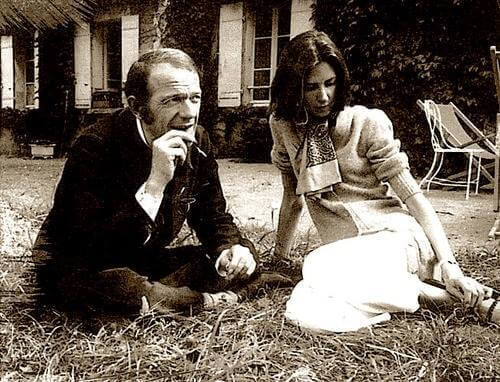
February 17, 1981

These three key concepts are the concepts of the infinite, relation, and limit. So, if I extract a formulation of the infinite from the 17th century, I would say that something finite includes an infinity under a certain relation. So, this formulation can appear totally dull: something finite includes the infinite under a certain relation; in fact, this is extraordinarily original. It precisely marks an equilibrium point for 17th century thought, between the infinite and the finite, through a new theory of relations.

Seminar Introduction

“Spinoza: The Velocities of Thought” was a 15-lecture seminar given from November 1980 to March 1981. In the first semester teaching at the new location in St. Denis, after the destruction (by the Ministry of Education) of the Vincennes University campus, In this seminar, Deleuze revisits his examination of Baruch Spinoza’s philosophy. Deleuze previously published two books on Spinoza: Expressionism in Philosophy: Spinoza (Spinoza et le problème de l’expression, 1968), and a brief manual, Spinoza. Textes choisis (Paris: Presses Universitaires de France, 1970), subsequently revised and republished as Spinoza: Practical Philosophy (Spinoza Philosophie pratique, Paris: Minuit, 1981). The majority of these lectures were given the same year as the publication of the  latter title, and hence these sessions were clearly informed by the new editorial preparation. The Seminar included here provides a sixteenth session, from 1978, on the themes of affect and idea as well as “continuous variation” in which Deleuze addresses Spinoza.

Please note that these transcriptions and hence the translations have benefited immensely from the work undertaken by David Lapoujade in editing these sessions for publication as Sur Spinoza (Paris: Minuit, 2024).

English Translation

Edited

Deleuze summarizes the previous session, his analysis of the different dimensions of individuality through the presence of the infinite in seventeenth-century philosophy, a way of providing concrete aspects of an infinitist conception of the individual. In Spinoza, the individual is relation, or a whole plane of composition, compositio; the individual is also power of action, potentia; and third, the individual is an intrinsic mode, and through these aspects, the individual is not substance, but rather a relation. Deleuze argues that it is only in the seventeenth century that the relation is thought independent of its terms, precisely through the development of infinitesimal calculus, and Deleuze points out the equilibrium point reached in the seventeenth century between the infinite and the finite was through a new theory of relations. His first question is how the individual is a relation, i.e., the limit at the level of the finite individual.

While proposing some thought experiments regarding the three terms (infinity, relation, limit), the students’ lack of interest leads him, first, to discuss the logic of relations within the history of philosophy (e.g. Bertrand Russell), then to shift to the theme of the individual as power of action and the effort or tendency toward a limit, i.e., puissance. Regarding the term “limit”, Deleuze returns to Greek era, and after a brief terminological debate with Georges Comtesse, Deleuze provides an example of the conception of limit from the Stoics, concluding that the Stoics’ term tonos, or contracted effort defining the thing, is necessary to the thing itself. After providing a second example from Neo-Platonism, namely Plotinus’s The Enneads (specifically IV, book 5), to which he compares the end of Plato’s book six of The Republic to The Ennead IV, Deleuze turns to a third example, Byzantine art, and then summarizes his outline of limits: a contour-limit that is a tension-limit; then, a space-limit and a spatialization-limit; then a light-color limit, as well as a terminus limit. Deleuze concludes that the dynamic limit is spatializing while the contour-limit supposes a measured space. With these successive developments in mind, Deleuze returns to specific points in Spinoza and then concludes by pointing out that the first group of notions discussed, relation and infinity, is linked to the second group, power of action-limits, since limit is the limit of the relation, with a constant intersection of both sets of notions. Finally, through both groups, the individual is designated as an intrinsic mode, a notion that Deleuze attributes to Duns Scotus, and he proposes to pursue this at the next session.

Gilles Deleuze

Seminar on Spinoza: The Velocities of Thought

Lecture 11, 17 February 1981

Transcription (for Paris 8): Part 1, Marielle Burkhalter, Part 2, Vanessa Soubiran; Part 3, Charles J. Stivale; augmented transcription by Charles J. Stivale

Translation (for Web Deleuze), Timothy S. Murphy; augmented translation by Charles J. Stivale


Part 1

Those of you who won’t hear anything, you might as well leave because there’s no point, as I’m quite ill, I have very little to say, so there it is. So, listen…

The last time, in an effort to [Pause] analyze the different dimensions of individuality, I had tried to develop this theme precisely of the presence of the infinite in the philosophy of the 17th century, and the form under which this infinite presented itself. And this theme is very fuzzy (flou), if you will, and it seems to me that this truly is valuable for the nature of this 17th century thought, and I would like to draw from it some themes, some relatively fuzzy themes, still concerning this conception of the individual. This is almost an attempt to add concrete comments so that you might feel this kind of infinitist conception of the individual. But, I am saying, particularly in Spinoza’s case, but here perhaps precisely, what interests me today, is that Spinoza provides a perfect expression and one seemingly pushed to the extreme by themes scattered among other authors of the 17th century

I am saying, in all its dimensions, the individual as Spinoza presents it, I would like to say three things about it. On the one hand, it is relation, on the other hand, it is power of action (puissance), and finally it is mode, but a very particular mode, a mode that one could call intrinsic mode, intrinsic mode.[1] And at least at the start today, that’s what I would like to explain, these three themes. The individual — to establish terms in Latin, these terms return frequently in the philosophies of the Middle Ages and Renaissance — I would say that
the individual insofar as being relation refers us to a whole plane that can be designated by the name composition (compositio), composition, as if, henceforth, all individuals being relations, there was a composition of individuals among themselves, and individuation is inseparable from this movement of composition.

Second point, [the individual] is power of action, that is (potentia). This is the second great concept of individuality, no longer compositio that refers to relations, but potentia. The third, being potentia, it is something quite special that will receive the name — in fact among certain philosophers of the Middle Ages – that will receive the name, intrinsic mode, modus intrinsecus. Modus intrinsecus is found quite often in the Middle Ages, in certain traditions, under the name gradus. This is degree, the intrinsic mode or degree.[2] So, it’s to each of these three domains – relation and composition of relations, power of action, degree or intrinsic mode – that I would like to try to define a bit as concretely as possible.

I am first saying, you indeed see that there is something common to these three themes: it’s through them and according to these three terms at once that the individual is not substance. If it’s a relation, it’s not substance because substance concerns an end (terme) and not a relation. As they said in the Middle Ages, — here, Latin is very useful — substance is terminus, it is an end (term). If it’s power of action (puissance), it’s not substance either because, fundamentally, whatever is substance is form. It’s the form that is called substantial. And in the end, if it is degree, it’s not substance either. Why? It’s because, no doubt, every degree refers to a quality that it regulates (graduer); every degree is degree of a quality. And, what determines a substance is a quality, but the degree of a quality is not substance.

You see that all this revolves around the same intuition of the individual as not being substance. I begin with the first characteristic: the individual is relation. This is perhaps one of the first times in the history of philosophy that an attempt is being sketched to think of the relation in the pure state. But what does that mean, thinking of the relation in the pure state? Is it possible, in some way, to think of the relation independently of its terms? The relation in its pure state would be independent of its terms. What does a relation independent of its terms mean? There had already been a rather strong attempt at this by Nicholas of Cusa.[3] In many of his texts that I find very beautiful, he had an idea that will often be taken up again later. It seems to me that in his work, [this idea] appeared in a fundamental way, that is, every relation is measure, only that every measure, every relation, plunges into the infinite. He demonstrates this regarding analyses; the Cardinal of Cusa dealt often with issues concerning weighing, the measure of weight. He has some very strange pages on weighing, on the measure of weights, insofar as the relative measure of two weights refers to an absolute measure, and the absolute measure itself always brings the infinite into play. This is very bizarre, this theme, if you will; there is an immanence of pure relation and the infinite. By pure relation, one understands the relation separate from its terms. Thus, it’s for this reason that it’s so difficult to think of the relation independently of its terms. It’s not because it’s impossible, but because it puts into play a mutual immanence of the infinite and relation.

So, fine, what does that mean? It’s as if, at that point, we could define intelligence, the intellect, as the faculty of setting out relations. But, precisely in activity called intellectual, there is a kind of infinite that is implicated (impliqué). It’s at the level of relation that the implication of the infinite occurs through intellectual activity. What does that mean? Doubtless it will be necessary to wait until the 17th century to find a first status – I am not saying that we will limit ourselves to that – a first status of the relation independent of its terms. For this is what many philosophers had sought since the Renaissance, including those who made use of mathematical means. This will be brought to a first perfection in the 17th century thanks precisely to infinitesimal calculus.

This is where I’d like to say some very simple things that absolutely do not require that you be familiar with mathematics; that is, that even if you have no such familiarity, you should be able to understand this: infinitesimal calculus puts into play a certain type of relation. My question is: which kind of relation emerges with infinitesimal calculus, and which, no doubt, was foreseen by so-called methods of exhaustion that were like a prefiguration of infinitesimal calculus? The relation to which infinitesimal calculus gave a solid status, or in any case apparently solid, is what is called a differential relation, and a differential relation is of the type dy/dx =… — we’ll see what it’s equal to – dy/dx =… . Fine, how does one define this relation dy/dx = ? Once again, I am not calling on you for anything, no familiarity with math, so that everyone might understand.

That which is called dy is an infinitely minute quantity or, as this will be called, a disappearing (évanouissante) quantity, a quantity smaller than any given or givable quantity. Whatever the quantity you are given for dy, whatever the quantity of y you are given, that is, whatever the value considered is for y, dy will be smaller than this value, however far you go. So, I can say that dy, insofar as a vanishing quantity, is strictly equal to zero in relation to y. In the same way, dx is strictly equal to zero in relation to x. In fact, dy is the vanishing quantity of y, dx is the vanishing quantity of x. Thus, I can write, and mathematicians do write, dy/dx = 0/0. This is the differential relation. Are you following me? If I called y a quantity of the abscissa and x a quantity of the ordinate, I would say that dy = 0 in relation to the abscissa, dx = 0 in relation to the ordinate.

There we have the question. On this matter, you understand this, so good, fine; it’s not difficult, dy/dx = 0/0, ok? Is this equal to zero? Obviously not. dy is nothing in relation to y, dx is nothing in relation to x, but dy over dx does not cancel itself out. The relation subsists, and the differential relation will present itself as the subsistence of the relation when the terms vanish. They have found – now here, this is very, very important – they have found the mathematical tool, and even when they use it solely as a tool, as a convention, they have found the mathematical convention, the mathematical convention that allows them to treat relations independently of their terms. And what is this mathematical convention? — I am summarizing — It’s the infinitely minute. Here is how I am able to say: the pure relation thus necessarily implies the infinite under the form of the infinitely minute since the pure relation will be the differential relation between infinitely minute quantities. It’s at the level of the differential relation that the reciprocal immanence of the infinite and relation is expressed in the pure state. If you understand that, you have nearly understood everything. I am saying, dy/dx = 0/0, but 0/0 is not 0. In fact, what subsists when y and x cancel each other out under the form dy and dx, what subsists is the relation dy/dx itself, which is not nothing.

And what does this relation dy/dx designate? To what is it equal? To proceed very simply – and that’s precisely what I’ve been hoping for – let’s say that dy/dx equals z, that is, it does not involve y or x at all, since it’s y and x under the form of vanishing quantities, fine, not involving y and x at all, but designating z. What do I mean by this? Here’s a very simple example: when you have a relation dy/dx derived from a circle, this relation dy/dx = 0/0 doesn’t involve the circle at all but refers to what is called a trigonometric tangent. Fine, here, this matters little, but you don’t need to understand anything at all here. You can just understand that dy/dx = z, that is, the relation that is independent of its terms will designate a third term and will serve in the measurement and in the determination of a third term, the trigonometric tangent. In this sense, I can say that the infinite relation, that is, the relation between the infinitely minute elements, refers to something finite. The mutual immanence of the infinite and relation is in the finite. It is in the finite itself that there is immanence of the relation and the infinitely minute elements. In order to gather together these three terms, pure relation, the infinite and the finite, what would I say? I would say that the differential relation dy/dx tends towards a limit, and this limit is z; it tends toward a limit, it tends toward the limit z, that is, the determination of the trigonometric tangent.

Is this ok? This really has to be very clear because, if you will, I believe that, if you accept… Here, I believe that we are really inside a nest, within a kind of extraordinarily rich knot of notions. When afterwards, the mathematicians will say “well no, it’s barbaric to interpret infinitesimal calculus by the infinitely minute, that’s not right, they’ve understood nothing,” etc., of course, they’re right, but from what point of view? I don’t even know from what point of view, but this is to pose the problem poorly, it seems to me, extremely poorly. The fact is that the 17th century, through its interpretation of infinitesimal calculus, finds a means of fusing three concepts, three key concepts, for mathematics and philosophy at the same time.

These three key concepts are the concepts of the infinite, relation and limit. So, if I extract a formulation of the infinite from the 17th century, I would say that something finite includes an infinity under a certain relation. So, this formulation can appear totally dull: something finite includes the infinite under a certain relation; in fact, this is extraordinarily original. It precisely marks an equilibrium point for 17th century thought, between the infinite and the finite, through a new theory of relations. So, when these guys then consider it as going without saying that in the least finite dimension, there is the infinite, you understand, when thereafter they constantly speak of the existence of God — but this is much more interesting than is believed – in the end, it doesn’t involve God. It involves the richness of this implication of concepts: relation, infinity, limit. You see? I am letting you… This would be my first point: How is the individual a relation?

But, you see, the finite individual? Obviously, the finite individual, you will find that there is a limit at the level of the finite individual. This does not prevent there having been some infinite; this does not prevent there having been a relation, and this relation is composed, the relations of one individual are composed with another; and there is always a limit that marks the finitude of the individual, and there is always an infinity of a certain order that is involved by the relation. It’s a funny vision of the world if you consider it to be a vision of the world, that is, if you agree to see that they didn’t merely think like that, they saw like that. It was their very own taste, their manner of treating things. So, you understand why this was not through easy assimilation that when they see, that when the story of microscopes is revealed, they see a confirmation in this: the microscope is the instrument that gives us a sensible foreshadowing – in this, they are not fools – a sensible and confused foreshadowing of this activity of the infinite under any finite relation.

And Pascal’s text on the infinities which is an extremely simple text – and here as well, he was a great mathematician — but when he tries to let us know how he sees the world, they don’t at all need all their mathematical knowledge (savoir). The two console each other, the two reinforce each other. So, Pascal can create his text on the two infinities without any reference to mathematics whatsoever. He could have created his text on the two infinities as a mathematician; he didn’t need to because he says extremely simple, but extremely original things. And in fact, the originality lies in this manner of fusing three concepts which, at first glance, have a link that doesn’t go without saying, but then in the 17th century, there they want to show that the link is necessary. Once again, these are: relation, limit, infinite.

Good, time for a break… If you haven’t understood this, I’ll start over. This is essential, essential, essential. You have to grasp that, nonetheless, all this makes for a funny world. For us particularly, it’s true, we no longer think like that. But what joy! I believe that we no longer think exactly like that. If you will, for us, it’s thanks to knowing nothing about mathematics that what I am saying can be understood. For them, it was thanks to having knowledge of mathematics that they managed to understand all that. That doesn’t mean that we’re the ones that are correct. Obviously, what changed is a whole system of mathematics as conventions, but that changed only if you comprehend that modern mathematics also plots its concepts on sets of notions, on implications of notions of another, equally original type. So, there we are. Must I start over? Should I start over? Would it be good for me to start over? Do I have to… Yes?[4]

A student: [Inaudible comment]

Deleuze: That would be good. That would be illuminating. So, hold on, let me think about this. Can we say that the limit, that is, the finite, is the reason for knowledge (raison de connaissance) and the infinite is the reason for being (raison d’être) of the relation itself? Yes, this would be fine, this would be really fine, this would be very clear. You see, one could say that the limit towards which the relation tends is the reason for knowing (connâitre) the relation as independent of its terms, that is, of x and of y, and the infinite, the infinitely minute, is the reason for being (raison d’être) of the relation; in fact, it’s the reason for being of dy/dx. Yes, we can absolutely say this. Did they say this? Wait; yes, they didn’t say it as well, not as clearly. [That’s] perfect. Yes, they necessarily said this since they said everything in the end, Descartes’s formulation, the infinite conceived and not comprehended. That is, one does not comprehend the infinite because it is incomprehensible, but one conceives it. This is Descartes’s great formulation: one can conceive it clearly and distinctly, but comprehending it is something else. So, one conceives it; there is a reason for knowledge (connaissance) of the infinite. So, there is a reason for knowing that is distinct from the reason for being. Comprehending would be grasping the reason for being, but we cannot grasp the reason for being of the infinite because, to do so, we would have to be adequate to God. And our understanding is merely finite. On the other hand, one can conceive the infinite, conceive it clearly and distinctly, thus one has a reason for knowing it. Yes, completely. Fine, I am saying, it’s really necessary that you understand that, that this be crystal clear because my second point is so greatly going to depend on all that… [Pause] Is this ok?

So, let me insist once again that in the end, philosophy has to conquer its practical exercises. Practical exercises in philosophy would have to be thought experiments (expériences). The notion of thought experiments is a German notion; this literally means experiments that one can only do through thought. This doesn’t mean interior experiences or psychological experiences. Practical exercises would really be curious. They would have the title of a practical exercise, practical exercise number 12, for example. So, this is how we could reestablish notes in philosophy; you would refer to your practical exercise number 12. So, there we are. So, this would be for the next time: construct a motif, not a shape (figure) because a shape is something felt (quelque chose de sensible); construct any motif whatsoever, your choice, that brings together the three themes, and only them, of the infinity, of the relation, and of the limit, and if needed, make it into a drawing. This would be a thought experiment, you see?… No? You don’t want to do that?

Claire Parnet: We don’t have class next week.

Deleuze: Oh yes, we do, for next week, yes, yes, for next week. If you want this course credit, this will be for next week. There we are… — Oh, let me mention that this week is the last week that I am still accepting the little forms for the course credit. – So, is all this truly ok? Truly? I don’t need to go back over this? That’s a shame.[5]

So, let’s pass on, alas, to the second point. You see how it links up with the first point because I’ve had to invoke the notion of limit. In fact, in order to account for the immanence of the infinite in the relation, once again, it seems to me, the more I repeat this, it’s odd, the more I tell myself this, but in fact, it’s very important, the thesis according to which an immanence of the infinite exists within the relation. Notice, here we are, I’m pointing out that I am returning to the preceding point so that you will feel its importance.

So, I believe, as a matter of taste first of all, the logic of relations, of relations, is a fundamental thing for philosophy, and alas, French philosophy has never been very interested in this aspect. But the logic of relations has been one of the great creations of the English and the Americans. But there were two stages, I would say. There is a stage that is very well known which is precisely the stage, finally, let’s say, that it is Anglo-Saxon, the logic of relations such as it was developed starting from [Bertrand] Russell, that is, such as it was developed at the end of the 19th century, start of the 20th. And this logic of relations claims to be founded on this: the independence of the relation in relation to its terms, but this independence of the relation in relation to its terms, this autonomy of the relation in relation to its terms, is founded on finite considerations. It is founded on a finitism. For example, Russell even has an atomist period in order to develop his logic of relations.

You see, what I mean is that this stage had been prepared by a very, very different stage. I would say that the great classical stage of the theory of relations is not at all like they say. They say that earlier, people confused the logic of relations and the logic of attribution. They confused two types of judgment: the judgment of relation (Pierre is smaller than Paul) and the judgment of attribution (Pierre is yellow or white or red), thus they had no consciousness of relations. It’s not like that at all, it’s not like that at all. In so-called classical thought, there is a great awareness, there is a fundamental realization of the independence of the relation in relation to relations, only this realization passes through the infinite. The thought of the relation as pure relation can only be made with reference and an appeal to the infinite. Once again, this is one of the highly original moments of the 17th century.

Fine, so I am returning to my second theme. You recall, my second theme is that the individual is power of action (puissance). This I just mentioned very vaguely, giving the sense of the formulation: the individual is relation, the individual is not substance, it is relation. My second term, you recall, was that the individual is not form, it is power of action. Why does this follow? It’s because what I just said about the differential relation 0/0, which is not equal to zero but tends towards a limit, I immediately say: consider that when you say this, and when you propose the very special concept, here as well, subsequent mathematicians will denounce it. But if they were correct in denouncing it, doesn’t it still remain as a fundamental philosophical concept? When 17th century philosophers propose this theme of tending toward a limit, the tension towards a limit, this whole idea of tendency in the 17th century, there you rediscover, for example, in Spinoza at the level of a Spinozist concept, that of conatus — each thing tends to persevere in its being, each thing strives since, in Latin, “strive” is stated as “conor,” conatus, the effort or tendency. Here is the notion of limit defined in terms of an effort, and what is power? That’s exactly it; it’s the tendency itself or the effort itself insofar as it tends towards a limit. There we find ourselves again facing a new concept. I would like for you to sense the extent to which all these concepts are linked from the point of view of a conceptual creation – tending toward a limit, that’s what power of action is. Concretely, we will experience as power of action everything that is grasped under the aspect of tending toward a limit.

You see, I am saying that if the limit is grasped starting from a notion of power of action, specifically, tending toward a limit, in terms of the slightest, the most rudimentary infinitesimal calculus, in terms of vulgarization, well yes, the polygon that multiplies its sides tends towards a limit, which is the curved line. The limit is precisely the moment when the angular line, by dint of multiplying its sides – can we say “reconnect” (rejoint)? No, since it goes to infinity, but tension toward a limit is thus the tension toward a limit now implicating the infinite — The polygon, insofar as it multiplies its sides to infinity, tends towards the circle.

I am saying and I would almost like to muse (rêver) in front of you exactly as I did for the preceding theme. What change does this bring about in the notion of limit, because the
limit was a well-known notion? But one did not speak of tending towards a limit. The limit is a key philosophical concept. Again, in my efforts to make our work somewhat useful for you by seeing that it intervenes as creation in philosophy, I am taking this once again as a locus of the creation of concepts because, for example, there occurs a veritable mutation from the point of view of thought in the manner of thinking a concept. What was a limit? The Greeks have a word, — and I am citing it at the same time as foreign words because it’s sometimes very useful in a text; we see the word written in Greek, because it’s very important in Greek philosophy — it’s “peras.” [Deleuze spells it out]. Peras, in ancient Greek, this is limit. But, at the simplest level, what do they call limit? There are all sorts of theories of limit, and even Plato will create a great theory of the limit. Hey, Plato creates a great theory of the limit. That must be of interest for us.

You indeed see my purpose. So that you might follow this well, it concerns posing questions about this conception of limit before the 17th century that was clearly of an entirely different nature. And it’s quite simple; I mean, however complicated Plato’s theory itself might be, there is a point that everyone can understand: what did they call limits, the surveyors of that period? The limit is contours, it is contours, it is points, it is end points (termes), there we are. The limit is an end, a terminus. A volume has surfaces for its limit. For example, a cube is limited by four squares… Six! Six! [Laughter] Six squares… Something was bothering me there: six squares. There, whew! A line segment is limited by two endpoints. There we are, I’m not venturing any farther because… [Laughter] [Pause]

Plato, in a very beautiful work called the Timaeus, creates a great theory of shapes and their limits conceived as contours.[6] And why can this conception of the limit as contour be considered as the basis for what one could call a certain form of idealism? Follow me closely. Necessarily this is very well reconciled: the limit is the contour of the form, whether the form is purely thought or sensible. In any case, one will call “limit” the contour of the form, and this is very easily reconciled with an idealism because if the limit is the contour of the form, at the extreme, what does it matter to me what there is between the limits? If I were to put some sand, some bronze or some thought matter, some intelligible matter, between my limits, this will always be a cube or a circle. [Pause]

In other words, essence is the form itself related to its contour. I could speak of the pure circle because there is a pure contour of the circle. I could speak of a pure cube without specifying what it involves. And I would name these the idea of the circle, the idea of the cube. Hence the importance of the contour-“peras” in Plato’s philosophy in which the idea will be very exactly – very exactly, not because this is so terribly complicated what I’m saying, I’m deriving from it some little thing – the idea will be the form related to its intelligible contour. You see? In other words, in the idea of the contour-limit, Greek philosophy finds a very fundamental confirmation for its own, I would say, its own abstraction. Not that it is more abstract than another philosophy, but it sees the justification of the abstraction, such as it conceives this, namely, the abstraction of ideas. [Pause]

Fine, here, I have just outlined the philosophical result of this contour-limit idea. Henceforth the individual will be the form related to its contour. If I look for something to which such a conception practically applies, I would say, in order to return a bit here to what we were discussing earlier regarding painting, for example, I would say that the form related to its contour is, par excellence, a sensible world of the a tactile-optical kind.[7] The optical form is related, if only through the eye, if only indirectly, to a tactile contour. So, that can be the finger of pure spirit; the contour inevitably has a kind of tactile reference, and if one speaks of the circle or the cube as a pure idea, to the extent that one defines it by its contour and one relates the intelligible form to its contour, there is a reference, however indirect it may be, to a tactile determination.

And here I once again find a confirmation: it’s completely wrong, once again, to define the Greek world as the world of light; it’s an optical world, of course, it’s even in this that they discovered, that they brought forth into art, into philosophy, an optical world, but not at all a pure optical world. The optical world that the Greeks promote is already sufficiently confirmed by the word that they use to speak of the idea: eidos, eidos which is a term that refers to visuality, to the visible, to the sight of mind. But this sight of the mind is not purely optical. It is optical-tactile. Why? Because the visible form is related, however indirectly it may be, to the tactile outline.

And the practical experience then, it’s not surprising that someone who reacts against Platonist idealism, in the name of a certain technological inspiration, is Aristotle. But if you consider Aristotle, there the tactile reference of the Greek optical world appears quite evidently in an extremely simple theory which consists in saying that substance, or rather sensible substances, are composites of form and matter, and it’s the form that’s essential. It’s the form that is essential, and what is the form? Well, precisely, the form is related to its contour, and the experience constantly invoked by Aristotle is what? It’s that of the sculptor, it’s the sculptor, and that should interest us greatly because Greek statuary has the greatest importance in this optical world; it’s an optical world, but a world of sculpture, that is, one in which the form is determined according to a tactile contour, in which optical form is determined as a function, if only indirectly, of a tactile contour. Everything happens as if the visible form were unthinkable outside of a tactile mold. That is the Greek equilibrium. That is, it’s very own equilibrium. It’s a kind of equilibrium… [Interruption of the recording] [46:42]

Part 2

Georges Comtesse : …The very possibility of seeing the eidos as conditioned by the separation of soul and sensible body…

Deleuze: Yes, well, no, I was thinking that you had… It’s perhaps because I went too fast. I mean, taken literally, you are completely correct. The eidos is grasped by the soul, and that tells us nothing yet. That is, the eidos, the pure idea is obviously graspable only by the pure soul. My question is entirely different, notably as pure soul, we can only speak of it, according to Plato himself, by analogy given that we only experience our soul insofar as it is bound to a body; we can only speak of it by analogy. So, from the point of view of analogy, I would always have said, okay, it’s the pure soul that grasps the pure idea, and there’s nothing corporeal in this. It’s a purely intellectual or spiritual grasp. But does this pure soul that grasps the idea proceed in the manner of an eye, “in the manner of”, or does it proceed rather in the manner of the sense of touch, touch which would then be purely spiritual, like the eye which would be purely spiritual? That is, this eye is the third eye, just as this touch would be the eleventh finger. This would be a “manner of speaking”, but we definitely need the analogy. Just like Plato, we definitely need analogical reasoning.

Then my whole response consists in saying that the pure soul no more has, in complete reality, an eye than it has a sense of touch; it is in relation with the ideas. You are completely correct, but this does not prevent the philosopher, in order to speak of this apprehension of the idea by the soul, from having to ask himself: what is the role of an analogon of the eye and an analogon of touch, an analogue of the eye and an analogue of touch in the grasping of the idea? To which I reply, there are indeed these two analoga… [Laughter, and Deleuze laughs as well] There are indeed two analogues since the idea is constantly said to be seen by the soul (although the soul is not God) but at the same time, this pure form-Idea is only seen by the soul to the extent that it refers also to a contour that is constituted, that is the constitutive element in the viewed form, and this contour refers to analogue of touch. Ok?… Not entirely?

Comtesse: … Because the limit for Plato is not just the contour of form…

Deleuze: Okay, okay…

Comtesse: … it’s also the force that contains an infinite power of action. The infinite power of action that the limit contains insofar as being a force is what Plato senses literally as a demonic power…

Deleuze: There, well yes, there, we agree…

Comtesse: This is a terrifying power which has indeed brought about the deadly union of soul and body of which philosophy is the separation.

Deleuze: Yes, but then you go right past me by saying that I am more correct than I would have liked to have been because that amounts to saying: careful, Plato has a very strong presentiment of an entirely different conception of the limit which would no longer be the contour-limit, but precisely it appears more or less demonic because everything depends on the texts — okay, okay — and it is this world that we must at the same time, of course, contemplate, and conjure. You see, he will save himself from this through the contour, even if there are some of his texts that already prepare a completely different conception of the limit. And there, I thought you were going into all that because it’s very important. In fact, what you’re saying is like these are little notations on… I mean, it’s very subtle. You are correcting me… Comtesse there, he has just given me, it seems to me, an example in which he himself is correcting what I am saying. In fact, it’s so much more complicated; there I agree. It’s very complicated. That doesn’t prevent… This is a direction. If you believe that I am stating an absolute truth, no, I am not stating an absolute truth. I am saying what seems to me a tendency of this Greek thought. But it’s always more complicated than what is said, you see? [Pause] Okay, well, that’s this conception of … this first conception of the contour-limit.

And what happens several centuries later when, in order to create a completely different conception of the limit, the most varied signs come to us from it, and come at us from all sides? As a result, I am numbering my examples:

First example with the Stoics, first example. The Stoics lay into Plato quite violently, according to the texts from them that remain for us to consult. They lay into Plato violently, and I am asking you, in all the examples that I am going to provide, to keep in the back of your mind that this perhaps, in some ways, not exclusively, is going to culminate, all the examples that I provide, culminate with Spinoza.

So, a first example, the Stoics. The Stoics are not the Greeks; they are at the edge (pourtour) of the Greek world. At heart, we could always revise this and say that it’s going to be very important. They are on the contours of the Greek world. And this Greek world has changed a lot; literally, it had so fully collapsed under the theme of rivalry of the determined cities as there had been in Alexander’s dream. So, there had been the problem of the Greek world, how to develop the Greek world. Fine, this was something else for the Greeks than how to create Europe. You know, that involved so many things; you cannot understand Aristotle, or you cannot understand the Neo-Platonists if you don’t have at least some vague ideas about everything going on historically at that time.

And here we have these Stoics who are hardly Greeks, who are half barbarian, half Greek, who are really strange people, that are attacking Plato, and starting from what? However, it’s not that Plato was lacking for ideas that had already come from the Orient; these were not the same ones, we must believe, or else there is a new Oriental current. There’s a great German author who wrote a book that was a marvel, named La Grèce entre les bras de l’Orient [Greece in the Arms of the Orient][8] to designate this era precisely, this era that begins with Stoicism, the ancient Stoicism – this is a lovely title, La Grèce entre les bras de l’Orient – well, these non-Greek Greeks, these Stoics, what do they say?

They say: well, this is strange, this is very strange how… with Plato and his Ideas, these are not what we need, these are not what we need, this is an indefensible conception. They say, in the end, the contour of something, what is it? The contour is something, it’s non-being. In fact, the contour of something is the spot where the thing ceases to be. The contour of the square is not at all the spot where the square is located. You see that it’s very strong as an objection. Great objections are always very simple. They take literally this Platonism that I’ve sketched out quite summarily, namely that the intelligible form is the form related to a spiritual touch (tact), that is, it’s the shape related to the contour. Or else, the sculptor’s experience. They will say as well, against Aristotle, but the example of the sculptor is completely artificial, the sculptor’s mold. It’s not natural! Nature never proceeds by molding. These [objections] seem quite simple, but what’s strong is when one manages to say about someone: well yes, he chooses examples, but these examples are not relevant. If you want to know, the Stoics say, if you want to understand something about the problems of limits, one cannot choose the case of the sculptor since the sculptor’s problem is a problem of pure artifice, notably of molding something else. In what case does nature proceed by way of molds? Nature doesn’t proceed by way of mold, or else it would be necessary to count them. It’s certainly only in superficial phenomena that nature proceeds by way of molds. These are so-called superficial phenomena precisely because they affect surfaces, but nature, in the depths (en profondeur), does not proceed by way of molds.

For example, when I have the joy of having a child who resembles me, I have not sent out a mold. [Laughter] Notice that biologists, until the eighteenth century, grasped onto the idea of the mold; there are biologists, I think, into the 18th century who insisted on the spermatozoon analogous to a mold; this is not very rational. On that point, [the Count] Buffon had great ideas – hey, this is getting me off track, but that doesn’t matter — Buffon said that if one wants to comprehend something of the production of living things, it would be necessary to work one’s way up to the idea of an internal mold. Magnificent! Buffon’s concept of an “internal mold” could be useful to us. An internal mold means what? He says, obviously – here, I am citing Buffon nearly word for word, he had a great idea — it’s awkward because one could just as well speak of a massive surface. He says that the internal mold is a contradictory concept. There are cases in which one is obliged to think by means of a contradictory concept. The mold, by definition, is external. It concerns surfaces. One does not mold the interior. If you mold the interior, that means you have placed the interior outside.[9]

So, fine, then, this is to say that already for the living thing, the theme of the mold does not work. Nevertheless, there is a limit to the living thing. The Stoics are in the process of grasping onto something very strong: life does not proceed by molding. Aristotle chose artificial examples. And on Plato, they let loose even more brutally. The Stoics say, well, you understand, what is all this about the idea of the square, as if it were unimportant that the square was made of wood, or of marble, or of whatever you like? But this matters a lot. This just an awful thing, the Stoics say. When one defines a shape by its contours, at that very moment, everything that happens inside is just the same. This is how, the Stoics say, Plato was able to abstract the pure idea. They are denouncing a kind of sleight-of-hand (tour de passe-passe). So, this is quite unfair regarding Plato, obviously.

What interests me isn’t whether this is or isn’t fair to Plato; what interests me is: what do they have to say? And what the Stoics are saying stops being simple. Understand? They are in the process of creating for themselves a totally different image of the limit. And in fact, what is their example that they opposed to Aristotle’s sculptor, that is, to the exterior mold, to the optical-tactile shape? They will oppose problems of vitality; what kinds of problems of vitality? Where does action stop? Hey, this isn’t “where does the form stop?” Answer: At the contour. Fine, form stops at the contour. With this, there’s no contradiction. But saying that holds no interest. It’s of no interest because the question is not at all where a form stops, because this is already an abstract and artificial question. The true question is: where does an action stop? And there, you aren’t going to be able to designate contours. What does that mean?

There’s a very lovely text. Second practical exercise: Does everything have a contour? Bibliography for the practical exercise: a great contemporary American author named [Gregory] Bateson wrote a book in two volumes, recently translated into French, a book titled Steps to an Ecology of Mind in which there’s an admirable text on the language of dolphins and all sorts of other things at once entertaining and instructive. Bateson, who is a genius, a very great man, has written a very amusing text that is called “Why do things have outlines?” He gives examples; he talks to his daughter who is not terribly clever. [Laughter] He says, well then yes, you see, we are speaking right at this moment, so does our conversation have an outline [contour]?

This is interesting because when your professor used to scold you, back when you still did your homework – but this will return! – when you did your homework, your essays, when a professor scolded you for getting off the topic – “off the topic” (hors du sujet), let’s take the expression literally, “outside the subject” — does that mean that the topic or subject has a contour? Perhaps. Otherwise would that mean “outside the limits”? Is this spatial? At first glance, it seems spatial. But is it the same space? Do “outside the limits” and “outside the contour” belong to the same space? Does the conversation have a contour? Does my course today have a contour? My reply is yes, it has a contour. One can touch it. Fine, we’ve gotten a bit into this problem: does every pictorial form have an outline? It’s not certain.

So, let’s return to these Stoics. I’m dropping Bateson; you see, it was a problem: what are the different senses of “outside the subject”? This is our second practical exercise. So, for next week, you must turn in two practical exercises. [Laughter] Don’t forget! And draw the contour of a conversation. You’ll see if you need a firm line or not. So, fine, what’s their favorite example? It’s how far does the action of a seed go? That’s good, that’s really good! A seed has a limit, but what is its limit? Still, no shape? Yes, a seed indeed has a contour, but that’s not at all what’s in question. No doubt, there would be two limits? I can certainly follow the seed’s contour with my finger, but what will I have understood about the seed? When I then learn that a sunflower seed lost in a wall is capable of blowing out that wall, ah, the sunflower seed can make a wall explode, something having such a small contour. How far does the sunflower seed go, does that mean how far does its surface go? No, the Stoics say, the surface is where the seed ends. In their theory of the statement (énoncé), they will say that the surface states exactly what the seed is not, that is, where the seed is no longer, but about what the seed is, that tells us nothing.

So, they are very forceful as far as Plato is concerned. They show up and, about Plato, they say that, with his theory of ideas, he tells us very well what things are not, but he tells us nothing about what things are. The Stoics cry out triumphantly: things are bodies, bodies and not ideas. Things are bodies, which means what? That means that things are actions, and the limit of something is the limit of its action, and not the contour of its shape.

An even simpler example: you are walking in the forest, eh? You’re walking in the dense forest, in other words, in the powerful forest, and you’re afraid, and at last, you move onward, and little by little the forest thins out. You are pleased, and you reach a spot, and you say, “whew, here’s the edge.” The edge of the forest is a limit. If that’s a limit, then fine, ok. Does this mean that the forest is defined by its contour? It’s a limit of what? Is it a limit to the form of the forest? One can say this. It’s not that one cannot say it, one can say it, but that’s a kind of limit that is poorly defined as limit of the form of the forest. In fact, what is it? It’s a limit to the action of the forest, that is, the forest that had so much power of action reaches the limit of its power of action; it can no longer bite into the terrain, as it’s thinning out. It’s thinning out, and what reveals that this is not a contour is the fact that we cannot even specify the precise moment at which there is no more forest. Were you already inside the undergrowth? How did you pass from the forest into the undergrowth, and from the undergrowth into the thicket, all that? I mean, really, I don’t need to force myself much to say: there was a tendency, and this time, the limit is not separable, a kind of tension towards the limit.

This is a dynamic limit that is opposed to a contour-limit. The thing has no other limit than the limit of its power of action or of its action. The thing is thus power of action and not form. The forest is not defined by a form; it is defined by a power of action: power of action to create the trees all the way to the moment when it can no longer do so. Hence, the question that I have for the forest is not: what is your shape and what are your contours? The only question that I have for the forest is: what is your power of action? That is, how far will you go?

That is what the Stoics discover and what authorizes them to say: everything is a body. Understand, when they say that everything is a body, they don’t simply mean that all things are sensible, because they would not escape from the Platonist point of view. If they were to define the sensible thing by form and contour, that would hold no interest. But when they say that everything is a body, what do they mean? They mean something quite simple. A circle does not extend into space, does not extend, there’s always tension. A circle does not extend in space if it’s made of wood or of marble. A circle does not extend into space in the same way. Moreover, “everything is a body” will signify that a red circle and a blue circle do not extend into space in the same way, something that all painters and even more than painters know quite well.

So, this is tension, and then they are going to define – this is a stroke of genius – the ancient Stoics are going to define things in what way? When they say that all things are bodies, they mean that all things are defined not by form or contour, but in their language, through tonos, tonos, that is, the kind of contracted effort that defines the thing. If you don’t find the contraction, the contracted force, the embryonic force that is in the thing, if you don’t find the thing, you have no understanding (ne connaissez pas) of the thing, what Spinoza takes up again long after with the expression “what can a body do?” “What can a body do?” Here we have the first example, simply to have you sense that the notion of limit completely changes its meaning.

Second example. Here I’ve considered it, but it’s still part of my concern for preparing us for the second semester in what we undertake on painting.[10] After the Stoics, at the beginning of Christianity, and yet not necessarily in Christian authors, toward the second or third century CE, a quite extraordinary type of philosophy develops, certainly extremely new, which is also in the new Greek world, called the Neo-Platonist school. The prefix “neo”, of Neo-Platonist, is particularly well founded because, of course, it’s by basing themselves on texts, and notably, I assume, texts to which Comtesse referred, it’s by basing themselves on some extremely important texts by Plato that the Neo-Platonists will completely decenter all of Platonism. As a result, in a certain sense, one could say that all of it was already in Plato. Only it was as if taken into an aggregate that was not Plato’s.

One of the greatest Platonists was Plotinus. And from Plotinus has been gathered a kind of great course-book, quite admirable, called and named The Enneads. So, I am advising you, for those that this might interest, to browse randomly, without knowing anything about Plotinus, this admirable text from the point of view that concerns us, which is The Enneads IV, book five, book five of the fourth Ennead. You will see a kind of prodigious course or discourse or poetic meditation on what? On light, on light, an admirable text, a prodigious text in which Plotinus will try to show that light can be comprehended neither as a function of the emitting body, nor as a function of the receiving body. And his problem is that light belongs to these odd things that, for Plotinus, are going to be the true ideal things. – Here there is a kind of very, very astonishing short-circuiting of Plato – Light belongs to these ideal things that are recognized in this way: one can no longer say that it begins here, and it ends there. Where does a light end? What a story! This is a prodigious text.

You’ll ask me, why couldn’t one create the same text three centuries earlier? Ah, we don’t know anything about this; if we don’t understand anything about these things, we still understand everything, I believe, about the thought and the movement of thought. Why did these meditations on pure light appear in the so-called Alexandrine world? I am saying that it’s kind of a manifesto, we could call it a manifesto for a pure optical world. Light has no tactile limit, and nevertheless there is certainly a limit, a very special limit, but this is not at all a limit such that I could say it begins here and it ends there. No, I couldn’t say that. In other words, light goes as far as its power of action goes.

In other words, Plotinus is at once hostile to the Stoics; he calls himself a Platonist. But sense the kind of reversal (retournement) of Platonism that he is in the process of creating. I believe that it’s with Plotinus that a pure optical world begins in philosophy. Idealities will no longer be only optical, that is, they will be luminous, without any tactile reference. Henceforth, the optical limit is of a completely different nature. Light scours the shadows. Does shadow form part of light? Yes, it forms a part of light, and you will have a light-shadow gradation or a shadow-light gradation that will develop space. And what are they in the process of finding? That deeper than space, there is spatialization, that space is never… [Deleuze does not finish this] and that, Plato didn’t know (savait).

On this point, when this idea imposes itself, of a spatialization deeper than space, we can always start to reread Plato and say, but yes, [Deleuze laughs] but yes, there are a thousand texts by Plato that prepared this. But this is where I always invoke the need for tact in philosophy. If you say it’s already in Plato, you deprive yourself of a lot of joy, and then you are led… one step further and you make huge mistakes. It’s in Plato, but virtually. There are Plato texts on light, okay, okay. You find everything you want; it’s up to you to possess a kind of art of nuances.

That still doesn’t prevent then, if you read Plato’s texts on light, for example, the end of book six of The Republic, and set it next to Plotinus ‘s texts that I cited for you, from the fourth Ennead, if you read them side by side, you see that, you immediately understand, you don’t know why, but you immediately accept the idea that several centuries had to pass between one text and the other, that it’s not the same world. You know it for certain before knowing why, that the manner in which Plotinus extracts the texts from Plato, and thus he develops for himself a theme of pure light, could not be Platonist because, once again, Plato’s Greek world – here, I am saying this in order to summarize, to be more precise – was not a world that was optical, but a tactile-optical world, whereas the discovery of a pure light and of the sufficiency of light to constitute a world implies that, beneath space, one has discovered the phenomenon of spatialization. This is not a Platonist idea, spatialization of space, or one can find seeds of it in the Timeus, but you will see that it’s not… No.

Space grasped as the product of an expansion, that is, space is second in relation to expansion and not first, space is the result of an expansion; that’s a bizarre idea that, in my view, even one could say, for a classical Greek, would have been incomprehensible. What does an expansion mean, one that does not already presuppose a space? It’s not easy as an idea. Lots of things would be necessary to be discovered, to occur, starting with a deepening of Pythagorism, with the idea of…, with all sorts of Oriental influences. It’s an idea that comes from the Orient. I don’t know why I say that; I am not risking much in being wrong. That just feels like the Orient, that light could be spatializing. It’s not light that is in space, it’s light that constitutes space. This is not a Greek idea. You know, everything starts… this, one feels that… They say, ah yes, well no, that’s not an idea from around here; that thing comes from somewhere else. You have to read some philosophy; you have to be very sensitive to these kinds of things. Fine.

Here’s a third example, after the Stoics and the Greeks, several centuries later. And there explodes – here I’m going quickly because it’s like a confirmation – there explodes, what explodes? A tremendously important art form explodes, namely, art called Byzantine art. It’s a problem for art critics to discover how Byzantine art remains linked to classical Greek art while at the same time, from another point of view, it breaks completely with classical Greek art. If I take the analyses of one of the best critics in this regard, an Austrian author, I believe, [Alois] Riegl, he says something extremely rigorous, as one of the best specialists on Byzantine art.

He says – but you understand, in Greek art, of course, it’s already quite complicated, but in general, it’s mostly in general that I am saying, it’s in order to give you some reference points — you have the primacy of the foreground (avant-plan). The great difference between Greek art and Egyptian art is that, in Greek art, the distinction is made between the foreground and the background (arrière-plan), while in Egyptian art, broadly speaking, the two planes are on the same plane, for example, all Egyptian bas-relief. – What I am saying is quite a summary, as I am summarizing from Riegl’s viewpoint. – He says, fine, a shift occurs in Greek art: it’s the Greek temple, it’s the advent, says Riegl with a very enjoyable phrase, it’s the advent of the cube. – It’s the advent [Deleuze hesitates, having trouble speaking] It’s just that I can’t because my throat is hoarse; alas, I just can’t – It’s the advent of the cube, the cube, six sides, whereas for the Egyptians, what was it? It was the pyramid, and the pyramid has plane surfaces, you see? Wherever you set yourself, you are always on a plane surface. It’s disturbing. With the pyramid, it’s diabolical because this is a way of hiding the volume. Very strange! Clearly, they cram the volume into a little cube which is the funerary chamber, and they set up plane surfaces, isosceles triangles, to hide the cube. The Egyptians are ashamed of the cube. The cube is the enemy, it’s the dark, the obscure, it’s the tactile. So, they do that; it’s on the same plane.

The Greeks invent an amazing thing: they invent the cube. They aren’t ashamed of the cube.  They make cubical temples, that is, they displace the foreground and the background. But, Riegl says, fine, look closely at all Greek works: there is a primacy of the foreground, and the primacy of the foreground is linked to the form because it’s the form that has contour. Fine, the primacy of the foreground, primacy of the form, the relation of form with contour, all this is unified. It’s for this reason that he will define the Greek world as a tactile-optical world. [Pause] Do you follow?

So, here, with the Byzantines, it’s quite odd. Look at the mosaics; they get nested (nichent), they’re moved into niches; they get moved back. It’s really funny! And space? As is said, there is no depth in Byzantine art, but why is there no depth in Byzantine art? For a very simple reason, it’s that depth is between me and the image. One of the dramas of Byzantine art is a modern drama, specifically that because of the camera, yet again, everything comes from the misdeeds of the photo: the mosaics get photographed, that is, they are shot from only ten centimeters [four feet], and this is shameful! It’s shameful! The photographers should be killed since, by definition, this is backwards, it’s backward, since all of Byzantine depth is the space between the spectator and the mosaic. If you suppress this space, it’s as if, I don’t know, it’s like you were to look at a painting outside of any condition of perception. It’s hideous.

Fine, you understand, in other words, the Byzantines, seemingly innocent, unleash an enormous strongarm move, notably they privilege the background, and the entire shape will emerge from the background. The whole image will emerge from the background. But, at that very moment, as if by chance, the formula of the shape or the image is no longer form-contour. Form-contour was for Greek sculpture. It’s no longer form-contour. And nevertheless, there is indeed a limit, and still, you will tell me, there are even contours, even in mosaics; these are very sharp contours, but this is not what acts, that’s not what’s interesting. The work no longer acts that way, whereas in Greek statuary, it’s indeed the contour that acts, the contour insofar as it captures the light. But there, that’s not at all what happens in Byzantine mosaic; it’s no longer form-contour. What am I saying it is? It’s light-color, that is, what defines, in the proper sense of “to define,” notably, what marks the limits of something – to define is to mark limits; a definition is an indication of a limit – what defines the Byzantine shape is no longer form-contour, but rather the couple light-color, that is, that the shape continues all the way to where the light goes that it captures or emits, and all the way to where color goes, the color of which [the shape is] composed. Hence, in fact, the effect on the spectator is prodigious, namely, that a black eye goes exactly into where this blackness radiates. Hence the impression of these shapes in which the face is consumed by the eyes.

In other words, there is no longer a contour of the shape; there is an expansion of light-color, and the shape will go all the way to where it acts, through light and through color. I can say: it’s the reversal of the Greek world. I can say both at the same time. But yes, that comes out of the Greek world. Only, what the Greeks weren’t able to do, or what they hadn’t even considered doing, was this liberation of light and color. It’s with Byzantine art, as everyone says or as Riegl says, it’s with Byzantine art that color and light are liberated in relation to space. Why? Because what they discover is that light and color are spatializing. Thus, art must not be an art of space, it must be an art of the spatialization of space. [Pause] So, I would say that, if you will, this is an idea that goes without saying: between Byzantine art from the point of view of mosaic painting, for example, and architecture as well, and the slightly earlier texts on light by Plotinus, there is an obvious resonance. What is affirmed is the same conception of the limit.

The final example that I would like to work through quickly. What does it mean, this story about… I mean, now, there are two sorts of limits. I could multiply my oppositions between limit-limit. [First] there is a contour-limit and there is a tension-limit; second, there is a space-limit, and there is a spatialization-limit; [End of Web Deleuze transcript and translation] there’s a contour-limit, yes again, and a light-color limit; there is a state (état) limit, there is a terminus limit, a tension-limit. So, what interests me, in one sense, is not at all the comments by contemporary mathematicians, for example, about the mathematical nonsense that the expression “tending toward a limit” would represent today. The only thing that would interest me, rather, in modern mathematicians is what their own concepts are, what their positive concepts are. But regarding the past, what interests me is in what way the idea of tending toward a limit is truly founded on all sorts of experiences, experiences of thought, aesthetic experiences that completely changed [End of Paris 8 transcript, 93:05] both the conception of the individual and of form and light… and color, etc. etc.

And to state this even more briefly, I am selecting a last example here that I’ve used for other things, in other seminar years. I am saying, let’s oppose, to be quite simple, yes, we have to… [Interruption of the recording] [1:33:27]

Part 3

… How do men operate distributions? Men operate distributions by dividing a space. So, for example, in a large square, they make small squares; this is called the cadaster. This square is yours, this one is mine, etc. Okay, you see? We divide a space. I would say, it’s a contour-limit conception. There is more: where my square ends, and where yours starts, we will put down a marker (borne). How does one say “marker” in Latin? It’s obviously — you can invent it yourself; you don’t have to look it up in the dictionary – “marker” can only be said terminus. This is the conception of the contour-limit. [Pause]

But what do cows do in relation to space? They do much better than that. Notice, the two conceptions overlap. You take a meadow, eh? It doesn’t matter if it’s bounded or not. It can be bounded; in that case, it’s closed off, contour-limit. But it can have, it can even have a limit of another type, that is, it is a clearing meadow (prairie clairière). It’s not closed off, therefore, but the further we go, the more the forest begins. So, it’s a meadow that tends towards the forest limit, without us being able to say, oh well, it’s forest or it’s not anymore, it’s the meadow. You see? This is a dynamic conception of the limit.

So, well, cows, how… Cows know, and so do farmers, that a meadow cannot feed just any number of cows whatsoever. This is even what we call natural selection. There are always animals that die if there are too many compared to the milieu. How are the animals, the cows going to manage? The cows don’t create small squares in the meadow, saying this is my square, that one’s yours. How do they manage? Instead of distributing space, they distribute themselves in space. What does this mean? It doesn’t exclude hierarchical relations. Notice, there is the chief cow; there is the more prestigious cow, the one that [reserves] the best…, I can no longer say, square, the best zone, a cow zone.

What will the cow zone be? It’s the point to which the cow can go in its daily appetite, that is, the grassy area that it can graze with its rough tongue, eh? I am fully within a Stoic example. This is a funny limit. There is no barrier there. The appetite limit of a cow, you cannot say that it starts with a particular blade of grass and ends with another particular blade of grass. It’s a limit of power of action (puissance). And one way or another, the cows work it out. You know from empirical science that it takes so much land to feed a cow. So, if you are a good farmer, you are not going to put twenty cows on a plot of land that could only feed ten because there will be ten that are likely to die, especially the small calves which… — But, at this idea, our hearts start aching, [Laughter] the little calves that are dying — fine, so you’re going to put ten cows more or less onto a terrain for ten cows, but you’re not going to give each cow a square. It’s not the contour-limit; it’s the power of action limit. Cows will distribute themselves according to their relations, including their hierarchical relations, in such a way that, over a particular space of time, the whole of the meadow is grazed, in a dynamic way. And there will be territories, but territories that will not be marked by barriers.

What is an animal’s territory? It is up to where its power of action reaches. And what is it that’s called ethology, ethology, which is just a synonym for ethics? It’s the science of powers of action and limits in this second sense. And what is the ethical cry? “What can a body do?” Always the same thing: what is it capable of doing? It’s: what it is capable of, what is its power of action? How will we see its power of action? Through the limit, in the dynamic sense. However, once again, the contour-limit lets us completely escape the dynamic limit. The dynamic limit is spatializing whereas the contour-limit supposes a ready-made space, a measured space. You follow me?

So, finally, because we can’t take it anymore, any questions on all this? It’s very simple. I would like you to feel something that’s happening, in short, something very important, when the limit was no longer conceived of, you understand, even politically, because it poses, in fact, political problems with the conception, at that time, of territories. Territories are dynamic expressions and no longer geometric contours. It is no longer the geometer or surveyor who becomes the master of things; the surveyor is no longer anything at all. It’s no longer a question of surveying. No. Geometry must be surpassed by a much deeper dynamic. We’re not far from the Renaissance world. Even the regime of violence changes completely because think of what the Greeks called violence. What the classical Greeks called violence is violating the limits. In what way, violating limits? Violating limits as they understand them, violating the contour-limits. They say it very well: everyone has their share (lot). Whether he likes it or not, everyone has their share. If someone violate the limits of his share, that is, of his property, that’s no longer permitted. This is where the gods will drive them crazy. But then, the conception changes singularly.

So, think about this. Well, you can do the practical exercises, I think, three practical exercises for next week: what is a border? [Pause] What is a border? Is this the limit in the sense of contour, or is it the dynamic limit? It depends on the times, it depends on the location, it depends on history, it depends on geography, it depends on a thousand things.

So, let’s go back to Spinoza a little bit more strongly. Why does Spinoza… There are points on which — I’m going quickly before finishing — because there are points on which Spinoza, there is not even a problem, he inherits from all that. Spinoza has a lot to do with Stoicism instead… There is also an absolute criticism of Ideas, with a capital I, separate Ideas. There is a famous Spinoza expression that is always quoted, but very often it’s quoted separated from its context. And it’s a shame because when we see the context, we are completely interested. This is the formula, “all determination is negation”; in Latin, omnis determinatio negatio est, all determination is negation. But what does that mean? You find this text [in] letter 50, letter 50, to a gentleman named [Jarig] Jelles [Deleuze spells it], and Spinoza explains this very well. This concerns the contour of shapes, explicitly. He says, “the contour determines the shape,” okay. Okay, the contour is the determination of the figure. But at the same time, the contour tells us what the shape is not because [the contour] designates the place where the shape is no longer. So, the contour is indeed determination, but it is a negative determination; all determination is a negation. It is about the contour-limit that, explicitly, Spinoza offers an expression that will be celebrated.

In other words, I can already conclude from this, if I am honest, by reading this text, that a problem remains: if there is a determination which is not a contour, is that one also a negation? If Spinoza doesn’t want to call it determination, what will he call it? Okay, so there is a problem. So, when he tells us that, Spinoza tells us, all right, shapes are beings of reason, that is, shapes are abstracts. A shape is an abstraction, and he makes his great criticism of the geometric shape. And yet, he employs a geometric method. It’s weird! Few authors have gone as far as he did in criticizing geometric shape, and yet he employs a geometric method. What is happening? In geometry, would there be anything other than shape and contour? Yes, Spinoza tells us, there is something else. As long as I consider shape and contour, I am within a pure and simple abstraction. And, he tells us, nothing in nature is created through shape and contour, exactly as I told you earlier, nothing is created by molding. He says, we’ve never seen, we’ve never seen a circle be created in nature geometrically. There are many things that become round, and that’s what’s interesting. They become round, but they do not become round with a compass.

So, what else is there? It is therefore a critique of any conception of the abstract idea. He tells us, well here, consider, there are two definitions of the circle. He invites us to ponder fully the difference between these two definitions. The definition of the circle is the locus of the points situated equidistant from the same point called the center. Immediately, you see, I define the circle by its contour; the locus of the points situated at equal distance from the same point called center, this is what I would call a circular contour. The shape is defined, the shape of the circle is defined by its contour. He told us, there is nothing to be gained from this definition, and when the surveyors derive something from a definition of the circle, it’s because they have given the circle, implicitly or not, another definition. What is this other definition? It is a produced shape, a produced shape, in other words, it’s a definition by the reason of production, or what is called in geometry a “genetic definition”. Think of the seed for the Stoics. The seed must be subject to a genetic definition.

The circle also must be subject to a genetic definition. We will define the circle as the shape produced by a line segment rotating around one of its extremities. In this way, you generate a circle, and it does not matter that nature does not generate circles in this way because at least you have linked the circle to a power of action which, in this case, is not that of nature but the power of action of your mind. You can produce a circle with this definition, while the other definition gives you no way to produce a circle, that is, how to maintain the locus, the locus common to the points. Only the other definition gives you a means of production, a rule for production. So, it gives you a genetic reason for the circle. This is a genetic definition. You will say that the circle has a power of action. The circle is no longer defined by a shape. It is defined as a power of action. The genetic rule is the power of action to produce a circle, and the circle will go where that power of action goes. The circle will be defined by an internal power of action, no longer by an external contour. At that point, and under this condition, the [geometric] method can tell us something real. [Given the context of what Deleuze says in this paragraph, one might substitute “genetic” for “geometric” as Deleuze may well have misspoken here.]

Well, then, I reconnect with what I just said: the paradoxical notion of differential relations, dy/dx equals 0/0, gave us the idea of a limit no longer in the sense of contour, but in the sense of what tends towards x and y when they disappear. 0/0 is not at all equal to zero because, in fact, it defines the limit towards which x and y tend when x becomes dx and y becomes dy, that is, when x and y become smaller, getting smaller than any assignable quantity.  This is exactly the relation, at the level of the senses. This is exactly the forest-edge relation; this is exactly the light-spatialization relation. [Pause]

So, it is in this perspective that we find a confirmation of a kind of, in the 17th century, of return — I am not at all saying that it was the same with the Alexandrians, with the Neo-Platonists — but a return of an attempt for a pure optical space, a kind of thing with light, but there, precisely, light and power of action are so identified…  Up to where does something’s power of action reach? Up to where does something’s light reach?

Good, at that point, you see that infinitesimal analysis as interpreted by the 17th century, once again, I would say, it should not even be privileged. That’s why we don’t care about knowing if, mathematically, it’s entirely correct (au point) because the question makes no sense. The interpretation they give of infinitesimal analysis, this is to mathematics what the painting of the 17th [century] is to the painting of light, where contour no longer acts, is no longer present as a tactile contour of the thing, even virtual as tactile contour, virtual In Rembrandt, for example, in the Dutch [painters], this is not at all a tactile contour, even virtual. This is a limit in a whole different sense when you talk about the limit of shadows and lights. Okay, this is a zone and not a contour at all; it’s an art of zone. It tends towards a limit; so, there is a tension-limit which is opposed point by point to the contour-limit. This is the world of the 17th century.

[It] would then remain for me to say finally one last point. I only commented today on how the individual is a relation and what kind of relation. It was the relation-infinity link, and second, how [the individual] is power of action, and that was the other link, power of action-[limit; Deleuze coughs while saying this word], and the two are absolutely related. If I take my first group of notions, relations and infinity, and my second group of notions, power of action-limit, notice that they are absolutely linked since, once again, the limit is limit of the relation. So, you go from one to the other continuously.

Finally, I have a third point; it is by virtue of this [group 1] that mode is relation and not end (terme), by virtue of that [group 2] that mode is power of action and not contour, the individual will be designated, in addition, intrinsic mode. Intrinsic mode, what does that mean? I would like you to think about it — there, I am stopping — I would like you to think about it from an example that, the next time, I will start with in order to comment on this notion of intrinsic mode. The author of this notion [is] a great theological philosopher whose name is Duns Scotus [Deleuze spells it]. A text by Duns Scotus says, here we are: “White light … White light can be more or less intense, but more or less intense light does not mean more or less light. Light is light; only it is identically and similarly light, but it is so in many ways. These are the intrinsic modes of light.” [Pause] Why do I want to start off from this text? Because there is a very curious text from Spinoza’s youth in which Spinoza says: “If the wall is all white, what happens? If the wall is all white, what can we distinguish on it?” There are only two possible answers: either you can’t distinguish anything, or you can distinguish something. Let’s take the example, let’s take the other case: the light is not only all white on the wall, but with charcoal, I’ve drawn a little guy, two little guys. I would say, the light is not only all white; I’ve added two drawings to it, I made two drawings on the wall; I distinguish one drawing from the other.

Let’s not try to complicate it too much here; how do I distinguish them? By the contour. How would I call this distinction of the two drawings by the contour? I would say, it’s an extrinsic distinction. One little guy is outside the other because, finally, if I have diabolically mixed the two men by hand, already I will have trouble: can I distinguish them? Can I not distinguish them? There we are. I have my two limit situations: my white wall, no drawings; my wall with two distinct little guys, extrinsic distinction. Can I introduce distinctions that would not be extrinsic onto the white wall? Fourth practical exercise, fifth… seventh practical exercise. So, we will go on from there next time. Here, I am stopping because we are all ill. [End of the session] [1: 58: 18]

Notes [All notes unless otherwise noted are from 2023 version]

[1] In concert with the translation in Spinoza: Practical Philosophy by Robert Hurley, I have chosen to translate Deleuze’s “rapport” as relation, since Deleuze is gradually developing an argument, from one lecture to the next, of the importance of differential relations in both philosophical and mathematical terms. Also, Deleuze employs the terms puissance that I translate as “power of action”. With reference to Spinoza, this term stands in contrast to pouvoir, power.

[2] Deleuze discusses these “modal essences” in Expressionism in Philosophy: Spinoza, trans. Martin Joughin (New York: Zone, 1992), pp. 191-192.

[3] See the discussion of Nicholas of Cusa in the Spinoza lectures, 2 and 9 December 1981.

[4] This sequence of questions is Deleuze’s way of trying to cajole the students to ask him some questions, using three verb tenses of the verb devoirdois-je recommencer? Devais-je recommencer? Devrais-je recommencer? – followed by the strong faut-il (do I have to…) which he does not complete since someone asks a question.

[5] This reference to the thought experiment will become a running joke throughout this session since, in fact, there is no class held the following week. However, Deleuze’s reaction here, “that’s a shame,” suggests that he really expected to receive more questions about the preceding point. This implication is confirmed in the following paragraph where Deleuze insists on going back over his first point before proceeding.

[6] See the discussion of the Timaeus in the Leibniz session 12, 17 March 1987.

[7] See the discussion of the tactile-optical in the Spinoza seminar on 27 January 1981.

[8] See Josef Strzygowski, La Grèce dans les bras de l’Orient [Hellas in der Orients Umarmung (Munich, 1902) [Reference furnished with our gratitude by David Lapoujade, Sur Spinoza (Paris: Minuit, 2024)].

[9] On Buffon and questions of modulation, see Francis Bacon. The Logic of Sensation, trans. Daniel W. Smith (London: Continuum, 2003), p. 192, note 20.

[10] The final Spinoza session, on 31 March 1981, will also be the introductory session for the seminar on Painting and the Question of Concepts, that continues to June.

,

French Transcript

Edited


Dans la séance du 17 février 1981, les sujets de discussion comprennent: l’individuation et l’infini au XVIIe siècle; l’individu comme une rapport, pas une substance; Nicolas de Cues; rapports pures et différentielles; l’individu fini et l’infini; la logique de rapport; conatus, tendance, la limite et le contour; Idéalisme platonicien; Aristote; le monde grec tactile-optique; l’Eidos; les Stoïciens; le contour et le non-être; le naturaliste et mathématicien français Georges-Louis Leclerc, Comte de Buffon; l’anthropologue et linguiste anglais Gregory Bateson, et son Vers une écologie de l’espritLes Ennéades de Plotin (IV.5); le monde optique pur; la figure byzantine; l’avènement du cube; l’historien de l’art autrichien Alois Riegl; le Lettre 50 de Spinoza à Jarig Jelles; le mode intrinsèque; et Duns Scot.

Gilles Deleuze

Spinoza, Les Vitesses de la pensée

Séance 11, le 17 février 1981

Transcription : Partie 1, Marielle Burkhalter ; Partie 2, Vanessa Soubiran ; Partie 3, Charles J. Stivale ; transcription augmentée, Charles J. Stivale

[La transcription suivante et l’horodatage se basent sur l’enregistrement disponible sur YouTube attribué à WebDeleuze, malgré le fait que le lien à l’enregistrement ne se trouve pas au site WebDeleuze. L’autre version de l’enregistrement, attribuée à SocioPhilosophy à YouTube, ne contient pas le tout début des remarques de Deleuze, d’où un décalage entre les deux versions. Quant aux transcriptions disponibles à WebDeleuze et Paris 8, les deux versions omettent entièrement la partie 3, c’est-à-dire les 25 dernières minutes.]


Partie 1

… Ceux qui n’entendront rien, vous partez parce que ce n’est pas [la peine], comme je suis très malade, je n’ai pas grand-chose à dire, voilà, voilà. Alors, écoute…

La dernière fois, dans notre effort pour [Pause] analyser les différentes dimensions de l’individualité, j’avais essayé de développer ce thème précisément de la présence de l’infini dans la philosophie du 17ème siècle, et comment, sous quelle forme [1 :00] se présentait cet infini. Or, c’est un thème très flou, si vous voulez, et il me semble que ça vaut vraiment pour la nature de cette pensée au 17ème siècle, et je voudrais là presque en tirer des thèmes, des thèmes relativement flous, toujours concernant cette conception de l’individu, c’est presque essayer d’ajouter des remarques concrètes pour vous faire sentir cette espèce de conception infinitiste de l’individu. Mais, je dis, particulièrement dans le cas de Spinoza, mais là peut-être justement, et c’est ce qui m’intéresse aujourd’hui, que Spinoza donne une expression parfaite et comme poussée jusqu’au bout de thèmes épars [2 :00] chez d’autres auteurs du 17ème siècle.

Je dis dans toutes ses dimensions, l’individu tel que le présente Spinoza, j’aurais envie de dire trois choses, que d’une part, il est rapport, que d’autre part, il est puissance, et que, enfin il est, dès lors, mode, mais un mode très particulier, un mode qu’on pourrait appeler mode intrinsèque, mode intrinsèque. Et au moins au début d’aujourd’hui, c’est ça ce que je voudrais expliquer, ces trois thèmes. L’individu, pour fixer des mots en latin, [3 :00] c’est des termes qui réapparaissent beaucoup dans les philosophies du Moyen âge, de la Renaissance, je dirais que l’individu en tant que rapport nous renvoie à tout un plan qui peut être désigné sous le nom de la composition (compositio), la composition, comme si, dès lors, tout l’individu étant rapport, il y avait une composition des individus entre eux, et l’individuation n’était pas séparable de ce mouvement de la composition.

Deuxième point, il est puissance c’est-à-dire potentia. Ce serait le second grand concept de l’individualité, non plus la compositio qui renvoie aux rapports, mais la potentia. Le troisième, étant potentia, il est quelque chose de très spécial qui recevra le nom, en effet chez certains philosophes du Moyen Age, qui avait reçu le nom de [4 :00] mode intrinsèque, modus intrinsecus. Le modus intrinsecus, vous le retrouvez très souvent au Moyen Age, dans certaines traditions, sous le nom de gradus. C’est le degré, le mode intrinsèque ou le degré. C’est donc chacun de ces trois domaines — rapport et composition de rapports, puissance, degré ou mode intrinsèque — que je voudrais un peu essayer de définir le plus concrètement possible.

Je dis d’abord : Voyez bien qu’il y a quelque chose de commun à ces trois thèmes. C’est par là et c’est sous ces trois termes à la fois que l’individu n’est pas substance. S’il est rapport, [5 :00] il n’est pas substance parce que la substance concerne un terme et non pas un rapport. La substance, elle est, comme ils disent au Moyen Age — le latin est très commode là — elle est terminus, elle est un terme. S’il est puissance, il n’est pas substance non plus parce que ce qui est substance fondamentalement, c’est la forme, c’est la forme qui est dite substantielle. Et enfin, s’il est degré, il n’est pas substance non plus. Pourquoi ? C’est que sans doute tout degré renvoie à une qualité qu’elle gradue ; tout degré est degré d’une qualité. Or, ce qui détermine une substance, c’est une qualité, mais le degré d’une qualité n’est pas substance. [6 :00]

Vous voyez que tout ça tourne autour de la même intuition de l’individu comme n’étant pas substance. Je commence par le premier caractère : l’individu est rapport. C’est peut-être une des premières fois, il me semble, dans l’histoire de la philosophie que va se dessiner une tentative pour penser le rapport à l’état pur. Mais qu’est-ce que ça veut dire penser le rapport à l’état pur ? D’une certaine manière, est-il possible de penser le rapport indépendamment de ses termes ? Le rapport à l’état pur serait indépendant de ses termes. Qu’est-ce que ça veut dire un rapport indépendant de ses termes ? Il y avait déjà eu une tentative assez forte chez un grand philosophe de la Renaissance dont on a un peu parlé pour évoquer son nom, à savoir, chez Nicolas de Cuses. [Voir la discussion de Nicolas de Cuses lors des séances sur Spinoza le 2 et le 9 décembre 1980 ; référence fournie avec nos remerciement par David Lapoujade, Sur Spinoza (Paris : Minuit, 2024)] [7 :00] Dans beaucoup de ses textes que je trouve vraiment très beaux, il y a eu une idée qui tellement sera reprise ensuite. Il me semble que c’est chez lui qu’elle apparaît fondamentalement, à savoir que tout rapport est mesure ; seulement que toute mesure, c’est-à-dire tout rapport plonge dans l’infini. Il le montre à propos d’analyses, il s’occupait beaucoup, le Cardinal de Cuses, d’histoires concernant la pesée, de la mesure des poids. Il a des pages très bizarres sur la pesée, la mesure des poids en tant que la mesure relative de deux poids renvoie à une mesure absolue, et la mesure absolue, elle, met toujours en jeu l’infini. C’est très bizarre, ce thème, si vous voulez, il y a une immanence du rapport [8 :00] pur et de l’infini. On entend par « rapport pur » le rapport séparé de ses termes. Donc c’est pour cela que c’est tellement difficile de penser le rapport indépendamment de ses termes. Ce n’est pas parce que c’est impossible, mais parce que ça met en jeu une immanence mutuelle de l’infini et du rapport.

Bon alors, qu’est ce ça veut dire, ça ? Comme si, à ce moment-là, on pouvait définir l’intelligence, l’intellect, comme la faculté de poser des rapports. Mais, précisément dans l’activité dite intellectuelle, il y a une espèce d’infini qui est impliqué. C’est au niveau du rapport que se ferait l’implication de l’infini par l’activité intellectuelle. Qu’est-ce que ça veut dire, ça ? Sans doute, est-ce qu’il faut attendre le 17ème siècle pour trouver [9 :00] un premier statut — je ne dis pas que l’on s’en tiendra là — mais un premier statut du rapport indépendant de ses termes. Car ce que beaucoup de philosophes cherchaient dès la Renaissance, y compris avec les moyens mathématiques dont ils disposaient, ça va être porté à une première perfection au 17ème siècle grâce précisément au calcul infinitésimal.

En quoi, là, je voudrais dire des choses très simples qui n’engage absolument rien de vos connaissances en mathématiques, c’est-à-dire que même si vous n’en avez aucune vous vous devez comprendre ceci : le calcul infinitésimal met en jeu un certain type de rapport. Ma question est : quel type de rapport arrive au jour avec le calcul infinitésimal, et qui sans doute était pressenti avant grâce à des méthodes dites d’exhaustion [10 :00] qui était comme une préfiguration du calcul infinitésimal ? Le rapport auquel le calcul infinitésimal donne un statut solide, ou en tout cas, apparemment solide, c’est ce qu’on appelle un rapport différentiel, et un rapport différentiel est du type dy/dx égale. Égale quoi, on va voir ; dy/dx égale. Bon, comment définir ce rapport dy/dx = ? Encore une fois, je ne fais appel à rien, aucune connaissance mathématique, donc, que tout le monde doit comprendre.

Ce qu’on appelle dy, c’est une quantité infiniment petite, ou comme ce sera nommé, une quantité [11 :00] évanouissante, une quantité plus petite que toute quantité donnée ou donnable. Quelle que soit la quantité que vous vous donnez dy, quelle que soit la quantité de y que vous vous donnez, c’est-à-dire quelle que soit la valeur de y considérée, dy sera plus petit que cette valeur si loin que vous alliez. Donc, je peux dire dy en tant que quantité évanouissante est strictement égal à zéro par rapport à y. De la même manière, dx est strictement égal à zéro par rapport à x. En effet, dy est la quantité évanouissante de y, [12 :00] dx est la quantité évanouissante de x. Donc, je peux écrire, et les mathématiciens écrivent dy/dx = 0/0. C’est le rapport différentiel. Vous me suivez ? Si j’appelle y une quantité des abscisses, et x une quantité des ordonnées, je dirais que dy = 0 par rapport aux abscisses, dx = 0 par rapport aux ordonnées.

Voilà la question. Là-dessus vous comprenez ça, bon très bien, ce n’est pas difficile, dy/dx = 0/0, d’accord ? Est-ce que c’est égal à zéro ? Évidemment non. [13 :00] dy n’est rien par rapport à y, dx n’est rien par rapport à x, mais dy sur dx ne s’annule pas. Le rapport subsiste, et le rapport différentiel se présentera comme la subsistance du rapport quand les termes s’évanouissent. Ils ont trouvé — là c’est très, très important — ils ont trouvé l’outil mathématique, et même quand ils le traitent uniquement comme outil, comme convention ; ils ont trouvé la convention mathématique, ils ont fondé la convention mathématique qui leur permet de traiter des rapports indépendamment de leurs termes. Or quelle est cette convention mathématique ? Je résume : c’est l’infiniment petit. Voilà en quoi je peux dire : le rapport pur implique nécessairement l’infini [14 :00] sous la forme de l’infiniment petit car le rapport pur, ce sera le rapport différentiel entre quantités infiniment petites. C’est au niveau du rapport différentiel qu’est exprimée, à l’état pur, l’immanence réciproque de l’infini et du rapport. Si vous comprenez ça, vous avez presque tout compris. Je dis dy/dx = 0/0, mais 0/0, ce n’est pas zéro. En effet, ce qui subsiste lorsque y et x s’annulent sous forme dy et dx, ce qui subsiste, c’est le rapport dy/dx qui, lui, n’est pas rien.

Or ce rapport dy/dx, qu’est-ce qu’il désigne ? [15 :00] A quoi est-ce qu’il est égal ? Mettons, pour procéder vraiment très simple[ment] — mais justement, c’est ce que je souhaite — on dira dy/dx égale z, c’est-à-dire qu’il ne concerne rien de y ni de x, puisque c’est y et x sous forme de quantités évanouissantes, bon, qui ne concerne rien concernant y et x, qui désignent z. Je veux dire quoi ? Exemple tout simple. Quand vous avez un rapport dy/dx dégagé à partir du cercle, ce rapport dy/dx = 0/0 ne concerne rien du cercle, à partir d’un cercle, mais renvoie à une tangente dite trigonométrique. [16 :00] Bon, là, peu m’importe, vous n’avez pas besoin de comprendre quoi que ce soit. Vous comprenez juste : dy/dx = z, c’est-à-dire le rapport qui est indépendant de ses termes va désigner un troisième terme et va servir à la mesure et à la détermination d’un troisième terme : la tangente trigonométrique. Je peux dire, en ce sens que, voyez, le rapport infini, c’est-à-dire le rapport entre infiniment petit renvoie à quelque chose de fini. L’immanence mutuelle de l’infini et du rapport est dans le fini. [17 :00] C’est dans le fini lui-même qu’il y a immanence du rapport et de l’infiniment petits. [Pause] Pour réunir ces trois termes, le rapport pur, l’infini, et le fini, je dirais quoi ? Je dirais le rapport différentiel dy/dx tend vers une limite ; cette limite, c’est z, il tend vers une limite, il tend vers la limite z, c’est-à-dire la détermination de la tangente trigonométrique.

D’accord ? Il faudrait que ce soit très clair parce que je crois, si vous voulez, si vous acceptez… Là, je crois, on est vraiment dans [18 :00] un nid, dans une espèce de nœud de notions d’une extraordinaire richesse. Lorsque, après, les mathématiciens diront, « oh ben non, interpréter le calcul infinitésimal par l’infiniment petit, c’est barbare, ce n’est pas ça, ils n’ont rien compris, » etc., bien sûr, ils ont raison de quel point de vue ? Je ne sais même pas de quel point de vue,  mais c’est tellement mal posé, le problème, il me semble, tellement mal. Le fait est que le 17ème siècle, par son interprétation du calcul infinitésimal, trouve un moyen de souder trois concepts, trois concepts clé, à la fois pour les mathématiques et pour la philosophie.

Ces trois concepts clé, ce sont les concepts d’infini, de rapport et de limite. Donc [19 :00] si j’extraie une formule de l’infini du 17ème siècle, je dirais : quelque chose de fini comporte une infinité sous un certain rapport. Alors, cette formule peut paraître toute plate : quelque chose de fini comporte l’infini sous un certain rapport, en fait, elle est extraordinairement originale. Elle marque précisément un point d’équilibre de la pensée du 17ème siècle, entre le fini et l’infini, par une théorie nouvelle des rapports. Alors, quand ces types ensuite considèrent comme allant de soi que, dans la moindre dimension finie, il y a l’infini, vous comprenez, quand dès lors ils parlent de l’existence de Dieu tout le temps, — mais c’est beaucoup [20 :00] plus intéressant qu’on ne croit — il ne s’agit finalement pas de Dieu. Il s’agit de la richesse de cette implication de concepts : rapport, infini, limite. Voyez ? Je vous laisse… Ce serait mon premier point : En quoi l’individu est-il rapport ?

Mais l’individu fini, vous voyez ? Evidemment, l’individu fini, vous allez retrouver au niveau de l’individu fini, mais bien sûr, il y a une limite. Ça n’empêche pas qu’il y ait de l’infini ; ça n’empêche pas qu’il y ait un rapport et que ce rapport se compose, que les rapports d’un individu se composent avec un autre ; et que toujours, il y a toujours une limite qui marque la finitude de l’individu, et il y a toujours un infini d’un certain ordre qui est engagé par le rapport. C’est une drôle de vision du monde si vous en faites une vision de monde, [21 :00] c’est-à-dire si vous consentez à voir qu’ils ne pensaient pas seulement comme ça, ils voyaient comme ça. C’était leur goût à eux ; c’était leur manière de traiter les choses. Alors vous comprenez pourquoi ce n’est pas par assimilation facile que quand ils voient, que quand les histoires de microscopes se montrent, ils y voient une confirmation : le microscope, c’est l’instrument à nous donner un pressentiment sensible – là, ils ne sont pas idiots — un pressentiment sensible et confus de cette activité de l’infini sous tout rapport fini.

Et le texte de Pascal sur les infinis qui est un texte extrêmement simple — là aussi, c’est un grand mathématicien — mais quand ils essaient de faire comprendre la manière dont ils voient le monde, ils n’ont pas besoin du tout leur savoir mathématique. Les deux se confortent, les deux s’appuient l’un l’autre. Alors Pascal peut faire son texte [22 :00] sur les deux infinis sans aucune référence à quoi que ce soit de mathématique. Il aurait pu le faire en mathématicien, son texte des deux infinis. Il n’en a pas besoin parce qu’il dit des choses extrêmement simples, mais extrêmement originales. Et, en effet, l’originalité, c’est dans cette manière de souder trois concepts qui, à première vue, dont le lien ne va pas de soi, et puis au 17ème siècle, voilà qu’ils veulent montrer que le lien est nécessaire. Encore une fois : rapport, limite, infini.

Bon, repos… Si vous n’avez pas compris ça, je recommence. C’est essentiel, essentiel, essentiel. Il faudrait que vous saisissiez que ça fait quand même un drôle de monde. Pour nous, notamment, c’est vrai ; on ne pense plus comme ça. Mais quelle joie ! je crois que l’on ne pense plus exactement comme ça. Si vous voulez, nous, c’est à force de ne rien savoir [23 :00] en mathématiques qu’on peut comprendre ce que je dis. Eux c’est à force d’en savoir en mathématiques qu’ils arrivaient à comprendre ça. Ça ne veut pas dire que c’est nous qui avons raison. Ce qui a changé évidemment tout un système de mathématiques comme conventions, mais ça n’a changé que si vous comprenez que les mathématiques modernes pointent aussi leurs concepts sur des ensembles de notions, des implications de notions d’un autre type, mais également originales. Voilà ; dois-je recommencer ? Devais-je recommencer ? Devrais-je recommencer ? Faut-il… Quoi ?

Un étudiant : [Propos inaudibles]

Deleuze : Ce serait bien ça. Ce serait [24 :00] un éclaircissement. Attends, laisse-moi réfléchir : est-ce que l’on peut dire que la limite, c’est-à-dire le fini, est la raison de connaissance et l’infini est la raison d’être, du rapport lui-même ? Oui, ce serait bien, ce serait très bien, ce serait très clair. Voyez, oui, on dirait la limite vers laquelle tend le rapport, c’est la raison de connaître le rapport comme indépendant de ses termes, c’est-à-dire de x et de y, et l’infini, l’infiniment petit, c’est la raison d’être du rapport ; en effet, c’est la raison d’être de dy/dx. Oui, on peut le dire absolument. Est-ce qu’ils le disent ? Attendez ; oui, ils ne le disent pas si bien, pas si [25 :00] clairement. Parfait. Oui, ils le disent forcément puisqu’ils disent tout finalement, la formule de Descartes, l’infini conçu et pas compris. C’est-à-dire, on ne comprend pas l’infini parce qu’il est incompréhensible, mais on le conçoit. C’est la grande formule de Descartes : on peut le concevoir clairement et distinctement, mais le comprendre, c’est autre chose. Donc, on le conçoit, il y a une raison de connaissance de l’infini. Il y a donc une raison de connaître qui est distincte de la raison d’être. Comprendre, ce serait saisir la raison d’être, mais nous, on ne peut pas saisir la raison d’être de l’infini parce qu’il faudrait être adéquat à Dieu. Or notre entendement est seulement fini. En revanche, on peut concevoir l’infini, le concevoir clairement et distinctement, donc on a une raison de le connaître. Oui, tout à fait. Bien, [26 :00] je dis : il faut vraiment que vous compreniez ça, ce soit limpide parce que mon second point va tellement dépendre de ça que… [Pause] Ça va ?

Alors, je me permets d’insister encore une fois, il faudrait que la philosophie conquière enfin ses exercices pratiques. Les exercices pratiques en philosophie, ça devrait être des expériences de pensée. Les allemands ont formé la notion d’expériences de pensée ; ça veut dire à la lettre des expériences que l’on ne peut faire que par la pensée. Cela ne veut pas dire des expériences intérieures, ni psychologiques. Les exercices pratique, ça serait très curieux. Là ce serait le titre d’un exercice pratique, l’exercice pratique 12, par exemple. Alors, ce serait comme ça que l’on pourrait rétablir les notes en philosophie : vous vous rapporterez à votre exercice pratique 12… Euh, voilà… [27 :00] Ce serait alors pour la prochaine fois : construisez un motif, pas une figure parce qu’une figure, c’est quelque chose de sensible ; construisez un motif quelconque à votre choix qui réunisse les trois thèmes, et eux seulement, de l’infini, du rapport, et de la limite ; au besoin, dessinez-le. Ce serait une expérience de pensée, vous voyez ?… Non ? Vous ne voulez pas ça ?

Claire Parnet : On n’a pas cours la semaine prochaine.

Deleuze : Si, si, pour la semaine prochaine, oui, oui, pour la semaine prochaine. Si vous voulez cette UV, pour la semaine prochaine. Voilà… — Oh, je signale que cette semaine, c’est la dernière semaine où je reçois encore les petites fiches pour l’UV. [28 :00] – Bon, est-ce que ça y est vraiment ? Vraiment ? Je n’ai pas besoin de revenir là-dessus ? Dommage.

Alors, passons, hélas, au second point. Voyez comme il s’enchaîne avec le premier car j’ai dû évoquer la notion de limite. En effet, pour rendre compte de l’immanence de l’infini dans le rapport, encore une fois, ça me paraît, plus je répète ça, c’est curieux, plus je me dis, mais en effet, c’est très important la thèse suivant laquelle il y a une immanence de l’infini dans le rapport. Remarquez, voilà, je précise, je reviens encore à mon « premièrement » pour vous faire sentir l’importance.

Ben, je crois, par goût d’abord, [29 :00] la logique des rapports, des relations, est une chose fondamentale pour la philosophie, et hélas, la philosophie française ne s’est jamais très intéressée à cet aspect. Mais la logique des relations ça a été une des grandes créations des anglais et des américains. Mais je dirais, il y a eu deux stades. Il y a un stade qui est très connu qui est précisément le stade enfin, mettons, anglo-saxon de la logique des relations telle qu’elle se fait à partir de [Bertrand] Russel, c’est-à-dire telle qu’elle se fait à la fin du 19ème siècle, début 20ème. Or, cette logique des relations prétend se fonder sur ceci : l’indépendance du rapport par rapport à ses termes, mais cette indépendance du rapport par rapport à ses termes, cette autonomie du rapport par rapport à ses termes, se fonde [30 :00] sur des considérations finies. Elle se fonde sur un finitisme. Par exemple, Russel a même une période atomiste pour développer sa logique des relations.

Voyez, je dis, ce que je veux dire : Ce stade avait été préparé par un stade très, très différent. Je dirais le grand stade classique de la théorie des rapports, ce n’est pas du tout comme on dit ; on dit qu’avant, ils confondaient logique des relations et logique d’attribution, ils confondaient les deux types de jugement : le jugement de relation (Pierre est plus petit que Paul), et le jugement d’attribution (Pierre est jaune ou blanc ou rouge), donc ils n’avaient pas conscience des rapports. Ce n’est pas du tout ça, ce n’est pas du tout ça. Dans la pensée dite classique, il y a une grande [31 :00] conscience, il y a une prise de conscience fondamentale de l’indépendance du rapport par rapport aux relations, seulement cette prise de conscience passe par l’infini. La pensée du rapport en tant que pur rapport ne peut se faire que par référence et par appel à l’infini. Encore une fois, c’est ça une des grandes originalités du 17ème siècle.

Bon, alors je reviens à mon second thème. Vous vous rappelez, mon second thème, c’est l’individu est puissance. Là je viens de commenter très vaguement, de donner comme le ton de la formule : l’individu est rapport, l’individu n’est pas substance ; [32 :00] il est rapport. Mon second terme, c’était, vous vous rappelez, l’individu n’est pas forme, il est puissance. Pourquoi ça s’enchaîne ? C’est que ce que je viens de dire sur le rapport différentiel 0/0 n’est pas égal à zéro, mais tend vers une limite, je dis immédiatement : considérez que lorsque vous dites ça, et lorsque vous lancez le concept très particulier, là aussi que les mathématiciens plus tard dénonceront. Mais s’ils avaient raison de le dénoncer, est-ce que cela ne reste pas un concept philosophique fondamental ? Lorsque les philosophes et les mathématiciens du 17ème lancent ce thème de tendre vers une limite, la tension [33 :00] vers une limite, toute cette idée de la tendance au 17ème siècle, que vous retrouvez, par exemple, chez Spinoza au niveau d’un concept spinoziste, celui de conatus — chaque chose tend à persévérer dans son être, chaque chose s’efforce puisque s’efforcer, en latin, ça se dit conor, conatus, l’effort ou la tendance — voilà que la notion de limite est définie en fonction d’un effort, et la puissance, c’est quoi ? C’est exactement ça, c’est la tendance même ou l’effort même en tant [34 :00] qu’il tend vers une limite. C’est donc le concept — là, nous nous trouvons devant encore un nouveau concept ; je voudrais que vous sentiez à quel point tous ces concepts sont liés du point de vue d’une création conceptuelle — tendre vers une limite, c’est ça la puissance. Concrètement, on vivra comme puissance tout ce qui est saisi sous l’aspect de tendre vers une limite.

Vous voyez, je dis, si la limite est saisie à partir de la notion de puissance, à savoir tendre vers une limite, en termes de calcul infinitésimal tout petit, tout rudimentaire, de vulgarisation, eh, ben oui, le polygone qui multiplie ses côtés tend vers une limite [35 :00] qui est la ligne courbe. La limite, c’est précisément le moment où la ligne angulaire, à force de multiplier ses côtés, [rejoint] — est-ce qu’on peut dire rejoint ? Non, puisque c’est à l’infini — mais tend vers une limite. C’est donc la tension vers une limite qui maintenant implique l’infini. Le polygone, en tant qu’il multiplie ses côtés à l’infini, tend vers le cercle.

Je dis et je voudrais presque rêver devant vous exactement comme pour le thème précédent. Quel changement dans la notion de limite ça fait intervenir parce que la limite, c’était une notion bien connue ? Mais on ne parlait pas de tendre vers une limite. [36 :00] La limite, c’est un concept philosophique clé. Toujours dans mon effort pour que notre travail vous serve un peu à voir ce qui intervient comme création en philosophie, je prends ça à nouveau comme lieu d’une création de concept parce que, par exemple, se fait une véritable mutation du point de vue de la pensée dans la manière de penser un concept. Limite, qu’est-ce que c’était ? Les Grecs ont un mot, et je le cite en même temps des mots étrangers parce que c’est très utile parfois dans un texte ; on le voit écrit en grec, ce mot, parce qu’il est très important dans la philosophie grecque, c’est péras. [Deleuze l’épèle]. Péras, en grec ancien, c’est la limite. Mais qu’est-ce qu’ils appellent limite au plus simple ? Il y a toutes sortes de théories [37 :00] de la limite, et même Platon fera une grande théorie de la limite. Tiens, Platon fait une grande théorie de la limite. Il faut s’y intéresser.

Mon objet, vous le voyez bien. Pour que vous suiviez bien, c’est de m’interroger sur cette conception de la limite avant le 17ème siècle qui était évidemment d’une tout autre nature. Or c’est tout simple ; je veux dire, si compliquée que soit la théorie même de Platon, il y a un point sur lequel tout le monde peut comprendre : qu’est-ce qu’ils appellent des limites, les géomètres à ce moment-là ? Les limites, c’est les contours, c’est des contours, c’est des points, c’est des termes, voilà. La limite, c’est un terme, un terminus. [38 :00] Un volume a pour limite des surfaces. Par exemple, un cube est limité par quatre carrés… Six ! Six ! [Rires] Six carrés… Quelque chose me gênait : six carrés. Voilà, ouf ! Un segment de droite est limité par deux points. Voilà, je ne m’aventure pas plus loin parce que… [Rires] [Pause]

Platon dans un ouvrage [39 :00] très beau qui s’appelle Le Timée fait une grande théorie des figures et de leurs limites conçues comme contours. [Voir la discussion de la Timée lors des séances sur Leibniz, le 10 et le 17 mars 1987] Et pourquoi cette conception de la limite comme contour peut être considérée comme à la base de ce qu’on pourrait appeler une certaine forme d’idéalisme ? Suivez-moi bien. Forcément cela se concilie très bien : la limite c’est le contour de la forme, que la forme soit purement pensée ou qu’elle soit sensible. De toutes manières, on appellera limite le contour de la forme, et ça se concilie très bien avec un idéalisme parce que, si la limite c’est le contour de la forme après tout, et à la limite, [40 :00] qu’est-ce que ça peut me faire ce qu’il y a entre les limites ? Que je mette du sable, du bronze ou de la matière pensée, de la matière intelligible, entre mes limites, ce sera toujours un cube, ce sera toujours un cercle. [Pause]

En d’autres termes, l’essence, c’est la forme même rapportée à son contour. Je pourrais parler du cercle pur parce qu’il y a un pur contour du cercle. Je pourrais parler d’un cube pur, [41 :00] sans préciser de quoi il s’agit. Et je les nommerais idée du cercle, idée du cube. D’où l’importance de cette conception du péras-contour, dans la philosophie de Platon où l’idée, ce sera très exactement — très exactement, non parce que c’est tellement plus compliqué que ce que je dis, j’en tire un tout petit truc – l’idée, ça sera la forme rapportée à son contour intelligible. Vous voyez ? En d’autres termes, dans l’idée de la limite-contour, la philosophie grecque trouve une confirmation très fondamentale pour sa propre, [42 :00] dirais-je, sa propre abstraction. Non pas qu’elle soit plus abstraite qu’une autre philosophie, mais elle voit la justification de l’abstraction, telle qu’elle la conçoit, à savoir l’abstraction des idées. [Pause]

Bon, ça, je viens de dégager la conséquence philosophique de cette idée de la limite-contour. L’individu ce sera, dès lors, la forme rapportée à son contour. Si je cherche sur quoi s’applique pratiquement une telle conception, je dirais, pour reprendre là un peu des choses dont on avait parlé un peu précédemment à propos de la peinture par exemple, je dirais que la forme rapportée à son contour, c’est par excellence un monde [43 :00] sensible de type tactilo-optique, tactile-optique. [Voir les discussions du tactile-optique lors de la séance sur Spinoza le 27 janvier 1981.] La forme optique est rapportée, ne serait-ce que par l’oeil, ne serait-ce indirectement, à un contour tactile. Alors ça peut être le doigt de l’esprit pur ; le contour a forcément une espèce de référence tactile, et si on parle du cercle comme pure idée ou du cube comme pure idée, dans la mesure où on le définit par son contour et on rapporte la forme intelligible à un contour, il y a une référence — si indirecte qu’elle soit –, à une détermination tactile.

Et là, je retrouve confirmation encore une fois : il est complètement faux, une fois de plus, de définir le monde grec comme [44 :00] le monde de la lumière ; c’est un monde optique, bien sûr, c’est même ça qu’ils ont découvert, ils ont amené en art, en philosophie, un monde optique, mais pas du tout un monde optique pur. Le monde optique que les Grecs promeuvent est déjà suffisamment attesté par le mot dont ils se servent pour parler d’idée : eidos, eidos qui est un terme qui renvoie à la visualité, qui renvoie au visible, la vue de l’esprit. Mais cette vue de l’esprit n’est pas purement optique. Elle est optique-tactile. Pourquoi ? Parce que la forme visible est rapportée, ne serait-ce qu’indirectement, au contour tactile.

Et l’expérience pratique, alors, ce n’est pas étonnant [45 :00] que quelqu’un qui réagira contre l’idéalisme platonicien, au nom même d’une certaine inspiration technologique, c’est Aristote. Mais si vous considérez Aristote, là la référence tactile du monde optique grec apparaît de toute évidence dans une théorie toute simple qui consiste à dire que la substance, ou du moins les substances sensibles, sont un composé de forme et de matière, et c’est la forme qui est l’essentiel. C’est la forme qui est l’essentiel, et la forme est quoi ? Eh bien, précisément, elle est rapportée à son contour, et l’expérience constamment, assez constamment invoquée par Aristote, c’est quoi ? C’est le sculpteur. C’est le sculpteur, [46 :00] et ça doit nous intéresser beaucoup parce que la statuaire grecque a la plus grande importance dans ce monde optique ; c’est un monde optique, mais de sculpture, c’est-à-dire où la forme est déterminée en fonction d’un contour, où la forme optique est déterminée en fonction, ne serait-ce qu’indirecte, d’un contour tactile. Tout se passe comme si la forme visible était impensable hors d’un “moule” tactile. Et ça c’est l’équilibre grec. C’est son équilibre à lui. C’est une espèce d’équilibre… [Interruption de l’enregistrement] [46 :42]

Partie 2

Georges Comtesse : …la possibilité même de voir l’eïdos comme conditionné par la séparation de l’âme et du corps sensible…

Gilles Deleuze : Oui, ah ben, non, je croyais que tu [47 :00] m’avais… Ce n’est peut-être que j’ai été trop vite. Je veux dire, ça c’est la lettre du texte, tu as complètement raison. L’eidos est saisie par l’âme, et ça ne nous dit encore rien. C’est-à-dire, l’eidos, l’idée pure n’est évidemment saisissable que par l’âme pure. Ma question est tout à fait autre, à savoir que comme l’âme pure, nous ne pouvons en parler, selon Platon lui-même, que par analogie vu que notre âme, nous ne l’expérimentons qu’en tant qu’elle est liée à un corps, nous ne pouvons en parler que par analogie. Donc, du point de vue de l’analogie, j’aurais toujours à me dire : d’accord, c’est l’âme pure qui saisit l’idée pure, rien de corporel là-dedans. C’est une saisie purement intellectuelle ou spirituelle. Mais cette âme pure [48 :00] qui saisit l’idée, est-ce qu’elle procède à la manière d’un oeil — “à la manière de” — ou est-ce qu’elle procède aussi à la manière d’un toucher, toucher qui serait alors purement spirituel, tout comme “oeil” qui serait purement spirituel ? C’est-à-dire, cet œil, c’est le troisième œil, tout comme ce toucher, ce serait le onzième doigt. Ce serait “manière de dire”, mais il faut bien l’analogie. Il faut bien à Platon des raisonnements analogiques.

Alors toute ma remarque consiste à dire : l’âme pure, elle n’a pas plus, en toute réalité, elle n’a pas plus d’œil que de toucher ; elle est en rapport avec les idées. Tu as complètement raison, mais ça n’empêche pas que le philosophe, pour parler précisément de cette appréhension de l’idée par l’âme, doit se demander quel est le rôle — on dirait, alors, toujours pour parler grec – quel est le rôle d’un [49 :00] analogon d’œil et d’un analogon de toucher, d’un analogue d’œil et de toucher dans la saisie de l’idée ? A quoi je réponds, il y a bien ces deux analoga… [Rires, et rire de Deleuze] il y a bien ces deux analogues car, car l’idée est constamment dit “vue par l’âme” (encore que l’âme n’est pas Dieu), mais en même temps, cette idée-pure forme vue par l’âme, n’est vue par l’âme que dans la mesure où elle se réfère aussi à un contour qui est constitué, qui est élément constituant de la forme vue, et ce contour renvoie à un analogue de toucher. D’accord?… Pas tout à fait.

Comtesse : Parce que précisément la limite chez Platon n’est pas simplement [56 :00] le contour d’une forme, [Deleuze : d’accord, d’accord] c’est aussi la force qui contient une puissance infinie. La puissance infinie que la limite contient en tant que force, Platon la ressent comme une puissance littéralement démoniaque. [Deleuze : Là, ben oui, là, on est d’accord] C’est une puissance terrifiante. Et la puissance qui a provoqué l’union mortelle de l’âme et du corps dont la philosophie est la séparation.

Deleuze : Oui, mais alors tu me dépasses mais en me donnant encore plus raison que je n’aurais voulu avoir raison parce que cela revient à dire : attention, Platon a un très fort pressentiment d’une toute autre conception de la limite qui ne serait plus la limite contour, mais précisément elle lui paraît plus ou moins démoniaque parce que tout dépend des textes — d’accord, d’accord — et c’est ce monde qu’il faut à la fois, bien sûr, contempler, mais conjurer. Tu vois, il s’en sauvera par le contour, même s’il y a chez lui des textes qui préparent une tout autre conception de la limite. Et là, je croyais que tu allais foncer là-dessus parce que c’est très important. En effet, ce que tu dis, c’est comme si c’est des petites notations sur… Je veux dire, c’est très subtil. Vous me corrigez… Comtesse là, il vient de me donner, il me semble, un exemple où il corrige de lui-même ce que je dis. En effet, c’est tellement plus compliqué, ça d’accord. C’est très compliqué. Ça n’empêche pas… C’est une direction. Si vous croyez que je dis une vérité absolue, non, je ne dis pas une vérité absolue. Je dis ce qui me paraît une tendance de cette pensée grecque. Mais c’est toujours plus compliqué que ce que l’on dit, vous voyez ? [52 :00] [Pause] Bon, voilà, c’est ça cette conception de… cette première conception de la limite-contour.

Or qu’est-ce qui se passe lorsque pour que, quelques siècles plus tard, on se fasse de la limite une tout autre conception, et que les signes les plus divers nous en viennent, nous en viennent de tous les côtés ? Si bien que je numérote mes exemples :

Premier exemple avec les Stoïciens, premier exemple. Les Stoïciens s’en prennent très violemment, d’après les textes d’eux qui nous restent, [53 :00] s’en prennent violemment à Platon, et je vous demande dans tous les exemples que je vais prendre d’avoir, vous, en arrière-pensée, que ça va peut-être, d’une certaine manière, pas exclusive, ça va culminer, tous ces courants, tous ces exemples que je donne, avec Spinoza.

Donc, premier exemple, les Stoiciens. Les Stoïciens, ce ne sont pas les Grecs ; ils sont au pourtour du monde grec. Au fond, on pourrait toujours raffiner et dire que ça va être important. Ils sont sur les contours du monde Grec. Et ce monde grec a beaucoup changé aussi ; il a tellement crevé à la lettre sous le thème de la rivalité des cités déterminées qu’il y a eu le rêve d’Alexandre. Il y a eu un problème alors [54 :00] du monde grec, comment faire le monde grec ? Bon, c’était autre chose que comment faire l’Europe, chez les Grecs. Vous savez, ça engageait plein de choses, on ne peut pas comprendre Aristote ou on ne peut pas comprendre les néo-platoniciens si vous n’avez pas quand même de vagues idées sur tout ce qui se passe dans l’histoire à ce moment-là.

Or, voilà que ces Stoïciens qui sont à peine des Grecs, qui sont à moitié des barbares, à moitié des Grecs, qui sont vraiment des drôles de gens, attaquent Platon, et à partir de quoi ? Pourtant ce n’est pas que Platon manquait d’idées déjà venues de l’Orient ; ce n’étaient pas les mêmes, il faut croire, ou alors il y a un nouveau flux oriental. Il y a un grand auteur allemand qui a fait un livre, qui est une merveille, et qui s’appelle La Grèce entre les bras de l’Orient, pour désigner cette époque justement [55 :00], cette époque qui commence avec le Stoïcisme, l’ancien Stoïcisme — C’est un beau titre, La Grèce entre les bras de l’Orient [Il s’agit du livre de Josef Strzygowski, La Grèce dans les bras de l’Orient (Hellas in der Orients Umarmung [Munich, 1902]) ; référence fournie avec nos remerciement par David Lapoujade, Sur Spinoza (Paris : Minuit, 2024)], — Eh, bien, ces Grecs pas grecs, ces Stoïciens, qu’est-ce qu’ils disent ?

Ils disent : mais c’est bizarre, c’est très bizarre comme… : Platon et les Idées, ce n’est pas ça qu’il nous faut, ce n’est pas qu’il nous faut, c’est une conception insoutenable. Finalement, ils disent, le contour de quelque chose, qu’est-ce que c’est ? Le contour de quelque chose, c’est du non-être. En effet, le contour de quelque chose, c’est l’endroit où la chose cesse d’être. Le contour du carré, ce n’est pas du tout là où est le carré. [56 :00] Vous voyez comme c’est fort comme objection. Les grandes objections, elles sont toujours très simples. Ils prennent à la lettre ce Platonisme que j’ai esquissé très sommaire[ment], à savoir : la forme intelligible, c’est la forme rapportée à un pacte spirituel, c’est-à-dire c’est la figure rapportée au contour. Ou bien l’expérience du sculpteur. Ils diront aussi bien, contre Aristote, mais l’exemple du sculpteur, c’est complètement artificiel, le moule du sculpteur. Ce n’est pas naturel ! La nature n’a jamais procédé par moulage. Ce qui a l’air très simple, mais ce qui est fort, quand on arrive à dire de quelqu’un : ah bien, oui, il prend des exemples, mais ces exemples ne sont pas pertinents. Si on veut savoir, disent les Stoïciens, si on veut comprendre quelque chose aux problèmes de limites, on ne peut pas prendre [57 :00] le cas du sculpteur puisque le problème du sculpteur, c’est un problème de pur artifice, à savoir mouler quelque chose. Dans quel cas est-ce que la nature procède avec des moules ? Elle ne procède pas avec des moules, la nature ; ou bien, il faudrait les compter. C’est sûrement dans les phénomènes superficiels que la nature procède avec des moules. Ce sont des phénomènes dits superficiels précisément parce qu’ils affectent les surfaces, mais la nature, en profondeur, ne procède pas avec des moules.

Par exemple, quand j’ai le bonheur d’avoir un enfant qui me ressemble, je n’ai pas envoyé un moule. [Rires] Remarquez que des biologistes se sont accrochés à l’idée du moule, il y a des biologistes, je pense, jusqu’au 18ème siècle, qui ont insisté sur le spermatozoïde analogue à un moule ; ce n’est pas bien raisonnable. [58 :00] [Le Comte de] Buffon là-dessus avait de grandes idées. Tiens, ça me fait dériver, mais ça ne fait rien : Buffon disait que si l’on veut comprendre quelque chose à la production du vivant, il faudrait s’élever jusqu’à l’idée d’un moule intérieur. Formidable, ça ! Le concept de Buffon, “moule intérieur” pourrait nous servir. Un moule intérieur, ça veut dire quoi ? Il dit, évidemment – là, je cite Buffon presque mot à mot, il avait une grande idée –c’est gênant parce qu’on pourrait aussi bien parler d’une surface massive. Il dit que le moule intérieur, c’est un concept contradictoire. Il y a des cas où on est forcé de penser par concept contradictoire. Le moule, par définition, il est extérieur. Il concerne les surfaces. On ne moule pas l’intérieur. Si vous moulez l’intérieur, c’est que vous avez mis l’intérieur à l’extérieur. [Sur Buffon et le modulation, voir Francis Bacon. Logique de la sensation (Paris : Seuil, 2002) p. 126, note 128]

Bon, alors, c’est dire que, pour le vivant déjà, le thème du moule [59 :00] ne marche pas. Pourtant il y a bien une limite du vivant. Les Stoïciens sont en train de tenir quelque chose de très fort : la vie ne procède pas par moulage. Aristote a pris des exemples artificiels. Et sur Platon, ils se déchaînent encore plus sauvages, les Stoïciens : ils disent, mais vous comprenez, qu’est-ce que c’est ces histoires, l’idée du carré, comme si c’était sans importance que le carré soit fait en bois, ou en marbre, ou en ce que vous voulez ? Mais ça compte beaucoup. C’est un sale truc, disent les Stoïciens. Quand on définit une figure par ses contours, à ce moment-là, tout ce qui se passe à l’intérieur, c’est pareil. C’est à cause de ça, disent les Stoïciens, [60 :00] que Platon a pu abstraire l’idée pure. Ils dénoncent une espèce de tour de passe-passe. Alors, c’est très injuste quant à Platon, évidemment.

Moi, ce qui m’intéresse, ce n’est pas si c’est juste ou pas quant à Platon ; c’est : qu’est-ce qu’ils ont à dire, eux ? Et là, cela cesse d’être simple, ce qu’ils ont à dire. Comprenez ? Ils sont en train de se faire de la limite une tout autre image. Et, en effet, quel est l’exemple, qu’est-ce qu’ils vont opposer au sculpteur d’Aristote, c’est-à-dire au moule extérieur, à la figure optique-tactile ? Ils vont opposer des problèmes de vitalité ; problèmes de vitalité de quel type ? Où s’arrête l’action ? Tiens, ce n’est pas “où s’arrête [61 :00] la forme ?” ; Réponse : “au contour”. La forme s’arrête au contour, d’accord. Ce n’est pas qu’ils contredisent, ça. Mais çà, ça n’a aucun intérêt de dire ça. Pas intéressant parce que la question, ce n’est pas du tout où s’arrête une forme, parce que c’est déjà une question abstraite et artificielle. La vraie question c’est : où s’arrête une action ? Or là, vous n’allez pas pouvoir designer les contours. Qu’est-ce que ça veut dire ça ?

Il y a un très beau texte. Deuxième exercice pratique : toute chose a-t-elle un contour ? Bibliographie de l’exercice pratique : un grand auteur américain actuel qui s’appelle [Gregory] Bateson [62 :00] a écrit dans un livre en deux tomes, récemment traduit en français, un très beau livre qui s’appelle : Vers une écologie de l’esprit [Steps to an Ecology of Mind] où il y a un texte admirable sur le langage des dauphins et toutes sortes d’autres choses à la fois récréatives et instructrices. C’est un génie Bateson, c’est un très grand homme. Eh bien, il y a un tout petit texte très amusant qui s’appelle “toute chose a-t-elle un contour ?”. Il prend des exemples, il parle avec sa fille qui n’est pas très maline. [Rires] Il dit : eh bien, oui, tu vois on parle en ce moment, est-ce que notre conversation a un contour ?

C’est intéressant, ça, parce que lorsqu’un prof vous reprochait, du temps où vous en faisiez encore, mais ça va revenir, du temps où vous faisiez des devoirs, des [63 :00] dissertations, lorsqu’un prof vous reprochait de sortir du sujet — hors du sujet, prenons à la lettre, en dehors du sujet — est-ce que ça veut dire que le sujet a un contour ? Peut-être. Sinon est-ce que ça voudrait dire hors limites ? Est-ce que c’est spatial ? A première vue, ça a l’air spatial. Mais est-ce que c’est le même espace ? Est-ce que le hors limites et le hors du contour, est-ce que c’est le même espace ? La conversation a-t-elle un contour ? Mon cours d’aujourd’hui a-t-il un contour ? Ma réponse est oui, il a un contour, il a un fort contour. On peut le toucher. Bon, on a abordé ce problème un peu : [64 :00] est-ce que toute forme picturale a un contour ? Pas sûr !

Enfin revenons à ces stoïciens. J’oublie Bateson, voyez c’était un problème : Quels sont les sens différents de “hors du sujet”. C’est notre deuxième exercice pratique. Donc dans la semaine prochaine vous devez me remettre deux exercices pratiques. [Rires] N’oubliez pas, et dessinez le contour d’une conversation. Vous verrez s’il vous faut un trait fermé ou pas. Alors, bon, qu’est-ce que c’est leur exemple favori ? C’est : jusqu’où va [65 :00] l’action d’une graine ? C’est bon, ça rudement bon ! Une graine a une limite mais une limite de quoi ? Pas de figure quand même ? Si, elle a bien un contour, une graine, mais ce n’est pas de ça dont il est question. Sans doute alors, est-ce qu’il y aurait deux limites ? La graine, je peux bien avec mon doigt en suivre le contour, mais qu’est-ce que j’aurai saisi de la graine ? Lorsque j’apprends ensuite qu’une graine perdue dans un mur est capable de faire éclater ce mur. Ah, la graine de tournesol fait sauter mon mur, une chose qui avait un si petit contour. Jusqu’où va la graine de tournesol, est-ce que ça veut dire, [66 :00] quelle est sa surface ? Non, disent les Stoïciens, la surface, c’est là où se termine la graine.  La surface, ça énonce exactement dans leur théorie de l’énoncé, ils diront que ça énonce exactement ce que la graine n’est pas, c’est-à-dire là où la graine n’est plus, mais sur ce qu’est la graine, ça ne nous dit rien.

Donc, ils sont très fort quant à Platon. Ils vont arriver et ils diront de Platon que, avec sa théorie des idées, il nous dit très bien ce que les choses ne sont pas, mais il ne nous dit rien sur ce que sont les choses. Les Stoïciens lancent triomphants : les choses sont des corps, des corps et pas des idées. Les choses sont des corps, ça veut dire quoi ? Ça veut dire que les choses sont des actions, et la limite de quelque chose, c’est la limite de son action, et ce n’est pas le contour de sa figure. [67 :00]

Exemple encore plus simple : Vous marchez dans la forêt, eh ? Vous marchez dans la forêt touffue, en d’autres termes, dans la forêt puissante, et vous avez peur, et enfin vous arrivez, vous voyez, la forêt, et petit à petit, la forêt s’est éclaircie, vous êtes content, et vous arrivez à un endroit et vous dites “ouf, voici la lisière”. La lisière de la forêt, c’est une limite. Si c’est une limite, bon, d’accord. Est-ce que ça veut dire que la forêt se définit par son contour ? [68 :00] C’est une limite de quoi ? Est-ce que c’est une limite de la forme de la forêt ? On peut le dire, ce n’est pas qu’on ne puisse pas le dire, on peut le dire, mais c’est un genre de limite qui est mal défini comme limite de la forme de la forêt. En fait, c’est quoi ? C’est une limite de l’action de la forêt, c’est-à-dire que la forêt qui avait tant de puissance arrive à la limite de sa puissance, elle ne peut plus mordre sur le terrain, elle s’éclaircit. Elle s’éclaircit, et ce qui montre que ce n’est pas un contour, c’est que vous ne pouvez même pas assigner le moment précis où ce n’est plus la forêt. Est-ce que vous étiez déjà dans les sous-bois ? Comment vous êtes passé de la forêt au sous-bois et du sous-bois au taillis, tout ça ? C’est, tiens, je n’ai pas besoin [69 :00] de me forcer beaucoup pour dire : Il y avait tendance, et cette fois, la limite n’est pas séparable, une espèce de tension vers la limite.

C’est une limite dynamique qui s’oppose à la limite contour. La chose n’a pas d’autre limite que la limite de sa puissance ou de son action. La chose est donc puissance et pas forme. La forêt ne se définit pas par une forme, elle se définit par une puissance : puissance de faire pousser des arbres jusqu’au moment où elle ne peut plus. D’où la question que j’ai à poser à la forêt, ce n’est pas : quelle est ta figure et quels sont les contours ? Je ne peux répondre qu’en disant les contours. La seule question que j’ai à poser à la forêt c’est : quelle est ta [70 :00] puissance ? C’est-à-dire : jusqu’où iras-tu ?

Voilà ce que les Stoïciens découvrent et ce qui les autorise à dire : tout est corps. Comprenez, lorsqu’ils disent que tout est corps, ils ne veulent pas dire simplement que toutes les choses sont sensibles, parce qu’ils ne sortiraient pas du point de vue platonicien. S’ils définissaient la chose sensible par forme et contour, ça n’aurait aucun intérêt. Mais quand ils disent que tout est corps, qu’est-ce qu’ils veulent dire ? Ils veulent dire des choses très simples. Un cercle ne s’étend pas dans l’espace, ne s’étend pas, la tension toujours. Un cercle ne s’étend pas dans l’espace s’il est en bois ou en marbre. Un cercle ne s’étend pas dans l’espace de la même façon. [71 :00] Bien plus, tout est corps, signifiera qu’un cercle rouge et un cercle bleu ne s’étendent pas dans l’espace de la même façon, chose que tous les peintres et même plus que les peintres savent bien.

Donc c’est la tension, et alors ils vont définir – c’est un coup de génie – les anciens Stoïciens, ils vont définir les choses par quoi ? Quand ils disent que toutes les choses sont des corps, ils veulent dire que toutes les choses se définissent non pas par forme ou contour, mais par, dans leur langage, tonos, tonos, c’est-à-dire l’espèce d’effort contracté qui définit la chose. Si vous ne trouvez pas la contraction, la force contractée, la force embryonnée qui est dans la chose, si vous ne trouvez pas la chose, vous ne connaissez pas [72 :00] la chose, ce que Spinoza reprendra [72 :00] bien longtemps après avec “qu’est-ce que peut un corps ?”, “qu’est-ce que peut un corps ?” Voilà mon premier exemple juste pour vous faire sentir que la notion de limite change complètement de sens.

Deuxième exemple. Là, je l’avais abordé, mais c’est toujours dans mon souci de préparer là au second semestre ce qu’on fera un peu sur la peinture Après les Stoïciens, au début du christianisme, et pourtant pas forcément chez des auteurs chrétiens, se développe vers le deuxième, troisième siècle après Jésus Christ un type de philosophie très extraordinaire, sûrement extrêmement nouveau qui, lui aussi est au nouveau monde grec et qu’on appelle [73 :00] l’école néo-platonicienne. Et là je voudrais montrer que le préfixe néo-, de néo-platonicien, est particulièrement bien fondé parce que, bien sûr, c’est en s’appuyant sur des textes, et notamment, je suppose, des textes auxquels Comtesse faisait allusion, c’est en s’appuyant sur des textes de Platon extrêmement importants que les néo-platoniciens vont complètement décentrer tout le platonisme. Si bien que, en un certain sens, on pourrait dire que ça y était déjà chez Platon. Seulement ça y était comme pris dans un ensemble qui n’était pas celui-là.

Un des plus grands platoniciens, Plotin. Or, Plotin, de Plotin on en a recueilli une espèce de grand livre-cours, très admirable, qui s’appelle [74 :00] et qu’on a intitulé les Ennéades. Ben, je vous conseille, pour ceux que ça intéresse, de parcourir comme ça au hasard, sans rien savoir sur Plotin, un texte admirable du point de vue qui nous occupe qui est l’Ennéade IV, livre cinq, le livre cinq de la quatrième Ennéad. Vous verrez une espèce de prodigieux cours ou discours ou méditation poétique sur quoi ? Sur la lumière, sur la lumière, un texte admirable, un texte prodigieux où Plotin va essayer de montrer que la lumière ne peut être comprise [75 :00] ni en fonction du corps émetteur, ni en fonction du corps récepteur. Et son problème c’est : la lumière fait partie de ces choses bizarres qui vont être, pour Plotin, les vraies choses idéales. — Là il y a une espèce de court-circuitage de Platon très, très étonnant. — La lumière fait partie de ces choses idéales qu’on reconnaît à ceci : qu’on ne peut plus dire, elle commence là et elle finit là. Où finit une lumière ? Quelle histoire ! C’est un texte prodigieux.

Vous me direz, pourquoi trois siècles avant on ne pouvait pas faire ce texte ? Ah, on n’en sait rien ; si on ne comprend rien à ces trucs-là, on comprend tout, je crois, de la pensée et du mouvement de la pensée. Pourquoi est-ce dans le monde [76 :00] dit alexandrin que vont proliférer ces méditations sur la lumière pure ? Je dis que c’est comme un manifeste, on pourrait l’appeler manifeste pour un monde optique pur. La lumière n’a pas de limite tactile, et pourtant il y a bien une limite, une limite très particulière, mais pas du tout une limite telle que je puisse dire que ça commence là et ça finit là. Non, je ne pourrais dire ça. En d’autres termes, la lumière va jusqu’où va sa puissance.

En d’autres termes, Plotin est à la fois hostile aux Stoïciens, il se dit Platonicien. Mais pressentez l’espèce de retournement du platonisme [77 :00] qu’il est train de faire. Je crois que c’est avec Plotin que commence, en philosophie, un monde optique pur. Les idéalités ne seront plus qu’optiques, c’est-à-dire elles seront lumineuses, sans aucune référence tactile. Dès lors, la limite optique est d’une toute autre nature. La lumière fouille les ombres. Et l’ombre, est-ce qu’elle fait partie de la lumière ? Oui, elle fait partie de la lumière, et vous aurez une gradation lumière-ombre ou ombre lumière qui développera l’espace. Et qu’est-ce qu’ils sont en train de trouver ? Que, plus profond que l’espace, il y a la spatialisation, que l’espace n’est jamais… [78 :00] et ça, Platon ne le savait pas.

Là-dessus, quand cette idée s’impose, d’une spatialisation plus profonde que l’espace, on peut toujours se mettre à relire Platon et à dire, mais oui, [Deleuze rit] mais oui, il y a mille textes de Platon qui préparaient ça. Mais c’est là où j’invoque toujours la nécessité d’un tact en philosophie. Si vous dites que c’est déjà dans Platon, vous vous privez de beaucoup de joie, et puis vous êtes amené… un pas de plus et vous faites des contresens énormes. C’est dans Platon, mais virtuellement. Il y a des textes de Platon sur la lumière, d’accord, d’accord. Vous trouvez tout ce que vous voulez ; à vous d’avoir une espèce d’art des nuances.

Ça n’empêche que si alors vous lisez les textes de Platon sur la lumière, par exemple, fin du livre VI de La République, et en face, les textes de Plotin que je vous cite, [79 :00] de la quatrième Ennéad, si vous les lisez face à face, vous voyez que, vous comprenez tout de suite, vous ne savez pas pourquoi, mais vous acceptez immédiatement l’idée qu’il fallait quelques siècles entre un texte et l’autre, que ce n’est plus le même monde. Vous le savez de certitude avant de savoir pourquoi, que la manière dont Plotin extrait ses textes de Platon, et donc il développe pour lui-même un thème de la lumière pure, ne pouvait être platonicien parce que, encore une fois, le monde grec de Platon – là, je dis ça pour résumer, pour être plus simple — n’était pas un monde qui était optique, mais un monde tactile-optique, tandis que la découverte d’une lumière pure et de la suffisance de la lumière pour constituer un monde, cela implique que, sous l’espace, on ait découvert le phénomène de la spatialisation. [80 :00] Ça n’est pas une idée platonicienne, la spatialisation de l’espace, ou on peut en trouver des germes dans dans le Timée, mais vous verrez que ce n’est pas… Non.

L’espace saisi comme le produit d’une expansion, c’est-à-dire que l’espace est second par rapport à l’expansion et pas premier, l’espace est le résultat d’une expansion ; ça c’est une idée très bizarre qui, à mon avis, même on pourrait dire, pour un Grec classique, aurait été incompréhensible. Qu’est-ce que veut dire une expansion qui ne présuppose pas déjà un espace ? Pas facile comme idée. Il fallait découvrir là, il fallait que beaucoup de choses passent, à commencer par un approfondissement du Pythagorisme, par l’idée de…, par toutes sortes d’influences orientales. C’est une idée qui vient d’Orient. Je ne sais pas pourquoi je dis ça ; je ne risque pas de me tromper beaucoup. Ça, ça sent l’Orient, [81 :00] que la lumière soit spatialisante, ce n’est pas elle qui est dans l’espace, c’est elle qui constitue l’espace. Ce n’est pas une idée grecque, ça. Vous savez, tout commence… ça, on sent que… On dit, ah ben oui, ça non, ce n’est pas une idée de là-bas ; ça vient d’ailleurs, ça. Il faut, quand vous lisez de la philosophie, il faut être très sensibles à ces trucs-là.  Bon.

Voilà, troisième exemple, après les Stoïciens et les Grecs, encore quelques siècles après. Et là éclate — là je vais vite parce que c’est comme une confirmation — éclate… éclate quoi ? Éclate une forme d’art qui a une importance très, très grande, à savoir l’art dit byzantin. [82 :00] C’est un problème pour les critiques d’art que de rechercher en quoi à la fois l’art byzantin reste lié à l’art grec classique et, en même temps et d’un autre point de vue, rompt complètement avec l’art grec classique. Si je prends les analyses d’un des meilleurs critiques à cet égard, un auteur autrichien, je crois bien, [Alois] Riegl, il dit une chose extrêmement rigoureuse, c’est un des meilleurs spécialistes de l’art byzantin.

Il dit, — mais vous comprenez dans l’art grec, bien sûr, c’est déjà très compliqué, mais en très gros, c’est en très gros ce que je dis, c’est pour vous donner des points de repère – [83 :00] vous avez un primat de l’avant-plan. La grande différence entre l’art grec et l’art égyptien, c’est que dans l’art grec se fait la distinction d’un avant-plan et d’un arrière-plan, tandis que dans l’art égyptien, en gros, en très gros, les deux plans sont sur le même plan, par exemple, tout le bas-relief égyptien. – C’est très sommaire ce que je dis là, ce que je résume du point de vue de Riegl. – Il dit, bon, se fait ce décalage dans l’art grec, c’est le temple grec, c’est l’avènement, dit Riegl, c’est une phrase très agréable, c’est l’avènement du cube. – C’est l’avènement [Deleuze hésite, ayant de la difficulté à parler] C’est que je ne peux pas, parce que je suis enroué ; je ne peux pas hélas. – C’est l’avènement du cube, le cube, six faces, le cube, tandis que les égyptiens, [84 :00] c’était quoi ? C’est la pyramide, et la pyramide, c’est des surfaces planes, vous voyez ? où que vous vous mettez, vous êtes toujours sur une surface plane. C’est embêtant. La pyramide, c’est un truc diabolique car c’est une manière de cacher le volume. Très bizarre ! Évidemment, ils foutent le volume dans un petit cube qui est la chambre funéraire, et ils flanquent des surfaces planes, des triangles isocèles, pour cacher le cube. Les égyptiens ont honte du cube. Le cube c’est l’ennemi, c’est le noir, c’est l’obscur, c’est le tactile. Alors, ils font ça ; bon, c’est sur le même plan.

Les Grecs inventent un truc formidable, ils inventent le cube. Ils n’ont pas honte [85 :00] du cube. Ils font des temples cubiques, c’est-à-dire qu’ils décalent l’avant-plan et l’arrière-plan. Mais, dit Riegl, très bien, regardez bien toutes les œuvres grecques ; il y a un primat de l’avant-plan, et le primat de l’avant-plan est lié à la forme parce que c’est la forme qui a le contour. Bon, primat de l’avant plan, primat de la forme, rapport de la forme avec le contour, ça ne fait qu’un. C’est pour ça qu’il définira le monde grec comme un monde tactile-optique. [Pause] Vous me suivez ?

Les byzantins, alors, ça, c’est très curieux. Voyez les mosaïques, ils les nichent, [86 :00] ils les flanquent dans des niches, donc ils les reculent. Très rigolo ça ! Et l’espace ? Comme on dit, il n’y a pas de profondeur dans l’art byzantin, mais, pourquoi il n’y a pas de profondeur dans l’art byzantin ? Évidemment il n’y a pas de profondeur ; c’est pour une raison très simple, c’est que la profondeur, elle est entre l’image et moi. Un des drames de l’art byzantin, c’est un drame moderne, à savoir qu’à cause de l’appareil photo, encore une fois, tout est venu des méfaits de la photo, on photographie les mosaïques, c’est-à-dire on va se mettre à dix centimètres, c’est une honte ! c’est une honte, il faudrait tuer les photographes puisque, par définition, c’est le contresens, c’est le contresens, [87 :00] puisque toute la profondeur byzantine, c’est l’espace entre le spectateur et la mosaïque. Si vous supprimez cet espace, c’est comme si, je ne sais pas, moi, c’est comme si vous regardiez un tableau hors de toute condition de perception. C’est odieux.

Bon, vous comprenez, alors, en d’autres termes, les byzantins, l’air de rien, font un coup de force énorme, à savoir ils mettent le privilège dans l’arrière-plan, et toute la figure va sortir de l’arrière-plan. Toute l’image va sortir de l’arrière-plan. Mais à ce moment-là, comme par hasard, la formule de la figure ou de l’image, ce n’est plus forme-contour. Forme-contour, c’était pour la sculpture grecque. Ce n’est plus forme contour. [88 :00] Et pourtant il y a bien une limite, et pourtant vous me direz, il y a bien des contours, même dans les mosaïques, c’est très net les contours, mais ce n’est pas ça qui agit, ce n’est pas ça qui est intéressant ; ce n’est par là que l’œuvre agit, tandis que dans la statuaire grecque, c’est bien le contour qui agit, le contour en tant qu’il capte la lumière. Mais là, ce n’est pas du tout ça pour la mosaïque byzantine ; ce n’est plus forme-contour. Je dis c’est quoi ? C’est lumière-couleur, c’est-à-dire que ce qui définit, au sens propre de définir, à savoir marquer les limites de quelque chose – définir, c’est marquer les limites ; une définition, c’est une indication d’une limite. — Ce qui définit la figure byzantine, ça n’est plus forme-contour, [89 :00] mais c’est le couple lumière-couleur, c’est-à-dire que la figure se poursuit jusqu’où va la lumière qu’elle capte ou qu’elle émet, et jusqu’où va la couleur dont elle est composée. D’où en effet, l’effet sur le spectateur est quelque chose de prodigieux, à savoir qu’un œil noir va exactement jusqu’où ce noir rayonne. D’où l’impression de ces figures dont le visage est dévoré par les yeux.

En d’autres termes, il n’y a plus un contour de la figure ; il y a une expansion de la lumière-couleur, et la figure ira jusqu’où elle agit, par lumière et par couleur. Je peux dire : c’est le renversement du monde grec. Je peux dire les deux à la fois. [90 :00] Mais oui, ça part du monde grec. Seulement, ce que les Grecs n’avaient pas su faire, ou ce qu’ils ne s’étaient même pas proposé de faire, c’était une libération de la lumière et de la couleur. C’est avec l’art byzantin, comme dit tout le monde ou comme dit Riegl, c’est avec l’art byzantin que se libèrent et la lumière et la couleur par rapport à l’espace. Pourquoi ? Parce que ce qu’ils découvrent, c’est que la lumière et la couleur sont spatialisantes. Donc l’art ne doit pas être un art de l’espace, ce doit être un art de la spatialisation de l’espace. [Pause] Donc je dirais que, si vous voulez, c’est une idée qui va de soi, entre l’art byzantin du point de vue de la peinture de mosaïques, [91 :00] par exemple, et de l’architecture aussi et les textes un peu antérieurs de Plotin sur la lumière, il y a une résonnance évidente. Ce qui s’affirme, c’est une même conception de la limite.

Dernier exemple, sur lequel je voudrais passer là plus vite. Qu’est-ce que ça veut dire cette histoire de… Je veux dire, maintenant, il y a donc deux sortes de limites. Je pourrais multiplier mes oppositions entre limite-limite. [Premièrement] il y a une limite-contour et il y a une limite-tension ; deuxièmement, il y a une limite-espace et il y a une limite-spatialisation ; [Fin de la transcription de Web Deleuze, 91 :55] il y a une limite contour, [92 :00] oui encore, et une limite lumière-couleur ; il y a une limite état, il y a une limite terminus, une limite tension. Alors, ce qui m’intéresse, en un sens, ce n’est pas du tout les remarques des mathématiciens actuels, par exemple, sur le non-sens mathématique que représenterait aujourd’hui la formule « tendre vers une limite ». La seule chose qui m’intéresserait plutôt chez les mathématiciens modernes, c’est quels sont leurs concepts à eux, quels sont leurs concepts positifs. Mais, ce qui m’intéresse quant au passé, c’est en quoi l’idée de tendre vers une limite, c’est vraiment fondé sur des expériences de tout genre, expériences de pensée, [93 :00] expériences esthétiques qui changeaient complètement [Fin de la transcription de Paris 8, 93 :05] et la conception de l’individu et de la forme et de la lumière… et de la couleur, etc. etc.

Et pour le dire plus brièvement encore, je prends un dernier exemple là qui m’a servi pour d’autres choses, d’autres années. Je dis, opposons, pour être très simple, voyez, il faut… [Interruption de l’enregistrement] [1 :33 :27]

Partie 3

… Les hommes, comment ils opèrent des distributions ? Les hommes opèrent des distributions en partageant un espace. Alors, par exemple, dans un grand carré, ils font des petits carrés ; c’est ce qu’on appelle le cadastre. Ce carré est à toi, celui-là est à moi, etc. Bon, vous voyez ? On partage un espace. [94 :00] Je dirais, c’est une conception de la limite-contour. Il y a plus : là où finit mon carré à moi, et on commence le tien, on va mettre une borne. Comment se dit « borne » en latin ? Ça se dit évidemment – vous pouvez l’inventer vous-mêmes, vous n’avez pas besoin de le chercher dans le dictionnaire – « borne » ne peut se dire que terminus. C’est la conception de la limite-contour. [Pause]

Mais les vaches, elles, comment elles font par rapport à l’espace ? Elles font bien mieux que ça. Remarquez, les deux conceptions se chevauchent. Vous prenez une prairie, eh ? Peu importe qu’elle soit limitée ou pas. Elle peut être limitée ; à ce moment-là, elle est clôturée, [95 :00] limite-contour. Mais elle peut avoir, elle peut même avoir une limite d’un autre type, c’est-à-dire, c’est une prairie clairière. Elle n’est pas clôturée, donc, mais plus on va, plus la forêt commence. C’est donc une prairie qui tend vers la limite-forêt, sans qu’on puisse bien dire, ah bon, c’est de la forêt là ou cela ne l’est plus, c’est la prairie. Vous voyez ? C’est une conception dynamique de la limite.

Alors, bon, donc, les vaches, comment… Les vaches savent, et les paysans aussi, qu’une prairie ne peut pas nourrir n’importe quel nombre de vaches. C’est même ce qu’on appelle la sélection naturelle. Il y a toujours des bêtes qui meurent s’il y en a trop par rapport au milieu. [96 :00] Comment vont faire les bêtes, les vaches ? Les vaches ne font pas de petits carrés dans la prairie, avec ça c’est mon carré, ça c’est le tien. Comment elles font ? Au lieu de distribuer l’espace, elles se distribuent dans l’espace. Ça veut dire quoi ? Ça n’exclut pas des rapports d’hiérarchie. Remarquez, il y a la vache en chef ; il y a la vache plus prestigieuse, celle qui [se réserve] le meilleur, je ne peux plus dire, carré, la meilleure zone. Une zone de vache.

Ça sera quoi, la zone de vache ? C’est jusqu’à où peut aller la vache dans son appétit quotidien, c’est-à-dire la zone d’herbage [97 :00] qu’elle peut tondre de sa langue râpeuse, eh ? Je suis plein dans un exemple stoïcien. Ça, c’est une drôle de limite. Il n’y a pas de barrière là. La limite de l’appétit d’une vache, vous ne pouvez pas dire que ça commence à tel brin d’herbe et ça finit à tel brin d’herbe. C’est une limite de puissance. Et tant bien que mal, les vaches s’arrangent. Vous savez par science empirique qu’il faut telle quantité de terrain pour nourrir une vache. Donc, si vous êtes un bon paysan, vous n’allez pas mettre vingt vaches sur un terrain qui ne pourrait en nourrir que dix parce qu’il y en aura dix qui risquent de mourir, surtout les petits veaux qui… Mais, à cette idée, notre cœur se serre… [Rires] Les petits veaux qui meurent. [98 :00] Bon, alors, vous allez mettre dix vaches en gros pour un terrain de dix vaches, mais vous n’allez pas donner un carré à chaque vache. Ce n’est pas de la limite-contour ; c’est de la limite-puissance. Les vaches, elles vont se distribuer d’elles-mêmes selon leurs rapports, y compris leurs rapport d’hiérarchie, de telle manière que, sur tel espace de temps, l’ensemble de la prairie soit tondu, d’une manière dynamique. Et il y aura des territoires, mais des territoires qui ne seront pas marqués par des barrières.

Le territoire d’une bête, c’est quoi ? C’est jusqu’à où va sa puissance. Et qu’est-ce que c’est que ce qu’on appelle l’éthologie ? L’éthologie qui n’est qu’un synonyme de l’éthique ? C’est la science des puissances et des limites en ce second sens. [99 :00] Et qu’est-ce que le cri éthique ? « Qu’est-ce que peut un corps ? » Toujours la même chose. Qu’est-ce que peut un corps ? c’est : de quoi il est capable, quelle est sa puissance. A quoi verra-t-on sa puissance ? A la limite au sens dynamique. Or, encore une fois, la limite-contour nous laisse complètement échapper la limite dynamique. La limite dynamique est spatialisante alors que la limite-contour suppose un espace tout fait, un espace mesuré. Vous me suivez ?

Alors, enfin, parce qu’on n’en peut plus. Pas de questions sur tout ça ? C’est très simple. Je voudrais que vous sentiez quelque chose [100 :00] passe, en somme, quelque chose de très important, lorsque la limite n’a plus été conçue, vous comprenez, même politiquement, parce que ça pose, en effet, des problèmes politique sur la conception, à ce moment-là, des territoires. Les territoires sont des expressions dynamiques et non plus des contours géométriques. Ce n’est plus le géomètre qui devient le maître des choses ; l’arpenteur n’est plus rien du tout. Ce n’est plus une question d’arpentage. Non. Il faut que la géométrie se dépasse pour une dynamique beaucoup plus profonde. On n’est pas loin du monde de la Renaissance. Même le régime de la violence change complètement parce que, penser à ce que les Grecs appellent violence. Ce que les Grecs classiques appellent violence, [101 :00] c’est outrepasser les limites. Outrepasser les limites, quoi ? Outrepasser les limites telles qu’ils les entendent, outrepasser les limites-contours. Ils le disent très bien : chacun a son lot. Qu’il le veuille ou pas, chacun a son lot. Si l’on outrepasse les limites de son lot, c’est-à-dire de sa propriété, eh ben, ça ne va plus ; les dieux les rendront fous. Mais ensuite, ça change singulièrement, la conception.

Alors, pensez à ceci. Bien, vous pouvez faire les exercices pratique, je crois, trois exercices pratiques pour la semaine prochaine : qu’est-ce qu’une frontière ? [Pause] Qu’est-ce qu’une frontière ? [102 :00] Est-ce que c’est la limite au sens de contour, ou est-ce que c’est la limite dynamique ? Ça dépend des moments, ça dépend des pays, ça dépend de l’histoire, ça dépend de la géographie, ça dépend de mille choses.

Alors, revenons à Spinoza un peu plus fort. Pourquoi Spinoza… Il y a des points sur lesquels – je vais vite avant de finir – parce qu’il y a des points sur lesquels Spinoza, il n’y a même pas de problème, il hérite de tout ça. Spinoza a beaucoup à faire avec le Stoïcisme au lieu… Il y a aussi une critique absolue des Idées, avec un grand I, les idées séparées. Il y a une formule fameuse de Spinoza qu’on cite toujours, mais très souvent, on la cite séparée de son contexte. Et c’est dommage parce que quand on va voir le contexte, [103 :00] on est tout à fait intéressé. C’est la formule, toute détermination est négation ; en latin, omni determinatio negatio est, toute détermination est négation. Mais, ça veut dire quoi, ça ? Vous trouvez ce texte [dans] lettre 50, lettre 50, à un monsieur qui s’appelait [Jarig] Jelles [Deleuze l’épèle], et Spinoza s’explique très bien. Il s’agit du contour des figures, explicitement. Il dit, « le contour détermine la figure », d’accord. D’accord, le contour, c’est la détermination de la figure. Mais le contour, en même temps, il nous dit ce que la figure n’est pas parce que le contour désigne le lieu [104 :00] où la figure n’est plus. Donc, le contour est bien détermination, mais c’est une détermination négative ; toute détermination est une négation. C’est à propos de la limite-contour que, explicitement, Spinoza lance une formule qui fera fortune.

En d’autres termes, je peux déjà en conclure, si je suis honnête, en lisant ce texte, qu’un problème subsiste : s’il y a une détermination qui n’est pas un contour, est-ce que celle-là est aussi une négation ? Si Spinoza ne veut pas l’appeler détermination, comment est-ce qu’il l’appellera ? Bon, ça lance donc un problème. Alors, quand il nous dit ça, Spinoza nous dit, très bien, les figures sont les êtres de raison, [105 :00] c’est-à-dire les figures sont des abstraits. Une figure, c’est une abstraction, et il fait sa grande critique de la figure géométrique. Et pourtant, il emploie une méthode géométrique. C’est bizarre ! Peu d’auteurs ont poussé aussi loin la critique de la figure géométrique, et pourtant il emploie une méthode géométrique. Qu’est-ce qui se passe ? Est-ce que dans la géométrie, il y aurait autre chose que figure et contour ? Oui, nous dit Spinoza, il y a autre chose. Tant que je considère figure et contour, je suis dans une pure et simple abstraction. Et, nous dit-il, rien dans la nature ne se fait par figure et contour exactement comme je vous disais tout à l’heure, rien ne se fait par moule. Il dit, on n’a jamais vu, on n’a jamais vu un cercle dans la nature [106 :00] se faire géométriquement. Il y a bien des choses qui deviennent rondes, et c’est ça qui est intéressant. Elles deviennent rondes, mais elles ne deviennent pas rondes avec un compas.

Alors, qu’est-ce qu’il y a d’autre ? C’est donc une critique de toute conception de l’idée abstraite. Il nous dit, ben voilà, prenez, il y deux définitions du cercle. Il nous invite beaucoup à méditer sur la différence entre ces deux définitions. La définition du cercle, c’est le lieu des points situés à égale distance d’un même point nommé centre. [107 :00] Immédiatement, vous voyez, je définis le cercle par son contour ; le lieu des points situés à égale distance d’un même point nommé centre, c’est ça que j’appellerais un contour circulaire. La figure est définie, la forme du cercle est définie par son contour. Il nous a dit, il n’y a rien à tirer de cette définition, et quand les géomètres tirent quelque chose d’une définition du cercle, c’est qu’ils ont donné au cercle, implicitement ou non, une tout autre définition. Cette autre définition, c’est quoi ? C’est une figure produite, figure produite, en d’autres termes, c’est une définition par la raison de production, ou ce qu’on appelle en géométrie une « définition génétique. » Pensez à la graine des [108 :00] Stoïciens. La graine doit faire l’objet d’une définition génétique.

Le cercle aussi doit faire l’objet d’une définition génétique. On définira le cercle comme la figure produite par un segment de droite tournant autour d’une de ses extrémités. Ainsi, vous engendrez un cercle, et peu importe que la nature n’engendre pas ainsi les cercles parce qu’au moins vous avez rapporté le cercle à une puissance qui, dans ce cas, n’est pas celle de la nature, mais est la puissance de votre esprit. Vous pouvez produire un cercle avec cette définition-là, tandis que l’autre définition ne vous donne aucun moyen de produire un cercle, c’est-à-dire [109 :00] comment tenir le lieu, le lieu commun des points. Seule l’autre définition vous donne un moyen de production, une règle de production. Elle vous donne donc une raison génétique du cercle. C’est une définition génétique. Vous direz que le cercle a une puissance. Le cercle n’est plus défini par une forme. Il est défini comme une puissance. La règle génétique, c’est la puissance de produire un cercle, et le cercle ira jusqu’où va cette puissance. Le cercle sera défini par une puissance interne, non plus par un contour externe. A ce moment-là, et sous cette condition-là, la méthode [géométrique] peut nous dire quelque chose de réel. [110 :00] [Étant donné le contexte de la discussion ici, le mot “géométrique” (que dit Deleuze effectivement à l’enregistrement) est peut-être inexacte et “génétique” serait mieux ici.]

Bon, alors, je raccroche avec ce que je viens de dire : la notion paradoxale de rapports différentiels, dy/dx égale 0/0 nous donnait l’idée d’une limite non plus au sens de contour, mais au sens de ce vers quoi tend x et y quand ils s’évanouissent. 0/0 n’est pas du tout égal à 0 parce que, en fait, il définit la limite vers laquelle x et y tendent lorsque x devient dx et y devient dy, c’est-à-dire lorsque x et y deviennent plus petits, deviennent plus petits que toute quantité assignable. [111 :00] C’est exactement le rapport, au niveau des sens, c’est exactement le rapport forêt-lisière ; c’est exactement le rapport lumière-spatialisation. [Pause]

Donc, c’est dans cette perspective qu’on retrouve une confirmation d’une espèce de, au 17e siècle, de reprise – je ne dis pas du tout que c’était la même chose chez les Alexandrins, que chez les néo-platoniciens – mais une reprise d’une tentative pour un espace optique pur, une espèce de truc de lumière, mais là, précisément, la lumière et la puissance se sont tellement identifiés… Jusqu’où va la puissance de quelque chose ? Jusqu’où va la lumière de quelque chose ? [112 :00]

Bon, vous voyez, à ce moment-là, que l’analyse infinitésimale telle que le 17e siècle l’interprète, encore une fois, je dirais, mais il ne faut même pas la privilégier. C’est pour ça que cela nous est égal de savoir si mathématiquement c’est au point parce que la question n’a aucun sens. L’interprétation qu’ils donnent de l’analyse infinitésimale, elle est aux mathématiques ce que la peinture du 17e [siècle] est à la peinture de lumière, lorsque se refait une grande tentative de la peinture de lumière où le contour n’agit plus, n’est plus du tout présente comme contour tactile de la chose, même virtuel comme contour tactile, virtuel. Chez Rembrandt, par exemple, chez les hollandais, ce n’est pas du tout un contour tactile, même virtuel. C’est une limite en un tout autre sens lorsque vous parlez de la limite des [113 :00] ombres et des lumières. Bon, c’est une zone et pas du tout un contour ; c’est un art de zones. Ça tend vers une limite ; il y a donc une limite-tension qui s’oppose point par point à la limite-contour. Ça, c’est le monde du 17e siècle.

[Il] me resterait alors à dire enfin un dernier point. J’ai uniquement commenté aujourd’hui en quoi l’individu est-il un rapport et quel rapport. C’était le lien rapport-infini, et deuxièmement, en quoi est-il puissance, et ça, c’était l’autre lien, puissance-[limite ; Deleuze tousse en disant ce mot], et les deux sont absolument liés. Si je prends mon premier groupe de notions, rapports et infini, et mon deuxième groupe de notions, puissance-limite, [114 :00] voyez qu’ils s’enchaînent absolument puisque, encore une fois, la limite est limite du rapport. Donc, vous passez de l’un à l’autre de manière continue.

Il me reste enfin un troisième point ; c’est en vertu de ceci [groupe 1] que le mode est rapport et pas terme, en vertu de cela [groupe 2] que le mode est puissance et non contour, l’individu va être dit, en plus, mode intrinsèque. Mode intrinsèque, qu’est-ce que ça veut dire ? Je voudrais que vous y réfléchissiez – là, je m’arrête – je voudrais que vous y réfléchissiez à partir d’un exemple que, dont la prochaine fois je partirai pour commenter cette notion de mode intrinsèque. L’auteur de cette notion [est] un grand philosophe théologien qui s’appelle Duns Scot [Deleuze l’épèle]. [115 :00] Un texte de Duns Scot dit, voilà : « La lumière blanche… La lumière blanche peut être plus ou moins intense, mais une lumière plus ou moins intense, ça ne veut pas dire plus ou moins lumière. La lumière est lumière ; seulement, elle est identiquement et semblablement lumière, mais elle l’est sous plusieurs modes. Ce sont les modes intrinsèques de la lumière. » [Pause] Pourquoi je veux partir de ce texte ? Parce qu’il y un texte de jeunesse de Spinoza très curieux où [116 :00] Spinoza dit : « Si la muraille est toute blanche, qu’est-ce qui se passe ? Si la muraille est toute blanche, qu’est-ce qu’on peut distinguer sur elle ? » Il n’y a que deux réponses possibles : ou bien on ne peut rien distinguer, ou bien on peut distinguer quelque chose. Prenons l’exemple, prenons l’autre cas : la lumière n’est pas seulement toute blanche sur le mur, mais au charbon, j’ai tracé un bonhomme, deux bonshommes. Je dirais, la lumière n’est pas seulement toute blanche ; j’y ai ajouté deux dessins, j’ai fait sur le mur deux dessins ; je distingue un dessin de l’autre. [117 :00]

Là, ne cherchons pas à trop compliquer ; je les distingue comment ? Par le contour. Comment j’appellerai cette distinction des deux dessins par le contour ? Je dirais, c’est une distinction extrinsèque. Un bonhomme est à l’extérieur de l’autre car, enfin, si j’ai diaboliquement mêlé les deux bonshommes en main, déjà j’aurai de la peine : est-ce que je les distingue ? est-ce que je ne les distingue pas ? Voilà. J’ai mes deux situations limites : mon mur tout blanc, pas de dessins ; mon mur avec deux bonshommes distincts, distinction extrinsèque. Est-ce que je peux introduire sur le mur blanc des distinctions qui ne seraient pas extrinsèques ? [118 :00] Quatrième exercice pratique, cinquième… septième exercice pratique. Donc, on partira de là la prochaine fois. Voilà, j’arrête parce qu’on est tous malades. [Fin de la séance] [1 :58 :18]


Notes

For archival purposes, the first part of the Paris 8 transcription has provided a solid basis for augmenting the translation undertaken for Web Deleuze by Timothy Murphy; however, the second part of the Paris 8 transcription, as well as the transcript available at WebDeleuze, contain significant gaps and omissions, most notably the final 25 minutes of the session. These gaps and omissions have been eliminated in both the augmented transcript here as well as in the translation. This revision of transcript and translation was completed in March-April 2020, with additions and a revised description completed in September 2023. In fall 2024-winter 2025, the transcript and translation have been additionally corrected in light of revisions in Gilles Deleuze, Sur Spinoza, ed. David Lapoujade (Paris: Minuit, 2024).
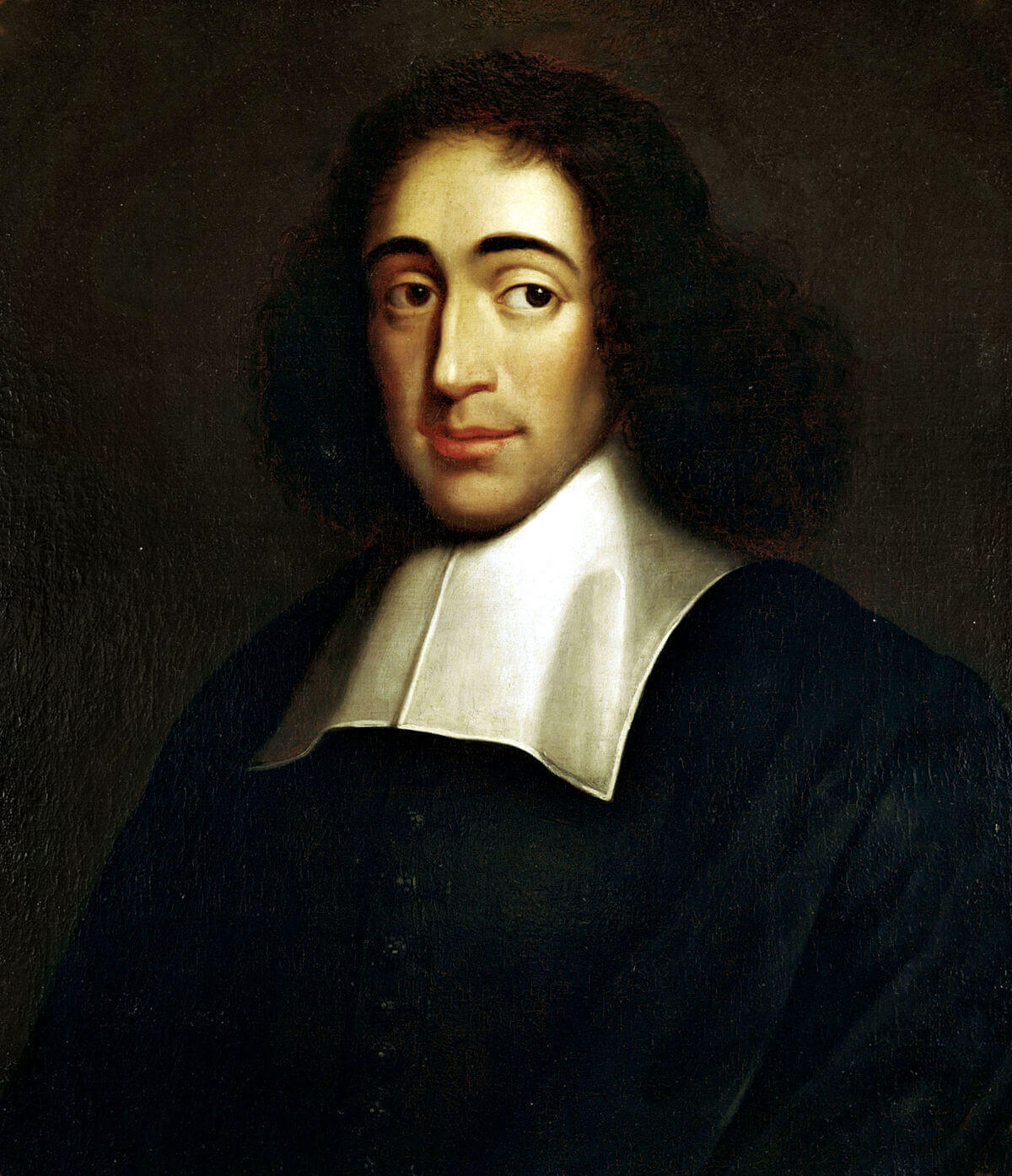
Lectures in this Seminar

square
Reading Date: January 24, 1978
right_ol
square
Reading Date: November 25, 1980
right_ol
square
Reading Date: December 2, 1980
right_ol
square
Reading Date: December 9, 1980
right_ol
square
Reading Date: December 16, 1980
right_ol
square
Reading Date: January 6, 1981
right_ol
square
Reading Date: January 13, 1981
right_ol
square
Reading Date: January 20, 1981
right_ol
square
Reading Date: January 27, 1981
right_ol
square
Reading Date: February 3, 1981
right_ol
square
Reading Date: February 10, 1981
right_ol
square
Reading Date: February 17, 1981
right_ol
square
Reading Date: March 10, 1981
right_ol
square
Reading Date: March 17, 1981
right_ol
square
Reading Date: March 24, 1981
right_ol
square
Reading Date: March 31, 1981
right_ol

January 24, 1978

Today we are taking a pause in our work on continuous variation, to return temporarily for one session to … this very precise point: what is an idea, and what is an affect for Spinoza? … I believe that, of all the philosophers about whom history of philosophy speaks to us, Spinoza is in a very exceptional situation: the way that he touches those who come into his books has no equivalent. It hardly matters whether you have read him or not; I am relating a story.

Seminar Introduction

“Spinoza: The Velocities of Thought” was a 15-lecture seminar given from November 1980 to March 1981. In the first semester teaching at the new location in St. Denis, after the destruction (by the Ministry of Education) of the Vincennes University campus, In this seminar, Deleuze revisits his examination of Baruch Spinoza’s philosophy. Deleuze previously published two books on Spinoza: Expressionism in Philosophy: Spinoza (Spinoza et le problème de l’expression, 1968), and a brief manual, Spinoza. Textes choisis (Paris: Presses Universitaires de France, 1970), subsequently revised and republished as Spinoza: Practical Philosophy (Spinoza Philosophie pratique, Paris: Minuit, 1981). The majority of these lectures were given the same year as the publication of the  latter title, and hence these sessions were clearly informed by the new editorial preparation. The Seminar included here provides a sixteenth session, from 1978, on the themes of affect and idea as well as “continuous variation” in which Deleuze addresses Spinoza.

Please note that these transcriptions and hence the translations have benefited immensely from the work undertaken by David Lapoujade in editing these sessions for publication as Sur Spinoza (Paris: Minuit, 2024).

English Translation

Edited

Deleuze pauses in his discussion of continuous variation (during the development of A Thousand Plateaus) to bring up a related question: what is an idea and affect in Spinoza? Given Spinoza’s important place in A Thousand Plateaus (cf. plateau 10 on becoming), this shift does not entirely constitute a detour. Referring primarily to books II and III of the Ethics, Deleuze’s approach is deliberately terminological, first distinguishing between the Latin terms affectio and affectus, “affect” corresponding to the latter, affectus, whereas “affection” (sentiment, feeling) corresponding to affectio. As for “idea”, for Spinoza this is simply a mode of thought which represents something, the objective reality, while in contrast, affect is any mode of thought which does not represent anything, non-representational, but with a primacy of the idea over the affect. Whereas our everyday life is not made up solely of ideas succeeding each other, a regime of continuous variation operates perpetually, a force of existing (vis existendi) or power (puissance) of action (potentia agendi). This continuous variation for Spinoza means to exist, one’s power of acting increasing or decreasing, rendering more or less joy depending on the extent to which the power of acting is inhibited or enhanced, with continuous variation occurring in this ongoing process of increase-dimunition. In terms of ideas, one never ceases passing from one degree of perfection to another, a melodic line of continuous variation defining affect as it connects to ideas as well as in its distinction from ideas. For Spinoza, there are three sorts of ideas: affection (affectio) ideas (opposed to affectus); notions; and essence ideas, each corresponding to a different level of knowledge. The affection-idea is a first kind of knowledge (connaissance), the lowest kind, i.e. knowledge of things only by their effects, i.e., “inadequate ideas” or representations of effects without their causes. Deleuze shifts toward Spinoza’s next level, ethics as a problem of power (puissance), not duty, and of notion-ideas where escape occurs from the world of passions, no longer the mixture of two bodies, but rather the internal agreement or disagreement of the characteristic relations of the two bodies. By striving to experience affects of joy as a springboard that makes us form the idea of what is common, joyful, to the affecting body and the affected body, leading to greater intelligence. At the third level, there are singular essences, the essence-idea as passage to the world of essence, knowledge of one’s singular essence and God’s singular essence and the singular essence of things. And in this third kind of knowledge, all bodies agree with each other in a world of pure intensities, a mystical point of beatitude or active affect, or auto-affect.

Gilles Deleuze

Seminar on Spinoza, Continuous Variation

Lecture 00, 24 January 1978: Affect and Idea

Translated by Timothy S. Murphy for Web Deleuze; Augmented Transcription and Translation Review by Charles J. Stivale (recording unavailable)


Today we pause in our work on continuous variation to return temporarily, for one session, to the history of philosophy, on a very precise point. It’s like a break, at the request of some of you. This very precise point concerns the following: what is an idea and what is an affect in Spinoza? Idea and affect in Spinoza. During March, at the request of some of you, we will also take a break to consider the problem of synthesis and the problem of time in Kant.

For me, this produces a curious effect of returning to history. I would almost like for you to take this bit of history of philosophy as a history tout court. After all, a philosopher is not only someone who invents notions, he also perhaps invents ways of perceiving. I will proceed largely by enumeration. I will begin chiefly with terminological remarks. I assume that the room is relatively mixed. I believe that, of all the philosophers of whom the history of philosophy speaks to us, Spinoza is in a quite exceptional situation: the way he touches those who enter into his books has no equivalent.

It matters little whether you’ve read him or not, for I’m telling a story. I begin with some terminological cautions. In Spinoza’s principal book, which is called the Ethics and which is written in Latin, one finds two words: AFFECTIO and AFFECTUS. Some translators, quite strangely, translate both in the same way. This is a disaster. They translate both terms, affectio and affectus, by “affection.” I call this a disaster because when a philosopher employs two words, it’s because in principle he has reason to, especially when French easily gives us two words which correspond rigorously to affectio and affectus, that is “affection” for affectio and “affect” for affectus. Some translators translate affectio as “affection” and affectus as “feeling” [sentiment], which is better than translating both by the same word, but I don’t see the necessity of having recourse to the word “feeling” since French offers the word “affect.”

Thus when I use the word “affect” it refers to Spinoza’s affectus, and when I say the word “affection,” it refers to affectio.

First point: what is an idea? What must an idea be, in order for us to comprehend even Spinoza’s simplest propositions? On this point Spinoza is not original, he is going to take the word “idea” in the sense in which everyone has always taken it. What is called an idea, in the sense in which everyone has always taken it in the history of philosophy, is a mode of thought which represents something. A representational mode of thought. For example, the idea of a triangle is the mode of thought which represents the triangle. Still from the terminological point of view, it’s quite useful to know that since the Middle Ages this aspect of the idea has been termed its “objective reality.” In texts from the 17th century and earlier, when you encounter the objective reality of the idea this always means the idea envisioned as representation of something. The idea, insofar as it represents something, is said to have an objective reality. It is the relation of the idea to the object that it represents.

Thus we start from a quite simple thing: the idea is a mode of thought defined by its representational character. This already gives us a first point of departure for distinguishing idea and affect (affectus) because we call affect any mode of thought which doesn’t represent anything. So what does that mean? Take at random what anybody would call affect or feeling, a hope for example, a pain, a love, this is not representational. There is an idea of the loved thing, to be sure, there is an idea of something hoped for, but hope as such or love as such represents nothing, strictly nothing.

Every mode of thought insofar as it is non-representational will be termed affect. A volition, a will implies, in all rigor, that I will something, and what I will is an object of representation, what I will is given in an idea, but the fact of willing is not an idea, it is an affect because it is a non-representational mode of thought. That works, it’s not complicated.

He thereby immediately infers a primacy of the idea over the affect, and this is common to the whole 17th century, so we have not yet entered into what is specific to Spinoza. There is a primacy of the idea over the affect for the very simple reason that in order to love it’s necessary to have an idea, however confused it may be, however indeterminate it may be, of what is loved.

In order to will it’s necessary to have an idea, however confused or indeterminate it may be, of what is willed. Even when one says “I don’t know what I feel,” there is a representation, confused though it may be, of the object. There is a confused idea. There is thus a primacy, which is chronological and logical at the same time, of the idea over the affect, which is to say a primacy of representational modes of thought over non-representational modes. It would be a completely disastrous reversal of meaning if the reader were to transform this logical primacy through reduction. That the affect presupposes the idea above all does not mean that it is reduced to the idea or to a combination of ideas. We must proceed from the following point, that idea and affect are two kinds of modes of thought which differ in nature, which are irreducible to one another but simply taken up in a relation such that affect presupposes an idea, however confused it may be. This is the first point.

Now a second, less superficial way of presenting the idea-affect relation. You will recall that we started from a very simple characteristic of the idea. The idea is a thought insofar as it is representational, a mode of thought insofar as it is representational, and in this sense we will speak of the objective reality of an idea. Yet an idea not only has an objective reality but, following the hallowed terminology, it also has a formal reality. What is the formal reality of the idea? Once we say that the objective reality is the reality of the idea insofar as it represents something, the formal reality of the idea, shall we say, is—but then in one blow it becomes much more complicated and much more interesting—the reality of the idea insofar as it is itself something.

The objective reality of the idea of the triangle is the idea of the triangle insofar as it represents the triangle as thing, but the idea of the triangle is itself something; moreover, insofar as it is something, I can form an idea of this thing, I can always form an idea of the idea. I would say therefore that not only is every idea something—to say that every idea is the idea of something is to say that every idea has an objective reality, it represents something—but I would also say that the idea has a formal reality since it is itself something insofar as it is an idea.

What does this mean, the formal reality of the idea? We will not be able to continue very much further at this level, we are going to have to put this aside. It’s necessary just to add that this formal reality of the idea will be what Spinoza very often terms a certain degree of reality or of perfection that the idea has as such. As such, every idea has a certain degree of reality or perfection. Undoubtedly this degree of reality or perfection is connected to the object that it represents, but it is not to be confused with the object: that is, the formal reality of the idea, the thing the idea is or the degree of reality or perfection it possesses in itself, is its intrinsic character. The objective reality of the idea, that is the relation of the idea to the object it represents, is its extrinsic character; the extrinsic character and the intrinsic character may be fundamentally connected, but they are not the same thing. The idea of God and the idea of a frog have different objective realities, that is they do not represent the same thing, but at the same time they do not have the same intrinsic reality, they do not have the same formal reality, that is one of them—you sense this quite well—has a degree of reality infinitely greater than the other’s. The idea of God has a formal reality, a degree of reality or intrinsic perfection infinitely greater than the idea of a frog, which is the idea of a finite thing.

If you understood that, you’ve understood almost everything. There is thus a formal reality of the idea, which is to say the idea is something in itself; this formal reality is its intrinsic character and is the degree of reality or perfection that it envelopes in itself.

Just now, when I defined the idea by its objective reality or its representational character, I opposed the idea immediately to the affect by saying that affect is precisely a mode of thought which has no representational character. Now I come to define the idea by the following: every idea is something, not only is it the idea of something but it is something, that is to say it has a degree of reality which is proper to it. Thus at this second level I must discover a fundamental difference between idea and affect. What happens concretely in life? Two things happen… And here, it’s curious how Spinoza employs a geometrical method, you know that the Ethics is presented in the form of propositions, demonstrations, etc…. and yet at the same time, the more mathematical it is, the more extraordinarily concrete.

Everything I am saying and all these commentaries on the idea and the affect refer to books two and three of the Ethics. In books two and three, he makes for us a kind of geometrical portrait of our life which, it seems to me, is very very convincing. This geometrical portrait consists largely in telling us that our ideas succeed each other constantly: one idea chases another, one idea replaces another idea for example, in an instant. A perception is a certain type of idea, we will see why shortly. Just now I had my head turned there, I saw that corner of the room, I turn…it’s another idea; I walk down a street where I know people, I say “Hello Pierre” and then I turn and say “Hello Paul.” Or else things change: I look at the sun, and the sun little by little disappears and I find myself in the dark of night; it is thus a series of successions, of coexistences of ideas, successions of ideas. But what also happens? Our everyday life is not made up solely of ideas which succeed each other. Spinoza employs the term “automaton”: we are, he says, spiritual automata, that is to say it is less we who have the ideas than the ideas which are affirmed in us. What also happens, apart from this succession of ideas? There is something else, that is, something in me never ceases to vary. There is a regime of variation which is not the same thing as the succession of ideas themselves. “Variations” must serve us for what we want to do, the trouble is that he doesn’t employ the word… What is this variation? I take up my example again: in the street I run into Pierre, for whom I feel hostility, I pass by and say hello to Pierre, or perhaps I am afraid of him, and then I suddenly see Paul who is very very charming, and I say hello to Paul reassuredly and contentedly. Well. What is it? In part, succession of two ideas, the idea of Pierre and the idea of Paul; but there is something else: a variation also operates in me—on this point, Spinoza’s words are very precise and I cite them: (variation) of my force of existing, or another word he employs as a synonym: vis existendi, the force of existing, or potentia agendi, the power [puissance] of acting, and these variations are perpetual.

I would say that for Spinoza there is a continuous variation—and this is what it means to exist—of the force of existing or of the power of acting.

How is this linked to my stupid example, which comes, however, from Spinoza, “Hello Pierre, hello Paul”? When I see Pierre who displeases me, an idea, the idea of Pierre, is given to me; when I see Paul who pleases me, the idea of Paul is given to me. Each one of these ideas in relation to me has a certain degree of reality or perfection. I would say that the idea of Paul, in relation to me, has more intrinsic perfection than the idea of Pierre since the idea of Paul contents me and the idea of Pierre upsets me. When the idea of Paul succeeds the idea of Pierre, it is agreeable to say that my force of existing or my power of acting is increased or improved; when, on the contrary, the situation is reversed, when after having seen someone who made me joyful I then see someone who makes me sad, I say that my power of acting is inhibited or obstructed. At this level we don’t even know anymore if we are still working within terminological conventions or if we are already moving into something much more concrete.

I would say that, to the extent that ideas succeed each other in us, each one having its own degree of perfection, its degree of reality or intrinsic perfection, the one who has these ideas, in this case me, never stops passing from one degree of perfection to another. In other words there is a continuous variation in the form of an increase-diminution-increase-diminution of the power of acting or the force of existing of someone according to the ideas which s/he has. Feel how beauty shines through this difficult exercise. This representation of existence already isn’t bad, it really is existence in the street, it’s necessary to imagine Spinoza strolling about, and he truly lives existence as this kind of continuous variation: to the extent that an idea replaces another, I never cease to pass from one degree of perfection to another, however miniscule the difference, and this kind of melodic line of continuous variation will define affect (affectus) in its correlation with ideas and at the same time in its difference in nature from ideas. We account for this difference in nature and this correlation. It’s up to you to say whether it agrees with you or not. We have got an entirely more solid definition of affectus; affectus in Spinoza is variation (he is speaking through my mouth; he didn’t say it this way because he died too young…), continuous variation of the force of existing, insofar as this variation is determined by the ideas one has.

Consequently, in a very important text at the end of book three, which bears the title “general definition of affectus,” Spinoza tells us: above all do not believe that affectus as I conceive it depends upon a comparison of ideas. He means that the idea indeed has to be primary in relation to the affect, the idea and the affect are two things which differ in nature, the affect is not reducible to an intellectual comparison of ideas, affect is constituted by the lived transition or lived passage from one degree of perfection to another, insofar as this passage is determined by ideas; but in itself it does not consist in an idea, but rather constitutes affect.

When I pass from the idea of Pierre to the idea of Paul, I say that my power of acting is increased; when I pass from the idea of Paul to the idea of Pierre, I say that my power of acting is diminished. Which comes down to saying that when I see Pierre, I am affected with sadness; when I see Paul, I am affected with joy. And on this melodic line of continuous variation constituted by the affect, Spinoza will assign two poles: joy-sadness, which for him will be the fundamental passions. Sadness will be any passion whatsoever which involves a diminution of my power of acting, and joy will be any passion involving an increase in my power of acting. This conception will allow Spinoza to become aware, for example, of a quite fundamental moral and political problem which will be his way of posing the political problem to himself: how does it happen that people who have power [pouvoir], in whatever domain, need to affect us in a sad way? The sad passions as necessary. Inspiring sad passions is necessary for the exercise of power. And Spinoza says, in the Theological-Political Treatise, that this is a profound point of connection between the despot and the priest—they both need the sadness of their subjects. Here you understand well that he does not take sadness in a vague sense, he takes sadness in the rigorous sense he knew to give it: sadness is the affect insofar as it involves the diminution of my power of acting.

When I said, in my first attempt to differentiate idea and affect (that the idea is the mode of thought which represents nothing [?]), that the affect is the mode of thought which represents nothing, I said in technical terms that this is not only a simple nominal definition, nor, if you prefer, only an external or extrinsic one.

In the second attempt, when I say on the other hand that the idea is that which has in itself an intrinsic reality, and the affect is the continuous variation or passage from one degree of reality to another or from one degree of perfection to another, we are no longer in the domain of so-called nominal definitions, here we already acquire a real definition, that is a definition which, at the same time as it defines the thing, also shows the very possibility of this thing.

What is important is that you see how, according to Spinoza, we are fabricated as such spiritual automata. As such spiritual automata, within us there is the whole time of ideas which succeed one another, and in according with this succession of ideas, our power of acting or force of existing is increased or diminished in a continuous manner, on a continuous line, and this is what we call affectus, it’s what we call existing.

Affectus is thus the continuous variation of someone’s force of existing, insofar as this variation is determined by the ideas that s/he has. But once again, “determined” does not mean that the variation is reducible to the ideas that one has, since the idea that I have does not account for its consequence, that is the fact that it increases my power of acting or on the contrary diminishes it in relation to the idea that I had at the time, and it’s not a question of comparison, it’s a question of a kind of slide, a fall or rise in the power of acting.

No problems? No questions?

For Spinoza there will be three sorts of ideas. For the moment, we will no longer speak of affectus, of affect, since in effect the affect is determined by the ideas which one has, it’s not reducible to the ideas one has, it is determined by the ideas one has; thus what is essential is to see which ideas are the ones which determine the affects, always keeping in mind the fact that the affect is not reducible to the ideas one has, it’s absolutely irreducible. It’s of another order.

The three kinds of ideas that Spinoza distinguishes are affection (affectio) ideas; we’ll see that affectio, as opposed to affectus, is a certain kind of idea. There would thus have been in the first place affectio ideas, secondly we arrive at the ideas that Spinoza calls notions, and thirdly, for a small number of us because it’s very difficult, we come to have essence ideas. Before everything else there are these three sorts of ideas.

What is an affection (affectio)? I see your faces literally fall… yet this is all rather amusing. At first sight, and to stick to the letter of Spinoza’s text, this has nothing to do with an idea, but it has nothing to do with an affect either. Affectus was determined as the continuous variation of the power of acting. An affection is what? In a first determination, an affection is the following: it’s a state of a body insofar as it is subject to the action of another body. What does this mean? “I feel the sun on me,” or else “A ray of sunlight falls upon you”; it’s an affection of your body. What is an affection of your body? Not the sun, but the action of the sun or the effect of the sun on you. In other words an effect, or the action that one body produces on another, once it’s noted that Spinoza, on the basis of reasons from his Physics, does not believe in action at a distance, action always implies a contact, and is even a mixture of bodies. Affectio is a mixture of two bodies, one body which is said to act on another, and the other receives the trace of the first. Every mixture of bodies will be termed an affection.

Spinoza infers from this that affectio, being defined as a mixture of bodies, indicates the nature of the modified body, the nature of the affectionate or affected body, the affection indicates the nature of the affected body much more than it does the nature of the affecting body. He analyses his famous example, “I see the sun as a flat disk situated at a distance of three hundred feet.” That’s an affectio, or at very least the perception of an affectio. It’s clear that my perception of the sun indicates much more fully the constitution of my body, the way in which my body is constituted, than it does the way in which the sun is constituted. I perceive the sun in this fashion by virtue of the state of my visual perceptions. A fly will perceive the sun in another fashion.

In order to preserve the rigor of his terminology, Spinoza will say that an affectio indicates the nature of the modified body rather than the nature of the modifying body, and it envelopes the nature of the modifying body. I would say that the first sort of ideas for Spinoza is every mode of thought which represents an affection of the body…which is to say the mixture of one body with another body, or the trace of another body on my body will be termed an idea of affection. It’s in this sense that one could say that it is an affection-idea, the first type of ideas. And this first type of ideas answers to what Spinoza terms the first kind of knowledge [connaissance], the lowest.

Why is it the lowest? It’s obvious that it’s the lowest because these ideas of affection know [connaissent] things only by their effects: I feel the affection of the sun on me, the trace of the sun on me. It’s the effect of the sun on my body. But the causes, that is, that which is my body, that which is the body of the sun, and the relation between these two bodies such that the one produces a particular effect on the other rather than something else, of these things I know [sais] absolutely nothing. Let’s take another example: “The sun melts wax and hardens clay.” These points are not nothing. They’re ideas of affectio. I see the wax which flows, and right beside it I see the clay which hardens; this is an affection of the wax and an affection of the clay, and I have an idea of these affections, I perceive effects. By virtue of what corporeal constitution does the clay harden under the sun’s action? As long as I remain in the perception of affection, I know nothing of it. One could say that affection-ideas are representations of effects without their causes, and it’s precisely these that Spinoza calls inadequate ideas. These are ideas of mixture separated from the causes of the mixture.

And in effect, the fact that, at the level of affection-ideas, we have only inadequate and confused ideas is well understood for what are affection-ideas in the order of life? And doubtless, alas, many among us who have not done enough philosophy live only like that.

Once, only once, Spinoza employs a Latin word which is quite strange but very important: occursus. Literally this is the encounter. To the extent that I have affection-ideas I live chance encounters: I walk in the street, I see Pierre who does not please me, it’s the function of the constitution of his body and his soul and the constitution of my body and my soul. Someone who displeases me, body and soul, what does that mean? I would like to make you understand why Spinoza has had such a strong reputation for materialism even though he never ceases to speak of the mind and the soul, a reputation for atheism even though he never ceases to speak of God, it’s quite curious. One sees quite well why people have said that this is purely materialist. When I say “This one does not please me,” that means, literally, that the effect of his body on mine, the effect of his soul on mine affects me disagreeably, it is the mixture of bodies or mixture of souls. There is a noxious mixture or a good mixture, as much at the level of the body as at that of the soul.

It’s exactly like this: “I don’t like cheese.” What does that mean, “I don’t like cheese”? That means that it mixes with my body in a manner by which I am modified disagreeably, it cannot mean anything else. Thus there isn’t any reason to make up differences between spiritual sympathies and bodily relations. In “I don’t like cheese” there is also an affair of the soul, but in “Pierre or Paul does not please me” there is also an affair of the body, all this is tantamount to the same thing. To put it simply, why is this a confused idea, this affection-idea, this mixture—it is inevitably confused and inadequate since I don’t know absolutely, at this level, by virtue of what and how the body or the soul of Pierre is constituted, in what way it does not agree with mine, or in what way his body does not agree with mine. I can merely say that it does not agree with me, but by virtue of what constitution of the two bodies, of the affecting body and the affected body, of the body which acts and the body which is subjected, I can at this level know nothing. As Spinoza says, these are consequences separated from their premises or, if you prefer, it is a knowledge [connaissance] of effects independent of the knowledge of causes. Thus they are chance encounters. What can happen in chance encounters?

But what is a body? I’m not going to develop that, that may be the object of a special course. The theory of what a body or even a soul is, which comes down to the same thing, is found in book two of the Ethics. For Spinoza, the individuality of a body is defined by the following: it’s when a certain composite or complex relation (I insist on that point, quite composite, very complex) of movement and rest is preserved through all the changes which affect the parts of the body. It’s the permanence of a relation of movement and rest through all the changes which affect all the parts, taken to infinity, of the body under consideration. You understand that a body is necessarily composite to infinity. My eye, for example, my eye and the relative constancy of my eye are defined by a certain relation of movement and rest through all the modifications of the diverse parts of my eye; but my eye itself, which already has an infinity of parts, is one part among the parts of my body, the eye in its turn is a part of the face and the face, in its turn, is a part of my body, etc….thus you have all sorts of relations which will be combined with one another to form an individuality of such and such degree. But at each one of these levels or degrees, individuality will be defined by a certain relation composed of movement and rest.

What can happen if my body is made this way, a certain relation of movement and rest which subsumes an infinity of parts? Two things can happen: I eat something that I like, or else another example, I eat something and collapse, poisoned. Literally speaking, in the one case I had a good encounter and in the other I had a bad one. All this is in the category of occursus. When I have a bad encounter, this means that the body which is mixed with mine destroys my constituent relation, or tends to destroy one of my subordinate relations. For example, I eat something and get a stomach ache which does not kill me; this has destroyed or inhibited, compromised one of my sub-relations, one of the relations that compose me. Then I eat something and I die. This has decomposed my composite relation, it has decomposed the complex relation which defined my individuality. It hasn’t simply destroyed one of my subordinate relations which composed one of my sub-individualities, it has destroyed the characteristic relation of my body. And the opposite happens when I eat something that agrees with me.

Spinoza asks, what is evil? We find this in his correspondence, in the letters he sent to a young Dutchman who was as evil as can be. This Dutchman didn’t like Spinoza and attacked him constantly, demanding of him, “Tell me what you think evil is.” You know that at that time, letters were very important and philosophers sent many of them. Spinoza, who is very very good-natured, believes at first that this is a young man who wants to be taught and, little by little, he comes to understand that this is not the case at all, that the Dutchman wants his skin. From letter to letter, the good Christian Blyenbergh’s anger swells and he ends by saying to Spinoza, “But you are the devil!” Spinoza says that evil is not difficult, evil is a bad encounter. Encountering a body which mixes badly with your own. Mixing badly means mixing in conditions such that one of your subordinate or constituent relations is either threatened, compromised or even destroyed.

More and more joyful [gai], wanting to show that he is right, Spinoza analyzes the example of Adam in his own way. In the conditions in which we live, we seem absolutely condemned to have only one sort of idea, affection-ideas. By means of what miracle could one move away from these actions of bodies that do not wait for us in order to exist, how could one rise to a knowledge [connaissance] of causes? For the moment we see clearly that all that is given to us is ideas of affection, ideas of mixture. For the moment we see clearly that since birth we have been condemned to chance encounters, so things aren’t going well. What does this imply? It already implies a fanatical reaction against Descartes since Spinoza will affirm strongly, in book two, that we can only know [connaÓtre] ourselves and we can only know external bodies by the affections that the external bodies produce on our own. For those who can recall a little Descartes, this is the basic anti-cartesian proposition since it excludes every apprehension of the thinking thing by itself, that is it excludes all possibility of the cogito. I only ever know the mixtures of bodies and I only know myself by way of the action of other bodies on me and by way of mixtures.

This is not only anti-cartesianism but also anti-Christianity, and why? Because one of the fundamental points of theology is the immediate perfection of the first created man, which is what’s called in theology the theory of Adamic perfection. Before he sinned, Adam was created as perfect as he could be, so then the story of his sin is precisely the story of the Fall, but the Fall presupposes an Adam who is perfect insofar as he is a created thing. Spinoza finds this idea very amusing. His idea is that this isn’t possible; supposing that one is given the idea of a first man, one can only be given this idea as that of the most powerless being, the most imperfect there could be since the first man can only exist in chance encounters and in the action of other bodies on his own. Thus, in supposing that Adam exists, he exists in a mode of absolute imperfection and inadequacy, he exists in the mode of a little baby who is given over to chance encounters, unless he is in a protected milieu—but I’ve said too much. What would that be, a protected milieu?

Evil is a bad encounter, which means what? Spinoza, in his correspondence with the Dutchman, tells him, “You always relate to me the example of God who forbade Adam from eating the apple, and you cite this as the example of a moral law. The first prohibition.” Spinoza tells him, “But this is not at all what happens,” and then Spinoza relates the entire story of Adam in the form of a poisoning and an intoxication. What happened in reality? God never forbade whatever it might be to Adam, He granted him a revelation. Adam foresaw the noxious effect that the body of the apple would have on the constitution of his own body. In other words the apple is a poison for Adam. The body of the apple exists under such a characteristic relation, such is its constitution, that it can only act on Adam’s body by decomposing the relation of Adam’s body. And if he was wrong not to listen to God, this is not in the sense that he disobeyed in this matter, but that he didn’t comprehend anything. This situation also exists among animals, certain of which have an instinct that turns them away from what is poisonous to them, but there are others which don’t have this instinct.

When I have an encounter such that the relation of the body which modifies me, which acts on me, is combined with my own relation, with the characteristic relation of my own body, what happens? I would say that my power of acting is increased; at least it is increased with regard to this particular relation. When on the contrary I have an encounter such that the characteristic relation of the body which modifies me compromises or destroys one of my relations, or my characteristic relation, I would say that my power of acting is diminished or even destroyed. We rediscover here our two fundamental affects or affectus: sadness and joy.

To recapitulate everything at this level, as a function of ideas of affection which I have, there are two sorts of ideas of affection: the idea of an effect which benefits or favors my own characteristic relation, and second, the idea of an effect which compromises or destroys my own characteristic relation. To these two types of ideas of affection will correspond the two movements of variation in the affectus, the two poles of variation: in one case my power of acting is increased and I undergo [Èprouve] an affectus of joy, and in the other case my power of acting is diminished and I undergo an affectus of sadness.

Spinoza will engender all the passions, in their details, on the basis of these two fundamental affects: joy as an increase in the power of acting, sadness as a diminution or destruction of the power of acting. This comes down to saying that each thing, body or soul, is defined by a certain characteristic, complex relation, but I would also say that each thing, body or soul, is defined by a certain power [pouvoir] of being affected. Everything happens as if each one of us had a certain power of being affected. If you consider beasts, Spinoza will be firm in telling us that what counts among animals is not at all the genera or species; genera and species are absolutely confused notions, abstract ideas. What counts is the question, of what is a body capable? And thereby he sets out one of the most fundamental questions in his whole philosophy (before him there had been Hobbes and others) by saying that the only question is that we don’t even know [savons] what a body is capable of, we prattle on about the soul and the mind and we don’t know what a body can do. But a body must be defined by the ensemble of relations which compose it, or, what amounts to exactly the same thing, by its power of being affected. As long as you don’t know what power a body has to be affected, as long as you learn like that, in chance encounters, you will not have the wise life, you will not have wisdom.

Knowing what you are capable of. This is not at all a moral question, but above all a physical question, as a question to the body and to the soul. A body has something fundamentally hidden: we could speak of the human species, the human genera, but this won’t tell us what is capable of affecting our body, what is capable of destroying it. The only question is the power of being affected. What distinguishes a frog from an ape? It’s not the specific or generic characteristics, Spinoza says, rather it’s the fact that they are not capable of the same affections. Thus it will be necessary to make, for each animal, veritable charts of affects, the affects of which a beast is capable. And likewise for men: the affects of which man is capable. We should notice at this moment that, depending on the culture, depending on the society, men are not all capable of the same affects.

It’s well known that one method by which certain governments exterminated the Indians of South America was to have left, on trails the Indians traveled, clothing from influenza victims, clothing gathered in the infirmaries, because the Indians couldn’t stand the affect influenza. No need even of machine guns, they dropped like flies. It’s the same with us, in the conditions of forest life we risk not living very long. Thus the human genera, species or even race hasn’t any importance, Spinoza will say, as long as you haven’t made the list of affects of which someone is capable, in the strongest sense of the word “capable,” comprising the maladies of which s/he is capable as well. It’s obvious that the racehorse and the draft horse are the same species, two varieties of the same species, yet their affects are very different, their maladies are absolutely different, their capacities of being affected are completely different and, from this point of view, we must say that a draft horse is closer to an ox than to a racehorse. Thus an ethological chart of affects is quite different from a generic or specific determination of animals.

You see that the power of being affected can be fulfilled in two ways. When I am poisoned, my power of being affected is absolutely fulfilled, but it’s fulfilled in such a way that my power of acting tends toward zero, which is to say it’s inhibited. Inversely, when I undergo joy, that is to say when I encounter a body which combines its relation with my own, my power of being affected is equally fulfilled and my power of acting increases and tends toward…what?

In the case of a bad encounter, all my force of existing (vis existendi) is concentrated, tending toward the following goal: to invest the trace of the body which affected me in order to reject the effect of this body, so much so that my power of acting is diminished accordingly.

These are very concrete things: you have a headache and you say, “I can’t even read anymore”; this means that your force of existing invests the trace of the migraine so fully, it implies changes in one of your subordinate relations, it invests the trace of your migraine so fully that your power of acting is diminished accordingly. On the contrary, when you say, “I feel really good,” and you are content, you are also content because bodies are mixed with you in proportions and under conditions which are favorable to your relation; at that moment the power of the body which affects you is combined with your own in such a way that your power of acting is increased. So although in the two cases your power of being affected will be completely actualized [effectuÈ], it can be actualized in such a way that the power of acting diminishes to infinity or alternatively the power of acting increases to infinity.

To infinity? Is this true? Evidently not, since at our level the forces of existing, the powers [pouvoirs] of being affected and the powers [puissances] of acting are inevitably finite. Only God has an absolutely infinite power [puissance]. Right, but within certain limits I will not cease to pass via these variations of the power of acting as a function of the ideas I have, I will not cease to follow the line of continuous variation of the affectus as a function of affection-ideas that I have and the encounters that I have, in such a way that, at each instant, my power of being affected is completely actualized, completely fulfilled. Fulfilled, simply, in the mode of sadness or the mode of joy. Of course also both at once, since it’s well understood that, in the sub-relations which compose us, a part of ourselves can be composed of sadness and another part of ourselves can be composed of joy. There are local sadnesses and local joys. For example, Spinoza gives the following definition of tickling: a local joy; this does not mean that everything is joy in the tickling, it can be a joy of a nature that implies a coexistant irritation of another nature, an irritation which is sadness: my power of being affected tends to be exceeded [dépassé]. Nothing that exceeds his/her power of being affected is good for a person. A power of being affected is really an intensity or threshold of intensity.

What Spinoza really wants to do is to define the essence of someone in an intensive fashion as an intensive quantity. As long as you don’t know your intensities you risk the bad encounter and you will have to say, it’s beautiful, both the excess and the immoderation..no immoderation at all, there’s only failure, nothing other than failure. Advice for overdoses. This is precisely the phenomenon of the power of being affected which is exceeded in a total destruction.

Certainly in my generation, on average, we were much more cultured or trained in philosophy, when we used to do it, and on the other hand we had a very striking kind of lack of culture in other domains, in music, painting, cinema.

I have the impression that for many among you the relation has changed, that is to say that you know absolutely nothing, nothing in philosophy and you know, or rather you have a concrete grasp of things like a color, you know what a sound is or what an image is.

A philosophy is a kind of synthesizer of concepts, creating a concept is not at all ideological. A concept is a created thing.

What I’ve defined up to now is solely the increase and diminution of the power of acting, and whether the power of acting increases or diminishes, the corresponding affect (affectus) is always a passion. Whether it be a joy which increases my power of acting or a sadnesss which diminishes my power of acting, in both cases these are passions: joyful passions or sad passions. Yet again Spinoza denounces a plot in the universe of those who are interested in affecting us with sad passions. The priest has need of the sadness of his subjects, he needs these subjects to feel themselves guilty. The auto-affections or active affects assume that we possess our power of acting and that, on such and such a point, we have left the domain of the passions in order to enter the domain of actions. This is what remains for us to see.

How could we leave behind affection-ideas, how could we leave behind the passive affects which consist in increase or diminution of our power of acting, how could we leave behind the world of inadequate ideas once we’re told that our condition seems to condemn us strictly to this world. On that score we must read the Ethics as preparing a kind of dramatic turn. It’s going to speak to us of active affects where there are no longer passions, where the power of acting is conquered instead of passing by all these continuous variations. Here, there’s a very strict point. There’s a fundamental difference between Ethics and Morality. Spinoza doesn’t make up a morality, for a very simply reason: he never asks what we must do, he always asks what we are capable of, what’s in our power, ethics is a problem of power, never a problem of duty. In this sense Spinoza is profoundly immoral. Regarding the moral problem, good and evil, he has a happy nature because he doesn’t even comprehend what this means. What he comprehends are good encounters, bad encounters, increases and diminutions of power. Thus he makes an ethics and not at all a morality. This is why he so struck Nietzsche.

We are completely enclosed in this world of affection-ideas and these affective continuous variations of joy and sadness, so sometimes my power of acting increases, okay, sometimes it diminishes; but whether it increases or diminishes I remain within passion because, in both cases, I do not possess it: I’m still separated from my power of acting. So when my power of acting increases, it means that I am then relatively less separated, and inversely, but I am still formally separated from my power of acting, I do not possess it. In other words, I am not the cause of my own affects, and since I’m not the cause of my own affects, they are produced in me by something else: I am therefore passive, I’m in the world of passion.


But there are notion-ideas and essence-ideas. Already at the level of notion-ideas a kind of escape from this world is going to appear. One is completely smothered, enclosed in a world of absolute impotence, even when my power of acting increases it’s on a segment of variation, nothing guarantees me that, at the street corner, I’m not going to receive a great blow to the head and that my power of acting is going to fall again.

You recall that an affection-idea is a mixture, that is to say the idea of an effect of a body on mine. A notion-idea no longer concerns the effect of another body on mine, it’s an idea which concerns and which has for its object the agreement or disagreement of the characteristic relations between two bodies. If there is such an idea—we don’t know yet if there is one, but we can always define something even if it means concluding that it can’t exist—it’s what we will call a nominal definition. I would say that the nominal definition of the notion is that it’s an idea which, instead of representing the effect of a body on another, that is to say the mixture of two bodies, represents the internal agreement or disagreement of the characteristic relations of the two bodies.

An example: if I knew enough about the characteristic relation of the body named arsenic and the characteristic relation of the human body, I could form a notion of the disagreement of these two relations to the point that the arsenic, under its characteristic relation, destroys the characteristic relation of my body. I am poisoned, I die.

You see that the notion, differing from the idea of affection, instead of being the seizure of the extrinsic relation of one body with another or the effect of one body on another, the notion is raised to the comprehension of the cause, that is if the mixture has such and such effect, this is by virtue of the nature of the relation of the two bodies considered and of the manner in which the relation of one of the bodies is combined with the relation of the other body. There is always a composition of relations. When I am poisoned, the body of arsenic has induced the parts of my body to enter into a relation other than the one which characterizes me. At that moment, the parts of my body enter into a new relation induced by the arsenic, which is perfectly combined with the arsenic; the arsenic is happy since it feeds on me. The arsenic undergoes a joyful passion because, as Spinoza says so well, each body has a soul. Thus the arsenic is joyful, but me, evidently I’m not. It has induced the parts of my body to enter into a relation which is combined with its own, the arsenic’s. Me, I’m sad, I’m heading toward death. You see that the notion, if one can reach it, is a formidable thing.

We are not far from an analytical geometry. A notion is not at all abstract, it’s quite concrete: this body here, that body there. If I had the characteristic relation of the soul and of the body of that which I say displeases me, in relation to my characteristic relation in myself, I would comprehend everything, I would know by causes instead of knowing only by effects separated from their causes. At that moment I would have an adequate idea. Just as if I understood why someone pleases me. I took as an example digestive relations, but we wouldn’t have to change a line for amorous relations. It’s not at all that Spinoza conceived love like he conceived digestion, he conceived digestion like love as well. Take a couple ý la Strindberg, this kind of decomposition of relations and then they are recombined in order to begin again. What is this continuous variation of the affectus, and how does a certain disagreement agree with certain people? Why can certain people live only in a certain indefinitely repeated domestic quarrel? They emerge from it as if it had been a bath of cool water for them.

You understand the difference between a notion-idea and an affection-idea. A notion-idea is inevitably adequate since it’s a knowledge [connaissance] by causes. Spinoza not only uses the term notion here to qualify this second sort of idea, but he also uses the term common notion. The word is quite ambiguous: does it mean common to all minds? Yes and no, it’s very meticulous in Spinoza. In any case, don’t ever confuse a common notion and an abstraction. He always defines a common notion like this: it’s the idea of something which is common to all bodies or to several bodies—at least two—and which is common to the whole and to the part. Therefore there surely are common notions which are common to all minds, but they’re common to all minds only to the extent that they are first the idea of something which is common to all bodies. Therefore these are not at all abstract notions. What is common to all bodies? For example, being in movement or at rest. Movement and rest will be objects of notions said to be common to all bodies. Therefore there are common notions which designate something common to all bodies.

There are also common notions which designate something common to two bodies or to two souls, for example, someone I love. Once again the common notion is not abstract, it has nothing to do with species or genera, it’s actually the statement [ÈnoncÈ] of what is common to several bodies or to all bodies; or, since there’s no single body which is not itself made up of several, one can say that there are common things or common notions in each body. Hence we fall back upon the question: how can one leave this situation which condemned us to mixtures?

Here Spinoza’s texts are very complicated. One can only conceive this departure in the following manner: broadly speaking, when I am affected in chance encounters, either I am affected with sadness or with joy. When I am affected with sadness, my power of acting diminishes, which is to say that I am further separated from this power. When I am affected with joy, it increases, which is to say that I am less separated from this power. Good. If you consider yourself as affected with sadness, I believe that everything is wretched, there is no longer an exit for one simple reason: nothing in sadness, which diminishes your power of acting, can induce you from within sadness to form a notion common to something which would be common to the bodies which affect you with sadness and to your own. For one very simple reason, that the body which affects you with sadness only affects you with sadness to the extent that it affects you in a relation which does not agree with your own.

Spinoza means something very simple, that sadness makes no one intelligent. In sadness one is wretched. It’s for this reason that the powers-that-be [pouvoirs] need subjects to be sad. Agony has never been a cultural game of intelligence or vivacity. As long as you have a sad affect, a body acts on yours, a soul acts on yours in conditions and in a relation which do not agree with yours. At that point, nothing in sadness can induce you to form the common notion, that is to say the idea of a something in common between two bodies and two souls. What he’s saying is full of wisdom. This is why thinking of death is the most base thing. He is opposed to the whole philosophical tradition which is a meditation on death. His formula is that philosophy is a meditation on life and not on death. Obviously, because death is always a bad encounter.

Another case. You are affected with joy. Your power of acting is increased, this doesn’t mean that you possess it yet, but the fact that you are affected with joy signifies and indicates that the body or soul which affects you thus affects you in a relation which is combined with your own and which is combined with your own, and that goes for the formula of love and the digestive formula. In an affect of joy, therefore, the body which affects you is indicated as combining its relation with your own and not as its relation decomposing your own. At that point, something induces you to form a notion of what is common to the body which affects you and to your own body, to the soul which affects you and to your own soul. In this sense joy makes one intelligent. There we feel that it’s a curious thing, because, geometrical method or not, we grant him everything, he can demonstrate it; but there is an obvious appeal to a kind of lived experience. There’s an obvious appeal to way of perceiving, and even more, to a way of living. It’s necessary to already have such a hatred of sad passions, the list of sad passions in Spinoza is infinite, he goes so far as to say that every idea of reward envelopes a sad passion, every idea of security envelopes a sad passion, every idea of pride, guilt. It’s one of the most marvelous moments in the Ethics. The affects of joy are like a springboard, they make us pass through something that we would never have been able to pass if there had only been sadnesses. He solicits us to form the idea of what is common to the affecting body and the affected body. This can fail, but it can also succeed and I become intelligent.

Someone who becomes good in Latin at the same time that he becomes a lover…this is seen in the classroom. What’s it connected to? How does someone make progress? One never makes progress on a homogeneous line, something here makes us make progress down there, as if a small joy here had released a trigger. Anew, the necessity of a map: what happened there that unblocked this here? A small joy precipitates us into a world of concrete ideas which sweeps out the sad affects or which is in the process of struggling, all of this makes up part of the continuous variation. But at the same time, this joy propels us somehow beyond the continuous variation, it makes us acquire at least the potentiality of a common notion. It’s necessary to conceive this very concretely, these are quite local things. If you succeed in forming a common notion, at whatever point you yourself have a relation with such a person or such an animal, you say: I’ve finally understood something, I am less stupid than yesterday. The “I’ve understood” that one says is sometimes the moment in which you formed a common notion. You formed it quite locally, it didn’t give you all the common notions. Spinoza doesn’t think at all like a rationalist, among the rationalists there is the world of reason and there are the ideas. If you have one, obviously you have all of them: you are reasonable. Spinoza thinks that being reasonable, or being wise, is a problem of becoming, which changes in a singular fashion the contents of the concept of reason. It’s necessary to know the encounters which agree with you. No one could ever say that it’s good for her/him when something exceeds her/his power of being affected. The most beautiful thing is to live on the edges, at the limit of her/his own power of being affected, on the condition that this be the joyful limit since there is the limit of joy and the limit of sadness; but everything which exceeds your power of being affected is ugly. Relatively ugly: what’s good for flies is not inevitably good for you…

There is no longer any abstract notion, there isn’t any formula which is good for man in general. What counts is what your power is for you. Lawrence said a directly Spinozist thing: an intensity which exceeds your power of being affected is bad (posthumous writings). It’s inevitable: a blue that is too intense for my eyes will not make me say it’s beautiful, it will perhaps be beautiful for someone else. There’s good for all, you tell me…Yes, because the powers of being affected are combined.

To assume that there was a power of being affected which defined the power of being affected of the whole universe is quite possible since all relations are combined to infinity, but not in just any order. My relation doesn’t combine with that of arsenic, but what can this do? Obviously it does a lot to me, but at this moment the parts of my body enter again into a new relation which is combined with that of the arsenic. It’s necessary to know in what order the relations are combined. But if we knew in what order the relations of the whole universe are combined, we could define a power of being affected of the whole universe, which would be the cosmos, the world insofar as it’s a body or a soul. At this moment the whole world is only one single body following the order of relations which are combined. At this moment you have, to speak precisely, a universal power of being affected: God, who is the whole universe insofar as He is its cause, has by nature a universal power of being affected. It’s useless to say that he’s in the process of using the idea of God in a strange manner.

You undergo a joy, you feel that this joy concerns you, that it concerns something important regarding your principal relations, your characteristic relations. Here then it must serve you as a springboard, you form the notion-idea: in what do the body which affects me and my own body agree? In what do the soul which affects me and my own soul agree, from the point of view of the composition of their relations, and no longer from the point of view of their chance encounters. You do the opposite operation from what is generally done. Generally people tend to summarize their unhappinesses, this is where neurosis or depression begins, when we set out to figure the totals; oh shit, there’s this and there’s that. Spinoza proposes the opposite: instead of summarizing of our sadnesses, taking a local point of departure on a joy on the condition that we feel that it truly concerns us. On that point one forms the common notion, on that point one tries to win locally, to open up this joy. It’s the labor of life. One tries to diminish the respective share of sadnesses in relation to the respective share of a joy, and one attempts the following tremendous coup: one is sufficiently assured of common notions which refer to relations of agreement between such and such body and my own, one will attempt then to apply the same method to sadness, but one cannot do it on the basis of sadness, that is to say one will attempt to form common notions by which one will arrive at a comprehension of the vital manner in which such and such body disagrees and no longer agrees. That becomes, no longer a continuous variation, that becomes a bell curve.

You leave joyful passions, the increase in the power of acting; you make use of them to form common notions of a first type, the notion of what there was in common between the body which affected me with joy and my own body, you open up to a maximum your living common notions and you descend once again toward sadness, this time with common notions that you form in order to comprehend in what way such a body disagrees with your own, such a soul disagrees with your own.

At this moment you can already say that you are within the adequate idea since, in effect, you have passed into the knowledge of causes. You can already say that you are within philosophy. One single thing counts, the way of living. One single thing counts, the meditation on life, and far from being a meditation on death it’s rather the operation which consists in making death only finally affect the proportion that is relatively the smallest in me, that is, living it as a bad encounter. It’s simply well known that, to the extent that a body is tired, the probabilities of bad encounters increase. It’s a common notion, a common notion of disagreement. As long as I’m young, death is truly something which comes from outside, it’s truly an extrinsic accident, except in the case of an internal malady. There is no common notion, on the other hand it’s true that when a body ages, its power of acting diminishes: I can no longer do what I could still do yesterday; this, this fascinates me in aging, this kind of diminution of the power of acting. What is a clown, vitally speaking? It’s precisely the type that does not accept aging, he doesn’t know how to age quickly enough. It’s not necessary to age too quickly because there’s also another way of being a clown: acting the old man. The more one ages the less one wants to have bad encounters, but when one is young one leaps into the risk of the bad encounter. The type which, to the extent that his power of acting diminishes as a function of aging, his power of being affected varies, doesn’t do it, continues to act the young man, is fascinating. It’s very sad. There’s a fascinating passage in one of Fitzgerald’s novels (the water-ski episode [in Tender is the Night]), there are ten pages of total beauty on not knowing how to age…You know the spectacles which are not uncomfortable for the spectators themselves.

Knowing how to age is arriving at the moment when the common notions must make you comprehend in what way things and other bodies disagree with your own. Then inevitably it will be necessary to find a new grace which will be that of your age, above all not clinging to youth. It’s a kind of wisdom. It’s not the good health which makes one say “Live life as you please,” it’s no longer the will to cling to life. Spinoza knew admirably well how to die, but he knew very well what he was capable of, he knew how to say “Piss off” [merde] to the other philosophers. Leibniz came to him to steal bits of manuscript in order to say afterward that they were his own. There are very curious stories about this, he was a dangerous man, Leibniz.

I end by saying that at this second level, one attains the notion-idea where relations are combined, and once again this is not abstract since I’ve tried to say that it’s an extraordinarily vital enterprise. One has left the passions behind. One has acquired formal possession of the power of acting. The formation of notions, which are not abstract ideas, which are literally rules of life, gives me possession of the power of acting. The common notions are the second kind of knowledge [connaissance]. In order to understand the third it’s necessary already to understand the second. Only Spinoza has entered into the third kind. Above the common notions… You’ve noticed that while the common notions are not abstract, they are collective, they always refer to a multiplicity, but they’re no less individual for that. They are the ways in which such and such bodies agree, at the limit they are the ways in which all bodies agree, but at that moment it’s the whole world which is an individuality. Thus the common notions are always individual.

Beyond even the compositions of relations, beyond the internal agreements which define the common notions, there are the singular essences. What’s the difference? It would be necessary to say that, at the limit, the relation and relations which characterize me express my singular essence, but nevertheless it’s not the same thing. Why? Because the relation which characterizes me…what I’m saying here is not entirely in the text, but it’s practically there… The common notions or the relations which characterize me still concern the extensive parts of my body. My body is composed of an infinity of parts extended to the infinite, and these parts enter into such and such relations which correspond to my essence but are not confused with my essence, for the relations which characterize me are still rules under which are associated, in movement and at rest, the extended parts of my body. Whereas the singular essence is a degree of power [puissance], that is to say these are my thresholds of intensity. Between the lowest and the highest, between my birth and my death, these are my intensive thresholds. What Spinoza calls singular essence, it seems to me, is an intensive quality, as if each one of us were defined by a kind of complex of intensities which refers to her/his essence, and also of relations which regulate the extended parts, the extensive parts. So that, when I have knowledge [connaissance] of notions, that is to say of relations of movement and rest which regulate the agreement or disagreement of bodies from the point of view of their extended parts, from the point of view of their extension, I don’t yet have full possession of my essence to the extent that it is intensity. And God, what’s that? When Spinoza defines God as absolutely infinite power [puissance], he expresses himself well. All the terms that he explicitly employs: degree, which in Latin is gradus, refers to a long tradition in medieval philosophy. Gradus is the intensive quantity, in opposition to or differing from the extensive parts. Thus it would be necessary to conceive the singular essence of each one as this kind of intensity, or limit of intensity. It’s singular because, whether it be our community of genera or species, we are all human for example, yet none of us has the same thresholds of intensity as another. The third kind of knowledge, or the discovery of the essence-idea, occurs when, on the basis of the common notions, by a new dramatic turn, one happens to pass into this third sphere of the world: the world of essences. There one knows in their correlation what Spinoza calls—in any case one cannot know the one without the other—the singular essence which is mine and the singular essence which is God’s and the singular essence of external things.

That this third kind of knowledge would on the one hand appeal to a whole tradition of Jewish mysticism, and on the other imply a kind of mystical atheist experience proper to Spinoza, I believe the only way of comprehending this third kind is to seize the fact that, beyond the order of encounters and mixtures, there is this other stage of notions which refer to characteristic relations. But beyond the characteristic relations, there’s still the world of singular essences.

Well then, when one forms here ideas which are like pure intensities, in which my own proper intensity will agree with the intensity of external things, at that moment the third kind of knowledge appears because, if it’s true that all bodies do not agree with one another, if it’s true that, from the point of view of relations which govern the extended parts of a body or a soul, the extensive parts, all bodies do not agree with one another; if you arrive at a world of pure intensities, all these are supposed to agree with one another. At that moment, the love of yourself and at the same time, as Spinoza says, the love of things other than you, and at the same time the love of God, and the love God bears for Himself, etc… What interests me in this mystical point is this world of intensities. There, you are in possession, not merely formally but in an accomplished way. It’s no longer even joy, Spinoza finds the mystical word beatitude or active affect, that is to say the auto-affect. But this remains quite concrete. The third kind is a world of pure intensities.


French Transcript

Edited

Bien que cette conférence appartienne plutôt au séminaire sur la Variation Continue (1978-79), nous nous proposons de l’ajouter à la liste des lectures du séminaire de 1980-81 sur Spinoza, à titre d’introduction à la réflexion de Deleuze sur le philosophe hollondais.

Gilles Deleuze – Spinoza

24 January 1978

L’affect et l’idée

Transcription de Web Deleuze ; transcription augmentée, Charles J. Stivale

Aujourd’hui on fait une pause dans notre travail sur la variation continue, on fait un retour provisoire pour une séance à l’histoire de la philosophie, sur un point très précis. C’est comme une coupure, à la demande de certains d’entre vous. Ce point très précis concerne ceci: qu’est-ce qu’une idée et qu’est-ce qu’un affect chez Spinoza ?

Idée et affect chez Spinoza. Dans le courant de mars, à la demande de certains d’entre vous, on fera aussi une coupure sur le problème de la synthèse et le problème du temps chez Kant.

Ça me fait un effet curieux de revenir à l’histoire. Je voudrais presque que vous preniez ce morceau d’histoire de la philosophie comme une histoire tout court. Après tout, un philosophe ce n’est pas seulement quelqu’un qui invente des notions, il invente aussi peut-être des manières de percevoir. Je procède presque par numérotage. Je commence surtout par des remarques terminologiques. Je suppose que la salle est relativement mélangée. Je crois que, de tous les philosophes dont l’histoire de la philosophie nous parle, Spinoza est dans une situation très exceptionnelle: la manière dont il touche ceux qui entrent dans ses livres n’a pas d’équivalent. Peu importe que vous l’ayez lu ou pas, je raconte une histoire. Je commence par des avertissements terminologiques. Dans le livre principal de Spinoza, et qui s’appelle l’Éthique, c’est écrit en latin, on trouve deux mots : affectio et affectus. Certains traducteurs très bizarrement traduisent de la même manière. C’est une catastrophe. Ils traduisent les deux termes, affectio et affectus, par « affection ». Je dis que c’est une catastrophe parce que, quand un philosophe emploie deux mots c’est que, par principe, il a une raison, surtout que le français nous donne aisément les deux mots qui correspondent rigoureusement à affectio et à affectus, et c’est affection pour affectio et affect pour affectus. Certains traducteurs traduisent affectio par affection et affectus par sentiment, c’est mieux que de traduire par le même mot, mais je ne vois pas la nécessité de recourir au mot sentiment alors que le français dispose du mot affect. Donc, quand j’emploie le mot affect ça renvoie à l’affectus de Spinoza, quand je dirai le mot affection, ça renvoie à l’affectio.

L’idée, mode de pensée représentatif

Premier point : qu’est-ce que c’est une idée ? Qu’est-ce que c’est une idée pour comprendre même les propositions les plus simples de Spinoza. Sur ce point Spinoza n’est pas original, il va prendre le mot idée au sens où tout le monde l’a toujours pris. Ce qu’on appelle idée, au sens où tout le monde l’a toujours pris dans l’histoire de la philosophie, c’est un mode de pensée qui représente quelque chose. Un mode de pensée représentatif. Par exemple, l’idée du triangle est le mode de pensée qui représente le triangle. Du point de vue toujours de la terminologie, il est très utile de savoir que depuis le Moyen Âge cet aspect de l’idée est nommé « réalité objective ». Dans un texte du XVIIe siècle ou d’avant, quand vous rencontrez la réalité objective de l’idée cela veut dire toujours : l’idée envisagée comme représentation de quelque chose. L’idée, en tant qu’elle représente quelque chose, est dite avoir une réalité objective. C’est le rapport de l’idée à l’objet qu’elle représente.

L’affect, mode de pensée non représentatif

Donc, on part d’une chose toute simple : l’idée, c’est un mode de pensée défini par son caractère représentatif. Ça nous donne déjà un tout premier point de départ pour distinguer idée et affect (affectus), parce que on appellera affect tout mode de pensée qui ne représente rien. Qu’est-ce que ça veut dire, ça ? Prenez au hasard ce que n’importe qui appelle affect ou sentiment, une espérance par exemple, une angoisse, un amour, cela n’est pas représentatif. Il y a bien une idée de la chose aimée, il y a bien une idée d’un quelque chose d’espéré, mais l’espoir en tant que tel ou l’amour en tant que tel, ne représentent rien, strictement rien.

Tout mode de pensée en tant que non représentatif sera nommé affect. Une volition, une volonté, elle implique bien, à la rigueur, que je veuille quelque chose, ce que je veux, cela est objet de représentation, ce que je veux est donné dans une idée, mais le fait de vouloir n’est pas une idée, c’est un affect parce que c’est un mode de pensée non représentatif.

Ça marche ? Ce n’est pas compliqué.

Il en conclut immédiatement un primat de l’idée sur l’affect, et c’est commun à tout le XVIIe siècle, on n’est même pas encore rentré dans ce qui est propre à Spinoza. Il y a un primat de l’idée sur l’affect pour une raison très simple qui est que pour aimer il faut avoir une idée, si confuse soit elle, si indéterminée soit elle, de ce qu’on aime. Pour vouloir il faut avoir une idée, si confuse, si indéterminée soit elle, de ce qu’on veut. Même lorsqu’on dit, «je ne sais pas ce que je sens», il y a une représentation, aussi confuse qu’elle soit, de l’objet. Il y a une idée si confuse. Il y a donc un primat à la fois chronologique et logique de l’idée sur l’affect, c’est-à-dire des modes représentatifs de la pensée sur les modes non représentatifs. Il y aurait un contresens tout à fait désastreux si le lecteur transformait ce primat logique en réduction. Que l’affect présuppose l’idée, cela surtout ne veut pas dire qu’il se réduise à l’idée ou à une combinaison d’idées. Nous devons partir de ceci, que idée et affect sont deux espèces de mode de pensée qui diffèrent en nature, irréductible l’un à l’autre, mais simplement pris dans une telle relation que l’affect présuppose une idée, si confuse soit elle. Ça, c’est le premier point.

Réalité objective – réalité formelle

Deuxième manière moins superficielle de présenter le rapport idée-affect. Vous vous rappelez qu’on est parti d’un caractère tout à fait simple de l’idée. L’idée c’est une pensée en tant que représentative, c’est un mode de pensée en tant que représentatif, et en ce sens on parlera de la réalité objective d’une idée. Seulement une idée n’a pas seulement une réalité objective, suivant aussi la terminologie consacrée elle a aussi une réalité formelle. Qu’est-ce que la réalité formelle de l’idée une fois dit que la réalité objective c’est la réalité de l’idée en tant qu’elle représente quelque chose ? La réalité formelle de l’idée, dira-t-on, c’est – alors là ça devient beaucoup plus compliqué et du coup plus intéressant –, c’est la réalité de l’idée en tant qu’elle est elle-même quelque chose.

La réalité objective de l’idée de triangle, c’est l’idée de triangle en tant que représentant la chose triangle, mais l’idée de triangle, elle est elle-même quelque chose ; d’ailleurs, en tant qu’elle est quelque chose, je peux former une idée de cette chose, je peux toujours former une idée de l’idée. Je dirais donc que non seulement toute idée est idée de quelque chose – dire que toute idée est idée de quelque chose, c’est dire que toute idée a une réalité objective, elle représente quelque chose –, mais je dirais aussi que l’idée a une réalité formelle puisqu’elle est elle-même quelque chose en tant qu’idée. Qu’est-ce que ça veut dire, la réalité formelle de l’idée ? On ne va pas pouvoir continuer beaucoup plus loin à ce niveau, il va falloir mettre ça de côté. Il faut juste ajouter que cette réalité formelle de l’idée, ça va être ce que Spinoza nomme très souvent un certain degré de réalité ou de perfection que l’idée a en tant que telle. Chaque idée a, en tant que telle, un certain degré de réalité ou de perfection. Sans doute ce degré de réalité ou de perfection est lié à l’objet qu’elle représente, mais ça ne se confond pas : la réalité formelle de l’idée, à savoir la chose qu’est l’idée ou le degré de réalité ou de perfection qu’elle possède en soi, c’est son caractère intrinsèque. La réalité objective de l’idée, à savoir le rapport de l’idée à l’objet qu’elle représente, c’est son caractère extrinsèque ; il se peut que le caractère extrinsèque et le caractère intrinsèque de l’idée soient fondamentalement liés, mais ce n’est pas la même chose. L’idée de Dieu et l’idée de grenouille ont une réalité objective différente, à savoir : elles ne représentent pas la même chose, mais en même temps elles n’ont pas la même réalité intrinsèque, elles n’ont pas la même réalité formelle, à savoir que l’une – vous le sentez bien – a un degré de réalité infiniment plus grand que l’autre. L’idée de Dieu a une réalité formelle, un degré de réalité ou de perfection intrinsèque infiniment plus grand que l’idée de grenouille, qui est l’idée d’une chose finie.

Si vous avez compris ça, vous avez presque tout compris. Il y a donc une réalité formelle de l’idée, c’est-à-dire que l’idée est quelque chose en elle-même, cette réalité formelle c’est son caractère intrinsèque et c’est le degré de réalité ou de perfection qu’elle enveloppe en elle-même.

L’affect, variation continue de la force d’exister ou de la puissance d’agir

Tout à l’heure, quand je définissais l’idée par sa réalité objective ou par son caractère représentatif, j’opposais immédiatement l’idée à l’affect en disant que l’affect c’est précisément un mode de pensée qui n’a pas de caractère représentatif. Maintenant je viens de définir l’idée par ceci : toute idée est quelque chose, non seulement est idée de quelque chose mais est quelque chose, c’est-à-dire a un degré de réalité ou de perfection qui lui est propre.

Il faut donc que, à ce second niveau, je découvre une différence fondamentale entre idée et affect. Qu’est-ce qui se passe concrètement dans la vie? Il se passe deux choses… Et là, c’est curieux comme Spinoza emploie une méthode géométrique, vous savez que l’Éthique se présente sous forme de propositions, démonstrations, etc., et en même temps, plus c’est mathématique, plus c’est extraordinairement concret. Tout ce que je dis et tous ces commentaires sur idée et affect renvoient aux livres II et III de l’Éthique. Dans ces livres deux et trois, il nous fait une espèce de portrait géométrique de notre vie qui, il me semble, est très très convaincant.

Ce portrait géométrique, ça consiste à nous dire en gros que nos idées se succèdent constamment : une idée chasse l’autre, une idée remplace une autre idée, par exemple à l’instant. Une perception, c’est un certain type d’idée, on verra pourquoi tout à l’heure. Tout à l’heure j’avais la tête tournée là, je voyais tel coin de la salle, je tourne, c’est une autre idée; je me promène dans une rue où je connais des gens, je dis bonjour Pierre, et puis je me tourne, et puis je dis bonjour Paul. Ou bien c’est les choses qui changent : je regarde le soleil, et le soleil petit à petit disparaît et je me trouve dans la nuit ; c’est donc une série de successions, de coexistences d’idées, successions d’idées. Mais qu’est-ce qui se passe aussi ? Notre vie quotidienne n’est pas faite seulement des idées qui se succèdent. Spinoza emploie le terme « automaton » ; nous sommes, dit-il, des automates spirituels, c’est-à-dire que c’est moins nous qui avons des idées que les idées qui s’affirment en nous. Qu’est-ce qui se passe aussi, à part cette succession d’idées ?

Il y a autre chose, à savoir : quelque chose en moi ne cesse pas de varier. Il y a un régime de la variation qui n’est pas la même chose que la succession des idées elles-mêmes. Variations, ça doit nous servir pour ce que nous voulons faire, l’ennui c’est qu’il n’emploie pas le mot… Qu’est-ce que c’est que cette variation?

Je reprends mon exemple : je croise dans la rue Pierre qui m’est très antipathique, et puis je le dépasse, je dis bonjour Pierre, ou bien j’en ai peur et puis je vois soudain Paul qui m’est très très charmant, et je dis bonjour Paul, rassuré, content. Bien. Qu’est-ce que c’est ? D’une part, succession de deux idées, idée de Pierre et idée de Paul ; mais il y a autre chose : s’est opérée aussi en moi une variation – là, les mots de Spinoza sont très précis, aussi je les cite : « (variation) de ma force d’exister », ou autre mot qu’il emploie comme synonyme, vis existendi, la force d’exister, ou petentia agendi, la puissance d’agir – et ces variations sont perpétuelles. Je dirais que pour Spinoza il y a variation continue – et exister cela veut dire ça – de la force d’exister ou de la puissance d’agir.

Comment est-ce que ça se raccroche à mon exemple stupide, mais qui est de Spinoza, bonjour Pierre, bonjour Paul ? Lorsque je vois Pierre qui me déplaît, une idée, l’idée de Pierre, m’est donnée; lorsque je vois Paul qui me plaît, l’idée de Paul m’est donnée. Chacune de ces idées par rapport à moi a un certain degré de réalité ou de perfection. Je dirais que l’idée de Paul, par rapport à moi, a plus de perfection intrinsèque que l’idée de Pierre puisque l’idée de Paul me contente et l’idée de Pierre me chagrine. Lorsque l’idée de Paul succède à l’idée de Pierre, il convient de dire que ma force d’exister ou que ma puissance d’agir est augmentée ou favorisée ; lorsque, au contraire, c’est l’inverse, lorsque après avoir vu quelqu’un qui me rendait joyeux, je vois quelqu’un qui me rend triste, je dis que ma puissance d’agir est inhibée ou empêchée. A ce niveau, on ne sait même plus si on est encore dans des conventions terminologiques ou si on est déjà dans quelque chose de beaucoup plus concret.

Je dirais donc que à mesure que les idées se succèdent en nous, chacune ayant son degré de perfection, son degré de réalité ou de perfection intrinsèque, celui qui a ces idées, moi, je ne cesse de passer d’un degré de perfection à un autre, en d’autres termes il y a une variation continue sous la forme d’augmentation-diminution-augmentation-diminution de la puissance d’agir ou de la force d’exister de quelqu’un d’après les idées qu’il a.

À travers cet exercice pénible, sentez comment la beauté affleure. C’est pas mal, déjà, cette représentation de l’existence, c’est vraiment l’existence dans la rue, il faut imaginer Spinoza se baladant, et il vit vraiment l’existence comme cette espèce de variation continue: à mesure qu’une idée en remplace une autre, je ne cesse de passer d’un degré de perfection à un autre, même minuscule, et c’est cette espèce de ligne mélodique de la variation continue qui va définir l’affect (affectus) à la fois dans sa corrélation avec les idées et sa différence de nature avec les idées. Nous rendre compte de cette différence de nature et de cette corrélation. C’est à vous de dire si ça vous convient ou pas.

Nous tenons tous une définition plus solide de l’affectus ; l’affectus chez Spinoza, c’est la variation (c’est lui qui parle par ma bouche ; il ne l’a pas dit parce qu’il est mort trop jeune…), c’est la variation continue de la force d’exister, en tant que cette variation est déterminée par les idées qu’on a. Dès lors, dans un texte très important de la fin du livre III, qui porte le titre de « Définition générale de l’affectus », Spinoza nous dit : surtout ne croyez pas que l’affectus tel que je le conçois dépende d’une comparaison des idées. Il veut dire que l’idée a beau être première par rapport à l’affect, l’idée et l’affect sont deux choses qui diffèrent en nature, l’affect ne se réduit pas à une comparaison intellectuelle des idées, l’affect est constitué par la transition vécue ou par le passage vécu d’un degré de perfection à un autre, en tant que ce passage est déterminé par les idées ; mais en lui-même il ne consiste pas en une idée, il constitue l’affect.

Lorsque je passe de l’idée de Pierre à l’idée de Paul, je dis que ma puissance d’agir est augmentée ; lorsque je passe de l’idée de Paul à l’idée de Pierre, je dis que ma puissance d’agir est diminuée. Ce qui revient à dire que lorsque je vois Pierre, je suis affecté de tristesse ; lorsque je vois Paul, je suis affecté de joie. Et, sur cette ligne mélodique de la variation continue constituée par l’affect, Spinoza va assigner deux pôles, joie-tristesse, qui seront pour lui les passions fondamentales, et la tristesse ce sera toute passion, n’importe quelle passion enveloppant une diminution de ma puissance d’agir, et joie sera toute passion enveloppant une augmentation de ma puissance d’agir.

Ce qui permettra à Spinoza de s’ouvrir par exemple sur un problème moral et politique très fondamental, qui sera sa manière à lui de poser le problème politique : comment se fait-il que les gens qui ont le pouvoir, dans n’importe quel domaine, ont besoin de nous affecter d’une manière triste ? Les passions tristes comme nécessaires. Inspirer des passions tristes est nécessaire à l’exercice du pouvoir. Et Spinoza dit, dans le Traité théologico-politique, que c’est cela le lien profond entre le despote et le prêtre, ils ont besoin de la tristesse de leurs sujets.

Là, vous comprenez bien qu’il ne prend pas tristesse dans un sens vague, il prend tristesse au sens rigoureux qu’il a su lui donner : la tristesse c’est l’affect en tant qu’il enveloppe la diminution de la puissance d’agir.

Lorsque je disais, dans ma première différence idée-affect, que l’affect c’est le mode de pensée qui ne représente rien, je dirais en termes techniques que ce n’était qu’une simple définition nominale, ou, si vous préférez, extérieure, extrinsèque. La seconde, lorsque je dis, d’une part, que l’idée, c’est ce qui a en soi une réalité intrinsèque, et l’affect, c’est la variation continue ou le passage d’un degré de réalité à un autre, ou d’un degré de perfection à un autre, nous ne sommes plus dans le domaine des définitions dites nominales, là nous tenons déjà une définition réelle, en appelant définition réelle la définition qui montre, en même temps qu’elle définit la chose, la possibilité de cette chose.

Ce qui est important c’est que vous voyez comment, selon Spinoza, nous sommes fabriqués en tant qu’automates spirituels. En tant qu’automates spirituels, il y a tout le temps des idées qui se succèdent en nous, et suivant cette succession d’idées, notre puissance d’agir ou notre force d’exister est augmentée ou est diminuée d’une manière continue, sur une ligne continue, et c’est cela que nous appelons affectus, c’est ça que nous appelons exister.

L’affectus c’est donc la variation continue de la force d’exister de quelqu’un, en tant que cette variation est déterminée par les idées qu’il a.

Mais encore une fois, « déterminée » ne veut pas dire que la variation se réduise aux idées qu’il a, puisque l’idée que j’ai ne rend pas compte que sa conséquence, à savoir qu’elle augmente ma puissance d’agir ou au contraire la diminue par rapport à l’idée que j’avais tout à l’heure, et il ne s’agit pas d’une comparaison, il s’agit d’une espèce de glissade, de chute ou de hausse de la puissance d’agir.

Pas de problème ? Pas de question ?

Les trois sortes d’idées : affections, notions, essence

Pour Spinoza, il va y avoir trois sortes d’idées. Pour le moment, on ne parle plus d’affectus, de l’affect, puisqu’en effet l’affect est déterminé par les idées qu’on a, il ne se réduit pas aux idées qu’on a, il est déterminé par les idées qu’on a ; donc ce qui est essentiel, c’est de voir un peu quelles sont ces idées qui déterminent les affects, tout en gardant bien présent dans notre esprit que l’affect ne se réduit pas aux idées qu’on a, il est absolument irréductible. Il est d’un autre ordre.

Les trois espèces d’idées que Spinoza distingue, ce sont des idées affections, affectio. On va voir que l’affectio, contrairement à l’affectus, c’est un certain type d’idées. Il y aurait donc premièrement des idées affectio, deuxièmement il nous arrive aussi d’avoir des idées que Spinoza appelle des notions, et troisièmement, pour un petit nombre d’entre nous, parce que c’est très difficile, il arrive d’avoir des idées essences. C’est donc avant tout ces trois sortes d’idées.

L’affection, mode de pensée inadéquat qui représente une affection du corps

Qu’est-ce que c’est qu’une affection (affectio) ? Je vois littéralement vos yeux qui tombent… Pourtant c’est drôle, tout ça.

A première vue, et à s’en tenir à la lettre au texte de Spinoza, ça n’a rien à voir avec une idée, mais ça n’a rien à voir non plus avec un affect. On avait déterminé l’affectus comme la variation de la puissance d’agir. Une affection, c’est quoi ? En première détermination, une affection, c’est ceci : c’est l’état d’un corps en tant qu’il subit l’action d’un autre corps. Qu’est-ce que ça veut dire ? « Je sens le soleil sur moi », ou bien, « un rayon de soleil se pose sur vous » ; c’est une affection de votre corps. Qu’est-ce qui est une affection de votre corps ? Pas la soleil, mais l’action du soleil ou l’effet du soleil sur vous. En d’autres termes, un effet, ou l’action qu’un corps produit sur un autre, une fois dit que Spinoza, pour des raisons de sa physique à lui, ne croit pas à une action à distance – l’action implique toujours un contact – eh bien c’est un mélange de corps. L’affectio c’est un mélange de deux corps, un corps qui est dit agir sur l’autre, et l’autre recueillir la trace du premier. Tout mélange de corps sera nommé affection.

Spinoza en conclut que l’affectio étant défini comme un mélange de corps, elle indique la nature du corps modifié, la nature du corps affectionné ou affecté ; l’affection indique la nature du corps affecté beaucoup plus que la nature du corps affectant. Il analyse son exemple célèbre, « quand nous regardons le soleil, nous imaginons qu’il est distant de nous d’environ deux-cent pieds » [Livre II, proposition 35, scolie]. Ça c’est une affectio ou, tout du moins, c’est la perception d’une affectio. Il est clair que ma perception du soleil indique beaucoup plus la constitution de mon corps, la manière dont mon corps est constitué, que la manière dont le soleil est constitué. Je perçois le soleil ainsi en vertu de l’état de mes perceptions visuelles. Une mouche percevra le soleil autrement.

Pour garder la rigueur de sa terminologie, Spinoza dira qu’une affectio indique la nature du corps modifié plutôt que la nature du corps modifiant, et elle enveloppe la nature du corps modifiant. Je dirais que la première sorte d’idée pour Spinoza, c’est tout mode de pensée qui représente une affection du corps ; c’est-à-dire le mélange d’un corps avec un autre corps, ou bien la trace d’un autre corps sur mon corps sera nommée idée d’affection. C’est en ce sens qu’on pourrait dire que c’est une idée-affection, c’est le premier type d’idées. Et ce premier type d’idées répond à ce que Spinoza nomme le premier genre de connaissance. C’est le plus bas.

Pourquoi c’est le plus bas ? Ça va de soi que c’est le plus bas parce que ces idées d’affection ne connaissent les chose que par leurs effets : je sens l’affection du soleil sur moi, la trace du soleil sur moi. C’est l’effet du soleil sur mon corps. Mais les causes, à savoir ce qu’est mon corps, ce qu’est le corps du soleil, et le rapport entre ces deux corps de telle manière que l’un produise sur l’autre tel effet plutôt qu’autre chose, je n’en sais absolument rien. Prenons un autre exemple : « le soleil fait fondre la cire et durcir l’argile. » Ce n’est pas rien, ça. C’est des idées d’affectio. Je vois la cire qui coule, et puis juste à côté je vois l’argile qui durcit ; c’est une affection de la cire et une affection de l’argile, et moi j’ai une idée de ces affections, je perçois des effets. En vertu de quelle constitution corporelle l’argile durcit-elle sous l’action du soleil ? Tant que j’en reste à la perception de l’affection, je n’en sais rien. On dira que les idées-affections sont des représentations d’effets sans leurs causes, et c’est précisément cela que Spinoza appelle des idées inadéquates. C’est des idées de mélange séparées des causes du mélange.

Et en effet, que, au niveau des idées-affections, nous n’ayons que des idées inadéquates et confuses, ça se comprend très bien puisque c’est quoi, dans l’ordre de la vie, les idées‑affections ? Et sans doute, hélas, beaucoup d’entre nous, qui ne font pas assez de philosophie, ne vivent que comme ça. Une fois, une seule fois, Spinoza emploie un mot latin, qui est très étrange mais très important, qui est ocursus. C’est littéralement la rencontre. Tant que j’ai des idées-affections, je vis au hasard des rencontres : je me promène dans la rue, je vois Pierre qui ne me plaît pas, c’est en fonction de la constitution de son corps et de son âme et de la constitution de mon corps et de mon âme. Quelqu’un qui me déplaît, corps et âme, qu’est-ce que ça veut dire ?

Je voudrais vous faire comprendre pourquoi Spinoza a eu notamment une réputation très forte de matérialiste alors qu’il ne cessait de parler de l’esprit et de l’âme, une réputation d’athée alors qu’il ne cessait de parler de Dieu – c’est très curieux. On voit bien pourquoi les gens se disaient que c’est du pur matérialisme. Quand je dis : celui-là ne me plaît pas, ça veut dire, à la lettre, que l’effet de son corps sur le mien, l’effet de son âme sur la mienne, m’affecte désagréablement, c’est des mélanges de corps ou des mélanges d’âmes. Il y a un mélange nocif ou un bon mélange, aussi bien au niveau du corps que de l’âme. C’est exactement comme : je n’aime pas le fromage. Qu’est-ce que ça veut dire ? Je n’aime pas le fromage. Ça veut dire que ça se mélange avec mon corps de manière à ce que je suis modifié d’une manière désagréable, ça ne veut rien dire d’autre. Donc il n’y a aucune raison de faire des différences entre des sympathies spirituelles et des rapports corporels. Dans « je n’aime pas le fromage », il y a aussi une affaire d’âme, mais dans « Pierre ou Paul ne me plaît pas », il y a aussi une affaire de corps, c’est du pareil au même tout cela. Simplement pourquoi est-ce que c’est une idée confuse, cette idée-affection, ce mélange ? C’est forcément confus et inadéquat puisque je ne sais absolument pas, à ce niveau, en vertu de quoi et comment le corps ou l’âme de Pierre est constitué, de telle manière qu’elle ne convienne pas avec la mienne, ou de telle manière que son corps ne convienne pas avec le mien. Je peux juste dire que ça ne convient pas, mais en vertu de quelle constitution des deux corps, et du corps affectant et du corps affecté, et du corps qui agit et du corps qui subit, à ce niveau là je n’en sais rien. Comme dit Spinoza, ce sont des conséquences séparées de leurs prémices ou, si vous préférez, c’est une connaissance des effets indépendamment de la connaissance des causes. C’est donc au hasard des rencontres. Qu’est-ce qui peut se passer au hasard des rencontres ?

Mais qu’est-ce qu’un corps ? Je ne vais pas développer, ça ferait l’objet d’un cours spécial. La théorie de qu’est-ce que c’est qu’un corps, ou bien une âme, ça revient au même, elle se trouve dans le livre II de l’Éthique. Pour Spinoza, l’individualité d’un corps se définit par ceci : c’est lorsque un certain rapport composé (j’insiste là-dessus, très composé, très complexe) ou complexe de mouvement et de repos se maintient à travers tous les changements qui affectent les parties de ce corps. C’est la permanence d’un rapport de mouvement et de repos à travers tous les changements qui affectent toutes les parties à l’infini du corps considéré. Vous comprenez qu’un corps est nécessairement composé à l’infini. Mon œil, par exemple, mon œil et la relative constance de mon œil, se définit par un certain rapport de mouvement et de repos à travers toutes les modifications des diverses parties de mon œil ; mais mon œil lui-même, qui a déjà une infinité de parties, il est une partie des parties de mon corps, l’œil à son tour est une partie du visage et le visage, à son tour, est une partie de mon corps, etc. Donc vous avez toutes sortes de rapports qui vont se composer les uns avec les autres pour former une individualité de tel ou tel degré. Mais à chacun de ces niveaux ou degrés, l’individualité sera définie par un certain rapport composé de mouvement et de repos.

Qu’est-ce qui peut se passer si mon corps est ainsi fait, un certain rapport de mouvement et de repos qui subsume une infinité de parties ? Il peut se passer deux choses : je mange quelque chose que j’aime, ou bien, autre exemple, je mange quelque chose et je m’écroule empoisonné. À la lettre, dans un cas, j’ai fait une bonne rencontre, dans l’autre cas, j’ai fait une mauvaise rencontre. Tout ça, c’est de la catégorie de l’ocursus. Lorsque je fais une mauvaise rencontre, cela veut dire que le corps qui se mélange au mien détruit mon rapport constituant, ou tend à détruire un de mes rapports subordonnés. Par exemple, je mange quelque chose et j’ai mal au ventre, ça ne me tue pas ; ça a donc détruit ou ça a inhibé, compromis un de mes sous-rapports, un de mes rapports composants. Puis je mange quelque chose et je meurs. Là, ça a décomposé mon rapport composé, ça a décomposé le rapport complexe qui définissait mon individualité. Ça n’a pas simplement détruit un de mes rapports subordonnés qui composait une de mes sous individualités, ça a détruit le rapport caractéristique de mon corps. Inversement quand je mange quelque chose qui me convient.

« Qu’est-ce que c’est que le mal ? » demande Spinoza. On trouve ça dans la correspondance. Ce sont des lettres qu’il envoya à un jeune hollandais qui était méchant comme tout. Ce hollandais n’aimait pas Spinoza et l’attaquait constamment, il lui demandait : dîtes moi ce que c’est pour vous que le mal. Vous savez qu’en ce temps-là, les lettres, c’était très important, et les philosophes envoyaient beaucoup de lettres. Spinoza, qui est très très gentil, croit au début que c’est un jeune homme qui veut s’instruire et, petit à petit, il comprend que ce n’est pas du tout ça, que le hollandais veut sa peau. De lettre en lettre, la colère de Blyenberg, qui était un bon chrétien, gonfle, et il finit par lui dire : mais vous êtes le diable ! Spinoza dit que le mal, ce n’est pas difficile, le mal c’est une mauvaise rencontre. Rencontrer un corps qui se mélange mal avec le vôtre. Se mélanger mal, ça veut dire se mélanger dans des conditions telles que un de vos rapports subordonnés ou que votre rapports constituant est, ou bien menacé ou compromis, ou bien même détruit. De plus en plus gai, voulant montrer qu’il a raison, Spinoza analyse à sa manière l’exemple d’Adam.

Dans les conditions dans lesquelles nous vivons, nous semblons absolument condamnés à n’avoir qu’une seule sorte d’idées, les idées-affections. Par quel miracle on pourrait sortir de ces actions de corps qui ne nous ont pas attendus pour exister, comment pourrait-on s’élever à une connaissance des causes ? Pour le moment on voit bien que depuis que nous naissons nous sommes condamnés au hasard des rencontres, alors ça ne va pas fort. Ça implique quoi ? Ça implique déjà une réaction forcenée contre Descartes puisque Spinoza affirmera très fort, dans le livre II, que nous ne pouvons nous connaître nous-mêmes, et nous ne pouvons connaître les corps extérieurs que par les affections que les corps extérieurs produisent sur le nôtre.

Pour ceux qui se rappellent un peu Descartes, c’est la proposition anti-cartésienne de base puisque cela exclut toute appréhension de la chose pensante par elle-même, à savoir cela exclut toute possibilité du cogito. Je ne connais jamais que les mélanges de corps et je ne me connais moi-même que par l’action des autres corps sur moi, et par les mélanges. C’est non seulement de l’anti-cartésianisme, mais c’est aussi de l’anti-christianisme. Pourquoi ? Parce qu’un des points fondamentaux de la théologie, c’est la perfection immédiate du premier homme créé, ce qu’on appelle, en théologie, la théorie de la perfection adamique. Adam, avant de pécher, est créé aussi parfait qu’il peut l’être, et puis il y a l’histoire du péché qui est précisément l’histoire de la chute, mais la chute présuppose un Adam parfait en tant que créature.

Cette idée paraît très drôle à Spinoza. Son idée, c’est que ce n’est pas possible ; à supposer que l’on se donne l’idée d’un premier homme, on ne peut se la donner comme celle de l’être le plus impuissant, le plus imparfait qui soit puisque le premier homme ne peut exister qu’au hasard des rencontres et des actions des autres corps sur lui-même. Donc, à supposer qu’Adam existe, il existe sur un mode de l’imperfection et de l’inadéquation absolue, il existe sur le mode d’un petit bébé qui est livré au hasard des rencontres, à moins qu’il ne soit dans un milieu protégé, mais là j’en ai trop dit… Qu’est-ce que ce serait, un milieu protégé ?

Le mal, c’est une mauvaise rencontre. Ça veut dire quoi ? Spinoza, dans sa correspondance au hollandais, lui dit : tu me rapportes tout le temps l’exemple de Dieu qui a interdit à Adam de manger la pomme, et tu cites ça comme l’exemple d’une loi morale. Le premier interdit. Spinoza lui dit : mais ce n’est pas du tout ça ce qui se passe, et Spinoza reprend toute l’histoire d’Adam sous la forme d’un empoisonnement et d’une intoxication. Qu’est-ce qui s’est passé en réalité ? Dieu n’a jamais interdit quoi que ce soit à Adam, il lui a accordé une révélation. Il l’a prévenu de l’effet nocif que le corps de la pomme aurait sur la constitution de son corps à lui, Adam. En d’autres termes, la pomme est un poison pour Adam. Le corps de la pomme existe sous un tel rapport caractéristique [que la pomme] ne peut agir sur le corps d’Adam tel qu’il est constitué qu’en décomposant le rapport du corps d’Adam. Et s’il a eu tort de ne pas écouter Dieu, ce n’est pas au sens de ceci qu’il aurait désobéi, c’est qu’il n’a rien compris. Ça existe aussi chez les animaux, certains ont un instinct qui les détourne de ce qui est poison pour eux, il y en a d’autres qui, sur tel point, n’ont pas cet instinct.

Lorsque je fais une rencontre telle que le rapport du corps qui me modifie, qui agit sur moi, se combine avec mon propre rapport, avec le rapport caractéristique de mon propre corps, qu’est-ce qui se passe ? Je dirais que ma puissance d’agir est augmentée ; elle est au moins augmentée sous ce rapport‑là. Lorsque, au contraire, je fais une rencontre telle que le rapport caractéristique du corps qui me modifie compromet ou détruit un de mes rapports, ou mon rapport caractéristique, je dirais que ma puissance d’agir est diminuée, ou même détruite. Nous retrouvons là nos deux affects – affectus –, fondamentaux : la tristesse et la joie.

Pour tout regrouper à ce niveau, en fonction des idées d’affection que j’ai, il y a deux sortes d’idées d’affection : idée d’un effet qui se concilie ou qui favorise mon propre rapport caractéristique. Deuxième type d’idée d’affection : l’idée d’un effet qui compromet ou détruit mon propre rapport caractéristique. À ces deux types d’idées d’affection vont correspondre les deux mouvements de la variation dans l’affectus, les deux pôles de la variation : dans un cas ma puissance d’agir est augmentée et j’éprouve un affectus de joie, dans l’autre cas ma puissance d’agir est diminuée et j’éprouve un affectus de tristesse. Et toutes les passions, dans leurs détails, Spinoza va les engendrer à partir de ces deux affects fondamentaux : la joie comme augmentation de la puissance d’agir, la tristesse comme diminution ou destruction de la puissance d’agir. Ce qui revient à dire que chaque chose, corps ou âme, se définit par un certain rapport caractéristique, complexe, mais j’aurais aussi bien dit que chaque chose, corps ou âme, se définit par un certain pouvoir d’être affecté.

Tout se passe comme si chacun de nous avait un certain pouvoir d’être affecté. Si vous considérez des bêtes, Spinoza sera très fort pour nous dire que ce qui compte dans les animaux, ce n’est pas du tout les genres et les espèces ; les genres et les espèces c’est des notions absolument confuses, c’est des idées abstraites. Ce qui compte, c’est : de quoi un corps est-il capable ? Et il lance là une des questions les plus fondamentales de toute sa philosophie (avant il y avait eu Hobbes et d’autres) en disant que la seule question, c’est que nous ne savons même pas de quoi un corps est capable, nous bavardons sur l’âme et sur l’esprit et nous ne savons pas ce que peut un corps. Or, un corps doit être défini par l’ensemble des rapports qui le composent, ou, ce qui revient exactement au même, par son pouvoir d’être affecté. Et tant que vous ne saurez pas quel est le pouvoir d’être affecté d’un corps, tant que vous l’apprendrez comme ça, au hasard des rencontres, vous n’aurez pas la vie sage, vous n’aurez pas la sagesse. Savoir de quoi vous êtes capable. Pas du tout comme question morale, mais avant tout comme question physique, comme question au corps et à l’âme. Un corps a quelque chose de fondamentalement caché : on pourra parler de l’espèce humaine, du genre humain, ça ne nous dira pas qu’est-ce qui est capable d’affecter notre corps, qu’est-ce qui est capable de le détruire. La seule question, c’est ce pouvoir d’être affecté.

Qu’est-ce qui distingue une grenouille d’un singe ? Ce ne sont pas des caractères spécifiques ou génériques, dit Spinoza, c’est qu’ils ne sont pas capables des mêmes affections. Donc il faudrait faire, pour chaque animal, de véritables cartes d’affects, les affects dont une bête est capable. Et pareil pour les hommes : les affects dont tel homme est capable. On s’apercevrait à ce moment-là que, suivant les cultures, suivant les sociétés, les hommes ne sont capables des mêmes affects. Il est bien connu qu’une méthode avec laquelle certains gouvernements ont liquidé les Indiens d’Amérique du sud, ça a été de laisser sur les chemins où passent les Indiens des vêtements de grippés, des vêtements pris dans les dispensaires parce que les Indiens ne supportent pas l’affect grippe. Même pas besoin de mitrailleuse, ils tombaient comme des mouches. Il va de soi que nous, dans les conditions de vie de la forêt, on risque de ne pas vivre très longtemps. Donc, genre humain, espèce humaine ou même race, Spinoza dira que ça n’a aucune importance tant que vous n’aurez pas fait la liste des affects dont quelqu’un est capable, au sens le plus fort du mot capable, y compris les maladies dont il est capable. C’est évident que cheval de course et cheval de labour c’est la même espèce, ce sont deux variétés de la même espèce, pourtant les affects sont très différents, les maladies sont absolument différentes, la capacité d’être affecté est complètement différente et, de ce point de vue là, il faut dire que un cheval de labour est plus proche d’un bœuf que d’un cheval de course. Donc, une carte éthologique des affects, c’est très différent d’une détermination générique et spécifique des animaux.

Vous voyez que le pouvoir d’être affecté peut être rempli de deux manières : lorsque je suis empoisonné, mon pouvoir d’être affecté est absolument rempli, mais il est rempli de telle manière que ma puissance d’agir tend vers zéro, c’est-à-dire qu’elle est inhibée ; inversement, lorsque j’éprouve de la joie, c’est à dire lorsque je rencontre un corps qui compose son rapport avec le mien, mon pouvoir d’être affecté est rempli également et ma puissance d’agir augmente et tend vers… quoi ? Dans le cas d’une mauvaise rencontre, toute ma force d’exister (vis existendi) est concentrée, tendue vers le but suivant : investir la trace du corps qui m’affecte pour repousser l’effet de ce corps, si bien que ma puissance d’agir est diminuée d’autant.

Ce sont des choses très concrètes. Vous avez mal à la tête et vous dites : je ne peux même plus lire. Ça veut dire que votre force d’exister investit tellement la trace migraine, ça implique des changements dans un de vos rapports subordonnés, elle investit tellement la trace de votre migraine que votre puissance d’agir est diminuée d’autant. Au contraire, quand vous dites : oh ! je me sens bien, et que vous êtes content, vous êtes content aussi parce que des corps se sont mélangés avec vous dans des proportions et des conditions qui sont favorables à votre rapport ; à ce moment-là, la puissance du corps qui vous affecte se combine avec la vôtre de telle manière que votre puissance d’agir est augmentée. Si bien que dans les deux cas votre pouvoir d’être affecté sera complètement effectué, mais il peut être effectué de telle manière que la puissance d’agir diminue à l’infini ou que la puissance d’agir augmente à l’infini.

A l’infini ? Est-ce que c’est vrai ? Évidemment non, puisque à notre niveau les forces d’exister, les pouvoirs d’être affecté et les puissances d’agir sont forcément finis. Seul Dieu a une puissance absolument infinie. Bon, mais dans certaines limites, je ne cesserai de passer par ces variations de la puissance d’agir en fonction des idées d’affection que j’ai, je ne cesserai de suivre la ligne de variation continue de l’affectus en fonction des idées-affection que j’ai et des rencontres que je fais, de telle manière que, à chaque instant, mon pouvoir d’être affecté est complètement effectué, complètement rempli. Simplement rempli sur le mode de la tristesse ou sur le mode de la joie. Bien entendu les deux à la fois aussi puisque c’est bien entendu que, dans les sous-rapports qui nous composent, une partie de nous-mêmes peut être composée de tristesse et une autre partie de nous-mêmes être composée de joie. Il y a des tristesses locales et des joies locales. Par exemple, Spinoza donne comme définition du chatouillement : une joie locale, ça ne veut pas dire que tout est joie dans le chatouillement, ça peut être une joie d’une telle nature que ça implique une irritation coexistante d’une autre nature, irritation qui est tristesse: mon pouvoir d’être affecté tend à être dépassé. Rien n’est bon pour quelqu’un qui dépasse son pouvoir d’être affecté. Un pouvoir d’être affecté, c’est réellement une intensité ou un seuil d’intensité.

Ce que veut réellement Spinoza, c’est définir l’essence de quelqu’un d’une façon intensive comme une quantité intensive. Tant que vous ne connaissez pas vos intensités, vous risquez la mauvaise rencontre et vous aurez beau dire: que c’est beau, et l’excès, et la démesure… pas de démesure du tout, il n’y a que l’échec, rien d’autre que l’échec. Avis pour les overdoses. C’est précisément le phénomène du pouvoir d’être affecté qui est dépassé avec une destruction totale.

Sûrement dans ma génération, en moyenne, on était beaucoup plus cultivé ou savant en philosophie, quand on en faisait, et en revanche on avait une espèce d’inculture très frappante dans d’autres domaines, en musique, en peinture, en cinéma. J’ai l’impression que pour beaucoup d’entre vous le rapport a changé, c’est à dire que vous ne savez absolument rien, rien en philosophie et que vous savez, ou plutôt que vous avez un maniement concret de choses comme une couleur, vous savez ce que c’est qu’un son ou ce que c’est qu’une image. Une philosophie, c’est une espèce de synthétiseur de concepts, créer un concept ce n’est pas du tout de l’idéologie. Un concept, c’est une bête.

Ce que j’ai défini jusqu’à maintenant c’est uniquement augmentation et diminution de la puissance d’agir, ou que la puissance d’agir augmente ou diminue, l’affect correspondant (affectus) est toujours une passion. Que ce soit une joie qui augmente ma puissance d’agir ou une tristesse qui diminue ma puissance d’agir, dans les deux cas ce sont des passions : passions joyeuses ou passions tristes. Encore une fois Spinoza dénonce un complot dans l’univers de ceux qui ont intérêt à nous affecter de passions tristes. Le prêtre a besoin de la tristesse de ses sujets, il a besoin que ses sujets se sentent coupables. Je n’ai pas encore défini ce qu’est la puissance d’agir. Les auto-affections ou affects actifs supposent que nous possédions notre puissance d’agir et que, sur tel ou tel point, nous soyons sortis du domaine des passions pour entrer dans le domaine des actions. C’est ce qui nous reste à voir.

Comment pourrions-nous sortir des idées-affection, comment pourrions-nous sortir des affects passifs qui consistent en augmentation ou diminution de notre puissance d’agir, comment pourrions-nous sortir du monde des idées inadéquates une fois dit que notre condition semble nous condamner strictement à ce monde ? C’est par là qu’il faut lire l’Éthique comme préparant une espèce de coup de théâtre. Il va nous parler d’affects actifs où il n’y a plus de passions, où la puissance d’agir est conquise au lieu de passer par toutes ces variations continues. Là, il y a un point très strict. Il y a une différence fondamentale entre éthique et morale. Spinoza ne fait pas de la morale, pour une raison toute simple : jamais il ne se demande ce que nous devons, il se demande tout le temps de quoi nous sommes capables, qu’est-ce qui est en notre puissance ; l’éthique c’est un problème de puissance, c’est jamais un problème de devoir. En ce sens Spinoza est profondément immoral. Le problème moral, le bien et le mal, il a une heureuse nature parce qu’il ne comprend même pas ce que ça veut dire. Ce qu’il comprend, c’est les bonnes rencontres, les mauvaises rencontres, les augmentations et les diminutions de puissance. Là, il fait une éthique et pas du tout une morale. C’est pourquoi il a tant marqué Nietzsche.

Nous sommes complètement enfermés dans ce monde des idées-affection et de ces variations affectives continues de joie et de tristesse, alors tantôt ma puissance d’agir augmente, d’accord, tantôt elle diminue ; mais qu’elle augmente ou qu’elle diminue, je reste dans la passion parce que, dans les deux cas, je ne la possède pas, je suis encore séparé de ma puissance d’agir. Alors quand ma puissance d’agir augmente ça veut dire que j’en suis relativement moins séparé, et inversement, mais je suis séparé formellement de ma puissance d’agir, je ne la possède pas. En d’autres termes, je ne suis pas cause de mes propres affects, et puisque je ne suis pas cause de mes propres affects, ils sont produits en moi par autre chose : je suis donc passif, je suis dans le monde de la passion. Mais il y a les idées-notion et les idées-essence.

La notion, mode de pensée adéquat dû à la compréhension de la cause

C’est déjà au niveau des idées-notion que va apparaître une espèce d’issue dans ce monde. On est complètement étouffé, on est enfermé dans un monde d’impuissance absolue, même quand ma puissance d’agir augmente, c’est sur un segment de variation, rien ne me garantit que, au coin de la rue, je ne vais pas recevoir un grand coup de bâton sur la tête et que ma puissance d’agir va retomber. Vous vous rappelez qu’une idée-affection, c’est l’idée d’un mélange, c’est-à-dire l’idée d’un effet d’un corps sur le mien.

Une idée-notion ne concerne plus l’effet d’un autre corps sur le mien, c’est une idée qui concerne et qui a pour objet la convenance ou la disconvenance des rapports caractéristiques entre les deux corps.

Si il y a une idée telle – on ne sait pas encore si il y en a, mais on peut toujours définir quelque chose quitte à conclure que ça ne peut pas exister –, c’est ce qu’on appellera une définition nominale. Je dirais que la définition nominale de la notion c’est que c’est une idée qui, au lieu de représenter l’effet d’un corps sur un autre, c’est à dire le mélange de deux corps, représente la convenance ou la disconvenance interne des rapports caractéristiques des deux corps.

Exemple : si j’en savais assez sur le rapport caractéristique du corps nommé arsenic et sur le rapport caractéristique du corps humain, je pourrais former une notion de ce en quoi ces deux rapports disconviennent au point que l’arsenic, sous son rapport caractéristique, détruit le rapport caractéristique de mon corps. Je suis empoisonné, je meurs.

Vous voyez que, à la différence de l’idée d’affection, au lieu d’être la saisie du mélange extrinsèque d’un corps avec un autre, ou de l’effet d’un corps sur un autre, la notion s’est élevée à la compréhension de la cause, à savoir, si le mélange a tel ou tel effet, c’est en vertu de la nature du rapport des deux corps considérés et de la manière dont le rapport de l’un des corps se compose avec le rapport de l’autre corps. Il y a toujours composition de rapports. Lorsque je suis empoisonné, c’est que le corps arsenic a induit les parties de mon corps à entrer sous un autre rapport que le rapport qui me caractérise. A ce moment-là, les parties de mon corps entrent sous un nouveau rapport induit par l’arsenic, qui se compose parfaitement avec l’arsenic; l’arsenic est heureux puisqu’il se nourrit de moi. L’arsenic éprouve une passion joyeuse car, comme le dit bien Spinoza, tout corps a une âme. Donc l’arsenic est joyeux, moi évidemment je ne le suis pas. Il a induit des parties de mon corps à entrer sous un rapport qui se compose avec le sien, arsenic. Moi je suis triste, je vais vers la mort. Vous voyez que la notion, si on pouvait y arriver, c’est un truc formidable.

On n’est pas loin d’une géométrie analytique. Une notion, ce n’est pas du tout un abstrait, c’est très concret : ce corps-ci, ce corps-là. Si j’avais le rapport caractéristique de l’âme et du corps de celui dont je dis qu’il ne me plaît pas, par rapport à mon rapport caractéristique à moi, je comprendrais tout, je connaîtrais par les causes au lieu de ne connaître que des effets séparés de leurs causes. À ce moment-là, j’aurais une idée adéquate.

De même, si je comprenais pourquoi quelqu’un me plaît. J’ai pris comme exemple les rapports alimentaires, il n’y a pas à changer une ligne pour les rapports amoureux. Ce n’est pas du tout que Spinoza conçoive l’amour comme de l’alimentation, il concevrait tout aussi bien l’alimentation comme de l’amour. Prenez un ménage à la Strinberg, cette espèce de décomposition des rapports et puis ils se recomposent pour recommencer. Qu’est-ce que c’est que cette variation continue de l’affectus, et comment ça se fait que certaine disconvenance convienne à certains ? Pourquoi certains ne peuvent vivre que sous la forme de la scène de ménage indéfiniment répétée ? Ils en sortent comme si ça avait été un bain d’eau fraîche pour eux.

Vous comprenez la différence entre une idée-notion et une idée-affection. Une idée-notion est forcément adéquate puisque c’est une connaissance par les causes. Spinoza emploie là, non seulement le terme de notion pour qualifier cette deuxième sorte d’idée, mais il emploie le terme de notion commune. Le mot est très ambigu : est-ce que ça veut dire commune à tous les esprits ? Oui et non, c’est très minutieux chez Spinoza. En tous cas, ne confondez jamais une notion commune avec une abstraction.

Une notion commune, il la définit toujours comme ceci : c’est l’idée de quelque chose qui est commun à tous les corps ou à plusieurs corps – deux au moins – et qui est commun au tout et à la partie. Donc, il y a sûrement des notions communes qui sont communes à tous les esprits, mais elles ne sont communes à tous les esprits que dans la mesure où elles sont d’abord l’idée de quelque chose qui est commun à tous les corps. Donc ce n’est pas du tout des notions abstraites. Qu’est-ce qui est commun à tous les corps ? Par exemple, être en mouvement ou en repos. Le mouvement et le repos seront objets de notions dites communes à tous les corps. Donc il y a des notions communes qui désignent quelque chose de commun à deux corps ou à deux âmes. Par exemple, quelqu’un que j’aime. Encore une fois les notions communes, ça n’est pas abstrait, ça n’a rien à voir avec des espèces et des genres, c’est vraiment l’énoncé de ce qui est commun à plusieurs corps ou à tous les corps ; or, comme il n’y a pas un seul corps qui ne soit lui-même plusieurs, on peut dire qu’il y a des choses communes ou des notions communes dans chaque corps. D’où on retombe sur la question : comment est-ce qu’on peut sortir de cette situation qui nous condamnait aux mélanges ?

Là, les textes de Spinoza sont très compliqués. On ne peut concevoir cette sortie que de la manière suivante : quand je suis affecté, au hasard des rencontres, ou bien je suis affecté de tristesse, ou bien de joie – en gros. Quand je suis affecté de tristesse, ma puissance d’agir diminue, c’est-à-dire que je suis encore plus séparé de cette puissance. Quand je suis affecté de joie, elle augmente, c’est-à-dire que je suis moins séparé de cette puissance. Bien. Si vous vous considérez comme affecté de tristesse, je crois que tout est foutu, il n’y a plus d’issue pour une raison simple : rien dans la tristesse qui diminue votre puissance d’agir, rien ne peut vous induire dans la tristesse à former la notion commune d’un quelque chose qui serait commun aux corps qui vous affectent de tristesse et au vôtre. Pour une raison très simple, c’est que le corps qui vous affecte de tristesse ne vous affecte de tristesse que dans la mesure où il vous affecte sous un rapport qui ne convient pas avec le vôtre. Spinoza veut dire quelque chose de très simple, c’est que la tristesse, ça ne rend pas intelligent. La tristesse, on est foutu. C’est pour ça que les pouvoirs ont besoin que les sujets soient tristes. L’angoisse n’a jamais été un jeu de culture de l’intelligence ou de la vivacité. Tant que vous avez un affect triste, c’est que un corps agit sur le vôtre, une âme agit sur la vôtre dans des conditions telles et sous un rapport qui ne convient pas avec le vôtre. Dès lors, rien dans la tristesse ne peut vous induire à former la notion commune, c’est-à-dire l’idée d’un quelque chose de commun entre les deux corps et les deux âmes. C’est plein de sagesse ce qu’il est en train de dire. C’est pour ça que penser à la mort, c’est la chose la plus immonde. Il s’oppose à toute la tradition philosophique qui est une méditation de la mort. Sa formule, c’est que la philosophie est une méditation de la vie et non de la mort. Évidemment, parce que la mort, c’est toujours une mauvaise rencontre.

Autre cas. Vous êtes affecté de joie. Votre puissance d’agir est augmentée, ça ne veut pas dire que vous la possédiez encore, mais le fait que vous soyez affecté de joie signifie et indique que le corps ou l’âme qui vous affecte ainsi, vous affecte sous un rapport qui se combine avec le vôtre et qui se compose avec le vôtre, et ça va de la formule de l’amour à la formule alimentaire. Dans un affect de joie, donc, le corps qui vous affecte est indiqué comme composant son rapport avec le vôtre et non pas son rapport décomposant le vôtre. Dès lors, quelque chose vous induit pour former la notion de ce qui est commun au corps qui vous affecte et au vôtre, à l’âme qui vous affecte et à la vôtre. En ce sens, la joie rend intelligent.

Là on sent que c’est un drôle de truc parce que, méthode géométrique ou pas, on lui accorde tout, il peut le démontrer. Mais il y a un appel évident à une espèce d’expérience vécue. Il y a un appel évident à une manière de percevoir, et bien plus, à une manière de vivre. Il faut déjà avoir une telle haine des passions tristes, la liste des passions tristes chez Spinoza est infinie, il va jusqu’à dire que toute idée de récompense enveloppe une passion triste, toute idée d’orgueil, la culpabilité. C’est un des moments les plus merveilleux de l’Éthique.

Les affects de joie, c’est comme si c’était un tremplin, ils vous font passer à travers quelque chose qu’on aurait jamais pu passer s’il n’y avait que des tristesses. Il nous sollicite de former l’idée de ce qui est commun au corps affectant et au corps affecté. Ça peut rater, mais ça peut réussir et je deviens intelligent. Quelqu’un qui devient bon en latin en même temps qu’il devient amoureux… ça s’est vu dans les séminaires. C’est lié en quoi ? Comment quelqu’un fait des progrès ? On ne fait jamais des progrès sur une ligne homogène, c’est un truc ici qui nous fait faire des progrès là-bas, comme si une petite joie là avait déclenché un déclic. A nouveau nécessité d’une carte : qu’est-ce qui s’est passé là pour que ça se débloque ici ? Une petite joie nous précipite dans un monde d’idées concrètes qui a balayé les affects tristes ou qui est en train de lutter, tout ça fait partie de la variation continue. Mais en même temps, cette joie nous propulse en quelque sorte hors de la variation continue, elle nous fait acquérir au moins la potentialité d’une notion commune. Il faut concevoir ça très concrètement, c’est des trucs très locaux. Si vous réussissez à former une notion commune, sur quel point votre rapport de vous avec telle personne ou avec tel animal, vous dites : enfin j’ai compris quelque chose, je suis moins bête qu’hier. Le « j’ai compris » qu’on se dit, parfois c’est le moment où vous avez formé une notion commune. Vous l’avez formée très localement, ça ne vous a pas donné toutes les notions communes. Spinoza ne pense pas du tout comme un rationaliste – chez les rationalistes il y a le monde de la raison et il y a les idées. Si vous en avez une, évidemment vous les avez toutes: vous êtes raisonnable. Spinoza pense qu’être raisonnable, ou être sage, c’est un problème de devenir, ce qui change singulièrement le contenu du concept de raison. Il faut savoir faire les rencontres qui vous conviennent.

Quelqu’un ne pourra jamais dire qu’est bon pour lui quelque chose qui dépasse son pouvoir d’être affecté. Le plus beau, c’est de vivre sur les bords, à la limite de son propre pouvoir d’être affecté, à condition que ce soit la limite joyeuse puisqu’il y a la limite de joie et la limite de tristesse; mais tout ce qui excède votre pouvoir d’être affecté est laid. Relativement laid– ce qui est bon pour les mouches n’est pas forcément bon pour vous…

Il n’y a plus de notion abstraite, il n’y a aucune formule qui est bonne pour l’homme en général. Ce qui compte, c’est quel est votre pouvoir à vous. Lawrence disait une chose directement spinoziste : une intensité qui dépasse votre pouvoir d’être affecté, cette intensité là est mauvaise (cf. les écrits posthumes). C’est forcé : un bleu trop intense pour mes yeux, on ne me fera pas dire que c’est beau, ce sera peut-être beau pour quelqu’un d’autre. Il y a du bon pour tous, vous me direz… Oui, parce que les pouvoirs d’être affecté se composent. A supposer qu’il y ait un pouvoir d’être affecté qui définisse le pouvoir d’être affecté de l’univers entier, c’est bien possible puisque tous les rapports se composent à l’infini, mais pas dans n’importe quel ordre. Mon rapport ne se compose pas à celui de l’arsenic, mais qu’est-ce que ça peut faire ? Évidemment, à moi, ça fait beaucoup, mais à ce moment là les parties de mon corps rentrent sous un nouveau rapport qui se compose avec celui de l’arsenic. Il faut savoir dans quel ordre les rapports se composent. Or si on savait dans quel ordre les rapports de tout l’univers se composent, on pourrait définir un pouvoir d’être affecté de l’univers entier, ce serait le cosmos, le monde en tant que corps ou en tant qu’âme.

A ce moment là, le monde entier n’est qu’un seul corps suivant l’ordre des rapports qui se composent. A ce moment là, vous avez un pouvoir d’être affecté universel à proprement parler : Dieu, qui est l’univers entier en tant que cause, a par nature un pouvoir d’être affecté universel. Inutile de dire qu’il est en train de faire un drôle d’usage de l’idée de Dieu. Vous éprouvez une joie, vous sentez que cette joie vous concerne vous, qu’elle concerne quelque chose d’important quant à vos rapports principaux, vos rapports caractéristiques. Là, alors il faut vous en servir comme d’un tremplin, vous former l’idée-notion : en quoi le corps qui m’affecte et le mien conviennent-ils ? En quoi l’âme qui m’affecte et la mienne conviennent-ils, du point de vue de la composition de leurs rapports, et non plus du point de vue du hasard de leurs rencontres. Vous faites l’opération inverse de celle qu’on fait généralement.

Généralement les gens font la sommation de leurs malheurs, c’est même là que la névrose commence, ou la dépression, quand on se met à faire des totaux : oh merde ! il y a ceci, et il y a cela… Spinoza propose l’inverse : au lieu de faire la sommation de nos tristesses, prendre un point de départ local sur une joie à condition qu’on sente qu’elle nous concerne vraiment. Là-dessus on forme la notion commune, là-dessus on essaie de gagner localement, d’étendre cette joie. C’est un travail de la vie. On essaie de diminuer la portion respective des tristesses par rapport à la portion respective d’une joie, et on tente le coup formidable suivant : on est assez assuré de notions communes qui renvoient à des rapports de convenance entre tel et tel corps et le mien, on va tenter alors d’appliquer la même méthode à la tristesse, mais on ne pouvait pas le faire à partir de la tristesse, c’est-à-dire qu’on va tenter de former des notions communes par lesquelles on arrivera à comprendre de manière vitale en quoi tel et tel corps disconviennent et non plus conviennent. Ça devient non plus une variation continue, ça devient une courbe en cloche. Vous partez des passions joyeuses, augmentation de la puissance d’agir; vous vous en servez pour former des notions communes d’un premier type, notion de ce qu’il y avait de commun entre le corps qui m’affectait de joie et le mien, vous étendez au maximum vos notions communes vivantes et vous redescendez vers la tristesse, cette fois-ci avec des notions communes que vous formez pour comprendre en quoi tel corps disconvient avec le vôtre, telle âme disconvient avec la vôtre.

À ce moment-là, vous pouvez déjà dire que vous êtes dans l’idée adéquate puisque, en effet, vous êtes passé dans la connaissance des causes. Vous pouvez déjà dire que vous êtes dans la philosophie. une seule chose compte, c’est les manières de vivre. Une seule chose compte, c’est la méditation de la vie, et la philosophie ça ne peut être qu’une méditation de la vie, et loin d’être une méditation de la mort, c’est l’opération qui consiste à faire que la mort n’affecte finalement que la proportion relativement la plus petite en moi, à savoir la vivre comme une mauvaise rencontre. Simplement on sait bien que, à mesure qu’un corps se fatigue, les probabilités de mauvaises rencontres augmentent. C’est une notion commune, une notion commune de disconvenance. Tant que je suis jeune, la mort c’est vraiment quelque chose qui vient du dehors, c’est vraiment un accident extrinsèque, sauf cas de maladie interne. Il n’y a pas de notion commune, en revanche c’est vrai que quand un corps vieillit, sa puissance d’agir diminue : je ne peux plus faire ce que hier encore je pouvais faire ; ça, ça me fascine, dans le vieillissement, cette espèce de diminution de la puissance d’agir.

Qu’est-ce que c’est qu’un clown, vitalement ? C’est le type qui, précisément, n’accepte pas le vieillissement, il ne sait pas vieillir assez vite. Il ne faut pas vieillir trop vite parce que c’est aussi une autre manière d’être clown : faire le vieux. Plus on vieillit et moins on a envie de faire des mauvaises rencontres, mais quand on est jeune on se lance dans le risque de la mauvaise rencontre. C’est fascinant le type qui, à mesure que sa puissance d’agir diminue en fonction du vieillissement, son pouvoir d’être affecté varie, il ne s’y fait pas, il continue à vouloir faire le jeune. C’est très triste. Il y a un passage fascinant dans un roman de Fitzgerald « Le numéro de ski nautique », il y a dix pages de toute beauté sur le ne pas savoir vieillir… Vous savez, les spectacles qui sont gênants pour les spectateurs eux-mêmes. Le savoir vieillir c’est arriver au moment où les notions communes doivent vous faire comprendre en quoi les choses et les autres corps disconviennent avec le vôtre. Alors, forcément, il va falloir trouver une nouvelle grâce qui sera celle de votre âge, surtout pas s’accrocher. C’est une sagesse. Ce n’est pas la bonne santé qui fait dire « vive la vie », ce n’est pas non plus la volonté de s’accrocher à la vie. Spinoza a su mourir admirablement, mais il savait très bien de quoi il était capable, il savait dire merde aux autres philosophes. Leibniz venait lui piquer des morceaux de manuscrits pour dire après que c’était lui. Il y a des histoires très curieuses – c’était un homme dangereux, Leibniz.

Je termine en disant qu’à ce second niveau, on a atteint à l’idée-notion où les rapports se composent, et encore une fois ce n’est pas abstrait puisque j’ai essayé de dire que c’était une entreprise extraordinairement vivante. On est sorti des passions. On a acquis la possession formelle de la puissance d’agir. La formation des notions, qui ne sont pas des idées abstraites, qui sont à la lettre des règles de vie, me donnent la possession de la puissance d’agir. Les notions communes, c’est le deuxième genre de connaissance.

L’essence, accès au monde des intensités pures

Pour comprendre le troisième, il faut déjà comprendre le second. Le troisième genre, il n’y a que Spinoza qui y soit entré. Au-dessus des notions communes… vous avez remarqué que si les notions communes ne sont pas abstraites, elles sont collectives, elles renvoient toujours à une multiplicité, mais elles n’en sont pas moins individuelles. C’est ce en quoi tel et tel corps conviennent, à la limite ce en quoi tous les corps conviennent, mais à ce moment là, c’est le monde entier qui est une individualité. Donc les notions communes sont toujours individuelles.

Au-delà encore des compositions de rapports, des convenances intérieures qui définissent les notions communes, il y a les essences singulières. Quelles différences ? Il faudrait dire à la limite que le rapport et les rapports qui me caractérisent expriment mon essence singulière, mais pourtant ce n’est pas la même chose. Pourquoi ? Parce que le rapport qui me caractérise – ce que je dis là n’est pas absolument dans le texte, mais ça y est presque –, c’est que les notions communes ou les rapports qui me caractérisent concernent encore les parties extensives de mon corps. Mon corps est composé d’une infinité de parties étendues à l’infini, et ces parties entrent sous tels et tels rapports qui correspondent à mon essence. Les rapports qui me caractérisent correspondent à mon essence mais ne se confondent pas avec mon essence, car les rapports qui me caractérisent sont encore des règles sous lesquelles s’associent, en mouvement et en repos, les parties étendues de mon corps. Tandis que l’essence singulière, c’est un degré de puissance, c’est-à-dire ce sont mes seuils d’intensité. Entre le plus bas et le plus haut, entre ma naissance et ma mort, ce sont mes seuils intensifs. Ce que Spinoza appelle l’essence singulière, il me semble que c’est une quantité intensive, comme si chacun de nous était défini par une espèce de complexe d’intensités qui renvoi à son essence, et aussi des rapports qui règlent les parties étendues, les parties extensives. Si bien que, lorsque j’ai la connaissance des notions, c’est-à-dire des rapports de mouvement et de repos qui règlent la convenance ou la disconvenance des corps du point de vue de leurs parties étendues, du point de vue de leur extension, je n’ai pas encore pleine possession de mon essence en tant qu’intensité.

Et Dieu, qu’est-ce que c’est ? Lorsque Spinoza définit Dieu par la puissance absolument infinie, il s’exprime bien. Tous les termes qu’il emploie explicitement : degré, degré en latin c’est gradus, et gradus ça renvoie à une longue tradition dans la philosophie du Moyen Âge. Le gradus, c’est la quantité intensive, par opposition ou par différence avec les parties extensives. Donc il faudrait concevoir que l’essence singulière de chacun ce soit cette espèce d’intensité, ou de limite d’intensité. Elle est singulière parce que, quelle que soit notre communauté de genre ou d’espèce, nous sommes tous des hommes par exemple, aucun de nous n’a les mêmes seuils d’intensité que l’autre.

Le troisième genre de connaissance, ou la découverte de l’idée d’essence, c’est lorsque, à partir des notions communes, par un nouveau coup de théâtre, on arrive à passer dans cette troisième sphère du monde : le monde des essences. Là on connaît dans leur corrélation ce que Spinoza appelle – de toute manière on ne peut pas connaître l’un sans l’autre –, et l’essence singulière qui est la mienne et l’essence singulière qui est celle de Dieu et l’essence singulière des choses extérieures.

Que ce troisième genre de connaissance fasse appel à, d’une part, toute une tradition de la mystique juive, que d’autre part, ça implique une espèce d’expérience mystique même athée, propre à Spinoza, je crois que la seule manière de comprendre ce troisième genre, c’est de saisir que, au-delà de l’ordre des rencontres et des mélanges, il y a cet autre stade des notions qui renvoie aux rapports caractéristiques. Mais au-delà des rapports caractéristiques, il y a encore le monde des essences singulières. Alors, lorsque là on forme des idées qui sont comme de pures intensités, où ma propre intensité va convenir avec l’intensité des choses extérieures, à ce moment-là c’est le troisième genre parce que, si c’est vrai que tous les corps ne conviennent pas les uns avec les autres, si c’est vrai que, du point [de vue] des rapports qui régissent les parties étendues d’un corps ou d’une âme, les parties extensives, tous les corps ne conviennent pas les uns avec les autres ; si vous arrivez à un monde de pures intensités, toutes sont supposées convenir les unes avec les autres. À ce moment, l’amour de vous-même, est en même temps, comme dit Spinoza, l’amour des autres choses que vous, est en même temps l’amour de Dieu, est l’amour que Dieu se porte à lui-même, etc.

Ce qui m’intéresse dans cette pointe mystique, c’est ce monde des intensités. Là, vous êtes en possession, non seulement formelle, mais accomplie. Ce n’est même plus la joie. Spinoza trouve le mot mystique de béatitude ou l’affect actif, c’est-à-dire l’auto-affect. Mais ça reste très concret. Le troisième genre, c’est un monde d’intensités pures.


Notes

For archival purposes, the French transcript originates in documents available at WebDeleuze and translated there by Timothy Murphy. Both documents were updated in December 2019 for posting on this site, with the translation updated in April 2023, and additions and a new description completed in September 2023.

Lectures in this Seminar

square
Reading Date: January 24, 1978
right_ol
square
Reading Date: November 25, 1980
right_ol
square
Reading Date: December 2, 1980
right_ol
square
Reading Date: December 9, 1980
right_ol
square
Reading Date: December 16, 1980
right_ol
square
Reading Date: January 6, 1981
right_ol
square
Reading Date: January 13, 1981
right_ol
square
Reading Date: January 20, 1981
right_ol
square
Reading Date: January 27, 1981
right_ol
square
Reading Date: February 3, 1981
right_ol
square
Reading Date: February 10, 1981
right_ol
square
Reading Date: February 17, 1981
right_ol
square
Reading Date: March 10, 1981
right_ol
square
Reading Date: March 17, 1981
right_ol
square
Reading Date: March 24, 1981
right_ol
square
Reading Date: March 31, 1981
right_ol

November 25, 1980

It’s true that philosophers are subject to the constraints of theology, but in conditions such that they make this constraint into a means of fantastic creation. Specifically, they will extract from it a liberation of the concept without anyone even questioning it, except in the case where a philosopher goes too fast or too far. This is perhaps the case with Spinoza. From the start. Spinoza was placed in conditions in which what he said to us no longer had anything to represent. That’s why what Spinoza is going to name God, in the first book of the Ethics, [which] is going to be the strangest thing in the world.

Seminar Introduction

“Spinoza: The Velocities of Thought” was a 15-lecture seminar given from November 1980 to March 1981. In the first semester teaching at the new location in St. Denis, after the destruction (by the Ministry of Education) of the Vincennes University campus, In this seminar, Deleuze revisits his examination of Baruch Spinoza’s philosophy. Deleuze previously published two books on Spinoza: Expressionism in Philosophy: Spinoza (Spinoza et le problème de l’expression, 1968), and a brief manual, Spinoza. Textes choisis (Paris: Presses Universitaires de France, 1970), subsequently revised and republished as Spinoza: Practical Philosophy (Spinoza Philosophie pratique, Paris: Minuit, 1981). The majority of these lectures were given the same year as the publication of the  latter title, and hence these sessions were clearly informed by the new editorial preparation. The Seminar included here provides a sixteenth session, from 1978, on the themes of affect and idea as well as “continuous variation” in which Deleuze addresses Spinoza.

Please note that these transcriptions and hence the translations have benefited immensely from the work undertaken by David Lapoujade in editing these sessions for publication as Sur Spinoza (Paris: Minuit, 2024).

English Translation

Edited
Spinoza
Benedictus de Spinoza, artist unknown.


With no transcripts or recordings preceding this session, its brevity suggests that even this one is not complete. Deleuze begins by discussing the extent to which seventeenth-century philosophy seems compromised with God and argues that philosophy seized on the theme of God to free concepts from prior constraints and that Spinoza was the philosopher who went too far and too fast, for whom God serves as a philosophical concept. In contrast to Leibniz’s vision of divine understanding dominated by the calculation of chess, Deleuze notes the danger arose for Spinoza in treating God as immanent (versus emanative) cause, i.e., no longer distinguishing cause and effect. Deleuze follows Spinoza’s Ethics and how he frees the immanent cause of all subordination to the causal process, establishing a veritable plane of immanence for the great causal sequence. Given that this fixed plane implied a certain mode of life, Spinoza was damned and isolated and forced to endure an illiterate comprehension of his works. Deleuze concludes by describing the geometric methods in the Ethics, its interconnections of definitions, axioms, theorems and corollaries in continuous connections to concepts.

Gilles Deleuze

Seminar on Spinoza: The Velocities of Thought

Lecture 01, 25 November 1980

Translated by Timothy S. Murphy for Web Deleuze; Augmented Transcription and Translation Review by Charles J. Stivale (recording unavailable)


It’s quite curious the extent to which philosophy, up to the end of the 17th century, ultimately speaks to us, all the time, of God. And after all, Spinoza, excommunicated Jew, is not the last to speak to us of God. And the first book of his great work The Ethics is called “Of God.” And from all of them, whether it’s Descartes, Malebranche, Leibniz, we get the impression that the boundary between philosophy and theology is extremely vague.

Why is philosophy so compromised with God, and right up to the revolutionary coup of the 18th century philosophers? Is it a dishonest compromise [compromission] or something a little purer? We could say that thought, until the end of the 17th century, must take considerable account of the demands of the Church, thus it’s clearly forced to take many religious themes into account. But one feels quite strongly that this is much too easy; we could just as well say that, until this era, thought’s lot is somewhat linked to that of a religious feeling.

I’m going back to an analogy with painting because it’s true that painting is replete with images of God. My question is: is it sufficient to say that this is an inevitable constraint in this era? There are two possible answers. The first is yes, this is an inevitable constraint of the era which refers to the conditions of art in this era. Or else to say, a bit more positively, that it’s because there’s a religious feeling from which the painter, and even more painting, do not escape. The philosopher and philosophy don’t escape either. Is this sufficient? Could we not devise another hypothesis, namely that painting in this era has so much need of God that the divine, far from being a constraint for the painter, is the site of his maximum emancipation. In other words, with God, he can do anything whatsoever; he can do what he couldn’t do with humans, with creatures. As a result, God is directly invested by painting, by a kind of flow of painting, and at this level painting will find a kind of freedom for itself that it would never have found otherwise. At the limit, the most pious painter who does painting and the one who does painting which, in a certain way, is the most impious are not opposed to each other because the way painting invests the divine is a way that is nothing but pictorial, in which painting finds nothing other than the conditions of its radical emancipation.

I provide three examples: El Greco. He could only achieve this creation on the basis of Christian figures. So, it’s true that, at a certain level, these were constraints operating on them, and at another level, the artist is the one who — Bergson said this about the living thing [vivant], he said that the living thing is what turns obstacles into means; this would be a good definition of the artist. It’s true that there are constraints from the Church which operate on the painter, but there is a transformation of constraints into means of creation. They make use of God in order to achieve a liberation of forms, to push the forms to the point where the forms have nothing to do with an illustration. The forms are unleashed [se déchaînent]. They embark upon a kind of Sabbath, a very pure dance, the lines and colors losing all necessity to be verisimilar [vraisemblables], to be exact, to resemble something. This is the great liberation of lines and colors that occurs owing to this outward display: the subordination of painting to the demands of Christianity.

Another example, a creation of the world. The Old Testament sets up for them a kind of liberation of movements, a liberation of forms, lines and colors. As a result, in a sense, atheism has never been external to religion. Atheism is the artistic power of action [puissance] that labors on religion. With God, everything is permitted.

I have the distinct feeling that for philosophy it’s been exactly the same thing, and if philosophers have spoken to us so much of God — and they could well be Christians or believers — this hasn’t been lacking an intense sense of jest [rigolade]. It wasn’t an incredulous jesting, but a joy arising from the labor they were involved in.

Just as I said that God and Christ offered an extraordinary opportunity for painting to free lines, colors and movements from the constraints of resemblance, so God and the theme of God offered the irreplaceable opportunity for philosophy to free the object of creation in philosophy, that is, concepts, from the constraints that had been imposed on them…the simple representation of things. The concept is freed at the level of God because it no longer has the task of representing something; at that moment it becomes the sign of a presence. To speak by analogy, it takes on lines, colors, movements that it would never have had without this detour through God. It’s true that philosophers are subject to the constraints of theology, but in conditions such that they make this constraint into a means of fantastic creation. Specifically, they will extract from it a liberation of the concept without anyone even questioning it, except in the case where a philosopher goes too fast or too far.

This is perhaps the case with Spinoza. From the start, Spinoza was placed in conditions in which what he said to us no longer had anything to represent. That’s why what Spinoza is going to name God, in the first book of the Ethics, [which] is going to be the strangest thing in the world. It’s going to be the concept insofar as it brings together the set [ensemble] of all these possibilities. Via the philosophical concept of God arises — and it could only have been made at this level — arises the strangest creation of philosophy as a system of concepts. What painters and philosophers caused God to undergo represents either painting as passion or philosophy as passion. Painters subjected the body of Christ to a new passion: they condense [ramassent] him, they make him contract. Perspective is freed from every constraint to represent whatever it may be, and it’s the same thing for philosophers.

I ‘m taking Leibniz as an example. Leibniz begins the creation of the world anew. He asks how it is that God creates the world. He goes back to the classical problem: what is the role of God’s understanding and God’s will in the creation of the world. Let’s suppose that Leibniz tells us this: God has an understanding, an infinite understanding, of course. It does not resemble ours. The word “understanding” itself would be equivocal. It would not have only a single sense since the infinite understanding is absolutely not the same thing as our own understanding, which is a finite understanding. What happens in the infinite understanding? Before God creates the world, there was indeed an understanding, but there wasn’t anything else, there was no world. No, says Leibniz, but there are possibles. There are possibles in God’s understanding, and all these possibles tend toward existence. That’s why essence, for Leibniz, is a tendency to exist, a possibility which tends toward existence. All these possibles have weight according to their quantity of perfection. God’s understanding becomes like a kind of envelope in which all the possibles descend and collide. All of them want to pass into existence. But Leibniz tells us that this is not possible, all cannot pass into existence. Why? Because each one on its own could pass into existence, but not all of them form compatible combinations. There are incompatibilities from the point of view of existence. A particular possible cannot be compossible with another particular possible.

There we have the second stage. [Leibniz] is in the process of creating a logical relation of a completely new type: there are not only possibilities, there are also problems of compossibility. Is a possible compossible with another such possible? So then, which aggregate of possibles will pass into existence? Only that aggregate that, on its own, has the greatest quantity of perfection will pass into existence. The others will be repressed [refoulés]. It is God’s will that chooses the best of possible worlds. It’s an extraordinary descent for the creation of the world, and, thanks to this descent, Leibniz creates all sorts of concepts. We cannot even say of these concepts that they are representational since they precede the things to be represented. And Leibniz hurls forth his famous metaphor: God creates the world like a chess game; it involves the choice of the best combination. And the calculation of chess will dominate the Leibnizian vision of the divine understanding. It’s an extraordinary creation of concepts that finds in the theme of God the very condition of its freedom and its liberation.

Once again, just as the painter had to make use of God so that lines, colors and movements would no longer be obliged to represent some existing thing, so the philosopher sets up God, in this era, so that concepts would no longer be limited to representing some extant thing. The philosopher employs God in this period so that concepts wouldn’t be limited to representing something given and ready-made. It’s not a matter of wondering what a concept represents. It’s necessary to consider what its place is in an aggregate of other concepts. For most of the great philosophers, the concepts they create are inseparable, and are engaged in veritable sequences. And if you don’t understand the sequence to which a concept belongs, you cannot understand the concept. I am using this term “sequence” because I’m making a kind of parallel [rapprochement] with painting. If it’s true that the constituent unit of cinema is the sequence, I believe that, all things being equal, we could also say it about the concept and about philosophy.

At the level of the problem of Being and the One, it’s true that philosophers in their attempt at conceptual creation about the relations of Being and the One are going to re-establish a sequence. In my view, the first great sequences in philosophy, at the level of concepts, are those Plato constructs in the second part of the Parmenides. There are actually two sequences. The second part of the Parmenides is made up of seven hypotheses. These seven hypotheses are divided into two groups: three hypotheses at first, four hypotheses following. These are two sequences. First moment [temps]: let us assume that the One is superior to Being, the One is above Being. Second moment: the One is equal to Being. Third moment: the One is inferior to Being, and is derived from Being. You never say that a philosopher contradicts himself; you will ask about a particular page, in what sequence to put it, at what level of the sequence. And it’s obvious that the One about which Plato speaks to us is not the same according to whether it’s situated at the level of the first, the second or the third hypothesis.

One of Plato’s disciples, Plotinus, speaks to us at a certain level of the One as the radical origin of Being. Here, Being emerges from the One. The One makes Being; therefore, it is not, it is superior to Being. This will be the language of pure emanation: the One emanates Being, that is, the One does not emerge from itself in order to produce Being, because [if] it emerges from itself, it would become Two, but Being comes out of the One. This is the very formula of the emanative cause. But when we establish ourselves at the level of Being, this same Plotinus will speak to us in splendid and lyrical terms of the Being that contains all beings, the Being that encompasses all beings. And he issues a whole series of formulae which will have very great importance for the whole philosophy of the Renaissance. He will say Being complicates all beings. It’s an admirable formula. Why does Being complicate all beings? Because each being explicates Being. There will be a [linguistic] doublet here: complicate, explicate. Each thing explicates Being, but Being complicates all things, that is, encompasses them in itself. But these pages of Plotinus are no longer about emanation. You tell yourself that the sequence has evolved: he’s in the process of speaking to us of an immanent cause. And indeed, Being behaves like an immanent cause in relation to beings, but at the same time, the One behaves in relation to Being like an emanative cause. And if we descend even further, we will see in Plotinus, who nevertheless is not Christian, something which closely resembles a creative cause.

In a certain way, if you don’t take sequences into account, you will no longer know exactly what he’s talking to us about, unless there are philosophers who destroy sequences because they want to create something else. A conceptual sequence would be the equivalent of shades [nuances] in painting. A concept changes tone or, at the limit, a concept changes timbre. It would have something like timbres, tonalities. Until Spinoza philosophy proceeded essentially by way of sequences. And on this road the shades concerning causality were very important.

Is original causality or the first cause emanative, immanent, creative or something else entirely, such that immanent cause was present at all times in philosophy, but always as a theme that was never pushed to its own limit [jusqu’au bout de soi-même]? Why? Because this was undoubtedly the most dangerous subject [thème]. Treating God as an emanative cause might be accepted because there is still the distinction between cause and effect. But, [treating God] as immanent cause, such that we no longer know very well how to distinguish cause and effect, that is, treating God and the creature as the same, that becomes much more difficult. Immanence was especially dangerous, such that the idea of an immanent cause appears constantly in the history of philosophy, but as [something] held in check, kept at a particular level of the sequence, having no value, and faced with being corrected by other moments of the sequence. Thus, the accusation of immanentism was, for entire history of heresies, the fundamental accusation: you are confusing God and the creature. That’s the unpardonable accusation. Therefore, immanent cause was constantly there, but it didn’t manage to gain a foothold [statut]. It had only a small place in the sequence of concepts.

Spinoza arrives. He was preceded no doubt by all those who had been more or less audacious concerning immanent cause, that is, this cause that’s so bizarre that not only does it remain within itself in order to produce, but what it produces remains within it. God is in the world, the world is in God. In the Ethics, I think the Ethics is constructed upon an initial great proposition that could be called the speculative or theoretical proposition. Spinoza’s speculative proposition is: there is only one single absolutely infinite substance, that is, one possessing all attributes, and what are called creatures are not creatures but modes or manners [manières] of being of this substance, therefore, one single substance having all attributes and whose products are the modes, the ways of being. Hence if these are the manners of being of the substance having all attributes, these modes exist in the attributes of the substance. They are contained [pris] in the attributes.

All the consequences immediately appear. There isn’t any hierarchy in the attributes of God, of substance. Why? If substance possesses all attributes equally, there is no hierarchy among the attributes, one is not worth more than another. In other words, if thought is an attribute of God and if extension is an attribute of God or of substance, between thought and extension there won’t be any hierarchy. All the attributes will have the same value from the moment that they are attributes of substance. We are still in the abstract. This is the speculative figure of immanence.

I draw several conclusions from this. This is what Spinoza will call God. He calls it God because it’s absolutely infinite. What does it represent? It’s quite curious. Can one live like that? I draw two consequences from this.

First consequence: he’s the one who dares to do what many had wanted to do, namely, to free the immanent cause completely of all subordination to other processes of causality. There is only one cause, and it’s immanent, and this influences practice. Spinoza didn’t title his book Ontology, he’s too shrewd for that; he titles it Ethics which is a way of saying that, whatever the importance of my speculative propositions may be, you can only judge them at the level of the ethics that they envelope or implicate [impliquer]. He completely frees the immanent cause, with which Jews, Christians, heretics up until then had so often played around, but within very precise sequences of concepts. Spinoza extracts it from any sequence and accomplishes a forced takeover [coup de force] at the level of concepts. There is no longer any sequence. As a result of his extraction [extraire] of immanent causality from the sequence of great causes, of first causes, as a result of his flattening of everything onto an absolutely infinite substance that encompasses all things as its modes, that possesses all attributes, he substituted a veritable plane of immanence for the sequence. This is an extraordinary conceptual revolution: in Spinoza everything happens as if on a fixed plane, an extraordinary fixed plane which is not going to be a plane of immobility at all since all things are going to move on this fixed plane — and for Spinoza only the movement of things counts. He invents a fixed plane. Spinoza’s speculative proposition is this: extracting the concept from the state of variations of sequences and projecting everything onto a fixed plane which is one of immanence. This implies an extraordinary technique.

It’s also a certain mode of life, living in a fixed plane. I no longer live according to variable sequences. But then, what would living on a fixed plane be? Spinoza is one who polishes lenses, who abandoned everything, his heritage, his religion, every social success. He does nothing and before he had written anything whatsoever, he is insulted, he is denounced. Spinoza is the atheist, the abominable. He practically can’t publish. He writes letters. He didn’t want to be a prof. In the Political Treatise, he conceived of the teaching profession as a volunteer activity, and further, that it would be necessary to pay in order to teach. Professors would teach at the risk of their fortunes and their reputations. That would be a true public prof. Spinoza was involved with a large study group; he sends them the Ethics as he writes it, and they explicate for themselves Spinoza’s texts, and they write to Spinoza, who replies. These are very intelligent people. This correspondence is essential. He has his little network. He survived thanks to the protection of the De Witt brothers, since he is denounced from all sides.

It’s as if he invented the fixed plane at the level of concepts. In my view it’s the most fundamental attempt to give a status to the univocity of being, an absolutely univocal being. Univocal being is precisely what Spinoza defines as being substance having entirely equal attributes, having all things as modes. The modes of substance, this is what is be-ing [l’étant]. The absolutely infinite substance is Being as Being [en tant qu’Être]. The attributes all equal to one another are the essence of being, and here you have this kind of plane onto which everything falls back and on which everything is inscribed.

Never has a philosopher been treated by his readers the way Spinoza has been, thank God. Spinoza was one of the essential authors for German Romanticism, for example. But even these most educated authors tell us a very curious thing. They say at once that the Ethics is the work that presents us with the most systematic totality, the system pushed to the absolute; it’s univocal Being, Being that is expressed only in a single sense. It’s the extreme point of the system. It’s the most absolute totality. And at the same time, when one reads the Ethics, one always gets the feeling that one will never reach a comprehension of the whole [ensemble]. The whole escapes us. We are not quick enough to keep everything together. There is a very beautiful page where Goethe says that he re-read the same thing ten times and he always fails to comprehend the whole, and every time that I read it, I comprehend another piece [bout]. He’s a philosopher who has a conceptual apparatus that’s among the most systematic in all philosophy. And nevertheless, we always get the impression, we readers, that the whole escapes us and we are reduced to being struck by one piece or another. We are really struck by one part or another. At another level, he’s the philosopher who pushes the system of concepts the furthest, therefore one who demands a very extensive philosophical background [culture]. The start of the Ethics begins with definitions: of substance, of essence, etc. This all refers to Scholasticism, and at the same time there is no other philosopher who can so easily be read without knowing anything at all. And the two [approaches] must be maintained.

So, go ahead, then, and grasp this mystery. [Victor] Delbos says of Spinoza that he is a great gust of wind that carries us away. That goes well with my story of the fixed plane. Few philosophers have had this quality [mérite] of achieving the status of a great calm breeze. And the miserable, the poor sorts who read Spinoza compare that to the storms [rafales] that sweep us away. How do we reconcile the fact that there was an illiterate reading and an illiterate comprehension of Spinoza with this other fact, that Spinoza is one of the philosophers who, once again, composes the most meticulous conceptual apparatus in the world? There’s a success at the level of language.

The Ethics is a book that Spinoza considers as finished. He does not publish his book because he knows that if he publishes it, he’ll find himself in prison. Everyone falls upon him, he no longer has a protector. Things go very badly for him. He gives up on publication and, in a sense, this doesn’t matter since the study group already had the text. Leibniz knew the text.

What is this text made of? It begins with the Ethics demonstrated in a geometric manner. It’s the use of the geometric method. Many authors had already employed this method, but generally on a sequence in which a philosophical proposition is demonstrated in the manner of a geometrical proposition, a theorem. Spinoza extracts this from the state of a moment in a sequence and he will make it the complete method of exposition of the Ethics. As a result, the Ethics is divided into five books. It begins with definitions, axioms, propositions or theorems, demonstrations of the theorem, corollary of the theorem, that is, the propositions that result from the theorem, etc. That’s the great gust of wind. It forms a kind of continuous layer [nappe]. Geometric exposition is no longer the expression of a moment within a sequence at all. He can extract it completely since the geometric method is going to be the process which consists in filling in the fixed plane of absolutely infinite substance. Thus, [it’s] a great calm breeze. And in all of this, there is a continuous linkage [enchaînement] of concepts, each theorem referring to other theorems, each demonstration referring to other demonstrations.


French Transcript

Edited

Dans cette séance assez brève, pour laquelle nous n’avons pas d’enregistrement, Deleuze semble continuer sa réflexion d’une session précédente, d’abord, en considérant l’emploi fait par les peintres (notamment, El Greco) aussi bien que les philosophes (notamment, Leibniz) de la figure de Dieu, et ensuite, en suggérant les dangers que court Spinoza en proposant une philosophie d’immanence.

Gilles Deleuze

Séminaire sur Spinoza : Les Vitesses de la Pensée

Séance 01, le 25 novembre 1980

Transcription de Timothy Murphy pour Web Deleuze ; transcription augmentée de Charles J. Stivale (aucun enregistrement disponible)


C’est très curieux à quel point la philosophie, jusqu’à la fin du XVIIe siècle, finalement nous parle tout le temps de Dieu. Et après tout, Spinoza, juif excommunié, n’est pas le dernier à nous parler de Dieu. Et le premier livre de son grand ouvrage, l’Éthique s’appelle « De Dieu ». Et tous, que ce soit Descartes, Malebranche, Leibniz, on a l’impression que la frontière entre la philosophie et la théologie est extrêmement vague.
Pourquoi est-ce que la philosophie s’est-elle tellement compromise avec Dieu, e ce, jusqu’au coup révolutionnaire des philosophes du XVIIIe siècle ? Est-ce que c’est une compromission ou bien quelque chose d’un peu plus pur ? On pourrait dire que la pensée, jusqu’à la fin du XVIIe siècle, doit beaucoup tenir compte des exigences de l’Église, donc elle est bien forcée de tenir compte de beaucoup de thèmes religieux. Mais on sent très bien que c’est beaucoup trop facile ; on pourrait dire également que, jusqu’à cette époque, elle a un peu son sort lié avec celui d’un sentiment religieux.

Je reprends une analogie avec la peinture parce que c’est vrai que la peinture est pénétrée avec les images de Dieu. Ma question c’est : est-ce qu’il suffit de dire que c’est une contrainte inévitable à cette époque ? Il y a deux réponses possibles. La première c’est que oui, c’est une contrainte inévitable à l’époque et qui renvoie aux conditions de l’art à cette époque. Ou bien dire, un peu plus positivement, que c’est parce qu’il y a un sentiment religieux auquel le peintre, et bien plus la peinture, n’échappent pas. Le philosophe et la philosophie n’y échappent pas non plus. Est-ce que ça suffit ? Est-ce qu’on ne pourrait pas faire une autre hypothèse, à savoir que la peinture à cette époque a d’autant plus besoin de Dieu que le divin, loin d’être une contrainte pour le peintre, est le lieu de son émancipation maximum. En d’autres termes, avec Dieu il peut faire n’importe quoi, il peut faire ce qu’il ne pourrait pas faire avec les humains, avec les créatures. Si bien que Dieu est investi directement par la peinture, par une espèce de flux de peinture et que, à ce niveau, la peinture va trouver une espèce de liberté pour son compte qu’elle n’aurait jamais trouvé autrement. A la limite ne s’opposent pas le peintre le plus pieux et le même en tant qu’il fait de la peinture et qui, d’une certaine manière, est le plus impie, parce que la manière dont la peinture investit le divin est une manière qui n’est rien d’autre que picturale, et où la peinture ne trouve rien d’autre que les conditions de son émancipation radicale.

Je donne trois exemples : le Greco. Cette création, il ne pouvait l’obtenir qu’à partir des figures du Christianisme. Alors c’est vrai que, à un certain niveau, c’étaient des contraintes s’exerçant sur eux, et à un autre niveau l’artiste c’est celui qui – Bergson disait cela du vivant, il disait que le vivant c’est ce qui tourne les obstacles en moyens –, ce serait une bonne définition de l’artiste. C’est vrai qu’il y a des contraintes de l’église qui s’exercent sur le peintre, mais il y a transformation des contraintes en moyens de création. Ils se servent de Dieu pour obtenir une libération des formes, pour pousser les formes jusqu’à un point où alors les formes n’ont plus rien à voir avec une illustration. Les formes se déchaînent. Elles se lancent dans une espèce de Sabbat, une danse très pure, les lignes et les couleurs perdent toute nécessité d’être vraisemblables, d’être exactes, de ressembler à quelque chose. C’est le grand affranchissement des lignes et des couleurs qui se fait à la faveur de cette apparence : la subordination de la peinture aux exigences du christianisme.

Autre exemple : une création du monde… L’ancien Testament leur sert à une espèce de libération des mouvements, une libération des formes, des lignes et des couleurs. Si bien que, en un sens, l’athéisme n’a jamais été extérieur à la religion. L’athéisme, c’est la puissance-artiste qui travaille la religion. Avec Dieu, tout est permis.

J’ai le vif sentiment que pour la philosophie ça a été exactement la même chose, et que si les philosophes nous ont tellement parlé de Dieu – et ils pouvaient bien être chrétiens ou croyants –, ce n’était pas sans une intense rigolade. Ce n’était pas un rigolage d’incrédulité, mais c’était une joie du travail qu’ils étaient en train de faire.

De même que je disais que Dieu et le Christ ont été pour la peinture une extraordinaire occasion de libérer les lignes, les couleurs et les mouvements des contraintes de la ressemblance, de même pour la philosophie Dieu et le thème de Dieu a été l’occasion irremplaçable de libérer ce qui est l’objet de la création en philosophie, c’est à dire les concepts, des contraintes que leur aurait imposé, la simple représentation des choses. C’est au niveau de Dieu que le concept est libéré parce qu’il n’a plus pour tâche de représenter quelque chose ; il devient à ce moment là le signe d’une présence. Pour parler en analogie, il prend des lignes, des couleurs, des mouvements qu’il n’aurait jamais eu sans ce détour par Dieu. C’est vrai que les philosophes subissent les contraintes de la théologie, mais dans des conditions telles que, de cette contrainte, ils vont faire un moyen de création fantastique, à savoir ils vont lui arracher une libération du concept sans même que personne ne s’en doute. Sauf dans le cas où un philosophe va trop fort ou trop loin.

Peut-être est-ce le cas de Spinoza. Dès le début, Spinoza s’est mis dans des conditions où ce qu’il nous disait n’avait plus rien à représenter. Voilà que ce que Spinoza va nommer Dieu, dans le livre premier de l’Éthique, va être la chose la plus étrange du monde. Ça va être le concept en tant qu’il réunit l’ensemble de toutes ces possibilités. A travers le concept philosophique de Dieu, se fait – et ça ne pouvait se faire qu’à ce niveau –, se fait la plus étrange création de la philosophie comme système de concepts. Ce que les peintres, ce que les philosophes ont fait subir à Dieu représente, ou bien la peinture comme passion, ou bien la philosophie comme passion. Les peintres font subir une nouvelle passion au corps du Christ : ils le ramassent, ils le contractent… La perspective est libérée de toute contrainte de représenter quoi que ce soit, et c’est la même chose pour les philosophes.

Je prends l’exemple de Leibniz. Leibniz recommence la création du monde. Il demande comment est-ce que Dieu crée le monde. Il reprend le problème classique : quel est le rôle de l’entendement de Dieu et de la volonté de Dieu dans la création du monde. Supposons que ce Leibniz nous raconte ceci : Dieu a un entendement, bien sûr un entendement infini. Il ne ressemble pas au nôtre. Le mot « entendement » serait lui-même équivoque. Il n’aurait pas qu’un seul sens puisque l’entendement infini ce n’est absolument pas la même chose que notre entendement à nous qui est un entendement fini. Dans l’entendement infini, qu’est-ce qui se passe ? Avant que Dieu ne crée le monde, il y a bien un entendement, mais il n’y a rien, il n’y a pas de monde. Non, dit Leibniz, mais il y a des possibles. Il y a des possibles dans l’entendement de Dieu, et tous ces possibles tendent à l’existence. Voilà que l’essence c’est, pour Leibniz, une tendance à l’existence, une possibilité qui tend à l’existence. Tous ces possibles pèsent d’après leur quantité de perfection. L’entendement de Dieu devient comme une espèce d’enveloppe où tous les possibles descendent et se heurtent. Tous veulent passer à l’existence. Mais Leibniz nous dit que ce n’est pas possible, tous ne peuvent pas passer à l’existence. Pourquoi ? Parce que chacun pour son compte pourrait passer à l’existence, mais eux tous ne forment pas des combinaisons compatibles. Il y a des incompatibilités du point de vue de l’existence. Tel possible ne peut pas être compossible avec tel autre compossible.

Voilà le deuxième stade : il est en train de créer une relation logique d’un type complètement nouveau : il n’y a pas seulement les possibilités, il y a aussi les problèmes de compossibilité. Est-ce qu’un possible est compossible avec tel autre possible ? Alors quel est l’ensemble de possibles qui passera à l’existence ? Seul passera à l’existence l’ensemble de possibles qui, pour son compte, aura la plus grande quantité de perfection. Les autres seront refoulés. C’est la volonté de Dieu qui choisit le meilleur des mondes possibles.

C’est une extraordinaire descente pour la création du monde, et, à la faveur de cette descente, Leibniz crée toutes sortes de concepts. On ne peut même pas dire de ces concepts qu’ils soient représentatifs puisqu’ils précèdent les choses à représenter. Et Leibniz lance sa célèbre métaphore : Dieu crée le monde comme on joue aux échecs, il s’agit de choisir la meilleure combinaison. Et le calcul d’échecs va dominer la vision leibnizienne de l’entendement divin. C’est une création de concepts extraordinaire, qui trouve dans le thème de Dieu la condition même de sa liberté et de sa libération.

Encore une fois, de même que le peintre devait se servir de Dieu pour que les lignes, les couleurs et les mouvements ne soient plus astreints à représenter quelque chose d’existant, le philosophe se sert de Dieu, à cette époque, pour que les concepts ne soient plus astreints à représenter quelque chose de préalable, de donner tout fait. Il ne s’agit pas de se demander ce que représente un concept. Il faut se demander quelle est sa place dans un ensemble d’autres concepts. Chez la plupart des grands philosophes, les concepts qu’ils créent sont inséparables, et sont pris dans de véritables séquences. Et si vous ne comprenez pas la séquence dont un concept fait partie, vous ne pouvez pas comprendre le concept. J’emploie ce terme de séquence parce que je fais une espèce de rapprochement avec la peinture. Si c’est vrai que l’unité constituante du cinéma c’est la séquence, je crois que, toutes choses égales, on pourrait le dire aussi du concept et de la philosophie.

Au niveau du problème de l’être et de l’un, c’est vrai que les philosophes dans leur tentative de création conceptuelle sur les rapports de l’Être et de l’Un, vont rétablir une séquence. A mon avis, les premières grandes séquences dans la philosophie, au niveau des concepts, c’est Platon qui les fait dans la seconde partie du Parménide. Il y a en effet deux séquences. La deuxième partie du Parménide est faite de sept hypothèses. Ces sept hypothèses se divisent en deux groupes : trois hypothèses d’abord, quatre hypothèses ensuite. Ce sont deux séquences. Premier temps : supposons que l’Un est supérieur à l’Être, l’Un est au-dessus de l’Être. Second temps : l’Un est égal à l’Être. Troisième temps : l’Un est inférieur à l’Être, et dérive de l’Être. Vous ne direz jamais qu’un philosophe se contredit ; vous demanderez telle page, dans quelle séquence la mettre, à quel niveau de la séquence ? Et c’est évident que l’Un dont Platon nous parle, ce n’est pas le même suivant qu’il est situé au niveau de la première, de la seconde ou de la troisième hypothèse.

Un disciple de Platon, Plotin, à un certain niveau nous parle de l’Un comme origine radicale de l’être. Là, l’être sort de l’Un. L’Un fait être, donc il n’est pas, il est supérieur à l’être. Ça, ce sera le langage de la pure émanation : l’Un émane de l’Être. C’est à dire que l’Un ne sort pas de soi pour produire l’Être, parce que [s’] il sortait de soi il deviendrait Deux, mais l’Être sort de l’Un. Ça c’est la formule même de la cause émanative. Mais quand on s’installe au niveau de l’être, le même Plotin va nous parler en termes splendides et en termes lyriques de l’être qui contient tous les êtres, l’être qui comprend tous les êtres. Et il lance toute une série de formules qui auront une très grande importance sur toute la philosophie de la Renaissance. Il dira que l’être complique tous les êtres. C’est une formule admirable. Pourquoi est-ce que l’être complique tous les êtres ? Parce que chaque être explique l’être. Il y aura là un doublet : compliquer, expliquer. Chaque chose explique l’être, mais l’être complique toutes les choses, c’est à dire les comprend en soi. Alors ces pages de Plotin, ce n’est plus de l’émanation. Vous vous dites que la séquence a évolué : il est en train de nous parler d’une cause immanente. Et, en effet, l’être se comporte comme une cause immanente par rapport aux êtres, mais en même temps l’Un se comporte par rapport à l’être comme une cause émanative. Et si l’on descend encore, on verra chez Plotin, qui pourtant n’est pas chrétien, quelque chose qui ressemble beaucoup à une cause créative.

D’une certaine manière, si vous ne tenez pas compte des séquences, vous ne saurez plus de quoi il nous parle au juste. A moins qu’il n’y ait des philosophes qui détruisent les séquences parce qu’ils veulent faire autre chose. Une séquence conceptuelle ce serait l’équivalent des nuances en peinture. Un concept change de ton, ou, à la limite un concept change de timbre. Il y aurait comme des timbres, des tonalités. Jusqu’à Spinoza, la philosophie a essentiellement marché par séquences. Et dans cette voie les nuances concernant la causalité étaient très importantes.

La causalité originelle, la cause première est-elle émanative, immanente, créative, ou encore quelque chose d’autre ? Si bien que la cause immanente était présente de tout temps dans la philosophie, mais toujours comme thème qui n’allait pas jusqu’au bout de soi-même. Pourquoi ? Parce que c’était sans doute le thème le plus dangereux. Que Dieu soit traité comme cause émanative, ça peut aller parce qu’il y a encore distinction entre la cause et l’effet. Mais comme cause immanente tel qu’on ne sait plus très bien comment distinguer la cause et l’effet, c’est-à-dire Dieu et la créature même, là ça devient beaucoup plus difficile. L’immanence, c’était avant tout le danger. Si bien que l’idée d’une cause immanente apparaît constamment dans l’histoire de la philosophie mais comme réfrénée, maintenue à tel niveau de la séquence, n’ayant pas de valeur et devant être corrigée aux autres moments de la séquence, et que l’accusation d’immanentisme a été, pour toute l’histoire des hérésies, l’accusation fondamentale : vous confondez Dieu et la créature. Ça, c’est l’accusation qui ne pardonne pas. Donc la cause immanente était là constamment, mais elle n’arrivait pas à se faire un statut. Elle n’avait qu’une petite place dans la séquence des concepts.

Spinoza arrive. Il a été précédé sans doute par tous ceux qui avaient plus ou moins d’audace concernant la cause immanente, c’est-à-dire cette cause bizarre telle que, non seulement elle reste en soi pour produire, mais ce qu’elle produit reste en elle. Dieu est dans le monde, le monde est en Dieu. Dans l’Éthique, je crois que l’Éthique est construite sur une première grande proposition qu’on pourrait appeler la proposition spéculative ou théorique. La proposition spéculative de Spinoza, c’est : il n’y a qu’une seule substance absolument infinie, c’est-à-dire possédant tous les attributs, et ce qu’on appelle créatures, ce ne sont pas les créatures, mais ce sont les modes ou les manières d’être de cette substance, donc, une seule substance ayant tous les attributs et dont les produits sont les modes, les manières d’être. Dès lors, si ce sont les manières d’être de la substance ayant tous les attributs, ces modes existent dans les attributs de la substance. Ils sont pris dans les attributs.

Toutes les conséquences apparaissent immédiatement. Il n’y a aucune hiérarchie dans les attributs de Dieu, de la substance. Pourquoi ? Si la substance possède également tous les attributs, il n’y a pas de hiérarchie entre les attributs, l’un ne vaut pas plus que l’autre. En d’autres termes, si la pensée est un attribut de Dieu et si l’étendue est un attribut de Dieu ou de la substance, entre la pensée ou l’étendue il n’y aura aucune hiérarchie. Tous les attributs auront même valeur dès le moment où ils sont attributs de la substance. On est encore dans l’abstrait. C’est la figure spéculative de l’immanence.

J’en tire quelques conclusions. C’est ça que Spinoza va appeler Dieu. Il appelle ça Dieu puisque c’est l’absolument infini. Qu’est-ce que ça représente ? C’est très curieux. Est-ce qu’on peut vivre comme ça ? J’en tire deux conséquences.

Première conséquence : c’est lui qui ose faire ce que beaucoup ont eu envie de faire, à savoir libérer complètement la cause immanente de toute subordination à d’autres processus de causalité. Il n’y a qu’une cause, elle est immanente. Et ça a une influence sur la pratique. Spinoza n’intitule pas son livre Ontologie, il est trop malin pour ça, il l’intitule Éthique. Ce qui est une manière de dire que, quelle que soit l’importance de mes propositions spéculatives, vous ne pourrez les juger qu’au niveau de l’éthique qu’elles enveloppent ou impliquent. Il libère complètement la cause immanente avec laquelle les juifs, les chrétiens, les hérétiques avaient beaucoup joué jusque là, mais à l’intérieur de séquences très précises de concepts. Spinoza l’arrache à toute séquence et fait un coup de force au niveau des concepts. Il n’y a plus de séquence. Du fait qu’il a extrait la causalité immanente de la séquence des grandes causes, des causes premières, du fait qu’il a tout aplati sur une substance absolument infinie qui comprend toute chose comme ses modes, qui possède tous les attributs, il a substitué à la séquence un véritable plan d’immanence.

C’est une révolution conceptuelle extraordinaire : chez Spinoza tout se passe comme sur un plan fixe. Un extraordinaire plan fixe qui ne va pas être du tout un plan d’immobilité puisque toutes les choses vont se mouvoir – et pour Spinoza ne compte que le mouvement des choses – sur ce plan fixe. Il invente un plan fixe. La proposition spéculative de Spinoza, c’est ça : arracher le concept à l’état des variations de séquences et tout projeter sur un plan fixe qui est celui de l’immanence. Ça implique une technique extraordinaire.

C’est aussi un certain mode de vie, vivre dans un plan fixe. Je ne vis plus selon des séquences variables. Alors, vivre sur un plan fixe, qu’est-ce que ce serait ? C’est Spinoza qui polit ses lunettes, qui a tout abandonné, son héritage, sa religion, toute réussite sociale. Il ne fait rien et avant qu’il ait écrit quoi que ce soit ; on l’injurie, on le dénonce. Spinoza, c’est l’athée, c’est l’abominable. Il ne peut pratiquement pas publier. Il écrit des lettres. Il ne voulait pas être prof. Dans le traité politique, il conçoit que le professorat serait une activité bénévole et que, bien plus, il faudrait payer pour enseigner. Les professeurs enseigneraient au péril de leur fortune et de leur réputation. Ce serait ça, un vrai prof public. Spinoza est en rapport avec un grand groupe collégial ; il leur envoie l’Éthique à mesure qu’il l’écrit, et ils s’expliquent à eux-mêmes les textes de Spinoza, et ils écrivent à Spinoza qui répond. Ce sont des gens très intelligents. Cette correspondance est essentielle. Il a son petit réseau. Il s’en tire grâce à la protection des frères De Witt car il est dénoncé de partout.

C’est comme s’il inventait le plan fixe au niveau des concepts. C’est à mon avis la tentative la plus fondamentale pour donner un statut à l’univocité de l’être, un être absolument univoque. L’être univoque, c’est précisément ce que Spinoza définit comme étant la substance ayant tous les attributs égaux, ayant toute chose comme modes. Les modes de la substance, c’est ce qui est l’étant. La substance absolument infinie, c’est l’être en tant qu’être, les attributs tous égaux les uns aux autres, c’est l’essence de l’être, et là vous avez cette espèce de plan sur lequel tout est rabattu et où tout s’inscrit.

Jamais philosophe n’a été traité par ses lecteurs comme Spinoza ne l’a été, Dieu merci. Spinoza a été un des auteurs essentiels par exemple pour le romantisme allemand. Or, même ces auteurs les plus cultivés nous disent quelque chose de très curieux. Ils disent à la fois que l’Éthique c’est l’œuvre qui nous présente la totalité la plus systématique, c’est le système poussé à l’absolu, c’est l’être univoque, l’être qui ne se dit qu’en un seul sens. C’est l’extrême pointe du système. C’est la totalité la plus absolue. Et en même temps, lorsqu’on lit l’Éthique, on a toujours le sentiment que l’on n’arrive pas à comprendre l’ensemble. L’ensemble nous échappe. On n’est pas assez rapide pour tout retenir ensemble. Il y a une page très belle de Goethe où il dit qu’il a relu dix fois la même chose et qu’il ne comprend toujours pas l’ensemble, et chaque fois que je le lis je comprends un autre bout. C’est le philosophe qui a l’appareil de concept parmi les plus systématiques de toute la philosophie. Et pourtant, on a toujours l’impression, nous lecteurs, que l’ensemble nous échappe et qu’on est réduits à être saisi par tel ou tel bout. On est vraiment saisi par telle ou telle partie.

A un autre niveau, c’est le philosophe qui pousse le système des concepts le plus loin, donc qui exige une très grande culture philosophique. Le début de l’Éthique commence par des définitions : de la substance, de l’essence, etc. Ça renvoie à toute la scolastique et en même temps il n’y a pas de philosophe autant que celui-là que l’on puisse lire sans rien savoir du tout. Et il faut maintenir les deux.

Allez donc comprendre ce mystère. [Victor] Delbos dit de Spinoza que c’est un grand vent qui nous entraîne. Ça va bien avec mon histoire de plan fixe. Peu de philosophes ont eu ce mérite d’arriver au statut d’un grand vent calme. Et les misérables, les pauvres types qui lisent Spinoza comparent ça à des rafales qui nous prennent. Qu’il y ait une lecture analphabète et une compréhension analphabète de Spinoza, comment le concilier avec cet autre fait que Spinoza soit un des philosophes qui, encore une fois, constitue l’appareil de concept le plus minutieux du monde ? Il y a une réussite au niveau du langage.

L’Éthique est un livre que Spinoza considère comme achevé. Il ne publie pas son livre car il sait que s’il le publie, il se retrouve en prison. Tout le monde lui tombe dessus, il n’a plus de protecteur. Ça va très mal pour lui. Il renonce à la publication et, en un sens, ça ne fait rien puisque les collégiens avaient déjà le texte. Leibniz connaît le texte.

De quoi est fait ce texte ? Il commence par l’Éthique démontrée à la manière géométrique. C’est l’emploi de la méthode géométrique. Beaucoup d’auteurs ont déjà employé cette méthode, mais généralement sur une séquence où une proposition philosophique est démontrée à la manière d’une proposition géométrique, d’un théorème. Spinoza arrache ça à l’état d’un moment dans une séquence et il va en faire la méthode complète de l’exposition de l’Éthique. Si bien que l’Éthique se divise en cinq livres. Il commence par définitions, axiomes, propositions ou théorèmes, démonstrations du théorème, corollaire du théorème, c’est-à-dire les propositions qui découlent du théorème, etc. C’est ça le grand vent, ça forme une espèce de nappe continue. L’exposition géométrique, ce n’est plus du tout l’expression d’un moment dans une séquence, il peut l’extraire complètement puisque la méthode géométrique, ça va être le processus qui consiste à remplir le plan fixe de la substance absolument infinie. Donc un grand vent calme. Et dans tout ça il y a un enchaînement continu de concepts, chaque théorème renvoie à d’autres théorèmes, chaque démonstration renvoie à d’autres démonstrations.


Notes

For archival purposes, the French transcript originates in documents available at Web Deleuze and translated there by Timothy Murphy, both documents updated in January 2020 for posting on this site, with additions and a revised description completed in September 2023. In fall 2024-winter 2025, the transcript and translation have been additionally corrected in light of revisions in Gilles Deleuze, Sur Spinoza, ed. David Lapoujade (Paris: Minuit, 2024).
Lectures in this Seminar

square
Reading Date: January 24, 1978
right_ol
square
Reading Date: November 25, 1980
right_ol
square
Reading Date: December 2, 1980
right_ol
square
Reading Date: December 9, 1980
right_ol
square
Reading Date: December 16, 1980
right_ol
square
Reading Date: January 6, 1981
right_ol
square
Reading Date: January 13, 1981
right_ol
square
Reading Date: January 20, 1981
right_ol
square
Reading Date: January 27, 1981
right_ol
square
Reading Date: February 3, 1981
right_ol
square
Reading Date: February 10, 1981
right_ol
square
Reading Date: February 17, 1981
right_ol
square
Reading Date: March 10, 1981
right_ol
square
Reading Date: March 17, 1981
right_ol
square
Reading Date: March 24, 1981
right_ol
square
Reading Date: March 31, 1981
right_ol

May 20, 1980

What does it mean for one philosopher to criticize another philosopher? What is the function of critique? Leibniz offers us this example: what does the opposition between Kant and Leibniz mean, once we have said that it was a fundamental opposition in the history of philosophy? What does it mean for Kant to undertake a critique of Leibniz?

Seminar Introduction

5 seminars (11 hours): During academic year 1979-80, Deleuze undertakes a thirteen-session study of Apparatuses of State and War Machines (6 Nov 1979 – 25 March 1980). Then, at the start of the 26 February 1980 seminar, Deleuze explains, “some of you asked me to do something that would be a kind of presentation on a very great philosopher, one that is very difficult, named Leibniz. … So, it could be very useful again to take up certain notions that we have worked on over several years. So anything is possible; it’s up to you, but as of now, or in a coming meeting, I will do something on Leibniz… a special request.”

As we know, Deleuze will return to Leibniz again in his final seminar, in 1986-87, as a means to examine the specific concept of the fold. It is also helpful to recall what texts Deleuze was developing at the time of the 1980 lectures: besides reworking the 1970 Spinoza. Textes choisis (Paris: PUF, 1970) as Spinoza. Philosophie pratique (Paris: Minuit, 1981), Deleuze most certainly had begun work on Francis Bacon. The Logic of Sensation, also published the following year (La Roche-sur-Yon: Éditions de la différence, 1981). Several notions important to Deleuze in this short work ostensibly on painting will emerge forcefully (notably, “the cry”) as he lays the groundwork for concepts from Leibniz to which he will return later in the decade.

Please note that the transcriptions and translations below are entirely new versions, differing significantly from those that have hitherto been available at the WebDeleuze site. They now correspond as faithfully as possible, without omissions, to the recordings available from the BNF and YouTube (linked here on each transcript page).

English Translation

Edited
Kant
Immanuel Kant (1724-1804), oil on canvas, portrait by Johann Gottlieb Becker (1720-1782). SourceWikipedia.


In the final session, Deleuze considers what the Leibniz-Kant opposition means and what the conditions are of the propositions related to this opposition. Proposing to organize four propositions, two for Leibniz, two for Kant, he comments on them as a function of Deleuze’s real project: what are concepts in philosophy? He addresses Kant’s critique of Leibniz by “localizing the oppositions” from the point of view of knowledge, thereby presenting “a dialogue of the dead” between Leibniz and Kant. Deleuze explores what knowledge means for each author: for Kant, knowledge is a synthetic operation, whereas for Leibniz, his infinite analysis is Kant’s finite synthesis, and hence, knowing who is right is unimportant since they are both saying the same thing. Deleuze argues that this opposition hints at a second, deeper one, so he recalls Leibniz’s principle of indiscernibles (any difference is in the final instance conceptual) which presupposes that knowing is knowing through differences (the first proposition of this confrontation with Kant). As for Kant, the world is composed of at least two sorts of irreducible determinations, conceptual determinations and spatio-temporal determinations, which can never be found by analyzing concepts. And while it may appear that Leibniz wins this second opposition, Deleuze argues that for Kant, Leibniz’s point is unimportant since it matters little what can be conceived “by right” if it cannot be conceived “in fact”. But Deleuze argues that for Kant to assert the proposition about the irreducibility of spatio-temporal determinations, he had to change radically the traditional definition of space and time, which brings Deleuze to the third stage of the confrontation, the two distinct space-times to which two philosophers’ propositions are distributed. Leibniz pushed the ancient conception of space (as the order of coexistences) and time (as the order of successions) to an extreme limit, while Deleuze reviews Kant’s novel perspective in relation to classical philosophy and also links this to scientific and social mutations. Moreover, whereas Leibniz’s space is a closed space, Kant’s form is open, the form of emergence, of the open, which links to German Romantic and post-Kantian philosophers, undertaking a “return to” Leibniz after having pushed Kant as far as possible. Deleuze’s fourth point is to search for what changes Kantian philosophy brought about in relation to Classical thought as well as Leibniz’s philosophy. In preserving the phenomenon-thing in itself, Kant keeps something from the former opposition, while also offering the innovative conversion of notions, apparition-conditions of the apparition.


Meanwhile, Leibniz pushed the relation between appearance and essence in the direction of a theory of symbolization (the phenomena symbolizes with essence). By positing subjectivity as created by God, Classical philosophers reach the threshold of subjectivity without crossing through until Kant for whom the thinking subject is not a thinking thing but rather is pure form of the apparition of all that appears in space and in time, from which the problem of foundation (fondement) emerges. Deleuze recalls previous discussions about Classical and Baroque music, and providing some notable examples (Schubert, Mahler), Deleuze maintains that the territory-earth doublet corresponds exactly to phenomenon-apparition and that Kant institutes the finite ego as first principle of the true fundament, finitude as the founding of the world with the tendency to go beyond itself. Deleuze closes with two points, first, regarding what it would mean to be Leibnizian today, and also reviews Kant’s radically new directions: the thinking or finite ego conditions and founds the phenomenal apparition appearing in space and time. He also points to another of Kant’s revolutions, one left aside, concerning the infinite as act of finitude insofar as it surpasses itself, thereby constituting the world of apparitions and substituting the viewpoint of genesis, not that of the condition. Deleuze closes with a reference to Paul Klee’s Theory of Modern Art in which he speaks of admiring painters of previous eras, for example, Cézanne who went in search of “the motif”, not reproducing. So, in relation to Leibniz and Kant, today’s interest is not infinite analysis nor finite synthesis, but something else, perhaps synthesizing as in synthetic thought in a new sense, toward something else.


Gilles Deleuze

Seminar on Leibniz: Philosophy and the Creation of Concepts

Lecture 05, 20 May 1980

Translation and supplements based on YouTube video,[1] Charles J. Stivale[2]

Part 1

Today, I am going to end with a very general problem, but that will serve as conclusion for this introduction to Leibniz, and then all this will be done. And the other two times, I’d like – because this was asked of me in passing – I’d like [to do] a type of session – already as if on vacation, eh? – a kind of limited session. I am saying this first so that, if you come, you might know already what to expect, because that might not work, but it could work, in which several of you asked me – what both annoyed me and pleased me greatly – they asked me about the possibility of doing a sort of summary session on both my own work over several year, specifically how, for example, I now consider, how I now consider Anti-Oedipus, so there we are. So, obviously, that’s only possible if I maintain the necessary and desirable modesty, and on the other hand, well, fine… So, that will take the form both of what I think about all that, and then with you posing questions that arise, all the questions you like. And no, it would be rather interesting, if you come, that you would have questions, in fact, because Anti-Oedipus is something that’s already 10 years old. So, in the meantime, I’d like for those who have been coming for several years – without excluding the others – but coming here, who’d like to say – I’d don’t know, coming four, five years – I’m writing on this particular topic, what was I expecting from this. It’s good that you speak as well because there are questions on matters that might already outline what we could undertake next year, and that would be completely… So, that would be, the two sessions would be a kind of working reflection, eh? There we are.

So then, I would like to finish these meetings on Leibniz by presenting the problem that I indicated I want to consider. So, in order really to treat this problem, one would need, one would need a year, so, these are just conclusions I’d like to draw as a function of an example. I am returning to a question that I asked from the start, specifically: what does this image mean, that good sense often creates about philosophy, once we admit that good sense and philosophy often have had delicate relations, relations of rivalry, of hate, of provocation, of polemics. What does this image mean that good sense sometimes produces about philosophy, as a kind of locus of discussion in which philosophers are fundamentally not in agreement? In that case, I was saying, you understand, an opposition arises between creativity in art or truth in science and a kind of philosophical atmosphere in which people argue, they uphold theses, they fight among themselves, whereas at least in science, they know what they are considering, and in art there is a creation that escapes criteria for arguing. So, it’s this idea, of course, that everyone can consider as having lost validity, the conception of philosophy in which philosophers confront one another, saying some very, very different things. Notice that “good sense” holds the same, almost reversed conception. We are told as well that all philosophers never stop repeating the same thing, they all agree, or all hold opposite views.

It’s precisely in relation to Leibniz that I would like to select some very precise examples. What does it mean that two philosophies do not agree? What could that possibly mean? Because finally, I am just stating that if we speak about polemics, once again, polemics like a certain state of things that runs through certain disciplines, I do not find that there are more polemics in philosophy than there are in science or in art. So, it’s this role, what does it mean for one philosopher to criticize another philosopher? What is the function of critique? Fine, I believe that one should proceed very carefully and choose exactly what Leibniz offers us, Fine, he offers us the opportunity of choosing a very, very precise example. The example that I’d like to select is: what does the opposition between Kant and Leibniz mean, once we have said that it was a fundamental opposition in the history of philosophy, as if all sorts of things resulted from this? And what does it mean for Kant to undertake a critique of Leibniz?

And here as well, so that we proceed in an orderly fashion, I would like to number what I want to tell you. Well then, to commit to reflecting on what a philosophical argument or critique might be, I believe that it is first, it implies an initial task: to localize the oppositions. And I am not saying that there are only two; by saying that there are two oppositions, I am limiting myself to two fundamental oppositions from the point of view of knowledge. From other points of view, this would be even more complicated, but here, from the point of view of knowledge, and from the theory of knowledge, I see two fundamental oppositions between Leibniz and Kant that function then like thesis and antithesis.

So again, one would have to… It isn’t enough to localize oppositions because already, a task, if we today give ourselves the task of commenting on philosophical opposition, well, I would say, when we manage to trace the great philosophical oppositions, on the level of the concepts used by particular philosophers, we also have almost to evaluate their relations to these oppositions, namely they [the oppositions] are not of equal value. Perhaps one does happen to have greater weight than another; perhaps there is a more decisive one. If you fail to organize the oppositions, I think that you are no longer able to understand what the subject is in a polemic. Thus, I start off by numbering: first opposition between Leibniz and Kant, from the point of view of knowledge. I will let Leibniz speak. Hence, you can imagine a dialogue of the dead in which the dead are having an argument.

A Leibnizian proposition: all propositions are analytical, and knowledge can proceed only by analytical propositions. You recall that we call “analytical proposition” a proposition in which one of the two terms of the proposition is contained in the concept of the other. Fine, you already see, if we remain here, this is a philosophical formula: every proposition is analytical, and knowledge proceeds via analytical propositions. I am saying, we should almost sense already that there is no point in arguing at this level. Why? Because there is already something implied, specifically that there is a certain model of knowledge. What is presupposed – things are presupposed, yes, and in the sciences as well, there are also presuppositions; in painting as well, in art as well, there are presuppositions — what is presupposed is, it seems to me exactly this: a certain idea of knowledge, specifically knowing is discovering what is included in the concept. Knowing it discovering what is included in the concept; we can already hold onto this. It’s a definition of knowledge. This is a definition; I find it entirely interesting as a definition, but well then, I ask myself, why? Why would that be knowing? We are pleased! We are pleased to have a definition of knowledge, but why this one rather than something else?

From the other side, Kant arises and says: there are synthetic propositions. You see what a synthetic proposition is. We will call it, it’s enough to trace it from an analytical proposition; we will call a synthetic proposition a proposition in which one of the terms is not contained in the concept of the other. Kant arrives and asks us: so, is this a cry? Isn’t this a cry? Is this a proposition? Against Leibniz, he tells us, “no”; what he says after is “no”; there are synthetic propositions, and that knowledge exists only through synthetic propositions. The opposition seems perfect. [Pause]

Fine; at this point, a thousand questions assail me. What are they going to argue about? What would that mean to argue, to argue about who is right, who is right about what? Is this provable? Are we in the domain of what might be called decidable propositions? I am saying simply that already the Kantian definition must interest you because, if you consider it closely, it also implies a certain conception of knowledge, and it happens that this conception of knowledge is very different from Leibniz’s. When one says that knowledge only proceeds through synthetic propositions, that is, a proposition such that one of its terms is not contained in the concept of the other, there is therefore a synthesis between the two terms, [Pause] someone who says this can no longer base knowledge on the Leibnizian conception. He can no longer accept the idea that knowing would be to discover what is included in the concept. He will tell us, on the contrary, you know that to know is not at all to discover what is included in a concept, that knowledge necessarily means leaving behind one concept in order to affirm something else. We call “synthesis” the act through which one leaves a concept behind in order to attribute to it or to affirm something else.

In other words, what is it to know? It’s not to have a concept; it’s always to go beyond the concept. In other words, knowing is to go beyond (connaître, c’est dépasser); knowing is to go beyond, it’s passing on to something else. Understand all that is in play here. In the first conception, to know is to have a concept and discover what is contained in the concept. I would say about that knowledge that it is based on a particular model which is one of passion or of perception. To know is finally to perceive something, even if it’s something mental, something spiritual; to know is to apprehend; to know is a passive model of knowledge, even if many activities depend on it. In the other case, to the contrary, knowing means going beyond; it’s going beyond the concept for; it means leaving the concept behind in order to affirm something else. Here, on the contrary, it’s a conception in which knowledge is brought back to an appropriate model. Fine, all kinds of things come into play when the model of know of knowledge is decentered to this extent.

But then, I return therefore to my two propositions, Leibniz’s proposition, Kant’s proposition. What is there to be done with them? Let us suppose here that we are like referees. We find ourselves faced with these two propositions, and I suppose here we then ask: what do I choose? It’s like being in a game; what do I bet on, on Leibniz or on Kant? One still has to ask a load of questions in the question, and we haven’t finished. First when I ask, is it decidable, can I decide which proposition seems to me even [word unclear]? What would that mean? It could mean that it’s a question of fact. One has to find the facts that allow one to say that one or the other is right. Good, let’s try. Obviously, it’s not that. Propositions that are to some extent philosophical propositions aren’t justifiable on the basis of a verification of facts. But if we understand why, already this will be… [Deleuze does not finish the sentence].

That is why philosophy has always distinguished two questions, and this is rather important, it seems to me, and Kant especially, for example, will take up this distinction again. This distinction is classic, and it was formulated in Latin in the form: quid facti, what is derived from fact (qu’en est-il du fait), and quid juris, what is derived from principle (qu’en est-il du droit). And if philosophy is concerned with principle, it is precisely because it poses questions that are called de jure questions (questions de droit). What does it mean that my two paradoxical propositions, my two opposed propositions, Leibniz’s proposition and Kant’s proposition, are not justifiable on the basis of a factual response? It means something quite simple: it means that in fact, there is no problem, in fact, there’s no problem because all the time we encounter phenomena that are phenomena of synthesis.

Indeed, in my simplest judgments, I pass my time operating syntheses. I say, for example, that this straight line is white. It is quite obvious when I say, “this straight line is white,” that with this, I am affirming about a straight line something that is not contained in the concept of straight line. Why? Every straight line is not white. That this straight line is white is obviously an encounter in the experience; I could not have made such a statement beforehand, I couldn’t say it beforehand, I couldn’t say this line will be white, unless I had the firm intention of tracing that [unclear words]. But then, I encounter in experience straight lines that are white, period, that’s it. It’s a synthesis, and we call this kind of synthesis a posteriori, a posteriori meaning that which is given in experience, [Pause] or which is encountered in experience.

Why doesn’t this take care of that? So, I would say, obviously there are syntheses of fact – this straight line is white – why doesn’t that resolve the problem? That doesn’t resolve the problem for a very simple reason: this “straight line is white” does not constitute knowledge. It constitutes what we can call a protocol of experience because I can state on a particular day, at a particular hour that I encounters a straight line that is white. Let’s say that we call this a protocol of experience. Knowledge is something else; knowledge is something other than tracing protocols of experience.

So fine, when does one know? – Here, I am remaining in some very, very classical things; it’s like a terminology lesson — one knows when a proposition bases its claim in a principle (se réclame d’un droit). What defines a proposition’s principle is the universal and the necessary. When I say that a straight line is the shortest path from one point to another, I maintain a proposition of principle (une proposition de droit). Why? Because I don’t need to measure each straight line to know that, if it’s straight, it’s the shortest path. Every straight line, beforehand, a priori, that is, independently of experience, is the shortest path from one point to another, otherwise it would not be a straight line.

Thus, I would say that the proposition, “a straight line is the shortest path,” constitutes indeed a proposition of knowledge. I do not await experience to discover that a straight line is the shortest path; to the contrary, I determine the experience since the shortest path from one point to another is my way of tracing a straight line experientially. Any straight line is necessarily the shortest path; I can say, any straight line is necessarily the shortest path from one point to another. That is, this is a proposition of knowledge and not a proposition of protocol. So, let us take this proposition – I would say, it’s an a priori proposition, and a priori, this will be uniquely independent from experience.

And I ask myself, fine, in this, are we going to be able finally to pose the question of separation, of division between Leibniz and Kant, specifically is it an analytical proposition or is it a synthetic proposition? [Pause]

Kant says something very simple: it’s necessarily, a priori, a synthetic proposition, it’s an a priori synthetic proposition — Why? Because when you say that the straight line is the shortest path from one point to another, you are leaving obviously behind the concept “straight line.” Ah, hey, this is really odd. Isn’t it the content in a straight line to be the shortest path from one point to another? It goes without saying that Leibniz would say that it is the content in “straight line.” Kant says no. So, there, we are in the process of tightening up our proposition. He says no. The shortest path from one point to another is not contained in the straight line.  The concept “straight line”, according to the Euclidian definition is: line ex aequo in all of its points. You won’t draw from this the shortest path between one point and another. You have to leave the concept behind to affirm something else about it. We’re not convinced. [Pause] Let’s keep looking.

Why… What is… One cannot provide reasons, you understand, every time one says something. So what reason does he have? We’d have to interrupt him at that point. Why are you saying that, Kant? Why can’t you find, by digging, by analyzing the concept of a straight line, why can’t you find the shortest path from one point to another? Kant would answer, I suppose, think about this a bit: the shortest path from one point to another is, overall, a concept – maybe it’s not one, but this to speak simply – it’s a concept which that implies what? Which implies a comparison. A comparison of what? The comparison of the shortest line, the line determined as the shortest path from one point to another, with other lines that are what lines? Which are obviously lines that are either broken lines or curvilinear lines, that is, curves. [Pause]

Ah, ok, that ought to provide some clarity. I cannot say that the straight line is the shortest path from one point to another without implying a comparison, the relation of the straight line to curvilinear lines, to curved lines. For Kant, it suffices to say that a synthesis lies therein; you are forced to leave the “straight line” concept in order to reach the “curved line” concept, and it’s in the relation of straight lines to curved lines that you say the straight line is the shortest path from one point to another. It’s a synthesis, thus knowledge is a synthetic operation. Fine, fine.

What would Leibniz answer? Would he be disturbed by that? No. First of all, he would not be bothered. We have seen enough of Leibniz. He would say that obviously, obviously, you have to keep in mind the “curved line” concept when you say that the straight line is the shortest path from one point to another. Of course, one recalls this, but Leibniz is the creator of a differential calculus through which the straight line is going to be considered as the limit of curves. There is a process to the limit. [Pause] Hence Leibniz’s theme: it’s an analytical relation, simply it’s an infinite analysis. The straight line is the limit [Pause] of the curve, just as rest is the limit of movement, etc.

Does this move us forward? We aren’t moving forward much because we notice that this becomes inextricable. So, either one can no longer resolve this, or they mean the same thing. [If] they say the same thing, what would this be? It would mean that, after all, what Leibniz calls infinite analysis is the same thing as what Kant calls finite synthesis. [Pause] Suddenly, it’s only a question of words. Philosophers debate, they debate, but this is nothing more than a question of words. One calls infinite analysis what the other one calls finite synthesis. There’s no reason for creating a… If this serves them, then there’s no… As for continuing, this is not our concern since if, in the end, they agree, what are they agreeing about. They agree in order, it is said, at that point, they agree in order to establish a difference in nature, one of them between finite analysis and infinite analysis, the other between analysis and synthesis. It comes down to the same thing: what Leibniz calls infinite analysis; Kant will call finite synthesis.

You see, hence the idea of good sense that, simultaneously, a philosophical dispute is inextricable since we cannot decide who is right, and at the same time, knowing who is right is without any importance since they both say the same thing. [Pause] Good sense can conclude just as well: the only good philosophy is me. [Pause] Tragic situation. Because if good sense achieves the goals of philosophy, better than philosophy itself does it, then there is no reason to wear yourself out doing philosophy. Aaaah, so?

It goes without saying that we no longer have anything to do with this first stage. [Pause] I am saying, let’s look for a kind of bifurcation because this whole story, infinite analysis or finite synthesis, is this as arbitrary as it seems? Isn’t this opposition, this first great opposition between Leibniz and Kant, even if it now seems obvious to us, isn’t this because, in fact, this opposition moves well beyond itself toward a deeper opposition, and if we don’t see the deeper opposition, we can understand nothing. Hence our question: what would this second, deeper opposition be? [Pause]

I believe that our earlier sessions on Leibniz here have given us, here as well, the means to answer. We saw that there was a great Leibnizian proposition, called the principle of indiscernibles, notably that any difference, in the final instance, is conceptual. Any difference is in the concept. Any difference is conceptual. If two things differ, they cannot simply differ by number, by figure, by movement, etc., etc.; their concept must not be the same. Every difference is conceptual.

Notice how this proposition is truly the presupposition of Leibniz’s preceding proposition. If he is right on this point, if every difference is conceptual, it is quite obvious that it’s by analyzing concepts that we know, since knowing is knowing through differences. Thus, if every difference, in the final instance, is conceptual, the analysis of the concept will make us know the difference and will therefore cause us quite simply to know. Fine. We see into which task this drew Leibniz, an extremely advanced mathematical task, which consisted in showing the differences between figures, the differences between numbers, etc., referring to differences in the concepts.

So, what is Kant’s proposition in opposition to this second Leibnizian proposition? Here, this is also going to be something pretty odd (un drôle de truc). – And I’d like for you to learn something even about the necessity for you to, I don’t know, when you read philosophy, this is why I insist… I’d like, I’d this to be very, very scholarly. – I am saying that Kant offers us a very strange proposition, very strange. He says, you know, if you look closely at the world as it’s presented to you, you will see that it is composed of at least two sorts of irreducible determinations. [Pause] What are these irreducible determinations? You have conceptual determinations that always correspond to what a thing is; I can even say that a concept is the representation of what the thing is. So, you have determinations of that sort; I am saying, for example, the lion is an animal that roars; that’s a conceptual determination.

And then you have another kind of determination altogether. Kant proposes his great thing (son grand truc): he says that it’s no longer at all conceptual determinations, but spatio-temporal determinations. What are these spatio-temporal determinations? It’s the fact that the thing is here and now, that it is to the right or to the left, that it occupies in one way or another a certain kind of space, that it describes a space, that it lasts a certain time. And so, however far you push the analysis of concepts, you will never arrive at this domain of spatio-temporal determinations by analyzing concepts. Although you might – so here, you see the second opposition to Leibniz – although you might go to infinity, although you might push your analysis of the concept to infinity, you will never find a determination in the concept that takes this into account for you: that this thing is on the right or on the left. Fine.

What does he mean? He selects examples for himself that initially seem very, extremely convincing. He says, here we are, consider two hands, two hands. It is well known that, fine, you can think of two hands, even… — It’s not true, in fact, but once again, the question isn’t… “what is this…?”, you are perhaps going to understand the difference between “what is this in fact?” and “what is this in principle?”. — Each of us knows that one’s own two hands, your little hands, don’t each have exactly the same traits, for example, the same distribution of pores, the same outline of traits. Agreed. Leibniz wins. Fine, score one point, that’s good for me – Come on, we have to imagine this as if they were in a casino, so one point for one, one point for the other. – A point for Leibniz; that’s good for him. In fact, there are no two hands that are identical. He says, well then, I’ve said this all along; it’s my famous principle of indiscernibles. If there are two things, they must differ through the concept. You can always assign a difference through the concept, in which two things are not the same.

Kant says, it is indeed possible in fact, but it doesn’t matter, it’s a remark of no importance, no interest. Well, this is odd. Already appearing, and this is perhaps not the only discipline, is the expression “it has no interest”. “You say that? no interest”, you know. Once again, to try to remove from our minds whether the discussions are true and false. Discussions never go through the true and the false. My question is never: do you say is true or do you say is false? My question is: does this have any interest at all or is it an irrelevant platitude, and who will say it. And I think about that because science, when scientists enter into controversies as deep as [unclear words] what is thrown at one’s head, once again, when mathematicians do not agree, obviously, he doesn’t blame another mathematician for making a mistake in his proof anyhow. They know just enough math not to talk nonsense; moreover, mathematicians don’t even provide proofs, and it’s still true today. There are guys who come up with propositions, and then they sketch a bit of a proof, and they drop the rest which has no interest, which is not interesting, really.

What is important? What is it? Does the proposition from which I’m making a theorem, or a proposition, or an axiom, or whatever, does that have any interest at all? What is a madman? A madman is not a question of fact, it is also a question of quid juris. This is not someone who is saying the false things. There are lots of mathematicians who are inventing completely crazy theories. Why are they crazy? Are they crazy because they are false or contradictory? No, generally, they are determined by the fact that they handle an enormous mathematical conceptual apparatus, for example, for propositions devoid of any interest, of any interest. There is a beautiful text by [Henri] Poincaré in which there is, precisely about a thesis, he says about a thesis of a mathematician of his time, well yes, why not? Mathematically, it’s without interest. Okay.

I believe that in philosophy, it is the same. You have whole books of philosophy in which one wonders why this is done. That’s not wrong, [but] it has no interest, none, none. You have to say, okay, fine. So, what’s annoying is that there are surely people who find some kind of interest in it, starting with the person who wrote the book. So there, in fact, what does mean at this polemical level? One very quickly gets unpleasant; there is no longer even a point of arguing if … if you have to say to someone, “it has absolutely no interest”, of course, that is very offensive; that gets uncomfortable, you understand. If I could at least tell him, “that’s false.” It gets tricky there, having no interest.

We reach another story: Kant would dare to tell Leibniz, well, all that, what you are saying about the two hands with their differences of pores has no interest since you can conceive quid juris, “what is this by right”, by right but not in fact, you can conceive of two hands belonging to the same person, having exactly the same distribution of pores, the same outline of traits. This is not logically contradictory, even if it does not exist in fact, it’s not logically contradictory. Well then, says Kant, there is something nonetheless that is very odd: however far you push your analysis, these two hands are identical. And admire the fact that they cannot be superposed.

What does that mean? This is a famous paradox, the paradox of non-superposable symmetrical objects. Imagine: you have your two absolutely identical hands, you cut them off, you cut them off in order for them to have a radical degree of mobility, so that the are no longer held by your arms. Let them get cut off, fine, you can still do that [Deleuze demonstrates], you can do that, you cannot cause them to coincide; you cannot superpose them. Why can’t you superpose them? It’s simple. You’re not going to superpose them; why? The Kantian clap of thunder sounds, and Kant harnesses a god, so it’s quite simple because there is a right and a left; they can be absolutely identical in everything else, there is still one that is the right hand and the other the left hand.

That means what if there is one that is the right hand and one that is the left hand? We see what that means:  that there is a spatial determination irreducible to the order of the concept. The concept of your two hands can be strictly, absolutely identical; [but] however far you push the analysis, there will still be one of them that is my right hand and one that is my left hand. You cannot cause them to be superposed. You can do this, you can do that [Deleuze demonstrates], and why can’t you cause them to be superposed? It’s simple. Under what condition can you cause two figures to be superposed? This is well known: on the condition of having access to a dimension supplementary to that of the figures since one has to make a figure turn within the supplementary dimension. It’s because there is a third dimension of space that you can cause two flat figures to be superposed. You could cause two volumes to be superposed if you have access to a fourth dimension. [If] you don’t have access to a fourth dimension, they will not be superposed. There is an irreducibility in the order of space. The same thing holds for time: there is an irreducibility in the order of time. Thus, however far you push the analysis of conceptual differences, an order of difference will always remain outside of the concepts and the conceptual differences. This will be spatio-temporal differences. [Pause]

So, let’s come back here. Doesn’t Kant again gain the stronger position? [Interruption of the BNF recording; the following text is furnished by WebDeleuze] [39:12] Let’s go back to the straight line. [Regarding] the idea of synthesis, we are going to recognize that it was not a matter of mere words for Leibniz. [Return to BNF recording]

Part 2

If we stopped at the analysis-synthesis difference, we didn’t have the means of finding in what way this is something other than a discussion of terms. Here, we are in the process of discovering the extent to which this is something more than a discussion of terms. What is Kant in the process of saying? Kant is saying: however far you go in your analysis, you will have an irreducible order of time and space, irreducible to the order of the concept. In other words, space and time are not concepts. There are two sorts of determinations: determinations of concepts and spatio-temporal determinations. [Pause]

So, the straight line is the shortest path from one point to another. What does Kant mean when he says this is a synthetic proposition? What he means is, this is a luminous idea; what he means is this: the straight line is indeed a conceptual determination, but the shortest path from one point to another is not a conceptual determination, but a spatio-temporal determination. The two are irreducible. You will never be able to deduce one from the other. There is a synthesis between them. And what is knowing? Knowing is creating the synthesis of conceptual determinations and spatio-temporal determinations. There we have what he discovers; it’s very odd. And so, he is in the process of tearing space and time from the concept; he is in the process of tearing space and time from the logical concept. Is it by chance that he himself will name this operation Aesthetics? [Pause] I mean, even on the most superficial level of aesthetics, that is, the best-known, the theory of art, won’t this liberation of space and time in relation to logical concepts be the basis of any discipline called aesthetics? [Pause]

As a result, you see now how it is that, at this second level, Kant would define synthesis. He would say that synthesis is the act through which I leave behind all concepts in order to affirm something irreducible to concepts. Knowing is creating a synthesis because it necessarily means leaving behind all concepts in order to affirm something extra-conceptual in it. The straight line, concept, I leave it behind, it’s the shortest path from one point to another; from this, I affirm a spatio-temporal, extra-conceptual determination. At that point, I am creating a synthesis.

What is the difference between this second Kantian proposition and the first? Here, just admire, because all that is very poetic; admire the progress Kant made. Kant’s first definition – when he was saying that knowing means operating through synthesis – this is issuing synthetic propositions, Kant’s first proposition amounted to saying this: knowing means leaving behind a concept in order to affirm about it something that was not contained in it. [Pause] Fine, this is already quite interesting. But at this level, I could not know if he was right because Leibniz arrived and said, but no, there is always a possibility of an infinite analysis that I stop because I myself am not infinite. But, in the name of an infinite analysis, what I affirm about a concept will always be contained in the concept. So, there is no means to resolve this.

A second, deeper level: we take a step forward, but we cannot take two steps at once. Kant no longer tells us that knowing means leaving a concept behind in order to affirm something that would be like another concept. Rather knowing means leaving one concept in order to leave behind all concepts, and to affirm something about it that is irreducible to the order of the concept in general. This is another proposition; it’s a much more interesting proposition. [Pause] Fine.

So, once again, we move onward (on rebondit). If you have understood this, we are perhaps reaching something important concerning comprehension. Once again, what I mean is for this to be like, if you accept, like practical concepts for comprehending philosophy entirely in general. So, it matters little if I’ve chosen a particularly boring example, the straight line. This is valid for any proposition in philosophy.

But at this level, I come back to my question about good sense: is this decidable? One of them tells us that every difference is conceptual in the final instance, and therefore you can affirm nothing about a concept that might go outside the order of the concept in general; the other one tells us that there are two kinds of differences, conceptual differences and spatio-temporal differences such that knowing necessarily means leaving behind the concept in order to affirm something about it that is irreducible to all concepts in general, specifically something that concerns space and time. [Pause] So, is it yes or no, really?

At this point, what do we realize? Well, we realize that we haven’t left all that behind because we realize that Kant, quietly – and he wasn’t obligated to say it, even since he could only say it a hundred pages later – Kant can only maintain the proposition he just suggested about the irreducibility of spatio-temporal determinations in relation to conceptual determination, he can only affirm that, this irreducibility, because he dealt a master stroke (coup de force). And once again, what interests me is this, the philosopher who delivers a master stroke in concepts, that is, if it’s really a concept. For his proposition to make sense, that is, to have any interest whatever, because in all this, I am looking for what the interest is, he had to change radically the traditional definition of space and time, it’s important. You might ask me, why is it important? Perhaps for our way of living because perhaps he sensed something changing. I mean that it’s important as much on the level of science as that of philosophy, and as that of daily life.

What does that mean, to manage to say that space and time are not at all what you believed? That’s where Kant has arrived, at the risk of being a great philosopher. What did he do — and here, that’s my third point –? So, we have already seen two stages of the Kant-Leibniz opposition; we arrive at a third stage. This opposition is stripped of any interest if we do not see that the Leibnizian propositions and the Kantian propositions are distributed in two completely different space-times. In other words, it’s not even the same space-time about which Leibniz said – so, notice why it’s undecidable! I cannot answer by yes or by no – it’s not the same space-time about which Leibniz said: all of these determinations of space and time are reducible to conceptual determinations, and this other space-time about which Kant told us: the determinations of space-time are absolutely irreducible to the order of the concept. This is what we have to show in a simple way, even at the risk of cutting out the practical consequences; we will perhaps come back to these, the practical consequences. But take note that this is a moment in which thought reels (vacille). Where am I going? What am I going to do? What experience do I have of space-time? Why am I myself going to be Leibnizian or Kantian, or yet neither one nor the other? So, I mean, this unfolds strongly by virtue of arguments that are thrown about, all that; it occurs underneath, it occurs in the more interesting undergrounds.

For a very, very long time, a long time – but why? Again, we haven’t finished retreating by asking why after the last why – for a very, very long time, space was defined as, to some extent, the order of coexistences, or the order of simultaneities, [Pause] and time was defined as the order of successions. And is it by chance that Leibniz is the one who pushes this very ancient conception to its limit, all the way to a kind of absolute formulation? For Leibniz adds, and he states it formally: space is the order of possible coexistences and time is the order of possible successions. By adding “possible,” why does he push this to the absolute? Because it refers to his entire theory of compossibility and of the world. Thus, he captures in this way the old conception of space and time, and he uses it for his own system.

At first glance, that seems rather good. In fact, it’s always delicate when someone tells, define space, define time, and if I don’t say even by reflex, well yes, not a problem, that space is the order of successions and space is the order of coexistences — that’s nonetheless a little bit of something (c’est quand même un petit quelque chose); it’s worth… it’s worth [unclear words] [Pause] – So, what bothers Kant? For me, this is found in his most beautiful pages. I’d like for you to sense, the most beautiful pages, it’s when a philosopher arrives with, literally, huge stones (pierres) and then he begins to take a notion that seems to go without saying, and says, well no, not at all, discovering that it’s “good sense”, the blandest “good sense” that creates astonishing paradoxes.

Kant says, but no, that this just won’t do, and even over centuries and centuries, people were satisfied with this definition, which was entirely different from a definition; it’s a way of living; Kant says a very, very simple thing. He says that, on the one hand, I cannot define space as the order of coexistences; on the other hand, I cannot define time as the order of successions. And why not? Because “coexistences,” Kant says there – it’s almost childish what he says – he says, after all, in the end, that belongs to time. Coexistence means, literally, at the same time; in other words, it’s a modality of time. Time is a form in which not only that which succeeds something occurs, but that which is at the same time occurs as well. In other words, coexistence or simultaneity is a modality of time.

Notice that this is funny because here I am almost making a case against what I am trying to say. There’s a danger, it’s telling oneself then that everything is already in place. I am saying, nonetheless, at some far distant date and coming from entirely different problems, there will be a famous theory of relativity of which one of the fundamental aspects will be to think simultaneity in terms of time; I’m not at all saying that Kant invented relativity – that would be a bit of nonsense devoid of any interest – I am saying that such an expression, from what we already found comprehensible in it, would not have had this comprehensible element if Kant hadn’t been there centuries before, well, not many centuries before. But Kant certainly does not invent relativity, but he is the first one to tell us that simultaneity does not belong to space but belongs to time. So, that may not seem like much of anything, but I believe that it’s really… If we are trying to explain what it is, it’s already a revolution in the order of concepts.

In other words, Kant will say that time has three modalities: what lasts through time is called permanence; [Pause] what follows after something else within it is called succession; and what coexists within it, that is, what is at the same time and is called simultaneity or coexistence. Notice the conclusion immediately, the double conclusion: I cannot define time through the order of successions since succession is only a modality of time, and I have no reason to privilege this modality over the others. And another conclusion at the same time: I cannot define space through the order of coexistences since coexistence does not belong to space. [Pause]

So, I’d almost say against what I mean, if Kant had maintained the classical definition of time and space, order of coexistences and of successions, he couldn’t have, or at least there wouldn’t have been any interest in doing so, he couldn’t have criticized Leibniz since if I define space through the order of coexistences and time through the order of successions, it goes without saying, whereas space and time refer in the final instance to that which follows something else and to that which coexists, that is, to something that one can enunciate within the order of the concept. So, there is no longer any difference between spatio-temporal differences and conceptual differences. [Pause] In fact, the order of successions receives its raison d’être from that which follows; the order of coexistences receives its raison d’être from that which coexists. At that point, it’s conceptual difference that is the final word, over all differences.

But here we have Kant unable to say, no, no; he couldn’t break with classical definitions, pushed to the absolute by Leibniz, if he didn’t propose to us another conception of space and time. This conception – at once for us, and through this philosophy is interesting – it is, if you will, is the most unusual and the most familiar. If we take them as definitions, so how could he have reached that point? What is…? And you will see precisely the master stroke that this represents! It’s an entirely new way of defining space and time. At the same time, this didn’t occur just like that; it didn’t just come into his head. Many things had to occur. At the same time, this something familiar for us, and so there… so it’s very familiar. We can sense what he means even before understanding it. So you see he didn’t allow himself to define space through the order of coexistence, and time through the order of successions.

He will say, there we are: what is space? Space is a form. Hey, it’s a form. That’s odd because that’s the same… that’s already been examined; why does he say the word “form”? That means that it’s not a substance and that it does not refer to substances. When I say – I am still returning to this – when I say that space is the order of possible coexistences, the order of possible coexistences is clarified in the final instance by things that coexist. In other words, the spatial order must find its reason in the order of things that fill space. When Kant says that space is a form, that is, is not a substance, that means that it does not refer to things that fulfill it. It doesn’t refer to things that occupy it or that fill it.

It’s a form, and how must we define it? Well, here we are: he tells us that it’s the form of exteriority. So, that gets strange: it’s the form of exteriority? How do we understand this? It’s the form through which everything that is exterior to us reaches us, OK, that’s it, but that’s not only this. It’s also the form through which everything that is exterior to itself occurs. So, in this, he can again jump back into tradition. Tradition had always defined space as, in Latin, partes extra partes, one part of space is exterior to another part. But here we find that Kant takes what was only a characteristic of space in order to make it the essence of space. Space is the form of exteriority, that is, the form through which what is exterior to us reaches us, [Pause] and through which what remains exterior to itself occurs [Pause]. But just sense, I am saying, that must be for us at once very obscure, but also very familiar because a philosophical concept is that, a form of exteriority, so all that is odd. If there were no space, there would be no exteriority, fine.

Let’s jump over to time. But we immediately sense that Kant is going to provide the symmetrical definition since he cannot define time through the order of succession any more than space through the order of coexistence. He hits us, and that becomes even more and more difficult, with time as the form of interiority. What does that mean? That means, first, that time is the form of that which happens to us as interior, interior to ourselves. But does that mean only that? Maybe not. Things are in time, perhaps; perhaps things are in time, but that implies that they have an interiority. There would be an interiority of things. Time is the manner in which the thing is interior to itself.

Good, so here as well, if we jump and make some connections, understand that much later, much later, there will be philosophies of time, and much later time will become the principal problem of philosophy. For a long time, things were not like that. If you take classical philosophy, certainly we can cite the philosophers greatly interested in the problem of time, of course. But why did they always seem so unusual? Why are the so-called “unforgettable” pages on time by Saint Augustine always shown to us? We cannot say that this is a fundamental problem, on time. What the principal problem of classical philosophy is, and we cannot look at all the problems, is the problem of extension (étendue), and notably what the relation is between thought and extent, once it is said that thought is not part of extension. And it is well known that so-called classical philosophy attaches a great importance to the corresponding problem, the union of thought and extension, under the particular term, in the particular relation of the union of soul and body. So it’s: what is the relation of thought to that which appears most opaque to thought, specifically extension?

In a certain way, some people find the source of modern philosophy in a kind of change of problematic, in which thought commences to confront time and no longer extension. And in fact, in more recent philosophers, the problem of the union of the soul and the body is not raised all that much. Why? What are these huge displacements of problems? On the other hand, the problem of the relationship between thought and time has never ceased to cause difficulties for philosophy, as if the real thing that philosophy confronted was the form of time and not the form of space. Fine. Is it just like this now? No. Maybe not; maybe now, that’s changed, it may be something else. But what is this kind of mutation existing in philosophical problems? It’s obvious. So, you see? This is where I wanted to reach, finally, with some very simple terms. Here, there are no complicated terms.

Kant created this kind of little revolution. In fact, he ripped space and time from the order of the concept because he gave two absolutely new determinations of space and time, the form of exteriority and the form of interiority. A question that I don’t even want to approach, because that would be too complicated, would be fine then, Leibniz is the end of the seventeenth century, start of the eighteenth, while Kant is the eighteenth century. There is not much time between them. What happened for this mutation to emerge in the conception of space and time? Obviously here, everything has to come into play: scientific mutations, so-called Newtonian science, and many other things as well, to simplify by saying Newton, so scientific data, political data. We cannot believe that when there was such a change in the order of concepts that nothing happened in the social order. Among other things, the French revolution occurred. Did it imply a new space-time? We don’t know. What else? Mutations occurred in daily life. Perhaps man did not exist in the same relations with space and time. Fine, let us say that the order of philosophical concepts expressed these kinds of things in its own way, even if [this order] comes beforehand.

Here is where we have reached. You see? We’ve retreated twice. Once again, we started off from an initial Leibniz-Kant opposition, and we have said that it is undecidable. I cannot decide between the proposition “every proposition is analytical,” and the other proposition in which knowledge proceeds by synthetic propositions. We had to step back. First step back, I have again two antithetical propositions: every determination is conceptual in the final instance, and the Kantian proposition: there are spatio-temporal determinations that are irreducible to the order of the concept. We had to step back again in order to discover a kind of presupposition, notably [that] the Leibniz-Kant opposition is valid only to the extent that we consider that space and time are not at all defined in the same way. [Pause] It’s odd, this idea that space is, does it open us to an outside? Never would someone from the Classical period have said that. It is already a relation that would have to be called an existential relation with space. Space is the form of what comes to us from outside.

Literally, if you… If, for example, I look for the relationship between poetry and philosophy, what does that imply as space? It implies an open space obviously. If you define space as a milieu of exteriority, it is an open space, not an enclosed space (espace bouclé). Leibnizian space is an enclosed space, it’s the order of successions… no, excuse me, it’s the order of coexistences. Even infinite, it’s a closed aggregate; it closes over itself. Here, Kant’s form is, on the contrary, a form that open us up, opens us to what? To an x, it is the form of eruptions. It’s the form of emergences, of entries, of emergences. It’s a new space. It’s not difficult to say that there’s already, that there’s already Romanticism in this, that it’s already a Romantic space. It is an aesthetic space since it is emancipated from the logical order of the concept. It is a Romantic space because it is the space of eruptions. It is the space of opening, of the open (l’ouvert).

And when you discover in works of certain philosophers who came much later, like Heidegger, some great themes and great songs regarding what he calls “the Open”, with a capital O, when you see that Heidegger perpetually claims himself to be linked to a great post-Romantic poets, to Rilke, who himself owes this notion of the Open to German Romanticism, you will have a kind of small lineage there, a true lineage of thought, from Kant to German Romanticism in which the lineage is very, very strong – all the German Romantics pass through Kant –, you will better understand why Heidegger feels the need to write a book about Kant. This is not for the pleasure of doing history of philosophy, but earlier, it is going to base its entire interpretation of Kantism then by deeply valorizing the theme of the Open by saying that in the end it’s Kant who invents the form of the Open. Obviously, he’s the one who invents the form of the Open as philosophical concept. At the same time, poets invent it as a rhythmic value or as aesthetic value; at the same time, researchers are inventing it as a scientific space. All these mutations do not occur entirely at the same moment. This is very odd. Understand? So, that becomes very difficult to say who is right and who is wrong, or why? Because here, at the point I’ve reached, we almost would like to say, well then, yes, even better, Kant corresponds better. That better suits our way of being within space (dans l’espace), or of being toward space (être à l’espace). In the end, I am not within space (within space); I am toward space (être à l’espace). Space is my form of opening. [Pause]

So, while we wait, we are led to say, so about Leibniz, can we say that Leibniz has been left behind? That’s just wrong, right? Was that old philosophy? Perhaps it is not that simple. I don’t think that it’s like that, and if, if it’s always good to read and also [if] some people feel the need to read Leibniz, this is not how a bit of [unclear word] will be created.

So, I’ll continue to a fourth point. We first have to continue about Kant in order to perceive what he brings that is entirely new. But here is what I mean already as a principle. It is perhaps at the farthest extreme of what is new that, in philosophy, occurs what we call “the return to” (le retour à). After all, it is never up to an author to push himself as far as he can. Why? Because it’s already extremely tiring to have created something, you know, so that one never takes it all the way, right? It’s others that force you to take it all the way, so let them take matters in hand because that’s not so bad, it’s fine. And it’s not Kant who is going as far as is possible for Kant; it’s not by chance that this leads to a race of philosophers known as post-Kantians who are the great philosophers of German Romanticism. And they are the ones who, having pushed Kant as far as possible, feel the need to create this strangest of things: undertaking a return to Leibniz. [End of the WebDeleuze recording; the BNF recording continues] This becomes funny, this tale with its zigzags, knots, kinds of spinning, breakouts. I mean that there are two ways of undertaking a return: there is the very, very vexing way, when something new is not desired; and there is another way of undertaking a return, when the reason for undertaking the return is discovered at the extreme point of what had just been returned to [enormous noise of someone blowing his nose]. [Pause] So, … yes?

A student: [Inaudible question]

Deleuze: Yes, we can say that perhaps, mmm yes [Deleuze seems rather doubtful]. What is bothering you? … They [perhaps the post-Kantians] say this; I always like to take literally what people say.

A student: [Inaudible commentary]

Deleuze: Okay, we can say that; we can say that they did not go to the end of Kant. They don’t think of themselves that way. So, a rule, since discussions in philosophy are so complicated already, I think a rule is to take into account a bit what people say about what they are doing. Not that they are necessarily right. They say … and on the other hand, who would have pushed Kant all the way? Maybe no one, but if it’s not them, I don’t see who. They say that’s what they want to do. They say, Kant did not go all the way with Kant himself. Kant took very badly, since he lived to a very old age, he took this kind of proposition very, very badly. He said, I don’t need you to go all the way, [Laughter] so as a result, this just happened quickly, eh? Relations were turning sour. But you see, it wasn’t just about temperament (humeur). So, finally, I place this in brackets, he went all the way. Let’s say this is purely hypothetical.

So, let’s try in a fourth point to see in what way there consists… because here, we only have a tiny seed of the changes brought by Kant in the definitions of space and time. Well then, second, second, so I am looking in my fourth point, I am looking for the deep changes that Kantian philosophy was to bring about both in relation to so-called Classical philosophy and in relation to Leibniz’s philosophy.

I am saying, into the disorder, I am trying to organize this. So, we have seen a first change concerning space-time. It’s already very important. I am saying there is a second change, a second change this time concerning a concept very, very well known for ages, the sense of which was singularly changed, namely the concept of phenomenon. And you are going to see why one results from the other. [Pause] For quite a long time, I mean, the phenomenon was opposed to what? And what did it mean, a phenomenon, when philosophers would speak of a phenomenon? For example, it’s a word coming from Greek; Plato used it, in fact; it was already in Plato. Fine, phenomena. Very often phenomenon is translated as appearance, appearances. And appearances, let’s say that it is the sensible (le sensible). Appearance is sensible. And appearance is distinguished from what? It forms a doublet, it forms a couple, it forms an opposition with the correlative notion of essence. Appearance is opposed to essence. And Platonism, perhaps not Platonism itself, but the Platonist tradition, will develop a duality of appearance and essence, sensible appearances and intelligible essences. A famous conception results from this that causes a problem throughout Antiquity: the conception of two worlds. Are there two worlds, the sensible world and the intelligible world? Are we prisoners, through our senses and through our bodies, are we prisoner of a world of appearances? Yes, there we are.

Kant uses the word “phenomenon,” and strangely, the reader gets the impression that when he/she [the reader] tries to situate the old notion of appearances under the Kantian word, it doesn’t work, it doesn’t work. For finally, a philosopher is not required to complete his themes; it’s the context that imposes this. And moreover, to be legible, one cannot be defining all the time. One cannot spend one’s time doing that. And it’s odd: isn’t there going to be as important a revolution as for time and space, on the level of the phenomenon? When Kant uses the word “phenomenon,” he loads it with a much more violent sense: it is not appearance that separates us from essence, it is apparition, that which appears insofar as it appears. You will tell me that this isn’t all that much; I don’t know if it’s not all that much. Perhaps it’s enormous. The phenomenon [several unclear words] in Kant’s work is not appearance, but apparition. Apparition is the manifestation of that which appears insofar as it appears. Why is it immediately linked to the preceding revolution? Because when I say that what appears insofar as it appears, what does the “insofar” mean? It means that that which appears does so necessarily in space and time. This is immediately united to the preceding theses. “Phenomenon” means that which appears in space and in time. It no longer means sensible appearance, it no longer means sensible appearance; it means spatio-temporal apparition. You will say that this is perhaps linked; it’s perhaps linked, but in any case, it does not mean the same thing. We don’t place the accent at all on the same thing when we say a sensible appearance or when we say a spatio-temporal apparition.

What reveals the extent to which this is not the same thing? It’s if I look for the doublet with which apparition is in relation. We have seen that appearance is related to essence, appearance-essence, to the point that there are perhaps two worlds, the world of appearances and the world of essences. But apparition is related to what? It’s odd. [Pause] Apparition is in relation, we are told, with “condition”. Something that appears, appears under conditions that are the conditions of its apparition. Conditions are the making-appear (faire apparaître) of apparition. These are the conditions according to which what appears, appears. Apparition refers to the conditions of the apparition, just as appearance refers to essences. But it’s not at all the same opposition, apparition-condition. Others will say that apparition refers to, and is nearly the same thing as, sense. The doublet is: apparition and sense of the apparition. [Pause]

So, the phenomenon is no longer thought as an appearance in relation to its essence, but as an apparition in relation to its condition or its sense. So, you will tell me, another thunderclap. Henceforth, there is no longer any problem about “are there two worlds?” There are not two worlds; resolutely, there is no longer only one world constituted by that which appears and the sense of that which appears. What appears no longer refers to essences that would be behind the appearance; that which appears refers to conditions that condition the apparition of what appears, conditions who condition the apparition of what appears in this world. In other words, essence yields to sense. The concept is no longer the essence of the thing, it is the sense of the apparition.

Understand that this is an entirely new concept in philosophy from which will unfold philosophy’s determination under the name of a new discipline, that of phenomenology. Phenomenology will be the discipline that considers phenomena as apparitions, referring to conditions or to a sense, instead of considering them as appearances referring to essences. From this, phenomenology will take on as many senses as you want, but it will at least have this unity, specifically its first great moment will be with Kant who himself pretends to undertake a phenomenology, precisely because he changes the concept of the phenomenon, making it the object of a phenomenology instead of the object of a discipline of appearances.

The second, and finally, the first great moment in which phenomenology will be developed as an autonomous discipline will be in Hegel’s Phenomenology of Spirit, a famous text. And the word is very peculiar, the second great moment, and The Phenomenology of Spirit being precisely the great book, the great book of philosophy, that announces the disappearance of the two worlds; there is no more than a single world, as stated by Hegel’s beautiful expression is: behind the curtain, there is nothing to be seen, so behind the curtain, there is nothing to be seen; that’s a beautiful poetic expression that a German Romantic was able to create, but which means, philosophically, that the phenomenon is not a mere appearance behind which an essence is located; the phenomenon is an apparition that refers to the conditions of its appearance (appearance). There is but one single world. That is perhaps the moment when philosophy breaks its final links to theology. And then phenomenology’s second moment will be the one in which Husserl renews phenomenology through a theory of apparition and sense. He will invent a form of logic proper to phenomenology. So, there we are.

At the same time, I tell myself, these things are so complicated. This is not in order to add new things; it’s really because it’s so very complicated because, by dint of simplifying in order to try to find some types of great ruptures (coupures), we risk neglecting numerous things because things are obviously more complex than that. We don’t want to break with everything; you know, it’s quite fatiguing, all that. It’s very wearing; it’s perhaps as wearing as working at I don’t know what. It’s work on the concept and work… People, they get old; there are some that only invent concept when they’re young. There are some who wait for when they’re old. Generally, philosophers aren’t very young. There are cases, the case, there’s the exceptional case of Hume. He created his genius turn, his book of genius when he was twenty-five. After, he only did repetition, only simplified it because it was too complicated for people, so he simplified it. He found everything at twenty-five. It’s the only case that I know of philosophical precocity… [Interruption of the recording] [1:25:31]

Part 3

So then, it’s tiring, all that. There really have to be younger philosophers who arrive and who push things in another direction.

So, how will, how will that come about? I am saying that it’s still more complicated than that because I will offer you an extremely simple schema. Kant is the one who broke with the simple opposition between appearance and essence in order to establish a correlation [between] the apparition and conditions of apparition, or apparition-sense (apparition-sens). That’s it; it’s not false, it’s not really, because separating oneself from something is very difficult. In a certain way, we have to introduce two little correctives in order to be honest. It’s that Kant preserves something from the former opposition, notably there is in Kant a strange thing, the distinction between the phenomenon and the thing in itself. Phenomenon-thing in itself, for Kant, preserves something from the former opposition. I am not saying that this coincides; it conserves something from the old phenomenon-essence opposition, appearance-essence. So, it’s more complicated than I am saying. Simply, there is also the really innovative aspect of Kant is the conversion of another set of notions, apparition-conditions of the apparition. And the thing in itself is not at all a condition of apparition. It’s something completely different. It’s another concept.

And inversely, a second corrective, nonetheless: from Plato to Leibniz, we were not simply told that there are appearances and essences. We were certainly told entirely something else. Moreover, already with Plato there appears a very curious notion that he calls the well-founded appearance, that is, of course, appearance hides essence from us, but in some ways, [appearance] expresses it as well. And what is the relation between appearance and essence is a very, very complex one that Leibniz will try to push in a very strange direction, specifically: he will create from it a theory of symbolization? The Leibnizian theory of symbolization quite singularly prepares the Kantian revolution. The phenomenon symbolizes with essence. And precisely, this relation of symbolization is very, very odd; it’s no longer that of appearance with essence. It’s a very, very different relation. All this to tell you that it’s always very, very complicated.

So, I am trying to continue in this way. So, there occurs a new upheaval at the level of the conception of the phenomenon. And notice just how it immediately links up with the disturbance of space-time, finally I believe there is a fundamental upheaval at the level of subjectivity. [Pause] I’d just like to start with Kant. Have I tired you out? All that is very abstract. If you are tired, it might be better to take a five-minute break. [Some indistinct words to student nearby him] [Pause] Yes, shall I continue? [Pause] We’re going to finish this quickly.

So, there as well, it’s a very strange story. Because we have to determine when this notion of subjectivity takes off… as a philosophical concept. There you have what I’d like to say. In a perspective still of classical philosophy, pushed even by Leibniz all the way since, for the moment, I am based in the hypothesis that Leibniz will only push to the end and down the paths almost of genius and almost delirium the presuppositions of classical philosophy, and then I was saying earlier the opposite, that in Leibniz, there was already this kind of radical revolution. It’s because I cannot state all the aspects at the same time; there can only by several aspects at the same time.

I am saying, from a perspective like that of Leibniz, one really has very little choice. These are philosophies of creation. What do these mean, philosophies of creation? Well then, that means that these are philosophies which are certainly quite independent from theology, but that have maintained a certain alliance, to the point that even atheists, if indeed they are that, will pass by way of God. Their resource will be to call God by something so bizarre, so bizarre, that they don’t even get burned; that doesn’t help anything, eh? That doesn’t help anything, but it’s like that when Lucien Febvre wrote a whole history book to try to mark when the word “atheist” emerged, when it appeared, and for example, it does not appear at the time of Rabelais, so that Rabelais was not an atheist, we feel that he is both right and completely wrong. Spinoza never stops talking about God; well, okay, he talks about God, he doesn’t stop talking about God, but once again, God is a thing where one really has to say: tell me the face you give him, and I can tell if you believe in him or not because… good. [Pause] It doesn’t function at the word level, God, because I can talk about God very well for a long time, eh? but there we are. [Laughter]

Well then, I am saying, they have this alliance, whether they are atheist or not atheist, they have this alliance with theology that results in their departing from God in a certain manner, that is, what? That is, their point of view is fundamentally creationist. And even philosophers who do something other than creationism, that is, who are not interested or who replace the concept of creation with something else, they fight against the concept of creation as a function of the concept of creation. In any event, the point that they start from is infinity. This is why, once again, I had already quoted it, that I find very, very fine Merleau-Ponty’s phrase, who says: if we had to define classical philosophy, we would have to say that these philosophers had one manner, it was their secret that we have completely lost, we have lost it both because we are no longer capable of it and also because we no longer want it, [a few indistinct words ] we no longer are able and we no longer want it any more.

But [philosophers] had an innocent manner; for them, there we no problems; this is their own thing in order to respect people. They were thinking starting from infinity, an innocent manner of thinking starting from infinity, and they gave themselves to infinity. For them, that created no problems, infinity. There was infinity. There was infinity everywhere; there was infinity in God, but there was also infinity in the world. That did not make them naïve because that allowed them to undertake things like infinitesimal analysis; that allowed them to do many things. An innocent way of thinking starting from infinity means a world of creation. You will tell me this doesn’t go without saying, but here, I am creating some leaps. [Pause] And what does that mean? That means that they could, furthermore, they could go very, very far in a certain direction. The discovery of subjectivity. They could go quite far; they couldn’t go – so here, I am placing this in quotes to signal this – they couldn’t go “all the way”. Understand? These are the most beautiful moments of a theory, when a theory pushes its concepts onto a path in which… these are the moments of affliction, these are the most moving moments. We know this well, they cannot go very far; they cannot go all the way to the end of that direction because the entire concept blocks them from going in that direction. To push that direction all the way to the end, a completely different aggregate was necessary. In fact, why can’t they go precisely all the way of a discovery of subjectivity? Nonetheless, they do go quite far.

The famous philosopher, Descartes, you know that he invents truly his own concept, signed Descartes, the famous “I think, therefore I am,”, notably the discovery of subjectivity or the thinking subject, the discovery that thought refers to a subject. It doesn’t go without saying that the idea refers to a subject. The idea of a thinking subject is very, very odd. I believe that a Greek – what I’m going to say is obvious – a Greek would not even have understood what that meant. He understands when he’s told that the soul thinks, but the idea of a thinking subject… In any case, Descartes brings this forth; Leibniz will not forget it, for there is a Leibnizian subjectivity, not the same as Descartes’s, but there is a Leibnizian subjectivity. With Descartes, generally, this was prepared beforehand, always by St. Augustine, but there is the discovery of subjectivity, and generally, we define modern philosophy with the discovery of subjectivity. It’s not a good definition, but that doesn’t matter, that doesn’t matter, anything at all, it’s possible to state.

So, so, why can’t they go all the way to the end of the discovery of subjectivity? For a simple reason: it’s that this subjectivity, however far they might go in their explorations, this subjectivity can only be posited as created, precisely because they have an innocent way of thinking starting from infinity. [Pause] It can only be thought as created, that is, the thinking subject, as finite subject, can be thought of as created. Created by whom? Created by God. Thought referring to the subject can only be thought as created: what does that mean? It means that the thinking subject is substance, the thinking subject is a thing. Res. It is not an extended thing, as Descartes says; res cogitans is a thinking thing. It is an unextended thing, ok, but it is a thing, a substance, res or substantial, and it has the status of created things, it is a created thing, a created substance. You see? Does that block them? You will tell me that it’s not difficult; at that point, they had only to put the thinking subject in the place of God. [There’s] no interest, no interest in exchanging places. In that event, one has to speak of an infinite thinking subject in relation to which finite thinking subjects would themselves be created substances. Nothing would be gained. That’s not how one creates a revolution in concepts. Thus, if you will, their strength, their strength, specifically this innocent way of thinking according to infinity, leads them to the threshold of subjectivity and prevents them from crossing through. What a situation! [Pause]

So, what does Kant do? What contributes to his rupture with Descartes? When the Kantian cogito is mentioned, in what way is it not the same thing as the Cartesian cogito? It’s simple; we’re being told something very simple. We are being told, you know, that for Kant, the thinking subject is not a substance, not determined as a thinking thing. It is not determined by a thinking thing, so it’s what? [Pause] It is determined as what. A new Kantian thunderclap: it is going to be pure form. The thinking subject is pure form. Pure form of what? It’s the form of the apparition of everything that appears. In other words, it is the condition of apparition of all that appears in space and in time. This is going to get annoying because to whatever Kant commits himself to finding a new relation of thought with space and time, it’s going to be … [Deleuze does not complete the sentence] Fine.

Pure form, empty form; with the “I think”, there Kant becomes splendid. He goes so far as to say of the “I think” that it is the poorest thought. In fact, I can say “I think”, I think nothing at all. Only, it is the condition of any thought about any one thing. “I think” is the condition of all thought about any one thing that appears in space and in time, but itself is an empty form that conditions every apparition. That becomes a very severe world, a desert world. From that movement onward Nietzsche’s famous expression begins to become true, “the desert grows”. In fact, what has disappeared is the world inhabited by the divine, the infinite, and it became the world of men. For in the end, what disappeared is the problem of creation; what disappeared, what was the problem of creation replaced with? In the place of a completely different problem that will be the problem of Romanticism, specifically the problem of foundation (fondement). It is no longer a question of knowing how the world was created, which implies innocent thought starting from infinity. Now there arises a clever thought, a puritanical thought, a desert-like thought, that wonders, once it’s admitted that the world exists and that it appears, how to found it?

The question of creation has been rejected; it’s considered to be a false problem, fully creating the joy of seventeenth-century philosophers. Now comes the era of foundation (fondement). Philosophy ceased taking God for a model. Leibniz speaks in a certain way, and that’s the great innocence. The classical great innocence is speaking in God’s place, and Leibniz pushed his genius all the way to the end of that. Here, really, if there is a philosopher who spoke the discourse of God, it was Leibniz. Now the model of the philosopher has become something very strange; it’s not that this goes any better, right? He’s become the hero, the foundational hero (héros fondateur). He is the one who founds within an existing world, not the one who creates the world. [Pause]

And what is foundational? What is foundational is that which conditions the condition of what appears in space and in time. Everything is linked there. Space-time, a change in the notion of space-time, a change in the notion of phenomenon, a change in the notion of subject. The thinking subject as pure form will only be the act of founding the world such as it appears and knowledge of the world such as it appears. This is an entirely new undertaking. I believe that it’s something completely, completely new.

For those who have been taking this seminar, if you recall our work over the past several years, a year ago – that must have been last year or two years ago, I don’t know — I tried to distinguish the Classical artist from the Romantic artist, as generally, in this way, on the level of music. And for those… Once again, it’s good sometimes to review material because, in my view, for five years we have really been working on topics that reverberate together. And all that I had been trying to find is that music shows well… I wasn’t able to make any distinction between Classical and Baroque. The Classical and the Baroque are strictly the same thing; the are two poles of the same enterprise. They’re absolutely two correlates.

And I was saying that the Classical artist, it’s not difficult; he is one who organizes milieus. He’s the one who organizes and who, to some extent, is in the situation of God — this is creation. The Classical artist never stops undertaking creation anew, by organizing milieus and by passing from one milieu to another, by never ceasing to pass from one milieu to another. He passes from water to earth, he separates the earth and the waters, exactly God’s task in creation. That’s what the innocence of the Classical artist is, and if there is Baroque, it is because in opening out (la ventilation) the milieu, there is the entire Baroque, of milieus, in the way of moving from one milieu to the other, the fish that comes out of the water, that leaps, the bird that dives into the water, etc. You have the strangest, the most unusual operations. The Classics are not typical of serenity at all. They confront the milieus; they confront the task of recreating the world, and they pose a kind of challenge to God: they are going to do just as much, and that is what the Classical artist is.

And then, I was saying, the Romantic is not that at all. To some extent, even at first glance, the Romantic would be less crazy, because he’s not that at all. His problem is that of founding; it is no longer the problem of the world, I was saying, but one of the earth. It is no longer the problem of milieu, but one of territory. To leave one’s territory, to move from one’s territory in order to arrive, to find the center of the earth, that’s what founding is; it’s no longer creating. The Romantic artist renounced creating because he thinks that there is a much more heroic task, and this heroic task is foundation. And the whole Romantic artist then, at the extreme, musically he plays on the very deep gap between the territory and the earth, and no longer on this other gap between creation and milieus. It is no longer creation and milieu; it’s: I am leaving my territory, farewell, I depart, I am going to the center of the earth. That’s why Empedocles throwing himself into his volcano will be, in Greek legend, the character who most pleases the Romantic artist. He leaves his territory in order to hurl himself into the center of the earth. He undertakes the great operation of foundation, but the foundation, the base is in the bottomless (le fondement est dans le sans fond).

All post-Kantian philosophy from Schelling onward will be developed around this kind of abundant concept or the bottom, the fundament, the base, the bottomless. This will be a very beautiful philosophy; here, this is very Romantic. He was saying that if you really want to make correspondences in art, obviously, the lied, you certainly see, that is always what the lied is, the lied and the song-melody relation in the lied. It’s exactly the tracing of a territory haunted by the hero, and the hero leaves, departs, always a song of departure. Where is he departing for? He doesn’t depart for the heavens; he departs in order to find the center of the earth which is never in correspondence with the center of the territory. He deserts, he chooses a kind of line, the Romantic hero traces a very strange line. If you take Schubert, Schuman, the entire history of the lied, if you reach Mahler’s lieder, that’s it, that’s it, Mahler, “The Song of the Earth” [by Mahler], that’s it. The history of the lied establishes this tense opposition, which is the heroic opposition, which is that of the hero between the tune (chansonnette) about the territory and the great song of the earth. Mahler’s words are splendid, when Mahler says, in order to create nature, it doesn’t suffice for there to be a birdsong, a cowbell, a Viennese waltz, while all that is there, all that is there. But as a kind of counterpoint, a musical correspondence, all that has to be carried away by the song of the earth. You see?

And if you will, it’s almost, this musical doublet territory-earth, you sense it corresponds exactly to what in philosophy is the phenomenon-apparition and the condition of apparition. Moreover, to show that I am not exaggerating, I point out there in a preface to Kant’s Critique of Judgment, there is a very, very odd text, in which Kant distinguishes a relation to any concept. He says a concept has a domain or a territory; he gives the Latin words. It has a concept and a territory, and then it also has a domain… Non, yes, he doesn’t say a domain or a territory; he distinguishes the territory, the domain and also something – [Deleuze speaks very softly, saying he has to find the text], yes, that’s it. —

You understand, I’d like to finish this up because, there we are, this difference is enormous, because why do they abandon the point of view of creation? Why is the hero not someone who creates, but someone who founds, and with the stories that this opens to us, why isn’t it the final word? After all, if there were a moment in which thought, in any case, Western thought was a bit tired of thinking itself and taking itself for God and of thinking in terms of creation, it is not enough to say that one is tired with all that. The seed must still be there. If some rich seeds arrive within a period, it’s because the period itself works on concepts. There is a great work of concepts that cause us to say, ah, no, there is something that no longer suits us in these ways of thinking. But does art still suit us, this image of thought, heroic thought, this foundational thought, this thought that substitutes heroic fundament for divine creation? It’s not certain that this suits us; do we still believe in it? See? The philosopher who had begun by taking himself for God, he took himself to be a kind of hero. Today, I believe that all that is finished. That doesn’t mean that one doesn’t remain Kantian. Here this question takes on its full meaning: what does it mean to be Kantian today? What does it mean being Leibnizian today?

Well then, understand the enormous importance of this substitution of the form of the ego by the thinking subject. I am saying, the thinking substance was still the point of view of God; it’s that thinking substance is a finite substance, but created as a function of the infinite, created by God. Whereas when Kant tells us that the thinking subject is not a substance, is not a thing, he well understands a created thing, a form that conditions the apparition of all that appears in space and in time; that is, it is the form of founding. What is he in the process of doing? He institutes – but it’s enough for him to say that in order for this to become crystal clear, I suppose; as an operation, that gets strange – he institutes and constitutes the finite ego (le moi fini) as first principle. Aaaah, he did that! Aaah. Doing that is frightening. For a guy from the XVIIth century, once it’s said that this isn’t a question of being burned or not because perhaps in the XVIIth century, perhaps the Church would have accepted more, everything would have been accepted by the Reform, that depends a lot on the Reform, this tale from Kant. Without the Reform, he couldn’t have undertaken his thing; he wouldn’t even have had an inkling about it, that’s obvious.

The finite ego is the true fundament, whereas before, it was God that was the veritable creator. Thus, the first principle becomes finitude. But that’s truly a revolution. For all the Classics, finitude is a consequence; finitude is the limitation of something infinite. The created world is finite, the Classics tell us, because it is limited. Well, then, no! It’s not that! Finitude has become constitutive. The finite ego founds the world and knowledge of the world because the finite ego is itself the constitutive founding of what appears. In other words, it is finitude that is the founding of the world. [Pause]

The relations of the infinite to the finite shift completely. It will no longer be, it will no longer be the infinite… [Pause] no! no! The finite will no longer be a limitation of the infinite; rather, the infinite will be a surpassing (dépassement) of the finite. Moreover, it is a property of the finite to surpass and go beyond itself. The notion of self-surpassing (auto-dépassement) begins to be developed in philosophy. This notion will in fact become poison. It will traverse all of Hegel and will reach into Nietzsche in order to be transformed in the Nietzschean form, “man must surpass himself by himself”. The infinite is no longer separable from an act of surpassing finitude because only finitude can surpass itself.  These were absolutely incomprehensible propositions for a Classical philosopher. [Pause] The entire dialectic, everything called dialectic is the operation of the infinite to be transformed therein, the infinite becoming and become the act through which finitude surpasses itself by constituting or by founding the world.

This is how the infinite is subordinated to the act of the finite. And is this possible? Well then, what results from this? There’s a page that’s very, very… One of the first philosophers who followed Kant and pretended to push farther that Kant through his own efforts, who named Fichte. And there is in Fichte a page that seems exemplary to me precisely for the Kantian polemic, Kant-Leibniz. Here is what Fichte tells us; he tells us this – if you’ve understood this, you will understand quite well; if you haven’t understood, but since you are going to understand this you will understand everything [Laughter] – The great philosopher Fichte tells us: I can always say A is A; I can say A is A. You see immediately what the great Fichte is alluding to; he is alluding to the principle of identity. [Pause] But this is only a hypothetical proposition. There we are. Why? Because it presupposes, if there is A, if A is, if A is, A is A, but if there is nothing, A is not A. Fine.

You already see in what way it’s very interesting what he says [several unclear words]; it’s very interesting because, very sneakily, he is in the act of overthrowing the principle of identity. He says that the principle of identity is a hypothetical rule. Certainly he says “A is A”, yes, but again on the condition that A exists. Hence, the great theme he proposes: to surpass hypothetical judgment going toward what he calls “thetic” judgment (le jugement thétique), the thetic judgment, going beyond hypothesis toward thesis. And he asks, why is it that A is A, if A does exist? Well then, because finally the proposition A is A is not at all a final principle or a first principle. It refers to something deeper, specifically: one must say that A is A because it is thought; A is A because A is thought. You’ll tell me, fine, what precisely does that add? It’s quite simple: he develops his thetic proposition A is A because it is thought, specifically, what founds the identity of the thing thought is the identity of the thinking subject. And the identity of the thinking subject is what? It’s the identity of the finite ego.

Thus, the first principle is not A is A; it’s ego equals ego (moi égale moi). German philosophy will encumber its books with the magic formula: ego equals ego, ego equals ego which will be developed through all the great German Romantics. And this “ego equals ego”, why is this expression so bizarre? Notice that A is A surpasses itself toward the true expression of the principle which is not A is A, but which is “ego equals ego.” And why is “ego equals ego” a very different principle from A is A? Well then, because it is a synthetic identity. [Pause] Aaaah! As a result, we find the beginning. And why is this a synthetic identity? It’s a synthetic identity because ego equals ego marks the identity of the ego that thinks itself as the condition of all that appears in space and in time, and [inaudible] that appears in space and in time itself. [Pause] In this there is a synthesis that is the synthesis of finitude, notably the thinking subject, primary ego, form of all that appears in space and time, must also appear in space and in time, that is, ego equals ego. And here we have the synthetic identity of the finite ego which replaces what?  The infinite analytic identity of God. Aaaah, so you see? Understand, it’s all this that’s in question.

I will finish with two things; in fact, we aren’t up to continuing any longer. First thing that I should have developed but that would take me three hours; this for your reflection. So what could it mean to be Leibnizian today? If all this is true, if… it’s not difficult to understand. It’s that Kant, what did he do? He absolutely created, but truly a kind of conceptual aggregate that can be said to go in a radically new direction.  He doesn’t say that there are no influences, that there aren’t… He didn’t do that all by himself, all that, but it’s a conceptual reference grid. These are completely new philosophical conceptual coordinates. Once again, I believe it is not about raising questions in different languages, but in the same language: a Classic would not understand the propositions exactly. He doesn’t have the means to understand it. How could he? He lacks the conceptual means; if you don’t have the conceptual means and if you don’t build the conceptual means yourself that give sense to what you are saying, what you are saying is nonsensical, it’s that simple.

So, say what your concepts are before you speak. I mean, it’s not necessary to speak, on the contrary; you should not say them when you speak because otherwise, it will be boredom. But if you are doing philosophy, let your task extend to the concepts you need, and if you do not find them ready-made, invent them; even don’t wait for them to be ready-made. It would be better to find something already that has been created than to wait. So, hurry; this is your business. So, do you understand? But in the case of these new coordinates, once again, understand, the philosophical [indistinct word] is extremely [unclear word] all of this, you can’t be attempting this all your life, not possible, that’s not possible.

Fine, so then, Kant in one sense renews everything, but precisely, what he brings to light, there are absolutely all sorts of things that are not elucidated. An example of a thing that’s not elucidated: what exact relation is there between the condition of the phenomenon and the phenomenon itself insofar as it appears? Good, so finally, I will review: the thinking ego, the finite ego, conditions [and] founds the phenomenal apparition. The phenomenon appears in space and in time. And all that works well together. How is this possible? What does this relation of conditioning mean? In other words, the “I think” is a form of knowledge that conditions the apparition of all that appears.

But how does that work? How is this possible? I mean, what is the relation between the conditioned and the condition? The apparition is the conditioned; the condition is the form of “I think.” Kant is nonetheless quite annoyed. He says, well here, that this is a fact of reason. He who had so greatly demanded that the question be elevated to the state quid juris, now he invokes what he himself call a factum: the finite ego is so constituted that what appears for it, what appears to it, conforms to the conditions of the apparition such that its very own thought determines it. And Kant will say that this agreement of the conditioned and the condition can only be explained by a harmony of our faculties, a harmony of our faculties, specifically our passive sensibility and our active thought.

Ah, so then, what does Kant do? You understand? It’s pathetic; as a result of this splendid effort, he is in the process of sneaking God in behind our backs. What guarantees this harmony? He will say it himself: the idea of God. Ah, really? So, here we are moving forward. There’s a need to… [Deleuze does not finish the sentence]

What will the post-Kantians do? I am summarizing enormously, but I am selecting a very, very precise point. The post-Kantians are philosophers who say above all that Kant is magnificent, he’s inspired (génial), fine; but still, we cannot remain in an exterior relation of the condition and conditioned, of the conditioned and the condition, because if we remain in this relation of fact, specifically that there is a harmony between the conditioned and the condition and that’s that, then we are obliged to resuscitate God as a guarantee of harmony. So, it’s said, Kant still remains – and this is the great expression from the first post-Kantians – Kant still remains in a viewpoint which is that of exterior conditioning; he does not reach a true viewpoint of genesis. It would require showing how conditions of apparition are at the same time genetic elements of what appears.

So, at that point, what is necessary to show that? One has to take seriously one of the Kantian revolutions that Kant had completely left aside, notably that the infinite is truly the act of finitude insofar as it surpasses itself. Kant had not developed that because he was satisfied with a reduction of the infinite to the indefinite. We have to return to a strong conception of the infinite, but not in the manner of the Classics. One must return to a strong conception of the infinite by showing that the infinite is an infinite in the strong sense, but as such, it is the act of finitude insofar as it surpasses itself, and in so doing, it constitutes the world of apparitions. Fine, to do that, one must substitute the viewpoint of genesis for the viewpoint of the condition.

And doing that, understand, means returning to Leibniz, but on bases other than Leibniz’s because at that point, all the elements to create a genesis such as the post-Kantians demand it, all the elements are virtually – not actually because Leibniz’s problem was something else – they are virtually there in Leibniz. The idea of differentials of consciousness, at that point the “I think” of consciousness must bathe in an unconscious, and that there be an unconscious of thought as such; there must by an unconscious of thought as such, whereas the Classics would have said that there is simply God who goes beyond thought. Kant said that there is thought as a form of the finite ego. In this, one must almost assign an unconscious to thought which would contain the differentials of what appears in thought, in other words, which performs the genesis of the conditioned as a function of the condition. That will be Fichte’s great task, and then taken up again by Hegel on other bases. You see henceforth that, at the limit, they can rediscover all of Leibniz.

And us, and us, and us? I am finishing on this point because it would really take too long then to give… What has happened since? What would it mean to do a history of philosophy? What happened? A lot took place. First, what have I not considered here? Enormous things. I am defining philosophy as an activity that consists in creating concepts. Fine, to create concepts is very special mode of creation; it’s as creative as art. There is creation, fine; the creation of concepts is very special. But like all things, the creation of concepts occurs in correspondence with other modes of creation. Fine, I’ve tried to outline, for example, German Romantic philosophy, of kinds of Romantic music; there are plenty of correspondences. We must especially not flatten this out, especially not. There we are; there’s all that. There are all kinds of reasons why concepts are literally demanded, are needed.

In which sense do we need concepts? Understand, for me, in any case, a concept has nothing to do with ideology. A concept is not ideology, not at all, truly not. It’s also material; a concept has a material existence; it has an existence as real as… It’s like an animal with paws. We find new animals, so they have, hey… And there are strange kinds of butterflies, they’re as huge as that, or else a crocodile with two jaws, all that, new animals; there are animals that disappear, there are new animals. Well then, concepts are spiritual animals (bêtes spirituelles), they’re like flies. There are concepts of elephants, there are concepts of flies, there’s all that. Fine, so, you understand?

So, take a great question: how do these kinds of appeals to concepts occur? In any case, a philosopher is someone who creates concepts, but at certain moments, what forces, what occurs that ancient concepts… ? So, that doesn’t mean that old concepts are no longer useful. It means that they will only again be useful, they will be useful on the condition of literally being recharged, of being resituated within new conceptual coordinates. So, then, what occurs… ? What is a great philosopher? It’s easy to recognize. It’s someone who creates new concepts, so… And here, this greatly concerns feelings; there is a philosophical sensibility. The philosophical sensibility is equal to the pictorial and musical sensibility. There’s a musical sensibility, there’s a philosophical sensibility, and the philosophical sensibility is the art of evaluating, not at all the contradiction and the non-contradiction that exists between concepts; that has strictly no importance. It’s the art of evaluating, and this is why, looking for a word that I used in previous years, it’s seeking to evaluate the consistency of an aggregate of concepts. Do they have a consistency? Does that work? How does it function? Fine.

So, there is that; there is this whole problem. What are the relations between concepts, and through things other than concepts, under what influences are concepts created? In what relations with other creative disciplines? What does a painter do, what does… ? It goes without saying that philosophy does not have a history separate from the rest, and that it’s odd, as a result, modern music, modern science, it is obvious that there is a modern philosophy although there are periods of desert, there are periods … It’s like all activities. So, there are times when it works, there are times… The emotion when a great book in philosophy comes out because it takes us out, we have the impression there… [Interruption of the recording] [2:12:00]

Part 4

… And today, it’s obvious, I don’t know, when I think about what I’ve just said, the model of the philosopher, if it is a little bit true, even the model of the philosopher or even of the Classical artist who, in a certain way, takes himself for God. It’s nothing wrong, I mean, it’s even very technical things. Obviously, a musician like Bach has a certain connection with God. I don’t mean by virtue of his personal faith, [but] by virtue of this conception of music, including conception, his practical conception. He makes music like God creates or is supposed to create a world, and technically it means something, technically it means something. I believe that it means precisely, the creation of sounding forms (formes sonnantes).

Obviously, a Romantic no longer created music the same way, and that doesn’t mean he went beyond Bach; he didn’t go beyond him. He did a thousand other things, and it was better for him to do something else. What do you think of a novelist — I’ll give an example to end this — what do you think of a novelist who writes today like Balzac? It’s shit. [Laughter] Shit. It’s not that he has to write in a weird way; it’s not that Balzac is out of date either. The only thing, the only thing that is outdated, is the person who continues to write like Balzac. Balzac is not out of date because he did not write like Balzac, precisely. [Pause]

So, fine, we can say, of course, not to kill in order to create because it can be very, dangerous, empty creations can be very dangerous. Obviously, I don’t know, everything important occurring in the novel is precisely people who loved Balzac so much that, for them, there was not even a problem. They could no longer write like Balzac, and not that Balzac’s writing is outdated… Yes?

A student: [Inaudible question]

Deleuze: Well, that only means that. How does he call himself a Marxist if he filtered out a set of concepts that were simply to be called Marxism? [Pause] Balzac is not Balzacian, yes, yes, yes, and that does not prevent being Balzacian from meaning something, being a Marxist from meaning something. It is when, depending on your sensitivity, in order to think or to feel, you need, you need a certain number of concepts or melodies or rhythms, which are signed Balzac or which, with all the more reason, are signed Marx. It goes without saying that in what is currently happening at the level of a social field, well, fine, there are many people who think that Marx no longer has anything, no longer has anything to teach them. Okay, that’s their business. There are others who say to themselves that even when facing current banking mechanisms, economic mechanisms, we hardly risk understanding them if we do not use concepts, concepts signed Marx, and that if we do something new, well then, there will in any case be a revival of, just as there is this return to Leibniz that I was talking about, a revival of or return to Marx, a return to this or that.

So, I am saying, today, well, you understand, I believe that it’s not that nothing, no one ever is outdated, no one ever, but the only ones who are outdated are those who don’t surpass anything; I mean, the only ones who are outdated are the ones who create “in the manner of” (faire du ‘comme’). Every time you speak, at your own peril, every time you create your little concept, even if it’s a small bit of a concept, you cannot be surpassed. I mean, one is never surpassed in what one creates. We are always surpassed in what we do not create, by definition. So, fine, the body of novelists who write like Balzac, published in many copies, in the history of literature, is worth nothing, nothing; they will never write as well as Balzac. It would be preferable for them to do something else.

But what I mean, for us, what’s going on? How has philosophy been constituted, let’s say, recent philosophy, quite modern philosophy? We should ask the same kind of question. I believe this happened, that the philosopher stopped thinking of himself as a founding hero, in the Romantic way. What was fundamental in what is called, generally speaking, modernity, for the sake of convenience, it was precisely this kind of bankruptcy of Romanticism on our behalf. Once again, that doesn’t mean that Novalis, that Hölderlin are outdated. But they no longer work for us, Hölderlin, Novalis; they can no longer work for us and only fully work for us within the framework of our new coordinates. We can even give them some very, very strange profiles.

So, what happened was that we stopped thinking of ourselves as heroes too. So, [a few indistinct words], I don’t know, what you take oneself to be depends on what you do later. But it seems obvious to me that the model of the philosopher is no longer at all … and the model of the artist is no longer God at all insofar as it sets about creating the equivalent of a world; he is no longer the hero at all as he sets about founding a world. It has become something else again, it has become something else. And for the artist, the same. The artist is no longer at all… And for those who would be interested, I think it is good to make the link with other [seminar] years, for example, the texts, there is a small text by Klee, Paul Klee, Theory of Modern Art, which appeared in Livre de poche, in which Paul Klee, insofar as being painter, tries to say how he sees his difference even from previous paintings, and Klee admired the great painters of previous eras.

He says, here we are, this doesn’t present itself quite in the same way for us. What does a painter mean today when he says, we can no longer paint … we can no longer “go to the motif”? You know Cézanne’s expression, “go to the motif”, taking his canvas and then … In painting, this doesn’t happen anymore. That interests me greatly because, you know, there’s a kind of continuous flow that shrinks, that is one with history. And this flow, there are twists, stuff (trucs), some … eh? [Deleuze does not finish] So there is a moment when painting proceeds by “going to the motif”; it had not always proceeded that way. Cézanne’s great phrase, “I’m going to the motif,” he takes his easel out, and then his brush, and then he goes looking, searching for his apple, his sunset. He doesn’t make copies, right?  “Going to the motif” is not reproducing.

Today, well, a painter’s attitude, taking pictures, the pictures that show him working, the very beautiful pictures that show how … [Pause; Deleuze seems to be looking for his sentence] I forget his name, well, how a painter, for example, paints while spreading his canvas out on the floor, eh? That’s not “going to the motif” there, [a student reminds him of the name] [Jackson] Pollock, yes, Pollock, the pictures of Pollock in his studio. This is a painting that no longer means anything to ethics; everything happens as if the flow no longer passes through that. There are painters for whom this has become a secondary activity. That doesn’t mean Cézanne is outdated. Obviously, not, he isn’t outdated. It means that the coordinates of the painting have changed greatly. On the contrary, it makes Cézanne someone who is unmatched. But then, Klee says it very well, today, that the problems change in that way, fine.

I would say, yes, they said, I’ve been brought to this, how very happy it is to end on this point. Leibniz is infinite analysis. So, to present some truly [Pause] simplistic statements, Kant is the finite synthesis, he is the great synthesis of finitude. Okay, let’s assume we’re really in the age of synthesizer today. It is no longer either infinite analysis or finite synthesis. It’s, it’s something else. And if also, isn’t the synthesizer, isn’t there any synthesizer in philosophy, which like a musical synthesizer, is a philosophical synthesizer? Hasn’t that become our principle, [a few indistinct words]? What would that be, a synthetic thought, in this new sense? Okay, I don’t know, but you see, just as a painter can say, the artist is not in the same condition today in 1980 as he was in 1920, or as he was in 1700, what is obvious, the philosopher can no longer… So, it is obvious there, he can no longer, in his own way, “go to the motif”, he can no longer sing the philosophical lied, he cannot no longer create his game of the song of the earth. No, that’s not it; it’s something else. It’s something else, but what is it? [Pause]

There we have it! The end! [2:21:00]

NOTES

[1] Cf. https://www.youtube.com/watch?v=J-OweD1YPeI

[2] The French transcript of this seminar, based on the YouTube video, currently has an extremely truncated version that remains available at the WebDeleuze site, omitting approximately 9600 word (or 11 manuscript pages). These omissions have been eliminated to the extent possible.

French Transcript

Edited

La cinquième et dernière séance d’introduction sur la philosophie de Leibniz, où Deleuze considère: qu’est-ce qui signifie l’opposition Leibniz-Kant ? Est-ce que c’est une opposition ? Qu’est-ce que c’est que les conditions de ces propositions ? Il propose de regrouper quatre propositions, deux pour Leibniz, deux pour Kant, et de commenter en fonction de ce regroupement à la lumière de ce qu’il appelle son vrai projet, qu’est-ce que c’est que les concepts en philosophie ?

Gilles Deleuze

Leibniz : La Philosophie et la Création des Concepts, 1980-5

5ème séance, 20 mai 1980

Transcription complétée avec référence au vidéo YouTube,[1] Charles J. Stivale[2]

Partie 1

Aujourd’hui, je vais terminer sur un problème très général, mais qui sera comme la conclusion de cette introduction à Leibniz, et puis ça sera fini. Et les deux autres fois, je souhaiterais – parce que ça m’a été demandé comme ça – je souhaiterais un type de séance – comme déjà de vacances, eh ? – une espèce de séance restreinte. Je le dis d’abord pour que si vous venez, que vous sachiez déjà à quoi vous attendez, parce que ça peut ne pas marcher, mais ça peut marcher, où plusieurs d’entre vous m’ont demandé – ce qui m’a à la fois gêné et m’a très contenté – ils m’ont demandé la possibilité de faire une sorte de mise au point sur à la fois mon travail à moi depuis un certain nombre d’années, à savoir, par exemple, comment je considère maintenant, comment je considère maintenant L’Anti-Œdipe, voilà. [1 :00] Alors, évidemment, ça n’est possible que si je garde la modestie nécessaire et souhaitable, et que d’autre part, bon… Alors ça se fait à la fois sous la forme de ce que moi, je pense de tout ça, bon, et puis et vous posant les questions au besoin, toutes les questions que vous souhaitez. Et non, ça serait plutôt intéressant que si vous venez dans la mesure où vous auriez des questions, en effet, parce que l’Anti-Œdipe, c’est un truc qui date déjà dix ans. Alors, entre temps, moi, j’aimerais que ceux qui sont venus ici depuis plusieurs années – ça n’exclut pas les autres – mais viennent ici, qui voudraient dire — je ne sais pas d’ailleurs, viennent ici quatre, cinq ans – j’écris sur tel sujet, qu’est-ce que j’en attendais, moi ; c’est bien que vous, vous parliez aussi parce qu’il y a des questions sur des choses qui dessineraient déjà ce qu’on pourrait faire l’année prochaine, et ça, cela sera [2 :00] tout à fait… Donc, ça serait, les deux séances seraient une espèce de réflexion de travail, eh ? Voilà. [Pause]

Bon, alors, je voudrais terminer ces séances sur Leibniz en posant le problème que je voulais aborder. Enfin, pour traiter vraiment ce problème, il faudrait… il faudrait un an, donc c’est juste des conclusions en fonction d’un exemple que je voudrais tirer. Je reviens à une question que je posais dès le début, à savoir qu’est-ce que ça veut dire que cette image que le bon sens se fait souvent de la philosophie, une fois dit que la philosophie et le bon sens ont des rapports souvent délicats, des rapports de rivalité, des rapports de haine, des rapports de provocation, des rapports de polémique ? Qu’est-ce que c’est que cette image que le bon sens se fait parfois de la philosophie, [3 :00] comme une espèce de lieu de discussion où fondamentalement les philosophes ne sont pas d’accord ? A ce moment-là, je disais, vous comprenez, on oppose la créativité de l’art, la vérité de la science, à une espèce d’atmosphère philosophique où les gens se disputent, ils se tiennent des thèses, ils se battent entre eux, tandis qu’au moins, dans la science, on sait de quoi on parle, et dans l’art, il y a une création qui échappent aux critères de discussion. Alors, c’est cette idée, bien sûr, chacun peut penser qu’elle a dépassé ce stade, la conception de la philosophie où les philosophes s’affrontent, disent des choses très, très diverses. Remarquez que le bon sens se fait la même conception presque inversée. On nous dit aussi bien que les philosophes ne cessent pas de répéter la même chose, ils sont tous d’accord ou [4 :00] ils disent des choses opposées.

C’est à propos de Leibniz précisément que je voudrais prendre des exemples très, très précis. Qu’est-ce que ça veut dire, deux philosophies qui ne sont pas d’accord? Qu’est-ce que ça peut bien vouloir dire ? Parce que, enfin, je remarque juste que, si on parle de polémique, encore une fois, la polémique comme un certain état de choses qui traverse certaines disciplines, je ne trouve pas qu’il y ait en philosophie plus de polémique qu’il n’y en a en science ou qu’il n’y en a en art. Alors, c’est ce rôle, qu’est-ce que c’est un philosophe qui critique un autre philosophe? Qu’est-ce que c’est cette fonction de la critique? Bon, je crois qu’il faut aller très prudemment et prendre justement ce que Leibniz nous fournit. Bon, il nous fournit l’occasion, prendre un exemple très, très précis. [5 :00] L’exemple que je voudrais prendre, c’est : qu’est-ce que ça veut dire l’opposition de Kant et de Leibniz, une fois dit que ça a été une opposition fondamentale dans l’histoire de la philosophie, comme si toutes sortes de choses en sortent ? Et qu’est-ce que ça veut dire que Kant se met à critiquer Leibniz ?

Et je voudrais, là aussi, pour qu’on procède par ordre, numéroter ce que j’ai à vous dire. Eh ben, s’engager à réfléchir sur ce que c’est qu’une discussion ou une critique philosophique, je crois que c’est d’abord, ça implique une première tâche : localiser les oppositions. Et je ne dis pas que ce soit les deux seules ; je dis qu’il y a deux oppositions, je m’en tiendrai à deux oppositions fondamentales du point de vue de la connaissance. De d’autres points de vue, ça serait encore plus compliqué, mais là, du point de vue [6 :00] de la connaissance, et de la théorie de la connaissance, je vois deux oppositions fondamentales entre Leibniz et Kant qui fonctionnent alors comme la thèse et l’antithèse.

Donc, encore faut-il… Il ne suffit pas de localiser les oppositions parce que déjà, une tâche, si on se donne la tâche aujourd’hui de commenter une opposition philosophique, je dirais, bon, lorsqu’on arrive à dégager de grandes oppositions philosophiques, au niveau des concepts employés par tels ou tels philosophes, il faut aussi comme évaluer leurs rapports à ces oppositions, à savoir elles ne se valent pas. Peut-être qu’il y en a une plus profonde que l’autre ; peut-être qu’il y en a une plus décisive. Si vous ratez votre organisation des oppositions, je crois que vous n’êtes plus capables de comprendre ce dont il est question dans une polémique. D’où je pars en numérotant : première opposition du point de vue de la connaissance entre Leibniz et Kant. [7 :00] Je fais parler Leibniz. Alors, vous pouvez imaginer un dialogue des morts où les morts se disputent.

Proposition leibnizienne: toutes les propositions sont analytiques, et la connaissance ne peut procéder que par propositions analytiques. Vous vous rappelez qu’on appelle proposition analytique une proposition telle que l’un des deux termes de la proposition est contenu dans le concept de l’autre. Bon, vous voyez déjà, si j’en reste là, c’est une formule philosophique : toute proposition est analytique, et la connaissance procède par propositions analytiques. Je dis, on doit presque déjà pressentir que ce n’est pas la peine de discuter à ce niveau. Pourquoi? Parce qu’il y a déjà quelque chose d’impliqué, à savoir qu’il y a un certain [8 :00] modèle de la connaissance. Ce qui est présupposé – il y a des présupposés, oui, et en sciences aussi il y a aussi des présupposés, en peinture aussi, en art aussi, il y a des présupposés — ce qui est présupposé, c’est, il me semble, exactement ceci, c’est une certaine idée de la connaissance, à savoir, connaître, c’est découvrir ce qui est inclus dans le concept ; connaître, c’est découvrir ce qui est inclus dans le concept, on peut déjà retenir ça. C’est une définition de la connaissance. C’est une définition ; je la trouve tout à fait intéressante comme définition, mais ah bon, je me dis, pourquoi ? Pourquoi ça serait ça, connaître ? On est content ! On est content d’avoir une définition de la connaissance, mais pourquoi ça plutôt qu’autre chose?

De l’autre côté, Kant surgit [9 :00] et dit: il y a des propositions synthétiques. Vous voyez ce que c’est immédiatement une proposition synthétique. On appellera, il suffit de décalquer sur une proposition analytique : on appellera une proposition synthétique une proposition dont l’un des termes n’est pas contenu dans le concept de l’autre. Kant arrive et il nous dit – alors, est-ce un cri ? N’est-ce pas un cri ? Est-ce une proposition? – Il nous dit, « non » contre Leibniz, ce qu’il dit après, il dit non; il y a des propositions synthétiques et il n’y a de connaissance que par propositions synthétiques. L’opposition semble parfaite. [Pause] [10 :00]

Bon. Là, mille questions me viennent. Qu’est-ce qu’ils vont discuter ? Qu’est-ce que ça voudrait dire discuter, discuter de qui a raison, qui a raison sur quoi? Est-ce que c’est prouvable, est-ce que c’est du domaine de ce qu’on appellerait des propositions décidables? Je dis juste que déjà la définition kantienne doit vous intéresser parce que, si vous la creusez, elle implique aussi une certaine conception de la connaissance, et il se trouve que cette conception de la connaissance est très différente de celle de Leibniz. Quand on dit que la connaissance ne procède que par propositions synthétiques, c’est-à-dire propositions telle que l’un des termes n’est pas contenu dans le concept de l’autre, donc il y a synthèse entre les deux termes, [Pause] [11 :00] quelqu’un qui dit ça ne peut plus se faire, de la connaissance, la conception leibnizienne. Il ne peut plus accepter l’idée que connaître, ça serait découvrir ce qui est inclus dans le concept.

Il nous dira : au contraire, vous savez que connaître ce n’est pas du tout découvrir ce qui est inclus dans un concept ; connaître, c’est nécessairement sortir d’un concept pour en affirmer autre chose. On appelle « synthèse » l’acte par lequel on sort d’un concept pour lui attribuer, ou en affirmer, autre chose.

En d’autres termes, connaître, c’est quoi ? Ce n’est pas avoir un concept ; c’est toujours déborder le concept. En d’autres termes, connaître, c’est dépasser ; connaître, c’est dépasser, c’est en passer à autre chose. [12 :00] Comprenez tout ce qui est en train de se jouer. Dans la première conception, où connaître c’est avoir un concept et découvrir ce qui est contenu dans le concept, je dirais là de la connaissance qu’elle est modelée sur un modèle particulier qui est celui de la passion ou de la perception. Connaître, c’est finalement percevoir quelque chose, même si c’est quelque chose de mental, de spirituel ; connaître, c’est appréhender ; connaître, c’est un modèle passif de la connaissance, même si beaucoup d’activités en dépendent. Dans l’autre cas, au contraire, connaître, c’est dépasser, c’est dépasser le concept pour, c’est sortir du concept pour affirmer autre chose. Là, c’est une conception, au contraire, où la connaissance est ramenée à un modèle apte. Bon, toutes sortes de choses se jouent lorsque le modèle de la connaissance est à ce point décentré.

Mais alors, je reviens donc à mes deux propositions, [13 :00] la proposition de Leibniz, la proposition de Kant. Qu’en faire ? Nous, là, supposons qu’on soit comme des arbitres. On se trouve devant ces deux propositions, et je suppose, là, on se dit alors: je choisis quoi? C’est comme dans un jeu ; je parie sur quoi, sur Leibniz ou sur Kant ? Il faut encore savoir un tas de questions dans la question, et on n’a pas fini. Premièrement, quand je dis: est-ce que c’est décidable, est-ce que je peux décider quelle proposition me semble même [mot pas clair] ? Qu’est-ce que ça voudrait dire? Ça peut vouloir dire que c’est une question de fait. Il faut trouver les faits qui donnent raison à l’un ou à l’autre. Bon, essayons. Évidemment ce n’est pas ça. Ces propositions qui sont d’une certaine manière [14 :00] les propositions philosophiques, ne sont pas justiciables de vérification de faits. Mais si on comprend pourquoi, déjà ce sera… [Deleuze ne termine pas la phrase]

C’est pour cela que la philosophie a toujours distingué deux questions, et ça, c’est assez important, il me semble, et surtout Kant, par exemple, reprendra cette distinction. Cette distinction est classique, et elle était formulée en latin sous la forme quid facti, qu’en est-il du fait, et quid juris, qu’en est-il du droit. Et si la philosophie a à faire avec le droit, c’est précisément parce qu’elle pose des questions qui sont dites des questions de droit. Qu’est-ce que ça veut dire que mes deux propositions antinomiques, mes deux propositions opposées, la proposition de Leibniz et la proposition de Kant, ne sont pas justiciables d’une réponse de fait ? Ça veut dire une chose très simple : ça veut dire, en fait, il n’y a pas de problème [15 :00], en fait, il n’y a pas de problème parce qu’on rencontre tout le temps des phénomènes qui sont des phénomènes de synthèse.

En effet, je passe mon temps, dans mes jugements les plus simples, à opérer des synthèses. Je dis par exemple que cette ligne droite est blanche. C’est bien évident quand je dis « cette ligne droite est blanche », j’affirme là d’une ligne droite quelque chose qui n’est pas contenu dans le concept de ligne droite. Pourquoi ? Toute ligne droite n’est pas blanche. Que cette ligne droite soit blanche, c’est évidemment une rencontre dans l’expérience – je ne pouvais pas le dire à l’avance, je ne pouvais pas le dire à l’avance, je ne pouvais pas dire cette ligne droite sera blanche, à moins que j’aie eu la ferme intention de tracer là [quelques mots pas clairs]. Mais donc, je rencontre dans l’expérience des lignes droites qui sont blanches, un point, c’est tout. C’est une synthèse ; une telle synthèse, on la nommera synthèse a posteriori, a posteriori signifiant ce qui est donné dans l’expérience [Pause] [16 :00] ou qui est rencontré dans l’expérience.

Pourquoi ça ne règle pas ça ? Donc, je dirais, il y a des synthèses de fait, évidemment – cette ligne droite est blanche — pourquoi ça ne règle pas le problème ? Ça ne règle pas le problème pour une raison très simple, c’est que cette « ligne droite est blanche » ne constitue pas une connaissance. Ça constitue ce qu’on peut appeler un protocole d’expérience parce que je peux dire à tel jour, à telle heure je rencontre une ligne droite qui est blanche. Disons qu’on appelle cela un protocole d’expérience ; la connaissance est autre chose, que connaître, c’est autre chose que tracer des protocoles d’expérience.

Alors, bon, quand est-ce qu’on connaît? — Là, je reste à des choses très, très classiques ; c’est comme une leçon de terminologie [17 :00] — On connaît lorsqu’une proposition se réclame d’un droit. Qu’est-ce qui définit le droit d’une proposition ? C’est l’universel et le nécessaire. Lorsque je dis que la ligne droite est le plus court chemin d’un point à un autre, je tiens une proposition de droit. Pourquoi? Parce que je n’ai pas besoin de mesurer chaque ligne droite pour savoir que, si elle est droite, c’est le plus court chemin. Toute ligne droite, d’avance, a priori, c’est-à-dire indépendamment de l’expérience, est le plus court chemin d’un point à un autre, sinon elle ne serait pas une ligne droite.

Donc je dirais que la proposition, la ligne droite est le plus court chemin, elle, constitue [18 :00] une proposition de connaissance. Je n’attends pas l’expérience pour reconnaître qu’une ligne droite est le plus court chemin ; au contraire, je détermine l’expérience, puisque le plus court chemin d’un point à un autre, c’est ma manière de tracer une ligne droite dans l’expérience. Toute ligne droite est le plus court chemin ; je peux dire, toute ligne droite est nécessairement le plus court chemin d’un point à un autre. C’est-à-dire, c’est une proposition de connaissance et non pas de protocole. Alors, prenons cette proposition-là – je dirais, c’est une proposition a priori, et a priori, ça sera uniquement indépendant de l’expérience.

Et je me dis, bon, [19 :00] est-ce que là on va pouvoir poser la question enfin de séparation, de partage [entre] Leibniz-Kant, à savoir : est-ce que c’est une proposition analytique ou est-ce que c’est une proposition synthétique? [Pause]

Kant dit une chose très simple: c’est nécessairement une proposition synthétique, c’est une proposition synthétique a priori – pourquoi? Parce que lorsque vous dites que la ligne droite est le plus court chemin d’un point à un autre, vous sortez évidemment du concept ligne droite. Ah, tiens, c’est curieux ça. Est-ce que ce n’est pas contenu dans ligne droite, d’être le plus court chemin d’un point à un autre? Il va de soi que Leibniz dirait que c’est contenu dans ligne droite. Kant dit non. Alors là, on est en train de resserrer notre proposition. Il dit non. Le plus court chemin d’un point à un autre n’est pas contenu dans la ligne droite. Le concept de ligne droite, d’après la définition [20 :00] euclidienne, c’est: ligne ex aequo en tous ses points. Vous n’en tirerez pas le plus court chemin d’un point à un autre. Il faut que vous sortiez du concept pour en affirmer quelque chose d’autre. On n’est pas convaincu. [Pause] Cherchons.

Pourquoi… Qu’est-ce qui… On ne peut pas donner les raisons, vous comprenez, chaque fois qu’on dit quelque chose. Quelle raison il a alors ? Il faudrait l’interrompre à ce moment-là. Pourquoi, Kant, tu dis ça? Pourquoi tu ne peux pas trouver en creusant, en analysant le concept de ligne droite, pourquoi est-ce que tu ne peux pas trouver le plus court chemin d’un point à l’autre ? Kant répondrait, je suppose, réfléchissez un peu, le plus court chemin d’un point à un autre, c’est un concept, en gros – peut-être ce n’en est pas un, mais pour parler simplement – c’est un concept qui implique quoi ? [21 :00] qui implique une comparaison. Comparaison de quoi ? La comparaison de la ligne la plus courte, la ligne déterminée comme le plus court chemin d’un point à l’autre, avec d’autres lignes qui sont des lignes quoi ? Qui sont des lignes évidemment ou bien brisées ou bien, bien plus encore, curvilignes, c’est-à-dire des courbes. [Pause]

Ah tiens, ça devrait nous éclairer un peu. Je ne peux pas dire que la ligne droite est le plus court chemin d’un point à un autre sans sous-entendre une comparaison, une relation de la ligne droite aux curvilignes, aux lignes courbes. Ça suffit à Kant pour dire qu’il y a une synthèse là-dedans; [22 :00] vous êtes forcés de sortir du concept de ligne droite pour atteindre au concept de ligne courbe, et c’est dans le rapport des lignes droites aux lignes courbes que vous dites que la ligne droite est le plus court chemin d’un point à un autre. C’est une synthèse, donc la connaissance est une opération synthétique. Bien, bien.

Qu’est-ce que répondrait Leibniz ? Est-ce qu’il serait gêné par cela? Non. En premier, il ne serait pas gêné. On a vu assez sur Leibniz. Il dirait qu’évidemment, évidemment, il faut que vous ayez dans l’esprit le concept de ligne courbe lorsque vous dites que la ligne droite est le plus court chemin d’un point à un autre. Bien sûr, on se rappelle, mais Leibniz est le créateur d’un calcul différentiel par lequel la ligne droite va être considérée comme la limite [23 :00] des courbes. Il y a un processus à la limite. [Pause] D’où le thème de Leibniz: c’est un rapport analytique, simplement c’est une analyse infinie. La ligne droite est la limite [Pause] de la courbe, tout comme le repos est la limite du mouvement, etc.

Est-ce qu’on avance? On n’avance pas beaucoup parce qu’on se dit, ça devient inextricable. Ou bien alors on ne peut plus s’en tirer, ou bien alors ils disent la même chose. Ils disent la même chose, ce serait quoi? Ça voudrait dire qu’après tout, ce que Leibniz appelle analyse infinie, c’est la même chose que ce que Kant appelle synthèse finie. [Pause] [24 :00] Du coup ce n’est plus qu’une question de mots. Les philosophes, ils discutent comme ça, ils discutent, mais ce n’est plus qu’une question de mots. L’un appelle analyse infinie ce que l’autre appelle synthèse finie. Il n’y a pas de quoi faire un… Si cela leur plaît, il n’y a pas… Quant à continuer, cela ne nous concerne pas puisque si finalement ils sont d’accord, ils sont d’accord sur quoi ? Ils sont d’accord pour, dirait-on, à ce stade-là, ils sont d’accord pour établir une différence de nature, l’un entre l’analyse finie et l’analyse infinie, l’autre entre l’analyse et la synthèse. Ça revient au même : ce que Leibniz appelle analyse infinie, Kant l’appellera synthèse finie.

Vous voyez, d’où l’idée du bon sens que, à la fois, une dispute philosophique est inextricable puisque l’on ne peut pas décider qui a raison, et en même temps ça n’a aucune importance [25 :00] de savoir qui a raison puisqu’ils disent tous la même chose. [Pause] Le bon sens peut d’autant plus conclure: la seule bonne philosophie, c’est moi. [Pause] Situation tragique parce que si le bon sens réalise les buts de la philosophie mieux que la philosophie ne le fait elle-même, il n’y a pas de raison à se fatiguer à faire de la philosophie. Aaaahhh, alors?

Il va de soi qu’on n’a plus rien à faire à ce premier palier. [Pause] Je dis, cherchons une espèce de bifurcation parce que toute cette histoire, analyse infinie ou synthèse finie, est-ce que c’est aussi arbitraire qu’il semble ? [26 :00] Est-ce que cette opposition, cette première grande opposition entre Leibniz et Kant, si elle nous apparaît maintenant comme apparente, est-ce que ce n’est pas en fait parce qu’elle se dépasse vers une opposition plus profonde, et si on ne voit pas l’opposition plus profonde, on ne peut rien comprendre ? D’où question : quelle serait cette deuxième opposition plus profonde? [Pause]

Je crois que nos séances précédentes sur Leibniz là nous donnent, là aussi, les moyens de répondre. On a vu qu’il y avait une grande proposition leibnizienne, sous le nom de principe des indiscernables, à savoir que toute différence, en dernière instance, est conceptuelle. Toute différence est dans [27 :00] le concept. Toute différence est conceptuelle. Si deux choses diffèrent, elles ne peuvent pas différer simplement par le nombre, par la figure, par le mouvement, etc., etc. ; il faut bien que leur concept ne soit pas le même. Toute différence est conceptuelle.

Voyez en quoi cette proposition est vraiment le présupposé de la proposition précédente de Leibniz. S’il a raison sur ce point, si toute différence est conceptuelle, c’est bien évident que c’est en analysant les concepts que l’on connaît, puisque connaître, c’est connaître par différences. Donc si toute différence, en dernière instance, est conceptuelle, c’est l’analyse du concept qui nous fait connaître la différence, et qui donc nous fait connaître tout court. Bien. [28 :00] On voit dans quelle tâche ça entraînait Leibniz, tâche mathématique extrêmement poussée, qui consistait à montrer que les différences entre les figures, les différences de nombres, etc., renvoyaient à des différences dans les concepts.

Alors, quelle est la proposition de Kant en opposition avec cette seconde proposition leibnizienne? Là aussi, ça va être un drôle de truc. – Et j’aimerais que ça vous apprenne quelque chose même sur la nécessité pour vous de, je ne sais pas, quand vous lisez la philosophie, c’est pour ça que j’insiste… Je voudrais que, je voudrais que ce soit très, très scolaire. — Je dis que Kant, il nous tient [29 :00] une proposition très curieuse, très curieuse. Il dit, vous savez, si vous regardez bien le monde tel qu’il se présente à vous, vous verrez qu’il est composé de au moins deux sortes de déterminations irréductibles. [Pause] Qu’est-ce que c’est que ces deux déterminations irréductibles ? Vous avez des déterminations conceptuelles qui correspondent toujours à ce qu’une chose est ; je peux dire même qu’un concept c’est la représentation de ce qu’une chose est. Vous avez donc ces déterminations-là ; je dis, par exemple le lion est un animal rugissant – ça c’est une détermination conceptuelle. [30 :00]

Et puis vous avez une tout autre sorte de détermination. Kant lance son grand truc: il dit que c’est des déterminations non plus du tout conceptuelles mais des déterminations spatio-temporelles. Des déterminations spatio-temporelles, c’est quoi? C’est le fait que la chose soit ici et maintenant, qu’elle soit à droite ou à gauche, qu’elle occupe de telle ou telle manière un certain espace, qu’elle décrive un espace, qu’elle dure un certain temps. Eh bien, si loin que vous poussiez l’analyse des concepts, vous n’arriverez jamais à ce domaine des déterminations spatio-temporelles en analysant les concepts. Vous aurez beau — alors là vous voyez la deuxième opposition avec Leibniz – vous aurez beau aller à l’infini, [31 :00] vous aurez beau pousser votre analyse du concept à l’infini, vous ne trouverez jamais une détermination dans le concept qui vous rende compte de ceci: que cette chose est à droite ou à gauche. Bon.

Qu’est-ce qu’il veut dire? Il prend lui-même des exemples extrêmement, à première vue, très convaincants. Il dit, voilà, considérez deux mains, deux mains. Il est bien connu que deux mains, bon, vous pouvez les penser, même… — Ce n’est pas vrai, en fait, mais encore une fois, la question n’est pas… « qu’en est-il …? », vous allez peut-être comprendre la différence entre « qu’en est-il du fait ? » et « qu’en est-il du droit ? » — Chacun de nous sait que les deux mains à lui, ses deux petites mains, n’ont pas exactement, l’une et l’autre, n’ont pas exactement les mêmes traits, par exemple, la même distribution de pores, [32 :00] le même dessin de traits. D’accord. Leibniz triomphe. Bien, un point, c’est bon pour moi. — Allez, il faut concevoir ça comme s’ils étaient au casino, eh, un point pour l’un, un point pour l’autre. – Un point pour Leibniz ; c’est bon pour lui. En fait, il n’y a pas deux mains identiques. Il dit, eh ben, je l’ai dit de tout temps ; c’est mon fameux principe des indiscernables. S’il y a deux choses il faut bien qu’elles diffèrent par le concept. Vous pouvez toujours assigner une différence dans le concept, dans lequel les deux choses ne sont pas la même.

Kant dit, c’est bien possible en fait, mais aucune importance, c’est une remarque sans aucune importance, pas d’intérêt. Tiens, c’est curieux ça. Apparaît déjà, et ce n’est peut-être pas la seule discipline, la formule « ça n’a pas d’intérêt ». « Vous dites ça ? aucun intérêt », vous savez. Encore une fois, pour essayer de nous ôter de l’esprit que les discussions passent par le vrai et le faux. Les discussions ne passent jamais par le vrai et le faux. [33 :00] Ma question n’est jamais est-ce que vous dites est vrai ou est-ce que vous dites est faux. Ma question est : est-ce que ça a un intérêt quelconque ou est-ce que c’est une platitude dénuée de tout intérêt, et qui le dira. Or je pense à ça parce que la science, lorsque les savants entrent dans les polémiques aussi profondes que [mots pas clairs] ce qui se lancent à la tête, encore une fois, lorsque les mathématiciens ne sont pas d’accord, évidemment, il ne reproche pas à un autre mathématicien de se tromper dans sa démonstration, quand même. Ils savent juste assez de mathématiques pour ne pas dire des bêtises ; bien plus, les mathématiciens, ils ne fournissent même pas de démonstrations, et ça vaut actuellement encore. Il y a des types-là qui lancent des propositions, et puis ils esquissent un bout de démonstration, et ils laissent tomber le reste qui n’a aucune, qui n’est pas intéressant, quoi.

Ce qui est important, c’est quoi ? Est-ce que la proposition dont je fais un théorème, ou une proposition, ou un axiome, ou n’importe quoi, est-ce que cela a un intérêt quelconque ? [34 :00] Qu’est-ce que c’est qu’un fou ? Un fou, ce n’est pas une question de fait, c’est aussi une question quid juris. Ce n’est pas quelqu’un qui dit des choses fausses. Il y a des tas de mathématiciens qui inventent complètement des théories complètement folles. Elles sont folles pourquoi? Est-ce qu’elles sont folles parce qu’elles sont fausses ou contradictoires? Non, généralement, elles se déterminent par ceci qu’elles manient un énorme appareillage conceptuel mathématique, par exemple, pour des propositions dénuées de tout intérêt, de tout intérêt. Il y a un beau texte de [Henri] Poincaré où il y a, justement à propos d’une thèse, il dit à propos d’une thèse d’un mathématicien de son époque, Ben oui, pourquoi pas ? Aucun intérêt, mathématiquement. D’accord.

Je crois qu’en philosophie, c’est la même chose. Vous avez des livres entiers de philosophie où on se demande pourquoi ça se fait. Ce n’est pas faux, [mais] aucun intérêt, aucun, [35 :00] aucun. Il faut dire, d’accord, ben oui. Alors ce qui est embêtant, c’est qu’il y a sûrement des gens qui y trouvent une espèce d’intérêt, à commencer par celui qui a fait le livre. Alors là, en effet, qu’est-ce que ça veut dire à ce niveau une polémique ? On devient très vite désagréable ; il n’y a même plus lieu de discuter si… si on a à dire à quelqu’un « ça n’a strictement aucun intérêt », naturellement, c’est très offensant ; ça devient difficile, vous comprenez. Si je pouvais au moins lui dire « c’est faux ». Il devient délicat là, aucun intérêt.

On arrive à une autre histoire : Kant oserait dire à Leibniz, mais ça n’a aucun intérêt ce que vous racontez sur les deux mains où il y a des différences de pores, car vous pouvez concevoir quid juris, « qu’en est-il du droit ? », en droit et pas en fait, vous pouvez concevoir deux mains appartenant à la même personne, ayant exactement la même distribution de pores, le même tracé de traits. [36 :00] Ce n’est pas contradictoire logiquement ; même si ça n’existe pas en fait, ce n’est pas contradictoire logiquement. Eh bien, dit Kant, il y a quand même quelque chose de très curieux: si loin que vous poussiez votre analyse, ces deux mains sont identiques. Or admirez qu’elles ne sont pas superposables.

Qu’est-ce que ça veut dire ? C’est un fameux paradoxe, le paradoxe des objets symétriques non superposables. Imaginez : vous avez vos deux mains absolument identiques, vous les coupez, vous les coupez pour qu’elles aient un degré de mobilité radical, qu’elles ne soient plus tenues par vos bras. Qu’elles soient coupées, bon, vous pouvez faire ça [Deleuze démontre], vous pouvez faire ça, vous ne pouvez pas les faire coïncider; vous ne pouvez pas les superposer. Pourquoi vous ne pouvez pas les superposer? [37 :00] C’est simple. Vous n’allez pas les superposer ; pourquoi ? Le tonnerre kantien surgit, et Kant attelle un dieu, alors c’est tout simple, parce qu’il y a une droite et une gauche, elles peuvent être absolument identiques pour tout le reste, il y en a une qui est la main droite et l’autre la main gauche.

Ça veut dire quoi s’il y en a une qui est la main droite et l’autre la main gauche ? On voit ce qu’il veut dire : il y a une détermination spatiale irréductible à l’ordre du concept. Le concept de vos deux mains peut être strictement, absolument identique ; si loin que vous poussiez l’analyse, il y en aura une qui sera main droite et une qui sera main gauche. Vous ne pouvez pas les faire se superposer. Vous pouvez faire ça, vous pouvez faire ça [Deleuze démontre], et pourquoi vous ne pouvez pas les faire superposer ? C’est simple. A quelle condition vous faites superposer deux figures? [38 :00] C’est bien connu : à condition de disposer d’une dimension supplémentaire à celle des figures puisqu’il faut faire tourner une figure dans la dimension supplémentaire. C’est parce qu’il y a une troisième dimension de l’espace que vous pouvez faire se superposer deux figures planes. Deux volumes, vous pourriez les faire se superposer si vous disposiez d’une quatrième dimension. Vous ne vous disposez pas d’une quatrième dimension, elles ne se superposeront pas. Il y a une irréductibilité de l’ordre de l’ordre de l’espace. La même chose pour le temps: il y a une irréductibilité de l’ordre du temps. Donc, si loin que vous poussiez l’analyse des différences conceptuelles, un ordre de différence restera toujours extérieur aux concepts et aux différences conceptuelles, ce sera [39 :00] les différences spatio-temporelles. [Pause]

Revenons alors là. Est-ce que Kant ne redevient pas [39 :12] [Interruption de l’enregistrement BNF ; le texte suivant est fourni par WebDeleuze] le plus fort? Revenons à la ligne droite. L’idée de la synthèse, on va s’apercevoir que ce n’était pas une question de mots avec Leibniz. [Retour à l’enregistrement BNF]

Partie 2

Si on en restait à la différence analyse-synthèse, on n’avait pas le moyen de trouver en quoi c’est autre chose qu’une discussion de mots. Là, on est train de trouver en quoi c’est autre chose qu’une discussion de mots. Qu’est-ce que Kant est en train de dire ? Kant est en train de dire: si loin que vous alliez dans l’analyse, vous aurez un ordre irréductible du temps et de l’espace, irréductible à l’ordre du concept. En d’autres termes, l’espace et le temps ne sont pas des concepts. Il y a deux sortes de déterminations: les déterminations de concepts et les déterminations spatio-temporelles. [Pause]

Alors, la ligne droite est le plus court [40 :00] chemin d’un point à un autre. Que veut dire Kant lorsqu’il dit que c’est une proposition synthétique ? Ce qu’il veut dire, c’est une idée lumineuse ; ce qu’il veut dire, c’est ceci: ligne droite, c’est bien une détermination conceptuelle, mais le plus court chemin d’un point à un autre, ce n’est pas une détermination conceptuelle, c’est une détermination spatio-temporelle. Les deux sont irréductibles ; vous ne pourrez jamais déduire l’une de l’autre. Il y a une synthèse entre les deux. Et connaître, c’est quoi? Connaître c’est faire la synthèse des déterminations conceptuelles et des déterminations spatio-temporelles. Voilà ce qu’il découvre, c’est très curieux. Voilà qu’il est en train d’arracher l’espace et le temps au concept ; il est en train d’arracher l’espace et le temps au concept logique. Est-ce par hasard que cette opération, il la nommera lui-même « Esthétique »? [41 :00] [Pause] Je veux dire, même au niveau le plus grossier de l’esthétique, c’est-à-dire, le plus connu, la théorie de l’art, est-ce que cette libération de l’espace et du temps par rapport aux concepts logiques ne sera pas à la base de toute discipline dite esthétique? [Pause]

Si bien que vous voyez comment maintenant, à ce second niveau, comment est-ce que Kant définirait la synthèse. Il dirait que la synthèse, c’est l’acte par lequel je sors de tout concept pour en affirmer quelque chose d’irréductible aux concepts. Connaître, c’est faire une synthèse parce que c’est nécessairement [42 :00] sortir de tout concept pour en affirmer quelque chose d’extra-conceptuel. La ligne droite, concept, j’en sors, est le plus court chemin d’un point à un autre, j’en affirme une détermination spatio-temporelle extra-conceptuelle. A ce moment-là, je fais une synthèse.

Quelle est la différence entre cette seconde proposition kantienne et la première? Là, admirez, parce que tout ça est très poétique, admirez le progrès qu’a fait Kant. La première définition de Kant, lorsqu’il disait que connaître, c’est opérer par synthèse, c’est émettre des propositions synthétiques, la première proposition de Kant se réduisait à dire ceci: connaître, c’est sortir d’un concept pour affirmer de lui quelque chose qui n’était pas contenu en lui. [Pause] [43 :00] Bon, c’est déjà très intéressant. Mais à ce niveau, je ne pouvais pas savoir s’il avait raison parce que Leibniz arrivait et disait, mais non, il y a toujours possibilité d’une analyse infinie que j’arrête parce que moi, je ne suis pas infini. Mais, au nom d’une analyse infinie, ce sera toujours contenu dans le concept ce que j’affirme d’un concept. Donc, il n’y a pas moyen de résoudre.

Second niveau plus profond ; on a fait un pas de plus, mais on ne peut pas faire deux pas à la fois. Kant ne nous dit plus que connaître c’est sortir d’un concept pour affirmer quelque chose qui serait comme un autre concept, mais connaître, c’est partir d’un concept pour sortir de tout concept, et en affirmer quelque chose qui est irréductible à l’ordre du concept en général. C’est une autre proposition ; c’est une proposition beaucoup plus intéressante. [Pause] [44 :00] Bien.

Alors, à nouveau on rebondit. Si vous avez compris, on touche peut-être à quelque chose d’important quant à la compréhension. Encore une fois, ce que je veux, c’est que ce soit pour vous comme, si vous acceptez, comme des concepts pratiques pour la compréhension de la philosophie tout à fait en général. Donc, peu importe que j’aie pris un exemple particulièrement ennuyeux, la ligne droite. Ça vaut pour toute proposition en philosophie.

Mais, à ce niveau, je reprends ma question de bon sens : est-ce que c’est décidable? L’un nous dit que toute différence est en dernière instance conceptuelle, donc vous ne pouvez rien affirmer d’un concept qui sorte de l’ordre du concept en général ; l’autre dit qu’il y a deux sortes de différences, les différences spatio-temporelles et les différences conceptuelles si bien que connaître, c’est nécessairement sortir du concept pour en affirmer quelque chose qui est irréductible à tout concept en général, à savoir quelque chose qui concerne l’espace et le temps. [Pause] [45 :00] Alors, c’est oui ou c’est non, quoi ?

A ce point, on s’aperçoit de quoi ? Eh ben, on s’aperçoit qu’on n’est pas sorti de tout ça parce qu’on s’aperçoit que Kant, en douce — et là il n’était pas forcé de le dire, bien plus il pourra ne le dire que cent pages après — Kant ne peut tenir la proposition qu’il vient de tenir sur l’irréductibilité des déterminations spatio-temporelles par rapport aux déterminations conceptuelles, il ne peut affirmer cela, cette irréductibilité, que parce qu’il a fait un coup de force. Et encore une fois, ce qui m’intéresse, c’est ça, le philosophe qui fait des coups de force dans les concepts, c’est-à-dire si c’est réellement un concept. Pour que sa proposition ait un sens, c’est-à-dire un intérêt quelconque, parce que je cherche en tout ça quel intérêt, il fallait qu’il ait radicalement changé [46 :00] la définition traditionnelle de l’espace et du temps. Alors, là, peut-être vous devenez plus sensible ; je l’espère parce que, après tout, si je vous dis que quelqu’un arrive à donner une toute nouvelle détermination de l’espace et du temps, c’est important. Vous me diriez, important, pourquoi ? Peut-être pour notre manière de vivre parce que peut-être il a senti quelque chose de changé. Je veux dire que c’est important aussi bien au niveau de la science que de la philosophie, que de la vie quotidienne.

Qu’est-ce que ça veut dire ça, arriver à dire que l’espace et le temps, ce n’est pas du tout ce que vous croyiez ? Kant, il en est là, on risque d’être un grand philosophe. Qu’est-ce qu’il a fait, et ça, c’est mon troisième point. Donc, l’opposition Kant-Leibniz, nous avons vu déjà deux paliers ; nous arrivons à un troisième palier. Cette opposition est dénuée de tout intérêt si on ne voit pas que les propositions leibniziennes et les propositions kantiennes [47 :00] se distribuent dans deux espace-temps tout à fait différents. En d’autres termes, ce n’est pas le même espace-temps dont Leibniz disait – alors voyez pourquoi c’est indécidable ! Je ne peux pas répondre par oui ou par non – Ce n’est pas le même espace-temps dont Leibniz disait : toutes ces déterminations d’espace et de temps sont réductibles à des déterminations conceptuelles, et cet autre espace-temps dont Kant nous dit : les déterminations d’espace-temps sont absolument irréductibles à l’ordre du concept. C’est ça qu’il faudrait montrer d’une manière simple, même quitte à en couper les conséquences pratiques ; on les retrouvera peut-être, les conséquences pratique. Mais sentez que c’est un moment où la pensée vacille. Où est-ce que je vais aller ? Qu’est-ce que je vais faire ? [48 :00] Quelle expérience j’ai de l’espace et du temps ? Moi, pourquoi je vais être leibnizien ou kantien, ou encore ni l’un, ni l’autre ? Alors, je veux dire, ça se passe fort en vertu des arguments qu’on se flanque à la tête, tout ça, ça se passe en-dessous, ça se passe dans des souterrains plus intéressants.

C’est que, longtemps, longtemps — mais pourquoi ? encore on n’en a pas fini de reculer en demandant pourquoi après le dernier pourquoi – longtemps, longtemps, l’espace a été défini comme d’une certaine manière l’ordre des coexistences, l’ordre des coexistences ou des simultanéités. [Pause] Et le temps a été défini comme l’ordre [49 :00] des successions. Or est-ce par hasard que c’est Leibniz qui pousse cette conception très ancienne jusqu’à son terme, jusqu’à une espèce de formulation absolue. Car Leibniz ajoute, et le dit formellement: l’espace, c’est l’ordre des coexistences possibles, et le temps, c’est l’ordre des successions possibles. En ajoutant « possible », pourquoi est-ce qu’il pousse à l’absolu? Parce que ça renvoie à toute sa théorie de la compossibilité et du monde. Donc voilà qu’il capture la vieille conception de l’espace et du temps, et il s’en sert pour son propre système.

A première vue ça ne paraît pas mal : en effet, c’est toujours délicat quand on me dit, définissez l’espace, définissez le temps, [50 :00] si je n’ai pas même comme réflexe de dire, oh ben oui, pas difficile, que le temps, c’est l’ordre des successions, et l’espace, c’est l’ordre des coexistences – c’est quand même un petit quelque chose ; ça vaut… ça vaut [propos pas clairs] [Pause] — Alors qu’est-ce qui gêne Kant ? Pour moi, c’est parmi les pages les plus belles ; je voudrais que vous sentiez, les pages les plus belles, c’est quand un philosophe arrive avec, à la lettre, les grandes pierres et puis, il se met à prendre une notion qui paraît aller de soi et dit, mais non, pas du tout, qui va découvrir que c’est le bon sens, le plus plat bon sens qui fait des paradoxes étonnants.

Kant dit, mais non, ça ne va pas, et même si pendant des siècles et des siècles, les gens se sont contentés de cette définition, qui était bien autre chose qu’une définition, c’est une manière de vivre, Kant, il dit une chose très, très [51 :00] simple. Il dit, d’une part, je ne peux pas définir l’espace par l’ordre des coexistences, d’autre part, je ne peux pas définir le temps par l’ordre des successions. Et pourquoi ça? Parce que, coexistence, il dit, Kant, là — c’est presque enfantin ce qu’il dit – il dit, mais enfin, après tout, ça appartient au temps. Coexistence, ça veut dire, à la lettre, en même temps ; [Pause] en d’autres termes, c’est un mode du temps. Le temps est une forme dans laquelle se passe non seulement ce qui se succède, mais ce qui est en même temps. En d’autres termes, la coexistence ou la simultanéité, c’est un mode du temps. [52 :00]

Remarquez que c’est marrant parce que là, je plaide presque contre ce que j’essaie de dire. Il y a un danger : c’est de se dire qu’alors, tout est déjà là. Je dis, quand bien, bien longtemps après et venu de tout autres problèmes, il y aura une théorie fameuse de la relativité dont un des aspects fondamentaux sera de penser la simultanéité en termes de temps, je ne dis pas du tout que c’est Kant qui a inventé la relativité – ça serait une sottise complètement dénuée de tout intérêt — je dis qu’une telle formule dans ce qu’elle avait pour nous de déjà compréhensible n’aurait pas eu ce déjà compréhensible s’il n’y avait pas eu Kant bien des siècles avant, enfin pas beaucoup de siècles avant. Mais que Kant n’invente certes pas la relativité, mais il est le premier à nous dire que la simultanéité n’appartient pas à l’espace, mais appartient au temps. [53 :00] Alors, cela n’a pas l’air de grand-chose, mais je crois que c’est vraiment… Si on essaie d’expliquer ce que c’est, c’est déjà une révolution dans l’ordre des concepts.

En d’autres termes, Kant dira, le temps a trois modes: ce qui dure à travers lui, c’est ce qu’on appelle la permanence ; [Pause] ce qui se succède en lui, c’est ce qu’on appelle la succession ; et ce qui coexiste en lui, c’est-à-dire ce qui est en même temps et ce qui s’appelle simultanéité ou coexistence. Voyez la conclusion immédiatement, la double conclusion : je ne peux pas [54 :00] définir le temps par l’ordre des successions, car la succession n’est qu’un mode du temps, et je n’ai aucune raison de privilégier ce mode-là sur les autres. Et, autre conclusion en même temps: je ne peux pas définir l’espace par l’ordre des coexistences car la coexistence n’appartient pas à l’espace. [Pause]

Alors je dirais presque contre ce que je veux dire, si Kant avait maintenu la définition classique du temps et de l’espace, ordre des coexistences et des successions, il n’aurait pas pu, ou du moins ça n’aurait eu aucun intérêt, il n’aurait pas pu critiquer Leibniz, car si je définis l’espace par l’ordre des coexistences et le temps par l’ordre [55 :00] des successions, il va de soi alors que l’espace et le temps renvoient, en dernière instance, à ce qui se succède et à ce qui coexiste, c’est-à-dire à quelque chose qui est énonçable dans l’ordre du concept. Alors, il n’y a plus de différence entre les différences spatio-temporelles et les différences conceptuelles. [Pause] En effet, l’ordre des successions reçoit sa raison d’être de ce qui se succède, l’ordre des coexistences reçoit sa raison d’être de ce qui coexiste. A ce moment-là, c’est la différence conceptuelle qui est le dernier mot, sur toutes les différences.

Mais voilà que Kant, il ne pouvait pas dire non, non ; il ne pouvait pas rompre avec les définitions classiques, poussées par Leibniz à l’absolu, s’il ne nous proposait pas une tout autre conception de l’espace [56 :00] et du temps. Cette conception — à la fois pour nous, c’est par là que la philosophie est intéressante — c’est, si vous voulez, le plus insolite et le plus familier. Si on les prend comme définitions, alors, comment est-ce qu’il a pu arriver à ça ? Qu’est-ce que c’est que… Et vous allez voir juste le coup de force que ça représente ! C’est une manière tout à fait nouvelle de définir l’espace et le temps. En même temps, cela n’est pas venu comme ça ; cela n’est pas venu simplement dans sa tête. Il a fallu que bien de choses se passent. En même temps, cela nous est très familier, et alors là… donc, c’est très familier. On peut sentir ce qu’il veut dire même avant de le comprendre. Voyez donc qu’il s’est interdit de définir l’espace par l’ordre de coexistence, le temps par l’ordre des successions.

Il va dire, voilà, qu’est-ce que c’est que l’espace ? L’espace, c’est une forme. Tiens, c’est une forme. C’est curieux ça parce que [57 :00] ça vaut déjà… ça a été interrogé ; pourquoi il dit le mot « forme » ? Ça veut dire que ce n’est pas une substance et que ça ne renvoie pas à des substances. Quand je dis – je reviens toujours à ça – quand je dis l’espace c’est l’ordre des coexistences possibles, l’ordre des coexistences possibles s’explique en dernière instance par les choses qui coexistent. En d’autres termes, l’ordre spatial doit trouver sa raison dans l’ordre des choses qui remplissent l’espace. Lorsque Kant dit que l’espace est une forme, c’est-à-dire n’est pas une substance, ça veut dire qu’il ne renvoie pas aux choses qui le remplissent. Il ne renvoie pas aux choses qui l’occupent ou qui le remplissent.

C’est une forme qu’il faudrait définir comment? Eh ben voilà, il nous dit que c’est la forme de l’extériorité. [58 :00] Alors ça devient bizarre : c’est la forme de l’extériorité. Comment comprendre ? C’est la forme sous laquelle nous arrive tout ce qui est extérieur à nous, d’accord, c’est ça, mais ce n’est pas seulement ça. C’est aussi la forme sous laquelle arrive tout ce qui est extérieur à soi-même. Là alors, il peut refaire un saut dans la tradition. La tradition avait toujours défini l’espace comme, en latin, partes extra partes, une partie de l’espace est extérieure à une autre partie. Mais ce qui n’était qu’un caractère de l’espace, voilà que Kant le prend pour en faire l’essence de l’espace. L’espace est la forme d’extériorité, c’est-à-dire la forme sous laquelle nous arrive ce qui nous est extérieur, [Pause] [59 :00] et arrive ce qui reste extérieur à soi-même. [Pause] Mais sentez, juste, je dis, ça doit nous être alors à la fois très obscur mais aussi très familier, parce qu’un concept philosophique, c’est ça, une forme d’extériorité, c’est curieux, tout ça. S’il n’y avait pas d’espace, il n’y aurait pas d’extériorité, bon.

Sautons au temps. Mais on sent tout de suite que Kant va donner la définition symétrique, puisqu’il ne peut plus définir le temps par l’ordre des successions pas plus que l’espace par l’ordre de coexistence. Il nous assène, et cela devient de plus en plus difficile encore, le temps, c’est la forme d’intériorité. [60 :00] Ça veut dire quoi? Ça veut dire, premièrement, que c’est la forme de ce qu’il nous arrive d’intérieur, à nous. Mais est-ce que ça ne veut dire que ça ? Peut-être pas. Les choses sont dans le temps, peut-etre ; peut-être les choses sont dans le temps, mais ça implique qu’elles aient une intériorité. Il y aurait une intériorité des choses. Le temps, c’est la manière dont la chose est intérieure à soi-même.

Bon, là aussi, si on saute et si on fait des rapprochements, comprenez que bien plus tard, bien plus tard, il y aura des philosophies du temps, et, bien plus, le temps deviendra le problème principal de la philosophie. [61 :00] Pendant longtemps ça n’avait pas été comme ça. Si vous prenez la philosophie classique, bien sûr on peut citer des philosophes qui s’intéressent beaucoup au problème du temps, bien sûr. Mais pourquoi est-ce qu’ils paraissent toujours insolites ? Pourquoi est-ce qu’on nous sort toujours les pages dites inoubliables de Saint-Augustin sur le temps? On ne peut pas dire que ce soit un problème fondamental, sur le temps. Ce qui est le problème principal de la philosophie classique, et on ne peut pas voir tous les problèmes, c’est le problème de l’étendue, et notamment quel est le rapport entre la pensée et l’étendue, une fois dit que la pensée, ce n’est pas de l’étendue. Et c’est bien connu que la philosophie dite classique attache une grande importance au problème correspondant, l’union de la pensée et de l’étendue, sous le terme particulier, sous le rapport particulier de l’union de l’âme et du corps. C’est donc : quel est le rapport de la pensée à ce qui paraît le plus opaque [62 :00] à la pensée, à savoir l’étendue ?

D’une certaine manière, certains font partir la philosophie moderne d’une espèce de changement de problématique, où la pensée se met à affronter le temps et non plus l’étendue. Et en effet, dans les philosophes plus récents, le problème de l’union de l’âme et du corps, on ne le suscite pas tellement. Pourquoi ? Qu’est-ce que c’est que ces grands déplacements de problèmes ? En revanche, le problème du rapport de la pensée et du temps n’a pas cessé de secouer la philosophie comme si la véritable chose que la pensée affrontait, c’était la forme du temps et pas la forme de l’espace. Bon. Est-ce que c’est toujours maintenant comme ça ? Non. Peut-être pas ; peut-être que maintenant, ça a encore changé, que c’est encore autre chose. Mais qu’est-ce que c’est cette espèce de mutation qu’il y a dans les problèmes philosophiques ? C’est évident. Donc vous voyez ? C’est à quoi je voulais en venir, [63 :00] avec des mots très simples finalement. Là, il n’y a pas de mots compliqués.

Kant a fait cette espèce de petite révolution. En effet, il a arraché l’espace et le temps à l’ordre du concept parce qu’il a donné de l’espace et du temps deux déterminations absolument nouvelles: forme d’extériorité et forme d’intériorité. Une question que je ne veux même pas aborder parce que ça sera très compliqué, elle serait, bon, alors Leibniz, c’est fin du XVIIe siècle, début du XVIIIe ; Kant, c’est fin XVIIIe siècle. Il n’y a pas beaucoup de temps entre les deux. Qu’est-ce qui s’est passé pour que sortait cette espèce de mutation dans la conception de l’espace et du temps? Evidemment là, il faut tout faire intervenir: mutations scientifiques, la science dite newtonienne, [64 :00] et bien d’autres choses encore, pour simplifier en disant Newton, donc des données scientifiques, des données politiques. On ne peut pas croire que lorsqu’il y a un tel changement dans l’ordre des concepts, il ne s’est rien passé socialement. Il s’est passé, entre autres, la Révolution française. Est-ce qu’elle a impliqué un nouvel espace-temps ? on ne sait pas. Quoi encore ? Il y a eu des mutations de vie quotidienne. Peut-être l’homme ne se vit pas dans les mêmes rapports avec l’espace et le temps. Bon, mettons que l’ordre des concepts philosophiques exprime à sa manière, même s’il devance, ces trucs-là.

Voilà où on en est. Vous voyez ? On a reculé deux fois. Encore une fois on est parti d’une première opposition [65 :00] Leibniz-Kant, et on s’est dit que c’est indécidable. Je ne peux pas décider entre la proposition “toute proposition est analytique”, et l’autre proposition où la connaissance procède par propositions synthétiques. Il fallait reculer. Premier recul, j’ai à nouveau deux propositions antithétiques: toute détermination est en dernière instance conceptuelle, et la proposition kantienne: il y a des déterminations spatio-temporelles irréductibles à l’ordre du concept. Il fallait encore reculer pour découvrir une espèce de présupposé, à savoir l’opposition Leibniz-Kant ne vaut que dans la mesure où l’on considère que l’espace et le temps ne sont pas du tout définis de la même manière. [Pause] [66 :00] Curieux cette idée que l’espace, est-ce qu’il qui nous ouvre au dehors ? Jamais un classique n’aurait dit ça. C’est déjà un rapport qu’il faudrait dire un rapport existentiel avec l’espace. L’espace est la forme de ce qui nous vient du dehors.

A la lettre, si vous… Si je cherche le rapport par exemple poétique-philosophique, qu’est-ce que ça implique comme espace? C’est un espace ouvert évidemment. Si vous définissez l’espace comme un milieu d’extériorité, c’est un espace ouvert, ce n’est pas un espace bouclé. L’espace leibnizien, c’est un espace bouclé, c’est l’ordre des successions… non, pardon, c’est l’ordre de coexistences. Même infini, c’est un ensemble fermé ; il boucle sur lui-même. Là, [la forme de Kant] c’est, au contraire, une forme qui nous ouvre, [67 :00] qui nous ouvre à quoi ? A x, c’est la forme des irruptions. C’est la forme des sorties, des entrées, des sorties. C’est un tout nouvel espace. Ce n’est pas difficile de dire qu’il y a déjà, qu’il y a déjà du romantisme là-dedans, que c’est déjà un espace romantique. C’est un espace esthétique puisqu’il est affranchi de l’ordre logique du concept, c’est un espace romantique car c’est l’espace des irruptions. C’est l’espace de l’ouverture, de l’ouvert.

Et lorsque vous découvrez chez des philosophes bien plus tardifs, comme Heidegger, de grands thèmes et de grands chants à l’égard de ce qu’il appelle « l’Ouvert », avec un grand « O », lorsque vous verrez [68 :00] que Heidegger se réclame perpétuellement d’un grand poète post-romantique, de Rilke, qui doit lui-même cette notion de l’Ouvert au romantisme allemand, vous aurez là comme une espèce de petite lignée, une vraie lignée de pensée, de Kant au romantisme allemand où la lignée est très, très forte – tous les Romantiques allemands passent par Kant –, vous comprendrez mieux pourquoi Heidegger éprouve le besoin d’écrire un livre sur Kant. Ce n’est pas pour le plaisir de faire de l’histoire de la philosophie, mais précédemment, il va fonder toute son interprétation du Kantisme alors en valorisant à fond le thème de l’Ouvert en disant que c’est Kant qui finalement invente la forme de l’Ouvert. Evidemment, c’est lui qui invente la forme de l’Ouvert [69 :00] comme concept philosophique. En même temps, des poètes l’inventent comme valeur rythmique ou comme valeur esthétique ; en même temps, des savants l’inventent comme espace scientifique. Toutes ces mutations ne se font pas tout à fait au même moment. C’est très curieux. Comprenez ? Alors ça devient très difficile de dire qui a tort et qui a raison, ou pourquoi. Parce que là, au point où j’en suis, on aurait presque envie de dire, oh ben oui, quand même mieux, Kant nous correspond mieux. Ça va mieux avec notre manière d’être dans l’espace, ou d’être à l’espace. Finalement, je ne suis pas dans l’espace ; je suis à l’espace. L’espace, c’est ma forme d’ouverture. [Pause]

Alors, en attendant, on se laisse dire, alors Leibniz, est-ce qu’on peut dire que Leibniz, c’est dépassé? Ça ne va pas, non ? oui ? [70 :00] C’était la vieille philosophie ? Peut-être que ce n’est pas aussi simple. Je ne crois pas que ce soit comme ça, et que si, si c’est bien de lire toujours et aussi certains éprouvent le besoin de lire Leibniz, ce n’est pas comment on va faire un peu de [mot pas clair].

Donc je continue un quatrième point. Il faut d’abord continuer sur Kant pour s’apercevoir ce que ça apporte de complètement nouveau. Mais voilà ce que je veux dire déjà comme principe. C’est peut-être à la pointe extrême de ce qui est nouveau que se fait, en philosophie, ce qu’on appelle « le retour à ». Après tout, il n’appartient jamais à un auteur de se pousser lui-même jusqu’au bout. Pourquoi ? Parce que c’est déjà tellement fatiguant d’avoir créé quelque chose, vous savez, que on ne va jamais jusqu’au bout, eh ? C’est les autres qui vous forcent d’aller jusqu’au bout, [71 :00] qu’ils prennent l’affaire en main parce que ce n’est pas mal, c’est bien. Or ce n’est pas Kant qui va jusqu’au bout de Kant ; ce n’est pas par hasard que ça mène à une race de philosophes on appelle les postkantiens qui seront les grands philosophes du romantisme allemand. Or c’est eux qui, à force de pousser Kant au bout, éprouvent le besoin de faire cette chose la plus étrange: un retour à Leibniz. [Fin de la bande WebDeleuze ; l’enregistrement BNF continue] Cela devient rigolo, cette histoire avec ses zigzags, ses nœuds, ses espèces de tournoiement, ses échappées. Je veux dire qu’il y a deux manières de faire retour : il y a une manière très, très fâcheuse, c’est quand on ne veut pas quelque chose de nouveau, et il y a l’autre manière de faire un retour, c’est lorsque la raison de faire le retour se découvre à la pointe extrême de ce que vient d’être revu [bruit énorme de quelqu’un qui se mouche le nez]. [Pause] Alors, oui ? [72 :00]

Un étudiant : [Question inaudible]

Deleuze : Oui, on peut peut-être le dire, mmm oui [Deleuze a l’air assez douteux]. Qu’est-ce qui te soucie ? … Ils [peut-être les post-Kantiens] le disent ; j’aime bien prendre la lettre ce que les gens disent.

Un étudiant : [Commentaire inaudible]

Deleuze : D’accord, on peut le dire ; on peut dire qu’ils ne sont pas allés jusqu’au bout de Kant. Eux ne se pensent pas comme ça. Alors une règle, comme c’est déjà tellement compliqué les discussions en philosophie, je crois qu’une règle, c’est de tenir un peu compte de ce que disent les gens sur ce qu’ils font. Pas qu’ils aient forcément raison. Eux disent… et d’autre part, qui aurait poussé Kant jusqu’au bout ? Peut-être personne, mais si ce n’est pas eux, je ne vois pas qui. [73 :00] Ils disent que c’est ça qu’ils veulent faire. Ils disent, Kant n’est pas allé jusqu’au bout de Kant lui-même. Kant, il prenait très mal, comme il a vécu très vieux, il prenait très, très mal ce genre de proposition. Il disait, je n’ai pas besoin de vous pour aller jusqu’au bout, [Rires] si bien que ça s’est vite fait, eh ? Les rapports devenaient aigres. Mais voyez, qu’il ne s’agissait simplement de humeur. Enfin, alors, je le mets entre parenthèses, il soit allé jusqu’au bout. Mettons que c’est purement hypothétique.

Essayons alors en quatrième point de voir en quoi consiste… parce que là, on n’a qu’un petit germe des changements apportés par Kant dans les définitions de l’espace et le temps. Eh ben, deuxième, deuxième, je cherche donc en quatrième point, je cherche les changements profonds que la philosophie kantienne va entraîner par rapport à la fois à la philosophie dite classique et à la philosophie de Leibniz. [74 :00]

Je me dis, dans le désordre, j’essaie de les classer. On a vu donc un premier changement concernant espace-temps. Il est déjà très important. Je dis, il y a un second changement, second changement concernant cette fois-ci un concept philosophique très, très connu de tout temps, qui a singulièrement changé de sens, à savoir le concept de phénomène. Et vous allez voir pourquoi ça en découle. [Pause] Pendant très longtemps, je veux dire, le phénomène s’est opposé à quoi ? Et qu’est-ce que ça voulait dire, un phénomène lorsque les philosophes parlaient d’un phénomène? Par exemple, c’est un mot qui vient du grec, Platon l’emploie, [75 :00] quand même, il est déjà en Platon. Bon, les phénomènes. On traduit très souvent phénomène par apparence, les apparences, et les apparences c’est, mettons, le sensible. L’apparence est sensible. Et l’apparence est distinguée de quoi? Elle est un doublet, elle forme un couple, elle forme opposition avec la notion corrélative d’essence. L’apparence s’oppose à l’essence. Et le platonisme, peut-être pas Platon lui-même mais la tradition platonicienne, développera une dualité de l’apparence et de l’essence, [76 :00] des apparences sensibles et des essences intelligibles. Il en sortira une conception célèbre qui a fait problème dans toute l’antiquité: la conception des deux mondes. Y a-t-il deux mondes, le monde sensible et le monde intelligible? Sommes-nous prisonniers par nos sens et notre corps, sommes-nous prisonniers d’un monde des apparences? Oui, voilà.

Kant emploie le mot « phénomène », et bizarrement, le lecteur a l’impression que quand il essaie de mettre la vieille notion d’apparence sous le mot kantien, ça ne marche pas, ça ne marche pas. Car enfin un philosophe n’est pas forcé de finir ses thèmes ; c’est le contexte qui impose là. [77 :00] Et en plus, pour être lisible, on ne peut pas définir tout le temps. On ne peut pas passer son temps à ça. Et c’est curieux : est-ce qu’il ne va pas y avoir une révolution aussi importante que pour le temps et l’espace, au niveau du phénomène? Lorsque Kant emploie le mot « phénomène », il le charge d’un sens beaucoup plus violent. Ce n’est pas l’apparence qui nous sépare de l’essence, c’est l’apparition, ce qui apparaît en tant que cela apparaît. Vous me direz, ce n’est pas grand-chose ; je ne sais pas si ce n’est pas grand-chose. C’est peut-être énorme. Le phénomène [quelques mots peu clairs] chez Kant, ce n’est pas l’apparence, c’est l’apparition. L’apparition, c’est la manifestation de ce qui apparaît en tant que cela apparaît. [78 :00] Pourquoi c’est immédiatement lié à la révolution précédente? Parce quand je dis que ce qui apparaît en tant que cela apparaît, qu’est-ce que ça veut dire « en tant que »? Ça veut dire que ce qui apparaît, apparaît nécessairement dans l’espace et dans le temps. Ça se soude immédiatement aux thèses précédentes. « Phénomène » veut dire: ce qui apparaît dans l’espace et dans le temps. Ça ne veut plus dire l’apparence, ça ne veut plus dire l’apparence sensible ; ça veut dire l’apparition spatio-temporelle. Vous direz que c’est peut-être lié ; c’est peut-être bien lié, mais ça ne veut pas dire en tout cas la même chose. On ne met pas du tout l’accent sur la même chose lorsqu’on dit une apparence sensible ou lorsqu’on dit une apparition spatio-temporelle.

Qu’est-ce qui montre à quel point ce n’est pas la même chose? C’est si je cherche le doublet avec quoi apparition est en rapport. [79 :00] On a vu qu’apparence est en rapport avec essence, apparence-essence, au point qu’il y a peut-être deux mondes, le monde des apparences et le monde des essences. Mais apparition, c’est en rapport avec quoi? Curieux. [Pause] Apparition, c’est en rapport avec, nous dira-t-on, avec « condition ». Quelque chose qui apparaît, apparaît sous des conditions qui sont les conditions de son apparition. Les conditions sont le faire apparaître de l’apparition. C’est les conditions sous lesquelles ce qui apparaît, apparaît. L’apparition renvoie à des conditions de l’apparition, de même que l’apparence [80 :00] renvoyait à des essences. Mais ce n’est pas du tout la même opposition, apparition-condition. D’autres diront que l’apparition renvoie à, et c’est presque la même chose, sens. Le doublet, c’est: apparition et sens de l’apparition. [Pause]

Donc, le phénomène n’est plus pensé comme une apparence en rapport avec l’essence, mais comme une apparition en rapport avec sa condition ou son sens. Vous me direz alors, un nouveau coup de tonnerre. Dès lors, il n’y a plus de problème sur « y-a-t-il deux mondes ? ». Il n’y a pas deux mondes ; résolument il n’y a plus qu’un seul monde [81 :00] constitué par ce qui apparaît et le sens de ce qui apparaît. Ce qui apparaît ne renvoie plus à des essences qui seraient derrière l’apparence ; ce qui apparaît renvoie à des conditions qui conditionnent l’apparition de ce qui apparaît, des conditions qui conditionnent l’apparition de ce qui apparaît dans ce monde. En d’autres termes, l’essence fait place au sens. Le concept n’est plus l’essence de la chose ; il est le sens de l’apparition.

Comprenez que c’est un tout nouveau concept en philosophie d’où partira la détermination de la philosophie sous le nom d’une nouvelle discipline, à savoir phénoménologie. Phénoménologie, ce sera la discipline qui considère les phénomènes comme des apparitions, renvoyant [82 :00] à des conditions ou à un sens, au lieu de les considérer comme des apparences renvoyant à des essences. La phénoménologie prendra là-dessus autant de sens que vous voudrez, mais elle aura au moins cette unité, à savoir son premier grand moment, ce sera avec Kant qui prétend lui-même faire une phénoménologie, précisément parce qu’il a changé la conception du phénomène. Il en a fait l’objet d’une phénoménologie au lieu d’en faire l’objet d’une discipline des apparences.

Le deuxième, et finalement, le premier grand moment où la phénoménologie se développera comme discipline autonome, ce sera Hegel qui intitulera Phénoménologie de l’esprit, [83 :00] un texte célèbre. Or le mot est très insolite, le deuxième grand moment, et La phénoménologie de l’esprit étant précisément le grand livre, le grand livre de philosophie, qui annonce la disparition des deux mondes, il n’y a plus qu’un seul monde comme dit la belle formule de Hegel: derrière le rideau, il n’y a rien à voir, alors derrière le rideau, il n’y a rien à voir, ça c’est une belle formule poétique qu’un romantique allemand avait pu faire, mais qui veut dire, philosophiquement, que le phénomène n’est pas une apparence derrière laquelle il y aurait l’essence ; le phénomène est une apparition qui renvoie aux conditions de son apparaître. Il n’y a qu’un seul monde. C’est peut-être à ce moment-là que la philosophie rompt ses dernières attaches avec la théologie. [84 :00] Et puis le second moment de la phénoménologie sera le moment de Husserl qui renouvellera la phénoménologie par une théorie de l’apparition et du sens et inventera une forme de logique propre à la phénoménologie. Donc voilà.

En même temps, je me dis, c’est tellement compliqué, les choses. Ce n’est pas pour en rajouter, c’est vraiment parce que c’est très compliqué parce que, à force de simplifier pour trouver des espèces de grandes coupures, on risque de négliger pleine de choses parce que les choses sont évidemment plus complexes que ça. On ne peut pas rompre avec tout ; vous savez, c’est très fatigant, tout ça. C’est très usant ; c’est peut-être aussi usant que le travail de je ne sais pas quoi. C’est du travail du [85 :00] concept et du travail… Les gens, ils vieillissent ; il y en a qui n’inventent leurs concepts que jeunes. Il y en a qui attendent très vieux. Les philosophes, généralement, ce n’est pas très jeunes. Il y a des cas, le cas, il y a le cas exceptionnel de Hume. Il fait son truc de génie, son livre de génie qu’il fait à vingt-cinq ans. Après, il ne fait que le répéter, que le simplifier parce que c’était beaucoup trop compliqué pour les gens, alors il le simplifiera. Il a tout trouvé vers vingt-cinq ans. C’est le seul cas que je connaisse de précocité philosophique… [Interruption de l’enregistrement] [1 :25 :31]

Partie 3

… Eh ben, ça fatigue, tout ça. Il faut bien qu’il y ait des philosophes plus jeunes qui arrivent et qui poussent les choses dans une autre direction.

Alors, comment ça, comment ça va se faire ? Je dis que c’est toujours plus compliqué que ça parce que je vous propose un schéma extrêmement simple: Kant est celui qui rompt [86 :00] avec la simple opposition de l’apparence et de l’essence pour fonder une corrélation apparition-conditions de l’apparition, ou apparition-sens. C’est ça ; ce n’est pas faux, ce n’est pas vraiment, parce que c’est très difficile de se séparer complètement de quelque chose. Et d’une certaine manière, il faut introduire deux petits correctifs pour être honnête. C’est que Kant conserve quelque chose de la vieille opposition, notamment il y a chez lui un drôle de truc qui est la distinction du phénomène et de la chose en soi. Phénomène-chose en soi, chez Kant, ça conserve quelque chose de la vieille opposition. Je ne dis pas que ça coïncide ; ça conserve quelque chose de la vieille opposition phénomène-essence, apparence-essence. Donc c’est plus compliqué que je ne dis. [87 :00] Simplement il y a aussi l’aspect vraiment nouveau chez Kant, c’est la conversion dans l’autre couple de notions, apparition-conditions de l’apparition. Et la chose en soi ce n’est pas du tout la condition de l’apparition. C’est absolument différent. C’est un autre concept.

Et inversement, second correctif, quand même, de Platon à Leibniz on ne nous disait pas simplement qu’il y a les apparences et qu’il y a les essences. On nous disait tout à fait autre chose surement. Bien plus, déjà chez Platon apparaît une notion très, très curieuse qu’il nomme « l’apparence bien fondée », c’est-à-dire bien sûr, l’apparence, elle nous cache l’essence, mais que d’une certaine manière, elle l’exprime aussi. Et quel est le rapport entre l’apparence et l’essence, un rapport très, très complexe que Leibniz essaiera de pousser dans des directions très curieuse, à savoir il fera pour cela toute [88 :00] une théorie de la symbolisation ? La théorie leibnizienne de la symbolisation prépare singulièrement la révolution kantienne. Le phénomène symbolise avec l’essence. Et justement, ce rapport de symbolisation est très, très curieux ; ce n’est plus un rapport de l’apparence avec l’essence. C’est un rapport très, très différent. Tout ceci pour vous dire que c’est toujours très, très compliqué.

Alors, j’essaie de continuer comme ça. Nouveau bouleversement donc au niveau de la conception du phénomène. Et voyez en quoi ça s’enchaîne tout de suite avec le bouleversement de l’espace-temps, enfin je crois, un bouleversement fondamental [89 :00] au niveau de la subjectivité. [Pause] Je voudrais juste commencer par Kant. Je vous ai fatigués ? C’est très abstrait, tout ça. Si vous êtes fatigués, il vaut mieux se reposer cinq minutes. [Quelques mots indistincts à des étudiants près de lui] [Pause] Oui, je continue ? [Pause] On va vite finir.

Voilà, là aussi, c’est une très drôle d’histoire. Parce qu’il faut savoir quand ça part, cette notion de subjectivité telle que… comme concept philosophique. Voilà ce que je voudrais dire. Dans une perspective [90 :00] encore philosophie classique, poussée même par Leibniz jusqu’au bout puisque pour le moment, j’en suis dans l’hypothèse que Leibniz ne ferait que pousser jusqu’au bout et dans des chemins presque de génie et presque de délire, les présupposés de la philosophie classique, et puis je disais tout à l’heure le contraire, que chez Leibniz, il y avait déjà cette espèce de révolution radicale. C’est que je ne peux pas dire tous les aspects à la fois ; il ne peut y avoir que plusieurs aspects à la fois.

Je dis, dans un point de vue comme celui de Leibniz, on n’a pas beaucoup de choix. C’est des philosophies de la création. Qu’est-ce que ça veut dire, des philosophies de la création? Eh ben, ça veut dire que c’est des philosophies qui sont bien sûr très indépendantes de la théologie, mais ont avec la théologie une certaine alliance, au point que même les athées, [91 :00] si athées qu’ils soient, ils passeront par Dieu. Leur ressource sera d’appeler Dieu une chose si bizarre, si bizarre, qu’ils ne se font pas même brûler ; ça n’évite rien, eh ? Ça n’évite rien, mais c’est comme ça quand Lucien Febvre a écrit tout un livre d’histoire pour essayer de marquer quand est-ce qu’il y a le mot « athée », quand est-ce qu’il apparaît, et par exemple, il ne paraît pas au moment de Rabelais, donc que Rabelais n’est pas athée, on sent qu’à la fois il a raison et qu’il a complètement tort. Spinoza, il ne cesse pas de parler de Dieu ; bon, d’accord, il parle de Dieu, il ne cesse pas de parler de Dieu, mais encore une fois, Dieu, c’est un truc où il faut vraiment dire : dis-moi la figure que tu lui donnes, et je peux dire si vous croyez en lui ou pas parce que… bon. [Pause] Ça ne joue pas au niveau du mot, Dieu, parce que je peux très bien parler longtemps de Dieu, eh ? mais, voilà. [Rires] [92 :00]

Eh ben, je dis, ils ont cette alliance, qu’ils soient athées ou pas athées, ils ont cette alliance avec la théologie qui fait qu’ils partiront de Dieu d’une certaine manière, c’est-à-dire quoi ? C’est-à-dire que leur point de vue est fondamentalement créationniste. Et même les philosophes qui font autre chose que du créationnisme, c’est-à-dire qui ne s’intéressent pas ou qui remplacent le concept de création par autre chose, c’est en fonction du concept de création qu’ils luttent contre le concept de création. De toute manière, ce dont ils partent, c’est l’infini. C’est pour ça, encore une fois, je l’avais déjà cité, que je trouve très, très bonne la phrase de Merleau-Ponty, qui dit : s’il fallait définir la philosophie classique, il faudrait dire que ces philosophes avaient une manière, c’était leur secret que nous, on a complètement perdu, on l’a perdu à la fois parce qu’on n’en est plus capable et aussi parce qu’on n’en veut plus, [quelques mots indistincts] on ne peut plus et on n’en veut plus, quoi.

Mais [93 :00] eux, ils avaient une manière innocente ; pour eux, il n’y avait pas de problèmes ; c’est leur truc à eux pour respecter les gens, quoi. Ils pensaient à partir de l’infini, une manière innocente de penser à partir de l’infini, et l’infini ils se le donnaient. Pour eux, ça ne faisait pas de problèmes, l’infini. Il y avait de l’infini. Il y avait de l’infini partout ; il y avait de l’infini en Dieu, mais il y avait de l’infini aussi dans le monde. Ils n’étaient pas niais pour ça parce que ça leur permettait de faire des trucs comme l’analyse infinitésimale ; ça leur permettait beaucoup de choses. Une manière innocente de penser à partir de l’infini, ça veut dire un monde de la création. Vous me direz que ça ne va pas de soi, mais là, je fais des enjambements. [Pause] Et qu’est-ce que ça veut dire, ça ? [94 :00] Ça veut dire que bien plus, ils pouvaient, ils pouvaient aller très, très loin dans une certaine direction. La découverte de la subjectivité. Ils pouvaient aller très loin ; ils ne pouvaient pas aller – alors là, j’emploie entre guillemets pour le prévenir — ils ne pouvaient pas aller jusqu’au bout. Comprenez ? C’est les plus beaux moments d’une théorie, quand une théorie pousse ses concepts dans une voie où… c’est les moments d’affliction, c’est les moments les plus émouvants. On sait bien, ils peuvent aller très loin ; ils ne peuvent pas aller jusqu’au bout de cette direction-là parce que tout le contexte les bloque d’aller dans cette direction-là. Pour pousser cette direction là jusqu’au bout, il faudrait un tout autre ensemble. En effet, pourquoi ne peuvent-ils pas aller justement jusqu’au bout d’une découverte de la subjectivité ? Pourtant ils vont très loin.

Le fameux philosophe, Descartes, vous savez que [95 :00] il invente comme véritablement un concept à lui, signé Descartes, le fameux « je pense donc je suis ». A savoir la découverte de la subjectivité ou du sujet pensant, la découverte que la pensée renvoie à un sujet. Ça ne va pas de soi que l’idée renvoie à un sujet. L’idée d’un sujet pensant, elle est très, très curieuse. Je crois qu’un Grec – c’est évident ce que je vais dire – un Grec n’aurait même pas compris ce que cela voulait dire. Il comprend quand on lui dit que l’âme pense, mais l’idée d’un sujet pensant… En tout cas, Descartes se lance ; Leibniz ne l’oubliera pas – il y a une subjectivité leibnizienne, pas la même que celle de Descartes, mais il y a une subjectivité leibnizienne. Avec Descartes, en gros c’était préparé avant, toujours par St. Augustin, mais il y a la découverte de la subjectivité, et généralement on définit la philosophie moderne par la découverte [96 :00] de la subjectivité. Ce n’est pas une bonne définition, mais ça ne fait rien, ça ne fait rien, n’importe quoi, ça peut se dire.

Alors, alors, pourquoi est-ce qu’ils ne peuvent pas aller jusqu’au bout de la découverte de la subjectivité ? Pour une raison très simple : c’est que cette subjectivité, si loin qu’ils aillent dans leurs explorations, elle ne peut être posée que comme créée, précisément parce qu’ils ont une manière innocente de penser à partir de l’infini. [Pause] Elle ne peut être pensée que comme créée, c’est-à-dire le sujet pensant, en tant que sujet fini, peut être pensé que comme créé. Créé par qui ? Créé par Dieu. La pensée rapportée au [97 :00] sujet ne peut être pensée que comme créée, ça veut dire quoi? Ça veut dire que le sujet pensant est substance, le sujet pensant est une chose. Res. Ce n’est pas une chose étendue, comme le dit Descartes ; res cogitans, c’est une chose pensante. C’est une chose inétendue, d’accord, mais c’est une chose, c’est une substance, res ou substantiel, et elle a le statut des choses créées, c’est une chose créée, c’est une substance créée. Voyez ? Ça les bloque ça. Vous me direz que ce n’est pas difficile ; à ce moment-là, ils n’ont qu’à mettre le sujet pensant à la place de Dieu. Aucun intérêt, aucun intérêt de permuter les places. A ce moment-là, il faudrait parler d’un sujet pensant infini par rapport auquel les sujets pensants finis seraient eux-mêmes des substances créées. On n’aurait rien gagné. Ce n’est pas comme ça qu’on fait une révolution dans les concepts. Donc, si vous voulez, leur force, [98 :00] leur force, à savoir cette manière innocente de penser en fonction de l’infini, les emmène jusqu’à la porte de la subjectivité et les empêche de franchir cette porte. Quelle situation ! [Pause]

Alors, qu’est-ce qui fait Kant ? Qu’est-ce qui fait sa rupture avec Descartes? En quoi, quand on nous dit le cogito kantien, ce n’est pas la même chose que le cogito cartésien? C’est simple ; on veut nous dire une chose très simple. On veut nous dire, vous savez, chez Kant, le sujet pensant n’est pas une substance, il n’est pas déterminé comme chose pensante. Il n’est pas déterminé par une chose pensante, alors c’est quoi ? [Pause] Il est déterminé comme quoi ? Nouveau coup de tonnerre kantien : [99 :00] il va être pure forme. Le sujet pensant est pure forme. Pure forme de quoi ? Il est forme de l’apparition de tout ce qui apparaît. En d’autres termes, c’est la condition d’apparition de tout ce qui apparaît dans l’espace et dans le temps. Ça va être embêtant ça, parce que quoiqu’il s’engage, Kant, à trouver un nouveau rapport de la pensée avec l’espace et le temps, ça, ça va être… [Deleuze ne termine pas la phrase] Bon.

Pure forme, forme vide ; le « je pense », là, Kant devient splendide. Il va jusqu’à dire du “je pense” que c’est la plus pauvre pensée. En effet, je peux dire « je pense », je ne pense rien du tout. Seulement, c’est la condition de toute pensée d’un quelque chose. [100 :00] Le « je pense » est la condition de toute pensée d’un quelque chose qui apparaît dans l’espace et dans le temps, mais lui-même est une forme vide qui conditionne toute apparition. Ça devient un monde très sévère, un monde désert. A partir de ce moment-là commence à devenir vrai la formule célèbre de Nietzsche, « le désert croît ». En effet, ce qui a disparu, c’est le monde habité par le divin, par l’infini, c’est devenu le monde des hommes. Car enfin, ce qui a disparu, c’est le problème de la création ; ce qui a disparu, c’est le problème de la création à la place de quoi ? A la place d’un tout autre problème qui va être le problème du romantisme, à savoir le problème du fondement, le problème du fondement ou de la fondation. [101 :00] Il ne s’agit plus du tout de savoir comment le monde a été créé, ce qui implique la pensée innocente à partir de l’infini. Maintenant se fait une pensée rusée, une pensée puritaine, une pensée désertique, qui se demande, une fois dit que le monde existe et qu’il apparaît, comment le fonder?

La question de la création est expulsée ; elle est considérée comme un faux problème, tout ce qui fait la joie des philosophes du XVIIe siècle. Maintenant arrive l’ère du fondement. Le philosophe a cessé de prendre pour modèle de Dieu. Leibniz parle d’une certaine manière, et c’est ça la grande innocence. La grande innocence classique, c’est parler à la place de Dieu, [102 :00] et Leibniz, il a poussé son génie jusqu’au bout là. Là, vraiment, s’il y a un philosophe qui a tenu le discours de Dieu, c’est Leibniz. Maintenant le modèle du philosophe, c’est devenu une chose très bizarre ; ce n’est pas que ça aille mieux, eh ? C’est devenu le héros. Le héros, ce n’est pas un Dieu ; le héros, c’est le héros fondateur. C’est celui qui fonde dans un monde existant, ce n’est pas celui qui crée le monde. [Pause]

Et qui est-ce qui est fondateur ? Ce qui est fondateur, c’est ce qui conditionne la condition de ce qui apparaît dans l’espace et dans le temps. Tout est lié là. Espace-temps, changement dans la notion d’espace-temps, changement dans la notion de phénomène, changement dans la notion de sujet. [103 :00] Le sujet pensant comme pure forme ne sera que l’acte de fonder le monde tel qu’il apparaît et la connaissance du monde tel qu’il apparaît. C’est une toute nouvelle entreprise. C’est quelque chose de complètement, complètement, je crois, nouveau.

Si vous vous rappelé, pour ceux qui ont suivi, sur notre travail depuis plusieurs années, il y a une année – ça devait être l’année dernière ou il y a deux ans, je ne sais pas — j’avais essayé de distinguer l’artiste classique et l’artiste romantique, que généralement, comme ça, au niveau de la musique. Et pour ceux… c’est bien, encore une fois, de faire parfois des repliements parce que à mon avis, depuis cinq ans, on travaille vraiment sur les thèmes qui se font échos. Or tout ce que j’avais essayé de trouver, c’est que la musique montre bien … Je n’arrivais à faire aucune distinction entre classique et baroque. Le classique et le baroque, [104 :00] c’est strictement la même chose ; c’est deux pôles de la même entreprise. C’est absolument deux corrélats.

Et je disais que l’artiste classique, ce n’est pas difficile ; c’est celui qui organise les milieux. C’est celui qui organise les milieux et qui, d’une certaine manière, il est dans la situation de Dieu – c’est la création. L’artiste classique ne cesse de recommencer la création en organisant les milieux et en passant d’un milieu à un autre, en ne cessant de passer d’un milieu à un autre. Il passe de l’air à la terre, il sépare la terre et les eaux, exactement la besogne de Dieu dans la création. C’est ça l’innocence de l’artiste classique, et s’il y a du baroque, c’est que dans la ventilation du milieu, il y a tout le baroque, des milieux, dans la manière de passer d’un milieu [105 :00] à l’autre, le poisson qui sort de l’eau, qui bondit, l’oiseau qui s’enfonce dans l’eau, etc. Vous avez les opérations les plus étranges, les plus insolites. Ce n’est pas du tout de type de la sérénité, les classiques. Ils affrontent les milieux ; ils affrontent la tâche de recréer le monde, et ils lancent à Dieu une espèce de pari, quoi: ils vont en faire autant, et c’est ça, l’artiste classique.

Et puis, je disais, le romantique, ce n’est pas ça du tout. D’une certaine manière, même à première vue, il serait moins fou, le romantique, parce que lui, ce n’est plus ça. Son problème est celui du fondement; ce n’est plus celui du monde, je disais, c’est celui de la terre. Ce n’est plus celui du milieu, c’est celui du territoire. Quitter son territoire, sortir de son territoire pour arriver, pour trouver [106 :00] le centre de la terre, c’est ça fonder ; ce n’est plus créer. L’artiste romantique a renoncé à créer parce qu’il pense qu’il y a une tâche beaucoup plus héroïque, et cette tâche héroïque, c’est la fondation. Et tout l’artiste romantique alors, à la limite, musicalement, il joue sur ce décalage très profond du territoire et de la terre, et non plus sur cet autre décalage de la création et des milieux. Ce n’est plus création et milieu, c’est: je quitte mon territoire, adieu, je pars, je vais au centre de la terre. C’est pour ça qu’Empédocle qui se jette dans son volcan, ce sera, dans la légende grecque, le personnage qui plaira le plus à l’artiste romantique. Il quitte son territoire pour se précipiter dans le centre de la terre. Il fait la grande opération de la fondation, mais la fondation, [107 :00] le fondement est dans le sans fond.

Toute la philosophie postkantienne de Schelling se développera autour de cette espèce de concept foisonnant, le fond, le fondement, le fond, le sans fond. Ça fera une très belle philosophie ; là c’est vraiment romantique. Il disait que si vous voulez vraiment prendre des correspondances en art, évidemment, le lied, vous voyez bien, c’est toujours ça, le lied et le rapport chant-mélodie dans le lied, c’est exactement ça. C’est exactement le tracé d’un territoire hanté par le héros, et le héros s’en va, part, toujours un chant du départ. Il part pour quoi ? Il ne part pas pour les cieux ; il part pour trouver le centre de la terre qui n’est jamais en correspondance avec le centre du territoire. [108 :00] Il déserte, il prend une espèce de ligne, il trace une ligne très bizarre, le héros romantique. Si vous prenez Schubert, Schuman, toute l’histoire du lied, si vous arrivez encore aux lieder de Mahler, c’est ça, c’est ça, Mahler, « Le chant de la terre », c’est ça. L’histoire du lied, ça fait cette opposition tendue qui est l’opposition héroïque, qui est celle du héros entre la chansonnette du territoire et le grand chant de la terre. Les mots de Mahler sont splendides, lorsque Mahler dit, pour faire la nature, il ne suffit pas d’un chant d’oiseau, de clochette de vache, d’une valse viennoise, encore qu’il y a tout ça, il y a tout ça. Mais il faut qu’il y ait comme en contrepoint, en correspondance musicale, il faut que tout ça soit entraîné par le chant de la terre. Voyez ?

Or, c’est presque, si vous voulez, ce doublet musical territoire-terre, [109 :00] vous sentez, c’est le correspondant exact de ce qu’est en philosophie le phénomène apparition et la condition de l’apparition. Bien plus, pour montrer que je n’exagère pas, je signale qu’il y a dans une préface de Kant à « la Critique du jugement », un texte très, très curieux, où Kant distingue un rapport à tout concept. Il dit un concept a un domaine ou un territoire ; il donne les mots latins. Il a un concept et un territoire, et puis aussi il a un domaine… non, oui, il ne dit pas un domaine ou un territoire ; il distingue le territoire, le domaine, et encore quelque chose — [Deleuze parle à voix très basse, en disant qu’il doit trouver ce texte] oui, c’est ça. –

Vous comprenez, je voudrais en finir parce que, voilà, c’est énorme, cette différence, parce que pourquoi ils abandonnent le point de vue de la création? Pourquoi le héros, ce n’est pas quelqu’un qui crée mais quelqu’un qui fonde, et que les histoires que ça nous ouvre, pourquoi ce n’est pas [110 :00] le dernier mot? Après tout, s’il y a eu un moment où la pensée, en tout cas, la pensée occidentale a été un peu lasse de se penser et se prendre pour Dieu et de penser en termes de création, il ne suffit pas de dire qu’on est fatigué de tout ça. Il faut encore que les germes soient là. Si elles arrivent de riches dans une époque, c’est que l’époque elle-même, elle travaille les concepts. Il y a un grand travail des concepts qui nous fait dire, ah non, il y a quelque chose qui ne nous convient plus dans ces manières de penser là. L’art, mais est-ce qu’il nous convient encore, cette image de la pensée, la pensée héroïque, cette pensée fondatrice, cette pensée qui substitue à la création divine le fondement héroïque ? Pas sûr que ça nous convient ; est-ce qu’on y croit encore ? Voyez ? Le philosophe qui avait commencé par se prendre pour Dieu, il s’est pris pour une espèce de héros. Aujourd’hui, je crois que c’est fini aussi tout ça. [111 :00] Ça ne veut pas dire qu’on ne reste pas Kantien. Là prend tout son sens la question: qu’est-ce que ça veut dire, être Kantien aujourd’hui ? Qu’est-ce que veut dire, être Leibnizien aujourd’hui ?

Eh ben, comprenez l’importance énorme de cette substitution de la forme du moi à la substance pensante. Je dis, la substance pensante, c’était encore le point de vue de Dieu ; c’est que la substance pensante, c’est une substance finie, mais créée en fonction de l’infini créé par Dieu. Tandis que lorsque Kant nous dit que le sujet pensant n’est pas une substance, n’est pas une chose, il entend bien une chose créée ; c’est une forme qui conditionne l’apparition de tout ce qui apparaît dans l’espace et dans le temps, c’est-à-dire que c’est la forme du fondement. Qu’est-ce qu’il est en train de faire? Il érige – mais il suffit qu’il dise ça pour que ça devienne limpide, je suppose ; ça devient bizarre comme opération – il érige et il constitue le moi fini [112 :00] comme premier principe. Aaah, il fait ça ! Aaah. C’est effarant de faire ça. Pour un type du XVIIe siècle, une fois dit que ce n’est pas une question d’être brûlé ou pas parce que peut-être au XVIIe siècle, peut-être l’Église aurait plus accepté, le tout aurait été accepté par la réforme, ça dépend beaucoup de la réforme, cette histoire de Kant. Sans la réforme, il n’aurait pas pu faire son truc, il n’en aurait même pas eu l’idée, c’est évident.

Le moi fini est le véritable fondement alors qu’avant, c’était Dieu qui était le véritable créateur. Voilà que le premier principe devient la finitude. Mais ça c’est vraiment une révolution. Pour tous les classiques, la finitude, c’est une conséquence ; la finitude, c’est la limitation de quelque chose d’infini. [113 :00] Le monde créé est fini, nous dirons les classiques, parce qu’il est limité. Eh ben, non, là ! Ce n’est pas ça. La finitude est devenue constituante. Le moi fini fonde le monde et la connaissance du monde parce que le moi fini est lui-même le fondement constituant de ce qui apparaît. En d’autres termes, c’est la finitude qui est le fondement du monde. [Pause]

Les rapports de l’infini et du fini basculent complètement. Ce ne sera plus, ce ne sera plus l’infini… [Pause] non ! non ! Ce ne sera plus le fini qui sera une limitation [114 :00] de l’infini ; ce sera l’infini qui sera un dépassement du fini. Or il appartient au fini de se dépasser soi-même. La notion d’auto-dépassement commence à se former en philosophie. Elle empoisonnera d’ailleurs, cette notion. Elle traversera tout Hegel, elle arrivera jusqu’à Nietzsche pour être transformée sous la forme nietzschéenne de « l’homme doit se dépasser de lui-même ». L’infini n’est plus séparable d’un acte de dépassement de la finitude ; or seule la finitude peut se dépasser elle-même. Ça, c’était des propositions absolument inintelligibles pour un philosophe classique. [Pause] Toute la dialectique, tout ce qu’on appelle dialectique est l’opération de l’infini [115 :00] à s’y transformer, l’infini devenant et devenu l’acte par lequel la finitude se dépasse en constituant ou en fondant le monde.

Voilà que c’est l’infini qui est subordonné à l’acte du fini. Or, est-ce possible ? Eh bien, qu’est-ce qui en découle? Il y a une page très, très… Un des premiers philosophes qui succèdent à Kant et qui prétendent pousser plus loin que Kant sous sa propre tentative, qui s’appelle Fichte. Or il y a dans Fichte une page qui me paraît exemplaire précisément pour cette polémique de Kant, Kant-Leibniz. Voilà ce que nous dit Fichte ; il nous dit ceci — si vous avez compris, vous allez très bien comprendre ; si vous n’avez pas compris, comme vous allez comprendra ça, vous allez comprendre tout – [Rires] [116 :00] Le grand philosophe Fichte nous dit : Je peux toujours dire A est A, je peux dire A et A. Vous voyez tout de suite à quoi le grand philosophe Fichte fait allusion ; il fait allusion au principe d’identité. [Pause] Mais c’est une proposition seulement hypothétique. Voilà. Pourquoi? Parce qu’elle sous-entend s’il y a A, si A est, si A est, A est A, mais s’il n’y a rien, A n’est pas A. D’accord.

Voyez déjà en quoi c’est intéressant ce qu’il dit [quelques mots pas clairs] ; c’est très intéressant parce qu’il est en train, très sournois, de destituer le principe [117 :00] d’identité. Il dit que le principe d’identité, c’est une règle hypothétique. Certainement, il dit « A est A », oui, mais encore à condition qu’il y ait A. D’où il lance son grand thème: dépasser le jugement hypothétique vers ce qu’il appelle le jugement thétique, le jugement thétique, dépasser l’hypothèse vers la thèse. Et il dit : Pourquoi est-ce que A est A, si A est ? Eh ben, finalement la proposition A est A n’est pas du tout un dernier principe ou un premier principe. Elle renvoie à quelque chose de plus profond, à savoir qu’il faudrait dire que A est A parce qu’il est pensé, A est A parce que A est pensé. Vous me direz, bon, qu’est-ce que ça ajoute au juste ? Tout simple : il développe sa proposition thétique A est A parce que il est pensé, [118 :00] à savoir ce qui fonde l’identité de la chose pensée, c’est l’identité du sujet pensant. Or l’identité du sujet pensant c’est quoi ? C’est l’identité du moi fini.

Donc le premier principe, ce n’est pas A est A, c’est moi égale moi. La philosophie allemande encombrera ses livres de la formule magique: moi égale moi, moi égale moi qui se développera à travers tous les grands romantiques. Et ce « moi égale moi », pourquoi est-ce que c’est très bizarre? Voyez que A est A se dépasse vers la véritable formule du principe qui n’est pas A et A, mais qui est « moi égale moi ». Et pourquoi est-ce que « moi égale moi » est un principe très différent de A est A ? Eh bien, parce que c’est une identité synthétique. [Pause] [119 :00] Aaahh ! Si bien qu’on trouve le début. Et pourquoi c’est une identité synthétique ? C’est une identité synthétique parce que moi égal moi marque l’identité du moi qui se pense comme la condition de tout ce qui apparaît dans l’espace et dans le temps, et du moi qui apparaît dans l’espace et dans le temps lui-même. [Pause] Il y a là une synthèse qui est la synthèse de la finitude, à savoir le sujet pensant, premier moi, forme de tout ce qui apparaît dans l’espace et dans le temps, doit également apparaître dans l’espace et dans le temps, soit moi égal moi. Or voilà l’identité synthétique du moi fini qui remplace quoi ? L’identité analytique infinie [120 :00] de Dieu. Aaahhh, alors vous voyez ? Comprenez que c’est tout ça qui est en question.

Je termine sur deux choses ; remarque, on n’en peut plus. Première chose [que] j’aurais dû développer mais ça me prendra encore trois heures ; c’est pour votre réflexion. Qu’est-ce que ça peut vouloir dire alors être leibnizien aujourd’hui? Si c’est vrai tout ça, si … ce n’est pas difficile à comprendre. C’est que Kant, qu’est-ce qu’il fait ? Il crée absolument, mais vraiment une espèce d’ensemble conceptuel qu’on peut dire en un sens radicalement nouveau. Il ne dit pas qu’il n’y a pas des influences, qu’il n’y a pas… Il ne fait pas ça tout seul, tout ça, mais c’est une table de référence conceptuelle, ce sont des coordonnées conceptuelles philosophiques tout à fait nouvelles. Encore une fois, je crois qu’il ne s’agit pas de s’interroger dans des langues différentes, [121 :00] mais c’est dans la même langue : un classique ne comprendrait pas exactement les propositions. Il n’a pas les moyens de le comprendre. Comment peut-il? Il n’a pas les moyens conceptuels ; si vous n’avez pas les moyens conceptuels et si vous ne construisez pas vous-mêmes les moyens conceptuels qui donnent un sens à ce que vous dites, ce que vous dites n’a pas de sens, tout simple.

Donc dites quels sont vos concepts avant de parler. Je veux dire, ce n’est pas nécessaire pour parler, au contraire ; il ne faut pas les dire quand on parle parce que sinon, c’est l’ennui. Mais si vous faites de la philosophie, que votre tâche porte sur les concepts dont vous avez besoin, et si vous ne les trouvez pas tout faits, inventez-les; même n’attendez pas qu’ils soient tout faits. Il vaut mieux trouver déjà quelque chose qui a été fait qu’à attendre. Donc pressez-vous ; c’est votre affaire. Alors, vous comprenez ? Mais dans le cas de ces nouvelles coordonnées, encore une fois, comprenez, la [mot indistinct] philosophique, c’est extrêmement [mot pas clair] tout ça, on ne peut pas s’y mettre toute la vie, pas possible, [122 :00] ça, pas possible.

Bon, eh ben, Kant, en un sens, il renouvelle tout, mais justement, dans ce qu’il amène à jour, il y a absolument plein de trucs qui ne sont pas élucidés. Exemple d’un truc qui n’est pas élucidé : quel rapport exact y a-t-il entre la condition du phénomène et le phénomène lui-même en tant qu’il apparaît ? Bon, car enfin je reprends. Le moi pensant, le moi fini, fonde, conditionne l’apparition de phénomène. Le phénomène apparaît dans l’espace et dans le temps. Et tout ça marche bien ensemble. Comment est-ce possible? Qu’est-ce que c’est que ce rapport de conditionnement? En d’autres termes, [123 :00] le “je pense” est une forme de la connaissance qui conditionne l’apparition de tout ce qui apparaît.

Mais comment ça marche ? Comment c’est possible ? Je veux dire, quel est le rapport entre le conditionné et la condition? L’apparition, c’est le conditionné ; la condition, c’est la forme du “je pense” . Quel rapport y a-t-il entre le conditionné et sa condition ? Kant est quand même très embêté. Il dit, eh ben, là, que un fait de la raison. Lui qui avait tellement réclamé que la question soit élevée à l’état d’un quid juris, voilà qu’il invoque ce qu’il appelle lui-même un factum: le moi fini est ainsi constitué que ce qui apparaît pour lui, ce qui [124 :00] lui apparaît, est conforme aux conditions de l’apparition telles que le détermine sa pensée à lui. Et Kant dira que cet accord du conditionné et de la condition, c’est, ça ne peut s’expliquer que par une harmonie de nos facultés, une harmonie de nos facultés, à savoir notre sensibilité passive et notre pensée active.

Ah, mais alors, que fait Kant? Vous comprenez ? C’est pathétique ; à l’issue de cet effort splendide, il est en train de nous faire un Dieu dans le dos. Qu’est-ce qui garantit cette harmonie ? Il le dira lui-même: l’idée de Dieu. Ah bon ? Nous voilà partis alors. [125 :00] Il y a besoin de… [Deleuze ne termine pas]

Qu’est-ce que feront les post-kantiens? Je résume énormément mais je prends un point très, très précis. Les post-kantiens sont des philosophes qui diront avant tout que Kant, c’est formidable, c’est génial, bon ; mais voilà on ne peut en rester à un rapport extérieur de la condition et du conditionné, de la conditionné et de la condition, car si on en reste à ce rapport de fait, à savoir qu’il y a harmonie du conditionné et de la condition, et c’est comme ça, on est bien forcé de ressusciter un Dieu comme garantie de l’harmonie. Donc, dit-il, Kant en reste – et c’est la grande formule des premiers post-kantiens – Kant en reste encore à un point de vue qui est celui du conditionnement extérieur, il n’arrive pas à un véritable point de vue de la genèse. Il faudrait montrer comment les conditions [126 :00] de l’apparition sont en même temps les éléments génétiques de ce qui apparaît.

Alors, à ce moment-là, qu’est-ce qu’il faut faire pour montrer ça? Il faut prendre au sérieux une des révolutions kantiennes que Kant avait laissé complètement de côté, à savoir que l’infini soit vraiment l’acte de la finitude en tant qu’elle se dépasse. Kant n’avait pas développé ça parce qu’il s’était contenté d’une réduction de l’infini à l’indéfini. Il faut revenir à l’idée à une conception forte de l’infini, mais pas à la manière des classiques. Il faut revenir à une conception forte de l’infini en montrant que l’infini est un infini au sens fort, mais en tant que tel il est l’acte de la finitude en tant qu’elle se dépasse, et en se dépassant constitue le monde des apparitions. Bon, faire ça, c’est substituer le point de vue de la genèse au point de vue de la condition. [127 :00]

Or faire ça c’est, comprenez, faire un retour à Leibniz, mais sur d’autres bases que celles de Leibniz parce que, à ce moment-là, tous les éléments pour faire une genèse telle que les postkantiens la réclament, tous les éléments sont virtuellement — pas actuellement parce que le problème de Leibniz était autre – ils sont virtuellement là dans Leibniz. L’idée des différentiels de la conscience, il faudra à ce moment-là que le “je pense” de la conscience baigne dans un inconscient, et qu’il y ait un inconscient de la pensée comme tel, il faut qu’il y ait un inconscient de la pensée comme tel, tandis que les classiques auraient dit qu’il y a simplement Dieu qui dépasse la pensée. Kant disait qu’il y a pensée comme forme du moi fini. Là il faut que soit, comme assigner un inconscient de la pensée qui contienne les différentiels [128 :00] de ce qui apparaît à la pensée, en d’autres termes, qui opère la genèse du conditionné en fonction de la condition. Ça, ce sera la grande tâche de Fichte, et puis reprise par Hegel sur d’autres bases. Vous voyez, dès lors qu’ils peuvent, à la limite, retrouver tout Leibniz.

Et nous, et nous, et nous? C’est là-dessus que je finis parce que ça serait vraiment trop long alors de prendre… Qu’est-ce qui s’est passé depuis ? Qu’est-ce que ce serait de faire une histoire de la philosophie ? Qu’est-ce qui s’est passé ? Il s’est passé bien des choses. D’abord qu’est-ce que j’ai laissé tomber là ? D’énormes choses. Je définis donc la philosophie comme activité qui consiste par créer des concepts. Bien, créer des concepts, c’est un mode de création très spécial ; c’est aussi créateur que l’art. Il y a la création, bon ; la création des concepts, c’est très particulier. [129 :00] Mais comme toutes choses, la création de concept se fait en correspondance avec d’autres modes de création. Bon, j’ai essayé d’esquisser, par exemple, la philosophie romantique allemande, des musiques romantiques ; il y a plein de correspondances. Il ne faut surtout pas les aplatir, surtout pas. Voilà, il y a tout ça. Il y a toutes sortes de raisons pour lesquelles les concepts sont, à la lettre, réclamés, on a besoin.

En quel sens qu’on a besoin ? Comprenez, pour moi, en tout cas, un concept, ça n’a rien à voir avec de l’idéologie. Ce n’est pas de l’idéologie, un concept, pas du tout, vraiment pas. C’est aussi matériel ; un concept, cela a une existence matérielle, cela a une existence réelle autant… c’est comme une bête qui a des pattes, quoi. On trouve de nouvelles bêtes, alors elles ont, tiens… Or il y a des de drôles de papillons, ils sont gros comme ça, ou bien un crocodile qui a deux mâchoires, tout ça, les bêtes nouvelles ; il y a des bêtes qui disparaissent, il y a des bêtes nouvelles. Eh bien, les concepts, c’est des bêtes spirituelles, [130 :00] c’est comme des mouches. Il y a des concepts d’éléphants, il y a des concepts de mouches, il y a tout ça. Bon, alors, vous comprenez ?

Prenez une grande question donc: comment se font ces espèces d’appels aux concepts? De toute manière, on appellera philosophe celui qui crée des concepts, mais qu’est-ce qui force à certain moment, qu’est-ce qui fait que d’anciens concepts… Alors, ça ne veut pas dire que les vieux concepts ne servent plus. Ça veut dire qu’ils ne resserviront que, ils serviront à condition d’être, à la lettre, rechargés, d’être repris dans des nouvelles coordonnées conceptuelles. Bon, alors, qu’est-ce qui fait… Un grand philosophe, c’est quoi ? C’est facile à reconnaître. C’est quelqu’un qui crée de nouveaux concepts, alors… Et là, c’est beaucoup question de sentiments ; il y a une sensibilité philosophique. La sensibilité philosophique, elle vaut la sensibilité picturale ou musicale. Il y a une sensibilité musicale, il y a une sensibilité philosophique, et la sensibilité philosophique, c’est l’art d’évaluer, non pas du tout la contradiction ou la non-contradiction [131 :00] qu’il y a entre les concepts ; ça, cela n’a strictement aucune importance. C’est l’art d’évaluer, et c’est pour ça, chercher un mot que j’ai employé d’autres années, c’est chercher d’évaluer la consistance d’un ensemble de concepts. Est-ce qu’ils ont une consistance ? Est-ce que ça marche? Comment ça fonctionne? Bien.

Alors il y a ça ; il y a tout ce problème. Quels sont les rapports des concepts, et par les autres choses que les concepts, sous quelles influences les concepts sont[-ils] créés ? Dans quels rapports avec des autres disciplines créatrices ? Qu’est-ce que fait un peintre, qu’est-ce que fait… Il va de soi que la philosophie n’a pas une histoire séparée du reste, et que c’est curieux, si bien que la musique moderne, la science moderne, c’est évident qu’il y a une philosophie moderne bien qu’il y ait des périodes de désert, il y a des périodes … C’est comme toutes les activités. Alors, il y a des moments où ça marche, il y a des moments… L’émotion quand sort un grand livre en philosophie parce que ça nous sort, on a l’impression là que … [Interruptions de la cassette] [2 :12 :00]

Partie 4

… Et aujourd’hui, c’est évident, je ne sais pas, quand je pense à ce que je viens de raconter, le modèle du philosophe, si, c’est un tout petit peu vrai, même le modèle du philosophe ou même de l’artiste classique qui, d’une certaine manière, se prend pour Dieu. Ce n’est rien du mal, je veux, dire, c’est même des choses très techniques ; c’est évident qu’un musicien comme Bach, il a un certain rapport avec Dieu. Je ne veux pas dire en vertu de sa foi personnelle, [mais] en vertu de cette conception de la musique, conception y compris, sa conception pratique. Il fait de la musique comme Dieu fait ou est censé faire un monde, et techniquement, ça veut dire quelque chose, techniquement, ça veut dire quelque chose. Je crois que ça veut dire précisément, la création des formes sonnantes.

C’est évident qu’un romantique ne fait plus de la musique de la même manière, et ça ne veut pas dire qu’il dépasse Bach ; il ne le dépasse pas. Il fait mille autres choses, et il vaut mieux qu’il fasse autre chose. Qu’est-ce que vous pensez d’un romancier — je prends là [133 :00] un exemple pour en finir – qu’est-ce que vous pensez d’un romancier qui écrit aujourd’hui comme Balzac ? La merde. [Rires] La merde. Ce n’est pas qu’il soit forcé d’écrire d’une manière bizarre ; ce n’est pas non plus que Balzac soit dépassé. La seule chose, le seul qui soit dépassé, c’est celui qui continue à écrire comme Balzac. Balzac n’est pas dépassé parce qu’il n’écrivait pas comme Balzac, justement. [Pause]

Alors, bon, on peut dire, bien sûr, ne pas tuer pour créer parce que ça peut être très dangereux, ça peut être très dangereux, les créations vides. Il est évident, je ne sais pas, tout ce qui se fait d’important dans le roman, c’est précisément des gens qui aimaient autant Balzac que, pour eux, il n’y avait même pas de problème. Ils ne pouvaient plus écrire comme Balzac, et non pas que l’écriture de Balzac est dépassée … Oui ?

Un étudiant : [Question inaudible]

Deleuze : Eh ben, ça ne veut dire que ça. Comment se veut-il marxiste s’il filtrait un ensemble de concepts [134 :00] qui allaient être appelés simplement marxisme ? [Pause] Balzac n’est pas balzacien, oui, oui, oui, et ça n’empêche pas qu’être balzacien veut dire quelque chose, qu’être marxiste veut dire quelque chose. C’est lorsque, en fonction y compris de votre sensibilité, vous avez besoin, besoin pour penser ou pour sentir d’un certain nombre soit de concepts, soit de mélodies, soit de rythmes, qui sont signés Balzac ou qui sont signés, à plus forte raison, Marx. Il va de soi que dans ce qui se passe actuellement au niveau d’un champ social, eh ben, bon, il y a beaucoup de gens qui pensent que Marx, il n’a plus rien, il n’a plus rien à leur apprendre. Bon, c’est leur affaire. Il y en a d’autres qui se disent que même devant les mécanismes bancaires actuels, les mécanismes économiques, on ne risque pas beaucoup de les comprendre si on ne se sert pas des concepts, des concepts signés [135 :00] Marx, et que si on fait quelque chose de nouveau, eh bon, il y aura de toute manière reprise de, tout comme il y a ce retour à Leibniz dont je parlais, reprise ou retour à Marx, retour à ceci ou à cela.

Alors je dis, aujourd’hui, bon, vous comprenez, je crois que ce n’est pas que rien, jamais personne n’est dépassé, jamais personne, mais les seuls qui soient dépassés sont ceux qui ne dépassent rien ; je veux dire, les seuls qui soient dépassés, c’est ceux qui font du « comme ». Chaque fois que vous parlez, à vos risques et périls, chaque fois que vous créez votre petit concept, même si c’est un petit bout de concept, vous ne pouvez pas être dépassé. Je veux dire, on n’est jamais dépassé dans ce qu’on crée. On est toujours dépassé dans ce qu’on ne crée pas, par définition. Alors, bien, le corps des romanciers qui écrivent comme Balzac, tirés à beaucoup d’exemplaire, dans l’histoire de la littérature, ça ne vaut rien, rien ; ils n’écriront jamais aussi bien que Balzac. Il vaut mieux qu’ils fassent autre chose. [136 :00]

Mais ce que je veux dire, nous, qu’est-ce qui se passe ? Comment elle s’est constituée, la philosophie, mettons, toute récente, tout moderne ? Il faudrait poser le même genre de question. Je crois qu’il s’est passé ceci, que le philosophe a cessé de se prendre pour un héros fondateur, à la manière romantique. Ce qu’il y a eu de fondamental dans ce qu’on peut appeler, en gros, la modernité, pour le dire de commodité, ça a été précisément cette espèce de faillite du romantisme pour notre compte. Encore une fois, ça ne veut pas dire que Novalis, que Hölderlin soient dépassés. Mais, ça ne fonctionne plus pour nous, Hölderlin, Novalis, ne peuvent plus fonctionner pour nous et ne fonctionnent entièrement pour nous que dans le cadre de nos nouvelles coordonnées. On peut même leur donner des profils très, très curieux.

Alors, ce qui s’est passé, c’est qu’on a fini de se prendre aussi pour des héros. Alors, [quelques mots indistincts], je ne sais pas, pour quoi on se prend, ça dépend de ce que vous ferez plus tard. [137 :00] Mais ça me semble évident que le modèle du philosophe, il n’est plus du tout… et le modèle de l’artiste, ce n’est plus du tout Dieu en tant qu’il se propose de créer l’équivalent d’un monde ; ce n’est plus du tout le héros en tant qu’il se propose de fonder un monde. C’est devenu encore autre chose, c’est devenu autre chose. Et l’artiste, pareil. L’artiste n’est plus du tout… Et pour ceux que ça intéresserait, je trouve bien, pour faire la jonction avec d’autres années, par exemple, les textes, il y a un petit texte de Klee, de Paul Klee, Théorie l’art moderne, qui a paru dans Livre de poche, où Paul Klee essaie de dire, lui en tant que peintre, comment il voit sa différence même avec les peintures précédentes, et Klee a admiré les grands peintres d’avant.

Il dit, voilà, ça ne se pose pas tout à fait de la même manière pour nous. Qu’est-ce que veut dire un peintre aujourd’hui lorsqu’il dit, on ne peut plus peindre… on ne peut plus aller au motif ? Vous savez l’expression de Cézanne, [138 :00] » aller au motif », prendre sa toile et puis… ça ne passe plus par-là, la peinture. Ça m’intéresse beaucoup parce que, vous savez, il y a une espèce de flux continu qui réduit, qui ne fait qu’un avec l’histoire. Et ce flux, il y a des torsions, des trucs, des … eh ? [Deleuze ne termine pas] Alors, il y a un moment où la peinture passe par « aller au motif » ; cela n’avait toujours pas passé par là. La grande phrase de Cézanne, « je vais au motif », il amène son chevalet là, et puis son pinceau, et puis il cherche, il cherche sa pomme, son coucher de soleil. Il ne fait pas des copies, eh ? ; « aller au motif », ce n’est pas reproduire.

Aujourd’hui, bon, l’attitude d’un peintre, prendre des photos, les photos qui le montrent travaillant, les très belles photos qui montrent comment … [Pause ; Deleuze semble chercher sa phrase] J’oublie son nom, enfin, comment un peintre, par exemple, peint en étendant sa toile parterre, eh ? [139 :00] Ce n’est pas aller au motif là, [Un étudiant lui rappelle le nom[ [Jackson] Pollock, oui, Pollock, les photos de Pollock dans son atelier. C’est une peinture qui ne veut rien plus dire à l’éthique ; tout se passe comme si le flux ne passe plus par là. Il y a des peintres pour qui cela est devenu une activité secondaire. Ça ne veut pas dire que Cézanne soit dépassé. Évidemment, non, il n’est pas dépassé. Ça veut dire que les coordonnées de la peinture ont beaucoup changé. Au contraire, ça fait de Cézanne quelqu’un d’indépassable. Mais, que les problèmes changent comme ça, alors Klee, il le dit très bien, aujourd’hui, bon.

Moi, je dirais, oui, on disait, on m’a amené là, que c’est très gai de terminer là-dessus. Leibniz, c’est l’analyse infinie. Alors pour vraiment faire des formules [Pause] simplistes, Kant, c’est la synthèse finie, c’est la grande synthèse de la finitude. Bon, supposons qu’aujourd’hui on soit vraiment à l’âge du synthétiseur. Ce n’est plus ni l’analyse infinie, ni la synthèse finie. C’est, c’est encore autre chose. Et si aussi, est-ce que le synthétiseur, [140 :00] ce n’est pas, est-ce qu’il n’y a pas de synthétiseur en philosophie, qui comme un synthétiseur musical, est un synthétiseur philosophique ? Est-ce que cela n’est pas devenu ça notre principe, [quelques mots indistincts] ? Qu’est-ce que ça serait, une pensée synthétique, en ce nouveau sens ? Bon, je ne sais pas, mais vous voyez, tout comme un peintre peut dire, l’artiste n’est pas dans la même condition aujourd’hui en 1980, qu’il l‘était en 1920, ou qu’il l’était en 1700, ce qui est évident, le philosophe ne peut plus… Alors, c’est évident là, il ne peut plus, à sa manière, « aller au motif », il ne peut plus chanter le lied philosophique, il ne peut plus faire son jeu du chant de la terre. Non, ce n’est pas ça, c’est autre chose. C’est autre chose, mais c’est quoi ? [Pause]

Voilà, fin ! [141 :00]

Notes

[1] Cf. https://www.youtube.com/watch?v=J-OweD1YPeI

[2] La version de cette dernière séance sur Leibniz, de 1980, correspond à l’enregistrement fait par Hidenobu Suzuki et disponible à la BNF aussi bien que sur YouTube (et à WebDeleuze et ici, à la page de la transcription française). Cette version diffère de façon importante de celle qui est disponible à WebDeleuze qui omet à près 9600 mots (ou 11 pages de texte).

Notes

For archival purposes, an initial version of this translation was prepared based on the available transcript at Web Deleuze and posted there in 2001, then prepared for addition to this site in March 2019. Additional revisions to both the French transcript and the English translation occurred in April 2019 based on access to the YouTube video of the seminar. Subsequent revisions of the transcript, based on close review of the audio recording, were completed in December 2020-January 2021 (see note 2 above), with an additional update of the translation and transcript in June 2023 and a revised description completed in September 2023.

May 6, 1980

Today, I would like to create a third major rubric that would consist in showing the extent to which Leibniz organizes in a new manner and even creates some genuine principles. … This third major introductory chapter for a possible reading of Leibniz is one I will call: Deduction of principles, precisely because principles are objects of a special kind of deduction, a philosophical deduction, which does not go without saying.

Seminar Introduction

5 seminars (11 hours): During academic year 1979-80, Deleuze undertakes a thirteen-session study of Apparatuses of State and War Machines (6 Nov 1979 – 25 March 1980). Then, at the start of the 26 February 1980 seminar, Deleuze explains, “some of you asked me to do something that would be a kind of presentation on a very great philosopher, one that is very difficult, named Leibniz. … So, it could be very useful again to take up certain notions that we have worked on over several years. So anything is possible; it’s up to you, but as of now, or in a coming meeting, I will do something on Leibniz… a special request.”

As we know, Deleuze will return to Leibniz again in his final seminar, in 1986-87, as a means to examine the specific concept of the fold. It is also helpful to recall what texts Deleuze was developing at the time of the 1980 lectures: besides reworking the 1970 Spinoza. Textes choisis (Paris: PUF, 1970) as Spinoza. Philosophie pratique (Paris: Minuit, 1981), Deleuze most certainly had begun work on Francis Bacon. The Logic of Sensation, also published the following year (La Roche-sur-Yon: Éditions de la différence, 1981). Several notions important to Deleuze in this short work ostensibly on painting will emerge forcefully (notably, “the cry”) as he lays the groundwork for concepts from Leibniz to which he will return later in the decade.

Please note that the transcriptions and translations below are entirely new versions, differing significantly from those that have hitherto been available at the WebDeleuze site. They now correspond as faithfully as possible, without omissions, to the recordings available from the BNF and YouTube (linked here on each transcript page).

English Translation

Edited
Bruno
Giordiano Bruno (1548-1600), engraving, 1715, Germany, based on a lost contemporary portrait. SourceWikipedia.


While intending to outline of the principles of identity, sufficient reason, indiscernibles, continuity, and finality, Deleuze first allows Georges Comtesse ten minutes to read a “rather strange text”, an eighteenth-century treatise about Chinese religion by Reverend Nicolas Longobardi, to which Deleuze responds briefly. Deleuze then names this session “Deduction of principles”, notably to follow the progression of Leibniz’s philosophical deduction of principles (some discussed previously): first, the principle of identity, i.e., the rule of essences or of the possible (ratio essendi, reason for being); second, the principle of sufficient reason (ratio essendi, reason for existing), the reciprocal principle of the first, the reciprocation possible only by extending the analysis to infinity; third, the principle of indiscernibles, there being one thing only per concept, i.e., every difference is conceptual in the final instance (ratio cognoscendi, reason for knowing); fourth, the principle of the “law of continuity”, a given singularity extending itself into whole series of ordinaries all the way to the neighborhood of the following singularity. Given that this principle’s ratio is the ratio fiendi (reason for becoming), Leibniz argues that in each individual notion that expresses the world. Hence, God first creates the world and not the individual notions that express the world (e.g., Caesar’s world but not Caesar), and second, the world exists only in the individual notions that express it. Thus, the world may be considered as a complex curve with singular and ordinary points, the former series extending in continuous manner into the latter series, with a maximum of continuity, a world existing only in the individual notions expressing it, i.e., the monad, which encompasses a small, determined number of singularities, or a point of view on the world explaining the subject and not the reverse. In the final ten minutes, Deleuze explains Leibniz’s notion of two states of the world which will be the basis of the 1986-87 seminar, on developed or unrolled states (or “explicated”, explicare) and an enveloped, rolled up states (or “implicates”, implicare). For Deleuze, this two-fold dynamism provides the underlying movement for Leibniz’s philosophy since the dynamics resolve the earlier apparent contradiction, the law of continuity as the law of development and the indiscernibles as the principle of envelopment. As for God, Leibniz considers him/her to be “the great complicator”, with “complicate”, complicare, as the third term with explicate and implicate, taken as a form of understanding. In Leibniz’s perspective, continuity is the principle of all laws of phenomena while the indiscernibles are the principle of all reasons of a thing or subject. Deleuze leaves the fifth principle for the next session, an aggregate presented as the principles of finality (the ratio agendi, reason for acting), and also proposes to consider the case of a philosopher who does not agree with Leibniz, namely Kant, hence a study of the Leibniz-Kant opposition.


Gilles Deleuze

Seminar on Leibniz: Philosophy and the Creation of Concepts

Lecture 04, 06 May 1980

Translation and supplements to transcript based on YouTube video[1], Charles J. Stivale

Part 1

Deleuze: So, first point: I believe that Georges Comtesse wanted to speak about a rather strange text, but there are a lot of strange texts by Leibniz, where Leibniz… But I don’t want to say what it is ahead of him… So, go ahead.

[Georges Comtesse, a faithful regular attendee at Deleuze’s seminars, reads some excerpts from a book not by Leibniz, but in which Leibniz provided some comments, entitled Treatise on a few points about the religion of the Chinese by the reverend father Nicolas Longobardi (1701), 0:25-9:50]

Deleuze: That’s very good. I would like to say that he provided a very fine account, it seems to me. I would like to say only two relatively insignificant things in relation to what Comtesse has said. The first is a rather frequent theme during that era, at the end of the seventeenth century: a type of confrontation between Christian thought and Chinese thought. For example, there is a text by Malebranche that is rather odd, a conversation… the title is something I can’t remember, something like “Conversation of a Christian philosopher and a Chinese philosopher”, in which he creates a kind of dialogue, with very comparable themes to what you said about Leibniz.

So, I ask myself, what makes this so urgent? Certainly, there is all kind of information at the end of the seventeenth century showing that there already was a great Orient-Occident confrontation. So, one has to understand historically and geographically why philosophy at the end of the seventeenth century marks a turning point in this confrontation.

But on the other hand, there is an anecdotal reason, a properly philosophical reason that adds an additional interest to this confrontation for philosophers at the end of the seventeenth century. In the end, it’s the great absence in this kind of text because as an aspect of a confrontation with Chinese thought, either to condemn it, or – as you showed well was the case for Leibniz – to appropriate something from it, the great absence from within this text is the name not cited, obviously that of Spinoza. What they want to show, in the end, and starting with the Jesuits, is that Spinoza does not think like a European, like an Occidental, but thinks like a Chinese, which is a grave accusation.

So all that on the theme, matter, atheism, etc., it’s directly aimed against Chinese philosophy, it’s a mask behind or under which Spinozism is being denounced which in that ear has a very great influence in Europe and is considered the most dangerous form of thought. So there is a whole settling of scores with Spinoza who is assimilated to a completely exoteric thought, you understand. In fact, everything is centered on life-matter relations. Is there a life-matter that is sufficient, and what does atheism mean?

So, what I have for today, what I would like to do goes somewhat in this direction. We’ll see. What I’d like to do… The last time, we ended with this question, one that’s very funny, very important, very funny, very important, very funny, very important: what is compossibility and what is incompossibility? What are these two relationships, the relationship of compossibility and incompossibility? How do we define them?

We saw that these questions created all kinds of problems and led us necessarily to the exercise, however cursory, of infinitesimal analysis. Today, I would like to create a third major rubric that would consist in showing the extent to which Leibniz organizes in a new manner and even creates some genuine principles. Creating principles is not a fashionable task of late. This third major introductory chapter for a possible reading of Leibniz is one I will call: Deduction of principles, precisely because principles are objects of a special kind of deduction, a philosophical deduction, which does not go without saying.

There is such a rich abundance of principles in Leibniz’s work. He constantly invokes principles while giving them, when necessary, names that did not previously exist. In order to situate oneself within his principles, one has to discover the progression (cheminement) of Leibnizian deduction.

The first principle that Leibniz creates with a rapid justification is the principle of identity. It is the minimum, the minimum that he offers himself.  What is the principle of identity? Every principle is a reason. A is A. A thing is a thing, it is what a thing is. I have already moved forward slightly. A thing is what it is, this is better than A is A. Why? Because it shows that it [the thing] is the region governed by the principle of identity. If the principle of identity can be expressed in the form: a thing is what it is, this is because identity consists in manifesting the proper identity between the thing and what the thing is.

If identity governs the relationship between the thing and what the thing is, namely what thing is identical to the thing, and the thing is identical to what it is, I can say: what is the thing? What the thing is, everyone has called it the essence of the thing. I would say that the principle of identity is the rule of essences or, what comes down to the same thing, the rule of the possible. In fact, the impossible is contradictory. The possible is the identical so that, to the extent that the principle of identity is a reason, a ratio, then which ratio?  It is the ratio of essences or, as the Latins used to say, or the Middle Age terminology long before: ratio essendi. I choose that as a typical example because I think that it is very difficult to do philosophy if you do not have a kind of terminological certainty. Never tell yourself that you can do without it, but also never tell yourself that it is difficult to acquire. It is exactly the same as scales on the piano. If you do not know rather precisely the rigor of concepts, that is, the sense of major notions, then it is very difficult. One has to approach that like an exercise. It is normal for philosophers to have their own scales; it is their mental piano. One must change the tune of the categories. The history of philosophy can only be created by philosophers, yet alas, it has fallen into the hands of philosophy professors, and that’s not good because they have turned philosophy into examination material and not material for study, or for scales.

Each time that I speak of a principle according to Leibniz, I am going to give it two formulations: a vulgar formulation and a scholarly one. This is a beautiful procedure on the level of principles, the necessary relation between pre-philosophy and philosophy, this relationship of exteriority in which philosophy needs a pre-philosophy.

The vulgar formulation of the principle of identity: the thing is what the thing is, the identity of the thing and of its essence. You already see, in the vulgar formulation, that there are lots of things implied. The scholarly formulation of the principle of identity: every analytical proposition is true. What is an analytical proposition? It is a proposition in which the predicate and the subject are identical. An analytical proposition is true, A is A, is true. By going into the detail of Leibniz’s formulae, one can even complete the scholarly formulation: every analytical proposition is true in two cases: either by reciprocity or by inclusion.

An example of a proposition of reciprocity: the triangle has three angles. Having three angles is what the triangle is. Second case: inclusion: the triangle has three sides. In fact, a closed figure having three angles envelops, includes, implies having three sides. We will say that analytical propositions of reciprocity are objects of intuition, and we will say that analytical propositions of inclusion are objects of demonstration.

Thus, the principle of identity, the rule of essences, or of the possible, ratio essendi: what question does it answer? To what cry does the principle of identity respond? The pathetic cry that constantly appears in Leibniz’s works, corresponding to the principle of identity, why is there something rather than nothing? It is the cry of the ratio essendi, of the reason for being (raison d’être). If there were no identity, no identity conceived as identity of the thing and what the thing is, then there would be nothing.

Second principle: principle of sufficient reason.

This refers us back to the whole domain that we located as being the domain of existences. The ratio corresponding to the principle of sufficient reason is no longer the ratio essendi, the reason of essences or the reason for being, it is now the ratio existendi, the reason for existing. It is no longer the question: why something rather than nothing, since the principle of identity assured us that there was something, namely the identical. It is no longer: why something rather than nothing, but rather it is why this rather than that?

What would its vulgar formulation be? We saw that every thing has a reason. Indeed, every thing must have a reason. What would the scholarly formulation be? You see that we apparently are completely outside the principle of identity. Why? Because the principle of identity concerns the identity of the thing and what it is, but it does not state whether the thing exists. The fact that the thing exists or does not exist is completely different from what it is. I can always define what a thing is independently of the question of knowing if it exists or not. For example, I know that the unicorn does not exist, but I can state what a unicorn is. Thus, a principle is indeed necessary that makes us think of the existent (l’existant). So just how does a principle, that appears to us as vague as “everything has a reason,” make us think of the existent? It is precisely the scholarly formulation that will explain it to us. We find this scholarly formulation in Leibniz’s works in the following statement: every predication (predication means the activity of judgment that attributes something to a subject; when I say “the sky is blue,” I attribute blue to sky, and I operate a predication), every predication has a basis (fondement) in the nature of things. It is the ratio existendi.

Let us try to understand better how every predication has a basis in the nature of things. This means: everything said about a thing, the entirety of what is said about a thing, is the predication concerning this thing. Everything said about a thing is encompassed, contained, included in the notion of the thing. This is the principle of sufficient reason. You see that the formula which appeared innocent a short while ago – every predication has a basis in the nature of things, taking it literally – becomes much stranger: everything said about a thing must be encompassed, contained, included in the notion of the thing. So, what is everything said about a thing? First, it is the essence. In fact, the essence is said about the thing. Only one finds at that level that there would be no difference between sufficient reason and identity. And this is normal since sufficient reason includes all the properties (tout l’acquis) of the principle of identity but is going to add something to it: what is said about a thing is not only the essence of the thing, it is the entirety of the affections, of the events that refer or belong to the thing.

Thus, not only will the essence be contained in the notion of the thing, but the slightest of events, of affections concerning the thing as well, that is, what is attributed truthfully to the thing, is going to be contained in the notion of the thing.

We have seen this: crossing the Rubicon, whether one likes it or not, must be contained in the notion of Caesar. Events, affections of the type “loving” and “hating” must be contained in the notion of that subject feeling these affections. In other words, each individual notion — and the existent is precisely the object, the correlate of an individual notion — each individual notion expresses the world. That is what the principle of sufficient reason is. Everything has a reason means that everything that happens to something must be contained forever in the individual notion of the thing.

The definitive formulation of the principle of sufficient reason is quite simple: every true proposition is analytical, every true proposition, for example, every proposition that consists in attributing to something an event that really occurred and that concerns the something. So if it is indeed true, the event must be encompassed in the notion of the thing.

What is this domain? It is the domain of infinite analysis whereas, on the contrary, at the level of the principle of identity, we were only dealing with finite analyses. There will be an infinite analytical relationship between the event and the individual notion that encompasses the event. In short, the principle of sufficient reason is the reciprocal of the principle of identity. Only, what has occurred in the reciprocal? The reciprocal has taken over a radically new domain, the domain of existences. It was sufficient merely to reciprocate, to reverse the formula of identity in order to obtain the formula of sufficient reason; it was enough to reciprocate the formula of identity that concerns essences in order to obtain a new principle, the principle of sufficient reason concerning existences. You will tell me that this was not complicated. Yet it was enormously complicated, so why? The reciprocal, this reciprocation was only possible if one were able to extend the analysis to infinity. So the notion, the concept of infinite analysis is an absolutely original notion. Does that consist in saying that this takes place uniquely in the understanding (l’entendement) of God, which is infinite? Certainly not. This implies an entire technique, the technique of differential analysis or infinitesimal calculus.

Third principle: is it true that the reciprocal of the reciprocal would yield the first? It is not certain. Everything depends, there are so many viewpoints. Let us try to vary the formulation of the principle of sufficient reason. For sufficient reason, where I left things was saying that everything that happens to a thing must be encompassed, included in the notion of the thing, which implies infinite analysis. In other words, for everything that happens or for every thing, there is a concept. I had insisted on this, that what matters is not at all a manner for Leibniz to hearken back to a famous principle. On the contrary, he does not want that at all; this would be the principle of causality. When Leibniz says that everything has a reason, this does not at all mean that everything has a cause. Saying everything has a cause signifies a refers to b, b refers to c, etc. … Everything has a reason means that one must account for reason in causality itself, namely that everything has a reason means that the relationship that a maintains with b must be encompassed in one way or another in the notion of a.  Just like the relationship that b maintains with c must be encompassed one way or another in the notion of b. Thus, the principle of sufficient reason goes beyond the principle of causality. It is in this sense that the principle of causality states only the necessary cause, but not the sufficient reason. Causes are only necessities that themselves refer to and presuppose sufficient reasons.

Thus, I can state the principle of sufficient reason in the following way: for every thing there is a concept that takes account both of the thing and of its relations with other things, including its causes and its effects.

For every thing, there is a concept, and that does not go without saying. Lots of people will think that existence indeed consists of not having a concept. For every thing there is a concept, so what would the reciprocal be? Understand that the reciprocal does not at all have the same meaning. In Aristotle’s work, there is a treatise of ancient logic that deals solely with the table of opposites. What is the contradictory, the contrary, the subaltern, etc. …? You cannot say the contradictory when it is the contrary, you cannot just say anything. Here I use the word reciprocal without specifying. When I say for every thing there is a concept (yet again, this is not at all certain), assume that you grant me that. In this, I cannot escape the reciprocal. What is the reciprocal?

For a theory of the concept, we would have to start again from the bird song. The great difference between cries and songs — cries of alarm, of hunger, and then bird songs. And we can explain acoustically what the difference is between cries and songs. In the same way, on the level of thought, there are cries of thought and songs of thought (chants de pensée). How does one distinguish these cries and these songs? One cannot understand how a philosophy as song or a philosophical song develops if one does not refer it to coordinates that are kinds of cries, continuous cries. These cries and songs are complex.

If I return to music, the example that I recall again and again is the two great operas of [Alban] Berg; there are two great death cries, the cry of Marie [in Wozzeck] and the cry of Lulu.[2]  When one dies, one does not sing, and yet there is someone who sings over the deceased, the mourner. The one who loses the loved one sings. Or cries, I do not know. In Wozzeck, it is a si-, it is a siren. When you put sirens into music, you are placing a cry there. It is strange. And the two cries are not the same type, even acoustically: there is a cry that flits upward and there is a cry that skims along the earth. And then there is the song (or chant). Lulu’s great woman friend sings death. It is fantastic. It is signed Berg. I would say that the signature of a great philosopher is the same. When a philosopher is great, although he writes very abstract pages, these are abstract only because you did not know how to locate the moment in which he raises a cry. There is a cry underneath, a cry that is horrible.

Let us return to the song of sufficient reason. Everything has a reason is a song. It is a melody, we could harmonize, a harmony of concepts. But underneath there would be rhythmic cries: no, no, no. I return to my chanted formulation of the principle of sufficient reason. One can sing off key in philosophy. People who sing off key in philosophy know it very well, but it [philosophy] is completely dead. They can talk interminably. The song of sufficient reason: for every thing there is a concept. What is the reciprocal ? In music, one would speak of retrograde series. Let us look for the reciprocal of “every thing has a concept.” The reciprocal is: for every concept there is one thing alone.

Why is this the reciprocal of “for every thing a concept”? Suppose that a concept had two things that corresponded to it. There is a thing that has no concept and, in that case, sufficient reason is ruined (foutue). I cannot say “for every thing a concept”. As soon as I have said “for every thing a concept,” I have necessarily said that a concept had necessarily one thing alone, since if a concept has two things, there is something that has no concept, and therefore I already could no longer say “for every thing a concept.” Thus, the true reciprocal of the principle of sufficient reason in Leibniz will be stated like this: for every concept, one thing alone. It is a reciprocal in a very funny sense. But in this case of reciprocation, sufficient reason and the other principle, notably “for every thing, a concept” and “for every concept, one thing alone,” I cannot say one without saying the other. Reciprocation is absolutely necessary. If I do not recognize the second, I destroy the first.

When I said that sufficient reason was the reciprocal of the principle of identity, it was not in the same sense since, if you recall the proposition of the principle of identity — namely, every analytical proposition is true – I reciprocate and I obtain sufficient reason, namely, every true proposition is analytical: here, there is no necessity. I can say that every analytical proposition is true without, through this, that any true proposition only being analytical. I could very well say that there are true propositions that are something other than analytical. Thus, when Leibniz created his reciprocation of identity, he accomplished a master stroke. He accomplished this master stroke because he had the means to accomplish, that is, he let out a cry. He had himself created an entire method of infinite analysis. Otherwise, he could not have done so.

Whereas in the case of the passage from sufficient reason to the third principle that I have yet to baptize, there reciprocation is absolutely necessary. It had to be discovered. What does it mean that for every concept there is a thing and only one thing? Here it gets strange, you have to understand. It means that there are no two absolutely identical things, or every difference is conceptual in the last instance. If you have two things, there must be two concepts, otherwise there would not be two things. Does that mean that there are no two absolutely identical things as far as the concept goes? It means that there are no two identical drops of water, no two identical leaves. In this, Leibniz is perfect, he gets delirious with this principle. He says that obviously you, you believe that two drops of water are identical, but this is because you do not go far enough in your analysis. They cannot have the same concept. Here this is very odd because all of classical logic tends to tell us rather that the concept, by its very nature, encompasses an infinite plurality of things.

The concept of drops of water is applicable to all drops of water. Leibniz says, of course, if you have blocked off analysis of the concept at a certain point, at a finite moment; but if you push the analysis forward, there will be a moment in which the concepts are no longer the same. This is why the ewe recognizes its lamb, one of Leibniz’s examples: how does the ewe recognize its little lamb? They [Eux] think it is via the concept. A little lamb does not have the same concept as the same individual concept, and it is in this manner that the concept extends to the individual, another little lamb. What is this principle? There is but a single thing; there is necessarily one thing per concept and only one. Leibniz names it the principle of indiscernibles. We can state it this way: there is one thing and only one thing per concept, or every difference is conceptual in the final instance.

There is only conceptual difference. In other words, if you assign a difference between two things, there is necessarily a difference in the concept. Leibniz names this the principle of indiscernibles. And if I make it correspond to a ratio, what is this? You sense correctly that it consists in saying that we only gain knowledge through the concept. In other words, the principle of indiscernibles seems to me to correspond to the third ratio, the ratio as ratio cognoscendi, the reason as reason for knowing (raison de connaître).

Let us look at the consequences of such a principle. If this principle of indiscernibles were true, namely that every difference is conceptual, there would be no difference except the conceptual. Here Leibniz asks us to accept something that is quite huge. Let us proceed in order: what other kind of difference is there other than conceptual? We see it immediately: there are numerical differences. For example, I say a drop of water, two drops, three drops. I distinguish the drops by the number alone (solo numero, that Deleuze translates as par le nombre seulement). I count the elements of a set (ensemble), one two three four, I neglect their individuality, I distinguish them by the number. This constitutes a first type of very classic distinction, the numerical distinction. Second type of distinction: I say, “take this chair”; some obliging person takes a chair, and I say, “not that one, but this one.” This time, it is a spatio-temporal distinction of the here-now type. The thing that is here at a particular moment, and this other thing that is there at a particular moment. Finally, there are distinctions of figure and of movement: roof that has three angles, or something else. I would say that these are distinctions by extension and movement. Extension and movement.

Understand that this commits Leibniz to a strange undertaking, merely with his principle of indiscernibles. He has to show that all these types of non-conceptual distinctions – and in fact, all of these distinctions are non-conceptual since two things can be distinguished by the number even though they have the same concept. You focus on the concept of a drop of water, and you say: first drop, second drop. It is the same concept. There is the first and there is the second. There is one that is here, and another that is there. There is one that goes fast, and another that goes slowly. We have now nearly completed the set of non-conceptual distinctions.

Leibniz arrives and calmly tells us, no no. These are pure appearances, that is, these are only provisional ways of expressing a difference of another nature, and this difference is always conceptual. If there are two drops of water, they do not have the same concept. What of any great import does this mean? It is very important in problems of individuation. It is very well known, for example, that Descartes tells us that bodies are distinguished from one another by figure and by movement. Lots of thinkers have appreciated that. Notice that in the Cartesian formula, what is conserved in movement (mv) (the product of mass times movement) depends strictly on a vision of the world in which bodies are distinguished by the figure and movement. What does Leibniz commit himself to when he tells us no? It is absolutely necessary that to all these non-conceptual differences there correspond conceptual differences; they only cause it to be imperfectly translated. All non-conceptual differences only cause a basic conceptual difference to be imperfectly translated. Leibniz commits himself to a task of physics. He has to find a reason for which a body is either in a particular number, or in a particular here and now, or has a particular figure and a particular velocity. He will translate that quite well in his critique of Descartes when he says that velocity is a pure relative. Descartes was wrong; he took something that was purely relative for a principle. It is therefore necessary that figure and movement be surpassed (se dépassent) toward something deeper. This means something quite enormous for philosophy in the seventeenth century.

Specifically, that there is no extended substance or that extent (l’étendue) cannot be a substance. That extent is a pure phenomenon. That it refers to something deeper. That there is no concept of extent, that the concept is of another nature. It is therefore necessary that figure and movement find their reason in something deeper. Henceforth, extent has no sufficiency. It is not by chance that this is precisely what makes a new physics, he completely recreates the physics of forces. He opposes force, on one hand, to figure and extent, on the other, figure and extent being only manifestations of force. It is force that is the true concept. There is no concept of extent because the true concept is force. Force is the reason of figure and movement in extent.

Hence the importance of this operation that appeared purely technical when he said that what is conserved in movement is not mv, but mv2. Squaring velocity is the translation of the concept of force, which is to say that everything changes. It is physics that corresponds to the principle of indiscernibles. There are no two similar or identical forces, and forces are the true concepts that must take account of or justify everything that is figure or movement in extent.

Force is not a movement; it is the reason for movement. Hence the complete renewal of the physics of forces, and also of geometry, of kinematics (de la cinématique). Everything passes through this, merely by the squaring of velocity. Mv2 is a formula of forces, not a formula of movement. You see that this is essential.

To sum up generally, I can also say that figure and movement must move forward toward force. Number must move forward toward the concept. Space and time must also move forward toward the concept.

But this is how a fourth principle develops quite slowly, one that Leibniz names the law of continuity. Why did he say law? That is a problem. When Leibniz speaks of continuity that he considers to be a fundamental principle and one of his very own great discoveries, he no longer uses the term “principle,” but uses the term “law.” We have to explain that. If I look for a vulgar formulation of the law of continuity, it is quite simple: nature does not skip over anything (la nature ne fait pas de saut). There is no discontinuity. But there are two scholarly formulations. If two causes get as close as one would like, to the point of only differing by a difference decreasing to infinity, the effects must differ in like manner. I immediately say what Leibniz is thinking about because he has it in for Descartes so much. What are we told in the laws of the communication of movement? Here are two cases: two bodies of the same mass and velocity meet each other; one of the two bodies has a greater mass or a greater velocity, so it carries off the other. Leibniz says that this cannot be. Why? You have two states of the cause. First state of the cause: two bodies of the same mass and velocity. Second state of the cause: two bodies of different masses.

Leibniz says that you can cause difference to decrease to infinity, you can act so these two states approach one another in the causes. And we are told that the two effects are completely different: in one case, there is a repulsion (rebondissement) of the two bodies, in the other case, the second body is dragged off by the first, in the direction of the first. There is a discontinuity in the effect whereas one can conceive of a continuity in the causes. It is in a continuous manner that we can pass from different masses to equal masses. Thus, it is not possible for there to be discontinuity in the acts (faits) if there is possible continuity in the cause. That leads him again into a whole, very important physical study of movement that will be centered on the substitution of a physics of forces for a physics of movement. I was citing this to refresh our memory.

But the other scholarly formulation of the same principle, and you will understand that it is the same thing as the preceding one: in a given case, the concept of the case ends in the opposite case. This is the pure statement of continuity. Example: a given case is movement, the concept of movement ends in the opposite case, that is, in rest. Rest is infinitely small movement. This is what we saw from the infinitesimal principle of continuity. Or I might say that the last possible scholarly formulation of continuity is: a given singularity extends itself into a whole series of ordinaries all the way to the neighborhood of the following singularity. This time it is the law of the composition of the continuous. We worked on that the last time.

But right when we thought we had finished, there arises a very important problem. Something impels me to say that, between principle three and principle four, there is a contradiction, that is, between the principle of indiscernibles and the principle of continuity, there is a contradiction. First question: in what way is there a contradiction? Second question: the fact is that Leibniz never considered there to be the slightest contradiction. Here we are in that situation of liking and profoundly admiring a philosopher, yet of being disturbed because some texts seem contradictory to us, and he did not even see what we might tell him. Where would the contradiction be if there was one? I return to the principle of indiscernibles, every difference is conceptual, there are no two things having the same concept. At the limit, I might say that to every thing corresponds a determined difference, not only determined but assignable in the concept. The difference is not only determined or determinable, it is assignable in the very concept. There are no two drops of water having the same concept, that is, the difference one-two must be encompassed in the concept. It must be assigned in the concept. Thus every difference is an assignable difference in the concept. What does the principle of continuity tell us? It tells us that things proceed by vanishing differences, infinitely small differences, that is unassignable differences.

That gets really awful. Can one say that every thing proceeds by unassignable difference and say at the same time that every difference is assigned and must be assigned in the concept? Ah! Doesn’t Leibniz contradict himself? We can move forward a small bit by looking at the ratio of the principle of continuity since I found a ratio for each of the first three principles. Identity is the reason of essence or ratio essendi, sufficient reason is the reason of existence or the ratio existendi, the indiscernibles are the reason for knowing or the ratio cognoscendi, and the principle of continuity is the ratio fiendi, that is, the reason for becoming. Things become through continuity. Movement becomes rest, rest becomes movement, etc. The polygon becomes a circle by multiplying its sides, etc. This is a very different reason for becoming from the reasons of being or of existing. The ratio fiendi needed a principle, and it is the principle of continuity.

How do we reconcile continuity and indiscernibles? Moreover, we have to show that the way in which we will reconcile them must take account of this at the same time: that Leibniz was right to see no contradiction at all between them. In this we have the experience of thought. I return to the proposition: each individual notion expresses the whole world. Adam expresses the world, Caesar expresses the world, each of you expresses the world. This formula is very strange. Concepts in philosophy are not a single word. A great philosophical concept is a complex, a proposition, or a prepositional function. One would have to do exercises in philosophical grammar. Philosophical grammar would consist of this: with a given concept, find the verb. If you have not found the verb, you have not rendered the verb dynamic, you cannot live it. The concept is always subject to a movement, a movement of thought. A single thing counts: movement. When you do philosophy, you are looking only at movement, only it is a particular kind of movement, the movement of thought. What is the verb? Sometimes the philosopher states it explicitly, sometimes he does not state it. Is Leibniz going to state it? In each individual notion that expresses the world, there is a verb, this is expressing. But what does that mean? It means two things at once, as if two movements coexisted.

Leibniz tells us at the same time: God does not create Adam the sinner, but creates the world in which Adam sinned. God does not create Caesar crossing the Rubicon, but creates the world in which Caesar crosses the Rubicon. Thus, what God creates is the world and not the individual notions that express the world. Second proposition by Leibniz: the world exists only in the individual notions that express it. If you privilege one individual notion over the other . . . If you accept that, what results is like two readings or two complementary and simultaneous ways of understanding, but two understandings of what? You can consider the world, but yet again the world does not exist in itself, it exists only in the notions that express it. But you can make this abstraction, you consider the world. How do you consider it? You consider it as a complex curve. A complex curve has singular points and ordinary points. A singular point extends itself into the ordinary points that depend on it all the way to the neighborhood of another singularity, etc. etc. . . . and you compose the curve in a continuous manner like that, by extending singularities into series of ordinaries.

For Leibniz, that is what the world is. The continuous world is the distribution of singularities and regularities, or singularities and ordinaries that constitute precisely the aggregate chosen by God, that is, the set that unites the maximum of continuity. If you remain in this vision, the world is governed by the law of continuity since continuity is precisely this composition of singulars insofar as they extend into the series of ordinaries that depend on them. You have your world that is literally laid out in the form of a curve in which singularities and regularities are distributed. This is the first point of view that is completely subject to the law of continuity.

Only here we are, this world does not exist in itself, it exists only in the individual notions that express this world. That means that an individual notion, a monad, that each one encompasses a small determined number of singularities. It encloses a small number of singularities. It is the small number of singularities. …  You recall that individual notions or monads are points of view on the world. It is not the subject that explains the point of view, it is the point of view that explains the subject. Hence the need to ask oneself, what is this point of view?

A point of view is defined by this: a small number of singularities drawn from the curve of the world. This is what is at the basis of an individual notion. What makes the difference between you and me is that you, on this kind of fictional curve, are constructed around such and such singularities and me around such and such singularities. And what you call individuality is a complex of singularities insofar as they form a point of view.[3]

[85 :00] There are two states of the world. It has a developed, unrolled state, and it has an enveloped, rolled up state – a rolled up state of the world, an enveloped state of the world: it’s the world such that it’s in each individual notion that expresses it. Developed state of the world, as all individual notions express the same world, you can always develop the world in order to consider it abstractly in itself, like this curve endowed with singularities. In that case, you will be speaking about the world.

I would say that in light of this, [86:00] the world is an aggregate of compossible individual notions insofar as they are developed, and the individual notion is the world insofar as it’s enveloped in the points of view that express it. The world develops the individual notions; the individual notions envelop the world. Envelop, develop; roll up, unroll. An individual notion is the world rolled up from a certain point of view. The world is the aggregate of unrolled individual notions.

To envelop, to develop. Here we have the dynamic verbs that I have been seeking. [87:00] To roll up, to unroll. When logic proposes to us, yet again the concept or the doublet, two concepts… to implicate, to explicate, you understand? Implicare, explicare, in Latin, it’s precisely involvere, devolvere. To implicate is to envelop, to roll into; to explicate is to unroll, to develop. The world develops an aggregate of individual notions; the individual notions envelop the world.

It’s the dynamism and the coexistence of envelopment and development that is going to provide all the underlying movements, like geological movements, that run through Leibniz’s philosophy. [88:00] So, did he invent them? No, there is a whole tradition, a tradition going back to the neo-Platonists that create a kind of amazing mise en scène, the degrees of envelopment and development in the world, the sense in which the seed envelops the tree, the sense in which the tree develops the germ. (In this sense), all sorts of problems arise that are not only problems of logic.

And certainly, just as Ariadne did things too well, there is a third concept that is rather pretty. In order to translate the simultaneity of the two movements of envelopment and development – the world that develops notions, the notions that envelop the world – a term is very necessary… What is there above the world and its subject, the world that develops the subjects, and the subjects that envelop the world? There’s always God; there’s always this story of God [89:00] since it’s a philosophy that is linked so much to a certain theology. But God is not a point of view; it’s not a subject; it’s not even the world. God creates the world, as we know, and in creating the world, he creates subjects, or vice versa. But you see, subject and world are completely correlative because one is in the developed state what the other is in the enveloped state. That’s what’s so great, understand? The subject is in the enveloped state what the world is in the developed state. It’s so beautiful!

Moreover, from this you also grasp how continuity and the indiscernibles … there is no contradiction. The law of continuity is the law of development, and the indiscernibles are the principle of envelopment. [90:00] If you look at what this expression applies to, “Everything distinguishes itself through the concept; every difference is conceptual,” it’s obviously to the state of enveloped things in subjects. On the contrary, the evanescent differences are the state of the world insofar as they are developed such that there is no contradiction. Difference, yes, is evanescent and unassignable to the point of view of the development of the subject in the world; it is assignable and conceptual to the point of view of the envelopment of the world in the subject.

So, God, what does it do since… it’s neither enveloped, nor developed, God. What is it? There’s a lovely word, created by philosophers prior to Leibniz: God is the great complicator. [91:00] It does not implicate, and it does not explicate; it does not envelop, and it does not develop; it complicates. Superb definition of God: the universal complication. So, what is it, to complicate? It’s to maintain the mutual simultaneity and immanence of envelopment and development. If I say that that guy’s complicated, what does that mean? Complicare, it’s a very beautiful word. It complicates… And complicating is not necessarily a weakness; to complicate is really the equivalent of understanding, but understanding in the strong sense of the term. In fact, I was thinking that there was a doublet, but there’s a triplet: to complicate, to explicate, to implicate.

God complicates the subjects in the world. In all of Renaissance philosophy, [92:00] complication is going to undergo development; it will be one of the most beautiful concepts of Renaissance philosophy, notably in two philosophers that Leibniz knows admirably, Nicolas de Cusa, and the great Italian philosopher, [Giordano] Bruno, who died burned to death, who dies complicated by fire. [Laughter] The movement through which someone was burned to death, it diminishes, then… So that’s complication; God is fire. There you are. God complicates.

So you see, we have found the dynamism, and in then [we ask], why is continuity a law? It’s very simple: continuity [inaudible]. The world develops, responding solely to phenomena; it’s only a phenomenon. [93 :00] It’s the apparition; it’s not the thing. The thing is the subject; it’s the subject that envelops the world. If you develop the world, it’s as if you went to the world of pure apparitions, of pure phenomena. So, continuity will be the principle of all the laws of phenomena, whereas the indiscernibles will be the principle of all reasons of the thing or the subject.

Finally, the fifth principle – we’ve just reconciled the third and fourth [principles]. With the fifth one, I am stopping to leave it for the next time. But finally, because the fifth principle has so many aspects that it’s valid for an infinity of principles, the aggregate [94:00] of what Leibniz presents as the principles of finality. And what is the ratio of the principles of finality? This refers to the last ratio; there are five ratios that have crossed through philosophy since philosophy has existed: it’s the ratio agenda, that is, the reason for acting (raison de faire). You have the list of five reasons that you have to learn by heart: reason for being, reason for existing, reason for knowing, reason for becoming, and reason for acting (raison d’être, raison d’exister, raison de connaître, raison de devenir, et raison de faire).

Good, so we will see. This is what remains to do, this story, but have you had enough? Ah yes, indeed!… So I close finally on this, because only… what I am going do at the start of our next meeting. [95:00]

Understand the problem: what I would like is for you to think about this from now until the next time. What it is: as we will begin, we find ourselves facing a privileged example for our understanding of philosophy. I have indicated that after all, these five principles from Leibniz don’t go without saying. Imagine a philosopher – and this philosopher existed shortly after Leibniz – who really does not agree with these principles. I choose the example of Kant. He does not agree on two fundamental points that I will explain: here we really need to proceed in a very technical manner. Kant is the one who says, first, no, every proposition is not analytic. There are synthetic propositions, and it’s in this very way that there is knowledge. One person says white, the other one says black. Second Kantian proposition [96:00]: no, every difference is not conceptual. But a certain number of determinations, notably the number lets time pass, are irreducible to concepts. So, it’s a double negation by Kant that creates a great rupture with Leibniz after having been Kantian for quite a long time. This is his great rupture: he negates the principle of sufficient reason, and he negates the principle of indiscernibles.

The next time, we will find ourselves facing a privileged case, that I insist on in order to attempt to deal with this stupid notion about the status of philosophy, when we are told : on one hand, philosopher spend their time saying the same thing, which doesn’t keep them from getting into fights, because it’s a question of words ; on the other hand, which comes down entirely to the same thing, we are told that philosophers never stop telling us the contrary, to one another; they fight among themselves. What I want to ask the next time is about this privileged Leibniz-Kant example: what does the Leibniz-Kant opposition mean? Is this an opposition? What’s going on? What are the conditions of these propositions? You see, I am organizing four propositions, two for Leibniz, two for Kant, and I’d like to comment on them as a function of my real project, which is what are concepts in philosophy? Take a proposition from Leibniz: every proposition is analytic; Kant’s anti-proposition is: no, there is knowledge only beginning with synthetic propositions. [98:00] Second proposition from Leibniz: every difference, in the final instance, is conceptual; second Kant anti-proposition: no, there are non-conceptual differences without which there would be no knowledge, such as numerical differences, spatio-temporal differences, etc. So, starting from this privileged example, what can this common expression mean, that two philosophers do not agree. So think about it. It’s obvious they don’t agree, and it can even be logically proved; it’s a proposition devoid of meaning.

There we are; I bless you. [End of the session] [1:38:45]

Notes

[1] Cf. https://www.youtube.com/watch?v=vyd4sjEgU-c&t=718s [Verified June 28, 2023]

[2] Cf. “N as in Neurology” and “O as in Opera” in L’Abécédaire de Gilles Deleuze.

[3] End of the tape, for the Web Deleuze recording; the seminar with the addition of the additional 13 minutes on YouTube recording, referenced above.

French Transcript

Edited

La quatrième séance de cinq consacrées à la philosophie de Leibniz, ici avec l’esquisse de cinq principes : les principes d’identité, de raison suffisante, des indiscernables, de continuité, et de finalité.

Gilles Deleuze

Leibniz : La Philosophie et la Création des Concepts, 1980-4

4ème séance, 06 mai 1980

Transcription complétée avec référence au vidéo YouTube,[1] Charles J. Stivale


Partie 1

Alors, premier point : je crois que Georges Comtesse désirait parler d’un texte un peu bizarre, mais il y a beaucoup de textes bizarres de Leibniz, où Leibniz… mais je ne vais pas dire ce que c’est d’avance… Voilà.

[Georges Comtesse, étudiant fidèle aux séminaires de Deleuze, lit des extraits d’un livre non pas de Leibniz, mais dans lequel Leibniz avait fourni quelques remarques, intitulé Traité sur quelques points sur la religion des Chinois par le révérend père Nicolas Longobardi (1701)] 0 :25-9 :50]

Deleuze : C’est très bien. Je voudrais dire qu’il a très, très bien rendu compte, il me semble. [10 :00] Je voudrais dire seulement deux remarques relativement insignifiantes par rapport à ce que Comtesse a dit. La première est un thème assez courant à cette époque-là, la fin du dix-septième (siècle) : un type de confrontation entre la pensée chrétienne et le pensée chinoise. Par exemple, il y a un texte de Malebranche qui est assez curieux et qui est l’entretien… le titre, c’est à peu près, je ne sais plus, quelque chose comme « Entretien d’un philosophe chrétien et d’un philosophe chinois, » où il crée une espèce de dialogue, et où il y a des thèmes très comparables à ce que tu as développé à propos de Leibniz.

Et je me dis, qu’est-ce qui le rend urgent ? Bien sûr, il y a toutes les données du monde à la fin du dix-septième siècle qui fait que déjà il y a une grande confrontation Orient-Occident. Alors, il faudrait comprendre historiquement et géographiquement pourquoi la fin du dix-septième siècle marque un point culminant [11 :00] dans cette confrontation.

Mais, d’autre part, il y a une raison anecdotique, une raison proprement philosophique qui redonne un intérêt supplémentaire à cette confrontation pour les philosophes à la fin du dix-septième siècle. C’est finalement le grand absent de ce genre de texte, parce qu’à leur faveur d’une confrontation avec la pensée chinoise, soit pour la condamner, soit – comme tu l’as très bien montré dans le cas de Leibniz – pour s’en approprier quelque chose, le grand absent de là-dedans, c’est celui qui n’est pas cité, mais celui qui est en jeu, c’est évidemment Spinoza. Ce qu’ils veulent montrer finalement, et à commencer par les Jésuites, ce qu’ils veulent montrer, c’est que Spinoza ne pense pas comme un Européen, comme un Occidental, mais pense comme un Chinois, et c’est une accusation très grave.

Or tout ça sur le thème, la matière, l’athéisme, etc., c’est directement dirigé contre le philosophe chinois, [12 :00], c’est un masque derrière lequel ou sous lequel on dénonce le spinozisme, qui à ce moment-là a un très, très grande influence en Europe et qui est considéré comme la pensée la plus dangereuse. Alors, il y a tout un règlement de comptes avec Spinoza qui est assimilé à une pensée complètement exotérique, vous comprenez ? Mais ça ne nuit en rien ce que dit Comtesse ; en effet, tout est centré sur les rapports vie-matière. Est-ce qu’il y a une vie-matière qui est suffisante, et l’athéisme, qu’est-ce que c’est que l’athéisme ?

Eh ben, ce que j’ai à faire d’ailleurs aujourd’hui, ce que je voudrais faire va un peu dans ce sens. On va voir. Ce que je voudrais dire… La dernière fois, on avait terminé sur cette question très amusante, très importante, très amusante, très importante, [13 :00] très amusante, très importante, [Rires] la question : qu’est-ce que c’est que la compossibilité, et qu’est-ce que c’est que l’incompossibilité ? Qu’est-ce que c’est que ces deux relations, la relation de compossibilité, la relation d’incompossiblité ? Comment les définir? On a vu que ça nous posait toutes sortes de problèmes et que ça nous lançait précisément dans l’exercice, même sommaire, de l’analyse infinitésimale.

Aujourd’hui, je voudrais faire une troisième grande rubrique qui consisterait à montrer à quel point Leibniz à la fois organise d’une manière nouvelle, et bien plus même, crée de véritables principes. Créer des principes, ce n’est pas une besogne tellement courante. Si bien que ce troisième grand chapitre d’une introduction à une lecture possible [14 :00] de Leibniz, je l’appellerai: « déduction des principes ». Justement, que les principes soient objets d’une déduction particulière, d’une déduction philosophique, ça aussi ça ne va pas de soi. Et j’essaie de les numéroter parce qu’il y a une telle richesse des principes chez Leibniz, il invoque tout le temps des principes en leur donnant, au besoin, des noms qui n’existaient pas avant lui. Pour s’y repérer dans ses principes, il faut retrouver le cheminement de la déduction leibnizienne.

Et je dis, le premier principe, quitte à, de temps en temps, retrouver des choses qu’on a vues, donc j’irai très vite, donc premier principe que Leibniz se donne avec une justification rapide, c’est le principe d’identité. C’est le minimum, le minimum qu’il se donne, le principe d’identité. Donc, je voudrais faire presque [15 :00] des rubriques : Qu’est-ce que c’est que le principe d’identité? Je dirais, voilà, tout principe est une raison, et le principe d’identité, je peux dire, A est A. Une chose, c’est la chose. Une chose est ce qu’elle est. J’ai déjà un peu avancé. Une chose est ce qu’elle est ; je continue à ne rien dire, mais une chose est ce qu’elle est, c’est mieux que A est A. Pourquoi? Parce que ça montre qu’elle est la région gouvernée par le principe d’identité. Si le principe d’identité peut s’exprimer sous la forme « une chose est ce qu’elle est », c’est que l’identité consiste à manifester l’identité propre entre la chose et ce que la chose est.

Vous me diriez, ça ne va pas, ça. Si ! Si ! Si ! Si ! Car si l’identité régit le rapport de la chose et de ce qu’est la chose, à savoir ce que la chose est identique à la chose, et la chose est identique [16 :00] à ce qu’elle est, je peux dire, qu’est-ce que c’est que la chose? Ce qu’est la chose, ce qu’est la chose, tout le monde l’a toujours appelée l’essence de la chose. Je dirais que le principe d’identité, là directement, c’est la règle des essences, la règle des essences, ou ce qui revient au même, du possible. En effet, l’impossible, c’est le contradictoire. Le possible, c’est l’identique. Si bien que, dans la mesure où le principe d’identité est une raison, une ratio, ratio en latin, [Deleuze l’épèle], dans la mesure où le principe d’identité est une ratio, quelle ratio ? C’est la ratio des essences ou, comme disaient les latins, ou la [17 :00] terminologie du Moyen Age bien longtemps avant: ratio essendi, la ratio essendi, [Deleuze l’épèle], à savoir, la raison comme raison d’être. Voilà. [Pause]

Je prends ça comme exemple typique parce que je crois, encore une fois, j’ai essayé de le dire la dernière fois, que c’est très difficile de faire de la philosophie si vous n’avez pas une certaine certitude terminologique; simplement, ce que je dis, c’est que cette certitude terminologique, c’est comme pour les mathématiques bien que [quelques mots indistincts]. Mais cette certitude terminologique, ne vous dites jamais que vous pouvez vous en passer, mais ne vous dites jamais qu’elle est difficile à acquérir. C’est exactement l’équivalent — c’est ça que je voudrais faire, c’est pour ça d’ailleurs que ceux qui n’aiment pas Leibniz [18 :00], ne l’aiment pas – c’est exactement l’équivalent des gammes au piano. C’est exactement l’équivalent de ce qu’on appelle au piano un exercice. Bon.

Or ce n’est pas du tout difficile à acquérir. Mais si vous ne savez pas assez précisément la rigueur des concepts, c’est-à-dire le sens des grandes notions, c’est très difficile de… [Deleuze ne termine pas la phrase] Il faut prendre ça comme exercice. Bon, je crois que les pianistes, ils font ce qu’on appelle « les études », ils en font trois heures par jour. Les philosophes, c’est normal qu’ils aient leurs gammes à eux, et leurs gammes à eux, c’est leur piano mental. C’est vraiment un truc pour… Il faut chanter l’air des catégories, il faut chanter, il faut savoir ce que c’est les catégories, il faut savoir que c’est que les principes, etc. Sinon, ce n’est pas grave de ne pas le savoir, mais ça peut être gênant [19 :00], c’est gênant. A ce moment-là, sinon, vous tournez en rond beaucoup plus. Vous n’avez pas fait vos gammes. Alors l’erreur, c’est d’avoir foutu les examens sur les gammes. Mais ce n’est pas bien, ça. Mais, sinon, si vous preniez ça vraiment comme des exercices de piano, moi, je crois que … bon. L’histoire de la philosophie, vous comprenez, elle change à ce moment-là, il me semble, parce que l’histoire de la philosophie, c’est exactement comme… L’histoire de la philosophie, elle ne peut être faite que par des philosophes ; or, hélas, elle a été prise en main par les professeurs de philosophie, et ça ce n’est pas bien parce qu’ils en ont fait une matière d’examen et non pas une matière d’études, de gammes. Mais quand Debussy fait ses études de piano, il donne des exercices plus ou moins difficiles, en effet ; c’est ça, il faut prendre ça comme ça. [Pause] Vous comprenez ? [Une étudiante près de Deleuze répond, « Eh oui, d’accord »]

Alors, bon, alors voilà, je dirais dès lors, [20 :00] supposons que même pour varier les exercices, je dis chaque fois que je parle d’un principe selon Leibniz, je vais lui donner deux formules, deux formulations, une formulation – j’aurais dû, si j’avais su, si j’avais pu, si j’avais su assez de latin, j’aurais dû faire tout ce cours en latin [quelques commentaires des étudiants] ; cela aurait été tout un autre exercice. Vous auriez tout compris d’ailleurs, vous savez ? Vous ne savez pas ce que vous savez ; seulement, justement, sans le savoir, vous ne savez plus rien [Rires] – Je dirai, pour chaque principe, je vais donner une formulatio vulgaris, communis, c’est-à-dire une formulation vulgaire et une formulation savante. Vous me suivez ? Et puis, on va voir, pourquoi j’ai envie de faire ça ? Parce que je me dis, ça serait un moyen très bon au niveau des principes de poser le rapport nécessaire entre la pré-philosophie, pré-philosophie, et la philosophie, ce rapport d’extériorité où la philosophie [21 :00] a besoin d’une pré-philosophie.

Formulation vulgaire du principe d’identité, je dis, bon, on la tient. La formulation vulgaire, c’est « la chose est ce que la chose est », identité de la chose et de son essence ; le principe d’identité, le principe d’identité règle des essences. Vous voyez que déjà, dans la formulation vulgaire, il y a beaucoup de choses qui sont impliquées. Formulation savante ou technique du principe d’identité, on l’a vue, donc je la regroupe là, à ce moment-là, et je ne la développe plus du tout, c’est toute proposition analytique est vraie. C’est plus complexe, eh ? Toute proposition analytique est vraie. En effet, qu’est-ce qu’une proposition analytique? C’est une proposition où le prédicat et le sujet sont identiques. Une proposition analytique est vraie : A est A, c’est vrai. [22 :00]

Vous vous rappelez que, en allant dans le détail des formules de Leibniz, on peut même compléter la formulation savante. Toute proposition analytique est vraie soit deux cas: soit par réciprocité, soit par inclusion. Exemple de proposition de réciprocité — encore une fois, je ne reviens pas, je recycle uniquement pour que vous ayez, pour ceux que ça intéresse, votre table de principes complète — exemple de proposition de réciprocité : le triangle a trois angles. Avoir trois angles, c’est cela que le triangle est. [Pause] Proposition deuxième cas, non plus réciprocité, mais inclusion – donc toute proposition analytique est vraie soit par réciprocité, [23 :00] soit par inclusion – c’est, cette fois-ci, le triangle a trois côtés. En effet, figure fermée ayant trois angles implique, enveloppe, inclut avoir trois côtés. On dira que les propositions analytiques de réciprocité sont objets d’intuition, et on dira que les propositions analytiques d’inclusion sont objets de démonstration. [Pause]

Je regroupe le tout, je termine en disant sur ce premier point, en disant, bon, vous voyez, principe d’identité, règle des essences, ou du possible, ratio essendi, à quelle question répond-il? Vous vous rappelez, j’ai essayé de le dire : quel cri auquel [24 :00] répond le principe d’identité? Le cri pathétique qui constamment apparaît chez Leibniz et qui correspond au principe d’identité, c’est pourquoi quelque chose plutôt que rien? Qui est le cri de la ratio essendi, de la raison d’être. S’il n’y avait pas l’identité, une identité conçue comme identité de la chose et de ce qu’est la chose, à ce moment-là il n’y aurait rien. Voilà, vous voyez, c’est bien, on a déjà fait un principe. [Pause]

Deuxième principe: principe de raison suffisante, [Pause] [25 :00] principe de raison suffisante. [Pause] Ça sera quoi, cette fois-ci ? On a vu assez de choses ; je peux encore aller vite. Ça nous renvoie à tout le domaine que précisément on a repéré comme étant le domaine des existences. La ratio correspondante au principe de raison suffisante, ce n’est plus la ratio essendi, la raison des essences ou la raison d’être, c’est la ratio existendi, la raison d’exister. Ce n’est plus la question: pourquoi quelque chose plutôt que rien puisque le principe d’identité nous a assuré qu’il y avait quelque chose, à savoir l’identique. [26 :00] Ce n’est plus: pourquoi quelque chose plutôt que rien, mais c’est pourquoi ceci plutôt que cela? Expliquez-moi pourquoi plutôt ceci que cela. [Pause]

Ratio existendi, principe de raison suffisante, quelle en serait l’expression vulgaire? On l’a vu : toute chose a une raison. Il faut bien que toute chose ait une raison. [Pause] Quelle serait l’expression savante qui va nous faire comprendre : toute chose a une raison, pourquoi plutôt ceci que cela, c’est-à-dire toute chose a une raison d’exister ? Vous voyez qu’on est tout à fait en dehors du principe d’identité là, en apparence. Pourquoi? Parce que [27 :00] le principe d’identité dit et concerne l’identité de la chose et de ce qu’elle est, mais il ne dit pas si la chose existe. Le fait que la chose existe ou le fait qu’elle n’existe pas, c’est tout à fait différent de ce qu’elle est. Je peux toujours définir ce qu’est une chose indépendamment de la question de savoir si elle existe ou si elle n’existe pas. Par exemple, je sais qu’il n’y a pas de licornes, la licorne n’existe pas, je peux dire ce qu’est une licorne. Donc il faut bien un principe qui nous fasse penser l’existant.

Or en quoi est-ce que un principe qui nous paraît aussi bizarre, aussi vague que « tout a une raison » nous fait penser l’existant? C’est précisément en raison de la formulation savante qui va nous l’expliquer. On trouve cette formulation savante chez Leibniz sous l’énoncé suivant: toute prédication [28 :00] – prédication, ça veut dire l’activité du jugement qui attribue quelque chose à un sujet ; lorsque je dis «le ciel est bleu», j’attribue bleu à ciel et j’opère une prédication puisque bleu est dit « prédicat » — l’énoncé de Leibniz est toute prédication a un fondement dans la nature des choses, [Pause] toute prédication a un fondement dans la nature des choses. On se dit, pourquoi pas ? Bon, c’est la ratio existendi. Ce n’est plus du tout la ratio essendi ; c’est la ratio existendi. Mais, on se dit, bon, d’accord, mais qu’est-ce que ça peut vouloir bien dire ? C’est un peu gênant.

Essayons de mieux commenter, toute prédication a un fondement dans la nature des choses. Ça veut dire: tout ce qui se dit d’une chose, [Pause] [29 :00] bon, on laisse entre parenthèses, tout ce qui se dit d’une chose, qu’est-ce que c’est ? C’est la prédication. L’ensemble de ce qui se dit d’une chose, c’est la prédication concernant cette chose, tout ce qui se dit d’une chose est compris, contenu, inclus dans la notion de la chose. Voilà le principe de raison suffisante. Vous voyez que la formule qui paraissait innocente tout à l’heure, toute prédication a un fondement dans la nature des choses, si on la prend à la lettre, elle devient beaucoup plus étrange: tout ce qui se dit d’une chose doit être compris, contenu, inclus dans la notion de la chose.

Alors, tout ce qui se dit d’une chose, c’est quoi? Premièrement, je dirais, c’est l’essence. En effet, l’essence se dit [30 :00] de la chose. Seulement voilà, à ce niveau-là, il n’y aurait aucune différence entre raison suffisante et identité. Et c’est normal car la raison suffisante reprend tout l’acquis du principe d’identité, seulement il va y ajouter quelque chose. Qu’est-ce qu’il ajoute ? C’est que ce qui se dit d’une chose, ce n’est pas seulement l’essence de la chose, c’est l’ensemble des affections et des événements qui se rapportent à la chose, ou appartiennent à la chose. Donc, non seulement l’essence sera contenue dans la notion de la chose, ce qui correspond au principe d’identité, mais le moindre des événements ou la moindre des affections qui concernent la chose, c’est-à-dire qui s’attribuent avec vérité à la chose, [31 :00] va être contenus dans la notion de la chose.

On l’a vu, on n’a pas le choix — c’est le grand thème de Leibniz sur lequel je suis resté, donc je peux à nouveau faire un regroupement rapide — on l’a vu, franchir le Rubicon doit, qu’on le veuille ou non, il faut bien que ce soit contenu dans la notion de César ; pécher, il faut bien … tout ça, c’est des événements, franchir le Rubicon, pécher, manger la pomme, etc., c’est des événements. Eh bien, il faut bien qu’ils soient contenus. Les affections du type aimer, haïr, il faut bien que ce soit contenu dans la notion du sujet qui éprouve ces affections. En d’autres termes, chaque notion individuelle – et l’existant, c’est précisément l’objet, le corrélât d’une notion individuelle – chaque notion individuelle [32 :00] exprime le monde. On a vu pourquoi, de proche en proche : c’est ça, le principe de raison suffisante. Donc, tout a une raison signifie que tout ce qui arrive à quelque chose doit être contenu de toute éternité dans la notion individuelle de la chose.

Ce pourquoi, la formulation définitive du principe de raison suffisante est toute simple: encore une fois, toute proposition vraie est analytique, toute proposition vraie est analytique – voyez, en effet, c’est une des conséquences très formidables — si c’est vrai, puisque, en effet, toute proposition vraie, par exemple, toute proposition qui consiste à attribuer à quelque chose un événement qui s’est effectivement produit et qui concerne le quelque chose –, eh bien si c’est vrai, il faut bien que [33 :00] l’événement soit compris dans la notion de la chose.

Quel est ce domaine? On l’a vu — et je ne fais là que du regroupement — c’est le domaine de l’analyse infinie, [Pause] c’est le domaine de l’analyse infinie, alors que, au contraire, au niveau du principe d’identité, on ne se trouvait que devant des analyses finies. Il y aura un rapport analytique infini entre l’événement et la notion individuelle qui comprend l’événement. Bref, le principe de raison suffisante, je peux dire, c’est la réciproque du principe d’identité – seulement qu’est-ce qui s’est passé dans la réciproque? La réciproque a conquis un domaine radicalement nouveau, la réciproque a conquis le domaine des existences. [34 :00] Il suffisait de réciproquer, de retourner la formule de l’identité pour obtenir la formule de la raison suffisante; il suffisait de réciproquer la formule de l’identité qui concerne les essences pour disposer d’un nouveau principe, principe de raison suffisante concernant les existences.

Vous me direz, bon, pourquoi… que ce n’était pas compliqué. C’était énormément compliqué, pourquoi? Parce que la réciproque n’était possible, cette réciprocation n’était possible que si l’on avait su porter l’analyse à l’infini. Or le concept, la notion d’analyse infinie est une notion absolument originale. Est-ce que ça consiste à dire que simplement, ça se passe dans l’entendement de Dieu, qui est infini ? Certes pas puisque ça implique toute une technique, qu’on a essayé, dans laquelle on n’a essayé à peine d’entrer, à savoir la technique [35 :00] de l’analyse différentielle ou du calcul infinitésimal.

Est-ce que c’est vrai ? Là-dessus, je dis : troisième principe : est-ce que c’est vrai que la réciproque de la réciproque donnerait le premier? Pas sûr. Tout dépend, il y a tellement de points de vue. Pour arriver à mon troisième principe, selon Leibniz, je dis, essayons encore de varier – c’est une méthode de variation – j’essaie de varier les formulations du principe de raison suffisante. J’en étais, pour la raison suffisante, à tout ce qui arrive à une chose doit être compris, inclus dans la notion de la chose, ce qui implique l’analyse infinie. Autant dire, si vous me suivez, pour tout ce qui arrive [36 :00] ou pour toute chose, il y a un, pour toute chose, il y a un concept. J’avais en effet insisté là-dessus, que ce qui est important ce n’est pas du tout une manière, pour Leibniz, de reprendre un principe célèbre. Au contraire, il ne veut pas du tout ça – ce serait le principe de causalité.

Lorsque Leibniz dit que tout a une raison, ça ne veut pas dire du tout que tout a une cause. Tout a une cause, ça signifie a renvoie à b, b renvoie à c, etc. Tout a une raison signifie qu’il faut rendre raison de la causalité elle-même, à savoir, tout a une raison signifie que le rapport que a entretient avec b doit être d’une manière ou d’une autre compris dans la notion de a. Tout comme le rapport que b entretient avec c doit être d’une manière ou d’une autre compris dans la notion [37 :00] de b. Donc c’est un dépassement du principe de causalité, le principe de raison suffisante. C’est en ce sens que le principe de causalité énonce seulement la cause nécessaire mais non pas la raison suffisante. Les causes sont seulement des nécessités qui renvoient elles-mêmes et qui supposent des raisons suffisantes.

Donc je peux énoncer le principe de raison suffisante sous la forme suivante: pour toute chose il y a un concept, ce qui est très différent que pour toute chose il y une cause, pour toute chose il y a un concept qui rend compte et de la chose et de ses rapports avec les autres choses, y compris de ses causes et de ses effets. Pour toute chose il y a un concept, vous voyez ? C’est un beau principe, ça ne va pas du tout de soi, pour toute chose il y a un concept. Plein de gens qui diront, non, pas du tout ; il y en a même plein qui penseront que [38 :00] c’est le propre de l’existence de ne pas avoir de concept. [Pause]

Alors, pour toute chose, il y a un concept, qu’est-ce que ce serait la réciproque? Si j’ai dit ça, comprenez que la réciproque n’a évidemment pas du tout le même sens. Là aussi, je ne voudrais pas vous accabler, mais chez Aristote, ça fait aussi partie des gammes en philosophie – il y a une année où je ne ferais que ça, mais ce n’est pas pendant … la dernière année avant ma retraite, je ne ferais que ça, je ne ferais plus que des gammes comme ça –. Chez Aristote, il y a un traité de logique, il me semble, de logique ancienne qui concerne uniquement le tableau des opposés, qu’est-ce que c’est que le contradictoire, qu’est-ce que c’est que le contraire, qu’est-ce que c’est que le subalterne, [39 :00] qu’est-ce que c’est que…, etc., etc., il y a tout un tableau. Là aussi, dans certains domaines, si vous ne savez pas, vous ne pouvez vivre à peine, mais pas bien, il faut savoir. Vous ne pouvez pas dire : le contradictoire quand c’est le contraire, non, vous ne pouvez pas dire le subalterne quand c’est… je ne sais pas quoi. Il y a tout un tableau, mais enfin, ça serait vraiment trop ; si on fait Leibniz, on ne fait pas les gammes d’Aristote, donc il ne faut pas tout faire à la fois. Vous voyez, ça existe. Moi, j’emploie le mot réciproque sans préciser, comme ça, sans préciser du tout. Lorsque je dis, si vous m’accordez, pour toute chose il y a un concept — encore une fois ce n’est pas sûr du tout –, pour toute chose il y a un concept, supposez que vous m’accordiez ça. Là, je ne peux pas échapper à la réciproque.

Qu’est-ce que c’est la réciproque de « pour toute chose il y a un concept »? [40 :00] Il faut bien faire attention là. Pour toute chose, voyez, il faut la chantonner, quoi. C’est ça que je voulais dire aussi ; il faudrait distinguer en philosophie, et à propos des concepts, presque l’équivalent des cris et des chants. Et les cris, ça serait comme des espèces de trucs qui [mot indistinct] en philosophie, qui au besoin sont implicites, qui traversent, et qui sont quand même à la base d’un style d’un philosophe. Et les cris, ils se développent en chants, ou ils se donnent des chants, et puis les chants, ils reviennent aux cris.

Quand est-ce qu’on place un cri dans un chant ? Pas de la même manière, sans doute, dans la musique dite classique et dans la musique moderne, le rôle des cris dans la musique moderne. Bon, sans doute, il y a des choses semblables en philosophie. En philosophie, je crois que les concepts, c’est en gros des espèces de chant qui… qui renvoient, qui renvoient à des cris [41 :00] sous-jacents. Bon, la base de tout, ça serait les animaux ; là encore, on est resté tellement là-dessus, un certain temps, une année, il y a deux ans, je crois, que je rappelle ça pour mémoire. Il faudrait repartir, je crois… pour une théorie du concept, il faudrait repartir du chant des oiseaux. Mais là, je fais une parenthèse ; ce n’est pas Leibniz, mais c’est bien.

Pour une théorie du concept, il faudrait repartir du chant des oiseaux. La grande différence entre les cris et les chants, très différents, les cris, par exemple, les cris d’alarme, les cris de faim, et puis les chants d’oiseaux, et on peut expliquer acoustiquement quelle est la différence entre les cris et les chants. De la même manière, je rêverais au niveau de la pensée, il y a des cris de pensée et des chants de pensée. Comment on pourrait distinguer ces cris et ces chants? Mais, enfin, ce n’est pas Leibniz, alors. Leibniz, il a ça aussi, alors. Je crois qu’on ne peut pas comprendre [42 :00] comment se développe une philosophie comme chant, ou un chant philosophique, si on ne la rapporte pas à des coordonnées qui sont des espèces de cris, des cris qui continuent. Alors, cherchons là, tout ça. C’est complexe, cris et chants.

Par exemple, dans l’exemple qui me revient toujours à l’esprit, si je reviens à la musique, l’exemple, c’est les deux grands opéras de [Alban] Berg: il y a deux grands cris de mort, le cri de Marie dans « Wozzeck » et le cri de Lulu [dans « Lulu »].[2] Les deux fois, ce sont des cris de mort. Quand on meurt, on crie ; on ne chante pas, et pourtant il y a quelqu’un qui chante autour de la mort : la pleureuse. Qu’est-ce qu’elle fait, la pleureuse ? Il y a des pleureuses qui crient et des pleureuses qui chantent. Mais, enfin, celui qui perd l’être aimé, il chante, [43 :00] il chante, ou il crie, je ne sais pas. Mais enfin, il y a deux grands cris de mort, que ce soit Marie, assassinée par Wozzeck, ou que ce soit Lulu qui meurt assassinée par Jacques L’Eventreur, il y a deux cris qui viennent dans les opéras et qui sont des moments sublimes dans l’opéra ; ces cris sont des cris tellement beaux. Bon. Ils sont pris dans des contextes de chants.

Alors, qu’est-ce que c’est que ça ? Qu’est-ce que c’est que la note répétée des cris ? Dans Wozzeck, c’est un si, c’est une sirène, absolument. Quand vous mettez des sirènes dans la musique, c’est le cri que vous y mettez. C’est curieux. Or les deux cris ne sont pas du même type, même acoustiquement: il y a un cri qui file en haut et il y a un cri qui rase la terre, le cri de Marie qui rase la terre, et le cri… Et puis il y a le chant, le cri de, comment, qui c’est ? C’est la Comtesse, [44 :00] la Comtesse, le chant de la grande amie de Lulu qui chante la mort. Il y a une transition au chant qui est fantastique. C’est signé Berg. Je dirais que la signature d’un philosophe, c’est pareil. Quand un philosophe est grand, il a beau écrire des pages très abstraites, elles ne sont abstraites que parce que vous n’avez pas su y repérer le moment où il crie. Il y a un cri là-dessous, non, non, c’est sous la forme d’un cri, quelque chose qui fait horreur. [Quelques propos de Deleuze prononcés à voix très basses ne sont pas clairs]

Revenons alors à cette région plus calme qui est comme un chant de la raison suffisante, un petit chant. « Tout a une raison », il faudrait faire là les gammes ; il faudrait le chanter. Ah, ah, ah [Deleuze commence à chanter]. « Tout a une raison », on ferait une espèce de mélodie, on pourrait harmoniser, alors il y aurait une harmonie, une mélodie des concepts. Mais là dessous il y aurait [45 :00] les cris rythmiques, les cris rythmiques. Alors là on introduirait une espèce de batterie dans la philosophie: bam, bam, bam, des hurlements, non, non, non. Il y a toujours des « non, non, non ». [Interruption de l’enregistrement] [45 :17]…

Partie 2

[Texte suivant fourni par WebDeleuze, coupé de l’enregistrement BNF : Je reviens à ma formulation chantée du principe de raison suffisante. On peut chanter faux une philosophie. Retour à l’enregistrement BNF] Les gens qui chantent faux une philosophie, c’est ceux pour qui… ils la connaissent très bien, mais elle est complètement morne. Alors, on peut parler interminablement de « est-ce que Descartes a bien dit ça » ou pense ça, ou autre chose encore. Peut-être que c’est intéressant. Peut-être cela n’a aucun intérêt. [Pause]

Raison suffisante, le chant de la raison suffisante: pour toute chose, il y a un concept. Ah oui, pour toute chose, il y a un concept. Alors déjà partie, vous pouvez chanter ça. Vous imaginez, partie… ? [46 :00] D’où je viens au concept. Qu’est-ce que c’est que la réciproque de toute chose, il y a un concept? Si je dis « pour toute chose… » … Suivez-moi : [Pause] Pour toute chose, il y a un concept. Il y a, ça, c’est exactement ce qu’on appelle… Comment on appelle ça en musique … [Pause, Deleuze cherche le mot] La réciprocation … Il y a une pièce célèbre toute de réciprocations en musique… Elle s’appelle d’un nom anglais, « Joke » [Commentaires des étudiants près de Deleuze] Non, c’est les séries, c’est, c’est … [Olivier] Messiaen en a tiré énormément partie … les séries rétrogrades, les séries rétrograde. Or, il y a une fantastique série rétrograde dans cette pièce… Alors, là, je perds tous les noms, c’est le « Petit Joke » [de Dmitri Kabalevsky], c’est une grande classique ; [47 :00] c’est une pièce pour piano où il y a toutes sortes de séries rétrogrades, très curieux, très drôle, très, très drôle, la musique, drôle, drôle, drôle. [Pause ; commentaires des étudiants près de Deleuze] Et les musiciens du 17e [siècle], du 18e, vous le retrouverez… Vous aurez honte de ne pas avoir pensé à ça.

Bon, alors, je cherche toujours ma réciproque : « pour toute chose, il y a un concept ». Je dirais : qu’est-ce que c’est la réciproque ? Cherchons. Il ne faut pas se tromper ; ce n’est pas facile de se réciproquer. Pour toute chose, il y a un concept, je dirais : la réciproque, c’est pour tout concept, une chose et une seule ; pour tout concept, une chose et une seule. [Pause] [48 :00] Ah, pour tout concept, une chose et une seule. Pourquoi c’est la réciproque de « pour toute chose, un concept » ? C’est que, supposez qu’un concept ait deux choses qui lui correspondent, il y a une chose qui n’a pas de concept. Non, je ne peux pas ; à ce moment-là c’est la raison suffisante qui est foutue. Je ne peux pas dire « pour toute chose, un concept ». Dès que j’ai dit « pour toute chose, il y a un concept », j’ai dit forcément qu’un concept avait nécessairement une chose et une seule, car si un concept a deux choses, il y a quelque chose qui n’a pas de concept et donc je ne pouvais plus dire déjà « pour toute chose, un concept ». Vous avez compris ? Si vous avez compris, vous comprenez tout.

Qu’est-ce que ça veut dire, « pour toute chose… », … « pour tout concept, une chose et une seule » ? Donc la vraie réciproque du principe de raison suffisante s’énoncera comme ceci, sous forme d’un troisième principe de Leibniz : pour toute chose, un concept… non, [49 :00] zut ! [Rires] Pour tout concept, une chose et une seule. Bon, ça, c’est une réciproque ; remarquez, c’est une réciproque en un drôle de sens. C’est pour ça que, tout à l’heure, j’invoquais que dans d’autres conditions, il aurait fallu faire une étude et se priver du mot « réciproque » qui serait beaucoup trop large, beaucoup trop vague. Mais dans ce cas de réciprocation la raison suffisante et l’autre principe, à savoir « pour toute chose, un concept » et « pour tout concept, une chose et une seule », je ne peux pas dire l’un sans dire l’autre. La réciprocation est absolument nécessaire. Si je ne dis pas la seconde, si je ne reconnais pas la seconde, je détruis la première.

Dans l’autre cas, lorsque je disais que la raison suffisante, c’était la réciproque du principe d’identité, ce n’était pas au même sens car si vous vous rappelez l’énoncé du principe d’identité, [50 :00] toute proposition analytique est vraie, je réciproque et j’obtiens la raison suffisante, toute proposition vraie est analytique, mais là, il n’y a aucune nécessité. Je peux dire que toute proposition analytique est vraie sans que par là même il n’y ait de proposition vraie qu’analytique. Je pourrais très bien dire que tout proposition analytique est vraie, mais attention, il y a des propositions vraies qui sont autres qu’analytiques. Donc lorsque Leibniz a fait sa réciprocation de l’identité, il a fait un coup de force. Il a fait un coup de force parce qu’il avait les moyens de faire le coup de force, c’est-à-dire qu’il a poussé un cri. Il avait les moyens de faire le coup de force parce qu’il avait lui-même créé toute une méthode de l’analyse infinie. Sinon, il n’aurait pas pu, ou alors sinon, cela aurait été nul, [51 :00] ce qu’il avait fait. Tandis que dans le cas passage de la raison suffisante au troisième principe que je n’ai pas encore baptisé, là la réciprocation est absolument nécessaire. Il fallait la découvrir. [Pause]

Alors, le temps est venu, qu’est-ce que ça veut dire, « pour tout concept il y a une chose et il n’y en a qu’une » ? Là ça devient bizarre, il faut comprendre. On n’a pas le choix. Ça veut dire qu’il n’y a pas deux choses absolument identiques, ou [Pause] toute différence, ça revient au même, toute différence est conceptuelle en dernière instance. [52 :00] Si vous avez deux choses, il faut bien qu’il y ait deux concepts, sinon il n’y aurait pas deux choses. Bon, ça signifie quoi, il n’y a pas deux choses absolument identiques quant au concept? C’est très bizarre, cette formule. Ça veut dire qu’il n’y a pas deux gouttes d’eau identiques, il n’y a pas deux feuilles d’arbre identiques. Leibniz là est parfait, il délire avec ce principe-là. Il dit qu’évidemment vous, vous croyez que deux gouttes d’eau, c’est identique, mais c’est parce que vous n’allez pas assez loin dans l’analyse. Elles ne peuvent pas avoir le même concept. Là c’est très curieux parce que toute la logique classique, elle est plutôt du type à nous dire que le concept, par nature, comprend une pluralité infinie de choses. Le concept de goutte d’eau s’applique à toutes les gouttes d’eau. [53 :00]

Leibniz dit bien sûr, si vous avez bloqué le concept à un certain moment, si vous avez bloqué l’analyse du concept à un moment fini; mais si vous poussez l’analyse il y aura un moment où les concepts ne sont plus les mêmes. Ce pourquoi la brebis reconnaît son petit agneau. [Pause] Comment la brebis reconnaît-elle son petit agneau ? C’est-à-dire c’est un exemple de Leibniz ; il est déjà dans Lucrèce, cet exemple émouvant. Eux, ils pensent que c’est par concept. Un petit agneau n’a pas le même concept que le même concept individuel, c’est par là que le concept va jusqu’à l’individu, un autre petit agneau. Bien, qu’est-ce que c’est que ce drôle de principe: il n’y a que, il n’y a qu’une seule chose; il y a nécessairement une chose par concept et une seule ? [54 :00] Leibniz le nomme « principe des indiscernables ». On peut donc l’énoncer: il y a une chose par concept et une seule, ou bien toute différence est conceptuelle en dernière instance.

Il n’y a de différence que conceptuelle. En d’autres termes, si vous assignez une différence entre deux choses, il y a nécessairement une différence dans le concept. Eh bien, ce principe, Leibniz le nommera « principe des indiscernables ». Et si je lui fais correspondre une ratio, qu’est-ce que c’est? Vous sentez bien que ça consiste à dire qu’on ne connaît que par le concept. En d’autres termes, [55 :00] le principe des indiscernables me semble correspondre à la troisième ratio, la ratio comme ratio cognoscendi, la raison comme raison de connaître. [Pause]

Or voyons les conséquences d’un tel principe. S’il est vrai, s’il était vrai, ce principe des indiscernables, à savoir toute différence est conceptuelle, il n’y a de différence que conceptuelle, c’est un principe quand même, là, là, Leibniz nous demande d’accepter quelque chose qui est énorme. Procédons par ordre. Quel autre type de différence que conceptuelle? – Je dis tout de suite, il va falloir se donner une recréation parce que je dois aller voir quelqu’un au secrétariat. – Je dis très vite pour que vous méditiez : On voit immédiatement, [56 :00] mêmes sans faire de théorie, il y a des différences numériques. Je dis, par exemple, une goutte d’eau, deux gouttes d’eau, je prends mon médicament, ma potion, une goutte, deux gouttes, trois gouttes, quatre gouttes. Je distingue les gouttes – je parle toujours latin — solo numéro, par le nombre seulement. Je compte les éléments d’un ensemble, un deux trois quatre, je néglige leur individualité, je les distingue par le nombre. Voilà un premier type de distinction très classique, la distinction numérique. Deuxième type de distinction: je dis prenez cette chaise, prenez cette chaise, quelqu’un de gentil prend une chaise et je dis: non pas celle-ci, mais celle-là. Cette fois-ci c’est une distinction [57 :00] spatio-temporelle du type ici-maintenant. La chose qui est ici à tel moment, et cette autre chose qui est là à tel moment ; on sent qu’il y a des distinctions spatio-temporelles. Enfin il y a des distinctions de figure et de mouvement: figure, toit qui a trois angles, ou toit et je suis du doigt le mouvement, ou le reste, je dirais que ce sont des distinctions par l’extensio et le mouvement, l’extension et le mouvement.

Comprenez à quoi s’engage Leibniz là. [58 :00] Ça l’engage dans un drôle de truc, rien qu’avec son principe des indiscernables. Il faut qu’il montre que tous ces types de distinctions non conceptuelles – et en effet ce sont des distinctions non conceptuelles puisque deux choses peuvent se distinguer par le nombre alors qu’elles ont le même concept. Vous fixez un concept de goutte d’eau et vous dites: première goutte d’eau, deuxième goutte d’eau. C’est le même concept. Il y en a une qui est la première et il y en a une qui est la seconde. Il y en a une qui est ici et l’autre qui est là-bas. Il y en a une qui est en forme de poire et il y en a une qui est en forme de rond. Il y en a une qui va vite et l’autre qui va lentement.

On a presque fait l’ensemble des distinctions non conceptuelles. Leibniz arrive et tranquillement nous dit non, non, non ; ce sont de pures apparences, [59 :00] c’est-à-dire que ce sont des moyens provisoires d’exprimer une différence d’une autre nature, et cette différence est toujours conceptuelle. S’il y a deux gouttes d’eau, elles n’ont pas le même concept. Qu’est-ce que ça veut dire de très important? Comprenez ; je prends un exemple même. C’est très important dans les problèmes d’individuation. Il est célèbre que, par exemple, Descartes nous dit que les corps se distinguent entre eux par la figure et le mouvement. Même beaucoup, il n’y a pas besoin d’invoquer des cas, beaucoup de penseurs ont estimé que les corps se distinguaient entre eux par la figure et le mouvement. Remarquez que dans la formule cartésienne, ce qui se conserve dans le mouvement (mv) — à savoir le produit de la masse par le mouvement – [60 :00] dépend étroitement d’une vision du monde où les corps se distinguent par la figure et le mouvement.

A quoi s’engage Leibniz lorsqu’il nous dit non: il faudra bien qu’à toutes ces différences non conceptuelles correspondent des différences conceptuelles; elles ne font que le traduire imparfaitement ? Toutes les différences non conceptuelles ne font que traduire imparfaitement une différence conceptuelle de fond. Leibniz s’engage, par exemple, à une tâche de physique. C’est pour ça qu’on ne peut pas dire n’importe quoi ; on se dit, eh ben, je veux dire ça, mais après, vous subissez des tâches abominables. [Pause] En d’autres termes, il faut qu’il trouve une raison pour laquelle un corps est soit en tel nombre, soit ici et maintenant, soit ait telle figure et telle vitesse. [61 :00] Donc, il traduira ça très bien dans sa critique de Descartes lorsqu’il dira que la vitesse est un pur relatif. Descartes s’est trompé, il a pris quelque chose de purement relatif pour un principe.

Il faut donc que figure et mouvement se dépassent vers quelque chose de plus profond. Vous vous rendez compte de ce que ça veut dire ? Ça veut dire quelque chose d’énorme pour la philosophie du XVIIe siècle, à savoir, qu’il n’y a pas de substance étendue ou que l’étendue ne peut pas être une substance ; que l’étendue, c’est du pur phénomène ; qu’elle renvoie à quelque chose de plus profond ; qu’il n’y a pas de concept de l’étendue ; que le concept est d’une autre nature. Il faut donc que la figure et le mouvement trouvent leur raison dans quelque chose de plus profond – dès lors, l’étendue n’a aucune suffisance. Vous voyez ? [62 :00] Je ne dis pas que c’est commun, mais ce n’est pas par hasard que c’est le même qui fait une nouvelle physique ; il n’invente pas la notion-là, mais il recrée complètement la physique des forces. Il oppose la force, d’une part, à la figure et à l’étendue, d’autre part, la figure et l’étendue n’étant que des manifestations de la force. Et c’est la force qui est le vrai concept. Il n’y a pas de concept d’étendue parce que le vrai concept, c’est la force. La force, c’est la raison de la figure et du mouvement dans l’étendue. D’où l’importance de cette opération qui paraissait purement technique lorsqu’il dit que ce qui se conserve dans le mouvement, ce n’est pas mv, mais mv2. L’élévation de la vitesse au carré, c’est la traduction du concept de force. C’est-à-dire tout change.

Or c’est, si vous voulez, c’est la physique qui correspond au principe des indiscernables. [63 :00] Il n’y a pas deux forces semblables ou identiques, [Pause] et ce sont les forces qui sont les vrais concepts qui doivent rendre compte ou nous donner la raison de tout ce qui est figure ou mouvement dans l’étendue. La force n’est pas un mouvement, c’est la raison du mouvement. Donc renouvellement complet de la physique des forces, et aussi de la géométrie, de la cinématique. Tout y passe, rien que dans l’élévation de vitesse au carré. MV2, c’est une formule des forces, ce n’est pas une formule du mouvement. Donc, vous voyez que c’est essentiel. Prenez un court repos. [Interruption de la cassette] [1 :03 :56]

Pour résumer l’ensemble, je pourrais dire aussi bien, il faut que la figure et le mouvement se dépassent vers la force. [L’enregistrement BNF s’interrompt ici] … Il fait chaud, eh ? Il fait chaud… Le nombre… [Pause] [64 :00] se dépasse vers le concept. [Pause] Il faut que… quoi encore ? [Deleuze semble chercher la voie] Il faut que l’espace et le temps [Pause] se dépassent vers – un troisième terme — un concept aussi. Vous complétez de vous-mêmes ! Voilà.

Un étudiant : [Commentaires inaudibles]

Deleuze : Quand il est Leibnizien, il devient très, très connu parce que ça fait un concept qui va jusqu’à l’individu. On est tous des concepts ; chacun a ses concepts, vous comprenez ? C’est quand même un concept pour soi tout seul. Ça devient assez gai. Ce n’est pas le gros concept de la logique classique. [Pause]

Mais voilà qu’avance [65 :00] à petits pas un quatrième principe. Et voilà que Leibniz le nomme « loi de continuité ». Ah ha ! Pourquoi a-t-il dit « loi »? Voilà un problème. Lorsque Leibniz parle de la continuité, qu’il considère comme un principe fondamental, essentiel, et comme une de ses grandes découvertes à lui, eh ben, il emploie le terme « loi » et plus le terme « principe ». Ça, on ne peut pas le mettre de côté parce qu’il faudra expliquer ça. C’est curieux, la « loi » de continuité ; ok, bon, pas comme un « principe ». Et si à nouveau, je cherche la formulation vulgaire de la loi [66 :00] de continuité, c’est tout simple, je dirais, et l’expression se trouve souvent chez Leibniz quand il veut aller vite, la nature ne fait pas de saut, s-a-u-t. [Bruit des commentaires de quelques étudiants sur ce terme] La nature ne fait pas de saut. [Pause] La nature ne fait pas de saut, ça veut dire, bon, il n’y a pas de discontinuité.

Mais la formulation savante, il y en a deux, là aussi. Une, écoutez-moi bien, parce que là aussi, ça va poser toutes sortes de problèmes. Elle est compliquée ; c’est quelque chose comme ceci : si deux causes [67 :00] se rapprochent autant qu’on le veut, [Pause] au point de ne différer que par une différence décroissante à l’infini, [Pause] il faut bien que les effets soient de même. Je dis tout de suite à quoi il pense parce qu’il en veut tellement, il en veut tellement à Descartes. [C’est] très important : dans les lois du mouvement, qu’est-ce qu’on nous dit dans les lois de la communication du mouvement? Voilà deux cas: deux corps de même masse et de même vitesse se rencontrent, [68 :00] – [Deleuze commente sur un des magnétophones devant lui] Ici il y a quelqu’un dont son machin a des trucs rouges tout le temps, ça va sauter [Rires] – Donc, premier cas : deux corps de même masse, vous allez mettre deux petits point, et de même vitesse se rencontrent. Les masses de même vitesse, ils rebondissent. Un des deux corps a une masse plus grande ou une vitesse plus grande, il emporte l’autre, voyez ? Il emporte l’autre. Leibniz dit : rien du tout ; ça ne peut pas être ça. Pourquoi? Là, vous avez deux causes, deux états de la cause. Premier état de la cause: deux corps de même masse et de même vitesse. Deuxième état de la cause: deux corps de masses différentes. [69 :00] Leibniz dit que vous pouvez faire décroître la différence à l’infini, vous pouvez faire que ces deux états se rapprochent l’un de l’autre dans les causes.

Or on nous dit que les deux effets sont complètement différents puisque dans un cas, il y a rebondissement des deux corps, dans l’autre cas le second corps est entraîné par le premier, dans la direction du premier. [Pause] Il y a une discontinuité dans l’effet alors que l’on peut concevoir une continuité dans les causes. C’est de manière continue que l’on peut passer de masses différentes à masses égales. Donc ce n’est pas possible qu’il y ait discontinuité dans les faits s’il y a continuité possible dans la cause puisqu’il l’entraîne encore à toute une étude physique du mouvement très, très importante qui sera centrée [70 :00] sur la substitution d’une physique des forces à la physique du mouvement. Je citais ça pour mémoire.

Mais autre formulation savante du même principe, et vous allez comprendre que c’est la même chose que la précédente formulation. L’autre formulation savante, je pouvais dire un cas étant donné, un cas étant donné, par exemple, les corps de masse inégale, un cas étant donné, le concept du cas se termine dans le cas opposé. C’est l’énoncé pur, il me semble, de la continuité. Un cas étant donné, le concept du cas se termine dans le cas opposé. Exemple: un cas étant donné, c’est le mouvement, [71 :00] le concept du mouvement se termine dans le cas opposé, c’est-à-dire dans le repos. Le repos, [c’est] le mouvement infiniment petit. C’est ce qu’on a vu du principe infinitésimal de la continuité. [Pause] Ou bien, on l’a vu, mais ça découle de notre dernière séance, que vous vous rappelez si bien, je dirais que la dernière formulation possible et savante de la continuité, c’est: une singularité étant donnée se prolonge sur toute une série d’ordinaires jusqu’au voisinage de la singularité suivante, etc., à l’infini, qui est le même, se prolonge, etc. C’est cette fois-ci [72 :00] la loi de la composition du continu. [Pause] Ça, on l’a fait ; je n’ai pas besoin de revenir là-dessus. Bien.

Mais alors, au moment où on croyait en avoir fini, voilà un problème très important. Ça c’est très important pour nous si nous savons tirer des conclusions pour la philosophie en général. Est-ce que vous êtes de mon avis ou de celui de Leibniz, à savoir quelque chose me pousse à me dire – et bien entendu, je ne suis pas le seul puisque vous aussi – quelque chose nous pousse à nous dire que, entre le principe trois et le principe quatre, il y a une contradiction, c’est-à-dire qu’entre le principe des indiscernables [73 :00] et le principe de continuité, il y a une contradiction ? Première question – vous voyez que les questions vont se mettre à abonder, mais je voudrais aller tellement vite que c’est, bon, comprenez ? [c’est] tragique, ça – contradiction entre le principe des indiscernables et le principe de continuité : en quoi y a-t-il contradiction?

Deuxième question: le fait est que Leibniz n’y a jamais vu la moindre contradiction. Nous voilà dans la situation d’aimer et d’admirer profondément un philosophe, d’être gênés parce que des textes nous semblent contradictoires, et lui ne voit même pas ce qu’on peut vouloir lui dire. C’est tout le temps ça dans la manie des objections. Faites une objection à quelqu’un. Vous voyez une contradiction là où il n’en voit pas, lui. Il faudra déjà s’expliquer [74 :00] sur est-ce qu’il y a bien une contradiction, tout ça. Où serait la contradiction s’il y en avait une? Je reviens au principe des indiscernables, toute différence est conceptuelle ; il n’y a pas deux choses ayant le même concept. Je dirais à la limite qu’à toute chose correspond une différence déterminée, [Pause] non seulement déterminée mais assignable dans le concept. Il y a deux concepts donc la différence … — non, oui,  je parlais mal – n’est pas seulement déterminée ou déterminable, elle est assignable dans le concept même. Il n’y a pas deux gouttes d’eau ayant le même concept, c’est-à-dire la différence un-deux doit être comprise dans le concept. Elle doit être assignée dans le concept. Donc toute différence est une différence assignable dans le concept. Si je considère le principe de continuité, il nous [75 :00] dit quoi? Il nous dit que les choses procèdent par différences évanouissantes, par différences infiniment petites, c’est-à-dire par différences inassignables. [Pause]

Vous vous rendez compte ? Ça devient alors terrible ; on ne peut pas dire les deux à la fois. Est-ce qu’on peut dire que toute chose procède par différence inassignable, et dire en même temps que toute différence est assignée et doit être assignée dans le concept? Ah! Est-ce que Leibniz se contredirait? Est-ce qu’il aurait fait une faute ? On peut juste avancer un peu en cherchant la ratio du principe de continuité puisque j’ai trouvé une ratio pour chacun des trois premiers principes. Vous vous rappelez ? L’identité, c’est [76 :00] la raison d’essence ou ratio essendi ; la raison suffisante, c’est la raison d’existence ou ratio existendi ; les indiscernables, c’est la raison de connaître ou ratio cognoscendi ; le principe de continuité, ce n’est pas du tout… il n’y a que prendre la liste des ratios, c’est la ratio – comme disaient les Latins – c’est la ratio fiendi, la ratio fiendi, c’est-à-dire la raison de devenir. Les choses deviennent par continuité. [Pause] Le mouvement devient repos, le repos devient mouvement, etc. Le polygone, en multipliant ses côtés, devient cercle, etc. C’est une raison de devenir ; c’est très différent d’une raison d’être ou d’une raison d’existence ; c’est très différent. Là, vous avez des catégories philosophiques : la ratio fiendi avait besoin d’un principe, [77 :00] c’est le principe de continuité.

Bon, ça n’empêche pas, comment concilier ces ratios ? Comment concilier la continuité et les indiscernables? Voilà ce qu’il me semble : bien plus il faut montrer que – comprenez le pari presque qu’on est forcé de faire – il faut montrer que la manière dont on va les concilier doit rendre compte en même temps de ceci: que Leibniz ne voyez aucune et avait raison de ne voir aucune contradiction entre les deux. Eh ben, je dis que – voilà, là je sais… je ne sais pas… il me faudrait beaucoup de temps ; vous me pardonnez, il ne faut pas qu’on s’ennuie – je dis qu’on fait de l’expérience de pensée. Je reviens à la formule, à la proposition: chaque notion individuelle exprime le monde entier. Adam exprime le monde, César exprime le monde, [78 :00] chacun de vous exprime le monde. Cette formule, elle est très bizarre. Chez Leibniz, c’est très bien, les concepts, et les concepts, ce n’est pas des mots en philosophie. Un grand concept philosophique, ce n’est pas simplement un mot, c’est un complexe, c’est une proposition, c’est une fonction propositionnelle.

Je veux dire, ça serait même un jeu, à nouveau, en plus des exercices de gammes, des exercices de piano philosophiques, il faudrait faire des exercices de grammaire philosophique. La grammaire philosophique consisterait en ceci au plus simple: un concept étant donné, trouvez le verbe. Si vous n’avez pas trouvé le verbe, vous n’avez pas dynamisé le concept. Il faut dynamiser le concept. Bon, alors, sinon, vous ne pouvez pas le comprendre. Vous ne pouvez pas le vivre. Vous pouvez le comprendre abstraitement, mais ce n’est pas de la bonne philosophie. Vous ne pouvez pas le vivre. Le concept [79 :00] est toujours sujet d’un mouvement, d’un mouvement de pensée. Une seule chose compte, le mouvement. Quand vous faites de la philosophie, vous ne regardez qu’au mouvement. C’est même par-là que la philosophie, le cinéma, la peinture, la danse, tout ça, c’est pareil. Vous ne regardez qu’au mouvement ; simplement c’est un type de mouvement particulier, c’est le mouvement de pensée. Donc, un concept étant donné, vous vous dites, quel est le verbe? Si vous n’avez pas trouvé le verbe, vous n’êtes pas philosophe. Parfois le philosophe le dit explicitement, parfois il ne le dit pas. [Pause]

Leibniz, est-ce qu’il va le dire? Chaque notion individuelle exprime le monde ; bon, il y a déjà un verbe, c’est exprimer. D’accord, il y a un verbe. Mais qu’est-ce que ça veut dire ça? Ça veut dire deux choses à la fois, c’est comme si deux mouvements coexistaient. Leibniz nous dit à la fois, Dieu… — et ça c’est très important [80 :00], c’est deux formules de, il me semble, c’est que finalement, on a produit le secret de Leibniz — Dieu ne crée pas Adam non-pécheur … non, pardon, Dieu ne crée pas Adam pécheur ; il crée le monde où Adam a péché. Il dirait la même chose pour César : il ne crée pas César franchissant le Rubicon, il crée le monde où César franchit le Rubicon. Donc, ce que Dieu crée, c’est le monde, et pas les notions individuelles qui expriment le monde. Il ne crée pas Adam pécheur ; il crée le monde où Adam a péché. Donc il fait le monde et pas les notions individuelles qui l’expriment. Deuxième proposition de Leibniz: le monde n’existe que dans les notions individuelles qui l’expriment. Si vous privilégiez une proposition sur l’autre, c’est fou. [Pause]

Dès lors, [81 :00] si vous acceptez ça, vous allez avoir comme deux lectures ou deux saisies complémentaires et simultanées ; deux saisies de quoi? Voyons. Vous pouvez considérer le monde, [Pause] mais encore une fois le monde n’existe pas en soi, il n’existe que dans les notions qui l’expriment. Mais vous pouvez faire cette abstraction, vous considérez le monde. Comment vous le considérez? Vous le considérez comme une courbe, une courbe complexe. Une courbe complexe a des points singuliers et des points ordinaires. Un point singulier se prolonge sur les points ordinaires qui en dépendent jusqu’au voisinage d’une autre singularité, etc., etc., et vous composez la courbe de manière continue comme ça, par prolongement des singularités sur les séries d’ordinaires. Je dirais, le monde pour Leibniz, c’est cela. [82 :00] Le monde continu, c’est la distribution des singularités et des régularités, ou des singularités et des ordinaires qui constituent précisément l’ensemble choisi par Dieu, c’est-à-dire celui qui réunit le maximum de continuité. D’accord ?

Si vous en restez à cette vision, le monde est régi par la loi de continuité – on a vu pourquoi — puisque la continuité, c’est précisément cette composition des singuliers en tant qu’ils se prolongent sur les séries d’ordinaires qui en dépendent. Bon. Vous avez votre monde qui est, à la lettre, déployé sous forme d’une courbe où se répartissent singularités et régularités. [83 :00] C’est le premier point de vue ; ça, c’est entièrement soumis à la loi de continuité.

Seulement voilà, ce monde n’existe pas en soi ; il n’existe que dans les notions individuelles qui expriment ce monde. Ça veut dire quoi ? Ça veut dire qu’une notion individuelle, ce que Leibniz appelle une monade, ça veut dire qu’une notion individuelle ou monade sont construites, que chacune embrasse un petit nombre déterminé de singularités. Elle enferme un petit nombre de singularités, et c’est le petit nombre de singularités… — Voyez, on avance énormément – si on demande maintenant… Vous vous rappelez que les notions individuelles ou monades, ce sont des points de vue sur le monde. [84 :00] Ce n’est pas le sujet qui explique le point de vue, c’est le point de vue qui explique le sujet. D’où nécessité de se demander : qu’est-ce que c’est que ce point de vue? Un point de vue est défini par ceci: un petit nombre de singularités prélevé sur la courbe du monde. C’est ça qui est au fond d’une notion individuelle. Ce qui fait la différence entre vous et moi, c’est que vous êtes construits, sur cette espèce de courbe fictive, vous êtes construits autour de telles et telles et telles singularités, et moi autour de telles et telles singularités. Et ce que vous appelez l’individualité – voyez, il y a toutes sortes de notions bien distinguées chez Leibniz – une individualité, c’est un complexe de singularités en tant qu’elles forment un point de vue. Ça devient très beau. [Pause] Bien. [3]

[Fin de la bande, pour l’enregistrement de WebDeleuze ; le séminaire continue encore treize minutes, avec l’addition fournie sur YouTube (voir note 1)]

Je peux dire, le monde [85 :00] a comme deux états ; il y a deux états du monde. Il a un état développé, déroulé, et il a un état enveloppé, enroulé – état enroulé du monde, état enveloppé du monde, c’est le monde tel qu’il est dans chaque notion individuelle qui l’exprime. [Pause] Etat développé du monde – comme toutes les notions individuelles expriment le même monde, vous pouvez toujours développer le monde pour le considérer abstraitement en lui-même, comme cette courbe pourvue de pures singularités. A ce moment-là, vous parlerez du monde.

Je dirais dès lors que le monde [86 :00] est l’ensemble des notions individuelles compossibles en tant que développés, [Pause] et la notion individuelle est le monde en tant qu’enveloppé dans les points de vue qui l’expriment. [Pause] Le monde développe les notions individuelles ; les notions individuelles enveloppent le monde. Envelopper, développer ; enrouler, dérouler. Une notion individuelle est le monde enroulé d’un certain point de vue. Le monde est l’ensemble des notions individuelles déroulées.

Envelopper, développer. Voilà les verbes dynamiques que j’ai cherchés. Enrouler, [87 :00] dérouler. Lorsque la logique nous propose, encore une fois, le concept ou le doublet, les deux concepts, impliquer, expliquer… impliquer, expliquer, vous comprenez ? C’est des termes [mot pas clair] pour nous ; si on aime la logique, ce n’est pas les termes [mot pas clair]. Implicare, explicare, en latin, c’est exactement involvere, devolvere. Impliquer, c’est envelopper, c’est enrouler ; expliquer, c’est dérouler, développer. Le monde développe un ensemble de notions individuelles ; chaque notion individuelle enveloppe le monde de son point de vue.

C’est le dynamisme et la coexistence de l’enveloppement et du développement qui vont fournir tous les mouvements sous-jacents, les mouvements comme géologiques, qui parcourent la philosophie de Leibniz. [88 :00] Alors, est-ce qu’il les a inventés ? Non, il y a toute une tradition, toute une tradition qui remonte aux néo-Platoniciens. C’est les néo-Platoniciens qui ont fait une sorte de mise en scène formidable des degrés d’enveloppement et de développement dans le monde ; en quel sens le germe enveloppe l’arbre, en quel sens l’arbre développe le germe. Simplement ça pose toutes sortes de problèmes qui ne sont pas seulement de logique.

Et bien sûr comme Ariane a trop bien fait, il y a ajouté un troisième concept qui est assez joli. Il faut bien que, pour traduire la simultanéité des deux mouvements de l’enveloppement et du développement – le monde qui développe les notions, les notions qui enveloppent le monde – il faut bien un terme parce que… Qu’est-ce qu’il y a au-dessus du monde et des sujets, du monde qui développe les sujet et les sujets qui enveloppent le monde ? Il y a toujours Dieu ; il y a toujours cette histoire de Dieu puisque c’est une philosophie tellement liée à une certaine théologie. [89 :00] Mais Dieu n’est pas un point de vue ; ce n’est pas un sujet ; ce n’est pas le monde non plus. Dieu, il crée le monde, et on le sait, et en créant le monde, il crée les sujets, ou l’inverse. Mais voyez que sujet et monde sont complètement corrélatifs parce que l’un est à l’état développé ce que l’autre est à l’état enveloppé. C’est ça qui est formidable. Comprenez bien ? L’un est à l’état… Le sujet est à l’état enveloppé ce que le monde est à l’état développé. Que c’est beau !

Or, or, or, vous avez dès lors en quoi la continuité et les indiscernables… il n’y a aucune contradiction. La loi de continuité, c’est la loi du développement, et les indiscernables, c’est le principe de l’enveloppement. Si un jour il vous arrive de lire tout ça, [90 :00] Si vous cherchez à quoi s’applique la formule, “Toute chose se distingue par le concept, toute différence est conceptuelle”, c’est évidemment à l’état des choses enveloppées dans les sujets. Au contraire, les différences évanouissantes, c’est l’état du monde en tant que développé. [Pause] Si bien qu’il n’y a aucune contradiction. La différence, oui, est évanouissante et inassignable du point de vue du développement du sujet dans le monde ; elle est assignable et conceptuelle du point de vue de l’enveloppement du monde dans le sujet.

Alors, Dieu, lui, qu’est-ce qu’il fait puisque… il n’est ni enveloppé, ni développé, Dieu. Qu’est-ce qu’il est ? Mot charmant, qu’avant Leibniz les philosophes avaient créé : Dieu est le grand « compliquance ». [91 :00] Il n’implique pas, et il n’explique pas ; il n’enveloppe pas, et il ne développe pas ; il complique. Formidable définition de Dieu : la complication universelle. Compliquer, c’est quoi ? C’est maintenir la simultanéité et l’immanence mutuelle de l’enveloppement et du développement. Si je dis, celui-là, c’est un compliqué, qu’est-ce que ça veut dire ? Complicare, c’est un très beau mot, complicare. Il complique… Compliquer, ce n’est pas forcément un défaut ; compliquer, c’est vraiment l’équivalent de comprendre, mais comprendre au sens fort du terme. En fait, je croyais que c’était un doublet, mais c’est un triplet : compliquer, expliquer, impliquer.

Dieu, il complique les sujets dans le monde. Dans toute la philosophie de la Renaissance, [92 :00] complication va connaître un développement ; ça sera un des plus beaux concepts de la philosophie de la Renaissance, chez notamment deux grands philosophes que Leibniz connaît admirablement, Nicolas de Cues, et le grand philosophe italien, Bruno, qui mourût brulé, qui mourût compliqué par le feu. [Rires] Ah, il fait ça, le feu. Le mouvement par lequel on mettait quelqu’un dans le feu, ça se rétrécit, puis… C’est la complicatio, donc ; Dieu c’est le feu. Voilà. Dieu complique.

Alors, vous voyez, on a trouvé le dynamisme, et du coup, pourquoi est-ce que la continuité est dite une loi ? C’est très simple : la continuité est dite une loi parce que le monde développé, ça répond uniquement aux phénomènes, ce n’est qu’un phénomène. [93 :00] C’est l’apparition ; ce n’est pas la chose, c’est l’apparition. La chose, c’est le sujet, c’est le sujet qui enveloppe le monde. Si vous développez le monde, c’est comme si vous étiez allés au monde de pures apparitions, de purs phénomènes. Donc, la continuité sera le principe de toutes les lois de phénomènes, alors que les indiscernables seront le principe de toutes les raisons de la chose ou du sujet. [Pause]

Enfin, cinquième principe : on vient de concilier le troisième et le quatrième. Le cinquième principe-là, je m’arrête pour le laisser pour la prochaine fois. Mais enfin, parce que le cinquième principe a tellement d’aspects qu’il [94 :00] vaut pour une infinité de principes, l’ensemble de ce que Leibniz présente comme les principes de finalité. Et les principes de finalité à quel ratio ça renvoie ? Au dernier ratio ; vous avez cinq ratios qui ont traversé la philosophie depuis qu’il y a de la philosophie : c’est la ratio agendi, agendi, c’est-à-dire la raison de faire. Vous voyez la liste des cinq raisons que vous devez apprendre par cœur : raison d’être, raison d’exister, raison de connaître, raison de devenir, et raison de faire.

Bien, alors, on verra, c’est tout ce qui nous reste à faire, cette histoire, mais vous en avez assez ? Ah, bien oui ! Enfin, je termine là-dessus, parce que juste… ce que je vais faire au début de la prochaine fois.

Comprenez le problème : ce que [95 :00] je voudrais, je voudrais que vous y pensiez d’ici la prochaine fois. C’est que, à partir de là, on se trouve devant un exemple privilégié pour notre compréhension de la philosophie. J’ai bien marqué qu’après tout, cela n’allait pas de soi, tous ces principes de Leibniz. Supposons un philosophe – et ce philosophe a existé assez vite après Leibniz – qui vraiment ne soit pas d’accord avec ces principes. Je prends l’exemple de Kant. Il n’est pas d’accord sur deux points fondamentaux. Je les explique : là il faut vraiment procéder d’une manière très, très technique. Kant est celui qui dit, premier, non, toute proposition n’est pas analytique. Il y a des propositions synthétiques, et c’est même par là qu’il y a une connaissance. L’un dit blanc, l’autre dit noir. Deuxième proposition [96 :00] kantienne : Non, toute différence n’est pas conceptuelle. Mais un certain nombre de déterminations, et notamment le nombre laisse passer le temps, sont irréductibles aux concepts. Donc double négation de Kant qui fait la grande rupture avec Leibniz après avoir été assez longtemps leibnizien. C’est sa grande rupture : il nie le principe de raison suffisante, et le nie le principe des indiscernables.

On se trouvera donc la prochaine fois devant un cas privilégié, là auquel je tiens pour essayer de débrouiller cette notion stupide du statut de la philosophie, quand on nous dit : tantôt les philosophes passent leur temps à dire la même chose ; ça ne les empêche pas de se battre, parce que c’est une question de mots ; tantôt ça revient entièrement au même, on nous dit que les philosophes ne cessent pas de nous dire le contraire [97 :00] les uns aux autres ; ils se battent entre eux, l’un dit ceci, l’autre dit cela.

La question que je voudrais poser la prochaine fois, c’est sur cet exemple privilégié Leibniz-Kant ; qu’est-ce qui signifie l’opposition Leibniz-Kant ? Est-ce que c’est une opposition ? Qu’est-ce qui se passe ? Qu’est-ce que c’est que les conditions de ces propositions ? Vous voyez, je regroupe quatre propositions, deux pour Leibniz, deux pour Kant, et je voudrais commenter en fonction de ça parce que mon vrai projet, c’est qu’est-ce que c’est que les concepts en philosophie ? Prenez une proposition de Leibniz : toute proposition est analytique ; anti-proposition de Kant : non, il n’y a connaissance qu’à partir de propositions synthétiques. Deuxième proposition de Leibniz : toute différence est, en dernière instance, conceptuelle. Deuxième anti-proposition de Kant : non, [98 :00] il y a des différences non-conceptuelles sans lesquelles il n’y aurait pas de connaissances, et ce sont les différences numériques, les différences spatio-temporelles, etc. Donc à partir de cet exemple privilégié, qu’est-ce que peut bien signifier la formule courante : deux philosophes ne sont pas d’accord.

Voilà, pensez-y. Il est évident qu’ils ne sont pas d’accord ; on pourrait le démontrer logiquement ; c’est une proposition vide de tout sens. Voilà, je vous bénis. [1 :38 :45]

Notes

[1] Cf. https://www.youtube.com/watch?v=vyd4sjEgU-c&t=718s [Verifié le 28 juin 2023]

[2] Voir “N comme Neurologie” et “O comme Opéra” dans L’Abécédaire de Gilles Deleuze.

[3] Fin de la bande pour l’enregistrement de WebDeleuze ; le séminaire continue encore treize minutes, avec l’addition fournie de l’enregistrement BNF et sur YouTube (voir note 1).

Notes

For archival purposes, an initial version of this translation was prepared based on the available transcript at WebDeleuze and posted there in 1998, then prepared for addition to this site in March 2019. Additional revisions to both the French transcript and the English translation occurred in April 2019 based on access to the YouTube video of the seminar. Subsequent  revisions of the transcript, based on close review of the audio recording, were completed in November-December 2020, with additional upgrades completed in June 2023 and a revised description completed in September 2023.

April 29, 1980

Leibniz was no doubt the first to introduce into philosophy what we could call the theory of singularities. … The theory of singularities appears to me to have two poles for Leibniz, and one would have to say that it’s a mathematical-psychological theory. And our work today is: what is a singularity on the mathematical level, and what does Leibniz create through that? … Second question: what is the Leibnizian theory of psychological singularities? And the last question: to what extent does the mathematical-psychological theory of singularities, as sketched out by Leibniz, help us answer the question: what is the incompossible, and thus the question what is infinite analysis?

Seminar Introduction

5 seminars (11 hours): During academic year 1979-80, Deleuze undertakes a thirteen-session study of Apparatuses of State and War Machines (6 Nov 1979 – 25 March 1980). Then, at the start of the 26 February 1980 seminar, Deleuze explains, “some of you asked me to do something that would be a kind of presentation on a very great philosopher, one that is very difficult, named Leibniz. … So, it could be very useful again to take up certain notions that we have worked on over several years. So anything is possible; it’s up to you, but as of now, or in a coming meeting, I will do something on Leibniz… a special request.”

As we know, Deleuze will return to Leibniz again in his final seminar, in 1986-87, as a means to examine the specific concept of the fold. It is also helpful to recall what texts Deleuze was developing at the time of the 1980 lectures: besides reworking the 1970 Spinoza. Textes choisis (Paris: PUF, 1970) as Spinoza. Philosophie pratique (Paris: Minuit, 1981), Deleuze most certainly had begun work on Francis Bacon. The Logic of Sensation, also published the following year (La Roche-sur-Yon: Éditions de la différence, 1981). Several notions important to Deleuze in this short work ostensibly on painting will emerge forcefully (notably, “the cry”) as he lays the groundwork for concepts from Leibniz to which he will return later in the decade.

Please note that the transcriptions and translations below are entirely new versions, differing significantly from those that have hitherto been available at the WebDeleuze site. They now correspond as faithfully as possible, without omissions, to the recordings available from the BNF and YouTube (linked here on each transcript page).

English Translation

Edited
Poincare
Henri Poincaré


Deleuze starts by emphasizing the role of singularities as both psychological and mathematical concepts for infinite analysis. After responding to students’ queries concerning remarks in the previous session, he considers the second aspect of his explanation of Leibniz’s infinite analysis through the concepts of compossibility and incompossibility, for which Deleuze offers three “solutions”: first, incompossibility as an infinite contradiction (solution rejected the previous session); second, given our finite understanding, the roots of compossibility will elude us (another rejected solution); third, Leibniz’s solution, to introduce the mathematical-psychological theory of singularities. After examining each solution, Deleuze addresses the singularity as a mathematical notion by contrasting earlier philosophical usages (singularity vs. “universal”, as well as “particular” and “general”) to mathematicians’ usage, the latter being “singular” and “regular”, and also “remarkable” (to which Leibniz adds “notable”) and “ordinary” (no longer in relation to the universal). Explaining this for successive figures (a square, a curve, then a complex curved defined by its singularities), he concludes something changes in the neighborhood of a singularity whereas the ordinary is what is between two singularities. Momentarily thrown off track by a student comments, Deleuze reads from Henri Poincaré on singularities’ four types (crests, knots, thresholds, centers) already present in Leibniz. Defining singular as a function of curvilinear problems, in tension with the ordinary, Deleuze argues that the theory of singularities is inseparable from a theory of extension and proposes to define continuity in relation to points, i.e., the continuous as the extension of a singular point onto a series of ordinaries. Shifting to the psychological domain, Deleuze describes Leibniz’s view of perception as endowed with consciousness, “apperception”, while the unconscious perceptions we do not perceive are “small perceptions”. Hypothesizing that death would simply be one’s reduction to infinitely small unconscious perceptions enveloped into this infinity, Leibniz sees the soul as having two faculties, conscious apperception and “appetition”, or desire, gross appetites made up of an infinity of small appetites, vectors corresponding to small perceptions all becoming a strange unconscious. Deleuze considers a Leibniz text regarding conscious perception made of small perceptions as a question of the whole-parts relationship, but also another relationship, that of derivation, conscious perception deriving from the infinity of small perceptions, via tiny augmentations. And Deleuze calls Leibniz’s diabolical master stroke his suggestion that we pay attention only to thoughts that are “the most distinguished”, i.e., notable, remarkable, singular. Finally, returning to the compossible and the incompossible, Deleuze offers a summary and then, considering the mathematical explanation of the singularity, he concludes that the world is constituted by a continuity of continuity, and that the existing world is “best” because it assures (as God’s choice) the maximum of continuity. Deleuze points out the polyvocal nature of the concept of singularity which may be grasped through mathematical apparatuses, psychological thought experiences, and philosophy.


Gilles Deleuze

Seminar on Leibniz: Philosophy and the Creation of Concepts

Lecture 03, 29 April 1980

Translation and supplementary additions from transcript completed from the YouTube video,[1] Charles J. Stivale[2]

Part 1

So, today, our task is to look at some amusing and recreative, but also quite delicate, things. So, I need to have your complete attention for an extended period. First, I have just learned that one of you would like to ask a question on something. So, what is this little question?

A student: The question is when became known, at the end of the 19th century, infinitesimal calculus becomes known in France and in Europe in a general way, a certain number of objections were raised which related to this, that this calculation admittedly made it possible to solve in a simpler way a certain number of geometry problems, for example, to find the tangent of certain curves, the parabola, for example, but that this calculus was very suspicious because it made a certain [inaudible word] and quantity, it had no geometric existence and had only a virtual existence. To which the partisans of infinitesimal calculus, Leibniz supporters, the people like [two indistinct names] answer that what matters, it is not the quantity dx which was effectively an evanescent quantity (quantité évanouissante) with respect to x, or dy with respect to y, but what mattered was the relation of dy to dx. So, the question I would like to ask is: do you see a relationship between this way of looking at a relation that involves unqualified variables, abstract variables? Did you say three months ago about axiomatization and differential calculus as resting on a function, that is, a functional relation which equally bears not on variables, but on relations between variables which in these relations are not qualified [indistinct words]. Is this clear?

Deleuze: The question is very clear, very clear. [Pause]

The student: If you like, I have the answer.

Deleuze: Ah, fine! [Laughter] Ah, fine! Ah, fine! So then, go ahead and answer first. [Pause] I have feeling that it won’t be the same as mine. We could answer simultaneously, each with a sentence, as you like, as you like. [Pause] So, you can answer so no one can say your answer isn’t correct. So, you go ahead.

The student: The answer is that I would say that, to a certain extent, yes, but what intervenes with what you have called axiomatic [indistinct words], something intervenes which does not intervene in infinitesimal calculus [indistinct words], which will be the identification or fusion of two things, the condition and the function, and which operate independently at the end of the 18th century, that for several authors [indistinct words], for two authors, [indistinct words], that status of the function as condition for Kant, despite what he says about there being as many categories as there are judgments in understanding (l’entendement), and on the other hand, for Cuvier, the conception of function or the set of [indistinct words] as a condition for the existence of an element. That is to say, contrary to what has been said, Cuvier never believed that, never said that there are four planes in [indistinct words]; he always said that there is an abstract plane, this diversity between four modes [indistinct words], and this abstract plane is what is said about the function, unlike another plane that was [indistinct words] around the same time by other [indistinct words]. [4: 00] To me, it seems that there is something missing in infinitesimal calculus for that really to be a functional axiomatic, for that really to bear on variables [indistinct words], on relations between variables, this something that is missing being the fusion of [sneezing blocks words] as in transcendental philosophy, the function as unity [indistinct words], on the condition of experience. For this experience to be possible, for this experience to be possible, one must admit that there is this transcendental aspect which is defined by [indistinct words] and by a table of functions. [Pause] Is that clear?

Deleuze: Very clear, very clear, very clear. But your answer seems to me much broader than the question, because your answer consists in creating a very complex or mixed up concept of functions. On the concept of function itself, it’s very difficult because in your answer, you have at once a logical function of judgment in the Kantian manner, a certain biological function in the manner of Cuvier and the Naturalists, and with implicitly adding the underlying mathematical function. So that creates a very odd concept.

The student: [Inaudible answer]

Deleuze: Why not? Why not? [Deleuze says this in a doubtful tone] …

The student: [Several inaudible words]

Deleuze: As for the question itself, I would say this. [Pause] You understand, it seems to me that one cannot say that at the end of the seventeenth century and in the eighteenth century, there were people for whom differential calculus is something artificial and others for whom it represents, in the general sense of representing, something real. We cannot say that because the division, it seems to me, is not there. It isn’t there; I am choosing a simple example, someone who believes, leaving this entirely vague, someone who really believes in differential calculus like Leibniz. Leibniz never stopped saying that differential calculus is pure artifice, that it’s a symbolic system. So, on this point, everyone is in strict agreement. Where the disagreement begins is in understanding what a symbolic system is, but as for the irreducibility – this, I attempted to say at the last meeting – as for the irreducibility of differential signs to any mathematical reality, that is, to geometrical, arithmetical and algebraic reality, everyone agrees.

Where a difference arises is when some people think that, henceforth, differential calculus is only a convention, a rather suspect one, and others think that its artificial character in relation to mathematical reality, on the contrary, allows it to be adequate to certain aspects of physical reality. Agreed?

The student: That really has some very important consequences because, here … [The comments are rather difficult to quote precisely; in general, the student indicates that Leibniz’s perspective in the end, over two centuries, blocked the possibility of thinking of the concept of the infinite in a more open way than according to infinitesimal calculus. The student cites several examples and models from a more current perspective in mathematics.]

Deleuze: One can imagine what Leibniz would say if he heard that, because Leibniz never – I am also stating a detail that seems to be a pure fact – Leibniz never thought that his infinitesimal analysis, his differential calculus, as he conceived them, sufficed to exhaust the domain of the infinite such as he, Leibniz, conceived it. For example, even at the level of calculus, there’s what Leibniz calls – we will consider this a bit today — calculus of the minimum and of the maximum which does not at all depend on differential calculus. So, differential calculus for Leibniz corresponds to a certain order of infinity. When you demand an qualitative infinity or the possibility of a qualitative infinity by saying the Leibniz shut the door on such an analysis, that seems to be entirely incorrect, this since if it is true that a qualitative infinity cannot be grasped, in fact, by differential calculus, Leibniz is, on the other hand, so conscious of it that he initiates other modes of calculus relative to other orders of infinity. And a second comment that seems to be to be purely a fact, what eliminated this direction of the qualitative infinity, or even simply of actual infinity stated baldly, Leibniz wasn’t the one who blocked it off. According to the very examples that you cited, [Spinoza’s] “Letter to Meyer”, the history of the cone and the circle, the history of everything that could be called the history of the minimum and maximum, in all this history, what blocked this direction, for its own benefit and more, was the Kantian revolution. This was what imposed a certain conception of the indefinite and directed the most absolute critique of actual infinity. This was Kant’s fault, what you are saying; this is not at all Leibniz’s fault.

The student: [Inaudible]

Deleuze: … for the reason that has just been stated, the diabolical character of differential calculus. How can an artifice, how can a convention at the same time be what will allow us to penetrate the secrets of nature itself?

The student: [Inaudible]

Deleuze: Obviously not! Obviously not!

The student: [Inaudible]

Deleuze: You understand, it seems to me, one has to, in order to understand these problems, once again, it’s not that I feel myself in such disagreement with what you are saying; it’s that this immediately acquired a very, how to say this, a very abstract dimension, what you are saying. It seems to me that this is correct, not wrong, what you are saying. But we cannot understand this if we do not see at the same time what practical problem this underlies. So, when you ask the question, “what would [Girard] Desargues have said?”, a geometrist-mathematician who therefore preceded Leibniz, and who precedes the discovery of differential calculus, what would Desargues have said? First of all, differential calculus.

And historically, I expect this kind of question because there is no moment when there is no differential calculus and then the moment when it appears. When there isn’t…

The student: [He interrupts Deleuze; inaudible]

Deleuze: When there is no differential calculus, they have a calculus that is used for the same thing, without the symbolic perfection, and that has existed since the Greeks.

The student: [He continues to make comments while interrupting Deleuze; Deleuze answers him with a very low voice, but the student continues] … found the tangent of the parabola according to the Leibniz method, but I am persuaded that for Desargues, Pascal or [Philippe de] Lahire, it might have been possible to solve the same problem according to the Greek method by describing relations… [Inaudible]

Deleuze: No. [Pause] No. [Pause]. No. No, no, no. [The student continues, but Deleuze interrupts him] With what method? Listen, you are in the process of saying nonsense [n’importe quoi]. The geometry problems are very simple. You have two types of problem in the end, at this period, whether it’s in the Middle Ages, or with the Greeks. There are two kinds of problems, the problems in which it’s a question of finding so-called straight lines and so-called rectilinear surfaces. Classical geometry and algebra were sufficient. You have problems and you get the necessary equations; this is what is called, Leibniz speaks of this, if you will, it’s Euclidean geometry. Euclid, Apollonius, an entire direction of geometry. Geometry never stopped being found, already with the Greeks, then in the Middle Ages, also because that gets more and more complicated, confronting a type of problem of another sort: it’s when one must find and determine curves and curvilinear surfaces. Where all geometrists are in agreement is in the fact that classical methods of geometry and algebra no longer sufficed.

So, the Greeks, already who are going to deal with these problems, have to invent a special method; this is what has been maintained under the name of the method by exhaustion, this method of exhaustion that enables the determination of curves and curvilinear surfaces in so far as they yield equations of variable degrees, and infinite at the extreme, an infinity of varying degrees in the equation. It’s those problems that are going to make necessary and inspire the discovery of differential calculus and the way in which differential calculus takes up where the old method by exhaustion left off. If you already connect a mathematical system, a mathematical symbolism to a theory, if you don’t connect it to the problem for which it is created, then at that point, you can no longer understand anything. That’s why I insist enormously on the following point: differential calculus makes sense only if you have and if you place yourself before an equation in which the terms are raised to different powers. It is not a question of… If you didn’t have equations whose terms are of different powers, of the x squared y, if you don’t have that, then it’s nonsensical to speak of differential calculus. It’s not even a question of this symbolism being created; that would be non-sensical, that would be non-sensical.

And it’s very fine to consider the theory that corresponds to a symbolism, or is implied by a symbolism, but you must also completely consider the practice. What practice? When you refer to Desargues, it’s obvious that what does Desargues need and in relation to what? In fact, he already needs a symbolism that he is required to create. It’s because the method of exhaustion is not adequate for him. This is precisely for problems of stone carving, in general, problems of rounding off, problems of vaulting, how to make a vault from these? There is an entire practice there. And infinitesimal analysis, one can’t understand anything if one doesn’t see that precisely – this is why I am insisting enormously on this point – that all physical equations are by nature differential equations. A physical phenomenon can only be studied, and here, Leibniz will be very firm, you understand, because Leibniz’s entire topic will be: Descartes only had geometry and algebra, and what Descartes himself had invented under the name of analytical geometry, but however far he went in that invention, it gave him at most the means to grasp figures and movement, and yet, figures and movement, of a rectilinear kind.

And with the aggregate of natural phenomena being, after all, phenomena of the curvilinear type, that doesn’t work at all. Descartes remained stuck on figures and movement. Leibniz will translate: it’s the same thing to say that nature proceeds in a curvilinear manner or to say that, beyond figures and movement, there is something, namely, the domain of forces, and on the very level of the laws of movement, Leibniz is going to change everything, thanks precisely to differential calculus. When he eventually says – we will see this later – when he says that what is conserved is not mv, not mass and velocity, but it’s mv2, to understand nothing but that when this topic is discovered, the only difference in the formula being the extension of v to the second power. This is made possible by differential calculus because differential calculus allows the comparison of powers and of rejects [rejets]. So, that that point, one must not even say, why didn’t Descartes see that what was conserved was mv2? Why did he believe that it was mv? Obviously, Descartes didn’t have the technical means to say mv2. It wasn’t possible. From the point of view of language, both of geometry and of arithmetic and of algebra, mv2 is pure and simple non-sense.

So, today, everything changes. With what we know in science today, we can always explain that what is conserved is mv2 without appealing to any infinitesimal analysis. That happens in high school texts, but to prove it, and for the formula to make any sense, for the formula to be anything other than non-sense, an entire apparatus of differential calculus is required. But, then, there we are. Fine.

Georges Comtesse: [Inaudible intervention, from 20 :45-23 :20] [At the beginning, Deleuze tells him: Ah, right, I forgot that.]

Deleuze: Listen, why not? Why not? But I kind of have to make the same demand that I made earlier. While you create a very interesting theoretical framework, you need to acknowledge that it’s a fact, in the domain of differential calculus and the axiomatic, the fact on which I need to insist, on an historical fact, which is this: differential calculus and the axiomatic certainly have a point of encounter, but this is one of perfect exclusion. I mean that, historically, what’s called, what certain historians of mathematics call the rigorous status of differential calculus arises quite belatedly. The rigorous status of differential calculus, what does that mean? It means that everything that is convention or at least, everything, no, let’s say, let’s keep the very vague word “convention,” is expelled from differential calculus. And what is convention even for Leibniz, what is artifice in differential calculus? What artifice is, is an entire aggregate of things: the idea of a becoming, the idea of a limit of becoming, the idea of a tendency to approach the limit, all these are considered by mathematicians to be absolutely metaphysical notions. The idea that there is a quantitative becoming, the idea that there is a limit of this becoming, the idea that an infinity of small quantities tends toward the limit, all these are considered as absolutely impure notions, thus as really non-axiomatic or non-axiomatizable.

So, from the start, I tell myself, whether in Leibniz’s work or in Newton’s and the work of his successors, the idea of differential calculus is inseparable and not separated from a set of notions judged not to be rigorous or scientific, and they themselves are quite prepared to recognize it. So, what happened? It happens that at the end of the nineteenth and the start of the twentieth century, differential calculus or infinitesimal analysis is said to receive a rigorously scientific status, but at what price? We hunt for any reference to the idea of infinity; we hunt for any reference to the idea of limit; we hunt for any reference to the idea of tendency toward the limit. Who does that? That is, an interpretation and a rather strange status of calculus will be given because it stops operating with ordinary quantities, and its interpretation will be purely ordinal. Henceforth, that becomes a mode of exploring the finite, the finite as such. The entire interpretation of calculus is changed. It’s a great mathematician, [Karl] Weierstrass, who did that, but it came rather late, to the point that, in an axiomatic then…  He creates an axiomatic of calculus, but at what price? He transforms it completely. To the point that, today, when we do differential calculus, there is no reference to the notions of infinity, of limit and of tendency of approaching the limit, no longer any reference to those things. There is a static interpretation. There is no longer any dynamism in differential calculus, but a static and ordinal interpretation of calculus. This is Weierstrass’s great victory, a static and ordinal interpretation of calculus. For those who might be interested in this, you’ll find there is a book that, at the end, includes appendices, there’s an entire appendix at the back of the book, on the way in which current interpretation of differential calculus does without any reference to notions of infinity or of the infinitely small. This is [Jules] Vuillemin’s book, La philosophie de l’algèbre.[3]

So, it seems to me that his fact is very important for us because it must certainly show us that the differential relations… — Moreover, here, even before the axiomatization, all mathematicians agreed in saying that differential calculus, interpreted as a method for exploring the infinite, was an impure convention. And once again, I never stop saying this, Leibniz was the first to say that, but only, we still have to know then what the symbolic value is. But, from the point of view and in the new sense that the axiomatic gives to the symbolic, if this whole domain, this whole impure domain is expelled, I can then really say, the axiomatic, axiomatic relations and differential relations, well no. They absolutely have to… I recall a mathematician from the 19th century, for example, who again says, this is an expression that… He says, yes, differential calculus has always been a Gothic hypothesis, a Gothic hypothesis. There is no greater insult for a mathematician, a Gothic hypothesis, and on this point, until calculus receives… [Deleuze does not finish the sentence][4]

And in this sense, I am saying, there is an opposition, there is an opposition between differential relations such as they are interpreted at the end of the 19th century, and the requirements of an axiomatic. So, that does not prevent, in fact… why? Because infinity has completely changed its sense, its nature, and in the end, calculus is completely expelled. So, what you are saying is quite possible, but on the condition, almost that you manage to show, it seems to me, that point on which rests the opposition between an aggregate of axiomatic relations and differential relations.

So, I indeed, indeed, I just have here a vague idea, but finally… If you will, it seems to me that a differential relation of the type dy over dx is such that one extracts it from x and y. Fine. At the same time, dy is nothing in relation to y, it’s an infinitely small quantity; dx is nothing in relation to x, it’s an infinitely small quantity in relation to x. On the other hand, dy over dx is something, but it is something completely different from y over x. For example, if y over x – as you stated it very well – if y over x designates a curve, dy over dx designates a tangent. And what’s more, it’s not just any tangent. Fine.

I would say therefore that the differential relation is such that it no longer signifies anything concrete, it signifies nothing concrete in relation to what it’s derived from, that is, in relation to x and to y, but it signifies something else concrete (autre chose de concret), and that is how it assures passage to the limits. It assures something else concrete, namely a z.

The previous student: [Inaudible]

Deleuze: Certainly not. Oh, don’t complicate things. I am not saying that this is necessarily [indistinct word]. [Pause] Understand? It’s exactly as if I said that differential calculus is completely abstract in relation to a determination of the type a over b, but on the other hand, it determines a c. Whereas the axiomatic relation, no. The axiomatic relation is completely formal from all points of view, from all points of view. If it is formal in relation to a and b, it does not determine a c that would be concrete for it. So, it doesn’t assure a passage at all. This would be the whole classical opposition between genesis and structure. The axiomatic is really the structure common to a plurality of domains, a structure common to a multiplicity of domains. Differential calculus, in the old style… [Deleuze is interrupted]

The student: [Inaudible; Deleuze answers while he speaks: Agreed, agreed.]

Deleuze: …  a bit like, but the difference is more important than the similarity, it seems to me. [Pause] Fine, so let’s go on. [Pause]

Well then, well then, well then, the last time, you perhaps recall, we were considering my second topic heading, and this second heading dealt with “Substance, World, and Compossibility.” And we had seen the first part of this great heading. And in the first part, I tried to say, what does Leibniz call infinite analysis? And the answer was this – our answer, but we did a lot of searching – our answer was this: infinite analysis concerns this or else it fulfills the following condition: it appears to the extent that continuity and small differences or vanishing differences are substituted for identity. It’s when we proceed by continuity and vanishing differences that analysis becomes properly infinite analysis. So, we tried to explain why, and I won’t go back over that.

And I arrive at the second aspect of the question; henceforth, notice, there would be infinite analysis and there would be material for infinite analysis when I find myself faced with a domain that is no longer directly governed by the identical, by identity, but a domain that is governed by continuity and vanishing differences. We reach a relatively clear answer.

Hence the second aspect of the problem: what is compossibility? What does it mean for two things to be compossible or non-compossible? And there, we indeed see what that problem is connected to. Yet again, Leibniz tells us that Adam non-sinner, an Adam who might not have sinned, is possible in itself, but not compossible with the existing world. So, he makes a claim for a relation of compossibility that he invents, and you sense that it’s entirely linked to the idea of infinite analysis. Fine, but one would have to prove this, one would have to… Why? Where is the problem? The problem is that the incompossible, at first glance, cannot be the contradictory; it is not the same thing as the contradictory. [Pause] In fact, and however, and however, it’s complicated because, once again, you maintain the example. Adam non-sinner is incompossible with the existing world; another world would be required. Fine. I see only three possible solutions; if we say that, I only see three possible solutions for trying to characterize the notion of incompossibility.

First solution: we’ll say that, one way or another, incompossibility has to imply a kind of logical contradiction. In a pinch, you’ll grant me that, it’s necessary, yes, that means a contradiction would have to exist finally between Adam non-sinner and the existing world. [Pause] Can we indeed follow this path? Yes, at first glance, you can still grant me this, you can still grant me this, a contradiction would exist between Adam non-sinner and the existing world, only we could identify this contradiction only to infinity; it would be an infinite contradiction. Whereas there is a finite contradiction between circle and square, there is only an infinite contradiction between Adam non-sinner and the world. We can still say that.

Certain texts by Leibniz move in this direction. But, yet again, we know already that we have to be careful about the levels of Leibniz’s texts. In fact, everything we said previously implied that compossibility and incompossibility are truly an original relation, irreducible to identity and contradiction. Contradictory identity. Furthermore, we saw that infinite analysis, in accordance with our first part, we saw that infinite analysis was not an analysis that discovered the identical as a result of an infinite series of steps. In fact, the whole outcome the last time was that, far from discovering the identical at the end of a series, at the end of an infinite series – already, that means nothing; it’s non-sense — at the limit of an infinite series of steps, far from proceeding in this way, infinite analysis substituted the point of view of continuity for that of identity. So, it’s another domain than the identity/contradiction domain.

Another solution – but then, I will state this rapidly because certain of Leibniz’s texts suggest it as well — it’s that all this is beyond our understanding because our understanding is finite, and henceforth, compossibility, this time, would be an original relation, but we could not know what its roots are. The roots of this relationship would elude us. The basis of this relationship would elude us. Fine. Of course, neither of the two directions can satisfy us. So, it’s very simple. We demand a specificity of the relation of compossibility and incompossibility, a proper nature for this relation, which is linked at the same time to the nature of the infinite analysis, that is, to all that we have seen previously on the continuous and vanishing differences.

And I wonder — and this is where I wanted to start from – we wonder which way to go? What is he going to provide us with? But it gets interesting, he invents a new type of relation, the compossible and the incompossible. It gets very rich because he can … you see, henceforth, the whole range of objections, criticisms that he can give himself in relation to earlier philosophies. He said, oh yes, the others, what did they grasp? Some of them believed that everything was necessary; others saw that there was the possible and the necessary; but Leibniz says, I am bringing you a new domain. There is not solely the possible, the necessary and the real. There is the compossible and the incompossible. He was attempting to cover an entire region of being.

Discovering that, for a philosopher what does that mean? That implies at least that he is not satisfied to tell us, I don’t know where that comes from. He can say it without a text, ah well yes, that’s beyond our understanding; he can say this as if in passing. But he indeed has to take this on once and for all. So there, what bothers me is that… Here is the hypothesis that I’d like to suggest: that, on one hand, Leibniz is a busy man because he writes in all directions, all over the place, he does not publish at all or very little during his life. Leibniz has everything there, all the elements, all the material, all the details to give a relatively precise answer to this problem. Necessarily so since he’s the one who invented it, so it’s him who has the solution. So, what happened for him not to have put all of it together? What’s the cause of that?

Here’s the hypothesis I’d like to suggest; I am stating it, I’m trying to hurry it up because we have to proceed in proper order given that, once again, this story is so delicate and amusing. I think that what will provide an answer to this problem, at once about infinite analysis and about compossibility, is a very curious theory that Leibniz was no doubt, perhaps, the first to introduce into philosophy, that we could call the theory of singularities. For Leibniz’s work, the theory of singularities, which is scattered, which is everywhere – I cannot cite a single book where it’s doesn’t exist… it’s everywhere, it’s everywhere — one even risks reading pages by Leibniz without seeing that one is fully in the midst of it, that’s how discreet he is or how much he inhabits it at certain moments.

The theory of singularities appears to me to have two poles for Leibniz, and one would have to say that it’s a mathematical-psychological theory, hence, you see, our purpose today, our work today that would be, if I try to enumerate fully, that would be: what is a singularity on the mathematical level? What is this strange notion, singularity, singularity for mathematicians? [Pause] And what does Leibniz manage to create in all this? What does he create in all that? Is it true that he creates the first great theory of singularities in mathematics? Second question: what is then that’s something absolutely new, the Leibnizian psychological theory of singularities, of psychological singularities? [Pause]

And the last question – so that gives us three questions for today, that’s a lot – the last question: to what extent does the mathematical-psychological theory of singularities, as sketched out by Leibniz, help us answer the question: what is the compossible, what is the incompossible, and definitively, what is infinite analysis? [Pause] There we are. Well then, that’s all that I’d like for us to do.

For, in fact then, I begin with the first point. What is this mathematical notion of singularity? And what makes it interesting, and why did it disappear? It seems to me, it’s too bad… we’d have to see; it’s often like that at times in philosophy: there is something that emerges at one moment and will be abandoned. It seems to me that this is the very beautiful case of a theory that was really more than outlined by Leibniz, and then there was no follow-up, as if there was a chance there, and then… Is there a way today to come back to it?  Wouldn’t it be interesting for us, and why would that be interesting?

I am saying here that I am still divided about two things in philosophy: the idea that philosophy does not require a special kind of knowledge, that really, in this sense, anyone is open to philosophy, and at the same time, that one can do philosophy only if one is sensitive to a certain terminology of philosophy, and that you can always create it — good terminology is by nature always created, but you cannot create it by doing just anything. That’s why, in my view, what does not exists, although apparently that exists, a dictionary of philosophy would be a very, very important thing – I believe that it’s very difficult to create philosophy if you don’t know what terms like these are: categories, concept, idea, a priori, a posteriori, exactly like one cannot do mathematics if one does not know what a, b, x, y, etc., variables, constants, equations are; there is a minimum. And I notice that, perpetually, logic… But don’t be concerned; at the same time, you can learn it bit by bit. It’s just that you will not create philosophy if you do not attach importance to those points.

Singular, where does that come from? The singular has always existed in a certain logical vocabulary. Only, in what sort of relation is the singular? That’s already interesting; that’s something for you to consider. “Singular” designates through difference from and, at the same time, in relation to “universal.” Why do I feel compelled to say that? Because there is another pair of notions, there is a doublet, there are a couple of notions, it’s “particular” that is stated with reference to what? Which is stated in relation to “general.” If you confuse everything, you will employ “particular” and “singular” as equivalent, “general” and “universal” as equivalent. At that point, it’s not bad, it’s not bad, it’s not difficult, all that, but one must reflect on the singular and the universal. These are in relation with each other; the particular and the general are in relation. What is a judgment of singularity? It’s not the same thing as a judgment called particular, nor the same thing as a judgment called general.

There we have it, generally, no matter; I am not developing this because that’s not what concerns me. I am only saying, formally, “singular” was thought, in classical logic, with reference to “universal.” And that does not necessarily exhaust a notion: when mathematicians use the expression “singularity,” with what do they place it into relation? Here, we must be guided by words… [Interruption of the recording] [46:39]

Part 2

[Text furnished by Web Deleuze]: There is indeed a philosophical etymology, or even a philosophical philology. “Singular” in mathematics is distinct from or opposed to] “regular.” The singular is what is outside the rule. Fine, we don’t seem to be saying much of anything. There is another pair of notions used by mathematicians, and here, in contrast to what I just said, but for some obvious reasons, I am going to confuse them: it’s “remarkable” and “ordinary.” [Pause] You have “singular”-“regular”, “remarkable”-“ordinary”. These are not entirely the same thing since mathematicians tell us that there are remarkable singularities and singularities that aren’t remarkable. But for us, out of convenience, grant me that because Leibniz does not yet make this distinction between the non-remarkable singular and the remarkable singular. Leibniz uses “singular,” “remarkable,” and “notable” as equivalents, such that when you find the word “notable” in Leibniz in a text, even quite rapid, tell yourself that necessarily there’s a wink, that it does not at all mean “well-known”. When he says something is “notable”, he enlarges, he literally enlarges the word with an unusual meaning. You will ask me, why doesn’t he warn us? If he warned us from the start, this style would not exist; warning is not what concerns him. When he talks about a notable perception, tell yourself that he is in the process of saying something.

What interest does this have for us? You have to understand this: it’s that mathematics already represents a turning point in relation to logic. The mathematical use of the concept “singularity” orients singularity in relation to the ordinary or the regular, and no longer in relation to the universal. We are invited to distinguish what is singular and what is ordinary or regular. What interest does this have for us? Understand, if someone tells me one day, suppose someone – we might wonder, who could say that? – but suppose someone tells me: philosophy isn’t doing too well because the theory of truth in thought has always been wrong. We’ve always been wrong because, above all, we’ve always asked what in thought was true, what was false. And, you know, suppose there is this anonymous voice, filtered through my own, that’s not what matters; in thought, it’s not the true and the false that matter, it’s the singular and the ordinary.

What is singular, what is remarkable, what is notable in a thought? Or what is ordinary, and what does it mean that there would be something ordinary? I think of someone who had nothing to do with mathematics, who came much later, who was called Kierkegaard and who, much later, would say that philosophy has always ignored the importance of a category, that of the interesting! What is the interesting? [Pause] Suddenly, it’s perhaps not true that philosophy ignored it. There is at least a philosophical-mathematical concept of singularity that perhaps has something interesting to tell us about the concept of “interesting.” Fine, it’s precisely that.

This great mathematical discovery is that singularity is no longer thought in relation to the universal, but is thought, rather, in relation to the ordinary or to the regular. The singular is what exceeds the ordinary and the regular. You will tell me, that does not go very far. Yes, it does. Saying this already takes us a great distance since saying it indicates that, henceforth, we wish to make singularity into a philosophical concept, even if it means finding reasons to do so in a favorable domain, namely mathematics.

And in which case does mathematics speak to us of the singular and the ordinary? [Pause] The answer is simple, immediately – I am saying some very, very simple things on purpose — concerning certain points plotted on a curve. Not necessarily on a curve, we will see later, but notably, concerning certain points plotted on a curve or placed onto a curve, or else, let’s say, generally concerning any figure. A figure can be said quite naturally, I believe that it’s necessary, but one can say that a figure includes singular points and others that are regular or ordinary. Why a figure? Because a figure is something determined! So the singular and the ordinary would belong to the determination, and indeed, that would be interesting! You see that by dint of saying nothing and marking time, we make a lot of progress. Why not define determination in general? It’s very difficult to define determination in general. I tell myself, hey, can’t we define determination in general by saying that it’s a combination of singular and ordinary, and every determination would be like that? Fine, perhaps, right?

But then, in what… We are going very, very slowly. I take a very simple figure: a square. [Pause] Your very legitimate requirement would be to ask me: what are the singular points of a square? Not difficult, there are four singular points in a square, there are four. [Pause] You see, the four vertices a, b, c, d. [Pause] Fine, we are going to try to define a notion, to define singularity, but we remain with examples so that, really… Here, we are making a childish inquiry; I insist on this: we are talking mathematics, but we don’t know a word of it. We only know that a square has four sides, so there are four singular points that I can call, to use a more complicated term, that are the extremum, extremum. There are four extremum. – You are going to see why; I am acting like a clown in saying this because I need this term; you are going to see why — These points are those marking precisely that a straight line is finite (finie), and that another begins, with a different orientation, at 90 degrees. What will the ordinary points be? This will be the infinity of points that compose each side of the square; but the four extremities will be what are called singular points. [Pause] All ok? Fine.

[Here’s a] question: How many singular points do you give to a cube? [Pause] I see your vexed amazement! [Laughter] [Someone responds, inaudibly] There we are! Very good! – I am disappointed; I was hoping you’d tell me twelve! [Laughter] — There are eight singular points in a cube. There we are, if you have already understood that, you’ve understood a great deal. That is what we call singular points in the most elementary geometry: points that mark the extremity of a straight line. You sense that this is only a start.

I would therefore oppose singular points and ordinary points. [Pause] An effort: A curve. [Pause] Ah, good, a curve, a rectilinear figure – here is my question, and through it, we come back to a comments made earlier, about what was said in the introduction – a rectilinear figure, perhaps, we’d have to reflect, but perhaps can I say a rectilinear figure that singular points are necessarily the extremum? Maybe not; you’ll have to see; let us assume that at first sight, I can say something like that. For a curve, it’s ruined. Let’s take the simplest example: an arc of a circle — There, I’ve had enough of the blackboard, so here I will just draw figures in the air; you can follow me fine — I make an arc of a circle, like that; so, that depends on where I would place the ordinate, concave, as you wish, concave or convex. Underneath, I make a second arc, convex if the other is concave, concave if the other is convex. You see? You see, right? [Laughter] Both meet one another at a point. Underneath I trace a straight line that, in accordance with the order of things – I’ll drag myself to the blackboard I you wish, but it’s really a pain — I call the ordinate. I am tracing the ordinate. [Deleuze turns to the blackboard] I draw my lines perpendicular to the ordinate, you see. … [Pause while Deleuze moves to the board; laughter from students] There’s no chalk! There’s no chalk! … Oh, là, là… [Pause]

So, I’m writing it very small, eh? I’m happy to make a drawing, but on condition that [inaudible because of the voices] [Pause] It’s not bad, eh? [Deleuze draws while commenting] A-B, X-Y, you see? Understood? A-B there, X-Y there, there, there, there. [Pause] A-B, A-B, A-B, in relation — follow me closely — A-B, where is it? It’s at the encounter point between the two circles meet, the two arcs on the ordinate. A-B, this is the longest segment in relation to this arc, and it is the shortest in relation to the other. [Pause] Understand? Excellent. [Pause] Second point: this is the shortest or the longest, as you wish. It all depends on whether you took the concave arc or the convex arc. [Pause] Second characteristic: this is the only one that is unique, this is the only segment that is unique. It’s simple, you can’t say that, but it’s interesting.

Here I have to indicate, just so I won’t appear to be wasting your time, that this is Leibniz’s example, in a text with the exquisite title, “Tentamen anagogicum”,[5] a tiny little work seven pages which is a master work, and which means in Latin “analogical essays.”

So, I am saying two things: Segment ab thus has two characteristics: it’s the only segment raised from the ordinate to be unique. Each of the others has, as Leibniz says, a double, its little twin, he even says this. In fact, xy has its mirror, its image in x’y’, and you can get closer through vanishing differences of ab, there is only ab that remains unique, without twin. Second point: ab can also be considered a maximum or a minimum, [Pause] maximum in relation to one of the arcs of the circle, minimum in relation to the other. Ouf, you’ve understood it all. I’d say that ab is a singularity.

Why have I introduced this example? To complicate matters a bit. I have introduced the example of the simplest curve: an arc of a circle. In what way have I complicated this a bit? Because what I showed was that a singular point is not necessarily connected, is not limited to the extremum. It can very well be in the middle, and in that case, it is in the middle. And it’s either a minimum or a maximum, or both at once. Hence the importance, perhaps you sense this, of a calculus that Leibniz will contribute to extending quite far, that he will call calculus of, in Latin as well, of maximis and of minimis, calculus of maximums and minimums, and then still today, this calculus has an immense importance, for example, in phenomena of symmetry, in physical and optical phenomena. In optical phenomena, calculus of maximums and minimums has a very, very great importance. I would say there we have a singular point; my point A is a singular point; all the others are ordinary or regular. They are ordinary and regular in two ways: [Pause] first, they are below the maximum and above the minimum, and second, they exist doubly. Thus, we can clarify somewhat this notion of ordinary. It’s another case. I started off from the square, there, and we are in arcs of the circle. It’s another case; it’s a singularity of another case.

A new effort: take a complex curve. A complex curve will be what? Here as well, this does not have to concern very, very difficult things. What will we call singularities? It has singularities; a complex curve is defined by its singularities. What are the singularities of a complex curve, in simplest terms? In simplest terms, these are neighboring points of which – hey, this is excellent! By saying some very simple and some very dim things, you understand? We are in the process of gathering lots of things as regards construction of a mathematico-philosophical concept – neighborhood, a singular point has a neighborhood. No matter how little you are familiar with mathematics, you know that the notion of neighborhood is very different from contiguity, is a key notion, for example, in the whole extremely rich domain of mathematics, namely, of topology, and it’s the notion of singularity that is able to help us understand what neighborhood is. Thus, in the neighborhood of a singularity, something changes, that is, the curve grows, or it decreases. [Pause] A curve has moments… You see, I am not creating the drawing; [the curve] grows or it decreases. These points of growth or decrease; I will call them singularities. The ordinary is what? It’s the series, that which is between – you see, we’re making progress – the ordinary is what is between two singularities; that goes from the neighborhood of one singularity the neighborhood of another singularity, of the ordinary or the regular. This seems essential to me.

Understand? This domain is completely, in relation to classical philosophy, completely … fine. I’ve already said too much about it; I will take advantage in order to say, suddenly, why? Henceforth, we grasp some of these relations, some very strange nuptials: isn’t “classical” philosophy’s fate relatively linked, and inversely, to geometry, arithmetic, and classical algebra, that is, to rectilinear figures? You will tell me that rectilinear figures already include singular points, agreed, but understand, once I discovered and constructed the mathematical notion of singularity, I can say that it was already there in the simplest rectilinear figures. Never would the simplest rectilinear figures have given me a consistent occasion, a real necessity to construct the notion of singularity. It’s simply on the level of complex curves that this becomes necessary. Once I found it on the level of complex curves, now there, yes, I back up and can say: ah, it was already an arc of a circle, it was already in a simple figure like the rectilinear square, but before you couldn’t.

The student in math [from the start of the session]: [Brief inaudible comment]

Deleuze [in a rasping voice] … Spare me (Pitié)… My God… He broke me since… [Laughter] You know, speaking is a fragile thing; speaking is a fragile thing. [Pause; Deleuze’s voice is almost at the level of a whisper; the class is extremely silent] Yes, in the end, one might as well answer that with the method of exhaustion and apply the method of exhaustion which was a pre-differential method. [Pause] No, it’s… I don’t know any more.

The student: [Inaudible; he tries to continue speaking but Deleuze stops him, yelling at him]

Deleuze [yelling]: Ah, spare me, spare me, spare me. [Pitié, pitié, pitié] Ah, no, listen, I’ll let you talk for an hour when you want, but not now… Oh, là, là… This is a hole [in memory] [Pause while Deleuze seems to regroup himself somewhat; someone says something to him, and he answers] Ah, no, ah, no, it’s what’s in my head…

Fine, listen. I will read to you a small, late text by a well-known mathematician named [Henri] Poincaré that deals extensively with this topic of the theory of singularities that will be developed during the entire eighteenth and nineteenth centuries. In scientific works, since there are two kinds of undertaking by Poincaré, logical and philosophical projects, and mathematical ones since he is above all a mathematician, there is an essay by Poincaré on differential equations. I am reading just a part of it because his essay addresses the kinds of singular points in a curve referring to a function or to a differential equation. He tells us that there are four kinds of singular points, four kinds of singular points; they’re very important, the names he will attribute to them: first, crests [cols], crests, a geographical term, crest. These are points through which two curves defined by the equation pass, and only two. Here, the differential equation is such that, in the neighborhood of this point, the equation is going to define or going to cause two curves and only two to pass; the crest, through which pass two curves defined by the equation, and solely two. That’s one kind of singularity.

The second type of singularity: knots, knots, in which an infinity of curves defined by the equation come to intersect. The third type of singularity: thresholds [foyers], around which these curves turn while drawing closer to them in the form of a spiral. [Pause] Finally, the fourth type of singularity: centers, around which curves appear in the form of a closed circle, centers around which curves appear in the form of a closed circle. And Poincaré explains in the sequel to the essay that, according to him, one great merit of mathematics is to have pushed the theory of singularities into relationship with the theory of functions or of differential equations.

Why do I quote this example from Poincaré? It’s because already, you could find equivalent notions in Leibniz’s works. Here an already very curious terrain appears, with crests, thresholds, centers, truly like a kind, we don’t know what to say, a kind of astrology of mathematical geography. I am presenting this example because, you see that we went from the simplest to the most complex; I mean, on the level of a simple square, of a rectilinear figure, singularities were extremum; on the level of a simple curve, you have singularities that are even easier to determine, for which the principle of determination was easy. The singularity was the unique case that had no twin, or else was the case in which the maximum and minimum were identified. There you have more and more complex singularities when you move into more complex curves. Therefore, it’s as if the domain of singularities is infinite, strictly speaking.

What is the formula going to be? Here I request that we go quickly because you will see how this is constructed. I am returning to the topic from earlier. As long as you are dealing with problems considered as rectilinear, that is, in which it’s a question of determining right angles or rectilinear surfaces, you don’t need differential calculus. You need differential calculus when you find yourself faced with the task of determining curves and curvilinear surfaces. What does that mean? This is not by chance. It’s that the singularity – it’s the only thing that I am saying about differential calculus — in what way is the singularity linked to differential calculus? It’s that the singular point is the point in the neighborhood of which the differential relation dy/dx changes its sign. For example: vertex, vertex relative to a curve before it decreases, before it descends, so you will say that the differential relation changes its sign. It changes its sign at this spot, but to what extent? Here, it’s very well explained in all the textbooks: to the extent that it becomes equal; in the neighborhood of this point, it becomes equal to zero or to infinity. It’s the theme of the minimum and of the maximum that you again find there. No matter.

I just want to say, here is the aggregate. This whole aggregate that I’ve just tried to present with this aggravating outpouring consists in saying: look at the kind of relationship that we have between singular and ordinary, such that you are going to define the singular as a function of curvilinear problems in relation to differential calculus, and in this tension or this opposition between singular point and ordinary point, or singular point and regular point. That’s it, let’s say, this is what mathematicians provide us with as basic material, and yet again if it is true that in certain cases, in the simplest cases, the singular is the extremity, in other simple cases, it’s the maximum or the minimum or even both at once. Singularities there develop more and more complex relations on the level of more and more complex curves.

There we are, let’s assume that there is nothing else; I retain the following formula: a singularity is a point in the neighborhood of which – this is, almost, yes, what one must retain – a singularity plotted or moved onto a curve, or determined on a curve, is point in the neighborhood of which the differential relation changes its sign, and the singularity, the singular point’s characteristic is to extend itself (se prolonger) over the whole series of ordinary points that depend on it all the way to the neighborhood of the subsequent singularity. So, I maintain that the theory of singularities is inseparable from a theory or an activity or a technique of extension.[6] So, understand, this is going to create a great step forward for us.

Wouldn’t these be henceforth a possible definition, or elements for a possible definition of continuity? It wouldn’t be easy to define continuity especially in relation with points. I’d say that continuity or the continuous – I’m saying this casually, to have… — continuity or the continuous is the extension of a remarkable point onto a series of ordinaries, of a singular point onto a series of ordinaries, all the way into the neighborhood of the subsequent singularity. Suddenly I’m very pleased! I’m extremely pleased because, at last, I have a kind of definition, even if it doesn’t satisfy us, even if we’re forced to revise it, I have an initial hypothetical definition of what the continuous is. And notice that it’s all the more bizarre since, in order to reach this definition of the continuous, I used what apparently introduces a discontinuity, notably a singularity in which something changes. And rather than being the opposite, it’s the discontinuity that provides me with this approximate definition. As long as I can extend a singularity, it’s continuous. Good, so here we are. That’s all for the mathematical domain.

I pass to the other domain because, while pretending that there is no relation, and you certainly sense that for Leibniz, things don’t work that way, that there are obviously relations between the two domains. This time, it’s the psychological domain. [Pause] And Leibniz tells us, in the end, he tells us something already very odd. He says, well yes, everyone, we all know that we have perceptions, that for example, I see red, it’s qualitative, I see red; I hear the sound of sea, a theme that returns constantly in his works, I hear the sound of the sea; seated on the beach, I hear the sound of the sea. And then, I see red, and there we are, all that, and these are perceptions. Moreover, he says, we should reserve a special name for them, we’ll see why, because they are conscious. This is perception endowed with consciousness, perception endowed with consciousness, that is, perception perceived as such by an “I”; we call it apperception, like a-perceiving (apercevoir). For, in fact, this is perception that I perceive. So, let’s reserve a special name for it, apperception; apperception signifies a conscious perception.

And Leibniz tells us the following, which at first glance nonetheless seem very strange, very… One tells oneself, why not, but why? There really have to – and again, this is the cry, so this is the cry that animates the concept — henceforth there really have to be unconscious perceptions that we don’t perceive. These unconscious perceptions that we do not perceive will be called “small perceptions”, small perception; we don’t perceive them. You understand that this is very important because these are unconscious perceptions. Why is this necessary? Why necessary?

Oddly, Leibniz will give us two reasons; and these are two reasons, you see, that goes so much without saying, but I would like to do the same thing here, to state for singularities some things so obvious that… Sometimes in texts, he gives them together, but in fact, there are two reasons: it’s that we perceive our apperceptions, our conscious perceptions, these are always global. What we perceive is always a whole, whether this whole is relative, whether it is changing. What we grasp through conscious perception is relative totalities. And it is really necessary that parts exist since there is a whole, and that’s a line of reasoning that Leibniz constantly follows: there has to be something simple if there is something composite; he raises this into a grand principle; and still, it doesn’t go without saying; do you understand what he means? He means that there is no indefinite, and that goes so little without saying that it implies the actual infinite. There has to be something simple since there is something composite. There are people who will think that everything is composite to infinity, and they will be partisans of the indefinite, but for other reasons, Leibniz thinks that the infinite is actual, so he indeed has to say that. Henceforth, we have to, since we perceive the global noise of the waves when we are seated on the beach, we have to have small perceptions of each wave, as he says in summary form, and moreover, of each drop, each drop of water. You will ask me, why? It’s a kind of logical requirement, and we shall see what he means.

The same line of reasoning, and here I insist, on the level of the whole and the parts, he pursues it on the level, this time, not by invoking a principle of totality, but a principle of causality: what we perceive is always an effect, so there have to be causes. These causes themselves have to be perceived; otherwise the effect would not be perceived. In this case, the tiny drops are no longer the parts that make up the wave, nor the waves the parts that make up the sea, but they intervene as causes that produce an effect. You will tell me that there is no great difference here, but let me point out simply that in all of Leibniz’s texts, there are always two distinct arguments that he is perpetually trying to make coexist: an argument based on causality and an argument based on parts, not the same thing. A cause-effect relation and part-whole relation. These cannot at all be entirely the same; we are going to see the problems. Fine.

So, this is how our conscious perceptions bathe in a flow of small perceptions, of unconscious small perceptions. What can that mean? On one hand, this has to be this way, this has to be this way logically, in accordance with the requirement of principles, but the great moments occur when experience comes to confirm the requirement of great principles. When the coincidence, the very beautiful coincidence of principles and experience occurs, philosophy knows its moment of happiness, even if it’s personally the misfortune of the philosopher. And at that moment, the philosopher says: everything is fine, as it should be. So it is necessary for experience to show me that under certain conditions of disorganization in my consciousness, small perceptions force open the door of my consciousness and invade me. When my consciousness relaxes, I am thus invaded by small perceptions that do not become for all that conscious perceptions; they do not become apperceptions since they only invade my consciousness when my consciousness is disorganized.

At that moment, a flow of small perceptions invades me, unconscious small perceptions. It’s not that they stop being unconscious, but it’s me who ceases being conscious. But I live them, there is an unconscious lived experience. I do not represent them, I do not perceive them, but they are there, they swarm in these cases. I receive a huge blow on the head: dizziness is an example that recurs constantly in Leibniz’s work. I get dizzy, I faint, and a flow of small unconscious perceptions arrives: a buzz, a buzz in my head. These texts by Leibniz, obviously, refer to texts that they cannot be aware of, but it’s rather the reverse. Rousseau knew Leibniz, Rousseau who will undergo the cruel experience of fainting after having received a huge blow, and he relates his recovery – it’s the same thing, fainting or emerging from fainting — and the swarming of small perceptions. It’s a very famous text by Rousseau in The Reveries of a Solitary Stroller, which is the return to consciousness, so this kind of swarming there, something like an itching of small perceptions. Fine.

Leibniz says “dizziness”, fine; let’s look, let’s look, we’re looking for what is called, or what some called at the end of the 19th century, experiences of thought. Experiences of thought, we don’t even need to pursue this, thank God; we know what it’s like, so through thought, we look for the kind of experience that corresponds to the principle: fainting. Leibniz goes much further; he asks himself: wouldn’t that be death? So, that will pose problems for theology. Leibniz’s hypothesis is that death would be that, death, that is, it would be the state of a living person who would not cease living; that is, death would be catalepsy, straight out of Edgar Poe, [Laughter] one is simply reduced to small perceptions.

And yet again, understand well, it’s not that they invade my consciousness, but it’s my consciousness that is extended, that loses all of its own power, that becomes diluted because it loses self-consciousness, but very strangely it becomes an infinitely tiny consciousness of small unconscious perceptions. This would be death. Very good, that it then; you cannot think… One mustn’t be contrary; one must agree, but that creates a load of problems. In other words, death is nothing other than an envelopment, perceptions cease being developed into conscious perceptions, they are enveloped into an infinity of small perceptions. Or yet again, he says, sleep without dreaming; sleep without dreaming is this kind, there are lots of small perceptions. Fine. Let’s continue some examples.

Do we have to say that only about perception? No. And there, once again, appears Leibniz’s genius. There is a Leibnizian psychology, a psychology with Leibniz’s name on it. That was one of the first great theories of the unconscious notably. I have already said almost enough about it for you to understand the difference and extent to which it’s a conception of the unconscious that has absolutely nothing to do with Freud’s. All this to say, to say to Freud’s great advantage, how much innovation one finds in Freud: it’s obviously not the hypothesis of an unconscious that has been proposed by very numerous authors, but it’s the way in which Freud conceived the unconscious. It’s obviously not at all the same way in which Leibniz conceives the unconscious. And, in the lineage from Freud, some very strange phenomena will be found, returning to a Leibnizian conception, but I will talk about that later.

Before we reach that point, understand that he simply cannot say that about perception since, in fact, according to Leibniz, the soul has two fundamental faculties: conscious apperception which is therefore composed of small unconscious perceptions, and what he calls “appetition”, appetite, desire. And we are composed of desires and perceptions. And appetition is conscious appetite. If perceptions are made, if global perceptions are made up of an infinity of small perceptions, appetitions or gross appetites as is said, gross appetites are made up of an infinity of small appetitions. And appetitions are vectors corresponding to small perceptions, and that becomes a very strange unconscious with all these small appetitions and these small perceptions, the drop of the sea to which the droplet corresponds, to which a small appetition corresponds for someone who is thirsty. And when I say, “my God, I’m thirsty, I’m thirsty,” when I say that, what am I doing? I grossly express a global outcome; ah, I grossly express a global outcome. And when I say, “I am hungry, I am hungry”, I grossly express a global outcome; a global outcome of what? Of thousands of small perceptions working within me, and thousands of small appetitions that crisscross me. Ah, you will ask, how is that? What does that mean?

I’ll jump again across the centuries. In the beginning of the twentieth century, a great, great Spanish biologist fell into oblivion; his name was [Ramon] Turro [y Darder]. He wrote a book translated in French with the title: The Origins of Knowledge,[7] translated into French in 1914, and this book is extraordinary. Turro was greatly involved with considering hunger – how is this name pronounced in Spanish; it’s written T-u-r-r-o… How?… Anyway, I don’t know — Turro said that when we say “I am hungry” – in my view, in my view, really, Turro’s background was entirely in biology; I don’t think that he read Leibniz; in any case, Turro isn’t… and this is all the more interesting because his texts could have been signed [Leibniz]… and it’s great when, without any direct influence, there is across a distance of centuries a page, and we might say, hey, we might say, what is someone’s actuality, meaning that two centuries later, someone writes a book in an entirely different domain, and we say, my God, it’s signed Leibniz, it’s Leibniz who has visited us, who has reawakened there, really, it’s strange –.

For Turro said that when one says, “I am hungry,” it’s not going well there, because it’s really a global outcome, what he called a global sensation. Since, in the end, he says, he uses these concepts: global hunger and small specific hungers. He said that hunger as a global phenomenon is an effect, a statistical effect. What is… [Interruption of the recording] [93:12] [The BNF recording omits the whole text of the following paragraph; we benefit from the text furnished by Web Deleuze]

Part 3

[What is] hunger composed of as a global substance? Of thousands of tiny hungers: salt hunger, protein substance hunger, grease hunger, mineral salts hunger, etc. . . . When I say, “I’m hungry,” I am literally undertaking, says Turro, the integral or the integration of these thousands of small specific hungers. The small differentials are differentials of conscious perception; conscious perception is the integration of small perceptions. Fine. You see that the thousand small appetitions are the thousand specific hungers. And Turro continues since there is still something strange on the animal level: how does an animal know what it has to have? The animal sees sensible qualities, it leaps forward and eats it, they all eat small qualities. The cow eats green, not grass, although it does not eat just any green since it recognizes the grass green and only eats grass green. The carnivore does not eat proteins, it eats something it saw, without seeing the proteins. The problem of instinct on the simplest level is: how does one explain that animals eat more or less anything that suits them? In fact, animals eat during a meal the quantity of fat, of salt, of proteins necessary for the balance of their internal milieu. And their internal milieu is what? It’s the milieu of all the small perceptions and small appetitions. What a strange communication between consciousness and the unconscious. Each species eats more or less what it needs, except for tragic or comic errors that enemies of instinct always invoke: cats, for example, who go eat precisely what will poison them, but quite rarely. That’s what the problem of instinct is. [Return to BNF recording]

This Leibnizian psychology invokes small appetitions that invest small perceptions; the small appetition makes the psychic investment of the small perception, and what world does that create? We never cease passing from one small perception to another, even without knowing it. Our consciousness remains there at global perceptions and gross appetites, “I am hungry,” but when I say, “I am hungry,” in fact, there are all sorts of passages, metamorphoses. My little salt hunger that passes into another little hunger, a little protein hunger; a little protein hunger that passes into a little fat hunger, or everything mixed up, quite heterogeneously. And children who are dirt eaters, what do you think of that? By what miracle do they eat dirt when they need the vitamin that the earth contains? There we have the problem of instinct. It’s odd. These are monsters, we could say about children who eat dirt; yes indeed, they are monsters! But God even made monsters in harmony. There we are, there we are.

So then, what is the status of psychic unconscious life? It happened that Leibniz encountered the thinking – I don’t think that they met because the other one was dying – the thinking of an English philosopher, named [John] Locke, and Locke had written a book called An Essay Concerning Human Understanding. Leibniz had been very interested in Locke, especially when he discovered that Locke was wrong in everything. [Laughter] And he had fun preparing a huge book that he called New Essays on Human Understanding in which, chapter by chapter, he reviewed and showed that Locke was an idiot. He was wrong, but still it was a great critique of Locke. And then he didn’t publish it because it was quite honest for him, he had a very moral reaction, because Locke had died in the meantime. He told himself, to publish anyway – notice, I am saying this because, today, things don’t work that way anymore [Laughter] – to publish a book against some guy who is either ill or dead, who just dies, that’s not good, there’s something awful in that. So, he had a huge book; his huge book was completely finished, and he put it aside, he didn’t publish it, he wasn’t afflicted by it, he still sent it to some friends, [Laughter] you just can’t be perfect, right?

And I mention all this because Locke, in his best pages, constructs a concept for which I will use the English word, because I’m constrained and force to do so — and as a result, you aren’t going to understand what the concept is – it’s the concept of “uneasiness.” [Pause] That’s not bad… [One student, then another repeat the word to the others] He has a Pakistan accent so it’s not any better than mine… “Uneasy”, “uneasy” … “Uneasy”, what is that? And Leibniz is very clever here because he say “uneasy”, which means, to summarize, it’s unease (malaise), a state of unease, it’s unease, being ill at ease. And “uneasiness”, it’s a state of unease. And Locke tries to explain that it’s the great principle of psychic life. You see that it’s very interesting. Why is this interesting? Because this removes us from the banalities about the search for pleasure or for happiness. Locke says something; he says, generally, well yes, the search for pleasure, that someone seeks his pleasure, it’s quite possible to seek one’s pleasure, one’s happiness, it’s something else. Perhaps it’s possible, but that’s not all; there is a kind of anxiety (inquiétude) for a living person, anxiety. This is an anxiety, you see, it’s not distress either. He doesn’t say it’s distress. Anxiety is a concept. He proposes the psychological concept of anxiety. One is neither thirsting for pleasure, nor for happiness, nor distressed; that’s not it, no. He seems to feel that that’s not it. He thinks that we are, above all, anxious. We can’t sit still, we move around.

And in a wonderful text Leibniz says, you see, that we can always try to translate this concept, but Leibniz says, there is something, no, finally, it’s very difficult to translate because that works well in English, this word works well in English, and an Englishman immediately sees what it is. Ah, I would say it’s someone who can’t sit still. For us, we’d say that someone is nervous, nervous, that’s what “uneasy” would be. Good, that’s possible, what does that mean? You see how he borrows the concept from Locke and he is going to transform it: this unease of the living, what is it? It’s not at all the unhappiness of the living person. Rather, it’s when he is immobile, when he has his conscious perception well framed, it all swarms: small perceptions and small appetites, small appetitions invest the fluid small perceptions, fluid perceptions and fluid appetites ceaselessly move, and that’s it. So, of course, if there is a God, and Leibniz is persuaded that God exists, this uneasiness is so little a kind of unhappiness that it is just the same as the tendency to develop the maximum perception. And the development of the maximum perception will define a kind of psychic continuity. We again find the great theme of continuity, that is, an indefinite progress of consciousness. [Pause]

So, he combines that, simply, how is unhappiness possible? There can always be unfortunate encounters. He says, it’s like when a stone is likely to fall: it is likely to fall along a path that is the right path, for example, and then it can meet a rock that crumbles it or splits it apart. It’s really an accident connected to the law of the greatest slope. That doesn’t prevent the law of the greatest slope from being the best. We can see what he means.

So, there we have an unconscious defined by small perceptions, and small perceptions are at once infinitely small perceptions and the differentials of conscious perception. And small appetites are at once unconscious appetites and differentials of conscious appetition. You see? There is a genesis of psychic life starting from differentials of consciousness. Hence the Leibnizian unconscious is the set of differentials of consciousness. It’s the infinite totality of differentials of consciousness. There is a genesis of consciousness. So, I am saying, this is an unconscious. The idea of differentials of consciousness is fundamental: the drop of water and the appetite for the drop of water, specific small hungers, the world of fainting. All of that makes for a very odd world.

I am going to open a very quick parenthesis. So, what, that unconscious, that unconscious, you will find it in philosophy; it has a very long history in philosophy. Overall, we can say that in fact, it’s the discovery and the theorizing of a properly differential unconscious. You see that this unconscious has many links – this is why I was saying a psycho-mathematical domain – it has many links to infinitesimal analysis. Just as there are differentials for a curve, there are differentials for consciousness. The two domains, the psychic domain and the mathematical domain, project symbols. [Pause] So, fine, I am saying, if I look for the lineage – in my view, whatever they are, there are always predecessors — but it’s Leibniz who proposed this great idea, the first great theory of this differential unconscious, and from there it never stopped. That will not stop; there is a very long tradition of this differential conception of the unconscious based on small perceptions and small appetitions. It culminates notably in a very great author who, strangely, has always been poorly understood in France, from whom we’ve only retained some very rudimentary things, namely a very strange German post-Romantic named [Gustav] Fechner who is a disciple of Leibniz and who developed the conception of differential unconscious.

I am saying, we say, well then, Freud, “what was Freud’s contribution?”, it’s obviously a non-sense. It’s obvious that the unconscious was already a very well-constructed notion before Freud. But what is also obvious is that Freud broke with this conception of the differential unconscious. And why? If I am trying to state this quite superficially, it’s not that, for Freud, there were no unconscious perceptions, [but] there were also unconscious perceptions, there are also unconscious desires. You recall that for Freud, there is the idea both that representation can be unconscious, and in another sense, affect also can be unconscious. That corresponds to perception and appetition.

But Freud’s innovation is that he conceived the unconscious in a relation — and here, I am saying something very elementary to underscore a huge, huge difference — he conceived of the unconscious in a conflictual or oppositional relationship with consciousness, and not in a differential relationship. This is completely different from conceiving of an unconscious that expresses differentials of consciousness or conceiving of an unconscious that expresses a force that is opposed to consciousness and that enters into conflict with it. In other words, for Leibniz, there is a relationship between consciousness and the unconscious, a relation of difference to vanishing differences, whereas for Freud, there is a relation of opposition of forces. I could say, in fact, that the unconscious attracts representations, it tears them from consciousness, and it’s really like two forces like that [Deleuze makes a gesture of opposition]. I could say that, philosophically, Freud depends on Kant and Hegel, that’s obvious. Those who explicitly oriented the unconscious, and who explicitly oriented it in the direction of a conflict of will, and no longer of differential of perception, were from the school of Schopenhauer that Freud knew very well and that descended from Kant. So, there is no basis for not safeguarding Freud’s complete originality, except that in fact, Freud received his preparation in certain philosophical theories of the unconscious, but certainly not in the Leibnizian strain; it would be a Schopenhauerian strain. But anyway, there we are.

So, to finish with this finally, because… I would like to say this: fine, we have this outline. Our conscious perception is composed of an infinity of small perceptions. Our conscious appetite is composed of an infinity of small appetites. What does that mean? But this is completely different.  Leibniz is in the process of preparing a very strange operation; we have an urge to protest; and if we didn’t hold ourselves back, we would protest immediately. We could say to him, well fine, perception has causes, for example, my perception of green, or of any color, that implies all sorts of physical vibrations. And these physical vibrations are not themselves perceived. Even though there might be an infinity of elementary causes in a conscious perception, by what right does Leibniz conclude from this that these elementary causes are themselves objects of infinitely small perceptions? Why? And what does he mean when he says that our conscious perception is composed of an infinity of small perceptions, exactly like perception of the sound of the sea is composed of the perception of every drop of water? It’s still… yes.

And well, if you look at his texts closely, it’s very odd because these texts say two different things, one of which is manifestly expressed like that, by simplification and the other expresses Leibniz’s true thought. In fact, I am coming back to my topic. You can organize these texts, the aggregate of Leibniz’s texts on small perception, into two headings: some are under the part-whole heading, and in that case, it means that conscious perception is always perception of a whole, this perception of a whole assuming not only infinitely small parts, but assuming that these infinitely small parts are perceived. [Pause] Hence the formula: conscious perception is made of small perceptions, and I am saying that, in this case, “is made of” is the same as “to be composed of”, “to be composed of”, and Leibniz expresses himself in this way quite often.

I select a text that I’ll quote, like that, but there are a lot of them [Pause; Deleuze looks through the text]: “Otherwise we would not sense the whole at all” — If there were not all these small perceptions, we would have no consciousness at all. I am not making this up here; he only says that – “The organs of sense operate a totalization of small perceptions.” The eye, for example, is what contracts, what totalizes an infinity of small vibrations, and henceforth composes with these tiny vibrations a global quality that I call green, or that I call red, or what I call… Here the text is clear, it’s a question of the whole-parts relationship.

But when Leibniz really wants to say… And understand, this isn’t a way of being suspicious. When Leibniz wants to move rapidly, when he wants to make himself understood quickly, he has every interest in speaking like that, but when he really wants to explain things, — here, yes, this would be the opposition between making himself understood and explicating – when he wants to make himself understood, he says that; when he really wants to explicate, he says something else, he says that conscious perception is derived from small perceptions. It’s not the same thing, “is composed of” and “is derived from”. In one case, you have the Whole-Parts relationship, in the other, you have a relationship of a completely different nature.

So, what different nature? The relation of derivation: that refers us to infinitesimal analysis, what we call a derivative. That also brings us back to infinitesimal calculus: conscious perception derives from the infinity of small perceptions. At that point, I would no longer say that the organs of sense totalize. Notice that the mathematical notion of integral links the two: the integral is what derives from, and the integral is also what operates an integration, a kind of totalization, but precisely, this is a very special kind of totalization; it’s not a totalization through additions; it’s a very special type of totalization. So here, this gets interesting. We can say without risk of error that although Leibniz doesn’t indicate it, it’s even the second texts that have the final word. When Leibniz tells us, there is something that conscious perception is composed of small perceptions, this is not his true thinking. We have every reason to say this; I just explained this. On the contrary, his true thinking is that conscious perception derives from small perceptions. What does “derive from” mean?

Well, you recall the text that I just read about the whole. Here is an completely different text by Leibniz: “Otherwise” – this was “otherwise”, we wouldn’t perceive the whole – this is a different text: [Pause; Deleuze looks in the text while humming] “Perception of light or of color that we perceive” — that is, conscious perception – “is composed of a quantity of small perceptions that we do not perceive, and a noise that we do not perceive but to which we give no attention becomes a-perceptible” — i.e. passes into the state of conscious perception – “becomes a-perceptible through a tiny addition or augmentation.”

Ahhh… you understand? Here, we take this literally: he doesn’t say “through a totalization”; [Pause] we no longer pass from small perceptions into conscious perception via totalization as the first version of the text suggested; we pass from small perceptions into global conscious perception via a tiny addition. We realize, suddenly, we thought we understood, and now we no longer understand a thing. A tiny addition is the addition of a small perception; so, we pass from small perceptions into global conscious perception via a small perception? [Pause; Deleuze gives an exasperates sigh] We tell ourselves that this isn’t right. [Another exasperated sigh] Suddenly, we tend to fall back on the other version of the text, at least that one was clearer. It was clearer, but it was insufficient. Sufficient texts are sufficient, but we no longer understand anything in them.

A wonderful situation, except if we recall or if we chance to encounter an adjoining text in which Leibniz tells us: “We must consider that we think a quantity of things all at once – it seems, for him, — “we have to consider that we that we think a quantity of things all at once, but we pay attention only to thoughts that are the most distinguished”. Fine, you will tell me, so… and so… [Pause; Deleuze looks in the text] and so… we continue, and we come upon another little fragment.

« For what is remarkable must be composed of parts that are not remarkable” – aahh – “For what is remarkable must be composed of parts that are not remarkable” — there, Leibniz is in the process of mixing up everything, but on purpose, on purpose. Excellent! We who are no longer innocent, we can situate the word “remarkable”, and we know that each time – once again, I am certain that I’m correct – each time that he uses “notable”, “remarkable”, “distinguished”, it’s in a very technical sense, and at the same time, he creates a muddle everywhere, understand? He accomplished a diabolical master stroke. For the very idea that there is something clear and distinct, ever since Descartes, was an idea that circulated all over. Leibniz slides in his little “distinguished” in the preceding text: “but we pay attention only to thoughts that are the most distinguished”. He might have said, we pay attention only to the clear and to the distinct; he didn’t say that; he said: “we pay attention only to thoughts that are the most distinguished”. Understand “the distinguished”, “the notable”, “the remarkable”, “the singular”, there we are.

So, what does that mean? “We pass from small unconscious perceptions to global conscious perception through a tiny addition”, well yes, obviously. This is not just any tiny addition. That would be stupid if he meant through addition, through an equally unconscious perception, equally small perception. However, if he means something else, then he contradicts himself. For he can not say, in fact, we pass into conscious perception through the addition of a perception that would itself be conscious. So, what does he mean? He means that your small perceptions form a series of ordinaries or a series called regular: all the tiny drops of water, elementary perceptions, infinitesimal perceptions.

How do you pass into the global perception of the sound of the sea? First answer, if I summarize everything; first answer: via globalization-totalization. Commentator’s answer, that is, you and me: fine, it’s easy to say, easy to say, it’s fine. So, myself, I would never think of raising an objection to you. I cannot say that doesn’t work. You have to like an author just enough to know that he’s not mistaken, that if he speaks like that, he has the right to proceed quickly.

Second answer: I pass via a tiny addition. This cannot be the addition of an ordinary or regular small perception, nor can it be the addition of a conscious perception since at that point, consciousness would be presupposed. The answer is that I reach a neighborhood of a remarkable point, so I do not operate a totalization, but rather a singularization. This is through singularization. It’s when the series of tiny perceived drops of water approaches or enters into the neighborhood of a singular point, a remarkable point, that perception becomes conscious. It’s a completely different vision because at that moment, all objections, a great part of the objections made to the idea of a differential unconscious falls away. But you will ask me, what does that mean? That doesn’t mean anything. What does that mean? [Pause] There we are, have you understood? [Pause] Yes, what does that mean? It seems that we are not getting out of this, and at the same time, we are already out; it’s the simplest thing. What does that mean?

So, here arrive the texts by Leibniz that appear the most complete. You recall what we are bringing with us from the start, in fact, the idea that with small elements, this is a manner of speaking because what is differential are not elements, and here, you are fully correct to remind us of this earlier; but we can express it in this way through commodity, and it’s simpler to say this. In fact, what is differential in relations? What is differential is not dx in relation to an x, because dx in relation to an x is nothing. What is differential is not a dy in relation to a y because dy in relation to a y is nothing. What is differential is, and what works within the infinitely small, is dy over dx, it’s the relation.

But what relation? You recall that on the level of singular points, the differential relation changes its sign. That’s excellent! Leibniz is in the process of impregnating Freud without knowing it. On the level of the singularity, there are increases or decreases, the differential relation changes it sign, that is, the sign is inverted. In this case of perception, which is the differential relation? Why is it that these are not elements, but indeed relations? What we must see is that, in fact, what determines a relation is precisely a relationship between physical elements and my body. So, you have dy-dx. It’s the relation of physical excitation to my biological body. That’s the differential relation of perception. So, we will no longer say, at that level, you understand, we can no longer speak exactly of small perceptions. We will speak of the differential relation between physical excitation and the biological [Pause] state by assimilating it frankly to dy over dx, it matters little, by frankly assimilating it to dy over dx.

And perception becomes conscious when the differential relation corresponds to a singularity, that is, changes its sign. In other words, for example, when excitation gets sufficiently closer, [Pause] I would say that, literally to make like Leibniz – he wouldn’t say this — it’s the molecule of water closest to my body that is going to define the minute increase through which the infinity of small perceptions becomes conscious perception. It’s no longer a relation of whole-parts at all; it’s a relation of derivation. It’s the differential relation between that which excites and my biological body that is going to permit the definition of the singularity’s neighborhood. Notice in which sense Leibniz could say that inversions of signs, that is, passages from consciousness to the unconscious and from the unconscious to consciousness, the inversions of signs refer to a differential unconscious and not to an unconscious of opposition.

Think about when I alluded to Freud’s posterity, in Jung, for example, with the great Freud-Jung rupture, I am not at all saying that’s all there is in Jung because it’s such a mixture, Jung, but Jung has an entire Leibnizian side, and besides, Jung knows Leibniz well, and what he reintroduces, to Freud’s greatest anger — and it’s in this that Freud judges that Jung absolutely betrayed psychoanalysis — is an unconscious of the differential type. And he owes that to whom? He owes it to the tradition of German Romanticism; the unconscious of the German Romantics is closely linked also to the unconscious of Leibniz.

So see, I was able to provide a rigorous meaning to Leibniz’s very statement: we pass from small perceptions to unconscious perception through addition of something notable, that is, when the series of ordinaries reaches the neighborhood of the following singularity, such that psychic life, just like the mathematical curve, will be subject to a law which is that of the composition of the continuous. And why is the continuous the object of a composition? There is composition of the continuous since the continuous is a product: the product of the act by which a singularity is extended into the neighborhood of another singularity. And that this works not only upon the universe of the mathematical symbol, but also upon the universe of perception, of consciousness, and of the unconscious, and from this point onward, we have but one question: what are the compossible and incompossible? These derive directly from all this. [Pause] What time is it? [Inaudible answer] Fine, so I will end on this. There we are. Can you go on some more? Because if you are done, it would be better to stop… You can? Well, I don’t know what you’re feeling… [ce que vous avez…]

There we are, we possess the formula for compossibility, we possess it. Suppose that I say this: you have a singularity. Now I can say: you take the simplest case; I return to my example of the square with its four singularities. You take a singularity, [Pause] and you trace… you take a singularity, this singular point, it’s a point; you take it as the center of a circle. Are you following me? I am no longer doing the drawing. You take is as the center of a circle. Which circle? All the way into the neighborhood of the other singularity. In other words, you take [point] A, you take large A, in the square ABCD, you take large A as center of a circle that stops within the periphery in the neighborhood of singularity B. [With] B, you do the same thing: you take, you trace a circle that stops in the neighborhood of the singularity A and you trace another circle that stops in the neighborhood of singularity C. You see, these circles intersect. [Pause]

So, you go on like that constructing, from one singularity to the next, what you will be able to call a continuity. The simplest case of a continuity is a straight line, but there is also precisely a continuity of non-straight lines. Into what? You see, you have your system of circles that intersect, you will say that there is continuity when [Pause] the values of two ordinary series, those of A to B, those of B to A, coincide. When there is a coincidence of values of two ordinary series encompassed in the two circles, you have a continuity. So, you can construct a continuity made from continuity. You can construct a continuity of continuity. The square would be a continuity of continuity. If the series of ordinaries that derive from singularities diverge, then you have a discontinuity. Fine, that becomes quite simple.

You will say that a world is constituted by a continuity of continuity, first definition. A world is constituted by a continuity of continuity, it’s the composition of the continuous. A discontinuity is defined when the series of ordinaries or regulars deriving from two points diverge. Third definition: the existing world is the best? Why? Because it’s the world that assures the maximum of continuity. Fourth definition: what is the compossible? An aggregate of composed continuities. Final definition: what is the incompossible? When the series diverge, when you can no longer compose the continuity of this world with the continuity of this other world. Divergence in the series of ordinaries that depend on singularities: at that moment, it can no longer belong to the same world.

You have a law of composition of the continuous that is, really, I’m returning here, psycho-mathematical. Why isn’t that evident? Why is all this exploration of the unconscious necessary? Why isn’t that evident? Because, yet again, God is perverse. God’s perversity lies in having chosen the world that implicates the maximum of continuity – you see, calculus of the maximum – he/she chose the world and caused to pass into being, into existence the world that implied the maximum of continuity. Only, here we are, he composed the chosen world in this form, only he/she dispersed the continuities since these are continuities of continuities. God dispersed them.

What does that mean? It seems that there are, says Leibniz, in our world, it seems that there are discontinuities, leaps, ruptures as he says with an admirable term, it seems that there are musical descents (chutes de musique), there are musical descents. But in fact, there are none. It’s simply that, for example, it seems there is a gap… or to some among us, it seems – on the contrary, there are certain people to whom it seems there is not – but to some among us, it seems that there is a gap between man and animal, a rupture. This is necessary because God, with his/her extreme malice, conceived of the world to be chosen in the form of the maximum of continuity, so there are all sorts of intermediary degrees between animal and man, but God held back from making these visible to us. If the need arose, God placed them on other planets of our world. Why? Because finally, it was good, it was good for us to be able to believe in the excellence of our domination of nature. If we had seen all the transitions between the worst animal and us, we would have been less vain.

So, this vanity is still quite good because it allows man to establish his power over nature. In the end, it’s not a perversity of God; it’s that God never ceased breaking continuities that God had constructed. Why? In order to introduce variety in the chosen world, in order to hide the whole system of tiny differences, of vanishing differences. So, God proposed to our sensory organs and to our feeble thinking, presented on the contrary a very divided world. We spend our time saying that animals have no soul, as Descartes would say, or else that they do not speak, or else all of that. But not at all, not at all: there are all sorts of transitions, there are always all sorts of tiny differences, etc.

So, you see, the definition at which we’ve arrived, and where I want to stop, here we grasp something, a specific relation that is compossibility or incompossibility. I would say yet again that compossibility is when series of ordinaries converge, series of regular points that derive from two singularities and when their values coincide, otherwise there is discontinuity. In one case, you have the definition of compossibility, in the other case, the definition of incompossibility. Question, once again: why did God choose this world rather than another, when another was possible? Leibniz’s answer which, in my view, becomes splendid: it’s because it is the world that mathematically implicates the maximum of continuity, and it’s uniquely in this sense that it is the best, that is the best of possible worlds.

There we are, finally, I’d just like you to retain this: everything is constructed around what? If you will, that’s what a concept is; it becomes very, very… You see? A concept is always a complex. A concept is always something very complex. We can situate our session today under the sign of the concept of singularity. And the concept of singularity has all sorts of languages that intersect within it. A concept is always, literally, polyvocal; it is necessarily polyvocal since you can grasp the concept of singularity only through a minimum of mathematical apparatuses: singular points in opposition to ordinary or regular points, on the level of thought experiences of a psychological type: what is dizziness, what is a murmur, what is a hum, etc. [Pause] And on the level of philosophy as concept, in Leibniz’s case, the construction of this relation of compossibility.

And the three will have to… It’s not a mathematical philosophy, no more than mathematics becomes philosophy, but in a philosophical concept, there are all sorts of different orders that necessarily symbolize. And already here, I would say, it’s true for any philosophical concept that it is a philosophical concept that it has a philosophical heading, it has a mathematical heading, and it has a heading for an experience of thought. And it’s true of all concepts, it’s true for all.

So, I believe that it was a great day for philosophy when someone brought this odd couple to general attention, and that’s what I call a creation in philosophy. I call it this “odd couple”; I mean, well yes, when Leibniz proposed this topic – you know, the singular, there precisely is the act of creation — when Leibniz tells us, you know, the singular, think about this well, there is no reason for you simply to oppose it to the universal. It’s much more interesting if you listen a bit to what mathematicians say, who for their own reasons think, on the contrary, of “singular” not in relation to “universal,” but in relation to “ordinary” or “regular.” So, Leibniz isn’t doing mathematics at that point.

I would say that his inspiration is mathematical, and he goes on to create a philosophical theory, notably a whole conception of truth that is radically new since it’s going to consist in saying: don’t pay too much attention to the matter of true and false; you don’t ask in your thinking what is true and what is false, because what is true and what is false in your thinking always results from something that is much deeper. What matters in thinking is what is remarkable, these are remarkable points and ordinary points. Both are necessary: if you only have singular points in thinking, you have no method of extension, it’s worthless; if you have only ordinary points, it’s in your interest to think something else, it’s all the same, all that. And the more you believe yourself [to be] remarkable (special), the less you think of remarkable points, necessarily, necessarily.

In other words, the thought of the singular is the most modest thought in the world. It’s there that the thinker necessarily becomes modest, because the thinker is the extension onto the series of ordinaries, and thought itself explodes in the element of singularity, and the element of singularity is the concept. There we are. [End of session] [2:17:37]

Notes

[1] Cf. https://www.youtube.com/watch?v=7baZ7Qlp_2Y&t=194s [Verified June 28, 2023]

[2] We have to indicate that this translation is based on a transcript that we have completely transformed from the text that has been available for some twenty years on Web Deleuze, since we have scrupulously followed here, without edits or unforeseen omissions, the audio recording available on several platforms (YouTube, Web Deleuze, Paris 8, and here on The Deleuze Seminars). We have therefore expanded the text of this second session on Leibniz by approximately forty minutes, that is, in addition to the approximate equivalent of about ninety minutes contained on the earlier transcript. We have benefitted, however, from Web Deleuze’s alternate transcription in order to fill in two specific gaps that occurred when the recording was interrupted for cassette changes, at the end of parts 1 and 2.

[3] Jules Vuillemin’s, La philosophie de l’algèbre (Paris: PUF, 1960, 1962).

[4] Deleuze refers to “a mathematician from the 19th century” who considers differential analysis as “a Gothic hypothesis” two other occasions in the seminars: Spinoza and the Velocity of Thought, session 10, 10 February 1981; and Foucault, session 14, 4 March 1986. For a possible identity of this mathematician, see the Spinoza reference: given the flow and substance of the paragraph in which this reference arises — where Deleuze discusses how mathematicians came to assert that the founding of infinitesimal calculus need not depend on an hypothesis of the infinitely small – this eminent “mathematician from the 19th century” who provides infinitesimal calculus with “its definitive status” may well be none other than Karl Weierstrass whom Deleuze identifies at the end of this very paragraph. See also Deleuze, Sur Spinoza, ed. David Lapoujade (Paris: Minuit, 2024), p. 363.

[5] The complete title is “Tentamen Anagogicum. Anagogical Essay on Research into Causes.” See https://fr.wikisource.org/wiki/Essai_anagogique_dans_la_recherche_des_causes, for an image Leibniz’s drawing within this small work.

[6] Deleuze will develop these reflections on perception, tiny perceptions, and differentials in chapter 7 of The Fold. Leibniz and the Baroque, cf. pp. 85-99; Le Pli, pp. 113-132.

[7] Ramon Turro y Darder, Les origines de la connaissance (1914 ; Paris : Hachette Livre-BNF, 2018).

French Transcript

Edited

La troisième séance de cinq consacrées à la philosophie de Leibniz, à la lumière des questions suivantes : qu’est-ce que c’est qu’une singularité au niveau mathématique, et qu’est-ce que Leibniz crée là-dedans ? … Deuxième question : qu’est-ce que c’est que la théorie leibnizienne des singularités psychologiques? Et dernière question : en quoi est-ce que la théorie mathématico-psychologique des singularités, telle qu’elle est esquissée chez Leibniz nous donne-t-elle une réponse à la question : qu’est-ce que l’incompossible, et donc à la question qu’est-ce que l’analyse infinie ? Qu’est-ce que c’est que cette notion mathématique de singularité ?

Gilles Deleuze

Leibniz : La Philosophie et la Création des Concepts, 1980

3ième séance, 29 avril 1980

Transcription originale et augmentée, à partir du vidéo YouTube,[1] par Charles J. Stivale

Partie 1

Aujourd’hui, alors, nous avons à faire des choses à voir, à la fois amusantes, récréatives, mais aussi très délicates, tout à fait délicates. Donc il me faut toute votre attention pendant un certain temps. D’abord, on vient de me dire que l’un d’entre vous souhaitait poser une question sur quelque chose. C’est quoi, la petite question ?

Un étudiant : La question, c’est lorsque l’on a connu, à la fin du 19ème siècle, on connaît le calcul infinitésimal en France et en Europe d’une manière générale, on a élevé un certain nombre d’objections qui portaient sur ceci, que certes ce calcul permettait de résoudre d’une manière plus simple à un certain nombre de problèmes de géométrie, par exemple, trouver la tangente à certaines courbes, [1:00] le parabole, par exemple, mais que ce calcul était très louche parce qu’il faisait un certain [mot inaudible] et quantité, il n’avait pas d’existence géométrique et n’avait qu’une existence virtuelle. A quoi les partisans du calcul infinitésimal, les partisans de Leibniz, les gens comme [deux noms indistincts] répondent que ce qui importe, ce n’était pas la quantité dx qui était effectivement une quantité évanouissante par rapport à x, ou dy par rapport à y, mais que ce qui importait, c’était le rapport dy sur dx. Alors, la question que je voudrais poser, c’est : est-ce que vous voyez un rapport entre cette manière de considérer un rapport qui porte sur des variables non-qualifiées, des variables abstraites ? Est-ce que vous avez dit il y a trois mois sur l’axiomatisation et le calcul différentiel comme reposant sur une fonction, c’est-à-dire une relation fonctionnelle qui porte également non pas sur des variables, mais sur des rapports entre variables qui dans ces rapports ne sont pas qualifiées [mots indistincts]. Est-ce que [2 :00] c’est clair ?

Deleuze : Très claire, la question est très claire, [Pause]

L’étudiant : Si vous voulez, j’ai la réponse.

Deleuze : Ah bon ! [Gros rires] Ah, bon ! Ah, bon ! Eh ben, si tu répondais d’abord. [Pause] Je sens que ça ne va pas être la même. On pourrait répondre en même temps, chacun une phrase, comme tu veux, comme tu veux. [Pause] Alors, tu réponds, pour qu’on ne puisse pas dire que ta réponse n’était pas juste. Alors, tu réponds.

L’étudiant : La réponse, c’est que, moi je dirais que, dans une certaine mesure, oui, mais qu’intervient avec ce que vous avez appelé axiomatique [mots indistincts], intervient quelque chose qui n’intervient pas encore dans le calcul infinitésimal [mots indistincts] et qui sera identification ou fusion de deux choses, la condition [3 :00] et la fonction, et qui s’opèrent à la fin du 18ème siècle de manière indépendante, que chez plusieurs auteurs [mots indistincts], chez deux auteurs, [mots indistincts], le statut de la fonction comme condition chez Kant, quoi qu’il dit qu’il y a autant de catégories qu’il y a de jugements dans l’entendement, et d’autre part, chez Cuvier, la conception de la fonction ou l’ensemble des [mots indistincts] comme condition d’existence d’un élément. C’est-à-dire, contrairement à ce qu’on raconte, Cuvier n’a jamais cru que, n’a jamais dit qu’il y a quatre plans dans [mots indistincts] ; il a toujours dit qu’il y a un plan abstrait, cette diversité entre quatre modes [mots indistincts], et ce plan abstrait, ça se dit de la fonction, contrairement d’un autre plan qui était [mots indistincts] à la même époque par d’autres [mots indistincts]. [4 :00] Moi, je dis qu’il manque quelque chose au calcul infinitésimal pour que ça soit vraiment un axiomatique fonctionnel, pour que ça porte vraiment sur variables [mots indistincts], sur des rapports entre variables, le quelque chose qui manque, c’est la fusion de [éternuement bruyant] comme dans la philosophie transcendantale, la fonction comme unité [mots indistincts], sur la condition de l’expérience. Pour que cette expérience est possible, pour que cette expérience soit possible, il faut admettre qu’il y a cet aspect transcendantal qui est défini par [mots indistincts] et par une table des fonctions. [Pause] Est-ce que c’est clair ?

Deleuze : Très claire, très claire, très claire. Mais ta réponse me paraît plus large que la question, parce que ta réponse consiste à faire un concept très complexe ou très mélangé [5 :00] de fonctions. Sur le concept des fonctions lui-même, il est très difficile puisque tu as dans ta réponse à la fois une fonction logique du jugement à la manière de Kant, une certaine conception biologique de la fonction à la manière de Cuvier et des naturalistes, et tu sous-entends la fonction mathématique. Alors ça fait un drôle de concept.

L’étudiant : [Réponse inaudible en gros, 5 :25-5 :55]

Deleuze : Pourquoi pas ? Pourquoi pas ? [Deleuze dit cela d’une manière peu convaincue]…

L’étudiant : [Quelques mots inaudibles]

Deleuze : Quant à la question même, je dirais ceci… [Pause] Tu comprends… il me semble qu’on ne peut pas dire, à la fin du 17ème [6 :00] siècle et au 18ème siècle il y a des gens pour qui le calcul différentiel est un artifice et des gens pour qui le calcul différentiel représente, au sens quelconque de représenter, quelque chose de réel. On ne peut pas dire ça parce que la coupure, il me semble, n’est pas là. Elle n’est pas là ; je prends un exemple simple, quelqu’un qui croit que, en laissant dans le vague tout à fait, quelqu’un qui croit vraiment au calcul différentiel comme Leibniz. Leibniz n’a jamais cessé de dire que le calcul différentiel est un pur artifice, c’est un système symbolique. Donc sur ce point tout le monde est strictement d’accord. Là où commence le désaccord, c’est dans la compréhension de ce qu’est un système symbolique, [7 :00] mais quant à l’irréductibilité – ça, j’ai essayé de le dire la dernière fois — quant à l’irréductibilité des signes différentiels à toute réalité mathématique, c’est-à-dire à la réalité géométrique, arithmétique et algébrique, tout le monde est d’accord.

Là où se fait une différence c’est lorsque les uns pensent que, dès lors, le calcul différentiel n’est qu’une convention, et une convention très louche, et ceux qui pensent que, au contraire, son caractère artificiel par rapport à la réalité mathématique lui permet d’être adéquat à certains aspects de la réalité physique. D’accord ?

L’étudiant : Ça, c’est très lourd de conséquence parce que, alors là… [les propos sont parfois difficiles à citer de manière juste ; en gros, l’étudiant indique la perspective de Leibniz a finalement bloqué pendant deux siècles la possibilité de penser le concept d’infini de manière plus ouverte que selon le calcul infinitésimal. L’étudiant cite quelques exemples et modèles d’une perspective plus actuelle en mathématiques.] [7 :45-9 :42]

Deleuze : On peut imaginer ce que Leibniz dirait s’il entendait ça, parce que jamais Leibniz – je fais aussi cette précision qui paraît un pur fait – jamais Leibniz n’a pensé que son analyse infinitésimale, son calcul différentiel, à lui, tels qu’il les concevait, suffisaient à épuiser [10 :00] le domaine de l’infini tel que lui, Leibniz, le concevait. Par exemple, même au niveau du calcul, il y a ce que Leibniz appelle – on en parlera un peu aujourd’hui — le calcul du minimum et du maximum qui n’est pas du tout une dépendance du calcul différentiel. Donc le calcul différentiel chez Leibniz correspond à certains ordres d’infini. Quand tu réclames un infini qualitatif ou la possibilité d’un infini qualitatif en disant que Leibniz a fermé la porte à une telle analyse, ça me paraît tout à fait inexact, ça, car s’il est vrai qu’un infini qualitatif ne peut pas être saisi, en effet, par le calcul différentiel, en revanche, Leibniz est tellement conscient de ça qu’il instaure d’autres modes de calcul relatifs à d’autres ordres d’infini. Et seconde remarque qui me semble purement de fait, ce qui a liquidé cette direction [11 :00] de l’infini qualitatif, ou même de l’infini actuel tout court, ce n’est pas Leibniz qui l’a bouché. D’après les exemples même que tu cites, la « lettre à Meyer » [de Spinoza], l’histoire du cône et du cercle, l’histoire de tout ce qu’on peut appeler l’histoire du minimum et du maximum, dans toute cette histoire, ce qui a bouché cette voie, c’est… au profit et davantage, c’est la révolution kantienne; c’est la révolution kantienne qui a imposé une certaine conception de l’indéfini et qui a mené la critique la plus absolue de l’infini actuel. Ça c’est la faute de Kant, ce que tu dis ; c’est n’est pas du tout la faute de Leibniz.

L’étudiant : [Inaudible]

Deleuze : … pour la raison qu’on vient de dire, le caractère diabolique du calcul différentiel. Comment est-ce qu’un artifice, comment est-ce qu’une convention peut être en même temps ce qui va [12 :00] nous permettre de pénétrer les secrets de la nature elle-même ?

L’étudiant : [Inaudible]

Deleuze : Évidemment, non ! Évidemment, non !

L’étudiant : [Inaudible]

Deleuze : Tu comprends, il faut, il me semble, pour comprendre ces problèmes, une fois de plus, ce n’est pas que je me sens tant en désaccord avec ce que tu dis, c’est que ça prend tout de suite une dimension très, comment dire, abstraite ce que tu dis. Il me semble que c’est juste, pas faux, là, ce que tu viens de dire. Mais, on ne peut pas le comprendre si on ne voit pas en même temps [13 :00] quel problème pratique ça sous-tend. Alors, quand tu poses la question, « qu’est-ce que [Girard] Desargues aurait dit ? », un mathématicien-géomètre qui a précédé donc Leibniz, et qui précède la découverte du calcul différentiel, qu’est-ce que Desargues aurait dit ? D’abord, le calcul différentiel.

Et historiquement, j’attends ce genre de question parce qu’il n’y a pas le moment où il n’y a pas de calcul différentiel et le moment où il y en a un. Quand il n’y a pas…

L’étudiant : [Il interrompt Deleuze ; inaudible]

Deleuze : Quand il n’y a pas le calcul différentiel, ils ont un calcul qui sert la même chose, qui n’a pas la perfection symbolique, et qui existe depuis les Grecs.

L’étudiant : [Il continue à faire des remarques en interrompant Deleuze ; Deleuze lui répond à voix très basse, mais l’étudiant continue] … a trouvé la tangente de la parabole selon la méthode leibnizienne, mais je suis persuadé que Desargues, Pascal ou [Philippe de] Lahire aurait eu la possibilité [14 :00] de résoudre le même problème suivant la méthode grecque en décrivant des rapports… [Inaudible]

Deleuze : Non. [Pause] Non. [Pause] Non. Non, non, non. [L’étudiant continue, mais Deleuze l’interrompt] Avec quelle méthode ? Ecoute, tu es en train de dire n’importe quoi. C’est très simple, les problèmes de géométrie. Vous avez deux types de problème, enfin, à cette époque, qu’ils soient au Moyen Age, qu’ils soient chez les Grecs. Il y a deux types de problèmes, les problèmes où il est question de trouver des lignes dites droites et des surfaces dites rectilignes. La géométrie et l’algèbre classiques suffisent. Vous avez des problèmes, et vous obtenez les équations nécessaires; c’est ce qu’on appelle, Leibniz en parle, c’est la géométrie, si vous voulez, d’Euclide. Euclide, Apolonius, toute une direction [15 :00] de la géométrie. La géométrie n’a pas cessé de se trouver, déjà chez les Grecs, puis au Moyen-Age aussi parce que ça se complique de plus en plus, devant un type de problème d’une autre nature : c’est lorsqu’il faut chercher et déterminer des courbes et des surfaces curvilignes. Là où tous les géomètres sont d’accord : les méthodes classiques de la géométrie et de l’algèbre ne suffisent plus.

Les Grecs, donc, déjà qui vont traiter ces problèmes, doivent inventer une méthode spéciale ; c’est ce qu’on a retenu sous le nom de la méthode d’exaustion, cette méthode d’exhaustion qui permet de déterminer les courbes et les surfaces curvilignes en tant qu’elles donnent des équations de degrés variés, à la limite infinie, une infinité de degré variés dans l’équation. C’est ces problèmes-là qui vont rendre nécessaire et qui vont inspirer [16 :00] la découverte du calcul différentiel, et la manière dont le calcul différentiel prend le relais de la vieille méthode d’exaustion. Si vous rattachez un système mathématique, un symbolisme mathématique à, déjà, une théorie, si vous ne le rattachez pas au problème pour lequel il est fait, alors à ce moment-là, on ne peut plus rien comprendre. C’est pour ça que j’insiste énormément sur le point suivant : le calcul différentiel n’a de sens que si vous avez et si vous vous trouvez devant une équation dont les termes sont à des puissances différentes. Il n’est pas question que si vous n’aviez des équations dont les termes sont à des puissances différentes, de type x2y, si vous n’avez pas ça, non seulement c’est un non sens de parler de calcul différentiel, il n’est même pas question que ce symbolisme [17 :00] soit créé ; ça serait un non-sens, ça serait un pur non-sens.

Or, c’est très bien de considérer la théorie qui correspond à un symbolisme, ou est impliqué par un symbolisme, mais vous devez aussi considérer complètement la pratique. Quelle pratique ? Quand tu invoques Desargues, c’est évident que Desargues, il a besoin de quoi et par rapport à quoi ? Il a besoin, en effet, déjà d’un symbolisme que, lui, il est forcé de créer. C’est que la méthode d’exhaustion ne lui suffit pas. C’est précisément pour des problèmes de taille de pierres, des problèmes de, en gros, d’arrondissement, des problèmes de voûte, comment en faire une voûte ? Il y a toute une pratique, là. L’analyse infinitésimal aussi, on ne peut rien comprendre si on ne voit pas que précisément – c’est pour ça que j’essaie d’insister énormément là-dessus — que toutes les équations physiques [18 :00] sont par nature des équations différentielles. Un phénomène physique ne peut être étudié, et là, Leibniz sera très fort, vous comprenez, parce que tout le thème de Leibniz, ce sera : Descartes ne disposait que de la géométrie et de l’algèbre et de ce que Descartes lui-même avait inventé sous le nom de géométrie analytique. Mais si loin qu’il ait été dans cette invention, ça lui donnait à la rigueur le moyen de saisir les figures et le mouvement, et encore, les figures et le mouvement sous l’espèce rectiligne.

Or l’ensemble des phénomènes de la nature étant finalement des phénomènes de type curviligne, ça ne marche pas. Descartes en reste aux figures et au mouvement. Leibniz traduira : c’est la même chose de dire que la nature procède de façon curviligne, ou de dire qu’au-delà des figures et du mouvement, [19 :00] il y a quelque chose, à savoir le domaine des forces, et au niveau même des lois du mouvement, Leibniz va tout changer, grâce précisément au calcul différentiel. Quand il dira – on verra ça plus tard – quand il dira que ce qui se conserve ce n’est pas MV, ce n’est pas masse et vitesse, ce qui se conserve, c’est MV2. A ne rien comprenez que là quand on retrouvera ce thème, la seule différence dans la formule, c’est l’érection de v à la puissance 2, c’est rendu possible par le calcul différentiel parce que c’est le calcul différentiel qui permet la comparaison des puissances et des rejets. Donc, il ne faut même pas dire à ce moment-là, pourquoi Descartes n’avait pas vu que ce qui se conservait, c’était MV2 ? Pourquoi est-ce qu’il avait cru que c’était MV ? Descartes, évidemment, n’avait pas le moyen technique de dire MV2. Ce n’était pas possible. MV2, du point de vue du langage, [20 :00] et de la géométrie, et de l’arithmétique et de l’algèbre est un pur et simple non-sens.

Alors aujourd’hui, tout change. Avec ce qu’on sait en science aujourd’hui, on peut toujours expliquer que ce qui se conserve, c’est MV2 sans faire aucun appel à l’analyse infinitésimale. Ça se fait dans les manuels de lycée, mais pour le prouver, et pour que la formule ait un sens, pour que la formule soit autre chose qu’un non-sens, il faut tout l’appareil du calcul différentiel. Mais, enfin, voilà, bon.

George Comtesse : [Intervention inaudible, 20 :45-23 :20] [Au début, Deleuze lui dit : Ah, oui, j’ai oublié ça]

Deleuze : Ecoute, pourquoi pas ? Pourquoi pas ? Mais je fais un peu la même réclamation que tout à l’heure. C’est que tu fais un schéma théorique très intéressant, mais à charge pour toi de tenir compte que c’est un fait, dans le domaine du calcul différentiel et axiomatique, le fait sur lequel j’aurais tendance à insister, sur un fait historique, c’est ceci : c’est que le calcul différentiel et l’axiomatique ont bien un point de rencontre, mais ce point de rencontre est de parfaite exclusion. [24 :00] Je veux dire que, historiquement, c’est très tardivement que se fait ce qu’on appelle, ce que certains historiens des mathématiques appellent le statut rigoureux du calcul différentiel. Le statut rigoureux du calcul différentiel, ça veut dire quoi ? Ça veut dire que tout ce qui est convention ou du moins, tout ce qui, non, mettons, gardons le mot très vague de « convention », est expulsé du calcul différentiel. Or, qu’est-ce qui est convention, même pour Leibniz, qu’est-ce qui est artifice dans le calcul différentiel ? Ce qui est artifice, c’est tout un ensemble de choses : l’idée d’un devenir, l’idée d’une limite du devenir, [25 :00] l’idée d’une tendance à approcher de la limite, tout ça, c’est considéré par les mathématiciens comme des notions absolument métaphysiques. L’idée qu’il y a un devenir quantitatif, l’idée qu’il y a une limite de ce devenir, l’idée qu’une infinité de petites quantités s’approchent de la limite, tout ça c’est considéré comme des notions absolument impures, donc comme réellement non axiomatiques ou non axiomatisables.

Donc, dès le début, je me dis, l’idée du calcul différentiel, que ce soit chez Leibniz, que ce soit chez Newton et chez leurs successeurs, n’est pas séparable et pas séparée d’un ensemble de notions jugées non rigoureuses et non scientifiques, et eux-mêmes sont tout prêts à le reconnaître. Alors, qu’est-ce qui se passe ? [26 :00] Il se passe qu’à la fin du 19ème siècle et au début du 20ème, le calcul différentiel ou l’analyse infinitésimale est dit de recevoir un statut rigoureusement scientifique. À quel prix ? On en chasse toute référence à l’idée d’infini; on chasse toute référence à l’idée de limite ; on chasse toute référence à l’idée de tendance à la limite. Qui c’est qui fait ça ? C’est-à-dire on va donner une interprétation et un statut du calcul qui est très curieux parce qu’il cesse d’opérer avec des quantités ordinaires, et on en donne une interprétation purement ordinale. Dès lors, ça devient un mode d’exploration du fini, du fini comme tel. Toute l’interprétation du calcul est changée. C’est un très grand mathématicien qui fait ça : c’est [Karl] Weierstrass. Mais c’est très tardif. [27 :00] Au point que, dans une axiomatique alors… Lui, il fait une axiomatique du calcul, mais à quel prix ? Il le transforme complètement. Au point que, aujourd’hui lorsque l’on fait du calcul différentiel, il n’y a plus aucune référence aux notions d’infini, de limite et de tendance à s’approcher de la limite, plus aucune référence à ces choses-là. Il y a une interprétation statique. Il n’y a plus aucun dynamisme dans le calcul différentiel. C’est la grande conquête de Weierstrass, une interprétation statique et ordinale du calcul. Vous trouverez, pour ceux que ce point intéresserait, il y a un livre qui, à la fin, comporte des appendices, il y a tout un appendice à la fin de ce livre, sur la manière dont l’interprétation actuelle du calcul différentiel se passe de toute référence aux notions d’infini ou d’infiniment petit. C’est le livre de [Jules] Vuillemin [Deleuze l’épèle] Philosophie de l’algèbre (1962). [28 :00]

Alors, là, il me semble que ce fait est très important pour nous parce que ça il doit bien nous montrer que les rapports différentiels… Bien plus, ça, tous les mathématiciens étaient d’accord, même avant l’axiomatisation, pour dire que le calcul différentiel interprété comme méthode d’exploration de l’infini était une convention impure. Et encore une fois, je ne cesse pas de le dire, Leibniz était le premier [à dire ça], mais seulement, il faut savoir quelle est alors la valeur symbolique. Mais, du point de vue et dans le nouveau sens que l’axiomatique donne à symbolique, si on expulse tout ce domaine, tout ce domaine impur, je peux dire alors vraiment, l’axiomatique, les relations axiomatiques et les rapports différentiels, bien non. Ils doivent absolument… Je me souviens d’un mathématicien du 19ième siècle, par exemple, [29 :00] qui dit encore, c’est une expression qui… Il dit, oui, le calcul différentiel, ça a toujours été une hypothèse gothique, une hypothèse gothique. Il n’y a pas de pire injure pour un mathématicien, une hypothèse gothique, et sur ce point, jusqu’à ce que le calcul reçoive… [Deleuze ne termine pas la phrase] [A la lumière d’une référence presque identique dans le séminaire sur Spinoza, séance 10, le 10 février 1981, on peut risquer de considérer que dans le contexte de la discussion dans ce paragraphe – où Deleuze parle de l’hypothèse de l’infiniment petit vis-à-vis de la fondation du calcul infinitésimal – Deleuze nomme en fait celui qui a donné au calcul infinitésimal son statut définitif, Karl Weierstrass. Voir aussi Deleuze, Sur Spinoza, ed. David Lapoujade (Paris : Minuit, 2024), p. 363]

Or, en ce sens, je dis, il y a opposition. Il y a opposition entre les rapports différentiels tels qu’ils sont interprétés jusqu’à la fin du 19ième [siècle], et les exigences d’une axiomatique. Alors, ça n’empêche pas qu’en effet,… pourquoi ? Parce que l’infini a complètement changé de sens, de nature et finalement, il est complètement expulsé, le calcul. Alors ce que tu dis est très possible, mais à condition, presque, que tu arrives à montrer, il me semble, le point sur lequel porte l’opposition entre un ensemble de relations axiomatiques et les rapports différentiels.

Alors, moi, j’ai bien, j’ai bien [30 :00] juste là une vague idée, mais enfin… Si tu veux, il me semble qu’un rapport différentiel du type dy sur dx est tel qu’on l’extrait de x et y. Bon. En même temps, dy, ce n’est rien par rapport à y, c’est une quantité infiniment petite, dx, ce n’est rien par rapport à x, c’est une quantité infiniment petite. En revanche, dy sur dx, c’est quelque chose, mais c’est quelque chose de tout à fait autre que y sur x. Par exemple, si y sur x – comme tu as très bien dit – si y sur x désigne une courbe, dy sur dx désigne une tangente, et encore pas n’importe quelle tangente. Bon.

Je dirais donc que le rapport différentiel est tel qu’il ne signifie plus rien de concret, [31 :00] il ne signifie rien de concret par rapport à ce dont il est dérivé, c’est dire par rapport à x et à y, mais il signifie autre chose de concret — et c’est par là qu’il assure le passage aux limites — il assure autre chose de concret, à savoir un z.

L’étudiant : [Inaudible]

Deleuze : Bien sûr que non. Oh, ne complique pas les choses. Je ne dis pas que c’est forcément [mot indistinct]. [Pause] Comprenez ? C’est exactement comme si je disais que le calcul différentiel est complètement abstrait par rapport à une détermination du type a sur b, mais en revanche, il détermine un c. Tandis que la relation axiomatique, non. La relation axiomatique est complètement formelle de tous les points de vue, de tous les points de vue. Si elle est formelle par rapport à a et b, elle ne détermine pas un c qui lui serait concret. [32 :00] Donc elle n’assure pas du tout un passage. Ce serait toute l’opposition classique entre genèse et structure. L’axiomatique, c’est vraiment la structure commune à une pluralité de domaines, une structure commune à une multiplicité de domaines. Le calcul différentiel, ancienne manière… [Deleuze est interrompu]

L’étudiant : [Inaudible ; Deleuze répond pendant qu’il parle : D’accord, d’accord]

Deleuze : … un peu comme, mais la différence est plus importante que la ressemblance, il me semble. [Pause] Bon, allez. On y va. [Pause]

Eh bien, eh bien, eh bien, la dernière fois, vous vous rappelez, peut-être on en était juste à mon second grand titre, et ce second grand titre portait sur : Substance, Monde, et Compossibilité. [33 :00] Et on avait vu la première partie de ce grand titre. Et la première partie essayait de dire, qu’est-ce que c’est que Leibniz appelle l’analyse infinie ? Et la réponse était ceci – notre réponse, mais on avait cherché beaucoup – notre réponse était ceci : l’analyse infinie a trait à ceci, ou bien remplit la condition suivante, elle apparaît dans la mesure où la continuité et les petites différences ou différences évanouissantes se substituent à l’identité. C’est lorsque l’on procède par continuité et différences évanouissantes que l’analyse devient proprement analyse infinie. Donc on avait essayé [34 :00] d’expliquer pourquoi et je ne reviens pas dessus.

Et je tombe sur le deuxième aspect de la question ; dès lors, voyez, il y aurait analyse infinie, il y aurait matière à analyse infinie lorsque je me trouve devant un domaine qui n’est plus directement régi par l’identique, par l’identité, mais un domaine qui est régi par la continuité et les différences évanouissantes. On arrivait à une réponse relativement claire.

D’où deuxième aspect du problème : qu’est-ce que c’est que la compossibilité ? Qu’est-ce que ça veut dire que deux choses sont compossibles ou non compossibles ? Et là, on voit bien en quoi le problème est lié. Encore une fois, Leibniz nous dit que Adam non-pécheur, un Adam qui n’aurait pas péché, c’est possible en soi mais ce n’est pas compossible [35 :00] avec le monde existant. Donc il se réclame d’une relation de compossibilité qu’il invente, et vous sentez que c’est très lié à l’idée d’analyse infinie. Bon, mais il faudrait le montrer, il faudrait … pourquoi, où est le problème ? Le problème c’est que l’incompossible à première vue, ça ne peut pas être le contradictoire ; ce n’est pas la même chose que le contradictoire. [Pause] En effet, et pourtant, et pourtant c’est compliqué parce que, encore une fois, vous retenez l’exemple. Adam non-pécheur, c’est incompossible avec le monde existant, il aurait fallu un autre monde. Bien. Je ne vois que trois solutions possibles ; si on dit ça, je ne vois que trois solutions possibles pour essayer de caractériser la notion [36 :00] d’incompossibilité.

Première solution : on dira qu’il faut bien que d’une manière ou d’une autre, l’incompossibilité implique une espèce de contradiction logique. A la rigueur, on me consentira que, il faut bien, oui, ça veut dire qu’il faut qu’il y ait contradiction finalement entre Adam non-pécheur et le monde existant. [Pause] Est-ce qu’on peut bien aller dans cette voie ? Oui, à première vue, on peut toujours me consentir ceci, on peut toujours me consentir ceci, il y aurait contradiction logique entre Adam non-pécheur et le monde existant, seulement cette contradiction, on ne pourrait la dégager qu’à l’infini; ce serait une contradiction infinie. Alors qu’il y a une contradiction finie entre cercle et carré, il n’y a qu’une contradiction infinie entre Adam non-pécheur et le monde. [37 :00] On peut toujours dire ça.

Certains textes de Leibniz vont dans ce sens. Mais encore une fois nous savons déjà qu’il faut se méfier des niveaux des textes de Leibniz. En fait, tout ce qu’on a dit précédemment impliquait que la compossibilité et l’incompossibilité soient vraiment une relation originale irréductible à identité/contradiction, identité contradictoire. Bien plus, on a vu, en vertu de notre première partie, on a vu que l’analyse infinie, ce n’était pas une analyse qui découvrait l’identique à l’issue d’une série infinie de démarches. En effet, tous nos résultats de la dernière fois c’était que, loin de découvrir l’identique à la fin d’une série, à la fin d’une série infinie, — déjà, ça ne veut rien dire, c’est un non-sens — à la limite d’une série infinie de démarches, loin de procéder ainsi, l’analyse infinie [38 :00] substituait le point de vue de la continuité à celui de l’identité. Donc c’est un autre domaine que le domaine identité/contradiction.

Une autre solution — mais alors que je dis très rapidement parce que là aussi certains textes de Leibniz aussi la suggèrent — c’est que ça dépasse notre entendement parce que notre entendement est fini, dès lors la compossibilité, cette fois-ci, serait bien une relation originale, mais on ne saurait pas quelle est sa racine. La racine de cette relation nous échapperait. Le fondement de cette relation nous échapperait. Bon. Il va de soi que ni l’une ni l’autre des deux directions ne peuvent nous satisfaire. Donc, c’est très simple. Nous réclamons une spécificité de la relation de compossibilité et d’incompossibilité, une nature propre pour cette relation, qui soit liée en même temps à la nature de l’analyse infinie, c’est-à-dire à tout ce qu’on a vu précédemment sur le continu et les différences évanouissantes. [39 :00]

Or, je me demande — et c’est là, c’est là d’où je voulais partir — on se demande dans quelle voie aller ? Qu’est-ce qu’il va nous fournir ? Mais ça devient intéressant, il invente un nouveau type de relation, le compossible et l’incompossible. Ça devient très riche parce qu’il peut … vous voyez, dès lors, tout l’éventail d’objections, de critiques qu’il peut se donner par rapport à les philosophies antérieures. Il dit, oh oui, les autres, qu’est-ce qu’ils ont vu ? Les uns, ils ont cru que tout était nécessaire ; les autres, ils ont bien vu qu’il y avait le possible et le nécessaire ; mais Leibniz, il dit, je vous apporte un nouveau domaine : il n’y a pas seulement le possible et le nécessaire et le réel. Il y a le compossible et l’incompossible. Il prétendait couvrir toute une région de l’être.

Découvrir ça pour un philosophe, ça veut dire quoi ? Ça implique au moins que [40 :00] il ne se contente pas de nous dire, je ne sais pas d’où ça vient. Il peut le dire sans un texte, ah ben oui, ça dépasse notre entendement ; il peut le dire comme ça en passant. Mais il faut bien qu’il s’y mette pour une bonne fois. Alors là, ce qui me trouble, c’est que …voilà l’hypothèse que je voudrais faire : que, d’une part, Leibniz est un homme pressé parce qu’il écrit dans tous les sens, partout, il ne publie pas ou très peu de choses de son vivant. Leibniz a toute là, tous les éléments, toute la matière, tous les matériaux pour donner une réponse relativement précise à ce problème. Forcément puisque c’est lui qui l’invente, c’est lui qui a la solution. Et puis qu’est-ce qui a fait qu’il n’ait pas regroupé tout ça ? D’où est-ce que ça vient ?

Voila l’hypothèse que je voudrais faire ; je le dis, j’essaie de la dépêcher parce qu’il faut procéder par ordre tellement c’est, encore une fois, délicate et amusante, cette histoire. Je crois que ce qui va donner une réponse à ce problème, [41 :00] et à la fois de l’analyse infinie et de la compossibilité, c’est une théorie très, très curieuse que Leibniz est sans doute, peut-être, le premier à introduire en philosophie, et qu’on pourrait appeler la théorie des singularités. Chez Leibniz, la théorie des singularités, qui est éparse, qui est partout – je ne peux pas vous citer un livre où elle ne soit … elle est partout – elle est partout ; on risque même de lire des pages de Leibniz et ne pas voir qu’on est en plein dedans tellement il est discret ou tellement qu’il l’habite à certains moments.

La théorie des singularités me paraît avoir deux pôles chez Leibniz : il faudrait dire que c’est une théorie mathématico-psychologique d’où, vous voyez, notre objet aujourd’hui, notre travail aujourd’hui, ce serait, si j’essaie de bien numéroter, ce serait : qu’est-ce que c’est qu’une singularité au niveau mathématique ? [42 :00] Qu’est-ce que c’est que ce drôle de notion, singularité, singularité pour les mathématiciens ? [Pause] Et qu’est-ce que Leibniz vient faire là-dedans, qu’est-ce qu’il crée là-dedans ? Est-ce que c’est vrai qu’il fait la première grande théorie des singularités en mathématiques ? Deuxième question : qu’est-ce que c’est que, alors quelque chose d’absolument nouveau, la théorie leibnizienne psychologique des singularités, des singularités psychologiques? [Pause]

Et dernière question – ça nous fait donc trois questions pour aujourd’hui, c’est beaucoup – dernière question : en quoi la théorie mathématico-psychologique des singularités, telle qu’elle est esquissée chez Leibniz, nous donne-t-elle une réponse à la question : qu’est-ce que le compossible, qu’est-ce que l’incompossible, et en définitif, qu’est-ce que l’analyse infinie ? [Pause] [43 :00] Voilà. Eh bien, c’est tout ça que je voudrais bien qu’on fasse.

Car en effet, donc, je commence par le premier point. Qu’est-ce que c’est que cette notion mathématique de singularité ? Et en quoi est-ce que c’est intéressant, et pourquoi est-ce que c’est tombé ? Il me semble, c’est dommage… Il faudrait voir ; en philosophie, c’est tout le temps des occasions comme ça : il y a quelque chose qui pointe à un moment, et puis ce sera lâché. Il me semble que c’est le très beau cas d’une théorie qui a été vraiment plus que esquissée par Leibniz, puis il n’y a pas eu de suite, comme si il y a eu une chance là, et puis… Est-ce qu’il y a un moyen aujourd’hui de la reprendre ; est-ce que… est-ce que ce serait intéressant pour nous, et pourquoi ça serait intéressant ?

Je dis là que, moi, je suis toujours partagé entre deux choses quant à la philosophie : l’idée que la philosophie ne présuppose pas un savoir spécial, [44 :00] que vraiment en ce sens n’importe qui est apte à la philosophie, et en même temps que on ne peut pas en faire si l’on n’est pas sensible à une certaine terminologie de la philosophie, et que la terminologie vous pouvez toujours la créer, — la bonne terminologie, elle est par nature créée, mais vous ne pouvez pas la créer n’importe comment. C’est pour ça que ce qui n’existe pas, à mon avis, bien qu’il y en ait en apparence, un dictionnaire de philosophie serait une chose très, très importante. — Je crois que c’est très difficile de faire de la philosophie si vous ne savez ce que c’est que des termes comme : catégories, concept, idée, a priori, a posteriori, exactement comme on ne peut pas faire de mathématiques si on ne sait pas ce que c’est que a, b, x, y, etc., variables, constantes, équations; il y a un minimum. Or, je remarque que, de tout temps, la logique… Mais, il ne faut pas vous inquiéter ; en même temps, vous pouvez l’apprendre à fur et à mesure. C’est simplement [45 :00] vous ne ferez pas de la philosophie si vous n’attachez pas de l’importance à ces points-là.

Singulier, ça vient d’où ? Singulier, ça existe de tout temps dans un certain vocabulaire logique. Seulement, ça se dit par rapport à quoi, singulier ? C’est déjà intéressant, là ; c’est à vous de réfléchir là-dessus. Singulier se dit par différence et, en même temps, en relation avec universel. Pourquoi j’éprouve le besoin de dire ça ? Parce qu’il y a un autre couple de notions, il y a un autre doublet, il y a un autre couple de notions, c’est particulier, qui se dit en référence à quoi ? Qui se dit en référence à général. Si vous confondez tout, vous emploierez particuler et singulier comme se valant, général et universel comme se valant. A ce moment-là, ce n’est pas mal, ce n’est pas mal, ce n’est pas difficile, tout ça, mais il faut y réfléchir sur [46 :00] le singulier et l’universel. C’est un rapport l’un avec l’autre; le particulier et le général, c’est en rapport. Qu’est-ce que c’est qu’un jugement de singularité, ce n’est pas la même chose qu’un jugement dit particulier, ce n’est pas la même chose qu’un jugement dit général.

Voilà, en gros, peu importe ; je ne développe pas parce que ce n’est pas mon affaire, là. Je dis juste que, formellement, singulier était pensé, dans la logique classique, en référence avec universel. Et ça n’épuise pas forcément une notion ; quand les mathématiciens emploient l’expression de singularité, eux, ils la mettent en rapport avec quoi ? Là, il faut se laisser guider par les mots. [Fin de la cassette] [46 :39]

Partie 2

[Texte fourni par Web Deleuze] : Il y a bien une étymologie philosophique, ou bien une philologie philosophique. Singulier en mathématique se distingue ou s’oppose à] régulier. Le singulier, c’est ce qui sort de la règle. Bon, on n’a pas l’air de dire grand-chose. Il y a un autre couple de notions employées par les mathématiciens, et là, contrairement à ce que je viens de dire, [47 :00] mais pour des raisons évidentes, je vais les confondre : c’est remarquable et ordinaire. [Pause] Vous avez singuler-régulier, remarquable-ordinaire. Ce n’est pas tout à fait la même chose puisque les mathématiciens nous disent qu’il y a des singularités remarquables et des singularités qui ne sont pas remarquables. Mais nous, par commodité, accordez-moi ça parce que Leibniz ne fait pas encore cette distinction entre le singulier non remarquable et le singulier remarquable ; Leibniz emploie comme équivalents singulier, remarquable et notable. Si bien que quand vous trouverez le mot notable chez Leibniz dans un texte, même très rapide, dites-vous que nécessairement il y a un clin d’oeil, que ça ne veut pas dire bien connu. [48 :00] Quand il dit quelque chose de « notable », il engrosse, à la lettre, il engrosse le mot d’une signification insolite. Vous me direz, pourquoi il ne prévient pas ? S’il prévenait d’abord, il n’y aurait pas ce style ; ce n’est pas son affaire, prévenir. Quand il parlera d’une perception notable, dites-vous qu’il est en train de dire quelque chose.

Quel intérêt pour nous ? Il faut que vous compreniez : voilà que les mathématiques représentent par rapport à la logique déjà un tournant. L’usage mathématique du concept de singularité oriente la singularité sur un rapport avec l’ordinaire ou le régulier, et non plus avec l’universel. On nous convie à distinguer ce qui est singulier et ce qui est ordinaire ou régulier. Quel intérêt pour nous ? [49 :00] Comprenez, si quelqu’un me dit un jour, supposez quelqu’un – on pourra se demander, qui peut dire ça ? – mais supposez quelqu’un qui dise : dans la philosophie, ça ne va pas fort parce que la théorie de la vérité s’est toujours trompée. On s’est toujours trompé parce qu’on s’est avant tout demandé dans une pensée qu’est-ce qui était vrai et qu’est-ce qui était faux. Or, vous savez, suppose là cette voix anonyme, qui passe par la mienne, ce n’est pas ça qui compte. Ce n’est pas le vrai et le faux dans une pensée qui comptent, c’est le singulier et l’ordinaire.

Qu’est-ce qui est singulier, qu’est-ce qui est remarquable, qu’est-ce qui est notable dans une pensée ? Ou bien qu’est-ce qui est ordinaire, [50 :00] et qu’est-ce que ça veut dire qu’il y aurait quelque chose d’ordinaire ? Je pense qui, lui, n’a rien à voir avec les mathématiques, qui vient bien plus tard, qui s’appelle Kierkegaard et qui, bien plus tard, dira que la philosophie a toujours ignoré l’importance d’une catégorie qui est celle de l’intéressant. Qu’est-ce qui est intéressant ? [Pause] Du coup, ce n’est peut-être pas vrai que la philosophie l’ait toujours ignoré. Il y a au moins un concept philosophico-mathématique de la singularité qui a peut-être quelque chose d’intéressant à nous dire sur le concept d’intéressant. Bon, c’est juste ça.

Ce grand coup de mathématiques, [c’est que] la singularité n’est plus pensée par rapport à l’universel, elle est pensée par rapport à l’ordinaire ou au régulier. Le singulier, c’est ce qui sort de l’ordinaire et du régulier. Vous me direz, ça ne va pas loin. [51 :00] Si, le dire, ça va déjà très loin, puisque le dire indique que, dès lors, on veut faire de la singularité un concept philosophique, quitte à trouver les raisons de le faire dans un domaine qui est favorable, à savoir les mathématiques.

Or, dans quel cas les mathématiques nous parlent-elles du singulier et de l’ordinaire ? [Pause] La réponse est simple, immédiatement — je dis des choses très, très simples exprès — à propos de certains points pris dans une courbe. Pas forcément dans une courbe, on va voir, tout à l’heure, mais notamment, à propos de certains points pris dans une courbe ou prélevés sur une courbe, ou bien, mettons, à propos de toute figure beaucoup plus généralement. [52 :00] Une figure pourra être dite, je crois que c’est nécessaire, mais on peut dire qu’une figure comporte par nature des points singuliers et d’autres qui sont réguliers ou ordinaires. Pourquoi ça, une figure ? Parce que une figure, c’est quelque chose de déterminé! Alors le singulier et l’ordinaire ça ferait partie de la détermination, tiens ça serait intéressant! Vous voyez qu’à force de ne rien dire et de piétiner, on avance beaucoup. Pourquoi pas définir la détermination en général ? C’est très difficile de définir la détermination en général. Je me dis, tiens, est-ce qu’on ne pourrait pas définir la détermination en général en disant que c’est une combinaison de singulier et d’ordinaire, et toute détermination serait comme ça ? Bon, peut-être, hein ?

Mais alors en quoi… On va très, très doucement. Je prends une figure très simple : un carré. [Pause] [53 :00] Votre exigence légitime serait de me demander, qu’est-ce que c’est les points singuliers d’un carré ? Pas difficile, les points singuliers d’un carré, il y en a quatre, il y en a quatre. [Pause] Voyez, c’est les quatre sommets a, b, c, d. [Pause] Bon, On va chercher à définir une notion, à définir la singularité, mais on en reste à des exemples, pour que, vraiment… Là, on fait une recherche enfantine ; j’insiste là-dessus : on parle de mathématiques, mais on n’en sait pas un mot. On sait juste qu’un carré a quatre côtés, donc il y a quatre points singuliers que je peux appeler, pour employer un mot plus compliqué, qui sont des extremum, extremum. Il y a quatre extremum. — Vous allez voir pourquoi ; je ne fais pas le clown [54 :00] en le disant parce que j’ai besoin de ce terme ; vous allez voir pourquoi — C’est les points qui marquent précisément que une ligne droite est finie, et que une autre, d’orientation différente, à 90° commence. Qu’est-ce que ce sera, les points ordinaires ? Ce sera l’infinité des points qui composent chaque côté du carré; mais les quatre extrémités seront à ce qu’on dit des points singuliers. [Pause] D’accord ? Bon.

Question : un cube, combien lui donnez-vous de points singuliers ? [Pause] Je vois votre stupeur peinée! [Rires] [55 :00] [Quelqu’un répond, inaudible] Voilà ! Très bien. – Je suis décu ; j’espérais que vous alliez dire douze – [Rires] Il y a huit points singuliers dans un cube. Voilà, si vous avez déjà compris ça, vous avez compris énormément. Voilà ce que, en géométrie la plus élémentaire, on pourra appeler les points singuliers : les points qui marquent l’extrémité d’une ligne droite là. Vous sentez que ce n’est qu’un début.

J’opposerais donc les points singuliers et les points ordinaires. [Pause] Un effort : une courbe. [Pause] Ah bon, une courbe, une figure rectiligne – voilà ma question, et par là, on retrouve une remarque qu’on faisait [56 :00] tout à l’heure de ce qu’on disait en introduction — une figure rectiligne, peut-être, il faudrait réfléchir, mais peut-être est-ce que je peux en dire d’une figure rectiligne que les points singuliers sont nécessairement des extremum ? Peut-être pas ; à vous de voir ; supposons, à première vue, je peux dire quelque chose comme ça. Pour une courbe, ça se gâte. Prenons l’exemple le plus simple : un arc de cercle, — Là, j’en ai assez du tableau, je fais là, je fais les figures dans l’air… Vous me suivez bien. — Je fais un arc de cercle, comme ça ; alors, ça dépend de où [57 :00] je placerais l’ordonnée, concave, à votre choix concave ou convexe. Et je fais un deuxième arc en dessous, convexe si l’autre est concave, concave si l’autre est convexe. Voyez ? Voyez, hein ? [Rires] Les deux se rencontrent en un point. Je trace une ligne droite en dessous que j’appelle, conformément à la nature des choses, — je me trainerai jusqu’au tableau si vous voulez, mais c’est très cassant — l’ordonnée. Je trace l’ordonnée. [Deleuze se tourne quand même au tableau] [58 :00] J’élève mes perpendiculaires à l’ordonnée, voyez. … [Pause, lorsque Deleuze se met au tableau ; commentaires et rires des étudiants] Il n’y pas de craie ! Il n’y a pas de craie… Oh, là, là… [Pause]

Alors je l’écris en tout petit, hein ? Je veux bien faire un dessin mais à condition que [inaudible à cause des voix] [Pause] C’est pas mal, hein ? [59 :00] [Deleuze dessine en commentant] A-B, X-Y, vous voyez ? Compris ? A-B là, X-Y là, là, là, là. [Pause] A-B, A-B, A-B, par rapport – suivez-moi bien – A-B, où c’est ? C’est au point de rencontre des deux cercles [60 :00], des deux arcs de cercle à l’ordonnée. A-B, c’est le plus long segment par rapport à cet arc de cercle, et c’est le plus court par rapport à l’autre. [Pause] Comprenez ? Formidable. [Pause] Deuxième point : ça, c’est le plus court ou le plus long, au choix. Tout dépend de si vous avez pris l’arc concave ou l’arc convexe. [Pause] Deuxième caractère : c’est le seul qui soit unique, c’est le seul segment qui soit unique. [61 :00] C’est simple, on ne peut pas dire, mais c’est intéressant.

Ici je précise, autrement j’aurais l’air de perdre votre temps, c’est un exemple de Leibniz, dans un texte dont le titre est exquis: “Tentamen Anagogicum”, un petit opuscule de sept pages qui est un chef d’oeuvre, et qui veut dire en latin « essais analogiques ».[2]

Alors, je dis deux choses : AB a donc deux caractéristiques : c’est le seul segment élevé à partir de l’ordonnée à être unique ; tous les autres ont, comme dit Leibniz, un double, un petit jumeau, il va jusqu’à dire. En effet, xy a son miroir, son image dans x’y’, [62 ;00] et vous pourrez vous rapprocher avec des différences évanouissantes de AB, il n’y a que AB qui soit unique, sans jumeau. Deuxième point : AB peut être dit également un maximum ou un minimum, [Pause] maximum par rapport à l’un des arcs de cercle, minimum par rapport à l’autre. Ouf, vous avez tout compris. Je dirais que AB est une singularité.

Pourquoi est-ce que j’ai introduit cet exemple ? Pour compliquer un peu. J’ai introduit l’exemple de la courbe la plus simple : un arc de cercle. J’ai compliqué un peu en quoi ? Parce que ce que j’ai montré, [63 :00] c’est que point singulier n’est pas nécessairement lié, n’est pas restreint à l’extremum ; il peut très bien être au milieu, et dans ce cas-là il est au milieu, et c’est soit un minimum, soit un maximum, soit les deux à la fois. D’où l’importance, peut-être sentez-vous, d’un calcul que Leibniz contribuera à pousser très loin, et qu’il appellera le calcul des, en latin aussi, des maximis et des minimis, le calcul des maximum et des minimum, et puis encore aujourd’hui, il a une importance immense, par exemple, dans les phénomènes de symétrie, dans les phénomènes physiques, dans les phénomènes optiques. Dans les phénomènes optiques, le calcul des maximum [64 :00] et des minimum a une très, très grande importance. Je dirais donc voilà un point singulier ; mon point A est un point singulier; tous les autres sont ordinaires, déjà, ou réguliers. Ils sont ordinaires ou réguliers de deux manières : [Pause] c’est qu’ils sont en dessous du maximum et au-dessus du minimum, et enfin ils existent en double. Donc on précise un peu cette notion d’ordinaire. C’est un autre cas. J’étais parti du carré, là, et on est dans des arcs de cercle ; c’est un autre cas ; c’est une singularité d’un autre cas.

Nouvel effort : prenez une courbe complexe. Une courbe complexe, ça sera quoi ? Là, aussi, [65 :00] il ne faut pas que cela concerne des choses très, très difficiles. Qu’est-ce qu’on appellera des singularités ? Elle a des singularités ; une courbe complexe se définit par ses singularités. Les singularités d’une courbe complexe, c’est quoi au plus simple ? Au plus simple, c’est les points au voisinage desquels – tiens, c’est formidable ; à force de dire des choses simples et de dire des choses débiles, vous comprenez ? On est en train d’engranger quant à la construction d’un concept mathématico-philosophique beaucoup de choses – voisinage, un point singulier a un voisinage. Même si peu que vous connaissez en mathématiques, vous savez que la notion de voisinage est très différente de la notion de contiguïté, [66 :00] est une notion clé, par exemple, dans tout le domaine de mathématiques extrêmement riche, à savoir la topologie, et c’est la notion de singularité qui est capable de nous faire comprendre ce que c’est que le voisinage. Donc au voisinage d’une singularité quelque chose change, c’est-à-dire que la courbe croît ou décroît. [Pause] Une courbe a des moments… Vous voyez, je ne fais pas le dessin, elle croît ou elle décroît. Ces points de croissance ou de décroissance, je les appellerai des singularités. L’ordinaire, c’est quoi ? C’est la série, c’est ce qui est entre – vous voyez, on progresse – l’ordinaire, c’est ce qui est entre deux singularités; ça va du voisinage d’une singularité au voisinage d’une autre singularité, [67 :00] c’est de l’ordinaire ou du régulier. Essentiel, il me semble.

Comprenez ? C’est un domaine complètement, par rapport à la philosophie classique, complètement … bon. J’en ai déjà trop dit ; j’en profite pour dire, du coup, pourquoi ? Dès lors, on saisit comme des rapports, comme des épousailles très étranges : la philosophie dite classique, est-ce qu’elle n’a pas son sort relativement lié, et inversement, avec la géométrie, l’arithmétique et l’algèbre classique, c’est-à-dire avec les figures rectilignes. Vous me direz, mais les figures rectilignes comprennent déjà des points singuliers, d’accord ; mais comprenez : une fois que j’ai découvert et construit la notion mathématique de singularité, je peux dire que c’était déjà là dans les figures rectilignes les plus simples. Jamais les figures rectilignes les plus simples ne m’auraient donné une occasion consistante, une nécessité réelle de construire la notion de singularité. C’est simplement au niveau des courbes complexes que ça s’impose. [68 :00] Une fois que je l’ai trouvé au niveau des courbes complexes, alors là oui, je reviens en arrière et je peux dire : ah, mais c’était déjà dans un arc de cercle ; ah, mais c’était déjà dans une figure simple comme le carré rectiligne, mais avant vous ne pouviez pas.

L’étudiant en maths [du début de la séance] : [Bref commentaire inaudible]

Deleuze [dans une voix qui râle] : … pitié… mon Dieu … il m’a cassé, puisque… [Rires] Vous savez, c’est fragile, parler, c’est fragile. [Pause ; la voix de Deleuze est presque au niveau d’un chutotement ; les étudiants sont très silencieux] Oui, enfin, autant répondre à ça avec la méthode d’exhaustion, et d’appliquer la méthode d’exhaustion qui était une méthode pré-différentielle. [Pause] [69 :00] Non, c’est … je ne sais plus.

L’étudiant essaie de continuer, mais Deleuze l’arrête, en hurlant : Ah, pitié, pitié, pitié. Ah non, écoute, je te laisserai parler une heure quand tu veux, mais pas maintenant … oh là, là … C’est le trou. [Pause, Deleuze doit se remettre un peu ; quelqu’un lui parle et il répond] Ah, non, ah, non, c’est ce qu’il y a dans ma tête …

Deuxième type de singularité: les nœuds, les nœuds, où viennent se croiser une infinité de courbes définies par l’équation. Troisième type de singularité : les foyers autour desquels ces courbes tournent en s’en rapprochant [72 :00] à la façon d’une spirale. [Pause] Enfin quatrième type de singularité : les centres autour desquels les courbes se présentent sous forme de cycle fermé, les centres autour desquels les courbes se présentent sous forme de cycle fermé. Et Poincaré dans la suite du mémoire explique, et c’est un de ses grand mérites mathématiques selon lui, est d’avoir poussé la théorie des singularités en rapport avec la théorie des fonctions ou des équations différentielles.

Pourquoi est-ce que je cite cet exemple de Poincaré ? C’est que déjà, les notions équivalentes, vous les trouveriez chez Leibniz. Là se dessine déjà tout un très curieux paysage, avec les cols, les foyers, les centres. C’est vraiment comme une espèce, on ne sait pas quoi vraiment dire, d’astrologie de géographie mathématique. Je cite cet exemple [73 :00] parce que, vous voyez, on est allé du plus simple au plus complexe : je veux dire, au niveau d’un simple carré, d’une figure rectiligne, les singularités c’étaient des extremum; au niveau d’une courbe simple, vous aviez des singularités encore très faciles à déterminer, dont le principe de détermination était facile, la singularité c’était le cas unique qui n’avait pas de jumeau, ou bien c’était le cas ou maximum et minimum s’identifiaient. Là vous avez des singularités de plus en plus complexes quand vous passez à des courbes plus complexes. Donc le domaine des singularités est à proprement parler comme infini.

Quelle va être la formule ? Là, je supplie qu’on aille vite parce que vous allez voir en quoi c’est fait. Je reprends le thème de tout à l’heure. Tant que vous avez à faire à des problèmes dits rectilignes, c’est-à-dire où il s’agit de déterminer des droites ou des surfaces rectilignes, vous n’avez pas besoin du calcul [74 :00] différentiel. Vous avez besoin du calcul différentiel lorsque vous vous trouvez devant la tâche de déterminer des courbes et des surfaces curvilignes. Ça veut dire quoi ? Ce n’est pas par hasard. C’est que la singularité – c’est la seule chose que je dise quant au calcul différentiel — en quoi est-ce que la singularité est liée au calcul différentiel ? C’est que le point singulier, c’est le point au voisinage duquel le rapport différentiel dy sur dx change de signe. Par exemple : sommet, sommet relatif d’une courbe avant qu’elle ne décroisse, avant qu’elle ne descende. Donc vous direz que le rapport différentiel change de signe. Il change de signe à cet endroit, dans quelle mesure ? Là, c’est très bien expliqué dans tous les manuels : dans la mesure où il devient égal, au voisinage de ce point, il devient égal à zéro ou à l’infini. C’est le thème du minimum et du maximum que [75 :00] vous retrouvez là. Peu importe.

Je veux dire juste, voilà un ensemble, tout cet ensemble que je viens d’essayer de dire avec cet écoulement si fâcheux, consiste à dire : voyez l’espèce de relation qu’on a entre singulier et ordinaire, tel que vous allez définir le singulier en fonction des problèmes curvilignes en rapport avec le calcul différentiel, et dans cette tension ou cette opposition entre point singulier et point ordinaire, ou point singulier et point régulier. C’est ça, mettons, c’est ça que les mathématiques nous fournissent comme matériau de base, et encore une fois, si il est vrai que dans certains cas, les cas les plus simples, le singulier c’est l’extrémité, dans d’autres cas simples, c’est le maximum ou le minimum ou même les deux [76 :00] à la fois; les singularités-là développent des rapports de plus en plus complexes au niveau des courbes de plus en plus complexes.

Voilà, supposons qu’il n’y ait rien d’autre, je retiens la formule suivante : une singularité est un point au voisinage duquel – ça, c’est presque, oui, ce qu’il faut en retenir – une singularité prise ou prélevée sur une courbe, ou déterminée sur une courbe, est un point au voisinage duquel le rapport différentiel change de signe, et la singularité, le point singulier a pour propriété de se prolonger sur toute la série des ordinaires qui en dépendent jusqu’au voisinage de la singularité suivante. Donc je dis que la théorie des singularités est inséparable d’une théorie ou d’une activité [77 :00] ou technique de prolongement.[3] Alors, comprenez, ça va peut-être nous faire un grand pas en avant.

Est-ce que ce ne serait pas dès lors une définition possible, ou des éléments pour une définition possible de la continuité ? Il ne serait pas facile de définir la continuité surtout en rapport avec des points. Je dirais que la continuité ou le continu – je dis ça comme ça, d’avoir … — la continuité ou le continu, c’est le prolongement d’un point remarquable sur une série d’ordinaires, d’un point singulier sur une série d’ordinaires, jusqu’au voisinage de la singularité suivante. Du coup, je suis très content ! Je suis extrêmement content parce que j’ai enfin une espèce de définition, même si elle ne nous satisfait pas, même si on est amené à la remanier, j’ai une première définition hypothétique de ce qu’est le continu. [78 :00] Et remarquez que c’est d’autant plus bizarre que pour obtenir cette définition du continu, je me suis servi de ce qui en apparence introduit une discontinuité, à savoir une singularité où quelque chose change; or loin que ça s’oppose, c’est elle qui me permet cette définition approximative. Tant que je peux prolonger une singularité, c’est du continu. Bon, voilà. C’est tout pour le domaine mathématique.

Je passe à l’autre domaine parce que, et en faisant semblant qu’il n’y a aucun rapport, et vous sentez bien que chez Leibniz, ce n’est pas comme ça, qu’il y a évidemment rapports entre les deux domaines. C’est le domaine cette fois-ci psychologique. [Pause] Et Leibniz nous dit, il nous dit finalement une chose déjà très curieuse. Il nous dit, ben oui, tout le monde, nous savons tous que [79 :00] nous avons des perceptions, que par exemple je vois du rouge, c’est du qualitatif, je vois du rouge ; j’entends le bruit de la mer, un thème qui revient constamment chez lui, j’entends le bruit de la mer ; assis sur la plage, j’entends le bruit de la mer. Et puis, je vois du rouge, et puis voilà, tout ça, quoi, et ce sont des perceptions. Bien plus, dit-il, on devrait leur réserver un nom spécial, on verra pourquoi, parce qu’elles sont conscientes. C’est la perception douée de conscience, la perception douée de conscience, c’est-à-dire la perception perçue comme telle par un moi, nous l’appelons aperception, comme apercevoir. Car en effet c’est la perception que j’aperçois. Donc réservons-lui un nom spécial, aperception ; [80 :00] une aperception, ça signifie une perception consciente.

Et Leibniz nous dit la chose suivante, qui à première vue paraît quand même très bizarre, très… on se dit pourquoi pas, mais pourquoi : il faut bien — et encore c’est le cri, c’est le cri qui anime alors le concept – il faut bien dès lors qu’il y ait des perceptions inconscientes dont nous ne nous apercevons pas. Ces perceptions inconscientes dont nous ne nous apercevons pas, on va les appeler « petites perceptions », petites perceptions ; nous ne nous en apercevons pas. Vous comprenez, c’est important, parce qu’alors, c’est des perceptions inconscientes. Pourquoi le faut-il ? [81 :00] Pourquoi est-ce qu’il faut ?

Bizarrement, Leibniz va donner deux raisons ; or c’est deux raisons, vous voyez, ça va tellement de soi, mais je voudrais faire la même chose, là, que pour les singularités, dire des choses tellement évidentes que… dans les textes parfois, il les donne ensemble, mais en fait, il y a deux raisons : c’est que nous nous apercevons, nos aperceptions, nos perceptions conscientes, sont toujours globales. Ce dont nous nous apercevons, c’est toujours d’un tout, que ce tout soit relatif, qu’il soit changeant. Ce que nous saisissons par la perception consciente, c’est des totalités relatives. Or il faut bien qu’il y ait des parties puisqu’il y a du tout, et ça c’est un raisonnement que Leibniz fait constamment, il faut bien qu’il y ait du simple [82 :00] si il y a du composé ; il l’érige à la hauteur de principe; et ça ne va pas de soi d’ailleurs ; vous comprenez ce qu’il veut dire ? Il veut dire qu’il n’y a pas d’indéfini, et ça va si peu de soi que ça implique l’infini actuel. Il faut qu’il y ait du simple puisqu’il y a du composé. Il y a des gens qui penseront que tout est composé à l’infini, ce seront les partisans de l’indéfini, mais Leibniz pour d’autres raisons pense que l’infini est actuel, donc il faut bien qu’il y ait dit ça. Dès lors, il faut bien, puisque nous percevons le bruit global de la mer quand nous sommes assis sur la plage, il faut bien que nous ayons des petites perceptions de chaque vague, comme il dit sommairement, et bien plus de chaque goutte, de chaque gouttelette d’eau. Vous me direz, pourquoi ? C’est une espèce d’exigence logique, et on va voir ce qu’il veut dire.

Le même raisonnement, et voilà j’insiste, au niveau du tout et des parties, il le fait aussi bien au niveau, cette fois-ci, en invoquant [83 :00] non pas un principe de totalité, mais un principe de causalité : ce que nous percevons c’est toujours un effet, il faut bien qu’il y ait des causes. Et il faut bien que les causes soient elles-mêmes perçues sinon l’effet ne serait pas perçu. Cette fois-ci les gouttelettes ne sont plus les parties qui composent la vague, et les vagues les parties qui composent la mer, mais interviennent comme les causes qui produisent un effet. Vous me direz qu’il n’y a pas grande différence, mais je remarque juste que dans tous les textes de Leibniz, il y a toujours deux arguments distincts qu’il est amené perpétuellement à faire coexister : un argument fondé sur la causalité et un argument fondé sur les parties, pas la même chose. Rapport cause-effet et rapport partie-tout. Ça ne peut pas être tout à fait pareil ; on va voir les problèmes. Bien.

Voilà donc que nos perceptions conscientes baignent dans un flux de petites perceptions, de petites perceptions inconscientes. [84 :00] Qu’est-ce que ça peut vouloir dire ? D’une part, il faut que ce soit comme ça, il faut que ce soit comme ça logiquement, en vertu de l’exigence des principes, mais les grands moments c’est lorsque l’expérience vient confirmer l’exigence des principes. Lorsque se fait la coïncidence, la très, très belle coïncidence des principes et de l’expérience, la philosophie connaît le moment de son bonheur, même si c’est le malheur du philosophe personnellement. Et à ce moment-là, le philosophe dit : tout est bien, tout est comme il faut. Alors il faudrait que l’expérience me montre que dans certaines conditions de désorganisation de ma conscience, les petites perceptions forcent la porte de ma conscience et m’envahissent. Quand ma conscience se relâche, je suis donc envahi par [85 :00] les petites perceptions qui ne deviennent pas pour ça des perceptions conscientes, elles ne deviennent pas aperceptions puisqu’elles n’envahissent ma conscience que lorsque ma conscience est désorganisée.

A ce moment-là, un flot de petites perceptions m’envahissent, des petites perceptions inconscientes. Ce n’est pas qu’elles cessent d’être inconscientes, c’est moi qui cesse d’être conscient. Mais je les vis, il y a un vécu inconscient. Je ne les représente pas, je ne les perçois pas, mais elles sont là, elles fourmillent. Dans quels cas ? On me donne un grand coup sur la tête : l’étourdissement, c’est un exemple qui revient tout le temps chez Leibniz. Je suis étourdi, je m’évanouis, et un flot de petites perceptions inconscientes arrive : une rumeur, une rumeur dans ma tête. Ces textes de Leibniz, évidemment, ils font signe à des textes qu’ils ne peuvent pas connaître, mais [86 :00] c’est plutôt l’inverse. Rousseau connaissait Leibniz, Rousseau qui fera la cruelle expérience de s’évanouir ayant reçu un gros coup, raconte son retour – c’est la même chose, s’évanouir ou sortir de l’évanouissement — et le fourmillement de petites perceptions. C’est un texte très célèbre de Rousseau dans les “Rêveries [d’un promeneur solitaire]”, qui est le retour à la connaissance, alors cette espèce de fourmillement, là, un truc comme un gratouillement de petites perceptions. Bon.

Leibniz, il dit l’étourdissement, bien ; cherchons, cherchons, on cherche ce qu’on appelle, ou ce que certains appelaient à la fin du 19ième siècle, des expériences de pensée. L’expérience de pensée, c’est qu’il n’y a même pas besoin de la faire, Dieu merci, on sait que c’est comme ça, alors on cherche par la pensée le type d’expérience qui correspond au principe : l’évanouissement. Leibniz va beaucoup plus loin ; il se dit : est-ce que ce ne serait pas ça la mort ? Alors, ça va faire des problèmes en théologie. [87 :00] L’hypothèse de Leibniz, c’est que ça serait ça, la mort, ça serait ça, la mort, c’est-à-dire ce serait l’état d’un vivant qui ne cesserait pas de vivre, c’est-à-dire la mort ce serait une catalepsie, c’est du plein Edgar Poe, [Rires] simplement on est réduit aux petites perceptions.

Et encore une fois, comprenez bien, non pas qu’elles envahissent ma conscience, mais c’est ma conscience qui s’étend, qui perd tout son pouvoir propre, qui se dilue parce qu’elle perd conscience de soi, mais elle devient très bizarrement conscience infiniment petite des petites perceptions inconscientes. Ce serait ça la mort. Très bien, c’est ça alors ; vous ne pouvez pas penser… Il ne faut pas contrarier ; il faut qu’on soit d’accord, mais ça pose de sacrés problèmes. En d’autres termes, la mort ce n’est rien d’autre qu’un enveloppement, [88 :00] les perceptions cessent d’être développées en perceptions conscientes, elles s’enveloppent en une infinité de petites perceptions. Ou bien, dit-il, encore le sommeil sans rêve ; le sommeil sans rêve est de ce type, il y a plein de petites perceptions. Bon. Continuons des exemples.

Est-ce qu’il faut dire ça seulement de la perception ? Non. Et là à nouveau, le génie de Leibniz. Il y a une psychologie leibnizienne, une psychologie signée Leibniz. Ça a été une des premières grandes théories de l’inconscient, notamment. J’en ai presque assez dit pour que vous compreniez la différence et en quoi c’est une conception de l’inconscient qui n’a strictement rien à voir avec celle de Freud. Tout ça pour dire, pour dire tout à fait à l’avantage de Freud, qu’est-ce qu’il y a de nouveau dans Freud : ce n’est évidemment pas l’hypothèse d’un inconscient qui a été faite par de très nombreux auteurs, [89 :00] mais c’est la manière dont Freud conçoit l’inconscient. Ce n’est évidemment pas du tout la même manière dont Leibniz conçoit l’inconscient. Or, dans la descendance de Freud se trouvera des phénomènes très bizarres de retour à une conception leibnizienne ; enfin ça je le dirai tout à l’heure.

Avant qu’on en arrive là, comprenez qu’il ne peut pas simplement dire ça de la perception, car en fait, l’âme selon Leibniz a deux facultés fondamentales : l’aperception consciente qui est donc composée de petites perceptions inconscientes, et ce qu’il appelle l’appétition, l’appétit, le désir. Et nous sommes faits de désirs et de perceptions. Or, l’appétition c’est l’appétit conscient. Si les perceptions sont faites, si les perceptions globales [90 :00] sont faites d’une infinité de petites perceptions, les appétitions, les gros appétits comme on dit, les gros appétits sont faits d’une infinité de petites appétitions. Et les appétitions, ce sont les vecteurs correspondant aux petites perceptions, ça devient un inconscient très bizarre avec toutes ces petites appétitions et ces petites perceptions, la goutte de la mer à laquelle correspond la goutte d’eau, à laquelle correspond une petite appétition chez celui qui a soif. Et lorsque je dis “mon Dieu, j’ai soif, j’ai soif”, lorsque je dis ça, qu’est-ce que je fais ? J’exprime grossièrement un résultat global ; ah, j’exprime grossièrement un résultat global. Et quand je dis, « j’ai faim, j’ai faim », j’exprime grossièrement un résultat global ; résultat global de quoi ? [91 :00] Des mille et mille petites perceptions qui me travaillent, et des mille et mile petites appétitions qui me traversent. Ah, direz vous, comment ça ? Qu’est-ce que ça veut dire ?

Je saute encore les siècles. Au début du vingtième siècle, un grand, grand biologiste espagnol, je crois, tombé dans l’oubli, s’appelait [Ramon] Turro [y Darder], il fit un livre traduit en français intitulé: “Les origines de la connaissance”,[4] traduit en français en 1914, et ce livre est extraordinaire. Il s’occupait beaucoup de la faim, Turro – comment prononce en espagnol ; ça s’écrit T-u-deux r-o… Comment ? … Enfin, je ne sais pas – [92 :00] Turro, il disait ceci : que quand on dit “j’ai faim” – à mon avis, à mon avis, vraiment, Turro, c’est de formation purement biologique ; je ne pense pas qu’il ait lu Leibniz ; Turro, en tout cas, ce n’est pas… et c’est d’autant plus intéressant parce que les textes pourraient être signés… c’est bien quand il y a sans influence directe, à des siècles de distance, une page, et on se dit, tiens, quand on se dit, quelle est l’actualité de quelqu’un, ça veut dire ça : deux siècles après, quelqu’un écrit un livre dans un tout autre domaine et on se dit, bon Dieu, c’est signé, c’est Leibniz qui a fait une visite, qui s’est réveillé, là, c’est bizarre, ça –.

Car Turro dit que quand on dit “j’ai faim”, ça ne va pas fort, tout ça, parce que c’est vraiment un résultat global, c’est ce qu’il appelle une sensation globale. Car enfin, dit-il, la faim globale, il emploie ces concepts, la faim globale et les petites faims spécifiques, les petites faims spécifiques. [93 :00] Il dit que la faim comme phénomène global c’est un effet, c’est un effet statistique. De quoi est… [Fin de la cassette] [93 :12] [L’enregistrement BNF omet tout le texte du paragraphe suivant ; nous profitons donc du texte fourni par Web Deleuze :

Partie 3

[De quoi est] composée la faim comme substance globale ? De mille petites faims : faim de sels, faim de substances protéiques, faim de graisse, faim de sels minéraux, etc. … Quand je dis “j’ai faim”, je fais, à la lettre, dit Turro, l’intégrale ou l’intégration de ces mille petites faims spécifiques. Les petites différentielles sont les différentielles de la perception consciente ; la perception consciente est l’intégration des petites perceptions. Très bien. Vous voyez que les mille petites appétitions, c’est les mille faims spécifiques. Et Turro continue car il y a tout de même quelque chose de bizarre au niveau animal : comment l’animal sait-il ce qu’il lui faut ? L’animal voit des qualités sensibles, il se précipite dessus et mange ça ; on mange tous des qualités sensibles. La vache mange du vert. Elle ne mange pas de l’herbe, pourtant elle ne mange pas n’importe quel vert puisqu’elle reconnaît le vert de l’herbe et qu’elle ne mange que le vert de l’herbe. Le carnivore ne mange pas de protides, il mange le truc qu’il a vu, il ne voit pas des protides. Le problème de l’instinct, au niveau le plus simple, c’est : comment est-ce que ça s’explique que les bêtes mangent à peu près ce qui leur convient ? En effet, les bêtes dans un repas mangent la quantité de graisses, la quantité de sel, la quantité de protides nécessaire à l’équilibre de leur milieu intérieur. Et leur milieu intérieur c’est quoi ? Le milieu intérieur c’est le milieu de toutes les petites perceptions et petites appétitions. Quel drôle de communication entre la conscience et l’inconscient. Chaque espèce mange à peu près ce qu’il lui faut, sauf les erreurs tragiques ou comiques qu’invoquent toujours les ennemis de l’instinct: les chats, par exemple, qui vont juste manger ce qui va les empoisonner, mais c’est rare. C’est ça, le problème de l’instinct. Retour à l’enregistrement BNF]

Cette psychologie à la Leibniz invoque les petites appétitions qui investissent des petites perceptions; la petite appétition, c’est l’investissement psychique de la petite perception, et ça va faire quel monde ? On ne cesse de passer d’une petite perception à une autre, même sans le savoir. Nous, notre conscience en reste aux perceptions globales et aux gros appétits, “j’ai faim”, mais lorsque je dis “j’ai faim”, en fait, il y a toutes sortes de passages, de métamorphoses; ma petite faim de sel qui passe à une autre petite faim, petite faim de protides; petite faim de protides qui passe à petite faim de graisses, ou tout ça qui se mélange, c’est des hétérogènes. [94 :00] Et les enfants mangeurs de terre, qu’est-ce que vous en pensez, des enfants mangeurs de terre ? Par quel miracle est-ce qu’ils mangent de la terre alors qu’ils ont besoin de la vitamine que cette terre contient ? C’est ça, le problème de l’instinct. C’est curieux, ça. C’est des monstres, on dirait des enfants qui mangent de la terre ; mais oui, c’est des monstres ! Mais même Dieu a fait les monstres en harmonie. Voilà, voilà.

Alors quoi, qu’est-ce que c’est que le statut de la vie psychique inconsciente ? Il est arrivé à Leibniz de rencontrer la pensée – je ne crois pas qu’ils se soient rencontrés parce que l’autre était en train de mourir – la pensée d’un philosophe anglais, qui s’appelait [John] Locke, et Locke avait écrit un livre intitulé “Essai sur l’entendement humain”. Leibniz avait été très intéressé par Locke, surtout qu’il trouvait que Locke se trompait en tout. [Rires] Et lui s’était amusé à faire un gros livre qu’il [95 :00] avait appelé “Nouveaux essais sur l’entendement humain”, et où, chapitre par chapitre, il reprenait et il montrait que Locke était un débile. Il avait tort, mais c’était une grande critique donc de Locke. Et puis il ne l’a pas publié parce que c’était très honnête de sa part, il a eu une réaction morale, parce que Locke est mort entre temps. Il s’est dit, publier quand même – voyez, je dis ça parce que, aujourd’hui, ça ne se fait plus, ça [Rires] – publier un livre contre un type qui est ou bien malade, ou bien mort, qui vient de mourir, ce n’est pas bien, ça, il y a quelque chose de moche là-dedans. Alors, il avait un gros livre ; il était fini, tout son gros livre-là, et il l’a laissé de côté, il ne l’a pas publié, il n’en a pas de maladie, il l’a envoyé à des copains, quand même, mais enfin, [Rires] on ne peut pas être parfait, quoi.

Or, je raconte tout ça parce que Locke, dans ses pages les meilleures, construit un concept dont je vais dire le nom anglais, parce que je suis contraint et forcé, si bien que vous n’allez pas comprendre quel concept c’est, c’est le concept de “uneasyness”. [96 :00] [Pause] Ce n’est pas mal… [Une étudiante, puis une autre répètent le mot pour les autres] Lui, il a un accent pakistanais, donc ce n’est pas mieux que moi… « Uneasy », « uneasy »… « Uneasy », c’est quoi ? Et Leibniz, là, est très malin parce qu’il dit, « uneasy, » c’est, sommairement, on dirait, c’est le malaise, c’est le malaise, mal à l’aise. Et « uneasiness », c’est l’état de malaise. Et Locke essaie d’expliquer que c’est ça le grand principe de la vie psychique. Vous voyez que c’est très intéressant. Pourquoi c’est très intéressant ? Parce que ça nous sort des banalités sur la recherche du plaisir ou du bonheur. Locke, il dit quelque chose ; il dit, en gros, ben oui, recherche du plaisir, que l’on cherche son plaisir, c’est bien possible, que l’on cherche son bonheur, c’est autre chose. Peut-être que c’est possible, mais que ce n’est pas ça; il y a une espèce d’inquiétude du vivant. [97 :00] Inquiétude. C’est une inquiétude, vous voyez, ce n’est pas l’angoisse non plus. Il ne dit pas, c’est l’angoisse. L’inquiétude ; c’est un concept. Il lance le concept psychologique, l’inquiétude. On n’est ni assoiffé de plaisir, ni assoiffé de bonheur, ni angoissé, ce n’est pas ça, non. Lui, il a l’impression que ce n’est pas ça. Il pense qu’on est avant tout inquiet. On ne reste pas en place, on bouge.

Et Leibniz, dans une très belle page, dit, vous voyez, on peut toujours essayer de traduire ce concept, mais Leibniz dit, il y a quelque chose de, non, c’est très difficile à traduire parce que ça marche bien en anglais, ce mot marche bien en anglais, un Anglais voit tout de suite ce que c’est. Ah, je dirais, quelqu’un qui ne se tient pas en place. Nous, on dirait quelqu’un de nerveux, un nerveux, qui serait « uneasy ». Bon, possible, [98 :00] qu’est-ce que ça veut dire ? Vous voyez comment, lui, il emprunte le concept à Locke et il va le changer complètement en se disant, évidemment, ce malaise du vivant, c’est quoi ? qui n’est pas du tout le malheur du vivant. C’est que, même quand il est immobile, qu’il a sa perception consciente bien cadrée, ça fourmille : les petites perceptions et les petits appétits, les petites appétitions qui investissent les petites perceptions fluentes, perceptions fluentes et appétits fluents ne cessent pas de bouger, et c’est ça. Alors, bien sûr, s’il y a un Dieu, et Leibniz est persuadé qu’il y a Dieu, cette « uneasyness » est si peu un malheur qu’elle ne fait qu’un avec la tendance à développer le maximum de perception, et le développement du maximum de perception [99 :00] définira une espèce de continuité psychique. On retrouve là le grand thème de la continuité, c’est-à-dire un progrès indéfini de la conscience. [Pause]

Donc, il combine ça, simplement, en quoi est-ce qu’il y a malheur ? C’est qu’il peut toujours y avoir de mauvaises rencontres. Il dit, c’est comme la pierre lorsqu’elle tend à tomber: elle tend à tomber suivant une voie qui est la voie droite, par exemple, et puis elle peut rencontrer un rocher qui l’effrite ou qui la fait éclater. C’est vraiment un accident lié à la loi de la plus grande pente. Ça n’empêche pas que la loi de la plus grande pente, c’est le meilleur. On voit bien ce qu’il veut dire.

Voilà donc un inconscient défini par les petites perceptions, et les petites perceptions, c’est à la fois des perceptions infiniment petites et les [100 :00] différentielles de la perception consciente. Et les petits appétits, c’est à la fois des appétits inconscients et les différentielles de l’appétition consciente. Vous voyez ? Il y a une genèse de la vie psychique à partir des différentielles de la conscience. D’où l’inconscient leibnizien, c’est l’ensemble des différentielles de la conscience. C’est la totalité infinie des différentielles de la conscience. Il y a une genèse de la conscience. Je dis alors, c’est vraiment un inconscient. L’idée des différentielles de la conscience, c’est fondamental. La goutte d’eau et l’appétit pour la goutte d’eau, les petites faims spécifiques, le monde de l’étourdissement, tout ça, ça fait un drôle de monde.

J’ouvre une parenthèse très rapide. Alors, quoi, cet inconscient-là [101 :00], cet inconscient-là, vous le trouverez dans la philosophie ; il a une longue histoire. En gros on peut dire que c’est en effet la découverte et la mise en théorie d’un inconscient proprement différentiel. Vous voyez que cet inconscient est très lié – c’est pour ça que je disais un domaine psycho-mathématique – il est très lié à l’analyse infinitésimale. De même qu’il y a des différentielles de la courbe, il y a des différentielles de la conscience. Les deux domaines, le domaine psychique et le domaine mathématique symbolisent. [Pause] Alors, bon, je dis, si je cherche la lignée, — à mon avis, quel qu’ils soient, il y a toujours des antécédents — mais c’est Leibniz qui lance la première grande théorie de cet inconscient différentiel, [102 :00] ensuite ça ne cessera pas. Ça ne cessera pas, il y a une très longue tradition de cette conception différentielle de l’inconscient à base de petites perceptions et petites appétitions. Ça culminera notamment avec un très grand auteur qui a été toujours bizarrement méconnu en France, dont on n’a retenu que des choses très rudimentaires, à savoir un post-romantique allemand très bizarre qui s’appelle [Gustav] Fechner qui est un disciple de Leibniz et qui développera la conception de l’inconscient différentiel.

Je dis, si on dit, eh ben, alors, Freud, « qu’est-ce qu’il apporté ? », c’est évidemment un non-sens. C’est évident que l’inconscient était une notion déjà très bien construite avant Freud. Mais ce qui est évident aussi, c’est que Freud rompt avec cette conception de l’inconscient [103 :00] différentiel. Et pourquoi ? Si j’essaie de le dire très grossièrement, ce n’est pas que pour Freud il n’y ait pas de perceptions inconscientes, il y a aussi des perceptions inconscientes, il y a aussi des désirs inconscients. Vous vous rappelez, dans Freud, il y a l’idée à la fois que la représentation peut être inconsciente et, en un autre sens, l’affect peut être inconscient. Ça répond à perception et appétition.

Mais la nouveauté de Freud c’est qu’il conçoit l’inconscient dans un rapport — et je dis là vraiment une chose élémentaire pour marquer une grosse, grosse différence –, il conçoit l’inconscient dans un rapport de conflit ou d’opposition avec la conscience, et non pas dans un rapport différentiel. C’est complètement différent de concevoir un inconscient qui exprime des différentiels de la conscience ou de concevoir un inconscient [104 :00] qui exprime une force qui s’oppose à la conscience et qui entre en conflit avec elle. En d’autres termes, entre la conscience et l’inconscient chez Leibniz, il y avait un rapport de différence à différences évanouissantes ; chez Freud il y a un rapport d’opposition de forces. Je pourrais dire, en effet, que l’inconscient attire des représentations, il les arrache à la conscience, c’est comme deux forces comme ça [Deleuze fait un geste d’opposition]. Je pourrais dire que philosophiquement Freud dépend de Kant et de Hegel, c’est évident. Ceux qui avaient orienté explicitement l’inconscient, et qui l’avaient orienté explicitement, dans le sens d’un conflit de volonté, et non plus de différentiel de la perception, c’était l’école de Schopenhauer que Freud connaît admirablement et qui descendait de Kant. Donc il n’y a aucun lieu de ne pas sauvegarder [105 :00] l’originalité complète de Freud, sauf qu’en effet Freud a bien une préparation dans certaines théories philosophiques de l’inconscient, mais ce n’est certainement pas le courant leibnizien ; ce serait le courant schopenhauerien. Mais enfin, voilà.

Alors, pour en finir enfin, parce que… je voudrais dire ceci : bien, on a ce schéma. Notre perception consciente est composée d’une infinité de petites perceptions. Notre appétit conscient est composé d’une infinité de petits appétits. Qu’est-ce que ça veut dire? Mais c’est complètement différent. Il est en train de faire une opération très bizarre, Leibniz ; on a envie de protester ; si on ne se retenait pas, on protesterait tout de suite. On pourrait lui dire, mais d’accord, la perception a des causes ; par exemple, ma perception du vert, [106 :00] ou ma perception d’une couleur quelconque, elle implique toutes sortes de vibrations physiques. Mais ces vibrations physiques ne sont pas elles-mêmes perçues. Qu’il y ait une infinité de causes élémentaires dans une perception consciente, de quel droit Leibniz en conclut-il que ces causes élémentaires soient elles-mêmes objets de perceptions infiniment petites, pourquoi ? Et qu’est-ce qu’il veut dire quand il dit que notre perception consciente est composée d’une infinité de petites perceptions, exactement comme la perception du bruit de la mer est composée de la petite perception de toutes les gouttes d’eau ? C’est quand même… oui…

Eh ben, si vous regardez de près les textes, c’est très curieux car ces textes disent deux choses très différentes, dont l’une est manifestement dite comme ça, par simplification [107 :00] et l’autre exprime la vraie pensée de Leibniz. En effet, je reprends mon thème. Vous pouvez regrouper ces textes, l’ensemble des textes sur la petite perception chez Leibniz, en deux rubriques : les unes sont sous la rubrique partie-tout, et à ce moment-là, ça veut dire que la perception consciente est toujours celle d’un tout ; cette perception d’un tout suppose non seulement des parties infiniment petites, mais suppose que ces parties infiniment petites soient elles-mêmes perçues. [Pause] Donc la formule : la perception consciente est faite de petites perceptions, je dis que dans ce cas-là, “être fait de” égale “être composé de”, [108 :00] “être composé de”, et Leibniz s’exprime très souvent ainsi.

Je prends un texte que je cite, comme ça, mais il y en a beaucoup, [Pause ; Deleuze cherche dans le texte] “Autrement on ne sentirait point le tout” — si il n’y avait pas toutes ces petites perceptions, on n’aurait pas conscience du tout. Là, je n’invente pas ; il ne dit que ça. – « L’organe des sens » — vous voyez, c’est une approximation de l’organe des sens – « L’organe des sens opère une totalisation des petites perceptions. » L’œil, par exemple, c’est ce qui contracte, c’est ce qui totalise une infinité de petites vibrations, et dès lors compose avec ces petites [109 :00] vibrations une qualité globale que j’appelle le vert, ou que j’appelle le rouge, ou que j’appelle… Là, le texte est net, il s’agit du rapport tout-parties.

Mais quand Leibniz veut vraiment dire… Et comprenez, ce n’est pas une manière d’être sournois. Quand il veut aller vite, quand il veut se faire comprendre vite, il a tout intérêt à parler comme ça, mais quand il veut vraiment expliquer les choses, — voilà, oui, ça serait l’opposition entre se faire comprendre et expliquer – quand il veut se faire comprendre, il dit ça ; quand il veut vraiment expliquer, il dit autre chose, il dit que la perception consciente dérive des petites perceptions. Ce n’est pas la même chose « est composé de » ou « dérive de ». Dans un cas, vous avez le rapport [110 :00] parties-tout, dans l’autre cas, vous avez un rapport d’une toute autre nature.

Alors, quelle autre nature ? Le rapport de dérivation : ça nous renvoie à l’analyse infinitésimal, ce qu’on appelle une dérivée. La perception consciente dérive de l’infinité des petites perceptions. A ce moment-là je ne dirais plus que l’organe des sens totalise. Remarquez que la notion mathématique d’intégrale réunit les deux : l’intégrale, c’est ce qui « dérive de », et l’intégrale, c’est ce qui opère une intégration, une espèce de totalisation, mais justement, c’est une espèce de totalisation très spéciale ; ce n’est pas une totalisation par additions ; c’est une totalisation d’un type très particulier. Alors là, ça devient intéressant. On peut dire sans risque de se tromper, que même, bien que Leibniz ne le signale pas, ce sont les seconds textes qui ont [111 :00] le dernier mot. Lorsque Leibniz nous dit, il y a là que la perception consciente est composée de petites perceptions, ce n’est pas sa véritable pensée. On a toute raison de le dire ; je viens de l’expliquer. En revanche, sa véritable pensée c’est que la perception consciente dérive des petites perceptions. Qu’est-ce que ça veut dire “dérive de ” ?

Ben, vous vous rappelez le texte que je viens de lire sur le tout. Voilà un tout autre texte : « Sinon » — c’était sinon, on ne percevrait pas le tout – voilà un texte différent : [Pause ; Deleuze cherche dans le texte en chantonnant] [112 :00] “La perception de la lumière ou de la couleur dont nous nous apercevons » — c’est-à-dire la perception consciente – « est composée de quantités de petites perceptions dont nous ne nous apercevons pas, et un bruit dont nous avons perception mais où nous ne prenons point garde devient aperceptible » – c’est-à-dire passe à l’état de perception consciente – « devient aperceptible par une petite addition ou augmentation”.

Ahhh… Vous comprenez ? Là, on prend à la lettre : il ne dit pas « par une totalisation » ; [Pause] On ne passe plus des petites perceptions à la perception consciente par totalisation comme le suggérait la première sorte de texte ; on passe [113 :00] des petites perceptions à la perception consciente globale par une petite addition. On se dit, du coup, on croyait comprendre et on ne comprend plus rien. Une petite addition, c’est l’addition d’une petite perception; alors on passe des petites perceptions à la perception globale consciente par une petite perception ? [Pause ; soupir d’exaspération] On se dit que ça ne va plus. [Soupir d’exaspération] Du coup, on a tendance à se rabattre sur l’autre sorte de texte, au moins c’était plus clair. C’était plus clair, mais c’était insuffisant. Les textes suffisants sont suffisants mais on n’y comprend plus rien.

Situation délicieuse, sauf si on se rappelle ou si on tombe par hasard sur un texte voisin où Leibniz nous dit :”il faut considérer que nous pensons à quantité de choses à la fois » — il paraît, pour lui – « il faut considérer que nous pensons à quantité [114 :00] de choses à la fois, mais nous ne prenons garde qu’aux pensées qui sont les plus distinguées ». Bon, vous me direz, alors… et alors… [Pause ; Deleuze cherche dans le texte] et alors… on continue, et on tombe sur un autre petit fragment.

« Car ce qui est remarquable doit être composé de parties qui ne le sont pas » — ahh — « Car ce qui est remarquable doit être composé de parties qui ne le sont pas » — là [Leibniz] est en train de tout mélanger, mais exprès, exprès. Formidable ! Nous qui ne sommes plus innocents, [115 :00] on a repéré le mot “remarquable”, et on sait que chaque fois – encore une fois, je suis sûr d’avoir raison – chaque fois qu’il emploie « notable », « remarquable », « distingué », c’est en un sens très technique, et en même temps, il met de la bouillie partout, comprenez ? Il fait un coup diabolique. Car l’idée meme qu’il y a du clair et du distinct, depuis Descartes, c’était une idée qui courait partout. Lui, glisse son petit “distingué”, dans le texte précédent : « nous ne prenons garde qu’aux pensées qui sont les plus distinguées ». Il aurait dit, nous ne prenons garde qu’au clair et au distinct ; il ne dit pas ça, il dit : « nous ne prenons garde qu’aux pensées qui sont les plus distinguées ». Comprenez « le distingué », « le notable », « le remarquable », [116 :00] « le singulier », voilà.

Qu’est-ce que ça veut dire alors ? « Nous passons des petites perceptions inconscientes à la perception consciente globale par une petite addition », eh oui, évidemment. Ce n’est pas n’importe quelle petite addition. Ça serait stupide s’il voulait dire par l’addition… par une perception également inconsciente, également petite perception. Pourtant, s’il veut dire autre chose, alors il se contredit. Il ne peut pas dire non plus, en effet, on passe à la perception consciente par l’addition d’une perception qui serait elle-même consciente. Alors qu’est-ce qu’il veut dire ? Il veut dire que vos petites perceptions forment une série d’ordinaires ou une série dite régulière : toutes les petites gouttes d’eau, perceptions élémentaires, [117 :00] perceptions infinitésimales.

Comment est-ce que vous passez à la perception globale du bruit de la mer ? Première réponse, si je récapitule tout ; première réponse : par globalisation-totalisation. Réponse du commentateur, c’est-à-dire de vous et moi : d’accord, c’est commode à dire, facile à dire, c’est bien. Alors, moi, je ne penserais jamais à vous faire une objection. Je ne veux pas dire, ça ne va pas. Il faut aimer juste assez un auteur pour savoir qu’il ne se trompe pas, que s’il parle comme ça, il a le droit d’aller vite.

Deuxième réponse : je passe par une petite addition. Ça ne peut pas être l’addition d’une petite perception ordinaire ou régulière, ça ne peut pas être non plus [118 :00] l’addition d’une perception consciente puisque la conscience serait présupposée à ce moment-là. La réponse, c’est que j’arrive à un voisinage d’un point remarquable, donc je n’opère pas une totalisation, j’opère une singularisation. C’est par singularisation. C’est lorsque la série des petites gouttes d’eau perçues s’approche ou entre dans le voisinage d’un point singulier, d’un point remarquable que la perception devient consciente. C’est une vision tout à fait différente parce qu’à ce moment, toute les objections, une grande partie des objections qu’on fait à l’idée d’un inconscient différentiel tombe. Mais, vous me direz, qu’est-ce que ça veut dire ? Ça ne veut rien dire. Qu’est-ce que ça veut dire, ça ? [Pause] [119 :00] Voilà, vous avez compris ? [Pause] Oui, qu’est-ce que ça veut dire ? Il semble qu’on ne s’en sort pas, et en même temps, on est déjà sorti ; c’est le plus simple. Qu’est-ce que ça veut dire ?

Alors, viennent les textes qui paraissent les plus complets de Leibniz. Vous vous rappelez ce qu’on traine depuis le début, en fait, l’idée que de petits éléments, c’est aussi une manière de parler car ce qui est différentiel, ce n’est pas les éléments, et là, vous avez trop raison de le rappeler tout à l’heure ; mais on peut s’exprimer comme ça par commodité, et c’est plus simple de le dire. En fait, ce qui est différentiel, c’est les rapports. Ce qui est différentiel, ce n’est pas dx par rapport à x, car dx par rapport à x, ce n’est rien. Ce qui est différentiel ce n’est pas dy par rapport à y car dy par rapport à y, [120 :00] ce n’est rien. Ce qui est différentiel, c’est… et ce qui travaille dans l’infiniment petit, c’est dy sur dx, c’est le rapport.

Mais, quel rapport ? Vous vous rappelez qu’au niveau des points singuliers, le rapport différentiel change de signe. Formidable, ça ! [Leibniz] est en train d’engrosser Freud sans le savoir. Au niveau de la singularité, il y a des croissances ou des décroissances, le rapport différentiel change de signe, c’est-à-dire que le signe s’inverse. Dans ce cas de la perception, quel est le rapport différentiel ? Pourquoi est-ce que ce n’est pas des éléments mais bien des rapports ? Ce qu’il faut voir, c’est qu’en effet, ce qui détermine un rapport, c’est précisément un rapport entre les éléments physiques et mon corps, les vibrations et les molécules de mon corps. [121 :00] Vous avez donc dy-dx. C’est le rapport de l’excitation physique à mon corps biologique. C’est ça le rapport différentiel de la perception. Donc, on ne parlera plus, à ce niveau, vous comprenez, on ne peut plus parler exactement de petites perceptions. On parlera du rapport différentiel entre l’excitation physique et l’état biologique [Pause] en l’assimilant franchement à dy sur dx, peu importe, en l’assimilant franchement à dy sur dx.

Or la perception devient consciente quand le rapport différentiel correspond à une singularité, c’est-à-dire change de signe. En d’autres termes, par exemple, quand l’excitation se rapproche suffisamment, [Pause] [122 :00] je dirais que, à la lettre pour faire du Leibniz – il ne dirait pas ça –, c’est la molécule d’eau la plus proche de mon corps qui va définir la petite augmentation par laquelle l’infini des petites perceptions devient perception consciente. Ce n’est plus du tout un rapport de tout-parties ; c’est un rapport de dérivation. C’est le rapport différentiel de l’excitant et de mon corps biologique qui va permettre de définir le voisinage de la singularité. Voyez en quel sens Leibniz pourrait dire que les inversions de signes, c’est-à-dire les passages du conscient à l’inconscient et de l’inconscient au conscient, les inversions de signes renvoient à un inconscient différentiel et [123 :00] pas à un inconscient d’opposition.

Pensez à quand je faisais allusion à la postérité de Freud, dans Jung par exemple, avec la grande rupture Freud-Jung, je ne dis pas du tout qu’il n’y ait que ça dans Jung parce que c’est un tel mélange, Jung, mais Jung a tout un côté leibnizien, d’ailleurs, il connaît bien Leibniz, Jung, et ce qu’il réintroduit pour la plus grande colère de Freud, et c’est par là que Freud estime que Jung trahit absolument la psychanalyse, c’est un inconscient de type différentiel. Et ça, il le doit à qui ? Il le doit à la tradition du romantisme allemand ; l’inconscient des romantiques allemands est très lié aussi à l’inconscient de Leibniz.

Voyez donc, j’ai pu donner un sens rigoureux à la phrase même de Leibniz : on passe des petites perceptions à la perception inconsciente par addition d’un [124 :00] quelque chose de notable, c’est-à-dire lorsque la série des ordinaires arrive au voisinage de la singularité suivante, si bien que la vie psychique tout comme la courbe mathématique sera soumise à une loi qui est celle de la composition du continu. Et pourquoi le continue est-il l’objet d’une composition ? Il y a composition du continu puisque le continu est un produit : le produit de l’acte par lequel une singularité se prolonge jusqu’au voisinage d’une autre singularité. Et que ceci travaille, non seulement l’univers du symbole mathématique, mais l’univers de la perception, de la conscience et de l’inconscient, et à partir de là, on n’a plus qu’une seule question : qu’est-ce que le compossible et l’incompossible ? Ça en dérive tout droit. [Pause] Quelle heure il est ? [Réponse inaudible] Bon, [125 :00] alors je termine là-dessus. Voilà. Vous en pouvez encore, parce que si vous ne pouvez plus, il vaut mieux arrêter. Vous pouvez ? Ben, je ne sais pas ce que vous avez…

Voilà, la formule de la compossibilité, on la tient, on la tient. Supposez que je dise ceci : vous avez une singularité. Maintenant je peux dire : vous prenez le cas le plus simple ; je reviens à mon exemple du carré avec ses quatre singularités. Vous prenez une singularité, [Pause] et vous tracez… vous prenez cette singularité, ce point singulier, c’est un point; vous le prenez comme centre d’un cercle. Vous me suivez ? Je ne fais pas le dessin. Vous le prenez comme centre d’un cercle. Quel cercle ? Jusqu’au voisinage de l’autre singularité. En d’autres termes, vous prenez a, vous prenez grand A, dans le [126 :00] carré ABCD, vous prenez grand A comme centre d’un cercle qui s’arrête dans la périphérie au voisinage de la singularité B. [Avec] B, vous faites la même chose: vous prenez, vous tracez un cercle qui s’arrête au voisinage de la singularité A et vous tracez un autre cercle qui s’arrête au voisinage de la singularité C. Voyez, ces cercles se coupent. [Pause]

Alors, vous allez comme ça construire, de singularité en singularité, ce que vous pourrez appeler une continuité. Le cas la plus simple d’une continuité, [127 :00] c’est une ligne droite, mais justement il y a aussi continuité des lignes non droites. En quoi ? Voyez, vous avez votre système de cercles qui se coupent, vous direz qu’il y a continuité lorsque [Pause] les valeurs des deux séries ordinaires, celles de A à B, et celles de B à A, coïncident. Lorsqu’il y a coïncidence des valeurs des deux séries ordinaires comprises dans les deux cercles, vous avez une continuité. Donc vous pouvez construire une continuité faite de continuité. [128 :00] Vous pouvez construire une continuité de continuité. Le carré serait une continuité de continuité. Si les séries des ordinaires qui dérivent des singularités divergent, alors vous avez une discontinuité. Bon, ça devient tout simple.

Vous direz, un monde est constitué par une continuité de continuité, première définition. Un monde est constitué par une continuité de continuité, c’est la composition du continu. Une discontinuité est définie lorsque les séries d’ordinaires ou de réguliers [129 :00] qui dérivent de deux points singuliers divergent. Troisième définition : le monde existant est le meilleur. Pourquoi ? Parce que c’est le monde qui assure le maximum de continuité. Quatrième définition : qu’est-ce que le compossible ? Un ensemble de continuités composées. Dernière définition : qu’est-ce que l’incompossible ? Lorsque les séries divergent, lorsque vous ne pouvez plus composer la continuité de ce monde avec la continuité de cet autre monde. Divergence dans les séries d’ordinaires qui dépendent des singularités, à ce moment-là ça ne peut plus faire partie du même monde.

Vous avez une loi de composition du continu [130 :00] qui est, vraiment, je reprends, psycho-mathématique. Pourquoi on ne le voit pas ? Pourquoi faut-il toute cette exploration de l’inconscient ? Pourquoi on ne le voit pas ? Parce que, encore une fois, Dieu est pervers. La perversité de Dieu, c’est que il a choisi le monde qui impliquait le maximum de continuité – voyez, calcul du maximum — il a choisi le monde et fait passer à l’être, à l’existence le monde qui impliquait le maximum de continuité. Seulement, voilà, il a composé le monde choisi sous cette forme, seulement il a dispersé les continuités puisque c’est des continuités de continuités. Il les a dispersées.

Ça veut dire quoi ? On a l’impression qu’il y a, dit Leibniz, dans notre monde, on a l’impression qu’il y a des discontinuités, des sauts, des ruptures, comme il dit dans un terme admirable, on a l’impression qu’il y a des chutes de musique, il y a des chutes de musique. [131 :00] Mais en fait il n’y en a pas. C’est simplement que, par exemple, on a l’impression qu’il y a un fossé… ou certains d’entre nous ont l’impression – au contraire, il y a certains qui ont l’impression qu’il n’y en a pas – mais certains d’entre nous ont l’impression qu’il y a un fossé entre l’homme et l’animal, une rupture. C’est forcé parce que Dieu, dans sa malice extrême, a conçu le monde à choisir sous la forme du maximum de continuité, donc il y a toutes sortes de degrés intermédiaires entre l’animal et l’homme. Mais il s’est bien gardé de les mettre sous nos yeux. Au besoin il les a mis dans d’autres planètes de notre monde. Pourquoi ? Parce que finalement c’était bon, c’était bon pour nous que nous puissions croire à l’excellence de notre domination sur la nature. Si on avait vu toutes les transitions entre la pire bête et nous, on aurait été moins vaniteux.

Alors cette vanité est quand même bonne parce qu’elle permet à l’homme d’asseoir [132 :00] son pouvoir sur la nature. Finalement ce n’est pas une perversité de Dieu, c’est que Dieu n’a pas cessé de casser les continuités qu’il avait construites, pourquoi ? Pour introduire de la variété dans le monde choisi, pour cacher tout le système des petites différences, des différences évanouissantes. Alors il a proposé à nos organes des sens et à nos pensées débiles, il a présenté un monde au contraire très tranché. On passe notre temps à dire que, ah, les bêtes n’ont pas d’âme, comme dirait Descartes, ou bien qu’elles ne parlent pas, ou bien tout ça. Mais rien du tout, rien du tout : il y a toutes les transitions, il y a toujours toutes les petites différences, etc.

Voyez, donc, la définition à laquelle on arrive, sur quoi je voulais terminer, là on tient quelque chose, une relation spécifique qui est la compossibilité ou l’incompossibilité. Je dirais encore une fois que la compossibilité, [133 :00] c’est lorsque convergent les séries d’ordinaires, les séries de points réguliers qui dérivent de deux singularités et lorsque leurs valeurs coïncident, sinon il y a discontinuité. Dans un cas vous avez la définition de la compossibilité ; dans l’autre cas, la définition de l’incompossibilité. Question, encore une fois : pourquoi Dieu a-t-il choisi ce monde plutôt qu’un autre, alors qu’un autre était possible ? Réponse de Leibniz qui, à mon avis, devient splendide : c’est parce que c’est le monde qui mathématiquement implique le maximum de continuité, et c’est uniquement en ce sens qu’il est le meilleur, qu’il est le meilleur des mondes possibles.

Voilà, je voudrais juste que vous reteniez finalement : tout est construit autour de quoi ? Si vous voulez, voilà ce que c’est qu’un concept ; ça devient très, très… Vous voyez ? [134 :00] Un concept c’est toujours un complexe ; un concept c’est toujours quelque chose de très complexe. Notre séance d’aujourd’hui, on la met sous le signe du concept de singularité. Or le concept de singularité a comme toutes sortes de langages qui se réunissent en lui. Un concept est toujours, à la lettre, polyvoque ; il est polyvoque nécessairement puisque le concept de singularité, vous ne pouvez le saisir qu’à travers d’un minimum d’appareils mathématiques : les points singuliers par opposition aux points ordinaires ou réguliers, au niveau d’expériences de pensée de type psychologique : qu’est-ce que l’étourdissement, qu’est-ce qu’un murmure, qu’est-ce que la rumeur, etc. [Pause] Et au niveau de la philosophie comme concept, dans le cas de Leibniz, la construction [135 :00] de cette relation de compossibilité.

Et il faudra que les trois… Ce n’est pas une philosophie mathématique, pas plus que les mathématiques ne deviennent philosophie, mais dans un concept philosophique, il y a toutes sortes d’ordres différents qui nécessairement symbolisent. Et déjà là, je dirais, c’est vrai pour tout concept philosophique, que c’est un concept philosophique qu’il a une tête philosophique, il a une tête mathématique, et il a une tête d’expérience de pensée, une tête psychologique. Et c’est vrai de tous [les concepts], c’est vrai pour tous.

Alors je crois que ce fut un grand jour pour la philosophie lorsque quelqu’un a attiré son attention sur ce couple insolite, et c’est ça que j’appelle une création en philosophie. Je l’appelle « ce couple isolite, » je veux dire, ben oui, lorsque Leibniz a lancé ce truc — vous savez, singulier, voilà exactement l’acte de création — lorsque Leibniz nous dit [136 :00] vous savez, singulier, réfléchissez bien, il n’y a pas de raison que vous l’opposiez simplement à l’universel. C’est beaucoup plus intéressant si vous écoutez un peu ce que disent les mathématiciens qui eux, pour des raisons qui sont les leurs, au contraire pensent singulier non pas en rapport avec universel, mais en rapport avec ordinaire ou régulier. Alors [Leibniz] ne fait pas des mathématiques à ce moment-là.

Je dirais que son inspiration est mathématique, et il va faire une théorie philosophique, notamment toute une conception de la vérité qui est radicalement nouvelle puisque ça va consister à dire : ne faites pas trop attention à l’histoire du vrai et du faux ; vous ne demandez pas dans votre pensée ce qui est vrai et ce qui est faux, parce que ce qui est vrai et ce qui est faux dans votre pensée, ça découle toujours d’autre chose de beaucoup plus profond. Ce qui compte dans une pensée, c’est ce qui est remarquable, c’est les points remarquables et les points ordinaires. Il faut les deux : [137 :00] si vous n’avez que des points singuliers dans une pensée, vous n’avez pas de méthode de prolongement, c’est zéro; si vous n’avez que des points ordinaires, vous avez intérêt à penser autre chose, ça se vaut, tout ça. Et plus vous vous croyez vous-mêmes remarquable, moins vous pensez de points remarquables, forcément, forcément.

En d’autres termes, la pensée du singulier, c’est la pensée la plus modeste du monde, c’est là que le penseur devient nécessairement modeste, parce que le penseur, c’est le prolongement sur la série des ordinaires, et la pensée elle, elle éclate dans l’élément de la singularité, et l’élément de la singularité, c’est le concept. Voilà. [Fin de l’enregistrement] [2 :17 :38]

Notes

[1] Voir https://www.youtube.com/watch?v=7baZ7Qlp_2Y&t=194s [Vérifié le 28 juin 2023]

[2] Le titre entier est « Tentamen Anagogicum. Essai anagogique dans la recherche des causes ». Voir https://fr.wikisource.org/wiki/Essai_anagogique_dans_la_recherche_des_causes pour une image du dessin de Leibniz dans cet opuscule.

[3] Deleuze va développer ces réflexions sur la perception et les différentiels dans le chapitre 7 de Le Pli, Leibniz et le Baroque, pp. 113-132.

[4] Ramon Turro y Darder, Les origines de la connaissance (1914 ; Paris : Hachette Livre-BNF, 2018).

Notes

For archival purposes, an initial version of this translation was prepared based on the available transcript at Web Deleuze and posted there in 1997, then prepared for addition to this site in February 2019. Additional revisions to both the French transcript and the English translation occurred in April 2019 based on access to the YouTube video of the seminar. Subsequent revisions of the transcript, based on close review of the audio recording, were completed in October 2020, with additional updates to the translation and transcript completed in June 2023 and a revised description completed in September 2023.

April 22, 1980

What precisely does it mean to do philosophy? Starting from a very simple notion: to do philosophy is to create concepts, just as doing painting is to create lines and colors. Doing philosophy is creating concepts because concepts are not something that pre-exists, not something that is given ready-made. In this sense, we must define philosophy through an activity of creation: creation of concepts. This definition seemed perfectly suitable for Leibniz who, precisely, in an apparently fundamentally rationalist philosophy, is engaged in a kind of exuberant creation of unusual concepts of which there are few such strange examples in the history of philosophy.

Seminar Introduction

5 seminars (11 hours): During academic year 1979-80, Deleuze undertakes a thirteen-session study of Apparatuses of State and War Machines (6 Nov 1979 – 25 March 1980). Then, at the start of the 26 February 1980 seminar, Deleuze explains, “some of you asked me to do something that would be a kind of presentation on a very great philosopher, one that is very difficult, named Leibniz. … So, it could be very useful again to take up certain notions that we have worked on over several years. So anything is possible; it’s up to you, but as of now, or in a coming meeting, I will do something on Leibniz… a special request.”

As we know, Deleuze will return to Leibniz again in his final seminar, in 1986-87, as a means to examine the specific concept of the fold. It is also helpful to recall what texts Deleuze was developing at the time of the 1980 lectures: besides reworking the 1970 Spinoza. Textes choisis (Paris: PUF, 1970) as Spinoza. Philosophie pratique (Paris: Minuit, 1981), Deleuze most certainly had begun work on Francis Bacon. The Logic of Sensation, also published the following year (La Roche-sur-Yon: Éditions de la différence, 1981). Several notions important to Deleuze in this short work ostensibly on painting will emerge forcefully (notably, “the cry”) as he lays the groundwork for concepts from Leibniz to which he will return later in the decade.

Please note that the transcriptions and translations below are entirely new versions, differing significantly from those that have hitherto been available at the WebDeleuze site. They now correspond as faithfully as possible, without omissions, to the recordings available from the BNF and YouTube (linked here on each transcript page).

English Translation

Edited
Borges
Jorge Luis Borges, author of “The Garden of the Forking Paths,” in Ficciones.


The general heading for this session is “Substance, World, and Compossibility.” After an opening review of the concepts outlined in the first session, Deleuze states that under the session’s general heading, he will consider the concepts of inclusion and compossibility (although he will leave compossibility for session 3). With the definition of inclusion in place – if a proposition is true, the predicate must be included in the notion of the subject –, Deleuze supports Leibniz in affirming that if a single thing is contained in the notion of the subject, then the totality of the world is contained in this individual notion. While demonstrating inclusion for truths of essence (e.g. twelve divisible by twelve) for finite, determinate operations, Leibniz must distinguish these from truths of existence (Adam sinned; Caesar crossed the Rubicon) and demonstrate inclusion for these propositions, for which the analysis extends to infinity, created in the understanding of God. As Deleuze established in the first session, the principle of compossibility allows for a possible world with Adam non-sinner but not compossible with ours due to God’s choice of the world in which Adam sinned as the best possible world by virtue, for Leibniz, of a theory of games. Recounting a dream that Leibniz relates in the Theodicy and then linking this to Jorge Luis Borges as a Leibnizian writer (cf. “The Garden of Forking Paths”), that Deleuze summarizes the story as placing all the incompossible series in the same world, in contrast to Leibniz’s distinct yet possible worlds.

Returning to infinite analysis, Deleuze reminds us that to judge a Leibniz text, one must know to whom Leibniz addressed it to assess its level of clarity or obscurity and argues that as regards truths of existence, Leibniz’s analysis is infinite, a passage of infinitely small elements one to another, or rather infinitely small relations between elements, a distinction that links to Leibniz’s invention of differential calculus. Regarding truths of existence, Leibniz is interested in the passage from one predicate to another, and another, from the point of view of an infinite analysis, that is, from the maximum of continuity, e.g., for worlds, whereas incompossible worlds are separated by discontinuity such that the “best” of worlds is the most continuous world. As the terms continuity and compossibility relate to differential calculus, Deleuze provides a lengthy explanation (with notations on the blackboard) of this calculus that finds its level of application when one is faced with incomparables, or quantities raised to different powers. After providing a detailed explanation of differential relations between two triangles based on Leibniz’s Mathematical Writings, Deleuze argues that differential calculus provides a means to approach God’s understanding of maximum continuity, the predicate included in the subject. Leibniz considers that God created the world by calculating, and he explains games, first, through the example of tiling (figures and forms filling the maximum of space-time while leaving the least emptiness). Then, through the chess example, Leibniz argues that “God plays”, determinate pieces with determinate values occupying the maximum space, or in the world, the maximum of continuity which is the means to obtain the maximum of reality.


Gilles Deleuze

Seminar on Leibniz: Philosophy and the Creation of Concepts

Lecture 02, 22 April 1980

Original transcription and augmented version, based on the YouTube,[1] Charles J. Stivale[2]

Part 1

The last time, as we agreed, we had begun a series of studies on Leibniz that should be conceived as an introduction to a reading — yours, eventually yours — of Leibniz. So, to introduce a numerical clarification, I relied on numbering the paragraphs so that everything did not get mixed up. The last time, we created our very simple first paragraph which was a kind of presentation of concepts or of a certain number of Leibniz’s principal concepts. Yes, as background to all this, there was a corresponding problem for Leibniz, but obviously much more general: namely, I remind you, what precisely does it mean to do philosophy. Starting from a very simple notion: to do philosophy is to create concepts, just as doing painting is to create lines and colors. Doing philosophy is creating concepts because concepts are not something that pre-exists, not something that is given ready made. In this sense, we must define philosophy through an activity of creation: creation of concepts. And this definition seemed to us perfectly suitable for Leibniz who, in fact, in an apparently fundamentally rationalist philosophy, is engaged in a kind of exuberant creation of unusual concepts of which there are few such examples in the history of philosophy, very few examples.

And in all this first part, in which I tried to cause a certain number of concepts signed Leibniz to emerge, in fact, if once again concepts are the object of a creation, then one must say that these concepts are signed. There is a signature, not that the signature establishes a link between the concept and the individual that creates it, the philosopher who creates it, it’s much more: the concepts themselves are signatures. Fine, so, the entire first paragraph caused a certain number of properly Leibnizian concepts to emerge. The two principal ones that we discerned in the course of the previous meeting, and here, I’ll won’t be taking them up again because you will understand yourself, those who weren’t here, these were inclusion and compossibility. There are all kinds of things that are included in certain things or enveloped in certain things. Inclusion, envelopment.[3] Then, the completely different, very bizarre concept of compossibility: there are things which are possible in themselves, but that are not compossible with another. There we are, we discerned all these concepts.

Today, I would like to give a title to this second paragraph, this second inquiry on Leibniz; I would like to give the title, “Substance, World, and Continuity” [Deleuze repeats this]. If we manage to state what all that is, we’ll then see for the rest. The purpose of this second paragraph, its intention, is to analyze more precisely these two major concepts of Leibniz: Inclusion and Compossibility, what does that mean?

In fact, it’s at the point where we ended the last time, we found ourselves faced with two problems, we found ourselves facing two Leibnizian problems. The first is that of inclusion. In what sense? We saw that if a proposition were true, it was necessary in one way or another – but I already insist on this “in one way or another” – in one way or another the predicate or attribute had to be contained or included not – although we could state it like this in a quick way — not in the subject, but in the notion of the subject. [Pause] If a proposition is true, the predicate must be included in the notion of the subject. Let’s allow ourselves the freedom to accept that and, as Leibniz says, and if I say at that point Adam sinned, the sin, the sinner, had to be contained or included in the individual notion of Adam. Everything that happens, everything that can be attributed, everything that is predicated – this is a philosophy of predication – everything that is predicated about a subject must be contained in the notion of the subject. Faced with such a strange proposition — about which I tried the last time to indicate certain reasons why Leibniz supports and proposes this, we’ll come back to this later, so for those who weren’t here the last time, this is isn’t terribly important; you know, we’ll come back to them in some ways – here, if one accepts this kind of Leibnizian gamble, one finds oneself immediately faced with problems.

Specifically if any given event that concerns a specific individual notion, for example, Adam, or Caesar — Caesar crossed the Rubicon, it is necessary that crossing the Rubicon be encompassed, contained, included in the individual notion of Caesar – fine, great, O.K., I suppose, we are quite ready to yes, to support Leibniz. But if we say that, fine, once again, I indeed wish to insist that we cannot stop: if a single thing is contained in the individual notion of Caesar, like “crossing the Rubicon,” then it is quite necessary that, from effect to cause and from cause to effect, the totality of the world be included in this individual notion since, in fact, “crossing the Rubicon” itself has a cause that must also be contained in the individual notion, etc. etc., etc., to infinity, both ascending and descending. At that point, the entire Roman empire which, generally speaking, results from the crossing of the Rubicon, the rise of the Roman Empire, as well as all the consequences of the Roman Empire — in one way or another, all of this must be included in the individual notion of Caesar such that every individual notion will be inflated by the totality of the world that it expresses. It expresses the totality of the world. There we see the proposition becoming stranger and stranger.

And for us, there are always delicious moments in the history of philosophy, and one of the most delicious of these came at the far extreme of reason — that is, when reason or rationalism, pushed all the way to the end of its consequences, engendered and coincided with a kind of delirium that was a delirium of madness. At that moment, we witness this parade, this kind of procession, a parade, these betrothals, in which the same thing that is the most rational, in which the most rational is pushed to the far end of reason is also delirium, but delirium of the purest madness. Thus, each individual notion – you, me, Caesar, no matter, none… here, at this level, there is no… it’s not because this is an historical personage, not us, that’s not it – this is valid for every individual notion. If it is true that the predicate is in the notion of the subject, included in the notion of the subject, each individual notion must express the totality of the world, and the totality of the world must be included in each notion. We saw that this led Leibniz to an extraordinary theory that is the first great theory in philosophy, the first great theory of perspective or point of view since each individual notion will be said to express and contain the world; yes, but from a certain point of view which is deeper, notably it is subjectivity that refers to the notion of point of view and not the notion of point of view that refers to subjectivity. This is going to have many consequences on philosophy, starting with the echo that this would have for Nietzsche in the creation of a so-called perspectivist philosophy.

So, so, so, look, so then, the first problem is this: this first problem that I am now seeking, fine, in saying that the predicate is contained in the subject, as we saw the last time, we assume that this brought up all sorts of difficulties, specifically: can relations be reduced to predicates, can events be considered as predicates, etc., etc.? But let us accept that anyway. Whether the predicate is contained in the subject, I understand this at the extreme, that is even quickly understood, independently of the question of knowing if it’s true or false. But once again, this question is entirely devoid of meaning since truth or falsity has no relation to a system of concepts. So, one first has to understand Leibniz’s concepts, and once we’ve understood them, I believe that there’s not chance of going wrong. These are simply a strange set of concepts. We can find Leibniz to be wrong only starting from a different set of conceptual coordinates from Leibniz’s own concepts, that goes without saying.

So, so, do you understand? To say that a true proposition is one for which the attribute is contained in the subject, we see quite well what that can mean, on what level? We indeed see what that might mean on the level of truths that we are going to call precisely truths of essences. Truths of essences, of the kind, for example, whether they’re metaphysical truths, what Leibniz calls metaphysical truths, concerning God, for example, or else to speak about things that will appeal to you more, mathematical truths. If I say 2+2=4, I can imagine — there is quite a bit to discuss about that — but I immediately understand what Leibniz meant, always independently of the question of whether he is right or wrong; we already have enough trouble knowing what someone is saying that if, on top of that, we wonder if he is wrong or if he is right, you understand, then there is no end to it, that makes no sense.

So, each of us understand well what the means. 2 + 2 = 4 is an analytical proposition. I remind you that an analytical proposition is a proposition for which the predicate is contained in the subject or in the notion of the subject, specifically it is an identical proposition or is reducible to the identical. Identity of the predicate with the subject. In fact, I can demonstrate, Leibniz tells us, I can demonstrate through a series of finite procedures, a finite number of procedures or operations, I can demonstrate that [Pause] 4, by virtue of its definition, and 2 + 2, by virtue of their definition, are identical. [Pause] Fine. Can I really demonstrate it, and in what way? Leibniz, the great mathematician, tells us that he can prove this. Fine. I do not pose the problem of how, etc. Once again, what interests me is that, generally we understand what that means: the predicate is encompassed in the subject, that means that, as a result of a finite set of operations, I can demonstrate the identity of one and the other.

Leibniz selects an example in a text, a little text called “On Freedom.” He proceeds to demonstrate that every number divisible by twelve is by this fact divisible by six. Every duodecimal number, as he says, every duodecimal number is sextuple. Notice that in the logistics of the nineteenth and twentieth centuries, you will again find proofs of this type that, notably, made Russell famous. Leibniz’s proof is very convincing: he first demonstrates that every number divisible by twelve, that divisible by twelve – and there, he proves this very well – that divisible by twelve equals, is identical to those divisible by two, multiplied by two, multiplied by three. It’s not difficult. Every number divisible by twelve equals divisible by two [multiplied by] three. On the other hand, he proves that the number divisible by six is identical to that divisible by two multiplied by three. It’s not easy to prove all that; that takes a lot of time, that takes… [Deleuze does not finish this]

In that way, what did he reveal? He revealed an inclusion since two multiplied by three is contained in two multiplied by two multiplied by three. You’ll tell me, this is nothing. Fine, this is still an example that helps us understand on the level of mathematical truths that we can say that the corresponding proposition is analytical or identical, that is, the predicate is contained in the subject, namely, I can make – understand what that means; that literally means that I can make into an aggregate, into a series of determinate operations – here, I insist on this, a finite series of determinate operations – [Pause] I can demonstrate the identity of the predicate with the subject, or I can – which in the end comes down to the same thing — cause an inclusion of the predicate in the subject to emerge. And that boils down to the same thing. I can display this inclusion, I can show it. Either I can demonstrate identity, or I can show inclusion.

He showed the inclusion when he showed, for example, which is not an identity — a pure identity, that would be: any number divisible by twelve is divisible by twelve, but you see there, we are in another case of truth of essence: any number divisible by twelve is divisible by six — this time he does not limit himself at proving an identity, he shows an inclusion resulting from a series of procedures, of limited, finite, well determined operations, one and then another, in this case, there are three. There we are, that’s what truths of essence are. I can say that the analysis, the inclusion of the predicate in the subject is proven by analysis and that this analysis responds to the condition of being finite, that is, it only includes a limited number of operations, of well determined operations. Right? You’ll tell me… I don’t know what you’ll tell me, but finally, this is necessary, believe me; trust me on this, saying that it’s necessary for me to insist on all that.

But when I say that Adam sinned, or that Caesar crossed the Rubicon, what is that? That no longer refers to a truth of essence, it’s specifically dated, Caesar crossed the Rubicon here and now, with reference to existence, since Caesar crossed the Rubicon only if he existed. [Pause] Then, this occurs here and now, 2 + 2 = 4, or each thing divisible by twelve is divisible by six, that occurs here and now, in all time and in all places. Thus, there are grounds entirely to distinguish truths of that we’ll call of existence, to distinguish them from truths of essence.

The truth of the proposition “Caesar crossed the Rubicon” or “Adam sinned” is not the same type as 2 + 2 = 4. And yet, by virtue of the principles we saw the last time, and we saw that there were strong reasons that pushed Leibniz to say that, no less for truths of existence than for truths of essence, the predicate must be in the subject and included in the notion of the subject; included therefore for all eternity in the notion of the subject, including for all eternity that Adam will sin in a particular place at a particular time. This is a truth of existence. I am saying, no less than for truths of essence, for truths of existence, the predicate must be contained in the subject. Granted, but no less, that does not mean in the same way. And in fact, as we’ve seen, and this is our problem, here we have the difficulty that we’ve wanted to isolate, it’s what difference, what great initial difference is there between truth of essence and truth of existence? Well, we sense it immediately; we are already capable finally of understanding it, of understanding a first great difference. Namely, for the truths of existence, Leibniz tells us, you know, that even there, the predicate is contained in the subject. The “sinner” must be contained in the individual notion of Adam, just look: as if the sinner is contained in the individual notion of Adam, it’s the entire world that is contained in the individual notion of Adam; if we follow the causes back and if we track down the effects, as it’s the entire world, you understand that the proposition “Adam sinned” must be an analytical proposition, namely, the predicate “sinner” is contained in the subject, only in that case, the analysis is infinite. The analysis extends to infinity.

So, we ask ourselves, is Leibniz in the process of trying to pull something on us? We can’t exclude anything. Analysis extends to infinity, what could that even mean? In other words, that seems to mean this: in order to demonstrate the identity of “sinner” and “Adam,” or the identity of “who crossed the Rubicon”, “crossing the Rubicon,” and “Caesar,” this time an infinite series of operations is required. It goes without saying that we aren’t capable of that, or it appears that we aren’t. Are we capable of making an infinite analysis? Here already we have Leibniz’s answer: yes, any proposition is analytical, only the propositions of existence refer to an infinite analysis. Is this that kind of word? Is a way to get oneself out of this? Really, is that a way of trying to pull something on us? In real life, then, infinite analysis, I’ll never manage that, I can’t. But Leibniz is quite formal: [no], you, us, men, are not able to do so. Thus, in order to situate ourselves in the domain of truths of existence, we have to wait for the experience. Fine, one must wait for the experience, but then why does he present this whole story that he just said about analytical truths, about analytical propositions? So, he adds: yes, but infinite analysis, on the other hand, not only is possible, but created in the understanding of God.

Does it suit us knowing that God, he who is without limits, he who is infinite, can undertake infinite analysis? We’re happy, we’re happy for him, but at first glance, we’ve reached the point where we ask ourselves, what is he in the process of talking about? I emphasize only that here we have our initial difficulty is: what is infinite analysis? [Pause] Any proposition is analytical, only there is an entire domain of our propositions that refers to an infinite analysis. So, what is an infinite analysis? So, we are hopeful: if Leibniz is one of the great creators of differential calculus or of infinitesimal analysis, undoubtedly this is in mathematics, and he always distinguished philosophical truths and mathematical truths, and so it’s not a question for us of mixing up everything. But it’s impossible to think that, when he discovers a certain idea of infinite analysis in metaphysics, that there aren’t certain echoes in relation to a certain type of calculus that he himself invented, notably the calculus of infinitesimal analysis.

So, there is my initial difficulty: when analysis extends to infinity, what is it that… what type or what is the mode of inclusion of the predicate in the subject? In what way is “sinner” contained in the notion of Adam, once it is stated that the identity of sinner and Adam can appear only in an infinite analysis? So, what does infinite analysis mean, then, when it seems that there is analysis only under conditions of a well-determined finitude? How can analysis extend to infinity? [Pause] So, there we are. That’s a tough problem.

Second problem, second problem: notice that already I just distinguished a first difference between truths of essence and truths of existence. I’ll sum this up: In truths of essence, the analysis is finite; in truths of existence, the analysis is infinite. That is not the only one, for there is a second difference. The second difference is between a truth of essence and a truth of existence according to Leibniz, it’s that a truth of essence is such that its contradictory is impossible, that is, it is impossible for 2 and 2 not to make 4. Why? For the simple reason that I can prove the identity of 4 and of 2 + 2 through a series of finite procedures. Thus 2 + 2 = 5 can be proven to be contradictory and impossible whereas Adam non sinner, Adam who might not have sinned, I therefore seize the contradictory of sinner, non-sinner. Adam non-sinner, this is possible. The proof is that, following the great criterion of classical logic — and from this perspective Leibniz remains entirely within classical logic — I can think nothing when I say 2 + 2 = 5, I cannot think the impossible, no more than I think whatever it might be according to this logic when I say squared circle. I cannot think 2 + 2 = 5, but I can very well think of an Adam who might not have sinned.

Truths of existence are called contingent truths. Caesar could have not crossed the Rubicon. We saw at the last meeting that this was the answer, in this regard, a splendid on from Leibniz, that registers this second difference between truths of existence and truths of essence, and his answer will be, yes, certainly, Adam could have not sinned, Caesar could have not crossed the Rubicon, etc., etc. Adam non-sinner was possible. [Pause] Only here it is: this was not compossible with the existing world. An Adam non sinner enveloped another world. This world was possible in itself, it would have been possible, this world was possible, a world in which Adam – understand what Adam means: it means the first man – a world in which the first man might not have sinned is a logically possible world, only it is not compossible with our world. That is, God chose – here we are going to see a very unusual notion by Leibniz, that will be choice – in a Leibnizian perspective, God chose a world such that Adam sinned. In other words, Adam non-sinner implied another world; this world was possible, but it was not compossible with ours.

So, why did God choose this world in which Adam sins and that is the source of all our unhappiness? Well, then, Leibniz goes on to explain it. But what I mean is that, so understand that at this level, the notion of compossibility becomes very strange: what is this relation, what is this relation of compossibility? What is going to make me say that two things are compossible and that two other things are incompossible? For example, if Adam hadn’t sinned, that Adam non-sinner belongs to another world than ours, but suddenly Caesar might not have crossed the Rubicon either. You’ll tell me, that makes no difference. That would have been another possible world. Both are not compossible. What is this very unusual relation of compossibility?

Understand that perhaps this is the same question as what is infinite analysis, but it does not have the same outline [aspect]. And here we can derive a dream from this, we can derive a dream from this, so we can have this dream, we can have it on several levels. Imagine this: you dream, and a kind of wizard is there who makes you enter a palace; are you following me? This palace… – so, I am insisting because, otherwise, you won’t listen to me: I am only in the process of relating a famous text by Leibniz for which I’ll provide the reference later, a very beautiful text which is the dream of Apollodorus; he invents a dream at random —  here we have Apollodorus going to see a goddess, and this goddess leads him into the palace, and looking more closely, this palace is composed of several palaces. Leibniz loved that, boxes containing boxes. In a really beautiful text what we are going to read, he explained, we’ll see, he explained that in the water, there are many fish and that in the fish, there is water, and in the water of these fish, there are little fish of fish. It’s always infinite analysis. The image of the labyrinth hounds him. He never stops talking about the labyrinth of continuity, the labyrinth of continuity.

Fine, so there we are, he is led toward a palace, and I realize that this palace is composed of palaces, and it has the form of a pyramid, the point up above, and it is endless. And I notice that each section of the pyramid constitutes a palace. Then, I look closer and, there inside, it’s exactly like aquariums piled on each other; I come closer, and in these aquariums, there are thousands of little fish. And I look closer, and this is strange, [Pause] in the highest section of my pyramid, closest to the point, I see a character who is doing something. Right underneath, I see the same character who is doing something else in another location. Even underneath him, notice, as if all sorts of theatrical productions were playing, and yet completely different ones were playing simultaneously, in each of the palaces, with characters that have common segments. Where does that come from, these common segments? This is a famous text, a huge book by Leibniz called Theodicy, namely, God’s justice, divine justice.

And there we are, at each level, you understand, what he means is that at each level, this is a possible world. God chose to bring into existence the extreme world closest to the point of the pyramid. How was he guided in making that choice? We shall see, we must not hurry since this will be a tough problem, what the criteria are for God’s choice. But once we’ve said that he chose a particular world, this world implicated Adam sinner; in another world, either one can imagine Adam sinning, all that is simultaneous; in this version of the dream, everything is simultaneous: there is Adam sinning, but sinning in an entirely different way. [One can] imagine a variant, these are variants, so there, these are very interesting variants, or else one can conceive of not sinning at all. Each time there is a world; all these worlds are unfolding simultaneously. something else. Each of them is possible. They are incompossible with one another, only one can pass into existence.

And all of them attempt with all their strength to pass into existence. The vision that Leibniz proposes of the creation of the world by God becomes very stimulating. There are all these worlds that are in God’s understanding, and each of which on its own presses forward pretending to pass from the possible into the existent. They have a weight of reality, as a function of their essences. As a function of the essences they contain, they tend to pass into existence. And this is not possible. Why? Because all these worlds are possible, each for itself, but they are not compossible with each other. Hence, existence is like a barricade (barrage). A single combination will pass through. Which one? You already sense Leibniz’s splendid response: it will be the best one! What does “the best one” mean? Perhaps not the best one by virtue of a moral theory, but by virtue of a theory of games. And it’s not by chance that here as well, Leibniz is one of the founders of statistics and of the calculus of games. Fine, so then, all that will get more complicated.

So then, what can we derive from this? What is this relation of compossibility? I just want to point out that a famous author today is Leibnizian. As concerns the question, what is this about then? As I was saying the last time, what does it mean for someone, for example, in 1980 to be able to say, “I am Leibnizian”, or if he doesn’t say it, it’s all the same since we all know it. So, what can that mean? What can it mean for someone today to say, “I am Hegelian” or “I’m Spinozist”? I think that always means two things, one not very interesting and one very, very interesting. If I return to what I was saying the last time rather quickly about the relation of the philosophical concept with the scream, I said that, to some extent, the concept is precisely in a special relationship with the scream.

So, then, I am saying, there is an uninteresting way to be Leibnizian or to be Spinozist today, almost by job necessity; fine, there are people working on an author, but in fact, that settles nothing. I don’t mean that this is bad because working on an author assumes that there are reasons, why this author rather than another, why does this particular one, why does this particular commentator feel at ease commenting about one philosopher rather than another? But there is another way of being or of making use of a philosopher. Fine, these are guys… This time, it’s almost non-professional. And what I find amazing for philosophy is when a non-philosopher discovers a kind of familiarity that I can no longer call conceptual, but immediately seizes upon a kind of familiarity between his very own screams and the concepts of the philosopher. He doesn’t need to be a philosopher for that. He could be, though; he could be a philosopher. For example, I am thinking of a letter late in Nietzsche’s life, Nietzsche who, nonetheless, had read Spinoza early on and who says, in this letter, he says, “I just re-read Spinoza, I can’t get over it! I can’t get over it! I’ve finally understood, I’ve understood. This is my guy. I have never had a relation with a philosopher like the one I have had with Spinoza.”

And that interests me all the more when it’s from non-philosophers. When a novelist like the British novelist [D.H.] Lawrence expresses in a few words the way Spinoza overwhelmed him completely, there we have something interesting because he doesn’t become a philosopher over that, thank God. What did he grasp? What does that mean? When Kleist discovers himself, he stumbles across Kant, he literally can’t get over it. What is happening here? What is that kind of communication? I mean that this kind of communication, if it can occur between a great poet or a great literary writer and a philosopher, it can occur as well, it seems to be, between someone without much cultural background (inculte) and a philosopher. I believe that Spinoza shook up many readers, for example, with limited cultural background. It’s very odd.

So, I am saying, let’s consider… since we are talking about Leibniz, what could all this mean? There’s an author who is well known today, an Argentinean, named Borges – how is that pronounced in … [French]? [A student answers him] Borges? … between the two, it’s not pronounced either one way or the other — anyway, you see that this author is, after all, an extremely learned author who read widely. But having read widely, you see his outlines, there we have him always talking about two things: the book that does not exist [end of the tape: that should be treated as a book that exists, that is going to be written and told as an existing book, and the labyrinth. He has no trouble showing that they are the same thing, that the non-existent book that exists and the labyrinth are the same. And, I am saying something obvious here: throughout his entire works, Borges is fundamentally and deeply Leibnizian. It’s true in all his writing, but yet again, I take an example that I refer to you because this gives Borges a [modern] aspect, a kind of police tale.] He loved police stories, Borges, but so did Leibniz. In a book by Borges titled Ficciones, you find there is a short story called, a lovely title, “The Garden of Forking Paths,” a beautiful text. So, I’ll quickly read a few passages; I’ll summarize the story: we have a Chinese spy… You’ll see, you can, you recall, keep in mind the dream from earlier, the dream from the Theodicy, the famous dream from the Theodicy.[4]

Well, there you go, this time, it’s a Chinese spy working for the Germans. [Pause]… — No, I’m wrong. It’s not that one. [Laughter]… Is that the one? Ah, no, no, I don’t know anymore … Yes, yes, yes, yes, it’s this one. Yes — So a Chinese spy who works for the Germans. He is pursued by an Irishman who wants to do him in. – You’re following me, right? – He knows he’s done for. Why does he know this? You know, we are interested in this because it was foreordained, it was foreordained. Fine. It’s inscribed in his individual notion that the Irishman will do him in. He tells himself, “oh well, I can save maybe ten minutes, fifteen minutes, two hours, a day, but that’s it.” He runs away, and he arrives at a house. Someone opens the door for him and says, “Well, what a coincidence, I’m a Sinologist.” So, he comes in, and the Chinese spy says to him, “But, you know, my great ancestor, you must know him, my great Chinese ancestor is the one who is famous both for building a maze that has never been found and for having written an infinite book that’s never been found”. You see, this is Borges’s perpetual theme, the infinite book and the labyrinth, and I’m adding, the infinite book and the labyrinth of continuity. There we are.

So, they talk, they talk, and the Sinologist explains to him, saying, “I’ve understood what your ancestor wanted to do. No one has found the labyrinth; no one has seen the book, but I’ve understood this quite well.” [Deleuze quotes Borges and reads] “I thought of a maze of mazes, of a sinuous, ever-growing labyrinth, which would take in both past and future and would somehow involve the stars” (Ficciones p. 94). Fine, we can see, there is no need really to try too hard. This is the same signature; it’s signed Borges, but it’s signed Leibniz as well; but I can find sentences exactly like that in the Theodicy. It is “The Garden of the Forking Paths”.

So, what is “The Garden of Forking Paths”? Well, [Pause; Deleuze prepares to read again]: “The book is a shapeless mass of contradictory rough drafts. I examined it once upon a time. The hero dies in the third chapter, while in the fourth he is alive” (Ficciones, p. 96) [Pause] “I received a letter fragment” — the Sinologist is still speaking; according to this fragment, [which] was written by the old philosopher — “’I leave to various futures, but not to all, my garden of forking paths.’ I had no sooner read this than I understood. understood almost immediately. ‘The Garden of Forking Paths’ was the chaotic novel itself [of the old Chinese man]. The phrase ‘to various futures’” – “’I leave to various futures, [but not to all], my garden of forking paths’” — “the phrase ‘to various futures, [but not to all]’ suggested the idea of ​​the bifurcating in time, not in space. Rereading the whole work confirmed this theory. In all fiction” — this is the essential passage — “In all fiction, when a man is faced with alternatives, he chooses one at the expense of others.” — For example, if someone dies, well, he dies; we adopt, we choose this hypothesis. — “In [the fiction of] the almost unfathomable Ts’ui Pên” — he is the Chinese ancestor — “he chooses – simultaneously – all of them” — he adopts them all simultaneously — “He thus creates various futures, various times which start others that will also in their turn branch out and bifurcate … This is the cause of the contradictions in the novel. Fang, let us say,” [Deleuze repeats to himself] “Fang, let us say, has a secret. A stranger knocks at his door. Fang makes up his mind to kill him” – in parentheses, this is the same situation as the one the story is in the process of the process of telling — “Fang makes up his mind to kill him. Naturally, there are various possible outcomes: [Deleuze says “colon”] Fang can kill the intruder; the intruder can kill Fang; both can be saved; both can die, and so on, and so on. In [the great] Ts’ui Pên’s work, all the possible solutions occur; each one being the point of departure for other bifurcations” (Ficciones, p. 98).

Fine. This is absolutely Leibniz’s world; the is the world of compossibilities. But is this really so astonishing, after all? The idea of the Chinese philosopher being involved with the labyrinth is an idea of Leibniz’s contemporaries, appearing in mid-17th century. There is a famous text by a philosopher contemporary with Leibniz, namely Malebranche that is a discussion with the Chinese philosopher, with some very odd things in it.[5] Leibniz also quotes Confucius quite often, he quoted him a lot; he’s fascinated by the Orient. Whereas Borges imitates all that, he really made a kind of copy that conformed to Leibniz’s thought with an essential difference; notice the difference between Borges and Leibniz, and there’s only one: for Leibniz – but I’m afraid that it might be Borges who is right – for Leibniz, all the different worlds, all the different worlds in which sometimes Adam is sinning in one way, sometimes sinning in another way, sometimes not sinning at all, etc., this entire infinity of worlds exclude… [Interruption of the recording] [46:26] [The following text is from the Web Deleuze recording] each other, they are incompossible with each other, such that they conserve a very classical principle of disjunction: it’s either this world or some other one. Whereas Borges places all these incompossible series in the same world, allowing a multiplication of effects. Leibniz would never have allowed incompossibles to belong to a single world.

Part 2

Why? I am just stating – end of Web Deleuze text] our two difficulties: the first one is: “what is an infinite analysis?”, and the second is how do our two labyrinths, the labyrinth of infinite analysis and the labyrinth of compossibility, “what is this relationship of incompossibility?” since, once again, most of the commentators on Leibniz, to my knowledge in any case, in the long run attempt, in a more or less complicated way, to link compossibility in a simple principle of contradiction. They conclude finally that there would be a contradiction between Adam non sinner and our world. But Leibniz’s evidence (la lettre) already appears to us, the evidence of what he is writing, such that this would not be possible. It’s not possible since, once again, Adam non sinner is not contradictory, is not contradictory in itself and the relation of compossibility is absolutely irreducible to the simple relation of logical possibility. So, trying to discover a simple logical contradiction would be once again to situate truths of existence within truths of essence. Here, I don’t think one can… Henceforth it’s going to be very difficult to define compossibility.

So, we are still remaining within this paragraph on substance, the world, and continuity, I would like to ask the question, what is infinite analysis? I ask you here, today I am asking you to remain extremely patient. All this will then become clearer because I am returning to a topic I mentioned at the last meeting, namely: one has to be extremely wary of Leibniz’s texts because these texts are always adapted to correspondents, to a given audience, and if I again take up his dream, I must change it, and a variant of the dream, even within the same world, would result in levels of clarity or obscurity such that the world might be presented from one point of view or another. As a result, for Leibniz’s texts, we have to know, once again, to whom he addresses them in order to be able to judge them.

Here is a first kind of text by Leibniz in which he tells us that, in any proposition, the predicate is contained in the subject. Only it is contained either in act — actually — or virtually. The predicate is always contained in the notion of the subject, but this inherence, this inclusion, this inherence is either actual or virtual. Notice that we would like to say that all this works fine. Let us agree that in a proposition of existence of the type Adam sinned, Caesar crossed the Rubicon, the inclusion is only virtual, specifically sinner is contained in the notion of Adam, but is only virtually contained. Fine.

Second kind of text: the infinite analysis in which sinner is contained in the notion of Adam is an indefinite analysis, [Pause] it’s indefinite, that is, I can move back from sinner to another term, then to another term, etc., exactly as if I then have “Adam sinned” would be of the type 1 = 1/2 + 1/4 + 1/8, etc., etc., etc., etc., to infinity. This would result in a certain status: I would say that infinite analysis is virtual analysis, an analysis that goes toward the indefinite. There are texts by Leibniz saying that, notably in the Discourse on Metaphysics, but in the Discourse on Metaphysics, Leibniz presents and proposes the totality of his system for use by people with little philosophical background.

I choose another text that thus seems to contradict the first. In a text reserved for a more use, the text, “On Freedom,” Leibniz uses the word “virtual,” but quite strangely; it’s not regarding – and here I am committed to this text because it allows us at least to denounce false interpretations – for he uses the word “virtual”, but he does not use this word regarding truths of existence; he uses it regarding truths of essence. This text is already sufficient for me to say that it is not possible for the distinction truths of essence-truths of existence to be reduced to saying that in truths of existence, inclusion would only be virtual, since virtual inclusion is one case of truths of essence. In fact, you recall that truths of essence refer to two cases, there are two cases of truths of essence: the pure and simple identity in which we demonstrate the identity of the predicate and the subject, and the discovery of an inclusion of the type – I’ve given an example — every number divisible by 12 is divisible by 6; I demonstrate or show the inclusion of 2 multiplied by 2 multiplied by 3… no, 2 multiplied by 2 within 2 multiplied by 2 multiplied by 3, I demonstrate the inclusion in the wake of an operation, a series of finite operation. And it is for the latter case that Leibniz says: I have discovered a virtual identity. Thus, it is not enough to say that infinite analysis is virtual.

Can we say that this is an indefinite analysis? No, because an indefinite analysis would be the same as saying that it’s an analysis that is infinite only through my lack of knowledge, that is, I cannot reach the end of it. Henceforth, God himself then, God with his understanding, the understanding of God, God would reach the end. Is that it, that it does not have a limited consciousness, isn’t subordinate to limited conditions of consciousness? Is that what Leibniz meant? The answer is formal: here again, no, it’s not possible for Leibniz to mean that because the indefinite never existed in his thinking. I believe that here, there are notions that are incompatible, anachronistic. Indefinite is not one of Leibniz’s gimmicks [trucs]. Nothing in Leibniz’s texts can be interpreted starting from the notion of the indefinite. [Pause]

What is the indefinite, rigorously defined? What differences are there between indefinite and infinite? The indefinite is the fact – I am providing a very weighty definition, it seems to me, but that attempts to be rigorous – it’s the fact that I must always pass from one term to another term, always, without stopping, but without the following term at which I arrive pre-existing. It is my own procedure that consists in causing creation. If I say 1 = 1/4 + 1/8, etc. …, we must not believe that this “etc.” pre-exists, it’s my procedure that makes it appear each time, that is, the indefinite exists in a procedure through which I never stop pushing back the limit that I confront. Nothing pre-exists. It’s what Kant will express later; to my knowledge, Kant will be the first philosopher to give a status to the indefinite, and this status will be precisely that the indefinite refers to an aggregate that is not separable from the successive synthesis that runs through it, it’s not separable from the successive synthesis that runs through it, that is, the terms of the indefinite series do not pre-exist the synthesis that goes from one term to another. Fine.

Leibniz is not familiar with that, and moreover, to him, the indefinite seems purely conventional or symbolic – why? Because if there is something… If we try to say, what creates the family resemblance of 17th century philosophers, there is an author who stated this quite well when he devoted himself… He didn’t spend much time on it, but it was [Maurice] Merleau-Ponty. Merleau-Ponty has a beautiful expression; He wrote a small text on 17th century classical philosophies, so-called classical philosophies,[6] and he tried to characterize them in a lively way, and said that what is so incredible in these philosophers, and about which this was kept entirely, completely secret, is an innocent way of thinking starting from and as a function of the infinite. That’s what the classical century is, an innocent way of thinking starting from the infinite. I would ask, why does this phrase by Merleau-Ponty seem very, very intelligent? Because this is much more intelligent than to tell us that it’s an era in which philosophy is still confused with theology, because it’s stupid to say that. One must say that if philosophy is still confused with theology in the 17th century, it’s precisely because philosophy is not separable at that time from an innocent way of thinking as a function of infinity.

And what is the infinite? What differences are there between the infinite and the indefinite? It’s this: the indefinite is virtual; in fact, the following term does not exist prior to my procedure having constituted it. It’s of the virtual. What does that mean? The infinite is actual, there is no infinite except in act. So, there can be all sorts of infinites. Think of Pascal. [Deleuze makes a brief, indistinct comment aside] It’s a century that, precisely due to having an innocent way of thinking as a function of the infinite, will not stop distinguishing orders of infinities, and the thought of orders of infinity is fundamental throughout the 17th century. And they’ll have to wait a long time; It will fall back on our heads, this thought, it will fall back onto us at the end of the 19th and 20th centuries precisely with the theory of so-called infinite aggregates. With infinite sets, we rediscover something that worked, but from the bottom – we discover it on other bases, fine – but something is discovered that works in the depths of at the basis of classical philosophy, notably the distinction of orders of infinities.

And who are the great names in this research on orders of infinites? These are some great names in Classical philosophy, this obviously includes Pascal, it’s obviously Pascal. It’s Spinoza with a fundamental text that is the famous letter on infinity in which he distinguished all sorts of orders of infinity,[7] and it’s Leibniz who would subordinate an entire mathematical apparatus to the analysis of the infinite and orders of infinities. Specifically, in what sense can we say that an order of infinities is greater than another? What does that mean, an infinite that is greater than another infinite, etc., etc.? An innocent way of thinking starting from the infinite, but not at all in a confused way since all sorts of distinctions are introduced.

And I am saying, Leibniz’s analysis, in the case of truths of existence, it’s obviously infinite. It is not indefinite. Thus, when he uses the words virtual, when he uses more of them, there is a formal text, there is a formal text that supports this interpretation that I am trying to sketch, it’s a text taken from “On Freedom” in which Leibniz says exactly this: “When it is a matter of analyzing the inclusion of the predicate sinner in the individual notion Adam, [Pause] God certainly” – here, I’m quoting by heart, almost by heart, from Leibniz – “God certainly sees, not the end of the resolution, but the end that does not take place.” Thus, in other words, even for God there is no end to this analysis.

So, you will tell me that it’s indefinite even for God? No, it’s not indefinite since all the terms of the analysis are given. If it were indefinite, all the terms would not be given, they would be given little by little, they would be given in a way that I pass from a to b, from b to c, etc. They would not be given in a pre-existing manner. In other words, in an infinite analysis, we reach what result? You have a passage of infinitely small elements one to another, you pass from an infinitely small element to another infinitely small element, the infinity of infinitely small elements being given. Of such an infinity, we will say that it is actual, not virtual, since the totality of infinitely small elements is given. You will say to me, well then, we can then reach the end! No, by its nature, you cannot reach the end since it’s an infinite aggregate. The totality of elements is given, and you pass from one element to another, and thus you have an infinite aggregate of infinitely small elements. You pass from one element to another: you perform an infinite analysis, that is, an analysis without end, neither for you nor for God.

So, in what way does this analysis… and what do you see if you perform this analysis if you are God? Let us assume that there is only God that can do it, you make yourself the indefinite because your understanding is limited, but as for God, he makes infinity. He does not see the end of the analysis since there is no end of the analysis, but he performs the analysis. Furthermore, all the elements of the analysis are given to him in an actual infinity. You see? So that means that sinner is connected to Adam. Notice how simple this becomes. Sinner is an element; I am calling sinner an element. It is connected to the individual notion of Adam by an infinity of other elements actually given. Fine, agreed, it’s precisely the entire existing world, specifically all this whole compossible world that has passed into existence. So, we are reaching something here; have just a bit more patience, and everything will become quite clear.

So, follow me: what does that mean, “I’m performing the analysis”? I pass from what to what? I pass from Adam sinner to Eve temptress – this is another element — from Eve temptress to the evil serpent, to the apple, fine, all these are my elements. Well, well, well, good. It’s an infinite analysis, and it’s this infinite analysis that shows the inclusion of sinner in the individual notion Adam. It appears we’re not moving forward. What does that mean, the infinitely small element? Why is sin an infinitely small element? Why is the apple an infinitely small element? Why is crossing the Rubicon an infinitely small element? You understand? What does that mean, an infinitely small element? There are no infinitely small elements. So, what does that mean, an infinitely small element? An infinitely small element means obviously — we don’t need to say it, we’ve understood everything — it means an infinitely small relation between two elements. It is a question of relations, not a question of elements.

In other words, an infinitely small relation between elements, what can that be? What have we achieved in saying that it is not a question of infinitely small elements, but of infinitely small relations between two elements? And you understand that if I speak to someone who has no idea, for example, of differential calculus, you can tell him it’s infinitely small elements. Leibniz was right. If it’s someone who has a very vague knowledge, I can tell him, oh well, no, you understand, right? Notice, I’m creating simultaneity here as well. Ah, no for you, you have to, you must not understand an infinitely small element; you have to understand infinitely small relations between elements, between finite elements. If it’s someone who is very knowledgeable in differential calculus, I can perhaps tell him something else.

So, where have we reached? Infinite analysis that goes on to demonstrate the inclusion of the predicate in the subject at the level of truths of existence, does not proceed by the demonstration of an identity. It does not proceed by… so here, we have reached something: it does not proceed by the demonstration of an identity, even a virtual one. That’s not it. Leibniz expresses himself in this way so that he can get away when someone doesn’t understand what he means. But, then, in another drawer, he has another expression to give you: so, what is it? Identity governs truths of essence, but does not govern truths of existence; all the time he says the opposite, but that has no importance. Ask yourself to whom he says it. So then, what is it? What interests him at the level of truths of existence is not identity of the predicate and the subject, it’s rather that one passes from one predicate to another, from one to another, and again on from one to another, etc…. from the point of view of an infinite analysis, that is, from the maximum of continuity. In other words, it’s identity that governs truths of essence, but it’s continuity that governs truths of existence.

And what is the world, a world? A world is defined by its continuity. What separates two incompossible worlds? It’s the fact that there is discontinuity between the two worlds. What defines a compossible world? It’s the continuity of which it is capable. What defines the best of worlds? It’s the most continuous world, and God chooses. The criterion of God’s choice will be continuity, namely, of all the worlds incompossible with each other and possible in themselves, God will cause to pass into existence the one that realizes the maximum of continuity. Fine. Why is Adam’s sin included in the world that has the maximum of continuity? We have to believe that Adam’s sin is a formidable connection, that it’s a connection that assures continuities of series. Why, for example, is there a direct connection between Adam’s sin and the Incarnation and the Redemption by Christ? So, here, there are something like series that are going to begin to fit into each other across the differences of time and space; there are series that are going to interlock very, very strangely.

In other words, in the case of truths of essence, I demonstrated an identity in which I revealed an inclusion; in the case of truths of existence, I am going to witness a continuity assured by the infinitely small relations between two elements. Two elements will be in continuity when I will be able to assign an infinitely small relation between these two elements. You will ask me, how are you going to do that, assign an infinitely small relation between two elements? What does that mean then, an infinitely small relation? One has to… I have passed from the idea of an infinitely small element to the infinitely small relation between two elements, [but] that’s not adequate, an infinitely small relation. We must not abandon Leibniz. What does that mean, an infinitely small relation between two elements? It doesn’t mean anything. A greater effort is required.

That means, let’s assume, that means a difference; since there are two elements, there is a difference between the two elements: between Adam’s sin and Eve’s temptation, there is a difference, granted, there is a difference. Only, there we are, what is the formula of the continuity? What is continuity? Continuity would be, and we could define it as the act of a difference in so far as it tends to disappear. Continuity is an evanescent difference (différence évanouissante). Notice, this is a new concept from Leibniz, the evanescent difference.

What does it mean that there is continuity between the seduction by Eve and Adam’s sin? It means that the difference between the two is an evanescent difference, a difference that tends to disappear. So, you’ll tell me, that’s not working out so well; we’re reconnected with what? Here, there is a new concept, evanescent difference. So I would say that, for the moment, before the final effort that we have to furnish today, that truths of essence are governed by the principle of identity, truths of existence are governed by the law of continuity, or evanescent differences, and that comes down to the same. Thus between sinner and Adam, you will never be able to demonstrate a logical identity, but you will be able to demonstrate — and the word demonstration will change meaning –, you will be able to demonstrate a continuity, that is, one or several evanescent differences. [Pause] If we succeed in understanding this just a small bit, we succeed in everything. We have succeeded in approaching the first problem, what infinite analysis is. An infinite analysis is an analysis of the continuity (continu) operating through evanescent differences. [Pause]

Having considered this, retain all of it in a corner of your mind, and what remains is: what does this mean, continuity, evanescent differences? All of you sense that, in fact, this refers to a certain symbolic, a symbolic of differential calculus or of infinitesimal analysis. But it’s at the same time – here, this is precisely the case of a creation taking place twice, simultaneously – it’s at the same time that Newton and Leibniz bring forth differential calculus. And the interpretation of differential calculus by the categories of evanescent differences is Leibniz’s very own. In Newton’s works, the interpretation of calculus, whereas both of them, truly here, invent it at the same time, the logical and theoretical armature is very different in Leibniz’s works from Newton’s, and the theme of the infinitely tiny difference conceived as… or at least, the differential conceived as evanescent difference, this is properly belonging to Leibniz, and Leibniz is enormously committed to this, and there is a great polemic between Newtonians and Leibniz.

So, our question here becomes narrower: what is this tale of evanescent difference? — Does anyone have any chalk? I feel an urgent need for chalk, a little nub of chalk [Inaudible replies] There is some there? Ah good, good, good. I was hoping at the same time that you’d say there wasn’t any! [Laughter]… And does anyone have an eraser? [Various noises] If there’s no eraser, I cannot… Ah good, we have everything. — So, listen up. You see this small symbol – I am speaking here really for those people who… You don’t need to know anything, at all, at all, at all. So here is this little symbol that you have encountered in the dictionary. [Pause; Deleuze speaks to someone nearby him] Well, no, I’m in favor; I’m in favor; if you’ve all had enough and are leaving, I’d prefer that you do so all at once, in a group… [A student: How about a break? Five minutes?] You are tired, before… So, I am staying up here like this… [Laughter]

A minute more before we rest; I am simply saying, what does differential calculus mean, this calculus that pretends to handle the infinitely small? You will say to me: today, today, today, what’s going on? Differential equations today are fundamental. There is no physics without differential equations. Even physics as a science, it existed to some extent in the seventeenth century, and from the Middle Ages, because there were antecedents of differential calculus; there was a kind of equivalent, there was calculations through exhaustion. But scientific physics only came to exist through calculation through exhaustion and through differential calculus. Today, there are so many problems because – oh, there aren’t any more, I really don’t know –Mathematically, today, differential calculus has purged itself of any consideration of the infinite, quite simple, but this occurred quite late, this occurred at the end of the 19th century, the kind of axiomatic status of differential calculus in which it is absolutely no longer a question of the infinite. But that occurred at the same time, and that’s not so useful for me because, since mathematics discovers the problem of the infinite in set theory, one cannot say that this is entirely resolved.

But if I place myself at the time of Leibniz, what’s that like? How is differential calculus useful? To understand this well, there are some things that one must at all costs know, because even if you know nothing in mathematics, put yourself in the place of a mathematician – it’s very difficult for him — what is he going to do when he finds himself faced with the magnitude and quantities of different powers, and equations whose variables are to different powers, I mean an equation of the ax2 + y type? Ax2 + y, [Deleuze draws with the chalk] you have a quantity to the second power and a quantity to the first power. How does one compare them? It’s rather hard. All of you know the story of commensurables and non-commensurable quantities. Then, in the 17th century, the quantities of different powers received a neighboring term, incomparable quantities. How does one compare a quantity at the second power with a quantity at the first power? There’s no way to do it. The whole theory of equations collides in the 17th century with this problem that is a most fundamental one, even in the simplest algebra: what is differential calculus good for? Why did he invent it? What were they doing, these inventors, Newton, Leibniz?

Differential calculus allows you to proceed directly to compare quantities raised to different powers. Moreover, it is used only for that. There is no differential calculus applies to quantities at the same power. Differential calculus – there is no need to understand anything of this in order to recall this and even to intuit this — differential calculus finds its level of application when you are faced with incomparables, that is, faced with quantities raised to different powers. Why? You have… I come back to my example, ax2+y; let us assume that by various means, you extract delta x and delta y, dx and dy. dx is the differential of x, dy is the differential of y. You see? What is that? We will define it verbally, conventionally; we will say that dx or dy is the infinitely small quantity assumed to be added or subtracted from x or from y. Now there is an invention! The infinitely small quantity, that is, it’s the smallest variation of the quantity considered. And whatever you say, if you say, ah good, so it’s the ten millionth, it’s still even smaller. As we say, it is unassignable; one must not try to assign it, it’s unassignable. By convention, it’s unassignable. You’ll ask me, so what is that, dx = what? Well, dx = 0; dy = what? dx = 0 in x, in relation to x; it’s the smallest quantity, right, from which x might vary, and that equals 0. dy = 0 in relation to y. Understand?

The notion of evanescent difference is beginning to take shape. It’s a variation or a difference, dx or dy; it is smaller than any given or attributable [donnable] quantity. It’s the evanescent difference, smaller than any attributable quantity. There we are, it’s a mathematical symbol; fine, they have other symbols. In a sense, it’s crazy, in a sense it’s operational. It’s operational for what since it’s equal to 0? Here is what is formidable in the symbolism of differential calculus: dx=0 in relation to x, the smallest difference, the smallest increase of which the quantity x or the unassignable quantity y might be capable, inferior to any given quantity; it’s infinitely small.

Fine, agreed, dx = 0 in relation to an x, dy = 0 in relation to a y; only, miracle! dy over dx is not equal to zero, and furthermore: dy over dx has a perfectly expressible finite quantity. These are relative, uniquely relative. dx is nothing in relation to y, dy is nothing in relation to y, but then dy/dx is something. A stupefying, admirable, and great mathematical discovery. Good, why is that? How is this something? It’s surely something because you recall the example that we started from, ax2 + y, ax2 + by, let’s say, ax2 + by + c, for example, you have two powers from which you have two incomparable quantities: y2 and x. If you consider the differential relation, this is why the differential has no sense; there are only differential relations. The differential, by its nature, is dx or dy, it’s 0, completely unassignable. But the relation dy over dx is not 0; it is determined, it is determinable. [Pause]

So, the relation dy over dx gives you the means to compare two incomparable quantities that were raised to different powers since it operates a depotentialization, as is said, a depotentialization of quantities. [Pause] So, it gives you a direct means to confront incomparable quantities raised to different powers. From that moment on, all mathematics, all algebra, all physics will be inscribed in the symbolism of differential calculus.[8] There are no equations in physics that are not a differential equation. It’s with differential calculus, it’s odd, it’s with differential calculus, which is the most artificial symbolism that exists, because it consists in putting zeros into relation, it consists in putting absolute zeros into relation in such a way that the relation of these absolute zeros is undetermined and is distinguished from zero.

Well then, well then, when you have access to such a marvel, it’s very odd because a completely artificial symbol, dx or dy, is precisely made possible, this kind of co-penetration of physical reality and mathematical calculus. That is, we cannot get out of this simply by saying that it’s a simple convention. For it’s in the conditions of this convention that the physical reality and mathematical calculus, each of them, become adequate to the point that phenomena of heat, phenomena of heat when they are discovered in the 19th century, can only be so within a set of differential equations.

There we are, so we reach the final point, the simplest: we have to show how this works. Fortunately, there is a small text by Leibniz – not difficult for us, so we can understand everything – called, taken from Leibniz’s Mathematical Writings – so I have preferred choosing a text which was not philosophical – it’s three pages, a small three-page note called “Justification of the calculus of infinitesimals” – that is, differential calculus — “Justification of the calculus of infinitesimals through the calculus of ordinary algebra.” So here, I have to explain [this] to you because you will understand everything. It’s not that this is the basis of differential calculus; it’s indeed the case that Leibniz would like to show that differential calculus, well then, in a certain way, it inevitably already had functioned before being discovered, and that it couldn’t occur otherwise, that couldn’t occur otherwise even at the level of the most ordinary algebra.

So how will he show this? — You want a bit of a break before this effort, or else…? A little break?… [Someone asks a reference question] What? oh, là, là, Mathematical Writings, vol. IV, p. 104, Gerhardt edition, the grand Leibniz edition; it’s obviously created by a German. It encompasses a great number of volume, and it’s the Gerhardt edition [Deleuze spells out the name] … So, it’s Mathematical Writings, vol. IV, p. 104 … [Noises from the students], 104. Fine, let’s take a small break. [Interruption of the recording] [1:24:51] [9]

And so, and so,… [Sound of chairs and students] [Deleuze’s voice is heard at a distance from his chair, situated in front of the blackboard; hence, there is a pause, several indistinct comments between Deleuze and some students] So, you see, you see, you understand… Here is a straight line [Laughter] which is perpendicular to the ground; I name it – I have to maintain the same letters he uses; this is his drawing – I name it X, ok? A-X. I assign two points that I name large A and large X. This isn’t very complicated… [Some indistinct comments by Deleuze] There we are, I have two points, I’ve assigned two points. I consider another straight line… [Pause] that I call – what does he say? – well yes, it’s E=Y; I assign two points E and Y, [Some indistinct comments by Deleuze] [Pause] From the E-Y line, I draw starting from a point that I name precisely [indistinct word] a perpendicular line, to A-X; the same thing, [Pause] I draw the perpendicular line, to A-X; you see? [Pause] Understood? [Some indistinct comments by Deleuze] I call E-A [Pause], I call E-A, yes, I call the point of encounter of two straight lines, I call it large C, I call it C, the segment A-C.

I call … [Some indistinct comments by Deleuze] I call X, the segment A-X. There we have all I have, I am writing C-E. I am quite aware that the two triangles – a rectangle, [indistinct word], a perpendicular, a right angle – that these two triangles are the similar. So, I can write C-E = [indistinct word] [Laughter]… small y. So, [Deleuze talks to himself while adding letters to the drawing] So, C-X, this is X minus C… I mean, X minus C over y [Deleuze repeats this formula], X minus C over y = C over [indistinct word] by virtue of the similarity of the two triangles.

So, it’s quite simple. Assume now that E-Y is displaced while remaining parallel to itself [Deleuze repeats this phrase] [Pause] What’s going to occur? It’s easy: I can say as well that large E and large C tend to coincide in A, or that small e and small c tend to diminish more and more. [Pause] There we are. At the extreme, at the extreme, I no longer have anything but that figure: E has fallen into A… E, X, Y… e and c have diminished to infinity; large E and large C coincide in A. At that point, what happens? What happens is that c has diminished to infinity to the point that C coincides with A; in other words, X minus C = X, in this case. [Pause] When E and C coincide with A, I can write X minus C = X… [Interruption of the recording] [1:32:54]

Part 3

… [Deleuze talks to himself at the board, indistinctly] [Pause] C = 0, E = 0. So, I can write 0 over 0 = X over Y. [Pause] And nonetheless, these are not absolute zeros, as he says. Why? Because if they were absolute zeros, then x would be equal to y, and x is not equal to y, neither in one case, nor in the other, since it would be contrary to the very givens of the construction of the problem. You have the point in the rectangle, x is not equal to y. To the extent that, for this case, you can write x over y = c over e, c and e are zeros. Like he says in his language, these are nothings, but they are not absolute nothings; they are nothings respectively; specifically, these are nothings, but that conserve the relational difference. Thus, c does not become equal to e since it remains proportional to x over y, and x is not equal to y. Fine, it’s quite simple. It’s what is called a justification, if you will, conforming to the title, it’s a justification of the old differential calculus, and the interest of this very simple text is that it’s a justification through the easiest or most ordinary algebra, that is, this justification puts nothing into question about the specificity of differential calculus.

So, the text is quite beautiful; I’ll read it slowly since you have already understood: [As Deleuze reads, he comments on nearly each of the opening sentences]: “Thus, in the present case,” – so in the present case, that is, if the line, if the oblique tends toward A in its displacement – “So in the present case, there will be x minus c = x.” – So, it coincides in A, and you have x minus c = x since c has cancelled itself – “You have x minus c = x; let us assume that this case” — where there is a single triangle — “is included under the general rule” — where there were two triangles, you see? This is a pure supposition; that’s how it was, a conventional hypothesis — “let us assume that this case is included under the general rule, and nonetheless c and e” – small c and small e – “will not at all be absolute nothings [Deleuze repeats these words] since together they maintain the reason of [large] Cx to [large] Xy” – that is, the reason of Cx, that is x [indistinct word] to y – “or that which is between the entire sine or radius and between the tangent that corresponds to the angle in c” – this is more difficult [here, Deleuze reads quite rapidly] “We have assumed this angle always to remain the same. For if [small] c and [small] e were absolutely nothings in this calculus reduced to the case of coincidence of points [large] C, [large] E and [large] A, as one nothing has the same value as the other, then c and e would be equal” – if small c and small e, listen closely, as a function of the figure, if small c and small e were absolutely nothings in this reduced calculation for the case of coincidence of the points [large] C, [large] E and [large] A – “once it’s stated that one nothing equals the other” – one nothing equals another nothing – “small e would equal, and the equation or analogy x over y = C over E would make x over y = 0 over 0 = 1, that is, we would have x = y which would be totally absurd since we have” – on this point, some water has fallen on my page, so I no longer know what we have, so I can’t read – “So, so, small c and small e…” – again, there’s a cut; that’s how manuscripts are, what can you do?  [Deleuze makes several noises to himself while looking to find a spot to continue reading]

Here we are: “So we find in algebraic calculus the traces of the transcendent calculus of differences (i.e. differential calculus), and its same singularities that some scholars have fretted about, and even algebraic calculus could not do without it if it must conserve its advantages of which one of the most considerable is the generality that it must maintain so that it can encompass all cases.” – And the text goes on. In the end, it’s not going to furnish many explanations. — “It’s exactly in this way that I can consider that rest [repos] is an infinitely small movement” – rest is an infinitely small movement – “or that the circle is the limit of an infinite series of polygons the sides of which increase to infinity.”

What is there to compare in all these examples? We have to consider the case in which there is a single triangle as the extreme case of – so here, this becomes very, very important – as the extreme case of two similar triangles opposed at the vertex. So, in this regard, the text is crystal clear. What Leibniz demonstrated in this text – he does not say it formally, but this seems obvious to me – what he demonstrated in this text is how and in what circumstances a triangle can be considered as the extreme case of two similar triangles opposed at the vertex. Perhaps you sense that here, we are perhaps in the process of giving to “virtual” the sense that we were looking for in order to arrange the aggregate of Leibniz’s texts. I could say that in the case of my second figure in which there is only one triangle, the other triangle is there, but it is only there virtually. It’s there virtually since a contains virtually e and c distinct from a. Why do e and c remain distinct from a when they no longer exist? e and c remain distinct from a for a very simple reason: it’s that they intervene in a relation with it, continue to exist when the terms have vanished. [Pause] It’s in this same way that rest will be considered as a special case of a movement, specifically an infinitely small movement. In my second figure, xy, I would say, the triangle… I would say – I am both choosing terms that exist there from Leibniz, but borrowing from another text – I would say that it’s not at all the triangle large C, large E, large A; it’s not at all the case that the triangle has disappeared in the common sense of the word, but we have to say both that it has become unassignable, — this is odd, this notion of unassignable — and however that it is perfectly determined since in this case, c=0, e=0, but c/e is not equal to zero. c/e is a perfectly determined relation equal to x/y. Thus, it is determinable and determined, but it is unassignable. Likewise, rest is a perfectly determined movement, but it’s an unassignable movement. Likewise, the circle is an unassignable polygon, yet perfectly determined.

You see what virtual means, once again. I would say, virtual no longer means at all the indefinite, and in this, all Leibniz’s texts can be revived [récupérés]. He undertook a diabolical operation: he took the word virtual, without saying anything — it’s his right – without saying anything, he gave it a new meaning, completely rigorous, only he will not say it, he wouldn’t say it in his texts. That no longer meant going toward the indefinite; rather, it meant unassignable, yet also determined. And that seems to me a conception of the virtual that is both quite new and very rigorous. Yet the technique and concepts were required so that this rather mysterious expression might acquire a meaning at the beginning: unassignable yet determined. And once again, it’s unassignable since c became equal to zero, and since e became equal to zero. So, it’s unassignable. And yet it’s completely determined since c over e, specifically 0 over 0 is not equal to zero, nor to 1, it’s equal to x over y. You see? Here I find moreover that he really had a professor-like genius, because in fact, proof that he won his bet, he was able, for example, to succeed in explaining to someone who never did anything but elementary algebra what differential calculus is. He assumed no a priori notion of differential calculus, and differential calculus, let me emphasize, would be something quite different, something quite different to manipulate.

And what do I draw from this for myself? All that we needed, we didn’t need much more, was that the idea that there is a continuity in the world, that nonetheless takes on a starkly more concrete sense. It is no longer a matter of simply saying — and here, it seems that there are too many commentators on Leibniz who make more theological pronouncements than Leibniz requires: they are content to say, well yes, infinite analysis is in God’s understanding. — And it is true, it is true according to the letter of his texts, this is within God’s understanding. But it happens we have the artifice, with differential calculus, it happens that we have the artifice not to make ourselves equal to God’s understanding — that’s impossible of course — but differential calculus gives us an artifice so that we can operate a well-founded approximation of what happens in God’s understanding. What happens in God’s understanding so that we can approach it thanks to this symbolism of differential calculus, since after all, God also operates by the symbolic, not the same way, but it operates through symbols? certainly. Well, this approximation of continuity is what? It’s so the maximum of continuity is assured when a case is given, the extreme case or [Pause]… the extreme case or the contrary can be considered from a certain point of view as included in the case first defined.

You define the movement, it matters little, you define the polygon, it matters little, you consider the extreme case or the contrary: rest, the circle that is stripped of any angle. Continuity is the institution of the path according to which, or following which the extrinsic case — rest contrary to movement, the circle contrary to the polygon, whatever you want – the extrinsic case can be – so here, everything should become clear for you as if in a bolt of lightning – I would say, literally, there is continuity when the extrinsic case can be considered as included in the notion of the intrinsic case. He simply just showed how and why. You find exactly the expression of predication: the predicate is included in the subject.

The extrinsic case, once again, understand well. I call “general, intrinsic case” the concept of movement that encompasses all movements. In relation to this first case, I call “extrinsic case” rest or the circle in relation to all the polygons, or the unique triangle in relation to all the triangles combined. I undertake to construct a differential concept that implies precisely all the differential symbolism, I undertake to construct a concept that both corresponds to the general intrinsic case and which still includes the extrinsic case. I would say here, if I succeed in that, I can say that in all truth, rest is an infinitely small movement, just as I say that my unique triangle is the opposition of two similar triangles opposed at the vertex, simply, by which one of the two triangles has become unassignable. At that moment, there is continuity from the circle to the polygon and from the polygon to the circle, there is continuity from rest to movement, there is continuity from two similar triangles opposed at the vertex to a single triangle.

A parenthesis: all geometry, and here, believe me, especially since, as regards the State, I don’t know if you recall, I referred to this, I didn’t spend much time on it, I should have done so because it would be… When during the 19th century, in the mid-19th century, a very great mathematician named [Jean-Victor] Poncelet will produce, will preside over projective geometry in its most modern sense, he is directly Leibnizian.[10] Projective geometry is entirely based precisely on what is called, what Poncelet and his contemporaries called an axiom of continuity according to which, quite simply, if you take, for example, an arc of a circle cut at two points by a right angle, if you cause the right angle to recede, there is a moment at which it no longer touches the arc of the circle except at one point, it’s the tangent, and a moment at which it leaves the circle, no longer touching it at any point. Poncelet’s axiom of continuity claims the possibility, once again, of treating the case of the tangent as an extreme case, specifically it’s not that one of the points has disappeared; it’s that both points are still there, but virtual, and when they all leave, it’s not that the two points have disappeared, they are still there, but both are virtual. This is the axiom of continuity that precisely allows any system of projection, any so-called projective system. Fine, here, mathematics will emerge from this, they will maintain that integrally — it’s a very formidable kind of technique.

Here, they have acquired the means — but you see therefore the point at which we can almost complete our difficult problem; it’s funny anyhow. Well, I don’t know if you are going to be able to sense this, but there is something desperately comical in all that, but that will not bother Leibniz at all, not at all. It seems to me, there again, that commentators, they get blocked by… but it’s wrong for me to say this, in any case, I really don’t know, it’s very odd, very, very odd. – For from the start, we sink into a domain in which it’s a question of showing that the truths of existence are not the same thing as truths of essence or mathematical truths. And to show it, either it’s with very general propositions full of genius in Leibniz’s works, but that leave us like that, God’s understanding, infinite analysis, and then what does that amount to? And finally, when it’s a question of showing in what way truths of existence are irreducible to mathematical truths, when it’s a question of showing it concretely, all that is convincing in what Leibniz says is mathematical. It’s funny, no?  [Silence, suppressed laughter]

So, what does he have? But you understand, if you understand this, you will have understood how, what he would reply. There we are, a professional objector would say to Leibniz – everything had been said to him besides; what Leibniz had to endure! – an objector would arrive and say to him, oh, but Leibniz, are you losing it? (ça ne va pas, la tête?) You announce to us, you talk to us of the irreducibility of truths of existence, and you can define this irreducibility concretely only by using purely mathematical notions. So, here’s what would Leibniz answer. He would reply – this would depend on his mood – [Laughter] he would reply, understand well, because this is normal because it’s quite difficult: here we have Leibniz saying often, in all sorts of texts, people have always had me saying that differential calculus designated a reality. He states, I never said that; differential calculus is a convention; simply, as he says, it’s a well-established convention. It’s a notion that’s already not convenient. So, Leibniz is enormously committed – and here, all Leibniz’s texts have been quite precise on this — differential calculus being only a symbolic system, and not describing a reality, but describing a way of treating reality.

What does that mean, a well-established convention? It’s not in relation to reality that it’s a convention, but in relation to mathematics. I mean, that’s the misinterpretation not to make. First of all, convention. Differential calculus is a convention, it’s symbolism, but in relation to what? It’s symbolism in relation to mathematical reality, not at all in relation to real reality. It’s in relation to mathematical truth that the differential system, that differential calculus is a fiction. He also used the expression “well-established fiction.” It’s a well-established fiction in relation to the mathematical reality. In other words, differential calculus mobilizes concepts that cannot be justified from the point of view of classical algebra, that’s obvious, or from the point of view of arithmetic, that’s obvious. Quantities that are not nothing and that equal zero, it’s arithmetical nonsense. So, it has neither arithmetic reality, nor algebraic reality. It’s a fiction.

So, in my opinion, it does not mean at all that differential calculus does not designate anything real; he would have said so. It means that differential calculus is irreducible to mathematical reality. It’s therefore a fiction in this sense, but precisely in so far as it’s a fiction, it can cause us to think of what exists [l’existant], insofar as it’s a fiction in relation to mathematical reality. It can cause us to think of what is irreducible to mathematical reality, namely what exists [l’existant] in its reality. In other words, differential calculus is a kind of union of mathematics and what exists [l’existant], specifically it’s the symbolic of what exists [l’existant], and it’s because it’s a well-established fiction in relation to mathematical truth that it is henceforth a basic and real means of exploration of the reality of existence. [Pause] Henceforth, you see what the word “evanescent” means, since it was my point of [departure].  “Evanescent difference” is when the relation continues whereas the terms of the relation have disappeared. The relation c over e whereas large C and large E have disappeared, that is, coincide with A. You have therefore constructed a continuity through differential calculus.

And here, Leibniz becomes much stronger in order to tell us: there we are, understand that in God’s understanding – here then, he can really recreate theology with [indistinct word] – he can tell us, understand, in God’s understanding, between the predicate sinner and the notion of Adam, well, there is a continuity. There is a continuity by evanescent difference to the point that when it created the world, God was only doing calculus [ne fait que calculer]. And what a calculus! Obviously not an arithmetical calculus, [Leibniz] has no need to say this. So, on this point, he will oscillate as well; he will oscillate between two explanations.

In short, God created the world by calculating. There is a famous expression by Leibniz, in Latin; in Latin it’s prettier; it’s much prettier, but in French, you prefer it in French, it’s not so bad: God calculates, the world is created; God calculates, the world is created. There we are, admire the necessity, I believe, of mixing up everything in philosophy if you sufficiently like philosophy. The idea as God as player – and this is painful in the texts sometimes because there are too many mixtures (mélanges) — the idea of God as player [joueur] can be found everywhere. If you say, “God created the world by playing/gambling”, everyone says that. It’s not very interesting, fine; one can always say it, but that’s been said constantly. And it doesn’t even mean the same thing. When someone tells you, “The world is only one of God’s games”, “God created the world by playing/gambling”, you must not let him/her go, someone offering to you such an important secret. You must not let him/her go; you have to ask, “But which game?” Games do not resemble one another.

There is a famous text by Heraclitus; so here, we can still discuss this because when it’s small segments of sentences, then it is a question of the child player who really constitutes the world. He plays, at what? What do the Greeks and Greek children play? What do they play? So, there are editions that say, “backgammon” (au tric-trac); there are other editions of Heraclitus that say “at palace”, “palace”, it’s another game, fine. They can say that, but Leibniz would not say that. What is he saying when he says “God…” – What time is it? [A student answers] One o’clock? Oh, là, là! You must be beat! Well, I’m almost done – Leibniz wouldn’t say that.

When he gives his explanation of games, he chooses two explanations. – You are going to see why this concludes our work today – He proposes… He had found lots of stuff (trucs) in an area, a small, yet completely complicated area of mathematics. The area of mathematics is the problems of paving, sitting astride mathematics and architecture. The problems of paving are not insignificant, these problems; this ought to be of interest to everyone, the problems of paving. A surface being given, with what shape is one to fill it completely? Moreover, then, there’s a more complicated problem: if you take a rectangular surface and you want to tile it with circles, you do not fill it completely. With squares, do you fill it completely? That depends on the measurement. With rectangles? With equal or unequal rectangles? The problem gets more complicated: if you suppose two shapes, which of them combine to fill a space completely? If you want to pave with circles, with which other shape will you fill in the empty spaces? That’s very interesting; one can plan these things ahead, there are formulae, there are lots and lots of things. Or you agree not to fill everything; you see that it’s quite connected to the problem of continuity. But, if you decide not to fill it all, in what cases and with which shapes and which combination of different shapes will you succeed in filling the maximum possible? That puts incommensurables into play and puts incomparables into play, all that. That’s [Leibniz’s] passion, the problems of paving.[11]

When Leibniz says that God causes to exist and chooses the best of possible worlds, we have seen what he was in the process of… There, we will see that later because it’s so complicated, but already we have, we’re getting ahead; we understand Leibniz before he has spoken now because what is he in the process of saying, the best of possible worlds? That was the crisis of Leibnizianism, that was the reversal, the generalized anti-Leibnizianism of the 18th century. They could not stand the tale of the best of possible worlds. Voltaire and all of them were correct, Voltaire was right. That is, they had arrived with a philosophical requirement that obviously was not fulfilled by Leibniz, notably from the political point of view. So, they could not forgive Leibniz.

But Leibniz, if one launches oneself into a pious approach, what did Leibniz mean by the world that exists is the best of possible worlds? He meant something very simple: as there are several worlds possible, they are simply not compossible with each other; God chooses the best, and the best is what? It’s not the one in which suffering is the least. Rationalist optimism is at the same time an infinite cruelty, it’s not at all a world in which no one suffers; it’s the world that realizes the maximum of continuities. It’s obvious, it’s obvious that the circle, if I dare use a non-human metaphor, it’s obvious that the circle suffers when it is no more than an affection of the polygon. This is even a word from mathematicians, an “affection”. When rest is no more than an affection of movement, imagine the suffering of rest. Simply it’s the best of worlds because it the one that realizes the maximum of continuity. Other worlds were possible, but they would have realized less continuity. This world is the most beautiful, the best, the most beautiful, the best, yes, the best and the most beautiful, the most harmonious, etc., uniquely under the weight of this pitiless phrase: because it realizes the most continuity possible. So, if that occurs at the price of your flesh and blood, it matters little.

And what complicates everything is that, as God is not only just, that is, pursuing the maximum of continuity, but as he is at the same time quite capricious [d’une coquetterie], he wants to vary the world. So, in reality, it’s the world that realizes the maximum of continuity, but God hides this, it hides this continuity. It shelters it [the continuity]. He shoves a segment that should be in continuity with that other one, well, the segment should be in continuity, that he places elsewhere. Why? To hide his tracks. We run no risk of making sense of this, ourselves, but this occurs at our expense (sur notre dos), this best of worlds. You see? Obviously, the 18th century does not receive Leibniz’s story very favorably at all. But, in fact, it’s the world of continuity. So, you see, the problems of paving express quite well this choice of the best world:  the best of worlds will be the one in which shapes and forms will fill the maximum of space-time while leaving the least emptiness.

Second explanation by Leibniz, and there he is even stronger still: the chess game. Such that between Heraclitus’s phrase that alludes to a Greek game and Leibniz’s allusion to chess, there is all the difference that there is between the two games at the same moment in which the common formula “God plays” could make us believe that it’s a kind of beatitude. For how does Leibniz conceive of chess? Very simple: the chess board is a space, the pieces are notions. What is the best move in chess, or the best combination of moves? You know, in all chess problems, you have bifurcations, as the other [Borges] would say, “The Garden of Forking Paths.” Well, the best move or combination of moves is the one that results in a determinate number of pieces with determinate values holding or occupying the maximum space, the total space being contained on the chess board. One has to place the bishop, the knight, the… Queen, one’s pawns in such a way that they command the maximum space, so that the other is… [Deleuze does not finish this thought]

And in the end, what doesn’t work in all that? Why are these only metaphors? Here as well there is a kind of principle of continuity: the maximum of continuity. What does not work well in these two metaphors, as much in the metaphor of paving as in the metaphor of chess? In both cases, you have reference to a receptacle. The two things are presented as if the possible worlds were competing to be embodied in a determinate receptacle. In the case of paving, it’s the surface to be paved; in the case of chess, it’s the chess board. But in the conditions of the creation of the world, there is no a priori receptacle.

We have to say, therefore, that the world that passes into existence is the one that realizes in itself the maximum of continuity, that is, which contains the greatest quantity of reality or of essence. I cannot speak of existence since there will come into existence the world that contains not the greatest quantity of existence, but the greatest quantity of essence from the point of view of continuity. And, in fact, continuity is precisely the means of obtaining the maximum quantity of reality. Do you understand?

So, there you have a very, very beautiful vision, as philosophy. In this second paragraph, I believe that I have answered the first question, namely, what is infinite analysis? I have not yet answered the question: what is compossibility. There we are. [End of the session] [2:08:04]

Notes

[1] Cf. https://www.youtube.com/watch?v=MLZKmW2t2uo

[2] We have to indicate that this translation is based on a transcript that we have completely transformed from the text that has been available for some twenty years on Web Deleuze, since we have scrupulously followed here, without edits or unforeseen omissions, the audio recording available on several platforms (YouTube, Web Deleuze, Paris 8, and here on The Deleuze Seminars). We have therefore expanded the text of this second session on Leibniz by approximately forty minutes, that is, in addition to the approximate equivalent of about eighty minutes contained on the earlier transcript. We have benefitted, however, from Web Deleuze’s alternate transcription in order to fill in two specific gaps that occurred when the recording was interrupted for cassette changes, at the end of parts 1 and 2.

[3] Part II of The Fold. Leibniz and the Baroque (Le Pli) is entitled, “Inclusions”, composed of chapters 4, “Sufficient Reason,” 5 “Incompossibility, Individuality, Liberty,” and 6 “What Is an Event?”

[4] In the session on Leibniz that takes place on 27 January 1987, Deleuze provides a detailed elaboration both of the example taken from the Theodicy, and the one taken from Ficciones by Borges.

[5] See session 5, 6 January 1987, in the second Leibniz seminar for a brief development of Malebranche’s conversation.

[6] It is not entirely clear to which text by Merleau-Ponty Deleuze is referring here, perhaps one of the essays collected under the title Eloge de la philosophie, Leçon inaugurale faite au Collège de France le jeudi 15 janvier 1953 (Paris: Éditions Gallimard, 1953).

[7] Concerning this letter, see the session on Spinoza, 20 January 1981, as well as the 10 February 1981 session, and also, by Deleuze, see also Spinoza: Practical Philosophy, pp. 78-79

[8] In the Web Deleuze transcript, one finds here the following notation: “Explanation by Deleuze on differential calculus, about 45 seconds”.

[9] In the Web Deleuze transcript, one finds here the notation: “Explanation by Deleuze who draws on the board, with chalk: construction of triangles. 85:30 to 93:30”. This text, disconnected as some parts are, is reproduced here.

[10] See also the discussion of projective geometry and of Poncelet during the preceding seminar 9, 26 February 1980.

[11] Deleuze returns to this same subject, of paving, during the eighth session on Leibniz in the second seminar, 27 January 1987.

French Transcript

Edited

La deuxième séance parmi les cinq consacrées à la philosophie de Leibniz, sous la rubrique générale “Substance, Monde, et Compossibilité”.

Gilles Deleuze

Leibniz : La Philosophie et la Création des Concepts, 1980-2

2ième séance, 22 avril 1980

Transcription originale et augmentée, à partir du vidéo YouTube,[1] par Charles J. Stivale[2]

Partie 1

La dernière fois, comme convenu, nous avons commencé une série d’études sur Leibniz qu’il fallait concevoir comme introduction à une lecture – la vôtre, éventuelle, la vôtre – de Leibniz. Donc, pour introduire une clarté numérique, je tenais à numéroter les paragraphes pour que tout ne se mélange pas. La dernière fois, on a fait un premier paragraphe très simple qui était une espèce de présentation des concepts ou d’un certain nombre des concepts principaux de Leibniz. Ouais, à l’arrière fond de ceci, il y avait un problème correspondant à Leibniz, [1 :00] mais évidemment beaucoup plus général, à savoir, je vous le rappelle très vite : qu’est-ce que c’est au juste que de faire de la philosophie, et, à partir d’une définition très simple: faire de la philosophie, c’est créer des concepts, comme faire de la peinture c’est créer des lignes et des couleurs. Faire de la philosophie, c’est créer des concepts parce que les concepts, ce n’est pas quelque chose qui préexiste. Ce n’est pas quelque chose qui soit donné tout fait, et en ce sens, il faut définir la philosophie par une activité de création: création des concepts ou création de concepts. Or cette définition nous semblait convenir parfaitement à Leibniz qui se livre, en effet, dans une philosophie dont l’apparence est fondamentalement rationaliste, se livre à une espèce de création exubérante de concepts insolites dont il y a peu d’exemples d’autant de concepts bizarres, [2 :00] peu d’exemples.

Et dans tout ce premièrement, où j’avais essayé de faire surgir un certain nombre de ces concepts signés Leibniz, en effet, si encore une fois les concepts sont objets d’une création, alors il faut dire que ces concepts sont signés. Il y a une signature, non pas que la signature établisse un lien entre le concept et l’individu qui le crée, le philosophe qui le crée, c’est beaucoup plus, les concepts eux-mêmes qui sont des signatures. Bon, donc tout ce premier paragraphe avait fait surgir un certain nombre de concepts proprement leibniziens. Les deux principaux qu’on avait dégagés au courant de la dernière fois, et là, je ne vais plus les reprendre parce que vous comprendrez vous-mêmes, ceux qui n’étaient pas là, c’était inclusion et compossibilité. Il y a toutes sortes de choses [3 :00] qui sont incluses dans certaines choses, ou bien enveloppées dans certaines choses, inclusion, enveloppement.[3] Puis un tout autre concept, très bizarre, celui de compossibilité: il y a des choses qui sont possibles en elles-mêmes mais qui ne sont pas compossibles avec une autre. Voilà, on avait dégagé tous ces concepts.

Aujourd’hui, je voudrais donner comme titre au second paragraphe, à cette seconde recherche sur Leibniz, je voudrais donner comme titre, «Substance, Monde et Continuité» [Deleuze le répète]. Si on arrive à dire ce que c’est tout ça, on verra ce qui restera. [4 :00] Ce second paragraphe a pour but ou se propose d’analyser plus précisément ces deux concepts majeurs de Leibniz: Inclusion et Compossibilité, qu’est-ce que ça veut dire ?

C’est qu’en effet, au point où on en était resté la dernière fois, on se trouve devant deux problèmes, on se trouve devant deux problèmes leibniziens. Le premier problème, c’est bien celui de l’inclusion. En quel sens? On a vu que si une proposition était vraie, il fallait que d’une manière ou d’une autre – mais j’insiste déjà sur ce « d’une manière ou d’une autre » — il fallait que d’une manière ou d’une autre que le prédicat ou l’attribut soit contenu, soit inclus non pas — bien qu’on puisse s’exprimer ainsi d’une manière rapide – non pas dans le sujet, [5 :00] mais dans la notion du sujet. [Pause] Si une proposition est vraie, il faut que le prédicat soit inclus dans la notion du sujet. Laissons-nous aller et on se confie à ça, comme le dit Leibniz, et si je dis à ce moment-là Adam a péché, il faut que péché, pécheur, soit contenu, soit inclus dans la notion individuelle de Adam. Il faut que tout ce qui arrive, que tout ce qui peut s’attribuer, tout ce qui se prédique – c’est une philosophie de la prédication – tout ce qui se prédique d’un sujet soit contenu dans la notion du sujet. Devant une proposition aussi étrange, dont j’ai essayé la dernière fois d’indiquer certaines raisons pour lesquelles Leibniz la soutient et la lance, [6 :00] on les retrouvera ensuite, donc, pour ceux qui n’étaient pas là la dernière fois ; cela n’a pas tellement d’importance ; vous savez, on les retrouvera d’une certaine manière – là, si on accepte cette espèce de pari de Leibniz, on se trouve tout de suite devant des problèmes.

A savoir que si un événement quelconque, si un événement quelconque qui concerne telle notion individuelle, à savoir Adam, ou César – César a franchi le Rubicon, il faut que franchir le Rubicon soit compris, contenu, inclus dans la notion individuelle de César –bon, très bien, d’accord, je suppose, on est tout prêt à dire « oui » à l’avis de Leibniz. Mais si on dit ça, encore une fois, je veux bien marquer qu’on ne peut pas s’arrêter: si une seule chose est incluse dans la notion individuelle de César, comme «franchir le Rubicon», il faut bien que d’effet en cause et de cause en effet, il faut bien que la totalité du monde soit incluse dans cette notion [7 :00] individuelle puisque, en effet, « franchir le Rubicon » a lui-même une cause qui doit à son tour être contenue dans la notion individuelle, etc., etc., etc., à l’infini, en remontant et en descendant. A ce moment-là, il faut que l’empire romain qui, en gros, découle du franchissement du Rubicon, l’instauration de l’empire romain et toutes les suites de l’empire romain, soient d’une manière ou d’une autre inclues dans la notion individuelle de César. Si bien que chaque notion individuelle sera gonflée de la totalité du monde qu’elle exprime. Elle exprime la totalité du monde. Voilà que la proposition devient de plus en plus étrange.

Or pour nous, il y a toujours des moments délicieux dans la philosophie et un des moments les plus délicieux, c’est lorsque l’extrême bout de la raison, c’est-à-dire la raison ou le rationalisme poussé jusqu’au bout de ses conséquences engendre et coïncide avec une [8 :00] espèce de délire qui est un délire de la folie. A ce moment-là, on assiste à ce défilé, à cette espèce de cortège, à ces épousailles, où c’est la même chose qui est le plus rationnel, où c’est le rationnel poussé jusqu’au bout de la raison, et qui est le délire, mais le délire de la folie la plus pure. Donc chaque notion individuelle — vous, moi, César, peu importe, aucune… là, à ce niveau, il n’y a pas de… ce n’est pas parce que c’est un personnage historique, et pas nous, ce n’est pas ça – ça vaut pour toute notion individuelle. S’il est vrai que le prédicat est dans la notion du sujet, inclus dans la notion du sujet, il faut bien que chaque notion individuelle exprime la totalité du monde, et que la totalité du monde soit inclue dans chaque notion. On a vu que ça conduisait Leibniz à une théorie extraordinaire qui est la première grande théorie en philosophie, la première grande théorie de la perspective, ou du point de vue, puisque chaque notion individuelle sera dite exprimer [9 :00] et contenir le monde, oui, mais d’un certain point de vue qui est plus profond, à savoir c’est la subjectivité qui renvoie à la notion de point de vue et pas la notion de point de vue qui renvoie à la subjectivité. Ça va avoir beaucoup de conséquences sur la philosophie, à commencer par l’écho que ça allait avoir sur Nietzsche dans la création d’une philosophie dite perspectiviste.

Bon, bon, bon, voyez, mais alors, le premier problème, c’est ceci: ce premier problème, à la recherche duquel je suis, bon, quand on dit que le prédicat est contenu dans le sujet, on a vu la dernière fois, ça supposait que ça soulevait toutes sortes de difficultés, à savoir est-ce que les relations peuvent être ramenées à des prédicats, est-ce que les événements peuvent être considérés comme des prédicats, etc., etc. Mais acceptons ça quand même. Que le prédicat soit contenu dans le sujet, je le comprends à la rigueur, même ça se comprend assez vite, [10 :00] indépendamment de la question de savoir si c’est vrai ou c’est faux. Mais encore une fois, cette question est tout à fait dénuée de sens puisque vérité et fausseté, ça n’a pas un rapport à un système de concepts. Donc il faut d’abord comprendre les concepts de Leibniz, et une fois qu’on les a compris, moi, je crois qu’il n’y a pas de chance qu’il se trompe. Simplement, c’est des drôle de concepts. On ne peut donner tort à Leibniz qu’à partir d’un ensemble de coordonnées conceptuelles différent de celles de Leibniz, ça va de soi.

Alors, alors, vous comprenez ? Dire qu’une proposition vraie est telle que l’attribut est contenu dans le sujet, on voit bien ce que ça peut vouloir dire à quel niveau ? On voit bien ce que ça peut vouloir dire au niveau des vérités qu’on va appeler précisément des vérités d’essences. Les vérités d’essences, du type, par exemple, soit les vérités métaphysiques, ce que Leibniz appelle vérités métaphysiques, concernant Dieu, par exemple, [11 :00] ou bien alors pour parler des choses qui vous diront plus, vérités mathématiques. Si je dis 2 + 2 = 4, je peux concevoir — il y aurait beaucoup à discuter là-dessus — mais je comprends immédiatement ce que veut dire Leibniz, toujours indépendamment de la question est-ce qu’il a raison ou tort, on a tellement de peine déjà à savoir ce que quelqu’un est en train de dire que si, en plus, on se demande s’il a tort ou s’il a raison, vous comprenez, on n’a pas fini, ça n’a pas de sens.

Donc, on comprend bien chacun ce que ça veut dire. 2 + 2 = 4 est une proposition analytique. Je rappelle qu’une proposition analytique, c’est une proposition telle que le prédicat est contenu, compris dans la notion du sujet, à savoir c’est une proposition identique ou réductible à l’identique, [12 :00] identité du prédicat avec le sujet. En effet, je peux démontrer, nous dit Leibniz, je peux démontrer, à l’issue d’une série de démarches finies, d’un nombre fini de démarches ou d’opérations, je peux démontrer que [Pause] 4, en vertu de sa définition, et 2 + 2, en vertu de leur définition, sont identiques. [Pause] Bon. Est-ce que je peux vraiment le démontrer, et de quelle manière? Leibniz, le grand mathématicien, nous dit qu’il peut le démontrer. Bon. [13 :00] Je ne pose pas ce problème de, comment, etc.? Encore une fois, ce qui m’intéresse, c’est que, en gros on comprend ce que ça veut dire: le prédicat est compris dans le sujet, ça veut dire que, à l’issue d’un ensemble fini d’opérations, je peux démontrer l’identité de l’un et de l’autre.

Leibniz prend un exemple dans un texte, un petit texte qui s’intitule «De la liberté». Il va démontrer que tout nombre divisible par douze est par là même divisible par six. Tout nombre, comme il dit, tout nombre duodénaire est sexaire. Tout nombre divisible par douze est divisible par six. Remarquez que dans la logistique du XIXe et du XXe siècle, [14 :00] vous retrouverez des démonstrations de ce type qui ont fait notamment la gloire de [Bertrand] Russell. La démonstration de Leibniz est très, très convaincante: il démontre d’abord que tout nombre divisible par douze, que divisible par douze – et là, il le démontre très bien – que divisible par douze égale, est identique à divisible par deux, multiplié par deux, multiplié par trois. Ce n’est pas difficile. Tout nombre divisible par douze égale divisible par deux [multiplié par] trois. Il démontre, d’autre part, que divisible par six est identique à divisible par deux-trois, multiplié par trois. Pas facile à démontrer tout ça ; ça prend beaucoup de temps, ça prend…

Par là même qu’est-ce qu’il a fait voir? Il a fait voir [15 :00] une inclusion puisque deux multiplié par trois est contenu dans deux multiplié par deux multiplié par trois. Vous me direz, ce n’est rien. Bon, c’est quand même un exemple, ça nous fait comprendre : au niveau des vérités mathématiques, on peut dire que la proposition correspondante est analytique ou identique, c’est-à-dire que le prédicat est contenu dans le sujet, à savoir, je peux faire, comprenez ce que ce que ça veut dire, ça veut dire à la lettre, que je peux faire en un ensemble, en une série finie d’opérations déterminées – ça, j’insiste là-dessus, une série finie d’opérations déterminées [Pause] –, je peux démontrer l’identité du prédicat avec le sujet, ou je peux – ce qui finalement revient au même — faire surgir une inclusion [16 :00] du prédicat dans le sujet. Je peux manifester cette inclusion, je peux la montrer. Ou bien je démontre l’identité ou bien je montre l’inclusion.

Il a montré l’inclusion lorsqu’il a montré, par exemple — ce qui n’est pas une identité, une identité pure ça aurait été: tout nombre divisible par douze est divisible par douze, mais vous voyez là, on en est à un autre cas de vérité d’essence: tout nombre divisible par douze est divisible par six — cette fois-ci, il ne se contente pas de démontrer une identité, il montre une inclusion à l’issue d’une série de démarches, d’opérations limitées, finies, bien déterminées, une et puis une, dans ce cas, il y en a trois. Voilà, ça c’est les vérités d’essence. Je peux dire que l’analyse, que l’inclusion du prédicat dans le sujet [17 :00] est démontrée par analyse et que cette analyse répond à la condition d’être finie, c’est-à-dire qu’elle ne comporte qu’un nombre limité d’opérations, d’opérations bien déterminées. Eh ? Vous me direz que… Je ne sais pas ce que vous me direz, mais enfin, c’est nécessaire, croyez-moi ; faites-moi confiance. Dire que c’est nécessaire que j’insiste sur tout ça.

Mais quand je dis qu’Adam a péché, ou que César a franchi le Rubicon, c’est quoi ça? Ça renvoie non plus à une vérité d’essence, c’est très daté, César a franchi le Rubicon ici et maintenant, ça a référence à l’existence, César ne franchit le Rubicon que s’il existe. [Pause] Puis, ça se fait ici et maintenant, 2 + 2 égale 4, [18 :00] ou tout ce qui est divisible par douze est divisible par six, ça se fait ici et maintenant, en tout temps et en tout lieu. Donc, il y a tout lieu de distinguer des vérités qu’on appellera d’existence, les distinguer des vérités d’essence.

La vérité de la proposition «César a franchi le Rubicon» ou « Adam a péché », ce n’est pas du même type que 2 + 2 = 4. Et pourtant, en vertu des principes qu’on a vu la dernière fois, et on a vu qu’il y a de fortes raisons qui poussaient Leibniz à dire cela, pour les vérités d’existence non moins que pour les vérités d’essence, il faut bien que le prédicat soit dans le sujet et compris dans la notion du sujet; compris donc de toute éternité dans la notion du sujet, il est inclus de toute éternité que Adam péchera à tel endroit et à tel moment. C’est une vérité d’existence. Je dis non moins que pour les vérités d’essence, [19 :00] les vérités d’existence, le prédicat doit être contenu dans le sujet, soit, mais non moins, ça ne veut pas dire de la même façon. Et en effet, on a vu, et c’est ça notre problème, c’est ça la difficulté que je voulais arriver à isoler, c’est que quelle différence, quelle première grande différence il y a entre la vérité d’essence et la vérité d’existence? Eh ben, on le sent tout de suite ; on est en mesure enfin déjà de la comprendre, de comprendre une première grande différence. À savoir, pour les vérités d’existence, Leibniz nous dit, vous savez, que même là, le prédicat est contenu dans le sujet. Il faut bien que «pécheur» soit contenu dans la notion individuelle d’Adam, seulement voilà: comme si « pécheur » est contenu dans le notion d’individuelle d’Adam, c’est le monde entier qui est contenu dans la notion individuelle d’Adam, si l’on remonte les causes et si l’on descend les effets, comme c’est le monde entier, vous comprenez [20 :00] que la proposition «Adam a péché» doit être une proposition analytique, à savoir, le prédicat « pécheur » est contenu dans le sujet, seulement dans ce cas-là, l’analyse est infinie. L’analyse va à l’infini.

Alors, on se dit, est-ce qu’il en train de se moquer de nous, Leibniz ? Il ne faut rien exclure. L’analyse va à l’infini, qu’est-ce que ça peut bien vouloir dire? En d’autres termes, ça semble vouloir dire ceci: pour démontrer l’identité de «pécheur» et de «Adam», ou l’identité de «qui franchit le Rubicon», « franchissant le Rubicon », et «César», il faut une série cette fois-ci infinie d’opérations. Il va sans dire que nous n’en sommes pas capables, [21 :00] ou qu’il semble que nous n’en soyons pas capables. Sommes-nous capables d’une analyse infinie? Voilà la réponse déjà de Leibniz : oui, toute proposition est analytique, seulement les propositions d’existence renvoient à une analyse infinie. Est-ce que c’est un mot comme ça ? Est-ce que c’est une manière de s’en tirer ? Est-ce que c’est une manière de, vraiment, de se moquer de nous ? L’analyse infinie, alors en vivant, je n’y arriverais pas, je ne peux pas. Mais Leibniz est très formel: non, vous ne pourrez pas, nous, hommes, nous ne pouvons pas. Alors, pour nous repérer dans le domaine des vérités d’existence, il faut attendre l’expérience. Bien, il faut attendre l’expérience, mais alors pourquoi toute cette histoire qu’il vient de dire sur les vérités analytiques, sur les propositions analytiques? Alors il ajoute: oui, mais en revanche, l’analyse infinie est non seulement possible mais faite dans l’entendement de Dieu.

Est-ce que ça nous arrange de savoir que Dieu, lui qui n’a pas de limites, qui est infini, [22 :00] il peut faire l’analyse infinie? On est content, on est content pour lui, mais à première vue, on en est au point où on se dit, mais qu’est-ce qu’il est en train de nous raconter ? Je retiens juste que, voilà ma première difficulté: qu’est-ce que c’est que l’analyse infinie? [Pause] Toute proposition est analytique, seulement il y a tout un domaine de nos propositions qui renvoie à une analyse infinie. Alors qu’est-ce que c’est qu’une analyse infinie ? Alors, on a un espoir: si Leibniz est un des grands créateurs du calcul différentiel ou de l’analyse infinitésimale, sans doute c’est en mathématique, et il a toujours distingué les vérités philosophiques et les vérités mathématiques et donc il n’est pas question pour nous de mélanger tout; [23 :00] mais c’est impossible de penser que, lorsqu’il découvre en métaphysique une certaine idée de l’analyse infinie, qu’il n’y ait pas certains échos par rapport à un certain type de calcul qu’il a lui-même inventé, à savoir le calcul de l’analyse infinitésimale.

Donc, voilà ma première difficulté: lorsque l’analyse va à l’infini, qu’est-ce que c’est que… de quel type ou quel est le mode de l’inclusion du prédicat dans le sujet? De quelle manière «pécheur» est-il contenu dans la notion d’Adam, une fois dit que l’identité de pécheur et d’Adam ne peut apparaître que dans une analyse infinie? Alors, qu’est-ce que veut dire analyse infinie alors qu’il semble qu’il n’y ait d’analyse [24 :00] que sous les conditions d’une finitude bien déterminée? Comment une analyse peut-elle être infinie ? [Pause] Bon, voilà. C’est un rude problème.

Deuxième problème, deuxième problème : voyez que je viens de dégager déjà une première différence entre vérités d’essence et vérités d’existence. Je la résume : dans les vérités d’essence, l’analyse est finie ; dans les vérités d’existence l’analyse est infinie. Ce n’est pas la seule ; il y a une seconde différence. La seconde différence entre une vérité d’essence et une vérité d’existence selon Leibniz, c’est qu’une vérité d’essence est telle que le contradictoire en est impossible, à savoir qu’il est impossible que 2 et 2 ne fassent pas 4. [25 :00] Pourquoi? Pour la simple raison que je peux démontrer l’identité de 4 et de 2 + 2 à l’issue d’une série de démarches finies. Donc 2 + 2 = 5, on peut démontrer que c’est contradictoire et que c’est impossible tandis qu’Adam non-pécheur, Adam qui n’aurait pas péché, je prends donc le contradictoire de pécheur, non-pécheur. Adam non-pécheur, c’est possible. La preuve c’est que, suivant le grand critère de la logique classique – et à cet égard Leibniz reste tout à fait dans la logique classique –, je ne peux rien penser lorsque je dis 2 + 2 = 5; je ne peux pas penser l’impossible, pas plus que je ne pense quoi que ce soit selon cette logique que quand je dis cercle carré. Je ne peux pas penser 2 + 2 = 5 [26 :00], mais je peux très bien penser un Adam qui n’aurait pas péché.

Les vérités d’existence sont dites des vérités contingentes. César aurait pu ne pas franchir le Rubicon. On a vu la dernière fois qu’elle était la réponse, à cet égard, splendide de Leibniz, enregistre cette seconde différence des vérités d’existence et des vérités d’essence, et sa réponse va être, oui, bien sûr, Adam aurait pu ne pas pécher, César aurait pu ne pas franchir le Rubicon, etc., etc. Un Adam non-pécheur était possible. [Pause] Seulement voilà, ce n’était pas compossible avec le monde existant. Un Adam non-pécheur enveloppait un autre monde. Ce monde était possible en lui-même, il aurait été possible [27 :00], ce monde était possible, un monde où Adam – comprenez ce que ça veut dire, Adam ; ça veut dire le premier homme – un monde où le premier homme n’aurait pas péché est un monde logiquement possible, seulement il n’est pas compossible avec notre monde. C’est-à-dire, Dieu a choisi – là, il va y avoir une notion très insolite de Leibniz, ça va être le choix – dans une perspective leibnizienne, Dieu a choisi un monde tel que Adam pèche. En d’autres termes, Adam-non pécheur impliquait un autre monde: ce monde était possible mais il n’était pas compossible avec le nôtre.<

Alors, pourquoi est-ce que Dieu a choisi ce monde où Adam pèche et ce qui a fait tout notre malheur? Eh bien, Leibniz va l’expliquer. Mais ce que je veux dire, c’est que, comprenez donc, [28 :00] à ce niveau, la notion de compossibilité devient très étrange ; qu’est-ce que c’est que cette relation, qu’est-ce que c’est que cette relation de compossibilité ? Qu’est-ce qui va me faire dire que deux choses sont compossibles et que deux autres sont incompossibles? Par exemple, si Adam n’avait pas péché, ça appartient à un autre monde que le nôtre, cet Adam non-pécheur, mais du coup, César n’aurait pas franchi le Rubicon non plus. Vous me direz, tant mieux, ça ne fait rien. Ça aurait été un autre monde possible. Les deux ne sont pas compossibles. Qu’est-ce que c’est cette relation de compossibilité très insolite?

Comprenez que c’est peut-être la même question que, qu’est-ce que c’est que l’analyse infinie? Mais elle n’a pas le même aspect. Et voilà qu’on peut en tirer un rêve, on peut en tirer un rêve, [29 :00] alors on peut faire ce rêve, on peut le faire à bien des niveaux. Imaginez ceci : vous rêvez, et une espèce de sorcier est là qui vous fait entrer dans un palais; vous me suivez ? Ce palais… — alors, je précise parce que, sinon, vous n’allez pas m’écouter : je ne fais que raconter un texte célèbre de Leibniz dont je donnerai la référence tout à l’heure, très beau texte, qui est le rêve d’Apollodore ; il invente un rêve comme ça – voilà qu’Apollodore va voir une déesse, et la déesse l’amène à un palais, et en regardant mieux, ce palais est composé de plusieurs palais. Leibniz adore ça, des boîtes qui contiennent des boîtes. Dans un très beau texte qu’on aura à voir, il explique, [30 :00] à voir, il explique que dans l’eau, il y a plein de poissons et que dans les poissons il y a de l’eau et dans l’eau de ces poissons il y a des petits poissons de poissons: c’est toujours l’analyse infinie. L’image du labyrinthe le poursuit. Il ne cesse de parler du labyrinthe du continu, le labyrinthe du continu.

Bon, alors voilà, on l’amène devant un palais, et je m’aperçois que ce palais est composé de palais, et il a une forme de pyramide, la pointe vers le haut, et il n’a pas de fin. Et je m’aperçois que chaque section de la pyramide constitue un palais. Puis, je regarde de plus près et, puis là-dedans, c’est exactement comme les aquariums qui sont empilés ; je m’approche, et dans ces aquariums, il y a mille petits poissons, quoi. Et je regarde mieux, et c’est bizarre, [Pause] [31 :00] à la section de ma pyramide la plus haute, plus près de la pointe, je vois un personnage qui fait ceci, il fait telle chose. Juste en dessous, je vois le même personnage qui fait tout autre chose en un autre lieu. En dessous encore, voyez, comme si toutes sortes de pièces de théâtre se jouaient, alors complétement différentes, se jouaient simultanément, dans chacun des palais, avec des personnages qui ont des segments communs. D’où ça vient, ces segments communs ? C’est un texte célèbre, un gros livre de Leibniz qui s’intitule La Théodicée, à savoir la justice de Dieu, la justice divine. [32 :00]

Or, voilà, à chaque niveau, vous comprenez, ce qu’il veut dire, c’est que à chaque niveau, c’est un monde possible. Dieu a choisi de faire passer à l’existence le monde extrême le plus proche de la pointe de la pyramide. Sur quoi s’est-il guidé pour choisir ça? On verra, il ne faut pas précipiter car ce sera un rude problème, quels sont les critères du choix de Dieu. Mais, une fois dit qu’il a choisi tel monde, ce monde impliquait Adam pécheur; dans un autre monde, ou bien on peut concevoir Adam péchant, tout ça simultanément ; dans cette version du rêve, tout est simultané : il y a Adam péchant, mais péchant d’une toute autre manière. [On peut] concevoir, une variante, c’est des variantes ; alors, ça, c’est des variantes très intéressantes, ou bien on peut concevoir Adam péchant [33 :00] pas du tout. Il y a chaque fois un monde ; c’est déroulé, tous ces mondes, simultanément. Chacun d’eux est possible. Ils sont incompossibles les uns avec les autres, un seul peut passer à l’existence.

Or tous tendent de toutes leurs forces à passer à l’existence. La vision que Leibniz nous propose de la création du monde par Dieu devient très stimulante. Il y a tous ces mondes qui sont dans l’entendement de Dieu, et qui chacun pour son compte presse à une prétention à passer du possible à l’existant. Ils ont un poids de réalité, en fonction de leurs essences, en fonction des essences qu’ils contiennent ; ils tendent à passer à l’existence. Et ce n’est pas possible. Pourquoi ? Parce que tous ces mondes sont possibles, chacun pour soi, mais ils ne sont pas compossibles les uns avec [34 :00] les autres. D’où l’existence est comme un barrage. Une seule combinaison passera. Laquelle? Vous sentez déjà la réponse splendide de Leibniz: ce sera la meilleure! Qu’est-ce que veut dire « la meilleure » ? Peut-être pas en vertu d’une théorie morale, mais en vertu d’une théorie des jeux. Et ce n’est pas par hasard que là aussi, Leibniz est un des fondateurs de la statistique et du calcul des jeux. Bon, enfin, ça va se compliquer, tout ça.

Alors, voilà, qu’est-ce qu’il y a à en tirer ? Qu’est-ce que c’est que cette relation de compossibilité? Je remarque juste qu’un auteur célèbre aujourd’hui est leibnizien. Quant à la question, qu’est-ce que c’est alors ? Je disais déjà la dernière fois, qu’est-ce que ça veut dire quelqu’un, par exemple, en 1980 peut dire « je suis leibnizien? », ou s’il ne le dit pas, c’est pareil parce qu’on sait. Alors qu’est-ce que ça peut vouloir dire ? Qu’est-ce que ça peut vouloir dire quelqu’un qui dit aujourd’hui que [35 :00] « je suis hégelien » ou « je suis spinoziste » ? Moi, je crois que ça veut toujours dire deux choses, une pas très intéressante et une très, très intéressante. Si j’en reviens à ce que je disais rapidement la dernière fois sur le rapport du concept philosophique avec le cri, c’est que, d’une certaine manière, le concept, c’est précisément, est dans un rapport spécial avec le cri.

Eh bien, je dis, il y a une manière pas intéressante d’être leibnizien ou d’être spinoziste aujourd’hui, c’est presque par nécessité de métier ; bon, il y a des types qui travaillent sur un auteur, voilà bon, ça ne règle rien. Je ne veux pas dire que ce soit mal parce que travailler sur un auteur, ça suppose qu’il y ait des raisons, pourquoi cet auteur plutôt qu’un autre, pourquoi est-ce qu’un tel, pourquoi est-ce qu’un tel commentateur s’est senti bien à commenter un philosophe plutôt qu’un autre ? Mais il y a une autre manière d’être ou de se réclamer d’un philosophe. Bon, c’est des types… Cette fois-ci, [36 :00] c’est presque non professionnel. Et ce que je trouve de formidable pour la philosophie, c’est lorsqu’un non-philosophe se découvre une espèce de familiarité que je ne peux plus nommer conceptuelle, mais saisit immédiatement une espèce de familiarité entre ses propres cris à lui et les concepts du philosophe. Il n’a pas besoin d’être philosophe pour ça. Il peut l’être ; il peut être philosophe. Par exemple, je pense à une lettre tardive de Nietzsche qui, pourtant, avait lu Spinoza très tôt, et qui dit, « je viens de relire Spinoza, je n’en reviens pas! Je n’en reviens pas! J’ai compris enfin, j’ai compris, c’est mon type. Je n’ai jamais eu une relation avec un philosophe comme celle que j’ai eue avec Spinoza. »

Et ça m’intéresse encore plus quand c’est des non philosophes. Quand un romancier comme le romancier anglais, [D.H.] Lawrence dit en quelques lignes le bouleversement que lui donne Spinoza, là il y a quelque chose [37 :00] d’intéressant parce qu’il ne devient pas philosophe pour ça, Dieu merci. Il saisit quoi? Qu’est-ce que ça veut dire? Lorsque Kleist se découvre, il tombe sur Kant, à la lettre, il n’en revient pas. Qu’est-ce qui se passe ? Qu’est-ce que c’est que cette communication-là? Je veux dire que cette communication-là, s’il peut se faire entre un grand poète ou un grand littérateur et un philosophe, elle peut se faire aussi entre, il me semble, entre quelqu’un d’inculte et un philosophe. Je crois que Spinoza a secoué beaucoup d’incultes, par exemple. C’est très curieux, ça.

Alors je dis, prenons, puisqu’on en est à Leibniz, qu’est-ce que cela peut vouloir dire ? Il y a un auteur bien connu [38 :00] aujourd’hui, un Argentin, qui s’appelle Borges – comment est-ce que ça se prononce en… [français] ? [Un étudiant lui répond], Borges ?… entre les deux, ça doit se prononcer ni l’un, ni l’autre – enfin, vous voyez cet auteur qui est un auteur, en effet, après tout extrêmement savant, quoi, et lui, il a beaucoup lu. Mais, ayant beaucoup lu, vous voyez ses schémas, c’est, voilà, il est sur deux trucs toujours: le livre qui n’existe pas, qui va être traité comme un livre existant, qui va être écrit et raconté comme un livre existant, et le labyrinthe. Il n’a pas de peine à montrer que c’est la même chose, que le livre qui n’existe pas et le labyrinthe, c’est pareil. Or, je dis que parce que, c’est une évidence, à travers toute son œuvre, Borges est fondamentalement et [39 :00] profondément leibnizien. C’est vrai de toute son œuvre, mais encore une fois, je prends un exemple, et je vous [y] renvoie parce que cela lui donne un côté moderne, une espèce de conte policier. Il aime bien les histoires policières, Borges, mais Leibniz aussi. Dans un livre de Borges intitulé Fictions, vous trouvez une nouvelle qui s’appelle, qui a un joli titre, «Le jardin aux sentiers qui bifurquent», très beau texte. Alors, je lis très rapidement quelques passages ; je résume l’histoire : c’est un espion chinois… Vous allez voir ; vous pouvez, vous vous rappelez, vous gardez dans votre tête le rêve de tout à l’heure, le rêve de la Théodicée, le fameux rêve de la Théodicée.[4]

Eh ben, voilà, cette fois, c’est un espion chinois qui travaille pour les Allemands. [Pause] … — Non, je me trompe. [40 :00] Ce n’est pas celui-là. [Rires] … Est-ce que c’est celui-là ? Ah, non, non, je ne sais plus… Si, si, si, si, c’est celui-là. Oui – Donc, un espion chinois qui travaille pour les Allemands. Il est poursuivi par un Irlandais qui veut sa peau. – Vous me suivez, eh ? – Il sait qu’il va y passer. Pourquoi il le sait ? Tiens, ça nous intéresse parce que c’est écrit de tout temps, c’est écrit de tout temps. Bon. C’est écrit dans sa notion individuelle à lui, que l’Irlandais aura sa peau. Il se dit, « oh ben, je peux gagner peut-être dix minutes, un quart d’heure, deux heures, un jour, mais c’est tout. » Il s’enfuit, et il arrive dans une maison. Quelqu’un lui ouvre la porte et lui dit, « Eh ben, ça tombe bien, je suis sinologue ». [41 :00] Alors, il entre, et l’espion chinois lui dit, « Mais, vous savez, mon grand ancêtre, vous devez le connaître, mon grand ancêtre chinois est celui qui est célèbre à la fois pour avoir construit un labyrinthe qu’on n’a jamais retrouvé et pour avoir écrit un livre infini qu’on n’a jamais retrouvé. » Vous voyez, c’est le thème perpétuel de Borges, le livre infini et le labyrinthe, j’ajoute, le livre infini et le labyrinthe du continu. Voilà.

Alors, ils parlent, ils parlent, et le sinologue lui explique, il dit, « Moi, j’ai compris ce que voulait faire votre ancêtre. Personne n’a retrouvé le labyrinthe ; personne n’a vu le livre, mais moi, j’ai très bien compris ». [Deleuze cite Borges et lit] « Je pensais à un labyrinthe de labyrinthes, à un sinueux [42 :00] labyrinthe grandissant qui embrassait le passé et l’avenir et qui comprendrait les astres en quelque sorte ». Bon, on le voit, il n’y a pas à se forcer vraiment. C’est la même signature ; c’est signé Borges, mais c’est signé aussi bien Leibniz ; mais je peux trouver dans la Théodicée des phrases exactement semblables à ça. C’est «Le jardin aux sentiers qui bifurquent».

Alors, qu’est-ce que c’est «Le jardin aux sentiers qui bifurquent» ? Eh bien, [Pause ; Deleuze se prépare à lire de nouveau] : « Le livre est un vague amas de brouillons contradictoires. Je les examinai naguère. Au troisième chapitre, le héros meurt. Au quatrième chapitre, il est vivant. » [Pause] [43 :00] « J’ai reçu une note » — c’est toujours le sinologue qui parle ; d’après cette note, [qui] était écrit par le vieux philosophe – « ‘je laisse aux nombreux avenirs, non à tous, mon jardin aux sentiers qui bifurquent.’ Je compris presque sur-le-champ. ‘Le jardin aux sentiers qui bifurquent’ était le roman chaotique du vieux Chinois. La phrase ‘nombreux avenirs’ » — « je laisse aux nombreux avenir mon jardin aux sentiers qui bifurquent » — « la phrase ‘nombreux avenirs’ me suggéra l’idée de la bifurcation dans le temps, non pas dans l’espace. Une nouvelle lecture générale de l’ouvrage confirma cette théorie.[5] Dans toutes les fictions » — c’est le passage essentiel – « Dans toutes les fictions, chaque fois que diverses solutions se présentent, l’homme en adopte une et élimine les autre. » [44 :00] — Par exemple, si quelqu’un meurt, bon ben, il meurt ; on adopte, on prend cette hypothèse-là. – « Dans la fiction du presque inexplicable Ts’ui Pen » — c’est l’ancêtre chinois – « il les adopte toutes simultanément » — il les adopte toutes simultanément – « Il crée ainsi divers avenirs, divers temps qui prolifèrent aussi et qui bifurquent, de là, les contradictions du roman. Fang, par exemple, » [Deleuze se répète] « Fang, par exemple, détient un secret. Un inconnu frappe à sa porte. Fang décide de le tuer » — entre parenthèses, c’est la même situation que celle que la nouvelle est en train dr raconter – « Fang décide de le tuer. Naturellement, il y a plusieurs dénouements possibles : [Deleuze dit « Deux points »] Fang peut tuer l’intrus ; l’intrus peut tuer Fang ; tous les deux peuvent réchapper ; tous deux peuvent mourir, etc. Dans l’ouvrage du grand Ts’ui Pen, [45 :00] tous les dénouements se produisent ; chacun est le point de départ de d’autres bifurcations ».

Bon. C’est absolument le monde de Leibniz ; c’est le monde des compossibilités. Mais, est-ce que c’est tellement étonnant, d’ailleurs ? L’idée du philosophe chinois comme ayant à faire avec le labyrinthe, c’est une idée de contemporains [de Leibniz]. Ça apparaît en plein XVIIe siècle. Il y a un texte célèbre d’un philosophe contemporain de Leibniz, à savoir qui s’appelle Malebranche qui est l’entretien avec le philosophe chinois, où il y a des choses très curieuses.[6] Leibniz aussi, il cite très souvent Confucius, il le citait beaucoup, ou l’Orient, ça le fascine. Alors que Borges imite tout ça, il a vraiment fait une espèce de copie conforme de Leibniz avec une différence essentielle ; voyez bien la différence entre Borges et Leibniz, et il n’y en a qu’une : [46 :00] c’est que, pour Leibniz, — mais j’ai peur là que ce ne soit Borges qui ait raison – pour Leibniz, tous les mondes différents, tous ces différents mondes où tantôt Adam pèche de telle manière, Adam pèche de telle autre manière, Adam ne pèche pas du tout, etc., toute cette infinité de mondes, ils s’excluent… [Fin de la cassette] [46 :26] [Le texte suivant est suppléé grâce à l’enregistrement de Web Deleuze : les uns des autres, ils sont incompossibles les uns avec les autres, si bien qu’ils conservent un principe de disjonction très classique: c’est ou bien ce monde-çi, ou bien un autre. Tandis que Borges met toutes ces séries incompossibles dans le même monde. Ça permet une multiplication des effets. Leibniz n’aurait jamais admis que les incompossibles fassent partie d’un même monde.

Partie 2

Pourquoi? J’énonce juste – [Fin du texte suppléé] nos deux difficultés: la première difficulté, c’est « qu’est-ce que c’est qu’une analyse infinie? », et deuxièmement, c’est comme nos deux labyrinthes, labyrinthe de l’analyse infinie et labyrinthe de la compossibilité, « qu’est-ce que c’est que cette relation d’incompossibilité? » puisque, encore une fois, la plupart des commentateurs de Leibniz, à ma connaissance en tout cas, tentent finalement, d’une manière plus ou moins compliquée, de ramener la compossibilité [47 :00] au simple principe de contradiction. Finalement il y aurait une contradiction entre Adam non-pécheur et notre monde. Mais là, la lettre de Leibniz nous paraît déjà d’une telle nature, la lettre de ce qu’il écrit, que ce n’est pas possible. Ce n’est pas possible puisque, encore une fois, Adam non-pécheur n’est pas contradictoire, n’est pas contradictoire en soi et que la relation de compossibilité est absolument irréductible à la simple relation de possibilité logique. Donc essayer de découvrir une contradiction logique, ce serait encore une fois ramener les vérités d’existence aux vérités d’essence. Là, je ne crois pas qu’on puisse… Dès lors, ça va être très difficile d’essayer de définir la compossibilité.

Donc, toujours dans ce paragraphe sur la substance, le monde et la continuité, je voudrais poser la question de qu’est-ce que c’est qu’une analyse infinie? Et là, je vous demande [48 :00], aujourd’hui je vous demande beaucoup de patience. Ensuite, ça s’éclaircira parce que je reprends un thème que j’ai dit la dernière fois, à savoir que : les textes de Leibniz, il faut s’en méfier beaucoup puisque c’est des textes toujours adaptés à des correspondants, un public donné, et que si je reprends son rêve, il faudrait le varier, et une variante du rêve serait que, même à l’intérieur du même monde, il y a des niveaux de clarté ou d’obscurité tels que le monde pourrait être présenté de tel ou tel ou tel point de vue. Si bien que les textes de Leibniz il faut savoir, encore une fois, à qui il les adresse pour les juger.

Voilà une première sorte de texte de Leibniz où il nous dit que dans toute proposition le prédicat est contenu dans le sujet. Seulement il est contenu soit en acte – actuellement – soit virtuellement. Le prédicat est toujours contenu dans la notion du sujet, mais cette inhérence, [49 :00] cette inclusion, est ou bien actuelle ou bien virtuelle. Voyez, on aurait envie de dire que ça va très bien. Convenons que dans une proposition d’existence du type Adam a péché, César a franchi le Rubicon, l’inclusion n’est que virtuelle, à savoir pécheur est contenu dans la notion d’Adam, mais il n’est que virtuellement contenu, bien.

Deuxième sorte de texte: l’analyse infinie sous laquelle pécheur est contenu dans la notion d’Adam, c’est une analyse indéfinie, [Pause] est indéfinie, [50 :00] c’est-à-dire que je remonterais de pécheur à un autre terme, à un autre terme, à un autre terme, etc., exactement comme j’ai alors, « Adam a péché » serait du type 1 = 1/2 + 1/4 + 1/8 +, etc., etc., etc., etc., à l’infini. Bon, voyez, ce serait donner un certain statut: je dirais que l’analyse infinie, c’est une analyse virtuelle, c’est une analyse qui va à l’indéfini. Il y a des textes de Leibniz qui disent ça, notamment dans le Discours de métaphysique, mais dans le Discours de métaphysique, Leibniz propose et présente la totalité de son système à usage de gens peu philosophes.

Je prends un autre texte [51 :00] qui paraît alors contredire le premier. Dans un texte réservé à un usage plus savant, le texte « De la liberté », Leibniz emploie le mot «virtuel», mais très bizarrement, ce n’est pas à propos — et là j’y tiens beaucoup à ce texte parce qu’il permet au moins de dénoncer de fausses interprétations — car il emploie le mot virtuel, mais pas à propos des vérités d’existence, il l’emploie à propos des vérités d’essence. Ce texte me suffit déjà pour dire qu’il n’est pas possible que la distinction vérités d’essence/vérités d’existence se ramène à ce que dans les vérités d’existence, l’inclusion soit seulement virtuelle, puisque l’inclusion virtuelle, c’est un cas des vérités d’essence. En effet, vous vous rappelez que les vérités d’essence renvoient à deux cas ; il y a deux cas de vérités d’essence: [52 :00] la pure et simple identité où l’on démontre l’identité du prédicat et du sujet, et le dégagement d’une inclusion du type, j’ai donné un exemple, tout nombre divisible par 12 est divisible par 6 ; or tout nombre divisible par 12 est divisible par 6, je démontre ou je montre l’inclusion de 2 multiplié par 2 multiplié par 3, non, de 2 multiplié par 3 dans 2 multiplié par 2 multiplié par 3, je démontre l’inclusion à la suite d’une opération, d’une séries d’opérations finies. Or, c’est pour ce cas-là que Leibniz dit: j’ai dégagé une identité virtuelle. Donc il ne suffit pas de dire que l’analyse infinie est virtuelle.

Est-ce qu’on peut dire que c’est une analyse indéfinie? Non, parce qu’une analyse indéfinie ça reviendrait à dire que c’est une analyse [53 :00] qui n’est infinie que par défaut de ma connaissance, c’est-à-dire que je n’arrive pas jusqu’au bout. Dès lors Dieu lui-même alors, Dieu avec son entendement, l’entendement de Dieu, Dieu arriverait jusqu’au bout. Est-ce que c’est ça, que lui, il n’a pas une connaissance limitée, n’est pas subordonné à des conditions limitées de la connaissance? Est-ce que c’est ça que veut dire Leibniz ? Réponse formelle : Là encore, non, ce n’est pas possible que Leibniz veuille dire ça. Ce n’est pas possible qu’il veuille dire ça parce que l’indéfini, ça n’a jamais existé chez Leibniz. Je crois que là, il y a des notions qui sont incompatibles, qui sont des anachronismes, quoi. Indéfini, ce n’est pas un truc de Leibniz. On ne peut rien interpréter dans les textes de Leibniz à partir de la notion de l’indéfini. [Pause]

Qu’est-ce que c’est l’indéfini en toute rigueur? Quelles différences y a-t-il entre l’infini et l’indéfini ? L’indéfini, [54 :00] c’est le fait – je donne une définition très lourde, il me semble, mais qui essaie d’être rigoureuse – c’est le fait que je puisse toujours ou que je doive toujours passer d’un terme à un autre terme, toujours, sans arrêt, mais sans que le terme suivant auquel j’arrive ne préexiste. C’est ma propre démarche qui consiste à faire exister. Si je dis 1 = ½ + 1/4 + 1/8, etc., etc., il ne faut pas croire que le «etc.» préexiste ; c’est ma démarche qui chaque fois le fait surgir, c’est-à-dire que l’indéfini existe dans une démarche par laquelle je ne cesse de repousser la limite que je m’oppose. Rien ne préexiste. [55 :00] C’est ce que Kant plus tard exprimera ; Kant, à ma connaissance, sera le premier philosophe à donner un statut à l’indéfini, et ce statut, ce sera précisément que l’indéfini renvoie à un ensemble qui n’est pas séparable de la synthèse successive qui le parcourt, ce n’est pas séparable de la synthèse successive qui le parcourt, c’est-à-dire les termes de la série indéfinie ne préexistent pas à la synthèse qui va d’un terme à un autre. Bien.

Leibniz ne connaît pas ça, et en plus, ça lui paraît, l’indéfini, ça lui paraît purement conventionnel ou symbolique – pourquoi? Parce que s’il y a quelque chose… Si on essaie de dire, qu’est-ce qui fait l’air de famille des philosophies du XVIIe siècle, il y a un auteur qui l’a très bien dit quand il s’en est… il ne s’en est pas beaucoup occupé mais, c’est Merleau-Ponty. Merleau-Ponty a une très belle formule ; il a fait un petit texte sur les philosophies classiques [56 :00] du XVIIe, des philosophies dites classiques,[7] et il essaie de les caractériser d’une manière vivante, et il disait que ce qu’il y a d’incroyable dans ces philosophies, et ce dont on a fait complètement, complètement le secret, c’est une manière innocente de penser à partir de l’infini et en fonction de l’infini. C’est ça, le siècle classique, une manière innocente de penser à partir de l’infini. Je dirais, pourquoi cette phrase de Merleau-Ponty me semble-t-elle très, très intelligent ? Parce que c’est beaucoup plus intelligent que de nous dire que c’est une époque où encore la philosophie est mêlée à la théologie, parce que c’est bête de dire ça. Il faut dire que si la philosophie est encore mêlée à la théologie au XVIIe siècle, c’est précisément parce que la philosophie n’est pas séparable à ce moment-là d’une manière innocente de penser en fonction de l’infini.

Or, l’infini, c’est quoi ? Quelles différences y a-t-il entre l’infini [57 :00] et l’indéfini? C’est que l’indéfini, c’est du virtuel: en effet, le terme suivant ne préexiste pas avant que ma démarche ne l’ait constitué. C’est du virtuel. L’infini, c’est de l’actuel, il n’y a d’infini qu’en acte. Alors il peut y avoir toutes sortes d’infinis. Pensez à Pascal. [Une petite remarque indistincte] C’est un siècle qui, à force précisément d’avoir une manière innocente de penser en fonction de l’infini, ne cessera de distinguer des ordres d’infinis, et la pensée des ordres d’infinis est fondamentale dans tout le XVIIe siècle. Et il faudra attendre pendant très longtemps, elle nous retombera dessus, cette pensée, elle nous retombera dessus à la fin du XIXe et au XXe siècle précisément avec la théorie des ensembles dits infinis. Avec les ensembles infinis, on retrouve quelque chose qui travaillait mais du fond – on le retrouve sur d’autres bases, d’accord – mais on retrouve [58 :00] quelque chose qui travaillait le fond de la philosophie classique, à savoir la distinction des ordres d’infinis.

Or qui sont les grands noms dans cette recherche sur les ordres d’infinis ? C’est des grands noms de la philosophie classique, c’est évidemment Pascal, c’est évidemment Pascal. C’est Spinoza avec un texte fondamental qui est la fameuse lettre sur l’infini où il distingue toutes sortes d’ordres de l’infini,[8] et c’est Leibniz qui va subordonner tout un appareil mathématique à l’analyse de l’infini et les ordres d’infinis. A savoir, dans quel sens peut-on dire qu’un ordre d’infinis est plus grand qu’un autre? Qu’est-ce que ça veut dire, un infini qui est plus grand qu’un autre infini? etc., etc., manière innocente de penser à partir de l’infini, mais pas du tout confusément puisqu’on introduit toutes sortes de distinctions.

Or je dis, l’analyse de Leibniz, dans le cas des vérités d’existence, elle est évidemment infinie. [59 :00] Elle n’est pas indéfinie. Donc, quand il emploie les mots de virtuel, quand il emploie bien plus, il y a un texte formel, il y a un texte formel qui donne raison à cette interprétation que j’essaie d’esquisser, c’est un texte tiré de « De la liberté » où Leibniz dit exactement ceci: « quand il s’agit d’analyser l’inclusion du prédicat pécheur dans la notion individuelle Adam, [Pause] Dieu certes » — là de Leibniz, je cite par cœur, presque par cœur – « Dieu certes voit, non pas la fin de la résolution, fin qui n’a pas lieu». En d’autres termes, même pour Dieu, il n’y a pas de fin à cette analyse.

Alors, [60 :00] vous me direz que c’est de l’indéfini, même pour Dieu? Non, ce n’est pas de l’indéfini puisque tous les termes de l’analyse sont donnés. Si c’était de l’indéfini, tous les termes ne seraient pas donnés, ils seraient donnés au fur et à mesure, ils seraient donnés à manière que je passe de a à b, de b à c, etc. Ils ne seraient pas donnés d’une manière préexistante. En d’autres termes, dans une analyse infinie on arrive à quel résultat ? Vous avez passage d’éléments infiniment petits les uns aux autres, vous passez d’un élément infiniment petit à un autre élément infiniment petit, l’infinité des éléments infiniment petits étant donnée. On dira d’un tel infini qu’il est actuel, et non virtuel, puisque la totalité des éléments infiniment petits est donnée. Vous me direz, mais alors, on peut arriver à la fin! Non, par nature, vous ne pouvez pas arriver à la fin puisque c’est un ensemble infini. La totalité des éléments est [61 :00] donnée, et vous passez d’un élément à un autre, et vous avez donc un ensemble infini d’éléments infiniment petits. Vous passez d’un élément à un autre: vous faites une analyse infinie, c’est-à-dire, une analyse qui n’a pas de fin, ni pour vous ni pour Dieu.

Alors, en quoi cette analyse, et qu’est-ce que vous voyez si vous faites cette analyse si vous êtes Dieu? Supposons qu’il n’y ait que Dieu qui puisse la faire. Vous vous êtes ramené à l’indéfini, vous faites de l’indéfini parce que votre entendement est limité, mais Dieu, lui, il fait de l’infini. Il ne voit pas la fin de l’analyse puisqu’il n’y a pas de fin de l’analyse, mais il fait l’analyse. Bien plus, tous les éléments de l’analyse lui sont donnés dans un infini actuel. Vous voyez ? Cela veut dire donc que pécheur est relié à Adam. Voyez, ça devient tout simple. Pécheur est un élément ; j’appelle pécheur un élément. Il est relié à la notion individuelle d’Adam par une infinité d’autres éléments actuellement donnés. [62 :00] Bon, d’accord, c’est précisément tout le monde existant, à savoir tout ce monde compossible qui est passé à l’existence. Alors, on touche là quelque chose ; juste un peu de patience et tout va devenir très clair.

Car, suivez-moi : qu’est-ce que ça veut dire, « je fais l’analyse » ? Je passe de quoi à quoi? Je passe d’Adam pécheur à Ève tentatrice – c’est un autre élément — d’Ève tentatrice à serpent méchant, à pomme, bon, tout ça, tous mes éléments. Tiens, tiens, tiens, bon. C’est une analyse infinie ; c’est cette analyse infinie [63 :00] qui montre l’inclusion de pécheur dans la notion individuelle Adam. Ça semble qu’on n’avance pas. Qu’est-ce que ça veut dire: élément infiniment petit? Pourquoi est-ce que le péché est un élément infiniment petit? Pourquoi la pomme est-ce un élément infiniment petit? Pourquoi franchir le Rubicon est un élément infiniment petit? Vous comprenez ? Qu’est-ce que ça veut dire, un élément infiniment petit? Il n’y a pas d’élément infiniment petit. Alors qu’est-ce que ça veut dire, un élément infiniment petit ? Un élément infiniment petit ça veut dire évidemment — on n’a pas besoin de le dire, on a tous compris — ça veut dire un rapport infiniment petit entre deux éléments. Il s’agit de rapports, il ne s’agit pas d’éléments.

En d’autres termes, un rapport infiniment petit entre deux éléments, qu’est-ce que ça peut être? Qu’est-ce qu’on a gagné en disant qu’il ne s’agit pas d’éléments infiniment petits, il s’agit de rapports infiniment petits entre deux éléments? Et vous comprenez que si je parle à quelqu’un qui n’a aucune idée, par exemple, du calcul différentiel, vous pouvez lui dire que c’est des éléments [64 :00] infiniment petits. Leibniz a raison. Si c’est quelqu’un qui en a une très vague connaissance, je peux lui dire, oh ben non, tu comprends bien, toi ! Voyez, je fais de la simultanéité aussi là. Ah, non, pour toi, il faudra que toi, tu ne dois pas comprendre un élément infiniment petit ; il faut que tu comprennes rapports infiniment petits entre éléments, entre éléments finis. Si c’est quelqu’un qui est très savant en calcul différentiel, je pourrais peut-être lui dire autre chose.

Alors, on en est à quoi ? L’analyse infinie qui va démontrer l’inclusion du prédicat dans le sujet au niveau des vérités d’existence, elle ne procède pas par démonstration d’une identité. Elle ne procède pas par… alors, là, on tient quelque chose : elle ne procède pas par démonstration d’une identité, même virtuelle. Ce n’est pas ça. Leibniz, [65 :00] il s’exprime comme ça pour qu’on le lâche quand on ne comprend pas ce qu’il veut dire. Mais, alors, dans un autre tiroir, il a une autre formule à vous donner: alors, c’est quoi ? L’identité, ça régit les vérités d’essence, ça ne régit pas les vérités d’existence – tout le temps il dit le contraire, mais ça n’a aucune importance, demandez-vous à qui il le dit. Mais alors, c’est quoi? Ce qui l’intéresse au niveau des vérités d’existence, ce n’est pas l’identité du prédicat et du sujet, c’est que l’on passe d’un prédicat à un autre, d’un autre à un autre, et encore d’un autre à un autre, etc., du point de vue d’une analyse infinie, c’est-à-dire du maximum de continuité. En d’autres termes, c’est l’identité qui régit les vérités d’essence, mais c’est la continuité qui régit les vérités d’existence. [Pause] [66 :00]

Et qu’est-ce que c’est que le monde, un monde? Un monde est défini par sa continuité. Qu’est-ce qui sépare deux mondes incompossibles? C’est le fait qu’il y ait discontinuité entre les deux mondes. Qu’est-ce qui définit un monde compossible? C’est la continuité dont il est capable. Qu’est-ce qui définit le meilleur des mondes? C’est le monde le plus continu, et Dieu choisit, le critère du choix de Dieu, ce sera la continuité, à savoir, de tous les mondes incompossibles les uns avec les autres et possibles en eux-mêmes, Dieu fera passer à l’existence celui qui réalise le maximum de continuité. Bon, pourquoi le péché d’Adam est-il compris dans le monde qui a le maximum de continuité? Il faut croire que le péché d’Adam est une formidable connexion, que c’est une connexion qui assure des continuités de séries. Pourquoi, par exemple, qu’il y a une connexion de continuité directe [67 :00] entre le péché d’Adam et l’incarnation et la Rédemption par le Christ ? Alors, là, il y a comme des séries qui vont se mettre à s’emboîter par de là les différences de temps et d’espace ; il y a des séries qui vont se mettre à s’emboîter très, très bizarrement.

En d’autres termes, dans le cas des vérités d’essence, je démontrais une identité où je faisais voir une inclusion; dans le cas des vérités d’existence, je vais témoigner d’une continuité assurée par les rapports infiniment petits entre deux éléments. Deux éléments seront en continuité lorsque je pourrais assigner un rapport infiniment petit entre ces deux éléments. Vous me direz, mais comment tu vas faire ça, assigner un rapport infiniment petit entre deux éléments ? Qu’est-ce que ça veut dire, un rapport infiniment petit, alors ? Il faut… Je suis passé de l’idée d’élément infiniment petit à un rapport infiniment petit entre deux éléments, ça ne suffit pas, rapport infiniment petit. Il ne faut pas lâcher Leibniz. Qu’est-ce que ça veut dire, [68 :00] un rapport infiniment petit entre deux éléments ? Ça ne veut rien dire. [Il faut] un effort de plus.

Ça veut dire, supposons, ça veut dire une différence, puisqu’il y a deux éléments, il y a une différence entre les deux éléments, oui. Entre le péché d’Adam et la tentation d’Ève, il y a une différence; d’accord, il y a une différence. Seulement, voilà, quelle est la formule de la continuité? La continuité, c’est quoi ? La continuité, ça serait, et l’on pourrait la définir comme l’acte d’une différence en tant qu’elle tend à s’évanouir. La continuité, c’est une différence évanouissante. Tiens, un nouveau concept de Leibniz, la différence évanouissante.

Qu’est-ce que ça veut dire qu’il y a continuité entre la séduction d’Ève et le péché d’Adam? [69 :00] C’est que la différence entre les deux est une différence évanouissante, c’est une différence qui tend à s’évanouir. Bon, ça ne s’arrange pas, vous me direz ; on est renvoyé à quoi ? Là, il y a un nouveau concept, différence évanouissante. Je dirais donc que, pour le moment, avant le dernier effort que nous avons à fournir aujourd’hui, je dirais que les vérités d’essence sont régies par le principe d’identité, les vérités d’existence sont régies par la loi de continuité, ou – cela revient au même – des différences évanouissantes. Donc entre pécheur et Adam, vous ne pourrez jamais démontrer une identité logique, mais vous pourrez démontrer – et le mot démonstration changera de sens –, [70 :00] vous pourrez démontrer une continuité, c’est-à-dire une ou des différences évanouissantes. [Pause] Si on arrive à comprendre un tout petit peu ça, alors on a tout acquis. On aura acquis le premier problème, qu’est-ce qu’une analyse infinie. Une analyse infinie, c’est une analyse du continu opérant par différences évanouissantes. [Pause]

Là-dessus, vous retenez ça dans un coin de votre tête, et il reste juste à dire, bon, mais ça veut dire quoi, continuité, différences évanouissantes ? Tout le monde sent, en effet, que ça renvoie à une certaine symbolique, symbolique du calcul différentiel ou de l’analyse infinitésimale. [71 :00] Mais c’est en même temps – là, c’est précisément le cas de création qui se fait deux fois, simultanément – c’est en même temps que Newton et que Leibniz montent le calcul différentiel. Or, l’interprétation du calcul différentiel par les catégories de différences évanouissantes, c’est le propre de Leibniz. Chez Newton, interprétation du calcul, alors que tous les deux, là vraiment, l’inventent en même temps, l’armature logique et théorique est très différente chez Leibniz et chez Newton, et le thème de la différence infiniment petite conçue comme… ou du moins, la différentielle conçue comme différence évanouissante, c’est proprement du Leibniz, et Leibniz y tient énormément, et il y a une grande polémique entre les newtoniens et Leibniz. [72 :00]

Donc, notre question-là se rétrécit, devient : qu’est-ce que c’est que cette histoire de différence évanouissante? — Est-ce que quelqu’un a de la craie ? J’ai un besoin urgent de la craie, un petit bout de craie [Réponses inaudibles] Il y en a là ? Ah bon, ah bon, ah bon. J’espérais en même temps que vous diriez, il n’y en a pas [Rires] … Est-ce que quelqu’un a un torchon ? [Bruits divers] Si on n’a pas de torchon, je ne peux pas… Ah bon, il y a tout. — Alors, écoutez-moi. Voyez ce symbole – je parle vraiment pour ceux… qui… Vous n’avez besoin de rien savoir, de rien, rien, rien. … Voyez ce petit symbole, que vous l’avez rencontré dans le dictionnaire. – [Pause ; Deleuze s’adresse à quelqu’un tout près] Non, mais, je suis pour, je suis pour ; si vous en avez tous assez et [73 :00] que vous partiez, je préférerais que vous le fassiez en masse… [Un étudiant : On fait une pause ? Cinq minutes ? ] Vous êtes fatigués avant… Alors, moi je reste comme ça… [Rires]

Encore une minute avant qu’on se repose ; je dis juste, calcul différentiel, ça veut dire quoi, ce calcul qui prétend manier l’infiniment petit ? Vous me direz aujourd’hui, aujourd’hui, aujourd’hui, qu’est-ce qui se passe ? Les équations différentielles, c’est fondamental. Il n’y a pas de physique sans équations différentielles. Même la physique comme science, elle a existé en partie au dix-septième siècle, et du Moyen Age, parce qu’il y avait des antécédents du calcul différentiel ; il y avait une espèce d’équivalent, il y avait des calculs d’exhaustion. Mais la physique scientifique n’a existé que par le calcul d’exhaustion et par le calcul différentiel. Aujourd’hui, il n’y a pas tellement de problèmes parce que… — oh, il n’y en a plus, je ne sais pas – [74 :00] Mathématiquement, le calcul différentiel a aujourd’hui, s’est purgé de toute considération de l’infini, tout simple, mais ça s’est fait très tardivement, ça s’est fait à la fin du XIXe siècle, l’espèce de statut axiomatique du calcul différentiel où il n’est absolument plus question d’infini. Mais ça s’est fait en même temps, ça ne me sert pas tellement parce que comme la mathématique retrouve le problème de l’infini dans la théorie des ensembles, on ne peut pas dire que c’est gagné.

Mais, si je me place au moment de Leibniz, qu’est-ce que c’est ? À quoi ça sert, le calcul différentiel ? Pour bien comprendre, il y a des choses qu’il faut savoir à tout prix, parce que même si vous ne savez rien en mathématiques, mettez-vous à la place d’un mathématicien – c’est très difficile pour lui — qu’est-ce qu’il va faire lorsqu’il se trouve devant des grandeurs ou des quantités à puissances différentes, et des équations dont les variables sont à des différentes puissances, je veux dire, une équation [75 :00] du type ax2 + y? Ax2 + y, [Deleuze fait un dessin à la craie] vous avez une quantité à la puissance 2 et une quantité à la puissance 1. Comment comparer? C’est aussi dur. Vous savez tous l’histoire des commensurables et des quantités non commensurables. Là, au XVIIe siècle, les quantités de puissances différentes ont reçu un mot voisin: c’est les quantités incomparables. Comment comparer une quantité à la puissance 2 à une quantité à la puissance 1 ? [Il n’y a] pas de moyen. Toute la théorie des équations, au XVIIe siècle, se heurte à ce problème qui est un problème le plus fondamental, même dans l’algèbre la plus simple: à quoi ça sert le calcul différentiel? Pourquoi il est inventé ? Qu’est-ce qu’ils font, ceux qui l’inventent, Newton, Leibniz ? [76 :00]

Le calcul différentiel vous permet de procéder à une comparaison directe des quantités de puissances différentes. Bien plus, il ne sert que là. Il n’y a pas de calcul différentiel appliqué à des quantités du même puissance. Le calcul différentiel — il n’y a pas besoin de comprendre quoi que ce soit pour retenir ça et pour même pressentir ça — le calcul différentiel trouve son niveau d’application quand vous vous trouvez devant des incomparables, c’est-à-dire devant des quantités à puissances différentes. Pourquoi? Vous avez, je reprends mon exemple, ax2 + y, supposons que par des moyens quelconques, vous extrayez delta x et delta y, dx et dy. dx, c’est la différentielle de x, dy c’est la différentielle de y. Voyez ? [77 :00] Qu’est-ce que c’est? On le définira verbalement, par convention : on dira que dx ou dy, c’est la quantité infiniment petite supposée être ajoutée ou soustraite de x et de y. En voilà une invention! La quantité infiniment petite, c’est-à-dire que c’est la plus petite variation de la quantité considérée. Et quoi que vous disiez, si vous dites, ah bon, alors c’est un dix millionième, c’est encore plus petit. Elle est, comme on dit, inassignable ; il ne faut pas essayer de l’assigner, elle est inassignable. Elle est par convention inassignable. Vous me direz, alors quoi, dx = quoi ? Eh ben, dx = 0 ; dy = quoi ? [78 :00] dx = 0 en x, par rapport à x ; c’est la plus petite quantité, n’est-ce pas, dont puisse varier x, et ça égale zéro. dy = 0 par rapport à y. Comprenez ?

Commence à prendre corps la notion de différence évanouissante. C’est une variation ou une différence, dx ou dy: elle est plus petite que toute quantité donnée ou donnable. C’est la différence évanouissante, plus petite que toute quantité donnable. Voilà, c’est un symbole mathématique ; bon, ils ont d’autres symboles. En un sens, c’est fou ; en un sens c’est opératoire. C’est opératoire de quoi, puisque c’est égal à 0 ? Voilà ce qui est formidable dans le symbolisme du calcul différentiel: dx = 0 par rapport à x, la plus [79 :00] petite différence, le plus petit accroissement dont soit capable la quantité x ou la quantité y inassignable, inférieur à toute quantité donnée ; c’est de l’infiniment petit.

Bon, d’accord, dx = 0 par rapport à x, dy = 0 par rapport à y ; seulement, miracle ! dy sur dx n’est pas égal à zéro, et bien plus: dy sur dx a une quantité finie parfaitement exprimable. C’est des relatifs uniquement relatifs. dx n’est rien par rapport à y, dy n’est rien par rapport à x, mais voilà que dy sur dx c’est quelque chose. Stupéfiant, admirable, grande découverte mathématique. Bon, pourquoi ça ? [80 :00] Comment ça c’est quelque chose ? C’est surement quelque chose parce que, vous vous rappelez l’exemple dont je suis parti, ax2 + y, ax2 + by, mettons, ax2 + by + c, par exemple vous avez deux puissances dont vous avez des quantités incomparables: y2 et x. Si vous considérez le rapport différentiel, c’est pour ça que la différentielle n’a pas de sens ; il n’y a que des rapports différentiels. La différentielle, par nature, c’est dx ou dy, c’est 0, complètement inassignable. Mais le rapport, dy sur dx, n’est pas 0 ; lui, il est déterminé, il est déterminable. [Pause] [81 :00]

Alors, le rapport dy sur dx vous donne le moyen de comparer les deux quantités incomparables qui étaient à des puissances différentes car il opère une dépotentialisation, comme on dit, une dépotentialisation des quantités. [Pause] Donc il vous donne un moyen direct de confronter les quantités incomparables à puissances différentes. Dès ce moment-là, toutes les mathématiques, tout l’algèbre, toute la physique s’inscriront dans le symbolisme du calcul différentiel.[9] Il n’y a pas d’équations en physique qui ne soient une équation différentielle. C’est avec le calcul différentiel, c’est très curieux, c’est avec le calcul différentiel, qui est le symbolisme le plus artificiel qui soit, parce qu’il consiste à mettre en rapport des zéros, [82 :00] il consiste à mettre en rapport des zéros absolus de telle manière que le rapport de ces zéros absolus soit indéterminé et se distingue de zéro.

Eh bien, eh bien, quand vous disposez d’une telle merveille, c’est très curieux parce qu’un symbole complètement artificiel, dx ou dy, est précisément rendu possible, cette espèce de compénétration de la réalité physique et du calcul mathématique. C’est-à-dire on ne peut pas s’en tirer simplement en disant que c’est une simple convention. Car c’est sous les conditions de cette convention que la réalité physique et le calcul mathématique deviennent adéquats l’un et l’autre au point, par exemple, où les phénomènes de la chaleur, les phénomènes de la chaleur quand ils sont découverts au XIXe siècle, ne pourront l’être que dans un ensemble d’équations différentielles.

Voilà, alors [83 :00] on arrive au dernier point, le plus simple : il faudrait montrer comment ça marche. Heureusement, [il y a] un texte minuscule de Leibniz — pas difficile pour nous, donc on pourra tout comprendre — qui s’intitule, qui est tiré des Écrits mathématiques de Leibniz – alors j’ai préféré choisir un texte qui n’était pas philosophique – c’est trois pages, une petite note de trois pages qui s’appelle «Justification du calcul des infinitésimales » — c’est-à-dire les calculs différentiels – « Justification du calcul des infinitésimales par celui de l’algèbre ordinaire». Alors ça, c’est qu’il faut que je vous explique parce que vous comprendrez tout. Ce n’est pas que ce soit la base du calcul différentiel ; c’est bien un cas où Leibniz veut montrer que le calcul différentiel, eh ben, d’une certaine manière, il a forcément déjà fonctionné avant d’être découvert, et qu’on ne pouvait pas faire autrement, qu’on ne pouvait pas faire autrement même au niveau [84 :00] de l’algèbre la plus ordinaire.

Alors comment il va montrer ça ? — Vous voulez un peu de repos avant cet effort, ou bien… ? Un tout petit peu ? … [On lui pose une question de référence] Quoi ? oh, là, là, les Écrits mathématiques, tome IV, page 104, l’édition de Gerhardt, la grande édition de Leibniz ; c’est faite évidemment par un Allemand. Elle comprend un grand nombre de volumes, et c’est l’édition Gerhardt [Deleuze épèle le nom]… Donc, c’est les Écrits mathématiques, tome IV, page 104 … [Bruits des étudiants] 104. Bien, reposez-vous un petit peu… [Interruption de l’enregistrement] [1 :24 :51] [10]

Alors, alors… [Bruit des chaises et des étudiants] [85 :00] [On entend la voix de Deleuze qui s’est éloigné de sa chaise et s’est placé devant le tableau ; donc, pause, plusieurs commentaires entre Deleuze et quelques étudiants] Alors, vous voyez, vous voyez, vous comprenez… Voici une ligne droite [Rires] qui est perpendiculaire au sol ; je la nomme – il faut que je garde les mêmes lettres que lui ; c’est son dessein à lui – [86 :00] je la nomme A-X, d’accord ? A-X. J’assigne deux points que je nomme grand A et grand X. Ce n’est pas trop compliqué…. [Quelques commentaires indistincts de Deleuze] … Voilà, j’ai les deux points, j’ai assigné deux points. Je considère une autre droite… [Pause] que j’appelle – qu’est-ce qu’il dit, lui ? – mais oui, c’est E-Y ; j’assigne deux points E et Y, [87 :00] [Quelques commentaires indistincts de Deleuze] [Pause] De la ligne E-Y, je tire à partir d’un point que je nomme précisément [mot indistinct] une droite perpendiculaire, à A-X ; même chose [Pause] je tire la perpendiculaire, à A-X ; vous voyez ? [Pause] Compris ? [Quelques commentaires indistincts de Deleuze] J’appelle E-A [Pause] [88 :00] J’appelle E-A, j’appelle, oui, le point de rencontre des deux droites, je l’appelle grand C, je l’appelle C, le segment A-C.

J’appelle… [Quelques commentaires indistincts de Deleuze] j’appelle X, le segment A-X. Voilà tout ce que j’ai, j’écris C-E. Il ne m’échappe pas que les deux triangles – [89 :00] un rectangle, [mot indistinct], un perpendiculaire, l’angle droit – que ces deux triangles sont semblables. Je peux donc écrire C-E = [mot indistinct] [Rires] … petit y. Alors, [Deleuze se parle en ajoutant des lettres au dessein] Donc C-X, c’est X moins C [90 :00] … je veux dire, X moins C sur y [Deleuze répète cette formule], X moins C sur y = C sur [mot indistinct] en vertu de la similitude des deux triangles.

Alors, c’est très simple. Supposez maintenant que E-Y se déplace en restant parallèle à soi-même [Deleuze répète cette phrase] [Pause] Qu’est-ce qui va se passer ? [91 :00] C’est facile : je peux dire aussi bien que grand E et grand C tendent à coïncider en A, ou que petit e et petit c tendent à diminuer de plus en plus [Pause]. Voilà. A la limite, à la limite, je n’ai plus que cette figure-là : E est tombé en A… E, X, Y… [92 :00] e et c ont diminué à l’infini ; grand E et grand C coïncident en A. Qu’est-ce qui se passe à ce moment-là ? Ce qui se passe, c’est que c a diminué à l’infini au point que C coïncide avec A ; en d’autres termes, X moins C = X, dans ce cas. [Pause] Quand E et C coïncident avec A, je peux écrire X moins C = X… [Fin de la cassette] [1 :32 :54]

Partie 3

… [Deleuze se parle au tableau, mots indistincts] [93 :00] [Pause] C = 0, E = 0. Je peux donc écrire 0 sur 0 = X sur Y. [Pause] Et pourtant, ce ne sont pas, comme il dit, des zéros absolus. Pourquoi ? Parce que si c’étaient des zéros absolus, x serait égal à y, et x n’est pas égal à y, ni dans un cas ni dans l’autre puisque ce serait contraire aux données mêmes de la construction du problème. Vous avez le point en rectangle, x n’est pas égal à y. Dans la mesure où [94 :00] vous pouvez écrire pour ce cas x sur y égale c sur e, c et e sont des zéros. Ce sont, comme il dit dans son langage, ce sont des riens, mais ce ne sont pas des riens absolument, ce sont des riens respectivement. A savoir ce sont des riens mais qui conservent la différence du rapport. Donc c ne devient pas égal à e puisqu’il reste proportionnel à x sur y et que x n’est pas égal à y. Bon, c’est très simple. C’est ce qu’on appelle, c’est une justification, si vous voulez, conformément au titre, c’est une justification du vieux calcul différentiel, et l’intérêt de ce texte très simple, c’est que c’est une justification par l’algèbre la plus facile, par l’algèbre ordinaire, c’est-à-dire que cette justification ne met rien en cause de la spécificité du calcul différentiel. [95 :00]

Alors, le texte est très beau ; je le lis lentement puisque vous avez déjà compris : [Deleuze lit en commentant presque chaque phrase] «Donc, dans le cas présent, » — donc, dans le cas présent, c’est-à-dire si la droite, si l’oblique tend vers A dans son déplacement – « Or dans le cas présent, il y aura x moins c = x. » — Alors ça coïncide en A, et vous avez x moins c = x puisque c s’est annulé – « Vous avez x moins c = x ; supposons que ce cas est compris sous la règle générale » — c’est déjà une phrase très importante – « Supposons que ce cas » — où il n’y a plus qu’un seul triangle — « est compris sous la règle générale » — où il y avait deux triangles, vous voyez ? [96 :00] C’est une pure supposition ; c’était comme ça, une hypothèse conventionnelle – « Supposons que ce cas est compris sous la règle générale et néanmoins c et e » — petit c et petit e – « ne seront point des riens absolument [Deleuze répète ces mots] puisqu’elles gardent ensemble la raison de [grand] Cx à [grand] Xy, » — c’est-à-dire la raison de grand Cx, c’est-à-dire x [mot indistinct] à y – « ou celle qui est entre le sinus entier ou rayon et entre la tangente qui convient à l’angle en c, » — c’est plus difficile [ici, Deleuze lit assez rapidement] « lequel angle, nous avons supposé, est toujours demeuré le même. Car si [petit] c et [petit] e étaient des riens absolument dans ce calcul réduit au cas de la coïncidence des points [grand] C, [grand] E et [grand] A, comme un rien vaut l’autre, [97 :00] alors c et e seraient égales, » — si petit c et petit e, écoutez bien en fonction de la figure, si petit c et petit e étaient des riens absolument dans ce calcul réduit au cas de la coïncidence des points [grand] C, [grand] E et [grand] A – « comme une fois dit que un rien vaut l’autre, » — un rien vaut un autre rien – « petit e serait égal, et de l’équation ou analogie x sur y = C sur E serait fait x sur y = 0 sur 0 = 1, c’est-à-dire qu’on aurait x = y ce qui est une absurdité puisque nous avons… » — là-dessus il y a de l’eau qui est tombé sur ma page, alors je ne sais plus ce qu’on, ce que nous avons, donc je ne peux pas lire – « Donc, donc petit c et petit e … » — à nouveau, il y a une coupure ; c’est comme ça les manuscrits, qu’est-ce que vous voulez ? [98 :00] [Deleuze faits quelques bruits tout en cherchant où continuer sa lecture]

Voilà, « Ainsi l’on trouve dans le calcul de l’algèbre les traces du calcul transcendant des différences » — c’est-à-dire du calcul différentiel — « et ses mêmes singularités dont quelques savants se font des scrupules, et même le calcul d’algèbre ne saurait s’en passer si il doit conserver ses avantages dont un des plus considérables est la généralité qui lui est due afin qu’il puisse comprendre tous les cas.» — Or le texte va se continuer. Finalement, il ne va pas donner beaucoup d’explications. – « C’est exactement de cette manière que je peux considérer que le repos est un mouvement infiniment petit, » — le repos est un mouvement infiniment petit – « ou que le cercle est la limite d’une série infinie de polygones dont les côtés [99 :00] augmentent à l’infini. »

Qu’est-ce qu’il y a de comparable dans tous ces exemples? Il faut considérer le cas où il y a un seul triangle comme le cas extrême de – alors, là, ça devient très, très important – comme le cas extrême de deux triangles semblables opposés par le sommet. Alors, à cet égard, le texte est limpide. Ce qu’il a démontré dans ce texte – il ne le dit pas formellement, mais ça me paraît évident – ce qu’il a montré dans ce texte, c’est comment et dans quelles circonstances un triangle peut être considéré comme le cas extrême de deux triangles semblables opposés par le sommet. Peut-être vous sentez que là, [100 :00] on est peut-être en train de donner à «virtuel» le sens que l’on cherchait pour arranger l’ensemble des textes de Leibniz. Je pourrais dire que dans le cas de ma seconde figure où il n’y a qu’un triangle, l’autre triangle est là mais virtuellement. Il est là virtuellement puisque a contient virtuellement e et c distincts de a. Pourquoi est-ce que e et c restent-ils distincts de a lorsqu’ils n’existent plus ? e et c restent distincts de a pour une raison très simple : c’est qu’ils interviennent dans un rapport qui lui, continue à exister lorsque les termes se sont évanouis. [Pause] C’est de cette même manière que le repos sera considéré comme le cas particulier d’un mouvement, à savoir [101 :00] un mouvement infiniment petit. Dans ma seconde figure, xy, je dirais, le triangle… je dirais — à la fois je prends des termes qui sont là de Leibniz, mais empruntés à un autre texte – je dirais que ce n’est pas du tout que le triangle grand E, grand A, grand C, plutôt grand C-grand E-grand A, ce n’est pas du tout que le triangle ait disparu au sens commun du mot, mais il faut dire à la fois qu’il est devenu inassignable, — c’est curieux, cette notion d’inassignable — et pourtant il est parfaitement déterminé puisque dans ce cas c = 0, e = 0, mais c sur e n’est pas égal à zéro. c sur e est un rapport parfaitement déterminé égal à x sur y. Donc il est déterminable [102 :00] et déterminé, mais il est inassignable. De même le repos est un mouvement parfaitement déterminé, mais c’est un mouvement inassignable; de même le cercle est un polygone inassignable et pourtant parfaitement déterminé.

Vous voyez ce que veut dire virtuel, encore une fois. Je dirais, le virtuel ne veut plus du tout dire l’indéfini – et là tous les textes de Leibniz peuvent être récupérés. Il faisait une opération diabolique: il prenait le mot virtuel, sans rien dire – c’est son droit –, sans rien dire ; il lui donnait une nouvelle acceptation tout à fait rigoureuse et tout à fait nouvelle, seulement il ne le dira pas, il le dirait dans les textes. Ça ne voulait plus dire qui va à l’indéfini, ça voulait dire inassignable et pourtant déterminé. Et ça me semble une conception du virtuel à la fois très, très nouvelle et très [103 :00] rigoureuse. Encore fallait-il avoir la technique et les concepts pour que prenne un sens cette expression un peu mystérieuse au début: inassignable et pourtant déterminé. Or encore une fois, c’est inassignable puisque c’est devenu égal à zéro, et puisque e est devenu égal à zéro. C’est donc inassignable. Et pourtant c’est complètement déterminé puisque c sur e, à savoir 0 sur 0, n’est pas égal à zéro ni à 1, c’est égal à x sur y. Voyez ? Là, je trouve, il a vraiment un génie de prof en plus, parce que, en effet, preuve qu’il réussit son coup, il savait, par exemple, comment expliquer à quelqu’un qui n’a jamais fait que de l’algèbre élémentaire ce que c’est que le calcul différentiel. [104 :00] Il ne présuppose aucune notion du calcul différentiel, et le calcul différentiel, je précise, ça serait bien autre chose, ça serait bien autre chose à manier.

Or qu’est-ce que j’en tire pour mon compte ? Tout ce qu’il nous fallait, il ne nous fallait pas tellement plus, c’est que l’idée qu’il y a continuité dans le monde, ça prend quand même un sens rudement plus concret. Il ne s’agit plus de dire simplement — et là, il me semble aussi qu’il y a trop de commentateurs de Leibniz qui font de la théologie plus que Leibniz n’en demande: ils se contentent de dire que, eh ben, oui, l’analyse infinie, c’est dans l’entendement de Dieu. — Et c’est vrai, c’est vrai, d’après la lettre des textes, c’est dans l’entendement de Dieu. Mais, nous, il se trouve qu’on a l’artifice, avec le calcul différentiel, on a l’artifice non pas de nous égaler à l’entendement de Dieu – chose évidemment impossible — mais le calcul différentiel nous donne un artifice tel que nous pouvons opérer une approximation bien fondée de ce qui se passe dans l’entendement de Dieu. [105 :00] Qu’est-ce qui se passe dans l’entendement de Dieu tel qu’on peut l’approcher grâce à ce symbolisme du calcul différentiel, puisque après tout, Dieu aussi opère par symbolique, pas la même, mais il opère par les symboles ? Eh ben, cette approximation de la continuité, c’est quoi ? C’est que le maximum de continuité est assuré lorsqu’un cas étant donné, le cas extrême ou [Pause]… le cas extrême ou contraire [Pause] peut être d’un certain point de vue considéré comme inclus [Pause] [106 :00] dans le cas d’abord défini.

Vous définissez le mouvement, peu importe ; vous définissez le polygone, peu importe ; vous considérez le cas extrême ou contraire, à savoir le repos, le cercle qui est dénué d’angle. [Pause] La continuité, et c’est par là qu’il y a le labyrinthe, c’est l’instauration du chemin selon lequel, ou suivant lequel le cas extrinsèque, le repos contraire du mouvement, le cercle contraire du polygone, tout ce que vous voulez, le cas extrinsèque peut être – alors là, tout doit s’éclairer comme dans un coup de foudre pour vous – je dirais, à la lettre, il y a continuité lorsque le cas extrinsèque peut être considéré [107 :00] comme inclus dans la notion du cas intrinsèque. Simplement il vient de montrer comment et pourquoi. Vous retrouvez exactement la formule de la prédication: le prédicat est inclus dans le sujet.

Le cas extrinsèque, encore une fois, comprenez bien : j’appelle «cas général intrinsèque» le concept de mouvement qui recouvre tous les mouvements. J’appelle «cas extrinsèque», par rapport à ce premier cas, le repos ou bien le cercle par rapport à tous les polygones, ou bien le triangle unique par rapport à tous les triangles combinés. Je me charge de construire un concept [108 :00] différentiel qui implique précisément tout le symbolisme différentiel, je me charge de construire un concept qui, à la fois, correspond au cas général intrinsèque et qui, pourtant, comprend aussi le cas extrinsèque. Je dirais, là, si j’y arrive, je peux dire qu’en toute vérité le repos, c’est un mouvement infiniment petit, tout comme je dis que mon triangle unique, c’est [Pause] l’opposition de deux triangles semblables opposés par le sommet, simplement, dont l’un des deux triangles est devenu inassignable. A ce moment-là, il y a continuité du cercle au polygone, et du polygone au cercle, il y a continuité du repos au mouvement, il y a continuité des deux triangles semblables opposés par le sommet à un seul triangle.

Parenthèse : toute la géométrie, et là, croyez-moi, [109 :00] surtout que, à propos de l’État, je ne sais pas si vous vous rappelez, j’ai fait une allusion, je n’étais pas très long là-dessus, j’aurais dû l’être parce que ça serait… Quand au XIXe siècle, en plein XIXe siècle, un très grand mathématicien, qui s’appelle [Jean-Victor] Poncelet, fera, assoira la géométrie projective en son sens le plus moderne, il sera directement leibnizien.[11] La géométrie projective tout entière est fondée sur précisément ce qu’on appelle, ce que Poncelet et les contemporains appelaient un axiome de continuité selon lequel, tout simple, si vous prenez, par exemple, un arc de cercle coupé par une droite en deux points, si vous faites remonter la droite, il y a un moment où elle ne touche plus l’arc de cercle qu’en un point, c’est la tangente, et un moment où elle sort du cercle, elle ne le touche plus en aucun point. L’axiome de continuité de [110 :00] Poncelet réclame la possibilité, encore une fois, de traiter le cas de la tangente comme un cas extrême, à savoir que ce n’est pas qu’un des points ait disparu, c’est que les deux points sont toujours là, mais virtuels, et quand tout sort, ce n’est pas que les deux points aient disparu, ils sont toujours là, mais les deux sont virtuels. C’est l’axiome de continuité qui permet précisément tout un système de projection, tout un système dit projectif. Bon, ça, les mathématiques en sortiront, elles garderont ça intégralement – c’est une espèce de technique très, très formidable.

Là, ils se donnent le moyen, mais alors, vous voyez sur quoi on peut presque terminer notre rude problème ; c’est quand même marrant. Enfin, je ne sais pas si vous allez être très sensible, mais il y a quelque chose d’éperdument comique là-dedans, mais ça ne va pas du tout gêner Leibniz, pas du tout. [111 :00] Il me semble, là aussi, que les commentateurs, ils se heurtent… — mais j’ai tort de dire ça, en tout cas, je n’en sais rien — que c’est très curieux, très, très curieux. Car on patauge depuis le début dans un domaine où il s’agit de montrer que les vérités d’existence, ce n’est pas la même chose que les vérités d’essence ou vérités mathématiques. Et pour le montrer, ou bien c’est des propositions générales pleines de génie chez Leibniz, mais qui nous laissent comme ça — l’entendement de Dieu, l’analyse infinie – et alors, c’est quoi tout ça? Et enfin quand il s’agit de montrer en quoi les vérités d’existence sont irréductibles aux vérités mathématiques, quand il s’agit de le montrer concrètement, tout ce que Leibniz dit de convaincant, c’est mathématique. C’est rigolo, non? [Silence, et rires supprimés]

Alors, qu’est-ce qu’il a ? Mais vous comprenez, si vous comprenez ça, vous aurez compris comment, qu’est-ce qu’il répondrait. Voilà, un objecteur de service dirait à Leibniz [112 :00] – d’ailleurs tout lui a été dit ; qu’est-ce qu’il a subi, Leibniz — un objecteur viendrait et lui dirait, oh, mais Leibniz dit, oh, ça ne va pas la tête ? tu nous annonces que tu nous parles de l’irréductibilité des vérités d’existence, et cette irréductibilité, tu ne peux la définir concrètement qu’en utilisant des notions purement mathématiques. Alors, voilà ce que répondrait Leibniz. Il répondrait – ça dépendrait de son humeur – [Rires] il répondrait, comprenez bien, parce que c’est normal parce que c’est très difficile : voilà, Leibniz en toutes sortes de textes, dit beaucoup, on m’a toujours fait dire que le calcul différentiel désignait une réalité. Il dit, Je ne l’ai jamais dit; le calcul différentiel, c’est une convention, simplement, comme il dit, c’est une convention bien fondée. C’est une notion [113 :00] déjà pas commode. Donc il tient énormément — et ça, tous les textes de Leibniz ont toujours été très précis là-dessus — le calcul différentiel n’est qu’un système symbolique, il ne désigne pas une réalité, il désigne une manière de traiter la réalité.

Mais, ça veut dire quoi, une convention bien fondée? Ce n’est pas par rapport à la réalité que c’est une convention, c’est par rapport aux mathématiques. Je veux dire, c’est là le contresens à ne pas faire. Convention, d’accord. Le calcul différentiel, c’est une convention, c’est du symbolisme, mais par rapport à quoi ? C’est du symbolisme par rapport à la réalité mathématique, pas du tout par rapport à la réalité réelle. C’est par rapport à la vérité mathématique que le système différentiel, que le calcul différentiel est une fiction. [114 :00] Il emploie aussi bien le mot «fiction bien fondée». C’est une fiction bien fondée par rapport à la réalité des mathématiques. En d’autres termes, le calcul différentiel mobilise des concepts qui ne peuvent pas se justifier du point de vue de l’algèbre classique, c’est évident, ou du point de vue de l’arithmétique, c’est évident. Des quantités qui ne sont pas rien et qui sont égales à zéro, c’est du non-sens arithmétique. Donc ça n’a ni réalité arithmétique, ni réalité algébrique ; c’est une fiction.

Donc, à mon avis, il ne veut pas dire du tout que le calcul différentiel ne désigne rien de réel, il l’aurait dit. Il veut dire que le calcul différentiel est irréductible à la réalité mathématique. C’est donc une fiction en ce sens, mais précisément en tant qu’il est une fiction, il peut nous faire penser l’existant, en tant qu’il est une fiction par rapport à la réalité mathématique. [115 :00] Il peut nous faire penser ce qui est irréductible à la réalité mathématique, à savoir l’existant dans sa réalité. En d’autres termes, le calcul différentiel est une espèce d’union des mathématiques et de l’existant, à savoir: c’est la symbolique de l’existant, et c’est parce qu’il est une fiction bien fondée par rapport à la vérité mathématique qu’il est dès lors un moyen d’exploration fondamental et réel de la réalité d’existence. [Pause] Dès lors, vous voyez ce que veut dire «évanouissant», puisque c’était mon point de… [départ] «Différence évanouissante», c’est lorsque le rapport continue [116 :00] alors que les termes du rapport se sont évanouis. Le rapport c sur e continue alors que grand C et grand E se sont évanouis, c’est-à-dire coïncident avec grand A. Vous avez donc construit une continuité par le calcul différentiel.

Et là, Leibniz devient beaucoup plus fort, pour nous dire: eh ben, voilà, comprenez que dans l’entendement de Dieu – là, alors, il peut vraiment refaire de la théologie avec [mots indistincts] – il peut nous dire, comprenez, dans l’entendement de Dieu entre le prédicat pécheur et la notion d’Adam, il y a une continuité. Il y a une continuité par différence évanouissante au point que quand il crée le monde, Dieu ne fait que calculer. [117 :00] Et quel calcul! Évidemment pas un calcul arithmétique, il n’a pas besoin de le dire. Alors là-dessus, il peut osciller aussi ; il oscillera entre deux explications.

Bref, Dieu fait le monde en calculant. Il y a la formule célèbre de Leibniz, en Latin, en Latin c’est plus joli ; c’est beaucoup plus jolie, mais en français, vous la préférez en français, ce n’est pas mal : Dieu calcule, le monde se fait, Dieu calcule, le monde se fait. Voilà, admirez la nécessité de, je crois, tout confondre dans la philosophie si vous aimez assez la philosophie. L’idée d’un Dieu joueur – et c’est pénible dans les textes parfois parce qu’il y a trop de mélanges — l’idée d’un Dieu joueur, on la trouve partout. Si vous dites « Dieu fait le monde en jouant », [118 :00] tout le monde a dit ça. Ce n’est pas très intéressant, très bien, on peut toujours le dire, mais ça a toujours été dit ça. Et ça ne veut jamais dire la même chose. Quand quelqu’un vous dit, « le monde n’est qu’un jeu de Dieu », « Dieu fait le monde en jouant », il ne faut pas lâcher, quelqu’un qui vous donne un secret aussi important. Il ne faut pas le lâcher ; il faut lui dire, « mais quel jeu ? » Les jeux, ça ne se ressemble pas.

Il y a un texte célèbre d’Héraclite ; alors là, on peut toujours en parler parce que quand c’est des petits bouts de phrases. Alors, il est question de l’enfant joueur qui vraiment constitue le monde. Il joue, mais à quoi? Ils jouent à quoi, les Grecs et les enfants grecs? Ils jouent à quoi ? Alors, il y a des éditions qui disent, « au tric-trac » ; il y a d’autres éditions d’Héraclite qui disent « au palais », « palais », c’est un autre jeu, bon. [119 :00] Ils peuvent dire ça, mais Leibniz ne dirait pas ça. Qu’est-ce qu’il dit quand il dit « Dieu … » — Quelle heure il est ? [Réponse] Une heure ? Oo, là, là ! Vous n’en pouvez plus ! Eh ben, j’ai presque fini. – Il ne dit pas ça, Leibniz.

Quand il s’explique sur le jeu, il prend deux explications. — Vous allez voir pourquoi ça termine notre étude aujourd’hui – Il lance… Il avait trouvé plein de trucs dans un domaine, dans un petit domaine de mathématiques tout à fait compliqué. Le domaine de mathématiques, c’est les problèmes de pavage, à cheval sur les mathématiques et l’architecture. Les problèmes de pavage, ce n’est pas rien, les problèmes de pavage ; ça doit intéresser tout le monde, les problèmes de pavage. Une surface étant donnée, avec quelle figure la remplir complètement? Bien plus, alors, problème plus compliqué: si vous prenez [120 :00] une surface rectangulaire et que vous voulez la paver avec des cercles, vous ne la remplissez pas complètement. Avec des carrés, est-ce que vous la remplissez complètement? Ça dépend de la mesure. Avec des rectangles? Des rectangles égaux ou pas égaux? Le problème va se compliquer : à supposer deux figures, lesquelles se combinent pour remplir complètement un espace? Si vous voulez paver avec des cercles, avec quelle autre figure vous comblerez les vides? Très intéressant, ça ; on peut prévoir des choses, il y a des formules, il y a plein, plein de choses. Ou bien vous consentez à ne pas remplir tout ; voyez, c’est très lié avec le problème de la continuité. Mais, dans quels cas et avec quelles figures et quelles combinaisons de figures différentes arriverez-vous à remplir le maximum possible? [121 :00] Ça met en jeu des incommensurables, ça met en jeu des incomparables, tout ça – ça le passionne, les problèmes de pavage.[12]

Lui, quand il dit que Dieu fait exister et choisit le meilleur des mondes possibles, on a vu ce qu’il était en train de… ça, on verra cela plus tard parce que c’est tellement compliqué, mais on a déjà, on devance, on comprend Leibniz avant qu’il n’ait parlé maintenant parce que, qu’est-ce qu’il est en train de dire, le meilleur des mondes possibles ? Ça a été la crise du leibnizianisme, ça a été le retournement, l’anti-leibnizianisme généralisé du XVIIIe siècle: ils n’ont pas supporté l’histoire du meilleur des mondes possibles. Voltaire et tout ça, il avait raison Voltaire. C’est-à-dire qu’ils étaient arrivés avec une exigence de philosophie qui n’était évidemment pas remplie par Leibniz, notamment du point de vue de la politique. Donc, ils ne pouvaient pas pardonner à Leibniz.

Mais Leibniz, si l’on se lance dans une démarche pieuse, qu’est-ce que Leibniz voulait dire par le monde qui existe est le meilleur des mondes possibles? [122 :00] Il veut dire une chose très simple: comme il y a plusieurs mondes possibles, simplement ils ne sont pas compossibles les uns avec les autres, Dieu choisit le meilleur, et le meilleur, c’est quoi ? Ce n’est pas celui où on souffre le moins. L’optimisme rationaliste, c’est en même temps d’une cruauté infinie; ce n’est pas du tout un monde où on ne souffrirait pas, c’est le monde qui réalise le maximum de continuités. C’est évident que, c’est évident que le cercle, si j’ose une métaphore inhumaine, mais c’est évident que le cercle souffre lorsqu’il n’est plus qu’une affection du polygone. C’est un mot même des mathématiciens, une « affection ». Lorsque le repos n’est plus qu’une affection du mouvement, imaginez la souffrance du repos. Simplement c’est le meilleur des mondes parce que c’est celui qui réalise le maximum de continuité. D’autres mondes étaient [123 :00] possibles, mais ils auraient réalisé moins de continuité. Ce monde est le plus beau, le meilleur, le plus beau, le meilleur, oui, le meilleur et le plus beau, le plus harmonieux, etc., uniquement sous le poids de cette phrase impitoyable: parce qu’il effectue le plus de continuité possible. Alors si ça se fait au prix de votre chair et de votre sang, peu importe.

Et ce qui complique tout, c’est que, comme Dieu n’est pas seulement juste, c’est-à-dire poursuivant le maximum de continuité, mais comme il est en même temps d’une coquetterie, il veut varier son monde. Alors, c’est en réalité le monde qui effectue le maximum de continuité, mais Dieu la cache, cette continuité. Il l’abrise. Il fout un segment qui devrait être en continuité avec celui-là, eh ben, le segment qui devrait être en continuité, il le met ailleurs. Pourquoi ? [124 :00] Pour cacher ses voies. On ne risque pas de s’y retrouver, nous, mais ça se fait sur notre dos, ce meilleur des mondes. Vous voyez ? Évidemment le XVIIIe siècle ne trouvera pas que c’est très, très bien, toute cette histoire de Leibniz. Mais c’est, en effet, le monde de la continuité. Alors, voyez, les problèmes du pavage expriment très bien ce choix du meilleur monde: le meilleur des mondes sera celui dont les figures et les formes rempliront le maximum d’espace-temps en laissant le moins de vide.

Deuxième explication de Leibniz, et là il est encore beaucoup plus fort: le jeu d’échecs. Si bien qu’entre la phrase d’Héraclite qui fait allusion à un jeu grec et Leibniz qui fait allusion au jeu d’échecs, il y a toute la différence qu’il y a entre les deux jeux au moment même où la formule commune «Dieu joue» pourrait [125 :00] faire croire que c’est une espèce de béatitude. Car comment est-ce qu’il conçoit le jeu d’échecs, Leibniz ? Très simple : l’échiquier, c’est un espace; les pièces, c’est des notions. Quel est le meilleur coup aux échecs, ou le meilleur ensemble de coups? Vous savez, dans tous les problèmes d’échecs, vous avez des bifurcations, comme dirait l’autre « Le jardin aux sentiers qui bifurquent ». Eh ben, le meilleur coup ou ensemble de coups, c’est celui qui fait qu’un nombre déterminé et avec des valeurs déterminées de pièces tient ou occupe le maximum d’espace, l’espace total étant détenu par l’échiquier. Il faut placer votre fou, [126 :00] votre cheval, votre… reine, vos pions de telle manière qu’ils commandent le maximum d’espace, pour que l’autre soit… [Deleuze ne termine pas]

Et enfin, qu’est-ce qui ne va pas là-dedans ? Pourquoi est-ce que ce ne sont que des métaphores? Là aussi il y a une espèce de principe de continuité – le maximum de continuité. Qu’est-ce qui ne va pas dans ces deux métaphores, aussi bien de pavage que du jeu d’échecs ? C’est que dans les deux cas, vous avez référence à un réceptacle. On présente les choses comme si les mondes possibles rivalisaient pour s’incarner dans un réceptacle déterminé, dans le cas du pavage, c’est la surface à paver; dans le cas du jeu d’échecs, c’est l’échiquier. Mais dans les conditions de la création du monde, il n’y a pas de réceptacle préalable.

Il faut donc dire que le monde qui passe à l’existence, [127 :00] c’est celui qui réalise en lui-même le maximum de continuité, c’est-à-dire qui contient la plus grande quantité de réalité ou d’essence. Je ne peux pas dire d’existence, puisqu’existera le monde qui contient, non pas la plus grande quantité d’existence, mais la plus grande quantité d’essence sous les espèces de la continuité. Et, en effet, la continuité, c’est précisément le seul moyen d’obtenir le maximum de quantité de réalité. Vous comprenez ?

Voilà, cela devient une vision très, très belle, comme philosophie. Je considère que j’ai répondu, dans ce second paragraphe, à la première question, à savoir qu’est-ce que c’est que l’analyse infinie? Je n’ai pas répondu encore à la question: qu’est-ce que c’est que la compossibilité ? [2 :08 :00] Voilà. [Fin de la séance] [2 :08 :04]

Notes

[1] Cf. https://www.youtube.com/watch?v=LzJQNX6W53s

[2] Il faudra signaler que cette transcription renouvelle entièrement le texte disponible depuis une vingtaine d’années à Web Deleuze dans la mesure où nous suivons intégralement ici, sans coupures ni transpositions de texte, la version audio également disponible à YouTube, Web Deleuze, Paris 8, et dans The Deleuze Seminars. Nous élargissons ainsi le texte de cette deuxième séance du séminaire par [une quarantaine de minutes, sur l’équivalent d’à peu près quatre-vingts qui se trouvent dans l’ancienne transcription.] [Nous profitons, pourtant, de l’enregistrement alternatif de Web Deleuze, et donc de l’ancienne transcription, afin de suppléer les deux trous du texte qui ont lieu lors du changement des cassettes à la fin des parties 1 et 2.]

[3] La partie II de Le Pli. Leibniz et le Baroque s’intitule « Inclusions », composée du chapitre 4, « La raison suffisante, » chapitre 5, « Incompossibilité, Individualité, Liberté, » et chapitre 5, « Qu’est-ce que l’événement ? ».

[4] Dans la séance sur Leibniz qui a lieu le 27 janvier 1987, Deleuze élabore en détail à la fois l’exemple tiré de la Théodicée, et celui tiré des Fictions de Borges.

[5] Le texte de Borges présente cette phrase ainsi : « aux nombreux avenirs, non à tous » dans le commentaire présenté.

[6] Voir la séance 5, le 6 janvier 1987, du second séminaire sur Leibniz pour un développement bref de cet ouvrage de Malebranche.

[7] Il n’est pas tout à fait clair à quel écrit de Merleau-Ponty Deleuze se réfère ici, peut-être un des essais recueillis sous le titre Eloge de la philosophie, Leçon inaugurale faite au Collège de France le jeudi 15 janvier 1953 (Paris, Éditions Gallimard, 1953).

[8] En ce qui concerne cette lettre, voir la séance sur Spinoza, le 20 janvier 1981, aussi celle du 10 février 1981, et aussi, de Deleuze, Spinoza, philosophie pratique, pp. 111-112.

[9] Dans la transcription de Web Deleuze, on trouve ici la notation : «[Explication de Deleuze sur le calcul différentiel] ».

[10] Dans la transcription de Web Deleuze, on trouve ici la notation : « [Explication de Gilles Deleuze qui dessine au tableau, avec dessin à la craie: construction de triangles. 85 :30 à 93 :30] »

[11] Voir aussi la discussion de la géométrie projective et de Poncelet lors de la séance 9 du séminaire précédent, le 26 février 1980.

[12] Deleuze revient à ce même sujet, du pavage, lors de la séance du 27 janvier 1987, la huitième séance sur Leibniz et le baroque.

Notes

For archival purposes, an initial version of this translation was prepared based on the available transcript at Web Deleuze and posted there in 1997, then prepared for addition to this site in February 2019. Additional revisions to both the French transcript and the English translation occurred in April 2019 based on access to the YouTube video of the seminar. Subsequent revisions of the transcript, based on close review of the audio recording, were completed in October 2020, with additional updates to the translation and transcript completed in June 2023 and a revised description completed in September 2023.

April 15, 1980

Leibniz is one of the great founders of game theory. … He imagined this academy of games as necessarily being at the same time … a section of the academy of sciences, a zoological and botanical garden, a universal exposition, a casino where one gambled, and an enterprise of police control. That’s not bad. He called that “a strange kind of thought.” Let’s suppose that I am telling you a story. This story consists in taking up one of the central points of Leibniz’s philosophy, and I tell it to you as if it were the description of another world, and there I also number the principal propositions that go into forming a strange kind of thought.

Seminar Introduction

5 seminars (11 hours): During academic year 1979-80, Deleuze undertakes a thirteen-session study of Apparatuses of State and War Machines (6 Nov 1979 – 25 March 1980). Then, at the start of the 26 February 1980 seminar, Deleuze explains, “some of you asked me to do something that would be a kind of presentation on a very great philosopher, one that is very difficult, named Leibniz. … So, it could be very useful again to take up certain notions that we have worked on over several years. So anything is possible; it’s up to you, but as of now, or in a coming meeting, I will do something on Leibniz… a special request.”

As we know, Deleuze will return to Leibniz again in his final seminar, in 1986-87, as a means to examine the specific concept of the fold. It is also helpful to recall what texts Deleuze was developing at the time of the 1980 lectures: besides reworking the 1970 Spinoza. Textes choisis (Paris: PUF, 1970) as Spinoza. Philosophie pratique (Paris: Minuit, 1981), Deleuze most certainly had begun work on Francis Bacon. The Logic of Sensation, also published the following year (La Roche-sur-Yon: Éditions de la différence, 1981). Several notions important to Deleuze in this short work ostensibly on painting will emerge forcefully (notably, “the cry”) as he lays the groundwork for concepts from Leibniz to which he will return later in the decade.

Please note that the transcriptions and translations below are entirely new versions, differing significantly from those that have hitherto been available at the WebDeleuze site. They now correspond as faithfully as possible, without omissions, to the recordings available from the BNF and YouTube (linked here on each transcript page).

English Translation

Edited
Leibniz Portrait by Franke
Christoph Bernhard Francke, Portrait of Gottfried Willhelm Leibniz (c. 1700), oil on canvas. Source: Herzog Anton Ulrich Museum, Braunschweig, Germany.


These five sessions on Leibniz constitute a systematic overview of a series of principles that contribute to understanding Leibniz’s “strange kind of thought”: identity, reciprocity, sufficient reason, inherence, causality, point of view, apperception, expression, compossibility and incompossibility, pre-established harmony. After providing some biographical details, Deleuze describes Leibniz as the first great philosopher to conceive of activity and thought as a vast symbolization and as someone whose philosophical expression depends on the level of his interlocutor. Then, enunciating the initial principle of Leibniz’s thought, that of identity, distinguished at once by reciprocity and by inclusion, Deleuze describes how Leibniz shows all propositions to be linked to the judgment of attribution, naming this the principle of sufficient reason, his “scream” being “everything must surely have a reason”. “Hallucinatory concepts” then emerge, the scream, Leibniz’s conceptual madness, and considering an elementary true proposition, “Caesar crossed the Rubicon” or “Adam sinned”, an event-related proposition, the predicate contained in the notion of Caesar or Adam, Deleuze indicates this as Leibniz’s concept of inherence or inclusion, the first development of sufficient reason. Then, the principle of causality, requires that not just the attributed thing but also the totality of the world to be forced into the subject, that is, through the indefinite series of causes and effects, for example, from “crossing the Rubicon”. Yet, Leibniz could not say that, in this way, there would be but one single subject that would express the world since his construction suggests that substance is individual such that “crossing the Rubicon” as event acts only to “unfold” something encompassed eternally in the notion of Caesar.

Thus, to distinguish an individual substance from another, Leibniz creates the concept of “point of view”, i.e., each individual notion expressing the totality of the world for Leibniz but from a certain point of view, thus defining individual essence. Moreover, the totality of the world is in the individual but in the form of infinitely minute, unconscious perceptions, like differentials of consciousness, whereas Leibniz calls conscious perceptions “apperception”, with each subject having a small portion of the world that he/she expresses clearly and distinctly, whereas other subjects do so confusedly and obscurely. In fact, a subject’s clear and distinct zone of expression is defined by what relates to or affects my body such that, since individual substances do not express the same clear and distinct portion, Leibniz offers his “craziest concept”, the possibility of Adam non-sinner or Caesar not crossing the Rubicon through the distinction of truths of essence and truths of existence. This concept of their contradictory status is possible through the principle of incompossibility since Adam non-sinner or Caesar not crossing the Rubicon is possible in himself but incompossible with the world that exists, hence existing only in a world that was not chosen. For God, having conceived of an infinity of possible worlds, chooses the “best of possible worlds”, where Adam is a sinner. Finally, in the Monadology, Leibniz argues that the world that individual notions express is interior, without doors or windows, and yet there is a world common to all individual notions, i.e., where everything is included in each one, compossible with what the others express, through the concept of pre-established harmony.


Gilles Deleuze

Seminar on Leibniz: Philosophy and the Creation of Concepts

Lecture 01, 15 April 1980

Translation and supplementary additions from transcript completed from the YouTube audio,[1] Charles J. Stivale[2]

Part 1

So, as I told you, we are going to be involved for a short while in a series on Leibniz. And my goal is very simple: for those who don’t know him very much at all, I want to try to present and to have you love this author, to inspire in you a sort of desire to read his works. For specific texts to read, I advised you to look at one of the three little pamphlets that I mentioned the last time.

Let me point out that there is a working instrument in order to start reading Leibniz, an incomparable research instrument. This is the life work, a very modest work, but a very profound one. It is by a woman philosopher named Madame [Lucy] Prenant, who had long ago published selected excerpts by Leibniz.[3] Usually a collection of excerpts is of doubtful value, but this one is a work of art, for a very simple reason: Leibniz had writing techniques which no doubt were rather frequent during his era, that is, the 18th century, the very start of 18th century, but that he pushed to an extraordinary extent. Of course, like all philosophers, he wrote huge books. But one might almost be tempted to say that these huge books did not constitute the essential part of his works, since what was essential was in the correspondence and in quite tiny memoirs. Leibniz’s great texts often ran 4 or 5, 10 pages, or were in letters. He wrote to some extent in all languages and in some ways was the first great German philosopher. He constitutes the arrival in Europe of German philosophy. His influence was immediate on the German Romantic philosophers in the 19th century; moreover, it continued – and is still continuing now — particularly with Nietzsche.

So, I am asking a very general question because, no doubt for me, Leibniz is a philosopher who best helps us understand a possible answer to this question: what is philosophy? Or rather, what does a philosopher do? What does philosophy grapple with? If you think that definitions like search for the true or search for wisdom are not adequate, is there a philosophical activity? I want to say very quickly how I recognize a philosopher in his activity. I would say that for a philosopher, one can only confront these activities as a function of what they create and of their mode of creation. One must ask, what does a woodworker create? What does a musician create? For me, a philosopher is someone very simple, someone who creates concepts. This obviously implies many things, namely that the concept is something to be created, that the concept is the product [terme] of a creation.

But I would say, at the extreme, if someone were to ask me what a scientist is, I see no possibility of defining science if we do not indicate something that is created by and in science. And, it happens that what is created by and in science, I’m not completely sure what it is, but not concepts properly speaking. What is created in art, art, the domain that is most familiar to us because the concept of creation, correctly or incorrectly, has been much more linked to art than to science or to philosophy, — perhaps there isn’t so much reason for this – if I am asked, “what does a painter create?” he creates lines and colors. That suggests that lines and colors are not givens but are the product [terme] of a creation. What is it that’s a given? Let’s assume, for example, that what is given, I’d say, at the extreme, could always be called a flow. Flows are what are givens, and creation consists in dividing [découper], organizing, connecting flows in such a way that a creation is drawn or made around certain singularities extracted from flows.

Well, I would say that a concept is not at all something that is a given. Moreover, a concept is not the same thing as thought: one can very well think without concepts, and even everyone who does not do philosophy still thinks, I believe, they think quite completely, but they do not think via concepts, if you accept the idea of a concept as the product [terme] of an activity or of an original creation.

I would say that the concept is a system of singularities appropriated [prélevé] from a thought flow. A philosopher is someone who invents concepts. Is he an intellectual? No, in my opinion. For a concept as system of singularities appropriated from a thought flow, a thought flow that can be thought of as continuous. I can speak of a thought flow since there has been a thought flow since, I don’t know, since prehistoric man, the thinker, Rodin, and then the first tiny spark of thought, well, this is the start of a flow; just as there is a biological flow, there is a vital flow, there is a flow of thought. So the philosopher is the one who would know or who would propose to create concepts appropriated from the flow of universal thought.Imagine the universal thought flow as a kind of interior monologue, the interior monologue of everyone who thinks. Philosophy arises with the action that consists of creating concepts. For me, there are as many creations in the invention of a concept as in the creation by a great painter or musician. For a great musician, one can also conceive of a continuous acoustic flow – perhaps that is only an idea, but it matters little if this idea is justified — that traverses the world and that even encompasses silence. What is a musician? A musician is someone who creates, for example, and who appropriates something from this flow that we will call what? You already sense that there is creation. Can I say that he/she creates notes? Perhaps. But are notes really what music is involved in, or rather aggregates of notes? What will be all a sound, a musician’s new sound? You indeed sense that it is not simply a question of the system of notes, do-re-mi-fa-sol. Well, I am saying it’s the same thing for philosophy; it isn’t simply about creating sounds; it is a matter of creating concepts.

And it is not a question of defining philosophy by some sort of search for the truth, for a very simple reason: this is that truth is always subordinate to the system of concepts of which one disposes. What is the importance of philosophers for non-philosophers? It is that although non-philosophers don’t know it, or pretend not to be interested, whether they like it or not, they think through concepts which have proper names.

I recognize Kant’s name not by his life, but by a certain type of concepts signed Kant, exactly as I recognize a great painter not by his life, but by a certain tonality, a certain line, that are signed by this proper name. Henceforth, one can very well conceive of being the disciple of a philosopher. If you are situated so that you say that such and such a philosopher signed the concepts for which you feel a need, then you become Kantian, Leibnizian, etc.

All this, I would just like to make you feel the stupidity of the ordinary remark which comes from the flow of non-philosophical thought according to which philosophy is a strange thing because the philosophers never agree with each other. And here the situation of philosophy is contrasted with the situation of science, which is at least twice as stupid since scientists do not agree with each other more and that does not at all mean that they are arguing. It is indeed inevitable that two great philosophers might not agree with each other to the extent that each creates a system of concepts that serves as his point of reference. Thus, that isn’t the only thing to be judged. But I have just said that these disciples, whether globally or locally — one can very well be a disciple only locally, only on one point or another, [for] philosophy is detachable; you can indeed select a particular point, if one has to – so you can very well be a disciple of a philosopher to the extent that you consider that you personally need this type of concepts. Concepts are spiritual signatures, but that does not mean it’s in one’s head because concepts are also ways of living – creating a concept is necessarily staking a position, and to do so is not through choice or reflections; the philosopher reflects no more than does the painter or musician. Reflection only occurs through [inaudible word]. Things are defined or activities are defined by a creative dimension and not by a reflexive dimension. So, to the question, “what does the philosopher create?”, it’s concepts, and concepts do not pre-exist.

Henceforth, what does it mean to say: to need this or that concept? I wonder… – This is a kind of introduction; you are going to see why I feel the need to say all this in order to get to Leibniz — in some ways, I tell myself that concepts are such living things, that they really are things with four paws, that move, really. It’s like a color, like a sound, it’s like… It’s something else, but it’s at the same level of creation. Well, I tell myself in this way, it seems to me that concepts really are such living things that they are not unrelated – only, one would have to create a theory, that is, a concept in order to account for what identity is — unrelated to something that would, however, appear the farthest from the concept, namely the scream [le cri].

In some ways, the philosopher is not someone who sings, but someone who screams. And what does he/she scream? Each time that you need to scream, — this isn’t always from pain; it could be from anger, it could be… — I think that you are not far from a kind of call of philosophy. What would it mean for the concept to be a kind of scream or a kind of form of scream? That’s what it means to need a concept; to need a concept means having something to scream! What can one have to scream? It could be many things, many things. So, what would the scream be?… You think, well, I’m not going there, it’s just so that… One can scream, in fact; that can be “you-you-you” [Deleuze attempts to wail]. There you don’t have a concept. Precisely to find the concept of that scream, there you are perhaps doing philosophy. But so, fine, to cry, one can scream thousands of things. Imagine someone who screams: “Well really, all that must have some kind reason to be.” It’s a very simple scream. In my definition, the concept is the form of the scream, we immediately see a series of philosophers who would say, “yes, yes”! I am thinking of some philosophers, precisely, philosophers of passion, philosophers of pathos, in contrast from philosophers of logos. For example, Kierkegaard based his entire philosophy on some fundamental screams.

But Leibniz comes from the great rationalist tradition, and no doubt, no philosopher, even Hegel, has taken rationalism this far. What can the rationalist’s scream be? I do not believe that the rationalist is someone seeking an ideal, nor an idealist, as they say. [The rationalist] is someone who screams as much as others; just that his screams are not the same. What can a man who believes in reason scream? There is only one thing he can scream: No matter what happens or what he observes, it has to be for a reason. And it is very simple. [Pause] But that’s the scream signed Leibniz; you will tell me, you don’t have to be smart to say that. If we live at a certain level, to see why everything will depend on a crazy creation of concepts that will express this scream at all levels: there must be a reason for all of this, wars that occur, children who die, etc., etc. All of this has to have a reason. It’s a scream as passionate as the scream that consists in saying, nothing has a reason, everything is absurd. That’s another scream. It is as a function of your cries that you are a philosopher.

So, fine, imagine Leibniz. So, with all that is happening here, there is something frightening. He is the philosopher of order, and moreover, of order and policing, in the sense… in every sense of the word “policing.” In the first sense of the word “policing” especially, namely, good organization, the regulated organization of the city. This is a philosophy of order. He only thinks in terms of order. In one sense, today we’d say that he is extremely reactionary, he’s a friend of order. But very oddly in this taste for order and to establish this order, he yields to the most insane, the craziest creation of concepts that we have ever witnessed in philosophy. Disheveled concepts, the most exuberant concepts, the most disordered, the most complex in order to justify what is. Very strange. Each thing must have a reason. Fine.

In fact, there are two kinds of philosopher; if you accept this first definition by which philosophy is the activity consisting of creating concepts, there are all kinds of philosophers, but there are perhaps two poles: there are those who engage in a creation – and one has no advantage over the other – there are those who engage in a very sober creation of concepts; they create concepts on the level of a particular singularity well distinguished from another, and I dream finally of a kind of quantification of philosophers in which they would be quantified according to the number of concepts they have signed or invented. If I say: Descartes! That’s the philosopher type with a very sober creation of concepts. The history of the cogito, historically one can always find an entire tradition, precursors, but that doesn’t prevent there being something signed Descartes in the cogito concept, notably (a proposition can express a concept) the proposition: “I think therefore I am,” to the extent that it has a very odd, very astonishing sense, it’s a truly new concept. It’s the discovery of subjectivity, of thinking subjectivity. It’s signed Descartes.

So, we could always look in St. Augustine’s works, if there were something that had prepared to so; of course, there is a history of concepts, but that doesn’t prevent it from being signed Descartes. It’s not that we’ve made rather quick work of Descartes, but that we could assign to him five or six concepts, an enormous feat to have invented six concepts, but it’s a very sober creation. And then there are others like that, some sober philosophers, and then there are exasperated philosophers, and [indistinct word] philosophers. For them, each concept covers an aggregate of singularities, and then they always need to have others, always other concepts. One witnesses a mad creation of concepts. The typical example is Leibniz. He never finished creating something new. It’s all this that I would like to explain to you.

And to explain him, I’ll say quickly, just so you have some reference points, that he’s a German philosopher. He is the first philosopher to reflect about this, about the possibilities, the power of the German language as regards the concept, as regards philosophy, how German is an eminently conceptual language, and it’s not by chance that it can also be a great language of the scream. Multiple activities, he attends to all, a very great mathematician, great physics scholar, very good jurist, many political activities, always in the service of order. He does not stop; he does not stop. He goes out to see people; he is very suspicious [louche]. If needed, he claims that he didn’t go see them; there is a Leibniz-Spinoza visit (Spinoza being the anti-Leibniz); there is a famous visit by Leibniz to Spinoza during which Leibniz has Spinoza read him some manuscripts, and one imagines Spinoza very exasperated, wondering what this guy wants. [Laughter] Following that, when Spinoza is attacked, Leibniz said that he never went to see him, that it’s not true; when it’s proven that he indeed did go visit him, [Leibniz] says that it was to monitor [surveiller] him. [Laughter] Abominable, he is abominable. There we are; this isn’t the only example. It’s not because he is abominable that there is this crazy creation. His dates, nonetheless, his dates: 1646-1716. So, that’s a long life, straddling plenty of things.

So, there we are; in the end, he had a kind of very strange humor. I see only Leibniz in this way, having this diabolical humor that consists in this, and that belongs to his style. I’ll try to explain that his system is rather like a pyramid. Leibniz’s great system has several levels. None of these levels is false, these levels symbolize with each other, and Leibniz is the first great philosopher to conceive of activity and thought as a vast symbolization.

So, all these levels symbolize, but they are all more or less close to what we could provisionally call the absolute. And that is part and parcel of his very body of work. I mean that, you recall that lots of things are in letters or, in that period, lots of things are directed in writing to one group or another. Depending on Leibniz’s correspondent or on the public to which he addressed himself, he presented his whole system at a particular level. Imagine that his system is made of levels more or less tightened or more or less relaxed; in order to explain something to someone, he goes to situate himself on a particular level of his system. Let us assume that the someone in question was suspected by Leibniz of having a mediocre intelligence: very well, he is delighted, he situates himself on one of the lowest levels of his system, and if he addresses someone of higher intelligence, he jumps to a higher level. As these levels belong implicitly to Leibniz’s own texts, that creates a great problem of commentary. In fact, it’s a rather complicated case because, in my opinion, one can never rely on a Leibniz text if one has not first discerned the level of the system to which this text corresponds.

For example, there are texts in which Leibniz explains what, according to him, is the union of soul and body, fine, and it’s to one particular correspondent; to another correspondent, he will explain that there is no problem in the union of soul and body since the real problem is that of the relation of souls to one another. The two things are not at all contradictory, it’s two levels of the system. The result is that if one does not evaluate the level of a Leibniz text, then one will get the impression that he constantly contradicts himself, when in fact, he does not contradict himself at all.

So, I would already like to start with the most… with a madman’s idea; since this is quite complicated, I would almost like to propose, Leibniz is a very difficult philosopher. I would like to give titles to each part of what I have to propose to you. So, the first part, my principal number 1, I would call “a strange kind of thought” [une drôle de pensée]. Why do I call it “a strange kind of thought”? Well, because among Leibniz’s texts, there is a small one that Leibniz himself calls “a strange kind of thought.” Thus, I am authorized by the author himself. And since Leibniz dreamed a lot about… he imagined, he has a whole science-fiction side that is absolutely amazing, all the time he imagined institutions. In this little “strange kind of thought” text, he invents a very disturbing institution – I find this to be a very charming text — that would be as follows: an academy of games would be necessary. At that era, as well as with Pascal, certain other mathematicians, and Leibniz himself, there developed a great theory of games and probabilities. Leibniz is one of the great founders of game theory. He was impassioned by mathematical game problems; he must have been quite a games player himself. He imagined this academy of games as necessarily being at the same time – why at the same time? Recall this because we will have to come back to it — depending on the point of view in which one is situated to see this institution, or to participate in it – this would be at the same time a section of the academy of sciences, a zoological and botanical garden, a universal exposition, a casino where one gambled, and an enterprise of police control. That’s not bad if he creates all that, a casino. So, he explains, he establishes this little institution; he calls that “a strange kind of thought.” A very lovely text.

Assume that I am relating a story to you. This story consists in taking up one of the central points of Leibniz’s philosophy, and I tell it to you as if it were the description of another world, and there I also number the principal propositions that go into forming a strange kind of thought. And I am saying, little a) – it’s very important for me to number this to make it very clear. So these are aspects of this “strange kind of thought” that I am going to relate to you now, at the center of Leibniz’s philosophy.

Little a) We all know that, up to here, Leibniz has created nothing. I would say he only contemplates the thought flow. The thought flow, eternally, carries forth, brings with it a famous principle that has a very special characteristic because it is one of the only principles about which one can be certain, and at the same time one can not see at all what it offers to us. It is certain, it is clear, but it is empty. This famous principle is the principle of identity. The principle of identity has a classical formula – indeed, it’s not Leibniz who invented it – there’s a classical formula: A is A. So, fine, that’s clear; that is certain. If I say blue is blue or God is God – with this, I am not saying that God exists – God, in parentheses (if it exists) is God, blue is blue, the triangle is a triangle, in one sense, I am within the sure, I am within certainty. Only there we are, what does that cause me to think? Am I thinking something when I say A is A, or am I not thinking? [Pause] Let us nonetheless try to say what results from A is A, this well-known principle, certainly, this principle of identity. [Pause]

How is it presented? It is presented in the form of a reciprocal proposition. A is A means: subject A, verb to be, A attribute or predicate. There is a reciprocity of subject and predicate. Blue is blue, a triangle is a triangle, or I could say: the triangle has three angles; three angles or triangle is the same thing. So. there we have some empty and certain propositions. Is that all? An identical proposition is a proposition such that the attribute or the predicate is the same as the subject and reciprocates with the subject. Is that all? This would still be weak in speaking about the principle of identity were we to leave it there.

No, I see that there is a second case just a bit more complex, notably that the principle of identity can determine propositions which are not simply reciprocal propositions. There is no longer simply reciprocity of the predicate with the subject and subject with the predicate. Suppose that I say: “The triangle has tree sides,” this is not the same thing as saying, “The triangle has three angles.” “The triangle has three angles” is an identical proposition because it is reciprocal. “The triangle has three sides” is a little different, it is not a reciprocal proposition. There is no identity of subject and predicate. In fact, “three sides” is not the same thing as “three angles”. And nonetheless, there is a supposed logical necessity. This logical necessity is that you cannot conceptualize three angles composing a single figure without this figure also having three sides. I would say, there is no reciprocity; what is there? There is inclusion. Three sides are included in the triangle. Inherence or inclusion. – It’s words that constitute logic, vocabulary; as in all activities, there’s a terminology. If you haven’t familiarized yourself with this terminology, I think you cannot understand sufficiently. —

Likewise, if I say that matter is matter, matter is matter, this is an identical proposition in the form of a reciprocal proposition. The subject is identical to the predicate. If I say that matter is in extension [étendue], this is again an identical proposition. Why? Because I cannot think of the concept matter without already introducing an extension. Extension is in matter. This is not a reciprocal proposition; this is even less a reciprocal proposition since, inversely, perhaps, perhaps – this is not moving us forward – but perhaps, I really can think of extension without anything filling it in, that is, without matter. This is therefore not a reciprocal proposition, but it is a proposition of inclusion; when I say “matter is in extension,” this is an identical proposition by inclusion. Do you follow me? If you understand that, you’ve already understood a lot.

I would say therefore that there are two kinds of identical propositions: there are reciprocal propositions in which the subject and predicate are one and same, and propositions of inherence or inclusion in which the predicate is contained in the concept of the subject. Do you follow me? No, I am asking you a question to be certain that you’ve fully understood.

If I say, “this page has a front side and a back side,” — ok let’s leave that, I withdraw my example…

A woman student: I have a question.

Deleuze: Already. Ah…

The woman student: [Inaudible remarks; these concern the triangle example]

Deleuze: If it [the figure] is open; obviously, if it’s open… So, you are adding “closed”. That’s not an objection.

The woman student: [Inaudible]

Deleuze: No, I was hinting at the definition of the triangle and of three angles constituting a closed figure, with three sides. So, you are adding that; it’s not an objection. It’s complementary. Fine, do you see that?

Henceforth, if I am looking for a more interesting statement of the identity principle represented by A is A, it’s an empty form. If I am looking for a statement of the principle of identity, I would say in Leibnizian fashion, the identity principle is stated as follows: every analytical proposition is true; every analytical proposition is true. [Pause] Every analytical proposition is true.

What does analytical mean? According to what we have just seen, here we have a very strict definition of “analytic”; according to the examples we have just seen, an analytical proposition is one in which either the predicate or the attribute is identical with the subject, for example, “the triangle is triangular,” reciprocal proposition, or proposition of inclusion such as “the triangle has three sides.” The predicate is contained in the subject to the point that when you have conceived of the subject, the predicate was already there. So, you need to have an analysis; it’s enough for you to have an analysis in order to find the predicate in the subject. There we are, fine. Up to this point, Leibniz as original thinker has yet to emerge.

Little b) Leibniz emerges. [Laughter] He arises in the form, once again, of this very bizarre scream. This very bizarre scream, there I am going to give it a more complex expression than I did earlier. This very bizarre scream, it means that Leibniz – so, at the same time, if you will, what I am doing here is only pre-philosophy. One cannot say that there’s any philosophy in all this. It’s the ground on which an extremely prodigious philosophy will be constructed — Leibniz arrives and says: Ok, the identity principle gives us a certain model. Why a certain model? We saw this. In its very statement [énoncé], an analytical proposition is true, if you attribute to a subject something that constitutes a unity [ne fait qu’un] with the subject itself, or that overlaps with or is already contained in the subject. You risk nothing in being wrong. Thus, every analytical proposition is true.

Leibniz’s stroke of pre-philosophical genius is to say: well then, let’s consider reciprocity! If any proposition – and here, something absolutely new and nonetheless very simple starts there — this had to be thought. And what does it mean to say, “it had to be thought through”? It means that one absolutely needed it, it means it related to something quite urgent for him. What is the reciprocity of the identity principle in its complex statement, “every analytical proposition is true”? Reciprocity poses many more problems. Leibniz emerges and says: couldn’t one also say, and inversely, every true proposition is analytical?

If it is true that the identity principle gives us a model of truth, why are we stumped by the following difficulty, specifically: it is true, but it doesn’t cause us to think anything. The identity principle will force us to think something; it is going to be reversed, be turned around. You will tell me that turning A is A around yields A is A. Yes and no. That yields A is A in the formal formulation which prevents the reversal of the principle. But in the philosophical formulation, which still amounts to exactly the same thing, “every analytical proposition is a true proposition”, if you reverse the principle: “every true proposition is necessarily analytical,” what does that mean? Each time that you formulate a true proposition, it must be analytical — and this is where there is the scream! – it has to be, whether you want it or not, and this is already the official seal, Leibniz’s signature, it has to be, you’ll have no choice, it has to be analytical, it has to be analytical, that is, several thing: it has to be reducible to a proposition of attribution or of predication, S is T, subject is [unclear word], “the sky is blue,” and not only does it have to be reducible to a judgment of predication or attribution, “the sky is blue”, but it has to be analytical, that is, the predicate must be either reciprocal with the subject or contained in the subject, contained in the concept of the subject. [Pause]

Does that go without saying? You sense already that he is getting himself into a strange undertaking [drôle de truc]; it’s quite fine to say that, “it has to be”, [but] he has to get himself out of this, and it is not by preference that he says that, rather he needs it. But he undertakes an impossible task; in fact, he needs some totally crazy concepts in order to complete this task that he is in the process of giving himself, a very simple task that consists in, and there, we don’t… that consists in saying: fine, if every analytical proposition is true,  well then, I’ll select an expression: every true proposition certainly must be analytical. That is, in fact, I mean, this does not go without saying, this does not go without saying at all that every judgment is already reducible to a judgment of attribution. It’s not going to be easy to show. Among his virtues, Leibniz is one of the greatest logicians; he throws himself into formal logic, into a combinatory, as he calls it himself, into a combinatory analysis that is fantastic. Fine.

Why doesn’t it go without saying? Here we have some types of judgement. [Pause] “The box of matches is on the table,” I’d say that this is a judgment, you know? “On the table” is what? It’s a spatial determination. I could say that the matchbox is “here.” “Here,” what’s that? I’d say that it’s a judgment of localization. Again, I am repeating some very, very simple things, but they always have been fundamental problems in logic. It’s only to suggest that in appearance, all judgments do not have as form predication or attribution. When I say, “the sky is blue,” I have a subject, sky, and an attribute, blue. [Pause] When I say, “the sky is up there” or “I am here,” is “here” – spatial localization – assimilable to a predicate? Can I formally link the judgment “I am here” to a judgment of the kind “I have brown hair” [je suis brun] or “I am blond” [je suis blond]? It’s not certain that spatial localization is a quality, not certain at all. [Pause]

If I say, another example, if I say “2 + 2 = 4”, it’s a judgment that we ordinarily call a relational judgment. Or if I say, “Pierre is smaller than Paul,” “Pierre is smaller than Paul,” this is a relation between two terms, Pierre and Paul. No doubt I orient this relation onto Pierre: if I say, “Pierre is smaller than Paul,” I can say “Paul is larger than Pierre.” Fine. Where is the subject, where is the predicate? Can I treat – that’s exactly the problem that has disturbed philosophy since its beginnings; here again, Leibniz’s not the one who invented this; we’ll see what he invents; but since the beginning, ever since there was logic, they have wondered to what extent the judgment of attribution could be considered as the universal form of any possible judgment, or rather one case of judgment among others — “Pierre is smaller than Paul,” can I treat “smaller than Paul” like an attribute of Pierre? It’s not certain. So, I am saying nothing more because we’d get sidetracked. This is not at all obvious. Perhaps we have to distinguish very different types of judgment from each other, notably: relational judgment, judgment of spatio-temporal localization, judgment of attribution, and still many more. What other ones? For example, judgments of existence. If I say, “God exists,” can I formally translate it in the form of “God is existent,” existent [Interruption of the recording] [45:56] [The following text is provided by Web Deleuze: being an attribute? Can I say that God exists is a judgment of the same form as “God is all-powerful”? Undoubtedly not, since I can only say “God is all-powerful” by adding “yes, if he exists”. Does God exist? Is existence an attribute? End of added text] Not certain.

Part 2

So you see that by proposing the idea that every true proposition must be in one way or another an analytical proposition, that is, identical, Leibniz already gives himself a very hard task; he commits himself to showing in what way all propositions can be linked to the judgment of attribution, notably propositions that state relations, that state existences, that state localizations, and that, at the outside, exist, are in relation with, can be translated as the equivalent of attribute of the subject. Fine. In your mind there must be arising the idea of an infinite task. Fine, so let’s continue.

Here we are; let us assume that Leibniz achieves it: what world is going to emerge from it? What very bizarre world? What kind of world is it in which I can say “every true proposition is analytical”? You recall certainly – we can no longer understand anything without that — that analytical is a proposition in which the predicate is identical to the subject or else is included in the subject. That kind of world is going to be pretty strange. For the moment, I am finishing this little b) by saying, well then, what is the reciprocity of the principle of identity?

The identity principle is thus, any true proposition is analytical; no, shit, the reverse, any analytical proposition is true.  Leibniz says that another principle is necessary, another principle is necessary, it’s reciprocity: every true proposition is necessarily analytical. He will give to it a very beautiful name – the expression already existed, but it was never used in this extension – he will call it the principle of sufficient reason. Why “of sufficient reason”? Why does he believe himself fully immersed in his very own scream? Everything must surely have a reason. It’s because the principle of sufficient reason must be expressed or can be expressed as follows – this would be another formulation but it would be the same thing –: whatever happens to a subject, be it determinations of space and time, of relation, event, whatever happens to a subject, what happens, that is, what one says of it with truth, everything that is said of a subject must be contained in the notion of the subject. Everything that happens to a subject must already be contained in the notion of the subject.

Obviously, the notion of “notion” is going to be essential. It is necessary for “blue” to be contained in the notion of sky. Why is this the principle of sufficient reason? Because if it is this way, each thing has a reason, each thing has a reason, reason is precisely the very notion insofar as it contains all that happens to the corresponding subject. Henceforth, henceforth, everything has a reason. Reason equals the notion of the subject insofar as this notion contains everything said with truth about this subject. [Pause]

Here we have the principle of sufficient reason which is therefore just the reciprocal of the identity principle. Here we have my first question; I am not trying to work all that out; notice that he has tasks that he is facing, he has lots to do; he has to justify all that. He justifies precisely by creating his system. So, I am just asking, rather than looking for abstract justifications, what bizarre world is going to be born from all that? A very bizarre world, a world with very strange colors if I return to my metaphor of painting, which will result in a painting signed Leibniz. Every true proposition must be analytical, that is, once again, everything that you say with truth about a subject must be contained in the notion of the subject. You sense, you sense that this is already getting crazy; he’s got a lifetime of work ahead of him because that implies a certain theory of the notion. What does that mean, the notion of a subject? It’s signed Leibniz, the notion of a subject. No one spoke of a notion of a subject. That’s very, very odd as notions go. That implies a concept of a concept, a very special idea of the notion. Just as there is a Hegelian conception of the concept, there is a Leibnizian conception of the concept. Fine, let’s wait.

[c)] Again, my problem is what world is going to emerge, and in this little c), I would like to begin to show that, from this point, Leibniz is going to create some hallucinatory concepts, truly hallucinatory. Indeed, this isn’t wrong; this is truly a hallucinatory world. If you want to think about relations between philosophy and madness, for example, there are some very weak pages, it seems to me, some very weak pages by Freud on the intimate relation of metaphysics with delirium. This is a very interesting subject, but I believe that one can only grasp the positivity of these relations through a theory of the concept, and notably, the direction that I would like to take would be the relationship of the concept with the scream, well yes, I tell myself, there is indeed something there. I would like to make you feel this presence of a kind of conceptual madness in Leibniz’s universe as we are going to see it be born. For this little c), fine, whether you like it or not, one has to… So, this is a gentle violence, let yourself go. It is not a question of arguing. Understand the stupidity of people who say “why is he saying all that because made a whole… [he made] a comment”; understand the stupidity of objections.

I will add a parenthesis to complicate things. If you are learned, you know that there is a philosopher after Leibniz who said that truth is one of synthetic judgments. It’s Kant. He is opposed to Leibniz. Ok! How does that concern us? It’s Kant. This is not to say that they do not agree with each other. When I say that, even if I don’t explain myself, I credit Kant for having invented a new concept which is synthetic judgment. This concept had to be invented, and it was Kant who did so. To say, “he doesn’t agree with Leibniz,” philosophers contradict one another is a feeble statement; it’s like saying that Velasquez did not agree with Giotto, right! It’s a non-sense, not even true, it’s nonsensical. It means nothing. So, let’s return to this bizarre world that ought to commit [inaudible words].

Every true proposition must be analytical, that is, such that it attributes something to a subject and that the attribute must be contained in the notion of the subject. Let us consider an example. What does that mean? I am not asking myself if it is true, I ask myself: what does that mean? Let us take an example of a true proposition. A true proposition can be an elementary one concerning an event that took place. There, that’s true. Let’s take Leibniz’s own examples; no matter if you believe in these things or not: “Caesar crossed the Rubicon”, he crossed the Rubicon, Caesar. It’s a proposition. It is true or we have strong reasons to assume it’s true. Or else, “Adam sinned”; there we have a highly true proposition. “Adam sinned”; what do you mean by that? Well, yes, he sinned. [Pause] There we are. “Alexander did this or that.”

You see that all these propositions chosen by Leibniz as fundamental examples are event related [événementielles] propositions, so he does not give himself an easy task. He is going to tell us this: since this proposition is true, it is necessary, whether you want it or not, this is still his scream, it is necessary that the predicate “crossed the Rubicon” – in parentheses, we immediately react; an objection arises, but we have to hold these objections in; we have to wait for the moment that he provides an answer to this objection; “crossing the Rubicon” is a predicate; we indeed see that in “the sky is blue”, blue at the extreme is a predicate; fine, and yet we’ll still have to see, but it appears to be a predicate; but “crossing the Rubicon”, that’s a predicate; [whether] it’s an attribute of the same type as “the sky is blue”, that’s not certain. Fine, so we’re told – it is necessary for “crossing the Rubicon” to be an attribute or a predicate of the subject Caesar; this attribute must indeed be — if the proposition is true, and it is true — this predicate must be contained in the notion of Caesar, not in Caesar himself, but in the notion of Caesar, if in the proposition, it would not be true.

Good, we start off from there. This is a very simple idea. The notion of the subject contains everything that happens to a subject, that is, everything that is said about the subject with truth. So, “Adam sinned”, sinned at a particular moment belongs to the notion of Adam. That gives one pause, right? Crossing the Rubicon belongs to the notion of Caesar, very good. I would say that there, Leibniz proposes one of his first great concepts, the concept of inherence. Everything that is said with truth about something is inherent to the notion of this something. So, this is the first aspect of sufficient reason, it’s the development of sufficient reason. Fine. Only here we are, we can no longer stop, and when we say that, listen to me closely.

Little d), and I would precisely like these headings to be very, very simple so that you don’t lose the thread. You are indeed grasping the idea: the notion of Caesar must encompass, contain everything that happens to Caesar, that is, everything that you attribute to him with truth. Little d), Leibniz says, there we are, I’ve begun, I can no longer stop, and that is also a philosopher’s scream, don’t stop this. When one has started into the domain of the concept, we cannot stop, except for certain ones, except for the careful one, except for the sober philosophers.

In the domain of screams – I would like to create a painting of the cries of philosophy – in the domain of screams, there is a famous scream from Aristotle, the great Aristotle who, let us note, exerted an extremely strong influence over Leibniz, at one point proposed in the Metaphysics a very beautiful expression: “it is indeed necessary to stop”, it is indeed necessary to stop; it’s even more beautiful in Greek, so I’ll say it for those who have studied some Greek,ananké mê stênai, ananké mê stênai. This is a great scream. “It is indeed necessary to stop,” This is the philosopher facing the chasm of the interconnection of concepts, “it is indeed necessary to stop somewhere.” Leibniz could care less, he does not stop, he does not stop; that’s how it is; he feels the need. There are people who feel the need to stop who are no less brilliant. There are others who never stop. So, why can’t he stop? Because come back to the proposition little c), we have our little c) here; everything that you attribute to a subject must be contained in the notion of this subject. But what you attribute with truth to any subject whatsoever in the world, whether this be Caesar, any subject [unclear words], it suffices that you attribute to it a single thing with truth in order for you to notice with fright that, from that moment on, you are forced to cram into the notion of the subject not only the thing that you attribute to it with truth, but the totality of the world.

Why? By virtue of a principle that is not at all the same one, which is the well-known principle that is not at all the same – here, we will see that later — as that of sufficient reason; by virtue of a much duller principle which is the simple principle of causality. For in the end, the causality principle stretches to infinity, that’s its very characteristic. And this is a very special infinity since, in fact, it stretches to the indefinite. Specifically, the causality principle states that every thing has a cause, which is very different from every thing has a reason. Reason and cause are not the same. If there are two words, that’s because these are not the same thing; a cause is not a reason. [Pause] Every thing has a cause, fine, agreed. But the cause is a thing, and in its turn, it has a cause, etc. etc. I can do the same thing in the opposite direction, [Pause] namely every cause has an effect and then this effect is, in its turn, the cause of effects. This is therefore an indefinite series of causes and effects.

What difference is there between sufficient reason and cause? We understand very well. Cause is never sufficient. One must say that the causality principle poses a necessary cause, but never a sufficient one. We must distinguish between necessary cause and sufficient reason. What distinguishes them in all evidence is that the cause of a thing is always something else. [Pause] A thing’s cause is always something else. The cause of A is B, the cause of B is C, etc.…. An indefinite series of causes. Sufficient reason is not at all something else than the thing. The sufficient reason of a thing is not something else than the thing, we saw this; it’s the notion of the thing. Thus, sufficient reason expresses the relation of the thing with its own notion whereas cause expresses the relations of the thing with something else. There we are, this is crystal clear… Yes?

A student: So, if I understood this, [inaudible question]

Deleuze: … that the principle of identity is empty? Well yes, it’s going to expand… Absolutely, this isn’t over yet.

So, little d) [Deleuze’s ordering; he seems to continue the same point here] If you say that a particular event is encompassed in the notion of Caesar, “crossing the Rubicon” is encompassed in the notion of Caesar. You can’t stop yourself in which sense? From cause to cause and effect to effect, it’s at that moment the totality of the world that must be encompassed in the notion of a particular subject. That becomes very odd, there’s the world passing by inside each subject, or each notion of subject. In fact, crossing the Rubicon has a cause; this cause itself has multiple causes, from cause to cause, into cause from cause and into cause from cause from cause. It’s the whole series of the world that passes there, at least the antecedent series. And moreover, crossing the Rubicon has effects. If I limit myself to the largest ones, [there’s] the commencement of a Roman empire. The Roman Empire in its turn has effects, we follow directly from the Roman Empire. In it turn, the Roman Empire has effects. We are directly answerable to these effects, we who are children of the Roman Empire. From cause to cause and effect to effect, you cannot say a particular event is encompassed in the notion of a particular subject without saying that, henceforth, the entire world is encompassed in the notion of a particular subject.

A student: Don’t you get the impression that you are doing precisely the opposite of what Henri Bergson did, when is spoke about [inaudible], for example?

Deleuze: Yes, yes, yes … but you have to ask yourself … Henri Bergson is not a philosopher with the same breadth as Leibniz, but one has to ask, on the other hand, when Henri Bergson does something, based on what system of concepts is he doing it? And he has a very simple system of concepts; he is one of the most succinct philosophers in the world. The conceptual framework scheme is very, very simple in Henri Bergson. You have to understand that he is not Leibnizian; he is not Leibnizian. But, there, I am speaking out of I don’t know what hope that some of you will find yourself Leibnizian, well, [several indistinct words] from your own preference, from your own preference [à votre goût]. But “your preference” does not mean tastes and colors like that; it’s your scream, based on what you need. And here, there’s a characteristic that’s not eternal, but that’s indeed a trans-historical characteristic of philosophy. Leibniz’s concepts, quite certainly, it’s necessary for there to be a contemporary Leibnizian. What does it mean to be Leibnizian in 1980? Well, there certainly are some; or rather, it’s possible they exist. Well, I believe that it’s impossible to find an answer [to] why and how someone today could be Leibnizian, in what manner of rebirth, etc.

So, little d), that’s where we are. In conformity with the principle of sufficient reason, if you have stated that what happens to a particular subject and what personally concerns it, what you attribute for it with truth, having blue eyes, having blond hair, crossing the Rubicon, etc., belongs to the notion of the subject, that is, is encompassed in this notion of the subject; you cannot stop, one must say that this subject contains the whole world. It is no longer the concept of inherence or inclusion that corresponded to our little c); it’s the concept of expression which, in Leibniz’s work, is a fantastic concept and that he expresses in the form: the notion of the subject expresses the totality of the world; the notion of the subject expresses the totality of the world [Pause] because, finally, a bit more must be said about this.

This is beginning to get crazy because, at that point, “the notion of the subject expresses the totality of the world”, fine, agree, here we have Caesar expressing the totality of the world because, you see, his property, his very own “crossing the Rubicon” stretches to infinity backward and forward by the double interplay of causes and effects. But then, it is time to speak for ourselves, and it matters little what happens to us and the importance of what happens to us. We must say that each of us, or at least it is each notion of the subject that contains or expresses the totality of the world. That is, each of you, me, expresses or contains the totality of the world. Just like Caesar, no more, no less. That gets complicated; why does this get complicated? Because at that point, A great danger: if each individual notion, if each notion of the subject expresses the totality of the world, that means that there is only a single subject, a universal subject, and the you, me, Caesar, would only be appearances of this universal subject. It would be quite possible to say: there would be a single subject that would express the world.

Why would that be disastrous? Why couldn’t Leibniz say that? Why is it that once one enters into concepts, you now, there are choices? There are moments of choices, and then there are moments when one has no choices, [so] he can’t say that. He absolutely cannot say that. It would mean repudiating himself. Why? Because all that he had done before with the principle of sufficient reason, everything we have seen, all the preceding paragraphs, all these headings, a, b, c, d, in what direction were they going? They were going into an extraordinary thing if one were to be speaking abstractly. In my opinion, this was the first great reconciliation of the concept and the individual. Leibniz was in the process of constructing a concept of the concept such that the concept and the individual were finally becoming adequate to one another. [Pause]

You’ll ask me why? That the concept might extend into the individual, why is this new? It’s new because never had anyone dared that, or at least, it was done quite timidly when an author was risking that. Why? Because for everyone, what is the concept? It is defined by the order of generality. There is a concept when there is a representation which is applied to several things. But identifying the concept and the individual with each other, never had that been done, never. Never had a voice reverberated in the domain of thought to say that the concept and the individual were the same thing. What had always been distinguished was an order of the concept that referred to a generality and an order of the individual that referred to a singularity.

Even more, it was always considered as going without saying that the individual as such was not comprehensible via the concept. It was always understood that the proper name was not a concept. Indeed, “dog” is certainly a concept, but “Fido” is not a concept. There is certainly a dogness about all dogs, as certain logicians say in a splendid language, but there is no Fido-ness about all Fidos. Leibniz is the first to say that concepts are proper names, that is, that concepts are individual notions. There is a concept of the individual as such.

So, you see that Leibniz cannot – [Pause] he cannot, he has no choice here – he cannot fall back on the solution: since every true proposition is analytical; the world is thus contained in a single and same subject which would be a universal subject. He cannot since his principle of sufficient reason implied that what was contained in a subject – thus what was true, what was attributable to a subject – was contained in a subject as an individual subject. [Pause] So, he cannot give himself a kind of universal mind. He has to remain fixed on the singularity, on the individual as such. And in fact, this will be one of the truly original points for Leibniz; this is the perpetual expression in his works: substance – for him, there’s no difference between substance and subject for him; for other philosophers, there is a difference, but for him, there is a difference, but for him there is none – substance is individual.

So, the question, the urgent question in my sub-category d) since he blocked the path for invoking a universal spirit/mind in which the world will be included … other philosophers will invoke a universal mind. There is even a very short, very lovely text by Leibniz entitled “Considerations on universal mind,” in which he goes on to show in what way there is indeed a universal mind, God, but that does not prevent substance from being individual. Thus, irreducibility of individual substances.

So, what is it that distinguishes…? Since each substance expressed the world, or rather, as he says, each substantial notion, each notion of a subject – the notion of Caesar, the notion of etc. — since each one expresses the world, you express the world, in all times, do you grasp this? We notice that this isn’t over; in fact, he has a lifetime of work because everyone objects to this. So what? So what? And the objection he encounters immediately is: but what about freedom? If everything that happens to Caesar is encompassed in the individual notion of Caesar, if the entire world is encompassed in the universal notion of Caesar, then Caesar crossing the Rubicon merely acts to unroll [dérouler] – an odd word, which occurs all the time in Leibniz’s works; in Latin, it’s quite lovely: devolvere, unroll, or explicate, you see? These are very rich words; explicate, unroll, devolvere, explicare, what is this? Literally, this means to unfold [déplier]; explicare, that had always meant something very, very simple. It’s to unfold; you unfold a rug. A rug is rolled up, you unfold it; you explicate it. It’s the same thing: explicate, develop, unfold/unroll. So, crossing the Rubicon, the event of crossing the Rubicon, only acts to unroll something that was encompassed eternally in the notion of Caesar. You see that this is quite a real problem.

Caesar crossed the Rubicon in a particular year; so there, it’s true, crossing in a particular year. But whether he crosses the Rubicon in a particular year, it was encompassed for all time in his individual notion. Fine, where is this individual notion? It is eternal. There is an eternal truth of dated events. So, how about freedom? What do you do with freedom? Everyone jumps on him. Freedom is very dangerous under a Christian regime. What do you do with freedom?  So, Leibniz will write a little work, “On freedom,” in which he explains what freedom is. Freedom is going to be a pretty funny thing for him. But we’ll leave that aside for the moment.

What distinguishes one subject from another? That point, we can’t leave aside for the moment; otherwise our current gets cut off. What is going to distinguish you from Caesar since each one of you expresses the totality of the world, present, past, and future? It’s odd, this concept of expression. Well, there we are, it’s there that he proposes a very rich notion.

So here, I must create a little e), a little e) since this is a new concept. So, he says, what distinguishes an individual substance from another is not very difficult. To some extent, it has to be irreducible. It’s that each one, each subject, for each individual notion, each notion of subject has to encompass this totality of the world, has to express this total world, but from a certain point of view, and there begins a philosophy that we have to call by its name, “perspectivism”. And it’s not inconsiderable. You will tell me: what is more banal than the expression “a point of view”, than “my point of view”? There you have it: creating philosophy, I believe, that’s it. If philosophy means creating concepts, what does “create concepts” mean? Generally speaking, I believe that it’s these banal formulations. Great philosophers each have banal formulations, or in relation to which they are winking. A wink from a philosopher is, at the extreme, means taking a banal formulation and having a ball [se marrer]; you have no idea what I’m going to put inside it. One hears that constantly; ah, you understand, from my point of view, from my point of view, well then, I’d to this. That doesn’t go very far.

To create a theory of point of view, what does that imply? Could that be done at any time at all? Is it by chance that it’s Leibniz who created the first great theory of point of view at a particular moment? At the moment in which the same Leibniz created a particularly fruitful geometry topic, called projective geometry. Is it by chance that it’s out of an era in which are elaborated, in architecture as in painting, all sorts of techniques of perspective, [Pause] and a thousand other things? But, ee retain simply these two domains that symbolize with that: architecture-painting and perspective in painting on one hand, and on the other hand, projective geometry.

Understand what Leibniz wants to achieve with them. He is going to say that each individual notion expresses the totality of the world, yes, but from a certain point of view.

What does that mean? Philosophically, this is not just nothing; as much as it’s of little import banally, pre-philosophically, it’s simply impossible henceforth for him to stop. That commits him to showing that what constitutes the individual notion as individual is point of view. And that therefore, point of view is deeper than whoever places himself there. At the basis of each individual notion, there has to be a point of view that defines the individual notion. If you prefer, the subject is second in relation to the point of view. And after all, to say that is not a piece of cake, it’s not inconsiderable.

He established a philosophy that will find its name in the works of another philosopher who stretches out his hand to Leibniz across the centuries, specifically Nietzsche, when Nietzsche will say: my philosophy is a perspectivism. So, you understand that this does not at all mean perspectivism; you already understand the extent to which that can become idiotic; it becomes idiotic or it becomes truly banal to whine oneself to death if that consists in saying, ah well, everything is relative to the subject. “Everything is relative to the subject,” well, no one needs a philosopher to say that; no, that’s just not right, saying everything is relative. Everyone says it; people can say it, why not? It belongs to propositions that hurt no one since it is meaningless. Fine, people can always say that, one has to, one has to talk, one has to say something, one has to engage in conversation. One can be led to say that everything is relative, that everything depends on a viewpoint. So long as I take the formulation as signifying everything depends on the subject, I’ve said nothing; I’ve chatted, as they say, I have answered; I have held up my end of the conversation.

If we are doing philosophy, there are always setbacks in philosophy. Where Leibniz finds himself, it’s not that point of view refers to the subject; it’s point of view that is defined by the deepest subject. So, we cannot define point of view by the subject. It’s the subject that must be defined in its irreducible character, that is, singular character, in its singularity, in its own individuality – it’s the subject that refers to a point of view. What creates me, making me = me, is a point of view on the world. Leibniz cannot stop. He has to go all the way to a theory of point of view such that the subject is constituted by the point of view and not the point of view constituted by the subject.

Consider that, at that point, we can make some comparisons with this, perhaps rather arbitrary, but still, I don’t really know. Several centuries later, well into the nineteenth century, one of the greatest famous American novelists, named Henry James, conceptualized the novel and renewed its techniques through a perspectivism, through a mobilization of points of view, there too in James’s works, it’s not points of view that are explained by the subjects, it’s the opposite, subjects that are explained through points of view.

An analysis of points of view as sufficient reason of subjects, that’s the sufficient reason of the subject. The individual notion is the point of view under which the individual expresses the world. It’s beautiful and it’s even poetic. Why is this poetic?

[Interruption, comments from a student about the merits of point of view in police novels]

Deleuze: Why not? Which police novels?

The student: I don’t know. [Inaudible name], for example.

Deleuze: Yes, but it’s James who…

The student: Ah, yes, fine, [Inaudible comments] … It’s connected to a point of view; everything is a technique of point of view.

Deleuze: Yes, agreed.

The student: You are saying, “yes, agree”, but [Inaudible].

Deleuze: But understand, there are quite a number of novels that have subsequently been created in the form of the point of view of several characters around the same event. This often leads to some extremely mediocre novels. What difference is there between these weak novels and a novel by James? I believe it has to do in part with this; it’s because James – and here, this is not at all abstract, Henry James has sufficient techniques in order for there to be no subject; what becomes one subject or another is the one who is determined to be in a particular point of view. It’s the point of view that explains the subject and not the opposite.

And why is this very poetic? Here’s what Leibniz tells us, [Deleuze reads and comments while reading] This is a beautiful text [Discourse of Metaphysics]: “Every substance” — understand “Every individual substance”, since substance is individual for Leibniz – “Every substance” — that is, Caesar, but you as well, each of you — “Every substance is like an entire world” – in fact, it expresses the entire world; so, every substance contains it – “is like an entire world and like a mirror of God or of the whole universe” – each substance is a mirror of the entire universe – therefore, “each substance is like an entire world and like a mirror of God or of the entire world that [each substance] expresses in its own way” – you see the individuation, “in its own way”, “each one in its own way,”; so this is where occurs the very beautiful metaphor that will be such a success, that will have a great legacy – “kind of like a very city” – an architectural metaphor” – “kind of like a very city is diversely represented depending on the different situations of someone looking at it” – you see, it’s so much the point of view that creates the subject that one has to comment on Leibniz’s words literally; he shifts from the plural to the singular, “someone looking at it,” “someone looking at it” truly changes the subjectivity depending on the changes of point of view; it’s like a city that “is diversely represented depending on the different situations of someone looking at it”; so, in the flow of this, he continues splendidly – “In this way, the universe is seemingly multiplied as many times as there are substances” – in fact, if each one expresses a universe and from its points of view, there is, at the extreme, a multiplication of universes according to the aggregate of all points of view — “In this way, the universe is seemingly multiplied as many times as there are substances, and the glory of God is redoubled equally by as many completely different representations of his/her/its image.” Here, he is speaking like a cardinal. It’s not a village priest who would say these kinds of things; it’s a cardinal — “One can even say that every substance bears in some ways the characteristic of infinite wisdom and of all God’s power, and limits as much as it is able to.” Yes, this is quite evident. This is certain.

So, in all this little point e), I maintain that the new concept of point of view is deeper than even the concept of the individual and of individual substance. It is point of view which will define essence, individual essence. One must believe that to each individual notion corresponds a point of view. But understand, that gets complicated because this point of view would valid [vaudrait] from birth to death for an individual. What would define us is a certain point of view on the world. Fine.

I was saying that Nietzsche will return to this idea and will draw from what he himself called his “perspectivism,” and he stated that he is following Leibniz on this. He was very, very familiar with Leibniz. He didn’t like him, but that’s what grabbed him. So, he said he was following Leibniz on this. Earlier, I pointed out that the metaphor of the city considered from several points of view is located, is a great idea from the Renaissance, the theory of point of view. Notably, we discover that there’s a very, very interesting, very odd author, a cardinal, named cardinal Nicholas of Cusa, cardinal Nicholas of Cusa, a very great Renaissance philosopher, and this philosopher created a theory — Leibniz knew him very well; he had read [Nicholas of Cusa] extensively – and in [Nicholas of Cusa’s] works, he goes farther in this metaphor; he referred to a portrait, a Baroque, Mannerist portrait of a pope from that era. You know, the kind of portraits that changed according to the point of view, but this kind of portrait, I recall that during the era of Italian fascism, there were these all through Italy, there was a very odd portrait: there was a portrait that when looked at directly from the front – here again, we still see these; they belong to gadgets – looking at it directly, it represented Mussolini; from the right side, it represented his son-in-law, and if one stood to the left, it represented the king. You see? This is the method of points of view.[4]

The analysis of points of view in mathematics, also, this indicates the extent to which point of view is much more important than merely subjective; it’s the sufficient reason of the subjective [Interruption of the recording] [92:15]; the following text is provided from Web Deleuze: – and it’s again Leibniz who caused this chapter of mathematics to make considerable progress under the name of analysis situs [aka topology] (end of the added text)] –,

Part 3

… and it is evident that it is connected to projective geometry. Otherwise, this is not at all about saying that everything is subject, on the contrary. There is a kind of essentiality, of objectity of the subject, and objectity is the point of view.

Fine, given this, we haven’t said what these points of view were. This is a review of a very, very bizarre world. And in the end, I have to take it in small [indistinct word, steps?] because the metaphor… ah, no, I’ll continue anyway. My point of view, the point of view, we must nevertheless develop it exactly.

A student: [He requests the reference of the Leibniz text Deleuze read]

Deleuze: Discourse of Metaphysics, paragraph 7… no, not 7… ah, 9… All this is quite enjoyable.

Fine, so what does that mean concretely, everyone expresses the world, yes, but from his own point of view? This is becoming quite bizarre; Leibniz did not retreat from the strangest concepts. Because here we are, here is what that means, each subject expresses the world from a certain point of view. Understand, I can no longer even say “from his own point of view.” If I said, “from his own point of view,” I would make this depend on a pre-established point of view. And it’s the opposite, it’s the subject that depends on the point of view. So, I can say, each subject expresses the world from a point of view, from a determined point of view. But what determines this point of view?

And here we find how the great Leibniz is going to get himself out of this. He is going to tell us, understand, each of us, whether it’s Caesar or you yourself, each of us expresses the totality of the world, only he expresses it obscurely and confusedly. [Pause] “Obscurely and confusedly” means what in Leibniz’s vocabulary? That means that the totality of the world is really in the individual, but in the form of the concept that Leibniz creates, in the form of minute perceptions. And what are these minute perceptions? Here we have something very bizarre. I am continuing my analogies. Is it by chance that Leibniz is one of the inventors of so-called differential calculus? These are infinitely minute perceptions, in other words, unconscious perceptions. The totality of the world is in me in the guise of unconscious perceptions. Very, very strange. Fine. I express the entire world, but obscurely, confusedly, like a… — he constantly appeals to this beautiful expression — like a distant sound [rumeur], like a roar [clameur]. Right? So, fine. And then, what does that produce?

What is a point of view? We’re not making progress. Yes, we are, we’re making progress. Why I was referring to differential calculus, we’ll see; later, we’ll see in detail why this is linked to differential calculus, but notice that the little perceptions of the unconscious is like differentials of consciousness, it’s minute perceptions without consciousness. For conscious perceptions, Lebiniz uses another word: apperception. Apperception – [Deleuze spells out l apostrophe a] – apperception, perceiving [l’aperception, apercevoir], is conscious perception, and minute perception is the differential of consciousness which is not given in consciousness. Fine. There we are. I express the totality of the world obscurely and confusedly, but this is true for all individuals. So, what distinguished a point of view from another point of view? On the other hand, there is a small portion of the world that I express clearly and distinctly, and each subject, each individual has his/her own minute portion, but “his/her own”, in what sense? “His/her own”, [It’s] in this very precise sense: that this portion of the world that I express clearly and distinctly, all other subjects express it as well, but confusedly and obscurely.

What defines my point of view is like a kind of, how to say this? A projector it’s a projector that, in the murmur of the obscure and confused world, carves out a limited zone of clear and distinct expression. However stupid you might be, however insignificant we all may be, we have our own little thing. Take the vilest vermin, it has its little world: it does not express much clearly and distinctly, but it has its little portion. So, if you allow me all the comparisons and even those that are the most arbitrary, well the, we see that Beckett’s characters are individuals. There we are, everything is confused, everything is a murmur [rumeurs], they understand nothing, they are in tattered beings [loques]; fine, there is the great murmur [rumeur] of the world. That’s all; no, it’s not all. However pathetic they may be in their garbage can, they have their very own little zone. What the great Molloy calls “my properties”, he has a little hook, this is Beckett nonetheless, he has a little hook, he is indeed unable to move, he no longer gets up, he has his little hook, and he draws in his tiny properties, four or five pieces, my properties. This is the clear and distinct zone that he expresses, that he expresses in the world. We are all the same. So, our zone has a greater or lesser size, and even then, it’s not certain, it’s not the same; it’s never the same. What is it that determines the point of view? Now I can almost define point of view according to Leibniz. I would say it’s the proportion of the region of the world expressed clearly and distinctly by an individual in relation to the totality of the world expressed obscurely and confusedly. This is perfect; he should have said this. That’s what point of view is.

To make this comprehensible, I return to the metaphor of that thing – why are words constantly eluding me? – projectors, Leibniz’s projectors. Leibniz has a metaphor that he constantly returns to and that is quite beautiful. He says, there you are, you are very close to the sea, and you listen to the sound of the sea, and you hear the sound of a wave. I hear the sound of a wave, that is, I have an apperception: I distinguish a wave, the sound of a wave. And Leibniz says: you would not hear the wave if you did not have a minute unconscious perception of the sound of each drop of water that slides one over and through the other and that creates the object of minute perceptions. You see, how [indistinct word] this is. There is the murmur [rumeur] of all the drops of water, and you have your little zone of clarity, you clearly and distinctly grasp one partial result from this infinity of drops, one partial result of this infinity of drops, of this infinity of murmuring, and from it, you create your own little world; you create from this your very own property.

Beckett’s hero in his garbage bin, what does the garbage bin delineate, where he lowers himself more and more until he puts [indistinct word] on his head and then, what do we have? He goes all the way; he would maintain all the way, but getting narrower and smaller, he will maintain his little area of clear and distinct expression. He cannot do otherwise. He moans; he would like to be done with this. So, on the contrary, a hero of progress, you understand, heroes of progress never stop expanding their area of clear and distinct expression. And I can say at least what this point of view is. Fine.

A student: [Inaudible]

Deleuze: You’ll see how that occurs… you’ll see. It’s more and more beautiful. So, each one, well, like that, understand? Yes, you are points of view, I am a point of view, all that. Each one has his/her own little zone. So, what happens, in fact, when … to conceive of that, already you have to conceive of that full of … it has to elicit all kinds of your own circumstances [présentations]. For example, I have my little zone of expression area that is clear and distinct. There are, for example, people who don’t understand anything about what I’m saying, right? [Laughter] Fine. And conversely, me too, there are people who can talk to me, they can tell me things, and for me, what are they saying, what …? Nothing, I understand nothing in what they’re saying. I say, it’s nice outside, it’s nice today. He says, what? What is happening? On the other hand, people, each of us is like that; there is a number of friends who have a common language. Fine, it’s marvelous [c’est la fete] when there’s someone with whom we share a common language. When you are choosing courses, when you take courses, what does that mean? That means something very simple: it means that there is a minimum of at least virtual language in common with the guy you are going to listen to. Otherwise, you’ll go look for another, and you’ll have no peace until you find him. What does that mean? Well, it’s not complicated.

Each individual notion has its point of view, that is, from this point of view, it extracts from the aggregate of the world that it expresses a determined portion of clear and distinct expression. Given two individual substances, given two individuals, you have two cases: either their zones do not communicate in the least, and create no symbols with one another – there aren’t merely direction communications, one can conceive of there being analogies, — and in that moment, they have nothing to say to each other; or it’s like two circles that overlap: there is a little common zone; so, there one can do something together. Yes, yes, there are large expanses [pans] that are not at all shared. You see, these are therefore all kinds of circles; they are clear and distinct zones of expression for which some intersect, and others remain outside one another.

As a result, in fact, Leibniz thus can say quite forcefully that there are not two identical individual substances, because there are no… there are no two individual substances that have the same point of view or exactly the same clear and distinct zone of expression. And finally, Leibniz’s stroke of genius to complete this conception of point of view: what is it that will define the clear and distinct zone of expression that I have? I express the totality of the world, but I only express clearly and distinctly a reduced portion of it, a finite portion. What I express clearly and distinctly, and here, this is like a deduction of the notion, what I express clearly and distinctly, Leibniz tells us, is what relates to [qui a trait à] my body. This is the first time that the body notion intervenes. We will see why; we will see how; we will see what this body means, but what relates to my body, what I express clearly and distinctly is that which concerns my body, that which affects my body.

So, it’s inevitable that I do not express clearly and distinctly the crossing of the Rubicon — that concerned Caesar’s body. That doesn’t concern my body. So, out of devotion, I can go place my feet into Caesar’s feet, that is, cross the Rubicon, but in the end, my crossing the Rubicon won’t create the Roman Empire. [Laughter] That would be a way of… That would be if I were to paint Caesar in the act of crossing the Rubicon. It’s in the domain of images. But, on the other hand, there is something that concerns my body and that only I express clearly and distinctly, against the backdrop of the murmur that covers the entire universe. This is beautiful, right? – Are you completely worn out? —

Little f) and we’ll stop there; little f) this is going to be the final great concept of this strange world. It’s that… [Interruption in the classroom; Deleuze says: No, no, no] It’s that, it’s that… understand –

[Deleuze speaks in a low voice to someone nearby him, then says:] What time is it?… One twenty-five?

A woman student: Twelve twenty-five. [Laughter]

Deleuze: So, understand, in this tale of the city, there is still a problem because, in the end – this is just a final effort – because the city is seen from different points of view, fine. The stroller traverses the city and sees it from different points of view. Very good. These points of view preexist the subject who is placed there; that’s very well, in a pinch. At that point, the secret of the point of view is mathematical; it’s geometric. This is a geometrical aspect [un géométral], and it’s not a psychological aspect [un psychologique], or obviously, at least, it’s a psycho-geometrical aspect. [Pause] Leibniz is a man of notions, not a man of psychology, but that doesn’t prevent that, in a certain way, I can say, and even everything urges me to say that the city exists outside points of view. But in my story of the expressed world, in the way we started off, there was a problem from which we started off: the world has no existence outside the points of view that express it – that express it [Deleuze emphasizes the direct object “it”, l apostrophe] — the world does not exist in itself. The world is uniquely the expressed – here is what one must say, and Leibniz says it often – the world is the expressed common for all individual substances, but the expressed does not exist outside that which expresses it, outside that which expresses it, outside that which expresses [apostrophe l] it. [Pause] So, these are other things than gazes onto the city.

In fact, the entire world is contained, the entire world is contained in each individual notion, but it exists only in this inclusion. It has no existence outside. It’s in this sense that Leibniz will be, and not incorrectly, placed alongside the idealists: there is no world in itself, the world exists only in the individual substances that express it. It’s the expressed common to all individual substances. This is going to be a tough problem.  It’s the expressed of all individual substances, but the expressed does not exist outside the substances that express it. You see? What distinguishes these substances? It’s that they all express the same world, but they don’t express the same clear and distinct portion. That’s how it works out; it’s like a chess game. – Leibniz never stops comparing the world to a chess game; this belongs to his game theory. – Fine, so the world does not exist. Understand, this is an expression such that what it expresses does not exist outside what expresses it. This is the complication of the concept of expression for Leibniz.

Fine, so, what will be the outcome of this final difficulty? [Pause] See, it is still necessary for all individual notions to express the same world. Fine; this world does not exist outside the individual notions that express it. Fine, but they do not express different worlds. They express clearly and distinctly different portions of the world, but they express the same world. So, it’s odd, it’s odd because by virtue of the principle of identity – through this, we find our start – by virtue of the principle of identity, I could say that [Pause] the principle of identity allows me to determine what is contradictory, that is, what is impossible, what is impossible once we state that the principle of identity is A is A; what is impossible is A is not A. That’s contradictory. Example: the squared circle. A squared circle is a circle that is not a circle. The principle of identity reminds me that a circle is a circle. [Pause]

So, starting from the principle of identity, I can have a criterion of contradiction. [Pause] 2 + 2 equals 5; I can demonstrate according to Leibniz – there are many other authors that think the this isn’t the domain of demonstration – but according to Leibniz, I can demonstrate that 2 + 2 cannot make 5; I can demonstrate that a circle cannot be squared. Whereas, on the level of sufficient reason, such as we have just followed it through all sorts of levels, it’s much more complicated. Why? Because Adam non-sinner, Caesar not crossing the Rubicon, is not like the squared circle. Adam non-sinner is not contradictory. Caesar not crossing the Rubicon is not contradictory. Feel how he’s going to try to save freedom, once he has placed himself in a bad situation in order to save it. This is not at all contradictory; this is not at all impossible: Adam could have not sinned; Caesar could have not crossed the Rubicon, whereas a circle cannot be squared; in this, there is no freedom.

Fine, again he’s stuck; again Leibniz has to find another concept and, of all his crazy concepts, this will undoubtedly be the craziest. Adam could have not sinned, so in other words, the truths administered [régies] by the principle of sufficient reason are not the same type as the truths administered by the principle of identity; why? Because the truths administered by the principle of identity are such that their contradictory status [leur contradictoire] is impossible, whereas the truths administered by the principle of sufficient reason have a possible contradictory status: Adam non-sinner is possible.

It’s even all that distinguishes, according to Leibniz, the truths called truths of essence and truths of existence. The truths called of existence are such that their contradictory status is possible. So, how is Leibniz going to get out of this new and final difficulty? Adam could have not sinned, so how is he going to be able to maintain at once that all that Adam did, sinning, or Caesar, crossing the Rubicon, all that Adam did, namely sinning, is contained forever in his individual notion, and nonetheless Adam non-sinner was possible? He seems stuck; once again, these are delicious, these moments in a system because here, from this perspective, philosophers are somewhat like cats: it’s in the moments when they are stuck that they free themselves, or like fish, conceptually these are strange things: it’s the concept becoming a fish. Well, yes.

He is going to tell us, he’s going to recount the following thing: that Adam non-sinner is perfectly possible in itself, like Caesar not having crossed the Rubicon, or else like you, finally, choose, for each thing, all that is possible, but there we are, what is not contradictory, what is it? Why didn’t that happen? That did not happen because it’s possible in itself, but it’s incompossible. That is when he created the very strange logical concept of compossibility. On the level of existences, it is not enough for a thing to be possible in order to exist; one must also know with what it is compossible. Compossible means “being possible with,” compossibility.

Compossible, in other words, with what isn’t Adam non-sinner compossible, whereas he is possible in himself? He is incompossible with the world that exists. In other words, Adam could have not sinned, yes, provided that there was another world. You see that [with] the inclusion of the world in the individual notion, and the fact that something else is possible, he reconciles the world with the notion of compossibility, Adam non-sinner belongs to another world. This other world could have been possible. That’s not the one which was chosen. Adam non-sinner could have been possible, but this world was not chosen. It is incompossible with the existing world. It is only incompossible with other possible worlds that have not passed into existence.

That’s odd. So, you see that gets complicated in the end. And so, the world that passes into existence, what is it? Why is it that world rather than another one? Leibniz explains what is, as he would have it, the creation of worlds by God, and we see well how this is a theory of games: God, in his understanding [entendement], conceives an infinity of possible worlds, only these possible worlds are not compossible with each other, and necessarily so since it’s God who chooses the best. He chooses the best of possible worlds. And it happens that the best of possible worlds implicates Adam as sinner. Why? Why? That’s going to be awful [affreux]. What is interesting logically is the creation of a proper concept of compossiblity to designate a more limited logical sphere than that of logical possibility. In order to exist, it is not enough for something to be possible, this thing must also be compossible with others that constitute the real world.

So, on that level, there is almost a mystery in remaining on… but you must understand it with everything that precedes. In a famous expression from Monadology, Leibniz says that individual notions have neither doors nor windows; this is a beautiful expression, with neither doors nor windows. That comes to correct the metaphor of the city and of the point of view onto the city. No doors or windows means that they are closed, that there is no opening. Why? Because there is no exterior. The world that individual notions express is interior, it is included in individual notions. So, individual notions have no doors or windows, everything is contained in each one, and yet there is a world common to all, [Pause] there is a world common to all individual notions: it’s what each individual notion includes, to wit the totality of the world, the notion includes it necessarily as a form in which what it expresses is compossible with what the others express.

As a result, this is a marvel, this strange world. It’s a world in which there is no direct communication between subjects. Between Caesar and you, between you and me, between me and you, there is no direct communication, and as we’d say today, each individual notion is programmed in such a way that what it expresses forms a common world with what the other expresses. It’s one of the last concepts from Leibniz, one of the strangest, that he will call pre-established harmony. Pre-established, it’s absolutely a programmed harmony. This is the idea, another very beautiful metaphor that we find again in another context in Spinoza, the spiritual automaton, and at the same time, it’s the grand age of automatons at this end of the seventeenth century. Each individual notion is like a spiritual automaton, that is, what it expresses is interior to it, it’s without doors or windows; it is programmed in such a way that, quite simply, what it expresses is in compossibility with what the other expresses. So, there are indeed other possible worlds, only they are incompossible with our own.

So here I am summing up: it’s uniquely this that I have done today; it was uniquely a description of the world of Leibniz, and even only one part of this world. Thus, the following notions have been successively laid out: first, sufficient reason, a properly Leibnizian concept; second, inherence and inclusion, or inclusion; third, expression or point of view; [Pause] and fourth, I don’t know what any more,… finally, incompossibility. So, we will continue the next time, but above all, the next time, try to see if there are things that we have to go back over, you will let me know.[5] [End of the session] [2 :03 :37]

Notes

[1] Cf. https://www.youtube.com/watch?v=VGSYIqypxs8

[2] We have to indicate that this translation is based on a transcript that we have completely transformed from the text that has been available for some twenty years on Web Deleuze, since we have scrupulously followed here, without edits or unforeseen omissions, the audio recording available on several platforms (YouTube, Web Deleuze, Paris 8, and here on The Deleuze Seminars). We have therefore expanded the text of this first session on Leibniz by approximately forty minutes, that is, in addition to the approximate equivalent of about eighty minutes contained on the earlier transcript. We have benefitted, however, from Web Deleuze’s alternate transcription in order to fill in two specific gaps that occurred when the recording was interrupted for cassette changes, at the end of parts 1 and 2.

[3] Lucy Prenant, ed. G.W. Leibniz, Oeuvres choisies (Paris : Garnier, 1940).

[4] Deleuze will return to the general topic of point of view and to this specific example in the longer Leibniz seminar, in the session of 18 November 1986.

[5] Deleuze will develop these concepts in chapter 2 (inherence, inclusion, point of view), chapter 4 (sufficient reason) and chapter 5 (incompossibility) of The Fold. Leibniz and the Baroque (Le Pli).

French Transcript

Edited

Dans la première des cinq séances sur Leibniz, Deleuze présente un survol systématique d’une série de principes qui contribuent à comprendre cette “pensée étrange”: identité, réciprocité, raison suffisante, causalité, point de vue, apperception, expression, compossibilité et incompossibilité, et harmonie préétablie.

Gilles Deleuze

Leibniz : La Philosophie et la Création des Concepts, 1980-1

1ère séance, 15 avril 1980

Transcription complétée avec référence au vidéo YouTube[1], Charles J. Stivale[2]

Partie 1

Donc, comme je vous l’avais dit, nous allons être tenus un certain temps par une série sur Leibniz. Or, mon but est très simple: pour ceux qui ne le connaissent pas du tout, essayer d’avance de vous faire aimer cet auteur, et de vous donner une espèce d’envie de le lire. Pour la lecture, je vous ai conseillé l’un des trois petits opuscules que j’ai cités l’autre fois.

Je signale qu’il y a un instrument de travail, pour commencer Leibniz, un instrument de travail incomparable. C’est la tâche d’une vie, une tâche très modeste, mais très profonde. C’est une dame, une dame philosophe, qui s’appelle madame Prenant,[3] [1 :00] qui il y a déjà longtemps a fait des morceaux choisis de Leibniz. D’habitude les morceaux choisis c’est très douteux, là il se trouve que c’est un chef-d’œuvre. C’est un chef-d’œuvre pour une raison simple: c’est que Leibniz a des procédés d’écriture qui sans doute sont assez courants à son époque, c’est-à-dire XVIIe, tout début du XVIIIe siècle, assez courants à son époque, mais que lui pousse à un point extraordinaire. Bien sûr comme tous les philosophes il fait de gros livres; mais, presque à la limite, on pourrait dire que ces gros livres ne sont pas du tout l’essentiel de son œuvre car l’essentiel de son œuvre, c’est dans la correspondance et dans de tout petits mémoires. Les grands textes de Leibniz, c’est très souvent des textes de quatre ou cinq pages, dix pages, ou bien des lettres. [2 :00] Il écrit un peu dans toutes les langues ; il est Allemand, et d’une certaine manière, c’est le premier grand philosophe allemand. C’est l’arrivée en Europe de la philosophie allemande. L’influence de Leibniz sera immédiate sur les philosophes romantiques du XIXe siècle allemand ; bien plus elle se poursuivra – elle se poursuit encore maintenant – mais elle particulièrement chez Nietzsche.

Or, je pose une question très générale parce que, sans doute, pour moi, Leibniz est un des philosophes qui fait le mieux comprendre une réponse possible à cette question, c’est : qu’est-ce que la philosophie? Ou plutôt, qu’est-ce que fait un philosophe? Ça s’occupe de quoi? Si on pense que les définitions telles que recherche du vrai, ou recherche de la sagesse, [3 :00] ne sont pas adéquates, qu’est-ce qui fait que, dans son activité, qu’il y a une activité philosophique? Je crois – en gros, c’est que je ne veux pas prendre ce problème parce que c’est un long travail — mais je veux juste dire très vite, pour moi, à quoi je reconnais un philosophe dans son activité. Je dirais pour un philosophe, on ne peut confronter les activités qu’en fonction de ce qu’elles créent et de leur mode de création. Il faut demander qu’est-ce que crée un menuisier? Qu’est-ce que crée un musicien? Qu’est-ce crée un philosophe? Un philosophe, pour moi, c’est quelqu’un de très simple, c’est quelqu’un qui crée des concepts. Ce qui évidemment implique beaucoup de choses, à savoir que le concept soit quelque chose à créer, que le concept soit le terme d’une création.

Mais je dirais, à la limite, si on me demande, qu’est-ce que c’est qu’un savant, je ne vois aucune possibilité de définir la science si l’on n’indique pas quelque chose qui est créée dans la science. Or [4 :00] il se trouve que ce qui est créé par et dans la science, je ne sais pas bien ce que c’est, mais ce ne sont pas des concepts à proprement parler. Ce qui est créé dans l’art, l’art, le domaine qui nous est plus familier parce que le concept de création, à tort ou avec raison, a été beaucoup plus lié à l’art qu’à la science ou à la philosophie — peut-être qu’il n’y a pas tellement de raison – si on me demande, « qu’est-ce que crée un artiste ? », eh ben, un peintre, il crée des lignes et des couleurs. Ça implique que les lignes et les couleurs ne sont pas données, elles sont le terme d’une création. Qu’est-ce qui est donné ? Supposons que, par exemple, ce qui est donné, je dirais, à la limite, on pourrait toujours le nommer un flux. C’est les flux qui sont donnés, et la création consiste à découper, organiser, connecter des flux, de telle manière que se dessine ou que se fasse une création autour de certaines singularités [5 :00] extraites des flux.

Eh ben, je dirais qu’un concept, ce n’est pas du tout quelque chose de donné. Bien plus, un concept, ce n’est pas la même chose que la pensée: on peut très bien penser sans concept, et même, tous ceux qui ne font pas de philosophie, je crois qu’ils pensent, qu’ils pensent pleinement, mais qu’ils ne pensent pas par concepts, si vous acceptez l’idée que le concept soit le terme d’une activité ou d’une création originale.

Je dirais que le concept, c’est un système de singularités prélevé sur un flux de pensée. Un philosophe, c’est quelqu’un qui fabrique des concepts. Est-ce que c’est intellectuel? Non, à mon avis, non. Car un concept en tant que système de singularités prélevé sur un flux de pensée, flux de pensée que l’on peut concevoir comme continu. Je peux parler d’un flux de pensées depuis qu’il y a un flux de pensée, depuis, je ne sais pas, depuis l’homme préhistorique, le penseur [6 :00], Rodin, et puis la première petite étincelle de pensée, bon, c’est le départ d’un flux tout comme il y a un flux biologique, il y a un flux vital, il y a un flux de pensée. Donc le philosophe, c’est celui qui saurait ou qui se proposerait de créer de concepts prélevés sur le flux de pensée universelle. Imaginez le flux de pensée universelle comme une espèce de monologue intérieur, le monologue intérieur de tous ceux qui pensent. La philosophie surgit avec l’acte qui consiste à créer des concepts. Pour moi il y a autant de création dans la fabrication d’un concept que dans la création d’un grand peintre ou d’un grand musicien. Un grand musicien, on peut concevoir aussi un flux acoustique continu — peut-être que ce n’est qu’une idée mais peu importe si cette idée est fondée — qui traverse le monde et qui comprend le silence même. [7 :00] Qu’est-ce que c’est qu’un musicien ? C’est quelqu’un qui crée, par exemple et qui prélève sur ce flux quelque chose qu’on va appeler comment ? Vous sentez déjà qu’il y a de la création. Est-ce que je peux dire, il crée des notes ? Peut-être. Mais est-ce que c’est bien des notes que s’occupe de la musique, ou bien des agrégats de notes? Qu’est-ce qu’on appellera un son, le son nouveau d’un musicien? Vous sentez bien qu’il ne s’agit pas simplement du système de notes, do-re-mi-fa-sol. Eh bien, je dis, c’est la même chose pour la philosophie, simplement il ne s’agit pas de créer des sons ; il s’agit de créer des concepts.

Or, il n’est pas question de définir la philosophie par une recherche quelconque de la vérité, et c’est pour une raison très simple: c’est que la vérité est toujours subordonnée au système de concepts dont on dispose. Alors, quelle est l’importance des philosophes pour les non-philosophes? C’est que les non-philosophes ont [8 :00] beau ne pas le savoir, ou faire semblant de s’en désintéresser, qu’ils le veuillent ou pas, ils pensent à travers ces concepts qui ont des noms propres.

Je reconnais le nom de Kant non pas à sa vie, mais à un certain type de concepts qui sont signés Kant, exactement comme je reconnais un grand peintre non pas à sa vie, mais à une certaine tonalité, à une certaine ligne, qui sont signées par ce nom propre. Dès lors, être disciple d’un philosophe, ça peut très bien se concevoir. Si vous êtes dans la situation de vous dire que tel philosophe a signé les concepts dont vous éprouvez le besoin – est-ce que vous éprouvez le besoin — à ce moment-là, vous êtes kantien ou leibnizien ou etc.

Tout ceci, je voudrais juste vous faire sentir la bêtise de la remarque ordinaire qui, elle, vient du flux [9 :00] de pensée non-philosophique selon lequel la philosophie serait un drôle de chose parce que les philosophes, ils ne sont jamais d’accord. Et on oppose là la situation de la philosophie à la situation de la science, ce qui est au moins deux fois stupide puisque les savants ne sont pas davantage d’accord entre eux et cela ne veut pas dire du tout qu’ils se disputent. Il est bien forcé que deux grands philosophes ne soient pas d’accord l’un avec l’autre dans la mesure où chacun crée un système de concepts qui lui sert de référence. Donc il n’y a pas que cela à juger. Mais je viens de dire que ces disciples, soit globalement soit localement, — on peut bien être disciple sur tel ou tel point ; la philosophie, ça se détache ; vous pouvez bien prendre tel pôle, s’il le faut — vous pouvez donc très bien être disciple d’un philosophe dans la mesure où vous considérez que vous avez une nécessité personnelle de ce type de concepts. Les concepts sont des signatures spirituelles, bon. [10 :00] Seulement ça ne veut pas dire que c’est dans la tête parce que les concepts, c’est aussi des modes de vie – créer un concept, c’est nécessairement être engagé, et là, pas par choix ou par réflexion, le philosophe ne réfléchit pas davantage que le peintre ou le musicien ; la réflexion, ce ne va jamais que par [mot inaudible]. Les choses se définissent ou les activités se définissent par une dimension créatrice et non pas par une dimension réflexive. A la question, donc, qu’est-ce que crée le philosophe ? C’est des concepts, et les concepts, ça ne préexiste pas.

Alors, dès lors, qu’est-ce que veut dire: avoir besoin de tel ou tel concept? — Je me demande… C’est une espèce d’introduction ; vous allez voir pourquoi j’éprouve le besoin de dire tout ça pour en venir à Leibniz – C’est que, d’une certaine manière, je me dis, ce n’est pas du tout au point, je me dis que les concepts sont des choses tellement vivantes, ce sont vraiment des trucs qui ont quatre pattes, ça bouge, quoi. C’est comme une couleur, c’est comme un son, [11 :00] c’est comme… c’est autre chose, mais c’est du même niveau de la création. Eh ben, je me dis comme ça, il me semble que les concepts, c’est tellement vivant que ce n’est pas sans rapport – seulement, il faudrait créer une théorie, c’est-à-dire un concept pour rendre compte de ce que c’est l’identité – sans rapport avec ce qui pourtant paraît le plus loin du concept, à savoir le cri.

D’une certaine manière, le philosophe ce n’est pas quelqu’un qui chante, c’est quelqu’un qui crie. Et qu’est-ce qu’il crie ? Chaque fois que vous avez besoin de crier, — ce n’est pas toujours d’une douleur, ça peut être d’indignation, ça peut être… — je pense que vous n’êtes pas loin d’une espèce d’appel de la philosophie. Qu’est-ce que ça veut dire que le concept serait une espèce de cri ou une espèce de forme du cri? C’est ça, avoir besoin d’un concept : avoir besoin d’un concept, c’est avoir quelque chose à crier! [12 :00] Qu’est-ce qu’on peut avoir à crier ? Ça peut être de beaucoup de choses, beaucoup de choses. Qu’est-ce qu’il serait alors, le cri ?… Tu penses, mais je n’entre pas là, c’est juste comme ça, pour… On peut en fait crier ; ça peut être « ou-you-you » [Deleuze fait semblant de crier]. Ça, ce n’est pas un concept. Justement trouver le concept de ce cri-là, c’est peut-être faire de la philosophie. Mais, alors, bon, crier, on peut crier mille choses. Imaginez quelqu’un qui crie: «quand même, quand même, il faut que tout ça ait une raison.» C’est un cri très simple. Quelqu’un le dit. Dans ma définition: le concept, ce serait la forme du cri ; on voit tout de suite une série de philosophes qui diraient «oui, oui»! Je pense à des philosophes, précisément, [13 :00] les philosophes de la passion, les philosophes du pathos, par distinction avec les philosophes du logos. Par exemple, Kierkegaard, il fonde toute sa philosophie sur des cris fondamentaux.

Mais Leibniz est de la grande tradition rationaliste, et sans doute, aucun philosophe, même Hegel, n’a poussé le rationalisme aussi loin. Quel peut être le cri du rationaliste ? Je ne crois pas que le rationaliste soit quelqu’un d’idéal, ou d’idéaliste, comme on dit. C’est quelqu’un qui crie autant que d’autres, simplement, ses cris, ce n’est pas les mêmes. Qu’est-ce que peut crier un homme qui croit à la raison ? Il ne peut crier qu’une chose : quoi qu’il arrive, quoi qu’on le montre, il faut bien que tout ça ait une raison. Or, c’est très simple. [Pause] [14 :00] Mais c’est le cri signé Leibniz ; vous me direz, il ne faut pas être fort pour dire ça. Voir, si on vit à un certain niveau, pourquoi tout va en dépendre d’une folle création de concepts qui vont exprimer ce cri à tous les niveaux : il faut bien que tout ça ait une raison, les guerres qui arrivent, les enfants qui meurent, etc. etc. Il faut bien que tout ça ait une raison. C’est un cri aussi passionné que le cri que consiste à dire, rien n’a une raison, tout est absurde. C’est un autre cri. C’est en fonction de vos cris que vous êtes philosophe.

Alors, bon, imaginez Leibniz. Alors avec tout ce qui arrive ici, quoi, il y a quelque chose d’effarant. C’est le philosophe [15 :00] de l’ordre ; bien plus, de l’ordre et de la police, au sens, au sens… en tous les sens du mot police. Au premier sens du mot police surtout, à savoir la bonne organisation, l’organisation ordonnée de la cité. C’est un philosophe de l’ordre. Il ne pense qu’en termes d’ordre. En un sens, on dirait aujourd’hui qu’il est extrêmement réactionnaire, c’est l’ami de l’ordre. Mais très étrangement dans ce goût de l’ordre et pour fonder cet ordre, il se livre à la plus démente, à la plus folle création de concepts à laquelle on ait pu assister en philosophie. Des concepts échevelés, les concepts les plus exubérants, les plus désordonnés, les plus complexes pour [16 :00] justifier ce qui est. Très bizarre. Il faut que chaque chose ait une raison. Bon.

En effet, il y a deux sortes de philosophes, si vous acceptez cette première définition, la philosophie, ça serait l’activité qui consiste à créer des concepts, il y a toutes sortes de philosophes, mais il y a comme deux pôles: il y a ceux qui font une création – et l’un n’a aucun avantage sur l’autre — il y a ceux qui font une création de concepts très sobre, c’est-à-dire, si vous voulez, ils créent des concepts au niveau de telle singularité bien distinguée des autres, et finalement, moi je rêve d’une espèce de quantification des philosophes où on les quantifierait d’après le nombre de concepts qu’ils ont signés, qu’ils ont inventés. Alors, si je me dis: Descartes, bon, je me dis Descartes, très bien. Ça, c’est le type d’une création de concept très sobre. Vous comprenez, il ne faut pas exagérer, le cogito, on peut toujours historiquement, l’histoire [17 :00] du cogito, on peut toujours historiquement trouver toute une tradition, des précurseurs, etc. mais ça n’empêche pas qu’il y ait quelque chose signé Descartes dans le concept cogito, à savoir — une proposition peut exprimer un concept — la proposition: «Je pense donc je suis», dans la mesure où elle a un sens très curieux, très étonnant, c’est un véritable concept nouveau. C’est la découverte de la subjectivité pensante. La découverte de la subjectivité, eh ben, c’est un concept, la subjectivité. C’est signé Descartes.

Alors, on pourra toujours chercher chez Saint-Augustin, s’il y a quelque chose qui avait préparé ça, bien sûr, il y a une histoire des concepts, mais ça n’empêche pas que c’est signé Descartes. Descartes, ce n’est pas qu’on en a vite fait le tour, mais c’est qu’on peut lui assigner, à mon avis, cinq ou six concepts. C’est énorme d’avoir inventé cinq ou six concepts, mais je dirais que c’est une création sobre. Et puis il en y a d’autres comme ça tout ça, [18 :00] les philosophes sobres, et puis il y a les philosophes exaspérés, les philosophes [mot non intelligible]. Alors eux, chaque concept couvre un ensemble de singularités, et puis il leur en faut toujours d’autres, toujours d’autres concepts. On assiste à une folle création de concepts. L’exemple typique, pour moi, c’est Leibniz ; il n’en a jamais fini de créer à nouveau quelque chose. Alors, c’est tout ça que je voudrais un peu vous expliquer.

Et pour l’expliquer, je dis très vite, bon, juste pour que vous ayez des points de repère, donc, c’est un philosophe allemand, bon. C’est le premier philosophe à réfléchir sur ceci : les possibilités, la puissance de la langue allemande quant au concept, quant à la philosophie, en quoi l’allemand est une langue éminemment conceptuelle, et ce n’est pas par hasard que ça [19 :00] peut être aussi une grande langue du cri. Bon, il explique ça très bien. Activités multiples – il s’occupe de tout, comme on dit –, très grand mathématicien, très grand physicien, très bon juriste, beaucoup d’activités politiques, toujours au service de l’ordre. Il n’arrête pas ; il n’arrête pas. Il va voir les gens ; il est très louche. Au besoin, il dit qu’il n’était pas allé les voir ; il y a une visite Leibniz-Spinoza (Spinoza, lui, c’est l’anti-Leibniz), il y a une visite célèbre de Leibniz à Spinoza où Leibniz se fait lire des manuscrits, on imagine Spinoza exaspéré se demandant ce que veut ce type-là. [Rires] Là-dessus quand Spinoza est attaqué Leibniz dit qu’il n’est jamais allé le voir, que ce n’est pas vrai ; [20 :00] quand on lui prouve qu’il était bien allé le voir, il dit que c’était pour le surveiller. [Rires] Abominable. Il est abominable. Voilà ; ce n’est pas le seul cas. Ce n’est pas parce qu’il est abominable qu’ il y a cette folle création. Ses dates, quand même, dates : 1646-1716. C’est donc une longue vie, il est à cheval sur plein de choses.

Voilà, enfin il y a une espèce d’humour très curieux. Je ne vois que Leibniz comme ça, ayant cet humour diabolique qui consiste en ceci, et ça fait partie de son style. J’essayerai d’expliquer que son système est assez pyramidal. C’est-à-dire son système, le grand système de Leibniz a plusieurs niveaux. Aucun de ces niveaux n’est faux, ces niveaux symbolisent [21 :00] les uns avec les autres, et Leibniz est le premier grand philosophe à concevoir l’activité de la pensée comme une vaste symbolisation.

Donc tous ces niveaux symbolisent, mais ils sont tous plus ou moins proches de ce qu’on pourrait appeler provisoirement l’absolu. Or ça fait partie de son œuvre même. Je veux dire que, vous vous rappelez que beaucoup de choses sont en correspondance ou comme, à cette époque, beaucoup de choses sont écrites dans une intention déterminée pour tel ou tel public. Suivant le correspondant de Leibniz ou suivant le public auquel il s’adresse, il va présenter tout son système à tel niveau. Imaginez que ce système soit fait de niveaux plus ou moins contractés ou plus ou moins détendus [22 :00] ; pour expliquer quelque chose à quelqu’un, il va s’installer à tel niveau de son système. Supposons que le quelqu’un soit soupçonné par Leibniz d’avoir une intelligence médiocre : très bien, il est ravi, il s’installe au niveau parmi les plus bas de son système ; il explique tout à partir de ce niveau-là. S’il s’adresse à quelqu’un de plus intelligent, il saute à un autre niveau. Comme ces niveaux font partie implicitement des textes mêmes de Leibniz, ça fait un grand problème de commentaire. En effet, c’est un cas assez compliqué parce que, à mon avis, on ne peut jamais s’appuyer sur un texte de Leibniz si on n’a pas d’abord senti le niveau du système auquel ce texte correspond.

Par exemple, il y a des textes où [23 :00] Leibniz explique ce qu’est selon lui l’union de l’âme et du corps ; bon, c’est à tel ou tel correspondant. A tel autre correspondant, il expliquera qu’il n’y a pas de problème de l’union de l’âme et du corps car le vrai problème, c’est le problème du rapport des âmes entre elles. Les deux choses ne sont pas du tout contradictoires, c’est deux niveaux du système. Si bien que si on n’évalue pas le niveau d’un texte de Leibniz, alors on aura l’impression qu’il ne cesse pas de se contredire, et en fait il ne se contredit pas du tout. Voilà.

Donc, je voudrais déjà commencer par le plus … une idée de fou ; je voudrais presque proposer, comme c’est très compliqué, c’est un philosophe très difficile. Je voudrais donner des titres à chaque partie de ce que j’ai à vous proposer. Donc, la [24 :00] première partie, mon grand 1), je voudrais l’appeler «une drôle de pensée», «une drôle de pensée». Pourquoi j’appelle ça «une drôle de pensée»? Parce que précisément, parmi les textes de Leibniz, il y a un petit texte que Leibniz appelle lui-même «Drôle de pensée». Donc je suis autorisé par l’auteur lui-même. Et comme Leibniz rêvait beaucoup de…, il imaginait, il a tout un côté science-fiction absolument formidable, il imaginait tout le temps des institutions. Dans ce petit texte «Drôle de pensée» il invente une institution très inquiétante – c’est un texte charmant, je crois — qui serait l’institution suivante: il dit qu’il faudrait faire une académie des jeux. Vous savez que, à cette époque, aussi bien chez Pascal que chez les autres mathématiciens, que chez Leibniz lui-même, se monte la grande théorie des jeux et des probabilités. Leibniz est un des grands fondateurs de la théorie des jeux. [25 :00] Il est passionné par les problèmes de jeux, des problèmes mathématiques de jeux, lui-même devait d’ailleurs être très joueur. Il imagine cette académie des jeux qu’il présente comme devant être à la fois, à la fois – pourquoi à la fois? Retenez parce qu’on aura à y revenir — suivant le point de vue où on se place pour voir cette institution, ou pour y participer, ce serait à la fois une section de l’académie des sciences, un jardin zoologique et botanique, une exposition universelle, un casino où l’on joue, et une entreprise de contrôle policier. Ce n’est pas mal s’il fait tout ça, un casino. Alors il explique, [26 :00] il monte cette petite institution ; il appelle ça «une drôle de pensée». Très joli petit texte.

Supposez que je vous raconte une histoire. Cette histoire consiste à prendre un des points centraux de la philosophie de Leibniz, et je vous la raconte comme si c’était la description d’un autre monde, et là aussi je numérote les propositions principales qui vont former une drôle de pensée. Et je dis, petit a) – c’est très important pour moi de numéroter pour que ça soit très clair. C’est donc les aspects de ce « drôle de pensée » que je vais vous raconter maintenant, au centre de la philosophie de Leibniz. –

Petit a) Nous savons tous que, jusque-là, Leibniz ne crée rien. Je dirais, il ne contemple [27 :00] que le flux de pensée. Le flux de pensée, de tous temps, charrie, entraîne avec lui un fameux principe qui a un caractère très particulier parce que c’est un des seuls principes dont on peut être sûr, et en même temps on ne voit pas du tout ce qu’il nous apporte. Il est sûr, il est certain, mais il est vide. Ce principe célèbre c’est le principe d’identité. Le principe d’identité a un énoncé classique — ce n’est certes pas Leibniz qui l’invente – il y a un énoncé classique : A est A. Bon, d’accord ; c’est sûr, ça ; c’est certain. Si je dis le bleu est bleu, si je dis Dieu est Dieu — je ne dis pas par-là même que Dieu existe [28 :00] – Dieu entre parenthèses (s’il existe) est Dieu, le bleu est bleu, le triangle est triangle, en un sens je suis dans le sûr, je suis dans la certitude. Seulement voilà : Qu’est-ce que ça me fait penser ? Est-ce que je pense quelque chose quand je dis A est A, ou est-ce que je ne pense pas? [Pause] Essayons quand même de dire, qu’est-ce qu’entraîne A et A, ce principe bien connu, surement, le principe d’identité. [Pause]

Il se présente comment ? Il se présente sous forme d’une proposition réciproque. A est A, ça veut dire: sujet A, verbe être, A [29 :00] attribut ou prédicat, il y a une réciprocité du sujet et du prédicat. Le bleu est bleu, le triangle est triangle, ou je pourrais dire : le triangle a trois angles ; trois angles ou triangle, c’est la même chose. Voilà donc des propositions vides et certaines. Est-ce que c’est tout? Je dirais donc à cet égard, Une proposition identique est une proposition telle que l’attribut ou le prédicat est le même que le sujet et se réciproque avec le sujet. Est-ce que c’est tout ? Ce serait quand même pauvre pour parler du principe d’identité si on en restait là.

Non, je vois qu’il y a un second cas un tout petit peu plus complexe, [30 :00] à savoir que le principe d’identité peut déterminer des propositions qui ne sont pas simplement des propositions réciproques. Il n’y a plus simplement réciprocité du prédicat avec le sujet et du sujet avec le prédicat. Qu’est-ce qu’il y a d’autre ? Supposez que je dise: «le triangle a trois côtés» ; ce n’est pas la même chose que dire «le triangle a trois angles». «Le triangle a trois angles» est une proposition identique parce que réciproque. «Le triangle a trois côtés», c’est un peu différent, ce n’est pas une proposition réciproque. Il n’y a pas identité du sujet et du prédicat. En effet, « trois côtés », [31 :00] ce n’est pas la même chose que trois angles. Et pourtant il y a une nécessité dite logique. C’est une nécessité logique, à savoir que vous ne pouvez pas concevoir trois angles composant une même figure sans que cette figure ait trois côtés. Je dirais, il n’y a pas réciprocité ; il y a quoi ? Il y a inclusion. Trois côtés sont inclus dans triangle. Inhérence ou inclusion. – C’est des mots qui constituent la logique, le vocabulaire ; comme toutes les activités, il y a terminologie. Si vous ne vous familiarisez pas avec cette terminologie, je crois que vous ne pouvez pas comprendre assez, quoi. — [32 :00]

De même si je dis que la matière est matière, « matière est matière », c’est une proposition identique sous forme d’une proposition réciproque; le sujet est identique au prédicat. Si je dis que « la matière est étendue », c’est encore une proposition identique. [Pause] Pourquoi ? Parce que je ne peux pas penser le concept de matière sans y introduire déjà l’étendue. L’étendue est dans la matière. Ce n’est pas une proposition réciproque ; c’est d’autant moins une proposition réciproque que, inversement, peut-être, peut-être – ça ne m’avance pas — mais peut-être bien que je peux penser « étendue » sans rien qui la remplisse, c’est-à-dire sans matière. Ce n’est donc pas une proposition réciproque, mais c’est une proposition d’inclusion; lorsque je dis «la matière [33 : 00] est étendue», c’est une proposition identique par inclusion. Vous me suivez ? Si vous comprenez ça, vous comprenez beaucoup déjà.

Je dirais donc que les propositions identiques sont de deux sortes: ce sont les propositions réciproques où le sujet et le prédicat sont un seul et même, et les propositions d’inhérence ou d’inclusion où le prédicat est contenu dans le concept du sujet. Vous me suivez ? Non, je vous pose une question pour être sûr que vous avez bien compris.

Si je dis «cette feuille a un recto et un verso» – non, bon, passons, [34 :00] je supprime mon exemple…

Une étudiante : Moi, j’ai une question.

Deleuze : Déjà. Ah…

L’étudiante : [Propos inaudibles ; il s’agit de l’exemple du triangle]

Deleuze : Si elle [la figure] est ouverte ; évidemment, si elle est ouverte… Alors, tu ajoutes « fermée ». Ce n’est pas une objection, ça.

L’étudiante : [Inaudible]

Deleuze : Non, je sous-entendais la définition du triangle et des trois angles constituant une figure fermée, avec les trois côtés. Donc, tu ajoutes ça ; ce n’est pas une objection. C’est un complément. Bon, vous voyez ?

Dès lors, si je cherche un énoncé plus intéressant [35 :00] du principe d’identité représenté par A est A, c’est une forme vide. Si je cherche un énoncé du principe d’identité, je dirais à la manière de Leibniz : le principe d’identité s’énonce ainsi, toute proposition analytique, toute proposition analytique est vraie. [Pause] Toute proposition analytique est vraie.

Qu’est-ce que veut dire analytique? D’après ce que nous venons de voir, là nous avons une définition très stricte d’analytique, d’après les exemples même que nous venons de voir, une proposition analytique est une proposition telle que soit le prédicat ou l’attribut est identique au sujet, exemple : «le triangle est triangle», [36 :00] proposition réciproque, soit proposition d’inclusion «le triangle a trois côtés», le prédicat est contenu dans le sujet au point que lorsque vous avez conçu le sujet le prédicat y était déjà. Il vous faut donc une analyse, il vous suffit d’une analyse pour trouver le prédicat dans le sujet. Voilà, bon. Jusque-là, Leibniz comme penseur original n’a pas surgi.

Petit b) [Pause] Leibniz surgit. [Rires] [37 :00] Il surgit sous la forme, encore une fois, de ce cri très bizarre. Ce cri très bizarre, voilà que je vais lui donner un énoncé plus complexe que tout à l’heure. Ce cri très bizarre, c’est que Leibniz, — alors, à la fois, si vous voulez, ce que je suis en train de faire, ce n’est que la pré-philosophie. On ne peut pas dire qu’il y a de la philosophie dans tout ça. C’est le terrain sur lequel va s’élever une philosophie très prodigieuse. — Leibniz arrive et dit: très bien. Le principe d’identité nous donne un modèle certain. Pourquoi un modèle certain? On l’a vu. Dans son énoncé même, toute proposition analytique est vraie si vous attribuez à un sujet quelque chose qui ne fait qu’un avec le sujet lui-même, ou [38 :00] qui se confond, ou qui est déjà contenu dans le sujet. Vous ne risquez pas de vous tromper. Donc toute proposition analytique est vraie.

Le coup de génie pré-philosophique de Leibniz, c’est de dire: eh bien, voyons la réciproque! Si toute proposition — et là commence quelque chose d’absolument nouveau et pourtant très simple – il fallait y penser. Et qu’est-ce que ça veut dire «il fallait y penser», qu’il fallait avoir besoin de ça, il fallait que ça réponde à quelque chose d’urgent pour lui. Qu’est-ce que c’est la réciproque du principe d’identité dans son énoncé complexe «toute proposition analytique est vraie», et comment [mots non intelligibles]? La réciproque pose beaucoup plus de problèmes. Leibniz surgit et dit: est-ce qu’on ne pourrait pas dire aussi, et inversement, toute proposition [39 :00] vraie est analytique ?

S’il est vrai que le principe d’identité nous donne un modèle de vérité, pourquoi est-ce qu’on achoppe sur la difficulté suivante, à savoir: il est vrai, mais il ne nous fait rien penser. On va forcer le principe d’identité à nous faire penser quelque chose; on va l’inverser, on va le retourner. Vous me direz que retourner A est A, ça fait A est A. Oui et non. Ça fait A est A dans la formulation formelle qui empêche le retournement du principe. Mais dans la formulation philosophique, qui revient exactement au même pourtant, «toute proposition analytique est une proposition vraie», si vous retournez le principe, «toute proposition vraie est nécessairement analytique», ça veut dire quoi? Chaque [40 :00] fois que vous formulez une proposition vraie, il faut bien – et c’est là qu’il y a le cri – il faut bien, que vous le vouliez ou non, et c’est déjà le coup de tampon, signature de Leibniz, il faut bien, vous n’aurez pas le choix, il faut bien qu’elle soit analytique, qu’elle soit analytique, c’est-à-dire plusieurs choses : qu’elle soit réductible à une proposition d’attribution ou de prédication, S est T, sujet est [mot non intelligible], « le ciel est bleu », et que non seulement elle soit réductible à un jugement de prédication ou d’attribution, « le ciel est bleu », mais qu’elle soit analytique, c’est-à-dire que le prédicat soit ou bien réciproque avec [41 :00] le sujet ou bien contenu dans le sujet, contenu dans le concept du sujet. [Pause]

Est-ce que ça va de soi? Vous sentez déjà qu’il se met dans un drôle de truc ; c’est très joli de dire ça, il faut bien, il va falloir qu’il s’en tire, et ce n’est pas par goût qu’il dit ça, il en a besoin encore une fois, il en a besoin. Mais il s’engage dans un truc impossible : il lui faudra en effet des concepts complètement déments pour arriver à remplir cette tâche qu’il est en train de se donner, tâche très simple qui consiste à, et ça, on n’a pas… qui consiste à dire : bon, si toute proposition analytique est vraie, eh ben, je vous prends un mot, il faut bien que toute proposition vraie soit analytique. C’est-à-dire, en effet, je veux dire, ça ne va pas de soi, [42 :00] ça ne va pas de soi du tout que tout jugement déjà soit réductible à un jugement d’attribution. Ça ne va pas être facile à montrer. Parmi ses vertus, Leibniz est un des plus grands logiciens ; il se lance dans logique formelle, dans une combinatoire, comme il le dit lui-même, dans une analyse combinatoire qui est fantastique. Bon.

Pourquoi ça ne va pas de soi? Voilà des types de jugement. [Pause] «La boîte d’allumettes est sur la table», je dirais que c’est un jugement quoi? «Sur la table», c’est quoi ? C’est une détermination spatiale. Je pourrais dire que la boîte d’allumettes est «ici». «Ici», c’est quoi? Je dirais que c’est un jugement de localisation. A nouveau je redis des choses très, très simples, mais elles ont toujours été des problèmes fondamentaux de la logique. [43 :00] C’est juste pour suggérer qu’en apparence, tous les jugements n’ont pas pour forme la prédication ou l’attribution. Quand je dis «le ciel est bleu», j’ai un sujet, le ciel, et un attribut, bleu. [Pause] Lorsque je dis «le ciel est là-haut», ou «je suis ici», est-ce que «ici», localisation dans l’espace, est assimilable à un prédicat? Est-ce que formellement je peux ramener le jugement «je suis ici» à un jugement du type « je suis brun » ou «je suis blond»? Pas sûr que la localisation dans l’espace soit une qualité, pas sûr du tout. [44 :00] [Pause]

Si je dis, autre exemple, si je dis «2 + 2 = 4», c’est un jugement qu’on appelle ordinairement un jugement de relation. Ou si je dis «Pierre est plus petit que Paul», «Pierre est plus petit que Paul», c’est une relation entre deux termes, Pierre et Paul. Sans doute, j’oriente cette relation sur Pierre: si je dis «Pierre est plus petit que Paul», je peux dire «Paul est plus grand que Pierre». Bon. Où est le sujet, où est le prédicat? Est-ce que je peux traiter — voilà exactement le problème qui a agité la philosophie depuis son début ; là encore, ce n’est pas Leibniz qui invente ça ; on verra ce qu’il invente ; mais depuis le début, depuis qu’il y a de la logique, on s’est demandé dans quelle mesure le jugement d’attribution pouvait être considéré comme [45 :00] la forme universelle de tout jugement possible, ou bien un cas de jugement parmi d’autres — «Pierre est plus petit que Paul», est-ce que je peux traiter «plus petit que Paul» comme un attribut de Pierre? Pas sûr. Alors, je ne dis rien de plus parce qu’on sortirait du sujet. Ce n’est pas évident du tout. Peut-être qu’il faut distinguer des types de jugements très différents les uns des autres, à savoir: jugement de relation, jugement de localisation spatio-temporelle, jugement d’attribution, et bien d’autres encore. Quoi d’autre encore ? Par exemple, les jugements d’existence. Si je dis «Dieu existe», est-ce que je peux le traduire formellement sous la forme de «Dieu est existant», existant [45 :56 ; changement de cassette ; le texte suivant a été suppléé par la transcription de WebDeleuze] : étant un attribut? Est-ce que je peux dire que «Dieu existe» est un jugement de la même forme que «Dieu est tout puissant»? Sans doute pas, car je ne peux dire «Dieu est tout puissant» qu’en rajoutant «oui, s’il existe». Est-ce que Dieu existe? Est-ce que l’existence est un attribut? [Fin du texte suppléé] Pas sûr.

Partie 2

Vous voyez donc [46 :00] qu’en lançant l’idée que toute proposition vraie doit être d’une manière ou d’une autre une proposition analytique, c’est-à-dire identique, Leibniz se donne déjà une tâche très dure; il s’engage à montrer de quelle manière [que] toutes les propositions peuvent être ramenées au jugement d’attribution, à savoir les propositions qui énoncent des relations, les propositions qui énoncent des existences, les propositions qui énoncent des localisations, et que, à la limite, ici, exister, être en relation avec, peuvent être traduits comme l’équivalent d’attribut du sujet. Bon. [47 :00] Doit surgir dans votre cerveau l’idée d’une tâche infinie. Bon, mais continuons.

Voilà que, supposons que Leibniz y arrive ; quel monde va en sortir, quel monde très bizarre? Qu’est-ce que c’est que ce monde où je peux dire «toute proposition vraie est analytique»? Vous vous rappelez bien – on ne comprend plus rien sans ça — qu’analytique, c’est une proposition où le prédicat est identique au sujet ou bien est inclus dans le sujet. Ça va être bizarre, un tel monde. Pour le moment, je termine ce petit b) en disant, eh ben, qu’est-ce que c’est que la réciproque du principe d’identité?

Le principe d’identité, [48 :00] c’est donc toute proposition vraie est analytique; non, merde, toute proposition analytique est vraie. Leibniz dit qu’il faut un autre principe, il faut un autre principe, c’est la réciproque: toute proposition vraie est nécessairement analytique, et Il lui donnera un nom très beau – le mot existait déjà mais il n’a jamais été pris dans cette extension – il l’appellera « principe de raison suffisante ». Pourquoi « de raison suffisante », et pourquoi est-ce qu’il pense être en plein en sa question, dans son cri à lui? « Il faut bien que tout ait une raison. ». C’est que le principe de raison suffisante doit s’énoncer ainsi ou peut s’énoncer ainsi [49 :00] – ce serait une autre formulation mais ça serait la même chose — : quoiqu’il arrive à un sujet, que ce soient des déterminations d’espace et de temps, de relation, événement, quoiqu’il arrive à un sujet, il faut bien que ce qui lui arrive, c’est-à-dire ce qu’on dit de lui avec vérité, il faut bien que tout ce qui se dit d’un sujet soit contenu dans la notion du sujet. Il faut bien que tout ce qui arrive à un sujet soit déjà contenu dans la notion du sujet.

Evidemment, la notion de «notion» va être essentielle. Il faut bien que «bleu» soit contenu dans la notion du ciel. Pourquoi c’est ça le principe de raison suffisante? Parce que [50 :00] s’il en est ainsi, chaque chose a une raison, chaque chose a une raison ; la raison, c’est précisément la notion même en tant qu’elle contient tout ce qui arrive au sujet correspondant. Dès lors, dès lors, tout a une raison. Raison égale la notion du sujet en tant que cette notion contient tout ce qui se dit avec vérité de ce sujet. [Pause]

Voilà le principe de raison suffisante qui est donc juste la réciproque du principe d’identité. Voilà ma première question ; je n’essaie pas de débrouiller tout ça ; voyez qu’il a des tâches devant lui, il a beaucoup à faire ; il faudrait qu’il justifie tout ça. [51 :00] Il justifie justement en faisant son système. Donc, je demande juste, plutôt que de chercher des justifications abstraites, quel bizarre monde va naître de ça? Un monde très bizarre, un monde avec des couleurs très bizarres si je reprends ma métaphore avec la peinture, qui fera qu’un tableau est signé Leibniz. Toute proposition vraie doit être analytique, c’est-à-dire encore une fois, tout ce que vous dites avec vérité d’un sujet doit être contenu dans la notion du sujet. Sentez, sentez que ça devient déjà fou, il en a pour la vie à travailler parce que ça implique une certaine théorie de la notion. Qu’est-ce que ça veut dire, la notion d’un sujet? Ça, c’est signé Leibniz, la notion d’un sujet. Personne ne parle d’une notion d’un sujet. Très, très curieux comme notion, ça. Ça implique un concept d’un concept, une idée de la notion très particulière. [52 :00] Tout comme il y a une conception hégélienne du concept, il y a une conception leibnizienne du concept. Bon, attendons.

[c)] Encore une fois mon problème, c’est quel monde va surgir, et dans ce petit c) je voudrais commencer à montrer que, à partir de là, Leibniz va créer des concepts hallucinants, vraiment hallucinants. D’ailleurs, ce n’est pas faux ; c’est vraiment un monde hallucinatoire. Si vous voulez penser les rapports de la philosophie à la folie, par exemple, il y a des pages très faibles, il me semble, faibles de Freud sur le rapport intime de la métaphysique avec le délire. C’est un sujet très intéressant, mais je crois qu’on ne peut saisir la positivité de ces rapports que par une théorie du concept, et notamment, la direction où je voudrais aller, ce serait le rapport du concept avec le cri, eh oui, je me dis, il y a bien quelque chose. [53 :00] Je voudrais vous faire sentir cette présence d’une espèce de folie conceptuelle dans cet univers de Leibniz tel qu’on va le voir naître. Car petit c) bon, que vous le vouliez et ou pas, il faut … Alors c’est une douce violence, laissez-vous aller. Il ne s’agit pas de discuter. Comprenez la bêtise de ceux qui disent « pourquoi il dit tout ça parce que il faisait tout un… une remarque » ; comprenez la bêtise des objections.

Je fais une parenthèse pour compliquer. Si vous êtes savant, vous savez qu’il y a un philosophe postérieur à Leibniz qui a dit que la vérité, c’est celle des jugements synthétiques. C’est Kant. Il s’oppose à Leibniz. D’accord! Qu’est-ce que ça peut nous faire? Il ne s’agit pas de dire qu’ils ne sont pas d’accord l’un avec l’autre. Quand je dis ça, même si je ne m’explique pas, je crédite Kant d’avoir inventé un nouveau concept qui est le jugement synthétique. [54 :00] Il fallait l’inventer, ce concept, et c’est Kant qui l’invente. Dire « il n’est pas d’accord avec Leibniz, » les philosophes se contredisent c’est une phrase de débile, c’est comme si vous disiez que Velasquez n’est pas d’accord avec Giotto, c’est vrai – c’est un non-sens, ce n’est même pas vrai, c’est un non-sens. Ça ne veut rien dire. Alors, revenons à ce monde bizarre qui devrait commettre [mots inaudibles].

Toute proposition vraie doit être analytique, c’est-à-dire telle qu’elle attribue quelque chose à un sujet et que l’attribut doit être contenu dans la notion du sujet. Prenons un exemple. Ça veut dire quoi ? Je ne me demande pas si c’est vrai, je me demande : qu’est-ce que ça veut dire ? Prenons un exemple [55 :00] de proposition vraie. Une proposition vraie, ça peut être une proposition élémentaire concernant un événement qui a eu lieu. Ça, c’est vrai. Prenons les exemples de Leibniz lui-même ; peu importe si vous croyez ou pas à ces choses-là. «César a franchi le Rubicon», il a franchi le Rubicon, César : c’est une proposition. Elle est vraie ou nous avons de fortes raisons de supposer qu’elle est vraie. Ou bien, «Adam a péché» ; voilà une proposition hautement vraie. «Adam a péché», qu’est-ce que vous voulez dire à ça? Ben oui, il a péché. [Pause] Voilà. [56 :00] « Alexandre a fait ceci, ou cela ».

Vous voyez que toutes ces propositions choisies par Leibniz comme exemples fondamentaux, ce sont des propositions événementielles ; il ne se donne pas la tâche facile. Il va nous dire ceci: puisque cette proposition est vraie, il faut bien, que vous le vouliez ou pas, c’est toujours son cri, il faut bien que le prédicat «franchir le Rubicon» — entre parenthèses, on réagit tout de suite ; on a envie d’une objection, mais ces objections, il faut tous se les garder ; il faut attendre, le moment qu’il va donner une réponse à cette objection ; « franchir le Rubicon », c’est un prédicat ; on voit bien que dans « le ciel est bleu », bleu, à la rigueur, est un prédicat ; d’accord et encore, il faudrait voir, mais ça paraît être un prédicat ; mais « franchir le Rubicon », c’est un prédicat, ça, c’est un attribut du même type que « le ciel est bleu », pas sûr ; bon, on nous dit. [57 :00] — Il faut bien que « franchir le Rubicon » soit un attribut ou un prédicat du sujet César ; il faut bien que cet attribut, si la proposition est vraie, or elle est vraie, il faut bien que ce prédicat soit contenu dans la notion de César, pas dans César lui-même, dans la notion de César, si dans la proposition, elle ne serait pas vraie.

Bon, on part de là. C’est une idée très simple. La notion du sujet contient tout ce qui arrive à un sujet, c’est-à-dire tout ce qui se dit du sujet avec vérité. Donc, « Adam a péché », péché à tel moment appartient à la notion d’Adam. Ça fait rêver, eh ? Franchir le Rubicon appartient à la notion de César, très bien. [58 :00] Je dirais que là, Leibniz lance un de ses premiers grands concepts, le concept d’inhérence. Tout ce qui se dit avec vérité de quelque chose est inhérent à la notion de ce quelque chose. C’est donc le premier aspect de la raison suffisante, c’est le développement de la raison suffisante. Bien. Seulement voilà, on ne peut plus s’arrêter, et quand on dit ça, écoutez-moi bien.

Petit d), et je voudrais justement que ces rubriques soient très, très simples pour que vous ne perdiez pas le fil. Vous tenez bien l’idée : la notion de César doit comprendre, contenir tout ce qui arrive à César, c’est-à-dire tout ce que vous lui attribuez avec vérité. [59 :00] Petit d) Leibniz dit, voilà, je suis lancé, je ne peux plus m’arrêter, et ça, c’est aussi un cri du philosophe, ne l’arrêtez pas. Quand on a commencé dans le domaine du concept, on ne peut pas s’arrêter, sauf certains, sauf les prudents, sauf les philosophes sobres.

Dans le domaine des cris – je voudrais faire un tableau des cris de la philosophie — dans le domaine des cris, il y a un cri fameux d’Aristote. Le grand Aristote qui, d’ailleurs, a exercé sur Leibniz une très forte influence, lâche à un moment dans la Métaphysique une formule très belle: [60 :00] « il faut bien s’arrêter », « il faut bien s’arrêter », c’est encore plus beau en Grec, alors je le dis pour ceux qui ont fait un petit peu de Grec, ananké mê stênai, ananké mê stênai. C’est un grand cri, ça. « Il faut bien s’arrêter ». C’est le philosophe devant le gouffre de l’enchaînement des concepts, « il faut bien s’arrêter quelque part. » Leibniz, lui, s’en fout, il ne s’arrête pas, il ne s’arrête pas, c’est comme ça ; il sent le besoin. Il y a des gens qui ressentent le besoin de s’arrêter qui n’ont pas moins de génie. Il y a d’autres qui ne s’arrêtent jamais. Alors, pourquoi il ne peut pas s’arrêter? Parce que reprenez la proposition petit c), on a notre petit c là ; tout ce que vous attribuez à un sujet doit être compris, contenu dans la notion de ce sujet. Bien. Mais ce que vous attribuez avec vérité à un sujet quelconque dans le monde, que ce soit César, [61 :00] tout sujet [mots incomprénsibles], il suffit que vous lui attribuiez une seule chose avec vérité pour que vous vous aperceviez avec effroi que, dès ce moment-là, vous êtes forcé de fourrer dans la notion du sujet, non seulement la chose que vous lui attribuez avec vérité, mais la totalité du monde.

Pourquoi? En vertu d’un principe qui n’est pas du tout le même, qui est le principe bien connu qui n’est pas du tout le même – ça, on verra ça plus tard — que celui de raison suffisante ; en vertu d’un principe beaucoup plus plat qui est le simple principe de causalité. Car enfin, le principe de causalité va à l’infini, c’est même son propre. Et c’est un infini très particulier puisque en fait il va à l’indéfini. A savoir que le principe de causalité dit que toute chose a une cause, ce qui est très différent de toute chose a une raison. [62 :00] Raison et cause, ce n’est pas pareilles. S’il y a deux mots, c’est que ce n’est pas la même chose ; une cause, ce n’est pas une raison. [Pause] Toute chose a une cause, bon, d’accord. Mais la cause, c’est une chose, et elle a à son tour une cause, etc., etc. Je peux faire la même chose dans l’autre sens, [Pause] à savoir que toute cause a un effet et, puis, cet effet est à son tour cause d’effets. C’est donc une série indéfinie de causes et d’effets.

Quelle différence y-a-t-il entre la raison suffisante et la cause? On comprend très bien. La cause n’est jamais suffisante. Il faut dire que le principe de causalité pose une cause nécessaire, mais pas suffisante. Il faut distinguer la cause nécessaire et la raison suffisante. [63 :00] Qu’est-ce qui les distingue de toute évidence ? C’est que la cause d’une chose c’est toujours autre chose. [Pause] La cause d’une chose est toujours autre chose. La cause de A, c’est B, la cause de B c’est C, etc., série indéfinie des causes. La raison suffisante, ce n’est pas du tout autre chose que la chose. La raison suffisante d’une chose, ce n’est pas autre chose que la chose, on l’a vu ; c’est la notion de la chose. Donc la raison suffisante exprime le rapport de la chose avec sa propre notion tandis que la cause exprime le rapport de la chose avec autre chose. Voilà, c’est limpide… Oui ?

Un étudiant : Alors si j’ai compris, [propos incompréhensibles] [64 :00]

Deleuze : … que le principe d’identité, elle est vide ? Et oui, il va se grossir… Absolument, et ce n’est pas fini encore.

Donc petit d) [ordre de Deleuze ; il semble qu’il continue avec le même point] Si vous dites que tel événement est compris dans la notion de César, «franchir le Rubicon» est compris dans la notion de César, vous ne pouvez pas vous arrêtez, en quel sens? C’est que, de cause en cause et d’effet en effet, c’est à ce moment-là la totalité du monde qui doit être compris dans la notion de tel sujet. Ça devient curieux, voilà que le monde passe à l’intérieur de chaque sujet, ou de chaque notion de sujet. En effet, franchir le Rubicon, ça a une cause ; cette cause a elle-même de multiples causes, [65 :00] de cause en cause, en cause de cause et en cause de cause de cause. C’est toute la série du monde qui y passe, du moins la série antécédente. Et en plus, franchir le Rubicon, ça a des effets. Si j’en reste à de gros effets: instauration d’un empire romain. L’empire romain à son tour ça a des effets, nous dépendons directement de l’empire romain. L’empire romain, à son tour, a des effets. Nous dépendons directement de ces effets, nous qui sommes des enfants de l’empire romain. De cause en cause et d’effet en effet, vous ne pouvez pas dire tel événement est compris dans la notion de tel sujet sans dire que, dès lors, le monde entier est compris dans la notion de tel sujet.

Un étudiant : Vous n’avez pas l’impression que vous faites tout le contraire de ce que fait Henri Bergson, quand il parle de la [mot inaudible], par exemple. [66 :00]

Deleuze : Oui, oui, oui… mais il faut se demander… Henri Bergson n’est pas un philosophe de la taille de Leibniz, mais il faudrait se demander, en revanche, quand Henri Bergson fait quelque chose, lui, c’est à partir de quel système de concepts il le fait? Or il a un système de concepts très simple ; c’est un des philosophes les plus sommaires du monde. C’est très, très simple, le schéma de concepts chez Henri Bergson. Il faut comprendre qu’il n’est pas Leibnizien ; il n’est pas Leibnizien. Mais, là, je parle pour, dans je ne sais quel espoir que certains entre vous se retrouvent Leibnizien, enfin, [quelques mots indistincts] à votre goût, à votre goût. Mais « à votre goût », ça ne veut pas dire comme ça les goûts et les couleurs ; c’est à votre cri, d’après ce dont vous avez besoin. Or, là, il y a bien un caractère pas éternel, il y a bien un caractère transhistorique de la philosophie. Les concepts de Leibniz, il faut, à coup sûr, un Leibnizien actuel, qu’est-ce que ça veut dire ? Il faudrait que je pose cette question, qu’est-ce que ça veut dire être Leibnizien en 1980? Mais, il y en a bien ; [67 :00] enfin, c’est possible qu’il y en ait. Eh ben, je crois que c’est possible de trouver une réponse, pourquoi et comment quelqu’un aujourd’hui peut être Leibnizien, sous quelle forme renouveler, etc.

Donc, petit d), j’en suis là. Si vous avez dit, conformément au principe de raison suffisante, que ce qui arrive à tel sujet, ce qui le concerne personnellement donc, ce que vous attribuez de lui avec vérité, avoir les yeux bleus, avoir les cheveux blonds, franchir le Rubicon, etc., appartient à la notion du sujet, c’est-à-dire est compris dans cette notion du sujet, vous ne pouvez pas vous arrêter, il faut dire que ce sujet contient le monde entier. Ça n’est plus le concept d’inhérence ou d’inclusion, qui correspondait au petit c) ; c’est le concept d’expression qui, chez Leibniz, est un concept fantastique, et qu’il exprime sous la forme: [68 :00] la notion du sujet exprime la totalité du monde. La notion du sujet exprime la totalité du monde [Pause] parce que, enfin, il faut en dire un peu plus.

Ça commence à devenir fou parce que, à ce moment-là, « la notion du sujet exprime la totalité du monde », bon, d’accord, voilà que César exprime la totalité du monde parce que, vous voyez, sa propriété, son propre «franchir le Rubicon» s’étend à l’infini en arrière et en avant par le double jeu des causes et des effets. Mais alors, il est temps de parler pour notre compte, peu importe ce qui nous arrive et l’importance de ce qui nous arrive. Il faut bien dire que c’est [69 :00] chacun de nous, ou du moins que c’est chaque notion de sujet qui contient ou exprime la totalité du monde, c’est-à-dire vous, chacun de vous, moi, tout comme César. Ni plus ni moins. Ça se complique, pourquoi ça se complique? Parce que, à ce moment-là, grand danger: si chaque notion individuelle, si chaque notion de sujet exprime la totalité du monde, ça veut dire qu’il n’y a qu’un seul sujet, un sujet universel, et que vous, moi, César on ne serait que des apparences de ce sujet universel. Ce serait une possibilité de dire ça: il y aurait un seul sujet qui exprimerait le monde. [Pause] [70 :00]

Pourquoi ce serait ruineux ? Pourquoi Leibniz ne peut-il pas dire ça? Pourquoi qu’une fois on a commencé dans les concepts, vous savez, on a des choix ? Il y a des moments de choix, et puis il y a des moments où il n’y a pas de choix, il ne peut pas dire ça. Il ne peut absolument pas dire ça. Ce serait se renier. Pourquoi ? Parce que tout ce qu’il a fait précédemment avec le principe de raison suffisante, tout ce qu’on a vu, tous les paragraphes précédents, toutes les petites rubriques, a, b, c, d, ça allait dans quel sens? Ça allait dans un truc extraordinaire si on le dit abstraitement. C’était, à mon avis, la première grande réconciliation du concept et de l’individu. Leibniz était en train de construire un concept du concept tel que le concept et l’individu devenaient enfin adéquats l’un à l’autre. [Pause] [71 :00]

Vous me direz, pourquoi? Que le concept aille jusqu’à l’individuel, pourquoi est-ce nouveau, ça? C’est nouveau parce que jamais personne n’avait osé, ou du moins, c’était très timide quand un auteur risquait ça. Pourquoi ? Parce que pour tout le monde, le concept, c’est quoi? Ça se définit par l’ordre de la généralité. Il y a concept quand il y a une représentation qui s’applique à plusieurs choses, mais que le concept et l’individu s’identifient, ça, jamais on n’avait fait ça, jamais. Jamais une voix n’avait retenti dans le domaine de la pensée pour dire que le concept et l’individu, c’est la même chose. [72 :00] On avait toujours distingué un ordre du concept qui renvoyait à la généralité et un ordre de l’individu qui renvoyait à la singularité.

Bien plus, on avait toujours considéré comme allant de soi que l’individu n’était pas comme tel compréhensible par le concept. On avait toujours considéré que le nom propre n’était pas un concept. En effet, «chien» est bien un concept, «Médor» n’est pas un concept. Il y a bien une canéité de tous les chiens, comme disent certains logiciens dans un langage splendide, il y a bien une canéité de tous les chiens, mais il n’y a pas une médorité de tous les Médors. [Rires] Leibniz est le premier à dire que les concepts sont des noms propres, c’est-à-dire que les concepts sont des notions [73 :00] individuelles. Il y a un concept de l’individu comme tel.

Donc, vous voyez que Leibniz ne peut pas [Pause] – il ne peut pas, il n’a pas le choix là – il ne peut pas se rabattre sur la solution : puisque toute proposition vraie est analytique, le monde est donc contenu dans un seul et même sujet qui serait un sujet universel. Il ne peut pas [Pause] puisque son principe de raison suffisante impliquait que ce qui était contenu dans un sujet – donc ce qui était vrai, ce qui était attribuable à un sujet – était contenu dans un sujet à titre de sujet individuel. [Pause] [74 :00] Donc il ne peut pas se donner une espèce d’esprit universel. Il faut qu’il reste fixé à la singularité, à l’individu comme tel. Et en effet, ce sera une des grandes originalités de Leibniz ; c’est la formule perpétuelle chez lui: la substance – et pour lui, il n’y a pas de différence entre substance et sujet ; pour d’autres philosophes, il y a une différence mais pour lui, il n’y en a aucune — la substance est individuelle. C’est la substance César, c’est la substance vous, la substance moi, c’est la substance Adam, etc.

Alors, question, question urgente dans mon petit d) puisqu’il s’est barré la voie d’invoquer un esprit universel dans lequel le monde sera inclus, d’autres philosophes invoqueront un esprit universel. Il y a même un texte très court de Leibniz, très beau, qui a comme titre [75 :00] Considérations sur l’esprit universel, où il va montrer en quoi il y a bien un esprit universel, Dieu, mais que ça n’empêche pas que les substances soient individuelles. Donc irréductibilité des substances individuelles.

Alors, qu’est-ce qui distingue… ? Puisque chaque substance exprime le monde, ou plutôt, comme il dit, chaque notion substantielle, chaque notion d’un sujet – notion de César, notion d’etc. — puisque chacune exprime le monde, vous exprimez le monde, de tout temps, vous vous rendez compte ? On se dit, on n’a pas fini ; en effet, il en a pour la vie parce que tout lui fait objection. Mais alors ? Mais alors ? Et ça lui tombe sur le dos tout de suite : alors, la liberté? Si tout ce qui arrive à César est compris dans la notion individuelle de César, si le monde entier est compris dans la notion universelle de César, [76 :00] César, en franchissant le Rubicon, ne fait que dérouler – mot curieux qui arrive tout le temps chez Leibniz ; en Latin, c’est très joli : devolvere, dérouler, ou expliquer ; vous voyez ? C’est des mots très riches ; expliquer, dérouler, devolvere, explicare, c’est quoi ? C’est à la lettre déplier ; explicare, cela avait toujours voulu dire une chose très, très simple. C’est déplier ; vous dépliez un tapis. Un tapis est roulé, vous le dépliez. Vous l’expliquez. C’est la même chose: expliquer, développer, dérouler. Donc franchir le Rubicon, l’événement franchir le Rubicon, ne fait que dérouler quelque chose qui était compris de tous temps dans la notion de César. [77 :00] Vous voyez que c’est un vrai problème.

César franchit le Rubicon en telle année ; alors ça, c’est vrai, franchir en telle année. Mais qu’il franchisse le Rubicon en telle année, c’était compris de tout temps dans sa notion individuelle. Bon, où [est-ce] qu’elle est, notion individuelle? Elle est éternelle. Il y a une vérité éternelle des événements datés. Alors, et la liberté? Qu’est-ce que vous faites de la liberté ? Tout le monde lui tombe dessus. La liberté, c’est très dangereux en régime chrétien. Qu’est-ce que vous faites avec la liberté ? Alors Leibniz fera un petit opuscule, De la liberté, où il expliquera ce que c’est que la liberté. Ça va être une drôle de chose la liberté chez lui. Pour le moment, on laisse [ça de côté]

Mais qu’est-ce qui distingue un sujet d’un autre? Ça, on ne peut pas le laisser pour le moment, sinon notre courant est coupé. Qu’est-ce qui va distinguer [78 :00] vous de César puisque l’un comme l’autre, vous exprimez la totalité du monde, présent, passé et à venir? C’est curieux ce concept d’expression. Eh ben, voilà, c’est là qu’il lance une notion d’une richesse…

Alors là, je dois faire un petit e), un petit e) puisque c’est un nouveau concept. Alors, il dit, ce n’est pas difficile ce qui distingue une substance individuelle d’une autre. Il faut que ce soit d’une certaine manière, irréductible. C’est que chacun, chaque sujet, chaque notion individuelle, chaque notion de sujet comprend la totalité du monde, exprime ce monde total, mais d’un certain point de vue. Et commence là [79 :00] une philosophie qu’il faut appeler avec son nom, le “perspectivisme”. Et ce n’est pas rien. Vous me direz: qu’est-ce qu’il y a de plus banal que l’expression «un point de vue», de « mon point de vue »? C’est ça, faire la philosophie, je crois, ça aussi. Si la philosophie c’est créer des concepts, qu’est-ce que c’est que créer des concepts? Je crois que c’est, en gros, c’est des formules banales. Les grands philosophes ont chacun des formules banales auxquelles, ou par rapport auxquelles, ils font des clins d’yeux. Un clin d’œil du philosophe c’est, à la limite, prendre une formule banale et se marrer, vous ne savez pas ce que je vais mettre dedans. On entend ça tout le temps ; ah tu comprends, de mon point de vue, de mon point de vue, eh ben, je ferais ceci. Ça ne va pas loin.

Faire une théorie [80 :00] du point de vue, qu’est-ce que ça implique? Est-ce que ça pouvait être fait n’importe quand? Est-ce que c’est par hasard que c’est Leibniz qui fait la première grande théorie du point de vue à tel moment, au moment où le même Leibniz crée un chapitre de géométrie particulièrement fécond, la géométrie dite projective ? [Pause] Est-ce que c’est par hasard que c’est à l’issue d’une époque où s’est élaboré, en architecture comme en peinture, toutes sortes de techniques de perspectives [Pause], et mille autres choses ? Mais, on retient juste ces deux domaines qui symbolisent avec ça: l’architecture, peinture et la perspective en [81 :00] peinture, d’une part, et d’autre part, la géométrie projective.

Comprenez où veut en venir Leibniz. Il va dire que chaque notion individuelle exprime la totalité du monde, oui, mais d’un certain point de vue. Qu’est-ce que ça veut dire? Ce n’est pas rien philosophiquement ; autant ce n’est rien banalement, pré-philosophiquement, autant là aussi il ne peut plus s’arrêter. Ça l’engage à montrer que ce qui constitue la notion individuelle en tant qu’individuelle, c’est un point de vue, donc que le point de vue est plus profond que celui qui s’y place. Il faudra bien qu’il y ait, au fond de chaque notion individuelle, un point de vue qui définit la notion individuelle. Si vous voulez, le sujet est second par rapport au point de vue. [82 :00] Eh bien, dire ça, ce n’est pas de la tarte, ce n’est pas rien.

Il fonde une philosophie qui trouvera son nom chez un autre philosophe qui tend la main à Leibniz par dessus les siècles, à savoir chez Nietzsche lorsque Nietzsche dira: ma philosophie, c’est le perspectivisme. Alors vous comprenez que cela ne veut pas du tout dire le perspectivisme, vous comprenez déjà à quel point ça peut devenir idiot ; ça devient idiot ou ça devient vraiment banal à pleurer à mourir si ça consiste à dire que, ah ben quoi, tout est relatif au sujet. « Tout est relatif au sujet », eh ben, il ne faut pas un philosophe pour dire ça, non, ça ne va pas ! Tout est relatif. Tout le monde le dit ; on peut le dire, pourquoi pas ? Ça fait partie des propositions qui ne font de mal à personne puisqu’elle [n’ont] pas de sens. [83 :00] Bon on peut toujours y aller, il faut bien, il faut bien parler, il faut bien dire quelque chose, il faut bien avoir de la conversation. On peut être amené à dire tout est relatif ; tout dépend du point de vue. Tant que je prends la formule comme signifiant tout dépend du sujet, je n’ai rien dit ; j’ai causé, comme on dit: j’ai répondu, j’ai tenu ma place dans une conversation.

Si on fait de la philosophie, il y a toujours des renversements en philosophie. Au point où en est Leibniz, ce n’est pas le point de vue qui renvoie au sujet ; c’est le point de vue qui est défini par le sujet le plus profond. Donc on ne peut pas définir le point de vue par le sujet. C’est le sujet qui doit être défini dans son caractère irréductible, c’est-à-dire singulier, dans sa singularité, dans son individualité propre, c’est lui qui renvoie à un point de vue. Ce qui me fait moi égale moi, c’est un point de vue, c’est un point de vue sur le monde. [84 :00] Donc, Leibniz ne pourra pas s’arrêter, il faudra qu’il aille jusqu’à une théorie du point de vue telle que le sujet est constitué par le point de vue et non pas le point de vue constitué par le sujet.

Pensez qu’à ce moment-là, on peut en faire des rapprochements un peu arbitraires, mais encore, je n’en sais rien. Quand bien des siècles après, quand en plein dix-neuvième siècle, un des grands romanciers américains célèbres, à savoir Henry James, conçoit le roman et renouvelle les techniques du roman par un perspectivisme, par une mobilisation des points de vue, là aussi chez James, ce n’est pas les points de vue qui s’expliquent par les sujets, c’est l’inverse, c’est les sujets qui [85 :00] s’expliquent par les points de vue.

Une analyse des points de vue comme raison suffisante des sujets, voilà la raison suffisante du sujet. La notion individuelle, c’est le point de vue sous lequel l’individu exprime le monde. C’est beau et c’est même poétique. Pourquoi c’est poétique ?

Un étudiant : [Propose inaudibles ; commentaire sur le point de vue dans les romans policiers]

Deleuze : Pourquoi pas ? Quels romans policiers ?

L’étudiant : Je ne sais pas. [Nom inaudible], par exemple.

Deleuze : Oui, mais c’est James qui…

L’étudiant : Ah oui, d’accord [Propos inaudibles] … Il est lié à un point de vue ; tout est une technique du point de vue. [86 :00]

Deleuze : Oui, d’accord.

L’étudiant : Vous dites « oui, d’accord », mais [inaudibles] …

Deleuze : Mais, comprenez qu’il y a énormément de romans qui ensuite se sont faits sous la forme le point de vue différent de plusieurs personnes sur un même événement. Ça fait souvent des romans extrêmement médiocres. Quelle différence est-ce qu’il y a entre ces romans faibles et un roman de James ? Je crois que c’est en partie ça ; c’est que James, et là, ce n’est pas abstrait, ça, Henry James a des techniques suffisantes pour qu’il n’y ait pas de sujet ; devient tel ou tel sujet celui qui est déterminé à être à tel point de vue. C’est le point de vue qui explique le sujet et pas l’inverse.

Or, pourquoi est-ce que c’est très poétique ? Voilà ce que nous dit Leibniz… [Deleuze ouvre un livre] C’est [87 :00] un beau texte ça [Discours de métaphysique] : « Toute substance »… Comprenez, « toute substance individuelle », puisque la substance est individuelle pour Leibniz ; « toute substance », c’est-à-dire, César mais aussi vous, chacun de vous — « toute substance est comme un monde entier » — en effet, elle exprime le monde entier ; donc, toute substance, elle le contient – « est comme un monde entier et comme un miroir de Dieu ou bien de tout l’univers » — chaque substance est un miroir de tout l’univers – donc, « chaque substance est comme un monde entier et comme un miroir de Dieu ou bien de tout l’univers qu’elle exprime chacune à sa façon » — vous voyez l’individuation, « à sa façon », « chacune à sa façon » ; alors c’est là que survient la très belle métaphore qui fera succès, qui aura un grand héritage [88 :00] — « à peu près comme une même ville » — métaphore architecturale – « à peu près comme une même ville est diversement représentée selon les différentes situations de celui qui la regarde » — voyez, c’est tellement le point de vue qui fait le sujet qu’il faudrait le commenter à la lettre les mots de Leibniz ; il passe du pluriel au singulier, « celui qui la regarde », « celui qui la regarde » change véritablement la subjectivité selon les changements du point de vue ; c’est comme une ville « qui est diversement représentée selon les différentes situations de celui qui la regarde » ; alors, dans l’entrain, il continue splendidement – « Ainsi l’univers est en quelque façon multiplié autant de fois qu’il y a de substances » — en effet, si chacun exprime un univers et de son point de vue, il y a, à la limite, une multiplication [89 :00] d’univers suivant l’ensemble de tous les points de vue — « Ainsi l’univers est en quelque façon multiplié autant de fois qu’il y a de substances et la gloire de Dieu est redoublée de même par autant de représentations toutes différentes de son image. » — Là, il parle comme un cardinal. Ce n’est pas un curé de village qui dirait les choses comme ça ; c’est un cardinal. — « On peut même dire que toute substance porte en quelque façon le caractère de la sagesse infinie et de toute la puissance de Dieu, et limite autant qu’elle en est susceptible. » Oui, c’est évident. C’est sûr.

Donc, dans ce petit e) je dis que le nouveau concept de point de vue est plus profond que même celui d’individu et de substance individuelle. [90 :00] C’est le point de vue qui définira l’essence, l’essence individuelle. Il faut croire que, à chaque notion individuelle correspond un point de vue. Mais, comprenez, ça se complique parce que ce point de vue vaudrait de la naissance à la mort de l’individu. Ce qui nous définirait, c’est un certain point de vue sur le monde. Bon.

Je disais que Nietzsche retrouvera cette idée, et en tirera ce qu’il appelle lui-même son « perspectivisme », et il se réclame de Leibniz. Il connaissait très, très bien Leibniz. Il ne l’aimait pas mais qu’est-ce qu’il lui a pris. Il s’en réclame donc. Avant, je signale que la métaphore de la ville regardée de plusieurs points de vue, se trouve, c’est une grande idée de la Renaissance, la théorie du point de vue. On trouve notamment, il y a un auteur très, très intéressant, très curieux, un cardinal, qui est le Cardinal de Cuses, [91 :00] le Cardinal de Cuses, un très grand philosophe de la Renaissance, et ce philosophe avait fait une théorie — Leibniz le connaît admirablement, il a beaucoup lu — et chez lui [de Cuses], il va plus loin dans la métaphore, il invoque un portrait, un portait baroque, maniériste d’un pape de l’époque. Vous savez, le portrait changeant d’après le point de vue, mais cette espèce de portrait, je me souviens que du temps du fascisme italien, il y avait partout en Italie, il y avait un portrait très curieux: il y avait un portrait, si l’on la voyait de face, — là, on voit ça encore ; ça fait partie des gadgets – ça représentait de face, ça représentait Mussolini ; si on se mettait à droite, ça représentait son gendre, et si on se mettait à gauche, ça représentait le roi. [92 :00] Voyez ? La méthode des points de vue.[4]

L’analyse des points de vue, en mathématiques, aussi, c’est dire à quel point le point de vue, c’est beaucoup plus important que le subjectif ; c’est la raison suffisante du subjectif [Fin de la cassette] [92 :15] [Le texte suivant a été suppléé par Web Deleuze] : – et c’est encore Leibniz qui fait faire à ce chapitre des mathématiques un progrès considérable sous le nom d’analysis situs – [Fin du texte suppléé]

Partie 3

… [et] que ce soit lié à la géométrie projective, c’est évident. Sinon, ce n’est pas du tout affaire de dire que tout est subjectif, au contraire. Il y a une espèce d’essentialité, d’objectité du sujet, et l’objectité, c’est le point de vue.

Bon, là-dessus, on n’a pas dit ce que c’étaient, ces points de vue. C’est une revue de ce monde très, très bizarre. Et enfin, il faut bien que j’aille à petits [mot indistinct] parce que la métaphore… ah, non, je continue quand même. Mon point de vue, point de vue, il faut quand même le développer au juste.

Un étudiant : [On demande la référence du texte que Deleuze a lu]

Deleuze : Discours de métaphysique, paragraphe [93 :00] 7, non pas 7, ah, 9. … C’est très amusant, tout ça.

Bon, alors qu’est-ce que ça veut dire concrètement, chacun exprime le monde, oui, mais à son propre point de vue ? Ça va devenir très bizarre ; Leibniz ne recule pas devant les concepts les plus bizarres. Parce que voilà, voilà ce que ça veut dire, chaque sujet exprime [94 :00] le monde d’un certain point de vue. Je ne peux même plus dire, comprenez, «de son propre point de vue». Si je disais «de son propre point de vue», je ferais dépendre le point de vue du sujet préalable. Or c’est l’inverse, c’est le sujet qui dépend du point de vue. Donc je peux dire, chaque sujet exprime le monde d’un point de vue, d’un point de vue déterminé. Mais qu’est-ce qui détermine ce point de vue ?

Et voilà, voilà comment il va s’en tirer, le grand Leibniz. Il va nous dire, comprenez, chacun de nous, que ce soit César ou vous-même, chacun de nous exprime la totalité du monde, seulement il l’exprime obscurément et confusément. [Pause] Obscurément et confusément, ça veut dire quoi dans le vocabulaire de Leibniz ? [95 :00] Ça veut dire que c’est bien en lui la totalité du monde mais sous forme de ce que Leibniz, il crée le concept, sous forme de petites perceptions, les petites perceptions. Et les petites perceptions, qu’est-ce que c’est ? Ça, c’est très bizarre. Je continue mes analogies. Est-ce par hasard que Leibniz est un des inventeurs du calcul dit différentiel? Ce sont des perceptions infiniment petites, en d’autres termes des perceptions inconscientes. La totalité du monde est en moi à titre de perceptions inconscientes. Très, très bizarre. Bien. J’exprime tout le monde, mais obscurément et confusément, comme une … – il appelle tout le temps cette belle expression – comme une rumeur, [96 :00] comme une clameur. Hein ? Bon, d’accord. Et alors, ça arrange quoi, ça ?

Qu’est-ce que c’est un point de vue ? On n’avance pas. Si, on avance. Pourquoi je faisais référence au calcul différentiel, on verra, plus tard on verra en détail pourquoi est-ce que c’est lié au calcul différentiel, mais sentez que les petites perceptions ou l’inconscient, c’est comme des différentiels de la conscience, c’est des perceptions sans conscience. Pour la perception consciente, Leibniz se sert d’un autre mot: l’aperception. L’aperception, — l apostrophe a – l’aperception, apercevoir, c’est la perception consciente, et la petite perception, c’est la perception inconsciente, c’est la différentielle de la conscience qui n’est pas donnée dans la conscience. Bon. [97 :00] Voilà. J’exprime la totalité du monde obscurément et confusément, mais c’est vrai de tous les individus. Alors, qu’est-ce qui distingue un point de vue d’un autre point de vue? C’est que, voilà, en revanche, il y a une petite portion du monde que j’exprime clairement et distinctement, et chaque sujet, chaque individu a sa petite portion du monde à lui ; à lui, en quel sens? À lui, en ce sens très précis : que cette portion du monde que j’exprime clairement et distinctement, tous les autres sujets l’expriment aussi, mais confusément et obscurément.

Ce qui définit mon point de vue, c’est comme une espèce de, comment on dit, un projecteur, c’est un projecteur qui, dans la rumeur du monde obscur et confus, taille une zone [98 :00] limitée d’expression claire et distincte. Si débile que vous soyez, si insignifiants que nous soyons, nous avons notre petit truc. Prenez la pire vermine, elle a son petit monde: elle n’exprime pas grand chose clairement et distinctement, mais elle a sa petite portion. Alors, si vous me permettez tous les rapprochements même les plus arbitraires, eh bien, c’est ça que les personnages de Beckett, c’est des individus. Voilà, tout est confus, tout est rumeurs, ils ne comprennent rien, ce sont des loques; bon, il y a la grande rumeur du monde. C’est tout ; non, ce n’est pas tout. Si lamentables qu’ils soient dans leur poubelle, ils ont une petite zone à eux. [99 :00] Ce que le grand Molloy appelle «mes propriétés», il a un petit crochet, c’est quand même Beckett, il a un petit crochet, il tire ses propriétés, dans un rayon minuscule, dans un rayon d’un mètre, il ne bouge plus, il est bien incapable de bouger, il ne se lève plus, il a son petit crochet et il tire des petits trucs, quatre ou cinq propriétés, mes propriétés. C’est la zone claire et distincte qu’il exprime, qu’il exprime dans le monde. On en est tous là. Alors notre zone, elle est plus ou moins grande, et encore ce n’est pas sûr, ce n’est pas la même ; ce n’est jamais la même. Ce qui fait le point de vue, c’est quoi? Maintenant, je peux presque définir le point de vue selon Leibniz. Je dirais, c’est la proportion de la région du monde exprimée clairement et distinctement par un individu par rapport à la totalité [100 :00] du monde exprimée obscurément et confusément. C’est parfait ; il aurait dû le dire. C’est ça le point de vue.

Pour le faire comprendre, je reprends la métaphore du truc-là, — pourquoi les mots m’échappent tout le temps ? – des projecteurs, du projecteur de Leibniz. Lui, il a une métaphore qu’il reprend tout le temps et qui est très belle. Il dit, voilà, vous êtes très près de la mer et vous écoutez le bruit de la mer, et vous entendez le bruit d’une vague. J’entends le bruit d’une vague, c’est-à-dire j’ai une aperception: je distingue une vague, le bruit d’une vague. Et Leibniz dit: vous n’entendriez pas la vague si vous n’aviez pas une petite perception inconsciente [101 :00] du bruit de chaque goutte d’eau qui glisse l’une par rapport à l’autre, et qui font l’objet de petites perceptions. Voyez, comme c’est [mot indistinct]. Il y a la rumeur de toutes les gouttes d’eau, et vous avez votre petite zone de clarté distincte, vous saisissez clairement et distinctement une résultante partielle, une résultante partielle de cet infini de gouttes, de cet infini de rumeur, et vous en faites votre petit monde à vous, vous en faites votre propriété à vous.

Le héros de Beckett dans sa boîte à ordures, qu’est-ce qu’elle dessine, la boîte à ordures, où il se baisse de plus en plus jusqu’à mettre des [mot indistinct] sur sa tête et puis, voilà ? Il va jusqu’au bout, jusqu’au bout [102 :00] il garderait, mais de plus en plus rétrécie, il gardera sa petite zone d’expression claire et distincte. Il ne peut pas faire autrement. Il gémit ; il voudrait ne plus en avoir. Alors, au contraire, un héros de progrès, vous comprenez, les héros du progrès, eux, ils ne cessent d’étendre leur zone d’expression claire et distincte. Et je peux dire au moins ce que c’est, un point de vue. Bien.

Un étudiant : [Inaudible]

Deleuze : Tu vas voir comment ça se font… tu vas voir. C’est de plus en plus beau. Alors, chacun, bon, comme ça, comprenez ? Oui, vous êtes des points de vue, je suis un point de vue, tout ça. Chacun sa petite zone. Alors qu’est-ce qui se passe, en effet, quand … pour concevoir ça, déjà il faut concevoir ça plein de… ça doit susciter toutes sortes de présentations à vous. Par exemple, j’ai ma petite zone d’expression [103 :00] claire et distincte. Il y a, par exemple, des gens qui ne comprennent rien à ce que je dis, hein ? [Rires] Bon. Et inversement, moi aussi, il y a des gens qui peuvent me parler, ils peuvent me dire des choses, moi, qu’est-ce qu’ils disent, qu’est-ce que… ? Rien, je ne comprends rien à ce qu’ils disent. Je dis, il fait beau, il fait beau aujourd’hui. Il dit, quoi ? Qu’est-ce qui se passe ? Au contraire, des gens, chacun de nous est comme ça, il y a un nombre d’amis qui ont un langage commun. Bon, c’est la fête quand il y a quelqu’un avec qui on a langage commun. Quand vous choisissez des cours, quand vous suivez des cours, ça veut dire quoi ? Ça veut dire une chose très simple : c’est qu’il y a un minimum de langage au moins virtuel en commun avec le type que vous allez écouter. Sinon, on va chercher un autre, et vous n’avez pas la paix tant que vous ne l’avez pas trouvé. Qu’est-ce que ça veut dire, ça ? Eh ben, ce n’est pas compliqué.

Chaque notion individuelle [104 :00] a son point de vue, c’est-à-dire de ce point de vue prélève sur l’ensemble du monde qu’il exprime une portion déterminée d’expression claire et distincte. Deux substances individuelles étant données, deux individus étant donnés, vous avez deux cas: ou bien leurs zones ne communiquent absolument pas, et ne symbolisent pas l’une avec l’autre – il n’y a pas seulement des communications directes, on peut concevoir qu’il y ait des analogies – et à ce moment-là, on n’a rien à se dire ; ou bien c’est comme deux cercles qui se coupent: il y a une toute petite zone commune ; alors là on peut faire quelque chose ensemble. Oui, oui, il y a de larges pans qui ne sont pas communs du tout. Voyez, c’est donc toutes sortes de cercles ; ils sont des zones d’expression claires et distinctes dont les uns se coupent [105 :00] et les autres sont extérieurs les uns aux autres.

Si bien que, en effet, Leibniz peut dire avec une grande force qu’il n’y a pas deux substances individuelles identiques, parce qu’il n’y a aucune… il n’y a pas deux substances individuelles qui aient le même point de vue ou qui aient exactement la même zone d’expression claire et distincte. Et enfin, le coup de génie de Leibniz pour en finir avec cette conception du point de vue: qu’est-ce qui va définir la zone d’expression claire et distincte que j’ai? J’exprime la totalité du monde, mais je n’en exprime clairement et distinctement qu’une portion réduite, une portion finie. Ce que j’exprime clairement et distinctement, et là, c’est comme une déduction de la notion, ce que j’exprime clairement et distinctement, nous dit Leibniz, c’est ce qui a trait à mon corps. [106 :00] C’est la première fois que la notion de corps intervienne. On verra pourquoi, on verra comment, on verra ce que ça veut dire ce corps, mais ce qui a trait à mon corps, ce que j’exprime clairement et distinctement, c’est ce qui concerne mon corps, c’est ce qui affecte mon corps.

Alors, c’est bien forcé que je n’exprime pas clairement et distinctement le passage du Rubicon – ça, ça concernait le corps de César. Ça ne concerne pas mon corps. Alors je peux, par piété, aller mettre mes pieds dans les pieds de César, c’est-à-dire passer le Rubicon, mais enfin moi, je passe le Rubicon, ça ne fera pas l’empire romain. [Rires] Ça serait une manière de… ça serait comme si je peignais César en train de passer le Rubicon. C’est du domaine des images. Mais, en revanche, il y a quelque chose qui concerne mon corps et que je suis seul à exprimer clairement et distinctement, [107 :00] sur fond de cette rumeur qui couvre tout l’univers. C’est beau, hein ? – Vous n’en pouvez plus ? —

Petit f) et on s’arrêtera là, petit f, ça va être le dernier grand concept de ce monde bizarre. C’est que… [Interruption dans la salle ; Deleuze dit : Non, non, non] C’est que, c’est que… comprenez –

[Deleuze parle à voix basse à quelqu’un près de lui, puis dit] : Quelle heure il est ? … Une heure vingt-cinq ?

Une étudiante : Midi vingt-cinq. [Rires]

Deleuze : Alors, comprenez, il y a quand même une difficulté dans cette histoire de la ville parce que, enfin – c’est juste un dernier effort – parce que la ville, elle est vue de différents points de vue, d’accord. Le promeneur parcourt la ville et la voit de différents points de vue. Très bien. [108 :00] Ces points de vue préexistent au sujet qui s’y place, très bien, à la rigueur. A ce moment-là, le secret du point de vue est mathématique ; il est géométrique. C’est un géométral, et ce n’est pas un psychologique, [Pause] évidemment, ou du moins, c’est un psycho-géométral. [Pause] Leibniz, c’est un homme de notion, ce n’est pas un homme de psychologie, mais ça n’empêche pas que, d’une certaine manière, je peux dire, et même tout me pousse à dire que la ville existe hors des points de vue. Mais dans mon histoire de monde exprimé, tel qu’on est parti, il y avait le problème dont on est parti, le monde n’a aucune existence hors des points de vue qui l’expriment [109 :00] — qui l’expriment, l apostrophe – le monde n’existe pas en soi. Le monde, c’est uniquement l’exprimé – voilà ce qu’il faut dire et Leibniz le dit souvent – le monde, c’est l’exprimé commun de toutes les substances individuelles, mais l’exprimé n’existe pas hors de ce qui l’exprime, de ce qui l’exprime, de ce qui l apostrophe exprime. [Pause] C’est donc autre chose que des regards sur la ville.

En effet, le monde est contenu, le monde entier est contenu dans chaque notion individuelle, mais il n’existe que dans cette inclusion. Il n’a pas d’existence au dehors. [110 :00] C’est en ce sens que Leibniz sera souvent, et pas à tort, mis du côté des idéalistes. Il n’y a pas de monde en soi, le monde n’existe que dans les substances individuelles qui l’expriment. C’est l’exprimé commun de toutes les substances individuelles. Ça va être un rude problème, ça. C’est l’exprimé commun de toutes les substances individuelles, mais l’exprimé n’existe pas hors des substances qui l’expriment. Voyez ? Qu’est-ce qui distinguent ces substances ? C’est qu’elles expriment toutes le même monde, mais elles n’expriment pas la même portion claire et distincte. Ça s’arrange, ça ; c’est comme un jeu des échecs. — Leibniz ne cesse de comparer le monde avec un jeu des échecs. Ça fait partie de sa théorie des jeux. – Bon, alors [111 :00] le monde n’existe pas. Ça c’est, comprenez, voilà, une expression telle que ce qu’elle exprime n’existe pas hors de ce qui l’exprime. C’est la complication du concept d’expression chez Leibniz.

Bien, alors, qu’est-ce que ça va donner, ça, cette dernière difficulté ? [Pause] Voyez, encore faut-il que toutes les notions individuelles expriment le même monde. D’accord ; ce monde n’existe pas hors des notions individuelles qui l’expriment. D’accord, mais elles n’expriment pas des mondes différents. Elles expriment clairement et distinctement des portions différentes du monde, mais elles expriment le même monde. Alors c’est curieux, [112 :00] c’est curieux parce qu’en vertu du principe d’identité – par-là, on retrouve notre début — en vertu du principe d’identité, je pouvais dire que [Pause] le principe d’identité me permet de déterminer ce qui est contradictoire, c’est-à-dire ce qui est impossible, ce qui est impossible une fois dit que le principe d’identité, c’est A est A, ce qui est impossible, c’est A n’est pas A. C’est contradictoire. Exemple: un cercle carré. Un cercle carré, c’est un cercle qui n’est pas un cercle. Le principe d’identité me rappelle qu’un cercle est un cercle. [Pause]

Donc à partir du principe d’identité, je peux avoir un critère de la contradiction. [Pause] [113 :00] 2 + 2 égalent 5 ; je peux démontrer selon Leibniz – il y a bien d’autres auteurs qui pensent que ce n’est pas du domaine de la démonstration – mais selon Leibniz, je peux démontrer que 2 + 2 ne peuvent pas faire 5 ; je peux démontrer qu’un cercle ne peut pas être carré. Tandis que, au niveau de la raison suffisante, telle qu’on vient d’en suivre là toutes sortes de niveaux, c’est bien plus compliqué. Pourquoi? Parce que Adam non-pécheur, César ne franchissant pas le Rubicon, ce n’est pas comme cercle carré. Adam non-pécheur, ce n’est pas contradictoire. César ne franchissant pas le Rubicon, ce n’est pas contradictoire. Sentez comme il va essayer de sauver la liberté, une fois qu’il s’est mis dans une bien mauvaise situation pour la sauver. [114 :00] Ce n’est pas du tout contradictoire ; ce n’est pas du tout impossible: Adam aurait pu ne pas pécher ; César aurait pu ne pas franchir le Rubicon, tandis qu’un cercle ne peut pas être carré – là il n’y a pas de liberté.

Bon, alors, à nouveau on est coincé ; à nouveau il va falloir à Leibniz un nouveau concept et, de tous ses concepts fous, ce sera sans doute le plus fou. Adam aurait pu ne pas pécher, donc en d’autres termes, les vérités régies par le principe de raison suffisante ne sont pas du même type que les vérités régies par le principe d’identité, pourquoi? Parce que les vérités régies par le principe d’identité sont telles que leur contradictoire est impossible, tandis que les vérités régies par le principe [115 :00] de raison suffisante ont un contradictoire possible: Adam non-pécheur est possible.

C’est même tout ce qui distingue, selon Leibniz, les vérités dites d’essence et les vérités dites d’existence. Les vérités dites d’existence sont telles que leur contradictoire est possible. Alors comment il va s’en tirer de cette nouvelle et dernière difficulté ? Adam aurait pu ne pas pécher, alors comment est-ce qu’il peut maintenir à la fois tout ce qu’Adam a fait, pécher, ou César, franchir le Rubicon, tout ce que Adam a fait, à savoir pécher, est contenu de tout temps dans sa notion individuelle et pourtant Adam non-pécheur était possible ? Il semble coincé ; à nouveau, c’est délicieux, les moments dans un système parce que là, à cet égard, les philosophes, c’est un peu comme des chats : c’est aux moments ils sont coincés qu’ils se dégagent, ou comme des poissons, [116 :00] c’est des drôles de choses conceptuellement : c’est le concept devenu poisson. Eh, ben oui.

Il va nous dire, il va nous raconter la chose suivante: que Adam non pécheur, il est parfaitement possible en soi, comme César n’ayant pas franchi le Rubicon, ou bien comme vous, enfin, choisissez, pour chaque chose, c’est possible tout ça, mais voilà, ce n’est pas contradictoire, alors c’est quoi ? Pourquoi ça ne s’est pas produit ? Ça ne s’est pas produit parce que c’est possible en soi, mais c’est incompossible. Voilà qu’il crée le concept logique très étrange de compossibilité. Au niveau des existences il ne suffit pas qu’une chose soit possible pour exister, [117 :00] encore faut-il savoir avec quoi elle est compossible. Compossible, ça veut dire « être possible avec », la compossibilité.

Compossible, en d’autres termes, avec quoi Adam non-pécheur n’est-il pas compossible, alors qu’il est possible en lui-même ? Il est incompossible avec le monde qui existe. En d’autres termes, Adam aurait pu ne pas pécher, oui, à condition qu’il y ait un autre monde. Vous voyez que l’inclusion du monde dans la notion individuelle, et le fait qu’autre chose était possible, il concilie le monde avec la notion de compossibilité. Adam non pécheur fait partie d’un autre monde. Cet autre monde, il aurait été possible. Ce n’est pas celui-là qui était choisi. [118 :00] Adam non-pécheur est incompossible avec le monde existant. Il n’est compossible qu’avec d’autres mondes possibles qui ne sont pas passés à l’existence.

Curieux. Donc, vous voyez, ça se complique finalement. Et alors, le monde qui est passé à l’existence, qu’est-ce que c’est ? Pourquoi est-ce que c’est celui-là plutôt qu’un autre ? Leibniz explique ce qu’est, selon lui, la création des mondes par Dieu, et on voit bien en quoi c’est une théorie des jeux: Dieu, dans son entendement, conçoit une infinité de mondes possibles ; seulement ces mondes possibles ne sont pas compossibles les uns avec les autres, et forcément parce que c’est Dieu qui choisit le meilleur. [119 :00] Il choisit le meilleur des mondes possibles. Et il se trouve que le meilleur des mondes possibles implique Adam pécheur. Pourquoi? Pourquoi ? Ça va être affreux. Ce qui est intéressant logiquement, c’est la création d’un concept propre de compossibilité pour désigner une sphère logique plus restreinte que celle de la possibilité logique. Pour exister, il ne suffit pas que quelque chose soit possible ; il faut encore que cette chose soit compossible avec les autres qui constituent le monde réel.

Alors, à ce niveau-là, il y a presque un mystère de rester sur…, mais vous devez le comprendre avec tout ce qui précède. [120 :00] Dans une formule célèbre de la Monadologie, Leibniz dit, les notions individuelles sont sans portes ni fenêtres, c’est une belle expression, sans portes ni fenêtres. Ça vient corriger la métaphore de la ville et du point de vue sur la ville. Sans portes ni fenêtres, ça veut dire qu’elles sont fermées, qu’il n’y a pas d’ouverture. Pourquoi? Parce qu’il n’y a pas d’extérieur. Le monde que les notions individuelles expriment est intérieur, est inclus dans les notions individuelles. Donc, les notions individuelles sont sans portes ni fenêtres ; tout est contenu en chacune, et pourtant il y a un monde commun, [Pause] il y a un monde commun à toutes les notions individuelles: c’est [121 :00] que ce que chaque notion individuelle inclut, à savoir la totalité du monde, elle l’inclut nécessairement sous une forme où ce qu’elle exprime est compossible avec ce que les autres expriment.

Si bien que c’est une merveille, quel monde bizarre. C’est un monde où il n’y a aucune communication directe entre les sujets. Entre César et vous, entre vous et moi, entre moi et vous, il n’y a aucune communication directe, et comme on dirait aujourd’hui, chaque notion individuelle est programmée de telle manière que ce qu’elle exprime forme un monde commun avec ce que l’autre exprime. C’est un des derniers concepts de Leibniz, un des plus étranges, qu’il appellera l’harmonie préétablie. Préétablie, [122 :00] c’est absolument une harmonie programmée. C’est l’idée, une autre métaphore très belle que l’on retrouvera aussi dans un autre contexte chez Spinoza, à savoir l’automate spirituel, et c’est en même temps le grand âge des automates, en cette fin du XVIIe siècle. Chaque notion individuelle est comme un automate spirituel, c’est à dire que ce qu’elle exprime est intérieur à elle, elle est sans portes ni fenêtres; elle est programmée de telle manière que, simplement, ce qu’elle exprime est en compossibilité avec ce que l’autre exprime. Donc, il y a bien d’autres mondes possibles, seulement ils sont incompossibles avec le nôtre.

Voilà, je résume : c’était uniquement, là ce que j’ai fait aujourd’hui, c’était uniquement une description du monde de Leibniz, et encore seulement une partie de ce monde. Donc, se sont dégagées les notions suivantes successivement: premièrement, raison suffisante, concept proprement [123 :00] leibnizien ; deuxièmement, inhérence et inclusion, ou inclusion ; troisièmement, expression ou point de vue ; [Pause] quatrièmement, je ne sais plus quoi, dernièrement, incompossibilité.[5] Voilà on continuera la prochaine fois, mais surtout, la prochaine fois, essayez de voir s’il y a des choses sur lesquelles il faudra revenir, vous me le direz. [Fin de la séance] [2:03:37]

Notes

[1] https://www.youtube.com/watch?v=VGSYIqypxs8

[2] Il faudra signaler que cette transcription renouvelle entièrement le texte disponible depuis une vingtaine d’années à Web Deleuze dans la mesure où nous suivons intégralement ici, sans coupures ni transpositions de texte, la version audio également disponible à YouTube, Web Deleuze, Paris 8, et dans The Deleuze Seminars. Nous élargissons ainsi le texte de cette première séance du séminaire par une quarantaine de minutes, sur l’équivalent d’à peu près quatre-vingts qui se trouvent dans l’ancienne transcription. Nous profitons, pourtant, de l’enregistrement alternatif de Web Deleuze, et donc de l’ancienne transcription, afin de suppléer les deux trous du texte qui ont lieu lors du changement des cassettes à la fin des parties 1 et 2.

[3] Lucy Prenant, ed. G.W. Leibniz, Oeuvres choisies (Paris : Garnier, 1940).

[4] Deleuze reviendra à ce sujet général, du point de vue, et à cet exemple particulier lors du second séminaire sur Leibniz, notamment la séance du 18 novembre 1986.

[5] Deleuze développe ces concepts dans Le Pli. Leibniz et le baroque, au chapitre 2 (inhérence, inclusion, point de vue), chapitre 4 (raison suffisante) et chapitre 5 (compossibilité).

Notes

For archival purposes, an initial version of this translation was prepared based on the available transcript at Web Deleuze and posted there in 1997, then prepared for addition to this site in February 2019. A subsequent revision was completed based on the actual recordings in October 2020 (see note 2 for details), with additional updates of the translation and transcript completed in June 2023 and a revised description completed in September 2023.

April 4, 1978

Just as the sublime threatens at each instant to overwhelm the imagination’s act of synthesis, the operation of symbolism and symbolisation threaten at each instant to overwhelm this other act of imagination which is the schema. So much so that between symbolism and the sublime, there will obviously be all sorts of echoes, as if they brought about the emergence of a sort of ground [fond] which is irreducible to knowledge, and which will testify to something else in us besides a simple faculty of knowing. Feel how beautiful it is.

Seminar Introduction

In 1963, Deleuze published a tightly articulated book on Kant, La philosophie critique de Kant (translated as Kant’s Critical Philosophy) that lays out (in the introduction) the “transcendental method”, then in three successive chapters, outlines the relations of the faculties as presented, respectively, in the Critique of Pure Reason, the Critique of Practical Reason, and the Critique of Judgement, with a brief conclusion on “les fins de la raison”, the “ends of reason”.

Years later, in L’Abécédaire (“K as in Kant”), Deleuze describes his motivation for working on a philosopher with whom he had little in common: first, for Deleuze, Kant’s writing constituted such a turning point in numerous ways and, second, he initiated something in philosophy that had never been advanced previously, a tribunal of reason and things being judged as a function of this tribunal. While pretending to be struck with horror by Kant’s critical method, Deleuze admits that this is mixed with fascination, especially Kant’s astonishing reversal of time’s subordination to movement, with movement henceforth depending on time, and thus, time ceasing to be circular and becoming a straight line. Moreover, late in his life, Kant introduces his conception of the sublime, by which the faculties enter into conflicts, having discordant accords, then reconciling, but no longer being subject to a tribunal. Deleuze argues that Kant’s greatness is due to creating a whole undergirding in his works that makes Deleuze quite enthusiastic, while on top of the undergirding is a system of judgment that Deleuze says he would like to do away with, but without standing in judgment.

We should also note that during the 1977-78 academic year, one possible topic for an oral explication of a German language text in the national agrégation de philosophie examination was a text by Kant (from the Critique of Judgment, Introduction, “Analytik des Schöne”), so Deleuze’s choice for this brief seminar may have linked his students’ needs with his own interests.

English Translation

Edited
Critique of Pure Critique
Cover of the first edition of Immanuel Kant’s Critique of Pure Reason, 1781


Deleuze states that his focus in the Critique of Pure Reason is two operations forming a correspondence between conceptual determinations and spatio-temporal determinations as synthetic operations of heterogenous elements. Yet he sees a need to distinguish between these and to consider (referring to the Critique of Judgement) how synthesis may be overwhelmed by experience of the sublime. Calling Kant’s book the hinge of Classicism and Romanticism, Deleuze points out that the same risk of being overwhelmed experienced by synthesis occurs for the schema, being overwhelmed by symbolism. Addressing the difference between the schema and the synthesis, Deleuze describes the schema’s path as no longer from the here and now, but from the concept, i.e., an operation that is complete, a valid-at-all-times determination, carried out by a rule of production (rather than recognition). Deleuze links this to the study of judgment and then links these perspectives to Husserl, who he takes to task (specifically, regarding the category of “roundness”), preferring Kant’s emphasis on the act of productive imagination. Deleuze concludes his first point by insisting that schematism is not a case of reflective judgment, but of determinative judgment. Deleuze then links space and time to rhythms and mannerisms, e.g., an animal’s territory, and he links Kant’s influence to experiments by the Würzburg school psychologists, notably their concept of empty intentions, or spatio-temporal directions of consciousness as a sort of rhythm or way of occupying space and time, the schema. Whereas the concept provides the homogeneous measure or tempo of things subordinate to it, rhythmicity differs entirely, operating through blocks of space-time.

Deleuze then considers the adventure of the sublime in relation to the synthesis, particularly the synthesis of imagination that presupposes an aesthetic comprehension (of the thing measured and of the unit of measure) serving as the fragile ground on which the synthesis rests. Deleuze insists that what Kant sought for the schema was its own limit, that which might overwhelm it, and for this, Deleuze traces on the board the schema’s diagram (generally unclear in the written transcript), using the concept of the circle as a specific example. Here arises the Kantian series: the synthesis referring to a rule of recognition, the schema to rules of production; the symbol to rules of reflection. The session ends (or is interrupted, with text possibly missing) with Deleuze suggesting that no intuition corresponds to the concept, either because it is simply lacking, without necessary knowledge, or because of the concept’s special nature.

Gilles Deleuze

Seminar on Kant: Synthesis and Time

Lecture 04, 4 April 1978

Transcribed by WebDeleuze

Translated by Melissa McMahon

Today I would like to be as clear as possible in relation to a problem that is nevertheless complicated. I have at best only one idea that I would like to develop today, which is not only linked to the desire to help some of you in talking about Kant in a precise way but also to try and show this sort of amazing development of a problem over the course of Kant’s philosophy. The center of everything I would like to say today is precisely this: if we just take the Critique of Pure Reason, Kant’s famous book, we can clearly see, in relation to the themes that concern us involving time, that there are two major operations. What these two major operations of knowledge have in common—because pure reason is concerned with knowledge—is that in both cases they form a correspondence between conceptual determinations and spatio-temporal determinations, despite their heterogeneity, despite their difference in nature.

These two major operations that form a correspondence—whatever the difficulties this correspondence involves given their heterogeneity—between spatio-temporal determinations and conceptual determinations are both synthetic operations. They are synthetic for very simple reasons. They are necessarily synthetic because, as we have seen, spatio-temporal determinations on the one hand and conceptual determinations on the other hand—space-time and concepts—are heterogeneous, so the act that forms a correspondence between them can only be a synthesis of heterogeneous elements.

These two synthetic operations have names. These two operations also have in common the fact of being acts of the imagination. Obviously imagination no longer means forming ideas or imagining something, because Kant gives a fundamentally new meaning to the act of imagination: it is the act by which spatio-temporal determinations will be made to correspond with conceptual determinations. You will ask why he calls that “imagination.” You need to understand that he is already on a level where he grasps imagination on a much deeper level than in preceding philosophies. Imagination is no longer the faculty by which we produce images, it is the faculty by which we determine a space and a time in a way that conforms to a concept but does not proceed from the concept, which is of another nature to the determination of space and time. It is really the productive imagination as opposed to the reproductive imagination. When I say, “I imagine my friend Pierre,” this is the reproductive imagination. I could do something else besides imagine Pierre: I could say hello to him, go to his place; I could remember him, which is not the same thing as imagining him. Imagining my friend Pierre is the reproductive imagination. On the other hand, determining a space and a time in accordance with a concept but in such a way that this determination cannot proceed from the concept itself—to make a space and a time correspond to a concept—that is the act of the productive imagination. What does a mathematician or a geometer do? Or, in another way, what does an artist do? They make productions of space-time.

I said that Kant gives very strict names to the two synthetic operations that establish the correspondence between space-time and concepts, and it would already be very vexing to confuse these two operations. One is named the “synthesis,” in a narrow sense, synthesis as the act of the productive imagination, and the other—which is no less synthetic—Kant reserves another name for it, the “schema,” which is also an operation of the productive imagination. One of our problems is what the difference is between a synthesis, in a narrow sense, and a schema. We have seen what they have in common: in both cases it is a matter of determining a space and a time that corresponds with a concept.

But my second problem is that if we don’t just look at the Critique of Pure Reason, if we keep going to one of Kant’s last works, where Kant goes deeper and deeper, which is to say if we place the final work, the Critique of Judgment, alongside the Critique of Pure Reason, and see how it reflects back on the Critique of Pure Reason, we realize that Kant reveals an amazing double adventure to us in the Critique of Judgment: how the synthesis, as act of the imagination, can be overwhelmed by a fundamental experience which is the experience of the sublime. Thus there is an extremely fragile operation within the synthesis: something that comes from underneath risks [word unclear] this operation at each instant, drowning it. Drowning it in a simple destruction? No, no doubt in favor of the revelation of another level, which is the revelation of the sublime. Thus the synthesis of the imagination risks being overwhelmed by another act, or rather by another passion, by a sort of passion of the imagination, which is the spectacle and the experience of the sublime where the imagination is shaken in its very foundation.

It is very interesting how it is both brilliant and symmetrical; it is really the hinge of Classicism and Romanticism. The Critique of Judgment is really the great book that all the Romantics latched onto. They had all read it, it had a determining influence on the whole of German Romanticism. But on the other side as well we experience the same adventure, under another form. Just as the synthesis risks being overwhelmed by something that comes from the depths of the imagination, namely the experience of the sublime, the schema—the other act of the imagination from the point of view of knowledge—also risks being overwhelmed by something monstrous, which Kant is the first to analyze, to my knowledge. It is symbolism. In the same way that the sublime threatens at each instant to overwhelm the imagination’s act of synthesis, the operation of symbolism and symbolization threatens at each instant to overwhelm this other act of imagination which is the schema. So much so that between symbolism and the sublime, there will obviously be all sorts of echoes, as though they made a sort of ground that is irreducible to knowledge rise up, testifying to something else in us besides a simple faculty of knowing. Feel how beautiful it is.

But first we have to deal with something more sensible, more banal: what is the difference between the schema and the synthesis? The last time I tried to show what the synthesis was. The synthesis as act of the imagination consists precisely in this… but I want this to be very concrete. What is good is being in the world, and there are Kantian phenomena in the world. If you come across a typically Kantian phenomenon in the world, it’s very good: at that particular moment you have to speak Kantian. They are phenomena which can only be grasped through Kantian spectacles, if not, you pass on by. The synthesis and the schema are always about a correspondence between, on the one hand, conceptual determinations, and on the other spatio-temporal determinations. What defines the synthesis as distinct from the schema?

The synthesis is an act of the imagination that operates here and now; there is no synthesis if it is not an operation of your imagination that you do here and now. Here and now, for example, you see a manifold. Or here and now you see an organization of space and time. You will recall that this space and this time are not yet determined: there is something in space and time. You still have to carry out a synthesis that gives you a certain space and a certain time such that you carry out a sort of act of isolation. If you say, “This is a table,” you have carried out a synthesis of space and time in accordance with a concept. There is the concept “table,” and then you have synthesized, you have carried out a synthesis of, a certain manifold. So the principle of the synthesis is recognition: “This is this.” The rule of the synthesis is the process of recognition. As such, the synthesis necessarily operates in the here and now: “Look, it’s a house.” What does the synthesis consist in? We saw it last time: the successive apprehension of parts—the synthesis of apprehension—and the reproduction of the preceding parts in the following parts. So the two aspects of the synthesis—apprehension and reproduction—are my means of determining a finite space and time. The concept is the form of the object that I qualify according to the manifold I have synthesized: this a table, this is a house, this is a little dog.

So, in the synthesis, I have indeed formed a correspondence between a determination of space and time and a conceptual determination—the determination of space and time being carried out by the synthesis of apprehension and reproduction, and the conceptual determination referring to the form of the any-object-whatever in so far as this object form is determined by the manifold that I synthesize. I would almost say that in the synthesis I go from the spatio-temporal determination to the conceptual determination, and that my point of departure is the here and now. You can see that, at the beginning, I only have a concept of an any-object-whatever; I only have the form of an any-object-whatever, which is the empty form of the concept, object = x. Why is this a concept? Because it is not at all contained in the sensible manifold. So I have only the form of the any-object-whatever as the form of the pure concept, and the synthesis of the imagination will make a spatio-temporal determination correspond to the any-object-whatever in such a way that the any-object-whatever will be specified as such or such an object: this is a house, this is a table.

It’s very interesting with Kant. When things don’t work, he invents something, which doesn’t exist, but it doesn’t matter: the schema. Place yourself in the reverse situation. You have the concept; you are starting from the concept. So the path of the schema will no longer be via the here and now, not what your productive imagination does here and now, namely determine space and time. The schema, on the contrary, will be an operation that is done, when it is done, as valid at all times. “This is a house” is not valid at all times. You recall that the rule of the synthesis is a rule of recognition. With the schema, you have a concept, and the problem is to determine the spatio-temporal relationship that corresponds to this concept.

The synthesis is precisely the opposite: you carry out a spatio-temporal operation, and you specify the concept based on this determination. So the valid-here-and-now operation of the synthesis corresponds, going in the other direction, to the valid-at-all-times determination of the schema. In the latter case you have a concept and you are looking for the spatio-temporal determination that is likely to correspond to it. What does that mean?  When I say, “A straight line lies evenly with the points on itself”—Euclid’s definition—this is like a concept of a straight line. You will say, okay, but it’s already spatial. Yes, it’s spatial, but I can create a concept of space for myself. A straight line defined as a line that lies evenly with the points on itself doesn’t yet give me any kind of determination. While the synthesis went from the intuition in space and time to the concept, carried out by a rule of recognition, the schema, on the contrary, will be carried out by a rule of production. Given a concept, how can I produce in intuition—which is to say in space and in time—an object that conforms to the concept? The operation of the schema is to produce in space and time. In other words, the schema does not involve a rule of recognition but involves a rule of production.

The synthesis of a house is the rule of recognition according to which I can say, “This is a house.” You can say, “This is a house” when faced with very different things. You carry out a synthesis of the given such that you can relate them to the any-object-whatever, “This a house.” The schema of the house is very different; it is not a rule of recognition that applies across random manifolds. The schema of the house is a rule of production. Which is to say you can give yourself a concept of house—I can take a functional definition, for example: house = an apparatus made for sheltering humans. This doesn’t yet give us a rule of production. The schema of the house is what allows you to produce something in experience, in space and in time, objects conforming to the concept. But that definition doesn’t go outside of the concept; you can turn the concept—apparatus made for sheltering humans—every which way as much you like, you will not extract any rules of production from it, the rules of construction of the house. If you have the rule of production, you have a schema. It is very interesting from the point of view of a study of judgment.

Consider the following two judgments: “A straight line is a line that lies evenly with the points on itself.” There you have a logical or conceptual definition, you have the concept of the straight line. If you say: “The straight line is black,” you have something encountered in experience; not all straight lines are black. “The straight line is the shortest path from one point to another.” This is a type of judgment, a quite extraordinary one, according to Kant. Why? Because it cannot be reduced to either of the two extremes that we have just seen. What is the shortest path? Kant tells us that the shortest path is the rule of production of a line that is straight. If you want to obtain a straight line, you take the shortest path. It is not a predicate at all. When you say, “The straight line is the shortest path,” it looks like you are treating the shortest path like an attribute or a predicate, when in fact it is not a predicate at all, it’s a rule of production. “The shortest path” is the rule for producing a line that is straight in space and in time. Why in time? Here you must understand why time is involved, and even more deeply than space. You can’t define “the shortest” independently of time. How is it a rule of production? If someone says to you, “You want to draw a straight line? Very well: take the shortest!”

We no longer understand judgment; we say so many things without knowing that we are saying them. Once again it is true historically that the judgment, “The straight line is the shortest path between one point and another” has very precise implications from a geometrical point of view, namely that while the Euclidean, or conceptual, definition of the straight line is indeed “a line that lies evenly with the points on itself,” the straight line as the shortest path from one point to another is an Archimedean notion, and Archimedean geometry has quite different principles to Euclidean geometry. The notion “the straight line is the shortest path” makes absolutely no sense if you separate it from a whole calculus that compares heterogeneous elements.

You find the theme of the synthesis again here. The heterogeneous elements are not the different sorts of lines, straight or not straight; it is the confrontation between the curve and the straight line. It’s the Archimedean theme of the minimum angle, the smallest angle which is formed by the tangent and the curve. The shortest path is a notion which is inseparable from the calculus—which in antiquity was called the method of exhaustion—in which the straight line and the curve undergo a synthetic confrontation. In light of this, tracing the tangent to a curve is indeed a rule of production. So it is in this sense that I can say, despite appearances, that the straight line is the shortest path. We have to understand that “the shortest path” is not an attribute of the line, and this is not surprising, because “the shortest” is a relationship. A relationship is not an attribute. If I say Pierre is smaller than Paul, “smaller” is not an attribute of Pierre. Even Plato said that while Pierre is smaller than Paul, he is bigger than Jean. A relationship is not an attribute. “The shortest” is the rule according to which I produce a straight line in space and in time. In other words, I form a correspondence between a conceptual determination, namely the straight line defined as lying evenly with the points on itself, and a spatio-temporal determination according to which I can produce as many straight lines as I like in experience.

In the work of one of Kant’s distant successors, namely Husserl, there is something like this that also interests me very much, but I think something has escaped him. Husserl said: take two ends; at the two extremities of the chain, you have pure essences—for example the circle as pure geometrical essence. And then, at the other end, you have the things in experience that correspond to the circle. I can make an open-ended list: a plate, a car wheel, the sun. In technical terms, I would say that all of these things in experience—a wheel, the sun, a plate—are subsumed under the concept of a circle. Can’t you see something like a series of intermediaries between these two extremes, which will be of great importance from Kant to this point? Notions must be lived, the abstract is lived; it’s really the same thing. At the moment when something becomes very very abstract, then you can say that it concerns something lived. We already know that “between the two” is not a mixture, that it will be a zone discovered by Kant.

Take a word: “roundness.” I can always say that the circle is round. The conceptual determination of the circle is: “where the points are situated at equal distance from a common point called the center.” That’s the conceptual determination. The empirical determination or determinations are the plate, the wheel and the sun. When I say, “Oh, look how lovely and round that is!” I was saying just now that the two extremes were the line conceptually defined as equal in all its points, and then “the straight line is black,” which is an encounter in experience, a particular case of a straight line. But between the two, like a completely specific region, there is “The straight line is the shortest path.”

Now between the circle and the illustrations of the circle in experience—I would almost say images of the circle: the plate is an image of a circle, the wheel is an image of a circle—I have this bizarre thing: roundness! It is very interesting to analyze roundness logically. I would say the same thing: if we take our analysis of roundness far enough, we will see that it’s a rule of production. Roundness is a circuit [tour – going around], for example, no, roundness is what allows us to make a circuit. The circuit is what allows us to make certain materials round. Roundness must obviously be lived dynamically, as a dynamic process. Just as the definition “the straight line is the shortest path” implies an operation by which the length of a curve is compared to that of a straight line, which is to say by which there is a linearization of the curve, roundness implies an operation by which something in experience is rounded. It’s a circuit-like process of production that allows things corresponding to the concept “circle” to be produced in experience.

Where Husserl is obviously wrong is that when he discovers this category of roundness—we have just shown how roundness is completely in the same domain as the shortest, it’s the same domain of being—he makes them into inexact essences, like subordinate essences. The direction that Kant went in seems much stronger to me, where he makes them precisely into acts of the productive imagination. Here you can see in what respect the productive imagination is more profound than the reproductive imagination. The reproductive imagination is when you can imagine circles, concrete circles; you can imagine a circle drawn on a blackboard with red chalk; you can imagine a plate—all that is the reproductive imagination. But the circuit that allows you to make round things, to make things rounded, which is to say to produce in experience something that conforms with the concept of circle—it doesn’t depend on the concept of that circle, it doesn’t follow from the concept of the circle—that’s a schema, and that is the act of the productive imagination.

You can see why Kant feels the need to discover a field of the productive imagination that is distinct from the simply empirical or reproductive imagination. You can see the difference between a schema and a synthesis. If you have understood that, I am finished with my first point, namely what the difference was between the two fundamental acts, in the context of knowledge—schematism and synthesis.

Schematism is not a case of reflective judgment; it is a dimension of determinative judgment. I will tell the story of reflective judgment on request. The a posteriori is what is in space and in time. It’s the plate, the wheel, the sun. A rule of production is solely a determination of space or of time that conforms with the concept. Take another case: you can come up with a concept of a lion; you can define it through genus and specific difference. You can define it as: big animal, mammal, with a mane, growling. You make a concept. You can also come up with images of a lion: small lion, big lion, desert lion, mountain lion. You have your lion images. What would the schema of a lion be? I would say in this case, not in all cases, that the concept is the determination of the species, or it’s the determination by genus and specific differences. The image in experience is all the individuals of this species, the schema of the lion is something which is neither the examples of a lion … [Recording interrupted]

… There are spatio-temporal rhythms, spatio-temporal mannerisms. We are talking about both an animal’s territory and an animal’s domain, with its paths, the traces that it leaves in its domain, the times that it uses a particular path, all that is a spatio-temporal dynamism that you will not derive from the concept. I am not going to be able to derive the way a lion inhabits space and time from its concept. You can derive something about its way of life from a tooth: this is a carnivore. But the spatio-temporal dynamism of an animal, that is really—I can’t say it is its rule of production, but it’s something productive, it’s the way it produces a spatio-temporal domain in experience that conforms with its own concept.

The lion is Kantian, all animals are Kantian. What is the schema of the spider? The schema of the spider is its web, and its web is the way it occupies space and time. I don’t know how, but you can come up with the concept of a spider that will include all of its anatomical parts and even the physiological functions of the spider. You’ll come across the strange organ with which the spider makes its web. But can you deduce from the organ what we can now call its spatio-temporal being, and the correspondence of the web with the concept of a spider, which is to say with the organism that is a spider? It is very curious because it varies enormously depending to the species of spider. There are cases of very extraordinary spiders which, when you mutilate one of their legs, even though it is not used for making webs, create webs that are abnormal in relation to their own species; they make a pathological web. What happened? It is as though a disturbance in space and time corresponded to the mutilation. I would say that the schema of an animal is its spatio-temporal dynamism.

Kant had a determining influence, after Husserl, on all sorts of experiments and I’m thinking of a very odd school that had a certain amount of success at one time. It was the psychologists of the Würzburg school, they were closely linked to a Kantian lineage. They carried out psychological experiments. They said that there are three sorts of things: there is thought, which operates with concepts, and then there is perception, which grasps things, and if needed there is the imagination, which reproduces things. But they said that there is also another dimension, to which they gave a very curious name. They talked about the direction of consciousness, or even about the intention of consciousness, or even about empty intentions. What is an empty intention? I think of a lion, and the image of a lion comes to me; I think of a rhinoceros, and I can see the rhinoceros very well in the image which comes to my mind; that is an intention. I have a conscious intention, and an image comes to fill it, the image of the rhinoceros.

So they carried out experiments in this area, it was experimental psychology. They gave the rule of the game: “We’re going to have some fun. Don’t let yourself make an image. We’ll give you a word, and you focus on something that both excludes any image, and yet is not purely conceptual.” What was the result? The result was sorts of orientations of consciousness, in other words spatio-temporal directions. The more abstract it was, the better. The idea was to persuade us that there were three possible attitudes of consciousness: abstract thinking consciousness—for example “proletariat,” where one had to work for the proletariat. First reaction: proletariat = the class defined by… etcetera, etcetera. I would say that that is the conceptual definition of the proletariat. It is a certain attitude of consciousness towards a word: I see the concept through the word. Second attitude of consciousness: based on the word “proletariat,” I conjure up a member of the proletariat: “Ah yes, I’ve seen one!” That is really the empirical attitude, an image. Sartre, in his book The Imaginary, presents the third attitude, that of the Würzburg-type experiments, and he gives descriptions of people’s responses: “I see a sort of black wave advancing.”[1] [1] It defined a sort of rhythm. Managing to grasp an attitude of consciousness, a sort of way of occupying space and time: the proletariat doesn’t fill space and time in the same way as the bourgeoisie. At that moment you have the schema.

Or else another method was to take a word that is empty for you, whose meaning you don’t know, in a precious poem, and you direct your consciousness; you don’t make an association but a vague direction of consciousness, a sort of purely lived spatio-temporal opening. How does consciousness orient itself based on the sound qualities of an understood word? There you have a whole dimension of spatio-temporal dynamisms that have some similarities with the schema. Schemas can be subdivided, but while concepts are subdivided according to genus and species, the schema will have another mode of division. In fact when I said that the true schema of the circle was the circuit, in fact that was a sub-schema because the circuit already implies certain ways; the circuit is the rule of production for obtaining things in experience, but under the condition of having material affinities. In other cases, you’d need something else. I don’t know how bicycle wheels are made?

When phenomenology, and Heidegger, and all sorts of psychiatrists define ways of being in space and in time, complexes or blocks of space-time, rhythmic blocks, I’d say that all of that derives from Kant. An ethnologist constructs schemas of humans in so far as he describes manners: a civilization is defined, among other things, by a block of space-time, by certain spatio-temporal rhythms that are variations of the concept of man. It’s obvious that an African, an American or an Indian don’t inhabit space and time in the same way. What’s interesting is when we see different spatio-temporal affiliations coexist in a limited space. I could equally say that an artist operates with blocks of space-time. An artist is above all a rhythmist. What is a rhythm? It’s a block of space-time; it’s a spatio-temporal block. But each time you have a concept, you don’t yet have the rhythmicity of the things that are subordinated to it. A concept, at best, will give you the measure or the tempo, which is to say a homogeneous measure, but rhythmicity is something entirely different from a homogeneous measure, something entirely different from a tempo.

I’ll move on to my second point. You remember that we saw, in relation to the synthesis, this adventure of the sublime. Kant realizes that the synthesis of the imagination that plays a role in knowledge rests on a ground of a different nature, namely that in all of its aspects it presupposes an aesthetic comprehension, both of the thing to be measured and the unit of measure. Make no mistake: aesthetic comprehension is not part of the synthesis, it’s the ground [sol] on which the synthesis rests. I would say that it is not the foundation [fondement] of the synthesis, but the founding [fondation] of the synthesis. At the same time that he discovers this ground, he discovers the extraordinary viability of this ground. He doesn’t discover this ground without also seeing that this ground is [unclear word]

Why? Because what the synthesis is based on is fundamentally fragile, because the aesthetic comprehension of the unit of measure, which is presupposed by all effective measurement, can at any instant be overwhelmed, which is to say that coming from the ground of the synthesis is the constant risk of something bursting upwards from underground, and this underground will crack open the synthesis. Because the synthesis rests on the aesthetic comprehension of the unit of measure, an aesthetic comprehension that is irreducible to the operations of knowledge. Why is this very fragile? Because at every instant there are types of phenomena in space and in time that risk overwhelming the aesthetic comprehension of the unit of measure, and this is the sublime, where the imagination faces its limit. It is confronted with its own limit; it can no longer serve the concepts of the understanding. Serving the concepts of the understanding is determining space and time in conformity with the concepts of the understanding, and here it can no longer do this. The imagination finds itself stuck when faced with its own limit. The vast ocean, the infinite heavens—all of that overwhelms it; it discovers its own impotence, it starts to stutter.

So the ground of the synthesis, namely aesthetic comprehension, and the underground of the synthesis, namely the sublime insofar as it overturns the ground, are discovered at the same time. But there’s a consolation; at the same time that the imagination finds itself impotent and no longer able to serve the understanding, it leads us to discover in ourselves a still more beautiful faculty, which is like the faculty of the infinite. At the same time that we feel for our imagination and suffer with it, since it has become impotent, a new faculty is awakened in us, the faculty of the supersensible. When the storm has passed, when the avalanche has finished, I find my syntheses again, but for a moment the horizon of knowledge has been traversed by something that came from elsewhere: the eruption of the sublime, which is not an object of knowledge.

We must put ourselves in Kant’s place, supposing that he has discovered all of this. He says to himself that there must be something analogous for the schema. The schema is also an operation of knowledge, we saw its relationship to the synthesis. The schema must also trace its own limit and have something overwhelm it. It must be something different, a different adventure. There is no reason to treat philosophy differently to art or science. There are differences, but they aren’t on the level we think they are.

Here is the diagram of the schema: I draw a big white circle up top and I put a uppercase ‘A’ alongside. To explain: this big white circle called ‘A’ is the concept of ‘a’. I draw a vertical dotted line—it’s important that it’s dotted—with an arrow at the end, and underneath at the end of the arrow I put a lower case ‘a’. I’ll explain, but for those who want the complete diagram: from the ‘a’ underneath the end of my arrow, I make a non-dotted line this time, and a spray of little arrows. Under each of the little arrows I put a’, a’’, a‘‘‘. The big ‘A’ is the concept ‘a’. The ‘a’ at the end of my dotted arrow is the schema of ‘A’, namely the spatio-temporal determination ‘A.’ To take an example, the uppercase ‘A’ is the concept of the circle, the small ‘a’ is the circuit or the schema of the circle, namely the rule of production. Then a’, a’’, a’’’ are the empirical things that conform to the schema and are brought back to the concept by the schema. So a’ = plate, a’’ = wheel, a’’’ = sun, in our previous example.

Why is the arrow that goes from the concept to the schema dotted? Precisely as a subtle indication that the symbol that he contrasts or that he explicitly distinguishes from the schema in the Critique of Judgment, and it’s among the most admirable pages in Kant.[2] Well, that’s going to complicate things, and here are the two diagrams. Upper case ‘A’ is the concept; lower case ‘a’ is the schema of the concept, which is to say the spatio-temporal determinations. Upper case ‘B’, dotted arrow and lower case ‘b’. We need that to make a schema. I’ll give examples. First example: ‘A’ = the sun; ‘a’ = ‘to rise’ (spatio-temporal determination). Let’s say that this is the auto-schema of the concept. ‘B’, the virtue of the concept, ‘b’: the schema or intuition = x? Second example: ‘A’ = ‘the sun’; ‘a’ = ‘to set’. You can see that these are two sub-schemas, I could have taken ‘to rise’ and ‘to set’ in the one schema. ‘B’ = ‘death’; ‘b’ = intuition = x of death.

Third example: ‘A’ = ‘a mill’, ‘a’ = a type of mill that implies a certain space-time, which is to say not the general schema of the mill, but a certain schema corresponding to one category of mills = hand mill. ‘B’ = despotic state; ‘b’ :: intuition = ? = x.

I have two comments to make if you understand these examples. There would be symbolization when you use the schema or intuition ‘a’, not in relation to the corresponding concept ‘A’, but in relation to the quite different concept ‘B’, for which you have no intuition of a schema. At that moment, the schema ceases to be a rule of production in relation to its concept and becomes a rule of reflection in relation to the other concept, so much so that you have the Kantian series, where the synthesis refers to a rule of recognition; the schema refers to rules of production; the symbol refers to rules of reflection.

Why don’t I have any intuition corresponding to the concept? Two possible scenarios: either because I don’t have one as a matter of fact, because I lack the necessary knowledge, but I could have it—I could form a schema of the concept ‘B’; or else in virtue of the special nature of this concept. [End of the transcribed text]

Notes

[1] Sartre, The Imaginary: a phenomenological psychology of the imagination, trans. Jonathan Webber (Routledge, 2003), p. 100. Sartre quotes the experimental subject: “Proletariat: I had a strange image, a flat and black area, and, below it, a sea vaguely rolling, an indeterminate wave, something like a dark and thick rolling of heavy waves. What did the mass signify? Extension in the entire world: something like a latent dynamism.”

[2] Deleuze is referring to §59 (‘Beauty as the symbol of morality’) in the Dialectic of Aesthetic Judgment, which discusses the operation of symbols as distinct from schemas (see below), although when he places the idea of the sun setting alongside death, it also suggests Kant’s discussion of the aesthetic idea in the Analytic of the Sublime. Deleuze is presumably commenting on a diagram he is drawing so what he says is not always clear. The passage on symbolism is as follows (Pluhar translation): “Hence all intuitions supplied for a priori concepts are either schemata or symbols. Schemata contain direct, symbols indirect, exhibitions of the concept. Schematic exhibition is demonstrative. Symbolic exhibition uses an analogy (for which we use empirical intuitions as well), in which judgment performs a double function: it applies the concept to the object of a sensible intuition; and then it applies the mere rule by which it reflects on that intuition to an entirely different object, of which the former object is only the symbol. Thus a monarchy ruled according to its own constitutional laws would be presented as an animate body, but a monarchy ruled by an individual absolute will would be presented as a mere machine (such as a hand mill); but in either case the presentation is only symbolic. For though there is no similarity between a despotic state and a hand mill, there certainly is one between the rules by which we reflect on the two and on how they operate.”

French Transcript

Edited
Critique of Pure Critique
Cover of the first edition of Immanuel Kant’s Critique of Pure Reason, 1781

Gilles Deleuze

Sur Kant: synthèse et temps

4ème séance, 4 avril 1978

Transcription : WebDeleuze

Je voudrais aujourd’hui être le plus clair possible dans un problème qui est quand même compliqué. Je n’ai qu’une idée, que je voudrais développer au mieux aujourd’hui, et qui n’est pas seulement liée à l’envie d’aider certains d’entre vous en parlant de Kant précisément, mais aussi d’essayer de montrer cette espèce de développement d’un problème étonnant à travers la philosophie de Kant. Le centre de tout ce que je voudrais dire aujourd’hui c’est exactement ceci : si on s’en tient à la Critique de la raison pure, livre célèbre de Kant, on voit bien, quant aux thèmes qui nous occupent concernant le temps, on voit bien qu’il y a deux grandes opérations. Ce qu’il y a de commun entre ces deux grandes opérations de la connaissance – puisque la raison pure s’occupe de la connaissance -, ce qu’il y a de commun entre ces deux grandes opérations de la connaissance c’est que dans les deux cas on fera correspondre, malgré leur hétérogénéité, malgré leur différence de nature, des déterminations conceptuelles et des déterminations spatio-temporelles.

Ces deux grandes opérations par lesquelles on fait correspondre – quelles que soient les difficultés de cette correspondance, une fois dit leur hétérogénéité -, déterminations spatio-temporelles et déterminations conceptuelles, ce sont toutes les deux des opérations synthétiques. Elles sont synthétiques pour des raisons très simples, elles sont nécessairement synthétiques puisque, on l’a vu, déterminations spatio-temporelles d’une part et déterminations conceptuelles d’autre part, espace-temps et concept sont hétérogènes, donc l’acte qui les met en correspondance ne peut être qu’une synthèse d’hétérogènes. Ces deux opérations synthétiques ont un nom.

Ces deux opérations ont aussi en commun d’être des actes de l’imagination. Évidemment imagination ne veut plus dire se faire des idées, ou imaginer quelque chose, puisque Kant donne un sens fondamentalement nouveau à l’acte d’imagination puisque c’est l’acte par lequel des déterminations spatio-temporelles vont être mises en correspondance avec des déterminations conceptuelles. Vous me demanderez pourquoi est-ce qu’il appelle ça “imagination” ? Comprenez qu’il en est déjà à un niveau où il saisit l’imagination à un niveau beaucoup plus profond que dans les philosophies précédentes; l’imagination ce n’est plus la faculté par laquelle on produit des images, c’est la faculté par laquelle on détermine un espace et un temps d’une manière conforme à un concept, mais qui ne découle pas du concept est d’une autre nature que la détermination de l’espace et du temps. C’est vraiment l’imagination productrice par opposition à l’imagination reproductrice. Lorsque je dis : j’imagine mon ami Pierre, c’est de l’imagination reproductrice. Pierre, je pourrais faire autre chose que de l’imaginer, je pourrais lui dire bonjour, aller chez lui, je pourrais me le rappeler, ce qui n’est pas la même chose que l’imaginer. Imaginer mon ami Pierre c’est de l’imagination reproductrice. En revanche, déterminer un espace et un temps conformément à un concept, mais de telle manière que cette détermination ne peut pas découler du concept lui-même, faire correspondre à un concept un espace et un temps, ça c’est l’acte de l’imagination productrice. Qu’est-ce que fait un mathématicien ou un géomètre ? Ou d’une autre manière que fait un artiste ? Ils vont faire des productions d’espace-temps.

Les deux opérations synthétiques qui établissent des mises en correspondance d’espace-temps à des concepts. Je dis que Kant leur donne des noms très stricts, et ce serait déjà très fâcheux de confondre ces deux opérations. L’une est désignée sous le nom de synthèse à proprement parler, la synthèse comme acte d’imagination productrice et l’autre – qui n’est pas moins synthétique -, Kant lui réserve un autre nom, celui de schème, un schème. C’est aussi une opération de l’imagination productrice. Un de nos problèmes, c’est quelle est la différence entre une synthèse à proprement parler et un schème. On avait vu ce qu’il y a de commun : dans les deux cas il s’agit de déterminer un espace et un temps en correspondance avec un concept.

Mais mon second problème, c’est que si on ne s’en tient pas à la Critique de la raison pure, si on pousse jusqu’à l’une des dernières œuvres de Kant, où Kant approfondit de plus en plus, c’est à dire si opère la confrontation de l’œuvre ultime, Critique du jugement, et si on voit sa réaction sur la Critique de la raison pure, on s’aperçoit que dans la Critique du jugement, Kant nous révèle une double aventure étonnante : c’est comment la synthèse, comme acte d’imagination, peut être débordée par une expérience fondamentale qui est l’expérience du sublime; donc que dans la synthèse il y a une opération d’une fragilité extrême : quelque chose qui vient du fond risque à chaque instant de [mot pas clair] cette opération, de la noyer. De la noyer dans une simple destruction ? Non, sans doute au profit d’une révélation d’un autre niveau qui est la révélation du sublime et que donc la synthèse d’imagination risque d’être débordée par un autre acte, ou plutôt par une autre passion, par une espèce de passion de l’imagination qui est la spectacle et l’expérience du sublime, où l’imagination vacille dans son propre fond.

De l’autre côté, c’est très curieux comme à la fois c’est génial et comme ça marche en symétrie; c’est vraiment la charnière classique-romantique. La Critique du jugement c’est vraiment le grand livre auquel tous les romantiques se raccrocheront. Ils l’avaient tous lu, ce sera déterminant pour tout le romantisme allemand. Mais de l’autre côté aussi, on assiste à la même aventure, mais vous une autre forme. Le schème, qui est l’autre acte de l’imagination, de même que la synthèse risque d’être débordée par quelque chose qui vient du fond de l’imagination, à savoir l’expérience du sublime, le schème – autre acte de l’imagination du point de vue de la connaissance -, risque aussi d’être débordé par quelque chose de prodigieux dont Kant, à ma connaissance, est le premier à faire l’analyse. C’est le symbolisme. De même que le sublime risque à chaque instant de déborder l’acte de la synthèse de l’imagination, l’opération du symbolisme et de la symbolisation risque à chaque instant de déborder cet autre acte de l’imagination qu’est le schème. Si bien que entre le symbolisme et le sublime, il y aura évidemment toutes sortes d’échos, comme si ils faisaient surgir une espèce de fond irréductible à la connaissance, et qui va témoigner pour autre chose en nous qu’une simple faculté de connaître. Sentez comme c’est beau.

Alors il faut passer par cette première chose plus raisonnable, plus plate : quelle est la différence entre schème et synthèse ? La dernière fois j’ai essayé de montrer ce qu’était la synthèse. La synthèse comme acte de l’imagination consiste exactement en ceci – mais je voudrais que ce soit très concret, ce qui est bien c’est qu’on est dans le monde et dans le monde il y a des phénomènes qui sont kantiens; si dans le monde vous croisez un phénomène typiquement kantien, alors c’est très bien, à ce moment-là il faut parler kantien; ce sont des phénomènes qui ne peuvent être saisis que à travers des lunettes kantiennes, sinon vous passez à côté. La synthèse et le schème c’est toujours la mise en correspondance entre, d’une part des déterminations conceptuelles, et d’autre part des déterminations spatio-temporelles. Qu’est-ce qui définit la synthèse par différence avec le schème ?

La synthèse, c’est un acte de l’imagination qui opère ici et maintenant; il n’y a pas de synthèse si ce n’est pas une opération de votre imagination que vous faites ici et maintenant. Par exemple, ici et maintenant, vous voyez une diversité; ou bien ici et maintenant vous voyez une organisation de l’espace et du temps. Vous vous rappelez que cet espace et ce temps ne sont pas encore déterminés : il y a quelque chose dans l’espace et le temps. Il faut encore opérer une synthèse qui va vous donner un certain espace et un certain temps, de telle manière que vous fassiez une espèce d’isolation : si vous dites “ça c’est une table”, vous avez fait une synthèse d’espace et de temps conformément à un concept. Il y a le concept table, et puis vous avez synthétisé, vous avez fait une synthèse d’une certaine diversité. Donc le principe de la synthèse c’est la recognition, c’est ceci. La synthèse a pour règle le processus de recognition. Dès lors c’est forcé que la synthèse opère ici et maintenant : tiens, c’est une maison. En quoi consiste la synthèse ? On l’a vu la dernière fois : appréhension successive de parties, synthèse de l’appréhension, reproduction des parties précédentes dans les parties suivantes; donc les deux aspects de la synthèse, l’appréhension et la reproduction, sont ce par quoi je détermine un espace et un temps finis. Le concept c’est la forme d’objet que je qualifie d’après le divers dont j’ai fait la synthèse : c’est une table, c’est une maison, c’est un petit chien.

Donc, dans la synthèse, j’ai bien fait correspondre une détermination d’espace et de temps et une détermination conceptuelle, la détermination de l’espace et du temps étant opérée par la synthèse d’appréhension et de reproduction, et la détermination conceptuelle renvoyant à la forme de l’objet quelconque en tant que cette forme d’objet va être déterminée par le divers sur lequel se fait la synthèse. Je dirais presque que dans la synthèse je vais de la détermination spatio-temporelle à la détermination conceptuelle et que mon point de départ est ici et maintenant. Vous voyez que, au départ, je n’ai que un concept d’objet quelconque; je n’ai que la forme d’un objet quelconque qui est la forme vide du concept, objet = x. Pourquoi est-ce un concept ? Parce que ce n’est pas du tout contenu dans la diversité sensible. Donc comme forme de concept pur je n’ai que la forme de l’objet quelconque, et la synthèse de l’imagination va faire correspondre une détermination spatio-temporelle à l’objet quelconque de telle manière que l’objet quelconque sera spécifié comme tel ou tel objet : ceci est une maison, ceci est une table.

C’est très curieux, chez Kant. Quand ça ne marche pas, il invente quelque chose qui n’existe pas, mais ça ne fait rien. Le schème. Mettez-vous dans la situation inverse. Vous avez le concept, vous partez du concept. Donc le chemin du schème ce ne sera non plus ici-maintenant, non pas ce que votre imagination productrice fait ici et maintenant, à savoir déterminer l’espace et le temps, le schème ce sera au contraire une opération que vous faites, quand vous la faites, comme valable en tout temps. “Ceci est une maison”, ce n’est pas valable en tout temps. Vous vous rappelez la règle de la synthèse, c’est une règle de recognition. Le schème : vous disposez d’un concept, et le problème c’est déterminer la relation spatio-temporelle qui correspond à ce concept.

La synthèse, c’est juste le contraire, c’est : vous opérez une opération spatio-temporelle et vous spécifiez le concept d’après cette détermination. Donc à l’opération valable ici et maintenant de la synthèse, va correspondre dans l’autre sens la détermination valable en tout temps du schème. Là vous avez un concept et vous cherchez la détermination spatio-temporelle qui est susceptible de lui correspondre. Ça veut dire quoi ? Quand je dis : la ligne droite est ex aequo en tous ses points, définition d’Euclide, j’ai comme un concept de ligne droite. Vous me direz, oui, mais c’est déjà de l’espace. Oui, c’est de l’espace, mais l’espace, mais je peux me faire un concept de l’espace. Ligne droite définie comme ligne ex aequo en tous ses points ça ne me donne encore aucune détermination, alors que la synthèse qui allait de l’intuition espace-temps au concept opérait par une règle de recognition, le schème au contraire va opérer par une règle de production. Un concept étant donné, comment est-ce que je peux produire dans l’intuition ? C’est à dire dans l’espace et dans le temps, un objet conforme au concept. Produire dans l’espace et dans le temps, ça c’est l’opération du schème. En d’autres termes, le schème ne renvoie pas à une règle de recognition, mais il renvoie à une règle de production.

La synthèse “maison”, c’est la règle de recognition en fonction de laquelle je dis “c’est une maison”. Vous dites “c’est une maison” devant des trucs très différents. Vous faites une synthèse du donné telle que vous le rapportez à l’objet quelconque “c’est une maison”. Le schème de la maison c’est très différent, ce n’est pas une règle de recognition à travers des diversités quelconque. Le schème de la maison c’est une règle de production, à savoir vous pouvez vous donner un concept de maison. Je prends par exemple une définition fonctionnelle : maison = ensemble fait pour abriter les hommes, ça ne nous donne pas encore une règle de production.

Le schème de la maison, c’est ce qui vous permet de produire dans l’expérience, dans l’espace et dans le temps, quelque chose, des objets conformes au concept. Mais ça ne sort pas du concept; vous aurez beau retourner le concept dans tous les sens, l’ensemble fait pour abriter les hommes, vous n’en tirerez pas les règles de production, les règles de construction de la maison. Si vous avez la règle de production vous avez un schème. C’est très intéressant du point de vue d’une étude du jugement.

Considérez les deux jugements suivants : la ligne droite est une ligne ex aequo en tous ses points; vous avez là une définition logique ou conceptuelle, vous avez le concept de la droite. Si vous dites “la ligne droite est noire”, vous avez une rencontre dans l’expérience, toute ligne droite n’est pas noire. La ligne droite est le plus court chemin d’un point à un autre, c’est un type de jugement, tout à fait extraordinaire selon Kant, pourquoi ? Parce que ça ne se réduit à aucun des deux extrêmes qu’on vient de voir. Qu’est-ce que c’est le plus court chemin ? Kant nous dit que le plus court chemin c’est la règle de production d’une ligne comme droite. Si vous voulez obtenir une droite, vous prenez le plus court chemin. Ce n’est pas du tout un prédicat. Quand vous dites : la ligne droite est le plus court chemin, vous avez l’air de traiter le plus court chemin comme un attribut ou un prédicat, en fait ce n’est pas du tout un prédicat, c’est une règle de production. Le plus court chemin c’est la règle de production d’une ligne comme ligne droite dans l’espace et dans le temps. Pourquoi dans le temps ? Là vous devez comprendre pourquoi le temps est dans le coup, et même toujours plus profond que l’espace. Le plus court, vous ne pouvez pas le définir indépendamment du temps. En quoi c’est une règle de production ? Si on vous dit : vous voulez tracer une droite, très bien, prenez le plus court!

On ne comprend plus le jugement; on dit tellement de choses en ignorant qu’on les dit. Encore une fois c’est vrai historiquement que le jugement “la ligne droite est le chemin le plus court d’un point à un autre” a des implications très très précises du point de vue géométrique, à savoir que alors que la définition euclidienne ou conceptuelle de la droite c’est bien la ligne qui est ex aequo en tous ses points, la ligne droite comme plus court chemin d’un point à un autre, c’est une notion archimédienne, et la géométrie archimédienne a de tous autres principes que la géométrie euclidienne. La notion “la ligne droite est le plus court chemin” est un pur non-sens si vous la séparez de tout un calcul qui est une comparaison des hétérogènes.

Vous retrouvez ici le thème de la synthèse. Les hétérogènes ce n’est pas les différentes sortes de lignes, droites ou pas droites, c’est la confrontation de la courbe et de la droite. C’est le thème archimédien de l’angle minimal, du plus petit angle qui est formé par la tangente et la courbe. Le plus court chemin est une notion inséparable du calcul qu’on appelait dans l’antiquité calcul d’exhaustion dans lequel la droite et la courbe sont traitées dans une confrontation synthétique. Dès lors tracer la tangente à une courbe, ça c’est bien une règle de production. Donc c’est en ce sens que je peux dire, malgré les apparences, la ligne droite est le plus court chemin, il faut bien voir que le plus court chemin ce n’est pas un attribut de ligne et ce n’est pas étonnant puisque “le plus court” c’est une relation. Une relation ce n’est pas un attribut. Si je dis Pierre est plus petit que Paul, “plus petit” ce n’est pas un attribut de Pierre. Même Platon disait déjà que si Pierre est plus petit que Paul, il est plus grand que Jean. Une relation ce n’est pas un attribut. “Le plus court” c’est la règle à partir de laquelle je produis dans l’espace et dans le temps une ligne comme ligne droite. En d’autres termes, je fais correspondre à une détermination conceptuelle, à savoir la ligne droite définie comme ex aequo en tous ses points, une détermination spatio-temporelle par laquelle je peux produire autant de droites que je veux dans l’expérience.

Chez un lointain successeur de Kant, à savoir Husserl, il y a un truc comme ça qui m’intéresse aussi beaucoup, mais Husserl, je crois qu’il a laissé échapper quelque chose. Husserl nous disait : prenez deux bouts, aux deux extrémités de la chaîne, vous avez des essences pures. Par exemple le cercle, comme pure essence géométrique. Et puis, à l’autre bout, vous avez dans l’expérience des choses qui correspondent au cercle. Je peux en faire une liste ouverte : une assiette, une roue de voiture, le soleil. Je dirais, en termes techniques, que toutes ces choses de l’expérience, une roue, le soleil, une assiette, je les subsume sous le concept de cercle. Est-ce que vous ne voyez pas comme une série d’intermédiaires entre ces deux extrêmes qui auront beaucoup d’importance à partir de Kant jusque-là. Mais des notions, il faut vivre ça, l’abstrait est vécu, c’est vraiment pareil. Au moment où ça devient très très abstrait, là vous pouvez vous dire que ça concerne quelque chose de vécu. On sait déjà que cet “entre les deux” ce n’est pas un mélange, que ça va être une zone découverte par Kant.

Prenez un mot : “le rond”. Je peux toujours dire que le cercle est rond. La détermination conceptuelle du cercle c’est : le lieu des points situés à égale distance d’un point commun nommé centre. Voilà la détermination conceptuelle, la détermination ou les déterminations empiriques du cercle c’est l’assiette, la roue et le soleil. Quand je dis : “oh le beau rond!” – je disais tout à l’heure que les deux extrêmes c’est la ligne droite définie conceptuellement comme ex aequo en tous ses points, et puis la ligne droite est noire qui est une rencontre dans l’expérience, un cas de ligne droite. Mais entre les deux, comme une région parfaitement spécifique, il y a la ligne droite est le plus court chemin.

Maintenant entre le cercle et les illustrations du cercle dans l’expérience, je dirais presque les images du cercle : l’assiette est une image de cercle, la roue est une image de cercle, mais j’ai ce truc très bizarre : un rond! C’est très curieux de faire l’analyse logique d’un rond. Je dirais la même chose : si on va assez loin dans l’analyse du rond, on verra que c’est une règle de production; un rond c’est le tour, par exemple, non, le rond c’est ce qui permet d’en faire. Le tour c’est ce qui permet de faire rondes certaines matières. Le rond, il faut évidemment le vivre dynamiquement, comme processus dynamique; de même que la ligne droite est le plus court chemin implique une opération par laquelle la longueur d’une courbe est comparée à celle d’une droite, c’est à dire par laquelle il y a une linéarisation de la courbe, le rond implique une opération par laquelle un quelque chose de l’expérience est arrondi. C’est le processus de production du type tour qui permet de produire dans l’expérience des choses correspondants au concept de cercle.

Là où Husserl a évidemment tort, c’est lorsqu’il découvre cette sphère du rond – on vient de montrer comment rond c’est tout à fait dans le même domaine que le plus court, c’est le même domaine d’être -, Husserl a tort parce qu’il en fait des essences inexactes, comme des essences subordonnées. Ça me paraît beaucoup plus fort la direction où allait Kant, en faire précisément des actes de l’imagination productrice. Là vous voyez en quoi l’imagination productrice est plus profonde que l’imagination reproductrice. L’imagination reproductrice c’est lorsque vous pouvez imaginer des cercles, des cercles concrets; vous pouvez imaginer un cercle tracé au tableau avec une craie rouge, vous pouvez imaginer une assiette … tout ça c’est l’imagination reproductrice. Mais le tour qui vous permet de faire des ronds, qui vous permet d’arrondir, c’est à dire de produire dans l’expérience quelque chose de conforme au concept de cercle, ça ne dépend pas du concept de cercle, ça ne découle pas du concept de cercle, c’est un schème, et ça c’est l’acte de l’imagination productrice.

Vous voyez pourquoi Kant éprouve le besoin de découvrir un terrain de l’imagination productrice par différence avec la simple imagination empirique ou reproductrice. Vous voyez la différence avec un schème et une synthèse, si vous avez compris ça j’en ai fini avec mon premier point : quelle était la différence entre les deux actes fondamentaux, dans le cadre de la connaissance : le schématisme et la synthèse.

Le schématisme, ce n’est pas un cas du jugement réfléchissement, c’est une dimension du jugement déterminant. L’histoire du jugement réfléchissant je le ferai à la demande. L’a posteriori c’est ce qui est dans l’espace et dans le temps. C’est l’assiette, la roue, le soleil. Une règle de production c’est uniquement une détermination d’espace ou de temps conforme au concept. Prenez un autre cas. Vous vous faites un concept de lion; vous pouvez le définir par genre et différence. Vous pouvez le définir comme ça, gros animal, mammifère, avec une crinière, rugissant. Vous faites un concept. Vous pouvez aussi vous faire des images de lion : un petit lion, un gros lion, un lion des sables, un lion des montagnes; vous avez vos images de lion. Qu’est-ce que ce serait le schème de lion ? Je dirais dans ce cas, pas dans tous les cas, que le concept c’est la détermination de l’espèce, ou c’est la détermination par genres et différences spécifiques. L’image dans l’expérience c’est tous les individus de cette espèce, le schème du lion c’est quelque chose qui n’est ni les exemplaires du lion… [Interruption de l’enregistrement]

… Il y a des rythmes spatio-temporels, il y a des allures spatio-temporelles. On parle à la fois du territoire d’un animal et du domaine d’un animal, avec ses chemins, avec les traces qu’il laisse dans son domaine, avec les heures où il fréquente tel chemin, tout ça c’est un dynamisme spatio-temporel que vous ne tirerez pas du concept. Je ne vais pas tirer du concept lion la manière dont il habite l’espace et le temps. A partir d’une dent vous pouvez tirer quelque chose du mode de vie : ça c’est un carnassier. Mais vraiment le dynamisme spatio-temporel d’une bête, ça c’est véritablement – je ne peux pas dire sa règle de production -, mais c’est quelque chose de productif, c’est la manière dont il produit dans l’expérience un domaine spatio-temporel conforme à son propre concept.

Le lion est kantien, tous les animaux sont kantiens. Quel est le schème de l’araignée ? Le schème de l’araignée c’est sa toile, et sa toile c’est la manière dont elle occupe l’espace et le temps. A preuve que le concept de l’araignée, je ne sais pas comment, mais on peut se donner le concept de l’araignée; le concept de l’araignée comportera toutes les parties anatomiques et même les fonctions physiologiques de l’araignée. Donc on rencontrera ce drôle d’organe avec quoi l’araignée fait sa toile. Mais est-ce que vous pouvez en déduire ce qu’on peut appeler maintenant l’être spatio-temporel de l’araignée, et la correspondance de la toile avec le concept d’araignée, c’est à dire avec l’organisme de l’araignée. C’est très curieux parce que ça varie énormément d’après les espèces d’araignées. Il y a des cas d’araignées très extraordinaires où lorsque vous les mutilez d’une patte qui ne sert pourtant pas à la confection, elles font des toiles aberrantes par rapport à leur propre espèce, elles font une toile pathologique. Qu’est-ce qui s’est passé ? Comme si un trouble d’espace et de temps correspondait à la mutilation. Je dirais que le schème d’un animal c’est son dynamisme spatio-temporel.

Là où Kant a été déterminant, à la suite de Husserl, il y a eu toutes sortes d’expériences et je pense à une drôle d’école qui, à un moment, a eu du succès. C’était des psychologues de l’école de Würzburg, ils étaient très liés à une descendance kantienne. Ils faisaient des expériences psychologiques. Ils disaient qu’il y a trois sortes de choses : il y a la pensée qui opère par concepts, et puis il y a la perception qui saisit des choses, et au besoin il y a l’imagination qui reproduit des choses : mais ils disaient qu’il y a aussi une autre dimension à laquelle ils donnaient un nom très curieux. Ils parlaient de direction de conscience, ou même d’intention de conscience, ou même d’intention vide. Qu’est-ce que c’est une intention vide ? Je pense à un lion et me vient l’image d’un lion; je pense à un rhinocéros et je vois très bien le rhinocéros dans l’image qui me vient à l’esprit, ça c’est une intention. J’ai une intention de conscience et une image vient la remplir, l’image du rhinocéros.

Alors ils faisaient des expériences là-dessus, c’était de le psychologie de laboratoire. Ils donnaient la règle du jeu, on va bien rigoler : vous vous empêcher d’avoir une image, on vous donne un mot et vous opérez une visée qui exclut à la fois toute image, et qui pourtant n’est pas purement conceptuelle; ça donnait quoi ? Des espèces d’orientations de conscience, i.e des directions spatio-temporelles. Plus c’était abstrait et mieux c’était. C’était pour nous persuader qu’il y avait trois attitudes de conscience possibles : la conscience abstraite pensante, par exemple prolétariat, où il fallait travailler pour le prolétariat. Première réaction : prolétariat = la classe définie par … etc. … je dirais que c’est la définition conceptuelle du prolétariat; c’est une certaine attitude de conscience vis à vis d’un mot : à travers le mot je vise le concept. Deuxième attitude de conscience : à travers le mot prolétariat j’évoque une, un prolétaire : “ah, oui j’en ai vu un!”. Ça c’est vraiment l’attitude empirique, une image. Sartre, dans son livre “L’imaginaire” expose la troisième attitude, celle de l’expérience des types de Würzburg, et il donne des descriptions des réponses des gens; je vois une espèce de flot noir qui avance; il définissait une espèce de rythme. Arriver à saisir une attitude de conscience, une espèce des manière d’occuper l’espace et le temps : le prolétariat ça ne remplit pas l’espace et le temps comme la bourgeoisie. A ce moment-là vous avez le schème.

Ou bien une autre méthode c’était de prendre un mot vide pour vous, dont vous ne connaissez pas le sens : dans une poésie précieuse, et vous faites de la direction de conscience, vous ne faites pas une association, mais une vague direction de conscience, une espèce d’ouverture purement vécue spatio-temporelle. Comment une conscience s’oriente-t-elle à partir de la sonorité d’un mot compris ? Là vous avez toute une dimension des dynamismes spatio-temporels qui ont quelque chose de semblable aux schèmes. Les schèmes se subdivisent, mais alors que les concepts se subdivisent d’après genres et espèces, les schèmes auraient un autre mode de division. En fait quand je disais que le vrai schème du cercle c’est le tour, en fait c’est un sous-schème parce que le tour implique déjà certaines manières, le tour c’est la règle de production pour obtenir des choses dans l’expérience, mais dans ces conditions d’affinités de matériau. Dans d’autres cas, il faudra autre chose. Je ne sais pas comment on fait des roues de bicyclette?

Lorsque la phénoménologie et puis Heidegger, et puis toute sorte de psychiatres, vont définir des manières d’être dans l’espace et dans le temps, des complexes ou des blocs d’espace-temps, des blocs rythmiques. Je dis que tout ça, ça dérive de Kant. L’ethnologue construit bien des schèmes d’hommes dans la mesure où il indique des manières : une civilisation se définit entre autres par un bloc d’espace-temps, par certains rythmes spatio-temporels qui vont varier le concept d’homme. C’est évident que ce n’est pas de la même manière qu’un africain, un Américain ou un Indien vont habiter l’espace et le temps. Ce qui est intéressant c’est, lorsque dans un espace limité, on voit coexister des appartenances d’espace-temps différentes. Mais je pourrais dire également qu’un artiste opère par blocs d’espace-temps. Un artiste c’est avant tout un rythmicien. Qu’est-ce que c’est qu’un rythme ? C’est un bloc d’espace-temps, c’est un bloc spatio-temporel. Or chaque fois que vous avez un concept, vous n’avez pas encore la rythmicité des choses qui lui sont subordonnées. Un concept, à la limite, il vous donnera la mesure ou la cadence. C’est-à-dire une mesure homogène, mais la rythmicité c’est tout à fait autre chose qu’une mesure homogène, c’est tout à fait autre chose qu’une cadence.

Je passe à mon second point. Vous vous rappelez que on avait vu, par rapport à la synthèse, cette aventure du sublime. Kant s’aperçoit que la synthèse de l’imagination telle qu’elle intervient dans la connaissance, repose sur un sol d’une autre nature, à savoir que la synthèse de l’imagination dans tous ses aspects suppose une compréhension esthétique, une compréhension esthétique à la fois de la chose à mesurer et de l’unité de mesure. Comprenez bien que la compréhension esthétique ne fait pas partie de la synthèse, c’est le sol sur lequel repose la synthèse. Je dirais que ce n’est pas le fondement de la synthèse mais que c’est la fondation de la synthèse. En même temps qu’il découvre ce sol, il découvre l’extraordinaire viabilité de ce sol. Il ne découvre pas ce sol sans voir que ce sol est [mot pas clair].

Pourquoi ? Parce que ce sur quoi repose la synthèse est fondamentalement fragile, que la compréhension esthétique de l’unité de mesure, supposée par toute mesure effective, peut à chaque instant être débordée, c’est à dire que, du sol de la synthèse risque constamment de jaillir une espèce de poussée venue d’un sous-sol, et ce sous-sol va faire craquer la synthèse. Car la synthèse repose sur la compréhension esthétique de l’unité de mesure, compréhension esthétique qui est irréductible aux opérations de la connaissance. Pourquoi est-ce très fragile ? Parce que à chaque instant il y a des types de phénomènes dans l’espace et dans le temps qui risquent de bouleverser la compréhension esthétique de l’unité de la mesure, et c’est le sublime, là où l’imagination se trouve devant sa limite. Elle est confrontée à sa propre limite, elle ne peut plus se mettre au service des concepts de l’entendement. Se mettre au service des concepts de l’entendement c’est déterminer l’espace et le temps conformément aux concepts de l’entendement, et là elle ne peut plus : l’imagination se trouve bloquée devant sa propre limite : l’océan immense, les cieux infinis, tout ça la bouleverse, elle découvre sa propre impuissance, elle se met à bégayer.

Et c’est donc en même temps qu’est découvert le sol de la synthèse , à savoir la compréhension esthétique, et le sous-sol de la synthèse, à savoir le sublime en tant qu’il renverse le sol. Mais consolation ; au moment où l’imagination se trouve impuissante, ne peut plus se mettre au service de l’entendement, elle nous fait découvrir en nous une faculté plus belle encore qui est comme la faculté de l’infini. Si bien qu’au moment où nous avons de la peine pour notre imagination et souffrons avec elle, puisqu’elle est devenue impuissante, s’éveille en nous une nouvelle faculté, la faculté du suprasensible. Quand la tempête s’est apaisée, quand l’avalanche est finie, je retrouve mes synthèses mais un moment l’horizon de la connaissance aura été traversé par quelque chose qui venait d’ailleurs, c’était l’éruption du sublime qui n’est pas objet de connaissance.

Il faut se mettre à la place de Kant, mettons qu’il ait trouvé tout ça. Il se dit que le schème, il faudrait qu’il y ait un truc analogue. Le schème c’est aussi une opération de la connaissance, on a vu son rapport avec la synthèse; il faudrait aussi que le schème décrive sa propre limite et que quelque chose le déborde. Il faudrait quelque chose de différent, que ce soit une autre aventure. Il n’y a pas de raison de traiter la philosophie d’une autre manière que l’art ou la science. Des différences il y en a mais elles ne sont pas au niveau qu’on croit.

Voilà le schéma du schème : Je fais un gros rond blanc en haut et je mets A de côté. Pour expliquer: ce gros rond blanc appelé A c’est le concept de a. Concept de a. Verticalement, je fais une ligne en pointillés, surtout en pointillés, garnie d’une flèche au bout, et au bout de la flèche, en dessous, je mets a. Je m’explique, mais pour ceux qui veulent le schéma complet : de a qui est en dessous de la fin de ma flèche, je fais un trait plein cette fois-ci, une irradiation de petites fléchettes, et sous chacune des petites fléchettes, je mets a’, a”, a”’. Le grand A c’est concept de a. Au bout de ma flèche en pointillés, j’ai a, c’est le schème de A, à savoir la détermination spatio-temporelle A. Si je prends un exemple : A, concept de cercle, a le rond ou le schème du cercle, c’est à dire la règle de production. Ensuite a’, a”, a”’, c’est les choses empiriques qui sont conformes au schème, et ramenées par le schème au concept. Donc a’ = assiette, a” = roue, a”’ = soleil, dans notre exemple précédent.

Pourquoi est-ce que la flèche qui va du concept au schème était en pointillés ? Précisément pour indiquer subtilement que le symbole qu’il oppose ou qu’il distingue explicitement du schème dans la Critique du jugement, et c’est parmi les pages les plus admirables de Kant. Et bien ça va se compliquer et voici les deux schémas. A = concept. a = schème du concept, c’est à dire déterminations spatio-temporelles. B, flèche en pointillés et b. Il nous faut ça pour faire un schème. Je donne les exemples. Premier exemple : A = le soleil. a = se lever (détermination spatio-temporelle). Mettons que ce soit l’auto-schème du concept. B, la vertu du concept, b : schème ou intuition = x ? Deuxième exemple : A = le soleil. a = se coucher. Vous voyez que c’est deux sous-schèmes, se lever et se coucher j’aurais pu les prendre dans un seul schème. B = la mort. b = intuition = x de la mort.

Troisième exemple : A = moulin. a = un type de moulin qui implique un certain espace-temps, c’est à dire pas le schème général de moulin, mais un certain schème correspondant à une catégorie de moulins = moulin a bras. B = constitution despotique. b : : intuition = ? = x.

J’ai deux remarques à faire si vous comprenez ces exemples. Il y aura symbolisation lorsque vous vous servez du schème ou de l’intuition a, non pas par rapport au concept correspondant A, mais par rapport au concept tout à fait différent B pour lequel vous n’avez pas d’intuition de schème. A ce moment-là le schème cesse d’être une règle de production par rapport à son concept, et devient une règle de réflexion par rapport à l’autre concept. Si bien que vous avez l’enchaînement kantien : la synthèse renvoie à une règle de recognition, le schème renvoie à des règles de production, le symbole renvoie à des règles de réflexion.

Pourquoi est-ce que je n’ai pas d’intuition correspondant au concept ? Deux cas possibles : ou bien parce que je ne l’ai pas en fait, parce que je manque des connaissances nécessaires, mais je pourrais l’avoir, je pourrais former un schème du concept B, tout simplement je n’en ai pas les moyens. Ou bien en vertu de la nature spéciale de ce concept. [Fin de la transcription]

Notes

For archival purposes, the translation by Melissa McMahon was originally prepared for the Web Deleuze site in the early 2000s, and the transcript is from Web Deleuze. The updated version of the translation was completed in May 2023, with a revised description completed in September 2023.

March 28, 1978

Today, I would like to speak about this extraordinary book that is the Critique of Judgement; if I say that it is an extraordinary book it’s because it is a book which founds a discipline, even if the word existed before, … namely the foundation of all possible aesthetics. Aesthetics came into existence as something different from the history of art with the Critique of Judgement. … I would like to develop a bit the difference between the Cartesian “I think”, such as it appears in Descartes, and the “I think” such as it appears in Kant. We must schematise at the level of a certain labor of thought. Already with Descartes, something appears which, it is said, will be of very great importance in the evolution of philosophy, namely: substance, that certain substances are therein determined as subjects. … Thinking substance is determined as subject. It’s the discovery which will mark all philosophy said to be modern, from the 17th century onwards, it is the discovery of subjectivity.

Seminar Introduction

In 1963, Deleuze published a tightly articulated book on Kant, La philosophie critique de Kant (translated as Kant’s Critical Philosophy) that lays out (in the introduction) the “transcendental method”, then in three successive chapters, outlines the relations of the faculties as presented, respectively, in the Critique of Pure Reason, the Critique of Practical Reason, and the Critique of Judgement, with a brief conclusion on “les fins de la raison”, the “ends of reason”.

Years later, in L’Abécédaire (“K as in Kant”), Deleuze describes his motivation for working on a philosopher with whom he had little in common: first, for Deleuze, Kant’s writing constituted such a turning point in numerous ways and, second, he initiated something in philosophy that had never been advanced previously, a tribunal of reason and things being judged as a function of this tribunal. While pretending to be struck with horror by Kant’s critical method, Deleuze admits that this is mixed with fascination, especially Kant’s astonishing reversal of time’s subordination to movement, with movement henceforth depending on time, and thus, time ceasing to be circular and becoming a straight line. Moreover, late in his life, Kant introduces his conception of the sublime, by which the faculties enter into conflicts, having discordant accords, then reconciling, but no longer being subject to a tribunal. Deleuze argues that Kant’s greatness is due to creating a whole undergirding in his works that makes Deleuze quite enthusiastic, while on top of the undergirding is a system of judgment that Deleuze says he would like to do away with, but without standing in judgment.

We should also note that during the 1977-78 academic year, one possible topic for an oral explication of a German language text in the national agrégation de philosophie examination was a text by Kant (from the Critique of Judgment, Introduction, “Analytik des Schöne”), so Deleuze’s choice for this brief seminar may have linked his students’ needs with his own interests.

English Translation

Edited
Kant Lecture 04
Gilles et Fanny chez Félix Guattari, au domaine de Vaugoin, à Dhuizon, en Sologne, non loin de la clinique de La Borde, juillet 1969. Photographie de Félix Guattari.


Answering a student’s question about thought in the imaginary relationship by referring to Kant’s treatment of “to think”, “to imagine”, “to feel”, each as a specific faculty, then follows carefully Descartes’ development starting from the operation of doubt yielding a certainty containing in itself its own ground, e.g. “I think”, thinking given in the act of thinking. Launching a new type of logic, a logic of implications, Descartes threads this logic — I doubt, I think, I am, I am a thing that thinks – thereby discovering the zone where substance was subject, affirming a real distinction between soul and body. After reflecting on Descartes’ innovation in introducing time into philosophical discourse in several meditations, Deleuze then refers to Kant’s text, “What does it mean, to orient oneself in thinking?” in which Kant moves beyond Descartes’ conclusion. For Kant, thought is limited from the inside by the line of time, and his philosophy henceforth thinks that which is not thinkable rather than thinking what is exterior to thought. Deleuze proposes to justify the shift he is making between a conceptual determination to a spatio-temporal determination, i.e., Kant as posing the problem of the relation between the form of determination “I think” and the form of the determinable as time, thereby upending philosophy.

Deleuze then explores the senses of “spatio-temporal determination” and its correspondence to conceptual determination and argues that the innovation in Kant’s analysis is his awareness of the double catastrophe, of the sublime’s crushing effect and of the symbol’s eruption dislodging the ground of knowledge on which syntheses and schemas are built. Pursuing Kant’s sense of the synthesis of perception, Deleuze considers the three operations constituting the synthesis operating on diversity in and of space and time: the synthesis of the apprehension of parts; the synthesis of reproduction (referring to the act of the imagination); and the necessity of the form of an object (recognition). Hence, we learn from the Critique of Judgement that beneath the logical synthesis through successive apprehension of parts, aesthetic comprehension of a unit of measure is needed, through an evaluation of rhythm, heterogeneous rhythms. Ultimately, however, the whole process of perception explodes since the aesthetic comprehension founded on evaluation of rhythm is drowned in chaos, or the sublime which, for Kant, consists of the mathematical sublime (extensive) and the dynamical sublime (intensive). For the individual, joy arises from awareness of a superior faculty, the super-sensible faculty of the idea, and for Kant, evil is something spiritual, not matter as exterior, but in thought qua thought. As for causality in Kant, Deleuze outlines several definitions, one in the order of phenomena (notably “phenomenal” and so-called “free causality”), a second definition as the relation between phenomena when the succession in their apprehension corresponds to an objective rule. The session ends abruptly here, suggesting that the transcript is not entirely complete.

Gilles Deleuze

Seminar on Kant: Synthesis and Time

Lecture 03, 28 March 1978

Transcribed by WebDeleuze

Translated by Melissa McMahon


Kant was very interested in a bizarre author called Swedenborg, and Swedenborg had a certain conception not only of spirits, in the spiritualist sense, but he had a conception of space and time as a function of spiritualism.

To answer your question: it seems to me that you aren’t posing the problem in Kantian terms. When you say, for example: “I’m thinking of someone”, and then this someone comes into the room. You are using “thinking” in an extremely general sense, that is, any activity of any given faculty referable to a so-called thinking subject, whatever the mode of thought. When you say that I am thinking of someone that means that I am imagining someone, or I remember someone, and then by chance, by coincidence, this someone comes into the room. “Thinking” can very well be used in vague and general terms. At the point we are at in our analysis, Kant has substituted a restricted use, in which to think does not mean to imagine or to remember, or to conceive, but in which thinking means solely to produce concepts. To feel means solely: to receive a sensible diversity, to apprehend a sensible diversity. To imagine means: either to produce images, or else to produce the concept’s corresponding spatio-temporal determinations.

So grant me that, at the level that we are on, whatever these restricted definitions and their value are, to think, to imagine, to feel, are not treated by Kant as modes of a same type of thought which could be substituted for one another, but as specific faculties. So that when you say “I remember someone”, and this someone comes in, there is no activity of thought, there is an act of imagination, there is suddenly the sensible diversity which gives me this someone. That’s what Kant would say.

Kant says, in a text of the Critique of Pure Reason: “if cinnabar was sometimes red, sometimes red and sometimes black, sometimes heavy and sometimes light… I would never have the opportunity to associate – i.e. my imagination would never have the occasion to associate – the heavy cinnabar with the colour red…” If nature was not subject to concrete rules, there would be no associations of ideas. In other words, when I have an association of ideas, this implies that things, and no longer ideas, that things are themselves subject to rules analogous to the rules which are associated in us. Which is to say if Pierre did not come to Vincennes, or had not come to Vincennes, I would never have had the opportunity to associate the idea of Vincennes and the idea of Pierre.

I will try to clarify this story of faculties, but you can well see that you can’t invoke the example that you just gave as transforming the problem of the thought-imaginary relationship, because in fact it would be a matter of one of the forms of thought. When I think “of Pierre” and then Pierre is there, in fact I haven’t thought anything since I haven’t formed any concept at all. I imagined or remembered.

There’s something very, very curious in Kant. When Kant writes his three great critiques, the Critique of Pure Reason is in 1781, Kant is 57 years old, the Critique of Practical Reason is in 1788, and finally the last very great work by Kant is the Critique of Judgement in 1799, he is 76 years old. I was saying to myself that there aren’t that many precocious philosophers. If he had died at the age of 50 he would be a sort of secondary philosopher, a good disciple of Leibniz, a good run-of-the-mill philosopher. There is only one case, the extraordinary case of Hume. With him, he has his whole system, all his concepts, at the age of 22-25, after which he only repeats, improves.

Today, I would like to speak about this extraordinary book that is the Critique of Judgement; if I say that it is an extraordinary book it’s because it is a book which founds a discipline, even if the word existed before. There is a particular discipline which will be radically founded by the Critique of Judgement, namely the foundation of all possible aesthetics. Aesthetics came into existence as something different from the history of art with the Critique of Judgement. It’s really a very difficult book, don’t try to understand each line of it, follow the rhythm.

I would like to develop a bit the difference between the Cartesian “I think”, such as it appears in Descartes, and the “I think” such as it appears in Kant. We must schematise at the level of a certain labor of thought. Already with Descartes, something appears which, it is said, will be of very great importance in the evolution of philosophy, namely: substance, that certain substances are therein determined as subjects. We can say very schematically that these formulae have been helpful. Not all substances, but a type of substance called thinking substance. Thinking substance is determined as subject. It’s the discovery which will mark all philosophy said to be modern, from the 17th century onwards, it is the discovery of subjectivity.

Why the discovery of subjectivity, why would subjectivity have to be discovered? It’s the discovery of a subjectivity which is not the subjectivity of the empirical self, namely you and me. From the point of view of the labor of the concept, if I say: the Cartesian cogito is the assignation of substance as subject: “I think”, the Kantian I think is very different. Everything happens as if a further step was taken, namely that the form of subjectivity breaks away from substance. The subject is no longer determinable as a substance. Subjectivity liberates itself from substantiality. Philosophers do not contradict each other, it’s like with scholars, there is a whole labor of the concept. I will try to express Descartes’ “I think” very concretely.

Descartes’ point of departure is a famous operation called doubt. He says, in some very beautiful texts, “perhaps this table on which I rap does not exist”, and “perhaps my hand which raps on this table does not exist”; everyone knows very well that this is a manner of speaking. There is necessarily a discrepancy between the style and the content. It’s not a matter of saying the table doesn’t exist. Descartes’ problem is something else entirely, it’s the ground [fondement] of certainty, which is to say a certainty which would be exempted from all possible doubt. If I say “the table exists”, its existence is of no matter to me, I am wondering whether it is a certainty which contains in itself its own ground. No. Certainly the table exists, it’s understood, but this certainty does not contain in itself its own ground. Are there certainties which contain their own ground in themselves? At this point I move up a level: we say that we are sure that two and two make four; Dostoyevsky’s heroes say: “I don’t want two and two to make four”. Can one not want two and two to make four? And when he says: I am certain that two and two make four, is that also a certainty which has its own ground in itself? Why would two and two make four? In this case one can demonstrate that two and two make four, which is complicated.

On the other hand, Descartes thinks that it is the operation of doubt which will give us a certainty which contains in itself its own ground. Namely that there is one thing which I cannot doubt, I can doubt the existence of the table, I can doubt the proposition “two and two make four”, I cannot doubt one thing, which is that in so far as I doubt, I think. In other words, the operation of doubt, in so far as doubting is thinking, will provide me with a certainty which contains in itself its own ground: I think! “I think” – it’s a funny sort of formula. In certain texts, Descartes goes so far as to say that it is a new mode of definition. It’s a definition of man. Why is it a definition of man? Before Descartes philosophy proceeded by definitions, scholasticism, definitions were given above all through generic and specific differences. Man is a rational animal. Animal is the genus, rational is the specific difference. Descartes says that when a definition of this type is given we are always referred to something else that we are supposed to know.

In order to understand that man is a rational animal, we are supposed to know what an animal is, we must know what rational is. He will substitute a definition of another form entirely: I think. It’s very curious, this “I think”, because there is no need to know what thinking is. It is given in the act of thinking. There is a kind of implication, which is not at all an explicit relation between concepts, it’s an act which is one with the act of thinking. With doubt, when I doubt, there is one thing which I cannot doubt, which is that as a self who doubts, I think. Self, what is the self? Is it my body, is it not my body? I have no idea since I can doubt my body. The only thing I cannot doubt is that since I doubt, I think. You can see that it is absolutely not a matter of an operation in which doubt would come to bear on [inaudible], but of an operation which consists in requiring a certainty which contains in itself its own ground as certainty.

“I think” is thus an act through which I determine my certainty. The “I think” is a determination. It’s an active determination. Not only can I not doubt my thought, but I cannot think without it, which is to say that the same implicit relation which goes from doubting to thinking, goes from thinking to being. In the same way that doubting is thinking, in order to think one must be. You can see the progression of the Cartesian formulae: I doubt, I think, I am. I doubt, I think, I am, I think is the determination, I am is the indeterminate existence, I am what? Well, the determination will determine the indeterminate existence. That the determination determines the indeterminate means: I am a thing that thinks. I am a thinking thing. Thus it is that what I am is determined by the determination “I think”, is determined as the existence of a thinking thing.

Descartes is told that that’s all very well, but what proves to us that it is not the body which thinks in us? A materialist of the time says this to him. And Descartes replies – as soon as anyone makes an objection to him, he is very rude – he says: you haven’t understood anything, I never claimed that it is not the body which thinks in us, he says exactly this: what I am claiming is that the knowledge which I have of my thought cannot depend on things which are not yet known. In other words, it is not a matter of knowing if it is the body or not the body which thinks in us, it is a matter of observing that, within the perspective of the Cartesian method, the consciousness which I have of my thought cannot depend on things which are not yet known, namely the body since doubt [unclear; possibly: also bears on this]. Thus this procedure, from a logical point of view, but a new type of logic since it is no longer a logic that operates through genera or differences, it’s a logic of implications since Descartes is in the process of… in opposition to classical logic which was a logic of explicit relations between concepts. He launches a new type of logic which is a logic of implicit relations, a logic of implication.

So, he has determined with the “I think”, which is a determination, he has determined the existence of what thinks, and the existence of what thinks is determined as the existence of the thinking thing. He thus goes from the determination to the indeterminate, from the determination “I think” to the indeterminate “I am” and to the determined: I am a thing that thinks. He threads along his logic of implications: I doubt, I think, I am, I am a thing that thinks. He has thus discovered the zone where substance was subject.

And Kant appears.

What Descartes affirms is that the soul and the body are really distinct. It’s more than an ontological separation. But what is it that he calls a real distinction, in conformity with the whole tradition? Again, words here are as defined as in science. A real distinction is not the distinction between two things, it’s the distinction, a mode of distinction, between two things, it’s the distinction, a mode of distinction, between two ideas and representations : two things are said to be really distinct when I can form the idea of one of them, which is to say when I can represent to myself the idea of one of them without introducing anything about the other. Representations thus form the criteria for real distinction. Two things being completely distinct is a proposition which, ultimately, has no meaning. We will get to the level of substance, Comtesse, you who know Descartes as well as I, after the fifth meditation. In the second meditation, there is absolutely no way of knowing if it is the body which thinks in me. Descartes says it categorically. The soul and the body, thought and extension are really distinguished – which is not the same thing as really distinct – as two ontologically separate, or separable, substances. He is not able to say this before the end of the meditations. In the second meditation, when he discovers the “cogito”, the “I think”, he absolutely cannot say it yet, and it’s for this reason that among the novelties of Descartes’ text, there is something which he very much insists on, and this is the true novelty of the meditations, even if you don’t like Descartes very much, namely that it is the first book which introduces time into philosophical discourse.

There is something tremendous in this. What he says in the second meditation, then what he says in the fifth, there is a temporality which has unfolded which meant that he could not say in the second what he will say in the fifth.

This is not true of all philosophies; if I take Aristotle or Plato, there is a succession in the reading, but this succession corresponds to a chronological order and that’s all. In Descartes there is the establishment of a temporal order which is constitutive of the metaphysical dimension.
Broadly speaking, during the whole of the Middle Ages, there was a theory of forms of distinction, each author will create his own forms of distinction, but broadly there were three major types of distinction: real distinction, modal distinction and the distinction of reason. And if you relate these three types of distinction to things themselves, you produce an absurdity, if you give them an ontological bearing, they don’t have an ontological bearing yet, they only have a representative bearing, namely: there is a real distinction between A and B when I can think A without thinking B, and B without thinking A. You can see that it is a matter of a criterion of thought, a criterion of representation. For example: two things are really distinct, and not truly distinguished, two things are really distinct when you can form the representation of one without introducing anything of the other, and reciprocally. This lighter is on this book, are they really distinct? Yes, I can represent the lighter to myself without introducing anything of the representation of the book, they are really distinct. It’s possible that they are also truly distinguished, it would be enough for me to put the lighter in my pocket. Between the front and back of a piece of paper, there is a real distinction, I can represent to myself one side of the paper without having the least representation of the other. In things, front and back are not separate, but in my representation front and back correspond to two representations. I would say that there is a real distinction between the front and back of the paper. So there can be a real distinction between two things which are not truly distinguished.

Second type of distinction: modal distinction. There is a modal distinction when I can think A, I can represent A to myself without B, but I can’t represent to myself B alone. For example: extension and the figure. Let’s suppose, broadly, that I can represent to myself extension without figure, I cannot represent to myself a figure without extension. I would say that between extension and figure there is a modal distinction. In relation to this, we must not transport it to the level of ontology too quickly, it does not mean at all that there is an extension without figure in things, perhaps there isn’t. You can see it’s the same gesture, it’s the criteria of representation.

Third distinction: the distinction of reason. When I represent to myself as two, two things which are one in the representation. In other words, the distinction of reason is abstraction. When I distinguish the front and back of the piece of paper, I do not make an abstraction since they are given as two in my representation, since there are two representations, but when you speak of a length without breadth, however small this length, there you make an abstraction. When you can have no possible representation of a length which would have no breadth, however small. Thus between length and breadth there is a distinction of reason.

The way people talk about abstraction is amazing, they have absolutely no idea what it is. Philosophy has a kind of technique and a terminology like mathematics. Generally the word abstract is used for things in which there is no abstraction. The problem of abstraction is how can I make two things out of what only exists as one in my representation. It’s not difficult to make a thing into two when I have two representations, but when I say the back of the piece of paper, I am not abstracting at all since the back is given to me in a representation which itself exists. When I say a length without thickness, there I am abstracting because I am separating two things which are necessarily given in each other in my representation.

There is indeed a philosopher who started the theory of distinctions. And then the theologians of the Middle Ages were not guys concerned with God, that’s like saying that the painters of the Renaissance were guys who thought about God, no, they thought about colours, they thought about lines, and they draw out the most bizarre things from Christ’s body. What we call theologians are people who are in the process of inventing a logic, a physics, a dynamics, and one of the great things in the theology of the middle ages is the theory of distinctions… ok… up to this point it’s completely independent of the question of knowing if things are truly distinguished or confused in themselves, so that in the whole story of the cogito, I doubt, I think, I am, I am a thing that thinks, Descartes can only conclude: the representation that I have of my thought, and the representation that I have of an extended body, are such that I can represent my thought to myself without representing anything to myself of extension; I can represent to myself an extension without representing anything to myself of my thought. This is enough for Descartes to say that thought and extension are really distinct. He cannot add yet that it is not the body which thinks in me… [Interruption of the recording]

… So he will have to, in order to draw from the real distinction between representation-substance the ontological separation between substances, he will have to go through a whole analysis of the concept of God in which he says: if the real distinction between representation and substance was such that there was no corresponding true separation in things, an ontological separation in things, then God would be deceitful, God would be lying to us since the world would be double, God would be duplicitous, God would be full of duplicity since he would have made two non-conforming worlds: the world of representations and the world of things. You can see what that implies, philosophically, if God is deceitful… it would imply an entirely new way of posing of the problem of evil. But if I had the power to establish real distinctions between representations without there being a corresponding true separation between things, the world would be double: there would be the world of my representations and the world of things, so God would be always misleading me since he would inspire true ideas in me and these true ideas would correspond to nothing in things.

To reply to Comtesse, I’m just saying that it’s true that it’s a story of ontological separation, but not so quickly, it will become a matter of ontological separation when Descartes is able to conclude: since I can represent thinking substance as really distinct from extended substance, then thinking substance and extended substance are two substances ontologically, and from that point on it is not the body which thinks in me. But before having gone through [the fifth meditation?], he absolutely cannot say this, he can only say: I conceive thinking substance as really distinct from extended substance, they are really distinct, since, once again, to be really distinct is the same thing as to be conceived as really distinct, two things whose representations are caused without one implying anything of the other are really distinct, he cannot yet affirm that it is not extension which thinks in me, that it is not the body which thinks in me.

The one thing that seems interesting to me is this idea of implicit relations, but Descartes does not call it that, and from this the promotion of an order of time in the writing of philosophy… You are going to tell me that you understand everything.

What does Kant do here? Kant wants to go further. It’s inevitable, he wants to go further in relation to a previous philosopher, only this further has no pre-existence, he must create it. One of Kant’s most beautiful texts is: “What does it mean: to orient oneself in thinking?” In this very beautiful text he develops a whole geographical conception of thought; he even has a new orientation, we must go further, Descartes did not go far enough: since he determined certain substances as subject, we must go further and break the link between the subject and substance. The subject is not substance. OK. What does that mean? He takes it up again and I will try to mark the stages: he says: “I think”, fine. Which is to say that it is an active determination, and it’s in this sense that Kant will name the “I think” as the form of spontaneity. It seems strange when he says that “I think” is the form of spontaneity, but everything is clear if you stick closely to the terminology; it means precisely: “I think” is a determination – he takes that from Descartes – and the “I think” accompanies each production of concepts. I cannot think a concept without thereby including the “I think”. In other words, the “I” of the “I think” is the subject of all concepts, or, as he will say, it’s the unity of the synthesis. Thus on this point, he changes the vocabulary, but he remains in agreement with Descartes. Why does he change vocabulary? It was to be expected, if he changes vocabulary while remaining in agreement with Descartes, it’s because he will need this vocabulary for the moment when he will not agree, that’s the first point.

Second point: in order to think one must be, in other words, there is a relation of implication between the determination “I think” and the position of an indeterminate existence “I am”. Kant says it all the time: the “I think” implies – often the words vary – a feeling of existence (here we can clearly see the lineage, between Descartes and Kant there was Rousseau). Sometimes he says a consciousness of an indeterminate existence; the “I think” implies a pure consciousness of an indeterminate existence. Agreement with Descartes up to this point. From this point on Descartes has no more problems, and it’s when a philosopher has no more problems that the next philosopher is about to arrive. Descartes has no more problems because he has a determination, and he has posited an indeterminate existence hence something to be determined, and he will say that the determination determines the indeterminate. The determination: I think, the indeterminate: I am, the determination determines the indeterminate: I am a thing that thinks.

Here Kant says no; it’s the birth of German philosophy. I’m thinking of Leibniz. There are objections which are like reproaches. Beneath objections there are always theoretical reproaches. Leibniz already said of Descartes: he is too quick. It’s like a judgement of taste. Kant takes on something of this, it’s too quickly said. Kant: “I think” is a determination, agreed, determination implies the positing of an indeterminate existence “I am”, agreed, but this doesn’t tell me under what form this indeterminate existence is determinable, and this Descartes doesn’t care about because he hasn’t seen the problem. I think, I am, agreed. But what am I? Descartes replied: “I am a thing that thinks” since he applied the determination to the indeterminate. Now what I’m saying is becoming very clear: Descartes carried out an operation whereby he directly applied the determination to the existence to be determined. He directly applied the “I think” to the “I am” in order to get “I am a thing that thinks.”

Kant says OK, I think, I am. But what am I, what is it that I am? A thing that thinks? But by what right can he say that? Descartes would have become angry… Kant says to him: but you’re stuck, you have posited an indeterminate existence and you claim to determine it with the determination “I think”. You have no right to do that. You have a determination, you have posited an indeterminate existence, you can turn it around as much as you like, you will not make any headway. You are stuck there. Why? Because to draw from this the conclusion “I am a thing that thinks”, it assumes – and you have no right to assume it – it assumes that the indeterminate existence is determinable as a substance or a thing. Res cogitans, in Latin, the thinking thing.

Kant says, in accordance with all that has come before, which is to say what I tried to say the last time – the extraordinary change in the notion of phenomenon, the phenomenon no longer designating the appearance but the apparition, what appears in space and time – Kant can now say to us that the form under which an existence is determined within the conditions of our knowledge (what happens with angels, we have no idea), well, the form under which an existence is determinable under the conditions of our knowledge is the form of time.

Thus the “I think” is the form of spontaneity or the most universal form of determination, but time is the most universal form of the determinable. Descartes’ fatal conclusion was to confuse the indeterminate and the determinable, but the determination can only bear on the indeterminate as the mediation of the form of the determinable. In other words, I think, I am, the determination must determine the indeterminate existence “I am”, but the indeterminate existence “I am” is only itself determinable under the form of time. It is only under the form of time, as the form of the determinable, that the form of thought will determine the indeterminate existence “I am”. This is how my existence can be determined only as time.

But if time is the form of the determinable, under which my indeterminate existence can be determined by the “I think”, what form do I receive from the determinable? The form that I receive from the determinable is that of a phenomenon in time, since time is the form of apparition of phenomena. I appear and I appear to myself in time. But what is it to appear and to appear to oneself, to appear in time? They are the coordinates of a receptive, which is to say passive, being. Namely a being which has a cause, which does not act without also undergoing effects.

Ok, we’re at the end, and it’s here that Kant will name the paradox of inner sense, the paradox of intimate sense: the “I think” is an active determination, it’s the same form of the active determination, but the existence which it implies, the “I am”, the indeterminate existence that the active determination of the “I think” implies, is only determinable in time, which is to say as the existence of a passive subject which undergoes all its modifications following the order and the course of time. In other words, I cannot – there is one sentence which is splendid, it’s the Kantian version of what I was saying last time, namely that I is an other. This is what Kant says in the Critique of Pure Reason: “I cannot determine my existence as that of a spontaneous being, I only represent the spontaneity of my act of thinking”. It’s exactly “I is an other”. I cannot determine my existence as that of an I, but I only represent the I to myself. The spontaneity of my act of thinking. The fact that I represent to myself the spontaneity of my act of thinking means that I represent the active determination of the “I think” to myself as the determination which determines my existence, but which can only determine it as the existence of a being which is not active, but a being on time [être sur le temps]. This is the line of time which separates the “I think” from the “I am”. It’s the pure and empty line of time which traverses, which effects this sort of crack in the I, between an “I think” as determination and an “I am” as determinable in time.

Time has become the limit of thought and thought never ceases to have to deal with its own limit. Thought is limited from the inside. There is no longer an extended substance which limits thinking substance from the outside, and which resists thinking substance, but the form of thought is traversed through and through, as if cracked like a plate, it is cracked by the line of time. It makes time the interior limit of thought itself, which is to say the unthinkable in thought.
From Kant onward, philosophy will give itself the task of thinking what is not thinkable, instead of giving itself the task of thinking what is exterior to thought. The true limit traverses and works thought from within.

We rediscover what I tried to say the last time, namely: we find a sort of tension between two forms: the active form of spontaneity, or if you prefer, the “I think” as form of active determination, or form of the concept since “I think” is the formal unity of all concepts, so on the one hand the active form of determination, on the other the intuitive or receptive form of the determinable, time. The two are absolutely heterogeneous to each other, and yet there is a fundamental correlation: the one works in the other. Thought shelters in itself what resists thought.

In what sense is Heidegger Kantian? There are famous phrases such as: “we are not yet thinking”; when he talks about time in relation to thought, it’s in this way that he is Kantian. The direct line from Kant to Heidegger is truly the problem of time and its relation to thought. The big problem that Kant discovers is the nature of the relation between the form of determination, or activity, or spontaneity, and on the other hand the form of receptivity, or form of the determinable, time. If I shift slightly, I would no longer say the form of determination and the form of determinable, but: two types of determination which are heterogeneous. You will ask me by what right I can make this shift; passing from the form of determination: I think, form of the determinable: time, the idea that there are two types of determination remains to be seen, but you can sense that it is the outcome of a series of shifts which must be justified, namely the two types of determination, in this case the conceptual determination, as all concepts refer to the “I think”, concepts are the acts of the “I think”, thus on the one hand a conceptual determination, and on the other hand a spatio-temporal determination. The two are absolutely heterogeneous, irreducible, the conceptual determination and the spatio-temporal determination are absolutely irreducible to each other, and yet they never cease to correspond to each other in such a way that for each concept I can assign the spatio-temporal determinations which correspond to it, just as, the spatio-temporal determinations being given, I can make a concept correspond to them. In what way, this is what remains to be seen.

If you grant me these shifts which we will define in a moment, it amounts to the same thing to say that Kant poses the problem of the relation between the form of determination “I think” and the form of the determinable = time, and in so doing completely upends [bouleverse] the element of philosophy, or to say, on a more precise level: no longer the “I think” but concepts, no longer time but the determinations of space and time, in this case it is a matter of the relation between the conceptual determination and the spatio-temporal determination. [Pause]

Our point of departure is this: how can we explain that conceptual determinations and spatio-temporal determinations correspond with each other when they are not at all of the same nature? What is a spatio-temporal determination? We will see that there are perhaps several kinds. Kant poses the question concerning the relation between the two types of determination on very different levels. One of these levels will be called that of the synthesis, another of these levels he calls that of the schema, and it would be disastrous for a reader of Kant to confuse the synthesis and the schema. I’m saying that the schema and the synthesis are operations which, in a certain way, put a conceptual determination and a spatio-temporal determination into relation, but then it’s as if the synthesis will be shattered, pierced, will be overcome by a stupefying adventure which is the experience of the sublime. The experience of the sublime will knock over all the syntheses. But we do not live only on this. We live only on the syntheses and then the experience of the sublime, which is to say the infinity of the starry vault, or else the furious sea… The other case, the schema, is another case where spatio-temporal determinations and conceptual determinations come into correspondence, and there again there are conditions where our schemas shatter, and this will be the astonishing experience of the symbol and of symbolism. But the whole analysis of the sublime, and the whole analysis of the symbol and symbolism, the English had analyzed the sublime before him, but the whole novelty of Kant’s analysis is obvious: it will be the Critique of Judgement, in his last book, as if to the extent that he aged, he became aware of the catastrophe. Of the double catastrophe of the crushing of the sublime, the sublime crushes me, and the irruption of the symbol, where our whole ground, the whole ground of our knowledge which we had constructed with syntheses and schemas, starts to shake.

What is the synthesis? It’s the synthesis of perception. But don’t think that that goes without saying. I’m saying that it’s from this level of the analysis of the synthesis of perception that Kant can be considered as the founder of phenomenology. That is, that discipline of philosophy which has as its object the study, not of appearances, but apparitions and the fact of appearing. What is the synthesis of perception? All phenomena are in space and time. There is strictly speaking an indefinite diversity in space and time. Moreover, space and time are themselves diverse: they are not only the forms in which diversity is given, but they also give us a properly spatial and temporal diversity: the diversity of heres and the diversity of nows; any moment in time is a possible now, any point in space is a possible here. Thus not only is there an indefinite diversity in space and time, but also an indefinite diversity of space and time itself. Thus for perception, certainly the diverse must be given to me, but if I had nothing but this given diverse, this receptivity of the diverse, it would never form a perception. When I say “I perceive”, I perceive a hat, I perceive a book, for example, this means that I constitute a certain space and a certain time in space and time. Space and time are indefinitely divisible: any portion of space is a space, any portion of time is a time. So it is not space and time themselves which account for the operation by which I determine a space and a time. I perceive a piece of sugar: I perceive a complex of space and time. You will tell me: that works for space, I can see that, there is the form, the grain; but why time? Because it forms part of my perception to wait for the sugar to melt. When I perceive a thing, I perceive a certain temporality of the thing and a certain spatiality of the thing. So there we have, according to Kant, a properly logical order, not at all chronological, he doesn’t say that we must start with one.

There are three operations which constitute the synthesis, the synthesis operating on diversity in space and in time, and diversity in space and time at the same time. The synthesis consists in limiting a diversity in space and in time, and a diversity of space and time themselves, in order to say: it begins, it ends, etc…. The first aspect of the synthesis is what Kant calls the successive synthesis of the apprehension of parts, that is: every thing is a multiplicity and has a multiplicity of parts; I perceive parts, my eye runs over the thing. You will tell me that there are things small enough for me to perceive them at once. Yes and no, perhaps not, maybe so; moreover, however small something is, my perception can begin from the right or begin from the left, from the top or the bottom; it doesn’t take very much time, it’s a very contracted temporality. I carry out a synthesis of successive apprehension of parts.

But by the same stroke things already become complicated, we must distinguish two cases, we have not finished. In any case the apprehension of parts is successive. There are cases where the succession is objective, this already complicates things. I perceive a house, for example: … the foreground, the background, the perspective, the foreground becoming background etc. … there is a kind of subjective apprehension. But I begin from the right, or I begin from the left, and I keep going; in both cases my apprehension is successive, but the succession has only a subjective value. I can begin with the top or the bottom, with the right or the left; this will be reversible or retrograde, whether from right to left or from left to right, I can say that it’s the wall in front of me. The succession is in my apprehension, it is not in the thing, it is not in the phenomenon. By contrast, you are sitting on [inaudible], there again you have a succession, a successive apprehension of parts, but the succession is objective. When the succession is objective, you will say: I perceive an event. When the succession is grasped as solely [subjective?], you perceive a thing. We could say that an event is a phenomenon whose successive apprehension of parts is such that the succession therein is objective. By contrast a thing is such that the succession therein is only subjective. Thus the first aspect of the synthesis which consists in determining the parts of a space and a time is the synthesis of apprehension. Through this I determine the parts of a space. Let’s suppose that you have carried out your successive apprehension of parts, suppose that you are in a curious situation, suppose that is that when you have arrived at the following part you have forgotten the previous one, you would not be able to perceive.

There must in fact be an operation of contraction such that when you come to the following part, the preceding one is conserved, otherwise if you lose on one side what you gain on the other, you will never manage to determine a space and a time. This second aspect of the synthesis is the synthesis of reproduction. You must reproduce the preceding part when you come to the following part, so not only must you produce successive parts, but you have to reproduce the preceding parts with the following ones. The two aspects of the synthesis refer to the synthesis as the act of what? Not receptivity, receptivity is solely space and time and what appears in space and time is intuition. The concept is something else. The synthesis refers to the imagination, it is the act of the imagination.

This act of the imagination is bizarre; see what he means: it’s that through the two aspects, the apprehension of parts and the reproduction of parts, I effectively determine a space and a time. But according to Kant, to imagine is not to fabricate images, it is not to think of Pierre who is not there. To imagine is to determine a space and a time in space and time. There is certainly an empirical imagination. Empirical imagination is when Pierre is not there, I think of Pierre, or else I imagine Pierre, I dream. But the imagination which Kant will call transcendental is the act by which the imagination determines a space and a time, and it determines a space and a time through the synthesis of apprehension and the synthesis of reproduction.

But something else again is needed. I am no longer in the situation of a diversity in space and in time, or a diversity of space and time itself, I am in the situation of a space and a time determined by the synthesis of the imagination. And yet I cannot yet say that I perceive. In order to perceive we still need for this space and this time, determined by the synthesis, or what comes to the same thing, that which contains this space and this time, must be related to a form, to a form of what? Not to a form of space or time since we have the form of space and time. What other form? You can see the progression. We started from the form of space and time in general, as the form of intuition, then the act of imagination determines a space, a given space and a given time, through the two aspects of the synthesis. In this case it’s a form – not the form of space and time – but a spatio-temporal form, the form of a house or the form of a lion for example, but we need yet another form in order for there to be perception. It is necessary for this space and time, or what contains this determined space and time, to be related to the form of an object.

At this point it becomes difficult to understand. What does it mean that I have to relate it to the form of an object? We can imagine a number of sensations where the sensible givens, the diverse, sensible diversity, are not related to the object-form. It’s my perception which is constituted in such a way that sensible diversity is related to the form of an object. In other words, I do not perceive an object, it is my perception which presupposes the object-form as one of its conditions, it’s not something, it’s an empty form. The object-form is precisely the index by which sensible qualities, such as I experience them, are supposed to refer to something. What something? Precisely a something = nothing. Kant will invent the splendid formula: a something = x. You will tell me that it’s not a something = x when I say it’s a table or it’s a lion, it’s not nothing, but the any-object-whatever [l’objet quelconque], the object = x, only receives a determination as lion, table or lighter by the diversity that I relate to it. When I relate to the object = x a diversity comprising: long hair in the wind, a roar in the air, a heavy step, a run of antelopes, well, I say it’s a lion. And then I say: look a mouse!

What I would like you to understand is that in any case there is an any-object-whatever, the object = x is a pure form of perception. I do not perceive objects, and it’s my perception which presupposes the object-form. So the object is specified and qualified by myself according to a given diversity, a given space and time that I relate it to; when I relate a given spatio-temporal diversity, when I relate a given spatio-temporal form to the object = x, the object = x is no longer x, I can say that it’s a lion or a house. But inversely I could never say that it’s a lion or a house if the empty form of the object = x, the any-object-whatever was not available to me, for it is not the sensible diversity and it is nothing in the sensible diversity which accounts for the operation by which the sensible diversity goes beyond itself towards something that I call an object. Thus, apart from the form of space and of time (the form of intuition), apart from the determined spatio-temporal form (the synthesis of the imagination), I also need a third form: the form of the any-object-whatever such as this form is related to the spatio-temporal form in saying “it’s this”.

Such that the third aspect of the synthesis, after apprehension and reproduction, is what Kant calls recognition. To recognize. I effect a recognition when I say: “it’s this”. But “it’s this” implies an operation whereby I go beyond what is given to me, I go beyond the forms of space and time, I go beyond purely spatio-temporal forms towards the form of an any-object-whatever that the spatio-temporal form will determine as such or such an object. But just as the two first acts of the synthesis, apprehension and reproduction, refer to the imagination, because it consists in determining a space and a time, so recognition is an act of the understanding. Why? You remember the concepts which are the representations of the understanding, they are the predicates of the any-object-whatever, of the object = x. Not every object is a lion, not every object is red, but every object has a cause, every object is one, every object is a multiplicity of parts, etc…. The predicates that you can attribute to any-object-whatever are the categories of the understanding, they are the concepts of the understanding. So recognition, the form of recognition, the form of the any-object-whatever is no longer in this case the synthesis of the imagination but the unity of the synthesis of [unclear word, possibly understanding, or recognition].

It’s the three aspects, apprehension, reproduction and recognition which constitute perception under the conditions [unclear words, possibly of an other of perception].

A small note in parenthesis: above all never confuse, in the Kantian vocabulary, the object = x and the thing in itself. The thing in itself is opposed to the phenomenon since the phenomenon is the thing as it appears, whereas the object = x is not at all opposed to the phenomenon, it is the referring of all phenomena to the object-form. The thing in itself is situated outside of our possible knowledge, since we only know what appears, the form of the any-object-whatever is on the contrary a condition. The form of the object = x is a condition of our knowledge. We begin again from zero. I have all the elements [ensemble] of the synthesis: apprehension of successive parts, reproduction of preceding parts in the following ones, reference to the form of an any-object-whatever. So I have referred a spatio-temporal form to a conceptual form: the object-form.

So Kant says to himself… let’s begin again at the beginning. We have tried to analyze an edifice which emerges from the ground: the edifice which emerges from the ground is the synthesis. What is underneath it? I have said: in order to perceive an object I apprehend its successive parts, but how do I choose these parts? It’s a funny sort of thing because it varies greatly according to the object. Apprehending successive parts implies, even at the level of perception, it already implies something like a lived evaluation of a unit of measure. But in following the nature of objects there is no constant unit of measure. In reflection, yes; from the point of view of the understanding, yes, I indeed have a constant unit of measure. I can fix a standard and even so, we will see that this is not even true, but we could fix a standard, put it into place for example and say that there are so many meters. But this is obviously not what Kant means by the successive apprehension of parts. It’s like a sort of qualitative measure according to the object. What does that mean? When I see a tree, for example, I carry out my apprehension of successive parts, I begin with the top, then I go towards the bottom, or the other way round, and I say that this tree must be as big as ten men… I choose a kind of sensible unit to carry out my successive apprehension of parts. And then, behind the tree, there is a mountain, and I say how big this mountain is, it must be ten trees tall. And then I look at the sun and I wonder how many mountains it is; I never stop changing the unit of measure according to my perceptions. My unit of measure must be in harmony with the thing to be measured; there are some amazing variations.

Kant tells us in the Critique of Judgement, he is very careful not to before, he tells us that the most elementary act of the synthesis of perception presupposes a logical act. This synthesis of perception is in spite of everything a logical synthesis. I say in spite of everything because at the same time he gives “logic” an entirely new meaning. So once again I must choose a unit of measure, and this unit of measure is variable in each case in relation to the thing to be perceived, just as the thing to be perceived depends on the chosen unit. Beneath the successive apprehension of parts, which is a logical synthesis, even though it refers to the imagination, we need an aesthetic comprehension… this is no longer of the same order as measure; the aesthetic comprehension of a unit of measure such as it is supposed by measuring… Kant is in the process of discovering a sort of basis for the synthesis of apprehension, how an aesthetic comprehension of the unit of measure can be carried out because an aesthetic comprehension of the unit of measure is presupposed by the synthesis of the imagination in perception, namely the apprehension of an [unclear words, perhaps evaluation of a rhythm]. The evaluation of a rhythm will allow me to say: yes, I’ll take that as a unit of measure in a given case; and the rhythms are always heterogeneous, we plunge into them in a sort of exploration. Beneath measures and their units, there are rhythms which give me, in each case, the aesthetic comprehension of the unit of measure.

Beneath the measure there is the rhythm. But this is the catastrophe. Again we can no longer stop. We had the synthesis, we remained on the ground and the synthesis was established on the ground; we wanted to dig a bit and we discovered the phenomenon of aesthetic comprehension, and we can no longer stop. The rhythm is something which comes out of chaos, and the rhythm is something which can indeed perhaps return to chaos? What could happen? Let’s approach this like a story. I look at something and I tell myself that I’m dizzy, or else my imagination wavers. What happens? In the first place I cannot choose a unit of measure. I don’t have a unit of measure; it goes beyond my possible unit of measure. I look for an appropriate unit of measure and I don’t have one. Each time I find one it is destroyed. So I am pushed as if by a wind at my back to choose bigger and bigger units of measure, and none is adequate. By the same stroke I cannot carry out my synthesis of apprehension. What I see is incommensurable to any unit of measure. Second catastrophe. In my panic I can perhaps distinguish parts, completely heterogeneous parts, but when I come to the next one everything happens as if I was struck by a dizzy spell: I forget the preceding one; I am pushed into going ever further and losing more and more. I can no longer carry out either my synthesis of apprehension or my synthesis of reproduction. Why? Because what I grasped, what struck my senses, was something which goes beyond any possibility of aesthetic apprehension!

We have seen that aesthetic comprehension was – even though Kant does not say it, but it is what he is thinking of – was the grasping of a rhythm as basis of measure and the unit of measure. You can see the whole of the synthesis of perception: I can no longer apprehend the successive parts, I cannot reproduce the preceding parts as the following ones arrive, and finally I can no longer say what it is, I can no longer qualify the any-object-whatever. My whole structure of perception is in the process of exploding. Why? My whole structure of perception is in the process of exploding because we have seen that it was founded – not in the sense of a ground [fondement], but in the sense of a foundation [fondation] – we have seen that this whole perceptive synthesis found its foundation in aesthetic comprehension, which is to say the evaluation of a rhythm. Here it’s as if this aesthetic comprehension, as evaluation of a rhythm which would serve as a foundation of measure, thus the synthesis of perception, is compromised, drowned in a chaos. The sublime.

Two things are said to be sublime. Kant’s response: two things are said to be sublime: the “mathematical” sublime (said to be mathematical because it is extensive), and what is called the dynamical sublime (an intensive sublime). Examples: the infinite spectacle of the calm sea is the mathematical sublime; the starry celestial vault when the sky is clear is the mathematical sublime; it inspires a sentiment close to respect within me, it’s a dynamical [unclear word] sublime. In this case the infinity of an expanse gives way to the infinity of material forces, the intensive infinity of forces which fill space and time. The dynamical sublime is the tumultuous sea, it’s the avalanche. In this case it’s terror. Think to what extent Kant is at the centre of a certain conception of German Romanticism. I’ll pass over the reasons why the dynamical sublime is more profound than the mathematical sublime. My second question on the sublime is: what effect does it have on me? We can move forward. I can no longer apprehend parts, I can no longer reproduce parts, I can no longer recognize something, and in effect the sublime, as Kant says, is the formless and the deformed. It is the infinite as encompassing all of space, or the infinite as overturning all of space; if my synthesis of perception is suppressed, this is because my aesthetic comprehension is itself compromised, which is to say: instead of a rhythm, I find myself in chaos.

Everything happens as if the imagination (the synthesis of perception) was pushed to its own limit. Great, we are in the process of rediscovering on the level of the faculty of the imagination something which we found on the level of the faculty of thought: it is not only thought which has a consubstantial relation, a fundamental relation, with an interior limit, the imagination is itself traversed by a limit specific to it, and the sublime confronts the imagination with its own limit. The beautiful, according to Kant, is not this at all, the beautiful is a reflection of the form of the object in the imagination. The sublime is when the imagination is in the presence of its own limit, it is alarmed. There was an enormous ambiguity between rhythm and chaos; I refer you to Paul Klee’s famous text, how rhythm emerges from chaos, the way in which the grey point jumps over itself and organizes a rhythm in chaos. The grey point having the double function of being both chaos and at the same time a rhythm in so far as it dynamically jumps over itself; it will organize chaos and allow rhythm. Cézanne tells us that we never look at a landscape, it looks at something, and it is absolute chaos, “iridescent chaos”. Cézanne says that it’s like a landslide, a cave-in.

At this point I am one with the painting – this is Cézanne speaking – we are an iridescent chaos, etc. … geological strata… translated into Kantian terms, it’s really: I go from the synthesis of perception to [unclear word, perhaps: aesthetic] comprehension…

Fortunately we are not caught up in the sublime all the time, this would be terrible, fortunately we hang on to our perception. At the moment that Kant says that in the sublime the imagination is taken to its own limit, and by the same stroke panicked, like a panicked compass, it is in the process of imagining what cannot be imagined; well at that moment, Kant says, in the respect of the mathematical sublime, or in the terror of the dynamic sublime, we suffer [éprouvons].
At the same time that my imagination is crushed by its own limit, it is a limit which is like its founding kernel, it is the bottomless [sans fond]. What is this bottomlessness of the imagination? It’s something which makes me discover in myself something like a faculty which is stronger than the imagination, and this is the faculty of ideas.

A student: Can we say that music is the art of the sublime?

Deleuze: That wouldn’t be difficult. If I think, out of convenience for you, in terms of the history of philosophy, we can distinguish the arts of the beautiful and the arts of the sublime. However, about the arts of the beautiful and the arts of the sublime, you will find a long history with Schopenhauer and Nietzsche. But how do they make the distinction? Broadly, if you like, all art rests on an Idea; but in the arts of the beautiful it’s as if the Idea is mediated, which is to say it is represented. There is a representation of the Idea. In the sublime the will appears for itself. Nietzsche, in so far as he is concerned with the origin of tragedy, will remain with this idea of a preeminence of music over all the arts because music makes the Idea appear as such, in opposition to the other arts which are condemned to representation.

You should sense that an Idea is not from the imagination, but neither is it a concept of the understanding, it’s something else still. We thus need a very particular status for the Idea since the whole game of the sublime is this: the imagination is vanquished and derailed before its own limit, but the joy which we experience is because an awareness arises in us of a superior faculty, which Kant will call the super-sensible faculty and which is the faculty of the Idea. With Kant we cease to think the problem of evil in terms of exteriority. Very broadly, in the classical tradition, there is a tendency rather to say that evil is matter, evil is the body, it’s what opposes, it’s what resists. It’s with Kant that this very curious idea appears, which obviously comes from Protestantism, of reform, the idea that evil is something spiritual. It is truly within spirit and not matter as exterior. This is precisely what I was trying to say with the notion of limit in Kant: the limit is not something outside, it is something which works from within. Here evil is fundamentally bound to spirituality; it is not at all as it is in Plato, where if there is evil it is because souls fall, and obviously they incarnate themselves in a body. With the reform the devil is taken seriously, only taking the devil seriously can be a philosophical operation. Evil is not the body, evil is truly in thought qua thought.

A student: Can you give the definitions of causality in Kant?

Deleuze: There are several. The first definition of causality is: causality is the faculty of making something begin in the order of phenomena. It’s a simple definition which implies two causalities: a causality which Kant calls phenomenal, namely that phenomena follow on from each other, and a phenomenon begins something which will be called its effect, and, second causality, the so-called free causality – because phenomenal causality is a determined causality and free causality is the faculty of beginning something in the order of phenomena on the basis of something which is not itself caused.

Second definition of causality, those before were nominal definitions, second definition: it’s the relation between phenomena when the succession in their apprehension corresponds to an objective rule. Example: the boat which goes down the flow of the river, there the succession corresponds to an objective rule in opposition to succession in the perception of reason, where there is no causality. I would not say that the right side determines the left side, whereas in the perception of the boat I would say that the preceding state determines the following state. [End of session]

French Transcript

Edited
Kant Lecture 04
Gilles et Fanny chez Félix Guattari, au domaine de Vaugoin, à Dhuizon, en Sologne, non loin de la clinique de La Borde, juillet 1969. Photographie de Félix Guattari.

Gilles Deleuze

Sur Kant: synthèse et temps

3ème séance, 28 mars 1978

Transcription : WebDeleuze

Kant s’intéressait beaucoup à un auteur bizarre qui s’appelait Swedenborg et Swedenborg avait une certaine conception non seulement des esprits, au sens du spiritisme, mais il avait une conception de l’espace et du temps en fonction du spiritisme. Pour répondre à votre question, il me semble que vous ne posez pas le problème en termes kantiens. Lorsque vous dites, par exemple, et voilà que ce quelqu’un entre dans la pièce, vous employez dans un sens extrêmement général, à savoir toute activité d’une faculté quelconque rapportable à un sujet dit pensant, quel que soit le mode de pensée. Lorsque vous dites que je pense à quelqu’un, ça veut dire que j’imagine quelqu’un, ou je me rappelle quelqu’un, et voilà que par hasard, par coïncidence, ce quelqu’un entre dans la pièce. On peut très bien employer en termes vagues et généraux. Au point où nous en sommes dans notre analyse, Kant a substitué un usage restreint, où penser ça ne veut pas dire imaginer ou se souvenir, ou concevoir, mais où penser veut dire uniquement produire des concepts. Sentir veut dire uniquement recevoir une diversité sensible, appréhender une diversité sensible. Imaginer veut dire ou bien produire des images, ou bien produire des déterminations spatio-temporelles correspondants en concepts.

Donc accordez-moi, au niveau où nous en sommes, quelles que soient ces définitions restreintes et leur valeur, penser, imaginer, sentir ne sont pas traités par Kant comme des modes, substituables les uns aux autres, d’un même type de pensée, mais comme des facultés spécifiques. Si bien que lorsque vous dites, et que ce quelqu’un entre, il n’y a aucune activité de pensée, il y a un acte d’imagination, il y a tout d’un coup la diversité sensible qui me donne ce quelqu’un. C’est ce que dirait Kant.

[Kant dit, dans un texte de la Critique de la raison pure, le [cymandre] (terme incertain, peut-être la couleur ‘cinabre’) était tantôt rouge, tantôt rouge, tantôt noir, tantôt lourd tantôt léger, je n’aurais jamais l’occasion d’associer – i. e que mon imagination n’aurait jamais l’occasion d’associer –, le mur [cymandre ou cinabre] avec la couleur rouge…] Si la nature n’était pas soumise à des règles concrètes, il n’y aurait pas d’associations d’idées. En d’autres termes, lorsque j’ai une association d’idées, cela implique que les choses, et non plus les idées, que les choses soient soumises elles-mêmes à des règles analogues aux règles qui nous sont associées. C’est-à-dire si Pierre ne venait pas à Vincennes, ou n’était pas venu à Vincennes, je n’aurais jamais eu l’occasion d’associer l’idée de Vincennes et l’idée de Pierre.

Je vais essayer de préciser cette histoire de facultés, mais vous voyez bien que vous ne pouvez pas invoquer l’exemple que vous venez de donner comme transformant le problème du rapport pensée-imaginaire, parce qu’en fait il s’agira de l’une des formes de pensée. Lorsque je pense et que Pierre est là, en fait je n’ai rien pensé puisque je n’ai formé aucun concept. J’ai imaginé ou je me suis souvenu.

Il y a quelque chose de très, très curieux dans Kant. Lorsque Kant écrit ses trois grandes critiques, la Critique de la raison pure, c’est 1781, Kant a 57 ans ; la Critique de la raison pratique, c’est 1788 ; et enfin la dernière très grande œuvre de Kant, c’est la Critique du jugement en 1799, il a 76 ans. Je me disais qu’il n’y a pas tellement de philosophes précoces. S’il était mort à 50 ans, ce serait une espèce de philosophe secondaire, un bon disciple de Leibniz, un bon philosophe quelconque. Il n’y a que un cas, le cas extraordinaire de Hume. Lui, tout son système, tous ses concepts, il les a à 22-25 ans, après il ne fera plus que répéter, améliorer.

Aujourd’hui, je voudrais parler de ce livre extraordinaire qu’est la Critique du jugement; si je dis que c’est un livre extraordinaire, c’est parce que c’est un livre fondateur d’une discipline, même si avant le mot existait. Il y a une discipline particulière qui va être radicalement fondée par la Critique du jugement, à savoir la fondation de toute esthétique possible. L’esthétique a commencé à exister comme chose différente de l’histoire de l’art avec la Critique du jugement. C’est un livre vraiment très difficile, ne prétendez pas en comprendre chaque ligne, suivez le rythme.

Je voudrais développer un peu la différence entre le cartésien, tel qu’il apparaît chez Descartes, et le tel qu’il apparaît chez Kant. Il faudrait schématiser au niveau d’un certain travail de pensée. Déjà avec Descartes apparaît quelque chose qui, dit-on, aura une très grande importance dans l’évolution de la philosophie, à savoir: la substance, où certaines substances y sont déterminées comme sujets. On peut dire très schématiquement que ces formules ont été des formules qui aident. Pas toutes les substances, mais un type de substance qu’on appelle substance pensante. La substance pensante est déterminée comme sujet. C’est la découverte qui va marquer toute la philosophie dite moderne, à partir du XVIIe siècle, c’est la découverte de la subjectivité. Pourquoi découverte de la subjectivité, pourquoi est-ce qu’il y aurait à découvrir la subjectivité? C’est la découverte d’une subjectivité qui n’est pas la subjectivité du moi empirique, à savoir vous et moi. Du point de vue du travail de concept, si je dis: le cogito cartésien, c’est l’assignation de la substance comme sujet– –, le kantien est très différent. Tout se passe comme s’il y avait un pas de plus, à savoir la forme de la subjectivité rompt avec la substance. Le sujet n’est plus déterminable comme substance. La subjectivité se libère de la substantialité. Les philosophes ne se contredisent pas les uns les autres, c’est comme les savants, il y a tout un travail de concept. J’essaie de dire très concrètement le de Descartes.

Descartes part d’une opération fameuse qui s’appelle le doute. Il dit, dans des textes très beaux, , et – tout le monde sait très bien que c’est une manière de parler. Il faut bien qu’il y ait un décalage entre le style et le contenu. Il ne s’agit pas de dire que la table n’existe pas. Le problème de Descartes, c’est tout à fait autre chose, c’est le fondement de la certitude, c’est-à-dire une certitude qui soit soustraite à tout doute possible. Si je dis , ça m’est égal qu’elle existe, je me demande si c’est une certitude qui contient en elle-même son propre fondement. Non. C’est sûr que la table existe, c’est entendu, mais cette certitude ne contient pas en soi son propre fondement. Est-ce qu’il y a des certitudes qui contiennent en elles-mêmes leur propre fondement? Là-dessus je monte d’un degré: on dit deux et deux font quatre, on en est sûr. Les héros de Dostoïevski disent: Est-ce qu’on peut ne pas vouloir que deux et deux fassent quatre? Et quand il dit: je suis sûr que deux et deux font quatre, est-ce que là aussi c’est une certitude qui a en soi son propre fondement? Pourquoi est-ce que deux et deux ça ferait quatre? Alors on peut démontrer que deux et deux font quatre – c’est compliqué. En revanche, Descartes pense que c’est l’opération du doute qui va nous donner une certitude qui contient en soi son propre fondement. A savoir, il y a une chose dont je ne peux pas douter, je peux douter de l’existence de la table, je peux douter de la proposition , je ne peux pas douter d’une chose, c’est que en tant que je doute, je pense. En d’autres termes, l’opération de douter, en tant que douter c’est penser, va me fournir une certitude qui contient en soi son propre fondement: je pense!

C’est une drôle de formule. Descartes, dans certains textes, va jusqu’à dire que c’est un nouveau mode de définition. C’est une définition de l’homme. Pourquoi est-ce que c’est une définition de l’homme? Avant Descartes on procédait par définitions – la scolastique – on donnait avant tout des définitions par genres et différences spécifiques. L’homme est un animal raisonnable. Animal, c’est le genre ; raisonnable, c’est la différence spécifique. Descartes dit que quand on donne une définition de ce type ça nous renvoie toujours à quelque chose d’autre qu’on est supposé savoir. Pour comprendre l’homme qui est un animal raisonnable, on est supposé savoir ce que c’est que l’animal, il faut savoir ce que c’est que raisonnable. Il va substituer une définition d’une toute autre forme: je pense. C’est très curieux, , parce qu’il n’y a pas besoin de savoir ce que c’est que penser. C’est donné dans l’acte de penser. Il y a une espèce d’implication, ce n’est pas du tout un rapport explicite entre concepts, c’est un acte qui ne fait qu’un avec l’acte de penser.

Lorsque je doute, il y a une chose dont je ne peux pas douter, c’est que moi qui doute, je pense. Moi, qu’est-ce que c’est, Moi? Est-ce que c’est mon corps, est-ce que ce n’est pas mon corps? Je n’en sais rien puisque de mon corps, je peux douter. La seule chose dont je ne peux pas douter, c’est que puisque je doute, je pense.

Vous voyez qu’il ne s’agit absolument pas d’une opération dans laquelle le doute porterait sur [bande inaudible], mais d’une opération qui consiste à requérir une certitude qui contient en soi son propre fondement comme certitude. Je pense, c’est donc un acte par lequel je détermine ma certitude. Le [mot qui manque], c’est une détermination. C’est une détermination active. Non seulement je ne peux pas douter de ma pensée, mais je ne peux pas penser sans elle, c’est-à-dire une même relation implicite qui va de douter à penser, va de penser à être. De même que douter c’est penser, pour penser il faut être. Vous voyez la progression des formules cartésiennes: je doute, je pense, je suis. Je doute, je pense, je suis : je pense c’est la détermination, je suis c’est l’existence indéterminée, je suis quoi? Eh bien, la détermination va déterminer l’existence indéterminée. La détermination détermine l’indéterminé, ça veut dire je suis une chose qui pense. Je suis une chose pensante.

Voilà que ce que je suis est déterminé par la détermination , est déterminé comme l’existence d’une substance pensante. On dit à Descartes que c’est bien joli tout ça, mais qu’est-ce qui nous prouve que ce n’est pas le corps qui pense en nous ? C’est un matérialiste de l’époque qui lui dit ça. Et Descartes répond, dès qu’on lui fait une objection – il est très insolent – il dit: vous n’avez rien compris, je n’ai jamais prétendu que ce n’est pas le corps qui pense en nous, il dit exactement ceci: ce que je prétends, c’est que la connaissance que j’ai de ma pensée ne peut pas dépendre de choses qui ne sont pas encore connues. En d’autres termes, il ne s’agit pas de savoir si c’est le corps ou pas le corps qui pense en nous, il s’agit de constater que, dans la perspective de la démarche cartésienne, la conscience que j’ai de ma pensée ne peut pas dépendre de choses qui ne sont pas encore connues, à savoir le corps puisque le doute porte [aussi dessus?]. Donc, la démarche du point de vue logique mais d’une logique d’un type nouveau puisque ce n’est plus une logique opérant par genres ou différences, c’est une logique des implications puisque Descartes est en train [mots qui manquent] par opposition à la logique classique qui était une logique de relations explicites entre concepts. Il lance un nouveau type de logique qui est une logique des relations implicites, une logique de l’implication. Donc, il a déterminé par le , qui est une détermination, il a déterminé l’existence de ce qui pense, et l’existence de ce qui pense est déterminée comme existence de la chose pensante. Il va donc de la détermination à l’indéterminé, de la détermination à l’indéterminé et au déterminé: je suis une chose qui pense. Il fait enfiler dans sa logique des implications: je doute, je pense, je suis, je suis une chose qui pense. Il a donc découvert la zone où la substance était sujet.

Et Kant surgit.

Ce qu’affirme Descartes, c’est que l’âme et le corps sont réellement distincts. C’est plus qu’une séparation ontologique. Seulement, qu’est-ce qu’il appelle une distinction réelle, conformément à toute la tradition ? Là aussi les mots sont aussi définis qu’en science. La distinction réelle ce n’est pas la distinction entre deux choses, c’est la distinction, c’est un mode de distinction entre deux choses, c’est la distinction, c’est un mode distinction entre deux idées et représentations: deux choses sont dites réellement distinctes lorsque je peux me former l’idée de l’une, c’est-à-dire lorsque je peux me représenter l’une sans faire intervenir quoi que ce soit de l’autre. Donc la distinction réelle a pour critère les représentations. Deux choses qui sont complètement distinctes, c’est une proposition qui, à la limite, n’a pas de sens. On arrivera au niveau de la substance. — Comtesse, toi qui connais Descartes autant que moi, après la cinquième méditation –.

Dans la seconde méditation, on ne peut absolument pas savoir si c’est le corps qui pense en moi. Descartes le dit formellement. L’âme et le corps, la pensée et l’étendue sont réellement distingués – ce qui n’est pas la même chose que réellement distincts –, comme deux substances ontologiquement séparées, ou séparables. Il ne pourra le dire qu’à la fin des méditations. A la deuxième méditation, quand il découvre le , le [mot qui manque] il ne peut absolument pas le dire encore, et c’est pour cela que parmi les nouveautés du texte de Descartes, il y a quelque chose sur laquelle il insiste beaucoup, et c’est cela la vraie nouveauté des méditations, même si vous n’aimez pas beaucoup Descartes, c’est que c’est le premier livre qui introduit le temps dans le discours philosophique. Là, il y a quelque chose de formidable. Ce qu’il dit dans la seconde méditation, puis ce qu’il dit dans la cinquième, il y a une temporalité qui s’est déroulée qui faisait qu’il ne pouvait pas dire dans la seconde ce qu’il dira dans la cinquième.
Ce n’est pas vrai de toutes les philosophies. Si je prends Aristote ou Platon, il y a une succession dans la lecture, mais cette succession correspond à un ordre chronologique, c’est tout. Chez Descartes, il y a l’érection d’un ordre temporel qui est constitutif de la dimension métaphysique.

En gros, pendant tout le Moyen Age, il y a eu une théorie des formes de distinction, chaque auteur créa ses formes de distinction, mais en gros il y avait trois grands types de distinctions: la distinction réelle, la distinction modale et la distinction de raison. Et si vous rapportez ces trois types de distinction aux choses mêmes, vous faites un contresens, si vous leur donnez une portée ontologique, elles n’ont pas encore de portée ontologique, elles n’ont qu’une portée représentative, à savoir: il y a distinction réelle entre A et B lorsque je peux penser A sans penser B, et B sans penser A. Vous voyez, il s’agit d’un critère de la pensée, d’un critère de la représentation. Exemple: deux choses seront réellement distinctes, et non pas véritablement distinguées, deux choses seront réellement distinctes lorsque vous pourrez former la représentation de l’une sans faire intervenir quoi que ce soit de la représentation de l’autre et réciproquement. Ce briquet est sur ce livre, est-ce qu’ils sont réellement distincts? Oui, je peux me faire une représentation du briquet sans faire intervenir quoi que ce soit de la représentation du livre, ils sont réellement distincts. Il se peut qu’ils soient aussi véritablement distingués, il suffit que je mette le briquet dans ma poche.

Entre le recto et le verso d’une feuille, il y a une distinction réelle, je peux me faire une représentation d’un côté de la feuille sans me faire la moindre représentation de l’autre. Dans les choses, recto et verso ne sont pas séparés, mais dans ma représentation recto et verso correspondent à deux représentations. Je dirais qu’il y a distinction réelle entre le recto et le verso de la feuille. Donc il peut y avoir distinction réelle entre deux choses qui ne sont pas véritablement distinguées. Deuxième type de distinction: la distinction modale. Il y a distinction modale lorsque je peux penser A, je peux me représenter A sans B, mais je ne peux pas me représenter B seul. Exemple: l’étendue et la figure. Supposons, en gros, que je peux me représenter une étendue sans figure, je ne peux pas me représenter une figure sans étendue. Je dirais que entre l’étendue et la figure, il y a une distinction modale. Là-dessus – il ne faut pas le transporter ontologiquement trop vite –, ça ne veut pas dire du tout qu’il y ait dans les choses une étendue sans figure, peut-être qu’il n’y en a pas. Vous voyez, c’est le même coup, c’est des critères de représentation.

Troisième distinction: la distinction de raison. Lorsque je me représente comme deux, deux choses qui ne font qu’un dans la représentation. En d’autres termes, la distinction de raison, c’est l’abstraction. Lorsque je distingue recto et verso de la feuille, je ne fais pas une abstraction puisque c’est donné comme deux dans ma représentation, puisqu’il y a deux représentations ; mais lorsque vous parlez d’une longueur sans largeur, si petite que soit cette longueur, là vous faites une abstraction – quand vous n’avez aucune représentation possible d’une longueur qui ne comporterait aucune largeur si petite qu’elle soit. Entre longueur et largeur, il y a donc une distinction de raison.

C’est étonnant la manière dont les gens parlent de l’abstraction, ils ne savent absolument pas ce que c’est. La philosophie a une espèce de technique et une terminologie comme les mathématiques. On emploie généralement le mot abstrait pour des choses où il n’y a aucune abstraction. Le problème de l’abstraction, c’est comment est-ce que je peux faire deux de ce qui n’existe que comme un dans ma représentation. Ce n’est pas difficile de faire deux d’une chose lorsque j’ai deux représentations, mais lorsque je dis le recto de la feuille, je ne fais aucune abstraction puisque le recto m’est donné dans une représentation qui, elle, existe. Lorsque je dis une longueur sans épaisseur, là je fais une abstraction parce que je sépare deux choses qui sont nécessairement données l’une dans l’autre dans ma représentation. Il y a bien un philosophe qui a commencé la théorie des distinctions.

Et puis les théologiens du Moyen Age, ce n’étaient pas des types qui s’occupaient de Dieu, c’est comme si vous disiez que les peintres de la Renaissance, c’est des types qui pensent Dieu – non, ils pensent aux couleurs, ils pensent aux lignes, et c’est les choses les plus bizarres qu’ils tirent du corps du Christ. Ce qu’on appelle les théologiens ce sont des gens qui sont en train d’inventer une logique, une physique, une dynamique, et un des grands trucs de la théologie du Moyen Age, c’est cette théorie des distinctions… Bon.

Jusque-là, c’est complètement indépendant de la question de savoir si les choses sont véritablement distinguées ou confondues en elles-mêmes, si bien que dans toute l’histoire du cogito, je doute, je pense, je suis, je suis une chose qui pense, Descartes peut uniquement conclure: la représentation que j’ai de ma pensée, et la représentation que j’ai d’un corps étendu, sont telles que je peux me représenter ma pensée sans rien me représenter d’une étendue; je peux me représenter une étendue sans rien me représenter de ma pensée. Ça suffit à Descartes pour dire que la pensée et l’étendue sont réellement distinctes. Il ne peut pas encore ajouter que ce n’est pas le corps qui pense en moi… [Interruption de la bande]

Alors il lui faudra, pour conclure de la distinction réelle entre représentation-substance à la séparation ontologique entre substances, il lui faudra passer par toute une analyse du concept de Dieu où il dit: si la distinction réelle entre représentation de substance était telle que ne lui correspondait pas une séparation véritable dans les choses, une séparation ontologique dans les choses, alors Dieu serait trompeur, Dieu nous mentirait puisque le monde serait double, Dieu serait duplexe, Dieu serait plein d’une duplicité puisqu’il aurait fait deux mondes non conformes: le monde des représentations et le monde des choses. Vous voyez à quoi ça engage, philosophiquement, le fait que Dieu soit trompeur… ça impliquerait une toute nouvelle position du problème du mal. Mais si j’avais le pouvoir d’établir des distinctions réelles entre représentations sans que leur correspondent des séparations véritables entre choses, le monde serait double: il y aurait le monde de mes représentations et le monde des choses, donc Dieu ne cesserait pas de me tromper puisqu’il m’inspirerait des idées vraies et ces idées vraies, rien dans les choses ne leur correspondrait.

Pour répondre à Comtesse, je dis juste que c’est vrai que c’est une histoire de séparation ontologique, mais pas si vite… ça deviendra une affaire de séparation ontologique où Descartes pourra conclure: puisque je peux me représenter la substance pensante comme réellement distincte de la substance étendue, alors la substance pensante et la substance étendue sont ontologiquement deux substances, dès lors ce n’est pas le corps qui pense en moi. Mais avant d’être passé par [la cinquième définition?], il ne peut absolument pas le dire, il peut juste dire: je conçois la substance pensante comme réellement distincte de la substance étendue, elles sont réellement distinctes, puisque, encore une fois, être réellement distinctes c’est la même chose qu’être conçu comme réellement distinctes; sont réellement distinctes deux choses dont les représentations sont causées sans que l’une n’implique rien de l’autre. Donc il peut dire: la substance pensante et la substance étendue sont conçues comme réellement distinctes, il ne peut pas encore affirmer que ce n’est pas l’étendue qui pense en moi, que ce n’est pas le corps qui pense en moi.

La seule chose qui me paraît intéressante, c’est cette idée des relations implicites, mais Descartes n’appelle pas ça comme ça, et dès lors cette promotion d’un ordre du temps dans l’écriture philosophique… [bande inaudible]. Vous allez me dire que vous comprenez tout. Qu’est-ce qu’il vient faire là, Kant? Kant veut aller plus loin. C’est forcé, par rapport à un philosophe précédent, il veut aller plus loin, seulement ce plus loin ne préexiste pas, il faut qu’il le fasse. Un des plus beaux textes de Kant c’est: qu’est-ce que s’orienter dans la pensée? Dans ce très beau texte, il développe toute une conception géographique de la pensée; il a même une nouvelle orientation : il faut aller plus loin, Descartes n’est pas allé assez loin: puisqu’il a déterminé certaines substances comme sujet, il fallait aller plus loin et rompre le lien du sujet avec la substance. Le sujet n’est pas substance. Bon.

Ça veut dire quoi? Il reprend et j’essaie de marquer les points: il dit: d’accord. C’est-à-dire que c’est une détermination active, et c’est dans ce sens que sera nommé par Kant. Ça paraît bizarre quand il dit c’est la forme de la spontanéité, mais tout se comprend si vous serrez de près la terminologie. Ça veut dire exactement: c’est une détermination – il recueille ça de Descartes –, et le accompagne chaque production de concepts. Je ne peux pas penser un concept sans y inclure le . En d’autres termes, le [mot pas clair] c’est le sujet de tous les concepts, ou, comme il dira, c’est l’unité de la synthèse. Donc, sur ce point, il change de vocabulaire, mais il reste d’accord avec Descartes. Pourquoi est-ce qu’il change de vocabulaire? Il fallait s’y attendre : s’il change de vocabulaire tout en restant d’accord avec Descartes, c’est qu’il aura besoin de ce vocabulaire pour le moment où il ne sera pas d’accord. Ça c’est le premier point.

Deuxième point: pour penser il faut être, en d’autres termes, il y a une relation d’implication entre la détermination et la position d’une existence indéterminée . Donc une relation d’implication entre la détermination active et la position d’une existence indéterminée . Kant le dit tout le temps: le implique – là ses mots varient souvent – un sentiment de l’existence. (Là on voit très bien la dérivation, entre Descartes et Kant il y a eu Rousseau.) Parfois il dit une conscience d’une existence indéterminée; le implique une pure conscience d’une existence indéterminée. Jusque-là, en accord avec Descartes.

Dès lors, plus de problèmes pour Descartes, et c’est lorsqu’un philosophe n’a plus de problèmes que le philosophe suivant est en train d’arriver. Il n’y a plus de problèmes pour Descartes parce qu’il tient une détermination, il tient la position d’une existence indéterminée, donc quelque chose à déterminer, et il va dire que la détermination détermine l’indéterminé. La détermination: je pense ; l’indéterminé: je suis ; la détermination détermine l’indéterminé: je suis une chose qui pense.

Là Kant dit non; c’est la naissance de la philosophie allemande – je pense à Leibniz. Il y a des objections qui sont comme des reproches. Sous les objections il y a toujours des reproches théorétiques. Leibniz disait déjà de Descartes: il va trop vite. C’est comme un jugement de goût. Kant reprend quelque chose de ça, c’est trop vite dit. Kant: d’accord, est une détermination ; d’accord, la détermination implique la position d’une existence indéterminée , mais ça ne me dit pas sous quelle forme cette existence indéterminée est déterminable, et ça Descartes s’en moque parce qu’il n’a pas vu le problème.

Je pense, je suis, d’accord. Mais je suis quoi? Descartes répondait: , puisqu’il appliquait la détermination à l’indéterminé. Tiens… ça devient très clair ce que je dis. Descartes faisait une opération par laquelle il appliquait directement la détermination à l’existence à déterminer. Il appliquait directement le [mot pas clair] pour en tirer.

Kant dit : d’accord, je pense, je suis. Mais je suis quoi, qu’est-ce que je suis? Une chose qui pense? Mais de quel droit dit-il ça ? Descartes se serait mis en colère… Kant lui dit: mais vous êtes bloqué, vous avez une position d’existence indéterminée et vous prétendez la déterminer par la détermination . Vous n’avez aucun droit de faire ça. Vous avez une détermination, vous avez une position d’existence indéterminée, vous pouvez toujours tourner, vous n’avancerez pas d’un pas. Vous êtes bloqué là-dessus. Pourquoi? Parce qu’en tirer la conclusion, ça suppose – et vous n’avez pas le droit de le supposer –, ça suppose que l’existence indéterminée est déterminable comme celle d’une substance ou comme d’une chose. En latin , la chose pensante.

Kant dit, en vertu de tout ce qui précède – c’est-à-dire ce que j’ai essayé de dire la dernière fois, le changement extraordinaire de la notion de phénomène, le phénomène ne désignant plus l’apparence mais l’apparition, ce qui apparaît dans l’espace et le temps –, Kant peut maintenant nous dire que la forme sous laquelle une existence est déterminée dans les conditions de notre connaissance (ce qui se passe chez les anges, on n’en sait rien), eh bien la forme sous laquelle une existence est déterminable sous les conditions de notre connaissance, c’est la forme du temps.

Donc le est la forme de la spontanéité ou la forme de la détermination la plus universelle, mais le temps est la forme la plus universelle du déterminable. La conclusion fatale de Descartes a été de confondre l’indéterminé et le déterminable ; or la détermination ne peut porter sur l’indéterminé que comme la médiation de la forme du déterminable. En d’autres termes, je pense, je suis, la détermination doit déterminer l’existence indéterminée , mais l’existence indéterminée n’est elle-même déterminable que sous la forme du temps. C’est seulement sous la forme du temps, comme forme du déterminable, que la forme de la pensée va déterminer l’existence indéterminée .
Voilà que mon existence ne peut être déterminée que comme temps. Or si le temps est la forme du déterminable, sous laquelle mon existence indéterminée peut être déterminée par le , quelle forme je reçois du déterminable? La forme que je reçois du déterminable est celle d’un phénomène dans le temps, puisque le temps est forme d’apparition des phénomènes. J’apparais et je m’apparais à moi-même dans le temps. Mais apparaître et s’apparaître à soi-même, apparaître dans le temps, c’est quoi?

Ce sont les coordonnées d’un être réceptif, c’est-à-dire passif. A savoir qui a une cause, qui n’agit pas sans aussi subir des effets. Bon, on est au bout, et c’est là que Kant va nommer le paradoxe du sens intérieur, le paradoxe du sens intime: le est une détermination active, c’est la même forme de la détermination active, mais l’existence qu’il implique, le , l’existence indéterminée que la détermination active du implique, n’est déterminable que dans le temps, c’est-à-dire comme existence d’un sujet passif qui subit toutes les modifications suivant l’ordre et le cours du temps. En d’autres termes, je ne peux pas – il y a une phrase qui est splendide, c’est la version kantienne de ce que je disais la dernière fois, à savoir que, voilà ce que dit Kant dans la Critique de la raison pure: C’est exactement, je ne peux pas déterminer mon existence comme celle d’un JE, mais je me représente seulement le JE – la spontanéité de mon acte de penser. Je me représente la spontanéité de mon acte de penser signifie que je me représente la détermination active du comme la détermination qui vient déterminer mon existence, mais qui ne peut la déterminer que comme l’existence d’un être non pas actif, mais d’un être sur le temps. Voilà que c’est la ligne du temps qui sépare le du . C’est la ligne pure et vide du temps qui traverse, qui opère cette espèce de fêlure dans le je, entre un comme détermination et un comme déterminable dans le temps.

Le temps est devenu la limite de la pensée et la pensée ne cesse d’avoir à faire avec sa propre limite. C’est du dedans que la pensée est limitée. Il n’y a plus une substance étendue qui limite du dehors la substance pensante, et qui résiste à la substance pensante, mais la forme de la pensée est tout entière traversée, comme fêlée comme une assiette, elle est fêlée par la ligne du temps. Elle fait du temps la limite intérieure de la pensée elle-même, à savoir l’impensable dans la pensée.

A partir de Kant, la philosophie se donnera comme tâche de penser ce qui n’est pas pensable, au lieu de se donner comme tâche de penser ce qui est extérieur à la pensée. La véritable limite traverse et travaille la pensée du dedans.

On retrouve ce que j’avais essayé de dire la dernière fois, à savoir: on trouve une espèce de tension entre deux formes. La forme active de la spontanéité, ou si vous préférez forme de la détermination active , ou forme du concept puisque , c’est l’unité formelle de tous les concepts. Donc, d’une part forme active de la détermination, d’autre part forme intuitive ou réceptive du déterminable – le temps. Les deux sont absolument hétérogènes l’un à l’autre, et pourtant il y a une corrélation fondamentale: l’un travaille dans l’autre. C’est en elle-même que la pensée abrite ce qui résiste à la pensée.

En quoi Heidegger est-il kantien? Il y a des phrases célèbres telles que: nous ne pensons pas encore. Lorsqu’il parle du temps par rapport à la pensée, c’est en cela qu’il est kantien. La ligne directe de Kant à Heidegger, c’est vraiment le problème du temps et de son rapport à la pensée.

Le grand problème que Kant découvre, c’est quel est le rapport entre la forme de la détermination, ou de l’activité ou de la spontanéité, et d’autre part la forme de la réceptivité, ou forme du déterminable, le temps. Si je glisse un peu, je dirais non plus forme de la détermination et forme du déterminable, je dirais: deux types de déterminations hétérogènes. Vous me demanderez de quel droit je peux faire le glissement; passer de forme de la détermination: je pense, forme du déterminable, au temps – l’idée qu’il y a deux types de déterminations, ça nous reste à voir. Mais sentez que c’est à l’issue d’une série de glissements qu’il faudra justifier. A savoir les deux types de déterminations, c’est la détermination conceptuelle cette fois-ci puisque tous les concepts renvoient au ; les concepts sont des actes du , donc d’une part détermination conceptuelle, et d’autre part détermination spatio-temporelle. Les deux sont absolument hétérogènes, irréductibles, la détermination conceptuelle et la détermination spatio-temporelle sont absolument irréductibles l’une à l’autre, et pourtant elles ne cessent de correspondre l’une à l’autre de telle manière qu’à chaque concept je peux assigner les déterminations spatio-temporelles qui lui correspondent, tout comme les déterminations spatio-temporelles étant données, je peux y faire correspondre un concept. De quelle manière, c’est ce qui nous reste à voir.

Si vous m’accordez des glissements que nous définirons tout à l’heure, ça revient au même de dire que Kant pose le problème du rapport entre la forme de détermination et la forme du déterminable = le temps, et par là bouleverse l’élément de la philosophie, ou dire, à un niveau un peu plus précis, non plus le mais les concepts, non plus le temps mais les déterminations de l’espace et du temps ; il s’agit cette fois-ci du rapport entre la détermination conceptuelle et la détermination spatio-temporelle. [Pause dans la séance]

On part de ceci: comment expliquer que des déterminations conceptuelles et des déterminations spatio-temporelles se correspondent alors qu’elles ne sont pas du tout de la même nature ? Qu’est-ce que c’est qu’une détermination spatio-temporelle? On va voir qu’il y en a peut-être de plusieurs sortes. Kant pose la question concernant le rapport des deux types de déterminations à deux niveaux très différents. L’un de ces niveaux, on l’appellera celui de la synthèse ; l’autre de ces niveaux, il l’appellera celui du schème – et ce serait ruineux pour un lecteur de Kant de confondre la synthèse et le schème. Je dis que schème, que la synthèse, c’est une opération qui met en rapport, d’une certaine manière, détermination conceptuelle et détermination spatio-temporelle. Et voilà que la synthèse va être comme crevée, percée, va être débordée par une aventure stupéfiante qui est l’expérience du sublime. L’expérience du sublime va faire basculer toutes les synthèses. Or on ne vit que de ça. On ne vit que de synthèses, et voilà que l’expérience du sublime, à savoir l’infini de la voûte étoilée, ou bien la mer en furie…

L’autre cas, le schème, c’est un autre cas où on fait correspondre des déterminations spatio-temporelles et des déterminations conceptuelles, et là aussi il y a certaines conditions où nos schèmes éclatent, et ce sera l’étonnante expérience du symbole et du symbolisme. Or toute l’analyse du sublime, et toute l’analyse du symbole et du symbolisme – les Anglais avaient analysé le symbolisme avant lui, mais toute la nouveauté de l’analyse de Kant est évidente –, ce sera la critique du jugement, dans son dernier livre, comme si à mesure qu’il vieillit, il devenait sensible à la catastrophe. A la double catastrophe de l’écrasement du sublime, le sublime m’écrase, et l’irruption du symbole, alors toute notre terre, toute la terre de notre connaissance que nous avions construite à coups de synthèses et de schèmes se met à vaciller.

Qu’est-ce que c’est que la synthèse? C’est la synthèse de la perception. Mais ne croyez pas que ça va de soi. Je dis que c’est dès ce niveau de l’analyse de la synthèse de la perception que Kant peut être considéré comme le fondateur de la phénoménologie. A savoir de cette discipline de la philosophie qui se donne pour objet l’étude, non pas des apparences, mais des apparitions et du fait d’apparaître. Qu’est-ce que la synthèse de la perception? Tous les phénomènes sont dans l’espace et dans le temps. Il y a une diversité – à la lettre – indéfinie dans l’espace et dans le temps. Bien plus, l’espace et le temps sont eux-mêmes divers: non seulement ce sont des formes dans lesquelles la diversité se donne, mais ils nous donnent aussi une diversité proprement spatiale et temporelle– la diversité des ici et la diversité des maintenant. Tout moment du temps est un maintenant possible, tout point de l’espace est un ici possible.

Donc, non seulement il y a une diversité indéfinie dans l’espace et dans le temps, mais il y a aussi une diversité indéfinie de l’espace et du temps lui-même. Donc, pour la perception, certainement il faut que du divers me soit donné, mais si je n’avais que ce donné du divers, que cette réceptivité du divers, ça ne ferait jamais une perception. Lorsque je dis – par exemple je perçois un chapeau, je perçois un livre –, ça veut dire que je constitue dans l’espace et dans le temps un certain espace et un certain temps. L’espace et le temps sont indéfiniment divisibles: toute portion d’espace est un espace, toute portion de temps est un temps. Donc ce n’est pas l’espace et le temps eux-mêmes qui rendent compte de l’opération par laquelle je détermine un espace et un temps. Je perçois un morceau de sucre: je perçois un complexe d’espace et de temps. Vous me direz pour l’espace très bien, je vois, il y a la forme, le grain, mais pourquoi de temps? Parce que ça fait partie de ma perception d’attendre que le sucre fonde. Quand je perçois une chose, je perçois une certaine temporalité de la chose et une certaine spatialité de la chose. Donc voilà, selon Kant, un ordre proprement logique, pas du tout chronologique, il ne dit pas qu’il faut commencer par l’un.

Il y a trois opérations qui constituent la synthèse, la synthèse opérant sur, à la fois, la diversité dans l’espace et dans le temps, et la diversité de l’espace et du temps. La synthèse consiste à limiter une diversité dans l’espace et dans le temps, et une diversité de l’espace et du temps eux-mêmes, pour dire: ça commence, ça finit, etc. Le premier aspect de la synthèse, c’est ce que Kant appelle la synthèse successive de l’appréhension des parties, à savoir: toute chose est une multiplicité et a une multiplicité de parties. Je perçois des parties, mon œil parcourt la chose. Vous me direz qu’il y a des choses assez petites pour que je les perçoive d’une fois. Oui et non, peut-être pas, ça se peut. Bien plus, si petit que soit une chose, je peux commencer par la droite ou commencer par la gauche, par le haut ou par le bas dans ma perception, ça ne prend pas beaucoup de temps, c’est une temporalité très contractée. Je fais une synthèse d’appréhension successive des parties.

Mais du coup ça se complique déjà, il faudrait distinguer deux cas – on n’a pas fini. De toutes manières, l’appréhension des parties est successive. Il y a des cas où la succession est objective – ça complique déjà. Je perçois une maison, par exemple: la forme, le fond, la perspective, la forme devient fond, etc. Il y a une espèce d’appréhension subjective. Mais je commence par la droite, ou je commence par la gauche, et je poursuis. Dans les deux cas mon appréhension est successive, mais la succession n’a de valeur que subjective. Je peux commencer par le haut ou par le bas, par la droite ou par la gauche, ce sera réversible ou rétrograde, que de la droite à la gauche et que de la gauche à la droite, je pourrais dire que c’est le mur en face de moi. La succession est dans mon appréhension, elle n’est pas dans la chose, elle n’est pas dans le phénomène.

Au contraire, vous êtes assis sur [bande inaudible], là aussi vous avez une succession, une appréhension successive des parties, mais la succession est objective. Lorsque la succession est objective, vous direz: je perçois un événement. Lorsque la succession est saisie comme uniquement, vous percevez une chose. On dira qu’un événement, c’est un phénomène dont l’appréhension successive des parties est telle que la succession y est objective. Au contraire, une chose, c’est telle que la succession y est seulement subjective. Donc le premier aspect de la synthèse qui consiste à déterminer les parties d’un espace et d’un temps, c’est la synthèse de l’appréhension. Par là je détermine les parties d’un espace.

Supposons que vous avez fait votre appréhension successive des parties, supposez que vous soyez dans une curieuse situation, à savoir supposez que lorsque vous arrivez [à la partie] suivante vous avez oublié la partie précédente, vous ne pourriez pas percevoir. Il faut bien qu’il y ait une opération de contraction telle que lorsque vous arrivez à la partie suivante, la partie précédente soit conservée, sinon si vous perdez d’un côté ce que vous gagnez de l’autre, vous n’arriverez jamais à déterminer un espace et un temps. Ce second aspect de la synthèse, c’est la synthèse de la reproduction. Il faut que vous reproduisiez la partie précédente lorsque vous arrivez à la partie suivante, donc non seulement vous devez produire des parties successives, mais vous devez reproduire les précédentes par les suivantes. Les deux aspects de la synthèse renvoient à la synthèse comme acte de quoi? Ni de la réceptivité – la réceptivité c’est uniquement l’espace et le temps et ce qui apparaît dans l’espace et le temps, c’est l’intuition. Le concept, c’est autre chose. La synthèse renvoie à l’imagination, c’est l’acte d’imagination. Cet acte de l’imagination, c’est bizarre. Voyez ce qu’il veut dire: c’est que par les deux aspects, appréhension des parties et reproduction des parties, en effet je détermine un espace et un temps.

Or selon Kant, imaginer ce n’est pas fabriquer des images, ce n’est pas penser à Pierre qui n’est pas là. Imaginer, c’est déterminer un espace et un temps dans l’espace et dans le temps. Il y a bien une imagination empirique. L’imagination empirique, c’est quand Pierre n’est pas là, je pense à Pierre, ou bien j’imagine Pierre, je rêve. Mais l’imagination que Kant appellera transcendantale, c’est l’acte par lequel l’imagination détermine un espace et un temps ; or elle détermine un espace et un temps par la synthèse de l’appréhension et la synthèse de la reproduction. Mais il faut encore quelque chose d’autre. Je ne suis plus dans la situation d’une diversité dans l’espace et dans le temps, ou d’une diversité de l’espace et du temps lui-même, je suis dans la situation de: un espace et un temps déterminés par la synthèse de l’imagination.

Pourtant je ne peux pas dire encore que je perçois. Pour percevoir il faut encore que cet espace et ce temps, déterminés par la synthèse, ou ce qui revient au même, ce que contient cet espace et ce temps, il faut que ce soit rapporté à une forme – à une forme de quoi? Pas à une forme d’espace ou de temps puisque la forme d’espace et de temps on l’a. Quelle autre forme? Vous voyez comme on progresse. On était partis de formes de l’espace et du temps en général, c’est la forme de l’intuition, puis l’acte de l’imagination détermine un espace, tel espace et tel temps par les deux aspects de la synthèse. Cette fois-ci, c’est une forme. Non pas la forme de l’espace et du temps, mais une forme spatio-temporelle – par exemple la forme d’une maison ou la forme d’un lion – ; or il faut encore une autre forme pour qu’il y ait perception. Il faut que cet espace et ce temps, ou que contiennent cet espace et ce temps déterminés, il faut que je les rapporte à la forme d’un objet.

A ce moment-là, ça devient difficile à comprendre. Qu’est-ce que ça veut dire, il faut que je le rapporte à la forme d’un objet? On pourrait imaginer un nombre de sensations où les données sensibles, le divers, la diversité sensible ne soient pas rapportés à une forme d’objet. C’est ma perception qui est constituée de telle manière que la diversité sensible, je la rapporte à la forme d’un objet. En d’autres termes, je ne perçois pas un objet, c’est ma perception qui présuppose la forme d’objet comme une de ses conditions, ce n’est pas quelque chose, c’est une forme vide. La forme d’objet, c’est exactement l’indice par lequel les qualités sensibles, telles que je les éprouve, sont censées renvoyer à un quelque chose. Un quelque chose quoi? Justement, un quelque chose = rien. Kant inventera la formule splendide: un quelque chose = x. Vous me direz que ce n’est pas un quelque chose = x quand je dis que c’est une table ou que c’est un lion – ce n’est pas rien – mais l’objet quelconque, l’objet = x, il ne reçoit une détermination lion, table ou briquet que par la diversité que je lui rapporte. Quand je rapporte à l’objet = x une diversité faite de ceci: de longs poils dans le vent, un rugissement dans l’air, une course lourde, une fuite d’antilope, bon je dis que c’est un lion. Et puis je dis: tiens une souris!

Ce que je voudrais que vous compreniez c’est que de toute manière il y a un objet quelconque, l’objet = x qui est une pure forme de la perception. Je ne perçois pas des objets, et c’est ma perception qui présuppose la forme d’objet. Alors l’objet, je le spécifie, je le qualifie d’après telle diversité, tel espace et tel temps que je lui rapporte. Quand je rapporte telle diversité spatio-temporelle, quand je rapporte telle forme spatio-temporelle à l’objet = x, l’objet = x n’est plus x, je peux dire que c’est un lion ou une maison. Mais inversement, jamais je ne dirai que c’est un lion ou une maison si je ne disposais de la forme vide de l’objet = x, de l’objet quelconque, car ce n’est pas la diversité sensible et ce n’est rien dans la diversité sensible qui rend compte dans l’opération par laquelle la diversité sensible se dépasse vers quelque chose que je nomme un objet. Donc, outre la forme de l’espace et du temps (forme de l’intuition), outre la forme spatio-temporelle déterminée (synthèse de l’imagination), il me faut encore une troisième forme: la forme de l’objet quelconque tel que je rapporte à cette forme la forme spatio-temporelle, en disant : c’est ceci.

Si bien que le troisième aspect de la synthèse, après l’appréhension et la reproduction, c’est ce que Kant appelle – reconnaître. J’opère une recognition lorsque je dis: . Mais , ça implique une opération par laquelle je dépasse ce qui m’est donné, je dépasse les formes de l’espace et du temps, je dépasse les formes purement spatio-temporelles vers la forme d’un objet quelconque que la forme spatio-temporelle va déterminer comme tel ou tel objet.

Or, autant les deux premiers actes de la synthèse, appréhension et reproduction, ça renvoie à l’imagination parce que ça consiste à déterminer un espace et un temps, autant la recognition, c’est un acte de l’entendement. Pourquoi? Vous vous rappelez des concepts qui sont les représentations de l’entendement, ce sont les prédicats de l’objet quelconque, de l’objet = x. Tout objet n’est pas lion, tout objet n’est pas rouge, mais tout objet a une cause, tout objet est un, tout objet est une multiplicité de parties, etc. Les prédicats que vous pouvez attribuer à l’objet quelconque ce sont les catégories de l’entendement, ce sont les concepts de l’entendement. Donc la recognition, la forme de la recognition, la forme de l’objet quelconque, c’est non plus cette fois-ci la synthèse de l’imagination, mais l’unité de la synthèse de la… [bande inaudible].

C’est les trois aspects, appréhension, reproduction et recognition, qui constituent la perception sous les conditions [d’un autre de la perception?].

Une petite parenthèse. Surtout ne jamais confondre, dans le vocabulaire kantien, l’objet = x et la chose en soi. La chose en soi ça s’oppose au phénomène puisque le phénomène c’est la chose telle qu’elle apparaît, tandis que l’objet = x ne s’oppose pas du tout au phénomène, il est la référence de tout phénomène à la forme d’objet. La chose en soi est située hors de notre connaissance possible, puisque nous ne connaissons que ce qui apparaît, la forme de l’objet quelconque est au contraire une condition. La forme de l’objet = x est une condition de notre connaissance.

On recommence à zéro. J’ai l’ensemble de la synthèse: appréhension des parties successives, reproduction des parties précédentes dans les suivantes, renvoie à la forme d’un objet quelconque. Donc j’ai rapporté une forme spatio-temporelle à une forme conceptuelle: la forme d’objet. Donc Kant se dit… recommençons par le début. On a essayé d’analyser un édifice qui sort du sol; l’édifice qui sort du sol, c’est la synthèse. Qu’est-ce qu’il y a là dessous? J’ai dit: pour percevoir un objet j’appréhende des parties successives, mais comment est-ce que je les choisi, ces parties? C’est un drôle de truc parce que c’est très variable d’après l’objet. Appréhender des parties successives ça implique, même au niveau de la perception, ça implique déjà comme une espèce d’évaluation vécue d’une unité de mesure.

Or suivant la nature des objets il n’y a pas d’unité de mesure constante. Dans la réflexion, oui; du point de vue de l’entendement, oui, j’ai bien une unité de mesure constante. Je pourrais fixer un étalon – et encore, on va voir que ce n’est même pas vrai, mais on pourrait fixer un étalon –, le mettre par exemple et dire qu’il y a tant de mètres. Mais ce n’est évidemment pas ça que Kant veut dire par appréhension successive des parties. C’est comme une espèce de mesure qualitative qui convient à l’objet. Qu’est-ce que ça veut dire? Quand je vois un arbre, je regarde, je fais mon appréhension des parties successives, je commence par le haut, puis je vais vers le bas, ou bien l’inverse, et je dis que cet arbre est bien grand comme dix hommes… Je choisis une espèce d’unité sensible pour faire mon appréhension des parties. Et puis, derrière l’arbre, il y a une montagne, et je dis qu’elle est grosse cette montagne, elle fait bien vingt arbres. Et puis je regarde le soleil et je me demande combien est-ce qu’il y a de montagnes; je ne cesse pas de changer d’unité de mesure d’après les perceptions. Il faut que mon unité de mesure soit en harmonie avec la chose à mesurer; il y a des variations très étonnantes.

Kant nous dit dans la Critique du jugement – il s’en garde bien avant –, il nous dit que l’acte le plus élémentaire de la synthèse de la perception présuppose un acte logique. Cette synthèse de la perception, c’est malgré tout une synthèse logique. Je dis malgré tout parce que il donne en même temps à un tout nouveau sens. Donc encore faut-il que je choisisse une unité de mesure, et cette unité de mesure elle est variable dans chaque cas par rapport à la chose à percevoir, tout comme la chose à percevoir dépend de l’unité choisie. Sous l’appréhension successive des parties, qui est une synthèse logique, bien qu’elle renvoie à l’imagination, il faut une compréhension esthétique… ça n’est plus de l’ordre de la mesure, la compréhension esthétique d’une unité de mesure telle qu’elle est supposée par la mesure… Kant est en train de découvrir une espèce de soubassement à la synthèse de l’appréhension, comment se fait une compréhension esthétique de l’unité de mesure parce que une compréhension esthétique de l’unité de mesure est présupposée par la synthèse de l’imagination dans la perception, à savoir l’appréhension d’une [évaluation d’un rythme?] L’évaluation d’un rythme qui va me permettre de dire: oui, je prends ça comme unité de mesure dans tel cas; et les rythmes sont toujours hétérogènes, on s’enfonce comme dans une espèce d’exploration.

Sous les mesures et leurs unités, il y a des rythmes qui me donnent, dans chaque cas, la compréhension esthétique de l’unité de mesure. Sous la mesure, il y a le rythme. Or la catastrophe est là. A nouveau on ne peut plus s’arrêter. On avait la synthèse, on restait sur le sol et la synthèse s’établissait sur le sol; on a voulu creuser un peu et on a découvert le phénomène de la compréhension esthétique, et on ne peut plus s’arrêter. Le rythme, c’est quelque chose qui sort du chaos, et le rythme c’est quelque chose qui peut-être bien peut revenir au chaos? Et qu’est-ce qui peut se passer? Prenons ça comme une histoire. Je regarde quelque chose et je me dis que j’ai le vertige, ou bien mon imagination vacille.

Qu’est-ce qui s’est passé? Tout d’abord je ne peux pas choisir d’unité de mesure. Je n’ai pas d’unité de mesure, ça dépasse mon unité de mesure possible. Je cherche une unité de mesure appropriée et je n’en ai pas. Chaque fois que j’en trouve une, elle est détruite. Alors je suis poussé comme par un vent dans le dos à choisir des unités de mesure de plus en plus grandes, et aucune n’est adéquate. Du coup je ne peux pas faire ma synthèse de l’appréhension. Ce que je vois est incommensurable à toute unité de mesure. Deuxième catastrophe. Dans l’affolement, je peux à la rigueur distinguer des parties, des parties complètement hétérogènes, mais quand j’arrive à la suivante tout se passe comme si j’étais frappé d’un vertige: j’oublie la précédente, je suis poussé à aller toujours plus loin et à perdre de plus en plus. Je ne peux plus ni faire ma synthèse d’appréhension ni faire ma synthèse de reproduction. Pourquoi? Parce que ce que je saisissais, ce qui frappait mes sens, c’était quelque chose qui dépasse toute possibilité de compréhension esthétique!

On a vu que la compréhension esthétique c’était – bien que Kant ne le dise pas, mais c’est à ça qu’il pense –, c’était la saisie d’un rythme comme soubassement de la mesure et de l’unité de mesure. Vous voyez l’ensemble de la synthèse de la perception: je ne peux plus appréhender les parties successives, je ne peux reproduire les parties précédentes à mesure que j’arrive aux suivantes, et enfin je ne peux plus dire ce que c’est, je ne peux plus qualifier l’objet quelconque. Toute ma structure de la perception est en train d’éclater. Pourquoi? Toute ma structure de la perception est en train d’éclater parce que nous avons vu qu’elle se fondait – non pas au sens de fondement, mais au sens de fondation –, nous avons vu que toute cette synthèse perceptive trouvait sa fondation dans la compréhension esthétique, c’est-à-dire l’évaluation d’un rythme.

Là, cette compréhension esthétique en tant qu’évaluation d’un rythme qui servirait de fondation à la mesure, donc à la synthèse de la perception, est comme compromise, noyée dans un chaos. Le sublime.

On dit de deux choses. Réponse de Kant: on dit que c’est sublime de deux choses: le sublime (on dit mathématique parce que c’est extensif), et on dit sublime dynamique (c’est un sublime intensif). Exemples: le spectacle infini de la mer calme, c’est le sublime mathématique; la voûte étoilée des cieux quand le ciel est clair, c’est le sublime mathématique. Il m’inspire un sentiment voisin du respect, c’est un sublime dynamique. Cette fois-ci l’infinité de l’expansion a fait place à l’infini des forces de la matière, l’infinité intensive des forces qui remplissent l’espace et le temps. Le sublime dynamique, c’est la mer qui rentre en furie, c’est l’avalanche. Cette fois-ci, c’est la terreur. Pensez à quel point Kant est au centre d’une certaine conception du romantisme allemand. Je passe les raisons pour lesquelles le sublime dynamique est plus profond que le sublime mathématique.

Mais ma deuxième question sur le sublime, c’est: quel effet ça fait sur moi? On peut avancer. Je ne peux plus appréhender les parties, je ne peux plus reproduire les parties, je ne peux plus reconnaître quelque chose, et en effet le sublime, comme dit Kant, c’est l’informe et le difforme. C’est l’infini comme bornant tout l’espace, ou l’infini comme renversant tout l’espace. Si ma synthèse de perception est supprimée, c’est parce que ma compréhension esthétique est elle-même compromise, à savoir: au lieu d’un rythme, je me trouve dans le chaos.

Tout se passe comme si l’imagination (c’est la synthèse de la perception) était poussée jusqu’à sa propre limite. Formidable : on est en train de retrouver au niveau de la faculté de l’imagination quelque chose qu’on avait trouvé au niveau de la faculté de la pensée. Ce n’est pas seulement la pensée qui est en rapport consubstantiel, rapport fondamental, avec une limite intérieure ; l’imagination est elle-même traversée par une limite qui lui est propre, et le sublime confronte l’imagination à sa propre limite. Le beau, selon Kant, ce n’est pas du tout ça ; le beau, c’est une réflexion de la forme de l’objet dans l’imagination. Le sublime, c’est lorsque l’imagination est mise en présence de sa propre limite, elle est effarée. L’ambiguïté était énorme entre le rythme et le chaos.

Je vous renvoie au texte célèbre de Paul Klee, comment le rythme sort du chaos, la manière dont le point gris saute par-dessus lui-même et organise un rythme dans le chaos. Le point gris ayant la double fonction d’être à la fois le chaos, et en même temps d’être un rythme en tant qu’il saute dynamiquement par-dessus lui-même; il va organiser le chaos et permettre le rythme. Cézanne raconte qu’on ne regarde jamais un paysage. Il regarde quelque chose et c’est le chaos absolu, le . Cézanne dit que c’est comme un éboulement de terre, un écroulement. A ce moment-là je ne fais plus qu’un avec le tableau – c’est Cézanne qui parle –, nous sommes un chaos irisé, etc. les assises géologiques… Traduit en termes kantiens, c’est vraiment: je passe de la synthèse de la perception à la compréhension…

Le sublime, heureusement qu’il ne nous prend pas tout le temps, ce serait terrible; heureusement, on garde notre perception. Au moment où Kant dit que dans le sublime l’imagination est portée jusqu’à sa propre limite, et du coup elle est affolée, comme une boussole affolée, elle est en train d’imaginer ce qui ne peut pas être imaginé. Eh bien, à ce moment-là, dit Kant, dans le respect du sublime mathématique, ou dans la terreur du sublime dynamique, nous éprouvons.

En même temps que mon imagination est écrasée par sa propre limite, c’est une limite qui est comme son noyau fondateur, c’est le sans fond. Qu’est-ce que c’est que ce sans fond de l’imagination? C’est quelque chose qui fait que je découvre en moi comme une faculté plus forte que l’imagination, et c’est la faculté des idées.

Question : Est-ce qu’on peut dire que la musique est l’art du sublime?

Deleuze : Ça ne serait pas difficile. Si je pense, par commodité pour vous, en termes d’histoire de la philosophie, on distinguera les arts du beau et les arts du sublime. Or les arts du beau et les arts du sublime – vous trouverez une longue histoire là-dessus avec Schopenhauer et avec Nietzsche –, or comment est-ce qu’ils distinguent? En gros, si vous voulez, tout art repose sur une Idée; mais dans les arts du beau l’Idée est comme médiatisée, c’est-à-dire qu’elle est représentée. Il y a une représentation de l’idée. Dans le sublime, le vouloir apparaît pour lui-même. Nietzsche, tant qu’il s’en tiendra à l’origine de la tragédie, restera dans cette idée d’une proéminence de la musique sur tous les arts parce que la musique fait apparaître l’Idée comme telle, par opposition aux autres arts qui sont condamnés à la représentation.

Vous devez sentir qu’une idée, ce n’est pas de l’imagination, mais ce n’est pas non plus un concept de l’entendement, c’est encore autre [chose]. Donc il nous faut un statut très particulier pour l’idée puisque tout le jeu du sublime, c’est ceci: l’imagination est vaincue et mise en déroute devant sa propre limite, mais la joie que nous éprouvons, c’est que se lève en nous la conscience d’une faculté supérieure, que Kant appelle la faculté supra-sensible et qui est la faculté de l’idée.

Avec Kant, on cesse de penser le problème du mal en termes d’extériorité. En très gros, dans la tradition classique on a plutôt tendance à dire que le mal, c’est la manière, le mal, c’est le corps, c’est ce qui s’oppose, c’est ce qui résiste. C’est avec Kant qu’apparaît cette idée très curieuse qui, évidemment, vient du protestantisme, de la Réforme, l’idée que le mal est la chose de l’esprit. C’est vraiment l’intérieur de l’esprit et non pas la matière comme extérieur. C’est exactement ce que j’essayais de dire avec la notion de limite chez Kant: la limite ce n’est pas quelque chose de dehors, c’est quelque chose qui travaille du dedans. Là le mal est fondamentalement lié à la spiritualité. Ce n’est pas du tout comme chez Platon où s’il y a du mal, c’est parce que les âmes tombent, et évidemment elles s’incarnent dans un corps. Avec la Réforme, on prend au sérieux le Diable ; seulement prendre au sérieux le Diable, ça peut être une opération philosophique. Le mal ce n’est pas le corps, le mal est vraiment dans la pensée en tant que pensée.

Question : Peux-tu donner des définitions de la causalité chez Kant ?

Deleuze : Il y en a plusieurs. Première définition de la causalité c’est: la causalité, c’est la faculté de faire commencer quelque chose dans l’ordre des phénomènes. C’est une définition simple qui implique deux causalités: une causalité que Kant appelle phénoménale, à savoir que les phénomènes s’enchaînent les uns avec les autres, et un phénomène fait commencer quelque chose qu’on appellera son effet, et, seconde causalité, la causalité dite libre – parce que la causalité phénoménale, c’est la causalité déterminée –, et la causalité libre, c’est la faculté de faire commencer quelque chose dans l’ordre des phénomènes à partir de quelque chose qui n’est pas soi-même posé.

Deuxième définition de la causalité, avant c’était des définitions nominales, deuxième définition: c’est le rapport entre phénomènes lorsque la succession dans leur appréhension répond à une règle objective. Exemple: le bateau qui descend le cours du fleuve. Là, la succession correspond à une règle objective par opposition à la succession dans la perception de la raison, où il n’y a pas de causalité. Je ne dirais pas que la partie droite détermine la partie gauche, tandis que dans la perception du bateau, je dirais que l’état précédent détermine l’état suivant. [Fin de la séance]

Notes

For archival purposes, the translation by Melissa McMahon was originally prepared for the Web Deleuze site in the early 2000s, and the transcript is from Web Deleuze. The updated version of the translation was completed in May 2023, with a revised description completed in September 2023.