Gilles Deleuze, From A to Z / Recording 3 - N to Z

June 3, 1989

For philosophy, for me, philosophy must be … addressed as much to non-philosophers as to philosophers without changing it. Philosophy, when it’s addressed to non-philosophers, that doesn’t mean one has to make it simple, no more than in music… One doesn’t make Beethoven simpler for non-specialists. It’s the same in philosophy, exactly the same. For me, philosophy has always had this double audition, a non-philosophical audition as much as a philosophical one. And if these two don’t exist together, then there is nothing. Without these, philosophy would be worth nothing.

Seminar Introduction

Prior to starting to discuss the first “letter” of his ABC primer from A to Z, “A as in Animal,” with Claire Parnet, Deleuze discusses his understanding of the working premises of this series of interviews:

“You have selected a format as an ABC primer, you have indicated to me some themes, and in this, I do not know exactly what the questions will be, so that I have only been able to think a bit beforehand about the themes. For me, answering a question without having thought about it a bit is something inconceivable. What saves me in this is the particular condition (la clause): should any of this be at all useful, all of it will be used only after my death. So, you understand, I feel myself being reduced to the state of a pure archive for Pierre-André Boutang, to a sheet of paper [Parnet laughs in the mirror reflection], so that lifts my spirits and comforts me immensely, and nearly in the state of pure spirit (pur esprit), I speak after my death, and we know well that a pure spirit finally can make tables turn. But we know as well that a pure spirit is not someone who gives answers that are either very profound or very intelligent. So anything goes in this, let’s begin, A-B-C, whatever you want.”

English Translation

Edited
Deleuze Abecedaire
Gilles Deleuze, still from the L’Abécédaire de Gilles Deleuze

In the third segment, Deleuze first addresses some particular interests, “N as in Neurology” and “O as in Opera,” then reflects at length on his teaching career in “P as in Professor.” This leads rather logically to “Q as in Question,” then “R as in Resistance”, and another lengthy reflection, “S as in Style.” Turning a corner toward the final sections, he reflects on a personal interest (but that relates to “style”) in “T as in Tennis,” then “U as in l‘Un (One),” “V as in Voyage,” “W as in Wittgenstein” (quite brief), no X (“Unknown”) or Y (“Unpronouncable”), and finally, “Z as in Zed.”

Please note that, following Deleuze’s wish that no transcript be published, we do not provide a transcript pdf.

L’Abécédaire de Gilles Deleuze, avec Claire Parnet

Directed by Pierre-André Boutang (1996)

Translation & Notes: Charles J. Stivale

“N as in Neurology to Z as in Zigzag”

“N as in Neurology” [Third tape begins]

Parnet: So, “N” is neurology and the brain.

Deleuze [pausing]: Yes, it’s very difficult, neurology. It’s true that neurology has always fascinated me, but why? It’s the question, what happens in someone’s head when he/she has an idea? I prefer, “when there’s an idea,” because when there are no ideas, it works like a pinball machine. So, what happens? How does it communicate inside the head? Before people start talking about communication, etc., they ought to see how it communicates inside the head. Or in the head of an idiot… I mean, it’s the same thing as well, someone who has an idea or an idiot… In any case, they don’t proceed along pre-formed paths and by ready-made associations.

And so, what happens? If only we knew, it seems to me that we’d understand everything. That interests me greatly, for example… And the solutions must be extremely varied… What I mean is: two neural extremities in the brain can very well establish contact. That’s even what are called electrical processes in the synapses. And then there are other cases that are much more complex perhaps, where it’s discontinuous and there’s a gap that must be jumped. It seems to me that the brain is full of fissures (fentes), and that jumping occurs, and that this jumping happens in a probabilistic regime, that there are relations of probability between two linkages (enchaînements), that all this is much more uncertain, very, very uncertain, that these communications inside a brain are fundamentally uncertain, regulated by laws of probability. What makes me think about something? Someone might tell me that I’m inventing nothing, that it’s the old question of associations of ideas.[1]

[Change of cassette, “15-A”]

Deleuze: So, one would almost have to wonder… For example, when a concept is given or a work of art is contemplated, looked at, one would almost have to try to sketch a cerebral map, to what that [contemplation] would correspond, what the continuous communications would be, what the discontinuous communications would be, from one point to another. Something has impressed me greatly — and perhaps this might lead to what you were looking for – what has impressed me greatly is a story that physicists use quite a bit, called the “baker’s transformation”: taking a segment of dough to knead it, you stretch it out into a rectangle, you fold it back over, you stretch it out again, etc. etc., you make a number of transformations, and at the limit of x transformations, two completely contiguous points are necessarily located at a great distance from each other. And there are distant points that, as a result of x transformations, are found to be quite contiguous.

I tell myself, when one looks for something in one’s head, aren’t there these types of mixing (brassage)? Aren’t there two points that at a particular moment, in a particular state of my idea, I cannot see how to associate them, make them communicate, and as a result of numerous transformations, I discover them side by side? So, I would almost say, between a concept and a work of art, that is, between a mental product and a cerebral mechanism, there are some extremely exciting similarities. So it seems to me that with the questions, how does one think? or what does thinking mean?, the question is that thinking and the brain are absolutely intertwined. I mean, I believe more in the future of molecular biology of the brain than in the future of information science or of any theory of communication.[2]

Parnet: You have always given a special place to nineteenth century psychiatry that extensively addressed neurology and the science of the brain in relation to psychoanalysis, and you have given a priority to psychiatry over psychoanalysis precisely for psychiatry’s attention to neurology. So, is that still the case?

Deleuze: Yes, yes, yes, completely. As I said earlier, there is also a relationship with the pharmacy, the possible action of drugs on the brain and the cerebral structures that can be located on a molecular level, in cases of schizophrenia. For me, these aspects appear to have a more certain future than mentalist psychiatry (la psychiatrie spiritualiste).

Parnet: That leads to a methodological question because it’s no secret that to open yourself to science, you are rather self-taught (autodidacte), when you read a neurobiological or a scientific journal. Also, you’re not very good in math, as opposed to some philosophers you’ve studied — Bergson had a degree in math; Spinoza, strong in math; Leibniz, no need to say, very strong in math — so, how do you manage to read? When you have an idea and need something that interests you, and when you necessarily don’t understand it at all, how do you manage?

Deleuze: Well, already there’s something that gives me great comfort: I am firmly persuaded in the possibility of several readings of a same thing, and already in philosophy – this I believe in strongly — one need not be a philosopher to read philosophy. Not only is philosophy open to two readings, philosophy needs two readings at the same time. A non-philosophical reading of philosophy is absolutely necessary, without which there would be no beauty in philosophy. That is, with non-specialists reading philosophy, this non-philosophical reading of philosophy lacks nothing, it is entirely adequate. It’s simply a reading. Perhaps that might not work for all philosophers. I have trouble seeing the possibility of a non-philosophical reading of Kant, for example. But in Spinoza, I mean, it’s not at all impossible that a farmer could read Spinoza, it’s not at all impossible that a storekeeper could read Spinoza…

Parnet: Nietzsche…

Deleuze: Nietzsche, that goes even more without saying, all the philosophers that I admire are like that.

So, there is no need to understand, since understanding is a certain level of reading. It’s a little like if you said to me, to appreciate, for example, a painting by Gauguin or a great painting, you must have expertise in painting (il faut s’y connaître). Of course, some knowledge is necessary, but there are also extraordinary emotions, extraordinarily authentic, extraordinarily pure, extraordinarily violent, within a total ignorance of painting. For me, it’s entirely obvious that someone can take in a painting like a thunderbolt and not know a thing about the painting itself. Similarly, someone can be overwhelmed with emotion by music or by a particular musical work without knowing a word. For example, I am very moved by [Alban Berg’s operas] Lulu or by Wozzeck, without mentioning [Berg’s] Concerto to the Memory of an Angel, that moves me perhaps above everything else in the world. Fine.[3]

So, I know it’s better to have a competent perception, but I still maintain that everything that counts in the world in the realm of the mind is open to a double reading, provided that the double reading is not something done randomly as a self-taught person (autodidacte). Rather, it’s something that one undertakes starting from one’s problems taken from elsewhere. I mean that it’s on the basis of being a philosopher that I have a non-musical perception of music, which makes music extraordinarily thrilling for me. Similarly, it’s on the basis of being a musician, a painter, this or that, that one can undertake a non-philosophical reading of philosophy. If this second reading (which is not second) did not occur, if there weren’t these two, simultaneous readings, it’s like both wings on a bird, this need for two lectures simultaneously. Moreover, even a philosopher must learn to read a great philosopher non-philosophically. The typical example for me is yet again Spinoza: having Spinoza in paperback, and reading him like that, for me, creates as much emotion as a great musical work. And in a way, understanding is not even remotely the point since in the courses that I used to give, it was so clear that sometimes the students understood, sometimes they did not, and we are all like that with a book, sometimes understanding, sometimes not.

So, to come back to your question on science, I think it’s true, and as a result, to some extent, one is always at the extreme point (pointe) of one’s ignorance, which is exactly where one must settle in (s’installer). One must settle in at the extreme point of one’s knowledge or one’s ignorance, which is the same thing, in order to have something to say. If I wait to know what I am going to write — literally, if I wait to know what I am talking about –, then I would always have to wait because what I would say would have no interest. If I do not run a risk, if I settle in also and speak with a scholarly air on something I don’t know, then this is another example without interest. But I am speaking about this very border between knowing and non-knowing: it’s there that one must settle in to have something to say.

In science, for me, it’s the same, and the confirmation I have found is that I’ve always had great relations with scientists. They never took me to be a scientist, they don’t think I understand a whole lot, but they tell me that it works – well, a few anyway tell me that it works… You see, I remain open to echoes, for lack of a better word. If I give an example… I’ll try to give a simple example: a painter that I like greatly is Delaunay, and what – I try to sum this up in a formula – what does Delaunay do? He observed something quite astounding, and as I say this, it takes us back to the start: what is it to have an idea? What is Delaunay’s idea? His idea is that light forms figures itself, there are figures of light… It’s quite innovative, although perhaps someone long ago had this particular idea already…

[Change of cassette, 16]

Deleuze: What appears in Delaunay’s thought is this creation of figures that are figures formed by light, light figures. He paints light figures, and not – which is quite different — aspects that light takes on when it meets an object. This is how Delaunay detaches himself from all objects, with the result of creating paintings no longer with any objects at all. I recall having read some very beautiful things by Delaunay: he says, when he judges cubism severely, Delaunay says that Cézanne succeeded in breaking the object, breaking the fruit bowl (compotier), and that the cubists spent their time hoping to glue it back together. So, regarding the elimination of objects, for rigid and geometric figures, Delaunay substitutes figures of pure light. That’s something, a pictorial event, a Delaunay-event.[4]

Now, I don’t know the dates, but that doesn’t matter… There is a way or an aspect of relativity, of the theory of relativity, and I know just enough — one need not know much, it’s only being self-taught (autodidacte) that’s dangerous, but one does not need to know a whole lot. I only know something about an aspect of relativity, which is this: instead of having subjected lines of light, lines followed by light (lignes suivies par lumière) to geometric lines, belonging to the experiments of [Albert] Michelson, there’s a total reversal. Now lines of light will condition geometric lines. This is a considerable reversal from a scientific perspective, which will change everything since the line of light no longer has the constancy of the geometric line, and everything is changed. I’m not saying that’s [the theory] in its entirety, it’s this aspect of relativity that best corresponds to Michelson’s experiments. I don’t mean to say that Delaunay applies relativity; I would celebrate the encounter between a pictorial undertaking and a scientific undertaking that should normally not be in relation with each other.[5]

I was saying something similar…  I select another example: I know only that Riemannian spaces – it’s really beyond me (ça me dépasse), I don’t know much in detail – I know just enough to know that it’s a space constructed piece by piece, and in which the connections between pieces are not pre-determined. But for completely different reasons, I need a spatial concept for the parts in which there aren’t perfect connections and that aren’t pre-determined. I need this (j’en ai besoin, moi)! I’m not going to spend five years of my life trying to understand Riemann, because at the end of five years, I will not have made any progress with my philosophical concept. And I go to the movies, and I see a strange kind of space that everyone knows as being the use of space in Bresson’s films, in which space is rarely global, where space is constructed piece by piece. One sees little pieces of space – for example, a section of a cell, in the [Un] Condamné à mort [s’est échappé]– the cell, in my vague recollection, is never seen in its entirety, but the cell is a tiny space. I am not even talking about the Gare de Lyon in Pickpocket, where it’s incredible. These are little pieces of space that join up, the links not being pre-determined, and why? It’s because they will be manual, hence the importance of hands for Bresson. It’s the hand that moves (c’est la main qui va). Indeed, in The Pickpocket, it’s the speed with which the stolen object is passed from one hand to the other that will determine the connections of little spaces. I do not mean either that Bresson is applying Riemannian spaces. I say, well, that an encounter can occur between a philosophical concept, a scientific notion, and an aesthetic percept. So that’s quite perfect.[6]

I say that, in science, I believe I know just enough to evaluate encounters. If I knew more, I’d do science, I wouldn’t be doing philosophy, there you are. So, at the limit, I speak well about something I don’t know, but I speak of what I don’t know as a function of what I know. All of this is a question of tact, no point in kidding about it, no point in adopting a knowledgeable air when one doesn’t know. But once again, just as I have had encounters with painters, they were the most beautiful days of my life. I had a certain encounter — not physical encounters, but in what I write –, I have had encounters with painters. The greatest of them was [Simon] Hantaï. Hantaï told me, “Yes, there is something” – it wasn’t on the level of compliments, Hantaï is not someone who is going to make compliments to someone like me, we don’t even know each other – there is something that “passes” [between us]. What about my encounter with Carmelo Bene [in Superpositions]?  I never did any theater, I have never understood anything about theater, but I have to believe that something important “passed” there as well.[7] There are scientists with whom these things work too. I know some mathematicians who, when they were kind enough to read what I have written, said that, for them, what [I was] doing is absolutely coherent (ça colle absolument).

Now, this is going badly since I seem to be taking on an air of completely despicable self-satisfaction, but it’s in order to answer the question. For me, the question is not whether or not I know a lot of science, nor whether I am capable of learning a lot of it. The important thing is not to make stupid statements (bêtises)… It’s to establish echoes, these phenomena of echoes between a concept, a percept, a function — since, for me, the sciences do not proceed by concepts, but by functions – a function. From this perspective, I needed Riemannian spaces, yes, I know they exist, I do not know exactly what they are, but that’s enough.[8]

[Change of cassette]

“O as in Opera”

Parnet: So, “O” is “Opera,” and as we have just learned, this heading is a bit of a joke since, other than Wozzeck and Lulu by Berg, it’s safe to say that opera is not one of your activities or interests. You can speak of the exception of Berg, and in contrast to Foucault or [François] Châtelet who liked Italian opera, you never really listened to music or particularly to opera. What interested you more was the popular song, particularly Edith Piaf… You have a great passion for Edith Piaf. So I’d like you to talk a bit about this.

Deleuze: You are being a bit severe in saying that. First, I listened to music quite a bit at a particular time, a long time ago.  Then, I stopped because I told myself, it’s not possible, it’s not possible, it’s an abyss, it takes too much time, one has to have time, I don’t have the time, I have too much to do – I’m not talking about social tasks, but my desire to write things –, I just don’t have the time to listen to music, or listen to enough of it.

Parnet: Well, for example, Châtelet worked while listening to opera…

Deleuze: Well, yes, that’s one method. I couldn’t do that. He listened to opera, yes, but I’m not so sure that he listened to opera while working, perhaps. When he entertained people at his home, that I understand. That sometimes covered over what people were saying when he’d had enough. But for me, that’s not how it works.[9]

So, I would prefer rather to turn the question more in my own favor if you transformed it into: what is it that creates a community between a popular song and a great musical work of art? That’s a subject that I find fascinating. The case of Edith Piaf, for example: I consider her to be a great chanteuse, with an extraordinary voice. Moreover, she has this way of singing off-key and then constantly catching the false note and making it right, this kind of system in imbalance that constantly is catching and making itself right.  For me, this seems to be the case in any style. This is something I like a lot, really a lot, because it’s the question I pose about everything, on the level of the popular song, something I like a lot: what does it bring that is original (de nouveau)?

[Change of cassette]

Deleuze: It’s especially in the productions above all that the question arises: what does it bring that’s original? If it’s been done 10 times, 100, times, maybe even done quite well, indeed I understand then what Robbe-Grillet said: Balzac is obviously a great genius, but what interest is there in creating novels today like Balzac created them? Moreover, that [practice] sullies Balzac’s novels, and that’s how it is in everything.[10]

What I found particularly moving in Piaf was that she introduced something original in relation to the preceding generation, in relation to Fréhel and… and the other great [singer]…

Parnet: Damia…

Deleuze: … in relation to Fréhel et Damia. [It’s] what [Piaf] brought that was original, even in the outfit (la tenue) of the chanteuse, and in Piaf’s voice. I was extremely sensitive to Piaf’s voice.[11]

In more modern singers, one has to think – to understand what I mean – one has to think about [Charles] Trenet. What was innovative in Trenet’s songs, quite literally, one had never heard anyone sing like him, singing in that manner. So, I am insisting strongly on this point: for philosophy, for painting, for everything, for art, whether it’s the popular song or the rest, or sports even – we’ll see this when we talk about sports — the question is exactly the same, what’s happening that’s innovative? If one interprets that in the sense of fashion – no, it’s just the opposite. What’s innovative is something that’s not fashionable, perhaps it will become so, but it’s not fashionable since people don’t expect it, by definition, people don’t expect it, something that makes people… that stupefies them. When Trenet was singing well, people said he was crazy. Today, that no longer seems crazy to us, but one can comment eternally that he was crazy, and in some ways, he remained so. Piaf appeared grandiose to us all.

Parnet: And Claude François, you admired him a lot too?

Deleuze: Claude François, right or wrong, I don’t know, but Claude François also seemed to bring something innovative because… There are a lot of them, I’m not going to cite them all. It’s really sad because people have sung like that ten times, a hundred times, thousands of times, and furthermore, they don’t have the least bit of voice, and they try to discover nothing. That’s the same thing, to introduce something innovative and to try to discover something. For Piaf, what was she trying to discover, my God?  All that I can say about weak health and strong life, what she saw in life, the force of life, and what broke her, etc., she is the very example, we could very well insert the example of Edith Piaf every time into what we said earlier. [See above, “M as in Maladie” (Illness)]

I was receptive to Claude François because he was trying to discover something, he was looking for an original kind of show (spectacle), a song-show (un spectacle-chanson), he invented this kind of danced song, that obviously implied using playback. So much the better or so much the worse (tant pis ou tant mieux), that also allowed him to begin research into sound. To the very end, François was dissatisfied with one thing, the texts [of his songs] that were stupid, and that still counts in songs. His texts were weak, and he never stopped trying to arrange his texts so he might achieve greater textual qualities, like “Alexandrie, Alexandra,” a good song.

So today, I am not very familiar with music, but when I turn on the t.v. – it’s the right of someone who’s retired, to turn on the t.v. when I’m tired — I can say that the more channels there are, the more they look alike, and the more nil they become, a radical nullity. The regime of competition, competing with each other for everything whatsoever, produces the same, eternal nullity, that’s what competition is, and the effort to know what will make the listener turn here to listen instead of there, it’s frightening, frightening, the way they …. What I hear there can’t even be called a song (chant), since the voice doesn’t even exist, no one has the slightest voice.

But really, let’s not complain. What I mean is, what they all want is this kind of domain that would be treated doubly by the popular song and by music. And what is this? It’s in this that, with Félix, I feel like we did some good work because here, well, I could say if necessary, if someone asked me, “what philosophical concept have you produced since you are always talking about creating philosophical concepts?”, we at least created a very important philosophical concept, the concept of the ritornello (ritournelle) [a.k.a. the refrain], and the ritornello is, for me, this point in common [between the popular song and music].

Because what is it? Let’s say, the ritornello is a little tune, “tra-la-la-la, tra-la-la-la.” When do I say “tra-la-la?” I am doing philosophy here, I’m doing philosophy in asking when do I sing “tra-la-la,” when do I sing to myself? I sing to myself on three occasions: I sing to myself when I am moving about in my territory, wiping off my furniture, radio playing in the background, that is, when I am in my home (chez moi). Then, I sing to myself when I am not at home and I am trying to reach home (regagner le chez moi), at nightfall, at the hour of agony, I’m seeking my way, and I give myself courage by singing, “tra-la-la,” I’m going toward my home. And then, I sing to myself when I say “farewell, I am leaving, and I will carry you with me in my heart,” it’s a popular song, [Deleuze softly sings these words] when I am leaving home to go somewhere else, and to go where? In other words, for me, the ritornello is absolutely linked — which takes the discussion back to “A – Animal” — to the problem of the territory and of exiting or entering the territory, that is, to the problem of deterritorialization. I return to my territory, or I try, or I deterritorialize myself, that is, I leave, I leave my territory.[12]

You ask, what relation does this have with music? One has to make headway in creating a concept, that’s why I invoke the image of the brain: taking my brain at this moment as an example, I suddenly say to myself, “the lied.”  What is a lied? That’s what it has always been: It will always have been the voice as a chant that would rise from its position in relation to the territory. My territory, the territory I no longer have, the territory that I am trying to reach again, that’s what a lied is. Whether it’s Schumann or Schubert, that’s what it is fundamentally. And I believe that’s what affect is. When I was saying earlier that music is the history of becomings and the potentials of becomings, it was something of this sort [that I meant] … It could be great, or it could mediocre, but…[13]

What is truly great music? For me, it appears as an artistic operation of music. They start from ritornellos, and… I don’t know, I am talking even about the most abstract musicians. I believe that each musician has his/her kinds of ritornellos. They start from little tunes, they start from little ritornellos. We must [look at] Vinteuil and Proust [in A la recherche du temps perdu], three notes then two, there’s a little ritornello at the basis of all Vinteuil, at the basis of the septet, it’s a ritornello.[14] One must find in music, under music, it’s something incredible.

So, what happens? A great musician, on the one hand, it’s not ritornellos that he/she places one after the other, but ritornellos that will melt into an even more profound ritornello. This is all ritornellos of territories, of one particular territory or another particular territory that will become organized in the heart of an immense ritornello, which is a cosmic ritornello, in fact! Everything that Stockhausen says about music and the cosmos, this whole way of returning to themes that were current in the Middle Ages and the Renaissance – I am quite in favor of this kind of idea that music has a relationship with the cosmos…[15]

So, here is a musician that I admire greatly and who greatly affects me, Mahler. What is his Song of the Earth? For me, one can’t say it better. This is perpetually like elements in genesis, in which there is perpetually a little ritornello sometimes based on two cow bells.

[Change of cassette]

Deleuze: I find extraordinarily moving in Mahler’s works the way that all the little ritornellos, which are already musical works of genius — tavern ritornellos, shepherd ritornellos, etc. — the way they achieve a composition in a kind of great ritornello that will become the Song of the Earth. If we needed yet another example, I would say Bartók is an immensely great musician, a very great genius. I admire how he connects and reconnects local ritornellos, ritornellos of national minorities, etc., and collects them in a work that has not yet ceased to be explored.[16]

And I think that music is a bit… Yes, to link it to painting, it’s exactly the same thing. When Klee says the painter does “not render the visible, but renders visible,” implied here are forces that are not visible, and for a musician, it’s the same thing: he renders audible forces that are not audible.[17] He doesn’t render the audible, he makes audible something that hasn’t yet been, he makes audible the music of the earth, he makes audible the music in which he invents, almost exactly like the philosopher:  he renders thinkable forces that are not thinkable, that are in nature rather raw, rather brutal. I mean it’s this communion of little ritornellos with the great ritornello that, for me, defines music, something I find very simple. It’s music’s potential, its potential to deliver a truly cosmic level, as if stars began singing a little tune of a cow bell, a little shepherd’s tune. Or, it might be the reverse, the cow bells that are suddenly elevated to the state of celestial sounds, or of infernal sounds.

Parnet: Nonetheless, it seems to me still, and I can’t explain exactly why, with all you tell me, with all this musical erudition, that what you are looking for in music remains visual, the ritornello still belongs to the visual domain. You seem to be engaging the visual, much more… Ok, I do understand the extent to which the audible is linked to cosmic forces like the visual, but you go to no concerts, it’s something that bothers you, you do not listen to music, you go to art exhibits at least once a week, and you have your habitual practice.

Deleuze: It’s from a lack of possibilities and a lack of time because… I can only give you one answer. One single thing interests me fundamentally in literature, it’s style. Style, for me, is the pure auditory (l’auditif pur), the pure auditory. I wouldn’t make the distinction you do between the visual… It is true that I rarely go to concerts because it’s more complicated now reserving in advance. These are all practical details of life, whereas when there’s an art exhibit, no reservations are needed. But each time I went to a concert, I found it too long since I have very little receptivity, but I always felt deep emotions. I’m not sure you are completely wrong, but I think you might be mistaken, that it’s not completely true. In any case, I know that music gives me emotions… Simply, talking about music is even more difficult than speaking of painting. It’s nearly the highest point (le sommet), speaking about music.

Parnet: Nearly all philosophers…. Well, there are a lot of philosophers who spoke about music.

Deleuze [interrupting]: But style is sonorous, not visual, and I’m only interested in sonority at that level.

Parnet: Music is immediately connected to philosophy, that is, lots of philosophers spoke about music, for example, Jankelevitch…

Deleuze: Yes, yes, that’s true…

Parnet: … but other than Merleau-Ponty, there are few philosophers who spoke about painting.

Deleuze: Only a few? You think so? I don’t know…

Parnet: Well, I admit, I’m not certain… but music, Barthes talked about it, Jankelevitch spoke about it.

Deleuze [reflecting]: Yes, he spoke about it very well.

Parnet: Even Foucault spoke about music.

Deleuze: Who?

Parnet: Foucault.

Deleuze [making a dismissive gesture]: Oh, Foucault didn’t talk about music, it was a secret for him.

Parnet: Yes, it was a secret, he preferred talking about Manet…

Deleuze: His relations with music were completely a secret.

Parnet: But he was very close to certain musicians.

Deleuze [clearly unwilling to discuss this]: Yes, yes, but those are all secrets that Foucault did not discuss.

Parnet: Well, he would travel to Bayreuth, he was very close to the musical world, even if a secret –

Deleuze: Yes, yes, yes, yes, yes… yes…

Parnet [The voice of the producer is faintly audible, suggesting that she continue with the name of Berg]: And the exception of [Alban] Berg, as Pierre-André was suggesting, what we passed by unfortunately, why this cry…?

Deleuze: Yes, where does this come from? This is also connected to [the reason] why one is devoted to some [topic]. I don’t know why, Berg, I don’t know.  I discovered at the same time [as Berg] some musical pieces for orchestras by… [as he has done on occasion throughout the interviews, Deleuze here has trouble swallowing, stops and says] – Oh, listen… You see what an old man is [motions to his throat], you can’t find names — the orchestra pieces by his master…

Parnet: Schoenberg.

Deleuze: … by Schoenberg. I recall that at that moment, not too long ago, putting on these orchestra pieces fifteen times in a row, fifteen times in a row, it was, and I recognized the moments that overwhelmed me. It was then, at the same time as I found Berg, and he was someone to whom I could listen all day long. Why?  I see this also being a question of a relationship to the earth. Mahler, I only came to know much later, it’s the music of the earth. Take this up in the works of very old musicians, there it’s fully a relationship of music and earth, but that music might be encompassed in the earth to such an extent, nonetheless, as it is in Berg’s and Mahler’s works, I found this to be quite overwhelming. Making, truly making sonorous the forces of the earth, that’s what [Berg’s] Wozzeck is for me. It’s a great text since it’s the music of the earth, a great work.

Parnet: There are two cries in it, you liked very much the cry of Marie and the cry of…

Deleuze: Oh, yes, for me, there is such a relation between the song (chant) and cry that, in fact, this whole school [of music] was able to reintroduce as a problem. But the two cries there, I never get tired of these two cries, the horizontal cry that floats along the earth in Wozzeck, and the completely vertical cry of the countess – countess, or baroness, I don’t recall –

Parnet: Countess…

Deleuze: …of the countess in [Berg’s] Lulu — these are such summits of cries. All of that interests me as well because in philosophy, there are songs and cries. Concepts are veritable songs in philosophy, and then, there are cries of philosophy. Suddenly Aristotle [says]: you have to stop! Or another says, no, I’ll never stop! Spinoza: what can a body do? (qu’est-ce que peut un corps?) We don’t even know what a body can do! Those are cries. So, the relation cry-song or concept-affect is somewhat the same. It’s valid (bon) for me, it’s something that moves me.[18]

[Third interview session; Deleuze in open-collared shirt, new glasses]

“P as in Professor”

Parnet: So, “P” is “Professor.” [Deleuze makes a face, like a grimace] You are 64 years of age, and you have spent nearly 40 as a professor, first in French high schools (lycées), then in the university. And so this year, the first time [1988-1989], you plan your weeks without looking forward to teaching courses. So, first, do you miss your courses since you’ve said that you taught your courses with passion, so I wonder if you miss no longer doing them?

Deleuze: No, not at all, not at all. It’s true that [courses] were my life, a very important part of my life. I really, deeply enjoyed teaching my courses. But when my retirement arrived, I was quite happy since I was less inclined to meet my courses.

The question of courses is quite simple: I believe that courses are like — there are equivalents in other domains — a course is something requiring an enormous amount of preparation. I mean, it nearly corresponds to a recipe, like in so many activities: if you want five, ten minutes at most, of inspiration, one has to prepare so very much (beaucoup, beaucoup, beaucoup), [Pause] to have this moment of…. If you don’t, well… And so, I began to see that the more I continued in this that — I always did that, I liked doing that a lot, I prepared a lot in order to reach these moments of inspiration – and the more I continued, the longer I had to prepare only to have my inspiration gradually diminished. So it was about time, and it didn’t make me happy, not at all, since the courses were something I greatly enjoyed, but they became something I needed less. Now I have my writing which poses other kinds of problems, but I have no regrets, but I did love teaching enormously, yes.

Parnet: And, for example, when you say, “prepare a lot,” how much preparation time was it?

Deleuze: It’s like anything, there are rehearsals (des répétitions) for a class, one rehearses. It’s like in theater, in popular songs (chansonnettes), there are rehearsals, and if one hasn’t rehearsed enough, there’s no inspiration. In a course, it means having moments of inspiration, without which the course means nothing.

Parnet: You don’t mean that you rehearsed in front of your mirror?

Deleuze: Of course not; each activity has its modes of inspiration. But there is no other word than reworking mentally (se mettre dans la tête) … Reworking mentally and managing to find that what one’s saying is interesting.  It’s obvious that if the speaker (le monsieur) doesn’t even find what he’s saying of interest, — and that doesn’t go without saying, finding that what one is saying is interesting, impassioned. And this isn’t a form of vanity, it’s not finding oneself passionate and interesting, it’s the subject matter that one is treating and handling that one has to find passionate. And to do so, one sometimes has to drive oneself, truly whip oneself hard (se donner parfois de véritables coups de fouet). The question isn’t whether it’s interesting, but of getting oneself stimulated (se monter soi-même) to the point that one is able to speak about something with enthusiasm: that’s what rehearsing is.

So, I needed that less, undoubtedly. And then courses are something quite special, it’s a cube, a course is: it’s a space-time, and so many things happen in a course. I like lectures much less, I never liked lectures because a lecture is too small a space-time, whereas a course is something that stretches out from one week to the next. It’s a space and a very, very special temporality. It has successive steps (une suite). It’s not that one can do over or catch up (rattraper) when something didn’t go well, but there’s an internal development in a course. And the people change from week to week, and the audience for a course is quite exciting.

Parnet: Here, we are going to start with the beginning which was first as a lycée professor. Do you have good memories of the lycée?

Deleuze: Well, yes, [Deleuze laughs] because that doesn’t mean anything since it occurred at a time when the lycée was not at all what the lycée has become. I understand…  I think of young professors today who are beaten down in the lycées. I was a lycée professor shortly after the Liberation, when it was completely different.

Parnet: Where were you?

Deleuze: I was in two provincial cities, one I liked a lot, one I liked less. Amiens was the one I liked because it was a very free city, very open, whereas Orléans was much more severe. This was still a period when a philosophy professor was treated with a lot of generosity, he tended to be forgiven a lot since he was a bit like the madman, the village idiot. And usually, he could do whatever he wanted. I taught my students using a musical saw, since I had taken it up at the time, and everyone found it quite normal. Nowadays, I think that would no longer be possible in the lycées.

Parnet [laughing]: What did you use the musical saw to explain to them? How did that function in your course?

Deleuze: I taught them curves, because the saw is a thing that, as you know, one had to curve the saw in order to obtain the sound from the curve, and these were quite moving curves, something that interested them. [Deleuze breaks out laughing]

Parnet: Already it was about the infinite variation…

Deleuze [laughing]: Yes, but I didn’t only do that, I taught the baccalaureate program, I was a very conscientious professor. [Deleuze laughs]

Parnet: It was there that you met [Jean] Poperen, I think.[19]

Deleuze: Yes, I knew Poperen quite well, but he traveled more than me, and stayed very little in Amiens. He had a little suitcase and big alarm clock because he didn’t like watches, and each day he went out and took his clock to class. I found him very charming.

Parnet: And who were your friends in the lycée professors’ lounge, because when one is a student …?

Deleuze: The gymnasts, I really liked the gymnastics professors a lot, but I don’t recall very much. The professors’ lounge in the lycée must have changed a lot today as well, it was quite something.

Parnet: As a student, one imagines the professors’ lounge as a very oppressive place, mysterious and oppressive.

Deleuze: No, it’s the time when… there are all sorts of people there, solemn or jokers. But in fact, I didn’t go there much.

Parnet: After Amiens and Orleans, you were in Paris at the Lycée Louis-le-Grand in the preparatory course [Deleuze says, yes, yes, yes, as Parnet reviews this], so can you recall any students you had that were remarkable or who didn’t amount to much?

Deleuze: Oh, students who didn’t amount to much? I don’t know

Parnet: Or who amounted to something?

Deleuze: Who amounted to something? I don’t really recall any longer… Yes, I do recall them. To my knowledge, they became professors, but none that I know of who became government ministers. Someone became a police officer, [laughing] but no, really there were none very special, they all went their own way, they were quite fine. [Deleuze smiles]

Parnet: Then there were the Sorbonne years of which one gets the impression that they correspond to your history of philosophy years. And then, after [the Sorbonne], Vincennes which was an entirely crucial and determining experience after the Sorbonne. Well, I am jumping here since Lyon came after the Sorbonne. [Deleuze says “oui, oui, oui, oui” at this rectification] First, were you happy to return to being a university professor after being in the lycée?

Deleuze: “Happy, happy” – it isn’t really an appropriate word in this case, it was simply a normal career. I had left the lycée; if I had gone back to the lycée, it wouldn’t have been dramatic, it just would have been abnormal, a setback, so the way things worked out was normal, normal, no problem, and I have nothing to say about it.

Parnet: Well, for example, the university courses are differently prepared in relation to the lycée courses, I imagine.

Deleuze: Not for me, not at all.

Parnet: For you, it was the same.

Deleuze: Exactly the same, I always did my courses the same way.

Parnet [apparently astonished]: Were your lycée preparations as intense as your university preparations?

Deleuze: Of course, of course, of course. In any case, one has to be absolutely imbued [with the material], one has to love what one is talking about, and that doesn’t go all by itself, so one has to rehearse, prepare, go over things mentally, one has to find a gimmick. It’s quite amusing that one has to find something like a door that one can’t pass through from just any position.

Boutang: We’re going to move on…

[Change of cassette]

Parnet [pressing this same point]: So, you prepared your courses exactly the same way at the lycée and at the university. It was prepared equally at the lycée as it was later at the university.

Deleuze: There was no difference in nature at all between the two kinds of courses. Yes, the same.

Parnet: Since we are discussing your university work, you can talk about your doctoral thesis. When did you defend it?[20]

Deleuze: I had already written several books before [my defense], I believe, in order not to do it, that is, it’s a frequent reaction. So, I worked enormously hard, and at one point, I realized I had to have the thesis, that I had to do this, that it was quite urgent. So, I made a maximum effort, and finally I presented it among one of the very first defenses following May ’68.

Parnet: In 1969?

Deleuze: In 1969? Yes, it must have been in 1969, among the very first [candidates].[21] This created a very privileged situation for me because the committee was obsessed with only one thing, how to arrange the defense in order to avoid the student groups (bandes) roving through the Sorbonne. They were quite afraid, since it was right after the return to school following the May ’68 events, so they didn’t know what would happen. I recall the chairman telling me, “Ok, there are two possibilities: either we have your defense on the ground floor, where there is one advantage, there are two exits [Deleuze laughs] so we could get out quickly, the committee, but the disadvantage is that, since it’s on the ground floor, that’s where the students are more likely to be roving around. Or we could go to the second floor, with the advantage that students go upstairs less frequently, but the disadvantage of only one entrance and one exit, so if something were to happen, we might not be able to get out.” So [the result was] that, when I defended my thesis, I could never meet the gaze of the committee members since they were all staring at the door [Deleuze laughs] to see if someone was going to come in, to see if the students were coming in.

Parnet: Who was the committee chairman?

Deleuze: Ah, I’m not saying his name, it’s a secret.

Parnet: I could make you confess.

Deleuze: No, especially given the chairman’s agony at the time, and also he was very charming. Curiously, the chairman was more upset than I was, and it’s rare for a committee to be more disturbed about the defense than the candidate in this completely exceptional situation.

Parnet: You were probably better known (célèbre) at that point than three-fourths of the committee members.

Deleuze: Oh, no, I wasn’t all that well known.

Parnet: The defense was on Difference and Repetition.

Deleuze: Yes.

Parnet: Well, you were already very well known for your works on Proust and Nietzsche. [Here Deleuze makes a kind of growling noise as his only response, visibly uncomfortable, then shrugs his shoulders at Parnet] … So, we can move on to Vincennes, unless you have something to say about Lyon after the Sorbonne…

Deleuze: No, no, no, no, no… Vincennes, Vincennes, Vincennes, there was indeed a change, you are right, not in nature of the preparation of my courses, in what I call my preparation, my rehearsals for a course, nor in the style of a course. In fact, from Vincennes onward, I no longer had a student audience. This was what was so splendid about Vincennes and not generalized in all the universities that were getting back to normal. At Vincennes, at least in philosophy — I don’t know if it was true for all of Vincennes –, there was a completely new kind of audience, which was no longer made up of students, which was a mixture of all ages, people with all kinds of professional activities, including psychiatric hospitals, even patients. It was perhaps the most colorful (bigarré) audience and finding a mysterious unity at Vincennes. That is, it was at once the most diverse and the most coherent as a function of, even because of, Vincennes. Vincennes gave to this disparate crowd a kind of unity. And for me, it was an audience… Later, had I been appointed elsewhere — I subsequently spent my whole teaching career at Vincennes — but had I been forced later to move to another faculté, I would have completely lost my bearings. When I visited other schools after that, it seemed like I was traveling back in time for me, of landing back in the middle of the nineteenth century.

So, at Vincennes, I spoke before a mixed audience, young painters, people undergoing psychiatric treatment, musicians, addicts, young architects, people from very different countries, with waves of visitors that changed each year. I recall suddenly 5 or 6 Australians who arrived I don’t know why, and the next year they were gone. The Japanese were constantly there, each year, and there were South Americans, Blacks… It was an invaluable (inappréciable) audience and a fantastic audience.

Parnet: Because, for the first time, you were speaking to non-philosophers, that is, this practice that you mentioned earlier.

Deleuze: It was, I believe, fully philosophy in its own right (de la pleine philosophie) that could, that was addressed equally to philosophers and to non-philosophers, exactly like painting is addressed to painters and non-painters, or music not being limited to music specialists. It’s the same music, the same Berg or the same Beethoven addressed equally to people that are not specialists in music and to people who are musicians. For philosophy, for me, philosophy must be strictly the same, it is addressed as much to non-philosophers as to philosophers without changing it. Philosophy, when it’s addressed to non-philosophers, that doesn’t mean one has to make it simple, no more than in music… One doesn’t make Beethoven simpler for non-specialists. It’s the same in philosophy, exactly the same. For me, philosophy has always had this double audition, a non-philosophical audition as much as a philosophical one. And if these two don’t exist together, then there is nothing. Without these, philosophy would be worth nothing.

Parnet: Now, could you explain a subtle distinction (une finesse) for me? In lectures (conférences), there are non-philosophers, but you hate lectures.[22]

Deleuze: Yes, I hate lectures because they’re artificial and also because of the before and the after [of lectures]. Finally, as much as I like teaching courses, which is one way of speaking (parler), so I hate speaking equally. Speaking really seems like an activity for… So, lectures — talking before, talking after, etc., and all that doesn’t possess at all the purity of a course. And then, the lecture, there’s a circus quality in lectures — courses also have their circus quality as well, but at least it’s a circus that amuses me and tends to be more involved (profond). In a lecture, there is a phony side, and the people who go to them… [Deleuze dismisses them] Well, I don’t know, but I just don’t like lectures, I don’t like giving talks: they’re too tense, too much like prostitution (trop putain), too stressed, too I don’t know. That doesn’t seem interesting to me at all.

Parnet: We’re going to come back to your venerated audience (cher public) at Vincennes that was so mixed, and in those Vincennes years, with madmen, addicts, as you said, who made wild interventions, took the floor, never, never did any of that ever seem to bother you. All of these interventions, and you are in the middle of your course which remained completely masterful/authoritative (magistral),[23] and no intervention made during the course ever seemed to be of objectionable value. That is, the masterful aspect of the course always remained. [Deleuze makes his embarrassed “oui, oui, oui” as Parnet is completing her statement]

Deleuze: You need to find another word, since this expression — cours magistral — is imposed by the university, but we really have to find another word. That is, I see two conceptions of a course: the first is one in which the object of the course is to incite rather immediate reactions from the audience by means of questions and the need for interruptions. This is an entire trend, a particular conception of a course. On the other hand, there is the so-called “magistral” conception, with one formal person (le monsieur) who speaks. It’s not that I prefer one or the other, I just had no choice, I only had practice with the second form, the so-called “magistral” conception. So, a different word is needed because, almost at the limit, it’s more like a kind of musical conception of a course. For me, one doesn’t interrupt music, whether good or bad, or one interrupts if it’s really bad, but usually one doesn’t interrupt music, whereas one can easily interrupt spoken words.

So, what does this musical conception of a course mean? I think it means two things, based on my experience, although I don’t mean that this is the best conception, just how I see things. Considering how I know my audiences to be, those that have been my audiences, I tell myself, it occurs frequently that someone doesn’t understand at a particular moment, and then there is something like a delayed effect, a bit like in music. At one moment, you don’t understand a movement, and then three minutes later, it becomes clear, or ten minutes later: something happened in the meantime. So, with these delayed effects in a course, suddenly a guy listening can certainly understand nothing at one point, and ten minutes later, it becomes clear, there’s a kind of retroactive effect. So, if he had already interrupted — that’s why I find interruptions so stupid, or even certain questions people can ask. You ask a question because you’re in the midst of not understanding… well, you would be better off waiting.

[Change of cassette]

Parnet: So, these interruptions, you found them stupid because people just didn’t wait?

Deleuze: Yes, that’s a first aspect of it: what someone doesn’t understand, there is the possibility that he’ll understand it afterwards. The best students were those who asked questions the following week. I had insisted, but toward the end, I don’t know who invented it, it was [the students], they would pass me a little note from one week to the next — a practice I appreciated – saying that I had to go back over a point. So, they had waited. “You have to go back over this point” – I didn’t do it, it wasn’t important, [Parnet laughs] but there was this kind of communication.

There is a second important point in my conception of a course: since a course I taught was two and one-half hours in length, no one could listen that long. So, for me, a course was always something that was not destined to be understood in its totality. A course is a kind of matter in movement (matière en mouvement), really matter in movement, which is how it is musical, and in which each person, each group, or each student at the limit takes from it what suits him/her. A bad course is one that quite literally suits no one, but of course, one can’t expect everything to suit just anyone.

So, people have to wait, because at the limit, it is obvious that some people nearly fall asleep, and then, by some mystery, they wake up at the moments that concern them. There is no law that foresees that this or that is going to concern someone or another. It’s not even the subjects that are interesting, but something else. A course entails as much emotion as intelligence, and if there is no emotion, then there is nothing in the course, it has no interest.

So, it’s not a question of following everything or of listening to everything. It is rather a question of keeping a watch so that you grasp what suits you, what suits you personally. That’s why for me a varied audience is so crucially important, because I sense clearly that the centers of interest shift and jump from one person to another, and that creates a kind of splendid fabric, a texture, yes. So there you have it (Voilà, c’est ça).

Parnet: Well, that’s the audience, but for this “concert”, you invented the expression “pop philosophy” and “pop philosopher.”

Deleuze: Yes, that’s what I meant.

Parnet: Yes, but one could say that your appearance (allure), like Foucault’s, was something very special, I mean, your hat, your fingernails [extremely long, quite visible in the video, and Deleuze glances at them], your voice. Were you conscious that there was this kind of mythification by your students around this appearance, like they had mythified Foucault, as they… mythified the voice of [Jean] Wahl. [Deleuze attempts to interrupt Parnet as she develops this question] First, were you conscious of having this appearance and then of having this special voice?

Deleuze: Oh yes, certainly, since the voice in a course – let’s say that if philosophy – as we’ve talked about this already a bit, it seems to me — mobilizes and treats concepts, then it’s normal that there be a vocalization of concepts in a course, this is normal just like there is a written style of concepts. Philosophers aren’t people who write without research into or without elaboration of a style. It’s like artists, and they are artists. So, a course implies that one vocalizes, even it implies, yes – I speak German poorly — a kind of Sprechgesang, clearly, obviously, obviously. So, if on top of that there are mythifications — did you see his nails? etc. — that kind of thing occurs to all professors, already even in grade school. What’s more important is the relationship between the voice and the concept.[24]

Parnet: To make you happy, your hat was like Piaf’s little black dress… There is a very precise allure. [Deleuze’s felt hat is visible over his left shoulder on the sideboard throughout the interviews]

Deleuze: Well, my point of honor resides in never having worn it for that reason, so if it produced that effect, so much the better (tant mieux), very good, very good. There are always phenomena…

Parnet [interrupting]: Is that a part of your role as professor?

Deleuze: Is that a part of my role as professor? No, that isn’t part of my role as professor, it’s a supplement to it. What belongs to a professor’s role is what I said about prior rehearsal (la répétition préalable) and about inspiration within the moment, that’s the professor’s role.

Parnet: You never wanted either a “school” [based on your work], or disciples, and that corresponds to something very deep in you, this refusal of disciples…

Deleuze [bursting out laughing, shaking his head]: I don’t refuse at all. Generally, it works both ways: no one wants to be my disciple any more than I wanted to have any. A “school” is awful for a very simple reason: a “school” takes a lot of time, one turns into an administrator. Consider philosophers who have their own “school”: the Wittgensteinians, it’s a “school.” Ok, it’s not much fun (pas la marrade). The Heideggerians, it’s a “school.” First it implies some terrible scores being settled, it implies exclusions, it implies scheduling, it implies an entire administration, a “school” has to be run. I observed the rivalries between French Heideggerians led by [Jean] Beaufret and the Belgian Heideggerians led by [Alphonse] De Waelhens, a real knife fight. [Parnet laughs] It was abominable, at least for me, without any interest.

I think of other reasons. I mean, even on the level of ambition, being the leader of a “school.” [Here he sighs] Just look at Lacan, Lacan… Lacan was the leader of a “school” as well. [Deleuze laughs] But it’s awful, it creates so many worries. One has to become Machiavellian to lead it all, and then for myself, I despise that. For me, the “school” is the opposite of a movement. A simple example: Surrealism was a “school”, with scores settled, trials, exclusions, etc. [André] Breton created a “school” [out of Surrealism]. Dada was a movement. If I had an ideal — and I don’t claim to have succeeded –, it would be to participate in a movement. Yes, fine… To be in a movement, yes, but to be even the leader of a “school” does not seem to me to be an enviable fate. [Deleuze laughs] The ideal is finally the movement. It’s not at all to have guarantees and signed notions or to have disciples repeating them. For me, there are two important things: the relationship that one can have with students means to teach them that they must be happy with their solitude. They keep saying: a little communication without being alone, we’re so alone, etc., and that’s why they want “schools.” But they can do nothing except as a function of their solitude, so it’s to teach them the benefit of their solitude, it’s to reconcile them with their solitude. That was my role as a professor.

And then, the second aspect is a bit the same: I wouldn’t want to introduce notions that would constitute a “school,” I’d want to introduce notions or concepts that would make it to the everyday arena. I don’t mean these would become something ordinary, but that they would become commonly accepted ideas, namely ideas that one could handle in different ways. That could only occur if I addressed this to other solitary people who will twist these notions in their own way, to use them as they need them. So all of these are notions of movements and not notions of “schools.”

Parnet: And do you think that, in today’s university, the era of great professors has passed, since things don’t seem to be going very well in the universities?

Deleuze: Well, I don’t have many ideas about that since I no longer have a place there. I left at a time that was terrifying, and I could no longer understand how professors could continue teaching courses. That is, they’d become managers. The university following current political trends is clear: the university will cease being a research site, entirely consonant with the forced entry of disciplines that have nothing to do with university disciplines. My dream would be for universities to remain research sites and that, alongside the universities, technical schools would multiply, where they would teach accounting, information science, etc., but with universities intervening only, even in accounting and information science, on the level of research. And there could be all the agreements one would like between a technical school and the university, with a school sending its students to pursue research courses at the university.

But once they introduced into the university technical school subjects (matières d’école), the university is done for (foutue), it’s no longer a research site, and one gets increasingly eaten up by these management hassles, the vast number of meetings at the university. That’s why I said I could no longer see how professors can prepare a course, so that I assume that they do the same one every year, or they just no longer do any [preparation]. Perhaps I am wrong, perhaps they continue to prepare them, so much the better. But still, the tendency seemed to me to be the disappearance of research at the university, the rise of non-creative disciplines in the university, those that are not research disciplines, and that’s what’s called the adaptation of the university to the job market. It’s not the role of the university to be adapted to the job market. It’s the role of technical schools.[25]

[Change of cassette]

“Q as in Question”

Parnet: So, “Q” is “Question.” Philosophy serves to pose questions and problems, and questions are constructed, and as you say, their purpose is not so much to answer them as to leave these questions behind. So, for example, leaving the history of philosophy behind [see above, “H as in History of Philosophy”] meant creating new questions for you. But here, in an interview, one doesn’t ask you questions, they really aren’t questions, so how do I leave this behind, how do you leave this behind? What does one do, make a forced choice? First, what is the difference between a question in the mass media and a question in philosophy, to start at the beginning?

Deleuze [pausing]: That’s difficult, because… I’d say… [Deleuze puffs his lips, expels air] That’s difficult, because… In the media, there are conversations most of the time, no questions, no problems, there are interrogations. If I say, “how are you doing?”, it doesn’t constitute a problem, even if you aren’t doing well at all. [Parnet laughs] “What time is it?”, it’s not a problem. All of those are interrogations. People interrogate each other (on s’interroge). If one sees the usual level on television, even in supposedly serious broadcasts, it’s full of interrogations. Saying “what do you think of this?” does not constitute a problem. It’s an interrogation, it’s “what is your opinion?” That’s why t.v. isn’t very interesting. People’s opinions, they don’t have a very lively interest.[26]

If someone asks me: “Do you believe in God?” That’s an interrogation. Where is the problem there, where is the question? There is no question, there is no problem. So, if one asked questions or problems in a t.v. show, of course, that’s really huge vast [océanique], but it happens rarely… The political t.v. shows do not encompass, to my knowledge, a single problem. They could do so, they could, for example, ask about people: “How do we pose the Chinese question?” But they don’t ask, they usually invite specialists on China [Deleuze laughs] who say things about contemporary China that one could figure out all by oneself, without knowing anything about China [laughing]. It’s great! So, it’s not at all their domain.[27]

I’ll return therefore to my example, because it’s huge: God, what is the problem or question about God? It’s not whether one believes in God or not, which doesn’t interest many people, but what does it mean when one says the word “God”? Does this mean… I’m going to imagine the questions. That could mean: are you going to be judged after death? So how is this a problem? Because this establishes a problematic relationship between God and the agency (instance) of judgment. Is God a judge? This is a question.

Ok then… I suppose someone might say to us, ok, Pascal, right, Pascal wrote a famous text, the one on the bet: does God exist or not? One bets on it, and then one reads Pascal’s text, and one realizes that it’s absolutely not a matter of that [question]. Why? Because it’s another question that he asks. Pascal’s question is not whether God exists or not, which would not be very interesting, but it’s: what is the best mode of existence, the mode of existence of someone who believes that God exists, or the mode of existence of someone who believes that God doesn’t exist?  Such that Pascal’s question absolutely does not concern the existence of God or the non-existence of God. It concerns the existence of someone who believes in God’s existence and the existence of someone who believes that God does not exist. For various reasons that Pascal develops, which are his own, but which can be clearly articulated, he thinks that someone who believes that God exists has a better existence than someone who does not. That’s his business (c’est son affaire), ok, it’s a Pascalian matter (une affaire pascalienne). In this, there’s a problem, a question, and it’s already no longer the question of God. There is a story underlying the questions, a transformation of questions within one another.[28]

This is the same when Nietzsche says, “God is dead,” it’s not the same thing as God does not exist. I can say… If I say, “God is dead,” what question does that refer to, which is not the same as when I say, “God does not exist”? One realizes if one reads Nietzsche that he could care less about God’s death, and that he’s posing another question in this way, specifically that if God is dead, there’s no reason that man wouldn’t be dead as well, one has to find something else than man, etc. What interested Nietzsche was not at all whether God was dead, he was interested in the arrival of something other than man.

That’s what the art of questions and problems is, and I believe that this could certainly occur on t.v. or in the media, but that would create a very strange kind of show, on this underlying story of problems and questions. Whereas in daily conversations as well as in the media, people stay on the level of interrogations. One has only to look at…. I can refer to… sure, all this is posthumous — “The Hour of Truth.” [Deleuze laughs] There aren’t any truths, it’s truly full of interrogations… “Mme Veil, do you believe in Europe?”[29] Ok, fine”… What does that mean, “believe in Europe”? It would be interesting if one asked, “what is the problem of Europe?” The problem of Europe, well, I’ll tell you what it is because that way, I’ll have for once expressed a forewarning (pressentiment). That’s exactly the same as for China right now, they constantly think about preparing Europe, preparing the uniformization of Europe, they interrogate each other about it, on how to make insurance uniform, etc. And then, they find a million people at the Place de la Concorde from everywhere, Holland, Germany, etc., and [the interrogators] don’t control it at all, they don’t control it. Fine, so they call on specialists to tell them why there are so many Dutch people at the Place de la Concorde. “It’s because … etc.” They just skirt around the real questions at the very moment when they need to be asked… What I’ve been saying is a bit confused… [Deleuze laughs]

Parnet: No, no, for example, for years you used to read daily newspapers, but it seems to me that you no longer read Le Monde or Libération on a daily basis. Is there something in the level of the press or the media precisely not asking these questions….

Deleuze: Oh, I don’t know… I have a lot less time…

Parnet: … that disgusts you?

Deleuze: Oh, yes! Really, listen… I get the feeling of learning less and less. I’m quite ready, I want to learn things, since I know nothing, but since the newspapers say nothing either, what can one do?

[Change of cassette]

Parnet: And you, for example, each time that you watch the evening news since it’s the only t.v. show you never miss, do you always have a question to formulate each time that is never formulated in the media?

Deleuze: I don’t know about that [Deleuze smiles], I don’t know.

Parnet: You seem to think that questions never get asked.

Deleuze: The questions? Well, I think that, at the limit, the questions can’t be asked. If you take the Touvier story, you can’t pose questions – I’m choosing something quite recent. They arrested [Paul] Touvier, ok…[30] So, why now? Ok, so when everyone says, “Why has he been protected?”, and everyone knows quite well that there must have been various machinations. He was an information director, so he must have information on the conduct of distinguished dignitaries in the Church during the period of World War II. Ok, so everyone knows what he knows about, but there’s an agreement not to ask questions, and they won’t get asked. That’s what’s known as a consensus, it’s an agreement, the convention according to which simple “How are you doing?” interrogations will be substituted for problems and questions, that is, ah, well… “That convent helped him hide… Why?” etc. Everyone knows that’s not the real question… Everyone knows…

Parnet: Well, I’m not entirely sure about that.

Deleuze: Everyone knows… Let me take another recent example, regarding the reformers on the Right and the political apparatus on the Right.  Everyone knows what this is about, but the newspapers don’t tell us a thing. I don’t know, I am just saying this, but it seems obvious to me that between these reformers de droite, there is very interesting problem. These guys — it’s not that they are particularly young, but their youth lies in this: it’s an attempt to shake up elements of the Party organizations that are always very centralized around Paris. Specifically, the reformers want regional independence. That’s something very interesting, extremely interesting, and yet no one is calling attention to this aspect. The connection to the European question is that they want to create a Europe not of nations, they want a Europe of regions. They want the veritable unity to be regional and inter-regional, rather than a national and international unity.

Now this is a problem, one that the Socialists will have to face at some point, between regionalist and internationalist tendencies. But the Party organizations, that is, the provincial federations, still correspond to an old-fashioned approach, specifically, all that goes back to Paris, and the power is extremely centralized. So, the conservative reformers constitute an anti-Jacobine movement, and the Left will have one as well.

So, I say, fine, they have to be made to talk about this, but no one will do so, they even refuse to because, when they do, they will reveal themselves. Hence, they’ll only answer interrogations, and interrogations are nothing, it’s just conversation without any interest. Conversations, interrogations, they have no interest at all. Except for rare exceptions, television is condemned to discussions, to interrogations. It’s worthless. It’s not even a question of deliberate lies, it’s just insignificant, without any interest.

Parnet: Well, I’m less of an optimist than you,

Deleuze: No interest at all.

Parnet: … but it seems to me that there is the journalist Anne Sinclair who, within the consensus, doesn’t realize it’s there and tries to pose good questions, not entirely interrogations.

Deleuze: Fine, that’s her business, I’m quite sure that she’s very happy with herself… yes, yes, yes, that’s certain, it’s her business.

Parnet: You never accept to go on television. Foucault and [Michel] Serres did it. Are you retreating from the world like Beckett did (à la Beckett)? Do you hate television? Why won’t you go on television? For all these reasons?

Deleuze: Well, here’s the proof, this interview, I’ll be on t.v.! But my reasons for not accepting relate exactly to what I have already said: I have no desire at all to have conversations and interrogations with people. I cannot stand interrogations, I can’t stand it, that doesn’t interest me. And arguing (discussions) about something, especially when no one knows what problem is being raised. If it’s – I return to my example of God — is it a matter of the non-existence of God, of the death of God, of the death of man, of the existence of God, of the existence of whoever believes in God, etc.? It’s a muddle (bouillie), and it’s very tiring. So when everyone has his turn to speak, it’s domesticity in its purest state, moreover with some idiot of a host (présentateur à la con) as well… Mercy, mercy (pitié, pitié)…

Parnet: The most important thing is that you are here today answering our little interrogations.

Deleuze: On the condition that it’s posthumous (A titre posthume)!

“R as in Resistance”

Parnet: “R” is “Resistance.” As you said in a recent lecture at FEMIS, philosophy creates concepts, and whenever one creates, as you said in this lecture, one resists. Artists, filmmakers, musicians, mathematicians, philosophers all resist, but what do they resist exactly? First, let’s take this case by case: philosophers create concepts, but does science create concepts?[31]

Deleuze: No. These are rather questions of ends, Claire. Because if we agree to reserve the word “concept” for philosophy, another word is needed then to designate scientific notions. One doesn’t say of an artist either that he/she creates concepts. A painter or a musician doesn’t create concepts, he/she creates something else. So, for science, one needs to find other words. Let’s say, one could say, for example, a scientist is someone who creates functions, let’s say. I’m not saying it’s the best word: he/she creates new functions, but creating functions occurs as much… Creating new functions… Einstein, Gallois, the great mathematicians, but not only the mathematicians, there are physicists, biologists, all create functions.[32]

So… how does this constitute resisting? How is creating resisting in all that? It’s clearer for the arts, because science is in a more ambiguous position, a bit like cinema: it is caught in so many problems of organization (programmes), funding (capital), etc., that the portion of resistance… [Deleuze doesn’t complete the thought] But great scientists also mount considerable resistance, if one thinks of Einstein, of many physicists and biologists today, it’s obvious. They resist first against being forced in certain tempting directions (entraînements) and against the trends in popular opinion, that is, against the whole domain of imbecilic interrogation. They demand their… They really have the strength to demand their own rhythm, they can’t be forced to release just anything under premature conditions, just as one usually doesn’t hurry an artist. No one has the right to hurry an artist.

But I think that… That creating would be resistance is because… I believe…  Let me tell you, there is a writer I recently read who affected me greatly on this topic. I believe that one of the great motifs in art and thought is a certain “shame of being a man” (la honte d’être un homme). I think that Primo Levi is that writer and artist who has expressed this most profoundly. He was able to speak of this “shame of being a man” in an extremely profound book because he wrote it following his return from the Nazi death camps. Levi said, “Yes, when I was freed, the dominant feeling was one of ‘the shame at being a man’”. It’s a statement, I believe, that’s at once quite splendid, very beautiful, and not at all abstract, it’s quite concrete, “the shame of being a man.” But this does not mean certain stupidities that some people might like to have it mean. It does not mean that we are all assassins, that we are all guilty, for example, all guilty of Nazism. Levi says it admirably:  it doesn’t mean that the executioners and the victims are all the same… You can’t make us believe that. There are a lot of people who maintain, “Oh yes, we are all guilty”… No, no, no, nothing of the sort… There will not be any confusion between the executioner and the victim.[33]

So “the shame of being a man” does not mean that we are all the same, that we are all compromised, etc. It means, I believe, several things. It’s a very complex feeling, not a unified feeling. “The shame of being a man” means at once how could men do that (hommes) — some men, that is, others than me — how could they do that? And second, how have I myself nonetheless taken sides? I didn’t become an executioner, but I still took sides to have survived, and there is a certain shame in having survived in the place of certain friends who did not survive. So it’s therefore an extremely composite feeling, “the shame of being a man,” and I believe that at the basis of art, there is this idea or this very strong feeling of shame of being a man that results in art consisting of liberating the life that men have imprisoned. Men never cease imprisoning life, they never cease killing life — “the shame of being a man.” The artist is the one who liberates a life, a powerful life, a life [that’s] more than personal, it’s not his/her life.

[Change of cassette]

Parnet: Ok, so I head you back toward the artist and resistance, that is, the role of the shame of being a man, art freeing life from this prison of shame, but it’s something very different from sublimation. That is, art is not at all this… It’s really a resistance…

Deleuze [interrupting]: No, not at all… It means ripping life forth (arracher la vie), life’s liberation, and that’s not at all something abstract. What is a great character in a novel? A great character is not a character borrowed from the real and even inflated: Charlus [in Proust’s A la recherche du temps perdu] is not Montesquiou [friend of Proust], not even Montesquiou inflated by Proust’s brilliant imagination.[34] These are fantastic powers of action for life (puissances de vie), fantastic powers of action for life, however badly it turns out. A fictional character has integrated into it… It’s a kind of giant, it’s a kind of exaggeration in relation to life, but not an exaggeration in relation to art, since art is the production of these exaggerations, and it is by their mere existence that this is already resistance.

Or, we can connect with the first theme “A [as in Animal],” writing is always writing for animals, that is, not to them, but in their place, doing what animals can’t, writing, freeing life, freeing life from prisons that men [have created], and that’s what resistance is. I don’t know… That’s obviously what artists do, and I mean there is no art that is not also a liberation of a power of action for life, there is no art of death, first of all.[35]

Parnet: But sometimes art doesn’t suffice. Primo Levi finished by committing suicide much, much later.

Deleuze: He committed suicide personally… Ah yes, ah yes, he could no longer hold on, so he committed suicide to his personal life. But, there are four pages or twelve pages or a hundred pages of Primo Levi that will remain, that will remain eternal resistances, so it happens this way.

And it’s even more… I am talking about “the shame of being a man,” but it’s not even in the grandiose sense of Primo Levi, you understand? Because if one dares to say something of this sort, for each of us in daily life, there are minuscule events that inspire in us this shame of being a man. We witness a scene in which someone has really been too vulgar, we don’t make a big thing of it, but we are upset, upset for the other, we are upset for ourselves because we seem nearly to accept this. Here again, we almost make some sort of compromise. But if we protest, saying “what you’re saying is base, shameful,” a big drama gets made out of it, and we’re caught, and we feel — it doesn’t at all compare with Auschwitz — but even on this minuscule level, there is a small shame of being a man. If one doesn’t feel that shame, there is no reason to create art. It’s … Ok, I can’t say anything else.

Parnet: But when you create, precisely when you are an artist, do you feel these dangers all the time, dangers that are surrounding you, that are everywhere?

Deleuze: Yes, obviously, yes, in philosophy as well. It’s what Nietzsche said, a philosophy that doesn’t damage stupidity — damage stupidity (nuire à la bêtise), resist stupidity. But if philosophy did not exist – already, people act like “oh, philosophy, after all, it’s good for after-dinner conversations.” But if philosophy did not exist, we cannot guess the level of stupidity. Philosophy prevents stupidity from being as enormous as it would be if there were no philosophy. That’s [philosophy’s] splendor, we have no idea what things would be like. It’s just as if there were no arts, what the vulgarity of people would be… So, when we say “to create is to resist,” it’s effective, positive (effectif), I mean. The world would not be what it is if not for art, people could not hold on anymore. It’s not that they read philosophy, it’s philosophy’s mere existence that prevents people from being as stupid and beastly (stupide et bête) as they would be without [philosophy].[36]

Parnet: What do you think when people announce the death of thought, the death of cinema, the death of literature, [Deleuze growls, “yes, yes..” derisively] — does that seem like a joke to you?

Deleuze: Yes, there are no deaths, there are assassinations, quite simply. Perhaps cinema will be assassinated, quite possibly, but there is no death from natural causes, for a simple reason: as long as there would be nothing to grasp and take on the function of philosophy, philosophy will still have every reason to live on, and if something else takes on the function of philosophy, then I don’t see at all how this “other thing” could be anything but philosophy. If we say, for example, that philosophy consists of creating concepts and, through that, damaging and preventing stupidity, then what could one possible expect to die in philosophy? It could be blocked, it could be censored, it could be assassinated, but it has a function, it is not going to die. The death of philosophy always seemed to me to be an imbecilic idea, it’s an idiotic idea. It’s not because I am attached to philosophy that it will not die. I’m very pleased that it won’t die, I just don’t even understand what this means, “the death of philosophy.” It just seems to be a rather feeble idea, kind of simpering (gentillette), just to have something to say, just a way of saying things change, and all the more reason that…

But, what’s going to replace philosophy? What’s going to create concepts? So, someone might tell me: “You must not create any more concepts,” and so, ok, let stupidity reign — fine, it’s the idiots who want to do philosophy in. Who is going to create concepts? Information science? Advertising agents who have taken over the word “concept”? Fine, we will have advertising “concepts,” which is the “concept” of a brand of noodles. They don’t risk having much of a rivalry with philosophy because I don’t think that the word “concept” is being used in the same way. But today it’s rather advertising that is presented as philosophy’s true rival since they tell us: we advertisers are inventing concepts. But, the “concept” proposed by information science, “concepts” by computers, is quite hilarious, what they call a “concept.” So, we shouldn’t get worried about it.

Parnet: Could we say that you, Félix, and Foucault form networks of concepts like networks (réseaux) of resistance, like a war machine against dominant modes of thought and commonplaces?

Deleuze [embarrassed]: Yes, yes, yes, why not? It would be very nice if it were true, that would be very nice. In any case, the network is certainly the only…  If one doesn’t belong to a “school” — and these “schools” [of thought] don’t seem good at all –, if one doesn’t belong to a “school,” there is only the regime of networks, of complicities. And of course, [it’s] something that has existed in every period, for example, what we call Romanticism — German Romanticism, or Romanticism in general, this was a network. What we call Dadaism, it’s a network. And I’m sure that there must be networks today as well.

Parnet: Are these networks of resistance?

Deleuze: By their very existence (Par là même). The function of the network is to resist, and to create.

Parnet: For example, you find yourself both famous and clandestine, this notion of living in a kind of clandestinity [Deleuze laughs] that you are fond of.

Deleuze: I don’t consider myself at all famous, I don’t consider myself clandestine. I would, in fact, like to be imperceptible. But there are a lot of people who would like to be imperceptible. That doesn’t at all mean that I’m not… Being imperceptible is fine because… But that’s a question that’s almost personal. What I want is to do my work, for people not to bother me and not make me waste time, yes, and at the same time, I want to see people, because I need to, like everybody else, I like people, or a small group of people whom I like to see. But, when I see them, I don’t want this to create the slightest problem, just to have imperceptible relationships with imperceptible people, that’s what is most beautiful in the world. You can say that we are all molecules, a molecular network.

Parnet: Is there a strategy in philosophy, for example, when you wrote your book on Leibniz, was it strategically that you wrote on Leibniz?

Deleuze [laughing]: I suppose that depends on what the word “strategy” means. I assume that one doesn’t write without a certain necessity. If there is no necessity to create a book, that is, a strongly felt necessity by the person writing the book, then it would be better not to do it. So when I wrote on Leibniz, it was necessary for me. Why was it necessary? Because a moment arrived for me – it would take too long to explain – to talk, not about Leibniz, but about the fold. And for the fold, it happened that, for me, it was fundamentally linked to Leibniz. But I can say for each book that I wrote what the necessity was at each period.[37]

Parnet: But besides the grip of necessity that pushes you to write, I mean, your return to a philosopher as a return to history of philosophy after the cinema books and after books like Anti-Oedipus and A Thousand Plateaus. Is there …

Deleuze [interrupting]: There was no return to a philosopher, which is why I previously answered your question quite correctly. I did not write a book on Leibniz, I only wrote a book on Leibniz because, for me, the moment had come to study what “a fold” was.

[Change of cassette]

Deleuze: I do history of philosophy when I need to, that is, when I encounter and experience a notion that is itself already connected to a philosopher. When I got passionately involved with the notion of “expression,” I wrote a book on Spinoza because Spinoza is a philosopher who raised the notion of “expression” to an extraordinarily high level. When I encountered on my own the notion of “the fold,” it appeared to me to go without saying that it would be through Leibniz. Now it does happen that I encounter notions that are not already dedicated to a philosopher, so then I don’t do history of philosophy. But I see no difference between writing a book on history of philosophy and a book on philosophy, so it’s in that way that I follow my own path (je vais mon chemin).

“S as in Style”

Parnet: “S” is “Style”

Deleuze: Ah, well, good for us! (nous voilà bien!)

Parnet: What is style? In Dialogues, you say that style is the property precisely of those about whom it is said they have no style. I think that you say this about Balzac, if I recall correctly. So what is style?[38]

Deleuze: Well, that’s no small question!

Parnet: No, that’s why I asked it so quickly!

Deleuze [laughing]: Listen, this is what I can say:  to understand what style is, one is better off not knowing a thing at all about linguistics. Linguistics has done a lot of harm. Why has it done a lot of harm? Because there is an opposition — Foucault said it well — there is an opposition, and it’s even their complementarity, between linguistics and literature. As opposed to what many say, they do not fit each other at all (ça [ne] s’accorde pas du tout). It’s because, for linguistics, a language (langue) is always a system in balance, therefore of which one can create the science. And the rest, the variations, are placed no longer on the side of language, but on the side of speech (parole). When one writes, we know quite well that language (langue) is, in fact, a system, as physicists would say, a system by its nature far from equilibrium, a system in perpetual imbalance (désequilibre), such that there is no difference of level between language and speech, but language is constituted by all sorts of heterogeneous currents in disequilibrium with one another.[39]

So, what is the style of a great author? I think there are two things in a style – you see, I am answering clearly, rapidly and clearly, so I’m ashamed because it’s too much of a summary. Style seems to me composed of two things: one submits the language in which one speaks and writes to a certain treatment, not a treatment that’s artificial, voluntary, etc., but a treatment that mobilizes everything, the author’s will, but also his/her wishes, desires, needs, necessities. One submits language to a syntactical and original treatment, which could be, let’s say — here we come back to the theme of “Animal” – that could be making language stutter (begayer), I mean, not stuttering oneself, but making language stutter. Or, and this is not the same thing, to make language stammer (balbutier).

Let’s choose some examples from great stylists: Gherasim Luca, a poet, I’d say, generally, he creates stuttering, not his own speech, but he makes language stutter. [Another example is Charles] Péguy… it’s quite curious because generally for people, Péguy is a certain kind of personality about whom one forgets that above all, like all great artists, he’s totally crazy (un fou complet). Never has anyone written like Péguy, and never will anyone write like Péguy. [His writing] belongs among the great styles of French language; he’s one of the great creators of the French language. What did he do? One can’t say that his style is a stuttering; rather, he makes the sentence grow from its middle. It’s fantastic: instead of having sentences follow each other, he repeats the same sentence with an addition in the middle of it which, in its turn, will engender another addition, etc. He makes the sentence proliferate from its middle, by insertions. That’s a great style.[40]

So, there is the first aspect: make language undergo a treatment, an incredible treatment. That’s why a great stylist is not someone who conserves syntax but is a creator of syntax. I never let go of Proust’s lovely formula: masterpieces (chefs d’oeuvre) are always written in a kind of foreign language.[41] A stylist is someone who creates a foreign language in his/her language. It’s true of Céline, it’s true of Péguy, it’s true of… That’s what it means to be a great stylist. Then, second, at the same time as this first aspect – specifically, one causes syntax to undergo a deforming, contorting treatment, but a necessary one that constitutes something like a foreign language in the language in which one writes, — the second point is, through this very process, one then pushes all language all the way to a kind of limit, the border that separates it from music. One produces a kind of music. If one succeeds with these two things, and if there is necessity in doing so, it is a style, that’s what the great stylists are. And it’s true of all of them at once: burrow a foreign language deep within language, and carry all language to a kind of musical limit. This is what it means to have a style, yes.

Parnet: Do you think that you have a style…?

Deleuze [bursting out laughing]: Oh, the treachery! (O! la perfidie!) That’s a question…

Parnet [continuing]: …because I see a change from your first books, it’s as if it’s more simplified.

Deleuze: The proof of a style is its variability, and generally one goes toward an increasingly sober style. But increasingly sober does not mean less complex. I think of one of the writers I admire greatly from the point of view of style, Kerouac. At the end of his career, Kerouac’s writing was like a Japanese line, really, a pure Japanese line drawing, his style, reaching a sobriety, but that really implies then the creation of a foreign language within the language, all the more…[42] Well, yes… I also think of Céline, and it’s odd when people said to Céline, “Oh, you’ve introduced spoken language into written language” [in Voyage au bout de la nuit], which was already a stupid statement (bêtise) because in fact, a completely written treatment is required in language, one must create a foreign language within language in order to obtain through writing the equivalent of the spoken language. So, Céline didn’t introduce the spoken into language, that’s just stupid to say that. But when Céline received a compliment, he knew very well that he was so far away from what he would have wanted [to create]. So that would be in his second novel, in Mort à Crédit, that he is going to get closer. But when it’s published and he is told, “Oh, you’ve changed [your style]”, he knows again that he is very, very far from what he wanted, and so what he wanted, he is going to reach with Guignol’s Band where, in fact, language is pushed to such a limit that it is so close to music. It’s no longer a treatment of language that creates a foreign language, but an entire language pushed to the musical limit. So, by it’s very nature, style changes, it has its variation.

Parnet: With Péguy, one often thinks of the musical style of Steve Reich, with the repetitive aspect.

Deleuze: Yes, except that Péguy is a much greater stylist than Steve Reich.

Parnet: You still haven’t responded to my “treachery.” Do you think that you have a style?

Deleuze: I would like to, but what do you want me to say? I would like to, but I have the feeling… If one says that already to be a stylist, one must live the problem of style, then I can answer more modestly: the problem of style, for me, I live it (je le vis), yes. I don’t write while telling myself, “the problem of style, I’ll deal with it afterward.” I am very aware that I will not obtain the movement of concepts that I want if the writing does not pass through style, and I am ready to rewrite the same page ten times.

[Change of cassette]

Parnet: So, style is like a necessity of composition in what you write? That is, composition enters into it in a very primordial way?

Deleuze: Yes, there, I think you are completely correct. It’s something else, what you are saying there. It’s: Is the composition of a book already a matter of style? In this, I think: yes, entirely. The composition of a book cannot be decided beforehand, but at the same time as the book is written. I see that in what I have written, if I dare invoke [these examples], there are two books that seem to be composed. I always attached great importance to the composition itself. I think, for example, of a book called Logic of Sense, which is composed by series, it’s truly a kind of serial composition for me. And then in A Thousand Plateaus, it’s a composition by plateaus, plateaus constituted by things. But I see these as nearly two musical compositions. Composition is a fundamental element of style.[43]

Parnet: And in your mode of expression, to pick up a statement you made earlier: today are you now closer to what you wanted than twenty years ago, or is it something else entirely?

Deleuze: At this moment (actuellement) in what I am doing, I feel that I’m getting closer… in what I have not yet completed, I have a feeling of getting closer, that I am grasping something that I was looking for and haven’t found before.

Parnet: Your style is not only literary, you are sensitive [to style] in all domains. For example, you live with the elegant Fanny [Deleuze], your friend Jean-Pierre is also quite elegant, and you seem very sensitive to this elegance.

Deleuze: Well, here, I’m a bit lost. I’d like to be elegant, but I know quite well that I am not. For me, elegance is something… Even in perceiving it, I mean, there is already an elegance that consists in perceiving what elegance is. Otherwise, there are people who miss it entirely and for whom what they call elegance is not at all elegant. So, a certain grasp of what elegance is belongs to elegance. That impresses me greatly. This is a domain like anything else, that one has to learn about, one has to be somewhat gifted, you have to learn it… Why did you ask me that?

Parnet: For [the question of] style, that is in all domains.

Deleuze: Ah, well, yes, of course, but this aspect is not really part of great art. What one might need to… yes, no, yes, no, I don’t know… It’s just that…  I get the impression that it does not to depend only elegance… There’s something that I admire a lot, but…What’s important in the world — besides elegance that I like greatly — is all these things that emit signs. So I was going to say, the non-elegance, vulgarity also emit signs, that’s more what I find important: the emissions of signs. So, this is why I have always liked and still like Proust so much, for the society life (mondanité), the social relations (rapports mondains) – these are fantastic emissions of signs. What’s known as a “gaffe,” it’s a non-comprehension in a sign, signs that people don’t understand. Society life as a milieu of the proliferation of empty signs, absolutely empty, these signs have no interest at all. But it’s also the speed of their emission, the nature of their emission. This connects back to animal worlds because animal worlds also are fantastic emissions of signs. Animals and social “animals” (mondains) are the masters of signs.

Parnet: Although you don’t go out much, you have always been much more favorably disposed to social gatherings (soirées mondaines) than to convivial conversations.

Deleuze: Of course, because for me, in social milieus, people don’t argue (discuter), that sort of vulgarity is not part of that milieu, and conversation moves absolutely into lightness, that is, into an extraordinarily rapid evocation, into speeds of conversations. Again, these are very interesting emissions of signs.

[Change of cassette]

“T as in Tennis”

Parnet: So, “T” is “Tennis.”

Deleuze: “Tennis”… hmm? [He nods to continue]

Parnet: You have always liked tennis. There is a famous anecdote about you when you were a child, you tried going after the autograph of a great Swedish tennis player who spotted you, and it was instead the king of Sweden from whom you asked for the autograph.

Deleuze: No, I knew who it was, ok? [The king] was already around a hundred (centenaire), and he was well protected, with lots of bodyguards. But I did ask the king of Sweden for an autograph. There is a photo of me in Le Figaro, where there’s a little boy asking the elderly king of Sweden for an autograph. That’s me.

Parnet: And who was the Swedish tennis player whom you were chasing after?

Deleuze: It was [Jean] Borotra. He wasn’t a great Swedish player, it was Borotra [a French tennis champion], who was the king’s main bodyguard since he played tennis with the king, gave him lessons. So, he tried kicking me a few times to keep me from getting too close to the king, but the king was very nice, and afterwards, Borotra also got nice. That’s not a very flattering moment for Borotra. [Deleuze smiles]

Parnet: There are lots of moments, even less flattering, for Borotra.[44] [Deleuze laughs] Is tennis the only sport you watch on television?

Deleuze: No, I adore soccer, I really like soccer… Yes, so it’s that and tennis.

Parnet: Did you play tennis?

Deleuze: Yes, a lot up until the war, so that makes me a war victim!

Parnet: What changes occur in your body when one plays a sport a lot, and when one stops playing it after, are there things that change?

Deleuze: I don’t think so, at least not for me. I didn’t turn it into a trade (métier). In 1939, I was 14 years old, and stopped playing tennis at 14, so that’s not dramatic.

Parnet: Did you have a lot of talent?

Deleuze: Yes, for a 14-year-old, I did pretty well.

Parnet: Did you have a ranking?

Deleuze: Oh, no! At 14, I was really too small, and then I did not have the kind of development they have today.

Parnet: And after, you tried other sports, I think, some French boxing?

Deleuze: Well, no, I did a bit, but I got hurt, so I stopped that right away, but I did try some boxing.

Parnet: Do you think tennis has changed a lot since your youth?

Deleuze: Of course, like in all sports, there are milieus of variation, and here we get back to the topic of style. Sports are very interesting for the question of positions (attitudes) of the body. There is a variation of positions of the body over spaces of greater or lesser length. For example, it’s obvious that athletes don’t jump hurdles in the same way now as they did fifty years ago.

And one would have to categorize the variables in the history of sports. I see several: variables of tactics. In soccer, tactics have changed enormously since my childhood. There are position variables for the body’s posture. There are variables that put into play… There was a moment when I was very interested in the shotput, not to do it myself, but the build of the shot putter evolved at one point with extreme rapidity. It became a question of force: how, with really strong shot putters, to gain back speed, and how, with builds geared for speed, to gain back force? Now this is very, very interesting. It’s almost… The sociologist [Marcel] Mauss introduced all sorts of studies on the positions of bodies in different civilizations, but sports is a domain of the variation of positions, something quite fundamental.

So, in tennis, even before the war – and I still remember the champions from before the war — it’s obvious that the positions were not the same, not at all. And then, something that interests me greatly, again related to style, is the champions that are true creators. There are two kinds of great champion, that do not have the same value for me, the creators and the non-creators. The non-creators are those who maintain a pre-existing style and unequaled strength, for example Lendl. I don’t consider Lendl to be fundamentally a creator in tennis. But then there are the great creators, even on very simple levels, those who invent new “moves” (coups) and introduce new tactics. And after them, all sorts of followers come flooding in, but the great stylists are inventors, something one certainly finds in all sports.

So, what was the great turning point in tennis?  It was its proletarization, quite relative of course.[45] I mean, it has become a mass sport (sport de masse), masses of the sort young-executive-with-working-class-origins (jeune cadre un peu prolo), but we can call it the proletarization of tennis. And of course, there are deeper approaches to explain how that occurs. But it would not have occurred if there weren’t the arrival of a genius at the same time. It was [Björn] Borg who made it possible. Why? Because he brought in a particular style of mass tennis, and he had to create a mass tennis from the ground up. Then, a crowd of very good champions came after him, but not creators, for example, the Vilas type, etc. So, Borg appeals to me, his Christ-like head. He had this kind of Christ-like bearing, this extreme dignity, this aspect that made him so respected by all the players, etc.

[Change of tape]

Parnet: When you were younger, did you attend a lot of tennis matches?

Deleuze: Oh yes, I attended some of them… But I want to finish up Borg.  So, Borg was a Christ-like character. He made possible sport for the masses, created mass tennis, and with that, it was a total invention of a new game. Then there are all sorts of worthy champions, but of the Vilas-type who came rushing in and who imposed a generally soporific style onto the game, whereas – and here we always rediscover the law “You are paying me compliments, while I am 100 miles from doing what I wanted to do.” Because Borg changed deliberately: when he was certain of his moves, it no longer interested him, so his style evolved tremendously, whereas the drudges stuck with the same old thing. We have to see McEnroe as the anti-Borg.

Parnet: What was this prolo style that Borg imposed?

Deleuze: Situated at the back of the court, at the farthest retreat possible, and twisting in place (rivetage), and ball placement high over the net. Any prolo could understand that game, any little manager (petit cadre) could understand that game, not that he could succeed. [Deleuze and Parnet laugh]

Parnet: That’s interesting.

Deleuze: So, the very principle — back of court, twisting, ball high — is the opposite of aristocratic principles. These are popular principles, but what genius it had to take. Borg is exactly like Christ, an aristocrat who goes to the people. Well… I’m probably saying something stupid, but.. It still is quite astonishing, quite astonishing, Borg’s stroke (le coup Borg), very, very curious, a great creator in sports.

And there’s McEnroe, it was pure aristocrat, half Egyptian, half Russian, Egyptian service game, Russian soul (âme russe), who invents moves that he knew no one could follow.[46] So, he was an aristocrat who couldn’t be followed. He invented some amazing moves. He invented a move that consisted of placing the ball, very strange, not even striking it, just placing it. And he developed a service-volley combination that wasn’t… The service-volley combination was well known, but Borg’s and McEnroe’s were completely transformed. All this, of course, to talk about… Oh, another great player, but without the same importance, I believe, is the other American, but I don’t recall his name…

Parnet: Connors.

Deleuze: Connors, with whom you really see the aristocratic principle: ball flat barely over the net, a very odd aristocratic principle, and also striking while unbalanced. Never did he play with such genius as when he was entirely unbalanced. Those were some really odd moves. There is a history of sports, and it has to be explained about every sport: their evolution, their creators, their followers… It’s exactly as in art: there are creators, there are followers, there are changes, there are evolutions, there’s a history, there is a becoming of sports.

Parnet: And you had started a sentence with, “I attended…”?

Deleuze: Oh, that’s just another detail. I believe that I attended…  It’s sometimes difficult to be specific about when a move really originated [in a sport], yet I do recall that, before the war, there were some Australians. And here, one would have to ask about questions of national origins, why did Australians introduce the two-handed back swing? At the beginning of the two-handed back swing, there were Australians, at least as I recall it, I think. Anyhow, why did the Australians have… This relation between the two-handed back swing and the Australians, I don’t know, it didn’t go without saying, perhaps there was some reason.

I remember one move that struck me while I was a child because it created no effect (il ne faisait aucun effet). We saw that the opponent missed the ball, but we had to wonder why. It was a rather soft blow, and after considering it closely, we saw that it was the return of service. When the opponent served the ball, the player returned it with a rather soft blow, but that had the result of falling at the tips of the server’s feet as he was approaching to volley, so he received it, not even at mid-volley, and he couldn’t return it. So this was a strange return because we couldn’t understand very well why it succeeded so well as a move. In my opinion, the first to have systematized that was a great Australian player, who did not have much of a career on clay courts because he wasn’t interested in it, called [John] Bromwich, right before or after the war, I don’t recall exactly.

Parnet: Just after the war, I think.

Deleuze: And he was a very great player, a true inventor of moves. But I do recall that as a child or young man, I was astounded at this move that has now become classic, that everybody does. So, there you are, an invention of a move that, to my knowledge, the generation of Borotra [1920s-1930s] did not know yet in tennis, only simple returns.

Parnet: To finish with tennis and McEnroe, do you think he will continue, when he insults the referee, in fact insulting himself more than he does the referee – is this a matter of style, and that he [McEnroe] is unhappy with this form of expression?

Deleuze: No, it’s a matter of style because it belongs to McEnroe’s style. It’s a kind of nervous recharging, yes, just like an orator can get angry, while on the contrary, there are orators who remain cold and distant. So, it’s fully part of McEnroe’s style.

Parnet: So, “U”…

Deleuze: It’s the soul, it’s the soul; as we’d say in German, the Gemüt, the Gemüt.

“U as in Un” (One)

Parnet: So, “U” is the “One” (l’Un).

Deleuze: The “One”.

Parnet: The “One,” O-N-E (U-N) … So, philosophy and science concern themselves with “universals.” However, you always say that philosophy must always stay in contact with singularities. Isn’t there a paradox here?

Deleuze: No, there’s no paradox because philosophy and even science have strictly nothing to do with universals. These are ready-made ideas, ideas derived from general opinion. Opinion about philosophy is that it concerns itself with universals. Opinion about science is that it concerns itself with universal phenomena that can always be reproduced, etc. But even if you take a formula like, “all bodies fall,” what is important is not that all bodies fall. What’s important is the fall and the singularities of the fall. Even were scientific singularities — for example, mathematical singularities in functions, or physical singularities, or chemical singularities, points of congealing, etc. –, were they all reproducible, well fine, and then what?  These are secondary phenomena, processes of universalization, but what science addresses is not universals, but singularities, points of congealing: when does a body change its state, from the liquid state to the solid state, etc. etc. Philosophy is not concerned with the one, being (l’être). [To suggest] that is just stupid (bêtises). Rather, it is also concerned with singularities. One would almost have to say… In fact, one always finds oneself in multiplicities. Multiplicities are aggregates of singularities. The formula for multiplicities and for an aggregate of singularities is n minus 1, that is, the One is what must always be subtracted.

So there are two errors not to be made: philosophy is not concerned with universals. There are three kinds of universals, yes, that one could indicate: universals of contemplation, Ideas with a capital I. There are universals of reflexion. And there are universals of communication, the last refuge of the philosophy of universals.[47] [Jürgen] Habermas likes these universals of communication. [Deleuze laughs]

This means philosophy is defined either as contemplation, or as reflexion, or as communication. In all three cases, it’s quite comical, really quite farcical (bouffon). The philosopher that contemplates, ok, he’s a joke. The philosopher who reflects doesn’t make us laugh, but is even stupider because no one needs a philosopher in order to reflect. Mathematicians don’t need a philosopher in order to reflect on mathematics. An artist does not need to seek out a philosopher in order to reflect on painting or on music. Boulez does not need to go see a philosopher in order to reflect on music. To believe that philosophy is a reflection on anything is to despise it all, to despise both philosophy and what philosophy is supposed to reflect on since, after all, you don’t need philosophy to reflect… Ok…

As for communication, let’s not even talk about it. The idea of philosophy as being the restoration of a consensus in communication from the basis of universals of communication, that is the most laughable idea (l’idée la plus joyeuse) that we’ve heard since… For philosophy has strictly nothing to do with communication. What could it possibly have to do…? Communication suffices very well in itself, and all this about consensus and opinions is the art of interrogations. [See above, “Q as in Question”] Euuh! Philosophy has nothing to do with this. Philosophy, again as I have been saying from the start, consists in creating concepts, which does not mean communicating. Art is not communicative, art is not reflexive, art isn’t, nor is science, nor is philosophy contemplative or reflexive or communicative. It’s creative, that’s all. Hence, the formula is n minus 1, suppress the unity, suppress the universal.

[Change of cassette; hand clap: something that the producer says off-camera causes Deleuze to laugh and gesture to his right, off-camera]

Parnet: So you feel that universals have nothing to do with philosophy?

Deleuze [smiles, shaking his head]: No, no, they have nothing to do with it.

“V as in Voyages”

Parnet: Let’s move directly on to “V,” and “V” is “Voyages,” and this is the demonstration of a concept as a paradox because you invented a notion, a concept, one could say, which is “nomadism,” but you hate traveling. We can make this revelation at this point of our conversation, you hate traveling. First of all, why do you hate to travel?

Deleuze: I don’t like traveling [because of] the conditions for a poor intellectual who travels. Maybe if I traveled differently, I would adore traveling, but intellectuals [Deleuze laughs], what does it mean for them to travel? It means going to lectures, at the other end of the world if needs be, and with all that, this includes before and after, talking before with people who greet you quite kindly, and talking after with people who listened to you quite politely, talk talk talk. So, an intellectual’s travel is the opposite of traveling. Go to the ends of the earth to talk, to do something that he can do very well at home, and to see people before for talking, and see people after for talking, this is a monstrous voyage.

Having said this, it’s true, I feel no inclination toward traveling, but it’s not some sort of principle for me, and I don’t pretend even to be right, thank God. Ok, so I ask myself, what is there, what is there for me in traveling? First, there is always a small bit of false rupture. I’d say it’s the first aspect of: what is it that makes traveling for me quite distasteful (antipathique)! The first reason is: it’s a cheap rupture (une rupture à bon marché), and I feel just like Fitzgerald [expressed it]: a trip is not enough to create a real rupture. If you want rupture, then do something other than travel because finally, what does one see? People who travel tend to travel a lot, and after, they are even proud of it. They say it’s in order to find a father. [Deleuze laughs] There are great reporters who have written books on this, they did it all, Vietnam, Afghanistan, wherever you like, and they say in their fragments that they all were supposed to be in search of a father. [Deleuze laughs] They shouldn’t have bothered… Traveling can really be Oedipian in a sense. [Laughing] Well, ok… I say no, that just won’t do! (Ça ne va pas, ça!)

The second reason: it seems that … I am greatly moved by an admirable phrase, as always, from Beckett who has one of his characters [Camier] say, more or less – I cite poorly, and it’s expressed better than this: sure, we’re all dumb, but still, not to the point of traveling for pleasure (on est con, quand même, mais pas au point de voyager pour le plaisir). I find this phrase completely satisfying; I am dumb, but not to the point of traveling for pleasure, no, not that dumb (quand même pas)!

And there is a third aspect of travel.  You said, “nomad”; well, yes, I’ve always been quite fascinated with nomads, but precisely because nomads are people who don’t travel. Those who travel are emigrants, and there can certainly be perfectly respectable people who are forced to travel, exiled people, emigrants. This is a kind of trip that it is not even a question of ridiculing because these are sacred forms of travel, forced travel. Ok, fine… But nomads don’t travel. Nomads, to the contrary, quite literally, they stay put completely (ils restent immobiles), all the specialists on nomads say this. It’s because nomads don’t want to leave, because they seize hold of the earth, their land. Their land becomes deserted, and they seize hold of it, they can only nomadize on their land, and it’s by dint of wanting to stay on their land that they nomadize. So in a sense, one can say that nothing is more immobile than a nomad, that nothing travels less than a nomad. It’s because they don’t want to leave that they are nomad. And that’s why they are completely persecuted.

And finally, nearly the last aspect of traveling that, for me, doesn’t make it very… There is a phrase from Proust that is quite beautiful that says: after all, what does one always do when one travels?  One always verifies something. One verifies that a particular color one dreamed about is really there. And then he adds something very important. He says: a bad dreamer is someone who doesn’t go see if the color he dreamed about is really there, but a good dreamer knows that one has to go verify if the color is really there. I consider this a good conception of travel, but otherwise…

Parnet: You’ve just made a fantastic progression.[48]

Deleuze: Ok, at the same time, there are trips that are veritable ruptures. For example, the life of [J.M.G.] Le Clézio at the moment seems to be a way in which he certainly operates a kind of rupture.

Parnet: Lawrence…

Deleuze: There’s [T.E.] Lawrence, yes, Lawrence… There are too many great writers that I admire who have a sense of travel. Stevenson is another example, Stevenson’s travels aren’t negligible. So what I am saying has no generality. I say, for my own account, someone who doesn’t like to travel probably has these four reasons.

Parnet: Is this theme of travel connected to your natural slowness?

Deleuze: No, I don’t conceive of traveling as slow, but in any case, I feel no need to move. All the intensities that I have are immobile intensities. Intensities distribute themselves in space or in other systems that aren’t necessarily in exterior spaces.  I can assure you that when I read a book that I admire, that I find beautiful, or when I hear music that I consider beautiful, I really get the feeling of passing into such states… Never could traveling inspire such emotions. So, why would I go seek these emotions in places that don’t suit me very well, whereas I have the most beautiful of them for myself in immobile systems, like music, like philosophy? There is a geo-music, a geo-philosophy, I mean, they are profound countries, and these are more my countries, yes?

Parnet: Your foreign lands.

Deleuze: My very own foreign lands that I don’t find by traveling.

Parnet: You are the perfect illustration that movement is not located in displacement, but you did travel a little, to Lebanon for a conference, to Canada, to the USA.

Deleuze: Yes, yes, I did that, but I have to say that I was always dragged into it, and I no longer do it because I should never have done all that, I did it too much. At that time, I liked walking, and now I walk less well, so travel is no longer a possibility. But I recall walking all alone through the streets of Beirut from morning to night, not knowing where I was going. I like to see a city on foot, but that’s all over. [Deleuze nods his head]

“W as in Wittgenstein”

Parnet: Let’s move on to “W”.

Deleuze: There’s nothing in “W”.

Parnet: Yes, there’s Wittgenstein. I know he’s nothing for you, but it’s only a word.

Deleuze: I don’t like to talk about that… For me, it’s a philosophical catastrophe. It’s the very example of a “school”, it’s a regression of all philosophy, a massive regression. The Wittgenstein matter is quite sad. They imposed (ils ont foutu) a system of terror in which, under the pretext of doing something new, it’s poverty instituted in all grandeur (c’est la pauvreté instaurée en grandeur)… There isn’t a word to describe this danger, but this danger is one that recurs, it’s not the first time that it has happened. It’s serious, especially since the Wittgensteinians are mean (méchants) and destructive (ils cassent tout). So in this, there could be an assassination of philosophy. They are assassins of philosophy.

Parnet: It’s serious, then.

Deleuze: Yes… One must remain very vigilant. [Deleuze laughs]

“X Unknown, Y Unpronounceable” — “Z as in Zigzag”

Parnet: “X” is unknown, and “Y” is unspeakable (indicible), [Deleuze laughs] so we’ll pass directly to the final letter of the alphabet, it’s “Zed.”

Deleuze: Ah, well, good timing! (Ça tombe bien!)

Parnet: Now, it’s not the Zed of Zorro, the Lawman (le Justicier), since we have understood throughout the alphabet, you don’t like judgment. It’s the Zed of bifurcation, of lightning, it’s the letter that one finds in the names of great philosophers: Zen, Zarathustra, Leibniz, Spinoza, Nietzsche, BergZon, [Deleuze laughs] and of course, Deleuze.

Deleuze [laughing]: You are very witty with BergZon and very, very kind toward me. I consider Zed to be a great letter that helps us connect with “A,” the fly, the zed of the fly, the zigging movement of the fly, the Zed, the final word, there is no word after zigzag. It’s good to end on this word.[49]

So, what happens, in fact, in Zed? The Zen is the reverse of Nez [nose], which is also a zigzag. [Deleuze gestures the angle of a nose in the air] Z as movement, the fly… What is that about? It’s perhaps the elementary movement, perhaps the movement that presided at the creation of the world. I’m currently reading, like everyone else, I’m reading a book on the Big Bang, on the creation of the universe, an infinite curving, how it occurred, the Big Bang. One must say that, at the origin of things, there’s no Big Bang, there’s the Zed.

[Change of cassette]

Parnet: So, the Zed of the fly, the Big Bang… the bifurcation…?

Deleuze: We have to replace the Big Bang with the Zed, which is, in fact, the Zen, the route of the fly. What does that mean? For me, when I evoke the zigzag, it’s what we said earlier [in “U as in Un [One]”] about no universals, but rather aggregates of singularities. The question is how do we bring disparate singularities into relationship, or bring potentials into relationship, to speak in terms of physics. One can imagine a chaos full of potentials.

So how to bring these potentials into relation?  Now I no longer recall in which vaguely scientific discipline there is a term that I like a lot and that I used in my books. Someone explained that between two potentials occurs a phenomenon that was defined by the idea of a “dark precursor.” This dark precursor is what places different potentials into relation, and once the journey (trajet) of the dark precursor takes place, the potentials enter into a state of reaction, and between the two, the visible event flashes, the bolt of lightning.[50] So, there is the dark precursor and [Deleuze gestures a huge Z in the air] then a lightning bolt, and that’s how the world was born. There is always a dark precursor that no one sees, and then the lightning bolt that illuminates, and there is the world. Or that’s also what thought must be, that’s what philosophy must be. That’s the grand Zed, but that’s also the wisdom of the Zen. The sage is the dark precursor and then the blow of the stick comes, since the Zen master passes among his disciples striking them with his stick. The blow of the stick is the lightning that makes things visible… [Pause, then]: And so we have finished…

Parnet: Are you happy to have a zed in your name?

Deleuze: Delighted! (Ravi!) [Laughter]…  There we are! What happiness it is to have done this. [Then standing up, putting on his glasses, he looks straight at Parnet]: Posthumous! Posthumous! (Posthume! Posthume!).

Parnet: PostZumous!

[The camera tracks Deleuze as he leaves the frame, and then from off camera, Deleuze’s voice says]: And so there we are… and thank you for all of your kindness.

[Freeze frame on floor of Deleuze’s apartment, end of Tape 3, credits roll]

Notes

[1] On the relationship of philosophy and neurology, see Deleuze, Negotiations 148-149; on the brain and chaos, see Deleuze and Guattari, What Is Philosophy? 208-218.

[2] For discussion of the “baker’s transformation” in creating ideas, see Deleuze, Negotiations 123-126. Deleuze refers to this as well in Cinema seminar 3, session 22 (12 June 1984), attributing this to Ilya Prigogine and Isabelle Stengers in their La Nouvelle Alliance (1986), translated as Order Out of Chaos. See also The Time-Image, 119-122.

[3] On Berg’s musical works, see the numerous references in the seminars, notably in the first Leibniz seminar, session 4 (May 6, 1980); Cinema seminar 2, session 20 (May 17, 1983); Cinema seminar 4, sessions 20 and 21 (April 30 and May 7, 1985); and the Leibniz and the Baroque seminar, sessions 12 and 14 (March 10 and April 7, 1987). Deleuze also refers to Berg in his FEMIS lecture, “What is a Creative Act?”, March 17, 1987.

[4] On Delaunay and the broken bowl, see Cinema seminar 3, session 12 (February 28, 1984) and Foucault session 4 (November 12, 1985).

[5] Deleuze and Guattari refer to Albert Michelson’s (and Edward Morley’s) interferometer in What Is Philosophy? 131, in distinguishing scientific “functives” from philosophical “concepts.”

[6] For a discussion of this spatial effect in The Pickpocket, see Deleuze, The Time-Image 12-13, and on Riemannian spaces, 129, also Deleuze, Negotiations 124, and Deleuze and Guattari, A Thousand Plateaus 485-486. On these spaces (some with reference to Bresson’s cinema), see also Cinema seminar 2, sessions 6, 11 and 14 (December 21, 1982, February 22 and March 15, 1983); Cinema seminar 3, sessions 4, 7, 9, and 20 (December 16, 1983, January 10 and 24, and May 29, 1984).

[7] On Hantaï, see The Fold. Leibniz and the Baroque, notably chapter 3, and on Carmelo Bene, see Deleuze’s Superpositions (1979).

[8] On scientific functions and their constituent “functives,” see Deleuze and Guattari, What Is Philosophy? chapter 5.

[9] The intersection of Deleuze, François Châtelet and opera is found in Deleuze’s very brief homage to Châtelet, contemporary with the taping of L’Abécédaire, Périclès et Verdi. La philosophie de François Châtelet (Paris: Minuit, 1988).

[10] Deleuze refers to Robbe-Grillet frequently in the Cinema seminars, particularly his opposing of two kinds of description, the New Novelists’ to Balzac’s, in For a New Novel: Essays on Fiction, trans. Richard Howard (New York: Grove, 1965), pp. 147-148.

[11] Deleuze’s admiration for Piaf manifests itself surreptitiously in A Thousand Plateaus: the title of plateau 3, “10,000 B.C.: The Geology of Morals (Who Does The Earth Think It Is?),” contains a line, “Pour qui elle se prend la terre?,” from the Piaf song, “Mon manège à moi est toi.” Thanks to Olga Duhamel for this insight. As for Fréhel and Damia, these names refer respectively to the early twentieth-century chanteuses Marguerite Boulc’h, called Fréhel, and Louise Marie Damien, called Damia or Maryse Damia.

[12] On the territory and the ritornello, see Deleuze and Guattari, A Thousand Plateaus 311-313.

[13] On Schumann, the lied and the ritornello, see Deleuze and Guattari, A Thousand Plateaus 297, 300, 303, 307-308, 350.

[14] On “Vinteuil’s little phrase” in Proust, see Deleuze and Guattari, A Thousand Plateaus 319 and 347-349, and What Is Philosophy? 188-189; see also Deleuze, Proust and Signs, chapter 4 (“Essences and the Signs of Art”), especially 46-50.

[15] On Stockhausen and music, see Deleuze and Guattari, A Thousand Plateaus 342.

[16] On Mahler, see Deleuze and Guattari, A Thousand Plateaus 339, and in the two Leibniz seminars, session 5 in the first (May 20, 1980), session 14 in the second (April 7, 1987); on Bartók, see 349-350. See also the relation of the ritornello, territories, and the “song of the earth” in What Is Philosophy? 189-191.

[17] Deleuze discusses Klee’s quote in Francis Bacon. Logique de la Sensation 39; see also Deleuze and Guattari, A Thousand Plateaus 342-344.

[18] On cries in Berg’s works, see Deleuze and Guattari, A Thousand Plateaus 339; on Berg’s cries in relation to painting, see Deleuze, Francis Bacon. Logique de la Sensation 41.

[19] François Dosse, in Gilles Deleuze, Félix Guattari – Intersecting Lives, trans. Deborah Glassman (New York: Columbia University Press, 2011), affirms that Deleuze’s colleague at Amiens was Jean Poperen, a leftist politician, once a Communist Party member, eventually a leader in the French Socialist Party.

[20] Although Deleuze was 44 years old at the time of the doctoral soutenance (defense) and had written several of his most important books, this procedure was completely normal in the French university system, that is, to receive one’s doctorat d’État on the basis of a major dissertation (in Deleuze’s case, Difference and Repetition) and a minor dissertation (for Deleuze, his Expressionism in Philosophy: Spinoza). This degree no longer exists.

[21] François Dosse discusses Deleuze’s situation in 1968 when he was teaching in Lyon and is attempting to finish his dissertation in order to defend it in the fall. However, this is when Deleuze’s health breaks down with a return of tuberculosis, and as a result, he convalesces in the family property in the Limousin countryside, with the jury rescheduling the defense to January, 1969. See Dosse 177-179.

[22] The term conférence seems ambiguous here since it refers at once to presentations which Deleuze enjoyed that occur in courses, and to more public, punctual events that Deleuze detested completely, which I translate as “lectures.”

[23] A cours magistral in France is a formal lecture course, which explains Deleuze’s subsequent objection to Parnet’s use of the term.

[24] On Deleuze’s appearance, see his response to Michel Cressole in “Letter to a Harsh Critic,” Negotiations 4-5. On the importance of giving courses and the distinction between courses and lectures, see Negotiations 138-140.

[25] Deleuze’s opinions on the state of universities relate to his conception of “control societies” presented in “Postscript on Control Societies,” Negotiations 181-182.

[26] On television as “the ultimate consensus,” see Deleuze, Negotiations 74-75, and on the question of Europe, Negotiations 152-154.

[27] Regarding this “Chinese question,” given that the interview occurs in winter or spring 1989, events in China are developing toward the June massacre in Tiananmen Square.

[28] On Pascal and the question of God, see Deleuze, Nietzsche and Philosophy 36-38, and Deleuze and Guattari, What Is Philosophy? 73-75. On both Pascal and this question, see the Deleuze Seminars, notably via the search engine available at deleuze.cla.pursue.edu as the references are too numerous to list.

[29] Simone Veil served as President of the European Parliament from 1979 to 1982 and supported European integration as a way of guaranteeing peace.

[30] Paul Touvier, arrested May 4, 1989, for war crimes against humanity for sending seven Jews to their deaths on June 29, 1944, at Rillieux-la-Pape near Lyon, is the first Frenchman to be found guilty of war crimes and sentenced, on April 20, 1994, to life imprisonment. He died of cancer in July 1996. Touvier had been sentenced to death in absentia in 1946 and, despite being pardoned by French President Georges Pompidou in 1971, spent much of the next 40 years on the run living in Roman Catholic monasteries.

[31] The lecture at the film foundation FEMIS, March 17, 1987, is titled “What Is a Creative Act?”, https://deleuze.cla.purdue.edu/node/348.

[32] On this point, see note 8.

[33] On Primo Levi, see Deleuze and Guattari, What Is Philosophy? 106-107, where they refer to Levi’s The Drowned and the Saved (1986). See also Pourparlers 172, and at the start of Essays Critical and Clinical, Deleuze asks, “The shame of being a man – is there any better reason to write?” 1.

[34] The count de Montesquiou was a friend of Proust’s. In What Is Philosophy?, Deleuze and Guattari say: “M. de Charlus closely resembles Montesquiou, but between Montesquiou and M. de Charlus, there is ultimately roughly the same relationship as between the barking animal-dog and the celestial constellation-Dog,” 172.

[35] See Deleuze, “Literature and Life,” Essays Critical and Clinical 1-6.

[36] On resistance and stupidity, see Deleuze, Nietzsche and Philosophy 105-110.

[37] To a great extent, Deleuze explains this necessity in the 1988 interview with Raymond Bellour and François Ewald, “On Philosophy,” Negotiations 135-138. This interview occurred shortly before or during the first part of the Abécédaire filming, hence the numerous overlaps between Deleuze’s answers in each medium.

[38] Actually, in Dialogues, Deleuze makes no reference to a specific writer; Parnet confuses their discussion with Deleuze’s reference to Balzac in Proust and Signs 146, in the midst of a general reflection on the question of style (142-150). In Dialogues, Deleuze says: “I would like to say what style is. It belongs to people of whom you normally say, ‘They have no style.’ This is not a signifying structure, nor a reflected organization, nor a spontaneous inspiration, nor an orchestration, nor a little piece of music. It is an assemblage, an assemblage of enunciation. A style is managing to stammer in one’s own language,” 4.

[39] On linguistics, see Deleuze and Guattari, A Thousand Plateaus, plateau 4 (74-110).

[40] On Luca (and Kafka, Beckett, and Godard) and style, see Deleuze and Guattari, A Thousand Plateaus 97-98. On Péguy and on the stammering of style, see Deleuze, “He Stuttered,” Essays Critical and Clinical 107-114, and several sessions from the seminars, notably, in Cinema seminar 2, session 2, 4, 19 and 22 (November 23 and December 7, 1982, and May 3 and 31, 1983) and session 16 in the Foucault seminar (March 18, 1986).

[41] Deleuze and Parnet provide the reference to this citation in Dialogues 149, from Proust’s By Way of Sainte-Beuve, trans. Sylvia Townsend Warner (London: Chatto & Windus, 1958), 194-195.

[42] Deleuze and Parnet refer to this same stylistic aspect of Kerouac in Dialogues, 50.

[43] On this compositional aspect of Deleuze’s style, with and without Guattari, see Negotiations 141-142.

[44] Parnet refers no doubt to the fact that Borotra became a member of the Pétain collaborationist government, although he attempted to escape Vichy France, was caught and sent to German camps. But thanks to his friendship with the king of Sweden, he was imprisoned among other privileged detainees, and subsequently escaped condemnation in France for his war activities.

[45] Deleuze reflects on “the proletariat in tennis” a segment of his essay, “Mediators”, first in L’Autre Journal 8 (October 1985), then in in Negotiations 131-132.

[46] Deleuze develops this description of McEnroe somewhat in “Mediators”: “McEnroe’s an inventor, that is, a stylist – he’s brought into tennis Egyptian postures (in his serve) and Dostoyevskian reflexes (“if you insist on banging your head on the wall all the time, life becomes impossible”), Negotiations 132.

[47] Deleuze and Guattari develop this overview in What is Philosophy?, ch. 1; on universals, see 7, 49, and 82.

[48] Deleuze develops this same progression in nearly identical terms in Negotiations 77-78 and 137-138. The one omission in the progression he presents to Parnet is that Deleuze attributes the reference to the immobility of nomads to Arnold Toynbee. Also, the citation from Beckett is transposed from Beckett’s Mercier et Camier. See Negotiations 195, note 14, for an alternate translation.

[49] Deleuze also relates the “zigzag” to the creation of ideas in Negotiations 141.

[50] On the “dark precursor”, see Deleuze, Difference and Repetition 118-119, and Logic of Sense 50-51 (Columbia UP 1990), 52-54 (Bloomsbury 2015). See also Deleuze, “How Do We Recognize Structuralism?” for his long development of this concept as the “object = x”, in Desert Islands and Other Texts 170-192.

French Transcript

Edited

“N comme Neurologie,” “O comme Opéra,” “P comme Professeur,” “Q comme Question,” “R comme Résistance”, “S comme Style,” “T comme Tennis,”  “U comme l‘Un,” “V comme Voyage,” “W comme Wittgenstein,” pas de X (“Inconnu”) ni Y (“Indicible”), et enfin “Z comme Zed.”

L’Abécédaire de Gilles Deleuze, avec Claire Parnet

Mise en scène de Pierre-André Boutang (1996)

Génerique (vue à la fin du disque):

Entretien:                    Claire Parnet

Mise en scène :           Pierre-André Boutang, Michel Pamart

Image :                        Alain Thiollet

Son :                            Jean Maini

Montage :                    Nedjma Scialon

Mixage :                      Vianney Aubé, Rémi Stengel

Images de Vincennes : Marielle Burkhalter

______________________________________________________           

Transcription :                        Charles J. Stivale[1]

Partie 3 : “N comme Neurologie” – “Z comme Zigzag”

“N comme Neurologie”

Parnet : Alors N, c’est neurologie et cerveau.

Deleuze : Neurologie et cerveau… [Pause de réflexion] C’est très dur, neurologies… [Pause]

Parnet : On y va vite.

Deleuze : C’est vrai que la neurologie, là, m’a toujours fasciné, mais pourquoi ? C’est : qu’est-ce qui se passe dans la tête de quelqu’un quand il a une idée ? Je préfère “quand il a une idée”, parce que quand il n’a pas d’idée, ça se passe un peu comme dans un billard électrique. Mais qu’est-ce qui se passe ? Comment, comment ça communique à l’intérieur de la tête ? C’est… Avant de parler de communication, etc., déjà comment ça communique dans la tête ? Ou bien dans la tête d’un idiot. Je veux dire, c’est la même chose, quelqu’un qui a une idée ou un idiot. C’est… De toute manière, ils ne procèdent pas par chemins préformés, par associations [1 :00] tout faites.

Eh bien, qu’est-ce qui se passera si… si on savait ? Pour moi, c’est l’impression qu’on comprendrait tout. Alors ça, ça m’intéresse. Par exemple… et les solutions doivent être extrêmement variées. Je veux dire, deux extrémités nerveuses dans le cerveau peuvent très bien se mettre en contact ; c’est ça même qu’on appelle des processus électriques dans les synapses. Et puis, il y a d’autres cas beaucoup plus complexes peut-être où c’est discontinu et où il y a une faille à sauter. Et moi, j’ai l’impression que le cerveau, il est plein de fentes et que ça saute, et que ça saute dans un régime probabiliste, qu’il y a des rapports de probabilité entre deux enchaînements, que c’est beaucoup, beaucoup plus incertain, très, très incertain, [2 :00] que les communications à l’intérieur d’un même cerveau sont fondamentalement incertaines, soumises à des lois de probabilité. Mais, qu’est-ce qui me fait penser à quelque chose ? Je dirais… On peut toujours dire que c’est une vieille idée, qu’il n’invente rien, c’est l’association des idées…[2]

[2 :18, Boutang : 15-A (clap)… un instant, s’il vous plaît… c’est bon]

Deleuze : Alors, il faudrait presque se demander lorsque, par exemple, un concept est donné à… ou un tableau, une œuvre d’art contemplée, regardée, il faudrait presque essayer de faire la carte cérébrale, à quoi ça correspond, quoi, quelles seraient les communications continues, les communications discontinues, d’un point à un autre. Moi, il y a une chose qui m’a beaucoup frappé – là, on rejoindrait un peu ce que tu souhaitais – ce qui m’a beaucoup frappé, c’est une [3 :00] histoire de… que les physiciens, dont les physiciens se servent beaucoup sous le nom de la transformation du boulanger. Tu prends comme un carré de pétrin, tu l’étires en rectangles, et puis tu rabats, tu fais un retirage, etc., etc., tu fais tes transformations. Et à la limite de x transformations, deux points tout à fait contigus [Deleuze tousse] forcément sont amenés à être aux contraires, très, très distants. Et il n’y a pas de point distant qui, à la suite de x transformations, ne se trouveront des points contigus.

Je me dis, lorsqu’on cherche quelque chose dans sa tête, est-ce qu’il n’y a pas de brassages de ce type ? Est-ce qu’il n’y a pas des trucs où deux points qui, à un moment, à tel moment, à tel état de mon idée, il y a deux points que je ne sais pas comment les rapprocher, les faire [4 :00] communiquer. Et puis, au bout de ces transformation, les voilà, ils sont l’un à côté de l’autre, tout ça. Je dirais presque qu’un concept… entre un concept et une œuvre d’art, c’est-à-dire entre un produit de l’esprit et un mécanisme cérébral, il y a des ressemblances qui son tellement, alors, très, très émouvantes que j’ai le sentiment que, à la question “comment pense-t-on ?” ou “qu’est-ce que signifie ‘penser’ ?”, c’est… la question est, à la fois de penser et du cerveau, absolument mêlée. Je veux dire, je crois plus, tu vois, à l’avenir de la biologie moléculaire du cerveau que à l’avenir de l’informatique ou de tout, ou de théorie, ou de toute théorie de la communication.[3] [Pause]

Parnet : Et tu as toujours fait une place d’ailleurs pour la psychiatrie du 19e, la psychiatrie du 19e [siècle] qui s’occupait beaucoup [5 :00] de neurologie, et…

Deleuze : Ouais, ouais…

Parnet : … et de science du cerveau par rapport à la psychanalyse. Et tu as toujours conservé cette priorité de la psychiatrie sur la psychanalyse…

Deleuze : Ouais, ouais, tout à fait…

Parnet : … justement par sa, son attention à la neurologie.

Deleuze : Oui, oui, tout à fait, oui, tout à fait.

Parnet : Ça continue, ça ?

Deleuze : Ah oui, ah oui, ah oui, [c’est] ce que je disais tout à l’heure, la pharmacie qui, elle aussi, a des rapports avec… la pharmacie, son action possible sur le cerveau et les structures cérébrales, qu’on pourrait trouver au niveau moléculaire, dans des cas schizophrénie, tout ça, me paraissent un avenir plus certain que la psychiatrie spiritualiste, oui.

Parnet : Là, c’est une question un peu de méthode parce que tu… — ce n’est pas un secret, enfin, c’est une question élargie aux sciences – tu es plutôt autodidacte. Quand tu lis une revue de neurobiologie [6 :00] ou si tu lis une revue scientifique, tu n’es pas bon en mathématiques, enfin, contrairement aux philosophes que tu as étudiés – Bergson était licencié en mathématiques, Spinoza était bon en mathématiques, Leibniz, inutile de dire, était très bon en mathématiques – comment tu te… comment tu t’arranges pour lire ? Quand tu as une idée et tu as besoin de quelque chose qui t’intéresse, et que tu ne comprends pas forcément tout, comment tu t’arranges ?

Deleuze : Bon, déjà, j’ai quelque chose qui me réconforte beaucoup… seulement, je suis persuadé que il y a plusieurs lectures d’une même chose, et que déjà en philosophie, il s’agit… je crois très fort, il n’y a pas besoin d’être philosophe pour lire de la philosophie. Dire que la philosophie est susceptible, elle est surement susceptible qu’elle a besoin de deux lectures à la fois. Il y a, il est absolument nécessaire une lecture non-philosophique de la [7 :00] philosophie, sinon il n’y aurait pas de beauté dans la philosophie. C’est-à-dire que des non-spécialistes lisent de la philosophie, une lecture non-philosophique de la philosophie ne manque de rien, elle a sa suffisance. Simplement c’est une lecture. Ça ne vaut peut-être pas pour tout philosophe. Je vois mal la possibilité d’une lecture non-philosophique de Kant, par exemple. Mais de Spinoza, je veux dire, qu’un paysan lise Spinoza, ce n’est pas du tout impossible qu’un marchand lit Spinoza.

Parnet : Nietzsche.

Deleuze : Nietzsche, ça va encore plus de soi ; tous les philosophes que j’aime, c’est comme ça.

Alors, je crois très à… comprendre, c’est un certain niveau de lecture, mais c’est un peu comme tu me disais pour apprécier, par exemple, Gauguin, ou [8 :00] un grand tableau, il faut quand même s’y connaître. Évidemment, il faut s’y connaître, c’est mieux, mais qu’il y a également des émotions extrêmement authentiques, extrêmement pures, extrêmement violentes, dans une ignorance totale de la peinture. C’est évident que quelqu’un peut recevoir comme un véritable coup de tonnerre un tableau, et ne pas savoir, mais, rien sur le tableau même, rien. Quelqu’un peut être alors extraordinairement ému par la musique ou par telle œuvre musicale sans savoir un mot. Moi, par exemple, je suis extraordinairement ému par “Lulu” ou par “Wozzeck” [de Alban Berg], oui ; je ne parle même pas du “Concerto à la mémoire d’un ange”. Lui, il me paraît la chose peut-être qui m’émeut le plus au monde. Bien.[4]

Eh ben, je sais bien que, que il vaudrait mieux et [9 :00] que c’est encore mieux avoir une perception compétente, mais je dis que toute chose qui compte dans le monde est susceptible d’une double… dans le domaine de l’esprit, est susceptible d’une double lecture à condition que la double lecture, ce n’est pas quelque chose qu’on fait au hasard en tant qu’autodidacte. C’est quelque chose qu’on fait à partir de ses problèmes venus d’ailleurs. Je veux dire que c’est en tant que philosophe que j’ai une perception non musicale de la musique, et qu’elle est ou peut être pour moi extraordinairement émouvante. De même, c’est en tant que musicien ou en tant que peintre ou en tant que ceci, cela, que quelqu’un peut avoir une lecture non philosophique de la philosophie. S’il n’y a pas cette seconde lecture, qui n’est même pas seconde, s’il n’y a pas les deux lectures à la fois, c’est comme les deux ailes d’un oiseau. Si… ce n’est pas très bon comme un… comme les deux ailes d’un oiseau, s’il n’y a pas les deux lectures à la fois. [10 :00] Et même un philosophie doit apprendre à lire un grand philosophe non philosophiquement. L’exemple typique pour moi, c’est, encore une fois, c’est Spinoza. Avoir Spinoza en livre de poche, dans… et puis le lire comme ça, eh ben, à mon avis, on a autant d’émotion qu’une grande œuvre musicale. Et d’une certaine manière, la question n’est pas de comprendre. Moi, dans mes cours, je suis sûr que les cours que j’ai faits, c’était tellement évident que les gens, ils comprenaient, ils comprenaient tantôt, tantôt ils ne comprenaient pas. Et on est tous comme ça ; dans un livre, tantôt on comprend, tantôt on ne comprend pas.

Donc je reviens alors à ta question sur la science. Ça, je crois que c’est vrai, ce qui fait que d’une certaine manière, on est toujours à la pointe de son ignorance, quoi, et c’est bien là qu’il faut s’installer. Il faut s’installer à la pointe de son savoir ou à la pointe de son ignorance, c’est la même chose, [11 :00] pour avoir quelque chose à dire. Si j’attends de savoir ce qui… ce que je vais écrire, et si j’attends de le savoir, et de savoir… A la lettre, si j’attends de savoir ce dont je parle, eh ben, il faudrait toujours attendre, et ce que j’aurais à dire n’aurait aucun intérêt. Si je ne risque pas… alors, si je m’installe aussi et si je parle d’un air savant de ce que je ne sais pas, c’est une autre absence d’intérêt. Mais je parle de cette frontière même qui sépare un savoir d’un non-savoir. C’est là, je veux dire, c’est là qu’il faut s’installer pour avoir quelque chose à dire.

Alors, pour la science, pour moi c’est pareil. Et la confirmation où je m’y vois, c’est que j’ai toujours eu avec les savants des rapports épatants. Alors ils ne m’ont jamais pris pour un savant ; ils ne pensent pas que je comprends grand-chose, mais ils me disent que ça marche ; enfin, un petit nombre me dit que ça marche. Quand je me sers, par exemple… simplement, [12 :00] il faudrait… Tu vois, parce que je suis sensible aux échos ; je ne sais pas comment appeler ça. Si je donne un exemple… alors je vais essayer de donner un exemple très simple. Voilà un peintre que j’aime très fort comme Delaunay. Qu’est-ce que Delaunay, qu’est-ce que… si je, si je vraiment cherche à le résumer dans des formules, qu’est-ce que Delaunay fait ? Ben, il s’aperçoit d’une chose prodigieuse – quand je disais… ça nous ramène au début, qu’est-ce que c’est avoir une idée… — qu’est-ce que c’est l’idée de Delaunay ? L’idée de Delaunay, c’est que la lumière forme des figures elle-même. C’est qu’il y a des figures de lumière. [Pause] C’est, c’est, c’est très nouveau. Peut-être que dans d’autres, que longtemps avant on a eu cette idée déjà…

[12 :49, Boutang : (cassette 16)]

Deleuze : Ce qui apparaît chez Delaunay, c’est, c’est cette création de figures qui sont des figures formées par la lumière, des figures de lumière. Il peint des figures [13 :00] de lumière, et non pas du tout, ce qui est très différent, des aspects que prend une lumière quand elle rencontre un objet. Et c’est par-là que lui, il se détache de tout objet, qui fait qu’il crée une peinture qui n’a plus d’objets, quoi. Et je me rappelle avoir lu, il dit des choses très belles, il dit, il dit, quand il juge sévèrement le Cubisme, il dit mais enfin, Cézanne avait réussi à casser l’objet, il dit, il a cassé le compotier, et là, les Cubistes passent leur temps à vouloir le recoller. Donc, c’est qu’il élimine l’objet, substituer aux figures rigides, aux figures géométriques des figures de pure lumière. Voilà, voilà une chose, quoi, événement pictural, événement-Delaunay.[5] [Pause]

Alors je ne sais pas les dates, ça n’importe pas. Il y a [14 :00] une manière ou un aspect de la relativité, de la théorie de la relativité. Je sais juste assez ; je n’ai pas tellement besoin… c’est qu’on n’a pas besoin de savoir grand-chose, eh ? Et c’est être, comme on dit, autodidacte qui est dangereux. Mais on n’a pas besoin de savoir grand-chose. Je sais juste comme ça que un des aspects de la relativité, c’est précisément : au lieu d’avoir soumis, comment dire, les lignes géométriques… non, au lieu d’avoir soumis les lignes de lumière, les lignes suivies par la lumière, les lignes de lumière aux lignes géométriques, à partir des expériences de [Albert] Michelson, c’est le renversement. C’est les lignes de lumière qui vont conditionner les lignes géométriques. Je conçois que, scientifiquement, c’est un renversement [15 :00] considérable. Ça va tout changer puisque la ligne de lumière n’a pas du tout la constance de la ligne géométrique ; ben, tout est changé. Je ne dis pas que ce soit le tout ; c’est l’aspect de la relativité qui tient le mieux avec l’expérience de Michelson, bon. Je ne vais pas dire que Delaunay applique la relativité. [Pause] Je célèbrerai le rencontre entre une tentative picturale et une tentative scientifique qui ne doit pas être sans rapports l’une avec l’autre.[6]

Je me dis, c’est un peu la même chose, alors je prends un exemple : je sais juste que les espaces riemanniens, ça, ça me dépasse, je ne sais pas bien, en effet, le détail, j’en sais juste assez pour savoir que c’est un espace qui se construit morceau par morceau et dont les raccordements entre morceaux ne sont pas prédéterminés. Mais pour [16 :00] de tout autres raisons, moi, j’ai besoin d’un concept d’espace dont les parties ne seront pas dans leurs… qui se fait par raccordement et ce n’est pas prédéterminé. J’en ai besoin, moi. Je ne vais pas passer cinq ans de ma vie à essayer de comprendre Riemann parce que quand je serai au bout de mes cinq ans, je n’aurai pas avancé dans mon concept philosophique. Et je vais au cinéma, et je vois un drôle d’espace que tout le monde connaît dans l’espace dans les films de [Robert] Bresson, où l’espace est rarement global, où l’espace est construit morceau par morceau. On voit un morceau d’espace, par exemple, le morceau de cellule dans le [Un] Condamné à mort [s’est échappé] ; la cellule, dans mon vague souvenir, n’est jamais vu en entier, pourtant c’est un petit espace. Je ne parle pas de la Gare de Lyons dans Pickpocket, où c’est prodigieux, [17 :00] où ce sont de petits morceaux d’espace qui se raccordent, le raccordement n’étant pas prédéterminé. Pourquoi ? Et c’est pour ça qu’il sera manuel, d’où l’importance des mains chez Bresson, parce que c’est le main qui va. Et en effet, dans le Pickpocket, c’est la vitesse avec laquelle ils se passent les uns avec les autres, tu sais, l’objet volé, qui va déterminer le raccordement de petits espaces. Bien. Je ne vais pas dire non plus que Bresson applique un espace riemanien. Je dis, bon, il peut y avoir rencontre entre un concept philosophique, une notion scientifique, et un percept esthétique. Eh ben, parfait.[7]

Je dis, en science, moi, je crois, j’en sais juste assez pour évaluer des rencontres. Si j’en savais plus, ben, je ferais de la science, je ne ferais pas de la philosophie. [18 :00] Voilà, c’est… Donc à la limite, je parle bien de ce que je ne sais pas, mais je parle de ce que je ne sais pas en fonction de ce que je sais. Et puis, tout ça, c’est affaire de, je ne sais pas, de tact ; il ne faut pas charrier, quoi. Il ne faut pas avoir l’air de savoir quand on ne sait pas, mais encore une fois, tout come j’ai eu des rencontres avec des peintres, moi, c’est les plus beaux jours de ma vie, j’ai eu une certaine rencontre, pas une rencontre physique, mais dans ce que j’écris, j’ai des rencontres avec des peintres. Le plus grand entre eux, c’est [Simon] Hantaï. Hantaï, Hantaï m’a dit oui, il y a quelque chose, il y a quelque chose. Ce n’était pas, je veux dire, ce n’est pas au niveau du compliment, Hantaï ; ce n’est pas un monsieur qui fait, qui va faire des compliments à quelqu’un comme moi. Et on ne se connaît pas. Il y a quelque chose qui passe. Qu’est-ce que ça a été ma rencontre avec Carmelo Bene ?[8] Moi, je n’ai jamais fait de théâtre ; je n’ai jamais rien compris au théâtre. Il faut croire qu’il y avait quelque chose [19 :00] qui, qui passait aussi. Bon, eh ben, il y a des gens de science pour qui aussi ça marche. Moi, je connais des mathématiciens qui, là, quand ils ont la gentillesse de lire ce que je fais, ils disent, pour nous, ça colle absolument, ça. Bien.

Alors, ça tourne mal parce que j’ai l’air de faire une, une espèce de satisfaction de soi tout à fait vilaine, mais c’est pour répondre à la question. Pour moi, la question, ce n’est pas “est-ce que je sais, est-ce que je sais beaucoup de science ?” ou pas, “est-ce que je suis capable d’en apprendre beaucoup ?” L’important, c’est ne pas dire de bêtises, mais c’est d’établir ces échos, quoi, les phénomènes d’écho entre un concept, un percept, et une fonction puisque les science ne procèdent pas avec les concepts ; elles procèdent avec des fonctions, une fonction. A cet égard, moi, j’ai besoin des espaces de Riemann, oui ; je sais que ça existe ; je ne sais pas bien ce que c’est, mais ça me suffit.[9] [20 :06]

[0 :00, Boutang : (même cassette)]

O comme Opéra

Parnet : Alors O, c’est opéra. Opéra, on vient d’apprendre, c’est une rubrique un peu… [Pause, à cause des mouvements de l’équipe] c’est une rubrique un peu plaisanterie parce que, à part “Wozzeck” et “Lulu” de [Alban] Berg, on peut dire que l’opéra, ce n’est pas tout à fait dans tes affaires, ni dans tes intérêts. C’est quelque chose, là, tu peux reparler de l’exception faite pour Berg, mais contrairement Foucault ou à [François] Châtelet qui aimait beaucoup l’opéra italienne, tu n’as jamais beaucoup écouté de musique, ni particulièrement d’opéra. Toi, ce qui t’intéresserait plutôt, c’est la chanson populaire, la chanson populaire et particulièrement Édith Piaf. Tu as une passion pour Édith Piaf, et je voudrais que tu en parle un peu.

Deleuze : Non, c’est bien… Tu es un peu sévère là. D’abord, j’ai beaucoup écouté de la musique à un moment il y a longtemps, et puis, j’ai cessé parce que [1 :00] je me suis dit ce n’est pas possible, ce n’est pas possible, c’est un gouffre, cette histoire, c’est trop de temps, ça prend trop de temps, pour avoir le temps… Je n’ai pas le temps. J’ai quand même beaucoup à faire. Je ne parle pas d’affaires, je ne parle pas de corvées là, je ne parle pas de corvées sociales. J’ai envie de faire, d’écrire des choses. Je n’ai pas le temps d’écouter de la musique, il faut… ou pas le temps d’en écouter assez, bon.

Parnet : Par exemple, Châtelet travaillait en écoutant de l’opéra.

Deleuze : Oui, ça, c’est une méthode. Je ne pourrais pas faire ça. Il écoutait de l’opéra, oui mais je ne sais pas s’il le faisait quand il travaillait. Peut-être. Quand il recevait des gens, ça je comprends, moi ; ça couvrait ce qu’on lui disait, quand il… quand il en avait assez. [Deleuze sourit] Mais enfin, ce n’est pas mon cas, quoi.[10]

Alors, lui c’est plutôt… Qu’est-ce qui fait que je saisis… Moi, je préférerais la question, il est plus en mon honneur [2 :00] si tu la transformais en : “qu’est-ce qui fait qu’il y a une communauté entre une chanson populaire et un chef d’œuvre musical ?”, parce que ça me fascine. Le cas Édith Piaf, ah oui, parce que je crois que Édith Piaf était une grande changeuse avec une voix extraordinaire, qui en plus, elle avait ce truc de chanter faux et de rattraper perpétuellement la fausse note. C’est cette espèce de système en déséquilibre, bon ; on ne cesse pas de rattraper, parce que ça me paraît être le cas de tout style, ça. J’aime beaucoup, moi, j’aime beaucoup parce que c’est la question que je me pose à propos de tout, alors, au niveau de la chanson, j’aime bien. Je me demande toujours, mais, qu’est-ce que ça apporte de nouveau, où on entend des…

[2 :48, Boutang : Dix-septième (cassette) (clap)]

Deleuze : Eh oui, je dis, c’est sur toutes les choses [3 :00] et sur toutes les productions que la question qui se pose avant tout, c’est : qu’est-ce que ça apporte de nouveau ? Si ça était fait dix fois, cent fois, ça peut être fait très bien, mais en effet, moi, je comprends, je comprends complètement ce que dit [Alain] Robbe-Grillet lorsqu’il dit, Balzac, c’est évidemment un immense génie, mais quel est l’intérêt aujourd’hui de faire des romans comme Balzac en faisait ?[11] Bien plus, ça salit les romans de Balzac, plus que ça ne les… bon. Eh ben, c’est comme ça, tout, pour tout. Moi, ce qui me touchait dans Édith Piaf, c’est : qu’est-ce qu’elle amenait de nouveau par rapport à la génération précédente ? Par rapport à Fréhel, et l’autre…

Parnet : Damia.

Deleuze : Et par rapport à Fréhel et Damia. Qu’est-ce qu’elle apportait de nouveau ? Qu’est-ce qu’elle apportait même dans la tenue de la chanteuse, dans tout ça ? La voix de Piaf, j’étais extraordinairement sensible à la voix [4 :00] de Piaf, bon.[12]

Dans les chanteurs plus modernes, il faut penser, par exemple, pour comprendre ce que je veux dire, il faut penser à [Charles] Trenet. Ce qui a été la nouveauté des chansons de Trenet, mais, on n’avait jamais, à la lettre, on n’avait jamais entendu chanter comme ça, cette façon de chanter. Or ce que je veux dire, [Deleuze sourit] j’ai insisté tellement sur ce point, pour la philosophie, pour la peinture, pour tout, pour l’art, alors que ce soit la chanson populaire ou que ce soit le reste, même… ou le sport, on verra quand on parlera du sport, c’est exactement pareil : qu’est-ce qui se passe de nouveau ? Alors si on interprète cela au sens de la mode, non ! Ça, c’est le contraire. Ce qui se passe de nouveau, c’est quelque chose qui n’est pas à la mode puisque on ne l’attend pas ; par définition, on ne l’attend pas. C’est quelque chose qui, qui, qui rend les gens, qui [les] stupéfie. Bon. Quand Trenet s’est mis à chanter, on se dit, c’est un fou, [5 :00] un fou, bon. Aujourd’hui, ça ne nous paraît pas un fou, mais c’est marqué éternellement que c’était d’un fou, et d’une certaine manière, ça le reste. Édith Piaf, c’était, ça paraissait grandiose.

Parnet : Claude François, tu l’as beaucoup aimé aussi.

Deleuze : Claude François, parce que j’ai cru y voir, à tort ou à raison, je ne sais pas, j’ai cru voir que François, Claude François apportait aussi quelque chose de nouveau. Il y en a beaucoup ; là, je ne vais pas citer, c’est d’une grande tristesse parce que on a chanté comme ça dix fois, cent fois, des milliers de fois, c’est… En plus, ils n’ont strictement pas la moindre voix, ils ne cherchent rien. Or au moins… Alors, ça ne fait qu’un, apporter du nouveau et chercher, chercher quelque chose. Édith Piaf, qu’est-ce qu’elle cherchait, mon Dieu ! Alors là, tout ce que je peux dire sur la petite santé et la grande vie, ce qu’elle a vus dans la vie, la puissance de vie, et ce qui l’a brisé, etc., elle est l’exemple même. On aurait pu mettre chaque fois [6 :00] le nom d’Édith Piaf dans ce qu’on a dit précédemment. [Voir dans la partie 2 “M comme Maladie]

Claude François, moi, j’ai été sensible… d’abord, il cherchait quelque chose, il cherchait un type de spectacle nouveau, un spectacle-chanson. Il invente cette espèce de chanson dansée, ce qui implique évidemment le playback, tant pis, mais enfin… ou tant mieux, ce qui lui permet de faire des recherches sonores aussi. Et jusqu’au bout, il n’était pas content au moins d’une chose, parce que ses textes, c’était d’une bêtise, et ça compte dans la chanson, ses textes étaient faibles, et il n’a pas cessé d’essayer d’arranger ses textes et d’élever la qualité des textes plus grands comme “Alexandrie, Alexandra” qui est une bonne chanson, tout ça, bon.

Donc aujourd’hui, je ne sais pas qui, mais quand on ouvre la télé, qu’est-ce qui est… C’est les droits du retraité, quand je suis fatigué, je peux ouvrir la télé. Je peux dire, plus il y a des chaînes, plus elles se ressemblent et plus c’est d’une nullité, mais, d’une nullité radicale. [7 :00] Le régime de la concurrence, ce n’est pas… se faire concurrence en quoi que ce soit, c’est, c’est produire la même éternelle nullité, quoi. C’est ça, la concurrence. Et savoir qu’est-ce qui va faire qu’un auditeur vient l’écouter ici plutôt que là, mais c’est, c’est effarant, c’est effarant, la manière dont ils… On ne peut même plus appeler ça un chant, on ne peut même plus appeler ça, d’abord, parce que la voix n’existe pas, il n’y a plus la moindre voix, il n’y a plus…

Mais ne nous plaignons pas. Je veux dire, ce qui me touche, c’est une espèce de domaine qui serait commun et traité de deux manières par la chanson populaire et par la musique, pourtant. Et qu’est-ce que c’est ? C’est là qu’avec Félix, je trouve qu’on a fait du bon travail parce que c’est une des choses qui me semble… quand je disais, je pourrais dire à la rigueur, si on me disait, mais “quel concept philosophique tu as produit puisque tu parles de créer des concepts ?”, [8 :00] on a au moins produit un concept philosophique très important, celui de ritournelle. Et la ritournelle, c’est pour moi, c’est ce point commun.

Parce que qu’est-ce que c’est ? Mettons, la ritournelle, c’est un petit air : tra-la-la, la-la, tra-la-la. Quand est-ce que je me dis, tra-la-la ? Je fais de la philosophie simple là, je fais de la philosophie, je me dis, quand est-ce que je fais tra… que je chantonne ? Je dis, je chantonne en trois occasions : je chantonne quand je fais quelque chose dans mon territoire, et que j’essuie mes meubles, quoi, il y a un fond radio, bon, c’est-à-dire quand je suis chez moi. Je chantonne quand je ne suis pas chez moi, et j’essaie de regagner le chez moi, quand la nuit tombe, l’heure de l’angoisse, je cherche mon chemin, et je me donne du courage en chantant tra-la-la. Je vais vers mon chez moi. Et puis, [9 :00] je chantonne lorsque je dis, “adieu, je pars, et dans mon cœur, je t’emporterai…” Ceci, tout ça, c’est la chanson populaire, “adieu, je pars, dans mon cœur, je t’emporterai…” lorsque je sors de chez moi pour aller ailleurs, mais pour aller où ? En d’autres termes, pour moi, la ritournelle, pour moi, est absolument liée à, ça nous remet à “A-Animal”, au problème du territoire et de sortie ou d’entrée dans le territoire, c’est-à-dire au problème de déterritorialisation. Je rentre dans mon territoire, ou j’essaie, ou bien je me déterritorialise, c’est-à-dire je pars, je pars, je quitte mon territoire.[13]

Tu dis, quel rapport avec la musique, ça ? C’est… alors, il faut progresser quand on crée un concept. C’est pour ça que j’invoque l’image du cerveau, là. Il faudrait prendre mon cerveau en ce moment ; tout d’un coup, [10 :00] je me dis, ben, le lied, qu’est-ce que c’est qu’un lied ? Un lied, ça a toujours été ça, ça a toujours été la voix comme chant, qui élève son chant en fonction de ses positions par rapport au territoire. Mon territoire, le territoire que je n’ai plus, le territoire que je cherche à regagner. C’est ça un lied, et que ce soit chez Schumann ou chez Schubert, bien, c’est, c’est fondamentalement ça, et je crois que c’est ça, que c’est ça l’affect finalement. Lorsque je disais, la musique, c’est l’histoire des devenirs et des puissances de devenir, c’était quelque chose comme ça. C’est… Bien, ça peut être génial ou ça peut être médiocre, mais…[14]

Et qu’est-ce que c’est alors que la vraie grande musique ? Ça me paraît une opération ou, en effet, [11 :00] l’opération artiste de la musique. C’est vrai, quoi. Ils partent de ritournelles, ils partent de… je ne sais pas. Je parle des, même, les musiciens les plus abstraits. J’entends bien que chacun a ses types de ritournelle, ils partent de petits airs, ils partent de petites ritournelles, ils ont… Il faut les… Vinteuil et Proust, quoi, oui, trois petites notes, puis deux, il y a une petite ritournelle qui passe de tout Vinteuil, il passe de… et du septuor et… C’est une ritournelle, quoi. Il faut trouver dans la musique, sous la musique, la ritournelle.[15] C’est quelque chose de prodigieux.

Et alors, qu’est-ce qui se passe ? Eh bien, un grand musicien, d’une part, ce n’est pas les ritournelles qu’o met les une après les autres. Mais c’est les ritournelles qui vont fondre dans une ritournelle encore [12 :00] plus profonde. C’est toutes les ritournelles presque de, des territoires, de tel territoire, tel autre territoire, qui, qui vont s’organiser au sein d’une immense, alors il faut dire, d’une immense Ritournelle, qui est une Ritournelle cosmique, quoi. Tout ce que raconte [Karlheinz] Stockhausen sur la musique et les cosmos, enfin, toute cette manière de reprendre des thèmes qui était courant au Moyen Age et à la Renaissance, mais je citerais pour cette espèce d’idée que la musique est en rapport avec le cosmos d’une manière… bon.[16]

Eh bien, je prends un musicien alors que j’aime beaucoup et qui me touche beaucoup, [Gustav] Mahler. Qu’est-ce que c’est “Le Chant de la Terre” (1908-09) ? C’est perpétuellement comme éléments de genèse, tu as perpétuellement une petite ritournelle parfois fondée sur deux clochettes [13 :00] de vache…

[13 :03, Boutang : 18A (clap)]

Deleuze : Eh oui, chez Mahler, c’était extrêmement émouvant la manière dont toutes ces petites ritournelles, qui sont déjà des œuvres musicales géniales – ritournelles de taverne, ritournelles de berger, et ritournelles, etc. – arrivent à se composer dans une espèce de grande Ritournelle qui sera “Le Chant de la Terre”. Alors, s’il fallait encore un exemple, je dirais vraiment [Béla] Bartok qui est pour moi vraiment un grand, évidemment, est un musicien immense, un très, très grand génie, la manière dont les ritournelles locales, des ritournelles de minorités nationales, etc., sont reprises dans une œuvre, mais dans une œuvre dont [14 :00] on n’a pas, quoi, qu’on n’a pas fini d’explorer.[17]

Alors je crois que la musique est un peu… oui, pour l’unir à la peinture, c’est, c’est la même chose exactement lorsque Klee dit, le peintre, il ne rend pas le visible, il rend visible, sous-entendu des forces qui ne sont pas visibles, le musicien, c’est la même chose.[18] Il rend audible des forces qui ne sont pas audibles, qui ne sont pas… il ne rend pas, il ne rend pas l’audible, il rend audible quelque chose qui ne l’est pas, il rend audible la musique des, la musique de la terre, il rend audible la musique dans… ou il l’invente, etc., exactement presque comme un philosophe. Il rend pensable des forces qui ne sont pas pensables, qui sont plutôt d’une nature brute, d’une nature brutale. [Pause] [15 :00]

Alors je veux dire, c’est cette communion des petites ritournelles avec la grande Ritournelle, quoi, qui me paraît définir la musique. Ce serait ça, pour moi, et c’est sa puissance alors, sa puissance de porter un niveau vraiment cosmique. C’est comme si, comme si les étoiles se mettaient à chanter d’un petit air de clochette de vache, de cloche de vache, un petit air de berger, c’est… Ou plutôt c’est l’inverse : c’est des clochettes de vache qui sont tout d’un coup élevées à l’état de bruits célestes, ou de bruit(s) infernal, infernaux. C’est ça qui… oui.

Parnet : Mais il n’empêche que, j’ai l’impression, je ne saurais pas expliquer pourquoi, [Parnet rit] avec tout ce que tu me dis, et cette érudition musicale, que ce que tu cherches dans la musique, la ritournelle, c’est encore du visuel, que toit, ton affaire, [16 :00] c’est le visuel, beaucoup plus… Alors je comprends bien que, à quel point l’audible est lié aux forces cosmiques comme le visuel. Mais tu ne vas pas aux concerts, tu… c’est quelque chose qui t’ennuie, tu n’écoutes pas la musique, alors que les exposition, tu y vas au moins une fois par semaine, et tu as une pratique…

Deleuze : C’est manque de possibilités, manque de temps pace que il y a que… je ne peux faire qu’une réponse : une seule chose m’intéresse fondamentalement dans la littérature, c’est le style ; le style, c’est l’auditif pur, c’est l’auditif pur. Je ne ferais pas la distinction que tu fais enter le visuel et l’a… Alors, c’est vrai, je vais rarement aux concerts parce que c’est plus difficile de retenir sa place qu’avant. Tout ça, ça fait partie des choses de la vie, et de la vie très pratique, tandis que à une galerie ou une exposition de peinture, il ne faut pas retenir sa place avant. Mais chaque fois où j’étais au concert, je trouve ça trop long parce que j’ai très peu de réceptivité, mais j’ai eu toujours des [17 :00] émotions tout à fait… Alors, je crois, je ne suis pas sûr que tu n’aies pas raison, mais je crois que tu te trompes quand même, que ce n’est pas tout à fait vrai que… que… En tout cas, je sais que la musique me donne des émotions, simplement c’est encore plus difficile, parler de la musique, c’est encore plus difficile que parler de la peinture. C’est presque le sommet, parler de la musique.

Parnet : Mais, c’est presque tous les… enfin, beaucoup de philosophes en ont parlé, de la musique.

Deleuze : Mais le style est sonore ; il n’est pas visuel, et seule m’intéresse la sonorité à ce niveau. [Pause]

Parnet : Immédiatement la musique, elle est liée à a philosophie, c’est-à-dire beaucoup de philosophes ont été, enfin, sans parler de [Vladimir] Jankélévitch, il y en a beaucoup qui on parlé de la musique.

Deleuze : Oui, oui, oui, c’est vrai, oui.

Parnet : Et outre [Maurice] Merleau-Ponty, il y en a peu qui ont parlé de la peinture.

Deleuze : Il y en a peu ? Tu crois ? Je ne sais pas.

Parnet : Enfin, les maîtres… Je ne suis pas sûre, mais la musique, [Roland] Barthes en parlait, [18 :00] Jankélévitch en parlait, ça domine…

Deleuze : Oui, il en parlait beaucoup, il parlait bien de Schumann, oui…

Parnet : … Foucault en a parlé…

Deleuze : Qui ?

Parnet : Foucault, qui était très lié…

Deleuze [Il fait un geste dubitatif] Foucault, il n’a pas beaucoup parlé de la musique, c’était un secret chez lui.

Parnet : Oui, c’était un secret, il parlait plutôt de Manet…

Deleuze : Ses rapports avec la musique étaient un secret.

Parnet : Mais il était quand même très lié à des musiciens…

Deleuze : Ouais, ouais, mais c’était des secrets, tout ça, il n’en parlait pas.

Parnet : Oui, mais il allait à Bayreuth, il était très proche du monde musical, enfin, même si c’était un secret.

Deleuze : Oui, oui, oui, oui, oui, oui, [Pause] oui. [Pause, on entend chuchoter Boutang à Parnet]

Parnet : Et l’exception Berg, comme le souffle Pierre-André, qu’on a passée, hélas, pourquoi le cri…

Deleuze : Ah, d’où me vient ce… [Pause] ce, ce… ça fait partie, ça fait partie aussi de “pourquoi êtes-vous voué à telle chose ?” Je ne sais pas, je ne sais pas pourquoi Berg [Pause] parce que j’ai découvert en même temps que les pièces d’orchestre de… [Pause, Deleuze avale lentement, avec difficulté] [19 :00] – oh, écoute, tu vois ce que c’est un vieux, ne pas trouver les noms – que les pièces d’orchestre de son maître…

Parnet : Schoenberg !

Deleuze : … de Schoenberg, et je me rappelle, à ce moment-là, il n’y a pas tellement longtemps, je pouvais mettre les pièces pour orchestre, mais, quinze fois de suite, quinze fois de suite, c’était… et je connaissais les moments, les moments qui me bouleversaient. Et c’est à ce moment-là, en même temps, que j’ai trouvé Berg, et que il me faisait, alors lui, je l’aurais écouté toute la journée, oui. Pourquoi ? Moi, je crois que c’était aussi une question du rapport avec la terre. Mahler, je ne l’ai connu que bien après. C’est la musique de la terre, quoi. Reprendre ça chez les très vieux musiciens, il y a ça pleinement la musique et la terre. Mais que la musique soit reprise dans la terre à ce point-là comme elle est chez Berg et chez Mahler, ça, j’ai trouvé ça bouleversant, [20 :00] oui. Rendre vraiment, rendre sonores les puissances de la terre, c’était ça. “Wozzeck” pour moi, c’est un, c’est un grand texte parce que c’est la musique de la terre, quoi, c’est, c’est une grande œuvre.

Parnet : Il y a deux cris que tu aimais beaucoup, le cri de Marie et le cri de…

Deleuze : Ah, les cris, ben, le chant et le cri, il y a un rapport tel entre le chant et le cri que, en effet, toute cette école a su reposer le problème. Mais les deux cris, ça, je ne me lasse pas du cri, du cri horizontal qui frôle la terre, dans “Wozzeck”…

Parnet : de Marie…

Deleuze : … et du cri vertical-là, et du cri complètement vertical de la comtesse. C’est la comtesse ou la baronne ? Je ne sais plus.

Parnet : Comtesse.

Deleuze : De la comtesse dans “Lulu”. C’est comme deux tels sommets de cri, mais le rapport entre… Tout ça, ça m’intéresse aussi parce que en philosophie aussi, il y a aussi des chants et des cris, eh ? Les concepts sont de véritables chants, en philosophie, et puis il y a des cris [21 :00] de philosophie. Il y a des cris tout d’un coup. Aristote : “Il faut bien s’arrêter !” [Pause] Ou bien un autre qui dira, “Non, je ne m’arrêterai jamais !” Spinoza : “Qu’est-ce que peut un corps ? On ne sait même pas ce que peut un corps”. Ça c’est des cris. C’est… Alors le rapport cri-chant ou concept-affect, c’est un peu pareil. C’est bon pour moi ; c’est une chose qui me touche.[19] [21 :33]

[On passe à la troisième séance de tournage, Deleuze habillé dans une chemise à col ouvert et avec de nouvelles lunettes]

P comme Professeur

[0 :00, Boutang : (Cassette 1, clap)]

Parnet : Alors, P, c’est Professeur. [Deleuze fait un léger grimace] Alors, je me dis, tu as 64 ans, et pendant près de 40 ans, tu étais prof, d’abord au lycée, puis à l’université, et donc, cette année, la première où tes semaines sont envisagées sans cours, d’abord est-ce que les cours, ça te manque ? Parce que tu as dit aussi que tu les avais faits avec passion, les cours. Est-ce ça te manque aujourd’hui, de ne pas faire cours ?

Deleuze : Alors, pas du tout, pas du tout, pas du tout. Non, c’est vrai que ça a été, que ça a été ma vie. Enfin, ça a été une partie de ma vie, une partie très importante de ma vie. J’ai aimé profondément faire cours, mais quand la retraite m’est venu, ça a été un bonheur parce que j’avais moins envie de faire cours. [1 :00]

C’est simple, la question des cours : moi, je crois que les cours, c’est comme, il y a des équivalents dans d’autres domaines, mais un cours, c’est quelque chose qui se prépare énormément. Je veux dire, ça répond à la, presque à la recette, de beaucoup d’activités. Si vous voulez cinq minutes, dix minutes au mieux d’inspiration, il faut préparer, beaucoup, beaucoup, beaucoup [Pause] pour avoir ce moment de… Si on n’a pas là… Alors, je voyais bien que plus ça allait… j’ai toujours fait ça, j’ai aimé faire ça, je préparais beaucoup pour avoir mes, ces moments d’inspiration. Et puis, plus ça allait, plus il fallait que je prépare longtemps, longtemps pour avoir une inspiration de plus en plus maigre. Donc [Deleuze rit] il était temps. Alors, ça ne m’a pas plu du tout, parce que les cours, c’était quelque chose que j’ai [2 :00] aimé, puis quelque chose qui, dont j’avais moins besoin. Oui, ce qui me reste, c’est écrire, qui pose d’autres problèmes, mais je ne regrette pas du tout. Mais j’ai aimé ça profondément, oui.

Parnet : Et par exemple, quand tu dis “beaucoup préparer”, c’était combien de temps de préparation ?

Deleuze : Oh, il faut, il faut, il faut réfléchir, c’est comme tout, c’est comme, c’est, c’est des répétitions à un cours. Ça se répète, quoi. C’est comme au théâtre, c’est comme, c’est comme dans les chansonnettes, il y a des répétitions. Si on n’a pas beaucoup répété, on, on n’a pas, on n’est pas inspiré du tout, quoi. Un cours, ça veut dire des moments d’inspiration, sinon ça ne veut rien dire.

Parnet : Mais tu ne répétais pas dans ta glace, quand même ?

Deleuze : Ah ben non, ça. Chaque activité a ses modes d’inspiration. Mais c’est vraiment, il n’y a pas d’autre mot que se mettre dans la tête, se mettre dans la tête et arriver à trouver intéressant ce qu’on dit. [3 :00] C’est évident que si le monsieur qui parle [Deleuze rit] ne trouve pas très intéressant ce qu’il dit… Or ça ne va pas de soi, trouver intéressant, trouver passionnant ce qu’on dit. Et là, ce n’est pas de la vanité, ce n’est pas soi se trouver intéressant ou passionnant. Il faut trouver la matière que l’on traite, la matière que l’on brasse, il faut la trouver passionnante. Or il faut parfois se donner de véritables coups de fouet, pas du tout qu’elle ne soit pas intéressante, ce n’est pas là ; il faut se monter soi-même jusqu’au point où on est capable de parler de quelque chose avec enthousiasme. C’est ça la répétition. C’est ça, oui. [Pause]

Alors, j’en avais moins besoin, sans doute, et puis les cours, c’est tellement spécial, quoi. C’est un cube, quoi, un cours ; c’est un cube, c’est-à-dire c’est un espace-temps. Il se passe plein, plein de choses dans un cours. J’aime moins les conférences ; moi, je n’ai jamais aimé les conférences parce les [4 :00] conférences, c’est un espace-temps trop petit, trop… Un cours, c’est quelque chose qui s’étend, qui s’étend d’une semaine à une autre, c’est, c’est ça. C’est un espace, et c’est une temporalité très, très spéciale. Ça a une suite, ça a une suite. Ce n’est pas du tout qu’on puisse rattraper ce qu’on n’aurait pas réussie, mais c’est qu’il y a un développement à l’intérieur au cours qui est… Et des gens d’une semaine à l’autre changent, tout ça, c’est des questions… Le public d’un cours est quelque chose de passionnant, quoi.

Parnet : Alors là, on va commencer par le début. Tu étais d’abord professeur de lycée. Tu as gardé un bon souvenir du lycée ?

Deleuze [il rit] : Ah oui, eh ben oui parce que, mais ça ne veut rien dire parce que c’était à un moment où le lycée, ce n’est pas ce qu’il est devenu. Je comprends je pense aux gens professeurs qui sont très abattus par le lycée. Moi, j’étais au lycée, j’étais prof de lycée à la Libération, ou moment de la [5 :00] Libération, pas longtemps après. C’était complètement différent, donc, qu’aujourd’hui, tu ne peux pas savoir.

Parnet : C’était où ?

Deleuze : J’ai eu deux ville de province, une que j’ai beaucoup aimée, une que j’ai moins aimée. C’était Amiens que j’ai beaucoup aimé parce que c’était une ville de liberté absolue ; c’était une ville très libre, très… Et puis Orléans qui était une ville plus sévère. Alors c’était encore l’époque où le professeur de philosophie, il était, il était reçu avec beaucoup de, de complaisance. On lui pardonnait beaucoup parce que c’était un peu le fou, l’idiot du village, quoi, [Parnet rigole] à partir de quoi il pouvait faire tout ce qu’il voulait, quoi, il pouvait… Moi, j’apprenais à mes élèves la scie musicale parce que je faisais de la scie musicale à ce moment-là, et tout le monde trouvait ça très normal. Je pense que maintenant ça ne serait plus possible dans les lycées.

Parnet : Et pédagogiquement, c’était pour leur expliquer quoi, la scie musicale ? C’était à quel moment [6 :00] que ça intervenait dans ton cours ? [Parnet continue à rigoler]

Deleuze : Les courbes, parce que la scie, c’est une chose, n’est-ce pas, comme tu sais, il faut la courber, et on obtient le son en en tenant la courbe. Et c’est des courbes mouvantes qui… ça les intéressait beaucoup. [Deleuze s’esclaffe de rires]

Parnet : C’est déjà sur la variation infinie.

Deleuze : Oui, [les rires continuent] oui.

Parnet : Et c’est là où…

Deleuze : Non, je ne faisais pas que ça, quoi ! Je faisais le programme du bachot. [Les rires continuent] J’étais un professeur très consciencieux, oui.

Parnet : Et c’est là où tu as connu [Jean] Poperen, je crois.[20]

Deleuze : Poperen, ah oui, j’ai bien connu Poperen. [Il rit de nouveau] Il était… Mais lui, il voyageait plus que moi, il restait très peu à Amiens. Il avait un petit valise, et il avait un énorme réveil parce que il n’aimait pas les montres, et son premier geste, c’était de sortir son réveil, là. Il faisait ses cours avec son gros réveil. Il était charmant, oui, oui.

Parnet : Et tu étais ami avec qui dans une salle de professeurs de lycée, parce que quand on est élève…

Deleuze : Moi, les gymnastes, la gymnastique, j’aimais bien là. [7 :00] Les professeurs de gymnastique, j’aimais beaucoup. [Pause] Oh, tu sais, je ne me souviens plus très bien. Les salles de professeurs dans les lycées, là aussi, ça a dû changer. C’était quelque chose, oui, on était…

Parnet : J’imagine que quand on est élève, toujours c’est très pesant, la salle des professeurs ; c’était mystérieux et pesant.

Deleuze : Oh non, oh non. C’est le moment où… non, il y a tous les gens, les gens solennels, les gens rigolardes, tout ça, mais enfin, je n’y allais pas beaucoup, je n’y allais pas beaucoup.

Parnet : Puis, après Amiens et Orléans, tu étais professeur [au lycée] Louis-le-Grand [à Paris], classe préparatoire…

Deleuze : Ouais, ouais, ouais…

Parnet : Et là, tu te rappelles les élèves remarquables que tu as eus et qui n’ont pas donné grand-chose…

Deleuze : Ah non… ou “qui n’ont pas donné grand-chose”, je ne sais pas…

Parnet : … ou qui ont donné grand-chose ?

Deleuze : “Oui qui ont donné grand-chose”, je ne sais pas très bien… Oui, ah ben, je me souviens d’eux, il est… Ils ont donné des… mais à ma connaissance, ils ont donné des professeurs, [8 :00] ils n’ont pas donné… Je n’ai jamais eu d’élève qui soit devenu ministre, qui soit devenu… Si, j’en ai eu un qui est devenu policier, oui, mais [Deleuze rigole] non, rien de spécial. Ils vont leurs chemins, et ils sont très bien.

Parnet : Et puis après, il y a eu les années de Sorbonne, et on a l’impression toujours que les années de Sorbonne correspondent à des années de l’histoire de la philosophie. Et puis après, Vincennes, Vincennes qui était une expérience déterminante après la Sorbonne. Enfin, je saute parce qu’il y a eu Lyon après la Sorbonne.

Deleuze : Ouais, ouais, ouais, ouais, ouais.

Parnet : D’abord tu étais content de rentrer à l’université après, d’être prof d’université après avoir été prof de lycée ?

Deleuze : Content, content, ça ne se pose pas comme ça au niveau d’une… c’était une carrière normale, quoi. Je serais revenu… J’avais quitté le lycée, je serais revenu au lycée, oui, ça aurait été, ça n’aurait pas été dramatique ; ça aurait été anormal, un échec, quoi. Oui, c’était normal, c’était normal. [9 :00] Oh non, là, il n’y a pas de problème, il n’y a rien à dire.

Parnet : Mais par exemple, les cours de faculté sont différemment préparés que les cours de lycée.

Deleuze : Pas pour moi, pas du tout.

Parnet : Pour toi, c’est pareil.

Deleuze : Absolument pareil. J’ai toujours fait les cours de la même manière.

Parnet : La préparation était aussi intense pour le lycée qu’elle le fut pour la faculté ?

Deleuze : Ah, bien sûr, ah bien sûr, bien sûr. Il faut de toute manière être absolument imprégné de ce qu’on a… Il faut aimer ce dont on parle. Il faut tout ça. Ça ne se fait pas tout seul. Il faut répéter et préparer. Il faut se répéter dans sa tête. Il faut trouver le truc par quoi… on a… c’est même amusant. Il faut trouver, c’est comme, bon… c’est comme une porte qu’on ne pourrait pas passer dans n’importe quelle position…

Boutang : On va passer…

[Boutang, 9 :48 : (cassette 2, clap)]

Parnet : Donc tu préparais tes cours exactement pareil au lycée et à la faculté. Tu étais aussi préparé déjà au lycée que ça n’a été plus tard à la faculté ?

Deleuze : Tout à fait. Pour moi, il n’y avait aucune différence de nature entre les deux sortes [10 :00] de cours, oui, oui, pareil.

Parnet : Puisqu’on est dans ton cursus universitaire, tu vas nous parler de ta thèse. Tu l’as passée quand, ta thèse ?[21]

Deleuze : Ah, ma thèse, j’ai passé, ben… J’ai fait beaucoup de livres avant, je crois, pour ne pas la faire, pas… c’est-à-dire, c’est une réaction fréquente, ça. Alors, j’ai travaillé énormément, et puis je me disais, tiens, il faut avoir ma thèse, il faut que je fasse ceci qui est très urgent. Donc j’ai poussé au maximum, et puis finalement, je l’ai présentée. Eh ben, je crois avoir été parmi les tout premières thèses après [Mai] ’68, qui soient repassées.

Parnet : En ’69 ?

Deleuze : En ’69 ? Oui, ça doit être en ’69, enfin tout, tout à fait dans les premières.[22] Alors ce qui m’a donné une situation très, une situation très privilégiée parce que le jury n’avait qu’une hantise, c’était comment faire pour éviter les bandes qui se baladaient encore dans la Sorbonne. Ils avaient vraiment [11 :00], ils avaient peur. C’était leur retour, le tout début d’un retour, mais ils se disaient, qu’est-ce qui va se passer ? Et je me souviens que le président du jury m’avait dit, voilà, il y a deux possibilités : ou bien on fait votre thèse au rez-de-chaussée de la Sorbonne ; il y a un avantage, c’est qu’il y a deux sorties [Deleuze rigole], s’il y a quelque chose, qu’on peut se tirer, le jury, mais seulement l’inconvénient, c’est qu’au rez-de-chaussée, il y a les bandes [Deleuze rigole] qui traînent plus volontiers. Alors, ou bien on le fait au premier étage ; alors là, il y a un avantage, c’est que les bandes [Deleuze rigole] montent moins fréquemment jusqu’au premier étage. Mais l’inconvénient, c’est qu’il n’y a qu’une entrée et une sortie. Alors, s’il y a quelque chose, comment nous, on va sortir ? Si bien que, moi, quand j’ai passé ma thèse, je n’ai jamais pu rencontrer le regard [12 :00] du président du jury qui était fixé sur la porte…

Parnet : C’était qui ?

Deleuze [en rigolant] : … ça pour savoir si les bandes allaient venir.

Parnet : C’était qui ton président de jury ?

Deleuze : Ah là, je ne dis pas son nom. C’est un secret, ça.

Parnet : Je peux te faire chanter, moi !

Deleuze : Vu son angoisse, plus il était très charmant, donc… mais il avait de l’émotion plus que moi, l’émotion, je crois. C’est rare que le jury soit plus ému que le candidat, juste que ces circonstances sont tout à fait exceptionnelles.

Parnet : Mais tu étais déjà presque plus célèbre que les trois-quarts des membres du jury.

Deleuze : Oh non, oh non, je n’étais pas bien célèbre, alors.

Parnet : C’était Différence et répétition ?

Deleuze : Oui, oui, oui.

Parnet : Enfin, tu étais déjà très connu pour tes travaux sur Proust, [Deleuze fait un grognement pendant ces propos] Nietzsche… [Silence, pause] Bon, on va passer à Vincennes qui était… à moins que tu aies quelque chose à dire sur Lyon après la Sorbonne.

Deleuze : Non, non, non, non, non, non, non… Vincennes, Vincennes. Ben, Vincennes, c’est [13 :00] presque là, en effet, il y a un changement. Tu as raison. C’est… Pas dans la nature de la préparation, de ce que j’appelle préparation, répétition d’un cours, ni dans le style d’un cours. C’est, c’est que, en fait, à partir de Vincennes, j’ai cessé d’avoir un public étudiant. Ça, c’était la splendeur de Vincennes. Le changement de, ce n’était pas général dans toutes les facultés ; ça se remettait en ordre, mais Vincennes restait… ou en tout cas, en philosophie, parce que ce n’était même pas vrai de tout Vincennes. Il y avait un public d’un nouveau type, un public complètement d’un nouveau type, qui était fait, qui n’était plus fait d’étudiants, qui mélangeait tous les âges, des gens qui venaient d’activités très différentes, y compris les hôpitaux psychiatriques, comme malades, qui était le public peut-être à la foi le plus bigarré et trouvant une unité mystérieuse dans [14 :00] Vincennes, à la foi le plus, le plus divers et le plus cohérent en fonction de Vincennes, par Vincennes. Vincennes donnait à ce peuple disparate une unité, et pour moi, c’est un public… Ensuite, [si] j’avais été nommé ailleurs – j’ai fait ensuite toute ma vie de professeur à Vincennes — mais [si] j’en aurais été retiré pour d’autres facultés, j’aurais été, je ne me serais pas reconnu. Quand j’allias dans une autre faculté après, j’avais l’impression d’un voyage dans le temps, de retomber en plein 19ème siècle.

A Vincennes, je parlais devant des gens qui étaient à la fois mélangés, tout ça, des jeunes peintres, des gens en traitement psychiatriques, des musiciens, des drogués, des… enfin, des jeunes architectes, tout ça, de pays très différents, avec des vagues… ça variait d’année en année, je me souviens, il y a eu tout d’un coup cinq [15 :00] ou six Australiens qui sont arrivés, on ne sait pas pourquoi. L’année d’après, ils n’étaient plus là. Les Japonais, c’était constant, quinze ou vingt tous les ans…

Parnet : Les Sud-Américains ?

Deleuze : Les Sud-Américains, les Noirs, tout ça, c’est un public inappréciable, un public fantastique.

Parnet : Parce que pour la première fois, ça s’adressait aux non philosophes, c’est-à-dire cette pratique…

Deleuze : C’était de la pleine phil… c’était, je crois, de la pleine philosophie qui pouvait, qui s’adressait aussi bien aux philosophes qu’aux non philosophes, exactement comme la peinture s’adresse aussi bien aux peintres qu’aux non-peintres, ou que la musique ne s’adresse pas forcément à des spécialistes de musique, etc., et c’est la même musique, c’est le même Berg ou le même Beethoven, qui s’adresse aussi bien aux gens qui, qui ne sont pas spécialistes de musique, et qui sont des musiciens. La philosophie, ça doit être, pour moi, la philosophie, ça doit être strictement pareille. Elle s’adresse autant [16 :00] aux non philosophes qu’aux philosophes, sans changer. La philosophie, quand on l’adresse aux non philosophes, ça ne veut pas dire qu’on va faire du simple. C’est… pas plus qu’en musique. On ne fait pas Beethoven plus simple pour les non spécialistes. Eh ben, la philosophie, c’est pareil, exactement pareil. Pour moi, la philosophie a toujours eu une double audition, une audition non-philosophique autant qu’une audition philosophique, et s’il n’y a pas les deux à la fois, il n’y a rien. C’est pour ça que sinon, ça ne vaudrait rien, la philosophie.

Parnet : Et maintenant, explique-moi une finesse : dans les conférences, il y a des non philosophes, et pourtant tu hais les conférences.[23]

Deleuze : Je hais les conférences parce que c’est artificiel, parce que c’est artificiel, c’est… et puis à cause de l’avant et de l’après. Finalement, autant j’aime les cours, ce qui est une manière de parler, autant je hais parler. Parler, ça me paraît vraiment une activité de… Alors les conférences, parler avant, parler après, et ça, ça n’a pas [17 :00] du tout la pureté d’un cours. Et puis les conférences, les conférences, ça a un côté cirque ; les cours aussi, ça a un côté cirque, mais c’est un cirque au moins qui me fait rire et qui est plus profond. Là, il y a un côté artifice, la conférence. Les gens, ils y vont… enfin, je ne sais pas bien, mais le fait est que je n’aime pas ça, les conférences. Ça, je n’aime pas faire des conférences, c’est trop, c’est trop tendu, trop, trop putain, trop angoissé, trop je ne sais pas quoi. Ça ne me paraît pas très, très intéressant, les conférences. [17 :39]

[0 :00, Boutang : (même cassette, P comme Professeur, partie 2)]

Parnet : Là on va revenir à ton cher public de Vincennes qui était très bigarré donc, et moi, dans ces années de Vincennes, où il y avait des fous, des drogués, comme tu l’as dit, qui faisaient des interventions sauvages, qui, qui prenaient la parole, jamais, jamais, ça n’a semblé te gêner. Toutes les interventions étaient au milieu de ton cours, qui demeurait magistral, et aucune intervention pour toi n’avait valeur d’objection. C’est-à-dire qu’il y avait toujours cet aspect magistral de ton cours.

Deleuze : Ouais, ouais, ouais. Il faudrait inventer un autre mot ; c’est le mot qui s’impose universitairement, un cours magistral. Il faudrait peut-être un, il faudrait chercher un autre mot. C’est-à-dire il y a deux conceptions d’un cours, moi, je crois : une conception d’après laquelle un cours a pour objet d’obtenir des réactions assez immédiates d’un public sous forme de questions, le besoin d’interruptions. C’est tout un courant, c’est toute une conception d’un cours. Et au contraire, la conception qu’on dit “magistrale”, un monsieur qui parle. [1 :00] Moi, j’ai toujours eu, ce n’est pas que je préfère l’une ou l’autre, je n’ai pas le choix. Moi, je me suis… j’ai toujours… je n’ai jamais manié que la seconde, la conception dite magistrale.

Alors il faudrait, je dis, trouve un autre mot parce que, presque à la limite, c’est plus une espèce de conception musicale d’un cours. Pour moi, un cour, c’est, c’est, on n’interrompt pas de la musique – elle sera bonne ou mauvaise, ou on l’interrompt si elle est trop mauvaise – mais on n’interrompt pas de la musique, tandis qu’on peut très bien interrompre des paroles. Alors qu’est-ce que ça veut dire, une conception musicale d’un cours ? Moi, je crois deux choses, enfin dans mon expérience, sans doute tout dire que c’est cette conception-là qui est la meilleure. Je dis, la mienne, tel que je conçois les choses, tel que je connais, moi, un public ou ce qui a été mon public, je me dis, il arrive constamment que quelqu’un ne comprenne pas sur le moment, et puis il y a ce qu’il faudrait [2 :00] appeler les effets retardés. Là aussi, c’est un peu comme en musique. Sur le moment, tu ne comprends pas un mouvement, et puis trois minutes après, ça devient limpide, ou dix minutes après parce que il s’est passé quelque chose entre-temps. Ben, les effets retardés d’un cours, un type peut très bien ne rien comprendre sur le moment ; dix minutes après, ça s’éclaire, il y a un effet rétroactif. S’il a interrompu déjà – c’est pour ça que c’est stupide, ça me paraît stupide, les interruptions ou même les, les questions que on peut poser – tu poses une question parce que tu es en train de ne pas comprendre, mais tu n’as qu’à attendre…

[2 :38, Boutang : [cassette 3])

Parnet : Alors, ces interruptions, tu les trouvais stupides parce qu’on n’attend pas.

Deleuze : Oui, mais parce que… il y a, ça, il y a ce premier aspect : ce qu’on ne comprend pas, il y a possibilité qu’il le comprenne après tout seul. Moi, je trouve que les meilleurs étudiants, c’est ceux qui posent les questions la semaine d’après. J’avais un système [3 :00] à la fin – je ne sais pas si c’est moi qui l’avais inventé ou c’est eux – il me passaient parfois un petit mot d’une semaine à l’autre — ça, j’ai aimé beaucoup – en me disant il faut revenir sur ce point, mais ils avaient attendu, il faut revenir sur ce point. Alors je ne le faisais pas, ça ne faisait rien, mais il y avait cette communication.

Et puis, le deuxième point très important dans un cours tel que je le conçois, c’est que c’était des cours qui duraient quand même deux heures et demie. Personne ne peut écouter quelqu’un deux heures et demie, hein ? Donc, pour moi, un cours, ça a toujours été quelque chose qui n’était pas destiné être compris dans sa totalité. Un cours, c’est une espèce de matière en mouvement ; c’est vraiment une matière en mouvement, et c’est par-là que c’est musical et dans lequel chacun, chaque groupe ou chaque étudiant, à la limite, prend ce qui lui convient. Un mauvais cours, c’est quelque chose qui, à la lettre, ne convient à personne. [4 :00] Mais on ne peut pas dire que tout convient à n’importe qui.

Donc il faut que les gens attendent. Presque, à la limite, moi, c’est évident qu’il y en a qui dorment à moitié pendant, et alors par quelle mystère ils se réveillent au moment qui les concerne ? Il n’y a pas une loi disant d’avance ceci va concerner un tel ; ce n’est même pas les sujets qui les intéressent, c’est autre chose. Un cours, c’est une émotion ; c’est autant d’émotion que d’intelligence. S’il n’y a pas d’émotion, il n’y a rien, il n’y a pas de… aucun intérêt.

Donc il n’est pas question de tout suivre, même de tout écouter. Il s’agit de se réveiller à temps pour saisir ce qui vous convient, ce qui vous convient personnellement. Et c’est pour ça qu’un public très varié est très, très important parce que on sent très bien les centres d’intérêt qui se déplacent, qui sautent d’un tel à un autre, et ça, ça forme, ça forme une espèce de tissu [5 :00] splendide, quoi, de textures, quoi, de textures, oui. Voilà, oui, c’est ça.

Parnet : Eh ben, ça, c’est le public, mais pour ce concert, justement…

Deleuze : Ouais ?

Parnet : … toi, tu as inventé le mot de “pop-philosophie” et de “pop-philosophe”.

Deleuze : Oui, c’est ça que je voulais dire.

Parnet : Oui, mais on peut dire que ton allure, comme celle de Foucault, était quelque chose de très particulier. Je veux dire ton chapeau, tes ongles, ta voix [Deleuze regarde ses ongles], est-ce que tu as conscience que… [Pause] il y avait cette espèce de mythification des élèves de cette allure, comme d’ailleurs ils ont mythifié Foucault, comme ils ont… [Pause] mythifié la voix de [Jean] Wahl ?

Deleuze : Ben, tout ça…

Parnet : Est-ce que tu es conscient d’avoir une allure et puis ensuite une voix particulière ?

Deleuze : Oui, ben, surement, ça, surement, puisque la voix dans un courses, mettons que si la philosophie, elle… comme on l’a dit déjà, on en a parlé, il me semble, un petit peu, la philosophie, elle mobilise et elle traite des concepts. [6 :00] Ben, qu’il y ait une vocalisation des concepts dans un cours, oui, c’est normal, tout comme il y a un style des concepts par écrit. Les philosophes, ce n’est pas des gens qui écrivent [Pause] sans, sans recherche ou sans élaboration d’un style. C’est comme des artistes, c’est des artistes, bon. Eh ben, un cours, ça implique des vocalismes, oui, ça implique… ou ben oui, ça implique même, je sais mal l’allemand, une espèce de Sprechgesang, ben oui, ça, évidemment, évidemment.

Alors qu’il y a là-dessus des mythisations, ou “tu as vu ses ongles ?”, et., ça fait partie de tous les profs, mais, déjà dans l’école primaire, c’est comme ça. Non, mais, ce qui est plus important, c’est le rapport de la voix et du concept, ou… c’est le rapport de… oui.[24]

Parnet : Bon enfin, pour te faire plaisir, quand même, ton chapeau, c’est comme la petite robe noire de Piaf. Il y avait une allure très précise.

Deleuze : Ouais, enfin, en mon honneur, c’est que je ne le mettais pas pour ça. [7 :00] Donc, si ça a produit cet effet, ben, tant mieux, très bien, très bien.

Parnet : Ça fait partie de…

Deleuze : Il y a toujours des phénomènes…

Parnet : … de ton rôle de professeur ?

Deleuze : Est-ce que ça fait partie du rôle du professeur ? Non, ça ne fait pas partie du rôle du professeur. C’est un supplément. Ce qui fait partie du rôle du professeur, c’est ce que j’ai dit sur la répétition préalable et l’inspiration sur le moment. C’est ça le rôle du professeur.

Parnet : Toi, tu n’as jamais voulu ni école, ni disciples. Ça correspond à quelque chose de très profond chez toi, cette, ce [Pause, Deleuze rigole] refus des disciples…

Deleuze : Mais je ne refuse pas ! Ça se fait généralement… quand on refuse, c’est que ça se fait des deux côtés. Personne n’a envie d’être mon disciple ; moi je n’ai pas envie d’en avoir. Une école, c’est terrible pour une raison très simple, je vais te dire : une école, ça prend beaucoup de temps. On devient gestionnaire. Bon, les philosophes qui ont fait, qui font école, que ce soit les Wittgensteiniens, c’est une école, bon. Ce n’est pas la marrade ! [8 :00] Les Heideggériens, c’est une école. D’abord, ça implique des règlements de compte terribles ; ça implique des exclusivités ; une organisation du temps ; ça implique toute une gestion. On gère une école. Moi, j’ai assisté entre, les rivalités entre les Heideggériens français menés par [Jean] Beaufret et les Heideggériens belges menés par [Alphonse] De Waelhens, c’était la lutte aux couteaux. Tout ça, c’est, c’est abominable ; en tout cas, pour moi, ça ne présente pas aucun intérêt. Et puis, j’ai d’autres… je veux dire, même au niveau des ambitions, être, tu comprends, être chef d’école, il ne faut pas… Lacan, Lacan, Lacan, c’est un chef d’école aussi, mais c’est terrible [Deleuze rigole]. D’abord, ça donne beaucoup de soucis ; il faut être machiavélique pour mener tout ça, et puis je déteste, mot pour mot, je déteste ça.

C’est que l’école, c’est le contraire du mouvement. [Pause] C’est … Je prends un exemple tout simple, le Surréalisme. C’est une école, [9 :00] bon : règlements de compte, tribunal, exclusions, etc., [André] Breton, il a fait une école. Dada, c’était un mouvement. Ben, moi, si, si j’avais un idéal, je ne dis pas que j’y ai réussi, ce serait participer à un mouvement, ça oui ! Être dans un mouvement, ah oui ! Mais être même un chef d’une école, ça me paraît, ça ne me paraît pas un sort enviable. [Deleuze rigole] Un mouvement, oui !

L’idéal, c’est finalement, si tu veux, ce n’est pas d’avoir des notions garanties et signées ou que les disciples répètent. Pour moi, il y a deux choses importantes : le rapport qu’on peut avoir avec des étudiants, c’est leur apprendre qu’ils doivent être heureux de leur solitude. Ils n’arrivent pas, ils ne s’arrêtent pas de dire, oh, un peu de communication ; ils sont seuls, etc., on est tout seul, [10 :00] et c’est pour ça qu’ils veulent des écoles. Mais ils ne pourront rien faire qu’en fonction de leur solitude. Donc, c’est leur apprendre le bienfait de leur solitude ; c’est de leur réconcilier avec leur solitude, oui. Ça, alors, ça, c’est mon rôle de prof.

Et puis, le second aspect, mais c’est un peu le même, moi, je ne voudrais pas lancer des notions qui fassent école ; je voudrais lancer des notion, des concepts qui passent dans le courant, qui deviennent – pas du tout, je ne veux pas dire qu’ils deviennent quelque chose d’ordinaire – mais qu’ils deviennent des idées courantes, c’est-à-dire maniables de plusieurs façons. [Pause] Alors ça ne peu se faire que si je m’adresse aussi à des solitaires qui vont tordre les notions à leur manière, s’en servir comme ils ont besoin, etc. Donc, tout ça, c’est des notions de mouvement et pas des notions d’école. [Pause] Ouais.

Parnet : Est-ce que [11 :00] tu crois que l’université aujourd’hui, l’ère des grands professeurs a révolu ? Ça n’a pas l’air d’aller très fort quand même, les universités.

Deleuze : Moi, je n’ai pas beaucoup d’idées là-dessus parce que je n’en fais plus partie, mais j’en suis partie à un moment qui était terrifiant. Moi, je ne comprenais pas comment les professeurs pouvaient encore faire des cours. C’est-à-dire, ils étaient devenus des gestionnaires. L’université, et la politique actuelle est très claire, l’université cessera d’être un lieu de recherche. Ça ne fait qu’un avec l’entrée en force des disciplines qui n’ont rien à voir avec les disciplines universitaires. Moi, mon rêve serait que les universités restent des lieux de recherche, et que à côté des universités soient multipliées des écoles. Alors, à l’école technique, on apprend la comptabilité, on apprend l’informatique, etc., mais l’université n’intervienne, même en informatique ou en comptabilité, que au niveau de recherche. Il y aurait des accords, tous les accords qu’on voudrait, entre [12 :00] une école et une université, l’école envoyant ses élèves pour suivre des cours de recherche. Ça oui !

Mais dès le moment où on fait entrer dans l’université des matières d’école, ben, l’université, elle est foutue. Ce n’est plus un lieu de recherche. Donc, et on et de plus en plus mangé par les histoires de gestion, le nombre de réunions, etc., à l’université. C’est pour ça que je dis, je ne vois pas très bien comment les profs, ils peuvent préparer un cours. Si bien que je suppose, je suppose qu’ils feront le même tous les ans, ou qu’ils n’en font même plus. Mais peut-être que je me trompe ; peut-être qu’ils continuent à en faire, tant mieux. Mais enfin, la tendance me semblait être la disparition de la recherche à l’université, la montée des disciplines non créatrices dans les universités, au nom de… qui ne sont pas des disciplines de recherche. C’est ça que l’on appelle la, la, l’adaptation de l’université au marché de travail. Mais ce n’est pas le rôle de l’université de s’adapter au marché [13 :00] de travail ; c’est le rôle des écoles.[25] [13 :03]

Q comme Question

[0 :02, Boutang : Deuxième clap ; (Pause) c’est bon]

Parnet : Alors, Q, c’est Question. La philosophie, ça sert à poser des questions, des problèmes, et les questions, ça se fabrique, et comme tu dis, le but n’est pas tant d’y répondre que d’en sortir, de ces questions. Alors, par exemple, sortir de l’histoire de la philosophie, c’était créer de nouvelles questions pour toi. Mais, ici, dans une interview, on ne te pose pas de questions, pas vraiment des questions. Alors comment je vais m’en sortir ? Comment tu vas t’en sortir ? On fait quoi, enfin ? Un choix forcé ? D’abord, qu’est-ce que c’est la différence entre une question dans les média et une question en philosophie, pour commencer par le début ?

Deleuze : [Pause] C’est difficile parce que, là, je dirais… [Pause] C’est difficile, ça, parce que dans les média, la plupart du temps, ou dans une conversation, mettons [1 :00] qu’il n’y a pas de questions, il n’y a pas de problèmes. Il y a des interrogations. [Pause] Si je dis, “comment vas-tu ?”, ce n’est pas un problème, même si tu vas mal. [Parnet rit] Si je dis, “Quelle heure est-il ?”, ce n’est pas un problème. Tout ça, ces des interrogations, ça interroge.

Si tu regardes le niveau de la télévision habituelle, ben, même dans des émissions très sérieuses, c’est des interrogations : qu’est-ce que vous pensez de ça ? Ce n’est pas un problème. C’est une interrogation. C’est, “quelle est votre opinion ?” Bon, ben, [Deleuze rigole] moi, je trouve que c’est pour ça que la télé, ce n’est pas très intéressante parce que l’opinion des gens, ben, ça ne me paraît pas avoir un très vif intérêt.[26]

Si on dit, “Est-ce que tu crois en Dieu?”, c’est une interrogation. Où est le problème ? Où est la question ? Il n’y a pas de question, il n’y a pas de problème. Alors, bien plus, si on posait des questions, ou alors… [2 :00] si on posait des question ou des problèmes dans une émission de télé, eh ben, il faudrait, en effet, c’est océanique, oui, d’accord, mais ça n’arrive pas souvent. Ça n’arrive pas souvent. Les émission politiques ne comprennent aucune, à ma connaissance, elles ne comportent aucun problème. Pourtant on pourrait, on pourrait dire, par exemple, actuellement aux gens, “mais, comment se pose la question chinoise ?” On ne demande pas. On fait venir des spécialistes de la Chine [Deleuze rigole] qui nous disent sur la Chine actuellement des choses qu’on aurait pu dire tout seuls, [il rigole de nouveau] sans savoir un mot de la Chine. [Il rigole de nouveau] C’est épatant ! Ce n’est donc pas du tout dans leur domaine.[27]

Alors je reviens à mon exemple parce qu’il est gros. Dieu, bon, Dieu, qu’est-ce que c’est le problème ou la question de Dieu ? Eh ben, ce n’est pas si tu crois en Dieu ou pas. Ça n’intéresse pas beaucoup de gens. C’est : qu’est-ce que ça veut dire quand on dit le mot “Dieux” ? Qu’est-ce que ça veut dire ? Est-ce que ça veut dire, alors [3 :00] – j’imagine les questions – ça peut vouloir dire, ben, vas-tu être jugé après ta mort ? En quoi ça c’est un problème ? Parce que ça établit un rapport problématique entre Dieu et l’instance du jugement. Est-ce que Dieu est juge ? C’est une question, bon. [Deleuze rigole]

Et puis, bon alors, je suppose que on nous dit, Pascal, ah oui, Pascal, il a fait, il y a un texte célèbre, assez, le pari : est-ce que Dieu existe ou est-ce que Dieu n’existe pas ? On parie. Et puis, on lit le texte de Pascal, et on s’aperçoit qu’il ne s’agit absolument pas de ça. Pourquoi ? Parce que c’est une autre question qu’il pose. La question de Pascal, ce n’est pas, “est-ce que Dieu existe ou est-ce que Dieu n’existe pas ?”, ce qui finalement serait une question, là aussi pas très, pas très intéressante. C’est : [4 :00] quel est le meilleur mode d’existence, le mode d’existence de celui qui croit que Dieu existe ou le mode d’existence de celui qui croit que Dieu n’existe pas ? Si bien que la question de Pascal, elle ne concerne absolument pas l’existence de celui qui croit que Dieu existe et l’existence de celui qui croit que Dieu n’existe pas, pour des raisons que Pascal développe et qui sont les siennes, mais qui sont très disibles : il pense que celui qui croit que Dieu existe a une meilleure existence que celui qui croit que Dieu n’existe pas. C’est son affaire, bon, c’est l’affaire pascalienne. Là, il y a un problème, il y a une question, mais ça n’est déjà pas la question de Dieu. Il y a une histoire sous-jacente des questions, et une transformation des questions les unes dans les autres.[28]

De même lorsque Nietzsche dit, “Dieu est mort” ; [5 :00] ça, ce n’est pas la même chose que Dieu n’existe pas. Alors je peux dire, si je dis “Dieu est mort”, à quelle question cela renvoie-t-il qui n’est pas la même que lorsque je dis “Dieu n’existe pas” ? Et puis, on s’aperçoit si on lit Nietzsche que Dieu… que Nietzsche, il s’en fout absolument que Dieu soit mort, et c’est une autre question qu’il pose à travers là, à savoir que si Dieu est mort, il n’y a pas de raison que l’homme ne soit pas mort. Il faut trouver donc autre chose que l’homme, etc. Ce qui l’intéresse, ce n’est pas que Dieu soit mort, c’est que, ce qui l’intéresse, c’est la venue d’autre chose que l’homme. Bon.

Tout ça, c’est ça l’art des questions et des problèmes. Alors, moi, je crois que ça peut se faire surement en télévision mais… ou dans les média, mais ça ferait un type d’émission très spéciale. C’est cette histoire sous-jacente des problèmes et des questions que dans les média, on en reste en somme au niveau des interrogations. C’est… Il suffit de voir, [6 :00] je ne sais pas, on peut citer… oui, c’est posthume tout ça, “L’Heure de vérité”, s’il y a une heure de vérité, [Deleuze rigole] c’est vraiment des interrogations. Alors, “Madame [Simone] Veil, vous croyez à l’Europe ?”[29] Ah bon, d’accord, qu’est-ce que ça veut dire, croire à l’Europe ? Ce qui est intéressant, c’est, bon, qu’est-ce que c’est le problème de l’Europe ? Le problème de l’Europe, eh ben, je vais te le dire, moi, parce que comme ça, je, je, j’aurais pour une fois un pressentiment.

C’est la même chose que la Chine actuellement. Ils pensent tous à préparer l’Europe, à faire l’uniformisation de l’Europe. Ils s’interrogent là-dessus, sur comment on va uniformiser les assurances, etc. Et puis ils se retrouveront place de la Concorde un million de types, venant de partout, de la Hollande, de l’Allemagne, etc., et ils ne domineront pas le truc. Ils ne domineront pas. Alors très bien, à ce moment-là, ils feront venir des spécialistes pour leur dire, comment vous expliquez qu’il y ait des Hollandais place de la Concorde ? “Ah bon, c’est parce qu’on a fait…”, etc. Bon. Ils seront passés à côté des questions [7 :00] au moment où il fallait les poser, quoi. Oh, ben, c’est un peu confus tout ça. [Deleuze rigole]

Parnet : Non, non, mais par exemple, pendant des années, tu as lu un quotidien, et il me semble que tu ne lis plus quotidiennement Le Monde ou Libération. Il y a quelque chose dans le niveau de la presse et des média justement à ne pas poser des questions ?

Deleuze : Oh, ben, j’ai moins de temps, oh, je ne sais pas.

Parnet : Ça te dégoûte ?

Deleuze : Ah ben oui, écoute, on apprend vraiment… On a le sentiment d’apprendre de moins en moins. [Pause] Alors moi, je suis tout prêt, je voudrais apprendre des trucs. On ne sait rien. On ne sait rien ; on ne sait pas du tout. Ce n’est pas… comme les journaux ne nous disent rien non plus, je ne sais pas bien… tout ça.

Parnet : Mais toi, en regardant chaque jour le journal télévisé…

[7 :49, Boutang : Cinquième (clap)… Attends… c’est bon, vas-y, Claire]

Parnet : Et toi, par exemple, chaque fois que tu regardes le journal télévisé, puisque c’est la seule émission que tu ne rates jamais, tu as une question à en formuler chaque fois, qui n’est pas formulée, qui est toute liée à des média ?

Deleuze : Oh, je ne sais pas ça, [Pause] [8 :00] Je ne sais pas.

Parnet : Mais tu sens plutôt qu’on ne les pose jamais ?

Deleuze : Les questions, bon, je crois à la limite qu’on ne pourrait pas les poser. [Pause] Si tu prends l’histoire toute vieille ; on ne peut pas poser des questions. Alors, ça, je prends une histoire toute récente. On arrête [Paul] Touvier, bon.[30] Pourquoi maintenant ? [Pause] Ah bon, d’accord, tout le monde dit pourquoi est-ce qu’il a été protégé ? Mais tout le monde sait bien qu’il doit bien y avoir des histoires, que c’était un chef des renseignements. Il doit avoir des renseignements sur la conduite des hauts dignitaires de l’Église à l’époque de la guerre, tout ça. Ah bon, tout le monde sait de quoi il est au courant, mais il est convenu qu’on ne pose pas des questions, et on ne les posera pas. Tout ça, c’est, c’est ça qu’on appelle un consensus. Un consensus, c’est la convenance, la convention d’après laquelle on substitue aux questions et aux problèmes de simples interrogations, [Pause] [9 :00] des interrogations du type “Comment vas-tu ?”, c’est-à-dire… oui. “Ah tel couvent l’a caché, pourquoi ?”, etc. Tout le monde sait que ce n’est pas de ça qu’il est question, quoi.

Parnet : Moi, je suis moins sure de ça.

Deleuze : Tout le monde sait, tout le monde sait… Alors, je prends un autre exemple récent. Les rénovateurs de droit et les appareils de droit, tout le monde sait de quoi il s’agit. Les journaux nous disent que… ils ne nous en disent pas un mot. C’est… je ne sais pas là… je dis ça comme ça ; ça me paraît évident que entre les rénovateurs de droite, il y a un problème très intéressant, très… C’est des types, ce n’est pas qu’ils soient particulièrement jeunes là ; leur jeunesse, c’est des… elle consiste en ceci : c’est que c’est une tentative de la droite pour secouer des appareils de parti qui sont encore des appareils centralisés sur Paris. A savoir, ils veulent l’indépendance des régions. [Pause] [10 :00] C’est très intéressant, ça. C’est tout à fait intéressant, mais personne n’insiste sur cet aspect, et leur branchement sur l’Europe, c’est qu’ils veulent faire non pas une Europe des nations ; ils veulent faire une Europe des régions. Ils veulent que la véritable unité soit régionale et interrégionale et pas nationale et internationale.

Or, ça, c’est un problème. Et les Socialistes à leur tour, ils l’auront, ce problème, entre des tendances régionales et des tendances… Mais les appareils de parti, les fédérations de province, dans les syndicats, dans les trucs de parti, dans les fédérations, c’est encore vieille manière, à savoir ça remonte à Paris, et le pouvoir, il est très centralisé. Là, les rénovateurs de droite, c’est un mouvement antijacobin que la gauche aura aussi, ça.

Bon alors, je me dis, en effet, il faudrait leur faire parler là-dessus. [11 :00] Mais ils ne le diront pas, ils refuseront de parler là-dessus, et refusant de parler là-dessus parce que, à ce moment-là, ils se découvriront. Ils ne répondront jamais qu’à des interrogations. Or les interrogations, ça n’est rien, c’est de la conversation, c’est, c’est… ça n’a aucun intérêt, quoi, les interrogations. La conversation, ça n’a jamais eu… les discussion, ça n’a aucun intérêt. La télé, sauf cas exceptionnels, elle est condamnée aux discussions, aux interrogations, tout ça, mais ça ne vaut rien, quoi. Ce n’est même pas que ce soit menteur, c’est insignifiant, aucun intérêt, quoi.

Parnet : Bon, je suis moins optimiste que toi…

Deleuze : …aucun intérêt.

Parnet : … mais j’ai l’impression que Anne Sinclair qui, dans le consensus, elle ne s’en aperçoit pas, et je pense qu’elle pose de bonnes questions ; elle n’est pas entièrement de l’interrogation.

Deleuze : Ah ben oui, mais ça c’est son affaire. Bon, je suis sûr qu’elle est très contente d’elle, oui, oui, oui. Ça, c’est certain, ça c’est certain, mais c’est son affaire, ça. Bon.

Parnet : Toi, tu n’acceptes jamais d’aller à la télévision. Foucault et [Michel] Serres l’ont fait. Est-ce que tu es à la retraite à la Beckett ? Tu la hais, la télévision ? Pourquoi tu ne veux pas passer à la télévision ? Pour toutes ces [12 :00] raisons ?

Deleuze : Ben voilà la preuve [le tournage avec Parnet], j’y passe ! Mais ma raison de ne pas y passer, c’est ce que, c’est exactement ce que je viens de dire : moi, je n’ai aucune envie d’avoir des conversations ou des discussions avec les gens. Je ne supporte pas les interrogations. Ça ne m’intéresse pas, ça, et les discussions, je ne supporte pas. Eh, discuter, sur des choses, lorsque personne ne sait de quel problème il s’agit… s’il s’agit de l’inex… — là je reprends mon histoire de Dieu – s’il s’agit de l’inexistence de Dieu, de la mort de Dieu, de la mort de l’homme, ben, de l’existence de Dieu, de l’existence de celui qui croit en Dieu, etc., c’est une bouillie, et c’est très fatigant. Alors chacun à son tour, chacun parle à son tour, tout ça, mais c’est, c’est, enfin. C’est la domesticité à l’état pur avec, en plus, un présentateur à la con, non, moi ! Pitié, pitié !

Parnet : Enfin, le principal, c’est que tu sois là aujourd’hui, et à répondre à nos petits interrogations.

Deleuze : À titre posthume ! [12 :57]

R comme Résistance

Parnet : Alors, R, c’est R comme Résistance, et non religion.

Deleuze : Oui.

Parnet : Comme tu l’as dit dans une récente conférence à la FEMIS, la philosophie créer des concepts, et dès qu’on crée, comme tu l’as dit dans cette conférence, on résiste. Alors les artistes, les cinéastes, les musiciens, les mathématiciens, les philosophes, tous ces gens-là résistent. Mais ils résistent à quoi exactement ? D’abord on va prendre par cas. La philosophie, elle crée des concepts, mais la science, elle en crée, des concepts, elle ?[31]

Deleuze : Non, c’est là, c’est des questions de buts un peu, Claire, parce que si on convient là, c’est… si on convient de réserver le mot “concept” pour la philosophie, bon ben, les notions scientifiques, les idées scientifiques, il faut les désigner d’un autre mot. On ne dit pas d’un artiste non plus qu’il crée des concepts. Un peintre, un musicien, il ne crée pas des concepts, il crée autre chose. Alors pour la science, [1 :00] il faudrait trouver d’autres mots, mettons, par exemple, un savant, c’est quelqu’un qui crée des fonctions, mettons, hein ? Je ne dis pas que ce soit le meilleur mot ; il crée des fonctions, mais des fonctions, ça se crée autant, tu comprends, créer des nouvelles fonctions, Einstein, Gallois, les grands mathématiciens, mais pas seulement les mathématiciens, les physiciens, les biologistes, ils créent des fonctions.[32]

Eh ben, en quoi c’est résister, ça ? Créer, c’est résister, tout ça. C’est plus net pour les arts parce que la science, elle est dans une position plus ambiguë. C’est un peu comme le cinéma ; elle est prise en de tels problèmes, de programmes, de capitaux, tout ça, les parts de résistance, mais enfin, les grands savants, c’est aussi des grands résistants, c’est… Je pense à Einstein, à beaucoup de physiciens, à beaucoup de biologistes, aujourd’hui, c’est évident. [Pause] [2 :00] Ils résistent d’abord aux entraînements et aux vœux de l’opinion courante, c’est-à-dire à tout ce domaine d’interrogation imbécile. Ils exigent leur… ils ont vraiment la force d’exiger leur rythme à eux ; on ne leur fera pas lâcher n’importe quoi dans des conditions prématurées. Tout ça, c’est… Tout comme on ne bouscule pas un artiste. Personne n’a le droit de bousculer un artiste

Mais je crois que tout ça, c’est parce que, que créer soit résister, c’est parce que, moi, je crois, je vais te dire, il y a un auteur que j’ai lu récemment qui me frappe beaucoup à cet égard. C’est que je crois qu’un des motifs de l’art et de la pensée, c’est une certaine honte d’être un homme. Je crois que l’homme qui l’a dit, l’artiste, l’écrivain qui l’a dit le plus profondément, c’est Primo Levi. Il a su parler de cette honte d’être [3 :00] un homme, et lui le fait à un niveau extrêmement profond parce que c’est à la suite de son retour des camps d’extermination que il en sort avec… il le dit, oui, quand j’ai été libéré, ce qui dominait, c’était la honte d’être un homme.[33]

Alors c’est une phrase très splendie, je crois, très belle, et puis peut-être ce n’est pas de l’abstrait, hein, c’est très, très concret, la honte d’être un homme. Mais, elle ne veut pas dire les bêtises qu’on risque de lui faire dire. Ça ne veut pas dire, nous sommes tous des assassins, ou ça ne veut pas dire, nous sommes tous coupables de… par exemple, que nous somme tous coupables devant le Nazisme. Primo Levi, il le dit admirablement ; il dit, ça ne veut pas dire que les bourreaux et les victimes, que ce soient les mêmes. Cela, on ne nous fera pas croire ça. Il y a beaucoup de gens qui nous racontent, “Ah, on est sous coupables !” Mais, non, non, non, rien du tout, on ne fera pas confondre le bourreau et la victime, ça. Donc la honte d’être un homme, ça ne veut pas dire, on est tous pareil, [4 :00] on est tous compromis, etc. Mais, ça veut dire, je crois, plusieurs choses. Ça, c’est un sentiment complexe, pas un sentiment unifié. La honte d’être un homme, ça veut dire à la fois : comment est-ce que des hommes ont pu faire ça – des hommes, c’est-à-dire d’autres que moi – comment est-ce que des hommes ont pu faire ça ?

Et deuxièmement, comment est-ce que moi, j’ai quand même pactisé – je ne suis pas devenu un bourreau – mais j’ai quand même pactisé assez pour survivre, et puis une certaine honte précisément d’avoir survécu à la place de certains amis qui, eux, n’ont pas survécu, tout ça. C’est donc un sentiment extrêmement composite, la honte d’être un homme.

Moi, je crois qu’à la base de l’art, il y a cette idée que, ou ce sentiment très vif, une certaine honte d’être un homme qui fait que l’art, ça consiste à libérer la vie que l’homme a emprisonnée. [5 :00] L’homme ne cesse pas d’emprisonner la vie, il ne cesse pas de tuer la vie. La honte d’être un homme, l’artiste, c’est celui qui libère une vie, une vie puissante, une vie plus que personnelle, ce n’est pas sa vie…

[5 :14, Boutang : [Changement de cassette, clap)]

Parnet : Alors, je te relance sur artiste et résistance, c’est-à-dire que cette part de honte d’être un homme, l’art libère… la vie de cette, de cette prison, quoi, cette prison de honte, et c’est très différent de la sublimation, enfin. L’art n’est pas du tout, ce est vraiment la résistance…

Deleuze : Mais non, c’est arracher de la vie, c’est une libération de la vie. Qu’est-ce que c’est que… — et là, ce n’est pas du tout des choses abstraites – qu’est-ce que c’est qu’un grand personnage de roman ? Un grand personnage de roman, ce n’est pas un personnage emprunté au réel et même gonflé. Charlus, ce n’est pas Montesquiou, ce n’est pas Montesquiou même, même gonflé par l’imagination géniale de Proust.[34] [6 :00] C’est, tout ça, c’est des puissances de vie fantastiques, quoi, c’est des puissances de vie fantastiques, si mal que ça tourne, tu comprends ? Un personnage de roman, il a intégré en lui des mondes. C’est une espèce de géant, quoi. C’est une espèce de géant. C’est une exagération par rapport à la vie, mais ce n’est pas une exagération par rapport à l’art. L’art, c’est la production de ces exagérations. Et sa seule, c’est par leur seule existence que c’est ça, l’art de la résistance.

Ou bien, comme on disait – on rejoint notre premier thème, “A” – écrire c’est toujours écrire pour les animaux. C’est-à-dire pas, pas à leur intention, mais à leur place, c’est… c’est ce que les animaux ne feraient pas, ils ne sauraient pas écrire, bon, libérer la vie, libérer la vie des prisons que l’homme… [Pause] et c’est ça résister ; c’est… c’est ça résister. Je ne sais pas, moi. [Deleuze réfléchit] C’est… [7 :00] On le voit bien avec ce que les artistes font ; je veux dire, il n’y a pas, il n’y a pas d’art qui serait libération d’un… d’une puissance de vie. Il n’y a pas d’art de la mort, d’abord.[35]

Parnet : Mais quelque fois l’art ne suffit pas. Primo Levi, il a fini par se suicider, bien, bien longtemps après. Il s’est suicidé…

Deleuze : Il s’est suicidé personnellement, ça oui, ben oui. Il ne pouvait pas tenir le coup ; il a suicidé sa vie personnelle. Oui. Ouais. Il y a quatre pages, ou douze pages, ou cent pages de Primo Levi qui resteront, qui resteront des résistances éternelles. Ainsi c’est passé. [Pause]

Alors bien plus, je parle de la honte d’être un homme, ce n’est même pas au sens grandiose de, de Primo Levi, tu comprends ? Parce que si on ose dire une chose comme ça, mais chacun de nous dans notre vie quotidienne, il y a des événement minuscules [8 :00] qui nous inspirent la honte d’être un homme. On assiste à une scène où quelqu’un vraiment est peu trop vulgaire. On ne va pas faire une scène ; on est gêné, on est gêné pour lui, on est gêné pour soi puisque on a l’air de le supporter, et presque… Là aussi, on passe une espèce de compromis. Et si on protestait en disant, “Mais c’est ignoble ce que tu dis !”, on en ferait un drame. On est piégé, on est… On éprouve là – alors, ça ne se compare pas avec Auschwitz – mais même à ce niveau minuscule, il y a une petite honte d’être un homme. Si on n’éprouve pas cette honte, il n’y a pas cette honte, il n’y a pas de raison de faire de l’art. C’est… [Pause] Oui, je ne peux pas dire autre chose.

Parnet : Mais quand tu crées, justement, et quand tu es un artiste, tu sens que tu es en danger, tout le temps, les dangers qui nous entourent ? Il y a des dangers partout ?

Deleuze : Oui, évidemment, [Pause] [9 :00] oui. En philosophie aussi. C’est ce que disait Nietzsche, une philosophie qui ne nuit pas à la bêtise… nuire à la bêtise, résister à la bêtise. Mais s’il n’y avait pas de philosophie, les gens, ils font comme si la philosophie, après tout, c’est bon pour les conversations après dîner. Mais s’il n’y avait pas de philosophie, on ne se doute pas du niveau de la bêtise. La philosophie, elle empêche la bêtise d’être aussi grande qu’elle serait s’il n’y avait pas de philosophie. C’est sa splendeur. On ne se doute pas de ce que ce serait, tout comme s’il n’y avait pas les arts, mais la vulgarité des gens, tu sais, alors quand on dit… c’est résister, créer, c’est résister, c’est effectif. Je veux dire, le monde ne serait pas ce qu’il est s’il n’y avait pas l’art. Là, les gens, ils ne se tiendraient plus. Ce n’est pas [10 :00] qu’ils lisent la philosophie, mais c’est sa seule existence qui empêche les gens d’être aussi stupides et aussi bêtes qu’ils seraient s’il n’y avait pas elle.[36] [Pause]

Parnet : Et toi, par exemple, quand on annonce la mort de la pensée, tu sais qu’il y a des gens qui annoncent la mort de la pensée, [Deleuze rigole] la mort du cinéma, la mort de la littérature…

Deleuze : Ouais, ouais.

Parnet : Ça te fait rigoler ?

Deleuze : Ça ne me fait pas… Il n’y a pas de mort, il y a des assassinats. Alors c’est très simple : peut-être qu’on assassinera le cinéma, ça, c’est possible, mais il n’y a pas de mort naturelle, non, pour une raison simple : tant que quelque chose ne tiendra pas et ne prendra pas la fonction de la philosophie, la philosophie, eh ben, aura toute raison de subsister. Et si quelque chose d’autre prend la fonction de la philosophie, je ne vois pas en quoi c’est autre chose que de la philosophie. Si on dit, par exemple, la philosophie, ça consiste à créer des concepts, et par-là, à nuire à la bêtise, empêcher la bêtise, bon, qu’est-ce que tu veux qu’elle meure, la philosophie ? [11 :00] On peut l’empêcher, on peut la censurer, on peut l’assassiner, mais elle a une fonction, elle ne va pas mourir. Mais la mort de la philosophie, ça m’a toujours paru, mais, une idée, mais, d’imbéciles, quoi. C’est une idée idiote, c’est-à-dire ce n’est pas que je tiens à, à la… je suis très content qu’elle ne meure pas, mais je ne comprends même pas ce que ça veut dire, la mort de la philosophie. Ça me paraît, ça me paraît une idée un peut débile, quoi, gentillette, pour en dire quelque chose, pour dire que les choses changent, et à plus de raison que…

Mais qu’est-ce qui va remplacer la philosophie ? Qu’est-ce qui va créer des concepts ? Alors on peut me dire, “il ne faut pas créer des concepts !” Eh ben, oui, et la bête règne, très bien, c’est les idiots qui… bon, ils veulent la peau de la philosophie, très bien. Mais qu’est-ce qui va créer des concepts ? C’est l’informatique ? C’est les, c’est des publicitaires ? Ils emploient le mot “concept”. Très bien, alors on aura les concepts de publicité. C’est le concept d’une marque de nouilles. [12 :00] Ça ne risque pas de faire beaucoup de rivalité avec la philosophie parce que je ne crois pas que le mot “concept” soit employé de la même manière. Mais aujourd’hui, c’est plutôt la publicité qui se présente comme la rivale directe de la philosophie parce qu’ils disent, “C’est nous qui inventons les concepts !” Mais les concepts des, de l’informatique, les concepts des ordinateurs, c’est, c’est, ça fait plutôt rire, ce qu’ils appellent un concept. Oui, von, il ne faut pas s’en faire, ça.

Parnet : Est-ce qu’on peut dire, toi, Félix, Foucault, formaient des réseaux de concepts comme des réseaux de résistance, comme une machine de guerre, contre une pensée dominante de lieux communs ?

Deleuze : Ça c’est… oui, oui, pourquoi pas ? Ça serait bien si c’était vrai, ça serait très bien. En tout cas, le réseau est surement le seul, le seul… Si on ne fait pas des écoles, et les écoles, ça ne me paraît pas très bon, encore une fois, si on ne veut pas des écoles, il n’y a que des régimes de réseaux, des complicités, [13 :00] des… eh ben, bien sûr, ça a toujours été comme ça d’ailleurs à toutes les époques.

Parnet : Les réseaux de…

Deleuze : Ce qu’on appelle le Romantisme, par exemple, ce qu’on appelle le Romantise allemand, ou le Romantisme en général, c’est un réseau. Ce qu’on appelle le Dadaïsme, c’est un réseau, oui. Alors qu’il y ait des réseaux aujourd’hui, j’en suis sûr, oui.

Parnet : Les réseaux de résistance ?

Deleuze : Par-là même. La fonction d’un réseau, c’est de résister, oui, et de créer, oui.

Parnet : Et toi, tu te sens, par exemple, célèbre et clandestin ? Cette notion de clandestinité, tu t’y tiens.

Deleuze [en rigolant] : Je ne tiens pas… Je ne me sens pas célèbre. Je ne me sens pas clandestin. Je voudrais en effet être imperceptible, ça c’est, c’est… Mais il y a beaucoup de gens qui voudraient, qui veulent être imperceptibles. Ça ne veut pas dire d’ailleurs que je ne sois pas… mais être imperceptible, c’est bien parce que on peut, oui, mais… ça, c’est des questions alors presque personnelles. Moi ce que je veux, ce que je veux, c’est faire mon travail, c’est qu’on ne m’embête pas, qu’on ne me fasse pas perdre de temps, oui, et en même temps, voir des gens parce que [14 :00] j’ai besoin, je suis comme tout le monde, j’aime les gens, mais enfin j’aime un petit nombre de gens. J’aime les voir, mais quand je les vois, je ne veux pas que ça fasse la moindre, le moindre problème, quoi. Mais, des rapports imperceptibles avec des gens imperceptibles, c’est ce qu’il y a de plus beau au monde, quoi. Je veux dire, on est tous des molécules, c’est une molécule de réseau, un réseau moléculaire, quoi, oui.

Parnet : Et est-ce qu’il y a une stratégie de la philosophie ? Par exemple, quand tu écris sur Leibniz cette année, est-ce que c’est stratégiquement que tu écris sur Leibniz maintenant ?

Deleuze [en riant] : Eh, je suppose que ça dépend de ce que ça veut dire, “stratégie”. Ça veut dire… on n’écrit pas sans une certaine nécessité. S’il n’y a pas de nécessité à faire un livre, c’est-à-dire la nécessité ressentie par celui qui le fait, alors il vaut mieux qu’il ne le fasse pas. Donc quand j’écris sur Leibniz, pour moi c’était nécessaire. Et pourquoi c’était nécessaire ? Parce que, parce qu’il est venu [15 :00] pour moi le moment, ça serait trop long à expliquer, de parler non pas de Leibniz, mais du pli, et que le pli, eh ben, il se trouvait que pour moi, il était à ce moment-là fondamentalement lié à Leibniz, bon. Mais ça, je pourrai le dire, pour chaque livre que j’ai fait, quelle en était la nécessité à l’époque.[37]

Parnet : Non, mais à part la griffe de la nécessité, qu’est-ce qui te pousse à écrire, je veux dire, le retour à un philosophe, à comme de l’histoire de la philosophie après les livres sur le cinéma, les livres comme Mille plateaux, L’Anti-Œdipe ? Est-ce que dans cette…

Deleuze : Il n’y a pas eu un retour à un philosophe. C’est pour ça que je répondais correctement à ta question. Je n’ai pas écrit un livre sur Leibniz ; je n’ai écrit un livre sur Leibniz que parce que, pour moi, le moment était venu d’étudier ce que c’était qu’un pli.

[15 :47, Boutang : (Changement de cassette)]

Deleuze : Je fais l’histoire de la philosophie quand j’en ai besoin, c’est-à-dire quand je rencontre et que j’éprouve une notion qui est elle-même liée déjà à un philosophe. [16 :00] Quand je me suis passionné pour la notion d’expression, j’ai fait un livre sur Spinoza parce que Spinoza, c’est un philosophe qui a monté la notion d’expression à un point extrêmement… Ou quand, quand j’ai rencontré pour mon compte la notion de pli, mais ça me paraissait aller de soi que ça serait à travers Leibniz que… Alors il m’arrive de rencontrer des notions qui ne sont pas déjà vouées à un philosophe. Alors à ce moment-là, je ne fais pas de l’histoire de la philosophie. Mais pour moi, il n’y a pas de différence entre faire un livre de l’histoire de la philosophie et faire un livre de philosophie. Donc c’est en ce sens que je dis que je vais mon chemin, quoi. [16 :38]

S comme Style

Parnet : Alors, S, c’est Style.

Deleuze : Alors, nous voilà bien !

Parnet : Alors, qu’est-ce que c’est le style ? Dans Dialogues, tu dis que c’est la propriété justement de ceux dont on dit qu’ils n’ont pas de style. Je crois que tu le dis à propos de Balzac, il me semble me rappeler. Alors qu’est-ce que c’est un style ?[38]

Deleuze : Eh ben, ce n’est pas une petite question, ça.

Parnet : Non, c’est pour ça qu’elle est posée si rapidement.

Deleuze (il réagit en riant) : Ecoute, moi, je me dis ceci : pour comprendre ce que c’est qu’un style, il faut surtout ne rien savoir de la linguistique. La linguistique, elle a fait beaucoup de mal. Pourquoi elle a fait beaucoup de mal ? Parce qu’il y a une opposition – là, Foucault l’a très bien dit – il y a une opposition, c’est même leur complémentarité, entre la linguistique et la littérature. Contrairement à ce qu’on dit, ça ne se colle pas du tout. C’est que pour la linguistique, une langue est toujours un système en équilibre, donc, dont on peut faire la science. Et le reste, les variations, [1 :00] elles sont mises du côté, pas de la langue, mais de la parole. [Pause]

Quand on écrit, on sait bien qu’une langue est en fait un système, les physiciens diraient, un système par nature loin de l’équilibre. C’est un système en perpétuel déséquilibre. Si bien que il n’y a pas de différence, ou il n’y a pas de différence de niveau entre langue-parole, mais la langue est faite de toutes sortes de courants hétérogènes en déséquilibre les uns avec les autres.[39]

Alors qu’est-ce que c’est que, qu’est-ce que c’est le style d’un grand auteur ? Mais je crois que le style, il y a deux choses dans un style. Tu vois, je réponds clair, clair et rapide, alors j’ai honte, c’est trop sommaire. Un style, il me semble, est composé de deux choses : [2 :00] on fait subir à la langue dans laquelle on parle et on écrit, on fait subir un certain traitement à cette langue, pas un traitement artificiel, volontaire, etc. C’est un traitement qui mobilise tout, la volonté de l’auteur, mais aussi ses envies, ses désirs, ses besoins, ses nécessités. On fait subir à la langue un traitement syntaxique, original. Ça peut être alors, mettons, on trouve le thème de l’animal ; ça peut être faire bégayer la langue, je veux dire, pas bégayer soi-même, mais faire bégayer la langue, ou ce qui n’est pas la même chose, faire balbutier la langue.

Prenons des exemples de grands stylistes : Ghérasim Luca, poète, ben, je dis en gros, il fait bégayer, non pas sa propre parole ; il fait bégayer la langue. [Pause] [3 :00] [Charles] Péguy, Péguy, c’est un, c’est curieux, les gens… parce que Péguy a une certaine… est une personnalité d’un certain type. On oublie qu’avant tout, c’est comme tous les grands artistes, c’est un fou complet, quoi. Jamais personne n’a écrit comme Péguy. Jamais plus personne n’écrira comme Péguy. C’est un… ça fait partie des grands styles de la langue française, c’est-à-dire des grandes créations de la langue française. Qu’est-ce qu’il fait ? On ne peut pas dire que ce soit un bégaiement. Il fait, il fait croître la phrase par le milieu. C’est fantastique. Au lieu de faire suivre des phrases, il répète la même phrase avec une addition milieu de la phrase, qui va, à son tour, engendrer une autre addition dans la phrase, etc. C’est un procédé… Il fait proliférer la phrase par le milieu, par insertion. C’est, c’est, c’est, c’est une grande… c’est, c’est ça un grand style.[40]

Donc, c’est ça le premier aspect, [4 :00] faire subir à la langue un traitement, mais un traitement, un traitement incroyable, quoi. C’est pour ça que un grand styliste, ce n’est pas un conservateur de la syntaxe. C’est un créateur de syntaxe. Et je ne sors pas de la formule si belle de Proust, les chefs d’œuvres sont toujours écrits dans une sorte de langue étrangère.[41] Un styliste, c’est quelqu’un qui crée dans sa langue une langue étrangère. C’est vrai de Céline, c’est vrai de Péguy, c’est vrai de … Bon, c’est à ça qu’on reconnaît un style.

Et deuxièmement, en même temps que le premier aspect, à savoir on fait subit à la syntaxe un traitement déformateur, contorsionnant, mais nécessaire, qui fait, qui constitue comme une langue étrangère dans la langue dans laquelle on écrit, eh bien, en même temps, [5 :00] le deuxième point, c’est que par-là même, on pousse cette fois-ci tout le langage jusqu’à une espèce de limite, la limite qui, le bord qui le sépare de la musique. On produit une espèce de musique.

Bon, eh ben, si on réussit ces deux choses-là, et qu’il y a nécessité pour le faire, c’est un style. C’est ça les grands stylistes. Et c’est de tous à la fois. Creuser dans la langue une langue étrangère, et porter tout le langage à une espèce de limite musicale, [Pause] c’est ça avoir un style.

Parnet : Et toi, tu penses en avoir, un style ?

Deleuze [en rigolant] : Oh, la perfidie ! Ça, [il rigole de nouveau] c’est une question…

Parnet : Parce que je peux dire qu’il a changé, des premiers livre à maintenant. Il est comme simplifié.

Deleuze : Eh, ça, c’est la preuve d’un style, c’est la variabilité, et généralement, [6 :00] on va vers de plus en plus sobre. Mais le plus en plus sobre, ça ne veut pas dire le moins complexe. Je pense à un des mes admirations du point de vue du style, c’est [Jack] Kerouac.[42] Kerouac, à la fin, Kerouac, c’est une ligne japonaise ; c’est vraiment un dessin japonais, une ligne, une pure ligne japonaise, son style. [Pause] Ça, qu’on va vers une sobriété de… mais qui implique alors une création, vraiment, la création d’une langue étrangère dans la langue, d’autant plus… ah oui, ça.

Donc un style, ça, je pense à Céline aussi, c’est, c’est très curieux. Quand les gens étaient encore à dire à Céline, “ah, vous avez produit la langue parlée dans la langue écrite,” ce qui était déjà une bêtise parce que, en fait, il faut tout un traitement écrit dans la langue. Il faut créer une langue étrangère dans la langue pour obtenir par écrit l’équivalent de la langue du parlé. Il n’introduit pas le parlé [7 :00] dans la langue. C’est, c’est une stupidité. Mais quand on le complimente de ça, lui sait très bien qu’il est, qu’il est tellement loin de ce qu’il voudrait. Et ça va être dans le second roman, dans – merde, dans Mort à crédit, c’est ça ? – dans Mort à crédit, qu’il va s’approcher. Mais au moment de Mort à crédit, quand on lui dit, “Oh, vous avez changé”, mais il sait à nouveau qu’il est très, très loin de ce qu’il veut. Et ce qu’il veut, il va l’obtenir dans Guignol’s Band, où là, en effet, le langage est poussé à une telle limite qu’il est tout proche d’une musique. Ce n’est plus un traitement de la langue qui fait une langue étrangère ; c’est tout le langage poussé à une limite musicale. [Pause] Oui, alors qu’un style par nature change, il a ses variations.

Parnet : Là, c’est vrai de Péguy, aussi on pense très souvent à Steve Reich quand on lit du Péguy, à cette musique répétitive avec des…

Deleuze : Oui, sauf que Péguy est un plus grand styliste que Steve Reich. [8 :00]

Parnet : Et tu n’as pas répondu à ma perfidie. Est-ce que tu penses que tu as un style ?

Deleuze : Je voudrais, mais qu’est-ce que tu veux que je dise ? Je voudrais ; moi, j’ai le sentiment… si on dit, déjà pour être un stylite, il faut que le problème du style, on le vive, je peux répondre plus modestement, ça, le problème du style, pour moi, je le vis, ça, oui. Je n’écris pas en me disant, le style, on verra après. Je sais bien que je n’obtiendrai pas le mouvement des concepts que je souhaite si ça ne passe pas par le style.

Parnet : Et la nécessité de la composition ?

Deleuze : Et je suis prêt à faire dix fois la même page, oui…

[8 :37, Boutang : (Cassette) Huit (clap)… Vas-y, Claire]

Parnet : Donc le style, c’est comme une nécessité de composition de ce que tu écris ? Enfin, l composition intervient d’une façon très, très primordiale, très…

Deleuze : Là, je crois que tu as tout à fait raison. C’est autre chose que tu dis là. C’est : est-ce que la composition d’un livre [9 :00] est déjà, est déjà une affaire du style ? Là, je crois que tout à fait, oui, oui ça. La compositions d’un livre, c’est une chose… Ça ne se décide pas au préalable. Ça se fait en même temps que le livre se fait. Mais moi, je vois dans les livres que, dans, dans ce que j’ai fait, si j’ose invoquer ça, il y a deux livres, par exemple, qui me paraissent composés. Moi, j’ai toujours attaché de l’importance à la composition même. Je pense, par exemple, à un livre que, qui s’appelle Logique du sens, qui est composé par séries, et c’est vraiment une espèce de composition sérielle pour moi. Et puis, Mille plateaux, c’est une composition par plateaux, là, les plateaux étant des choses… Mais pour moi, c’est deux composition presque musicales, oui. La composition, elle est, c’est un élément du style fondamental, oui, oui.[43]

Parnet : Et dans ton expression, pour reprendre une phrase que tu as dite tout à l’heure, [10 :00] est-ce que tu, maintenant, aujourd’hui, tu es plus proche de ce que tu voulais faire qu’il y a vingt ans ? Ou ça ne se passe pas comme ça, ou c’est… ?

Deleuze : Actuellement, dans ce que je fais, j’ai l’impression que je, j’approche, dans… dans ce qui n’est pas encore fait, j’ai le sentiment que j’approche, que je tiens quelque chose que je cherchais et que je n’avais pas trouvé, oui.

Parnet : Et le style, ce n’est pas que littérairement, tu es sensible dans tous les domaines, dans tous les domaines, par exemple, tu vis avec l’élégante Fanny, et ton ami Jean-Pierre [Bamberger] est très élégant aussi. Tu es très sensible à cette élégance.

Deleuze : Oui là, je me sens un peu dépassé par eux. Je voudrais être très élégant, mais je sais très bien que je ne le suis pas, et… Mais l’élégance pour moi est une chose… même l’apercevoir, je veux dire, il y a déjà une élégance qui consiste à apercevoir ce que c’est que l’élégance parce que, sinon, il y a des gens qui passent à côté, et pour qui, par exemple, [11 :00] ce qu’ils appellent “élégance” n’est pas du tout l’élégance. Là, c’est… Donc il y a une certaine saisie de l’élégance qui est déjà une partie de l’élégance. C’est… Ça, ça me frappe beaucoup. C’est un domaine, aussi comme tout, ça s’apprend un peu. Il faut être un peu doué, il faut… ça s’apprend un peu, mais… Mais pourquoi tu me dis ça ?

Parnet : C’est pour le style, qui est de tous les domaines.

Deleuze : Oh ben oui, bien sûr, c’est… Mais enfin, cet aspect, ce n’est quand même pas, pas du grand art. Ce qu’il y a peut-être, ce qu’il faudrait… ouais, non… ouais, non… ouais. [Pause] Je ne sais pas, c’est que… [Pause] Moi, j’ai l’impression, c’est plus… ça ne dépend pas de l’élégance, ce qui est une chose que j’admire beaucoup, mais ce qui est important dans le monde, c’est tout ce qui émet des signes. Alors, j’allais dire là, la non-élégance, et la vulgarité aussi, elle émet des signes. Moi, c’est plus ça qui m’importe ; c’est, c’est [12 :00] les émissions de signes.

Alors dans, c’est pour ça sans doute que j’ai tant aimé, que j’aime toujours tant Proust. Moi, la mondanité, oui, la mondanité et les rapports mondains, c’est des émissions de signes fantastiques, quoi. Les, ce qu’on appelle une gaffe, c’est une non-compréhension dans un signe ; c’est des signes que les gens ne comprennent pas. Alors ça, ça c’est… Mais la mondanité comme milieu de foisonnement de signes vides, absolument vides, aucun intérêt de ces signes, mais la vitesse d’émissions, la nature de leurs émissions. Ça rejoint les mondes animaux parce que les mondes animaux aussi, c’est des émissions de signes fantastiques. Les animaux et les mondains, c’est les maîtres des signes, quoi.

Parnet : D’ailleurs tu ne sors pas beaucoup, mais tu as toujours été plus sensible aux soirées mondaines qu’aux conversations conviviales.

Deleuze : Ah ben oui, parce que au moins dans les milieux mondains, on ne discute pas. Ils n’ont pas cette vulgarité-là. [13 :00] Et la conversation est absolument en légèreté, c’est-à-dire en évocations extrêmement rapides, en vitesses de conversation, tout ça. Là aussi, c’est des émission des signes très, très intéressantes, oui. [13 :18]

T comme Tennis

Parnet : Alors, T, c’est Tennis. Depuis toujours…

Deleuze : Tennis ! [Pause]

Parnet : Depuis toujours, tu aimes le tennis ; une fameuse anecdote où, enfant, tu avais chassé l’autographe auprès d’un grand joueur suédois et qui t’a aperçu, c’était le roi de Suède finalement, à qui tu demandais un autographe.

Deleuze : Ah non, ça, je le savais quand même. Il était centenaire déjà, et [Deleuze rigole] et il était gardé, il y avait toute une garde du corps. Ouais, ouais, ouais, ouais. Comme ça, j’avais été à demander un autographe au roi de Suède, oui. Le Figaro m’avait photographié à l’époque ; il y a une photo dans Le Figaro où il y a un petit garçon qui demande un autographe au roi de Suède, c’était moi, oui.

Parnet : Et c’était qui, le grand joueur suédois que tu pourchassais.

Deleuze : Non, c’est [Jean] Borotra, ce n’était pas un grand joueur suédois. C’était Borotra qui était la garde du corps principale du roi de Suède puisqu’il jouait au tennis avec lui, il l’entraînait, et qui me flanquait des coups de pieds pour que je n’approche pas du roi, et… mais le roi était très gentil, alors Borotra est devenu très gentil. Ça, ce n’est pas une page brillante [1 :00] pour Borotra.

Parnet : Il y a d’autres moments encore moins brillants pour Borotra.[44] [Deleuze réagit avec un gros rire] C’est le seul sport que tu regardes à la télévision ?

Deleuze : Ah non, j’adorais le football ; qu’est-ce que j’aimais le football. Oui, je crois que c’est tout, le football et le tennis.

Parnet : Et tu as joué au tennis ?

Deleuze : Ah oui, beaucoup, jusqu’à la guerre, oui. Moi, je suis une victime de la guerre, là. [Deleuze souri] Ah oui.

Parnet : Et qu’est-ce que ça change dans son corps quand on pratique le tennis, quand on pratique un sport, quand on ne pratique plus après ? Il y a des choses qui changent ?

Deleuze : Je ne crois pas. Je ne sais pas, non. Enfin, pour moi, pas tellement. Je n’en faisais pas mon métier, hein ? J’avais, quoi, j’avais 14 ans, en ’39, c’était… J’avais 14 ans, j’ai arrêté le tennis à 14 ans. Oh, ce n’est pas un drame.

Parnet : Tu n’étais pas un jeune espoir ?

Deleuze : Ah, je jouais bien pour 14 ans ; je ne faisais que ça, alors je jouais bien, oui.

Parnet : Tu as été classé ?

Deleuze : Ah non, à 14 ns ? J’étais trop petit, et puis ça, je n’avais pas du tout le développement comme ça aujourd’hui, le tennis. [2 :00]

Parnet : Et tu as pratiqué d’autres sports ? Le boxe français, non, je crois ?

Deleuze : Non, j’ai fait un peu de box, mais on m’a fait mal ; j’ai arrêté tout de suite, quoi. Ah oui. Mais j’ai fait un peu de boxe, oui.

Parnet : Et tu trouves que le tennis a beaucoup changé depuis ta jeunesse ?

Deleuze : Ben, ça suppose… tous les sports, quoi, tous les sports… Là aussi, c’est des milieux de variation. Alors, on retrouvera le problème du style. Pour moi, il y a… C’est très intéressant, le sport, parce que c’est la question des attitudes du corps. Il y a une variation des attitudes du corps qui sont… sur des espaces, des longues espaces, ou des espaces plus ou moins longues. Par exemple, c’est évident qu’on ne saute pas les haies de la même manière maintenant qu’il y a cinquante ans. Enfin, je dis des…

Et il faudrait classer les variables dans les, dans l’histoire des sports, quoi, parce qu’il y a des variables de tactique. Au football, les tactiques ont changé énormément [3 :00] sur mon enfance. Il y a des variables d’attitude, de posture du corps. Il y a des variables alors qui mettent en jeu… Moi, j’ai traversé un moment où je m’intéressais au lancement de poids, pas pour le faire moi-même, mais parce que les gabarits des lanceurs de poids ont évolué à un moment à toute allure. Tantôt il s’agissait de puissance, mais comment ? Avec des lanceurs très puissants [qui] récupéraient de la vitesse ; tantôt des gabarits rapides, mais comment ? En mettant la rapidité comme premier élément [qui] récupéraient de la puissance. Ça, c’est très, très intéressant. C’est presque… Le sociologue [Marcel] Mauss a lancé toutes sortes d’études sur les attitudes du corps dans les civilisations. Mais le sport est un domaine de la variation des attitudes tout à fait fondamentales.

Alors, au tennis, même avant la guerre – je me souviens des grands champions d’avant la guerre – [4 :00] c’est évident que les attitudes n’étaient pas les mêmes, pas du tout. Et puis, ce qui m’intéresse beaucoup – alors on vient un peu au problème de style – c’est les champions qui sont vraiment créateurs, quoi. Il y a deux sortes de grand champion, qui n’ont pas la même valeur pour moi, les créateurs et les pas créateurs. Les pas créateurs, c’est ceux qui portent un style déjà existant à une puissance inégalée. Je dirais, par exemple, [Ivan] Lendl. Il n’est fondamentalement pas créateur. Et puis… en tennis ! Et puis, les grands créateurs, c’est-à-dire même au niveau, pour parler tout simple, ceux qui inventent de nouveaux coups, qui introduisent de nouvelles tactiques, bon, et là-dessus, sans gouffre, toutes sortes de suiveurs. Mais les grands stylistes, c’est des inventeurs, hein ? C’est… On [les] retrouve au niveau des sports tout à fait…

Alors, je me dis, quel a été le grand tournant du tennis ? C’est sa prolétarisation, prolétarisation toute relative, enfin. Je veux dire, [5 :00] c’est devenu un sport de masses, de masses plutôt jeunes cadres que prolo, mais enfin, mettons, appelons ça prolétarisation du tennis.[45] Or, bien sûr, il y avait des mouvements profonds pour expliquer que ça se fasse. Mais ça ne se serait pas fait s’il n’y avait pas eu un génie en même temps. C’est [Bjorn] Borg qui l’a assuré. Pourquoi ? Parce qu’il a amené le style d’un tennis de masse. Il a fallu qu’il le crée, lui, de bout en bout. Ensuite, s’est engouffré de très bons champions, mais pas créateurs, du type [Guillermo] Vilas, etc.

Mais Borg, ça me convient très bien parce que [Pause] sa tête de Christ, hein ? Il y avait cette espèce d’air christique, cette extrême dignité, cette espèce… c’est qu’au départ qu’il est respecté par tous les joueurs, etc. …

[5 :50, Boutang : (Changement de cassette, clap)]

Parnet : Tu le dirais en caméra… [Pause]

Boutang : Vas-y.

Parnet : Tu le dirais en caméra, j’ai assisté à, tu as assisté à…

Deleuze : Ah oui, j’ai assisté à beaucoup de choses en tennis, oui. [6 :00] Mais je veux finir sur Borg là. Borg, c’est donc un personnage christique. Il assure le sports de masses ; il le crée, le tennis de masses. Et tout ça, ça implique l’invention totale d’un nouveau jeu. Et là-dessus, il y a toutes sortes de champions très estimables mais, du type Vilas qui se précipitent là-dedans, qui impose un jeu finalement soporifique, pendant qu’on retrouve toujours de la loi : je suis… vous êtes entre un homme félicité, et je suis à cent lieues de ce que je voulais faire, parce que Borg vit qu’il change, il change. Quand il a assuré son coup, ça ne l’intéresse plus. Il évolue ; le style de Borg a évolué, a évolué, tandis que les tâcherons en peu en restaient dans le même truc.

Alors, il faut dire, l’anti-Borg, c’était [John] McEnroe. C’était… quoi ? Qu’est-ce que… ?

Parnet : C’est quoi le style prolo qu’il a imposé, Borg ? Le passing-shot ?

Deleuze : Un style du fond du cours, le recul absolu, et le liftage… et le haut du [7 :00] filet. N’importe quel prolo peut comprendre ça. N’importe quel petits gars peut comprendre ce jeu-là. Je ne dis pas [Deleuze sourit] qu’il puisse jouer !

Parnet : Ça serait intéressant !

Deleuze : Le principe même : fond du cours, liftage, balle haut, c’est le contraire des principes aristocratiques, ça. C’est les principes populaire. Simplement quel génie il fallait, parce que Borg, c’est exactement comme le Jésus… comme le Christ ; c’est un aristocrate qui va au peuple. C’est… [Pause] Enfin, je dis des bêtises, quoi. Et bon, c’est… Ça a été un coup étonnant, étonnant, le coup Borg, très, très curieux, un grand, grand créateur en sport.

Et il y avait McEnroe qui, lui, était un pur aristocrate, une espèce d’aristocrate moitie égyptien, moitié russe, service égyptien, âme russe…[46]

Parnet : En bas-relief ?

Deleuze : … qui, lui, inventait ses coups dont il savait que personne ne pouvait le suivre. Ça, c’est l’aristocrate [8 :00] qui ne peut pas être suivi. Alors qu’il, en effet, a inventé des coups prodigieux, notamment il a inventé un coup qui consiste en poser la balle, truc curieux, quoi ; il ne la frappe même pas, il la pose, quoi. Bon, il a fait un enchaînement de service-volley qui n’était pas, c’était très connue l’enchaînement service-volley, mais celui de Borg… de McEnroe a absolument renouvelé tout ça. Enfin, on pourrait parler de chacun.

Un autre grand, alors, qui, mais, qui n’a pas, qui n’a pas la même importance, je crois, c’est l’autre Américain, là je ne sais plus son nom.

Parnet : Connors.

Deleuze : [Jimmy] Connors qui, lui alors, on voit bien le principe aristocratique de la balle plate, le refus de l’effet, la balle plate et rasant le filet — ça c’est un principe aristocratique très, très curieux – et frappée en déséquilibre. Jamais, jamais, jamais il n’a autant de génie que quand il est complètement déséquilibré. Bon, c’est des coups extrêmement curieux, bon.

Il y a une histoire des sports, alors il faudrait dire [9 :00] ça de tous les sports, quoi, leur évolution, les créateurs, les suiveurs, les… C’est exactement comme dans les arts, quoi. Il y a des créateurs, il y a des suiveurs, il y a les changements, il y a les évolutions, il y a l’histoire, quoi. Il y a un devenir du sport.

Parnet : Et toi, tu as voulu commence une phrase avec “J’ai assisté…”…

Deleuze : Oh ben, ça c’est un détail de plus. Je crois avoir assisté… C’est parfois difficile d’assigner l’origine d’un coup. Ben, j’ai souvenir, avant la guerre, il y avait des Australiens. Alors là aussi, il y a des questions de nation : pourquoi, pourquoi c’est des Australiens qui ont amené le revers à deux mains ? Au début, le revers à deux mains, il n’y avait que les Australiens qui le faisaient, dans mon souvenir, je crois. En tout cas, c’est une invention australienne ; pourquoi est-ce les Australiens alors, il y a un rapport entre le revers à deux mains et les Australiens ? Ce n’est pas évident, je ne sais pas. Il y a peut-être une raison.

Mais je me souviens d’un coup qui, moi, m’avait frappé enfant, parce qu’il ne faisait aucun effet. On voyait que l’autre ratait, [Deleuze rigole] [10 :00] que l’ennemi le ratait, mais on se disait, pourquoi ? Ça m’est… C’est un coup plutôt mou. Puis, en réfléchissant bien, on s’apercevait que c’était le renvoi, lorsque l’adversaire servait, puis le joueur renvoyait le service, et il renvoyait un coup assez mou, mais qui avait la propriété de tomber exactement sur le bout des pieds [Pause] du serveur qui montait à la volley, et qui le recevait en, même pas en mi-volley, qui ne pouvait pas le reprendre. Ça faisait un drôle de coup parce qu’on se disait, mais qu’est-ce que c’est ça ? Ce n’est pas… On ne comprenait pas très bien pourquoi c’était un coup si, si gagnant, si…

Et à mon avis, le premier à avoir, en tout cas, systématisé ça, c’était un très grand joueur australien qui n’a pas fait une grande carrière sur cours à terre battue, parce que ça ne l’intéressait pas, qui s’appelait [John] Bromwich, qui venait juste avant-guerre ou juste après-guerre, je ne me souviens même [11 :00] plus…

Parnet : Juste après la guerre, je crois.

Deleuze : … et qui était un très, très grand joueur, et lui aussi un inventeur de coups. Et ça, je me rappelle enfant, ou enfin jeune homme, mon étonnement de ce coup-là, qui maintenant est devenu classique, qui, que tous font, mais voilà un cas d’invention de coup. A ma connaissance, les… la génération de Borotra, tout ça, ne le faisait pas, ne connaissait pas ce coup-là en tennis, ce mode de renvoi.

Parnet : Pour en finir avec le tennis et McEnroe, tu crois que quand il râle et quand il insulte l’arbitre, et en fait il s’insulte lui-même beaucoup plus qu’il n’insulte l’arbitre, c’est une affaire de style parce qu’il n’est pas content de son expression ?

Deleuze : Non, c’est une affaire de style parce que ça fait partie de son style. C’est des recharges nerveuses, quoi, c’est des… Oui, ça, tout comme, tout comme un orateur peut se mettre en colère et qu’il y a des orateurs, au contraire, glacés, enfin, c’est, ça fait pleinement partie du style, oui. [12 :00]

Parnet : Alors, “U”…

Deleuze : C’est l’âme, c’est l’âme ; c’est, comme on dirait en allemand, c’est le Gemüt, le Gemüt. [Deleuze sourit] [12 :09]

U comme Un

Parnet : Alors, U, c’est l’Un. [Pause]

Deleuze : L’Un.

Parnet : Oui, l’Un, U-N.

Deleuze : Oui.

Parnet : Alors la philosophie et la science, ça s’occupe d’universels. Pourtant, toi, tu dis toujours que la philosophie doit rester en contact avec des singularités. Est-ce qu’il y a un paradoxe ?

Deleuze : Il n’y a pas de paradoxe parce que la philosophie, et même la science, n’a strictement rien à voir avec l’universel, donc c’est des idées toutes faites, c’est des idées d’opinion. L’opinion sur la philosophie, c’est qu’elle s’occupe d’universaux. L’opinion sur la science, c’est qu’elle s’occupe de phénomènes universels qui peuvent toujours se répéter, etc. Mais même si tu prends une formule comme “tous les corps tombent”, s’il n’y a pas… ce qui est important, ce n’est pas que tous les corps tombent. Ce qui est important, c’est la chute et les singularités de la chute. Que les singularités scientifiques, par exemple, des singularités mathématiques dans les fonctions, ou des singularités physiques, [1 :00] ou des singularités chimiques, point de congélation, etc., soient reproductibles, oui, d’accord, et après ? C’est des phénomènes secondaires, c’est des processus d’universalisation, mais ceux dont s’occupe la science, ce n’est pas des universaux. C’est des singularités. Point de congélation : quand est-ce qu’un, quand est-ce qu’un corps change d’état, passe de l’état liquide à l’état solide, etc., etc. ?

La philosophie ne s’occupe pas de l’Un, de l’Être ; tout ça, c’est des bêtises. Elle s’occupe, elle s’occupe de singularités aussi. Elle s’occupe de… Il faudrait presque dire, bon, ben, est-ce que… En fait, on se trouve toujours dans des multiplicités. Des multiplicités, c’est des ensembles de singularités. La formule de la multiplicité ou d’un ensemble de singularités, c’est n moins 1. C’est-à-dire le Un est toujours ce qu’il faut soustraire. [Pause]

Alors, la philosophie, moi, je crois que il y a deux choses à ne pas faire : [2 :00] la philosophie ne s’occupe pas d’universaux. Il y a trois sortes d’universaux – tu en pourrais faire encore, oui ? – trois sortes d’universaux, si tu veux. Il y a des universaux de contemplation, les Idées avec un grand I ; il y a des universaux de réflexion ; et il y a des universaux de communication. C’est le dernier refuge de la philosophie des universaux ; [Deleuze sourit] [Jürgen] Habermas, il aime ça, les universaux de communication. [47] Ça implique… on définit une philosophie ou bien comme contemplation, ou bien comme réflexion, ou bien comme communication. Dans les trois cas, c’est comique, c’est franchement bouffon, quoi. Le philosophe qui contemple, d’accord, bon, ça fait rire tout le monde. Le philosophe qui réfléchit, là, ça ne fait pas rire, mais c’est encore plus bête parce que, tu comprends, personne n’a besoin d’un philosophe pour réfléchir. Même les mathématiciens n’ont pas besoin d’un philosophe pour réfléchir sur les mathématiques. [3 :00] Un artiste, il n’a pas besoin d’aller chercher un philosophe pour réfléchir sur la peinture ou sur la musique. [Pierre] Boulez, il n’a pas besoin d’aller voir un philosophe pour réfléchir sur la musique, enfin. Dire que la philosophie, c’est une réflexion sur, c’est, c’est mépriser tout ; c’est mépriser et la philosophie et ce sur quoi elle est censée réfléchir qui n’a pas besoin de philosophie pour réfléchir, enfin.

Quant à la communication, n’en parle pas ; c’est… [Deleuze rigole] parce que l’idée, l’idée que la philosophie, ce soit l’instauration d’un consensus dans la communication à partir des universaux de la communication, ça c’est l’idée la plus joyeuse qu’on ait jamais entendu depuis… parce que la philosophie, elle n’a strictement rien à voir avec la communication. Qu’est-ce qu’elle peut y avoir là ? La communication, elle suffit très bien à elle-même. C’est l’affaire d’opinion et du consensus d’opinion ; c’est l’art des interrogations, beuh. La philosophie n’a rien à voir.

La philosophie, encore une fois, on le dit depuis le début, ça consiste à créer des concepts. Ce n’est pas communiquer. L’art n’est pas [4 :00] communicatif ; l’art n’est pas réflexif ; l’art n’est ni la science, ni la philosophie. Il n’est ni contemplatif, ni réflexif, ni communicatif. Il est créatif, c’est tout. Donc la formules n moins 1 ; supprimer l’unité ; c’est toujours supprimer l’universel. [4 :17]

Parnet : Donc, tu insistes que les universaux, ça n’a rien à voir avec la philosophie ?

Deleuze : Ah oui, non, ça n’a rien à voir.

V comme Voyage

Parnet : Passons directement à V. V, ça, c’est les voyages. Et ça, c’est la démonstration d’un concept et d’un paradoxe parce que toi, tu as inventé une notion, un concept, on peut dire, du nomadisme, et tu hais les voyages. On peut faire cette révélation à cette heure de l’entretien. Tu hais les voyages. Pourquoi tu les hais, d’abord, voyager ?

Deleuze : Je ne hais pas les voyages. Je hais les conditions, pour un pauvre intellectuel, de voyager. Peut-être que si je voyageais autrement, j’adorerais les voyages, mais chez les intellectuels, [Deleuze rigole] qu’est-ce que ça veut dire, voyager ? Ça veut dire aller faire une conférence à l’autre bout du monde, au besoin, et avec tout ce que ça comporte avant et après : parler avant avec des gens qui vous reçoivent gentiment, parler après avec des gens qui vous ont écouté gentiment, parler, parler, parler. [1 :00] Alors c’est le contraire du voyage, le voyage intellectuel, aller au bout du monde pour parler, ce qu’il pouvait faire chez lui, et pour voir des gens avant pour parler, et voir des gens après pour parler. C’est un voyage monstrueux.

Alors, ceci dit, je n’ai aucune sympathie pour les voyages, mais ce n’est pas un principe chez moi. Je ne prétends pas avoir raison, Dieu merci. Pour moi, je me dis, qu’est-ce qu’il y a, qu’est-ce qu’il y a dans les voyages. D’une part, ça a toujours un petit côté de fausse rupture. Ça, je dirais, c’est le premier aspect. Moi, qu’est-ce qui… — je parle uniquement pour moi – qu’est-ce qui me rend le voyage antipathique ? La première raison, c’est que c’est de la rupture à bon marché. [Deleuze rigole] Et je, ben, je me sens tout à fait ce qu’a dit [F. Scott] Fitzgerald, quoi : il ne suffit pas d’un voyage pour faire une vraie rupture. [2 :00] Si vous voulez, la rupture, ben, c’est autre chose que des voyages parce que finalement, qu’est-ce qu’on voit ? Les gens qui voyagent, et voyagent beaucoup, et puis ils en sont même fiers, ils disent que c’est pour trouver un père. Il y a de grands reporteurs, ils font des livres là-dessus. Ils ont tout fait, ils ont fait le Vietnam, l’Afghanistan, tout ce qu’on veut. Ils disent, froidement, c’était qu’ils n’ont pas cessé d’être à la recherche d’un père. [Deleuze rigole] Ce n’est pas la peine. Le voyage, ça me paraît quand même très œdipien, en ce sens. [Deleuze rigole] Alors bien, bon, je me dis, non, ça ne va pas.

La seconde raison, c’est qu’il me semble qu’il y a… je suis très touché par une phrase admirable comme toujours de Beckett qui fait dire à un de ses personnages, à peu près – je cite mal, c’est encore mieux dit que ça – c’est, on est con, quand même, mais pas au point de voyager pour le plaisir. Alors, ça, cette phrase, elle me paraît [3 :00] parfaitement satisfaisante. Moi, je suis con, mais pas au point de voyager pour le plaisir. Ça, non, quand même pas. Ah, bon.

Puis, il y un troisième aspect du voyage. Moi, je me dis, alors, tu me dis “nomade”. Oui, j’ai toujours été fasciné par les nomades, mais c’est parce que précisément les nomades, c’est les gens qui ne voyagent pas. Ceux qui voyagent, c’est des émigrants. Il peut y avoir des gens extrêmement respectables qui sont forcés de voyager, les exilés, les émigrants. Ça, c’est un genre de voyage alors dont il n’est pas question de se moquer parce que c’est des voyages sacrés. C’est des voyages forcés. C’est des voyages… bon.

Ça, très bien, mais les nomades, ils ne voyagent pas, quoi. Les nomades, au contraire, à la lettre ils restent immobiles, c’est-à-dire tous les spécialistes des nomades l’ont dit : c’est parce qu’ils ne veulent pas quitter, c’est parce qu’ils s’accrochent à la terre, c’est parce qu’ils s’accrochent à leur terre. Leur terre devient déserte, et ils s’y accrochent. Ils ne peuvent que nomadiser dans leur terre. C’est à force de vouloir rester sur leur terre [4 :00] qu’ils nomadisent. Donc, en un sens, on peut dire rien n’est plus immobile qu’un nomade. Rien ne voyage moins qu’un nomade. C’est parce qu’ils ne veulent pas partir qu’ils sont nomades. Donc… et c’est pour ça qu’ils sont tout à fait, tellement persécutés, bon.

Et puis enfin, presque, le dernier aspect du voyage qui ne me rend pas très… là, je le trouve, il y a une phrase de Proust, c’est très belle, qui dit, finalement, qu’est-ce qu’on fait quand on voyage ? On vérifie toujours quelque chose, quoi ; on vérifie que telle couleur qu’on a rêvée se trouve bien là. A quoi il ajoute, c’est très important, il dit : un mauvais rêveur est quelqu’un qui ne va pas voir si la couleur qu’il a rêvée était bien, est bien là. Mais un bon rêveur, il sait qu’il faudra vérifier, voir si la couleur était bien là, est bien là. Alors ça, je me dis, ça c’est une bonne conception du voyage. Oui, mais sinon…

Parnet : Toi, tu as fait une fantastique progression, quoi ![48]

Deleuze : Non, mettons, il y a des voyages, il y a des voyages [5 :00] qui sont de véritables ruptures. Par exemple, la vie de [J.M.G.] Le Clézio actuellement me paraît quelque où, là il opère surement une rupture. [Pause]

Parnet : [T.E.] Lawrence ?

Deleuze : Lawrence, Lawrence, c’est, oui, Lawrence, oui, ça, je… Il y a trop de grands écrivains pour lesquels j’ai une grande admiration, et qui ont un sens du voyage. [R.L.] Stevenson, les voyages de Stevenson, ce n’est pas rien, tout ça. Donc ce que je dis n’a aucune généralité. Je me dis, pour mon compte, quelqu’un qui n’aime pas les voyages, ça doit être pour ces quatre raisons-là. [Pause]

Parnet : Ta haine des voyages, elle est liée à ta lenteur naturelle ?

Deleuze : Non parce qu’on conçoit des voyages très lents. Oui, en tout cas, je n’ai pas besoin de bouger. Moi, j’ai… toutes les intensités que j’ai, c’est des intensités immobiles. C’est, c’est, c’est… les intensités, ça se distribue ou dans l’espace ou bien dans d’autres… dans d’autres systèmes, dans… [6 :00] pas forcément dans l’espace extérieur. Moi, je t’assure que quand je lis un livre que j’admire, que je trouve beau, ou quand j’entends une musique que je trouve belle, vraiment alors j’ai le sentiment de passer par de tels états que jamais un voyage ne m’a donné de pareilles émotions. Alors, pourquoi j’irais chercher ces émotions là qui ne me convient pas très bien, alors que je les ai pour moi en plus beau dans, dans des systèmes immobiles comme la musique ou comme la philosophie ? Il y a une géo-musique, il y a une géo-philosophie. Je veux dire, c’est des pays profonds, hein ? C’est, c’est plus mes pays, oui ?

Parnet : Les terres étrangères.

Deleuze : C’est mes terres étrangères à moi. Alors je ne les trouve pas dans les voyages, non.

Parnet : Bon, alors, tu es la parfaite illustration que le mouvement n’est pas dans le déplacement, mais tu as quand même voyagé un petit peu. Tu étais au Liban puisque tu y a fait des conférences, au Canada, aux USA.

Deleuze : Oui, oh ben, oui, ça, oui j’ai fait ça, oui mais, [7 :00] mais je veux dire que j’étais toujours entraîné. Maintenant, je ne le fais plus parce que j’ai… Mais je n’aurais jamais dû le faire, tout ça. J’en ai trop fait. Puis j’aimais marcher à ce moment-là ; maintenant je peux moins bien marcher, donc ça ne se pose même plus. J’aimais bien marcher, oui. Je me rappelle que j’ai fait Beyrouth, moi, à pied du matin au soir, quoi, sans savoir où j’allais. Là, j’aimais bien parcourir une ville à pied. Mais c’est bien fini, tout ça. [7 :29]

W comme Wittgenstein

Parnet : Alors, passons à W, et W…

Deleuze : Il n’y a rien à W.

Parnet : Si, c’est Wittgenstein. Je sais que ce n’est rien pour toi, mais justement…

Deleuze : Ah non, je ne veux pas parler de ça. Pour moi, c’est une catastrophe philosophique, c’est le type même d’une école, c’est une régression de toute la philosophie, il y a des… une régression massive de la philosophie. C’est, c’est très triste, l’affaire Wittgenstein. [Deleuze rigole] Ils ont foutu un système de terreur (rires), où sous prétexte de faire quelque chose de nouveau, mais, c’est, c’est c’est la pauvreté instaurée en grandeur, enfin c’est… ça n’a pas, ça n’a pas… [Pause] Il n’y a pas de mot pour décrire ce danger-là. C’est un danger qui revient, ce n’est pas la première fois, c’est revenu, mais c’est grave, surtout qu’ils sont méchants, les Wittgensteiniens. Et puis ils cassent tout. S’ils [1 :00] l’emportent, alors il y aura un assassinat de la philosophie, s’ils l’emportent. C’est des assassins de la philosophie. [Pause] Oui.

Parnet : C’est grave.

Deleuze : Oui, oui, ça, il faut une grande vigilance ! [Deleuze rigole] [1 :17]

Z comme Zigzag

Parnet : Alors X, c’est un inconnu, Y, c’est indicible, [Deleuze sourit et rigole en l’écoutant] donc on passe directement à la dernière lettre de l’alphabet, et la dernière lettre de l’alphabet, c’est le Zed.

Deleuze : Ah ben, ça tombe bien, écoute.

Parnet : Alors, ce n’est pas le zed de Zorro, le justicier ; comme on l’a compris à travers cet alphabet, tu n’aimes pas le jugement. Mais c’est le zed de la bifurcation, de l’éclair. [Deleuze dit : Ouais] C’est lui qui est dans le nom des grands philosophes : Zen, Zarathoustra, Leibniz, Spinoza, Nietzsche, BergZon, [Deleuze rigole] et évidemment, Deleuze.

Deleuze : Ah, c’est très spirituel, tu es spirituel avec BergZon, et très, très gentille pour moi. Zed, ben oui, c’est une lettre formidable, et puis ça va nous faire joindre A, la mouche, le zed de la mouche, le zed-zed et le zigzag de la mouche, c’est le zigzag, quoi, le zed. C’est le dernier mot. Il n’y a pas de mot après zigzag. C’est, [Pause] c’est bien de terminer là-dessus.[49]

Alors qu’est-ce qui se passe en effet dans le zed ? [1 :00] Le Zen, c’est l’inverse du Nez qui, lui aussi, est un zigzag, hein ? [Pause, Deleuze fait le geste d’un angle] C’est, [Pause] c’est le mouvement de la mouche. Qu’est-ce ce que c’est que ça ? C’est peut-être le mouvement élémentaire ; c’est peut-être le mouvement qui a présidé à la création du monde. Et puis en ce moment, je m’occupe, comme tout le monde, je m’occupe d’une chose, je lis sur le Big Bang, la création de l’univers, de la courbure infinie, tout ça, comment ça s’est fait, le Big Bang. Il faut dire, à l’origine des choses, il n’y avait pas le Big Bang, il y avait le zed.

[1 :40, Boutang : (Changement de cassette, clap) Merci, cadré… Vas-y]

Parnet : Alors, le zed de la mouche, le Big Bang, la bifurcation… ?

Deleuze : Eh le Big Bang, oui… il faudrait le remplacer par le zed qui est, en effet, qui est le Zen, qui est le… [Pause] qui est le parcours [2 :00] de la mouche. Là, ça signifie quoi ? Pour moi, voilà, c’est encore… Si j’invoque le zigzag, c’est que c’est ce qu’on disait tout à l’heure sur pas d’universaux mais des ensembles de singularités. La question, c’est comment mettre en rapport des singularités, mettre en rapport… ou des potentiels, si on parle comme en termes de physique. On peut imaginer un chaos plein de potentiels.

Comment mettre en rapport des potentiels ? Alors je ne sais plus dans quelle discipline vaguement scientifique qu’on a un terme qui m’avait tellement plu, que j’en ai tiré parti dans un livre. C’était… Ils expliquaient que entre deux potentiels se passait un phénomène qu’ils définissaient par l’idée d’un “sombre précurseur”. Le précurseur sombre, c’est ce qui mettait en rapport des potentiels différents. Et une fois qu’il y avait le trajet du sombre précurseur, les deux potentiels [3 :00] étaient comme… [Pause] en état de réaction l’un, et entre les deux fulgurait l’événement visible, l’éclair, quoi.[50] Il y avait le précurseur sombre, et puis l’éclair qui… C’est comme ça que le monde naît, quoi. Il y a toujours un précurseur sombre que personne ne voit, et puis l’éclair qui illumine, et c’est ça le monde, quoi. Et ça devrait être ça la pensée, ça doit être ça la philosophie, c’est ça le grand Zed. Et c’est ça aussi la sagesse du Zen. Le sage, c’est le précurseur sombre, et puis le coup de bâton, puisque le maître zen passe son temps à distribuer des coups de bâton. Le coup de bâton, c’est l’éclair qui, qui fait voir des choses. [Pause] Et ainsi, nous en avons fini.

Parnet: Tu es content d’avoir un Z dans ton nom ?

Deleuze : Ravi ! [Pause, il rigole longuement] [4 :00] Voilà !

Parnet : Fin !

Deleuze : Quel bonheur d’avoir fait ça… [Pause] Posthume ! Posthume !

Parnet : PostZume !

Deleuze : Eh ben, voilà, mais merci pour toute votre gentillesse. [4 :20]

Notes

[1] Cette transcription présente le texte actuel des entretiens successifs entre Gilles Deleuze et Claire Parent filmés par Pierre-André Boutang en 1988-89. Ayant prévu leur diffusion seulement après la mort de Deleuze, les entretiens étaient diffusés avec sa permission sur la chaîne Arte entre novembre 1994 et le printemps 1995, c’est-à-dire, l’année de la mort de Deleuze en novembre 1995. Comme avec la traduction de ce texte en anglais, mon intention a toujours été d’offrir une transcription fidèle à cette énonciation, y compris des pauses nombreuses et les fréquents commentaires qui surviennent pendant les entretiens.

Quelques conventions adoptées ici afin de faciliter la lecture seront : l’indication des pauses dans le tournage dues aux fréquents changements de cassette puisque ces pauses influencent souvent le développement des réponses de Deleuze aux questions posées ; l’insertion entre crochets des indications où une locution ou la prononciation rend incompréhensible ce qui est dit ; l’insertion entre crochets des clarifications diverses (par exemple, des mots élidés, noms propres, etc.) ; dans les notes, les références à d’autres textes, dont certains de Deleuze et de Deleuze-Guattari, et aussi aux séances des divers séminaires.

Un titre important auquel je ne me réfère que rarement dans les notes est Dialogues de Deleuze et Parnet (1977, repris en 1987). Car L’Abécédaire reprend et développe de nombreux thèmes déjà considérés dans ce dialogue à deux, notamment (en ordre alphabétique) : agencements, amitié, critique et clinique, désir et L’Anti-Œdipe, désir et Freud, désir et heccéités, désir et régimes sémiotiques, écriture, histoire de la philosophie, joie-tristesse, idées et « écoles » de pensée, littérature, psychanalyse, territoires et l’État, vitesse, et zigzag.

[2] Sur les rapports entre philosophie et neurologie, voir Pourparlers, pp. 202-205 ; sur le cerveau et le chaos, voir Qu’est-ce que la philosophie ?, pp. 196-206.  

[3] Sur la transformation du boulanger dans la création des idées, voir Pourparlers, pp. 168-172. Deleuze s’y réfère aussi dans L’Image-Temps, pp. 155-158, et aussi le séminaire sur Cinéma 3, séance 22 (12 juin 1984), où Deleuze attribue ces perspectives à Ilya Prigogine et Isabelle Stengers, notamment comprises dans leur livre, La Nouvelle Alliance (1986).

[4] Sur Alban Berg et ses œuvres, voir les références nombreuses dans les séminaires, notamment dans le premier séminaire sur Leibniz, séance 4 (6 mai 1980) ; le séminaire Cinéma 2, séance 20 (17 mai 1983) ; le séminaire Cinéma 4, séances 20 et 21 (le 30 avril et le 7 mai 1985) ; et le séminaire sur Leibniz et le baroque, séances 12 et 14 (10 mars et 7 avril 1987). Deleuze s’y réfère aussi dans la conférence à FEMIS, “Qu’est-ce que l’acte de création ?”, le 17 mars 1987.

[5] Sur Delaunay et le compotiers, voir le séminaire Cinéma 3, séance 12 (28 février 1984) et le séminaire sur Foucault, séance 4 (12 novembre 1985).

[6] Dans Qu’est-ce que la philosophie ?, p. 125, en distinguant les “fonctifs” scientifiques des concepts philosophiques, Deleuze et Guattari se réfèrent à l’intérferomètre de Albert Michelson (et de Edward Morley, que Deleuze ne nomme pas).

[7] Pour la discussion de cet effet spatial chez Bresson, voir L’Image-Temps, pp. 13-26 et ailleurs, et sur les espaces riemanniens, L’Image-Temps, p. 169 ; voir aussi Pourparlers, p. 169, et dans Mille plateaux, pp. 462, 595, et 602-616. Sur ces espaces (dans certains cas avec référence à Bresson), voir les séances 6, 11 et 14 dans le séminaire Cinéma 2, le 21 décembre 1982, le 22 février et le 15 mars 1983 ; les séances 4, 7, 9 et 20 dans le séminaire Cinéma 3, le 6 décembre 1983, le 10 et 24 janvier 1984, et le 29 mai 1984 ; voir aussi L’Image-Temps, pp. 13-26 et ailleurs.

[8] Sur Hantaï, voir Le pli, Leibniz et le baroque, notamment au chapitre 3, et pour Carmelo Bene, voir le texte de Deleuze, Superpositions (1979).

[9] Voir le chapitre 5 dans Qu’est-ce que la philosophie ? où Deleuze et Guattari s’adressent aux fonctions scientifiques et leurs “fonctifs” constituants.

[10] L’entrecroisement de Deleuze avec François Châtelet et l’opéra se trouve dans son petit hommage à Châtelet, contemporain avec le tournage de L’Abécédaire, Périclès et Verdi. La philosophie de François Châtelet (Paris : Minuit, 1988).

[11] Deleuze se réfère fréquemment à Robbe-Grillet dans les séminaires sur le Cinéma, et voir en particulier Cinéma 3, séance 4 (6 décembre 1983), notamment l’opposition que fait Robbe-Grillet entre deux types de description, celle des Nouveaux Romanciers et celle de Balzac, dans Pour un nouveau roman (Paris : Minuit, 1963), p. 127.

[12] En ce qui concerne les chanteuses Fréhel et Damia, il s’agit respectivement de Marguerite Boulc’h, dite Fréhel et de Louise Marie Damien, dites Damia ou Maryse Damia. Quant à Piaf, l’admiration de Deleuze pour la chanteuse se manifeste de manière presque cachée dans Mille plateau : le titre du plateau 3, “10,000 av.-J.C. – la géologie de la morale (pour qui elle se prend, la terre ?)”, contient avec la question entre parenthèses un vers d’une chanson de Piaf, “Mon manège à moi est toi”. Je remercie Olga Duhamel pour cette référence.

[13] Sur le territoire et la ritournelle, vois Mille plateaux, pp. 382-284, et tout le plateau 11. Voir aussi les séminaires, surtout Cinéma 3, séances 14 et 21 (20 mars et 5 juin 1984).

[14] Sur Schumann, le lied et la ritournelle, voir Mille plateaux, pp. 365, 372, 378, 420, 429, 432-33.

[15] Sur “la petite phrase de Vinteuil” dans Proust, voir Mille plateaux, pp. 391-393 et 428-431 ; dans Qu’est-ce que la philosophie ?, pp. 178-179 ; et dans Proust et les signes, le chapitre 4 (“Les signes de l’art et l’Essence”), surtout pp. 60-65.

[16] Sur Stockhausen et la musique, voir Mille plateaux, pp. 421-422.

[17] Sur Mahler, voir Mille plateaux, pp. 417-418, et aussi dans les séminaires sur Leibniz (1980, 1986-87), la séance 5 du premier (20 mai 1980) et 14 du second (7 avril 1987) ; sur Bartók, voir pp. 422 et 432-433. Sur les rapports entre ritournelles, territoires et “le chant de la terre”, voir Qu’est-ce que la philosophie ?, pp. 179-181.

[18] Deleuze se réfère à cette citation de Paul Klee dans Francis Bacon. Logique de la sensation, p. 39 ; voir aussi Mille plateaux, pp. 383-384.

[19] Sur le cri dans les œuvres de Berg, voir Mille plateaux, pp. 417-419 ; sur les cris de Berg par rapport à la peinture, voir Francis Bacon. Logique de la sensation, p. 41.

[20] Dans Gilles Deleuze et Félix Guattari, Biographie croisée (Paris : Éditions de la Découverte, 2007), François Dosse affirme que Jean Poperen (homme de gauche, Communiste à cette époque, puis dirigeant du Parti Socialiste français) était un collègue de Deleuze à Amiens.

[21] Bien que Deleuze ait 44 ans au moment de la soutenance doctorale et avait déjà écrit plusieurs livres importants, il s’agit d’un processus qui était tout à fait normal dans le système universitaire français, du moins à l’époque dont lui et Parnet parlent, c’est-à-dire recevoir le doctorat d’État en fonction du travail sur une thèse majeure (Différence et répétition pour Deleuze) et sur une thèse dite mineure (Spinoza et le problème de l’expression). Ce diplôme n’existe plus.

[22] François Dosse parle de la situation de Deleuze en 1968 au moment où il enseigne à Lyon et tente de terminer sa thèse afin de la soutenir en automne 1968. Pourtant, c’est à ce moment-là que la santé faible de Deleuze (le retour d’une ancienne tuberculose) résulte en une convalescence au Limousin dans la propriété familiale, et le jury remet la soutenance au mois de janvier parmi les premières thèses soutenues ; voir Gilles Deleuze, Félix Guattari, Biographie croisée, pp. 217-218.

[23] Deleuze parle évidemment des présentations publiques et ponctuelles et dont il y en a très peu vu sa haine de ce format.

[24] Sur l’allure de Deleuze, voir sa réponse à Michel Cressole, dans “Lettre à un critique sévère”, Pourparlers, pp. 12-14 ; sur l’importance des faire les cours et la distinction entre les cours et les conférences, voir Pourparlers, pp. 190-191.

[25] Les avis de Deleuze sur la situation dans les universités correspondent à sa conception des “sociétés de contrôle”, présentée dans “Post-scriptum sur les sociétés de contrôle”, dans Pourparlers, pp. 240-247.

[26] Sur la télévision comme “le consensus par excellence”, voir Pourparlers, pp. 105-106, et sur la question d’Europe (qui se pose plus loin), pp. 208-210.

[27] En ce qui concerne cette question de la Chine, il faut souligner que l’interview a lieu à la même époque que se développent les événements en Chine qui aboutiront au massacre dans la place Tian’anmen.

[28] Sur Pascal et la question de Dieu, voir Nietzsche et la philosophie, pp. 42-43, et Qu’est-ce que la philosophie ?, pp. 71-73. Sur ces deux sujets, il y a tant de références qu’il vaut mieux se servir du moteur de recherche qui se trouvent au site deleuze.cla.purdue.edu.

[29] Simone Veil sert comme la première présidente du Parlement européen de 1979 à 1982, et de façon générale, on la considère comme une des promotrices de la construction européenne.

[30] Paul Touvier était arrêté le 4 mai 1989, pour des crimes contre l’humanité pendant la Deuxième Guerre, après avoir envoyé sept juifs à la mort, le 29 juin 1944 à Rillieux-la-Pape près de Lyon. Il est le premier Français d’avoir été trouvé coupable des crimes de guerre, et il était condamné le 20 avril 1994, à réclusion criminelle à perpétuité. Touvier avait été condamné in absentia en 1946 et, malgré un pardon reçu du Président Georges Pompidou en 1971, il a passe à peu près 40 ans en cachette dans des monastères et couvents catholiques.

[31] La conférence à la FEMIS le 17 mars 1987 s’intitule “Qu’est-ce que l’acte de création ?”

[32] Voir la note 9 à ce propos.

[33] Sur Primo Levi, voir Qu’est-ce que la philosophie, pp. 101-103, où les auteurs cite le livre de Levi, Les naufragés et les rescapés (Paris : Gallimard, 1986). Voir aussi Pourparlers, p. 233. Au début du premier chapitre dans Critique et clinique, “Littérature et vie”, sans se référer à Levi, Deleuze demande : “La honte d’être un homme, y a-t-il une meilleure raison d’écrire ?”, p. 11.

[34] Dans Qu’est-ce que la philosophie ?, Deleuze et Guattari suggèrent : “M. de Charlus, ressemble beaucoup à Montesquiou, mais entre Montesquiou et M. de Charlus, quand les comptes sont faits, il y a à peu près le même rapport qu’entre le chien-animal aboyant et le Chien constellation céleste”, p. 162.

[35] Voir à ce propos le chapitre 1, “Littérature et vie” dans Critique et clinique, pp. 11-17.

[36] Sur la résistance et la bêtise, voir Nietzsche et la philosophie, pp. 120-126.

[37] D’une certaine manière, Deleuze explique cette nécessité dans l’entretien avec Raymond Bellour et François Ewald, de septembre 1988, paru dans Magazine littéraire, puis repris dans Pourparlers, pp. 185-212. Cet entretien a lieur peu avant ou pendant le tournage du premier segment de L’Abécédaire, d’où les nombreux chevauchements entre ce que dit Deleuze à Parnet avec ce qu’il avait déjà dit à Bellour et Ewald.

[38] A vrai dire, dans Dialogues, Deleuze ne se réfère à aucun écrivain. Parnet mélange leur discussion avec les références de Deleuze à Balzac dans Proust et le signes, p. 197-199, lors de la discussion générale sur le style, pp. 193-203. Dans Dialogues, Deleuze dit, “Je voudrais dire ce que c’est qu’un style. C’est la propriété de ceux dont on dit d’habitude ‘ils n’ont pas de style…’. Ce n’est pas une structure signifiante, ni une organisation réfléchie, ni une inspiration spontanée, ni une orchestration, ni une petite musique. C’est un agencement, un agencement d’énonciation. Un style, c’est arriver à bégayer dans sa propre langue”, p. 10.

[39] Sur la linguistique, voir Mille plateaux, le plateau 4, “20 novembre 1923 – Postulats de la linguistique”.

[40] Sur Luca (et Kafka, Beckett, et Godard) et style, voir Mille plateaux, pp. 123-124. Sur Péguy et le style, voir “Bégaya-t-il” dans Critique et clinique, pp. 135-143, et aussi plusieurs séances dans les séminaires, notamment dans Cinéma 2, les séances 2, 4, 19 et 22 (le 23 novembre et le 7 décembre 1982, et le 3 et 31 mai, 1983), et la séance 16 du séminaire sur Foucault (le 18 mars 1986).

[41] Deleuze et Parnet offre la référence à cette citation dans Dialogues, p. 11, de Contre Sainte-Beuve de Proust (Paris : Gallimard, 1971), p. 303.

[42] Deleuze et Parnet évoquent ces mêmes traits stylistiques de Kerouac dans Dialogues, p. 62.

[43] Sur cet aspect de compositions dans le style de Deleuze, avec et sans Guattari, voir Pourparlers, pp. 195-196.

[44] Parnet fait allusion sans doute au fait que Borotra fut membre du gouvernement collaborationniste de Pétain, puis lors d’une tentative maladroite d’évasion de France, le Gestapo l’a envoyé aux camps en Allemagne. Pourtant, grâce à l’amitié du roi de Suède, on lui a emprisonné dans un lieu plus favorable en Autriche, et par la suite, avec la Libération, il n’a pas été condamné par le gouvernement français pour ses activités pendant la guerre.

[45] Deleuze consacre un segment de son article, “Intercesseurs” au prolétariat dans le tennis, d’abord dans L’Autre Journal 8 (octobre 1985), puis dans Pourparlers, pp. 179-181.

[46] Deleuze élabore un peu cette description de McEnroe dans “Intercesseurs” : “Mac Enroe est un inventeur, c’est-à-dire un styliste, il a introduit dans le tennis des postures égyptiennes (son service) et des réflexes dostoïevskiens (« si tu passes ton temps à te cogner volontairement la tête contre les murs, la vie devient impossible »)”, Pourparlers, p. 180.

[47] Deleuze et Guattari développent ce survol et les perspectives sur les universaux dans le chapitre 1 de Qu’est-ce que la philosophie?

[48] Deleuze développe cette même progression dans des termes presque identiques dans Pourparlers, pp. 109-111 et pp 188-189. La seule omission dans la présentation ici à Parnet consiste en l’attribution de la référence à l’immobilité des nomades à Arnold Toynbee. De plus, la citation de Beckett est transposée de Mercier et Camier.

[49] Deleuze lie aussi le zigzag à la création des idées dans Pourparlers, pp. 192-194.

[50] Sur le sombre précurseur, voir Différence et répétition, pp. 155-157, et Logique du sens, pp. 65-66. Voir aussi “À quoi reconnaît-on le structuralisme?” pour son développement du concept de “l’objet = x”, dans L’Île déserte et autres textes, pp. 238-269.

Notes

The original translation was prepared for Semiotext(e) in 2001, but without Claire Parnet’s permission to publish it, the translation only became available when it was used as the basis for the commercial dvd of the Abécédaire, titled Gilles Deleuze, From A to Z (Cambridge, MA: MIT Press/Semiotext(e), 2012).

The revised version of the translation was completed in August-September 2022. The new transcription was completed in September 2022.
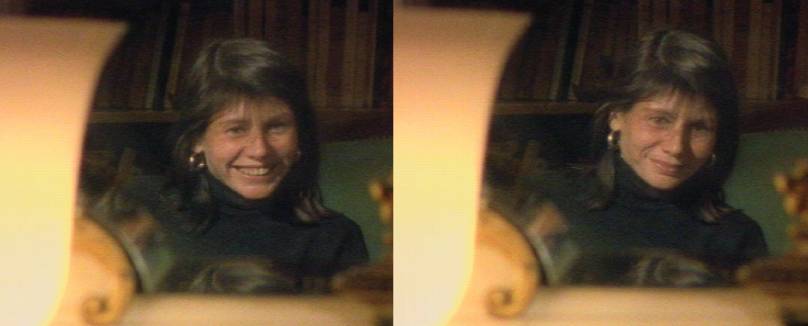
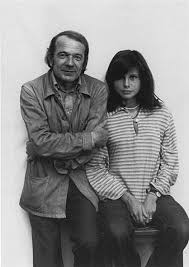
Gilles Deleuze, From A to Z / Recording 2 - G to M

February 4, 1989

You can only understand what philosophy is — that is, the extent to which it is no more an abstract thing than a painting or a musical work – it’s not at all abstract, and one can understand that only through the history of philosophy, provided that one conceives of it, it seems to me, … in the proper manner (comme il faut). What might that be? One thing is certain to me: a philosopher is not someone who contemplates or even reflects. A philosopher is someone who creates, simply that he creates a very special kind of thing. He creates concepts. Concepts don’t exist ready-made, they are not located in the sky, they are not stars that one gazes at in the sky. You have to create, fabricate concepts.

Seminar Introduction

Prior to starting to discuss the first “letter” of his ABC primer from A to Z, “A as in Animal,” with Claire Parnet, Deleuze discusses his understanding of the working premises of this series of interviews:

“You have selected a format as an ABC primer, you have indicated to me some themes, and in this, I do not know exactly what the questions will be, so that I have only been able to think a bit beforehand about the themes. For me, answering a question without having thought about it a bit is something inconceivable. What saves me in this is the particular condition (la clause): should any of this be at all useful, all of it will be used only after my death. So, you understand, I feel myself being reduced to the state of a pure archive for Pierre-André Boutang, to a sheet of paper [Parnet laughs in the mirror reflection], so that lifts my spirits and comforts me immensely, and nearly in the state of pure spirit (pur esprit), I speak after my death, and we know well that a pure spirit finally can make tables turn. But we know as well that a pure spirit is not someone who gives answers that are either very profound or very intelligent. So anything goes in this, let’s begin, A-B-C, whatever you want.”

English Translation

Edited
Claire Parnet
Claire Parnet, stills from L’Abécédaire de Gilles Deleuze.


The second segment, produced several months after the initial filming, starts with Deleuze’s political reflections, “G as in Gauche [Left]”, then a crucial considertion, “H as in History of Philosophy.” Some philosophical concepts follow, in “I as in Idea”, “J as in Joy,” and “K as in Kant.” Then, he turns to one of his greatest interests, “L as in Literature,” concluding with yet another somewhat personal reflection, “M as in Maladie [Illness]”.

Please note that, following Deleuze’s wish that no transcript be published, we do not provide a transcript pdf.

L’Abécédaire de Gilles Deleuze, avec Claire Parnet

Directed by Pierre-André Boutang (1996)

Translation & Editing: Charles J. Stivale

“G as in ‘Gauche'” (Left) [Second Part begins]

Deleuze: Which takes us to “G” (D’où ‘G’) … [Deleuze laughs]

Parnet [smiling]: Well, here, we are not in the point of insanity that constitutes your charm since we are going to talk about a very serious subject, how you belong to the Left.

Deleuze [laughing]: Ah, yes, yes…

Parnet [still smiling]: That seems to amuse you, which makes me very happy…. So, as we saw, you came from a bourgeois family with conservative political leanings (de droite), and since the Liberation in 1945, you have been what is called a Leftist (un homme de gauche). Well, let’s go more slowly: at the Liberation, many of your friends, a lot of people around you who were students in philosophy, joined the French Communist Party (PCF) or were very connected to it…

Deleuze: Yes, they all went through that… there was only me… I think, I am not sure, but… they all went through it.

Parnet: So how is it that you avoided that?

Deleuze: Well, it’s not really too complicated. All my friends went through the PCF, and what prevented me from doing so? [It was] because, I think… I was very hard-working (travailleur), and I didn’t like the meetings, meetings where they talked interminably, I simply could never stand attending them. And, being in the PC at that period meant going to cell meetings all the time. This was at the period – this is a kind of reference point – the period of the “Stockholm Appeal” (appel de Stockholm), and all of my friends, [Deleuze laughs] people of great talent, spent days on end getting signatures on this Stockholm petition, from a priest, from anyone. They would walk all over with this “Stockholm Appeal,” and I cannot even remember what it was! An entire generation of Communists got caught up in this, but that posed a problem for me because I realized  — I had a lot of friends who were Communist historians, very talented, and I thought, my God, if they spent their time finishing their dissertations, it would be so much more important for the Communist Party, which would at least have this work to be promoted, than getting signatures for the Stockholm Appeal, some stupid petition for peace, who knows what. I had no desire [to be involved in] that because I was neither very talkative, I didn’t talk much, so all this petition-signing would have put me in a state of complete timidity, complete panic. I never had anyone sign anything. And even going out to sell L’Humanité [the PCF newspaper], well, all that was for some rather base reasons, doing that wasn’t even a question for me, it never even occurred to me, I had no desire at all to join the Party.

Parnet: But you still felt close to their… commitments (engagements)?

Deleuze: The Party’s? No, it never concerned me, something else that saved me, you understand… The discussions about Stalin, what they’ve discovered recently, the horrors committed by Stalin, I mean, everyone has known this for quite a while. And about the revolution going wrong, [Deleuze laughs] that makes me laugh because, really, who are they trying to kid? (de qui on se moque?) When the “New Philosophers” (nouveaux philosophes) discovered that the revolution turned out badly, you really have to be a bit dimwitted (débile), since we discovered that with Stalin. So henceforth, the road was open, everyone discovered it, for example, quite recently, about the Algerian revolution – “Hey, it turned out badly” because they fired on students![1] Who ever thought that a revolution would go well? Who? Who? People say the English could not have a revolution, but that’s absolutely false.

I mean all that… Today we live with such a mystification… The English had a revolution, they killed their king, etc., and who did they get? They got Cromwell. And English Romanticism, what is it? It’s a long meditation on the failure of the revolution. They didn’t wait for [André] Glucksmann to reflect on the failure of the Stalinian revolution. They had one, really, they had one. And the Americans never get discussed, but the Americans blew their revolution, as badly as if not worse than the Bolsheviks. Let’s not kid about it! People never talk about the Americans when they… even before the War of Independence – and “independence,” I say –, they presented themselves worse than… or better than a new nation, they went beyond nations exactly like Marx spoke later of the proletariat: they went beyond nations, nations are finished! They bring forth a new people, they have a true revolution. Just as the Marxists count on universal proletariatization, the Americans counted on universal immigration, the two sides of class struggle. This is absolutely revolutionary, it’s the America of Jefferson, of Thoreau, of Melville – Jefferson, Thoreau, Melville, all of them, it’s a completely revolutionary America that announces the “new man” exactly like the Bolshevik revolution announced the “new man”.

That revolution failed (a foiré), all revolutions fail, everybody knows this, and now people are pretending to “rediscover” that. They really have to be dimwitted. As a result, everyone is getting lost in this, this contemporary revisionism. There is [François] Furet who discovered that the French Revolution wasn’t as great as had been thought. Well, sure, fine, it failed too, everybody knows that. The French Revolution gave us Napoleon! People are making “discoveries” that to me are not very impressive in their novelty (on fait des découvertes qui ne sont pas très émouvantes par leur nouveauté). The British Revolution resulted in Cromwell, the American Revolution’s results were worse, the political parties, Reagan, which does not seem any better to me.

So, people are in such a state of confusion… Even if revolutions fail, go badly, that still never stopped people or prevented people from becoming revolutionary. They are confusing two absolutely different things: the situations in which the only outcome for man is to become revolutionary… And yet again, we have been talking about that from the start: it’s the confusion between becoming and history, and if people become revolutionary…

[Change of cassette (16)]

Deleuze: Yes, this historians’ confusion… Historians speak of the future of the revolution, the future of revolutions, but that is not at all the question. They can always go so far back and try to demonstrate that if the future was bad, it’s because the bad element (le mauvais) was there right from the start.

The concrete problem is how and why do people become revolutionary? And fortunately, historians can’t prevent them from doing so. It’s obvious that the South Africans are caught up in a becoming-revolutionary, the Palestinians are caught up in a becoming-revolutionary. Then, if someone tells me afterwards, “oh you will see, when they have won, if their revolution succeeds, it will go badly,” etc., well, first of all, there will not be the same kinds of problems, and then a new situation will be created, once again becomings-revolutionary will be unleashed. The business of men (des hommes), it’s in situations of tyranny, of oppression, effectively it’s to enter into becomings-revolutionary because there is nothing else to be done. And when someone tells us afterwards, “oh, it’s not working out,” we aren’t talking about the same thing, it’s as if we were speaking two different languages — the future of history and the current becomings of people (les devenirs actuels des gens) are not at all the same things.

Parnet: And this respect for the “rights of man” (les droits de l’homme) which is so fashionable these days, but it is not becoming-revolutionary, quite the opposite.

Deleuze [wearily]: Listen, this respect for the “rights of man” – this really makes me want to say, almost to make some odious statements. It belongs so much to this weak thinking (pensée molle) of the empty intellectual period that we discussed earlier [under “C as in Culture”].[2] It’s purely abstract, these “rights of man.” What is this? It’s purely abstract, completely empty. It’s exactly like what I was saying earlier about desire, what I tried to say about desire: desire does not consist of erecting an object, of saying I desire this… We don’t desire, for example, freedom, etc.  It’s zero. Rather, we desire… we find ourselves in situations.

I choose the example of the contemporary problems of Armenia, it’s very recent.[3] What is this situation, if I understood it well? One never knows, really, you can correct me, but that would not change it much. An enclave in another Armenian Soviet republic, there is an Armenian republic, an enclave, so that’s the situation, a first aspect. There is this massacre by some sort of Turkish group, to the extent that we know anything right now because we could learn, I guess… But here we have yet again this massacre of Armenians. So, in the enclave, the Armenians retreat into their republic, I guess – you can correct all my mistakes — and right then, there is an earthquake. You’d think you were in something written by the Marquis de Sade, these poor people go through the worst circumstances that humans face, and when they reach shelter, it’s nature that gets involved.

When people say, “the rights of man,” it’s just intellectual discourse, for odious intellectuals at that, for intellectuals who have no ideas. First, I have always noticed that these declarations are never made as a function of the people who are directly concerned, the Armenian society, the Armenian communities, etc. Their problem is not “the rights of man.” What is it? It’s… Now this is what I call an assemblage (agencement). When I was saying that desire always comes through assemblages, well, there’s an assemblage: what is possible in order to suppress this enclave or to make it possible for this enclave to survive? What is this enclave within all that? It’s a question of territory, not one of “the rights of man,” it’s the organization of territory. What do they think that Gorbachev is going to make of this situation? What is he going to do so that this Armenian enclave is not given over to Turks threatening all around them? I would say that it’s not a question of “rights of man,” it’s not a question of justice, rather it’s a question of jurisprudence.

All the abominations that humans undergo are cases, not elements of abstract rights. These are abominable cases. You might tell me that these cases resemble each other, but these are situations of jurisprudence. This Armenian problem is typically what can be called an extraordinarily complex problem of jurisprudence. What can we do to save the Armenians and to help them save themselves from this crazy situation they find themselves in? Then, an earthquake occurs, an earthquake, so there are all these constructions that had not been built as well as they should have been. All these are cases of jurisprudence. To act for freedom, becoming revolutionary, is to operate in jurisprudence when one turns to the justice system. Justice doesn’t exist, “rights of man” do not exist, it concerns jurisprudence… That’s what the invention of law is. So those people who are quite satisfied to recall and to recite “the rights of man,” they are just dimwitted, it’s not a question of applying “the rights of man,” [Deleuze laughs] but rather of inventing forms of jurisprudence, so that for each case, this would no longer be possible. It’s entirely different.

If you like, I will give an example that I like a lot because it’s the only way to help people understand what jurisprudence is, and people understand nothing… well, not all, but people don’t understand it very well. I recall when smoking in taxis was forbidden…. People used to smoke in taxis… So, a time came when people were no longer permitted to smoke in taxis. The first taxi drivers who forbid people smoking in the taxis created quite a stir because there were smokers who protested, and there was one, a lawyer…

I have always been fascinated by jurisprudence, by law… If I hadn’t studied philosophy, I would have studied law, but precisely not “the rights of man,” but rather I’d have studied jurisprudence. That’s what life is; there are no “rights of man,” only rights of life, and so, life unfolds case by case.

So, [back to] taxis: there is a guy who does not want to be prevented from smoking in the taxi, so he sues the cab. I remember this quite well because I got involved in listening to the arguments leading up to the decision. The cab lost the case – today it would not have happened, even with the same kind of trial, the cab driver would not have lost. But at the start, the cab lost, and on what grounds? On the grounds that when someone takes a taxi, he is renting it, so the taxi occupant is assimilated to the [status of] renter or tenant, and the tenant has the right to smoke in his rented location, he has the right of use and abuse. It’s as if he were renting, it’s as if the owner of a building told him, “No, you’re not going to smoke in your place…” “Yes, yes, I am the tenant and I’m going to smoke where I live.” The taxi is assimilated into being a rolling apartment of which the customer is the tenant. Ten years later, that [practice] has become universalized, there are none or practically no taxis in which one can smoke. The taxi is no longer assimilated to renting an apartment, it has become assimilated instead into being a form of public service, and in a mode of public service, there exists the right to forbid smoking.

All this is jurisprudence… It’s no longer a question of the right of this or of that, it’s a question of situations, of situations that evolve, and fighting for freedom is really to engage in jurisprudence. So, the example of Armenia seems to me quite typical: the “rights of man,” you referred to them, so what do they mean? It means: The Turks don’t have the right to massacre Armenians. Fine, the Turks don’t have the right to massacre Armenians, and then? How far does that really get us? It’s truly the feeble-minded or hypocrites, all this thought about the “rights of man,” it’s zero philosophically, zero. The creation of law, it’s not the creation of “rights of man.” Creation in law is jurisprudence, and only that exists, and therefore fighting for jurisprudence.[4]

Parnet: Well, we are going to return to two things that are connected…

Deleuze: That’s what being on the Left is, creating the law, creating the law…

[Change of cassette; the producer claps his hand while the director announces: “Gilles Deleuze, cassette seventeen, the last one, at least for today,” to which Deleuze responds, “Yes, that’s good.”]

Parnet: We’ll return to this question, this philosophy of the “rights of man” and this respect for the “rights of man” now is like a repudiation of May ’68 and a repudiation of Marxism as well. So, Marx, you must not have repudiated him since you were never a Communist, yet you still make use of Marx who continues to be a referent for you. And as for May ’68, you are one of the last persons around who refers to May ’68, not saying that it was meaningless, just schoolroom pranks, and that everyone now has changed. So, I’d like you to talk a bit about May ’68.

Deleuze: It’s simple… but I think you are being too harsh in saying that I am one of the rare persons. There are a lot of people, if only the people around us, and among our friends, there are very few… I know no turncoats…

Parnet: But these are your friends.

Deleuze: Yes, but there are lots of people that have made no repudiation. It’s almost a given, the answer is quite simple: May ’68 is the intrusion of becoming. People have often wanted to view it as the reign of the imaginary, but it’s not at all imaginary. It’s a gust of the real in its pure state (une bouffée du réel à l’état pur). It’s the real that arrives, and people don’t understand that, they say, “What is this?” Real people, or people in their reality, it was astounding, and just what were these people in their reality? It’s a becoming. Now, there can be bad becomings, and it’s what historians did not understand well, and that’s understandable since I believe so strongly in the difference between history and becomings… May ’68 was a becoming-revolutionary without a revolutionary future. People can always make fun of it after the fact, but there were phenomena of pure becoming that took hold of people, even becomings-animal, even becomings-children, becomings-women for men, becomings-men for women. All this is in a very special domain that we have been pouring over since the start of our questions, that is, what is a becoming? In any event, May ’68 is the intrusion of becoming.[5]

Parnet: Did you have a becoming-revolutionary yourself at that moment?

Deleuze [smiling]: If I have a becoming-revolutionary? Yes, although your very smile suggests that this is a form of mockery. So, tell me instead: what does it mean to be de gauche, on the Left?… It’s a bit more discreet than “becoming-revolutionary.”[6]

Parnet [stammering a bit]: Well, I wouldn’t say that, I wouldn’t say that, I would like to pose the question differently…

Deleuze: Yes?

Parnet: It’s that between your civic duty as a Leftist (homme de gauche) devoted to all that and your becoming-revolutionary, since you are a Leftist, how do you manage (te débrouilles), and what does it mean for you to be de gauche, on the Left?

Deleuze [pausing before answering]: Yes… well, I think that no leftist government exists, which is not astonishing, whether is a leftist government or no leftist government. It’s not that there are no differences between governments. The best one can hope for is a government favorable to certain demands from the Left. But a leftist government does not exist since being on the Left has nothing to do with governments (n’est pas une affaire de gouvernement).

So, if one asked me, how to define being on the Left? In two ways: first, it’s a matter of perception. This matter of perception means this: what would not being on the Left mean? Not being on the Left… It’s a little like a postal address, extending outward from a person: the street where you are, the city, the country, other countries farther and farther away. [Deleuze gestures outward]

It starts from the self, and to the extent that one is privileged, living in a rich country, one might ask, what can we do to make this situation last? One senses that dangers exist, that it might not last, it’s all so crazy, so what might be done for it to last? So, someone might say, “Oh la la, the Chinese, they are far away, what can we do so that Europe lasts?” etc. Being on the Left is the opposite: it’s perceiving… And people say the Japanese perceive like that, not like us… they perceive first the periphery, [Deleuze gestures outward inward] they would say the world, the continent — let’s say Europe –, France, etc. etc., rue de Bizerte, me: it’s a phenomenon of perception, perceiving just the horizon, perceiving on the horizon.

Parnet [objecting]: Well, the Japanese aren’t really so Leftist…

Deleuze: It’s not from generosity … [gesturing at Parnet dismissively] Your objection isn’t, isn’t… adequate (c’est pas une raison). On the basis of that [their perception], they’re Leftist, on the basis of their sense of address, postal address. First, you see the horizon. And you know that it cannot last, that it’s not possible, [the fact that] these millions of people are starving to death, it just can’t last, it might go on a hundred years, one never knows, but there’s no point in kidding about this absolute injustice. It’s not a matter of morality, but of perception itself.

So, if you start with the edges, that’s what being on the Left means, and knowing how, and say what one might, knowing that these are problems that must be dealt with. It’s not saying simply that the birth rate has to be reduced, which is just another way of keeping the privileges for Europe, it’s not that. [Being on the Left] is really finding arrangements, finding world-wide assemblages. Being on the Left, it is often only Third World problems that are closer to us than problems in our neighborhoods. So it’s really a matter of perception, more than being a question of “well-meaning souls” (belles âmes), that’s what being on the Left is for me, first of all.

And second, being on the Left is a being by nature, or rather it’s a problem of becomings, of never ceasing to become minoritarian. That is, the Left is never of the majority as Left, and for a very simple reason: the majority is something that presupposes – even when one votes —  that it’s not the huge quantity that votes for something, but the majority presupposes a standard (étalon).   In the West, the standard that every majority presupposes is: 1) male, 2) adult 3) heterosexual (mâle), 4) city dweller… Ezra Pound, Joyce say things like that, it was perfect. That’s what the standard is. So, the majority by its nature, at a particular moment, will go toward whomever or whatever aggregate will realize this standard, that is, the supposed image of the urban, heterosexual, adult male such that a majority, at the limit, is never anyone, it’s an empty standard. Simply, a maximum of persons recognize themselves in this empty standard, but in itself, the standard is empty: male, heterosexual, etc.[7]

So, women will make their mark either by intervening in this majority or in the secondary minorities according to groupings in which they are placed according to this standard.  But alongside that, what is there? There are all the becomings that are minority-becomings. I mean, women, it’s not a given, they are not women by nature. Women have a becoming-woman; and so, if women have a becoming-woman, men have a becoming-woman as well. We were talking earlier about becomings-animal. Children have their own becoming-child. They are not children by nature. All these becomings, that’s what the minorities are…

Parnet: Well, men cannot become-men, and that’s tough!

Deleuze: No, that’s a majoritarian standard, heterosexual, adult, male. He has no becoming. He can become woman, and then he enters into minoritarian processes. The Left is the aggregate of processes of minoritarian becomings.  So, I can say quite literally, the majority is no one, the minority is everyone, and that’s what being on the Left is: knowing that the minority is everyone and that it’s there that phenomena of becomings occur. That’s why, however great they think they are, they still have the scandal of their doubts about the outcome of elections. All these things are well known.

[The film fades here, and the new cassette – announced as “Gilles Deleuze, 1-A first” — shows a seated Deleuze dressed differently for the second session of filming. Henceforth, Parnet will no longer be visible in the mirror. She begins by announcing:]

“H as in History of Philosophy”

Parnet: “H” is “History of Philosophy.” It is usually said that in your works, the first phase is devoted to the history of philosophy. In 1952, you write a study on David Hume, followed by works on Nietzsche, Kant, Bergson, Spinoza. Someone who didn’t know you and took you for an annotator (commentateur) would be very surprised by Logic of Sense and Difference and Repetition, and of course, by Anti-Oedipus and A Thousand Plateaus. From these, it would seem that there is a Mr. Hyde hidden within a Dr. Jekyll. And when everyone was explicating Marx, you dove into Nietzsche, and when everyone felt they had to read Reich, you were reading Spinoza, with the famous question, “what can a body do?” (que peut un corps?).[8] Today, in 1988, you return to Leibniz. So, what did you enjoy and still enjoy in the history of philosophy?

Deleuze [pausing]: It’s a complicated matter because this history of philosophy encompasses philosophy itself. I assume that a lot of people think of philosophy as being something quite abstract and a bit for specialists. But I believe strongly that philosophy has nothing to do with specialists, it’s not a specialization, or is so only in the way that music or painting is. So necessarily, I try to pose the problem differently.

So, when people say that the history of philosophy is abstract, it is abstract in the second degree since it does not even consist of talking about abstract ideas, but of forming abstract ideas about abstract ideas. But there is another way… For me, the history of philosophy has always been something else. Here I return to painting. I think of the discussions, in the letters from Van Gogh,[9] one finds the discussions about portraiture or landscapes: am I going to do portraits? Do I have to return to portraits? They attach great importance to that, in their conversations, in their letters. Portrait or landscape, it’s not the same, it’s not the same problems. For me, the history of philosophy is, as in painting, a kind of art of the portrait. One creates the philosopher’s portrait, but a philosophical portrait of a philosopher. I would say just as well a “spiritist” portrait (portrait médiumnique), that is, a mental or spiritual portrait, it’s a spiritual portrait. As a result, it’s an activity that belongs fully within philosophy itself, just as a portrait belongs to painting.

So suddenly, by the very fact that I refer to painters, I am making some progress. If I return to painters like Van Gogh or Gauguin, it’s because something in their work has an enormous

effect on me, the kind of immense respect or even fear and panic, not merely respect, that they evince when faced with color, when faced with engaging with (aborder) color. It is particularly enjoyable that the two painters that I invoke, and limiting myself to them, are among the greatest colorists ever. But if we refer to the history of their works, they undertake the use of color only with great fearful hesitation (tremblement), they were frightened. Throughout the beginning of their careers, they used earthen colors (couleurs patate, de terre), not at all striking… Why? Not because that appeals to them, but because they did not yet dare to engage with color. What could be more moving than this? It’s as if, literally, they did not yet judge themselves worthy of color, not yet able to engage with color and really do painting. It took them years and years before daring to engage with color. Once they feel that they are able to engage with color, well, then, it results in the works that everyone knows. When you see the point that they reach, one has to reflect on this immense respect, this immense slowness to undertake that work. Something like color for a painter is something that can take him/her into madness, into insanity, thus it is something quite difficult, taking years to dare to come close to it.

So, it’s not at all that I am particularly modest, but it strikes me as being quite shocking, it would be shocking if there were philosophers who simply said, “Hey, I’m going into philosophy now, going to do my own philosophy, yes, I have my philosophy.” These are statements made by the dimwitted – doing one’s philosophy — because philosophy is like color. So, before entering into philosophy, one has to take so many, so many precautions, I would say, before conquering the “philosophical color” (la couleur philosophique) — and the philosophical color is the concept. Before knowing how to invent concepts or to succeed in doing so, an enormous amount of work is necessary.

I believe that the history of philosophy is this slow modesty, taking a long time doing portraits, one has to do portraits. It’s as if a novelist were to tell us, “well, I write novels, but you know, I never read them in order never to compromise my inspiration. Dostoyevsky, nope, don’t know him.” I’ve heard young novelists make such frightening statements…. which comes down to saying, I don’t need to work. So, given that whatever one does, you have to work hard for a long time before engaging with something, the history of philosophy has this role that is not only preparatory, it succeeds quite well by itself. It is the art of portraiture in so far as it allows one to reach toward something.[10]

At this point, all this is becoming a bit mysterious… We need to be more precise, you have to force me to be more precise, I don’t know, by some other little question because… Or else, I can continue like this. What does one do when one does history of philosophy? No? Do you have something else to ask me about this?

Parnet: No, well, the usefulness of the history of philosophy for you, we see it clearly, you just explained it. But the usefulness of history of philosophy for people in general, since you don’t know…  since you say that you do not want to talk about the specialization of philosophy, that philosophy also is destined for non-philosophers.

Deleuze: This is very simple. You can only understand what philosophy is — that is, the extent to which it is no more an abstract thing than a painting or a musical work – it’s not at all abstract, and one can understand that only through the history of philosophy, provided that one conceives of it, it seems to me, if I dare put it this way, provided that one conceives of it in the proper manner (comme il faut). What might that be? One thing is certain to me: a philosopher is not someone who contemplates or even reflects. A philosopher is someone who creates, simply that he creates a very special kind of thing. He creates concepts. Concepts don’t exist ready-made, they are not located in the sky, they are not stars that one gazes at in the sky. You have to create, fabricate concepts.[11]

So, there are a thousand questions, here we are almost lost since so many questions emerge: Why is it useful? Why create concepts, and what is that exactly, a concept? But let’s drop this for the moment, let’s drop this. I mean… Let’s take an example: if I write a book about Plato, people know well that Plato created a concept that did not exist before him, translated generally as “Idea”, with a capital I. And what he calls an Idea is not at all what other philosophers call an idea. It’s truly a Platonic concept to the point that if someone uses this concept in a manner similar to this term, then people tend to say, “This is a Platonic philosopher.”

But I mean, concretely, what does this mean? One should always ask oneself what doing philosophy means…. If not, one just shouldn’t do philosophy. One should always ask, what is it? as if it were a dog, what is an idea? A dog, I can define what an idea is, for Plato. So, here, I am already doing history of philosophy. I try to explain this to people, you don’t need a professor, it seems to me, you can readily understand….

[Change of cassette, cassette 2]

Deleuze: I think that what he calls an Idea is a thing [Deleuze speaks very precisely here] that wouldn’t be something else, that is, that would only be what it is.[12] Now, here, that seems abstract, like I was saying earlier, one mustn’t be abstract…. But no, no, no, let’s choose an example that is not found in Plato: a mother, a mom (maman), this is a mother, but she is not only a mother… I mean, she is, for example, a wife, and she is herself a daughter of a mother. Let us imagine a mother who might only be a mother… It matters little if such a thing exists or not… For example, is the Virgin Mary, who Plato didn’t know, [Deleuze smiles] is she a mother and only mother? No matter if it exists or not, a mother that would be nothing other than mother, who would not be in her own turn the daughter of another mother, it’s this that we then have to call “mother Idea” (idée de mère), i.e., a thing that is only what it is. This is what Plato meant more or less when he said only justice is just, because only justice is nothing other than just. And for me, that becomes quite simple. An Idea… of course, Plato doesn’t stop there, but his departure point is, let us imagine particular entities that are only what they are, we call them “Ideas.” So, he created a veritable concept, this concept did not exist before, the Idea of the thing as (en tant que) pure… It’s purity that defines the Idea.

But this still remains abstract, and why is that? If we proceed to read through Plato, that’s how everything becomes concrete. Plato doesn’t proceed haphazardly, he didn’t create this concept of Idea by chance. He found himself in a given situation: that whatever happens, in a very concrete situation, whatever happens, or whatever might be a given therein, there are rivals (prétendants). That is, there are people who say: for this thing, I’m the best example of it. For example, Plato gave an example of the politician, and he says, that is, with an initial definition, that the politician is the pastor of men, who takes care of people. As a result, lots of people step forward to say, “if that’s the case, then I am the politician, I am the pastor of men” — the merchant can say that, the shepherd who nourishes, the doctor who heals — can all say, “I am the true pastor of men.” In other words, there are rivals.

So, with that, things start to appear a bit more concrete. I maintain that a philosopher creates concepts, for example, the Idea, the thing in so far as it is pure (la chose en tant que pure). The reader doesn’t understand immediately why or what it’s about, or why one would need to create such a concept. If he/she continues and reflects on the reading, he/she understands the following reason: there are all sorts of rivals who present themselves as claimants (des prétendants) for things, and that the problem for Plato is not at all, what is the Idea? That way, things would just remain abstract. Rather, it’s how to select the claimants, how to discover among them which one is the valid one (le bon).  It’s the Idea, that is, the thing in a pure state, that will permit this selection, that will select the claimant who is closest to it.

This allows us to move forward a bit since I would say, every concept, e.g., the Idea, refers to a problem… In this case, the problem is how to select the claimants. If you do philosophy abstractly, you do not even see the problem, but if one reaches this problem… One might wonder why the problem isn’t stated clearly by a philosopher since it certainly exists in his work, we find it, it’s there, it smacks you in the face (crève les yeux) in some ways. And it’s because one can’t do everything at once. The philosopher’s task is already that of exposing the concepts that she/he’s in the process of creating, so she/he can’t expose the problems on top of that, or at least one can discover these problems only through the concepts being created. If you haven’t found the problem to which a concept corresponds, everything stays abstract. If you’ve found the problem, everything becomes concrete. That’s why in Plato, there are constantly these claimants, these rivals.

So, I can add — suddenly this [topic] is taking a turn, it goes without saying — why does this occur in the Greek city, and why is it Plato who invents this problem? You see, the problem is how to select claimants, and the concept – that’s what philosophy is, the problem and the concept – the concept is the Idea that is supposed to provide the means of selecting the claimants, however that would occur, it matters little. But why did this problem and this concept take form in the Greek milieu? It begins with the Greeks because it’s a typically Greek problem, of the democratic, Greek city. Even if Plato did not accept the democratic character of the city, it’s a problem of the democratic city. For it’s in the democratic city that, for example, a magistracy is an object of pretension… There are “prétendants,” claimants, I pose my candidacy for a particular function. In an imperial formation, as they exist in the Greek era, there are functionaries named by the emperor, there is not at all this rivalry. The Athenian city is this rivalry of claimants, it was already there with Ulysses, the suitors for Penelope, there is an entire milieu of Greek problems. It’s a civilization in which the confrontation of rivals constantly appears: that’s why they invented gymnastics, they invent Olympic games, they invent – they are litigious, no one is as litigious as a Greek – they invent legal procedures also, it’s the same thing, legal proceedings, claimants. You understand?

And in philosophy, there are claimants as well… Plato’s struggle against the Sophists. He believed that the Sophists were claimants for something to which they had no right. What would define the right or the non-right of a claimant? That’s also a problem that’s very… And all this is as amusing as a novel. We know that there are great novels in which claimants confront each other before the tribunal. It’s something different, but in philosophy, there are two things at once: the creation of a concept, and the creation of a concept always occurs as a function of a problem. If one has not found the problem, one cannot understand philosophy, philosophy remains abstract.[13]

I take another example… people usually don’t see to what problem that corresponds, they don’t see problems, because problems usually are a bit hidden, somewhat stated but somewhat hidden, and to engage in the history of philosophy is to restore these problems and, through this, to discover what’s innovative in these concepts. Whereas bad history of philosophy links up concepts as if they appeared to go without saying, as if they weren’t created, so there tends to be total ignorance about the problems to which…

I take a final example quickly…

[The producer suggests “Let’s move on to the next cassette”; change of cassette]

Deleuze: So, I am going to select a second example that precisely does not at all concern diversity. Much later, there arrives a philosopher called Leibniz who creates and invents an extraordinary concept to which he gives the name, monad. He chooses a technical, complicated name, monad. And in fact, there is always something a bit crazy in a concept… this mother who would only be mother, in the other case, a pure idea… there is something there that’s a bit crazy. Well then, Leibniz’s monad designated a subject, somebody, you or me, in so far as he/she expresses the totality of the world, and in expressing the totality of the world, he/she only expresses clearly a tiny region of the world, one’s territory – we’ve already spoken about territory – one’s territory, or what Leibniz calls his “department”. So, a subjective unity that expresses the entire world, but that only clearly expresses a region, a “department” of the world — this is what he called a monad.

So here as well, this is a concept; Leibniz created it. This concept did not exist before him. But one might ask, “Why did he create it? It’s quite lovely, but why say that rather than something else?” One has to find the problem. And it’s not that he hides the problem… If you don’t look a bit, you won’t find it. That’s the charm of reading philosophy, as charming or amusing as reading a good book, or looking at paintings. It’s amazing.

What do you discover when you read him? Indeed, he didn’t create the “monad” for the pleasure of it. There is another reason:  Leibniz poses a problem, which is what? Specifically, that everything in the world only exists as folded. That’s why I wrote a book on Leibniz called The Fold. He saw the world as an aggregate of things folded within each other. Let’s step back a bit: why did he see the world like this? What is happening? Just as for Plato earlier, perhaps the answer is: at that period, what…. Were things being folded more than they are now? Well, we don’t have the time. What counts is this idea of a world that is folded, but everything is the fold of a fold, you can never reach something that is completely unfolded. And matter is constituted by folds overlapping back onto it, and things of the mind, perceptions, feelings, ideas, are folded into the soul. It’s precisely because perceptions, feelings, ideas are folded into a soul that [Leibniz] constructed this concept of a soul that expresses the entire world, that is, in which he discovers the entire world to be folded.

One almost wants to ask, what is a bad philosopher, or a great philosopher? The bad one creates no concepts, is someone who uses ready-made ideas. So, he puts forth opinions then and does not do philosophy…. He says, “There, that’s what I do, that’s it, opinions, they have always been around.” He does not invent concepts, he poses – in the true sense of the word – he poses no problems.

So, to do history of philosophy is this long apprenticeship in which one learns, or one is truly an apprentice in this double domain, the constitution of problems and the creation of concepts. And there is no… What is it that kills, what makes it possible for thought to be idiotic, dimwitted, etc.? Some people talk, but we never know what problems they’re talking about. Not only do they create no concepts while busy spouting opinions, but moreover, we don’t know what problems they’re talking about.[14] I mean, at most, one knows the questions, but not the problems behind certain questions… If I say, Does God exist? That doesn’t pose any problem. Does God exist? I haven’t stated the problem, because why do I ask that question? What is the problem behind that? So, people are quite ready to ask the question: ah, do I believe in God or don’t I? Well, everyone could care less who believes in God or doesn’t believe in God. What counts is why he says that, that is, to what problem asking that question corresponds and what concept he is going to fabricate, what God concept he is going to fabricate. If you have neither a concept nor a problem, you remain in stupidity (la bêtise), that’s it, you aren’t doing philosophy. All this is to express the extent to which philosophy is amusing. So that’s what doing history of philosophy is — to discover… It’s not all that different from what you do when you find yourself in front of a great painting or listening to a musical work.

Parnet: Precisely, returning to Gauguin and Van Gogh since you evoked their quaking and hesitation from fear before taking on color, what happened to you when you passed from history of philosophy to doing your own philosophy?

Deleuze: This is what happened: no doubt, the history of philosophy gave me the chance to learn things, I mean, I felt more capable of moving toward what color is in philosophy, that is… But why does this come up at all, I mean, why does philosophy not cease to exist, why do we still have philosophy today? Because there is always an occasion to create concepts. So, today this notion of creation of concepts is taken over by the media, publicity; with computers, they say you can create concepts, an entire language stolen from philosophy.

Parnet: Communication.

Deleuze: “Communication,” “one has to be creative to create concepts.” But what they call “concepts,” what they call “to create,” [Deleuze is dismissive] is truly comic, there’s no need to insist on it.

That still remains philosophy’s task. There is still a place today… I never was affected by people who proclaim the death of philosophy, getting beyond (dépasser) philosophy, it’s philosophers who say such complicated things as that. All that never affected me or concerned me because I tell myself, ok, what could all that mean? As long as there’s a need to create concepts, there will be philosophy since that’s the definition of philosophy, creating concepts, not expecting them to be ready-made — we have to create them, and we create them as a function of problems. Well, problems evolve, so there is still a place…

Certainly, one can be Platonist, one can be Leibnizian, today even, in 1989, one can be Kantian. What does that mean exactly? It means that one judges that certain problems — not all, no doubt — posed by Plato remain valid provided one makes certain transformations, and then, one is Platonist since one still has use for Platonist concepts. If we pose problems of a completely different nature…  in my opinion, there is not a single example among the great philosophers of one who does not have something to say about the great problems we face today. But doing philosophy is creating new concepts as a function of problems that arise today.

The final aspect of this extremely lengthy question would obviously be, ok, but what is the evolution of problems, what guarantees it? I could always say historical, social forces, sure, fine, but there is something deeper. It’s all very mysterious, maybe we don’t have time to pursue it, but we reach a kind of becoming of thought, evolution of thought that results not only in no longer posing the same problems, they are no longer posed in the same way. A problem can be posed in several successive ways, and that has an urgent appeal, like a huge gust of wind, a call for the necessity always to create and re-create new concepts. So, history of philosophy cannot be reduced to sociological influence, or to another influence… There is an entire becoming of thought, something very mysterious that we would have to succeed in defining, but that causes us perhaps no longer to think in the same way as a hundred years ago. So, ok, I think of new thought processes, of ellipses of thought. Thought has its history, there is a history of pure thought, so that’s what history of philosophy is for me. It has always had only one function, in my opinion, philosophy, so there’s no need to get beyond it, as it has its function.

[Change of cassette; hand clap, “4-A”]

Deleuze: So, yes, did you want to say something?

Parnet: Yes, how does a problem evolve through time?

Deleuze: That must… I don’t know, that must vary…

Parnet: Since thought evolves…

Deleuze: It probably varies according to each case. I choose… Here again, another example will have to suffice: back in the seventeenth century, for most of the great philosophers, what was their negative concern? Their negative concern was preventing error. It was a matter of warding off the dangers of error. In other words, the negative of thought is that the mind might err, to prevent the mind from erring, how to avoid falling into error.

Then there was a long, gradual slide, and in the eighteenth century, a different problem begins to be born. It might appear to be the same, but it is not at all the same: no longer denouncing error, but denouncing illusions, the idea that the mind falls into and even is surrounded by illusions, and furthermore could even produce them itself, not only falling into error, but it might produce illusions. So this is the whole movement in the eighteenth century, of the eighteenth century philosophers, the denunciation of superstition, etc. So, while it might appear to be somewhat similar to the seventeenth century, in fact something completely new is being born. One might say that it’s due to social causes, but there is also a secret history of thought that would be a passionate subject to pursue. The question is no longer how to avoid falling into error, but how to succeed in dissipating the illusions by which the mind is surrounded.

Then, in the nineteenth century — I am deliberately stating things in an extremely simple and rudimentary way – so in the nineteenth century, what happens? It’s as if things have slid farther, it does not explode completely, rather it’s more and more how to avoid… illusion? No, it’s that the mind… it’s that men, as spiritual, mental creatures (créatures spirituelles) never stop saying inanities (bêtises), which is not the same thing as illusion, it’s not falling into illusion, how to ward off bêtises, inanities.

That appears clearly in [work by] people on the border of philosophy: a Flaubert is at the border of philosophy and the problem of the bêtise, Baudelaire and the problem of the bêtise, all that is no longer the same thing as illusion, etc. And there again, one can say it’s connected to social evolution, for example, the evolution of the bourgeoisie in the nineteenth century that turned the problem of the bêtise into an urgent problem. Fine, but there is also something deeper in this kind of history of problems that thought confronts, and every time one poses a problem, there are new concepts that appear.

As a result, if we understand the history of philosophy this way — creation of concepts, constitution of problems, problems being more or less hidden, so we have to discover them –, we see that philosophy has strictly nothing to do with the true or the false. Looking for the truth means nothing. If it is a question of creating concepts, what does that mean? Creating concepts and constituting problems are not a question of truth or falsehood, it’s a matter of meaning (sens)… A problem, well, there has to be a meaning… There are problems that have no sense, yes? There are problems that make sense, so doing philosophy is to constitute problems that make sense and create concepts that cause us to advance toward the understanding and solution of problems.[15]

Parnet: I would like to return to two questions that concern you particularly…

Deleuze [visibly perplexed]: Uh, well, it seemed to me that I had very well… Yes? Yes?

Parnet: When you once again undertook doing history of philosophy with Leibniz last year [in The Fold], was it in the same way as you did 20 years earlier, that is, before you had produced your own philosophy?

Deleuze: Mmm… [Deleuze doesn’t answer, rubbing his eyes]

Parnet: Was it in the same way?

Deleuze: No, certainly not, certainly not because before, I used history of philosophy as this kind of indispensable apprenticeship where I was looking for the concepts of others, that is, of great philosophers, and the problems to which their concepts corresponded. Whereas, in the book on Leibniz — and there’s nothing vain in what I am about to say –, I mixed in problems from the twentieth century, that might be my own problems, with those posed by Leibniz, given that I am persuaded of the actuality of philosophers.

If you prefer, what does it mean to create like (faire comme) a great philosopher would? Creating like him is not necessarily to be his disciple. To create like him means to carry on with his task, to create concepts in relation to what he created, and pose problems in relation to and in evolution with what he created. By working on Leibniz, I was more in this path, whereas in the first books on the history of philosophy, I was in the “pre-color” stage.

Parnet: And you stated about your work on Spinoza, and we could apply it to Nietzsche, that you focused therein on the rather hidden area and accursed area of philosophy. What did you mean?

Deleuze: That, well, perhaps we will have a chance to return to this. For me… We may be able to return to this. For me, this hidden area means those thinkers who rejected all transcendence. So rejecting all transcendence, we would have to define this, and perhaps we will have a chance to return to this, to discuss transcendence. It refers to those authors who reject all universals, that is, the idea or concepts having universal values, and all transcendence, that is, any agency (instance) that goes beyond the earth and men…

Parnet: To come back to what you said…

Deleuze: They are authors of immanence.

Parnet: To return to something you said earlier, your books on Nietzsche or on Spinoza are landmarks (font date), that is, you are known for your books on Spinoza and Nietzsche, yet one cannot say that you are a Nietzschean or a Spinozan, like one could call someone a Platonist or a Nietzschean. You passed through all that, even when you used them during your apprenticeship, and you were already Deleuzian. [Pause] One cannot say that you are Spinozan.

Deleuze [visibly embarrassed,]: You have given me an enormous compliment, that is, if it’s true, that makes me very happy…

Parnet: And how did you feel… [Her words are lost under Deleuze’s]

Deleuze: What I always hoped for, I think indeed that, whether my work was good or bad, and I knew I could fail, but I think that I always was trying to pose problems for my own purposes (pour mon compte), and to create concepts for my own purposes. Almost, at the limit, I would have wanted a kind of quantification of philosophy. That is, each philosopher would be attributed a kind of magic number corresponding to the number of concepts he really created, referring to problems, etc. – so there would be these magic numbers, well, Descartes, Hegel, Leibniz. I find that an interesting idea. So, obviously, I don’t dare place myself there, but perhaps I would have had a small magic number, specifically for having created concepts as a function of problems. Simply, I tell myself, my point of honor is that, whatever the kind of concept I tried to create, I can state what problem the concept corresponded to.

Parnet: To finish with…

Deleuze: Otherwise, otherwise, it would have all been empty chatter. There we are, so fine, yes… I think we’ve finished this point… no? Yes, yes?

Parnet: And to finish up, this is the final question, but I absolutely want to ask it (j’y tiens absolument)… It’s a bit… aggressive (provocante)… At the time when — around the period of 1968, even before — when everyone, everyone was explicating Marx, everyone was reading Reich, wasn’t it a rather provocative act to turn toward Nietzsche, who was really suspected of fascism in those years, and to talk about Spinoza and the body, when everyone was making us sick talking about Reich? [Pause] Didn’t history of philosophy serve a bit as a dare, a bit of provocation for you?

[Change of cassette (cassette 5); interruption by Boutang: So, Claire, we’ll redo that since we forgot about the cartridge]

Parnet: Wasn’t there an element provocation, frankly?

Deleuze: No, but this is entirely connected to what we have been discussing all along, it’s nearly the same question because what I was looking for, even what I was looking for with Félix, was this kind of truly immanent dimension of the unconscious. When, for example, all of psychoanalysis is entirely full of transcendental elements — the law, the father, the mother – all that, whereas a field of immanence that would allow me to define the unconscious, that was the domain into which perhaps Spinoza could go the farthest, along the path where no one had ever been, and perhaps where Nietzsche could also go the farthest that anyone had gone.

So it seems it was not so much provocation, but it was because Spinoza and Nietzsche form in philosophy perhaps the greatest liberation of thought, almost in the sense of an explosive, and perhaps the most unusual concepts, because their problems were somewhat accursed problems, that people did not dare pose, certainly at Spinoza’s time, but even during Nietzsche’s… Problems that people did not dare consider, what people call “burning problems”… Eh? [Deleuze stops, smiling at Parnet, then laughing a bit]

Parnet [responds almost in the tone of scolding parent]: Well, we can go on since you don’t want to answer further. [He seems perplexed by her reproach]

“I as in Idea”

Deleuze … So, are we at ‘K’?

Parnet: No, we are at ‘I’.

Deleuze: Ah, yes… [still smiling]

Parnet: “I as in Idea,” no longer in the Platonist “Idea” that you were just referring to. It’s first… Rather than preparing an inventory of theories, you have always spoken passionately about philosophers’ ideas, just as you have shown us, brilliantly, about the ideas of thinkers in cinema, that is, the directors, about the ideas of artists in painting. You have always preferred the “idea” to explications and commentary, your own “idea” and others’ “idea.” So why, for you, does the “idea” preside over everything else?

Deleuze: Ok, you are quite right, the “idea” as I use it – no longer concerning Plato — traverses all creative activities… Creating means having an idea.[16] But it’s quite difficult to have an idea, there are people — not at all to be scorned for this – who go through life without ever having an idea. And having an idea, it’s in every domain, I don’t see any domain in which a place for having ideas is missing, but it’s rare, indeed it’s a ball (une fête) to have an idea, it doesn’t happen every day.

So, I’m saying a painter has no fewer ideas than a philosopher, just not the same kind of ideas. One has to ask therefore, if we reflect on different human activities, in what form does an idea occur in a particular case or another? In philosophy, at least, we just considered this: the idea in philosophy occurs in the form of concepts and creation of concepts. There is no discovery of concepts, one doesn’t discover concepts, one creates them. There is as much creation in a philosophy as in a painting or in a musical composition.

As for others, well, they have ideas… I am struck by what we call a film director (metteur en scène) from the moment he becomes important – there are lots of directors who have never had the slightest idea. But ideas are quite haunting, they are like things that come, then go, and disappear, and take on diverse forms, but through these diverse forms, as varied as they may be, they are still recognizable.

So, to state things quite simply, I take a cinema author at random like Minnelli. One can say that throughout his entire oeuvre… Well, not all of it, this doesn’t cover everything, but I choose this example because it’s easy… One can say that here is someone who asks himself, it seems to me: what does it mean exactly that people dream? They dream… It’s been discussed a lot, it’s a platitude, one could say… So, people dream at a particular moment. But Minnelli asks a very strange question, and it belongs only to him as far as I know: “what does it mean to be caught up in someone else’s dream?” And it goes from the comic or the tragic to the abominable. What does it mean to be caught, for example, in a young girl’s dream? Being caught in someone else’s dream can produce some truly awful things, to be the prisoner of someone’s dream, this is possibly horror in its pure state. So, sometimes in Minelli’s work, he offers a dream, asking “what does it mean to be caught in the nightmare of war?” and that produces the admirable…

Parnet: The horsemen…

Deleuze: The [Four] Horsemen of the Apocalypse, in which he doesn’t envisage war as war – that wouldn’t be Minelli’s work – he envisages war as an enormous nightmare. What does it mean to be caught in a nightmare? What does it mean to be caught in a young girl’s dream? That results in musical comedies, in famous musical comedies, notably in which Fred Astaire or Gene Kelly – I’m not quite sure which — escapes from tigresses and black panthers, it’s unclear to me, and that’s what it means to be caught in someone’s dream. And there, that’s an “idea.” In short… and yet it’s not a concept. Minelli, if he thought up concepts, he would be doing philosophy, [but] he’s into movie-making (il fait du cinéma).[17]

We almost have to distinguish three dimensions, three kinds of things… so strong that they get mixed up constantly… One would have to talk about… And here, that’s where I am right now, it’s my future work that I am explaining, it’s really what I would like to do now, to consider this, to try to get a clear sense of all this:[18]

1) There are concepts that are truly invented by philosophy;

2) There is what one can call percepts, and they are in the domain of art. So what are percepts? I believe that an artist is someone who creates percepts. So why use this bizarre word, percept, rather than perception? Well, precisely because percepts are not perceptions… What does a man of letters, a writer want, a novelist, what does he want? I think that he wants to be able to construct aggregates of perceptions and sensations that outlive those who experience them. That’s what a percept is: an aggregate of perceptions and sensations that outlive those who experience them.

I’ll choose some examples: there are pages by Tolstoy that describe like a painter could hardly manage, or by Chekhov, in a different manner, who describes the heat in the steppe. So, it’s an entire complex web of sensations, visual sensations, auditory, nearly taste sensations, something that enters the mouth, all of that…

So, he’d say, fine, [Pause] try to give to this complex web of sensations a radical independence in relation to the person who experienced them. Tolstoy also described atmospheres; Faulkner, in the great pages of Faulkner, if you look at great writers, they attain this… There is one [writer] who nearly stated this, and whom I like very much, who isn’t very well known in France, I believe, a very great American novelist, Thomas Wolfe, who says in his short stories: someone goes out in the morning, and he breathes some fresh air, and an odor comes past, of anything, some toast, let’s say, there is a complex web of sensations, a bird flies by in the sky… There is a complex web of sensations. [Pause]

So, what happens when someone who experiences the sensations dies, or goes on to do something else? What does that [web of sensation] become? This is rather the question that art poses, that’s where we find an answer. It’s to give a duration or an eternity to this complex web of sensations that are no longer apprehended as being experienced by someone, or at the limit, that may be apprehended as experienced by a character in a novel, that is, by a fictional character. It’s precisely that which engenders fiction.

And what does a painter do? Well, he doesn’t do only that, but a painter gives consistency to percepts, he tears percepts out of perception. There is a sentence by Cézanne that moves me more than anything…

[Change of cassette, 6; interruption of Deleuze’s development]

Deleuze: A painter does nothing different … One can say that already the Impressionists utterly twisted perception. We can say that a concept literally, in certain ways, splits your skull open (fend le crâne), it’s a habit of thought that is completely new… If people aren’t used to thinking like that previously, then that cracks their skulls, since in some ways, a percept twists our nerves (tord les nerfs). We can say that, in this, the Impressionists invent a percept. There is an expression by Cézanne that is quite beautiful; he says something like, we have to make Impressionism last/durable; that is, it still hasn’t… the motif has not yet acquired its independence if it’s a question of making it last and if new methods are necessary to make Impressionism last… He doesn’t simply mean that paintings have to be better conserved; he means that the percept must acquire an even greater autonomy, so it must have new techniques, it must have… etc.… in order to…[19]

3) And then there is a third set of things, I think, very connected to all the others: they are what we have to call affects. Of course, there are no percepts without affects, but the affect is not like…  I tried to define the percept as an aggregate of perceptions and sensations that become independent from the person experiencing them. For me, affects are becomings, becomings that overflow (débordent) him or her who goes through them, that exceed the force of those who go through them, that’s what an affect is. I would almost say… Wouldn’t music be the great creator of affect? Doesn’t music lead us into these powers of action (puissances) that exceed us? It’s possible, but in any case, all I mean is that the three are connected.[20]

I mean, if you take a philosophical concept, simply, it’s more like questions of accent… If

you take a philosophical concept, it causes one to see things (faire voir des choses), it causes one to see things. Philosophers have nonetheless this “visionary” side or aspect (côté ‘voyant’), at least in the philosophers that I admire: Spinoza causes one to “see”, he is even one of the most visionary (voyants) philosophers, Nietzsche as well, he makes one “see” things. They also hurl forth fantastic affects such that one really has to discuss this, it becomes evident all by itself: there is a music in these philosophies, and inversely, there’s no use insisting that music makes one “see” some very strange things — were these sometimes even only colors, music causes one to “see” colors that don’t exist within music or outside it, and percepts as well, all that is completely linked. I would dream of a kind of circulation of these dimensions into each other, between philosophical concepts, pictorial percepts, and musical affects. There’s nothing surprising in there being these resonances, because however independent they may be, there is the labor (des travaux) of completely different people, but that never stops interpenetrating… Yes… [Deleuze smiles slowly at Parnet as she pauses before continuing]

Parnet: So, these ideas of painters, of artists, and of philosophers, whereas they have “ideas,” but which are an idea of perception, an idea of fiction, an idea of reason…  Why… You…  Well, in life one can see a book or read a book in which there is no idea at all, and for you, that bores you to the point that you are not interested at all. There is absolutely no interest for you in looking at something that might be funny or reading something that might be entertaining (divertissant), if this idea is missing, if there are no ideas.

Deleuze: In the sense that I just defined “idea,” I have difficulty seeing how that would be possible. If you show me a painting that has no percepts, where there is a cow represented that is more or less realistic but where there are no cow percepts (percepts de vache), or it hasn’t been lifted to the percept state, or play for me some music without affect… At the extreme, I can hardly understand what that could possibly mean. If you show me a film, ok, well… and if you show me a stupid book of philosophy, I have trouble understanding what kind of pleasure I would derive from it, other than an extremely unhealthy pleasure (plaisir malsain).

Parnet: Well, it might not be a stupid book of philosophy, it might simply be a humorous book (livre humoristique)…

Deleuze: Well, this humorous book could very well be full of ideas, I don’t know, it all depends on what you call humorous (humoristique). No one has ever made me laugh more than Beckett and Kafka, so I am very sensitive to humor, I find them, in fact, extremely funny… I’m find television comedians much less interesting, it’s true…

Parnet: Except Benny Hill, who certainly has an idea.

Deleuze [laughing]: Except Benny Hill, since he has an idea… But in fact, in this domain, the great American comics (burlesques) have lots of ideas.[21]

Parnet: Does it ever happen – to finish with a more personal question — that you sit down to your writing table without an idea of what you are going to do, that is, without having any ideas at all? How does that work for you?

Deleuze: Of course not, if I have no ideas, I don’t sit down to write. But what happens for me is that the idea hasn’t developed enough, the idea escapes me, the idea disappears, there might be some holes. I have painful experiences like that, and it just doesn’t go all by itself since ideas are not ready-made, one has to create them, I repeat… There are terrible moments, that is, there are moments in which one literally despairs, in which people are not capable of… oh, yes…

Parnet: Is this like the expression: the idea that creates a hole that is missing (l’idée qui fait un trou qui manque)…? Is it both?

Deleuze: It’s impossible to distinguish:  Do I have an idea that I am just unable to express, or do I just not have any ideas at all? In my opinion, it’s so much the same thing: if I cannot express it, I don’t have the idea, or a piece of it is missing, a piece of this idea, since ideas don’t arrive in a completely formed block, there are things that come in from here, from there, they come from diverse horizons, ideas, and if you are missing a piece, then it is unusable.

[Change of cassette, 7]

“J as in Joy”

Parnet: So, “J” is “Joy,” this is a concept to which you are particularly attached to since it’s a Spinozist concept, and Spinoza turned joy into a concept of resistance and life: let us avoid sad passions, let us live with joy in order to be at the maximum of our power of action (puissance) [see note 20]; therefore, we must flee from resignation, bad faith, guilt, all sad affects that judges and psychoanalysts would exploit. So we can see entirely why you would be pleased by all that. So first, I would like you to distinguish what the difference is between joy and sadness, both for Spinoza and necessarily for you? First, is Spinoza’s distinction entirely yours? Did you find something there on the day you read of about that?

Deleuze: Ah yes, since these texts are the most extraordinarily charged with affect, in Spinoza. That comes down to saying — to simplify greatly – it comes down to saying that joy is everything that consists in fulfilling a power of action (remplir une puissance)… You experience joy when you fulfill it, when you realize one of your powers of action.  So, what is that? Let’s return to some earlier examples: I conquer, however little this might be, a small piece of color, I enter a little further into color. I think that is what joy might be. That’s what fulfilling a power of action is, realizing (effectuer) a power of action, causing a power of action to be fulfilled. But it’s the word puissance that is ambiguous.

What about the opposite, what is sadness? It occurs when one is separated from a power of action of which I believed myself, rightly or wrongly, to be capable: I could have done that, but

circumstances didn’t allow it, or it was forbidden, or etc. That’s what sadness is, and one must say that all sadness is the effect of a power (pouvoir) over me.

[Change of cassette; director indicates that Parnet can continue; Deleuze sits smiling]

Parnet: No, but it’s Gilles’s turn to speak, he was talking about the… well, the opposition joy/sadness.

Deleuze: So I was saying that realizing the power of action of something is always good, that’s what Spinoza said. Obviously, all this poses problems, more details are needed because there are no bad potentials; what is bad, one must say, is the lowest degree of power of action, and its lowest degree is power (le pouvoir). I mean, what is wickedness? It’s preventing someone from doing that of which he/she is capable, wickedness is preventing someone from realizing one’s power of action. Such that there is no bad power of action, only wicked powers… Maybe all power is wicked by its very nature, but perhaps not necessarily, maybe it’s to easy to say that.

But it’s indeed the idea of… the confusion between powers of action and powers is quite costly because power (pouvoir) always separates people who are subjected to it from what they are capable of doing. Spinoza started from this point, and you were saying that sadness is linked to priests, to tyrants…

Parnet: To judges…

Deleuze: … to judges, and these are perpetually the people, right? who separate their subjects from what they are capable of doing, who forbid them from realizing powers of action. You alluded earlier, it was very curious, you alluded to the reputation of Nietzsche’s anti-Semitism. There, we see quite well, because it’s a very important question…. There are texts of Nietzsche that are, in fact, quite disturbing, or that one might consider quite disturbing if they are read, in fact, in the manner mentioned earlier about reading philosophers, that is, if one reads them a bit too quickly.

What strikes me as curious is that in all the texts in which [Nietzsche] lashes out against the Jewish people, what does he reproach them for? And what made people then say, “Oh, he’s anti-Semitic,” etc.? What Nietzsche reproaches the Jewish people for is very interesting. Nietzsche reproaches them in quite specific conditions for having invented a character that had never existed before the Jewish people, the character of the priest. To my knowledge, never in any text by Nietzsche concerning Jews is there a general attack mode, but always an attack against the Jewish people-inventors of the priest. Although, according to him, in other social formations, there can be sorcerers, scribes, these are not at all the same as the priest. They made this astonishing invention, and Nietzsche, since he has great philosophical strength, Nietzsche never ceases to admire that which he detests… He says, it’s simply an incredible invention, to have invented the priest, it’s something quite astounding.

And this results in an immediate connection occurring between the Jews and Christians, but simply not the same type of priest. So, the Christians will conceive of another type of priest and will continue in the same path, with the character of the priesthood. This shows the extent to which philosophy is concrete. I mean that, I would say that Nietzsche is, to my knowledge, the first philosopher to have invented, created, the concept of the priest, and from that point onward, to have posed a fundamental problem: what does sacerdotal power consist of? What is the difference between sacerdotal power and royal power, etc.? This is a question that remains entirely actual. For example, shortly before his death, Foucault had fully discovered, and through his own means – and here, we could start all over from the beginning about what it means to continue, to extend philosophy, what does it mean to do philosophy? – Here, it’s with Foucault proposing pastoral power, a new concept that is not the same as Nietzsche’s, but that engages directly with Nietzsche, and in this way, one develops a history of thought.[22]

So, what is this power of the priest, and how is it linked to sadness? According to Nietzsche, in any case, this priest is defined as follows: he invents the idea that men exist in a state of infinite debt, that they have infinite debt. Before, there were certainly stories about debt, it’s well known, but Nietzsche preceded ethnologists, and they would do well to read some Nietzsche. When the ethnologists discovered, well after Nietzsche, that in so-called primitive societies, there were exchanges of debt, and perpetually it did not function so much by exchange in kind (troc) as had been believed, things functioned through pieces of debt – a tribe that has a piece of debt vis-à-vis another tribe, etc. etc. … Yes, but these were blocks of finite debt, they received and then gave it back. The difference with the exchange in kind is that there was time, the reality of time… It’s differed return (du rendu différé). This is immense since it suggests that debt was primary in relation to exchange.  These are all properly philosophical problems – exchange, debt, debt that is primary in relation to exchange, it’s an enormous philosophical problem. I say “philosophical” because Nietzsche was talking about this well before the ethnologists.

In so far as debt exists in a finite regime, man can free himself from it. When the Jewish priest invokes the idea by virtue of an alliance of infinite debt between the Jewish people and their God, when the Christians adopt this in another form, the idea of infinite debt linked to original sin, this reveals the very curious character of the priest about which it is philosophy’s responsibility to create the concept. And as an atheist – if that happens to arise, I am not claiming that philosophy is necessarily atheist – and in the case of an author like Spinoza who had already outlined an analysis of the priest, of the Jewish priest, in the Theologico-Political Treatise… It happens that philosophical concepts are veritable characters, and that’s what makes philosophy so concrete. Creating the concept of the priest is like another kind of artist would create a painting of the priest, the portrait of the priest.[23]

So, the concept of the priest pursued by Spinoza, and then by Nietzsche, and finally by Foucault forms an exciting lineage. I would like, for example, to link myself with this as well, to reflect a bit on this pastoral power, that some people say no longer functions. But, one would have to see how it has been taken up again, for example, psychoanalysis as the new avatar of pastoral power. And how do we define it? Priests are not the same thing as tyrants, one mustn’t mix everything up… but they at least have in common that they derive their power (pouvoir) from the sad passions that they inspire in men, of the sort: “Repent in the name of infinite debt, you are the objects of infinite debt,” etc. It’s through this that they have power (pouvoir), it’s a source of power, it’s always an obstacle blocking the realization of powers of action, whereas… I would say that all power is sad, even if those who have it seem to revel in having it, but it is still a sad joy. There are sad joys, and this is a sad joy.[24]

On the other hand, joy is the realization (effectuation) of a power of action. I know of no powers of action that would be wicked. The typhoon is a power of action, it must delight in its soul, but… but it’s not in destroying houses that it delights, it’s in its being… Taking delight (se réjouir) is always delighting in being what one is, that is, in having reached where one is. Joy is not self-satisfaction, not some enjoyment of being pleased with oneself, not at all, not the pleasure of being happy with oneself. Rather, it’s the pleasure in conquest (conquête), as Nietzsche said, but the conquest does not consist of enslaving people, conquest is, for example, for a painter to conquer color, yes, that’s what a conquest is. That’s what joy is, even if it goes badly because… in these stories of power of action, when one conquers a power of action, when one conquers something in a power of action, it happens that it is too strong for one’s own self, so he will crack up (donc il craquera), Van Gogh.

[Change of cassette, “8-A”]

Parnet: So, a little question about something you said yesterday… You, who have been fortunate to escape from infinite debt, how is it that you complain from morning to night, [Deleuze smiles as she continues] and that you are the great advocate of the complaint (plainte) and the elegy?

Deleuze [rubbing his eyes]: This is a personal question. [He laughs] First, the elegy is one of the principal sources of poetry, it’s the great complaint (la grande plainte). So, there is quite a bit… there is an entire history of the elegy to be done…  I don’t know if it already has been done but it’s very interesting because there is the complaint of the prophet – the prophetism, the prophet is the one who complains/wails (se plaint), is the one who says, “Oh why did God choose me? What did I do to be chosen by God?” In a sense, it’s the opposite of the priest.

So, he complains and complains about what occurs to him. It means: it overwhelms me, that’s what the complaint is: what’s happening to me overwhelms me. If one accepts that this is what the complaint is…  It’s not something we always see. It’s not “ow ow ow, I’m in pain,” although it could also be that, but the person complaining doesn’t always know what he/she means. The elderly lady who complains about her rheumatism, she means, in fact, what power of action (puissance) is taking hold of my leg that is too great for me to stand it? It overwhelms me.

If we look at history, it’s very interesting. The elegy, first, is a source of poetry, it’s the only Latin poetry, the great Latin poets… I used to know them, I used to read them quite a bit, like Catullus, Tiberianus, they are astounding poets. And what is the elegy? I think that it’s the expression of he/she who, temporarily or not, no longer has any social status. That’s why it’s interesting… A little old man (un pauvre vieux) complaining, sure ok… some guy in prison complains — it’s not sadness at all, but something quite different than making a demand (la revendication), there is something else in the complaint that is astonishing, there is an adoration in the complaint… The complaint is like a prayer.

So, popular complaints…. One has to include everything in this: the complaint of the prophet, or something you are particularly interested in since you have worked on it so much — the complaint of hypochondriacs. The hypochondriac is someone who complains, and the intensity of their complaints is beautiful – why do I have a liver? why am I losing it? It’s not even how much it’s hurting me, it’s why do I have it? why do I have organs? why am I…. So, the complaint is sublime. And the popular complaint… The complaint of the assassin, the complaint that is sung by the people. I would say that it’s the socially excluded who are in a situation of complaint. There is a Chinese specialist… He’s not Chinese, but Hungarian, I think, called [Ferenc] Tökei, who prepared a study of the Chinese elegy, and he showed, as I recall it, that the Chinese elegy is enlivened above all by the person who no longer possesses a social status, i.e. the freed slave. A slave, however unfortunate he or she might be, still has a social status. He might be very unfortunate, might be beaten, whatever you like, but he still has a social status. When he is freed, there were periods when there was no social status for the freed slave. He is outside everything. It must have been something like at the liberation of American blacks with the abolition of slavery, or in Russia, when no statute had been foreseen. So they find themselves excluded, which has been interpreted stupidly as, “You see? you see? they are still being kept as slaves!” But they have no status and so are excluded from any community. Then the great complaint is born, Aie aie aie aie aie… However, it does not express the pain they have, but is a kind of chant/song (chant). This is why the complaint is a great poetic source.[25]

If I hadn’t been a philosopher and if I had been a woman, I would have wanted to be a wailer (pleureuse)… [Parnet laughs] The wailer is marvelous because the complaint rises and it’s an art.  And that also has this rather perfidious side as well, as if to say: don’t take on my complaint, don’t touch me. It’s kind of like people who are too polite… For these too polite people, who would like to be more and more polite, it’s: “don’t touch me,” so it’s a kind of…. And the complaint is the same thing: “don’t feel sorry for me, I’m taking care of it.” And in taking care of it for oneself, the complaint is transformed. Once again, it’s: “what is happening to me overwhelms me.” That’s what the complaint is.

Now, I would like to say every morning, “what’s happening to me overwhelms me,” because this is joy. In some ways, this is joy in a pure state, but we are careful to hide it because there are people who aren’t very pleased with someone being joyous, so you have to hide it in a kind of complaint. But this complaint is not only joy, it’s also an incredible anxiety, in fact…  realizing a power of action (effectuer une puissance), perhaps, but at what price? Am I going to risk my skin/life in this (laisser ma peau)? As soon as one realizes a power of action… I am speaking about things as simple as a painter taking on color, might he not be risking his skin/life? Literally, after all, I don’t think it really is some literary invention (faire de la littérature) to say that the way Van Gogh went toward color is more connected to his madness than all these psychoanalytical stories.  For color itself intervenes here in any case. Something risks getting broken, it overwhelms me, and that’s what the complaint is, something overwhelms me, in misfortune or in happiness, but usually misfortune, but well, that’s just a detail.

[Change of cassette]

“K as in Kant”

Parnet: So, K’” is Kant. Of all the philosophers that you have written on, Kant seems the farthest from your own thought. However, you have said that all the authors you have studied have something in common. So, first of all, is there something in common between Kant and Spinoza, which is not at all obvious?

Deleuze [pauses]: I’d prefer, if I might dare, the first part of the question, that is, why I took on Kant, once we say simply that there is nothing in common between Kant and Spinoza, nothing in common between Nietzsche and Kant although Nietzsche read Kant closely, but it’s not the same conception of philosophy, it’s not…

So why am I nonetheless so fascinated by Kant? For two reasons: Kant is present at so many turning points, and another reason: he initiates and then pushes something as far as possible (pousse jusqu’au bout), something that had never been advanced in philosophy. Specifically, he establishes tribunals (il érige des tribunaux), perhaps under the influence of the French Revolution.

Now, up to the present, one always tries, or I try, to talk about concepts as characters (personnages). So, before Kant, in the 18th century, there is a new kind of philosopher presented as an investigator (enquêteur), the investigation, Investigation into Human Understanding (Enquête sur l’Entendement humain), investigation of this, investigation of that. The philosopher saw himself to some extent as an investigator. Even in the 17th century, and Leibniz is no doubt the last representative of this tendency, he saw himself as a lawyer, defending a cause, and the greatest thing is that Leibniz pretended to be God’s lawyer. So, there must have been things to reproach against God at the time, and [Leibniz] writes a marvelous little work, “God’s Cause”. He doesn’t mean that God has a cause in the sense of [causation]… but God’s juridical cause, God’s cause to be defended.[26] So, it’s like a sequence of characters — the lawyer, the investigator — and then with Kant, the arrival of a tribunal, a tribunal of reason, things being judged as a function of a tribunal of reason. And the faculties, in the sense of understanding — the imagination, knowledge, morality — are measured as a function of the tribunal of reason. Of course, he uses a certain method that he invented, an amazing method called the critical method, the properly Kantian method.

Now, I have to admit that all of this aspect of Kant almost makes me cringe in horror, but it’s both horror and fascination, because he’s so ingenious. If I say… if I return to the question… among the concepts that Kant invented, and Lord knows he invented them, there is concept of the tribunal of reason which is inseparable from the critical method. But finally, it’s not… what I dream of, rather… This is a tribunal of judgment, it’s the system of judgment, simply, a system of judgment that no longer needs God, a system of judgment based on reason, and no longer on God.[27]

With all the writers that affect me – we haven’t considered this problem, but we can introduce it now, it will save us the trouble of returning to it, that will make… eh?

Parnet: Not at all?

Deleuze [smiling]: Maybe that will save us the trouble, it’s… One can always wonder about this because there is something mysterious: why does someone, someone in particular, you or me, get connected to or identify (se reconnaître) especially with one kind of problem and not another? What is someone’s affinity for a particular kind of problem? That seems to me to be one of the greatest mysteries of thought. A person might be fated for one problem since we don’t take on just any problem. And this is true for researchers in the sciences, a person’s affinity for a particular problem, but with some other problem, he just doesn’t get involved. And philosophy is an aggregate of problems, with its own consistency, but it does not pretend to deal with all problems, thank God.

Well, I feel rather connected to problems that aim at seeking the means to do away with the system of judgment, and to replace it with something else. So there, we have the great names… Indeed, it’s a different tradition. Yes, you were right when you said there’s an opposition. I see Spinoza, I see Nietzsche, in literature I see [D.H.] Lawrence, and finally the most recent and one of the greatest writers, Artaud, his “To Have Done With the Judgment of God,” which means something, not the words of a madman. We really have to take this literally: to have done with the system of judgment.[28]

And underneath – as always, it’s like when I say that one has to look underneath concepts for problems – and underneath, there are some astonishing problems posed by Kant, that are really marvels. He was the first to have created an astonishing reversal of concepts. Here again, this is why I get so sad when people, even young people preparing the baccalaureate [French lycée diploma], are taught an abstract philosophy without even trying – perhaps it’s not possible — to have them participate in problems that are quite fantastic problems, equally yet differently interesting as … I don’t know exactly what.

I can say that, up until Kant, for example, time was derived from movement, it was second in relation to movement, it was considered to be a number of movement or a measure of movement. What does Kant do? However, he does it, there’s the creation of a concept, and in all I am doing here, we never stop moving forward in considering what it means to create a concept.  Kant creates a concept because he reverses the subordination. With him, it’s movement that depends on time. And suddenly, time changes its nature, it ceases being circular. Because, when time is subordinate to movement (for reasons that would be too long [to explain]), finally the great movement is the periodic movement, it’s the periodic movement of heavenly bodies (des astres), so the movement is circular. On the other hand, when time is freed from movement and it’s movement that depends on time, then time becomes a straight line. And I always think of something that Borges said — although he has little relation to Kant –, that a more frightening labyrinth than a circular labyrinth is a labyrinth in a straight line, marvelous, but it’s Kant, it’s Kant who lets time loose.

And then this story of the tribunal, measuring the role of each faculty as a function of a particular goal, that’s what Kant collides with at the end of his life, as he is one of the rare philosophers to write a book as an old man that would renew everything,

Parnet: The Critique of Judgment.

Deleuze: The Critique of Judgment. He reaches the idea that the faculties must have disorderly relations with each other, that they collide with each other, and then reconcile with each other, but there is a battle of the faculties where there is no longer any standard (mesure), where they are no longer subject (justiciable) to a tribunal. He introduces his conception of the Sublime, in which the faculties enter into discordances, into discordant accords (accords discordants).[29] So, all that pleases me infinitely:  these discordant accords, this labyrinth that is nothing more than a straight line, his reversal of relations… I mean that all modern philosophy flows forth from this point, that it’s no longer time that depended on movement but rather that movement depended on time — that’s the creation of a fantastic concept. And the whole conception of the Sublime, with all the discordant accords of the faculties. I am enormously moved by these things.

So, what can one say? It’s obvious that he’s a great philosopher, a very great philosopher, and there is a whole substratum in his works that excites me enormously. And all that is built on top of this has no interest for me, but I don’t judge it, it’s just a system of judgment that I’d like to do away with, but without standing in judgment.

Parnet: What about Kant’s life…

Deleuze: Oh, Kant’s life…

Parnet: Because I have a quote from de Quincey…

Deleuze: That wasn’t planned for our discussion.

Parnet: Yes it was!

[Change of cassette, “cassette 10-A”]

Parnet: There is another aspect of Kant’s work that might also please you greatly, the aspect that Thomas De Quincey discussed [in The Last Days of Immanuel Kant], this fantastically regulated life full of habits, his little daily walk, the life of a philosopher that one might imagine mythically (dans une vision d’Epinal), something very special. And one thinks of this when one thinks about you, that is, something quite regulated, with an enormous number of habits,

Deleuze: Well, I think that..

Parnet: …work habits, I mean…

Deleuze [smiling]: I do see what you mean, because De Quincey’s text is one you find quite exciting, and so do I, it’s a real masterpiece. But I see this aspect as belonging to all philosophers. They don’t all have the same habits, but to say that they are creatures of habit seems to suggest that they don’t know… It’s obligatory, it’s obligatory that they be creatures of habit, because in Spinoza… My impression of Spinoza is that there’s not very much turbulent in his life, he polished his lenses, he was expected to polish his lenses, he received visitors…

Parnet: He earned his living polishing lenses…

Deleuze: So, it wasn’t a very turbulent life except for certain political upheavals at that time, but Kant also lived through some very intense political upheavals. Thus, all that people say about Kant’s clothing apparatuses, that he invented for himself a little machine to pull up – I don’t know – his underwear, his stockings, etc., all that makes him extremely charming, if one needs that kind of thing.

But all philosophers… it’s a bit like Nietzsche said, philosophers are generally chaste, poor, and Nietzsche adds, we simply guess at how philosophers make use of all of this, how they make use of this chastity, how they make use of this poverty, etc. Kant had his little daily walk, but that’s nothing in itself. What happened during his little walk, what was he looking at? One would have to find out.

In the long run, that philosophers are creatures of habit… I think that habit, I am going to tell you, it means contemplating, it’s the contemplation of something. Really, habit in the true sense of the term means contemplating. What did he contemplate during his walks? We don’t know… As for my own habits, well, it’s shameful, I mean… yes, ok, I have quite a few of them, these are contemplations, I get into contemplations… Sometimes these are things that I am alone in seeing, ok, that’s what a habit is.

“L as in Literature”

Parnet: So, “L” is Literature.

Deleuze: “L”? We’re moving on to “L”?

Parnet: Already!

Deleuze: Yes?

Parnet: So literature haunts your philosophy books and your life. And you read lots of books, and re-read them…

Deleuze: Yes, yes…

Parnet: …books of what’s called “great literature” (la grande littérature). You have always considered great literary writers as thinkers. Between your books on Kant and Nietzsche, you wrote Proust and Signs, it’s a famous book, and then subsequently you enlarged it. Louis Carroll and Zola in Logic of Sense, Masoch, Kafka, British and American literatures — and one sometimes gets the impression that it’s through literature more than through the history of philosophy that you inaugurate a new kind of thinking. So, I would like to know first if you have always read copiously?

Deleuze: Yes, yes, yes. At one point, I was reading a lot more philosophy since that was part of my craft (métier), my apprenticeship, and I no longer had much time for novels. But great novels, I have read them throughout my life, and I read them more and more. So, is that useful for philosophy? Yes, certainly, I find it useful (ça me sert). For example, I owe an immense amount to Fitzgerald who is, nonetheless, not a very philosophical novelist, what I owe to Fitzgerald is immense. What I owe to Faulkner is enormous as well, and…. I forget here…

But all that is completely comprehensible by itself as a function of what we discussed

earlier because we’ve made a lot of progress here – and I’m sure that didn’t escape you [Deleuze smiles]: it’s this story that the concept is never alone.  At the same time that the concept pursues its task, it makes us see things, that is, it’s plugged into percepts, and all of sudden, one finds these percepts in a novel. There are perpetual communications from concepts to percepts. Moreover, there are also problems of style that are the same in philosophy and literature.

The great literary characters – let’s pose the question in very simple terms — the great literary characters are great thinkers. I re-read Melville a lot, and it goes without saying that the Captain Ahab is a great thinker, it goes without saying that Bartleby is a thinker, not in the same way, but he’s a thinker. In any case, they cause us to think in such way that a literary work traces as large a trail of intermittent concepts (concepts en pointillé) as it does percepts, certainly. Quite simply, it’s not the task of the literary writer who cannot do everything at once, he/she is caught up in the problems of percepts, of creating visions (faire voir), causing perceptions (faire percevoir), and creating characters – do you have any idea of what it is to create a character? It’s something frightening. And a philosopher creates concepts, ok, but it happens that they communicate greatly since, in certain ways, the concept is a character, and the character takes on dimensions of the concept, I believe.[30]

You know what I find in common? What these two grand activities have in common: “great literature” and “great philosophy” bear witness for life (ils témoignent pour la vie), what I was calling “power of action” (puissance) earlier, they bear witness for life. This is even the reason why [great authors] are not often in good health, except sometimes there are cases… Victor Hugo, ok… One must not say that all writers do not enjoy good health since many do. But why are there so many literary writers who do not enjoy good health? It’s because he/she experiences a flood of life (flot de vie), that’s why. To some extent, whether it’s the weak health of Spinoza or the weak health of [D.H.] Lawrence, what is it?[31] It corresponds almost to what I said earlier about the complaint: these writers have seen something that overwhelms them, they are seers, visionaries. They saw something that was too much for them, so they cannot handle it and it breaks them. Why is Chekhov broken to such an extent? He “saw” something. Philosophers and literary writers are in the same situation. There are things we manage to see, and in some ways, literally, we never recover, never return. This happens frequently for authors, but generally, these are precisely percepts at the edge of the bearable (du soutenable), at the edge of the thinkable. So, between the creation of a great character and the creation of a concept, so many links exist that one can see it as constituting somewhat the same enterprise.[32]

Parnet: Do you consider yourself to be a writer in philosophy, as one would say writer in a literary sense?

Deleuze: I don’t know if I consider myself a writer in philosophy, but I know that every great philosopher is a great writer.

Parnet: There’s no nostalgia for creating a great fictional work when one is a great philosopher? I’m referring to you…

Deleuze: No, for me, that does not even come up, it’s as if you asked a painter why he doesn’t create music. One could conceive of a philosopher who also wrote novels, of course, why not? Sartre to a stab at it…

Parnet: Bernard-Henri Lévy?

Deleuze [continuing with reference to Sartre]: … that wasn’t… I don’t consider Sartre to have been a novelist, although he did try to be. Are there any great philosophers who were also important novelists? No, really, I can’t think of any. But on the other hand, philosophers have created characters, it has happened: Plato created characters, eminently, and Nietzsche created characters, notably Zarathustra. So, these are intersections that are discussed constantly, and I consider the creation of Zarathustra to be an immense success poetically and literarily, just as Plato’s characters were. These are points about which one cannot be completely certain whether they are concepts or characters, and these are perhaps the most beautiful moments.[33]

[Change of cassette (11)]

Parnet: And your love for secondary literary authors, like Villiers de l’Isle-Adam or Restif de la Bretonne, have you always cultivated this affection?

Deleuze [Pause, covers his face with one hand]: I find it truly bizarre to hear Villiers referred to as a secondary author. [Deleuze laughs] If you consider that question… [He pauses, shrugging his shoulders] … But there is something really shameful, entirely shameful: when I was quite young, I liked the idea of reading an author’s work in its entirety, the complete works. As a result, I had great affection not for secondary authors, although that often coincided, but for authors who had written little. So it was because some things were too much for me, like Victor Hugo was so far beyond me that I was ready to say that Hugo wasn’t a very good writer. On the other hand, I knew the works of Paul-Louis Courier nearly by heart at the time, completely, completely, although what he wrote really wasn’t substantial. So yes, I had this penchant for so-called secondary authors, although Villiers is not a secondary author.

Parnet: Well, he is an author of great importance, but secondary in relation to his era in relation to the major writers.

Deleuze [interrupting]: Joubert, [Joseph] Joubert was also an author I knew completely, on the one hand because it – and this is really a shameful reason — it gave me a certain prestige to be familiar with authors that were unknown, or hardly known. But all that was a kind of mania, and it took me quite a while to learn just how great Hugo is, and that the size of his work was no measure. So, it’s true that in so-called secondary literatures… It’s true, it’s true that so-called secondary authors…  In Russian literature, for example, it’s not limited to Dostoyevsky and Tolstoy, but one dare not call [Nikolai] Leskov secondary since there is so much that is astonishing in Leskov. So, these are still great geniuses. I feel I have little to say on these points, but in any case, that’s behind me now, this search for secondary writers. But what I am happy about is when I happen to find in an unknown author something that might show me a concept or an extraordinary character. But yes, I have not engaged in any systematic research [in this domain].

Parnet: But, other than your [book on] Proust, which is a sustained work on a single author, literature has such a presence in your philosophy, and one could say that, at the same time, [it’s] also a reference for examples. But you never truly devoted a full-length book to literature, a reflective book (livre de pensée) on literature.

Deleuze: I just haven’t had the time, but I plan to do so.

Parnet: I know that this has haunted you.

Deleuze: I plan to do so, I plan to do so because I want to.

Parnet: [A book] of criticism?

Deleuze: Of criticism… well, yes, well, on the problem of what “writing” means, for me, in literature. You are familiar with my whole [research] program, so we’ll see if I have the time.[34]

Parnet: Yes… [Pause] And I wanted to pose a final question: you read and re-read the classical authors, but one doesn’t get the impression that you read many contemporary authors, or that you don’t really like to discover contemporary literature, that is, that you always would prefer to select a great [canonic] author, or re-read one, than to see what is being published or whatever is directly contemporary for us.

Deleuze: It’s not that I don’t like… I understand what you mean here, and I can answer quickly: it’s not at all that I don’t like to read them. Rather it’s such a truly specialized activity, and very difficult, in which one has to have training (formation). It’s something very difficult in contemporary production to have the inclination (goût). It’s just like some people finding new painters: in this as well, it’s something that one has to learn about (ça s’apprend).  I greatly admire people who go into galleries and feel that there is someone who is truly a painter there. But I simply cannot do this, I always am in need, I… [Deleuze does not finish the sentence]

To show how correct you are, it took me five years to understand even just a little the kind of innovation — not for Beckett, that happened immediately — the innovation of Robbe-Grillet’s writing. I was as stupid as the stupidest [person] when talking about Robbe-Grillet when he started out. I understood absolutely nothing. It took me a long time, it took me five years. So, in this respect, I am not a discoverer, whereas in philosophy, I am more confident because I am sensitive to a new tone and what, on the other hand, is completely nil, repetition, and redundant statements, etc. In the [domain of the] novel, I am quite sensitive, I am sufficiently confident to know what has already been said a thousand times and is of no interest. It did happen to me one time, for Farrachi, I managed to discover – at least in my own way — someone I judged to be a very, very good young novelist, Armand Farrachi.[35]

So, the question you raise is quite sound, but I answer by saying: one must not believe that, without experience, one can judge what is being created. I would almost say that what I prefer, something that happens and that brings me great joy, is when something that I am creating off on my own has an echo in a young writer’s or a young painter’s work. I am not saying that, for this reason, he is good and so am I. But this is how I have a kind of encounter with what is happening currently, that belongs to another mode [of creation].  I mean that my radical insufficiency as regards judgments is compensated by these encounters with people who are doing things that resonate with what I am doing, and inversely.

Parnet:  But for you, painting and cinema, for example, these encounters take preference since you make an effort to go [to galleries and to the movies], whereas for bookstores, one would have trouble imagining you strolling into a bookstore and looking at books that just came out over the previous few months.

Deleuze: You are right, but this is perhaps linked to the idea that literature is not very strong at the moment — an idea that is not in my mind, one that is not preconceived  — it’s obvious that literature is not very strong at the moment, and that it is so corrupted – no need even to talk about all that – that it’s corrupted by the system of distribution of literary prizes, etc., that it’s not even worth the trouble. [Deleuze begins smiling as he remains silent]

Parnet [With Deleuze still smiling at her]: Ok, we are going on to “M” since you don’t want to say anything more.

[Change of cassette; “12-A”]

“M as in ‘Maladie’” (Illness)

Parnet: “M” is “Illness” (maladie).

Deleuze [almost whispering]: “Maladie”.

Parnet: At the very end of completing Difference and Repetition in 1968, you were hospitalized for a very severe case of tuberculosis. You who were saying, regarding Spinoza and Nietzsche, the extent to which great thinkers have a weak state of health, henceforth, from 1968 onward, you were forced to live with illness. Did you know for a while that you had tuberculosis, or did you know that your illness was there for a while?

Deleuze: An illness, yes, I knew that I had some illness for quite a while, but like a lot of people, I had no real desire to find out, and also like most people, I just assumed that obviously it was cancer, and so I wasn’t in a big hurry. So, I did not know it was tuberculosis, not until I was spitting up blood.  I am the child of someone with tuberculosis, but at the moment [of my diagnosis], there was no real danger thanks to antibiotics. It was serious, and ten years earlier, or even three years earlier – it was in the beginning — a few years earlier, I might not have survived, whereas in 1968, it was no longer a problem. Moreover, it’s an illness without much pain, and so I could say I was very ill, but it’s a great privilege, an illness without pain and curable, without suffering, hardly an illness at all, though it is an illness, yes. Before it, my health was not all that great, I became fatigued easily.

So, is the question whether the illness makes it easier for someone who undertakes – I am not talking about the success of the undertaking — for someone who undertakes, who enjoys an enterprise of thought, an attempt to think? And I think that a very weakened state of illness favors this. It’s not that one is tuned in (être à l’écoute) to one’s own life, but for me, thinking does seem like I am tuning into life. Now it’s not what’s going on inside you, tuning into life. It’s something entirely different from thinking about one’s own health. But I think a fragile state of health favors this kind of tuning-in. When I was speaking earlier about authors like Lawrence or Spinoza [see note 31], to some extent they saw something too enormous, so enormous that it overwhelmed them. It’s true that one resists [ne veut pas] thinking if one isn’t already in a domain which goes a bit beyond one’s strength, that is, that makes one fragile. Indeed, I always had a fragile state of health, and this was confirmed from the moment I was diagnosed with tuberculosis, at which point I acquired all the rights accorded to a fragile state of health. Yes, it’s precisely as you stated it.

Parnet: But your relations with doctors and drugs changed from that moment onward: you had to go see doctors, you had to take drugs regularly, and it was a constraint imposed on you, all the more so since you do not like doctors much.

Deleuze: Yes… Personally it’s not a matter of individuals because I often come across, like everyone, some very charming doctors, delightful (délicieux), but it’s a kind of power (pouvoir), or a way in which they handle power – here, once again, we return to questions previously discussed, as if half of the letters already discussed were encompassed and folded back upon the totality. I find it odious the way doctors manipulate power, and they are odious – as doctors, they are odious.

I have a great hatred, not for individual doctors – on the contrary, they can be charming –, but I have hatred for medical power and the way doctors use this medical power. There is only one thing that thrilled me – and at the same time, it displeased them – is when it would happen that they used their machines and tests on me. I consider these to be very unpleasant for a patient since you get the impression that these tests really seem completely useless, except to make the doctors feel better about or confirm their diagnoses. But if they are doctors with all this talent and they already have their diagnoses, and these cruel tests only serve to make them feel better, then they are playing with these tests in an inadmissible way.

So what made me quite happy was when, each time I had to be tested under one of their machines – that is, my breath was too weak to register on their machines, or they weren’t able to give me a sonogram [échographie] – well, they couldn’t give it to me because I passed under their machine, and to my complete delight, they just got furious with me. At these moments, I think they hate their poor patient, because they could accept quite easily the fact that their diagnosis might be wrong, but they cannot accept at all that their machine wouldn’t work on me.

Otherwise, I consider them to be far too uncultivated, or when they attempt to be cultivated, the results are catastrophic. They are very strange people, doctors, but my consolation is that if they earn a lot of money, they don’t have time really to spend it, they don’t have the time to take advantage of it because they lead a very hard life. So, it’s true, I do not find doctors very attractive, except for the individual personalities which can be quite exquisite. Yet they really treat people like dogs in their official functions.  So, it really reveals class struggle because if one is a little bit wealthy, they are a lot more polite, except in surgery.  Surgeons are a different case altogether. So, doctors really are a problem, and some kind of reform of doctors is needed.

Parnet: Do you have to take drugs all the time?

Deleuze: Yes, I like doing that, it doesn’t bother me except that they tend to tire me out.

Parnet: You actually enjoy taking medicine?

Deleuze: When there’s a lot, in my current state [in 1989], yes, because there are a lot. [Deleuze smiles] My little pile every morning is a real hoot (bouffonnerie)! But I also consider them to be quite useful. I can say that I have always been in favor of drugs, even in the domain of psychiatry, I have always been in favor of the pharmacy.

Parnet: And this fatigue that we have spoken about, which is very connected to your illness, and was even there already before the illness, one thinks, in fact, of Blanchot writing about fatigue or friendship.[36] [Deleuze rubs his face and eyes often as he answers and listens] Fatigue plays a great role in your life, that is, sometimes one gets the impression that it’s an excuse for avoiding a lot of things that bore you, and that you use fatigue and that fatigue has always been very useful for you.

Deleuze: Well, here is what I think: when one is affected in this way – and here, we’re returning to the theme of power of action (puissance), i.e., what it is to realize a little power of action, to do what one can do, use what is in power of action — it’s an awfully complicated notion. For, what strikes you with lack of power of action (impuissance), for example, a fragile health or an illness, it’s a question of knowing what use to make of it so that, through it, one can recuperate a little power of action. So, I am certain that illness should be used for something, as everything else. I’m not only talking about in relation to life for which it should give one some feeling. For me, illness is not an enemy, not something that gives the feeling of death, but rather, something that sharpens the feeling of life, but not at all in the sense of “Oh, how I still want to live, and so once I’m cured, I’ll start living.” I cannot think of anything more abject in the world than what people call a bon vivant, it’s abject. On the contrary, [people we call] bon vivant are men with very weak health. I return to my question: illness sharpens a kind of vision of life or a sense of life. When I say vision, vision of life, and life, it’s in the sense of me saying “to see life,” but it’s crisscrossed by [life] (traversé par elle). All that [life] sharpens that, gives life a vision of life, illness does, life in all its force, in all its beauty. I am quite certain of this.

But how can one have secondary benefits from illness? That’s quite simple: One has to use it, even in order to be a bit freer. One has to use it, otherwise it’s very troublesome. That is, one works too hard, which is something one ought not to do. To work too hard — if it’s a question of working and to realize any power of action, then it’s worth it. But working too hard socially, I don’t get it, I don’t get it. For a doctor to work too hard because he has too many patients… [Interruption of recording]

[Change of cassette (13)]

Deleuze: So, to realize a benefit, to gain a benefit from illness is, in fact, to free oneself from things that one cannot be free from in ordinary life. Personally, I never liked traveling, and I never was able, nor really knew how to travel, although I have great respect for travelers. But the fact that my health was so weakened insured my being able to decline invitations to travel. Or going to bed too late was always difficult for me, so once I had my fragile health, there was no longer any question of going to bed too late. I’m not talking about people closest to me in my life, but from social duties, illness is extraordinarily liberating, it’s really good in that way.

Parnet: Do you enjoy being fatigued like being ill?

Deleuze: Fatigue is something else. For me, it means: I’ve done what I could today… I’ve done what I could today, that’s it, the day is over. I see fatigue biologically as the day being done. It’s possible that it could last further for other reasons, for social reasons, but fatigue is the biological formulation of the day being done, You won’t be able to draw anything further from yourself. So, if you take it this way, it’s not a bothersome feeling. It’s unpleasant if one hasn’t done anything, then indeed, it’s quite agonizing, but otherwise, it’s fine. It’s to these states of fatigue, these flimsy, numb states (états cotonneux) that I have always been sensitive. This fuzzy fatigue, I like that state… I like that state, the end of something, and it probably has a name in music. I don’t know how you would call it…  A coda, fatigue as coda.

Parnet: I’d like us to talk a little bit, before discussing old age, your relationship to food which is quite special…

Deleuze [interrupting]: Ah! Old age… No? Not old age… fine, food…

Parnet: … first, because you like food that seems to bring you strength and vitality, like marrow and lobster. You have a special relationship to food since you don’t like eating, not really.

Deleuze: It’s true. For me, eating is the most… If I tried to describe the quality of eating for me, it would be boredom. It’s the most boring thing in the world. Drinking, well, that was “B”, we already did that, but drinking is something extraordinarily interesting, but eating never interested me, it bores me to death. So, given that, eating alone… But eating with someone, well, that changes everything, but it does not transform the food, it only helps me stand eating, making it less boring even if it happens that I have really nothing to say. But eating alone, well, a lot of people are like that, everybody says that eating alone is boring, and it proves how boring eating is since most people admit that eating alone is an abominable task.

Having said this, I certainly have things I enjoy immensely (mes fêtes), that are rather special, to see the universal disgust that they….  But, after all, I can stand it when others eat cheese…

Parnet: Yes, you don’t like cheese…

Deleuze: … and for someone who hates cheese, I am one of the rare people to be tolerant, that is, not to get up and leave or throw the person out eating cheese. For me, the taste for cheese is a little like a kind of cannibalism, [Parnet laughs out loud] a total horror.

I imagine that someone might ask me what my favorite meal would be, an utterly crazy undertaking. It’s true that I always come back to three things because they are three things that I always found sublime, but that are quite properly disgusting: tongue, brains, and marrow. I imagine that these are all quite nourishing. But there are a few restaurants in Paris that serve marrow, and after, I can eat nothing else. They prepare these little marrow squares, really quite fascinating…  Brains, then tongue…

But if I tried to situate this taste in relation to things we’ve already discussed, it’s a kind of trinity because one might say – all this is a bit too anecdotal – one might say that brains are God, that it’s the father; that marrow is the son since it’s linked to vertebrates that are little crabs. So, the little vertebrate crabs are the son, so the marrow is the son, Jesus, and tongue is the Holy Spirit, which is the very force of the tongue/language (langue). Or, that could also go, but here I don’t know…  It’s the brain that is the concept, marrow is affect, and tongue, the percept. You really mustn’t ask me why, it’s just that I see that these trinities are very … [He does not complete the sentence]

So, that’s what would make a fantastic meal for me…

Parnet [interrupting]: And old age?

Deleuze [continuing]: Has it ever happened that I have had all three together at once? Maybe on a birthday with friends, [Parnet laughs] they might make me a meal like… [Deleuze smiles at Parnet], eh? a party (fête), a party… [He laughs, very amused]

Parnet: You can’t be eating these three things at the same time since you are speaking to us about your old age.

Deleuze: Yes, that would be a bit much.

Parnet [laughing]: Every day, it’s constant!

Deleuze: Ah, old age… Yes? There is someone who has spoken about old age very well, a novel by Raymond Devos. Of course, one can always say something else, but for me, he said it the best…[37] For me, I find old age to be a splendid age, truly splendid. Of course, there are a lot of difficulties (embêtements), one is overcome by a certain slowness. But the worst is when someone says to you, “No, you’re not as old as all that,” because he doesn’t understand what the complaint is. I complain, I say, “Oh, I’m old,” that is, I invoke the powers of action (puissances) of old age, the powers of action, but then somebody tries to cheer me up by saying, “No, you’re not so old.” So, then I smack him with my cane (alors je vais lui foutre un coup de canne), [Parnet laughs] I don’t know what I’d do, because it’s not a question of saying, while I’m here in my old age complaint, it’s not a question of saying, “No, you’re not all that old.” On the contrary, it would be better just to say: “Yes!”

But it’s pure joy, I mean, because where does that joy come from, through this bit of slowness? What’s awful in old age – really, it’s nothing to joke about – what’s awful is pain and misery, but they are not old age. I mean, what makes old age pathetic, something sad, is these poor old people who do not have enough money to live, nor this minimum of health, not even this very weak health that I am talking about, and who suffer greatly. That’s what is abominable, but it’s not old age, it’s not an illness at all. With enough money and a little bit of health remaining, old age is great. And why is it great?  Because first, it’s only in old age… First, one has reached it. It counts for something, just the fact of having reached it, after all, in a world that included wars and filthy viruses, one has crossed through all that, viruses, wars, filth (saloperies)… One made it [to old age].

And it’s an age where the only point is being. No longer of being this or being that, but being… The old person is someone who just is, period, that’s it. One can always say, “oh, he’s grumpy, oh, he’s in a bad mood,” but quite simply, he just is. He has earned the right to be, period. For an elderly person can still say, “I have plans,” but it’s true and not true, not true in the way that someone who is thirty has plans. I do hope to complete the two books that I really am committed to, one on literature, another on philosophy, but that does not change the fact that I’m free of all plans. When one is old, one is no longer touchy (susceptible)…

[Change of cassette; “14-A”]

Deleuze: One is no longer thin-skinned, one no longer has any fundamental disappointments, one tends to be a lot more disinterested, and one really likes people for themselves. For me, it seems that it hones, for example, my perception of things that I wouldn’t have seen before, elegant things (des élégances), to which I would never be sensitive. I see better because I look at someone else for him/herself almost as if it were a question of carrying away an image, a percept, a characteristic (trait), a percept of the person. All that makes of old age… And days pass by with such a speed (allure) divided by fatigue periods.  But fatigue is not an illness, but something else, not death, nor… Again, it’s just the signal of day’s end.

Of course, there are agonies in old age, but one has to ward them off, and it’s easy to ward them off, a little like with loups-garous or vampires – besides, I like that [image] — one mustn’t be alone at night when it starts getting cold because one is too slow to survive. So, one has to avoid some things…

And what’s marvelous is that people release you, society lets you go. Being released by society is so wonderful, not that society really had me in its grip, but someone who isn’t my age, not retired, cannot suspect how much joy one can feel being released by society. Obviously, when I hear the elderly complaining, these are old people who don’t want to be old or not as old as they are. They can’t stand being retired, and I don’t know why… They could just read a novel since they might discover something. I do not believe in retired people who cannot – well, except maybe in the case of the Japanese – who cannot find something to do. It’s marvelous… People let go of you… So

Or else, one has to give oneself a shake (se secouer) so that all the parasites that one has on one’s back the whole life through fall off, and what’s left around you? Nothing but the people that you love and that support you and that love you, if they feel the need.  The rest have let go of you. And what’s really tough is when something catches hold of you again. I can’t stand … I no longer have…  I only know society now through my life in retirement. I see myself as being completely unknown to society. So what’s catastrophic is when someone who thinks I still belong to society asks me for an interview. This [Abécédaire filming] is different since what we’re doing belongs entirely to my dream of old age. But when someone seeks an interview, a conversation, I would like to ask, are you nuts? (ça va pas, la tête?) Aren’t you aware that I am old and society has let go of me? [Deleuze laughs]

But I think people confuse two things: one should not talk about the elderly, but about misery and suffering, for when one is old, miserable, and suffering, there is no word to describe it certainly. But otherwise, a pure elderly person (un vieux pur) who is nothing other than elderly means that one just is, yes.

Parnet: With you being ill, tired, and old, [Deleuze laughs] distinguishing the three things, it’s sometimes difficult for people around you, who are less elderly, less ill, less tired, than you… your children, your wife.

Deleuze: For the children, the children, there’s not much problem. There could have been if they were younger, but now since they’re big enough to live on their own, and I’m not a burden for them, I don’t think I create a huge problem, except perhaps in terms of affection, like them saying, “oh, he really looks too tired.” But still, I don’t think there’s any acute problem for the children. As for Fanny, I don’t think it’s a problem either, although it could be, I don’t know. It’s quite difficult to guess what someone that one loves might have done in another life. I guess that Fanny would have liked to travel more, yes, ok… She surely hasn’t traveled like she might have wanted to, but I wonder what she would have discovered so different if she had traveled. She, and you too, have a strong literary background, so she was able to find splendid things through reading novels, and that largely equals traveling. Certainly, there are problems, but I would say that they are beyond my understanding.

Parnet: To finish up, your projects… Like you undertake the one, your next book, on the history of literature, or the final book, What Is Philosophy?, what do you find enjoyable in undertaking these as an old man because earlier you said that perhaps you won’t finish them, but that there is something amusing in them?

Deleuze:  Ah, that’s something quite marvelous, you know, there is a whole evolution, and when one is old, one has a certain idea of what one hopes to do that becomes increasingly pure, I mean, that becomes more and more purified (épuré). I conceive of the famous lines of Japanese sketch artists (dessinateurs), these lines that are so pure and then there is nothing, nothing but little lines. That’s how I conceive of an old man’s project, something that would be so pure, so nothing, and at the same time, it would be everything, marvelous. I mean this is reaching a sobriety, something that can only come late in life.[38]

For example, What is Philosophy?, my research on it: first, it’s quite enjoyable (très gai) at my age to feel like I know the answer, and like I’m the only one to know, as if I got on a bus, nobody else there could know what philosophy is. [Parnet laughs] All of this, for me, is very enjoyable. Perhaps I could have created a book on What is Philosophy? thirty years ago, I know that it would have been a very, very different book from the way I conceive it now. To arrive at a kind of sobriety such that… whether I succeed or not – I know that it’s now that I have to conceive of this, that before I couldn’t have done it, but now I see myself able to do it, to do something, in any case, that doesn’t resemble … ok…

[Deleuze does not finish the sentence; freeze frame of Deleuze, end of Part 2, credits roll]

Notes

[1] On revolutions and history, see Deleuze, Negotiations 152-153. See also Deleuze’s essay against the French nouveaux philosophes, “A propos des nouveaux philosophes et d’un problème plus général” (1977). Deleuze comments briefly on the “new philosophers” (among whom are Bernard-Henri Lévy and André Glucksmann) in a 1988 interview, contemporary with the Abécédaire , reprinted in Negotiations: “If Anti-Oedipus seeks to criticize psychoanalysis, it’s in terms of a conception of the unconscious that, whether right or wrong, is set out in the book. Whereas the new philosophers, denouncing Marx, don’t begin to present any new analysis of capital, which mysteriously drops out of consideration in their work; they just denounce the Stalinist political and ethical consequences they take to follow from Marx. They’re more like the people who attributed immoral consequences to Freud’s work: it’s nothing to do with philosophy” (145).

[2] On culturally rich and poor periods, see Deleuze, Negotiations 26-27.

[3] This is a reference to the First Nagorno-Karabakh War, an ethnic and territorial conflict occurring between February 1988 and May 1994, in the enclave of Nagorno-Karabakh in southwestern Azerbaijan, between the majority ethnic Armenians backed by Armenia, and the Republic of Azerbaijan.

[4] On rights and jurisprudence, see Deleuze, Negotiations 152-154. Deleuze refers to jurisprudence several times in the seminars, notably Cinema 4 session 10 (22 January 1985) and Foucault session 10 (14 January 1986), and with specific reference to taxis, in Cinema 2 session 21 (May 24, 1983) and Leibniz and the Baroque session 15 (April 28, 1987). The reference to the Armenian earthquake indicates that this interview took place after that event on 7 December 1988, since “G as in Gauche” was filmed at the end of the first day of production, indicated both by Boutang’s comment in the transition to the final cassette of the day, and by the change of clothing and setting that occurs between “G” and “H”.

[5] On May 1968, see Deleuze, Negotiations 144-145.

[6] On Deleuze and Guattari as Marxists, see Deleuze, Negotiations 171-172.

[7] Deleuze and Guattari use the same terms in distinguishing “majority” from “minority” in A Thousand Plateaus 104-106.

[8] On this important question by Spinoza, see Deleuze, Expressionism in Philosophy: Spinoza, chapters 14-16.

[9] See Deleuze, Francis Bacon. Logique de la sensation, ch. XV, for more extensive discussion of Van Gogh’s correspondence.

[10] On philosophy as portraiture, see Deleuze, Negotiations 135-136.

[11] See Deleuze and Guattari, What is Philosophy? Ch.1, for their development of this line of thought.

[12] Deleuze develops these reflections in chapter 1 of What Is Philosophy?, and returns to them several times in the seminars; see session 7 on Painting (March 26, 1981); session 11 in Cinema seminar II (February 22, 1983); sessions 8 and 11 of seminar on Foucault (December 17, 1985, and January 21, 1986); and in the seminar on Leibniz and the Baroque, session 4 (December 16, 1986) and session 14 (April 7, 1987).

[13] On the relation of ideas and claimants, see Deleuze and Guattari, What Is Philosophy? 9-10.

[14] On opinions and their relation to philosophy, see What Is Philosophy? 144-148.

[15] Deleuze considers the question of philosophy as creation of concepts and constitution of problems in several seminars, notably, Cinema seminar I, session 18, May 11, 1982; Cinema seminar III, session 18, May 15, 1884; on Foucault, session 25, May 27, 1986; on Leibniz and the Baroque, session 15, 28 April 1987; and also in the same semester, Deleuze’s conference at FEMIS, “What is the Creative Act?” March 17, 1987.

[16] This is precisely the topic of the FEMIS conference (previous note) in which Deleuze asks what it means to have an idea in philosophy or cinema.

[17] On Minnelli and color in cinematography, see Deleuze’s Cinema 1. The Movement-Image 118-119; on musical comedy and dance, see Cinema 2. The Time-Image 61-64, where Deleuze names both Fred Astaire, in “Yolande and the Thief” (1945), and Gene Kelly, in “The Pirate” (1948, with Judy Garland). See also Cinema seminar III, session 19 (May 22, 1984).

[18] Deleuze and Guattari develop what follows in What is Philosophy?, chapters 5, 6, and 7, although in considerably modified form.

[19] On Cézanne and Impressionism, see Deleuze, Francis Bacon. The Logic of Sensation trans. Daniel W. Smith (New York and London: Continuum, 2002), 35.

[20] Parting with Martin Joughin’s practice in Deleuze, Expressionism in Philosophy: Spinoza, I translate the word puissance not simply as “power,” but as “power in action” which Deleuze elsewhere distinguishes from pouvoir, “power”. Deleuze himself admits in the interview that this is a difficult distinction; see Joughin’s translators notes, 407-408. On affect and joy/sadness in Spinoza, see also chapter 15, and Deleuze, “Spinoza and the Three ‘Ethics’,” Essays Critical and Clinical 138-151, in which puissance is translated as “power”. See also the discussion of the joy/sadness distinction in the Spinoza seminar, notably sessions 00 (January 24, 1978), 3 (December 9, 1980), 7 (January 20, 1981), 9 (February 3, 1980), and 14 and 15 (March 24 and 21, 1981).

[21] On the history of burlesque and – yes – on the ideas of Jerry Lewis and Jacques Tati, see Cinema 2. The Time-Image 64-67. See also several sessions within the seminars, notably Cinema I, session 18 (May 11, 1982), Cinema II, session 5 (December 13, 1982), and especially Cinema III, sessions 9 and 10 (January 24 and 31, 1984).

[22] On “pastoral power” in Foucault, see definition in lecture given by Foucault in Japan, in 1978 (Dits et écrits III: 548-550, 560-566) and 1979 (Dits et écrits IV: 134-149), in a 1982 essay (Dits et écrits IV: 229-232), and in a related interview from 1983 (Dits et écrits IV: 409, 645). The latter interview is published in Ethics. Subjectivity and Truth 235-280, and relates to volumes 2, 3, and especially 4 in Foucault’s project of The History of Sexuality. See also the Foucault seminar, session 10 (January 14, 1986).

[23] Clearly, Deleuze is developing here the concept of “conceptual persona” that he and Guattari propose in What Is Philosophy?, ch. 3. In Anti-Oedipus, Deleuze and Guattari emphasize the importance of debt in the symbolic order (see chapter III) and refer to Nietzsche’s On the Genealogy of Morals as the “great modern book of ethnology” (190).

[24] On Nietzsche, Foucault, and power, see Deleuze, Negotiations 116-118. On joy and sadness, see Deleuze, Expressionism in Philosophy: Spinoza, chapter 15.

[25] Deleuze and Guattari refer to Tökei in this same context in A Thousand Plateaus (449, 569, note 9), saying that it was he who “formulated the problem of an origin of private property in the most serious way,” and who suggests that the lamentations of “freed slaves” who have no place “are heard the length and breadth of the Chinese Empire: the plaint (elegy) has always been a political factor” (449; cf. Tökei 1979). Deleuze addresses these points specifically at length, and with reference to Tökei, in the seminar on A Thousand Plateaus V, sessions 5 through 8 (15, 22, and 29 January and 5 February, 1980); he also addresses the question of American freed slave in session 12 (19 March 1980).

[26] Deleuze explores this text by Leibniz in the seminar on Leibniz and the Baroque, sessions 10 and 11 (February 24 and March 3, 1987). See also The Fold. Leibniz and the Baroque 152, note 21, and 153, note 37.

[27] On tribunals in Kant, see Deleuze and Guattari, What Is Philosophy? 72.

[28] Deleuze chooses this title to discuss judgment in Nietzsche, D.H. Lawrence, and Artaud, in  “To Have Done With Judgment,” Essays Critical and Clinical 126-135. Of course, not only does Deleuze devote a seminar to Kant (4 sessions, March-April 1978), he refers frequently to Kant throughout the seminars, notably in the first seminar on Leibniz, sessions 4 & 5 (May 6 & 20, 1980), the first Painting session (31 March 1981), Cinema seminar II, sessions 11, 16, 18, & 20 (February 22, April 12 and 26, May 17, 1983), Cinema seminar III, sessions 5, 8 & 16 (December 13, 1983, January 17 and April 17, 1984), Cinema seminar IV, sessions 2, 3, 10, 13 & 19  (November 6 and 13, 1984, January 22, February 26, April 23, 1985), the Foucault seminar, sessions 5, 6, 7, 9, 13, 14 (November 19 & 26 and December 10, 1985, January 7, February 25, March 4, 1986), and the seminar on Leibniz and the Baroque, sessions 6 & 15 (January 13 and April 18, 1987).

[29] On “time out of joint” and “discordant accords” in Kant, see Deleuze, “On Four Poetic Formulas That Might Summarize the Kantian Philosophy,” Essays Critical and Clinical 27-35, and chapter 3 of Deleuze, Kant’s Critical Philosophy.

[30] On percepts and the novel, see Deleuze and Guattari, What Is Philosophy? 168-177.

[31] Deleuze refers intermittently to “Lawrence” without distinguishing D.H and T.E. While one might take this reference to be to T.E. since Deleuze associates him with Spinoza in “The Shame and the Glory: T.E. Lawrence,” Essays Critical and Clinical 123, it is quite acceptable, as Daniel Smith suggests, to link a “fragile personal life” to “Spinoza’s frailty, D.H. Lawrence’s hemoptysis, Nietzsche’s migraines, [and] Deleuze’s own respiratory ailments,” (Essays Critical and Clinical, xiv).

[32] On health of writers, see Deleuze, Negotiations 142-143, and in Essays Critical and Clinical, especially “Literature and Life”.

[33] On conceptual personae and philosophy, see What Is Philosophy? 64-70.

[34] Clearly Deleuze refers here to what will appear in 1993 as Critique et clinique.

[35] 55/ In “Introduction: Rhizome” in A Thousand Plateaus, Deleuze and Guattari refer to Farachi’s book, La Dislocation, as an example (among several others) of a model of nomadic and rhizomatic writing (23-24).

[36] On the distinction between fatigue and exhaustion, especially in Beckett, see Deleuze, “The Exhausted,” Essays Critical and Clinical 152-174. On fatigue as contemplation and repetition, see Difference and Repetition, trans. Paul Patton (New York: Columbia University Press, 1994), 77.

[37] Although it is not certain what comedy sketch by Devos Deleuze refers to, one of Devos’s famous lines is: “It’s not just tobacco that’s toxic. Old age as well, it’s dangerous. I know people who’ve died from it.” In his Dialogues with Parnet, Deleuze offers another definition of old age. Speaking about the question of speed, he says: “Children go fast because they know how to glide in between. Fanny [Deleuze] imagines the same thing of old age: there is also an old-becoming which defines successful old ages, that is, an ageing-quick which is opposed to the ordinary impatience of old people, to their despotism, to their evening-anxiety (cf. the nasty phrase, ‘life is too short’). Ageing quick, according to Fanny, is not to age precociously, on the contrary, it would be that patience which really allows the grasping of all the speeds which pass”, trans. Hugh Tomlinson and Barbara Habberjam (New York: Columbia University Press, 2002), 32.

[38] See the opening pages of What Is Philosophy? for Deleuze and Guattari’s reflections on this question of sobriety, 1-2. See also “S as in Style”.

French Transcript

Edited

“G comme Gauche”, “H comme Histoire de la Philosophie, ” “I comme Idée”, “J comme Joie,” “K comme Kant,” “L comme Litiérature,”  “M comme Maladie”.

L’Abécédaire de Gilles Deleuze, avec Claire Parnet

Mise en scène de Pierre-André Boutang (1996)

Génerique (vue à la fin du disque):

Entretien:                                Claire Parnet

Mise en scène :                       Pierre-André Boutang, Michel Pamart

Image :                                    Alain Thiollet

Son :                                        Jean Maini

Montage :                                Nedjma Scialon

Mixage :                                  Vianney Aubé, Rémi Stengel

Images de Vincennes :            Marielle Burkhalter

______________________________________________________

Transcription :                        Charles J. Stivale[1]

Partie 2 : “G comme Gauche” – “M comme Maladie”

G comme Gauche

Deleuze : D’où G !

Parnet : G… [Deleuze rigole en souriant]

Parnet : Alors ça, ce n’est pas le point de démence qui constitue ton charme puisqu’on va parler d’une chose très sérieuse, c’est ton appartenance à la gauche. [Rires de Deleuze] Ça à l’air de te faire rire, et j’en suis très, très contente. Alors, donc, comme on l’a vu, tu es issu d’une famille bourgeoise de droite et, dès la Libération, tu es plutôt ce qu’on appelle “un homme de gauche”. Enfin, allons moins vite…. D’abord, à la Libération, beaucoup de tes amis, beaucoup de gens autour de toi — qui étaient étudiants en philosophie — adhèrent au P.C. ou sont très liés au P.C.

Deleuze : Tous y sont passés, oui. Il n’y a que moi, je crois… je crois, je ne suis pas sûr, tous y sont passés.

Parnet : Alors, toi, comment, toi, y as-tu échappé ?

Deleuze : Ce n’est pas tellement compliqué. Tous mes amis y passaient, au PC. Moi, qu’est-ce qui m’en a empêché ? C’est parce que, je crois, j’étais très [1 :00] travailleur, et que je n’aimais pas les réunions. Ça, je n’ai jamais aimé : les réunions où on parle interminablement, tout ça, je n’ai jamais supporté. Alors, quand même, être du P.C. à ce moment-là, c’était des réunions de cellule tout le temps. C’était l’époque – je donne un point de repère — de l’appel de Stockholm. Tous mes amis, ils passaient leur temps, alors qu’ils avaient un talent énorme, des journées à faire signer l’appel de Stockholm par un curé, par n’importe quoi… Il se baladaient avec l’appel de Stockholm… Je ne sais même plus ce que c’était, l’appel de Stockholm, mais ça a occupé, enfin, toute une génération de communistes. Alors moi, j’avais des problèmes parce que je me disais, notamment des historiens, je connaissais beaucoup d’historiens communistes, pleins de talent, et je me disais : bon dieu, ils faisaient leurs thèses, ça serait bien plus important pour le Parti Communiste, qui au moins aurait, aurait du travail à [2 :00] montrer que de les utiliser à faire signer l’appel de Stockholm, appel stupide sur la paix ou je ne sais pas quoi. Et je n’avais aucune envie – je n’étais ni bavard, je ne parlais pas – et donc faire signer l’appel de Stockholm, ça m’aurait mis dans un état de timidité, de panique… je n’ai jamais rien fait signer à personne. En plus, il fallait vendre l’Humanité, et tout ça… C’est pour des raisons très basses que j’ai, je me suis dit, mais ça ne s’est même pas posé pour moi : je n’avais aucune envie d’être du Parti.

Parnet : Mais tu te sentais proche de leur engagement ?

Deleuze : Du Parti ? Non, parce que ça ne m’a jamais concerné. C’est ça aussi qui m’a sauvé, tu comprends. Les discussions sur Staline, tout ça… Ce qu’on a “découvert” récemment : les horreurs de Staline… Enfin ! Tout le monde le sait depuis, je veux dire, de tout temps. Que les révolutions tournent mal ! [Deleuze rigole] Moi, ça me fait rire parce que, enfin, [3 :00] de qui on se moque ? Quand les Nouveaux Philosophes ont découvert que les révolutions, ça tournait mal, il faut vraiment être un peu débile ! Ils ont découvert ça avec Staline. Ensuite, la voie était ouverte. Tout le monde l’a découvert, alors, par exemple, à propos, tout récemment, à propos de la révolution algérienne : “Tiens… elle a mal tourné” parce qu’ils ont tiré sur les étudiants.[2] Mais enfin qui a jamais cru qu’une révolution tournait bien ? Qui ? Qui ? On dit : “Voyez, au moins les Anglais, ils s’épargnent de faire des révolutions.” C’est absolument faux !

Mais tout ça, actuellement, on vit dans une telle mystification… Les Anglais, ils ont fait une révolution, ils ont tué leur roi, etc. Et qu’est-ce qu’ils ont eu ? Cromwell… Et le Romantisme anglais, c’est quoi ? C’est une longue méditation sur l’échec de la révolution. Ils n’ont pas attendu [André] Glucksmann pour réfléchir [4 :00] sur l’échec de la révolution stalinienne. Ils l’avaient, là, ils l’avaient. Et les Américains ! On ne parle jamais d’eux, mais les Américains, ils ont raté leur révolution au moins, autant — sinon pire — que les Bolcheviques. Il ne faut pas charrier… Les Américains, quand ils… même avant la guerre d’Indépendance – d’Indépendance, je dis — ils se présentent comme… pire que, mieux qu’une nouvelle nation. Ils ont dépassé les nations, exactement comme Marx le dira du prolétaire ; ils ont dépassé les nations : les nations, c’est fini ! Ils vont… ils amènent le nouveau peuple. Ils font la vraie révolution. Et, exactement comme les Marxistes compteront sur la prolétarisation universelle, les Américains comptent sur l’émigration universelle. C’est les deux faces de la lutte des classe. C’est absolument révolutionnaire ! [5 :00] C’est l’Amérique de Jefferson, c’est l’Amérique de Thoreau, et c’est l’Amérique de Melville. Jefferson, Thoreau, Melville, tout ça : c’est une Amérique complètement révolutionnaire qui annonce le nouvel homme, exactement comme la révolution bolchevique annonçait le nouvel homme. Bon, elle a foiré. Toutes les révolutions foirent. Tout le monde le connaît : on fait semblant de le redécouvrir, là. Il faut être débile !

Alors, là-dessus, tout le monde s’engouffre. C’est le révisionnisme actuel. Il y a [François] Furet qui découvre que la Révolution française, ce n’était pas si bien que ça. Très bien, d’accord, oui, elle a foiré aussi. Et tout le monde le sait ! La Révolution française, elle a donné Napoléon. On fait des découvertes qui, au moins, ne sont pas très émouvantes par leur nouveauté. La révolution anglaise, elle a donné Cromwell… La révolution américaine, elle a donné… quoi ? Pire, non ? Elle a donné… je ne sais pas qui… elle a donné Reagan, [Deleuze rigole] [6 :00] ce n’est pas… ça ne me parait pas tellement plus fameux. Alors, qu’est-ce que ça veut dire ? Je veux dire, on est dans un tel état de confusion. Que les révolutions échouent, que les révolutions tournent mal, mais, ça n’a jamais empêché les gens… ni fait que les gens ne deviennent pas révolutionnaires !

On mélange deux choses absolument différentes, les situations dans lesquelles la seule issue pour l’homme c’est de devenir révolutionnaire. Là encore, on en parle depuis le début, finalement : c’est la confusion du devenir et de l’histoire. Si les gens deviennent révolutionnaires…

[6 :42, Boutang : [changement de cassette, cassette 2, “quand vous voulez”]

Deleuze : Oui : c’est cette confusion des historiens… Les historiens, ils nous parlent de l’avenir de la révolution, l’avenir des révolutions… Mais ce n’est pas du tout la question ! Alors, ils peuvent toujours remonter aussi haut pour montrer que si l’avenir a été mauvais, c’est que le mauvais était déjà là depuis le début. Mais [7 :00] le problème concret, c’est : comment et pourquoi les gens deviennent-ils révolutionnaires ? Et ça, heureusement, les historiens ne l’empêcheront pas. C’est évident que les Africains du Sud, bon, ils sont pris dans un devenir révolutionnaire. Les Palestiniens, ils sont pris dans un devenir révolutionnaire. Si on me dit après : “Oh, mais vous verrez, quand ils auront triomphé… Si leur révolution réussit, eh ben, ça va mal tourner !”… D’abord, ce ne serait pas les mêmes. Ce ne seront pas du tout les mêmes genres de problèmes. Et puis, bon : ça créera une nouvelle situation, à nouveau il y aura des devenirs révolutionnaires qui se déclencheront. Je crois, l’affaire, l’affaire des hommes, c’est, dans les situations de tyrannie, d’oppression, c’est effectivement devenir révolutionnaire parce qu’il n’y a pas d’autre chose à faire. [8 :00] Quand on nous dit après “Ah, mais, ça tourne mal, tout ça”, on ne parle pas de la même chose. C’est comme si on parlait deux langues tout à fait différentes : l’avenir de l’histoire et le devenir actuel des gens, ce n’est pas la même chose.

Parnet : Et ce respect des droits de l’homme qui est tellement à la mode aujourd’hui, ce n’est pas le devenir révolutionnaire, ça ? C’est le contraire…

Deleuze : Tout le respect des droits de l’homme, c’est… vraiment, on a envie presque de devenir, presque de tenir des propositions odieuses, quoi. Ça fait tellement partie de cette pensée, de cette pensée molle de la période pauvre dont on parlait. [3] C’est du pur abstrait. Les droits de l’homme, mais qu’est-ce que c’est ? C’est du pur abstrait. C’est vide. C’est exactement ce qu’on disait tout à l’heure pour le désir, ou ce que j’essayais de dire pour le désir. Le désir, ça ne consiste pas à ériger un objet, à dire “je désire [9 :00] ceci”. On ne désire pas, par exemple, la liberté, etc., bon. C’est, c’est zéro. On désire… On se trouve dans des situations.

Je prends l’exemple actuel de l’Arménie. Eh bon, c’est tout récent, celui-là.[4] Qu’est-ce que c’est que la situation, si j’ai bien compris ; ça, on corrigera, mais si on me corrige, ça ne change pas grand-chose. Il y a cette enclave dans une autre république soviétique, il y a cette enclave arménienne. Il y a une république arménienne, il y a une enclave, bon, ça, c’est une situation, la première chose. Il y a ce massacre-là, des Turcs, des semblants des espèces de Turcs.

Parnet : Les Azeris.

Deleuze : Pour autant qu’on sache actuellement parce que, bon, on n’a pas bien… Je suppose que ça soit ça, massacre des Arméniens, une fois de plus, bon, dans l’enclave, bon. Les Arméniens se réfugient dans leur république, je suppose, [10 :00] – tu corriges toutes mes erreurs – et là, il y a tremblement de terre, bon ; on se croirait dans le Marquis de Sade ! De pauvres hommes ont traversé les pires, les pires épreuves venues des hommes, et à peine ils arrivent là, à l’abri, bon, c’est la nature qui s’y mêle. Je dis, on dit les droits de l’homme, mais enfin, c’est discours pour intellectuels, et pour intellectuels odieux et pour intellectuels qui n’ont pas d’idées. D’abord je remarque que toujours, ces déclarations, elles ne sont jamais faites en fonction avec les gens que ça intéresse, des sociétés d’Arméniens, les communautés d’Arméniens, etc., parce que pour eux, le problème, ce n’est pas les droits de l’homme. C’est quoi ? C’est : qu’est-ce qu’on va faire… Voilà un agencement. Quand je disais le désir, c’est toujours à travers l’agencement, voilà un agencement. Qu’est-ce qui est possible pour supprimer cette enclave ou pour faire que cette enclave soit vivable ? Qu’est-ce que c’est cette enclave là-dedans ? Ça, ça c’est une question de territoire, [11 :00] pas une question des droits de l’homme, c’est de l’organisation du territoire. Qu’est-ce que, qu’est-ce qu’ils vont, à supposer que Gorbatchev essaie de se tirer de cette situation, comment il va faire pour, pour faire qu’il n’y ait pas cette enclave arménienne livrée aux Turcs menaçants autour ? Ce n’est pas que, je dirais, ce n’est pas une questions de droits de l’homme. Ce n’est pas une question de justice. C’est une question de jurisprudence. Toutes les, toutes les, toutes les abominations que subit l’homme sont des cas ; ce n’est pas l’élément qu’il y a des droits abstraits. C’est des cas abominables, bon. On dirait que ces cas peuvent se ressembler, mais c’est des situations de jurisprudence. Le problème arménien, là, c’est typiquement ce qu’on appellera un problème de jurisprudence extraordinairement complexe. Que faire pour que sauver les Arméniens, [12 :00] et que les Arméniens se sauvent eux-mêmes de cette situation folle dans laquelle ils sont. Et en plus, un tremblement de terre s’y met – un tremblement de terre, bon, qu’il y a aussi ses raisons, les constructions qui n’étaient pas bien, qui n’étaient pas faites comme il fallait. Ben, tout ça, c’est des cas de jurisprudence. Agir pour la liberté, devenir révolutionnaire, mais c’est opérer dans la jurisprudence quand on s’adresse à la justice. La justice n’existe pas, les droits de l’homme, ça n’existe pas. Ce qui compte, c’est la jurisprudence ; c’est ça l’invention du droit. Alors ceux qui se contentent de rappeler les droits de l’homme et de réciter les droits de l’homme, mais c’est des débiles ! Il s’agit de créer… Il ne s’agit pas de faire appliquer les droits de l’homme. [Deleuze rigole] Il s’agit d’inventer des jurisprudences où pour chaque cas ceci ne sera plus possible. C’est très différent.

Si tu veux, je prends, je prends un exemple que j’aime beaucoup parce que c’est le seul moyen de faire comprendre ce que c’est que la jurisprudence ; [13 :00] les gens, ils ne comprennent pas, enfin pas tous ; les gens, ils ne comprennent pas très bien. Je me rappelle, moi, le temps où on a interdit de fumer dans les taxis. Avant, on fumait là-dedans. Il y a eu un temps où on n’avait plus le droit de fumer dans les taxis. Les premiers chauffeurs de taxi qui ont interdit de fumer, ça a fait du bruit parce qu’il y avait des fumeurs qui râlaient, et il y en a un qui était avocat – J’ai toujours été passionné par la jurisprudence, par le droit ; c’est ça, si je n’avais pas fait la philosophie, j’aurais fait du droit, mais justement pas les droit de l’homme, j’aurais fait la jurisprudence parce que c’est la vie ; ça revient à dire qu’il n’y a pas de droits de l’homme, il y a la vie, il y a les droits de la vie ; non seulement la vie, c’est, c’est cas par cas.

Eh ben, voilà, donc, les taxis, il y a un type qui ne veut pas, qui ne veut pas être interdit de fumer dans un taxi ; il fait un procès aux taxis. [14 :00] Je me souviens très bien parce là, je me suis occupé d’avoir les attendus du jugement. Bon. Le taxi avait été condamné. Aujourd’hui pas question, hein ? Il y aurait le même procès, il ne serait pas condamné, le taxi ; ce serait le bonhomme qui serait condamné. Mais, au début, le taxi a été condamné, sous quels attendus ? Que lorsque quelqu’un prenait un taxi, il était locataire ; donc l’utilisateur de taxi est assimilé à un locataire, le locataire a le droit de fumer chez lui. Il a le droit d’usage et d’abus. C’est comme si il faisait la location, c’est comme si mon propriétaire me disait, “non, tu ne vas pas fumer chez toi” ; si ! si ! Je suis locataire, et je vais fumer chez moi. Donc le taxi a été assimilé à un appartement roulant dont l’usager était locataire. Dix ans après, ça c’est absolument universalisé ; il n’y a pratiquement plus de taxis où on peut fumer. Au nom de quoi ? Le taxi n’est plus assimilé à une location d’appartement ; il est assimilé à [15 :00] un service publique. Dans un service publique, on a le droit d’interdire de fumer. Tout ça est jurisprudence. Il n’est pas question de droit de ceci ou de cela ; il est question de situations, de situations qui évoluent, et lutter pour la liberté, c’est faire réellement de la jurisprudence.

Alors, l’exemple de l’Arménie, moi, me paraît typique les droits de l’homme, on invoque les droits de l’homme ; ça veut dire quoi ? Ça veut dire, ah, les Turcs n’ont pas le droit de massacrer les Arméniens. D’accord, les Turcs n’ont pas le droit de massacrer les Arméniens. Et après ? Et après ? On est avancé avec ça ? C’est vraiment des débiles qui croient, ou bien je crois que c’était vraiment des hypocrites toute cette pensée des droits de l’homme. C’est zéro philosophiquement ; c’est zéro, et la création de droit, ce n’est pas, ce n’est pas la déclaration des droits de l’homme. La création en droit, c’est la jurisprudence, et il n’y a que ça qui existe, donc lutter pour la jurisprudence, quoi.[5] [16 :00]

Parnet : Alors on va revenir à deux choses qui sont liées à…

Deleuze : C’est ça être de gauche, là, je crois, c’est créer le droit, créer le droit.

[16 :09, Boutang : “Gilles Deleuze, bobine 17 (clap), et dernière, enfin du jour, une seconde”]

Deleuze : Oui, c’est bien arrivé.

Boutang : Vas-y, Claire.

Parnet : Alors on reprend la question. On était à cette philosophie des droits de l’homme, et ce respect de tous pour les droits de l’homme, maintenant, c’est comme un reniement de mai 68. C’est un reniement de mai 68 et un reniement du marxisme. Alors, Marx, tu n’as pas dû le répudier, puisque tu n’as pas été communiste. Tu peux t’en servir encore. C’est encore un référent pour toi. Et mai 68, tu es une des dernières personnes sur la place à évoquer 68, à ne pas dire que ça a été nul, un chahut, et que tout le monde a changé. Alors, je voudrais que tu m’en dises un peu plus sur mai 68…

Deleuze : Tu es sévère en disant que je suis un des rares. Il y a beaucoup de gens, rien qu’autour de nous et nos amis. Moi, je connais très peu [17 :00] de… Il n’y a pas tant de renégats.

Parnet : Mais, c’est nos amis…

Deleuze : Oui, mais il y en a beaucoup, quand même, qui n’ont fait aucun reniement. C’est presque compris, la réponse est tout simple : 68, c’est l’intrusion du devenir. On a voulu y voir parfois le règne de l’Imaginaire… Ce n’est absolument pas imaginaire. C’est une bouffée de réel à l’état pur. C’est le réel. C’est, tout d’un coup, [Deleuze rigole] le réel qui arrive. Alors les gens ne comprennent pas. Ils ne reconnaissent pas. Ils se disent : “Qu’est-ce que c’est que ça ?”. Les gens réels, enfin ! Les gens dans leur réalité ! [Deleuze rigole] Ça a été prodigieux ! Et qu’est-ce que c’était, les gens dans leur réalité ? Eh bien, c’est le devenir… Alors, il pouvait y avoir de mauvais devenirs, tout ça… Que les historiens n’aient pas bien compris, c’est forcé parce que, moi, je crois tellement à la différence entre l’histoire et le devenir ! C’était un devenir révolutionnaire sans avenir [18 :00] de révolution. Alors, on peut toujours s’en moquer, on s’en moque une fois que c’est passé. C’était des phénomènes de pur devenir qui ont pris les gens. Même des devenirs animaux, si tu veux, même des devenirs enfants, même des devenirs femmes des hommes, des devenirs hommes de femmes, tout ça… C’est ce domaine si particulier autour duquel on tourne depuis le début de nos questions, là : qu’est-ce que c’est au juste qu’un devenir ? En tous cas, c’est l’intrusion du devenir, 68, quoi.[6]

Parnet : Et toi, tu as eu un devenir révolutionnaire, à ce moment-là ? Comme on a une idée ?

Deleuze : Si j’ai eu un devenir révolutionnaire, oui, rien que ton sourire fait penser que tu, ce n’est pas sans moquerie… Alors, dis-moi plutôt : mais qu’est-ce que c’est “être de gauche” ? C’est plus discret que “devenir révolutionnaire”.

Parnet : Je ne te le dirai pas. Je repose la question autrement.[7]

Deleuze : Oui.

Parnet : C’est : entre ton civisme d’homme de gauche, qui vote et tout ça, et ton devenir révolutionnaire, comme tu es un homme de gauche, [19 :00] comment tu te débrouilles ? Et qu’est-ce que c’est “être de gauche”, pour toi ?

Deleuze : Ouais. Je vais te dire : je pense qu’il n’y a pas de gouvernements de gauche. Bon, c’est… là aussi, il ne faut pas s’étonner : notre gouvernement qui devrait être un gouvernement de gauche et qui n’est pas un gouvernement de gauche… Ce n’est pas qu’il n’y ait pas de différences entre les gouvernements, mais il y a… Au mieux, ce qu’on peut espérer, c’est un gouvernement favorable à certaines exigences ou réclamations de la gauche. Mais un gouvernement de gauche, ça n’existe pas, la gauche n’est pas affaire de gouvernement. Mais si on me disait : “comment définir être de gauche” ? ou “comment définir la gauche ?”, je le dirais de deux manières. Il y a deux façons. Et là aussi, c’est vraiment…

C’est, d’abord, une affaire de perception, il y a une affaire de perception. L’affaire de perception, c’est ceci : Ne pas être de gauche, c’est quoi ? [20 :00] Ne pas être de gauche, c’est un peu comme une adresse postale : partir de soi… la rue où on est, la ville, le pays, les autres pays, de plus en plus loin. On commence par soi et, dans la mesure où l’on est privilégié et qu’on vit dans un pays riche, on se demande : “comment faire pour que la situation dure ?”. On sent bien qu’il y a des dangers, que ça ne va pas durer, tout ça, que c’est trop dément, que… bon, mais comment faire pour que ça dure. On se dit : les Chinois, ils sont loin mais comment faire pour que l’Europe dure encore, etc., bon. Être de gauche, c’est l’inverse. C’est percevoir, alors… On dit que les Japonais ne perçoivent pas comme nous. Ils perçoivent d’abord le pourtour. Alors, ils diraient : le monde, [21 :00] le continent, mettons l’Europe, la France, etc., etc., la rue de Bizerte, moi. C’est un phénomène de perception. On perçoit d’abord l’horizon. On perçoit à l’horizon.

Parnet : Ce n’est pas tellement à gauche, les Japonais…

Deleuze : Ce n’est pas générosité que… Oui, justement, ça… tu, tu fais une objection pas, ce n’est pas une raison. Par-là, ils sont à gauche. Par le sens de l’adresse, de l’adresse postale, ils sont à gauche. Donc, tu vois d’abord à l’horizon. Et tu sais que ça ne peut pas durer. Que ça n’est pas possible, que c’est milliards de gens qui crèvent de faim… Ça peut durer encore cent ans, je n’en sais rien, mais faut pas charrier… Cette injustice absolue… Ce n’est pas au nom de la morale : c’est au nom de la perception même ! Que donc, si on commence par le bout, par ce… c’est ça être de gauche, par savoir donc, et par… d’une certaine manière, appeler de ses vœux [22 :00] et considérer que ce sont là les problèmes à régler de… Et ce n’est pas se dire simplement : “il faut diminuer la natalité” parce que ça, c’est une manière de garder les privilèges de l’Europe. Ce n’est pas ça. C’est vraiment de trouver les arrangements, les agencements mondiaux qui feront que… Donc en effet, les problèmes du Tiers Monde, être de gauche, c’est savoir que les problèmes du Tiers Monde sont plus proches de nous que les problèmes de notre quartier. C’est vraiment une question de perception. Ce n’est pas une question de belle âme, tout ça ; c’est ça d’abord, être de gauche pour moi.

Et deuxièmement, être de gauche, c’est être par nature, ou c’est plutôt devenir, c’est un problème de devenir, c’est : ne pas cesser de devenir minoritaire. C’est dire que la gauche n’est jamais majoritaire en tant que gauche. Et pour une raison très simple : c’est que la majorité, c’est un truc qui suppose — même quand on vote, ce n’est pas simplement la plus grande quantité qui vote [23 :00] pour telle chose – La majorité, ça suppose un étalon. En occident, l’étalon que suppose tout majorité, c’est : homme, adulte, mâle, citoyen des villes. Ezra Pound et Joyce ont dit des choses comme ça, c’était parfait, oui. C’est ça, l’étalon. Donc.

Or a la majorité, par nature, celui qui à tel moment ou l’ensemble qui à tel moment réalisera cet étalon, c’est-à-dire l’image sensée de l’homme adulte, mâle, citoyen des villes. Si bien que, à la limite, je peux dire que la majorité, ça n’est jamais personne. Ce n’est jamais personne. C’est un étalon vide. Simplement, un maximum de personnes se reconnaissent dans cet étalon vide. Mais, en soi, l’étalon est vide, l’homme, mâle, [24 :00] etc.[8]

Alors, les femmes vont compter et vont intervenir dans la majorité ou bien dans des minorités secondaires, d’après leur groupement par rapport à cet étalon. Mais à côté de ça, il y a quoi ? Il y a tous les devenirs qui sont des devenirs minoritaires ! Je veux dire : les femmes, ce n’est pas un acquis. Elles ne sont pas femmes par nature. Les femmes, elles ont un devenir-femme. Du coup, si les femmes ont un devenir-, les hommes aussi ont un devenir-femme. On parlait tout à l’heure des devenirs-animaux. Les enfants, ils ont un devenir-enfant. Ils ne sont pas enfants par nature. Tous ces devenirs-là, ce sont des devenirs minoritaires.

Parnet : Il n’y a que les hommes qui n’ont pas de devenir homme… c’est dur.

Deleuze : Ah ben non : c’est un étalon majoritaire.

Parnet : C’est vide.

Deleuze : L’homme mâle adulte, il n’a pas un devenir. Il peut devenir femme, à ce moment-là, il s’engage dans les processus minoritaires. La gauche, c’est l’ensemble des processus de devenir minoritaires. Donc, je peux dire, [25 :00] à la lettre : la majorité, ce n’est personne, la minorité, c’est tout le monde. C’est ça, être de gauche ; c’est savoir que la minorité, c’est tout le monde. Et que c’est là que se passent les phénomènes de devenir. C’est pour ça que tous les, tous les, tous les penseurs, quels qu’ils soient, ils ont eu, quant à la démocratie, des doutes, sur ce qu’on appelle les élections, etc. Bon enfin, c’est des choses très connues.

[Fin de la cassette, et la nouvelle cassette – annoncée comme “Gilles Deleuze, 1-A premier” – montre Deleuze habillé différemment pour la deuxième séance de tournage. Désormais, Parnet ne sera plus visible dans le miroir.]

H comme Histoire de la Philosophie

Parnet : Alors, H, c’est…, H, c’est…

Boutang : Attends, attends, on va encadrer… Vas-y.

Parnet : H, c’est H comme histoire de la philosophie. On a l’habitude de dire qu’il y a dans ton œuvre une première étape consacrée à l’histoire de la philosophie. Dès 1952, tu écris une étude sur David Hume, puis des livres sur Nietzsche, Kant, Bergson, et Spinoza. Ceux qui ne t’avaient pas lu et te prenaient pour un commentateur seraient très étonnés de Logique du sens, Différence et répétition, et bien sûr, L’Anti-Œdipe et Mille plateaux, comme si il y avait eu un Monsieur Hyde sommeillant dans le docteur Jekyll. Et où tout le monde expliquait Marx, tu te plongeais dans Nietzsche, et alors où tout le monde se devait de relire Reich ou de lire Reich, tu te tournais vers Spinoza avec sa fameuse question, que peut un corps ?[9] Aujourd’hui, en 1988, tu reviens à Leibniz. Qu’est-ce qui te plaisait, qu’est-ce qui te plaît toujours dans l’histoire de la philosophie ? [1 :00]

Deleuze : [Pause] C’est une affaire compliquée parce que, parce que ça engage la philosophie même. Je veux dire, je suppose que beaucoup de gens pensent que l’histoire de la philosophie, c’est quelque chose de très abstrait et un peu pour spécialistes. Moi, j’ai tellement, je vis tellement l’idée que la philosophie n’a rien à voir avec les spécialistes, elle n’est pas une spécialité, elle n’est pas… ou l’est au même sens que la peinture ou la musique, que forcément le problème, je cherche à le poser autrement.

Alors, puisque quand on croit que la philosophie est abstraite, l’histoire de la philosophie est abstraite à deux, à deux degrés, à un second degré puisque elle ne consiste même plus à parler sur des idées abstraites ; elle consiste à former des idées abstraites sur des idées abstraites. [2 :00] Et si tu veux, il y a une autre manière, enfin pour moi, l’histoire de la philosophie, cela a toujours été quelque chose d’autre, et là, je reviens à la peinture. Je pense à des discussions qui, dans les lettres de Van Gogh,[10] entre autres, des discussions sur portrait ou paysage : je vais faire des portraits ? Est-ce que les portraits, il faut revenir aux portraits ? Ils attachent beaucoup d’importance à ça, dans leurs conversations dans leurs lettres. Portrait, paysage, ce n’est pas pareil, ce n’est pas les mêmes problèmes. Pour moi, l’histoire de la philosophie, c’est comme une espèce de, en peinture, c’est une espèce d’art du portrait. On fait le portrait d’un philosophe, mais alors on fait le portrait philosophique d’un philosophe. On peut dire aussi un portrait médiumnique, c’est-à-dire un portrait mental, un portrait spirituel. [3 :00] C’est un portrait spirituel. Si bien que c’est une activité qui fait pleinement partie de la philosophie même tout comme le portrait fait partie de la peinture.

Eh bon, tout d’un coup, le fait même que j’invoque des peintres me pousse un petit peu parce que si je reviens encore à des peintres comme Van Gogh ou comme Gauguin, il y a une chose qui me touche énormément chez eux. C’est l’espèce d’énorme respect, même de peur, de panique, pas seulement un respect, mais peur et panique devant la couleur, devant aborder la couleur. Alors, c’est particulièrement plaisant que ces peintres, les deux que je cite [4 :00] là pour m’en tenir à eux, sont parmi les plus grands coloristes qui soient. Mais si on reprend l’histoire de leur œuvre, pour eux, aborder la couleur, mais ça se fait avec vraiment tremblement, ils ont peur. Et tout le début de leur œuvre, c’est ce qu’on appelle les couleurs patates, des couleurs, [Pause] des couleurs, ouais, des couleurs de terre, des couleurs patates, pas du tout éclatantes. Pourquoi ? Pas parce qu’il on le goût, mais parce qu’ils n’osent pas aborder la couleur. Et qu’est-ce qu’il y a de plus émouvant que ça ? Ils, à la lettre, ils ne s’estiment pas encore dignes, ils ne s’estiment pas encore capables d’aborder la couleur, c’est-à-dire de faire vraiment de la peinture. Bon. Il leur faut des années, des années, pour [5 :00] oser aborder la couleur. Une fois qu’ils pensent qu’ils sont capables d’entrer dans la couleur, alors ça, ça donne ce que tout le monde connaît. Mais quand on voit ce à quoi ils arrivent, il faut penser aussi à cet immense… respect, à cette immense lenteur pour border ça. Quelque chose comme la couleur pour un peintre, c’est quelque chose qui va quand même jusqu’à la folie, jusqu’à la déraison. Donc très difficile, c’est ; il faut des années pour oser toucher une chose comme ça.

Alors, moi, ce n’est pas du tout parce que je sois particulièrement modeste, mais, mais je me dis que c’est quand même un peu choquant, ce serait choquant s’il y avait des philosophes qui se disaient comme ça, “ah ben, je vais entrer dans la philosophie, je vais faire ma philosophie ; ah alors, j’ai ma philosophie.” Tout ça, c’est des propos de débiles, faire [6 :00] sa philosophie. Parce que la philosophie, c’est comme la couleur : avant d’entrer dans la philosophie, il faut tellement, tellement de précautions, je dirais, avant de conquérir la couleur philosophique, et la couleur philosophique, c’est le concept. Avant de savoir ou arriver à inventer des concepts, mail il faut un tel travail.

Et moi, je crois que l’histoire de la philosophie, c’est cette lente modestie, il faut faire longtemps des portraits. Il faut faire longtemps, il faut faire des portraits. Et puis, c’est comme si un romancier nous disait, ah moi, je vais faire des romans, mai vous savez, pour ne pas, pour ne pas compromettre mon inspiration, je n’en lis jamais ! Dostoïevski, non, je ne le connais pas ! J’ai entendu des romanciers jeunes tenir ces propos effarants, ce qui revient à dire “je n’ai pas [7 :00] besoin de travailler”. Or comme dans quoi qu’on fasse, il faut longtemps, longtemps travailler, alors, avant de pouvoir aborder quelque chose, je crois que l’histoire de la philosophie a ce rôle qui n’est pas simplement un rôle préparatoire ; elle vaut parfaitement pour elle-même. Elle est l’art du portrait en tant que ça va nous permettre d’aborder quelque chose.[11]

Alors là, ça devient mystérieux. Il faudrait préciser, il faudrait, il faudrait que tu me forces à préciser par, je ne sais pas, par une petite autre question parce que… ou bien, je peux continuer comme ça, c’est… qu’est-ce qui se passe quand on fait l’histoire de la philosophie ? Oui… Non ? Tu as quelque chose à me demander là-dessus ?

Parnet : Non, mais l’utilité de l’histoire de la philosophie, elle est… l’utilité pour toi, on le voit bien, tu viens de l’expliquer. Mais l’utilité de l’histoire de la philosophie pour les gens en général, parce que tu ne connais pas, parce que tu dis ne pas vouloir parler de la, de la [8 :00] spécialisation de la philosophie, que la philosophie s’adresse aussi aux non-philosophes.

Deleuze : Il faut… On ne peut comprendre ça – c’est très simple, il me semble – on ne peut comprendre ce que c’est que la philosophie, c’est-à-dire à quel point ce n’est pas du tout quelque chose d’abstrait, la philosophie, ce n’est pas, pas plus, encore une fois, pas plus qu’un tableau ou qu’une œuvre musicale, ce n’est absolument pas abstrait, et ça, on ne peut le comprendre que par l’histoire de la philosophie, à condition de la concevoir, il me semble, si j’ose dire, à condition de la concevoir comme il faut. Parce que qu’est-ce que c’est, voilà ? Il y a une chose qui me semble certaine, c’est que un philosophe, ce n’est pas quelqu’un qui contemple, et ce n’est même pas quelqu’un qui réfléchit. Un philosophe, c’est quelqu’un qui crée. Simplement, il crée un genre de chose tout à fait spéciale ; il crée des concepts. Les concepts, ça n’existe pas tout fait ; ça ne se promène pas dans le ciel, ce n’est pas des étoiles, [9 :00] on ne les contemple pas, il faut les créer, il faut les fabriquer.[12]

Alors il y a mille questions déjà à ce moment-là. On est déjà comme perdu parce qu’il y a tellement de questions qui se posent. C’est : à quoi ça sert ? Pourquoi créer des concepts ? Qu’est-ce que c’est que ça, un concept ? Mais on laisse tomber, hein ? Pour le moment, on laisse tomber. Je dis, prenons un exemple. Par exemple, si j’écris un livre sur Platon. Les gens, ils savent bien que Platon, il crée un concept qui n’existait pas avant lui, et qu’on traduit généralement par l’Idée, l’Idée avec un grand I, avec un I majuscule. Et que ce qu’il appelle, ce que Platon appelle l’Idée, ce n’est pas du tout la même chose que ce qu’un autre philosophie appelle une idée. C’est vraiment le concept platonicien au point que si quelqu’un emploi “Idée” à un sens voisin, on dira, ben, oui, c’est un philosophe [10 :00] platonicien.

Je me dis, concrètement, qu’est-ce que c’est ? Il ne faut jamais se demander… Faire de la philosophie, sinon il ne faut pas en faire. Il faut vraiment se demander, mais qu’est-ce que … ? Comme si c’était un chien : qu’est-ce qu’une Idée ? Un chien, je peux le définir. Qu’est-ce que c’est une Idée, pour Platon ? A ce moment-là, je fais déjà l’histoire de la philosophie. Ben, j’essayerai d’expliquer aux gens, c’est ça, on n’a pas même besoin d’un professeur, il me semble. Je dirais, ben voilà, vous comprenez ?

[10 :31, Boutang : (sans indices de production, bobine 2)]

Deleuze : Je crois que ce qu’il appelle “Idée”, [Deleuze parle très lentement ici] c’est une chose qui ne serait pas autre chose, c’est-à-dire qui ne serait que ce qu’elle est.[13] Alors là aussi, ça semble abstrait ; je disais tout à l’heure, il ne faut pas être abstrait. Une chose qui n’est ce qu’elle est, c’est abstrait. Mais, non, non, non, prenons un cas qui n’est pas, qui n’est pas dans Platon : [11 :00] une mère, une mère, une maman, c’est une mère mais elle n’est pas que mère. Je veux dire, elle est, par exemple, épouse, et puis elle est elle-même fille d’une mère. Supposons une mère qui ne soit que mère. Peu importe si ça existe ou pas, une telle chose. Par exemple, est-ce que la Vierge Marie, que ne connaissait pas Platon, [Deleuze sourit] n’est une mère que mère ? Mais peu importe que ça existe ou non. Une mère qui ne serait pas à son tour fille d’une autre mère, c’est ce qu’il faut appeler alors “Idée de mère”, une chose qui n’est que ce qu’elle est. [12 :00] C’est ce que veut dire à peu près Platon lorsqu’il dit, seule la justice est juste parce que seule la justice n’est pas autre chose que juste.

Je veux dire, finalement, c’est, tout ça, c’est très simple. Une Idée, bien sûr, bien sûr, ça serait… Platon ne s’en tient pas là, mais son point de départ, c’est, supposez de telles entités qui de soi ne sont qu’elles sont. Nous les appelons “Idée”. Donc il crée un véritable concept, concept qui n’existait pas avant, l’Idée de la chose en tant que pur. C’est la pureté qui définit l’Idée. Bien.

Mais ça reste abstrait en apparence, ça, et pourquoi ? Pourquoi ? Ben, si on lit, si on se laisse aller dans la lecture de Platon, c’est par là que tout devient [13 :00] tellement concret. Il ne dit pas ça par hasard, il ne lance pas, il ne crée pas ce concept d’Idée par hasard. Il se trouve dans une situation donnée : c’est que, quoi qui se passe, dans une situation très concrète, quoi qui se passe, ou quoi que ce soit qui soit donné, il y a des prétendants. C’est-à-dire il y a des gens qui disent, pour cette chose-là, c’est moi le meilleur. Exemple : il donne une définition du politique, et il dit, le politique, c’est – mettons, une première définition, une définition de point de départ – c’est le pasteur des hommes, c’est celui qui prend soin des hommes. Mais là-dessus, pleins de gens arrivent, et ils disent, ben alors, dans ce cas-là, le politique, c’est moi ! C’est moi le pasteur des hommes ! [14 :00] C’est là, le commerçant, on peut dire ça, le berger qui nourrit, toutes sortes de… le médecin qui soigne, peut dire, c’est moi le vrai pasteur des hommes. En d’autres termes, il y a des rivaux.

Alors, cela commence à devenir un peu plus concret. Je dis, un philosophe crée des concepts, par exemple, l’Idée, la chose en tant que pure. Le lecteur, il ne comprend pas immédiatement pourquoi, de quoi il s’agit, par quel besoin créer un pareil concept. Mais si il continue ou si il réfléchit sur sa lecture, il s’aperçoit que c’est pour la raison suivante : c’est qu’il y a toutes sortes de rivaux qui prétendent à la chose ; ce sont des prétendants, et que le problème platonicien, ça ne va être pas du tout [15 :00] “qu’est-ce que c’est que l’Idée ?” Tout ça, ça, on serait dans l’abstrait. C’est comment sélectionner les prétendants, comment découvrir parmi des prétendants lequel est le bon, et c’est l’Idée, c’est-à-dire la chose à l’état pur, qui permettra cette sélection, qui sélectionnera celui qui s’en approche le plus. Bon.

Alors, cela nous permet d’avancer un petit peu parce que je dirais, tout concept, par exemple, le concept d’Idée, renvoie à un problème. Le problème dans ce cas-là, c’est comment sélectionner des prétendants. Si on fait de la philosophie abstraitement, on ne voit même pas le problème. Mais si on atteint au problème, le problème, pourquoi est-ce qu’il n’est pas dit par le philosophe ? Il est bien là dans son œuvre. [16 :00] On le retrouve, il est là ; il crève les yeux en un sens, parce qu’on ne peut pas faire tout à la fois. Le philosophe, il a déjà à exposer les concepts qu’il est en train de créer’ il ne peut pas en plus exposer les problèmes auxquels les concepts… ou du moins, on ne peut retrouver ces problèmes que à travers les concepts qu’il crée. Et si vous n’avez pas trouvé le problème auquel le concept répond, ben, tout est abstrait. Si vous avez trouvé le problème, tout devient concret. Et c’est pour ça que chez Platon, il y a constamment ces prétendants qui… ces rivaux.

Alors, je peux ajouter, du coup, ça devient, tout ça, ça devient, ça,  ça prend un tout où ça va de soi. Pourquoi est-ce que c’est, c’est dans la cité grecque, pourquoi est-ce que c’est Platon, qui invente ce problème ? Tu vois, le problème, c’est [17 :00] comment sélectionner les prétendants, et le concept – et c’est ça la philosophie, c’est les problèmes et les concepts – le concept, c’est l’Idée qui est censé pour apporter les moyens de sélectionner les prétendants, peu importe comment, ça serait… Bien.

Mais, [Pause] pourquoi est-ce que ce problème, ce concept se forme en milieu grec ? C’est que ça commence, en effet, avec les Grecs ; c’est un problème typiquement grec. C’est un problème de la cité, et de la cité démocratique, même si Platon n’accepte pas ça, le caractère démocratique de la cité. C’est un problème de la cité démocratique ; c’est dans une cité démocratique que, par exemple, une magistrature est l’objet de prétention. Il y a des prétendants, [18 :00] je prétends à telle, à telle fonction. Dans une formation impériale, comme il y en a à l’époque grecque, dans une formation impériale, il y a des fonctionnaires qui sont nommés par le grand empereur. Il n’y a pas du tout cette rivalité. La cité athénienne, c’est une rivalités des prétendants. C’est déjà avec Ulysse, les prétendants à Pénélope, tout ça, bon. Il y a un milieu problème grec. C’est une civilisation où alors l’affrontement des rivaux apparaît constamment. C’est pour ça qu’ils inventent la gymnastique ; je veux dire, ils inventent les jeux olympiques, ils inventent… Ils sont procéduriers ; personne n’est procédurier comme un Grec, et la procédure, c’est la même chose : les procès, c’est des prétendants, tu comprends ?

La philosophie, [19 :00] il y aura aussi les prétendants, la lutte de Platon contre les Sophistes. Alors, lui croit que les Sophistes sont des prétendants à quelque chose à quoi ils n’ont pas le droit. Qu’est-ce qui va définir le droit ou le non-droit d’un prétendant ? Alors ça, c’est un problème très… C’est aussi, c’est aussi amusant qu’un roman. On connaît les grands romans où il y a en effet des prétendants qui s’affrontent devant un tribunal. C’est autre chose. Mais en philosophie, il y a les deux à la fois : la création d’un concept, et la création d’un concept se fait toujours en fonction d’un problème. Si on n’a pas trouvé le problème, on ne comprend pas la philosophie, elle reste abstraite.[14]

Je prends un autre exemple : les gens généralement, ils ne voient pas à quels problèmes ça répond ; ils ne voient pas les problèmes parce que les problèmes, ils sont, ils sont un peu cachés, un peu dits, un peu cachés, et faire de l’histoire de la philosophie, c’est restaurer ces problèmes et, [20 :00] du coup, découvrir la nouveauté des concept. Tandis que la mauvaise histoire de la philosophie, elle enfile les concepts comme si ça allait de soi, comme si ils n’étaient pas créés, et il y a une ignorance totale des problèmes auxquels… [Deleuze ne termine pas la phrase]

Je prends un dernier exemple rapide pour… [Boutang l’interrompt]

Boutang : On va passer au magasin suivant. [20 :25]

[0 :00, cassette 3 ; l’horodatage correspond à la version YouTube “H comme histoire de la philosophie 2/2”]

Deleuze : Alors je prends un deuxième exemple qui n’a rien à voir pour la diversité. Bien longtemps après [Platon], il y a un philosophie qui s’appelle Leibniz qui fait et qui invente un concept extraordinaire, assez extraordinaire auquel il donnera le nom de “monade”. Il choisit un mot technique, compliqué, “monade”, il appelle ça. Et en effet, dans les concepts, il y a toujours quelque chose d’un peu fou, quoi, d’un peu… cette mère qui ne serait que mère, ou on prend l’autre cas, l’idée pure, toujours c’est, il y a quelque chose d’un peu fou là. Eh bien, la monade leibnizienne, ça désigne un sujet, quelqu’un, toi ou moi, en tant qu’il exprime la totalité du monde, et que exprimant la totalité du monde, il n’exprime clairement qu’une petite région du monde, [1 :00] son territoire – on a vu, on a déjà parlé du territoire – son territoire, ou ce que Leibniz appelle “son département”. Donc, une unité subjective qui exprime le monde entier, mais n’exprime clairement qu’une région, qu’un département du monde, voilà ce qu’il appelle une monade.

Alors là aussi, c’est un concept. Il le crée ; le concept n’existe pas avant lui. On dit, mais pourquoi ? Pourquoi il le crée ? Qu’est-ce que… Très jolie, ça, mais pourquoi faire ça ? Pourquoi dire ça après tout que autre chose ? Il faut trouve le problème. Et ce n’est pas qu’il le cache, le problème, mais c’est… Si on ne cherche pas, on ne le trouvera pas. Et c’est ça le charme de lire de la philosophie ; c’est, mais c’est autant de charme, c’est aussi amusant que les romans, encore une fois, lire les romans ou que [2 :00] regarder des tableaux. C’est, c’est prodigieux.

Qu’est-ce que… On s’aperçoit de quoi si on le lit ? Ben, en effet, il n’a pas créé le concept de monade pour le plaisir, quoi, pour son plaisir. Mais pour d’autres raisons, il pose un problème qui est quoi ? A savoir que tout dans le monde n’existe que plié. C’est pour ça que j’ai fait un livre sur lui qui s’appelle Le Pli. Il vit le monde comme un ensemble de choses qui sont pliées les unes dans les autres. Donc on peut reculer : pourquoi vit-il le monde de cette manière ? Qu’est-ce qui se passe ? Tout comme pour Platon tout à l’heure, peut-être la réponse, c’est à l’époque, qu’est-ce que… qu’est-ce que… est-ce que les choses se pliaient plus que maintenant ? Enfin bon, on n’a pas le temps. Ce qui compte, c’est cette idée du monde qui est plié, mais… et tout est pli de pli, [3 :00] on n’arrive jamais à quelque chose de déplié complètement. Et la matière est faite de replis sur elle-même, et les choses de l’esprit, les perceptions, les sentiments sont pliés dans l’âme. C’est précisément parce que les perceptions, les sentiments, les idées sont pliés dans une âme que il construit ce concept d’une âme qui exprime le monde entier, c’est-à-dire dans laquelle le monde entier se trouve plié.

Alors, presque on veut dire, qu’est-ce que c’est qu’un mauvais philosophe ? Qu’est-ce que c’est qu’un grand philosophe ? Un mauvais philosophe, c’est quelqu’un qui n’invente pas de concepts, qui se sert d’idées toutes faites. Il émet des opinions ; à ce moment-là, il ne fait pas de la philosophie, il doit, voilà ce que je pense. Bon, il y en a plus, encore maintenant, mais il y en a eu de tout temps. [4 :00] Les opinions, bon, ils n’inventent pas de concepts, et ils ne posent, au vrai sens du problème, ils ne posent aucun problème.

Alors faire de l’histoire de la philosophie, c’est ce long apprentissage où l’on apprend, où l’on est vraiment apprenti dans ce double domaine, la constitution des problèmes, la création des concepts. Et il n’y a pas, si tu veux, qu’est-ce qui tue, qu’est-ce qui fait, qu’est-ce qui fait que la, que la pensée peut être idiote, imbécile, etc. ? Ben, les gens parlent, mais on ne sait jamais à quels problèmes ils pensent eux-mêmes. Non seulement ils ne créent pas de concepts, eh, ils émettent des opinions, mais en plus, on ne sait jamais de quel problème ils parlent.[15] Je veux dire, on sait à la rigueur des questions, mais si je dis, “est-ce que Dieu existe ?”, ce n’est pas un problème, “est-ce que Dieu existe ?” [5 :00] Je n’ai pas dit le problème. Où il est, le problème ? Est-ce que Dieu [existe], pourquoi est-ce que j’ai posé cette question-là ? Quel est le problème qui est derrière ça ? Alors les gens, ils veulent bien poser la question, ah, est-ce que je crois en Dieu ou est-ce que je ne crois pas en Dieu ? Mais, tout le monde s’en fout, s’il croit en Dieu ou qu’il ne croit pas en Dieu puisque ce qui compte, c’est, c’est pourquoi il dit ça, c’est-à-dire à quel problème ça répond, et quels concepts ils vont fabriquer, quel concept de Dieu ils vont fabriquer. Si tu n’as pas ni concept, ni problème, ben, tu restes dans, tu restes dans la bêtise, c’est, c’est tout. C’est-à-dire tu ne fais pas de philosophie. Mais c’est dire à quel point la philosophie est amusante, l’histoire de la philosophie puisque c’est, c’est ça faire de l’histoire de la philosophie, retrouver… Ce n’est pas tellement différent de ça que tu as à faire quand tu te trouves devant un grand tableau ou devant une œuvre musicale, tout ça.

Parnet : Mais justement, on revient à Gauguin et Van Gogh puisque tu as évoqué leur tremblement de peur avant d’aborder la couleur. Qu’est-ce que s’est passé quand tu es passé [6 :00] de l’histoire de la philosophie à la philosophie, à ta philosophie ?

Deleuze : C’est ceci. C’est que sans doute, l’histoire de la philosophie m’a donné, m’a appris des choses, c’est-à-dire je me sentais plus capable d’aborder ce qui est la couleur en philosophie, c’est-à-dire et pourquoi est-ce que ça se pose ? Je veux dire, pourquoi est-ce que la philosophie ne s’arrête pas ? Pourquoi elle ne s’arrête pas ? Par exemple, pourquoi il y a encore de la philosophie aujourd’hui ? Parce qu’il y a lieu de créer toujours des concepts. Alors cette notion de création de concepts, c’est, c’est la publicité qui s’empare et crée des concepts. Avec les ordinateurs et tout ça, il y a tout un langage qu’on a volé à la philosophie.

Parnet : La communication.

Deleuze : La communication, il faut être créatif pour créer des concepts. Mais ce qu’ils appellent “concepts” et ce qu’ils appellent “créer” est une chose si comique qu’il n’y a pas lieu d’insister.

Ça reste la tâche de la philosophie. [7 :00] Il y a toujours lieu, quoi. Ben, je n’ai jamais été touché par les gens qui disent la mort de la philosophie, dépasser la philosophie ; c’est des philosophes qui disent des choses aussi compliquées que ça. Mais, cela ne m’a jamais concerné, ne m’a jamais touché parce que je me dis, bon, qu’est-ce que ça veut dire, tout ça ? Tant qu’il y aura besoin de créer des concepts, ben il y aura de la philosophie puisque c’est ça sa définition, et que les concepts ne nous attendent pas tout faits. Il faut les créer, alors, et on les crée en fonction de problèmes. Ben, les problèmes évoluent, donc il y a tout lieu…

Alors, bien sûr, on peut être Platonicien, on peut être Leibnizien, aujourd’hui, encore en 1989, on peut tout ça, on peut être Kantien. Ça veut dire quoi ? Ça veut dire que l’on estime que certains, pas touts sans doute, que certains problèmes posés par Platon [8 :00] restent valables au prix de certaines transformations. A ce moment-là, on est Platonicien, et on a encore usages des concepts platoniciens. Si on pose des problèmes d’une tout autre nature, à mon avis il n’y a pas de cas où il n’y ait pas parmi les grands philosophes un ou plusieurs grands philosophes qui aient quelque chose à nous dire sur les problèmes transformés d’aujourd’hui. Mais faire de la philosophie, c’est créer ne nouveaux concepts en fonction de problèmes qui se posent aujourd’hui.

Alors le dernier aspect de cette si longue question, c’est évidemment, bon, mais qu’est-ce que c’est l’évolution des problèmes ? Qu’est-ce qui l’assure ? Alors, je peux dire toujours, les forces historiques, sociales, oui, d’accord, mais il y a quelque chose de plus profond là. C’est très mystérieux, et puis on n’aurait pas le temps, mais je crois très à une espèce de devenir de la pensée, d’évolution de la pensée qui fait que on ne pose pas, [9 :00] non seulement on ne pose pas mes mêmes problèmes, mais on ne les pose pas de la même façon. Un problème peut être posé de plusieurs façons successives, et qui a un appel urgent comme un grand courant d’air, qui fait appel toujours à la nécessité de créer et de recréer de nouveaux concepts. Il y a une histoire de la pensée qui ne se réduit pas, qui ne se réduit pas à l’influence sociologique ou à l’influence… Il y a tout un devenir de la pensée, ça, qui est une chose très mystérieuse, qu’il faudrait arriver à définir, qui fait que peut-être on ne pense pas aujourd’hui de la même manière qu’il y a cent ans, on ne pense pas aujourd’hui, bon. J’entends des processus de pensée, des ellipses de pensée. La pensée, elle a son histoire. Il y a une histoire de la pensée pure.

Alors faire de la philosophie, pour moi, c’est, c’est exactement ça ; elle n’a jamais aucune fonction [10 :00] à mon avis, la philosophie, elle n’a aucun besoin d’être dépassée puisqu’elle a sa fonction.

[10 :08, Boutang : 4-A (clap)… c’est cadré… allez-y, Gilles, quand vous voulez]

Deleuze : Oui, tu voulais dire quelque chose ?

Parnet : Comment un problème évolue-t-il à travers les temps ?

Deleuze : Ça doit… je ne sais, je ne sais pas, c’est… ça doit varier…

Parnet : Est-ce que la pensée évolue ?

Deleuze : Oui, ça doit varier suivant chaque cas, oui. Je prends là aussi, alors on se contente d’un exemple, je vois au 17ème siècle, la plupart des grands philosophes, quel est leur souci négatif ? Leur souci négatif, c’est empêcher l’erreur. Il s’agit d conjurer les dangers de l’erreur. En d’autres termes, le négatif de la pensée, c’est que l’esprit se trompe, [11 :00] éviter que l’esprit se trompe, comment éviter l’erreur.

Et puis il y a un très long glissement, et au 18ème commence à naître un problème différent. Ça pourrait paraître le même, et en fait, ce n’est pas du tout le même. C’est dénoncer, non plus l’erreur, mais dénoncer les illusions, l’idée que l’esprit tombe et même est entouré d’illusions. Bien plus, qu’il en produit lui-même. Non seulement il tombe dans les erreurs, mais il produit des illusions. C’est tout le mouvement du 18ème, les philosophes du 18ème siècle, la dénonciation, la superstition, etc. Or ça pourrait avoir l’air d’être un peu pareil que le 17ème, et en fait, le problème qui commence à naître est entièrement nouveau. Alors on peut [12 :00] dire, là aussi, il y a des raisons sociales, etc., mais il y a aussi, il y a aussi une histoire secrète de la pensée qui serait passionnante à faire. La question n’est plus comment éviter de tomber dans l’erreur, mais comment arriver à dissiper les illusions dont l’esprit s’entoure.

Et puis, au 19ème siècle – je fais exprès de dire des choses tellement simples, tellement rudimentaires – au 19ème siècle, qu’est-ce qui se passe ? Comme si ça glissait, et même ça n’éclate pas complètement, mais c’est de plus en plus comment éviter quoi ? L’illusion ? Non. Ce n’est plus que l’esprit… C’est que les homme en tant que créatures spirituelle ne cessent pas de dire des bêtises. [Pause] Ce n’est plus la même chose qu’une illusion, ce n’est [13 :00] pas tombers dans une illusion. C’est comment conjurer la bêtise.

Alors ça paraît très nettement chez des gens à la frontière de la philosophie, quand Flaubert est à la frontière de la philosophie, le problème de la bêtise, Baudelaire et le problème de la bêtise, tout ça. Ce n’est plus la même chose que l’illusion, et là, on peut dire, là aussi, c’est lié à des évolutions sociales, par exemple, l’évolution de la bourgeoisie au 19ème siècle qui fait du problème de la bêtise un problème urgent. Bien, mais il y a quelque chose de plus profond dans ces évolutions, dans cette espèce d’histoire des problèmes que la pensée affronte, et chaque fois qu’on pose un problème, il y a de nouveaux concepts qui apparaissent.

Si bien que si on comprend la philosophie de cette manière – création de concepts, constitution de problèmes, les problèmes étant plus ou moins cachés, ah bon, il faut les découvrir, tout ça – on s’aperçoit que la philosophie n’a strictement, mais rien  [14 :00] à voir avec le vrai et le faux. Elle n’a rien à voir avec le vrai et le faux ; ce n’est pas, ce n’est pas chercher la vérité. La philosophie ne veut strictement rien dire, chercher la vérité. S’il s’agit de créer des concepts, qu’est-ce que ça veut dire ? Un concept, il est… et constituer un problème, ce n’est pas une affaire de vérité ou de fausseté. C’est une affaire de sens. Un problème, bon, il faut qu’il y ait un sens. Il y a des problèmes qui n’ont pas de sens, oui ; il y a des problèmes qui ont un sens. Faire de la philosophie, c’est constituer des problèmes qui ont, bon, un sens, et créer les concepts qui nous font avancer dans le compréhension et le solution des problèmes.[16]

Parnet : Bon, on va revenir à deux question particulières à toi…

Deleuze : Ah, il me semble que j’avais… Oui ? Oui, oui, oui, oui ?

Parnet : Quand tu as abordé, quand tu as refait l’histoire de la philosophie avec Leibniz l’année dernière, [15 :00] est-ce que c’est de la même façon que tu en avais fait il y a vingt ans, c’est-à-dire avant de produire ta propre philosophie ?

Deleuze : Mmm [Pause, il se frotte le visage et les yeux]

Parnet : C’est de la même façon ?

Deleuze : Non, sans doute pas, sans doute pas puisque, avant, je me servais vraiment de la philosophie, de l’histoire de la philosophie comme un manière de, de, oui, comme cette espèce de, d’apprentissage indispensable où je cherchais quels étaient des concepts des autres, c’est-à-dire de grands philosophes, et à quels problèmes ils répondaient. Tandis que là, dans le livre que j’ai fait sur Leibniz, c’est si tu veux, j’ai, mais il n’y a rien de, de vaniteux dans ce que je dis. J’ai mêlé des problèmes du 20ème siècle qui peuvent être les miens, quoi, aux problèmes de Leibniz, une fois dit que je suis persuadé de, de [16 :00] l’actualité des, des philosophes.

Si tu veux, un grand philosophe, faire comme lui, qu’est-ce que ça veut dire ? Ben, faire comme lui, ce n’est pas forcément être un disciple de lui. Faire comme lui, ben, c’est, c’est prolonger sa tâche, c’est créer des concepts en rapport avec ce qu’il a créé et poser des problèmes en rapport et en évolution avec ce qu’il a créé. Alors je crois qu’en faisant Leibniz là, j’étais plus dans cette voie-là, tandis que dans mes premiers livres de l’histoire de la philosophie, j’étais au stade pré-couleur, oui.

Parnet : Et tu as déclaré à propos de Spinoza, et on peut l’appliquer aussi à Nietzsche, que tu le rattachais à la part un peu cachée et un peu maudite de l’histoire de la philosophie. Ça voulait dire quoi ?

Deleuze : Ah, ça peut-être qu’on aura l’occasion d’y revenir. Pour moi là, et je crois que – on aura l’occasion d’y revenir – [17 :00] pour moi, ça veut dire, cette part cachée, c’est des gens qui, qui on récusé toute transcendance. Alors, il faudrait définir – comme on aura l’occasion peut-être de reparler de la transcendance – c’est des auteurs qui récusent tous les universaux, c’est-à-dire l’idée de concept ayant une valeur universelle, et toute transcendance, c’est-à-dire toute instance qui, qui dépasse la terre et les hommes.

Parnet : Mais, pour revenir à ce que tu disais avant…

Deleuze : C’est des auteurs de l’immanence, oui.

Parnet : Toi, tu as… tes livres sur Nietzsche et sur Spinoza font, font date, c’est-à-dire tu es connu pour tes livres sur Spinoza ou sur Nietzsche, et pourtant on ne peut pas dire que tu sois nietzschéen ou spinozien, comme on peut dire d’un Platonicien ou d’un Nietzschéen. Ça, tu l’as traversé, tout ça, même quand tu t’en servais d’apprentissage, et tu étais déjà [18 :00] deleuzien. [Pause] On ne peut pas dire que est spinozien.

Deleuze : Là, tu me fais un très grand compliment, c’est-à-dire si, si c’est vrai, ça, j’en suis vraiment heureux.

Parnet : Mais toi, tu, tu te sentais… [On perd sa question à cause de Deleuze qui parle]

Deleuze : Moi, j’ai toujours souhaité, je pense en effet que, bon ou mauvais – j’ai pu échouer – mais je pense que j’ai essayé de poser des problèmes pour mon compte et de créer des concepts pour mon compte. Presque, à la limite, moi je rêverais d’une quantification de la philosophie. Ça veut dire chaque philosophe serait affecté d’un nombre, d’un nombre magique d’après le nombre de concepts qu’il a vraiment créés, renvoyant à des problèmes, etc. Alors, il y aurait des nombres magiques, bon, Descartes, Hegel, Leibniz, mais là ce serait, ce serait intéressant. Alors, évidemment, je n’ose pas m’y mettre, mais moi, j’aurais peut-être un tout petit nombre magique, à savoir créer quelques concepts en fonction de problèmes. [19 :00] Simplement, je me dis, mon honneur, c’est que quel que soit le genre de concept que j’ai essayé de créer, je peux dire à quel problème il répondait, bon.

Parnet : Et pour en finir avec…

Deleuze : Sinon ce serait, sinon ce serait du bavardage. Voilà, eh ben, oui… je crois qu’on aura fini ce point… Non ? Ah, oui ?

Parnet : Et pour en finir, c’est la dernière question, mais j’y tiens absolument ; elle est un peu provocante. Au moment où tu, en ’68, dans les années ’68, ou même avant, où tout le monde, tout le monde expliquaient Marx, tout le monde lisait Reich, il n’y a pas un peu de provocation de ta part de te tourner vers Nietzsche qui était vraiment suspect de fascisme dans ces années-là, et de parler de Spinoza et du corps au moment où tout le monde nous rabattait les oreilles avec Reich ? [Pause] Pour toi, l’histoire de la philosophie, elle ne fonctionnait pas comme un, [Pause] une petite provocation possible ?

[19 :52, Boutang : (changement de cadre et de cassette, 5) Alors Claire, on va le refaire parce qu’on a oublié le magasin]

Parnet : Est-ce qu’il n’y a pas un peu de provocation quand même ?

Deleuze : Non, mais c’est très lié à ce que [20 :00] on vient de dire, c’est presque la même question parce que ce que je cherchais, même ce qu’on cherchait, avec Félix, c’était une espèce de dimension vraiment immanente de l’inconscient. Or, par exemple, toute la psychanalyse est pleine d’éléments transcendants, la loi, le père, la mère, enfin, tout ça, tandis qu’un champ d’immanence qui permettrait de définir l’inconscient, ça alors, c’est le domaine peut-être que Spinoza pouvait aller plus loin dans cette voie que personne n’avait été, peut-être Nietzsche aussi pouvait aller plus loin que personne n’avait été.

Il me semble, ce n’est pas tellement provocation, non ; c’était que Spinoza et Nietzsche forment en philosophie peut-être la plus grande, je veux dire, [21 :00] libération de pensée, presque au sens d’un explosif, quoi, oui, et peut-être les concepts, aussi les concepts les plus insolites parce leurs problèmes sont des problèmes qui étaient un peu des problèmes maudits, qu’on n’osait pas poser, à l’époque de Spinoza en tout cas certainement, et même à l’époque de Nietzsche, les problèmes qu’on n’ose pas trop poser, des problèmes… C’est ce qu’on appelle des problèmes brûlants, quoi… Eh ? [Deleuze pause et sourit]

Parnet : Bon, alors, on peut passer puisque tu ne veux pas répondre plus.

Deleuze : Eh ? [Cette reproche semble rendre Deleuze perplexe] [21 :40]

I comme Idée

Deleuze : Alors, on en est à K ? [Il garde le sourire mesquin]

Parnet : Non, on en est à I.

Deleuze : Ah oui, c’est vrai. [Il sourit toujours]

Parnet : Alors, I, c’est I comme Idée. Alors, ce n’est plus l’Idée platonicienne comme tu as évoquée, que tu viens d’évoquer. C’est d’abord que plutôt que dresser l’inventaire de théories, tu t’es toujours passionné pour les idées des philosophes, comme tu viens de montrer, brillamment, pour les idées des penseurs au cinéma, c’est-à-dire les metteurs en scène, pour les idées des artistes dans la peinture. Toujours aux explications et aux commentaires tu as préféré l’idée, la tienne et celle des autres. Pourquoi pour toi l’idée préside-t-elle à tout ?

Deleuze : [Pause de réflexion] Voilà, c’est vrai. L’idée au sens où on l’emploie n’est plus, il ne s’agit plus de Platon. L’idée au sens où on l’emploie, ça traverse toutes les activités créatrices. Créer, c’est avoir une idée.[17] [1 :00] Puis, c’est difficile d’avoir une idée ; il y a des gens qui vivent — qui ne sont pas du tout méprisables pour ça – ils vivent toute leur vie sans avoir eu une idée. Avoir une idée, c’est dans tous les domaines ; d’ailleurs, je ne vois pas de domaines où il n’y a pas lieu d’avoir des idées, mais c’est rare. C’est quand même une fête d’avoir une idée. Ça n’arrive pas tous les jours.

Alors je dis, un peintre, il n’a pas moins d’idées qu’un philosophe. Simplement ce n’est pas le même genre d’idées. Il faudrait demander, comme ça, si on réfléchit sur les différentes activités de l’homme, sous quel forme se présente l’idée dans tel, tel, tel cas. En philosophie, au moins, on vient de le voir, ça. L’idée en philosophie se présente sous forme de concepts, et il y a création de concepts. Il n’y a pas de découverte de concepts ; on ne découvre pas des concepts, on les crée. Il y a autant de création dans une philosophie que dans un tableau, que dans une œuvre musicale. Bon.

Mais, les autres… [2 :00] ben, les autres, ils ont des idées. Moi, je suis frappé, ce qu’on appelle un metteur en scène, dès le moment où il est important. Il y a beaucoup de metteurs en scène qui n’ont jamais eu la moindre idée. Mais les idées, c’est, c’est très obsédant. C’est comme des choses qui vont, qui viennent, qui s’éloignent, et puis qui prennent diverses formes, mais à travers ces diverses formes, si variées soient-elles, elles sont reconnaissables. Bon.

Ben, pour, pour dire des choses très simples, comme je pense à un auteur de cinéma comme Minnelli, on peut dire que dans toute son œuvre, il y a – pas dans toute, ça ne couvre pas le tout – mais, prends cet exemple puisque c’est facile. Voilà quelqu’un qui se demande, il me semble, qu’est-ce que c’est au juste que les gens rêvent ? Ils rêvent – sans en beaucoup parler, ça, c’est la platitude de dire qu’ils rêvent – les gens rêvent à certains moments. [3 :00] Mais Minnelli pose une question très étrange qui n’appartient qu’à lui, à ma connaissance. Qu’est-ce que ça signifie d’être pris dans le rêve de quelqu’un ? [Pause] Et ça va du comique au tragique à l’abominable. Qu’est-ce que ça veut dire, par exemple, être pris dans le rêve d’une jeune fille ? Bon. Il peut en sortir des choses terribles, être pris dans le rêve de quelqu’un, être prisonnier du rêve de quelqu’un. Peut-être c’est l’horreur à l’état pur. Parfois, Minnelli alors donne un rêve, c’est : qu’est-ce que ça veut dire être dans le cauchemar de la guerre ? Et ça donne l’admirable…

Parnet : “Les Cavaliers”…

Deleuze : “Les Chevaliers”… “Les [Quatre] Cavaliers de l’Apocalypse” [1962], et où il n’envisage pas la guerre comme guerre. Ça ne serait pas du Minnelli. Il envisage la guerre comme un grand cauchemar. Qu’est-ce que ça veut dire être pris dans un cauchemar ? Qu’est-ce que ça veut dire [4 :00] être pris dans le rêve d’une jeune fille ? Et ça fait des comédies musicales, et ça fait des fameuses comédies musicales, notamment où c’est Fred Astaire, je crois, ou Gene Kelly, je ne sais pas, qui échappe aux tigresses ou aux panthères noires, là, je ne sais plus quoi, dans… C’est ça être pris dans le rêve de quelqu’un. C’est, c’est, c’est… bon. Justement, ça c’est une idée. Bref… Et pourtant, ce n’est pas un concept. Minnelli, s’il faisait, s’il procédait par concepts, il ferait de la philosophie. Il fait du cinéma.[18]

Je dirais, moi, il faut presque distinguer trois sortes des, trois dimensions, trois choses si fortes qu’elles se mélangent tout le temps. Il y a, il faudrait parler de – et ça, je m’en suis encore, c’est mon travail futur là que j’explique ; c’es vraiment ce que je voudrais faire maintenant, m’occuper de, m’occuper de ça, essayer d’y voir clair là-dedans :[19]

1) Il y a des concepts, les concepts qui sont [5 :00] sont vraiment l’invention de la philosophie,

2) et puis il y a ce qu’on pourrait appeler les percepts qui ont là, c’est le domaine de l’art, les percepts. Les percepts, alors, qu’est-ce que c’est, les percepts ? Je crois qu’un artiste, c’est quelqu’un qui crée des percepts. Alors pourquoi employer un mot bizarre, percept, plutôt que “perception” ? Ben, justement, c’est que les percepts, ce n’est pas les perceptions. Je dirais, pur poser le… qu’est-ce qu’il veut, un homme de lettres, un écrivain, un romancier ? Moi, je crois que il veut arriver à construire des ensembles de perceptions et de sensations qui survivent à ceux qui les éprouvent, et c’est ça un percept. Un percept, c’est un ensemble de perceptions et de sensations qui survivent à ceux qui les éprouvent.

Je prends des exemples. Il y a des pages de Tolstoï qui décrivent, bon, qui [6 :00] décrivent comme, comme un peintre y arriverait à peine, quoi, qui décrivent… ou de, ou de Tchekhov, d’une certaine manière, qui décrit la chaleur de la steppe. Donc, c’est tout un complexe de sensations parce qu’il y a des sensations visuelles, auditives, il y a presque gustatives, quelque chose qui entre dans la bouche, tout ça, bon.

Alors, il dirait, bon, [Pause] eh bien, essaie de donner à ce complexe de sensations une indépendance radicale par rapport à celui qui les éprouvait. Tolstoï décrit aussi des atmosphères. Faulkner, les grandes pages de Faulkner. Si, si tu prends les très grands romanciers, ils arrivent à ça, donner à… Il y en a un qui l’a presque dit, et que j’aime beaucoup, qui n’est, je crois, pas très, très connu en France, mais qui est un très grand romancier américain, c’est Thomas Wolfe. [7 :00] Thomas Wolfe, il dit, il dit dans ses nouvelles, il dit, voilà, quelqu’un sort le matin, et il sent un air frais, lui arrive une odeurs de n’importe quoi, de pain grillé mettons, il y a un complexe de sensations. Un oiseau passe dans le ciel, il y a un complexe de sensations. [Pause]

Qu’est-ce que ça devient quand est mort celui qui les éprouve, ou quand il fait autre chose ? Qu’est-ce que ça devient ? Ben, c’est bête, ça me paraît un peu la question de l’art, ça. L’art donne une réponse à ça. Donner une durée ou une éternité à ce complexe de sensations qui n’est plus saisi comme être éprouvé par quelqu’un, ou à la rigueur qui va être saisi par un personnage de roman, c’est-à-dire par un personnage fictif. C’est ça qui engendrera la fiction.

Et qu’est-ce que fait un peintre ? [8 :00] Ben, je crois que il ne fait pas que ça, mais un peintre donne consistance à des percepts. Il arrache aux perceptions des percepts. Il y a une phrase de Cézanne qui me touche plus que tout : il dit, l’Impressionnisme…

[8 :16, Boutang : (changement de cassette sans commentaire, cassette 6)]

Deleuze : Oui, un peintre, un peintre ne fait pas autre chose parce que… me frappe beaucoup une phrase, on peut dire déjà que les Impressionnistes, vraiment ils tordent complètement la perception. On peut dire, un concept philosophique à la lettre, ben ça, d’une certaine façon, ça fend le crâne, c’est une habitude de pensée qui est nouvelle, que… c’est que les gens n’aiment pas l’habitude de penser comme ça, bon. Ça fend, ça fend le crâne, bon. Ben, un percept, ça tord, d’une certaine manière, ça tord les nerfs, c’est… One peut dire que les Impressionnistes, alors là, ils inventent un percept. [9 :00] Mais voilà que Cézanne, il y a un mot de Cézanne que je trouve si beau ; il dit quelque chose comme, il faut rendre l’impressionnisme durable, c’est-à-dire il n’a pas encore, le motif n’a pas acquis son indépendance. S’il s’agit de rendre l’Impressionnisme durable et que lui, il faut de nouvelles méthodes pour rendre l’Impressionnisme durable. Il ne veut pas dire simplement que le tableau se conserve davantage ; il veut dire que la perception acquière une autonomie encore plus grande, et il lui faudra de nouvelles techniques, il lui faudra, etc., pour… [Deleuze ne termine pas la phrase][20]

3) Et puis, il y aurait une troisième sort de chose, moi je crois, et aux liens entre toutes. C’est qu’il faudrait appeler les affects. Donc, bien sûr, il n’y a pas de percept sans affect, tout ça, bon. Les affects, ce n’est pas quand même… J’ai essayé de définir [10 :00] le percept comme un ensemble de perceptions et de sensations [qui] deviennent indépendantes de celui qui l’éprouve. Là, pour moi, les affects, c’est des devenirs ; c’est des devenirs qui débordent [Pause] celui qui passe par eux, qui excèdent les forces de celui qui passe par eux. C’est ça un affect. Et je dirais presque, est-ce que la musique, elle ne serait pas la grande créatrice d’affect ? Ben, est-ce qu’elle ne nous entraînerait pas dans des puissances qui nous dépassent, qui nous… bon. C’est possible, mais tout ce que je veux dire, c’est que de toute manière, les trois sont liés.[21]

Je veux dire, si tu prends un concept philosophique, simplement, c’est plus des questions d’accent. Si tu prends un concept philosophique, c’est vrai qu’un concept fait voir des choses, il fait [11 :00] voir des choses. C’est par là [que] les philosophes, ils ont quand même un côté voyant, en tout cas, dans le cas de ceux que j’aime. Spinoza, il fait voir ; même il est un des philosophes les plus voyants qui soient. Nietzsche, il fait voir des choses, et aussi c’est des, c’est des lanceurs d’affect fantastiques.

Si bien que à ce moment-là, il faut, il faut vraiment parler, ça vient tout seul à l’esprit, il y a une musique de ces philosophies-là. Alors je crois… Et inversement, on a beau dire [que] la musique, elle fait voir des choses très étranges, quoi, ne serait-ce même parfois des couleurs, elle fait voir, en dehors de la musique. Et les percepts aussi, tout ça c’est très lié. Et je rêverais d’une espèce de circulation les uns dans les autres, des concepts philosophiques, des percepts picturaux, des affects musicaux. Et [12 :00] ce n’est pas étonnant qu’il y ait des résonances, que si indépendants qu’ils soient, c’est des travaux de, de, ce sont des travaux de gens complètement différents, mais qui ne cessent pas de se pénétrer. [Pause] Ouais. [Pendant le silence, Deleuze commence à sourire à Parnet]

Parnet : Alors ces idées des peintres, des artistes et des philosophes, qui sont contraints d’avoir des idées mais qui ont une idée de la perception, une idée de l’affection, une idée de la raison, pourquoi, toi, enfin, dans la vie, on peut voir un film ou lire un livre où il n’y a aucune idée. Et toi, ça t’ennuie à un point… ça ne t’intéresse pas, tu trouves ça sans intérêt ; il n’y a aucun intérêt pour toi à regarder quelque chose qui pourrait être amusant [Pause] ou à lire quelque chose qui pourrait être divertissant. S’il n’y a pas cette idée, [Pause] [13 :00] s’il n’y a pas d’idée.

Deleuze : Au sens où je viens de définir “idée”, je vois mal comment ça serait possible. Si tu me montres un tableau où il n’y a aucun percept, où il y a une vache qui représente et qui est plus ou moins ressemblant mais où il n’y a pas de percepts de vache, ou elle n’est pas élevée à un état de percepts, si tu me fais entendre une musique où il n’y a pas d’affect, à la limite, je ne vois même pas ce que ça peut vouloir dire. Si tu me montres un film, ah oui, c’est… et si tu me montres un livre de philosophie idiot, je ne vois pas quel plaisir, sinon un plaisir malsain, il peut y avoir.

Parnet : Mais ce n’est pas un livre de philosophie idiot ; ça pourrait être un livre humoristique, qui a des idées d’humour.

Deleuze : Un livre humoristique ? Eh ben, à ce moment-là, il est plein d’idées peut-être. Je ne sais pas moi, je… tout dépend de ce qu’on appelle humoristique. Moi, jamais, jamais personne ne m’a plus fait rire que Beckett ou Kafka, [14 :00] donc je suis très sensible à l’humour. Je trouve ça, en effet, extrêmement drôle ça. J’aime moins, j’aime moins les comiques à la télé, oui ça, mais…

Parnet : Sauf Benny Hill qui a certainement une idée.

Deleuze : Sauf Benny Hill [Deleuze rigole], ce qu’il a comme idées, oui, mais en effet, même dans ce domaine, c’est évident que les grands burlesques américains, ils ont, ils ont des idées, ça, et des, des… ouais.[22]

Parnet : Et toi, tu arrives de t’asseoir – on va en finir avec une question toute personnelle – à ta table sans aucune idée de ce que tu vas faire, c’est-à-dire tu n’as pas l’idée ? Comment ça se passe ?

Deleuze : Ah ben non, si je n’ai pas d’idée, je ne m’assois pas à ma table. Ce qui m’arrive, c’est que l’idée ne soit pas au point, c’est que l’idée m’échappe, c’est que l’idée m’en aille, c’est les trois, c’est tout ça. Ça, ça, j’ai l’expérience douloureuse de tout ça, oui ça. Ça ne va pas tout seul, ben oui, puisque les idées [15 :00] n’existent pas toutes faites ; il faut les faire, encore une fois. Ça, il y a des moments terribles, c’est-à-dire il y a des moments où, à la lettre, on désespère que je ne serais pas capable, ou bien… ah oui, ça, oui, oui.

Parnet : Et c’est l’expression ou c’est l’idée qui fait un trou qui manque ? C’est les deux ?

Deleuze : Ah, impossible à distinguer, ça. Est-ce que j’ai l’idée, je n’arrive pas à l’exprimer, ou est-ce que je n’ai pas du tout l’idée ? A mon avis, c’est tellement pareil. Si je n’arrive pas à l’exprimer, je n’ai pas l’idée, quoi, ou il me manque un morceau d’idée, un morceau de cette idée parce qu’elle ne va pas en un bloc, une idée. Il y a des trucs qui viennent de ceci, de cela. C’est… elle vient de divers horizons, une idée. [Pause] Donc, s’il m’en manque un bout, alors l’idée est inutilisable. [15 :51]

J comme Joie

Parnet : Alors, J, c’est Joie. Alors, c’est un concept auquel tu tiens beaucoup puisque c’est un concept spinoziste, et c’est Spinoza qui fait de la joie un concepts de résistance et de vie…

[0 :12, Boutang : (recadrage ; les mains de Boutang sont visibles et font un ‘clap’ silencieux pendant que Parnet continue à parler]

Parnet : … Evitons les passions tristes, vivons avec la joie pour être au maximum de notre puissance. Donc, il faut fuir la résignation, la mauvaise conscience, la culpabilité, tous les affects tristes qu’exploiteraient juges et psychanalystes. Donc on voit tout fait ce qui devait te plaire dans tout ça. Alors d’abord, je voudrais que tu distingues la joie de la tristesse, et pour Spinoza et forcément pour toi. Est-ce que la distinction de Spinoza, d’abord, est totalement la tienne ? Est-ce que tu as trouvé quelque chose le jour où tu as lu ça ?

Deleuze : Ah oui, parce que c’est les textes alors les plus extraordinairement chargés d’affect, chargés d’affect chez Spinoza. Ben, ça revient à dire, [1 :00] il me semble, je simplifie beaucoup, mais ça revient à dire, la joie, c’est tout ce qui consiste à remplir une puissance. Vous éprouvez de la joie lorsque vous remplissez, lorsque vous effectuez une de vos puissances. Alors, qu’est-ce que c’est ? Bon. On va revenir à un de nos exemples, bien : je conquiers, si peu que ce soit, un morceau de couleur. J’entre dans la couleur. Comprends la joie que ça peut être, la joie ; c’est ça, c’est ça remplir une puissance, effectuer une puissance. J’ai rempli une puissance, mais alors c’est le mot “puissance” qui est équivoque.

Au contraire, la tristesse, c’est quoi ? C’est lorsque je suis séparé d’une puissance que, à tort ou à raison, ou dans le tort ou la raison, je me croyais capable. [2 :00] Ah, j’aurais pu faire ça, mais les circonstances ou bien ce n’était pas permis ou bien, etc. Alors, là, c’est la tristesse ; il faudrait dire toute tristesse, elle est faite d’un pouvoir sur moi…

[2 :26, Boutang : (changement de cassette, 7) Un instant, c’est cadré, à toi]

Parnet : Non, c’était à Gilles de parler ; on était au rapport entre, enfin, l’opposition joie-tristesse.

Deleuze : Oui, je dis, effectuer quelque chose de sa puissance, c’est toujours bon. C’est ce que dit Spinoza. Évidemment ça pose des problèmes, il faut des précisions. C’est qu’il n’y a pas de puissances mauvaises, quoi. Pas de puissances mauvaises. Ce qui est mauvais, ce n’est pas… Ce qui est mauvais, eh bien, ce qui est mauvais, il faudrait dire, c’est le plus bas degré de la puissance, [3 :00] et le plus bas degré de la puissance, c’est le pouvoir. Je veux dire, la méchanceté, c’est quoi ? C’est empêcher quelqu’un de faire ce qu’il peut. La méchanceté, c’est empêcher quelqu’un d’effectuer sa puissance. Si bien qu’il n’y a pas de puissances mauvaises ; il y a des pouvoirs méchants, et peut-être que tout pouvoir, et peut-être que tout pouvoir est méchant par nature, pas forcément. C’est peut-être trop facile de dire ça.

Mais c’est bien l’idée de, de… La confusion du pouvoir et de la puissance, elle est ruineuse parce que le pouvoir sépare toujours les gens qui sont soumis de ce qu’ils peuvent. Si bien que c’est de là que part Spinoza en effet. Tu disais, la tristesse, elle est liée aux prêtres, aux tyrans… [4 :00]

Parnet : Aux juges.

Deleuze : Aux juges, et c’est perpétuellement des gens, n’est-ce pas, qui séparent leurs sujets de ce qu’ils peuvent, qui interdisent des effectuations de puissance. Tu faisais allusion tout à l’heure, c’est très curieux, tu faisais allusion à la réputation d’antisémitisme de Nietzsche. Là on voit bien, parce que c’est, c’est, c’est, c’est une question très importante. Il y a des textes de Nietzsche en effet très, très inquiétants, qui pourrait paraître très inquiétants si on le lit, en effet, si on ne les lit pas comme on a propose tout à l’heure de lire les philosophes, si on les lit un peu trop vite.

Et c’est très curieux que tous les textes où il s’en prend au peuple juif, qu’est-ce qu’il reproche au peuple juif ? Qu’est-ce qu’il fait qu’ensuite, on le dit, oh, c’est un antisémite, etc. ? C’est très intéressant [5 :00] ce qu’il reproche au peuple juif. Il lui reproche dans des conditions très précises d’avoir inventé un personnage qui n’existaient pas avant luit et qui est le personnage du prêtre. A ma connaissance, jamais il n’y a le moindre texte de Nietzsche concernant les Juifs sur le mode d’une attaque, c’est toujours une attaque contre les Juifs-peuple qui ont inventé le prêtre, bien, quoique selon lui, dans les autres formations sociales, il peut y avoir des sorciers, il peut y avoir des scribes, ce n’est pas la même chose que le prêtre. Ils ont fait cette invention étonnante, et Nietzsche, qui en même temps, comme il a, il a une force philosophique, Nietzsche ne cesse pas d’admirer ce qu’il déteste. Il dit, mais c’est une invention pas croyable, avoir inventé le prêtre. C’est quelque chose de prodigieux.

Et ensuite s’est fait le lien [6 :00] tout droit des Juifs aux Chrétiens. Simplement, ce n’est pas le même type de prêtre. Mais les Chrétiens alors concevront d’une autre type de prêtre et continueront dans la même voie : le personnage de la prêtrise. C’est dire à quel point la philosophie est concrète. Je veux dire, je dirais, Nietzsche est, à ma connaissance, le premier philosophe à avoir inventé, créé le concept de prêtre et, à partir de là, d’avoir posé un problème fondamental : en quoi consiste le pouvoir sacerdotal ? Quelle est la différence du pouvoir sacerdotal avec le pouvoir royal, avec le pouvoir etc. ? Ce qui est une question tout à fait actuelle. Par exemple, Foucault, peu de temps avant sa mort, avait pleinement retrouvé avec ses moyens propres – là, il y aurait à reprendre tout notre début sur : qu’est-ce que c’est faire un, continuer, prolonger [7 :00] la philosophie ? Qu’est-ce que c’est en faire ? – C’est que Foucault propose aussi du pouvoir pastoral un nouveau concept qui n’est pas le même que celui de Nietzsche, mais qui s’enclenche avec celui de Nietzsche. C’est par là qu’il y a une histoire de la pensée.[23]

Et qu’est-ce que c’est ce pouvoir du prêtre, eh ben, et en quoi est-ce qu’il se lie à la tristesse ? C’est que, selon Nietzsche en tout cas, le prêtre se définit par ceci : c’est que il invente l’idée que les hommes sont dans l’état d’une dette infinie, [Pause] c’est qu’ils ont une dette infinie. Avant, il y avait bien, il y avait bien des histoires de dette, on le sait. Mais Nietzsche a précédé tous les ethnologues ; les ethnologues auraient beaucoup d’intérêt à lire Nietzsche parce qu’ils ont, quand les ethnologues ont découvert, bien après Nietzsche, que dans les sociétés qu’on appelle primitives, il y avait des échanges de dette, [8 :00] et perpétuellement ça ne marchait pas par troc, comme on le croyait, mais que ça marchait par morceaux de dette, hein, — une tribu qui a une dette vis-à-vis d’une autre tribu, etc., etc. – oui, mais c’était des, c’était des, des blocs de dette finis. On recevait, et puis on rendait. La différence avec le troc, c’est qu’il y avait du temps, c’est la réalité du temps. C’est du rendu différé. C’est immense puisque ça revenait à dire que la dette est première par rapport à l’échange. Tout ça, c’est des problèmes philosophiques. L’échange, la dette, la dette qui est première par rapport à l’échange, c’est un grand concept philosophique. Je dis “philosophique” parce que Nietzsche l’a dit bien avant les ethnologues.

Mais tant que les dettes ont un régime fini, l’homme peut s’en libérer. [Pause] [9 :00] Lorsque le prêtre juif invoque l’idée en vertu d’une alliance d’une dette infinie du peuple juif vis-à-vis de son Dieu, lorsque les Chrétiens reprennent ça sous une autre forme, l’idée de la dette infinie liée au pêché originelle, c’est un personnage du prêtre très curieux dont il appartient à la philosophie de faire le concept. Et en tant que… Et il se trouve, je ne dis pas que la philosophie soit forcément athée, mais dans le cas d’auteurs comme Spinoza déjà avait esquissé une analyse du prêtre, du prêtre juif, notamment dans Le Traité théologico-politique, comment… Il arrive que les concepts philosophiques soient de véritables personnages, c’est pour ça que c’est tellement concret, la philosophie. Faire le concept du prêtre, eh ben, c’est comme un autre, comme un autre type d’artiste ferait le tableau du prêtre, [10 :00] ou le portrait du prêtre.[24]

Ben, le concept du prêtre mené par Spinoza et puis par Nietzsche et enfin par Foucault, je dis que ça forme une ligne passionnante, quoi. Ben, moi, je voudrais, par exemple, aussi m’enchaîner là-dedans, voir un peu, qu’est-ce que c’est ce pouvoir pastoral. On dit qu’il ne marche plus ; il faut voir ce qui l’a repris. C’est pour ça que je disais, en effet, la psychanalyse, c’est un nouvel avatar du pouvoir pastoral.

Or, en quoi est-ce qu’il se définit ? Ce n’est pas la même chose que les tyrans, les prêtres ; il ne faut pas tout confondre, mais ils ont au moins en commun de tenir leur pouvoir des passions tristes qu’ils inspirent aux homes, du type : repentez-vous au nom de la dette infinie ; vous êtes objets de la dette infinie, etc. Par-là, ils ont du pouvoir, tu vois ? C’est en ce sens que le pouvoir, c’est toujours un obstacle mis à [11 :00] l’effectuation des puissances. Tandis que, je dirais tout pouvoir est triste, oui, même si ceux qui ont le pouvoir se réjouissent beaucoup de l’avoir, c’est une joie triste. Il y a des joies tristes ; c’est une joie triste.[25]

En revanche, la joie, c’est l’effectuation d’une puissance, encore une fois. Je ne connais pas, bon, je ne connais pas de puissance qui soit méchante. Le typhon est une puissance ; il doit se réjouir dans son âme, mais ce n’est pas d’abattre les maisons qu’il se réjouit. C’est d’être ; se réjouir, c’est se réjouir d’être ce qu’on est, c’est-à-dire d’être arrivé là où on est. Alors, ce n’est pas, ce n’est pas la joie de soi-même ; ce n’est pas une joie… ce n’est pas être content de soi, la joie, pas du tout, quoi. Ce n’est pas le plaisir d’être content de soi. C’est, c’est le plaisir de la conquête, comme disait Nietzsche, mais la conquête, ça ne consiste pas à asservir des gens. La conquête, c’est, par exemple pour un [12 :00] peintre, conquérir la couleur. Oui, ça, oui, ça c’est une conquête, ouais. Là, c’est la joie, même si ça tourne mal parce que dans ces histoires de puissance, quand on conquiert une puissance, quand on conquiert quelque chose dans une puissance, ça arrive d’être trop puissant pour la personne même, donc il craquera… Van Gogh.

[12 :25, Boutang : (changement de cassette) 8-A (clap) … Vas-y, Claire)

Parnet : Alors, une petite questions subsidiaire : toi qui as la chance d’échapper à la dette infinie, comment ça se fait que tu te plains du matin au soir, que tu es un grand défensuer de la plainte et de l’élégie ?

Deleuze [Pause, en se frottant les yeux] : C’est une question personnelle ! [Il rigole] L’élégie, oui, moi, j’ai toujours trouvé… D’abord, l’élégie, c’est une des deux sources de la poésie. [Pause] Enfin, c’est une des sources principales [13 :00] de la poésie. C’est la grande plainte. Alors, il y a beaucoup, il y a beaucoup, il y aurait toute une histoire de l’élégie à faire. Je ne sais pas si elle a été faite, mais c’est très intéressant parce que il y a la plainte du prophète, [Pause] le prophétisme est inséparable de la plainte ; le prophète, c’est celui qui se plaint, qui dit, “mais pourquoi Dieu m’a-t-il choisi ? Qu’est-ce que j’ai fait pour être choisi par Dieu ?” En ce sens, c’est le contraire du prêtre. Mais alors, il se plaint, il se plain de ce qui lui arrive ; ça veut dire, c’est trop grand pour moi. Voilà ce que c’est, la plainte : ce qui m’arrive est trop grand pour moi.

Alors, si on accepte que la plainte, c’est cela… Ça ne se voit pas toujours, ce n’est pas, “ouie, ouie, ouie, que j’ai mal”, encore que ce soit ça aussi. Mais celui qui se plaint ne sait, ne sait pas [14 :00] toujours ce qu’il veut dire. La vieille dame qui se plaint de ses rhumatismes, elle veut dire, en fait, quelle puissance s’empare de ma jambe qui est trop grande pour que je la supporte ? C’est trop grand pour moi.

Si on regarde dans l’histoire, c’est très intéressant. Moi, l’élégie, en effet, l’élégie, d’abord, c’est la source de la poésie. Là, c’est la seule poésie latine, et les poètes latins, les grands poètes latins, je les connaissais dans… je les lisais beaucoup dans le temps, Catulle, Tiberse, tout ça, c’est, c’est des poètes prodigieux. C’est quoi, l’élégie ? Moi, je crois que c’est l’expression de celui qui n’a plus, temporairement ou pas, qui n’a plus de statut social. C’est par ça que c’est intéressant. [Pause] Un pauvre vieux se plaint, oui, [15 :00] d’accord, un type sur les galères se plaint, [Pause] ce n’est pas du tout la tristesse. C’est bien autre chose : c’est la revendication. Il y a quelque chose dans la plainte qui est étonnant. Il y a une adoration dans la plainte, c’est comme une prière, la plainte.

Alors, les complaintes populaires – il faut tout mettre là-dedans – je disais, la plainte du prophète, la plainte – un sujet que tu connais bien puisque tu l’as tant travaillé – la plainte de l’hypochondriaque. L’hypochondre, c’est bien celui qui se plaint, et l’intensité des plaintes de l’hypochondriaque sont belles, pourquoi j’ai une foie et pourquoi j’ai une rate ? Ce n’est même pas que ça me fait mal ; c’est pourquoi ai-je, pourquoi ai-je des organes ? Pourquoi est-ce que… pourquoi je suis, enfin, c’est sublime, la plainte.

Il y a… La plainte populaire, la complainte, la complaintes de l’assassin, la complainte chantée par le peuple. Je dis, c’est des exclus [16 :00] sociaux qui sont dans la situation de plainte. Il y a un, il y a un spécialiste chinois… pas chinois, qui est hongrois, je crois, qui s’appelle [Ferenc] Tökei, je crois, qui a fait une étude sur l’élégie chinoise, et il montre que, dans mon souvenir, hein, il montre que l’élégie chinoise, elle est animée avant tout par celui qui n’a plus de statut social, c’est-à-dire l’esclave affranchi. Un esclave tout court, il a encore un statut, si malheureux qu’il soit. Il peut être très malheureux, il peut être battu, tout ce qu’on veut ; il a quand même un statut social. Quand il est affranchi, il y a des périodes où il n’y a pas de statut social pour l’esclave affranchi. Il est hors de tout. Ça a dû être un peu comme ça à la libération des noirs [17 :00] en Amérique avec l’abolition de l’esclavage. Quand il y a abolition de l’esclavage, ou bien en Russie, on n’a pas encore prévu de statut ; ils se trouvent exclus, ce qu’on interprète bêtement, disant, “Vous voyez bien, ils reviennent, ils reviennent comme esclaves”, mais ils n’ont aucun statut, ils sont exclus de toute communauté. Alors, à ce moment-là, naît la grande plainte, “aïe, aïe, aïe, aïe, aïe !” Mais ce n’est pas la douleur qu’ils ont ; c’est une espèce de chant. C’est pour ça que c’est une source poétique.[26]

Moi, [si] je n’avais pas été philosophe, ou j’avais été une femme, j’aurais voulu être une pleureuse. [Parnet éclate de rires] La pleureuse, c’est une merveille parce que la plainte monte, c’est un art, quoi. Et puis, ça a un côté perfide, c’est-à-dire “ne vous chargez pas de me plaindre, ne me touchez pas !” C’est un peu comme les gens un peu trop polis, et moi, que je crois, les gens un peu trop polis, et je voudrais être de plus en plus polis, [18 :00] c’est “ne me touchez pas, ne me touchez pas”. Alors, c’est une espèce de… Bon.

Ben, et la plainte, c’est la même chose, “ne me plaignez pas, je m’en charge !” Mais, en s’en chargeant soi-même, on transforme la plainte. Encore une fois, c’est ce qui m’arrive est trop grand pour moi, c’est ça, la plainte. Alors je veux bien dire tous les matins, “ce qui m’arrive est trop grand pour moi”, parce que c’est la joie. D’une certaine manière, c’est la joie à l’état pur, mais qu’on a la prudence de cacher parce qu’il y a des gens qui n’aiment pas tellement que les gens soient joyeux. Il faut donc la cacher dans une espèce de plainte. Mais cette plainte, c’est, ce n’est pas seulement la joie parce que c’est, encore une fois, l’inquiétude en effet. Effectuer une puissance, peut-être, mais à quel prix ? Est-ce que je ne vais pas m’y laisser la peau ? Dès qu’on effectue une puissance – je parle même des choses aussi, en apparence, simples qu’un peintre qui aborde la couleur – est-ce qu’il ne va pas y laisser la peau ? [19 :00] Mais à la lettre, après tout, je ne crois pas que ce soit faire de la littérature dire que la manière dont Van Gogh est allé dans la couleur est plus liée à sa folie qu’à des histoires de, de la psychanalyse, et c’est des rapports avec la couleur qui interviennent aussi, en tout cas. Eh ben, quelque chose risque de me briser, c’est trop grand pour moi. Voilà ce que c’est la plainte, c’est trop grand pour moi, en malheur ou en bonheur, généralement en malheur, mais enfin, c’est un détail ça. [Pause] Ouais. [19 :48]

K comme Kant

P : Alors, K, c’est Kant. De tous les philosophes à qui tu as consacré une étude, Kant semble le plus éloigné de ta propre pensée. Pourtant tu dis que tous les auteurs que tu as étudiés ont quelque chose en commun. Alors d’abord est-ce qu’il y quelque chose en commun entre Kant et Spinoza, ce qui n’est pas évident ?

Deleuze [Pause de réflexion] : Je péfère, si j’ose, le première partie de la question, c’est-à-dire pourquoi m’être occupé de Kant, une fois dit qu’il n’y a rien de commun entre Kant et Spinoza ? Rien de commun entre Nietzsche et Kant, bien que Nietzsche ait lu Kant de très près, mais ce n’est pas une même conception de la philosophie, ce n’est pas…

Alors pourquoi est-ce que je suis quand même fasciné par Kant ? Pour deux raisons — il est, il est tellement de tournant, Kant – pour deux raisons, c’est [1 :00] une raison où il instaure, il pousse jusqu’au bout quelque chose qui jusqu’à là n’avait pas été poussé, enfin, dans la philosophie, à savoir il érige des tribunaux. Il érige des tribunaux, et c’est sans doute peut-être sous l’influence de la Révolution française. Et jusqu’à maintenant, on parle toujours des concepts, que j’essaie de parler des concepts comme des personnages, hein ? Avant Kant, il y a au 18ème siècle, précédant Kant, il y a un type de philosophe nouveau qui se présente comme l’enquêteur, “enquête”, Enquête sur l’entendement humain, enquête sur ceci, enquête sur cela. Le philosophe se vit un peu comme un enquêteur. Avant quoi, encore au 17ème siècle, et Leibniz, c’est sans doute le dernier représentant de cette tendance, il se vit comme [2 :00] un avocat ; il défend une cause, et le plus beau, c’est que Leibniz se prétend l’avocat de Dieu. Donc il faut croire que Dieu ait, qu’il y ait des choses à lui reprocher à l’époque, et il écrit une merveilleuse opuscule sur la Cause de Dieu. Il ne veut pas dire que Dieu ait une cause au sens de [causation]… mais la cause juridique de Dieu, la cause de Dieu défendue, etc.[27]

Donc, c’est comme un enchaînement de personnages : l’avocat, l’enquêteur, et chez Kant, l’arrivée, l’arrivée d’un tribunal, un tribunal de la raison, les choses sont jugées en fonction d’un tribunal de la raison. Et les facultés, les facultés au sens de l’entendement, l’imagination, [3 :00] la connaissance, la morale sont mesurées en fonction d’un tribunal de la raison, bien sûr, qui se sert d’une certaine méthode que Kant invente, qui est une méthode prodigieuse et qu’on appellera “la méthode critique”, et qui est la méthode proprement kantienne.

Alors, moi, je dois dire, tout cet aspect presque me fait horreur, c’est-à-dire une horreur aussi fascinée parce que c’est tellement génial, c’est… Si je dis, si je reprends la question, parmi les concepts que Kant invente – et bon Dieu, qu’il en invente – il y a celui du tribunal de la raison qui est inséparable de la méthode critique. Mais enfin, ce n’est pas… Moi, je rêve plutôt de… C’est un tribunal du jugement, c’est le système du jugement, simplement, le système du jugement qui n’a plus besoin de Dieu, un système du jugement fondée sur la raison et non plus sur Dieu.[28] [4 :00]

A moi, tous les auteurs qui me touchent, c’est, c’est… On n’a pas abordé ce problème, mais on peut le mettre maintenant, ça évitera d’y revenir, ça nous fera… eh ?

Parnet : Pas du tout !

Deleuze : Ça nous évitera peut-être… C’est… On peut toujours se demander, parce que là, il y a un mystère, mais pourquoi quelqu’un, quelqu’un de particulier, toi ou moi, on est lié ou on se reconnaît dans tel type de problème et pas dans tel autre ? Qu’est-ce que c’est que l’affinité de quelqu’un avec un genre de problème ? Cela me semble le mystère de la pensée le plus grand. On est voué pour un des problèmes, hein ? On ne pose pas n’importe quel problème. Ça vaut aussi pour les savant en science, l’affinité de quelqu’un pour tel, tel problème, mais tel autre problème, il n’entre pas dedans. Et une philosophie, c’est un ensemble de problèmes, généralement il y a une consistance propre, mais ça ne prétend pas couvrir tous les problèmes, Dieu soit loué. [5 :00]

Eh bien, [Pause] je me sens un peu lié au problème qui se propose de chercher des moyens pour en finir avec le système du jugement, et pour mettre autre chose à leur place. Alors ça donne les grands noms, et ceux-là, en effet, c’est une autre tradition, et là tu avais raison de dire que ça s’oppose. Je vois Spinoza, je vois Nietzsche, je vois en littérature [D.H.] Lawrence, et enfin, je garde pour la fin, le plus récent et un des plus grands, Artaud. Pour en finir avec le jugement de Dieu, ça veut dire quelque chose ; ce n’est pas des parole de fou.[29] C’est vraiment à prendre à la lettre : pour en finir avec le système du jugement. Eh bien, alors tout ça, c’est… c’est des choses qui feraient que je n’aurais pas eu tellement… seulement voilà, seulement voilà…

Là-dessous – c’est [6 :00] comme toujours, lorsque je dis qu’il faut toujours chercher sous les concepts les problèmes – et là-dessous, il y a des problèmes étonnants de Kant qui sont des merveilles, qui sont des merveilles. D’abord, il est le premier à avoir fait le renversement de concepts étonnant. Là aussi, c’est pour ça que ça me fait, ça me rend tellement triste lorsque les gens, et même au niveau du bachot, lorsqu’on apprend aux jeunes gens une philosophie d’abstraits sans essayer même, peut-être que ce n’est même pas possible de leur faire participer à des problèmes qui sont des problèmes fantastiques, quand même autrement intéressants que… je ne sais pas quoi.

Je peux dire jusqu’à Kant, par exemple, le temps dérivait du mouvement ; il était second par rapport au mouvement. Il était considéré comme un nombre du mouvement ou une mesure du mouvement. Qu’est-ce que fait Kant ? [7 :00] Peu importe comment, il le fait, quoique… par-là, il y a création d’un concept. Donc on ne cesse pas dans tout ça, dans tout ce que je dis, il n’y a que ça, hein ? On ne cesse pas d’avancer dans : qu’est-ce que veut dire créer un concept ? Ben, il crée un concept parce qu’il renverse la subordination. Avec lui, c’est le mouvement qui dépend du temps. Et du coup, le temps change de nature, il cesse d’être circulaire parce que, lorsque le temps est subordonné au mouvement, pour des raisons qui seraient trop longues, finalement le grand mouvement, c’est le mouvement périodique, c’est le mouvement de la rotations des astres, c’est le mouvement périodique des astres, quoi, donc le mouvement circulaire. Au contraire, lorsque le temps se libère du mouvement et que c’est le mouvement qui dépend du temps, à ce moment-là, le temps devient ligne droite. Et je pense toujours au mot de, au mot de Borges parce que [8 :00] – quoiqu’il ait peu de choses à voir avec Kant – lorsque Borges dit, un labyrinthe plus terrible que tout labyrinthe circulaire, [c’est] un labyrinthe d’une ligne droite. Ça, c’est une merveille, mais c’est Kant, c’est lui qui dégage le temps linéaire.

Et puis, il y a ses histoires de tribunal là qui mesure le rôle de chaque faculté en fonction de tel but. C’est où il se heurte à la fin de sa vie parce qu’il est un des rares à avoir écrit très, très, très vieux un livre où il renouvelait tout…

Parnet : La Critique du jugement.

Deleuze : La Critique du jugement. Il arrive à l’idée qu’il faut bien que les facultés aient des rapports désubordonnés les unes avec les autres, qu’elles se heurtent, se réconcilient, tout ça, mais qu’il y ait bataille des facultés qui se… qui n’aient plus de mesure, qui ne soient plus justiciers d’un tribunal. Il lancera sa théorie du Sublime, sa conception [9 :00] du Sublime où les facultés entrent dans des discordances, dans des accords discordants.[30]

Alors, tout ça, ça me plaît infiniment, ces accords discordants, ce labyrinthe qui n’est plus qu’une ligne droite, son renversement du rapport… Je veux dire, toute la philosophie moderne a découlé de ça, que ce n’était plus le temps qui, qui dépendait du mouvement, mais que le mouvement dépendait du temps. C’est des créations de concepts fantastiques. Et toute la conception du Sublime avec les accords discordants entre les facultés, ça, ça me touche énormément.

Donc que dire ? C’est évident que c’est un très, très grand philosophe, un très grand philosophe, et il y a tout un soubassement chez lui qui m’enthousiasme, et ce qui est construit dessus ne me dit rien, ne me dit rien, mais ça va, c’est… [10 :00] je n’en juge pas, je n’en juge pas. C’est juste un système du jugement avec lequel je voudrais finir, mais je n’en juge pas.

Parnet : Et la vie de Kant ?

Deleuze [Pause] : Oh, la vie de Kant…

Parnet : Parce que j’avais un mot qui sort de De Quincey…

Deleuze : Ce n’est pas prévu, ça !

Parnet : Si !

[10 :20, Boutang : (cassette) 10-A ! (clap) Un instant que ça soit prêt… vas-y, Claire]

Parnet : Alors, il y avait un autre aspect qui aurait pu te plaire aussi dans Kant, c’est l’aspect que rapporte Thomas de Quincey, c’est-à-dire cette fantastique vie réglée par des habitudes, une petite promenade, la vie d’un philosophe telle qu’on peut l’imaginer dans une vision d’Épinal, enfin, quelque chose de très particulier, et auquel on pense quand on pense à toi, c’est-à-dire quelque chose d’assez réglé, l’habitude étant énorme…

Deleuze : Moi, je crois que…

Parnet : Donc, la vie de travail, je veux dire.

Deleuze : Oui, [11 :00] je vois bien ce que tu veux dire, mais… parce que le texte de De Quincey t’enthousiasme, et m’enthousiasme aussi, c’est un chef d’œuvre, et [Pause] c’est que ça appartient à tous les philosophes. Alors, ils n’ont pas les mêmes habitudes, mais qu’ils soient des créatures d’habitude, alors ça a l’air de dire qu’ils ne connaissent pas… et c’est forcé, c’est forcé qu’ils soient des créatures d’habitude parce que Spinoza, je n’ai pas l’impression que Spinoza, il avait beaucoup aussi d’inattendus, il avait une vie là avec ses lentilles, il polissait ses lentilles, il est supposé polit ses lentilles, il recevait des visites comme ça, bon.

Parnet : Il gagnait sa vie en polissant des lentilles.

Deleuze : Ce n’était pas, ce n’était pas une vie qui semblait très agitée sauf par les remous politiques de l’époque, mais Kant aussi avait des remous politiques intenses. Alors, tout ce qu’on dit sur les appareils vestimentaires de Kant, qui s’inventait des machines pour [12 :00] remonter je ne sais pas quoi, ses caleçons ou ses bas, enfin, tout ça, ça le rend extrêmement, ça le rend très, très charmant s’il y avait besoin.

Mais tous les philosophes, hein, c’est un peu ce que dit Nietzsche : les philosophes, ils sont généralement chastes, pauvres, tout ça, et il ajoute, seulement essayez de deviner à quoi ça leur sert, à quoi cette chasteté leur sert, à quoi cette pauvreté leur sert, etc. Kant, bon, il avait sa petite promenade quotidienne, mais ce n’est rien ça. Qu’est-ce qui se passe dans cette petite promenade quotidienne ? Qu’est-ce qu’il regardait ? Qu’est-ce que, qu’est-ce que c’était ? Qu’est-ce que… Enfin, il faudrait savoir.

Mais enfin, que les philosophes soient des êtres d’habitude, moi je crois que l’habitude, c’est, je vais te dire, c’est contempler, c’est la contemplation de quelque chose, l’habitude. Vraiment [13 :00] l’habitude, au vrai sens du mot, c’est, c’est contempler. Donc qu’est-ce qu’il contemplait dans ses promenades ? Qu’est-ce que… One ne sait pas, mais, mes habitudes, si… enfin, c’est honteux, je veux… moi, mes habitudes, ah oui, j’ai plein d’habitudes, c’est des contemplations, je vais à une contemplation. Parfois c’est des choses que je suis le seul à voir, quoi, bon, c’est ça une habitude. [13 :28]

L comme Littérature

Parnet : L, c’est Littérature.

Deleuze : L ! Nous passons à L !

Parnet : Déjà !

Deleuze : Oui ?

Parnet : Alors, la littérature hante tes livres de philosophie et ta vie. Tu lis et tu relis beaucoup de livres…

Deleuze : Ouais, ouais…

Parnet : … et la littérature, tu l’appelles la grande littérature. Tu as toujours traité les grands écrivains comme des penseurs. Entre le Kant et le Nietzsche, tu écris Proust et le signes ; c’est un livre célèbre, et que tu augmenteras par la suite. Lewis Carroll, Zola dans Logique du sens, Masoch, Kafka, la littérature anglaise-américaine, et on a même parfois l’impression que c’est à travers la littérature plus qu’à travers l’histoire de la philosophie que tu marques une nouvelle pensée. Alors je voudrais savoir d’abord si tu as toujours beaucoup lu.

Deleuze : Ah oui… Oui, oui, oui… A un moment, je lisais beaucoup plus de philosophie puisqu’il fallait ; ça faisait partie de, de mon métier, de mon apprentissage. Alors je n’avais plus beaucoup de temps pour lire les romans, [1 :00] mais des grands romans, j’en ai lu toute ma vie, de plus en plus d’ailleurs. Alors, est-ce que ça me sert pour la philosophie ? Surement, ça me sert. Par exemple, ce que je dois à Fitzgerald, qui n’est pourtant pas un romancier très philosophe, ce que je dois à Fitzgerald est immense. Ce que je dois à Faulkner est très grand aussi. [Pause] Bien, oui, et j’oublie là, je n’ai pas, pas bien…

Mais ça s’explique tout seul justement en fonction de ce qu’on a dit parce qu’on a beaucoup avancé ; cela ne t’a pas échappé. [Deleuze rigole en souriant à Parnet] C’est l’histoire de “le concept n’existe jamais seul” ; le concept, en même temps qu’il poursuit sa tâche, il fait voir des choses, [2 :00] c’est-à-dire il est en branchement sur des percepts, et voilà, tout d’un coup, ces percepts, on les trouve dans un roman. Il y a des communications perpétuels des concepts aux percepts. Alors, plus, il y a des problèmes de style qui sont les mêmes en philosophie, et en… et… et en littérature.

Les grands personnages de… les grands personnages de la littérature, alors posons une question très simple : les grands personnages de la littérature, ben, c’est des grands penseurs. Je sors de relire beaucoup de Melville, et ça va de soi que le capitaine Achab est un grand penseur ; ça va de soi que Bartleby est un grand penseur, un penseur d’une autre manière. Ce n’est pas le même genre de penseur, mais c’est un penseur. En tout cas, ils nous font penser. Si bien que une œuvre littéraire trace autan de concepts [3 :00] en pointillés que de percepts, oui ça, complètement. Simplement, ce n’est pas la tâche du littérateur puisqu’il ne peut pas tout faire à la fois. Il est pris dans ce problème des percepts, et faire voir, faire percevoir, et créer des personnages. Créer des personnages, tu te rends compte ce que c’est, créer un personnage ? C’est une chose effarante, c’est… Et le philosophe, il crée des concepts, bon, mais il se trouve que ça communique beaucoup parce que les concepts par certains aspects est un personnage, et le personnage a les dimensions d’un concept, je crois.[31]

Tu sais ce qu’il y a de commun ? Pour moi, ce qu’il y a de commun, c’est que les deux activités, la grande littérature et la grande philosophie témoignent pour la vie, quoi. C’est ce que j’appelais la puissance, qui témoigne pour la vie. C’est même pour ça qu’ils n’ont pas beaucoup de santé, quoi, que les grands auteurs n’ont pas tellement de [4 :00] bonne santé, sauf parfois, il y a des cas. Victor Hugo, oui, Victor Hugo, c’est… c’est tellement… Mais je prends… Il ne faut pas dire “ils n’ont pas beaucoup de santé” puisqu’il y en a, au contraire, qui auraient une très grande santé. Mais pourquoi y a-t-il des littérateurs qui n’ont pas une grande santé, du type… ? Et c’est peut-être les mêmes par qui passe mais un flot de vie, c’est justement pour ça. D’une certaine manière, que ce soit la petite santé de Spinoza ou la petite santé de [D.H.] Lawrence, qu’est-ce qui les… ?[32] C’est presque un peu ce que je disais sur la plainte : ils not vu quelque chose de trop grand pour eux, quoi. Ils ont vu ; c’est de voyants ; ils ont vue quelque chose de trop grand pour eux. Ils ne sont pas capables de tenir le coup, et ça les brise. Tchekhov est dans ce cas-là ; pourquoi ? Pourquoi Tchekhov est-il brisé à ce point-là ? Ben, il a vu quelque chose, bon. Mais les philosophes et les littérateurs sont dans la même, [5 :00], dans le même point. Il y a des choses qu’on arrive à voir, et la littérature, ben, d’une certaine manière, on n’en revient pas, quoi. Qu’est-ce que c’est ces choses ? Ça arrive beaucoup pour les auteurs, mais généralement, c’est des percepts à la limite du soutenable, ou des concepts à la limite du pensable. C’est ça qui fait un… [Deleuze ne termine pas la phrase] Alors entre un concept, entre… oui, entre la création d’un grand personnage et la création d’un concept, moi je vois tellement de liens que c’est un peu le même entreprise.[33]

Parnet : Et toi, justement, tu te considères comme un écrivain en philosophie, comme on dirait un écrivain littérairement ?

Deleuze : Ben, je ne sais pas ça, je ne sais pas si je me considère un écrivain en philosophie. Je sais que tout grand philosophe est un grand écrivain, oui, ça, oui.

Parnet : Donc aucune nostalgie d’une œuvre romanesque quand on est un grand [6 :00] philosophe, enfin je parle pour toi évidemment.

Deleuze : Non, parce que ça ne se pose pas, c’est comme si tu disais à un peintre, “Pourquoi tu ne fais pas de la musique ?” Il y a des cas où on peut très bien concevoir un philosophe qui fait d’autre part des romans, ça, pourquoi pas ? Sartre l’a tenté…

Parnet : Bernard-Henri Lévy ?

Deleuze : [continue à propos de Sartre] … ça n’a pas été, je ne crois pas que Sartre est traité comme un romancier, donc mais il l’a tenté. Est-ce qu’il y a des cas de grands philosophes faisant un roman important ? A ma connaissance, non, je ne vois pas tellement, mais en revanche, je vois des philosophes qui ont créé des personnages. C’est arrivé qu’il y a des philosophes créant des personnages. Platon a créé des personnages, éminemment ; Nietzsche a créé des personnages, notamment Zarathoustra, donc… Là, il y a ces croisements dont on parle, quoi, tout le temps. La création de Zarathoustra me paraît poétiquement et littérairement [7 :00] une réussite immense tout comme les personnages de Platon, quoi. C’est des points où on ne sait plus très bien ce qui est concept et ce qui est personnage, oui. Ça, c’est peut-être les plus beaux moments.[34]

[7 :15, Boutang : (cassette 11)]

Parnet : Et ton amour pour les auteurs secondaires comme Villiers de l’Isle-Adama ou Restif de la Bretonne, tu as toujours cultivé cette affection ?

Deleuze [Pause de réflexion] : Il est vraiment bizarre d’entendre dire [Deleuze rigole et Parnet aussi] que Villiers de l’Isle-Adam est un auteur secondaire. [Deleuze rigole de nouveau] Mais la question… Alors si on prend cette question-là, ben, je veux dire, c’est une chose honteuse, tout à fait honteuse. C’est que quand j’étais tout jeune, j’avais l’attitude, j’aimais lire un auteur complètement dans son œuvre [8 :00] complète. Ce qui faisait que j’avais l’affection pour non pas des auteurs secondaires, mais ça coïncide souvent, des auteurs qui avaient très peu écrit, et là aussi c’était parce que c’était trop grand pour moi, Victor Hugo, ça me dépassait tellement que j’étais prêt à dire que Victor Hugo, ce n’était pas bien. Mais en revanche, Paul-Louis Courier, je connais presque par cœur à l’époque. Paul-Louis Courier, je le connaissais à fond, à fond, parce que ce n’était vraiment pas gros ce qu’il avait écrit. Alors j’avais ce goût pour les auteurs dits secondaires, Villiers de l’Isle-Adam n’étant pas secondaire. Mais…

Parnet : Non, c’est un immense auteur, mais secondaire à son époque par rapport aux grands…

Deleuze [en l’interrompant] : Joubert, [Joseph] Joubert ! Je connaissais Joubert à fond. Enfin, tout ça, d’une part parce que ça me donnait – alors cela, c’était vraiment là la honte – ça me donnait un certain prestige que je connaissais des auteurs inconnus, enfin peu connus. Enfin, tout ça, c’est des manies de… J’ai mis longtemps [9 :00] à apprendre que, quand même, Victor Hugo, c’était grandiose, et que l’immensité d’une œuvre n’était pas… Alors mon amour pour les auteurs secondaires, c’est plutôt… Non, c’est vrai, c’est vrai que dans les auteurs dits secondaires, c’est vrai que la littérature russe ne tient pas en Dostoïevski et Tolstoï, et que si on ose appeler secondaire quelqu’un comme [Nicolas] Leskov, ben, il y a des choses tellement, tellement étonnantes chez Leskov, bon… Ça, donc, qu’enfin c’est des grands génies, bon. Bien, mais là, je sens que je n’ai pas grand-chose à dire sur ces points. En tout cas, ça m’est passé, ça, ça m’est passé, la recherche des auteurs secondaires. Non, ce dont je suis heureux, c’est lorsqu’il m’arrive de trouver chez un auteur pas connu quelque chose qui me paraît un concept ou un personnage [10 :00] extraordinaire, ça oui, oui, oui. Mais je n’ai pas de recherches systématiques.

Parnet : Mais à part le Proust qui est un gros livre sur un auteur, la littérature, elle est tellement présente dans ta philosophie, on peut dire, en tant qu’elle est une référence, des exemples, mais tu n’as jamais consacré véritablement un gros livre à la littérature, un livre de pensée à la littérature.

Deleuze : Non, je n’ai pas eu le temps, mais je vais le faire.

Parnet : … comme si ça te hantait, et tu n’étais pas…

Deleuze : Je vais le faire, je vais le faire parce que j’en ai envie, oui.

Parnet : De critique ?

Deleuze : De critique ? Enfin, de, de, oui, de, sur le problème de, comment, qu’est-ce que ça signifie écrire, oui, en littérature, oui, pour moi. [Pause] Oui, c’est donc, tu vois ton mon programme, on verra si j’ai le temps.[35]

Parnet : Oui, [Pause] [11 :00] et je voulais alors te pose une dernière question. C’est que tu lis et tu relis des classiques, mais on n’a pas tellement l’impression que tu lis beaucoup d’auteurs contemporains, ou que tu n’aimes pas tellement découvrir la littérature contemporaines, c’est-à-dire que tu préféreras toujours, bon, prendre un grand auteur ou relire un auteur que de voir ce qui sort ou… qui nous est directement contemporain.

Deleuze : Ce n’est pas que je n’aime pas. Là je comprends ce que tu veux dire, oui. Je réponds très vite. Ce n’est pas, ce n’est pas du tout que je n’aime pas, c’est que c’est une véritable activité spéciale, et très difficile, et là aussi où il faut être formé. C’est difficile dans une production contemporaine d’avoir le goût. C’est exactement comme des gens qui trouvent de nouveaux peintres. Là aussi, ce n’est pas par… Ça s’apprend, ça, ça s’apprend. Moi, j’admire énormément les gens qui [12 :00], qui vont dans les galeries, et disent, et qui ont le sentiment que là, il y a vraiment un peintre. Et moi, je n’en suis pas, je n’en suis pas, je n’en suis pas capable. J’ai toujours eu donc besoin, je…

Pour te donner raison, il m’a fallu cinq ans pour comprendre un peu la nouveauté de… Beckett, tout de suite j’ai vu, mais la nouveauté de Robbe-Grillet. J’étais aussi bête que les plus bêtes parlant de Robbe-Grillet à ses débuts. Je ne comprenais rien. Il m’a fallu le temps, il m’a fallu cinq ans. Moi, je ne suis pas, à cet égard, je ne suis pas un découvreur. Alors en philosophie, là je crois là, je suis plus sûr de moi parce que je suis tout de suite sensible au ton nouveau, et à ce qui est, au contraire, nul, de la répétition des choses mille fois dites, ah là. Mais dans le roman, je suis très sensible ; là, je suis juste assez sûr de moi pour [voir] ce qui a été déjà mille fois dit, ce qui ne présente aucun [13 :00] intérêt. Mais savoir si… Ce, ça m’est arrivé une fois, pour Farrachi, pour avoir jugé, j’ai quand même trouvé, à ma manière, j’ai trouvé quelqu’un qui me semblait un très, très bon romancier jeune, qui était et qui Armand Farrachi.[36]

Bon, mais, je veux dire, ce que tu, là, la question que tu me poses est pleinement justifiée, mais j’y réponds en disant : il ne faut pas croire qu’on puisse sans expérience juger de ce qui se fait. Alors je me dis presque que, moi, ce que je préfère, c’est, ce qui arrive, et encore une fois, et ce qui fait ma joie, c’est lorsque ce que je fais, moi, de mon côté, a de l’écho chez ou bien un jeune écrivain, ou bien un jeune peintre. Je ne me dis pas, pour ça il est bon et moi aussi, je suis bon, je ne me dis pas ça, mais là, j’ai un type de rencontre avec ce qui se passe actuellement, [14 :00] qui est d’un autre mode. Je veux dire, mon insuffisance radicale quant aux jugements est compensée par ces rencontres avec des gens qui font des choses ayant écho avec ce que je fais, et inversement.

Parnet : Mais pour toi, la peinture et le cinéma, par exemples, elles sont favorisées, ces rencontres ; tu y vas. Est-ce que pour les librairies, on t’imagine mal entrant dans une librairie et regardant les livre qui sont sortis dans les deux mois qui viennent de s’écouler.

Deleuze : Oui, en effet, mais c’est peut-être lié aussi à l’idée que ça ne va pas fort en ce moment, hein ? L’idée qui n’est pas dans ma tête et qui n’est pas préconçue, qu’il est évident que la littérature ne va pas très fort en ce moment, et puis qu’elle est tellement corrompue là – alors on n’en parle même pas du tout, ça – qu’elle est tellement corrompue par le système de distribution de prix, etc., que ce n’est même plus la peine, quoi. [Pause, Deleuze commence à sourire sans rien dire]

Parnet [avec Deleuze toujours souriant] : Bon, on va passer à M puisque tu ne veux pas dire plus. [15 :08]

M comme Maladie

[0 :00, Boutang : 12-A (clap), attendez… OK, vas-y]

Parnet : Alors, M, c’est Maladie.

Deleuze [très doucement] : Maladie.

Parnet : Juste après le point final du manuscrit de Différence et répétition, 1968, tu es hospitalisé pour une très grave tuberculose. Toi qui discutais à propos de Nietzsche et Spinoza à quel point les grands penseurs avaient une petite santé, tu es obligé de vivre, désormais donc dès ’68, avec la maladie. Est-ce que tu savais que tu étais tuberculeux depuis longtemps, ou est-ce que tu savais si ton mal était là depuis longtemps ?

Deleuze : Du mal, oui, je savais que j’avais quelque chose de mal depuis longtemps, mais ben, je crois que je suis comme la plupart des gens, je n’avais pas de désir de savoir énorme, et puis comme la plupart des gens, je pensais évidemment que [1 :00] c’était un cancer. Donc, je n’étais pas pressé, et puis, bon, je ne savais pas que c’était la tuberculose. Alors, moi, je suis enfant de la tuberculose, mais au moment où elle ne représentait plus aucun danger, c’est-à-dire où il y avait des antibiotiques. C’était assez sérieux ; dix ans ou trois an avant – ça devait être aux débuts – quelques années avant, je, je ne pouvais pas y survivre, mais là, il n’y avait plus aucun problème. En plus, c’est une maladie qui, qui ne comporte pas de couleur. Je peux dire que j’étais très malade, mais que c’est un grand privilège ; une maladie sans souffrance, une maladie guérissable, sans souffrance, bon, c’est à peine une maladie. C’est un maladie, oui, c’est vrai, mais [2 :00] avant, je n’avais jamais eu une santé immense, c’est-à-dire j’ai toujours été fatigable.

Alors, est-ce que la question, est-ce que ça facilite quelqu’un qui, qui se propose – je ne dis pas, je ne parle pas du succès de l’entreprise – mais quelqu’un qui se propose ou qui aime, qui, qui se propose, qui a comme entreprise de penser, essayer de penser, est-ce que… ? Moi, je crois que, étant de santé très fragile, c’est favorable. Pas du tout qu’on soit à l’écoute de sa propre vie, mais penser est quand même, est pour moi, il me semble, être à l’écoute de la vie. Alors ce n’est pas que ce qui se passe en soi est être à l’écoute de la vie ; c’est tellement autre chose que penser à sa propre santé. Mais je pense qu’un santé fragile favorise ce genre d’écoute. Lorsque je disais [que] ces grands auteurs comme Lawrence ou Spinoza, d’une certaine manière, ils ont vu quelque chose de trop grand, de si grand que [3 :00] c’était trop pour eux, c’est vrai que on ne veut pas penser si on n’est pas déjà dans un domaine qui excède un peu aux forces, c’est-à-dire qui vous, qui vous rend fragile. Bon, j’ai toujours eu en effet une santé un peu fragile, et là alors ça s’est affirmé à partir du moment où j’étais, où j’avais été tuberculeux. Là, j’acquérais tous les droits d’une santé fragile. Tout ça, c’était… oui, ouais, c’est bien comme tu dis.

Parnet : Tes rapports aux médecins et aux médicament ont changé à partir de ce moment-là. C’est que tu as dû voir les médecins, tu as dû prendre des médicaments d’une façon régulière, et ça, c’est comme une contrainte quand même, surtout que les médecins, tu ne les aimes pas beaucoup.

Deleuze : Oui, personnellement, ce n’est pas une question de personnes parce que je suis souvent tombé, comme tout le monde, sur des médecins charmants, délicieux, mais [4 :00] c’est un type de pouvoir ou la manière dont ils manient le pouvoirs, alors — pour retrouver aussi, one ne cesse plus de retrouver des questions déjà [vues], comme la moitié des lettres comportai la totalité, ça replie sur la totalité – la manière dont ils manient leur pouvoir me paraît odieuse ; ce sont… ils sont odieux, quoi. En tant que médecins, ils sont odieux, tout ça.

J’ai une grande haine pour, non pas pour la personne des médecins, au contraire, qui est souvent charmante, mais j’ai grande haine pour le pouvoir médical et la manière dont les médecins utilisent ce pouvoir, ça. Et il n’y a qu’une chose qui me ravit, c’est que, et c’est en même temps ce qui les mécontente, c’est lorsque j’arrive… Comme ils travaillent de plus en plus avec des appareils et des épreuves assez désagréables pour le patient, épreuves dont on a l’impression que elles n’ont aucun intérêt, sauf de [5 :00] réconforter leurs diagnostiques, de les confirmer. Mais si ce sont des médecins quand même de talent, ils ont déjà leurs diagnostiques, et les épreuves cruelles ne viennent que réconforter, ils jouent de ces épreuves d’une manière inadmissible.

Alors ce qui faisait ma joie, c’est que chaque fois que j’ai passé ou j’ai pu passer sous un de leurs appareils, c’est-à-dire bon, que mon souffle était trop, trop mince pour être enregistré par l’appareil, ou bien on ne l’a pas pu bien me faire, je ne sais plus comment ça s’appelle de, d’un truc, une prise de cœur, on n’a pas pu le faire…

Parnet : Une échographie ?

Deleuze : Une échographie, oui, parce que je passe aussi sous l’appareil là, et ma joie, c’est qu’à ce moment-là, ils sont fous furieux. Je crois qu’à ce moment-là, ils haïssent leur pauvre patient parce qu’ils acceptent très bien de se tromper de [6 :00] diagnostiques, mais ils n’acceptent pas qu’on ne soit pas saisi, pris par leur appareil.

Mais sinon, je trouve que, puis, ils sont trop incultes, ils sont trop, ils sont trop, comment dirais-je, c’est … ou alors, quand ils, quand ils se lancent à la culture, c’est une catastrophe. Enfin, ce sont des drôles de gens, les médecins. Ma consolations, c’est qu’ils gagnent beaucoup d’argent, mais qu’ils n’ont pas le temps de le dépenser vraiment ; ils n’ont pas le temps d’en profiter parce que ils mènent une vie extrêmement dure. Enfin, les médecins ne m’attirent pas beaucoup, indépendamment des personnalités qui, encore une fois peuvent être exquises. Mais dans leur fonction, ils sont, c’est vraiment, ils traitent les gens comme des chiens.

Alors là, ça c’est vraiment la lutte de classes parce que si on est, si one est un peu riche, ils sont déjà beaucoup plus polis, sauf en chirurgie où là c’est un cas spécial. Les chirurgiens, c’est encore un autre cas. Mais [7 :00] les médecins, les médecins, ça ne va pas fort. Il faudrait une réforme quand même. Ouais, il y a des problèmes, ouais.

Parnet : Et les médicaments que tu dois prendre tout le temps ?

Deleuze : Oh ça, j’aime bien, oui. Ça ne m’ennuie pas, les médicaments ; ça ne m’ennuie pas. Ça fatigue évidemment.

Parnet : Et ça t’amuse de prendre des médicaments ?

Deleuze : Quand il y en a beaucoup, dans mon état actuel, oui, parce que quand il y en a beaucoup, alors ce petit tas tous les matins, ça c’est quelque chose, c’est une bouffonnerie, quoi. Mais j’ai le sentiment que ça c’est très utile aussi, oui. Je dis, toujours j’ai été, même dans le domaine de la psychiatrie, j’ai été pour les médicaments, beaucoup ; j’ai toujours été pour la pharmacie, quoi. Ouais.

Parnet: Et la fatigue dont on a parlé, qui est très liée à ta maladie et dont tu dis elle est déjà là avant la maladie, c’est, en effet, on pense peut-être à Blanchot sur la fatigue et l’amitié.[37] Mais la fatigue, ça tient une très grande place dans ta vie, [8 :00] c’est-à-dire que, parfois même, on a l’impression que c’est une excuse à beaucoup de choses qui t’ennuient. Tu te sers de la fatigue, et la fatigue t’a toujours servi.

Deleuze : Moi, je pense, voilà, quand on est frappé dans sa… Alors là, on revient au thème de la puissance, qu’est-ce que c’est réaliser un peu de puissance, faire ce qu’on peut faire ce qui est dans une puissance. Je me dis, c’est une notion assez complexe car ce qui vous frappe d’impuissance, par exemple, une santé fragile ou un maladie peut… il s’agit de savoir quel usage en faire pour, à travers elle, récupérer un peu de puissance. Alors il est certain que la maladie doit servir à quelque chose comme le reste. Je ne parle pas seulement par rapport à la vie où elle doit donner un sentiment. Pour moi, la maladie n’est pas quelque chose, ce n’est pas un ennemi pour moi parce que [9 :00] ce n’est pas quelque chose qui donne le sentiment de la mort. C’est quelque chose qui aiguise le sentiment de la vie, et pas du tout au sens non plus de “ah comme je voudrais vivre !” et comme “une fois guérie, je vais me mettre à vivre !” Je crois que, je ne connais rien de plus abject au monde que ce qu’on appelle un “bon vivant”, quoi. C’est abject, un bon vivant. Au contraire, les grands vivants sont des hommes de très petite santé.

Alors je reviens à ma question, la maladie, elle aiguise une espèce de vision de la vie ou sens de la vie. Quand je dis vision, vision de la vie, et vie, c’est vraiment, quand je dis “voir la vie”, mais c’est traversé par elle, tu vois, bon. Ça aiguise ça, ça donne une vision de la vie, la maladie, la vie dans toute sa puissance, dans toute sa beauté, c’est, ça, [Pause] ça me paraît sûr.

Mais comment [10 :00] avoir des bénéfices secondaires de la maladie ? Là, c’est tout simple. C’est que il faut s’en servir, ben, pour être un peu plus libre, moi. Il faut s’en servir, ou alors c’est très fâcheux. C’est-à-dire on se surmène, ce qu’on ne doit pas faire. Se surmener s’il s’agit de travailler et de réaliser une puissance quelconque, ça vaut la peine, mais se surmener socialement, je ne comprends pas, je ne comprends pas. Un médecin qui se surmène parce qu’il a trop de clients…

[10 :33, Boutang : (cassette 13)]

Deleuze : Oui, alors, en tirer parti, tirer parti de la maladie, c’est en effet, c’est se libérer des choses dont on ne peut pas se libérer dans une vie ordinaire, ça se voit. Moi personnellement, je n’ai jamais aimé voyager, et je n’ai jamais pu ni su voyager. Alors, je respect beaucoup les voyageurs, mais le fait d’avoir une santé si mince, ben, m’assurait beaucoup pour décliner tout voyage. [11 :00] Ou bien se coucher trop tard, ça m’a toujours été très dur. Une fois que j’avais une santé si fragile, il n’était plus question de me coucher trop tard. Je, là, je ne parle pas de ceux qui me sont proches ; je parle des corvées sociales. Ça libère extraordinairement, ça. Ça, c’est très, très bon à cet égard, oui.

Parnet : Et la fatigue, tu aimes l’avoir comme la maladie ?

Deleuze : La fatigue, c’est autre chose. Pour moi, c’est j’ai fait ce que j’ai pu aujourd’hui, j’ai fait ce que j’ai pu aujourd’hui. Ça y est, la journée est finie. La fatigue, c’est vraiment, biologiquement, la journée est finie. Alors ils se peut qu’elle doive durer pour d’autres raisons, pour les raisons sociales, mais la fatigue, c’est la formulation biologique de ce que la journée est finie, tu n’en tireras plus rien de toi-même. Et à cet [12 :00] égard, si on le prend comme ça, ce n’est pas un sentiment désagréable. C’est désagréable si on n’a rien fait. Alors là en effet, ça devient angoissant, mais sinon, c’est bien. C’est bien, c’est… des états de fatigue, j’ai toujours été sensible aux états un peu cotonneux. Ces fatigues cotonneuses, j’aime bien, j’aime bien cet état. J’aime bien cet état si il vient à la fin de quelque chose, quoi. C’est comme, ça devrait avoir un nom en musique, c’est, je ne sais pas comment on appelle ça… une coda, c’est une coda, la fatigue, quoi.

Parnet : Alors je voudrais qu’on parle un petit peu, avant d’aborder la vieillesse, ton rapport avec la nourriture, qui est très particulier…

Deleuze : Ah, la vieillesse… Non ? Pas la vieillesse, bon, la nourriture…

Parnet : … d’abord parce que la nourriture, tu aimes des nourritures qui t’apportent, qui semblent t’apporter de la force et de la vitalité, c’est-à-dire la moëlle, la langouste. Tu as [13 :00] un rapport très particulier à la nourriture, tu n’aime pas manger, enfin pas vraiment.

Deleuze : Oui, non… non, non, non, pour moi, manger est une chose, je veux dire, c’est, si j’ai essayé de définir la qualité pour moi de manger, c’est ennuyeux. Je crois que c’est la chose, pour moi, c’est la chose la plus ennuyeuse du monde. Boire, alors là – c’était “B”, on l’a bien fait – boire est une chose extrêmement intéressante. Manger, ça ne m’a jamais, jamais intéressé, ça m’ennuie à périr. Alors manger seul, dès lors, ça – manger avec quelqu’un que j’aime, ça change tout, mais ça ne transforme pas la nourriture ; ça me permet de supporter de manger, faire que ça ne soit pas aussi ennuyeux, même si je ne dis rien, ça fait que je peux… — Et manger seul, tout ça, ce n’est pas… Il y a beaucoup de gens qui sont comme ça. Manger seul, tout le monde le dit, ça prouve à quel point manger est ennuyeux parce que la plupart des gens avoue que manger seul [14 :00] est une corvée abominable.

Alors, ceci dit, j’ai évidemment mes fêtes. Mes fêtes sont, elles sont un peu spéciales, voir le dégoût universel qu’elles supposent. Mais après tout, je supporte bien le fromage des autres…

Parnet : Oui, tu n’aimes pas le fromage.

Deleuze : Donc, il faut aimer… parmi les gens qui haïssent le fromage, je suis un des rares à être tolérant de ça, c’est-à-dire ne pas m’en aller ou ne pas chasser ceux qui veulent du fromage. Ben, j’ai toujours supporté ce goût qui me paraît à peu près du même type que le cannibalisme. [Parnet rigole] Cela me paraît une horreur absolue.

Mais si on me demande, en effet, de quoi serait composé mon repas préféré là, qui serait pour moi une fête insensée, c’est vrai que je reviens toujours à trois choses parce qu’il y a trois choses qui me paraissent sublimes, mais qui pourtant sont proprement dégoûtantes : c’est la langue, la cervelle, et la moëlle. [15 :00] Alors, j’imagine là, c’est des choses très nourrissantes. Alor, déjà, alors tout ça, ça serait… Mais il y a des restaurants à Paris, quelques restaurants à Paris, je l’ai appris, qui vous servent de la moëlle. Alors moi, je ne peux rien manger après ; alors, s’ils en servent beaucoup de petits carrés de moëlle, c’est assez fascinant d’ailleurs. [Pause] La cervelle, et puis la langue.

Alors si j’ai essayé de mettre ça au point avec ce qu’on a dit, tu vois, c’est une espèce de trinité parce que on pourrait dire – c’est trop des anecdotes, tout ça – on pourrait dire que la cervelle, c’est…

Parnet : Le concept ?

Deleuze : que c’est Dieu, c’est le Père ; que la moëlle, c’est le fils — puisque c’est lié aux vertèbres qui sont des petits crânes, que Dieu, c’est le crâne, les petits crânes vertèbres, [16 :00] c’est le fils, tout ça, donc la moëlle, c’est le fils, c’est Jésus – et la langue, c’est le Saint Esprit, qui est la puissance même de la langue. Ou bien alors, ça pourrait aller aussi, mais là, je ne sais pas… C’est le concept, la cervelle ; la moëlle, c’est l’affect ; et la langue, c’est le percept. [Pause] il ne faut pas me trop demander pourquoi, mais je sens que là, ce sont des trinités très… Ouais. Voilà, alors ça serait ça un repas fantastique pour moi.

Parnet : Et la vieillesse ?

Deleuze : Est-ce que cela m’est arrivé d’avoir les trois à la fois ? [Pause] Peut-être, à un anniversaire, avec des amis, [Parnet rigole] me feraient un repas comme ça, oui. [Deleuze sourit] Eh ? [Il commence à rigoler] Une fête, une fête… [Pause] [17 :00] voilà, oui.

Parnet : Quand même toi, tu ne pourrais pas manger ces trois choses puisque tu nous parles de ta vieillesse.

Deleuze : Ça serait trop, oui !

Parnet [en riant] Tous les jours, c’est constant !

Deleuze : Ah la vieillesse [Pause] Pour moi, écoute, la vieillesse, il y a quelqu’un qui a su parler de la vieillesse, c’est vraiment Raymond Devos. Alors, bien sûr, on peut toujours dire encore autre chose, mais il a dit, il a dit le meilleur [mot].[38] Moi, je trouve que la vieillesse est un âge, mais splendide, splendide. C’est splendide. Bien sûr, il y a, il y a beaucoup d’embêtements. On a pris une certaine lenteur, quoi, on est lent, oui. Mais le pire, c’est lorsque quelqu’un vous dit, “mais non, vous n’êtes pas si vieux que ça”, parce qu’il ne comprend pas ce que c’est que la plainte. Moi, je me plains, je dis, “oh là, je suis vieux”, c’est-à-dire, j’invoque les puissances de la vieillesse. Il y a des puissances, et voilà, quelqu’un me dit, croyant me remonter, [18 :00] “mais non, tu n’es pas si vieux que ça”. A ce moment-là, je vais lui foutre un coup de canne, [Parnet rigole] je ne sais pas ce que je ferais puisque il ne s’agit pas de me dire, de me dire, alors que je suis dans ma complainte de la vieillesse, il ne s’agit pas de me dire que je ne suis pas si vieux que ça ; au contraire, il faut me dire, en effet, oui !

Alors, mais c’est une joie pure, je veux dire parce que la joie, elle vient d’où, à part cette lenteur ? Ce qui est terrible dans la vieillesse, il ne faut pas, quoi, rigoler, ce qui est terrible dans la vieillesse, c’est quoi ? La douleur et la misère, oui, mais ce n’est pas la vieillesse. Je veux dire, ce qui est pathétique, ce qui fait que la vieillesse est une chose triste, ben, c’est des pauvres gens qui n’ont ni assez d’argent pour vivre, ni ce minimum de santé, ni cette petite santé dont je parle, et qui ont des souffrances. C’est ça qui est abominable. [19 :00] Mais ce n’est pas la vieillesse. La vieillesse n’est pas un mal du tout. La vieillesse, avec assez d’argent et avec assez de santé restante, mais c’est formidable. C’est formidable pourquoi ? Eh ben, je crois d’abord parce que il n’y a plus que, dans la vieillesse, d’abord, on y est arrivé. Ce n’est pas rien. Alors ce n’est pas un sentiment de triomphe, mais enfin, le fait qu’on y est arrivé. On y est arrivé, après tout, dans un monde qui comporte des guerres, des saletés de virus, tout ça, on a traversé, on a traversé tout ça, les guerres, les virus, les saloperies, on y est arrivé.

Et c’est un moment [où] il n’est plus question que d’une chose, c’est être, être, quoi, être. Il n’y a plus être ceci, être cela, c’est être. Le vieux, c’est quelqu’un qui est, c’est… un point, c’est tout. On peut toujours dire, “oh il est maussade, il n’est [20 :00] pas en bonne humeur !” Il est, tout court, quoi. Il a acquis le droit d’être, tout court. Un vieux même, quelqu’un de vieux, il peut toujours dire, “moi, j’ai des projets”, mais c’est vrai et ce n’est pas vrai. C’est des projets, mais pas à la manière de quelqu’un de trente ans a des projets. J’espère bien faire là ces deux livres auxquels je tiens, un sur la littérature, un sur la philosophie, j’espère bien, mais ça n’empêche pas, je sui libre de tout projet. Je suis libre de tout projet, je suis libre de… On n’est pas susceptible, tu sais, quand on est vieux.

[20 :40, Boutang : 14-A (clap)]

Deleuze : On n’a plus de, on n’a plus de susceptibilité, et puis, on n’a plus de, on n’a plus de déceptions fondamentales. Ce que je veux dire, on n’a plus de, on est beaucoup plus désintéressé. Je veux dire, on aime les gens vraiment pour eux-mêmes. [21 :00] Mais j’ai l’impression que ça affine, par exemple, la perception des choses que je n’avais jamais vues avant, des élégances auxquelles je n’avais pas été sensible. Là, je les vois mieux parce que je regard quelqu’un pour lui-même, presque comme s’il s’agissait pour moi d’en emporter là, comme si j’étais, d’en emporter une image, un percept extrait de lui, un percept, tout ça. Tout ça fait de la vieillesse un âge… Et des journées passent avec une allure, avec leur scansion, la fatigue, ça. La fatigue, mais ce n’est pas une maladie, la fatigue. C’est, c’est autre chose. Ce n’est ni la mort, ni la… C’est encore, c’est la, c’est, encore une fois, le signal de la fin de la journée.

Alors, bien sûr, il y a des angoisses avec la vieillesse, mais il suffit de les éviter, les conjurer, s’effacer, les conjurer, tout ça. C’est un peu comme les loups garous, il ne faut pas se trouver… ou les vampires – ça, ça me plaît bien d’ailleurs comme [image] – il ne faut pas [22 :00] se trouver seul la nuit quand il commence à faire froid parce que là, on est trop lent pour se tirer d’affaire. Donc, il ne faut pas, il y a des choses à éviter, etc. Mais…

Et puis, la merveille, c’est que les gens vous lâchent, la société vous lâche. Alors ça, être lâché par la société, c’est… mais, c’est, c’est un tel bonheur. Ce n’est pas que la société m’ait beaucoup tenu, accroché, mais quelqu’un qui n’est pas de mon âge ou qui n’est pas à la retraite ne peut pas se douter de ce que c’est que d’être lâché par la société. Alors là, évidemment, quand j’entends les vieux se plaindre, c’est ceux qui ne veulent pas être vieux, c’est ceux qui voudraient ne pas être si vieux que ça. C’est qu’ils ne supportent pas la retraite, alors, je ne sais pas pourquoi. Ils n’ont qu’à lire des romans ; ils découvriront, au moins, ils découvriront quelque chose. Ils ne supportent pas, bon, ou ils… ben, je ne crois pas aux retraités, aux retraités qui [23 :00] ne supportent pas — sauf dans des cas des Japonais peut-être – je ne crois pas aux retraités qui ne puissent pas trouver à faire quelque chose. C’est, c’est, c’est une merveille, je veux dire, oui, on vous lâche. Donc…

Ou bien, il suffit [que] vous vous secouiez un peu pour que ça tombe, que toutes les, tous les parasites que vous avez eus sur le dos toute la vie, mais qu’ils tombent, et qu’est-ce qui reste autour de vous ? Rien que les gens que vous aimez, il y a les gens que vous aimez, et qui vous supportent et qui vous aiment aussi, au besoin. Le reste vous a lâché. Et encore, moi, quand je parle comme moi, à ce moment-là, ça devient très dur lorsque quelque chose vous rattrape. Moi, je ne supporte pas, moi, je n’ai plus que… La société, je ne la connais plus que par, que par la vie de la retraite, tous les mois. C’est une chose… Sinon, je sais que de la société, je suis inconnu, [24 :00] je suis complètement inconnu de la société. Alors la catastrophe, c’est lorsqu’il y a quelqu’un qui croit que j’en fais encore partie, alors qui me demande… — là, c’est tout à fait différent parce que ce qu’on fait en ce moment, ça fait tellement partie de mon rêve de vieillesse – mais qui me demande une interview, un entretien, tout ça. J’ai envie de lui dire, “Non, mais, ça ne va pas, la tête, et pas au courant que je suis vieux et que la société m’a lâché ?” [Deleuze rigole] C’est… Mais c’est bien.

Mais je crois qu’on confond deux choses : ce n’est pas les vieux qu’il faut… il faut parler de, oui, il faut parler de la misère et de la souffrance. Alors ça, quand on est vieux, misérable et souffrant, là c’est… il n’y a pas de mot pour dire ce que c’est, surement. Mais sinon, alors un vieux pur qui n’est rien que vieux, c’est-à dire… [25 :00]

Parnet : Est vieux !

Deleuze : C’est l’être, oui.

Parnet : Mais pourtant, comme tu es malade, fatigué, et vieux…

Deleuze [en rigolant] : Oui !

Parnet : … en distinguant les trois choses, c’est parfois difficile pour les gens qui t’entourent, qui sont moins vieux, moins malade et moins fatigués que toi, tes enfants, ta femme ?

Deleuze : Mes enfants, ben, mes enfants, mes enfants, il n’y a pas beaucoup de problème parce que… il pourrait y en avoir s’ils étaient plus jeunes, mais comme ils sont assez grands pour vivre de leur côté, et que je ne leur suis pas à charge, je ne pense pas que je fasse grand problème pour eux, sinon, des problèmes d’affection quand ils disent, “Vraiment, il a l’air vraiment fatigué”, mais enfin, je ne crois pas qu’il y ait un problème aigu avec les enfants. Et avec Fanny, je crois que ce n’est pas un problème non plus, même si c’est, même, peut-être, je ne sais pas. Il serait difficile de se demander, quelqu’un qu’on aime, [26 :00] qu’est-ce qu’il ferait, là, qu’est-ce qu’il aurait fait dans une autre vie. Je suppose que Fanny aurait aimé voyager, oui, d’accord. Elle n’a surement pas voyagé comme elle aurait pu le souhaiter, mais qu’est-ce qu’elle a découvert d’autre qu’elle n’aurait pas découvert si elle avait voyagé ? Elle a toujours, elle a aussi toujours eu une formation littéraire très forte ; ça lui a permis… qu’est-ce que ça ne lui a pas permis de découvrir dans les, dans les romans splendides ? Alors, ça vaut largement des voyages, tout ça, oui. Bien sûr, il y a des problèmes, mais ça, comme je dirais, me dépasse.

Parnet : Et pour en finir, les projets, par exemple, quand tu abordes tes projets des prochains livres, l’histoire de la littérature et le dernier livre, Qu’est-ce que la philosophie?, en quoi c’est amusant de les aborder vieux, ces projets ? Quand tu disais tout à l’heure, peut-être ils n’aboutiront pas, mais il y a quelque chose de rigolo là aussi.

Deleuze : Eh ben, parce que c’est, c’est [27 :00] une chose merveilleuse, tu sais ? D’abord, quand même, on… il y a toute une évolution, et quand on est vieux, on a une certaine idée de ce qu’on souhaite faire qui devient de plus en plus pure, je veux dire, qui devient de plus en plus épurée. Mais je conçois, si tu veux, les fameuses lignes d’un dessinateur japonais, les lignes si pures, si… où il n’y a rien, il y a une petite ligne, tout ça. Je ne peux concevoir ça que d’un, de comme le projet d’un vieux, quelque chose qui soit si pur, si rien, et qu’en même temps, soit tout, qui soit tellement merveilleux. Je veux dire, arriver à une sobriété, [Pause] ca ne peut venir que tard.[39]

Alors, Qu’est-ce que la philosophie?, ça, à la recherche de qu’est-ce que la philosophie, d’abord, je trouve ça très gai à mon âge, de me mettre à la recherche de qu’est-ce que la philosophie, d’avoir le sentiment que je le sais, [28 :00] que je suis le seul à le savoir, que donc s’il m’arrive à mourir sous un autobus, personne ne pouvait savoir qu’est-ce que c’est que la philosophie. Tout ça, c’est des choses extrêmement agréables pour moi. Mais, maintenant, j’aurais pu faire un livre sur qu’est-ce que la philosophie à trente ans, je sais que ça aurait été très… [Parnet suggère un mot, inaudible], que ça aurait été un livre très différent, très, très différent de ce que je conçois maintenant, où j’arrive à une espèce de sobriété telle que… Oui, alors, ou bien je le réussis ou bien pas, mais je sais que c’est maintenant que je le conçois, qu’avant, je n’aurais pas pu le faire. Maintenant je me dis que je suis capable de le faire, oui, mais en tout cas, qui ne ressemblera pas à… bon. [28 :51]

[Fin de la Deuxième Partie]

Notes

[1] Cette transcription présente le texte actuel des entretiens successifs entre Gilles Deleuze et Claire Parent filmés par Pierre-André Boutang en 1988-89. Ayant prévu leur diffusion seulement après la mort de Deleuze, les entretiens étaient diffusés avec sa permission sur la chaîne Arte entre novembre 1994 et le printemps 1995, c’est-à-dire, l’année de la mort de Deleuze en novembre 1995. Comme avec la traduction de ce texte en anglais, mon intention a toujours été d’offrir une transcription fidèle à cette énonciation, y compris des pauses nombreuses et les fréquents commentaires qui surviennent pendant les entretiens.

Quelques conventions adoptées ici afin de faciliter la lecture seront : l’indication des pauses dans le tournage dues aux fréquents changements de cassette puisque ces pauses influencent souvent le développement des réponses de Deleuze aux questions posées ; l’insertion entre crochet des indications où une locution ou la prononciation rend incompréhensible ce qui est dit ; l’insertion entre crochets des clarifications diverses (par exemple, des mots élidés, noms propres, etc.) ; dans les notes, les références à d’autres textes, dont certains de Deleuze et de Deleuze-Guattari, et aussi aux séances des divers séminaires.

Un titre important auquel je ne me réfère que rarement dans les notes est Dialogues de Deleuze et Parnet (1977, repris en 1987). Car L’Abécédaire reprend et développe de nombreux thèmes déjà considérés dans ce dialogue à deux, notamment (en ordre alphabétique) : agencements, amitié, critique et clinique, désir et L’Anti-Œdipe, désir et Freud, désir et heccéités, désir et régimes sémiotiques, écriture, histoire de la philosophie, joie-tristesse, idées et « écoles » de pensée, littérature, psychanalyse, territoires et l’État, vitesse, et zigzag.

[2] Sur les révolutions et l’histoire, voir Pourparlers, pp. 208-210. Voir aussi le texte de Deleuze contre les “nouveaux philosophes”, “A propos des nouveaux philosophes et d’un problème plus général” (1977), dans Deux régimes de fous (Paris : Minuit, 2003), pp. 127-134. Deleuze parle brièvement des “nouveau philosophes” dans une interview contemporaine avec L’Abécédaire, repris dans Pourparlers : “Si L’Anti-Œdipe prétend critiquer la psychanalyse, c’est en fonction d’une conception de l’inconscient qui, bonne ou mauvaise, est détaillée dans ce livre. Tandis que les nouveaux philosophes, quand ils dénoncent Marx, ne font nullement une nouvelle analyse du capital, qui perd mystérieusement toute existence chez eux, ils dénoncent des conséquences politiques et esthétiques staliniennes qu’ils supposent découler de Marx. Ils sont plutôt proches de ceux qui imputaient à Freud des conséquences immorales : ce qui n’a rien à voir avec de la philosophie” (p. 198).

[3] Voir la discussion sur les périodes riches et pauvres dans “C comme Culture”, et aussi dans Pourparlers, pp. 41-42.

[4] La guerre du Haut-Karabagh, appelée aussi première guerre du Haut-Karabagh et appelée en Arménie guerre de libération de l’Artsakh, est le conflit armé qui a eu lieu entre février 1988 et mai 1994 dans l’enclave ethnique du Haut-Karabagh, en Azerbaïdjan du Sud-Ouest, entre les Arméniens de l’enclave, alliés à la république d’Arménie, et la république d’Azerbaïdjan.

[5] Sur les droits et la jurisprudence, voir Pourparlers, pp. 208-210. Deleuze se réfère à la jurisprudence plusieurs fois dans les séminaires, notamment dans le séminaire Cinéma 4, la séance 10 (22 janvier 1985) et Foucault, la séance 10 (14 janvier 1986), et avec des références précises aux taxi, dans le séminaire Cinéma 2, la séance 21 (24 mai 1983) et Leibniz et le baroque, la séance 15 (28 avril 1987). La référence au tremblement de terre indique que cette séance du tournage a eu lieu après l’événement le 7 décembre 1988. “G comme Gauche” était tourné à la fin de la première journée de la production, comme l’indiquent à la fois le commentaire de Boutang en changeant la dernière cassette et les changements de vêtements et d’objets dans la pièce à partir de la séance sur “H”.

[6] Sur Deleuze et Mai ’68, voir Pourparlers, pp. 197-198.

[7] Sur Deleuze et Guattari comme Marxistes, voir Pourparlers, pp. 232-234.

[8] Deleuze et Guattari emploient les mêmes termes en distinguant “majorité” et “minorité”, dans Mille plateaux, pp. 131-136.

[9] Sur cette question importante chez Spinoza, voir les chapitres 14-16 dans Spinoza et le problème de l’expression (Paris : Minuit, 1968).

[10] Voir Francis Bacon. Logique de la sensation, ch. XV, pour une discussion plus développée de la correspondance de Van Gogh.

[11] Sur la philosophie comme art du portrait, voir Pourparlers, pp. 185-187.

[12] Voir à propos de la création de concepts le premier chapitre de Qu’est-ce que la philosophie ?

[13] Ces réflexions se développent dans le premier chapitre de Qu’est-ce que la philosophie ?, et Deleuze y revient à plusieurs reprises dans les séminaires : voir le séminaire sur la Peinture, séance 7 (26 mars 1981) ; Cinéma 2, séance 11 (22 février 1983) ; sur Foucault, séances 8 et 11 (17 décembre 1985 et 21 janvier 1986) ; et sur Leibniz et le baroque, séance 4 (16 décembre 1986) et séance 14 (7 avril 1987).

[14] Sur le rapport entre les Idées et les prétendants, voit Qu’est-ce que la philosophie ? pp. 8-10.

[15] Sur les opinions et leur rapport à la philosophie, voir Qu’est-ce que la philosophie ? pp. 136-141.

[16] Deleuze s’adresse à ces questions de concepts et de problèmes souvent dans les séminaires, notamment dans les séminaires Cinéma I, séance 18 (11 mai 1982) ; Cinéma III, séance 18 (15 mai 1984), sur Foucault, séance 25 (27 mai 1986) ; sur Leibniz et le baroque, séance 15 (28 avril 1987) ; et aussi à la même époque, la conférence de Deleuze, “Qu’est-ce que l’acte de création”, à FEMIS le 17 mars 1987.

[17] Voici précisément le sujet de la conférence à FEMIS de Deleuze (note précédente) où il  demande ce que c’est qu’une pensée au cinéma.

[18] Sur Minnelli et la couleur en cinématographie, voir L’Image-mouvement, p. 167 ; sur la comédie musicale et la danse, voir L’Image-Temps pp. 85-87, où Deleuze explique qu’il s’agit de Fred Astaire, dans “Yolande et le Voleur” (1945), et de Gene Kelly (avec Judy Garland) dans “Le Pirate” (1948) qui “s’introduisent respectivement dans un rêve d’une jeune fille, non sans danger mortel” (p. 86). Voir aussi le séminaire sur Cinéma III, séance 19 (22 mai 1984).

[19] Deleuze et Guattari développent ce qui suit, mais avec des modifications, dans Qu’est-ce que la philosophie ? aux chapitres 5, 6, et 7.

[20] Sur Cézanne et l’Impressionnisme, voir Francis Bacon. Logique de la sensation, p. 27.

[21] Sur l’affect et la distinction joie/tristesse chez Spinoza, voir le chapitre 15 de Spinoza et le problème de l’expression, et dans Critique et clinique, “Spinoza et les trois ‘Éthiques’”, pp. 172-187. Voir aussi dans le séminaire sur Spinoza les discussions de la distinction joie/tristesse, notamment dans les séances 00 (24 janvier 1978), 3 (9 décembre 1980), 7 (20 janvier 1981), 9 (3 février 1981), 14 et 15 (24 et 31 mai 1981).

[22] Sur l’histoire du burlesque et aussi les idées de Jerry Lewis et de Jacques Tati, voir L’Image-Temps, pp. 64-67. Voir aussi plusieurs séances dans les séminaires, notamment Cinéma I, séance 18 (11 mai 1982), Cinéma II, séance 5 (13 décembre 1982), et surtout Cinéma III, séance 9 et 10 (24 et 31 janvier 1984).

[23] Sur le pouvoir pastoral, voir la définition qu’en donne Foucault au Japon, en 1978 dans Dits et écrits III, pp. 548-550, 560-566, et en 1979, Dits et écrits IV, pp. 134-149, dans un texte de 1982, Dits et écrits IV: pp. 229-232, et dans une interview en 1983, Dits et écrits IV, p. 409, 645. Cette interview-ci se lie aux volumes 2, 3 et surtout 4 des étapes de l’Histoire de la sexualité. Voir aussi le séminaire sur Foucault, séance 10 (14 janvier 1986).

[24] Il est évident que Deleuze développe ici le concept de personnage conceptuel que, avec Guattari, il propose dans le chapitre 3 de Qu’est-ce que la philosophie ?. Dans L’Anti-Œdipe, Deleuze et Guattari souligne l’importance de la dette dans l’ordre symbolique (voir le chapitre III) et appelle La Généalogie de la morale “le grand livre de l’ethnologie moderne” (p. 224).

[25] Sur Nietzsche, Foucault et le pouvoir, voir Pourparlers, pp. 158-161.

[26] Deleuze et Guattari se réfèrent à Tökei dans ce même contexte dans Mille plateaux (p. 561 et la note 36), mais il s’agit plutôt d’un article (dans Acta antiqua, 1958) que d’un livre. Deleuze s’adresse à ces mêmes points en détail, et avec référence à Tökei, dans le séminaire V sur Mille plateaux, les séance 5, 6, 7, et 8 (15, 22, 29 janvier et 5 février 1980) ; il s’adresse aussi à la question des esclaves affranchis américains dans la séance 12 (19 mars 1980).

[27] Deleuze parle de ce texte de Leibniz dans le séminaire sur Leibniz et le baroque, les séances 10 et 11 (24 février et 3 mars 1987). Voir aussi Le pli. Leibniz et le baroque, p. 92 note 21, et p. 101 note 37.

[28] Sur les tribunaux chez Kant, voir Qu’est-ce que la philosophie ? pp. 70-71. Bien sûr, non seulement Deleuze consacre un séminaire à Kant (4 séances en mars-avril 1978), mais il se réfère fréquemment à Kant dans d’autres séminaires, notamment dans les premier séminaire sur Leibniz, séances 4 et 5 (6 et 20 mai 1980), la première séance du séminaire sur la Peinture (31 mars 1981), le séminaire Cinéma II, séances 11, 16, 18 et 20 (22 février, 12 et 26 avril, 17 mai 1983), Cinéma III, séances 5, 8 et 16 (13 décembre 1983, 17 janvier et 17 avril 1984), Cinéma IV, séance 2, 3, 10, 13 et 19 (6 et 13 novembre 1984, 22 janvier, 26 février, 23 avril 1985), le séminaire sur Foucault, séances 5, 6, 7, 9, 13 et 14 (19 et 26 novembre et 10 décembre 1985, 7 janvier, 25 février, 4 mars 1986), et le séminaire sur Leibniz et le baroque, séances 6 et 15 (13 janvier et 28 avril 1987).

[29] Deleuze choisit ce titre pour considérer le jugement chez Nietzsche, D.H. Lawrence et Artaud dans “Pour en finir avec le jugement”, Critique et clinique, pp. 158-169.

[30] Sur les “accords discordants” chez Kant, voir “Sur quatre formules poétiques qui pourraient résumer la philosophie kantienne”, Critique et clinique, pp. 40-49, et le chapitre 3 dans La Philosophie critique de Kant (Paris : Presses universitaires de France, 1963).

[31] Sur les percepts et le roman, voir Qu’est-ce que la philosophie ? pp. 158-178.

[32] Deleuze emploie le nom “Lawrence” pour se référer tantôt à D.H. Lawrence, tantôt à T.E. Lawrence. Tandis qu’on pourrait associer la référence-ci à T.E. vu que Deleuze le lie à Spinoza dans le chapitre de Critique et clinique, “La honte et la gloire : T.E. Lawerence”, on peut aussi l’associer, comme le suggère Daniel W. Smith dans son introduction à la traduction de Critique et clinique, à “la vie personnelle fragile” de Spinoza, D.H. Lawrence, Nietzsche, et même de Deleuze” (Essays Critical and Clinical, p. xiv).

[33] Sur la santé des écrivains, vois Pourparlers, pp. 194-196, et dans Critique et clinique, surtout “Littérature et vie”.

[34] Sur les personnages conceptuels et la philosophie, voir Qu’est-ce que la philosophie ? pp. 61-67.

[35] Il s’agit évidemment de Critique et clinique (Paris : Minuit, 1993).

[36] Deleuze et Guattari insèrent .le roman de Farrachi, La dislocation (Paris : Stock 1974) dans une liste de romans qui s’adressent à l’histoire de manière nomadologique, dans “Rhizome : introduction”, Mille plateaux, pp. 34-35.

[37] Sur la distinction entre la fatigue et l’épuisement, surtout chez Beckett, voir “L’épuisé” in Samuel Beckett, Quad (Paris : Minuit, 1992). Sur la fatigue comme contemplation et répétition, voir Différence et répétition, pp. 105-106.

[38] Bien que la référence précise de Deleuze ne soit pas certaine, un des mots de Raymond Devos sur la vieillesse est : “Il n’y a pas que le tabac qui soit nocif. La vieillesse aussi, c’est dangereux. Je connais des gens qui en sont morts.” Dans Dialogues avec Parnet, Deleuze offre une autre définition : en parlant de la vitesse, il dit : “Les enfants vont vite parce qu’ils savent se glisser entre. Fanny [Deleuze] imagine la même chose de la vieillesse : là aussi, il y a un devenir-vieux qui défini les vieillesses réussies, c’est-à-dire un vieillir-vite qui s’oppose à l’impatience ordinaire des vieillards, à leur despotisme, à leur angoisse du soir (cf. la vilaine formule, « la vie est trop courte »). Vieillir vite, d’après Fanny, ce n’est pas vieillir précocement, ce serait au contraire cette patience qui permet justement de saisir toutes les vitesses qui passent” (Paris : Flammarion, 1996), p. 41.

[39] Voir le début de Qu’est-ce que la philosophie ? pour les réflexions de Deleuze et Guattari sur cette question de sobriété, pp. 7-8.

Notes

The original translation was prepared for Semiotext(e) in 2001, but without Claire Parnet’s permission to publish it, the translation only became available when it was used as the basis for the commercial dvd of the Abécédaire, titled Gilles Deleuze, From A to Z (Cambridge, MA: MIT Press/Semiotext(e), 2012).

The revised version of the translation as well as the new translation was completed in August 2022.

Gilles Deleuze, From A to Z / Recording 1 - A to F

December 15, 1988

In the question of friendship, there is a kind of mystery… I mean that it’s closely connected to philosophy. It’s philosophy, as everyone has noted, that introduced this word. I mean that the philosopher is not a wise man (un sage), first because that would make everyone laugh. He presents himself, at the limit, as a friend of wisdom, a friend. What the Greeks invented is not wisdom, but the very strange idea, “friend of wisdom.” What could “friend of wisdom” possibly mean? And that’s the problem of “what is philosophy?”: what does “friend of wisdom” mean? It means that he is not wise, this friend of wisdom. So, obviously, there is an easy interpretation, that he tends toward wisdom, but that doesn’t work.

Seminar Introduction

Prior to starting to discuss the first “letter” of his ABC primer from A to Z, “A as in Animal,” with Claire Parnet, Deleuze discusses his understanding of the working premises of this series of interviews:

“You have selected a format as an ABC primer, you have indicated to me some themes, and in this, I do not know exactly what the questions will be, so that I have only been able to think a bit beforehand about the themes. For me, answering a question without having thought about it a bit is something inconceivable. What saves me in this is the particular condition (la clause): should any of this be at all useful, all of it will be used only after my death. So, you understand, I feel myself being reduced to the state of a pure archive for Pierre-André Boutang, to a sheet of paper [Parnet laughs in the mirror reflection], so that lifts my spirits and comforts me immensely, and nearly in the state of pure spirit (pur esprit), I speak after my death, and we know well that a pure spirit finally can make tables turn. But we know as well that a pure spirit is not someone who gives answers that are either very profound or very intelligent. So anything goes in this, let’s begin, A-B-C, whatever you want.”

English Translation

Edited
Deleuze and Parnet
Gilles Deleuze and Claire Parnet.


In this first segment of L’Abécédaire, Deleuze starts with “A as in Animal” (instead of A as in “amitié”, or friendship, which might have been preferable), then after a brief, somewhat personal reflection on “B as in Boire [Drinking]”, he reflects at length on “C as in Culture” (in various senses of the term). Then he pursues the all-important “D as in Desire,” followed by an exploration of his education and other aspects of childhood in “E as in Enfance [Childhood]”, and finally, “F as in Fidélité [Loyalty]” , the consideration of friendship.

While no dates are provided for the filming, an internal reference (to the Armenian earthquake that occurred on 7 December 1988, mentioned “G as in Gauche“) helps situate the first day of filming, situated here a bit arbitrarily as 15 December 1988. Please note that, following Deleuze’s wish that no transcript be published, we do not provide a transcript pdf.

L’Abécédaire de Gilles Deleuze, avec Claire Parnet

Directed by Pierre-André Boutang (1996)

Credits (shown at the end of each tape):

Conversation:               Claire Parnet

Direction:                     Pierre-André Boutang, Michel Pamart

Image:                          Alain Thiollet

Sound:                         Jean Maini

Editing:                        Nedjma Scialom

Sound Mix:                   Vianney Aubé, Rémi Stengel

Images from Vincennes:  Marielle Burkhalter

—————————————————————————

Translation & Notes: Charles J. Stivale

Prelude[1]

A short description of the trailer and then of the interview “set” is quite useful: the black and white trailer over which the title, then the director’s credit are shown, depicts Deleuze lecturing to a crowded, smoky seminar, his voice barely audible over the musical accompaniment. The subtitle, “Université de Vincennes, 1980,” appears briefly at the lower right, and Deleuze’s desk is packed with tape recorders. A second shot is a close-up of Deleuze chatting with the students seated closest to him. Then another shot shows students in the seminar listening intently, most of them (including a young Claire Parnet in profile) smoking cigarettes. The final shot again shows Deleuze lecturing from his desk at the front of the seminar room, gesticulating as he speaks. The final gesture shows him placing his hand over his chin in a freeze-frame, punctuating the point he has just made.

As for the setting in Deleuze’s apartment during the interview, the viewer sees Deleuze seated in front of a sideboard over which hangs a mirror, and opposite him sits Parnet, smoking constantly throughout. On the dresser to the right of the mirror is his trademark hat perched on a hook. The camera is located behind Parnet’s left shoulder so that, depending on the camera focus, she is partially visible from behind and with a wider focus, visible in the mirror as well, at least during the first day of shooting. The production quality is quite good, and in the three-cassette collection now commercially available, Boutang chose not to edit out the jumps between cassette changes. On occasion, these interruptions cause Deleuze to lose his train of thought, but usually he is able to pick up where he left off with a prompt from Parnet.

[Prior to starting to discuss the first “letter” of his ABC primer, “A as in Animal,” Deleuze discusses his understanding of the working premises of this series of interviews]

Deleuze: You have selected a format as an ABC primer, you have indicated to me some themes, and in this, I do not know exactly what the questions will be, so that I have only been able to think a bit beforehand about the themes. For me, answering a question without having thought about it a bit is something inconceivable. What saves me in this is the particular condition (la clause): should any of this be at all useful, all of it will be used only after my death. So, you understand, I feel myself being reduced to the state of a pure archive for Pierre-André Boutang, to a sheet of paper [Parnet laughs in the mirror reflection], so that lifts my spirits and comforts me immensely, and nearly in the state of pure spirit (pur esprit), I speak after my death, and we know well that a pure spirit finally can make tables turn. But we know as well that a pure spirit is not someone who gives answers that are either very profound or very intelligent. So anything goes in this, let’s begin, A-B-C, whatever you want.

“A as in Animal”

Parnet: We begin with “A,” and “A” is “Animal.” We can cite, as if it were you saying it, a quote from W.C. Fields: “A man who doesn’t like animals or children can’t be all bad.” [Deleuze chuckles] We’ll leave aside the children for the moment, but domestic animals, I know that you don’t care for them much. And in this, you don’t even accept the distinction made by Baudelaire and Cocteau — cats are not any better than dogs for you. On the other hand, throughout your work, there is a bestiary that is quite repugnant; that is, besides deers (fauves) that are noble animals, you talk copiously of ticks, of fleas, of a certain number of repugnant little animals of this kind. What I want to add is that animals have been very useful in your writings, starting with Anti-Oedipus, through a concept that has become quite important, the concept of “becoming-animal” (devenir-animal). So I would like to know a bit more clearly what is your relationship to animals.

[Throughout this question, Deleuze sits smiling, but moving uncomfortably in his seat as if he were undergoing some ordeal]

Deleuze: What you said there about my relation with domestic animals… It’s not really domestic, or tamed, or wild animals that concern me, cats or dogs. . . . The problem, rather, is with animals that are both familiar and familial. Familiar or familial animals, tamed and domesticated, I don’t care for them, whereas domesticated animals that are not familiar and familial, I like them fine because I am quite sensitive to something in these animals. What happened to me is what happens in lots of families, there is neither dog nor cat, and then one of our children, Fanny’s and mine, came home with a tiny cat, no bigger than his little hand, that he found out in the country somewhere, in a basket or somewhere, and from that fatal moment onward, I have always had a cat around the house. What do I find unpleasant in this — although that certainly was no major ordeal – what do I find unpleasant?  I don’t like things that rub against me (les frotteurs) … and a cat spends its time rubbing up against you. I don’t like that, and with dogs, it’s altogether different: what I fundamentally reproach them for is always barking. A bark really seems to me the stupidest cry… There are animal cries in nature, a variety of cries, and barking is truly the shame of the animal kingdom. Whereas I can stand much better (on the condition that it not be for too long a time) the howling at the moon, a dog howling at the moon…

Parnet : … at death…

Deleuze: … At death, who knows? I can stand this better than barking. And since I learned quite recently that cats and dogs were cheating the Social Security system, my antipathy has increased even more.

[Deleuze has a wry smile in saying this, at some private joke, that he may or may not share with Parnet and that remains unexplained]

Deleuze: What I mean is… What I am going to say is completely idiotic because people who really like cats and dogs obviously do have a relationship with them that is not human. For example, you see that children do not have a human relationship with a cat, but rather an infantile relationship with animals. What is really important is for people to have an animal relationship with an animal. So what does it mean to have an animal relationship with an animal? It doesn’t consist of talking to it… but in any case, I can’t stand the human relationship with the animal. I know what I am saying because I live on a rather deserted street where people walk their dogs, and what I hear from my window is quite frightening, the way that people talk to their animals. Even psychoanalysis notices this! Psychoanalysis is so fixated on familiar or familial animals, on animals of the family, that any animal dream is interpreted by psychoanalysis as being an image of the father, mother, or child, that is, an animal as a family member. I find that odious, I can’t stand it, and you only have to think of two paintings by the Douanier [Henri Julien Félix] Rousseau, the dog in the cart (carriole) who is truly the grandfather, the grandfather in a pure state, and the war horse (le cheval de guerre) who is a veritable beast (bête).[2] So the question is, what kind of relationship do you have with an animal? If you have a human relationship with an animal . . . [Deleuze shakes his head] [3]

But again, generally people who like animals don’t have a human relationship with animals, they have an animal relationship with the animal, and that’s quite beautiful. Even hunters – and I don’t like hunters – but even hunters have an astonishing relationship with the animal… Yeh … [Deleuze pauses]

And you asked me also … Well, other animals, it’s true that I am fascinated by animals (bêtes) like spiders, ticks, fleas … They are as important as dogs and cats. [Parnet laughs] And there are relationships with animals there, someone who has tics, who has fleas, what does that mean? These are relationships with some very active animals. So what fascinates me in animals? Because really, my hatred for certain animals is nourished by my fascination with many other animals. If I try to take stock vaguely of this, what is it that impresses me in an animal? The first thing that impresses me is the fact that every animal has a world, and it’s curious because there are a lot of humans, a lot of people who do not have a world. They live the life of everybody, [Deleuze chuckles] that is, of just any one and any thing. Animals, they have worlds.

What is an animal world? It’s sometimes extraordinarily limited, and that’s what moves me. Finally, animals react to very few things… [To Parnet]: Cut me off if you see that …

[Change of cassette; the producer claps his hand while the director announces: “Gilles Deleuze, cassette two”]

Deleuze: Yes, so, in this story of the first characteristic of the animal, it’s really the existence of specific, special animal worlds. Perhaps it is sometimes the poverty of these worlds, the reduced character of these worlds, that impresses me so much. For example, oh, we were talking earlier about an animal like the tick. The tick responds, reacts to three things, three stimuli, period, that’s it, in a natural world that is immense, three stimuli, that’s it: that is, it tends toward the extremity of a tree branch, it’s attracted by light, it can wait on top of this branch, it can wait for years without eating, without anything, in a completely amorphous state. It waits for a ruminant, an herbivore, an animal to pass under its branch, it lets itself fall… It’s a kind of olfactory stimulus… the tick smells, it smells the animal that passes under its branch, that’s the second stimulus: light first, then odor. Then, when it falls onto the back of the poor animal, it goes looking for the region that is the least covered with hair… So, there’s a tactile stimulus, and it digs in under the skin. For everything else, if one can say this, for everything else, it does not give a damn (elle s’en fout complètement)… That is, in a nature teeming [with life], it extracts, selects three things.

Parnet: And is that your life’s dream? [Parnet laughs, smiling at Deleuze] That’s what attracts you to animals?

Deleuze: [He smiles, but continues] That’s what constitutes a world, that’s what constitutes a world.

Parnet: Hence, your animal-writing relationship, that is, the writer, for you, is also someone who has a world…

Deleuze: It’s more compl… Yes, I don’t know… because there are other aspects: it is not enough to have a world to be an animal. What fascinates me completely are territorial matters (des affaires de territoire). With Félix [Guattari], we really created a concept, nearly a philosophical concept, with the idea of territory. Animals with territory — ok, there are animals without territory, fine – but animals with territory, it’s amazing because constituting a territory is, for me, nearly the birth of art. How an animal marks its territory, everyone knows, everyone always invokes stories of anal glands, of urine, of… with which it marks the borders of its territory. But it’s a lot more than that: what intervenes in marking a territory is also a series of postures, for example, lowering oneself/lifting oneself up; a series of colors, baboons (les drills), for example, the color of buttocks of baboons that they display at the border of territories… Color, song (chant), posture: these are the three determinants of art: I mean, color and lines — animal postures are sometimes veritable lines – color, line, song – that’s art in its pure state.

And so, I tell myself that when they leave their territory or return to their territory, it’s in the domain of property and ownership (l’avoir). It’s very curious that it is in the domain of property and ownership, that is, “my properties,” in the manner of Beckett or Michaux. Territory constitutes the properties of the animal, and leaving the territory, they risk it, and there are animals that recognize their partner, they recognize them in the territory, but not outside the territory. That’s what I call a marvel…[4]

Parnet: Which one?

Deleuze: I don’t recall which bird, you have to believe me on this…

So, with Félix – I am leaving the animal subject, I pass on to a philosophical question because we can mix all kinds of things in the Abécédaire. I tell myself: philosophers sometimes get criticized for creating barbaric words (mots barbares). But, put yourself in my place: for certain reasons, I am interested in reflecting on this notion of territory, and I tell myself, territory has no term for the relation to a movement by which one leaves the territory. So, to address this, I need a word that is apparently “barbaric.” Henceforth, with Félix, we constructed a concept that I like a lot, the concept of “deterritorialization.” [Parnet speaks the word along with Deleuze]

We’ve been told that it’s a hard word to pronounce, and then asked what it means, what its use is… So, this is a beautiful case of a philosophical concept that can only be designated by a word that does not yet exist, even if we find subsequently that there are equivalents in other languages. For example, I happened to notice that in Melville, there appears all the time “outlandish” – I pronounce poorly, you can correct it yourself – but “outlandish” is precisely the equivalent of “the deterritorialized,” word for word.[5] So, I tell myself that for philosophy – before returning to animals – for philosophy, it is quite striking: the invention of a barbaric word is sometimes necessary to take account of a notion with innovative pretensions: the notion with innovative pretensions is that there is no territory, territorialization without a vector of exiting the territory; there is no exiting the territory, that is, deterritorialization, without at the same time an effort of reterritorializing oneself elsewhere, which is something else.

All this functions with animals, and that’s what fascinates me. What is fascinating generally is the whole domain of signs. Animals emit signs, they ceaselessly emit signs, they produce signs. That is, in the double sense, they react to signs – for example, a spider, everything that touches its web, it reacts to anything, reacts to signs – and they produce signs – for example, the famous sign, is that a wolf sign, a wolf track or something else? I admire enormously people who know how to recognize [tracks], for example, hunters – real hunters, not hunt club hunters, but real hunters who can recognize the animal that has passed by. At that point, they are animal, they have with the animal an animal relationship. That’s what I mean by having an animal relationship with an animal. It’s really amazing.[6]

Parnet: And this emission of signs, this reception of signs, is there a connection with writing and the writer, and the animal?

Deleuze: Of course. If someone were to ask me what it means to be an animal, I would answer: it’s “l’être aux aguets”, the being on the lookout. It’s a being fundamentally on the lookout.

Parnet: Like the writer?

Deleuze: The writer, well, yes, on the lookout, the philosopher, on the lookout, obviously, we are on the lookout. For me, you see, the ears of the animal: it does nothing without being on the lookout, it’s never relaxed, an animal. It’s eating, [yet] has to be on the lookout to see if something is happening behind its back, on either side, etc. It’s terrible, this existence “aux aguets.”

So, you make the connection with the writer, what is the relation between the animal and the writer…?

Parnet: … you made it before I did…

Deleuze: That’s true… One almost has to say that, at the limit… A writer, what is it? He writes, he writes “for” readers, of course, but what does “for” mean? It means “à l’intention de,” toward them, intended toward them, one writes “for” readers. But one has to say that the writer writes also for non-readers, that is, not intended for them\but “in their place.” So, it means two things: intended for them and in their place. Artaud wrote pages that nearly everyone knows, “I write for the illiterate, I write for idiots.” Faulkner writes for idiots. That doesn’t mean so that idiots would read, that the illiterate would read, it means “in the place of” the illiterate.  I mean, I write “in the place of” barbarians (les sauvages), I write “in the place of” animals.[7]

And what does that mean? Why does one dare say something like that, I write in the place of idiots, the illiterate, animals? Because that is what one does, literally, when one writes. When one writes, one is not pursuing some private little affair. They really are stupid fools (connards); really, it’s the abomination of literary mediocrity, in every era, but particularly quite recently, that makes people believe that to create a novel, for example, it suffices to have some little private affair, some little personal affair – one’s grandmother who died of cancer, or someone’s personal love affair — and there you go, you can write a novel based on this. It’s shameful to think things like that. Writing is not anyone’s private affair, but rather it means throwing oneself into a universal affair, be it a novel or philosophy. Now what does that mean?

[Change of cassette; the producer claps his hand while the director announces: “Gilles Deleuze, cassette three”]

Parnet: So, this “writing for,” that is, “intended for” or “in the place of,” it’s a bit like what you said in A Thousand Plateaus about [Lord] Chandos by Hofmannsthal, in the very beautiful phrase: “the writer is a sorcerer because he sees the animal as the only population before which he is responsible.”[8]

Deleuze: That’s it, absolutely right. And for a very simple reason, I think it’s quite simple… It’s not at all a literary declaration what you just read from Hofmannsthal, it’s something else. Writing means necessarily pushing language – and pushing syntax, since language is syntax – up to a certain limit (limite), a limit that can be expressed in several ways: it can be just as well the limit that separates language from silence, or the limit that separates language from music, or the limit that separates language from something that would be, what? Let’s say, the wailing, the painful wailing…

Parnet: But not the barking, surely!

Deleuze: Oh, no, not barking, although who knows? There might be a writer who is capable…. The painful wailing? Well, everyone says, why yes, it’s Kafka, it’s Metamorphosis, the manager who cries out, “Did you hear? It sounds like an animal,” the painful wailing of Gregor. Or else the mouse folk,

Parnet: “Josephine”.[9]

Deleuze: … one writes for the mouse folk, the rat folk that are dying because, contrary to what is said, it’s not men who know how to die, but beasts (bêtes), and when men die, they die like animals. Here we return to cats, and I have a lot of respect… Among the many cats that lived here, there was that little cat who died rather quickly, that is, I saw what a lot of people have seen as well, how an animal seeks a corner to die in… There is a territory for death as well, a search for a territory of death, where one can die. We saw the little cat trying to slide itself right into a tight corner, an angle, as if it were the good spot for it to die in.

So, in a sense, if the writer is indeed one who pushes language to the limit, the limit that separates language from animality, that separates language from the cry, that separates language from the song/chant (chant), then one has to say, yes, the writer is responsible to animals who die, that is, he answers to animals who die, to write, literally, not “for” them – again, I don’t write “for” my dog or for my cat –, but writing “in the place of” animals who die, etc., carrying language to this limit. There is no literature that does not carry language and syntax to this limit that separates man from animal… One has to be on this limit…. That’s what I think…

Even when one does philosophy, that’s the case… One is on the limit that separates thought from non-thought. You always have to be at the limit that separates you from animality, but precisely in such a way that you are no longer separated from it. There is an inhumanity proper to the human body, and to the human mind, there are animal relations with the animal…

And if we were finished with “A”, that would be nice…

“B as in Boire/Boisson [Drink]”

Parnet: OK, then, we will pass on to “B”. “B” is a little bit special, it’s on drinking (la boisson).[10] OK, so you used to drink, and then stopped drinking, [Deleuze smiles] and I would like to know what it was for you to drink when you used to drink… Was it for pleasure?

Deleuze: Yeh, I drank a lot… I drank a lot… So, I stopped, but I drank a lot… What was it? [Deleuze laughs] That’s not difficult, at least I think not…  You should question other people who drank a lot, you should question alcoholics. I believe that drinking is a matter of quantity. For that reason, there is no equivalent with food, even if there are people who eat copiously (gros mangeurs) — that always disgusted me, so that’s not relevant in my case. But drinking… I understand well that one doesn’t drink just anything, that each drinker has a favorite drink, but it’s because in that framework that one has to grasp the quantity.

What does this question of quantity mean? People make fun of addicts and alcoholics because they never stop saying, “Oh you know, I am in control, I can stop drinking whenever I want.” People make fun of them because they don’t understand what drinkers mean. I have some very clear memories of this, I think everyone who drank understands this. When you drink, what you want to reach is the last drink (dernier verre). Literally, drinking means doing everything in order to reach the final drink. That’s what is interesting.

Parnet: That’s always the limit (limite)?

Deleuze [laughs]: Well, what the limit is is very complicated, let me tell you… In other words, an alcoholic is someone who never ceases to stop drinking, I mean, who never stops having arrived at the last drink. So, what does that mean? It’s like the expression by [Charles] Péguy that is so beautiful, “It’s not the final water lily that repeats the first, it’s the first water lily that repeats all the others and the final one.” The first drink, it repeats the last one, it’s the last one that counts.

So, what does that mean, the last drink, for an alcoholic? He gets up in the morning, if he’s a morning alcoholic – there are all the kinds that you might want –, if he’s a morning alcoholic, he is entirely pointed toward the moment when he will reach the last drink. It’s not the first, the second, the third that interests him… It’s a lot more… He’s clever, full of guile, an alcoholic… The last glass means this:  he evaluates… there is an evaluation. He evaluates what he can hold, without collapsing… he evaluates… It varies considerably with each person. So, he evaluates the last drink, and all the others are going to be his way of passing, of reaching the last glass.

And what does “the last” mean? That means that he cannot stand to drink one more glass that particular day. It’s the last one that will allow him to begin drinking the next day… because if he goes all the way to the last drink, on the contrary, that goes beyond his power/capacity (pouvoir), it’s the last in his power. If he goes beyond the last one in his power in order to reach the last one beyond his power, then he collapses, then he’s screwed (foutu), he has to go to the hospital, or he has to change his habits, he has to change assemblages. So that when he says, “the last drink,” it’s not the last one, it’s the next-to-last one. He is searching for the next-to-last one. In other words, there is a term to say the next-to-last, it’s penultimate… He does not seek the last drink, he seeks the penultimate one. Not the ultimate, because the ultimate [Deleuze gestures with his hands] would place him outside his arrangement. The penultimate is the last one… before beginning again the next day.

So I can say that the alcoholic is someone who says, and who never stops saying — You hear it in the cafés, those groups of alcoholics are so joyful, one never gets tired of listening to them — So the alcoholic is someone who never stops saying, “OK, it’s the last one”, and the last one varies from one person to another, but the last one is the next-to-last one.

Parnet: And he’s also the one who says, “I’m stopping tomorrow.”

Deleuze: “Stopping tomorrow”? No, he never says “I’m stopping tomorrow.” He says, “I’m stopping today”, to be able to start over again tomorrow.

Parnet: And since drinking means not stopping… means stopping drinking constantly, then how does one stop drinking completely, because you stopped drinking completely…?

Deleuze: It’s too dangerous, if one goes too quickly. Michaux has said everything on that topic. In my opinion, drug problems and alcohol problems are not that separate. Michaux said everything on that topic…[11] A moment comes when it is too dangerous.

Here again, there is this ridge (crête)… when I was talking about this ridge between language and silence, or language and animality. This ridge is a thin division. One can very well drink or take drugs… One can always do whatever one wants if it doesn’t prevent you from working. If it’s a stimulus… It’s even normal to offer something of one’s body as a sacrifice. There is a whole sacred, sacrificial attitude in these activities, drinking, taking drugs, one offers one’s body as a sacrifice… Why? No doubt because there is something entirely too strong that one could not stand without alcohol. It’s not a question of being able to stand alcohol… That’s perhaps what one believes, what one needs to believe, what one believes oneself to see, to feel, to think, with the result that one has the need in order to stand it, in order to master it, one needs assistance, from alcohol, drugs, etc.

[Change of cassette, Boutang: “Gilles Deleuze” (cassette 4), clap; the producer claps his hands]

Deleuze: So, the question of limits, it’s quite simple… Drinking, taking drugs, these are almost supposed to make possible something that is too strong, even if one has to pay for it afterwards, that’s well known. But it’s connected to working, working. And it’s obvious that when everything is reversed and drinking prevents one from working, when taking a drug becomes a way of not working, that’s the absolute danger, it no longer has any interest. And at the same time, it’s more and more obvious that although we used to think drinking was necessary, that taking drugs was necessary, they are not necessary… Perhaps one has to have gone through that experience to realize that everything one thought one did thanks to drugs or thanks to alcohol, one could do without them.

You see, I admire a lot the way that Michaux considers all this… He stops. So for me, there is less merit since I stopped drinking for reasons related to breathing, for health reasons. It is obvious that one has to stop or do without it. The only tiny justification possible would be if they did help one to work, even if one has to pay for it physically afterwards. But the more one continues, the more one realizes that it doesn’t help one’s work, so…

Parnet: But on one hand, Michaux must have drunk quite a lot and taken a lot of drugs in order to get to the point of doing without in such a state as he did…

Deleuze: Yeh, yeh…

Parnet: And on the other hand, you said that when you drink, it must not prevent you from working, but that you perceive something that drinking helps you to support, and this “something” is not life… so that raises the question about the writers you prefer…

Deleuze: On the contrary, it is life…

Parnet: It is life?

Deleuze: It’s something too strong in life. It’s not necessarily something that is terrifying, just something that is too strong, it’s something too powerful in life. Some people believe a bit idiotically that drinking puts you on the level of this too-powerful-something. If you take the whole lineage of the Americans, the great American writers…

Parnet: From Fitzgerald to Lowry…

Deleuze: From Fitzgerald to the one I admire the most is Thomas Wolfe… all that is a series of alcoholics, at the same time, that’s what allows them… no doubt, helps them to perceive this something-too-huge…

Parnet: Yes, but it’s also because they themselves had perceived something powerful in life that not everyone could perceive, they felt something powerful in life…

Deleuze: That’s right, that’s right, obviously… It’s not alcohol that is going to make you feel something.

Parnet: … the power of life for them that they alone could perceive.

Deleuze: I completely agree … I completely agree …

Parnet: And the same for Lowry…

Deleuze: I completely agree … Certainly… They created their works (une oeuvre), and what alcohol was for them, well, they took a risk, they took a chance on it because they thought, right or wrong, that alcohol would help them with it. I had the feeling that alcohol helped me create concepts… It’s strange… philosophical concepts, yes, that it helped me, and then it wasn’t helping me any more, it was getting dangerous for me, I no longer wanted to work. At that point, you just have to give it up, that’s all…

Parnet: That’s more like an American tradition, because we don’t know of many French writers who have this penchant for alcohol, and still it’s kind of hard to… There is something that separates their writing from the States and alcohol…

Deleuze: Well, yes, yes, but French writers, it’s not the same vision of writing… I don’t know… If I have been influenced so much by the Americans, it’s because of this question of vision. They are “seers” (des voyants) … If one believes that philosophy, writing, is a question, in a very modest fashion, a question of “seeing” something… seeing something that others don’t see, then it’s not exactly the French conception of literature. Although there are a lot of alcoholics in France…

Parnet: But the alcoholics in France, they stop writing. Blondin has a lot of problems, at least from what we can tell.[12] [Parnet laughs, Deleuze smiles] But we don’t know of many philosophers either who have recounted their penchant for alcohol.

Deleuze: Verlaine lived on a street right nearby here, rue Nollet…

Parnet: Ah yes, with the exception of Rimbaud and Verlaine…

Deleuze: … and it wrenches my heart because when I walk long rue Nollet, I think that it undoubtedly must have been the route that Verlaine took to go to a café to drink his absinthe… Apparently, he lived in a pitiful apartment, all that so…

Parnet: Well, yes, poets and alcohol…

Deleuze: … One of France’s greatest poets who used to shuffle down that street… It’s marvelous… Yes, yes…

Parnet: To the bar, Le Bar des Amis.

Deleuze: Yes, no doubt! [Deleuze laughs]

Parnet: Yes, among poets, we know that there were more alcoholics … Ok, well, we have finished with alcohol…

Deleuze: Yep, we’ve finished “B”. My, my, we’re speeding along…

“C as in Culture”

Parnet: … so we pass on to “C”, and “C” is vast…

Deleuze: What is it?

Parnet: “C as in Culture.”

Deleuze: Sure, why not?

Parnet: OK, you are someone who describes himself as not “cultivated” (pas cultivé). That is, you say that you read, you go to movies, you observe things to gain particular knowledge, something that you need for a particular, ongoing project that you are in the process of developing. But, at the same time, [Deleuze listens very attentively] you are someone who, every Saturday, goes out to an art exhibit, goes out to a movie, in the broad cultural domain… One gets the impression that you have a kind of practice, a huge effort in culture, [Deleuze smiles, listens with evident fascination] that you systematize, and that you have a cultural practice, that is, you go out, you make an effort at a systematic cultural practice, you aim at developing yourself culturally (te cultiver). And yet, I repeat, you claim that you are not at all “cultivated,” so how do you explain this little paradox?… You’re not “cultivated”?

Deleuze: No, because… I would say that, in fact… When I tell you that, I don’t see myself, really, I don’t experience myself (je ne me vis pas) as an intellectual or experience myself as “cultivated” for a simple reason: when I see someone “cultivated,” I am terrified, and not necessarily with admiration, although admiring them from certain perspectives, from others, not at all. But I am just terrified of a “cultivated person,” and this is quite obvious to “cultivated people” (gens cultivés). It’s a kind of knowledge, a frightening body of knowledge especially (savoir effarant) … One sees that a lot with intellectuals, they know everything. Well, maybe not, but they are informed about everything – they know the history of Italy during the Renaissance, they know the geography of the North Pole, they know… the whole list, they know everything, can talk about anything… It’s abominable.

So, when I say that I am neither “cultivated,” nor an intellectual, I mean something quite simple, that I have no “reserve knowledge” (aucun savoir de réserve), no… There’s no problem, at my death, there’s no point in looking for what I have left to publish… Nothing, nothing, because I have no reserves, I have no provisions, no provisional knowledge. And everything that I learn, I learn for a particular task, and once it’s done, I immediately forget it, so that if ten years later, I have to – and this gives me great joy — if I have to get involved with something close to or directly within the same subject, I would have to start again from zero, except in certain very rare cases, for example Spinoza, whom I don’t forget, who is in my heart and in my mind. Otherwise… [13] So, why don’t I admire this “frightening knowledge,” these people who talk…?

Parnet: Is this knowledge a kind of erudition, or just an opinion on every subject?

Deleuze: No, it’s not erudition. They know… they know how to talk about it. First, they’ve traveled a lot, traveled in geography, in history, but they know how to talk about everything. I’ve heard them on TV, it’s frightening… I have heard… well, since I am full of admiration for him, I can even say it, people like Eco, Umberto Eco… It’s amazing… There you go, it’s like pushing on a button, and he knows all of it as well. I can’t say that I envy that entirely, I’m just frightened by it, but I don’t envy it at all.

To a certain extent, I ask: what does culture consist of? And I tell myself that it consists a lot in talking. I can’t keep myself… Especially since I have stopped teaching, since I have retired, I realize that talking is a bit dirty, a bit dirty, whereas writing is clean. Writing is clean and talking is dirty. It’s dirty because it means being seductive (faire du charme). I could never stand attending colloquia ever since I was in school, still quite young, I could never stand colloquia. I don’t travel much, and why not? Intellectuals… I would gladly travel sometime if… Well, actually I wouldn’t travel, my health prevents it, but intellectuals travelling is a joke (une bouffonnerie). They don’t travel, they move about in order to go talk… They go from one place where they talk in order to go to another place where they are going to talk even during meals, they talk with the local intellectuals. They never stop talking, and I can’t stand talking, talking, talking, I can’t stand it. So, in my opinion, since culture is closely linked to speaking (la parole), in this sense, I hate culture (je hais la culture), I cannot stand it.

Parent: Well, we will come back to the separation between writing itself and dirty speech because, nonetheless, you are a very great professor and…

Deleuze: Well, that’s different…

Parnet: … and we will come back to it because the letter “P” is about your work as professor, and then we will be able to discuss “seduction”…

[Change of cassette; the producer claps his hand while the director announces: “Gilles Deleuze, cassette five”]

Parnet: I still want to come back to this subject that you kind of avoided, to this effort, discipline even, that you impose on yourself — even if, in fact, you don’t need to — to see, well, for example, in the last two weeks, the [Sigmar] Polke exhibition at the Museum of Modern Art. You go out rather frequently, not to say on a weekly basis, to see a major film or to see art exhibits. So, you say that you are not erudite, not “cultivated,” you have no admiration for “cultivated people,” like you ust said, so what does this practice, all this effort, correspond to for you? Is it a form of pleasure?

Deleuze: I think… Yes, certainly, it’s a form of pleasure, although not always. But I see this as part of my investment in being “on the lookout” (être aux aguets) [see “A as in Animal”]. I don’t believe in culture, to some extent, but rather I believe in encounters (rencontres). But these encounters don’t occur with people. People always think that it’s with people that encounters occur, which is why it’s awful…  Now, in this, that belongs to the domain of culture, intellectuals meeting one another, this disgusting practice of conferences (cette saleté de colloque), this infamy. So, encounters, it’s not between people that they happen, but with things… So, I encounter a…. painting, yes, or a piece of music, that’s how I understand an encounter. When people want to connect encounters to themselves, with people, well, that doesn’t work at all… That’s not an encounter, and that’s why encounters are so utterly, utterly disappointing. Encounters with people are always catastrophic.

So, as you said, when I go out on Saturdays and Sundays, to the movies, etc., I’m not certain to have an encounter…  I go out, I am “on the lookout” for encounters, wondering if there might be material for an encounter, in a film, in a painting, so it’s great. I’ll give an example because, for me, whenever one does something, it is also a question of moving on from it, getting out of or beyond it (d’en sortir), simultaneously staying in it and getting out of it. So, staying in philosophy also means how to get out of philosophy. But getting out of philosophy doesn’t mean doing something else. One has to get out while remaining within… It’s not doing something else, not writing a novel. First off, I wouldn’t be able to in any event, but even if I could, it would be completely useless. I want to get out of philosophy by means of philosophy. That’s what interests me…

Parnet: That is…?

Deleuze: Here is an example. Since all this will be after my death, I can speak without modesty. I just wrote a book on a great philosopher called Leibniz in which I insisted on the notion that seemed important in his work, but that is very important for me, the notion of “the fold.” So, I consider that it’s a book of philosophy, on this bizarre little notion of the fold. What happens to me after that? I received a lot of letters, as always… There are letters that are insignificant even if they are charming and affectionate and move me deeply, others that talk about what I have done… letters from intellectuals who liked or didn’t like the book…

Then I receive two other letters that make me rub my eyes in disbelief. A letter from people who tell me, “Your story of folds, that’s us!” and I realize that it’s from people who belong to an association that has 400 members in France currently, perhaps they now have more, an association of paper folders. They have a journal, and they send me the journal, and they say, “We agree completely, what you are doing is what we do.” So, I tell myself, that’s quite something! Then I received another kind of letter, and they speak in exactly the same way, saying: “The fold is us!”

I find this marvelous, all the more so because it reminded me of a story in Plato, since great philosophers do not write in abstractions, but are great writers and authors of very concrete things. So, in Plato, there is a story that delights me, and it’s no doubt linked to the beginning of philosophy, maybe we will come back to it… Plato’s topic is… He gives a definition, for example, what is a politician? A politician is the pastor of men (pasteur des hommes). And with that definition, lots of people arrive to say: “Hey, you can see, we are politicians!” For example, the shepherd arrives, says “I dress people, so I am the true pastor of men”; the butcher arrives, “I feed people, so I am the true pastor of men.” So, these rivals arrive.

And I feel like I have been through this a bit: here come the paper folders who say, we are the fold! And the others who wrote and who sent me exactly the same thing, it’s really great, they were surfers who, it would seem, have no relation whatsoever with the paper folders. And the surfers say, “We understand, we agree completely because what do we do? We never stop inserting ourselves into the folds of nature. For us, nature is an aggregate of mobile folds, and we insert ourselves into the fold of the wave, live in the fold of the wave, that’s what our task is. Living in the fold of the wave.” And, in fact, they talk about this quite admirably. These people are quite… They think about what they do, not just surfing, but think about what they do, and maybe we will talk about it one day if we reach “Sports”, at “S”. [“T as in Tennis”]

Parnet: So, these belong to the “encounter” category, these encounters with surfers, with paper folders?

Deleuze: Yes, these are encounters. When I say “get out of philosophy through philosophy,” this happened to me all the time… I encountered the paper folders… I don’t have to go see them. No doubt, we’d be disappointed, I’d be disappointed, and they certainly would be even more disappointed, so no need to see them. I had an encounter with the surf, with the paper folders, literally, I went beyond philosophy by means of philosophy. That’s what an encounter is. So, I think, when I go out to an exhibit, I am “on the lookout,” searching for a painting that might touch me, that might affect me. [Same] when I go to the movies… I don’t go to the theater because theater is too long, too disciplined, it’s too… it’s too… it does not seem to be an art that… except in certain cases, except with Bob Wilson and Carmelo Bene, I don’t feel that theater is very much in touch with our era, except for these extreme cases.[14] But to remain there for four hours in an uncomfortable seat, I can’t do it any more for health reasons, so that wipes theater out entirely for me. But at a painting exhibit or at the movies, I always have the impression that in the best circumstances, I risk having an encounter with an idea…

Parnet: Yes, but there is no… I mean, films only for entertainment (distraction) do not exist at all?

Deleuze: Well, they are not culture…

Parnet: They may not be culture, but there is no entertainment…

Deleuze: Well, entertainment (la distraction)…

Parnet: … that is, everything is situated within your work?

Deleuze: No, it’ not work, it’s just that I am “on the lookout” for something that might “pass” (quelque chose qui passe), asking myself, does that disturb me (est-ce que ça me trouble)? Those [kinds of films]… they amuse me a lot, they are very funny.

Parnet: Well, it’s not Eddie Murphy who is going to disturb you!

Deleuze: It’s not…?

Parnet: Eddie Murphy, he’s a director… no, an American comedian and actor whose recent films are enormously successful with the public.

Deleuze: I don’t know him.

Parnet: No, I mean, you never watch… no, you only watch Benny Hill on television…

Deleuze [smiling]: Yes, well, I find Benny Hill interesting, that interests me. Well, it’s certainly nothing that is necessarily really good or new, but there are reasons why it interests me.

Parnet: But when you go out, it’s for an encounter.

Deleuze: When I go out … if there is no idea to draw from it, if I don’t say, “Yes, he had an idea”… What do great filmmakers do? This is valid for filmmakers too. What strikes me in the beauty of, for example, a great filmmaker like Minnelli, or like [Joseph] Losey, what affects me if not that they are overwhelmed by ideas, an idea…

Parnet [interrupting]: You’re starting in on my [letter] “I”! Stop right away! You’re starting in on my [letter] “I”!

Deleuze: Ok, let’s stop on that, but that’s what an encounter is for me, one has encounters with things and not with people…

Parnet: Do you have a lot of encounters, to talk about a particular cultural period like right now?

Deleuze: Well, yes, I just told you, with paper folders, with surfers… What could you ask for that’s more beautiful?

Parnet: But…

Deleuze: But these are not encounters with intellectuals, I don’t have any encounters with intellectuals…

Parnet: But do you…

Deleuze: … or if I have an encounter with an intellectual, it’s for other reasons, like I like him so I have a meeting with him, for what he is doing, for his ongoing work, his charm, all that… One has an encounter with those kinds of elements, the charm of people, with the work of people, but not with people in themselves.  I don’t have anything to do with people, nothing at all (Je n’ai rien à foutre avec les gens, rien du tout). [Deleuze pauses]

Parnet: Perhaps they rub up against you like cats.

Deleuze: Well yes, if that’s how it was, if there’s rubbing or barking, it’s awful!

[Change of cassette (cassette 6); the producer claps his hand]

Parnet: Let’s think about culturally rich and culturally poor periods. [Deleuze rubs his eyes as Parnet speaks] So what about now, do you think it’s a period that’s not too rich, because I often see you get very annoyed watching television, watching the literary shows that we won’t name, although when this interview is shown, the names will have changed. [Parnet and Deleuze smile at some shared joke as she speaks] Do you find this to be a rich period or a particularly poor period that we are living through?

Deleuze: [Deleuze laughs, and Parnet along with him] Yes, it’s poor, it’s poor, but at the same time, it’s not at all distressing (angoissant).

Parnet: You find it funny? (Ça te fait rire?)

Deleuze: Yes, I find it funny. I tell myself, at my age, this is not the first time that impoverished periods have occurred.[15] I tell myself, what have I lived through since I was old enough to be somewhat enthusiastic? I lived through the Liberation and the aftermath. It was among the richest periods one could imagine, when we were discovering or rediscovering everything… The Liberation… The war had taken place and that was no piece of cake (pas de la tarte)… We were discovering everything, the American novel, Kafka, the domain of research… There was Sartre… You cannot imagine what it was like, I mean intellectually, what we were discovering or rediscovering in painting, etc. One has to understand… There was the huge polemic, “Must we burn Kafka?”[16] It’s unimaginable and seems a bit infantile today, but it was a very stimulating, creative atmosphere.

And I lived through the period before May ’68 that was an extremely rich period all the way to shortly after May ’68. And in the meantime, if there were impoverished periods, that’s quite normal, but it’s not the fact of poverty that I find disturbing, but rather the insolence or impudence of people who inhabit the impoverished periods. They are much more wicked than the inspired people who come to life during rich periods.

Parnet: Inspired or just well-meaning? Because you referred to the Kafka polemic at the time of the Liberation, and there was that Alexander What’s-his-name who was very happy with the fact that he had never read Kafka, and he said it while laughing…

Deleuze: Well, yes, he was very happy… The stupider they are, the happier they are, since… Like those who think, and we come back to this, that literature is now a tiny little private affair… If one thinks that, then there’s no need to read Kafka, no need to read very much, since if one has a pretty little pen, one is naturally Kafka’s equal… There’s no work involved there, no work at all…

I mean, how can I explain myself? Let’s take something more serious on this [subject] than those young fools (jeunes sots). I recently went to the Cosmos to see a film…

Parnet: By Parajanov?

Deleuze: No, it wasn’t Parajanov, although he’s quite admirable. It was a very moving Russian film that was made about thirty years ago, but that has only been released very recently…

Parnet: Le Commissaire ?

Deleuze : Le Commissaire.[17] In this, I found something that was very moving… The film was very, very good, couldn’t have been better… perfect. But we noticed with a kind of terror, or a kind of compassion, that it was a film like the ones the Russians used to make before the war…

Parnet: In the time of Eisenstein…

Deleuze: … in the time of Eisenstein, of Dovzehnko. Everything was there, parallel editing notably, parallel editing that was sublime, etc. It was as if nothing had happened since the war, as if nothing had happened in cinema. And I told myself, it’s inevitable, the film is good, sure, but it was very strange too, for that reason, and if it was not that good, it was for that reason. It was literally by someone who had been so isolated in his work that he created a film the way films were made 20 years ago… It wasn’t all that bad, only that it was quite good, quite amazing for twenty years earlier. Everything that happened in the meantime, he never knew about it, I mean, since he had grown up in a desert. It’s awful… Crossing a desert is nothing much, working in, passing through a desert period is not bad. What is awful is being born in this desert, and growing up in it… That’s frightful, I imagine… One must have an impression of solitude…

Parnet: Like for young people who are 18-years old now, for example?

Deleuze: Right, especially when you understand that when things…  This is what happens in impoverished periods. When things disappear, no one notices it for a simple reason: when something disappears, no one misses it. The Stalinian period caused Russian literature to disappear, and the Russians didn’t notice, I mean, the majority of Russians, they just didn’t notice, a literature that had been a turbulent literature throughout the nineteenth century, it just disappeared. I know that now people say there are the dissidents, etc., but on the level of a people, the Russian people, their literature disappeared, their painting disappeared, and nobody noticed.

Today, to account for what is happening today, obviously there are new young people who certainly have genius. Let us suppose, I don’t like the expression, but let us suppose that there are new Becketts, the new Becketts of today…

Parnet: I thought you were going to say the “New Philosophers”!

Deleuze: [chortling] It’s not about them because…[18]

But the new Becketts of today… Let us assume that they don’t get published — after all, Beckett almost did not get published — it’s obvious nothing would be missed. By definition, a great author or a genius is someone who brings forth something new. If this innovation does not appear, then that bothers no one, no one misses it since no one has the slightest idea about it. If Proust… if Kafka had never been published, no one could say that Kafka would be missed… If someone had burned all of Kafka’s writings, no one could say, “Ah, we really miss that!” since no one would have any idea of what had disappeared. If the new Becketts of today are kept from publishing by the current system of publishing, one cannot say, “Oh, we really miss that!”

I heard a declaration, the most impudent declaration I have ever heard — I don’t dare say to whom it was attributed in some newspaper since these kinds of things are never certain – someone in the publishing field who dared to say: “You know, today, we no longer risk making mistakes like Gallimard did when he initially refused to publish Proust since we have the means today…”

Parnet: The headhunters…

Deleuze: [laughing] … You’d think you were dreaming, “but with the means we have today to locate and recognize new Prousts and new Becketts.” That’s like saying they have some sort of Geiger counter and that the new Beckett – that is, someone who is completely unimaginable since [Deleuze laughs] we don’t know what kind of innovation he would bring – he would emit some kind of sound or emit some kind of glow if…

Parnet: … if you passed it over his head…

Deleuze: …  if you passed it in his path. So, what defines the crisis today, with all these idiocies (conneries)? The crisis today I attribute to three things — but it will pass, I still remain quite optimistic — this is what defines a desert period: First, that journalists have conquered the book form. Journalists have always written [books], and I find it quite good that journalists write, but when journalists used to undertake a book, they used to believe that they were moving into a different form of writing, not the same thing as writing their newspaper articles.[19]

Parnet: One can recall that for a long time, there were writers who were also journalists… Mallarmé, they could do journalism, but the reverse didn’t occur…

Deleuze: Now, it’s the reverse… The journalist as journalist has conquered the book form, that is, he finds it quite normal to write, just like that, a book that would hardly require a newspaper article. And that’s not good at all.

The second reason is that a generalized idea has spread that anyone can write since writing has become the tiny little affair of the individual, with family archives, either written archives or archives [Deleuze laughs]… in one’s head. Everybody has had a love story, everybody has had a grandmother who was ill, a mother who was dying in awful conditions. They tell themselves, ok, I can write a novel about it. It’s not at all a novel, I mean, really not at all. So…

Parnet: The third reason?

Deleuze: The third reason is that, you understand, the real customers have changed. One realizes…  Of course, people are still there, still well informed (au courant), but the customers have changed. I mean, who are the television customers? It’s not the people listening, but rather the announcers, they are the real customers. The listeners want what the announcers want.

Parnet: The television viewers (les téléspectateurs)…

Deleuze: Yes, the television viewers.

[Change of cassette; the producer claps his hand while the director announces: “Gilles Deleuze, seventh cassette”]

Parnet: And the third reason is what?

Deleuze: Like I was saying, the announcers are the real customers, and there is no longer… And I was saying that, in publishing, there is a risk that the real customers of editors are not the potential readers, but rather the distributors. When the distributors become the real customers of the editors, what will happen? What interests distributors is the rapid turnover, which results in mass market products, rapid turnover in the regime of the best seller, etc., which means that all literature, if I dare say it this way, all creative literature in the manner of Beckett (à la Beckett), will be crushed by it, naturally.[20]

Parnet: Well, that exists already, they are pre-formed on the basis of the public’s needs…

Deleuze: Right, which is what defines the period of drought: Bernard Pivot, literature as nullity, the disappearance of all literary criticism outside commercial promotion.[21]

Yet, when I say that it’s not all that serious, it’s obvious that there will always be either parallel circuits or a means of expression for a parallel black market, etc. It’s not possible for us to live… The Russians lost their literature, but they will manage to win it back somehow. All that falls into place, rich periods following impoverished periods. Woe betide the poor! (Malheur aux pauvres!)

Parnet: Woe betide the poor. About this idea of parallel markets or black markets: for a long time [literary] topics have been pre-determined. That is, in a given year, one sees clearly on publication lists that it’s war, in another year, it’s the death of one’s parents, another year, it’s attachment to nature, that sort of thing, but nothing appearing to emerge anew. So, have you seen the resurgence of a rich period after an impoverished one, have you lived through that?

Deleuze: Well, yes, like I already said, [Deleuze appears a bit tired here with the question] after the Liberation, it wasn’t very strong until May ’68 occurred. Between the creative period of the Liberation and… when was the beginning of the “New Wave”, it was 1960?

Parnet: 1960… even earlier…

Deleuze: Between 1960 and 1972, let’s say, there was a new rich period. Certainly! It occurred…  It’s a little like Nietzsche said so well, someone launches an arrow into space. That’s what… Or even a period, or a collectivity launches an arrow, and eventually it falls, and then someone comes along to pick it up and hurl it out elsewhere, so that’s how creation happens, how literature happens, passing through desert periods.[22]

“D as in Desire”

Parnet: On that hopeful note, we pass on to “D.” So, for “D,” I need to refer to this page since I am going to read what’s in the Larousse… In the Petit Larousse Illustré [an important French dictionary with biographical references], “Deleuze, Gilles, French philosopher, born in Paris in 1927…” Uh, “1925,” excuse me…

Deleuze: So they’ve put me in the Larousse now, eh?  They change things every year, the Larousse

Parnet: Well, this is [the] 1988 [edition]…

Deleuze: Ah, fine…

Parnet: “With Félix Guattari, they show the importance of desire and its revolutionary aspect confronting all institutions, even psychoanalytic.” For the work demonstrating all this, they cite Anti-Oedipus, 1972. So precisely, since everyone wants you to pass for the philosopher of desire, I want you to talk about desire. What was desire exactly? No doubt the most scintillating question in the world regarding Anti-Oedipus

Deleuze: It’s not what they thought it was, in any case, not what they thought it was, even back then. Even, I mean, the most charming people who were…  It was a big ambiguity, it was a big misunderstanding, or rather a little one, a little misunderstanding. I believe that we wanted to say something very simple. In fact, we had an enormous ambition, notably when one writes a book, we thought that we would say something new, specifically that one way or another, people who wrote before us didn’t understand what desire meant. That is, in undertaking our task as philosophers, we were hoping to propose a new concept of desire. But, regarding concepts, people who don’t do philosophy mustn’t think that they are so abstract… On the contrary, they refer to things that are extremely simple, extremely concrete, we’ll see this later… There are no philosophical concepts that do not refer to non-philosophical coordinates. It’s very simple, very concrete.

What we wanted to express was the simplest thing in the world. We wanted to say: up until now, you speak abstractly about desire because you extract an object that’s presumed to be the object of your desire. So, one could say, I desire a woman, I desire to leave on a trip, I desire this, that. And we were saying something really very simple, simple, simple: You never desire someone or something, you always desire an aggregate (ensemble). It’s not complicated. Our question was: what is the nature of relations between elements in order for there to be desire, for these elements to become desirable? I mean, I don’t desire a woman — I am ashamed to say things like that since Proust already said it, and it’s beautiful in Proust: I don’t desire a woman, I also desire a landscape (paysage) that is enveloped in this woman, a landscape that, if needs be — I don’t know — but that I can feel. As long as I haven’t yet unfolded (déroulé) the landscape that envelops her, I will not be happy, that is, my desire will not have been attained, my desire will remain unsatisfied.

I’m choosing an aggregate with two terms: woman/landscape, and it’s something completely different. If a woman says, “I desire a dress,” or “I desire (some) thing” or “(some) blouse,” it’s obvious that she does not desire this dress or that blouse in the abstract. She desires it in an entire context, a context of her own life that she is going to organize, the desire in relation not only with a landscape, but with people who are her friends, with people who are not her friends, with her profession, etc. I never desire some thing all by itself, I don’t desire an aggregate either, I desire from within an aggregate.

So, we can return to something we were discussing earlier, about alcohol, drinking [“B as in Boire”]. Drinking never meant solely “I desire to drink” and that’s it. It means, either I desire to drink all alone while working, or drink all alone while relaxing, or going out to find friends to have a drink, go to some little café. In other words, there is no desire that does not flow – I mean this precisely — flow within an assemblage (agencement). Such that desire has always been for me – I am looking for the abstract term that corresponds to desire – it has always been constructivism. To desire is to construct an assemblage, to construct an aggregate: the aggregate of a skirt, of a sun ray,

Parnet: … of a woman …

Deleuze: … of a street, an assemblage of a woman, of a vista…

Parnet: … of a color…

Deleuze: …of a color, that’s what desire is: constructing an assemblage, constructing a region, really, to assemble (agencer). Desire is a constructivism. So, I’m saying that we, in Anti-Oedipus, we were trying…

Parnet [interrupting]: Can I…?

Deleuze: Yes?

Parent: Is it because desire is an assemblage that you needed to be two in order to create it? In an aggregate, where Félix was necessary, who emerged then to help write.

Deleuze: Did it… well, perhaps that will be more connected to what we have to discuss about friendship, of the relationship between philosophy and something that concerns friendship… But certainly, with Félix, we created an assemblage, yes…. There are assemblages all alone, I repeat, and then there are assemblages with two people – Félix, everything I did with Félix was a shared assemblage (agencement à deux), in which something passed between both of us. That is, all of this concerns physical phenomena. In order for an event to occur, a difference of potential is necessary, and for there to be a difference of potential, two levels are required, so that something occurs, a flash occurs or a flash doesn’t occur, or a little stream… And that’s in the domain of desire. That’s what a desire is, constructing. Every one of us spends his/her time constructing… When anyone says, every time anyone says, I desire this or that, that means that he/she is in the process of constructing an assemblage, and it’s nothing else, desire is nothing else.[23]

[Change of cassette (cassette 8); the producer claps his hand]

Parnet: So, precisely, is it just by chance that, since desire exists in an aggregate, in an assemblage, that Anti-Oedipus, where you talk about desire, where you start to talk about desire, is the first book you wrote with someone else… that is, with Félix Guattari?

Deleuze: Yes, you are quite right… No doubt, we had to enter into what was a new assemblage for us, to write as two (à deux), that each of us did not interpret or live in the same way, so that something might “pass” (pour que quelque chose passe). And if something “passed,” this was finally a fundamental reaction, hostility against the dominant conceptions of desire, the psychoanalytical conceptions. We had to be two, Félix who had been in psychoanalysis, myself interested in this subject, we needed all that so that we could say we had the possibility here of a constructive, constructivist concept of desire.

Parnet: Can you define better, maybe quickly, simply, how you see the difference between this constructivism and analytical interpretation? …  Are there any . . .

Deleuze: It’s quite simple, I think, it’s quite simple, given our position regarding psychoanalysis… There are multiple facets, but in terms of the problem of desire, really psychoanalysts speak of desire exactly like priests talk about it – this is not the only comparison — they are psychoanalyst-priests. And they talk about it under the guise of the great wailing about castration – castration, it’s worse than original sin, castration is… It’s a kind of enormous curse on desire that is quite precisely frightening.

What did we try to do in Anti-Oedipus?  I think there are three main points directly opposed to psychoanalysis. These three points are — well, for me and I think for Félix as well, we would change none of these points at all.[24] That’s because we are persuaded that the unconscious is not a theater, not a place where Hamlet and Oedipus interminably play out their scenes. It’s not a theater, but a factory, it’s production… The unconscious produces there, incessantly produces… It functions like a factory, it’s the very opposite of the psychoanalytical vision of the unconscious as a theater where it’s always a question of Hamlet or Oedipus moving about constantly, infinitely…

The second theme is that delirium, which is very closely linked to desire – to desire is to become delirious (délirer) to some extent… If you look at delirium whatever it might be about, any delirium whatsoever, it is exactly the contrary of what psychoanalysis has latched onto about it, that is, we don’t go into delirium about the father or mother. Rather, one “délires” about something completely different; this is the great secret of delirium, we “délire” about the whole world. That is, one “délires” about history, geography, tribes, deserts, peoples . . .

Parnet: Climates…

Deleuze: … races, climates, that’s what we “délire” about. The world of delirium is, “I am an animal, a Negro”, Rimbaud.[25] It’s: where are my tribes, how are my tribes arranged, surviving in the desert, etc.? The desert… uh, delirium is geographical-political; psychoanalysis links it always to familial determinants. Even after so many years since Anti-Oedipus, I maintain that psychoanalysis never understood anything at all about a phenomenon of delirium. One “délires” the world and not one’s little family. And all this intersects: when I referred to literature not being someone’s little private affair, it comes down to the same thing: delirium as well is not a delirium focused on the father and mother.

3) The third point, it returns to desire: desire always established itself, always constructs assemblages there and establishes itself in an assemblage, always putting several factors into play, and psychoanalysis ceaselessly reduces us to a single factor, always the same, sometimes the father, sometimes the mother, sometimes the phallus, etc. It is completely ignorant of what the multiple is, completely ignorant of constructivism, that is, of assemblages.

I’ll give some examples. We were talking about the animal earlier. For psychoanalysis, the animal is the image of the father, let’s say, a horse is the image of the father. It’s a fucking joke (c’est se foutre du monde). I think of the example of Little Hans, a child about whom Freud rendered an opinion… He witnesses a horse falling in the street and the wagon driver who beats the horse with a whip, and the horse is twitching all around, kicking out… Before cars, automobiles, this was a common spectacle in the streets, something quite impressive for a child. The first time a child sees a horse fall in the street and a half-drunk driver trying to revive it by whipping it, that must have caused such an emotion… It was something happening in the street, the event in the street, sometimes a very bloody event. Then you hear the psychoanalysts talking about the image of the father, etc., it’s in their heads that things get confused. That desire might concern a horse fallen and beaten in the street, dying in the street, etc., well that’s an assemblage, a fantastic assemblage for a child, it’s disturbing to the very core.[26]

Another example I could choose, another example: we were talking about the animal. What is an animal?  There is no single animal that could be the image of the father. Animals usually group together in a pack, there are packs.[27] There is case that gives me a lot of pleasure, in a text that I adore by Jung, who broke off from Freud after a long collaboration. Jung told Freud that he had a dream about an ossuary, and Freud literally understood nothing.[28] He told Jung constantly, “if you dream about a bone, it means the death of someone.” But Jung never stopped telling him, “I didn’t tell you about a bone, I dreamt about an ossuary.” Freud didn’t get it. He couldn’t distinguish between an ossuary and a bone, that is… An ossuary is one hundred bones, a thousand bones, ten thousand bones… That’s what a multiplicity is, that’s what an assemblage is. I am walking in an ossuary… What does that mean? Where does desire “pass”? In an assemblage, it’s always a collective, a kind of constructivism, etc., that’s what desire is. Where does my desire “pass” among these thousand cracks, these thousand bones? Where does my desire “pass” in the pack? What is my position in the pack? Am I outside the pack, alongside, inside, at the center? All these things are phenomena of desire. That’s what desire is.

Parnet:  This collective assemblage precisely… Since Anti-Oedipus is a book that was written in 1972, the collective assemblage came at an appropriate moment after May ‘68, that is, it was a reflection…

Deleuze: Exactly.

Parnet: … of that particular period, and against psychoanalysis that maintained its little affair…?

Deleuze: One can only say: delirium “délires” races and tribes, it “délires” peoples, it “délires” history and geography — all that seems to me to correspond precisely to May ’68. That is, it seems to me, [May ’68 was] an attempt to introduce a little bit of fresh air into the fetid, stifling atmosphere of familial deliriums. People saw quite clearly that this is what delirium was… If I am going to get delirious (délirer), it won’t be about my childhood, about my little private affair. We “délire”…  Delirium is cosmic, one “délires” about the ends of the world, about particles, about electrons, not about papa and mama, obviously.

[Change of cassette; the producer claps his hand while the director announces: “Gilles Deleuze, cassette nine”]

Parnet: Well, precisely about this collective assemblage of desire, I recall several misunderstandings… I remember at Vincennes in the 1970s [where Deleuze taught], at the university, there were people who put into practice this “desire” that resulted instead in kinds of collective infatuations (amours collectifs), as if they never really understood very well. [Deleuze smiles] So I would like… Or more precisely, because there were a lot of “crazies” at Vincennes… Since you started from schizoanalysis to fight against psychoanalysis, everybody thought that it was quite fine to be crazy, to be schizo… So we saw some incredible things among the students, and I would like you to tell me some funny stories, or not so funny ones, about these misunderstandings regarding desire.

Deleuze: Well, the misunderstandings… I can perhaps consider the misunderstandings more abstractly. The misunderstandings generally were connected to two points, two cases, which were more or less the same: some people thought that desire was a form of spontaneity, so there were all sorts of movements of “spontaneity”…

Parnet: The “Mao-Spontex”, they’re renowned![29]

Deleuze: … and others thought desire was an occasion for partying (la fête). For us, it was neither one nor the other, but that had little importance since assemblages got created, even the crazies, the crazies, the crazies (les fous) – there were so many, all kinds, they were part of what was happening then at Vincennes. But the crazies, they had their own discipline, their own way of… they made their speeches, they made their interventions, and they also entered into an assemblage, they constructed their own assemblage, and they did very well in the assemblage. There was a kind of guile, comprehension, a general good will of the crazies.

But, if you prefer, on the level of theory, practically … These were assemblages (agencements) that were established and that fell apart. Theoretically, the misunderstanding was to say: Ok, desire is spontaneity, hence the name they were called, the spontaneists; or it’s la fête, and that’s not what it was. The so-called philosophy of desire consisted only in telling people: don’t go get psychoanalyzed, never interpret, go experience/experiment with assemblages, search out the assemblages that suit you, let each person search…

So, what was an assemblage? For me, an assemblage — for Félix, it’s not that he thought something else, but it was perhaps… I don’t know – but for me, I would maintain that there were four components of an assemblage, if you wish… This said very very roughly, so I am not tied to it, maybe there are six…

1) An assemblage referred to “states of things”, so that each of us might find the “state of things” that suits us. For example, earlier, for drinking, I like this café, I don’t like that café, the people that are in a particular café, etc., that’s a “state of things.”

2) Another dimension of assemblages: “les énoncés”, little statements, each person has a kind of style, his/her way of talking. So, it’s between the two things (à cheval). In the café, for example, there are friends, and one has a certain way of talking with one’s friends, so each café has its style – I say the café, but that applies to all kinds of other things.

Ok, so an assemblage encompasses “states of things” and then “statements,” styles of enunciation … Eh… it’s really interesting… History in the space of five years can produce a new kind of statement… For example, in the Russian revolution, when did statements of a Leninist kind appear, how, in what form? In May ’68, when did the first kinds of so-called ’68 statements appear? It’s very complex. In any case, every assemblage implies styles of enunciation.

3) An assemblage implies territories, each of us chooses or creates a territory, even just walking into a room, one chooses a territory.  I walk into a room that I don’t know, I look for a territory, that is, the spot where I feel the best in the room.

4) And then there are processes of what one has to call deterritorialization, that is, the way one leaves the territory.

I would say that an assemblage encompasses these four dimensions: states of things, enunciations, territories, movements of deterritorialization. It’s within these [components] that desire flows. So… the crazies…

Parnet: Did you feel particularly responsible for people who took drugs, [Parnet laughs, apparently a bit embarrassed] who might have read Anti-Oedipus a bit too literally? Because, I mean, it was, it’s not a problem, not like someone incites who young people to commit stupid acts (conneries). [Deleuze looks visibly uncomfortable with the subject]

Deleuze [speaking very softly and precisely]: One always feel quite responsible for anyone for whom things went badly (tournait mal)…

Parnet: What were the effects of Anti-Oedipus?

Deleuze: … and I always tried to do what I could so that things went well. In any case, I believe — it’s my point of honor — I never tried being cagey about those things. I never told a student to go on, it’s ok, go get stoned, but always tried to do all that I could to help people make it through. For I am entirely too aware of the slightest thing that might suddenly push someone over and reduce him/her to a pulp-like state (état de loque). If they drink, ok… I could never cast blame on anyone… Whatever they did, I just don’t have the desire to cast blame… But I felt that one had watch for the moment when things were no longer acceptable. Let them drink, let them take drugs, let them do what they want. That is, we aren’t cops, nor are we their fathers. I wasn’t expected to prevent anything, but I tried nonetheless to keep them from being reduced to pulp (état de loque).

Whenever there is a risk, I can’t stand it. I can stand a person taking drugs, but a person taking drugs to such an extent that he reaches, I don’t know, a wild state (un état sauvage), that’s it, I tell myself, he’s going to crack up. I can’t stand it, especially young people… You referred to young people, I can’t stand a young person cracking up, it’s just unbearable. An old man who cracks up, who commits suicide even, he at least has already lived his life, but a young person who cracks up, out of stupidity (par connerie), out of carelessness, because he drinks too much, because of, etc. … So I was always divided between the impossibility of finding fault with anyone (donner tort à quelqu’un) and the absolute desire, or rather the absolute refusal, that anyone might be reduced to pulp.

So, you know, it’s a thin line. I cannot say that there are principles that apply, one just deals with each case, and it’s true that the role of people in those moments is to try to save these young kids (les petits gars) as much as one can. And saving them doesn’t mean making them walk the straight and narrow, it means preventing them from heading towards being reduced to pulp. That’s all I can say.

Parnet: No, but it was about the effects of Anti-Oedipus, were there any?

Deleuze: That’s it, that’s it, prevent people from being reduced to pulp, from anyone at that time developing the early stages of schizophrenia, [prevent them] either from falling into a condition where they get thrown into a repressive hospital, or else doing everything to stop someone who couldn’t stand being alcoholic from getting into trouble, to do everything so that he might stop, stop…

Parnet: Was it nonetheless a revolutionary book to the extent that it seemed for the enemies of this book, the psychoanalysts, to be an apology for permissivity and to say that everything you said…?

Deleuze: Surely not. The book never was … I mean, when one reads this book, this book always marked out an extreme prudence. The book’s lesson was: don’t become a shredded rag (loque). We never stopped opposing the schizophrenic process to the repressive hospital type, and for us, the Terror was in producing a “hospital creature”. Nothing else counts. And I would nearly say that promoting the kinds of values of the “trip,” what the anti-psychiatrists called the “trip” of the schizophrenic process, was precisely the way to prevent and ward off the production of pulp-like hospital creatures (loques d’hôpital), that is, the production of schizophrenics, the fabrication of schizophrenics.[30]

Parnet: Do you think, to finish with Anti-Oedipus, that this book still has effects today?

Deleuze: Yes, it’s a beautiful book, it’s a beautiful book, because it has a conception of the unconscious, in my opinion, the only case in which there was this kind of conception of the unconscious. I mean, with the two points, or the three points: 1) of multiplicities of the unconscious, 2) of delirium as world delirium, and not the family delirium, [but] the cosmic delirium, the delirium of races, the delirium of tribes, that’s good; and 3) and the unconscious as a machine and a factory, not as a theater. I have nothing to change in these three points, and in my opinion, it remains absolutely new since all of psychoanalysis has been reconstituted. So, I believe, I hope that it’s a book that will be rediscovered, perhaps, perhaps [Deleuze raises his hands together in the prayer gesture] I offer up a prayer for it to be rediscovered…

[Change of cassette; the producer claps his hand while the director announces: “Gilles Deleuze, cassette ten.” During this cassette change, the camera is closely focused on Parnet’s reflection in the mirror, with Deleuze completely off camera. Parnet playfully makes a face at the camera, and when Boutang says, “Claire, whenever you like…”, she begins, smiling as she sets up the next discussion topic.]

“E as in Enfance [Childhood]”

Deleuze: Ten…

Parnet: So, “E” is “Enfance” [Childhood]. You have always said that you began your life living on the avenue de Wagram, you were born in the 17th arrondissement, then you lived with your mother on rue Daubigny in the 17th arrondissement, and now you live near the place de Clichy, that is, a poor neighborhood in the 17th arrondissement on the rue de Bizerte. One can say it because you will be dead when people see this, so we can give your address. [Deleuze laughs] What I want to know, first, is if your family was bourgeoise, what was known as a bourgeois family on the right (de droite), I believe.

Deleuze: I say it, I always say it when my friends ask me. It’s true, it’s something of a descent (chute), I started at the high point of the 17th, a very beautiful part of the 17th, and then, during my childhood, I lived through the crisis before the war – I have some childhood memories of the crisis, I wasn’t very old, but one of these memories was the number of empty apartments…. People really had no more money, and there were these apartments for rent everywhere, everywhere. So, my parents had to abandon the beautiful apartment at the high spot of the 17th, near the Arc de Triomphe, and then they went down a level, but it still wasn’t bad, it wasn’t far from the boulevard Malesherbes, in a little street, the rue Daubigny, and then when I returned to Paris, having grown up,  it was at the far border of the 17th, a 17th  full of small shops, a bit proletarian (prolo), rue Nollet, not far away from Verlaine’s house, who was not rich. So, it’s a descent, and in a few years, I don’t know where I will be, but the outlook isn’t good. [Deleuze is smiling throughout this]

Parnet: In Saint-Ouen, I hope.

Deleuze: In Saint-Ouen, yes… As for my family, yes, they were a bourgeois family, on the right (de droite), no… well, on the right, yes, they certainly weren’t on the left. One has to return to the circumstances back then. I have few memories from my childhood because memory, it seems to me, is a faculty that should reject the past rather than recall it… Memory, one needs a lot of memory to reject it, precisely, because it’s not an archive. I have this memory… There were these iron railings where there were signs saying, “Apartment for rent”, and I lived through a lot.

Parnet: In what years was that?

Deleuze: Oh, I have no recollection of the years… It was, uh, 30-uh, between ‘35 and… I really don’t know…

Parnet: You were 10 years old.

Deleuze: People were without money… I was born in ’25, yes, but I remember the money problems… That’s what kept me from going to study with the Jesuit priests (chez les Jesuites), my parents had no more money and I had been destined for the Jesuits, and then I went to the public high school (lycée) when the crisis came. Then, another aspect… I don’t recall… there was another aspect of the crisis I recalled… I forget, another aspect…. Well, it doesn’t matter…

And then there was the war, and my father… Yes, it was a family, indeed, a family de droite, yes, because I recall this quite clearly — nothing has changed, and it’s why I understand employers better, bosses now (les patrons), certain employers right now – the terror that they retained from the [Socialist] Popular Front is unbelievable, no doubt even employers who did not live through it, but there are still many who did live through it, and for them, the Popular Front was the image of chaos worse than May ’68. I remember nonetheless that all this bourgeoisie de droite were all anti-Semitic, and [Léon] Blum… It was something ghastly, the hatred directed toward [Pierre] Mendès-France.[31] But that was nothing, nothing, compared to the hatred that Blum had to undergo because Blum was really the first… The paid vacation, the reaction to it was frightening.

Parnet: The July First of the Left…[32]

Deleuze: Ahhh, really, Blum was.. was… — I don’t know how to say it — he was for them worse than the devil. One cannot understand how Pétain could seize power without understanding the level of anti-Semitism in France at that period. The French bourgeoisie’s [anti-Semitism] at that period, and the hatred against the social measures taken by Blum’s government, it was ghastly. So, my father was a bit Croix-de-feu, yes… [Deleuze laughs][33] Oh, it was very common at that period. So, it was a bourgeois family de droite… uncultivated… There was a cultivated bourgeoisie, but this was a completely uncultivated bourgeoisie.

But my father, he was a lovely man, very benevolent, very good, very charming, and what really seemed astonishing to me was this violence against…. He had gone through the 14-18 War [World War I] which is a world that one can understand very well in general terms, but that one cannot know in fine detail. These veterans of the 14-18 War, at once the anti-Semitism, the regime of crisis, what this crisis was, these are all things about which no one had any clue… So, there you are…

Parnet:  And what was his occupation?

Deleuze: He was an engineer, but a very special kind of engineer. I can recall two of his activities. He had invented — did he invent it or not, or did he just develop it? — a product with the function of making roofs watertight… the watertightness of roofs… But with the crisis, he ended up with only one worker, an Italian – a foreigner as well, so that didn’t work out too well. And then, this business collapsed, so he resituated himself in a more serious industry that made balloons, the kind of… dirigibles, you see? But at a certain moment, these were completely useless to the point where, in ’39, there were a few high above Paris to stop German planes… I don’t know why, but they really seemed like homing pigeons.

So when the Germans took over the factory where my father worked, they were more rational (raisonnable), and so they transformed everything for the production of rubber rafts. [Deleuze laughs] Rubber rafts were more useful, but they certainly did make balloons and zeppelins. And me, I saw this start of the war — I saw it, I have lots of memories, I wasn’t very old, still I was fourteen — the way people knew quite well that they had gained a year with Munich, a year and a few months, until the war. So, all that was connected, the crisis, the war, all of that… It was an atmosphere, I don’t know, it was very tense, when people older than me lived through some really awful moments.

[Change of cassette; the producer claps his hand while the director announces: “Cassette eleven”]

Deleuze: When the Germans really arrived, coming down over Belgium and invading France, I was in Deauville because it was the place where my parents always spent summer vacations. They had already returned [to Paris], and they had left us, which was unimaginable since we had a mother who had never left us…. But we found ourselves in a pension, they had entrusted us to an elderly woman who ran a pension, so I had a year of schooling in Deauville, in a hotel that had been transformed into a lycée, and the Germans weren’t far off…

Wait, I am confusing everything… That was during the “phony war” [1939-40], when I was in this lycée. So, Deauville had always been… When I was talking earlier about paid vacations, I recall all the more clearly the arrival of the first paid vacationers to the beaches in Deauville. That would have been something for a filmmaker, that would be… a master work, because when you saw these people who saw the sea for the first time, it was something astounding. I recall seeing someone who saw it for the first time, and even after, and it was splendid. It was a young girl from the Limousin province who was with us and who saw the sea for the first time. And it’s true, if there is something that’s unimaginable when you haven’t ever seen it, it’s the sea. One can tell oneself that it’s something grandiose, something infinite, but a person is nothing next to it. When one sees the sea… And that little girl stayed standing there, I don’t know, for four or five hours before the sea, completely dumbstruck as if she had been born an idiot, she just did not tire from standing before such a sublime, such a grandiose spectacle.

Now, this was the beach at Deauville that was a private beach, [Deleuze laughs] had been for a long time, for the bourgeois, it was their property. And here the paid vacationers arrive and people who no doubt had never seen the sea. That was grandiose! If class hatred means anything, it’s in expressions like – alas, my mother, who was nonetheless the best of women, said, “The impossibility of frequenting beaches where there are people ‘like that’.” So, these were… very hard statements… I believe that the bourgeois never forgot… May ’68 was nothing [Deleuze bursts out laughing] next to this…

Parnet: Talk a little about the fear that they had, that you referred to earlier.

Deleuze: Their fear? Well, there couldn’t be any stop to that [process]. If they gave paid vacation to the workers, then it was all the bourgeois privileges that were disappearing… And the sites… it was also a question of territory. If the jack of all trades [Deleuze laughs] can come to the beaches in Deauville, it was, I don’t know, as if suddenly the return to the age of dinosaurs… or, I don’t know, it was an aggression, it was worse than the Germans, worse than the German tanks arriving on the beaches. It was… indescribable.

Parnet: People from another world!

Deleuze: Also, and this is a detail, but what was happening in the factories, the employers, I mean… They never forgot that, and I think they even developed an hereditary fear… I don’t want to say that May ’68 was nothing at all, ’68 was something else, but they did not lose their memory of ’68 either.

So, there I was in Deauville, without my parents and with my younger brother, when the Germans broke through. And yes, it was there that I ceased being an idiot. I have to say that I was a young person who was completely mediocre in my studies, with no interest whatsoever in anything at all, and I think my stamp collection was my greatest activity. I was completely nil in class. And it happened, something that occurred to a lot of people, I guess, people who are awoken, they are always awoken by someone in particular. And for me, in this hotel converted into a lycée, there was a guy, young, who seemed quite extraordinary to me because he spoke very well, and it was a total awakening for me, I had the fortune of coming upon a guy.

Later he was rather well known, first because he had a somewhat famous father, then because he was very active in the leftist movement (dans le gauchisme), but much later. His name was Halbwachs, Pierre Halbwachs, the son of the sociologist [Maurice Halbwachs].[34] At that time, he was young, and he had an odd appearance (drôle de tête), he was very thin, very tall, or rather tall as I recall it, and he only had one eye, that is, one eye open and the other one closed, not naturally, but that’s how he presented himself, kind of like a Cyclops, with very curly hair like a goat’s… [Parnet laughs through this] no, more like a sheep’s. When it got cold, he turned green or purple, with very fragile health, so he had been deferred from military duty. He completed his degree [license], and so he had been placed there as a professor during the war to fill in.

And for me, it was a kind of revelation. He was full of enthusiasm, and I can’t even remember what year I was in, I don’t know, in 8th or 9th grade (quatrième ou troisième), and he communicated to us, or communicated to me, something that, well, it was overwhelming for me. I was discovering all sorts of things… He spoke to us about Baudelaire, he read to us, he read extremely well. And we became close necessarily because he saw very well that he had impressed me enormously. And I remember, in winter on the beaches of Deauville, he took me for walks, I followed him. I realize that literally I was something like his disciple, I had found a master (maître). So, we sat down out there on the dunes, in the wind, next to the sea – it was great! — and he read to me, I remember, he read to me [André Gide’s] Les Nourritures terrestres. He screamed it out – there was no one on the beaches in winter – he screamed out Les Nourritures terrestres. I was seated next to him, and I was a little worried that if someone else came out there, obviously, they’d say, “That’s pretty strange!” So, he read, and it was quite varied. He helped me discover Anatole France, Baudelaire, Gide, those were the principal ones, his great loves, and I was transformed, completely transformed.

As a result, rather quickly, people began talking about this guy and his strange appearance, his huge eye and all that, with this kid who followed him everywhere, going down to the beach together. And so the lady in whose pension I was staying (ma logeuse) quickly got worried and had me come talk to her, and said that she was responsible for me in the absence of my parents, she warned me against… she said it was a relationship… I couldn’t understand anything, anything at all…. If there ever had been a pure, indisputable, entirely frank relationship, it was that one.

And I only understood afterwards that people assumed that Pierre Halbwachs was a dangerous pederast. So, I said to him, “I am upset, and my logeuse told me that” – I used the vous [formal] form in addressing him, and he used the tu [familiar] form with me – “she said we musn’t see each other,” that it wasn’t normal. So, he told me, “Don’t worry about it. No lady, no elderly lady can resist me,” he said, “I am going to explain it to her, I will go see her, and she will be reassured.” And nonetheless, I was just smart enough, he had made me smart enough so that I had doubts, I was not at all calmed down by that because I could foresee that it was not at all certain that the elderly logeuse would be… And indeed, it was catastrophic: He went to see the elderly logeuse who immediately wrote to my parents that it was urgent for them to have me return, that he was an extremely suspicious individual… So, he completely blew the attempt.

But there we were, the Germans arrive – all this was during the “phony war” [1939-40] – the Germans arrive, no longer any questions about Pierre — so my brother and I took off on our bicycles to meet our parents who had been taken to Rochefort – the factory was being moved to Rochefort, that is, to escape the Germans… So, we did that on our bikes, and I still recall having heard the speech made by Pétain, the famous and hideous speech, in some village inn, and there we were on our bikes! [Deleuze laughs] And at an intersection where we stopped, there was a car, something worthy of a cartoon, there was the elder Halbwachs, the young Halbwachs, an aesthetician called Meyer… And they were going not far from La Rochelle, it was predestined… [Deleuze laughs]

I tell you all that only in order to say… Years later, I met Halbwachs, I knew him, I knew him very well, I did not have the same admiration for him, it’s true, but that taught me something at least, which is that when I was 13 or 14, at the moment that I admired him, I knew that I was completely right.

[Change of cassette; the producer claps his hand while the director announces: “Gilles Deleuze, Cassette twelve”]

Parnet: So, you return…

Boutang: Wait, wait…. Ok, go ahead…

Parnet: So, then you returned to Paris with a certain difficulty, to lycée Carnot, the “phony war” and the vacation were finished, and in lycée Carnot, you were in philosophy classes. I think at that time in lycée Carnot, [Maurice] Merleau-Ponty was a professor there, but strangely, you were in a philosophy class that wasn’t Merleau-Ponty’s, you were in the class of the other philosophy professor named Monsieur [Pierre] Vial. I seem to recall that you said that name…

Deleuze: Yes, Monsieur Vial, about whom I have a very, very fond memory. But it was completely by chance that I was assigned…  So, I could have tried to have myself reassigned to Merleau-Ponty’s class, but I didn’t, I don’t recall why. Vial was…. Indeed, Halbwachs had helped me learn something about what literature was, yet from my very first classes in philosophy, I knew this was what I would do…

I recall bits and pieces of things… For example, I remember quite well that I was in philosophy class when we learned about Ouradour… Ouradour had happened.[35] I have to admit that I was in a class that was slightly politicized, rather sensitized to questions about the Nazis, etc. I was in the class of Guy Moquet,[36] and there was a strange atmosphere in this class… In any case, the announcement about Ouradour, it was really very impressive for a class of boys at age seventeen or, I don’t know how old one is when finishing the bachot,[37] seventeen-eighteen years…

Parnet: Eighteen is the normal age…

Deleuze: Yes, I recall that well. So, Vial, he was a professor who spoke very softly, he was old, he was… and I liked him enormously. Merleau-Ponty, I only recall his melancholy. At Carnot, it’s a big lycée where there’s a balustrade that goes all around the first floor, and there was the very melancholic gaze of Merleau-Ponty who looked at all the kids there, down below, playing, yelling, an enormous melancholy, it seemed like he was saying, “What in God’s name am I doing here?” Whereas Vial, whom I liked so much, he was finishing his career, and so in this as well, I got very close to him, very close. Since we didn’t live very far from one another, we used to walk back and forth to school together, and we never got tired of talking, of … And there I knew, either I would do philosophy, or I would do nothing.

Parnet: Starting from your first courses?

Deleuze: Yes, yes. It was as if, if you like…  When I learned of the existence, that there were such strange things called “concepts,” that had the same effect on me as, for some other people, the encounter with characters from a magnificent novel. God, I was excited to learn about…

Parnet: The Count of Monte Cristo, for example?

Deleuze: Oh, Monsieur de Charlus … or a great literary character from a novel, I don’t know, Vautrin, anything, Eugenie Grandet.[38] When I learned that, I don’t know, even things like “What did Plato call an ‘idea’?,” that seemed to me to be as lively, as animated, as… I knew that this was it for me.

Parnet: And immediately, you did very well, you were the best?

Deleuze: Ah, yes. Henceforth, I no longer had any scholastic problems. From Halbwachs onward, I did well, I did well in literature, even in Latin. Yes, I did well. I was a good student, and in philosophy, I became a very good student.

Parnet: I would like to go back a little… Weren’t the classes somewhat politicized at that period? You said that something special was happening in that class because Guy Moquet was in it.

Deleuze: Politicized? Well, that wasn’t possible during the war. We weren’t politicized. There certainly were guys who, at seventeen or eighteen, were already participating in the Resistance, but it wasn’t something public (connu). People who were in the Resistance didn’t talk about it unless they were cretins. So, we can’t talk in terms of politicization or not. There were people who were indifferent, there were supporters of the Vichy regime…

Parnet: Action française?[39]

Deleuze: Action française? Ah, no, this was much worse. They were Vichy supporters… One could say… No, that has no comparison with the politicization during peacetime, because the active elements were the Resistance, the young Resistance participants, or young people in relations with the Resistance participants. It has nothing to do with politicization, it was much more secretive…

Parnet: So, in your class, for example, there were young people who were already sympathetic toward the Resistance and who talked about it?

Deleuze: Well yes, like I said, Guy Moquet, who would die… who was assassinated by the Nazis, a year later, I think…

Parnet: And you talked about it?

Deleuze: Well obviously. Just as I told you, the immediate news, the immediate communication about Ouradour was the theme, I think, a secret communiqué, the theme on the wireless [T.S.F.]… The news was known on that very day. All the Parisian lycées knew about it. For me, that was one of the most emotional things, to learn about Ouradour almost immediately.

Parnet: So, to finish with “Childhood,” if one is ever finished with it… Precisely it seems that, for you, your childhood really has little importance. That is, neither do you talk about, nor is it a reference point. You don’t seem to see childhood as having much importance.

Deleuze: Yes… yes… yes… [Deleuze agrees as Parnet is asking the question, and a brief silence ensues as he thinks about the question] Well, necessarily so since it’s almost part of all that we were talking about earlier. I consider, really, that the writing activity has nothing to do with one’s individual situation. That does not mean that one doesn’t put all of one’s soul into it.  Literature and writing is profoundly connected to life. But life is something more than personal. Everything that brings into literature something that has a relation with the life of the person, the personal life of the writer, is annoying (fâcheux) by its very nature, lamentable by its nature, since that prevents one from seeing, that prevents one… It makes one fall back, really, on one’s tiny private affair.

That’s never what my childhood was. It’s not that it horrifies me. What would matter to me, strictly speaking, is this: just as there are becomings-animal (devenirs-animaux) that men envelop, [so] there are becomings-child. I believe that writing means always becoming-something, but it’s for that reason that one doesn’t write just to write either. I believe that one writes because there is something of life going through you, whatever it might be … There are things that… One writes for life, that’s it, and one becomes something. Writing is becoming, becoming anything that one wants except [a] writer, and it’s doing everything one wants except [creating an] archive. As much as I respect the archive — what we are doing [in the Abécédaire] is fine. We are creating the archive, but it’s not… It has an interest only in relation to something else… If there is a reason to create an archive, it’s because it has a relation with something else and that, through the archive, one will perhaps grasp a little bit of that something else. But the very idea, for example, of speaking about my childhood seems to me… It seems nothing, it has no interest, [Deleuze laughs] because it’s, it’s the opposite of all literature.

If you permit me, [Deleuze leans over, off camera, reaching for a book] I have read that a thousand times, everyone has said it, all the great writers have always said it. But I came upon this book that I didn’t know — everyone has his gaps — a great Russian poet Mandelstam, that I was reading yesterday, as I told you…

Parnet: With the very beautiful first name, can you read it?

Deleuze: Osip… yes, Osip… He says in this sentence… He says — there are these equivalencies, and this kind of sentence overwhelms me. And that’s, the professor’s role, that’s what it is, to communicate a text, to have kids like a text. That’s what Halbwachs did for me — So he says: “There’s something that I don’t quite understand, I don’t know exactly what it is.” He says: “I never could understand people like Tolstoy,” and even Tolstoy, eh? “in love with the family archives with their epic poems made of domestic memories.” Here it starts to get serious: “I repeat: my memory is not of love, but of hostility, and it labors not at reproducing, but at distancing the past. For an intellectual of mediocre background,” like him, “memory is useless, it would suffice for him to talk about the books he had read, and his biography would be complete,” like me with Halbwachs. “There, where for fortunate generations, the epic poem was spoken in hexameters and in chronicles, for me, there stands a gaping sign, and between me and the century there lies an abyss, a ditch filled with time that murmurs (du temps qui bruit). What did my family wish to say? I do not know. It had been stuttering since birth, and yet it had something to say. This congenital stuttering weighs heavily on me and on many of my contemporaries. We were not taught to speak but to stammer – and only by listening to the swelling noise of the century and being bleached by the foam on the crest of its wave did we acquire a language.”[40]

Now, I don’t know, what that means for me, really… Yes, what that means is to write is to bear witness to life, bear witness for life, for in the sense we were saying earlier, for the animals who die. It’s stammering in language (bégayer dans la langue). Doing literature by calling upon childhood, it’s typically to make literature into one’s tiny private affair, it’s totally disgusting (une dégoutation), really K-mart literature (littérature de Prisunic), bazaar literature, it’s bestsellers, truly shit. If you don’t push language up to this point where it stammers — it’s not easy, it isn’t enough to stammer, beh beh beh, like that… If you don’t reach that point, well then… Perhaps in literature, just as, through pushing language to a limit, there is a becoming-animal of language itself and of the writer, there is also a becoming-child, but it’s not his childhood. He becomes child, yes, but it’s no longer his childhood, or anyone’s childhood, it’s the childhood of the world, the childhood of a world. So those writers who are interested in their childhood, who open that up, and then they continue, well and good, they create the literature they deserve. If there was someone who was not interested in his childhood, it was Proust, for example…

Fine, so, the task of the writer is not to go digging through the family archives, it’s not interesting oneself in one’s childhood, no one is interested… No one worthy of anything whatsoever (personne de digne de quoi que ce soit) is interested in his/her childhood. Our task is to become child through writing, reach a childhood of the world, restore a childhood of the world. That’s the task of literature.

Parnet: A Nietzschean child?

Deleuze: Nietzsche, among others, understood… Mandelstam as well. All writers know it… It’s becoming, I could not find any other expression than that. Writing means becoming, but it means becoming neither writer, nor one’s own memorialist. And it’s not because I had a love story that I am going to go write a novel all of a sudden, it’s vile (immonde) to think things like that. It’s not just mediocre, it’s vile.

Parnet: Well, an exception to the rule is that Nathalie Sarraute, who is a great writer, just wrote a book entitled Enfance. Is this a little bit of a weakness?

Deleuze: Not at all, not at all. I agree with you, Nathalie Sarraute is an immensely important writer. Enfance is not at all a book about her childhood, it’s a book that typically bears witness…

Parnet: I was playing the devil’s advocate role …

Deleuze: I well understood that you are playing the devil’s advocate role, but it’s a very dangerous role, you understand? … She invents a child of the world. What interests Nathalie Sarraute finally in her childhood? It’s a certain number of stereotyped formulae from which she derives marvelous effects. That could just as well be what she already did with the final words of… the final words of who there?

Parnet: Of [Anton] Chekhov?

Deleuze: Chekhov… She is going to draw from… she is going to draw from … a little girl, who heard someone say, “How are you?” (Comment vas-tu?), what is this “how are you? how are… ?” etc., and from that, she is going to draw out a world of language, going to cause language to proliferate from itself. So, come on, as if she were interested in her childhood…[41]

Parnet: Well, all that is well and good, but still…

Deleuze [laughing]: Claude Sarraute [a French cultural commentator] would be interested in her childhood, but not Nathalie Sarraute!

Parnet: Well yes, Clo-Clo, yes, Clo-Clo, so Clo-Clo…[42] So I find all that well and good, but still, at the same time… First, it was a very early training that pushed you toward literature. That is, you repressed your childhood, you rejected it like an enemy and as something hostile, first, starting at what age, was this a training? And on the other hand, childhood returns nonetheless in bursts, even if they are disgusting bursts, childhood still returns. So, is it necessary to have a nearly daily training or a daily form of discipline?

Deleuze [laughing]: That happens all by itself, I imagine, because… Childhood, childhood, childhood… You know, it’s like everything, one has to distinguish a bad childhood from a good childhood.  I call…

What is interesting there [in childhood]? Well, besides the relations with the father, the mother, and childhood memories in the direction of my father and mother, that doesn’t seem really interesting to me. It seems very interesting and quite rich for oneself, but not really interesting to write about. There are other aspects of childhood… I was talking about it earlier, a horse dies in the street before automobiles were around… It’s a way to rediscover the child emotion (émotion d’enfant)… It’s a child, in fact… One ought to say, “The child I once was is nothing, but I am not merely the child I have been, I was a child among others, I was a child just like any other (un enfant quelconque).” And it’s always under the heading of any child whatsoever that I have seen what was interesting, not under the heading, I was this particular child…. Ok, “I saw a horse die in the street before there were automobiles,” not for me, but for those who saw this. Well, yes, very good, very good, perfect, perfect… It’s a task of becoming writer, perhaps a factor that resulted in Dostoyevsky seeing it — there is a wonderful page by Dostoyevsky, I think, in Crime and Punishment, about the horse dying in the street — Nijinski the dancer saw it, Nietzsche saw it…. He was old already when Nietzsche saw it, a horse dying like that… Well, that’s fine…

Parnet: And in your case, you saw the demonstrations of the Popular Front! There you go!

Deleuze: Yes, I saw demonstrations of the Popular Front, yes, I saw my father struggling between his honesty and his anti-Semitism… Yes, indeed… I have been a child… I have always pleaded, that is, in the sense that people don’t understand the importance of the indefinite article…. A child is beaten, a horse is whipped, etc.… That doesn’t mean, that doesn’t mean, me, me… The indefinite article has an extreme richness (l’article indéfini est d’une richesse extrême).[43]

Parnet: It’s the multiplicity, we will return to that.

Deleuze: It’s the multiplicity, yes… yes.

Parnet: Good… We are going to pass on to “F”

Deleuze: Let’s pass on to “F”, yes…

“F as in Fidelity”

Parnet: I chose the word “fidelity” (la fidélité), fidelity in order to speak of friendship (l’amitié) since you have been friends for thirty years with Jean-Pierre Bamberger, a day doesn’t go by without you calling one another or seeing each other, it’s like a couple… In any case, you are faithful in friendship, faithful to Félix Guattari, Jérôme Lindon… I can name others: with Elie [Sambar], Jean-Paul Manganaro, Pierre Chevalier — Your friends are very important for you — François Châtelet, Michel Foucault, who were your friends, you paid homage to them as your friends with a very great fidelity.[44]

So, I would like to ask you if this impression is correct, that fidelity is necessarily linked to friendship for you, or the reverse?

Deleuze: There is no fidelity… Yes, it’s because we are in “F”…

Parnet: Yes, and the “A” was already taken, so we’ve not gotten quite arbitrary…

Deleuze: … but it’s something other than fidelity, friendship [is]… In order to be the friend of someone, it’s a matter of perception. It’s the fact that… It’s not that one has shared ideas, but what does it mean to have something in common with someone? I am speaking banalities here… You understand each other without needing to explain yourselves. It’s not… It’s not talking on the basis of ideas in common, but you have a language in common, or a pre-language in common. There are people, I cannot understand a thing they say, even if they say things quite simple, even if they say, “Pass me the salt,” I still have to ask myself, “What are they saying?” On the other hand, there are others who may speak to me about an extremely abstract subject, and I may not agree with them, yet I understand everything, I understand everything they say… Ok, that means that I have something to say to them and they have something to say to me, and it is not at all the community of ideas which… In this, there is a mystery, this kind of indeterminate basis that results in…

[Change of cassette; the producer claps his hand and announces: “Cassette fourteen”]

Parnet: Whose turn is it? Is it still your turn?

Deleuze: Ah, yes?… So, it’s true, there is a huge mystery there, the fact of having something to say to someone, getting along so well, without ideas in common, without being able to attribute that to…. I have a hypothesis, that each of us is apt to seize a certain type – no one is ever able to seize all the types at once – a certain type of charm, a perception of charm. And what do I call “charm”? It’s not at all that I am trying to reduce friendship to homosexuality, not at all, but rather a gesture someone makes, a thought someone has, even before the thought is meaningful (signifiante), or someone’s gesture, someone’s modesty. It’s these kinds of charm that extend all the way into life, into its vital roots, and this is how someone becomes the friend of another.

If you take a person’s statements… There are statements that can be spoken only if the person saying them is vulgar, or disgusting, a kind of statement… We’d have to look for examples, and we don’t have the time, but everyone can find plenty of examples. For each of us, there are statements, if you hear that statement, you say, “My God, what am I hearing? Who is this disgusting person?” One mustn’t think that one can make a statement like that at random and then take it back. There are statements that can’t be…

And inversely, for charm, there are insignificant statements that possess such a charm, that demonstrate such a delicacy, that you say immediately, “That person, he’s mine,” not in the sense of property, but he is of my own kind (mien), and I hope to be able to be of his own kind (sien). From there, friendship is born, can be born. So, there is indeed a question of perception, perceiving something that suits you or that teaches you something, that opens you, that reveals something to you.

Parnet: Always deciphering signs.

Deleuze: Yes, that’s it, that’s it. You describe it quite well. That’s all there is, that’s all there is, someone who emits signs, we receive them or we don’t. All friendships are on this basis. To become sensitive to the signs emitted by a person, that’s what I think explains… So, in this way, one can spend hours with someone without saying a word, or preferably, saying things that are, well, not completely meaningless, but saying things generally … It’s comical, friendship is comic art.

Parnet: There you are, you really like the comedy of couples, likes [Flaubert’s] Bouvard et Pécuchet, or Beckett, Mercier et Camier

Deleuze:  Well, you know, with Jean-Pierre, I tell myself that we are the pale reproduction of Mercier and Camier, yes, yes, indeed… Jean-Pierre and I, we are tired out all the time, I have fragile health, Jean-Pierre is a hypochondriac, and our conversations really are like the kinds in Mercier et Camier… One says to the other, “how are you doing?” The other answers, “I’m pumped, but not to the max” (Je suis gonflé, mais pas à bloc [the translation lacks the cleverness and inherent ambiguity of the French idiom]). Now that’s such a charming reply that you have to love someone who says that…. “How are you doing?” “Like a cork buffeted by the sea” (comme un bouchon ballotté par la mer). So, these are excellent phrases.

With Félix, it’s different… With Félix, we wouldn’t be Mercier and Camier, we’d be, I don’t know, Bouvard and Pécuchet, having thrown ourselves into all our work together, we threw ourselves into our encyclopedic endeavor, really… It’s the kind, “Hey, we have the same hat brand, yes,” and then the attempt, the encyclopedic attempt to construct a book that touches on all fields of knowledge… With someone else, we’d exchange dialogue like Laurel and Hardy. I don’t mean that one has to imitate these grand couples, but that’s what friendship is. Great friends are Bouvard and Pécuchet, they’re Camier and Mercier, they’re Laurel and Hardy, even if they had a fight and broke up, that makes no difference.

Obviously, in the question of friendship, there is a kind of mystery… I mean that it’s closely connected to philosophy.[45]  It’s philosophy, as everyone has noted, that introduced this word. I mean that the philosopher is not a wise man (un sage), first because that would make everyone laugh. He presents himself, at the limit, as a friend of wisdom, a friend. What the Greeks invented is not wisdom, but the very strange idea, “friend of wisdom.” What could “friend of wisdom” possibly mean? And that’s the problem of “what is philosophy?”: what does “friend of wisdom” mean? It means that he is not wise, this friend of wisdom. So, obviously, there is an easy interpretation, that he tends toward wisdom, but that doesn’t work.

What is it that inscribes friendship into philosophy, and what kind of friendship? Do we have to…. Is it in relation to a friend? What did the Greeks think about this? What does it mean, the friend of… I say it again, if one interprets the friend to be someone who “tends toward…”, this is someone who lays claim to (prétend à) wisdom without being a wise man. And what does “lay claim to wisdom” mean? It means there is another who lays claims since there is never only one claimant. If there is a suitor for a girl, it means there is more than one suitor, the girl has several suitors.

Parnet: Above all, you’re not promised wisdom…

Deleuze: You’re not promised wisdom…

Parnet: … you’re only a claimant to wisdom.

Deleuze: … you’re a claimant to wisdom.[46] So, there are a number of claimants to wisdom, and the Greeks, what did they invent? In my opinion, it’s the invention of the Greeks: in their civilization, they invented the phenomenon of claimants. That is, it’s huge, what they invented is the idea that there is a rivalry of free men in all domains. Elsewhere that did not exist, the idea of the rivalry of free men, but in Greece, yes: eloquence… which is why they are so litigious (procéduriers), it’s the rivalry of free men, free men, friends sue each other, fine… And the young boy or the woman has suitors (prétendants), Penelope’s suitors, ok… there are several suitors.  It’s the Greek phenomenon par excellence… For me, it’s not the miracle, the Greek phenomenon is the rivalry of free men.

That explains the friend: Philosophy lays claim, there is a rivalry toward something. Toward what? So, one can interpret… If you consider the history of philosophy, there are a number of people for whom philosophy is linked to this mystery of friendship… There are some for whom it is linked to the mystery of “engagement” (fiançailles) — which perhaps isn’t too distant — Kierkegaard, the “broken engagement” (fiançailles rompues). There would be no philosophy without the broken engagement, his first love.

Parnet: Régine.[47]

Deleuze: But as we said earlier, it’s perhaps the rehearsal (répétition) of the final one, so it’s perhaps the final love.

So in philosophy, perhaps the couple is important for philosophy. It’s strange. I believe that we cannot know what philosophy is until we have dealt with these questions: about the fiancé(e), about the friend, about what the friend is. That’s what is very interesting, it seems to me… Well, rather interesting …

Parnet: And Blanchot, in L’Amitié (Friendship), he had an idea…

Deleuze: Ah, well, Blanchot, that belongs… Blanchot and [Dionys] Mascolo are typical, they are the two contemporary writers who, in relation to philosophy or even in relation to thought, give the importance to friendship, but in a very special sense. They don’t tell us, you have to have a friend in order to be a philosopher or to think. They maintain that friendship is a category or a condition of the exercise of thought. That’s what is important. It’s not the actual friend (l’ami de fait), it’s that friendship as a category is a condition for thinking, hence the relationship Mascolo-Antelme, for example, hence their relationship,[48] hence Blanchot’s declarations about friendship. It matters little if …  So, I had the idea, rather, that I adore distrusting the friend…

Parnet: It’s the litigious tendency of the Greeks…

Deleuze: For me the friend is… friendship is distrust. There is an hour…. There’s a poem that I like very much by a German poet… “Between dog and wolf, the hour in which one must distrust even the friend.” There is an hour in which one must even distrust the friend. I distrust my Jean-Pierre like the plague, I distrust my friends, but I distrust them with such gaiety that they do no harm because whatever they might do to me, I find it quite funny, all right, very… And there is such a conversation and such a community between friends, or with the fiancé(e), or with…  But, if you will, one cannot believe that all of these are events of little private affairs. When one says “friendship,” when one says, “the lost fiancé(e),” etc., it is a question of knowing under what conditions thought can occur (s’exercer). For example, Proust judges that friendship is zero, not just for him personally, but for thought, that there is no thought in friendship. On the other hand, there is a thought of jealous love, as the condition of thought.

[Change of cassette (cassette 15)]

Parnet: I would like to ask the final little question about friends: it seems that with Foucault… Châtelet is yet another case, since you were friends with him at the Liberation and you did all your studies together.[49] But with Foucault, you had a friendship that was not a friendship of a couple, was not a friendship like you have with Jean-Pierre or with Félix or with Elie [Sambar] or with Jérôme [Lindon] since we are talking again like in a Claude Sautet film, “… and others”.[50] But your friendship with Foucault was very profound, but still rather distant… It had some quality that was much more formal for someone looking from outside. So, what was this friendship?

Deleuze: Yes, Foucault was someone who was very mysterious for me. Perhaps we met each other too late in life, perhaps…. Foucault, for me, was a great regret for me, and since I had enormous respect for him, I did not try to… To say precisely how I perceived him, he was the rare case of a man who entered a room, and it changed, it changed the atmosphere. Foucault is not simply a person… Besides, none of us is simply a person. It was really as if an air, like another gust of air, as if he were a special gust of air, and things changed… There were no… It really was atmospheric, there was a kind of an emanation, there was a Foucault emanation like someone who has a glow.

So, having said this, Foucault corresponds to what I mentioned earlier, that is, there was no need to speak with him, we never talked about the things that we found funny. Having a friend is nearly saying, or rather not saying what we find funny today, finally, what do we find funny in all these catastrophes. But for me, Foucault is the memory of someone…. Oh yeh, when I talk about a person’s charm, a person’s gestures, Foucault’s gestures were astonishing… They were a bit like gestures of metal, of dry wood, strange gestures, fascinating gestures, very beautiful. Well… that’s enough.[51]

Finally, that people only have charm through their folie [madness], that’s what is difficult to understand. It’s the side… The real charm of people is the side of someone that shows that they’re a bit unhinged (où ils perdent un peu les pédales), the side of them where they don’t really know too well where they are at (où ils en sont). That doesn’t mean they fall apart, on the contrary, these are people who don’t fall apart. But if you can’t grasp the small root or the small seed of madness in someone, you can’t like them, you can’t like them. It’s really the side where they are completely somewhere — where we all are, we all are — a bit crazy (dément). But if you don’t grasp someone’s small point of insanity (démence), the point where I am afraid or on the contrary, I am quite happy, the point of madness is the very source of their charm … Yes…

[Freeze frame of Deleuze, end of Part 1, credits roll in the commercial version]

Notes

[1] The following translation presents the verbatim text of the eight-hour series of interviews between Gilles Deleuze and Claire Parnet that were filmed by Pierre-André Boutang in 1988-89. Destined to be broadcast only after Deleuze’s death, these interviews were shown with his permission on the Arte channel between November 1994 and spring 1995, i.e., a year (or less) prior to his death in November 1995. I have aimed to provide a faithful translation into English, even to include numerous pauses and asides that frequently punctuate the interviews. Moreover, the initial version used by MIT/Semiotext(e) for the subtitles in the “Gilles Deleuze, A to Z” dvd has been updated (August-September 2022).

I adopt the following conventions throughout the transcription to facilitate reading: I indicate the breaks in the video created by the frequent and successive changes of cassettes by Boutang since these breaks have a direct impact on Deleuze’s development of responses to Parnet’s questions. Also, on occasion, when spelling or pronunciation of a word or expression remain unclear, I indicate this by a bracketed indication. Moreover, I provide French terms in parentheses in italics to specify particular translated words or expressions, and I insert editorial clarifications (e.g. eli,ded words, first names, brief explanations) in brackets.

Intertextual references for the readers’ further consultation – to several texts by Deleuze and Deleuze/Guattari, but not to primary texts to which Deleuze and Parnet refer in the course of the interview – are provided in the endnotes, with complete references in the bibliography. The one important title to which I do not refer in endnotes (for the sake of economy) is Deleuze and Parnet’s 1977 interview book, Dialogues (1987).  The Abécédaire picks up and extends many themes already introduced a decade earlier, most notably (and alphabetically): assemblages (51-54, 62-74, 132-134), critical and clinical (119-123), desire and Anti-Oedipus (89-91), desire and Freud (77-82), desire and hecceities (91-103), desire and semiotic regimes (103-119), friendship (8-11, 16-18), history of philosophy (13-16), joy-sadness (59-62), ideas and “schools” of thought (23-28), literature (36-76), psychoanalysis (77-89), speeds (30-33), territories and the State (135-147), writing (43-51, 74-76), and zigzag (6-7).

[2] Deleuze refers to two paintings by Henri Julien Félix Rousseau, called the Douanier: the family portrait, La carriole du père Juniet (Father Juniet’s Cart), in which a small dog is included within the family group in the cart, and La guerre (War) which an enormous, dark horse-like form stretches across the entire painting. See Dora Vallier, Toute l’oeuvre peinte de Henri Rousseau (Paris: Flammarion, 1970), plates 16-17, 48-49.

[3] On Deleuze and Guattari’s typology of animals, see A Thousand Plateaus 240-241.

[4] On baboons and their colors, see the Painting seminar, session 7, 26 May 1981; on “properties” in Beckett (specifically, Molloy), see the Leibniz and the Baroque seminar, session 8, 27 January 1987.

[5] On Melville and “outlandish,” see Deleuze, “’Bartleby’ or, the Formula,” Essays Critical and Clinical 72.

[6] On animals, art, and territory, see Deleuze and Guattari, What Is Philosophy? 183-186.

[7] On “writing for”, see Deleuze, “Literature and Life,” Essays Critical and Clinical 4.

[8] See Deleuze and Guattari, A Thousand Plateaus 240.

[9] The reference is to Kafka’s final story, “Josephine the Singer, or the Mouse Folk”, included in his collection The Hunger Artist, published posthumously. See A Thousand Plateaus, 243-244.

[10] Deleuze reflects on assemblages and limits of drinking for alcoholics in the seminar on the State Apparatus and the War Machine, session 4, 27 November 1979, and in the seminar on Leibniz and the Baroque, session 10, 24 February 1987.

[11] Regarding drugs and deterritorialization, see A Thousand Plateaus 283-286; on Michaux’s views on drugs and “speeds,” Deleuze and Guattari refer to his Miserable Miracle: Mescaline (Paris: Gallimard, 1972) and Les Grandes épreuves de l’esprit (Paris: Gallimard, 1966) in A Thousand Plateaus 543, footnotes 70 & 73. See also several references to these works in the Foucault seminar, sessions 23, 24, and 26, 13 and 20 May and 3 June 1986.

[12] This is a reference to the contemporary writer Antoine Blondin, a right-wing writer following World War II, then a sports journalist as well as writing several novels in which he celebrates his inebriation.

[13] On intellectuals as “cultivated people” as well as Deleuze’s lack of reserves, see Negotiations 137.

[14] On how Wilson and Bene develop creative stammering of language in their theater, see Deleuze and Guattari, A Thousand Plateaus 98. See also Bene and Deleuze’s Superpositions, and the essay “One Manifesto Less,” from Superpositions, in The Deleuze Reader, ed. Constantin V. Boundas (New York: Columbia University Press, 1993).

[15] On culturally rich and poor periods, see Deleuze, Negotiations 26-27.

[16] This is a reference to a debate generated in 1946 by a Communist newspaper, Action, that undertook an investigation and sought responses from a range of intellectuals.

[17] The first reference is the Soviet filmmaker, Sergei Parajanov. The second is the Russian film, Commisar, by Aleksandr Askoldov, from 1967, only allowed be released in 1986.

[18] See Deleuze’s essay against the French nouveaux philosophes, “A propos des nouveaux philosophes et d’un problème plus général” (1977), collected in Two Regimes of Madness, 139-147. Deleuze comments briefly on the “new philosophers” (among whom are Bernard-Henri Lévy and André Glucksmann) in a 1988 interview, contemporary with the Abécédaire, reprinted in Negotiations: “If Anti-Oedipus seeks to criticize psychoanalysis, it’s in terms of a conception of the unconscious that, whether right or wrong, is set out in the book. Whereas the new philosophers, denouncing Marx, don’t begin to present any new analysis of capital, which mysteriously drops out of consideration in their work; they just denounce the Stalinist political and ethical consequences they take to follow from Marx. They’re more like the people who attributed immoral consequences to Freud’s work: it’s nothing to do with philosophy” (145).

[19] On journalists’ responsibility for the crisis of literature, see Deleuze, Negotiations 130-131

[20] On this “system of bestsellers,” see Deleuze, Negotiations 128-129.

[21] In Negotiations, Deleuze criticizes Pivot in the “Letter to Serge Daney” 75, and in “Mediators” 128-129. In a footnote (199, n.3), Martin Joughin describes Apostrophes as “a very influential Friday-evening book program on French TV, hosted by the literary journalist Bernard Pivot from 1975 to 1990 (it was voted ‘best cultural program’ in 1985).” Pivot went on to host another, broader based cultural program, Bouillon de culture (Culture Medium), a title that is a play on words with the biological experimental term.

[22] This image from Nietzsche occurs often in Deleuze; see especially Nietzsche and Philosophy, 106 and 201, note 31, and also the seminar on Leibniz and the Baroque, 28 April 1987.

[23] On Deleuze’s collaboration with Guattari from this perspective, see Negotiations 14 & 125-126; on their goals in Anti-Oedipus, see 13-24 et 144-145.

[24] On these points, see also Deleuze, Negotiations 15-24.

[25] This is reference from Rimbaud’s “Mauvais Sang”, Une Saison en enfer, frequently cited by Deleuze and Guattari; see Anti-Oedipus 277 (where they cite Rimbaud’s words without direct attribution) and A Thousand Plateaus 379.

[26] On the Hans story, see A Thousand Plateaus 259-260, and Deleuze, “What Children Say,” Essays Critical and Clinical 61-67.

[27] On animals and packs, see A Thousand Plateaus 240-243.

[28] On this Freud-Jung anecdote, see A Thousand Plateaus 29-30.

[29] This term refers to a Leftist current of the 60s-70s corresponding to a mix of Marxism and Libertarianism, also constituting a pun on the Spontex brand (sponges and textile products). The mix of a kind of Westernized Maoism arose from the May ’68 struggles, particularly for those protesters who witnessed how certain striking workers were brutalized. See https://fr.wikipedia.org/wiki/Mao-spontex.

[30] In Dialogues, Deleuze makes a particular, parenthetical intervention on this point: distinguishing lines of rigid segmentarity (e.g., psychoanalysis) from supple, molecular lines, Deleuze and Parnet say: “Some have said that we see the schizophrenic as the true revolutionary. We believe, rather, that schizophrenia is the descent of the molecular process into a black hole. Marginals have always inspired fear in us, and a slight horror. They are not clandestine enough.” Then, in a note bearing the initials G.D., Deleuze adds: “In any case, they scare me. There is a molecular speech of madness, or of the drug addict or the delinquent in vivo which is no more valid than the great discourses of a psychiatrist in vitro. There is as much self-assurance on the former’s part as certainty on the latter’s part. It is not the marginals who create the lines; they install themselves on these lines and make them their property, and this is fine when they have that strange modesty of men of the line [hommes de ligne], the prudence of the experimenter, but it is a disaster when they slip into a black hole from which they no longer utter anything but the micro-fascist speech of their dependency and their giddiness: ‘We are the avant-garde’, ‘We are the marginals’”, 139.

[31] Léon Blum was the Socialist leader of the Popular Front government as well as Jewish. Pierre Mendès-France, also Jewish, was the Socialist minister under Blum.

[32] The traditional date of the mass departures on vacation, at least when paid vacations were initiated.

[33] The Croix de feu reference is to a proto-fascist French “league” of the 1920s and 1930s.

[34] Maurice Halbwachs, according to Wikipedia, was “a French philosopher and sociologist known for developing the concept of collective memory”, died in 1945 at the Buchenwald concentration camp.

[35] Ouradour-sur-Glane was a small farming village of around 350 inhabitants, located near Clermont-Ferrand, some 15 miles west-north-west of Limoges. During World War II, it was located in the German-occupied zone of France. On June 10, 1944, troops of the 2nd Waffen-SS Panzer Division (armored division), Das Reich, massacred 642 people, almost the entire population, and then destroyed the village.

[36] Guy Moquet, a year older than Deleuze and who dies on 22 October 1941, was a young French Communist militant. During the German occupation of France, he was taken hostage by the Nazis and executed by firing squad in Châteaubriant in retaliation for attacks on Germans by the French Resistance. Moquet went down in history as one of its symbols. The farewell letter he wrote to his family at age 17 is now a mandatory reading in all French high schools.

[37] The baccalauréat, French examination for completing high school.

[38] While the latter two are characters from novels by Balzac, Charlus is a character in Proust’s A la recherche du temps perdu.

[39] Parnet refers to a pre-World War II ultra-right political group.

[40] Osip Mandelstam, The Noise of Time: The Prose of Osip Mandelstam (translation modified), cited in Deleuze, “Begaya-t-il,” Essays Critical and Clinical 108.

[41] Deleuze refers to Natalie Sarraute’s 1983 text, Enfance (Childhood).

[42] Claude Sarraute was a French journalist and social commentator and daughter of Nathalie Sarraute. “Clo-Clo” is a familiar form of Claude in French; Parnet’s repetition of it, while peculiar, is probably meant to convey her familiarity with the writer.

[43] On the indefinite article, see Deleuze, Negotiations 144, and Deleuze, “What Children Say,” Essays Critical and Clinical 64-65.

[44] See Deleuze’s homage to Foucault and Châtelet, respectively, in Foucault (Paris: Minuit, 1986) and Périclès et Verdi (Paris: Minuit, 1988).

[45] What follows suggests that Deleuze is fully engaged in developing his final collaboration with Guattari, What Is Philosophy? given that the juxtaposition of philosophy and friendship is part of the book’s introduction, 2-6.

[46] On the claimant in Greek philosophy, see What Is Philosophy? 9. See also in the Foucault seminar, session 22, 6 May 1986.

[47] On the “broken engagement” in Kierkegaard, see What Is Philosophy? 70-71. The reference to Régine Olsen is to Kierkegaard’s fiancée.

[48] See Deleuze and Guattari, What Is Philosophy? 4-5 and 219, note 5, notably Maurice Blanchot’s L’Amitié (Paris: Gallimard, 1971) and Dionys Mascolo’s Autour d’un effort de mémoire (Paris: Nadeau, 1987). See also Deleuze’s Two Regimes of Madness and Other Texts for his correspondence with Mascolo (327-332), and also the notation: “This brief exchange followed the publication of Dionys Mascolo’s Autour d’un effort de mémoire. The work opens with a letter from Robert Antelme to Mascolo, the first text he had the strength to write after his return from the Nazi camps” (408).

[49] On Deleuze’s friendship with Châtelet, see his comments in Negotiations 162-163.

[50] This may be a clever reference to Claude Sautet’s “Vincent, François, Paul et les autres” (names + “the others”).

[51] In Negotiations, Deleuze provides three of his interviews on Foucault, including one with Parnet, “A Portrait of Foucault” 102-118, from 1986; see also 150-151 in the same volume. Also, in the YouTube video, there is a ten-second audio drop, with Deleuze listening to something from Parnet, and then his final response comes back in; in the commercial dvd, there is a visible edit of the ten seconds.

French Transcript

Edited

“A comme Animal” , “B comme Boire”, “C comme Culture”, “D comme Désir,” “E comme Enfance”, et “F comme Fidélité”.

On doit noter que malgré le fait qu’aucune date de tournage n’est disponible pour cette séance, une référence interne nous aide à situer un peu cette date, référence qui a lieu lors du tournage de “G comme Gauche”, qui fait partie de la première journée du tournage. Dans cette séance du début de la deuxième partie, lors d’une discussion des questions des “droits de l’homme,” Deleuze se réfère au tremblement de terre en Arménie qui a eu lieu le 7 décembre 1988. Ainsi, j’ai choisi arbitrairement le 15 décember 1988 comme la date de la première séance du l’interview.

L’Abécédaire de Gilles Deleuze, avec Claire Parnet

Mise en scène de Pierre-André Boutang (1996)

Génerique (vue à la fin du disque):

           Entretien:                     Claire Parnet

           Mise en scène :             Pierre-André Boutang, Michel Pamart

           Image :                         Alain Thiollet

           Son :                             Jean Maini

           Montage :                     Nedjma Scialon

           Mixage :                       Vianney Aubé, Rémi Stengel

           Images de Vincennes : Marielle Burkhalter

______________________________________________________           

            Transcription :                        Charles J. Stivale[1]

Partie 1 : “A comme Animal” – “F comme Fidélité”

Préface

Une brève description du début et puis du lieu où l’interview se déroule sera utile : le début en noir et blanc révèle le titre et puis le metteur en scène, puis montre Deleuze à Vincennes en train de parler au séminaire bondé et plein de fumée, sa voix presque inaudible à cause de la musique qui s’y introduit. Le sous-titre, “Université de Vincennes, 1980” paraît brièvement en bas à droite, et devant Deleuze au bureau où il se place on voit trouve une rangée de magnétophones. Une deuxième plan révèle Deleuze de près qui cause avec les étudiants assis près de lui. Ensuite, un autre plan montre la salle plein d’étudiants qui écoutent avec intensité, la plupart (y compris une jeune Claire Parnet en profil) qui fument. Le dernier plan révèle Deleuze qui parle assis au bureau devant la classe, les mains en mouvement. Le geste final le montre avec sa main sur le menton en freeze-frame, en soulignant ce qu’il vient de dire.

Quant au lieu de l’interview qui est l’appartement de Deleuze, on voit le voit assis devant une sorte d’armoire bas au-dessus duquel un miroir est pendu, and devant lui est Parnet assise, qui fume sans cesse. A gauche sur l’armoire à droite du miroir on remarque le chapeau de Deleuze. Le caméra se situe derrière l’épaule gauche de Parnet et, selon l’angle du caméra, elle est partiellement visible de dos et parfois dans le miroir, du moins pendant la première séance du tournage. Tout en gardant les sauts entre les cassettes successives, Boutang établit une qualité de son et d’image superbe. Parfois, les brefs changements de cassette empêche Deleuze momentanément de reprendre le fil, mais il y arrive d’habitude avec l’aide de Parnet.

Avant de commencer la première « lettre » de l’Abécédaire, « A comme animal », Deleuze explique sa compréhension de l’enjeu du projet des interviews.

Deleuze : Tu as choisi un abécédaire, tu m’as prévenu des thèmes, et là, je ne sais pas exactement les questions, si bien que moi, j’ai pu réfléchir un peu aux thèmes. Eh bien, répondre à une question sans avoir un peu réfléchi, ben, c’est pour moi quelque chose d’inconcevable, quoi. Alors, ce qui me sauve, ce qui me sauve, c’est la clause : la clause, c’est : tout cela ne sera utilisé, si c’est utilisable, ne sera utilisé qu’après ma mort. Alors, tu comprends, je me sens déjà réduit à l’état de pure archive de Pierre-André Boutang, de feuille de papier, [On voit Parnet rigoler dans le miroir] et ça me remonte beaucoup, ça me console beaucoup, et presque à l’état de pur esprit je parle, je parle de… après ma mort, et on sait bien qu’un pur esprit, qui finalement fait tourner les tables, pour savoir qu’un pur esprit [1 :00] n’est pas quelqu’un donne des réponses très, très profondes, ni très intelligentes. C’est un peu sommaire. Donc tout me va, tout me va là-dedans. On commence, A, B, C, D, ce que tu veux.

A comme Animal

[Pendant que Parnet pose la question, Deleuze reste tranquille en souriant, mais bouge aussi comme si il subissait une épreuve gênante]

Parnet : Bon ben, on commence par A. Alors, A, c’est animal. Alors, animal, on pourra reprendre pour ton compte une phrase de W.C. Fields, « Un homme qui n’aime ni les enfants, ni les animaux ne peut pas être tout à fait mauvais ». Alors, on va laisser de côté les enfants pour le moment ; les animaux familiers, on sait que tu ne les aimes pas beaucoup ; enfin, on ne sait pas, mais je sais que tu ne les aimes pas beaucoup, et là, tu ne reprends même pas la distinction de Baudelaire ou de Cocteau, les chats ne sont pas mieux que les chiens pour toi. En revanche, tu as un bestiaire à travers ton œuvre qui est plutôt répugnant, c’est-à-dire outre les fauves qui sont les animaux nobles, tu parles énormément de la tic, du poux, d’un certain nombre de petits animaux, [2 :00] comme ça, répugnants. Ce que je voudrais ajouter, c’est que les animaux en plus t’ont beaucoup servi, depuis L’Anti-Œdipe, un concept qui est devenu principal dans ton œuvre, qui est le « devenir-animal ». Alors je voudrais savoir un peu clairement, quel est ton rapport avec les animaux ?

Deleuze : [Pause] Je ne sais pas, oui… Ce que tu as dit sur mes rapports avec les animaux domestiques, ce n’est pas un animal domestique, un animal apprivoisé, sauvage, ce n’est pas ça qui me soucie, les chats, les chiens. Le problème, c’est que ce sont des animaux familiers, familiaux. Et c’est vrai que les animaux familiers ou familiaux qui soient apprivoisés, domestiqués, je n’aime pas. En revanche, les animaux domestiqués pas familiers ou familiaux, j’aime, j’aime [3 :00] bien parce que je suis sensible à quelque chose chez eux. Alors ce qui s’est passé pour moi, c’est, ben, ce qui se passe dans beaucoup de familles. J’étais sans chat ni chien, et voilà que un de nos enfants, à Fanny et moi, amène dans ses petites mains un chat qui n’était pas plus grand que la petite main, et il l’avait trouvé, on était à la campagne, et il l’a trouvé dans un panier ou dans je ne sais pas quoi, et, et à partir de ce moment fatal, j’ai toujours eu un chat à la maison. Alors qu’est-ce qui m’est, qu’est-ce qui m’est déplaisant chez ces bêtes ? Enfin, ça n’a pas été un calvaire. Je supporte. Qu’est-ce qui m’est déplaisant ? Je n’aime pas les frotteurs, déjà ; un chat passe son temps à se frotter, à se frotter contre vous. Je n’aime pas ça. Un chien, c’est autre chose ; ce que, ce que je reproche [4 :00] fondamentalement aux chiens, c’est d’aboyer. L’aboiement me paraît vraiment, mais, le cri le plus stupide, quoi. Dieu qu’il y a des cris dans la nature, il y a une variété de cris ; l’aboiement, c’est vraiment la honte du règne animal. Je supporte, en revanche, je supporte mieux, à condition que ce ne soit pas trop longtemps, le cri – je ne sais pas comment on dit – le hurlement à la lune. Ça, un chien qui hurle à la lune, je supporte mieux que…

Parnet : … le hurlement à la mort !

Deleuze : … que… à la mort, je ne sais pas quoi. Je supporte mieux que l’aboiement. Et puis depuis que… récemment j’ai appris que les chiens et les chats fraudaient la Sécurité Sociale, mon antipathie a encore augmenté. [Ici, Deleuze sourit à Parnet sans s’expliquer sur son jugement envers les chats et les chiens]

Ce que je veux dire, c’est que … c’est très im… En même temps, ce que je dis, c’est complètement idiot parce que les gens qui aiment vraiment les chats et les chiens ont évidemment [5 :00] ont un rapport avec les chiens et les chats qui n’est pas humain. Ils ont avec les chiens et les chats… Par exemple, avec les enfants, on voit bien que les enfants ont avec un chat un rapport qui n’est pas un rapport humain avec le chat, mais qui est une espèce de rapport qui est soit enfantin, soit qu’il y a cette espèce… Ce qui est important, c’est d’avoir cette espèce de rapport animal avec l’animal. Alors qu’est-ce que c’est, avoir un rapport animal avec l’animal ? Ça ne consiste pas à lui parler, mais en tout cas, ce que je ne supporte pas, c’est le rapport humain avec l’animal. Je sais ce que je dis parce que j’habite une rue là qui est une rue un peu déserte et où les gens promènent leurs chiens. Ce que j’entends de ma fenêtre est proprement effarant, effarant la manière dont les gens parlent à leurs bêtes. Alors, même la psychanalyse remarque. La psychanalyse est tellement fixée aux animaux familiers ou familiaux, aux animaux de la famille, qu’un thème animal, [6 :00] dans un rêve, par exemple, dans les rêves, est interprété par la psychanalyse comme une image de père, de mère, ou d’enfant, c’est-à-dire l’animal comme membre de la famille. Ça, ça m’est odieux, je ne supporte pas. Il faut penser à deux chefs d’œuvres du Douanier Rousseau, le chien dans la carriole qui est vraiment le grand-père, le grand-père à l’état pur, et puis le cheval de guerre, le cheval de la guerre, là, qui lui est une véritable bête.[2] La question, c’est : quel rapport avez-vous avec l’animal ? C’est…[3]

Mais je dirais généralement, encore une fois, les gens qui aiment les animaux n’ont pas un rapport humain avec l’animal. Ils ont un rapport animal avec l’animal, et là, c’est très beau. Même les chasseurs, même… pourtant, je n’aime pas, je n’aime pas les chasseurs, mais enfin… Même les chasseurs ont un rapport étonnant avec l’animal… Ouais.

Alors je crois que tu m’as demandé en plus, bon, ben, les autres animaux… C’est vrai que je suis fasciné par [7 :00] les bêtes comme les araignées, les tics, les pou, tout ça. C’est aussi important que les chats et le chiens, et c’est des rapports avec les animaux aussi, quelqu’un qui a des tics, qui a des poux, qu’est-ce que ça veut dire, ça ? C’est des rapports avec des animaux très actifs. Alors qu’est-ce qui, moi, qu’est-ce qui me fascine par un animal, parce que vraiment ma haine vers certains animaux est nourrie de ma fascination pour beaucoup d’animaux. Qu’est-ce qui… Si j’essaie de faire le compte de, vaguement, me dire qu’est-ce qui me frappe chez un animal, eh ben, la première chose, c’est le fait que tout animal a un monde. C’est curieux parce qu’il y a des tas de gens, il y a des tas d’humains qui n’ont pas de monde. Ils vivent la vie de tout le monde, c’est-à-dire de n’importe qui, de n’importe quoi. Les animaux, ils ont des mondes.

Un monde d’animal, c’est [8 :00] quoi ? C’est parfois extraordinairement restreint, et c’est ça qui m’émeut. Les animaux, ils réagissent finalement à très peu de choses. Il y a toutes sortes de choses qui… tu me coupes si tu vois que…

[8 :14] [Boutang : Gilles Deleuze, bobine 2… une seconde… ok, quand vous voulez]

[Pause, Deleuze cherche ses mots] Oui, ben, cette histoire de, ce premier trait de l’animal, c’est vraiment l’existence des mondes animaux spécifiques, particuliers, et peut-être que c’est parfois a pauvreté de ces mondes, la réduction, le caractère réduit de ces mondes qui m’impressionne beaucoup. Par exemple, on parlait tout à l’heure d’animaux comme la tic. La tic répond, réagit trois choses, trois excitants, un point, c’est tout ; c’est tout dans, dans une nature qui est une [9 :00] nature immense, trois excitants, un point, c’est tout. C’est-à-dire elle tend vers l’extrémité d’une branche d’arbre, attirée vers la lumière ; elle peut attendre des années sans manger, sans, sans rien, là, complètement amorphe. Elle attend qu’un ruminant, un herbivore, une bête passe sous sa branche. Elle se laisse tomber. Donc c’est une espèce d’excitant olfactif ; elle sent, la tic sent la bête qui passe sous sa branche. Ça, c’est le deuxième excitant, lumière et puis odeur, et puis quand elle est tombée sur le dos de la pauvre bête, elle va chercher la région la moins fournie de poils, donc là, un excitant tactile. Elle s’enfonce sous la peau. Le reste, elle s’en… si l’on peut le dire, elle s’en fout complètement, c’est-à-dire dans une [10 :00] nature fourmillante, elle extrait, sélectionne trois choses.

Parnet : Et c’est ça ton rêve de vie ? [Elle semble rire] C’est ça qui t’intéresse dans les animaux ?

Deleuze : C’est ça qui fait un monde ; c’est ça qui fait un monde.

Parnet : D’où ton, ton rapport animal-écriture, c’est-à-dire l’écrivain, pour toi, c’est aussi quelqu’un qui a un monde.

Deleuze : C’est plus compl… Oui, je ne sais pas parce qu’il y a d’autres aspects, parce qu’il ne suffit pas d’avoir un monde pour être un animal. Ce qui me fascine, moi, complètement, c’est des affaires de territoire, et avec Félix, on a fait vraiment un concept de, presque un concept philosophique avec le, avec l’idée de territoire. C’est les animaux à territoire ; il y a des animaux sans territoire, bon, mais les animaux à territoire, c’est prodigieux parce que constituer un territoire, pour moi, c’est presque la naissance de l’art. [11 :00] Quand un animal marque son territoire, tout le monde sait, tout le monde invoque toujours les histoires de gland anal, d’urine, de, avec lesquels il marque les frontières de son territoire. Mais ça dépasse beaucoup ça, quoi. Ce qui intervient dans le marquage d’un territoire, c’est aussi une série de posture, par exemple, se baisser, se lever ; une série de couleurs – les drilles, par exemples, les couleurs des fesses des drilles, hein, qu’ils manifestent à la frontière du territoire, que… Couleurs, chants, postures : c’est les trois déterminations de l’art. Je veux dire, la couleur, le lignes – les posture animales son parfois de véritables lignes – couleurs, lignes, chants, c’est l’art à l’état pur.

Et alors, je me dis, quand ils sortent de [12 :00] leur territoire ou quand ils reviennent dans leur territoire, alors leur comportement… Le territoire, c’est, c’est le domaine de l’avoir. Or c’est très curieux que ce soit dans l’avoir, c’est-à-dire “mes propriétés”, mes propriétés, à la manière de Beckett ou à la manière de Michaux. Alors le territoire, c’est les propriétés de l’animal, et sortir du territoire, bon, c’est s’aventurer. Il y a des bêtes qui reconnaissent leur conjoint ; ils le reconnaissent dans le territoire, mais ils ne le reconnaissent pas hors du territoire.[4]

Parnet : Lesquels ?

Deleuze : Tout ça, c’est des merveilles… Oh, je ne sais plus quel oiseau, je ne sais plus. Il faut me croire, hein ? Et puis…

Alors, avec Félix… Là, je sors du coup de l’animal, je pose tout de suite un problème philosophique parce qu’on mélange un peu de tout dans l’abécédaire. Je me dis, on reproche parfois aux philosophes [13 :00] de créer des mots barbares. Mais, moi, mets-toi à ma place : pour des raisons données, je tiens à réfléchir à cette notion de territoire. Et je me dis, le territoire ne vaut que par rapport à un mouvement par lequel on en sort. Il faut donc réunir ça ; j’ai besoin d’un mot en apparence “barbare”. Dès lors, avec Félix, on a construit un concept que j’aime beaucoup qui est celui de “déterritorialisation” [Parnet le prononce en même temps].

On nous dit là-dessus, c’est un mot dur à dire, et puis, “qu’est-ce que ça veut dire?”, “quel besoin ?”, tout ça. Alors, c’est un très beau cas où un concept philosophique ne peut être désigné que par un mot qui n’existe pas encore, même si que ensuite on découvre que dans d’autres langues, il y avait l’équivalent. Par exemple, ensuite, je me suis aperçu que dans Melville, revenait tout le temps le mot [14 :00] “outlandish”, et “outlandish” – enfin, je prononce mal ; tu, corrige-le toi-même – “outlandish”, c’est exactement le déterriorialisé ; c’est mot à mot.[5] Alors, je me dis que pour la philosophie, avant de revenir aux animaux, pour la philosophie, c’est très frappant, c’est très frappant : on a parfois besoin d’inventer un mot comme “barbare” pour rendre compte d’une notion à prétention nouvelle. La notion à prétention nouvelle, c’est que il n’y a pas de territoire sans un vecteur de sortir du territoire ; il n’y a pas de sortie du territoire, c’est-à-dire de déterritorialisation, sans en même temps un effort pour se reterritorialiser ailleurs. C’est autre chose, bon.

Alors, tout ça joue chez les animaux, et c’est ça qui me fascine. Ce qui me fascine en gros, c’est [15 :00] tout le domaine des signes. Les animaux émettent des signes ; ils ne cessent pas d’émettre des signes. Ils produisent des signes, c’est-à-dire au double sens, ils réagissent à des signes — par exemple une araignée, bon, tout ce qu’il touche, sa toile, il ne réagit pas à n’importe quoi – donc, il réagit à des signes, et il laisse des signes, il produit des signes, par exemple, les fameux signes, est-ce que c’est un signe de loup, est-ce que c’est un loup ou est-ce que c’est autre chose ? J’admire énormément les gens qui savent reconnaître, par exemples, les chasseurs, les vrais chasseurs, pas les chasseurs des sociétés de chasse, mais les vrais chasseurs qui savent reconnaître l’animal qui est passé par là. A ce moment-là, ils sont “animal” ; à ce moment-là, ils ont avec l’animal un rapport animal. C’est ça avoir un rapport animal avec l’animal. Alors, c’est formidable.[6]

Parnet : Et cette émission des signes, cette réception des signes, tu le rapproches l’écriture de l’écrivain, l’animal ?

Deleuze : Ah oui. Si on me dirait, qu’est-ce que [16 :00] c’est pour vous qu’un animal ? Je répondrais, c’est “l’être aux aguets”. C’est un être fondamentalement aux aguets.

Parnet : Comme l’écrivain ?

Deleuze : Eh, l’écrivain, l’écrivain, oui, être aux aguets, le philosophe, être aux aguets. Finalement, on est aux aguets. Pour moi, l’animal, c’est, tu vois les oreilles d’un animal ; il ne fait rien sans être aux aguets. On n’est jamais tranquille ; on n’est jamais tranquille, un animal. [Quand] il mange, il doit surveiller s’il lui arrive dans le dos, si quelque chose lui arrive dans le dos, ce qui lui arrive à côté, etc. C’est terrible, une existence aux aguets.

Alors, tu fais le rapprochement avec l’écrivain. Quel rapport il y a entre l’animal et l’écrivain ?

Parnet : Mais tu l’as fait avant moi.

Deleuze : C’est vrai, mais je suis fr… C’est, il faudrait presque dire, à la limite, un écrivain, bon, qu’est-ce que c’est ? Il écrit, bien sûr, il écrit “pour” des lecteurs, un écrivain. Mais qu’est-ce que ça veut dire, “pour” ? Ça veut dire “à l’intention de”. [17 :00] Un écrivain qui soit… il écrit à l’intention des lecteurs, en un sens, il écrit “pour” des lecteurs. Il fau dire aussi qu’un écrivain, il écrit aussi pour les non-lecteurs, c’est-à dire non “à l’intention de” mais “à la place de”. “Pour”, ça veut dire deux choses : ça veut dire “à l’intention” et ça veut dire “à la place”. Alors, Artaud écrit des pages que tout le monde connaît, “j’écris pour les analphabètes”, “j’écris pour les idiots”. Faulkner écrit pour les idiots. Ça ne veut pas dire pour que les idiots le lisent ; ça ne veut pas dire pour que les analphabètes le lisent. Ça veut dire à la place des analphabètes. Je veux dire, j’écris à la place des sauvages, j’écris à la place…, j’écris à la place des bêtes.[7]

Et qu’est-ce que ça veut dire, ça ? Pourquoi on ose dire une chose comme ça, j’écris à la place des analphabètes, des idiots, des bêtes ? [18 :00] Eh bien, parce que c’est qu’on fait la lettre quand on écrit. Quand on écrit, on ne mène pas une petite affaire privée. C’est vraiment les connards, et c’est vraiment l’abomination de la médiocrité littéraire, de tout temps, mais particulièrement actuellement, qui fait croire aux gens que pour faire un roman, il suffit d’avoir une petite affaire privée, sa petite affaire privée à soi, sa grand-mère qui est morte d’un cancer, ou bien son histoire d’amour à soi, et puis voilà, et puis on fait un roman. Mais, c’est une honte, quoi, c’est une honte, penser des choses comme ça. Ce n’est pas l’affaire privée de quelqu’un, écrire. C’est vraiment se lancer dans une affaire universelle, et que ce soit le roman ou la philosophie. Alors, qu’est-ce que ça veut dire, ça ?

[18 :49 : Boutang : Gilles Deleuze, bobine 3 ; attends une seconde, Claire… Vas-y]

Parnet : Alors cet “écrire pour”, c’est-à-dire à l’intention et à la place de, [19 :00] c’est un peu ce que tu disais Mille plateaux à propos de [Lord] Chandos de Hofmannsthal dans la très belle phrase qui était : “L’écrivain est un sorcier parce qu’il vit l’animal comme la seule population devant laquelle il est responsable [en droit]”.[8]

Deleuze : C’est ça, c’est absolument ça, et pour une raison simple, moi, je crois ; je crois que c’est tout simple. Ce n’est pas du tout de déclaration littéraire, celle que tu viens de lire de Hofmannsthal, c’est autre chose. C’est que écrire, c’est forcément pousser le langage et pousser la syntaxe, parce que le langage, c’est la syntaxe, c’est pousser la syntaxe jusqu’à une certaine limite, limite qui quoi ? Eh ben, qu’on peut exprimer de plusieurs manières. C’est aussi bien la limite qui sépare le langage du silence, que la limite qui sépare le langage de la musique, que la limite qui sépare le langage de quelque chose qui serait quoi ? Ben, metton, si je dis le [20 :00] piaulement, le piaulement douloureux.

Parnet : Mais pas l’aboiement surtout !

Deleuze : On voit tout de suite… Ah non, pas l’aboiement. Et encore, qui sait, il pourrait y avoir un écrivain qui y arrive. Le piaulement douloureux, tout le monde se dit, eh bon, ben oui, mais Kafka, Kafka, c’est La Métamorphose, le gérant qui s’écrie : “Vous avez entendu ? On dirait un animal !” Le piaulement douloureux de Grégoire. Ou bien le peuple des souris…

Parnet : “Joséphine”.[9]

Deleuze : … on écrit pour le peuple des souris, pour le peuple des rats qui meurent, en effet, parce que contrairement à ce qu’on dit, ce n’est pas les hommes qui savent mourir ou qui meurent ; c’est les bêtes, et les hommes, quand ils meurent, ils meurent comme des bêtes. Là, on revient aux chats, et avec beaucoup de respect, j’ai vu, parmi les nombreux chats qui se sont succédé ici, il y avait un petit chat qui est mort assez vite, c’est-à-dire j’ai vu ce que beaucoup de gens ont vu aussi, comment une bête cherche un coin pour mourir, comme si il y a un territoire pour mourir aussi, [21 :00] qu’il y a une recherche du territoire pour la mort, du territoire où l’on peut mourir. Et il y a ce petit chat qui essayait de s’enfoncer dans une encoignure, dans un angle de… comme si c’était l’endroit bon pour mourir pour lui.

Oui, en ce sens, si l’écrivain, c’est celui qui pousse le langage jusqu’à une limite, limite qui sépare le langage de l’animalité, qui sépare le langage du cri, qui sépare le langage du chant, ben à ce moment-là, il faut dire, oui, l’écrivain, il est responsable devant les animaux qui meurent, il est responsable devant les animaux qui meurent, c’est-à-dire répondre des animaux qui meurent, écrire à la lettre pas “pour” eux – encore une fois, je ne vais pas écrire pour mon chat ou mon chien – mais écrire à la place des animaux qui meurent, etc. C’est porter le langage à cette limite. Et il n’y a pas de littérature qui ne porte pas le langage et la syntaxe à cette limite qui sépare l’homme de l’animal. Ben, il faut être [22 :00] sur cette limite même. Moi, je crois…

Même quand on fait de la philosophie, c’est ça, même quand on fait… On est sur la limite qui sépare la pensée à la non-pensée. Il faut toujours être à la limite qui vous sépare de l’animalité, mais justement de telle manière qu’on n’en soit plus séparé. Il y a une inhumanité propre au corps humain, et à l’esprit humain. Il y a des rapports animaux avec l’animal.

Eh ben, si on avait fini pour A, ce serait bien. [22 :31]

B comme Boire

Parnet : Alors “B”, c’est un peu particulier, c’est sur la boisson.[10] Voilà, alors, tu as bu, et puis tu as arrêté de boire, et moi, je voudrais savoir, quand tu buvais, qu’est-ce que c’était, boire ? C’était du plaisir ?

Deleuze : Ah, oui, j’ai beaucoup bu, ça, j’ai beaucoup bu. J’ai arrêté, donc. J’ai beaucoup bu. [Pause] Qu’est-ce que c’était ? [Deleuze rit] Ce n’est pas difficile. Moi, je crois — il faudrait interroger d’autres gens qui ont beaucoup bu, interroger des alcooliques, tout ça — je crois que boire, c’est l’affaire de quantité. C’est pour ça qu’il n’y a pas d’équivalent avec la nourriture. Même s’il y a des gros mangeurs, il y a des gens… Moi, manger, ça m’a toujours dégouté alors ce n’est pas mon affaire. Mais la boisson, c’est une question… j’entends bien qu’on ne boit pas n’importe quoi, que chaque buveur à sa boisson favorite, [1 :00] mais c’est parce que c’est dans ce cadre-là qu’il saisit la quantité.

C’est affaire de quantité, ça veut dire quoi ? On se moque beaucoup des drogués ou des alcooliques parce qu’ils ne cessent pas de dire, “oh vous savez, moi je maîtrise, j’arrête de boire quand je veux”. On se moque d’eux, mais c’est parce qu’on ne comprend pas ce qu’ils veulent dire. Moi j’ai des souvenirs très nets, je voyais très bien ça, et je crois que tous les gens qui boivent comprennent ça. Quand on boit, ce à quoi on veut arriver, c’est au dernier verre. Boire, c’est, c’est à la lettre, c’est tout faire pour accéder au dernier verre. C’est ça qui vous intéresse.

Parnet : C’est toujours la limite ?

Deleuze : Est-ce que c’est la limite ? C’est compliqué. Parce que laisse-moi te dire, en d’autres termes, un alcoolique c’est quelqu’un qui ne cesse pas d’arrêter de boire. [2 :00] Je veux dire, il ne cesse pas d’en être au dernier verre. Alors qu’est-ce que ça veut dire ça ? C’est un peu comme, tu sais, la formule de [Charles] Péguy qui est tellement belle, ce n’est pas le dernier nymphéa qui répète le premier, c’est le premier nymphéa qui répète tous les autres et le dernier. Eh bien, le premier verre, il répète le dernier. C’est le dernier qui compte.

Alors qu’est-ce que ça veut dire le dernier verre pour un alcoolique ? Bon il se lève le matin, mettons, si c’est un alcoolique du matin, il y a tous les genres qu’on veut, si c’est un alcoolique du matin, eh ben, il est tout entier tendu vers le moment où il arrivera au dernier verre. Ce n’est pas le premier, le second, le troisième qui l’intéresse. C’est bien plus… c’est malin, c’est rusé, un alcoolique. Le dernier verre ça veut dire ceci. Il évalue. Il y a une évaluation. Il évalue ce qu’il peut [3 :00] tenir, sans s’écrouler, il évalue. C’est très variable d’après chaque personne. Il évalue donc le dernier verre. Et puis tous les autres, ça va être sa manière de passer, d’atteindre à ce dernier.

Et le dernier, ça veut dire quoi ? Ça veut dire il ne peut pas supporter d’en boire plus ce jour-là. C’est le dernier qui lui permettrait, qui lui permettra de recommencer le lendemain. Parce que s’il va jusqu’au dernier, au contraire, qui excède son pouvoir, c’est le dernier dans son pouvoir. S’il dépasse le dernier dans son pouvoir pour arriver au dernier qui excède son pouvoir, il s’écroule. A ce moment-là, il est foutu. Bon, il va à l’hôpital, ou bien il faut qu’il change d’habitude. Il faut qu’il change d’agencement. Si bien que quand il dit le dernier [4 :00] verre, ce n’est pas le dernier, c’est l’avant dernier. Il est à la recherche de l’avant dernier. En d’autres termes, il y a un mot merveilleux pour dire l’avant dernier je crois, c’est pénultième. Il ne cherche pas le dernier verre, il cherche le verre pénultième. Pas l’ultime, parce que l’ultime le mettrait hors de son arrangement, et le pénultième, c’est le dernier avant le recommencement le lendemain.

Donc, je peux dire de l’alcoolique, c’est celui qui dit et qui ne cesse pas de dire, “Allez…” – c’est ça qu’on entend dans les cafés ; c’est tellement joyeux, les compagnies d’alcooliques dans les cafés ; on ne se lasse pas de les écouter – c’est celui qui dit toujours, “Allez, c’est le dernier !”, et le dernier, ça varie d’après chacun, et le dernier, c’est l’avant-dernier.

Parnet : Et c’est celui qui dit aussi, “J’arrête demain”. Alors puisque…

Deleuze : “J’arrête demain” ? Ah non, il ne dit pas “j’arrête demain” ; il dit, “j’arrête aujourd’hui” pour pouvoir [5 :00] recommence demain.

Parnet : Et là, puisque boire, ce n’est pas… c’est ne pas cesser de… c’est cesser sans arrêt de boire, comment cesse[-t-on] tout à fait de boire puisque tu as cessé tout à fait de boire ?

Deleuze : C’est trop dangereux, c’est trop dangereux. Alors, il me semble une question, si on va vite, Michaux a tout dit.[11] A mon avis, les problèmes de drogues et les problèmes d’alcool ne sont pas tellement séparés. Michaux a tout dit là-dessus, quoi. Il y a un moment où ça devient trop dangereux.

Là, aussi, c’est une crête, quand je disais la crête entre le langage et le silence ou le langage et l’animalité. C’est une crête, c’est une mince défilé. Ça va très bien, boire, se droguer ; on peut toujours faire tout ce qu’on veut si ça ne vous empêche pas de travailler. Si c’est un excitant… Même c’est normal d’offrir quelque chose de son corps en sacrifice. Tout un côté sacrificiel, ces [6 :00] attitudes de boisson, de drogue. On offre son corps en sacrifice, pourquoi ? Sans doute parce qu’il y a quelque chose de trop fort que l’on ne pouvait pas supporter sans l’alcool. Ce n’est pas la question de supporter l’alcool ; c’est peut-être ce qu’on croit voir qu’on a besoin, ce qu’on croit voir, ce qu’on croit éprouver, ce qu’on croit penser, qui fait que on éprouve le besoin de… pour pouvoir le supporter, pour pouvoir le maîtriser, on a besoin d’une aide, alcool, drogue, etc.

[6 :33 : Boutang : Gilles Deleuze, (bobine 4) clap 2]

[6 :38] Alors, en effet, la frontière, elle est, elle est, elle est très simple. Voilà que boire, droguer, tout ça, est censé presque rendre possible quelque chose de trop fort, même si on doit le payer après, on sait bien. Mais en tout cas, [7 :00] ça, c’est lié à ceci, travailler, travailler. Et puis, c’est évident que lorsque tout se renverse et que boire empêche de travailler, que la drogue devient une manière de ne pas travailler, c’est le danger absolu. Ça, ça n’a plus aucun intérêt. Et en même temps, on s’aperçoit de plus en plus que là où on croyait l’alcool nécessaire ou la drogue nécessaire, elle n’est absolument pas nécessaire. C’est-à-dire peut-être qu’il faut être passé par là pour s’apercevoir que tout ce qu’on a cru faire grâce à elle ou grâce à l’alcool, on pouvait le faire sans.

Donc moi, j’admire beaucoup la manière dont Michaux dit, annonçait tout ça, c’est… il arrête. Alors moi, j’ai moins de mérite parce que j’ai arrêté de boire pour des raisons de respiration, pour des raisons de santé, etc., mais c’est évident qu’il faut arrêter ou qu’il faut s’en passer. La seule petite justification [8 :00] possible, c’est si ça aide le travail, même si on doit le payer physiquement après. Mais, de plus on, plus on va, plus on se dit, ça n’aide pas le travail, donc…

Parnet : Mais, d’une part, Michaux se sera beaucoup drogué, aura beaucoup bu pour passer dans un état pareil…

Deleuze : Ouais, ouais, c’est…

Parnet : … et d’autre part, tu dis, quand on boit, ce n’est pas que ça empêche le travail, mais c’est qu’on a vu quelque chose que la boisson aidait à supporter, et ce quelque chose, ce n’est pas la vie. Alors là, il y a évidemment la question sur les écrivains que tu aimes beaucoup…

Deleuze : Si, c’est la vie.

Parnet : C’est la vie ?

Deleuze : C’est quelque chose de trop fort dans la vie. Ce n’est pas du tout forcément quelque chose de terrifiant ; c’est quelque chose de trop fort, quelque chose de trop puissant dans la vie. Alors on croit d’une manière un peu idiote que boire va vous mettre au niveau de ce quelque chose de plus puissant. Si tu prends toute la lignée des Américains, des grands Américains…

Parnet : De Fitzgerald à Lowry…

Deleuze : De Fitzgerald [9 :00] à un que j’admire le plus, Thomas Wolfe, tout ça, c’est une série d’alcooliques, en même temps que c’est ça qui leur permet de, sans doute, qui les aide pour percevoir quelque chose de trop grand pour eux.

Parnet : Oui, mais c’est aussi parce qu’eux, ils avaient aperçu quelque chose de la puissance de la vie que tout le monde ne veut pas apercevoir ; ils avaient senti quelque chose de la puissance de la vie…

Deleuze : C’est ça, c’est ça, c’est ça évidement. Ah, ce n’est pas l’alcool qui te fera sentir quelque chose.

Parnet : … d’une puissance de la vie trop forte pour eux, mais qu’eux seuls pouvaient apercevoir.

Deleuze : Tout à fait d’accord, ça.

Parnet : Lowry pareil.

Deleuze : Tout à fait d’accord, bien sûr. Ils ont fait une œuvre, eh bon, qu’est-ce que a été l’alcool pour eux ? Bon ben, ça a été… ils ont risqué, ils ont risqué le coup parce qu’ils ont pensé à tort ou à raison que ça les aide. Moi, j’ai eu un sentiment que ça m’aidait à faire des concepts – c’est bizarre – faire des concepts philosophiques. Ben oui, ça m’aidait, et puis [10 :00] j’ai aperçu que ça ne m’aidait plus ou ça me mettait en danger, ou je n’avais plus envie de travailler si j’avais bu. A ce moment-là, il faut, il faut renoncer, quoi, c’est tout simple, quoi.

Parnet : Et ça, c’était plutôt une tradition américaine parce qu’on ne connaît pas beaucoup d’écrivains français qui comptaient le penchant pour l’alcool, et en plus, on a assez mal… et il y a quelque chose qui sépare leur écriture des États-Unis et l’alcool…

Deleuze : Eh ben oui, mais les écrivains français, ils n’ont pas la même vision de l’écriture. Ben, je ne sais pas. Si j’ai été tellement marqué par les Américains, c’est que cette question de vision, c’est des voyants. Si on considère que la philosophie, l’écriture, c’est un peu une question de, c’est vrai en tout, vraiment de manière modeste, de voir quelque chose, voir quelque chose que les autres ne voient pas. Eh bien, ça, ce n’est pas tout à fait la conception française de la littérature alors. Remarquez, il y a beaucoup d’alcooliques en France.

Parnet : Mais ça les arrête plutôt d’écrire, les alcooliques en France. Blondin a beaucoup de difficulté, au moins de ce qu’on connaît.[12] [Parnet rigole, Deleuze sourit] [11 :00] Mais, on ne connaît pas non plus beaucoup de philosophes qui aient confié leur penchant pour l’alcool.

Deleuze : Verlaine, il habitait rue Nollet, tout à côté d’ici, hein ?

Parnet : Si on excepte Rimbaud et Verlaine…

Deleuze : Ça serre le cœur parce que quand je prends la rue Nollet, je me dis, ben, sans doute, c’était le parcours de Verlaine, pour aller au café boire son absinthe, et il semblait habiter un appartement minable, tout ça, alors que…

Parnet : Ça, les poètes, oui, les poètes et l’alcool…

Deleuze : Il est un des plus grands poètes français qui trainait rue Nollet. C’est une merveille.

Parnet : Le Bar des Amis.

Deleuze : Ouais ! [Deleuze rigole] Sans doute !

Parnet : Enfin, les poètes, oui, on sait qu’il y a eu plus d’alcooliques. Bon, ben, on a fini avec l’alcool.

Deleuze : Mais on a fini B ! Dis donc, qu’est-ce qu’on va vite !

Parnet : On va passer à C. [11 :45]

C comme Culture

Parnet : Alors, C, c’est vaste.

Deleuze : C’est quoi, C ?

Parnet : C, c’est C comme Culture.

Deleuze : Ouais, pourquoi pas ?

Parnet : Alors, voilà. Tu es quelqu’un qui ne te dit pas cultivé, c’est-à-dire que tu dis que tu publies, tu vois des films, tu ne regardes les choses que pour un savoir précis, celui dont tu as besoin pour un travail défini, précis, qui est celui que tu es en train de faire. Mais, en même temps, tu es une personne qui, tous les samedis, va à une exposition, va voir un film du grand domaine culturel. On a l’impression qu’il y a une pratique, une espèce d’effort dans la culture, que tu systématise, et que tu ais une pratique culturelle, [Deleuze sourit en écoutant] c’est-à-dire que tu sors, tu fais un effort, tu tends à te cultiver. Et pourtant, je répète, tu dis que tu n’es pas du tout cultivé. Alors, comment tu expliques ce petit paradoxe ? Tu n’es pas cultivé ?

Deleuze : Non, parce que, je veux dire, [1 :00] quand… je dis, en effet, quand… je te le dis à toi, quand… je ne me vis pas, vraiment, je ne me vis pas du tout comme un intellectuel, et je ne me vis pas comme quelqu’un de cultivé pour une raison simple : c’est que quand je vois quelqu’un de cultivé, je suis effaré. Je ne suis pas tellement admiratif. Je suis admiratif à certains égards, et à d’autres, pas du tout, mais je suis effaré de quelqu’un de cultivé. C’est un savoir, mais un savoir effarant sur tout. Quelqu’un de cultivé, je… on voit ça, c’est, enfin, on en voit beaucoup chez les intellectuels, mais ils savent tout, ils savent tout, je ne sais pas. Ils sont au courant de tout ! Ils savent l’histoire de l’Italie à la Renaissance, ils savent la géographie du pôle nord, ils savent… On voit, on offrait toute la liste, c’est abominable.

Moi, quand je dis que [2 :00] je ne suis ni culturel, ni un intellectuel, je veux dire une chose très facile, c’est que je n’ai aucun savoir de réserve, aucun savoir. Au moins, je n’avais pas de problème, au moment où il n’y aura pas à chercher ce que j’ai à publier, rien, rien, parce que je n’ai aucune réserve. Je n’ai rien, je n’ai aucune provision, je n’ai aucun savoir provisionnel, et tout ce que j’apprends, j’apprends pour telle tâche, et la tâche faite, je oublie si bien que six ou dix ans après, je suis forcé – alors ça me donne beaucoup de joie – je suis forcé de me remettre dans quelque chose de voisin ou dans le même sujet, je dois commencer à zéro, c’est… sauf quelques cas très rares parce que Spinoza est dans mon cœur, alors lui, je n’oublie pas, c’est mon cœur, ce n’est pas ma tête. Mais sinon…[13] Alors pourquoi je n’admire pas ça, pas cette culture effarante ? C’est des gens qui parlent.

Parnet : C’est une érudition, c’est une opinion sur tous les sujets. [3 :00]

Deleuze : Non, ce n’est pas l’érudition ; c’est… ils savent, ils savent en parler. Ils ont d’abord voyagé ; ils ont voyagé dans l’histoire, dans la géographie, mais ils savent, ils savent parler de tout. Moi, j’ai entendu à la télé, c’est effarant… j’ai entendu… dire des noms, et comme je suis pleine d’admiration pour lui, je peux même le dire, des gens comme Eco, Umberto Eco, c’est prodigieux. [Parnet rigole] Quoi qu’on lui dise, bon ben, ca y est, c’est comme si on appuyait sur un truc. Il le sait en plus, ce n’est pas du tout… Alors, je ne peux pas dire que j’envie ça, je suis effaré mais je n’envie pas ça du tout

C’est que, d’une certaine manière, je me dis, la culture, c’est quoi ? Ça consiste beaucoup à parler. Je ne peux m’empêcher de… surtout depuis le temps que je ne fais plus de cours, que je suis à la retraite, parler, je me dis de plus en plus, parler, c’est un peu sale, c’est un peu sale. L’écriture, c’est propre. Écrire, c’est propre, et parler, c’est sale. C’est sale parce que [4 :00] c’est faire du charme. C’est faire du charme. Et je n’ai jamais supporté les colloques depuis que j’étais à l’école, quand j’étais tout jeune, je n’ai jamais pu supporter les colloques. Je ne voyage pas ; pourquoi je ne voyage pas ? Parce que les intellectuels… Moi, je voyagerais bien si… Enfin, bon, je ne voyagerais pas, ma santé, ça me l’interdit. [Parnet sourit, cigarette à la main]

Mais les voyages des intellectuels, c’est une bouffonnerie, quoi. Ils ne voyagent pas ; ils se déplacent pour parler. Alors, ils partent d’un endroit où ils parlent pour aller à un autre endroit où ils vont parler. Et puis, même à déjeuner, ils vont parler avec les intellectuels de l’endroit. Ils ne vont pas arrêter de parler. Je ne supporte pas parler, parler, parler. Je ne supporte pas. Alors, comme à mon avis, il me semble que la culture est quand même très liée à la parole, en ce sens alors, je hais la culture, je ne peux pas la supporter.

Parnet : Mais, ça, on reviendra [5 :00] à la séparation écriture propre et la parole sale puisque, quand même, tu as été un très grand professeur, et…

Deleuze : C’est différent, ça.

Parnet : … mais ça, on y reviendra, on y reviendra parce qu’il y a la lettre “P” qui est lié à ton travail de professeur, et ça on aura l’occasion de parler de la séduction.

[5 :16, Boutang : Gilles Deleuze, bobine 5… une seconde, Claire… vas-y]

Parnet : Alors, moi, je voudrais revenir quand même à cette chose que tu as un peu éludée qui est cet effort de discipline que tu t’imposes. Même si tu n’as pas besoin, en fait, de voir, je ne sais pas, admettions, dans les quinze derniers jours, l’exposition de [Sigmar] Polke au Musée d’art moderne, tu vas quand même assez souvent, pour ne pas dire hebdomadairement, voir un grand film, voir une exposition de peinture. Alors, tu n’es pas érudit, tu n’es pas cultivé, tu n’as aucune admiration pour les gens cultivés comme tu viens de le dire, alors à quoi ça correspond cette pratique, cet effort ? [6 :00] C’est du plaisir ?

Deleuze : Je pense… non, oui, bien sûr, c’est du plaisir, mais enfin, ça n’est pas toujours du plaisir. Mais je pense à cet investissement à être aux aguets. [Voir ci-dessus, A comme animal] Moi, je ne crois pas à la culture, d’une certaine manière, mais ce que je crois, c’est aux rencontres. Et les rencontres, ça ne se fait pas avec des gens. Les gens, ils croient toujours que c’est avec les gens que ça se fait, les rencontres. Si bien que c’est terrible. Là, ça fait partie de la culture, les intellectuels qui se rencontrent entre eux, cette saleté de colloques, tout ça, toutes ces… enfin, cette infamie. Mais les rencontres, ça ne se fait pas avec les gens, ça se fait avec des choses, quoi. Ça se fait avec… je rencontre un tableau, oui, ça, je rencontre un air de musique, je rencontre une musique, alors oui, je comprends ce que ça veut dire, une rencontre. Quand les gens, ils veulent y joindre en plus une rencontre avec eux-mêmes, avec les gens, alors ça ne va plus du tout. [8 :00] Ce n’est pas de la rencontre, ça. C’est pour ça que les rencontres sont tellement, tellement décevantes, c’est toujours des catastrophes, les rencontres avec les gens.

Mais moi, comme tu dis, quand je vais le samedi ou le dimanche au cinéma, etc., je ne suis pas sûr de faire une rencontre, mais je pars, je suis un peu aux aguets pour “est-ce que il n’y a pas matière à rencontre ?”, un tableau, un film ? Alors, c’est formidable, c’est… Je prends l’exemple parce que, pour moi, dès qu’on fait quelque chose, il s’agit d’en sortir, il s’agit à la fois d’y rester et d’en sortir. Alors, rester dans la philosophie, c’est aussi comment sortir de la philosophie. Mais sortir de la philosophie, ça ne veut pas dire faire autre chose. C’est pour ça, il faut sortir en restant dedans. Ce n’est pas faire autre chose, ce n’est pas faire un roman. D’abord, j’en serais incapable, et même j’en serais capable, je crois que ça ne me dirait absolument rien. [8 :00] Je veux sortir de la philosophie par la philosophie. C’est ça qui m’intéresse, c’est ça.

Parnet : C’est-à-dire ?

Deleuze : Eh bien, je prends l’exemple, là. Comme tout ça, c’est après ma mort, je peux être sans modestie. Je viens de faire un livre sur un grand philosophe qui s’appelle Leibniz et en insistant sur une notion, bon, qui, je crois, me paraît important chez lui, mais qui est très important pour moi, qui est le pli, la notion de pli. J’estime avoir fait un livre de philosophie, bon, sur cette notion un peu bizarre de pli. Qu’est-ce qui m’arrive là-dessus ? Je reçois, je reçois des lettres, comme toujours, mais des lettres, bon, il y a des lettres insignifiantes même si elles sont charmantes et chaleureuses, et qu’elles me touchent beaucoup. Alors, c’est des lettres qui disent, bon tu avais fait… très bien, c’est des lettres d’intellectuels qui ont aimé ou pas aimés ce livre. [9 :00]

Et puis, je reçois deux lettres ou, à la lettre, deux sortes de lettre où je me frotte, où je me frotte les yeux. Il y a des lettres des gens qui me disent, mais, votre histoire de plis, c’est nous ! C’est nous ! Et je m’aperçois que c’est des gens qui font partie d’une association que groupe 400 personnes actuellement, ils ont peut-être augmenté. C’est l’association des plieurs de papier. Et ils ont une revue, ils ont une revue, et ils m’envoient la revue, et ils me disent, on est complètement d’accord ! Ce que vous faites, c’est aussi ce qu’on fait, nous ! Eh bien, je me dis, ça, c’est que j’ai gagné !

Là-dessus, je reçois une autre sorte de lettre, et ils parlent exactement de la même manière. Ils disent : les plis, c’est nous ! Mais c’est une merveille ! D’abord, ça me fait penser à Platon parce que dans Platon là, les philosophes, pour moi, c’est, c’est, ce n’est pas du tout des gens abstraits, [10 :00] c’est des grands écrivains et des grands auteurs très, très, très concrets. Chez Platon, il y a une histoire qui me met dans la joie, c’est que… — et qui sans doute est lié au début de la philosophie, alors sur ça, on reviendra peut-être là-dessus – le thème de Platon, c’est… il donne une définition, par exemple, qu’est-ce que c’est que le politique ? Le politique, c’est le pasteur des hommes. Et là-dessus, il y a plein de gens qui arrivent en disant : eh bien, vous voyez, le politique, c’est nous ! Par exemple, le berger arrive en disant, eh ben, moi, j’habille les hommes, je suis le vrai pasteur des hommes ; le boucher arrive, il dit, je nourris les hommes, c’est moi le pasteur des hommes. Les rivaux arrivent, hein?

Et moi, j’ai fait un peu cette expérience. Voilà les plieurs de papier qui arrive en disant, le pli, c’est nous ! Les autres dont je parlais là, qui envoient exactement le même type de lettre, c’est épatant, c’est les surfeurs. Ils disent, [11 :00] mais on est complètement d’accord, nous, parce que qu’est-ce qu’on fait ? On ne cesse de s’insinuer dans les plis de la nature. Le pli… pour nous, la nature, c’est un ensemble de plis mobiles ! Alors on s’insinue dans le pli de la vague, habiter le pli de la vague, c’est ça notre tâche à nous. Habiter le pli de la vague, et en effet, ils en parlent admirablement, c’est des gens tout à fait… ils pensent, ils ne se contentent pas de surfer, ils pensent à ce qu’ils font. On en parlera peut-être si on arrive aux sports, à “S” ! On en parlera ! [Voir “T comme Tennis”]

Parnet : C’est loin !

Deleuze : Mais…

Parnet : Mais, ça, c’est une partie de la rencontre, c’est des rencontres avec les surfeurs et les plieurs de papier ?

Deleuze : Alors, ça c’est des rencontres ! Quand je dis sortir de la philosophie par la philosophie, je dis, ça m’est, à mon avis, tout le temps m’est arrivé parce que j’ai… c’est des rencontres. J’ai rencontré les plieurs de papier ; je n’ai pas besoin de les voir. D’ailleurs, on serait déçu ; je serais [12 :00] déçu, et eux en seraient encore plus déçus, pas besoin de les voir. Mais j’ai fait une rencontre avec le surf, avec les plieurs de papier, à la lettre, je suis sorti de la philosophie par la philosophie. C’est ça une rencontre.

Alors je pense, les rencontres, quand je vais voir une exposition de peinture, je suis quoi ? Aux aguets, à la recherche d’un tableau qui me touche, un tableau qui m’émeut. Quand je vais au cinéma … Je ne vais pas au théâtre parce que le théâtre, c’est trop long, c’est trop discipliné, c’est trop, c’est trop, c’est trop… et puis, ça ne me paraît pas un art tellement… sauf dans certains cas, sauf, sauf Bob Wilson et Carmelo Bene, je n’ai pas le sentiment que le théâtre soit très emporté sur notre époque, mais… sauf ces cas extrêmes.[14] Mais rester quatre heures assis sur un mauvais fauteuil, je ne peux plus, pour des raisons de santé ; donc, ça liquide le théâtre pour moi. Mais oui, [13 :00] ça, une exposition de peinture ou le cinéma, moi, j’ai toujours l’impression que au mieux, je risque de faire la rencontre d’une idée.

Parnet : Oui, mais il n’y a aucune… enfin, le film par distraction, ça n’existe pas…

Deleuze : Ce n’est pas de la culture, ça !

Parnet : Ce n’est pas de la culture, mais il n’y a pas de distractions. C’est-à-dire…

Deleuze : Ma distraction…

Parnet : … tout est inscrit dans un travail, le futur…

Deleuze : C’est ça… non, ce n’est pas un travail. Je veux dire, c’est des aguets ! Je suis aux aguets, quelque chose qui passe en me disant, tiens, est-ce que ça me trouble ? Le cinéma, ça m’amuse beaucoup, c’est très amusant.

Parnet : Mais ce n’est pas Eddie Murphy qui va te troubler !

Deleuze : Ce n’est pas… ?

Parnet : Eddie Murphy, c’est un…

Deleuze : Qui c’est ?

Parnet : C’est un metteur en scène, enfin, un comique américain dont les derniers films sont de véritables succès publiques. Tu ne vas voir jamais…

Deleuze : Je ne le connais pas.

Parnet : Non, tu ne regardes que Benny Hill à la télévision.

Deleuze : Oui, ben, Benny Hill, ça m’intéresse voir, oui, ça m’intéresse. Ça n’a aucun… ce n’est pas, je ne dis pas que ça soit forcément des choses surement très bonnes ou nouvelles, mais ça a des raisons pour m’intéresser.

Parnet : Mais quand tu sors, c’est pour une [14 :00] rencontre.

Deleuze : Quand je sors, eh ben, s’il n’y a pas d’idée à en tirer, si ne me dis pas, eh ben, il avait une idée… Qu’est-ce que c’est les grands cinéastes ? Oui, ça vaut pour les cinéastes. Moi, ce qui me frappe dans la beauté, par exemple, je prends un grand comme Minnelli ou comme Losey, mais qu’est-ce qui me touche dans ce qu’ils… ils sont poursuivis par des idées, une idée…

Parnet : Alors ça, tu es en train de brûler mon “I” ! Tu es en train de brûler mon “I” ! Arrête tout de suite !

Deleuze : Alors on arrête là-dessus, mais c’est ça qui me semble être une rencontre, quoi. On fait les rencontres avec les choses avent d’en faire avec les gens. C’est des rencontres avec ce que…

Parnet : Et en ce moment, tu en fais beaucoup, des rencontres, pour parler d’une période culturelle précise qui est celle du moment ?

Deleuze : Mais je viens de le dire, les plieurs et le surfeurs. Qu’est-ce tu veux de plus beau ? Ça, ce n’est pas les rencontres avec les intellectuels, mais tu vois, je ne fais pas de rencontres avec des intellectuels.

Parnet : Mais est-ce que tu te…

Deleuze : Ou si je rencontre un intellectuel, c’est pour d’autres raisons que je l’ai, et je fais une rencontre avec lui pour ce qu’il fait, pour son travail [15 :00] actuel, son charme, tout ça. On fait des rencontres avec ces éléments-là, avec le charme des gens, avec le travail des gens, mais pas avec les gens. On n’a rien à en foutre, avec des gens, mais rien du tout. [Pause, Deleuze sourit]

Parnet : Il se peut qu’ils te frottaient comme les chats. [Elle sourit]

Deleuze : Ehhh, oui, si c’est tant que ça, s’il y a le frôlement ou l’aboiement, c’est terrible.

[15 :21, Boutang : (Bobine 6, clap) … Attends une seconde… voilà, vas-y, Claire]

Parnet : Alors, on pense à des périodes riches et des périodes pauvres de la culture, [Deleuze se frotte les yeux pendant que Parnet parle] et à ce moment, tu trouves que cette une période pas tellement riche ? Enfin, je te vois très souvent t’agacer devant la télévision, devant les émissions littéraires [Deleuze rigole] que nous ne citerons pas, bien que dans, bon, quand ce sera diffusé, les noms seront différents. Est-ce que tu trouves que cette une période riche ou une période particulièrement pauvre [Deleuze rigole toujours] celle que nous vivons ? [Parnet rigole aussi]

Deleuze [en riant] : Ben, écoute, c’est pauvre. C’est pauvre, mais en même temps, ce n’est pas du tout, ce n’est pas du tout [16 :00] angoissant.

Parnet : Ça te fait rire.

Deleuze : Oui, ça me fait rire, oui, mais, je me disais, je dis, à mon âge, je me dis, ce n’est la première fois qu’il y a des périodes pauvres, quoi.[15] Je me dis, qu’est-ce que j’ai vécu depuis que j’ai un âge de m’enthousiasmer un peu. J’ai vécu la Libération ; eh bon, la Libération, c’était, c’était une des périodes les plus riches qu’on puisse imaginer. On découvrait ou redécouvrait tout. A la Libération, il y avait eu la guerre, etc., ce n’était pas rien, ce n’était pas de la tarte. On découvrait tout, le roman américain, Kafka, il y avait des espèces de… le monde de la découverte, il y avait Sartre, il y avait… on ne peut pas imaginer ce que ça a été, je veux dire intellectuellement, ça, ou ce qu’on découvrait ou redécouvrait en peinture, etc. Il faut comprendre… des trucs comme la grande polémique, [17 :00] “Faut-il brûler Kafka ?”[16] Tout ça, c’est, c’est inimaginable, et ça paraît un peu enfantin aujourd’hui, mais c’était vraiment une atmosphère créatrice, une atmosphère très, très… bon.

Et puis, j’ai connu l’avant-’68 qui était une période extrêmement riche jusqu’à un peu après ’68. Alors, que entre temps il y a eu des périodes pauvres, des périodes… pauvre, bon, c’est très normal. Ce n’est pas le fait de la pauvreté qui est gênant, c’est l’insolence ou l’impudence de ceux qui occupent les périodes pauvres. Ils sont beaucoup plus méchants que les gens géniaux qui s’animent dans les périodes riches, oui, ça.

Parnet : Ils sont géniaux ou bon-enfants ? Parce que moi l’autre jour, je voyais justement, tu parles de la polémique Kafka à la Libération, je voyais Alexandre machin qui était très, très content de dire qu’il n’avait jamais lu Kafka, et il le disait tout à fait en riant. Il en était content.

Deleuze : Mais, bien sûr, ils sont très contents. Plus ils sont bêtes, plus ils sont contents puisque… C’est ceux qui considèrent [18 :00] que, que là aussi on y revient, que la littérature, c’est une petite affaire privée. Si on considère ça, alors il n’y a pas besoin de lire Kafka, il n’y a pas besoin de lire grand-chose, puisque si on a une jolie petite plume, on est par nature égal à Kafka. Ce n’est pas du travail, ils ne font pas de travail.

Je veux dire, ben, comment t’expliquer ? Pour prendre des choses plus sérieuses que ces, que ces jeunes sots, j’ai été voir au Cosmos un film…

Parnet : De Parajanov ?

Deleuze : Non, ce n’était pas Parajanov, c’était admirable, mais un film très émouvant d’un Russe qui n’a pas été, qui a fait son film il y a trente ans, et puis il vient de passer seulement.

Parnet : Le Commissaire ?

Deleuze : Le Commissaire.[17] Là, j’ai saisi quelque chose qui m’a paru extrêmement émouvant. C’est que ce film était très, très bien, très bien, on ne peut pas mieux, parfait. Mais on [19 :00] se dit avec terreur ou avec une espèce de compassion que c’était un film comme les Russes en faisaient avant la guerre.

Parnet : Au temps d’Eisenstein.

Deleuze : Au temps d’Eisenstein, de Dovzhenko, que c’était… tout y était, le montage parallèle notamment, un montage parallèle sublime, etc. C’est comme si rien ne s’était passé depuis la guerre, comme si rien ne s’était passé dans le cinéma. Et je me disais, c’est forcé. Le film est bon, voilà, mais il faisait très étrange…

Parnet : Pas très moderne.

Deleuze : A cause de ça, si ce n’était pas très bon, c’était à cause de ça. C’est à la lettre quelqu’un qui a été tellement seul que, ben, il filmait comme on filmait il y a vingt ans, vingt ans. Ou plutôt, ce n’est pas que c’était mal, mais justement c’était très bien, prodigieux il y a vingt ans. Eh ben, tout ce qui s’était [20 :00] passé depuis, il ne l’avait pas su. Je veux dire, il avait grandi dans un désert. C’est terrible. Traverser un désert, ce n’est pas grand-chose, bon, traverser un désert, ce n’est pas grave, traverser un désert. Ce qui est terrible, c’est naître dedans, c’est grandir dans un désert. Ça, c’est affreux, je suppose, parce que on doit avoir une impression de solitude.

Parnet : Pour les gens qui ont 18 ans maintenant, par exemple ?

Deleuze : Ah oui, surtout que tu comprends, que quand les choses – c’est ça naître dans les périodes [pauvres] – quand les choses disparaissent, personne s’en aperçoit, pour une raison simple : c’est que quand quelque chose disparaît, ça ne leur manque pas. La période stalinienne a fait disparaître la littérature russe, mais les Russes ne s’en sont pas aperçu, je veux dire, le gros des Russes. L’ensemble des Russes, ils ne s’en sont pas aperçu. Une littérature qui a été une littérature bouleversante [21 :00] dans tout le 19ème siècle disparaît. J’entends bien, on dit maintenant, il y a les dissidents, etc., mais au niveau du peuple, un peuple russe, sa littérature a disparu, sa peinture a disparu. Ben oui ! Et personne ne s’en est aperçu.

Aujourd’hui, aujourd’hui, pour se rendre compte de ce qui se passe aujourd’hui, mettons, il y a évidemment des nouveaux jeunes gens qui surement ont du génie. Je pense, suppose, ce n’est pas de mes expressions, mais supposons les nouveaux Beckett d’aujourd’hui.

Parnet : Ah, j’ai cru que tua allais dire les Nouveau Philosophes ![18]

Deleuze : [Il rigole] Il ne s’agit pas d’eux parce que… mais les nouveaux Beckett d’aujourd’hui, supposons qu’on ne les publie pas – après tout, Beckett a failli ne pas être publié – eh bien, c’est évident que rien ne manquerait. Par définition, un grand auteur ou un génie [Deleuze rigole], c’est quelqu’un qui apporte quelque chose [22 :00] de nouveau. Si ce nouveau n’apparaît pas, ben, ça ne gêne personne, ça ne manque à personne puisqu’on n’en avait aucune idée. Si Proust n’avait… si Kafka n’avait pas été publié, on ne peut pas dire que Kafka manquerait. Si l’autre avait brûlé tout Kafka, personne ne pourrait dire, “Ah, comme ça nous manque !” puisqu’on n’aurait pas eu une idée de ce qui a disparu. Si les nouveaux Beckett d’aujourd’hui sont, ou sont empêchés de publier par le système actuel de l’édition, on ne pourra pas dire, “oh, comme ça nous manque !” Si on se faisait…

J’ai entendu dire une déclaration, alors, une déclaration que j’ai entendue de ma vie la plus impudente qui soit – je n’ose pas dire à qui on l’a prêtée dans un journal, surtout que ça n’est jamais sûr – “aujourd’hui on ne risque plus de faire des [23 :00] erreurs comme Gallimard…”

Parnet : Du temps de Proust !

Deleuze : … “refusant Proust car avec les moyens qu’on a aujourd’hui…” [Deleuze et Parnet rigolent bien]

Parnet : Chercheurs de têtes ! Chasseurs de têtes !

Deleuze  [en s’écroulant de rire] … alors on rêve, on croit rêver ! “les moyens qu’on a aujourd’hui pour trouver les nouveaux Proust et les nouveaux Beckett !” Autant dire qu’on aurait un compteur Geiger et que le nouveau Beckett, c’est-à-dire quelqu’un parfaitement inimaginable puisqu’on ne sait pas [Deleuze rigole de nouveau] ce qu’il nous apporterait de nouveau, eh ben, il rendrait un son si on le…

Parnet : Si ça passait sur sa tête !

Deleuze : … si on lui faisait passer le machin. Alors qu’est-ce qui définit la crise aujourd’hui, toutes ces conneries, quoi ? La crise aujourd’hui, moi, je la vois liée à trois choses, mais elle ne durera pas, je suis très, très optimiste. C’est ça qui fait la période de désert : c’est d’abord que les journalistes ont conquis la forme livre. Les journalistes ont toujours écrit ; moi, je trouve ça très bien, que les journalistes écrivent, [24 :00] mais pendant longtemps quand les journalistes se sont bien mis à faire un livre, ils ont estimé qu’ils passeraient à une autre forme, c’est-à-ire que ce n’était pas la même chose que écrire leurs articles de journal.

Parnet : On peut même considérer que pendant longtemps, que c’était les écrivains qui étaient journalistes, par exemple, Mallarmé, ils pouvaient faire du journalismes, mais l’inverse ne se produisait pas.

Deleuze : Là, c’est l’inverse. Le journaliste, tant qu’un journaliste a conquis la forme livre, c’est-à-dire il le trouve très normal de faire un livre comme ça qui soit à peine un article de journal, donc ce n’est pas bon, ça.

La deuxième raison, c’est que s’est généralisée l’idée que chacun pouvait écrire parce que l’écriture était la petite affaire de chacun. Alors, le nombre de…, avec les archives de famille, soit archive écrite, soit archive [Deleuze rigole en toussant] dans la tête, bon, tout le monde a eu une histoire d’amour, tout le monde a eu, encore une fois, une grand-mère malade, une mère qui mourrait dans [25 :00] des conditions affreuses. On se dit, bon, ça fait un roman, ça. Mais c’est que ça ne fait pas du tout un roman, quoi, mais vraiment pas du tout. Alors, et puis…

Parnet : La troisième raison ?

Deleuze : La troisième raison, c’est que, tu comprends, les vrais clients ont changé, et on s’en aperçoit à peine, sauf les gens, sauf, bien sûr, vous qui êtes au courant, mais les clients ont changé. Je veux dire, les clients de la télévision, c’est qui ? Ce n’est plus les auditeurs. Les clients de la télévision, c’est les annonceurs, c’est eux les vrais clients. Les auditeurs, ils ont, ils ont ce que veulent les annonceurs.

Parnet : Les téléspectateurs.

Deleuze : Les téléspectateurs, oui…

[25 :47, Boutang : Gilles Deleuze, septième bobine (clap), à l’instant, attend que…. Vas-y]

Parnet : Et alors, la troisième raison, c’est quoi ?

Deleuze : Mais, je dis, oui, les, [26 :00] les, les annonceurs, c’est les vrais clients, il n’y a plus de… Et je disais, dans l’édition, il y a un risque, c’est que les vrais clients des éditeurs, ce ne sont pas les lecteurs potentiels, ce sont les distributeurs. Quand les distributeurs seront vraiment les clients des éditeurs, qu’est-ce qui se passera ? Ce qui intéresse les distributeurs, c’est la rotation rapide ; ça veut dire les trucs à grand marché, une rotation rapide, régime du best-seller, etc. C’est-à-dire que toute la littérature, si j’ose dire, à la Beckett, la littérature créatrice, ce sera écrasée par nature.[19]

Parnet : Mais ça, ça existe déjà. On préforme quels sont les besoins du public…

Deleuze : Oui ! Mais c’est ça qui définit, c’est ça qui définit la période de sécheresse. Symbole : [Bernard] Pivot, quoi, c’est la nullité, c’est la littérature, c’est la nullité, la disparition de toute critique littéraire au nom de la promotion commerciale.[20]

Mais [27 :00] quand je dis, “ce n’est pas grave”, c’est évident que il y aura ou des circuits parallèles ou un circuit où il y a tout un marché noir, etc. Ce n’est pas possible qu’un peuple vive… La Russie, bon, elle a perdu sa littérature, elle la reconquerra, elle va la reconquérir. Bon alors, conquérir tout ça, ça s’arrange, une période riche succède à une période pauvre. Malheur aux pauvres, quoi.

Parnet : Malheur aux pauvres ? Sur cette idée de marché parallèle ou de marché noir, mais ça fait quand même assez longtemps que les sujets sont très formés, c’est-à-dire une année, par exemple, on voit très bien dans les livres qui sortent, c’est la guerre, et une autre année, c’est la mort des parents, et une autre année, c’est l’attachement à la nature, enfin ce qu’on veut, alors rien n’a l’air de se former. Alors comment ça ressurgit ? Tu as déjà vu ressurgir une période riche d’une période pauvre ?

Deleuze : Ben oui !

Parnet : Tu y as assisté, toi ?

Deleuze : Ben oui, encore une fois, [28 :00] après la Libération, ça n’allait pas fort ; il y a eu 1968, entre la grande période créatrice de la Libération et le début de la Nouvelle Vague, c’est quand, c’est 1960 ?

Parnet : 1960, même avant.

Deleuze : Entre 1960 et 1972, mettons, il y avait à nouveau une période riche, ben oui. Et ça s’est reformé en… c’est un peu, si tu veux, c’est ce que dit Nietzsche si bien, quelqu’un lance une flèche, hein, il lance une flèche, là dans l’espace, ben, c’est une grande… ou même une période, une collectivité, lance une flèche, et puis elle tombe, et puisque quelqu’un vient et va la ramasser et l’envoyer ailleurs, eh ben, ça marche comme ça, la création de la littérature, ça passe sur des déserts, bon.[21] [28 :52]

D comme Désir

Parnet : Sure cette note d’espoir, on va passer à D, sur ces entrefaites.

Deleuze : Oui.

Parnet : Alors, D, j’ai besoin de mon papier parce que je vais lire ce qu’il y a dans le Larousse. Dans Le Petit Larousse Illustré, “Deleuze”, qui s’écrit aussi avec un D, alors, il y a “Deleuze, Gilles, philosophe français, né à Paris en 1927”, 1925, pardon…

Deleuze : Alors ils m’on mis dans le Larousse, là-dedans ?

Parnet : Alors là, on est en 1988…

Deleuze : Ils le changent chaque année…

Parnet :  “Avec Félix Guattari, il montre l’importance de l’idée du désir et son aspect révolutionnaire face à toute institution, même psychanalytique,” et ils mettent comme œuvre montrant tout cela L’Anti-Œdipe, en 1972. Alors justement, puisque tu passes aux yeux de tout comme le philosophe du désir, je voudrais qu’on parle du désir. Alors, le désir, c’était quoi exactement ? Prenons la question le plus simplement du monde. C’était à L’Anti-Œdipe

Deleuze : Eh ben, ce n’était pas, ce n’était pas ce qu’on a cru, en tout cas. Je suis sûr, ce n’est pas ce qu’on a cru, même à ce moment-là, même je veux dire, [1 :00] les gens qui y étaient. Ça a été, ça a été une grande ambiguïté, et ça été un grand malentendu ou un tout petit malentendu, quoi, un tout petit malentendu. Moi, je crois qu’on voulait dire une chose, mais vraiment très simple. Et aussi, on avait une grande ambition à savoir que, puisque ça arrive, quand on écrit un livre, quand on fait un livre, c’est qu’on prétendait dire quelque chose de nouveau. Ben, on prétendait que, d’une manière ou d’une autre, les gens avant nous, ils n’avaient pas bien compris ce que c’était que le désir. C’est-à-dire, on faisait notre tâche de philosophe, on prétendait proposer un nouveau concept de désir. Mais dans les concepts, il ne faut pas croire que, il ne faut pas que les gens, quand ils ne font pas de philosophie, croient que c’est très abstrait, un concept. Au contraire, ça renvoie à des choses extrêmement simples, extrêmement concrètes. On le verra, c’est… Presque ça renvoie, il n’y a pas de concepts philosophiques qui ne renvoient à des déterminations non philosophiques. C’est très, c’est [2 :00] très simple, c’est très, très concrète.

On voulait dire la chose la plus simple du monde. On voulait dire jusqu’à maintenant, vous parlez abstraitement du désir, parce que vous extrayez un objet supposé être l’objet de votre désir. Alors, vous pouvez dire, je désire une femme, je désire partir, faire tel voyage, je désire ceci, cela. Et nous, on disait une chose très simple, vraiment, simple, simple, simple : vous ne désirez jamais quelqu’un ou quelque chose, vous désirez toujours un ensemble. Ce n’est pas compliqué. Et notre question, c’était, quelle est la nature des rapports entre des éléments, pour que [3 :00] il y ait désir, pour qu’ils deviennent désirables. Je veux dire, je ne désire pas une femme, j’ai honte de dire des choses comme ça, c’est Proust, il l’a dit, et c’est beau chez Proust, je ne désire pas une femme, je désire aussi un paysage qui est enveloppé dans cette femme, un paysage qu’au besoin je ne connais pas et que je pressens et tant que je n’aurai pas déroulé le paysage qu’elle enveloppe, je ne serai pas content, c’est-à-dire que mon désir ne sera pas abouti, mon désir restera insatisfait.

Là, je prends un ensemble à deux termes, femme-paysage. Mais c’est tout à fait autre chose, quand une femme désire une robe, tiens, je désire ça, telle robe, tel chemisier, c’est évident qu’elle ne désire pas telle robe, telle chemisier dans l’abstrait ; elle le désire [4 :00] dans tout un contexte qui est un contexte de vie à elle qu’elle va organiser, elle le désire en rapport avec non seulement un paysage mais avec des gens qui sont ses amis, ou avec des gens qui ne sont pas ses amis, avec sa profession, avec etc. Je ne désire jamais quelque chose de tout seul. Je désire, bien plus, je ne désire pas un ensemble non plus, je désire dans un ensemble.

Là, on pourrait revenir, c’est autant de fait, sur ce qu’on disait tout à l’heure sur l’alcool, boire. Boire, ça ne veut jamais dire je désire, je désire boire, et puis voilà. Ça va dire ou bien je désire boire tout seul en travaillant, ou bien boire tout seul en me reposant, ou bien aller, aller retrouver les copains pour boire, aller dans tel petit café. En d’autres termes, il n’y a pas de désir [5 :00] qui ne coule – je dis bien, qui coule – qui ne coule dans “un agencement”. Si bien que le désir, pour moi, ça a toujours été, si je cherche le terme abstrait qui correspond à désir, je dirais, c’est constructivisme. Désire, c’est construire un agencement, c’est construire un ensemble, l’ensemble d’une jupe, d’un rayon de soleil…

Parnet : D’une femme…

Deleuze : … d’une rue, voilà. L’agencement d’une femme, d’un paysage…

Parnet : D’une couleur…

Deleuze : … d’une couleur, voilà ce que c’est un désir, c’est donc construire un agencement ; c’est construire une région, c’est construire, c’est vraiment agencer. Le désir, c’est du constructivisme. Alors je dis, nous, L’Anti-Œdipe, qui était [6 :00], qui essayait…

Parnet : Alors là, je peux… ?

Deleuze : Oui ?

Parnet : C’est justement parce que c’est un agencement que tu as eu besoin alors d’être deux pour écrire, parce que dans un ensemble, il fallait Félix qui est, qui a surgi à ce moment-là dans la vie de l’écrivain ?

Deleuze : Est-ce que Félix là, ça fera peut-être partie aussi de ce qu’on aura à dire de l’amitié, du rapport de la philosophie avec quelque chose qui concerne l’amitié. Mais surement, avec Félix, on a fait un agencement, oui ça. On peut, il y a des agencements tout seul, hein, encore une fois, et puis il y a des agencements à deux. Félix, tout ce qu’on a fait avec Félix, c’était un agencement à deux, où quelque chose passait entre les deux. C’est-à-dire, tout ça, c’est des phénomènes physiques. C’est comme un diff… pour qu’un événement se passe, il faut une différence de potentiel, bon ; pour qu’il y ait une différence de potentiel, il faut deux niveau, il faut qu’il y ait deux. À ce moment-là, quelque chose se passe, un éclair passe ou pas un éclair [7 :00] ou un ruisseau, un petit ruisseau, et c’est du domaine du désir. Mais un désire, c’est ça ; c’est construit. Chacun de nous passe son temps à construire. Chaque fois que, pour moi, chaque fois que quelqu’un dit: je désire ceci, ça veut dire qu’il est en train de construire un agencement, et ce n’est rien d’autre, le désir ce n’est rien d’autre.[22]

[7 :22, Boutang : (Bobine 8) tu attends toujours… vas-y]

Parnet : Alors, justement, est-ce un hasard, si c’est, parce que le désir s’éprouve, enfin existe dans un ensemble, ou dans un agencement, que L’Anti-Oedipe, où tu parles du désir, où tu commences à parler du désir, est le premier livre que tu écrives avec quelqu’un d’autre, c’est-à-dire avec Félix Guattari ?

Deleuze : Oui, tu as tout à fait raison. Sans doute, il fallait qu’on entre dans cet agencement nouveau pour nous, écrire à deux, qui était, [8 :00] qui n’était pas, que chacun de nous deux n’interprétait pas ou ne vivait pas de la même façon, pour que quelque chose passe. C’est-à-dire, ce quelque chose qui passait, c’était finalement une hostilité, une réaction contre les conceptions dominantes du désir, les conceptions psychanalytiques. Il fallait être deux, il fallait Félix dans la psychanalyse, moi m’intéressant à ces sujet, il fallait tout ça pour que on se dise que il y avait lieu de faire une conception, eh ben, constructive, constructiviste du désir. Oui, oui.

Parnet : Est-ce que tu pourrais mieux, comme ça, définir assez rapidement ou simplement comment tu vois la différence justement entre ce constructivisme et l’interprétation analytique ? Bon, on voit bien, mais est-ce qu’il y a des …

Deleuze : Oh, c’est tout simple, ça, je crois que c’est tout simple, c’est que entre notre position et la psychanalyse, [9 :00] elle est, elle est multiple, mais quant aux problèmes du désir, c’est, c’est que réellement les psychanalystes parlent du désir comme, exactement comme les prêtres parlent. Ce n’est pas le seul, ce n’est pas le seul rapprochement, mais c’est des prêtres, c’est des prêtres, les psychanalystes. Ils en parlent sous quelle forme ? Ils en parlent sous la forme d’une grande plainte de la castration, quoi. La castration, là, c’est pire, c’est pire que le péché originel, la castration. C’est une espèce de malédiction sur le désir qui est proprement effarante.

Alors, qu’est-ce qu’on a essayé de faire, nous, dans L’Anti-Œdipe ? Moi, je crois qu’il y a trois points, il y a trois points qui se, qui s’opposent directement à la psychanalyse. Ces trois points, c’est… et là, pour mon compte et je crois que Félix non plus, Félix Guattari non plus, on n’a absolument rien à changer [10 :00] à ces trois points.[23] C’est que on est persuadé ou on croit en tout cas que l’inconscient n’est pas un théâtre, ce n’est pas un endroit où il y a Œdipe ou Hamlet qui jouent éternellement leurs scènes, hein ? Ce n’est pas un théâtre, c’est une usine, c’est de la production. L’inconscient, il produit, il produit, il ne cesse de produire. Donc, ça marche comme une usine. C’est le contraire même de la vision psychanalytique de l’inconscient comme théâtre où il s’agit toujours d’un Hamlet ou d’un Œdipe, à l’infini.

Le deuxième thème, c’est que le délire, qui est très lié au désir, quoi, désirer, c’est délirer d’une certaine manière, mais si vous regardez un délire quel qu’il soit, si vous le regardez de près, si vous entendez un délire quel qu’il soit, il n’a rien [11 :00] à voir à ce que la psychanalyse en a retenu, c’est-à-dire on ne délire pas sur sa mère et son père. Et on délire sur tout à fait autre chose, et c’est là qu’il y a le secret du délire : on délire sur le monde entier, c’est-à-dire on dire sur l’histoire, la géographie, les tribus, les déserts, les peuples…

Parnet : Le climat…

Deleuze : … les races, les climats, c’est là-dessus qu’on délire. Le mot du délire, c’est “je suis une bête, un nègre”, Rimbaud.[24] C’est : où sont mes tribus ? Comment sont disposés mes tribus,  survivre dans le désert, etc. ? Le désert est… Le délire est géographico-politique, et la psychanalyse, chaque fois elle ramène ça à des déterminations familiales. Donc je peux dire, là je me sens, même après tant d’années de distance, après L’Anti-Œdipe, je dis la psychanalyse n’a jamais rien [12 :00] compris à un phénomène de délire. On délire le monde, on ne délire pas sa petite famille. C’est pour ça que tout ça se recoupe : quand je disais la littérature, ce n’est pas la petite affaire privée de quelqu’un. Ça revient au même, le délire aussi, ce n’est pas un dire sur le père et la mère.

Et puis, the troisième point, c’est que ça revient à ça, le désir, c’est que le désir, il s’établit toujours, il construit des agencements, il s’établit dans un agencement, il met toujours en jeu plusieurs facteurs, et la psychanalyse ne cesse de nous ramener à un seul facteur qui est toujours le père, tantôt le père, tantôt la mère, tantôt je ne sais quel…, tantôt le phallus, etc. Elle est tout ignorant ce qui est multiple, elle est tout ignorant de ce qui est constructivisme, c’est-à-dire des agencements.

Je prends des exemples. On parlait de l’animal tout à l’heure. Pour la psychanalyse, l’animal, bon, c’est une image de père, mettons ; [13 :00] un cheval est une image de père. C’est se foutre du monde. Je pense à l’exemple du petit Hans. Le petit Hans, c’est un enfant sur lequel Freud donne son avis. Il assiste à un cheval dans la rue qui tombe et le charretier qui lui flanque des coups de fouet, et le cheval qui rue, qui donne des coups de pied partout, bon. Avant la voiture, avant l’automobile, c’était un spectacle courant dans les rues. Ce devait être quelque chose pour un gosse. La première qu’un gosse voyait un cheval qui tombait dans la rue et qu’un cocher à moitié ivre essayait de le relever à coups de fouet, mais ça devait être une émotion. C’était, c’était arrivé de la rue, c’était arrivé dans la rue, c’était l’événement de la rue, quoi, un événement sanglant parfois, tout ça. Et puis, on entend, c’est les psychanalystes qui parlaient, enfin, image de père, etc., mais c’est, c’est dans leurs têtes que tout ça va… Le désir, que le désir était concerné par un cheval tombe et est battue dans la rue, un cheval meurt dans la rue, etc., mais c’est un agencement, c’est un agencement fantastique pour un gosse ; c’est troublant jusqu’au fond.[25]

Autre exemple, je peux dire donc, autre exemple, on parlait de l’animal, bon. Qu’est-ce que c’est qu’un animal ? Mais il n’y a pas un animal qui serait une image de père. Les animaux, généralement, ça va par meutes, c’est des meutes, bon. C’est des meutes.[26] Il y a, il y a un cas me réjouit beaucoup, c’est tiré d’un texte que j’adore, c’est Jung, celui qui a rompu avec Freud après une longue collaboration.[27] Jung, il raconte à Freud qu’il a fait un rêve, un rêve d’ossuaire, et Freud ne comprend rien, à la lettre, il lui dit tout le temps, si vous avez rêvé d’un os, [15 :00], c’est la mort de quelqu’un, ça veut dire la mort de quelqu’un, et vraiment, Jung ne cesse de lui dire, je ne vous parle pas d’un os, j’ai rêvé d’un ossuaire. Freud ne comprend pas. Il ne voit pas la différence entre un ossuaire et un us, c’est-à-dire un ossuaire, c’est cent os, c’est mille os, c’est dix mille os. Ça, c’est une multiplicité, ça, c’est un agencement, ça, c’est, etc., Je me promène dans un ossuaire, ben bon. Qu’est-ce que ça veut dire, ça ? Qu’est-ce que… Qu’est-ce que c’est par où le désir passe ? Dans un agencement, c’est toujours un collectif ; collectif, constructivismes, etc., c’est ça le désir. Alors, où passe mon désir dans, par ces mille crânes, ces mille os ? Où passe mon désir dans la meute ? Quelle est ma position dans la meute ? Est-ce que je suis extérieur à la meute, à côté de la meute, dans la meute, au centre de la meute ? [16 :00] Tout ça, c’est des phénomènes de désir.

Parnet : Et cet agencement collectif, comme justement L’Anti-Œdipe est un livre qui est écrit en 1972, cet agencement collectif apparaît à point nommé après ’68, c’est-à-dire c’était toute une réflexion…

Deleuze : Tout à fait !

Parnet : … des ces années-là, et contre la psychanalyse qui continuait son affaire de petite vie privée.

Deleuze : Et rien que le fait de dire le délire “délire” les races et les tribus, il délire les peuples, il délire l’histoire et la géographie, me paraît avoir été tout à fait conforme à ’68, c’est-à-dire avoir là apporté, il me semble, un peu d’air sain dans tout ce qui était renfermé et malsain des délires pseudo-familiaux. Les gens-là au moment ont bien vu que c’était ça le délire. Si je me mets à délirer, ce n’est pas pour délirer sur mon enfance ou là sur ma petite affaire privée. On délire, le délire est cosmique, [17 :00] on délire sur la fin du monde, on délire sur les particules, sur les électrons, pas sur papa-maman, évidemment.

[17 :12, Boutang : Gilles Deleuze, bobine 9 (clap), une seconde que je me prépare ; Jean, tu baisses le son un tout petit peu… quand tu veux, Claire]

Parnet : Alors justement, à propos de cet agencement collectif du désir, je pense à certains contresens. Moi, je me rappelle que à Vincennes, dans les années ’72 et à la faculté, il y avait des gens qui mettaient en pratique ce désir et [Parnet rigole] ça donnait plutôt lieu à des amours collectifs. Enfin, ils n’avaient pas très bien compris. Alors, moi, je voudrais… ou encore plus précisément, parce qu’il y avait beaucoup quand même de fous à Vincennes, quand vous partiez d’une schizo-analyse pour combattre la psychanalyse, tout le monde pensait que c’était bien d’être assez fou, d’être schizo. Alors on voyait des numéros invraisemblables parmi les étudiants. Alors moi, [18 :00] je voudrais que tu me racontes comme ça quelques histoires drôles, ou moins drôles, de ces contresens à propos du désir. [Pause]

Deleuze : Ben, les contresens, je pourrais plutôt le dire abstraitement. Les contresens, ils tenaient en deux choses, en deux… il y avait deux cas, ça revient d’ailleurs au même : il y a ceux qui croyaient que le désir, c’était le spontanéisme ; à ce moment-là, il y avait toutes sortes de mouvements spontanéistes…

Parnet : Les “Mao-Spontex”, c’est célèbre.[28]

Deleuze : … et d’autres qui pensaient, que le désir, c’était la fête. Alors pour nous, ce n’était ni l’un ni l’autre, mais ça n’a pas beaucoup d’importance parce que de toute manière, il y avait des agencement qui se faisaient, il y avait des trucs, même les fous, les fous, les fous. Il fallait… Il y en avait tellement, de toutes sortes. Ça fait partie de ce qui se passait à ce moment-là à Vincennes. Mais les fous, ils étaient… Ils avaient leur discipline, ils avaient leurs manières de … Ils faisaient leurs discours, ils faisaient [19 :00] leurs interventions ; eux aussi, ils entraient dans un agencement. Ils avaient leurs agencements, mais ils allaient très, très bien dans un agencement. Ils étaient… Il y avait des espèces de ruse, de compréhension, des grandes bienveillances des fous, tout ça. Mais si tu veux, au niveau de la théorie… pratiquement, c’était des séries d’agencements qui se faisaient et se défaisaient.

Théoriquement, le contresens, c’est-à-dire, eh ben oui, le désir, c’est la spontanéité si bien qu’on les appelait les spontanéistes, ou bien c’était la fête. Mais ce n’était pas ça. C’était… La philosophie dite “du désir”, ça consistait à dire uniquement aux gens : n’allez pas vous faire psychanalyser, n’interprétez jamais, expérimentez des agencements, cherchez les agencements qui vous conviennent, que chacun cherche…

Alors qu’est-ce que c’était un agencement ? Moi, je dirais, un agencement pour moi – et Félix, ce n’est pas qu’il pensait autre chose [20 :00] parce que c’était peut-être… mais à cet égard, je ne sais pas – pour moi, je maintiendrais qu’il y avait quatre composantes d’agencements, si on veut. C’est un sommaire, enfin, en très gros ; il y a quatre, je ne tiens pas à quatre plus que six. Mais un agencement, ça renvoyait à des états de choses ; que chacun retrouve l’état de choses qui lui conviennent un peu. Alors, tout à l’heure, pour boire, bon, j’aime tel café, je n’aime pas tel café, les gens qui sont dans tel café, etc. Ça, c’est un état de choses.

Autre dimension de l’agencement : des énoncés, des types d’énoncé, chacun à son style, il a une certaine manière de parler, bon, alors là, c’est à cheval : dans le café, il y a, par exemple, les copains, et puis il y a une certaine manière de parler avec les copains, ce n’est pas… Chacun fait à son style. Ben, je dis “café”, mais ça vaut aussi pour tout autre chose.

Donc un agencement comporte des états de choses, et des énoncés, des [21 :00] styles d’énonciation. On ne parle pas de… c’est vraiment… c’est très intéressant. L’histoire, elle est faite de ça. Quand est-ce que apparaît tel nouveau type d’énoncé ? Par exemple, dans la Révolution russe, les énoncés de type léniniste, quand est-ce qu’ils apparaissent ? Comment, sous quelle forme ? En ’68, quand est-ce que ça a apparu, les énoncés dits “de ‘68” ? C’est très, très complexe. Enfin, tout agencement implique des styles d’énonciation.

Et puis, ça implique des territoires. Chacun a son territoire. Il y a des territoires même quand on est dans une pièce, on choisit son territoire. J’entre dans une pièce que je ne connais pas ; je cherche mon territoire, c’est-à-dire un endroit où je me sentirais bien dans la pièce.

Et puis, il y a des processus qu’il faut bien appeler de déterritorialisation, c’est-à-dire la manière dont on sort du territoire. Donc ton… Je dirais qu’un agencement comporte ces quatre dimensions : des [22 :00] états de choses, des énonciations, des territoires, des mouvements de déterritorialisation. Et c’est là-dedans que le désir coule, alors les… les fous…

Parnet : Tu ne tes sens pas particulièrement responsable des jeunes gens qui ont pris de la drogue [Elle rigole, de manière nerveuse] en lisant trop à la lette L’Anti-Œdipe ? Parce que ça, c’était… Ce n’est pas un problème, je veux dire, ce n’est pas comme quelqu’un qui incite la jeunesse à faire de la connerie…

Deleuze : On sent toujours responsable [Deleuze parle très doucement et délibérément pendant que Parnet continue à parler] pour ceux qui ça va mal…

Parnet : Mais qu’est-ce que c’était les effets de L’Anti-Œdipe ?

Deleuze : J’ai toujours essayé que ça tourne bien. En tout cas, je n’ai jamais, je crois, c’est mon seul… c’est mon honneur, je n’ai jamais fait le malin avec ces choses-là. Je n’ais jamais dit à un étudiant, bon, allez, drogue-toi, tu as raison. J’ai toujours fait, toujours fait tout ce que je pouvais pour qu’ils se tirent [23 :00] de l’affaire parce que je suis trop sensible à la… à la minuscule chose qui fait tout d’un coup qu’ils… qui fait tout d’un coup que quelqu’un bascule dans un état de loque. Qu’ils boivent, très bien… moi, à la fois, je n’ai jamais pu donner tort aux gens, quoi qu’ils fassent, je n’ai jamais pu leur donner tort, mais je trouve qu’il faut veiller énormément au point où ça ne peut plus aller. Qu’ils boivent, qu’ils se droguent, qu’ils fassent qu’ils veulent. On n’est pas des flics, c’est-à-dire on n’est pas ni des pères… moi, je ne suis pas censé les empêcher ou les… mais tout faire pour qu’ils ne tournent pas en état de loque, ça. Alors au moment où il y a un risque, ça, je ne supporte pas. Je supporte très bien que quelqu’un qui se drogue, mais quelqu’un qui se drogue de telle manière, qui se drogue, là, je ne sais pas, à la sauvage, de telle façon que… je me dis, ça y est, il va craquer ; je ne supporte pas, surtout [24 :00] quand [c’est] un type jeune ; tu parles de jeunes gens, je ne supporte pas qu’un homme jeune qui craque. Ce n’est pas supportable. Un vieux qui craque, qui se suicide même, bon, il a eu sa vie, mais quelqu’un de jeune qui craque, par connerie, par imprudence, parce qu’il boit trop, parce que etc.

Alors, j’ai toujours été partagé entre l’impossibilité de donner tore à quelqu’un, et la [Pause], le désir absolu ou le refus absolu qu’il tourne à l’état de loque. Alors, là aussi, c’est une mince défilé, tu sais. Je ne pourrais pas dire qu’il y a des principes ; on s’en tire comme on peut chaque fois. On est… et c’est vrai que le rôle des gens à ce moment-là, c’est d’essayer de sauver les petits gars, quoi, autant qu’on peut. Et le sauver, ça ne veut pas dire leur faire prendre le droit chemin ; ça veut dire les empêcher de devenir des loques. [25 :00] C’est tout ce que je vois, quoi.

Parnet : Non, mais c’était sur l’effet, les effets de L’Anti-Œdipe, est-ce qu’il y en a eu ?

Deleuze : Ben, c’est ça, c’est ça. Ça a été d’empêcher, empêcher qu’ils tournent en loques, que à ce moment-là, qu’est-ce, qu’un type qui développait les grands début de schizophrénie soit tombé dans des conditions qu’on ne les foute pas dans un hôpital répressif, tout ça. Ou bien que quelqu’un ne supportait pas, un alcoolique pour qui ça tournait mal, tout faire pour qu’il arrête, qu’il arrête.

Parnet : Parce que c’était quand même un livre révolutionnaire dans la mesure où il semblait, pour les ennemis de ce livre, et les psychanalystes, [Deleuze : Ouais, ouais, ouais] comme une apologie de la permissivité…

Deleuze : Ce n’était pas ça…

Parnet : … et de dire que tous les…

Deleuze : C’est tous les ennemis du livre ; ce livre n’a jamais, c’est-à-dire quand on lit ce livre, ce livre a toujours marqué une prudence il me semblait extrême. [26 :00] Ne devenez… La leçon de ce livre, c’est : ne devenez pas des loques. Quand on opposait… On ne cesse pas d’opposer le processus schizophrénique au type d’hôpital, et pour nous, la terreur que c’était de produire un créature d’hôpital.

Parnet : Mmm-hmm.

Deleuze : Tout, mais pas ça. [Pause, silence] Et je dirais presque, vanter l’espèce de valeur du voyage, de ce qu’on appelait à ce moment-là, les anti-psychiatres appelaient le voyage au processus schizophrénique, c’était une manière d’éviter, de conjurer la production des loques d’hôpital, c’est-à-dire la production des schizophrènes, la fabrication des schizophrènes.[29]

Parnet : Et est-ce que tu crois, pour en finir avec L’Anti-Œdipe, que ce livre ait encore des effets maintenant, seize ans après ?

Deleuze : Oui, parce que c’est un bon livre, c’est un bon livre, parce qu’il a une conception de l’inconscient, à mon avis c’est le seul [27 :00] cas où il y ait eu une conception de l’inconscient de ce type, je dis, sur les deux points, ou sur les trois points : les multiplicités de l’inconscient ; le délire comme délire-monde, et pas comme délire famille, le délire cosmique, le délire des races, le délire des tribus, ça, c’est bien ; et l’inconscient comme machine, comme usine, et pas comme théâtre. Je n’ai rien à changer de ces trois points, et à mon avis, ils restent absolument nouveaux parce que toute la psychanalyse s’est reconstituée. Ça n’a… Donc, pour moi, j’espère que c’est un livre qu’on découvrira… peut-être, peut-être [Deleuze joigne ses mains en prière] Je donne une prière pour qu’on le découvre… [27 :45]

[0 :00, Boutang : Gilles Deleuze, bobine 10… Claire, c’est quand tu veux (Pendant le changement de cassette, on voit le visage de Parnet en gros plan dans miroir, Deleuze hors cadre ; Parnet fait une grimace au caméra, et quand Boutang dit “quand tu veux”, elle reprend tout en souriant]

E comme Enfance

Deleuze : Dix…

Parnet [toujour en gros plan] Alors, E, c’est l’Enfance. Tu dis toujours que tu as commencé ta vie avenue de Wagram, tu es né dans le 17e arrondissement, ensuite tu as habité avec ta mère rue Daubigny dans le 17e arrondissement, et maintenant, tu habites près de la place Clichy, c’est-à-dire un quartier plus pauvre dans le 17e arrondissement, rue de Bizerte. On peut le dire puisque tu seras mort au moment de ces propos.

Deleuze [hors cadre] : [Rires]

Parnet [toujours en gros plan] Donc on peut donner ton adresse. Alors, je voudrais savoir d’abord, est-ce que ta famille est ce qu’on appelle “une famille bourgeoise”, une famille bourgeoise de droit, je crois ?

Deleuze : Je le dis toujours, je le dis toujours aux amis quand on me le demande. C’est vrai, c’est une chute. J’ai commencé par le haut 17e, le très beau 17e, et puis ensuite [1 :00] dans mon enfance, j’ai vécu la crise avant la guerre ; ça, j’ai des souvenirs, j’étais enfant de la crise, je n’étais pas grand. Mais un des souvenirs, c’était le nombre d’appartements vides, des gens qui n’avaient vraiment plus d’argent, et il y avait des appartements à louer partout, partout. Donc mes parents ont dû abandonner leur appartement beau en haut du 17e près de l’Arc de Triomphe, et puis ils sont descendus ; ça était encore pas mal, ce n’était pas loin du boulevard Malesherbes, une petite rue, bon, la rue Daubigny. Et puis, ensuite, quand je me suis rendu à Paris en étant grand, eh ben, c’était à l’extrême frontière du 17e, et c’est un 17e artisanal, un peu prolo, la rue Nollet, la rue Toussaint, et pas loin là, la maison où était Verlaine, qui n’était pas riche. Donc, c’est une chute encore. [2 :00] Dans quelques années, je ne sais pas où je serai, [Deleuze sourit] mais ça ne va pas s’arranger, tout ça.

Parnet : C’est tout près, Saint-Ouen.

Deleuze : Eh oui… Mais ma famille, ma famille, c’était une famille, oui, une famille bourgeoise de droite, non… de droite, oui, certainement pas de la gauche. [Deleuze rigole] Il faut se remettre à ces situations, mais mes souvenirs d’enfance, je n’en ai pas beaucoup, je n’en ai pas beaucoup parce que la mémoire, il me semble, est plutôt une faculté qui doit repousser le passé [plutôt[ que de l’appeler. La mémoire, il faut beaucoup de mémoire pour repousser le passé. Et justement parce que ce n’est de l’archive. Alors j’ai ce souvenir, il y a même des ferrures, oui, il y avait, tu vois, des ferrures avec “appartement à louer”, tout ça, la crise, je l’ai vécu beaucoup.

Parnet : C’était quelles années, ça ? [3 :00]

Deleuze : Ah, ça, je n’ai aucun souvenir des années. C’était, ça, je ne sais pas, entre trente, ’35, je ne sais plus, moi, enfin…

Parnet : Tu avais 10 ans.

Deleuze : Les gens n’avaient plus d’argent. Je suis né en 1925, oui, alors, mais je me souviens, les soucis d’argent. C’est ça qui m’a évité d’aller chez les Jésuites ; mes parents n’avaient plus d’argent. J’étais destiné aux Jésuites, et puis j’ai été au lycée parce qu’il y avait la crise. [Deleuze rigole] Bon. Mais, l’autre aspect, je ne sais plus, il y avait un autre aspect de la crise que je me rappelle. [Pause] Je ne sais plus, je ne sais plus, il y avait un autre aspect, mais peu importe.

Et puis, il y avait la guerre. Et la guerre, alors mon père, oui, c’était une faille, en effet, quand je dis c’était une famille de droite, oui, parce que je me souviens très vivement, [4 :00] ils n’en sont pas revenus, c’est pour ça que je comprends mieux les patrons, certains patrons actuellement, la terreur qu’ils ont gardée du Front Populaire, qui est quelque chose de pas croyable, quoi. Le Front Populaire, c’est… même sans doute, peut-être des patrons qui ne l’ont même pas vécu, et il doit en rester encore qui l’ont vécu, c’est pour eux, c’est l’essaim d’images du chaos pire que ’68, le Front Populaire. Et je me souviens que, quand même, toute cette bourgeoisie de droite voyait les symptômes… ils étaient antisémites, tous, et [Léon] Blum, c’est quelque chose d’effarant. La haine, si tu veux, la haine que [Pierre] Mendès-France a eu sur le dos, mais, n’est rien, rien, rien à côté de la haine que Blum a ramassée parce que Blum, c’était vraiment le premier. Les congés payés, c’était effarant la réaction contre les congés payés.

Parnet : Le premier juin de gauche…

Deleuze : Aaaahh, Blum, mais, ça a été, [5 :00] oui, c’était, c’était, c’était, je ne sais pas, pire que le diable, c’était… Le cyni… On ne comprend pas comment Pétain ait pu avoir, ait pu prendre le pouvoir, en effet, si on ne voit pas le niveau de l’antisémitisme de la France à ce moment-là, de la bourgeoisie française à ce moment-là, la haine des mesures sociales, du gouvernement Blum, c’était effarant. Alors mon père, il était un peu Croix-de-feu, [Deleuze rigole] bon, mais c’était très courant à cette époque-là. Voilà donc, c’était une famille de droite, inculte ; il y avait une bourgeoisie cultivée, mais [chez] moi, c’était une bourgeoisie tout à fait inculte, complètement inculte.

Mais mon père était, je crois, c’était ce qu’on appelle, c’était un homme exquis, un homme très, très bienveillant, très bon, très charmant. [6 :00] Et moi, ça me paraissait assez étonnant, cette violence contre… Il venait de la guerre de ’14, tout ça se trouve… C’est un monde qu’on comprend très bien en gros, mais dont on n’imagine pas les détails, quoi, ces anciens de la guerre de ’14, à la fois l’antisémitisme, le régime de la crise, la crise, qu’est-ce que c’était que cette crise à laquelle personne ne comprenait rien. Enfin, voilà.

Parnet : Et quel était son métier ?

Deleuze : Il était ingénieur, mais il était un ingénieur très, très spécial parce que… j’ai souvenir de deux activités de lui. Il était… Il avait… — Est-ce qu’il l’avait inventé ou pas, ou est-ce qu’il l’exploitait ? – un produit décidé à rendre les toits étanches, l’étanchéité des toits. Mais avec la crise, il n’avait plus qu’un seul ouvrier, un Italien, alors en plus un étranger, alors ça a marché très mal, [7 :00] tout ça. [Deleuze rigole] Et puis, l’affaire s’est écroulée, et il s’est recasé dans une industrie plus sérieuse qui fabriquait des, des ballons, des ballons, des trucs-là, des aéronefs, tu vois ? Mais à ce moment-là, ça ne servait absolument plus à rien, quoi, au point qu’en ’39, il y en avait en haut de Paris pour arrêter les avions allemands, je ne sais pas quoi, mais c’était vraiment comme les pigeons voyageurs, c’était…

Alors quand les Allemands se sont emparés de l’usine où travaillait mon père, ils ont été plus raisonnables : ils ont out converti en fabrication de canots pneumatiques, [Deleuze rigole] les canots pneumatiques, c’était plus efficace, mais ils n’ont pas fait des ballons et des zeppelins, non. Et moi, bon ben, j’ai vécu cette descente de la guerre ; j’ai vu, ça, j’ai grand souvenir — je n’étais pas [8 :00] grand, quand même, j’avais 14 ans – la manière dont les gens savaient très bien qu’ils avaient gagné un an avec Munich, qu’ils avaient gagné un an, quelques mois, quoi, quoique la guerre était… Bon, ça s’est enchaîné, la crise et la guerre, tout ça, ce n’était pas tellement… C’était une atmosphère quand même très tendue, je ne sais pas, où les gens plus grands que moi ont dû vivre des moments affreux, quoi.

[8 :27, Boutang : Bobine 11 (clap), une seconde… quand vous voulez]

Deleuze : Alors, quand les Allemands sont vraiment arrivés, ont dépassé la Belgique, ont descendu sur la France, tout ça, moi, j’étais à Deauville parce que c’était l’endroit où mes parents passaient les vacances, toujours, les vacances d’été, et on était… oui, ils étaient déjà rentrés dans [Paris]… ou alors, ils sont rentrés, et ils nous ont laissés, ce qui était inimaginable parce qu’on avait une mère qui ne nous avait jamais laissés, tout ça. Mais là, on s’est retrouvé dans une [9 :00] pension ; elle nous a confié à une vieille dame qui tenait une pension, et j’ai fait un an des scolarité à Deauville dans un hôtel devenu, transformé en lycée, et les Allemands n’étaient pas loin…

Ah ben, non, je confonds tout. C’était pendant la Drôle de Guerre ça, oui, que j’étais dans ce lycée. Alors Deauville, ça avait toujours été… quand je parlais tout à l’heure des congés payés, je me rappelle… d’autant plus que l’arrivée des premiers [gens sur] congés payés sur la plage à Deauville a été quelque chose… pour un homme de cinéma, ça devait [Deleuze rigole], ça devait être un chef d’œuvre parce que quand on voyait ces gens qui voyaient pour la première fois la mer, c’est prodigieux. Moi, j’ai vu quelqu’un qui voyait pour la première fois de sa vie la mer de près, c’est splendide. C’était une petite jeune fille du Limousin qui était avec nous, et qui a vu la mer pour la première fois. Or, c’est vrai, s’il y a quelque chose d’inimaginable, [10 :00] quand on ne l’a pas vue, c’est la mer. On peut se dire, on peut se dire avant, la mer est quelque chose de grandiose, de, d’infini, mais on ne met rien là-dessus. Mais quand on voit la mer… Et cette jeune fille est restée, je ne sais pas, quatre, cinq heures devant la mer complètement abrutie comme si c’était une idiote de naissance, et elle ne se lassait pas devant un spectacle aussi sublime, aussi grandiose.

Bon, alors sur la plage de Deauville [Deleuze rigole] qui était une plage réservée aux gens, aux bourgeois, c’était leur propriété, là débarquent les congés payés et des gens qui sans doute n’avaient jamais vu la mer, et c’était grandiose là. Si la haine de classe veut dire quelque chose, c’est des mots comme, hélas, que ma mère qui était pourtant la meilleure des femmes, disait sur l’impossibilité de fréquenter une plage où il y avait des gens comme ça. C’était don, c’était donc très dur, [11 :00] ils n’ont jamais, mais je crois que les bourgeois, ils n’ont jamais oublié. Mai ’68 n’a rien été [Deleuze s’écroule de rires] à côté de…

Parnet : Alors raconte là un peu de la peur qu’ils avaient, que tu as évoquée tout à l’heure, cette peur incroyable.

Deleuze : La peur ? Mais il ne pouvait pas y avoir d’arrêt à ça ; si on donnait des vacances aux ouvrier, mais c’était, c’était tous les privilèges bourgeois qui disparaissaient. C’était… et les lieux aussi, c’était une question de territoire. Si les bonnes à tout faire [Deleuze rigole] venaient sur les plages de Deauville, c’était, je ne sais pas, comme si tout d’un coup les, c’était le retour aux dinosaures, je ne sais pas ! C’était, ou c’était une agression ; c’était pire que les Allemands ! C’était pire que les tanks allemands arrivant sur la plage. On pense… C’était indescriptible !

Parnet : C’était des gens d’un autre monde.

Deleuze : Surtout que, là c’est un détail, mais ce qui se passait dans [12 :00] les usines, et les patrons, enfin alors ils n’ont jamais oublié ça, je crois, même qu’ils en ont une peur héréditaire. Je ne veux pas dire que ’68 n’a rien été ; ’68, c’était autre chose, mais ils n’ont aussi, ils n’ont pas perdu non plus la peur de ’68.

Mais, enfin, bon, j’étais à Deauville là, sans parents, avec mon frère, tout ça. Quand les Allemands ont vraiment fait leur percée… Alors c’est là où j’ai cessé d’être idiot parce que… je veux dire que j’étais un jeune garçon extrêmement médiocre scolairement, d’intérêt, aucun intérêt pour quoi que ce soit. Je faisais, je crois, une collection de timbres ; c’était ma plus haute activité. [Parnet rigole] Et puis, j’étais nul en classe. Et j’ai, ce qui est arrivé à beaucoup de gens, je crois ; on est toujours, je ne sais pas, les gens qui sont réveillés, à un moment ; ils sont toujours réveillés par quelqu’un. Et moi, il y avait dans cet [13 :00] hôtel devenu lycée, il y avait un type, jeune, qui m’a paru assez extraordinaire parce qu’il parlait très bien là, et ça a été l’éveil absolu pour moi. Ça, j’ai eu la chance de tomber sur un type.

Alors ce type, il a été ensuite relativement connu parce que d’abord, il avait un père un peu célèbre, et ensuite il a fait beaucoup d’activité dans le gauchisme, mais bien plus tard. Il s’appelait Halbwachs ; c’était Pierre Halbwachs, le fils du sociologue. Il a été à ce moment-là très jeune, et il avait un drôle de tête ; il était très maigre, très grand, un peu grand, je crois dans mon souvenir, et il n’avait qu’un œil, c’est-à-dire il avait un œil ouvert et l’autre fermé, pas par nature, mais il se tenait comme ça. Il faisait un peu Cyclope, et il avait des cheveux très bouclés comme un chèvre, eh non, plus [14 :00] comme un mouton. Et il devenait au froid, il devenait vert ou violet. Enfin, il était, il avait une santé extrêmement fragile si bien qu’il était réformé. Et il était licencié, quoi, donc on l’avait mis prof là pendant la guerre pour combler les [lacunes].

Et ça a été pour moi une révélation. Alors il était plein d’enthousiasme. Je ne sais même plus dans quelle class j’étais ; j’étais en 4e ou en 3e, et il nous communiquait, enfin il me communiquait à moi quelque chose que… Ça a été ma, ça a été bouleversant pour moi. Je découvrais, je découvris quelque chose, quoi ; il nous parlait de Baudelaire, il nous lisait, il lisait très bien. Et on s’est lié forcément parce qu’il a bien vu qu’il m’a, qu’il m’a impressionné énormément. Et je me souviens qu’en hiver, alors sur la plage de Deauville, il m’emmenait, je le suivais. Je le collais, à la lettre ; j’étais son disciple, j’avais [15 :00] trouvé un maître. Et on s’asseyait sur les dunes, et là dans le vent, la mer, tout ça, c’était, c’était épatant. Il me lisait, alors je me souviens, il me lisait Les Nourritures terrestres [de Gide]. Il hurlait — il n’y avait personne sur la plage en hiver — il hurlait Les Nourritures terrestres. Moi, j’étais assis à côté de lui. J’étais un peu gêné si quelqu’un arrivait, évidemment je me disais, c’est bizarre tout ça. Mais, il me lisait, mais c’était très varié, il me faisait découvrir Anatole France, Baudelaire, Gide, je crois que, je pense que c’est les principaux, ses grands amours, ses grands amours. Et moi, j’étais, mais, mais, j’étais transporté, absolument transporté.

Si bien que ça a fait jaser assez vite, ce type avec l’allure qu’il avait, ce grand œil et tout ça, ce gamin qui le suivait partout, ils allaient sur [16 :00] la plage ensemble, tout ça, et ma logeuse s’est très vite inquiétée, m’a fait venir. Elle m’a dit qu’elle était responsable de moi en l’absence de mes parents, qu’elle me mettait en garde contre certaines relations. Moi, je n’ai rien compris, je n’ai rien compris parce que s’il y eut des relations pures, incontestables, avouables, ça a bien été celles-là. [Pause] Bon.

Et je n’ai compris qu’après que on supposait que Pierre Halbwachs était un dangereux pédéraste. Alors je lui ai dit, je suis embêté ; ma logeuse, elle m’a dit que – je le vouvoyait évidemment, il me tutoyait – j’ai dit, ma logeuse, elle m’a dit que il ne faut pas vous voir, que tout ça, ce n’est pas normal, ce n’est pas convenable. Et il m’a dit, écoute, ne t’en fais pas ; aucune [17 :00] dame, aucune vieille dame ne me résiste, qu’il a dit, je vais lui expliquer, je vais aller la voir, elle sera très rassurée. Et moi, quand même, j’étais juste assez malin, il m’avait rendu assez malin pour que j’aie des doutes. Je n’ai pas du tout été calmé par ça parce que j’avais un pressentiment que ce n’était pas du tout sûr que la vieille logeuse soit… Et en effet, c’était la catastrophe. Il était allé voir la logeuse qui a immédiatement écrit à mes parents, que c’était urgent de me faire revenir, que c’était un individu extrêmement louche, donc il avait raté complètement son coup.

Mais voilà que les Allemands alors arrivent, oui, tout ça était le drôle de guerre, bon, les Allemands arrivent, plus question de Pierre. Et mon frère et moi, on file à vélo pour retrouver mes parents qui étaient amenés à Rochefort ; l’usine s’est déplacée à Rochefort, c’est-à-dire pour échapper aux Allemands. Alors on a fait ça en vélo, et je me souviens là encore [18 :00] d’avoir entendu le discours du, de Pétain, le fameux discours infâme, dans une auberge de village, tout ça, puis on était à vélo, lui et moi. [Deleuze rigole] Et à un carrefour, sur qui on tombe ? Une voiture, alors digne des dessins animés, où il y avait le vieil Halbwachs, le fils Halbwachs, un esthéticien qui s’appelait Meyer, [Deleuze rigole] à l’époque, et ils n’allaient pas loin de la Rochelle ; c’était un destin !

Bon, tout ça, mais je raconte uniquement ça pour dire que, alors après, j’ai retrouvé Halbwachs, je l’ai connu, je l’ai bien connue ; je n’avais plus d’admiration pour lui, c’est vrai que… bon, mais ça m’a appris au moins quelque chose, c’est moi, quand j’avais 13 ou 14 ans, et c’est au moment où je l’avais admiré que j’avais raison.

[18 :52, Boutang : Gilles Deleuze, bobine 12 (clap)]

Parnet : Donc tu rentres…

Boutang : Attends, attends… vas-y. [Pause] [19 :00]

Parnet : Ensuite tu rentres à Paris, avec une certaine peine, au Lycée Carnot, puisque les vacances sont finies, la Drôle de Guerre, et là, au Lycée Carnot, où tu fais tes classes de philosophie, je crois qu’au lycée, à cette époque-là, il y avait [Maurice] Merleau-Ponty qui était professeur, mais toi, bizarrement, tu es dans la classe d’un professeur qui n’est pas Merleau-Ponty, tu es chez l’autre professeur qui s’appelle Monsieur [Pierere] Vial. Il me semble que tu n’as dit cela, mais…

Deleuze : Oui, Monsieur Vial, oui, oui, dont j’ai gardé un souvenir très, très ému, mais là, c’était le hasard, j’étais distribué. Alors, j’aurais pu essayer de passer chez Merleau-Ponty ; je ne l’ai pas fait, je ne sais pas pourquoi, mais Vial a été curieux parce que, en effet, Halbwachs m’avait fait sentir quelque chose de ce qui était la littérature, mais dès les premiers cours de philosophie, j’ai su que c’était ça que je ferais, quoi, ça, c’était… [20 :00]

Je me souviens des choses éparses-là comme ça. Il y avait… Par exemple, je me souviens très bien, j’étais en philosophie quand on a appris, mais comme une traînée de poudre, Ouradour. Ouradour s’était passé. Ça, c’était, il y a eu une espèce de… Il faut dire que j’étais dans la classe, ça devait être la classe un peu politisée, un peu sensible aux Nazis, etc., parce que… J’étais dans la classe de Guy Moquet, je me souviens… [Pause] Et il y avait une drôle d’atmosphère dans cette classe ; en tout cas, cette annonce d’Ouradour, ça a été quelque chose de frappant chez les garçons de 17, je ne sais pas quel âge on fait son bachot, je ne sais plus, 17-18 ans, non ? 17 ans. 17-18 ans…

Parnet : 18 ans, c’est normal.

Deleuze : Oui, ça, je me souviens très bien. Alors, Vial était un professeur… il parlait [21 :00] très bas, il était vieux, il était… et je l’aimais énormément, et il m’a [mot indistinct]. Alors, de Merleau-Ponty, je n’ai que le souvenir de la mélancolie. Carnot, c’est un grand lycée où il y a une balustrade qui parcourt tout au premier étage, et il y avait le regard très mélancolique de Merleau-Ponty qui regardait tous les gamins en bas, qui jouaient et qui hurlaient, une grande mélancolie. Il me semble, il se disait, qu’est-ce que je fais là, bon Dieu ? Tandis que Vial que j’aimais tant, eh ben, il faisait, il achevait sa carrière, et là aussi, je me suis beaucoup lié avec lui, très, très lié. Alors comme on n’habitait pas loin l’un de l’autre, on se raccompagnait mutuellement ; on n’en finissait pas de parler de, de… et, et, et là, je savais que où bien je ferais de la philosophie ou bien rien, quoi !

Parnet : Dès les premiers cours ?

Deleuze : Ah oui, oui oui, oui. Oui, c’est comme si, si tu veux, [22 :00] quand j’ai appris l’existence, qu’il y avait l’existence des choses aussi étranges que de ce qu’on appelait des “concepts”, ça m’a fait le même effet que pour d’autres la rencontre d’un personnage de roman fantastique. Dieu que j’ai été ému en les découvrant…

Parnet : Le Comte de Monte Cristo ?

Deleuze : Dison, Monsieur de Charlus… ou un grand personnage de roman, Vautrin, ou n’importe quoi, ou Eugénie Grandet. Là, quand j’ai appris, je ne sais pas, moi, même des choses comme, qu’est-ce que Plataon appelait “une idée” ? Ça m’a paru aussi vivant, quoi, aussi animé, aussi… Je savais que c’était ça, quoi, que c’est ça pour moi, quoi, que ce serait ça pour moi.

Parnet : Et tu as toujours été tout de suite très bon ? Le meilleur ?

Deleuze : Ah oui, oui, là, je n’avais plus de problèmes scolaires. Depuis Halbwachs, j’étais bon. J’étais bon en lettres, j’étais bon en, même en latin, même en… Oui, j’étais bon, j’étais un bon élève, et en philosophie, [23 :00] j’étais devenu un très bon élève, oui.

Parnet : Et je voudrais qu’on revienne aussi un petit peu. Elles n’étaient pas du tout politisées, les classes, à cette époque ? Tu disais qu’il se passait quelque chose de particulier dans cette classe puisqu’il y avait Guy Moquet…

Deleuze : Eh, politisé ? Ça ne pouvait pas pendant la guerre. On n’était pas politisé. Il y avait surement des garçons dès 17, 18 ans qui faisaient de la résistance, mais ce n’était pas les conditions, tu comprends. Les gens qui faisaient de la résistance, ils se taisaient à moins d’être crétins. Donc, on ne peut pas parler de politisation ou pas. Il y avait des indifférents, il y avait des, des, des partisans de Vichy, et il y avait des…

Parnet : Des “Action française” ?

Deleuze : Et… ah non ! Action française ? Non, ils étaient bien pires ! C’étaient des Vichyssois, c’était des… Alors on peut dire, les… non, on, ça n’a pas de comparaison avec la politisation en temps de paix puisque les éléments actifs vraiment, c’était des résistants, des jeunes résistants ou des jeunes gens en rapport avec des résistant. [24 :00] Donc, ça n’avait rien à voir avec la politisation, c’était beaucoup plus secret, beaucoup plus…

Parnet : Mais, par exemple, dans ta classe, il y avait des gens qui étaient sympathisants, des jeunes gens qui étaient sympathisants à la Résistance, déjà, et qui en parlaient ?

Deleuze : Ah oui, je te cite Guy Moquet qui était… et qui devait mourir, je crois qu’il était assassiné par des Nazis un an après, je crois…

Parnet : Et vous en parliez ?

Deleuze : [Pause] Eh ben, évidemment, oui. Tout comme je te dis, le bruit immédiat, la communication immédiates d’Ouradour, c’était du thème, communication secrète, du thème du TSF, c’était du thème… Ça s’est su, je crois, dans la journée même ; les lycées parisiens ont su. Ça, c’est pour moi une des choses les plus émouvantes, l’apprendre après, apprendre Ouradour comme immédiatement, quoi. [Pause] [25 :00]

Parnet : Alors, pour en finir avec “l’Enfance”, si on n’en finit jamais, justement ton enfance a l’air d’avoir peu d’importance pour toi, c’est-à-dire ni, tu n’en parles…

Deleuze : Oui…

Parnet : … ni c’est une référence…

Deleuze : Oui…

Parnet : On n’a pas l’impression d’une grande importance de l’enfance…

Deleuze : Oui, oui, oui… [Deleuze rigole] Enfin, forcément parce que c’est presque en fonction de tout ce qu’on vient de dire : je considère que vraiment l’activité d’écrire n’a rien à voir avec son affaire à soi. Pas du tout qu’on ne met pas toute son âme. Eh, la littérature a profondément, l’écriture a profondément à voir avec la vie. Mais la vie, c’est quelque chose de plus que personnel. Tout ce qui apporte dans la littérature quelque chose de la vie de la personne, de la vie personnelle de l’écrivain est par nature fâcheux, [26 :00] par nature lamentable puisque ça l’empêche de voir, ça l’empêche de etc., ça le rabat sur, vraiment, sur sa petite affaire privée. Ça n’a jamais été mon enfance. Ce n’est pas qu’elle me fasse horreur. Ce qui m’importerait à la rigueur, tout comme on disait il y a des devenirs-animaux que l’homme enveloppe, il y a des devenirs-enfant. Écrire, je crois, c’est toujours devenir quelque chose, mais c’est pour ça, on n’écrit pas pour écrire non plus. Moi, je crois qu’on écrit parce que quelque chose de la vie passe en vous, quoi que ce soit. Il y a des choses qui… On écrit pour la vie, c’est ça, et on devient quelque chose. Écrire, c’est devenir, mais c’est devenir tout ce qu’on veut sauf devenir écrivain, et c’est faire tout ce qu’on veut sauf de l’archive. Alors autant [27 :00] je respecte l’archive… Là [cet interview] c’est bien parce qu’on fait de l’archive mais ce n’est pas, elle n’a d’intérêt que par rapport à autre chose, ça par rapport à autre chose, que s’il y a lieu de faire de l’archive, c’est pace que justement il y a autre chose, et par l’archive, on saisira peut-être un petit quelque chose de cette autre chose. Mais l’idée même, par exemple, de parler de mon enfance me paraît de l’impensée parce que non seulement ça n’a aucun intérêt, mais c’est parce que [Deleuze rigole] c’est, c’est, c’est le contraire de toute littérature, quoi. C’est le contraire.

Tu permets ? Moi, je lisais, j’ai vu ça déjà m ille fois ce que je dis ; tout le monde l’a dit, tous les écrivains l’ont toujours dit, mais je tombe sur un livre que, moi je ne connaissais pas ; chacun a ses trous, un grand poète russe, Mandelstam. [28 :00] Donc je lisais hier, justement comme je me disais…

Parnet : Il a un très beau prénom, tu peux le lire ?

Deleue : Osip, oui ça, Osip. Il dit, il dit dans cette phrase — j’ai des équivalences – c’est un type de phrase, ça me bouleverse, ce type de phrase. Et c’est ça, quoi, le rôle d’un prof s’est ça, c’est communiquer un texte, faire aimer un texte à des gamins, à des… Et c’est ce que Halbwachs a fait pour moi. Bien.

Lui, il dit : Il y a quelque chose quand même que je ne comprends pas – je ne cite pas exactement – c’est des écrivains, c’est… Je n’ai jamais pu comprendre des gens comme Tolstoï – même Tolstoï – “amoureux des archives familiales avec leurs épopées de souvenirs domestiques” – là, ça commence à devenir sérieux – “Je le répète, ma mémoire n’est non pas d’amour, mais d’hostilité, et elle travaille non pas à reproduire, mais ça a écarter le passé. [29 :00] Pour un intellectuel de médiocre origine” – comme lui – “la mémoire est inutile ; il lui suffit de parler des livres qu’il a lus, et sa biographie est faite” – comme moi avec Halbwachs, bon – “Là où chez des générations heureuses l’épopée pale en hexamètres et en chroniques, chez moi se tient un signe de béance, et entre moi et le siècle gît un abyme, un fossé rempli du temps qui bruit. Que voulait dire ma famille ? Je ne sais. Elle était bègue de naissance, et cependant elle avait quelque chose à dire. Sur moi et sur beaucoup de mes contemporains pèse le bégaiement de la naissance. Nous avons appris non à parler, mais à balbutier, et [30 :00] ce n’est qu’en prêtant l’oreille au bruit croissant du siècle et une fois blanchis par l’écume de sa crête que nous avons acquis une langue.”[30]

Alors, je ne sais pas, moi… Pour moi, ça veut dire, oui, qu’est-ce que… oui, ça veut dire vraiment, écrire, c’est témoigner de la vie, c’est témoigner pour la vie, c’est témoigner alors pour au sens qu’on le disait, pour les bêtes qui meurent, c’est, bon, c’est bégayer dans la langue. Faire de la littérature, faire appel à l’enfance, c’est faire typiquement de la littérature sa petite affaire privée, c’est de la dégoutation, c’est vraiment la littérature de Prisunic, de bazar, c’est les best-sellers, c’est la vraie merde, ça. Si l’on ne pousse pas le langage jusqu’à ce point o          ù il bégaie — parce que ce n’est pas facile, il ne suffit pas de bégayer, beh beh beh beh, comme ça – si on ne va pas jusqu’à là, alors peut-être qu’on est dans la littérature tout comme [31 :00] à force de pousser le langage jusqu’à une limite, il y a un devenir-animal du langage même et de l’écrivain, il y a aussi un devenir-enfant, mais ce n’est pas son enfance. Il devient enfant, oui, mais ce n’est pas son enfance. Ce n’est plus l’enfance de personne, c’est l’enfance du monde, c’est l’enfance d’un monde. Alors ceux qui, ceux qui s’intéressent à leur enfance, qu’ils aillent se faire voir. Et puis qu’ils continuent, très bien, ils font la littérature, qu’ils font la littérature qu’ils méritent. Si quelqu’un ne s’est pas intéressé à son enfance, c’est Proust, par exemple, bon. Eh ben, les tâches de l’écrivain, ce n’est pas fouiller dans les archives familiales, ce n’est pas s’intéresser à son enfance. Personne ne s’intéresse à son enfance. Personne de digne, de digne de quoi que ce soit, ne s’intéresse à son enfance. C’est une autre tâche : devenir enfant par l’écriture, arriver à une enfance du monde, restaurer une enfance du monde. [32 :00] Ça c’est une tâche, ça, c’est la tâche de la littérature.

Parnet : Et l’enfant nietzschéen ?

Deleuze : L’enfant, ben, Nietzsche, entre autres, ils savaient, mais Mandelstam aussi, il savait. Tous les savent, tous les écrivains le savent. [Deleuze interrompt Parnet pour continuer] C’est devenir, oui, moi, j’y insiste, je n’arrive pas à trouver une autre formule que celle-là. Écrire, c’est bien devenir, mais ça, ce n’est devenir ni écrivain, ni son propre mémorialiste, ça non. Et ce n’est pas parce que j’ai eu une histoire d’amour que je vais en faire un roman ça. Mais, mais, mais c’est immonde de penser des choses comme ça ; ce n’est pas seulement, ce n’est pas seulement médiocre, c’est immonde.

Parnet : Alors une exception à la règle, c’est que Nathalie Sarraute, qui est un immense écrivain, écrit un livre qui s’appelle Enfance. Une petite faiblesse

Deleuze : Mais pas du tout ! Pas du tout ! Là je suis bien de ton avis, Nathalie Sarraute est un immense écrivain. Enfance, ce n’est pas du tout un livre de son enfance ; ça serait typiquement un livre où elle témoigne, et…

Parnet : Je joue l’avocat du diable.

Deleuze : J’a bien compris que tu jouais [33 :00] l’avocat du diable, mais c’est un rôle très dangereux, tu comprends ? Parce que… Elle invente une enfance du monde. Qu’est-ce qui l’intéresse dans son enfance, Nathalie Sarraute, finalement ? C’est un certain nombre de formules stéréotypées dont elle en tirait des merveilles. Ça peut être aussi bien ce qu’elle a fait avec les derniers mots, les dernier mots de… de qui déjà là ?

Parnet : De Tchekhov, “Ich sterbe”.

Deleuze : Les mots de Tchekhov, elle va tirer de, bon, elle va tirer de, ah, une petite fille, elle a entendu quelqu’un dire “comment vas-tu ?” Alors, qu’est-ce que c’est, “comment vas-tu ? comment…” etc. ? Elle va en tirer un monde du langage ; elle va proliférer un langage sur lui-même. Tout ça, tu parles, comme si elle s’intéresse à son enfance, Nathalie Sarraute.[31]

Parnet : Moi, je veux bien tout ça, quand même…

Deleuze : Claude Sarraute s’intéresse peut-être à son enfance, mais non pas Nathalie Sarraute. [Deleuze rigole]

Parnet : Clo-Clo, mais oui, Clo-Clo, mais oui, Clo-Clo, alors Clo-Clo… mais je veux bien tout ça, mais en même temps, alors tu as un entraînement dès la première heure qui t’a poussé vers [34 :00] la littérature. C’est-à-dire tu as refoulé ton enfance, tu l’as repoussée comme un ennemi et comme hostile. D’abord à partir de quel âge ? Et est-ce que c’est un entraînement, et d’autre part, l’enfance, ça revient bien par bouffées, même si c’est des bouffées dégoûtantes, elle revient, l’enfance. Alors est-ce qu’il faut avoir un entraînement quasi quotidien, une discipline quotidienne ?

Deleuze [en rigolant] : Ça se fait tout seul, j’imagine parce que l’enfance, l’enfance, l’enfance… Ben, tu comprends, c’est comme tout, il faudrait distinguer une mauvaise enfance et une bonne enfance. J’appelle… Qu’est-ce qui est intéressant ? Bon, les rapports avec le père et la mère, les souvenirs d’enfance, au sens de : ah, mon père, ah ma mère… Ça ne me paraît pas très intéressant. Ça me paraît très intéressant et très riche pour soi, mais ça ne me paraît pas très intéressant à écrire. Il y a des autres aspects de l’enfance. Je disais tout à l’heure, un cheval meurt dans la rue avant les autos, hein, alors ça, retrouver l’émotion d’enfant, c’est [35 :00] un enfant. Voilà, il faudrait dire, l’enfant que j’ai été, ce n’est rien, mais je ne suis pas seulement l’enfant que j’ai été. J’ai été un enfant parmi d’autres, j’ai été un enfant quelconque. Et c’est toujours à titre d’un enfant quelconque que j’ai vu ce qui était intéressant. Ce n’est pas à titre de “j’étais tel enfant”… Bon, j’ai vu un cheval mourir dans la rue avant qu’il y ait des automobiles, non pas pour moi, mais pour ceux qui l’ont vu. Eh ben oui, ça, très bien, très bien, très bien, parfait, parfait. C’est une tâche de devenir écrivain. C’est peut-être une facteur qui a fait que Dostoïevski l’a vu. Il y a une grand page de Dostoïevski, je crois bien dans Crime et Châtiment, le cheval qui meurt dans la rue – Nijinksi, le danseur, l’a vu ; Nietzsche l’a vu ; il était vieux déjà, Nietzsche, quand il l’a vu à Turin, je crois – un cheval mourir comme ça. Bon, ça, très bien.

Parnet : Et toi, tu as vu une manifestation du Front populaire, [36 :00] voilà !

Deleuze : Moi, j’ai vu des manifestations du Front populaire, oui ; j’ai vu mon père se, se battre entre son honnêteté et son antisémitisme, voilà, bon. [Pause] J’ai été un enfant. Moi, j’ai toujours plaidé, c’est-à-dire sur le sens qu’on ne comprend pas le sens de l’article indéfini, de “un enfant est battu”, “un cheval est fouetté”, etc. Ça ne veut pas dire, ça ne veut pas dire, moi, moi. Ça veut dire, l’article indéfini, c’est d’une richesse extrême.[32]

Parnet : C’est toutes les multiplicités ; on y reviendra.

Deleuze : Oui, c’est la multiplicité, oui, oui. [36 :39]

F comme Fidélité

Parnet : Bon, on va passer à F.

Deleuze : Passons à F, ouais.

Parnet : F, j’ai choisi le mot “fidélité”, fidélité pour parler de l’amitié puisque tu as mis depuis trente ans avec Jean-Pierre Bamberger, et il ne se passe pas un jour où vous ne vous appeliez ou que vous voyiez, et c’est comme un couple. De toute façon, tu es fidèle en amitié, tu es fidèle à Félix Guattari, à Jérôme Lindon. Je peux citer Elie [Sembar], Jean-Paul Manganaro, Pierre Chevalier. Tes amis sont très importants pour toi. Et François Châtelet, ou Michel Foucault qui étaient tes amis, tu leur as rendu hommage comme à des amis, avec une très grande fidélité.[33]

Alors, je voudrais te demander si cette impression, la fidélité est forcément liée à l’amitié pour toi, ou l’inverse, est juste.

Deleuze : Il n’y a pas de fidélité. Oui, c’est un peu parce que c’est à F…

Parnet : Et A était déjà rempli, donc on est [1 :00] dans le plein arbitraire.

Deleuze : … mais ce n’est pas fidélité, c’est bien autre chose que fidélité, tu comprends ? L’amitié, pour qu’on ait amitié de quelqu’un pour moi, c’est une affaire de perception. Là aussi, c’est, c’es le fait, [Pause, Deleuze rigole] ce n’est pas qu’on ait des idées communes. Mais qu’est-ce que ça veut dire avoir quelque chose de commun avec quelqu’un ? C’est, c’est, je dis des banalités là. On se comprend sans avoir besoin de s’expliquer. Ce n’est pas des… Ce n’est pas à partir des idées communes, mais on a un langage commun ou un pré-langage commun. Il y a des gens, je ne comprends rien à ce qu’ils disent, même s’ils disent des choses simples, même s’ils disent “Passez-moi le sel”, il faut que je me dise, “Mais qu’est-ce qu’ils disent là ?” Au contraire, il y en a, ils me parlent d’un sujet extrêmement abstrait, et je ne suis pas d’accord avec eux, je comprends tout, je comprends tout ce qu’ils me disent. Bon. Ça veut dire, j’ai quelque chose à leur dire, et ils ont quelque chose à me dire. Et ce n’est pas du tout la communauté des [2 :00] idées, que là, il y a un mystère. C’est cette espèce de fond indéterminé qui fait que…

[2 :07, Boutang : Bobine 14 (clap), vous attendez… (notons que le changement à la bobine 13 n’a pas été enregistré]

Parnet : C’est à qui, là ? C’est à qui de parler là, c’est toi ?

Deleuze : Ah bon, oui ? [Pause] Alors oui, c’est vrai que là, il y a un grand mystère, ce fait d’avoir quelque chose à dire à quelqu’un, s’entendre si bien, s’entendre sans idées communes, sans qu’on puise ramener ça… J’ai une hypothèse, c’est que chacun de nous est apte à saisir un certain type – jamais personne ne saisit tous les types à la fois – un certain type de charme, il y a une perception de charme. Et qu’est-ce que j’appelle le charme ? Là, ce n’est pas du tout du truc où je veux ramener de l’homosexualité dans l’amitié, pas du tout. Mais un geste de quelqu’un, une pensée de quelqu’un, même [3 :00] si c’est… avant qu’elle soit signifiante, hein ? Ou un geste de quelqu’un, une pudeur de quelqu’un. C’est des sources de charme, mais alors qui vont tellement jusqu’à la vie, jusqu’à des racines vitales, que c’est comme ça qu’on devient ami de quelqu’un. Il y a… Si tu prends des phrases même de quelqu’un, il y a des phrases, il y a des phrases qui ne peuvent être dites que si la personne qui les dit est vulgaire ou ignoble. Il y a un type de phrase, oh, il faudrait chercher des exemples ; on n’a pas le temps, et puis chacun variera des exemples. Bon, pour chacun de nous, il y a des phrases, si on entend une phrase de ce type, on se dit, mais mon Dieu, qu’est-ce que j’entends ? Qu’est-ce que c’est que ce type immondice ? Il ne faut pas croire qu’on puisse dire une phrases comme ça par hasard et puis la rattraper. Il y a des phrases qu’on ne peut pas… Et inversement, pour le charme, il y a des phrases insignifiantes qui ont un tel charme, qui témoigne d’une [4 :00] telle délicatesse qui tu dis immédiatement, celui-là, il est à moi, pas au sens de propriété ; il est mien et j’espère être sien. A ce moment-là, bon, l’amitié naît, l’amitié peut naître. Donc, il y a bien une question de perception, tu vois, percevoir quelque chose qui vous convient ou qui vous apprend, qui vous ouvre, qui vous révèle quelque chose. Oui.

Parnet : Déchiffrer des signes toujours.

Deleuze : C’est ça, c’est ça, alors tu le dis très bien. Il n’y a que ça, il n’y a que ça, quelqu’un qui émet des signes, on les reçoit, on ne les reçoit pas, on les… bien. Mais toutes les amitiés, je crois, sont à ces bases-là : être sensible aux signes émis par quelqu’un. Ça c’est, je crois que c’est ça qui explique… Alors là-dessus, on peut passer des heures avec quelqu’un sans dire un mot, ou de préférences en disant, je ne sais pas, en disant des choses qui sont complètement, pas insignifiantes, en disant généralement, en disant [5 :00] des choses… C’est le comique, l’amitié, c’est le comique.

Parnet : Voilà, tu aimes beaucoup des comiques de couple, d’amis comme Bouvard et Pécuchet ou de Beckett, Mercier et Camier…

Deleuze : Avec Jean-Pierre [Bamberger], je me dis, ben oui, on est des pales reproductions de Mercier et Camier. Ou c’est, c’est, en effet, c’est… Jean-Pierre, il est… Moi, je suis tout le temps fatigué et j’ai la santé fragile, et Jean-Pierre est hypochondre, et nos conversations, elles ont trait du type, en effet, Mercier et Camier ; ce qu’on disait, l’un dit à l’autre, “Comment tu vas ?” et l’autre répond, “je suis gonflé mais pas à bloc” ! Là, c’est une phrase si charmante, alors, on aime celui qui la dit. “Comment tu vas ?” “Comme un bouchon ballotté par la mer”, bon, ça c’est des phrases bien.

Avec Félix [Guattari], c’est différent. Avec Félix, je ne serais pas Mercier et Camier, je serais plutôt, je ne sais pas, Bouvard et Pécuchet…

Parnet (qui le dit en même temps) : Bouvard et Pécuchet ! [6 :00]

Deleuze : On s’est lancé quand même dans tout ce qu’on a fait ensemble, dans notre travail ; on s’est lancé dans une tentative encyclopédique, donc c’est vraiment, c’est du type, eh tiens, on a la même marque de chapeau, hein ! Et puis la tentative, bon, une tentative encyclopédique de construite un livre qui aborde tous les savoirs, hein ; avec un autre, on serait des réplique de Laurel et Hardy. Je ne veux pas dire qu’il faille imiter ces grands couples, mais que c’est ça l’amitié. Les grands amis, c’est Bouvard et Pécuchet, c’est Camier et Mercier, c’est Laurel et Hardy, même s’ils se sont disputés et brouillés, ça, peu importe. Oui.

Alors, dans la question de l’amitié, il y a, il y a une espèce de mystère. Je veux dire, ça concerne étroitement la philosophie.[34] Alors, la philosophie, comme tout le monde le remarque, il y a “ami” dans le mot. Je veux dire que [7 :00] le philosophe, ce n’est pas un sage. D’abord, ça ferait rire tout le monde, et il se présente à la lettre comme ami de la sagesse, il est ami. Ce que les Grecs ont inventé, ce n’est pas la sagesse, c’est l’idée très bizarre d’ “ami de la sagesse”. Qu’est-ce que peut bien vouloir dire “ami de la sagesse” ? C’est ça le problème de “qu’est-ce que la philosophie ?” Qu’est-ce que ça peut être, ami de la sagesse ? Ça veut dire quoi ? Ça veut dire qu’il n’est pas sage, l’ami de la sagesse. Alors, évidemment, il y a une interprétation facile, bon, il tend vers la sagesse. Ça ne va pas, hein ? Qu’est-ce qui inscrit l’amitié dans la philosophie, et quel type d’amitié ? Est-ce qu’il faut, est-ce que c’est en rapport avec un ami ? Qu’est-ce que c’était chez les Grecs ? Qu’est-ce que ça veut dire, être ami de ? Je dis encore une fois, si on interprète l’ami comme celui qui tend vers, c’est bien celui qui prétend à la sagesse [8 :00] sans être un sage. Mais prétendre à la sagesse, ça veut dire quoi ? Ça veut dire qu’il y en a un autre qui prétend ; on n’est jamais le seul prétendant. S’il y a un prétendant à une fille, c’est qu’il y a plusieurs prétendants, c’est que la fille a plusieurs prétendants.

Parnet : Tu n’es pas promis, surtout, tu n’es pas promis à la sagesse…

Deleuze : Tu n’es pas promise à la sagesse…

Parnet : … tu n’es qu’un prétendant à la sagesse.

Deleuze : … tu prétends à la sagesse. Mais alors, bon, il y a des prétendants à la sagesse, et les Grecs, qu’est-ce qu’ils ont inventé ? En effet, à mon avis, c’est ça l’invention des Grecs. Dans leur civilisation, ce qu’ils ont inventé, c’est le phénomène des prétendants.[35] C’est-à-dire, c’est énorme, ils ont… ce qu’ils ont inventé, c’est l’idée qu’il y avait la rivalité des hommes dans tous les domaines. Ailleurs, ça n’existe pas, l’idée de la rivalité des hommes libres, mais en Grèce, oui. L’éloquence… c’est pour ça qu’ils sont tellement procéduriers ! C’est la rivalité des hommes libres. Ils se font des procès, les hommes libres. Les amis se font des procès, [9 :00] bon, très bien. Les… le jeune garçon ou la femme a des prétendants, les prétendants de Pénélope. Bon, il y a des prétendants. Ça, c’est, ça c’est le phénomène grec par excellence pour moi. Ce n’est pas le miracle, le phénomène grec ; c’est la rivalité des hommes libres.

Alors ça explique, ami de la philosophie, elle prétend, il y a la rivalité vers quelque chose. Vers quoi ? Alors on peut interpréter… Si tu prends l’histoire de la philosophie, ça, il y a ceux pour qui la philosophie est liée à ce mystère de l’amitié. Il y a ceux pour qui elle est liée au mystère des fiançailles, et ce n’est peut-être pas loin. Kierkegaard, les fiançailles rompues, il n’y a pas de philosophie sans les fiançailles rompues, sans le premier amour.[36]

Parnet : Régine.[37]

Deleuze : Mais comme on a dit tout à l’heure, le premier amour, c’est peut-être la répétition du dernier, c’est peut-être le dernier [10 :00] amour. Ah, la philosophie, peut-être que le couple ait une importance dans la philosophie. C’est très curieux. Moi, je crois que on ne saura ce que c’est que la philosophie que quand on aura réglé ces questions, de la fiancée, de l’ami, de qu’est-ce que c’est que l’ami, bon, tout ça. C’est ça qui, c’est ça qui est très intéressant, il me semble, enfin, très intéressant.

Parnet : Et [Maurice] Blanchot, dans L’Amitié, il avait une idée…

Deleuze : Ah, ben, Blanchot, ça fait partie, Blanchot et [Dionys] Mascolo, c’est typique. C’est les deux hommes actuels qui, par rapport à la philosophie, même à la pensée, donnent de l’importance à l’amitié, mais en un sens très particulier. Ils ne nous disent pas “il faut avoir un ami pour être philosophe ou pour penser” ; ils considèrent que l’amitié est une catégorie ou une condition de l’exercice de la pensée. C’est ça qui est important. Ce n’est pas l’ami de fait ; c’est que l’amitié comme catégorie est une [11 :00] condition pour penser, d’où le rapport Mascolo-[Robert] Antelme, par exemple, d’où le rapport, d’où les déclarations de Blanchot sur l’amitié.[38] Peu importe que…

Alors moi, j’aurais plutôt comme idée que j’adore me méfier de l’ami, bon. Pour moi, l’ami…

Parnet : C’est ce côté querellant, procédurier chez les Grecs.

Deleuze : Pour moi, l’amitié, c’est, c’est la méfiance. Alors il y a, il y a une heure… Il y a un vers que j’adore, que j’aime beaucoup, qui m’impressionne beaucoup d’un poète allemand, qui est “entre chien et loup, l’heure à laquelle” est définie, “entre chien et loup, l’heure à laquelle il faut se méfier même de l’ami”. Il y a une heure où il faut se méfier même de l’ami. Moi, je me méfie de mon Jean-Pierre comme de la peste ; je me méfie de mes amis, et je m’en méfie avec tellement de gaieté qu’ils ne peuvent rien faire de mal parce que, quoi qu’ils me fassent, je trouverais ça très drôle, très bien, très, très…

Donc, il y a un tel entretien, une telle communauté entre des amis ou [12 :00] bien avec la fiancée ou bien, moi, je veux bien, tout. Mais si tu veux, il ne faut pas croire que tout ça ce soit des événements, des petites affaires privées. Là, aussi, quand on dit “amitié”, quand on dit “la fiancée perdue”, etc., ce sont… il s’agit de savoir à quelle condition la pensée peut-elle s’exercer. Par exemple, Proust considère que l’amitié, c’est zéro, pas seulement pour lui, pour son compte, mais parce que pour la pensée, il n’y a rien de la pensée dans l’amitié. Il y a une pensée, en revanche, dans l’amour jaloux, c’est ça la condition de la pensée.

[12 :41, Boutang : (Bobine 14, clap)… Vas-y]

Parnet : Je veux te poser une dernière petite question à propos de tes amis. Il semble qu’avec Foucault – Châtelet, c’est encore un autre cas puisque tu as été ami de lui à la Libération, et que vous avez fait toutes vos études ensemble [39] – mais avec Foucault, vous avez une amitié qui n’est pas celle d’un couple, pas celle de, avec Jean-Pierre ou avec Félix [13 :00] ou avec Elie [Sembar] ou avec Jérôme [Lindon] parce qu’on replrle comme dans un film de Claude Sautet, “… et les autres”.[40] Avec Foucault, ton amitié est très profonde, elle était pourtant distante, elle avait quelque chose de beaucoup plus formel pour quelqu’un qui regarde de l’extérieur…

Deleuze : Ouais…

Parnet : Alors, ç’était quoi cette amitié ?

Deleuze : C’est quelqu’un qui était le plus mystérieux pour moi ; peut-être qu’on s’est connu trop tard, peut-être… Foucault, pour moi, c’était un très grand regret pour moi, et comme j’avais énormément de respect pour lui, et je n’ai pas essayé de… Il faut dire justement, comment je le percevais, c’est un des rares cas d’homme qui, il entrait dans une pièce et c’était, ça changeait, ça changeait l’atmosphère. Ça, ce n’est pas… Foucault, ce n’est pas simple une personne ; d’ailleurs, personne d’entre nous n’est une personne. C’est, c’était vraiment comme si un air, un autre air arrivait, quoi, comme si c’était une courant d’air spécial, et les choses changeaient. [14 :00] Il n’y avait plus… C’était, c’était vraiment atmosphérique, il y avait une espèce de, ou bien une émanation, il y avait une émanation de Foucault, il y avait… C’est quelqu’un où il y a un rayonnement, il y avait quelque chose.

Ceci dit, ben, il répond à ce que je disais tout à l’heure, c’est-à-dire une… il n’y avait aucun besoin de parler avec lui ; on n’a parlé jamais que des choses qui nous faisaient rire. Oui, ça c’est… Presque, être ami, c’est voir quelqu’un et se dire, même pas avoir à se dire, c’est : qu’est-ce qui nous fait rire aujourd’hui ? Qu’est-ce que… finalement, presque, quoi qui arrive, qui nous fait rire dans toutes ces catastrophes ? Qu’est-ce qui nous fait… alors voilà, qu’est-ce qui… Eh, mais, Foucault, c’est pour moi le souvenir de quelqu’un qui, oui, quand je parle du charme de quelqu’un, d’un geste de quelqu’un, les gestes de Foucault étaient étonnants, aussi bien un geste de, c’était un peu des gestes [15 :00] de métal et de bois sec, des gestes très étranges, des gestes fascinants, de très beaux gestes, enfin… c’est bon.[41]

[15 :11 : Dans la version YouTube, ici survient un trou de l’audio d’à peu près 10 secondes, avec Deleuze visible apparemment en écoutant ce que lui dit Parnet ; puis, l’audio reprend et Deleuze continue]

Que les gens n’ont du charme que par leur folie, voilà ce qui est difficile à comprendre. C’est le côté… [Deleuze rigole] C’est… Le vrai charme des gens, c’est le côté où ils perdent un peu les pédales ; c’est le côté où ils ne savent plus très bien où ils en sont. Ça ne veut pas dire qu’ils s’écroulent, au contraire. C’est des gens qui ne s’écroulent pas. Mais si tu ne saisis pas la petite racine ou le petit grain de la folie chez quelqu’un, tu ne peu pas l’aimer. Tu ne peux pas l’aimer. C’est, c’est bien le côté où il est complètement quelque part, on est tous un peu, [16 :00] tous un peu dément. Si tu ne saisis pas le petit grain de démence de quelqu’un – où j’ai peur ou, au contraire, où je suis bien content – que le point de démence de quelqu’un, ce soit la source de son charme même, quoi, ouais. [16 :18]

Fin de la Partie I de L’Abécédaire

Sources :

A comme Animal : https://www.youtube.com/watch?v=SlNYVnCUvVg

B comme Boire : https://www.youtube.com/watch?v=FPPcJA0wSOM&t=1s

C comme Culture : https://www.youtube.com/watch?v=D9s4ub2tjLA

D comme Désir : https://www.youtube.com/watch?v=tLlSRFLThYw&t=874s

E comme Enfance : https://www.youtube.com/watch?v=Q2QDLSlC2c0

F comme Fidélité : https://www.youtube.com/watch?v=sFOgYz2n3pU

Notes

[1] Cette transcription présente le texte actuel des entretiens successifs entre Gilles Deleuze et Claire Parent filmés par Pierre-André Boutang en 1988-89. Ayant prévu leur diffusion seulement après la mort de Deleuze, les entretiens étaient diffusés avec sa permission sur la chaîne Arte entre novembre 1994 et le printemps 1995, c’est-à-dire, l’année de la mort de Deleuze en novembre 1995. Comme avec la traduction de ce texte en anglais, mon intention a toujours été d’offrir une transcription fidèle à cette énonciation, y compris des pauses nombreuses et les fréquents commentaires qui surviennent pendant les entretiens.

Quelques conventions adoptées ici afin de faciliter la lecture seront : l’indication des pauses dans le tournage dues aux fréquents changements de cassette puisque ces pauses influencent souvent le développement des réponses de Deleuze aux questions posées ; l’insertion entre crochet des indications où une locution ou la prononciation rend incompréhensible ce qui est dit ; l’insertion entre crochets des clarifications diverses (par exemple, des mots élidés, noms propres, etc.) ; dans les notes, les références à d’autres textes, dont certains de Deleuze et de Deleuze-Guattari, et aussi aux séances des divers séminaires.

Un titre important auquel je ne me réfère que rarement dans les notes est Dialogues de Deleuze et Parnet (1977, repris en 1987). Car L’Abécédaire reprend et développe de nombreux thèmes déjà considérés dans ce dialogue à deux, notamment (en ordre alphabétique) : agencements, amitié, critique et clinique, désir et L’Anti-Œdipe, désir et Freud, désir et heccéités, désir et régimes sémiotiques, écriture, histoire de la philosophie, joie-tristesse, idées et « écoles » de pensée, littérature, psychanalyse, territoires et l’État, vitesse, et zigzag.

[2] La référence est à deux peintures de Henri Julien Félix Rousseau, dit Le Douanier : la portrait de de famille, “La carriole du père Juniet”, dans laquelle un petit chien fait partie du groupe familial dans la carriole, et “La guerre” dans laquelle une forme énorme et obscur, à taille de cheval, est étendue sur toute la toile.

[3] Sur la typologie des animaux chez Deleuze et Guattari, vois Mille plateaux pp. 294-295.

[4] Sur les postures des drills, voir le séminaire sur la Peinture, séance 7, le 26 mai 1981 ; sur les “propriétés” chez Beckett (notamment dans Molloy), voir le séminaire sur Leibniz et le baroque, séance 8, le 27 janvier 1987.

[5] Sur Melville et “outlandish”, voir Critique et clinique, “Bartleby, ou la formule”, pp. 93-94.

[6] Sur les animaux, l’art, et le territoire, voir Qu’est-ce que la philosophie ? pp. 174-176.

[7] Sur “l’écriture pour”, voir Deleuze, “Littérature et vie”, dans Critique et clinique, p. 15.

[8] Voir Deleuze et Guattari, Mille plateaux, p. 294.

[9] La référence est au conte de Kafka, “Joséphine la cantatrice, ou le peuple des souris”, publié après sa mort. Voir à ce propos Mille plateaux, p. 298.

[10] Deleuze réfléchit sur les agencements et les limites chez les alcooliques dans le séminaire Sur les appareils d’État et les machines de guerre, séance 4, le 27 novembre 1979, puis dans le séminaire sur Leibniz et le baroque, la séance 10, le 24 février 1987.

[11] Sur les drogues et la déterritorialisation, voir Mille plateaux, pp. 345-351 ; sur les drogues selon Michaux aussi ben que sur les “vitesses”, Deleuze et Guattari se réfèrent à son ouvrage Misérable miracle (mescaline) (Paris : Gallimard, 1972) et à Les grandes épreuves de l’esprit (Paris : Gallimard, 1966), p. 347, notes 55 et p. 349, note 57. Voir aussi les références à ces textes dans le séminaire sur Foucault, notamment les séances 23, 24 et 26, le 13 et le 20 mai et le 3 juin 1986.

[12] Il s’agit de l’écrivain Antoine Blondin, d’abord écrivain de droite à la suite de la Deuxième guerre, puis journaliste de sport et écrivain connu pour ses états d’ivresse, célébrés dans plusieurs romans.

[13] Sur les intellectuels comme des gens cultivés et Deleuze sans aucune réserve, voir Pourparlers, p. 188.

[14] Sur la manière dont Wilson et Bene développent le bégaiement du langage dans leur théâtre, voir Mille plateaux, p. 124. Voir aussi l’ouvrage de Bene et Deleuze, Superpositions (Paris: Minuit, 1979) et le texte de Deleuze, “Un Manifeste de moins”.

[15] Sur les périodes culturellement riches et pauvres, voir Pourparlers, pp. 41-42.

[16] Il s’agit du titre d’une enquête menée en 1946 par une revue communiste, Action, qui cherchait à animer un débat entre de diverses perspectives politiques et sociales.

[17] Pour la première référence, il s’agit du cinéaste soviétique, Sergei Parajanov. Pour la seconde, il s’agit d’un film de Aleksandr Askoldov, réalisé en 1967 mais censuré par le KGB jusqu’en 1986.

[18] Voir le texte de Deleuze contre les nouveaux philosophes français, “A propose des nouveaux philosophes et d’un problème plus général” (1977), dans Deux régimes de fous (Paris : Minuit, 2003), 127-137. Deleuze parle brièvement des “nouveaux philosophes” (parmi lesquels figurent Bernard-Henri Lévy et André Glucksmann) dans une interview, contemporaine de l’Abécédaire, repris dans Pourparlers : « Si l’Anti-Œdipe prétend critiquer la psychanalyse, c’est en fonction d’une conception de l’inconscient qui, bonne ou mauvaise, est détaillée dans ce livre. Tandis que les nouveaux philosophes, quand ils dénoncent Marx, ne font nullement une nouvelle analyse du capital, qui perd mystérieusement toute existence chez eux, ils dénoncent des conséquences politiques et éthiques staliniennes qu’ils supposent découler de Marx. Ils sont plutôt proches de ceux qui imputaient Freud des conséquences immorales : ce qui n’a rien à voir avec la philosophie » (p. 198).

[19] Sur le “système des best-sellers”, voir Pourparlers, pp. 175-176.

[20] Deleuze critique Pivot, l’animateur de l’émission hebdomadaire Apostrophes dans “Lettre à Serge Daney”, p. 106, et dans “Intercesseurs”, pp. 175-176.

[21] Sur cette image de la flèche, voir le séminaire sur Leibniz et le baroque, la séance 15, le 28 avril 1987, et surtout Nietzsche et la philosophie (Paris : PUF, 1962).

[22] Sur la collaboration de Deleuze avec Guattari de cette perspective, voir Pourparlers, pp. 25 et 171-172 ; sur les buts de L’Anti-Œdipe, voir pp. 197-198.

[23] Sur ces points, voir Pourparlers,  pp. 24-38.

[24] Il s’agit d’une référence au texte de Rimbaud, “Mauvais sang”, dans Une Saison en enfer, fréquemment cité par Deleuze et Deleuze-Guattari. Voir notamment L’Anti-Œdipe, p. 255 (cité sans attribution directe), Mille plateaux, p. 470.

[25] Sur l’histoire du petit Hans, voir Mille plateaux, p. 317, et dans Critique et clinique, “Ce que les enfants disent”, pp. 81-88.

[26] Sur les animaux et la meute, voir Mille plateaux, pp. 41-50 et 292-297.

[27] Sur cette anecdote de Jung, voir Mille plateaux, p. 42.

[28] Il s’agit d’un courant politique des années ’60-’70 à la charnière du marxisme et du mouvement libertaire, un terme parfois péjoratif pour des militants des secteurs de l’extrême gauche (un néologisme lié à la marque de l’éponge-grattoir Spontex). Voir https://fr.wikipedia.org/wiki/Mao-spontex.

[29] Dans Dialogues (Paris : Flammarion, 1996), Deleuze s’adresse à ce point dans une intervention entre parenthèses : en présentant la distinction entre des lignes de segmentarité rigides (notamment, la psychanalyse) et des lignes moléculaires et souples, Deleuze et Parnet disent : “On nous a fait dire que, pour nous, le schizophrène était le vrai révolutionnaire. Nous croyons plutôt que la schizophrénie est la chute d’un processus moléculaire dans un trou noir. Les marginaux nous ont toujours fait peur, et un peu horreur. Ils ne sont pas assez clandestins” (p. 167). Puis, dans un paragraphe avec le signe G.D., Deleuze dit : “En tout cas, ils me font peur. Il y a une parole moléculaire de la folie ‘in vivo’, ou du drogué, ou du délinquant, qui ne vaut pas mieux que les grands discours d’un psychiatre ‘in vitro’. Autant d’assurance d’un côté que de certitude de l’autre. Ce ne sont pas les marginaux qui créent les lignes, ils s’installent sur ces lignes, ils en font leur propriété, et c’est parfait quand ils ont la curieuse modestie des hommes de ligne, la prudence de l’expérimentateur, mais c’est la catastrophe quand ils glissent dans un trou noir, d’où ne sort plus que la parole micro-fasciste de leur dépendance et de leur tournoiement : ‘Nous sommes l’avant-garde,’ ‘nous sommes les marginaux’”, pp. 167-168

[30] Osip Mandelstam, Le bruit du temps (1925 ; Paris : L’Age d’homme, 1972), cité par Deleuze dans Critique et clinique, p. 136.

[31] Il s’agit du roman de Nathalie Sarraute, Enfance (1983).

[32] Sur l’article indéfini, voir Pourparlers, p. 197, et Critique et clinique, pp. 81-88.

[33] Voir l’hommage à Foucault and Châtelet, respectivement, dans Foucault (Paris : Minuit, 1986) et Périclès et Verdi (Paris : Minuit, 1988).

[34] Ce qui signale que Deleuze est en train d’élaborer sa dernière collaboration avec Guattari, Qu’est-ce que la philosophie ? vu que cette réflexion sur la philosophie et l’amitié se trouve dès le départ dans l’introduction, pp. 8-12.

[35] Sur les prétendants chez les Grecs, voir Qu’est-ce que la philosophie ?, pp. 14-15, et aussi la séance 22 du séminaire sur Foucault, le 6 mai 1986.

[36] Sur Kierkegaard et les fiançailles rompues, voir Qu’est-ce que la philosophie?, p. 70.

[37] Il s’agit de la fiancée de Kierkegaard, Régine Olsen.

[38] Voir Qu’est-ce que la philosophie ?, p. 10 sur l’amitié avec référence à Blanchot et Mascolo. Voir aussi Deux régimes de fous et autres textes de Deleuze pour une correspondance avec Mascolo, pp. 305-310, et aussi la notation : “Ce bref échange de lettres suit la publication du livre de Dionys Mascolo, Autour d’une effort de mémoire (Paris : Nadeau, 1987). L’ouvrage s’ouvre sur une lettre de Robert Antelme adressée à Mascolo, le premier texte qu’il eut la force de rédiger après son retour des camps nazis” (p. 305).

[39] Sur l’amitié avec Châtelet et son œuvre Périclès et Verdi, voir les commentaires de Deleuze dans Pourparlers, pp. 221-222.

[40] Il s’agit peut-être d’une référence au film de Sautet “Vincent, François, Paul et les autres” (1974).

[41] On trouve dans Pourparlers trois interviews de Deleuze sur Foucault, y compris un entretien avec Parnet de 1986, “Un Portrait de Foucault”, pp. 139-141 ; voir aussi, dans le même volume, les commentaires sur Foucault comme philosophe, pp. 205-207.

Notes

The original translation was prepared for Semiotext(e) in 2001, but without Claire Parnet’s permission to publish it, the translation only became available when it was used as the basis for the commercial dvd of the Abécédaire, titled Gilles Deleuze, From A to Z (Cambridge, MA: MIT Press/Semiotext(e), 2012).

The revised version of the translation as well as the new transcription was completed in August 2022.

March 4, 1980

By invoking, as a pretext, the existence of [drug] trafficking [at Vincennes], the [University] Council decided to call on patrols, that a policing, a para-policing, a specifically university police. Such patrols would be called upon to verify student identity cards, and even worse, professors’ identity cards, requiring a photo. Worse yet: automobiles themselves. In short, a ridiculous control. The patrols were put into place, then it seems, three or four hours later, the Council revoked its decision. Immediately we became even more worried, wondering whether they either really committed a stupid error, or else this is going forward in another guise. So, what I need to say is that everyone understands the enormous difficulties and the forbidding regimen imposed by the control of student identity cards at the university entrance.

Seminar Introduction

Following publication of Anti-Oedipus in 1972, Deleuze continues to develop the proliferation of concepts that his collaboration with Guattari had yielded. As part of this process of expanding concepts in order to produce the sequel of Capitalism & Schizophrenia, A Thousand Plateaus, this series of 13 lectures on “The State Apparatus and War Machines” constitutes the major seminar of 1979-80 and Deleuze’s penultimate consideration of these concepts. Deleuze first considers material begun during the previous year’s seminar, material corresponding to plateaus 12 (1227: Treatise on Nomadology – The War Machine), 13 (7000 B.C.: Apparatus of Capture), and 14 (1440: The Smooth and the Striated).

Deleuze then returns to the history of philosophy with five sessions on Leibniz, after which he concludes the academic year, at his students’ request, with two final sessions of reflections on Anti-Oedipus.

English Translation

Edited

Rather than discuss the axiomatic and problems linked to it, Deleuze allows the students to discuss diverse problems on the Vincennes campus and in French national politics related to the university (cf. François Dosse, Gilles Deleuze & Félix Guattari. Intersecting Lives, chapter 19, “Deleuze at Vincennes”). The specific discussion concerns notably the imposition at Vincennes (on the pretext of drug trafficking) of a system of “para-police”, on-campus security guards to verify both students’ and professors’ identity cards, a measure momentarily enforced and then revoked. While raising several ways in which these and other actions correspond to aspects of the apparatus capture, the bulk of the class is devoted to communicating details of actions taken by the University Council, to outlining tactics for responses, and to discussing certain thresholds beyond which holding class would no longer be possible. This session is especially remarkable for showing Deleuze’s careful intervention on behalf of the students’ interests and his way of providing insight for their positions based on his knowledge of departmental and university initiatives.

Gilles Deleuze

Seminar on Apparatuses of Capture and War Machines, 1979-1980

Lecture 10, 04 March 1980

Transcribed by Annabelle Dufourcq and Mariana Carrasco Berge; augmented translation, Charles J. Stivale

Translation: Charles J. Stivale


Part 1

… disappeared without any problem. So, it’s always disturbing when the day before there is a problem and, the next day, it’s gone.[1]

And if I summarize, I suppose you are all aware, the University Council has made a decision — among others, but I will start with this one — a completely unusual decision by invoking for the reason, under the pretext of the existence of drug trafficking — while it seems to everyone that, if there have never been any drug problems, especially in Vincennes, it seems that, in recent years, these problems are more and more… secondary and have… even lost all their acute character — well, by thus employing as a pretext the existence of such traffic, the Council decided to call in security guards, that is, a police force, a para-police force, a strictly university police force, the security guards of which would be assigned the surveillance of student ID cards; worse still: professors’ ID cards who must provide photos. [Laughter] Worse still: the cars themselves. Anyway, total surveillance. The security guards were put in place. It seems that…, three hours later, four hours later, the Council reversed its decision. Suddenly, our anxiety increases. We tell ourselves: either they really did a… made some crazy blunder, or else it’s going to be repeated in another form.

And what I want to say is that everyone can understand the stupendous drawbacks and … the dreadful regime established by the surveillance of student cards at the university entrance. Everyone also understands that if there are drugs, that [surveillance] obviously does not resolve anything regarding the [drug] problem and regarding possible drug trafficking. But I would like to insist — insofar as there is always a risk that such measures will be repeated — on a very specific aspect, which does not even concern foreign students, because for foreign students, it’s too obvious that controlling their cards is a measure that affects them in an even worse, even harsher way. Okay, that’s obvious.

One thing that seems less obvious to me is that… and which I really care about, is that if student card surveillance is introduced in a university unit (faculté), it means that the door is closed to what are called auditors, whether foreign or French.[2] And it seems obvious to me that a university which closes its door to auditors is a university which is closing in on itself, which is drying up its own recruitment, and which is becoming a kind of … school (école) in the sense of … upper school, in the sense of a high school, really. So, I believe that it is essential, really very, very important that the university’s access to auditors be maintained at all costs, because they are the one who are simultaneously serving as a guarantee that the registered students and foreign students will not be subject to surveillance. If we no longer have the right to welcome auditors into the course (UV)[3] framework, I maintain there is an absolute danger for everyone.

A student: [Inaudible; in light of the answer, he asks Deleuze to read a document]

Deleuze: I’m reading. I am reading because it seems to me a wonder (merveille), perhaps, to use for the future. I am reading the President’s letter to the teaching staff. I’m not betraying any secrets since it ends with: you are invited to share these decisions with the students. [Laughter] So, these decisions disappeared. Hence, I am reading: “A control of student cards, at campus entrances, teachers, staff, continuing education trainees, etc., will receive an individual card or certificate”. Fine, fine, fine [Deleuze skips some lines] … “These controls will be carried out by professionals”. [Laughter] … “These controls will be carried out by professionals. One or more  teachers will be present every day at the entry lodge…”, you see, the poor service guy will still be forced to accept having someone from the Council there since… “one or more teachers will be present every day at the entry lodge,to examine specific cases, in parentheses, auditors, visitors”. So, I tell myself here, eh… I am asking, for myself, I get the impression that… here [in the seminar group], and I am not the only one, about half of you are auditors. Right? Fine. Yeah.

A woman student: Who’s does that leave?

Deleuze: What?

The student: I wonder if there is even one student that … [Inaudible]

Deleuze: That’s it! Ah yes! I’m not saying this is a special case at all here. But I’m sure more than half of us are auditors here.

The student: [Inaudible] if they come …

Deleuze: So, obviously, I imagine, if only here, I assume there are … forty auditors or fifty auditors. Can you… can you imagine, you see, eh, what a traffic jam would occur, right?! Right, that’s the type… that’s the only kind of retaliation possible, if… that control were… that would be… okay… [He doesn’t finish the thought]

And so, at the same time, I am adding, before … I would like your opinion, that there remain two extremely urgent problems, even if one supposes that this matter of surveillance has disappeared, I do not believe it because … There is something obvious: why is all this happening? I mean … we can never tell ourselves that those others [the Council] are dumber than we are. Why did they put themselves in this situation? To announce the surveillance measure, to put up posters everywhere, and then, in one day, retract all that, I am saying, it is obvious that certain currents, internal to Vincennes even, have a very keen interest in the following policy: as it is certain that the transfer won’t be avoided, therefore the next year, at the start of the next school year, a certain number of teachers or administrators must admit to themselves that, if necessary, a showdown is needed beforehand, that a showdown is needed beforehand allowing a normalization of the university, of this university, a normalizing of Paris VIII before the transfer.[4] And, in fact, from their point of view, from their point of view, this is not stupid. It is almost a matter of fixing the problems that may arise at the time of the transfer, of fixing them beforehand, even at the cost of creating forms of provocation.

And in this regard, I am saying that the “student cards” story was a particularly visible provocation, but that it’s being continued… — and the Council has not yet reconsidered – by two other decisions, namely: opening up the university to the narcotics police, and under conditions that I do not know. If there are any of you who know… For example, whoever uses the term “police” means “the right to carry weapons”, right? Does that mean that there are armed police walking around? What are their powers on behalf of … their drug investigation? Can they come into a class, to sniff if there’s a little joint, [Laughter] and… and take someone into custody? What is the limit of their power? What is… I don’t know; that has never been specified, to my knowledge, by the Council. I would very much like the Council to clarify this precisely. So, in short, there are, … there are policemen walking around with guns, who have the power to enter, I don’t know, fine. And, on this point, the Council did not completely retract this admission of narcotics police into the university.

A second extremely important point, which seems to me an abominable story, is that there was, as there are in all the universities, but particularly in this one, there was a small number of false dossiers. These false dossiers are linked and originate from a very simple matter which is the situation of foreign students today. And these false dossiers, to my knowledge, have produced something that is nevertheless … extremely rare in the history of the university, have produced from the [University] President, I do believe, I do believe that he is the one who specifically lodged a formal complaint, whereas administrative sanctions have always existed, in all faculty groups, in all trade groups. And generally, there is no occasion …, but there is an old university tradition, I do not even say that it is solely the tradition at Vincennes, it is the tradition, including in high schools, etc., for the Rector to have certain disciplinary powers, etc. that… one only lodges a formal complaint in the event of a murder… And, in the name of these few false dossiers, a formal complaint was lodged which is very serious, especially since one of these false dossiers, so it’s particularly serious, included a false residence permit, I believe. As a result, the guy against whom the formal complaint was lodged is obviously extremely threatened. And it is obviously unacceptable for a university president to lodge a formal complaint for… how… how to put it, errors (défaillances) or… or… finally, find the word… which would be administrative in nature.

So, I am saying that, of our three problems, one suddenly, wonderfully, but incomprehensibly disappeared as the Council revisited this whole matter of security cards and student ID card surveillance. The other two problems remain. I’m not sure that the first problem won’t come back to us in… ten days, two weeks… and, or even [if it’s] something to be undertaken during the Easter holidays, yes, yes, yes, yes. So my question is: I believe that … it would be very good to plan ahead with forms of response, and also very good not to forget the two points: the presence of police in the university, first point; second point: this case of formal complaints for dossier tampering, for false dossiers, right, and for use of forgery. These are two points which are essential and for which the Council must provide explanations, or that even the President must provide them.

There we are. As for the possibility, in fact, that something might occur during Easter, well, I would very much like for us to manage to come up with … some possible forms of response. It stands to reason that, for example, someone was in fact proposing the possibility that … What made it work so well here, … yesterday? This is because the administrative staff had already grouped themselves together, instead of entering, an old technique, instead of entering one by one or two by two, and perhaps, henceforth, of getting confronted by a security guard; they entered as a massive group, so the security guards were immediately overwhelmed. On the other hand, I think the students were very… themselves… used a very effective technique, that is, to discuss things directly with each security guard. With forty talking to one person, that reverses the relations. [Laughter] And the point is that every collision has been avoided, so this is very, very good. What still worries me is how the problem suddenly … vanished. It’s like we’re being told: what’s your problem? There was never anything different! There was never anything different! So: there was something different; we weren’t dreaming. And there are things that are continuing to occur.

A student: [Inaudible]

Deleuze: The situation in what respect?

A student: [Inaudible]

Deleuze: So, it’s very important… I can see clearly… on the teachers’ side, I can see what we can do. It’s not much, already, but what we can do immediately is: bury the Council with … protests and declarations, and requests for explanations, requests for an explanations about the powers granted to the police, for example, etc., protests against the project for security guards, fine, and emphasize our disagreement to the maximum, that’s it. On the student side, I was not at the General Assembly yesterday. Who was there? What was decided? What was proposed? What …

Various voices: [Inaudible]

Deleuze: So …

A student: [Inaudible]

Deleuze: Yes, back to basics. So… well, well, let’s talk about this.

Another student: It seems of great interest to take a look … [Inaudible] L’Humanité has quite simply recast the responsibility onto the [Inaudible] of the PS [Socialist Party] …[5]

Deleuze: Is that true?

The student: Quite simply, they are at the origin of the Vincennes disorders at the present time… [Laughter] However, we know that the decision taken by Merlin,[6] and endorsed by the Council with its predominantly Communist majority… [Inaudible] This is odd anyway.

Deleuze: Someone pointed out to me that, in fact, the PC [French Communist Party] has a current policy which is extremely simple, which is summarized by Marchais[7] when he says… “between drugs and the Olympic games, I chose the Olympic games” [Laughter], but that, very strangely, this campaign against drugs, at one point again … we all have the impression that drugs, we all have the impression either to rejoice or to regret it, that drugs have ceased to be an urgent problem. So, it’s … it’s … it’s rather odd … that … there is this campaign, and which unites France-Soir following a … well-tested formula, which brings together France-Soir and the PC.[8] And what is very odd is that this anti-drug campaign is exploding and corresponding roughly … well, to Vincennes. I mean … there’s a history of a high school … it’s in … it’s in the Marne, right, a high school where the … where the Communist Party launched its anti-drug campaign … it’s in Vitry?

A woman student: No, not in Vitry, that’s not it …

Deleuze: No.

Various voices: [Inaudible]

Deleuze: And in Vincennes, this is surely linked to matters also concerning … the municipality. I don’t know, I don’t know. So, in fact, there… it’s… this is very odd all the same. To come back to what you are saying, the great campaign that the Communist Party undertook about this high school, there, by attacking the teachers who had raised the question of so-called soft drugs, good, and then, it’s like a revival here in Vincennes which is taking place, there … an connection operating through Vincennes which is very, very, very bizarre.

A student: What is odd [Inaudible] about the islands of security, that is, to strengthen the police presence in order to make [Inaudible] livable. [Inaudible] in order to be safe, we must strengthen the police presence by [Inaudible] the establishment of a [Inaudible] … fascist [Inaudible] fiscal …

A woman student: [Inaudible] the Council [Inaudible] at two o’clock.

Deleuze: Yes, yes

The student: [Inaudible] at two o’clock, so everyone went over to the GA [General Assembly], very calmly; we had to wait over an hour! And so, the students had to go find the Council en masse: they were locked in there, they did not want to leave; they wanted to go through the window …

Deleuze: The Council, they wanted to go out through the window?! [Laughter]

The student: Yes!

Deleuze: There is no dignity anymore. At the time of… the time of the previous president, who was [Claude] Frioux, Frioux had a much better technique, eh… [If] Frioux was surrounded by students, he would take the head of the procession and would go to sequester himself.[9] [Laughter] I find that… I find that… it’s… that it had more… flexibility, diplomacy and dignity, than escaping out the windows… [Laughter]… [That’s] really unfortunate. I see two aspects in that … that would almost … we have not finished talking about this, but this would almost be a transition with what I have left to say about our work.

I see two aspects here that are confirmed everywhere, even three, if necessary, three aspects. There is still a tendency to give civilian functions a new military structure. I am thinking about one point, for example, we are being treated like an atomic factory, right? See, in an atomic factory, the… from the cleaners to the engineers, they have a little thing with their photo… there, well, this is the passage under surveillance … not even from the police; it is not a police regime, it is a military regime, there. This is the militarization of civilian functions that belongs very, very deeply to our society.

I’ll choose another example that affects all of you … good. In a lot of… — yes, here, this connects … it’s good that…, these are two separate things; I mean, what we have to say to each other practically, there, and then our work… it’s very good if it coincides — I am choosing a specific example that strikes me as the militarization of a civilian function. I would say the police, at the extreme, are a civilian function; it’s obvious, it’s obvious. For once, the police are not at all the same as the military. And you are aware that, in a certain number of European countries, namely Germany, Italy and in… in… how would I say it… in… I cannot find my word, you see, an… [there’s] an effort to catch up with them more recently in France … Here’s what happened: the police demand, in more or less direct forms, for… the right to shoot on sight. The right to shoot on sight, we tell ourselves, it’s… it’s, it’s… terrible, right? Under what forms did this occur? It occurred, to my knowledge, in three forms: uh… it occurred in some very… I would say strong forms, some strong forms and some devious forms. The strong forms occurred in Italy and in Germany. This right to shoot on sight was invoked by reason of the existence of terrorism. So, if it’s a terrorist, they shoot on sight. Fine.

France — in the constitution of a European judicial area – France found itself … looking quite stupid once again, because there was an obvious desire from the start for an alignment with this new police structure, and we lacked… we lacked … the justification, namely the existence of terrorism. Fortunately [Jacques] Mesrine arrived, and we caught up a little thanks to Mesrine; he was public enemy number one.[10] What I mean is that there was a campaign which was readied for the next day and which was subsequently confirmed, namely that as soon as there is a public enemy, the right to shoot on sight is a given. So, in its own way and in a more devious form, France found a way to align itself with the police regime in Italy and Germany.

And I mean something quite simple. This is… this is… my first point. When the police have the right to shoot on sight, it’s obvious then that to shoot on sight means what? Well, this is a regime that is no longer the police regime at all; it is the military regime, it is the war regime! Shooting on sight is war itself. So, here, the demand, even when it is conditional, under certain conditions, the police demand to shoot on sight has as immediate meaning, it seems to me, a kind of militarization of the police, namely the assimilation of the policing function within a war function.

A second point, what does this imply? This implies a whole new category, and, as we all know, a whole new category of enemy. Since the enemy is the notion specific to both the army and the state of war, the militarization of civilian functions in the State can only occur if we form a strong and new concept of the enemy. So, what is the enemy? At that point, it is the famous concept, and this concept has already been highly elaborated, as much by jurists as by specialists of national defense, the enemy becomes any enemy whatsoever (l’ennemi quelconque). And the notion of any enemy whatsoever is a notion, currently, I believe, which has not yet received its full status, but … and which will receive it. Jurists are working on it, the military, generals are working on it, the … national defense magazines are cluttered with articles on the any enemy whatsoever. So any enemy whatsoever, we can see very well, could be the drug trafficker as well, yes, ah, well, it is any enemy whatsoever; it could be Mesrine; it could be the terrorist, but it can be the political autonomist, it could be… whatever you want, it can be… [Deleuze does not finish] And see why I am insisting on this point: it is just that this interests me a lot, because any enemy whatsoever is typically an axiomatic notion, that’s obvious; it’s part of the theory of any object whatsoever. That’s … so, to me, that … interests me theoretically as well as it’s a practical concern.

And finally, my last remark would be this; it’s that, in this regime, therefore, of militarization of civilian functions, with any enemy whatsoever as a basis that, at the extreme, is extraordinarily fluid since each of us can be the any enemy whatsoever under a particular aspect; this is really the axiomatic which is set into motion. Well, here we find an expression or a factual situation which has been very well analyzed, it seems to me, by… by [Paul] Virilio,[11] namely the idea, the kind of… organization of security — I was thinking about this precisely because someone has just spoken of islands of security, etc. — the organization of security based on the management of small insecurities. And that’s very curious, because this is a modern notion, we could say, the management of molecular insecurities, which is one with the organization of a security. So, this is very curious.

I mean: if you take the spectacle of a city now, all the same, there is… there is something that is very, very odd: it is… it is in the realm of everyday life…, but these cities which are perpetually, for example, crisscrossed with… EMT vehicles. And emergency medicine, you see these little cars or ambulances all the time, all the time; it’s very odd, because there are emergency doctors who have asked, but… leftists [doctors], who asked a very interesting question, it seems to me, about the nature of the profession that we make them do. Because, when one isn’t fully aware of this, for example, we tend to tell ourselves: ah well yes, emergency medicine is still not so bad, because hey, why the … if an old lady breaks her leg, at home, a poor old woman, emergencies occur, it’s true. But, emergency doctors themselves say that these are extraordinarily rare cases, that emergencies; they have, for example, if they deal with … twenty … twenty cases or thirty cases, I don’t know, for example, they have two emergencies, right, the old lady with the [Inaudible] of the femur, this is rare, really. What happens is… someone who has a cold, yes, it’s someone who has a cold or who tells himself: hey, I have a headache, something must be wrong… I have high blood pressure, he calls to have his blood pressure taken… With that, emergencies…. Why is he calling? Because … there are no longer … there are no longer many generalists, there are no longer many general practitioners … of general medicine, and those who remain, they do not make house calls to patients.

So, you see that, here, I want to say a very simple thing: we understand that the atmosphere of a kind of huge security, thanks to the medicine of… emergency medicine, you can be treated whenever you want it, in ten minutes … etc., occurs at the same time through a management of small insecurities, namely: the city crisscrossed by these cars, ambulances, etc., the character, as we … as the specialists say, the organized character of the city as permanent stress, like a kind of stress of permanent aggression. And it is against this background of a thousand small programmed insecurities that the administration of hardened security, a militarized security, of a military security is based.

So, that coincides very well with the determination at the same time of any enemy whatsoever … Whatsoever, this is… this is your neighbor, the management of small insecurities, radio games, well, all that, etc. … Gather information about your neighbor… well, fine… the famous games of German TV [Inaudible] Yes… this is the determina… this is rather the position of… it is this new function, the function of the any enemy whatsoever that accompanies…, which serves as a correlate to the militarization of civilian functions, on the one hand, and on the other hand, to the kind of military security that emerges from the management of small insecurities. So fine. Ah! drugs, drugs in Vincennes! Huh… Some kind of molecular drug there, well… even if it’s not drugs, it’s the equivalent of drugs. Vincennes is the drug… [Laughter], and then, there’s a kind of process of security (sécurisation). The [University] President says: ah well yes, you see, security is going to be the narcotics squad. Fine, there we are.

Yeah so, getting back to practical matters, ah … what … what … is there a date for the next Council [meeting]? March 15? This Saturday?

A woman student: No, next Saturday …

Deleuze: Saturday… no, the following Saturday, yes. Anyway, you’re telling me that Merlin said that … there was no way the formal complaints would be withdrawn, is that right? Yes?

A student: [Inaudible]

Deleuze: About the brigade, about the presence of the brigade in the university?

A student: [Inaudible]

Deleuze: Oh, ok.

A student: [Inaudible]

Deleuze: What?

A student: [Inaudible]

A woman student: [Inaudible]

Deleuze: And what are … once again, has the question been asked about what are the rights of this brigade? I mean: does it have the right to intervene in classes in session (UVs)?

Various voices: [Inaudible]

Deleuze: Normally, if it’s the … flagrante delicto, they can come in here and …

A student: [Inaudible]

Deleuze: No, that is something else! My question is, do they have the right to do that?

A student: [Inaudible]

Deleuze: That…?

A student: [Inaudible]

The woman student near Deleuze:[12] Yes, but it was … [Inaudible]

Deleuze: Yes, because I would agree with you to say that, them, their best interests, they should not give a damn about that, but if they are told to do something, they will do it.

A student: [Inaudible]

Deleuze: Yes, but that sidesteps my sole argument, which I am thinking about very strongly, which is that both the Ministry and certain internal movements in Vincennes have an interest in a showdown before the transfer.

A student: [Inaudible]

Deleuze: Of course not, but uh… the Communist Party, I agree; the Ministry [of Universities], I’m less sure, that it wouldn’t be able to…

A student: [Inaudible]

Deleuze: You have a lot of confidence. [Laughter]

A student: [Inaudible]

Deleuze: For me, I only see one thing as a response, in fact. For example, I am coming back to this matter of security guards. If the security guards matter returns, there is… the immediate idea, of ​​course, is that all students… [if] no student would present his/her card, so what happens? It’s not that… it means: they don’t have their cards, okay. My question, already, if we tried … — there is a very justified call for things to be worked out in the class sessions (UVs) — if that occurred, I am asking: would foreign students be in particular danger? They are obviously more vulnerable.

A woman student: Well no, it’s not sure …

Deleuze: What?

The student: Those who have their cards …?

Various voices: [Inaudible]

Deleuze: Obviously

Various voices: [Inaudible]

A student: And it seems to me that in a case like that, it is the [Inaudible]… A series of facts… [Inaudible] provokes, and then there is a retreat… [Inaudible] I am armed and… [35 : 00] I don’t believe what you’re saying, we’re going to be armed… [Inaudible]

A woman student: I think there is still one thing …

Deleuze: Wait, he hasn’t finished; I think he’s not finished.

The student: [Inaudible]

Deleuze: The withdrawal of the guards, right? That’s it: the … the majority that has decided to reverse the … this is a tiny majority. I was told thirteen against twelve, you say fourteen against thirteen, it’s the same.

Another student: In the assembly, it was nine … eight … people … [Inaudible]

Deleuze: Yeah, but that … do you get the impression that nobody believes it, that nobody believes it? They are saying it, but nobody believes it.

The student: [Inaudible]

Deleuze: Yes, but if I return to… What?

A student: [Inaudible]

Deleuze: Yes, precisely, to clean things up before the transfer, right, I’ll come back to that, because there are a number of departments which, if you will, basically are creating problems (emmerdent) for the… the normalizers, right? The departments that are creating problems for the normalizers, that’s … for example, I’m not saying it’s the only one, but that’s … the philosophy [department]. Why? Because we’re de… we’re denationalized, deprived of everything, in a catastrophic situation… [Laughter] and it’s obvious that, for example, the philosophy department has a need… a need, like oxygen, for auditors.

A woman student: But they [these departments] were the ones who created the situation anyway, since they took away the diplomas… [Inaudible] who can there be in the philosophy department? Either auditors or people from other universities.

Deleuze: Yes, yes …

The student: Yes! It’s a problem, but it’s a problem of… jealousy.

Another woman student: No, but there are very few; we should ask the class here.

A student: [Inaudible]

The first woman student: Here? Yes, but without a diploma …

The second woman student: Yes, yes! They want a diploma from Vincennes.

The first student: Yes, they want a diploma from Vincennes. So, they want to nationalize a new degree before the transfer, liquidate the philosophy department as it is now… They’ve been trying for seven years… [Inaudible]

A student: [Inaudible] to the outside, ourselves, ourselves [Inaudible] from the police… [Inaudible] [38: 00]

Various voices: [Inaudible]

A student: [Inaudible]… because they themselves know that they are not currently able to initiate negotiations… [Inaudible] The Council is the PS [Socialist Party], [Inaudible] these are people who are barely accredited [Inaudible] but they control the university, they control [Inaudible] they have ideas to hold onto it [Inaudible]

Deleuze: Yeah! There’s nothing to laugh at here….

The student: … it isn’t the case. [Inaudible]

Deleuze: And you are saying … normalization has occurred in a majority of departments.

A student: Of course, of course, but those who stay, for those who stay, everyone knows [Inaudible] in the current situation [Inaudible]

A woman student: Yes, but that sucks …

The student: But I don’t believe in their interests, I don’t believe they are people who believe … [Inaudible]

Deleuze: Okay, and one is still surprised. And we tell ourselves: ah, well, that, I had not thought of that. So, what are they up to now?

The student: It’s not them … [Inaudible]

Deleuze: So yes, but do you agree with the following principle …

The student: [Inaudible]

Deleuze: Do you think they’re tired of paying our lecturers? Sure, sure, sure.

Another student: [Inaudible] they tell themselves that… going to Saint-Denis when they can’t go to Saint-Denis… [Inaudible]

Deleuze: Yes, but once again, our problem is this: isn’t it true that, before going to Saint-Denis, they need to have a confrontation?

A woman student: Yes, but me… [Inaudible]

Previous student: Actually, they said they were going to shut down university …

Deleuze: Yeah, yeah, yeah… that’s occurred. There are … there are some who say: that has occurred.

Various voices: [Inaudible]

Another student: There is something … very interesting since yesterday, it is that for the first time, the long-held illusion … namely, that there is like that a kind of alliance among the people of Vincennes and which means that [Inaudible] against the Minister [Inaudible] has concretely fallen, right, now the contradiction is apparent between the Council and the interests quite simply of the students. The showdown is … [Inaudible] After, if you will, the Council yesterday is … [Inaudible]

The woman student near Deleuze: But there is something that makes me think that, finally…, auditors are much more threatened than, even, foreign students, because, in fact, in the logic… in the Communist logic …

Deleuze: Oh yes, that …

The woman student near Deleuze: Yes, no, but the non-graduates as well, but what I mean is that, in the Communist logic of labor, let’s finally take “labor” without thinking about the university, I mean someone who comes to a place, well, to an office or a factory, as a free worker, that is, who doesn’t want to be paid, I mean that for a Communist, that’s really the thing he couldn’t stand, because he knows exactly what labor is. I mean, he just talks about the world of labor. And so, if we go back to the same situation with regard to students, it is certain that … as Gilles was saying earlier, from the moment that free students are present, both free students and … and foreign students and non-graduate students can remain, that’s obvious. But as long as there are no more auditors, I mean … then there really is nothing left … I mean, the rest of them disappear at the same time.

A student: [Inaudible]

The woman student near Deleuze: Yes, that’s it.

The student: [Inaudible]

The woman student near Deleuze: Of course

The student: [Inaudible]

The woman student near Deleuze: Well, they are jealous because, here, there is only that, obviously! Well they are, they are …

A student: [Inaudible]

Deleuze: What?

The student: [Inaudible]

Deleuze: Yes! Yes. Yes, Yes, Yes.

The student: And, like next year, all that’s left is … [Inaudible]

Deleuze: I believe that… well I’m not sure, that a possible concern, one of their possible concerns would be that the conditions of the transfer [to Saint-Denis] are obviously catastrophic, that… they may fear that the conditions of the transfer … there are pros and cons. It is not certain that the very fact of the transfer does not eliminate all the problems, that is, that people accustomed to Vincennes do not return, the changing location … they … [Inaudible] … they will not go there, that everything takes place calmly.

But, there will also be, given the small size of the available space, there will probably be a dismantling, that is, that there will be departments which will be regrouped, for example, the non-normalized departments … will be obvious … will probably be put in some sort of sub-ghetto. One would think that the conditions of the transfer would rekindle forces of protest — even on the part of currently normalized students — would reignite some sort of … thing. Hence — but I’m presenting this as a pure hypothesis, eh, I’m not at all sure that… every time I predict something, I’m wrong, so it’s… — I am saying, I have the feeling that they are looking for something first. I’m not sure; if you tell me no, why? I am not sure. Yes, yes, yes … I have the feeling that there is … they are looking for a confrontation beforehand. What? [Interruption of the recording] [46: 29]

Part 2

A student: Next year it’s going to be tight, right? [Inaudible]

Another student: … already going to the prefecture to see what is going on, eh! Even with proper papers …

Deleuze: Yes, it has been for a long time, yes …

A student: [Inaudible]

Deleuze: Yes, yes, yes, yes, yes, yes

Another student: [Inaudible]

Deleuze: No, you’re right, but you’re not right, in fact, because… it’s true what you’re saying: there is no question of… stopping student immigration in France. But…

The student: Absolutely not …

Deleuze: … it’s all about changing its nature completely, in dual agreement between the French government and, for example, the African governments, …

A student: [Inaudible]

Deleuze: Yes, yes

Another student: … the guys should have their dossiers from their respective countries…

Deleuze: Yes, yes, yes …

The student: The administration of … the country [Inaudible] … gives you the dossier, they give …

Deleuze: Yes, yes, yes, yes

The student: And not from just any university

Deleuze: Yes

The student: … [Inaudible] students come to study in France rather than going to Germany, than going to …

Deleuze: In my opinion, you are neglecting a very important point here, it is that … what you say is only true very, very generally because, what is happening now is that the recruitment of foreign students in France, for example, African students, is tending to change, namely: the same number will be allowed to study in France as needed, but a guaranteed number and where each specimen will be guaranteed by the government of origin.

A woman student: There’s another thing: when you ask Pakistanis …

Deleuze: Of course!

The same student: … if they speak French; from the start they are eliminated, in the Asian countries where one French isn’t spoken, when one goes to the embassy to apply for a visa, and one asks if you speak French, if you don’t speak French, well … you can’t …

A student: It’s that, it has been two years …

The woman student: Yes, that’s it!

The student: … stories about embassies of these countries …

Deleuze: Yes, yes, yes. Well, you know, two years is very recent, eh! It’s… it’s not that old… [Laughter].

Another student: It’s old, though …

Deleuze: I see…, if the matter … I am coming back to the matter of the security guards, right? If the matter of the security guards were to happen again, uh… I see, then… it is up to you to say what you think; for me, I would see as an immediate response, I do not say a long range response, as an immediate response, three things simultaneously: maintain this old technique of grouping, for example, by classes (UV), right, those who are taking this class, and well, we all meet — so that would be, for example, say between fifty and a hundred people — and we arrive as a group. At that point, it would be split into two, practically. There would be those registered at Vincennes who say — but as a group, it is not a question of saying it one by one –: we do not have our card. You will tell me: good, and then after that? We will see. On the other hand, auditors would do the opposite: they would go to the control lodge, where the poor service guy is sitting, and they will say: here is our case, we are auditors, and me as a teacher, I guarantee that I absolutely need them for the… the forty, the fifty, the hundred, fine! Even at that point, we will invent some, some auditors … that I absolutely need for the normal functioning of my course. That creates a traffic jam, right, but as an immediate measure, ok? Third and simultaneously, what I would almost suggest, but you would have to agree, but… here we are talking casually; this is a pure project…: to see if there is any way make an agreement, for a week or two weeks, with the Cartoucherie[13] — which is not far away — and continue holding class sessions on other premises, which avoids… they are having problems?

A student: [Inaudible]

Deleuze: What?

The student: [Inaudible]

Deleuze: Well, that’s good, so they would leave us … some hangars (granges), and we would go and work there. Well, that would create a kind of situation of force where we would be in a kind of illegality since it is absolutely forbidden to teach anywhere other than on the premises of the university, but our argument would be that the conditions for exercising normal courses in the university were taken away from us. So, I see … once again, it’s not that at all, as a long-range plan, it’s at immediate range: we can do that, we can last a few weeks in this mode.

A student: I think it is very important precisely because it would allow an opening in opposition to of the logic into which they want to lock us.

Deleuze: Yes, yes

Another student: For me, it’s… action-reaction, actually… [Inaudible]

Deleuze: Yeah

Another student: [Inaudible]

Previous student: Because I find that …

Deleuze: They would rather close it down.

The student: It’s weird, I think it’s too easy … [Inaudible] Normally they don’t care …

Deleuze: I think so too. Well, I have the same feeling as you, I find that very fishy.

Another student: [Inaudible] … security guards. Yesterday, to bring them back in a fortnight, let there be a showdown. Based on this showdown, close the university.

A woman student: But they wanted to have it, this showdown …

A student: No, they didn’t want to have it yesterday …

Various voices: [Inaudible]

A student: They really want a pretext …

Deleuze: Hence your insistence on the next meeting in two weeks.

The student: In two weeks … Yes, because, the text had to be read [Inaudible] … they questioned everything they had voted on yesterday … [Inaudible] everything that was voted on yesterday, that is, the withdrawal of the guards …

A woman student: The narcotics squad …

A student: Yes, the narcotics squad …

Deleuze: No, how were they questioning the squad?

Various voices: [Inaudible]

Deleuze: Ah good, oh yes, yes, yes …

A student: That is, they can go back on what was voted on.

Various voices: [Inaudible]

Deleuze: Ah, they made a provisional suspension! And they put it off for two weeks.

A student: [Inaudible] We’ll see how it goes during these two weeks. And then we’ll see.

Another student: I think, it is… the problem also arises with regard to the narcotics squad, I have… I communicated the information in… at the level of each [Inaudible], I am referring to the article published in Saturday’s Le Monde: the … the dealers in question are known to the police, and I personally, I read the Public Prosecutor’s report … well the journalist…, the dealer with whom he spoke, the journalist from Le Monde, who did not tell the whole truth, of course… Well, he [the dealer] was released; the police returned the drugs to him on the spot, on the campus itself; he was arrested on the spot, of course, transferred … finally present in court, the prosecution presented its report, then they released him. To me, personally, the Prosecutor’s report is scandalous, and then the journalist didn’t say anything about it, of course. So the question of the narcotics squad on campus is completely absurd, because they [the dealers] are judged, they are released: this is quite simply a propaganda campaign that the government is setting up, and which finds its justification, of course, in the [Inaudible] which is one of the university’s authorities, of course, the Council. So, talking about the presence of the narcotics squad on campus, I find that unspeakable, and then without any significance because the complicity then comes from above anyway …

Deleuze: Yes, yes, yes.

The woman student near Deleuze: That’s why we have to be very careful, because… well, you were saying earlier that there was finally… no… not a new militarization of the civilian life, but that somehow… legally, we were creating any enemy whatsoever. I mean, in fact, maybe also the way of creating any enemy whatsoever … before creating it legally, maybe it’s also this thing that looks so easy …, that … everyone is ready to be an enemy. I mean, it always seems to me every time so… so dangerous, well, this… I mean, we are also always so ready to be enemies… uh… I don’t know, one always has to be very careful because… good, it’s all the same, well, good, yesterday there was, there was this thing which is decided, here it is: Monday March 3, from Monday March 3. Tuesday March 4, nothing more. I mean… indeed, this withdrawal, to me, seems to me almost more curious than the thing itself.

Deleuze: Yeah, so we are in agreement. I also find it very, very … Yes?

A woman student: [Inaudible]

Deleuze: When did he say that?

The student: [Inaudible]

A student: I think there is something, but I don’t understand anything anymore. I don’t know if it was the [Inaudible] Council that reported to the police, that there were attacks [Inaudible] in the university, and that from there, it led to the interview [Inaudible] by France-Soir, then [Inaudible] by Le Figaro… or if it’s the police who are up to something… But I don’t get the impression that it was the police because it took Merlin [Inaudible], so what I’m guessing, if there’s the newspaper article first …

Another student: Yes, that’s it.

The previous student: It’s… it’s first, finally, the reaction…that was first… a reaction to the France-Soir article, then a certain number of… people who…, well, who worked… well… people… staff who complained to the Council and then it seems that Merlin, well…

Student: After the article …

The previous student: Yes. After the article, Merlin well… he went to the Council with a knife in hand, fine: it’s a fight, it’s a mess in the university and… [Inaudible]

Another student: No, all this is fiction because the journalists started asking people questions again… asking people questions, and people are answering… So, what did they do in Nanterre? That’s a story, they took all the events… [Inaudible] Vincennes, then they identified them for [Inaudible] an article, saying that Vincennes … [Inaudible] This was the article from France-Soir

The previous student: Either way, it was the France-Soir article that started it all. There was a rather rotten reaction from the university authorities, who put in place these… these… these draconian measures that… that that… everyone knows …

A woman student: Well, on Thursday the 21st or so, there was a staff member who was assaulted by someone who was supposedly …

Another student: drugged?

The woman student: … dealing … and who threatened him with a knife, or something … and it was from there that …

Deleuze: Yes.

Another student: I heard this story all the same because, if we are going to start thinking that each time a problem arises, there’s someone powerful up top that moves into action to wipe out something, this becomes delirious because France-Soir

Deleuze: Are you kidding? You say “it’s delirium”, but me, I see no madness in believing, as has been said and repeated a thousand times, that a phone call from a ministerial cabinet member might result in an article in France-Soir, that… it’s part… you must not, you must not invoke power like that. That’s how it has always been done at France-Soir.

The previous student: Okay, we agree. In this, it is possible, but then at that point, what’s so surprising, this flawless synchrony, in that way … and, and the reaction that the Council had immediately, you know? To this…

Deleuze: Good.

The student: … still! To imagine the government plotting: ok. To imagine that the Council is plotting: ok too. But to imagine they are plotting together!

Deleuze: And no, because there is something else… One can imagine… One can imagine a fourth thing that… that you aren’t taking into account; it’s that… they find themselves united for extremely different purposes. For example, it was already striking in 1977 that there was obviously, at the time of the campaign,[14] which spoke about an enormous drug trafficking in Vincennes, there were two possible political stances: there was the Council’s and the President’s stance saying, and even adding, saying: yes, yes, that’s frightening, and you don’t even know everything — which was still a very curious reaction from the university authority, eh… really they were adding to this –; or there was the … the other stance consisting in saying: just shut up (faites chier), there are no more drugs here than there are in Censier,[15] there are no more drugs here than elsewhere, so you must not … never denounce your neighbors, but hey… [Laughter]… I don’t know, it may not be visible anymore, because… well… Good. And already, at that time, we saw a kind of… of bizarre conjunction of university authorities, often on the Left, with the concerns of the Minister, in order to propel this campaign. There is no doubt that they have different goals, for example, when [Georges] Marchais says: the enemy is drugs, … Fine, he doesn’t exactly have the… the same … the same goals as the narcotics squad. … I’m like you, I prefer the goals of the narcotics squad, which seem less… good to me. In the end, if they overlap, that doesn’t mean they have the same goals. [Pause]

Deleuze: Yes, there, in fact, as we continue talking, nonetheless, some… some very small things become a little bit clearer, because it seems to me that from a little of all that has just been said there emerges, in fact, an operation … an operation easy to understand which would consist, just at the moment when … the drug problem is no longer a problem — assuming it is never has been one — is no longer primarily a university problem, that it has taken on a completely different aspect, that we can roughly call a municipal aspect, that it’s at this time that a movement is reconstituted denouncing the university and… and our university in particular as a supplier of drugs. So, in fact… What?

A student: [Inaudible] … the black sheep, we are kidnapping them [Inaudible] And so then, we see the reaction! [Inaudible]

Another student: But all that doesn’t tell us what is to be done, after all. What can we do? [Laughter] And not just at the Institute of Philosophy, here, but in Vincennes and elsewhere …

Deleuze: No, yes, yes, but …

The student: If we do something [Inaudible] this … it won’t have any impact!

Deleuze: We are starting from… what has been entrusted to us, namely that it is still not a bad thing to talk about it in each class (UV) to see what comes out of that. So, we provide ourselves with the framework, for example, of a class, of any class (UV): ours, right? And we tell ourselves: well what…, what can we do? So, it also depends on what is happening in the other classes at the same time … So, once again, this is where I am. I see in… very, well, I… this is not big, I see a small set of immediate responses to the matter of security guards; I don’t currently see… if… if they come back out … if… if … Yes, I do not see immediate responses to the presence of the [narcotics] squad.

Another student: I think that we see one, which remains to be applied, which is that of refusing to do … [Inaudible] Yesterday …

The woman student near Deleuze: … to refuse to do what?

The student: There were already some departments that had resumed their courses. [Inaudible] for example, and in English, that’s all I know, maybe there are others. It’s still extraordinary, that is, there could be cops there in the room, we would continue to teach … that’s it really …

A woman student: Well, good for them! [Laughter]

Various voices: [Inaudible]

Deleuze: Yes, the threshold…, I can answer for myself, for example, in my own name, but in my own name, I depend on you, that is, it would be necessary that, her, we all agree. For me, … I tell myself this: for example … to refuse to teach because the squad is in the university and does not manifest itself in a visible way; that seems to me a bit like going on strike in a personal capacity, it is something meaningless. For me, the threshold would be… There would be two thresholds. There is one that is so big that for me it goes without saying. The biggest is that, either here or in any class at Vincennes, a squad member becomes identified as such, that is, makes an intervention, an interpellation, a search, etc., as you say. It is very unlikely to happen unless there is a set-up. If this is in the hallways and if it’s about a student from here, for me it’s the same threshold. If it concerns a student from another class, this depends more on you, there, this depends more on the aggregate, but I believe that it would also be the same unacceptable threshold.

So, in this regard, I am almost waiting … for me, the definition of when I would consider not having the conditions possible to do my course is that there would be an intervention into a class or at the exit of a class. So, obviously, what is .., the whole problem that you are posing remains: what happens if, for example, one evening, even when the university is closed, etc., there is an interpellation of a type that does not belong to the faculty, for example, what happens in this case? What do I do? There, I admit, I have much less of position prepared in advance because, at that point, I would also depend greatly on the reactions both from the students and from the other professors.

A student: [Inaudible]

Deleuze: Yes, sure, yes, that didn’t matter.

The student: [Inaudible] … from the narcotics squad: it comes, it says: so, you, what do you think?

Another student: [Inaudible]

Deleuze: Yeah … yeah … It’s not just the level of principles; once again, it’s also the question: what is to be done? Because, once again, to say, under these conditions, I’m not teaching, it’s … it’s like I was just saying, I’m going to strike. It seems to me … it’s still very different from if there is any student being taken into custody during a particular class being in session, or classes in general, where it seems there to me to be … another threshold really. So, in the second case, I have no problem; in the first case, it seems more complicated to me because it seems to me that … that we necessarily depend more on a general movement.

A student: [Inaudible]… ready to say in a concrete way that, if there are security guards, we are going elsewhere to do the course, outdoors, to try to show people that, above all, we are here…

Deleuze: Yes, that has an advantage, holding a course elsewhere, in my opinion, that has an advantage, since, at that point, it is not in a position in which I am going on strike.

The woman student near Deleuze: Yes.

A student: [Inaudible]

Deleuze: Yes, yes, no, no.

A student: [Inaudible]

Another student: The security guards is a matter that comes from our location, that is, that it is university-related, it is indeed located on the university campus. So, we tell ourselves nonetheless, in Vincennes, this is a precedent, we have never had any security guards, [Inaudible] very well … [Inaudible]

The woman student near Deleuze: It may not even be … we don’t even know … who to answer …

A student: [Inaudible]

Another student: What’s going on? It’s because their impact is not the same!

Deleuze: Ah well, I agree … that’s why I’m asking … yes.

A student: [Inaudible]

Deleuze: Yes, it has disappeared, it’s very curious, this thing… which… and then everything disappears.

The student: … Because we know this matter is bogus (bidon)!

The woman student near Deleuze: They don’t even know it themselves …

Deleuze: Once again, the matter might not have been bogus.

The student: Three months ago, …  [Inaudible]

The woman student near Deleuze: But silence is not less than …

Another student: [Inaudible]… has been developed, asking all of their departments to report all of their research for ten years. That is, there is a campaign, not only national at the level of France, but at the level of the whole European community, to solve what is currently called the drug problem, which has opposed several departments, the department of demography, of medicine, of sociology… and many other departments… [Inaudible] things like that. [Inaudible] This action, which is at Vincennes, must be the responsibility of, it must continue to be the responsibility of the University Council. Well, the drug problem can never really be solved. This is really a problem, they have stopped much more important projects this year …

Deleuze: Yes, but… our problem from the start, I think everyone has understood, is absolutely not the drug problem. Our problem from the start, including the presence of the [narcotics] squad, including the guards, etc., is a problem which concerns the normalization of Vincennes and… what is happening at Vincennes. Were it a traffic that wasn’t drugs, and some other traffic, the problem would be presented in the same way: it’s that this is the current pretext for this reorganization of Vincennes.

The student: … it’s knowing how much you can emphasize an action of this kind, if you really think about trying to see everything at once, it’s both going to paralyze the work at the university and put us in situations …

Deleuze: I don’t understand what… what he’s talking about?

The student: Merlin’s problem … [Inaudible]

Deleuze: Ah yes, ah yes, ah yes, ah yes.

A student: [Inaudible]

Deleuze: Yes.

A student: [Inaudible]

Another student: … it’s not about drugs.

Deleuze: No, completely, completely. But once again, the pseudo-drug problem does not apply at all as such, in everything that has been said from the start.

The student: [Inaudible]

Deleuze: Yes, yes, but anyway, I want to emphasize it again, yes.

Another student: The students’ problem … [Inaudible] It’s an attack on [Inaudible], it starts with foreign students, it will go through auditors, then it will go through non-graduates, then etc., up to the … [Inaudible] desired number of students in…

Deleuze: Yes, yes, yes.

The student: … the elimination, of course, of departments that are not of interest at all …

Various voices: [Inaudible]

The student: It’s not provocation anymore. That’s over: the provocation, they moved it. Now they are taking action.

Various voices: [Inaudible]

The student: It’s over, even if he withdraws his formal complaint, it’s over; the prosecutor is not coming back … [Inaudible]

Deleuze: No, but that’s something else. Okay. It would nonetheless be something very, very important if the president withdrew his formal complaint … it would probably not save ethics, that goes without saying, but, if only for the future: it would be a very, very… very significant gain.

Various voices: [Inaudible]

Deleuze: So what I’m afraid of and what I don’t know, but I believe that… for the past eight days, what [François] Châtelet[16] has been greatly involved with, is: to know exactly what our, roughly, if I can call it that, our approach (courant) represents in relation to the whole of Vincennes? I believe and I would have liked to know … Is there no one in the history program here? I believe the history department produced protest texts. Does anyone know about the history department texts?

A student: [Inaudible]

Deleuze: Yes? You read it?

A student: [Inaudible]

Deleuze: Yes. Only, indeed, apart from this obvious means, which is: protest to the Council, protest of teachers to the council …

A student: [Inaudible]

Deleuze: Yes, yes, the philosophy department wrote a letter, yes. Only on security guards, yes.

Another student: Yesterday in class we started to write two letters relating to the narcotics squad and the formal complaints, and… asking them if… [Inaudible]

Deleuze: Oh good! Oh good. Oh good. Yesterday then? Did he plan on sending it…?

A woman student: He took it immediately …

Deleuze: Ah, he took it to Merlin! Alright, yes.

The student: The first letter. For the second … [Inaudible] it was taken to Merlin. But then we decided … [Inaudible] we started to write two letters, relating to the narcotics squad, to the police, and relating to the formal complaints that were made against foreigners.

Deleuze: Good. What about letters to the Council, then? Or to Merlin.

The student: Addressed to Council.

The woman student: And I think the newspaper, too. Because…

Deleuze: Yes, yes.

The woman student: … because … [Inaudible] met a reporter, and he said… [Inaudible] gave the letter …

Deleuze: That’s it. A guy from AFP [Agence Presse-France], yes, yes.

A student: … It’s very funny because the people… [Inaudible] who absolutely wanted the squad’s withdrawal, there are people who [Inaudible]… it’s always the same, who want to make revolution, who want hands to be raised, to go out and demonstrate….

The woman student near Deleuze: Well, let them go ahead and demonstrate …

The student: … this was yet another Assembly that was completely screwed up, because once Merlin came, he said: in any case, I’ve decided this and that, everyone left …

Deleuze: That, …, in fact, they go around… it is not very much… I mean, the protest to the Council, on the one hand, it is not much: it has seen others, the Council, and, on the other hand, the downside is that it is quite likely that it will show that the protesters are a minority after all. So, is there not something else? Is there nothing else to be done?

The student: Yes, if the protest is really supported by the students …

Various voices: [Inaudible]

A student: What was weird, at this General Assembly …

Deleuze: Wait, just a second, eh …

The student: What’s very weird is that they put a tremendous amount of energy into going to get the Council, and then once the Council was there, and Merlin said he was only accepting the first point and that he did not accept the other two, there was, there was no protest, well, I did not hear anything… people came out and it was finished.

A student: [Inaudible]

The woman student: In the end, you didn’t protest!

The student: But the “you” is “they”! [Laughter]

The previous woman student: No, but listen, on the whole, no one protested, there you go.

Deleuze: Yes, you were saying… what?

The previous student: [Inaudible] … There is a principle at [Inaudible], this is Vincennes, a university for everyone. [Pause]

Deleuze: Yes, for everyone, that means non-graduates, foreigners, auditors. We agree on that. But …, well, visitors, they are auditors, or well … free strollers, really … strollers.

Various voices: [Inaudible]

Deleuze: Yes, yes, yes, yes.

A student: [Inaudible]

Deleuze: Yes, in particular, in this text by Merlin, one sentence, gives me … almost shivers down my spine, because, following all the decisions announced, the text ends with: “finally, a large amount of information will be directed outside”, by whom since… well, then…“once these measures are implemented, to make it known that the university is fulfilling its responsibilities”. So, in fact, “the university fulfills its responsibilities”, that means, it seems to me, that means to the government, more or less: we are not pursuing the same goals as you, but we are completely in agreement. In any case, we are completely in agreement on the means. So… hopf… good.

But then, I quite agree on all the point on principles, in particular the one that you recall, but, once again, we fall back into the question: what, as for …, what immediately regarding the squad and…. regarding the formal complaints? I’m saying something about the remark one of you made concerning the usefulness of teachers intervening in newspapers. In my opinion, that’s been screwed up for years, right? It was still possible … I think, five, six years ago. Today, I swear to you that, in my opinion anyway, that has become impossible because the newspapers have radically changed their structure. If you take a newspaper like Le Monde, there isn’t even the equivalent of what in the old Le Monde was the “free opinion” section, where a poor guy gave his opinion. And it was framed, there was the title “free opinion”, there were no commentaries. Newspapers have invented new techniques that I think are very… self-evident… not great, but very, very effective. Le Monde has invented, for example, its particularly grotesque second page which delights everyone … every time we read it, or which is really … the idea as a dumping ground …, like a dumping ground for a newspaper. Fine. Suppose somebody gets something published, gets something published … They stick it on that second page. Of course, any example … Châtelet, Lyotard or me, [if] we managed to get something [Inaudible] on the current Vincennes question. It was obvious that, we will be stuck [on nous foutra] … [End of tape] [92: 42]

Part 3

Deleuze: … That’s it, in my opinion, there is only one way to intervene in newspapers now, it is in the paid form… in the paid advertisement form. But it is very, very expensive. On the one hand, it’s very expensive, on the other hand, I’m not sure it’s very, very effective. Yes?

A student: [Inaudible]

Deleuze: Yes… They are not forced to since it only merits the right of reply if Lyotard was taken to task…

A student: [Inaudible]

Deleuze: They won’t publish it.

A student: [Inaudible]

Deleuze: … They will not publish it. It’s only Merlin who can, and as you might expect, he won’t. [Laughter]

A student: L’Aurore’s comment this morning is still …

Deleuze: What’s it saying, L’Aurore?

The student: It’s unimaginable, it’s unbelievable … [Inaudible]

Deleuze: What [Inaudible]

The student: Vincennes, basically … [Inaudible] Vincennes [Inaudible] rat hole, or something like that … [Inaudible]

Deleuze: Yeah. Well, good, good … No, I think it is possible, that … to hold a course … in … in a showdown, to hold a course elsewhere. But again, that can’t last long, and …

A student: Here I have a great plan.

Various voices: [Inaudible]

Deleuze: Yes, and it’s not without danger, you’re right, it’s not without danger.

Various voices: [Inaudible]

Deleuze: Yes. Do you have a plan?

The previous student: We do, we create a scoop, we create a scoop …

The woman student near Deleuze: Merlin smoking!

The student: In front of the reporters, obviously and … and trying to find the people from the narcotics squad, we take Merlin, we tie him up, we put a gram of something [onto him], and we hand him over to narcotics squad. He is the originator …

A student: … The drugs in his pockets.

The previous student: And we do something [Inaudible] like the Italians.

A student: [Inaudible]

A woman student: What are you going to do?

The previous student: That will be what it is. We’ll see for the rest …

The woman student: This is how we took it …

The previous student: We’ll see for the rest.

Another student: Ah, that’s crazy. I don’t believe it. [She says it with a laugh]

Deleuze: So in fact, the… the thing, in fact, that… someone just reminded me, on the other hand, there are these texts which are in preparation, here, by Châtelet… but, there, once again, this is simply the small channel, so it consists in giving texts to the Council, texts of protest… Yes, yes, yes, yes…

A student: [Inaudible]

Deleuze: Make leaflets, ah, that! Yeah …

A student: [Inaudible]

Deleuze: No, but already the distribution of leaflets at Vincennes would be very, very good. Has it been done or not, here, before? Were there a lot of leaflets or not?

A student: I think the question is for us … I think the question …

Another student: There is a demonstration on the 14th.

The previous student: I think the question is not to answer the problem raised by the Council where Merlin talks about leaflets. The proof given to us yesterday is that even with… very strong pressure from the students, [Inaudible]… and even [Inaudible] Council … this same Council could not decide [Inaudible] a single point. [Inaudible]… I don’t know but… you don’t know? The door was broken, people were coming in through the window, exiting through the windows … the Council was stormed … so much so that the discussion was cut off, so I think the leaflet issue was is completely absurd, it will have no effect….

The previous student: What’s a little annoying is that there isn’t a real backlash against the narcotics squad and [Inaudible] third is suing, you see? Whereas the security guards really caused an action, you see?

Deleuze: Yes, that’s very important, yes, yes … What time is it?

The woman student near Deleuze: One fifteen? One twenty… Yes. One thirty … half past one.

The student: It means that people, even inside the university, are not really concerned by this matter, and even if they are concerned, they prefer to do nothing about it because … in all … in addition, they are not… they are not [Inaudible] like here, you see, for them, when they come back to the university, it is to go to the department of literature, or American English [Inaudible] In the long run, that’s not encouraging really. They are not very encouraged. I even believe there is even a problem. Now if there’s a problem, you’ve got to talk to people, you know. With people at the university, [Inaudible] if you don’t talk to them, there’s no point …

A student: This is exactly what you are saying: they succeeded through normalization, exams, the … all that to demobilize people about…

Georges Comtesse: That, for example, is a very important problem, because in the ra … on the radio, in the newspapers that appeared almost a year ago, there are articles that are written, where they almost tend to say: now in universities and in high schools, high school and college students are disciplined, normalized, passive; they consume knowledge; they want work, they want their future. So, [Inaudible] for example… Giscard,[17] the Secours, with [Lionel] Stoléru[18] and all his clique were speaking in the Sorbonne amphitheater, for…

Deleuze: [to someone near him] That was great.

Comtesse: … to bestow awards on the Meilleurs Ouvriers de France.[19] Giscard, he himself delivered after, after, after, after precisely, a short speech in response to Lévi-Strauss; he said: to intellectuals, I am assigning you a critical function, it is your job to criticize, but provided that you are realistic, [Laughter] provided that realism is the line of your criticism. After what he said in front of everyone assembled, the intellectuals and the Meilleurs Ouvriers de France, here is the family photo of France in 1980. [Laughter] In other words, in other words, at the Sorbonne, even in the large amphitheater of the Sorbonne, where there had been so much agitation and so much tumult in May 68, there is really normalization, even in the large amphitheater of the Sorbonne. So why not think, based on this, that a University Council here, in Vincennes, can test the students’ capacity for resistance?

Deleuze: Yes, certainly, yes …

Comtesse: Why, if precisely they are as well normalized, trained, domesticated as elsewhere! In other words, their attempt failed, since there were forty of them arguing at most with security guards, so they are going backwards.

Deleuze: Yes, oh okay, yes …

Comtesse: Maybe it’s to test our resilience.

Another student: [Inaudible]

Deleuze: [to someone next to him] Poor Merlin. [Laughter]

Various voices: [Inaudible]

Deleuze: Anyway… all of this… there is still something: the extreme importance… the extreme importance that everyone who can be there on the day of the Council meeting. It’s the 15th, isn’t it? You tell me.

The woman student near Deleuze: Saturday the 15th.

Deleuze: It’s the 15th: you have to be … you have to be … you all have to be there.

Another student: [Inaudible]

Another student: A Saturday!

A woman student: It’s a Saturday on purpose so that we …

A student: There you go. Also, a point perhaps, that we have to put pressure so that the Council meeting might be held on a weekday, because Saturday is a disaster … [Inaudible]

The woman student: This is absurd!

The student: … So, this is something they can think about too! I think, it’s prepared carefully for the purpose, right there …

A student: Oh yes!

Deleuze: Yes, even, yes!

Another student: They are not idiots, those guys!

The previous student: If we’re mobilized, we’ll be on Monday too. If we are mobilized before, we will be on a Monday. That is, people will have… will… have time to think Sunday to act on Monday.

A student: [Inaudible] no question … I think …

The previous student: I think there was a comrade who had proposed a rather interesting thing: it is to put on a radio, in the end, to put loudspeakers here at the university, to inform people daily and to really present the problem. I think that is … [Inaudible]

Deleuze: Yes, yes, yes, yes. Anyway, again, even if the meeting is kept on Saturday the 15th, eh, even if it remains on … a Saturday, I think it’s essential, essential to be there! Yes! [Pause]

Another student: Good, but that is, the danger is that taking into account, if you will, the population of Vincennes who are workers all the same, who work [Inaudible] rest, Sunday being nonetheless this… it’s going to end up in a real catastrophe which, in that way, will free the hands of the Council, [Inaudible] Merlin [Inaudible] what he wants, to take back quite simply the decisions which were voted. Then there will be no more changes because I experienced it yesterday with all the pressure that … that we exerted, well … it didn’t work anyway …

Another student: Because people were confused, they didn’t know what they were really talking about…

The previous student: Yes, they did, they did, they did. It was agreed not to dissociate the three points!

Another student: [Inaudible]

Another student: [Inaudible] during these two weeks, we can… we can put pressure… [Inaudible]

Another student: [Inaudible]

Deleuze: No, but the pressures, the pressures … By dint of talking about pressures quite simply, we no longer know which one we are talking about, because there are pressures of all kinds. There is, for example …, we are told that there is a very specific pressure to be exerted, and in what form to demand that the Council does not meet on a Saturday … Fine, that is already a type of pressure. This is very different from the additional pressure on the content of Council decisions. But there is this problem indeed of Saturday.

The student who had spoken of mobilizing: [Inaudible] of the meeting on Saturday is not to be allowed to go on like that [Inaudible]

Deleuze: Obviously

Another student: All the bourgeois who go away for the weekend, they won’t be there, well, so much the better!

The previous student: Exactly.

The other woman student: Not all the bourgeois who go away on weekends are here, so much the better! So much the better! Ah yes!

The woman student near Deleuze: Exactly.

Deleuze: Yes, it would be… it would be… it would be good, if it were absolutely true what you’re saying, but among the people who go away on weekends, there are some guys who are not bourgeois, you know what I mean… [Laughter] Yes, but we always come back into the same little circle: what is to be done, for example, to demand, a specific point, that the meeting not take place on Saturday, what to do except address this to the Council? Which will say that… It [the Council] is free from its agenda, it will invent all the reasons to say that… that… that… it cannot meet on any other day than Saturday, etc., etc.

A student: They are prevented from meeting.

Deleuze: So, we prevent them from meeting.

The woman student near Deleuze: So, everyone is coming on Saturday. [Laughter]

Deleuze: So, again, everyone has to come on Saturday.

The woman student near Deleuze: It’s completely silly

Another student: [Inaudible]

Deleuze: Oh, yes, the occupation … the occupation is enough.

Another student: [Inaudible]

Various voices: [Inaudible]

The student: Committing oneself at that level by wanting … by wanting to send the message to the Council [Inaudible] you have to see, this is a dilemma … it’s up to …

Deleuze: Well yes, but listen, we all agree on that because, when we talk about a message sent to the Council, it is precisely to say: if that’s all we have, it is laughable. Yes, that, everyone agrees on this point …

The previous student: [Inaudible]

A student: Merlin, he’s looking for a fight.

A woman student: Merlin is waiting for this.

The student: And he’s waiting for this.

Deleuze: I think that …

The woman student near Deleuze: So, we have to go to the meeting.

Deleuze: I think that… that, in any case, that the Council, as we said, there is not much reason… There are some [Inaudible], but that’s all.

The student: The Council currently, in relation to that, these two problems, that’s not the problem! It’s not to the Council that the message should be sent … I don’t know. If someone is to receive the message, if it’s about sending a message to someone … [Inaudible]

The woman student near Deleuze: Well… Merlin, isn’t he on the Council?

Deleuze: Yes…

The student: … because, talking to Merlin, like that: mm, Merlin… For all classes (UVs), I think for all classes that meet [Inaudible] to see what can be done, we have the right to… [Inaudible]

Deleuze: One has to go through…?

A student: [Inaudible]

Deleuze: Yes, but concretely, what does that mean?

The previous student: Concretely, it’s very simple! It means going door to door … [Inaudible] or even making leaflets … You have to see … to have imagination [Inaudible]

Deleuze: Aah, imagination, okay. Okay. Okay. Okay.

The student: The previous times, remember, in the [Inaudible] case, it was a case that started because there was … [Inaudible]

Deleuze: Yes, but why are you saying that? We’ve all been here for two hours …

The woman student near Deleuze: … Not having imagination … [Inaudible]

Deleuze: … it seems like we’re very interested in it so …, at least those who are there… Yeah?

A student: [Inaudible]

Deleuze: Yes, I’m struck, especially what proves you right, is that … usually there are a lot more people. It’s already a little worrying, but there are a lot of guys who must have said “well yes”, a lot of auditors who must have told themselves “it’s not going well today …” yes, yes, yes .

A student: [Inaudible]

The woman student near Deleuze: Noise is a parasite.

Deleuze: Yeah, yeah, yeah.

Various voices: [Inaudible]

Deleuze: Yes, yes, yes.

Various voices: [Inaudible]

Deleuze: [Jean-François] Lyotard, what day does he have his class? Thursday, right?[20]

The woman student near Deleuze: Thursday evening.

Deleuze: Thursday night, eh? I’m looking for points of… connection, where we could therefore… So, there are Châtelet’s text which were… outlined yesterday. There will be Lyotard class on Thursday. I’m saying, what do we have as possible meeting points between now and the 15th, eh? … Thus, it’s urgent, indeed urgent to find… to find means to exert this first pressure, … that the Council meeting occur on a Saturday. If it does happen on a Saturday, it’s even more urgent to be extremely, extremely numerous.

A woman student: We talked about … sending the messages to the Council … to the University Council, to the Council of [Inaudible], wouldn’t it be more efficient to contact each member?

Deleuze: Personally?

The student: Personally. And ask each of these members to explain themselves to the department to which they belong. I think it would be useful.

Deleuze: Except, I guess that certain departments will exculpate them up front, that is, they’ll say they don’t accept this procedure.

The student: No, I don’t think all students from … from … even normalized departments would agree! I don’t think so: we will trust the students if we don’t trust the heads of the departments. I think that kind of … anonymous collectivity, “The Council,” that we’re speaking to is nothing at all. But each of the members, that has another [Inaudible]

Deleuze: That’s right. It’s true, it’s true, it’s true.

A student: I think that to speak of the members of the personnel, one by one: well, there too it is… it is… it is to fall into error, because the members of the personnel, they also form… I do not know, microstructures within the Council itself, they are well structured …

Deleuze: Yes, yes.

The student: … they belong to parties and unions, they have known political positions!

The woman student: But they are very embarrassed …

The student: … so it’s a well-woven spider’s web that … it’s really hard to … undo, really, to …

The woman student: It’s not so difficult. Because there is a personality of each person who is not so proud to be … to be singled out and to have …

A student: [Inaudible]

The student: That is, they are even sensitive about being uncomfortable … [Inaudible]

A student: [Inaudible]

Another student: But there’s no contradiction between the [Inaudible] politics, for example, because these are organisms … [Inaudible] Especially since Merlin doesn’t want to give in. If there is not a lot of pressure on the Council, it will not give in. [Inaudible] The aggregate of the organizations that are represented on the board, [Inaudible] totally agree with … [Inaudible] You shouldn’t focus too much on Merlin … [Inaudible]

The student: There you go, I think again that saying that party members are just people like you and me; this is … this is completely wrong! This is a fierce struggle of tendencies within; the proof is that it’s is no … it is no coincidence that a particular tendency, a particular requirement, are made higher up, are always decided according to the balance of power. It is not… we must not delude ourselves, these are not people like that… caught, like that, for example, in the department, if there is a political game, a real political interest which means that …

Deleuze: Yes, yes, yes.

The student: … as usual, in a well-structured way.

Another student: But there are also things, the real facts speak for themselves, for example, look at Merlin [Inaudible] it seems, on the idea of ​​staying in Vincennes. [Inaudible] even though there is a pull from the Council called [Inaudible]

Deleuze: Yes.

The student: So that’s good.

Deleuze: This is the minority of the Council.

The student: These people …

Deleuze: But strangely enough, it was a guy from that minority that came …

The student: Okay … Wait a minute, wait a minute. So, it’s … so there are people who are in favor of staying in Vincennes.

Deleuze: No, since our question is: do those who say they want to stay in Vincennes believe it?

The student: Well that’s it!

Deleuze: I am inclined to think they do not believe it …

The student: Because they don’t take it upon themselves to say: we don’t believe it. It’s up to the students whether they believe it or not. Not in the Administrative Council.

A woman student: Or stay …

The student: In Vincennes, it was never done differently.

The woman student: Or stay in Vincennes and normalize ourselves completely.

The student: That’s why you can’t … You can’t accuse the Council of [Inaudible] publicity if you don’t see how it works. The Council, it has [Inaudible]

Deleuze: Yes, yes.

The student: Because at the time when …

A student: [Inaudible]

Deleuze: Yes. [Pause]

A student: There, what is called a minority, that is, [Inaudible] they think they are a majority. That is, [Inaudible] they’re the ones who vote anyway [Inaudible]

A student: [Inaudible]

The student: What you have to see is that Merlin has a very radical tactic of [Inaudible], well, he [Inaudible] on the right or on the left depending on the circumstances, [Inaudible ] he recently relied on [Inaudible] Vincennes, [Inaudible] to stay here [Inaudible]… supported Merlin against the inter-union who were ready to go to Saint-Denis, in particular, whether it was the Communists who had released a leaflet from November, for [Inaudible], for the transfer to Saint-Denis, but… and whether it’s the right… [Inaudible] the English department, which also was in favor of going to Saint-Denis [Inaudible]. And that there was … an alliance was formed between an inter-union minority, the [Inaudible] and then Merlin, well … [Inaudible]

Another student: I suggest that we draw some conclusions, because …

Deleuze: Okay. Okay. Well… well… ah ah…. For me, the conclusions… only the conclusions that… that I would propose, are: so, even if we think that it is not very effective, to keep abreast, that…, that, I would do this with respect to Châtelet, the state of the texts and the use of the texts… which were projected in his… yesterday with him; to see if … there are leaflets to be created from these. Second point: the possibility of … meeting at Lyotard’s class, which gives us … two, three days, I imagine. In two, three days, we can have… an element can emerge, all that. It seems to me that there must be a lot of possible meeting points. So, the possibility, at the time of Lyotard’s class, and there, what … what will his class propose? It’s important by Thursday, or by… to find, or look for or… try to conceive means of action to demand… that the Council not meet on the 15th, that the meeting not take place on a Saturday. Finally, at whatever moment it occurs, really, to go there, everyone to go. I mean, immediately, these are … these are the things that I see.

Various voices: [Inaudible]

Deleuze: Even so, it would be better for everyone, for … well, for us, if this Council did not take place on a Saturday, if it was possible …

Various voices: [Inaudible]

Deleuze: Yes, yes, yes, yes, yes, yes, yes, yes, yes. Okay well… yes.

[Sound of chairs] [End of tape] [1: 58: 58][21]

Deleuze: Well, we didn’t get any work done!

The woman student near Deleuze: No.

Deleuze: So, tell me … [End of the recording] [1:58:58]


Notes

[1] Certain aspects of what Deleuze and the students say regarding the Vincennes situation finds an enlarged contextual explanation in chapter 19, “Deleuze at Vincennes” in François Dosse’s Gilles Deleuze & Félix Guattari. Intersecting Lives, translation by Deborah Glassman (New York : Columbia University Press, 2010) [original French published in 2007]. The move of the entire Paris-VIII at Vincennes operation from Vincennes (east of Paris) to Saint-Denis (north of Paris) – referred to in the discussion as “the transfer” – was announced by the Minister of Universities, Alice Saunier-Seïté, in June 1978, and the transfer would take place in 1980, thus starting in the Fall semester following this very seminar. On the atmosphere on the campus during Deleuze’s years there, see Dosse, pp. 347-357 (French text: pp. 412-418).

[2] From the start of Deleuze’s seminar, he attracted a large group of non-registered students, auditeurs libres or course auditors.

[3] UV is the abbreviation for “unité de valeur”, or academic credit strictly speaking, with at least two senses: on one hand, the UV is the collected set of course requirements constituting part of a university exam, mostly the course work for which one received the UV (or UVs); on the other hand, and this is the usage employed throughout this discussion, the UV refers to the course itself from which one will receive the “unité de valeur” (or credit).

[4] The use of “normalisation” and “normaliser” (normalize) in this context suggests the imposition on the entire institution and on the individual units (that is, the departments) constituting the institution (and that Deleuze seems to designate at one point as the “normalizers” [les normalisants]), to adhere to the global university requirements dictated by the State. Given that the professors and students had no choice regarding the “transfer,” “se normaliser” (normalizing oneself) appears inevitable but nonetheless disdained because of its inherent coercion.

[5] At the time of this discussion, L’Humanité was the newpaper of the French Communist Party.

[6] Pierre Merlin was president of the University of Paris VIII-Vincennes from 1976 to 1980. Although he is presented in this discussion as being responsible for the policing actions contested by Deleuze and the students, he opposed the Minister of Universities, Alice Saunier-Seïté, and her (and the government’s) project to destroy the Vincennes campus and move the site and activities to Saint-Denis north of Paris. He resigned from his position the very year of this seminar in protest over the finality given to the Minister’s political decision.

[7] Georges Marchais, general secretary of the PCF, the French Communist Party, from 1972 to 1994.

[8] France-Soir was a very conservative French daily newspaper that went bankrupt in 2012, then was started again as an online tabloid. Further on in the discussion, references will be made to Le Figaro and L’Aurore, also conservative newspapers in the same era. As for Le Monde, this is France’s fairly centrist journal of record.

[9] Claude Frioux was the president of the University before Pierre Merlin’s election.

[10] Jacques Mesrine, a French criminal who operated in several European nations as well as in Canada, had in fact been declared “enemy number one” (most wanted criminal) in France at the start of the 1970s. Above all, see the biographical films in two parts, « L’Instinct de mort” and “L’Ennemi numéro 1”, or the English title for both, “Mesrine”, by Jean-François Richet, released in 2008.

[11] Paul Virilio’s texts cited by Deleuze and Guattari in A Thousand Plateaus corresponding to these points raised in the discussion are Speed and Politics (New York: Semiotext(e), 1986; Paris : Galilée, 1977) and L’insécurité du territoire (Paris: Stock, 1976; no translation), e.g. pp. 96, 130, and 228-35.

[12] Normally, one would expect Claire Parent to be seated near Deleuze, but her voice in not heard at all in this session.

[13] The Cartoucherie at Vincennes is a former factory for armament and gunpowder fabrication situated in the Vincennes woods, near the campus, reconverted in 1970 by Ariane Mnouchkine as a theater location.

[14] This probably refers to the municipal elections that took place in France in March 1977.

[15] Censier is another French university campus in the heart of Paris, University of Paris-III.

[16] Besides his role as a French philosopher, François Châtelet was Deleuze’s friend as well as the department head of philosophy at Paris VIII-Vincennes from 1970 (with Foucault’s departure) to his death in 1985.

[17] As a reference point, this seminar takes place under the conservative political government of Valéry Giscard d’Estaing, French president from 1974 to 1981.

[18] Lionel Stoléru was an economic advisor in Giscard d’Estaing’s government.

[19] The Meilleurs Ouvriers de France is a designation for a competitive award granted across all trades – from baking to metal-working, to name but two among at least a hundred – within the individual trade elites and granted formally by the President of the Republic. On the Meilleurs Ouvriers de France, see the documentary, “Kings of Pastry”, by Chris Hegedus and D.A. Pennebaker (2010).

[20] Jean-François Lyotard was teaching his philosophy courses in the same department as Deleuze.

[21] The few lines that follow the end of the cassette belong to the co-transcription by Annabelle Dufourcq and Mariana Carrasco Berge, not to the recording available on YouTube or on Web Deleuze.


French Transcript

Edited

Vue la crise qui a lieu lors des prises de position de l’administration universitaire de Paris-VIII Vincennes, Deleuze consacre cette séance aux discussions avec les étudiants afin de soutenir leurs efforts.

Gilles Deleuze

Appareils d’Etat et machines de guerre

Séance du 4 Mars 1980

St. Denis, Cours 10

Co-transcription : Annabelle Dufourcq et Mariana Carrasco Berge (avec le soutien du College of Liberal Arts, Purdue University) ; transcription augmentée, Charles J. Stivale


Part 1

… disparu sans qu’il y ait eu aucun problème. Alors, c’est toujours inquiétant, quand, la veille, il y a un problème et que le lendemain il n’y en a plus.[1]

Or si je résume, je suppose que vous êtes tous au courant, le Conseil de l’Université a pris une mesure — parmi d’autres, mais je commence par celle-là — une mesure tout à fait insolite. En invoquant pour raison, pour… prétexte, l’existence d’un trafic de drogue (alors qu’il semble un peu à tout le monde que, s’il n’y a jamais eu jamais de problèmes de drogue, notamment à Vincennes, il semble que, depuis quelques années, ces problèmes soient de plus en plus… secondaires et ont… ont perdu même tout leur caractère aigu), eh bien, en invoquant donc comme prétexte l’existence [1 :00] d’un tel trafic, le Conseil a décidé de faire appel à des vigiles, c’est-à-dire à une police, à une para-police, à une police proprement universitaire, lesquels vigiles seraient amenés à contrôler les cartes d’étudiant. Pire encore : les cartes de professeur qui devraient apporter des photos. [Rires] Pire encore : les voitures elles-mêmes. Enfin bref, un contrôle complet. Les vigiles ont été mis en place. Il semble que…, trois heures après, quatre heures après, le Conseil revenait sur sa décision. Du coup, notre inquiétude augmente. On se dit : ou bien ils ont fait vraiment une… une bêtise insensée, [2 :00] ou bien ça va être pris sous une autre forme.

Or ce que je tiens à dire, c’est que tout le monde voit bien les inconvénients prodigieux et … le régime redoutable instauré par le contrôle des cartes d’étudiants à l’entrée d’une université. Tout le monde voit bien aussi que si drogue il y a, ça n’empêche évidemment rien quant au problème et quant au trafic éventuel de drogue. Mais, moi je voudrais insister sur – dans la mesure où il y a toujours un risque que de telles mesures soient reprises – sur un aspect très précis, qui ne concerne même pas les étudiants étrangers, parce que les étudiants étrangers, c’est trop évident que le contrôle des cartes est une mesure qui porte sur eux d’une manière encore pire, encore plus dure. Bon, ça c’est évident.

Une chose qui me parait moins évidente, c’est que… et à laquelle je tiens beaucoup, c’est que si un contrôle de cartes d’étudiant est instauré [3 :00] dans une faculté, cela signifie que la porte est fermée à ce qu’on appelle les auditeurs libres, qu’ils soient étrangers ou français.[2] Or il me semble évident qu’une université qui ferme sa porte aux auditeurs libres est une université qui se ferme sur elle-même, qui tarit son propre recrutement, et qui devient une espèce de… d’école au sens de… d’école supérieure, au sens de lycée, quoi. Donc, je crois que c’est essentiel, vraiment très, très important que l’accès d’une université aux auditeurs libres soit maintenu à tout prix, parce que c’est eux en même temps qui servent comme de garantie que les étudiants inscrits et les étudiants étrangers ne seront pas soumis à des contrôles. Si l’on n’a plus le droit de faire appel à des auditeurs libres dans le cadre [4 :00] des UV,[3] je dis qu’il y a un danger absolu pour tout le monde.

Un étudiant : [Inaudible ; vue la réponse, il demande que Deleuze lise un document]

Deleuze : Je lis. Je lis parce que ça me paraît la merveille, peut-être, à utiliser pour l’avenir. Je lis la lettre du Président, adressée au personnel enseignant. Je ne trahis aucun secret puisqu’elle se termine par : vous êtes invités à faire connaitre ces mesures aux étudiants. [Rires] Ces mesures ont disparu donc. Je lis donc : « Un contrôle des cartes d’étudiant, aux entrées du campus. Les enseignants, les personnels, les stagiaires de formation permanente, etc., recevront une carte individuelle ou une attestation ». Bien, bien, bien… « Ces contrôles seront effectués par des professionnels ». [Rires]… « Ces contrôles seront effectués par des professionnels.  Un ou plusieurs [5 :00] enseignants seront présents chaque jour à la loge… », vous voyez, le pauvre type de service ; il faut encore qu’il accepte, ce sera quelqu’un du Conseil puisque… « un ou plusieurs enseignants seront présents chaque jour à la loge, pour examiner les cas particuliers, entre parenthèses, auditeurs libres, visiteurs ». Alors, moi je me dis ici, hein… je demande, pour… moi, j’ai l’impression que… ici, et je ne suis pas le seul, il y a à peu près la moitié d’auditeurs libres. Hein ? Bon. Ouais.

Une étudiante : Qui c’est qui reste ?

Deleuze : Quoi ?

L’étudiante : Je me demande s’il y en a même un qui… [inaudible]

Deleuze : C’est ça ! Ah oui ! Je ne dis pas du tout que ce soit un cas particulier, ici. Mais je suis sûr que nous sommes plus de la moitié en auditeurs libres, ici.

L’étudiante: [Inaudible] s’ils viennent…

Deleuze : Alors, évidemment, moi j’imagine : rien que, ici, je suppose qu’il y ait… quarante auditeurs libres ou cinquante auditeurs libres. [6 :00] Vous… vous rêvez, vous voyez, hein, quel embouteillage on ferait, hein ! Hein, c’est le type… c’est le seul type de riposte possible, si… ce contrôle s’était… ça ferait… bon… [Il ne termine pas]

Et alors en même temps, j’ajoute, avant de… je voudrais votre avis à vous, que restent deux problèmes extrêmement urgents, même si l’on suppose, que cette histoire du contrôle ait disparu, moi, je n’y crois pas parce que… il y a quelque chose d’évident : pourquoi tout ça ? Je veux dire… on ne peut jamais se dire que les autres sont plus cons que vous. Pourquoi ils se sont mis dans cette situation ? Annoncer le contrôle, mettre des affiches partout, et puis, en un jour, revenir là-dessus. Je dis : c’est évident que certains courants, intérieurs à Vincennes même, ont un très vif intérêt à la politique suivante : comme c’est sûr que, on n’y coupera pas au transfert, [7 :00] donc l’année prochaine, à la rentrée prochaine, un certain nombre même d’enseignants ou d’administrateurs doivent se dire qu’il faut, au besoin, une épreuve de force avant, qu’il faut une épreuve de force avant qui permettra une normalisation de l’université, de cette université, une normalisation de Paris VIII avant le transfert.[4] Et, en effet, de leur point de vue, de leur point de vue, ce n’est pas bête. Il s’agit presque de régler les problèmes qui risquent de se poser au moment du transfert, de les régler avant, même quitte à faire de la provoc.

Or à cet égard, je dis que l’histoire « cartes d’étudiant » était une provocation particulièrement visible, mais que se poursuivent… — et le Conseil n’est pas encore revenu sur – deux autres mesures, [8 :00] à savoir : l’ouverture de la faculté à la police des stupéfiants, et dans des conditions où là j’ignore. S’il y en a parmi vous qui savent… Par exemple, qui dit “police” dit “port d’armes”, hein ? Est-ce que ça veut dire qu’il y a des policiers armés qui se baladent ? Quels sont leurs pouvoirs au nom de… de leur enquête sur les stupéfiants ? Est-ce qu’ils peuvent arriver dans un cours, renifler s’il y a un petit joint, [Rires] et… et interpeller quelqu’un ? Quelle est la limite de leur pouvoir ? Quelle est… je ne sais pas, ça n’a jamais été dit, à ma connaissance, par le Conseil. J’aimerais beaucoup que le Conseil précise. Alors en somme, il y a, il y a des… y a des hommes de la police qui se promènent avec des armes, qui ont le pouvoir d’entrer, je ne sais pas, bon. Or, sur ce point, le Conseil n’est pas tout revenu sur cette ouverture de l’université à la police des stupéfiants.

Deuxième point extrêmement important, qui me parait une histoire abominable, c’est [9 :00] qu’il y a eu, comme il y a dans toutes les universités, mais particulièrement dans celle-ci, il y a eu un petit nombre de faux dossiers. Ces faux dossiers sont liés et viennent d’une chose toute simple qui est la situation des étudiants étrangers actuellement. Or ces faux dossiers ont entrainé ce qui, à ma connaissance, est quand même… rarissime dans l’histoire de l’université, ont entrainé dans la part du Président, je crois bien, je crois bien que c’est lui qui nommément l’a fait, un dépôt de plaintes. Alors que les sanctions administratives ont toujours existé, dans tous les corps professoraux, dans tous les corps de métier et que, généralement, il n’y a pas lieu…, mais il y a une vieille tradition universitaire, je ne dis même pas qu’elle soit seule la tradition de Vincennes, c’est la tradition y compris des lycées, etc. : le Recteur a certains pouvoirs disciplinaires, etc. que… on ne porte plainte qu’en cas d’assassinat… [10 :00] Or, au nom de ces quelques dossiers faux, plainte a été portée, ce qui est très grave, surtout qu’un de ces dossiers faux, particulièrement grave donc, comportait une fausse carte de séjour, je crois bien. Si bien que le type contre lequel plainte a été portée est évidemment extrêmement menacé. Or c’est évidemment inadmissible, de la part d’un Président d’une université, de porter plainte pour des… comment… comment dire, des défaillances ou des… ou des … enfin trouvez le mot… qui serait de nature administrative.

Alors je dis que, de nos trois problèmes, l’un a disparu soudain, merveilleusement, mais de manière incompréhensible, le Conseil revenant sur cette histoire de vigiles et contrôle de cartes d’étudiant. Les deux autres problèmes restent. Je ne suis pas sûr que le premier problème ne nous revienne pas [11 :00] dans… dix jours, quinze jours… et, ou même que quelque chose se fasse pendant les vacances des Pâques, oui, oui, oui, oui. Alors ma question est que : je crois que… il serait très bon de prévoir des ripostes, très bon également de ne pas oublier les deux points : présence de la police dans l’université, premier point ; deuxième point : cette affaire de plaintes pour trafic de dossier, pour dossiers faux, hein, et pour usage de faux. C’est deux points qui sont essentiels et pour lesquels il faut que le Conseil donne des explications, ou même le Président donne des explications.

Voilà. Quant à la possibilité, en effet, que quelque chose se fasse pendant Pâques, ben j’aimerais beaucoup que l’on arrive à prévoir des… des ripostes possibles. Il va de soi que, par exemple, quelqu’un proposait, en effet, la possibilité que… Qu’est-ce qui a fait que ça a marché très bien là,… hier ? C’est que déjà le personnel administratif [12 :00] s’est groupé au lieu d’entrer, une vieille technique, au lieu d’entrer un par un ou deux par deux, et peut-être, dès lors, de se trouver face-à-face avec un vigile, ils sont entrés en bloc, donc les vigiles ont été immédiatement débordés. D’autre part, je crois que les étudiants étaient très… eux-mêmes… employaient une technique très efficace, c’est-à-dire ont discuté du coup avec chaque vigile. A quarante contre un, ça renverse les rapports. [Rires] Or le fait est que tout heurt a été évité, donc c’est trės, très bien. Ce qui m’inquiète encore une fois, c’est la manière dont le problème s’est… s’est brusquement évanoui. C’est comme si on nous disait : mais qu’est-ce que vous avez ? Mais il n’y a jamais rien eu ! Il n’y a jamais rien eu ! Alors : il y a bien eu quelque chose : on n’a pas rêvé. Et il y a des choses qui continuent.

Un étudiant : [Inaudible]

Deleuze : La situation à quel égard ?

Un étudiant : [Inaudible] [13 :00]

Deleuze : Donc il est très important… Moi, je vois bien…, du côté des profs, je vois bien ce qu’on peut faire. Ce n’est pas grand-chose, déjà, mais ce qu’on peut faire immédiatement, c’est : assaillir le Conseil de… de protestations et de déclarations, et de demandes d’explication, demandes d’explication sur les pouvoirs accordés à la police, par exemple, etc., protestations contre le projet des vigiles. Bien. Et marquer le maximum de désaccord, voilà. Du côté des étudiants, je n’ai pas été à l’Assemblée Générale hier. Qui y était ? Qu’est-ce qui a été décidé ? Qu’est-ce qui a été proposé ? Qu’est-ce qui…

Voix diverses : [Inaudible] [14 :00]

Deleuze : Alors…

Un étudiant : [Inaudible]

Deleuze : Eh oui, retour à la base. Alors… Eh ben, eh ben, parlons-en.

Un autre étudiant : Ça a l’air d’être très intéressant de jeter un coup d’œil [Inaudible] L’Humanité a redistribué tout simplement la responsabilité sur le [Inaudible] du PS…[5]

Deleuze : C’est vrai ?

L’étudiant : Tout simplement c’est lui qui est à l’origine [15 :00] du désordre vincennois à l’heure actuelle… [Rires] Or on le sait, que la décision prise par Merlin, [6] et cautionnée par le Conseil à majorité communiste… [Inaudible] c’est curieux quand même.

Deleuze : On me faisait remarquer que, en effet, le PC a une politique actuelle qui est extrêmement simple, qui est résumée par Marchais[7] lorsqu’il dit… « entre la drogue et les jeux olympiques, j’ai choisi les jeux olympiques » [Rires], mais que, très bizarrement, cette campagne contre la drogue, à un moment encore une fois… on a tous l’impression que la drogue, on a tous l’impression soit pour s’en réjouir, soit pour le regretter, que la drogue a cessé justement d’être un problème urgent. Alors c’est… c’est… c’est assez curieux … que… qu’il y ait cette campagne, et qui réunit France-Soir suivant une formule… bien éprouvée, qui réunit France-Soir et PC.[8] Or, ce qui est très curieux, c’est que cette campagne [16 :00] anti-drogue éclate et couvre à peu près… enfin Vincennes. Je veux dire… il y a histoire du lycée…, c’est dans… c’est dans la Marne, hein, le lycée où les… où le Parti Communiste a lancé sa campagne anti-drogue… c’est à Vitry ?

Une étudiante : Non, à Vitry, ce n’est pas ça…

Deleuze : Non.

Voix diverses : [Inaudible]

Deleuze : Et à Vincennes, c’est sûrement lié à des histoires aussi de… de municipalité. Je ne sais pas, je ne sais pas. Alors, en effet, là… c’est… c’est quand même très curieux… pour reprendre ce que tu dis … la grande campagne que le Parti Communiste a faite à propos de ce lycée, là, en attaquant les profs qui avaient soulevé la question des drogues dites douces, bon, et puis, c’est comme une relance ici à Vincennes qui se fait, là… [17 :00] un relais opéré par Vincennes qui est très, très, très bizarre.

Un étudiant : Ce qui est curieux [Inaudible] au sujet des îlots de sécurité, c’est-à-dire renforcer le dispositif policier pour rendre [Inaudible] vivable. [Inaudible] pour être en sécurité, il faut renforcer les dispositifs policiers par [Inaudible] la mise en place d’un [Inaudible] … fasciste [Inaudible] fiscal…

Une étudiante : [Inaudible] le Conseil [Inaudible] deux heures

Deleuze : Oui, oui

L’étudiante : [Inaudible] à deux heures, alors tout le monde s’est transporté à l’AG, bien calmement ; on a attendu plus d’une heure ! Et alors il a fallu que les étudiants aillent en masse chercher le Conseil : ils étaient bloqués là-dedans, ils ne voulaient pas sortir ; ils voulaient passer par la fenêtre…

Deleuze : Le Conseil, [18 :00] il voulait sortir par la fenêtre ?! [Rires]

Une étudiante : Oui !

Deleuze : Il n’y a plus de dignité. Du temps de… du temps du président précédent, qui était [Claude] Frioux, Frioux avait une technique bien meilleure, hein… Frioux était encerclé par des étudiants, il prenait la tête du cortège et allait se séquestrer lui-même.[9] [Rires] Je trouve que… je trouve que… c’est… que cela avait plus de… souplesse, de diplomatie et de dignité, que la fuite par les fenêtres… [Rires] … vraiment fâcheux. Moi, j’y vois deux aspects, ça… ça ferait presque… on n’a pas fini de parler de ça, mais ça ferait presque transition avec ce qui me reste à dire en travail.

J’y vois deux aspects qui sont confirmés un peu partout, même trois, au besoin, trois aspects. C’est toujours une tendance à donner à des fonctions civiles une nouvelle [19 :00] structure militaire. Je pense à un point, par exemple, on nous traite comme une usine atomique, hein. Voyez dans une usine atomique, les… des balayeurs aux ingénieurs, ils ont un petit machin avec leur photo… là, bon, c’est le passage sous un contrôle… même pas policier, ce n’est pas un régime policier, c’est un régime militaire, ça. C’est la militarisation des fonctions civiles qui appartient à notre société très, très profondément.

Je prends un autre exemple qui vous touche tous… bon. Dans beaucoup de… oui, là, ça rejoint… c’est bien que…, ça ne fait pas deux, je veux dire, ce qu’on a à se dire pratiquement, là, et puis notre travail… très bien si ça coïncide. Je prends un exemple précis qui me parait frappant comme militarisation d’une fonction civile. Je dirais, la police, à la rigueur, c’est une fonction civile, c’est évident, c’est évident. Pour une fois, la police, ce n’est pas du tout la même chose que l’armée. Or, vous n’ignorez pas que, dans un certain nombre de pays d’Europe, [20 :00] à savoir l’Allemagne, l’Italie et en… en… comment dirais-je… en… je ne trouve pas mon mot, vous voyez, un… un effort pour les rejoindre en France plus récemment, …il s’est passé ceci : la revendication de la police, sous des formes plus ou moins directes, de… du droit de tirer à vue. Le droit du tirer à vue, on se dit, c’est… c’est, c’est… terrible, hein. Ça s’est fait sous quelles formes ? Ça s’est fait, à ma connaissance, sous trois formes : … ça s’est fait sous des formes très… je dirais la forme forte, des formes fortes et des formes sournoises. Les formes fortes, ça a été en Italie et en Allemagne. Ce droit de tirer à vue invoquait pour raison [21 :00] l’existence d’un terrorisme. Donc, sur le terroriste, on tire à vue. Bon.

La France, elle — dans la constitution d’un espace judiciaire européen — la France, elle, elle s’est trouvée … toute bête une fois de plus, parce qu’il y avait volonté évidente dès le début d’un alignement sur cette nouvelle structure policière, et nous il nous manquait…, il nous manquait la… la raison de base, à savoir l’existence d’un terrorisme. Heureusement [Jacques] Mesrine est venu, et on a rattrapé un peu grâce à Mesrine ; c’était l’ennemi public numéro un.[10] Ce que je veux dire, c’est que, là, a été fait une campagne qui préparait au lendemain et qui a été ensuite confirmée, à savoir que : dès qu’il y a ennemi public, le droit de tirer à vue est acquis. [22 :00] Donc, à sa manière et sous une forme plus sournoise, la France trouvait le moyen de s’aligner sur le régime policier en Italie et en Allemagne.

Or je veux dire une chose très simple. C’est… c’est… comme mon premier point. Lorsque la police a le droit de tirer à vue, c’est évident donc que le tir à vue, c’est quoi ? Mais c’est un régime qui n’est plus du tout le régime policier, c’est le régime militaire, c’est le régime de guerre ! Le tir à vue, c’est la guerre même. Donc, là, la revendication, même quand elle est conditionnelle, dans certaines conditions, la revendication policière de tirer à vue, a comme sens immédiat, il me semble, une espèce de militarisation de la police, à savoir l’assimilation de la fonction policière à une fonction de guerre.

Deuxième point, ce qui implique quoi ? Ce qui implique une toute nouvelle catégorie, et, ça on le sait tous, [23 :00] une toute nouvelle catégorie d’ennemi. Puisque, l’ennemi, c’est la notion propre à la fois à l’armée et à l’état de guerre, la militarisation des fonctions civiles, dans l’État, ne peut se faire que si on forme un concept fort et nouveau d’ennemi. Alors l’ennemi, c’est quoi ? A ce moment-là, c’est la fameuse notion, et cette notion a déjà été très élaborée, aussi bien par les juristes que par les spécialistes de la défense nationale, l’ennemi devient l’ennemi quelconque. Et la notion d’ennemi quelconque est une notion, actuellement, je crois, qui n’a pas encore reçu son plein statut, mais… et qui le recevra. Les juristes travaillent là-dessus, les militaires, les généraux travaillent, les… les revues de défense nationale sont encombrées d’articles sur l’ennemi quelconque. Alors l’ennemi quelconque, on voit très bien, ça peut être aussi bien le trafiquant de drogues, oui, ah, ben, c’est l’ennemi quelconque ; [24 :00] ça peut être Mesrine ; ça peut être le terroriste, mais ça peut être l’autonome, ça peut être… tout ce que vous voulez, ça peut être… [Deleuze ne termine pas] Or, voyez pourquoi j’insiste sur ce point : c’est que ça m’intéresse beaucoup, parce que l’ennemi quelconque, c’est typiquement une notion axiomatique, c’est évident ; ça fait partie de la théorie de l’objet quelconque. C’est… donc, pour moi, ça… ça m’intéresse théoriquement aussi bien que c’est un souci pratique.

Et enfin, ma dernière remarque, ce serait ceci, c’est que : dans ce régime, donc, de militarisation des fonctions civiles, avec comme base un ennemi quelconque qui, à la limite, est extraordinairement fluent, puisque chacun de nous peut être l’ennemi quelconque sous tel aspect, c’est vraiment l’axiomatique qui se met en marche. Eh bien, on retrouve, là, une formule ou une situation de fait qui a été très bien analysée, il me semble, par… par [Paul] Virilio,[11] [25 :00] à savoir l’idée, l’espèce de… d’organisation de la sécurité – j’y pensais justement parce que quelqu’un vient de parler justement des îlots de sécurité, etc. –, l’organisation d’une sécurité fondée sur une gestion des petites insécurités. Et c’est très curieux, ça, parce que c’est une formule moderne, ça, la gestion, on pourrait dire, la gestion des insécurités moléculaires, qui ne fait qu’un avec l’organisation d’une sécurité. Alors, c’est très curieux.

Je veux dire : si vous prenez le spectacle d’une ville actuellement, quand même, il y a… il y a un truc qui est très, très curieux, c’est… c’est du domaine de la vie quotidienne…, mais ces villes qui sont perpétuellement, par exemple, sillonnées de… de voitures de médecine d’urgence. [26 :00] Or la médecine d’urgence, vous voyez, ces petites voitures ou les ambulances tout le temps, tout le temps : c’est très curieux, parce qu’il y a des médecins d’urgence qui ont posé, mais… des… des gauchistes, qui ont posé une question, il me semble, très intéressante sur la nature du métier qu’on leur faisait faire, parce que, quand on n’est pas au courant, par exemple, on a tendance à se dire : ah ben oui, la médecine d’urgence, c’est quand même pas mal, parce que bon, pourquoi la… si une vieille dame se casse la jambe, chez elle, une pauvre vieille… il y a des urgences, c’est vrai. Mais, les médecins d’urgence disent eux-mêmes que ce sont des cas extraordinairement rares, que les urgences, ils ont, par exemple, s’ils font… vingt… vingt cas ou trente cas, je ne sais pas, par exemple, ils ont deux urgences quoi, la vieille au col [Inaudible] du fémur, c’est rare, quoi. Ce qui arrive, c’est… [27 :00] c’est quelqu’un qui a un rhume, oui, c’est quelqu’un qui a un rhume ou bien qui se dit : tiens, j’ai mal à la tête, je dois avoir quelque chose… j’ai de la tension, il appelle pour se faire prendre sa tension… Avec ça, les urgences…. Pourquoi il appelle ? Parce que… il n’y a plus… il n’y a plus beaucoup de généralistes, il n’y a plus beaucoup de médecins géné… de médecine générale, et ceux qui restent, ils ne se déplacent pas.

Donc, vous voyez que, là, je veux dire une chose très simple : on comprend que l’atmosphère d’une espèce de grosse sécurité, grâce à la médecine de… médecine d’urgence, vous pouvez être soignés quand vous le voulez, en dix minutes… etc., se fait en même temps par une gestion des petites insécurités, à savoir : la ville sillonnée par ces voitures, les ambulance, etc., le caractère, comme on… comme disent les spécialistes, le caractère organisé de la ville comme stress permanent, comme une espèce de stress d’agression permanente. Et c’est sur ce fond de mille petites [28 :00] insécurités programmées que se fonde l’administration d’une sécurité durcie, d’une sécurité, d’une sécurité militarisée, d’une sécurité militaire.

Alors ça coïncide très bien avec la détermination en même temps d’un ennemi quelconque… Quelconque, c’est… c’est votre voisin, gestion des petites insécurités, les jeux radiophoniques, enfin, tout ça, etc… Renseignez-vous sur votre voisin… bon, enfin… les fameux jeux de la télé allemande [Inaudible] Oui… c’est la détermina… c’est plutôt la position de… c’est cette nouvelle fonction, la fonction de l’ennemi quelconque qui accompagne…, qui sert de corrélat à la militarisation des fonctions civiles, d’une part, et d’autre part, [29 :00] à l’espèce de sécurité militaire qui sort de la gestion des petites insécurités. Alors bon. Ah ! la drogue, la drogue à Vincennes ! Hein… Une espèce de drogue moléculaire, là, bon… même si ce n’est pas de la drogue, c’est l’équivalent de la drogue. Vincennes, c’est la drogue… [Rires], et puis, là, une espèce de sécurisation. Le Président dit : ah ben oui, ah ben, vous voyez, la sécurité, ça va être la brigade des stups. Bon… Voilà.

Ouais alors, pour revenir à la pratique, ah… qu’est-ce que… qu’est-ce que… est-ce qu’il y a une date du prochain Conseil ? 15 mars ? Samedi, là ?

Une étudiante : Non, samedi prochain…

Deleuze : Samedi… non, samedi en huit, oui. En tout cas, vous me dites que Merlin a dit que… il n’était pas question que [30 :00] les plaintes soient retirées, c’est ça ? Hein ?

Un étudiant : [Inaudible]

Deleuze : Sur la brigade, sur la présence de la brigade dans l’université ?

Un étudiant : [Inaudible]

Deleuze : Ah bon.

Un étudiant : [Inaudible]

Deleuze : Quoi ?

Un étudiant : [Inaudible]

Une étudiante : [Inaudible]

Deleuze : Et quelles sont… encore une fois, est-ce que la question a été posée de quels sont les droits de cette brigade ? Je veux dire : est-ce qu’elle a le droit d’intervenir dans les UV ?

Voix diverses : [Inaudible]

Deleuze : Normalement, si c’est le… le flagrant délit, ils peuvent entrer ici et …

Un étudiant : [Inaudible]

Deleuze : Non, ça, [31 :00] c’est autre chose ! Ma question, c’est : est-ce qu’ils en ont le droit ?

Un étudiant : [Inaudible]

Deleuze : Que ?

Un étudiant : [Inaudible]

L’étudiante près de Deleuze[12] : Oui, mais c’était… [inaudible]

Deleuze : Si, parce que je serais bien d’accord avec toi pour dire que, eux, leur intérêt, ils doivent s’en foutre complétement de ça, mais si on leur dit de faire telle chose, ils le feront.

Un étudiant : [Inaudible]

Deleuze : Oui mais ça néglige mon seul argument, auquel je pense très fort, qui est que, [32 :00] tant le Ministère que certains courants intérieurs à Vincennes, aient l’intérêt d’une épreuve de force avant le transfert.

Un étudiant : [Inaudible]

Deleuze : Certes non, mais euh… Le Parti Communiste d’accord ; le Ministère, j’en suis moins sûr, qu’il ne puisse pas…

Un étudiant : [Inaudible]

Deleuze : Toi, tu as confiance. [Rires]

Un étudiant : [Inaudible] [33 :00]

Deleuze : Moi, je ne vois qu’une chose, en effet, comme riposte. Par exemple, je reviens à l’histoire des vigiles. Si l’histoire des vigiles remonte, il y a… l’idée immédiate évidemment, c’est que tous les étudiants… aucun étudiant ne présente sa carte, qu’est-ce qui se passe ? Ce n’est pas que…, c’est que : ils n’ont pas leurs cartes, bon. Ma question, déjà, si on essayait … — il y a un appel très juste à ce que des choses soient élaborés dans les UV — si cela se faisait, je demande : est-ce que les étudiants étrangers seraient particulièrement en danger ? Ils sont évidemment plus vulnérables.

Une étudiante : Ben non, ce n’est pas sûr…

Deleuze : Quoi ?

L’étudiante : ceux qui ont leur carte… ? [34 :00]

Voix diverses : [Inaudible]

Deleuze : Évidemment

Voix diverses : [Inaudible]

Un étudiant : Et moi il me semble que dans une affaire comme ça, c’est le [Inaudible]… Une série de faits… [Inaudible] provoque, et puis il y a recul… [Inaudible] Je suis armé et… [35 :00] Je ne crois pas ce que tu racontes, on va être armés… [Inaudible]

Une étudiante : Moi je pense qu’il y ait quand même une chose…

Deleuze : Attends, il n’a pas fini ; je crois qu’il n’a pas fini.

L’étudiant : [Inaudible]

Deleuze : Le retrait des vigiles, hein ? C’est ça : la… la majorité qui a décidé de revenir sur la… est une infime majorité. Moi, on m’avait dit treize contre douze, toi quatorze contre treize, c’est pareil.

Un autre étudiant: A l’Assemblée, c’était neuf… huit… Les gens…[Inaudible] [36 :00]

Deleuze : Ouais, mais, ça, … est-ce que tu as l’impression que personne n’y croit, que personne n’y croit ? Ils le disent, mais personne n’y croit, ça.

L’étudiant : [Inaudible]

Deleuze : Oui, mais si je reviens… Quoi ?

L’étudiant : [Inaudible]

Deleuze : Oui, justement, l’assainir avant le transfert, hein, je reviens là-dessus, parce que, il y a un certain nombre de départements qui, si vous voulez, en gros emmerdent le… les normalisants, hein ? Les départements qui emmerdent les normalisants, c’est… par exemple, je ne dis pas que c’est le seul, mais c’est… la philosophie. Pourquoi ? Parce qu’on est dé… on est dénationalisés, privés de tout, dans une situation catastrophique… [Rires] et [37 :00] c’est évident que, par exemple, le département de philosophie a un besoin… un besoin, comme d’oxygène, d’auditeurs libres.

Une étudiante : Mais c’est eux qui ont quand même fait la situation, puisqu’ils ont enlevé les diplômes… [Inaudible] qui il peut y avoir au département de philosophie ? Ou des auditeurs libres ou des gens d’autres facs.

Deleuze : oui, oui…

L’étudiante : Mais oui ! C’est qu’un problème, mais c’est un problème de… de jalousie.

Une autre étudiante: Non, mais il y en a très peu, il faudrait interroger la salle.

Un étudiant : [Inaudible]

La première étudiante : Ici ? Oui, mais sans diplôme…

La deuxième étudiante : Si, si !  Eux, ils veulent un diplôme de Vincennes

La première étudiante : oui, ils veulent un diplôme de Vincennes. Donc ils veulent nationaliser un nouveau diplôme avant le transfert, liquider le département de philo tel qu’il est maintenant… Ils essaient depuis sept ans…[Inaudible]

Un étudiant : [Inaudible] à la limite, nous-mêmes, nous-mêmes [Inaudible] de la police… [Inaudible] [38 :00]

Voix diverses : [Inaudible]

Un étudiant : [Inaudible]… parce eux-mêmes ils savent qu’ils ne sont pas capables actuellement d’engager des négociations… [Inaudible] Le Conseil, c’est le PS, [Inaudible] c’est des gens qui sont à peine mandatés [Inaudible] mais ils tiennent l’université, ils tiennent [Inaudible] ils ont des idées pour l’attraper [Inaudible] [39 :00]

Deleuze : Ouais ! On ne va pas rigoler….

L’étudiant : … ce n’est pas le cas. [Inaudible]

Deleuze : Et tu dis… mais la normalisation, elle est faite dans une majorité de départements.

L’étudiant : Bien entendu, bien entendu, mais ceux qui restent, pour ceux qui restent, tout le monde sait [Inaudible] dans la situation actuelle [Inaudible]

Une étudiante : Oui, mais ça c’est nul… [40 :00]

L’étudiant : Mais je ne crois pas à leur intérêt, je ne crois pas que ce soient de gens qui croient [Inaudible]

Deleuze : Ça d’accord, et on est toujours surpris. Et on se dit : ah, ben, ça, je n’avais pas pensé à ça. Donc qu’est-ce qu’ils préparent, maintenant ?

L’étudiant : Ce n’est pas eux… [Inaudible]

Deleuze : Donc oui, mais est-ce que tu es d’accord sur le principe suivant…

L’étudiant : [Inaudible] [41 :00]

Deleuze : Tu crois qu’ils en ont assez de payer nos chargés de cours ? C’est sûr, c’est sûr, c’est sûr.

Un autre étudiant : [Inaudible] ils se disent que… aller à Saint-Denis quand on ne peut pas aller à Saint-Denis… [Inaudible]

Deleuze : Oui, mais encore une fois, notre problème, c’est ceci : n’est-il pas vrai que, avant d’aller à Saint-Denis, ils ont besoin de faire un coup ?

Une étudiante : Oui, mais moi… [Inaudible]

L’étudiant précédent : En fait, ils ont dit qu’ils allaient fermer la fac…

Deleuze : Ouais, ouais, ouais… Le coup est fait. Il y a des… il y en a qui disent : le coup est fait.

Voix diverses : [Inaudible] [42 :00]

Un autre étudiant : Il y a quelque chose de… de très intéressant depuis hier, c’est que pour la première fois, l’illusion longtemps entretenue… à savoir qu’il y a comme ça une espèce d’alliance entre les vincennois et qui fait que [Inaudible] contre le ministre [Inaudible] est concrètement tombée, quoi, maintenant la contradiction est apparente entre le Conseil et les intérêts tout simplement des étudiants. L’épreuve de force est… [Inaudible] Après si vous voulez, le Conseil d’hier est… [Inaudible]

L’étudiante près de Deleuze : Mais, moi il y a quelque chose qui me fait penser que, finalement…, les auditeurs libres sont beaucoup plus menacés que, même, les étudiants étrangers, parce qu’en fait dans la logique… dans la logique communiste…

Deleuze : Ah si, ça les…

L’étudiante près de Deleuze : Oui, non mais les non-bacheliers aussi, mais, ce que je veux dire, c’est que, dans la logique communiste du travail, enfin prenons « travail » sans [43 :00] penser à la fac, je veux dire que quelqu’un qui viendrait dans un endroit, enfin dans un bureau ou dans une usine, comme travailleur libre, c’est-à-dire qui ne voudrait pas être payé. Je veux dire qu’un communiste, c’est vraiment la chose qu’il ne supporterait pas, parce que justement il sait par excellence ce que c’est le travail. Je veux dire, il ne fait même que parler du monde du travail. Et donc, si on reprend la même situation par rapport aux étudiants, c’est sûr que… comme disait, comme disait Gilles tout à l’heure, à partir du moment où il reste des étudiants libres, il peut rester et des étudiants et des… et des étudiants étrangers et des étudiants non-bacheliers, ça c’est, c’est évident. Mais tant qu’il n’y a plus de… de… d’auditeurs libres, je veux dire que… alors là, il n’y a vraiment plus rien… Je veux dire, le reste disparait en même temps.

Un étudiant : [Inaudible]

L’étudiante près de Deleuze : Oui, c’est ça.

Un étudiant : [Inaudible]

L’étudiante près de Deleuze : Ben évidemment

Un étudiant : [Inaudible]

L’étudiante près de Deleuze : Ben, ils sont jaloux parce que, ici, il n’y a que ça, évidemment ! Ben ils sont, ils sont…

Un étudiant : [Inaudible] [44 :00]

Deleuze : Quoi ?

L’étudiant : [Inaudible]

Deleuze : Oui ! Oui. Oui, oui, oui.

Un étudiant : Et, comme l’an prochain, il ne reste plus qu’à [Inaudible]

Deleuze : Je crois que… enfin je n’en suis pas sûr, qu’une crainte possible, une de leurs craintes [45 :00] possibles, serait que les conditions du transfert [à Saint-Denis] soient évidemment catastrophiques, que… ils peuvent craindre que, les conditions du transfert… il y a du pour et du contre. Ce n’est pas sûr que le fait même du transfert n’élimine pas tous les problèmes, c’est-à-dire que les gens habitués à Vincennes ne retournent pas, le lieu changeant… ils [Inaudible] … ils n’iront pas là-bas que tout se passe tranquillement.

Mais, il y aura aussi, vue l’exiguïté des surfaces, il y aura vraisemblablement un démantèlement, c’est-à-dire qu’il y aura des départements qui seront regroupés, par exemple, les départements pas normalisés… seront manifeste… seront probablement mis dans des espèces de sous-ghettos. On peut penser que les conditions du transfert ranimeraient des forces de protestation — même de la part d’étudiants actuellement normalisés – relanceraient [46 :00] une espèce de… de truc. D’où – mais, je présente ça comme une pure hypothèse, hein, je ne suis pas du tout sûr que… à chaque fois que je prévois quelque chose, je me trompe, alors c’est… — Je dis, moi j’ai le sentiment qu’ils cherchent quelque chose avant. Je ne suis pas sûr, si tu me dis : non, pourquoi ? Je ne suis pas sûr. Oui, oui, oui… Moi j’ai l’impression qu’il y a… ils cherchent un coup de force, avant. Quoi ? [Interruption de l’enregistrement] [46 :29]

Partie 2

Un étudiant : L’année prochaine, ça va être serré, hein ! [Inaudible] [47 :00]

Un autre étudiant : … déjà aller voir à la préfecture, qu’est-ce qui se passe, hein ! Même en ayant des papiers en règle…

Deleuze : Oui, ça depuis longtemps, oui…

L’étudiant : [Inaudible]

Deleuze : Oui, oui, oui, oui, oui, oui

Un autre étudiant : [Inaudible]

Deleuze : Non, tu as raison, mais tu n’as pas raison, en fait, parce que… c’est vrai ce que tu dis : il n’est pas question de… de tarir l’immigration étudiante en France. Mais…

L’étudiant : Absolument pas…

Deleuze : …il est tout à fait question d’en changer complétement la nature, en double [48 :00] accord entre le gouvernement français et, par exemple, les gouvernements africains, …

L’étudiant : [Inaudible]

Deleuze : Oui, oui

Un autre étudiant : …il faudrait que les gars aient leurs dossiers de leurs pays respectifs…

Deleuze : Oui, oui, oui…

L’étudiant : C’est l’administration de… du pays [Inaudible] … qui te donne le dossier, ils donnent…

Deleuze : Oui, oui, oui, oui

L’étudiant : Et pas de n’importe quelle université

Deleuze : Oui

L’étudiant :  …étudiants [Inaudible] viennent étudier en France que d’aller en Allemagne, que d’aller à…

Deleuze : A mon avis, tu négliges là un point très important, c’est que… ce que tu dis n’est vrai que très, très généralement parce que, ce qui se passe actuellement c’est que, le recrutement des étudiants étrangers en France, par exemple des étudiants africains, tend à changer, à savoir : seront autorisés à suivre des études en France [49 :00] au besoin le même nombre, mais un nombre garanti et où chaque spécimen sera garanti par le gouvernement d’origine.

L’étudiante à voix rauque : Il y a une autre chose : quand on demande aux Pakistanais…

Deleuze : Bien sûr !

L’étudiante : …qu’ils parlent le français, dès le départ ils sont éliminés, dans les pays d’Asie, où on ne parle pas français, quand on va à l’ambassade pour demander un visa, et on demande si vous parlez français ; si vous ne parlez pas français, ben… vous ne pouvez pas…

Un étudiant : C’est que, c’est que deux ans…

L’étudiante : Oui, c’est ça, justement !

L’étudiant : …les histoires des ambassades des pays…

Deleuze : Oui, oui, oui. Ben, tu sais, deux ans, c’est tout récent, hein ! C’est… ce n’est pas vieux [Rires].

Une autre étudiante : C’est vieux, quand même…

Deleuze : Moi je vois…, si l’histoire… Je reviens à l’histoire des vigiles, hein. Si l’histoire des vigiles se reproduisait, euh… je vois, alors… c’est à vous de dire ce que vous pensez, moi, je verrais comme riposte immédiate, je ne dis pas à longue portée, [50 :00] comme riposte immédiate trois choses comme simultanées : maintenir cette vieille technique du groupement, par exemple, par UV, hein, ceux qui suivent cette UV, et ben, on se retrouve tous — donc ça ferait, par exemple, mettons entre cinquante et cent personnes — et on arrive en bloc. Là-dessus, ça se diviserait comme en deux, pratiquement. Il y aurait les inscrits à Vincennes qui disent — mais en bloc, il ne s’agit pas de le dire un par un — : on n’a pas notre carte. Vous me direz : bon, et puis après ? On va voir. En revanche, les auditeurs libres feraient la démarche inverse : ils iraient au contrôle, où il y aura le pauvre type de service, et ils diront : voilà notre cas, nous sommes auditeurs libres, et moi en tant que prof, je garantis que j’en ai absolument besoin pour le… des quarante, [51 :00] des cinquante, des cent, très bien ! Même à ce moment-là, on en inventera, des auditeurs libres… que j’en ai absolument besoin pour le fonctionnement normal de mon UV. Ça fait de l’embouteillage, quoi, mais comme mesure immédiate, hein. Troisièmement et simultanément, moi ce que je proposerais presque, mais il faudrait que vous soyez d’accord, mais… là on parle comme ça, c’est du pur projet…: voir s’il n’y a pas moyen de s’entendre pour une semaine ou quinze jours, avec la Cartoucherie[13] — qui n’est pas loin — et continuer à faire cours dans d’autres locaux, ce qui évite… ils ont des problèmes ?

Un étudiant : [Inaudible]

Deleuze : Quoi ?

L’étudiant : [Inaudible]

Deleuze : Ben c’est bien, alors, ils nous laisseraient des… des granges, et on irait travailler là-bas. Bon, ça ferait une espèce de situation de force où on serait dans une espèce d’illégalité puisque [52 :00] il est tout à fait interdit de faire cours ailleurs que dans les locaux de l’université, mais notre argument serait qu’on nous a retiré les conditions d’exercice de cours normaux dans l’université. Alors, je vois… encore une fois, ce n’est pas du tout ça, à longue portée, c’est à portée immédiate : on peut faire ça, on peut tenir quinze jours sur ce mode.

Un étudiant : Moi je pense que c’est très important parce que justement ça permettrait une ouverture devant la logique dans laquelle ils veulent nous enfermer.

Deleuze : Oui, oui

Un autre étudiant : Pour moi, c’est… action-réaction, en réalité… [Inaudible]

Deleuze : Ouais

Un autre étudiant : [Inaudible]

L’étudiant précédent : Parce que, moi je trouve que…

Deleuze : Ils aimeraient assez la fermer.

L’étudiant : C’est bizarre, moi je trouve que ce c’est trop facile [Inaudible] Normalement on s’en fout…

Deleuze : Moi aussi. Et ben, j’ai le même sentiment que toi, je trouve ça très louche.

Un autre étudiant : [Inaudible] des vigiles. Hier, pour les ramener dans quinze jours, qu’il y ait une épreuve de force. A partir de cette épreuve de force, fermer la fac.

Une étudiante : Mais ils voulaient l’avoir, cette épreuve de force… [53 :00]

L’étudiant : Mais non, ils ne voulaient pas l’avoir, hier…

Voix diverses : [Inaudible]

L’étudiant : Ils veulent vraiment un prétexte…

Deleuze : D’où ton insistance sur la prochaine réunion dans quinze jours.

L’étudiant : Dans quinze jours… Oui parce que, il fallait lire le texte [Inaudible] … ils ont remis en question tout ce qu’ils avaient voté hier [Inaudible] tout ce qui a été voté hier, c’est-à-dire le retrait des vigiles…

Une étudiante : La brigade des stupéfiants…

L’étudiant : Oui, la brigade des stup…

Deleuze : Non, en quoi ils la remettaient en question, la brigade ?

Voix diverses : [Inaudible]

Deleuze : Ah bon, ah oui, oui oui…

L’étudiant : C’est-à-dire ils peuvent revenir sur ce qui a été voté.

Voix diverses : [Inaudible]

Deleuze : Ah ils ont fait une suspension provisoire ! Et ils ont remis à quinze jours.

L’étudiant : [Inaudible] On va voir comment ça va se dérouler durant ces quinze jours. Et puis on verra.

Un autre étudiant : Je pense, c’est… le problème se pose aussi au sujet de la brigade des stupéfiants, moi j’ai… j’ai communiqué l’information dans… au niveau de chaque [Inaudible], je me réfère à l’article paru [54 :00] dans le Monde de samedi : les… les dealers en question, ils sont connus de la police, et moi personnellement, j’ai lu le procès-verbal du Procureur de la République… ben le journaliste…, le dealer avec lequel s’est entretenu, le journaliste du Monde, qui n’a pas dit toute la vérité, bien entendu… Ben, il a été relâchée, la police lui a retourné la drogue sur place, sur le campus même ; il a été arrêté sur le champ, bien entendu, transféré… enfin présent au parquet… le parquet a fait son procès-verbal, puis ils l’ont relâché. Moi, personnellement, le procès-verbal du Procureur, c’est scandaleux, et puis le journaliste, il n’a rien dit là-dessus, bien entendu. Donc la question de la brigade des stupéfiants sur le campus est complétement absurde, parce qu’on les juge, on les relâche : c’est tout simplement une campagne de propagande que le gouvernement met en place, et qui trouve bien entendu sa justification dans les [Inaudible] qui est une des autorités de l’université, bien entendu, le Conseil. Donc parler de la présence de la brigade des stupéfiants sur le campus, je trouve ça [55 :00] inqualifiable, et puis sans aucune portée finalement parce que la complicité vient alors d’en haut quand même…

Deleuze : Oui, oui, oui

L’étudiante près de Deleuze : C’est pour ça qu’il faut être très prudent, parce que… enfin, tu disais tout à l’heure, qu’il n’y avait enfin… pas… pas une nouvelle militarisation de la vie civile, mais qu’en quelque sorte…, juridiquement, on était en train de créer un ennemi quelconque. Je veux dire qu’en fait, peut-être aussi que la manière de créer un ennemi quelconque… avant de la créer juridiquement, c’est peut-être aussi cette chose qui a l’air aussi facile…, que… que tout le monde soit prêt à être un ennemi. Je veux dire, moi ça me semble toujours à chaque fois tellement… tellement dangereux, enfin, cette… Je veux dire, on est aussi toujours aussi tellement prêts à être des ennemis… euh… je ne sais pas, il faut toujours être très prudent parce que… bon, c’est quand même, enfin, bon, hier il y a, il y a cette chose qui est décidée, voilà : lundi 3 mars, à partir du lundi 3 mars. Mardi 4 mars, plus rien. Je veux dire… effectivement, ce retrait, moi, me semble presque plus curieux [56 :00] que la chose elle-même.

Deleuze : Ben oui, alors, on est bien d’accord. Moi aussi, je trouve aussi que c’est très très… Oui ?

Une étudiante : [Inaudible]

Deleuze : Quand est-ce qu’il a dit ça ?

L’étudiante : [Inaudible]

Un étudiant : Je pense qu’il y a quelque chose, mais je ne comprends plus rien. Je ne sais pas si c’est le Conseil [Inaudible] qui a été déclarer à la police, qu’il y a eu des agressions [Inaudible]  dans l’université, et qu’à partir de là, ça avait entrainé l’interview [Inaudible] de France-Soir, puis [Inaudible] du Figaro… [57 :00] ou bien si c’est la police qui fait quelque chose… Mais je n’ai pas l’impression que ce soit la police parce que il a fallu que Merlin [Inaudible], Alors ce que je pense, s’il y a l’article du journal d’abord…

Un autre étudiant : Oui, c’est ça

L’étudiant précédent : C’est… c’est d’abord, enfin, la réaction… ça a été d’abord…  une réaction à l’article de France-Soir, puis un certain nombre de… de gens qui…, enfin, qui travaillaient… enfin… de gens… du personnel qui ont porté plainte auprès du Conseil et puis il paraît que Merlin, ben…

L’étudiant : Après l’article…

L’étudiant précèdent : Oui. Après l’article, Merlin ben… il a été voir le conseil avec un couteau à la main, bon : c’est la bagarre, c’est la pagaille sur la fac et… [Inaudible]

Un autre étudiant : Non, ça c’est des histoires parce que les journalistes, ils ont recommencé à poser des questions à des gens… des questions à des gens, et les gens répondent… Alors, qu’est-ce qu’ils ont fait à Nanterre ? C’est une histoire, ils ont pris tous les événements… [Inaudible] Vincennes, puis ils les ont cernés pour [Inaudible] un article, en disant que Vincennes [Inaudible] [58 :00] c’était l’article de France-Soir

L’étudiant précédent: De toute façon, c’est l’article de France-Soir qui est à l’origine de tout cela. Il y a eu une réaction un peu pourrie de la part des autorités de l’université, qui ont mis en place ces… ces… ces décisions draconiennes que… que que… tout le monde le sait…

Une étudiante à voix rauque : Ben, le jeudi 21 ou par-là, il y avait un membre du personnel qui a été agressé par quelqu’un qui était soi-disant…

Une autre étudiante : drogué ?

L’étudiante à voix rauque  : …trafiquant… et qui l’a menacé d’un couteau, ou quoi… et c’est à partir de là que…

Deleuze : Oui

Un autre étudiant : Moi, j’entends quand même cette histoire parce que, si on va se mettre à penser que chaque fois qu’il y a une histoire, il y a le pouvoir en haut qui s’est mis en branle pour dégommer quelque chose, ça devient du délire parce que France-Soir

Deleuze : Tu rigoles, tu dis « c’est du délire », mais moi, je ne vois aucun délire à croire, comme ça a été dit et redit mille fois, que, un coup de téléphone d’un cabinet de ministère suscite un article dans France-Soir, ça… [59 :00] … ça fait partie… il ne faut pas, il ne faut pas invoquer le pouvoir comme ça, ça s’est toujours fait comme ça dans France-Soir.

L’étudiant : D’accord, c’est d’accord. Là, c’est possible, mais alors à ce moment-là, ce qui est surprenant, c’est l’adéquation, comme ça, impeccable… et, et la réaction au quart de tour du Conseil à cet appel. Vous savez ? A cette…

Deleuze : Bon.

L’étudiant : … quand même ! Imaginer que gouvernement complote : ok. Imaginer que le Conseil complote : ok aussi. Mais imaginer qu’ils complotent ensemble !

Deleuze : Et non, parce qu’il y a autre chose… On peut imaginer… On peut imaginer une quatrième chose à laquelle… dont tu ne tiens pas compte, c’est que… ils se trouvent réunis dans des buts extrêmement différents. Par exemple, c’était déjà frappant en 77 qu’il y avait évidemment, au moment de la campagne,[14] qui parlait d’un trafic énorme de drogue à Vincennes, il y avait deux politiques possibles : il y avait la politique du Conseil et du Président, [60 :00] disant, et même en rajoutant, disant : oui, oui, c’est effarant, et vous ne savez même pas tout – ce qui était quand même une réaction très curieuse de la part de l’autorité universitaire, hein… vraiment, ils en rajoutaient – ; ou bien il y avait la … l’autre politique consistant à dire : vous faites chier, il n’y en a pas plus qu’à Censier,[15] il n’y en a pas plus qu’ailleurs, enfin, il ne faut pas… jamais dénoncer les voisins, mais enfin… [Rire] … je ne sais pas, ça ne se voit peut-être plus, parce que… enfin… Bon. Or, déjà, à ce moment-là, on a vu une espèce de… de bizarre conjonction des autorités universitaires, souvent de gauche, avec les soucis du ministère, pour lancer cette campagne. Il n’y a pas de doute qu’ils ont des buts différents, par exemple que, lorsque [Georges] Marchais dit : l’ennemi, c’est la drogue, … bon, il n’a pas exactement le… le même… les mêmes buts que la brigade des stupéfiants. … Je suis comme toi, moi, je préfère les buts de la brigade des stupéfiants, qui me paraissent moins… bon. [61 :00] Enfin, s’ils se rencontrent, ça ne veut pas dire qu’ils ont les mêmes buts. [Pause]

Voix diverses : [Inaudible]

L’étudiante près de Deleuze : Je ne crois pas que ce soit ça. Mais c’est curieux parce que, en même temps que pour nous la drogue, je veux dire, c’est… bon, il n’y en a presque plus, ça n’existe plus, disons, mais en même temps, c’est justement, enfin… un événement, non non mais, comme on disait, enfin… un… dans le sens…

Un étudiant : Ça existe.

Claude : Non… enfin, bon, si tu veux, un événement, un événement, ça fait un certain moment, un bruit, un bruit très fort, et puis après il y a des retombées. Les retombées, c’est tout le temps du silence, et puis, après le silence, je veux dire, parfois on commence à en reparler. Et là, c’est un peu ce qui est en train de se passer, [62 :00] c’est-à-dire que la drogue, c’est véritablement maintenant le moment où, dans toutes les banlieues, que ce soient les banlieues riches ou pauvres, tous le gamins sont en train de prendre de la drogue, et c’est véritablement le moment où chaque mère de famille, chaque personne de toute la… de toute la France, est en train de vivre réellement le problème de la drogue, alors qu’avant, c’était nous qui prenions de la drogue, et que c’était…, c’était une chose comme ça, mais que les autres n’y pensaient pas. Alors que, je veux dire maintenant, c’est quelque chose qui fait partie de leur vie comme maintenant, je veux dire, exactement de la même manière que les mères maintenant décident de donner leur pilule à leur fille ou je ne sais pas quoi !

Deleuze : C’est vrai que c’est devenu un problème municipal.

L’étudiante près de Deleuze : Bien sûr !

Deleuze : C’est devenu une espèce de problème municipal.

L’étudiante près de Deleuze : C’est tout à fait un problème municipal. C’est plus le problème de la…

Voix diverses : [Inaudible]

Deleuze : Est-ce que c’est… je ne sais pas, est-ce que tu sais, toi ? Est-ce que c’était des vigiles du rectorat ?

Un étudiant : Non. C’était des vigiles [63 :00] embauchés au niveau de la…

Deleuze : C’est ça. C’est très différent, hein ! Très différent.

Voix : [Inaudible]

L’étudiante près de Deleuze : Embauchés au niveau de ?

Voix : [Inaudible]

L’étudiant : C’est lié, c’est lié au rectorat, hein !

Deleuze : Bien sûr, c’est ça le seuil nouveau. Ça a été la demande au rectorat, oui, oui, oui.

L’étudiant : Ce sont des professionnels, donc…

Deleuze : Comme ils disent, comme ils disent si bien, oui, c’est des professionnels, ben oui ! D’ailleurs ils le disent, euh… des vigiles ont été demandés au rectorat, hein.

Claude : Saint-Denis, … Saint-Denis est touché aussi à un niveau municipal ; là il y a une grande campagne à Saint-Denis pour la répression de l’inhalation de la colle à rustine en milieu lycéen… [Rires]

Deleuze : Ah oui, oui, oui, oui, oui, oui, oui, oui… Non, non, c’est vrai que ce que Claude vient de dire est très juste, je crois. Que … ce n’est point que le problème de la drogue ait en effet disparu, c’est qu’il s’est complétement municipalisé. C’est-à-dire, c’est au moment où, il ne se pose plus dans l’université comme tête…, comme tête de… je ne sais pas quoi, [64 :00] c’est à ce moment-là qu’il est relancé et que… on fait la relance, ça consiste à dire : mais tout ça, c’est la faute à l’université, et entre autres à Paris-VIII.

L’étudiante près de Deleuze : Mais parce que, dans la tête des gens, ça vient d’ici.

Deleuze : Oui, oui.

Voix diverses : [Inaudible]

Deleuze : Oui, oui, oui, oui

L’étudiante près de Deleuze  : C’est-à-dire que, les municipalités…

Un étudiant : Ce n’est pas vraiment notre problème, si on se met à discuter de drogue, avec Merlin…

Deleuze : Ce n’est pas notre problème, mais ça nous aide à comprendre, dans notre bouillie…

L’étudiante près de Deleuze : Parce que les municipalités… [Inaudible]

Un étudiant : [Inaudible] [65 :00]

Deleuze : Oui, oui, oui…

L’étudiant : [Inaudible]

Deleuze : Oui, oui, oui, oui, oui, oui…

L’étudiante près de Deleuze  : Non, mais toutes les municipalités, moi je crois, à Ville-d’Avray, à Versailles, les banlieues riches, c’est fou, mais… on ne parle… les… les… les bonnes femmes ne parlent que de ça.

Deleuze : Oui, oui, oui…

L’étudiante près de Deleuze  : je veux dire que, les municipalités sont en train de… de… de penser, comme elles se situent géographiquement, c’est-à-dire que, elles n’arrivent à penser que par rapport à la capitale, c’est-à-dire, si, si tous les enfants des municipalités sont en train de prendre de la drogue, c’est que ça vient de la capitale ! Je veux dire : eux-mêmes n’ont pas eu envie de prendre de la drogue ! S’ils en prennent, c’est qu’on leur en fournit, je veux dire donc… au bout du résultat, c’est sûr qu’il faut qu’il y ait Vincennes ou un endroit comme ça pour…

Deleuze : Oui, oui, oui, oui, oui…

L’étudiante près de Deleuze : Enfin je sais que dans toutes les municipalités, [66 :00] … les gens sont tout à fait d’accord pour que les flics soient à Vincennes.

Deleuze : Mm… oui oui oui. Alors, qu’est-ce que… Est-ce que vous voyez d’autres choses… Encore une fois, à très court terme : si l’histoire de vigiles reprend, qui est la plus visible, qui n’est peut-être pas la plus importante, mais qui est la plus visible, si cette histoire de vigiles était relancée, par le Conseil, est-ce que, en gros, vous seriez d’accord, est-ce que vous voyez d’autres choses que les trois… les trois toutes petites ripostes… immédiates que…, que je vous propose ?

Voix diverses : [Inaudible]

L’étudiante près de Deleuze  : Comment on fait, pratiquement, on se reconnaît ? Devant la porte d’entrée ?

Deleuze : Évidemment, on se retrouve…, on se retrouve avant la… avant l’entrée.

Voix diverses : [Inaudible]

Un étudiant : Je crois que s’il y a une mobilisation, il n’y aura pas de vigiles. La mobilisation, c’est maintenant qu’il faudrait la faire. Maintenant et non le jour où Merlin va décider de ramener des vigiles.

Deleuze : Alors sous quelle forme ? [67 :00] Que faire avant ? Oui ? Que faire avant ? Sauf protestation au Conseil, etc. Oui ?

Un autre étudiant : Moi, je crois que le coup a très bien marché précisément… [inaudible] …des stupéfiants, officieusement, on peut toujours le dénoncer. Mais quand ils sont là, quand la police est là, et que c’est autorisé, là on est quand même devant un problème. Mais on ne le voit même plus parce qu’on a l’impression d’avoir des… [Inaudible]

Deleuze : Oui oui oui…

L’étudiant : …des vigiles, s’ils vont revenir…

Un autre étudiant : S’ils reviennent, ce n’est pas important ! S’ils reviennent, ce n’est pas important ! Le problème, c’est qu’il y a la police [Inaudible]!

Voix diverses : [Inaudible]

L’étudiant : Oui, mais elle était là officieusement, c’est-à-dire que si tu attrapes [Inaudible] là officieusement, on peut toujours le dénoncer et demander : qu’est-ce que [Inaudible] A partir du moment… [Inaudible]

Un autre étudiant : Tout le monde savait que la police était là avant, [68 :00] et on s’en foutait comme de l’an quarante ; tout le monde sait que la police est là maintenant, et il faudrait qu’on ne s’en foute plus.

Deleuze : Ah écoute, non, non, non. Là je crois que tu as tort, je ne sais pas… Je… je n’arrive pas à penser comme ça.

L’étudiant : Quand vous dites que le principal [Inaudible] c’était les vigiles, vous pensez quand même…

Deleuze : J’ai dit le plus voyant.

L’étudiant : Le plus voyant, bien sûr !

Deleuze : Non … moi… là où je ne me sens pas d’accord avec ce que tu viens de dire, c’est que, pour moi, il y a une grande, grande différence, une grande différence même de nature, entre un état – on ne peut pas dire simplement : ah ben oui, il y a des flics, il y en a toujours eu depuis 68. Ça c’est vrai, mais ce qui compte, c’est… — ce n’est pas du tout la… la même, la même chose que l’état d’indicateurs qui traînent dans la faculté qui renseignent la police, ou même des policiers qui… qui… qui sont là à titre officieux ; ou bien cette espèce d’officialisation de la présence d’une brigade spécialisée, agissant en qualité, hein, et… à qui l’université est ouverte. [69 :00] Ça c’est quand même un fait… c’est quand même un fait nouveau.

L’étudiant : [Inaudible] ce que ça réclame de notre part [Inaudible]

Deleuze : Alors, autant je vois vaguement des… des petites choses mais… à faire immédiatement, si l’histoire des vigiles est ramenée au premier plan… Que faire quant à cette question de la brigade, qui est une toute autre question ?

Une étudiante : Et si c’était une provocation ? Pour arriver à…

Un étudiant : [Inaudible] [70 :00]

Deleuze : Ah, tu penses qu’il y a relais entre les deux ! Qu’il y a une espèce de… ah oui. Oui, oui, oui, oui…

Voix diverses : [Inaudible]

Deleuze : Oui, oui, oui, oui…

Un autre étudiant : [Inaudible] [71 :00]

Deleuze : Quoi ? Je n’entends pas. On n’entend pas…

L’étudiant : [Inaudible]

L’étudiante près de Deleuze : C’est bien, qu’ils viennent à Vincennes ! Et tout le monde s’imagine, je ne sais pas tellement quoi, qu’il se passe ceci… Eh ben, qu’ils viennent !

Un étudiant : [Inaudible]

L’étudiante près de Deleuze  : Oui non, mais c’est fou, ce genre d’argument, haa ! On ne parle que de ça !

L’étudiant : [Inaudible]

Deleuze : Oui, là, en effet, à mesure que l’on parle, quand même, des… des toutes petites choses deviennent un tout petit peu plus claires, parce que [72 :00] il me semble que se dégage un peu de tout ce qu’on vient de dire que c’est en effet une opération… une opération facile à comprendre qui consisterait, juste au moment où… le problème de la drogue n’est plus un problème — à supposer qu’il ne l’ait jamais été — n’est plus un problème avant tout universitaire, qu’il a pris un tout autre aspect, ce qu’on appelle en gros un aspect municipal, que c’est à ce moment-là qu’est reconstitué un mouvement qui dénonce l’université et… et la nôtre en particulier comme pourvoyeuse de drogue. Alors en effet… Quoi ?

Un étudiant : [Inaudible] [73 :00] … les brebis galeuses, on les enlève [Inaudible] Et alors là, on voit la réaction ! [Inaudible]

Un autre étudiant : Mais tout ça ne nous dit pas ce qu’on doit faire, finalement. Qu’est-ce qu’on peut faire ? [Rires] Et pas simplement à l’institut de philosophie, ici, mais à Vincennes et ailleurs…

Deleuze : Non, oui, oui mais…

L’étudiant : si on fait quelque chose de [Inaudible] [74 :00] ça… ça n’aura aucune portée !

Deleuze : On part de… de ce qui nous a été confié, à savoir que il n’est quand même pas mauvais d’en parler dans chaque UV pour voir ce qui en sort. Alors on se donne le cadre, par exemple, d’une UV, d’une UV quelconque : la nôtre, hein, et on se dit : bon qu’est-ce que…, qu’est-ce qu’on peut faire nous ? Alors ça dépend aussi de ce qui se passe dans les autres UV en même temps. … Alors, encore une fois, moi j’en suis là. Je vois de… de très, enfin, je… ce n’est pas grand, je vois un petit ensemble de ripostes immédiates à l’histoire des vigiles, je ne vois pas actuellement … si… s’ils ressortent … si… si…oui, je ne vois pas des ripostes immédiates à la présence de la brigade.

Un autre étudiant : Moi je pense que l’on en voit une, qui reste à appliquer, c’est celle de refuser de faire [Inaudible] Hier…

L’étudiante près de Deleuze : … de refuser de faire quoi ?

L’étudiant : il y avait déjà des départements qui avaient repris leurs cours. [75 :00] [Inaudible] par exemple, et en anglais, c’est tout ce que je sais, peut-être qu’il y en a d’autres. C’est quand même extraordinaire, c’est-à-dire, il pourrait y avoir les flics, là, dans la salle, on continuerait à faire cours… ça c’est vraiment…

L’étudiante avec la voix rauque : Ben, tant mieux pour eux ! [Rires]

Voix diverses : [Inaudible]

Deleuze : Oui, le seuil…, moi je peux répondre pour moi, par exemple, en mon nom personnel, mais en mon nom personnel même, je dépends de vous, c’est-à-dire : il faudrait que, là, on soit d’accord. Moi, … je me dis ceci : faire par exemple… refuser de faire cours parce que la brigade est dans l’université et ne se manifeste pas de manière visible, ça me paraît comme un peu faire grève à titre personnel, c’est-à-dire quelque chose de dénué de sens. Pour moi, le seuil, ce serait…Il y aurait deux seuils. Il y en a un qui est tellement grand que, pour moi, les choses vont de soi. Le plus grand, c’est que, soit ici, soit dans une UV [76 :00] quelconque à Vincennes, un membre de la brigade se manifeste en tant que tel, c’est-à-dire fasse une intervention, une interpellation, une fouille, etc., comme tu dis. Ça risque très peu d’arriver, sauf s’il y a un coup monté. Si c’est dans les couloirs et si ça concerne un étudiant d’ici, pour moi, c’est le même seuil. Si ça concerne un étudiant d’une autre UV, ça dépend plus de vous, là, ça dépend plus de l’ensemble, mais je crois que ce serait également le même seuil insupportable.

Donc, à cet égard, j’attends presque… pour moi, la définition du moment où j’estimerais ne pas avoir les conditions possibles de faire cours, c’est qu’il y ait une intervention dans une UV ou à la sortie d’une UV. Alors, évidemment, qu’est-ce que.., le problème reste entier que tu poses : qu’est-ce qui se passe, si, par exemple, [77 :00] un soir, même quand la fac est fermée, etc., il y a une interpellation d’un type qui n’appartient pas à la faculté, par exemple ? Qu’est-ce qui se passe à ce moment-là ? Qu’est-ce que je fais ? Là, j’avoue, j’ai beaucoup moins de position prise d’avance parce que, à ce moment-là, je dépendrais beaucoup plus aussi des réactions et des étudiants et des autres professeurs.

Un étudiant : [Inaudible]

Deleuze : Oui, sûrement, oui, ça n’a rien fait.

L’étudiant : [Inaudible] … de la brigade des stupéfiants : elle vient, elle nous dit : alors vous, qu’est-ce que vous pensez ?

Un autre étudiant : [Inaudible]

Deleuze : Ouais… ouais… Ce n’est pas seulement le plan des principes, c’est aussi, encore une fois, la question : que faire ? Parce que, encore une fois, dire : dans ces conditions, je ne fais pas cours, [78 :00] c’est… c’est comme si moi tout seul je disais : je vais faire grève. Ça me paraît… c’est quand même très différent de s’il y a interpellation quelconque d’un étudiant au moment où fonctionnent soit telle UV, soit des UV en général, où là ça me parait un… un autre seuil, quoi. Alors, autant dans le second cas, je n’ai aucun problème ; dans le premier cas, ça me paraît plus compliqué parce qu’il me semble que… qu’on dépend forcément plus d’un mouvement général.

Un étudiant : [Inaudible] …prêts à dire d’une façon concrète que, s’il y a les vigiles, on s’en va ailleurs faire le cours, dans la nature, pour essayer déjà de montrer aux gens que, avant tout, nous sommes là…

Deleuze : Oui, ça a un avantage, ça, faire cours ailleurs, à mon avis, ça a un avantage, puisque, à ce moment-là, [79 :00] ce n’est pas dans une position où je fais grève.

L’étudiante près de Deleuze  : Oui.

Un étudiant : [Inaudible]

Deleuze : Oui, oui, non, non.

Un étudiant : [Inaudible]

Un autre étudiant : Les vigiles, c’est une affaire qui vient de chez nous, c’est-à-dire que c’est universitaire, ça se trouve bien dans la cité universitaire. Alors on se dit, quand même, à Vincennes, c’est un précédent, on n’a jamais eu de vigiles, [Inaudible] très bien… [Inaudible]

L’étudiante près de Deleuze  : Ce n’est peut-être même pas… on ne sait même pas… à qui répondre…

Un étudiant : [Inaudible]

Un autre étudiant : Qu’est-ce qui se passe ?  C’est que leur impact n’est pas le même !

Deleuze : Ah ben, je suis bien d’accord… c’est pour ça que je demande… oui

Un étudiant : [Inaudible]

Deleuze : Oui, ça a disparu, c’est très curieux, ce truc… qui… et puis tout disparaît.

L’étudiant : …Parce qu’on sait que c’est une affaire bidon !

L’étudiante près de Deleuze : Ils ne le savent même pas eux-mêmes…

Deleuze : Encore une fois, ça aurait pu ne pas être une affaire bidon.

Un étudiant : Il y a trois mois… [80 :00] [Inaudible]

L’étudiante près de Deleuze  :  Mais le silence, ce n’est pas moins que…

Un autre étudiant: [Inaudible] …a été formé, demandant à tous leurs départements de donner tous les résultats de leurs recherches depuis dix ans. C’est-à-dire, il y a une campagne, non pas seulement nationale au niveau de la France, mais au niveau de toute la communauté européenne, pour régler ce qu’on appelle actuellement le problème de la drogue, ce qui a opposé plusieurs départements, celui de la démographie, celui de la médecine, celui de la sociologie … et beaucoup d’autres départements… [Inaudible] des choses comme ça. [Inaudible] Cette action qui est à Vincennes elle doit relever, elle doit continuer à relever du Conseil de l’université. Bon, le problème de la drogue ne pourra jamais être vraiment résolu. C’est vraiment un problème, [81 :00] ils ont arrêté des projets beaucoup plus importants, cette année…

Deleuze : Oui, mais … notre problème depuis le début, je pense que tout le monde l’a compris, n’est absolument pas le problème de la drogue. Notre problème depuis le début, y compris la présence de la brigade, y compris les vigiles, etc., est un problème qui concerne la normalisation de Vincennes et… ce qui se passe à Vincennes. Ce serait un trafic qui ne serait pas de drogue, et un autre trafic, le problème se poserait de la même manière, c’est que c’est le prétexte actuel pour cette remise en ordre de Vincennes.

L’étudiant : … c’est savoir combien on peut accentuer une action de ce genre, si on pense vraiment essayer de tout voir à la fois, ça va et paralyser le travail à la faculté et nous mettre dans des situations…

Deleuze : Je ne comprends pas ce de… de quoi il parle, là ?

L’étudiant : Le problème de Merlin… [inaudible]

Deleuze : Eh oui eh oui eh oui eh oui [82 :00]

Un étudiant : [Inaudible]

Deleuze : Oui

Un étudiant : [Inaudible]

Un autre étudiant : … ce n’est pas une question de drogue.

Deleuze : Non, complétement, complétement. Mais encore une fois le pseudo-problème de la drogue ne vaut pas du tout en tant que tel, dans tout ce qu’on a dit depuis le début.

L’étudiant : [Inaudible]

Deleuze : Oui, oui, mais enfin, je tiens à le redire, oui.

Un autre étudiant : Le problème des étudiants [Inaudible] C’est une atteinte à [Inaudible], ça commence par des étudiants étrangers, ça va passer par des auditeurs libres, puis ça va passer par les non-bacheliers, puis etc., jusqu’à la [Inaudible] nombre voulu d’étudiants dans…

Deleuze : Oui oui oui

L’étudiant : élimination, bien sûr, de départements qui n’intéressent pas du tout…

Voix diverses : [Inaudible] [83 :00]

L’étudiant : Ce n’est plus de la provocation, maintenant. C’est fini : la provocation, ils l’ont déplacée. Maintenant, ils passent à l’action.

Voix diverses: [Inaudible]

L’étudiant : c’est fini, même s’il retire sa plainte, c’est fini, le procureur ne va pas revenir [Inaudible]

Deleuze : Non mais, ça, c’est autre chose. D’accord. Ça n’en serait pas moins quelque chose de très, très important si le président retirait sa plainte… ça ne sauverait sans doute pas l’éthique, ça va de soi, mais, ne serait-ce que pour l’avenir : ce serait un gain très très… très important.

Voix diverses : [Inaudible]

Deleuze : Alors ce dont j’ai peur et ce dont je ne sais pas, mais je crois que… depuis huit jours [François] Châtelet s’en occupe beaucoup, [84 :00] c’est : savoir au juste qu’est-ce que représente notre, en gros, si je peux appeler ça comme ça, notre courant par rapport à l’ensemble de Vincennes ?[16] Je crois et j’aurais voulu savoir… Il n’y a personne qui fasse de l’histoire, ici ? Je crois que le département d’histoire a produit des textes de protestation. Personne n’est au courant des textes du département d’histoire ?

Un étudiant : [Inaudible]

Deleuze : Oui ? Tu l’as lu ?

L’étudiant : [Inaudible]

Deleuze : Oui. [85 :00] Seulement, en effet, à part ce moyen évident, qui est : protestation auprès du Conseil, protestation des profs auprès du conseil…

L’étudiant : [Inaudible]

Deleuze : Oui, oui, le département de philo a fait une lettre, oui. Uniquement sur les vigiles, hein, oui.

Un autre étudiant : Hier, en cours, nous avons commencé à rédiger deux lettres relatives à la brigade des stupéfiants et aux plaintes, et… leur demander si… [Inaudible]

Deleuze : Ah bon ! Ah bon. Ah bon. Hier alors ? Il s’est chargé de la mettre… ?

Une étudiante : Il l’a fait parvenir immédiatement…

Deleuze : Ah, il l’a portée à Merlin ! D’accord, oui.

L’étudiant : La première lettre. Pour la deuxième [Inaudible] elle a été portée à Merlin. Mais ensuite nous avons décidé [Inaudible] nous avons commencé à rédiger deux lettres, relatives à la brigade des stupéfiants, à la police, et relatives aux plaintes qui ont été posées contre les étrangers.

Deleuze : Bon. Et des lettres adressées au Conseil, alors ? Ou à Merlin.

L’étudiant : Adressées au Conseil.

L’étudiante : Et je crois, au journal, aussi. Parce que…

Deleuze : Oui, oui

L’étudiante : … parce que [Inaudible] a rencontré un journaliste, et il a dit que… [Inaudible] a donné la lettre

Deleuze : C’est ça. Un type de l’AFP [Agence Presse-France], oui, oui.

Un étudiant : …C’est très marrant parce que les gens… [86 :00] [Inaudible] qui voulaient absolument retrait de la brigade, y a des gens qui [Inaudible] … c’est toujours pareil, qui veulent faire la révolution, qui veulent que des mains se lèvent, aller faire des manifestations….

L’étudiante près de Deleuze : Ben qu’ils aillent les faire…

L’étudiant : … c’est encore une AG qui a été complétement foireuse, parce qu’une fois que Merlin est venu, il a dit : de toute manière, j’ai décidé ça et ça, tout le monde est parti…

Deleuze : Ça se…, en effet, on tourne autour de… ce n’est quand même pas beaucoup… Je veux dire, la protestation auprès du Conseil, d’une part, ce n’est pas grand-chose : il en a vu d’autres, le Conseil, et, d’autre part, l’inconvénient est qu’il est assez probable que ça montrera que les protestataires sont malgré tout une minorité. Alors, est-ce qu’il n’y a pas autre chose ? Est-ce qu’il n’y a pas autre chose à faire ?

L’étudiant : Oui, si la protestation est vraiment soutenue par les étudiants…

Voix diverses : [Inaudible] [87 :00]

Une étudiante : Ce qui était bizarre, à cette Assemblée Générale…

Deleuze : Attends, tout de suite, hein…

L’étudiante : Ce qui est très bizarre, c’est qu’ils ont mis une énorme énergie pour aller chercher le Conseil, et puis une fois que le Conseil a été là, et que Merlin a dit qu’il n’accordait que le premier point et qu’il n’accordait pas les deux autres, [88 :00] il n’y a eu, il n’y a eu aucune protestation, enfin je n’ai rien entendu… les gens sont sortis et c’est fini.

Un étudiant : [Inaudible]

L’étudiante : A la fin, vous n’avez pas protesté !

Un étudiant : Mais vous, c’est ils ! [Rires]

L’étudiante précédente : Non, mais écoute, dans l’ensemble on n’a pas protesté, voilà.

Deleuze : Oui, tu disais… quoi ?

L’étudiant précédent : [Inaudible] …Il y a un principe à [Inaudible], c’est Vincennes, université pour tous. [Pause]

Deleuze : Oui, pour tous, ça veut dire : non-bacheliers, étrangers, auditeurs libres. Ça, on est bien d’accord. Mais…, ben, visiteurs, c’est auditeurs libres, ou ben… promeneurs libres, quoi… promeneurs.

Voix diverses : [Inaudible] [89 :00]

Deleuze : Oui, oui, oui, oui.

Un étudiant : [Inaudible] [90 :00]

Deleuze : Oui, notamment, dans ce texte de Merlin, une phrase, moi, me fait … presque froid dans le dos, parce que, à la suite de toutes les mesures annoncées, le texte se termine par : « enfin, une large information sera menée à l’extérieur », par qui puisque… bon, alors… « une fois ces mesures mises en œuvre, pour faire savoir que l’université assure ses responsabilités. » Alors, en effet, « l’université assure ses responsabilités », ça veut dire, il me semble, ça veut dire au gouvernement, à peu près : nous ne poursuivons pas les mêmes buts que vous, mais nous sommes complétement d’accord. En tout cas, nous sommes complétement d’accord sur les moyens. Alors… hopf… bon.

Mais alors, je suis bien d’accord sur toutes les histoires des principes, [91 :00] notamment celle que tu rappelles, mais, encore une fois, on retombe dans la question : quoi, quant à…, quoi immédiatement quant à brigade et…. les plaintes ? Moi je dis quelque chose quant à la remarque que l’un d’entre vous a faite sur l’utilité que pourraient avoir des profs intervenant dans des journaux. À mon avis, il y a déjà de longues années que c’est foutu, hein. C’était encore possible il y a… je pense, cinq, six ans. Aujourd’hui, moi, je vous le jure que, à mon avis en tout cas, c’est devenu impossible car les journaux ont changé radicalement de structure. Si vous prenez un journal comme Le Monde, il n’y a même plus l’équivalent de ce qu’était, dans l’ancien Monde, « la libre opinion », où un pauvre type donnait son avis. Et c’était encadré, il y avait le titre « libre opinion », il n’y avait pas de commentaires. Les journaux ont inventé des nouvelles techniques qui me semblent très… qui vont de soi… pas formidables, [92 :00] mais très, très efficaces. Le Monde a inventé, par exemple, sa seconde page particulièrement grotesque qui fait notre joie à tous… chaque fois qu’on le lit, ou qui est vraiment… l’idée comme un dépotoir…, comme dépotoir d’un journal. Bon. Supposons que quelqu’un fasse passer, arrive à faire passer… on le fout dans cette seconde page. Bien entendu, n’importe quel exemple… Châtelet, Lyotard ou moi, on arrive à faire passer un texte sur la question de Vincennes actuellement. C’était évident que, on nous foutra… [Fin de la cassette] [92 :42]

Partie 3

Deleuze : …C’est ça, à mon avis, il n’y a plus qu’un moyen d’intervenir dans les journaux actuellement, c’est sous la forme payée… sous la forme le placard payé. Or c’est très, très cher. D’une part, c’est très cher, d’autre part, je ne suis pas sûr que ce soit très, très efficace. [93 :00] Oui ?

Un étudiant : [Inaudible]

Deleuze : oui… Ils ne sont pas forcés puisque ça ne vaut le droit de réponse que si Lyotard était pris à partie…

Un étudiant : [Inaudible]

Deleuze : Ils ne le publieront pas.

Un étudiant : [Inaudible]

Deleuze : … Ils ne le publieront pas. Il n’y a que Merlin qui peut, or on peut penser qu’il ne le fera pas. [Rires]

Un étudiant : Le commentaire de L’Aurore, ce matin, est encore…

Deleuze : Qu’est-ce qu’il dit, L’Aurore ?

L’étudiant : C’est inimaginable, c’est incroyable … [Inaudible]

Deleuze : Quel [Inaudible]

L’étudiant : Vincennes, en gros… [inaudible] Vincennes [inaudible] de trou de rats, ou quelque chose comme ça… [inaudible]

Deleuze : Ouais. Bon, bon, bon… [94 :00] Non, moi je crois que c’est possible, ça… faire cours dans… dans… dans une épreuve de force, faire cours ailleurs. Mais encore une fois, ça ne peut pas tenir longtemps, et…

Un étudiant : Là, j’ai un plan génial.

Voix diverses : [Inaudible]

Deleuze : Oui et ce n’est pas sans danger, vous avez raison, ce n’est pas sans danger.

Voix diverses : [Inaudible]

Deleuze : Oui. Tu as un plan ?

L’étudiant précédent : On fait, on fait un scoop, on fait un scoop…

L’étudiante près de Deleuze : Merlin en train de fumer !

L’étudiant : Devant les journalistes, évidemment et… et en essayant de trouver les gens de la brigade des stup, on prend Merlin, on le ligote, on met un gramme de quelque chose, et on le livre aux stupéfiants. C’est lui qui est à l’origine…

Une étudiante : …La drogue dans ses poches.

L’étudiant : Et on fait en [Inaudible] quelque chose à l’italienne.

Un étudiant : [Inaudible]

Une étudiante : Tu fais quoi, toi ?

L’étudiant précédent : Ce sera déjà ça. On verra pour le reste…

L’étudiante : C’est comme ça qu’on l’a pris…

L’étudiant : On verra pour le reste.

Une autre étudiante : Ah, c’est fou. Je n’y crois pas. [Elle le dit en rigolant] [95 :00]

Deleuze : Alors en effet, le… la chose, en effet, que… quelqu’un vient de me rappeler, c’est qu’il y a d’autre part ces textes qui sont en préparation, là, par Châtelet… mais, là, encore une fois, c’est simplement la petite filière, ça consiste donc à donner des textes au Conseil, des textes de protestation… Oui, oui, oui, oui…

Un étudiant : [Inaudible]

Deleuze : Faire des tracts, ah, ça ! [96 :00] Ouais…

Un étudiant : [Inaudible]

Deleuze : Non, mais déjà la distribution de tracts à Vincennes serait très, très bonne. Ça a été fait ou pas, là, avant ? Il y a eu beaucoup de tracts ou pas ?

Un étudiant : Je pense que la question est pour nous… Je pense, la question…

Un autre étudiant : Il y a une manif, le 14.

L’étudiant précédent : Je pense, la question, elle n’est pas de répondre au problème soulevé par le Conseil où Merlin parle des tracts. La preuve nous est donnée hier, c’est que même avec des… la pression très forte des étudiants, [Inaudible] … et même [Inaudible] Conseil… ce même Conseil n’a pas pu décider [Inaudible] un seul point. [Inaudible] … je ne sais pas mais… vous n’êtes pas au courant ? La porte a été cassée, les gens rentraient par la fenêtre, sortaient par les fenêtres… le Conseil a été pris d’assaut… à tel point que la discussion a été interrompue, donc je pense que la question des tracts, c’est complétement absurde, ça n’aura aucun effet….

L’étudiant : Ce qui est un peu gênant, [97 :00] c’est qu’il n’y ait pas une réelle réaction contre la brigade des stupéfiants et [Inaudible] troisième fait des procès, tu vois ? Alors que les vigiles, ça a soulevé véritablement une action, tu vois ?

Deleuze : Oui, ça c’est très important, oui, oui… Quelle heure est-il, là ?

L’étudiante près de Deleuze : Une heure quinze ? Une heure vingt… Oui. Trente… Une heure trente.

L’étudiant : Ça veut dire que les gens, à l’intérieur même de l’université, ne sont pas véritablement concernés par cette affaire, et même s’ils sont concernés, ils préfèrent s’en passer parce que… en tout… en plus, ils ne sont pas… ils ne se sont [Inaudible] comme ici, tu vois, eux quand ils rentrent à l’université, c’est pour aller en département de littérature, ou d’anglais américain [Inaudible] à la fin, ça n’encourage pas, quoi. Ils ne sont pas très encouragés. Moi, je crois même qu’il y a même un problème. Maintenant, s’il y a un problème, il faut bien parler avec les gens, tu vois ? Avec les gens de la fac, [Inaudible] si tu ne parles pas avec eux, ce n’est même pas la peine…

Un étudiant : Voilà justement ce que tu es en train de dire : ils ont réussi par la normalisation, les examens, les… tout ça à démobiliser les gens sur… [98 :00]

Georges Comtesse : Ça, par exemple, c’est un problème très important, parce que dans la ra… à la radio, dans les journaux qui apparaissaient il y a presque un an, il y a des articles qui sont écrits, où ils tendent presque à dire : maintenant dans les universités et dans les lycées, les lycéens et les étudiants sont disciplinés, normalisés, passifs, ils consomment du savoir, ils veulent du travail, ils veulent leur avenir. Donc, [Inaudible] par exemple… Giscard,[17] le Secours, avec [Lionel] Stoléru[18] et toute sa clique parlent en plein amphithéâtre de la Sorbonne, pour…

Deleuze : [à quelqu’un près de lui] C’était chouette, ça.

Comtesse : …pour récompenser les Meilleurs Ouvriers de France. Giscard, il se dit après, après, après, après justement un petit discours de réponse à Lévi-Strauss, il dit : aux intellectuels, je vous assigne une fonction critique, c’est votre travail de critiquer, [99 :00] mais à condition que vous soyez réalistes, [Rires] à condition que le réalisme soit la ligne de votre critique. Après ce qu’il dit devant tout le monde assemblé, les intellectuels et les Meilleurs Ouvriers de France, voilà la photo de famille de la France en 1980. [Rires] Autrement dit, autrement dit, à la Sorbonne, même dans le grand amphithéâtre de la Sorbonne, où il y avait eu tant d’agitation et tant de tumulte en mai 68, là, c’est vraiment, même dans le grand amphithéâtre de la Sorbonne, la normalisation. Alors pourquoi ne pas penser, en fonction de ça, qu’un Conseil d’université ici, peut tester à Vincennes, la capacité de résistance des étudiants ?

Deleuze : Oui, certainement, oui…

Comtesse : Pourquoi, si justement ils sont aussi bien normalisés, dressées, domestiqués qu’ailleurs ! Autrement dit, leur coup a raté, vu qu’il y en avait quarante qui discutaient au plus, avec des vigiles, donc ils font machine arrière. [100 :00]

Deleuze : Oui, ah ça d’accord, oui…

Comtesse : Peut-être c’est pour tester notre capacité de résistance.

Un autre étudiant : [Inaudible]

Deleuze : [à côté de lui] Pauvre Merlin [Rires]

Voix diverses : Inaudible

Deleuze : En tout cas… tout ça… il se dégage quand même quelque chose : [101 :00] l’extrême importance… l’extrême importance que tous ceux qui peuvent, hein, soient là le jour de la réunion du Conseil. C’est le 15 hein ? Tu dis.

L’étudiante près de Deleuze : Samedi 15.

Deleuze : C’est le 15 : il faut être… il faut être… il faut être tous là.

Un autre étudiant : [Inaudible]

Un autre étudiant : Un samedi !

Une étudiante : C’est un samedi exprès pour qu’on…

L’étudiant : Après voilà. Aussi un point peut-être, qu’il faut faire pression à ce que la réunion du conseil puisse tenir un jour de semaine, parce que le samedi, c’est la catastrophe… [Inaudible]

Une étudiante : C’est absurde !

L’étudiant : …Donc c’est un point sur lequel ils peuvent réfléchir aussi ! Je pense, c’est étudié minutieusement dans le but, là même…

Un étudiant : Ah oui !

Deleuze : Oui, même, oui !

Un autre étudiant : Ils ne sont pas cons, les mecs !

L’étudiant précédent : Si on est mobilisé, on le sera aussi lundi. Si on est mobilisé avant, on le sera un lundi. C’est-à-dire que les gens auront… auront… auront le temps de réfléchir dimanche pour agir le lundi.

Un étudiant : [Inaudible] pas question… je pense…

L’étudiant précédent : Je crois qu’il y avait un camarade qui avait proposé une chose assez intéressante : c’est de mettre une radio, enfin de mettre des hauts parleurs ici à la fac, pour informer quotidiennement les gens et pour poser véritablement le problème. [102 :00] Je crois que ça, c’est… [Inaudible]

Deleuze : Oui, oui, oui, oui. En tout cas, encore une fois, même si la réunion est maintenue le samedi 15, hein, même si elle reste le… un samedi, je crois que c’est essentiel, essentiel d’y être ! Oui ! [Pause]

Un autre étudiant :  Bon, mais c’est-à-dire le danger, c’est que tenant compte, si vous voulez, de la population vincennoise qui est quand même ouvrière, qui travaille [Inaudible] reposer, le dimanche étant quand même ce… ça va se solder une véritable catastrophe qui laissera comme ça les mains libres au Conseil [Inaudible] Merlin [Inaudible] ce qu’il veut, quoi, de reprendre tout simplement les décisions qui ont été votées. Puis il y aura plus aucun changement parce que moi, j’ai fait l’expérience, hier, avec toutes les pressions que… que nous avons faites, eh ben… ça n’a pas donné un résultat quand même…

Un autre étudiant : Parce que les gens étaient paumés, ils ne savaient pas de quoi ils parlaient vraiment…

L’étudiant précédent : Si, si, si, si. C’était convenu de ne pas dissocier [103 :00] les trois points !

Un autre étudiant : [Inaudible]

Un autre étudiant : [Inaudible] durant ces quinze jours, on peut… on peut faire pression… [Inaudible]

Un autre étudiant : [Inaudible]

Deleuze : Non, mais les pressions, les pressions… A force de parler de pressions tout courtes, on ne sait plus de laquelle on parle, parce qu’il y a des pressions de tout ordre. Il y a, par exemple…, on nous signale qu’il y a une pression très précise à opérer, et sous quelle forme exiger que le Conseil ne se tienne pas un samedi… bon, ça c’est déjà un type de pression. C’est très différent de la pression en plus sur [104 :00] le contenu des décisions du Conseil. Mais il y a ce problème en effet du samedi.

L’étudiant qui avait parlé de mobiliser : [Inaudible] de la réunion le samedi n’est pas à laisser passer comme ça [Inaudible]

Deleuze : Évidemment

Un autre étudiant : Tous les bourgeois qui partent en week-end, ils ne seront pas là eh ben, tant mieux !

L’étudiant précédent : Exactement.

L’autre étudiante : Tous les bourgeois qui partent en week-end ne sont pas là, tant mieux !  Tant mieux ! Ah oui !

L’étudiante près de Deleuze : Exactement.

Deleuze : Oui, ce serait… ce serait… ce serait bien, si c’était tout à fait vrai ce que tu dis, mais parmi les gens qui partent en week-end, il y a des types qui ne sont pas des bourgeois, vous voyez ce que je veux dire… [Rires] Oui, mais on retourne toujours dans le même petit cercle : que faire, par exemple, pour exiger, point précis, que la réunion n’ait pas lieu samedi, que faire sauf des [105 :00] adresses au Conseil ? qui dira que… il est libre de son ordre du jour, qui inventera toutes les raisons pour dire que… que… que… il ne peut pas un autre jour que le samedi, etc., etc.

Un étudiant : On les empêche de se réunir.

Deleuze : Alors, on les empêche de se réunir.

L’étudiante près de Deleuze  : Donc tout le monde vient samedi [rire].

Deleuze : Donc, à nouveau, il faut que tout le monde vienne samedi.

L’étudiante près de Deleuze  : C’est complètement idiot

Un autre étudiant : [Inaudible]

Deleuze : oh, si, l’occupation… l’occupation suffit.

Un autre étudiant : [Inaudible]

Voix diverses : Inaudible [106 :00]

Un étudiant : S’engager à ce niveau-là en voulant… en voulant envoyer l’adresse au Conseil [Inaudible] il faut voir, c’est un dilemme… c’est à…

Deleuze : Ben oui, mais écoute, on est tous d’accord là-dessus puisque, quand on parle d’adresse envoyée au Conseil, c’est justement pour dire : si on n’a que ça, c’est risible. Oui, ça, tout le monde est d’accord sur ce point…

L’étudiant précédent : [Inaudible]

Un étudiant : Merlin, il cherche la bagarre.

Une étudiante : Merlin attend que ça.

L’étudiant : et il attend que ça.

Deleuze : Moi je pense que…

L’étudiante près de Deleuze : donc il faut aller à la réunion.

Deleuze : Moi je pense que… que, en tout cas, que le Conseil, comme on disait, il n’y a pas tellement lieu… Il y a des [Inaudible], mais c’est tout.

L’étudiant : Le Conseil actuellement, par rapport à ça, ces deux problèmes-là, ce n’est pas le problème ! Ce n’est pas au Conseil qu’il faut s’adresser [?]… je ne sais pas. S’il faut [107 :00] s’adresser à quelqu’un, s’il s’agit de s’adresser à quelqu’un… [Inaudible]

L’étudiante près de Deleuze : Ben… Merlin, il n’en fait pas partie, du Conseil ?

Deleuze : Si…

L’étudiant : … parce que, parler à Merlin, comme ça : mm, Merlin… Pour toutes les UV, je pense que pour toutes les UV qui se réunissent [Inaudible] voir ce qui peut se faire, on a le droit de… [Inaudible]

Deleuze : Il faut passer par ?

Un étudiant : [Inaudible]

Deleuze : Oui, mais concrètement, ça veut dire quoi ?

L’étudiant précédent : Concrètement, c’est très simple ! Ça veut dire faire du porte à porte… [Inaudible] ou alors faire des tracts… Il faut voir… avoir de l’imagination [Inaudible]

Deleuze : Aaah de l’imagination, d’accord. D’accord. D’accord. D’accord.

Un étudiant : Les fois précédentes, souvenez-vous, pour l’affaire de [Inaudible] c’est une affaire qui a démarré parce qu’il y avait… [Inaudible] [108 :00]

Deleuze : Oui, mais pourquoi tu dis ça, là ? On est tous là depuis deux heures…

L’étudiante près de Deleuze : …À ne pas avoir d’imagination… [Inaudible]

Deleuze : …il semble qu’on s’y intéresse très vivement donc …, au moins ceux qui sont là… Oui ?

Un étudiant : [Inaudible]

Deleuze : Oui, je suis frappé, notamment ce qui vous donne raison, c’est que… d’habitude, il y a nettement plus de monde. C’est déjà un peu inquiétant, mais il y a beaucoup de types qui ont dû se dire « ben oui », beaucoup d’auditeurs libres qui ont dû se dire « ça ne va pas aujourd’hui… » oui, oui, oui.

Un étudiant : [Inaudible]

L’étudiante près de Deleuze : Le bruit est un parasite.

Deleuze : Ouais, ouais, ouais.

Voix diverses : Inaudible [109 :00]

Deleuze : Oui, oui, oui.

Voix diverses : Inaudible

Deleuze : [Jean-François] Lyotard, il a son UV quel jour ? Le jeudi, non ?[19]

L’étudiante près de Deleuze  : Jeudi soir.

Deleuze : Jeudi soir, hein ? [110 :00] Je cherche comme des points de… de repère, où on pourrait donc… Il y a les textes de Châtelet donc, qui ont été… esquissés hier. Il y aura l’UV de Lyotard jeudi. Je me dis : qu’est-ce qu’on a comme points de rencontre possibles d’ici le 15, hein ? … Donc urgent, en effet urgent de chercher des… de chercher des moyens pour cette première pression, … que le Conseil ne se tienne pas un samedi. S’il se tient quand même un samedi, encore plus urgent d’y être extrêmement, extrêmement nombreux.

Une étudiante : on a parlé de… d’envoyer les adresses au Conseil… au Conseil de faculté, au Conseil de [Inaudible], est-ce qu’il ne serait pas plus efficace de s’adresser à chacun des membres ?

Deleuze : Personnellement ?

L’étudiante : Personnellement. Et de demander à chacun de ces membres de s’expliquer devant le département auquel il appartient. [111 :00] Moi je pense que ce serait utile.

Deleuze : Sauf que, je suppose que certains départements les acquitteront d’avance, c’est-à-dire diront qu’ils n’acceptent pas cette procédure.

L’étudiante : Non, moi je ne pense pas que tous les étudiants des… des… même des départements normalisés soient d’accord ! Ça, je ne le pense pas : on va faire confiance aux étudiants, si nous ne faisons pas confiance à la direction des départements. Je pense que cette espèce de… de collectivité anonyme, « Le Conseil », auquel on s’adresse, ce n’est rien du tout. Mais chacun des membres, ça a un autre [Inaudible]

Deleuze : C’est vrai, ça. C’est vrai, c’est vrai, c’est vrai.

Un étudiant : Je pense que parler des membres du personnel, un à un : ben, là aussi c’est… c’est… c’est tomber dans l’erreur, car les membres du personnel, ils forment aussi … je ne sais pas, des microstructures à l’intérieur même du Conseil, ils sont bien structurés…

Deleuze : Oui, oui.

L’étudiant : …ils appartiennent à des partis et à des syndicats, ils ont des positions politiques connues !

L’étudiante : Mais ils très sont [112 :00] gênés…

L’étudiant : …donc c’est une toile d’araignée bien tissée que… qu’il est vraiment difficile de… de défaire, quoi, de…

L’étudiante : Ça ne l’est pas tellement. Parce qu’il y a la personnalité de chacun qui n’est pas tellement fier d’être… d’être mis en vedette et d’avoir…

Un étudiant : [Inaudible]

L’étudiante : C’est-à-dire qu’ils sont même sensibles au fait d’être mal-à-l’aise [Inaudible]

Un étudiant : [Inaudible]

Un autre étudiant : Mais il n’y a pas de contradiction entre la politique [Inaudible], par exemple, parce que ce sont des organismes… [Inaudible] Surtout que Merlin, il ne veut pas céder. [113 :00] S’il n’y a pas une forte pression sur le Conseil, il ne cédera pas. [Inaudible]  L’ensemble des organisations qui sont représentées dans le Conseil, [Inaudible] sont tout à fait d’accord avec… [Inaudible] Il ne faut pas trop polariser sur Merlin [Inaudible]

L’étudiant : Ben voilà, je pense là aussi que dire que les membres des partis sont tout simplement des personnes comme vous et moi ; c’est… c’est complètement faux ! C’est une lutte acharnée de tendances à l’intérieur, la preuve, ce n’est pas… ce n’est pas un hasard si telle ou telle tendance, telle exigence, se font plus haut, se prennent toujours d’après le rapport de forces. Ce n’est pas… il ne faut pas se faire d’illusion, ce ne sont pas des personnes comme ça… prises, comme ça, par exemple, dans le département, s’il y a un jeu [114 :00] politique, un intérêt politique réel qui fait que…

Deleuze : Oui, oui, oui.

L’étudiant : …comme d’habitude, d’une manière bien structurée.

Un autre étudiant : Mais il y a aussi des choses, les faits réels parlent tous seuls, par exemple, regardez Merlin [Inaudible] paraît-il, sur l’idée de rester à Vincennes. [Inaudible] même carrément qu’il y a une traction du Conseil qui s’appelle [Inaudible]

Deleuze : Oui.

L’étudiant: Alors ça c’est bien.

Deleuze : Ça c’est la minorité du Conseil.

L’étudiant : Ces gens-là…

Deleuze : Mais bizarrement, c’est d’un type de cette minorité qu’est venu…

L’étudiant : D’accord… Attendez un instant, attendez un instant. Alors, c’est… donc il y a des gens, qui sont pour rester à Vincennes.

Deleuze : Non, puisque notre question, c’est : ceux qui disent qu’ils sont pour rester à Vincennes, est-ce qu’ils y croient ?

L’étudiant : Ben c’est ça !

Deleuze : Moi je penche pour: ils n’y croient pas…

L’étudiant : Parce que, ils ne prennent pas à charge pour eux-mêmes, de dire : nous, on n’y croit pas. C’est aux étudiants de savoir s’ils n’y croient ou pas. Pas au Conseil administratif.

Une étudiante : Ou alors rester…

L’étudiant : À Vincennes, ça ne s’est jamais fait autrement, quoi. [115 :00]

L’étudiante : Ou alors rester à Vincennes en nous normalisant complétement.

L’étudiant : C’est pour ça qu’on ne peut pas… On ne peut pas accuser le Conseil de publicité [Inaudible] si on ne voit pas comment la chose fonctionne. Le Conseil, il a [Inaudible]

Deleuze : Oui, oui.

L’étudiant : Parce que, à l’époque où…

Un étudiant : [Inaudible]

Deleuze : Oui. [Pause]

Un étudiant : Là, ce qu’on appelle une minorité, c’est-à-dire [Inaudible] ils se prennent pour une majorité. C’est-à-dire que [Inaudible] c’est eux qui votent quand même [Inaudible]

Un étudiant : [Inaudible]

L’étudiant : Ce qu’il faut voir, c’est que Merlin a une tactique tout à fait radicale de [Inaudible], enfin, il [Inaudible] à droite ou à gauche selon les circonstances, [116 :00] [Inaudible] il s’est appuyé récemment sur [Inaudible] Vincennes, [Inaudible] pour rester ici [Inaudible] …soutenu Merlin contre l’intersyndicale qui étaient prête à partir à Saint-Denis, notamment, que ce soient les communistes qui avaient sorti un tract dès novembre, pour [Inaudible], pour le transfert à Saint-Denis, mais… et que ce soit la droite… [Inaudible] le département d’anglais, qui aussi était partisan d’aller à Saint-Denis [Inaudible]. Et qu’il y a eu… une alliance s’est faite entre une minorité intersyndicale, les [Inaudible] et puis Merlin, ben… [Inaudible]

Un autre étudiant : Je propose qu’on tire des conclusions, parce que…

Deleuze : D’accord. D’accord. Eh ben… eh ben… ah ah…. Moi, les conclusions… uniquement les conclusions que… que je proposerais, [117 :00] c’est : donc, même si on pense que ce n’est pas très efficace, se tenir au courant, ça…, ça, je le ferais vis-à-vis de Châtelet, de l’état des textes et de l’usage des textes… qui ont été projetés dans son… hier avec lui ; voir si… il y a lieu d’en tirer des tracts. Deuxième point : … possibilité d’une… d’une rencontre à l’UV de Lyotard, ce qui nous donne… deux, trois jours, j’imagine. En deux, trois jours, on peut avoir… un élément peut surgir, tout ça. Il faut beaucoup avoir, il me semble, des points de rencontre possibles. Possibilité donc, au moment de l’UV de Lyotard, et, lui, qu’est-ce que… qu’est-ce que son UV proposera ? Important d’ici même jeudi, ou d’ici… trouver, ou [118 :00] chercher ou… essayer de concevoir les moyens d’action pour réclamer… que le Conseil ne se tienne pas le 15, ne se tienne pas un samedi. Enfin, à quelque moment qu’il se tienne, vraiment, y aller, y aller tous. Je veux dire, immédiatement, c’est… c’est les choses que je vois.

Voix diverses : [Inaudible]

Deleuze : Quand même, ce serait mieux pour tout le monde, pour…, enfin, pour nous, si ce Conseil n’avait pas lieu un samedi, si c’était possible…

Voix diverses : Inaudible

Deleuze : Oui, oui, oui, oui, oui, oui, oui, oui, oui. Bon eh ben… oui.

[Bruit de chaises] [Fin de la cassette][20] [1 :58 :58]

Deleuze : Eh ben on n’a pas travaillé !

L’étudiante près de Deleuze : Non.

Deleuze : Alors, dis-moi…


Notes

[1] Certains aspects de ce que disent Deleuze et les étudiants à propos de la situation à Vincennes reçoivent un contexte plus élargi dans le chapitre 19, « Deleuze à Vincennes », de François Dosse, Gilles Deleuze, Félix Guattari. Biographie croisée (Paris : La Découverte, 2007). [Gilles Deleuze & Félix Guattari. Intersecting Lives, translation by Deborah Glassman (New York : Columbia University Press, 2010) ] Le déménagement des locaux Paris-VIII de Vincennes (à l’est de Paris) à Saint-Denis (au nord) – le « transfert » indiqué dans les discussions qui suivent – a été annoncé par le ministre des Universités, Alice Saunier-Seïté en juin 1978, et le transfert aura lieu en 1980, donc à partir du semestre d’automne qui suit ce séminaire même. Sur l’atmosphère sur le campus à cette époque, voir Dosse, pp. 412-418 [pp. 347-357].

[2] Dès le début du séminaire de Deleuze, il a toujours attiré un bon nombre d’étudiants non-inscrits, donc auditeurs libres.

[3] UV est l’abréviation de « unité de valeur », qui au moins deux sens : d’une part, il s’agit de l’ensemble de matières constituant une partie d’un examen universitaire, le travail du cours, pour lequel on reçoit l’unité de valeur correspondante ; d’autre part, et c’est plutôt dans ce sens qu’on l’emploie dans cette discussion, il s’agit du cours lui-même qui émet l’unité de valeur.

[4] L’emploi de « normalisation » and “normaliser” dans ce contexte semble suggérer les démarches prises soit par l’institution entière, soit les unités individuelles (c’est-à-dire les départements) qui constituent l’institution (et que Deleuze semble désigner à un moment comme les « normalisants ») pour se mettre en règle vis-à-vis des conditions universitaires globales exigées par l’ État. Étant donné que les professeurs aussi bien que les étudiants n’avaient pas de choix quant à la question du « transfert », se normaliser semble être nécessaire mais tout de même mal vu.

[5] L’Humanité, comme on sait, était le journal du Parti Communiste Français à l’époque de cette discussion.

[6] Pierre Merlin a présidé l’Université de Paris VIII-Vincennes, de 1976 à 1980. Bien qu’on le présente dans cette discussion comme le responsable des actions policières contestées par Deleuze et les étudiants dans cette discussion, il s’est opposé à la ministre des Universités, Alice Saunier-Seïté, et son projet de détruire les locaux à Vincennes et de déménager le site au nord de Saint-Denis. Il démissionne l’année même de ce séminaire en protestation à la finalité de cette décision politique.

[7] Georges Marchais, le secrétaire général du Parti Communiste Français, de 1972 à 1994.

[8] France-Soir était un quotidien français tout à fait conservateur qui a fait faillite en 2012, puis a été relancé comme journal en ligne. Il s’agira aussi plus loin du Figaro et de L’Aurore, des journaux conservateurs à l’époque du séminaire.

[9] Claude Frioux était le président de l’Université avant l’élection de Pierre Merlin.

[10] Jacques Mesrine, un criminel français qui a opéré dans plusieurs pays européens aussi bien qu’au Canada, a effectivement été déclaré « ennemi numéro un » en France au début des années 1970. Voir surtout les films biographiques en deux volets, « L’Instinct de mort » et « L’Ennemi numéro 1 », de Jean-François Richet, sortis en 2008.

[11] Les textes de Paul Virilio que Deleuze et Guattari citent dans Mille plateaux qui correspondent à ces propos sont Vitesse et politique (Paris : Galilée, 1977) et L’insécurité du territoire (Paris : Stock, 1976). [Speed and Politics, Semiotext(e), 1986 ; no translation]

[12] Normalement, on s’attend à trouver Claire Parnet près de Deleuze, mais on n’entend pas sa voix pendant cette séance.

[13] La Cartoucherie de Vincennes, comme on sait, est un ancien lieu de fabrication d’armement et de poudre situé dans le bois de Vincennes, reconverti en 1970 par Ariane Mnouchkine en lieu de création théâtrale.

[14] Vraisemblablement, il s’agit des élections municipales en France qui ont lieu en mars 1977.

[15] Comme on sait, Censier est un autre campus en plein Paris, Université de Paris-III.

[16] A part son statut comme philosophe français, François Châtelet est un ami de Deleuze aussi bien que le chef du département de philosophie à Paris VIII-Vincennes de 1970 (après le départ de Foucault) jusqu’à sa mort en 1985.

[17] Comme point de référence, ce séminaire a lieu sous le régime conservateur de Valéry Giscard-D’Estaing, le Président de la République française de 1974 à 1981.

[18] Lionel Stoléru était un conseiller économique dans le gouvernement de Giscard d’Estaing.

[19] Jean-François Lyotard enseigne ses cours de philosophie dans le même département que Deleuze.

[20] Les quelques lignes qui suivent font partie de la co-transcription Annabelle Dufourcq et Mariana Carrasco Berge, non pas à l’enregistrement disponible à YouTube ou à Web Deleuze.

Notes

For archival purposes, the transcription of this seminar by Annabelle Dufourcq took place starting in 2011 with the support of a Purdue University College of Liberal Arts grant. The augmented transcription (completed in September 2020) is based on the heroic efforts of Annabelle Dufourcq and Mariana Carrasco Berge to render faithfully this difficult discussion, with additional access to the excellent revision by Florent Jonery (in May 2020) at Web Deleuze. The translation was completed in September 2020, with updates to the translation and transcription completed in June-July 2023 and a new description in September 2023. Additional updates have been completed in November-December 2025 thanks to the revised transcription in Sur l’appareil d’ État et la machine de guerreed. David Lapoujade (Paris: Minuit, 2025).

Lectures in this Seminar

square right_ol
square right_ol
square right_ol
square right_ol
square right_ol
square right_ol
square right_ol
square right_ol
square right_ol
square right_ol
square right_ol
square right_ol
square right_ol

May 1, 1960

After Kant, both Maimon and Fichte will say that it is necessary to pass from a transcendental philosophy to a genetic one.
But Bergson says that this genesis is badly enacted: either because it is a genesis of intelligence derived from matter, or because it is a genesis of matter derived from intelligence. In both cases, it is not a true genesis because, taking as a point of departure one of the terms, the other is immediately given, for there is a fundamental reciprocal relationship between the two. In such a case, how are we to conceive a real genesis?

Seminar Introduction

Deleuze taught philosophy at the Lycée Orleans from 1953-1955 and at the Lycee Louis-le-Grand in Paris from 1955-1957. He then became an assistant professor at the Sorbonne, where he taught from 1957-1960, replacing Jean Hyppolite, who had been appointed to a position at the École normale supérieure on rue d’Ulm.

At the Sorbonne, Deleuze taught a course on Wednesdays in Cavailles Hall from 2:00-3:00pm. In his 1957-1958 course, he lectured on Jean Wahl’s concepts of diversity, pluralism, the irreducibility of the many, and a philosophy of the “and.” In his 1959-1960 course, Deleuze focused on Rousseau and chapter three of Bergson’s Creative Evolution. It is these latter two courses from 1959-1960 that are available here.

The manuscripts of these courses have been preserved in the archives of the École normale supérieure at Fontenay Saint-Cloud in the ENS-LSH library in Lyon. The archive contains manuscripts of Deleuze’s lectures on Bergson (19 pp.), Rousseau (27 pp.), Kant (24 pp.), and Hume (38 pp.).

English Translation

Edited

Deleuze was an assistant professor at the Sorbonne from 1957-1960, where he taught a course on the third chapter of Henri Bergson Creative Evolution during the 1959-1960 school year.

The nineteen page manuscript of the course is preserved in the archives of the École normale supérieure Fontenay Saint-Cloud in the ENS-LSH library in Lyon.

Bergson in 1878
Henri Bergson in 1878, age 19, in a detail from a group photo taken at the École Normale Supérieure. Photograph by Pierre Petit. Source: Wikimedia Commons


An English translation, by Brian Loban, of Deleuze’s 1960 lecture on Bergson at the Sorbonne, titled “Lecture Course on Chapter Three of Bergson’s Creative Evolution”, appeared in the journal SubStance 114 (2007), Vol. 36, No. 3, special issue on “Henri Bergson’s Creative Evolution: 100 Years Later,” pp. 72-90.

A pdf copy the lecture course can be accessed by clicking on the “Lecture in English” button above.

French Transcript

Edited

Le manuscrit de dix-neuf pages du cours est conservé dans les archives de l’École normale supérieure Fontenay Saint-Cloud à la bibliothèque de l’ENS-LSH de Lyon.

Henri Bergson in his office at the Collège de France.

Deleuze notes for his 1960 course on Bergson at the Sorbonne have been published by Frédéric Worms in Annales bergsoniennes, II: Bergson, Deleuze, la phénoménologie (Paris: Epiméthée, 2015), pp. 166-188.

A pdf copy of Deleuze’s course can be accessed by clicking on the “Lecture in French” button above.

Notes

For archival purposes, this and the previous session were added to the site in February and March 2020, and the Seminar was developed in September 2020.

May 1, 1960

There is in Rousseau a notion of perfectibility: the state of nature must be understood as a genetic element, heavy with potential, with virtualities. This genetic line is altered by the genesis of vice. Is this accidental or necessary?

Seminar Introduction

Deleuze taught philosophy at the Lycée Orleans from 1953-1955 and at the Lycee Louis-le-Grand in Paris from 1955-1957. He then became an assistant professor at the Sorbonne, where he taught from 1957-1960, replacing Jean Hyppolite, who had been appointed to a position at the École normale supérieure on rue d’Ulm.

At the Sorbonne, Deleuze taught a course on Wednesdays in Cavailles Hall from 2:00-3:00pm. In his 1957-1958 course, he lectured on Jean Wahl’s concepts of diversity, pluralism, the irreducibility of the many, and a philosophy of the “and.” In his 1959-1960 course, Deleuze focused on Rousseau and chapter three of Bergson’s Creative Evolution. It is these latter two courses from 1959-1960 that are available here.

The manuscripts of these courses have been preserved in the archives of the École normale supérieure at Fontenay Saint-Cloud in the ENS-LSH library in Lyon. The archive contains manuscripts of Deleuze’s lectures on Bergson (19 pp.), Rousseau (27 pp.), Kant (24 pp.), and Hume (38 pp.).

English Translation

Edited

Deleuze was an assistant professor at the Sorbonne from 1957-1960, where he taught a course on Rousseau during the 1959-1960 school year.

The twenty-seven page manuscript of the course is preserved in the archives of the École normale supérieure Fontenay Saint-Cloud in the ENS-LSH library in Lyon. We would like to thank Timothy S. Murphy for making a copy of the manuscript available.

Rousseau
Maurice Quentin de La Tour Portrait of Jean-Jacques Rousseau, 1753, pastel on paper Musée d’Art et d’Histoire, Geneva, Switzerland. Source: Wikimedia Commons.


An English translation of Deleuze’s course on Rousseau by Arjen Kleinherenbrink, entitled “A Politics of Things,” is available via the “Lecture in English” pdf button above.

French Transcript

Edited

Le manuscrit de vingt-sept pages du cours est conservé dans les archives de l’École normale supérieure Fontenay Saint-Cloud à la bibliothèque de l’ENS-LSH de Lyon. Nous tenons à remercier Timothy S. Murphy d’avoir mis à disposition un exemplaire du manuscrit.

The French transcription of Deleuze’s course on Rousseau is available in pdf format by clicking on the “Lecture in French” pdf button above.

The original manuscript of the course is held in the library of the Ecole Normale Supérieure de St.-Cloud, Serie C1, No. 12167

Notes

For archival purposes, this and the following session were added to the site in February and March 2020, and the Seminar was developed in September 2020.

March 25, 1980

This time, it would be, in relation to an axiomatic, the question of power (puissance). And where does this question of power come from? … This is a different heading because what I would like to group under the title “the heading of power” is ultimately the relationship of this axiomatic of capital to a contemporary war machine. And why is this the question of power? It’s because at the level of any axiomatic, we are indeed told that the axiomatic is in relation to a certain power which exceeds it, as if it were releasing itself, as if an axiomatic was fundamentally dealing with a power which nevertheless exceeds it.

Seminar Introduction

Following publication of Anti-Oedipus in 1972, Deleuze continues to develop the proliferation of concepts that his collaboration with Guattari had yielded. As part of this process of expanding concepts in order to produce the sequel of Capitalism & Schizophrenia, A Thousand Plateaus, this series of 13 lectures on “The State Apparatus and War Machines” constitutes the major seminar of 1979-80 and Deleuze’s penultimate consideration of these concepts. Deleuze first considers material begun during the previous year’s seminar, material corresponding to plateaus 12 (1227: Treatise on Nomadology – The War Machine), 13 (7000 B.C.: Apparatus of Capture), and 14 (1440: The Smooth and the Striated).

Deleuze then returns to the history of philosophy with five sessions on Leibniz, after which he concludes the academic year, at his students’ request, with two final sessions of reflections on Anti-Oedipus.

English Translation

Edited

In the seminar’s final session (before the five sessions on Leibniz), Deleuze’s lengthy (30-minute) answer to a question regarding the status of the blacksmith allows him to summarize not just this seminar but the preceding (1978-79) seminar, discussing types of peoples (nomads, sedentaries, troglodytes), of spaces (smooth, striated, holey) and their links to the complex topic of metallurgy in early societies as it relates to economic development and exchange (cf. A Thousand Plateau, plateau 12, notably, pp. 387-423, and plateau 14). Also recalling Toynbee’s comment that nomads are people who do not move but want to hold onto the desert, which grows while others flee, Deleuze also links the types of people to contemporary issues and countries, e.g. Gypsies, Turkey, and concludes, regarding the blacksmith, that the specificity as a blacksmith — wherever he is, among nomads or among sedentary people — is to create holes and inhabit and invent a holey space. Deleuze then completes the discussion of the axiomatic as it relates to the State and to politics, first, reviewing the three categories outlined in the previous two sessions, and finally indicating the fourth as the question of power (puissance), i.e., the relationship of the axiomatic of capital to an actual war machine. Given that the war machine today need not have war as its object, Deleuze suggests that the sense of “enemy” changes since it becomes the axiomatic notion of any enemy whatsoever (l’ennemi quelconque). Then proposing a fifth category, the war machine as a kind of power of the continuous, ceaseless redrawing of a new global map, Deleuze argues that the capitalist axiomatic generates and remains confronted by so-called “undecidable propositions”, in which axioms do not take hold, demanding extreme measures by the axiomatic of capital in response. After reviewing previous formations, Deleuze reviews the overcoding apparatus of previous formations, he recalls that at the extreme, some flows escape being axiomatized. In opposition to generalized conjunction of flows are connections drawing on flows of materials that tend to resist homogenization. While indicating two discussions of the compromise, Deleuze asserts that a revolutionary connection would consist of logical movements, e.g., the development of active minorities or “minoritarian” movements in contrast to the nationalitarian movements of the nation-State. Deleuze develops the criteria distinguishing a majority from a minority, or subsets, and while he recognizes certain aspects of this that might raise suspicions, he insists that connections, lines of flight, must be established, even the majoritarian fleeing toward a minoritarian becoming.


Gilles Deleuze

Seminar on Apparatuses of Capture and War Machines, 1979-1980

Lecture 13, 25 March 1980

Transcribed by Annabelle Dufourcq et Mariana Carrasco Berge

Translation by Charles J. Stivale


Part 1 

[In the first thirty minutes of this session, Deleuze develops a long answer to a question posed by a student before the start of the recording]

… the generic name to designate what? To designate peoples, if necessary, very, very varied peoples and who have like … who have as a unity — it is not a fundamental unity –, but who have in common to be in very diverse ways, if necessary, metallurgical peoples. And in fact, throughout history, there, throughout history, the question of metallurgical peoples, of their autonomy, of their relationship with other types of people, seems to me something fundamental, fundamental. What does their relationship with other types of people mean? This means, of course: the imperial peoples, on the one hand, that is, sedentary peoples, farmers, themselves working the metal, but then should we perhaps distinguish between all kinds of styles of metallurgy? It is obvious that the imperial sedentary peoples have very, very strong metallurgy, surely even acquired a kind of monopoly, but… but… they grafted themselves onto more directly metallurgical peoples. I mean a very simple thing: it’s that many archaic empires lack mineral ores. They have no ore — and yet they have a very, very elaborate metallurgy — but, for example, the Near East is drastically lacking in … tin, it is drastically lacking in copper. So there have to be other forms of metallurgical peoples who are at the same time prospecting peoples, extracting peoples and, much more, who bring ore to the imperial regions.

So, when we talk about the blacksmith problem, you know, it seems extremely complicated to me because there are all kinds of blacksmith: there is a blacksmith integrated into empires, there are quite different blacksmiths from that. So how do you tell them apart? I tell myself — and that’s what we were trying to do one year, I think, last year, by the way –: we tried to distinguish kinds of social spaces, social spaces.[1] And we tried to define first of all a kind of imperial space that we called a striated space, a striated space which was both the space of agriculture, and the space of sedentary lifestyle. Then we saw that nomadic peoples existed only on the condition of developing, unfolding, a very, very different type of space, and that these spaces were already in conflict; that the nomadic peoples developed and lived, they inhabited — in the fundamental sense of “inhabiting”, so in the almost Heideggerian sense of “inhabiting” — they basically inhabited a smooth space; and that the question was not so much: the desert, the steppe, etc., but if the desert, the steppe and, if necessary, the sea were of great importance, well, it is because these were models of the realization of smooth space, but at the same time, that things were very complicated because a smooth space such as the sea is at the same time a space that States and empires will striate, will striate very, very quickly. And then, just as smooth space becomes striated — this will be the great defeat of the nomads — so too striated space can restore smooth space. Fine.[2]

So… good, I… I seem to be getting off topic but, in fact, not so much because my question is: if we grant that… it is not even the question of Gypsies (Tziganes) — the Gypsies pose, in a particularly acute way, only this problem which… is found throughout history at all kinds of levels — — if I am granted that there are peoples who are undoubtedly the most mysterious in history, even more mysterious than the nomads, … that there are peoples that may roughly be called, these “metallurgical” peoples. For example, in European prehistory, there are very curious metallurgical peoples who seem to have been decisive in the constitution of Europe. It is these peoples that archaeologists call “chalice vessels”, people-with-chalice vessels (or beakers) because in their tombs were found, right, … this is their only point in common. There are reasons to think that they are racially very, very different from each other, but strangely enough, they have a sort of common marker (sigle), which we find in all their tombs, in the most diverse places: it ranges from Spain, ok, to Eastern Europe. They swarmed from everywhere, these so-called “beaker” or “chalice vessel” peoples who … and these are beakers in the form of chalices.[3] Ok.

Well, I mean, so what is this? If we… if we grant the category — all that would be open to discussion — if we grant the category of which the Gypsies can be an example, a privileged example, the category of… metallurgical peoples, if we say, however extensively that they mix, sometimes with the imperials, sometimes with the nomads, then this becomes a political problem once again. Among these peoples, there are some who form a sort of alliance with the imperial sedentary peoples. “Alliances”, but in what form? This is very, very complicated. There are others who form an alliance with nomads; for example, the Tuareg nomads have their own metallurgists, their own metallurgists who seem very, very odd since research, … ethnographic research and archaeological research offer very interesting hypotheses, that … these metallurgists allied with the Tuaregs, allied with the ancient Tuareg nomads, could be either from Jewish colonies in Africa, descendants of Jewish colonies in Africa, or descendants of the Crusaders, or else again, [from] certain peoples of Africa, there, well, a people… a special African people.[4]

But in the end, if we try to find a clean space (espace propre) … then it’s understood: in fact, all this gets mixed up. You have alliances between nomads and sedentary peoples, between metallurgists and nomads, between metallurgists and imperial sedentary peoples, … but the important thing is that these alliances are not of the same type at all. Understand that this means there is already a global market; from the earliest times, there is already a global market, and above all, a global market in metallurgy — obviously much more metallurgical than agricultural –. What metallurgy brings is the “ingot” form (forme lingot). The ingot form has been known since antiquity, and it is something fundamental. In my opinion, one would have to show that the ingot form is not the same thing, nor the money form (forme argent), nor the… the currency form (forme monnaie), nor… the… nor the commodity form (forme marchandise). No doubt, it is a commodity, but the ingot is… it is… the very form of stockpiling, with the possibility of taking back, melting, refashioning, with the idea of ​​an infinite process; recasting (refondre) will always occur … [It’s] very important, this ingot form in history. And there are caravans which bring ingots into empires because they don’t have, they don’t have the ores. They have strong metallurgy; they don’t have the ore. So that already assumes … And the ore, they wouldn’t have delivered it raw; there are all kinds of [metal] works, especially in the metallurgical process, which does not stop being worked, being undone and being reworked.

So, my question is: whatever the actual mixtures might be in the most ancient history, if one tried to define a properly metallurgical space, what would it be? Last year, I came up with a very simple idea, really: if we roughly grant this distribution “striated space of archaic empires” — including the sea; they striate the sea: the shipping lanes striate the sea, — [and] the smooth space of the nomads — either desert nomads, or steppes, or even sea nomads… sea nomads – how, on the other hand, would we define the strictly metallurgical space? Our hypothesis was: yes, there is a very, very particular space that we called “holey space” (l’espace troué),[5] and holey space is something very, very odd — this is perhaps how I will answer your question more precisely –: how is holey space, you understand, precisely that, metallurgical space? I mean, there, it’s at the level of … how to put it, of the most summary phenomenology: making holes. The metallurgist, not the imperial worker who receives the ore, but the prospector, the extractor, the blacksmith who works the ore to reduce it to the transportable “ingot” form, or already to draw from it some objects, on behalf of nomads or on behalf of sedentary people, well, he spends his time making holes in space. This is a holey space, which creates … which obviously creates a lot of difficulty.

Suppose, here, that one must inhabit (vivre) things quite childishly: a … a nomad in his desert, here, in whose space holes will get made, he doesn’t necessarily like that; an imperial sedentary, a farmer, in whose space holes will get made, well you know, this not just a lark! This is a conflict between barely compatible social spaces. These peoples are not happy. If necessary, it will take all the emperor’s might to enable the metalworking prospectors to make holes here and there. Sometimes, as it happens most often, it’s that the great mineral resources are outside the limits of the empire. So there, well, they make their holes in the mountains… but with what? I believe that in the history of mankind, a holey space is one of the most fundamental, the most important points. If I look for – myself, I admit that this is not… three is not enough… we tell ourselves: this is always annoying… we must never limit ourselves to three –, but the three basic social spaces, whatever their mixtures, their de facto mixing, the mixtures into which they enter…, these seem to me smooth space, striated space, and… and holey space. And there is no reason to ask, which one is primary.

Once again, smooth space is no less artificial than striated space. Striated space already implies, it seems to me, [that] it’s the product (le produit). This is the product, so what is it? No, it mixes up a lot of things. Space, for example, forest space, seems to me a striated space, a basic striated space. However, the straited space of the empire occurs through land clearing or deforestation. Why? Because the forest space is a vertical striated space where it is very difficult to ensure, … how to say, the equivalence of dimensions in space. What agriculture brings in relation to the forest space is a space striated in all directions, that is, homogeneous space — this is what I was trying to say last year, right, but maybe I didn’t manage; one has to wait a year to say it better — homogeneous space is not at all on the side of a space smooth, it is not a smooth space at all. Homogeneous space is the abstract product or abstract representation of striated space. Homogeneous space is space striated in all directions, in all directions, so that a vertical striation can be folded back onto the horizontal, and you get a complete grid of the space. Henceforth, this is an equivalent space in all directions; henceforth, it is a striated space. It is the abstract representation of striated space, whereas smooth space … is absolutely not homogeneous, not at all homogeneous. On the contrary, what defines it is the variability of directions, the fundamental change of directions, such that no direction is equivalent to another, and no determination of a direction can be folded back onto or translated into another. Okay, no matter.

So, I come back: a holey space is something else again. Making holes in space is a very, very odd activity. I believe that as regards space, we have three… we have three possibilities, three basic possibilities — and… if you yourself look, on the level of… [Deleuze does not finish this thought] you can tell yourself, if you are a nomad, a sedentary, or a metallurgist, then … nothing but to own your tastes, right, this is all so … I mean, there is, there is no need to even ask yourself: is this natural, is this artifice? Because … it’s both, obviously, like everything, it’s both. There is no division here. And I tell myself: there are three ways of being in space, of being in space: there is a way in which really… well… we occupy the space without counting it. I mean: we consider ourselves as being multiple, and we occupy a space in a whirlwind fashion; I mean, the body, a body, considered as multiplicity, occupies a space in a whirlwind fashion without counting it. This is the formula for smooth space. So, who does this? Well, it can be a gust of wind, it can be a tribe, for me, it’s completely … it can be animals: the question “who?” does not even arise, you understand, and [nor] how it occupies [space] in this whirlwind manner, by artifice or by nature. These questions have no interest. There we are.

A space is striated, so what is it a striated space? You can, from there, it seems to me… — or else you change, you invent; if you find me a fourth, a fifth, a tenth kind of space, nothing could give me greater pleasure! Right? It saddens me to have these things in threes … but you have to find more of them at all costs; there is no reason that there should be three. — Fine, how do you recognize a striated space? This time, it’s in the fact that it relates to a body considered as one, which occupies the space by counting it, following linear directions, that is, by going from one point to another. It’s in this way that last year, I was saying a migrant is not a nomad. A migrant in its pure concept is someone who goes from one point to another, even if he does not know where he is going to stop. A nomad isn’t that, really. A nomad is someone who seizes hold of a non-punctual space. It’s not someone who goes from one point to another. [Pause] So, it’s really… I am not at all saying, and here, you get that I really mean this from the heart: I don’t think that there is… that there is one type of space that is better than the other, but you will be a creature of striated spaces if you inhabit space… if you inhabit space this way! And if you … if you yourselves, you inhabit space in this way, if you inhabit as a one body, which goes from one point to another, even if you do not stop moving, you will not say: I am a nomad. You will say: I am a sedentary person. That’s just as good, right, that’s just as good, but you won’t have the right to say … even if you move all the time!

On the contrary, a guy who does not move can say: I am a nomad. There are situated nomads (nomades sur place). It is enough dwell as situated — involuntarily, not just to enjoy oneself — but to inhabit things rather like this: one is not a single body, but the body is a multiplicity and which, even situated, occupies its space therefore like a multiplicity of elements animated by a whirlwind movement. This is no better than the sedentary conception; it’s something else. I am saying: at that moment, you are… [Deleuze does not finish this sentence]

Well then, furthermore, I recall, while I’m at it, I recall the … the … the text that seemed so wonderful to me, last year, the text by Toynbee concerning nomads who says — it’s the only very, very intelligent page that I have ever read on nomads — and he says: but you know, nomads are not at all people who move, they are people who do not move.[6] These are people who do not move, that is, whereas all the other peoples get out of the desert, well, the desert grows – just bring to mind: oh, Nietzsche, the desert grows! –,[7] well, when the desert grows, that is, grows at once into the forest … into the forest and onto the cultivated lands, like a kind of corner which develops there, when the desert grows, the peoples flee, except those known as nomads; they’re the ones who don’t want to leave. And so, the only way not to leave is to become a nomad, to hold onto the steppe, to hold onto the desert, with the variability of directions, well, all that.

So, I come back once again — because I seem to dragging this out, avoiding the question that you asked — I am saying, if … if you live a little, in that way, your relations with space, then you can really be … born in the city, I don’t know… not to have any nomadic ancestry whatsoever, all that, and you can be a nomad. Obviously, there are city nomads! Obviously, it’s … and then there are sedentary people … fine, there’s whatever you want. So, I ask: even without touching a piece of metal, how will you recognize that you are a metallurgist? Well, it’s not difficult, right: it’s the space of holes. Create holes, create holes in space. So, if it is even to find something other than metallurgy, you can tell yourself, even if you do it to find something other than metallurgy, it is that you are in a relation with something metallurgical. Okay, well, so… I mean: where my heart is greatly saddened is when, for example, we think of… of certain psychoanalytic interpretations of the activity of creating holes, in which the link is not particularly clear with really what is the most important aspect, namely the constitution of a space.

And what is this? Creating holes isn’t just about creating a vacuum, ok! It’s finding something that exists in the holes. The holes are not a lack, they are not an absence. A “hole” is what we call a certain kind of receptacle. [This is] why there is such a fascinating term in the metallurgical vocabulary of all languages. In French, it is “gîte” [mineral deposit, ore]. Gîte. Gîte: that’s what’s in the hole.[8] So, a holey space is not a space where something is missing; it is a space such that discovering what is in the holes is made possible. And what is in the holes, what is it? It’s metal first and foremost, or maybe it’s other things, but this something else, if it is experienced as what is in the holes, it will have some relation or another to metal. So … fine, … I’m leaping onto  whatever … metallic music, what is it? What is the metallic in its relationship with music? It’s more important than looking for what relationship there is between the blacksmith and the musician on the level of myths! Because the relationship between the blacksmith and the musician, Gypsy music … in my opinion, we can only understand something in this if we proceed through certain hypotheses about metallurgical space.

And, and, and I am saying: how do metallurgical peoples live? Here, it’s very … With the same basic things, I would like to say: the dwelling, the sedentary dwelling, what is it? The sedentary dwelling, well, it’s well known, in whatever form — there is the forest dwelling, maybe even sedentary, semi-sedentary, there is the forest dwelling … fine. There is also the dwelling, well… oh well, I… I tell myself, to complicate things — but, furthermore, metallurgists will have all kinds of common groups (franges), not only with the imperial sedentary peoples, not only with the nomads, but also with forest peoples. And why? For some very simple reasons which are the relations between metal and wood; to make things melt, you need charcoal. The site of the metallurgical enterprise is at the border of forests, the border of woods because they have to have some, some wood, and as a result, at the level of the dwelling itself, we will find … neither forest forms nor metallurgical forms.

So, what do I call … — well, here I’m just talking … the sedentary dwelling, it’s up to you … it goes from the palace to the house, okay … –: what is the perfect metallurgical dwelling? The quintessential metallurgical dwelling is the hole. The metallurgist and metallurgical people — in my opinion, I believe, and I believe this needs to be confirmed — are the great cave people (troglodytes), and I believe that cave dwelling has been fundamental in the history of mankind. What is this? And currently, for example, [they are] peoples as metallurgical as those from which present-day Turkey descends. Turkey is still riddled with these … these kinds of cave towns. You have to be particularly sensitive and even moved, but politically moved, by the kind of reactivation that occurs, where for example — but I do not have enough information at all on that –: you know that Turkey currently is not only one of the most… one of the countries most in crisis and… who will… who will take in… in… in our current history, who will take over from… it will be the next country in which something fundamental is going to happen, I assume. Well, today’s Turkey has — like many other countries, by the way — huge slums, right? Now in Turkey in particular, — but I do not believe that this is the only case, I believe that there are cases also in South America, I believe — in Turkey, there are huge cave dwelling slums, the cave dwelling of the Gypsies.

So, I am pointing out in order to return to… the precise question that… One of the greatest specialists on Gypsies,… and who was a professor at the Collège de France, is called [Jules] Bloch, b-l-o-c-h, and he wrote — I am specifying all of this because… you all know the small collection Que sais-je? … which obviously is very, very uneven, but every now and then, there is a masterpiece, a masterpiece in this collection — and this isn’t complicated: it’s Bloch… who, I believe, is one of… really one of the most profound men on Gypsies and metallurgical peoples and who… wrote the little Que sais-je? edition on the Gypsies.[9] And he insists a lot on… he says from the start — in my memory: I did not reread the text, but I believe that this is true, that my memory must not be false — it seems to me that he says a lot from the start: there are sedentary Gypsies, there are nomadic Gypsies, and in the end, this distinction is not absolutely relevant, applied to Gypsies.

That interests me a lot, you know, because it’s as if… — but he’s the one who knows — I could say: oh yeah, he proves me right. The distinction is irrelevant, it means: okay, there are… sedentary Gypsies; there are nomadic Gypsies. Why is it irrelevant, according to him? Because what matters are the meetings of the sedentary and the nomadic; it is the system of communication between each other: the great annual meetings, etc. And why? Because ultimately there is something deeper for them: they are sedentary or nomadic only secondarily, only secondarily; what they are first and foremost are cave dwellers (troglodytes). So, you will tell me: yes, but, ultimately, I can very well live in a sedentary house as if it were a hole, that is, as if it were a shelter (gîte). I can … what does that mean: living in a house as if it were a hole?

So, I come back to my tale about forest-dwelling metallurgists: the huts of forest-dwelling metallurgists are very fascinating; me, that’s where I would like to live; I … I would like to be a forest-dwelling metallurgist. First, it’s better because … it’s less … less specialized, [Laughter] … you understand? He has a hut, so there he is really a woodsman: the hut is the woodsman’s thing, and it’s a hut buried within the earth. So, with all the… all the… intermediaries, sometimes buried… into the earth one-third, two-thirds, or even up to the roof, you will ask me: and the ventilation? Is the ventilation guaranteed? Yes, yes, yes, there are chimneys, there are hole chimneys. So, these huts are very odd … me, that’s what I would like, right, that’s … that’s where I would like to live.

So, ask yourself … If you want to know your way of … being with space, you have to ask yourself things like that, see, what is it? We could do a test … then you can create a … a palace: at that point, you’re on the despot’s side, but that’s not bad, everything is there. [Laughter] If you create yourself a kind of hole there, then think… I don’t know if I referred to it last year… well, there’s a great movie [by] Eisenstein, Strike. In Strike, you have the splendid images of a holey space. Basically, that is, for those who remember, this image is a very beautiful, very beautiful space, made entirely of holes, and in each hole, there is a disturbing creature there, who is planted, which emerges halfway … the variety, there, of the positions of guys emerging from their holes, there, who are there like a kind of people who emerge, there … so, a rather disturbing people, … everything, all the themes are there… who emerges from the hole? The metallurgist, the beggar, … that which is disturbing.[10]

So, I just want to end on … Given all that, we ask: you understand, mythology is always a disaster, and even ethnography in some respects is a disaster, because everyone notices that … the blacksmith always posed enormous problems, and myths show a kind of ambivalence regarding the blacksmith. We are told all the time: the blacksmith is both hated and respected, revered or sometimes hated, sometimes revered, or a little of both constantly, etc. We feel that this is not the way to pose problems. First, what blacksmith? The blacksmith, by nature, is double, he is a twin. When [Marcel] Griaule studies the status of the blacksmith among the Dogons, he shows that very well.[11] If the blacksmith, for example, is … feared, it is not at all because he is impure, as some ethnologists try to explain. It’s because — it’s for a completely different reason — it’s because he’s double, so because he can marry himself, because he’s incestuous, because he’s twin-like.

And why is he a twin? He necessarily has two heads: he has a head on the side of the nomads, and a head on the side of the sedentary peoples, and it goes without saying that there is complicity between the two heads, that there are arrangements between the nomads’ blacksmiths and the sedentary peoples’ blacksmiths, otherwise we no longer understand anything about the arms trade in the ancient world. How do the nomads come to have the Chinese sword… the Chinese sword? So, the legendary story tells us: ah, it’s because there was a Chinese deserter who went over to the Mongol side … No, that’s not possible. It is not possible. It’s like the atomic bomb, you understand: to use the steel saber, and to remake, reproduce steel sabers, it is not enough to… to… leak the secret; you need an entire … an entire infrastructure, you need blacksmiths, you need a metallurgy. So, good. So, the blacksmith is fundamentally twofold since he has a shelter (un gîte) with nomads, a shelter with sedentary peoples. But what makes it possible to say “the blacksmith” then, if he is double? The answer is quite simple: it is because he is secondarily double; his specificity as a blacksmith — wherever he is, among nomads or among sedentary people — is to create holes and inhabit a holey space, and unroll, invent, a holey space. There you go, yes, so did I answer the question?

A student: Yes, yes.

Various voices: [Inaudible; a question about the reference to Toynbee]

Deleuze: Toynbee… it’s… it’s his great book on history, right, so… there are two kinds: there is a book in ten… there is a ten-volume version, it is even better, but not translated, right! Not translated, and there is his big summary that he did himself, which is translated with the title L’histoire, by Gallimard.[12] What were you saying?

A student: [Inaudible]

Deleuze: The architecture of?

The student: [Inaudible]

Deleuze: Yes? Yes, yes, yes… Yes, yes, yes.

The student: [Inaudible]

Deleuze: Yes, yes, yes, yes.

The student: [Inaudible]

Deleuze: Yes. Yes, Yes, Yes. Yes. Yes.

A student: I can only make approximations, but …

Deleuze: We’re all there, right? … [Laughter]

Another student: It seems to me that someone who deals with space [Inaudible], very dissimilar spaces, and [Inaudible] together is Kafka, anyway! [Inaudible] The burrow… [Inaudible]

Deleuze: The holey space is Kafka, yes. Yes, Yes, Yes. And here I am asking myself: are there any Gypsies in Kafka?

The student: The singer [Inaudible] is a splendid text! [Inaudible] the singer is a mouse. I assure you that is fantastic.

Deleuze: Yeah, yeah. Are there any forms of holey space with Kafka? I do not know…

The student: I think there are!

Deleuze: And also, we should think about painters, how painters proceed: are there spaces with holes in painting? I think there’s all of that, fine. Anyway, think about it, there you go, good.

So, tell me, we still have to … anyway, today we are finishing politics and the State; wherever we end up, we’ll take it as finished. So, I am just adding … good. I would like to know, in the third quarter, there’s going to be the Easter holidays; there, in the third quarter … do you have any requests?

A woman student (sitting very close to Deleuze): Yes.

Deleuze: Otherwise, I’ll decide… Yes? What?

The student near Deleuze: I would like … if you wanted to talk about abstraction in [Henri] Maldiney?

A student: Ah that guy!

The student near Deleuze: And then also… well, I don’t know if it’s really interesting, but also on… fuzzy set theory… in mathematics.

Deleuze: Oh yes! Ah that, that yes, then, that yes. … In fact, there, you are going in a direction that it is very possible for us to do, that you are proposing to me, insofar as I can, to the extent of my skills, that you are proposing to me a certain number of topics which interest some of you and which I deal with, either a topic in two sessions or in one session. We can do that. So… you, you said: yes, uh… a theory of so-called fuzzy sets… Yes, well, it’s possible, … the theme of abstraction in painting and according to a contemporary author, Henri Maldiney[13]

The student near Deleuze: I would especially like that.

Deleuze: Yes, we can. Are there other things? Because I have to think about it during Easter. And Leibniz …

The student near Deleuze: No! Not Leibniz, please!

Deleuze: Yes, I would rather like to do that… that would almost allow us to develop two, three sessions which would be… a pure introduction to a possible reading of Leibniz. It doesn’t matter, for those who don’t care, they wouldn’t come!

A student: Well, everything is interesting.

Deleuze: For those who are interested, then I say: yes, there you go. We’re going to do that, then. I am confiding in you for the third trimester, and at the beginning, I will do …  I will do two or three sessions on Leibniz.[14]

The student: I like that.

Deleuze: So, those who might be attending these sessions, when we return from break, I ask them — if they can, right, it’s not absolutely essential, but all the same, it would be better – by  Leibniz, you know, he’s both an author who writes brilliant texts, but also a multitude of small texts, small texts. He multiplies the small texts. Much of Leibniz’s work is even letters, or even little pamphlets (opuscules), as they say. Now, among these little pamphlets, among the easiest to find, I refer to three, it would suffice for you to try to get through one of the three: On the Radical Origin of Things — these little pamphlets, the smaller they are, the more he gives them admirable titles — one is called On the Radical Origin of Things; another is called, it must be… I don’t know, twenty pages! …

Student: Isn’t it in [Inaudible] that was published in [Inaudible]

Deleuze: Oh sure, yes. Yes, yes, yes. … The other is called Monadology, treatise on Monadology

The student near Deleuze: But this one is long.

Deleuze: No, it’s … forty pages …

The student near Deleuze: Oh good! I must be confusing [something] …

Deleuze: And another is the Principles of Philosophy, uh… Princ…, sorry: Principles of Metaphysics, Principles of Metaphysics.[15] So, it’s not about … I’m not telling you at all that you have to read all three, right! I’m not telling you anything; I appeal to your professional conscience: it is better to read one. On the other hand, these are so beautiful … So, it doesn’t matter that you don’t understand, right! [Laughter] I really care about… No, no, no… it’s…. The question, I assure you, regarding philosophy texts, the question is not at all: do you understand? Because the question is above all: what appeals to you in the texts? You may very well feel that something appeals to you without yet understanding it. And you’ll only understand if you have first grasped something that appeals to you. In that way, he has … he’s like a painter: he has his style, Leibniz … if the style appeals to you, it’s … it’s because this is something for you to get involved in. Fine. So, the little yellow [administrative] sheets for UV [course credit], you will take them at the end, and then you will give them back to me … after … when we come back from break, for those who want to take the seminar.

So, I’ll finish very quickly, because we’ve had enough of this, all of this, we’ve had plenty, I apologize, this whole politics and the State thing. … Ah yes! I was asked to do something on The Idiot!

A student: Oh yes!

Deleuze: On the subject of the idiot, which indeed is a very, very important theme in …

The student: The idiot, generally!

Deleuze: Yes, yes, yes.

The student near Deleuze: No, not at all.

Deleuze: What is an idiot? Yes.

The student: That’s wonderful.

Deleuze: And why did the Russians take that, gave… to the character of the idiot this dimension, whereas it comes from Christianity, this character?

A student: [Inaudible; he suggests that another professor had considered this topic recently]

Deleuze: Did he do that? Ah no, then, ah no, ah no. Ah well, I did not know that. Ah well, too bad, a subject… Well, if there is already some students who spent a whole semester on The Idiot, … I mean, the subjects are so numerous in the world: there’s no point in taking them up… No, it’s not that I would say the same thing, but it’s that, it’s that… well… no? So, ok.

The student: [Inaudible]

Deleuze: And you, did you take the seminar? [The student indicates that he attended the seminar; laughter] Well, well, you’ll discuss it! You’ll discuss it! We would create a mix (mélange)? Right? The idiot…. So then, we’ll see.

There we are. So, I am pointing out, to follow up on this “politics and State” topic, at the point we have reached, that… there is material for… in yesterday’s issue of Libération, there is a very interesting text, at least for us, on the point that we’ve reached, which is precisely, when I was talking about the development of forms of temporary work, subcontracting, precarious work, in the central countries, there is a long text that I find very good … on the organization of subcontracting and temporary work in the Dassault companies, right, so I think that … this corresponds, this goes so well with what we were trying to analyze, that … Those who have… who have read it, read it again or… and indeed, it’s quite curious, because… no, I don’t have time to go back over that.

A student: But in Hegel, he created a philosophy of law, a philosophy of history, but he did not create political philosophy; there is no politics in Hegel! On politics … politics … would you like, have you seen the term “politics” in Hegel once?

Deleuze: Have I seen the term “politics” in Hegel once?

The student: Do you see the legal [Inaudible]? You see the history, you don’t see the problem? The political position?

Deleuze: No, indeed, that’s not a Hegelian notion, no …

The student: [Inaudible]

Deleuze: … maybe not, I don’t know. Isn’t there a Hegelian here?

A student near Deleuze: Who’s is it that …?

Deleuze: Well then? So, you remember that in this “politics-State” topic, … we were just trying to indicate some headings, right, to come to an end of this. And we saw a first heading “addition-subtraction of axioms”, a second heading, “the saturation of an axiomatic”, or, more precisely, the very particular nature, the paradoxical nature of the limit, when the limit is an immanent limit, that is, a limit not encountered from the outside but produced by the system. [Pause]

Third heading, we have seen: “the question of models of realization in an axiomatics”, namely the models of realization, in a global axiomatic of capital, being the States themselves, hence the question in this third heading: in what sense can we say that these States, that the various forms of State, are isomorphic or not with respect to the axiomatic, with henceforth all kinds of bipolarity: bipolarity between the central States, second bipolarity between capitalist States and socialist-bureaucratic States, third bipolarity between States in the center [and] States of the periphery? Okay, that’s where we were.

I say very quickly: fourth heading. This time, in relation to an axiomatic, this would be the question of power (puissance). And where does this question of power come from? Well… it’s very different from the others — that’s why these are headings, but once again, you have to add, you can add, you can mix… — I am saying: it’s a different heading because what I would like to group under the title “the power heading” is ultimately the relationship of this axiomatic of capital to an actual war machine. And why is this the question of power? This is because, at the level of any axiomatics, we are told that the axiomatic is in relation to a certain power which goes beyond it, as if [the axiomatic] itself exuded, as if an axiomatic was fundamentally engaged with a power which nevertheless exceeds it.

Why would an axiomatic have to be fundamentally engaged with a power that emerges from it and yet exceeds it? The theoretical answer, the abstract answer, is relatively simple: it is that every axiomatic necessarily has models of realization in what are called denumerable sets, whether these sets are finite or infinite, that is, sets whose elements are denumerable.[16] [Pause]

And there are powers that refer to … non-denumerable sets, for example — the simplest example — for example, in mathematics, it is the power of the continuous. I would say, for example, that the series of integers is an infinite set, or the series of even integers is an infinite set as well, but it is infinite denumerable sets, so denumerable that you can even say that the series of integers is double the series of even integers. The power of the continuous, namely the power that refers to all the points on a line, it [the line] is not denumerable. Okay, let’s suppose like … — that’s the subject of theorems in axiomatic in mathematics — let’s suppose that a certain power of the continuous escapes axiomatic treatment, and yet, in a certain way, the confrontation of the axiomatic with this power, however inevitable, founded in the axiomatic itself: this is what I am calling the topic of power.

And I am saying a very simple thing: this is somewhat, if you will, the relationship of capitalism with its own war machine. It seems to me, under current conditions, not at all times. Everything happens as if the modern war machine — well, all these are hypotheses, well, it is not so much …  [He does not finish the sentence] It seems to me… the more we proceed, the more it’s really time to stop –, … everything is happening as if the modern war machine, that is, let’s say, since World War II, since the Second World War — but there were principles before, there were premises before — everything happens as if it had somehow become autonomized, but in a very special way, that is, as if [the war machine] was witnessing a power of the axiomatic which nevertheless went beyond the axiomatic itself. What does that mean?

You still remember those Clausewitz concepts that I tried to propose because they seem very, to me very enlightening for understanding anything at all about the problem of war.[17] This is because, just like capital — since we saw this the last time — just like capital, and this is undoubtedly the deepest link between war and capital, just like capital, war has an aim and an objective, and that the two are not the same thing. [Pause] And that the aim of war is the political aim pursued by the warring State or States, while the objective is the immanent objective of war, which Clausewitz defines as overthrowing or annihilating the adversary. I’m saying that, for a long time, we could almost define pre-capitalist wars like this: by saying that in pre-capitalist wars, the aim and the objective receive a kind of … agreement, a variable and fairly well-determined agreement, namely: war continues its… — war as war — pursues its objective: to overthrow the adversary, under the condition of an aim, namely: to overthrow the adversary in order to obtain such and such a thing, for example, to conquer a province, to gain an economic market — there are already trade wars (guerres commerciales) –, etc., etc. And to overthrow the adversary, that can mean all kinds of things, it depends on what way one identifies the adversary according to the aim: sometimes to overthrow the adversary, it will be to destroy the enemy army, sometimes to overthrow the adversary, it will be… [Interruption of the recording] [46: 24]

Part 2

… it works like this. The first sign of … At that moment, the war machine is indeed caught up in the State apparatus: in fact, the objective which refers to the war machine is subordinated to the political aim which refers to the political aim of the State that makes war.

What occurred when the war tended to become total? I believe that one can, in fact, assign a tendency to total war from the moment when capitalism seizes the war machine and gives it development, material development, fundamental material development since it is even in this way that nomads — who until then were the autonomous war machine –, it is through this that nomads will be dispossessed and will perish.

Well, what happens is that when the war tends to become total, at the same time the objective and the aim, it seems to me, tend to enter into a kind of contradictory relation. There is a tension between objective and aim. Why? This can already be seen with Napoleon: the main elements of … the first great establishment of a total war is obviously the Napoleonic wars; everyone says it; it’s … it’s a triviality. It won’t get resolved: the second big step in total war is the 1914-18 war. The third great stage of total war is fascism. And what is there … what is there … in common with these three stages? It is ultimately, I believe, the declaration of a kind of tension, of contradiction between the political aim and the objective … and the warlike objective. Why? Because as the war becomes total, the objective — to use Clausewitz’s term: overthrowing of the adversary — knows no bounds. The adversary can no longer be identified with the fortress to be taken, with the enemy army to be defeated; it is the whole people and the whole habitat. It is the entire enemy people, at the same time as, from the perspective of the country which … of the other country that is pursuing the war, that is waging war, it is the entire [enemy] people who are invited. So, the objective — to overthrow the adversary — becomes such that the adversary can no longer be identified, assimilated to something definite, but becomes the totality of the enemy people, the totality of the enemy habitat. At that point, the objective becomes unlimited, and that’s total war.

You see, that’s why the misinterpretations that are sometimes made about Clausewitz are based on a very specific point: when Clausewitz defined the objective of the war as annihilating the adversary, some, too hastily, say: ah well, Clausewitz is the creator of the concept of total war. Not at all: annihilating the… the adversary is what Clausewitz calls not “total war”, but “absolute war”, and [the] Clausewitzian absolute war has nothing to do with to do with total war, since Clausewitzian absolute war – namely, the objective: to overthrow or annihilate the adversary — receives a variable figure according to what the adversary is identified with. To overthrow the adversary can once again be taking a fortress, and then that’s it. But war becomes total when the overthrow or annihilation bears on the entire enemy people and the entire habitat. At that point, the objective becomes unlimited; why? It’s never ending.

And I recall the texts which seem to me the best,… analysis of… this… of fascism — but in a way, it was already obvious for Napoleon – when, for example,… Hannah Arendt does not stop saying that in her book on totalitarianism… — so it doesn’t matter that, for her, she identifies totalitarianism and fascism — but what she says, in my opinion, only applies to fascism, and not to everything for totalitarianism.[18] It is obvious that fascism can only be defined like this: not by a State apparatus — the State apparatus, she shows this very well, in the analysis of fascist institutions, is a kind of facade, it’s a kind of facade, it’s an office (bureau) behind which there is always another office –. What fundamentally defines fascism is the initiation of a movement that has no other end (fin) than the movement, that is, the unlimited objective. A movement which has no other end than movement, therefore, which has no other end than its own acceleration, is precisely the movement of absolute destruction. So that is very, very important in Hannah Arendt’s book.

The student near Deleuze: [Inaudible; question on the reference to Arendt]

Deleuze: It was translated into French under the title, I believe Totalitarisme, at the Seuil. And that fits very well with [Paul] Virilio’s analyzes of the fascist State.[19] It also overlaps with texts from … Hitler’s lieutenants, or Hitler himself, when they invoke a movement with no destination or purpose. The movement without destination or purpose is the movement of pure destruction, that is, it is the movement of total war.

So, I’m just saying: at that moment, you understand, there is a sort of autonomization of the war machine in relation to the State apparatus, and it’s true that fascism is not a State apparatus. Moreover, I would say, to complicate matters, all that goes too much without saying: it is not enough for the military to take power somewhere for a war machine to become autonomous. In totalitarian regimes, strictly speaking, it is often the military who have the power: it is not at all a “war machine” regime! Not at all, on the contrary: it is a totalitarian regime in the sense that there is one of them that says: the minimum State.[20]

But the fascist State is quite another thing! The fascist State is — and precisely, it is not by chance that the fascists were not soldiers –. A General Staff, when it takes power, it can create a totalitarian regime; a fascist regime, [that’s] much less certain. A fascist regime is … it’s … it’s such a … twisted idea … it’s not even the military, that. The German General Staff was … in the end, it was … it would have liked to have been in power, but Hitler got there ahead of them. So, there could have been all the arrangements that one wanted, one cannot say that fascism is an emanation of the German General Staff. It is the emanation of … something quite, quite different.

And this is where we see a war machine that becomes autonomous in relation to the State, hence once again Virilio’s very good idea: the fascist state is a suicidal state. Of course, it is about killing others, but one will consider one’s own death — and this is the truly fascist theme of living death — one will regard one’s own death as the crowning death of others. You find that … in fact, it’s, that is … you find it in all fascisms. Totalitarianism is not that at all, right? It’s a lot more… how would I say, it’s a lot more “petit bourgeois”, totalitarianism; it’s a lot more conservative! Well, little matter, we’ve already seen all that.

I am saying: that, all that, is rather a way to answer a question which, in a certain way, with hindsight of the years, seems less and less obvious to us: why the hell did the United States prefer to ally itself with Stalin’s Russia, with the Stalinist USSR, rather than coming to an understanding with Hitler? We tell ourselves: after all, well, once it’s done, we tell ourselves: fine … this is not so obvious; at the beginning, it was not so obvious, even at the level of the allies, at the level of England and France, right! Everyone knows how there was an interesting political pattern, namely: they attacked… they attacked… fascist Germany [unleashed] itself… on Russia! That was interesting, … well, it might have happened!

To the question “in the end, why did the tendency toward an alliance with the Stalinist regime rather than with the Hitler regime win out?” I think the answer is relatively simple: it is that the allies must have had, I suppose, the impression rather quickly that in the fascist regime, there was the autonomization of a war machine which finally, at the extreme, was uncontrollable by capital — I am assuming, right? This is a hypothesis, like that, … a very abstract hypothesis, perhaps an idiotic hypothesis, fine –, and that finally, the Stalinist regime or the bureaucratic socialist regime was able to give capital much greater security and guarantees. If you will, it’s awful to… to say, it seems to me, but… what is awful to say is that in the fascist movements, there is a mass characteristic of which the countries capitalists must have been very wary, a sort of mass movement, a movement appealing to a kind of … of … “we’ll get you, we’ll destroy the world, and then we’ll kill ourselves afterwards.” There is something, there is a kind of machine there, of movement … of movement for movement.

And one of the strongest points in Hannah Arendt’s book is when she shows that the more the Nazis saw that they were going to lose the war — they sense this very quickly, right? –, far from this ever being for them a motive to stop, or to moderate the movement, it is a motive to precipitate it. They can only endure, they can only postpone the outcome, namely the loss of the war, by accelerating the war; they cannot do otherwise. If this hypothesis is correct, I believe that this is the most profound reason why the allies made the alliance with the Stalinist regime and not with the regime… because, in other respects, they would have preferred much more to make the alliance with the regime… with the Nazi regime.

So there we have this very, very odd situation, right, where the objective of war, when the war becomes total, the objective of war becomes unlimited and, at that moment, comes into conflict with the political aims that a State apparatus pursued through war up to that point. How to bridge this abyss? Well, in fact, that’s what’s been said, and that is, that’s what Virilio, it seems to me again, analyzes so well about the contemporary war machine. Where the fascists also,… were only… precursors, where the Nazis were only precursors, it’s because they had constituted a kind of autonomy of the war machine, with a whole economic regime subordinated to this war machine, subordinated to armaments, etc.; they had done all that. But they still needed this war machine to be realized in wars. In other words, they kept something of the old approach, namely war will be the materialization of the war machine.

So, what I’m saying is very much a summary due to trying to shape (tailler) some notions, some concepts; I don’t mean to say that today it’s not like that. The war machine today, well, it’s obvious, it pursues wars as well. It also needs … it’s obvious, we see that all the time. And I’m saying that nonetheless, there is something that has changed: it doesn’t need this in the same way. I would say: we tend towards the following situation – in order to be careful, right? — we tend towards the following situation in which the modern war machine no longer even needs to materialize itself or, at the extreme, no longer even needs to be materialized in real wars, for it would be the war machine itself which would be war materialized. In other words, the war machine does not even need to have wars as its object, since it discovers its object in a peace of terror. It has conquered its most extreme object, adequate to its total character, namely: peace.

Which implies what? Obviously, which implies all the catastrophic, apocalyptic visions of today. So, don’t make me say that there is no more war: of course, there are still wars, but these wars have become parts of the peace itself! And what did the concept of “Cold War” mean if not that? The concept of “Cold War” meant, it seems to me, explicitly the state of a war machine which, for whatever reasons, no longer tended to be materialized — except through ever possible accidents, we are told — no longer tended to be materialized in a war, in a real war, but was in itself and by itself a materialized war, which already led many American authors to say for a long time, well, the Third World War, we are there; it has already started. Hence all of Virilio’s remarks in this regard appear to me to be correct, when Virilio assigns and offers the following characteristics: this new war machine, which I call power (puissance), therefore, you see its relation with capitalism: at once how capitalism does not control it and how, at the same time, capitalism is in a fundamental relation with it, in a relation of fundamental confrontation with it; so, the characteristics indicated by Virilio, again, it is this war machine taking peace for its object and no longer war.

Henceforth, it’s the whole topic of the enemy — second trait — it’s the whole topic of the enemy that changes. The enemy becomes any enemy whatsoever (l’ennemi quelconque), and this is really an axiomatic notion, that of any enemy whatsoever. [Pause] This war machine acquires a power to capitalize, how to say this, a knowledge, and not just a knowledge: an almost unlimited scientific and technological power, [Pause] following which the tendency for the very distinctions between war and peace diminish, tend to disappear. Hence, finally, comes the general phenomenon of the militarization of civilian functions, particularly by assigning any object whatsoever which is anyone, anything. It could just as well be locusts on a radar screen, as … as three Indians in a row, as … as … a rocket, as … all of that. There, there is an odd cave dwellers thing; so, I tell myself: in modern profession, yes, right! Atomic submarines … what it is about these guys living there … living in … sheltering in the submarine, right? And what … how do their eyes appear, right? Or they look at the radars where they see it as some kind of cloud to be interpreted, okay. Are they… are they… crabs? Or are these some enemies approaching? Well, ultimately, it’s the any enemy whatsoever. Fine, there you go.

See, there you have it, all that … I will try to group under this fifth heading, and in fact, how is this war machine the equivalent of some kind of power of the continuous? It is that at the level of this war machine — and here I am thinking of … once again, of texts by Paul Virilio which explain this, which develop this very, very well — it is that all the points of space, however distant they may be, are put into contact, “are put into contact”, that is, all the points of space exist in a topological neighborhood: however distant they may be physically and geometrically, they are in a topological neighborhood. This is called the age of nuclear war.

And it is obvious that, if nuclear war is presented to us as a kind of limit of… of… of… apocalypse, etc., it is almost in the sense… It would be necessary to compare, if you will, my heading 4, here, “Power”, and heading 2, “saturation” since, there, the apocalypse of nuclear war is exactly the limit. This corresponds entirely with the limit of our other register, register 2, regarding saturation. This is an immanent limit: if it takes on the apocalyptic aspect, it is because, in another way, not quite at the limit, it is exercised as such already! It is exercised entirely as such: it does not stop pushing its limit, but at the same time, it is this [limit] which draws the new map of the world which, in fact, is a map that is no longer a geographical map, but a topological map, with the most distant points in contact. Good, there we are. So, that works, that works very well… Phew, what time is it? Right, I might have to stop before …

A student: A quarter to…

Deleuze: What?

Various voices: A quarter to twelve.

Deleuze: What, before noon, what?

Various voices: A quarter to twelve.

Deleuze: Oh, no! So… good, good. So, at this point, it looks like everything is going for the worst. We tell ourselves: no matter how much we look at our registers, if you are … our articles. Article 1: well, this is not great; if one has the choice between totalitarianism and social democracy, this offers no joy. Article 2, saturation, that kind of sneaky limit which recedes as one approaches it, and which is secreted by the system, it is … it is not a delight, it is not … Isomorphy as models of realization of the same axiomatic, this is hopeless, all that! Power, the power of a war machine of this type, which no longer even needs war because it is, it is itself material war, materialized war! This is… this is even sadder, right! So, that’s why I had planned for the possibility that we all head to bed there… [Laughter] because if… if the time were…!

But now, what’s left, of course, is much harder: the articles that might bring us hope! … Well, you see, this is … I almost have the impression, here, I dare not tell you, because it is up to you to fabricate your hopes! So, I’m just trying to… to say… well, here it is, I’ll say it: you understand, once again, all that we tried to do here had a very, very modest rule: it’s not because we… we are trying… I don’t believe, in any case, myself, I’m not good at… it’s not because we are trying to think globally that we aren’t more pretentious than… than [thinking] locally. It’s obvious that the political problems today, well, they’re global, right? It is not harder to think globally than at the level of one’s village, because, once again,… this is… this is one of the points — here we must pay tribute to Régis Debray on this point, because that I believe that he is one of the few to point this out with obstinacy –:[21] that really means nothing to… to speak about Europe today if one does not take into account, well, … economies subject to everything that European regimes assume as third world enslavement, enslavement, etc., and… and all the problems that… whatever they are, education problems in France, well, refer to global determinations. This is too obvious. So, thinking globally isn’t even a special effort, right?

So, I am saying: I am proposing a fifth article, like that, a fifth article — always in my concern to insist on this parallelism axiomatic, or this “axiomatic-capitalism” co-presence — I would say, well, everyone knows — you remember, we saw it when we were interested in what an axiomatic is in science, precisely in order to be able to arrive at this graph — I had insisted on this, it’s that: an axiomatic is not only confronted with a higher power, of the type “power of the continuous” type — that we have just seen –, but it is also confronted with very particular types of propositions that axiomaticians have called — constrained and forced — “undecidable propositions”.[22] So that’s it: it’s the first … the first little bit of hope, for me, is that the capitalist axiomatic, or capitalism as axiomatic, does not cease generating undecidable propositions. And we will see what undecidable propositions are: these are not at all propositions faced with which we are left, like that, telling ourselves: oh well, what are we going to do? These are propositions which are the direct object of all companies — I am not saying the certain triumph — but which are the direct object of all companies and all revolutionary positions.

In fact, what is it, then, in this miserable parallel, what is an undecidable proposition in an axiomatic? Suppose that, in any axiom whatsoever, you collide — for reasons … it doesn’t matter, I tried to state them very briefly, I will not come back to this — you collide with propositions which you cannot demonstrate whether they are true or false, propositions which concern this domain, and you cannot prove that they are true or false. They belong to the domain of indemonstrability, very annoying, because these propositions are not axioms, and they are not theorems either, since a theorem is basically a proposition which you prove to be true or false by dint of the axioms of the corresponding axiomatic, and as a function of those axioms. There, as a function of the axioms of the corresponding axiomatic, you cannot do so: the proposition is undecidable.

And to be true or false, this seems a requirement of all knowledge or any understanding well known under the name of: the … excluded third, namely a proposition is true or not-true, or between the true and the non-true, there is no third. I would say that an undecidable proposition is the subject of an included third; as a result, I can call my fifth heading, or my fifth article, I can call it, here, in relation to the axiomatic of capital: “the included third, or undecidable propositions.” Well, what would that be? And I am saying that, once again, undecidable propositions are only very relatively undecidable since they are the object, or they constitute the material of any enterprise, therefore, of any revolutionary decision. It is precisely the fact that they are undecidable in relation to the axiomatic that makes them belong to an entirely different system than the axiomatic, and that they are subject to an entirely different process than those of the axiomatic of capital.

So, the axiomatic of capital can always be able to attempt to deal with it; I mean, it can always try to constitute the axioms that refer to these propositions, yes. Or else, another way in which it could deal with them — and that would perhaps explain this somewhat obscure story of power that we just saw earlier — is extermination, [Pause] applying to them the power of destruction which makes their object no longer exist. But here we see, for one reason or another, the two methods by which axioms could recover these undecidable propositions or included thirds do not work. Why doesn’t this work? Because axioms may be added, there is a certain type of proposition into which axioms do not take hold (ne mordent pas dessus). That’s how it is. We will see; I have not yet tried to say what these propositions were.

Or else, the other case … the other case … the other case: we could apply to them the destructive power in a pure state, that is, the war machine, wham! All that … like that, we no longer discuss it. Well then, no, no, no. No, why? Because even the fundamental phenomenon of modern axiomatics, namely the existence of camps, never provided a definitive solution from the axiomatic point of view. I mean, the camps multiply the people locked up there rather than suppress them. Just as organized hunger, organized famine, multiplies the hungry more than it kills people, it does both: it kills people and, at the same time, it multiplies them surprisingly. To me, the camps seem to be… something evident: far from bringing what we called a “radical solution” to one problem or another, namely: no more Jews, no more homosexuals, etc., oddly enough, that causes the victims to swarm forth.

A student: What if the whole world becomes one camp?

Deleuze: If the whole world becomes a single camp? This is … this is the answer of power, yes; what is happening? Yes. Is it possible? Yes, it is possible, yes. I tell myself: what makes us think that this would be a false conception that would be required, if you will, to be able to say: well, it’s very simple, after all… they would only have to make the whole world into a single camp; that would only be possible if we did not take into account this very particular nature of the limit. The whole world as a one and single camp, that would indeed be the limit. In fact, at that point, there wouldn’t be so many problems, right. But it turns out that the whole mechanism of the limit, from the point of view of this axiomatic of capital that we have just seen, is a limit that does not cease to be produced in order to be, at the same time, perpetually pushed back. It is by virtue, it seems to me — here, I would answer this question that … whose meaning I understand well: it is an almost entirely logical question — … I would answer yes, that would only be possible if the limit did not have the nature that we tried to discern earlier, and that Marx already announced as the limit of capital. But finally, we cannot exclude anything, right! At that point, there would be no more hope; at that point, we would stop … there you go.

A student: Is there the camp center of the and the camp of the periphery? Would it be different?

Deleuze: There would still be two! [It’s] not certain because they could say: there is a good chance that … in a certain period of time, the situation of the center and the situation of the periphery become more and more relativized. It is not a question of… This is my only difference – myself, I learned everything of… regarding… regarding these problems from Samir Amin —[23] but my only difference, what I’m not convinced of in Samir Amin’s thesis is that the current, the current differences of the “Third World” situation, and of the “center” situation, in the great “center-periphery” opposition as he paints a political and economic picture of it, to me, this is … it seems to me to fade away more and more, or to be called upon to fade away. There, we will end up in a “periphery-center” system of a completely different nature; for Samir Amin, I mean, the “center-periphery” distinction still operates under strictly geographic conditions. I believe that it is called upon — it may still be true — but that it is called upon to lose this localized geographic determination.

So, what I mean is, if… so let’s suppose… this… good… I mean: let’s get to the important question anyway, then: what are these undecidable propositions, or rather, what is their impact? Well, you remember — here, I can go fast because these are just hopes, so we don’t talk about hopes –,… you remember… regarding archaic empires, we tried to identify a kind of law. We were saying: the archaic empire is an ap … it is an over-coding apparatus, it overcodes flows. Good. And… oddly — and there, I was criticized, in fact justifiably, but that doesn’t matter… — we had tried to identify a movement, a vector, and we were saying — what we can understand, vaguely, in that way, I am not going to reanalyze these points — we managed to say: yes, but be careful, when an over-encoding device — that is, which is established above codes, above territorial codes — when an over-coding apparatus is established, in the form of an imperial State device… [Deleuze sniffs something in the air] Oh, that smells like dope, right? [Laughter]

Claire Parnet: It smells like something’s burning.

Deleuze: There, I had a sniff, eh! [Laughter] I had a sniff! Yes, uh… uh… yes, yes, yes.

Well … but what was…? Yes: when an overcoding apparatus is established, yes, well, as much…, it undoubtedly overcodes the flows, that is, over the territorial codes, it adds another code which is the code… the imperial overcoding. And we were saying: but in doing so, it will trigger something absolutely new, namely as a kind of fluxion of decoded flows. It does not overcode coded flows without also causing the flowing of decoded flows that it initiates itself. And we tried to analyze it at the precise level of how private property is formed within the archaic empire.

If you remember that, I mean: it’s not the same vector, and yet it looks a lot like it, the one I would like to propose now. In fact, it is no longer about archaic empires, it is about the axiomatic of capital. And I am saying all that, precisely, quite simply, I am saying: well, there would almost be an equivalent vector, namely, you remember that, we had defined the axiomatic of capital as a generalized conjugation of decoded flows — this is very important — especially of two great basic decoded flows, at the basis of capitalism, namely the flow of labor and the flow of wealth, two distinct flows. It was the conjugation. They were decoded in the form of abstract wealth, and labor… and independent labor. Capital was the conjugation of these decoded flows as decoded. Fine. Well, I would say now: if the axiomatic is a general conjugation of decoded flows, the axiomatic does not operate this conjugation without causing to flow at the same time, and without inciting, and at the extreme, without itself creating, arousing, opposing to oneself, some flows which escape conjugation, that is, which cannot be axiomatized, which are not axiomatizable. [Pause]

What are the four great rebel flows? We have only to consider the declarations of the grand capitalists; they say it all the time, for example, [Robert] McNamara’s speech to the World Bank,[24] all that, they come back to it all the time: the four great flows, right, which… which are really of an undecidable nature from the point of view of capitalist axioms. These are: flows of raw materials, flows of food materials, flows of population, flows of urbanization-slums. We must agree: in what sense are they not controllable? That means: by virtue of the nature of the limit, the immanent limit that capitalism creates, even if it means constantly shifting it, these flows, these flows are always at the tangent to the axiomatic of the system and of something irreducible. We cannot axiomatize them. These are basically propositions that will have to be called “undecidable propositions”. [Pause] Why? Because it’s the system of capital that produces them, it’s the capital system that produces them just like hunger in Brazil, as have seen from Linhart last week, right![25] It is the system that produces them but produces them as its own limit. It produces them as its own limit such that they resist axiomatization.

So, there is … there is something really undecidable: what will that become? There is something undecidable, in what sense? It’s that, at that point, capitalism can only recover them perpetually by some sort of leap. As we have seen, this is the kind of formula, this is the law “depreciation of existing capital” in relation to which these flows were not capable of being tamed, “creation of new capital” which will attempt to appropriate them, or control them. But, as soon as the new creation of capital has taken place, things are flowing again. So, these undecidable propositions, I would say, are the lines of flight of the system, and — I’m just recalling what we’ve seen in other years –… which is, if you will, the… the point at which… one of the points where I would feel really uncomfortable in… in a “classic”… Marxist thought, if you will — is that for me, once again, a system or a social field is not defined by its contradictions. You will tell me: it is almost the same, but not quite; for me, it is defined fundamentally by what flows in there, along its lines of flight. And in my opinion, lines of flight are not quite the same thing, they are not at all the same as contradictions.

And the axiomatic of capital does not operate this conjugation of flows, without at the same time giving rise to flows that never cease to escape it. So, once again, there are four levels, and it’s not the recreation of capital, it’s not the recreation of a new capital, which will manage the control of flows, because the recreation of capital will impress its axiomatic on a particular type of proposition which will be axiomatized, for example: the nuclear industry, fine, but through that something else will escape.

So, these lines of flight, obviously, are … I would say, ultimately, the revolutionary expression, what would it be if we dreamed? The revolutionary expression, if you agree, there — it’s… it’s just in order to establish some notions, right, some terms, ok, it’s… in order to reach a kind of minimum of rigor, solely in words –, I would say: if … if you grant me that the axiomatic is really to conjugate flows, it is the conjugation of flows, or the generalized conjunction of flows, I would say, we must distinguish the connection and conjugation, and even oppose them. Connections must be opposed to axiomatic conjunctions. The connections are the relations – so these types of relations should be defined — the eventual relations between undecidable flows. What would that mean, to establish relations between this flow … which have as common … which have in common to draw lines of flight in the system, and which can be … flows but entirely different? It can be — I take, then — it can be flows of materials, it can be flows… of urbanization, it can be flows of women, it can be flows… of artistic creation, etc. What would these connections be?

This is where I come back to this topic — to plunge myself again into mathematics, but not to mathematize anything at all — when some mathematicians opposed to the claims of axioms something they themselves called “constructivism” or “constructionism”, namely a calculation of problems, that they specified. Because finally, we should perhaps delete the word “calculation” which is too … planned, but finally: these undecidable flows, these undecidable propositions, these lines of flight, which are undecidable in the sense that we do not know at all how they can turn, we do not know what their revolutionary charge is. Yes, we do! Someone knows, since they are not so undecidable: those who make the decision to create a revolutionary material from it, because it is possible. These people know; they don’t know if they’ll win, they don’t know, right. But anyway, it’s not at all so undecided then, the undecidable. What is undecidable is the objective character of a certain type of event or flow in the social field. And in fact, after all, capitalist axiomatic is an axiomatic, but what it can predict is extraordinarily tiny.

And I am saying: if we grant these kinds of constant undecidable propositions in a social field, can we say that it is … — well yes, there would be an answer here, we … we saw it the last time — what would this be through which the Third World would oppose a sort of force of resistance to this global axiomatic? Yes, we saw for what reason; in fact, Samir Amin evaluates the possibilities of resistance of the Third World, precisely by virtue of the fact that, at all these levels, the flows of raw materials, the alimentary flows, the flows… including the flows of famine, the flows of urbanization-slums, constitute undecidable propositions.

But what I am insisting on once again, well, that’s what I was saying earlier: it’s all the more important for us, all that, that I believe in a vector in this axiomatic whereby the situation in the so-called countries of the center and the situation in the Third World countries, of course not becoming homogeneous — that … it is not a question of homogeneity — but can become isomorphic, in their own way. The current tendency, if you will, we had identified a tendency specific to the situation of the Third World, and that for a long time, namely the fundamental existence of a neo-slavery type labor, by calling this labor “neo-slavery” which is perfectly … and which belongs perfectly to capitalism, which is incited by capitalism, but which is no longer even defined, and which can no longer even be defined by the category of salaried workers. Even when there is a salary, the salary is so tiny, or the price of food is so high, that the guy can’t buy anything. So, it is not even wage labor when there is an appearance of wage labor. Nor are they archaic remnants, since it is adapted to the most modern capitalism, since it occurs in the midst of the large, highly industrialized capitalist plantations; it occurs in … oil factories — it’s like temporary work at Dassault, well, … we can’t say that these are remnants or archaisms — they are forms absolutely adapted to the situation, to actual capitalism, to modern capitalism, this surge of underground labor, contract labor, contingency labor, which once again, was, for the first time analyzed in Europe and reported by the Italians. And why by the Italians? Because the Italians were the first economy in a country of the center to operate on this basis, we realize, ten or twenty years later, that it is happening to us.

And… it does reach us, in fact … and we are told that this is a crisis: we know very well that this is not a crisis. We know very well that, even if it means predicting, … — and I realize that but … that … all of this is full of hope — even if it means predicting, we feel that we are heading towards an abolition of wage labor. And what will that mean, an abolition of wage labor? It will obviously not be the destruction of capitalism, not at all, not at all, not at all. Capital will remain as a relation of production, even if [Pause] it disappears or even if it takes another form as a mode of production: the relation of production will still be capital and determined by capital. The mode of production will no longer be capitalist, that is, will no longer consist of wage labor. It will consist of what must be called “neo-feudalism” or, more exactly — because they are not the same thing: feudalism and slavery, obviously –, “neo-slavery”. And it will be: underground work, temporary work, subcontracting work, which will not be especially… there will be, there could be a maintained form of “salary”, but in fact, it will no longer work like that, it won’t work like that anymore.

You will ask me: how will it work? Well, you may well have the coexistence of two regimes, at the level of production methods, and we could have “the appearance of a wage earner”; you give a guy a pittance, and then at the same time, on this poverty salary, you force him, for example, to spend it in … what we call that … in stores … in the company stores,… fine. And, on the other hand, part of the salary too, instead of being given in money, will be given, for example, as free meals, right. On the other hand, it will not be people from the company, in the form of employees, since it is a mobile workforce — you see, again, the article … we talked about this last time, but … You see the detail of the analysis, there, in what Dassault is doing now, recently, but once again, in Italy, it has already been done that way for twenty years. — In Third World countries, you see, or see… the little, if you remember, of what… the passages I read from Linhart’s book, in Italy, and in… — shit… [Deleuze momentarily forgets the reference] — in South America, for a long time, in large agricultural or fruit companies, there has been a kind of form where there is a pittance, and then … the store, the fruit company store, for example, that… who gives things to the guys and then… when the harvest is over, well, they go back to their slums, etc. We can no longer call it the wage system; you have to call it what it is: it’s a … either a new name would need to be found, or to call it perfectly contemporary neo-slavery. In the phrase “slavery,” there is something disturbing, of course; it feels like it is, once again, a remnant. It is absolutely not a remnant, it is a completely new form, but it is no longer wage labor.

And so… good: I am choosing an example of connection. If I say: ok, “students and Third World, it’s the same thing”, what does that mean? “Students and Third World, it’s the same thing”, that does not mean that it is the same thing, but even if it means finding a revolutionary isomorphy, since it seemed to us that there was an isomorphy of “State” forms in relation to the axiomatic, what defines revolutionary connections? This is because students as a category were also among the first categories to pass, to be entirely marginalized in the sense of — and this is not over — in the sense of: subcontracting labor, temporary labor, labor … starting with positions in education, right, where the forms of temporary labor very, very quickly took on enormous, enormous importance. And I am just saying: when work… — it is not at all that salaried labor seems to me a magnificent… regime: once again, this is not what interests me –, I am saying: the current crisis is not at all a crisis; it is… it corresponds exactly to the contemporary… conditions, of the formation of new capital. And this is not a moment to pass, it is rather … it is salaried labor that has had its day. We’re obviously going into a completely different world which, in my opinion, means that — and that’s what I mean, regarding this story from Samir Amin that I’m dragging along: it’s not spot on for me, but which is my only reticence about Amin’s analyses — so in some ways, given the fundamental differences, somehow I believe the situation in the center and the situation on the periphery, in the Third World, will tend more and more, not to get homogenized… [Interruption of the recording] [92: 44]

Part 3

… But decision-making centers constitute the center, okay. But precisely, the center is becoming less and less geographical. And it is because the center is deterritorialized that the territorial acceptation they had, center and periphery, tends to lose its relevance, and that the situation at the geographical center and on the geographical periphery-Third World, tend to become or will tend to become more and more isomorphic.

And I am saying, in the case of undecidable propositions, I am saying: it is obvious that there is the chance there of a … of what I call, if you retain this terminological difference, of what I call the chance of a connection, a revolutionary connection, or a connection that would technically be called a “problematic connection”, as opposed to conjugations. Because, finally, we should not cry too much about the wage earners since what was the great accomplishment realized by recent capitalism? The great accomplishment realized by recent capitalism, since the Russian Revolution, was, of course, the integration of the European proletariat into the enterprise of global exploitation, namely the European proletariat of the center was caught precisely within an axiomatic system, which meant that, whether you prefer it or not, and more and more preferably, it actively participated in the exploitation of the center, either because, … the armaments industry, … or yet still under more direct forms.

But the compromise of the European proletariat in the exploitation of the Third World is a fact which explains precisely everything that all this time has caused us a problem concerning the attitude of the unions forever, since unions managed the interests of a European proletariat that had completely resigned himself. Look at a very interesting book, for example, in this regard: how the American proletariat was caught up in a very active participation in the Vietnam War, … It’s a book by [Paul] Baran, Baran : b-a-r-a-n, and [Paul] Sweezy, s-w-2 e-z-y, and it’s called something like Monopoly Capitalism.[26] And I would say: the way in which the Western European and American proletariat has been determined to participate actively in the exploitation, this is precisely the case of an axiomatic conjunction. This has been, by dint of making axioms for the working class, etc., this has been the whole social-democratic tendency, it has been, well, it has a long history, in Europe and in America. A revolutionary connection, as opposed to an axiomatic conjugation or conjunction, would be like movement… not the reverse, it is not logical movements; simply it is when the chance would occur or arise for an alliance between the exploited Third World and a class of workers [Pause] in the center, which would no longer be exactly caught within the wage system.

So, I asked: why … is it just a joke, when the Italians there asked: are we the Indians? Or was it, in a way … in an infinitely more tragic way, when German terrorism was like … existed in some kind of connection with the Vietnam War, and so many, so many, so many ambiguities arose from there? Isn’t it… was it not the… the first outlines, or, if necessary, the first failures for the development of a connection of this type? But what I call the set of undecidable propositions is: in the provocation, in the operation which … by which capitalism does not cease to create flows that are strictly speaking undecidable, the possibility that connections between a situation which tends to unite … not to homogenize, once again, but … let us choose this word for simplicity: which tends to be homogenized at the center and at the periphery, and to constitute there a kind of possible revolutionary material.

Here we have my first re… my fifth, anyway, my last [remark] and that I will leave blank, because I had treated it three years ago, so — and that the hopes have been so fully confirmed since –, so I say for the record, because we are going to put this to bed, we are going … we have enough, here it is: it is, … the fact, the fundamental fact of the advance, and the development, and the activity of minorities. And what does that mean? Well, that means something fundamental, it seems to me, right, both in all our hopes and … [in] almost all … all the others … all the other dimensions are hanging on this last article, namely: the development of minorities or so-called “minoritarian” movements. And why is … why? It’s because… the nation-State, it goes without saying… what time is it?

A student: [Inaudible]

Deleuze: — Oh là là, I’ll finish at eighteen after, ok! So… I’ll have not more than… so… you understand, it’s going to go very, very quickly –… the nation-State is obviously, … all nation-States are constituted by a kind of crushing of what we … we have sometimes called “nationalitarian or minoritarian movements”. There is no nation-State … if nation-States are called and claim to be part of a nation, it is precisely because they were constituted by this kind of over-coding of all nationalitarian movements. Fine. For a long time, it was perhaps considered in early capitalist, that nationalitarian movements were crushed and that, instead, irreversible nation-States were established.

And I insist on distinguishing or recalling that we distinguished here, some time ago, three very different notions: majorities, minorities, and also minoritarian movements. And what matters to me is that “minorities” and “minoritarian movements” are not the same thing at all. “Majority” is not difficult, it is not difficult to define; I would say of a majority that it is a set which is adequate for its own criterion. That’s a majority. It sounds… it sounds silly, but it’s very… it’s… it’s very good, it’s very true. You see, it is… it is at the level of contests: when we are told in contests — moreover, it is completely illegal, it is… but… it is… necessarily, it is illegal –, we are told in contests: state your opinion on this,… say, for example, which lady seems the prettiest to you, or the most beautiful work of art, then you will win, but you will win provided that your choice coincides with that of others; otherwise you will not win. You see the scam, since you are asked two questions at once: say what you prefer, but you are told: be careful, eh, you have to prefer what others prefer, because otherwise you will lose. [Laughter] So we tell ourselves, oh well, so … and … am I being asked … what I prefer, or what my neighbor prefers? It’s a tense situation. The majority, that’s it, exactly: it is a set which refers to its own criterion, in the sense that belonging to the majority is that which represents the criterion according to which the majority has been predetermined. What is the majority, … in our countries of the center? The majority is: European, adult, white, male, male … what?

A student: Woman?

Deleuze: Ah no! Ah well no, ah, well! Let’s see! … There we are. At the level of the worker himself, what is this? There is a phrase that I like in a text by Yann Moulier.[27] He said: yes, the criterion … the criterion used by the unions was: skilled worker, white, over thirty-five, etc. In short, this is: the ordinary man. This is exactly what Joyce called Ulysses. Ulysses, that is: nobody. He’s the ordinary man. As Ezra Pound says wittily, it’s the average European, sensual, city dweller, honestly sensual, city dweller, etc. You have a majority criterion: well, it’s obvious that all white men, male, adult, count twice: once in the criterion, once in … the whole. So that’s what a majority is, right, I think.

What is a minority?[28] Well, it’s a subset. A minority is a subset: not difficult. How is the subset defined? As opposed to the majority criteria. We will say “a minority” then, as opposed to “male” which is a criterion of majority, it will be “woman” or “child”. No, oh well no: not the opposite of “male”! [Laughter] As opposed to “adult”, it will be “child”. As opposed to male, it will be… “female” — yes, there, I am not mistaken –, as opposed to… yes… there you are, as opposed to “white”, it will be “black”, “yellow”, all that you want; as opposed to … to “skilled worker”, it will be “OS”,[29] well, all that. There you have it, you have a minority.

Notice that we fully recover our axiomatic at that point. A social democracy is defined by the fact that it will give you as many axioms as you want — well, within limits — for minorities, namely subsets. Ah, do you want axioms for the kids? Well, we’re going to create kindergartens, okay? Want axioms for women? Okay, okay, abortion, okay, all of that, within limits, because you can’t exaggerate, but there will be axioms, right! On the contrary, we will call “totalitarians” those who reject axioms for the subsets; they can just get lost. That’s what a minority is.

What do you call a minoritarian movement? It is: neither one nor the other. Everyone knows that minorities die, either as subsets into which they are inserted, or as subsets that they make for themselves … that they construct for themselves. They are screwed, really; they are screwed either because they carry out an operation literally of reterritorialization, or because they are, as they say, “integrated” within a system, in a kind of axiomatic, right, good.

What defines a minoritarian movement? Well, that’s what I tried to say once before, so here I’m going to sum it up really, really quickly, before we leave. This is … it is the determination really, there again, of a line of flight, namely: the minoritarian movement, as opposed to the minority; it is not an aggregate, it is a becoming.[30] It’s a becoming, fine. Well then, what is it,… “woman” as a minoritarian movement? Well, this is the becoming-woman. It is not a subset, it is the becoming-woman. But who is it that becomes a woman? Well, the simple answer is that who becomes a woman first is women. Well yes, and… it’s women who have to become women, because it’s… it’s only women who are in a good position to become women. But … if, on the contrary, one considers “being a woman” to be the property of a subset, it is obvious that this is screwed. They have a sort of secrecy or exclusivity, or relative exclusivity of a becoming, but not the property of a status at all. Fine. So, a minoritarian movement is the trail of a becoming, and it’s exactly the same thing as saying: the trail of a line of flight. And this is not the constitution of a subset.

And at the same time as I say, “women have to become women”, then that’s not all: the Black Panthers said it very well: blacks have to become black, it is not done at all … not completed. On the contrary, because if being black, that … is … like their daddy, well no, on the contrary; if the Black Panthers had a role and had a fundamental importance, it is precisely because, there, they initiated this topic, this kind of … of revolutionary connection, namely that blacks had to become black, and that that was it, that that was already the fundamental activity, otherwise, they would be a subset, a minority, fine.

So, it’s not about seizing the majority, but it’s about answering the question: what … how do you explain that it has always gone so badly? Obviously as soon as one wants to seize the majority, it is a disaster: it is neither a question of claiming minoritarian status, nor of taking the majority. It is about drawing these lines of flight where someone, someone, collectively or personally, embarks on a becoming. Becoming black for blacks, becoming woman for women, becoming a Jew for Jews, etc., etc.: fine, then, that’s perfect. Not sure whether it is by… by… by being pious, for example, that the Jews become Jews, I am not sure, right! [Pause] So you get it?

So, I’ll add right away: why yes, that’s it. If even the black has to become black, if even the Jew has to become a Jew, what does that mean? But the result for us is fundamental! It’s us as well. If the black has to become black, it is because this operation, this becoming is inseparable from a coexistent becoming through which the white also has to become black. Not in the same way: this will not be to copy him. He has to produce his own becoming black. Something which …, if you will, culminates if you agree to the idea that, in this case, it was not quite poetry or words, in the kind of loud cry from Rimbaud: yes , I’m a negro![31] “Yes, I am a negro!”, that is, this: only a white man, who is embarking on a kind of becoming. So, the black’s becoming-black has as a correlate a possible, eventual black-becoming of the white; the becoming-woman of the woman has as a necessary, indispensable correlate, a becoming-woman of the man. And that, the English and Americans have understood it so greatly. And … it is not by playing at being transvestites that … you become a woman when you are a man;[32] it is by … it is undoubtedly by their … ways of writing that the English and American novelists already have … by ways of living, by an affectivity, by an entire affectivity.

What I am saying immediately — I say it before you say it to me — has an obviously disgusting aspect, because that seems to mean: you understand, ah, well yes, we see it coming, you could tell me, you necessarily are bringing back with your double becoming, in the end, you are bringing back a kind of mothering by the white, by the man. If the becoming-black of the black is accompanied by a becoming-black of the white himself, we say: this is suspicious; then there has to be a white man who embarks on this attempt, otherwise the black man could not do so by himself! I don’t mean that; I mean, connections have to be established. This is not about mothering at all; it can turn into mothering, these kinds of alliance. Alliance between what and what? That would be a connection: it means that simultaneously and in two different ways, a white European or American, for example — or some — sort of his majoritarian aggregate following a line of flight, and that simultaneously a non-white, a non-male, etc., departs from his minority aggregate, following another line of flight.

One of Faulkner’s most beautiful sentences is in Intruder in the Dust; it is, he makes a character say: well yes, after the Civil War,… no, before… before the Civil War, we whites, — Faulkner has him say — we had only … one choice comparable to what occurred at the time of … the Second World War, namely: we white people had to be, either we had to become black – finally, this expression in Faulkner is… it is good for us, at the point of our analysis –, either we become black, or we end up as fascists. Yes, that seems to me the expression, always, that. That does not mean that it will take a white person to oversee, to sponsor the becoming-black of blacks, or the becoming-woman of women; that does not mean that at all. This means that it is at the same time that a minoritarian movement is composed as having two dissymmetrical heads: a head through which something flees from the majoritarian aggregate, and something at the same time flees from the minoritarian aggregate. In other words, the minoritarian movement is a becoming that passes between the two aggregates: the minority aggregate, and the majority aggregate. This is why the minoritarian movement does not identify with a minoritarian aggregate. They’d like it to identify with that, but it can’t happen. In fact, it creates ripples, it ripples onto the white himself, it stains the man himself, etc. That said, fine, that’s it, a connection. In other words, becoming is always a double becoming.

We can’t get any further into the reasons for hoping, unless … there you go … after we return from break. It’s the real [incomprehensible word] … unless, after returning from break, according to what suits you — here, we can’t take anymore, I imagine — but we can do a session on all that, if you have some things to add.

Various voices: [Inaudible]

Deleuze: The little yellow forms? [These are the administrative files that Deleuze must return to the secretariat; Deleuze makes an exasperated sound] Ohhh, they mustn’t avoid me … [End of the session] [1: 51: 16]


Notes

[1] Only one session from 1978-79 is available, with the title (given by the anonymous transcriber at Web Deleuze) “Metal, metallurgy, music, Husserl, Simondon”. See the ATP IV seminar on The Deleuze Seminars site.

[2] It is useful to recall that Deleuze and Guattari devote the penultimate chapter of A Thousand Plateaus to this topic, “14. 1440 – The Smooth and the Striated”. Deleuze also provided a summary of these concepts in the first session of this seminar, 6 November 1979.

[3] On the subject of nomads, the blacksmith problem, the “beaker people” (peuple-aux-vases-calices), metallurgy in general and, farther on, the “ingot form” in particular, see A Thousand Plateaus, pp. 409-415 (Mille plateaux, pp. 510-517). Regarding the “beaker people,” say Deleuze and Guattari, these are “people known for their bell shaped pottery… originating in Andalusia”, whom they contrast to the prehistoric “battle-ax people” (peuples-aux-haches de combat), “who came in off the steppes like a detached metallic branch of the nomads” (p. 414).

[4] On the complexities of these lineages, see A Thousand Plateaus, pp. 392-393, and p. 560, note 72 (Mille plateaux, pp. 488-489).

[5] On “holey space”, see A Thousand Plateaus, pp. 413-416 and 480-499 (Mille plateaux, pp, 515-17 and 600-624).

[6] This reference to Arnold Toynbee is located in A Thousand Plateaus, p. 381 and p. 557, note 52, “A Study of History (New York: Oxford University Press 1947), … vol. 1, pp. 164-186: ‘They flung themselves upon the Steppe, not to escape beyond its bounds but to make themselves at home on it’ (p. 168).”

[7] This is a reference to Nietzsche, Thus Spoke Zarathustra, “Among Daughters of the Desert” “The deserts grow: woe him who doth them hide!”

[8] We find this term in A Thousand Plateaus, p. 413 (Mille plateaux, p. 515).

[9] The precise reference is in A Thousand Plateaus, p. 562, note 99: Jules Bloch, Les Tziganes (Paris: PUF, 1953). Numerous sources indicate the publication date as 1953, with 1968 (or 1969) as a later edition.

[10] A reference to this film and the image of these holey spaces is also provided in A Thousand Plateaus, pp. 413-414 (Mille plateaux, pp. 515-516).

[11] Among several references to Marcel Griaule and to this subject in A Thousand Plateaus, the most pertinent is to the book by Marcel Griaule and Germaine Dieterlen, The Pale Fox (Baltimore MD: Afrikan World Books, 1986); Le renard pâle (Paris: Institut d’ethnologie, 1965).

[12] Arnold J. Toynbee,  L’Histoire, un essai d’interprétation, coll. « Bibliothèque des idées »  (Paris: Gallimard, 1951) ; A Study of History: Abridgement of Vols I-VI by D. C. Somervell, preface by A. J. Toynbee (Cambridge: Oxford University Press, 1946).

[13] Deleuze and Guattari refer several times in A Thousand Plateaus to the text by Henri Maldiney, Regard, Parole, Espace (Lausanne : L’Age d’homme, 1973), notably pp. 493, 495, 547 note 2, and 574 note 31. Deleuze refers to Maldiney as well several times, for example in this seminar session 9, in a Spinoza session on January 13, 1981, and in the introductory session to the Painting seminar, 31 March 1981.

[14] In fact, five sessions, beginning 15 April 1980 and ending 20 May.

[15] In fact, the title is Discourse on Metaphysics.

[16] On the nondenumerable set, see A Thousand Plateaus, pp. 469-471 (Mille plateaux, pp. 586-588).

[17] We saw these distinctions in the preceding session; see A Thousand Plateaus, pp. 419-421 (Mille plateaux, pp. 523-524).

[18] The Hannah Arendt reference in A Thousand Plateaus (p. 538, note 33) is to her book The Origins of Totalitarianism (New York : Harcourt Brace & Co., 1951 (Mille plateaux, p. 283, note 31).

[19] In the same note in A Thousand Plateaus (p. 538, note 33), one finds a reference to Paul Virilio’s book L’insécurité du territoire (Paris : Stock, 1976 ; Galilée, 1993).

[20] It’s to Paul Virilio that Deleuze and Guattari attribute this term in the texts they cite in A Thousand Plateaus the corresponds to it, Vitesse et politique (Paris : Galilée, 1977) and L’insécurité du territoire (Paris : Stock, 1976) [Speed and Politics, Semiotext(e), 1986 ; no translation for the second].

[21] Régis Debray is a political figure in France as well as a philosopher, activist, and creator of the research field known as “mediology”.

[22] As we saw in session 8, 2 February 1980, where this term is considered, the final section of plateau 13 on the apparatus of capture is, in fact, titled “Undecidable propositions”, A Thousand Plateaus, pp. 471-473 (Mille plateaux, pp. 588-590).

[23] As we saw in the preceding session, Samir Amin was a Franco-Egyptian economist who wrote Le développement inégal. Essai sur les formations sociales du capitalisme périphérique (Paris: Editions de Minuit, 1973).

[24] Robert McNamara, after having served as Secretary of Defense under the presidencies of John Kennedy and Lyndon Johnson, became President of the World Bank.

[25] This is a reference to Robert Linhart’s Le sucre et la faim (Paris: Minuit, 1980).

[26] The English title of Baran and Sweezy’s book is Monopoly Capital: An Essay on the American Economic and Social Order (New York: Monthly Review Press, 1966).

[27] Deleuze and Guattari cite Yann Moulier as belonging to a group of French writers who analyze new forms of labor and struggles against labor, as do Mario Tronti, Antonio Negri, and Karl Heinz Roth. See A Thousand Plateaus, p. 571, note 66 (Mille plateaux, p. 586, note 60).

[28] See the subsection, “Minorities,” in plateau 13, A Thousand Plateaus, pp. 469-471 (Mille plateaux, pp. 586-588).

[29] OS is the abbreviation for “specialized worker” (ouvrier spécialisé), that is, a worker without affiliated qualification within a single, repetitive task.

[30] On becomings in relation to minorities and minoritarians, see A Thousand Plateaus, pp. 291-298 (Mille plateaux, pp. 356-367).

[31] This is an implicit reference to Rimbaud’s Une Saison en Enfer (A Season in Hell, trans Louise Varèse (Norfolk, Conn: New Directions, 1952), p. 9. Deleuze, without and with Guattari, presents this quote very often, notably in A Thousand Plateaus, p. 379 (Mille plateaux, p. 470).

[32] This comment greatly resembles a famous article by Guattari, “J’ai même rencontré des travelos heureux”, first published in Libération, 3 April 1975, and then collected in La Révolution moléculaire (Fontenay-sous-Bois: Editions Recherches, 1977), pp. 189-191.  This text was translated by Rachel McComas and Stamos Metzidakis, published first in the “Polysexuality” issue of Semiotext(e) IV.1 (1981), pp. 80-81, and then in the collection Félix Guattari, Chaosophy: Texts and Interviews 1972-1977 (Los Angeles and Cambridge, MA: Semiotext(e)/The MIT Press, 2009), pp. 225-227.

French Transcript

Edited

Dans la dernière séance de ce séminaire, Deleuze commence par une longue réponse à une question (posée avant le début de l’enregistrement) qui lui permet de revenir sur les concepts développés dans les années 1978- 79, sur les types de peuples (nomades, sédentaires, troglodytes) et d’espace (lisse, strié, troué) et leurs liens avec le thème complexe de la métallurgie dans les premières sociétés en ce qui concerne le développement économique et les échanges. Ensuite, Deleuze revient à la discussion sur l’axiomatique en ce qui concerne l’État et la politique en revoyant les rubriques exposées précédemment et en ajoutant une cinquième rubrique à cette liste. Il conclut par une discussion, sans doute issue d’un séminaire antérieur, correspondant aux concepts importants des devenirs (-femme, -noir, -Juif, etc.).

Gilles Deleuze           

Sur les appareils d’État et machines de guerre, 1979-1980

13ème séance, 25 mars 1980

Co-transcription : Annabelle Dufourcq et Mariana Carrasco Berge (avec le soutien du College of Liberal Arts, Purdue University) ; transcription augmentée, Charles J. Stivale

Partie 1

… Le nom générique pour désigner quoi ? Pour désigner des peuples, au besoin, très, très variés et qui ont comme… qui ont comme unité – ce n’est pas une unité fondamentale –, mais qui ont comme point commun d’être de manières, au besoin, très diverses, des peuples métallurgiques. Et en effet, dans l’histoire, là, dans l’histoire, la question des peuples métallurgiques, de leur autonomie, de leur rapport avec d’autres types de peuple, me parait quelque chose de fondamental, fondamental. Leur rapport avec d’autres types de peuple, ça veut dire quoi ? Ça veut dire, évidemment : les peuples impériaux, d’une part, c’est-à-dire les peuples sédentaires, agriculteurs, travaillant eux-mêmes le métal. Mais sans doute alors est-ce qu’il faudrait distinguer toutes sortes de [1 :00] styles de métallurgie ? C’est évident que les sédentaires impériaux ont une très, très forte métallurgie, en ont sûrement même acquis une sorte de monopole, mais… mais … ils se greffent sur des peuples plus directement métallurgiques. Je veux dire une chose très simple : c’est que beaucoup d’empires archaïques manquent de minerais. Ils n’ont pas de minerai – et pourtant ils ont une métallurgie très, très élaborée –, mais, par exemple, le Proche Orient manque radicalement de… d’étain, il manque radicalement de cuivre. Donc, il faut bien qu’il y ait des peuples métallurgiques d’une autre manière, qui soient à la fois des peuples de prospecteurs, de… d’extracteurs et, bien plus, qui amènent le minerai dans les régions impériales. [2 :00]

Donc, quand on parle du problème du forgeron, vous savez, ça me parait extrêmement compliqué parce que le forgeron, il y en a de toutes sortes : il y a un forgeron intégré dans les empires, il y a des forgerons tout à fait différents de ça. Alors comment les distinguer ? Je me dis – et c’est ce qu’on avait essayé de faire une année, je crois, l’année dernière, d’ailleurs – : on avait essayé de distinguer des sortes d’espaces sociaux, des espaces sociaux.[1] Et on avait essayé de définir d’abord une espèce d’espace impérial qu’on appelait un espace strié : un espace strié qui était à la fois l’espace de l’agriculture, et l’espace de la sédentarité. Puis on avait vu que les peuples nomades, ils n’existaient qu’à condition de développer, de dérouler, un type d’espace très, très différent, et que ces espaces étaient déjà en conflit ; que les peuples nomades, ils se développaient et vivaient, ils habitaient – au sens fondamental de « habiter », alors au sens presque [3 :00] heideggérien de « habiter » –, ils habitaient fondamentalement un espace lisse ; et que la question, ce n’était pas tant : le désert, … la steppe, etc., mais si le désert, la steppe et, au besoin, la mer avaient beaucoup d’importance, ben, c’est parce que c’était des modèles de réalisation de l’espace lisse, mais que, en même temps, les choses étaient très compliquées parce qu’un espace lisse comme la mer, c’est en même temps un espace que les États et que les empires vont strier, vont strier très, très vite. Et alors, de même que l’espace lisse se fait strier – ce sera la grande défaite des nomades –, de même, l’espace strié peut redonner de l’espace lisse. Bon.[2]

Alors… bon, j’ai… j’ai l’air de m’éloigner, mais en fait pas tellement parce que ma question, c’est : si l’on accorde que… ce n’est même pas la question de Tziganes [4 :00] – les Tziganes ne posent que, d’une manière particulièrement aigue, ce problème qui, … se retrouve dans l’histoire, à toute sorte de niveaux –. Si l’on m’accorde qu’il y a des peuples qui sont sans doute les plus mystérieux de l’histoire, encore plus mystérieux que les nomades, … qu’il y a des peuples qu’on peut appeler en gros : ces peuples « métallurgiques ».[3] Par exemple, dans la préhistoire européenne, il y a des peuples métallurgiques très curieux qui semblent avoir été déterminants dans la constitution de l’Europe. C’est ces peuples que les archéologues appellent « aux vases calices », les peuples-aux-vases-calices parce que dans leurs tombeaux, on a retrouvé, n’est-ce pas… on n’a même que ce point commun. On a des raisons de penser qu’ils sont racialement très, très différents les uns des autres, mais bizarrement, ils ont comme une espèce de sigle commun, qu’on retrouve dans tous leurs tombeaux, dans les endroits les plus divers : ça va de l’Espagne, n’est-ce pas, à l’Europe de l’est. Ils ont essaimé de partout, ces peuples dits aux vases calices [5 :00] qui… et, c’est des vases en forme de calice. Bon.

Eh ben, je veux dire : alors, qu’est-ce que c’est ? Si l’on… si l’on s’accorde la catégorie – tout ça, ça serait à discuter – si l’on s’accorde la catégorie dont les Tsiganes peuvent être un exemple, un exemple privilégié, la catégorie de… peuples métallurgiques, si l’on dit, si fort qu’ils se mélangent, tantôt avec les impériaux, tantôt avec les nomades, là ça devient un problème de politique à nouveau. Parmi ces peuples, il y en a qui font des espèces d’alliance avec les sédentaires impériaux. « Alliances », déjà sous quelle forme ? C’est très, très compliqué. Il y en a d’autres qui font alliance avec des nomades, par exemple, les nomades touareg ont des métallurgistes à eux, des métallurgistes à eux [6 :00] qui semblent très, très curieux puisque les recherches, … les recherches ethnographiques et les recherches archéologiques proposent des hypothèses toutes intéressantes, que … ces métallurgistes alliés aux Touaregs, alliés aux anciens nomades touareg pourraient être ou bien des colonies juives d’Afrique, des descendants de colonies juives d’Afrique, ou bien des descendants des croisés, ou bien encore, certains peuples d’Afrique, là, bon, un peuple… un peuple spécial d’Afrique.[4]

Mais enfin, si on essaie de trouver un espace propre… Alors c’est entendu : en fait, tout ça se mélange. Vous avez des alliances entre nomades et sédentaires, entre métallurgistes et nomades, entre métallurgistes et sédentaires impériaux… mais l’important, c’est que ces alliances ne sont pas du tout du même type. Comprenez, c’est que ça veut dire : il y a déjà un marché mondial ; dès la plus haute antiquité, [7 :00] il y a déjà un marché mondial, et avant tout, un marché mondial métallurgique – évidemment beaucoup plus métallurgique que agricole –. Ce que la métallurgie amène, c’est la forme « lingot ». La forme « lingot », elle est connue de toute antiquité, et c’est quelque chose de fondamental. À mon avis, il faudrait montrer que la forme « lingot », ce n’est pas la même chose, ni que la forme « argent », ni la… la forme « monnaie », ni … la forme … ni la forme « marchandise ». Sans doute, c’est une marchandise, mais le lingot, c’est … c’est… la forme même du stock, avec possibilité de reprendre, de faire fondre, de refaire ; avec l’idée d’un processus infini ; on fera toujours refondre… très importante, cette forme « lingot » dans l’histoire. Or il y a des caravanes, qui amènent les lingots dans des empires, parce que, eux, ils n’ont pas, ils n’ont pas les minerais. Ils ont la métallurgie forte ; ils n’ont pas le minerai. Alors ça suppose déjà… Or le minerai, ils ne l’auraient pas [8 :00] amené à l’état brut ; il y a toutes sortes de travaux, surtout dans le processus métallurgique, qui ne cessent pas de se travailler, de se défaire et de se retravailler.

Alors ma question, c’est : quels que soient les mélanges de fait dans l’histoire la plus ancienne, si on essayait de définir un espace proprement métallurgique, qu’est-ce que ce serait ? L’année dernière, je proposais une idée très simple, quoi : si on accorde en gros, cette répartition  « espace strié des empires archaïques » – y compris la mer, ils strient la mer : les voies de navigation strient la mer,  – [et] espace lisse des nomades – soit nomades de désert, soit de steppes, soit même nomades de mer… de mer –, comment définir, en revanche, l’espace proprement métallurgique ? Notre hypothèse, c’était : oui, il y a un espace très, très particulier qu’on appelait « l’espace troué », [5] et l’espace troué, [9 :00] c’est quelque chose de très, très curieux – c’est par-là peut-être que je vais répondre à ta question plus précisément – : l’espace troué, vous comprenez, en quoi est-ce que c’est ça, l’espace métallurgique ? Je veux dire, là, c’est au niveau de… comment dire, de la phénoménologie la plus sommaire : faire des trous. Le métallurgiste, pas le travailleur impérial qui reçoit le minerai, mais le prospecteur, l’extracteur, le forgeron qui travaille le minerai pour le réduire à la forme « lingot » transportable, ou pour en tirer déjà des objets, pour le compte des nomades, ou pour le compte des sédentaires, eh ben, il passe son temps à faire des trous dans l’espace. C’est un espace troué, ce qui est… ce qui fait évidemment beaucoup de difficultés. [10 :00]

Supposez, là, il faut vivre les choses très puérilement : un… un nomade dans son désert, là, chez qui on va faire des trous, il n’aime pas ça, forcément ; un sédentaire impérial, un agriculteur, chez qui on va faire des trous, mais, vous comprenez, ce n’est pas simplement une aventure ! C’est un conflit entre des espaces sociaux peu compatibles. Ils ne sont pas contents. Au besoin, il faudra toute la puissance de l’empereur pour que les prospecteurs métallurgistes fassent des trous ici et là. Parfois, ce qui arrive le plus souvent, c’est que les grandes ressources minières sont en dehors des limites de l’empire. Alors là, bon, ils font leurs trous, dans les montagnes… mais avec quoi ? Un espace troué, je crois que, dans l’histoire de l’humanité, c’est un des points les plus fondamentaux, les plus importants. [11 :00] Si je cherche – moi, je vois que cela, ce n’est pas… ce n’est pas suffisant trois… on se dit : c’est toujours embêtant… il ne faut jamais en rester à trois –, mais les trois espaces sociaux, de base, quels que soient leurs mélanges, leur mixité de fait, les mélanges dans lesquels ils entrent…, ça me parait : l’espace lisse, l’espace strié, et… et l’espace troué. Et il n’y a aucune raison de dire lequel est premier.

Encore une fois, l’espace lisse n’est pas moins artificiel que l’espace strié. L’espace strié, ça implique déjà, il me semble, c’est : le produit. C’est le produit, alors, c’est quoi ? Non, ça mélange des tas de choses. L’espace, par exemple, l’espace forestier, ça me parait un espace strié, un espace strié de base. Pourtant l’espace strié de l’empire se fait par défrichement ou déboisement. Pourquoi ? Parce que l’espace forestier, c’est un espace strié vertical, où il est très difficile d’assurer, … comment dire, l’équivalence des dimensions dans l’espace. [12 :00] Ce qu’apporte l’agriculture par rapport à l’espace forestier, c’est un espace strié dans toutes les directions, c’est-à-dire, l’espace homogène – c’est ce que j’essayais de dire l’année dernière, tiens, mais je n’y arrivais peut-être pas : il faut attendre un an pour arriver à le dire mieux – l’espace homogène n’est pas du tout du côté d’un espace lisse, ce n’est pas du tout un espace lisse. L’espace homogène est le produit abstrait ou la représentation abstraite de l’espace strié. L’espace homogène, c’est un espace strié dans tous les sens, dans toutes les directions, de telle manière qu’un striage vertical peut être rabattu sur l’horizontal, et vous obtenez un quadrillage complet de l’espace. Dès lors, c’est un espace équivalent dans toutes ses directions ; dès lors, c’est un espace strié. C’est la représentation abstraite de l’espace strié ; tandis que l’espace… lisse, lui, il n’est absolument pas homogène, pas du tout homogène. Au contraire, [13 :00] ce qui le définit, c’est la variabilité des directions, le changement fondamental des directions, si bien qu’aucune direction n’est équivalente à une autre, et qu’aucune détermination d’une direction ne peut être rabattue ou traduite dans une autre. Bon, peu importe.

Alors je reviens : un espace troué, c’est encore autre chose. Faire des trous dans l’espace, c’est une activité très, très curieuse. Je crois que par rapport à l’espace, on a trois… on a trois possibilités, trois possibilités de base – et… si vous cherchez, vous, au niveau de… [Deleuze ne termine pas cette pensée] vous pouvez vous dire, si vous êtes un nomade, un sédentaire, ou un métallurgiste, alors… rien que dans vos goûts, hein, tout ça est tellement… je veux dire, il y a, il n’y a même pas besoin de se demander : est-ce que c’est la nature, est-ce que c’est l’artifice ? Parce que… c’est les deux, évidemment, comme tout, c’est les deux. Il n’y a aucune division, là. Et, je me dis : il y a trois manières d’être dans l’espace, d’être à l’espace : il y a une manière où [14 :00] vraiment… eh ben… on occupe l’espace sans le compter. Je veux dire : on se considère soi-même comme multiple, et on occupe un espace de manière tourbillonnaire, je veux dire, le corps, un corps, considéré comme multiplicité occupe sans le compter un espace de façon tourbillonnaire. C’est la formule de l’espace lisse. Alors, qui fait ça ? Mais ça peut être un vent, ça peut être une tribu, ça m’est complétement… ça peut être des animaux : la question « qui ? » ne se pose même pas, vous comprenez, et comment il occupe de cette manière tourbillonnaire : par artifice, ou par nature. Aucun intérêt, ces questions. Bon, voilà.

Un espace est strié, alors : qu’est-ce que c’est, [15 :00] l’espace strié ? Vous pouvez, à partir de là, il me semble… — ou bien vous changez, vous inventez, si vous me trouvez un quatrième, un cinquième, un dixième espaces : rien ne pourrait me faire plus grand plaisir ! Hein, je suis triste avec ces trois trucs… mais il faut en trouver à tout prix d’autres, il n’y a aucune raison qu’il y en ait trois. — Bon, … un espace strié, vous le reconnaissez à quoi ? C’est que, c’est que, cette fois-ci, il se rapporte à un corps considéré comme un, qui occupe l’espace en le comptant, suivant des directions linéaires, c’est-à-dire en allant d’un point à un autre : c’est par là que je disais l’année dernière, un migrant, ce n’est pas un nomade. Un migrant dans son concept pur, c’est quelqu’un qui va d’un point à un autre point, même si… il ne sait pas le point où il va s’arrêter. Un nomade, ce n’est pas ça, quoi. C’est celui qui tient un espace non-ponctuel, un nomade. Ce n’est pas celui qui va d’un point à un autre. [Pause] [16 :00] Alors, c’est bien… je ne dis pas du tout, et là, sentez que c’est vraiment dans mon cœur : je ne pense pas qu’il y ait… qu’il y a un type d’espace qui soit mieux que l’autre, mais vous serez une créature des espaces striés si vous vivez l’espace… si vous vivez l’espace de cette manière ! Et si vous v… si vous-mêmes, vous vous vivez dans l’espace de cette manière, si vous vous vivez comme un corps un, qui va d’un point à un autre, même si vous n’arrêtez pas de bouger, vous ne direz pas : je suis un nomade. Vous direz : je suis un sédentaire. C’est aussi, aussi bien, hein, c’est aussi bien, mais vous n’aurez pas le droit de dire… même si vous bougez tout le temps !

Au contraire, un type qui ne bouge pas, peut dire : je suis un nomade. Il y a des nomades sur place. Il suffit sur place de se vivre – involontairement, pas pour se faire plaisir – mais de vivre les choses plutôt comme ceci : on n’est pas un corps, mais [17 :00] le corps est une multiplicité et qui, même sur place, occupe son espace donc comme une multiplicité d’éléments animés d’un mouvement tourbillonnaire. Ce n’est pas mieux que la conception sédentaire, c’est autre chose. Je dis : à ce moment-là, vous êtes… [Deleuze ne termine pas cette phrase]

Eh bien plus, je rappelle, pendant que j’y suis, je rappelle la… la… le texte qui me paraissait si merveilleux, l’année dernière, le texte de Toynbee, qui dit à propos des nomades – c’est la seule page très, très intelligente que j’ai jamais lue sur les nomades –, et il dit : mais vous savez, les nomades, ce n’est pas du tout des gens qui bougent, c’est des gens qui ne bougent pas.[6] C’est des gens qui ne bougent pas, c’est-à-dire que, alors que tous les autres peuples se tirent du désert, hein, le désert croît – rappelez-vous : ô, Nietzsche, le désert croît ![7] –, eh bien, lorsque le désert croît, c’est-à-dire, gagne à la fois sur la for… sur la forêt et sur les terres cultivées, comme une espèce de coin, là, qui se développe, lorsque le désert croît, les peuples s’enfuient, sauf ceux qu’on appellera les nomades ; [18 :00] eux, ils ne veulent pas partir. Et donc, la seule manière de ne pas partir, c’est devenir nomade, tenir la steppe, tenir le désert, avec la variabilité des directions, enfin tout ça.

Alors je reviens, toujours, parce que j’ai l’air de traîner, d’éviter la question qui tu as posée, je dis : si… si vous vivez un peu, comme ça, vos rapports à l’espace, alors vous pouvez être vraiment… nés dans la ville, je ne sais pas… n’avoir aucune ascendance nomade quelconque, tout ça, et vous pouvez être un nomade. C’est évident qu’il y a des nomades de ville ! C’est évident, c’est… et puis, il y a des sédentaires … bon, il y a tout ce que vous voulez. Alors, je dis : à quoi reconnaitrez-vous que, même sans toucher à un bout de métal, vous êtes un métallurgiste ? Ben, ce n’est pas difficile, oui : c’est l’espace des trous. Faire des trous, faire des trous dans l’espace. Alors [19 :00] si c’est même pour trouver autre chose que la métallurgie, vous pouvez vous dire, même si vous le faites pour trouver autre chose que la métallurgie, c’est que vous êtes en rapport avec quelque chose de métallurgique. Bon, bien, alors… je veux dire : d’où mon cœur se serre lorsque, par exemple, on pense aux… à certaines interprétations psychanalytiques sur l’activité de faire des trous, où on ne voit pas très bien le lien, avec vraiment ce qui est le plus important, à savoir la constitution d’un espace.

Or, qu’est-ce que c’est que ça ? Faire des trous, ce n’est pas simplement faire du vide, hein ! C’est trouver quelque chose qui existe dans les trous. Les trous, ce n’est pas un manque, ce n’est pas une absence. On appelle « trou » un certain type de réceptacle. [C’est] pour ça qu’il y a un terme fascinant dans le vocabulaire métallurgique de toutes les langues. En français, c’est « gîte ». Gîte. Gîte : c’est bien ce qui est dans le trou.[8] [20 :00] Alors un espace troué, ce n’est pas un espace où manque quelque chose ; c’est un espace tel qu’est rendue possible la découverte de ce qu’il y a dans les trous. Et ce qu’il y a dans les trous, c’est quoi ? C’est avant tout le métal, ou c’est peut-être d’autres choses, mais cette autre chose, s’il est vécu comme étant ce qui est dans les trous, aura un rapport quelconque avec le métal. Alors… bon, … je saute sur n’importe… la musique métallique, qu’est-ce que c’est ? Qu’est-ce que c’est, le métallique dans ses rapports avec la musique ? C’est plus important que chercher au niveau des mythes quel rapport il y a entre le forgeron et le musicien ! Parce que le rapport qu’il y a entre le forgeron et le musicien, la musique tsigane… à mon avis on ne peut y comprendre quelque chose que si l’on passe par certaines hypothèses sur l’espace métallurgique.

Or, or, or je dis : comment vivent les peuples métallurgiques ? [21 :00] Là, c’est très… Avec les mêmes choses sommaires, je voudrais dire : l’habitation, l’habitat sédentaire, c’est quoi ? L’habitat sédentaire, bon, c’est bien connu, sous quelque forme que ce soit – il y a l’habitat forestier, peut-être même sédentaire, demi-sédentaire, il y a l’habitat forestier… bon. Il y a aussi l’habitat, bon… – ah tiens, je… je me dis, pour compliquer les choses — mais, en plus, les métallurgistes, ils vont avoir toutes sortes de franges communes, non seulement avec les sédentaires impériaux, non seulement avec les nomades, mais aussi avec les peuples forestiers. Et pourquoi ? Pour des raisons très simples qui sont les rapports du métal et du bois ; pour faire fondre, il faut du charbon de bois. Le lieu de l’entreprise métallurgique, c’est la frontière des forêts, la frontière des bois parce que [22 :00] il faut bien qu’ils en aient, du bois, si bien que, au niveau de l’habitat même, on ne trouvera des… des formes ni forestières ni métallurgiques.

Alors, qu’est-ce que j’appelle… – bon, là, je parle… l’habitat sédentaire ; à vous de… ça va du palais à la maison, d’accord… – : qu’est-ce que c’est l’habitat métallurgique par excellence ? L’habitat métallurgique par excellence, c’est le trou. Le métallurgiste et le peuple métallurgique – à mon avis, je crois, et je crois que ça doit être confirmé – c’est les grands peuples troglodytes, et je crois que l’habitation troglodyte a été fondamentale dans l’histoire de l’humanité. Qu’est-ce que c’est, ça ? Et actuellement, par exemple, des peuples aussi métallurgiques que ceux dont la Turquie actuelle descend. La Turquie est truffée encore de ces… de ces espèces de villes troglodytes. [23 :00] Il faut être particulièrement sensible et comme ému, mais politiquement ému, de l’espèce de réactivation qui se produit, où par exemple – mais je n’ai pas assez de renseignements du tout là-dessus – : vous savez que la Turquie actuellement non seulement est un des pays les plus … les plus en crise et … qui va… qui va prendre dans… dans… dans notre histoire actuelle, qui va prendre le relai des… ça va être le prochain pays où quelque chose de fondamental va se passer, je suppose. Eh bien, la Turquie actuelle présente – comme beaucoup d’autres pays, d’ailleurs – d’immenses bidonvilles, hein. Or en Turquie notamment, mais je ne crois pas que ce soit le seul cas ; je crois qu’il y a des cas aussi en Amérique du Sud, je crois… en Turquie, il y a d’immenses bidonvilles troglodytes, l’habitation troglodyte des Tziganes.

Je signale alors pour revenir à… la question précise que… un des plus grands spécialistes des Tsiganes, … et qui était professeur au Collège de France, s’appelle [Jules] Bloch, [24 :00] b-l-o-c-h, et il a fait – je précise tout ça parce que,… vous connaissez tous la petite collection Que sais-je ? … qui évidemment est très, très inégale, mais de temps en temps, il y a un chef d’œuvre, un chef d’œuvre dans cette collection – et ce n’est pas compliqué : c’est Bloch … qui, je crois, est un des… vraiment un des hommes les plus profonds sur les Tziganes et les peuples métallurgiques et qui a… fait le petit Que sais-je ? sur les Tziganes.[9] Or il insiste beaucoup sur… il dit dès le début – dans mon souvenir : je n’ai pas relu le texte, mais je crois que c’est vrai, que mon souvenir ne doit pas être faux – il me semble qu’il dit beaucoup dès le début : il y a des Tziganes sédentaires, il y a des Tziganes nomades, et finalement cette distinction n’est pas absolument pertinente, appliquée aux Tz… aux Tziganes.

Ça, ça m’intéresse beaucoup, vous comprenez, parce que c’est comme si…  – mais c’est lui qui sait – je pouvais dire : ah ben oui, il me donne raison. La distinction n’est pas pertinente, ça veut dire : d’accord, il y a des Tziganes [25 :00] … sédentaires ; il y a des Tziganes nomades. Pourquoi elle n’est pas pertinente, selon lui ? Parce que ce qui compte, c’est les réunions des sédentaires et des nomades ; c’est le système de communication entre les uns et les autres : les grandes réunions annuelles, etc. Et pourquoi ? Parce que finalement il y a quelque chose de plus profond pour eux : ils ne sont sédentaires ou nomades que secondairement, que secondairement ; ce qu’ils sont avant tout, c’est troglodytes. Alors, vous me direz : ben oui mais, à la limite, je peux très bien habiter une maison sédentaire, comme si c’était un trou, c’est-à-dire, comme si c’était un gîte. Je peux… qu’est-ce que ça veut dire : habiter une maison comme si c’était un trou ?

Alors, je reprends mon histoire de forestiers métallurgistes : les cabanes des forestiers métallurgistes sont très fascinantes ; moi, c’est là-dedans que je voudrais vivre ; moi, je… je voudrais être un forestier métallurgiste. D’abord c’est mieux parce que… c’est moins… moins spécialisé, [Rires] [26 :00] … vous comprenez ? Lui, il a une cabane, alors là, il est vraiment forestier : la cabane, c’est la chose du forestier, et c’est une cabane enfouie dans la terre. Alors avec toutes les… toutes les… intermédiaires, tantôt enfouies… dans la terre à un tiers, à deux tiers, ou bien jusqu’au toit, vous me direz : l’aération ? L’aération, elle est assurée ? Oui. Oui, oui, il y a des cheminées, il y a des cheminées-trou. Alors c’est très curieux, ces cabanes… moi, c’est ça qui me plairait, hein c’est… c’est là que je voudrais vivre.

Alors, demandez-vous… Si vous voulez savoir votre manière de… d’être avec l’espace, il faut vous demander des choses comme ça, voyons, qu’est-ce que c’est ? On pourrait faire un test… alors, vous pouvez faire un… un palais : à ce moment-là, vous êtes du côté du despote, mais ce n’est pas mal, tout y est, là. [Rires] Si vous vous faites votre espèce de trou, là, alors pensez… je ne sais pas si je l’avais cité, l’année dernière, … bon, il y a un grand film [27 :00] [de] Eisenstein, La grève. Dans La grève, vous avez les images splendides d’un espace troué. Fondamentalement, c’est-à-dire, pour ceux qui se rappellent, cette image, c’est un espace très beau, très beau, tout fait de trous, et, dans chaque trou il y a une créature inquiétante, là, qui est plantée, qui sort à moitié… la variété, là, des positions des types qui sortent de leurs trous, là, qui sont là comme une espèce de peuple qui sort, là… un peuple assez inquiétant, alors… tout, tous les thèmes y sont… qui sort du trou ? Le métallurgiste, le mendiant, … l’inquiétant.[10]

Alors, je veux juste terminer sur… là-dessus, on demande : vous comprenez, la mythologie c’est toujours la catastrophe, et même l’ethnographie à certains égards, c’est la catastrophe, parce que tout le monde remarque que… le forgeron, il a toujours posé des problèmes énormes, et que les mythes montrent une espèce d’ambivalence du forgeron. On nous dit tout le temps : [28 :00] le forgeron, il est à la fois haï et respecté, vénéré, ou bien, tantôt haï, tantôt vénéré, ou bien un peu des deux tout le temps, etc. On sent que ce n’est pas comme ça qu’il faut poser les problèmes. D’abord, quel forgeron ? Le forgeron, par nature, il est double, c’est un jumeau. Quand [Marcel] Griaule étudie le statut du forgeron chez les Dogons, il montre très bien ça.[11] Si le forgeron, par exemple, est… craint, ce n’est pas du tout parce qu’il est impur, comme certains ethnologues essaient de l’expliquer ; c’est parce que – c’est pour une raison complétement différente – c’est parce qu’il est double, donc parce qu’il peut épouser lui-même, parce qu’il est incestueux, parce qu’il est gémellaire.

Et pourquoi est-ce qu’il est gémellaire ? Il a forcément deux têtes : il a une tête du côté des nomades, et une tête du côté des sédentaires, et ça va de soi qu’il y a complicité entre les deux têtes, [29 :00] qu’il y a des arrangements entre les forgerons de nomades et les forgerons de sédentaires, sinon on ne comprend plus rien au trafic des armes dans le monde antique. Comment les nomades arrivent-ils à avoir le sabre chinois… le sabre chinois ? Alors l’histoire légendaire nous dit : ah, c’est parce qu’il y a eu un déserteur chinois qui est passé du côté des Mongoles… non, ce n’est pas possible, ça. Ce n’est pas possible. C’est comme la bombe atomique, vous comprenez : pour se servir du sabre en acier, et pour re-fabriquer, reproduire des sabres d’acier, il ne suffit pas de… de… d’une fuite de secret ; il faut toute… toute une infrastructure, il faut des forgerons, il faut une métallurgie. Alors, bon. Donc le forgeron, il est fondamentalement double puisque, il a un gîte chez les nomades, un gîte chez les sédentaires. Mais, qu’est-ce qui permet de dire « le forgeron » alors, s’il est double ? La réponse, elle est toute simple : c’est parce qu’il est double secondairement, sa spécificité en tant que forgeron – où qu’il soit : chez les nomades ou chez les sédentaires – [30 :00] c’est de faire des trous et habiter un espace troué, et dérouler, inventer, un espace troué. Voilà, oui, est-ce que j’ai répondu à la question ?

Une étudiante : Oui, oui.

Voix diverses : [Inaudible ; une question sur la référence à Toynbee]

Deleuze : Toynbee… c’est… c’est son grand livre sur l’histoire, hein, alors… il y a deux sortes : il y a un livre en dix… il y a une version en dix volumes, elle est encore meilleure, mais pas traduite, hein ! Pas traduite, et il y a : son gros résumé qu’il a lui-même fait, qui est traduit sous le titre L’histoire, chez Gallimard.[12] Qu’est-ce que tu disais ?

Un étudiant : [Inaudible]

Deleuze : L’architecture des ?

L’étudiant : [Inaudible]

Deleuze : Oui ? Oui, oui, oui… Oui, oui, oui.

L’étudiant : [Inaudible] [31 :00]

Deleuze : Oui, oui, oui, oui.

L’étudiant : [Inaudible]

Deleuze : Oui. Oui, oui, oui. Oui. Oui.

Un étudiant : Je ne peux faire que des approximations, mais…

Deleuze : On est tous là, hein… [Rires]

Un autre étudiant : Il me semble que quelqu’un qui a un rapport avec l’espace [Inaudible], les espaces très dissemblables, et [Inaudible] à la fois c’est Kafka, quand même ! [Inaudible] Le terrier… [ Inaudible]

Deleuze : L’espace troué, c’est Kafka, oui. Oui, oui, oui. Et, là, je suis en train de me demander : est-ce qu’il y a des Tsiganes, chez Kafka ?

L’étudiant : La cantatrice [Inaudible] c’est un texte splendide ! [Inaudible] la cantatrice, c’est une souris. Je vous assure que c’est fantastique.

Deleuze : Ouais, oui. Est-ce qu’il y a des formes d’espace troué, chez Kafka ? Je ne sais pas…

L’étudiant : Moi, je trouve !

Deleuze : Et aussi, il faudrait penser aux peintres, comment les peintres procèdent : est-ce qu’il y a des espaces troués en peinture ? Je crois qu’il y a tout ça, [32 :00] bon. Enfin pensez-y, voilà, bon.

Alors dites, il faudrait quand même… de toute manière, aujourd’hui on termine la politique et l’État ; où qu’on en soit, on considère que c’est terminé. Alors j’ajoute juste… bon. Je voudrais savoir, au troisième trimestre, ça va être les vacances de Pâques ; là, au troisième trimestre… est-ce que vous avez des vœux ?

Une étudiante (assise très près de Deleuze) : Oui.

Deleuze : Sinon je fixe, moi… Oui ? Qu’est-ce que… ?

L’étudiante près de Deleuze : Moi j’aimerais bien que… si tu avais envie de parler de l’abstraction chez Maldiney ?

Un étudiant : Ah celui-là !

L’étudiante près de Deleuze : Et puis aussi … enfin, je ne sais pas si c’est vraiment intéressant, mais aussi sur la… la théorie des ensembles flous… en mathématiques.

Deleuze : Ah oui ! Ah ça, ça oui, alors, ça oui. … En effet, là, tu vas dans une direction qu’il est très possible qu’on fasse, que vous me proposiez, dans la mesure où je peux, dans la mesure de mes compétences, que vous me proposiez un certain nombre de thèmes, qui intéressent certains d’entre vous et que moi, je traite, soit un thème en deux [33 :00] séances ou en une séance. Ça, on peut faire ça. Alors… toi, tu dis : oui, euh… une théorie des ensembles dits flous… Ça oui, bon, c’est possible, … le thème de l’abstraction en peinture et d’après un auteur actuel qui s’appelle Henri Maldiney[13]

L’étudiante près de Deleuze : Moi, j’aimerais surtout ça.

Deleuze : Oui, ça on peut. Il y a d’autres choses ? Parce qu’il faut que j’y pense pendant les Pâques. Hein, Leibniz…

Une étudiante près de Deleuze : Non ! Pas Leibniz, pitié !

Deleuze : Si, moi j’aimerais assez faire… presque ça permettrait de mettre au point deux, trois séances qui seraient de… une pure introduction à une lecture possible de Leibniz. Ça ne fait rien, ceux qui ça n’intéresse pas, ils ne viendraient pas !

Un étudiant : Ben, tout est intéressant.

Deleuze : Pour ceux que ça intéresse, alors je dis : oui, voilà. On va faire ça, donc. Je me confie à vous pour le troisième trimestre, et je ferai au début… au début, je ferai deux ou trois séances sur Leibniz.[14]

L’étudiant : Ça, ça me plait.

Deleuze : Alors, ceux qui suivraient [34 :00] ces séances, à la rentrée, je leur demande – s’ils peuvent, hein, ce n’est pas absolument indispensable, mais quand même, ce serait mieux – de, … Leibniz, vous savez, c’est un auteur qui écrit des textes à la fois géniaux, mais une multitude de petits textes, petits textes. Il multiplie les petits textes. Une grande partie de l’œuvre de Leibniz, c’est même des lettres, ou bien alors, des petits opuscules, comme on dit. Or, parmi ces petits opuscules, parmi les plus faciles à trouver, j’en cite trois, il suffirait que vous essayiez de parcourir un des trois : De l’origine radicale des choses – ces petits opuscules, plus ils sont petits, plus il leur donne des titres admirables – : l’un s’appelle De l’origine radicale des choses ; un autre s’appelle , ça doit avoir… je ne sais pas, vingt pages ! …

Un étudiant : Ce n’est pas dans [Inaudible] qui est sorti en [Inaudible]

Deleuze : Oh certainement, si. Si, si, oui. … L’autre s’appelle Monadologie, Traité de monadologie… [35 :00]

Une étudiante près de Deleuze : Mais il est long, celui-là.

Deleuze : Non, il fait… quarante pages…

L’étudiante près de Deleuze : Ah bon ! Je dois confondre…

Deleuze : Et un autre, c’est les Principes de philosophie. Euh… Princ…, pardon : Principes de métaphysique. Principes de métaphysique.[15] Alors, pas question… je ne vous dis pas du tout : il faut lire les trois, hein ! Je ne vous dis rien ; je fais appel à votre conscience professionnelle : il vaut mieux en lire un. D’autre part, c’est tellement beau… Alors peu importe que vous ne compreniez pas, hein ! [Rires] Je tiens beaucoup à… Non, non, non… c’est…. La question, je vous assure, quant aux textes de philosophie, la question, ce n’est pas du tout : est-ce que vous comprenez ? Parce que la question, c’est avant tout : qu’est-ce qui vous convient, là-dedans ? Vous pouvez très bien sentir que quelque chose vous convient sans avoir encore compris. Et vous ne comprendrez que si vous avez d’abord saisi quelque chose qui vous convient. Dans cette manière, il a… c’est comme un peintre : il a son style, Leibniz… si le style vous convient, c’est que… c’est que vous avez quelque chose à faire avec. Bien. [36 :00] Alors, les petites feuilles jaunes pour l’UV, vous les prendrez à la fin, et puis vous me les donnerez … après… à partir de la rentrée, pour ceux qui veulent suivre.

Donc je termine très rapidement, parce qu’il y en a marre, tout ça, il y en a marre… je regrette… toute cette histoire sur politique et État. Ah oui ! On m’avait demandé de faire quelque chose sur L’idiot !

Un étudiant : Oh oui !

Deleuze : Sur le thème de l’idiot, qui en effet est un thème très, très important dans…

L’étudiant : L’idiot en général !

Deleuze : Oui, oui, oui.

Une étudiante près de Deleuze : Non, pas du tout.

Deleuze : Qu’est-ce que c’est qu’un idiot ? Oui.

L’étudiant : C’est magnifique, ça.

Deleuze : Et pourquoi que les Russes ont pris ça, ont donné à… au personnage de l’idiot cette dimension, alors qu’il vient du christianisme, ce personnage ?

L’étudiant : [Inaudible ; il suggère qu’un autre professeur avait considéré ce sujet récemment]

Deleuze : Il a fait ça ? Ah non, alors, ah non, ah non. Ah ben, je ne savais pas, ça. Ah ben, dommage, un sujet… [37 :00] Ben, s’il y en a déjà qui sont restés tout un semestre sur L’idiot, … je veux dire, les sujets sont si nombreux au monde : ce n’est pas la peine de se les prendre… Non, ce n’est pas que je dirais la même chose, mais c’est que, c’est que… enfin… non ? Ah bon.

L’étudiant : [Inaudible]

Deleuze : Et toi, tu as suivi ? [L’étudiant indique qu’il avait suivi le séminaire ; Rires] Eh ben, eh ben, tu dirais ! Tu dirais ! On ferait un mélange ! Hein ? L’idiot…. Enfin on verra.

Voilà.… je signale donc pour enchainer sur cette histoire « politique et État », au point où nous en sommes, que … il y a matière à… dans le numéro d’hier de Libération, il y a un texte très intéressant, enfin pour nous, au point où on en était, qui est précisément, quand je parlais du développement des formes de travail intérimaires, de sous-traitance, de travail précaire, dans les pays [38 :00] du centre, il y a un long texte que je trouve très bon… sur l’organisation du travail de sous-traitance et du travail intérimaire dans les entreprises Dassault, hein, alors je crois que… ça correspond, ça va si bien avec ce que on essayait d’analyser, que… ceux qui ont… qui l’ont lu, relisez-le ou… et en effet, c’est assez curieux, parce que… non, je n’ai pas le temps de revenir là-dessus.

Un étudiant : Mais chez Hegel, il a fait une philosophie du droit, une philosophie de l’histoire, mais il n’a pas fait de philosophie politique, il n’y a pas de politique chez Hegel ! De politique… politique… est-ce que vous voudrez, est-ce que vous avez vu le terme « politique » chez Hegel, une fois ?

Deleuze : Est-ce que j’ai vu le terme « politique » chez Hegel une fois ?

L’étudiant : Est-ce que vous voyez le [Inaudible] juridique, vous voyez l’histoire, vous ne voyez pas le problème ? La position politique ?

Deleuze : Non, en effet, ce n’est pas une notion hégélienne, non…

L’étudiant : [Inaudible]

Deleuze : … peut-être pas, je ne sais pas. Il n’y a pas un hégélien, ici ? [39 :00]

Une étudiante près de Deleuze : Qui c’est qui est… ?

Deleuze : Ben alors ? Alors vous vous rappelez que dans cette histoire « politique – État », … on cherchait juste à indiquer comme des rubriques, hein, pour en finir. Et on avait vu une première rubrique « adjonction-soustraction d’axiomes », une seconde rubrique « la saturation d’une axiomatique », ou, plus précisément, la nature très particulière, la nature paradoxale de la limite, lorsque la limite est une limite immanente, c’est-à-dire une limite non pas rencontrée du dehors mais produite par le système. [Pause]

Troisième rubrique, on a vu : « la question des modèles de réalisation dans une axiomatique », à savoir les modèles de réalisation, dans une axiomatique mondiale du capital, étant les États eux-mêmes, d’où la question dans cette troisième rubrique : en quel sens [40 :00] peut-on dire que ces États, que les formes diverses d’État, sont isomorphes ou non par rapport à l’axiomatique, avec dès lors toutes sortes de bipolarité : bipolarité entre les États du centre, seconde bipolarité entre États capitalistes et États socialistes-bureaucratiques, troisième bipolarité entre États du centre-États de la périphérie ? Bon, on en était là.

Je dis très vite : quatrième rubrique. Cette fois-ci, ce serait, par rapport à une axiomatique, la question de la puissance. Et d’où vient cette question de la puissance ? Ben… elle est très différente des autres – c’est pour ça que c’est des rubriques, mais encore une fois, il faut en ajouter, on peut en ajouter, on peut en mélanger… – Je dis : c’est une rubrique différente parce que [41 :00] ce que je voudrais grouper sous le titre « la rubrique de la puissance », c’est finalement le rapport de cette axiomatique du capital avec une machine de guerre actuelle. Et pourquoi est-ce cela, la question de la puissance ? C’est parce que, au niveau de toute axiomatique, on nous dit bien que l’axiomatique est en rapport avec une certaine puissance qui la dépasse, comme si elle dégageait elle-même, comme si une axiomatique avait fondamentalement affaire à une puissance qui la dépasse pourtant.

Pourquoi est-ce qu’une axiomatique aurait affaire fondamentalement à une puissance qui se dégagerait d’elle et qui pourtant la dépasserait ? La réponse théorique, la réponse abstraite, est relativement simple : c’est que toute axiomatique a nécessairement des modèles de réalisation dans ce qu’on appelle des ensembles [42 :00] dénombrables, que ces ensembles soient finis ou infinis, c’est-à-dire des ensembles dont les éléments sont dénombrables. [Pause]

Or il y a des puissances qui renvoient à des ensembles… non-dénombrables, exemple – l’exemple le plus simple – par exemple, en mathématiques, c’est la puissance du continu. Je dirais par exemple que la série des nombres entiers, c’est un ensemble infini, ou la série des nombres entiers pairs, c’est un ensemble infini aussi, mais c’est des ensembles infinis dénombrables, tellement dénombrables que vous pouvez même dire que la série des nombres entiers est le double de la série des nombres entiers pairs. La puissance du continu, à savoir celle qui renvoie à l’ensemble des points sur une ligne, [43 :00] elle, elle n’est pas dénombrable. Bon, supposons comme… – ça fait l’objet de théorèmes dans l’axiomatique en mathématiques – supposons donc qu’une certaine puissance du continu échappe au traitement axiomatique, et que pourtant, d’une certaine manière, la confrontation de l’axiomatique avec cette puissance, soit comme inévitable, fondée dans l’axiomatique elle-même : c’est ça que j’appelle le thème de la puissance.

Or je dis une chose très simple : c’est ça un peu, si vous voulez, le rapport du capitalisme avec sa propre machine de guerre. Il me semble, dans les conditions actuelles, pas de tout temps. Tout se passe comme si la machine de guerre moderne – enfin, tout ça, c’est des hypothèses, enfin ce n’est pas tellement [Il ne termine pas la phrase] … Ça me parait… plus on va, plus il [44 :00] est temps vraiment d’arrêter –,… tout se passe comme si la machine de guerre moderne, c’est-à-dire, mettons, depuis la Deuxième Guerre Mondiale, depuis la Seconde Guerre Mondiale — mais il y avait des principes avant, il y avait des prémices avant — tout se passe comme si elle s’était d’une certaine manière autonomisée, mais d’une manière très spéciale, c’est-à-dire comme si elle témoignait d’une puissance de l’axiomatique qui pourtant débordait l’axiomatique elle-même. Qu’est-ce que ça veut dire ?

Vous vous rappelez toujours ces concepts de Clausewitz auxquels j’essaie de faire appel parce qu’ils me paraissent très, très éclaircissants pour comprendre quoi que ce soit au problème de la guerre.[16] C’est que, tout comme le capital – puisque ça on l’a vu la dernière fois –, tout comme le capital, et c’est sans doute ça le lien le plus profond de la guerre avec le capital, tout comme le capital, la guerre a un but et un objectif, et que les deux ne sont pas la même chose. [Pause] [45 :00] Et que le but de la guerre, c’est le but politique poursuivi par l’État ou les États qui font la guerre, tandis que l’objectif, c’est l’objectif immanent de la guerre, ce que Clausewitz définit comme renverser ou anéantir l’adversaire. Je dis que, pendant longtemps, on pourrait presque définir les guerres précapitalistes comme ceci : en disant que, dans les guerres précapitalistes, le but et l’objectif  reçoivent une espèce de… d’accord, une mise en accord variable et assez bien déterminée, à savoir : la guerre poursuit son… – la guerre en tant que guerre – poursuit son objectif : renverser l’adversaire sous la condition d’un but, à savoir : on renverse l’adversaire [46 :00] pour obtenir telle ou telle chose, par exemple pour conquérir une province, pour gagner un marché économique – il y a déjà des guerres commerciales –, etc., etc. Et renverser l’adversaire, ça peut vouloir dire toutes sortes de choses, ça dépend à quoi on identifie l’adversaire d’après le but : tantôt renverser l’adversaire, ce sera détruire l’armée ennemie, tantôt renverser l’adversaire, ce sera…  [Fin de la cassette] [46 :24]

Partie 2              

… elle fonctionne comme ça. Le premier signe de… A ce moment-là, la machine de guerre est bien prise dans l’appareil d’État : en effet, l’objectif qui renvoie à la machine de guerre est subordonné au but politique qui renvoie au but politique de l’État qui fait la guerre.

Qu’est-ce qui s’est passé lorsque la guerre a tendu à devenir totale ? Je crois que l’on peut assigner, en effet, une tendance [47 :00] à la guerre totale dès le moment où le capitalisme s’empare de la machine de guerre et lui donne un développement, un développement matériel, un développement matériel fondamental, puisque c’est même par-là que les nomades – qui jusque-là étaient la machine de guerre autonome –, c’est par-là que les nomades vont être dépossédés et périr.

Eh ben, ce qui se passe, c’est que, lorsque la guerre tend à devenir totale, en même temps l’objectif et le but, il me semble, tendent à entrer dans une espèce de rapport de contradiction. Il y a une tension entre l’objectif et le but. Pourquoi ? Ça se voit déjà avec Napoléon : les grands éléments de… la grande première mise en place d’une guerre totale, c’est évidemment les guerres [48 :00] napoléoniennes ; tout le monde le dit, c’est… c’est une banalité. Ça ne s’arrangera pas : la seconde grande étape d’une guerre totale, c’est la guerre de 14-18. La troisième grande étape de la guerre totale, c’est le fascisme. Et qu’est-ce qu’il y a de… qu’est-ce qu’il y a de… de commun, à ces trois étapes ? C’est finalement, je crois, la déclaration d’une espèce de tension, de contradiction entre le but politique et l’objectif… et l’objectif guerrier. Pourquoi ? Parce que, à mesure que la guerre devient totale, l’objectif – à savoir, suivant le terme de Clausewitz : renversement de l’adversaire – ne connait plus de limites. L’adversaire ne peut plus être identifié à la forteresse à prendre, à l’armée ennemie à vaincre ; c’est le peuple entier et l’habitat entier, [49 :00] c’est le peuple ennemi entier, en même temps que du côté du pays qui… de l’autre pays qui mène la guerre, qui fait la guerre, c’est le peuple entier qui est convié. Donc, l’objectif – renverser l’adversaire – devient tel que l’adversaire ne peut plus être identifié, assimilé à quelque chose de déterminé, mais devient la totalité du peuple ennemi, la totalité de l’habitat ennemi. À ce moment-là, autant dire l’objectif devient illimité, et c’est ça la guerre totale.

Vous voyez, c’est pour ça que les contre-sens que l’on fait parfois sur Clausewitz reposent sur un point très précis : lorsque Clausewitz définissait l’objectif de la guerre par anéantissement de l’adversaire, certains, trop hâtivement, disent : ah ben Clausewitz, c’est le créateur du concept de guerre totale. Pas du tout : anéantir le… l’adversaire, c’est ce que Clausewitz appelle non pas « guerre totale », mais « guerre absolue », [50 :00] et [la] guerre absolue clausewitzienne, ça n’a rien à voir avec la guerre totale, puisque la guerre absolue clausewitzienne – à savoir l’objectif : renverser ou anéantir l’adversaire – reçoit une figure variable d’après ce à quoi l’adversaire est identifié. Renverser l’adversaire, ça peut être encore une fois : prendre une forteresse, et puis c’est tout. Mais la guerre devient totale lorsque le renversement ou l’anéantissement porte sur la totalité du peuple ennemi et la totalité de l’habitat. A ce moment-là, l’objectif devient illimité ; pourquoi ? C’est sans fin.

Et je rappelle les textes qui me paraissent les meilleurs, … d’analyse de…ce… du fascisme – mais d’une certaine manière, c’était déjà évident pour Napoléon – lorsque par exemple, … Hannah Arendt ne cesse pas de dire ça dans son livre sur le totalitarisme… – alors, peu importe que, pour elle, elle identifie totalitarisme [51 :00] et fascisme –, mais ce qu’elle dit, à mon avis, ne vaut que pour le fascisme, et pas du tout pour le totalitarisme.[17] C’est évident que le fascisme, on ne peut le définir que comme ça : pas par un appareil d’État – l’appareil d’État, ça, elle le montre très bien, dans l’analyse des institutions fascistes : c’est une espèce de façade, c’est une espèce de façade, c’est un bureau derrière lequel il y a toujours un autre bureau –. Ce qui définit fondamentalement le fascisme, c’est le déclenchement d’un mouvement qui n’a pas d’autre fin que le mouvement, c’est-à-dire l’objectif illimité. Un mouvement qui n’a pas d’autre fin que le mouvement, donc, qui n’a pas d’autre fin que sa propre accélération, c’est précisément le mouvement de la destruction absolue. Alors ça, c’est très, très important dans le livre de Hannah Arendt.

Une étudiante près de Deleuze : [Inaudible ; question sur la référence à Arendt]

Deleuze : Ça a été traduit en français sous le titre, je crois Le totalitarisme, au Seuil. Et, ça recoupe tout à fait les analyses de [Paul] Virilio sur l’État fasciste.[18] [52 :00] Ça recoupe aussi des textes des… des lieutenants de Hitler, ou de Hitler lui-même, quand ils invoquent un mouvement sans destination ni but. Le mouvement sans destination ni but, c’est le mouvement de la destruction pure, c’est-à-dire, c’est le mouvement de la guerre totale.

Alors je dis juste : à ce moment-là, vous comprenez, il y a comme une espèce d’autonomisation de la machine de guerre par rapport à l’appareil d’État, et c’est vrai que le fascisme, ce n’est pas un appareil d’État. Bien plus, je dirais, pour compliquer les choses, mais ça va trop de soi : il ne suffit pas que des militaires prennent le pouvoir quelque part pour que une machine de guerre s’autonomise. Dans les régimes totalitaires, à proprement parler, c’est souvent les militaires qui ont le pouvoir : ce n’est pas du tout un régime « machine de guerre » ! Pas du tout, au contraire : c’est un régime totalitaire au sens où il y en un qui dit : l’État minimum.[19]

Mais l’État fasciste, c’est tout à fait autre chose ! L’État fasciste, c’est – et justement, ce n’est pas par hasard, que les fascistes n’étaient pas des militaires –. Un État-major, quand il [53 :00] prend le pouvoir, il peut faire un régime totalitaire ; un régime fasciste, beaucoup moins sûr. Un régime fasciste, c’est… c’est… c’est tellement une… une idée de tordus… ce n’est même pas les militaires, ça. L’État-major allemand, il a été… finalement, il a été… il aurait bien voulu le pouvoir, mais justement, Hitler l’a devancé. Alors il y a pu avoir tous les arrangements qu’on voulait, on ne peut pas dire que le fascisme soit une émanation de l’État-major allemand. C’est l’émanation de… de quelque chose de tout à fait, tout à fait autre.

Or, c’est là que on voit une machine de guerre qui s’autonomise par rapport à l’État, d’où l’idée très bonne de Virilio, encore une fois : l’État fasciste, c’est un État suicidaire. Bien sûr, il s’agit de tuer les autres, mais on considérera sa propre mort – et c’est ça le thème vraiment fasciste de vivre la mort –, on considérera sa propre mort comme le couronnement de la mort des autres. Ça, vous le trouvez, ça, en effet, c’est, c’est… vous le trouvez dans tous les fascismes. Le totalitarisme, [54 :00] ce n’est pas ça du tout, hein, c’est beaucoup plus… comment dirais-je, c’est beaucoup plus « petit-bourgeois », le totalitarisme, c’est beaucoup plus conservateur ! Enfin, peu importe, on a déjà vu tout ça.

Je dis : ça, tout ça, c’est un peu pour répondre à une question qui, d’une certaine manière, avec le recul des années, nous parait des moins en moins évidente : pourquoi diable les États-Unis ont-ils préféré s’allier à la Russie de Staline, à l’URSS stalinienne, plutôt que de s’entendre avec Hitler ? On se dit : après tout, bon, une fois que c’est fait, on se dit : bon… ce n’est pas tellement évident, au début, ça n’a pas été tellement évident, même au niveau des alliés, au niveau de l’Angleterre et de la France, hein ! Tout le monde sait à quel point il y avait un schéma politique intéressant, à savoir : on lâchait… on lâchait les… l’Allemagne fasciste se… sur la Russie ! C’était intéressant, ça… bon, ça aurait pu se faire ! [55 :00]

A la question « pourquoi finalement, ce qui l’a emporté, ça a été la tendance à une alliance avec le régime stalinien plutôt qu’avec le régime hitlérien ? », je crois que la réponse est relativement simple : c’est que les alliés ont dû avoir, je suppose, l’impression assez vite que, dans le régime fasciste, il y avait autonomisation d’une machine de guerre qui finalement était, à la limite, incontrôlable par le capital – je suppose, hein, c’est une hypothèse, comme ça, … une hypothèse très abstraite, une hypothèse peut-être idiote, bon –, et que finalement le régime stalinien ou le régime socialiste bureaucratique était capable de donner au capital une sécurité et des garanties beaucoup plus intenses. Si vous voulez, c’est [56 :00] affreux de… à dire, il me semble, mais… ce qui est affreux à dire, c’est que dans les mouvements fascistes, il y a un caractère de masse dont les pays capitalistes, ils devaient se méfier beaucoup. Une espèce de mouvement de masses, de mouvement d’appel à une espèce de… de… « on vous aura, on tuera le monde, et puis on se tuera après ». Il y a quelque chose, il y a une espèce de machine, là, de mouvement… de mouvement pour le mouvement.

Et, un des points les plus forts dans le livre de Hannah Arendt, c’est lorsqu’elle montre que, plus les nazis voyaient qu’ils allaient perdre la guerre – ils le sentent très vite, hein –, bien loin que ce soit pour eux un motif d’arrêter, ou de modérer le mouvement, c’est un motif de le précipiter. Ils ne peuvent durer, ils ne peuvent repousser l’issue, à savoir la perte de la guerre, qu’en accélérant la guerre ; ils ne peuvent pas faire autrement. [57 :00] Si cette hypothèse est juste, moi, je crois que c’est ça, la raison la plus profonde pour laquelle les alliés ont fait l’alliance avec le régime stalinien et pas avec le régime… parce que, à d’autres égards, ça leur aurait beaucoup plus plu, de faire l’alliance avec le régime… avec le régime nazi.

Donc, voilà cette situation très, très curieuse, hein, où l’objectif de la guerre, quand la guerre devient totale, l’objectif de la guerre devient illimité, et entre à ce moment-là en conflit avec les buts politiques qu’un appareil d’État jusque-là poursuivait à travers la guerre. Comment lever ce gouffre ? Ben, en effet, c’est ce qu’on disait, et c’est, c’est ce que Virilio, il me semble encore une fois, analyse si bien quant à la machine de guerre actuelle. Là où les fascistes aussi, … n’étaient que des… précurseurs, là où les nazis n’étaient que [58 :00] des précurseurs, c’est qu’ils avaient constitué comme une espèce d’autonomie de la machine de guerre, avec tout un régime d’économie subordonné à cette machine de guerre, subordonné à l’armement, etc. ; ils avaient fait tout ça. Mais ils avaient encore besoin que cette machine de guerre s’effectue dans des guerres. En d’autres termes, ils gardaient quelque chose de la vieille formule, à savoir la guerre sera la matérialisation de la machine de guerre.

Alors ce que je dis est très sommaire, à force d’essayer de tailler des notions, des concepts ; je ne veux pas dire que, aujourd’hui, ce ne soit pas comme ça. La machine de guerre, aujourd’hui, eh ben, c’est évident, elle poursuit aussi des guerres. Elle a aussi besoin… c’est évident, [59 :00] on le voit tout le temps. Et je dis que quand même il y a quelque chose qui a changé : elle n’en a pas besoin de la même manière. Je dirais : on tend vers la situation suivante – pour être prudent, hein – on tend vers la situation suivante où la machine de guerre moderne n’a même plus besoin de se matérialiser, ou n’aurait même plus besoin à la limite, de se matérialiser dans des guerres réelles, car ce serait elle-même, la machine de guerre, qui serait guerre matérialisée. En d’autres termes : la machine de guerre n’a même plus besoin d’avoir pour objet des guerres, puisqu’elle découvre son objet dans une paix de la terreur. Elle a conquis son objet le plus ultime, adéquate à son caractère total, à savoir : la paix.

Ce qui implique quoi ? [60 :00] Évidemment, ce qui implique toutes les visions catastrophiques, apocalyptiques d’aujourd’hui. Alors, ne me faites pas dire qu’il n’y a plus de guerre : bien sûr, il y a encore des guerres, mais ces guerres sont devenues des parties de la paix elle-même ! Et qu’est-ce qui a voulu dire le concept de « Guerre Froide », sinon ça ? Le concept de « Guerre Froide » a signifié, il me semble, explicitement l’état d’une machine de guerre qui, pour des raisons quelconques, ne tendait plus à se matérialiser – sauf par accidents toujours possibles, disait-on – ne tendait plus à se matérialiser dans une guerre, dans une guerre réelle, mais était en elle-même et par elle-même une guerre matérialisée, ce qui faisait dire déjà à beaucoup d’auteurs américains depuis longtemps, mais, la Troisième Guerre Mondiale, nous y sommes, elle a déjà commencé. D’où toutes les remarques de Virilio à cet égard me paraissent justes, lorsque Virilio assigne et donne les caractères suivants : cette nouvelle machine de guerre, que j’appelle la puissance, donc, vous voyez son rapport avec le capitalisme : [61 :00] à la fois comment le capitalisme ne la contrôle pas, et comment en même temps, le capitalisme est en rapport fondamental avec elle, en rapport de confrontation fondamental avec elle, ben, les caractères signalés par Virilio, encore une fois, c’est cette machine de guerre-là prend pour objet la paix, et non plus la guerre.

Dès lors, c’est tout le thème de l’ennemi – deuxième trait – c’est tout le thème de l’ennemi qui change. L’ennemi devient l’ennemi quelconque, et là, c’est vraiment une notion axiomatique, celle de l’ennemi quelconque. [Pause] Cette machine de guerre acquiert un pouvoir de capitaliser, comment dire, un savoir, et pas seulement un savoir : une puissance scientifique et technologique pratiquement illimitée, [Pause] d’où la tendance à ce que les distinctions mêmes entre la guerre et la paix s’atténuent, tendent à disparaitre. [62 :00] D’où enfin, le phénomène général de la militarisation des fonctions civiles, notamment par assignation de l’objet quelconque qui est n’importe qui, n’importe quoi. Ça peut être aussi bien des sauterelles sur un écran de radar, que… que trois Indiens à la file, que… que… une fusée, que… tout ça. Là, il y a un curieux truc de troglodytes ; alors je me dis : dans les métiers modernes, oui, hein ! Sous-marins atomiques… qu’est-ce que c’est que ces types qui vivent, là ,… qui vivent dans… qui ont comme gîte le sous-marin, hein ? Et qu’est-ce que… quels yeux ils ont, hein ? Hein, ou ils regardent les radars, où ils voient les choses comme des espèces de nuées à interpréter, bon. C’est-il des… c’est-il des.. des crabes ? Ou c’est-il des ennemis qui arrivent ? Bon, à la limite c’est l’ennemi quelconque… bien, voilà.

Vous voyez, voilà, tout ce que… j’essayerai de grouper sous [63 :00] cette cinquième rubrique, et en effet, en quoi cette machine de guerre, c’est l’équivalent d’une sorte de puissance du continu ? C’est qu’au niveau de cette machine de guerre – et là je pense à… encore une fois, à des textes de Paul Virilio qui expliquent ça, qui développent ça très, très bien – c’est que tous les points de l’espace, si distants qu’ils soient, sont mis en contact, « sont mis en contact », c’est-à-dire, tous les points de l’espace existent en voisinage topologique : si distants soient-ils physiquement et géométriquement, ils sont en voisinage topologique. C’est ce qu’on appelle l’âge de la guerre nucléaire.

Or c’est évident que, si la guerre nucléaire nous est présentée comme une espèce de limite de… de… d’apocalypse, etc., c’est presque au sens… Il faudrait confronter, si vous voulez, ma rubrique 4, là, « puissance », et la rubrique 2, « saturation » puisque, là, l’apocalypse de la guerre nucléaire, [64 :00] c’est exactement la limite. Ça correspond tout à fait à la limite de notre autre registre, du registre 2, concernant la saturation. C’est une limite immanente : si elle prend l’aspect apocalyptique, c’est parce que, d’une autre manière, en-deçà de la limite, elle s’exerce comme telle, déjà ! Elle s’exerce entièrement comme telle : elle ne cesse pas de repousser sa limite, mais en même temps, c’est elle qui trace la nouvelle carte du monde, qui, en effet, est une carte qui n’est plus du tout une carte géographique, mais une carte topologique, avec mise en contact des points les plus éloignés. Bon, voilà. Alors ça marche, ça marche très bien… Ouf, quelle heure il est ? Hein, je vais peut-être être forcé d’arrêter avant…

Un étudiant : Moins le quart.

Deleuze : Quoi ?

Voix diverses : Midi moins le quart.

Deleuze : Midi moins… midi moins ?

Voix diverses : Midi moins le quart.

Deleuze : Ah non ! Alors… bon, bon. Alors, à ce point, il semble que tout aille pour [65 :00] le pire. On se dit : on a beau regarder nos registres, si vous êtes… nos articles. Article 1 : ben, ce n’est pas fameux, si on a le choix entre totalitarisme et social-démocratie, ce n’est pas la joie. Article 2, la saturation, cette espèce de limite sournoise, là, qui s’éloigne à mesure qu’on s’en approche, et qui est sécrétée par le système, ce n’est… ce n’est pas gai, ce n’est pas… L’isomorphie comme modèles de réalisation d’une même axiomatique, c’est désespérant, tout ça ! La puissance, la puissance d’une machine de guerre de ce type, qui n’a même plus besoin de guerre, parce qu’elle est, elle est elle-même guerre matérielle, guerre matérialisée ! C’est… c’est encore plus triste, hein ! Donc, c’est pour ça que j’avais prévu la possibilité qu’on aille se coucher, là… [Rires] parce que si… si l’heure avait été… !

Mais maintenant, il reste, évidemment c’est beaucoup plus dur : les articles susceptibles de nous apporter l’espoir! … Eh ben, vous voyez, ça c’est… j’ai presque l’impression, là, je n’ose pas vous dire, parce que c’est à vous de fabriquer [66 :00] vos espoirs ! Alors, j’essaie juste de… de dire… bon, ben voilà, je le dis : vous comprenez, encore une fois, tout ce qu’on a essayé de faire, là, ça avait une règle très, très modeste : ce n’est pas parce que on… on essaie… je ne crois pas, en tout cas, moi, je ne suis pas doué pour… ce n’est pas parce qu’on essaie de penser mondialement qu’on n’est plus prétentieux que… que local. C’est évident que les problèmes politiques, aujourd’hui, ben, ils sont mondiaux, hein ? Ce n’est pas plus dur de penser mondialement qu’au niveau de son village, parce que, encore une fois,… c’est… c’est un des points – là il faut rendre hommage à Régis Debray sur ce point, parce que je crois qu’il est un des seuls à le rappeler avec obstination –[20] : ça ne veut vraiment rien dire de… de parler de l’Europe aujourd’hui, si on ne tient pas compte, ben, de… des économies sujettes, de tout ce que les régimes européens supposent comme [67 :00] asservissement du tiers-monde, asservissement, etc., et… et tous les problèmes que… quels qu’ils soient, des problèmes d’école en France, ben, renvoient à des déterminations mondiales ; c’est trop évident, ça. Donc penser mondialement, ce n’est même pas un effort particulier, hein.

Alors, je dis : moi, je propose un cinquième article, comme ça. Cinquième article – toujours dans mon souci d’insister sur ce parallélisme axiomatique, ou cette coprésence « axiomatique-capitalisme » –, je dirais, ben, chacun sait — vous vous rappelez, on l’avait vu quand on s’était intéressé à ce que c’est qu’une axiomatique en science, justement pour pouvoir arriver à ce tableau, — j’avais insisté là-dessus, c’est que : une axiomatique ne se confronte pas seulement à une puissance supérieure, du type « puissance du continu » – ça, on vient de le voir –, mais elle se confronte aussi à des types de propositions très particulières que les axiomaticiens ont appelé – contraints et forcés – des « propositions indécidables ».[21] Alors c’est ça : c’est le [68 :00] premier… la première petite chose d’espoir, pour moi, c’est que l’axiomatique capitaliste, ou le capitalisme comme axiomatique, ne cesse pas d’engendrer des propositions indécidables. Et des propositions indécidables, on va voir ce que c’est : ce n’est pas du tout des propositions devant lesquelles on reste, comme ça, en se disant : ah bon, qu’est-ce qu’on va faire ? C’est des propositions qui sont l’objet direct de toutes les entreprises – je ne dis pas le triomphe certain –, mais qui sont l’objet direct de toutes les entreprises et de toutes les positions révolutionnaires.

En effet, qu’est-ce que c’est, alors, dans ce misérable parallèle, qu’est-ce que c’est, dans une axiomatique, une proposition indécidable ? Supposez que, dans une axiomatique quelconque, vous vous heurtiez – pour des raisons… peu importe, j’ai essayé de les dire très brièvement, je ne reviens pas là-dessus –, vous vous heurtiez à des propositions dont vous ne pouvez pas démontrer qu’elles soient vraies [69 :00] ni fausses, des propositions qui concernent ce domaine, et vous ne pouvez pas démontrer qu’elles sont vraies ni fausses. Elles appartiennent au domaine de l’indémonstrabilité, très embêtant, car ces propositions ne sont pas des axiomes, et ce ne sont pas non plus des théorèmes, puisque un théorème, c’est fondamentalement une proposition dont vous démontrez qu’il est vrai ou qu’il est faux en raison des axiomes de l’axiomatique correspondante, et en fonction des axiomes là. Là, en fonction des axiomes de l’axiomatique correspondante, vous ne pouvez pas : la proposition est indécidable.

Or être vrai ou faux, ça semble une exigence de tout savoir ou toute compréhension bien connue sous le nom de : tiers in… euh… exclu, à savoir : une proposition est vraie on non-vraie, ou entre le vrai, [70 :00] et le non-vrai, il n’y a pas de tiers. Une proposition indécidable, je dirais qu’elle fait l’objet d’un tiers inclus, si bien que ma cinquième rubrique, je peux l’intituler, ou mon cinquième article, je peux l’intituler, là, par rapport à l’axiomatique du capital : « le tiers inclus, ou les propositions indécidables. » Bien, qu’est-ce que ce serait ? Et je dis que, encore une fois, les propositions indécidables, elles ne sont que très relativement indécidables, puisqu’elles font l’objet, ou elles constituent la matière de toute entreprise, donc, de toute décision révolutionnaire. C’est précisément le fait qu’elles soient indécidables par rapport à l’axiomatique qui les fait appartenir à un tout autre système que l’axiomatique, et être justiciables de tout autre procédé que ceux de l’axiomatique du capital. [71 :00]

Alors, l’axiomatique du capital, il pourra toujours essayer de le traiter ; je veux dire, il pourra toujours essayer de constituer les axiomes qui renvoient à ces propositions, oui. Ou bien, une autre manière dont il pourrait les traiter – et ça expliquerait, peut-être, cette histoire un peu obscure de la puissance qu’on vient de voir tout à l’heure – c’est l’extermination, [Pause] leur appliquer la puissance de destruction qui fait que leur objet n’existerait plus. Mais voilà que, pour des raisons ou pour d’autres, les deux procédés par lesquels l’axiomatique pourrait récupérer ces propositions indécidables ou tiers inclus, ne marchent pas. Pourquoi ça ne marche pas ? Parce qu’on a beau ajouter des axiomes, il y a un certain type de proposition où les axiomes ne mordent pas dessus. C’est comme ça. On va voir : je n’ai pas encore essayé de dire, ce que c’était, ces propositions.

Ou bien alors, l’autre cas… l’autre cas… l’autre cas : on pourrait leur appliquer la puissance de destruction à l’état pur, c’est-à-dire la machine de guerre, pan ! Tout ça… comme ça, on n’en parle plus. [72 :00] Eh ben, non, non, non. Non, pourquoi ? Parce que même le phénomène fondamental de l’axiomatique moderne, à savoir l’existence des camps, ça n’a jamais apporté de solution définitive du point de vue de l’axiomatique. Je veux dire : les camps multiplient les gens là enfermés plutôt qu’ils ne les suppriment. De même que la faim organisée, la famine organisée, multiplie les affamés plus que ça ne tue les gens, ça fait les deux : ça tue les gens et en même temps ça les multiplie étonnamment. Les camps, ça me parait une… une évidence : loin que ça apporte ce qu’on appelait « une solution radicale » à tel ou tel problème, à savoir : plus de juifs, plus d’homosexuels, etc., bizarrement, ça fait essaimer les victimes.

Un étudiant : Et si le monde entier devenait un unique camp ?

Deleuze : Si le monde entier devient un unique camp ? C’est… c’est la réponse de la puissance, [73 :00] oui ; qu’est-ce qui se passe ? Oui. Est-ce que c’est possible ? Oui, c’est possible, oui. Je me dis : qu’est-ce qui fait penser que ça serait une fausse conception qu’il faudrait, si tu veux, pour pouvoir dire : eh ben, c’est tout simple, après tout… ils n’auraient qu’à faire du monde entier un unique camp, ça ne serait possible que si l’on ne tenait pas compte de cette nature très particulière de la limite. Le monde entier comme seul et unique camp, ce serait bien la limite. En effet, à ce moment-là, il n’y aurait plus tellement de problèmes, hein. Mais il se trouve que tout le mécanisme de la limite, du point de vue de cette axiomatique du capital qu’on vient de voir, c’est une limite qui ne cesse pas d’être produite pour être en même temps perpétuellement repoussée. C’est en vertu, moi, il me semble – là, je répondrais à cette question que… dont je comprends bien le sens : c’est une question presque toute logique – … je répondrais : oui, ça ne serait possible que si la limite [74 :00] n’avait pas la nature qu’on a essayé de voir tout à l’heure, et que Marx déjà annonçait comme la limite du capital. Mais enfin, on ne peut rien exclure, hein ! À ce moment-là, il n’y aurait plus d’espoir, à ce moment-là, on arrêterait… voilà.

Une étudiante : Est-ce qu’il y a le camp du centre et le camp de la périphérie ? Ça serait différent ?

Deleuze : Il y en aurait encore deux ! Pas sûr, parce qu’ils pourraient dire : il y a bien de chances pour que… dans un certain lapse de temps, la situation du centre et la situation de la périphérie, se relativisent de plus en plus. Il ne s’agit pas de… C’est ma seule différence – j’ai tout appris, moi, de… quant aux… quant à ces problèmes, de Samir Amin[22] – mais ma seule différence, ce qui ne me convainc pas dans la thèse de Samir Amin, c’est que l’actuelle, les actuelles différences de la situation « tiers-monde », et de la situation « centre », dans la grande opposition « centre-périphérie » telle qu’il en brosse le tableau politique et économique, moi, elle me… elle me semble s’estomper de plus en plus, ou être appelée à s’estomper. Ça, on va [75 :00] se retrouver dans un système « périphérie-centre » d’une toute autre nature ; chez Samir Amin, je veux dire, la distinction « centre-périphérie » joue encore dans des conditions étroitement géographiques. Je crois qu’elle est appelée – c’est peut-être vrai, encore – mais qu’elle est appelée à perdre cette détermination géographique localisée.

Alors ce que je veux dire, c’est, si… donc on suppose… ce… bon… Je veux dire : arrivons-en à la question quand même importante, alors : qu’est-ce que c’est ces propositions indécidables, ou plutôt, sur quoi portent-elles ? Ben, vous vous rappelez – là, je peux aller vite parce que c’est juste des espoirs, donc on ne parle pas des espoirs –, … vous vous rappelez que… à propos des empires archaïques, on avait essayé de dégager une espèce de loi. On disait : l’empire archaïque, c’est un ap… c’est un appareil de surcodage, il surcode les flux. Bon. Et… bizarrement — et là, on m’avait fait des reproches d’ailleurs très justifiés, mais ça ne fait rien… [76 :00] — on avait essayé de dégager un mouvement, un vecteur, et on disait – ce qu’on peut comprendre, vaguement, comme ça, je ne vais pas réanalyser ces points – on était arrivé à dire : oui, mais attention, lorsqu’un appareil de surcodage — c’est à-dire qui s’installe au-dessus des codes, au-dessus des codes territoriaux — lorsqu’un appareil de surcodage s’installe, sous forme d’un appareil d’État impérial… [Deleuze aspire] Ô, ça sent la drogue, hein ! [Rires]

Claire Parnet : Ça sent le brûlé.

Deleuze : Là, j’ai eu une bouffée, hein ! [Rires] J’ai eu une bouffée ! Oui, euh… euh… oui, oui, oui.

Eh ben… mais qu’est-ce que… ? Oui : quand un appareil de surcodage s’installe, hein, eh bien, autant…, sans doute il surcode les flux, c’est-à-dire, aux codes territoriaux, il ajoute un autre code qui est le code… le surcode impérial. [77 :00] Et on disait : mais par-là même, il va susciter quelque chose d’absolument nouveau, à savoir comme une sorte de fluxion des flux décodés. Il ne surcode pas les flux codés sans faire couler aussi des flux décodés qu’il suscite lui-même. Et on avait essayé de l’analyser au niveau précis de comment se forme la propriété privée dans l’empire archaïque.

Si vous vous rappelez ça, je veux dire : ce n’est pas le même vecteur, et pourtant, il lui ressemble beaucoup, celui que je voudrais proposer maintenant. En effet, il ne s’agit plus des empires archaïques, il s’agit de : l’axiomatique du capital. Et je dis tout ça, tout juste, tout simplement je dis : eh ben, il y aurait presque un vecteur équivalent, à savoir, vous vous rappelez que l’axiomatique du capital, on l’avait définie comme une conjugaison généralisée [78 :00] des flux décodés — ça, c’est très important — notamment de deux grands flux décodés de base, à la base du capitalisme, à savoir le flux de travail, et le flux de richesse, deux flux distincts. C’était la conjugaison. Ils se décodaient sous forme de la richesse abstraite, et du travail… et du travail indépendant. Le capital, c’était la conjugaison de ces flux décodés en tant que décodés. Bien. Ben, je dirais maintenant : si l’axiomatique est une conjugaison générale de flux décodés, l’axiomatique n’opère pas cette conjugaison sans faire couler en même temps, et sans susciter, et sans, à la limite, créer elle-même, se susciter, s’opposer à soi-même, des flux qui échappent à la conjugaison, c’est-à-dire, [79 :00] qui ne se laissent pas axiomatiser, qui ne sont pas axiomatisables. [Pause]

Qu’est-ce que c’est, les quatre grands flux rebelles ? Il n’y a qu’à voir les déclarations des grands capitalistes ; ils le disent tout le temps, par exemple, discours de [Robert] McNamara à la Banque Mondiale,[23] tout ça, ils reviennent tout le temps là-dessus : les quatre grands flux, n’est-ce pas, qui… qui sont vraiment de nature indécidable du point de vue de l’axiomatique capitaliste. C’est : flux de matières premières, flux de matières alimentaires, flux de population, flux d’urbanisation-bidonville. Il faut s’entendre : en quel sens ils ne sont pas contrôlables ? Ça veut dire : en vertu de la nature de la limite, la limite immanente que le capitalisme crée, quitte à la déplacer constamment, [80 :00] ces flux, ces flux-là, sont toujours à la tangente de l’axiomatique du système et de quelque chose d’irréductible. On n’arrive pas à les axiomatiser. C’est fondamentalement des propositions qu’il faudra appeler « des propositions indécidables ». [Pause] Pourquoi ? Parce que, c’est le système du capital qui les produit, c’est lui qui les produit exactement comme la faim au Brésil, telle qu’on l’a vue d’après Linhart la semaine dernière, hein ![24] C’est le système qui les produit, mais qui les produit comme sa propre limite. Il les produit comme sa propre limite si bien qu’ils résistent à l’axiomatisation.

Alors, là, il y a… il y a vraiment quelque chose d’indécidable : qu’est-ce que ça va devenir, ça ?  Il y a quelque chose [81 :00] d’indécidable, en quel sens ? C’est que, à ce moment-là, le capitalisme ne peut les récupérer perpétuellement que par des espèces de bonds. On l’a vu : c’est l’espèce de formule, c’est la loi « dépréciation du capital existant » par rapport auquel ces flux n’étaient pas domptables, « création d’un nouveau capital » qui va tenter de se les approprier, ou de les contrôler. Mais, à peine la nouvelle création de capital s’est faite, que des choses fuient à nouveau. Donc ces propositions indécidables, je dirais, c’est les lignes de fuite du système, et – je rappelle juste ce qu’on a vu à d’autres années – … qui est, si vous voulez, la… le point où, … un des points où je me sentirais vraiment mal à l’aise dans… dans une pensée marxiste … « classique », si vous voulez — c’est que pour moi, encore une fois, un système ou un champ social ne se définit pas par ses contradictions. Vous me direz : c’est presque pareil ; mais pas tout à fait ; pour moi, il se définit fondamentalement par ce qui fuit là-dedans, par [82 :00] ses lignes de fuite. Or à mon avis, les lignes de fuite, ce n’est pas tout à fait la même chose, ce n’est pas du tout la même chose que les contradictions.

Or l’axiomatique du capital n’opère pas cette conjugaison des flux, sans en même temps susciter des flux qui ne cessent pas de lui échapper. Alors, encore une fois, c’est quatre niveaux, et ce n’est pas la recréation du capital, ce n’est pas la recréation d’un nouveau capital, qui va arriver au contrôle des flux, car la recréation du capital va porter son axiomatique sur un type de proposition particulier qui, lui, va être axiomatisé, par exemple : l’industrie nucléaire, très bien, mais, à travers ça, quelque chose d’autre va fuir.

Alors ces lignes de fuite, évidemment, c’est… Je dirais, à la limite la formule révolutionnaire, ce serait quoi si on rêve ? La formule révolutionnaire, si vous accordez, là – c’est… c’est juste pour fixer des notions, quoi, des termes, hein, c’est… pour arriver à une espèce de minimum de rigueur, uniquement dans les mots –, [83 :00] je dirais : si… si vous m’accordez que l’axiomatique, c’est vraiment conjuguer les flux, c’est la conjugaison des flux, ou la conjonction généralisée des flux, je dirais, il faut distinguer la connexion et la conjugaison, et même les opposer. Aux conjonctions axiomatiques, il faut opposer les connexions. Les connexions, ce sont les rapports –alors, il faudrait définir ces types de rapports –, les rapports éventuels entre flux indécidables. Qu’est-ce que ça voudrait dire, ça, établir des rapports entre ce flux… qui ont comme commun… qui ont en commun, de tracer des lignes de fuite dans le système, et qui peuvent être des… des flux mais tout à fait différents ? Ça peut être – je prends, alors – ça peut être des flux de matériaux, ça peut être des flux… d’urbanisation, ça peut être des flux de femmes, ça peut être des flux … de création artistique, etc. Qu’est-ce que ce serait, des connexions ?

C’est là que je reviens à ce thème – [84 :00] pour m’enfuir à nouveau dans les mathématiques, mais ce n’est pas pour mathématiser quoi que ce soit – lorsque certains mathématiciens opposaient aux prétentions de l’axiomatique ce qu’ils appelaient eux-mêmes un « constructivisme » ou un « constructionnisme », à savoir, et ils précisaient, un calcul des problèmes. Car enfin, il faut peut-être supprimer le mot « calcul » qui est trop… planifié, mais enfin : ces flux indécidables, ces propositions indécidables, ces lignes de fuite, qui sont indécidables en ce sens qu’on ne sait pas du tout comment elles peuvent tourner, on ne sait pas quelle est leur charge révolutionnaire. Si ! Quelqu’un le sait, puisqu’elles ne sont pas tellement indécidables : ceux qui prennent la décision d’en faire une matière révolutionnaire, car cela est possible. Ceux-là savent, ils ne savent pas s’ils l’emporteront, ils ne savent pas, hein. Mais enfin : ce n’est donc pas du tout de l’indécis, l’indécidable. L’indécidable, c’est le caractère objectif d’un certain [85 :00] type d’événement ou de flux dans le champ social. Et en effet, après tout, l’axiomatique capitaliste, c’est une axiomatique, mais ce qu’elle peut prévoir, c’est extraordinairement minuscule.

Or je dis : si l’on accorde ces espèces de propositions indécidables constantes dans un champ social, est-ce qu’on peut dire que c’est… — eh ben oui, il y aurait une réponse, là, on… on l’a vue la dernière fois — que ce serait ça, ce par quoi le tiers-monde opposerait une espèce de force de résistance à cette axiomatique mondiale ? Oui, on a vu pour quelle raison ; en effet, Samir Amin évalue les possibilités de résistance du tiers-monde, précisément en vertu de ceci que, à tous ces niveaux les flux de matière première, les flux alimentaires, les flux… y compris les flux de famine, les flux d’urbanisation-bidonvilles, constituent [86 :00] des propositions indécidables.

Mais, ce sur quoi j’insiste encore une fois, ben, c’est ce que je disais tout à l’heure : c’est d’autant plus important pour nous, tout ça, que je crois à un vecteur dans cette axiomatique par quoi la situation dans les pays dits du centre et la situation dans les pays du tiers-monde, bien sûr ne s’homogénéisant pas – ça… il ne s’agit pas d’une homogénéité – mais peuvent devenir, à leur manière à elles, isomorphes. La tendance actuelle, si vous voulez, on avait dégagé une tendance propre à la situation du tiers-monde, et ça depuis longtemps, à savoir l’existence fondamentale d’un travail de type néo-esclavagiste, en appelant « néo-esclavagiste » ce travail qui est parfaitement… et qui appartient parfaitement au capitalisme, qui est suscité par le capitalisme, mais qui ne se définit même plus, et qui ne peut même plus [87 :00] être défini par la catégorie de salariat. Même quand il y a salaire, le salaire est tellement minuscule, ou le prix de la nourriture est tellement haut, que le type, il ne peut rien s’acheter. Donc ce n’est même pas du salariat quand il y a apparence de salariat. Ce n’est pas non plus des survivances archaïques, puisque c’est adapté au capitalisme le plus moderne, puisque ça se fait dans le milieu des grandes plantations capitalistes hautement industrialisées ; ça se fait dans… des usines de pétrole – c’est comme le travail intérimaire chez Dassault, enfin, … on ne peut pas dire que ce soient des survivances ou des archaïsmes — c’est des formes absolument adaptées à la situation, au capitalisme actuel, au capitalisme moderne, cette poussée du travail noir, du travail de sous-traitance, du travail intérimaire, qui a été en Europe, encore une fois, pour la première fois analysée et signalée par les Italiens. Et pourquoi par les Italiens ? Parce que les Italiens ont été la première économie [88 :00] d’un pays du centre à fonctionner sur cette base-là, nous nous apercevons, dix ou vingt ans après, que ça nous vient.

Et… ça nous vient en effet… et on nous dit que c’est une crise : nous savons bien que ce n’est pas une crise. Nous savons bien que, là, quitte à prédire,… – et je m’aperçois que mais… que… tout ça est plein d’espoir – quitte à prédire, on sent bien que nous allons vers une abolition du salariat. Et ça voudra dire quoi, une abolition du salariat ? Ce ne sera évidemment pas la destruction du capitalisme, pas du tout, pas du tout, pas du tout. Le capital subsistera comme rapport de production, même si [Pause] il disparait ou même s’il prend une autre forme comme mode de production : le rapport de production sera encore le capital et déterminé par le capital. Le mode de production ne sera plus capitaliste, c’est-à-dire, ne consistera plus dans le salariat. [89 :00] Il consistera en ce qu’il faut bien appeler « néo-féodalisme » ou, plus exactement encore – parce que ce n’est pas la même chose : féodalité et esclavagisme, évidemment –, « néo-esclavagisme ». Et ce sera : le travail noir, le travail intérimaire, le travail de sous-traitance, qui ne sera pas spécialement … il y aura, il pourrait y avoir forme « salaire » maintenue, mais en fait, ça ne marchera plus comme ça, ça ne marchera plus du tout comme ça.

Vous me direz : comment ça marchera ? Eh ben, vous pouvez bien avoir coexistence de deux régimes, au niveau des modes de production, et on pouvait avoir « apparence de salariat » ; vous donnez un salaire de misère à un type, et puis en même temps, ce salaire de misère, vous le forcez, par exemple, à le dépenser dans des… comment qu’on appelle ça… dans des boutiques… dans des boutiques de l’entreprise, … bien. Et, d’autre part, une partie du salaire aussi, au lieu d’être donnée en argent, sera donnée, par exemple, en [90 :00] repas gratuits, hein. D’autre part, ce ne seront pas des gens de l’entreprise, sous forme de salariés, puisque c’est un personnel mobile — vous voyez, encore une fois, l’article… on en a parlé la dernière fois, mais … vous voyez le détail de l’analyse, là, dans ce que fait Dassault actuellement, récemment, mais encore une fois, en Italie, ça a été fait déjà depuis vingt ans. — Dans les pays du tiers-monde, vous voyez, ou voyez… le peu, si vous vous rappelez, de ce que… les passages que j’ai lus du livre de Linhart, en Italie, et en… merde… en Amérique du Sud, il y a très longtemps que, dans les grandes entreprises agricoles ou fruitières, il y a espèce de forme où il y a un salaire de misère, et puis, … la boutique, la boutique de l’entreprise fruitière, par exemple, qui… qui donne des choses aux types et puis… quand la récolte est finie, bon, ils retournent dans leur bidonville, etc. On ne peut plus appeler ça du régime de salariat ; il faut appeler ça tel que c’est : c’est un… il faudrait trouver ou bien un nom nouveau, ou bien dire, néo-esclavagisme parfaitement actuel. Dans l’expression « esclavagisme », il y a quelque chose de [91 :00] gênant, évidemment ; c’est qu’on a l’impression que c’est, encore une fois, une survivance. Ce n’est absolument pas une survivance, c’est une forme tout à fait nouvelle, mais qui n’est plus le salariat.

Et, alors… bon : je prends un exemple de connexion. Si je dis : bon, étudiants et tiers-monde, c’est la même chose, ça veut dire quoi ? « Étudiants et tiers-monde, c’est la même chose », ça ne veut pas dire que c’est la même chose, mais quitte à trouver une isomorphie révolutionnaire, puisqu’il nous a semblé qu’il y avait une isomorphie des formes « État » par rapport à l’axiomatique, qu’est-ce qui définit des connexions révolutionnaires ? C’est que les étudiants comme catégorie, ont été aussi parmi les premières catégories à passer, à être entièrement marginalisées au sens de – et ce n’est pas fini – au sens de : travail de sous-traitance, travail intérimaire, travail… à commencer par les postes dans l’enseignement, hein, où les formes de travail intérimaire ont pris très, très vite une importance énorme, énorme. Or je dis juste : quand le travail…– ce n’est pas du tout que le salariat me paraisse un régime… formidable : encore une fois, ce n’est pas ça qui m’intéresse –, je dis : [92 :00] la crise actuelle n’est pas du tout une crise, c’est… elle correspond exactement aux conditions de… actuelles, de la formation du nouveau capital. Et ce n’est pas un moment à passer, c’est plutôt… c’est le salariat qui a fait son temps. On va évidemment dans un monde complétement différent qui, à mon avis, fait que – et c’est ça que je veux dire, quant à cette histoire de Samir Amin que je traîne : ce n’est pas au point pour moi, mais qui est ma seule réticence quant aux analyses d’Amin – alors, d’une certaine manière, compte tenu des différences fondamentales, d’une certaine manière, je crois que la situation au centre et la situation à la périphérie, dans le tiers monde, tendront de plus en plus, non pas à s’homogénéiser… [Fin de la cassette] [92 :44]

Partie 3

… Or les centres de décision constituent le centre, d’accord. Mais justement le centre devient de moins en moins géographique. Et c’est parce que le centre se déterritorialise que l’acception [93 :00] territoriale qu’ils avaient, centre et périphérie, tend à perdre sa pertinence, et que la situation au centre géographique et à la périphérie géographique-tiers monde, tendent à devenir ou tendront à devenir de plus en plus isomorphes.

Or je dis, dans le cas des propositions indécidables, je dis : c’est évident qu’il y a là la chance d’une… de ce que j’appelle, si vous retenez cette différence terminologique, de ce que j’appelle la chance d’une connexion, d’une connexion révolutionnaire, ou d’une connexion qu’on appellerait techniquement une « connexion problématique », par opposition aux conjugaisons. Car enfin, il ne faut pas trop pleurer sur le salariat puisque quel a été le grand coup réussi par le capitalisme récent ? Le grand coup réussi par le capitalisme récent, depuis la Révolution Russe, ça a été, évidemment, [94 :00] l’intégration du prolétaire européen à l’entreprise d’exploitation mondiale, à savoir le prolétaire européen du centre était pris dans un système justement de l’axiomatique, qui faisait que, bon gré mal gré, et de plus en plus de bon gré, il participait activement à l’exploitation du centre, soit parce que, … industrie d’armement, … soit encore sous des formes plus directes.

Mais la compromission du prolétariat européen à l’exploitation du tiers-monde est un fait qui explique précisément tout ce qui a fait pour nous tout ce temps de problème quant à l’attitude des syndicats de tout temps, puisque les syndicats géraient les intérêts d’un prolétaire européen qui s’était tout à fait résigné. Voyez, un livre très intéressant, par exemple, à cet égard : comment le prolétariat américain a été pris dans une participation très active à la Guerre [95 :00] du Vietnam, … C’est un livre de [Paul] Baran, Baran : b-a-r-a-n, et [Paul] Sweezy , s-w-2 e-z-y, et ça s’appelle quelque chose comme Le capitalisme monopolistique.[25] Or ça je dirais : la manière dont le prolétariat occidental européen, et américain, a été déterminé à participer activement à l’exploitation, c’est précisément le cas d’une conjonction axiomatique. Ça a été, à force de faire des axiomes pour la classe ouvrière, etc., ça a été toute la tendance sociale-démocrate, ça a été, enfin, ça a une longue histoire, dans l’Europe et en Amérique. Une connexion révolutionnaire, par opposition à une conjugaison ou conjonction axiomatique, [96 :00] ce serait comme le mouvement… pas inverse, ce n’est pas des mouvements logiques, simplement c’est lorsque se ferait ou lorsque naîtrait la chance d’une alliance entre le tiers-monde exploité et une classe de travailleurs [Pause] au centre, qui ne serait plus exactement prise dans le régime du salariat.

Alors je dis : pourquoi… est-ce que c’est simplement une manière de rigoler, quand les Italiens, là, ont dit : c’est nous, les Indiens ? Ou est-ce que, d’une certaine manière… d’une manière infiniment plus tragique, lorsque le terrorisme allemand s’est comme… vécu dans une espèce de connexion avec la guerre du Vietnam, et que tant, tant, tant d’ambiguïtés sont venues de là ? Est-ce que ce n’est pas… est-ce que ça n’a pas été les… les premières ébauches, ou, [97 :00] au besoin, les premières ratées pour l’élaboration d’une connexion de ce type ? Mais ce que j’appelle l’ensemble des propositions indécidables, c’est : dans la suscitation, dans l’opération qui… par laquelle le capitalisme ne cesse pas de susciter des flux à proprement parler indécidables, la possibilité que s’établissent des connexions entre une situation qui tend à s’uni… pas s’homogénéiser, encore une fois, mais … prenons ce mot pour plus de simplicité : qui tend à s’homogénéiser au centre et à la périphérie, et à constituer là une espèce de matériau révolutionnaire possible.

Voilà ma première re… ma cinquième, enfin dernière [remarque] et que je vais laisser en blanc, parce que je l’avais traitée il y a trois ans, donc – et que les espoirs se sont tellement confirmés depuis –, donc je la dis pour mémoire, parce qu’on va se coucher, on va… on a assez, voilà : c’est, … le fait, le fait fondamental [98 :00] de la poussée, et du développement, et de l’activité des minorités. Et qu’est-ce que ça veut dire, ça ? Eh ben, ça veut dire quelque chose, il me semble, de fondamental, n’est-ce pas, dans à la fois tous nos espoirs et… presque tous les … tous les autres… toutes les autres dimensions sont suspendues à ce dernier article, à savoir : le développement des minorités ou des mouvements dits “minoritaires”. Et pourquoi est-ce que… pourquoi ? C’est que… l’État-nation, ça va de soi… quelle heure il est ?

Un étudiant : [Inaudible]

Deleuze : — Oh là là, je termine à dix-huit, hein ! Alors… je n’en ai plus pour… alors… vous comprenez, ça va aller très, très vite — … l’État-nation, c’est évidemment, … tous les États-nations se sont constitués par une espèce d’écrasement de ce que on… on a appelé, parfois « mouvements nationalitaires ou minoritaires ». Il n’y a pas d’État-nation… si les États-nations s’appellent et se réclament d’une nation, c’est précisément parce qu’ils se sont [99 :00] constitués par cette espèce de surcodage de tous les mouvements nationalitaires. Bon. On a pu considérer longtemps, peut-être, dans le premier capitalisme, que les mouvements nationalitaires étaient écrasés et que, à la place, s’étaient établis des États-nations irréversibles.

Or, je tiens à distinguer ou à rappeler qu’on avait distingué ici, il y a quelque temps, trois notions très différentes : les majorités, les minorités, et aussi les mouvements minoritaires. Et ce qui m’importe, c’est que « minorités » et « mouvements minoritaires », ce n’est pas du tout la même chose. « Majorité », ce n’est pas difficile, ce n’est pas difficile à définir : je dirais d’une majorité que c’est un ensemble qui est adéquat à son propre critère ; [100 :00] c’est ça une majorité. Ça paraît… ça paraît idiot, mais c’est très… c’est… c’est très bien, c’est très vrai. Vous voyez, c’est… c’est du niveau des concours : quand on nous dit dans les concours – d’ailleurs c’est complètement illégal, c’est… mais… c’est… forcément, c’est illégal –, on nous dit dans les concours : dites votre avis sur ceci, … dites quelle est, par exemple, la dame qui vous paraît la plus jolie, ou bien l’œuvre d’art la plus belle, alors vous gagnerez, mais vous gagnerez à condition à ce que votre choix coïncide avec celui des autres ; sinon vous ne gagnerez pas. Vous voyez l’escroquerie, puisque on vous pose deux questions à la fois : dites ce que vous préférez, mais on vous dit : attention, hein, il faut préférer ce que les autres préfèrent, parce que sinon tu vas perdre. [Rires] Alors on se dit : ah bon, alors… et … est-ce qu’on me demande… ce que je préfère, ou ce que mon voisin préfère ? C’est une situation de tension. La majorité, c’est ça, exactement : c’est un ensemble qui renvoie à son propre critère, en ce sens que fait partie de la majorité, ce qui représente le critère d’après lequel on a [101 :00] préétabli la majorité. Qu’est-ce que c’est que la majorité, … dans nos pays du centre ? La majorité, c’est : Européen, adulte, blanc, mâle, mâle… quoi ?

Un étudiant : Femme ?

Deleuze : Ah non ! Ah ben non, ah ben ! Voyons ! … Voilà. Au niveau de l’ouvrier même, qu’est-ce que c’est ? Il y a une phrase que j’aime bien dans un texte de Yann Moulier.[26] Il dit : ben oui, le critère… le critère retenu par les syndicats, ça a été : ouvrier qualifié, blanc, de plus de trente-cinq ans, etc. Bref, c’est : l’homme quelconque. C’est exactement ça que Joyce appelait Ulysse. Ulysse, c’est-à-dire : personne. C’est l’homme quelconque. Comme dit Ezra Pound, avec esprit, c’est l’Européen moyen, sensuel, habitant des villes, honnêtement sensuel, habitant des villes, etc. [102 :00] Vous avez un critère de majorité : ben, c’est évident que tous les hommes blancs, mâles, adultes, comptent deux fois : une fois dans le critère, une fois dans… l’ensemble. Bon, voilà ce que c’est une majorité, hein, je crois.

Une minorité, c’est quoi ?[27] Ben, c’est un sous-ensemble. Une minorité, c’est un sous-ensemble : pas difficile. Comment il est défini, le sous-ensemble ? Par opposition avec les critères de majorité. On dira « une minorité » alors, par opposition à « mâle » qui est un critère de majorité, ce sera « femme », ou « enfant ». Non, ah ben non : pas le contraire de « mâle » ! [Rires] Par opposition à « adulte », ce sera « enfant ». Par opposition à mâle, ce sera… « femme » – oui, que je ne me trompe pas –, par opposition à… oui… voilà, par opposition à « blanc », ce sera « noir », « jaune », tout ce que vous voulez ; par opposition à… à « ouvrier qualifié », ce sera « OS », enfin, tout ça.[28] Voilà, ça, vous avez une minorité.

Remarquez qu’on retrouve pleinement notre axiomatique, à ce moment-là. Une social-démocratie [103 :00] se définit par ceci qu’elle vous foutra autant d’axiomes que vous voudrez – enfin, avec des limites – pour les minorités, à savoir les sous-ensembles. Ah, vous voulez des axiomes pour les enfants ? Ben, on va faire des maternelles, d’accord. Vous voulez des axiomes pour les femmes ? Bon, d’accord, l’avortement, bon d’accord, tout ça, dans certaines limites, parce qu’il ne faut pas exagérer, mais il y aura des axiomes, hein ! On appellera « totalitaires », au contraire, ceux qui refusent les axiomes pour les sous-ensembles ; ils n’ont qu’à aller se faire voir, bon. C’est ça une minorité.

Qu’est-ce qu’il faut appeler un mouvement minoritaire ? C’est : ni l’un ni l’autre. Chacun sait que les minorités meurent, soit des sous-ensembles dans lesquels on les insère, soit des sous-ensembles qu’ils se fabriquent eux-mêmes… qu’elles se fabriquent elles-mêmes. Elles sont foutues, quoi ; elles sont foutues soit parce qu’elles font une opération à la lettre de reterritorialisation, soit parce qu’elles sont, comme on dit, [104 :00] « intégrées » dans un système, dans une espèce d’axiomatique, hein, bon.

Qu’est-ce qui définit un mouvement minoritaire ? Eh, c’est ce que j’avais essayé de dire une autre fois, donc là, je résume très, très vite, avant qu’on se quitte. C’est… c’est la détermination vraiment, là aussi, d’une ligne de fuite, à savoir : le mouvement minoritaire, par opposition à la minorité, ce n’est pas un ensemble, c’est un devenir.[29] C’est un devenir, bon. Eh ben alors, qu’est-ce que c’est, … « femme » comme mouvement minoritaire ? Ben, c’est le devenir-femme. Ce n’est pas un sous-ensemble, c’est le devenir-femme. Mais qui c’est qui devient femme ? Eh ben, la réponse toute simple, c’est que ce qui devient femme d’abord, c’est les femmes. Ben oui, et… c’est les femmes qui ont à devenir femmes, parce que c’est… c’est elles seules qui sont en bonne position pour le devenir. Mais… si, au contraire, on considère « être femme » comme la propriété d’un sous-ensemble, c’est évident que c’est foutu. Elles ont l’espèce de secret ou d’exclusivité, ou d’exclusivité relative d’un devenir, [105 :00] mais pas du tout la propriété d’un état. Bon. Donc, un mouvement minoritaire, c’est le tracé d’un devenir, et c’est exactement la même chose que dire : le tracé d’une ligne de fuite. Or, ce n’est pas la constitution d’un sous-ensemble.

Et en même temps que je dis : les femmes ont à devenir femmes, puis ce n’est pas tout : les Black Panthers le disaient très bien : les noirs, ils ont à devenir noirs, ce n’est pas fait du tout… pas fait. Au contraire, parce que si être noir, ça… c’est… comme était leur papa, ben non, au contraire ; si les Black Panthers ont eu un rôle et ont eu une importance fondamentale, c’est que, précisément, ils ont lancé, là, ce thème, cette espèce de… de connexion révolutionnaire, à savoir que les noirs avaient à devenir noirs, et que c’était ça, que c’était ça déjà l’activité fondamentale, que sinon, ils seraient un sous-ensemble, une minorité, bon.

Donc il ne s’agit pas, ni de prendre la majorité, c’est pour répondre à la question : qu’est-ce que… comment expliquer que ça ait toujours si mal tourné ? Evidemment dès qu’on [106 :00] veut prendre la majorité, c’est la catastrophe : il ne s’agit ni de réclamer un statut de minoritaire, ni de prendre la majorité. Il s’agit de tracer ces lignes de fuite où quelqu’un, quelqu’un, collectivement ou personnellement, se lance dans un devenir. Devenir noir des noirs, devenir femme des femmes, devenir juif des juifs, etc., etc. : bon, ben, c’est parfait. Pas sûr que ce soit en… en… en étant par exemple pieux, que les juifs deviennent juifs, je ne suis pas sûr, hein ! [Pause] Alors vous comprenez ?

Alors, j’ajoute tout de suite : mais si, c’est ça. Si même le noir a à devenir noir, si même le juif a à devenir juif, qu’est-ce que ça veut dire ? Mais la conséquence pour nous est fondamentale ! C’est que nous aussi. Si le noir a à devenir noir, c’est que cette opération, ce devenir est inséparable d’un devenir coexistant par lequel le blanc aussi a à devenir noir. Pas de la même [107 :00] manière : ce ne sera pas le copier. Il a à produire son propre devenir noir. Quelque chose qui… qui, si vous voulez, culmine si vous consentez à l’idée que, dans ce cas, ce n’était pas tout à fait de la poésie ou des mots, dans l’espèce de grand cri de Rimbaud : oui, je suis un nègre ![30] « Oui, je suis un nègre ! », c’est-à-dire ça : seul un blanc, qui se lance dans une espèce de devenir. Alors, le devenir-noir du noir a comme corrélat un devenir-noir possible éventuel du blanc : le devenir-femme de la femme, a pour corrélat nécessaire, indispensable, un devenir-femme de l’homme. Or ça, les Anglais et les Américains l’ont tellement compris, et … ce n’est pas en faisant les travelos que… qu’on devient femme quand on est un homme ;[31] c’est par des… c’est sans doute par leur… des modes d’écriture, dont les romanciers Anglais et Américains ont déjà… par des manières de vivre, par une affectivité, par toute une affectivité.

Ce que je dis immédiatement – je le dis avant que vous me le disiez – [108 :00] a un aspect évidemment dégueulasse, parce que ça semble vouloir dire : vous comprenez, ah ben oui, on le voit venir, vous pourriez me dire, il faut que tu ramènes avec ton double devenir, tu ramènes finalement, une espèce de maternage par le blanc, l’homme. Si le devenir-noir du noir s’accompagne par un devenir-noir du blanc lui-même, on dit : c’est louche ; alors il faut qu’il y ait un blanc qui se lance dans cette tentative, sinon le noir, il ne pourrait pas tout seul ! Je ne veux pas dire ça ; je veux dire : il faut que des connexions s’établissent. Il ne s’agit pas du tout d’un maternage ; ça peut tourner en maternage, ces espèces d’alliance. Alliance entre quoi et quoi ? Ce serait ça, une connexion : ça veut dire qu’il faut que simultanément et de deux moyens différents, un blanc européen ou américain, par exemple – ou des – sorte de son ensemble majoritaire suivant une ligne de fuite, [109 :00] et que simultanément, un non-blanc, un non-mâle, etc., sorte de son ensemble de minorité, suivant une autre ligne de fuite.

Une des plus belles phrases de Faulkner, c’est dans L’intrus, c’est, il fait dire à un personnage : eh ben oui, après la Guerre de Sécession, … non, av… avant la Guerre de Sécession, nous autres blancs,  – fait dire Faulkner – on n’avait que… qu’un choix comparable à celui qu’il y a eu au moment de… la Seconde Guerre Mondiale, à savoir : il fallait bien que nous autres blancs, ou bien nous devenions noirs – enfin cette formule dans Faulkner, elle est… elle est bonne pour nous, au point de notre analyse –, ou bien nous devenions noirs, ou bien que nous nous retrouvions comme des fascistes. Oui, ça me parait la formule, toujours, ça. Ça ne veut pas dire que il faudra un blanc pour chapeauter, pour patronner le devenir-noir des noirs, [110 :00] ou le devenir-femme des femmes, ça ne veut pas dire ça du tout. Ça veut dire que c’est en même temps qu’un mouvement minoritaire se compose comme ayant deux têtes dissymétriques : une tête par laquelle quelque chose fuit de l’ensemble majoritaire, et quelque chose en même temps fuit de l’ensemble minoritaire. En d’autres termes, le mouvement minoritaire, c’est un devenir qui passe entre les deux ensembles : l’ensemble de minorité, et l’ensemble de majorité. C’est pour ça : le mouvement minoritaire ne s’identifie pas à un ensemble minoritaire. On voudrait qu’il s’identifie à ça, on ne peut pas. En fait, il fait tache d’huile, il fait tache sur le blanc lui-même, il fait tache sur l’homme lui-même, etc. Ceci dit, bon, c’est ça, une connexion. En d’autres termes, le devenir est toujours un double devenir.

On ne peut pas aller plus loin dans les raisons d’espérer, à moins que… voilà… à la rentrée. C’est la vraie [mot incompréhensible] … à moins, à la rentrée, [111 :00] suivant votre goût – là, on n’en peut plus, j’imagine – mais on peut faire une séance sur tout ça, si vous avez des choses à ajouter.

Voix diverses : [Inaudible]

Deleuze : Des petites feuilles jaunes ? [Il s’agit des fiches administratives que Deleuze doit rendre au secrétariat ; Deleuze fait un son exaspéré] Ohhh, il ne faut pas qu’ils m’évitent … [Fin de la cassette] [1 :51 :16]

Notes

[1] On ne possède qu’une seule séance de l’année 1978-79, dont le titre (donné par le transcripteur anonyme à Web Deleuze) est « Metal, metallurgie, musique, Husserl, Simondon ».

[2] Il est utile de rappeler que Deleuze et Guattari consacrent le pénultième chapitre de Mille plateaux à ce sujet, « 14. 1440 : Le lisse et le strié ». Deleuze a déjà résumé les grandes lignes de cette distinction lors de la séance 1, le 6 novembre 1979.

[3] Sur le sujet des nomades, du forgeron, des « peuples-aux-vases-calices », de la métallurgie en général et, plus loin, la “forme-lingot” en particulier, voir Mille plateaux, pp. 510-517.

[4] Sur la complexité de ces lignages, voir Mille plateaux, pp. 488-489.

[5] Sur “l’espace troué”, voir Mille plateaux, pp. 515-517 et 600-624.

[6] Cette référence à Arnold Toynbee se trouve dans Mille plateaux, p. 472, note 45, « L’Histoire, Gallimard, pp. 185-210 : ‘ Ils se lancèrent dans la steppe, non pour franchir ses limites, mais pour s’y fixer et s’y sentir bien chez eux.’ »

[7] Il s’agit d’une référence à Nietzsche, Ainsi parlait Zarathustra, partie IV, « Parmi les filles du désert »

[8] On trouve ce terme dans Mille plateaux, p. 515. [ATP p. 413 – ore bed, shelter, mineral deposit]

[9] La référence précise se trouve dans Mille plateaux, p. 515, note 92 : Jules Bloch, Les Tziganes (Paris : PUF, 1953).

[10] Une référence à ce film et a l’image de ces espaces troués se trouve dans Mille plateaux, pp. 515-516.

[11] Parmi plusieurs références à cet auteur et ce sujet dans Mille plateaux, la plus pertinente est à Marcel Griaule et Germaine Dieterlen, Le renard pâle (Paris : Institut d’ethnologie, 1965).

[12] Arnold J. Toynbee,  L’Histoire, un essai d’interprétation, coll. « Bibliothèque des idées », Paris, Gallimard, 1951 [A Study of History: Abridgement of Vols I-VI par D. C. Somervell, préface d’A. J. Toynbee, Oxford University Press, 1946].

[13] Deleuze et Guattari citent plusieurs fois dans Mille plateaux le texte de Henri Maldiney, Regard, Parole, Espace (Lausanne : L’Age d’homme, 1973), notamment pp. 383 et 615. Deleuze se réfère à Maldiney aussi à plusieurs reprises, par exemple, dans la séance sur Spinoza le 13 janvier 1981 et dans la séance d’introduction de la Peinture, le 31 mars 1981.

[14] Au fait, cinq séances qui commencent le 15 avril 1980 et se terminent le 20 mai.

[15] A vrai dire, le titre est Discours de métaphysique.

[16] On a vu ces distinctions dans la séance précédente ; voir Mille plateaux, pp. 523-524. [ATP 419-421]

[17] La référence à Hannah Arendt dans Mille plateaux (p. 283, note 31) est à son livre Le Système totalitaire (Paris : Le Seuil 2005).

[18] Dans la même note dans Mille plateaux (p. 283, note 31), on trouve une référence au livre de Paul Virilio, L’insécurité du territoire (Paris : Stock, 1976 ; Galilée, 1993).

[19] C’est à Paul Virilio que Deleuze et Guattari attribue ce terme dans les textes qu’ils citent dans Mille plateaux qui y correspondent, Vitesse et politique (Paris : Galilée, 1977) et L’insécurité du territoire (Paris : Stock, 1976).

[20] Régis Debray est un homme politique aussi bien que philosophe, activiste, et responsable de la création du champ de recherche dite « la médiologie ».

[21] Comme on a vu dans la séance 8, le 5 février 1980, où ce terme a été considéré, la section finale du plateau 13 sur l’appareil de capture s’intitule justement « Propositions indécidables », pp. 588-590.

[22] Comme on voit dans la séance précédente, Samir Amin est un économiste Franco-Egyptien qui a écrit Le développement inégal. Essai sur les formations sociales du capitalisme périphérique (Paris: Editions de Minuit, 1973).

[23] Robert McNamara, après avoir travaillé comme Secrétaire de la Défense sous les présidences de John Kennedy et Lyndon Johnson, a servi comme Président de la Banque Mondiale.

[24] Il s’agit de Robert Linhart, Le sucre et la faim (Paris : Minuit, 1980).

[25] Le titre en anglais est Monopoly Capital: An Essay on the American Economic and Social Order (New York: Monthly Review Press, 1966)

[26] Deleuze et Guattari citent Yann Moulier comme faisant partie d’un groupe d’écrivains français qui analysent les nouvelle formes de travail et de lutte contre le travail, comme font Mario Tronti, Antonio Negri, et Karl Heinz Roth. Voir Mille plateaux, p. 586, note 60.

[27] Voir la sous-section “Minorités” dans le plateau 13, Mille plateaux, pp. 586-588.

[28] OS désigne « ouvrier spécialisé », c’est-à-dire un ouvrier sans qualification affilié à une seule tache répétitive.

[29] Sur les devenirs par rapport aux minorités et aux minoritaires, voir Mille plateaux, pp. 356-367.

[30] Il s’agit d’une référence au livre de Rimbaud, Une Saison en Enfer. Deleuze, sans et avec Guattari, présentent cette citation souvent, notamment dans Mille plateaux, p. 470 (sans référence complète).

[31] Ce commentaire semble faire écho à un article célèbre de Félix Guattari, « J’ai même rencontré des travelos heureux », paru d’abord dans Libération, 3 avril 1975, et puis repris dans La Révolution moléculaire (Fontenay-sous-Bois : Editions Recherches, 1977), pp. 189-191.

Notes

For archival purposes, the transcription of this seminar by Annabelle Dufourcq took place starting in 2011 with the support of a Purdue University College of Liberal Arts grant. The augmented transcript as well as the new translation were completed in September-October 2020, with additional updates to the translation and transcription completed in June-July 2023, and a new description in September 2023.

Lectures in this Seminar

square right_ol
square right_ol
square right_ol
square right_ol
square right_ol
square right_ol
square right_ol
square right_ol
square right_ol
square right_ol
square right_ol
square right_ol
square right_ol

March 18, 1980

The first heading that we saw from the viewpoint of this parallel or this assimilation “political situation/axiomatic” is a political problem understood as global, specifically the situations of “adjunction” or of “axiom withdrawals”. And these two poles, “adjunction/axiom withdrawals,” allowed me to define a first form of bipolarity of the “State” form, of the “State” form in a modern sense. And these two poles of the modern State were “totalitarian State/social-democratic State” … And my second heading, where I left things the last time, was, like in any axiomatic, the problem of saturation since … the problem still remains: is there a limit? Is there a saturation of the axiomatic? … And I said that our departure point here is … notably Marx’s whole thesis: capitalism indeed has limits, but these limits are extremely particular, extremely special. So, what are these limits?

Seminar Introduction

Following publication of Anti-Oedipus in 1972, Deleuze continues to develop the proliferation of concepts that his collaboration with Guattari had yielded. As part of this process of expanding concepts in order to produce the sequel of Capitalism & Schizophrenia, A Thousand Plateaus, this series of 13 lectures on “The State Apparatus and War Machines” constitutes the major seminar of 1979-80 and Deleuze’s penultimate consideration of these concepts. Deleuze first considers material begun during the previous year’s seminar, material corresponding to plateaus 12 (1227: Treatise on Nomadology – The War Machine), 13 (7000 B.C.: Apparatus of Capture), and 14 (1440: The Smooth and the Striated).

Deleuze then returns to the history of philosophy with five sessions on Leibniz, after which he concludes the academic year, at his students’ request, with two final sessions of reflections on Anti-Oedipus.

English Translation

Edited

Based analysis of two of the four axiomatic criteria — adjunction or withdrawal of axioms; saturation or limit of axioms –, Deleuze develops these with concrete examples regarding the assimilation of politics and the axiomatic. First reviewing material covered for the adjunction-withdrawal criterion, he reviews the second, saturation criterion, with reference to Marx’s Capital, book III, regarding what kind of limits might be attributed to capitalism, emphasizing the irony of capitalism’s very special limit which is immanent, experienced internally to the system. His reading of Marx has him attribute this to a contradiction within capital generally, and this immanent limit is at once produced by the system, which the system seems to reach and yet which recedes constantly, irreversibly. Referring to works by Robert Linhart and Samir Amin, he discusses contemporary Brazil at length (and several other countries) to illustrate these overlapping topics, particularly the immanent limit. Considering the third criterion, the axiomatic of politics or models of realization, he develops two notions, homogeneity and isomorphy in terms of modern States, and specifically to so-called “central States”, in which the axiomatic is centered (referring to what Braudel calls “world-economy” (économie-monde), and to James Burnham on advanced homogenization of capitalist and socialist-bureaucratic States). Suggesting a second bipolarity (East-West), then a third (North-South), Deleuze distinguishes the “mode of production”, linked to the status of variable capital, from the “relation of production”, and then he develops a typology (and examples) of States in relation to capital: central States (wealth security in capital) in contrast to social-bureaucratic States (wealth security in the economic plan); Third World States in terms of their affinity regarding capital (to either of the two preceding models), outlining the characteristics for these peripheral States and the complex interrelations between States with higher development; zones of true periphery, possible “Fourth Worlds”, i.e., Third Worlds constituted in the center of old territories. He summarizes these points of the third criterion, particularly isomorphic relations between central States and more peripheral ones, with the axiomatic sustaining a certain polymorphy, distinct axiom layers and transfer of types of axioms from one point to another.


Gilles Deleuze

Seminar on Apparatuses of Capture and War Machines, 1979-1980

Lecture 12, 18 March 1980

Transcribed by Annabelle Dufourcq and Mariana Carrasco Berge

Translation by Charles J. Stivale


Part 1

Deleuze: … [As for] my categories … He wants a chair? … Pass him a chair.

A student: I am trying to find a chair …

Deleuze: Isn’t there an extra chair somewhere? Well no…

A student: Well, no? [Pause] But that’s not normal.

Deleuze: Good. Yes, yes.[1] We saw the last time, here, a first large heading — you would almost have to conceive them as insertable headings (rubriques à tiroirs), that is, you can add things, you can, you could create others, perhaps, but at that point, you are intervening — the first heading which we looked at from the point of view of this parallel or this assimilation “politics-axiomatic situation”, this is like a global political problem really … namely the situations of “addition” or “withdrawal of axioms”. And these two poles “addition-withdrawal of axioms” allowed me to define a first bipolarity, a first bipolarity of the “State” form, of the “State” form in the modern sense. And these two poles of the modern State were “totalitarian State-social democratic State” depending on whether the tendency to restrict axioms manifested itself or, on the contrary, the tendency always to add them did so, and this varied from place to place.[2] So, in that, I suppose that, unless there are some things… I almost dreamed earlier that you would complete this with some concrete examples, so I was saying: the current case of Brazil seems to me exemplary, in fact, because it exists as if in a suspended state. Are they going to choose a kind of social democratic line with the addition of axioms? Are they going to maintain the “reduction of axioms” totalitarian line? etc. Fine, sometimes it’s: one tendency asserts itself here, but there, the other tendency asserts itself.

And this first State bipolarity, “totalitarian State-social-democratic State”, seemed to me to respond to the “internal market-external market” relation, the tendency to restrict the axioms in which the totalitarian State fundamentally appears when it comes to organizing the collapse of the internal market or asserting the exclusive primacy of the external sector. And the social-democratic tendency tends to assert itself to prevail when it comes to constituting an internal market and placing it into relation with the external market. Fine, so, it is around the pole of… no, of the “internal market-external market” relation, I believe, that we could account for the “totalitarian State-social-democratic State” alternations or, if you prefer, “addition of axioms-subtraction of axioms”. There we are, so that’s what we’ve considered.

My second heading — and that’s where I was the last time — as in any axiomatic, it was the problem of saturation because, however strongly, however precisely the two poles we’ve considered previously present themselves to be – the tendency to add-the tendency to remove axioms, in an axiomatic — the problem that still remains is this: does a limit exist? Is there a saturation of the axiomatic? Once again, saturation is when you cannot add axioms to an axiomatic. A single axiom can no longer be added without the whole becoming contradictory. At that point, we say the system is saturated.

Can we say that in the global system, more precisely in the capitalist global system, can we say that there is saturation? If capitalism is an axiomatic, can we speak of saturation of this axiomatic? Is the notion of saturation a concept which is not only mathematically valid when it comes to studying axiomatics, but is it a comprehensive concept, that is, that makes us understand something about the global political situation? And I was saying: our point of departure, here, is this great text by Marx on the tendency of the rate of surplus value to fall, because it is in this text that, to the maximum, it seems to me – although he does not use that word — Marx describes capitalism as an axiomatic, and on what basis? Namely, Marx’s entire thesis is: capitalism indeed has limits, but these limits are extremely particular, extremely singular. So, what are these limits?

And I was saying: Marx’s text, well, it is organized, he organizes his analysis according to several levels, and at the simplest level, it is the description of this tendential limit, namely Marx tells us: capitalism is not developed without the two elements of capital changing their relation, their proportion. Namely: the more capitalism develops as a system — we tell ourselves: good, as axiomatic — the more the part of capital represented by constant capital, the more the “constant capital” part of capital tends to prevail relatively over the other part of capital, “variable capital”. Once again: in what way – and here, you must grasp this very well — in what way is this a limit of capitalism? It is because variable capital is the part of the capital invested in human labor. Surplus value — whether this is true or false doesn’t matter, I am summarizing Marx’s thesis — surplus value extorted by capital depends on variable capital.

It is under its “variable capital” aspect that the extortion of surplus value by capital takes place. Constant capital is the part of capital represented by raw materials and means of production. If it is true that constant capital proportionally tends to outweigh variable capital, what does that mean? Notice already — which is an essential remark, otherwise… one cannot understand Marx’s thesis at all — that does not prevent the “variable capital” part and the surplus value which depends on it from absolutely increasing as capital grows, … grows as capitalism develops. [For] variable capital and surplus value, the more capital develops, the more it [the variable capital part] absolutely increases. But what tends to decrease is the relative importance of variable capital in relation to constant capital, that is: the more capital develops … the more capitalism develops, the more the share of constant capital tends to prevail over variable capital. So, “the tendency of the rate of profit to fall”, what does this Marxist notion mean? It means, as the “constant capital” part of capital prevails relatively, well, although the mass of surplus value increases absolutely, it decreases relatively.

So, there is a limit, in that sense; there is a very special limit of capitalism. In what sense, a very special limit? We can see very well what Marx means then: a very special limit since surplus value and variable capital increase in the absolute, with the development of capitalism, but at the same time, represent in the total sum of capital a smaller and smaller part. This means that capitalism is perpetually approaching a limit, and that limit recedes, does not stop receding, as it comes closer. What is that? How to put this, it is … it is a very curious status of the limit: hence the expression “downward tendency”. What would such a limit be? Such a limit is what we must call: a transc … er, limit, an “immanent” limit. It’s an immanent limit. And this is the entire paradox of an immanent limit: an immanent limit is such that, in fact, as it is produced and is not encountered from the outside by the system, it is internal: the more the system approaches this limit, the more it pushes back this limit. This is like a very, very special, very singular status of the limit. It seems abstract; we’re going to try to make this very … as concrete as possible.

A student: [Inaudible] … internal structure, there is a moment of explosion or a moment of fusion or …

Deleuze: Yeah. But ultimately, it can be even more … even more simply explained by a series, … by an arithmetic series. I mean: one, plus a half, plus a quarter, plus an eighth, etc., etc., which has a limit and, at the same time, that limit is immanent, precisely in the sense that, the closer you come to the limit, the further the limit recedes.

So what interests me is this: what is this notion of an immanent limit, that is, a limit that is not encountered from the outside? Notice what problem this answers. In fact, all capitalism has the strongest interest in persuading us that the limits it encounters are the limits of the world, that these are the limits of resources, for example, natural resources, that they are extrinsic limits: this is always the great theme of politics. What government never ceases saying and telling us: but there is no other possible policy, really; in other words, the limits, they are external. Now we  begin getting suspicious: no, that is not right; the true nature of the limit in the political system [is] that the limit is really generated by the system, as an immanent limit, that is, a limit which moves away, which recedes, as one approaches it.

Henceforth, what is this immanent limit? Where does this kind of… immanent characteristic of the limit come from? This is where Marx’s second answer comes in, and this is the point I reached when we stopped the last time. This is because Marx says: well yes, the immanent limit translates a kind of contradiction at the very heart of capital; you see, analysis shifts a level here, I would say, because [in] this contradiction, it is no longer a question of… simply a relation, of a proportion, between the two constituent elements of capital: constant capital-variable capital. This is quite another thing: it is a contradiction within capital in general.

What is this contradiction? In a very beautiful page, Marx states it very, very simply; he says: well, at the same time … at once, at the same time … at the same time, it is capitalism which invents the idea of ​​producing in order to produce. Capitalist production is a production in order to produce; it is a production that takes itself as an end, and why does this belong to capitalism? There, our previous analyses almost prevent us from needing to repeat the letter of the … Marx’s pages because, if it is true that capitalism works with – in relation to previous or other formations –, if it is true that capitalism works with literally decoded flows, it goes without saying that, at that point, capitalism releases flows of production for the sake of production. Decoded production is “to produce in order to produce”.

But let’s accept that capitalism inaugurates economically, and with what that implies politically, this reality of producing in order to produce. It remains nonetheless, and you see that here, this is… I mean, this is almost things that… you can… that one must feel as much as understand: this means that insofar as being capitalism, that it invents and that it unleashes a force of producing in order to produce. In other words, is this so contradictory? But it is indeed at that point a contradiction internal to capital itself; it is at the same time that it invents a product in order to produce and that it is a product for capital. In other words, producing to produce is the correlate of producing for capital, and yet producing for capital and producing in order to produce are a living contradiction within the State. For if I produce for capital, that subjects production to very restrictive conditions that … which seem to be opposed to producing in order to produce. In fact, maybe this is not in opposition, but there is at least an apparent contradiction in the double movement, in the double movement of capital: producing in order to produce-producing for capital. It remains abstract, all that. We’ll… we’ll see, right, but… what does that mean? In fact, it means that to produce in order to produce is something that only works at the same time as I produce for capital, since it is capital that unleashes the flow of producing in order to produce.

As a result, this is a very curious situation. So, since I will need it later, let’s return to the terminology to try to situate it, that … that we needed about quite another thing, namely, about the problem of war. But is it … is it by chance that we need to return to that terminology right now? I was saying: there is very interesting terminology in General Clausewitz’s theory of war: it is when he distinguishes between aim and objective (but et objectif), the aim of war and the objective of war. And the distinction comes down to telling us exactly this: the aim of war and the objective of war are not the same thing. The objective of war is what he calls, on his own, absolute war; and the objective of war is defined in a very simple way, namely, the overthrow or annihilation of the adversary: ​​this is the objective of war as absolute war.[3] The aim of war is quite different: the aim of war is the political aim, it is the political end that a State proposes to itself – some very diverse political ends: it can be for very different ends — this is the political end that a State proposes to itself when it makes war, that is, when it simultaneously proposes the annihilation of an adversary.

And Clausewitz says: the political aim is fundamentally limited, namely it is such an aim that a State proposes, whereas the objective is absolute. The objective is absolute, but it is still very variable; why is that? Because the annihilation of the opponent varies depending on the opponent’s determination itself. To annihilate the adversary, that means … that changes completely depending on whether the adversary is identified with the enemy army or with the entire enemy population, or something else. You can have a type of war, for example, in which the overthrow of the opponent is identified with destroying the enemy army. You can have a type of war where the overthrow of the opponent is equated to “destroying the enemy population”: these will be two very different types of war. In other words, when I say, “war has a variable aim and objective”, well, the aim is always limited; the objective is more or less limited.

When can I speak of total war, which we found to be very different from absolute war, since absolute war is simply the objective, specifically that in whatever way you want to understand the adversary, one proposes to overthrow the adversary, or to annihilate him, but total war is different: it occurs when the objective becomes unlimited, namely when the adversary is identified with the whole of the enemy population. At that point, the objective becomes unlimited; in fact, it is a question of annihilation in the sense of radical destruction. So, the question at the level of war is exactly this: when the objective of the war becomes unlimited, that is, when the war becomes total, don’t the aim and the objective enter into a very peculiar contradiction — the limited political aim of war and the limitless character of total war, the  possibility of a contradiction?

I am saying what we find here — and the reason for making this this overlong parenthesis – [is] because we are going to find a problem which resonates with this one; I would say: what is the objective of capital, and what is the aim of capital? The aim of capital is to produce for capital; that’s its aim. What is the objective of the capital? The objective is unlimited. Capital’s objective is to produce in order to produce. It is inevitable that, in some way, the limited aim of “producing for capital” and the unlimited objective of “producing in order to produce” enter into at least an apparent contradiction. Why do I add “at least an apparent”? This is because the contradiction will obviously be resolved if there is, and if capitalism includes, a means of resolving it, and a concrete means, a kind of mechanism through which it [capitalism] does not cease to resolve it at the same time as it introduces it [the contradiction]. If we discover this concrete mechanism by which it does not stop solving it [the contradiction] at the same time that it [capitalism] introduces it, we are simultaneously answering our question, “what is an immanent limit?”, namely that this limit is produced by the system, but produced in such a way that it does not cease being pushed back as one approaches it.

Well, yes, yes, and that is part of the beauty, it seems to me, of Marx’s text, to show us in the last point, on the third level, that there is indeed in capitalism a mechanism that is working in such a way that the contradiction between the unlimited objective and the limited aim, between “producing for the sake of producing” and “producing for capital”, that this contradiction finds its solution, finds its resolution thanks to a typically capitalist process. And this typically capitalist process is what Marx sums up in the following expression: periodic depreciation … “periodic depreciation of existing capital and creation of new capital.” Do you perhaps sense that we are getting closer, — but we are trying to get closer to something concrete in a very, very gradual, very careful way — we are already getting closer to something concrete? If we want to understand even a little bit, for example, about the current oil-nuclear narrative, you can see that this is the typical case of this periodic process of capitalism, namely: depreciation of existing capital-creation of new capital; this corresponds exactly! This is why, here as well, the oil crisis is not imposed on capitalism from the outside, but that it is really a limit, in the sense of an immanent limit, depreciation of a type of qualified capital-recreation of a new capital. This is absolutely necessary so that, precisely, the limit is produced as both what we keep getting closer to, and what recedes as we get closer to it. It is the process of creating a new capital on the periodic depreciation of existing capital that is going to be, it seems to me, one of the most fundamental capitalist processes.

And so, let’s just try to draw a conclusion. If you understand this point, that capitalism works on precisely these two phases — this kind of double phase: depreciation of capital-creation of a new capital – that gives us something. That provides a status to something which is, in fact, very maddening in capitalism, namely its powerlessness — here, we will try to see this concretely — its powerlessness to go into reverse. What does “to go into reverse” mean? Obviously, that cannot mean going back to… to… the ax, the flint, the primitive state, etc. ; it is not about that, but the powerlessness in political and economic choices to return even to something that would have been possible a few years before, as if, in fact, the nature of the immanent limit literally defined what we must call an irreversible arrow, an irreversible course of capitalism, which obviously causes our misfortune.

What do I mean here? So here, we must try to speak concrete; we have to start all over. If I summarize the set of notions that I am grasping in this second heading of saturation, I am saying: saturation is the immanent limit. I am saying: the immanent limit is a limit that is both produced by the system, to which the system keeps getting closer, and which recedes as one gets closer to it. I am saying: the relation with this limit, the relation of the system with this limit, defines an irreversible arrow, an irreversible course, good, etc.

And a book has just been published that I find very beautiful, so… it is… it is… and… and which seems to me to be… which concerns a completely different subject, but which seems to me to be an illustration of this subject, if I try to say concretely, well yeah, you see how it works, the immanent limit. It’s a book by Robert Linhart, … which is kind of an investigation into what’s going on in Brazil right now. The book is called Sugar and Hunger. Sugar and Hunger, f-a-i-m, and has as… as a subtitle, “An investigation into the sugar regions of northeastern Brazil”.[4] There we are; I would just like to relate some points from this book, and read some passages. And my only comment would be to mark what way I need this, that is, how this is the very illustration of one of the overly abstract topics that I have just tried to develop.

Linhart tells us one thing that… he says it so perfectly that, I mean, even if we thought this, he recreates it for us… fine. It’s very beautiful, the way he says it. He says this: you know, hunger, well yeah … the problem of hunger in the world, right, hungry people, … obviously, this is not a … this not an exterior limit. This is what he calls “produced” hunger. In a way, we all know that hunger is produced. What am I trying to say, more confusedly, when I speak of an immanent limit? Well, this is precisely in opposition to an exterior limit; in other words, hunger is not encountered as the result of scarcity; it is produced as the result of an organization. In other words, although the word is not pretty, we must speak of a hunger, f-a-i-m, as “sophisticated” in opposition to … or else a hunger that is not at all a hunger from scarcity; it is not hunger from scarcity at all. What is produced is hunger, there you are …, there you are; the system produces hunger. This is … there we have it, the … the immanent limit. How does it produce hunger?

One must show that it [the system] produces it in the very process of its development, that capital produces hunger in the very process of its development. So, as a general idea, this is … nil: everyone… everyone will be ready to say, “okay, fine”. Every time we find a concrete, an extremely concrete analysis to make sense of these abstract expressions, this will obviously take on a … greater importance. Well, let’s take the example of sugar cane in the northeastern region of Brazil.

Here it is — and I just need to add: this is indeed part of the process of “producing in order to produce” and at the same time “producing for capital” — the development of sugar cane, what does that mean? That means it’s really a blind development, ok! More and more plots of land will be taken by the sugar cane: to produce in order to produce sugar. You will ask me: why? Because, at the same time … it’s at the same time producing for capital, for sugar capital. Fine. So, we produce in order to produce sugar because, by that very fact, it is the only way to produce to produce for sugar capital. What does this mean? This means that each plot of land will be planted with sugar cane. So, what does that mean? That means: development of a huge property, a large landholding. You see, to produce in order to produce sugar and to produce sugar capital, this apparent contradiction is already being completely dissipated! There is only sugar capital that can produce sugar in order to produce sugar. Everywhere you go, [it’s] to make cane sugar: this is not nothing, that, because [there’s] an immediate consequence – sense in what way [there’s] the limit; once again I’m relating all of this to show, in a specific case, how the limit is produced from within and not encountered from outside — because… what is going to happen, if you are in this situation?

You … you can conceive it: this is indeed a question of developing capital, not of its creation. In other words, you can imagine that this situation, compared to the previous situation, has at least two catastrophic characteristics, two catastrophic characteristics from the point of view of the populations. First characteristic: collapse of private land plots. Ah well, yes, in … in the early stages of sugar capital, this is a kind of stage of the big farm, but the big farm, however strict the regime — and this was not … and this was no party! — the big farm still preserves for agricultural workers the possibility of small private land plots where they can grow diversified crops, a minimum, a minimum of diversified crops. The development of sugar capital — sugar cane everywhere — has for its first consequence, what? Monoculture.

And I am not telling anyone something that … I am not saying, no … I am not teaching anyone anything if I recall that one of the fundamental problems of Third World economy is precisely the capitalist misdeeds of monoculture, or of monoproduction. Why? Because it is within this monoculture already that we understand how, already, the limit is produced from within. In what sense? In the sense that all the land is occupied in the form of the large property which wipes out all that was left of the private land plots that could be cultivated by the agricultural workers. Practically they go to the city. Once again, it’s not that the old days on the farm were good: on the contrary: it was… there are even positive reasons why they emigrated to the city. But, really, there is a movement that must indeed be called deterritorialization. This will be the basis for the formation of large city slums. And furthermore, any possibility of a diversified, somewhat diversified food is eliminated. Specifically, the small private land plots allowed the maintenance of a certain heterogeneity in the diet. Monoculture has a catastrophic result which is there is no longer any local possibility of a diverse food supply. The homogeneous food of the Brazilian northeast becomes, not even the absence of food; in a sense, it’s almost worse — well worse… we don’t know what is the worst — it’s a kind of black bean: a starchy black bean type, the regional food there.

Here we have Linhart’s text which strikes me as very … if you follow me, it seems to me that here we grasp on the spot the constitution of … of what I called the immanent limit. This is precisely what he calls “a modern hunger”. I mean, a modern hunger is, if you will, hunger, f-a-i-m, immanent hunger; this is not a primitive hunger, or so-called “primitive”. This is not a hunger that would be the encounter with shortage; this is a hunger produced by the mechanism of modern capital. This is what he says; I’ll read slowly: the text seems to me very … very clear, right: “As I collected testimonies and data, hunger appeared to me with terrible clarity, like the material and the product of a device complicated to the point of refinement. Hunger was not a merely dramatic, almost accidental absence of available food.” — That would be external hunger; it would be “shortage” hunger, — “… as they present it to us when they want us to believe that it would be enough to quench it by charity or emergency relief movements. The hunger of the Brazilian northeast was an essential part of what the military power called the development of Brazil”. In the end, just as the limit is a constituent element of development, hunger is a de… constituent element of development.

“This was not a simple hunger, a primitive hunger; it was an elaborate hunger, a perfected hunger, a hunger in full flight, in short, a modern hunger. I saw it progressing in waves, called economic plans, development projects, industrial poles, incentives for agriculture, investment, mechanization and modernization of agriculture”. — Indeed, this sugar monoculture implies a highly industrialized agriculture. — “It took a lot of work to produce that hunger. In fact, a lot of people were working at it quite hard. This took place in buildings, in offices, in palaces, and in all kinds of command and control posts. This hunger buzzed with purchase orders sent by Telex, with lines of credit in dollars, marks, francs, yen, with feverish transactions. They were never done going into the details of producing this hunger. Store owners, bankers, shipowners, executives, experts, businessmen had their share of this, as did an army of intermediaries, broker-dealers and consulting firms, planning institutes, and generals, politicians, police officers. Through its very characteristics, this hunger was confused with the development of the mode of production, a sugar-based monoculture, a monotony of food, a slow, patient hunger, a snacking hunger progressing at the rate of the market economy.”

And in fact, he quotes the testimony — here I… — he quotes the testimony of a doctor who analyzes very well this type of hunger linked to a monoculture, and there you are… The doctor says: yes, with the disappearance of a … small land plots, where an agriculture could still be maintained, … a somewhat diversified culture, with the development of a sugar-based, very, very industrialized monoculture, “now we encounter sugar cane even in the cities, and the peasants no longer see any other food than black beans, cassava, exceptionally dried meat: no fish, no milk, no vitamins. Malnutrition during embryonic life and the first eighteen months of childhood leads to permanent mental impairment. Children are missing up to sixty percent of the brain’s neurons, and this destruction is irreparable. Another consequence: the average size of peasants decreases”, etc., etc.

There you have it, if you will; as the first point, I am saying that, if one understands this well… this notion of produced hunger, what Linhart proposes we call “modern hunger”, the hunger which is produced by a process of development as such, we have exactly what I was trying to have you sense, to have you understand, namely this status of the immanent limit. And I would like to discover if we also have the means of giving a concrete status to the idea of ​​the irreversible arrow, something irreversible in this movement through which a limit is produced, a limit constantly pushed back, at the same time as it is reached. For this process is terrible; I mean hunger has never been a way in which … through which people are killed. In a way, this would be almost too good if … if people, as they say, they … they would die from this. There are many people who are dying of hunger, but what is terrible about hunger is that hunger also multiplies the hungry, that is, it reproduces in this way as many as it destroys in this way. And this is indeed the process of the limit which is perpetually pushed back at the same time as we approach it and never stop approaching it.

And in fact, what is this irreversible arrow in the capitalist system? I am trying to return here to this same situation in Brazil. Here is what Linhart tells us: it is that the development of the highly industrialized sugar-based monoculture which ravages and wipes out all the small remaining plots, well, this is not yet the final word because here is the tale that he relates to us and which is very fascinating, it seems to me. It is that this sugar-based monoculture has a first major stage of development, namely, to produce sugar for the sake of producing sugar, but it does not stop there. A second big stage of development [is] sugar alcohol being used as a mixture for gasoline to make the cars run. Fine, this corresponds well to producing in order to produce: something must be done with this overproduction. The sugar market is not doing well, the global market … So, fine, they’re going to use some of the al … the alcohol in sugar to make cheaper gasoline. Okay, so this is … I am saying this is a second stage of development since it is no longer about large land ownership: the whole automobile industry is entering the race for sugar development.

Only what will happen? Starting from a certain proportion, sugar alcohol in relation to gasoline (here as well, this is very proportional), special motors are needed. As long as the proportion is minimal, you can still do it by … by adapting the classic engines, the engines in classic cars. When the proportion increases, sugar alcohol in relation to gasoline, special engines are needed. So, there is a need to initiate, to build factories that will manufacture these engines, obviously, with foreign capital. This is what occurs in this region of northeastern Brazil. That involves huge investments. Here I do not need to force or develop this; I assume you understand immediately: this is the same, this is even an example of this process or this irreversible arrow that I was talking about earlier, namely “depreciation of existing capital-recreation of new capital”. I am saying: sugar-based capital is undergoing a depreciation as evidenced by the global price of sugar, which, in fact, is very low. The depreciation of existing sugar-based capital corresponds to a recreation of new capital, this time in the automotive industry, which will use sugar alcohol provided that a new type of engine is built.

Result: if I take these two stages of sugar cultivation — sugar cultivation, in a first stage of development, which destroys all the plots of land, all the plots that would have allowed the maintenance of a still diversified diet; second stage: transition to the automotive industry which will manufacture types of engine — sense that even if I could say: at the first stage, one revolution was still enough, let’s say… forgive me a random word: a “limited” (restreinte) revolution was still enough to bring down the sugar monoculture, for example, to reform cooperatives, to reestablish the possibility of a relatively diversified diet, etc., at the second stage, this is no longer possible. Why? Because it is the aggregate of industrial investments that themselves depend on this sugar monoculture. To reverse this will imply, at that moment, much more difficult, much more complex operations, will imply an all the more radical revolution, which, at that moment, collides, at that time, with interests that are so multiplied that it [the monoculture] risks being liquidated.

So, that means that things weren’t going well before; afterwards, things are even worse. At the same time, it is…. it’s the progression of this limit, if you will, this kind of very, very curious limit, this kind of really gnawing limit, right, which makes you keep approaching it, [while] it recedes, and at the same time, it outlines an absolutely irreversible arrow. Irreversible… irreversible in what sense? Well, it will take … measures will be needed. For example, it is obvious, it is obvious that… in order for Brazil… right, to emerge from a situation, for example, an insane situation which is the situation of the northeast, well… it will be… it will be much more difficult now, where industrial investment is caught up in this kind of movement, and has taken over from the sugar-based cultivation movement, than ten years ago. Fine. This is what I wanted to call this kind of saturation, which is a very weird saturation, since you can see that it never stops receding as one continues approaching it.

Well, then I would almost like there to be the… the counterweight, that all this analysis consisting in saying very quickly in what sense all this is hopeless, might at the same time be an analysis in the sense of… what is possible? what… what can happen? What…? And if you will, we can see very well how the stages of capitalism there unfold in this … in the form of this step, really, a kind of limping step. I call a “limping step” this kind of limp that corresponds to “depreciation of capital-recreation of new capital”. And that this is obviously at the hinge point of these two phases, of this limp, that revolutionary movements intervene … Yes?

A student: [Inaudible]

Deleuze: No, it occurs at the level of the global market. For example, the depreciation of sugar-based capital occurs at the level of global sugar prices; it occurs at the level of “producing in order to produce”.

The student: [Inaudible]

Deleuze: Oh no, yes, you’re right, no, no. You see, I wouldn’t want to, I can’t be clearer. Are there any … So, in this “saturation” heading, I would put all these problems of limit of… as I just outlined them, yes, if you can see. Yes?

Georges Comtesse: [Inaudible]

Deleuze: Yes, yes, yes, yes.

Georges Comtesse: [Inaudible]

Deleuze: Yes — [Deleuze talks to someone near him: You are going to be there.] — Yes.

Georges Comtesse: [Inaudible]

Deleuze: Yeah, yeah, yeah. [Interruption of the recording] [46: 09]

Part 2

… As for this problem: how to go back onto a given state of monoculture? So I would like to read, here, precisely, in my per… in… what Comtesse has just added, … a short passage from Linhart on the history of motors: “The day the first separate pumps for the fuel… for fuel derived from cane alcohol were installed, the populations of the northeast were condemned to a further worsening of their lot” — that’s it, the immanent limit which is perpetually reconstituted — “As long as the limitation was to add a proportion of cane alcohol, 14% , to gasoline, there was no need to modify the motors; one could remain in a provisional state, changing policy. Henceforth, special engines are needed: Volkswagen is already producing them. Other manufacturers will follow. The third pump means a major conversion of the automotive industry and investments. No question of going back. Do you understand what that means? The condition for the cost of this new fuel not to become prohibitive is that the wages of the sugar can workers must be maintained at a level of misery. Until now, these farm workers were confronted only with a class of landowners dealing with declining economic and political movement. Henceforth, they will also clash with the powerful multinational auto companies, and sugar will devour more tracts of land, wiping out what remains of food crops. This is the hunger” — f-a-i-m — “of the northeast that will allow cars to roll throughout the entire country.” Good, very clear, there is nothing to add, there you go. Nothing to add to all this; … yes?

A student: [Inaudible] … This isn’t the first time that [Inaudible] … in the 19th century, … [Inaudible]

Deleuze: Yes, yes. Yes, yes, yes. Well, the coffee monoculture would be exactly… yes, I am not saying at all that this is linked either to sugar, or to recent events; it has always been a… fundamental question, and, once again, if there is among the specific problems of the Third World, there is basically this problem of monoculture, and of mono-industry! Take the case, we could almost have placed this whole analytical test, well, this insufficient analytical test that I am proposing to you, we could have placed it under the sign of… of the small country where it happened… of the small Third World country, where recently such strange things happened and which was like an exemplary case: the… the old Dutch Guiana… Suriname, that’s Suriname, it’s called that, Suriname, you see, this little country… it’s the old Dutch Guiana, which is wedged between the old English Guiana, and the old French Guiana.

Ok, what happened there? Well, I have, I … I want more detailed information. I’m sticking to … an article in Le Monde. Le Monde says: there, in my memory, there is what? It’s … it’s a country with about, say, five hundred thousand inhabitants. I may be wrong, but roughly: five hundred thousand inhabitants. Monoproduction: this is … this … you find that all the time. Monoproduction: bauxite. Fine. [Pause] What other characteristics? Population … population, as in so many Third World countries — that will interest us, we will see why later — an extremely mixed population, since [they are] descendants of black slaves, but also descendants of a second wave, who are Indians especially, right, and who were brought in when… when… with the abolition of slavery, the… the Dutch, there, the Netherlands,… brought… a lot… of… Indian laborers. Fine. So, [it’s] a population with a strong racial mix [métissage]. Large influx of emigration, out of the … about half of them leave the Netherlands. Huge bureaucracy, but oddly, the bureaucracy is provided by the formerly English Guiana, by the neighboring country. A bureaucracy, because we’ll see that there are specific bureaucratic problems in a third … in Third World countries, obviously.

So, there is everything there, so that we can get our bearings: capitalist monoproduction: bauxite — that is, really at the same time, producing in order to produce and producing for capital –; influx, influx of emigration: half of the population that leaves from the Netherlands; constitution of a typical Third World bureaucracy, provided by the neighboring country … Curious to think of all these movements at once! Well then, there too, this is perpetually the production of the limit … How the system never encounters an external limit, does not stop producing its limit. Okay, we’ll come back to all these points. Under this second “saturation” heading, do you see anything to add or is it clear enough? Yes?

A student: [Inaudible]

Deleuze: Yes. Yes… Yes, yes, yes. Yes, in that, you are completely right to say that, there, we retain it, that almost — but it anticipates other topics that I wanted to tackle –, so I already remember that if you follow this kind of law identified by Marx, right, of capitalism, namely: as capital develops, the share of constant capital, that is, invested in machines, outweighs the part of variable capital invested in labor, that basically explains the status of current labor. What is the current labor problem? We note — and here we have to ask ourselves why — I mean: both in the Third World countries and in the central countries (pays du centre), what do we notice? The development… the growing development of so-called “precarious” forms of labor. What are the precarious forms of labor? Precarious forms of labor are either underground (noir) labor, or temporary work, [Pause] or, at the extreme, the increase in unemployment which means the preponderant share of precarious labor: this is the multiplication of forms of the worker’s status — temporary worker, precarious worker, all that.

Still in the same book, Linhart analyzes the forms of precarious labor. For example, as agricultural workers gradually no longer live on the land of large estates, but migrate to the slums, they increasingly assume the status of precarious workers. But at the same time, what is happening in the rich countries, in the so-called developed countries, in the central countries, for example, in countries like ours? Well, everyone sees it: it’s, it’s the multiplication, the increasing importance of the same forms of temporary and precarious labor, as if, here, the situation of the central countries and the situation of Third World countries were bizarrely not that much different. What is happening currently? So, one would really have to be a very, very… classic economist to say that this is an accident. It is obviously not an accident, it is not an accident linked to a moment of crisis; it is really the expression of the deepest tendency in the development of capitalism. This tendency can be stated in the following way, exactly using Marx’s terms: as constant capital becomes more and more important in relation to variable capital — you remember, “variable capital” is capital which has to do with labor –, as constant capital — which has to do with the means of production — takes on an increasingly greater importance, if only by automation in relation to constant capital, in relation to variable capital, the forms of labor become forms of precarious labor, forms of underground labor, forms of temporary labor. Fine. And there …

Comtesse: Would the limit of that be, for example, the disappearance of work?

Deleuze: Yeah!

A student: And the dispossession …

Deleuze: Oh yes, yeah.

Comtesse: … for example, a day later, a day after [Lionel] Stoléru paraded at the Sorbonne,[5] the next day, on Monday on Antenne 2, he declares with incredible cynicism, he declares this: if the… the workers, when the workers will be… we will cost too much, we will replace them with industrial robots …

Deleuze: Yes? Yes, yes, yes, yes. And I am saying: what concerns you, for example, in particular in this situation? You know it well, that is, this has already been said a thousand times, but precisely what I’m trying to do is to bring together as many notions as possible that are … that would be a little bit functional. It’s that … what about the students as students in all this? It is that the students, as the forms of underground labor, temporary labor, or so-called precarious labor develop, in all senses of the word “precarious”, students are fundamentally caught, and are almost at the forefront, of this category of “precarious labor”.

So… for the Third World, it has been often analyzed, especially by Samir Amin, eh?[6] But in the central countries, to my knowledge — and here, it is now or never to pay them one more homage — it is not by chance that in the central countries, the first to have grasped this essential, not accidental characteristic, the first to have told us: but you know, the development of temporary labor, precarious labor, etc. is… it is not an accident in modern capitalism, it is really its fundamental tendency, this is not the crisis, it’s not… it’s not oil, it’s not… it’s… it belongs to [capitalism], fundamentally, for the simplest reasons, the easiest to explain… this is Italy. It’s Italy, because, very strangely, Italy is… it’s a kind of prodigious country, where the forms of precarious labor… so there we see… — I’m preparing a topic to come, for us later –, that things are not … they never are … although there are irreversible arrows, this is not at all a reason to despair, because the form of erratic work has a force… it has very, very great revolutionary potential. The kind of double Italian sector, where really there … the existence of a double sector was asserted very quickly: a kind of underground sector, of temporary sector, of precarious sector, which finally became kind of like the very condition without which the Italian economy would not work; all of this has been analyzed, it seems to me, very, very deeply by all the autonomous current in Italy, right? I mean, this is one of the main contributions in theory or in… the practical theory of contemporary labor, the contribution of Toni Negri’s analyses, or in Germany, you will find that, you find that especially in… Negri in Italy… you will find that in Germany with a good author called [Karl Heinz] Roth, r-o-t-h, who wrote a recent book,… [published] with Bourgois: L’autre mouvement ouvrier [The other workers movement]. In France, you have several guys who have been working a lot on these precarious forms of labor which have developed in France for several years very, very … very powerfully …[7]

And I am preparing some more consoling conclusions for later: it is that, once again, the revolutionary potentialities of these immanent limits, one can hardly say in advance — and that is very, very consoling — to what extent it is the system that produces them, but to what extent they turn against the system. The Italian situation… the Italian economic situation such as “precarious work” would seem to mean that the Italian economy is reaching the extreme of such labor, but, in fact, it is this precarious labor that has become an indispensable element for the whole economy. Consequently, the new forms of struggle that become possible … the way in which, necessarily, the struggles henceforth go beyond the narrow framework of the company, the factory, necessarily situate their locus much more in a neighborhood (quartier), a region, etc. Why then does the PC, the PCI [Italian Communist Party] … what is the difference in this respect between the labor policy of the PCI, and the labor policy… of Autonomy? This is where I think the differences become very, very concrete. Why does the PC insist on maintaining the corporate framework? Well, it’s obvious, really, it’s obvious. Fine. Let’s move on to a third heading — unless we take a break …?!

Claire Parnet: Oh no, we’re not tired. Are you tired?

Deleuze: No? I would say a “third heading,” but you cut me off if you see any other … you see, I want every heading to be inflatable, really, so we can add things to it. Third heading: I am still trying to apply to this axiomatic of… to create this axiomatic of politics.

I am saying: you remember that, in an axiomatic, well, the axiomatic does not itself refer to a model to be realized, but it refers to models of realization and that the whole topic that I proposed to you – a very abstract topic at that point, but which should now become more concrete –, the whole topic that I proposed was that modern States were not like archaic empires, not models to be realized, the archaic imperial model, but functioned as models of realization in relation to the axiomatic. What we will call a “model of realization in relation to an axiomatic” is a domain in which the purely functional relations of the axiomatic are realized, realized in very different ways, in varying ways. In the axiomatic example that I had given here, at a purely mathematical level, I said: well, take an axiomatic with two axioms or with three axioms that I had defined, and you see that it is realized both in the addition of whole numbers and in the composition of displacements in Euclidean space. We will say: the addition of whole numbers and the composition of the displacements in space are like two models of realization of the axiomatic, that is, two of the domains in which this axiomatic is realized.[8]

I am now saying, regarding the political situation, States — I do not claim to exhaust their nature –, I am saying, one of the aspects of modern States is that they function as models of realization of the axioms of capital, that is, these are the domains in which the axiomatics of capital are realized. And it’s through this that I answered the question: why does capitalism need the “State” form when, at first glance, it could do without, or could even reverse this form? The answer was: if capitalism has maintained the “State” form and recreated a particular structure of modern States, it is for a very simple reason: it is because [capitalism] completely changed their nature; it needed States because States provided it with the best… the best models of realization for its axiomatic. So, there you have it, so that’s a relatively … relatively simple answer. I am saying: let’s accept that as a hypothesis and see where it takes us.

You immediately see that we are already led to distinguish two notions. We are led to distinguish the two notions of “homogeneity” and “isomorphy”. What is the distinction between “homogeneous” and “isomorphic”? Well, I think it’s obvious that “State” forms can be very different from each other. It’s not about saying “all States are equal”: this is not true, not all States are equal to one another. It is not a question of saying either that … perhaps one must not say either that … there are some … good ones and others not good: that’s not it, that’s not it. Rather, we should say: well yes, there are very heterogeneous forms of States; in other words, States are heterogeneous. Modern States are heterogeneous. We have already seen a first bipolarity “totalitarian State-social democratic State” — it is not true that these are equal, no –. There is a heterogeneity of totalitarian States and social-democratic States, even when there is interpenetration of … when, there are elements of one within the other … it is not the same thing. But I am saying: States can be heterogeneous and yet be isomorphic.

What are “isomorphs”? “Isomorphs” will mean: they are both models of realization for one and the same axiomatic. So heterogeneous States can be isomorphic. A totalitarian State and a social-democratic State can be two domains of realization for one and the same axiomatic; in this way, they are isomorphic, and yet they are not homogeneous. Likewise, I would roughly say, to resume the comparison I was making, the addition of whole numbers and the composition of displacements in space are not two homogeneous domains; these are absolutely heterogeneous! These are no less isomorphic insofar as they are two models of realization for one and the same axiomatic: the same axiomatic is realized in one and in the other of the two domains.

So, I would say: there you have it, can we say that all States, even heterogeneous, are isomorphic? This abstract question can have a certain concrete interest, … it could lead us to… to qualify things, that is, to seek the whole, to seek to determine the set of bipolarities of States modern. I was saying: a first bipolarity … what is it that shows, roughly speaking, that one could assume a kind of isomorphy of all States, whatever they are, an isomorphy, again, without homogeneity? Well, this fundamental economic data point, namely: there is only one and the same global market, there is only one and the same global market, namely the capitalist market. For it is difficult to understand anything at all if we do not take this into account: that the socialist countries themselves are awash within a global market which is the capitalist global market. So, it is the existence of one and the same global market … And … — [Deleuze whispers to someone apparently delivering mail] Hello … thank you very much; ohh! ohh, this mail. Cajnard, there some more mail for you! Thank you, eh, thank you very much –. So, yes…

A student: One and the same global market …

Deleuze: Oh yes! One and the same global market implies this kind of isomorphism of the most … and most heterogeneous States … and formations, of the most, State-like States. And I am saying: we saw a first bipolarity, this bipolarity which varied with the respective position of the internal market in relation to the external market, it applies above all — I am not saying at all exclusively –, it applies above all for the States that I would call “central States” (États du centre). What would the central States imply from an axiomatic point of view? It would already imply a lot of questions, which I have … I have not yet addressed at all, here, and which I am citing … which I am citing … which I am listing, without wanting to analyze them.

I mean: why must an axiomatic be centered? Does it belong to an axiomatic to have a center, and what? Well, for example, a center and a periphery? Are there axioms of the center and axioms of the periphery? And what would this distinction mean in an axiomatic of the center and of the periphery? And the fact is: if, for example, you refer to [Fernand] Braudel’s famous analyses on the formation of capitalism, I believe that, in Braudel’s texts, he insists enormously on this point: how the development of capitalism implied the formation of a center in what Braudel calls, precisely, by creating this concept somewhat, “the world-economy” (l’économie-monde)? Why is the “world-economy” fundamentally a centered economy? With the essential problem that Braudel analyzes in detail: how was the center formed in the capitalist world-economy?[9]

Answer: why was it formed in Europe at a particular time, and why was there a kind of rivalry between southern and northern Europe, and why did the north win? The question is all the more important for us as it was in the North that, at the same time, the true forms, or the most solid, the most consistent of the “State” forms, were taking hold. This is also where the center of this world-economy was established from the point of view … or the center of this axiomatic. And it is at the center that this first bipolarity that we saw very quickly developed: “addition of axioms-subtraction of axioms”, or if you prefer, “totalitarian pole-social-democratic pole”. But I am saying: aren’t there other … aren’t there other bipolarities?

My first remark: starting from 1918, the center saw the imposition — here, I am weighing my words because we cannot say that [the center] favored this, right — saw the imposition of a second bipolarity, namely, that of capitalist States, and so-called socialist States or those called “socialist-bureaucratic”. [Pause] I resume my series of questions, or my presentation of questions: can we say that socialist States, or so-called “socialist-bureaucratic”, and capitalist States are homogeneous? As I am trying to bring together a certain … a certain number of political data, if you will, since the last war, it is worth remembering that: it has been said often … it has been said often, and many authors have developed the topic of a homogeneity, of an increasingly advanced homogenization of the so-called socialist States and of the capitalist States. One of the first to develop this topic after the war was an American named [James] Burnham, but the topic has been reexamined … thousands of times. Fine.[10]

What does that mean, that there would be homogeneity? Is there even a need to invoke homogeneity? A good number of authors have indeed analyzed the structures of bureaucratic socialism and thought that it was really of crude appearance, which allowed a kind of homogeneity to be discussed — for example, it is the development of planning, it is the role of planning, it is the development of the bureaucracy, but all that, it is… it is very vague because, each time, the question reverberates: is the so-called “socialist” bureaucracy the same as capitalist bureaucracy … or even Third-World bureaucracy, every time there is a need for very, very careful differential analyses …?

But, at the point we have reached, we would tend to tell ourselves rather: this question is not of much interest, because there is no need for States to be homogeneous in order to be isomorphic. At the extreme, we could — it’s not even sure that we could — but I’m just saying: at the point we have reached in our analysis, we could speak at the extreme of an isomorphy of capitalist States and of so-called “socialist” States without this isomorphy leading to the slightest homogeneity! That would only mean that these are heterogeneous models of realization, in relation to an axiomatic which remains the axiomatic of capital. In any case, I am saying that the center has seen the imposition of a second bipolarity between the capitalist State and the socialist-bureaucratic State.

And then, everyone knows that … it was not imposed — that is why the words must be qualified –: that the center organized a third bipolarity. The second bipolarity, I would call it — you might as well do geography, like everyone else — I would call it: a “West-East” bipolarity. The third bipolarity which belongs to the axiomatic of capital, this time, has not been imposed; it organized this third bipolarity: it is the famous “North-South” bipolarity. “North-South”, there was only a fictitious geography, right! There is only … yes, fictitious geography. I mean …: the South could very well be the North, what can that do? It is a vector: the “North-South” vector. It’s a bit like the limit that is always pushed back: you can very well find South in the North! Well fine… why not? It does not matter since it designates a vector, an economic-political vector. And this time around, that third bipolarity is the … bipolarity between States in the center-States of the periphery, or what is more simply called “Third World.” Fine. The South vector is the Third World.

And we still have a South, right?  Besides, France has its South; it has its South which is in the process of… which is in the process of being prepared, or which is starting to express itself strongly… Corsica, Brittany — Brittany, it’s the south of France, it’s not going well… right, as a vector, it is the South –, good. As Giscard said, you remember, in… in… in his… in his big… in his big speech…: it’s annoying, the more balance there is between the West and the East, the more things become unbalanced from North to South. And this is very important to us, because that is the production of the limit; that is our only reason for hope. Otherwise, we’d be screwed, right! Okay, so I am saying: this is a third bipolarity.

Well, my question is this: so, without even having to say it, all States… This third “North-South” bipolarity, I can say that it had two major stages: the organization of colonization, this is how it is organized, and then with the end of the colony, with the end of colonies, of colonization, the organization of a Third World by capitalism, well, States of the Third World. My question is therefore: it is not at all a question of saying all that is homogeneous! It is a question of asking the question: to what extent are all these formations and all these bipolarities … to what extent are all these State formations isomorphic, even if they are very heterogeneous? You see, that can’t … it’s a question that can only be thought about in relation to their functioning in relation to the global market.

I am returning here, and I am taking a minimum of risks without … but without seeming to, without telling you why, that’s perfect. I am taking a minimum of risks because I am trying to give, then, some very simple definitions, at my … at my own risk and peril, of two very common notions: “mode of production” and “relation of production”. I would say: well, here it is, you understand, a mode of production, for me, I mean, it’s not complicated, I’m not at all trying to say things… learned, or even technical things… I would say: a mode of production is closely determined by the role of the force of labor [Pause] in the production system. What defines a mode of production is the style — I am using a very vague word, on purpose –, the style, the allure of the force of… the status of the force of labor in a production system. That, I would call it … by convention, I would call it the “mode of production”. I would call the “relation of production” this time around, the status and nature of wealth securities (titres de richesse) in the production system. [Pause]

You can already see where I am going with this; I would say, at the limit — once again, I don’t think it’s … it’s not that what I’m saying is deep, not at all deep, right, but it’s not orthodox, I am specifying : here, I do not claim to be anyone, I am just attempting to provide a reference point for myself, right, it’s convenient for me –, I would say, at the limit, to bring together some things that we have just seen, I would say: the mode of production is always on the side of the status (l’état) of variable capital in the system. What allows you to define a mode of production is ultimately the status of variable capital. What allows you to define the corresponding production ratio is the status of constant capital. Not that the… not that all these notions merge, but they are linked.

Fine, on that point, with as much lightness as possible, I tell myself: well, so-called capitalist countries, what are the so-called capitalist States? These are States in which the mode of production is capitalist, and the relation of production is capitalist. What does this mean? This means that the major form of the wealth security is capital. We have seen it, we have seen it — there, I will not go back over this; it is even the only thing on which I have truly insisted –: capital does not designate means of production; it designates property rights or wealth securities that can be invested in the means of production, which are not at all the same thing. Fine. So, I can say that there is a relation of production that can be determined as capitalist: it is when capital determines the relation of production, that is, when the wealth securities are identical to capital itself. What is the capitalist mode of production? It is when the labor force has the status of wage earners … well, which implies capitalist surplus value — which is not the same as feudal surplus value, or surplus value in other systems –.

So, I can say: central States are basically capitalist states, that is, the relation of production and the mode of production is capital there … are capitalist there. What is going on, and how could one define very, very lightly, there, very … like that, to be able to identify so-called “bureaucratic” socialism … no, [to identify] so-called “socialists” or “socialist-bureaucratic” countries? What is that, I mean, if we ask the question: where does the capital come from? In a capitalist country, capital comes from capital, hence the famous concept of the so-called primitive accumulation of capital. And how does capital come from capital? Because, precisely, capital defines convertible wealth securities. In a so-called socialist country, where does capital come from? You see, what defines capitalism, once again, is not capital; it is the fact that capital there is the relation of production or the wealth security. In a socialist country, the wealth security or the ratio of production is not capital. However, there is capital, there is a production of capital in so-called socialist countries. So, what is the wealth security, that is, the element that will allow the creation of capital? I think it can be said: a country is socialist-bureaucratic when the wealth security, or the element which enables the manufacture of capital, is not capital, but is the [economic] plan; this is the plan.

You will ask me: how do you create capital with planning? It’s no more difficult to do … than when you create capital with capital, no more difficult! I mean… or else, [it’s] as difficult, as difficult. But it is obviously planning which, since the Leninist period, has been the constituent element of the manufacture of domestic capital for the USSR. I mean: if the so-called “socialist State” and “capitalist State” are not homogeneous, it seems to me that it is for a simple reason: it’s because one can always homogenize, if one takes things in midstream; to say, ah, but capitalism has developed lots of planning and has attached more and more importance to planning, you see, for example, the “New Deal”; and we can say… — or look at… Hitler’s Germany –… and then we can also say: and look at the socialist countries, the importance of planning. But what matters is … it’s very silly to take things as … in a … by isolating it from movement. Its movement is in fact the opposite: in socialist-bureaucratic countries, it is capital that depends on the plan; I mean it is the plan that is the building block of capital. In capitalist countries, there may well be a plan, and even a relatively powerful plan on certain occasions, for example, in France, at the Liberation, yes. It is just the other way around: it is capital that is the building block for the pieces of planned production. The “capital-plan” relation changes completely in one case and the other.

As a result, in the case of so-called socialist States, it seems to me that we would be entitled to say: but, of course, no relation of production relation exists there; the relation of production is not capital, it’s the plan. It’s the plan which determines the relation of production, and this is not a capitalist relation of production — once again, that does not mean that it is better: it is something different — whereas in capitalism, whether there is a plan or not, there, the relation of production is indeed capital itself. And that does not prevent socialist-bureaucratic States from being isomorphic in relation to the axiomatic of capital, that is, they are domains of realization.

So what could I say to finish up with these… you understand, it’s a kind of… — just ignore this if that doesn’t interest you — for me, this is a kind of purely terminological outline. What can I say about the Third World States? There is hardly a problem there. I mean, there are a small number of Third World States that we can identify as having an affinity with socialist-bureaucratic States, and sometimes even like … I don’t know, … with hopes, with certain hopes that… the USSR no longer allows us to have; I think, for example, of Mozambique, fine. But the majority of Third World States are more on the side of the capitalist states. In what sense? In the sense that the relation of production is capital there; the relation of production is all the more capital there since these Third World States favor, according to the totalitarian expression, the external sector, that is, give absolute priority to the external sector, the exemplary case, the exemplary case [being] sugar-based monoculture.

But I would say, what makes the specificity, what makes the heterogeneity of the Third World States, is that even in this case in which the relation of production is capital, the mode of production is not necessarily capitalist, not at all. What can it be? It can still be — but I put “still” in quotation marks — it can “still” be even more or less, more or less, slave-based; [Pause] or it may “still” be more or less feudal. Why do I put “still” in quotes? Because there would be a misunderstanding — which, it seems to me, certain Marxist authors have made in this regard — a misunderstanding “still” to be avoided. The misunderstanding is to say, yes, these are remnants (restes), they are vestiges (survivances). Yes, for example, the slave-based side, of the large plantation, or the feudal side of certain forms of Third World agriculture, or of certain modes of Third World production, are vestiges. These are what Marxists call transitional forms. The most perfect case of the so-called transitional form was the cultivation of cotton under slavery, in the slave states of America, before the Civil War.

What interests me is that at the point we’ve reached, I would say, this is not transitional at all. Why? I take up a remark which seems to me the basis of all of Samir Amin’s research, Samir Amin being a Marxist economist who seems to me, or who seems to many people, to be one of the most important in the study, in the current state of studying Third World economies — Samir, then, Amin, a-m-i- . One of his particularly good books, I believe, is … is called Unequal Development.[11] The basis of Amin’s thesis is that, far from being transitional forms, it’s a question here of peripheral forms. What does that mean, perfectly contemporary peripheral forms? These are not vestiges. In fact, “contemporary peripheral forms”, what is this idea based on? It is based on this observation, on this basic observation, namely: the economy of the Third World is a perfectly modern economy. What is typical, what is exemplary about the Third World economy? It is not an economy that has remained half-primitive; on the contrary, it is an ultra-modern economy, namely: oil installations, industrialized agriculture, of the “sugar” type or “fruit company” type. This is all an absolutely modern economy.

These are therefore not at all forms of vestiges, but they are the conditions of the axioms proper to the periphery that results in the relation of production there being completely capitalist, and so I would say — this is why I was developing this whole terminological research that floats a little … a little … a little bit … in a vacuum –, I would say: the relation of production is capitalist there, but not necessarily the mode of production. The mode of production can very well be quasi-slave-based, quasi-feudal, and not at all as a vestige, but by a nature specific to the axioms of the periphery. Why? And what would the axioms of the periphery be, which would make possible these kind of somewhat monstrous States, monstrous States in which the relation of production is capitalist, without the mode of production being so, and yet without there being that much of a contradiction?

This is why it seems obvious to me that before the Civil War, in the context of … American slavery, that the cotton companies, that the cotton cultivation worked with a slave regime, and does not at all seem a transitional form, not at all. Not at all. This is… this is… this is a figure from the periphery. What happened with the Civil War is not at all the elimination of a vestige: it is that the entire USA has been constituted as states of the center, as states of the West, whereas some of these states were still under the “periphery” formula, before. They were centralized, they were de-per-iph-er-ized? [Deleuze pronounces the syllables this word one by one: dé-pé-ri-phé-ri-sés] But, you will see that the other movement also exists. I’m just saying: well obviously, what are the axioms proper to the periphery? Samir Amin offers some — and this is what I find the best, myself, in his analyses –, in Unequal Development, he searches a bit: he does not use the word “axiom”, but it really comes down to that. He is looking for, he indeed says that the Third World States are extremely … themselves heterogeneous among themselves, very, very different … He distinguishes several kinds: he distinguishes the Oriental kind, the Arab kind, the American kind: South America… well, he distinguishes four of them — I don’t remember which one is the fourth… Arab, Oriental — and Africa, of course! The African kind, which is really very, very different.

But, very broadly speaking, the properly peripheral axioms would be: to the very high development of large landed property, why is it an axiom — there you have it, the first great axiom of the periphery — why is it specific to the periphery? An immediate response: if you remember our previous analyses — there, I … I am only reminding you … a very quick reminder –: you remember that I tried to show how at the center — it was only valid for the center, this, what I was saying at the time — land rent and land ownership had been liquidated by capitalism from its inception, and that this was inevitable, that this was inevitable to the extent that the flows of forms of capital (flux des capitaux), the flows of capital (flux du capital), implied a kind of decoding of flows. It is inevitable that land rent was as an element rejected by capitalism; it was rejected by the central States in two forms, in the English form or in the French form, at the beginning of capitalism. It was rejected in the English form of land rent, and from then on, interest in large landholdings was rejected by European capitalism in the English form through alliance with American wheat, which did not pay land rent, precisely because America, at that time, still was playing the peripheral role, or in the French form, through small peasant property. In both cases, capitalism was breaking with the land structure. And in fact, the capitalist relation of production could only emerge at the center…[12] [Interruption of the recording] [92: 52]

Part 3

… large landholdings, either in the form of an outside company’s properties — the fruit company, for example — or even locally-sourced landholdings, huge landholdings. Peripheral capitalism needs, at least capitalism applied to the periphery, needs a development of land ownership as such, whereas at the center, it has gone through a trend of eliminating land rent.

That is the first point that seems to me to be very important, and one cannot say, and once again, in my opinion, it would be a misunderstanding to say: large land ownership in Third World countries is linked to a simple vestige. It is so little linked to a simple vestige that the current data of the economy, or one point of the current data of Third World economy, namely the existence of highly industrialized monocultures, necessarily passes through this… immense land ownership, through the existence of an immensity of land ownership since, we have seen it for sugar there, since it goes all the way to eliminating all the small peasant land plots.

A second characteristic — so here I would say is the first axiom specific to … peripheral States, to Third World states –, a second axiom: a form of commerce, and there, I indeed believe that … this is … it goes to, credit for this goes to the Chinese Marxists, not current ones, the old ones, you know, who created a category or who proposed the existence of a particular economic category that they called — borrowing the word, I believe, I suppose from Spanish –: “comprador trade”. “Comprador trade”, what is it? It’s… it’s… it’s a category — and here too I’m being very quick… there has been a lot of Maoist literature on comprador trade like… and this is in order to understand something unique to the Third World, and this is a category that seems very, very interesting to me. — Comprador trade is a particularly … cruel, particularly formidable type of trade that creates, how shall I put it … very vaguely … creates the connection between external capitalism and the rural hinterland. This is a kind of unleashed commerce, where the commercial relation then implies a very, very … very important regime of violence and usury, where again one would want to say at first glance: oh, this is a vestige! Not at all. This is a current mode of functioning in Third World economies.

In Linhart’s book, I’m returning there to a very short allusion to this comprador trade, but as it is very concrete, I will relate it: you see, the peasants … the peasants who no longer even have any plots of land within this sugar-based monoculture — they no longer have land plots, they can no longer cultivate, there, a small plot that would allow the diversification of food — and they have to purchase, and they are absolutely defenseless, for example, at the shop established on the large property, and which will create the link between external capitalism, which animates the sugar-based monoculture, and the rural hinterland of the small poor peasants. And here is Linhart’s text which makes it easier to understand than anything I might say: “However, food” — a peasant explains that what he sells or doesn’t is all the same, right — “… everyone went into debt to buy the seeds, and upon selling … what remains of the small land plots, and at sale, at harvest which was good, no one earned anything from it. Many sold their entire harvest without managing to pay the banks, so even a good harvest pushes us even deeper into misery” — that’s what Comtesse… that’s what you described earlier, right — “It’s the same everywhere: what we harvest has no value. The larger the harvest, the more hunger there is. Question: yet food is sold very expensively! Where does the difference go? Answer: to trade” – So, this is not just any trade, this is the comprador trade. — “This is the devil’s trade here.” — This is exactly what … what the … Maoists call trade … comprador trade –. “This is the devil’s trade here, there is no control. The harvest lasts three months, it’s a crazy time; the trader wants to buy everything at a very low price. Then he will sell it for a high price” — this is a trade that implies this storage, eh — “the government lets this happen (laisse faire). In reality, the government is only interested in export culture.” That is, the government is only interested in the external sector, in relation to foreign capital, to foreign capitalism. And it is the … the comprador trade that reaps the very profitable function, bringing immense profits, of ensuring the junction between production oriented towards the external sector and consumption in the hinterland. You see, comprador trade would therefore be a category, or an axiom, of the Third World States, and we can see right away, in fact, that here too this is not at all a vestige, right?

Let us add: a third axiom specific to the Third World, that proletarianization, or if you prefer,… the misery, there, of… of… or the becoming of these peasants who no longer have any land plots, etc., the proletariat… proletarianization does not take place there at all in the same way as in Europe, as it occurred in Europe with the development of capitalism. As Samir Amin says, proletarianization is marginalization as well. It’s inseparable from the constitution of slums. Conversely, the force, the role of peasants in this process of proletarianization is very different from that of Europe … good. Yet another axiom that… Amin tries to… analyze: bureaucracy in the Third World, which also has a very different role, both from the role it had in Europe, or that it has in Europe in capitalist countries, and from the role it has in the so-called socialist countries. It doesn’t matter, right? Anyway, I am saying that it is in the book, Unequal Development, that all this is analyzed most precisely.

I’m just trying to draw conclusions from this quick review. I would say: well yes, once again, Third World States, could we not define them as, in many cases, the relation of production is capitalist, but the mode of production there is not capitalist, and that this is so not as a vestige, but by virtue … but by virtue of axioms, organized axioms specific to the periphery, organized axioms specific to this Third World? As a result, of course, political resistance movements or revolutionary political movements also have a structure or potential that is very different from those here.

What do I mean? Because, at the same time, we should add almost the opposite. It seems to me that we should at the same time relativize Samir Amin’s theses, if I… and… but almost to relativize them to make them even more, even stronger or even more convincing, because there it is… there you are, Samir Amin tells us: the Third World economy is not at all a lagging economy; it is an extremely modern economy, once again, of the metallurgy type, huge metallurgy, petroleum, industrialized agriculture. So, the Third World economy is… it’s… it’s really not… I mean, it’s… it’s entirely distorted to present it as a “developing” economy. That’s what…, that’s already where there is the abominable lie. It is not at all a developing economy; it is an economy… one cannot say that, for example, the monoculture of sugar,… in the Brazilian northeast is… the sign of an economy in the process of developing; it’s a wildly modern economy! It’s a … high-industry economy, that’s even why … that’s even why the situation is so tragic!

Well… I am saying this: what does that mean? We will say: what was it that allowed this displacement of a highly developed economic sector in the Third World? This is even what would distinguish, in what is called the Third World from the former colonies: in the former colonies, there was an undeveloped economy. What do we call the Third World today? There are cases, for example, Africa, it would pose … all kinds of problems. It depends on which region of Africa. There are undeveloped areas, etc., but that is not what constitutes the Third World’s acute problem. The Third World’s acute problem is that it is the object of a highly developed economy, a completely twisted economy, really, a completely harmful economy, a catastrophic economy, but highly developed, highly industrialized. What allowed this transfer of a developed economy into the Third World? What made it possible is precisely our law of capital, namely that the center has reserved for itself more and more, temporarily — it is not even certain that it will be … that it will be for a long time –, the center reserved more and more for itself the sectors not of advanced industry or advanced agriculture, but of advanced automation. I am saying: that is one with the law of capital that we have seen. The…

A student: [Inaudible]

Deleuze: That’s it. Constant capital becomes more and more important and starts by gaining importance in the center itself. So capital, the axioms of the center, have more and more reserved an automated sector for themselves. Good. Hence the job crisis at the center, right?  On the other hand, there emigrated — and … it matters a lot, for example, in what is called “the crisis in metallurgy”, “the crisis in the steel industry in Europe”, it matters enormously that a highly industrialized, highly specialized steel industry established itself in Third World countries. So wherever one is… it’s… it’s a situation… it’s definitely part of these dead-end things of capitalism, because… it creates the kinds of holes of… crisis in Europe, and that is also the crisis economy… in the Third World! It’s amazing, this stuff! — So … but, I am saying: we must go further. Why must we go further? You have to relativize everything, Samir Amin, because, on the one hand, I don’t see any contradiction. I imagine, there would not be much a contradiction if, in a few years, highly automated sectors were established in Third World countries — Brazil, all that… – Yes?

A student: [Inaudible]

Deleuze: [It’s] possible; me… I don’t know. Let me finish; you will say if you agree or not, because this is what I am telling myself, like that …: it is very true that, in an axiomatic like the one we are studying, in an axiomatic of capital, it is very true that there are axioms of the center and axioms of the periphery. And I believe that the distinction of a center and a periphery belongs to the axiomatic, yes. But, as capitalism develops, I would say the center becomes more and more — so taking up a concept that we’ve used often here — the center is more and more deterritorialized, and moreover, the centers are more and more deterritorialized. In its own way, this is what’s expressed in the idea of ​​the importance of multinationals. This does not mean that there is no center any longer! It means that there is a center, but that this center is less and less localizable in a territory, which might even be the USA, which might be … London, which might be … this place, that place. There is a kind of detachment from the center, or a detachment of the centers from territorialities, in relation to territories. As a result, centers can be realized directly on the periphery.

You will ask me: what will that change? Well, it is this alone which explains, it seems to me, the reversal of movement that we have just seen, namely that at the center, at the same time as the investment of constant capital increases, a force of labor is produced … sorry, a crisis of labor occurs, that is, labor that passes more and more into underground forms, precarious forms, temporary forms. What does this mean? This means that we must think of, it seems to me now — and we will be led to think of it more and more — the Third World’s existence not only as peripheral in relation to the center, but the existence of all interior Third Worlds at the center. The tendency and distribution of capitalism, which implies this “center-periphery” distinction, means that, at the same time, everything is exchanged — the center detaching more and more in relation to the territory, being able to incarnate and be realized more and more directly at the periphery; conversely, zones of true periphery are hollowed out in the center, as if it was no longer enough to speak of Third Worlds, but that one had to assign Third Worlds in the process of being formed at the very center of the system. So there, obviously, that seems to me very … very important for the future — we’ll see in what sense — this formation of new Third Worlds or what we have sometimes called: “Fourth Worlds”. The Fourth Worlds are the Third Worlds which are constituted in the very center because, that is, in the old territories of the center, because the center has been deterritorialized and can be realized at the very periphery.

To conclude this point, I would just like to say — then, let’s go back to my question, my third heading which was indeed “models of realization and isomorphy” — : I can give several answers. I can say: yes, ultimately all State formations, all modern States are isomorphic with respect to the axiomatic of capital. This just doesn’t mean “they are homogeneous”. This simply means that it is the same axiomatic that is realized in different models. Another possible answer: no, ultimately, they are not even isomorphic. For example, the central States can be said to be isomorphic. Are the central States and the States… of the periphery, of the Third World, isomorphic? There are many things that would make us want to say “yes”. I mean, there, each central State is no longer the same regime of the colony, it’s true! But this was almost replaced by the isomorphism. I mean, to me, it seems obvious that if you take the large central States, each has its isomorphs in the Third World. For example, the Central African Republic regime, there, the… [Jean-Bedel] Bokassa,[13] right, … very isomorphic for France, fine. There are African States that are very isomorphic to England; there are States, as someone was saying just now, there are States that are isomorphic to the Federal Republic of Germany. Each has its own; there are some very curious isomorphic relationships, yet there is very great heterogeneity between these States.

Fine, what would that mean? Ultimately, we can speak of an isomorphy between these quite heterogeneous States, but I am saying: ultimately as well, we can very well say the axiomatic sustains a certain polymorphy. And in fact, the axiomatic of capital implies or sustains some States which are capitalist both in relation to production and through the mode of production; some States which are neither capitalist through the relation of production nor through the mode of production, and which will nevertheless be models of realization in relation to the axiomatic of capital; and finally some States, as is typical of a number of Third World States, which are [Pause] capitalist in relation to production, and not through the mode of production. And all this defines axiom coronas (couronnes), distinct axiom layers, and at the same time, with the transfer of types of axioms from one point to another. Why? Because, once again, I am trying to emphasize what there is in the global economy: it is the more and more… more and more deterritorialized character of decision-making centers, namely that, … it’s stupid when one… when one thinks in fact of a kind of global government as hidden, which makes the decisions. Even the Trilateral [Commission] isn’t that, it’s not that.[14] The decision-making centers are really more and more in a state of disconnection from the territories.

As a result, a decision that would have global significance … we … we will always find multinationals there, but it could very well be made in Brazil, and as a function of the State of Brazil currently. [The decision] is not required to go through the central agencies, all that, because, in a way, there has been a detachment from the center through … [Deleuze does not complete the sentence] As a result, once again, at the same time, the center can be directly established on the periphery and, on the other hand, the old center, the territorial center, can be hollowed out by real small peripheries which arise. Fine, then, I would say: yes, the … axiomatic, in this case — but we discover an idea dear to mathematicians – the axiomatic sustains, under certain conditions, not only a heterogeneity of models of realization, but sometimes a real polymorphy. Once again, the whole question for us is, what is … what in all of this provides reasons … to believe that … this is not screwed (foutu), right? Good. What time is it?

A student: Half past twelve.

Deleuze: Half past twelve? Good. Shall we keep going, or have you had enough? Eh? Have you had enough?

A student: Almost …

Deleuze: Okay, so let’s stop, ok! Fine, I… well, I’ll certainly finish next time. That’s good, because what’s going on with …? Ah yes! Next time, also I ask you then, after Easter, we will do something different, ok! This will all be over. Think about what you want us to do, right! Ok, we’ll talk about that a bit next time. [End of the session] [1: 53: 45]


Notes

[1] The few lines of exchange up to here are located on the recording at the Bibliothèque Nationale, but not on the recordings available at YouTube (hence, neither at Web Deleuze, nor on the Deleuze Seminars site).

[2] As was evident in this seminar’s sessions 8 and 9, and the short session 11, on the axiomatic and the four problems specified by Deleuze, see plateau 13 (on the apparatus of capture), Proposition XIII. “Axiomatics and the present day situation”, A Thousand Plateaus, pp. 460-473 (Mille plateaux, pp. 575-590).

[3] On Clausewitz and these distinctions, see A Thousand Plateaus, pp. 419-421 (Mille plateaux, pp. 523-524).

[4] Robert Linhart, Le sucre et la faim (Paris : Minuit, 1980). Let us note that Deleuze needs to spell out the French word for hunger, faim, to avoid confusion with its homophone, fin (the end, the goal).

[5] Lionel Stoléru was an economic advisor in the conservative government of Valéry Giscard d’Estaing.

[6] Samir Amin was a Franco-Egyptian Marxist economist, who died in 2018.

[7] In A Thousand Plateaus, p. 571, note 66, Deleuze and Guattari say: « A movement in Marxist research formed on the basis of the works of Mario Tonti (Operai e capitale [Turin: G. Einaudi, 1971]; French translation, Ouvriers et capital [Paris: Bourgois, 1977]), then that of Italian autonomy and Antonio Negri, whose name was to analyze the new forms of work and the struggle against work. It was a question of showing simultaneously: 1) that the struggle against work is not an accidental or “marginal” phenomenon in capitalism, but one essential to the composition of capital (the growth in the proportion of constant capital), and 2) that this phenomenon engenders a new type of worldwide struggle – workers’ struggles, popular struggles, ethnic struggles – in every domain. See Antonio Negri, especially Marx and Beyond: Lesson on the Grundrisse, ed. Jim Fleming, trans. Harry Cleaver, Michael Ryan and Mauriuzion Viano (South Hadley, MA: Bergin and Garvey, 1984); Karl Heinz Roth, Die “andere” Arbeiterbewegung (Munich: Trikont, 1974); and the current work in France of Yann Moulier, Alain and Danièle Guillerm, Benjamin Coriat, etc.” At the same time as this seminar occurred, the US journal Semiotext(e) published an issue in a new “Intervention Series” entitled “Italy: Autonomia, Post-Political Politics,” Semiotext(e) III.3 (1980), later re-published in a new edition, Autonomia, new edition: Post-Political Politics (New York: Semiotext(e), 2007).

[8] On these distinctions, see the current seminar, sessions 8 and 9 (February 5 and February 26, 1980).

[9] On this topic, Deleuze and Guattari say in A Thousand Plateaus, p. 584, note 59: “Braudel shows how this center of gravity formed in northern Europe, but as the outcome of movements that, starting in the ninth and tenth centuries, put the European space of the North and the South in competition or rivalry with one another (this problem is not to be confused with that of the town-form and State-form, but does intersect with it). See « Naissance d’une économie-monde », in Urbi, l (September 1979), pp. 3-20″ (Mille plateaux, p. 584, note 59).

[10] By James Burnham, see his The Managerial Revolution (New York: John Day, 1941) [L’Ère des organisateurs (Paris: Calmann-Lévy, 1947)].

[11] Samir Amin, Le développement inégal. Essai sur les formations sociales du capitalisme périphérique (Paris: Editions de Minuit, 1973).

[12] On the English alliance regarding American wheat, see session 8 (February 8, 1980).

[13] Bokassa was President of the Central African Republic from 1966-1976 and then emperor under the name of Bokassa I, from 1976-1979.

[14] The Trilateral Commission, founded by David Rockefeller in 1973, is a private non-government, non-partisan discussion group to foster discussion, cooperation and economic development between Japan, Western Europe and North America.

French Transcript

Edited

Sur la base de l’analyse des quatre critères axiomatiques lors de la séance précédente, — adjonction ou retrait d’axiomes ; saturation ou limite des axiomes — Deleuze continue de les développer avec des exemples concrets. Il s’agit notamment d’une section du Capital de Marx (livre III) et des travaux de Robert Linhart, Samir Amin et James Burnham afin de parler du Brésil contemporain, ainsi que d’autres régions du monde, en termes des vicissitudes du capital, en particulier la production pour le capital par opposition à la production pour elle-même.

Gilles Deleuze

Séminaire du 18 mars 1980

Appareils de Capture et Machines de Guerre

St. Denis, Séance 12

Co-transcription : Annabelle Dufourcq et Mariana Carrasco Berge (avec le soutien du College of Liberal Arts, Purdue University) ; transcription augmentée, Charles J. Stivale

Partie 1

Deleuze : …[Quant à] mes rubriques… Il veut une chaise ? … Passe-lui une chaise.

Un étudiant : Je demande une chaise…

Deleuze : Il n’y a pas une chaise qui traine ? Ben non…

Un étudiant : Ben non ? [Pause] Mais ce n’est pas normal.

Deleuze : Bon. Oui… Oui.[1] On a vu la dernière fois, là, une première grande rubrique –  presque il faudrait que vous les conceviez comme des rubriques à tiroirs, c’est-à-dire vous pouvez ajouter des choses, vous pouvez, vous pourriez en fabriquer d’autres, peut-être, mais, à ce moment-là, vous intervenez – la première rubrique qu’on a vue du point de vue de ce parallèle ou de cette assimilation « situation politique/axiomatique », c’est un problème politique comme mondial, quoi… à savoir les situations de « adjonction » ou de « retrait d’axiomes ». Et ces deux pôles « adjonction/retrait d’axiomes » me permettaient de définir une première bipolarité, une première bipolarité de la forme « État », de la forme « État » au sens moderne. Et ces deux pôles de l’État moderne, c’était « État totalitaire » – [1 :00] « État social-démocrate » suivant que la tendance à la restriction des axiomes se manifestait, ou au contraire la tendance à en ajouter toujours, et ça variait d’après les lieux.[2] Donc ça je suppose que, à moins qu’il y ait des choses… Presque je rêvais que tantôt vous gonfliez ça avec des exemples concrets, alors je disais : le cas du Brésil actuellement, il me paraît exemplaire, en effet, parce qu’il est comme en état de suspens. Est-ce qu’on va choisir une espèce de ligne social-démocrate avec adjonction d’axiomes ? Est-ce qu’on va maintenir la ligne totalitaire « diminution d’axiomes » ? etc. Bon, parfois c’est : ici, telle tendance s’affirme, , l’autre tendance s’affirme.

Or cette première bipolarité d’État « État totalitaire-État social-démocrate » me paraissait répondre [2 :00] au rapport « marché intérieur-marché extérieur ». La tendance à restreindre les axiomes où l’État totalitaire apparait fondamentalement lorsqu’il s’agit d’organiser l’effondrement du marché intérieur ou de affirmer le primat exclusif du secteur externe ; et la tendance sociale-démocrate tend à s’affirmer à prévaloir lorsqu’il s’agit de constituer un marché intérieur et de le mettre en rapport avec le marché extérieur. Bien, c’est donc autour du pôle de… non, de la relation « marché intérieur-marché extérieur », je crois, que l’on pourrait rendre compte des alternances « État totalitaire-État social-démocrate » ou si vous préférez, « adjonction d’axiomes-soustraction d’axiomes ». Voilà, bon, ça on l’avait vu.

Ma deuxième rubrique — et j’en étais là la dernière [3 :00] fois — c’était, comme dans toute axiomatique, le problème de la saturation car, si fort que se présentent, si précisément que se présentent les deux pôles de tout à l’heure – tendance à ajouter-tendance à supprimer des axiomes, dans une axiomatique –, il ne reste pas moins que le problème c’est : est-ce qu’il y a une limite ? Est-ce qu’il y a une saturation de l’axiomatique ? Encore une fois la saturation, c’est lorsqu’on ne peut pas ajouter d’axiomes à une axiomatique. On ne peut plus ajouter un seul axiome sans que l’ensemble ne devienne contradictoire. Vous dites, à ce moment-là, le système est saturé.

Est-ce que l’on peut dire que, dans le système mondial, plus précisément dans le système mondial capitaliste, est-ce qu’on peut dire qu’il y a une saturation ? Si le capitalisme est une axiomatique, est-ce qu’on peut parler d’une saturation de cette axiomatique ? Est-ce que [4 :00] la notion de saturation est un concept qui est bon non seulement mathématiquement quand il s’agit d’étudier les axiomatiques, mais est-ce que c’est un concept compréhensif, c’est-à-dire qui nous fait comprendre quelque chose à la situation politique mondiale ? Et je disais : notre point de départ, là, c’est ce grand texte de Marx sur la baisse tendancielle de la plus-value, car c’est dans ce texte que, au maximum, il me semble – bien qu’il ne dise pas ce mot – Marx décrit le capitalisme comme une axiomatique, et sur la base de quoi ? À savoir toute la thèse de Marx est : le capitalisme a bien des limites, mais ces limites sont extrêmement particulières, extrêmement singulières. Alors, qu’est-ce que c’est que ces limites ?

Et je disais : le texte de Marx, bon, il s’organise, il organise son analyse d’après plusieurs niveaux, et au niveau le plus simple, [5 :00] c’est la description de cette limite tendancielle, à savoir, Marx nous dit : le capitalisme ne se développe pas sans que les deux éléments du capital ne changent leur rapport, leur proportion. À savoir : plus le capitalisme se développe comme système – nous nous disons : bon, comme axiomatique –, plus la partie du capital représentée par le capital constant, plus la partie du capital « capital constant », tend à l’emporter relativement sur l’autre partie du capital : « capital variable ». Encore une fois : en quoi – et ça, il faut que vous le compreniez très bien –, en quoi est-ce une limite du capitalisme ? C’est que le capital variable, c’est la partie du capital investie dans [6 :00] le travail humain. La plus-value – que ce soit vrai ou faux, ça, peu importe, je résume la thèse de Marx – la plus-value extorquée par le capital dépend du capital variable.

C’est sous son aspect « capital variable » que se fait l’extorsion de la plus-value par le capital. Le capital constant, c’est la partie du capital représentée par matières premières et moyens de production. S’il est vrai que proportionnellement le capital constant tend à l’emporter sur le capital variable, ça veut dire quoi ? Remarquez déjà — ce qui est une remarque essentielle, sinon… on ne peut pas du tout comprendre la thèse de Marx — ça n’empêche pas que la partie « capital variable » et la plus-value [7 :00] qui en dépend augmentent absolument à mesure que le capital se de… développe, à mesure que le capitalisme se développe. Le capital variable et la plus-value, plus le capital se développe, plus elle [la partie] augmente absolument. Mais ce qui tend à diminuer, c’est l’importance relative du capital variable par rapport au capital constant, c’est-à-dire : plus le capital se développe… plus le capitalisme se développe, plus la part du capital constant tend à l’emporter par rapport au capital variable. Alors, « la baisse tendancielle du taux de profit »… cette notion marxiste signifie quoi ? Signifie : à mesure que la partie du capital « capital constant » l’emporte relativement, ben, la masse de la plus-value [8 :00] a beau augmenter absolument, elle diminue relativement.

Donc il y a une limite, en ce sens, il y a une limite très spéciale du capitalisme. En quel sens, limite très spéciale ? On voit très bien ce que veut dire Marx, alors : limite très spéciale puisque la plus-value et le capital variable augmentent dans l’absolu, avec le développement du capitalisme, mais en même temps, représentent dans la somme totale du capital une part de plus en plus petite. Ce qui veut dire que le capitalisme s’approche perpétuellement d’une limite, et que cette limite recule, ne cesse pas de reculer, à mesure qu’il s’en approche. C’est quoi, ça ? Comment dire, c’est… c’est un statut de la limite très curieux : d’où l’expression « baisse tendancielle ». [9 :00] Ce serait quoi, une telle limite ? Une telle limite, c’est ce qu’il faudra appeler : une limite transc… euh, une limite « immanente ». C’est une limite immanente. Et c’est tout le paradoxe d’une limite immanente : une limite immanente est telle que, en effet, comme elle est produite et n’est pas rencontrée du dehors par le système, elle est interne : plus le système s’approche de cette limite, plus il repousse cette limite. C’est comme un statut très, très particulier, très singulier de la limite. Ça parait abstrait ; on va essayer de rendre ça tout à l’heure très… le plus concret possible.

A student : [Inaudible] … structure interne, il y a un moment d’explosion ou un moment de fusion ou…

Deleuze : Ouais. Mais à la limite, [10 :00] ça peut encore plus… encore plus simplement s’expliquer par une série, … par une série arithmétique. Je veux dire : un, plus un demi, plus un quart, plus un huitième, etc., etc., qui a une limite et en même temps cette limite est immanente, précisément en ce sens que, plus vous approchez de la limite, plus la limite recule.

Alors ce qui m’intéresse, c’est déjà : qu’est-ce que c’est que cette notion d’une limite immanente, c’est-à-dire une limite qui n’est pas rencontrée du dehors ? Voyez à quel problème ça répond. En effet, tout le capitalisme a le plus fort intérêt à nous persuader que les limites qu’il rencontre sont les limites du monde, que c’est les limites des ressources, par exemple, les ressources naturelles, que c’est des limites extrinsèques : c’est le grand thème toujours de la politique. Quel gouvernement ne cesse de dire et de nous dire : mais il n’y a pas d’autre politique possible, quoi ; en d’autres termes, les limites, elles sont extérieures. [11 :00] Voilà que le soupçon se forme que : non, ce n’est pas ça, la vraie nature de la limite dans le système politique, que la limite est vraiment engendrée par le système, comme limite immanente, c’est-à-dire une limite qui s’éloigne, qui recule, à mesure qu’on s’en approche.

Dès lors, qu’est-ce que c’est, cette limite immanente ? D’où vient cette espèce de… caractère immanent de la limite ? C’est là qu’intervient la seconde réponse de Marx, et c’est là que j’en étais la dernière fois quand on a arrêté. C’est que Marx dit : eh ben oui, la limite immanente, elle traduit une espèce de contradiction au cœur même du capital, vous voyez, l’analyse, là, elle change de niveau, je dirais, parce que cette contradiction, il ne s’agit plus de… simplement d’une relation, d’une proportion, entre les deux éléments constitutifs du capital : capital constant/capital variable. Il s’agit de tout à fait autre chose : [12 :00] il s’agit d’une contradiction au sein du capital en général.

Qu’est-ce que c’est que cette contradiction ? Dans une très belle page, Marx l’énonce très, très simplement, il dit : ben, à la fois… à la fois, en même temps… en même temps, c’est le capitalisme qui invente l’idée de produire pour produire. La production capitaliste, c’est une production pour produire ; c’est une production qui se prend elle-même comme fin, et pourquoi est-ce que ça appartient au capitalisme ? Là, nos analyses précédentes presque nous évitent de reprendre la lettre des… des pages de Marx parce que, s’il est vrai que le capitalisme fonctionne avec – par rapport aux formations précédentes ou autres –, s’il est vrai que le capitalisme fonctionne avec des flux, à la lettre, décodés, il va de soi que, à ce moment-là, le capitalisme libère des flux de production pour la production. Une production décodée, c’est du « produire pour produire ». [13 :00]

Mais acceptons que le capitalisme lance économiquement et, avec ce que ça implique politiquement, cette réalité d’un produire pour produire. Il n’en reste pas moins, et vous voyez que là, c’est… je veux dire, c’est presque des choses qu’il… vous pouvez… que, il faut sentir autant que comprendre : c’est en tant que capitalisme qu’il invente et qu’il déchaine une force du produire pour produire. En d’autres termes, est-ce que c’est tellement contradictoire ? Mais c’est bien une contradiction à ce moment-là intérieure au capital lui-même, c’est en même temps qu’il invente un produire pour produire et que c’est un produire pour le capital. En d’autres termes, produire pour produire, c’est le corrélat d’un produire pour le capital, et cependant produire pour le capital et produire pour produire sont dans l’État d’une contradiction vivante. Car si je produis pour le capital, ça soumet la production à des conditions [14 :00] très restrictives que… qui semblent s’opposer à produire pour produire. En fait, peut-être que ça ne s’oppose pas, mais il y a au moins une contradiction apparente dans le mouvement double, dans le double mouvement du capital : produire pour produire-produire pour le capital. Ça reste abstrait, tout ça. On… on va voir, hein, mais … ça veut dire quoi ? En effet, c’est que : produire pour produire est une chose qui ne fonctionne que, en même temps que je produis pour le capital, puisque c’est le capital qui déchaine le flux du produire pour produire.

Si bien que c’est une très curieuse situation, ça. Alors, reprenons parce que j’en aurai besoin tout à l’heure, la terminologie pour essayer de la fixer, que… dont on a eu besoin à propos de tout à fait autre chose, à savoir, à propos du problème de la guerre. Mais est-ce que c’est…, est-ce que c’est par hasard qu’on a [15 :00] besoin de revenir à cette terminologie, en ce moment précis ? Je disais : il y a une terminologie très intéressante dans la théorie de la guerre du Général Clausewitz : c’est, lorsqu’il distingue le but et l’objectif, le but de la guerre et l’objectif de la guerre. Et la distinction revient exactement à nous dire ceci : le but de la guerre et l’objectif de la guerre ne sont pas la même chose. L’objectif de la guerre, c’est ce qu’il appelle, pour son compte, la guerre absolue ; et l’objectif de la guerre se définit d’une manière très simple, à savoir, le renversement ou l’anéantissement de l’adversaire : voilà l’objectif de la guerre comme guerre absolue.[3] [16 :00] Le but de la guerre est tout à fait différent : le but de la guerre, c’est le but politique, c’est la fin politique qu’un État se propose – fins politiques très diverses : ça peut être pour des fins très diverses – c’est la fin politique qu’un État se propose lorsque il fait la guerre, c’est-à-dire lorsqu’il se propose simultanément l’anéantissement d’un adversaire.

Et Clausewitz dit : le but politique est fondamentalement limité, à savoir c’est tel but qu’un État se propose, tandis que l’objectif est absolu. Il est absolu, l’objectif, mais il est quand même très variable, pourquoi ? Parce que l’anéantissement de l’adversaire, ça varie d’après la détermination de l’adversaire lui-même. [17 :00] Anéantir l’adversaire, ça veut… ça change complétement suivant que l’adversaire est identifié à l’armée ennemie ou bien à l’ensemble de la population ennemie, ou encore à autre chose. Vous pouvez avoir un type de guerre, par exemple où, le renversement de l’adversaire est identifié à détruire l’armée ennemie. Vous pouvez avoir un type de guerre où le renversement de l’adversaire est assimilé à « détruire la population ennemie » : ce seront deux types de guerre très différents. En d’autres termes, quand je dis « la guerre a un but et un objectif variable », ben, le but est toujours limité ; l’objectif, il est plus ou moins limité.

Quand est-ce que je pourrais parler [18 :00] de guerre totale, ce qui nous paraissait très différent de la guerre absolue, puisque la guerre absolue, c’est simplement l’objectif, à savoir de quelque manière qu’on entende l’adversaire, on se propose de renverser l’adversaire, ou de l’anéantir, mais la guerre totale, c’est différent : c’est lorsque l’objectif devient illimité, à savoir lorsque l’adversaire est identifié à l’ensemble de la population ennemie. À ce moment-là, l’objectif devient illimité, il s’agit en effet d’un anéantissement au sens d’une destruction radicale. Donc, la question au niveau de la guerre, c’est exactement celle-ci : lorsque l’objectif de la guerre devient illimité, c’est-à-dire lorsque la guerre devient totale, est-ce que n’entrent pas dans une contradiction très particulière le but et l’objectif – le but politique limité de la guerre et [19 :00] le caractère illimité de la guerre totale – possibilité d’une contradiction ?

Je dis ce qu’on retrouve, là – et si je viens de faire cette trop longue parenthèse – parce que, on va trouver un problème qui est en résonnance avec celui-là, je dirais : quel est l’objectif du capital, et quel est le but du capital ? Le but du capital, c’est produire pour le capital, c’est ça son but. Quel est l’objectif du capital ? L’objectif, lui, est illimité. L’objectif du capital, c’est produire pour produire. Il est forcé que, d’une certaine manière, le but limité « produire pour le capital » et l’objectif illimité « produire pour produire » entrent dans une contradiction au moins apparente. Pourquoi j’ajoute « au moins apparente » ? [20 :00] C’est que la contradiction sera évidemment résolue s’il y a, et si le capitalisme comporte, un moyen de la résoudre, et un moyen concret, une espèce de mécanisme par lequel il ne cesse pas de la résoudre en même temps qu’il la pose. Si l’on découvre ce mécanisme concret par lequel il ne cesse pas de la résoudre en même temps qu’il la pose, nous répondons en même temps à notre question « qu’est-ce qu’une limite immanente ? », à savoir cette limite qui est produite par le système, mais produite d’une telle manière qu’elle ne cesse pas d’être reculée à mesure qu’on s’en approche.

Eh ben oui, oui, et ça fait partie de la beauté, il me semble, du texte de Marx, de nous montrer en dernier point, en troisième niveau, qu’il y a bien dans le capitalisme un mécanisme qui travaille, de telle manière que la contradiction entre l’objectif illimité et le but limité, entre « produire pour produire » et « produire pour le capital », que cette contradiction trouve sa solution, trouve sa résolution [21 :00] grâce à un processus typiquement capitaliste. Or ce processus typiquement capitaliste, c’est ce que Marx résume dans la formule suivante : dépréciation périodique… « dépréciation périodique du capital existant et création d’un nouveau capital ». Est-ce que peut-être vous sentez que, on se rapproche, — mais nous essayons de nous rapprocher du concret d’une manière très, très progressive, très prudente — on se rapproche déjà du concret ? Si on veut comprendre même peu de chose à l’histoire, par exemple, actuelle « pétrole/nucléaire », vous voyez bien que c’est le cas typique de ce processus périodique du capitalisme, à savoir : dépréciation du capital existant-création [22 :00] d’un nouveau capital ; ça répond exactement ! C’est pour ça que, là aussi, la crise du pétrole n’est pas imposée du dehors au capitalisme, mais que c’est vraiment une limite, au sens de limite immanente, dépréciation d’un type de capital qualifié-recréation d’un nouveau capital. C’est absolument nécessaire pour que, précisément, la limite soit produite comme à la fois ce dont on ne cesse de se rapprocher, et ce qui s’éloigne à mesure qu’on s’en rapproche. C’est le processus de la création d’un nouveau capital sur dépréciation périodique du capital existant qui va être, il me semble, un des processus capitalistes les plus fondamentaux.

Or, alors, essayons juste de tirer une conclusion. Si vous comprenez ce point, que le capitalisme marche précisément sur ces deux phases — cette espèce de double phase : dépréciation du capital/création d’un nouveau capital — ça donne quelque chose. [23 :00] Ça donne un statut à quelque chose qui est, en effet, très affolant dans le capitalisme, à savoir son impuissance – là, qu’on va essayer de voir concrètement –, son impuissance à revenir en arrière. Revenir en arrière, ça veut dire quoi ? Évidemment, ça, ça ne peut pas vouloir dire revenir à… à… à la hache, au silex, au primitif, etc. ; il ne s’agit pas de ça, mais l’impuissance dans des choix politiques et économiques de revenir même à une chose qui aurait été possible quelques années auparavant, comme si, en effet, la nature de la limite immanente définissait à la lettre ce qu’il faut appeler une flèche irréversible, un cours irréversible du capitalisme, qui évidemment fait notre malheur.

Qu’est-ce que je veux dire, là ? Alors là, il faut essayer de parler concret ; il faut reprendre tout ça. Si je résume l’ensemble de notions que j’ai dans cette seconde rubrique de la saturation, [24 :00] je dis : la saturation, c’est la limite immanente. Je dis : la limite immanente, c’est une limite qui est à la fois produite par le système, dont le système ne cesse pas de se rapprocher, et qui recule à mesure qu’on s’en rapproche. Je dis : le rapport avec cette limite, le rapport du système avec cette limite, définit une flèche irréversible, un cours irréversible. Bon, etc.

Or vient de paraitre un livre que je trouve très beau, donc… c’est… c’est… et… et qui me semble être… qui concerne un tout autre sujet, mais qui me semble être une illustration de ce thème, si j’essaie de dire concrètement, eh ben oui, vous voyez comment ça fonctionne, la limite immanente. C’est un livre de Robert Linhart, … qui est une espèce d’enquête sur ce qui se passe actuellement au Brésil. Le livre s’appelle [25 :00] Le sucre et la faim. Le sucre et la faim, f-a-i-m, et a comme… comme sous-titre, enquête dans les régions sucrières du nord-est brésilien.[4] Voilà, je voudrais juste raconter certains points de ce livre, et lire des passages. Et mon seul commentaire, ce serait de marquer en quoi j’en ai besoin, c’est-à-dire en quoi c’est l’illustration même d’un des thèmes trop abstraits que je viens d’essayer de développer.

Linhart nous dit une chose que… il le dit si parfaitement que, je veux dire, que même si on le pensait, il le récrée pour nous… bon. C’est très beau, la manière dont il le dit. Il le dit : vous savez, la faim, ben oui… le problème de la faim dans le monde, hein, des gens qui ont faim, … évidemment, ce n’est pas une… ce n’est pas une limite extérieure. C’est ce qu’il appelle la faim « produite ». [26 :00] D’une certaine manière, on le sait tous, que la faim, elle est produite. Qu’est-ce que j’essaie de dire, plus confusément, moi, quand je parle de limite immanente ? Ben, c’est précisément par opposition à une limite extérieure ; en d’autres termes, la faim, elle n’est pas rencontrée comme le résultat d’une pénurie : elle est produite comme le fruit d’une organisation. En d’autres termes, malgré que le mot ne soit pas joli, il faudrait parler une faim, f-a-i-m, « sophistiquée » par opposition à… ou bien une faim qui n’est pas du tout une faim de pénurie ; ce n’est pas du tout une faim de pénurie. Ce qui est produit, c’est la faim, voilà…, voilà, le système, il produit la faim. C’est… c’est ça, la… la limite immanente. Comment est-ce qu’il produit, la faim ?

Il faudrait montrer qu’il le produit dans le processus même de son développement, que le [27 :00] capital produit de la faim dans le processus même de son développement. Alors comme idée générale, c’est… c’est nul : tout le monde… tout le monde sera prêt à dire « d’accord, ben oui ». Chaque fois qu’on trouvera une analyse concrète, extrêmement concrète pour donner un sens à ces formules abstraites, ça prendra évidemment un s… une importance plus grande. Ben, prenons l’exemple de la canne à sucre, dans la région du nord-est brésilien.

Voilà que – et j’ai juste besoin d’ajouter : ça fait bien partie du processus « produire pour produire » et en même temps « produire pour le capital » –, développement de la canne à sucre, qu’est-ce que ça veut dire, ça ? Ça veut dire que c’est vraiment un développement comme aveugle, hein ! De plus en plus de parcelles de terre vont être prises par la canne à sucre : produire pour [28 :00] produire du sucre. Vous me direz : pourquoi ? Parce que, c’est en même temps… c’est en même temps produire pour du capital, pour le capital sucrier. Bon. Alors on produit pour produire du sucre parce que, par-là même, c’est le seul moyen pour produire pour produire pour le capital sucrier. Ça veut dire quoi ? Ça veut dire que chaque parcelle de terre va être plantée en cannes à sucre. Bon, ça veut dire quoi, ça ? Ça veut dire : développement d’une immense propriété, d’une grande propriété foncière. Vous voyez, produire pour produire du sucre et produire pour le capital sucrier : cette contradiction apparente est déjà en train de se dissiper complètement ! Il n’y a que le capital sucrier qui puisse produire du sucre pour produire du sucre. Partout vous allez, faire de la canne à sucre : ce n’est pas rien, ça, parce que une conséquence immédiate [29 :00] — sentez en quel sens la limite ; encore une fois je raconte tout ça pour montrer, dans un cas précis, comment la limite est produite du dedans et pas rencontrée du dehors – parce ce… qu’est ce qui va se passer, si vous êtes dans cette situation ?

Vous…vous pouvez concevoir : il s’agit bien d’un développement du capital, pas d’une création. En d’autres termes, vous pouvez concevoir que cette situation, par rapport à la situation précédente, présente au moins deux caractères catastrophiques, deux caractères catastrophiques du point de vue des populations. Premier caractère : effondrement des parcelles privées. Ah bon, oui, dans… dans les premiers stades du capital sucrier, c’est une espèce de stade de grande ferme, mais la grande ferme, si dur qu’en soit le régime – et ce n’était pas la… et ce n’était pas la fête ! – la grande ferme, elle conserve [30 :00] encore, aux travailleurs agricoles, la possibilité de petites parcelles privées où ils peuvent faire de la culture diversifiée, un minimum, un minimum de culture diversifiée. Le développement du capital sucrier – partout de la canne à sucre –, a pour première conséquence, quoi ? La monoculture.

Or, là, je n’apprends à personne quelque chose que… je n’apprends, non… je n’apprends rien à personne, si je rappelle qu’un des problèmes fondamentaux de l’économie du tiers monde, c’est précisément les méfaits capitalistes de la monoculture, ou de la monoproduction. Pourquoi ? C’est dans cette monoculture donc, déjà, on comprend comment alors comment, déjà, la limite est produite du dedans. En quel sens ? En ce sens que [31 :00] toute la terre est occupée sous la forme de la grande propriété qui anéantit tout ce qui restait des parcelles privées cultivables par les travailleurs agricoles. Pratiquement, ils s’en vont dans la ville. Encore une fois, ce n’est pas que le vieux temps de la ferme était bon : au contraire : c’était … il y a même des raisons positives pour lesquelles ils émigrent dans la ville. Mais, réellement, il y a un mouvement qu’il faut bien appeler de déterritorialisation. Ça va être à la base de la formation des grandes villes bidonvilles. Et en plus, toute possibilité d’une nourriture diversifiée, un peu diversifiée, est supprimée. À savoir les petites parcelles privées permettaient le maintien d’une certaine hétérogénéité dans l’alimentation. La monoculture a une conséquence catastrophique, c’est que : il n’y a plus du tout possibilité locale [32 :00] d’une nourriture diversifiée. La nourriture homogène du nord-est brésilien devient, même pas l’absence de nourriture ; en un sens, c’est presque pire – enfin pire… on ne sait pas ce qu’est le pire –, c’est une espèce de haricot noir : un féculent du type haricot noir, la nourriture régionale, là-bas.

Voilà le texte de Linhart, qui me parait très… si vous me suivez, il me semble que là on saisit sur le vif la constitution de… de ce que j’appelais la limite immanente. C’est ce qu’il appelle précisément « une faim moderne ». Je veux dire, une faim moderne, c’est, si vous voulez, la faim, f-a-i-m, la faim immanente, ce n’est pas une faim primitive, ou dite « primitive », ce n’est pas une faim qui serait la rencontre avec une pénurie : c’est une faim produite par le mécanisme du capital moderne. [33 :00] Voilà ce qu’il dit ; je lis lentement : le texte me paraît très… très clair, hein : « à mesure que je recueillais témoignages et données, la faim m’apparaissait avec une terrible netteté, comme la matière et le produit d’un dispositif compliqué jusqu’au raffinement. La faim n’était pas une simple absence spectaculaire presque accidentelle d’aliments disponibles. » Ça, ce serait la faim extérieure, ce serait la faim « pénurie », « …comme on nous la présente quand on veut nous faire croire qu’il suffirait pour l’étancher des mouvements de charité ou de secours d’urgence. La faim du nord-est brésilien était une part essentielle de ce que le pouvoir militaire appelait développement du Brésil ». À la fin, tout comme la limite est un élément constituant du développement, la faim est un élément dé… constituant du développement. [34 :00]

« Ce n’était pas une faim simple, une faim primitive, c’était une faim élaborée, une faim perfectionnée, une faim en plein essor, en un mot, une faim moderne. Je la voyais progresser par vagues, appelées plans économiques, projets de développement, pôles industriels, mesures d’incitation à l’agriculture, à l’investissement, mécanisation et modernisation de l’agriculture. » En effet, cette monoculture sucrière implique une agriculture hautement industrialisée. « Il fallait beaucoup de travail pour produire cette faim-là. De fait, un grand nombre de gens y travaillaient d’arrache-pied. On s’y afférait dans les buildings, les bureaux, les palais, et toutes sortes de poste de commandement et de contrôle. Cette faim bourdonnait d’ordres d’achat passés par Télex, de lignes de crédit en dollars, marks, francs, yen, d’opérations fiévreuses. On n’en avait jamais fini d’entrer dans le détail [35 :00] de la production de cette faim. Des commerçants, des banquiers, des armateurs, des chefs d’entreprise, des experts, des hommes d’affaires y avaient leur part, et une armée d’intermédiaires, de courtiers négociants et de bureaux d’études, des instituts de planification, et des généraux, des hommes politiques, des policiers. Par ses caractéristiques mêmes, cette faim se confondait avec le développement du mode de production, monoculture sucrière, monotonie alimentaire, une faim lente, patiente, une faim de grignotage progressant au rythme de l’économie marchande. »

Et en effet, il cite le témoignage – là je… – il cite le témoignage d’un médecin qui analyse très bien ce type de la faim lié à une monoculture, et voilà… Le médecin dit : oui, avec la disparition d’une… de petites parcelles, où on pouvait encore maintenir une agriculture… une culture un peu diversifiée, avec le développement d’une monoculture sucrière, [36 :00] très, très industrialisée, « maintenant on rencontre la canne jusque dans les villes, et les paysans ne voient plus d’autre nourriture que le haricot noir, le manioc, exceptionnellement la viande séchée : pas de poisson, pas de lait, pas de vitamines. La malnutrition pendant la vie embryonnaire et les dix-huit premiers mois de l’enfance, entrainent la déficience mentale définitive. Il manque aux enfants jusqu’à soixante pour cent des neurones du cerveau, et cette destruction est irrémédiable. Autre conséquence : la taille moyenne des paysans diminue », etc., etc.

Voilà, si vous voulez, comme le premier point, je dis que, si l’on saisit bien ce… cette notion de faim produite, ce que Linhart propose d’appeler « faim moderne », la faim qui est produite par un processus de développement en tant que tel, on a exactement ce que je cherchais à faire sentir, à faire saisir, à savoir : ce statut [37 :00] de la limite immanente. Et je voudrais chercher si on a le moyen aussi de donner un statut concret à l’idée de la flèche irréversible, quelque chose d’irréversible dans ce mouvement par lequel une limite est produite, limite constamment repoussée, en même temps qu’elle est atteinte. Car c’est terrible, ce processus, je veux dire : la faim, ça n’a jamais été une manière dont on… dont on supprime les gens. En un sens, ce serait presque trop beau si… si les gens, comme on dit, ils… ils en mourraient. Il y a beaucoup de gens qui meurent de faim, mais ce qu’il y a de terrible dans la faim, c’est que la faim aussi, ça multiplie les affamés, c’est-à-dire : ça en reproduit autant que ça en fait périr. Or, ça c’est bien le processus de la limite qui est perpétuellement repoussée en même temps que, on s’en rapproche et qu’on ne cesse pas de s’en rapprocher.

Or en effet, qu’est-ce que c’est que cette flèche irréversible dans le système capitaliste ? [38 :00] J’essaie de reprendre, là, cette même situation dans le Brésil. Voilà ce que nous dit Linhart : c’est que le développement de la monoculture sucrière hautement industrialisée, qui ravage et supprime toutes les petites parcelles subsistantes, eh ben, ce n’est pas encore le dernier mot, car voilà l’histoire qu’il nous raconte et qui est très fascinante, il me semble. C’est que cette monoculture sucrière, elle a comme un premier grand stade de développement, à savoir produire du sucre pour produire du sucre, mais ça ne s’arrête pas là. Second grand stade de développement : on va se servir de l’alcool de sucre pour le mélanger à l’essence [39 :00] et faire marcher les voitures. Bon, ça répond bien à produire pour produire : il faut bien faire quelque chose de cette surproduction. Le marché du sucre, il ne va pas fort, le marché mondial… Donc, bon, on va se servir d’une partie de l’al… de l’alcool du sucre pour produire une essence meilleur marché. Bon, c’est donc… Je dis : c’est un second stade du développement puisqu’il ne s’agit plus de la grande propriété foncière : toute l’industrie automobile entre dans le cours du développement sucrier.

Seulement qu’est-ce qui va se passer ? À partir d’une certaine proportion, l’alcool de sucre, par rapport à l’essence (là aussi, c’est très proportionnel), il faut des moteurs spéciaux. Tant que la proportion est minime, [40 :00] on peut encore le faire en… en arrangeant les moteurs classiques, les moteurs de voitures classiques ; quand la proportion augmente, de l’alcool de sucre par rapport à l’essence, il faut des moteurs spéciaux. Donc nécessité d’instaurer, de construire des usines qui vont fabriquer ces moteurs, évidemment, avec des capitaux étrangers. C’est ce qui se fait dans cette région du nord-est brésilien. Ça implique des investissements énormes. Là je n’ai pas besoin de forcer ni de développer, je suppose que vous comprenez immédiatement : c’est le cas même, c’est un exemple même de ce processus ou de cette flèche irréversible dont je parlais tout à l’heure, à savoir « dépréciation du capital existant-recréation d’un nouveau capital ». Je dis : le capital sucrier subit une dépréciation dont témoigne [41 :00] le cours mondial du sucre, qui, en effet, est très bas. À la dépréciation du capital sucrier existant répond une recréation d’un nouveau capital, cette fois-ci dans l’industrie automobile, qui va se servir de l’alcool de sucre sous condition de fabriquer un nouveau type de moteur.

Résultat : si je prends ces deux stades de la culture sucrière — culture sucrière, dans un premier stade de développement, qui annihile toutes les parcelles, toutes les parcelles qui auraient permis le maintien d’une alimentation encore diversifiée ; deuxième stade : passage à l’industrie automobile, qui va fabriquer des types de moteur –, sentez que, même si je pouvais dire : au premier stade, il suffisait encore d’une révolution, mettons… [42 :00] pardonnez-moi n’importe quel mot : il suffisait encore une révolution « restreinte » pour abattre la monoculture sucrière, par exemple, reformer des coopératives, réassurer la possibilité d’une alimentation relativement diversifiée, etc., au second stade ce n’est plus possible. Pourquoi ? Parce que, c’est l’ensemble des investissements industriels qui, eux-mêmes, dépendent de cette monoculture sucrière. Revenir en arrière impliquera, à ce moment-là, des opérations beaucoup plus difficiles, beaucoup plus complexes, impliquera une révolution d’autant plus radicale, qui, à ce moment-là, heurte, à ce moment-là, des intérêts tellement multipliés qu’elle risque d’être liquidée.

Donc c’est dire que ça n’allait pas déjà fort avant ; après, ça va encore moins bien. En même temps c’est…. c’est le cheminement de cette limite, [43 :00] si vous voulez, cette espèce de limite très, très curieuse, cette espèce de limite vraiment rongeante, hein, qui fait que vous ne cessez pas de vous en approcher, elle recule, et en même temps, elle dessine une flèche absolument irréversible. Irréversible … irréversible en quel sens au juste ? Bon, il faudra… il faudra des mesures. Par exemple c’est évident, c’est évident que … pour que le Brésil… n’est-ce pas, se sorte de situation, par exemple, démente qui est la situation du nord-est, ben… ce sera… ce sera beaucoup plus difficile maintenant, où l’investissement industriel est pris dans cette espèce de mouvement, et a pris le relais du mouvement de la culture sucrière, qu’il y a dix ans. Bon. Voilà ce que je voulais appeler cette espèce de saturation, qui est une saturation très bizarre, puisque vous voyez qu’elle ne cesse pas de reculer en même temps qu’on s’en approche.

Bien, alors je voudrais presque qu’il y ait le… la contrebalance, [44 :00] que toute cette analyse qui consiste à dire très rapidement en quel sens tout ça est désespéré, soit en même temps une analyse au sens de… qu’est-ce qui est possible, qu’est-ce que… qu’est-ce qui peut se passer ? Qu’est-ce que… ? Et si vous voulez, on voit très bien comment les stades du capitalisme là se font sous ce… sous la forme de ce pas, vraiment, une espèce de pas claudiquant. Je appelle « pas claudiquant » cette espèce de claudication qui répond à « dépréciation du capital-recréation d’un nouveau capital ». Or que ce soit évidemment comme à la charnière de ces deux phases, de cette claudication, que les mouvements révolutionnaires s’insèrent… Oui ?

Une étudiante : [Inaudible]

Deleuze : Non, elle se produit au niveau du marché mondial. Par exemple, la dépréciation du capital sucrier, elle se produit au niveau des cours mondiaux du sucre, elle se produit au niveau du « produire pour produire ». [45 :00]

L’étudiante : [Inaudible]

Deleuze : Ah non, oui, tu as raison, non, non. Vous voyez, je ne voudrais pas, je ne peux pas être plus clair. Est-ce qu’il y a des… Alors dans cette rubrique « saturation », moi je mettrais tous ces problèmes de limite de… tels que je viens de les esquisser, oui, si vous voyez. Oui ?

Georges Comtesse : [Inaudible]

Deleuze : Oui. Oui, oui. Oui.

Georges Comtesse : [Inaudible]

Deleuze : Oui — [Deleuze parle à quelqu’un près de lui : tu vas être là.] — Oui.

Georges Comtesse : [Inaudible]

Deleuze : Ouais, ouais, oui. [Fin de la cassette] [46 :09]

Partie 2

… quant à ce problème : comment revenir sur un état donné de monoculture ? Alors je voudrais lire, là, justement, dans ma per… dans… ce que vient d’ajouter Comtesse, … le court passage de Linhart sur l’histoire des moteurs : « Le jour où on a installé les premières pompes séparées pour le carburant… pour le carburant tiré de l’alcool de canne, on a condamné les populations du nord-est à une nouvelle aggravation de leur sort » – c’est ça, la limite immanente qui est perpétuellement reconstituée – « Tant qu’on se bornait à ajouter une proportion d’alcool de canne, 14%, à l’essence ; on n’avait pas besoin de modifier les moteurs, on pouvait rester dans le provisoire, changer de politique. Désormais, il faut des moteurs spéciaux : Volkswagen les produit [47 :00] déjà. D’autres constructeurs suivront. La troisième pompe signifie une reconversion importante de l’industrie automobile et des investissements. Plus question de revenir en arrière. Comprenez-vous ce que ça veut dire ? La condition pour que le coût de ce nouveau carburant ne devienne pas prohibitif, c’est que l’on maintienne les salaires des ouvriers de la canne à un niveau de misère. Jusqu’à présent, ces ouvriers agricoles n’avaient en face d’eux qu’une classe de propriétaires fonciers en perte de vitesse économique et politique. Désormais, ils se heurteront aussi aux puissantes multinationales de l’automobile, et le sucre va encore dévorer de nouvelles étendues de terre, éliminer ce qui reste de culture vivrière. C’est la faim » – f-a-i-m – « du nord-est qui fera tourner les bagnoles dans le pays entier. » Bon, très clair, il n’y a rien à ajouter, voilà. Rien à ajouter sur tout ça ; oui ?

Un étudiant : [Inaudible] … Ce n’est pas la première fois [48 :00] que [Inaudible] … au 19e siècle, … [Inaudible]

Deleuze : Oui, oui. Oui, oui, oui. Eh ben, la monoculture du café serait exactement… oui, je ne dis pas du tout que ce soit lié ni au sucre, ni à des événements récents ; ça a toujours été une… question fondamentale, et, encore une fois si, il y a parmi les problèmes spécifiques du tiers-monde, il y a fondamentalement ce problème de la monoculture, et de la mono-industrie! Prenez le cas, on aurait presque pu placer tout cet essai d’analyse, enfin cet essai d’analyse insuffisant que je vous propose, on aurait pu le placer sous le signe-là de… du petit pays où il s’est passé… du petit pays du tiers-monde, où il s’est passé récemment des choses si étranges et qui était comme un cas exemplaire : la… l’ancienne Guyane hollandaise … Suriname, c’est Suriname, ça s’appelle comme ça, Suriname, vous voyez, ce petit pays … c’est l’ancienne Guyane hollandaise, qui est coincée entre l’ancienne Guyane anglaise, [49 :00] et l’ancienne Guyane française.

Bon, qu’est-ce qui s’est passé, là ? Eh ben, moi j’ai, je… je voudrais des renseignements plus détaillés. Je m’en tiens à… à un article quelconque du Monde. Le Monde dit : voilà, dans mon souvenir, il y a quoi ? C’est… c’est un pays qui a à peu près, mettons cinq-cents mille habitants. Je me trompe peut-être, mais en gros : cinq-cents mille habitants. Monoproduction : là c’est… ça… vous retrouvez ça tout le temps. Monoproduction : bauxite. Bon. [Pause] Quel autre caractère ? Population… population, comme dans énormément de pays du tiers-monde – ça nous intéressera, on verra pourquoi tout à l’heure –, population extrêmement mélangée, puisque descendants de noirs esclaves, mais aussi descendants d’une seconde vague, qui sont des Indiens surtout, hein, et qui ont été amenés quand… quand… avec la suppression de l’esclavage, les… [50 :00] les Hollandais, là, les Pays-Bas ont, … ont amené… beaucoup … de… de main d’œuvre indienne. Bon. Donc une population à fort métissage. Gros flux d’émigration, sur les … il y en a à peu près la moitié qui se tirent aux Pays-Bas. Énorme bureaucratie, mais bizarrement la bureaucratie, elle est fournie par la Guyane anciennement anglaise, par le pays voisin. Bureaucratie, car on verra, ça : qu’il y a des problèmes de bureaucratie spécifiques dans un tiers… dans les pays du tiers-monde, évidemment.

Donc il y a tout, là, pour qu’on puisse se repérer : monoproduction capitaliste : bauxite – c’est-à-dire vraiment à la fois, produire pour produire et produire pour le capital – ; flux, flux d’émigration : la moitié de la population qui se tire aux Pays-Bas ; constitution d’une bureaucratie [51 :00] typique du tiers-monde, fournie par le pays voisin… Curieux de penser tous ces mouvements à la fois ! Bon alors, là aussi, c’est perpétuellement la production de la limite… Comment le système ne rencontre jamais une limite extérieure, ne cesse pas de produire sa limite. Bon, on va revenir sur tous ces points. Est-ce que dans cette seconde rubrique « saturation », est-ce que vous voyez des choses à ajouter ou est-ce que c’est suffisamment clair ? Oui ?

Un étudiant : [Inaudible]

Deleuze : Oui. Oui… [52 :00] Oui, oui, oui. Oui, ça, tu as complétement raison de dire que, voilà, on le retient, ça presque – mais ça devance d’autres thèmes que je voulais aborder –, donc je retiens déjà que si vous suivez cette espèce de loi dégagée par Marx, n’est-ce pas, du capitalisme, à savoir : à mesure du développement du capital, la part du capital constant, c’est-à-dire investie dans les machines, l’emporte sur la part du capital variable investie dans le travail, ça explique fondamentalement le statut du travail actuel. Qu’est-ce que c’est le problème actuel du travail ? On constate – et là, il faudra se demander pourquoi – je veux dire : aussi bien dans les pays du tiers-monde que dans les pays du centre, on constate quoi ? Le développement… le développement de plus en plus grand de formes [53 :00] de travail dites « précaires ». Qu’est-ce que c’est, les formes du travail précaires ? Les formes du travail précaires, c’est soit le travail noir, soit le travail intérimaire, [Pause] soit, à la limite, l’augmentation du chômage qui signifie la part prépondérante du travail précaire : c’est la multiplication des statuts du travailleur – travailleur intérimaire, le travailleur précaire, tout ça.

Linhart, toujours dans le même livre, analyse les formes du travail précaires. À mesure, par exemple, que les travailleurs agricoles ne vivent plus sur le terrain de la grande propriété, mais émigrent dans les bidonvilles, ils prennent de plus en plus le statut de travailleurs précaires. Mais en même [54 :00] temps, qu’est-ce qui se passe dans les pays riches, dans les pays dits développés, dans les pays du centre, par exemple, dans des pays comme le nôtre ? Ben, tout le monde le voit : c’est, c’est la multiplication, l’importance de plus en plus grande des mêmes formes de travail intérimaire et précaire, comme si, là, la situation des pays du centre et la situation des pays du tiers-monde, bizarrement, n’étaient pas tellement différentes. Qu’est-ce qui se passe actuellement ? Alors, il faudrait vraiment être un économiste très, très… classique pour dire que c’est un accident : ce n’est évidemment pas un accident, ce n’est pas un accident lié à un moment de crise, c’est vraiment l’expression de la tendance la plus profonde du développement du capitalisme. Cette tendance, on peut l’énoncer de la manière suivante, exactement en reprenant les termes de Marx : à mesure que le capital constant prend une importance de plus en plus grande par rapport au capital variable [55 :00] – vous vous rappelez, « capital variable », c’est le capital qui a affaire avec le travail –, à mesure que le capital constant – qui lui a affaire avec les moyens de production – prend une importance de plus en plus grande, ne serait-ce que par l’automation par rapport au capital constant, par rapport au capital variable, les formes de travail deviennent des formes du travail précaire, des formes du travail noire, des forme du travail intérimaires. Bon. Et là…

Comtesse : Est-ce que la limite de ça, ça serait, par exemple, la disparition du travail ?

Deleuze : Ben oui !

Un étudiant : Et la dépossession…

Deleuze : Ah oui, ouais.

Comtesse : … par exemple, un jour après, un jour après que Stoléru a paradé à la Sorbonne,[5] le lendemain, le lundi à Antenne 2 déclare avec un cynisme inouï, déclare ceci : si les… les travailleurs, quand les travailleurs seront… nous coûteront trop chers, nous les remplacerons par les robots industriels…

Deleuze : Oui ? Oui, oui, oui, oui. [56 :00] Or ça, je dis : qu’est-ce qui vous concerne, par exemple, en particulier dans cette situation ? Vous le savez bien, c’est-à-dire, ça a déjà été dit mille fois, mais justement ce que j’essaie, c’est de regrouper le maximum de notions qui sont… qui seraient un peu fonctionnelles. C’est que… qu’est-ce qui concerne les étudiants en tant qu’étudiants là-dedans ? C’est que les étudiants, à mesure que se développent les formes du travail noire, intérimaire, ou du travail dit précaire, en tous les sens du mot « précaire », les étudiants sont fondamentalement pris, et sont presque à la pointe, de cette catégorie de « travail précaire ».

Alors… pour le tiers-monde, ça a été souvent analysé, notamment par Samir Amin, hein ?[6] Mais dans les pays du centre, à ma connaissance – et là, c’est le moment ou jamais, de leur faire un hommage de plus – ce n’est pas par hasard que dans les pays du centre, les premiers à avoir saisi ce caractère essentiel, pas accidentel, les premiers à nous avoir dit: mais vous savez, le développement du travail intérimaire, [57 :00] précaire, etc., c’est… ce n’est pas un accident dans le capitalisme moderne, c’est vraiment sa tendance fondamentale ; ce n’est pas la crise, ce n’est pas… ce n’est pas le pétrole, ce n’est pas… c’est… ça lui appartient, mais fondamentalement, pour les raisons les plus simples, les plus faciles à expliquer… c’est l’Italie. C’est l’Italie, parce que, très bizarrement, l’Italie, c’est… c’est une espèce de pays prodigieux, où les formes du travail précaire… alors là on voit, … – je prépare un thème à venir, pour nous plus tard –, que les choses, elles ne sont pas… elles ne sont jamais… il y a beau y avoir des flèches irréversibles, ce n’est pas du tout une raison de désespérer, parce que la forme de travail précaire, elle a une force… elle a des potentialités révolutionnaires très, très grandes. L’espèce de double secteur italien, où vraiment là… l’existence d’un double secteur s’est affirmée très vite : une espèce de secteur noir, de secteur intérimaire, de secteur précaire, qui finalement est devenue comme une espèce de condition même sans laquelle l’économie italienne ne marcherait pas ; tout ça, ça a été analysé, il me semble, très, très profondément [58 :00] par tout le courant autonome en Italie, hein ? Je veux dire : c’est un des apports principaux dans la théorie ou dans… la théorie pratique du travail actuelle, l’apport des analyses de Toni Negri, ou bien en Allemagne, vous trouverez ça, vous trouvez ça surtout chez… Negri en Italie… vous trouverez ça en Allemagne chez un bon auteur qui s’appelle Roth, r-o-t-h, qui a fait un livre récent, … chez Bourgois : L’autre mouvement ouvrier. En France, vous avez plusieurs types qui travaillent beaucoup sur ces formes du travail précaires qui se sont développées en France depuis quelques années très, très… très puissamment…[7]

Or je prépare des conclusions plus consolantes pour tout à l’heure : c’est que, encore une fois, les potentialités révolutionnaires de ces limites immanentes, on ne peut guère dire d’avance – et ça, c’est très, très consolant – dans quelle mesure [59 :00] c’est le système qui les produit, mais dans quelle mesure elles se retournent contre le système. La situation italienne… la situation économique italienne telle que « travail précaire » semblerait vouloir dire que l’économie italienne se passe à la limite d’un tel travail, mais, en fait, c’est ce travail précaire qui est devenu un élément indispensable à l’ensemble de l’économie. Dès lors, les nouvelles formes de lutte qui deviennent possibles… la manière dont, dès lors, forcément, les luttes sortent du cadre étroit de l’entreprise, de l’usine, prennent nécessairement pour lieu beaucoup plus un quartier, une région, etc. Pourquoi dès lors le PC, le PCI… quelle est la différence à cet égard entre la politique du travail de PCI, et la politique du travail … de l’Autonomie ? C’est à partir de là que, je crois, les différences deviennent très, très concrètes. Pourquoi le PC tient tellement à maintenir le cadre de l’entreprise ? Bon, c’est évident, quoi, c’est évident. [60 :00] Bon. Passons à une troisième rubrique – à moins qu’on se repose… ?!

Claire Parnet : Oh non, pas fatigués. Tu es fatigué ?

Deleuze : Non ? Je dirais « troisième rubrique », mais vous m’interrompez si vous voyez d’autres… vous voyez, je voudrais que chaque rubrique soit gonflable, quoi, qu’on puisse y ajouter des choses. Troisième rubrique : je cherche toujours à appliquer à cette axiomatique de la… faire cette axiomatique de la politique.

Je dis : vous vous rappelez que, dans une axiomatique, eh bien, l’axiomatique ne renvoie pas elle-même à un modèle à réaliser, mais elle renvoie à des modèles de réalisation et que toute la thèse que je vous proposais – thèse à ce moment-là très abstraite, mais qui devrait maintenant devenir plus concrète –, toute la thèse que je proposais, c’était que les États modernes n’étaient pas comme les empires archaïques [61 :00] des modèles à réaliser, le modèle impérial archaïque, mais fonctionnaient comme des modèles de réalisation par rapport à l’axiomatique. Ce qu’on appellera « modèle de réalisation par rapport à une axiomatique », c’est un domaine, dans lequel les relations purement fonctionnelles de l’axiomatique s’effectuent, s’effectuent de manières très diverses, de manières variables. Dans l’exemple d’axiomatique que j’avais donné, là, à un niveau purement mathématique, je disais : bon, prenez une axiomatique à deux axiomes ou à trois axiomes que j’avais définis, et vous voyez que, elle s’effectue à la fois dans l’addition des nombres entiers et dans la composition des déplacements dans l’espace euclidien. On dira : l’addition des nombres entiers, et la composition des déplacements dans l’espace sont comme deux modèles de réalisation de l’axiomatique, c’est-à-dire, deux des domaines dans lesquels cette axiomatique s’effectue.[8] [62 :00]

Je dis maintenant, quant à la situation politique, les États – je ne prétends pas épuiser leur nature –, je dis : un des aspects des États modernes, c’est qu’ils fonctionnent comme les modèles de réalisation de l’axiomatique du capital, c’est-à-dire, ce sont les domaines dans lesquels l’axiomatique du capital s’effectue. Et c’est par-là que je répondais à la question : pourquoi le capitalisme a-t-il besoin de la forme « État », alors qu’à première vue, il pouvait s’en passer, ou même renverser cette forme ? La réponse était : si le capitalisme a maintenu la forme « État » et recréé une structure particulière des États modernes, c’est pour une raison très simple : c’est parce qu’il en changeait tout à fait la nature ; il avait besoin des États parce que les États lui fournissaient les meilleurs… les meilleurs modèles de réalisation pour son axiomatique. Voilà, c’est donc une réponse [63 :00] relativement… relativement simple. Je dis : acceptons ça comme hypothèse, et voyons où ça nous mène.

Vous voyez tout de suite que nous sommes amenées à distinguer déjà deux notions. Nous sommes amenés à distinguer les deux notions de « homogénéité » et de « isomorphie ». Quelle distinction entre « homogène » et « isomorphe » ? Ben, je pense que c’est évident que des formes « État » peuvent être très différentes les unes des autres. Il ne s’agit pas de dire « tous les États se valent » : ce n’est pas vrai, tous les États ne se valent pas. Il ne s’agit pas de dire non plus que… peut-être il ne faut pas non plus dire que… il y en a de… de bien et d’autres pas bien : ce n’est pas ça, ce n’est pas ça. Il faut plutôt dire : ben oui, il y a des formes très hétérogènes d’État, en d’autres termes, les États sont hétérogènes, les États modernes sont hétérogènes. On a déjà vu une première bipolarité « État totalitaire-État social-démocrate » – ce n’est pas vrai que ça se vaille, [64 :00] non –. Il y a une hétérogénéité des États totalitaires et des États sociaux-démocrates, même lorsqu’il y a compénétration de… lorsque, il y a des éléments de l’un dans l’autre… ce n’est pas la même chose. Mais je dis : des États peuvent être hétérogènes et pourtant être isomorphes.

Qu’est-ce que c’est « isomorphes » ? « Isomorphes », ça voudra dire : ils sont les uns comme les autres modèles de réalisation pour une seule et même axiomatique. Donc des États hétérogènes peuvent être isomorphes. Un État totalitaire et un État social-démocrate, peuvent être deux domaines de réalisation pour une seule et même axiomatique ; par là même, ils sont isomorphes, et pourtant ils ne sont pas homogènes. De même, je dirais grossièrement, pour reprendre la comparaison que je faisais, l’addition des nombres [65 :00] entiers et la composition des déplacements dans l’espace, ce n’est pas deux domaines homogènes, c’est absolument hétérogène ! Ça n’en est pas moins isomorphe dans la mesure où c’est deux modèles de réalisation pour une seule et même axiomatique : la même axiomatique s’effectue dans l’un et dans l’autre des deux domaines.

Donc je dirais : voilà, est-ce qu’on peut dire que tous les États, même hétérogènes, sont isomorphes ? Cette question abstraite, elle peut avoir un certain intérêt concret, … ça pourrait nous entrainer à… à nuancer des choses, c’est-à-dire à chercher l’ensemble, à chercher à déterminer l’ensemble des bipolarités d’États modernes. Je disais : première bipolarité… qu’est-ce qui montre que, en gros, on pourrait supposer une espèce d’isomorphie de tous les États, quels qu’ils soient – une isomorphie, encore une fois, sans homogénéité – ? [66 :00] Ben, cette donnée fondamentale de l’économie, à savoir : il n’y a qu’un seul et même marché mondial, il n’y a qu’un seul et même marché mondial, à savoir le marché capitaliste. Car il est difficile de comprendre quoi que ce soit à quoi que ce soit si on ne tient pas compte de ceci : que les pays socialistes eux-mêmes baignent dans un marché mondial qui est le marché mondial capitaliste. Donc, c’est l’existence d’un seul et même marché mondial… Or… — [Deleuze chuchote à quelqu’un qui distribue du courrier] Bonjour… merci infiniment ; ohh ! ohh ce courrier. Canjard, c’est encore du courrier pour toi ! Merci, hein, merci beaucoup –. Alors, oui… [67 :00]

Une étudiante : Un seul et même marché mondial…

Deleuze : Ah oui ! Un seul et même marché mondial, ça implique bien cette espèce d’isomorphie des États les plus… et des formations… des formations ététiques… étatiques, les plus, les plus hétérogènes. Et je dis : on a vu une première bipolarité, cette bipolarité qui variait avec la position respective du marché intérieur par rapport au marché extérieur, elle vaut avant tout – je ne dis pas du tout exclusivement –, elle vaut avant tout pour les États que j’appellerais « États du centre ». Les États du centre, ça impliquerait quoi du point de vue d’une axiomatique ? Ça impliquerait déjà beaucoup de questions, que moi, je n’ai… je n’ai pas du tout encore traitées, là, et que je cite… que je cite… dont je fais la… l’énumération, sans vouloir les analyser.

Je veux dire : pourquoi une axiomatique doit-elle être centrée ? Est-ce qu’il appartient à une axiomatique d’avoir un centre, et quoi ? Eh ben, par exemple, un centre et une périphérie ? [68 :00] Est-ce qu’il y a des axiomes du centre et des axiomes de la périphérie ? Et qu’est-ce que voudrait dire cette distinction dans une axiomatique du centre et de la périphérie ? Et le fait est : si par exemple, vous vous reportez aux analyses célèbres de [Fernand] Braudel sur la formation du capitalisme, je crois que, dans les textes de Braudel, il insiste énormément sur ce point : comment le développement du capitalisme a impliqué la formation d’un centre dans ce que Braudel appelle, précisément, en créant un peu ce concept, « l’économie-monde » ? Pourquoi l’économie-monde est-elle fondamentalement une économie centrée ? Avec le problème essentiel que Braudel analyse en détail : comment s’est constitué le centre, dans l’économie-monde capitaliste ?[9]

Réponse : pourquoi [69 :00] est-ce qu’il s’est constitué en Europe à un tel moment, et pourquoi est-ce qu’il y a eu une espèce de rivalité entre le sud et le nord de l’Europe, et pourquoi c’est le nord qui l’a emporté ? La question est d’autant plus importante pour nous que c’est au nord que, en même temps, s’installaient les véritables formes, ou les plus solides, les plus consistantes des formes « État ». C’est là aussi que s’est constitué le centre de cette économie-monde du point de vue… ou le centre de cette axiomatique. Or c’est au centre que s’est élaborée très vite cette bipolarité première qu’on a vue : « adjonction d’axiomes-soustraction d’axiomes », ou si vous préférez, « pôle totalitaire-pole social-démocrate ». Mais je dis : est-ce qu’il n’y a pas d’autres… est-ce qu’il n’y a pas d’autres bipolarités ?

Ma première remarque : à partir de 1918, [70 :00] le centre s’est vu imposer – là, je pèse mes mots parce qu’on ne peut pas dire qu’il l’ait favorisé, hein –, s’est vu imposer une seconde bipolarité, à savoir, celle des États capitalistes, et des États dits socialistes ou qu’on appelle « socialistes-bureaucratiques ». [Pause] Je recommence ma série de questions, ou ma présentation de questions : est-ce qu’on peut dire que les États socialistes, ou dits « socialistes-bureaucratiques », et les États capitalistes sont homogènes ? Comme je cherche à faire du regroupement, d’un certain… un certain nombre de données politiques, si vous voulez, depuis la dernière guerre, autant rappeler que : ça a été dit souvent… ça a été dit souvent, et beaucoup d’auteurs ont développé [71 :00] le thème d’une homogénéité, d’une homogénéisation de plus en plus poussée des États dits socialistes et des États capitalistes. Un des premiers à avoir développé cette thèse après la guerre est un Américain qui s’appelait [James] Burnham, mais la thèse a été reprise… mille et mille fois. Bon.[10]

Qu’est-ce que ça veut dire, qu’il y aurait une homogénéité ? Est-ce qu’il y a même besoin d’invoquer une homogénéité ? Certains et beaucoup d’auteurs ont analysé bien les structures du socialisme bureaucratique et ont pensé que c’était vraiment de grossières apparences, qui permettaient de parler d’une sorte d’homogénéité – par exemple, c’est le développement de la planification, c’est le rôle de la planification, c’est le développement de la bureaucratie, mais c’est tout ça, c’est… c’est très vague parce que, chaque fois, la question rebondit  : est-ce que la bureaucratie dite « socialiste » est la même chose que la bureaucratie capitaliste… ou même que la bureaucratie du tiers-monde, chaque fois il y a nécessité d’analyses [72 :00] différentielles très, très prudentes…?

Mais, au point où on en est, nous, on aurait plutôt tendance à se dire : mais, ça n’a pas tellement d’intérêt cette question, parce qu’il y a aucun besoin que les États soient homogènes pour être isomorphes. On pourrait à la limite – ce n’est même pas sûr qu’on puisse – mais je dis juste : au point où nous en sommes de notre analyse, on pourrait à la limite parler d’une isomorphie des États capitalistes et des États dits « socialistes », sans que cette isomorphie entraine la moindre homogénéité ! Ça voudrait dire seulement que c’est des modèles de réalisation hétérogènes, par rapport à une axiomatique qui reste l’axiomatique du capital. En tout cas, je dis que le centre s’est vu imposer une seconde bipolarité entre État capitaliste et État socialiste-bureaucratique.

Et puis, tout le monde sait que… il ne s’est pas vu [73 :00] imposer– c’est pour ça, là, qu’il faut nuancer les mots – : que le centre a organisé une troisième bipolarité. La seconde bipolarité, je l’appellerais — autant faire de la géographie, comme tout le monde — je l’appellerais : la bipolarité « ouest-est ». La troisième bipolarité qui appartient à l’axiomatique du capital, cette fois-ci, ne s’est pas vu imposer ; il a organisé cette troisième bipolarité : c’est la fameuse bipolarité « nord-sud ». « Nord-sud », il n’y a gé… de géographie que fictive, hein ! Il n’y a de géographie que… oui, que fictive. Je veux dire… : le sud, il peut très bien être au nord, qu’est-ce que ça peut faire ? C’est un vecteur : le vecteur « nord-sud ». C’est un peu comme la limite qui est toujours repoussée : vous pouvez très bien trouver le sud au nord ! Hein, bon… Pourquoi pas ? [74 :00] Aucune importance puisque ça désigne un vecteur, un vecteur économico-politique. Et cette fois-ci, cette troisième bipolarité, c’est la… la bipolarité entre États du centre-États de la périphérie, ou, ce qu’on nomme plus simplement « tiers-monde ». Bon. Le vecteur sud, c’est le tiers-monde.

Or on a toujours un sud, hein, d’ailleurs la France, elle a son sud ; elle a son sud qui est en train de… qui est en train de se préparer, ou qui commence à s’exprimer fort… la Corse, la Bretagne – Bretagne, c’est du sud de la France, ça ne va pas… hein, en tant que vecteur, c’est le sud –, bon. Comme dit Giscard, rappelez-vous, dans… dans… dans sa… dans sa grande… dans son grand discours… : c’est embêtant : plus que ça s’équilibre entre l’ouest et l’est, plus que ça se déséquilibre du nord au sud. Or, c’est très important pour nous, parce que ça, c’est la production de la limite, [75 :00] c’est notre seule raison d’espérer. Sinon, on serait foutus, hein ! Bon, je dis donc : c’est une troisième bipolarité.

Bon, ma question est celle-ci : alors, sans même avoir besoin de dire : tous les États… Cette bipolarité troisième « nord-sud », je peux dire qu’elle a eu deux grands stades : l’organisation de la colonisation, c’est par là qu’elle est organisée, et puis avec la fin de la colonie, avec la fin des colonies, de la colonisation, l’organisation d’un tiers-monde par le capitalisme, bien, les États du tiers-monde. Ma question c’est donc : il ne s’agit pas du tout de dire : tout ça, c’est homogène ! Il s’agit de poser la question : dans quelle mesure toutes ces formations et toutes ces bipolarités… dans quelle mesure toutes ces formations étatiques sont-elles isomorphes, même si elles sont très hétérogènes ? [76 :00] Vous voyez que, ça ne peut… c’est une question qui ne peut être pensée que par rapport à leur fonctionnement par rapport au marché mondial.

Je reprends, et là je prends un minimum de risques sans… mais sans en avoir l’air, sans vous dire pourquoi, c’est parfait. Je prends un minimum de risques parce que j’essaie de donner, alors, des définitions très simples, à mes… à mes risques et périls, de deux notions très courantes : « mode de production » et « rapport de production ». Je dirais : ben voilà, vous comprenez, un mode de production, pour moi, je veux dire, ce n’est pas compliqué, je ne cherche pas du tout à dire des choses… savantes, ni même techniques… Je dirais : un mode de production, il est étroitement déterminé par le rôle de la force du travail [Pause] dans le système de la production. Ce qui définit un mode de production, c’est le style – j’emploie un mot très vague, [77 :00] exprès –, le style, l’allure de la force de… le statut de la force de travail dans un système de production. Ça, j’appellerais ça… par convention, j’appellerais ça le « mode de production ». J’appellerais « rapport de production » cette fois-ci, le statut et la nature des titres de richesse dans le système de production. [Pause]

Vous voyez déjà où je veux en venir ; je dirais, à la limite – encore une fois, je ne crois pas que ce soit… ce n’est pas que ce soit profond ce que je dis, pas du tout profond, hein, mais ce n’est pas orthodoxe, je précise : là, je ne me réclame de personne, je prétends juste donner un point de repère pour moi, hein, c’est commode pour moi –, … je dirais, à la limite, [78 :00] pour recouper des choses qu’on vient de voir, je dirais : le mode de production, il est toujours du côté de l’état du capital variable dans le système. Ce qui vous permet de définir un mode de production, c’est finalement l’état du capital variable. Ce qui vous permet de définir le rapport de production correspondant, c’est l’état du capital constant. Pas que les… pas que toutes ces notions se confondent, mais elles sont liées.

Bien, là-dessus, avec autant de légèreté que possible, je me dis : bon, les pays dits capitalistes, c’est quoi, les États dits capitalistes ? C’est des États où le mode de production est capitaliste, et le rapport de production est capitaliste. Ça veut dire quoi ? Ça veut dire que la forme majeure du titre de richesse, c’est le capital. [79 :00] On l’a vu, on l’a vu – là, je ne reviens pas là-dessus, c’est même la seule chose où j’avais beaucoup insisté – : le capital ne désigne pas des moyens de production ; il désigne des droits de propriété ou des titres de richesse investissables dans les moyens de production, ce qui n’est pas du tout la même chose. Bon. Alors, je peux dire qu’il y a un rapport de production qu’on peut déterminer comme capitaliste : c’est lorsque le capital détermine le rapport de production, c’est-à-dire lorsque les titres de richesse sont identiques au capital lui-même. Le mode de production capitaliste, c’est quoi ? C’est lorsque la force de travail a pour statut le salariat… eh bien, ce qui implique la plus-value capitaliste – ce qui n’est pas la même chose que la plus-value féodale, la plus-value dans d’autres systèmes –. [80 :00]

Donc, je peux dire : les États du centre sont en gros des États capitalistes, c’est-à-dire que le rapport de production et le mode de production y est capital… y sont capitalistes. Qu’est-ce qui se passe, et comment est-ce qu’on pourrait définir très, très légèrement, là, très… comme ça, pour s’y reconnaitre, le socialisme dit « bureaucratique »… non, les pays dits « socialistes » ou « socialistes-bureaucratiques » ? Qu’est-ce que c’est ? Je veux dire, si on pose la question : d’où vient le capital ? Dans un pays capitaliste, le capital, il vient du capital, d’où la fameuse conception de l’accumulation dite primitive du capital. Et comment le capital vient-il du capital ? Parce que, précisément, le capital définit les titres de richesse convertibles. Dans un pays dit socialiste, d’où vient le capital ? Vous voyez : ce qui définit le capitalisme, encore une fois, ce n’est pas le capital ; [81 :00] c’est le fait que le capital y soit le rapport de production ou le titre de richesse. Dans un pays socialiste, le titre de richesse ou le rapport de production, ce n’est pas le capital. Pourtant il y a du capital, il y a une fabrication du capital dans les pays dits socialistes. Alors qu’est-ce que c’est, le titre de richesse, c’est-à-dire l’élément qui va permettre la fabrication du capital ? Je crois qu’on peut dire : un pays est socialiste bureaucratique lorsque le titre de richesse, ou l’élément qui permet la fabrication du capital, n’est pas le capital, mais est le plan ; c’est le plan.

Vous me direz : comment on fait du capital avec du plan ? Pas plus difficile de faire… que quand on fait du capital avec du capital, pas plus difficile ! Je veux dire… ou bien, aussi difficile, aussi difficile. Mais c’est évidemment la planification qui, dès la période léniniste, a été l’élément [82 :00] constituant de la fabrication d’un capital intérieur pour l’URSS. Je veux dire : si « État dit socialiste » et « État capitaliste » ne sont pas homogènes, il me semble que c’est pour une raison simple : c’est que, on peut toujours, si on prend les choses au milieu du parcours, homogénéiser ; dire : ah, mais le capitalisme s’est beaucoup planifié, et a attaché de plus en plus d’importance aux plans, vous voyez, par exemple, le « New Deal » ; et on peut dire… – ou bien voyez … l’Allemagne hitlérienne –… et puis on peut dire aussi : … et voyez les pays socialistes, l’importance du plan. Mais, ce qui compte, c’est que… c’est très bête de prendre les choses comme… dans un… en l’isolant du mouvement. Le mouvement est en fait opposé : dans les pays socialistes-bureaucratiques, c’est le capital qui dépend du plan, je veux dire : c’est le plan qui est l’élément de fabrication du capital. Dans les pays capitalistes, il peut y avoir [83 :00] un plan, et même un plan relativement puissant, dans certaines occasions, par exemple, en France, à la Libération, oui. C’est juste l’inverse : c’est le capital qui est l’élément de fabrication des morceaux de production planifiés. Le rapport « capital-plan » change complètement dans un cas et dans l’autre.

Si bien que, dans le cas des États dits socialistes, il me semble que nous serions en droit de dire : mais, bien sûr, le rapport de production n’y est pas, n’est pas le capital, le rapport de production, c’est le plan. C’est le plan qui détermine le rapport de production, et ce n’est pas un rapport de production capitaliste – encore une fois, ça ne veut pas dire qu’il vaille mieux : c’est autre chose –, tandis que, dans le capitalisme, qu’il y ait plan ou pas, là, le rapport de production, c’est bien le capital lui-même. Et ça n’empêche pas les États socialistes [84 :00] bureaucratiques d’être isomorphes par rapport à l’axiomatique du capital, c’est-à-dire, c’est des domaines de réalisation.

Qu’est-ce que je pourrais dire alors pour en finir avec ces… vous comprenez, c’est une espèce de… – vous laissez tomber si ça ne vous intéresse pas – pour moi, c’est une espèce d’esquisse purement terminologique. Qu’est-ce que je pourrais dire des États du tiers-monde ? Là, il n’y a guère de problème. Je veux dire : il y a un petit nombre d’États du tiers-monde dont on peut assigner qu’ils sont en affinité avec des États socialistes-bureaucratiques, et parfois même comme… je ne sais pas, … avec des espoirs, avec certains espoirs que… l’URSS ne nous laisse plus avoir ; je pense, par exemple, au Mozambique, bien. [85 :00] Mais, la majorité des États du tiers-monde sont plutôt du côté des États capitalistes. En quel sens ? En ce sens que le rapport de production y est le capital : le rapport de production y est d’autant plus le capital que ces États du tiers-monde privilégient, suivant la formule totalitaire, le secteur externe, c’est-à-dire accordent une priorité absolue au secteur externe, cas-exemple, cas exemplaire, la monoculture sucrière.

Mais je dirais, ce qui fait la spécificité, ce qui fait l’hétérogénéité des États du tiers-monde, c’est que, même dans ce cas où le rapport de production est le capital, le mode de production, il n’est pas forcément capitaliste, pas du tout. Qu’est-ce qu’il peut être ? Il peut être encore, mais je mets « encore » entre guillemets, il peut être « encore » même à peu près, à peu de chose près, esclavagiste ; [Pause] [86 :00] ou bien il peut être « encore » à peu de chose près, féodal. Pourquoi je mets « encore » entre guillemets ? Parce que, il y aurait un contre-sens – que, il me semble, certains auteurs marxistes ont fait à cet égard –, un contre-sens à éviter « encore ». Le contre-sens, c’est dire, ben oui, c’est des restes, c’est des survivances. Oui, le côté esclavagiste, par exemple, de la grande plantation, ou bien, le côté féodal de certaines formes d’agriculture du tiers monde, ou de certains modes de production du tiers monde, c’est des survivances. C’est ce que les marxistes appellent des formes transitionnelles. Le cas le plus parfait de la forme dite « transitionnelle », c’était la culture du coton en régime esclavagiste, dans les États d’Amérique d’esclavagistes, avant la Guerre de Sécession.

Ce qui m’intéresse, c’est que, au point où on en est, [87 :00] je dirais : ce n’est pas du tout transitionnel. Pourquoi ? Je reprends une remarque qui me parait à la base de toutes les recherches de Samir Amin, Samir Amin étant un économiste marxiste qui me semble, ou qui semble à beaucoup de gens, être des plus importants dans l’étude, dans l’état actuel de l’étude des économies du tiers-monde – : Samir, plus loin, Amin, a-m-i-n. Un de ses livres particulièrement bons, je crois, est… s’appelle Le développement inégal.[11] La base de la thèse de Amin, c’est que, loin qu’il s’agisse de formes transitionnelles, il s’agit de formes périphériques. Qu’est-ce que ça veut dire, de formes périphériques parfaitement actuelles ? Ce n’est pas des survivances. En effet, « formes périphériques actuelles », cette idée repose sur quoi ? Elle repose sur ce constat, sur cette constatation de base, à savoir : [88 :00] mais l’économie du tiers-monde est une économie parfaitement moderne. Qu’est-ce qui est typique, qu’est-ce qui est exemplaire de l’économie du tiers-monde ? Ce n’est pas une économie qui serait restée à moitié primitive ; c’est que c’est, au contraire, une économie ultra-moderne, à savoir : installations pétrolières, agriculture industrialisée, du type « sucre » ou bien « compagnie de fruits ». Tout ça, c’est une économie absolument moderne.

Ce n’est donc pas du tout des formes de survivance, mais ce sont les conditions des axiomes propres de la périphérie qui fait que le rapport de production y est complétement capitaliste, et alors je dirais – c’est pour ça que je faisais toute cette recherche terminologique un peu… un peu… un peu… tournant… dans le vide –, [89 :00] je dirais : le rapport de production y est capitaliste, mais pas nécessairement le mode de production. Le mode de production, il peut très bien être quasi-esclavagiste, quasi-féodal, et pas du tout par survivance, par nature propre aux axiomes de la périphérie. Pourquoi ? Et qu’est-ce que ce serait que les axiomes de la périphérie, qui rendraient possibles ces espèces d’État un peu monstrueux, États monstrueux où le rapport de production est capitaliste, sans que le mode de production le soit, et pourtant il n’y a pas tellement de contradiction ?

C’est pour ça que, ça me parait évident qu’avant la Guerre de Sécession, dans le cadre de… de l’esclavagisme américain, que les entreprises de coton, que la culture du coton ait marché avec un régime esclavagiste, ne me paraît pas du tout une forme transitionnelle, pas du tout. Pas du tout. C’est… c’est une… c’est une figure de la périphérie. Ce qui s’est passé avec la Guerre de Sécession, ce n’est pas du tout l’élimination d’une survivance : [90 :00] c’est que les USA entiers se sont constitués comme États du centre, comme États de l’ouest, alors que une partie de ces États était encore sous la formule « périphérie », avant. Ils se sont centralisés, ils se sont dé-pé-ri-phé-ri-sés, hein ? [Deleuze prononce les syllabes ce mot un par un] Mais, vous allez voir que l’autre mouvement aussi existe. Je dis juste : ben évidemment, qu’est-ce que c’est les axiomes propres de la périphérie ? Samir Amin en propose – et c’est ce que je trouve le meilleur, moi, dans ses analyses –, dans Le développement inégal, il cherche un peu : il n’emploie pas le mot « axiome », mais ça revient vraiment à ça. Il cherche, il dit bien que les États du tiers-monde sont extrêmement… eux-mêmes hétérogènes entre eux, très, très différents… Il distingue plusieurs espèces : il distingue l’espèce orientale, l’espèce arabe, l’espèce américaine : Amérique du Sud… bon, il en distingue quatre (je ne sais plus quelle est la quatrième… arabe, orientale…) et Afrique, évidemment ! L’espèce africaine, qui, elle, est vraiment très, très différente. [91 :00]

Mais, en très gros, les axiomes proprement périphériques, ce serait : au très haut développement de la grande propriété foncière, pourquoi que c’est un axiome ; voilà, le premier grand axiome de la périphérie, pourquoi que c’est propre à la périphérie, ça ?  Réponse immédiate : si vous vous rappelez nos analyses précédentes – là, je… je fais seulement un rappel… un rappel très rapide – : vous vous rappelez que j’ai essayé de montrer comment au centre – ça ne valait que pour le centre, ce que je disais à ce moment-là –, la rente foncière et la propriété foncière avaient été comme liquidées par le capitalisme dès son instauration, et que c’était forcé, que c’était forcé dans la mesure où les flux de capitaux, les flux du capital, impliquaient une espèce de décodage des flux. Il est forcé que la rente foncière [92 :00] ait été comme un élément rejeté par le capitalisme ; il était rejeté par les États du centre sous deux formes, sous la forme anglaise ou sous la forme française, au début du capitalisme. Il était rejeté sous la forme anglaise de la rente foncière, et dès lors, l’intérêt à une grande propriété foncière était rejeté par le capitalisme européen sous la forme anglaise par alliance avec le blé américain, qui, lui, ne payait pas de rente foncière, précisément parce que l’Amérique, à ce moment-là, jouait encore le rôle de périphérie, ou bien sous la forme française par la petite propriété paysanne. Dans les deux cas, le capitalisme rompait avec la structure foncière. Et en effet, le rapport de production capitaliste ne pouvait se dégager au centre…[12] [Fin de la cassette] [92 :52]


Partie 3

… grandes propriétés foncières, soit sous forme de propriétés d’une compagnie extérieure – la [93 :00] compagnie des fruits, par exemple –, soit même propriétés foncières d’origine locale, immenses propriétés foncières. Le capitalisme périphérique a besoin, du moins le capitalisme appliqué à la périphérie, a besoin d’un développement de la propriété foncière en tant que telle, alors que, au centre, il passait par une tendance à l’élimination de la rente foncière.

Ça, c’est le premier point qui me parait très important, et on ne peut pas dire, et encore une fois, à mon avis, ce serait un contre-sens que dire : la grande propriété foncière dans les pays du tiers-monde, c’est lié à une simple survivance. C’est si peu lié à une simple survivance que la donnée actuelle de l’économie, ou une des données actuelles de l’économie du tiers-monde, à savoir l’existence de monocultures hautement industrialisées, passe nécessairement par cette propriété foncière … immense, [94 :00] par l’existence d’une immensité de la propriété foncière puisque, on l’a vu pour le sucre, là, puisque ça va jusqu’à l’élimination de toutes les petites parcelles paysannes.

Deuxième caractère — alors ça, je dirais, c’est le premier axiome propre à… aux États de la périphérie, aux États du tiers-monde –, deuxième axiome : une forme de commerce, et là, je crois bien que… c’est… ça revient, le mérite en revient aux marxistes chinois, pas les actuels, les anciens, vous savez, qui ont fait une catégorie ou qui ont proposé l’existence d’une catégorie économique particulière qu’ils appelaient – en empruntant le mot, je crois bien, je suppose à l’espagnol – : « le commerce comprador ». « Commerce comprador », c’est quoi ? C’est… c’est… c’est une catégorie – et là aussi je suis très rapide… il y a eu beaucoup de littérature [95 :00] des maoïstes sur le commerce comprador comme… et c’est pour saisir quelque chose de propre au tiers-monde, et c’est une catégorie qui me parait très, très intéressante –. C’est, le commerce comprador, c’est un type de commerce particulièrement… cruel, particulièrement redoutable qui fait, comment dirais-je… très vaguement … qui fait la relation entre le capitalisme extérieur et l’arrière-pays rural. C’est une espèce de commerce déchainée, où le rapport commercial alors implique un régime de violence et d’usure très, très… très important, où là aussi on aurait envie de dire à première vue : oh, c’est une survivance ! Rien du tout. C’est un fonctionnement actuel des économies du tiers-monde.

Je reprends dans le livre de Linhart, il y a une très courte allusion à ce commerce comprador, mais comme elle est très concrète, je la dis : [96 :00] vous voyez, les paysans… les paysans qui n’ont même plus de parcelles avec cette monoculture sucrière : ils n’ont plus de parcelles, ils ne peuvent plus cultiver, là, un petit lopin qui permettrait la diversification de l’alimentation. Et ils doivent acheter, et ils sont absolument sans défense, par exemple, devant la boutique installée sur la grande propriété, et qui va faire le lien entre le capitalisme extérieur, qui anime la monoculture sucrière, et l’arrière-pays rural des petits paysans pauvres. Et voilà le texte de Linhart qui fait mieux comprendre que tout ce que je peux dire : « pourtant les aliments » – un paysan explique que ce qu’il vend ou rien, c’est pareil, hein – « … tout le monde s’est endetté pour acheter les semences, et à la vente sur… sur ce qui reste des petites parcelles, et à la vente, au moment de la récolte [97 :00] qui a été bonne, on n’en tire rien. Beaucoup ont vendu toute leur récolte sans parvenir à payer les banques, ainsi même une bonne récolte nous enfonce encore plus dans la misère » – c’est ce que Comtesse… c’est ce que tu décrivais tout à l’heure, hein –, « c’est partout pareil : ce que nous récoltons n’a pas de valeur. Plus la récolte est grande, plus il y a de faim.  Question : pourtant les aliments sont vendus très cher ! Où va la différence ? Réponse : le commerce. » – Alors, ce n’est pas n’importe quel commerce, c’est ça le commerce comprador. – « Ici, c’est le commerce du diable. » — C’est exactement ce que… ce que les… maoïstes appellent commerce… le commerce comprador –. « Ici c’est le commerce du diable, il n’y a aucun contrôle. La récolte dure trois mois, c’est une période folle, le commerçant veut tout acheter à très bas prix. Après, il vendra cher » – c’est un commerce qui implique ce stockage, hein – « le gouvernement laisse faire. En réalité, le gouvernement ne s’intéresse qu’à la culture d’exportation. » C’est-à-dire le gouvernement [98 :00] ne s’intéresse qu’au secteur externe, en rapport avec le capital étranger, avec le capitalisme étranger. Et c’est le… commerce comprador qui hérite de la fonction très bénéfique, apportant d’immenses bénéfices, d’assurer la jonction entre la production orientée vers le secteur externe, et la consommation de l’arrière-pays. Vous voyez, le commerce comprador serait donc une catégorie, ou comme un axiome des États du tiers-monde, et on voit tout de suite, en effet, que, là aussi, ce n’est pas du tout une survivance, hein.

Ajoutons : troisième axiome propre au tiers-monde : que la prolétarisation, ou si vous préférez, la… la misère, là, de… de… ou le devenir de ces paysans qui n’ont plus de parcelles, etc., la prolitéra… la prolétarisation ne s’y fait pas du tout de la même manière [99 :00] qu’en Europe, qu’elle s’est faite en Europe avec le développement du capitalisme. Comme dit Samir Amin, la prolétarisation y est une marginalisation aussi bien. Elle est inséparable de la constitution des bidonvilles. La force, inversement, le rôle des paysans dans ce processus de prolétarisation est très différent de celui de l’Europe… bon. Autre axiome encore que… Amin essaie de… analyser : la bureaucratie dans le tiers-monde, qui a un rôle très différent aussi, et du rôle qu’elle a eu en Europe, ou qu’elle a en Europe dans les pays capitalistes, et du rôle qu’elle a dans les pays dits socialistes. Peu importe, hein. Enfin, je dis bien que c’est dans le livre Le développement inégal que tout ça est analysé le plus précisément. [100 :00]

J’essaie juste de tirer des conclusions de cette rapide revue. Je dirais : eh ben oui, encore une fois, les États du tiers-monde, est-ce que on ne pourrait pas les définir ainsi que, dans beaucoup de cas, le rapport de production y est capitaliste, mais le mode de production n’y est pas capitaliste, et cela non pas par survivance, mais en vertu… mais en vertu des axiomes, des axiomes organisés propres à la périphérie, des axiomes organisés propres à ce tiers-monde ? Si bien que, évidemment, les mouvements politiques de résistance ou les mouvements politiques révolutionnaires, y ont également une structure ou des potentialités qui sont très différentes de celles d’ici.

Qu’est-ce que je veux dire ? Parce que, en même temps, il faudrait ajouter presque le contraire. Il me semble qu’il faudrait en même temps relativiser [101 :00] les thèses de Samir Amin. Si je… et… mais les relativiser presque pour les rendre encore plus, encore plus fortes ou encore plus convaincantes, parce que voilà… voilà, voilà, Samir Amin nous dit : l’économie du tiers-monde n’est pas du tout une économie retardataire ; c’est une économie extrêmement moderne, du type, encore une fois, métallurgie, grande métallurgie, pétrole, agriculture industrialisée. Donc l’économie du tiers-monde, c’est… c’est… ce n’est vraiment pas… je veux dire, c’est… c’est tout déformé de la présenter comme une économie « en voie de développement », c’est ça qui…, c’est déjà là qu’il y a le mensonge abominable. Ce n’est pas du tout une économie en voie de développement, c’est une économie… on ne peut pas dire que, par exemple, la monoculture du sucre, … dans le nord-est brésilien soit … le signe d’une économie en voie de développement, c’est une économie follement moderne ! [102 :00] C’est une euc… économie de haute industrie, c’est même pour ça que… c’est même pour ça que la situation est tragique !

Eh ben… je dis ceci : ça signifie quoi ? On dira : qu’est-ce qui a permis ce déplacement de secteur économique hautement développé dans le tiers-monde ? C’est même ça qui distinguerait, dans ce qu’on appelle le tiers-monde des anciennes colonies : dans les anciennes colonies, il y avait une économie non-développée. Qu’est-ce qu’on appelle le tiers-monde aujourd’hui ? Il y a des cas, par exemple, l’Afrique, elle poserait des… toutes sortes de problèmes. Ça dépend quelle région d’Afrique. Il y a des régions non-développées, etc., mais ce n’est pas ça qui pose le problème aigu du tiers-monde. Le problème aigu du tiers-monde, c’est qu’il est l’objet d’une économie hautement développée, une économie complètement tordue, quoi, d’une économie complètement nocive, d’une économie catastrophique, mais hautement développée, hautement industrialisée. Qu’est-ce qui a permis ce transfert [103 :00] d’une économie développée dans le tiers-monde ? Ce qui l’a permis c’est, précisément notre loi du capital, à savoir que le centre s’est réservé de plus en plus, provisoirement – ce n’est même pas sûr que ce soit… que ce soit pour longtemps –, le centre s’est réservé de plus en plus les secteurs non pas de haute industrie ou de haute agriculture, mais de grande automation. Je dis : ça ne fait qu’un avec la loi du capital qu’on a vue. Le…

Un étudiant : [Inaudible]

Deleuze : C’est ça. Le capital constant prend de plus en plus d’importance et commence par en prendre au centre même. Donc le capital, les axiomes du centre, se sont de plus en plus réservé un secteur automationné. Bien. D’où la crise du travail au centre, hein. [104 :00] En revanche, ont émigré – et … ça compte beaucoup, par exemple, dans ce qu’on appelle « la crise de la métallurgie », « la crise de la sidérurgie en Europe », ça compte énormément que, une sidérurgie hautement industrialisée, hautement spécialisée, se soit installée dans les pays du tiers-monde. Alors où qu’on est… c’est… c’est une situation… ça fait bien partie de ces trucs sans issue du capitalisme, parce que… ça fait les espèces de trous de… de crise en Europe, et ça fait aussi l’économie de crise … dans le tiers-monde ! C’est étonnant, ce truc-là ! – Alors… mais, je dis : il faut aller plus loin. Pourquoi il faut aller plus loin ? Il faut relativiser tout, Samir Amin, parce que, d’une part, moi je ne vois pas de contradiction. J’imagine, il n’y aurait pas tellement de contradiction à ce que, dans quelques années, s’installent des secteurs hautement automatisés dans les pays du tiers-monde – le Brésil, tout ça… – Oui ? [105 :00]

Un étudiant : [Inaudible]

Deleuze : Possible, moi… je ne sais pas. Laisse-moi finir, tu diras si tu es d’accord ou pas, parce que : voilà ce que je me dis, comme ça… : c’est très vrai que, dans une axiomatique comme celle qu’on étudie, dans une axiomatique du capital, c’est très vrai qu’il y a les axiomes du centre et les axiomes de la périphérie. [106 :00] Et je crois que appartient à l’axiomatique la distinction d’un centre et d’une périphérie, ça oui. Mais, à mesure que le capitalisme se développe, je dirais : le centre devient de plus en plus – alors en reprenant un concept dont on s’est souvent servi ici –le centre est de plus en plus déterritorialisé, et les centres sont de plus en plus déterritorialisés. C’est ça un peu qu’exprime, à sa façon, l’idée de l’importance des multinationales. Ça ne veut pas dire qu’il n’y a plus de centre ! Ça veut dire qu’il y a un centre, mais que ce centre est de moins en moins localisable dans un territoire, qui serait même les USA, qui serait … Londres, qui serait … ceci, cela. Il y a une espèce de décollement du centre, ou un décollement des centres par rapport aux territorialités, par rapport aux [107 :00] territoires. Si bien que des centres peuvent s’effectuer directement à la périphérie.

Vous me direz : qu’est-ce que ça changera ? Ben, c’est cela seul qui explique, il me semble, le retournement du mouvement qu’on vient de voir, à savoir que : au centre, en même temps que s’accroît l’investissement du capital constant, se produit une force de travail… se produit, pardon, une crise du travail, c’est-à-dire, le travail qui passe de plus en plus sous des formes noires, précaires, intérimaires. Ça veut dire quoi ? Ça veut dire qu’il faut penser, il me semble maintenant – et on sera amené à le penser de plus en plus – l’existence du tiers-monde non seulement comme périphérique par rapport au centre, [108 :00] mais l’existence de tous les tiers-mondes intérieurs au centre. La tendance et la distribution du capitalisme, qui implique cette distinction « centre-périphérie », fait que, en même temps, tout s’échange – le centre décollant de plus en plus par rapport au territoire, pouvant s’incarner et s’effectuer de plus en plus directement à la périphérie ; inversement, des zones de véritable périphérie se creusent dans le centre – comme si, il ne suffisait plus de parler de tiers-monde, mais il fallait assigner les tiers-mondes en train de se former au centre même du système. Alors ça, évidemment, ça me parait très… très important pour l’avenir – on verra en quel sens –, cette formation de nouveaux tiers-mondes ou ce qu’on a appelé parfois : des « quarts-mondes ». Les quarts-mondes, ce sont les tiers-mondes qui se constituent au centre même parce que, [109 :00] c’est-à-dire dans les vieux territoires du centre, parce que le centre s’est déterritorialisé et peut s’effectuer à la périphérie même.

Pour conclure ce point, je voudrais juste dire – alors, reprenons ma question, ma troisième rubrique qui était bien « modèles de réalisation et isomorphie » – : je peux donner plusieurs réponses ; je peux dire : oui, finalement toutes les formations étatiques, tous les États modernes sont isomorphes par rapport à l’axiomatique du capital. Simplement, ça ne veut pas dire « elles sont homogènes ». Ça veut dire, simplement, que c’est la même axiomatique qui s’y réalise dans des modèles différents. Autre réponse possible : non, à la limite elles ne sont même pas isomorphes. Par exemple les États du centre peuvent être dits isomorphes. Est-ce que les États du centre et les États… de la périphérie, du tiers-monde, sont isomorphes ? Bien des choses nous donneraient envie de dire [110 :00] « oui ». Je veux dire, là, chaque État du centre, ce n’est plus le même régime de la colonie, c’est vrai ! Mais, c’est presque l’isomorphie qui a remplacé. Je veux dire : moi, ça me parait évident que, si vous prenez les grands États du centre, chacun a ses isomorphes dans le tiers-monde. Par exemple, le régime Centrafrique, là, le… [Jean-Bedel] Bokassa,[13] hein…, très isomorphe à la France, bon. Il y a des États africains très isomorphes à l’Angleterre, il y a des États, comme quelqu’un le disait à l’instant, il y a des États qui sont isomorphes à la République Fédérale Allemande. Chacun les siens ; il y a des rapports d’isomorphie très curieux avec pourtant une hétérogénéité très grande entre ces États.

Bon, qu’est-ce que ça voudrait dire ? À la limite, on peut parler d’une isomorphie entre ces États tout à fait hétérogènes, mais je dis : à la limite aussi, on peut très bien dire, l’axiomatique supporte une certaine polymorphie. Et en effet, [111 :00] l’axiomatique du capital implique ou supporte des États qui sont capitalistes à la fois par le rapport de production et par le mode de production ; des États qui ne sont capitalistes ni par le rapport de production, ni par le mode de production, et qui seront pourtant des modèles de réalisation par rapport à l’axiomatique du capital ; et enfin des États, comme typiques d’un certain nombre d’États du tiers-monde, qui sont [Pause] capitalistes par le rapport de production, et pas par le mode de production. Or tout ça définit des couronnes d’axiome, des couches d’axiome distinctes, et, avec en même temps transfert des types d’axiome, d’un point à l’autre. Pourquoi ? Parce que, encore une fois, j’essaie d’insister sur ce qu’il y a dans l’économie mondiale, c’est le caractère de plus en plus… de plus en plus déterritorialisé des centres de décision, à savoir que, … c’est stupide lorsque l’on… [112 :00] lorsque l’on pense en effet à une espèce de gouvernement mondial comme caché, qui prend les décisions. Même la Trilatérale, ce n’est pas ça, ce n’est pas ça.[14] Les centres de décision sont vraiment de plus en plus en état de décollement par rapport aux territoires.

Si bien qu’une décision qui aurait une importance mondiale… on… on y retrouvera toujours des multinationales, mais elle peut très bien être prise au Brésil, et en fonction de l’état du Brésil, actuellement. Elle n’est pas forcée de passer par les organismes centraux, tout ça, parce que, d’une certaine manière, il y a eu un décollement du centre par… [Deleuze ne termine pas la phrase] Si bien que, encore une fois, à la fois, le centre peut s’installer directement à la périphérie et, à charge de revanche, l’ancien centre, le centre territorial, peut être creusé par de véritables petites périphéries qui montent. Bon, alors, je dirais : oui, la… l’axiomatique-là, dans ce cas-là, – mais on retrouve une idée chère aux mathématiciens –, l’axiomatique, elle supporte, dans certaines conditions, non seulement une hétérogénéité des [113 :00] modèles de réalisation, mais parfois une véritable polymorphie. Encore une fois, toute la question pour nous, c’est : qu’est-ce qui… qu’est-ce que dans tout ça donne des raisons … de croire que… ce n’est pas foutu, hein ? Bien. Quelle heure il est ?

Un étudiant : Midi et demi.

Deleuze : Midi et demi ? Bon. On continue un peu, ou vous en avez assez ? Hein ? Vous en avez assez ?

Une étudiante : Presque…

Deleuze : Bon, alors on arrête, hein ! Bon, je… ben, je terminerai sûrement la prochaine fois. C’est bien, parce que qu’est-ce qui se passe pour… ? Ah oui ! La prochaine fois, aussi je vous demande alors, après Pâques, on fera donc autre chose, hein ! Ce sera fini, tout ça. Réfléchissez sur ce que vous souhaitez qu’on fasse, hein ! Hein, on en parlera un peu la prochaine fois. [Fin de la séance] [1 :53 :45]

Notes

[1] Les quelques propos jusqu’à ici se trouvent sur l’enregistrement à la Bibliothèque Nationale, mais non pas sur les enregistrements disponibles à YouTube (donc ni à Web Deleuze, ni ici aux Deleuze Seminars).

[2] Comme on voit dans les séances 8, 9, et la courte session 11, sur l’axiomatique et les quatre problèmes détaillés par Deleuze, voir le plateau 13 (sur l’appareil de capture), « Proposition XIII. L’Axiomatique et situation actuelle, » Mille plateaux, pp. 575-590. [« Axiomatics and the present day situation ATP 460-473]

[3] Sur Clausewitz et ces distinctions, voir Mille plateaux, pp. 523-524. [ATP 419-421]

[4] Robert Linhart, Le sucre et la faim (Paris : Minuit, 1980).

[5] Lionel Stoléru était un conseiller économique dans le gouvernement de Valéry Giscard d’Estaing.

[6] Samir Amin était un économiste politique franco-égyptien marxiste, mort en 2018.

[7] Dans Mille plateaux, p. 586, note 60, Deleuze et Guattari disent :

« Un mouvement de recherche marxiste s’est formé à partir de Tronti (Ouvriers et Capital, Bourgois), puis avec l’autonomie italienne et Antonio Negri, pour analyser les nouvelles formes de travail et de lutte contre le travail. Il s’agissait de montrer à la fois : 1°) que ce n’est pas un phénomène accidentel ou « marginal » au capitalisme, mais essentiel à la composition du capital (croissance proportionnelle du capital constant) ; 2°) mais aussi que ce phénomène engendre un nouveau type de luttes, ouvrières, populaires, ethniques, mondiales et dans tous les domaines. Cf. Antonio Negri, passim, et notamment Marx au-delà de Marx ; K. H. Roth, L’autre mouvement ouvrier en Allemagne, Bourgois ; et les travaux actuels en France de Yann Moulier, Alain et Danièle Guillerm, Benjamin Coriat. »

[8] Quant à ces distinctions, voir le même séminaire, les sessions 8 et 9 (5 février et 26 février, 1980).

[9] A ce propos, Deleuze et Guattari disent dans Mille plateaux, p. 584, note 59 : « Braudel montre comment ce centre de gravité se constituera au nord de l ‘Europe, mais à l’issue de mouvements qui, dès le 9e et le 10e siècles, font concourir ou rivaliser les espaces européens du Nord et du Sud (ce problème ne se confond pas avec celui de la forme-ville et de la forme-Etat, mais il le recoupe). Cf. « Naissance d’une économie-monde », in Urbi, l, septembre 1979. »

[10] De James Burnham, voir son L’Ère des organisateurs (Paris: Calmann-Lévy, 1947) (The Managerial Revolution [New York: John Day, 1941]).

[11] Le développement inégal. Essai sur les formations sociales du capitalisme périphérique (Paris: Editions de Minuit, 1973).

[12] Sur la forme anglaise par alliance avec le blé américain, voir la séance 8 (le 5 février 1980).

[13] Bokassa était président de la République centrafricaine de 1966-1976 et puis empereur sous le nom de Bokassa Premier de 1976-1979.

[14] La Commission Trilatérale, fondée par David Rockefeller en 1973, est un groupe de discussion privé, non-gouvernemental, non-partisan avec le but de promouvoir la coopération et le développement économique entre le Japon, les pays d’Europe de l’ouest et l’Amérique du nord.

Notes

For archival purposes, the transcription of this seminar by Annabelle Dufourcq took place starting in 2011 with the support of a Purdue University College of Liberal Arts grant. The augmented transcript as well as the new translation were completed in September 2020, with additional updates to the translation and transcription completed in June-July 2023 and a new description in September 2023.

Lectures in this Seminar

square right_ol
square right_ol
square right_ol
square right_ol
square right_ol
square right_ol
square right_ol
square right_ol
square right_ol
square right_ol
square right_ol
square right_ol
square right_ol

March 11, 1980

Now you see that our problem is different; our problem is precisely what are the axiomatic criteria that can allow us … to orient ourselves in actual political situations. It’s precisely that: what are the great, properly axiomatic criteria that would allow us to situate ourselves in eventual actual political situations? And so, I take my list of these criteria in hand.

Seminar Introduction

Following publication of Anti-Oedipus in 1972, Deleuze continues to develop the proliferation of concepts that his collaboration with Guattari had yielded. As part of this process of expanding concepts in order to produce the sequel of Capitalism & Schizophrenia, A Thousand Plateaus, this series of 13 lectures on “The State Apparatus and War Machines” constitutes the major seminar of 1979-80 and Deleuze’s penultimate consideration of these concepts. Deleuze first considers material begun during the previous year’s seminar, material corresponding to plateaus 12 (1227: Treatise on Nomadology – The War Machine), 13 (7000 B.C.: Apparatus of Capture), and 14 (1440: The Smooth and the Striated).

Deleuze then returns to the history of philosophy with five sessions on Leibniz, after which he concludes the academic year, at his students’ request, with two final sessions of reflections on Anti-Oedipus.

English Translation

Edited

After previous discussion of the axiomatic, Deleuze considers several problems linked to the axiomatic, asking first what ways the axiomatic criteria are allowing us to orient ourselves within contemporary political situations (cf. A Thousand Plateaus, plateau 13, pp. 460-473), and the four problems detailed constitute four axiomatic criteria to be examined (only the first two considered in this session). First is the problem of addition or withdrawal of the axiomatic; second, the problem of saturation of the axiomatic, hence the question of limits, in relation to which Deleuze refers to Marx’s Capital; third, nation-States as possible models of the axiomatic of capital; fourth, a problem to be explained subsequently. This session is interrupted abruptly by noise from outside, seemingly a demonstration occurring that draws the group’s attention, at which point Deleuze feels compelled to end the session.


Gilles Deleuze

Seminar of 11 March 1980

Apparatuses of Capture and War Machines

St. Denis, Course 11

Transcribed by Annabelle Dufourcq; augmented transcription, Charles J. Stivale

Translated by Charles J. Stivale


… Which final question? The next question: supposing that it is correct to regard the capitalist system as an axiomatic and to equate its functioning with the functioning of an axiomatic, what results from this for a supposed or desired understanding of the global political situation? So, at the same time, this looks very ambitious; we must not have too many illusions because … these are just small remarks, that is, can we find in… some events, in… in what appears practically, some reasons to confirm this hypothesis of capitalism functioning as an axiomatic? And for us, and ultimately for us, what… what a source of despair and also what a source for a bit of hope this is! Or else, therefore, what a source of some very, if needs be, very insignificant remarks.

So, I am having these remarks follow one another, asking you to remember…, I suppose you remember a little bit, the way in which we tried to define an axiomatic for itself, already at the level of mathematics . But now, you see that our problem is different, our problem is exactly: what axiomatic criteria can allow us, allow us to orient ourselves in current political situations? That’s exactly it: what are the major properly axiomatic criteria that would allow us, yes, to find our bearings in possible current political situations? And so, I am offering my list of these criteria.[1]

I am saying — first criterion – addition-subtraction (adjonction-soustraction). In fact, it is true that an axiom implies a respective independence of axioms from each other since no axiom can be deduced from another. A proposition that is deduced from an axiom is called a theorem. So, in a social field, there are surely propositions of the theorematic type: they depend on axioms, but the axioms themselves, you cannot conclude an axiom from another axiom. The independence of axioms within an axiomatic obviously grounds the possibility sometimes of adding axioms — at that moment, you say in mathematical terms that you are enriching the system, an enriched system, when we add axioms — or else you remove axioms: this is called an impoverished system. I am saying: immediately, do these very abstract notions, borrowed from the axiomatic, have a corresponding notion that makes us say, why yes, that’s how things occur, at a certain level? This is my first remark.

But I respond yes! Yes, it seems to me that in what is happening currently, in global political and economic phenomena, we are constantly witnessing something that’s almost like two poles, and I would say that it is the first great bipolarity, the first great bipolarity of the capitalist system, the two poles being a tendency to add axioms, to always add axioms to the axiomatic of capital, and a contrary tendency to withdraw axioms, to operate with a minimum of axioms. [It’s] a double tendency: to enrich the system-to impoverish the system.

And this bipolarity, what is it? It seems to me that we can define it — and in passing, we saw it previously, I’m going to … I’m going to try to go all the more quickly; on this, I’m just going back to this first point — we are saw this, it seems to me that it is represented precisely by two models of State. You remember our general thesis, namely that in capitalism, the State undergoes a kind of mutation, yes, a kind of mutation; that is, it no longer functions as an imperial model, that is, as a model to be realized, but functions as a model of realization in relation to the axiomatic. The State has become a model of realization for the axiomatic of capital. Well, I am saying, the first great bipolarity of modern States doesn’t even seem to me to be democracy and something other like democracy. In terms of tendencies, I would say… there is a kind of totalitarian pole, and there is a social-democratic pole.

You will tell me: but the passages, they are … obviously passages, they are … they are very … that is why if we had to create a typology of modern States, I would not speak of a democratic State, a totalitarian State, this State, that State; I would just limit myself … — if would you please stop laughing because it’s disturbing to me in trying to speak; I don’t mind your laughing, but it blocks me in what I’m trying to… to say, it’s tiring. Uh … that’s a grade school comment, really … It’s bothersome, really, what… — What was I saying?

A student: The totalitarian pole …

Deleuze: Ah yes, you will tell me: there are passages perpetually, yes. I am selecting a typical case, which currently seems to me to be one of the most… the most important cases in what is happening in the world, namely the case of Brazil.[2] You know that, in Brazil, there is precisely a kind of situation which is an, how to say, an alternative, almost in the “either… or” mode. Either, or: I am not saying at all that this alternative comes from heaven; it is founded by a kind of economic development in Brazil … by all kinds of givens — we will perhaps see this as we go through our sections — but there is a deadline which is currently set, namely the upcoming elections. There is a possibility, namely that, by virtue of a rather prodigious economic development, which has its reasons, which should be analyzed … Brazil is faced with the possibility of truly developing an internal market. Fine. Very important.

Related to this, there was — while it was a typically totalitarian regime — there was the recall and acceptance by the exiles, the acceptance to return to Brazil. They came back en masse, right, the exiled Brazilians. Currently, this is really a tightrope, namely power is still held in a totalitarian way, and there are elements that are being put in place, why? For … the other end of the alternative, namely the possibility of a regime, roughly speaking, of social democracy. There is a common enemy, namely… In any case, there will be a settling of scores, whether social-democratic or totalitarian, there will inevitably be… tendencies and people who will be liquidated in history. But this is not certain, here; again, it is not sure that there won’t be a return to totalitarianism.

And if you just accept this example, Brazil truly as currently being a country that offers this kind of alternative in suspense, a kind of suspense, there, who can say if, in fact, the elections will be held and will be sufficiently free for a kind of Brazilian social democracy to be established, or for the totalitarian system to be reconstituted? I believe in history, right; this is a rare case in which such suspense occurs. There has often been a transition from social democracy to totalitarianism and vice versa, but I am saying, this situation … we tell ourselves: well, what exactly is going to happen, and how? And the very understanding between the totalitarian elements and the social, social-democratic elements … all that, how far will it go? Fine, this is very, very odd, very fascinating, it seems to me, the current situation in Brazil.

So, if you agree that there are indeed these two poles, and that these two poles are more relevant than the constitutional democracy distinction, etc., etc., well, if we give ourselves some perspective, what do they correspond to? I am saying, fine, it’s very simple. Again, if we try to define what this is, that the totalitarian pole and the totalitarian State that expresses that pole, I am saying — it is not difficult; well, it’s not difficult! — … I would say, you have a totalitarian State when the axiomatic — this looks very abstract, but it’s not so much, I don’t know … well, it will be up to you to say… — when the axiomatic of capital is realized in a model of realization which retains only a minimum of axioms.

In other words, as [Paul] Virilio says,[3] and here I find once again that this is a very, very profound expression, the totalitarian State is not the State at maximum, it is the State at minimum (un minimum d’État). When you remove the maximum number of axioms, when you retain only the minimum number of axioms, you can only do so through a totalitarian State. What does that mean? It means a very simple thing: what is the economic-political structure of a totalitarian State? Well, I believe that it is above all a State which organizes the collapse of its internal market.

So, if you will, my first bipolarity, totalitarian State-social democratic State, becomes more precise since this bipolarity is based on two cases of the internal market-external market relationship. A totalitarian State is a State which retains, at the level of axioms, only the axioms necessary for participation in the foreign market. So, it organizes the liquidation or collapse of the internal market in a radical form or in a mitigated form. What does that mean, to organize the liquidation of the internal market? This means, to retain as the fundamental variable only the level of reserves and the rate of inflation. A typical example if you will … There, well, an axiom, I would say at the extreme: an axiom for the reserves, an axiom for the rate of inflation. Which implies what? This implies openness to foreign capital, by virtue of the very nature of the external market. This implies industrialization of the country, but industry of food products and materials intended for export — always the primacy of the external market — and the collapse of the internal market, as well in the sectors of labor as of consumption, as of salaries, etc. So, here you see that all the capitalist axioms — I indeed mean capitalist — on which the internal market depends are going to be done away with or tend to be removed. In such a case, in fact, there are no more axioms for that region.

What does this mean? That the whole region of the internal market is not going to disappear just like that, but it no longer has its own axioms. They are no longer anything but theorems, that is, they are no more than propositions-consequences which depend on the axioms retained, or even worse still, they are wild propositions, that is, that are allowed to vary freely. An example of such a totalitarian State today, a most vivid example, is obviously Chile.[4] And the Chilean government itself says this, in its inspiration which is precisely an inspiration from the theorists of American capitalism, from the famous [Milton] Friedman school, from the famous Chicago school, they say this: the main axioms that are retained are the rate of inflation, the level of reserves. And, in one text, a Chilean official says: the rest is only a consequence. I am saying: this is the very language of the axiomatic, “the rest is only a consequence”, that is, it is in the nature of theorems, which depend on axioms, but you will not have axioms there. Your only axioms are openness to external capital, participation in the external market, and the rest results from this, namely the collapse of the internal market. I am saying, if in the case of Chile, it becomes clear that it is indeed a totalitarian State, well … in other cases, it may be less clear. You will nonetheless be able to speak, to speak no less, of a totalitarian pole which is gains the upper hand.

I was saying: for France currently, it goes without saying that we… we cannot… we cannot exactly say that the liquidation of the internal market in France is occurring in the same way as it occurred in Chile, but it goes without saying that, once again, measures like the liberalization of prices, the axiom posited as predominant over any other, of making French production competitive on the foreign market, will imply that the the axioms be reduced, that a reduced number of axioms be made operative, the axioms expressing precisely this prevalence of the external sector over the internal market. And this is what defines the totalitarian pole of the State, namely the State is totalitarian when there is only a State at minimum, that is, when there is a tendency to restrict axioms.

So, what is the outcome from that? Concretely, what does that mean? Well, you can see how, in fact, this is the opposite of the social democratic tendency, namely all kinds of axioms will be withdrawn more or less visibly: social security; oh well, no, you only have to wonder what the other pole is: at that moment, it seems to me, we understand much better! If there is a social democratic pole, what does that mean? It means that the social-democratic pole, fine… it proceeds by the tendency of the perpetual addition of axioms. You will ask me: but how is it possible? Obviously, we would have to state the concrete circumstances in which such a pole becomes urgent or becomes possible. Once again, why in Brazil at present is there a social democratic pole that has emerged virtually, when the State regime, the State form, the State model were totalitarian? What … what made it happen to allow this?

But, whenever you have a period in which circumstances are such that capitalism tends to multiply axioms, you can say: social democracy is taking shape. In what form? Well yes, we will add: you want an axiom for this, etc. As… as… as they say: popular pressure. Do you want an axiom for women? Okay, we’ll make axioms for women. Axioms for employment? Well, a social democratic regime identifies itself … well, especially with its axioms for employment … for example: the axiom “full employment”. There, fine, when you have a brandished axiom of the “full employment” type, you can say that we are in social democracy. You see, every time you locate the ongoing emergence of some kind of economic or political proposition to become, to be constructed as an axiom, you can say that there is a tendency to multiply axioms.

And what fascinates me is that, in a capitalist organization, to what extent it is really flexible, sometimes for withdrawing axioms, sometimes for making them proliferate, multiplying them and, if necessary, moving from a pole to the other. You see how this occurred: for a long time, our economy really existed — and here I have the impression of speaking at the same time very abstractly, but very concretely also –, for a very long time, our economy existed with kinds of axioms that were considered as, precisely, corresponding to a so-called “Socialist” influence… which were regarded as fundamental, full employment, fine. Yet everyone has known for a long time that, in particular, the plan provided — including already the Debré plan, really[5] — provided a buffer of fundamental unemployment. The planned organization of a mass of unemployment has always existed … in the sense of the totalitarian State, namely: regulation, and, ultimately, collapse of the internal market.

And all that, all that … in a country’s politics, you can very well assign this or that event according to this or that pole. And I am just saying that, currently, if in a sense, the so-called Giscardian regime,[6] the Giscardian regime seems to me to have signified, politically and economically, the preponderance of the “restriction of axioms” pole, while the two poles crossed, shared the social field before. Here, we are in a time when French capitalism seems to me to have radically opted over a time period for the tendency to restriction, the subtraction of axioms. Fine.

A last remark on this first point: I was saying, and I remind you of this, that an … a possible interest of this distinction of the two poles seems to me to be this, to lead us to multiply certain distinctions, namely, at that point, there is no question of … confusing totalitarianism and fascism. It is not true that totalitarianism and fascism are … are the same thing. Fascism, once again, is a very particular type of State which is not at all, and which does not correspond at all to the same problems as the totalitarian State. And I think the distinctions between the two are relatively ruinous, because they prevent us from understanding some things. There have been fascist States. As far as I know, there were only … anyway, in Europe, there were only two, namely the Italian State and the German State, right, … at the time of Nazism.

Okay, but how is this [a fascist State] not at all the same as a totalitarian State? I would say that the Spanish State, Franco’s Spain, always was a totalitarian State; it seems to me very classic, and not at all a fascist State. Why? That’s because the fascist State, if we question it and if we reflect on this notion — according to the criterion that I have just proposed, addition of axioms or subtraction of axioms — well, we sees that, very strangely, it accomplished both at the same time. That the Nazi State called itself “national socialist” indicates well enough that, in a certain way, it was inspired either by social democracy or by what is still quite another thing, so-called socialist States. In what sense, and why? I am saying that what defines the fascist State is much more this: it is the conversion of industry into an arms industry. I would say, at that point, this is not at all an opening to foreign capital. Moreover, the fascist State is a state which explicitly poses the economic question: how to manufacture internal capital, and which can only be understood on the basis of this question. If the famous Nazi economist [Hjalmar] Schacht was of importance, it was precisely because he carried out this internal production of capital necessary for the Nazi State.[7]

And this internal production of capital entirely calls upon processes of the “multiplication of axioms” type. It is not at all the same as a totalitarian State; it is simply obvious that Nazism is not a social democracy. This is National Socialism, which means what? This means that the domestic production of capital, therefore, which excludes the appeal to foreign capital… — not which excludes it… which does not exclude it, there has always been foreign capital, but finally which does not… which does not make the appeal for capital … for foreign capital a fundamental axiom, since it is, even when they receive it, it is a question of supplementing it [capital] with domestic capital as well – so then, this production of domestic capital occurs in the perspective of an industry which becomes exclusively or, in a prevalent way, a war industry, while for the totalitarian State, there is absolutely no … there is absolutely no expansionism. If there is an expansionism that basically belongs to the fascist State, whether it was in Italy, whether it was in Germany, if this is a State that can only live under the form of an expansionism, that’s precisely because its production of domestic capital is correlated with a conversion of the whole industry into a war industry, into an armaments industry. And we see that, in parallel fashion, to the totalitarian figure “appeal and openness to foreign capital”, there corresponds a completely different figure which is that of Nazism or fascism, namely “the production of domestic capital as a function of an arms industry”.

And, the other pole, the totalitarian aspect of “the collapse of the internal market” is found in a certain way; it is the famous restrictions, but it takes a completely different form, no longer simply the reduction, the restriction, the subtraction of axioms, but this time, some propositions, a proliferation of properly interior axioms, namely… — which seems to me very important for all regimes — of fascist type, namely the very, very bizarre constitution of a whole industry and a whole market defined by a very particular type of product, namely the production of ersatz (substitute) products, which you do not find at all in totalitarian regimes. There too, this… this is a big difference.

So, I would say that a fascist State is a State which is not … which is relatively original compared to the two poles, to the first great bipolarity, totalitarian State-social democratic State. From one of these perspectives, it has its own way of suppressing axioms, and from the other perspective, it has a way of multiplying axioms. It’s a very monster kind of composition. Fine. That’s my first remark; it’s precisely like that.

A second remark. The criterion that I am studying, at the level of this second remark, is no longer addition-restriction of axioms, from the point of view of the axiomatic, but the question of the saturation of the axiomatic. In fact, this is obvious: if it is correct to consider the functioning of capitalism as equating to an axiomatic, what about a saturation of capitalism? And in fact, what comforts me, what comforts me in … in this … in this problem, I am not encountering it by chance since this is a problem that everyone has always posed: it is an extremely classic problem when it comes to the question of capitalism, namely is there saturation and in what sense? And here, this notion of saturation, which belongs to all economic reflections on capitalism, of eventual saturation, almost suggests that our axiomatic-capitalism assimilation is, in a sense, better founded even than we had perceived it to be.

What does this question of saturation mean in an axiomatic? This is quite simple, namely it is possible that an axiomatic, and more so, it is undoubtedly inevitable that an axiomatic reaches a moment when it is saturated. What does this mean, saturated? That means we can no longer add an axiom — the axioms being independent, and we have seen: there is the possibility of adding or removing axioms –, well, one speaks of saturation when one is in a state where adding an axion is no longer possible without the whole axiomatic becoming contradictory. An axiomatic such that you can no longer add a single axiom is said to be saturated.

What about for capitalism? Is there a limit at which capitalism can no longer add axioms? And what, then, would this limit of capitalism be? And that is why I referred to this famous chapter of Capital: “The law of the tendency of the rate of profit to fall”,[8] because it is in this chapter, it seems to me, it is in this chapter of Capital, very important, very beautiful, that Marx goes the furthest in the presentation implied, at least, in the implicit presentation of capitalism as axiomatic. And if I am trying to state the highlights of the chapter, by… by urging you to read it or reread it, I would say: it seems to me that there are like three, three moments, three very… — this is an extraordinarily complicated chapter, very, very composed, in a very complex way –.

I would say there are like three levels: first there is a kind of analysis that Marx does, and which seems so modern to me, then, an analysis which addresses the following question, namely: yes, there is an inevitable limit of capitalism, and what is this inevitable limit of capitalism, namely that capitalism cannot be developed without changing the proportion of so-called “constant” capital and of “variable” capital, that is, constant capital becoming relatively more and more important? What does all this mean, that capitalism cannot be developed without giving a prevalence, without causing the prevalence of constant capital over variable capital? And how is this a limit of capitalism?

This is very clear in … in Marx’s presentation, this is even crystal clear (limpide). We call “constant capital”, I remind you, at least it is a notion… — I insist here because this is very important for all those who are interested in Marx, and he seems that among Marxists, it is really presented in a very, very confused way, this point, that I am insisting on parenthetically — there are two great distinctions concerning capital: there is fixed capital and circulating capital, and then there is constant capital and variable capital. If one already mixes them up, it is not worth trying to read Capital. But I am saying that the situation is very confused because, in fact, fixed and circulating capital, this is a distinction which Marx renews, which he uses and renews, but which does not come from him, which is classic before him. Constant capital and variable capital, this is Marx’s own contribution, and this specific contribution by Marx appears only in Capital. The Grundrisse, a fundamental work which precedes Capital, still only speak of fixed capital and circulating capital. There is a text of Marx’s notes which seems to me to have enormous, enormous importance, in which Marx, between the Grundrisse and his writing of Capital, explains that he considers that he has made a fundamental discovery by distinguishing between constant and variable capital.

So, I am saying… I am indignant; for once, I am saying: this is scandalous because, for example, in the Pléiade edition,[9] you find a reference to this text which was coldly deleted… really why, then? [There’s] a reference, and the text is not even cited. And in a note — I wrote it down, it seems so scandalous to me — I can read it, the… an incredible note for someone who is preparing an edition,… it’s on page 1705, there, note six hundred… note … never mind: “In an earlier passage which we omit, [Deleuze emphasizes these three words] Marx states that the distinction between constant capital and variable capital, which Adam Smith and his epigones confused with the categories of fixed and circulating capital, contains the whole secret of the genesis of surplus value and capitalist production.” Period, okay, perfect. That tells you what an edition edited like that is worth, fine.

So, if we accept the idea that … the, … one of the great innovations of Capital, compared to Marx’s previous works, will be this identification of the fundamental distinction between constant capital and variable capital, it is very easy to understand what these new Marxist categories mean, which, once again, did not exist prior to Marx. Constant capital is exactly the capital invested in the aggregate of raw materials and means of production. [Pause] Variable capital is the aggregate of the capital, the part of the capital invested in human labor. Marx’s thesis, Marx’s famous thesis, is that surplus value, capitalist surplus value, comes from variable capital, that is, from the share of capital invested in human labor. — I have a paper to sign, don’t I? Will you be open … in a quarter of an hour? … Thank you so much. [Apparently someone from the secretariat entered momentarily] — You see, and a corollary of Marx’s thesis, a corollary of Marx’s thesis: the rates of profit, the capitalist rate of profit itself depends on surplus value. Are you following that? Because you have to follow, because it’s … it’s not complicated, it seems crystal clear to me, it seems very simple, very …

And what is the evolution of the capital? When it develops, what is its evolution? Marx says some things, continues to say some very, very simple things. Well, the evolution of capital, for reasons that will be seen later, is inseparable from a kind of fundamental technological progression. There is a technological inventiveness of capitalism. Capitalism is a virus-like thing: there is a very great kind of technological creativity. And what does this technological creativity entail? That the share of capital invested in the means of production tends to increase relatively, tends to increase more and more relatively, namely constant capital tends to gain the upper hand. Not absolutely: it goes without saying that the surplus value drawn from human labor increases, increases absolutely, but what changes is the “constant capital”-“variable capital” proportion the relation of two, namely the share of constant capital tends more and more to outweigh the share of variable capital. Hence what Marx will present as the inevitable crisis of labor in capitalism.

So, when people talk about the predictions that Marx makes, it always strikes me as bizarre that he is criticized precisely on the points … [that] he did not foresee. If there is a point that he had not foreseen, it is what would become, for example, from the… the seizure of power by the proletariat… His predictions are very slim. On the other hand, when he speaks of a becoming of capital, namely the share of constant capital tends to increase more and more. Of course, he already had the data in his era, but we can say that he is saying something fundamental for us today and that, after all, I can’t see who… who else said it except him, namely what is confirmed by the simplest technological evolution, and as well technological development in the field of so-called computer or cybernetic machines, implies a reversal of the constant capital-variable capital ratio. The share of constant capital becomes more and more essential in modern capitalism, the process of labor being no more than a process as Marx said, adjacent to the machine.

So, you see what Marx is thinking here, that he is describing a limit of capitalism. I would say, this is fully within the problem of saturation: if it is true that constant capital tends to take on greater and greater relative importance, then what happens? Capitalism encounters a limit in what sense? In the sense that the surplus value drawn from human labor, and therefore the rate of profit which depends on the surplus value, tend to have less and less importance respectively. It is the downward tendency in the rate of profit, downward tendency. Here too, this is a matter of poles: there is a downward tendency in the rate of profit. That would be the limit of capitalism, but Marx does not say at all that this limit is reached: it really is a limit, there, again in the mathematical sense, namely something that we approach, and from which we are always separated by an infinitely small quantity, hence the expression “downward tendency”. This is Marx’s first great idea.

A second idea: if there is a downward tendency like that, or I would say as well, a tendency to saturate the system, you see, I would define the tendency to saturation by using the words again, there, that we are dealing with, by saying: yes, the tendency to saturation is the tendency of constant capital [A student near Deleuze whispers: Did you hear that?, probably a noise outside] to take a larger and larger proportion. Hence a second level of Marx’s text: how … how to account, then, for this tendency? What does it depend on? What does this tendency depend on in the sense of a tendency that is never reached: there is a limit, and a limit which, in a certain way, is pushed back as you approach it? This is the idea of… this is… it is an idea, there, caught… no longer in the axiomatic, but in differential calculus, in old-fashioned differential calculus, namely the more this limit is approached, the more, itself, it is pushed back.

How to explain that? In some very beautiful pages, Marx tells us something like this: yes, there are some limits of capitalism, only there you are, that’s what we have to understand: these are immanent limits. — There, I have a feeling that we will… stop. [Apparently there are noises outside] — These are immanent tendencies, right? What do “tendencies” mean? Forgive me: these are immanent limits. What exactly are immanent limits? You can see: what is an outer limit? This is a limit that is encountered as an extrinsic obstacle [there is a mechanical noise near the microphone], we collide against such a limit. For example, capitalism very much likes to make us believe that it collides against an extrinsic limit. For example, this is the whole topic currently on the limit of energies, or the limit of food resources: capitalism presents itself as confronting limits which would be the limits of the universe.

Marx said something different: he says “yes” to limits, only these limits to capitalism are immanent limits of capitalism itself. Why? Because there is what Marx calls a kind of contradiction of capitalism. [Pause] He tries to define the contradiction in the following way, when he proposes, in this chapter on the downward tendency, when he proposes the idea of ​​immanent limits. This contradiction, he says, is that capitalism both does not cease — and cannot do otherwise — it even invents that, it produces in order to produce, it has invented production for the sake of production, so it has … we would say, in our language, when we speak of decoded flow, in fact, it has decoded production, it invented a product in order to produce and, at the same time, at the same time, in an inseparable way, uh … [Pause]

Suddenly I am telling myself: something serious is going on, maybe, I don’t know… You don’t want to listen if…? Can you hear? No, yes, just listen with your ears, not… Ah, no!

Student: Stop!

Deleuze: Because… you can’t hear, those who are near the door, what…? Ah, it’s outside the window, a fine.

Various voices: [Inaudible]

Deleuze: Oh good, oh good! Tell us! Tell us!

Various voices: [Inaudible][10]

Deleuze: Well, I think we have to go outside, because it’s still very … it’s … it’s still serious. Okay, well, listen too bad, right? [Pause] When did it make the… decision, the Council? [End of tape] [43: 53]


Notes

[1] As was seen in sessions 8 & 9, on the axiomatic and the four criteria detailed by Deleuze, see plateau 13 (on the apparatus of capture), Proposition XIII, “Axiomatics and the present day situation”, A Thousand Plateaus, pp. 460-473 (Mille plateaux, pp. 575-590).

[2] On Brazil within this context, see A Thousand Plateaus, p. 463 (Mille plateaux, p. 579).

[3] The texts by Paul Virilio that Deleuze and Guattari cite in A Thousand Plateaus that correspond to these comments are Speed and Politics (New York: Semiotext(e), 1986; Paris: Galilée, 1977) and L’insécurité du territoire (Paris : Stock, 1976; no translation).

[4] On Chile in this context, see A Thousand Plateaus, p. 462 (Mille plateaux, p. 578).

[5] Michel Debré was the initial Prime Minister of the Fifth Republic (1959) but was forced to resign when he lost his position as député in 1963. He was quickly re-elected député from Reunion Island. He returned to the government in 1988 as Minister for Economy and Finance, hence the Debré plan.

[6] The adjective Giscardian refers to the conservative French government under President Valéry Giscard d’Estaing, 1974-1981.

[7] Schacht was a banker and Hitler’s minister of the economy.

[8] This is from Capital, book III, part III (chapters 13-15).

[9] The Pléaide edition of any author’s work, published by the respected editor Gallimard, is considered to the definitive edition of that work for the author, hence explaining Deleuze’s indignation.

[10] Given the lengthy discussion at the previous session about decisions proposed to be taken by the Vincennes President and the University Council, the student no doubt explains something that has occurred on campus that morning, resulting in some kind of action by students (and professors), resulting in Deleuze suddenly ending the session.

French Transcript

Edited


Deleuze ouvre donc cette séance en se demandant quels sont les critères axiomatiques qui nous permettent de nous orienter dans les situations politiques contemporaines. Les quatre problèmes deviennent désormais quatre grands critères axiomatiques que Deleuze entreprend d’examiner. Notons que cette séance est interrompue brusquement par des bruits extérieurs, apparemment une manifestation qui attire l’attention du groupe et qui oblige Deleuze à mettre fin à la séance.

Gilles Deleuze

Séminaire du 11 mars 1980

Appareils de Capture et Machines de Guerre

St. Denis, Séance 11

Co-transcription : Annabelle Dufourcq et Mariana Carrasco Berge (avec le soutien du College of Liberal Arts, Purdue University)

…quelle dernière question ? La question suivante : à supposer qu’il soit juste de considérer le système capitaliste comme une axiomatique et d’assimiler son fonctionnement au fonctionnement d’une axiomatique, qu’est-ce qui en résulte pour une compréhension supposée ou souhaitée de la situation politique mondiale ? Alors, en même temps, ça a l’air très ambitieux, il ne faut pas se faire trop d’illusions parce que… c’est juste des petites remarques, c’est-à-dire, est-ce qu’on peut trouver dans… des événements, dans… dans ce qui apparait pratiquement, des raisons de confirmer cette hypothèse [1 :00] du capitalisme fonctionnant comme une axiomatique ? Et pour nous, et pour nous à la limite, quelle… quelle source de désespoir et aussi quelle source de petit espoir c’est ! Ou bien quelle source de remarques donc très, au besoin, très insignifiantes.

Alors, je fais se succéder ces remarques, en vous demandant de vous rappeler…, je suppose que vous vous rappelez un tout petit peu, la manière dont on a essayé de définir pour elle-même une axiomatique, déjà au niveau des mathématiques. Mais maintenant, vous voyez que notre problème est différent, notre problème est exactement : quels critères axiomatiques peuvent-ils nous permettre, nous permettent-ils de nous orienter dans les situations [2 :00] politiques actuelles ? C’est exactement ça : quel sont les grands critères proprement axiomatiques, qui nous permettraient, oui, de nous repérer dans des situations politiques éventuelles actuelles ? Et alors, je prends ma liste de ces critères.[1]

Je dis — premier critère — adjonction/soustraction. En effet, il est vrai qu’une axiomatique implique une indépendance respective des axiomes les uns par rapport aux autres, puisque aucun axiome ne peut être déduit d’un autre. Une proposition qui est déduite d’un axiome s’appelle un théorème. Donc, dans un champ social, il y a sûrement des propositions du type théorématique : [3 :00] elles dépendent d’axiomes, mais les axiomes eux-mêmes, vous ne pouvez pas conclure un axiome d’un autre axiome. L’indépendance des axiomes dans une axiomatique fonde évidemment la possibilité tantôt d’ajouter des axiomes – vous dites à ce moment-là que vous enrichissez le système en termes mathématiques, un système enrichi, quand on ajoute des axiomes – ou bien vous retirez des axiomes : c’est ce qu’on appelle un système appauvri. Je dis : est-ce que tout de suite ces notions très abstraites, empruntées à l’axiomatique, ont un correspondant qui nous fait dire, mais oui, c’est bien comme ça que ça se passe, à un certain niveau ? C’est ma première remarque.

Or je dis oui, oui, il me semble, moi, que dans ce qui se passe actuellement, dans les phénomènes politiques et économiques mondiaux, on assiste perpétuellement et que c’est presque comme deux pôles, [4 :00] et je dirais que c’est la première grande bipolarité, la première grande bipolarité du système capitaliste, les deux pôles étant une tendance à ajouter des axiomes, à ajouter toujours des axiomes à l’axiomatique du capital, et une tendance contraire à retirer des axiomes, à opérer avec un minimum d’axiomes. Double tendance : enrichir le système-appauvrir le système.

Et cette bipolarité, qu’est-ce que c’est ? Il me semble qu’on peut la définir – et comme ça, on l’avait vu précédemment, je vais aller… je vais essayer d’aller d’autant plus vite, là-dessus, je reprends juste ce premier point – on l’a vu, il me semble que c’est représenté par, précisément, deux modèles d’État. [5 :00] Vous vous rappelez notre thèse générale, à savoir que dans le capitalisme, l’État subit une espèce de mutation, oui, une espèce de mutation, c’est-à-dire il ne fonctionne plus comme modèle impérial, c’est-à-dire comme modèle à réaliser, mais il fonctionne comme modèle de réalisation par rapport à l’axiomatique. L’État est devenu comme modèle de réalisation de l’axiomatique du capital. Ben, je dis, la première grande bipolarité des États modernes, ça ne me parait même pas être démocratie et autre chose que démocratie. Au niveau des tendances, je dirais… il y a une espèce de pôle totalitaire, et il y a un pôle social-démocrate.

Vous me direz : mais les passages, ils sont… évidemment les passages, ils sont… ils sont très… c’est pour ça que s’il fallait faire une typologie des États modernes, [6 :00] je ne parlerais pas d’État démocratique, d’État totalitaire, d’État ceci, d’État cela ; je me contenterais… – si vous ne voulez pas cesser de rigoler parce que c’est gênant pour moi de parler ; je ne vois pas d’inconvénient à ce que vous rigoliez, mais ça m’arrête dans ce que j’essaie de… de dire, c’est fatigant. Ça, c’est une remarque école primaire, quoi… hein. Ça gène, quoi…  – Qu’est-ce que je disais ?

Un étudiant : Le pôle totalitaire…

Deleuze : Ah oui, vous me direz : il y a perpétuellement des passages, oui. Je prends un cas typique, qui me parait actuellement un des cas les plus… les plus importants dans ce qui se passe dans le monde, à savoir le cas du Brésil.[2] Vous savez que, dans le Brésil, il y a précisément une espèce de situation qui est une, comment dire, une alternative, presque au mode « ou bien… ou bien ». Ou bien, ou bien : je ne dis pas du tout que cette alternative, elle vienne du ciel ; elle est fondée par une espèce de développement économique du Brésil… par toutes sortes de [7 :00] données — on le verra peut-être au fur et à mesure de nos rubriques — mais il y a une échéance qui est fixée actuellement, à savoir : les élections prochaines. Il y a une possibilité à savoir que, en vertu d’un développement économique assez prodigieux, qui a ses raisons, qu’il faudrait analyser… le Brésil se trouve devant la possibilité d’élaborer véritablement un marché intérieur. Bon. Très important.

Là-dessus, il y a eu – alors que c’était un régime typiquement totalitaire –, il y a eu le rappel et l’acceptation par les exilés, l’acceptation de revenir au Brésil. Ils sont revenus en masse, hein, les Brésiliens exilés. Actuellement, c’est vraiment sur la corde raide, à savoir : le pouvoir est encore tenu de manière totalitaire, et il y a les éléments qui se mettent en place, pourquoi ? Pour… l’autre terme de l’alternative, à savoir la possibilité d’un régime, en gros, de [8 :00] social-démocratie. Il y a bien un ennemi commun à savoir, de toute manière, il y aura des règlements de comptes, que ce soit social-démocrate ou totalitaire, il y aura forcément des… des tendances et des gens qui seront liquidés dans l’histoire. Mais, ce n’est pas sûr, là, encore ce n’est pas sûr qu’il n’y ait pas un retour au totalitarisme.

Or, si vous acceptez juste cet exemple, vraiment, le Brésil comme actuellement étant un pays qui offre cette espèce d’alternative comme en suspens, une espèce de suspens, là, qui peut dire si, en effet, les élections seront maintenues et seront suffisamment libres pour que s’instaure une espèce de social-démocratie brésilienne, ou est-ce que le système totalitaire se reformera ? Je crois que dans l’histoire, hein, c’est un cas rare où un tel suspens se présente. Il y a souvent eu passage de la social-démocratie [9 :00] au totalitarisme et inversement, mais je dis, cette situation… on se dit : bon, qu’est-ce qui va se passer au juste, et comment ? Et l’entente même entre les éléments totalitaires et les éléments sociaux, social-démocrate… tout ça, jusqu’où elle ira ? Bon, c’est très, très curieux, très fascinant, il me semble, la situation actuelle du Brésil.

Donc si vous consentez qu’il y ait bien ces deux pôles, et que ces deux pôles sont plus pertinents que la distinction démocratie constitutionnelle, etc. etc., bon, si on se donne une vue, à quoi est-ce qu’ils correspondent ? Je dis, ben c’est très simple. Encore une fois, si on essaye de définir ce que c’est, que le pôle totalitaire et l’État totalitaire qui exprime ce pôle, je dis — ce n’est pas difficile ; enfin, ce n’est pas difficile – … je dirais, vous avez un état totalitaire lorsque l’axiomatique – ça a l’air très abstrait, mais ça ne l’est pas tellement, je ne sais pas… enfin, ce sera à vous de le dire… [10 :00] – lorsque l’axiomatique du capital se réalise dans un modèle de réalisation qui ne retient qu’un minimum d’axiomes.

En d’autres termes, comme dit [Paul] Virilio,[3] et là je trouve encore une fois que c’est une formule très, très profonde, l’État totalitaire, ce n’est pas un État maximum, c’est le minimum d’État. Lorsque vous retirez le maximum d’axiomes, lorsque vous ne retenez qu’un minimum d’axiomes, vous ne pouvez le faire que par un État totalitaire. Qu’est-ce que ça veut dire, ça ? Ça veut dire une chose très simple : qu’est-ce que c’est que la structure économico-politique d’un État totalitaire ? Ben, je crois que c’est avant tout un État qui organise l’effondrement du marché intérieur.

Donc, si vous voulez, ma première bipolarité, État totalitaire [11 :00] -État social-démocrate, devient plus précise puisque cette bipolarité est fondée sur deux cas du rapport marché intérieur-marché extérieur. Un État totalitaire, c’est un État qui ne retient, au niveau des axiomes, que les axiomes nécessaires à la participation au marché extérieur. Donc il organise la liquidation ou l’écroulement du marché intérieur sous une forme radicale ou sous une forme atténuée. Qu’est-ce que ça veut dire, ça : organiser la liquidation du marché intérieur ? Ça veut dire, retenir comme variable fondamentale uniquement le niveau des réserves et le taux d’inflation. Exemple [12 :00] typique, si vous voulez… Là, bon, un axiome, je dirais à la limite : un axiome pour les réserves, un axiome pour le taux d’inflation. Ce qui implique quoi ? Ce qui implique : ouverture aux capitaux étrangers, en vertu même de la nature du marché extérieur. Ce qui implique : industrialisation du pays, mais industrie de produits alimentaires et de matériaux destinés à l’exportation – toujours le primat du marché extérieur – et l’écroulement du marché intérieur, aussi bien dans les secteurs du travail que de la consommation, que des salaires, etc. Donc, là, vous voyez que, [13 :00] tous les axiomes capitalistes – j’entends bien capitalistes – dont dépend le marché intérieur vont être supprimés, ou tendent à être supprimés. Dans un tel cas, en effet, il n’y a plus d’axiomes pour cette région-là.

Ça veut dire quoi ? Que toute la région du marché intérieur, elle ne va pas disparaître comme ça, mais elle n’a plus d’axiomes qui lui sont propres. Ce ne sont plus que des théorèmes, c’est-à-dire, ce ne sont plus que des propositions-conséquences qui dépendent des axiomes conservés, ou bien, pire encore, ce sont des propositions sauvages, c’est-à-dire qu’on laisse varier librement. Exemple d’un tel État totalitaire, aujourd’hui, un exemple le plus frappant, c’est évidemment le Chili.[4] [14 :00] Et le gouvernement chilien le dit lui-même, dans son inspiration qui est précisément une inspiration des théoriciens du capitalisme américain, de la fameuse école [Milton] Friedman, de la fameuse école de Chicago, ils le disent : les grands axiomes qu’on retient, c’est le taux d’inflation, le niveau de réserves. Et, dans un texte, un responsable chilien dit : le reste n’est qu’une conséquence. Je dis : c’est le langage même de l’axiomatique, « le reste n’est qu’une conséquence », c’est-à-dire, c’est de la nature des théorèmes, qui dépendent des axiomes, mais vous n’aurez pas d’axiomes, là. Vos seuls axiomes sont l’ouverture aux capitaux extérieurs, la participation au marché extérieur, et le reste en découle, à savoir l’effondrement du marché intérieur. [15 :00] Je dis, si dans le cas du Chili, apparaît nettement que il s’agit bien d’un État totalitaire, mais… dans d’autres cas, ça peut être moins net. Vous pourrez quand même parler, non moins parler, d’un pôle totalitaire qui prend le dessus.

Je disais : la France actuellement, il va de soi qu’on… on ne peut pas… on ne peut pas exactement dire que la liquidation du marché intérieur en France se fasse de la même manière qu’elle s’est faite au Chili, mais il va de soi que, encore une fois, des mesures comme la libération des prix, l’axiome posé comme prédominant sur tout autre, de rendre la production française compétitive sur le marché extérieur, [16 :00] va impliquer que l’on réduise les axiomes, que on fonctionne avec un nombre réduit d’axiomes, qui expriment précisément cette prévalence du secteur externe sur le marché intérieur. Et c’est ça qui définit le pôle totalitaire de l’État, à savoir : l’État est totalitaire quand il n’y a qu’un minimum d’État, c’est-à-dire, quand il y a tendance à restreindre les axiomes.

Alors, qu’est-ce que ça donne ? Concrètement, ça veut dire quoi ? Ben, vous voyez bien comment, en effet, c’est le contraire, de la tendance sociale-démocrate, à savoir toutes sortes d’axiomes vont être retirés plus ou moins visiblement : la sécurité sociale, ah bon, non, il n’y a qu’à se demander quel est l’autre pôle : à ce moment-là, il me semble, on comprend beaucoup mieux ! S’il y a un pôle social-démocrate, ça veut dire quoi ? C’est que le pôle social-démocrate, bon… lui, il procède par la tendance à perpétuellement [17 :00] ajouter des axiomes. Vous me direz : mais comment c’est possible. Evidemment, il faudrait dire les circonstances concrètes dans lesquelles tel pôle devient urgent ou devient possible. Encore une fois, pourquoi au Brésil, actuellement, il y a un pôle social-démocrate qui s’est dessiné virtuellement, alors que le régime d’État, la forme d’État, le modèle d’État étaient totalitaires ? Qu’est-ce qui… qu’est-ce qui a permis ça ?

Mais, chaque fois que vous avez une période où les circonstances sont telles que le capitalisme a tendance à multiplier les axiomes, vous pouvez dire : la social-démocratie se dessine. Sous quelle forme ? Eh ben oui, on ajoutera : vous voulez un axiome pour ceci, etc. Comme… comme… comme on dit : la pression populaire. Vous voulez un axiome pour les femmes ? Bon, on fera des axiomes pour les femmes. Des axiomes pour l’emploi ? Bon, un régime social-démocrate, il se reconnait… ben, notamment avec ses axiomes [18 :00] pour l’emploi… par exemple : l’axiome plein emploi. Ça, bon, quand vous avez un axiome brandi du type « plein emploi », vous pouvez dire on est en social-démocratie. Vous voyez, chaque fois que vous prenez sur le vif l’érection d’un type de proposition économique ou politique à devenir, à être érigé en axiome, vous pouvez dire qu’il y a tendance à multiplier les axiomes.

Or, ce qui me fascine, c’est que, dans une organisation capitaliste, c’est à quel point elle est vraiment souple pour tantôt retirer des axiomes, tantôt les faire proliférer, les multiplier, et au besoin de passer d’un pôle à l’autre. Vous voyez comment ça s’est fait : notre économie pendant longtemps a vécu vraiment – et là j’ai l’impression de parler à la fois très abstrait, mais très concret aussi –, notre économie pendant très longtemps a vécu avec des espèces d’axiomes qu’on considérait comme, [19 :00] précisément, sous une influence dite « socialiste » … que l’on considérait comme fondamentale, le plein emploi, bon. Pourtant tout le monde savait depuis longtemps que notamment le plan prévoyait – y compris déjà le plan Debré, quoi[5] – prévoyait un volant de chômage fondamental. La prévision planifiée d’un volant de chômage, elle, a toujours été du…dans les sens de l’État totalitaire, à savoir : régulation, et, à la limite, effondrement du marché intérieur.

Or tout ça, ça… dans la politique d’un pays, vous pouvez très bien assigner tel ou tel événement d’après tel ou tel pôle. Or je dis juste que, actuellement, si dans un sens, le régime dit giscardien,[6] le régime giscardien me semble avoir signifié, politiquement et économiquement, la prépondérance [20 :00] du pôle « restriction des axiomes », alors que les deux pôles se traversaient, se partageaient le champ social auparavant. Là, on est dans une époque où le capitalisme français me semble avoir radicalement choisi pour une période la tendance à la restriction, la soustraction des axiomes. Bon.

Dernière remarque sur ce premier point : je disais, et je le rappelle, que un… un intérêt éventuel de cette distinction des deux pôles me parait être celle-ci, c’est de nous entrainer à multiplier certaines distinctions, à savoir, à ce moment-là, il n’est pas question de… de confondre totalitarisme et fascisme. Ce n’est pas vrai que le totalitarisme et le fascisme soient… soient la même chose. Le fascisme, encore une fois, c’est un type d’État très particulier, qui n’est pas du tout, et qui ne répond pas du tout [21 :00] aux mêmes problèmes que l’État totalitaire. Et je crois que les distinctions entre les deux sont relativement ruineuses, parce que ça nous empêche de comprendre des choses. Il y a eu des États fascistes. À ma connaissance, il n’y a eu que… en tout cas, en Europe, il n’y en a eu que deux, à savoir l’État italien et l’État allemand, hein… au moment du nazisme.

Bon, mais en quoi ce n’est pas du tout la même chose qu’un État totalitaire ? Je dirais que l’État espagnol, lui, l’Espagne de Franco, ça a toujours été un État totalitaire, il me semble très classique, et pas du tout un État fasciste. Pourquoi ? C’est que l’État fasciste, lui, si on l’interroge et si on s’interroge sur cette notion — en fonction du critère que je viens de proposer, adjonction d’axiomes ou soustraction d’axiomes — eh ben, on voit que, très bizarrement, il fait comme les deux à la fois. Que l’État nazi se dise [22 :00] « national socialiste » indique assez que, d’une certaine manière, il s’inspirait soit d’une social-démocratie, soit de ce qui est encore tout à fait autre chose, d’États dit socialistes. En quel sens, et pourquoi ? Je dis que ce qui définit l’État fasciste, c’est beaucoup plus ceci : c’est la conversion de l’industrie en industrie d’armement. Je dirais, à ce moment-là : ce n’est pas du tout une ouverture aux capitaux étrangers. Bien plus, l’État fasciste est un État qui pose explicitement la question économique : comment fabriquer du capital intérieur, et qui ne peut se comprendre qu’à partir de cette question. Si le fameux économiste nazi [Hjalmar] Schacht a eu de l’importance, c’est précisément parce qu’il [23 :00] a opéré cette fabrication intérieure de capital nécessaire à l’État nazi.[7]

Or cette fabrication intérieure de capital fait appel tout à fait à des procédés du type « multiplication d’axiomes ». Ce n’est pas du tout la même chose qu’un État totalitaire ; simplement c’est évident que le nazisme, ce n’est pas une social-démocratie. C’est un national-socialisme, ce qui veut dire quoi ? Ce qui veut dire que la fabrication intérieure de capital, donc, qui exclut l’appel aux capitaux étrangers… – pas qui l’exclut… qui ne l’exclut pas, il y a toujours eu des capitaux étranger, mais enfin qui ne… qui ne fait pas de l’appel des capitaux… aux capitaux étrangers un axiome fondamental, puisqu’il s’agit, même quand ils en reçoivent, il s’agit de les suppléer par le capital intérieur, aussi – eh bien, cette fabrication  [24 :00] de capital intérieur se fait dans la perspective d’une industrie qui devient exclusivement ou d’une manière prévalente, industrie de la guerre. Tandis que l’État totalitaire, il n’y a absolument pas… il n’y a absolument pas d’expansionnisme. S’il y a un expansionnisme qui appartient fondamentalement à l’État fasciste, que ça ait été en Italie, que ça ait été en Allemagne, si c’est un État qui ne peut vivre que sous la forme d’un expansionnisme, c’est précisément parce que sa fabrication de capital intérieur est corrélative d’une conversion de toute l’industrie en industrie de guerre, en industrie d’armement. Et parallèlement, voyez, c’est donc, à la figure totalitaire, « appel et ouverture aux capitaux étrangers », il y a une toute autre figure qui est celle du nazisme ou du fascisme, à savoir « fabrication du capital intérieur en fonction d’une industrie d’armement ». [25 :00]

Et, l’autre pôle, l’aspect totalitaire « écroulement du marché intérieur » se retrouve bien d’une certaine façon, c’est les fameuses restrictions, mais emprunte une tout autre forme, plus du tout simplement la diminution, la restriction, la soustraction des axiomes, mais, cette fois-ci, des propositions, une prolifération d’axiomes proprement intérieurs, à savoir — moi ce qui me parait très important pour tous les régimes — de type fasciste, à savoir la constitution très, très bizarre de toute une industrie et de tout un marché définis par un type de produit très particulier, à savoir la production des ersatz, que vous ne trouvez pas du tout dans les régimes totalitaires. Là aussi, c’est… c’est une grande différence.

Donc je dirais qu’un État fasciste, [26 :00] c’est un État, lui, qui ne… qui est relativement original par rapport aux deux pôles, à la première grande bipolarité : État totalitaire-État social-démocrate. Sous un de ces aspects, il a une manière à lui de supprimer les axiomes, et sous un autre aspect, il a une manière à lui de multiplier les axiomes. C’est une espèce de composition très monstre. Bon. Voilà ma première remarque, c’est juste comme ça.

Deuxième remarque. Le critère que j’étudie, au niveau de cette seconde remarque, ce n’est plus : adjonction/restriction d’axiomes, du point de vue de l’axiomatique, mais la question de la saturation de l’axiomatique. En effet, ça s’impose : [27 :00] s’il est juste de considérer le fonctionnement du capitalisme comme assimilable à une axiomatique, qu’en est-il d’une saturation du capitalisme ? Or, en effet, ce qui me conforte, ce qui me réconforte dans… dans cet… dans ce problème, je ne le rencontre pas par hasard, puisque c’est un problème que tout le monde a toujours posé : c’est un problème extrêmement classique quant à la question du capitalisme, à savoir y-a-t-il une saturation et en quel sens ? Et, là, cette notion de saturation qui s’inscrit dans toutes les réflexions économiques sur le capitalisme, de saturation éventuelle, presque suggère que notre assimilation axiomatique-capitalisme est, en un sens, mieux fondée même, qu’on en avait l’impression.

Qu’est-ce que ça veut dire cette question de la saturation dans une axiomatique ? C’est tout simple, à savoir : [28 :00] il est possible qu’une axiomatique, bien plus, il est sans doute inévitable, qu’une axiomatique atteigne un moment où elle est saturée. Qu’est-ce que ça veut dire, saturée ? Ça veut dire : on ne peut plus ajouter un axiome – les axiomes étant indépendants, et on a vu : il y a possibilité d’ajouter ou de retirer les axiomes –, eh bien, on parlera de saturation lorsqu’on est dans un état où on ne peut plus ajouter un axiome sans que l’ensemble de l’axiomatique ne devienne contradictoire. Une axiomatique telle que vous ne puissiez plus ajouter un seul axiome est dite saturée.

Qu’en est-il pour le capitalisme ? Est-ce qu’il y a une limite où le capitalisme ne peut plus ajouter d’axiomes ? Et qu’est-ce que ce serait, donc, que cette limite du capitalisme ? [29 :00] Or c’est pour ça que je faisais référence à ce chapitre célèbre du Capital : « La baisse tendancielle du taux de profit »,[8] car c’est dans ce chapitre, il me semble, c’est dans ce chapitre du Capital, très important, très beau, que Marx va le plus loin dans la présentation sous-entendue, au moins, dans la présentation implicite du capitalisme en tant qu’axiomatique. Et, si j’essaie de dire les moments forts du chapitre, en vous… en vous demandant vivement de le lire ou de le relire, je dirais : il me semble qu’il y a comme trois, trois temps très… — C’est un chapitre extraordinairement compliqué, très, très composé, d’une manière très complexe – .

Je dirais : il y a comme trois niveaux : il y a d’abord une espèce d’analyse que Marx fait, et qui me parait tellement moderne, alors, une analyse qui porte sur la question suivante, [30 :00] à savoir : oui, il y a une limite inévitable du capitalisme, et quelle est cette limite inévitable du capitalisme, à savoir que le capitalisme ne peut pas se développer sans que la proportion du capital dit « constant » et du capital dit « variable » ne change, c’est-à-dire, le capital constant devient relativement de plus en plus important ? Qu’est-ce que ça veut dire tout ça, le capitalisme ne peut pas se développer sans donner une prévalence, sans entrainer la prévalence du capital constant sur le capital variable ? Et en quoi est-ce que c’est une limite du capitalisme ?

C’est très clair dans… dans l’exposé de Marx, c’est même très limpide. On appelle « capital constant », je vous rappelle, du moins c’est une notion… – je précise parce que, [31 :00] là, c’est très important pour tous ceux qui s’intéressent à Marx, et il me semble que chez les marxistes, c’est vraiment présenté d’une manière très, très confuse, ce point, que je précise entre parenthèses – il y a deux grandes distinctions concernant le capital : il y a capital fixe et capital circulant, et puis il y a capital constant et capital variable. Si on les confond déjà, ce n’est pas la peine d’essayer de lire Le Capital. Mais je dis que la situation est très confuse parce que, en fait, capital fixe et circulant, c’est une distinction que Marx renouvelle, qu’il utilise et renouvelle, mais qui ne vient pas de lui, qui est classique avant lui. Capital constant et capital variable, c’est l’apport propre de Marx, et cet apport propre de Marx n’apparait que dans Le Capital. Les Grundrisse, ouvrage fondamental qui précède Le Capital, ne parlent encore que de capital fixe et de capital [32 :00] circulant. Il y a un texte de notes de Marx qui me paraît avoir une importance énorme, énorme, où Marx, entre les Grundrisse et sa rédaction du Capital, explique qu’il estime avoir fait une découverte fondamentale en distinguant capital constant et capital variable.

Alors je dis… Je m’indigne, pour une fois, je dis : c’est scandaleux parce que, par exemple, dans l’édition La Pléiade, vous trouvez une référence à ce texte qui a été supprimé froidement… vraiment pourquoi, alors ? Une référence, et le texte n’est même pas cité. Et dans une note – je l’ai noté, tellement ça me paraît scandaleux – je peux lire, le… une note incroyable pour quelqu’un qui fait une édition, … c’est page 1705… Voilà, note six-cents… note… peu importe : « dans un passage antérieur que nous omettons, Marx déclare que la distinction entre capital constant et capital [33 :00] variable, que Adam Smith et ses épigones ont confondue avec les catégories de capital fixe et de capital circulant, contient tout le secret de la genèse de la plus-value et la production capitaliste. » Point, d’accord, parfait. Euh… c’est dire ce qui vaut une édition comme ça, bon.

Alors, si l’on accepte l’idée que… la, … une des grandes nouveautés du Capital, par rapport aux ouvrages précédents de Marx, ce sera ce dégagement de la distinction fondamentale capital constant/capital variable. C’est tout simple de comprendre ce que veulent dire ces nouvelles catégories marxistes, qui, encore une fois, ne préexistent pas à Marx. Le capital constant, c’est exactement le capital investi dans l’ensemble des matières premières et des moyens de production. [Pause] [34 :00] Le capital variable, c’est l’ensemble du capital, la partie du capital investie dans le travail humain. La thèse de Marx, la thèse célèbre de Marx, est que la plus-value, la plus-value capitaliste, vient du capital variable, c’est-à-dire de la part du capital investie dans le travail humain. — J’ai un papier à signer, non ? Tu seras ouvert… un petit quart d’heure ? … Merci beaucoup. [Apparemment quelqu’un du secrétariat est entré momentanément] — Vous voyez, et corolaire de la thèse de Marx, corolaire de la thèse de Marx : les taux de profit, le taux de profit capitaliste dépend lui-même de la plus-value. Vous suivez, ça ? Parce qu’il faut bien suivre, parce que c’est… ce n’est pas compliqué, ça me parait lumineux, ça me parait très simple, très…

Or [35 :00] quelle est l’évolution du capital ? Quand il se développe, quelle est son évolution ? Marx, il dit des choses, continue à dire des choses très, très simples. Ben, l’évolution du capital, pour des raisons qu’on verra tout à l’heure, est inséparable d’une espèce de progression technologique fondamentale. Il y a une inventivité technologique du capitalisme. Capitalisme, c’est un truc du type virus : il y a une espèce de créativité technologique très grande. Or cette créativité technologique entraine quoi ? Que la part du capital investie dans les moyens de production tend à augmenter relativement, tend à augmenter relativement de plus en plus, à savoir le capital constant tend à l’emporter. Non pas absolument : ça va de soi que la plus-value tirée du travail humain augmente, augmente absolument, [36 :00] mais ce qui change, c’est la proportion « capital constant »-« capital variable », la relation des deux, à savoir la part du capital constant tend à l’emporter de plus en plus sur la part du capital variable. D’où ce que Marx présentera comme la crise inévitable du travail dans le capitalisme.

Alors, quand on parle des prédictions que fait Marx, ça me parait toujours bizarre qu’on le critique sur des points précisément… il n’a pas prévu. S’il y a un point où il n’avait pas prévu, c’est ce que deviendrait, par exemple, la… la prise de pouvoir par le prolétariat, ça… Ses prévisions, elles sont très minces. En revanche, quand il parle d’un devenir du capital, à savoir la part du capital constant tend à augmenter de plus en plus, bien sûr, il avait déjà les données à son époque, mais on peut dire qu’il dit quelque chose de fondamental pour nous aujourd’hui et que, après tout, je vois mal qui… qui l’a jamais dit sauf lui, [37 :00] à savoir ce qui est confirmé par l’évolution technologique la plus simple, et aussi bien le développement technologique dans le domaine des machines dites informatiques ou dites cybernétiques, impliquent un renversement du rapport capital constant-capital variable. La part du capital constant devient de plus en plus essentielle dans le capitalisme moderne, le processus du travail n’étant plus qu’un procès comme disait Marx, adjacent à la machine.

Bon, vous voyez en quoi Marx pense, là, qu’il est en train de décrire une limite du capitalisme. Je dirais, c’est en plein le problème de la saturation : s’il est vrai que le capital constant tend à prendre une importance relative de plus en plus grande, à ce moment-là, qu’est-ce qui se passe ? Le capitalisme rencontre une limite en quel sens ? En ce sens que [38 :00] la plus-value tirée du travail humain, et donc le taux de profit qui dépend de la plus-value, tendent à avoir une importance respective de moins en moins grande. C’est la baisse tendancielle du taux de profit, tendancielle. Là aussi c’est une affaire de pôles : il y a une baisse tendancielle du taux de profit. Ce serait la limite du capitalisme, mais Marx ne dit pas du tout que cette limite, elle soit atteinte : c’est vraiment une limite, là, à nouveau au sens mathématique, à savoir quelque chose dont on s’approche, et dont on est toujours séparé par une quantité infiniment petite, d’où l’expression « baisse tendancielle ». Voilà la première grande idée de Marx.

Deuxième idée : s’il y a une baisse [39 :00] tendancielle comme ça, ou je dirais aussi bien, une tendance à la saturation du système, vous voyez, je définirais la tendance à la saturation en reprenant les mots, là, qui nous occupent nous, en disant : ben oui, la tendance à la saturation, c’est la tendance du capital constant [Une étudiante près de Deleuze chuchote : Tu as entendu ça ?] à prendre une proportion de plus en plus grande. D’où, deuxième plan du texte de Marx : comment… comment rendre compte, alors, de cette tendance ? De quoi dépend-elle? De quoi dépend cette tendance au sens de tendance qui n’atteint jamais : il y a une limite, et une limite qui, d’une certaine manière, est repoussée à mesure qu’on s’en approche ? C’est l’idée du… c’est… [40 :00] c’est une idée, là, prise… non plus à l’axiomatique, mais au calcul différentiel, au calcul différentiel vieille manière, à savoir : plus on s’approche de cette limite, plus, elle-même, elle est repoussée.

Comment expliquer ça ? Dans de très belles pages, Marx nous dit à peu près ceci : ben oui, il y a des limites du capitalisme, seulement voilà, c’est ça qu’il faut comprendre : ce sont des limites immanentes. — Là, je sens qu’on va… arrêter. [Apparemment il y a des bruits à l’extérieur] — C’est des tendances immanentes, hein ? Qu’est-ce que ça veut dire des tendances ? Des… pardon : c’est des limites immanentes. Qu’est-ce que c’est exactement, des limites immanentes ? Vous voyez bien : une limite extérieure, c’est quoi ? C’est une limite qu’on rencontre comme un obstacle extrinsèque [bruit mécanique], on se heurte à une telle limite. Par exemple le capitalisme aime beaucoup nous faire [41 :00] croire qu’il se heurte à une limite extrinsèque. Par exemple, c’est tout le thème actuellement sur la limite des énergies, ou la limite des ressources alimentaires : le capitalisme se présente comme affrontant lui-même des limites qui seraient les limites de l’univers.

Marx a dit autre chose : il dit oui à des limites, seulement ces limites au capitalisme sont des limites immanentes du capitalisme lui-même. Pourquoi ? Parce qu’il y a ce que Marx appelle une espèce de contradiction du capitalisme. [Pause] La contradiction, il essaie de la définir de la manière suivante, quand il lance, dans ce chapitre sur la baisse tendancielle, quand il lance l’idée des limites immanentes. Cette contradiction, dit-il, c’est que le capitalisme [42 :00] à la fois ne cesse pas – et ne peut pas faire autrement — il invente même ça, il produit pour produire, il a inventé la production pour la production, donc il a… on dirait, dans notre langage, quand on parle de flux décodé, en effet, il a décodé la production, il a inventé un produire pour produire et, en même temps, en même temps, d’une manière inséparable, euh…

Tout d’un coup je me dis : il se passe quelque chose de grave, peut-être, je ne sais pas… Tu ne veux pas écouter si… ? Tu entends ? Non, oui, écoutez juste avec tes oreilles, pas… Ah, non !

Étudiant : Arrête !

Deleuze : Parce que… vous n’entendez pas, ceux qui sont près de la porte, qu’est-ce que… ? Ah, c’est par la fenêtre, ah bon.

Voix diverses : [Inaudible] [43 :00]

Deleuze : Ah bon, ah bon ! Dis ! Dis !

Voix diverses : [Inaudible]

Deleuze : Bon, moi, je crois qu’il faut y aller, parce que c’est quand même très…, c’est… c’est quand même grave. Bon, ben, écoutez tant pis, hein ? [Pause] Quand est-ce qu’il a pris le… la décision, le Conseil ?  [Fin de la séance] [43 :53]

Notes

[1] Comme on a vu dans les séance 8 et 9, sur l’axiomatique et les quatre critères détaillés par Deleuze, voir le plateau 13 (sur l’appareil de capture), « Proposition XIII. L’Axiomatique et situation actuelle, » Mille plateaux, pp. 575-590.

[2] Sur le Brésil dans ce contexte, voir Mille plateaux p. 579.

[3] Les textes de Paul Virilio que Deleuze et Guattari citent dans Mille plateaux qui correspondent à ces propos sont Vitesse et politique (Paris : Galilée, 1977) et L’insécurité du territoire (Paris : Stock, 1976).

[4] Sur le Chile dans ce contexte, voir Mille plateaux p. 578.

[5] Michel Debré était le Premier Ministre initial de la Cinquième République, mais était forcé de démissionner quand il a perdu l’élection pour sa position comme député en 1963. Il sera vite élu député de l’île la Réunion. Il est revenu au gouvernement en 1966 comme Ministre de l’Économie et des Finance, d’où le plan Debré.

[6] Ce mot giscardien se réfère au gouvernement français de Valéry Giscard d’Estaing, 1974-1981.

[7] Il s’agit de ministre de l’économie de Hitler.

[8] Il s’agit du Capital, livre III, partie III, chapitres 13-15.

Notes

For archival purposes, the transcription of this seminar by Annabelle Dufourcq took place starting in 2011 with the support of a Purdue University College of Liberal Arts grant. The augmented transcription and the translation were completed in September 2020, with additional update of the translation completed in June 2023. and a new description in September 2023.

Lectures in this Seminar

square right_ol
square right_ol
square right_ol
square right_ol
square right_ol
square right_ol
square right_ol
square right_ol
square right_ol
square right_ol
square right_ol
square right_ol
square right_ol

January 29, 1980

if you accept the idea that this second figure of the “State” — [it] arises as a function of this phenomenon that we saw previously, namely archaic overcoding itself causes decoded flows and results in flows being decoded. … As a result, I will indeed have my two great figures of State, [but] they are not the only ones; I will have: the archaic State overcoding, … overcoding of flows in the archaic Empire, and then, there, topical conjunctions between decoded flows. … These topical conjunctions … form places that are at the same time places of legal discourse, places of society, places of the social field, geographical places, whatever you want, that are places in all senses of the word “place” (lieu)… Thus: topical conjunctions between flows decoded as such.

Seminar Introduction

Following publication of Anti-Oedipus in 1972, Deleuze continues to develop the proliferation of concepts that his collaboration with Guattari had yielded. As part of this process of expanding concepts in order to produce the sequel of Capitalism & Schizophrenia, A Thousand Plateaus, this series of 13 lectures on “The State Apparatus and War Machines” constitutes the major seminar of 1979-80 and Deleuze’s penultimate consideration of these concepts. Deleuze first considers material begun during the previous year’s seminar, material corresponding to plateaus 12 (1227: Treatise on Nomadology – The War Machine), 13 (7000 B.C.: Apparatus of Capture), and 14 (1440: The Smooth and the Striated).

Deleuze then returns to the history of philosophy with five sessions on Leibniz, after which he concludes the academic year, at his students’ request, with two final sessions of reflections on Anti-Oedipus.

English Translation

Edited

Deleuze accepts Eric Alliez’s contribution in the session’s first part regarding mercantilism, the rise of banks, and tax-trade organization in Europe. Calling mercantilism a political geometry of power creating a new space of appropriation and distribution, Alliez connects this to a new assemblage, the nation, i.e., the gigantic informational machine put in place by the territorial State. Providing examples of revision of fiscal policies from England and France in the 17th century, he confirms Deleuze’s previous analysis with additional support from different sources. Then reviewing the formation of the State as an apparatus of capture, Deleuze considers the tendency toward decoded flows escaping the apparatus of capture, a tendency linked to the three forms of overcoding, public property, public works and taxes. Referring to Ferenc Tökei, Deleuze again proposes the figure of the freed slave as the locus for the emergence of private property, both in terms of private labor and in terms of circulation of currency and creation of money (cf. A Thousand Plateaus, plateau 13, notably, pp. 448-452). With the three forms, he emphasizes the dual process of the circuit of overcoding under the State apparatus and the creation of a flow of decoded flows under the private system (that he calls their “intrinsic complementarity”), adding that “extrinsic complementarity” corresponds to archeologist V. Gordon Childe’s hypothesis regarding the invention of the East and its archaic Empire and their relationship to the West, particularly questions of stockpiling, metallurgy, and trade. While outlining feudalism in this dual perspective, Deleuze closes the session by reviewing these two great figures of State, within which kinds of “knots” arise, e.g., the chivalrous form of love (courtly love) and the marital circuit, overcoding as well as decoded flows, suggesting that these perspectives prepare the emergence of capitalism with which the next session will begin.

Gilles Deleuze

Seminar on Apparatuses of Capture and War Machines, 1979-1980

Lecture 07, 29 January 1980

Transcribed by Annabelle Dufourcq; augmented transcription, Charles J. Stivale

Translation: Charles J. Stivale


Part 1

Deleuze: … like that … we … First … First … Eric, do you … would you talk a little, or not?

Eric Alliez: Yes.

Deleuze: There you go, first I am looking either for confirmations or else – so that you understand what we are talking about — confirmations or else complications on the theme that we have considered in the previous meetings, namely: a certain tax-trade relationship, such that, in a certain way, trade could only be developed in a social milieu of taxation. We considered that a lot. And so, among us, we have here, we have here … Eric Alliez who has been working for some time on both an economic doctrine and on a period in which this doctrine was very important, namely mercantilism.[1] And so I asked him … how, in his opinion, was organized, among these so-called mercantilist authors — who are both practitioners …, who are not only theorists, who are practitioners — how was the tax-trade relationship organized, since this occurred at an essential moment in the historical formation of European trade? So, what would you say about this topic? What…?

Éric Alliez: I prepared something a few days ago on mercantilism, on the relationship that emerges between money, taxes, and trade…

Deleuze: You have to speak as loud as you can, eh, because … I don’t know if …

Alliez: I was saying, there is a relationship that emerges between money, taxes and commerce. Rather than mercantilist theory, I am going to try to consider as closely as possible the politics that the Imperial States developed, to the extent that mercantilism is the triumphant doctrine between, say, the middle of the 17th century and the middle of the 18th century. So, in fact, the thesis that I would like to try to extract is that, in fact, the best formulation, let’s say, of the money-tax problem that the mercantilists could have given, paradoxically, is found in Hobbes. So, in fact, in the Leviathan, Hobbes identifies, let’s say, two circuits of money, a venous circuit and an arterial circuit. So, I roughly have laid out the problematic. So, in fact, Hobbes says that the venous circuit of money is the tax and the State which levies [the tax] on goods that are transported, bought or sold, a certain metallic mass. This [mass] is channeled into the heart of the man-Leviathan, that is, into the State coffers, and it is there that the metal will receive the vital principle, because in fact, only its authority, that is, the State authority, will be able to give it its rate (son cours).

Deleuze: This is very interesting. Is that in Leviathan? How about that.

Alliez: Yes. For those interested, this is on pages 268-269 of the, er, edition …

Deleuze: French or …?

Alliez: Yes, yes, French. I believe that it’s the Sirey edition [1971]. And, next, therefore, to this venous circuit is located an arterial circuit that he defines as the redistribution to individuals, and it is therefore the State which will give the impetus for exchanges, for manufacturing, and for cultures. So, we find in a … in a French mercantilist named Vauban, let’s say, a conception which is very, very close to that, insofar as he clearly says that the circuit of money begins at the time of government spending. And he explains it as follows: the horizontal circuit induced by State spending is the same as that which, naturally, links Paris to the nearby heartland [campagnes]. However, money circulates there faster, and it is precisely this increase in the speed of circulation, and therefore of money, which will increase national wealth.

So … it seems to me that the … the starting point to tackle the problem, let’s say historically, is the repeated failure of all the so-called protectionist regulations, therefore all the attempts at overcoding that the territorial States make throughout the 16th century to put an end to the leaks of gold, what we will call cash outflows, and this failure has a demonstrative value on an essential point, namely that, in fact, these are the flows of commercial movements, known as the decoded flows, which regulate and disrupt the movement of cash and fluctuations in process [en cours]. So, the mercantilists had an example, well, in front of them, one that’s very precise; it was obviously the example of Spain which had an absolutely extraordinary wealth both in cash and in precious currency from the 15th to the 16th century, and Spain is absolutely incapable of retaining its wealth emanating from America. So, from that point onward, something very important plays out, and it is mercantilism that completely takes off from all metalist thinking, that always reasons in terms of the body of gold.

Deleuze: In terms of?

Alliez: The body of gold …

Deleuze: Ah yes, quite right, yes, yes.

Alliez: That is, that the nation must absolutely preserve as much as possible all precious metals and prevent them from circulating and going to other nations.

So, in fact, what is very curious is that in all classical economic thought, mercantilism has been constantly assimilated with this doctrine whereas, well, we realize that, this is totally false. So, starting from there, well … let’s say that the war for money [guerre d’argent], what Colbert defines as a war for money, takes on a whole new face, and that’s the famous theory of trade balance given by an English mercantilist named [Thomas] Mun, at the beginning of the 17th century, and there, he tells us very clearly that there is a need for circulation of currencies, of metal, to establish a positive balance of exports, and … therefore, of course, therefore, as I said, this mutation has been determined by taking into account, say, the impossibility of a direct coding of the movement of currencies.

So, from that moment on, essentially English mercantilists will try to stop all the policies of currency devaluation which, up to that point, were the most traditional method to manage to pay off public debts, so that the State, in fact, no longer intervenes to regulate the movement of currency, except by orienting the movement of the trade via indirect tax (which of course enters into the determination of prices, something that Gilles had shown well the last time), public credit and, of course, a whole policy of borrowing, investment and financing, that is, obviously, public expenditure.

So, to summarize a little this … this very general approach, in this way, to mercantilism, we can in fact say that mercantilism is truly a political geometry of power in the sense that all its work consists of an operation of axiomatization of production starting from the creation of a new space of appropriation and distribution which is the national territory. And the national market is therefore the new comparative space in which we see the mercantilists emerge based on this monopolistic appropriation of the currency represented by taxes and public credit.

Deleuze: Can I ask a question?

Alliez: Yes.

Deleuze: Historically, we can clearly see that the mercantilists, in fact, are very closely linked to the … er … 17th century formation of … large States such as the France and England types, right? Are there mercantilist currents that are linked to the autonomy of cities, or not? Are all the mercantilists … really linked to the emergence of … the so-called modern state in the 17th century?

Éric Alliez: The question is difficult, because the mercantilists, strictly speaking, [whether in England, France, or Germany], are indeed linked to the emergence of the modern state [that is, territorial states]. [9:00] [Deleuze: mmh mmh, yes yes yes] It’s just that mercantilist politics appropriates a whole series of processes that [all stemmed from urban economics. One can think of Genoa, Venice.] At the level of protectionism, [obviously they also draw inspiration from urban economies]. But the mercantilist movement itself is entirely determined by the emergence of the modern state [that is, territorial states].[2]

Deleuze: Alright, alright, great. Yes, it is very …

Alliez: So, so we have …

Deleuze: Although, indeed, it appropriates urban mechanisms … that’s it. Yeah, that’s fine for us … because … okay, yeah?

Eric Alliez: So, we are used to defining this mercantilism by a nationalization of economic life, so, well, through the best known practices of mercantilist policy, namely: creation of large monopolies to promote and control both foreign trade; the distribution of part of this commercial capital to manufacturers in the form of subsidies, tax exemptions etc., and then, of course, a whole territorial planning policy with public works which aim in fact essentially at the creation of facilities of circulation. This is the entire policy, well, around creating canals, problems regarding “roads” [voies], etc. So, there is an economic historian called Schmoller in the 19th century, who precisely affirms this connection of mercantilism with the emergence of the territorial State.[3] I’ve jotted down the quote; he said, “Mercantilism in its very essence is nothing other than the formation of the State, not the formation of the state per se, but the simultaneous building of the State and the economic system” … well …

But what interests us here, beyond a very general approach to mercantilism, is to try to identify somehow zones of immanence and modalities of the mechanism of capture constituting what we could call the abstract mechanism of the economic-administrative striation of the mercantilists which is, obviously, the basis of the new assemblage, namely: the nation. So, in fact, this whole kind of … gigantic informational machine was put into place by the territorial State, let’s say, which will simultaneously record, balance, regulate, distribute, etc., the financial, commercial, industrial flows, and this obviously allowing the monopolistic appropriation of monetary circulation and of foreign trade, derives its existence and its efficiency only from a more fundamental plane of appropriation — this is what Gilles spoke to us about the last time — namely, the tax that Marx defines, I believe quite rightly, as the economic existence of the State and, correlatively of course, the public credit that Marx defines, always in Capital, as the “credo of capital”, that’s a quote, since “public debt becomes one of the most powerful levers of primitive accumulation. … it endows barren money with the power of breeding and thus turns it into capital”.[4]

So, what is interesting at the level of mercantilism is that there is a very, very clear awareness of a conjunction developing these two planes, namely tax and public credit, the two being completely inseparable, more precisely, the State accumulation. And of this State accumulation, it can be said that it is really the mercantilist phylum, properly designated. And fine, State accumulation, of which indirect tax [acts] as an advance on capital, while direct tax, is an expenditure of income, is truly the azimuth point which will allow us to understand this exchange mechanism, [that is to say, is on the mechanical point which will allow us to operate this capture mechanism.]

So, to conclude this discussion, [based on] what we said last time, [Gabriel Ardant] says something at one point that sums up the problem very well; I’ll give you this quote from Financial History; he says: “Thus, taxation and money appear as transformers of economic wealth into political power.” [5]

Deleuze: yeah, yeah, yeah …

Eric Alliez: It’s … it’s … So, what I want to do now to complete this … this kind of overview, like that, would be to try to see what effectively happened in France and England at the level of fiscal policy between, say, the middle of the 17th century and the middle of the 18th century. So obviously… [inaudible words].

A woman student: [Inaudible words; she requests to be able to speak to the students, and apparently distributes an announcement for a meeting to be held that morning]

Deleuze: Of course.

The student: [Inaudible words]

Deleuze: I think there are already some. But if you can … yes. Yes, Yes, Yes, Yes. You will leave some, yes. You pass them around, yes.

The student: [Inaudible words]

Deleuze: No, there isn’t? Wasn’t it that that we …?

Another student: Yes, it was.

Deleuze: Yes, yes, yes. But you can leave more of them, thank you.

Initial student: Bye.

Deleuze: Goodbye.

Eric Alliez: Yes, so then …

Deleuze: … those who want to go there at 11 am, eh, you can just go ….

Eric Alliez: [Inaudible words]

Deleuze: We can’t hear you, Eric.

Eric Alliez: So, I was saying that, in France and in England, mercantilism tends to identify two fundamental fiscal policies, namely: on the one hand, in France with Colbert, and in England with [William] Petty, so from, say, from the middle of the 17th century, it is the aggregate of all the indirect taxes that will be established as the basis of public revenues. So, for example, in England, I have the figures: there, the indirect tax is 70 percent of the total tax. And in France, in the 18th century, the direct tax only increased by half, while the lease of the General Tax Firm [la Ferme générale], which collected all of the kingdom’s indirect taxes, was going to quintuple. So, that is the first point. And so there, to return to what Gilles said earlier, what is important is that we realize that the nation-State is really reintegrating into its fiscal policy a fundamental element which was at the base of the wealth and expansion of all urban economies between the 13th and 16th centuries, [inaudible words] and then, the second element is: financial concentration. So, in France, with the General Tax Firm, and in England, with what one could call the mercantilism of paper currency, that is, the creation of the Bank of England, which is not only a deposit bank, but also a bank of issue.

So, I start with the General Tax Firm. So, what is interesting from a historical perspective is trying to see the articulation that exists between direct, constitutive tax, therefore, of rent, indirect tax, public debt and public credit. So, from the start, Colbert will link his entire economic enterprise to the financial reorganization of tax revenues. And he will constitute a real financial lobby which will develop a vast network at once economic as well as administrative, ending up covering the whole country with a gigantic, complex spider web operating on two fundamental levels, in fact via two key figures who, as we will see, represent exactly the same person.

So, on the one hand, it is obviously the Finance Officer who bought his office [charge] and who is responsible for the collection of direct taxes. And he will keep a high percentage of this collection by operating what is called a tax surplus-levy. And the second figure, the figure of the Shareholder [partisan], [is] really the key figure in the General Tax Firm, who is responsible for collecting indirect taxes. So, what is this General Tax Firm system? Well, in fact, it’s a private company that establishes a lease with the government. At its end, the company will have to pay a sum into the treasury, in the name of the tax in question, responsible for reimbursing itself and, of course, [extending] beyond. So, this difference will obviously constitute the corporate profit.

So, of course, there is a concentration since, originally, each of the taxes was collected separately. And then Colbert will really constitute the system of the General Tax Firm with the lease operating on the aggregate of indirect taxes. So fine, and moreover, that will truly operate until the middle of the 18th century, the peak period being, roughly, 1725-1740. And … So, this is nonetheless an absolutely gigantic operation, because we realize that by around 1730, there were more than 30,000 persons whose interests were completely tied into those of the Firm.

So, this is where we have something that interests us particularly; it is that we realize that, in fact, the shareholder (partisan) type, paradoxically, therefore the one who, theoretically, deals with …, is linked to the system of indirect taxation, is the finance officer, that is, the one who theoretically should collect direct taxes. Why? Because, quite simply, by means of his function, his milieu, his alliance networks, etc., he is the most able to fulfill his role as intermediary since he is in permanent contact with potential leaseholders, large landowners who are, through the angle of the seigneurial system, some of the main leaseholders of the land, those who control directly or indirectly, obviously, the main source of wealth, namely the land.

So, what I mean is simply that … let’s say if the ground rent comes down from the heights of a form of hoarding in order to be reinvested, therefore, in the economy of the country, it is of course in large part through the advances of the rightful lenders [prêteurs en droit], through this system of General Tax Firms. So, there, I believe that we fully verify Gilles’s hypothesis, insofar as this is indeed the monopolistic appropriation of currency in the fiscal policy of the indirect tax, with the general tax farm, which truly opens up the market vision of money … er … well, what Marx calls … fine … the becoming-capital of money. So, the indirect tax literally allows the deterritorialization of wealth originating from land and, therefore, this indirect tax will ensure the circulation of money through the creation of a market, of course artificial in nature, and determines in this same way the whole economic dynamic through the investment of this same capital.

So, we notice something that is quite … that is quite symptomatic: it is that all the receiving managers [receveurs généraux], therefore, who belong to the indirect tax system (since it is they who must cover all the finance officers), fine, appointed by Colbert, in addition to their direct interests in the tax farm, are also shareholders of large trading companies, large industrial companies, not to mention the military navy since it is Colbert who is mainly responsible for the navy. And, so, in all these large companies, the main origin of funds are of course the officers and the State coffers. So, there, I believe that at this first level, we verify exactly what Hobbes said, namely that … well, it is really the State levy, the tax system, which is the venous circuit of money.

So, much more briefly, I wanted to look at another … another point, let’s say, of this system of appropriation, with the English reform, then the problem of public credit with the emergence of the bank of issue. So, what is going on in England?

Deleuze: When was the creation of the Bank of England?

Eric Alliez: It’s 1690 …

Deleuze: That’s it, yes.

Eric Alliez: But what is interesting is that we see, well before the official creation, let’s say, of this bank … we realize that the mercantilists will try by all means to create a market for long-term government borrowing and a very, very low interest rate. This constant preoccupation with the interest rate can be found in absolutely all mercantilists, essentially Colbert, and that, I think that Keynes sees it very, very well in the chapter which he devotes to the rehabilitation, precisely, of mercantilist policy since the whole of classical economy will completely reject mercantilism.[6] But then, Marx has a rather … rather interesting interpretation on this matter. He says that, in fact, classical political economy rejects mercantilism because, in fact, it is the barbaric figure of all … let’s say, the territorial political economy.[7]

So, therefore, this market with long-term government borrowing will be created, and, as if quite naturally, of course, the long-term borrowing will be transformed into perpetual borrowing. And then, the interest is that obviously [that] the payment of interest no longer exhausts public credit, that is, one is no longer required to borrow and then return the borrowed money. One simply limits oneself to paying the interest annually. So, what seems quite important to me is that we realize that the mercantilists had nevertheless anticipated very well a fundamental mutation, namely that … historically, we realize that it’s the public debt, the whole system of public debt that will trigger, let’s say, the fundamental mutation of both the stock company and the bank of issue. So here, I would like to read a passage from Marx on the … precisely on the creation of the Bank of England. It’s in Capital, it’s the whole passage on the genesis of industrial capitalism.

Deleuze: What page? … Bon… [25 :00] c’est dans la Pléiade, tome I, page 1217.

Eric Alliez: Well… It’s in the Pléiade edition, vol. 1, page 1217. [Inaudible words] [Laughter]: “At their birth the great banks, decorated with national titles, were only associations of private speculators, who placed themselves by the side of governments, and, thanks to the privileges they received, were in a position to advance money to the State. Hence the accumulation of the national debt has no more infallible measure than the successive rise in the stock of these banks, whose full development dates from the founding of the Bank of England in 1694. The Bank of England began with lending its money to the Government at 8%; at the same time it was empowered by Parliament to coin money out of the same capital” – and this is obviously the important point – “by lending it again to the public in the form of banknotes. It was allowed to use these notes for discounting bills, making advances on commodities, and for buying the precious metals. It was not long ere this credit-money, made by the bank itself, became the coin in which the Bank of England made its loans to the State, and paid, on account of the State, the interest on the public debt. It was not enough that the bank gave with one hand and took back more with the other; it remained, even whilst receiving, the eternal creditor of the nation down to the last shilling advanced. Gradually it became inevitably the receptacle of the metallic hoard of the country, and the center of gravity of all commercial credit.” [8] At the same time that the burning of witches was stopped in England, banknote counterfeiters began to be hung there.

Okay, so, I think, there … I’m identifying two things that I think are quite important. On the one hand, with all modern money, this is a banking indebtedness since, in fact, well, that is the whole meaning of Marx’s explanation: it is the debt claim that the bank draws on itself which takes the place of payment currency. So, what is the creation of money? It is, let’s say, the projection of a circulatory flow in political economy, and … therefore this is an extremely sophisticated appropriation formula since it is combined with a creation ex nihilo.

And, on the other hand, we notice a second thing, which is that the function of money is absolutely not to exchange, but, let’s say, to credit a flow of power, with a charge of deterritorialization — somewhat finally in the sense that I was saying earlier about the deterritorialization of commercial wealth with this entire General Tax Firm system — so that it is a matter of crediting with a flow of power, with a charge of deterritorialization, the operation of capture which really constitutes the State apparatus. And I think that, in fact, the whole point of reflecting about mercantilism is to see that, in fact, State-creation [étatisation] is really, let’s say, the very essence of all axiomatization of political life. And the creation of money is obviously the most sophisticated point of this axiomatization, obviously with all the development of the international credit system, etc. [28:42]

Deleuze: Perfect. So, listen, there is nothing to add, since everything is confirmation. I mean, there is no difficulty. It would be a mass … Perfect. So, you see, we could have … Then, surely, there are other examples. What I would be concerned about is … then, in a whole different social context, but the example of the … Eastern Empires… to what extent, there too, is the tax system which … allows the extension of trade, and at the same time, the appropriation of trade by … by … by the Empire. So, everything is fine. So, there we are …

Today I would almost like to … number our topics, and we will discover some problems similar to those of … [Deleuze does not finish]. Here we are, my first question is this. And I would almost like us to manage to … as if we might sense, to sense a complementarity between … an inevitable complementarity between two events, two abstract events. The first event that I am considering is, again, the formation of the State as an apparatus of capture. So, we have already completed this aspect; we saw it the last time. I am just bringing it up again in order to summarize that this formation of the State as apparatus of capture, we can … we can present it, in summary, as the overcoding-land system (système surcodage-terre), the overcoding-land system in contrast with what we could call, in passing, the primitive systems which are themselves systems — is the word “system” appropriate there? It doesn’t matter, eh — code-territory systems. So, we saw that the overcoding-land system was something quite different, and that the overcoding-land system was but one with the erection of an apparatus of capture as such.

So, what interests me today is for this theme to become as concrete as possible. If I try to say what I would like to show …. I would like to show this: that when we find ourselves in a system which overcodes, which overcodes flows, that is, which instead of coding territories or territorialities, overcodes aggregates formed under the conditions we have seen er … previously, well then, when we find ourselves facing an overcoding system, when we find ourselves facing a system which overcodes the flows of a social field, inevitably, this overcoding will give rise to decoded flows, will itself at certain points cause — simply, we will have to say which points and why — but there is something, how to say this, inevitable. Literally, one could say: well obviously, you will not overcode flows, you will not launch an overcoding apparatus without thereby causing decoded flows, that is, decoded flows, I mean, which escape both … that is, which escape both the primitive code and imperial overcoding, and State overcoding. This is the very act of overcoding of flows which will cause flows, within the social field, that are themselves decoded, flows themselves decoded which therefore tend to escape it, since, once again, “decoded”, for us, that does not mean “whose code is encompassed”, it means: “flows which escape the code, which escape their code”.

So, if you will, so that this becomes concrete, I am taking … I am coming back to my three … we saw that the imperial apparatus of capture, the apparatus of overcoding, had something like three heads: public property, the public property of the Emperor who, once again, is absolutely not a private owner, who acts as the public owner of the land; land is an object of public appropriation, so it is owned by the municipalities, but it is an object of imperial property. Fine. So, the first head was public property. The second head was public works. The third head was public tax. These were the three forms of overcoding. And, in fact, in public property, it was the territory that was overcoded and through this became land. In public works, it was activity that was overcoded and through this became surplus labor. And, in taxes, it was the relations or exchanges between goods and services which were themselves overcoded and which became tax money. So, it would be necessary to show that, at these three levels, something very, very precise will act in such a way that the overcoding will not occur without, at the same time, flows appearing and beginning to flow into the social field, flows which escape the code and the overcoding, that is, start the stream of decoded flows.

And the last time I only said this, that this is where every time you must affix, eh, the point that will act like the source of these decoded streams. You understand where I am going with this: it’s that if we assign these points well, henceforth … well yes, necessarily the most archaic State, that is, the oldest Empire, already will contain germs or viruses within it. There will even no longer be any need to assume an evolution. In the oldest archaic Empire, there will already be kinds of viruses which will labor within it and which will ensure that imperial overcoding does not happen without itself creating something that will escape it and which, therefore, will undoubtedly to be included in forms of States which, apparently, appear to us much later or, in reality, do occur much later. But what will interest us … what interests us is not an evolution; it is already to specify how these germs are distributed within the archaic Empire.

Now, the last time, what did I … try to say based on the theses of … the Hungarian sinologist Tökei?[9] I tried to say this, something quite simple: yes, when the despot’s public property overcodes municipal possession or, if you will, territorial possession, well then, at the same time, at the same time, we are going to witness a very strange phenomenon, namely flows of private property will come into being scattered here and there. And the overcoding produced by public property is itself going to give rise to flows of private property that, at the extreme, it is unable to control – this story is very interesting — … that, at the extreme, it is going to be unable more or less to control this. More or less, that is, these flows which are decoded are going to be as if caught within a … kind of tension, their tendency to escape the code and the State overcoding and also the way in which State overcoding must get complicated, must transform itself to catch up with them, to block them … to, inhibit them, to prevent them, or to master them, to control them.

And, in fact, I was saying: it is at the same time that the public figure of the despot overcodes all the territories as the public owner of the land, and that an entirely different character, who really seems a poor guy within this story, will bring forth the flow, a small stream … a small stream of private property. And who is this rather … kind of shabby, kind of weird figure, this character who, once again, complains all the time? For example, on the horizon of the history of China, but in all of universal history, we find this lament, this elegy, it is the freed slave, or the plebeian. The Roman plebeian, the freed slave of the Chinese Empire — and, once again, the Roman plebs are partly made up of freed slaves, so the resonance between very different systems like Rome and China would be verified — he is the one who becomes capable of private property, a small private property.

So, there, we can see very well how the overcoding, once again, of the territories, as produced by the Emperor’s or the despot’s public property, causes to flow under specific conditions — namely: the freed slave — a stream which, no doubt, at first appears tiny, a stream of private property. In other words, what … what I am insisting on is that: it seems to me impossible for us to pass from the forms of the Empire’s public ownership to a kind of privatization which would occur by a miracle. Once again, even the Emperor’s functionaries who receive land under tenure cannot become private owners, since the whole point of tenure as function is precisely that one does not own it.

So, as Tökei said, the Emperor’s functionaries can be made into little despots, [but] they cannot … they can’t be made into small private owners. All their interest, and all the income they derive from these lands, come precisely from the public character of the appropriation. The private owner can only come from elsewhere. So, we must show that it both comes from elsewhere and that this elsewhere is necessarily linked to the imperial system. And, we had a first response in terms of ownership. Once again, the overcoding despot’s public property causes, at a precise point, that of the freed slave, the formation of a flow of private and no longer public property, that is, there is like a decoded flow that begins to flow into the overcoding system.

I would say the same about our second case: labor. I would say … I would use the same expression: activity is not overcoded by the imperial labor regime, by the imperial public labor regime, without also a flow private labor being formed. And what will this private labor be? It will already be private slavery, namely the activity of the private slave insofar as being the property of a figure, who is who? Once again: who is the freed slave. It is the freed slave who begins to own private slaves for industrial work and especially mining, craftsmanship and especially mining. [Pause] … Once again, sense that this is some kind of complementarity. As soon as you have an overcoding system, it is this overcoding system that causes within it the formation and flow of private flows, of decoded flows.

The third example: tax and money. If it is true that the form “money” relates to tax as overcoding produced by the imperial State, by the archaic Empire, it must be said that this money, this “money” form, it is the currency, is metallic currency. It’s metallic currency. And, finally, metallic currency is State currency. [Pause] Only here’s what we have: with this overcoding, we can imagine that a set of equivalences is established – something we have seen; I will not come back to that — between goods, services and money, especially in terms of tax payment. Some will pay tax in kind, in goods, others will pay tax in services, others will pay tax in money, in money. It is also conceivable that commercial forms, henceforth, are developed since this whole tax system consists of initiating and operating a rotation and putting goods, services and … and coins into circulation.

So, there is already a kind of circulation. There is already a kind of commercial circulation within this “tax” overcoding. And it is thanks to this system that commerce can be taken by the archaic Empire to the point at which the Emperor has precisely the monopoly of commerce. But I am saying at the same time, understand, this comes down to saying a very simple thing: you can’t stop. As is said, … once something is unleashed, you can’t stop it. You just never know what goes with it. You never know the complementarities in advance. These are not logical complementarities. This is another area. There is no logical complementarity between the overcoding by the archaic Emperor and the decoded flows of the freed slave. The freed slave is the figure who is indeed in a situation of decoding. As long as he was a slave, he was still overcoded … he was encoded. The freed slave is like a … you see: he is outcast, but outcast from within, he has no status, he has no public right. We are creating a very, very bizarre situation. And the overcoding system secretes that, secretes that.

So, I am saying: fine, you have the tax system, metallic currency, and through these, commerce is indeed appropriated by the State. The great example is, in fact, for example, the way in which the Chinese Empire tried, really, to overcode trade; it is the famous Chinese grid, the grid of Chinese cities which is typically a system of territorial planning that essentially belongs to the State apparatus as an apparatus of capture and which is a way of overcoding all commercial activities. And … [Interruption of the recording] [46: 09]

Part 2

… metallic currency other forms of currency. I am taking the classic distinction in all er … financial textbooks, where three forms of currency are distinguished. Metallic currency, you see, these are coins … gold, silver, copper, whatever you want. The so-called “fiduciary” money consists of paper in the sense of banknotes. And so-called script currency (monnaie scripturale), what is this script money? Well, it’s a kind of bill of exchange (lettre de change), discount note (billet à escompte). There you have it. The first two forms… seem … very … to appear around the 13th … between the 13th-15th centuries, bill of exchange, discount note. There is a rather curious thing, if we think about it: fiduciary money does not seem very, very interesting to me … because it is … very interesting, because it allows precisely … it operates as a kind of creation of financial capital. It allows, in fact, … on the one hand, to transform everything in the domain of ​​circulation, but above all, it authorizes the increase of the quantity of currency. This is already a kind of creation of money.

But what interests me are the two extremes. If I take fiduciary money as constituting metallic currency … no … not … If I take metallic currency and fiduciary money as expressing the same thing, being the simple expression and the complex expression of what might be called State money, script currency, and here’s my question, is that it has a completely different origin.

You see that I am again locating my theme, in this third case. I am saying: at the same time, it has a completely different origin, and yet it is inseparably linked to State money, to metallic currency, to the point that you will not be able to unleash overcoded flows of metallic currency without also creating currencies. … flows of decoded script currency. Why? In the same way I was saying earlier: you cannot turn the despot into the public owner of the land that overcodes all territories without unleashing a whole new level of flows of private property that connect back to the freed slave.

You see: the freed slave is not the same as the despot, but it turns out that, very oddly, there is complementarity in the sense that, and this is not surprising then, that in a story that you can already sense, the freed slave will become the Emperor’s adviser. There is a very bizarre kind of correlation. Well, we are satisfied with all that. This is an illogical necessity. We would have to find a word for that: an alogical necessity, an alogical complementarity. Then it’s not at all the same thing, in the same way, script currency and metallic currency are not at all the same thing. That still does not prevent, as soon as you … er … create a system of metallic currency which overcodes, which overcodes trade, you inevitably, necessarily unleash decoded flows of trade which, for their part, pass through the … script currency. I’m trying to explain better … Yes … [Deleuze speaks to a student who interrupts] Yes, you will speak later, because maybe I will answer in advance … because it is… [Laughter]

A student: [Inaudible words]

Deleuze: So, good. You are saying…?

The student: [Inaudible words]

Deleuze: You need to speak loudly, eh!

The student: … that therefore traces were discovered of an archaic Empire which would have been discovered on the high plateaus [Inaudible words] which is very, very old [Inaudible words] And the trace that was found of this Empire is a system of clay balls containing small dice, small triangles with traces of color on them, also clay, and which were found swarming through everything that can correspond [Inaudible remarks] of the territory. I wanted to ask you if this is what can correspond to script currency.

Deleuze: No, there, I think this is a form of … pseudo-metallic, non-metallic currency, but which functions as metallic currency. … I guess.

Another student: [Inaudible words]

Deleuze: Yes, but these are functionaries … in my opinion, they are functionaries …. it depends, it’s not in Mesopotamia, right? It’s in Anatolia, right?

The student: [Inaudible words]

Deleuze: What? It’s in Anatolia, yes. Yes, but that’s what we talked about. When we created the hypothesis that there was no reason to stick to Neolithic States, you remember, I’ll remind you very quickly about that: we said that, by virtue of relatively recent discoveries in archeology, you could even break with a pattern that had lasted until … recently, concerning these Empires … the problem of the archaic Empires. The classic timeline was: these Empires are Neolithic Empires, and these Neolithic Empires already implied an agriculture, an elaborate agriculture, that is, an agriculture capable of forming stockpiles. We have seen that a very great archaeologist, to whom … a lot of misfortunes occurred, but for other reasons …, namely an Englishman called [James] Mellaart has been doing since … — or was doing … he’s … he’s been banned from excavations … I think — … had been digging since … 1960, about twenty years ago, had undertaken a series of excavations in Anatolia. And where he had found — it seems to me that it is … one of the great … one of the great innovations, really, in archaeological discoveries for a very long time — he had discovered traces of veritable Empires, eh, with a radius of about … with an influence of … an area of ​​domination of 3000 km — which is huge — … in Anatolia.[10]

And … the example … the first excavations concern a city with a name that gives you pause, a city, so … very, very archaic … which is famous thanks to Mellaart’s work and which is pronounced roughly … I do not quite know how it is pronounced: Çatal-Hüyück. Çatal-Hüyück — … c cedilla, a – t – a – l, hyphen, h – u umlaut – y – u umlaut … – c – k — But … because he started there, it seems there are even older ones. He actually traces back … Archaeological dating goes back to 10,000-7,000, 10,000-7,000, that’s huge. And the whole hypothesis … by which that reverses everything that was said until then about the archaic Empires, as these Empires presupposed an already developed agriculture, etc., what reverses everything is that, obviously, nothing prevents us in addition from believing that these Empires are themselves successors … Very difficult, these are Empires … the dwellings are mud, so it is … it’s not even…that doesn’t subsist at all. We can, at the extreme … 10,000, that puts us at the very beginning of the Paleolithic … of the Neolithic. We can, at the extreme, propose the idea of ​​– which would upset a lot of things about the dating of … of … of this kind of problem — we can propose the theme of a Paleolithic State, cautiously, right. There might be Paleolithic States of which Çatal-Hüyück would only be … would only be … a last link.

But I am saying: why is it important, this matter of dates? This is because, at that point, there is no question that Empires presuppose an agriculture. Once again, that was our subject: it is not a certain level of agriculture that makes Empires possible; it is archaic Empires that invent agriculture, specifically archaic Empires are directly in the grips of the world of hunter-gatherers. There is no need … — again this breaks the patterns of evolution greatly — no need to presuppose agriculture, a passage to gathering … ah … a rudimentary agriculture, development of agriculture and, agriculture having developed, the archaic Empire becomes possible. No reason. On the contrary, we must in … Must … must break, there, all these patterns of evolution, in what form? Since we see how is possible at least, thanks to Mellaart’s work, the erection of an archaic Empire directly engaged in a world of non-farmer hunters. And there, how do we see it?

Well, for a very simple reason, it is that, what we see positively, is rather the way in which agriculture comes from the Empire and comes from the city, namely, there, the framework … the evolutionary framework is completely transformed; it is even … turned upside down, namely: it suffices to give you a system of abduction or exchange between hunter-gatherers where wild seeds are, literally, put in a bag. Everything comes out of a bag. This bag, it turns out, is the Empire bag, it’s the apparatus of capture. You put in a bag … wild seeds from different territories, so that does not imply any agriculture … As a … an urban planner who is very, very important, I believe, who started from James Mellaart’s work, built a whole system … a kind of imperial model. She’s a very good English urbanist … who has worked a lot on American cities, and her name is Jane Jacobs.[11] Jane Jacobs creates a model that she calls the new obsidian, “obsidian” I am saying … — Ah well here I am … obsidian, for those who do not know, it is …, but it is very … normal …, it’s … lava; it’s linked to volcanoes, it’s some … it’s … there are several, this is not a type of lava, it is an aggregate of lavas which before, before any metallurgy, allowed the manufacture of tools, in the Paleolithic and the Neolithic. And, indeed, it yields … you see, these are … these are… these are… very beautiful lavas, very … green black. And, in fact, they can be given a sharp edge, so there were obsidian knives, there was … well obsidian, it’s a very beautiful material. – Fine,

You see, if I insist on “before any metallurgy”, I mean it was obsidian, it’s just as if I said, “before any agriculture”, right? So, there is no need even to assume … eh, a nascent metallurgy, an emerging agriculture on which the archaic Empire would be formed. No, I am saying: everything comes out of a bag, that is, when you put in wild seeds from different territories — this is indeed the system of the archaic Empire insofar as it overcoded the territories — they put it all in a bag with functionaries guarding the bag, the despot’s functionaries. What is happening? Everyone knows this. At a greater or lesser length of time, hybridization phenomena occurred, hybridization phenomena. And Jane Jacobs insists strongly on this; she is very, very brilliant regarding these hybridizations within the bag.

And what is going on? Well, the Empire and the capital Çatal-Hüyück, the great capital, it is there that agriculture is created. The capital is in a position to have seedlings, and comparative seedlings; that is, the capital is going to spread those seed hybrids … she’s going to spread them into the territories, where? But the capital is going to put them on its very own land. In other words, agriculture originates in the city and on the city’s land. It’s not born in the countryside, never, ever! It was born in the city, in the city, on the city’s land. So, you see that here, evolutionism, in fact… is totally short-circuited. You have your hunter-gatherer territorialities, that is, your itinerant territorialities, you have the … the “archaic Empire” apparatus of capture which does not presuppose any agriculture. And then agriculture will emerge from the apparatus of capture.

So, you will have two cases. In fact, when you plant seedlings, when you plant your seedlings on the city’s lands, you can do it in two ways: either the same seedling on different properties (terres), or different seedlings on the same property successively. These are two interesting cases. This corresponds — if you remember what we considered the last few times — this already corresponds absolutely to the expressions, in fact, of land and ground rent, and of ground rent which goes to the despot. That is, there is a comparativity of lands, or seedlings on the same property. Everything is going very well, right?

So… in fact, this is very, very important… I am saying: the importance of Mellaart’s discoveries is not simply to push back — which would already be very, very important — to push back the ordinary timeline of great archaic Empires by 3000 years or 5000 years; for once, this is no longer… this is no longer the Neolithic. It is the very beginning of the Neolithic and the end of the Paleolithic, and perhaps farther back. But this quantitative problem is secondary to the qualitative problem. It is that, if you push back the date, from that moment on, there is no … no reason still to suppose – as it still is in Marx’s theory or in the theory of ancient archaeologists — no reason to assume that the Empire supposes an elaborate stage of agriculture, no need. In other words, the Empire’s emergence, we can say: this apparatus of capture is assembled, but it is assembled in one fell swoop. And it is contemporary, it is … it is immediately contemporary with any social field. That doesn’t mean that everyone is subordinate to it; there are people who escape it, but it’s always there on the horizon, always on the horizon.

So, I come back to that, fine … This kind of comes back to the same thing, we didn’t really … get off track from what we were saying. See, my complementarities … Only I am adding: as soon as this Empire is there, as soon as this overcoding apparatus is there, it also contains the viruses that eat away at it. And if I go back over the list of the three viruses, which at the same time are something else, but something else inseparably linked to the system of overcoding, I would say … I would start again by saying: public property which overcodes … the public property of the despot who overcodes the land, engenders a shallow stream on the side of the freed slave — at the beginning shallow — a shallow stream, the decoded flow of private property, since the freed slave is the decoded figure. He has the right to private property only because he is excluded from public rights. At the same time, he becomes capable of having private slaves, unlike the despot who only has public slaves. The private slave is the one who, precisely, goes to work in metallurgy, in the craft industry, over which the freed slave has a sort of de facto monopoly.

And I come back to my last example: so, I have my State money, metallic or even fiduciary currency. I am saying, well yeah, fine, this is a currency of overcoding, with the “tax” system. It already operates a circulation, a rotation during which the equivalences of goods-services-money are constituted. So, it [currency] overcodes trade and commerce; it overcodes all systems of equivalence. Only here we have this: you cannot unleash this currency of overcoding without another, script currency constituting itself alongside, but necessarily always alongside, but in necessary complementarity. So, you will say to me: but what is this script currency? How do we distinguish it? If I take the two poles “State currency”/”script currency”, “metallic State currency”/”script currency”, the distinction is very well drawn by Marx, in the texts … in his texts on currency.

Marx — I am summarizing a lot — Marx says roughly this: you understand, he says …, metallic currency, … — and he sometimes says State currency — metallic State currency is by itself an element of socialization. That’s fine with us … if you follow me, this expression is fine with us; that is, [currency] is itself a social determination. In what sense? It socializes. What? Well, it socializes whatever it comes into contact with. What does metallic tax money come into contact with? We have seen it: with goods and services since, in fact, it is at the level of tax that, once again, is created — this, I will not stop trying to repeat it — that it seems to me that the first systems of goods-services-money equivalence are established. So, this metallic currency socializes goods and services, that is, it is a question of a public social relationship. [Pause]

Script currency, what is it? There, Marx says it very … — I believe all the … all the financiers … would also say it; the analysis is very, very … it is not especially Marxist what I am saying; any … financier would say it, I think — that, logically — I’m not talking about de facto mixtures that are … — logically, what is called script currency is the expression of a relationship between two private persons. I’m not necessarily saying physical persons: it can be legal persons, but it is a relationship … it is a monetary relationship between two private persons. In other words, script currency — and this is what strikes me as essential, essential, if one tries to go beyond the purely  … apparent definitions — script currency is always asocialized; it is not itself an element of socialization. It must be socialized; it is a private relationship, private relationship between who and who? Between a private person that we will call a bank and a private person that we will call a merchant, for example. In other words, what Eric [Alliez] was saying clearly earlier, it is even the definition of the creation of money at this level; there are several creations of money. There is a creation of money, metallic currency. There is a whole different type of creation of money, namely: a bank issues a claim on itself; that is script currency. The act by which a bank issues a claim on itself is going to be the fundamental private bank-merchant relationship that will constitute so-called script currency.

So, we understand better the forms of script currency. It’s going to be … the first form, it’s going to be the bill of exchange (billet de change). The second form, much more complex, will be the discountable note (billet escomptable). So, you will say to me: but the State intervenes … but be careful, of course, the State will intervene. But we are dealing with logical determinations. Of course, it has to. But, if you will, we have to talk about a duality of money. There is money as a public social determination that belongs to the archaic Empire already; this is metallic currency. It refers to the tax system. The tax system makes goods-services-money equivalents possible and overcodes trade. But, at the same time, you cannot unleash this same overcoded circuit without, within this circuit, creating points of decoding. These points of decoding are the formation of a completely different monetary flow, a now fundamentally decoded monetary flow; it, “fundamentally decoded,” that is, which expresses the private relationships between people.

You will say to me: why [can’t] it be prevented? Well, because… it’s at the level of this circuit… it’s a bit like… — if you will, there, I’m selecting a… geometric metaphor… easy — it’s as if there were tangential points. You undertake your overcoding circuit: there are tangents that are emerging. There are tangents that take flight. So how will these be retained (rattraper)? — I am correcting simultaneously what I have just said — At the same time, this currency, therefore script, which is a private relationship, as opposed to metallic currency as a public agency, [about] this script currency, I am saying: it expresses a private relationship and not a social relationship in itself. But, at the same time, it is inseparable from a process of socialization. It is socialized to the extent that … or through the intermediary of operations, of the commercial and banking operations it makes possible.

Which means what? This obviously means that there will have to be — and there is a need for — an adjustment from script currency to metallic currency. There will have to be a form of control over this script currency by the most archaic State. The State will have to make this up. And why does unifying the two currencies have a role? For one simple reason, both currencies need to be convertible. Script currency, if it is not convertible into metallic or fiduciary currency, it … it makes no sense. If you will, it arises as a private relationship between two people, but can only work as long as it is socialized. And it is only socialized to the extent that, in one way or another, it aligns itself with metallic and script currency, with State currency.

There must be convertibility of the two currencies. And who is it that ensures the convertibility of the two currencies? It’s the bank … not just any; it is no longer the same as the one that issued the script currency. It’s the bank that is rightly called “central” or “State”, or at the extreme, the World Bank. The central bank is precisely the one that will ensure the convertibility of the two currencies, the passage from one currency to another, but the control of the other by one. Particularly striking example, for those who… [a few inaudible words] for example, it is obviously the central bank which will fix the discount rate, the discount rate which concerns above all script currency. When you discount a draft, precisely there is a discount rate that is set by the central bank. You understand?

So, this is perfect. I mean: we possess our outline. I mean: you see that, in our three examples — which are nothing more than examples since they are the three fundamental aspects of the State apparatus, of the imperial apparatus — I say: yes, it is very odd but every time you form a circuit of overcoding which one can call “State apparatus”, circuit of overcoding, either at the level of the public ownership of the land, with the comparison of properties, you remember, this is a veritable circuit — from the worst to the best land, from the best to the worst, there is a circuit of the land, there is a land circuit (circuit foncier) — you form an overcoding circuit. Well, at the same time, in certain points of this circuit, which can be assigned, you create the flow of flows that are decoded. This is private property, at which points of the circuit? The answer is: the freed slave, or the plebs. It [the pleb] is the mistress of private property… at first, eh? It’s not going to stay that way for long in such a system. It’s the freed slave as well.

In the second case, when you create a circuit of labor, of public work, and you have there the second aspect of overcoding; you cannot do it without, at certain points, some flows of private labor, flows of work that will be called oddly free labor — but it is a very, very curious sense of the word “free”; “free” means exactly “decoded” — … flows of free or privatized labor only flow at certain points of the circuit. What are these points? My answer: it is the private slavery of which the freed slave is something like the inventor.

And, thirdly, when you create your “tax” circuit, when you make your metallic tax circuit, you cannot do it without at the same time causing, at certain points of this circuit, flows that are decoded. Which points of the circuit? Our answer, our third and final answer, is not difficult: at the very points where script currency is formed as a relationship between two people.

So, this is going to be… this going to be a very amazing thing, the archaic Empire. It already has all the germs or viruses that force it either… either to disappear, or to evolve. This system of public appropriation, which did not include anything private, itself creates the conditions for the formation of the flows of privatization. [Pause] I’m not managing to express this… I want to say it even more clearly, and then I… I don’t know… is that clear? Ah…

A student: [Inaudible words]

Deleuze: Really? There, I was going fast, in fact, because … there you have it, it also seems that … “slavery” … well, it has already been said …. It is… it is a word that… that it has been linked so much to “private slavery”, notably when someone, when men are the private property of other men, has been so linked to “private slavery” that we almost hesitate to speak of public slavery. When … certain authors, influenced by Marx, launch this category of what they call generalized slavery, what does that mean, “generalized slavery”? It is precisely slavery which is not private slavery. So, what is “general slavery”? Generalized slavery is the state of labor in the archaic Empire when either a certain number of workers are owned, we would say today, by the crown, property of the Empire — you see, this is not at all… it is not property of the despot as a private person — they have a function, namely a public work function. They are public slaves.

I would like to point out, for example, an excellent book by… I suddenly think of Métraux, of… a great ethnologist, Alfred Métraux, on the Aztecs, where… he insists enormously on the existence of public slavery, namely… among the Aztecs, it is called yana (y-ana).[12] There are… children taken away from their communities early on and who are public slaves to the Emperor, and who are assigned to public works duties. But public slavery goes beyond that, or slavery… what is called generalized slavery goes beyond that, because… generalized slavery is also… the situation of surplus labor, namely municipal workers owe the Emperor a service in public works. For example… the text we were talking about last time, I believe, the… the admirable text by Kafka on the Chinese wall and the construction of the Chinese wall, well, municipal workers owe a surplus labor, which goes toward constructing the wall, or else, in the so-called hydraulic archaic Empire, that is, which rests on an important hydraulic construction, well, the labor of the canals and of maintaining the canals, it is a public work.

There is therefore a generalized or public slavery. But therefore, the public slave is a slave either to the despot as the public owner of the land or to the despot’s functionary insofar as this official receives land via tenure. But this is land of this function; it is not privately owned land since, when he ceases to fulfill his function, the land reverts to the crown; it reverts to the imperial authority. Or else, even, he is a slave of the municipalities… of the village communities which had slaves. For example, in China, the municipalities… the farming communities themselves had slaves. In each case, you see that this public slavery is the opposite of private slavery; there is no private property of a slave at all. And yet there is public slavery.

When does private slavery seem to appear? Well, here too, we repeat exactly, this is entirely the … something symmetrical to what we saw for land ownership. When does land ownership appear as private property? It appears when we can assign persons, in the social field… — it will precisely become persons, so this requires… this requires something like prejudging, anticipating… — people who are excluded from public rights appear. So, the question: who is it that is excluded from public rights? Okay, I’m starting over… just to make it really clear, well, the despot is the master of public rights; the functionary is defined by public rights; village municipalities have public rights; public slaves have public rights and public duties. So, in such a system, we say to ourselves: but there is no room for the slightest evolution, or for the slightest change. Everything is planned, everything is perfect. You never foresee … it’s that at the same time, there is this very bizarre mechanism — you will say to me: why did it come up, this mechanism? No doubt… I don’t know… that… that is beyond me — but there is, in all Empires, this mechanism of emancipation.

A student: [Inaudible words]

Deleuze: What?

The student: [Inaudible words]

Deleuze: Where does that [emancipation] come from? I do not know. It…. if you tell me, indeed … well …

The student: [Inaudible words]

Deleuze: Yes … Oh … that … if I am being reproached for giving it to myself, the freedman … In that, I cannot go further, there, for the moment; maybe during another year, I’ll have an idea… You mustn’t blame me… I am saying, fine, … There if you ask me, in fact, “what necessitated a mechanism of emancipation?”, I am not sure that we can find an answer, but that, there, then, that presupposes, in fact, things that I do not have on… on the Chinese Empire, for example, where… where the movement of freedmen has been so important. So, the movement of freedmen presupposes that emancipation is like a kind of institution necessarily, necessarily constituted in such a system … I will allow [discussion] later, because, as I will lose everything if … and because I’m almost done.

So… well, given this criticism that can be made of me and which is very, very fair — that I am not explaining why there is, there is this institution of emancipation — I am saying: the freedman has no public rights. He no longer has public law. He is no longer a slave; he is not a functionary; he is nothing. He is excluded from public rights. The plebs, there, maybe it would be on the side of the plebs, because nonetheless, the Romans are more familiar to us; maybe, there, the answer would be easier to find, but… in fact, we can see very well in… I am considering Rome at a time when, while forcing things a bit, one can present Rome as a case of an archaic Empire. And in fact, everyone agrees on this, that the Etruscan Empire, that this is an Empire, this is an Empire of the archaic type … with all its public determinations, this public property, etc. This is the heyday of Kings, of what is called … in mytholo … in … legend, the Kings of Rome.

What happens? What will cause this Empire to collapse? Once again, you remember, we saw this during another year; these archaic Empires were odd in both seeming so perfect and then suddenly collapsing, suddenly collapsing, the Greek proto-Empires… of Crete, of Mycenae etc., which collapse like that with, we think, the Dorian invasion, which produce texts. The texts disappear, and the Greek City will rediscover texts from a whole different horizon and in connection with quite different things. There are all kinds … the disappearance of a small Empire, the Empire of Easter Island … These disappearances are very bizarre that seem to have really corresponded to a “catastrophe” type, in fact. Fine.

So, I am saying: in the case of the Roman Empire… — of… of this old Roman Empire, I… I am not talking about what is classically called the Roman Empire… — of… of the old Etruscan system, which is an archaic system, what takes place? Well, the patricians…. There are the patricians, and they belong entirely to the imperial system … public, in what sense? In the sense that they exploit public land. This public land is the eminent property of the Etruscan King; the patricians exploit and have the right to exploit the public land, ager publicus. Fine, there we are. There are public slaves, there are villagers, there is everything you want, there is everything that has been said to define the Empire, [that] the plebs are formed.

So, fine, what does that mean, “the plebs are formed”? So, well, we fall back on the same thing a bit. The plebs are made up, it seems, of inhabitants of the conquered territories, in part, in part freed slaves, we fall back on… so no freed private slaves; that’s not where we are, freed public slaves, freed imperial slaves, freed royal slaves. Once again, I am saying: if … if … yes, you are entirely too correct in telling me …, but then why is there this emancipation, why is there this institution since …? I do not know. I do not know!

Well … well, the plebeian, you remember, he is excluded from all public rights, that is, he is not allowed to exploit the ager publicus. But, precisely insofar as being excluded from all public rights, he has the right to designate property from the ager publicus, that is, to claim possession of a small piece of land in a private capacity. A piece of what? Is it the ager publicus itself or land outside the ager publicus, some uncleared land? In my opinion, that changed; it’s a very, very important problem, that, in which the only point that I know a little about is then… royalty, but it is a very… relatively late case, the royalty of the Lagides, under Greek influence in Egypt. Well, this is very curious; sometimes… it was an assignment of cleared land, already cleared, therefore already belonging to the crown, sometimes it was un-cleared land, right? In any case, whatever this point may be, whatever its importance, that does not prevent the plebe from having the right to assign the property of the ager publicus, that is, to receive as private property a… a small lot. So, it is confirmed that it is the freed slave who — literally, if I may say — invents, by suppressing, … or benefits, creates; it is as a function of the freed slave that the flow of private property is created.

And this same freed slave, insofar as being excluded from public rights, will also have the right to engage in trade and crafts, even if it means, of course, still paying taxes to the Emperor — there will be a whole system of special taxation — and insofar as he is not only the owner of a piece of land, but he has a sort of de facto monopoly on industrial and commercial activity, which does not come within the rights of the patricians — the patrician is not at all interested in this, at that time — well, the freed slave will become the private owner of slaves that he puts to work, who will no longer be public slaves. And, ultimately, as a master of trade, he is the one we can imagine as initiating the first equivalents or the first seeds of a so-called script currency.

So, in fact, the more I speak, the more I am telling myself that your comment is quite correct, that, henceforth, if emancipation is so important, we must understand where such a thing comes from, this emancipation. Why does the Emperor need… why does the Empire have an institution, that he doesn’t know, at the same time… the extent to which it is not going to deport him… that I don’t know. I do not know. That will be for another time, eh, or one of you can discover this. There we are… Is that clear? It should be very clear. What time is it?

Claire Parnet: Noon.

Deleuze: Yes?

Parnet: Ten past twelve.

Deleuze: Ten past twelve? … Well, I’ll add very quickly: there, all I just said is a complementarity that I’m going to call an intrinsic complementarity, between what and what? Intrinsic complementarity, that is, internal to the imperial system, between overcoding and the appearance of decoded flows. If I summarize this … this intrinsic complementarity, I’ll say: the more you overcode, the more you will also cause to flow, at other points, decoded flows which will be like the correlates of the points of overcoding. You see? Script currency, a correlate of metallic currency; private property, a correlate of public appropriation. But these are not at the same points, right? I am saying: we should add that … there is also an extrinsic complementarity. So, there, maybe… aah, maybe, in this way… you have to take everything into account…

Extrinsic complementarity is what one might call the resumption of the great dossier … that historians talk about, the East-West dossier. And here I am summarizing because I spoke about it during another year, I think; I am summarizing a kind of great archaeological hypothesis which, precisely, was the reigning hypothesis before Mellaart’s work, but which, from what I retain, is perfectly valid even in light of Mellaart’s work. This is the hypothesis that an English archaeologist, again, [Gordon] Childe, c-h-i-l-d-e, laid out very, very well in … in two books, Prehistoric Orient and Prehistoric Europe. And Childe’s archaeological outline, himself an archaeologist, is exactly this: he says, well yes, the great Empires were formed in the Middle East, Middle East, Egypt… and, we can add… — he does not deal with China… he is a specialist in Egypt… — we can add: in the Far East. It is the invention of the East, the archaic Empire.[13] [Interruption of the recording] [92: 39]

Part 3

… China. It was under these agricultural conditions that the first large stockpiles were formed, the first large imperial stockpiles. So I won’t come back to that, because we have changed the order of things: it’s not the Empire that presumes the stockpile, it’s … the stockpile that presumes the Empire, etc., but that doesn’t change anything.

Let us suppose the model of these great archaic Empires was precisely the East. Why? It would be necessary, there, to bring in all kinds of things about geography, about … contemporary historians have done a lot, for example … the West-East dossier, it’s a … it’s a commonplace … in contemporary history… studying the ancient record. With [Fernand] Braudel, you find… you find that aspect deeply detailed, the evaluation of both the potentialities of the West and the East… why a particular thing happened here and why not there.[14] For example: what was the system… what was the relationship of the East with wood, the relationship of the West with wood, the relationship with water… in both cases, well, all kinds of things.

In this very general dossier, it seems to me that Childe was already raising a great cry. He said: you understand, oh well yes, the large agricultural stockpiles were created in the Near East, in the Middle East and, we add, in the Far East. Good. At that point, what else is there in the world? Well, there is already the world we call the Aegean world which will become the prototype of the West. But what is the Aegean world, this Aegean Mediterranean world? Well, he says: oh, they’re unable, if only through the geographical conditions, they’re unable to achieve a level of agriculture and to make stockpiles of the imperial stockpile type. The big bags of seeds, right, even wild seeds, if I go back, then, to the Jane Jacobs framework, … where the great hybridizations occur, … the lands on which the seedlings are planted, all that… No, the Aegean world with all its small plots of land, its islands, all that, no! These are not… not the [right] conditions.

And Childe writes some very beautiful, very brilliant pages on archaeological excavations, when he, there, he really speaks as a specialist; he said: well, you just have to … be a little familiar with … tombs, the studies of tombs; we can see very well that, in the Aegean world, tombs give us absolutely nothing of the “stockpile” type, as we find in the oriental tombs. Finally, stockpiles are very, very … much weaker; this is quite evident, right? He says, he manages to say: well yes, so we find Empires, the Cretan Empire, the Empire er… of Mycenae, Crete, Mycenae… But he almost goes so far as to say: but these are Empires as jokes. These are Empires for laughs; they’re not… Agamemnon is not the Emperor of China. Agamemnon of Mycenae… or think of Plato’s very beautiful text, those who know this text, in which the Egyptian told the Greeks: you are only children. “You are just children,” said the Egyptian, because … no … you don’t know … at the level of an imperial machine, you don’t know, you do not know what you’re doing.

Why don’t they know what they’re doing? The Aegean world… We will see what that implies in Childe’s framework, which seems very, very interesting to me. In Childe’s framework, it means this: the Aegeans are too far from the great centers of the Middle East to be directly within the sphere of influence of these great Empires. These great Empires are already there, but the Aegeans, the Greeks are too far from the sphere of influence. By themselves, they cannot create the same thing. They can’t afford to create stockpiles like that, to build an Empire. On the other hand, they are sufficiently close to know that they exist, to be in constant relations; what is going to happen? As long as they can, they plunder; the Greeks are great looters. As long as they can, indeed, the plundering, there … er … all Greek literature is crisscrossed with these big operations, these raids which are raids for looting the agricultural stocks of the Middle East.

Okay, but … it’s not always easy to plunder a great Empire, so what else can they do? Well here it is: they will have another regime, because thanks to agricultural stockpiles, what was the Eastern Empire doing? In Childe’s framework, it’s quite simple. So they were developing — or, we would say: they were creating agriculture, but that … difference matters little since it’s no longer about that — so they were developing or creating agriculture, on the other hand, thanks to the stockpiles, they could maintain castes of specialized craftsmen. Namely: there were people who lived on the Empire stockpile, and who took care of what? Either of metallurgy or trade, both at the same time, since these Eastern Empires, in fact, are great, great metallurgists and yet lack raw material. So, they already needed some very, very extensive commercial circuits.

Fine. But you see that these trades, these specialized craftsmen, either metallurgists or traders, as they depended directly on the archaic Emperor, in fact, they lived on the stockpiles, they lived on the functionaries’ stockpiles, on the stockpiles managed by the functionaries, on imperial stockpiles. Along with their families, they were like… functionaries of a different kind; they depended directly on the imperial stockpiles. As a result, the Emperor, the Eastern Emperor, the archaic Emperor had all the means to overcode trade and crafts. Trade, metallurgy, industry, he possessed them! But, here too, we will find exactly — but, if you will, at another level, at the level of exteriority, what we found earlier at the level of interiority — but, at the same time, their very function in the archaic Empire did not cease to put them in touch with the outside world, that is, with the Aegean world. In fact, metals … metals, for example copper, which the Middle East was tragically lacking, they came through Egypt. So, these metallurgists and these traders came from very far off, they did not come from the Aegean, eh… According to Childe, starting from the Neolithic, one finds, right, of… for example, tin from Cornwall passing through the Aegean and arriving… but not in the Empires… from the Middle East, so that supposes immense commercial circuits, eh, enormous, enormous.

And so, these traders who were overcoded in the archaic Empire, they find themselves at the same time in another situation, under the other aspect where they are dealing with the Aegean world from which raw materials will come, that is, the Aegeans exchange raw materials for agricultural stockpile. As a result, the trader in the Aegean world has a completely different status than in the Eastern world or tends to have a completely different status than in the Eastern world. Likewise, the metallurgist tends to have a completely different status than in the Eastern world. And yet, in a way, he’s the same. He is the same guy who travels around, there is an itinerance — so a new form of roaming — of the trader and the metallurgist. Sometimes it’s the same kind, sometimes it’s not the same. We understand, at that moment, what it could mean for a kind of corporation being formed, a corporation of metallurgists who would have like two heads, even three heads: a head in the Eastern Empire where it is overcoded, a head in the Aegean Empire… in the Aegean world where it is much less established, and then an obscure head among the little known peoples who occupied Cornwall at that time and who deliver tin… Good.

It gets complicated. What does complementarity mean this time? It is that, at the extreme, the same figure who is overcoded in the East under the conditions of the archaic Empire, simultaneously exists as much less coded, as at the extreme decoded, in the Aegean world. And that’s what Childe says, already: well yes, the vocation of trade and … of liberal trade, so-called “liberal” … from the West, but it begins from that point onward. And this is not at all a virtue; this is a kind of complementarity. They don’t have to create great archaic Empires because they exist from them. They exist from them, but this is a give and take.

Look at my two complementarities; I would say: one is consistent with Childe’s archaeological framework, that is — if I am looking for expression that summarize them — it would be extrinsic complementarity consistent with Childe’s scheme in archeology. It would be flows; the overcoded flows in the archaic Empires of the Near East and the Middle East necessarily generate, or necessarily have as a correlate, flows which tend to be decoded in the Aegean world. There we have a geographic complementarity. … We’re crushed by global visions like that…

The intrinsic complementarity, this time around, conforms to the framework, if you will, of the sinologist Tökei, of the historian Tökei: the more the system of overcoding establishes (assoit) its power, the archaic imperial overcoding establishes its public power on the ownership of land, public ownership of land… etc. etc., labor … public labor and … and … tax, the more are formed, in correlation, points of decoding, decoded flows, first, of private property, second, of private labor and slavery, third … of script currency. Phew, there you go.

So, if you understand this situation, imagine: we are in there, we are in this situation of double tension, intrinsic tension, extrinsic tension… Yes, it’s a… I think that this is one of the big points for understanding what could only be the archaic corporations. You see, these are multi-headed apparatuses, there as well. It goes without saying that, if need be, they were quite close branches, … guys who were familiar with each other, eh, the guys who … the Aegean metallurgist, the Egyptian metallurgist, and then the Cornwall metallurgist. They had to maintain relations, they had to… there were… there were caravans, they went through nomadic populations, they went through… At one end, who owned the mines? Who were the people who ran the mines, eh? At the other end, what were those Empires that already had a very strong metallurgical industry, whereas they did not have the metals necessary? What did that imply?

It implied precisely this complementarity between the overcodings. The more the Emperor overcoded trade and crafts, the more they had to… the more they had to unleash… more in some ways; on the other hand, there were all… all, so… in favor of … decoded flows, there were all the lines of flight, namely the metallurgists who were fed up, who had to go through entire collectivities to be settled in the Aegean world where they had good, much … much better conditions. There must have been… peasant revolts; they had always been in favor… always… very, very often, in the ancient world, they were related to the revolts of metallurgists, revolts in the mines, all that. The overcoding of mines … The Emperor … The Emperor attaches great importance to it. … Still just not long ago, eh, and that’s why historians … that’s one of the reasons historians explain very well that … it is not China which invented capitalism, whereas it could have done so for a long time; starting from the 12th century, one of the reasons is precisely the overcoding in which the Emperor controlled… where the Emperor as a public person, of course, controlled the trade and labor in the mines.

For example, when he decided he’d had enough of this, the mines were closed, right, they weren’t being worked anymore. There, it is typically, the Emperor of China decides the closure of the mines — see the book by [Etienne] Balazs on… The Celestial Bureaucracy, where he explains very well this system of the mines which were closed periodically… which required maintenance officials for the state of the mines, that goes without saying.[15] But… this was really pure overcoding; a Western state can never … can pull off something like that. I mean: they just imitated… and… took what they could from… archaic Empires, but there, there is a system of overcoding which, at the same time, will be simultaneous, then, with enormous flows. The grid of cities in the Chinese Empire consists essentially in preventing precisely, in principle, in preventing the trade flows from being decoded. So, there we code them completely. A particular city, right, will have … a particular trade monopoly, and not another, right; it will not have to undertake another kind of trade. And, in the city itself, the neighborhoods will be completely gridded and partitioned. This is the partitioning method. In fact, this is a kind of overcoding method of.

And it turns out that the more you overcode, at the same time, the more there are these kinds of flows which are decoded, which … either which are decoded in relations with the outside, or even inside. So, this is the double complementarity. Hence: you put yourself in the position of… of… being in an Empire like this, so what’s happens? What might possibly happen? Fine, shall we have a little break? What time is it?

A student: [Inaudible words]

Deleuze: Half past twelve!? You’ve had enough, maybe, right? Yeah, eh? Yes. Are there any questions? Are there any questions? Did you understand all that? Okay, so, next time … No, then … I … anyway, no! Excuse me… I… I… Can you hang in there for another 5 minutes? Yeah, 5 minutes, eh. In that way, that …

So, I am quickly summarizing something that I … a little … that I had started, that I intended … to develop much more, but we have to move forward. What might happen? Well, what’s going to happen, I would almost say, here it is: we are going to witness the second figure of the State. Only, a second figure of the State, this is very complicated, this is very poorly expressed. This second figure of the State seems to be an evolution, not necessarily an evolution. On the other hand, it seems to be a somewhat homogeneous figure; it’s not homogeneous at all; it’s whatever you want. In this second figure, there are actually the most different, the most varied forms… They have nothing to do with each other.

What is an evolved Empire? I would say: an evolved Empire is an Empire in which the relations of function, in which the public relations of function, as we defined them previously — I will not go back to this — are constantly doubled and, at the extreme, replaced by relations of personal dependence. You will say to me: “relations of personal dependence”, but then what is this, is this turning into a matter of psychology? Not at all, obviously. What interests me is not “personal”; it is the “relation”, that is, it is the consistency and constancy of these relations, regardless of the person. The Roman Emperor can be Julius or Octavian, but that does not prevent that, between the Roman citizen and the Emperor, there being a relation of personal dependence. Fine, each time you have a sphere of personal relations of dependency that is arising, doubling, covering, replacing the public relations of the old archaic Empire, you can say, this is an evolved Empire.

We have seen that, precisely, the Roman Empire, how should it be defined? By the rise of this sphere, then, called “the private sphere”. Not that it is not … that it is not social; it is perfectly social, but the public has ceased to designate the imperial mode of appropriation, the public is no more than the means of appropriation which has become a private appropriation. So I was saying: that’s it, this is the story of the Roman Empire; I am not starting over again, you understand, and it is not by chance that, here, we again find the fundamental figure of the freed slave. In the evolved Roman Empire… the Roman Empire occurs as an evolved Empire, it’s that… it arises; there are Empires that are born evolved, the Roman Empire is an Empire that is born as an Empire evolved.

And in what form was it born? It was born with a double system already, the system of functionaries, which refers to the old topic of the populus romanus, the old Roman people, the Senate, etc. and which, very quickly, is only there as a kind of cover. And this whole system of imperial functionaries that remains, it’s very curious — imperial functionaries… public tax — is doubled by another system, which is what? The freed slave as a member of the Emperor’s private consilium. And it is the private consilium that governs, it is not the Sta… it is not the Senate, it is not even the imperial functionaries. The fiscus, which is a special tax or which covers a set of special taxes, and which differs from the public tax, and there you have this whole sphere, so, it is very complicated, because that, you see, there are… even in… this “evolved Empire” category, you have all kinds of extraordinarily varied figures.

But I am saying: its dominant feature is that relations of personal dependence duplicate public service relations. Well, on this, I am saying, let’s forget about evolved Empires; they continue … they continue, but that’s not the only case. It seems to me — and it’s with this that I’d like to … but I don’t have the time anymore, so I am just quoting — I believe that the organizations of town and city, which precisely stand apart, are decoded from Archaic Empires — as we have seen, the “city” organization which is very different from the “Empire” organization — well, the whole regime of corporations is another thing; they are relations of personal dependence of an urban type, very different from those of evolved Empires, completely different, but they must be analyzed starting from there. Private slavery …

A student: [Inaudible words]

Deleuze: Very different both from archaic Empires, but also from evolved Empires. They are relations of personal dependence of an urban type, very different from an “evolved Empire” type. … feudalism, I’m not even developing that because feudalism is derived from that. It is a system of relations of personal dependency. Once again, what matters is not “personal” in this; it is that they are constant or consistent relations between persons determined as private persons. And the big difference between feudalism and false feudalism, between real fiefdoms — that is, feudal fiefdoms — and what is called, what historians call false fiefs, false fiefs, it is quite simple: it is the function lands which refer… which refer more or less directly to an archaic Empire. For example, it is the tenures granted to the functionary; it is what is designated by the Greek word not of fief precisely, but the Greek word kleros, it is the cleruchies I had spoken of, I believe, once previously very quickly. And there you are granting … the Emperor grants the benefit of land to a functionary as a civil servant, the land reverting to the crown when the functionary retires or dies. The stronghold (fief) is completely different. It is private property with a relation of dependence …, of personal dependence of the vassal vis-à-vis the lord. Private property there goes through all these types of relations of personal dependence. So I’ll quote, like… to satisfy myself about that, relations of personal dependence in the evolved Empires, relations of personal dependence in cities and towns — and again: these would be… of… very, very different cases — relations of personal dependency in the feudal systems… in rural feudal systems. So, it would be at … at the level of land ownership, which then becomes private property.

And I am saying, and this is where I would like to end, what… what allows me to say that this is a second figure of the State? And I don’t even need to say it anymore, because, if need be, someone will tell me: but there is no State, there is no longer State … the State is in feudalism, does the State exist? In any case, that doesn’t interest me because there is always a State on the horizon. There is always a State on the horizon. Even in feudalism, there is always an Empire. There is still an Empire, either as an old archaic Empire that has broken up, or an evolved Empire that is alongside it. And the relations of personal dependence, they arise… they arise within… to double, to replace those imperial relations. Fine.

But then what do they express? What is it, since what interests me is that they are relations of dependence between private persons, but that they have a social consistency as … as great as … as the rest, as in sy … as in imperial systems. I would say: well, it’s not difficult, if you have followed me, there we … we got hold of this. I would say… and we will understand why there are so many varied figures at this level. Not so difficult, because, if you accept the idea that this second figure of the “State” — in quotation marks, “State” — this second figure of the “State” arises as a function of this phenomenon that we saw previously, namely archaic overcoding itself causes decoded flows and results in flows being decoded. I would say that relations of personal dependency are the expression of conjunctions, local, topical, qualified conjunctions between decoded flows. As a result, I will indeed have my two great figures of State, already, they are not the only ones; I will have: the archaic state overcoding, the archaic Empire, overcoding of flows in the archaic Empire, and then, there, topical conjunctions between decoded flows.

It is in fact necessary that all these flows which are decoded, they will have to enter … What the relationship of personal dependence expresses is ultimately something completely impersonal, namely: these … these local conjunctions, very … which form topoi, places (lieux), these topical conjunctions, which form places that are at the same time places of legal discourse, places of society, places of the social field, geographical places, whatever you want, that are places in all senses of the word “place” (lieu)… Thus: topical conjunctions between flows decoded as such. And it’s a … in a way, that keeps them from being decoded even more; it keeps them from taking flight. That creates kinds of knots; that creates kinds of… Fine.

How do you define courtly love? Courtly love is very odd. What has the tremendous… importance of … chivalrous love first and then of courtly love? I would almost say, you understand, what is marriage? Well, on marriage, this is not a bad thing to say about it: it’s a particular system of overcoding system. In the end, the origins of marriage, we would have to look for them in the despot’s marriage, namely… : marriage, in my opinion, is very well formed in the archaic Empires. … It’s … yes, this is an overcoding. It’s an overcoding of a certain kind of relationship, and public relations, right? Fine. [Pause]

At the same time, it is not difficult to show that in a society, at the same time that there is a whole overcoding of marriage, well …, there are flows, flows of sexuality, but also flows of feeling (sentimentalité), which tend to be decoded. And they did not exist before, these flows; it is indeed overcoding which provokes on other points, which establishes a circuit, the marital circuit, the public marital circuit, with the despot’s marriage as a model, the pharaoh’s marriage… well … and then which will result in a whole system of flows that are decoded. Flows which are decoded, it is not with my wife that I could … she, she is contained, it is not … it is not that she is incapable of it, it is that … she is caught in the overcoding.

Hence the systems that have existed in all societies, very, very odd. Chivalrous love and courtly love, this is love, both in one case and in the other; in both cases, it is not the same thing, but in both cases, it is the love a man feels for a woman who not only is not his but has no right to be his. In a way, you will tell me: this is codified. Yes and no, it all depends on what is called a code. I believe it is codified as that which escapes the code. … This is the state of the decoded flow. You cannot have chivalrous love or courtly love with your own wife. And, at the same time …, at the same time as I develop chivalrous love and then, above all, courtly love, what is being developed? A new system. It didn’t exist before, I believe, or it did, but then in other forms. Love is defined as a relation of the personal dependence of a man in relation to a woman.

You understand, by definition, why you can’t establish this with your wife. It would go completely against the system of marriage as an overcoding, which itself is based only on the primacy of the man. And the decoded flow is going to find its expression when it is going to promote a type of relation that is going to have its right, I would say that this is typically a topical right. Marriage is an overcoding, courtly love is a … is something topical. Ah yes, this illuminates everything, this. … It’s illuminating. It’s something topical and which will be defined by… which will not be, in that way, a compensation, which will be the invention, the establishment of a relation of personal dependence of the knight in relation to the lady (dame). Well, it’s going to be a conjunction between decoded flows.

Fine. And … and in the entire institution of chivalry, courtly love, that won’t be to say … you understand, it would be really silly to say: this is ideology. It’s not ideology at all. It is a… fundamental phenomenon which is like the correlate of the status of marriage at that moment, when a relation is established… It is not that there is a relation of personal dependence in the case of the marriage, it is not at all the reverse; it does not operate at all on the same level. This is something else.

So I would say, to sum it up, I can define an aggregate of apparatuses of power, let’s say, a second type of apparatuses of power, however varied they may be, by trying to create a category, a proper social category that I will call: relations of personal dependence between private persons. And I am saying, these relations of personal dependence between private persons are defined by this, it’s that they express conjunctions between flows decoded as such. In this way, they form a new right. As a result, I have at least two very vague figures: the system of overcoding of “imperial apparatus” flows, and then this thing, this much more blurry, much more varied zone that goes once again from evolved Empires to feudalism via urban regimes, topical conjunctions between decoded flows. What can occur after? After … I withdraw “after”, since it’s a … this is not an evolution, everything is already there, everything is still … Finally… but it’s for convenience. What even more horrible thing can happen after? Or even more beautiful?

Well, you can tell, this is where we will start next time. [Laughter] Everything is ready for… Everything is ready for capitalism to emerge. Oh… That’s good. Very good. So, there we are. [End of the session] [2: 08: 30]

Notes

[1] Deleuze quotes the unpublished research by Eric Alliez in A Thousand Plateaus, p. 568, note 36 (Mille plateaux, pp. 553-554 note 32) which will be published several years later: Les Temps capitaux, t. 1, Récits de la conquête du temps, préface de Deleuze (Paris : Édition du Cerf, 1991) ; t. 2, vol. 1, L’État des choses, vol. 2, La Capitale du temps (Paris : Édition du Cerf, 1999), translated by George Van den Abeele as Capital Times : Tales from the Conquest of Time (Minneapolis : University of Minnesota Press, 1995).

[2] Given that Éric Alliez has recently assisted David Lapoujade in filling in gaps and also correcting certain details in his 1980 remarks, we have chosen to place in brackets the newly revised material and thereby signal the 2025 additions. See Sur l’appareil d’État et la machine de guerre, ed. David Lapoujade (Paris: Minuit, 2025), chapter 7.

[3] The Prussian economist Gustav von Schmoller (1838-1917).

[4] Karl Marx, Capital, vol. 1, ch. 31, trans. Ben Fowkes (New York and Middleton, UK: Penguin and New Left Review, 1976), 919.

[5] Gabriel Ardant, L’Histoire financière de l’antiquité à nos jours (Paris: Gallimard, 1976), 17 (our translation).

[6] See John Maynard Keynes, The General Theory of Employment, Interest and Money (London: MacMillan and Co., 1936), chapter 23.

[7] See Karl Marx, A Contribution to the Critique of Political Economy. Part One, in Marx and Engels Collected Works, vol. 29, trans. not indicated (London: Lawrence and Wishart, 2010, Electric book), p. 390.

[8] Marx, Capital, vol. 1, ch.. 31, trans. Ben Fowkes (New York and Middleton, UK: Penguin and New Left Review, 1976), 919-920.

[9] Deleuze quotes Tökei concerning freed slaves in A Thousand Plateaus, p. 448, and the discussion of the three forms of decoding unfolds in the following pages, pp. 448-452.

[10] Deleuze refers to James Mellaart’s work in A Thousand Plateaus, p. 565, note 11 (Mille plateaux, p. 534, note 11).

[11] Jane Jacobs is, in fact, an American-Canadian author in urban studies and sociology whose major work is The Death and Life of Great American Cities (1961; Vintage, 1992).

[12] Alfred Métraux contributed notably to a publication in seven volumes produced by the Smithsonian Institute entitled, The Handbook of South American Indians (1940-47), with Julian H. Steward as the general editor.

[13] Deleuze quotes Gordon Childe’s work at several points in plateaus 12 and 13 in A Thousand Plateaus, notably pp. 412, 415, 428-429, 450-451, and 562 note 96, 563 note 101, 569 note 42 (Mille plateaux, pp. 513, 516, 534, 561, 563).

[14] Among the numerous references in A Thousand Plateaus to Fernand Braudel, see pp. 558 note 60, 558-559 note 64 (Mille plateaux, voir p. 478 n. 53 et 480 n. 57).

[15] Etienne Balazs, La bureaucratie céleste (Paris : Gallimard, 1968).

French Transcript

Edited

Deleuze continue de bénéficier de la collaboration d’Eric Alliez qui contribue au cours (avec des propos malheureusement en partie inaudibles) sur le mercantilisme et l’essor des banques. Deleuze remonte ensuite le temps pour discuter des formes archaïques d’échange monétaire et de surcodage, en considérant en détail comment l’activité même de surcodage des États et des Empires donne ironiquement lieu à des décodages de flux et de fuites de lignes.

Gilles Deleuze

Sur les appareils d’État et machines de guerre, 1979-1980

7ème séance, 29 janvier 1980

Transcription : Annabelle Dufourcq (avec le soutien du College of Liberal Arts, Purdue University) ; transcription augmentée, Charles J. Stivale


Partie 1

Deleuze : … comme ça… on… D’abord… euh… D’abord… Éric, tu… tu parles un peu ou pas?

Éric Alliez: Oui

Deleuze : Voilà, d’abord je cherche ou bien des confirmations ou bien — que vous compreniez bien de quoi on parle — ou bien des confirmations ou bien des infirmations sur le thème qu’on a vu les fois précédentes, à savoir : un certain rapport impôt-commerce, tel que, d’une certaine manière, le commerce ne pourrait se déployer que dans un milieu social d’imposition. Ça, on l’a vu beaucoup. Et alors, parmi nous, là… il y a … il y a… Éric Alliez qui travaille depuis un certain temps sur une à la fois une doctrine économique et une période où cette doctrine a eu beaucoup d’importance, à savoir le mercantilisme.[1] Et alors je lui demandais… euh… comment, à son avis, s’organisait chez ces auteurs dits mercantilistes — qui sont à la fois des praticiens…, qui ne sont pas seulement des théoriciens, [1 :00] qui sont des praticiens — comment s’organisait le rapport impôt-commerce, puisqu’ils ont été à un moment essentiel de la formation historique du commerce européen ? Alors qu’est-ce que tu dirais là-dessus? Qu’est-ce que…?

Éric Alliez: J’ai préparé quelque chose il y a quelques jours sur le mercantilisme, sur le rapport qui se dégage entre monnaie, impôt et commerce…

Deleuze : Tu parles le plus fort que tu peux, hein, parce que… je ne sais pas si….

Éric Alliez: Je dis, il y a un rapport qu’on dégage entre monnaie, impôt et commerce. Plutôt que la théorie mercantiliste, je vais essayer de voir le plus possible les politiques que les États impériaux ont développées, dans la mesure où le mercantilisme, c’est la doctrine triomphante entre, disons, le milieu du XVIIe siècle et le milieu du XVIIIe siècle. Alors, en fait, la thèse que je voudrais essayer de dégager, c’est que, en fait, la [2 :00] meilleure formulation, disons, du problème monnaie-impôt qu’ont pu donner les mercantilistes, paradoxalement, se retrouve chez Hobbes. Alors, en effet, dans le Léviathan, Hobbes dégage, disons, deux circuits de la monnaie, un circuit veineux et un circuit artériel. Alors, j’ai à peu près donné la problématique. Alors, en fait, Hobbes dit que le circuit veineux de la monnaie, c’est les impôts et l’État qui prélèvent sur les marchandises transportées, achetées ou vendues, une certaine masse métallique. Celle-ci est conduite au cœur de Leviathan-homme, c’est-à-dire jusqu’au coffre de l’État, et c’est là que le métal va recevoir le principe vital, puisqu’en effet, seule son autorité, c’est-à-dire l’autorité de l’État, va pouvoir lui donner son cours.

Deleuze : C’est très intéressant, ça. C’est dans le Léviathan, ça? Tiens, tiens.

Éric Alliez : Oui. Pour ceux que ça intéresse, c’est pages 268-269 de l’édition …. [3 :00]

Deleuze : Française ou…?

Éric Alliez : Oui, oui, français. Je crois que c’est l’édition Sirey [1971]. Et, à côté, donc, de ce circuit veineux, il dégage un circuit artériel qu’il définit comme la redistribution aux particuliers, et c’est donc l’Etat qui va donner l’impulsion aux échanges, aux fabrications et aux cultures. Alors on retrouve chez un… chez un mercantiliste français qui s’appelle Vauban, disons, une conception qui est très, très proche de ça, dans la mesure où il dit clairement que le circuit de l’argent commence au moment de la dépense gouvernementale. Et, lui, explique cela de la manière suivante : le circuit horizontal induit par les dépenses de l’Etat est le même que celui qui, naturellement, relie Paris aux campagnes voisines. Simplement l’argent y circule plus vite et c’est précisément cette augmentation [4 :00] des vitesses de circulation, donc de la monnaie, qui va augmenter la richesse nationale.

Alors, euh… il me semble que le… le point de départ pour aborder le problème, disons historiquement, c’est l’échec répété de toutes les réglementations dites protectionnistes, donc toutes les tentatives de surcodages que font les Etats territoriaux tout au long du XVIème siècle pour mettre fin aux fuites d’or, celles qu’on appellera les sorties de numéraire, et cet échec a une valeur démonstrative sur un point essentiel, à savoir que, en fait, ce sont le… les flux des mouvements commerciaux, dit les flux décodés, qui règlent et dérèglent le mouvement des espèces et les fluctuations en cours. Alors les mercantilistes avaient un exemple, bon, sous les yeux, bien précis, c’était évidemment l’exemple de l’Espagne qui avait une richesse monétaire et en monnaie précieuse [5 :00] absolument extraordinaire du XVème au XVIème siècle, et l’Espagne est absolument incapable de retenir ses richesses venues d’Amérique. Donc, à partir de là, se joue quelque chose de très important, c’est le mercantilisme décolle complètement de toute la pensée [“bullioniste”], métalliste qui raisonne toujours en termes de corps d’or.

Deleuze : En termes de?

Éric Alliez : De corps d’or…

Deleuze : Ah oui, parfaitement, oui oui.

Éric Alliez : C’est-à-dire que la nation doit absolument préserver au maximum tous les métaux précieux et les empêcher de circuler et d’aller vers les autres nations.

Alors, en fait, ce qui est très curieux, c’est que, dans toute la pensée économique classique, on a sans arrêt assimilé le mercantilisme avec cette doctrine alors que, bon, on s’aperçoit qu’historiquement, c’est tout à fait faux. Alors à partir de là, bon… disons [6 :00] que la guerre d’argent, ce que Colbert définit comme une « guerre d’argent », prend tout à fait un nouveau visage, et c’est la fameuse théorie de la balance commerciale que donne un mercantiliste anglais qui s’appelle [Thomas] Mun, au début du XVIIème siècle. Et là, il nous dit très clairement qu’il y a nécessité de la circulation des monnaies, du métal, pour établir un solde positif des exportations, et… donc, bien sûr, donc, comme je disais, cette mutation a été déterminée par la prise en compte, disons, de l’impossibilité d’un codage direct du mouvement des espèces.

Alors, à partir de ce moment-là, essentiellement les mercantilistes anglais vont essayer de stopper toutes les politiques de dévaluation de la monnaie de compte qui jusqu’à présent était le procédé le plus traditionnel pour arriver à éponger les dettes publiques, [7 :00] afin que l’Etat, en fait, n’intervienne plus pour réglementer le mouvement des espèces, qu’en orientant le mouvement du commerce par l’impôt indirect (qui entre, bien sûr, dans la détermination des prix donc, ça, Gilles, l’a bien montré la dernière fois), le crédit public et, bien sûr, toute une politique d’emprunt, d’investissement et de financement, c’est-à-dire, évidemment, des dépenses publiques.

Alors, pour résumer un peu cette… cette approche, comme ça, très générale du mercantilisme, on peut dire en fait que, le mercantilisme, c’est véritablement une géométrie politique de la puissance en ce sens que tout son travail consiste en une opération d’axiomatisation de la production à partir de la création d’un nouvel espace d’appropriation et de distribution qui est le territoire national. Et, le marché national, c’est donc le nouvel espace comparatif où on voit surgir les mercantilistes à partir de cette appropriation monopolistique de la monnaie que représentent l’impôt et le crédit public. [8 :00]

Deleuze : Je peux poser une question?

Éric Alliez : Oui

Deleuze : Historiquement on voit bien que les mercantilistes, en effet, sont très liés à la… formation euh… XVIIème siècle des… des grands États du type France et Angleterre, hein. Est-ce qu’il y a des courants mercantilistes qui sont liés, eux, à l’autonomie des villes, ou pas? Est-ce que tous les mercantilistes euh… sont vraiment liés au surgissement de… l’Etat dit moderne au XVIIème siècle?

Éric Alliez : La question est difficile, car les mercantilistes, à proprement parler, [que ce soit en Angleterre, en France, en Allemagne], sont effectivement liés à l’émergence de l’État moderne [c’est-à-dire des États territoriaux]. [9 :00] [Deleuze : mmh mmh, oui oui oui] C’est juste que la politique mercantiliste s’approprie toute une série de procédés qui [relevaient tous de l’économie urbaine. On peut penser à Gênes, à Venise.] Au niveau du protectionnisme, [évidemment ils s’inspirent aussi des économies urbaines]. Mais le courant mercantiliste lui-même est entièrement déterminé par l’émergence de l’État moderne [c’est-à-dire des États territoriaux].

Deleuze : D’accord, d’accord, très bien. Oui, c’est très…

Éric Alliez : Alors, donc on a…

Deleuze : Bien que, en effet, il s’approprie des mécanismes urbains… c’est cela. Oui, ça, ça nous va… parce que… D’accord, oui?

Éric Alliez : Donc on a l’habitude de définir ce mercantilisme par une étatisation de la vie économique, alors, à travers des, bon, les pratiques les plus connus de la politique mercantiliste, à savoir : création des grands monopoles [10 :00] pour favoriser et contrôler à la fois le commerce extérieur ; la distribution d’une partie de ce capital commercial aux manufactures sous formes de subventions, d’exonérations d’impôt, etc., et puis, bien sûr, toute une politique d’aménagement du territoire avec des travaux publics qui visent en fait essentiellement à la création d’équipements de circulation. C’est toute la politique, bon, autour de la création des canaux, des problèmes des « voies », etc. Alors il y un historien de l’économie qui s’appelle [Gustav] Schmoller au XIXème siècle, qui affirme précisément très bien cette liaison du mercantilisme avec l’émergence de l’Etat territorial. J’ai noté la citation, il dit : « le mercantilisme dans son essence même n’est rien d’autre que la formation de l’Etat. Non pas la formation de l’Etat en lui-même, mais simultanément l’édification de l’Etat et du système économique ». [11 :00] Bon…

Mais ce qui nous intéresse ici, au-delà d’une approche très générale du mercantilisme, c’est d’essayer de repérer en quelque sorte des zones d’immanence et les modalités du mécanisme de capture constituant ce qu’on pourrait appeler le mécanisme abstrait du striage économico-administratif des mercantilistes qui est, évidemment, à la base du nouvel agencement, à savoir : la nation. Alors, en effet, toute cette espèce de… de gigantesque machine informationnelle a été mise en place, disons, par l’Etat territorial qui va à la fois enregistrer, équilibrer, réguler, distribuer etc. les flux financiers, commerciaux, industriels, et cela permettant, évidemment l’appropriation monopolistique de la circulation monétaire et du commerce extérieur, ne tire son existence et son efficience que d’un plan d’appropriation plus fondamental — c’est ce que nous disait Gilles la dernière fois — à savoir, [12 :00] l’impôt que Marx définit je crois très justement comme l’existence économique de l’Etat et, corrélativement bien sûr, le crédit public que Marx définit, toujours dans Le Capital, comme le « crédo du capital », ça c’est une citation, « puisque la dette publique opère comme l’un des agents les plus énergiques de l’accumulation primitive. Elle doue l’argent improductif de la vertu reproductive en le convertissant au capital. » [Karl Marx, Le Capital, livre I, xxxi, dans Œuvres. Économie, t. I, (Paris: Gallimard, Pléiade, 1963) p. 1216-1217.]

Alors ce qui est intéressant au niveau du mercantilisme, c’est qu’il y a une conscience très, très nette d’une conjonction se développant entre ces deux plans, à savoir impôt et crédit public, les deux étant complètement indissociables, plus précisément l’accumulation d’État. Et de cette accumulation d’État, c’est qu’on peut dire que c’est vraiment le phylum mercantiliste proprement dit. Et bon, l’accumulation d’État, dont l’impôt indirect en tant qu’avance sur le capital, alors que l’impôt direct, lui, [13 :00] est une dépense de revenus, est véritablement le point azimut qui va permettre de cerner ce mécanisme d’échange, [c’est-à-dire, est sur la pointe machinique qui va permettre d’opérer ce mécanisme de capture.]

Alors, pour conclure ce développement, [d’après ce] qu’on a dit la dernière fois-là, [Gabriel Ardant] dit à un moment quelque chose qui résume très bien le problème, je vous donne cette citation de L’Histoire financière; il dit : « Ainsi l’impôt et la monnaie apparaissent-ils comme des transformateurs de la richesse économique en puissance politique ». [Gabriel Ardant, L’Histoire financière de l’antiquité à nos jours (Paris: Gallimard, 1976), 17.]

Deleuze : ouais, ouais, ouais…

Éric Alliez : C’est… c’est… Alors, ce que je veux faire maintenant pour achever ce… cette espèce de tour d’horizon, comme ça, ce serait essayer de voir ce qui s’est effectivement passé en France et en Angleterre au niveau de la politique fiscale entre, disons, le milieu du XVIIème siècle et le milieu du XVIIIème siècle. Alors évidemment… [Propos inaudibles]

Une étudiante : [Propos inaudibles ; elle demande de pouvoir parler aux étudiants, et il s’agit apparemment de distribuer une annonce d’une réunion qui va avoir lieu ce matin-là même]

Deleuze : Bien sûr. [14 :00]

L’étudiante : [Propos inaudibles]

Deleuze : Je crois qu’il vient déjà d’y en avoir. Mais si vous pouvez…, oui. Oui oui oui oui. Vous en laisserez, oui. Vous les faites passer, oui.

L’étudiante : [Propos inaudibles]

Deleuze : Non, il n’y en a pas? Ce n’était pas ça qu’on…?

Une autre étudiante : Si.

Deleuze : Si, si si. Mais vous en laissez en plus, merci.

L’étudiante initiale : Au revoir.

Deleuze : Au revoir.

Éric Alliez : oui, alors donc…

Deleuze : euh, ceux [15 :00] qui voudront y aller à 11h, hein, vous irez….

Éric Alliez : [Propos inaudibles]

Deleuze : On t’entend mal, Éric.

Éric Alliez : Donc je disais que, en France et en Angleterre, le mercantilisme tend à dégager deux politiques fiscales fondamentales, à savoir : d’un côté, en France avec Colbert, et en Angleterre avec [William] Petty, à partir, disons, donc, du milieu du XVIIème siècle, c’est l’ensemble des impôts indirects qui vont être établis comme base des [16 :00] recettes publiques. Alors, par exemple, en Angleterre, j’ai les chiffres, là, l’impôt indirect, c’est soixante-dix pour cent de la globalité de l’impôt. Et en France, au XVIIIème, l’impôt direct n’augmente que de moitié, alors que le bail de la Ferme générale qui collecte la totalité des impôts indirects du royaume va quintupler. Donc, ça, c’est le premier point. Et alors là, pour reprendre ce que disait Gilles tout à l’heure, ce qui est important, c’est que on s’aperçoit que l’Etat-nation réintègre vraiment dans sa politique fiscale un élément fondamental qui était à la base de la richesse et de l’expansion de toutes les économies urbaines entre les XIIIème et XVIème siècles. [Propos inaudibles] Et puis, deuxième élément, c’est : la concentration financière. Alors, en France, avec la Ferme générale, et en Angleterre, avec ce qu’on a pu appeler le mercantilisme de papier-monnaie, c’est-à-dire la création de la Banque d’Angleterre qui n’est pas seulement [17 :00] une banque de dépôt, mais aussi une banque d’émission.

Alors, je commence par la Ferme générale. Alors, ce qui est intéressant d’un point de vue historique, c’est d’essayer de voir l’articulation qui existe entre impôt direct, constitutif, donc, de la rente, impôt indirect, dette publique et crédit publique. Alors, dès le départ, Colbert va lier toute son entreprise économique à la réorganisation financière des recettes fiscales. Et il va constituer un véritable lobby financier qui va développer un vaste réseau tant économique, d’ailleurs, qu’administratif, finissant par recouvrir tout le pays d’une gigantesque toile d’araignée complexe fonctionnant sur deux niveaux fondamentaux, en fait sur deux personnages clefs qui, on va le voir, représentent exactement la même personne.

Alors d’un côté, c’est évidemment l’Officier de finance qui a acheté sa charge et qui s’occupe de la collecte des impôts [18 :00] directs. Et il va garder un fort pourcentage de cette collecte en opérant ce qu’on appelle un sur-prélèvement fiscal. Et la deuxième figure, la figure du Partisan, qui, lui, est vraiment le personnage clef de la ferme générale, qui s’occupe de la collecte des impôts indirects. Alors qu’est-ce que c’est ce système de la ferme générale? Donc, c’est, en fait, une compagnie privée qui passe un bail avec le gouvernement. A son terme, elle devra verser au trésor une somme, au titre de l’impôt en question, à charge pour elle de se rembourser et, bien sûr, au-delà. Alors cette différence va constituer, évidemment, le profit d’entreprise.

Alors, il y a bien sûr concentration puisque, à l’origine, chacune des taxes était perçue [« affermie »] séparément. Et puis Colbert va constituer véritablement le système [19 :00] des Fermes générales avec le bail fonctionnant sur l’ensemble des impôts indirects. Et, bon, ça, en plus, ça va fonctionner vraiment jusqu’au milieu du XVIIIème siècle, la période de pointe étant, en gros, 1725-1740. Et… Alors, c’est quand même une entreprise absolument gigantesque, parce qu’on s’aperçoit que, vers 1730, il y a plus de 30,000 personnes dont les intérêts sont complètement liés à ceux de la Ferme.

Alors, là où il y a quelque chose qui nous intéresse particulièrement, c’est qu’on s’aperçoit qu’en fait le partisan type, paradoxalement, donc celui qui, théoriquement, s’occupe…, est lié au système de la fiscalité indirecte, c’est l’officier de finance, c’est-à-dire celui qui théoriquement devait collecter les impôts directs. Pourquoi? Parce que, tout simplement, par le moyen de sa fonction, son milieu, ses réseaux d’alliance, etc., il est le plus à même de remplir son rôle d’intermédiaire, puisqu’il est en contact permanent [20 :00] avec les bailleurs de fond potentiels, grands propriétaires terriens qui sont par le biais du système seigneurial des principaux rentiers du sol, ceux qui contrôlent directement ou indirectement, évidemment la principale source de richesse, à savoir la terre.

Alors ce que je veux dire c’est simplement que… disons, si la rente foncière redescend des hauteurs d’une forme de thésaurisation pour s’investir à nouveau, donc, dans l’économie du pays, c’est bien sûr en grande partie par les avances des prêteurs en droit, par ce système des fermes générales. Alors, là, je crois qu’on vérifie tout à fait l’hypothèse de Gilles, dans la mesure où c’est bien l’appropriation monopolistique de la monnaie dans la politique fiscale de l’impôt indirect, avec la Ferme générale, qui ouvre véritablement la vision marchande de la monnaie… euh… bon, ce que Marx appelle… bon… le devenir-capital de l’argent. Donc l’impôt indirect [21 :00] permet littéralement la déterritorialisation de la richesse d’origine foncière et, donc, cet impôt indirect va assurer la circulation monétaire par la création d’un marché, de nature artificielle bien sûr, et détermine par là-même toute la dynamique économique par l’investissement de ces mêmes capitaux.

Alors on s’aperçoit de quelque chose qui est assez… qui est assez symptomatique, c’est que tous les receveurs généraux, donc, qui font partie du système de l’impôt indirect, (puisque c’est eux qui doivent couvrir tous les officiers de finance) bon, nommés par Colbert, outre leurs intérêts directs dans la Ferme, sont également actionnaires des grandes compagnies de commerce, grandes entreprises industrielles, sans oublier la marine de guerre puisque c’est Colbert qui est le grand responsable à la marine de guerre. Et, dans toutes ces grandes entreprises, l’origine principale des fonds, c’est bien sûr les officiers [22 :00] et les caisses de l’État. Donc, là, je crois qu’à ce premier niveau, on vérifie tout à fait ce que disait Hobbes, à savoir que… bon, c’est vraiment le prélèvement étatique, le système fiscal, qui est le circuit veineux de la monnaie.

Alors, beaucoup plus brièvement, je voulais voir un autre… un autre point, disons, de ce système d’appropriation, avec la réforme anglaise, puis le problème du crédit public à l’apparition de la Banque d’émission. Alors, qu’est-ce qui se passe en Angleterre?

Deleuze : C’est quand la création de la banque d’Angleterre?

Éric Alliez : C’est 1690…

Deleuze : C’est ça, oui.

Éric Alliez : Mais ce qui est intéressant c’est que l’on voit, bien avant la création disons officielle de cette banque… on s’aperçoit que les mercantilistes vont essayer [23 :00] par tous les moyens de créer un marché pour des emprunts publics à long terme et un taux d’intérêt très, très faible. Cette préoccupation constante du taux d’intérêt, on la retrouve chez absolument tous les mercantilistes, essentiellement Colbert, et ça je crois que Keynes le voit très, très bien dans son chapitre qu’il consacre à la réhabilitation, justement, de la politique mercantiliste, puisque toute l’économie classique va rejeter complètement le mercantilisme. Mais, alors, Marx a d’ailleurs une interprétation assez… assez intéressante là-dessus. Il dit qu’en fait l’économie politique classique rejette le mercantilisme parce qu’en fait, c’est la figure barbare de toute… euh disons l’économie politique territoriale. [Voir Marx, Introduction générale à la critique de l’économie politique, section C. Théories sur les moyens de circulation et la monnaie]

Alors, donc, on va créer ce marché avec des emprunts publics à long terme et, comme de lui-même, bien sûr, l’emprunt à long terme va se transformer en emprunt perpétuel. Et, alors, l’intérêt c’est qu’évidemment, [24 :00] c’est… le paiement des intérêts n’épuise plus le crédit public, c’est-à-dire qu’on n’est plus obligé de faire des emprunts et puis de rendre les sommes empruntées ; on se borne simplement, annuellement, à verser les intérêts. Alors, ce qui me paraît assez important, c’est qu’on s’aperçoit que les mercantilistes avaient quand même très bien anticipé une mutation fondamentale, à savoir que… euh… historiquement, on s’aperçoit que c’est la dette publique, tout le système de la dette publique qui va enclencher, disons, la mutation fondamentale à la fois de la société par actions et de la banque d’émission. Alors, là, je voudrais lire un passage de Marx sur la… justement sur la création de la banque d’Angleterre. C’est dans Le Capital, c’est tout le passage sur la genèse du capitalisme industriel.

Deleuze : Quelle page?

Éric Alliez : Bon… [25 :00] c’est dans la Pléiade, tome I, page 1217. [Propos inaudibles] [Rires] [Il lit] : « Dès leur naissance, les grandes banques, affublées de titres nationaux, n’étaient que des associations de spéculateurs privés s’établissant à côté des gouvernements et, grâce aux privilèges qu’ils en obtenaient, à même de leur prêter l’argent du public. Aussi l’accumulation de la dette publique n’a-t-elle pas de gradimètre plus infaillible que la hausse successive des actions de ces banques, dont le développement intégral date de la fondation de la Banque d’Angleterre, en 1694. Celle-ci commença par prêter tout son capital argent au gouvernement à un intérêt de 8 % ; au même temps elle était autorisée par le Parlement à battre monnaie du même capital » — et ça, c’est évidemment, le point important – « en le prêtant de nouveau au public sous forme de billets qu’on lui permit de jeter en circulation, en escomptant avec eux des billets [26 :00] d’échange, en les avançant sur des marchandises, et en les employant à l’achat de métaux précieux. Bientôt après, cette monnaie de crédit de sa propre fabrique devint l’argent avec lequel la Banque d’Angleterre effectua ses prêts à l’État et paya pour lui les intérêts de la dette publique. Elle donnait d’une main, non seulement pour recevoir davantage, mais, tout en recevant, elle restait créancière de la nation à perpétuité, jusqu’à concurrence du dernier liard donné. Peu à peu, elle devint nécessairement le réceptacle des trésors métalliques du pays et le grand centre autour duquel gravita dès lors le crédit commercial. » Dans le même temps qu’on cessait en Angleterre de brûler les sorcières, on commença à y pendre les falsificateurs de billets de banque.

Bon, alors, je crois que, là, … je dégage deux choses qui me paraissent assez importantes. C’est que, d’un côté, avec toute monnaie moderne, [27 :00] c’est un endettement bancaire puisque, en fait, bon, c’est tout le sens de l’explication de Marx : c’est la créance que tire la banque sur elle-même qui tient lieu de monnaie de paiement. Donc, qu’est-ce que c’est la création de monnaie? C’est, disons, la projection d’un flux circulatoire en économie politique, et… c’est donc une formule d’appropriation extrêmement sophistiquée puisqu’elle se conjugue avec une création ex nihilo.

Et, d’autre part, on s’aperçoit d’une deuxième chose, c’est que la fonction de la monnaie n’est absolument pas d’échanger, mais, disons, de créditer un flux de puissance, d’une charge de déterritorialisation — un peu finalement au sens où je parlais [28 :00] tout à l’heure de la déterritorialisation de la richesse commerciale avec tout ce système de la Ferme générale — donc il s’agit de créditer d’un flux de puissance, d’une charge de déterritorialisation, l’opération de capture qui est constitutive vraiment de l’appareil d’État. Et je crois qu’en fait tout le sens d’une réflexion sur le mercantilisme, c’est de voir qu’en fait l’étatisation est vraiment, disons, l’essence même de toute l’axiomatisation de la vie politique. Et la création de monnaie, c’est évidemment le point le plus sophistiqué de cette axiomatisation avec évidemment tout le développement du système de crédit international, etc. [28 :42]

Deleuze : Parfait. Ecoute, alors, il n’y a rien à ajouter, puisque tout est confirmation. Je veux dire : il n’y a aucune difficulté. Ce serait une masse… Parfait. Donc vous voyez, on aurait pu… Puis, sûrement, il y a d’autres exemples. Moi, ce qui [29 :00] me soucierait, c’est … alors dans un tout autre contexte social, mais [c’est] l’exemple des… des Empires orientaux, dans quelle mesure, là aussi, c’est le système des impôts qui… qui permet le déploiement du commerce, et en même temps, l’appropriation du commerce par… par… par l’Empire. Alors tout va bien. Alors voilà…

Je voudrais aujourd’hui presque… numéroter nos thèmes, et on va retrouver des problèmes analogues à ceux de… [Deleuze ne termine pas]. Voilà, ma première question, c’est ceci. Et je voudrais presque qu’on arrive à le… comme le sentir, sentir une complémentarité entre… une complémentarité inévitable entre deux événements, deux événements abstraits.  Le premier événement que je considère c’est, encore une fois, la formation de l’Etat [30 :00] comme appareil de capture. Alors, ça, on en a fini avec cette formation, on l’a vue la dernière fois. Je rappelle juste pour résumer que cette formation de l’Etat comme appareil de capture, on peut… on peut la présenter, en résumé, comme le système surcodage-terre, surcodage-terre par différence avec ce qu’on pourrait appeler, comme ça, les systèmes primitifs qui, eux, sont des systèmes – est-ce que le mot « système » convient, là ? Peu importe, hein – des systèmes code-territoire. Alors on a vu que le système surcodage-terre, c’était tout à fait autre chose, et que le système surcodage-terre ne faisait qu’un avec l’érection d’un appareil de capture en tant que tel.

Alors, ce qui m’intéresse aujourd’hui, c’est que devienne le plus concret [31 :00] possible ce thème. Si j’essaie de dire ce que je voudrais montrer…. Je voudrais montrer ceci que : lorsque l’on se trouve dans un système qui surcode, qui surcode les flux, c’est-à-dire qui, au lieu de coder des territoires ou des territorialités, surcode des ensembles formés dans les conditions qu’on a vues euh… précédemment. Eh bien, lorsqu’on se trouve devant un système de surcodage, lorsqu’on se trouve devant un système qui surcode les flux d’un champ social, inévitablement, ce surcodage va faire naître des flux décodés, va lui-même provoquer en certains points – simplement, il va falloir dire quels points et pourquoi – mais il y a quelque chose de, comment dire, d’inévitable. A la lettre, on pourrait dire : ben évidemment, [32 :00] vous ne surcoderez pas des flux, vous ne monterez pas un appareil de surcodage sans par là-même faire couler des flux décodés, c’est-à-dire, des flux décodés, je veux dire : qui échappent à la fois… c’est-à-dire, qui échappent à la fois au code primitif et au surcodage impérial, et au surcodage d’Etat. C’est l’acte même du surcodage de flux qui va faire couler, dans le champ social, des flux eux-mêmes décodés, des flux eux-mêmes décodés qui tendent donc à lui échapper, puisque, encore une fois, « décodé », pour nous, ça ne veut pas dire « dont le code est compris », ça veut dire : « des flux qui échappent au code, qui échappent à leur code ».

Alors, si vous voulez, pour que ça devienne concret, je prends… je reprends mes trois… on a vu que l’appareil de capture impérial, l’appareil de surcodage, avait comme trois têtes : [33 :00] la propriété publique, la propriété publique de l’Empereur, qui, encore une fois, n’est absolument pas propriétaire privé, qui agit comme propriétaire public de la terre ; la terre est objet d’appropriation publique, donc elle est possédée par les communes, mais elle est objet de la propriété impériale. Bon. Donc, la première tête, c’était la propriété publique. La seconde tête, c’était le travail public. La troisième tête, c’était l’impôt public. C’était les trois formes de surcodage. Et, en effet, dans la propriété publique, c’était le territoire qui était surcodé et qui devenait par là-même terre. Dans le travail public, c’était l’activité qui était surcodée et qui devenait par là-même surtravail. [34 :00] Et, dans l’impôt, c’était les rapports ou les échanges biens-services qui étaient eux-mêmes surcodés et qui devenaient monnaie d’impôt. Donc il faudrait montrer que, à ces trois niveaux, quelque chose tr..,. de très précis va agir de telle manière que le surcodage ne se fera pas sans que, en même temps, surgissent et se mettent à couler dans le champ social des flux qui échappent au code et au surcode, c’est-à-dire se mettent à couler des flux décodés.

Or, la dernière fois, j’ai juste dit ceci : c’est là où il faut assigner chaque fois le point, hein, qui va être comme la source de ces flux décodés. Vous comprenez où je veux en venir, c’est que : si on assigne bien ces points, dès lors… ben oui, c’est forcé [35 :00] que l’Etat le plus archaïque, c’est-à-dire le plus vieil Empire, contienne déjà en lui des germes ou des virus. Il n’y aura même plus besoin de supposer une évolution. Il y aura déjà dans le plus vieil Empire archaïque des espèces de virus qui vont le travailler et qui vont faire que le surcodage impérial ne se fait pas sans créer lui-même quelque chose qui va lui échapper et qui, dès lors, va sans doute être repris dans des formes d’Etats qui, en apparence, nous paraissent bien plus tardifs, ou bien en réalité sont bien plus tardifs. Mais ce qui nous intéressera… euh… ce qui nous intéresse, ce n’est pas une évolution, c’est assigner déjà comment ces germes se distribuent dans l’Empire archaïque.

Or la dernière fois qu’est-ce que j’ai… essayé de dire à partir, là, des thèses du… du sinologue hongrois Tökei?[2] J’ai essayé de dire ceci qui est tout simple : oui, lorsque [36 :00] la propriété publique du despote vient surcoder la possession communautaire ou, si vous voulez, la possession territoriale, eh bien, en même temps, en même temps on va assister à un phénomène très étrange, à savoir des flux de propriétés privées vont par-ci par-là se former. Et le surcodage opéré par la propriété publique va lui-même susciter des flux de propriétés privées que, à la limite, il est incapable de contrôler — c’est très intéressant, une telle histoire — euh… que, à la limite, il va être incapable de contrôler plus ou moins. Plus ou moins, c’est-à-dire ces flux qui se décodent vont être comme pris dans une… [37 :00] sorte de tension, leur tendance à échapper au code et au surcodage d’Etat et aussi la manière dont le surcodage d’Etat doit se compliquer, doit se transformer pour les rattraper, pour les bloquer… pour les… euh… pour les… inhiber, pour les empêcher, ou pour les maîtriser, pour les contrôler.

Or je disais, en effet : c’est en même temps que le personnage public du despote surcode tous les territoires en tant que propriétaire public de la terre, et que un tout autre personnage, qui paraît vraiment un pauvre type là-dedans dans cette histoire, va faire couler le flux, un petit ruisseau… un petit ruisseau de la propriété privée. Et qui c’est, ce personnage un peu… un peu minable, [38 :00] un peu étrange, ce personnage qui, encore une fois, se plaint tout le temps? Par exemple, à l’horizon de l’histoire de la Chine, mais dans toute l’histoire universelle, on retrouve cette plainte, élégie, c’est l’esclave affranchi, ou le plébéien. Le plébéien romain, l’esclave affranchi de l’Empire chinois – et, encore une fois, la plèbe romaine est composée en partie d’esclaves affranchis, donc la résonnance entre des systèmes pourtant très différents comme Rome et la Chine se vérifierait – c’est lui qui devient capable de propriété privée, petite propriété privée.

Alors, là, on voit très bien comment le surcodage, encore une fois, des territoires tel que l’opère la propriété publique de l’Empereur ou du despote fait couler [39 :00] dans des conditions précises – à savoir : l’esclave affranchi – un ruisseau qui, sans doute, paraît d’abord minuscule, ruisseau de la propriété privée. En d’autres termes, ce que… ce sur quoi j’insiste, c’est que : il me semble exclu que l’on puisse passer des formes de la propriété publique de l’Empire à une espèce de privatisation qui se ferait par miracle. Encore une fois, même les fonctionnaires de l’Empereur qui reçoivent des terres en tenure ne peuvent pas devenir propriétaires privés, puisque tout l’intérêt de la tenure de fonction, c’est précisément qu’on ne soit pas propriétaire.

Alors, comme disait Tökei, les fonctionnaires de l’Empereur, ça peut faire de petits despotes, ça ne peut… ça ne peut pas faire de petits propriétaires privés. Tout leur intérêt, et tous les revenus qu’ils tirent de ces terres [40 :00] viennent précisément du caractère public de l’appropriation. Le propriétaire privé, il ne peut venir que d’ailleurs. Alors, il faut montrer qu’à la fois il vient d’ailleurs et que cet ailleurs est nécessairement lié au système impérial. Or, ça, on avait une première réponse au niveau de la propriété. Encore une fois, la propriété publique du despote qui surcode provoque, en un point précis, celui de l’esclave affranchi, la formation d’un flux de propriété privée et non plus publique, c’est-à-dire, il y a comme un flux décodé qui se met à couler dans le système de surcodage.

Je dirais la même chose de notre second cas : le travail. Je dirais… j’emploierais la même formule : l’activité n’est pas [41 :00] surcodée par le régime impérial du travail, par le régime impérial du travail public, sans que ne se forme aussi un flux de travail privé. Et qu’est-ce que ce sera, ce travail privé? Ce sera déjà l’esclavage privé, à savoir : l’activité de l’esclave privé en tant que propriété d’un personnage, qui est qui? A nouveau : qui est l’esclave affranchi. C’est l’esclave affranchi qui commence à posséder des esclaves privés pour le travail industriel et surtout minier, artisanal et surtout minier. [Pause] [42 :00] Euh… sentez que, encore une fois, c’est une espèce de complémentarité. Dès le moment où vous disposez d’un système de surcodage, c’est ce système de surcodage qui provoque en lui la formation et la coulée de flux privés, de flux décodés.

Troisième exemple : l’impôt et la monnaie. S’il est vrai que la forme « argent » se rapporte à l’impôt comme surcodage opéré par l’Etat impérial, par l’Empire archaïque, il faut dire que cette monnaie, cette forme « monnaie », c’est la monnaie métallique. C’est la monnaie métallique. Et, finalement, la monnaie métallique, c’est la monnaie d’Etat. [Pause] [43 :00] Seulement voilà : avec ce surcodage, on conçoit que s’établisse un ensemble d’équivalences – on l’a vu, ça, je ne reviens pas là-dessus – entre des biens, des services et de l’argent, notamment au niveau du paiement de l’impôt. Les uns paieront l’impôt en nature, en biens, les autres paieront l’impôt en services, les autres paieront l’impôt en monnaie, en argent. On conçoit aussi que des formes commerciales, dès lors, se développent puisque tout ce système de l’impôt consiste à mettre et à opérer une rotation et à mettre en circulation des biens, des services et des… et des pièces. [44 :00]

Donc, il y a comme déjà une espèce de circulation. Il y a déjà une espèce de circulation commerçante au sein de ce surcodage « impôt ». Et c’est bien grâce à ce système que le commerce peut être tenu par l’Empire archaïque au point que l’Empereur a précisément le monopole du commerce. Mais je dis en même temps, comprenez, ça revient à dire une chose très simple : vous ne pouvez pas arrêter. Comme on dit… euh…: une fois que c’est lâché, on ne peut pas arrêter quelque chose. Simplement on ne sait jamais ce qui va avec. On ne sait jamais les complémentarités d’avance. Ce n’est pas des complémentarités logiques. C’est d’un autre domaine. Il n’y a pas de complémentarité logique entre le surcodage par l’Empereur archaïque et les flux décodés de l’esclave [45 :00] affranchi. L’esclave affranchi, c’est lui le personnage qui est en effet en situation de décodage. Tant qu’il était esclave, il était encore surcodé… il était encodé. L’esclave affranchi, c’est comme un… vous voyez : c’est un exclu, mais un exclu du dedans, il n’a pas de statut, il n’a pas de droit public. On crée une situation très, très bizarre. Or le système du surcodage secrète ça, secrète ça.

Alors je dis : bon, vous avez le système impôt, monnaie métallique et, par-là, le commerce est bien approprié par l’Etat. Le grand exemple, c’est en effet, par exemple, la manière dont l’Empire chinois a tenté, vraiment, de surcoder le commerce, c’est le fameux quadrillage chinois, le quadrillage des villes chinoises qui est typiquement un système d’aménagement du territoire qui [46 :00] appartient essentiellement à l’appareil d’Etat comme appareil de capture et qui est une manière de surcoder toutes les activités commerciales. Et… [Fin de la casette] [46 :09]

Partie 2

…. monnaie métallique d’autres formes de monnaie. Je prends la distinction classique dans tous les manuels euh… financiers, où l’on distingue trois formes de monnaie. La monnaie métallique, vous voyez, c’est les pièces… euh… l’or, l’argent, le cuivre, tout ce que vous voulez. La monnaie dite « fiduciaire », ce sont les billets au sens de billets de banque. Et la monnaie dite « scripturale » ; la monnaie scripturale, c’est quoi? Ben, c’est du type : lettre de change, billet à escompte. [47 :00] Voilà, c’est les deux premières formes euh… très… qui apparaissent… euh… vers le XIIIème… entre le XIIIème –XVème siècles, lettre de change, billet à escompte. Il y a une chose assez curieuse, si on réfléchit : la monnaie fiduciaire, elle ne me paraît pas très, très intéressante… parce que elle est… euh… très intéressante, parce que elle permet précisément de… elle opère comme une espèce de création de capital financier. Elle permet en effet… euh… d’une part, de transformer tout dans le domaine de la circulation, mais elle permet surtout d’augmenter la quantité de monnaie. C’est déjà une espèce de création de monnaie.

Mais, ce qui m’intéresse, c’est les deux extrêmes. Si je mets la monnaie fiduciaire comme étant une monnaie métallique… non… euh… pas… Si je mets monnaie métallique et monnaie fiduciaires comme [48 :00] étant l’expression même, l’expression simple et l’expression complexe de ce qu’on peut appeler la monnaie d’Etat, la monnaie scripturale, ma question, c’est qu’elle a une tout autre origine.

Vous voyez que je retrouve mon thème, dans ce troisième cas. Je dis : à la fois elle a une tout autre origine, et pourtant elle est inséparablement liée à la monnaie d’état, à la monnaie métallique, au point que vous ne pourrez pas lâcher des flux de monnaie métallique surcodés sans créer aussi des monnaies… des flux de monnaie scripturale décodée. Pourquoi? De la même manière, je disais tout à l’heure : vous ne pourrez pas faire du despote le propriétaire public de la terre qui surcode tous les territoires sans lâcher un tout autre niveau des flux de propriété privée qui renvoient à l’esclave affranchi. [49 :00]

Vous voyez : l’esclave affranchi, ce n’est pas la même chose que le despote, mais il se trouve que, très bizarrement, c’est le complémentaire au sens où, et ce n’est pas étonnant, alors, que, dans une histoire que vous pressentez déjà, l’esclave affranchi va devenir le conseiller de l’Empereur. Il y a une espèce de corrélation très bizarre. Eh bien, tout nous satisfait. C’est une nécessité non logique. Il faudrait trouver un mot pour ça : une nécessité alogique, une complémentarité alogique. Puis ce n’est pas du tout la même chose, de la même manière, la monnaie scripturale et la monnaie métallique, ce n’est pas du tout la même chose. Ça n’empêche pas que, dès que vous… euh… faites un système de la monnaie métallique qui surcode, qui surcode le commerce, vous lâchez fatalement, nécessairement des flux décodés de commerce qui, eux, passent par la monnaie euh… scripturale. J’essaye d’expliquer mieux… Oui… [50 :00] oui, tu vas parler tout à l’heure, parce que je vais peut-être répondre d’avance… parce que c’est… [Rires]

Un étudiant : [Propos inaudibles]

Deleuze : Alors, bon. Tu dis…?

L’étudiant : [Propos inaudibles]

Deleuze : Tu parles fort, hein !

L’étudiant : qu’on avait trouvé donc des traces d’un Empire archaïque qui se serait trouvé sur les hauts plateaux [Propos inaudibles] ce qui est très, très ancien [Propos inaudibles] Et la trace qu’on a trouvée de cet Empire, c’est un système de boules d’argile contenant des petits dés, des petits triangles avec des traces de couleur dessus, d’argile eux aussi, et qu’on a retrouvés essaimés sur tout ce qui peut correspondre [Propos inaudibles] [51 :00] du territoire. Je voulais vous demander si c’est ça qui peut correspondre à la monnaie scripturale.

Deleuze : Non, ça, je pense que c’est une forme de monnaie euh… pseudo-métallique, non métallique, mais qui fait fonction de monnaie métallique. Euh… Je suppose.

Intervenant 3 : [Propos inaudibles]

Deleuze : Oui, mais ça, c’est des fonctionnaires… à mon avis, c’est des fonctionnaires…. Euh… ça dépend, ce n’est pas en Mésopotamie, ça? C’est en Anatolie, non?

Intervenant 3 : [Propos inaudibles]

Deleuze : Quoi? C’est en Anatolie, oui. Oui, mais c’est ce dont on a parlé. Quand on a fait l’hypothèse qu’il n’y avait aucune raison de s’en tenir à des Etats néolithiques, vous vous rappelez, je vous rappelle très vite ça : on a dit que, en vertu d’acquis relativement récents de l’archéologie, on pouvait même rompre avec un schéma qui avait duré jusque au… euh… récemment, concernant ces Empires… le problème des Empires archaïques. Le schéma classique, [52 :00] c’était : ces Empires sont des Empires du Néolithique, et ces Empires du Néolithique supposent déjà une agriculture, une agriculture élaborée, c’est-à-dire une agriculture capable de former des stocks. On a vu qu’un très grand archéologue, à qui… il est arrivé beaucoup de malheurs, mais pour d’autres raisons…, à savoir un anglais qui s’appelle [James] Mellaart fait depuis… – ou faisait… il est… il a été interdit de fouilles… je crois – euh… faisait des fouilles depuis… euh… 1960, une vingtaine d’années, avait entrepris une série de fouilles en Anatolie. Et où il avait trouvé – il me semble que c’est… une des grandes… euh… une des grandes nouveautés, quoi, dans les découvertes archéologiques depuis très, très longtemps – il avait découvert des traces de véritables Empires, hein, avec un rayon à peu près… [53 :00] avec une influence de… une aire de domination de 3000 kms — ce qui est énorme — euh… en Anatolie.[3]

Et… euh… l’exemple… les premières fouilles concernent une ville au nom qui fait rêver, une ville, alors… euh… très, très archaïque… euh… qui est célèbre grâce aux travaux de Mellaart et qui se prononce à peu près… je ne sais pas très bien comment ça se prononce : Çatal-Hüyück. Çatal-Hüyück — euh… c cédille, a – t – a – l, tiret, h – u tréma – y – u tréma… euh… – c – k — Mais… euh… parce qu’il a commencé par-là, il semble qu’il y en ait de plus anciennes. Il fait remonter en effet… La datation archéologique fait remonter cela à 10000 -7000, 10000 – 7000, c’est énorme. Et toute l’hypothèse… ce par quoi, ça renverse tout ce qu’on disait [54 :00] jusque-là sur les Empires archaïques, en tant que ces Empires présupposaient une agriculture déjà élaborée, etc., ce qui renverse tout, c’est que, évidemment, rien n’empêche en plus de croire que ces Empires sont eux-mêmes héritiers… Très difficile, c’est des Empires… les habitations sont en torchis, donc c’est… euh… ce n’est même pas de la… ça ne subsiste pas tout ça. On peut, à la limite… 10000, ça nous met au tout début du Paléolithique… euh, du Néolithique. On peut, à la limite, lancer l’idée de – ce qui bouleverserait beaucoup de choses quant à la datation des… euh… des… de ce genre de problème – on peut lancer le thème de Etat paléolithique, avec prudence hein. Il y aurait des Etats paléolithiques dont Çatal-Hüyück ne serait que…euh… ne serait que… un dernier chaînon.

Or je dis : pourquoi c’est important,  cette histoire de date? C’est parce que, à ce moment-là, il n’est pas question que les Empires présupposent une agriculture. [55 :00] Encore une fois, c’était notre thème : ce n’est pas un certain niveau de l’agriculture qui rend possibles les Empires, c’est les Empires archaïques qui inventent l’agriculture, à savoir, les Empires archaïques, ils sont directement en prise sur le monde des cueilleurs-chasseurs. Il n’y a pas besoin… — là aussi ça brise beaucoup les schémas d’évolution – aucun besoin de présupposer une agriculture, passage à la cueillette… ah… une agriculture rudimentaire, développement de l’agriculture et, l’agriculture s’étant développée, l’Empire archaïque devient possible. Aucune raison. Au contraire, il faut in… Faut… faut casser, là, tous ces schémas d’évolution, sous quelle forme? Puisque l’on voit, grâce aux travaux de Mellaart, comment est possible au moins l’érection d’un Empire archaïque directement en prise sur un monde de cueilleurs-chasseurs non-agriculteurs. Et là, comment on le voit? [56 :00]

Eh ben, pour une raison très simple, c’est que, ce qu’on voit positivement, c’est plutôt la manière dont l’agriculture vient de l’Empire et vient de la ville, à savoir, là, le schéma… le schéma évolutionniste est complètement transformé, il est même… euh… mis à l’envers, à savoir : il suffit de vous donner un système de rapt ou d’échange entre cueilleurs-chasseurs où des graines sauvages sont, à la lettre, mises dans un sac. Tout sort d’un sac. Il se trouve que, ce sac, c’est le sac de l’Empire ; c’est l’appareil de capture. Vous mettez dans un sac des… euh… graines sauvages issues de territoires différents, donc ça ne suppose aucune agriculture… Comme dit une… euh… une urbaniste qui est très, très importante, je crois, qui, à partir des travaux de James Mellaart, a construit tout un système… une espèce de modèle impérial. C’est une urbaniste… anglaise… [57 :00] euh…très bonne qui a beaucoup travaillé sur les villes américaines et qui s’appelle Jane Jacobs.[4] Jane Jacobs, elle fait un modèle qu’elle nomme la nouvelle obsidienne, « obsidienne » je dis… — Ah ben me voilà… obsidienne, pour ceux qui ne savent pas, c’est…, mais c’est très… normal…, euh… c’est euh… des laves, c’est lié aux volcans, c’est certains… c’est euh… il y en a plusieurs, ce n’est pas un type de lave, c’est un ensemble de laves qui avant, avant toute métallurgie, a permis la fabrication d’outils, au Paléolithique et au Néolithique. Et, en effet, ça donne… vous voyez, c’est… c’est… c’est… des laves très belles, très… vert-noir. Et, en effet, on peut leur donner un tranchant, [58 :00] donc il y avait des couteaux en obsidienne, il y avait… enfin l’obsidienne, c’est une très belle matière. — Bon.

Vous voyez, si j’insiste sur « avant toute métallurgie », je veux dire c’était de l’obsidienne, c’est, tout comme je dis « avant toute agriculture », hein. Alors il n’y a même plus besoin de supposer… hein, une métallurgie naissante, une agriculture naissante sur lesquelles l’Empire archaïque se formerait. Non, je dis : tout sort d’un sac, c’est-à-dire, lorsque vous mettez des graines sauvages issues de territoires différents – c’est bien le système de l’Empire archaïque dans la mesure où il a surcodé les territoires – il foutent tout ça dans un sac avec des fonctionnaires gardiens du sac, des fonctionnaires du despote. Qu’est-ce qui se passe? Tout le monde le sait. A plus ou moins longue échéance, se produisent des phénomènes d’hybridation, des phénomènes d’hybridation. Et Jane Jacobs insiste beaucoup, là, elle est très, très brillante sur ces hybridations dans le sac.

Et qu’est-ce qui se passe? [59 :00] Ben, l’Empire et la capitale Çatal-Hüyück, la grande capitale, c’est elle qui crée l’agriculture. C’est elle qui est en situation d’avoir des semis, et des semis comparatifs ; c’est-à-dire elle va foutre ces hybrides de graines… elle va les foutre sur les territoires, où ça? Mais elle va les mettre sur sa propre terre à elle. En d’autres termes, l’agriculture, elle naît dans la ville et sur les terres de la ville. Elle ne naît pas à la campagne, jamais, jamais ! Elle naît à la ville, dans la ville, sur les terres de la ville. Alors vous voyez que, là, l’évolutionnisme, en effet… euh… est tout à fait court-circuité. Vous avez vos territorialités de cueilleurs-chasseurs, c’est-à-dire vos territorialités itinérantes, [60 :00] vous avez la… l’appareil de capture « Empire archaïque » qui ne présuppose aucune agriculture. Et puis l’agriculture va sortir de l’appareil de capture.

Alors vous aurez deux cas. En effet, lorsque vous mettez des semis, lorsque vous plantez vos semis sur les terres de la ville, vous pouvez le faire de deux manières : ou bien le même semi sur des terres différentes, ou bien des semis différents sur la même terre successivement. C’est les deux cas intéressants. Ça correspond – si vous vous rappelez ce qu’on a vu les dernières fois – ça correspond absolument déjà aux formules, en effet, de la terre et de la rente foncière, et de la rente foncière qui revient au despote. C’est-à-dire : il y a une comparativité des terres, ou des semis sur une même terre. [61 :00] Tout va très bien, quoi.

Alors… euh… en effet, c’est très, très important… Je dis : l’importance des découvertes de Mellaart, ce n’est pas simplement de reculer – ce qui serait déjà très, très important – de reculer de 3000 ans ou de 5000 ans la datation ordinaire des grands Empires archaïques, pour une fois ce n’est plus… Ce n’est plus le Néolithique, c’est le tout début du Néolithique et la fin du Paléolithique, et peut-être plus haut. Mais ce problème quantitatif est second par rapport au problème qualitatif. C’est que, si vous reculez la date, dès ce moment-là, il n’y a au… aucune raison de supposer encore — comme c’est encore dans la théorie de Marx ou dans la théorie des anciens archéologues — aucune raison de présupposer que l’Empire suppose un stade élaboré d’agriculture, aucun besoin. En d’autres termes, le surgissement de l’Empire, on peut dire : cet appareil de capture, il se monte, mais il se monte en un coup. [62 :00] Et il est contemporain, il est… il est immédiatement contemporain de tout champ social. Ça ne veut pas dire que tout le monde lui soit subordonné ; il y a des gens qui y échappent, mais il est toujours là à l’horizon, toujours à l’horizon.

Alors, je reviens à ça, bon… ça revient un peu au même, on ne s’est pas tellement… euh… détourné de ce qu’on disait. Voyez, mes complémentarités… Seulement j’ajoute : dès que cet Empire est là, dès que cet appareil de surcodage est là, il comporte aussi les virus qui le rongent. Et, si je recommence la liste des trois virus, qui sont à la fois autre chose, mais autre chose inséparablement liée au système du surcodage, je dirais… je recommencerais à dire : la propriété publique qui surcode… la propriété publique du despote, qui surcode [63 :00] la terre, engendre du côté de l’esclave affranchi un peu profond ruisseau – au début peu profond – un peu profond ruisseau, le flux décodé de la propriété privée, puisque l’esclave affranchi, c’est le personnage décodé. Il n’a le droit d’avoir une propriété privée que parce qu’il est exclu des droits publics. Du même coup, il devient capable d’avoir des esclaves privés, contrairement au despote qui n’a que des esclaves publics. L’esclave privé, c’est celui qui, précisément, va travailler dans la métallurgie, dans l’artisanat, dont l’esclave affranchi a comme une espèce de monopole de fait.

Et je reviens à mon dernier exemple : j’ai donc ma monnaie d’Etat, monnaie métallique [64 :00] ou même fiduciaire. Je dis : eh ben oui, d’accord, c’est une monnaie de surcodage, avec le système « impôt ». Elle opère déjà une circulation, une rotation au cours desquelles se constituent les équivalences biens-services-argent. Donc elle surcode les échanges et le commerce, elle surcode tous les systèmes d’équivalence. Seulement, voilà : vous ne pouvez pas lâcher cette monnaie de surcodage sans que se constitue à côté, mais nécessairement, toujours à côté, mais en complémentarité nécessaire, une autre monnaie scripturale. Alors, vous me direz : mais cette monnaie scripturale, c’est quoi? Comment la distinguer? Si je prends les deux pôles « monnaie d’Etat » / « monnaie scripturale », « monnaie métallique d’Etat » / « monnaie scripturale », la distinction, elle est très bien faite par Marx, [65 :00] dans les textes… dans ses textes sur la monnaie.

Marx – je résume beaucoup – Marx dit en gros ceci : vous comprenez, il dit, la monnaie, euh… métallique… — et il dit parfois la monnaie d’Etat — la monnaie métallique d’Etat, elle est par elle-même élément de socialisation. Ça nous convient… si vous me suivez, ça nous convient tout à fait, cette expression, c’est-à-dire, elle est elle-même une détermination sociale. En quel sens? Elle socialise. Quoi? Eh ben, elle socialise ce avec quoi elle entre en rapport. Avec quoi la monnaie métallique d’impôt entre-t-elle en rapport? On l’a vu : avec des biens et des services puisque, en effet, c’est au niveau de l’impôt que se crée, encore une fois – ça, je ne cesserai pas d’essayer de le répéter – que il me semble que se fait les premiers systèmes d’équivalence biens-services-monnaie. [66 :00] Donc, cette monnaie métallique, elle socialise les biens et les services, c’est-à-dire il s’agit d’une relation sociale publique. [Pause]

La monnaie scripturale, qu’est-ce que c’est? Là, Marx le dit très… — je crois tous les… tous les financiers le… le diraient également, l’analyse est très très… ce n’est pas spécialement marxiste, ce que je dis, n’importe quel euh… financier le dirait, je crois — que, logiquement – je ne parle pas des mélanges de fait qui sont… – logiquement, ce qu’on appelle la monnaie scripturale, c’est l’expression d’une relation entre deux personnes privées. Je ne dis pas nécessairement des personnes physiques : ça peut être des personnes morales, mais c’est une relation… [67 :00] c’est une relation monétaire entre deux personnes privées. En d’autres termes, la monnaie scripturale – et c’est ça qui me paraît essentiel, essentiel, si l’on essaie de dépasser les définitions purement… euh… apparentes – la monnaie scripturale, elle est toujours associalisée ; elle n’est pas elle-même un élément de socialisation. Elle doit être socialisée, c’est une relation privée ; relation privée entre qui et qui? Entre une personne privée qu’on appellera une banque et une personne privée qu’on appellera un commerçant, par exemple. En d’autres termes, ce que disait Éric [Alliez] très bien tout à l’heure, c’est même la définition de la création de monnaie à ce niveau, [68 :00] il y a plusieurs créations de monnaie. Il y a une création de monnaie, monnaie métallique. Il y a un tout autre type de création de monnaie, à savoir : une banque émet une créance sur elle-même, c’est ça la monnaie scripturale. L’acte par lequel une banque émet une créance sur elle-même, ça va être la relation privée fondamentale banque-commerçant qui va être constitutive de la monnaie dite scripturale.

Alors on comprend mieux les formes de la monnaie scripturale. Ça va être… la première forme, ça va être la lettre de change. Deuxième forme beaucoup plus complexe, ça va être le billet escomptable. Alors, vous me direz : mais l’Etat intervient… mais attention, bien sûr, l’Etat va intervenir. Mais [69 :00] on en est à des déterminations logiques. Bien sûr, il faut bien. Mais, si vous voulez, il faut parler d’une dualité de monnaie. Il y a la monnaie comme détermination sociale publique qui appartient à l’Empire archaïque déjà, c’est la monnaie métallique. Elle renvoie au système d’impôt. Le système d’impôt rend possible des équivalences biens-services-argent et surcode le commerce. Mais, en même temps, vous ne pouvez pas lâcher ce circuit même surcodé sans que, dans ce circuit, des points de décodage ne se fassent. Ces points de décodage, c’est la formation d’un tout autre flux monétaire, flux monétaire, lui, fondamentalement décodé, « fondamentalement décodé » c’est-à-dire : qui exprime les relations privées entre des personnes. [70 :00]

Vous me direz : pourquoi [est-ce] qu’on ne peut pas l’empêcher? Eh ben, parce que… c’est au niveau de ce circuit… c’est un peu comme… — si vous voulez, là, je prends une métaphore, euh… géométrique euh… facile — c’est comme s’il y avait des points de tangentes. Vous faites votre circuit de surcodage : il y a des tangentes qui s’en vont. Il y a des tangentes qui fuient. Alors comment ce sera rattrapé? — Je corrige en même temps ce que je viens de dire — En même temps, cette monnaie, donc scripturale, qui est une relation privée, par opposition à la monnaie métallique comme instance publique, cette monnaie scripturale, je dis : elle exprime une relation privée et non pas une relation sociale en elle-même. Mais, en même temps, elle est inséparable d’un processus de socialisation. [71 :00] Elle se socialise dans la mesure où… où par l’intermédiaire des opérations, des opérations commerciales et bancaires qu’elle rend possibles.

Ce qui signifie quoi? Ce qui signifie évidemment qu’il faudra, qu’il y ait – et, là, c’est nécessaire – un ajustement de la monnaie scripturale sur la monnaie métallique. Il faudra qu’il y ait un contrôle par l’Etat le plus archaïque de cette monnaie scripturale. Il faudra bien que l’Etat rattrape ça. Et c’est le rôle de quoi, unifier les deux monnaies? Pour une simple raison, c’est qu’il faut qu’elles soient convertibles, les deux monnaies. La monnaie scripturale, si elle n’est pas [72 :00] convertible en monnaie métallique ou fiduciaire, elle… elle n’a aucun sens. Si vous voulez, elle naît comme relation privée entre deux personnes, mais ne peut fonctionner que dans la mesure où elle est socialisée. Et elle n’est socialisée que dans la mesure où, d’une manière ou d’une autre, elle s’aligne sur la monnaie métallique et scripturale, sur la monnaie d’Etat.

Il faut bien qu’il y ait convertibilité des deux monnaies. Et qui est-ce qui assure la convertibilité des deux monnaies? C’est la banque… pas n’importe laquelle ; ce n’est plus la même que celle qui émettait la monnaie scripturale. C’est la banque que l’on nomme à juste titre “centrale” ou “d’Etat”, ou à la limite, la banque mondiale. La banque centrale, c’est elle qui va précisément assurer la convertibilité des deux monnaies, [73 :00] le passage d’une monnaie dans l’autre, mais le contrôle de l’autre par l’une. Exemple particulièrement frappant, pour ceux qui… euh… [quelques mots inaudibles] par exemple, c’est évidemment la banque centrale qui va fixer le taux d’escompte, le taux d’escompte qui concerne avant tout la monnaie scripturale. Quand vous escomptez une traite, précisément il y a un taux d’escompte qui est fixé par la banque centrale Vous comprenez?

Alors c’est parfait. Je veux dire : on le tient, notre schéma. Je veux dire : vous voyez que, dans nos trois exemples — qui ne sont autre chose que des exemples puisque c’est les trois aspects fondamentaux de l’appareil d’Etat, de l’appareil impérial – je dis : ben oui, c’est très curieux mais, à chaque fois que vous formez un circuit de surcodage que l’on peut appeler « appareil d’Etat », circuit de surcodage, soit au niveau de la propriété publique de la terre, [74 :00] avec la comparaison des terres, vous vous rappelez, c’est un véritable circuit — de la plus mauvaise à la meilleure terre, de la meilleure à la plus mauvaise, il y a un circuit de la terre, il y a un circuit foncier, — vous formez un circuit de surcodage. Eh ben, en même temps, dans certains points de ce circuit, qui peuvent être assignés, vous faites couler des flux qui se décodent. C’est la propriété privée, dans quels points du circuit? On répond : l’esclave affranchi, ou la plèbe. C’est elle qui est maîtresse de la propriété privée… au début, hein, elle ne va pas le rester longtemps dans un pareil système. C’est l’esclave affranchi aussi.

Dans le deuxième cas, quand vous faites un circuit du travail, du travail public, et que vous avez là le second aspect du surcodage, vous ne pouvez pas le faire [75 :00] sans que, en certains points, des flux de travail privé, des flux de travail qu’on appellera de travail libre, bizarrement – mais c’est un sens très, très curieux du mot « libre », « libre », ça signifie exactement « décodé » – … des flux de travail libre ou privatisé ne coulent qu’en certains points du circuit. Ces points, c’est quoi? Je réponds : c’est l’esclavage privé dont l’esclave affranchi est comme l’inventeur.

Et, troisièmement, quand vous faites votre circuit « impôt », quand vous faites votre circuit métallique de l’impôt, vous ne pouvez pas le faire sans en même temps faire, en certains points de ce circuit, couler des flux qui se décodent. Quels points du circuit? Notre réponse, notre troisième et dernière réponse, ce n’est pas difficile : [76 :00] aux points mêmes où se forme la monnaie scripturale comme relation entre deux personnes.

Alors ça va être… ça va être un truc très étonnant, l’Empire archaïque. Il a déjà tous les germes ou virus qui le forcent ou… ou à disparaître, ou à évoluer. Ce système de l’appropriation publique qui ne comportait rien de privé crée lui-même les conditions pour que se forment des flux de privatisation. [Pause] Je n’arrive pas à le dire… Je voudrais le dire encore plus clairement, et puis je… je ne sais pas… est-ce que c’est bien clair? Ah… [77 :00]

Un étudiant : [Propos inaudibles]

Deleuze : Ah bon? Là, j’allais vite, en effet, parce que… voilà, il semble là aussi que… euh… « esclavage »… bon, c’est déjà dit…. C’est… c’est un mot que… qu’on l’a tellement lié à « esclavage privé », à savoir lorsque quelqu’un, lorsque des hommes sont la propriété privée d’autres hommes, on l’a tellement lié à « esclavage privé » qu’on hésite presque à parler d’esclavage public. Lorsque… euh… certains auteurs, à la suite de Marx, lancent cette catégorie de ce qu’ils appellent l’esclavage généralisé, ça veut dire quoi, « l’esclavage généralisé »? C’est précisément un esclavage qui n’est pas un esclavage privé. Alors c’est quoi, « l’esclavage généralisé »? L’esclavage généralisé, c’est l’état du travail dans l’Empire archaïque lorsque, [78 :00] soit un certain nombre de travailleurs sont propriété, on dirait aujourd’hui, de la couronne, propriété de l’Empire – vous voyez, ce n’est pas du tout… ce n’est pas propriété du despote comme personne privée – ils ont une fonction : à savoir une fonction de travail public. C’est des esclaves publics.

Je signale, par exemple, un livre excellent de… je pense tout d’un coup, de Métraux, de… un grand ethnologue, Alfred Métraux, sur les Aztèques, où… il insiste beaucoup sur l’existence d’un esclavage public, à savoir… euh… chez les Aztèques ça s’appelle les yana (y-a-n-a).[5] Ce sont… euh… des enfants enlevés très tôt à leurs communautés et qui sont esclaves publics de l’Empereur, [79 :00] et qui sont affectés à des tâches de travaux publics. Mais l’esclavage public dépasse ça, ou l’esclavage… ce qu’on appelle l’esclavage généralisé déborde ça, parce que euh, l’esclavage généralisé, c’est aussi… euh… la situation du surtravail, à savoir des travailleurs des communautés doivent en impôt à l’Empereur un service dans les travaux publics. Par exemple… euh… le texte dont on parlait la dernière fois, je crois, le… le texte admirable de Kafka sur la muraille de Chine et la construction de la muraille de Chine, bon, des travailleurs de communauté doivent un surtravail, qui va être la construction de la muraille, ou bien, dans les Empire archaïques dits hydrauliques, c’est-à-dire qui reposent sur une construction hydraulique importante, eh ben le travail des canaux et de l’entretien des canaux, c’est un travail public. [80 :00]

Il y a donc un esclavage généralisé ou public. Mais donc, l’esclave public, il est esclave soit du despote en tant que propriétaire public de la terre, soit du fonctionnaire du despote en tant que ce fonctionnaire reçoit une terre en tenure. Mais c’est une terre de fonction ; ce n’est pas une terre possédée à titre privé, puisque, quand il cesse sa fonction, la terre revient à la couronne, elle revient à l’instance impériale. Ou bien, même, c’est un esclave des communautés… euh… des communautés villageoises, qui avaient des esclaves. Par exemple, en Chine, les communautés…euh… les communautés agricoles avaient elles-mêmes des esclaves. Dans chaque cas, vous voyez que cet esclavage public est le contraire d’un esclavage privé ; il n’y a pas du tout de propriété privée d’un esclave. Et pourtant il y a esclavage public. [81 :00]

Quand est-ce que l’esclavage privé semble apparaître? Eh ben, là aussi, on reprend exactement, c’est tout à fait le… le symétrique de ce qu’on a vu pour la propriété foncière. Quand est-ce que la propriété foncière apparaît comme propriété privée? Elle apparaît lorsque l’on peut assigner, dans le champ social, des personnes… — ça va précisément devenir des personnes, alors il faut… il faut comme préjuger, devancer… — apparaît des gens qui sont exclus des droits publics. Alors, question : qui est-ce qui est exclu des droits publics? Bon, je recommence… hein… euh… pour que vraiment ce soit clair, eh ben, le despote est le maître des droits publics, le fonctionnaire est défini par des droits publics, les communautés villageoises ont des droits publics, [82 :00] les esclaves publics ont des droits publics et des devoirs publics. Donc dans un tel système, on se dit : mais, il n’y a pas de place pour la moindre évolution, ou pour le moindre changement. Tout est prévu, tout est parfait. On ne prévoit jamais… c’est que en même temps, il y a ce mécanisme très bizarre — vous me direz : pourquoi qu’il s’est monté, ce mécanisme? Sans doute que… je ne sais pas… ça… ça me dépasse — mais il y a, dans tous les Empires, ce mécanisme de l’affranchissement.

Un étudiant : [Propos inaudibles]

Deleuze : Quoi?

Un étudiant : [Propos inaudibles]

Deleuze : D’où ça vient, ça? Je ne sais pas. Ça…. Euh… si tu me dis en effet… bon…

Un étudiant : [Propos inaudibles]

Deleuze : Oui… Oh… ça… si on me reproche de me le donner, l’affranchi… Là, je ne peux pas aller plus loin, là, pour le moment ; peut-être une autre année, j’aurai une idée… euh… Il ne faut pas m’en vouloir… je dis, bon… Là si [83 :00] vous me demandez, en effet, « qu’est-ce qui rendait nécessaire un mécanisme d’affranchissement ? », je ne suis sûr qu’on peut trouver une réponse, mais que, là, alors, ça suppose, en effet, des choses que je n’ai pas sur… sur l’Empire Chinois, par exemple où… où le mouvement des affranchis a eu tellement d’importance. Alors le mouvement des affranchis présuppose bien que l’affranchissement soit comme une espèce d’institution nécessairement, nécessairement constituée dans un tel système… euh… Je permets tout à l’heure, parce que, comme je vais tout perdre si… euh… et que j’ai presque fini.

Alors euh… bon, compte tenu de cette critique qu’on peut me faire et qui est très, très juste — que je n’explique pas pourquoi il y a, il y a cette institution de l’affranchissement – je dis : l’affranchi, lui, il n’a aucun droit public. Il n’a plus de droit public. Il n’est plus esclave, il n’est pas fonctionnaire, il n’est rien, il est exclu des droits publics. La plèbe, là, peut-être que ce serait du côté de la plèbe, parce que les Romains, ça nous est quand même plus familier, peut-être que, là, la réponse serait plus facile à trouver, mais… euh… [84 :00] en effet, on voit très bien dans… euh… Je prends Rome au moment où, en forçant un peu les choses, on peut présenter Rome comme un cas d’Empire archaïque. Et en effet, tout le monde est d’accord sur ceci, que l’Empire étrusque, que c’est un Empire, c’est un Empire de type archaïque… euh… avec toutes ses déterminations publiques, cette propriété publique, etc. C’est la grande époque des Rois, de ce qu’on appelle… euh… dans la mytholo… dans… la légende, les Rois de Rome.

Qu’est-ce qui se passe? Qu’est-ce qui va faire que cet Empire va s’écrouler? Encore une fois, vous vous rappelez, on l’avait vu une autre année ; c’était curieux ces Empires archaïques qui à la fois semblent tellement parfaits et qui s’écroulent d’un coup, s’écroulent d’un coup, les proto-Empires grecs… euh… de Crète, de Mycènes etc., qui s’écroulent comme ça avec, pense-t-on, l’invasion dorienne, qui ont une écriture. L’écriture disparaît, [85 :00] et la Cité grecque redécouvrira l’écriture à partir d’un tout autre horizon et en rapport avec de tout autres choses. Il y a toutes sortes… la disparition d’un petit Empire, l’Empire de l’île de Pâques… Très bizarres ces disparitions qui semblent avoir été vraiment d’un type “catastrophe”, quoi. Bon.

Alors, je dis : dans le cas de l’Empire romain… — de… de ce vieil Empire romain, hein, je… je ne parle pas de ce qu’on appelle classiquement l’Empire romain… — de… du vieux système étrusque, qui est un système archaïque, qu’est-ce qui se passe? Eh ben, les patriciens…. Il y a les patriciens et les patriciens, ils appartiennent entièrement au système impérial euh… public, en quel sens? En ce sens qu’ils exploitent la terre publique. Cette terre publique est la propriété éminente du Roi étrusque ; les patriciens exploitent et ont le droit d’exploiter [86 :00] la terre publique, l’ager publicus. Bon, voilà. Il y a des esclaves publics, il y a des villageois, il y a tout ce que vous voulez, il y a tout ce qu’on a dit pour définir l’Empire, [que] se forme la plèbe.

Alors, bon, qu’est-ce que ça veut dire, « se forme la plèbe »? Alors, bon, on retombe un peu dans le même truc. La plèbe, elle est constituée, semble-t-il, d’habitants des territoires conquis, en partie, en partie d’esclaves affranchis, on retombe sur… euh… donc pas d’esclaves privés affranchis ; on n’en est pas là, d’esclaves publics affranchis, d’esclaves impériaux affranchis, d’esclaves royaux affranchis. A nouveau, je dis : si… si… euh… si, vous avez trop raison de me dire… euh… : mais alors pourquoi cet affranchissement, pourquoi cette institution puisque…? Je ne sais pas. Je ne sais pas !

Eh ben… eh ben, le plébéien, [87 :00] vous vous rappelez, lui, est exclu de tous les droits publics, c’est-à-dire n’a pas le droit d’exploiter l’ager publicus. Mais, précisément en tant qu’exclu de tous les droits publics, il a le droit d’assigner la propriété de l’ager publicus, c’est-à-dire de réclamer la possession d’une petite parcelle à titre privé. Parcelle de quoi? Est-ce de l’ager publicus lui-même ou bien de terres extérieures à l’ager publicus, de terres non défrichées ? A mon avis, ça a changé, c’est un problème très, très important, ça, où le seul point que je connaisse un peu qui est alors… euh… la royauté, mais c’est un cas très… relativement tardif, la royauté des Lagides, sous l’influence grecque en Egypte ; eh bien, c’est très curieux, tantôt… euh… ça a été une assignation de terres défrichées, déjà défrichées, donc déjà appartenant à la couronne, tantôt de terres non-défrichées, hein. En tout cas, peu importe ce point, [88 :00] quelle que soit son importance, ça n’empêche pas que le plébéien, lui, a le droit d’assigner la propriété de l’ager publicus, c’est-à-dire de recevoir en propriété privée une… un petit lot. Donc se confirme que c’est l’esclave affranchi qui — à la lettre, si j’ose dire — invente, en supprimant euh… ou bénéficie, crée ; c’est en fonction de l’esclave affranchi que se crée le flux de propriété privée.

Or ce même esclave affranchi, en tant qu’exclu des droits publics, va aussi avoir le droit de faire du commerce et de l’artisanat, quitte, bien sûr, à donner encore à l’Empereur de l’impôt — il y aura tout un système d’imposition spéciale — et, en tant qu’il est non seulement le propriétaire terrien d’un lot, mais [89 :00] qu’il a une espèce de monopole de fait de l’activité industrielle et commerciale, qui n’entre pas dans les droits du patriciens — le patricien, ça ne l’intéresse pas du tout, à ce moment-là — eh bien, l’esclave affranchi va devenir propriétaire privé d’esclaves qu’il fait travailler, qui ne seront plus des esclaves publics. Et, à la limite, en tant que maître du commerce, c’est lui dont on peut imaginer qu’il lance les premiers équivalents ou les premiers germes d’une monnaie dite scripturale.

Alors, en effet, plus je parle, plus je me dis que votre remarque, elle est tout à fait juste, que, dès lors, si l’affranchissement a tellement d’importance, il faudrait comprendre d’où ça vient un tel truc, l’affranchissement. Pourquoi l’Empereur a-t-il besoin… Pourquoi l’Empire a-t-il une institution, euh… dont il ne sait pas à la fois… dans quelle mesure elle ne va pas le déporter… ça je ne sais pas. Je ne sais pas. Ce sera pour une autre fois, hein, ou bien l’un [90 :00] de vous trouvera. Voilà… euh… est-ce que c’est clair, ça? Il faudrait que ce soit très clair. Quelle heure il est?

Claire Parnet : midi

Deleuze : Oui ?

Parnet : midi dix.

Deleuze : midi dix? Euh… bon, j’ajoute très vite : là, tout ce que je viens de dire, c’est une complémentarité que je vais appeler une complémentarité intrinsèque, entre quoi et quoi? Complémentarité intrinsèque, c’est-à-dire intérieure au système impérial, entre le surcodage et l’apparition de flux décodés. Si je résume cette… cette complémentarité intrinsèque, je dis : plus vous surcoderez, plus vous ferez couler aussi, sur d’autres points, des flux décodés qui seront comme les corrélats des points de surcodage. Vous voyez? [91 :00] Monnaie scripturale, corrélat de la monnaie métallique ; propriété privée, corrélat de l’appropriation publique. Mais ce n’est pas sur les mêmes points, hein. Je dis : il faudrait ajouter que… il y a aussi une complémentarité extrinsèque. Alors, là, peut-être que… aah, peut-être que, dans cette voie… il faut tenir compte de tout…

La complémentarité extrinsèque, c’est ce qu’on pourrait appeler la reprise du grand dossier… euh dont parlent les historiens, le dossier Orient-Occident. Et, là, je résume parce que j’en ai parlé une autre année, je crois bien ; je résume une espèce de grande hypothèse archéologique qui, justement, était l’hypothèse régnante avant les travaux de Mellaart, mais qui, pour ce que j’en retiens, il vaut parfaitement même compte tenu des travaux de Mellaart. C’est l’hypothèse qu’un archéologue anglais, encore, [Gordon] Childe, c-h-i-l-d-e, [92 :00] a très, très bien exposée dans… dans deux livres L’Orient préhistorique et L’Europe préhistorique. Et le schéma archéologique de Childe, lui-même archéologue, c’est exactement ceci : il dit, ben oui, les grands Empires, ils se sont constitués au Proche–Orient. Proche–Orient, Egypte… euh… et, on peut ajouter… — il ne s’occupe pas de la Chine… euh… c’est un spécialiste de l’Egypte… euh… — on peut ajouter : en Extrême-Orient. C’est l’invention de l’Orient, l’Empire archaïque.[6] [Fin de la cassette] [92 :39]

Partie 3

… Chine. C’est dans ces conditions d’agriculture que se forment les premiers grands stocks, les premiers grands stocks impériaux. Donc je ne reviens pas là-dessus, parce que, nous, on a changé l’ordre des choses, ce n’est pas l’Empire qui suppose le stock, c’est… euh… le stock qui suppose l’Empire, etc., mais ça ne change rien.

Supposons que le modèle [93 :00] de ces grands Empires archaïques, ça ait été précisément l’Orient. Pourquoi? Il faudrait, là, faire intervenir toutes sortes de choses sur la géographie, sur le… les historiens actuels ont beaucoup fait, par exemple… le dossier Occident-Orient, c’est une euh… c’est un lieu… commun dans l’histoire actuelle… euh… l’étude du dossier antique. Chez [Fernand] Braudel, vous trouvez… euh… vous trouvez ça très détaillé, l’évaluation à la fois des potentialités de l’Occident et de l’Orient… euh…. pourquoi telle chose s’est passée plutôt là et pourquoi pas là-bas.[7] Par exemple : quel était le système… euh… quel était le rapport de l’Orient avec le bois, le rapport de l’Occident avec le bois, le rapport avec les eaux… euh… dans les deux cas, enfin toutes sortes de choses.

Dans ce dossier très général, Childe, il me semble déjà lançait un grand cri. Il disait : vous comprenez, ah ben oui, les grands stocks agricoles se sont faits dans le Proche–Orient, dans le Moyen–Orient et, on ajoute, en Extrême-Orient. Bien. [94 :00] A ce moment-là, qu’est-ce qu’il y a d’autre dans le monde? Ben, il y a déjà le monde qu’on appelle le monde égéen qui deviendra le prototype de l’Occident. Mais, le monde égéen, c’est quoi, ce monde méditerranéen égéen? Eh ben, il dit : pff… incapable, ne serait-ce que par les conditions géographiques, incapable d’arriver à un niveau de l’agriculture et de faire des stocks de type stock impérial. Les grands sacs de graines, hein, de graines même sauvages, si je reviens, alors, au schéma de Jane Jacobs, euh… là où se font les grandes hybridations, euh… les terres sur lesquelles les semis sont plantés, tout ça… non, le monde égéen avec toutes ses petites parcelles, ses îles, tout ça, non ! Ce n’est pas… pas les conditions.

Et Childe écrit des pages très belles, très brillantes sur les fouilles archéologiques, lorsqu’il, là, il parle vraiment comme spécialiste ; [95 :00] il dit : ben, il suffit de… d’être un peu familier des… des tombes, des études de tombes ; on voit très bien que, dans le monde égéen, les tombes ne nous livrent absolument rien du type « stock », comme on en trouve dans les tombes orientales. Finalement les stocks sont très, très… beaucoup plus faibles, c’est très apparent, hein. Il dit, il arrive à dire : ben oui, alors on trouve des Empires, l’Empire crétois, l’Empire euh… de Mycènes, la Crète, Mycènes… Mais, il va presque jusqu’à dire : mais c’est des Empires pour rire. C’est des Empires pour rire, ce n’est pas… Agamemnon, ce n’est pas l’Empereur de Chine. Agamemnon de Mycènes… Euh… ou bien pensez au très beau texte de Platon, ceux qui connaissent ce texte, où l’Égyptien dit aux Grecs : vous n’êtes que des enfants. « Vous n’êtes que des enfants », dit l’Égyptien, parce que… non… euh… euh… vous ne savez pas… au niveau d’une machine impériale, vous ne savez pas, [96 :00] vous ne savez pas y faire.

Pourquoi ils ne savent pas y faire? Le monde égéen… On va voir ce que cela implique dans le schéma de Childe, qui me paraît très, très intéressant. Dans le schéma de Childe, ça veut dire ceci : les Égéens, ils sont trop loin des grands centres du Proche-Orient pour être directement dans la sphère d’influence de ces grands Empires. Ces grands Empires sont déjà là, mais les Égéens, les Grecs sont trop loin de la sphère d’influence. Eux-mêmes, ils ne peuvent pas faire la même chose. Ils n’ont pas les moyens de faire des stocks de ce type, de construire un Empire. En revanche, ils sont assez près pour savoir que ça existe, pour être en rapport constant, qu’est-ce qu’il va se passer? Tant qu’ils peuvent, ils pillent ; les Grecs sont [97 :00] de grands pilleurs. Tant qu’ils peuvent, en effet, les pillages, là… euh… toute la littérature grecque est parcourue de ces grandes entreprises, de ces raids qui sont des raids de pillage sur les stocks agricoles du Proche-Orient.

Bon, mais euh… ce n’est pas toujours facile de piller un grand Empire, alors qu’est-ce qu’ils peuvent faire d’autre? Eh ben voilà : eux, ils vont avoir un autre régime, parce que, grâce aux stocks agricoles, qu’est-ce que faisaient les Empire d’Orient? Dans le schéma de Childe, c’est tout simple. Donc ils développaient – ou, nous, nous dirions : ils créaient l’agriculture, mais peu importe cette euh… différence puisque ça ne porte plus là-dessus – donc ils développaient ou créaient l’agriculture, d’autre part grâce aux stocks ils pouvaient entretenir des castes d’artisans spécialisés. A savoir : [98 :00] il y avait des gens qui vivaient sur le stock d’Empire, et qui s’occupaient de quoi? Soit de métallurgie, soit de commerce, les deux à la fois, puisque ces Empires, en effet, d’Orient sont de grands, grands métallurgistes et pourtant manquent de matière première. Donc il fallait déjà des circuits commerciaux très, très poussés.

Bon. Mais vous voyez que ces commerces, ces artisans spécialisés, soit métallurgistes, soit commerçants, comme ils dépendaient directement de l’Empereur archaïque, en effet, ils vivaient sur les stocks, ils vivaient sur les stocks de fonctionnaires, sur les stocks gérés par les fonctionnaires, sur les stocks impériaux. Eux et leurs familles, ils étaient donc comme [99 :00] des… fonctionnaires d’un autre type, ils dépendaient directement des stocks impériaux. Par là-même l’Empereur, l’Empereur oriental, l’Empereur archaïque avait tous les moyens de surcoder le commerce et l’artisanat. Le commerce, la métallurgie, l’industrie, il les tenait ! Mais, là aussi, on va retrouver exactement — mais, si vous voulez, à un autre niveau, au niveau de l’extériorité, ce qu’on a trouvé tout à l’heure au niveau de l’intériorité, — mais, en même temps, leur fonction même dans l’Empire archaïque ne cessait pas de les mettre en rapport avec le monde extérieur, c’est-à-dire avec le monde égéen. En effet, les métaux… les métaux, par exemple le cuivre, dont le Proche-Orient manquait tragiquement, ils venaient par l’Egypte. Donc ces métallurgistes [100 :00] et ces commerçants, ils venaient de très loin, ils ne venaient pas d’Egée, hein… euh… D’après Childe, on trouve dès le Néolithique, n’est-ce pas, de… euh… par exemple, de l’étain de Cornouaille passant par l’Egée et qui arrive… mais pas dans les Empires euh… de Proche-Orient, donc ça suppose des circuits commerciaux immenses, hein, énormes, énormes.

Or, donc, ces commerçants qui étaient surcodés dans l’Empire archaïque, ils se trouvent en même temps dans une autre situation, sous l’autre aspect où ils ont affaire avec le monde égéen d’où vont venir des matières premières, c’est-à-dire les Égéens échangent des matières premières contre du stock agricole. Si bien que le commerçant, dans le monde égéen, a un tout autre statut que dans le monde oriental, [101 :00] ou tend à avoir un tout autre statut que dans le monde oriental. De même, le métallurgiste tend à avoir un tout autre statut que dans le monde oriental. Et pourtant, d’une certaine manière, c’est le même. C’est le même qui se ballade, il y a une itinérance – alors une nouvelle forme d’itinérance – du commerçant et du métallurgiste. Tantôt c’est le même, tantôt ce n’est pas le même. On comprend, à ce moment-là, ce que peut vouloir dire une espèce de corporation qui se forme, une corporation de métallurgistes qui aurait comme deux têtes, même trois têtes : une tête dans l’Empire oriental où il est surcodé, une tête dans l’Empire égéen… euh, dans le monde égéen où il est beaucoup moins tenu et, alors, une tête obscure dans des peuples peu connus qui occupaient la Cornouaille à ce moment-là et qui livrent l’étain… bon.

Ça se complique. Qu’est-ce que ça veut dire, cette fois-ci, [102 :00] la complémentarité? C’est que, à la limite, le même personnage qui est surcodé en Orient dans les conditions de l’Empire archaïque, existe simultanément comme beaucoup moins codé, comme à la limite décodé dans le monde égéen. Et c’est ce que dit Childe, déjà : ben oui, la vocation de commerce et de…euh… de commerce libéral, dit « libéral » euh… de l’Occident, mais il commence dès ce moment-là ; et ce n’est pas du tout une vertu, c’est une espèce de complémentarité. Ils n’ont pas à faire de grands Empires archaïques parce qu’ils vivent dessus. Ils vivent dessus, mais donnant-donnant.

Voyez, mes deux complémentarités, je dirais : l’une conforme au schéma archéologique de Childe, c’est – si je cherche des formules qui les résument – ce serait la complémentarité extrinsèque conforme au schéma de Childe [103 :00] en archéologie. Ce serait les flux ; les flux surcodés dans les Empires archaïques du Proche-Orient et du Moyen-Orient engendrent nécessairement, ou ont nécessairement pour corrélat, des flux qui tendent à se décoder dans le monde égéen. Ça, c’est une complémentarité géographique. Euh… on est écrasé par des visions mondiales comme ça…

Complémentarité intrinsèque, cette fois-ci, conforme au schéma, si vous voulez, du sinologue Tökei, de l’historien Tökei : plus le système de surcodage assoit son [104 :00] pouvoir, le surcodage impérial archaïque assoit son pouvoir public sur la propriété de la terre, la propriété publique de la terre… euh… etc. etc., le travail euh… le travail public et euh… et euh… l’impôt, plus se forment, en corrélation, des points de décodage, des flux décodés de, premièrement, propriété privée, deuxièmement, travail et esclavage privés, troisièmement, monnaie euh… scripturale. Ouf, voilà. [105 :00]

Alors, si vous comprenez cette situation, imaginez : on est là-dedans, on est dans cette situation de double tension, tension intrinsèque, tension extrinsèque… Oui, c’est une… euh… je crois que c’est un des grands points pour comprendre ce que ça ne pouvait être que les corporations archaïques. Vous comprenez, c’est des appareils à têtes multiples, là aussi. Ça va de soi que, au besoin, c’était des branches assez voisines, euh… des types qui se connaissaient, hein, les types qui euh… euh… le métallurgiste égéen, le métallurgiste égyptien, et puis le métallurgiste de Cornouaille, il fallait bien qu’ils aient des rapports, il fallait bien… il y avait… il y avait des caravanes, ça passait à travers des peuples nomades, ça passait à travers des… euh… A un bout qui est-ce qui tenait les mines ? Qui c’était les peuples qui tenaient les mines, hein? [106 :00] A l’autre bout, qu’est-ce que c’était que ces Empires qui avaient une industrie métallurgique déjà très forte, alors qu’ils n’avaient pas les métaux nécessaires? Qu’est-ce que ça impliquait?

Ça impliquait précisément cette complémentarité entre les surcodages. Plus l’Empereur surcodait le commerce et l’artisanat, plus ils devaient… plus ils devaient lâcher euh… plus à certains égards ; d’autre part, il y avait toute… toute, alors… euh… en faveur des flux…euh… décodés, il y avait toutes les lignes de fuite, à savoir les métallurgistes qui en avaient marre, qui devaient filer par collectivités entières pour s’installer dans le monde égéen où ils avaient des conditions bien, bien… bien meilleures, quoi. Il y a dû y avoir… euh… les révoltes paysannes ; elles ont toujours été en faveur… toujours… très, très souvent, dans le monde antique, elles sont en rapport avec des révoltes de métallurgistes, des révoltes dans les mines, tout ça. Le surcodage des mines… l’Empereur… l’Empereur y attache énormément d’importance. Euh… encore juste qu’il n’y a pas longtemps, hein, et c’est pour ça que les historiens… c’est une des raisons pour lesquelles les historiens expliquent très bien que… euh… [107 :00] ce n’est pas la Chine qui a inventé le capitalisme, alors qu’elle aurait pu tellement le faire depuis longtemps, dès le XIIème siècle, une des raisons, c’est précisément le surcodage où l’Empereur tenait… où l’Empereur comme personne publique, bien entendu, tenait le commerce et le travail des mines.

Par exemple, quand il décidait qu’il y en avait marre, les mines étaient fermées, hein, on ne travaillait plus dedans. Là, c’est typiquement, ça, l’Empereur de Chine décide la fermeture des mines – voyez le livre de [Etienne] Balazs sur… La Bureaucratie céleste, où il explique très bien ce système des mines qui étaient fermées périodiquement… euh… ce qui supposait des fonctionnaires d’entretien pour l’état des mines, ça va de soi.[8] Mais euh… là c’était vraiment le surcodage à l’état pur, jamais un Etat occidental ne peut… euh… ne peut réussir un coup comme ça. Je veux dire : ils n’ont fait qu’imiter… et euh… prendre ce qu’ils pouvaient des… des… Empires archaïques, mais, là, il y a un système de surcodage [108 :00] qui va, en même temps, s’accompagner, alors, de fuites énormes. Le quadrillage des villes, ça consiste essentiellement dans l’Empire chinois à empêcher précisément, en principe, à empêcher les flux commerçants de se décoder. Alors, là, on les code complètement. Telle ville, n’est-ce pas, aura… euh… tel monopole de commerce, et pas un autre, hein ; elle ne devra pas faire un autre commerce. Et, dans la ville même, les quartiers seront complètement quadrillés et cloisonnés. C’est la méthode du cloisonnement. En effet, c’est une méthode type de surcodage, ça.

Or il se trouve que plus vous surcodez, plus il y a, en même temps, ces espèces de flux qui se décodent, qui… soit qui se décodent dans les rapports avec l’extérieur, soit même à l’intérieur. Alors c’est la double complémentarité. D’où : vous vous mettez dans la situation de… de… être dans un Empire de ce type, qu’est-ce qui se passe? Qu’est-ce qui va pouvoir se passer? Bon, on se repose un peu? Quelle heure il est, là? [109 :00]

Un étudiant : [Propos inaudibles]

Deleuze : midi et demi !? Vous en avez assez, peut-être, non? Oui, hein? Oui. Il n’y a pas de questions? Il n’y a pas de questions? Vous avez tout bien compris? Bon, alors, la prochaine fois… Non, alors… je… quand même, non ! Pardon. Euh… je… je… Vous tenez encore 5 minutes? Oui, 5 minutes, hein. Comme ça, ça…

Alors je résume très vite quelque chose que j’ai… un peu… que j’avais lancé, que je comptais… euh… beaucoup plus développer, mais il faut avancer. Qu’est-ce qui peut se passer? Ben, il va se passer, je dirais presque, voilà : on va assister à la seconde figure de l’Etat. Seulement, seconde figure de l’Etat, c’est très compliqué, c’est très mal dit. Cette seconde figure de l’Etat, ça a l’air d’être une évolution ; pas forcément une évolution. D’autre part, ça a l’air d’être une figure un peu homogène, ce n’est pas du tout homogène, c’est tout ce que vous voulez. Dans cette seconde figure, il y a en fait les formes les plus différentes, [110 :00] les plus variées… Elles n’ont rien à voir les unes avec les autres.

Qu’est-ce qui me permet, pourtant, de parler d’une seconde figure de l’Etat, avec toutes ces précautions… euh… de parler d’une seconde figure de l’Etat, la première figure étant l’appareil de capture impérial archaïque? Je l’avais dit, c’est que, voilà, je dirais : renvoient à une seconde figure de l’Etat, avec… avec beaucoup de précautions toujours, toutes les relations, toutes les relations collectives sociales qui se présentent comme des relations de dépendance personnelle. La relation de dépendance personnelle, c’est ça la seconde figure de l’Etat, où que ça se trouve et de quelque manière qu’elle s’incarne. Alors, je cite dans le désordre [111 :00] pour bien montrer à quel point ce n’est pas une figure, ce n’est pas un stade de l’évolution ; je dis : chaque fois que les relations de dépendance personnelle vont monter dans le champ social, vous n’aurez plus un Empire archaïque, vous y reconnaitrez la preuve de ce qu’il faut appeler un Empire évolué. Quand on nous parle de l’Empire romain, par exemple, bon, c’est ça, ce n’est pas un Empire archaïque, l’Empire romain. Quand on nous parle de l’Empire de Chine à tel ou tel moment, c’est ça, ce n’est pas un Empire archaïque, c’est un Empire évolué. Quand Montesquieu parle du despotisme asiatique, il ne parle pas des vieux Empires archaïques, il parle d’Empires typiquement évolués.

Qu’est-ce que c’est un Empire évolué? Je dirais : un Empire évolué c’est un Empire où les relations de fonction, où les relations publiques de fonction, telles que nous les avons définies [112 :00] précédemment – là je ne reviens pas dessus – sont constamment doublées et à la limite remplacées par des relations de dépendance personnelle. Vous me direz : « relations de dépendance personnelle », mais alors quoi, ça devient affaire de psychologie? Pas du tout, évidemment. Ce qui m’intéresse, ce n’est pas « personnelle » ; c’est « relation », à savoir c’est la consistance et la constance de ces relations, quelles que soient les personnes. L’Empereur romain peut être Jule ou Octave, ça n’empêche pas que, entre le citoyen romain et l’Empereur, il y aura une relation de dépendance personnelle. Bon, chaque fois que vous avez une sphère des relations de dépendance personnelle qui monte, qui double, qui couvre, qui remplace les relations [113 :00] publiques de l’ancien Empire archaïque, vous pouvez dire : c’est un Empire évolué.

On a vu que, précisément, l’Empire Romain, comment il fallait le définir? Par la montée de cette sphère, lors, qu’on appelle « sphère du privé ». Non pas qu’elle ne soit pas… qu’elle ne soit pas sociale, elle est parfaitement sociale, mais le public a cessé de désigner le mode d’appropriation impérial, le public n’est plus que le moyen de l’appropriation qui, elle, est devenue une appropriation privée. Alors je disais : c’est ça, c’est ça l’histoire de l’Empire romain, je ne recommence pas, vous comprenez, et ce n’est pas par hasard que, là, on retrouve à nouveau le personnage fondamental de l’esclave affranchi. Dans l’Empire romain évolué… l’Empire romain se fait comme un Empire évolué, c’est… il surgit, il y a des Empires qui naissent évolués, l’Empire romain est un Empire qui naît comme [114 :00] Empire évolué.

Or sous quelle forme il naît? Il naît avec un double système déjà, le système des fonctionnaires, qui renvoie au vieux thème le populus romanus, le vieux peuple romain, le Sénat etc. et qui, très vite, n’est plus là que comme une espèce de couverture. Et tout ce système des fonctionnaires impériaux qui subsiste, c’est très curieux — fonctionnaires impériaux… euh… impôt public – est doublé par un autre système, qui est quoi? L’esclave affranchi comme membre du consilium privé de l’Empereur ; or c’est le consilium privé qui gouverne, ce n’est pas l’Et… ce n’est pas le Sénat, ce n’est même pas les fonctionnaires impériaux. [115 :00] Le fiscus, qui est un impôt spécial ou qui couvre un ensemble d’impôts spéciaux, et qui se distingue de l’impôt public, et là vous avez toute cette sphère, alors, c’est très compliqué, parce que, vous comprenez, il y a des… euh… euh… même dans euh… cette catégorie « Empire évolué », vous avez toutes sortes de figures extraordinairement variées.

Mais je dis : sa dominante, c’est que des relations de dépendance personnelle viennent doubler les relations de fonction publique. Bon, je dis : là-dessus, oublions les Empires évolués, ils continuent… ils continuent, mais ce n’est pas le seul cas. Il me semble — et c’est là-dessus que je voudrais… mais je n’ai plus le temps, alors je cite juste — je crois que les organisations de ville et de cité, qui précisément se détachent, se décodent des Empires archaïques – on l’a vu, l’organisation « ville » qui est très différente de l’organisation « Empire » – eh ben, tout le régime des [116 :00] corporations, c’est un autre ca ; c’est des relations de dépendance personnelle d’un type urbain, très différentes de celles des Empires évolués, tout à fait différentes, mais il faudrait les analyser à partir de là. L’esclavage privé…

Un étudiant : [Propos inaudibles]

Deleuze : Très différentes à la fois des Empires archaïques, mais aussi des Empires évolués. C’est des relations de dépendance personnelle d’un type urbain, très différent d’un type « Empire évolué ». Euh… la féodalité, je ne développe même pas parce que la féodalité, elle est faite de ça. C’est un système de relations de dépendance personnelle. Encore une fois, ce qui compte, ce n’est pas « personnelle » là-dedans, c’est que ce sont des relations constantes ou consistantes entre personnes déterminées comme personnes privées. Et la grande différence entre la féodalité et la fausse féodalité, entre les vrais fiefs — c’est-à-dire les fiefs de féodalité — et ce qu’on appelle, [117 :00] ce que les historiens appellent les faux fiefs, les faux fiefs, c’est tout simple, c’est les terres de fonction qui renvoient… qui renvoient plus ou moins directement à un Empire archaïque. Par exemple, c’est les tenures accordées au fonctionnaire, c’est ce qu’on désigne par le mot grec non pas de fief justement, mais le mot grec kleros, c’est la cleruchie dont j’avais parlé, je crois, une fois précédemment très vite. Or, là, vous accordez… l’Empereur accorde le bénéfice d’une terre à un fonctionnaire en tant que fonctionnaire, la terre revenant à la couronne lorsque le fonctionnaire prend sa retraite ou meurt. Le fief, c’est complètement différent. C’est une propriété privée avec relation de dépendance…, de dépendance personnelle du vassal vis-à-vis du seigneur. La propriété privée, là, passe par tous ces types de relations de dépendance personnelle. Alors je citerai, comme… euh… pour me contenter de ça, [118 :00] les relations de dépendance personnelle dans les Empires évolués, les relations de dépendance personnelle dans les cités et villes — et encore : ce seraient des… des… cas très, très différents — les relations de dépendance personnelle dans les systèmes féodal… dans les systèmes de féodalité rurale. Donc ce serait au… au niveau de la propriété foncière, qui devient à ce moment-là une propriété privée.

Or je dis, et c’est là-dessus que je voudrais terminer, qu’est-ce qui… qu’est-ce qui me permet de dire que c’est une deuxième figure de l’Etat? Et je n’ai même plus besoin de le dire, parce que, au besoin, on me dira : mais il n’y a pas Etat, il n’y a plus Etat… euh… l’Etat est dans la féodalité, est-ce qu’il y a Etat? De toute manière, ça ne m’intéresse pas, parce qu’il y a toujours un Etat à l’horizon. Il y a toujours un Etat à l’horizon. Même dans la féodalité il y a toujours un Empire. Il y a toujours un Empire, soit comme vieil Empire archaïque qui a éclaté, soit comme Empire évolué qui est à côté. Et les relations de dépendance personnelle, elles montent… elles montent au sein… pour doubler, [119 :00] pour remplacer ces relations impériales. Bon.

Mais alors qu’est-ce qu’elles expriment? Qu’est-ce que c’est, puisque ce qui m’intéresse, c’est que ce sont des relations de dépendance entre personnes privées, mais qu’elles ont une consistance sociale aussi… aussi grande que… que le reste, que dans les sy… que dans les systèmes impériaux. Je dirais : ben, ce n’est pas difficile, si vous m’avez suivi, là, on… on tient. Je dirais… euh… et on va comprendre pourquoi il y a tellement de figures variées à ce niveau. Pas tellement difficile, parce que, si vous acceptez l’idée que cette seconde figure de l’”Etat” – entre guillemets “Etat” – cette seconde figure de l’”Etat”, elle surgit en fonction de ce phénomène qu’on a vu précédemment, à savoir le surcodage archaïque provoque lui-même des flux décodés et entraîne des flux à se décoder. [120 :00] Je dirais que les relations de dépendance personnelle sont l’expression de conjonctions, de conjonctions locales, topiques, qualifiées entre flux décodés. Si bien que j’aurai bien mes deux grandes figures d’Etat, déjà, ce n’est pas les seules, j’aurai : le surcodage d’Etat archaïque, l’Empire archaïque, surcodage des flux dans l’Empire archaïque, et puis, là, conjonctions topiques entre flux décodés.

Il faut, en effet, que tous ces flux qui se décodent, il va falloir qu’ils entrent… Ce qu’exprime la relation de dépendance personnelle, c’est finalement quelque chose de tout à fait impersonnel, à savoir : ces… ces conjonctions locales, très… qui forment [121 :00] des topoi, des lieux, ces conjonctions topiques, qui forment des lieux qui sont à la fois des lieux du discours juridique, des lieux de la société, des lieux du champ social, des lieux géographiques, tout ce que vous voulez, qui sont des lieux en tous les sens du mot « lieu »… Donc : des conjonctions topiques entre flux décodés comme tels. Et c’est une… d’une certaine manière, ça les empêche de se décoder encore davantage, ça les empêche de fuir. Ça fait des espèces de nœuds, ça fait des espèces de… euh… Bien.

Alors, c’est là que je dis : c’est, en effet, un deuxième âge du droit. Ce n’est plus du tout le vieux droit archaïque. Naît… naît sous les formes les plus diverses un nouveau type de droit, le droit que certains auteurs appellent précisément le droit à topiques, avec topiques, le droit qui procède par topiques, naît une sorte de droit topique qui va essentiellement être, [122 :00] à mon avis, une sorte de… expression, d’énoncé juridique de l’ensemble des relations personnelles. Pour que vous compreniez plus ou moins où nous sommes, euh… là, en pleine féodalité, ou à la fin de la féodalité, bon… exemple sur lequel… dont on a parlé à d’autres égards, sous d’autres points de vue, d’autres années : l’amour courtois. Ce que je dis, ça ne concerne pas seulement… ça concerne même des choses qui paraissent euh… très minuscules.

Comment ça se définit, l’amour courtois? L’amour courtois, c’est très curieux. Quelle a été l’importance énorme euh… de… d’abord l’amour chevaleresque et puis l’amour courtois? Je dirais presque, vous comprenez, le mariage, c’est quoi? Eh ben, le mariage, ce n’est pas mal en parler que dire : c’est un certain système de surcodage. Finalement les origines du mariage, il faudrait les chercher dans le mariage du despote, à savoir euh… : le mariage, à mon avis, il est très bien formé [123 :00] dans les Empires archaïques. Euh… c’est… oui. C’est un surcodage. C’est un surcodage d’un certain type de relations, et de relations publiques, hein. Bon. [Pause]

En même temps, ce n’est pas difficile de montrer que dans une société, en même temps que se fait tout un surcode du mariage, eh ben…, il y a des flux, flux de sexualité, mais aussi flux de sentimentalité, qui tendent à se décoder. Et ils ne préexistaient pas, ces flux ; c’est bien le surcodage qui provoque sur d’autres points, qui instaure un circuit, le circuit marital, le circuit marital public, avec comme modèle le mariage du despote, le mariage du pharaon… bon… et puis qui va entraîner tout un système de flux qui se décodent. [124 :00] Flux qui se décodent, ce n’est pas avec mon épouse que je pourrais… elle, elle est contenue, ce n’est pas… ce n’est pas qu’elle en soit incapable, c’est que … elle est prise dans le surcodage.

D’où les systèmes qui ont existé dans toutes les sociétés, très, très curieux. L’amour chevaleresque et l’amour courtois, c’est l’amour, aussi bien dans un cas que dans l’autre, dans les deux cas, ce n’est pas la même chose, mais, dans les deux cas, c’est l’amour qu’un homme éprouve pour une femme qui, non seulement, n’est pas la sienne, mais n’a pas le droit d’être la sienne. D’une certaine manière, vous me direz : c’est codifié. Oui et non, tout dépend de ce qu’on appelle un code. Je crois que c’est codifié comme ce qui échappe au code. Euh… c’est l’état du flux décodé. On ne peut pas avoir d’amour chevaleresque ni d’amour courtois avec sa propre femme. Et, en même temps…, en même temps que je développe l’amour chevaleresque et puis surtout l’amour courtois, se développe quoi? [125 :00] Un nouveau système. Ça n’existait pas avant, je crois, ou ça existait, mais alors sous d’autres formes. L’amour est défini comme une relation de la dépendance personnelle de l’homme par rapport à la femme.

Vous comprenez par définition pourquoi on ne peut pas le faire avec sa femme. Ça irait complètement contre le système du mariage comme surcode, qui, lui, ne repose que sur le primat de l’homme. Et le flux décodé va trouver son expression lorsqu’il va promouvoir un type de relation qui va avoir son droit, je dirais que c’est typiquement un droit topique. Le mariage est un surcode, l’amour courtois est un… est une topique. Ah oui, ça éclaire tout, ça. Euh… c’est lumineux. C’est une topique, et qui va se définir par… qui ne va pas être, comme ça, une compensation, qui va être [126 :00] l’invention, l’instauration d’une relation de dépendance personnelle du chevalier vis-à-vis de la dame. Bon, ça va être une conjonction entre flux décodés.

Bon. Et… et dans toute l’institution de la chevalerie, l’amour courtois, ce ne sera pas… dire… vous comprenez, ce serait vraiment idiot de dire : c’est de l’idéologie. Ce n’est pas du tout de l’idéologie. C’est un phénomène… euh… fondamental qui est comme le corrélat du statut du mariage à ce moment-là, où s’instaure une relation… Ce n’est pas qu’il y ait une relation de dépendance personnelle dans le cas du mariage, ce n’est pas du tout l’inverse, ça ne joue pas du tout sur le même plan ; c’est autre chose.

Donc, je dirais, pour résumer,  je peux définir un ensemble d’appareils de pouvoir, mettons, un second type d’appareils de pouvoir, si variés qu’ils soient, en essayant de [127 :00] faire une catégorie, une catégorie sociale propre que j’appellerai : les relations de dépendance personnelle entre personnes privées. Et je dis, ces relations de dépendance personnelle entre personnes privées se définissent par ceci, c’est qu’elles expriment des conjonctions entre flux décodés comme tels. Par-là, elles forment un nouveau droit. Si bien que j’ai au moins deux figures très vagues :  le système de surcodage de flux « appareil impérial » et puis cette chose, cette zone beaucoup plus floue, beaucoup plus variée qui va encore une fois des Empires évolués aux féodalités en passant par les régimes urbains, conjonctions topiques entre flux décodés. Qu’est-ce qui peut se passer après? [128 :00] Après… je retire « après », puisque c’est une… ce n’est pas une évolution, tout est déjà là, tout est encore… Enfin… euh… mais c’est par commodité. Qu’est-ce qui peut se passer après d’encore plus horrible? Ou d’encore plus beau?

Ben, vous le sentez, c’est là qu’on commencera la prochaine fois. [Rires] Tout est prêt pour… Tout est prêt pour que surgisse le capitalisme. Oh… ça va. Très bien. Bon, voilà.​ [2 :08 :30]

Notes

[1] Deleuze cite l’œuvre inédite d’Eric Alliez dans Mille plateaux, pp. 553-554 note 32, qui paraîtra en trois volumes quelques années plus tard, Les Temps capitaux, t. 1, Récits de la conquête du temps, préface de Deleuze (Paris : Édition du Cerf, 1991) ; t. 2, vol. 1, L’État des choses, vol. 2, La Capitale du temps (Paris : Édition du Cerf, 1999).

[2] Deleuze cite Tökei quant aux esclaves affranchis dans Mille plateaux, p. 560, et la discussion des trois formes de décodage se trouve dans les pages suivantes, pp. 560-64.

[3] Deleuze se réfère à l’œuvre Mellaart dans Mille plateaux, p. 534, note 11.

[4] Au fait, Jane Jacobs est un urbaniste et sociologue américaine-canadienne dont l’œuvre-clé est The Death and Life of Great American Cities (1961 ; Vintage, 1992).

[5] Métraux a contribué notamment à une publication en sept volumes produite par l’Institute Smithsonian intitulée The Handbook of South American Indians (1940-47), dont Julian H. Steward était l’éditeur général.

[6] Deleuze cite le travail de Gordon Childe à plusieurs reprises dans plateaux 12 et 13 de Mille plateaux (notamment, pp. 513, 516, 534, 561, 563).

[7] Parmi de nombreuses références à Fernand Braudel, voir p. 478 n. 53 et 480 n. 57.]

[8] Etienne Balazs, La bureaucratie céleste (Paris : Gallimard, 1968).

Notes

For archival purposes, the transcription of this seminar by Annabelle Dufourcq took place starting in 2011 with the support of a Purdue University College of Liberal Arts grant. The initial augmented version of the transcription (with reference to the updated transcript by Florent Jonery on WebDeleuze) and the new translation were completed in August 2020, with additional updates to the translation and transcription in June-July 2023, and a new description completed in September 2023. The Alliez segment greatly benefited from reference to the Argentinian translation in Derrames II, trans. Sebastian Puente and Pablo Ires (Buenos Aires: Cactus Editorial, 2017), and especially to the revised transcription (with Alliez’s assistance) for Sur l’appareil d’État et la machine de guerre, ed. David Lapoujade (Paris: Minuit, 2025), the revisions for which were completed in November-December 2025.

Lectures in this Seminar

square right_ol
square right_ol
square right_ol
square right_ol
square right_ol
square right_ol
square right_ol
square right_ol
square right_ol
square right_ol
square right_ol
square right_ol
square right_ol