November 18, 1986

That which is folded, is folded into something. So, there is going to have to be something, whatever its nature it might be, that has to contain, that has to encompass, that has to envelop the fold. … At the last meeting, we went from inflection to an infinite series. Today, … we must follow the other half, that is, from inflection to inclusion through the intermediary of infinite series.

Seminar Introduction

In his introductory remarks to this annual seminar (on 28 October 1986), Deleuze stated that he would have liked to devote this seminar to the theme “What is philosophy?”, but that he “[didn’t] dare take it on” since “it’s such a sacred subject”. However, the seminar that he was undertaking on Leibniz and the Baroque instead “is nearly an introduction to ‘What is philosophy?’” Thus, the 1986-87 seminar has this dual reading, all the more significant in that, unknown to those listening to Deleuze (and perhaps to Deleuze himself), this would be the final seminar of his teaching career.

Deleuze planned the seminar in two segments: under the title “Leibniz as Baroque Philosopher,” he presented the initial operating concepts on Leibniz, notably on the fold. Circumstances during fall 1986 limited this segment to four sessions with an unexpected final session in the first meeting of 1987 (6 January). For the second segment, Deleuze chose the global title “Principles and Freedom”, a segment consisting of fifteen sessions lasting to the final one on 2 June.

English Translation
Edited
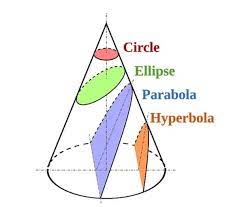
Conical Sections


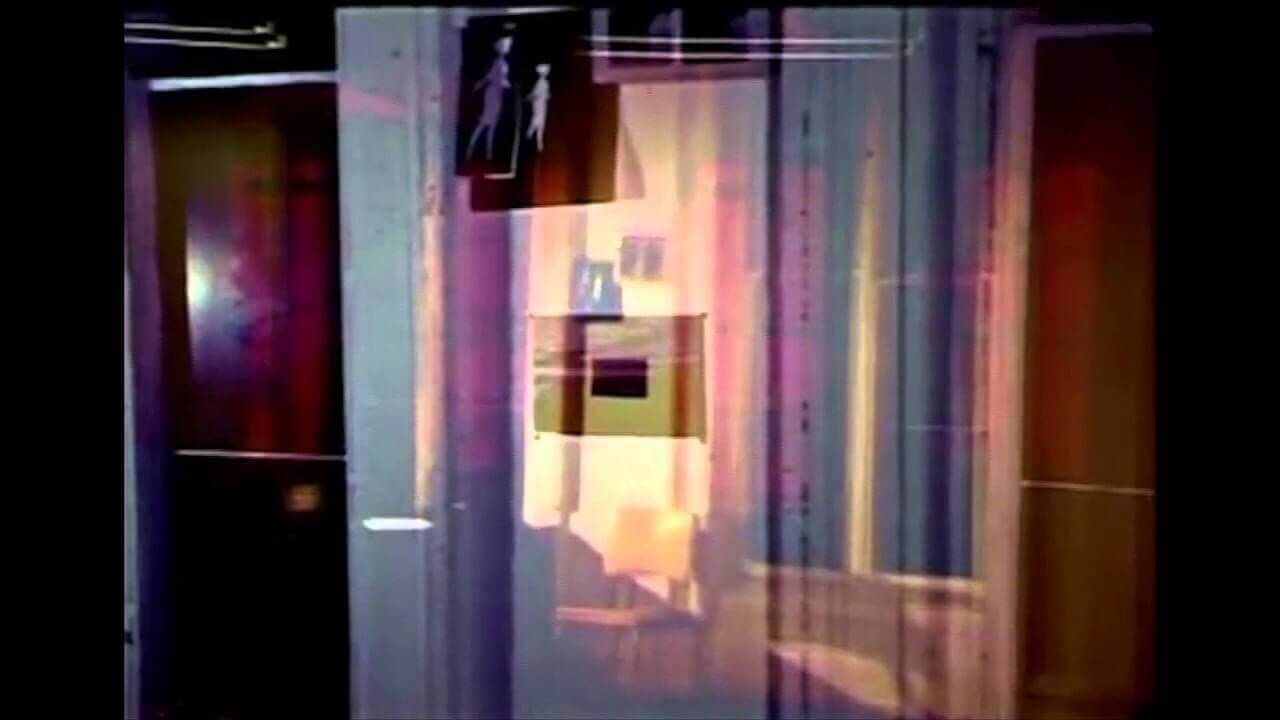
This session’s detailed analysis of theories of perspective and point of view is exceptional both as the sole color video recording and also as a nearly complete session, without the usual gaps due to cassette changes, filmed for broadcast on RAI-3 (accessible through YouTube; viewers will note that Hidenobu Suzuki is seated to Deleuze’s right and Georges Comtesse on his left). After a brief review of earlier key points, Deleuze recalls that the fold’s genetic element was a point of inflection or curve, and he proposes here to go from inflection to inclusion via the infinite series since, for Leibniz, inclusion is the final cause of the fold to infinity, which Deleuze demonstrates by folding a piece of paper to demonstrate that what is folded is placed inside. Observing that the center of an inflection with irregular curvature is “point of view”, Deleuze provides two drawings on the board, on one hand, a conical perspective (convergent straight lines) and on the other hand, a cylindrical perspective, each immanent to the other. To reflect on the sense of center as point of view, Deleuze draws from texts by the mathematician Desargues on “conical sections”, i.e., the circle’s metamorphosis into, successively, circle, ellipsis, parabola, hyperbola, point, and line, hence projections yielding “the geometral”, grasped only by God. Proposing for this new status of the object the name “objectile” (the object insofar as it is affected by an inflection of variable curvature), Deleuze develops details of Desargues’s theory of conical sections and proportions, and its relation of “involution”, i.e., envelopment. Deleuze can then argue for point of view as a point from which an “arrangement” (ordonnance) can be established, constituting a series, leading him to arrange different cases corresponding to the problem (e.g., in astronomy, the rotation of planets with the sun as point of view). He also argues that a truth in a domain refers to a point of view onto this domain, leading him to describe Pascal’s arithmetic triangle, to which Leibniz will join a harmonic triangle.

Moreover, not only is the “objectile” under the point of view, but also the subject as, borrowing from Whitehead, the “superject”, e.g., each person as point of view on the world, with Deleuze suggesting that Leibniz at once transformed the notion of the subject into philosophy and introduced the plurality of subjects as a metaphysical problem. Hence, one grasps an infinite series only as this or that variation, a tiny portion, i.e., not grasping the infinite series clearly, thus the tiny, clear region is the site of the point of view with what one grasps clearly relating to one’s body. Deleuze also concludes that point of view serves as the subject of inclusion, and whereas the city is always folded, existing or included within the point of view, it is the accord of subjects or of points of view, i.e., of superjects. After reviewing the levels on which Leibniz speaks about point of view, Deleuze adds that each subject is like a concave mirror on the world and that each monad is a mirror of the universe according to its point of view. Deleuze situates the session’s discussion on the Baroque house’s upper floor, moving from inflection to inclusion within a point of view, provided that point of view has no reference to an exteriority and solely to other points of view, the information grid.

Video of this seminar of 18 November 1986 is available currently (accessed 12 March 2026) at this YouTube site ; previous sites here and here, have been removed from YouTube by the director.

Gilles Deleuze

Seminar on Leibniz and the Baroque — Leibniz as Baroque Philosopher

Session 3, 18 November 1986: Point of View

Transcribed and translated by Charles J. Stivale (duration, 2:27:45)

[This meeting is exceptional because, in contrast to nearly all the others that are available only through audio recordings (usually with gaps due to cassette changes), the 18 November seminar was filmed for broadcast on RAI, is now accessible through YouTube here, and hence is a nearly complete class. Also in contrast to the audio recordings, the viewer can see Deleuze’s gestures as well as his use of the blackboard, an important context nearly entirely absent from the translations based on audio transcripts. At one point, however, there is an unexplained 90 second gap in the film completed here with access to the audio recording.]


Part 1

[The film starts with Deleuze entering the classroom, then jumps to him seated at his table between several students, Hidenobu Suzuki and Georges Comtesse, and ready to start]

Let’s get going. So I owe you some explanations about all this [the camera crew and set-up]. Here’s what it’s about: the department of philosophy includes a team for a video philosophy course. That interests me a lot, the question of knowing if, in a face-to-face course, something could pass through video, or if nothing passes. So then we decided to try it out twice. This is going to be difficult, and difficult for everyone, two attempts of this sort. Several years ago, we had already tried it with Marielle [Burkhalter], but I think that the equipment then was not as good.[1] And in some ways, this seemed like a good thing to render… but in the end, the spoken word-video relations, all that, seem to me interesting, at least it is for me. And then, I have an even more perverse idea, that since you force me to speak in front of machines [Deleuze points to the line of tape recorders set in front of him on the table], it was the dream of having myself taken yet again into an even greater machine than you. All this connects obviously to the subject of our meeting today which will be, [Up to this point, the transcript source is the RAI-3 video; here begins the BNF recording] you will understand quickly, something like the inclusion of points of view, or the inclusion of points of hearing, that is, how a point of view can adopt another point of view, can identify another point of view, can encompass another point of view, or a point of hearing, can seize another point of hearing. Good, on that note, let’s go.

I will try to summarize so that this will be very clear, where we are right now. I will try to summarize where we are. You remember… — I’d like you to keep this vaguely in mind each time. — You remember what our global problem is for the entire year? Our problem is the possibility of a definition of Baroque philosophy, that is, of Leibniz’s philosophy, as a function of the following determination, the fold, starting from the idea that in the end, the Baroque operation par excellence is the fold, creating folds, on the condition that this be to infinity (à l’infini); the fold taken to infinity, with everything that this entails, notably the operation of smoothing angles: that’s what would define the Baroque act.

But hardly had we stated this regarding Leibniz, that it was a philosophy that carried the fold, the pleating, to infinity, we saw that there was a bifurcation. That is, the fold was distributed between two floors, the lower floor and the upper floor. And on the lower floor were the pleats of matter, the pleats of matter when matter is subjected to infinity. And the pleats of matter when subjected to infinity, we saw… We began by studying them in a very general manner, and we were connected… The pleats of matters connected us, on one hand, to the elastic physical body, and on the other hand, to the organic body that possessed the property of folding its own parts and of unfolding its own parts. Folding in its own parts was the involution of the organic body; unfolding its own parts was the evolution of the organic body. And from that point, we came upon some pairs of notions: in-volving and evolving; implicating and explicating; enveloping, developing – all pairs of notions that manifested the fold.

And then, the last time, we moved on to the other floor, and the other floor was no longer the pleats of matter, it was the fold of the soul. Why these two floors, etc.? We are still far from being able to consider these questions. We will take them as they come. The folds in the soul are going to constitute the other floor, as what? As form of the infinite, or as the ideal genetic element.[2]

To each floor, you remember, corresponded two labyrinths. Leibniz told us that all philosophy was stretched between two labyrinths: the labyrinth of the continuous under development, but I would also say that it pleated itself since the labyrinth is the figure of the fold: the labyrinth of the continuous that pleated itself of enveloped itself into matter. And [there is] the labyrinth of freedom that enveloped itself in the soul. And no doubt, what nearly interests me the most is the communication between these two labyrinths. In fact, they communicate just as the two floors communicate.

Good, good, good. So we had started studying folds in the soul as a form of the infinite. And the last time, we only went, we had travelled a little bit onto the path of this second labyrinth. We had gone from inflection to the infinite series. That was our goal for the previous meeting, and that came down to saying some very, very simple things: this meant, first, that the genetic element of the fold was inflection – I won’t go back over all that – that is, the irregular curve of the line around a point, called the point of inflection. You recall the small, quite simple schema.[3] [Deleuze gestures a curve in the air] And we had already gotten a very, very schematic idea of the sense in which Leibniz’s mathematics was a mathematics of curves or of forms of curvatures.

And from inflection, or from the curves, we passed on to the idea of infinite series. Leibniz’s mathematics was not only mathematics of curves, but also mathematics of infinite series, which meant what? It meant that the curve is necessarily developed in the form of an infinite series, and that we had to be careful about the notion of infinite series since this notion could only be founded there where it was necessarily a development of an infinite series and could not be presented otherwise. Each time the development could be presented otherwise, that is, as unfolding, each time the development could be presented otherwise, the very idea of the infinite series lacked foundation. And there was one case, as it seemed evident, in which the development could only be presented in the form of an infinite series, which was the case of the irrational number. And it was the irrational number that gave us the key to the Leibnizian notion of infinite series.

Moreover, what does the irrational number have to do with the curve? In order to make our genesis coherent, showing this link is required, which is what we did at the last meeting. In fact, we showed how the irrational number, locatable on a straight line, was only locatable on this straight line to the extent that we had a curve intersect the point that the irrational number on the line truly was, as we could say, a curvilinear point and not a rectilinear point. Rectilinear points were represented by whole and fractional numbers, but the irrational number referred to a truly curvilinear point, that is, the descent of the inflection onto the straight line.

Good. For those who weren’t here at the least meeting, this is not that important, but you could better understand, I assume. I am summing up a bit what… But I would like, even for those who weren’t here… I am assuming that this is a given, that this outcome is given, specifically that inflection is expressed, or the variable curve, if you wish, is expressed in infinite series. After all, it’s very simple, as I told you: take two points on a straight line, as close as you might want. You can always intercalate one, through which an inflection passes, that is, that will be an inflection point. Given two points A and B, whatever their proximity, you can intercalate a point C that will then be the center of an inflection of A to B. Fine, quite simple. If you wish, here it’s rather crude, but it’s the simplest way to give you a sense of the way in which inflection develops in the form of an infinite series.

Fine. So we were going from inflection to the infinite series. Today’s task is what? To go from the infinite series to … no, not the infinite series; going from inflection to inclusion through the intermediary of infinite series. Why is this today’s task? Well, the line is folded to infinity; that’s the Baroque theme. The line is folded to infinity; it’s a line with variable curvature. But why? [Does] Leibniz really like “why” questions? Here again, in my own view, at the point we have reached in the analysis, we are deliberating on such simple things. Why is a line folded to infinity? Well, in order to place it within, to place it inside, that is, it’s folded to infinity because it is included (incluse); it is included insidu. Inside what? In other words, inclusion is the final cause, as one might say in philosophy; inclusion is the final cause of the fold to infinity. What I am saying here, it’s as stupid as… You fold a letter; you fold a piece of paper to place it inside. You fold a letter, a piece of paper [Deleuze takes a piece of paper and folds] to put it in an envelope. Imagine that the envelope is infinitely tiny. You fold… [Deleuze keeps folding] Whew! [He folds it to a compressed block] From inflection to inclusion.

I don’t yet know into what the line of the infinite fold, the infinitely folded line, I don’t yet know within what it is going to be included. There would have to be… [Deleuze does not complete the sentence] Understand today’s goal: what is the term that I must necessarily consider as that which [the folded object] is folded into? That which is folded, is folded into something. So there is going to have to be something, by whatever nature it might be, that it must contain, that it must encompass, that it must envelop the fold. Good, so we see at least… once again, at the last meeting we went from inflection to an infinite series. Today, that was only half of our path, corresponding to the upper floor. We have to follow the other half, that is, from inflection to inclusion through the intermediary of infinite series.

So, fine, I would like that to stay… This all seems to be complicated, but you also get that these are extremely simple operations. As soon as we talk about folding, it’s about practical exercises. There are two ways for you to understand me: on the level of practical exercises, of folding exercises, and in mathematics, it’s quite important; in biology, it’s quite important; and then in a no doubt philosophical way, corresponding to Leibniz’s concepts. But this doesn’t mean that concepts aren’t overlaid (doublés) with extremely simple sensitive intuitions. I do believe that it’s very unfortunate to try to understand Leibniz starting from considerations on the inclusion of predicates in the subject, to the extent that I ask those who are somewhat familiar with Leibniz almost to forget him. All of those who are somewhat familiar with Leibniz know that he’s an author who says that predicates are contained in the subject, that is, “crossing the Rubicon” is contained in the subject Caesar. So we can consider such an idea to be interesting, strange, whatever you want, but it seems very abstract. Why does he say it? This is why we have tried to start off from something else entirely. The advantage of this: [so that] the idea of attributing “crossing the Rubicon” as encompassed in Caesar as subject, would at that point for us, at a certain moment, go without saying.

So I mean [that] sensitive intuition, going from the fold to inclusion, from inflection to inclusion, is very simple. Only we have to follow it step by step and try to construct philosophical notions starting from this idea: that which is folded, is placed inside. That which is folded, rolls itself within. Within what? Within something equal to X. What is this something equal to X that exists to receive that which is folded? Well here, we have to go carefully, and I come back to my inflection. [Deleuze asks for some chalk, then gets up to go to the blackboard; he draws a curve] You recall this entirely convincing drawing of a random inflection with variable curve. [Deleuze sits down, then gets up again] It’s not right. [He draws a new curve, then sits down] Ok, that’s done. For the moment, we are considering two things: the point describing the inflection and the point of inflection itself. The point of inflection itself is the point in relation to which the tangent crosses the curve. Obviously, we have to consider a third kind of point, which is what? This third kind of point I could call the center of curvature. What is this center of curvature? [Pause] It’s the point at which are supposed to meet all the lines perpendicular to tangents of each point taken into the inflection. [Deleuze draws a series of perpendicular lines crossing the line of inflection of one of the curve’s folds] Eh? This speaks all by itself [the modified drawing].

An immediate objection: if it’s an inflection of irregular curvature, there will not exactly be a point, but the center of the curvature will itself run along a closed curve. Why closed? [Deleuze adds to the drawing] Because when you reach the point of inflection, the one whose tangent crosses the curve, you jump to another center of curvature. [Deleuze draws a point in the center of the adjoining curving] You jump to another center of curvature. In fact, in an inflection of variable curvature, all the lines perpendicular to tangents do not meet in a point, but in a region defined by a closed curve. When you jump to the other half [of the curvature], beyond the point of inflection, you jump to another center that itself is not simply presented as a point. Fine; in other words, the center of curvature in an irregular curvature runs along a determined region. We will say… let’s assume… Let’s settle on terms: we will say that it has a site (un site). It has a site. So it happens, when the curvature is regular, you have a center point, or you have a site, that is, a region described by the center. Fine. [Pause]

This is very important for us because what does this come down to saying? This means saying that the center is what? The center of a curve, of an inflection with irregular curvature, is and can also be called point of view onto the inflection, point of view onto the curve. It’s in the direction of concavity. We have made a lot of progress since the last meeting, but all this is in some ways very, very elementary. Inflection is affected by a vector of concavity. I mean [that] the privilege of concavity in the inflection is what? It means that it’s on the side of the concavity that a center is determinable. How is this determinable center on the concavity side presented? It is presented as point of view. To the extent that the center runs along a region, we will speak of the site of point of view. [Deleuze pauses] Fine.[4]

Here I am indeed saying that although we are accessing a new determination of the point, [Deleuze turns, points to the drawing on the board] I am no longer considering the point on the inflection, I am no longer considering the singular point that we call point of inflection, there where the tangent crosses the curve. I am considering a third kind of point that I can determine as a point of view running along a site, and determinable by [pointing to the drawing] all that, all these little lines that I drew, and I can also call them vectors of concavity. [Pause] Point of view. There we are (Voilà).

Among all of Leibniz’s strokes of genius, here you have his, or one of them: the transformation of the center into point of view. We have just taken a huge step in terms of our problem, moving from inflection to inclusion. I would like for you to sense this. But the ideal would be to sense it without yet understanding it; the ideal is achieved. So I only hold onto this idea: you see, I have passed from inflection, that is, from irregular curvature from which we started, to the idea of a point of view, point of view onto the curvature, point of view onto the inflection, defined outside the line by the center as point of view, the center running along a site.

Sense that every point in space can be treated henceforth as a point of view. Ah, every point in space could be treated as a point of view. But if this is true, if it’s true, it gives enormously, that gives a kind of new gravity to space, a new consistency to space, and it removes from space its former consistency. Every point in space can be treated as a point of view: what does that mean? That means something quite simple. That means that every point in space is such that intersect there – it’s not very complicated – that intersect there an infinity of convergent straight lines. [Deleuze draws a point on the board, then straight lines crossing through it] Whatever might be the point in space that you were considering, I can have an infinity of straight lines converge through here, which comes down to saying what? According to what we just saw, every point in space is a possible point of view. Let’s complete this: every point in space is a possible point of view on an inflection with irregular curvature.

What a strange world… what a strange world was Leibniz’s world. We call it the Baroque world. [Deleuze pauses here, reflecting]

Every point in space is such that an infinity of convergent straight lines can intersect there. Fine. Doesn’t that also mean that every point in space is such that I can always cause a parallel straight line to pass there in all directions? [Pause] It’s the same thing. [Deleuze turns toward the drawing, then again draws on the board] Given a point in space, I can have a straight line with its parallels pass through there, but also a straight line in another direction. [The drawing is a series of parallel lines going in different directions in order to create a figure with crossing lines in a crisscross pattern] Notice that my first drawing, through all points in space, an infinity of concurrent straight lines can still be passing in this point. And then [in] my other drawing, through all points in space, I can have as many straight lines as I want pass there, with corresponding parallels in all directions. The first case refers to what is called a conical perspective. [Deleuze gets up to draw again] You see? [He draws a set of lines emanating from a point or crossing through it] My second case refers to what is called a cylindrical perspective. The conical perspective and the cylindrical perspective are immanent to each other. Any point in space is referable to both systems, which comes down to saying something that a mathematician contemporary with Leibniz, [Girard] Desargues, [Deleuze spells out the name] had developed, that concurrent straight lines and parallel straight lines are of the same arrangement (ordonnance).[5]

The cylindrical perspective, what is it? It’s the point of concurrence to infinity at an infinite distance, and the conical perspective is the point of concurrence at a finite distance. What’s important is the mutual immanence of one and the other. The cylindrical perspective is present in all the conical perspectives; the conical perspectives are present, the infinity of conical perspectives is present in the cylindrical perspective. You immediately sense what Leibniz is going to say, specifically: the cylindrical perspective is God; the conical perspectives are creatures. What do they have in common? That of being points of view, points of view perpetually implicated in one another, immanent to one another.

[Leibniz’s] Discourse on Metaphysics [Deleuze pages through a book] I am just reading so that you get the tone: “For God considers from every angle the general system of particular events that he has thought fit to produce to manifest his glory, turning it on all sides, so to speak.”[6] How beautiful, right? You see? [Deleuze rereads the same citation, then continues] “As he considers all the faces of the world in all possible ways . . . each view of the universe, as though looked at from a certain viewpoint, results in a substance”, you and me, we are substance, “that expresses the universe in just that way”. One cannot say any better that we are conical perspectives immanent to the cylindrical perspective of God.

Good. So there we are. We have passed from inflection to the idea of the center of curvature that is necessarily point of view. It’s already a huge step, [Pause] point of view describing a site. And there… Let’s try to move forward more. I am insisting on the fundamental importance of this transformation of this point into point of view. One of the best books on Leibniz is one by Michel Serres, Le Système de Leibniz [Leibniz’s System], and it’s one of the aspects on which Serres has insisted most: how in Leibniz, it’s the center [that] stops being a center of configuration to become, if you will, an optical center, that is, a point of view.[7] This is no longer the point of view that refers to a center; it’s every center that refers to a point of view, and can only be defined from there, what Serres expresses by saying that for a geometry of the sphere or circle is substituted the geometry of the cone, the cone whose vertex is a point of view.

What does that respond to? It responds, in fact, to a so-called dramatic situation of the seventeenth century, or with all the more reason, of the Baroque world, to the extent that infinity is introduced everywhere, in the pleats of matter, without series, in the folds of the soul, etc. The world is in the process of losing all center. In fact, how to center the infinite? Where is there a center in infinity? The center is nowhere. The loss of center, right, is a… is almost the dramatic consciousness of the Baroque world. And in a sense, the dramatic consciousness of the loss of center is what affects the entire seventeenth century. Where can a center be located in infinity? [Deleuze chants] “Give us back a center.” Good, they have lost all center; they have lost the earth. They swim in infinity. Good, but swimming in infinity, there is no center, hence, as Serres shows very well, the importance of an operation consisting of changing radically the conception of center. The center, it can no longer be found as point of equilibrium in a configuration. We are going to see it under the new form of point of view.

In this regard, it’s what traverses Leibniz’s entire philosophy, but it’s what traverses all of Pascal’s Pensées. And Serres is right in this regard to create a long parallel between Pascal and Leibniz… — What is it? [Nothing, nothing (A brief interruption at Deleuze’s left)] — What does that mean, all that, the center becomes point of view? You see there… What we are seeking in this second moment of our analysis is a kind of general confirmation of what we grasped in a limited way by the prior analysis of inflection, notably: inflection refers to a center of curvature that is presented as a point of view, as a point of view going along a site. Now we are seeking the most general expression of this transformation of the center into a point of view. And we locate the most general confirmation immediately in a chapter of mathematics that, for the seventeenth century, is fundamental, and comes from the geometrician Desargues, who will have as much influence on Descartes as on Pascal and Leibniz. And this chapter of mathematics that I’m thinking of is one known under the title “Conical sections”.

The conical sections, what is this? Without doubt, the history of conical sections is an ancient history of mathematics, but here let’s continue. I am saying some very rudimentary things; it doesn’t matter if you don’t understand. And I am saying that it’s well known, but the ancient mathematicians, let’s say, felt the need — they couldn’t do any differently – to pass through a certain geometrical figure which was a right-angled triangle encompassed in a circle. I needed that to establish the theme of the conical sections that we still don’t know about. So they passed through the right-angled triangle encompassed in a circle; it was the triangle through the axis. As Pascal said in a small text on the conicals (les coniques), he says that the great merit of his contemporaries, and of Desargues foremost, is that they no longer need to employ the triangle through the axis. So this makes a kind of… what? [A] direct consideration of what is called conical sections.

What are we discussing here? — Don’t take at all seriously mathematically what I am saying since we have finished with… I don’t at all want… and then… — What are we discussing? This is well known… — [Deleuze gets up, looking for a way to erase the board] You wouldn’t have a small…? There we are, I’ll move over here. [He moves to the empty board, on the right] — You see, it’s a double cone, but if I gave you just one of them, that’s no reason not to give you two. “S” is the vertex; [it’s] useless to tell you that it’s a point of view-vertex. The eye is presumed to be located in “S”. You see what that means? We are already going to substitute for a geometry of the sphere or circle a geometry of the cone. That means that we are going to substitute for the determination of centers the determination of points of view. It’s the jump from the center to the point of view. [Deleuze continues drawing] And well, look at your cone, assuming that there’s a circular base. It could have another base; there are lots of more complicated cases, but you have a circular base.

You cut it by a plane parallel to the base. What do you have? You have a circle. [Deleuze writes ‘circle’ on the board] You cut it along an oblique plane [and] you have an ellipse. [He writes ‘ellipse’ on the board] You cut it along a plane… like that… [a nearly diagonal angle] I don’t know what to call that, but you see. You cut it into… [Students suggest terms] No, it’s not parallel… Anyway, in short, you have a parabola. And you cut it in a way that both cones are affected, [and] you have a hyperbola. You cut it in “S” [of the vertex], along a plane passing through “S”, and you have a point. You cut it along a plane passing through the generative points of the cone, passing through here, for example, [and] you have a straight line…. That’s it [He finishes writing each term]. Everything I am saying is lamentable, [Deleuze sits down] lamentable, but I mean… This has nothing to do with… It’s just to indicate to you, to indicate what? But here, it’s curious. I placed myself into “S”, point of view, and what did I do? I varied the planes for cutting my cone, and I have obtained successively circle, ellipse, parabola, hyperbola, point, and straight line.

What is it? At first glance, there is nothing in common between these things, between a point and an ellipse, between a straight line and a parabola, between a hyperbola and a parabola. What is it? And nonetheless what can I say, following Serres’s formulation — and that barely suffices — I have the metamorphoses of the circle, where I have what? The connections between a family of curves, if I stick with this case, because I can consider the point and the straight line, that is, when the plane of slice passes through “S” and when it passes through a generative of the cone, I can consider that these are so-called “degenerated” cases. No, but if I take curves – the circle, the ellipse, the parabola, the hyperbola – what do they have in common? Mathematically here, they have something in common, to be at the second degree. Seemingly, they seem to have nothing in common. And yet, I pass from one to the other, the metamorphoses of the circle, by causing the point to vary, the plane of slicing the cone, under the point of view “S”. The center is no longer the center of the circle, or even the foyers of the ellipses; the center is the point of view as a function of which I have a law of passage, from circle to ellipse, parabola, hyperbola.

What is the object? At the extreme, I no longer know. I can say… When I say the metamorphoses of the circle – and there as well, Serres showed it quite well – when I say metamorphoses of the circle, I privilege the circle. But first, my cone is not at all necessarily constructed with a circular base. It can be concave, convex, whatever you’d like. And then… [Pause] There are no reasons for the circle to have an absolute privilege. The object in all these projects [Deleuze indicates the new drawing] are projections, what are called in mathematics of the era the geometral. But at the extreme, understand, the geometral is only grasped by God. We, with our finite points of view, we only grasp projections, and not only projections, we grasp the connection of one projection to another. The object is the connection of projections, or if you prefer, if you would like a more modern language, the synthesis of profiles. Every object is in profile. There are only profiles. To perceive is to create a synthesis in profile. Husserl would be infinitely more Leibnizian if he was himself conscious of being so, and yet he was quite conscious of being so. Fine.

So the geometral will perhaps be the object such that it responds to God’s cylindrical perspective. But us, we are happy with profiles and their connections. It’s the metamorphosis, the object in metamorphosis. This comes down to saying what? That it’s another way of saying what we saw at the last meeting: thanks to the notion of point of view, there changes radically the very idea of the object in Leibniz. To underscore the new status of the object, I was proposing that we call it with a strange name – alas, Leibniz did not use it, but we, we can invent the term: we could say that we have found a new text, [with] the true name of this type of object, that could be the objectile.[8] What is it? Saying that the object is an objectile… what could that mean? Why introduce a term like that except as a joke? And still, we don’t joke around all that much. [Laughter] Why [introduce the term]? In order to regroup a certain number of characteristics.

We would have to say that the objectile is the object insofar as it exists only under its profiles. Henceforth, the object’s perspective implies an infinite series of profiles, the synthesis of an infinite series of profiles. Thus it’s the objectile; it’s the object insofar as it passes through an infinite series. Or if you prefer, it’s the object insofar as it states (decline) a family of curves, such as circle, ellipse, parabola, hyperbola. Or if you prefer — and here we don’t emphasize Leibniz’s modernity at all, just as he is truly modern – it’s the object insofar as it’s defined through a group of transformations. You see there that the conical sections introduce the idea of a group of transformations by virtue of which I pass from the circle to the ellipse, from the ellipse to the parabola, etc. Or if you prefer, the objectile is the object insofar as it’s affected by a curvature or an inflection of variable curvature. There we are, we can say all that.

This is a profoundly theatrical world. At the same time, think… think about the Baroque world, of the importance in Baroque festivals of the transformative decors. The transformative decors were the basis, nearly the basic element of the Baroque festival. Good. It’s the Italian theater, really, and Leibniz often identifies with the Italian theater: he says, yes, the world is like an Italian theater, the world is like a transformative décor, that is, the object is indefinable, independently from a group in transformation that affects it or independently of a variable curvature that affects it. It therefore has an entirely new status for the object.

Furthermore, furthermore, it doesn’t suffice to speak of metamorphoses because metamorphosis is the passage from one form to another form. The sole conclusion that I can draw is that, in fact, the theory of conical sections as elaborated by Desargues and Pascal in the seventeenth century has the innovation of introducing this theme of metamorphoses of the objet and of truly belonging to what we were seeking as criterion of Baroque mathematics. You see? Of course, I don’t pretend to have said anything mathematical at all about the theory of conical sections. And nonetheless, I still have to allude to mathematics so let’s return briefly, before being done with this point – the new status of the object, the objectile – let’s return to Desargues in his theory of conical sections.

His departure point will be as follows, and you will see that this refers entirely to our problem about projections. Imagine a triangle, any triangle, which turns around an axis. It turns continually around an axis. [Deleuze makes a circular, turning gesture] Are you imagining your triangle? [Pause] The projections of this triangle correspond to each position of the triangle. Good. Is there a law of projections? Can one discern a law of projections, that is, variable images of the triangle as it turns around its axis? Desargues explains that one must — here, I am saying this because it interests greatly, but finally, what I am going to say, at the same time… [Deleuze rises and goes to the board; there is a slight jump in the film’s editing. On the recording, one hears Deleuze’s comments as he draws the triangle] I have to speak loudly; I’ll make my drawing. There’s my axis; there’s my triangle. It’s turning around the axis. You see that it corresponds to different projections according to each position of the triangle. So – aie, aie, aie, I have to redo it, this isn’t right… I need to change this… Ok, that will do – I am just saying that in order to account for the law of projections, Desargues is going to bring six points into play, six – you can guess, there are six determinable ones – six points on the axis, right, corresponding to the vertex. [Return to the film][9]

You see, I have three [points], and then corresponding to the extension of the sides of the triangle. [He continues drawing, tracing the extensions and marking the points of intersection with a straight line] One… (two… three…) Ouf! [He traces just to the top edge of the board] See how smart my drawing is; it’s stopping just in time. One-two-three-four-five-six! [He enumerates the points of intersection on the line, then sits back down] [Desargues] is going to consider — and here is where it gets interesting in the mathematics that I am not discussing — these six points, [Desargues] is going to show that there is between them a certain proportion between the segments it determines, a certain proportion, a certain rapport between the six points. And what is he going to call this rapport, with a term that will endure in mathematics from Desargues onward? He is going to call it a rapport of involution, involution, you remember, of envelopment, a rapport of envelopment as if, in fact, all the projections of the mobile triangle enveloped this rapport. Involution; involvere; the envelopment. One might say that this rapport of involution is as if enveloped, folded into each projection.[10] Good. [Pause]. Well, ok. From there on, he will pass into the matter of four points; he will pass into his theory of conical sections.

Fine, fine, fine, fine, fine. So, I was saying that this doesn’t yet suffice, this definition of the objectile as passage from one form to another, as a metamorphosis of the form. And in other words, the form is constantly in metamorphosis; such is the objectile. The object with variable curvature, the objectile is the object with variable curvature. That isn’t sufficient. Why? Because that does indeed give us, that does indeed give us a possibility of defining the point of view anew, of giving a new definition of the point of view. What could one say?

Well, here, I’ve placed everything in a stack [Deleuze indicates the second drawing on the board], circle, ellipse, parabola, hyperbola. I just know that there is a variant, a community in all these figures. Good, but the point of view gives me another possibility: [Jump in the film editing, 90 seconds; access from BNF recording] in fact, it’s the case that I placed them in a disorderly way; why? Once we are under a point of view, the question is the possibility of introducing an order into the transformations. In what kind of form, this order? In other words, you see, point of view is that point starting from which I can establish an arrangement (ordonnance), and no doubt, there are several arrangements under the same point of view. [There are] several arrangements, yes, yes, yes. For example, I am looking at the cleverness in disorder; I made a list in disorder. What kind of order can I introduce? Let’s suppose, I tell myself suddenly: finite or infinite? Finite or infinite, with a question mark? I answer: [Return to film] the point finite, the straight line infinite; the circle finite, the parabola infinite; the ellipse finite, the hyperbola infinite. I have created an alternation of finite and infinite cases. I could have chosen other criteria. For example, are there double points or not? Sometimes yes, sometimes no. Arranging (ordonner) is constituting my series. I have constituted a series of certain points of view. Eh? [Pause] I’ve constituted my series. The point of view is not only this from which a metamorphosis of the object is revealed, but this from which I am able or become able to arrange cases. [Pause] That is fundamentally the point of view: arranging contraries, arranging inverses, arranging opposites.[11] [Pause]

Let’s find an example so that you feel this, because henceforth… There are as many points of view as you would want. Everything depends on the problems considered. In general, I can say that you can only pose a problem if you are able to determine the point of view according to which you might arrange cases corresponding to the problem. Otherwise, you’ve done nothing.[12] What is the point of view that allows you to arrange cases corresponding to the problem? That is, what is going to have us pass into the other aspect, I mean, of the same question. Arranging cases, yes? Sometimes finite, sometimes infinite; sometimes progression, sometimes regression. You are going to create your analysis of cases.

At first glance, says Leibniz, everything happens as a form of an irregular curve, so irregular that one gives up looking for its law. What is the rule? Whatever might the irregularities of a curve, find the point of view, what we earlier called the center of curvature. Finding the point of view in relation to which what earlier appeared to you a crazy irregularity will be revealed as referring to an equation, an equation under which you can organize your cases. Finite, infinite, finite, infinite, finite, infinite; regression, progression, regression, progression, regression, progression, etc. It’s not surprising that Leibniz creates in all his mathematics a kind of calculus of problems. And for each family of problem, one will have to find the point of view. An example [is] in astronomy: if you take the planets, you will note an insane rotation. The rotation of planets is such an irregular curve that one must give up on everything, except if you find the point of view. The point of view is in the sun. That works for the planets and for different planetary movements. But if it works for the planetary system, that doesn’t work for the star system. One has to find another point of view.

Is there a universal point of view? [Deleuze shrugs doubtfully] What does that mean? Here it gets complicated. Is God the universal point of view? Perhaps God is the universal point of view, but he doesn’t suppress singular points of view. This is still too complicated for us; we have to leave it aside. Is God a point of view or not a point of view? We cannot answer this frankly; it’s a delicate question. But each time we will have to. When you have a problem, either you will say simply anything, that is, disorder in a pure state; or else you construct your point of view such that you will be able to organize, arrange the cases of the problem. Perhaps you sense that the famous texts like Pascal’s, in his Pensées, on truth, on truth beyond and on this side; what is truth on this side isn’t truth beyond, that’s not simply the sense of a platitude, a tiny skeptical platitude – ah “what we believed true here, they don’t believe it true over there”. That doesn’t mean “to each his own point of view.” Each one having his point of view is the stupidest thought in the world. It’s stupid, in the end; that’s a frightening platitude even. “To each his point of view, to each his truth.”

But if the word “perspectivism” in philosophy is an important term, it’s precisely because it never meant that. Furthermore, perspectivism signifies that there is ever but a single point of view from which the truth is stated. That doesn’t mean “it depends on the point of view”; it doesn’t mean “to each his/her own truth”. Perspectivism such as it is realized in Leibniz’s philosophy, then taken up again by Nietzsche – and Nietzsche knows very well what he is doing with it because he renders homage, with his own perspectivism, he renders homage to Leibniz. And then in literature, in any another way entirely, undertaken by Henry James… But all these great perspectivists are again all authors that we can call Baroque. Henry James – I can hardly see a Baroque realization of the novel as fine as that of James.

So what do they have in common? At least [they have] this in common: perspectivism has never been a relativism in the ordinary sense of the term. It’s not “to each his own truth”; [rather] it’s “truth refers to a point of view”. All truth in a domain refers to a point of view onto this domain; point of view is the condition for the possibility of truth; point of view is the condition of the possibility for the emergence of truth, of the manifestation of truth. So, above all, don’t think that perspectivism authorizes discussion. [Deleuze smiles] God help us, it does not authorize discussion.[13] In a family of problems, there is only a single point of view. [Deleuze insists on each word] Which one? You will tell me: what is the criterion? It’s quite simple: the one that permits arranging cases. You will tell me: so, there are several points of view. Yes, there are several points of view, notably: the point of view has a site, that is, it runs across a region. So, in fact, in order for me to able to group them together as finite forms, infinite [forms], double point [forms], no double point, etc. – it’s the site of my point of view. Understand? But above all, the relativism “to each his own truth”, and if you truly want perspectivism, [it’s] not even perspectivism of the impoverished; it’s perspectivism of the imbecile. [Laughter] It means that perspective, as much in Leibniz as in Nietzsche and Henry James, strictly means the opposite: how to construct the point of view as a function of which I would even be able to arrange opposites. [Pause]. Good.

And I am saying [that] for each family of problems, you must have a point of view. Point of view is the genetic element. It’s the genetic element. Let’s consider an example in order to be done with my mindless reflections on mathematics. There is something beautiful in Pascal that interested Leibniz considerably. It’s the arithmetic triangle.[14] I am going to tell you about it for those who don’t know about the arithmetic triangle because we will need it, so I am bringing it up here. You need to remember it because I can then avoid going back over it.

We are going to undertake a strange operation. You’ll see. [Deleuze looks at the board] — I’ve lost my chalk… no, I’ve got it. [The student on Deleuze’s left, Georges Comtesse, gives him a rag to wipe off the board; Deleuze erases drawing 2] — So, up above… why up above? You place a number 1. Ok? Number 1. So you can take is as the top of the vertex. Then underneath, you put 1 + 1, no, not plus; you put 1 there on the left, and 1 on the right, and that gives you a little arithmetic triangle. And then there [on a third line], you are going to put, staggered, 1, 1. You see? And in between them, you are going to put what? The sum of the preceding level: 1 + 1 which gives you 2. [Pause] Yeh? Good.

Then [on the fourth line] you put 1s staggered again. You see how pretty it is, and there [in the middle] of this new level, you again do the addition, and you put 3, [the sum] 2 + 1 [from the previous level]. You place them between the two. You have [along the left edge] 1, 2, 3, 4 to this fifth level: 1, 3, 3, 1. And then you sense that you could continue at length. [Deleuze begins the fifth level with the number 1] You do the same thing again: you stagger your 1s; you have a triangle of greater and greater length, and there, you put, if you’ve understood well, 1, 3, 4. You place it between [the 1 and the 3 of the level four] and there, [on the right] you will place 4, 3, 1, and in the middle, you will place, if you have understood well, you will place 6, or 3 + 3 [from the previous level]. It’s magic; that’s a magic triangle… and you continue. Her [a student’s] head is in the way, so I can’t go very far… Here, I am going to do it once more [on the sixth level]. This triangle is really beautiful. There [on the left] you will put 5, 4, 1, and there, in the middle, you will put 10, or 6 + 4 [from the previous level], and then [on the right], 10 and 5. So, on this level, you have 1, 5, 10, 5, 1. You continue, you continue like at. [Deleuze sits down] You have a very beautiful triangle that is an arithmetic triangle.

What is the interest [of this]? If you have a sharp gaze, you will notice that at each level there corresponds — except apparently on level one where 1 is all alone — you have overlaid the powers of 2. It’s odd, right? This is known by the name Pascal’s arithmetic triangle. It’s very important since Leibniz will work on this triangle a lot and will develop it as we will see. We are greatly interested in this because he will join a harmonic triangle to it.[15] So, since we know that the concept of harmony is very powerful in Leibniz, we will have to look at this more closely. But we will thus already have a conception of the triangle known as arithmetic.

I said that each level corresponds to powers of 2. The first level 1: 1. If you add it up, that gives you 2 to the first power. The next level is 1 + 2 + 1, 4 [or] 2 second power. The next level: 4 + 4, 8, [or] 2 third power. The next level: 5, 10, 14-15-16 [Deleuze adds the numbers], [2] fourth power. Etc. There [level 5]: 20-30-32, etc. You could continue with this, you could continue to infinity, like that. Fine. What have you done? [It’s] the genesis of the powers of 2. With what condition? You have found the point of view. What is that? Try to understand. We are in the process of getting the sense of many things.

In the end, point of view is quite close to an act. Point of view is an act, and just as Leibniz understands it, as an act. However, at first glance, I wouldn’t have understood [this]. If we hadn’t started from the idea that point of view is an act, all that would be abstract. But understand that here, we are beginning to understand perhaps that concretely, adopting a point of view is an act, if it’s true that the point of view is what arranges cases. It’s what arranges contraries; it’s what arranges opposites. I’d say here that your arithmetic triangle is the invention of a point of view. A point of view on what? On the powers of 2. And I will say, what is point of view? But point of view is the superior [number] 1, the vertex of the arithmetic triangle. So, at the outside, I could say, in order to assimilate it to the powers of 2, that it’s 2 to the zero power, if this expression had any sense. But, after all, it’s this figure that gives it a sense, eh?

So, good… All this isn’t finished because you sense that all the problems are rushing in or an entire family of problems is rushing in, notably: can I express any number as a power of 2? [Doubtful shrug from Deleuze] And with what condition? It’s useless to say that this problem alone propels you toward logarithms. Good… But there are many other problems connected here. From this [Deleuze points to the arithmetic triangle] I am just understanding that I can speak of a point of view that permits arranging the powers of 2. There you have typically an arrangement of the powers of 2, just as I can speak of an astronomical point of view that arranges planetary movements; just as I can speak of a point of view in physics, a point of view on an inflection and a site of this point of view, etc.

But I am saying that out of this, it’s not simply a question of metamorphoses. It’s a question, a question of anamorphoses. For all this, on metamorphoses and anamorphoses, I refer you, of course, to the research of [Jurgis] Baltrusaitis, but I am just trying in this way not to say a lot about that because it’s going to… It would be better to see it in books, from engravings, all that. What is an anamorphosis, and what is the difference from a metamorphosis? It’s that metamorphosis is always the passage from form to form; it’s like a connection of forms; it’s the passage from a profile to another profile.[16]

For example, a metamorphosis, but the Baroque world is full of metamorphoses and anamorphoses. I recall, in Fascist Italy, there was a great Baroque tradition, a grand tradition of metamorphoses, in propaganda, in which there were portraits. That struck me because it was impressive, these portraits. They were quite popular. Everyone was buying them. These were portraits. I was fascinated by them because I wasn’t very old and I looked at them and I wondered, how can we explain something like this? But since then, I figured it out: these were portraits on slides. So if you placed yourself in front of the portrait, you have Mussolini; this was the central perspective, where you had Mussolini. You put yourself on the right – you see, it was painted on slides, produced on perpendicular slides, like that. So, when you were in front, you had Mussolini, of course, it’s the central perspective, [where] you had Mussolini. And then you move to the right and there, you had I don’t remember which officer (maréchal). The slides… On the length of the slides the officer’s head was painted so that, from the right, you saw the officer, and no longer Mussolini. In order to see Mussolini, you had to come back to center. [Laughter] There was the officer on the right, and then to the left, there was another officer, the officer on the left, eh? — It astounds me that these haven’t been reproduced recently, especially since… eh? I don’t know… [Laughter] So you understand. Obviously, there’s a problem for the center, who will we put in the center! [Laughter] –

But understand that at the point we’ve reached, we have moved beyond the stupidity that would consist in saying, oh well yes, each person has his/her point of view. This isn’t at all, this isn’t at all what’s in a Baroque world. It’s not that the point of view changes all that much. The point of view doesn’t change; the point of view has a site. The point of view’s site, in my triple photo, in my triple image, the point of view’s site is going to be from center to right and to left. Simply, [Pause] the point of view gives me the law of the form’s transformation. There is metamorphosis. And when I was saying “power to arrange cases”, this is just as well [the power] to hierarchize cases, with Mussolini in the center, you see? [Return to film track]

I am saying: when do we speak of anamorphosis? It seems to me that we could reserve anamorphosis… I’m not at all saying that this is… It’s as you like, eh? We could reserve it [anamorphosis] for this, for a case that is deeper than that of metamorphosis, specifically: when there is an emergence of form out of the unformed. It’s no longer the passage from one form to another; it’s how there is an emergence of form… how there’s an emergence of form out of the unformed.

What does that mean? In appearance, everything is disorder. In appearance, all is disorder. You recognize nothing there; it’s all completely messed up. You have a movement; you have an inflection; you have a series of inflections that are going in all directions, changing centers constantly. You recognize nothing there. Good. But the point of view is what is going to extract a form from this disorder. It’s no longer what passes from one form to another, from one profile to another; it’s what is going to extract any form at all from a non-form. A well-known type of anamorphosis is in the painting by [Hans] Holbein [the Younger], “The Ambassadors”.[17] Under a bookshelf you have a kind of indeterminate stain, really informal, a formless white-ish stain. And from a certain point of view, linked to the lower edge of the painting, from a certain point of view, everything arranges itself. This white-ish stain obviously represents a skull that is the painter’s signature since [the name] Holbein refers to “hollow bone” or “skull”. Good. One could say, you see, both that it’s the point of view initiating an emergence of form starting from what has no form, and also a passage from form to form.

There really is a relativism of point of view; the truth is relative to the point of view. But that has never meant that the truth varies with one’s point of view. That has always meant that the truth… Point of view is the condition of possibility of the manifestation and the constitution of truth in a domain, the domain of the point of view, the domain corresponding to the point of view.

So here we have henceforth [Deleuze turns over a sheet of paper that he seems to use as a guide; he heaves a huge sigh] Aaaaaahhh… On this point, in our problem, we have moved forward. We have indeed outlined this notion of point of view. We have discerned the contradiction not to be made about point of view. Understand? We still have left a final point to look at, good, since the status of the object changes. If the object becomes objectile under the point of view, well then, it’s probable that the status of the subject also changes.[18] The subject is itself a point of view. Point of view is the subject. The point of view is the subject. A subject is a point of view. A subject defines itself through a constitutive act, and this constitutive act is the point of view. Also the subject has a site. It’s the region over which its point of view travels. And in this, perspectivism is fundamentally Baroque.

And we should find a name then to emphasize this change of subject’s status no less than the change of the object’s status. The object becomes an objectile insofar as it is affected by the variable curvature or by the group in transformation. We will say about a subject that it becomes a superject [Laughter] insofar… [Deleuze reacts to the laughter] It’s funny, but not very… It’s a superject. Why do I say superject? That is, for the couple object-subject, Leibniz would substitute, but alas without saying so, the couple objectile-superject. If I call upon these terms, it’s uniquely to emphasize that object-subject is going to take on a completely new sense in philosophy with Leibniz.

And… Superject, ok. Here I am only borrowing a term. The idea that the subject would be a superject is an idea that you will find textually and explicitly in the work of a very great philosopher from the start of the twentieth century, [Alfred North] Whitehead. [Deleuze spells out the name] Whitehead is one of the great philosophers of the twentieth century, and who proposed the term superject. Why place Whitehead into Leibniz? For a simple and definitive reason: Whitehead considered himself Leibnizian. So, we have every right, or we are comforted in advance if we propose this pair objectile-superject in order to define the new status of the object and the subject as it appears in Leibniz’s philosophy.

When the object becomes objectile, that is, encounters a group in transformation, the subject becomes a superject, that is, becomes a point of view. [Pause] Hardly have we won this point than everything vacillates. But in what sense can we be called point of view? You, me… For example, we see it well there. [Deleuze turns and points to the triangle on the board] 1 is a point of view onto the generation of the powers of two. Good. The sun is a point of view on planetary movements. Good. But you, me, we are a point of view on the world. Agreed, we are a point of view on the world. We are a point of view on the infinite series of the world, yes, since any point of view is onto a series, the series of powers of 2, series of curvatures. Any point of view, I would say – and this is why we had to call it a superject – any point of view subsumes a series. Which series? The series of transformations through which the objectile passes. Notice that this works out nicely; it’s very satisfying for the spirit. [You] sense it: the world arranges itself. Good. I repeat because it’s so satisfying even, but I repeat: well… yes, no, I no longer know. It doesn’t matter.

I am saying that everything vacillates because… well… If it’s true that every point of view… Ah yes, I wanted to say… If it’s true that every point of view is defined in relation with a series, specifically the series of transformations through which the objectile passes, I can say that each of us insofar as the subject is a point of view on the world, that is, on the series, parenthetically infinite series, of the world…. Good… well, yes, but it’s not simple. We believed that we understood, but we must shift to us, us, us: how is it that we are points of view on the world? What does that mean?

Leibniz seems to guide us. He says, “We are like points of view on the city. Each of us,” you will see, “is like a point of view on the city.” These texts, you find them everywhere in Leibniz, notably in the Discourse of Metaphysics. [Pause. Deleuze consults his notes, then opens a book, finding a sheet of paper that he reads] Here we have a text on this: “As the same town looks different according to the position from which it is viewed.”[19] We are points of view on the city. Notice that this is what is our rapport to the world, our rapport with the world, that is, the rapport that we maintain, we subjects, or superjects, with the infinite series of transformation; it’s a little like how a single city is diversely represented.

What does that mean? Does that mean… What does that mean, “we are points of view on the city”? Why didn’t he say, “We are points of view on the countryside”? [Laughter] You will tell me, don’t exaggerate. He could have said, we are points of view on the countryside. I only feel strongly about one thing: showing that he couldn’t say “we are points of view on the countryside”. He could only say “we are points of view on the city”. This is once again why Leibniz is unusually modern. There were already no longer any countrysides, I mean. But why? Well, this is where we have… Are you tired or not? Do I continue or not? [A student suggests a recess, a pause]… But without out moving around, ok? Because you won’t come back if you… [Pause. Deleuze looks at the film crew] Is the sound ok? It’s ok? Yeh? Ok ? Do you want a break ? No ?… In any case, just stay here; just sit and reflect. [Laughter; Pause… A jump in the film editing, no omission]

[1 :35 :23, RAI-3] So this is where we are. All that is very fine: we are points of view on the city. But what does that mean, or rather what does that not mean? At first glance, if I dare say, this could mean: for each point of view there corresponds a form or a profile. If you look at the city from a particular point of view, it has a particular form or it offers you a particular profile. Good. This would be the simplest interpretation; it would be the first interpretation. Only here we are, it’s simple, but it’s impossible. If that’s right… And yet, I am telling you, beware of texts. Leibniz seems to express himself this way. Each subject has a point of view, and to each point of view a profile of the city corresponds. If this is that… No, this cannot be that, it cannot be like that for multiple reasons. But the principal reason why it cannot be like that is because, once again, this is a feeble idea, and Leibniz cannot have a feeble idea. That [first explanation] drops us back into a false perspectivism, of the type “to each his own truth.”

But there’s a more solid reason why that couldn’t be [the interpretation]. Confront the proposition [Deleuze turns toward the board] “I am a point of view on the city,” [He indicated the vertex of the arithmetic triangle] at the vertex ‘S’ of the cone, the point of view. Can I say that the circle corresponds to a point of view? The ellipse, to another point of view? The parabola, to another point of view? Of course not, I certainly cannot say this. You remember? It’s not a question of saying that for each form there’s a corresponding point of view or… I haven’t changed the point of view when I pass from the circle to the ellipse. [Deleuze insists on this next sentence] The point of view is what gives me a hold on the passage from one form to another. It’s what I call the group in transformation. The point of view causes the group in transformation to emerge, that is, the passage from one profile to another. That which corresponds to the point of view is not one particular form or another; it’s the change of form, [Pause] that is, the objectile, the object insofar as it traverses [Pause] its group in transformation. You see? It’s not a question that each form corresponds to a point of view, not a point of view to each form since the point of view allows me precisely to arrange the forms and to pass from one to the other. Here, it is necessary that this be very clear.

So I have no choice, even if Leibniz seems to express himself sometimes this way. You know, Leibniz is astonishing. He said it a thousand times; he measures his texts to the supposed intelligence of those reading him. So, when he wants to be understood by everyone, he speaks quite simply; and then, when he has a small audience, he goes farther. He doesn’t care since, for him, every level symbolizes one another. So it’s a matter of knowing which level is deeper than another. Hence, I am saying [that] it’s not a form that corresponds to a point of view. It’s not possible since to every point of view corresponds a change in form, that is, a power of arranging forms and of passing from one form to another. Fine. So, I would say [that] the point of view is what reveals the connection of profiles or the change of form, the passage from one form to another. If there is no point of view, I could never grasp it. If there is no point of view, well, the circle, the ellipse, the parabola, the hyperbola will remain eternally separated each on its own, each form separated from the other form. If I have a point of view, then yes, I can create the synthesis of curves in the second degree. You understand?

But then I have hardly made this first rectification, and I fall back into a difficulty: but why would there be several points of view? And how is it that I am a point of view distinct from you? How is it that each of us is a point of view distinct from other points of view? This is the necessity of a third level, and this gets complicated. [Pause] At first glance, it suffices to find a point of view at least in a domain under consideration. But why is there a necessity for a plurality of points of view? I have just shown that every point of view seized onto a series, and probably – there’s no need to pose a lot of hypotheses – and probably an infinite series. If I am a point of view on the world, I grasp an infinite series that is the series of the events of the world, that is, a curve with variable curvature in which each center of inflection, each point of inflection marks an event. Each point of view grasps not this form, not that one, but the infinite series.

But why several points of view? Why is the point of view irreducibly plural? In other words, not only has Leibniz transformed the notion of the subject in philosophy, but he is the first to introduce the plurality of subjects as a metaphysical problem. If you take the thinking subject in Descartes’s work, certainly each of us undergoes the operation of the cogito. But we cannot say that in Descartes, the plurality of thinking subjects is constructed into a metaphysical problem. We can posit this, wonder what the status of thinking subjects in Descartes might be, but to my knowledge, we cannot find an answer to this solution, to wit: the answer that there are several thinking substances. But making the plurality of subjects into a legitimate problem (problème de droit), it’s Leibniz who introduced this problem into philosophy.

So, you understand: I cannot say [that] for each point of view corresponds a form separate from others since, once again, the point of view seizes the metamorphosis of forms. So what distinguishes one point of view from another? What is going to distinguish one of you from me, two points of view? [Pause] We don’t have much choice. These are the beautiful moments in philosophy. You can’t go backward. A same series must indeed be susceptible to variations. A same series must indeed be susceptible to variations, that is, there will be, for each corresponding point of view, a variation on the series.

So good, that gives us something: a series is susceptible to variations. What does that mean, variations of a series? I am not seeking definitive definitions. We are still operating on a kind of intuition, and we are in the introduction to Leibniz, so we cannot ask too much from ourselves. But I am telling myself: let’s use a comparison that is going to… and that entails a great danger, but in the end… Each of us knows that there is a kind of music operating with series. It functions with series of twelve sounds, with the series of twelve sounds. Everyone knows that [Arnold] Schoenberg’s name is linked to this music. Fine. Well, what happens there? [Jump in the film editing, no omission] And what are the variations introduced by Schoenberg into the series of twelve sounds?

First type of variation: you can take fewer than twelve sounds, that is, you don’t take them all. I would say that here, it’s a purely arithmetic variation.

Second variation: a variation called melodic… no, called rhythmic. You keep the same series twice, but you transform the durations. You respect the intervals, but you transform the durations.

Third variation, melodic: you transform the intervals. [Pause]

Fourth variation: you transform the ascending movement into descending movement, and the descending movement into ascending movement. [Pause]

Fifth variation: recurrent movement, that is, you begin at the point where the preceding series ends. You invert the series. Fine.

There you have variations of the series. I would say that a same finite series contains a finite number of variables. I can say that an infinite series contains an infinity of variables.

Do we not have our solution? Specifically, yes, each of us is a point of view on the infinite series of the world. Only here we are: each of us grasps a variable of the series. Each of us grasps a variable of the series. Each time, the entire series is there, fine, but as this or that variation. Here is what it means [to say] “Each of us is a point of view on the city”. Each of us grasps the infinite series of profiles of the city; it’s not at all “to each point of view a profile corresponds.” Each of us grasps the infinite series, but as this or that variation. This will yield an extraordinary figure that you are going to encounter constantly in Leibniz. Each subject, each of us, grasps the entire world as infinite series. There you are. Only as we see, this does not mean that each grasps it clearly. It’s in my own depths – you sense the return of the theme of the fold – it’s in my own depths that I grasp the entire world. Complete this: it’s understood in all this [that] these are things that we cannot yet understand, but we can anticipate them. I am not conscious [of the entire world]. [Pause] It’s in my depths; it’s in a folded form. Fine. No matter.

Each of us grasps the totality of the world as an infinite series. Yes, but each only grasps clearly a tiny portion, such that the clear portion allotted to me is not the same as the clear portion allotted to you. And if there is a plurality of points of view, it’s because there are as many variations of the series as there are clear portions. What I grasp clearly, you only grasp in an obscure manner. Everyone gets even with somebody, eh? Everyone gets even with somebody (à chacun la revanche). What each of you grasps clearly, the others grasp, yes, but in an obscure way.

Once again, I could say that the clear region is the site of the point of view. The tiny clear portion that I grasp in the world is the site of the point of view. Each point of view has a site, my tiny portion of clarity. It’s a prodigious idea; it’s a fantastic idea, you understand? We are points of view, yes, but do you understand what that means? There’s a tiny domain of clarity – we cannot ask for much more – and then that opens up a whole hierarchy. Do animals have a soul? Well obviously, animals have a soul; these are points of view, animals. There is the butterfly point of view; there is the elephant point of view; there are all of them. These are points of view. So they all do not grasp much clearly. There is a hierarchy of souls, fine, of souls. So a little child? [Doubtful shrug from Deleuze] Yes, a little child, it’s indeed a little child, but in the end…

What do I grasp clearly? Here I don’t want to say too much ahead of time, but you sense that all of Leibniz is engaged in this. What I grasp clearly is finally what relates to my body. Why do I have a body? I don’t have a point of view because I have a body; I have a body because I have a point of view. There is a deduction of the body starting from the point of view. Why do I have a body? Because I only express clearly a tiny portion of the series. Otherwise, I would be a pure soul in the world.

I only express clearly a tiny portion of the series. Fine, yes, yes, yes, yes, yes. But precisely, that’s what having a body is: I have a body because I express clearly a tiny portion of the series. And what I express clearly is precisely going to be what affects my body. Who grasps clearly the passage of the Rubicon? One single subject: Caesar. Yes, I grasp the passage of the Rubicon, no less than Caesar, yes, no less than him. It’s in me like it’s in Caesar. And in fact, that concerns Caesar’s body. Caesar had to take a longer step in order to cross the Rubicon. That concerns his body. Fine. No matter. That’s what the variations of series are.

I can say, yes, and I have solved my problem. This sentence that seems so inoffensive, “each of us [is] like a point of view on the city,” is in fact extraordinarily complex since it implies, first, that it’s false that a profile or a face on the city corresponds to each point of view; second, since it’s true that every point of view grasps the whole series; and third, since there are no fewer multiplicities necessary for points of view since the whole series is necessarily affected by an infinite sum of variation such that to each point of view, a variation of the whole series corresponds. [Pause]

Understand? So, we are almost done. We can’t take too much more, in any case. You understand me still, because there’s not point for me continuing if you no longer understand? Yes? I can continue? It doesn’t matter to me; I can start up again the next time. So let’s try to continue just a little bit more. So… We are getting close to the goal, eh? We are getting close to the goal. Understand?

My purpose today was to go from inflection to inclusion. Inflection is the characteristic of the variable curvature under the form of infinite series. And I was saying that this is the genetic element of the fold. The variable curvature is the genetic element of the fold. And I continued by saying that if things are folded, this is why God never acts in vain. Eh? It’s a great principle of Leibniz: God always does everything for the best. If God pleated matter, it’s not just for fun; it’s for a final cause. It’s by virtue of a deep finality. If the world is not a straight line, if the world is not rectilinear, it’s not by chance. If mathematics are mathematics of curvature, it’s because the world sings the glory of God, as has been said. And what is the final cause of the fold? I was saying: inclusion. Fine. Folding means placing within. And then we bump into “placing within”. Fine. But placing within what? So this is going to return to us; this is going to cause us a final difficulty about the point of view since we have to answer now: it’s placing within the point of view.

And good… Ooo la, la, but then there is the view in the point of view; there you have the visible in the point of view. The visible is in the point of view. The visible is included in the point of view. In fact, the infinite series of forms is in the point of view. This inherence, in esse, that is, “being within,” being in the inclusion, how do we show that it belongs to the point of view to contain the visible? Leibniz shows this in the simplest and most infantile way possible. And this infantile manner is not even by itself mathematics although it seems to be, and does not imply differential calculus, but it presupposes the mathematics of differential calculus. For a brief moment, it [the mathematics] borrows, on the other hand, the language that is fully developed in differential calculus.

In fact, to show this, Leibniz will say two things. He will say, first case: you take a right triangle… You take a right triangle… No, not even a right triangle. You take a right angle, excuse me. You take a right angle, like that. [Deleuze makes an ‘L’ gesture in the air] — You see, I am only drawing in the air now; it’s better than going to the board. This way, everyone can see and then immediately forget. — Like that. I draw an arc, the arc of the circle, you see? So I have A: the vertex of the angle, and B-C, the extremities of the arc. I draw an arc that’s narrower inside. It’s still an arc that refers to the right angle. I draw an even narrower one, even narrower. I am getting close to the infinity of the vertex ‘S’, and I say: where does the right angle begin? Still, this is not mathematics. This calls on mathematical language, founded by Leibniz, in fact, but here, it’s quite simple: where does the right angle begin?

[Jump in the film editing; Deleuze is looking into a reference text from which he reads] In 1700, from 12 June 1700,[20] I will quickly read to you: “It is evident that this angle is not only measured by the great arc B-C-D, but also by a lesser F-G, however small it might be, and the opening begins in one word,” the opening of the angle, “begins in one word: from the point A that is the center,” that is the vertex of the angle, “it is also in this very center that the angle is found, such that we can say that these arcs are represented in the center by the relation of the inclination to the center.” This would be very useful to me if we had the time to comment on it, for the relation of the inclination, that is, of the inflection, to the center. You see, this relation of the inclination, that is, of the inflection to the center, is what we had analyzed as today’s departure point, specifically the center of curvature. In other words, the angle is already in the vertex of the angle.

Second text: it’s not only the right angle in the vertex; it’s an infinity of angles, an infinity of angles that are in the point, since you can always take an infinity of angles that coincide through their vertex. And this does not bother us since I remind you that every point of view has a site, that is, a region, a region of displacement. This is why one must not say “to each immobile point of view corresponds a form,” since the point of view is not immobile. The point of view has a site that designates its path (parcours), its limit, the tolerance of its path before arriving at another point of view. Many angles, an infinity of angles, can have a common vertex. [Pause]

In other words, the connection of visibles is in the point, or as Serres puts it quite well, when the point becomes point of view, space is in the point.  It’s no longer that point that is in space. This is the kind of revolution about which Leibniz dreams in opposition to Newton. It’s not the point that is in space; it’s space that is in the point. In fact, sense how much this is a new theory of space that will then have an impact on all mathematics after Leibniz and even today, specifically space defined as the order of points of view. This we are still unable to understand, so we will come back to it when we reach our discussion of space in Leibniz. But space can only be the order of points of view to the extent that the point has become point of view. An immediate consequence: space cannot be substance. There is no extended substance. Space is an order; it’s not a substance.

Good, but ok, here, really this goes too far. I am only saying that we have just established the idea that, in fact, point of view is perfectly able to serve as the subject of inclusion. Something is in the point of view, exactly as the infinite series of angles is in the vertex that they have in common. [Pause] Fine. In other words, the world is not only an infinite series; it is included in each point of view, that is, it is included in each of us. [Pause] It is included in each of us. Yes indeed. What does that mean? This is strange because, understand, this seems to completely contradict the idea of point of view. Point of view seemed to be a point of view by nature onto something outside. There is no longer anything exterior to point of view. Yes there is, there is something exterior to point of view, it’s the other points of view, but nothing else. The city does not exist; we have to go all the way there: the city does not exist outside the points of view onto the city, such that the city is what? It’s not an object since there are no longer any objects; there are only objectiles, the series of profiles. It’s not an object such that the city is what? It can only be the accord of points of view among themselves. The city is identical with the assumed accord of points of view onto the city. The city is in the points of view; it does not exist outside. In fact, the city is always folded, and to be folded means existing within, it’s being included, being included in the point of view. The city is included in the point of view; it does not exist outside the point of view that includes it. Fortunately, outside the point of view, there is the other point of view, the other points of view such that the city is never an object since every object is objectile, but the city is the accord of subjects, or of points of view, that is, of superjects.

What can we call the accord of subjects other than by its true name, to wit: God? Well, what? Yes that’s it. It means that the point of view is open onto nothing outside. The point of view is not open onto an exteriority; it is regulated, regulated from within in conformity with other points of view. How do we talk of this? Something like the world is a cinema, the world is an Italian theater, a décor in transformation. The world is a cinema. Or else we may perhaps have to say something worse, even more included because cinema still refers to an outside. Cinema refers to an outside because it is quite obvious that something has to be filmed. So after, the film gets folded, and then it gets unfolded. But there is still a reference to an exteriority. One had to eliminate any references to an exteriority. This is what Leibniz says to us from the start of the Monadology, in a famous text: “the subjects and points of view”, it’s strange, “are without doors nor windows.” He says “monads”, a word that I have not yet used since I would then have to explain it, so I am keeping myself from using it. But I am saying more simply that each subject is without doors nor windows. It grasps the infinite series of the world, but this series is within it.

And why is each subject without either doors or windows? At the start of the Monadology, [Leibniz] tells us: it’s that – you remember? – subjects are Simples (les Simples) as opposed to composed matter. Well, that which is simple can receive nothing from outside. Why [is it that] what is simple can receive nothing from outside? For a simple reason: if a Simple received something from outside, it would at that moment form a Composite with what is acting upon it. So, if there is something simple, this Simple can receive nothing from outside, so Leibniz tells us. This is fine, very fine, and logically unassailable. If there is something absolutely simple, it can receive nothing from outside, which comes down to saying that everything must be located within it. It has neither doors nor windows.

So notice this, it’s amazing! This shows well the question of Leibniz’s levels. He comes to speak to us of point of view, first moment, and today we have crossed through all sorts of levels. First level: we are points of view. We understand that there are points of view on the world, yes, on the infinite series of the world. Ah, but be careful: the infinite series does not exist outside each point of view, under one variation or another. Henceforth, there are neither doors nor windows. Everything is in the point of view; the entire visible is in the point of view. So, that leads us to rectify Leibniz’s texts. But we are not the ones rectifying them; he rectifies them himself. We readers of Leibniz, we have to reconcile his two major propositions: “We are points of view on the city” and “We have neither doors nor windows.” There is only Leibniz who understood here as well the stupidity of problems of communication.

“We have neither doors nor windows.” So this is not bad. We will see the consequences for communication. This is what Leibniz will call the problem of the communication of substances, once we’ve said that all the units, all the points of view have neither doors nor windows. But then that leads us to correct the notion of point of view. Leibniz began by telling us, in the Discourse on Metaphysics [section 9]: “each subject is like a mirror,” each subject is like a mirror on the world, a mirror of God or of the world. We are in a position to add something: it’s not just any mirror. It’s a concave mirror, and that seems indispensable to me. When Leibniz speaks of a mirror, it can only be a question of a concave mirror because we saw that inflection referred to a center of curvature on the side of concavity, under the vector of concavity. But a mirror assumes a real object. So the metaphor of the mirror is only valid at a certain level.

Second point: he said “We are points of view, points of view on the city,” and he linked the two statements – mirror and point of view – when he says, for example, in a letter [probably a letter to Arnauld]: “Each monad,” no matter, each subject, “is a mirror of the universe according to its point of view.” There you have both together: the metaphor of the mirror and the theme of point of view. Each person is a mirror of the universe according to his point of view. But a point of view implies an outside; it implies a window. It’s useless to tell you that in point of fact, the window looks out on the countryside.[21] That matters a lot because the countryside is always on the side of convexity. The countryside is convex. It cannot be otherwise. So, good. If I have a window, I am looking onto the countryside, yes. Only here we are: I have no window. I am a point of view without a window. So I say: mirror, point of view, but no window. So, let’s consider cinema: I will be like a lined room, with a screen; it’s no longer a mirror, but rather a screen that is needed, where the film, folded, unfolds onto the screen, would play out onto the screen. And each of us would have his/her film, and the accord between the points of view would be the accord of films between each other. This isn’t bad. But that doesn’t work because a film still had to be filmed, produced. The screen still doesn’t work. There is still too much reference to an exteriority. The screen still implies a window. We have to close the windows even more.

What’s left for us? So here as well, I am doing what I did earlier with Schoenberg; while begging you not to take advantage and use this badly, I am making a very arbitrary rapprochement, fine, something like… that implies no reference onto the exterior, so-called digital images (images numériques).[22] Ah yes. What the point of view takes hold of, what the point of view grasps, is what has no existence outside itself. Or if you prefer, images without models, a pure genesis, that is, digital images; or if you prefer, Leibniz’s model, the model that’s rigorously suitable for Leibniz: it’s not the mirror, nor the window, nor the screen. Eh? He will pass by the mirror and the window, and he will reject the window. You see, at the start of the Monadology, we have neither door nor window. Good. Neither mirror, nor… This isn’t adequate. None of the three terms is adequate…. Neither mirror, nor window, nor screen. So then what? And what are we draped with, us, if we can use this term since we are units (unités)? Can we say “the walls of a unit”? What are these closed, opaque walls? Let’s call them information grids (tableaux d’information).

The subject is not open onto the exterior. It is in communication with an information grid that corresponds to it, and data are inscribed onto this grid. And on my very own information grid, certain bits of data are inscribed. On the information grid for one of you, other bits of data are inscribed. Is there a world? Yes, there is a world if the information grids align, if there is a concordance of information grids. Where would this concordance come from? That’s something we cannot know at the moment; we won’t even ask ourselves that. We say: I don’t open my window on the outside; I consult an information grid. So there, I consult within myself. I consult an information grid within myself; I don’t open my window. What is this ? It’s the city. Why is that the city? The city is in our heads, you know? The city, this is marvelous, the city; as has been said, it’s a brain, the city. And it’s not only that: a monstrous brain, a disgusting brain, that is, an information grid. Yes.

This is why I believe that it’s not by chance that the phrase “a point of view onto the city” flows from his pen. A point of view onto the countryside, this is [from] the window. But here, I don’t even open my window in the morning. There is no longer any need for windows. There are people without windows. If I want to know the temperature, I have two ways : the countryside way, I open my window and even risk sticking my arm outside; then pulling it back in, I close the window. Fine. But otherwise? Otherwise, I have a dedicated thermometer, with a wire going inside, and another inside, with two readings; and I look at the thermometer, and I know simultaneously the temperature inside the house and the temperature outside. This is already the start of an information grid. Some bits of digital data are inscribed on my information grid. Neither door, nor window. I have a monologue with myself: “Ah, wow, it’s cold.” But I haven’t opened my window. This is the regime of information grids in the city.

“We are points of view onto the city.” You see what that means now. That means: being a point of view is reading an information grid. Simply, I always have information that the other does not have, fortunately. Each person has his/her own information. All that could create discord. A singular harmony is required for all these kinds of information even to come into a vague concordance. Here too, even at the cost… I am making jumps to try to … Above all, don’t take all this literally; we are in an introduction, so given that, I did not mean that Leibniz is a precursor of Schoenberg, especially not that. I used Schoenberg to make something small understood. I don’t mean to say that Leibniz is the precursor of modern painting, but there is a point that is striking in modern painting, and it has been emphasized – I spoke about it in past years: it’s how the canvas changes status, how the canvas has changed status, that is, how for a long time, the canvas was like or called for a window on the world. [Jump both in film editing and the audio recording]

In what we call modern painting, I’m not saying this would be better, but sense that there is no longer a window onto the world. Take what’s known as abstract expressionism which has been something fundamental for launching a painting called contemporary. Fine. Is a painting by Pollock a window on the world? And it’s not only the question of figurative or not figurative. It’s not this that… A line by Pollock – I am mentioning this for those who see what I’m describing – a line by Pollock obviously is not a window onto the world. It’s what? It’s inscribed onto an opaque surface, of what type? Say, this interests me because if there is a painting of inflection, and of inflection with variable curvature, it’s indeed Pollock’s lines.[23]

But then, in what sense does that develop? That develops more and more in the form of… The line is inscribed onto a kind of information grid, either a temperature curve [or…]. The question becomes not “what do I see through the window?”, but “what kinds of information does the painting communicate to me?” The painting has become an opaque surface that functions like an information grid. And perhaps, as an American critic has said, in a very lovely article,[24] the person through which that appears the best, where the genius of painting appears the most profoundly, is Rauschenberg. No doubt, it’s with Rauschenberg that a new status appears. I am not at all saying that he invents it all at once; it’s once again because Pollock and all those who preceded Pollock… One would have to create an entire history of this mutation of the painting’s status.

But you find yourself gazing at a famous painting by Rauschenberg that shows a line of inflection on the opaque layer that covers the painting. Or sometimes he creates forms from cut-up newspapers. These are not at all collages, understand: he uses printed matter as backing. One can no better underscore the painting as an information grid. And this is how he creates his painting, a kind of infinitely sinuous line, a line of infinite inflection with numerical data, and numerical data in all the senses. An information grid, in fact, no longer knows high or low, right or left. A window, yes, a window has a high and a low, a right and a left. One window refers to a horizontal man; an information grid no longer refers to a horizontal man, that is, there is liberation of the point of view in relation to any frontality. Good, and this painting I am thinking of, the famous one by Rauschenberg, as its line and its numbers, and from it emanated a pictorial power in a pure state and leaves us with this question: “What information does this painting convey to me?” [25]

So I would say that here, we have something like an approximation of a realized Leibnizian world. In what sense? I just wanted to say, there, in what direction we have today fulfilled our short portion, the task we gave ourselves, specifically: the last time – I really want you to sense our progress, how slow it is; you have to sense this – the last time, once again, we had been on the first floor of Baroque architecture, not the lower floor, but the upper floor.[26] We’ve moved from inflection, from curvature to the infinite series. And today, we’ve moved from inflection to inclusion. Inflection included itself, is included in what? Inflection is included in a point of view. On what condition? On the condition that point of view be grasped without reference to a supposed exteriority and only with reference to other points of view, that is, that the model not be the window, but the information grid, as an information grid, a play between terminals, whatever you like. You can act stupidly (déconner), you can say whatever since, from the moment that you don’t insist on it, there’s no point doing so. Leibniz’s fundamental statement, to support all this: there is no window. So I believe myself to have answered the question: in what sense can we consider that inflections are included in points, in points defined as points of view?

So go reflect on all this and tell me about it next time. And then, I stared into the camera, eh! [Deleuze smiles; someone says something inaudible to which he responds] I hope so, I hope that I didn’t ruin it by looking into the camera… So there we are; thank you very much. [Deleuze begins to relax, rolling his shoulder, visibly wasted, and he emits tiny groans, saying] Tired…

A student: It’s the heat that does that do you.

Deleuze: The heat… the filmmaking… [The students start leaving; there is a jump in the film editing, and we see Deleuze nearly alone in the classroom, dressed in hat and coat, and he says] This was all cinema! [Someone suggests something inaudible, and he answers] You want me to fall? [The camera follows Deleuze as he leaves the room] Fine, so long! [He turns left into a corridor, and then leaves the building onto the street, and says] There we are, it’s recess. That’s it! [Jump to black] [Audio: 2:31:26; Video: 2:28:04]


Notes

[1] This is a reference to the seminar titled A Thousand Plateaus I, linked to the Deleuze Seminars site, from 1975-76.

[2] This opening review corresponds to chapter 1 in The Fold.

[3] This reference is to the first figure on p. 15 in The Fold.

[4] For the introduction of point of view and its linked terms, cf. The Fold, pp. 19-23; Le Pli, pp. 25-30.

[5] On Desargues and these distinctions, cf. The Fold, pp. 20-22; Le Pli, pp. 28-30.

[6] www.earlymoderntexts.com/assets/pdfs/leibniz1686d.pdf, para 14, p. 9.

[7] Cf. The Fold, p. 21; Le Pli, pp. 29-30.

[8] Cf. The Fold, pp. 18-19; Le Pli, pp. 25-27.

[9] Deleuze adraws a triangle on the board. This drawing corresponds to the image in The Fold, p.21; Le Pli, p. 29.

[10] On involution, cf. The Fold, p. 21; Le Pli, p. 29.

[11] On arranging, cf. The Fold, p. 21; Le Pli, pp. 29-30.

[12] On the question of “problems” in philosophy, see L’Abécédaire de Gilles Deleuze, “H as in the History of Philosophy”.

[13] On the futility of “discussion,” cf. What Is Philosophy? pp.28-29.

[14] On this term, cf. The Fold, p. 21, p. 46; Le Pli, p. 30, p.62.

[15] On this triangle, cf. The Fold, p. 129; Le Pli, p. 176.

[16] Here begins a three-minute passage that was deliberately edited from the film and is only accessible on the BNF recording, perhaps because of the subject given in the example, given that the film is an Italian production for RAI.

[17] On Baltrusaijtis, anamorphosis, and Holbein, cf. The Fold, note 12, p. 145; in Le Pli, the corresponding note, 11 (p. 27), refers only to anamorphosis.

[18] On these aspects of point of view, subject and object, cf. The Fold, pp. 19-20; Le Pli, pp. 27-28.

[19] Discourse, p. 5, #9.

[20] Letter to Sofia, cf. The Fold, note 18, p. 146; Le Pli, note 17, p. 30.

[21] On the countryside perspective, cf. The Fold, p. 27; Le Pli, p. 38.

[22] Deleuze makes a brief reference to this same example at the start of chapter 3 of The Fold.

[23] On Pollock’s line, see the Painting seminar, session 2, April 7, 1981.

[24] The reference is to Leo Steinberg, cf. The Fold and Le Pli, chapter 3, note 2.

[25] For a brief reference to Rauschenberg’s work, cf. the start of The Fold, chapter 3.

[26] This refers to The Fold, chapter 1.

French Transcript

Edited

Ayant établi les bases de l’étude de “Leibniz comme philosophe baroque” dans les deux premières séances, Deleuze aborde un examen élaboré des théories de perspective vis-à-vis des éléments définis quant au pli.

La transcription s’est faite, d’abord, à partir de la piste sonore du film de la séance (disponible sur YouTube), et puis à partir des enregistrements disponibles à la BNF et à Web Deleuze. Pourtant, à un moment donné, il semble que l’enregistrement de la BNF ne corresponde plus à celui d’un magnétophone et corresponde plutôt à la piste sonore du film. De toute manière, les indices temporels correspondent exceptionnellement au film plutôt qu’à l’enregistrement.

Audio seulement: ici.

Gilles Deleuze

Leibniz et le baroque: Leibniz comme philosophe baroque

Séance 3, le 18 novembre 1986 : Le point de vue, de l’inflexion à l’inclusion

Transcription : Charles J Stivale [1]

[La transcription s’est faite, d’abord, à partir de la piste sonore du film de la séance (disponible sur YouTube), et puis à partir des enregistrements disponibles à la BNF et à Web Deleuze. Pourtant, à un moment donné, il semble que l’enregistrement de la BNF ne corresponde plus à celui d’un magnétophone et corresponde plutôt à la piste sonore du film. De toute manière, les indices temporels correspondent exceptionnellement au film plutôt qu’à l’enregistrement.]


Partie 1

[Au film, on voit l’arrivée de Deleuze, puis Deleuze installé, assis]

On y va. Alors je vous dois des explications pour tout ça. Voilà de quoi il s’agit. [1 :00] Le département de philosophie avait [invité] une équipe pour un cours de philosophie vidéo. Moi, je m’intéresse beaucoup à la question de savoir si, dans un cours directe, quelque chose passe en vidéo ou si rien ne passe. Si bien qu’on s’est dit qu’on va le tenter deux fois. Ca va être dur, mais dur pour tout le monde, deux expériences en ce sens. Il y a plusieurs années on l’avait fait déjà avec Marielle [Burkhalter],  mais je crois que les instruments étaient moins bons. Et d’une certaine manière, cela nous avait paru bon de rendre… mais enfin [2 :00] les rapports paroles-vidéo, tout ça, me paraissent intéressants, enfin pour moi, ça. Et puis, j’ai une idée plus perverse : c’est, comme vous me forcez de parler devant des machines [Deleuze indique les nombreux magnétophones devant lui sur la table], c’est un rêve de me prendre dans une plus grande machine que vous. Ce qui rejoint évidemment le sujet de notre séance d’aujourd’hui qui va être, vous allez comprendre très vite, quelque chose comme l’inclusion des points de vue, ou l’inclusion des points d’ouïe, c’est-à-dire comme un point de vue peut prendre un autre point de vue, peut cerner un autre point de vue, peut englober un autre point de vue, ou un point de ouïe, saisir un autre point de ouïe. Bon, du coup, allons-y.

J’essaie de résumer, pour que ce soit très clair, le point où nous en sommes. J’essaie de résumer où nous en sommes. [3:00] Vous vous rappelez, je voudrais que vous gardiez cela vaguement dans l’esprit chaque fois que … Vous vous rappelez que notre problème d’ensemble pour toute cette année. Notre problème, c’est la possibilité d’une définition de la philosophie baroque, c’est-à-dire, de la philosophie de Leibniz, en fonction de la détermination suivante, le pli, à partir de l’idée que finalement l’opération baroque par excellence, c’est le pli, faire des plis, à condition que ce soit à l’infini. Le pli porté à l’infini, avec ce que cela comporte, à savoir l’opération d’arrondir les angles ; c’est ça qui définirait l’acte baroque. [La référence ici est au chapitre 1 de Le Pli] [4 :00]

Mais à peine nous disions cela à propos de Leibniz que c’était donc une philosophie qui portait le pli, le plissement à l’infini, [que] nous voyions qu’il y avait une bifurcation. C’est-à-dire que le pli se distribuait d’après deux étages, l’étage du bas et l’étage du haut. Et l’étage du bas, c’était les replis de la matière, les replis de la matière lorsque la matière est soumise à l’infini. Et les replis de la matière lorsqu’elle est soumise à l’infini, nous avions vu… Nous avions commencé par les étudier d’une manière très générale, et nous étions renvoyés… les replis de la matière nous renvoyaient, d’une part, au corps physique élastique [5 :00], et d’autre part au corps organique qui possédait la propriété de plier ses propres parties et de déplier ses propres parties. Plier ses propres parties, c’était l’involution du corps organique ; déplier ses propres parties, c’était l’évolution du corps organique. Et dès ce moment-là, nous tombions sur des couples de notions : involuer, évoluer ; impliquer, expliquer ; envelopper, développer – toutes couples de notions qui manifestaient le pli.

Et puis, nous avions attaqué la dernière fois l’autre étage [6 :00], et l’autre étage, cela n’était plus les replis de la matière, c’était les plis dans l’âme. Pourquoi ces deux étages ? Nous sommes loin encore de pouvoir considérer cette question. Nous les prenons quand elles viennent. Les plis dans l’âme allaient constituer l’autre étage, comme quoi ? Comme forme de l’infini, [Pause] ou comme élément génétique idéal.

A ces deux étages, vous vous rappelez, correspondaient les deux labyrinthes. Leibniz nous disait que toute sa philosophie était tendue entre deux labyrinthes : le labyrinthe du continu qui se développait, [7 :00] mais je dirais aussi bien qui se repliait puisque le labyrinthe est la figure du pli. Le labyrinthe du continu qui se repliait ou s’enveloppait dans la matière. Et le labyrinthe de la liberté qui s’enveloppait dans l’âme. Et sans doute, ce qui m’intéresse presque le plus, c’est la communication de ces deux labyrinthes. En fait, ils communiquent comme les deux étages communiquent.

Bon, bon, bon. Alors nous avions commencé l’étude des plis dans l’âme comme forme de l’infini. Et la dernière fois, nous étions seulement allés, nous avions parcouru un bout du chemin de ce second labyrinthe. [8 :00] Nous avions été de l’inflexion à la série infinie. C’était notre objet de la dernière fois, et cela revenait à dire des choses très, très simples : cela revenait à dire d’abord que l’élément génétique du pli, c’était l’inflexion — je ne reviens pas sur tout ça – c’est-à-dire la courbure irrégulière de la ligne autour d’un point, dit point d’inflexion. Vous vous rappelez le petit schéma tout simple. [Deleuze dessine une courbe en l’air]. Et nous avions déjà pressenti très, très sommairement en quel sens les mathématiques de Leibniz étaient [les] mathématiques de la courbure ou des courbures. [9 :00]

Et de l’inflexion, nous étions passés, ou de la courbure, nous étions passés à l’idée des séries infinies. Les mathématiques de Leibniz n’étaient pas seulement une mathématique de la courbure, mais aussi une mathématique des séries infinies, ce qui voulait dire quoi ? C’est que la courbure se développe nécessairement sous forme d’une série infinie, [Pause] et qu’il fallait se méfier de la notion de séries infinies puisque cette notion ne pouvait être fondée que là où le développement était nécessairement celui d’une série infinie et ne pouvait pas être présenté autrement. [10 :00] Chaque fois que le développement pouvait être présenté autrement, c’est-à-dire le dépliement, chaque fois que le développement pouvait être présenté autrement, l’idée même de la série infinie n’était pas fondée. Et il y avait un cas où de toute évidence le développement ne pouvait être présenté que sous forme d’une série infinie, c’était celui du nombre irrationnel. Et c’était le nombre irrationnel qui nous donnait la clé de la notion leibnizienne de séries infinies.

Or le nombre irrationnel, qu’est-ce qu’il a à faire avec la courbure ? Pour que notre genèse soit cohérente, il faut montrer ce lien. C’est ce qu’on a fait la dernière fois. On a montré, en effet, comment le nombre irrationnel, repérable sur une droite, n’était repérable sur cette droite que dans la mesure où l’on faisait tomber une courbure au point [11 :00] que le nombre irrationnel était réellement, on pourrait dire, était sur la droit un point curviligne et non pas un point rectiligne. Les points rectilignes étaient représentés par les nombres entiers et fractionnels, mais le nombre irrationnel renvoyait à un point véritablement curviligne, c’est-à-dire à la chute d’une inflexion sur la droite.

Bon, pour ceux qui n’étaient pas là la dernière fois, cela n’a pas d’importance, mais vous pourriez bien comprendre, je suppose. Je récapitule un peu ce qui… Mais je voudrais que même pour ceux qui n’étaient pas là… Je suppose que ceci est obtenu, que ce résultat est obtenu, à savoir l’inflexion s’exprime, ou la courbure variable, si vous voulez, [12 :00] s’exprime dans des séries infinies. Après tout, c’est tout simple, je vous disais. Prenez sur une droite deux points, si rapprochés que vous voulez. Vous pouvez toujours en intercaler un, par lesquels passe une inflexion, c’est-à-dire, qui sera un point d’inflexion. Deux points A et B étant donnés, si rapprochés que soient-ils, vous pouvez en intercaler un point C, qui sera le centre d’une inflexion alors de A à B. Bon, tout simple. Si vous voulez, là c’est très grossier, mais c’est la manière la plus simple de vous faire sentir en quel sens l’inflexion se développait sous forme d’une série infinie.

Bien. Donc nous allions de l’inflexion à la série infinie. [13 :00] Notre tâche aujourd’hui, c’est quoi ? D’aller de la série infinie… non, pas de la série infinie ; d’aller de l’inflexion à l’inclusion par l’intermédiaire des séries infinies. Pourquoi est-ce c’est notre tâche aujourd’hui ? Eh bien, la ligne est pliée à l’infini, c’est ça le thème baroque. La ligne est pliée à l’infini ; c’est une ligne à courbure variable. Mais pourquoi ? Leibniz aime bien les questions “pourquoi” ? Là encore, pour notre compte, au point où en est notre analyse, nous délibérons des choses tellement simple, tellement… Pourquoi est-ce qu’une ligne est pliée à l’infini ? [14 :00] Eh bien, pour la mettre dedans, pour la mettre dans, c’est-à-dire, elle est pliée à l’infini parce qu’elle est incluse ; elle est incluse dans. Dans quoi ? En d’autres termes, l’inclusion est la cause finale, dirait-on en philosophie ; l’inclusion est la cause finale du pli à l’infini. Ce que je dis là, c’est aussi bête que… Vous pliez une lettre, vous pliez un papier pour la mettre dans. Vous pliez une lettre, un papier [15 :00] pour la mettre dans, [Deleuze prend une feuille de papier et la plie] pour le mettre dans une enveloppe. Imaginez que l’enveloppe soit petite à l’infini. Vous pliez… [Deleuze continue à plier] Aaah ! [Il comprime le papier plié] De l’inflexion à l’inclusion. Je ne sais pas encore dans quoi la ligne du pli infini, la ligne infiniment pliée, je ne sais pas dans quoi elle va être incluse. Il faudrait qu’il y ait… [Deleuze ne termine pas la phrase] Comprenez notre objet aujourd’hui : quel est le terme que je dois nécessairement considérer comme ce dans quoi ce qui se plie se plie ? Ce qui se plie se plie dans quelque chose. [16 :00] A ce moment-là il faut qu’il y ait quelque chose qui, par [quelque] nature soit-elle, qu’il contienne, qu’il comprenne, qu’il enveloppe le pli. Bon, alors on voit au moins… encore une fois, la dernière fois nous avions été de l’inflexion à la série infinie.  Aujourd’hui, cela n’a été que la moitié de notre parcours, correspondant à notre étage d’en haut. Nous devons faire l’autre moitié, c’est-à-dire de l’inflexion à l’inclusion par l’intermédiaire des séries infinies. [17 :00]

Alors, bien, je voudrais que tout ça reste… Cela a l’air d’être compliqué, mais vous sentez aussi que ce sont des opérations extrêmement simples. Dès qu’on parle de pliage, c’est des exercices pratiques. Il y a deux manières pour vous de m’entendre : au niveau des exercices pratiques, des exercices de pliage, et en mathématiques, c’est très important ; en biologie, c’est très important ; et puis, une manière sans doute plus philosophique, qui correspond aux concepts leibniziens. Mais cela ne veut pas dire que ces concepts ne soient pas doublés d’intuitions sensibles extrêmement simples. Moi, je crois que c’est très fâcheux d’essayer de comprendre Leibniz à partir de considérations sur l’inclusion des prédicats dans le sujet, [18 :00] au point que je demande à ceux qui connaissent du Leibniz de presque l’oublier. Tous ceux qui connaissent un peu Leibniz savent que c’est un auteur qui dit que les prédicats sont contenus dans le sujet, c’est-à-dire, “passer le Rubicon” est contenu dans le sujet César. Alors on peut considérer une telle idée intéressante, comme bizarre, comme tout ce que vous voulez, mais il a l’air très abstrait. Pourquoi il dit ça ? C’est pourquoi on a essayé de partir de tout à fait autre chose. Le gain serait qu’à ce moment-là, l’idée que l’attribution “passer le Rubicon” est compris dans César, ce serait bien qu’à ce moment-là si, à un certain moment, cela nous paraît aller de soi. [19 :00]

Alors, je veux dire [que] l’intuition sensible, aller du pli à l’inclusion, de l’inflexion à l’inclusion, elle est très simple. Seulement il faut la suivre pas à pas et essayer de construire des notions philosophiques à partir de cette idée : ce qui se plie, se met dedans. Ce qui se plie, s’enroule dans. Dans quoi ? Dans un quelque chose égale X. Qu’est-ce que c’est que cette quelque chose égale X qui est fait pour recevoir ce qui se plie ? Eh bien, là, il faut aller très doucement, et je reviens à mon inflexion. [Deleuze demande de la craie, se lève pour aller au tableau noir ; il y dessine une courbe] Vous vous rappelez le dessin-là si convaincant de l’inflexion quelconque à courbure variable. [20 :00] [Deleuze revient à sa place, puis se lève] Elle n’est pas bien [Il dessine une nouvelle courbe, puis reprend sa place] Voilà, c’est fait. Pour le moment, nous considérons deux choses : le point décrivant l’inflexion et le point d’inflexion lui-même. Le point d’inflexion lui-même, c’est le point par rapport auquel la tangente traverse la courbe. Il est évident qu’il faut aussi considérer une troisième sorte de point. C’est quoi ? [21 :00] Cette troisième sorte de point, je pourrais l’appeler centre de courbure. [Pause] Qu’est-ce que c’est, ce centre de courbure ? C’est le point où sont censées se rencontrer toutes les perpendiculaires aux tangentes de chaque point pris sur l’inflexion. [Deleuze dessine une série de perpendiculaires qui traversent la ligne d’inflexion, d’un des plis de la courbe] Eh ? Cela parle tout seul ça [le dessin modifié]. [22 :00]

Objection immédiate : si l’inflexion est à courbure irrégulière, il n’y aura pas exactement un point, mais le centre de courbure parcourra lui-même une courbe fermée. Pourquoi fermée ? [Deleuze désigne le dessin, se lève] Parce que quand vous atteignez le point d’inflexion, celui où la tangente traverse la courbe, vous sautez à un autre centre de courbure. [Deleuze dessine un point au centre de la courbure voisine] [23 :00] Vous sautez à un autre centre de courbure. En effet, dans une inflexion à courbure variable, toutes les perpendiculaires aux tangentes ne se rencontreront pas dans un point, mais en une région définie par une courbe fermée. Quand vous sautez à l’autre moitié [de la courbure], par delà le point d’inflexion, vous sautez à un autre centre qui lui-même ne se présente pas simplement comme un point. Bien, en d’autres termes, le centre de courbure dans une courbure irrégulière parcourt une région déterminée [24 :00] On dira, supposons… fixons des mots : on dira qu’il a un site. Il a un site. Donc tantôt lorsque la courbure est régulière, vous avez un point centre, tantôt vous avez un site, c’est-à-dire, une région décrite par le centre. Bien. [Pause]

C’est très important pour nous parce que ça revient à dire quoi ? Ca revient à dire que le centre, c’est quoi ? Le centre d’une courbe, d’une inflexion à courbure irrégulière, c’est, et on pourrait bien aussi l’appeler : point de vue sur l’inflexion, point de vue sur la courbe. [25 :00] Il est du côté de la concavité. On a fait beaucoup de progrès depuis la dernière fois, mais tout ça, d’une manière très, très élémentaire. L’inflexion est affectée d’un vecteur de concavité. Je veux dire [que] le privilège de la concavité dans l’inflexion, c’est quoi ? C’est que c’est du côté de la concavité qu’est déterminable un centre. Ce centre déterminable du côté de la concavité se présente comment ? Il se présente comme point de vue. Dans la mesure où le centre parcourt une région, on parlera du site du point de vue. [Pause] Bien. [26 :00]

Voilà bien que je dis bien que nous accédions à une nouvelle détermination du point, [Deleuze se tourne, indique du doigt le dessin au tableau] je ne considère plus le point sur l’inflexion, je ne considère plus le point singulier qu’on appelle point d’inflexion, là où la tangente traverse la courbe. Je considère une troisième sorte de point, que je peux déterminer comme un point de vue parcourant un site, et déterminable par [indiquant le dessin] toutes ces petites lignes que j’ai tracées, et je peux aussi bien les appeler vecteurs de concavité. [Pause] Point de vue. Voilà. [27 :00]

Parmi tous les coups de génie de Leibniz, voilà le sien, voilà un des [siens] : la transformation du centre en point de vue. On vient de faire un grand pas quant à notre problème, passer de l’inflexion à l’inclusion. Je voudrais que vous le sentiez. Mais l’idéal serait de le sentir sans le comprendre encore ; l’idéal est de réaliser. Donc je tiens juste à cette idée : vous voyez, je suis passé de l’inflexion, c’est-à-dire, de la courbure irrégulière, dont on est parti, à l’idée d’un point de vue, [28 :00] point de vue sur la courbure, point de vue sur l’inflexion, défini hors de la ligne par le centre comme point de vue, le centre parcourant un site.

Sentez que tout point de l’espace peut être traité dès lors comme un point de vue. Ah, tout point de l’espace pourrait être traité comme un point de vue. Mais si ceci est vrai, ça, si c’est vrai, ça donne énormément, cela donne une espèce de nouvelle gravité à l’espace, une nouvelle consistance à l’espace, et cela lui ôte aussi son ancienne consistance. Tout point d’espace peut être traité comme un point de vue : ça veut dire quoi ? Ca veut dire une chose très simple : ça veut dire que tout point de l’espace est tel qu’y concourt – ce n’est pas compliqué – [29 :00] y concourt une infinité de droites convergentes. [Deleuze dessine un point au tableau, puis des lignes droites qui le traversent] Quelque soit le point de l’espace que vous considériez, voilà, je peux y faire passer une infinité de droites convergentes. Ce qui revient à dire quoi ? D’après ce qu’on vient de voir, tout point de l’espace est un point de vue possible. Tout point de l’espace, complétons, tout point de l’espace est un point de vue possible sur une inflexion à courbure irrégulière.

Quel drôle de monde… quel drôle de monde ce monde de Leibniz. On l’appelle monde baroque. [Deleuze fait une pause, en réfléchissant] [30 :00]

Tout point de l’espace est tel que peut y concourir une infinité de droites convergentes. Bien. Est-ce que cela ne revient pas à dire aussi que tout point de l’espace est tel que je peux y faire passer toujours une droite parallèle à toutes les directions ? [Pause] C’est la même chose. [Deleuze se tourne vers le dessin, puis se lève et recommence à dessiner au tableau] [31 :00] Un point de l’espace étant donné, je peux y faire passer une droite avec ses parallèles, mais aussi une droite d’une autre direction. [NB : Le dessin est une série de lignes parallèles à directions différentes afin de créer une figure à croisement de lignes en criss-cross] Remarquez que mon premier schéma, par tous points de l’espace, peut toujours passer une infinité de droites concourantes en ce point. Et puis mon autre schéma, par tous points de l’espace, je peux faire passer autant de droites que je veux dont les parallèles correspondent à toutes les directions. [32 :00] Le premier cas renvoie à ce qu’on appelle une perspective conique. [Deleuze se lève et dessine de nouveau] Vous voyez? [Un dessin de lignes émanant d’un point, ou le traversant] Mon deuxième cas renvoie à ce qu’on appelle une perspective cylindrique. La perspective conique et la perspective cylindrique sont immanentes l’une à l’autre. Tout point de l’espace est référable aux deux systèmes, [33 :00] ce qui revient à dire une chose qu’un mathématicien contemporain de Leibniz avait dégagée, à savoir [Girard] Desargues [Deleuze épèle le nom], que les droites concourantes et les droites parallèles sont de même ordonnance. [Cf. The Fold, pp. 20-22; Le Pli, pp. 28-30]

La perspective cylindrique, c’est quoi? C’est le point de concurrence à l’infini à distance infinie, et la perspective conique est le point de concurrence à distance finie. Ce qui est important, c’est l’immanence mutuelle de l’un et de l’autre. La perspective cylindrique est présente dans toutes les perspectives coniques ; les perspectives coniques sont présentes, [34 :00] l’infinité des perspectives sont présentes dans la perspective cylindrique. Vous sentez tout de suite ce que va dire Leibniz, à savoir : la perspective cylindrique est Dieu ; les perspectives coniques sont les créatures. Qu’est-ce qu’ils ont en commun ? D’être [des] points de vue, points de vue perpétuellement impliqués les uns dans les autres, immanents les uns aux autres.

Discours de métaphysique [de Leibniz] [Deleuze cherche un livre, qu’il feuillette] Je lis encore juste pour que vous sentiez le ton: “Dieu tournant pour ainsi dire de tout côté et de toutes les façons le système général des phénomènes qu’il trouve bon de produire pour manifester sa gloire…” — Comme c’est beau, eh? Vous voyez? — [Deleuze relit la même citation, puis continue] “et regardant toutes les faces du monde de toutes les manières possibles. Le résultat de chaque vue de l’univers comme regardé d’un certain endroit, est une substance” — vous et moi, êtes une substance — “qui exprime l’univers conformément à cette vue”. On ne peut pas mieux dire que nous sommes des perspectives coniques immanentes à de la perspective cylindrique de Dieu.

Bon. Voilà, nous sommes passés de l’inflexion à l’idée du centre de courbure qui est nécessairement point de vue. C’est déjà un grand pas, [Pause] point de vue décrivant un site. Or ça… Essayons d’avancer encore. J’insiste sur l’importance fondamentale de cette transformation de ce point en point de vue. Un des meilleurs livres sur Leibniz est celui de Michel Serres, Le Système de Leibniz, et c’est un des aspects sur lesquels Serres a le plus insisté : comment chez Leibniz, c’est le centre [qui] cessait d’être un centre de configuration pour devenir, si vous voulez, un centre optique, c’est-à-dire un point de vue. [Cf. The Fold, p. 21 ; Le Pli, pp. 29-30] Ce n’est plus le point de vue qui renvoie au à un centre ; c’est tout centre qui renvoie à un point de vue, et ne peut se définir que de par là, ce que Serres exprime en disant qu’à la géométrie de la sphère ou du cercle se substitute la géométrie du cône, le cône dont le sommet est un point de vue.

A quoi [est-ce que] ça répond, ça ? [38 :00] Ça répond, en effet, à une situation dite dramatique du dix-septième siècle, ou à plus forte raison du monde baroque, dans la mesure où l’infini est introduit partout, dans les replis de la matière, dans les séries, dans les plis dans l’âme, etc. Le monde est en train de perdre tout centre. En effet, comment centrer l’infini ? Où y a-t-il un centre dans l’infini ? Le centre n’est nulle part. La perte du centre, n’est-ce pas, est un… est presque la conscience dramatique du monde baroque. Et en un sens, une conscience dramatique de la perte du centre, [39 :00] c’est ce qui affecte tout le dix-septième siècle. Où peut-il y avoir un centre dans l’infini ? [Deleuze déclame] “Redonnez-nous un centre.” Bon, ils ont perdu tout centre ; ils ont perdu la terre. Ils nagent dans l’infini. Bon, mais nager dans l’infini, il n’y a plus de centre. D’où, comme le montre très bien Serres, l’importance d’une opération qui consiste à changer radicalement la conception du centre. Le centre, on ne peut plus le trouver comme point d’équilibre dans une configuration. On va le trouver sous la nouvelle forme du point de vue. [40 :00]

A cet égard, c’est ce qui traverse toute la philosophie de Leibniz, mais c’est ce qui traverse toutes les Pensées de Pascal. Et Serres a raison de faire à cet égard un long parallèle entre Pascal et Leibniz. — C’est quoi ? [– Rien, rien. Interruption très brève par un étudiant à la gauche de Deleuze] — Qu’est-ce que ça veut dire, ça, Le centre devient point de vue ? Vous voyez là… Ce que nous cherchons dans ce second moment de notre analyse est une espèce de confirmation générale de ce que nous avons tenu en tout petit par l’analyse préalable de l’inflexion, à savoir : l’inflexion renvoie à un centre de courbure qui se présente comme un point de vue, comme un point de vue parcourant un site. Maintenant on cherche la formule plus générale de cette transformation du centre en point de vue. [41 :00] Et la confirmation la plus générale, on la trouve immédiatement dans un chapitre des mathématiques qui, pour tout le dix-septième siècle, est fondamental, et vient encore du géomètre Desargues, qui aura autant d’influence sur Descartes que sur Pascal et sur Leibniz. Et ce chapitre de mathématiques auquel je pense, c’est celui qui est bien connu sous le titre des “Sections coniques”.

Les coniques, qu’est-ce que c’est ? Sans doute l’histoire des coniques, c’est une vieille histoire en mathématiques, mais là, continuons. Je dis des choses très rudimentaires ; [42 :00] ça ne fait rien que vous ne compreniez pas. Or je dis que c’est très connue, mais les anciens mathématiciens, mettons, éprouvaient le besoin, ils ne pourraient pas faire autrement, de passer par une certaine figure géométrique qui était un triangle rectangle compris dans un cercle. Ils avaient besoin de ça pour établir le thème des coniques dont on ne sait même pas encore ce que c’est. Ils passaient donc par un triangle rectangle compris dans un cercle; c’était le triangle par l’axe. Comme dit Pascal dans un petit texte sur les coniques, il dit que le mérite de ses contemporains, et de Desargues d’abord, c’est qu’ils n’ont pas besoin de passer par le triangle par l’axe. Ce fait donc une espèce… de quoi ? [Une] considération directe de ce qu’on appelle les coniques. [43 :00]

Qu’est-ce que c’est que ça ? Ne prenez pas sérieusement du tout mathématiquement ce que je dis puisqu’on a fini avec… je ne veux pas du tout… et puis… [Deleuze se lève, puis cherche un moyen d’effacer le tableau] Tu n’as pas un petit… ? Voilà, j’irai là [Il va au tableau vide, à droite, et il dessine] Vous voyez, c’est un double cône, mais si je vous en donnais un, ce n’est pas une raison pour ne pas en donner deux. “S”, c’est le sommet ; inutile de vous dire que c’est un sommet-point de vue. L’œil est censé être un “S”. [44 :00] Voyez ce que ça veut dire ? On va substituer déjà à la géométrie de la sphère ou du cercle une géométrie du cône. Ça veut dire qu’on va substituer à la détermination des centres la détermination des points de vue. C’est le saut du centre au point de vue. [Deleuze continue à dessiner] Eh bien, voyez votre cône. Vous supposez que j’aie une base circulaire. Il pourrait avoir une autre base ; il y a des cas beaucoup plus compliqués, mais vous prenez une base circulaire.

Vous le coupez par un plan parallèle à la base. [45 :00] Vous avez quoi? Vous avez un cercle. [Deleuze écrit ‘cercle’ au tableau] Vous le coupez par un plan oblique [et] vous avez une ellipse. [Il écrit ‘ellipse’ au tableau] Vous le coupez par un plan… comme ça [un angle presque diagonal]… Je ne sais pas comment appeler ça, mais vous le voyez. Vous le coupez en… [Les étudiants suggèrent des noms] Non, ce n’est pas parallèle. Enfin, bref, vous avez une parabole. [46 :00] Et vous le coupez de telle manière que les deux cônes soient affectés, [et] vous avez une hyperbole. Vous le coupez en ‘S’ [du sommet], par un plan passant par ‘S’, et vous avez un point. Vous le coupez par un plan passant par une génératrice du cône, un plan passant par là, par exemple, [et] vous avez une ligne droite. C’est tout. Tout ce que je dis, c’est lamentable, [Deleuze reprend sa place] lamentable, mais je veux dire… cela n’a rien à voir avec… C’est pour vous indiquer juste, pour vous indiquer quoi ? [47 :00] Mais là, c’est curieux. Je me suis mis en ‘S’, point de vue, et qu’est-ce que j’ai fait ? J’ai varié les plans de coupe de mon cône, et j’ai obtenu successivement cercle, ellipse, parabole, hyperbole, point et ligne droite.

Qu’est-ce que c’est ? A première vue, il n’y a rien de commun entre ces choses, entre un point et une ellipse, entre une ligne droite et une parabole, entre une hyperbole et une parabole. Qu’est-ce que c’est ? Et pourtant qu’est-ce que je peux dire, suivant la formule de Serres — et ça ne suffit même pas — [48 :00] j’ai la métamorphose du cercle, où j’ai quoi ? Les connexions entre une famille de courbes, si je m’en tiens au cas, parce que je peux considérer le point et la droite, c’est-à-dire lorsque le plan de coupe passe par ‘S’ et lorsqu’il passe par une génératrice du cône, je peux considérer que ce sont des cas dit “dégénérés”. Non, mais, si je prends des courbes, le cercle, l’ellipse, la parabole, l’hyperbole, qu’est-ce que elles ont en commun ? Mathématiquement, là, elles ont quelque chose en commun, d’être du second degré. Sensiblement ils semblent n’avoir rien de commun. Et pourtant je passe de l’une à l’autre, les métamorphoses du cercle, en faisant varier le point, le plan de coupe du cône, [49 :00] sous le point de vue ‘S’. Le centre n’est plus le centre du cercle, ni même les foyers de l’ellipse ; le centre, c’est le point de vue en fonction duquel j’ai une loi de passage, du cercle à l’ellipse, à la parabole, à l’hyperbole.

Quel est l’objet ? A la limite, je ne sais plus. Je peux dire… Quand je dis les métamorphoses du cercle – et là aussi, Serres le montre très bien ça – quand je dis métamorphoses du cercle, je privilégie cercle. Mais d’abord, mon cône n’est pas du tout forcément à base circulaire. [50 :00] Il peut être concave, convexe, tout ce que vous voudriez. Et puis… [Pause] le cercle n’a aucune raison d’avoir le privilège absolu. L’objet dans toutes ces projections [Deleuze indique le nouveau schéma] sont des projections, c’est ce qu’on appelle, dans les mathématiques de cette époque, le géométral. Mais à la limite, comprenez, le géométral, il n’est saisi que par Dieu. Nous, avec nos points de vu finis, nous ne saisissons que des projections, mais pas seulement des projections, nous saisissons la connexion d’une projection avec une autre. L’objet, c’est la connexion des projections ou, si vous préférez, [51 :00] si vous voulez un langage plus moderne, la synthèse des profils. Tout objet est de profil. Il n’y a que des profils. Percevoir, c’est faire une synthèse de profils. Husserl serait infiniment plus leibnizien qu’il en est conscient lui-même, et pourtant il était très conscient de l’être. Bien.

Alors le géométral, ce sera peut-être l’objet tel qu’il répond à la perspective cylindrique de Dieu. Mais nous, nous nous contentons des profils et de leurs connexions. C’est la métamorphose, l’objet en métamorphose. Ce qui revient à dire quoi ? [52 :00] Ce qui est une autre manière de dire ce qu’on avait vu la dernière fois : change radicalement, grâce à la notion du point de vue, change radicalement l’idée même de l’objet chez Leibniz. Je vous proposais d’appeler, pour bien marquer le nouveau statut de l’objet, de lui donner un nom bizarre – hélas, Leibniz ne l’avait pas employé, mais nous, on pourrait inventer un texte ; on pourrait dire qu’on a trouvé un nouveau texte, le véritable nom de ce type d’objet, ça pourrait être objectile. [Cf. The Fold, pp. 18-19 ; Le Pli, pp. 25-27] Et qu’est-ce que c’est ? Dire que l’objet est un objectile… qu’est-ce que ça peut vouloir dire ? Pourquoi introduire un nom comme ça sinon pour rigoler ? Encore on ne rigole pas tellement. [Rires] Pourquoi ? Pour regrouper un certain nombre de caractères.

Il faudrait dire que l’objectile, c’est l’objet en tant qu’il n’existe que sous ses profils. [53 :00] Dès lors la perception de l’objet implique une série infinie de profils, la synthèse d’une série infinie de profils. C’est donc l’objectile ; c’est l’objet en tant qu’il passe par une série infinie. Ou si vous préférez, c’est l’objet en tant qu’il décline une famille de courbes, telle cercle, ellipse, parabole, hyperbole. Ou si vous préférez — et là ce n’est pas du tout accentuer la modernité de Leibniz, tant il est vraiment moderne — c’est l’objet en tant qu’il est défini par un groupe de transformations. [54 :00] Vous voyez que là les coniques introduisent l’idée d’un groupe de transformations en vertu duquel je passe du cercle à l’ellipse, de l’ellipse à la parabole, etc. Ou si vous préférez, l’objectile est l’objet en tant qu’affecté d’une courbure ou d’une inflexion à courbure variable. Voilà, on peut dire tout ça. C’est un monde profondément théâtral. Pensez en même temps… pensez dans le monde baroque, dans les fêtes baroques à l’importance des décors à transformation. Le décor à transformation, c’est la base, c’est presque l’élément de base de la fête baroque. [55 :00] Bon. [Pause] C’est le théâtre italien, quoi, et Leibniz se réclame souvent du théâtre italien ; il dit, oui, le monde est comme un théâtre italien, le monde est comme un décor à transformations, c’est-à-dire l’objet est indéfinissable, indépendamment d’un groupe de transformation qui l’affecte ou indépendamment d’une courbure variable qui l’affecte. C’est donc un tout nouveau statut de l’objet.

Bien plus, bien plus, ça ne suffit pas de parler de métamorphoses car la métamorphose est le passage d’une forme à une autre forme. Tout ce que je peux tirer comme conclusion, c’est qu’en effet, [56 :00] la théorie des coniques telle qu’elle est élaborée par Desargues et Pascal au dix-septième siècle a pour nouveauté d’introduire ce thème des métamorphoses de l’objet et d’appartenir véritablement à ce qu’on cherchait comme critère de mathématiques baroques. Vous voyez ? Bien entendu, je ne prétends pas avoir dit quoi que ce soit de mathématique sur la théorie des coniques. Et pourtant il faut que je fasse encore une allusion aux mathématiques car revenons brièvement, avant d’en finir avec ce point – le nouveau statut de l’objet, l’objectile – revenons à Desargues dans sa théorie des coniques.

Son point de départ va être ceci, [57 :00] et vous allez voir que ça renvoie tout à fait à notre problème des projections. Imaginez un triangle, un triangle quelconque, qui tourne autour d’un axe. Il tourne continuellement autour d’un axe. [Deleuze fait le geste de tourner de manière circulaire] Vous imaginez votre triangle ? [Pause] Les projections de ce triangle correspondent à chaque position du triangle. Bon. Est-ce qu’il y a une loi des projections ? [58 :00] Est-ce qu’on peut dégager une loi des projections, c’est-à-dire des images variables du triangle quand il tourne autour de son axe ? Desargues explique qu’il faut… là, je dis ça parce que cela m’intéresse beaucoup, mais enfin ce que je vais dire en même temps ça … [Deleuze se lève et va au tableau ; il y a un petit saut dans le montage du film ; sur l’enregistrement, on entend des commentaires de Deleuze pendant qu’il dessine le triangle] [Texte BNF , 56 :10] : Voilà mon axe ; voilà mon triangle. Il tourne autour de l’axe. Voyez qu’il correspond aux projections différentes suivant chaque position du triangle. Alors, — aie, aie, aie, je dois le refaire, ça ne va pas aller… il faut faire comme ça… là, ça va aller – Je dis juste que Desargues, pour rendre compte de la loi des projections, va faire intervenir six points, [BNF 57 :00] six – vous pouvez deviner, il y en a six de déterminable – six points sur l’axe, eh, correspondant au sommet. [Retour au film, avec Deleuze au tableau, en train de dessiner un triangle ; ce dessin correspond au schéma qui se trouve dans The Fold, p. 21 ; Le Pli, p. 29] – Voyez, j’en ai trois [points]… [Pause] et puis correspondant au prolongement des côtés du triangle. [Pause ; il continue à dessiner, en traçant les prolongements et en marquant les points d’intersection avec une ligne droite] Un … (deux… trois…) [59 :00] Ouf ! [Il trace jusqu’au bord supérieur du tableau] Voyez. Mon dessin est sage ; il s’arrête juste à temps. Un-deux-trois-quatre-cinq-six ! [Il énumère les points d’intersection sur la ligne, puis il reprend sa place] [Desargues] va considérer, et là où commence à être intéressant en mathématiques ce dont je ne parle pas. Ces six points, [Desargues] va montrer qu’il y a entre eux une certain proportion entre les segments qu’il détermine, une certaine proportion, un certain rapport entre les six points. Et ce rapport, comment va-t-il l’appeler, d’un mot qui restera dans les mathématiques à partir de Desargues ? Il va l’appeler rapport d’involution, involution, vous vous rappelez, d’enveloppement, rapport d’enveloppement comme si, en effet, toutes les projections du triangle mobile [60 :00] enveloppaient ce rapport. Involution ; involvere, l’enveloppement. On dirait que ce rapport d’involution est comme enveloppé, plié dans chaque projection. [Sur l’involution, cf. The Fold, p. 21 ; Le Pli, p. 29] Bon. [Pause] Eh bien, d’accord. A partir de là, il passera au cas de quatre points, il passera à sa théorie des coniques.

Bien, bien, bien, bien, bien. Alors, mais je disais que ça ne suffit pas encore, cette définition de l’objectile comme passage d’une forme à une autre, comme une métamorphose de la forme. En d’autres termes, [61 :00] la forme est constamment en métamorphose ; tel est l’objectile. L’objet à courbure variable, quoi, l’objectile est l’objet à courbure variable. Ca ne suffit pas. Pourquoi ? Parce que ça nous donne bien, ça nous donne bien, pourtant, une possibilité de définir le point de vue à nouveau, de donner une nouvelle définition du point de vue. Qu’est-ce qu’on pourrait dire ? Ben, là, j’ai tout mis en vrac, [Deleuze indique le second schéma au tableau] cercle, ellipse, parabole, hyperbole. Je sais juste qu’il y a un variant, une communauté à toutes ces figures. [62 :00] Bon, mais le point de vue me donne une autre possibilité : [Saut du montage du film ; texte BNF 61 :10] c’est qu’en fait, je les ai mis en désordre ; pourquoi ? La question, une fois que je suis sous le point de vue, la question est la possibilité d’introduire un ordre dans les transformations. Sous quelle forme, l’ordre ? En d’autres termes, sentez, le point de vue, c’est ce à partir de quoi je peux établir une ordonnance, et sans soute, il y a plusieurs ordonnances sous un même point de vue. [Il y a] plusieurs ordonnances, oui, oui, oui. Par exemple, je regarde la malice dans le désordre ; j’ai donné une liste en désordre. Quel ordre [est-ce que] je peux introduire ? Supposons… je me dis tout d’un coup, fini ou infini ? Fini ou infini (point d’interrogation) ? Et je réponds [Fin du saut du montage, BNF 62 :30] : fini le point, infinie la droite ; fini le cercle, infinie la parabole ; finie l’ellipse, infinie l’hyperbole. J’ai fait une alternance de cas finis et de cas infinis. J’aurais pu prendre d’autres critères. Par exemple, y a-t-il des points doubles ou pas ? Tantôt oui, tantôt non. Ordonner, c’est constituer ma série. J’ai constitué une série de certains points de vue. [63 :00] Eh ? [Pause] J’ai constitué ma série. Le point de vue n’est pas seulement ce à partir de quoi se révèle une métamorphose de l’objet, mais ce à partir de quoi je suis capable ou je deviens capable d’ordonner les cas. [Pause] C’est ça fondamentalement point de vue : ordonner les contraires, ordonner les inverses, ordonner les opposés. [Pause] [Sur l’ordonnance, cf. The Fold, p.21 ; Le Pli, pp. 29-30].

Prenons un autre exemple afin que vous sentiez, parce que dès lors… [64 :00] Des points de vue, il y en a autant que vous voulez. Tout dépend des problèmes considérés. Je peux dire en général que vous ne pouvez poser un problème que si vous êtes aptes à déterminer le point de vue d’après lequel vous pouvez ordonner les cas correspondant au problème. Sinon, vous n’avez rien fait. [Pour une discussion des “problèmes” en philosophie, voir L’Abécédaire de Gilles Deleuze, “H comme Histoire de la Philosophie”] Quel est le point de vue qui vous permet d’ordonner les cas correspondant au problème ? C’est ça qui va nous faire passer à l’autre aspect, je veux dire, de la même question. Ordonner les cas, ah oui ? Tantôt fini, tantôt infini ; tantôt progression, tantôt régression. Vous allez faire votre analyse de cas. [65 :00]

A première vue, dit Leibniz, tout se passe sous forme de courbe irrégulière, tellement irrégulière qu’on renonce à en trouver la loi. Quelle est la règle ? Quelques soient les irrégularités d’une courbe, trouver le point de vue, ce qu’on appelait tout à l’heure le centre de courbure. Trouver le point de vue par rapport auquel ce qui vous paraissait tout à l’heure une folle irrégularité va se révéler comme renvoyer à une équation. Fini, infini, fini, infini, fini, infini ; régression, progression, régression, progression, régression, progression, etc. [66 :00] Ce n’est pas étonnant que Leibniz fasse dans toutes ses mathématiques une espèce de calcul des problèmes. Et pour chaque famille de problème, il faudra trouver le point de vue. Exemple en astronomie : si vous prenez les planètes, vous voyez une circulation démente. La circulation des planètes est une courbe tellement irrégulière qu’il faut renoncer à tout, sauf si vous trouvez le point de vue. Le point de vue est dans le soleil. Ça marche pour les planètes et pour les différents cas de mouvements planétaires. Mais si ça marche pour le système planétaire, ça ne marche pas pour le système stellaire. Il faudrait un autre point de vue. [67 :00]

Est-ce qu’il y a un point de vue universel ? [Geste dubitatif de Deleuze] Qu’est-ce que ça veut dire ? C’est là que c’est compliqué. Est-ce que Dieu est le point de vue universel ? Peut-être Dieu est le point de vue universel, mais il ne supprime pas les points de vue singuliers. Il passe par tous les points de vue singuliers ; il entremêle tous les points de vue singuliers. Ça, c’est encore trop compliqué pour nous ; il faut donc le laisser de côté. Est-ce que Dieu est un point de vue ou pas un point de vue ? On ne peut pas répondre franchement ; c’est une question délicate. Mais chaque fois il faudra, quand vous aurez un problème, ou bien alors vous direz n’importe quoi, c’est-à-dire le désordre à l’état pur ; ou bien vous construirez votre point de vue tel que vous pourrez ranger, ordonner les cas du problème. [68 :00] Peut-être vous sentez que les textes célèbres comme ceux de Pascal, dans les Pensées, sur la vérité, sur la vérité au-delà et en deçà ; ce qui est vérité en deçà n’est pas vérité au-delà, cela n’a pas simplement le sens d’une platitude, d’une petite platitude sceptique – ah, “ce qu’on croit vrai ici, on ne croit pas vrai là-bas”. ,Ca ne veut pas dire “chacun son point de vue.” Chacun son point de vue, c’est la pensée la plus bête du monde. C’est bête, enfin, c’est des platitudes effarantes, quoi. “Chacun son point de vue, chacun sa vérité.”

Mais si le mot “perspectivisme” en philosophie est un grand mot, c’est justement parce qu’il n’a jamais voulu dire ça. [69 :00] Bien plus, le perspectivisme signifie qu’il n’y a jamais qu’un point de vue d’où la vérité s’énonce. Ça ne veut pas dire “ça dépend du point de vue” ; ça ne veut pas dire “à chacun sa vérité.” Le perspectivisme tel qu’il se trouve réalisé en philosophie par Leibniz, et puis repris par Nietzsche. Et Nietzsche sait très bien ce qu’il en fait parce qu’il en fait hommage, avec son propre perspectivisme, il en fait hommage à Leibniz, ah… Et puis en littérature, d’une toute autre manière, instaurée par Henry James. Mais tous ces grands perspectivistes, ils sont encore des auteurs qu’on peut appeler baroques. Henry James, je vois mal une réalisation baroque du roman aussi bien que chez James.

Eh bien, qu’est-ce qu’ils ont en commun ? Ils ont au moins en commun ceci : le perspectivisme n’a jamais été un relativisme au sens ordinaire du mot. [70 :00] Ce n’est pas “chacun sa vérité” ; c’est “la vérité renvoie à un point de vue”. Toute vérité dans un domaine renvoie à un point de vue sur ce domaine ; le point de vue est la condition de la possibilité de la vérité ; le point de vue est la possibilité de l’émergence de la vérité, de la manifestation de la vérité. Donc, ne croyez surtout pas que le perspectivisme autorise la discussion. [Deleuze sourit] Dieu merci, il n’autorise pas la discussion. Sur une famille de problèmes, il n’y a qu’un seul point de vue. Lequel ? Vous me direz : quel est le critère ? C’est très simple : celui qui permet d’ordonner les cas. Vous me direz : Alors, il y a plusieurs points de vue. Oui, il y a plusieurs points de vue dans le point de vue, à savoir : le point de vue a un site, c’est-à-dire [71 :00] il parcourt une région. Alors, en effet, pour que je puisse les grouper sous formes finies, infinies, point double ou pas de point double, etc., c’est le site de mon point de vue. Comprenez ? Mais surtout, le relativisme, “à chacun sa vérité”, et si vous voulez vraiment le perspectivisme, même pas du pauvre, c’est le perspectivisme de l’imbécile. [Rires] C’est que le perspectivisme aussi bien chez Leibniz que chez Nietzsche, que chez Henry James, veut dire strictement le contraire : comment construire le point de vue en fonction duquel je pourrais ordonner même les contraires. [Pause] Bon. [72 :00]

Or, je dis pour chaque famille de problèmes, il vous faut un point de vue. Le point de vue, c’est l’élément génétique. C’est l’élément génétique. Prenons un exemple pour en finir avec mes comptes rendus débiles de mathématiques. Il y a une belle chose chez Pascal qui a beaucoup intéressé Leibniz. C’est le triangle arithmétique. [Sur ce terme, cf. The Fold, p. 21, p. 46 ; Le Pli, p. 30, 46] Je vais vous raconter pour ceux qui ne savent pas le triangle arithmétique parce qu’on en aura besoin, alors je le place là. Il faudrait que vous vous le rappeliez, car ça m’évitera d’y revenir. On va faire un drôle d’opération. Vous allez le voir. [Deleuze regarde le tableau]  –Ah, j’ai perdu ma craie… non, je l’ai — [73 :00] [L’étudiant à la gauche de Deleuze lui donne un torchon pour effacer le tableau ; Deleuze efface le schéma 2] Alors, là-haut… mais pourquoi là-haut ? Vous mettez 1. Ça va ? 1. Vous le prenez donc comme sommet. Puis en dessous, vous mettez 1 + 1, non pas + ; vous mettez 1 là à la gauche, et 1 là à la droite, et ça vous faites déjà un petit triangle arithmétique. Et puis là, vous allez mettre encore, décalés, 1, 1. [74 :00] Vous voyez ? Et là, au milieu, vous allez mettre quoi ? La somme du niveau précédent : 1 + 1 ce qui vous fait 2. [Pause] Ouais ? Bon. Puis vous mettez 1 toujours décalé. Vous voyez comme c’est joli, et là alors [au milieu] à ce nouveau niveau, vous faites toujours l’addition, vous mettez 3, 2 + 1. Vous les mettez entre les deux. Vous avez 1, 2, 3, 4 [Deleuze compte les chiffres 1 à l’angle à gauche] à ce quatrième niveau : 1, 3, 3, 1 [75 :00]. Et puis vous sentez que vous allez pouvoir continuer longtemps. [Deleuze commence au cinquième niveau avec le chiffre 1] Vous faites encore la même chose : vous décalez votre 1 ; vous avez un triangle de plus en plus long, eh, et là, vous allez mettre, si vous avez bien compris, 4, 3 + 1. Vous le mettez entre [le 1 et le 3 du niveau quatre], et là [à droite] vous allez mettre 4, 3 + 1, et au milieu vous allez mettre, si vous avez bien compris, [Rires] [76 :00] [ vous allez mettre 6, 3 + 3. C’est la magie ; ça, c’est un triangle magique, et vous continuez… Il y a sa tête [de l’étudiante], donc je ne pourrai pas aller très loin…. Là je vais le faire encore une fois [au sixième niveau]. C’est beau, ce triangle. Alors là [à gauche] vous allez mettre 5, 4 + 1, et là au milieu, vous allez mettre 10, 6 + 4, puis 10 et 5 [à droite]. A ce niveau, vous avez donc 1, 5, 10, 10, 5, 1. Vous continuez, vous continuez comme ça. [Deleuze reprend sa place] Vous avez un très beau triangle qui est un triangle arithmétique.

Quel intérêt ? Si vous avez l’œil aigu, vous remarquez qu’à chaque niveau correspond, sauf en apparence au premier niveau, [77 :00] où l’un est tout seul, vous avez étagé les puissances de 2. C’est curieux, eh ? C’est connu sous le nom du triangle arithmétique de Pascal. C’est très important parce que Leibniz travaillera beaucoup sur ce triangle et le complètera on verra comment. Cela nous intéresse beaucoup puisqu’il y joindra un triangle harmonique. [Cf. The Fold, p. 129 ; Le Pli, p. 176] Tiens, comme on sait que le concept d’harmonie est très puissant chez Leibniz, il faudra voir ça de plus près. [78 :00] Mais donc, on aura déjà une conception du triangle dit arithmétique.

J’ai dit que chaque niveau correspond aux puissances de 2. Le premier niveau 1, 1. Si vous l’additionnez, ça vous donne 2 puissance 1. Le niveau suivant 1 + 2 + 1, 4, [ou] 2 puissance 2. Le niveau suivant : 4 + 4, 8, 2 puissance 3. Le niveau suivant, 5 10 14 15 16 [Deleuze additionne], [2] puissance 4, etc. Là [le niveau 5], 20 30, 32, etc. Là on pourrait continuer, on pourrait continuer à l’infini, comme ça. Bien. Qu’est-ce que vous avez fait ? La genèse des puissances de 2. A quelle condition ? Vous avez trouvé le point de vue. Qu’est-ce que c’est que ça ? [79 :00] Essayez de comprendre. On est en train de pressentir pleine de choses.

Le point de vue, c’est finalement assez proche d’un acte. Le point de vue, c’est un acte, et tel que Leibniz l’entend, c’est un acte. Pourtant, à première vue, je n’aurais pas compris. Si on n’était pas parti de cette idée que le point de vue, c’est un acte, cela aurait été très abstrait. Mais comprenez, là on commence à comprendre peut-être que concrètement, prendre un point de vue, c’est un acte, s’il est vrai que le point de vue est ce qui ordonne les cas. C’est ce qui ordonne les contraires ; c’est ce qui ordonne les opposés. Je dirais là, votre triangle arithmétique est l’invention d’un point de vue. Point de vue sur quoi ? Sur les puissances de 2. Et je dirai, le point de vue, c’est quoi ? Mais le point de vue est le 1 supérieur, le sommet du triangle arithmétique. [80 :00] Donc, à la limite, je pourrais dire [80 :00], pour l’assimiler aux puissances de 2, que c’est 2 puissance zéro, si cette expression avait un sens. Mais, après tout, c’est cette figure qui donne un sens. Eh ?

Et alors, bon… Ce n’est pas fini tout ça parce que sentez que tous les problèmes se précipitent ou toute une famille de problèmes se précipite, à savoir : est-ce que je peux exprimer tout nombre comme une puissance de 2 ? [Geste dubitatif de Deleuze] Et à quelle condition ? Inutile de dire que rien que ce problème vous lance dans les logarithmes. Bon… Mais il y a beaucoup d’autres problèmes y liés, [81 :00] Je retiens juste de là [Deleuze indique le triangle au tableau] que je peux parler d’un point de vue qui permet d’ordonner les puissances de 2. Là vous avez typiquement une ordination des puissances de 2. Tout comme je peux parler d’un point de vue astronomique qui ordonne les mouvements planétaires ; tout comme je peux parler de point de vue en physique, point de vue sur une inflexion et site de point de vue, etc.

Mais je dis que ce n’est pas simplement dès lors question de métamorphoses. C’est question — et vous savez jusqu’à quel point c’est au cœur du monde baroque – c’est question d’anamorphoses. Pour tout ça, les métamorphoses et les anamorphoses, je vous renvoie bien sûr aux travaux classiques de [Jurgis] Baltrusaijtis, mais je cherche juste comme ça pour ne pas dire grand-chose là-dessous parce que ça va… [82 :00] Il vaut mieux le voir avec des livres, des gravures, tout ça. Qu’est-ce que c’est qu’une anamorphose par différence avec une métamorphose ? C’est que la métamorphose, c’est toujours le passage de forme à forme ; c’est connexion de formes ; c’est le passage d’un profil à un autre profil.

[Ici commence un passage qui a été délibérément omis du film et qui n’existe que sur l’enregistrement, peut-être à cause du sujet de l’exemple donné, vu qu’il s’agit d’une production italienne pour RAI] [BNF 82 :38] Par exemple, une métamorphose, mais le monde baroque est plein de métamorphoses et d’anamorphoses. Je me souviens, euh, dans l’Italie fasciste, il y avait une grande tradition baroque, une grande tradition de métamorphoses, de propagande, où il y avait des portraits. Cela m’avait frappé parce que [BNF 83 :00] c’est très frappant, ces portraits. Ils étaient très populaires. Tout le monde achetait ça. Il y avait des portraits. J’étais fasciné parce que, moi, je n’étais pas vieux et je regardais ça, et je me disais, mais comment [est-ce que] ça s’explique, une chose comme ça ? Mais j’ai compris depuis : c’était des portraits à lamelles. Alors si vous vous mettiez devant le portrait, vous aviez Mussolini ; c’est la perspective centrale, vous aviez Mussolini. Vous vous mettiez à droite – voyez, il était peint sur lamelles, c’était fait de lamelles perpendiculaires, comme ça. Donc, quand vous étiez devant, vous aviez Mussolini, et puis vous vous mettiez à droite, et là, vous aviez je ne sais plus quel maréchal [italien]. Les lamelles… Sur la largeur des lamelles était peint la tête du maréchal si bien que, à droite, vous voyiez le maréchal [BNF 84 :00] et plus Mussolini. Pour voir Mussolini, il fallait revenir au centre. [Rires] Il y avait le maréchal de droite, et puis à gauche, vous aviez un autre maréchal, le maréchal de gauche, eh ? Ça m’étonne que ça n’a pas été refait actuellement, surtout que… eh ? Je ne sais pas… [Rires] Alors vous comprenez. Évidemment, il y a un problème pour le centre ! [Rires] Mais sentez qu’au point où on en est, on a dépassé la stupidité qui consisterait à dire, ah ben oui, chacun correspond à un point de vue. Ce n’est pas ça, ce n’est pas ça dans un monde baroque. Ce n’est pas tellement le point de vue qui change. Le point de vue ne change pas ; le point de vue a un site. Le site du point de vue, dans ma triple photo, dans ma triple image, le site du point de vue, il va du centre à la droite et à la gauche. [BNF 85 :00] Simplement [Pause] le point de vue me donne la loi de transformation de la forme. Il y a métamorphose. Et quand je disais, “puissance d’ordonner les cas”, c’est aussi bien d’hiérarchiser les cas, avec Mussolini au centre, vous voyez ? [BNF 85 :30 ; fin du passage omis, retour au film]

Je dis : quand est-ce qu’on parle d’anamorphose ? L’anamorphose, il me semble qu’on pourrait le réserver… Je ne dis pas du tout que ce soit… C’est comme vous voulez, eh ? On pourrait le réserver à ceci, à un cas qui est comme plus profond que celui de la métamorphose, à savoir : lorsqu’il y a une prise de forme à partir de l’informe. Ce n’est pas plus le passage d’une forme à une autre ; c’est comment une prise de forme… comment il y a une prise de forme à partir de l’informe.

Ca veut dire quoi ? [83 :00] En apparence, tout est désordre. En apparence, tout est désordre. Vous n’y reconnaissez rien. C’est embrouillé comme tout. Vous avez un mouvement, vous avez une inflexion, vous avez une série d’inflexions qui vont dans tous les sens, qui changent de centre tout le temps. Vous n’y reconnaissez rien. Bon. Mais le point de vue, c’est ce qui va extraire une forme de ce désordre. Ce n’est plus ce qui va passer d’une forme à une autre, d’un profil à un autre ; c’est ce qui va extraire une forme quelconque à partir d’une non-forme. Est bien connu comme type d’anamorphose, le tableau de [Hans] Holbein [le Jeune], “Les Ambassadeurs”. [Sur Baltrusaijtis, l’anamorphose, et Holbein, cf. The Fold, note 12, p. 145 ; dans Le Pli, la note correspondante, 11 (p. 27), ne se réfère qu’à l’anamorphose]. [84 :00] Vous avez sous une étagère une espèce de tache indéterminée, vraiment informel, une tache blanchâtre sans forme. Et d’un certain point de vue, lié au bord inférieur du tableau, d’un certain point de vue, tout s’ordonne. Cette tache blanchâtre représente de manière évidente un crâne qui est la signature du peintre puisque [le nom] Holbein renvoie à “l’os creux” ou “crâne”. Bon. On pourrait dire, vous voyez, c’est à la fois [que] le point de vue instaure une prise de forme à partir de ce qui n’as pas de forme, [85 :00] et aussi bien un passage de forme en forme.

Il y a bien un relativisme du point de vue ; la vérité est relative au point de vue. Mais ça n’a jamais voulu dire que la vérité varie avec le point de vue qu’on a. Cela a toujours voulu dire que la vérité, … le point de vue est la condition de la possibilité de la manifestation et de la constitution de la vérité dans un domaine, le domaine du point de vue, le domaine correspondant au point de vue.

Voilà dès lors [Deleuze tourne au verso la feuille qui semble lui servir de guide ; gros soupir de Deleuze] Aaaaahhh… là-dessus, dans notre problème, on a avancé. On a bien dégagé cette notion de point de vue. [86 :00] On a dégagé le contresens à ne pas faire sur le point de vue. Comprenez ? Il nous reste un dernier point à voir, bon, puisque le statut de l’objet change. Si l’objet devient objectile sous le point de vue, eh bien, il est probable que le statut du sujet aussi change. [Cf. The Fold, pp. 19-20 ; Le Pli, pp. 27-28] Le sujet est lui-même un point de vue. Le point de vue, c’est le sujet. Le point de vue, c’est le sujet. Un sujet, c’est un point de vue. Un sujet se définit par un acte constitutif, et cet acte constitutif, c’est le point de vue. Aussi un sujet a-t-il un site. C’est la région parcourue par son point de vue. [87 :00] Et là, le perspectivisme est fondamentalement baroque. Et il faudrait trouver un nom alors pour marquer ce changement de statut du sujet non moins que le changement du statut de l’objet. L’objet devient un objectile en tant qu’il est affecté par la courbure variable ou par le groupe de transformation. On dira du sujet qu’il devient un superjet [Rires] en tant… [Deleuze réagit aux rires] C’est drôle, mais pas très… C’est un superjet. Pourquoi [est-ce que] je dis superjet ? C’est-à-dire, au couple objet-sujet, Leibniz substituerait, mais sans le dire hélas, le couple objectile-superjet. Si j’invoque ces mots, c’est uniquement pour vous signaler que objet-sujet va prendre dans la philosophie avec Leibniz [88 :00] un sens complètement nouveau.

Et… Superjet, bon. Là, je n’emprunte que le nom. L’idée que le sujet soit un superjet, c’est une idée que vous trouverez textuellement et explicitement chez un très grand philosophe du début du vingtième siècle, [Alfred North] Whitehead, [Deleuze épèle le nom] Whitehead qui est un des grands philosophes du vingtième siècle, et qui proposait le mot de superjet. Pourquoi mettre Whitehead dans Leibniz ? Pour une raison simple et définitive : c’est que Whitehead se pensait lui-même leibnizien. Donc, il y a tout lieu, ou nous sommes réconfortés d’avance si nous proposons ce couple [89 :00] objectile-superjet pour définir le nouveau statut de l’objet et du sujet tel qu’il apparaît dans la philosophie de Leibniz.

Quand l’objet devient un objectile, c’est-à-dire parcourt un groupe de transformation, le sujet devient un superjet, c’est-à-dire, devient un point de vue. [Pause] A peine nous avons conquis ce point que tout vacille. Mais en quel sens pouvons-nous être dits un point de vue ? Vous, moi… On voit bien, par exemple, là. [Deleuze se tourne et indique le triangle au tableau] 1 est un point de vue sur la génération des puissances de 2. Bon. Le soleil est un point de vue sur les mouvements planétaires. Bon. [90 :00] Mais vous, moi, nous sommes un point de vue sur le monde. D’accord, nous sommes un point de vue sur le monde. Nous sommes un point de vue sur la série infinie du monde, oui, puisque tout point de vue est sur une série, série des puissances de 2, série des coupures. Tout point de vue, je dirais, — et c’est pour ça nous avons dû l’appeler un superjet – tout point de vue subsume une série. Quelle série ? La série des transformations par lesquelles passe l’objectile. Voyez que ça s’arrange très bien ; c’est très satisfaisant pour l’esprit. [Vous le] sentez : le monde s’ordonne. Bon. Je répète parce que c’est tellement satisfaisant même, mais [91 :00] je répète : eh bien… oui,  non je ne sais plus. Ça ne fait rien.

Mais je dis que tout vacille à nouveau parce que… bien… S’il est vrai que tout point de vue… Ah, oui, je voulais dire… S’il est vrai que tout point de vue se définit par rapport à une série, à savoir la série de transformations par lesquelles passe l’objectile, je peux dire que chacun de nous en tant que sujet est un point de vue sur le monde, c’est-à-dire sur la série, entre parenthèses, série infinie, du monde. Bon… eh bien, oui, mais ce n’est pas simple. On croit avoir compris, mais il faut passer à nous, nous, nous : en quoi sommes-nous des points de vue sur le monde ? [92 :00] Qu’est-ce que ça veut dire ?

Leibniz semble nous guider. Il dit, “Nous sommes comme des points de vue sur la ville. Chacun de nous,” vous allez voir, “est comme un point de vue sur la ville.” Ces textes, vous les trouvez partout chez Leibniz, notamment dans le Discours de métaphysique. [Pause ; Deleuze consulte ses notes, puis ouvre un livre et trouve une feuille, qu’il lit]. Voilà un texte là-dessus : [93 :00] “A peu près comme une même ville est diversement représentée selon les différentes situation de celui qui la regarde.” [Discours #9] Nous sommes des points de vue sur la ville. Remarquez que c’est que c’est ça notre rapport au monde, notre rapport avec le monde, c’est-à-dire le rapport que nous entretenons, nous sujets, ou superjet, avec la série infinie des transformations, c’est un peu comme une même ville est diversement représentée.

Qu’est-ce que ça veut dire ? Est-ce que ça veut dire… [94 :00] Qu’est-ce que ça veut dire “nous sommes des points de vue sur la ville” ? Pourquoi [est-ce qu’] il ne dit pas “Nous sommes des points de vue sur la campagne” ? [Rires] Vous me direz, il ne faut pas exagérer. Il aurait pu dire, nous sommes des points de vue sur la campagne. Je ne me fais fort que d’une chose : montrer qu’il ne pourrait pas dire “nous sommes des points de vue sur la campagne”. Il ne pouvait dire que “nous sommes des points de vue sur la ville.” C’est pour ça, une fois de plus, [Leibniz] est éperdument moderne. Il n’y avait déjà plus de campagnes, quoi. Mais pourquoi ? [Coupure de l’enregistrement BNF, jusqu’à la fin de la récré] Eh bien, c’est là qu’on a. . . Vous êtes fatigués ou pas ? Je continue ou pas ? [Un étudiant suggère ‘une récré’, une pause]… Mais sans bouger, eh ? Parce que vous ne revenez pas si vous… [Pause ; Deleuze regarde les cinéastes] [95 :00] Ça va, le son ? Ça va, non ? Ouais ? Ça va ? Vous voulez vous reposer ? Non ?… De toute manière, vous restez là ; vous réfléchissez. [Rires] [Pause ; saut dans le montage] [L’enregistrement BNF reprend]

Alors on en est là ; c’est très bien tout ça ; nous sommes des points de vue sur la ville. Mais qu’est-ce que ça veut dire, ou plutôt qu’est-ce que ça ne veut pas dire ? A première vue, si j’ose le dire, ça pourrait vouloir dire, à chaque point de vue correspond une forme ou un profil. Si vous regardez la ville de tel point de vue, elle a telle forme [96 :00] ou elle vous tend un tel profil. Bon. Ce serait l’interprétation la plus simple. Ce serait la première interprétation : une forme ou une face ou un profil, à votre choix, correspond à chaque point de vue. Seulement voilà, c’est simple, mais c’est impossible. Si c’est ça … et pourtant, je vous dis bien, méfiez-vous des textes. Leibniz a l’air de s’exprimer ainsi. Chaque sujet est un point de vue, et à chaque point de vue correspond un profil de la ville. [97 :00] Si c’était ça… Non, ça ne peut pas être, ça ne peut pas être ça pour de multiples raisons. Mais la principale raison pour laquelle ça ne peut pas être ça, c’est que c’est, là encore, une idée faible, or Leibniz ne peut pas avoir d’idée faible. Ca nous renverrait au faux perspectivisme, et du type “à chacun sa vérité.”

Mais il y a une raison plus solide pour laquelle ça ne peut pas être ça. Confrontez la proposition [Deleuze se tourne vers le tableau] “Je suis un point de vue sur la ville” [il indique le sommet du triangle arithmétique], au sommet ‘S’ du cône, le point de vue. Est-ce que je peux dire que le cercle correspond à un point de vue ? L’ellipse, à un autre point de vue ? La parabole, à un autre point de vue ? [98 :00] Mais non, justement je ne peux pas le dire. Vous vous rappelez ? Il n’est pas question de dire qu’à chaque forme correspond un point de vue ou… Je n’ai pas changé de point de vue quand je passe du cercle à l’ellipse. [Deleuze y insiste] : Le point de vue, c’est ce qui me fait saisir le passage d’une forme à une autre. C’est ce que j’ai appelé le groupe de transformation. Le point de vue fait surgir le groupe de transformation, c’est-à-dire le passage d’un profil à un autre. Ce qui correspond au point de vue, ce n’est pas telle ou telle forme, c’est le changement de forme, [Pause] c’est-à-dire l’objectile, l’objet en tant qu’il parcourt [Pause] son groupe de transformation. Voyez ? Il n’est pas question qu’à chaque forme correspond un point de vue et un point de vue à chaque forme puisque le point de vue me permet précisément d’ordonner les formes et de passer de l’une à l’autre. Ça, il faut que ça soit très clair.

Donc, je n’ai pas le choix, même si Leibniz a l’air de s’exprimer parfois ainsi. Vous savez, [99 :00] Leibniz est étonnant. Il l’a dit mille fois ; il proportionne ses textes à l’intelligence supposée de ceux qui le lisent. Alors, quand il veut être compris par tout le monde, il parle au plus simple ; et puis, quand il aura moins d’auditoire, il ira plus loin. Ça lui est égal parce que, pour lui, tous les niveaux symbolisent les uns avec les autres. Alors il s’agit de savoir quel est le niveau plus profond qu’un autre. Donc je dis, ce n’est pas une forme qui correspond à un point de vue. Ce n’est pas possible puisque à tout point de vue correspond un changement de forme, c’est-à-dire un pouvoir d’ordonner les formes et de passer d’une forme à une autre. Bien. Alors, je dirais, [100 :00] le point de vue, c’est ce qui révèle la connexion des profils ou le changement de forme, le passage d’une forme à une autre. S’il n’y a pas un point de vue, je ne peux jamais le saisir. S’il n’y a pas un point de vue, eh bien, le cercle, l’ellipse, la parabole, l’hyperbole resteront éternellement séparés chacun pour son compte, forme séparée de l’autre forme. Si j’ai un point de vue, alors oui, je peux faire la synthèse des courbes du second degré. Vous comprenez ?

Mais alors à peine j’ai fait cette première rectification que je retombe dans une difficulté : mais alors pourquoi y a-t-il plusieurs points de vue ? [101 :00] En quoi est-ce que je suis un point de vue distinct de vous ? En quoi est-ce que chacun de nous est un point de vue distinct des autres points de vue ? C’est la nécessité d’un troisième niveau, et ça se complique, ça. [Pause] A première vue, il suffit de trouver un point de vue d’un domaine considéré. Mais pourquoi est-ce qu’il y a une nécessité d’une pluralité de points de vue ? Je viens de montrer que tout point de vue saisissait une série, et probablement — il n’y a pas besoin de faire beaucoup d’hypothèses — et probablement une série infinie [102 :00]. Si je suis un point de vue sur le monde, je saisis une série infinie qui est la série des événements du monde, c’est-à-dire une courbe à courbure variable où chaque centre d’inflexion, chaque point d’inflexion marque un événement. Chaque point de vue saisit non pas ceci, non pas telle forme, mais la série infinie.

Mais pourquoi plusieurs points de vue ? Pourquoi le point de vue est-il irréductiblement pluriel ? En d’autres termes, non seulement Leibniz a transformé la notion de sujet en philosophie, mais il est le premier à introduire comme problème métaphysique la pluralité des sujets. Si vous prenez le sujet pensant chez Descartes, bien sûr chacun de nous [103 :00] fait l’opération du cogito. Mais on ne peut pas dire que chez Descartes, la pluralité des sujets pensants soit érigée en problème métaphysique. On peut le poser, se demander quel est le statut de sujets pensants chez Descartes ? Mais à ma connaissance, on ne peut pas trouver de réponse à cette solution, à savoir, la réponse est qu’il y a plusieurs substances pensantes. Mais faire de la pluralité des sujets un problème de droit, ça c’est Leibniz qui a introduit ce problème en philosophie.

Eh bien, vous comprenez, je ne peux pas dire, à chaque point de vue correspond une forme séparée des autres puisque, encore une fois, le point de vue saisit la métamorphose des formes. [104 :00] Alors qu’est-ce qui va distinguer un point de vue d’un autre ? Qu’est-ce qui va distinguer l’un d’entre vous et moi, deux points de vue ? [Pause] On n’a pas beaucoup de choix. C’est les beaux moments de la philosophie. Vous ne pouvez pas revenir en arrière. Il faut bien qu’une même série soit susceptible de variations. Il faut bien qu’une même série soit susceptible de variations, c’est-à-dire il y aura, à chaque point de vue correspondra une variation sur la série.

Ah bon, ça nous donne quelque chose, ça. Une série est susceptible de variations. Qu’est-ce que ça veut dire, variations d’une série ? Je ne cherche pas des définitions très fermes. On opère toujours dans une espèce d’intuition, et on est dans l’introduction de Leibniz, [105 :00] donc on ne peut pas trop nous demander. Mais je me dis, servons-nous d’une comparaison qui va nous… et qui comporte un grand danger, mais enfin… Chacun sait qu’il y a une musique qui opère avec des séries. Elle opère avec des séries de douze sons, avec la série de douze sons. Chacun sait que [Arnold] Schoenberg y a attaché à son nom. Bien. Eh bien, qu’est-ce qui se passe ? [Saut du montage ; aucune omission] Et quelles sont les variations marquées par Schoenberg dans la série de douze sons ?

Premier type de variation : vous pouvez prendre moins que douze sons, c’est-à-dire vous ne les prenez pas tous. Je dirais que ça, c’est une variation purement arithmétique. [106 :00]

Deuxième variation : variation qu’on appellera mélodique… non, rythmique. Vous gardez deux fois la même série, mais vous transformez les durées. Vous respectez les intervalles, mais vous transformez les durées.

Troisième variation, mélodique : Vous transformez les intervalles. [Pause]

Quatrième variation : vous transformez le mouvement ascendant en mouvement descendant, et le mouvement descendant en mouvement ascendant. [Pause] [107 :00]

Cinquième variation : le mouvement récurrent, c’est-à-dire vous commencez par là où la série précédente finit. Vous inversez la série. Bien.

Voilà des variations de la série. Je dirais qu’une même série finie comporte un nombre fini de variables. Je peux dire qu’une série infinie comporte une infinité de variables.

Est-ce qu’on n’a pas notre solution ? A savoir, [108 :00] oui, chacun de nous est un point de vue sur la série infinie du monde. Seulement voilà, chacun de nous saisit une variable de la série. Chacun de nous saisit une variable de la série. Chaque fois, toute la série est là, d’accord, mais sous telle ou telle variation. Voilà ce que voudrait dire “chacun de nous est un point de vue sur la ville”. Chacun de nous saisit la série infinie des profils de la ville ; ce n’est pas du tout “à chaque point de vue correspond un profil.” Chacun de nous saisit la série infinie, mais sous telle ou telle variation. Ça va donner une figure extraordinaire [109 :00] que vous allez rencontrer tout le temps chez Leibniz. Chaque sujet, chacun de nous, saisit le monde entier comme série infinie. Voilà. Seulement, voilà, ça ne veut pas dire qu’il le saisisse clairement. C’est dans mes propres profondeurs – vous sentez revenir le thème du pli – c’est dans mes propres profondeurs que je saisis le monde entier. Complétez. Sous-entendu tout ça [que] ce sont des choses qu’on ne peut pas encore comprendre, mais on peut les prévoir. Je n’en suis pas conscient. [110 :00] [Pause] C’est dans mes profondeurs ; c’est sous une forme pliée. Bien. Peu importe.

Chacun de nous saisit la totalité du monde comme série infinie. Oui, mais il n’en saisit clairement qu’une petite portion. Si bien que la portion claire qui m’est échue, n’est pas la même que la portion claire qui vous est échue. Et s’il y a une pluralité de points de vue, c’est parce qu’il y a autant de variations de la série que portions claires. Ce que je saisis clairement, vous ne le saisissez qu’obscurément. A chacun la revanche, eh ? A chacun la revanche. Ce que chacun de vous saisit clairement, les autres le saisissent, oui, mais obscurément. [111 :00]

Je pourrais dire, encore une fois, que la région claire, c’est le site du point de vue. La petite portion claire que je saisis dans le monde, c’est le site du point de vue. Chaque point de vue a un site, ma petite portion de clarté. C’est une idée prodigieuse ; c’est une idée fantastique, vous comprenez ? Nous sommes des points de vue, oui, mais comprenez ce que cela veut dire ? On a un petit domaine de clarté – il ne faut pas demander beaucoup plus – et puis cela vous permet toute une hiérarchie. Les bêtes, est-ce qu’ils ont une âme ? Mais évidemment, les bêtes, ils ont une âme ; c’est des points de vue, les bêtes. Il y a le point de vue du papillon ; il y a le point de vue de l’éléphant ; il y a tout ça. Ce sont des points de vue. Alors eux, ils ne saisissent clairement pas grand-chose. [112 :00] Il y a une hiérarchie des âmes, bon, des âmes. Alors, un petit enfant [geste dubitatif], un petit enfant, oui, c’est bien un petit enfant, mais enfin…

Qu’est-ce que je saisis clairement ? Là je ne veux pas en dire trop d’avance, mais vous sentez que tout Leibniz est engagé là-dessus. Ce que je saisis clairement, c’est finalement ce qui a trait à mon corps. Pourquoi est-ce que j’ai un corps ? Je n’ai pas un point de vue parce que j’ai un corps ; j’ai un corps parce que j’ai un point de vue. Il y a une déduction du corps à partir du point de vue. Pourquoi [est-ce que] j’ai un corps ? Parce que je n’exprime clairement qu’une petite portion de la série. Sinon, je serais une pure âme dans le monde. Je n’exprime clairement qu’une petite portion de la série. D’accord, oui oui oui oui oui. Mais justement, c’est ça avoir un corps. J’ai un corps parce que j’exprime clairement [113 :00] une petite portion de la série. “Est-ce que j’exprime clairement ?” va être précisément ce qui affecte mon corps. Qui est-ce qui saisit clairement le passage du Rubicon ? Un seul sujet : César. Oui, je saisis le passage du Rubicon, non moins que César, oui, non moins que lui. C’est en moi comme c’est en César. Seulement, c’est en moi obscurément tandis que c’est clairement en César. Et en effet, ça concerne le corps de César. Il a fallu que César fasse un pas plus long pour franchir le Rubicon. Ça concerne son corps. Bien. Peu importe. C’est ça les variations de séries.

Je peux dire donc oui, [114 :00], et j’ai résolu mon problème. Cette phrase qui paraissait inoffensive, “chacun de nous comme point de vue sur la ville” est en fait extraordinairement complexe puisqu’elle implique, premièrement, qu’il est faux qu’un profil ou une face de la ville corresponde à chaque point de vue ; deuxièmement, puisqu’il est vrai que tout point de vue saisit la série totale, et puisque, troisièmement, il n’y en a pas moins de multiplicités nécessaires des points de vue car la série totale est nécessairement affectée d’une somme infinie de variations si bien qu’à chaque point de vue correspond une variation de la série totale. [115 :00] [Pause]

Comprenez ? Alors, on a presque fini. On n’en peut plus de toute manière. Vous me comprenez encore, parce que ce n’est pas la peine que je continue si vous ne comprenez plus. Oui ? Je peux continuer ? Ça m’est égal ; je reprendrai la prochaine fois. Alors essayons de continuer encore un petit peu. Eh bien… On touche au but, eh ? On touche au but. Comprenez ?

Mon objet aujourd’hui, c’était de l’inflexion à l’inclusion. L’inflexion, c’est le caractère de la courbure variable sous forme de série infinie. Et je me disais [116 :00] [que] ça c’est l’élément génétique du pli. La courbure variable, c’est l’élément génétique du pli. Et je continuais en me disant que si les choses se plient, c’est pourquoi Dieu ne fait rien en vain. Eh ? C’est un grand principe de Leibniz : Dieu fait toujours tout pour le mieux. Si Dieu a plissé la matière, ce n’est pas pour le plaisir ; c’est pour une cause finale. C’est en vertu d’une finalité profonde. Si le monde n’est pas droit, si le monde n’est pas rectiligne, ce n’est pas par hasard. Si les mathématiques sont les mathématiques de la courbure, c’est parce que le monde chante la gloire de Dieu, comme ils disaient. Et quelle est la cause finale du pli ? Je disais, l’inclusion. [117 :00] D’accord. Plier, c’est mettre dans. Et puis on butait sur “mettre dans”. D’accord. Mais mettre dans quoi ? Alors ça va rebondir ; ça va nous faire une dernière difficulté sur le point de vue puisque nous devons répondre maintenant, c’est mettre dans le point de vue.

Or, bon… Ooo là là, mais alors voilà que la vue est dans le point de vue ; voilà que le visible est dans le point de vue. Le visible est dans le point de vue. Le visible est inclus dans le point de vue. En effet, la série infinie des formes est dans le point de vue. Cette inhérence, in esse, c’est-à-dire “être dans”, être dans l’inclusion, comment montrer qu’il appartient au point de vue de contenir le visible ? Leibniz le montre de la manière la plus simple [118 :00] et la plus infantile qui soit. Et cette manière infantile n’est pas par elle-même mathématiques quoi qu’elle ait l’air, et n’implique pas le calcul différentiel, mais elle suppose des mathématiques du calcul différentiel. Elles empruntent un court moment le langage qui, d’autre part, se développe pleinement dans le calcul différentiel.

Et en effet, pour le monter, Leibniz dira deux choses. Il dira, premier cas : vous prenez un triangle rectangle… vous prenez un triangle rectangle… Non, même pas un triangle rectangle. Vous prenez un angle rectangle, pardon. Vous prenez un angle rectangle, comme ça. [Deleuze fait le geste d’un L] — Vous voyez, je ne trace plus que dans l’air maintenant ; c’est mieux qu’au tableau. [119 :00] Comme ça, tout le monde le voit et oublie immédiatement, comme ça. — Je trace l’arc, l’arc de cercle, vous voyez ? J’ai donc A, le sommet de l’angle, et B-C, les extrémités de l’arc. Je trace un arc plus étroit à l’intérieur. C’est toujours un arc qui renvoie à l’angle rectangle. Je trace encore plus étroit, plus étroit. Je m’approche à l’infini du sommet ‘S’ et je dis : où commence l’angle rectangle ? Encore, ce n’est pas des mathématiques, ça. Ça fait appel à un langage mathématique, que Leibniz fonde d’autre part, [120 :00] mais là, c’est tout simple : où commence l’angle rectangle ?

[Saut du montage, aucune omission ; Deleuze se trouve devant un livre de référence qu’il consulte et va lire] En 1700, du 12 juin 1700 [Lettre à Sofia, cf. Le Pli, note 17, p. 30], je vous lis rapidement : “Il est manifeste que cet angle ne se mesure pas seulement par le grand arc B-C-D, mais encore par un moindre F-G, si petit qu’il puisse être, et l’ouverture commence en un mot,” l’ouverture de l’angle, “commence en un mot : dès le point A qui est le centre,” qui est le sommet de l’angle, “aussi est-ce dans ce centre même que se trouve l’angle, tellement qu’on peut dire que ces arcs sont représentés dans le centre par la relation de l’inclination au centre.” Ça me serait très utile si on avait le temps de le commenter, pour la relation de l’inclination, c’est-à-dire de l’inflexion, au centre. Voyez, [121 :00] cette relation de l’inclination, c’est-à-dire de l’inflexion à un centre, c’est ce que nous avions dégagé comme point de départ aujourd’hui, à savoir le centre de courbure. En d’autres termes, l’angle est déjà dans le sommet de l’angle.

Deuxième texte : ce n’est pas seulement l’angle rectangle dans le sommet ; c’est une infinité d’angles. C’est une infinité d’angles qui sont dans le point, puisque vous pouvez toujours prendre une infinité d’angles qui coïncident par leur sommet. Ce qui ne nous gêne pas, nous, puisque je vous rappelle que tout point de vue a un site, c’est-à-dire [122 :00] une région, une région de déplacement. C’est pour ça qu’il ne faut pas dire surtout “à chaque point de vue immobile correspond une forme,” puisque le point de vue n’est pas immobile. Le point de vue a un site qui désigne son parcours, sa limite, sa tolérance du parcours avant d’arriver à un autre point de vue. Beaucoup d’angles, une infinité d’angles, peuvent avoir un sommet commun. [Pause] En d’autres termes, la connexion des visibles est dans le point, ou comme le dit très bien Serres, quand le point devient point de vue, l’espace est dans le point. Ce n’est plus le point qui est dans l’espace. C’est une espèce de révolution que Leibniz fait valoir contre Newton. Ce n’est pas [123 :00] le point qui est dans l’espace; c’est l’espace qui est dans le point. En effet, sentez à quel point c’est une nouvelle théorie de l’espace qui va marquer alors toutes les mathématiques après Leibniz et encore maintenant, à savoir l’espace défini comme ordre des points de vue. Ça, on est encore incapable de comprendre. Là on reviendra là-dessus quand on sera à l’espace chez Leibniz. Mais l’espace ne peut qu’être l’ordre des points de vue dans la mesure où le point est devenu point de vue. Conséquence immédiate : l’espace ne peut pas être substance. Il n’y a pas de substance étendue. L’espace est un ordre, ce n’est pas une substance.

Bon, mais enfin, là, c’est enfin trop. [124 :00] Je dis juste qu’on vient de fonder l’idée qu’en effet, le point de vue était parfaitement apte à servir de sujet d’inclusion. Quelque chose est dans le point de vue, exactement comme la série infinie des angles est dans le sommet qui leur est commun. [Pause] Bien. En d’autres termes, le monde n’est pas seulement une série infinie ; il est inclus dans chaque point de vue, c’est-à-dire il est inclus dans chacun de nous. Il est inclus dans chacun de nous. Eh ben oui. Ça veut dire quoi, ça ? [125 :00] C’est bizarre parce que, comprenez, ça a l’air tout à fait de contredire l’idée de point de vue. Le point de vue, ça semblait être un point de vue par nature sur quelque chose d’extérieur. Là il n’y a plus rien d’extérieur au point de vue. Si, il y a quelque chose d’extérieur au point de vue, c’est les autres points de vue, mais rien d’autre. La ville n’existe pas ; il faut bien aller jusque là : la ville n’existe pas hors les points de vue sur la ville, si bien que la ville, c’est quoi ? Ce n’est pas un objet puisqu’il n’y a plus d’objets ; il n’y a que des objectiles, la série des profils. Ce n’est pas un objet, [126 :00] si bien que la ville, c’est quoi ? Ca ne peut être que l’accord des points de vue entre eux. La ville est identique à l’accord supposé des points de vue sur la ville. La ville est dans les points de vue ; elle n’existe pas en dehors. En effet, la ville est toujours pliée ; c’est exister dans, c’est être inclus, être inclus dans le point de vue. La ville est incluse dans le point de vue ; elle n’existe pas hors du point de vue qui l’inclut. Heureusement, hors du point de vue, il y a l’autre point de vue, les autres points de vue si bien que la ville n’est jamais objet puisque tout objet est objectile, mais la ville, c’est l’accord des sujets, ou des points de vue, c’est-à-dire des superjets. [127 :00]

Comment nommer l’accord des sujets sauf de son vrai nom, Dieu ? Alors quoi ? Et ben oui. Ça veut dire que le point de vue n’est ouvert sur rien d’extérieur. Le point de vue n’est pas ouvert sur une extériorité ; il est réglé, réglé de dedans conformément aux autres points de vue. Comment dire ça ? Quelque chose comme le monde est un cinéma, le monde est un théâtre italien, décor à transformation. Le monde est un cinéma. Ou bien il faudrait peut-être même dire encore pire, encore plus inclus parce que le cinéma, ça renvoie encore à un dehors. [128 :00] Le cinéma, ça renvoie à un dehors parce qu’il faut bien que quelque chose ait été filmé. Alors après, on a plié le film, et puis on le déplie. Mais il y a encore référence à une extériorité. Il faudrait supprimer toute référence à une extériorité. C’est ce que Leibniz nous dit dès le début de la Monadologie, dans un texte célèbre : “les sujets et les points de vue,” c’est bizarre, “sont sans porte ni fenêtre”. Il dit “les monades,” mot que je n’ai pas encore utilisé puisqu’il s’agira pour moi de l’expliquer, donc je me prive de l’utiliser. Mais je dis plus simplement que chaque sujet est sans porte ni fenêtre. Il saisit la série infinie du monde, mais cette série est en lui.

Et pourquoi est-ce que chaque sujet est sans porte ni fenêtre ? [129 :00] Au début de la Monadologie, [Leibniz] nous le dit : c’est que, vous vous rappelez ? Les sujets, ce sont les Simples par rapport à la matière composée. Ben, ce qui est simple ne peut rien recevoir du dehors. Pourquoi [est-ce que] ce qui est simple ne peut recevoir rien du dehors ? Pour une raison simple : c’est que si un Simple recevait quelque chose du dehors, il formerait à ce moment-là un Composé avec ce qui agit sur lui. Donc, s’il y a du Simple, ce Simple ne peut rien recevoir du dehors, nous dit Leibniz. C’est très bien, c’est très bien, logiquement imparable. S’il y a du Simple absolument simple, il ne peut rien recevoir du dehors. Ce qui revient à dire qu’il faut que tout soit en lui. Il n’a ni porte ni fenêtre.

[130 :00] Alors, remarquez, c’est épatant. Ça vous montre bien la question des niveaux de Leibniz. Il vient de nous parler du point de vue, premier temps, et aujourd’hui on a parcouru toutes sortes de niveaux. Premier niveau : nous sommes des points de vue. On comprend qu’il y a des points de vue sur le monde, oui, sur la série infinie du monde. Ah, mais attention : la série infinie n’existe pas hors de chaque point de vue, sous telle ou telle variation. Dès lors, il n’y a pas de porte ni fenêtre. Tout est dans le point de vue, tout le visible est dans le point de vue. Alors, cela nous amène à rectifier les textes de Leibniz. Mais ce n’est pas nous qui les rectifions, c’est lui qui se rectifie lui-même. Il faut bien que nous conciliions, nous lecteurs de Leibniz, [131 :00] ses deux propositions majeures : “Nous sommes des points de vue sur la ville” et “Nous n’avons ni porte ni fenêtre”. Il n’y a que Leibniz qui ait compris là aussi la stupidité des problèmes de la communication. “Nous sommes sans porte ni fenêtre”. Alors ce n’est pas mal. On verra les conséquences pour la communication. C’est ce que Leibniz appellera le problème de la communication des substances, une fois dit que tous les unités, tous les points de vue sont sans porte ni fenêtre. Mais alors ça nous amène à corriger la notion de point de vue. Leibniz a commencé par nous dire, dans le Discours de métaphysique : “Chaque sujet est comme un miroir,” chaque sujet est comme un miroir sur le monde, un miroir de Dieu ou du monde. [132 :00] Nous, nous étions en mesure d’ajouter quelque chose : ce n’est pas n’importe quel miroir ; c’est un miroir concave, et cela me paraît indispensable. Quand Leibniz parle de miroir, il ne peut s’agir que de miroir concave puisqu’on a vu que l’inflexion renvoie à un centre de courbure du côté de la concavité, sous un vecteur de concavité. Mais un miroir, ça suppose un objet réel. Donc la métaphore du miroir ne vaut qu’à un certain niveau.

Deuxième point : il a dit “Nous sommes des points de vue, points de vue sur la ville,” et il a lié les deux formules, miroir et point de vue, lorsqu’il dira, par exemple, dans une lettre [Peut-être une lettre à Arnauld] : “Chaque monade,” peu importe, chaque sujet, “est un miroir de l’univers selon son point de vue.” Là les deux y sont : [133 :00] métaphore du miroir et le thème du point de vue. Chacun est un miroir de l’univers selon son point de vue. Mais un point de vue, ça implique un dehors ; ça implique une fenêtre. Inutile de vous dire qu’en droit, la fenêtre donne sur la campagne. Cela m’importe beaucoup parce que la campagne est toujours du côté de la convexité. La campagne, elle est convexe. Elle ne peut pas être autrement. Alors bon. Si j’ai une fenêtre, je suis sur la campagne, oui. Seulement voilà, je n’ai pas de fenêtre. Je suis un point de vue sans fenêtre. Alors je dis : [134 :00] miroir, point de vue, mais pas de fenêtre. Alors mettons cinéma, je serai comme une cellule tapissée, d’écran ; ce n’est plus miroir, c’est écran qu’il faudrait, où le film, plié, se déplierait sur l’écran, se déroulerait sur l’écran. Et chacun de nous aurait son film, et l’accord entre les points de vue serait l’accord des films entre eux. Ce n’est pas mal. Mais ça ne va pas parce qu’un film, il faut qu’il ait été tourné. L’écran, ça ne va pas encore. Il y a encore trop de référence à l’extériorité. L’écran implique encore une fenêtre. Il faut fermer les fenêtres encore plus. [135 :00]

Qu’est-ce qui nous reste ? Alors là aussi, je fais comme tout à l’heure pour Schoenberg ; je fais, en vous suppliant de ne pas en faire mauvaise usage, je fais un rapprochement assez arbitraire, bon, quelque chose comme, qui n’explique aucune référence sur l’extérieur, les images dites numériques. Ah oui. Ce à quoi le point de vue a prise, ce que point de vue saisit, c’est ce qui n’a pas d’existence hors de lui. Ou si vous préférez, des images sans modèles, une genèse pure, c’est-à-dire des images numériques ; ou si vous préférez, le modèle de Leibniz [136 :00], le modèle qui correspond rigoureusement à Leibniz : ce n’est pas le miroir, ni la fenêtre, ni l’écran. Eh ? Il passera par le miroir et la fenêtre, et il niera la fenêtre. Vous voyez, le début de la Monadologie, nous sommes sans porte ni fenêtre. Bon. Ni miroir, ni… Ce n’est pas adéquat. Aucun des trois termes n’est adéquat… Ni miroir, ni fenêtre, ni écran. Alors quoi ? Et qu’est-ce que nous sommes tapissés de quoi, nous, si on peut employer ce terme puisque nous sommes des unités ? Est-ce qu’on peut dire “les parois de l’unité” ? Qu’est-ce c’est, ces parois fermés, opaques ? Disons, ce sont des tableaux d’information. [137 :00]

Le sujet n’est pas ouvert sur l’extérieur. Il est en communication avec une table d’information qui lui correspond, et des données s’inscrivent sur cette table. Et sur ma table d’information à moi, de certaines données s’inscrivent. Sur celle de l’un de vous, d’autres données s’inscrivent. Est-ce qu’il y a un monde ? Oui, il y a un monde si les tables d’information concordent, s’il y a une concordance des tables d’information. D’où viendrait cette concordance ? Cela nous dépasse pour le moment ; on ne se demande même pas ça. On dit : je n’ouvre pas ma fenêtre sur le dehors ; je consulte une table d’information. Je consulte, alors là, en moi-même. Je consulte en moi-même une table d’information ; je n’ouvre pas ma fenêtre. Qu’est-ce que c’est ? C’est la ville. [138 :00] Pourquoi c’est ça, la ville ? La ville est dans notre tête, vous savez ? La ville, c’est merveilleux, la ville ; c’est comme on dit, c’est un cerveau, la ville. Et ça n’est que ça : un cerveau monstrueux, un dégoutant cerveau, c’est-à-dire une table d’information. Oui.

C’est pour ça que je crois que ce n’est pas par hasard que ça tombe sous une plume, “un point de vue sur la ville.” Un point de vue sur la campagne, c’est la fenêtre. Mais là, je n’ouvre même pas ma fenêtre le matin. Il n’y a plus besoin de fenêtres. Il y a des gens qui vivent sans fenêtres. Si je veux savoir la température, j’ai deux moyens : le moyen campagnard, j’ouvre ma fenêtre et même je peux risquer, je passe mon bras dehors [139 :00], puis je rentre, je ferme ma fenêtre. Bon. Mais sinon ? Sinon, j’ai un thermomètre perfectionné, dont un fil va au dehors, et un autre dedans, avec deux colonnes, et je regarde mon thermomètre, et je sais simultanément la température dans la maison et la température dehors. C’est déjà le début d’une table d’information. Des données numériques s’inscrivent sur ma table d’information. Ni porte, ni fenêtre. Je monologue avec moi-même : “Ah, tiens, tu as froid.” Mais je n’ai pas ouvert ma fenêtre. C’est le régime des tables d’information en ville.

“Nous sommes des points de vue sur la ville.” Vous voyez ce que ça veut dire maintenant. [140 :00] Ça veut dire : être un point de vue, c’est lire une table d’information. Simplement, j’ai toujours des informations, moi, que l’autre n’a pas, heureusement. Chacun a ses informations. Cela pourrait tout ça dissoner. Il faut une singulière harmonie pour que ces informations concordent même vaguement. Là aussi, quitte à faire des… Je fais des sauts, pour vous essayer… Surtout ne prenez pas trop tout ça à la lettre ; on est dans une introduction, de même que je ne voulais pas dire que Leibniz est précurseur de Schoenberg, surtout pas. Je me servais de Schoenberg pour faire comprendre un petit quelque chose. Je ne veux pas dire que Leibniz soit le précurseur de la peinture moderne, mais il y a un point qui est très frappant dans la peinture moderne, et qui a été marqué – j’en ai parlé à d’autres années – [141 :00] c’est comment la toile change de statut, comment la toile a changé de statut, c’est-à-dire comment elle a longtemps été, la toile, comme ou du moins a comporté une fenêtre sur le monde. [Saut du montage] Dans ce qu’on appelle la peinture moderne, je ne dis pas que ça soit mieux, mais sentez que ce n’est plus une fenêtre sur le monde. Prenez ce qu’on appelle l’expressionisme abstrait qui a été quelque chose de fondamental pour le départ d’une peintre dite contemporaine. Bien. Est-ce qu’une toile de Pollock, est-ce que c’est une fenêtre sur le monde ? Et ce n’est pas seulement la question figuratif ou pas figuratif. Ce n’est pas ça qui… Une ligne de Pollock – je parle pour ceux qui savent ce que c’est – [142 :00] – une ligne de Pollock, évidemment ce n’est pas une fenêtre sur le monde. C’est quoi ? Elle s’inscrit sur une surface opaque, de quel type ? Tiens, ça m’intéresse parce que s’il y a une peinture d’inflexion, et d’inflexion à courbure variable, c’est bien la ligne de Pollock. [Sur la ligne de Pollock, voir les séminaires sur la Peinture, notamment la séance du 7 avril 1981]

Mais ensuite, ça se développe en quel sens ? Ça se développe de plus en plus sous forme de… La ligne s’inscrit sur une espèce de table d’information, soit comme une courbe de température, comme une… La question devient non pas “qu’est-ce que je vois par la fenêtre ?”, mais “quelles informations le tableau me communique ?” Le tableau est devenu surface opaque qui fonctionne comme une table d’information. Et peut-être, comme le dit un critique américain [143 :00] dans un très bel article [Leo Steinberg, cf. The Fold et Le Pli, chapitre 3, note 2], celui avec qui cela apparaît le mieux, où le génie de la peinture apparaît le plus profondément, c’est Rauschenberg. C’est sans doute avec Rauschenberg qu’apparaît ce nouveau statut. Je ne dis pas du tout qu’il l’invente d un coup ; c’est encore une fois parce que c’était Pollock et tout ceux qui ont précédé Pollock, il faudrait faire toute une histoire de cette mutation du statut du tableau. Mais vous arrivez à une toile célèbre de Rauschenberg qui montre une ligne à inflexion sur l’enduit opaque qui couvre le tableau, ou parfois il fait des formes de journaux découpés. Ce n’est pas du tout des collages, comprenez qu’il se donne comme fond une matière imprimée. On ne peut pas mieux marquer que le tableau est devenu table d’information. Et c’est [144 :00] là-dessus qu’il va faire son tableau, une espèce de ligne infiniment sinueuse, une ligne d’inflexion infinie avec des données numériques, et des données numériques dans tous les sens. Une table d’information, en effet, ne connaît plus ni haut, ni bas, ni droite, ni gauche. Une fenêtre, oui, une fenêtre a un haut et un bas, une droite et une gauche. Une fenêtre renvoie à un homme horizontal ; une table d’information ne renvoie plus à un homme horizontal, c’est-à-dire, il y a libération du point de vue par rapport à toute frontalité. Bon, et ce tableau auquel je pense, le tableau célèbre de Rauschenberg, a sa ligne et ses chiffres, et s’en dégagait une puissance picturale à l’état pur, et qui nous laisse devant la question : “De quoi ce tableau m’informe-t-il ?” [145 :00] Je dirais donc que là on a comme une espèce d’approximation d’un monde leibnizien réalisé. [Pour une référence brève à l’œuvre de Rauschenberg et à sa peinture, cf. le début du chapitre 2 de The Fold et Le Pli].

En quel sens ? Je voudrais juste dire, voilà, en quel sens nous avons rempli aujourd’hui la courte portion, la tâche que nous nous étions donnée, à savoir : la dernière fois – sentez, je tiens, je voudrais beaucoup que vous sentiez notre progrès, comme elle est lente ; il faut la sentir – la dernière fois, nous avions été, encore une fois, dans la première étage de l’architecture baroque, non pas l’étage d’en dessous, mais l’étage d’en haut [Il s’agit du chapitre 1 de The Fold et Le Pli]. Nous avons été de l’inflexion, de la courbure, à la série infinie. Et aujourd’hui, nous avons été de l’inflexion à l’inclusion. L’inflexion s’inclut, est incluse dans quoi ? L’inflexion est incluse dans le point de vue. [146 :00] A quelle condition ? A condition que le point de vue soit saisi sans référence à une extériorité supposée et seulement en référence avec d’autres points de vue, c’est-à-dire que le modèle ne soit pas la fenêtre, mais la table d’information… comme une table d’information, un jeu de terminales, enfin tout ce que vous voulez. Vous pouvez déconner, vous pouvez dire n’importe quoi là puisque du moment où vous n’insistez pas, ça ne vaut pas la peine. Texte fondamental de Leibniz, pour appuyer tout ça : il n’y a pas de fenêtre. Je considère donc que j’ai répondu à la question : dans quel sens peut-on considérer que les inflexions sont incluses dans des points, dans des points définis comme points de vue ?

Vous réfléchissez à tout ça et vous me dites la prochaine fois. Et puis, j’ai fait un regard à la caméra. Eh ! [147 :00] [Deleuze sourit ; quelqu’un lui dit quelque chose d’inaudible auquel il répond] J’espère, j’espère que je ne l’ai pas raté en regardant la caméra…. Voilà, merci beaucoup.


[Deleuze commence à se détendre, visiblement extenué, et il fait des sortes de grognements, et dit] Fatigué, alors…


Un étudiant : C’est la chaleur qui vous fait ça.


Deleuze :  La chaleur… la ciné…


[Les étudiants commencent à sortir ; puis il y a un saut du montage, et on voit Deleuze presque tout seul dans la salle, en manteau et chapeau, et il dit] C’est du cinéma [On lui suggère quelque chose d’inaudible, et il dit] Tu veux que je tombe ? [La caméra suit Deleuze lorsqu’il quitte la salle] Bien, au revoir [Il tourne à gauche dans le couloir, et puis quitte le bâtiment dans la rue, et dit] Voilà, c’est la récréation, là. C’est tout ! [Fin du film] [Audio : 2 :31 :27 ; Vidéo : 2 :28 :04]

Notes

For archival purposes, an initial version of this translation was prepared based on a transcript made in April 2019 from the YouTube video produced by RAI TRE. Additional revisions to both the French transcript and the English translation occurred in July 2019 based on access to the BNF recordings made at the Deleuze lectures by Hidenobu Suzuki. Review of the transcript and text occurred in November 2019, with additions and a revised description completed in October 2023 and updated in February-March 2024.
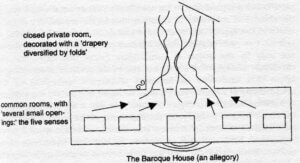
Lectures in this Seminar

square
Reading Date: October 28, 1986
right_ol
square
Reading Date: November 4, 1986
right_ol
square
Reading Date: November 18, 1986
right_ol
square
Reading Date: December 16, 1986
right_ol
square
Reading Date: January 6, 1987
right_ol
square
Reading Date: January 13, 1987
right_ol
square
Reading Date: January 20, 1987
right_ol
square
Reading Date: January 27, 1987
right_ol
square
Reading Date: February 3, 1987
right_ol
square
Reading Date: February 24, 1987
right_ol
square
Reading Date: March 3, 1987
right_ol
square
Reading Date: March 10, 1987
right_ol
square
Reading Date: March 17, 1987
right_ol
square
Reading Date: April 7, 1987
right_ol
square
Reading Date: April 28, 1987
right_ol
square
Reading Date: May 5, 1987
right_ol
square
Reading Date: May 12, 1987
right_ol
square
Reading Date: May 19, 1987
right_ol
square
Reading Date: May 26, 1987
right_ol
square
Reading Date: June 2, 1987
right_ol

November 4, 1986

A fundamental characteristic of the Baroque … is the distinction of two floors. Everything occurs as if there were a lower floor and an upper floor. … What does this mean? If on the lower floor there are infinite pleats of matter, if above there are infinite folds in the soul, … everything is a labyrinth. The pleats of matter constitute a labyrinth, and the folds in the soul constitute another labyrinth.

Seminar Introduction

In his introductory remarks to this annual seminar (on 28 October 1986), Deleuze stated that he would have liked to devote this seminar to the theme “What is philosophy?”, but that he “[didn’t] dare take it on” since “it’s such a sacred subject”. However, the seminar that he was undertaking on Leibniz and the Baroque instead “is nearly an introduction to ‘What is philosophy?’” Thus, the 1986-87 seminar has this dual reading, all the more significant in that, unknown to those listening to Deleuze (and perhaps to Deleuze himself), this would be the final seminar of his teaching career.

Deleuze planned the seminar in two segments: under the title “Leibniz as Baroque Philosopher,” he presented the initial operating concepts on Leibniz, notably on the fold. Circumstances during fall 1986 limited this segment to four sessions with an unexpected final session in the first meeting of 1987 (6 January). For the second segment, Deleuze chose the global title “Principles and Freedom”, a segment consisting of fifteen sessions lasting to the final one on 2 June.

English Translation

Edited
The Baroque House, in The Fold


Deleuze now adds another layer to previous hypotheses, starting by reviewing some well-known philosophical principles (identity; contradiction; excluded middle; existence; causality; finality), and hypothesizing that Leibniz’s proliferation of principles is assured by the milieu of infinity in which his thought develops. Recalling the two directions introduced in session 1, the pleats of matter and folds in the soul, Deleuze suggests that these two directions constitute an upper and lower floor (lower floor with pleats of matter, upper floor with folds of the soul), with movement related to resistance on the lower floor, movement related to its own spontaneity on the upper. Moreover, these also constitute two labyrinths, the lower as “the labyrinth of the continuous”, the upper as “the labyrinth of freedom”, with returning to the traits previously presented. By suggesting additional traits — the fluid as a physics of elasticity (or the spring), or of the curvilinear trajectory; the organic body endowed with a folding capacity (implication-explication), Deleuze offers a second proposition: organism is a machine that is infinitely machined, pleating itself to infinity. With another trait emerging — in organic as well as inorganic matter, simple animals (animalcules) are diffusely present –, Deleuze identifies a third principle: all matter is a life pool, i.e., Leibniz’s vitalism. Deleuze concludes that this first floor constitutes a logic of aggregates or composite beings infinitely composed, with Deleuze alluding to the question of God in all this, as guardian of the life pool. Then, joining all this to the second floor, Deleuze justifies this operation based on natural history and physics. Deleuze concludes that the Simple is located on the upper floor, the Composites on the lower, evoking Heidegger’s important use of the fold as armature for his philosophy, as well as this folding operation  in Michaux and Mallarmé.

The turn toward study of the upper floor consists not in the elastic body on an irregular curve, but rather the ideal genetic element of the materiality studied, i.e., the pure, mathematical point, hence a study of Leibniz’s theory of points and inflection, recalling his discussion of Paul Klee and reference to Bernard Cache on architecture, and drawing on René Thom’s views on catastrophe. Here Deleuze also indicates that Leibniz also developed a revision of the notion of the object, affected by a fundamental curvature, describing a family of curves as operations of the fold, and he considers the circle in detail, drawing on the Baroque physics of Huygens, then studying points on a straight line in terms of the continuous and inflection. Deleuze reaches the conclusion that only the irrational number founds the necessity of an infinite series, and suggests that the continuous is a labyrinth, an infinite series of folds like the irrational number, distinguishing 17th-century mathematics (notably Descartes) from Leibniz and, much more recently, from aspects of the fractal object developed by Mandelbrot. So Deleuze returns to the upper floor by insisting that the fold be considered as inflection of the infinite series and also going to inclusion, folding to infinity and closes by appealing to students to reflect over the following two weeks (a holiday occurred on November 11) on the connection of the three notions of fold, infinite series, and irrational numbers.

Gilles Deleuze

Seminar on Leibniz and the Baroque — Leibniz as Baroque Philosopher

Session 2, 4 November 1986: Review and Passage from the Fold to the Infinite Series

Transcribed and translated by Charles J. Stivale (duration 2:39:00)


Part 1

So, those of you who are kind enough to come today have to be sure that Leibniz interests you, and that you draw the consequences of this, that is, that you are reading some Leibniz. On this point, I’d appreciate it at the next meeting if those of you registered for the course give me a note on which you tell me that you are enrolled at Paris VIII and especially state the cycle to which you belong – first, second or third – and specifics about what you are doing this year. Are there any first cycle students here? [Pause] Three… four, five… That’s fine because I need some [Laughter] since, you recall, the first part of our course is particularly devoted to students in the first cycle. So there you are. So, let’s continue. [Pause]

So in sum, I would like to be more precise about our goal this year with the condition that this goal might be modest, I mean, something small that might strike you while reading Leibniz. What is immediately striking is a kind of proliferation of principles. One gets the impression, literally, that Leibniz never stops pulling principles out of his sleeve. It’s a rather odd impression, this proliferation of principles because, generally, while principles were known in philosophy a long time before Leibniz, philosophy claimed an economy of principles for itself. Leibniz is without doubt the first great philosopher who never stopped adding one principle to another. He pulls them out really in the mode “You want a principle? I’ve got it here!” And after all, inventing principles is not an insignificant matter.

I am saying that philosophy has always known principles, notably the three logical principles: the principle of identity, the principle of contradiction, the principle of the excluded middle. A is A, principle of identity; A is not non-A, principle of contradiction; A is A or non-A, principle of the excluded middle. And then, perhaps, already at another level, philosophy was familiar with principles distinguished from purely logical principles, that one might call the principles of existence, for example, the principle of causality, the principle of finality.

And about Leibniz, one gets the sense that he never ceased adding on to them. His philosophy is an overflowing invention of principles. This is odd, and why? I am saying that it’s an immediate impression from reading him. He never ceases circling around a principle to present it under several forms, or else he ceaselessly adds principles for ones already known. And I would almost say that in Leibniz, principles are teeming so much that they create propositions of a special type, the proposition that enunciates a principle will be implicitly, not explicitly, it will be something like an exclamatory proposition, that is, to which one immediately wants to add an exclamation point. If we take that seriously, does this mean that we could consider the exclamation point as a special sign? Insofar as it’s a philosophical sign, one must say that when  the philosopher enunciates and multiplies principles is the philosopher exclaiming.

So are there philosophical exclamations, and what would that be, a philosophical exclamation? As a result, we readers, we perpetually get the impression from reading Leibniz that we ourselves are making exclamations, so that, concerning our goal this year, we derive a modest goal from this: to be able to discover, even when Leibniz does not provide us with the expression… There would be two cases: the cases in which Leibniz gives us the explicit expression, and then the other cases where we feel the need, with the possibility of justifying this need, to translate into an expression something that Leibniz does not directly provide us. But our task would be to accumulate the expressions of principles, that is, the great exclamatory expressions that cut through Leibniz’s philosophy. As a result, I could assign these expressions for each class, each of our meetings, the goal or the focus being to establish two, three or four of these. At the end of the year, if all goes well, we would have about a hundred, or if things go even better, two hundred exclamatory expressions, that crisscross Leibniz’s philosophy, and that we would learn by heart, and would write up in the final meeting.

But why is there this proliferation of principles? Could we consider a hypothesis about why Leibniz’s philosophy can be presented as a proliferation of principles and derivatives of principles, axioms, laws, etc.? I believe that our previous meeting gave us a hypothesis on this point. Is it perhaps because he causes the principles to play into the infinite? But what does that mean? If this is right, ah well, we have to say: Leibniz causes the principle of identity to play into the infinite? But what could that meaning, placing the principle of identity in play into the infinite?  Once again, the principle of identity is A is A, the thing is what it is. What could this operation be that carries identity into the infinite, and the same for the other principles? But it’s perhaps the milieu of infinity that assures this proliferation of principles. I have no reason to answer more precisely since this it the goal of our entire year: To see in what sense… But why is there an introduction into the infinite?

This is where I would like to return to certain things discussed in the last meeting. And indeed, we saw why this presence of infinity at all levels of Leibniz’s thought or philosophy. Besides, it’s precisely for this reason, the presence of the infinite, which we had as a second hypothesis about Leibniz’s philosophy: that it was perhaps the very manner of a Baroque philosophy. [Pause] It’s the very manner of Baroque philosophy or, if you prefer, what does the manner of Baroque philosophy mean? What is the Baroque? The last time, we refused to look for an essence of the Baroque to the extent that such an essence was consisted of discussions and disputes, both useless and without interest, fine,  namely, knowing what were the Baroque eras, what were the Baroque genres, etc. And we preferred taking a purely operative viewpoint, telling ourselves that whatever the Baroque might be, what interests us is: what does it create? What does it create that no other form of agency (instance) would make? How does one recognize the Baroque? In something that it accomplishes, an operation.[1]

Well then, what is the operation that deserves the name “Baroque”? Our first response was that it’s quite simple. It’s an operation consisting of creating folds, of folding. Folding is what the Baroque operation is. Under what conditions? Is every fold Baroque ? No, there are folds that don’t have these details. But I would say that the Baroque is the fold when the fold goes to infinity. The fold going to infinity — [Pause; interruption] That’s it, you really shouldn’t press your back on the light switch [Laughter] — The fold going to infinity is the Baroque operation par excellence. We saw this the last time. And henceforth, if I said that the fold goes to infinity and that this is what defines the Baroque operation, I already couldn’t stop myself, and so much the better. This was the sign that this operation was good. Why? Because immediately a doubling of the fold occurred. The fold going to infinity doubled into two directions: the pleats of matter and the folds in the soul. And the pleats of matter go to infinity just as the folds in the soul go to infinity, such that two texts by Leibniz seemed fundamental to us: a particularly clear text taken from Système nouveau de la nature [New System of Nature]. What does he tell us? [Deleuze looks in his copy] He tells us, “The organs,” the organs of a body, “are differently folded, and or more or less developed”; the organs are differently folded, and or more or less developed.[2] And on the other hand, [there is] the text from the Monadology, paragraph 61, in which he tells us, “The soul could not develop suddenly all its pleats for they go in to infinity.” Thus, the pleats of matter and folds in the soul, these are the two forms of the fold.

Why does the fold have two forms? This is what is already important, but we can only proceed little by little. At least we recognize a fundamental characteristic of the Baroque, a fundamental characteristic of the Baroque according to Wölfflin and of Baroque architecture, which is the distinction of two floors. Everything occurs as if there were a lower floor and an upper floor. If you will, this corresponds to a drawing of …, very schematic… [Deleuze goes to the board and draws] of the Baroque church, such as we saw this the last time. There is a lower floor, in which in some ways the mass is enlarged, and there’s the floor above.[3] What is this duality? We could say that it’s one of matter and movement. However, there is movement in both cases, but on the lower floor, the movement is related to resistance, and on the upper floor, the movement is related to its own spontaneity. We could also say that it’s the body and soul, or indeed we could say that the lower floor is the Composite, and the upper floor is the Simple.

For us, the lower floor is that of the pleats of matter that go on to infinity, and the upper floor is that of the folds in the soul that equally go on to infinity. What does this mean? If on the lower floor there are infinite pleats of matter, if above there are infinite folds in the soul – you notice, I am trying not to comment on my small difference, the “of” in pleats of matter, and the folds in the soul. I mustn’t do so until I’m able to discuss it later; I’ll mention nonetheless that the two expressions are not symmetrical. In any case, if my two Baroque floors are distributed in this way – [Heinrich] Wölfflin will say mass and movement – I can say that yes, everything is – and that’s the Baroque signature – everything is a labyrinth.[4] The pleats in matter [sic] constitute a labyrinth, and the folds in the soul constitute another labyrinth. The infinity of the fold is decomposed into two labyrinths.

And still it is necessary that this be true, literally; ah yes. It is so true that Leibniz works through a Baroque philosophy or a Baroque conversion of philosophy. Everyone knows the importance of the labyrinth in Baroque architecture and Baroque thought. Well it is so true that Leibniz presents the entirety of philosophy under the auspices of two labyrinths. And there he calls it… And these two labyrinths no doubt have rapports of resonance or correspondence, of fundamental redoublings one by the other. And to these two labyrinths, Leibniz gives them a name, the lower labyrinth and the upper labyrinth. For the lower one, he doesn’t call it the “labyrinth downstairs”, he calls it the labyrinth of the continuous. For us, this is of enormous interest, even just this expression, one that we have to take literally, the labyrinth of the continuous. That means that the problem of the continuous cannot be adequately posed on the level of the straight line. That’s what he found, and it’s already a very great discovery. For example, in Descartes, continuity is posed on the level of the straight line. If Leibniz tells us that there is a labyrinth of the continuous, this means the problem of the continuous cannot be settled on the level of the straight line. Ah, but you realize, [with] such a proposition, what does it mean, that the continuous is not settled on the level of the straight line? We are just recording notes at the moment; we are acquiring things. I don’t know what this means yet; we cannot know. It’s the labyrinth of the continuous: you understand that it’s the state of matter insofar as it doesn’t cease pleating and unfolding to infinity, insofar as matter admits an infinity of pleats. So there is a labyrinth of the continuous.

The other labyrinth, the labyrinth upstairs, is called the labyrinth of freedom. We see in fact here that it concerns the soul. And why he reproaches Descartes is for having understood neither one nor the other of two labyrinths. A particularly clear text in this regard about the two labyrinths is in a small work, On Liberty. I will read very quickly: “There are indeed two labyrinths. One concerns the composition of the continuous, the second [concerns] the nature of freedom. They find their source in this same infinity.” We cannot say it better. The infinite doubles over into two labyrinths, the labyrinth of the pleats of matter or composition of the continuous, [and] the labyrinth of freedom of the spirit, the freedom of the soul, or the infinite folds of the soul.

And this same distinguished philosopher, this remarkable philosopher that I mentioned above, notably Descartes, not being able to decide either one way or the other, or not wanting to reveal his opinion – and this is quite treacherous! – preferred to cut through this with a blade. In other words, Descartes never understood anything about the labyrinths. Sometimes he considered a straight line and believed that the continuous was on this side. At that moment, considering the continuous on the level of the simple straight line, he confused the continuous with an infinite divisibility of matter, that is, the indefinite. [Pause] If he had understood that it wasn’t on the level of the straight line that the continuous is situated, he would have seen that the continuous can be resolved or can be composed only on the level of infinitely or actually divided matter. This is precisely all the pleats of matter.

And sometimes for freedom, this time without doubt he did not consider a straight line, but he equally missed the labyrinth because he only held onto two opposite points, the two points that make up a straight line’s segment, points that determine a segment of a straight line, specifically one pole, God’s prescience, and the other pole, man’s freedom. And he said that we could not understand how the two were reconciled, but it was necessary to reconcile them. In other words, on the level of the continuous, he only held onto the straight line, and at the level of liberty, he only grasped both ends of the line. In other words, for the labyrinth of liberty, he maintained only the entry and the exit. So it’s catastrophic in a labyrinth only to maintain the entry and the exit, [Laughter] since with this only, the entry and the exit, there would be no labyrinth. The labyrinth is what’s between the two, that is, the infinity of folds.

So this text is very important for us, one that I did not quote in the previous class, and that determined our entire plan, in the beginning. We are still involved in an introduction to Leibniz’s philosophy. The plan that we settled on was, first, the examination of the lower floor or the pleats of matter, and secondly, the examination of the upper floor, or the folds in the soul, with the condition that there be a sufficient reason forcing us to pass from the lower floor to the upper floor. Because after all, why wouldn’t the lower floor be enough? Why does… Since already on the lower floor, the floor of matter, the fold is already going to infinity, why must this lower floor be joined to another floor that concerns the folds in the soul? Why wouldn’t the lower floor suffice? You understand?

Hence, I have very rapidly summarized since this is what we did at the last meeting. I summarized as quickly as possible what we’ve acquired concerning the lower floor since we will need this the entire year. That is, those who will be in our meetings will have to have the gift of recall because each time, we will have to hold on to what we have acquired.

And I am saying that the lower floor is defined by this: corresponding to the definition Wölfflin offered of the Baroque,[5] [it’s] treatment of matter in bulk [en masse]. That’s deeply what the Baroque is, not only a manner of treating, its one of the characteristics of the Baroque. First characteristic: treatment of matter in bulk. Second characteristic: a tendency of matter to overflow its frame or its space. This is also very well detailed by Wölfflin on the level of Baroque architecture.

So good, I am doing what I announced. This is where I find my first exclamatory phrase, my first exclamatory proposition, the grand expression 1: In bodies, there is something more than extension [l’étendue]. In matter, there is something more than extension, exclamation point! We could say it in Latin; this is something quite lovely! It’s a constant theme in Leibniz; he constantly says that. I say: let this be our exclamation. So, now we’ve got one. In fact, if matter overflows its frame or its space, there is something more in matter than the extension it occupies.

Third characteristic, and I would like you to sense that these are linked, and that here again, Wölfflin indicated it very well on the level of Baroque architecture in general: tendency toward rounding off angles. Why? Because the masses in which matter is decomposed are essentially soft and, at the limit, fluid. [There’s] a tendency toward fluidity in matter as is evident in the treatment of waters in the Baroque. We saw this already, the whole system of fountains, falls, etc. I won’t go back over this.

Fourth characteristic: If mass is essentially soft and, at the limit, fluid, the physics of the body must be a physics of the elastic body, elasticity being what? [It’s] the measure of the degree of fluidity of the body. Hence Leibniz’s famous formula, MV2 [squared], which is concerned in the communication of movement – this isn’t MV, it’s MV2. V2 imposes the viewpoint of acceleration, that is, of the demand of small solicitations on movement, the demand of degrees or of what he calls the conatus, which implies the assimilation of the body in movement to an elastic body. The Leibnizian model… The model of Leibnizian physics will the spring (le ressort). And in the last class, we saw how this physics of the elastic body produced a great substitution in the atom relation as hard body on the oblique straight line – the descent of the atom following an oblique straight line – as trajectory. Leibniz’s physics substitute for this an elastic body, that is, there is no atom. There is no atom because there is no perfectly hard body. Elastic body on a curvilinear trajectory, this is what already is a first means of rounding off angles according to Wölfflin’s expression.

Fifth characteristic: [It’s] the natural history of the organic body. The organic body is more than an elastic body. It is endowed with a capacity to fold itself to infinity and henceforth to unfold itself, from which we get expression two: All organisms [are] in a primary organism; all flies [are] in the first fly, exclamation point! All fly eggs [are] in the first fly egg. And the organic body is going to be traversed by movements that we can call as well – here, you’ll recognize words that were current in the seventeenth century – envelopment-development. The organism envelops its parts to infinity, and its parts are developed. Envelopment-development, or what comes down to the same, involution-evolution; or what also comes down to the same, implication-explication. To implicate is to envelop; to explicate is to develop, such that Leibniz can say that we are never separated from our body, or from a body, in any case. And when we die, it is simply our organic parts that are enveloped to infinity, that is, become infinitely small, but our soul is never separated from a body. To die is to involve; death is the involution of the body.

Hence we get the idea, and this is the second grand exclamatory expression – so now we have two already: Yes, the organism is a machine, but the machine is infinitely machined! The machine is infinitely machined: that meant [that] all the parts of the machine are still machines such that the machine can fold itself to infinity. All the machine’s parts are still machines such that we must say, yes, the organic body, yes, the organic body is machinic. It’s a machine. And in one sense, Descartes was right to say “animal machines”. At the same time, Descartes understood nothing. He understood nothing because – this is Leibniz speaking – because he did not see that there is a difference in nature between machine and mechanism. A mechanism, insofar as it is created by man, is a finite machine, that is, it’s a machine in which the pieces are not machines going to infinity. A mechanism is a finite machine. An organism, yes, it’s a machine, but a machine irreducible to any mechanism. Why? Because it’s an infinite machine. It’s a machine in which all the pieces are machines, that is, it’s a machine that pleats itself to infinity. [Pause]

Finally, the final trait [sixth characteristic]: [It’s] the natural history, no longer only of the organism, of the organic body, but of the living. Why? Because what explains the organism? What explains the organism’s capacity to fold to infinity its own parts and to unfold them? Leibniz’s answer will be: it’s the diffuse presence, in organic matter, the diffuse presence of simple animals, of animalcules, what he sometimes calls spermatic animals. A diffuse presence in organic matter of simple animals, that is, there is always an infinity of simple animals in any portion of inorganic matter, however small that it may be. And he calls upon the microscope that shows the presence of such animalcules everywhere. And it’s true, he tells us, you recall, in some very beautiful texts, entirely admirable. It’s true! It’s true! It’s true for the block of marble no less than for the fish pond. Just as in the pond full of fish, where there are fish to infinity, so too in the block of marble, there are animalcules to infinity. There are simple animals to infinity. Why? Because the block of marble seems hard, but no body is absolutely hard. That is, the block of marble is no less fluid, within certain degrees, than the pond. If all bodies are elastic and fluid, the block of marble also responds to this physical nature of the body. There are no fewer simple animals in a portion of marble, however small the portion may be, than there are in a pond. So there are, if you will… He does not say simply [that] the organism includes an infinity of parts that fold themselves in and unfold themselves. He says [that] in inorganic matter, however small it might be, there is an infinity of simple animals.

From this comes the third exclamatory expression, that we saw in the first class, that is one of Leibniz’s most beautiful: certainly, everything is not fish, but there are fish everywhere.[6] In other words, Leibniz’s vitalism is a pluri-vitalism. It’s a very special vitalism since, literally, I could transform my third expression into another, equally exclamatory: matter is not lively [vivante], but matter is a life pool [un vivier]. All matter is a life pool. Everything is not a fish, but there are fish everywhere, a kind of nautical ballet. And what is the nautical ballet? It’s a very important element of the Baroque. Everything is fluid, and the dance of the living in the fluid… [Deleuze does not complete the sentence]

There, I have summed up. You see, if you grasp this all together, it’s a commentary on matter that is organized in bulk, the masses that are soft and fluid by nature, the elastic body as model for the body and physics, elastic bodies on curves, that is, the elements of folding, the pleats of the organism, and finally the folds of matter around simple animals. Thus, since there is an infinity of simple animals in any portion of matter, the folds of matter, the pleats of matter go to infinity; all that turns around the same idea, notably: it’s the pleats of matter that constitute the first [ground] floor of Baroque architecture. [Pause] Henceforth, I would say [that] what is this whole floor? [It’s] a logic of masses, a logic of soft, elastic or fluid masses, Leibniz’s radical opposition to the atom, the hard body. There are no hard bodies in nature. Once again, everything is a life pool. [It’s] a logic of masses or aggregates; in other words, a logic of composites, the composite being infinitely composed. Infinite composition of matter, the infinite composition of matter is therefore the pleat.

Fine, and from this the question explodes… We are quite fine on this floor. All is composed, all is composed to infinity. This is a possible position. We are on the first floor, the lower floor. Fine, all is good there, all is fine. We are even cozy and warm in the pleats of matter. At the extreme, we are simple animals around which matter makes an infinity of pleats. We are fish in the pond, all good. What could be better? Obviously. And what is God in all this? God is the great guardian of the life pool. It decides on the moment when each fish folds back up, that is, dies, provided that this fish might unfold. All this is such a satisfying; after all, this is an admirable world.

So why are we forced to connect a second floor to this, or rather the first (upper) floor ? Why are we forced to join it to an upper floor? – And it’s here that at our last meeting, I was really obscure on this, and even worse, very confused, because we were already tired from all this. But now, this will become quite simple. In the meantime, we have gotten strong and refreshed, you as well as me. – My answer is that there are two reasons, the first being, natural history, and a reason related to pure physics, that are going to show us that, in fact, when we propose a lower floor with infinite pleats of matter, well then, one has to connect to it another floor, and not at all another floor where everything would be unfolded. On the contrary, one must overlay these pleats of matter with another type of fold. Why?

The first reason, I maintain, is because of natural history. In fact, we saw that organic matter, in its capacity of folding, unfolding to infinity, its own parts which are themselves composed to infinity, implied a position of simple animals in matter, and diffused in inorganic matter. In other words, in scholarly terms borrowed from the history of natural history, I would say: Ovism — that is, the envelopment of all the eggs in the egg of a given species, the envelopment of all flies in a first fly, all that – ovism is overcome by animalculism, that is, by the idea that organic matter has this capacity of folding itself and unfolding itself to infinity only because there is an infinite diffusion of simple animals in inorganic matter.

But here I find that I am drawn to call upon the Simples. And you already sense Leibniz’s grand idea: the Composites imply the Simples. It’s true, it’s true. The Composites imply the Simples. Only, only, only, well there we are, [Various sounds of tape changes in the recorders] only, as composition goes toward infinity. … [End of tape; the break arrives towards the end of discussion of the “first reason,” and picks up toward the start of discussion of the “second reason”, already in progress][7] [46:37]


Part 2

. . . [First proposition] If a body or a point – it’s there, the text that I read to you [in the 28 October meeting], so obscure, from the answer given to [Pierre] Bayle – Leibniz tells us, if a body or a point were alone in the world, it would follow the tangent. In its movement, it would follow the tangent, that is, it would follow a straight line. [Pause] Second proposition: the fact is that the body does not follow a straight line. The elastic body follows a curve or an element of a curve. Third proposition: why? We will say that it’s precisely because it is not alone. If it were alone, it would follow a tangent, fine. But it follows the curve, and this is because it’s not alone. In other words, this is the action of converging bodies; it’s the action of ambient bodies on it that imposes the curvature of its trajectory. [Pause] Thus, the curve followed by the elastic body would be encompassed by the action of bodies converging on the body considered.

New proposition [4]: But that isn’t enough, because just consider: If the curve was explained, if the curvature of the trajectory of the elastic body. … Leibniz offers a simple example; for example, you toss a stone into the air. It goes up, you see – it is a good example of the elastic body, of the spring-loaded body (corps à resort); what he means by “all bodies are elastic” is very simple – it goes up and passes through all the degrees, that he will call degrees of lateness (tardivité). And then it redescends and passes through a completion of all the degrees of speed. It de-accelerates and it re-accelerates. This is the very case of curved movement of a body called elastic, of a spring-loaded body. It’s really an elastic model, the opposite of a model from atomist physics.

So, I think this: if you say that the elastic body follows a curve because the bodies around it exert their action on it and turn it away from the tangent, you are perhaps explaining it all, but by assuming that normal movement would be rectilinear. In fact, exterior bodies can only exert an external causality on the body considered. Henceforth, you say that it is turned from the tangent by the action of exterior bodies. Fine. That suffices to show that you are not taking account of the elastic essence of the body, for from the point of view of the body’s elasticity, the curve is not a turning away from the tangent; it’s not a detoured tangent. The curve is primary in relation to any rectilinear element. In other words, there must be spontaneity of the curve, [Pause] and without the spontaneity of the curve, the causality of exterior bodies would not be exerted. A spontaneity of the curve is required to account for this: that the curve is not a derivative of the tangent. [Pause]

What is this spontaneity? You will obviously no longer find it, and you will not find it in the physical point or in the elastic body. What is necessary? We cannot escape this. Another point is necessary, hence the obscurity of Leibniz’s text as when he tells us, “and the physical point is only the point of view of this other point.” It’s a thing that we are for the moment unable to understand or comment on, but we have to find it, and perhaps we will find it today to the extent that we will be equipped for commentary: this idea that, henceforth, the point on the curve is only the point of view of another point, one that is endowed with spontaneity, that is, whose curvature expresses spontaneity.

There you are. I am saying it is quite simple: on the level of natural history, [it’s] the necessary reference to simple animals; on the level of physics of the elastic body, [it’s] the necessary reference to a spontaneity of the curve, [and] both [references] precisely require another floor. The pleats of matter cannot explain… constitute the composition to infinity; they cannot explain the Simple. In other words, the Simple is on the upper floor. How can we avoid a paradox? But there is no reason to avoid one. The Composite is not composed of Simples since it is composed to infinity. In other words, the composite is not simplified. And how to avoid the reciprocal? The Simples are not composed. A floor of Composites to infinity, that is, the Composites that are not simplified, these are the masses, s floor of Simples is not composed.

So fine, the Composites are not simplified; the Simples are not composed. Each is on its own floor. What is going to occur? This is at the start of the Monadology, paragraphs 2 and 3. [Paragraph 2] “There must be simple substances, because there are composites. A composite thing is just a collection of simple ones that happen to have come together,” there you are: There must be simple substances, because there are composites. A composite thing is just a collection of simple ones that happen to have come together.” [Paragraph 3] “Something that has no parts,” that is, where it is simple, “can’t be extended, can’t have a shape, and can’t be split up.” In other words, yes, the Composite refers to something simple provided that the Simple does not exist on the same level, on the same floor as the Composite. The Simple is no more composed than the Composite is simplified. Each on its own floor, what is going to occur? The Composites’s floor and the Simples’s floor: between the two floors, a fold is required. A fold is needed — So, this gets complicated, but we have no choice — It is necessary that a fold separate and bring each of them together, the pleats of matter and the folds in the soul. [Pause] It is necessary that a fold separate and bring each of them together, floor one and floor two. [Pause] Everything is folded, everything is fold, everything is… and no doubt it’s the fold that separates the two floors and no doubt distributes it onto each of the two floors. [Pause]

So this becomes really beautiful. Why? Because this leads us quickly into a question that will complete this first [part of the] study. We tell ourselves, after all, and yes, we have the impression that something there, thanks to Leibniz, something appears to us perhaps concerning philosophy in general. Since… well, what? Either philosophy [is there], or else would it have to be poetry as well? What does that mean? The fold. Each of us believes to know that a recent great philosopher made the fold the armature of his philosophy: Heidegger,[8] and Heidegger never stopped saying that we understand nothing of what I call “being” and what I call “the be-er” (l’étant) – this time, not Leibniz’s “be-er” (étant), not the pond (étang), [Laughter, at the pun] but the “be-er”, that which is – we understand nothing of what I call “being” and “be-er” if we do not see that the essential is the fold that refers them to one another. And it refers them to one another as what? No doubt as the ontology of being and as the phenomenology of “be-er”, being as being of the “be-er”, the “be-er” as “be-er” of being. The “of” is the fold.

And picking up these Heideggerian themes, Merleau-Pointy speaks to us of the fold that constitutes vertical being, the fold that constitutes vertical being. You see, it’s not complicated. I am doing this. [Deleuze folds a sheet of paper] I am doing philosophy when I do this, [Pause] the vertical being, here it’s the “be-er”. I have folded my sheet, “be-er” and being, vertical being; good, you will say fine, the fold, perhaps it’s something that… Only, here we are, we cannot stop; we don’t want to stop. We do not stop the fold. For the fold, we are bringing in Heidegger and all that. What I am saying is that in Heidegger, he underwent a very deep experience that we do not stop the fold. That is, the fold swarms in all directions since, on the side of being, what is the double movement, the complementary dual dynamism, of veiling-unveiling? So I am saying some extremely rudimentary things. On the side of ontology, it’s this complementarity, this co-penetration of veiling and unveiling, in which we have to take the word “veil” with Heidegger’s requirements, that is, in an extremely effective sense of etymology. The veil, really, the veil as substance, the substance of the veil… veil oneself, unveiling, veiling… What is this precisely if not the fold? This time, it’s no longer the fold of being and of the “be-er”, but a kind of repercussion of the fold of being and of the “be-er” in being itself.

And what is the status of the “be-er”? How does the “be-er” constitute the world. It constitutes the world in a phenomenological form, which is what? Which is – and this is well know, coming straight from Husserl – the envelopment of profiles, [Pause] such that the fold of being and of the “be-er” doubles over into being under the form of folds of the veil and into the “be-er” under the form of the envelopment of profiles. I am telling myself that it’s not at random that Merleau-Ponty draws on Leibniz in his notes. He says that the only one who understood something before Heidegger, certainly, the only one who understood something was Leibniz. It’s strange. And in the end, this tale of the fold… [Deleuze does not complete the sentence] because we are too ignorant. I don’t mean at all that we shouldn’t praise Heidegger, since it goes without saying that Heidegger conceived of the fold in a deeply original way. But I believe that we can say that a discovery by Heidegger was the very position of the fold as operating the most fundamental relationship between being and the “be-er”, or if you prefer, of the two floors.

I think that in a certain way, it’s a philosophical-poetic idea running through [this]. Poetry has always started from the idea that there is no straight line in the world, that bodies were rubbery or cavernous, that everything is labyrinthine, and what does that mean? Last year [during the Foucault seminar, possibly 18 March 1986], we saw this a bit here and there, and it’s not the Heideggerians. [Henri] Michaux … Some among you pointed out to me a very beautiful text by Michaux. It’s very recent in Michaux, a very lovely collection by Michaux called Life in Folds. And this theme from Michaux, owing nothing to Heidegger, consists in explaining in a no doubt splendid poem that we are born with twenty-two folds – it’s a Chinese figure, twenty-two, surely; it’s a figure loaded with… eh? No? [Sound of students answering] It’s certainly a figure linked to the waterlily’s folds (plis du nénuphar), something like that – we are born with twenty-two folds and, Michaux says, when we have undone all our folds, we die. But to console us, he adds, it happens that we die before having undone all our folds. [Laughter] What does that mean? It’s what we call a premature death about which we must say that he didn’t do enough philosophy; he didn’t undo all his folds. Only the misunderstanding – and if one does enough philosophy, one knows this is how it is – [is] that the unfolding isn’t the opposite of the fold. And moreover, the unfolding is only the conduit corresponding to the fold.

And it’s not only Michaux. I am mixing up everything; it’s in order to show the extreme variety of this thought. One of you pointed out to me the extent to which this theme is quite profound in [Stéphane] Mallarmé. The theme of the fold appears in a constant dual form in Mallarmé, and it’s infinitely more important, it seems to me, than the theme of silence. Moreover, silence is… We cannot understand silence according to Mallarmé if we do not take account of the fold. And the fold is double in Mallarmé. It’s the fold of lace work, I would say; it’s the fold as phenomenological. There is always the fold of lace work. And then, it’s the fold of the book; that is the ontological fold. And the two never cease referring to each other, and there is a beautiful phrase in Mallarmé:[9] “This pleat of somber lace which retains the infinite woven by a thousand,” we couldn’t say it any better, the fold goes all the way to infinity; the fold is what goes to infinity. “This pleat of somber lace which retains the infinite woven by a thousand, each according to the thread or the prolongation, its secret unknown” – if I understand correctly, this is an ablative absolute – “each according to the thread or the prolongation, its secret unknown, assembles distant interlacings where there sleeps some luxury to take account of – a ghoul, a knot, some foliage – and to present.”[10] In my opinion, this is very beautiful; it says everything. At the same time it says that the fold of somber lace work goes beyond toward another, deeper fold, and the folds, all the folds, all the way to infinity. …

As a result, on this level, we again find… We see here exactly where I am. I ask that you grant me the lower floor consisting of this: matter is inseparable from pleats, and the pleats of matters go all the way to infinity, physically, organically, or inorganically. [Pause] But there is a reason for which the folds of matter are not enough. There are reasons for which the folds of matter are not enough and refer us to folds in the soul. The labyrinth of the continuous refers us to the labyrinth of freedom. Between the two labyrinths, each infinitely pleated into itself, there is a fold. [Pause; sound of Deleuze turning pages]

From which follows the second part [of the class], the other floor, the upper floor, and I sum up, to come back to it this way. We will have run back through, I assume, I hope, in a new way, in a slightly different way, we will have run back through all that we did the last time, but also moving forward on certain points. I remind you that we began the study of the upper floor, in what form? Well, we just left the material side, I would say, the material data or the physical data. What is this? It’s the elastic body on such an irregular curve as possible, the elastic body on an irregular curve. Why irregular? Since the pressure of coexisting bodies varies itself with the variations in the neighborhood. Thus, on the other floor, that is not what we are going to find. On the other floor, we are going to find the ideal genetic element of a material given, that is, of the elastic body on its curve. What is the ideal genetic element? This is what is going to furnish the first [upper] floor. You see the difference? On the lower floor, I have the elastic body on a curve; on the upper floor, I ask, what is the genetic element of this materiality of the elastic body on a curve? And our answer, we saw it: this time, it’s the point, pure point, let’s say, the mathematical point.

But I have hardly said this than problems arise. So we must get hold of this problem then or we will never move forward. But I tell myself that the theory of points in Leibniz is going to be something very interesting since there are all sorts of points. We saw on the lower floor the physical point. The physical point is a rubbery point, an elastic point. And here, on the first [upper] floor, we encounter an entirely different point, no longer the physical point. It’s the mathematical point, the point as mathematical point. There we have the ideal generic element. On what? As we saw, on an inflection. And you recall the figure of the inflection – I’ve lost my chalk, where is it ? Oh, here! – [Deleuze goes to the board] Here we have an indubitable figure of inflection; it’s the genetic element, a mathematical point on inflection, with the inflection being defined how? By a singularity, a cherished expression in mathematics, specifically, the point of inflection, the point of inflection being defined as a singularity, by this: [Deleuze indicates the drawing] it’s an intrinsic singularity, that is, independent of a system of coordinates; an intrinsic singularity consisting in what? Well, the tangent to the point of inflection crosses the curve, crosses the inflection.

And how elated we were in the last class to discover [that] this ideal genetic element, the mathematical point on the inflection, was the figure that Paul Klee named the “active line,” of which he undertook the genesis of everything he called forms in movement. And the active line, that is, the point on the inflection, from Paul Klee seemed to authorize for me every connection between Klee and the Baroque, a connection supported by Paul Klee himself, and allowed us to judge the opposition [of] Klee [and] Kandinsky, in which, to a certain extent, if I dare say, Kandinsky remains in some ways Cartesian, that is, he considers that the point is not spontaneously in movement, and that what is required is an exercise of exterior force to put the point in movement, and the henceforth, this movement is angular, that is, is first rectilinear, horizontal or vertical, but following the oblique. Thus, to Paul Klee’s active line that makes a claim on spontaneity of movement, notably the mathematical point on the inflection, is opposed in fact Kandinsky’s angular line. There is no basis for establishing a hierarchy, but there is a basis to establish a divergence in this, a difference in inspiration. And yet again, it’s very important for us that Klee constantly refers to the Baroque themes.

So, if this is how it is, [Deleuze goes to the board], the ideal genetic element, the mathematical point that runs through an inflection, you see? [He draws on the board] There, I would say that this is the ideal fold, or idea-al, [a play on the word “idea” in ideal], or at least that’s what I would call the genetic element of the fold. The inflection is the genetic element of the fold. In other words, the genetic element of pleats of matter is the inflections traversed by mathematical points.

But what can we draw from an inflection? Well precisely, it’s a genetic element because lots of things can be drawn from it. And I was telling you, according to a young philosopher who has undertaken some very astonishing work, there is an entire variation of the genesis of forms, what Klee called forms in movement. So, according to Bernard Cache,[11] we saw that last time that, starting from the inflexion, there emerges an engendering of forms through symmetry – I won’t go back over this, I am only summarizing – through symmetry, through prolonging curvature – you remember? – the Baroque theme. The ogive was a transformation through symmetry, through prolonging the curvature, through rotations, which gave us the starfish figure, through orthogonal sliding – that yielded a kind of unhooking – [Deleuze returns to the board, then sits down] through rupture or, if you prefer – but this is too complicated, but that doesn’t matter – through oblique cuts, with the very question that I am quickly posing here – but this is of little interest; these are hypotheses; you can create geneses yourself of families of curves or families of forms: isn’t there a passage, a point of view from one genetic method of inflection, if one proceeds or goes all the way to the oblique cut here [Deleuze traces on the board] that develops an effect of rupture in the inflection? Don’t we arrive at a genesis of the hyperbole? See, the hyperbole is a very special figure. It’s this curve constituted from two pieces with one going downward and the other upward, and with one getting infinitely closer to one of the two axes without ever reaching it, and the other approaching the other axis, with a kind of gap in the middle, that is, at the intersection of both axes that is represented by zero, for one simple reason: that there is no division possible by zero. So, we would go all the way to the genesis of the hyperbole. Fine.

Immediately, if I am proposing to you this engendering, according to Bernard Cache, that immediately reminds us of the idea of a possible conjuncture with something known and greatly discussed today, with catastrophe theories by [René] Thom.[12] Thom’s catastrophe theory proposes for us an interesting genesis, so is there something troubling in it? It’s just that in all Thom’s books, you find a drawing; I am going to show it to you from afar because it is quite lovely, this drawing, but finally, we won’t comment on it because we’d get… You wouldn’t see anything, but it’s just to say that it’s beautiful. And on this serialization of catastrophes, I am reading…. What’s bothersome is a small weakness, that can always be corrected… It’s just that he doesn’t speak about the fold. He provides a minimum of simples that are the straight line. But secondly, in this genesis, this catastrophic genesis, what is the second, that is, the true genetic element? I swear that I am not twisting this: it’s what he calls “the fold”. It’s written down, ok? [Laughter] “The fold.” And then, from the fold, he is going to derive – I am offering this just to inspire curiosity in some of you; you can take it or leave it, or just take what suits you – the genesis then yields the pucker or gather (la fronce) – this is kind of like something from Mallarmé – the fold yields the pucker or gather. After the gather comes the dovetail (queue d’aronde) which is an extremely interesting form. After the dovetail comes the butterfly; after that, the hyperbolic umbilical, the hyperbole; then, the elliptical umbilical; then, the parabolic umbilical – hyperbole, ellipsis, parabola. So hold on to this because we will certainly encounter this theme in Leibniz.

Fine. All that I am saying is that you might see in what way I can say that the ideal genetic element is the mathematical point on an inflection, on any inflection whatsoever, and from this genetic element are derived all kinds of forms in movement. But, but, but, but – consider the consequence that seems to me enormous: it’s that we are tending toward a radical revision of the status of the notion of object. It’s a genesis of the object. Well, the object is going to emerge by taking on a form that it has never had in philosophy, and we must give all glory to Leibniz for having done so. In other words, what does the object become? It becomes entirely mobile insofar as it describes a series of inflections. In other words, the object is affected by a fundamental curvature, entirely mobile insofar as it describes a series of inflections. Why do I say a series of inflections? Well the series of inflections is all the figures that result from the primitive inflection, that result through symmetry, through prolonging, rotation, the oblique cut, etc. In other words, it’s the mobile form insofar as it describes a family of curves. That’s what the object is.

The object is the mobile form or point insofar as it describes a family of curves, but what constitutes a family of curves? It’s precisely the parameters that frame these curves, and the possibility of passing from one of these curves to the other through an operation that is always an operation of fold. What are these parameters? The parameters defining the curves, well, these are relations of proportion, intervals. You have seen this; for example, typically, I marked the formation of an interval starting from that inflection, [Deleuze points to the board] whatever you like. So, the object is inseparable from the movement through which it describes a family of curves. That’s the object’s constitutive curvature. In other words however, Leibniz invents lots of words, but here, he didn’t need to invent a word. It’s odd, but we can substitute for him. So we are saying that there is not an object. What is necessary? The object in Leibniz’s work is an objectile, as one might say projectile.[13] It’s an objectile. [Laughter] Well, it’s not really that funny; it’s necessary, you understand? A somewhat bizarre word is needed to take account of this, that he creates a strange conception out of the object…. Fine. [Pause] That’s the first point. I organize it under the headings: genetic values of inflection and engendering of forms.

A second, much more delicate points remain, and here I need all of your patience. I don’t make mathematical allusions very often because I read it in a very rudimentary and imprecise way, so it’s not that important. But today, I need certain things from mathematics since the second point on this upper floor would be: how is the inflection, you see, about which I can say that in itself, as genetic element, how is it an inflection with variable curvature, and not an inflection with constant curvature? It’s an inflection with variable curvature. Perhaps if you sense a bit what he [Leibniz] is in the process of placing into the concept of spontaneity, it’s that spontaneity is already the active line, as Paul Klee said, and [Leibniz] will say the spontaneous line. You see, we had to go beyond the collaboration of the body, the action of bodies on a body, going toward an idea of spontaneity, inflection as spontaneity of the mobile form or the mathematical point.

What I would like to show is how the inflection with variable curvature, such as it is suitable to define it, is inseparable and can only be thought in relation with infinite series. Understand that it’s very important to see the logical progression of our work. By defining inflection on the first [upper] floor, I am giving myself the ideal fold, the fold from above. And now, I have to prove that the fold from above no less than the pleats down below, that the fold up above goes to infinity. I would have shown, if I mange to do so, something that isn’t easy: that the curvature of the fold, inflection, necessarily results in the infinite series. Eh? If we manage to show this, that would be perfect, unexpected, that is, you will be very pleased. [Pause] So there we are… It’s hot here, we’re dying… So, my question is…. Are there any questions? They need to be crystal clear… Yes?

A student: [Nearly inaudible question; it concerns the spontaneity of points]

Deleuze: Yes, yes, yes, I am going to tell you: if the semi-circle doesn’t turn all alone, that’s because it’s a semi-circle, that is, a constant curve. On the other hand, if you take a curve with variable curvature, its path indeed expresses a mode of spontaneity. Why? In one sense, this is quite good because it places us exactly where we need to be because there will be an infinite series and the relation of inflection to the infinite series is going to be an expression of spontaneity. But the circle is a finite figure; there is no infinite series to draw from it except in something the circle possesses. But the circle itself as a figure with constant curvature, there is no reason to seek the slightest spontaneity there. So there’s no problem. Never… It’s not… Leibniz would say, but mathematics of the circle, geometry of the circle is worth absolutely no more than the geometry of the straight line. All that is the same. It’s Cartesian geometry.

There’s a great physicist-mathematician-astronomer, whatever you like, that introduced the direct study of curvatures into mathematics, named [Christiaan] Huygens. His relations to the Baroque are fundamental. Huygens’s physics is really Baroque physics. And, I will limit myself to one very simple criterion for why it’s Baroque. As all the manuals of the history of physics say, it’s Huygens who introduced curvatures into physics, [Pause; sounds of cassettes being changed] and as a function of the study of curvatures, this introduces infinite series. And in the case of figures of the circle type, a kind of curve with constant curvature, they are expressible finally through proportions in a straight line, still leaving us to see if there isn’t something in the circle that goes precisely beyond… In this case, there is no basis for seeking spontaneity. You can only find spontaneity starting from the active line and what it offers. In the end, this is what I am going to try to explain.

Do you want to take a little break? But please, no smoking, ok? … You can go outside to smoke… Yes? … Yes, yes, yes?

Georges Comtesse: It seems to me that the points, the theory of points, the substantial points in Leibniz, which he proposed, are perhaps not simply physical points which concern the law of divisibility, therefore the influence of [unclear word] of bodies, and perhaps not simply mathematical points which are nevertheless exact points, as Leibniz says, and even real [some unclear words], but perhaps that the substantial points of life, of the monadic substance, in Leibniz can be called metaphysical points.

Deleuze: Yes, he did do that, and here you are getting too far ahead of me. You need to save your comment for when we get there. At that point… For the moment, I have not said the word “monad” once.

Comtesse: In that case, if we’re talking about metaphysical points, perhaps there is not only one metaphysical point, concerning precisely the mathematical point of bodies, but perhaps there are two… There is necessarily [unclear words] of the curve’s movement, but there is also the indivisible unity of elastic bodies that is a second metaphysical element of the body.

Deleuze: On this, fine, agreed, but here, you are asking me, if I understand your problem correctly, it’s that I don’t want to introduce the idea of metaphysical point or monad without having shown in what ways it would be necessary, and for the moment, we don’t have the elements for showing this necessity. [Interruption of the recording] [96:00]  


Part 3

… [Deleuze reacts to a comment made during the pause] We are dealing with a very precise type of problem, and don’t take my comments badly. It’s as if you were drawing me out and taking me back to a huge problem, and by huge problem, I understand it as a false problem. I mean, the topic: are there relations at once of physics and metaphysics? Fine, this problem is know by virtue of a particularly stupid schema that we were taught at the time of the baccalauréat indicating that there was a time when philosophy was unified with the sciences, and then little by little, the sciences got separated from philosophy, a schema that is inept and historically false. The sciences have always been quite distinct from philosophy, from metaphysics, whatever you want, [and] there have always been relations [between them]. And then we are told that today, the sciences have won their autonomy, that they no longer have anything to do with metaphysics, a second equally false proposition. There is not a single physicist who can distinguish what is philosophical or scientific in his work, whether it’s Einstein or any of the great contemporary [unclear word], whether they are working on the physical cosmogony. In any case, everyone who counts in physics collides with problems of a philosophical nature. The idea that at one moment, there would be a kind of metaphysical-scientific accord and that now this no longer exists – and this isn’t directed at you, ok? It’s directed at this idea still hanging around everywhere – we absolutely have to get beyond this. If you take the Greeks, however far back you go, they never confused philosophy and physics. Those that were assigned… No doubt, each philosopher had his extremely complex approximation of this; once we admit that the philosophical plane and the plane of knowledge known as scientific are distinct, what is the relation between the two? How do they intersect? A second aspect of the question: has this changed today? It suffices to consider the discourse of a contemporary physicist to realize that it absolutely has not changed. We can at most say that relations are not the same; the relations have evolved at the same time that new forms of relation have been discovered.

Thus, you mustn’t draw me back into this, you understand? The relation maintained by Leibniz between metaphysics and physics is a kind of … If I had started from this point, by details like that, but excuse me, for me, I would have, in my view created a disappointing course because this is an indeterminate question. In this, I am not actually wondering… On the contrary, we are almost in the process of distributing… For example, you sense well that with the entire lower floor for Leibniz, as I have pointed out adequately, he connects it to physics and natural history, and I don’t know yet what relation it [the floor] has with metaphysics since I don’t know what metaphysics is according to Leibniz. You sense perhaps that on the upper floor, mathematics is involved there, and there are also metaphysics. I don’t know about the relations; we will know them at the end of the year if we have a basis for it. But if you want me to apply a pre-existing schema onto… Starting off by saying the physics-metaphysics relations at that era, I am saying that we are undertaking a false problem because we are going to get stuck within a completely and radically false schema, I mean, doubly false. We are told, on one hand, that at some point in the past, philosophy and science were more or less mixed up together, and this is historically false. So, I cannot take up a problem that I judge doubly false. There you are. Excuse me, the violence of my answer was not directed at all at you, but at your schemas that seem to weigh on you, to weigh you down.

So there you are, I ask you, and for the last time, we will do a bit of math, but basic math. I ask you for your complete attention, and there are some here who already were here two years ago. I recall that, from an entirely different perspective, I approached this aspect. So, this will be easy for some among you, but also for everyone. You see, my problem is – for the moment, my problem is quite localized within this first (upper) floor – my problem is, first, I tried to explain what was the ideal/idea-al fold, specifically this history of the mathematical point on the inflection and the family of curves that derive from it; and my second point is: how do we pass from the fold to the infinite series? There you are. It’s uniquely this segment; if I manage to finish this today, we will be so tired out that… There, this is what you must not lose; whatever I might say, you have to hold on to this problem.

For I am going to begin by something that, apparently, is very far from this. Why would the continuous simply be rectilinear? Why can’t the continuous be presented under the simple form of a straight line? Well, if you take… At first glance, the continuous can be perfectly represented under the form of a straight line; why? Because what is the law of the straight line? It’s that, between two points, however close they may be, you can always insert a point. — Is this good? When you have a problem, let me know. –Henceforth, if you hear this expression clearly, on a straight line, between two points and however close they may be, I can insert a point; it comes out straight. Between two points on a straight line, however close they might be, I can always insert an infinite number of points. Since I can insert one of them, but between the one I inserted and the original point, I can insert another, to infinity. So, between two points on a straight line, I can insert an infinite number of points. This comes down to saying that the series of points, on a straight line, is compact, as we say, and convergent, compact because I can always insert an infinite number of points between two points, convergent because the distances between the two points fall below any length, however small it might be. So I would say that the series of points on a straight line is compact and convergent. [Pause]

Problem: is this an adequate definition of the continuous? [Pause] I am moving ahead. Between two points, however close they may be, I can always insert a third point, an intermediary point, to infinity. Why? As pure possibility because this point that I inserted between two points, can I consider it as the center of an inflection, as a point of inflection, the inflection going from A to B? The point C, intermediary between A and B, would be the center of an inflection, going from A to B. Eh? [Pause] At the point I’ve reached here, I am blocked. I say, yes, it’s possible, but it’s not necessary. You immediately understand my problem? Is there something that forces me to introduce inflections? Certainly, I can introduce it there by saying, [given] every point inserted between two points, [and] there is no point on the straight line that cannot be considered to be inserted between two point – every point on the straight line is a point of inflection. So the inflection… [Pause] From point A to point B, and the inserted point being [point] C, the center of an inflection, such that, at the extreme, I would compose my straight line from an infinity of inflections. But there is no necessity. I can always say this as one says something else; it’s what we call an arbitrary hypothesis.

I return to my straight line as a convergent and compact series of points. I can make it correspond to the series of so-called rational numbers, that is, whole numbers and fractional numbers. The series of rational numbers is itself compact and convergent. Henceforth, I can express any number in the form of an infinite series. [Pause] Example: I take a segment of a straight line equal to 2, that is, divided by 2…. Where’s my [chalk]? Ah! [Deleuze gets up] Oh là là là là là là. [He goes to the board and begins writing] There. [Pause] So, I’m calling each of these: A-C equals 1, C-D equals 1, and A-B equals 2. Is this ok? [Laughter] I divide C-D, [and] I can still insert a point; I divide C-D into 2; I divide B-D into to; I divide A-B into 2; etc. etc. [He sits back down] I now have an infinite series, apparently. This infinite series, I would say, 2 equaling 1, plus ½, plus ¼ , plus 1/8, to infinity. Are you following me? Certain commentators, whose names I won’t say since… They consider that this is an example of infinite series corresponding to Leibniz. I say that this is an absolute misstatement. Why? Because it’s not necessary; I am not forced to express 2 in this form of infinite series. I can always do it if that amuses me or if I have other reasons, but I have no reason for doing so at the moment. I can equally express 2 in the form of 2 equals 1 plus 1 plus 0 plus 0 plus 0, to infinity, which would be a series called periodic starting from its third term. So, there is no necessity for expressing 2 in the form of an infinite series.

An irreducible fraction: can I … I can express it in the form of an infinite suite since, in fact, for example, for 7/3 (seven divided by three), I would have 2.333333 to infinity. I can… Is this necessary? No, since 7/3 means a relation such that the same unit is encompassed seven times in a dimension (grandeur) A and three times in a dimension B. That the fraction might be irreducible changes nothing in the matter; there is what is known as… Between two dimensions, between two lengths, 7 and 3, there is an adequate common part (partie adéquate commune), that is, there is a part that is common to two dimensions, a part that in one case is encompassed seven times, and in the other case is encompassed three times. Ok? There is an adequate common part.

So, you can always express your irreducible fractional number in the form of an infinite series. You can do so; you don’t have to do so. It’s not necessary. This is what you have to understand because when, in while yet, we directly consider problems of the infinite in Leibniz, we will bump back into all of… a very important point for the history of philosophy and of mathematics combined, and that still has not changed. Here to come back to my earlier comment: as concerns the problem of the infinite, mathematicians necessarily find themselves in the situation of doing philosophy, whether they want to or not. Well – what did I want to say? – When we are confronted with this problem of the infinite, we will see a thesis through which Hegel, in his Logics, was violently opposed to Leibniz, and says: the series is a false infinite; the form of the series is not adequate for the infinite; it indicates a false infinite. Fine. Must we think that Leibniz wasn’t aware of this? Quite often, we realize that philosophers have so fully foreseen objections that will be made to them later, right, that it becomes quite discouraging for those who like to make objections, simply if one reads them. So it’s not against Hegel because yet again, Hegel, he didn’t care; he gave his reasons for thinking that …, [Deleuze does not complete the sentence] but some reasons interior to his system. So it’s not about Leibniz that he is talking; it’s about Hegel through the objections of one philosopher or another. He is just clarifying these things, that’s all.

But never did Leibniz consider that sequences of the kind 1 plus ½ plus ¼ plus 1/8 etc. really constituted an infinite series. For we can develop 2 in this way: I can develop two in this form, a pseudo-infinite form. But it’s not necessary. It’s not indispensable. I can just as well say and demonstrate that 2 equals 1 plus 1 since Leibniz demonstrated it in a completely, a very lengthy manner; it’s a very difficult and very interesting demonstration. You understand?

So here’s where we are. I mean, sense that we are uniquely here: the straight line furnishes me with compact and convergent series, nonetheless assimilable to the compact and convergent series of rational numbers, that is, whole numbers and fractions. However, it does not provide the occasion for necessarily thinking of the infinite series. [Pause] We could just as well say, yes, fine, an indefinite sequence is sufficient. But an infinite series and an indefinite sequence are not the same.

So there we have the first point. From this point explodes this question: can the continuous legitimately be presented by a straight line? Take note of this: if the continuous can legitimately be presented by a straight line, the expression “labyrinth of the continuous” would become unintelligible. We have to believe that Leibniz had reasons for thinking that the continuous cannot be represented by a straight line, but what reason could he have? [There’s] a reason already famous in the mathematics of his era, but a reason from which he is going to derive all its consequences, and this reveals all of Leibniz’s innovation: not discovering the reason but deriving from it all its consequences. What is it? It’s that although the straight line presents itself as a compact and convergent series of all rational numbers, this straight line is full of holes – there’s the painful revelation – and holes that cannot be seen, but that can easily be demonstrated. [Pause] Let’s do so: we have to do so, otherwise… I’d like to avoid it… Let’s prove this. [Deleuze goes to the board] Let’s consider a segment of a straight line that we assume is equal to 1, the unit – it matters little if I consider it as small n or the unit, since it changes nothing in the reasoning – I take my segment [He writes on the board] that [Pause] I consider — the segment, being any segment of a straight line – as a compact and convergent series of whole and fractional numbers, since I can insert between each point on the straight line, etc. Fine, I am saying [that] this segment seems continuous, and yet it is full of holes. The reason is, and nothing opposes this, that it’s possible for me to construct – the drawing is not very pretty… oo là là [Laughter] … This isn’t so bad? – You see, I am constructing an isosceles triangle, that is, A-C equals C-B, rectangle, an isosceles right triangle. You see.

It’s nearly done, but we still have the hardest part. You know that there is a famous theorem [Deleuze writes on the board; he refers to the Pythagorean theorem] that is A-B squared, the square of the hypotenuse, is equal to the square of the two other sides, that is, A-B squared equals A-C squared plus C-B squared. As C-B equals A-C, I am saying that A-B squared equals 2-AC-2. Ok? That’s all, that’s all, I swear. [Laughter] A-B squared equals 2-AC-2 equals 1. Yes? One final effort. You take a compass; you put the point on A, and you trace a radius for A-C [Deleuze writes on the board] This circle is going to cut A-B at a point D. A-C equals A-D, eh? Because these are two radii of the circle. So, according to the famous theorem, A-B2 equals 2-AC2 equals 2-AD2 equals, by hypothesis, 1, and that A-O squared equals 1. Ok? Your suffering has come to an end? If 2-AD2 equals 1, A-D2 equals one half; if A-D2 equals one half, A-D equals the root of one half. This point is on the line A-B, and you already know the conclusion, the terrible conclusion: There is no whole number, nor any fractional number, whose square would be equal to one half. There is no whole number, nor any fractional number, whose square would be equal to one hal, which can be proven besides. We are proving that if there were such a whole or fractional number, it would have to be both even and odd.

What does this mean? You recognized it, however little you may recall this. It’s what is called an irrational number, the root of 2, the root of one half, etc. What does irrational number mean? We especially must not confuse this with an irreducible fraction. This is where I am taking a giant step. 7 divided by 3: when you say seven thirds, as we say, that just doesn’t seem right. It goes to infinity, but as is said, it’s the false infinite. Why? Because there is the adequate common part; there is a length that presents seven units and a length that presents three units, whereas between the hypotenuse [Deleuze writes on the board] A-B and the side of the triangle A-C, there is no adequate common part. That is, you will find no subdivision of A-C that is contained a number of times in A-C and a number of times in A-B. There is no adequate common part that would allow you to offer a fraction of the 7/3 type, and with all the more reason of the 6/3 type, which is reducible to a whole number. There is no whole number or fractional number in A-D square that is equal to one half.

Fine. You have here an irrational number that belongs neither to whole numbers, nor to fractional numbers. In other words, it’s indeed a point. I can show it now thanks to the demonstration. Thanks to the preceding demonstration, I can show it on A. And, when I have defined my straight line through the compact and convergent series of whole and fractional numbers, that is, rational numbers, I believe myself to have reached the continuous or the power of the continuous, and in fact, I found myself faced with a structure full of wholes. Why full? Well, understand, earlier, I stated Leibniz’s exclamatory expression, everything is not living, but there is life everywhere. I can revive the expression and say – and this delights me and renders me joyful, at first glance it’s not clear why, but… even I don’t see why, [Laughter] but it puts me into a state of absolute satisfaction – we must say, an exclamatory expression: every number is not irrational, but there are irrational numbers everywhere. And here, I believe myself to be absolutely faithful to Leibniz’s thought. Just as the pond isn’t fish, but is full of fish, so to the series of whole and fractional numbers, and obviously not irrational numbers, there are irrational numbers everywhere in this series. Why are they everywhere? [Deleuze goes to the board] It’s because however close are the two points you locate on a straight line, you can always construct your isosceles right triangle and discover between them, however small might be the portion of the straight line, a point that is not encompassed in the series of corresponding whole or fractional numbers. You understand? If you understand, then that’s marvelous.

You see where I want to go. Only the irrational number – and here, I believe it correct as well, because as I am saying that it’s satisfying for the mind, that it gives me satisfaction, but furthermore it has to be true – only the irrational number founds the necessity of an infinite series. [Pause] The other numbers can always be – they can – that is, they refer to a simple possibility of an infinite series, but they can be developed differently. The infinite does not impose itself on the series. Ah, but when the irrational number take the stage, well then, yes, the irrational number cannot be developed otherwise than by an infinite series. It is the source (fontaine) of infinite series. We must call the irrational number the source of the infinite series, and this is indeed what Leibniz did. Still we have to find an infinite series for each rational number received or located into an example.

And, in a tiny text in his mathematical works, a very beautiful little text, you find Leibniz’s demonstration. You know that pi is an irrational number. Find the infinite series of pi. Is it 3.1416, etc.? No, that’s not a series ; there is no law of the series. Leibniz’s genius is to have demonstrated that pi over 4 equals 1 minus 1/3 plus 1/5 minus 1/7 plus 1/9, to infinity, which is called an alternate infinite series, in which we alternate additions and subtractions. 1 minus 1/3 plus 1/5 minus 1/7 plus 1/9, it was necessary to wait long after Leibniz for the rigorous proof that pi over 4 was itself an irrational number, but Leibniz suspected as much.

So there you have my entire thematic. I’m saying that infinite series can be said exactly to exist only when the development cannot occur in another form. [Pause] Henceforth, the only irrational numbers are in this case. They are what imposes the infinite series since they cannot be developed otherwise. Contrary to a number of the type 2, that can be developed in the form of a pseudo-infinite series (2 equals 1 plus 1), it’s when I have no choice, when the infinite series can exist only when the infinite series is necessarily established. And this case is satisfied when the limit is a rational number.

Good, so then we have everything we wanted. Why? How has the irrational number been introduced onto the straight line? I hold everything here. If you have understood, you have grasped me completely. The dizziness of infinite mathematics opens before you because, listen well, how have you caused your hole to appear on the straight line which nonetheless is compact and seemed so full? You caused it to appear only by introducing curvature, that is, by having an arc of a circle cut through the line. [Pause] Otherwise, you could never have been able to show the holes in the appearance of the rectilinear continuity. [Pause] So it’s therefore necessarily the element of curvature that introduces infinite series. Eh? It enters into an infinite series since, however small might be the section considered [Deleuze goes to the board] – I come back to my little figure; those in the back don’t see it, it’s so small, you see? — however small might be the section considered, and even smaller than this one, and even smaller than this one, etc., I could still construct a triangle, eh, whatsit, an isosceles right triangle [Students help him with the term] through which or starting from which I will trace a circle, which is a manner of rounding off the angle. And it’s by rounding off the angle in the construction triangle that I unveil the invisible stroke in my segment, and I can say that it’s the curvature that introduces the infinite series and that establishes its necessity. Henceforth, I would say, there you have why the continuous is not a straight line, but a labyrinth. An infinite series of inflection, an infinite series of curvature, an infinite series of folds, such is the irrational number. I go from the fold to the infinite series. Eh? [Pause]

Henceforth, I would say, in what sense can we speak of Baroque mathematics? I would say that Baroque mathematics… that we can call Baroque mathematics to be mathematics that are distinguished from classical arithmetic, which is an arithmetic of the rational number, and from classical geometry which is a geometry of the straight line and indirectly of the curve. Founded by Huygens to the extent that he introduced the study of curvatures, we will call Baroque mathematics to be mathematics defined by and as an arithmetic of the irrational number and as a geometry of inflections. In this sense and under these conditions, the word Baroque can be applied to mathematics, and we will conclude that yes, however little we have said about it, Leibniz’s mathematics are Baroque mathematics and, through this, they oppose Descartes’s mathematics. For when Leibniz himself tries to distinguish his conception of mathematics from Descartes’s, he says this:… [2:19:20]

[There is a change of tape recorder, with lowered audio quality, but also a jump backward on the tape, i.e. a repetition of the preceding 2 1/2 minutes. The tape picks up here, at 2:21:33]


Part 4

… Descartes only considers algebraic equations and left aside equations of another nature known as transcendent, assigning them to the simple domain of the mechanical. And what are transcendent equations? Leibniz, on the other hand, declares that the mathematics he is creating must directly treat the transcendents. And, what is a transcendent equation such as it was defined by mathematicians of this era? The transcendent equation is the equation that corresponds to a curve engendered by two independent movements the relation of which cannot be exactly measured, that is, that cannot be measured either by a whole number or by a fractional number.

You see? The continuous is not rectilinear. The continuous is a labyrinth because only the fold or the inflection takes account of the necessity of infinite series. If I define the continuous in a rectilinear manner, this would be a continuous still full of holes. I cannot define the continuous on the level of the straight line. [This is] another way of showing that it’s a means of rounding of angles, a theme ever-present in the entire Baroque. Just as I created the connection with [René] Thom, I remind you that in modern mathematics, a theme has met with great attention, a topic from a mathematician, a very interesting author named [Benoit] Mandelbrot, [Deleuze spells out the name] concerning what he calls fractal objects, fractal objects. Here I’m going very, very quickly; I am giving you a grotesque presentation of this, given how rudimentary this has been. You’ll see what its link is to what we were just discussing.

Having drawn a segment – I’ve lost my chalk; ah, here it is. [Deleuze goes to the board] [Pause] You will see how beautiful this is. – I take a segment. It’s not wavy like that one. It’s straight. [Here, given the change of recorder, part of this development at the board is inaudible] I take a segment, and I divide into… like that, I divide it into three. This assumes [inaudible words] … I construct a trilateral triangle. Ok? There, I have my first straight line. I took the central segment, and I constructed my trilateral triangle. And here, I’ll do the same thing, and here as well. I’ll divide this into three, and I construct the trilateral triangle. [Pause] Here, I’ll do the same thing, here the same thing, here the same thing. [Laughter] At the extreme, what do I have? At the extreme, as Mandelbrot shows this so well, I have a very special kind of curve in which all the angles are erased. I have an infinitely open curve, that is, that fills up the entire plane. As Mandelbrot said, it’s exactly the operation that occurs on a map when you increase the scale. If you extend the scale toward the scale named real, well then, each time you are going to construct onto a cape a cape, and on the cape, another cape, etc., to infinity. At the extreme, you will have an open curve that occupies the entire plane. Insofar as it’s an open curve, it has no surface and yet it occupies the entire plane. As Mandelbrot said, it’s very strange; it has dimensions at the intermediary of 1 and 2. In fact, in mathematics, calculations are logarithms, for logarithms, for those of you who know what these are, logarithms are connected to operations through which angles are rounded, and logarithms are very important in the mathematics of the seventeenth century, in all of Baroque mathematics. Logarithms must be linked to infinite series first of all. At the extreme, there is this curve that Mandelbrot discusses, a curve with the dimension logarithm 4 over logarithm 3; appreciate that logarithm 4 over logarithm 3 is an irrational number. Or rather, we have no basis for admiring this since there is an infinite series and there are irrational numbers at the limit of the infinite series.

I can do the opposite, and instead of adding capes infinitely to the figure – this is what Mandelbrot says cleverly, noting that: How does one measure the coasts? How does one measure a country’s coasts? Well, you take a scale that allows you to define the capes and bays, and if you change the scale, you will perpetually have other capes on your cap or other bays in your bay. You can just as well subtract bays as add capes. You will arrive at the same coast, with the dimension 1.2, neither in the dimension 1, nor in the dimension 2, but it will be intermediary between a line and a surface. These are great, yet beautiful mysteries. At the extreme, you have this curve; it no longer has any tangents. As Mandelbrot says, it’s the infinitely cavernous body, or the infinitely spongy body. Hey! The infinitely elastic body, that suits us quite well.

So we rediscover [this], and it’s about this that I would like you to reflect between now and the next class. What I believe to have done, I hope… I know that this has been difficult, and you have endured this very well. But that’s it now. This will be… We have finished with math, I dare say. What I want you to retain is the purely logical linkages: How did we go from the fold to the infinite series? That is, why can’t the continuous be rectilinear, but necessarily a labyrinth? Answer: the rectilinear continuous is only an apparition full of holes, these holes being marked by irrational numbers which themselves imply curvatures, elements of curvatures, such that they are the source of infinite series. [Pause] What we have shown, if you will, is that we had to go from the fold as inflection to the infinite series through the intermediary of the irrational number.

What’s left for us to do in order to complete this first floor, the upper floor? The second part of what I would like to demonstrate is that this time, it is not enough to go from the fold as inflection of the infinite series. We have to go from the infinite series to inclusion, which is quite a simple idea, to wit: folding, folding, it’s quite lovely. We fold, we fold to infinity. That’s what we have just shown: if you fold, you fold to infinity. Thus, the fold is the expression of the infinite. So, this is what you must dream about: the fold is infinite. The fold is the form of the infinite. [Pause]

Fine, the fold is the form of the infinite, but why do we fold? Here I would like to say the most banal thing in the world, and it’s really great. One cannot do philosophy without going astray (fauter), and then I don’t know how to say it, from the greatest paradox to the most enormous banality, and it’s by seeking support from an enormous banality that we can again move back to something astonishing. At this point, we are strong in speaking to others, that is, to non-philosophers. What would you have us do? If you lean toward this banality, you have to go all the way, that is, all the way to the other side of the banality which is a nonsensical paradox. So, we discover the enormous banality immediately: what is the use of folding? Why do we fold? So this seems obvious to me, and this is a spatial intuition worrying Leibniz. He cannot do away with it: when you fold something, it’s to place it inside. You fold a piece of paper to put it inside an envelope. Folding is for putting inside, and this is the only way to put it inside. In other words, we go from the fold to inclusion. Inclusion is the final cause of the fold. I fold to place within. I want to make a package, so I fold. I fold the newspaper to put it in my pocket. I fold my handkerchief; it’s no stronger than that. The fold goes beyond itself toward inclusion, you see? So the two operations are: from the fold to the infinite series, from the infinite series to inclusion.

If the continuous is a labyrinth, in the end it’s because it is inside. It’s inside what? It’s inside the soul such that, I would say, we pass continually from the labyrinth of the continuous to the labyrinth of freedom. The labyrinth of the continuous is: the continuous is not rectilinear; it implies the infinite series of inflections or the infinite series of the fold. The labyrinth of freedom is: what is the use of folding? It’s for placing with the soul so that each soul has within it an infinity of folds that it cannot unfold all at once. And what does it mean to be a soul? O how this becomes so twisted, how twisted this is. It means having twenty-two, forty, two thousand, an infinity of folds. And the pleats of matters are there only because they find their reason most profoundly in the final inclusions of the folds in the soul. Orthodoxy was greatly suspicious of Leibniz. This soul full of folds indeed appeared suspect, especially when we see what Leibniz will derive from his soul full of folds, and you see that he found that Descartes’s soul was truly too rectilinear. [Pause]

Fine, I am launching a great appeal. I would really like that for the next time, which will be in a little while now since next Tuesday is the 11 November, so we have to… That comes at a good moment because you will need all that time to reflect. I would truly like for you to review all this because I am ready to start over, I don’t care, if it’s not entirely clear, because I would like… What I did here is the tale of the fold-infinite series-irrational [number]; how these three notions are connected, and how from this we conclude that the continuous cannot be rectilinear, but is indeed a labyrinth. If you haven’t understood this, we will start over… Yes?

A student: [Inaudible question]

Deleuze: At the same level; I am saying that on this point, Leibniz can create a very original conception of the pleating onto oneself by virtue of all this. If you will, he is going to complicate all the ready-made expressions and understand them in a completely new direction, in Leibniz’s thought. [End of the recording] [2:39:02]


Notes

[1] In an essay from the late 1960s (but not published until 1972, Deleuze used the same construction, “A quoi reconnaît-on le structuralisme?” in L’Ile Déserte et autres textes (Minuit 2002); “How Do We Recognize Structuralism?” in Desert Islands and Other Texts (Semiotext(e) 2004).

[2] In fact, this reference does not appear in the October 28 session.

[3] This drawing is labeled “The Baroque House (an allegory)” in The Fold, p. 5; Le Pli, p. 7. See the drawing reproduced at the top of this translation.

[4] On the importance of the labyrinth, cf. The Fold, p. 3; Le Pli, p. 5.

[5] In Renaissance et la Baroque.

[6] See this expression and the corresponding development in The Fold, p. 9; Le Pli, p.14]

[7] Deleuze suggests in The Fold, “the primary reason for an upper floor is the following: there are souls on the lower floor, some of whom are chosen to become reasonable, thus to change their levels”, p. 12.

[8] See The Fold, p. 10; Le Pli, pp. 15-16.

[9] Deleuze pages through a Mallarmé text, from the “Divigations” collection, from the text “L’action restreinte”.

[10] “Limited Action,” Mary Ann Caws translation, 1982; in the French transcript, Deleuze omits “—and to present”.

[11] On transformations according to Cache, cf. The Fold, pp. 15-17; Le Pli, pp. 21-23]

[12] On transformations according to Thom, cf. The Fold, pp. 16-17; Le Pli, pp. 22-23.

[13] On the objectile as term, borrowed from Bernard Cache, cf. The Fold, pp. 19-20; Le Pli, pp. 26-27.

French Transcript

Edited

Ayant établi les hypothèses de base dans la première séance, avec le pli comme aspect fondamental d’une définition du baroque, Deleuze reprend ce même aspect, d’abord, avec une récapitulation des éléments déjà proposés, puis avec l’introduction d’une mathématique baroque, une théorie des points, et le passage du pli à la série infinie.

Gilles Deleuze

Leibniz et le baroque — Leibniz comme philosophe baroque

Séance 2, le 4 novembre 1986: Du pli à la série infinie

Transcription : Charles J Stivale


Partie 1

Alors, il faudrait que tous ceux qui ont la gentillesse de venir soient sûrs que Leibniz les intéresse et qu’ils en tirent les conséquences, c’est-à-dire qu’ils lisent du Leibniz. Là-dessus, là-dessus, je voudrais à partir de la prochaine fois que ceux qui sont inscrits me mettent une fiche où ils diraient surtout qu’ils sont inscrits à Paris VIII et où ils diraient surtout le cycle auquel ils appartiennent, premier cycle, second cycle, troisième cycle, et le détail de ce qu’ils font cette année. Est-ce qu’il y en a ici du premier cycle ? [1 :00] [Pause] Trois… quatre, cinq… Eh, c’est bien, parce qu’il m’en faut, [Rires] puisque, je vous rappelle, que la première partie de notre séance est particulièrement consacrée aux [étudiants du] premier cycle. Voilà. Eh bien, continuons. [Pause]

Voilà, je voudrais être plus précis finalement sur notre but cette année à condition que ce but soit très modeste. Je veux dire une petite chose qui frappe à la lecture de Leibniz. Ce qui frappe immédiatement, c’est une espèce [2 :00] de prolifération des principes. Des principes, on a l’impression, à la lettre, que Leibniz ne cesse pas d’en sortir de sa manche. C’est une impression assez curieuse, cette prolifération des principes car, généralement, les principes, il y a longtemps que la philosophie connaissait ça avant Leibniz, mais elle se réclamait d’une économie de principes. Leibniz est sans doute le premier grand philosophe qui ne cesse d’ajouter principe à principe. Il les sort sur le mode, vraiment, “Vous voulez un principe ? Eh bien, en voilà !” Et après tout, inventer les principes n’est pas une chose minime.

Des principes, je dis, la philosophie en [3 :00] a toujours connu, notamment les trois principes logiques : principe d’identité, principe de contradiction, principe du tiers exclu. A est A, principe d’identité ; A n’est pas non-A, principe de contradiction ; A est A ou non-A, principe du tiers exclu. Bon. Et puis, peut-être à un autre niveau déjà, la philosophie a connu des principes distincts des principes purement logiques, qu’on pourrait appeler des principes d’existence, par exemple, le principe de causalité, le principe de finalité.

Or Leibniz, lui, on a l’impression qu’il ne cesse pas d’en ajouter. [4 :00] Sa philosophie est une invention débordante de principes. C’est curieux, ça. Pourquoi ? Je dis [que] c’est une impression de lecture immédiate.  Il ne cesse pas de faire tourner un principe pour le présenter sous d’autres formes, ou bien il ne cesse pas d’ajouter des principes pour principes déjà connus. Et presque, je dirais que les principes chez Leibniz fourmillent tellement qu’ils donnent lieu à des propositions d’un type particulier, la proposition qui énoncent un principe sera implicitement, non pas explicitement, mais ça sera implicitement comme une proposition exclamative, c’est-à-dire [5 :00] à laquelle on a immédiatement envie d’ajouter un point d’exclamation. Si l’on prend ça au sérieux, est-ce que ça veut dire qu’on pourrait considérer le point d’exclamation comme un signe particulier ? En tant que signe philosophique, il faudrait dire que le philosophe quand il énonce et multiplie les principes, le philosophe s’exclame.

Alors, est-ce qu’il y a des exclamations philosophiques, et qu’est-ce que ce serait, une exclamation philosophique ? Si bien que nous, lecteurs, on a l’impression perpétuellement quand on lit du Leibniz, nous avons l’impression de nous exclamer nous-mêmes, si bien que notre but cette année, cela nous donnerait un but modeste, ça pourrait être de découvrir, même quand Leibniz ne nous donne pas la formule [6 :00] … Il y aurait deux cas, les cas où Leibniz nous donne la formule explicite, et puis les autres cas où nous éprouvons le besoin, quitte à justifier ce besoin, de traduire en une formule que Leibniz ne donne pas directement. Mais notre tâche, ce serait d’accumuler les formules principiales, c’est-à-dire les grandes formules exclamatives qui parcourent la philosophie de Leibniz. Si bien que ces formules, j’assignerais presque à chaque séance, à chacune de nos séances, le but, ou le soin, d’en établir deux, trois, ou quatre. A la fin de l’année, si tout va bien, nous aurions une centaine, ou si ça va encore mieux, deux cents formules exclamatives, [7 :00] qui quadrilleraient la philosophie de Leibniz, que nous apprendrions par cœur, et que nous écririons dans la dernière séance.

Mais pourquoi [est-ce qu’il y a] cette prolifération de principes ? Est-ce qu’on peut avoir une hypothèse sur pourquoi la philosophie de Leibniz peut être présentée comme une prolifération de principes et de dérivés de principes, axiomes, lois, etc. ? Je crois que notre dernière séance nous donnait une hypothèse là-dessus. Peut-être est-ce parce qu’il fait jouer les principes dans l’infini ? Mais qu’est-ce que ça veut dire ? Si c’est exact, bon, il faut dire : Leibniz fait jouer [8 :00] le principe d’identité dans l’infini. Mais qu’est-ce que ça peut vouloir dire, mettre le principe d’identité dans l’infini ? Le principe d’identité, encore une fois, c’est A est A, la chose est ce qu’elle est. Qu’est-ce que peut être cette opération qui porte l’identité dans l’infini, [et] de même, pour les autres [principes] ? Mais c’est peut-être le milieu de l’infini qui assure cette prolifération des principes. Je n’ai aucune raison de répondre plus précisément puisque c’est l’objet de toute notre année : Voir en quel sens… Mais, pourquoi [y a-t-il] introduction dans l’infini ?

C’est là que je voudrais reprendre certaines choses de la dernière fois. Eh bien, on l’a vu, pourquoi cette [9 :00] présence de l’infini à tous les niveaux de la pensée ou de la philosophie de Leibniz ? C’est précisément pour cette raison d’ailleurs, la présence de l’infini, que nous avions comme seconde hypothèse sur la philosophie de Leibniz : que peut-être c’était le mode même d’une philosophie baroque. [Pause] C’est le mode même d’une philosophie baroque, ou si vous préférez, c’est le mode baroque de la philosophie, ce qui signifie quoi ? Qu’est-ce qui est baroque ? La dernière fois, nous avons renoncé à chercher une essence du Baroque tant qu’elle serait engagée [10 :00] dans des discussions, dans des disputes à la fois sans aucun intérêt et inutiles, bon, à savoir quelles étaient les époques du Baroque, quel était le genre du Baroque, etc. Et nous avions préféré prendre un point de vue purement opératoire, et nous disions, bon, quoi que soit le Baroque, ce qui nous intéresse, c’est : qu’est-ce qu’il fait ? Qu’est-ce qu’il fait qu’aucune autre instance ne fait ? A quoi reconnaît-on le Baroque ? A quelque chose qu’il fait, une opération ? [Notons que dans un écrit qui date des années 60 (mais publié en 1972), Deleuze emploie la même forme d’interrogation, “A quoi reconnaît-on le structuralisme?” dans L’Ile Déserte et autres textes (Minuit 2002)]

Eh bien, quelle est l’opération qui mérite le nom de “Baroque” ? Notre première réponse était, c’est très simple, c’est l’opération qui consiste à faire les plis, à plier. Plier, c’est ça l’opération baroque. [11 :00] A quelle condition ? Est-ce que tout pli est baroque ? Non, il y a des plis qui n’en ont pas les traits. Mais je dirais [que] le Baroque, c’est le pli lorsque le pli va à l’infini. Le pli qui va à l’infini … — [Pause ; interruption] Voilà, c’est ça. Il ne faut pas appuyer votre dos sur le bouton. [Rires] — Le pli qui va à l’infini, c’est l’opération baroque par excellence. Ça, on l’a vu la dernière fois. Et dès lors, si je disais [que] le pli va à l’infini et que c’est ça ce qui définit l’opération baroque, déjà je ne pouvais plus m’arrêter. [12 :00] Tant mieux. C’était le signe que l’opération était bonne. Pourquoi ? Car se produisait immédiatement un dédoublement du pli. Le pli qui va à l’infini se dédouble en deux directions : les replis de la matière et les plis dans l’âme. Et les replis de la matière vont à l’infini comme les plis dans l’âme vont à l’infini, si bien que deux textes de Leibniz nous paraissaient fondamentaux : un texte particulièrement clair tiré du Système nouveau de la nature. Qu’est-ce qu’il nous dit, [13 :00] ce Système nouveau de la nature ? [Deleuze cherche dans le livre] Il nous dit : “Les organes,” les organes d’un corps, “sont pliés différemment, et plus ou moins développés” [Deleuze le répète ; NB : cette référence ne paraît pas dans le texte de la séance précédente] Et d’autre part, le texte de la Monadologie, paragraphe 61, où il nous dit, “L’âme ne saurait développer tout d’un coup tous ses replis car ils vont à l’infini.” [14 :00] Donc replis de la matière et plis dans l’âme. C’est les deux formes du pli.

Pourquoi le pli a-t-il deux formes ? C’est ce qui est déjà important, mais on ne peut procéder que petit à petit. Au moins reconnaît-on un caractère fondamental du Baroque, un caractère fondamental du Baroque selon Wölfflin et de l’architecture baroque, c’est la distinction de deux étages. Tout se passe comme s’il y avait l’étage d’en bas et l’étage d’en haut. Ça répond, si vous voulez, au schéma de… , très schématique… [Deleuze va au tableau et dessine] de l’église baroque, telle qu’on l’a [15 :00] vue la dernière fois. Il y a l’étage d’en bas, où en quelque sorte la masse s’élargit, et il y a l’étage d’en haut. [Ce schéma se trouve sans doute explicitement dans Le Pli, p. 7 ; The Fold, p. 5 ; voir le schéma reproduit en haut] Qu’est-ce que c’est cette dualité ? On pourrait dire que c’est celle de la matière et du mouvement. Pourtant, il y a mouvement dans les deux cas, mais à l’étage d’en bas, le mouvement est rapporté à la résistance, et à l’étage d’en haut, le mouvement est rapporté à sa propre spontanéité. On pourrait dire aussi que c’est le corps et l’âme, ou bien on pourrait dire que l’étage d’en bas, c’est le composé, et l’étage d’en haut, c’est le simple.

Pour nous, l’étage d’en bas, c’est les replis de la matière qui vont à l’infini, [et] l’étage d’en haut [16 :00], c’est les plis dans l’âme qui vont également à l’infini. Autant dire quoi ? Si en bas il y a les replis infinis de la matière, si en haut il y a les plis infinis dans l’âme, — vous remarquez, j’essaie de ne pas commenter ma petite différence de “de”, replis de la matière et plis dans l’âme. Il ne faut pas jusqu’à je sois en mesure de la commenter plus tard ; je remarque quand même que les deux formules ne sont pas symétriques. En tout cas, si mes deux étages baroques se distribuent ainsi – Wölfflin dira la masse et le mouvement –, je peux dire, bien oui, tout est… — et c’est ça la signature baroque – tout est labyrinthe [17 :00] [Voir l’importance du labyrinthe, Le Pli, p. 5 ; The Fold, p. 3] Les replis dans la matière [sic] constituent un labyrinthe, [et] les plis dans l’âme constituent un autre labyrinthe. L’infini du pli se décompose en deux labyrinthes.

Encore faudrait-il que ce soit vrai, à la lettre ; eh oui. Il est tellement vrai que Leibniz opère une philosophie baroque ou une conversion baroque de la philosophie. Tout le monde sait l’importance du labyrinthe dans l’architecture baroque et dans la pensée baroque. Eh bien, c’est tellement vrai que Leibniz présente l’ensemble de la philosophie sous l’auspice de deux labyrinthes. Et là il l’appelle – et ces deux labyrinthes [18 :00] ont sans doute des rapports de résonance ou de correspondance, de redoublements l’un par l’autre fondamentaux. Et ces deux labyrinthes, il leur donne un nom, le labyrinthe d’en bas et le labyrinthe d’en haut. Le labyrinthe d’en bas, il ne l’appelle pas “le labyrinthe d’en bas”, mais il l’appelle le labyrinthe du continu. Pour nous, ça nous intéresse énormément, rien que cette expression, qu’il faut prendre à la lettre, le labyrinthe du continu. Ça veut dire que le problème du continu ne peut pas être posé adéquatement au niveau d’une ligne droite. C’est ça qu’il a trouvé, et c’est déjà une très grande découverte. Par exemple, chez Descartes, la continuité se pose au niveau de la ligne droite. Si Leibniz nous dit [19 :00] qu’il y a là labyrinthe du continu, ça veut dire que le problème du continu ne peut pas être réglé au niveau de la ligne droite. Ah, mais, vous vous rendez compte, une proposition comme ça, le continu ne peut pas être réglée au niveau de la ligne droite ? Qu’est-ce que cela peut vouloir dire ? On enregistre pour le moment ; on amasse des choses. Je ne sais pas ce que ça veut dire encore ; on ne peut pas le savoir. C’est le labyrinthe du continu : vous comprenez que c’est l’état de la matière en tant qu’elle ne cesse à l’infini de se replier et de se déplier. C’est en tant que la matière comporte une infinité de replis. Alors, il y a un labyrinthe du continu.

L’autre labyrinthe, le labyrinthe d’en haut, il l’appelle [20 :00] le labyrinthe de la liberté. On voit bien ici qu’il concerne l’âme. Et ce qu’il reproche à Descartes, c’est de n’avoir compris ni l’un ni l’autre des deux labyrinthes. Un texte particulièrement net à cet égard sur les deux labyrinthes est dans l’opuscule De la liberté. Je lis très rapidement : “Il y a certes deux labyrinthes. L’un concerne la composition du continu, le second la nature de la liberté. Ils prennent leur source à ce même infini.” [21 :00] On ne peut pas dire mieux. L’infini se dédouble en deux labyrinthes, le labyrinthe des replis de la matière ou composition du continu, [et] le labyrinthe de la liberté de l’esprit, de la liberté de l’âme, ou les plis infinis dans l’âme.

Et ce même insigne philosophe, ce remarquable philosophe que j’ai cité plus haut, à savoir Descartes, ne pouvant résoudre ni l’un ni l’autre, ou ne voulant pas découvrir son opinion – ça, c’est une perfidie ! – préférera trancher avec son glaive. En d’autres termes, Descartes n’a jamais rien compris aux labyrinthes. Tantôt il a [22 :00] considéré une ligne droite et a cru que le continu était de ce côté-là. À ce moment-là, considérant le continu au niveau de la simple ligne droite, il a confondu le continu avec une infinie divisibilité de la matière, c’est-à-dire l’indéfini. [Pause] S’il avait compris que ce n’est pas au niveau de la ligne droite que le continu se pose, il aurait vu que le continu ne peut se résoudre ou ne peut se composer qu’au niveau d’une matière infiniment et actuellement divisée. C’est précisément [23 :00] tous les replis de la matière.

Et [tantôt] pour la liberté, sans doute il n’a pas considéré cette fois une ligne droite, mais il a également raté le labyrinthe parce qu’il n’a retenu que deux points opposés, les deux points qui font un segment de droite, qui déterminent un segment de droite, à savoir un pôle, la préscience de Dieu, et à l’autre pôle, la liberté de l’homme. Et il a dit qu’on ne pouvait pas comprendre comment les deux se conciliaient, mais qu’il fallait bien que ça se concilie. En d’autres termes, au niveau du continu, il n’a retenu que la ligne droite, et au niveau de la liberté, il n’a retenu que les deux bouts de la ligne. En d’autres termes, pour le labyrinthe de la liberté, [24 :00] il n’a retenu que l’entrée et la sortie. Alors c’est catastrophique dans un labyrinthe de retenir l’entrée et la sortie. [Rires] Avec ceci, l’entrée et la sortie, il n’y aurait pas de labyrinthe. Le labyrinthe, c’est ce qui est entre les deux, c’est-à-dire l’infini des plis.

Donc, ce texte est très important pour nous, que je n’avais pas cité la dernière fois, et cela déterminait tout notre plan, au début. Là, nous en sommes toujours dans une introduction à la philosophie de Leibniz. Le plan qui s’imposait pour nous, c’était, premièrement, l’examen de l’étage d’en bas, ou les replis de la matière, et deuxièmement, examen de l’étage d’en haut, ou les plis dans l’âme, à condition, à condition [25 :00] qu’il y ait une raison suffisante qui nous force à passer de l’étage d’en bas à celui d’en haut. Parce que, après tout, pourquoi [est-ce que] l’étage d’en bas ne suffirait pas ? Pourquoi est-ce que… Puisque déjà au niveau du bas, de la matière, le pli va déjà à l’infini, pourquoi est-ce qu’il faut joindre à ce premier étage un autre étage qui concerne les plis dans l’âme ? Pourquoi est-ce que le premier ne suffirait pas ? Vous comprenez ?

D’où je récapitule très rapidement, puisque c’est ce qu’on a fait la dernière fois, je récapitule le plus rapidement possible nos acquis concernant l’étage d’en bas parce qu’on en aura besoin toute l’année. C’est-à-dire, ceux qui suivront nos séances, il faut qu’ils soient doués de mémoire parce que les acquis, [26 :00] il faudra les conserver à chaque fois.

Et je dis [que] l’étage d’en bas se définit par ceci : conformément à la définition que [Heinrich] Wölfflin donnait du Baroque [dans Renaissance et Baroque], [c’est] un traitement de la matière par masse. C’est ça profondément le Baroque, une manière de traiter pas seulement, mais c’est un des caractères du Baroque, premier caractère, traitement de la matière par masse. Deuxième caractère : tendance de la matière à déborder son cadre ou son espace. C’est aussi très bien marqué par Wölfflin au niveau de l’architecture baroque. [27 :00]

Ah bon, ben, je fais ce que j’ai annoncé. C’est là où je trouve ma première phrase, ma première proposition exclamative ; formule grand 1 : Dans les corps, il y a quelque chose de plus que l’étendue. Dans la matière, il y a quelque chose de plus que l’étendue, point d’exclamation ! On pourrait le dire en latin ; c’est ce qu’il y a du plus joli ! C’est un thème constant chez Leibniz ; tout le temps, il le dit, ça, donc… Je dis : que ce soit notre exclamation. [28 :00] On en tient une. En effet, si la matière déborde son cadre ou son espace, il y a quelque chose en elle de plus que l’étendue qu’elle occupe.

Troisième caractère, et je voudrais que vous sentiez qu’ils s’enchaînent, que là aussi, Wölfflin l’a très bien indiqué au niveau de l’architecture baroque en général : tendance à l’arrondissement des angles. Pourquoi ? Parce que les masses dans lesquelles la matière se décomposent sont essentiellement molles et, à la limite, fluides. [29 :00] Tendance à la fluidité de la matière comme en témoigne le traitement des eaux dans le Baroque. On l’a vu, tout le système des fontaines, des cascades, etc. Je ne reviens pas là-dessus.

Quatrième caractère : si la masse est essentiellement molle et, à la limite, fluide, la physique du corps doit être une physique du corps élastique, l’élasticité étant quoi ? [C’est] la mesure du degré de fluidité du corps. [30 :00] D’où, dans la célèbre formule de Leibniz, MV2 [à la puissance 2] qui se concerne dans la communication du mouvement – ce n’est pas MV, c’est MV2 – V2 impose le point de vue de l’accélération, c’est-à-dire de la sommation des petites sollicitations au mouvement, sommation des degrés ou de ce qu’il appelle les conatus, qui implique l’assimilation du corps en mouvement à un corps élastique. Le modèle leibnizien… Le modèle de la physique leibnizienne sera le ressort. Et la dernière fois, on a vu comment cette physique du corps élastique opérait une grande substitution [31 :00] au rapport atome comme corps dur sur droite oblique – la chute de l’atome suivant une droite oblique — atome comme corps dur sur droite oblique comme trajet. La physique de Leibniz [y] substitue corps élastique — c’est-à-dire il n’y a pas d’atome ; il n’y a pas d’atome parce qu’il n’y a pas de corps parfaitement dur — corps élastique sur trajet curviligne, ce qui est déjà une première façon d’arrondir les angles conformément à la formule de Wölfflin. [32 :00]

Cinquième aspect [caractère] : [C’est] l’histoire naturelle du corps organique. Le corps organique est plus qu’un corps élastique. Il est doué d’une capacité de se plier à l’infini et dès lors de se déplier. D’où [la] formule deux : tous les organismes [sont] dans un premier organisme ; toutes les mouches [sont] dans la première mouche, point d’exclamation ! Tous les œufs de mouche [sont] dans le premier œuf de mouche. Et le corps organique va être parcouru de mouvements que l’on peut appeler aussi bien [33 :00] – là, vous reconnaissez des mots courants du dix-septième siècle – enveloppement-développement. L’organisme enveloppe à l’infini ses parties, et ses parties se développent. Enveloppement-développement, ou ce qui revient au même, involution-évolution ; ou ce qui revient au même, implication-explication. Impliquer, c’est envelopper ; expliquer, c’est développer, si bien que Leibniz peut dire que jamais nous ne sommes séparés de notre corps, ou d’un corps, en tout cas. Et quand nous mourrons, c’est simplement nos parties organiques qui s’enveloppent à l’infini, c’est-à-dire qui deviennent infiniment petites, [34 :00] mais jamais notre âme ne se sépare d’un corps. Mourir, c’est involuer ; la mort, c’est l’involution du corps.

D’où l’idée, et c’est la seconde [sic] grande formule exclamative ; là qu’on en a déjà deux : Oui, l’organisme est une machine, mais la machine est infiniment machinée ! La machine est infiniment machinée : la machine est infiniment machinée, ça veut dire [que] toute les parties de la machine sont encore des machines si bien que la machine peut se plier à l’infini. Toutes les parties de la machine sont encore des machines si bien qu’il [35 :00] faut dire, oui, le corps organique, oui, le corps organique est machinique. C’est une machine. Et en un sens, Descartes avait raison de dire “les animaux machines.” En même temps, Descartes n’a rien compris. Il n’a rien compris parce que – c’est Leibniz qui parle – parce qu’il n’a pas vu qu’il y a une différence de nature entre machine et mécanique. Une mécanique en tant que créée par l’homme, c’est une machine finie, c’est-à-dire c’est une machine dont les pièces ne sont pas des machines à l’infini. Une mécanique, c’est une machine finie. Un organisme, oui, c’est une machine, mais c’est une machine irréductible à toute mécanique. Pourquoi ? Parce que c’est une machine infinie. C’est une machine dont toutes les pièces sont des machines, [36 :00] c’est-à-dire c’est une machine qui se replie à l’infini. [Pause]

Enfin, dernier trait [sixième caractère] : [C’est] l’histoire naturelle, non plus seulement [de] l’organisme, du corps organique, mais du vivant. Pourquoi ? Parce que qu’est-ce qui explique l’organisme ? Qu’est-ce qui explique cette capacité qu’a l’organisme de plier à l’infini ses propres parties et de les déplier ? La réponse de Leibniz, ce sera : c’est la présence diffuse, dans la matière inorganique, la présence diffuse d’animaux simples, d’animalcules, ce qu’il appelle parfois des “animaux spermatiques”. [37 :00] Présence diffuse dans la matière inorganique d’animaux simples, c’est-à-dire qu’il y a toujours une infinité d’animaux simples dans toute portion de matière inorganique, si petite qu’elle soit. Et il invoque le microscope qui montre la présence de tels animalcules partout. Et c’est vrai ! nous dit-il, vous vous rappelez, dans des textes tout à fait beaux, très, très admirables. C’est vrai ! C’est vrai ! C’est vrai, pour le carreau de marbre non moins que pour l’étang d’un poisson. De même que dans l’étang plein de poissons, où il y a les poissons à l’infini, de même dans le carreau de marbre il y a des animalcules à l’infini. [38 :00] Il y a des animaux simples à l’infini. Pourquoi ? Parce que le carreau de marbre a l’air dur, mais aucun corps n’est absolument dur. C’est-à-dire [que] le carreau de marbre n’est pas moins fluide, au degré près, que l’étang. Si tous les corps sont élastiques et fluides, le carreau de marbre répond aussi à cette nature physique du corps. Il n’y a pas moins d’animaux simples, d’animaux simples dans une portion de marbre, si petite qu’elle soit, qu’il y en a dans l’étang. Il y a donc, si vous voulez… Il ne dit plus simplement [que] l’organisme comporte une infinité de parties qui se replient et se déplient ; il dit [que] dans la matière inorganique, [39 :00] si petite soit-elle, il y a une infinité d’animaux simples.

Ce qui nous donne la troisième [sic] formule exclamative, qu’on avait vu la dernière fois, qu’est une des plus belles de Leibniz : bien sûr, tout n’est pas poisson, mais il y a des poissons partout. [Voir cette expression et le développement dans Le Pli, p. 14 ; The Fold, p. 9] En d’autres termes, le vitalisme de Leibniz est un pluri-vitalisme. C’est un vitalisme très spécial puisque, à la lettre, je pourrais transformer ma troisième formule en une autre, également exclamative : la matière n’est pas vivante, mais la matière est un vivier. Toute matière est un vivier. Tout n’est pas poisson, mais il y a des poissons partout, [40 :00] une espèce de ballet nautique. Or le ballet nautique, c’est quoi ? C’est un élément très important du Baroque. Tout est fluide, et la danse des vivants dans la fluide…

Voila. J’ai résumé. Voyez que si vous prenez cet ensemble, c’est un commentaire de la matière qui s’organise par masse, les masses qui sont par nature molles et fluides ; les corps élastiques comme modèle du corps et de la physique, les corps élastiques sur des courbes, c’est-à-dire des éléments de pliure ; les replis de l’organisme, [41 :00] et enfin les plis de la matière autour des animaux simples. Donc, puisqu’il y a une infinité d’animaux simples dans toute portion de matière, les plis de la matière, les replis de la matière vont à l’infini, tout ça tourne autour de la même idée, à savoir, [c’est] les replis de la matière qui constituent le premier étage de l’architecture baroque. [Pause] Dès lors, je dirais, tout cet étage, c’est quoi ? Une logique des masses ; une logique des masses molles, élastiques ou fluides ; opposition radicale de Leibniz avec l’atome, corps dur. Il n’y a pas de corps dur dans la nature. Encore une fois, tout est un vivier. [42 :00] Une logique des masses ou des agrégats. En d’autres termes, une logique des composés, le composé étant infiniment composé. Composition infinie de la matière, la composition infinie de la matière, c’est donc le repli.

Bon, d’où éclate la question… Eh ben, on est très bien à cet étage. Tout est composé, tout est composé à l’infini. C’est une position possible. On est au premier étage là, l’étage d’en bas. Très bien, on y est bien, on est bien. On est même au chaud dans ces replis de la matière. Nous sommes à la rigueur des animaux simples [43 :00] autour desquels la matière fait une infinité de replis. Nous sommes des poissons dans l’étang, très bien. Quoi de mieux ? Évidemment. Et Dieu, c’est quoi là ? Dieu, c’est le grand gardien du vivier. Il décide du moment où chaque poisson se replie, c’est-à-dire meurt, quitte à ce qu’un autre poisson se déplie. Tout ça, quel monde satisfaisant ; c’est quand même admirable.

Alors, pourquoi est-ce qu’on est forcé d’’y joindre un second étage, ou plutôt un premier étage ? Pourquoi est-ce qu’on est forcé d’y joindre un étage d’en haut ? — Et c’est là que la dernière fois, parce qu’on était déjà fatigué par tout ça, c’est là que la dernière fois j’avais été très obscur, même pire, très confus. [44 :00] Mais maintenant, ça va devenir très simple. On a pris des forces, vous comme moi, entre temps. — Je dis pour deux raisons, pour deux raisons, une raison, mettons, d’histoire naturelle, et une raison de physique pure, qui vont nous montrer qu’en effet, quand on pose l’étage d’en bas avec les replis infinis de la matière, eh ben, il faut y joindre un autre étage, et pas du tout un autre étage où toutes les choses seraient dépliées. Au contraire, il faut doubler ces replis de la matière avec un autre type de pli. Pourquoi ?

Première raison, je dis, à cause de l’histoire naturelle. On a vu, en effet, que la matière organique, dans sa capacité de plier, de déplier [45 :00] à l’infini ses propres parties, elles-mêmes composées à l’infini, impliquait la position d’animaux simples dans la matière, dans la matière, diffus dans la matière inorganique. En d’autres termes, en termes savants empruntés à l’histoire de l’histoire naturelle, je dirais : l’ovisme – c’est-à-dire, l’enveloppement de tous les œufs dans l’œuf d’une espèce donnée, l’enveloppement de toutes les mouches dans une première mouche, tout ça – l’ovisme se dépasse vers l’animalculisme, c’est-à-dire, vers l’idée que la matière organique n’a cette capacité de se plier, de se déplier à l’infini que parce qu’il y a une diffusion infinie d’animaux simples dans [46 :00] la matière inorganique.

Mais voilà que je suis amené à faire appel à des simples. Or, vous sentez déjà la grande idée de Leibniz : les composés impliquent des simples. C’est vrai, c’est vrai, les composés impliquent des simples. Seulement, seulement, seulement, eh bien, voilà [bruits divers des changements successifs de cassettes dans les magnétophones], seulement, comme la composition va à l’infini. . . . [Interruption de l’enregistrement qui arrive vers la fin de la discussion de la “première raison”, et reprend vers le début de la discussion de la “seconde raison” déjà en cours, étant donné que Deleuze offre une série de trois propositions ; Deleuze suggère dans Le Pli “La première raison d’un étage supérieur est celle-ci : il y a des âmes à l’étage inférieur, mais dont certains sont appelés à devenir raisonnables, donc à changer d’état”, p. 18 ] [46 :37]


Partie 2

. . . [Première proposition] Si un corps ou un point – c’est là, le texte que je vous ai lu [à la séance du 28 octobre], tellement obscur, de la réponse à [Pierre] Bayle – voilà, Leibniz nous dit, si un corps ou un point était seul au monde, [47 :00] si un corps ou un point était seul au monde, il suivrait la tangente. Dans son mouvement, il suivrait la tangente, c’est-à-dire il suivrait une ligne droite. [Pause] Deuxième proposition : le fait est que le corps ne suit pas une ligne droite. Le corps élastique suit une courbe ou un élément de courbe. Troisième proposition : Pourquoi ? On dira que c’est précisément parce que [48 :00] il n’est pas seul. S’il était seul, il suivrait une tangente, d’accord. Mais il suit une courbe, c’est parce qu’il n’est pas seul. En d’autres termes, c’est l’action des corps concourants, c’est l’action des corps ambiants sur lui, qui lui impose la courbure de son trajet. [Pause] Donc, la courbe suivie par le corps élastique se comprendrait par l’action des corps concourant sur le corps considéré.

Nouvelle proposition [4] : Mais ça ne suffit pas, car réfléchissez. [49 :00] Si la courbe s’expliquait, si la courbure du trajet du corps élastique. . .  Il [Leibniz] prend un exemple simple, par exemple, vous lancez une pierre en l’air. Elle passe, vous voyez – c’est un bon exemple du corps élastique, du corps à ressort ; c’est très simple ce qu’il veut dire par “tous les corps sont élastiques” – elle monte et passe par tous les degrés, qu’il appellera des degrés de tardivité. Et puis elle redescend et elle passe par une sommation de tous les degrés de vitesse. Elle dés-accélère et elle ré-accélère. C’est le cas même du mouvement courbe d’un corps dit élastique, d’un corps à ressort. C’est vraiment un modèle élastique, contrairement à un modèle de la physique atomiste. [50 :00]

Alors, je dis, si vous dites le corps élastique suit une courbe parce que les corps de l’entourage exercent leur action sur lui et le détourne de la tangente, vous expliquez peut-être tout, mais en supposant que le mouvement normal serait rectiligne. En effet, les corps extérieurs ne peuvent exercer qu’une causalité externe sur le corps considéré. Dès lors, vous dites, il est détourné de la tangente par l’action des corps extérieurs. Bon. Ça suffit à montrer que vous ne vous rendez pas compte de l’essence élastique du corps, [51 :00] car, du point de vue de l’élasticité du corps, la courbe n’est pas un détournement de la tangente ; ce n’est pas une tangente détournée. La courbe est première par rapport à tout élément rectiligne. En d’autres termes, il faut qu’il y ait une spontanéité de la courbe, [Pause] et sans la spontanéité de la courbe, la causalité des corps extérieurs ne s’exercerait pas. Il faut une spontanéité de la courbe qui rend compte de ceci : que la courbe n’est pas une dérivée de la tangente. [Pause]

Qu’est-ce que c’est que cette spontanéité ? Vous ne la trouverez plus évidemment, [52 :00] et vous ne la trouverez pas dans le point physique ou dans le corps élastique. Qu’est-ce qu’il faut ? On ne peut pas y échapper. Il faut un autre point, d’où l’obscurité du texte de Leibniz que, lorsqu’il nous dit “et le point physique n’est que le point de vue de cet autre point.” [C’est une] chose qu’on est incapable pour le moment de comprendre ou de commenter, mais qu’il faudra qu’on trouve, qu’on trouvera peut-être aujourd’hui dans la mesure où on aura des armes pour commenter : cette idée que dès lors le point sur la courbe n’est que le point de vue d’un autre point qui, lui, est doué de spontanéité, c’est-à-dire, dont la courbure exprime la spontanéité. [53 :00]

Voilà, je dis que c’est très simple : au niveau de l’histoire naturelle, la référence nécessaire aux animaux simples, [et] au niveau de la physique du corps élastique, la référence nécessaire à une spontanéité de la courbe, exigent précisément un autre étage. Les replis de la matière ne peuvent pas expliquer… constituent la composition à l’infini ; ils ne peuvent pas expliquer le simple. En d’autres termes, les simples, c’est l’étage du haut. Comment éviter un paradoxe ? Mais, il n’y a aucune raison de l’éviter. Le composé [54 :00] n’est pas composé de simples puisqu’il est composé à l’infini. En d’autres termes, les composés ne se simplifient pas. Et comment éviter la réciproque ? Les simples ne se composent pas. Un étage de composés à l’infini ; c’est-à-dire les composés qui ne se simplifient pas, ce sont les masses, un étage de simples qui ne se composent pas.

Ah bon. Les composés ne se simplifient pas ; les simples ne se composent pas. Chacun est à son étage. Qu’est-ce qui va se passer ? C’est le début de la Monadologie, paragraphes 2 et 3. [55 :00] [paragraphe 2] “Et il faut qu’il y ait des substances simples, puisqu’il y a des composés,” [Deleuze le répète] voilà, [paragraphe 3] “Mais là où il n’y a pas de parties”, c’est-à-dire là où c’est simple, “il n’y a ni étendue, ni figure, ni divisibilité possible.” En d’autres termes, oui, le composé renvoie à du simple à condition que le simple n’existe pas au même niveau, au même étage que le composé. Le simple ne se compose pas plus que le composé ne se simplifie. Chacun à son étage, qu’est-ce qui va se passer ? L’étage des composés et l’étage des simples : entre les deux étages, [il y a la] nécessité d’un pli. Il faut qu’un pli — alors, ça se complique, mais on n’a pas le choix — Il faut qu’un pli sépare et rapporte l’un à l’autre les replis de la matière et les plis dans l’âme. [Pause] Il faut qu’un pli sépare et rapporte l’un à l’autre l’étage un et l’étage deux. [Pause] Tout est plié, tout est pli, tout est… et c’est sans doute le pli qui sépare les deux étages et sans doute celui qui distribue le pli dans chacun des deux étages. [Pause] [57 :00]

Alors, ça devient très beau. Pourquoi ? Parce que ça nous précipite dans une question qui va achever cette première étude. On se dit qu’après tout, eh oui, on a l’impression que quelque chose là, que grâce à Leibniz, quelque chose nous apparaît qui concerne peut-être la philosophie en général. Car, ou bien quoi ? Ou bien la philosophie, ou bien faut-il dire aussi la poésie ? Qu’est-ce que ça veut dire ? Le pli. Le pli, chacun de nous croit savoir qu’un grand philosophe récent en a fait l’armature de sa philosophie : [58 :00] c’est Heidegger, [Voir Le Pli, pp. 15-16 ; The Fold, p. 10] et Heidegger n’a pas cessé de dire qu’on ne comprend rien à ce que j’appelle “l’être” et ce que j’appelle “l’étant” – cette fois-ci, pas l’étant de Leibniz, pas l’étang, [Rires] mais l’étant, ce qui est —  on ne comprend rien à ce que j’appelle “être” et “étant” si l’on ne voit [pas] que l’essentiel, c’est le pli qui les rapporte l’un à l’autre. Qui les rapporte l’un à l’autre comme quoi ? Sans doute, comme ontologie de l’être et comme phénoménologie de l’étant, l’être comme être de l’étant, l’étant comme étant de l’être. [59 :00] Le “de”, c’est le pli.

Et Merleau-Ponty, reprenant ces thèmes heideggériens, nous parlera du pli qui constitue l’être vertical, le pli qui constitue l’être vertical. Vous voyez, ce n’est pas compliqué. Je fais ça ; je fais de la philosophie lorsque je fais ça, [Deleuze plie une feuille de papier] [Pause] l’être vertical, là c’est l’étant. J’ai plié ma feuille, l’étant et l’être, l’être vertical ; bon, vous direz bien, le pli, eh bien, peut-être est-ce que c’est quelque chose de… Seulement, voilà, on ne peut pas s’arrêter ; on ne veut pas s’arrêter. On n’arrête pas le pli. Le pli, on invoque [60 :00] Heidegger et tout ça. Ce que je dis, c’est que chez Heidegger, il a fait l’expérience très profonde, qu’on n’arrête pas le pli. C’est-à-dire que le pli essaime dans toutes les directions car, du côté de l’être, qu’est-ce que c’est que le double mouvement, le double dynamisme complémentaire, du voilement-dévoilement ? Alors là,  je dis des choses extrêmement rudimentaires. Du côté de l’ontologie, [c’est] cette complémentarité, cette co-pénétration du voilement et du dévoilement, où il faut prendre le mot “voile” selon les exigences de Heidegger, c’est-à-dire en un sens extrêmement… d’étymologie très effective. Le voile, vraiment, le voile [61 :00] comme substance, la substance du voile… se voile, dévoilant, voilant… Qu’est-ce que c’est sinon précisément le pli ? Cette fois-ci, [c’est] non plus le pli de l’être et de l’étant, mais une espèce de répercussion du pli de l’être et de l’étant dans l’être même.

Et quel est le statut de l’étant ? Comment est-ce que l’étant constitue le monde ? Il constitue le monde sous une forme phénoménologique, qui est quoi ? Qui est — et c’est bien connu, et ça qui vient tout droit de Husserl – l’enveloppement des profils, [Pause] [62 :00] si bien que le pli de l’être et de l’étant se redouble dans l’être sous forme des plis du voile et dans l’étant sous forme de l’enveloppement des profils. Je me dis que ce n’est pas par hasard que Merleau-Ponty invoque Leibniz dans des notes. Il dit [que] le seul qui ait compris quelque chose avant Heidegger, bien sûr, le seul qui ait compris quelque chose, c’est Leibniz. C’est bizarre. Et finalement, cette histoire du pli… parce que nous sommes trop ignorants. Je ne veux pas du tout dire qu’il ne faut pas en faire hommage à Heidegger, [63 :00] que ça va de soi que Heidegger le conçoit d’une manière profondément originale, le pli. Mais je ne crois pas qu’on puisse dire que la position propre du pli comme opérant le rapport le plus fondamental de l’être et de l’étant, ou si vous préférez, des deux étages, soit une découverte de Heidegger.

Je pense d’une certaine manière, que c’est une idée philosophico-poétique qui parcourt… La poésie, elle a toujours commencé avec l’idée qu’il n’y avait pas de droite dans le monde, que les corps étaient caoutchouteux ou caverneux, que tout était labyrinthe, ce qui signifie quoi ? On l’a vu un peu l’année dernière à droite et à gauche, et ce n’est pas des Heideggeriens. [64 :00] [Henri] Michaux… Certains d’entre vous m’ont signalé un très beau texte de Michaux. C’est courant chez Michaux, un recueil très beau de Michaux [qui] s’appelle La vie dans les plis. Et ce thème de Michaux, où il ne doit rien à Heidegger, consiste à expliquer dans un poème sans doute splendide, il explique que nous naissons avec vingt-deux plis – c’est un chiffre chinois, ce vingt-deux, sûrement ; c’est un chiffre chargé de… eh ? Non ? [Bruit vague des étudiants qui lui répondent] C’est sûrement un chiffre lié aux plis du nénuphar, quelque chose comme ça – nous naissons avec vingt-deux plis et, dit Michaux, quand nous avons défait [65 :00] tous ces plis, nous mourrons. Mais, ajoute-t-il pour nous consoler, il arrive que nous mourrions avant d’avoir défait tous nos plis. [Rires] Ça veut dire quoi ? C’est ce qu’on appelle une mort prématurée dont il faut dire, il n’a pas fait assez de philosophie ; il n’a pas défait tous ses plis. Seulement, le contresens – et si on a fait assez de philosophie, on sait bien que c’est comme ça – que le dépli n’est pas le contraire du pli. Et bien plus, le dépli est seulement la conduite qui correspond au pli.

Et ce n’est pas seulement Michaux. Ici je mélange tout ; c’est pour vous montrer l’extrême variété de cette pensée. L’un d’entre vous m’a signalé à quel point ce thème était profond chez [Stéphane] Mallarmé. [66 :00] Le thème du pli apparaît sous une double forme constante chez Mallarmé, et c’est infiniment plus important, il me semble, que le thème du silence. Bien plus, le silence, c’est… on ne peut pas comprendre le silence selon Mallarmé si on ne tient pas compte du pli. Et le pli, il est double chez Mallarmé. C’est le pli de la dentelle ; je dirais, ça c’est le pli comme phénoménologique ; il y a toujours le pli de la dentelle. Et puis, c’est le pli du livre ; ça, c’est le pli ontologique. Et les deux ne cessent de renvoyer l’un à l’autre, et voilà une belle phrase de Mallarmé : [Deleuze feuillette un texte de Mallarmé, du recueil Divigations, du texte “L’action restreinte”] [67 :00] “Ce pli de sombre dentelle, qui retient l’infini, tissé par mille” ; on ne peut pas mieux dire, le pli va jusqu’à l’infini ; le pli, c’est ce qui va à l’infini. “Ce pli de sombre dentelle, qui retient l’infini, tissé par mille, chacun selon le fil ou prolongement ignoré son secret” – si je comprends bien, c’est un ablatif absolu – “chacun selon le fil ou prolongement ignoré son secret, assemble des entrelacs distants où dort” [68 :00] – d apostrophe o-r-t, eh ? pas faire dormir – “dort un luxe à inventorier, stryge, nœud, feuillages.” [Deux choses à noter : en lisant ce texte, Deleuze insiste que le mot “dort” s’écrit “d’ort”, qui n’est pas juste, et il en fait une plaisanterie, disant “on ne va pas dormir” ; et il omet deux mots à la fin du texte de Mallarmé : “stryge, nœud, feuillages, et présenter“] C’est très beau, à mon avis ; ça dit tout. Ça dit à la fois le pli de sombre dentelle qui se dépasse vers un autre pli plus profond, et les plis, tous les plis, alors jusqu’à l’infini.

Si bien qu’à ce niveau, on retrouve… on voit là exactement où j’en suis. Je demande que vous m’accordiez l’étage d’en bas qui consiste en ceci : la matière est inséparable de replis, et les replis de la matière vont jusqu’à l’infini, [69 :00] physiquement, organiquement, ou inorganiquement. [Pause] Mais il y a une raison pour laquelle les replis de la matière ne suffisent pas. Il y a des raisons pour lesquelles les replis de la matière ne suffisent pas et nous renvoient à des plis dans l’âme. Le labyrinthe du continu nous renvoie au labyrinthe de la liberté. Entre les deux labyrinthes, chacun infiniment plissé sur soi-même, il y a un pli. [Pause ; bruit de Deleuze qui feuillette un livre] [70 :00]

D’où seconde partie [de la séance], l’autre étage, l’étage d’en haut, l’étage d’en haut, et je résume, pour en revenir comme ça. On aura reparcouru, je suppose, j’espère, d’une nouvelle façon, d’une façon un peu différente, on aura reparcouru tout ce qu’on avait fait la dernière fois, mais aussi avancé sur certains points. Je vous rappelle qu’on avait commencé l’étude de l’étage d’en haut, sous quelle forme ? Eh bien, nous venons de quitter le donné matériel, je dirais, le donné matériel ou le donné physique, c’est quoi ? C’est le corps élastique sur une courbe [71 :00] si irrégulière que soit cette courbe, le corps élastique sur une courbe irrégulière. Pourquoi irrégulière ? Puisque la pression des corps co-existants varie elle-même avec les variations de voisinage. Donc, à l’autre étage, ce n’est pas ça que nous allons trouver. A l’autre étage, nous allons trouver l’élément génétique idéal du donné matériel, c’est-à-dire du corps élastique sur sa courbe. Quel est l’élément génétique idéal ? C’est ça qui va fournir le premier étage. Vous voyez la différence ? A l’étage d’en bas, j’ai corps élastique sur courbe ; [72 :00] à l’étage d’en haut, je demande quel est l’élément génétique de cette matérialité du corps élastique sur courbe ? Et notre réponse, on l’avait vue ; c’est cette fois-ci : point, pur point, mettons point mathématique.

Mais, à peine je dis ça que c’est des problèmes alors. Il faut garder ce problème-là, alors, ou on n’en sortira pas. Mais, je me dis, ça va être une chose très intéressante, la théorie des points chez Leibniz car il y a toutes sortes de points. On a vu, à l’étage d’en bas, le point physique. Le point physique est un point caoutchouteux, c’est un point élastique. [73 :00] Et là, au premier étage, on rencontre un tout autre point. Ce n’est plus le point physique ; c’est le point mathématique, le point comme point mathématique. Voilà l’élément génétique idéal. Sur quoi ? Sur, on l’a vu, une inflexion. Et vous vous rappelez la figure de l’inflexion – j’ai perdu la craie, j’ai perdu la craie, elle est où ? là ? ah oui – [Deleuze va au tableau] Voilà, voilà une figure indiscutable d’inflexion ; c’est l’élément génétique, [74 :00] point mathématique sur inflexion, l’inflexion se définissant comment ? Par une singularité, expression chère aux mathématiques, à savoir, le point d’inflexion, le point d’inflexion étant défini comme une singularité, par ceci : [Deleuze indique la figure au tableau] c’est une singularité intrinsèque, c’est-à-dire indépendante d’un système de coordonnées. Singularité intrinsèque qui consiste en quoi ? Eh bien, la tangente au point d’inflexion traverse la courbe, traverse l’inflexion.

Et quelle était notre joie la dernière fois de découvrir que cet élément génétique idéal, le point mathématique sur inflexion, c’était la figure que Paul Klee nommait la “ligne active”, [75 :00] et dont il faisait la genèse de tout ce qu’il appelait les formes en mouvement ? Et la ligne active, c’est-à-dire le point sur inflexion, de Paul Klee me paraissait autoriser tout rapprochement entre Klee et le Baroque, rapprochement attesté par Paul Klee lui-même, et assez bien mesurer l’opposition Klee-Kandinsky, où d’une certaine manière, si j’osais dire, Kandinsky reste d’une certaine façon cartésien, c’est-à-dire il considère que le point n’est pas spontanément en mouvement, qu’il faut l’exercice d’une force extérieure pour le mettre en mouvement, et que dès lors, ce mouvement est anguleux, c’est-à-dire est d’abord rectiligne, [76 :00] horizontal ou vertical, puis suivant l’oblique. Donc, à la ligne active de Paul Klee qui se réclame de la spontanéité du mouvement, à savoir point mathématique sur inflexion, s’oppose en effet la ligne anguleuse de Kandinsky. Il n’y a aucun lieu d’établir une hiérarchie, mais il y a lieu d’y établir une divergence, une différance dans l’inspiration. Et encore une fois, c’est très important pour nous que Klee se réfère constamment aux thèmes baroque.

Donc, si c’est bien ça, [Deleuze va au tableau] l’élément génétique idéal, le point mathématique qui parcourt une inflexion [77 :00] – vous voyez ? [Il dessine au tableau] — Voilà, je dirais, c’est ça le pli idéal [Il reprend sa place] ou idéel, ou du moins c’est ça que j’appellerais l’élément génétique du pli. L’inflexion est l’élément génétique du pli. En d’autres termes, l’élément génétique des replis de la matière, c’est les inflexions parcourues par les points mathématiques.

Mais qu’est-ce qu’on peut tirer d’une inflexion ? Eh bien justement, c’est un élément génétique parce qu’on peut en tirer beaucoup de choses. Et je vous disais, d’après un jeune philosophe, mais qui fait un travail, je trouve, très, très étonnant, il y a toute une variation de familles, de familles de quoi ? Eh bien, familles de formes [78 :00] à partir… Il y a une genèse de formes, ce que Klee appellait les formes en mouvement. Donc, selon Bernard Cache, [Pour les transformations selon Bernard Cache, voir Le Pli, pp.21-23 ; The Fold, pp. 15-17]  on l’a vu la dernière fois, il va y avoir, à partir de l’inflexion, engendrement de formes par symétrie – je ne reviens pas là-dessus, je récapitule seulement – par symétrie, par prolongement de la courbure – vous vous rappelez ? – le thème baroque, l’ogive était une transformation par symétrie, par prolongement de la courbure, par rotation, ce qui a donné la figure étoile de mer, [79 :00] par glissement orthogonal — ça a donné une espèce de décrochage — [Pause ; Deleuze reviens au tableau, puis reprend sa place] par rupture ou, si vous préférez – mais c’est trop compliqué, mais ça ne fait rien – par coupes obliques, avec la question même que je pose là très vite — mais ça n’a aucun intérêt, donc c’est des hypothèses ; vous pouvez faire vous-mêmes vos genèses de familles de courbes ou de familles de formes – est-ce qu’il n’y a pas passage, du point de vue d’une méthode génétique de l’inflexion, si l’on procède, si l’on va jusqu’à la coupe oblique là [Deleuze trace au tableau] [80 :00] qui opère un effet de rupture dans l’inflexion, est-ce qu’on n’arrive pas à une genèse de l’hyperbole ? Voyez, l’hyperbole, c’est cette figure très particulière. C’est cette courbe constituée de deux morceaux dont l’un va vers le bas et l’autre vers le haut, et dont l’un se rapproche infiniment sans jamais l’atteindre d’un des deux axes, et l’autre de l’autre axe, avec une espèce de faille au milieu, c’est-à-dire à la rencontre des axes qui est représentée par zéro, pour une raison simple, puisqu’il n’y a pas division possible par zéro. Donc, on irait jusqu’à la genèse de l’hyperbole. Bien.

Immédiatement, si je vous propose cet engendrement selon Bernard Cache, ça rappelle [81 :00] tout de suite l’idée d’un rapprochement possible avec quelque chose de connu aujourd’hui dont on parle beaucoup, avec la théorie des catastrophes de [René] Thom. [Sur les transformations selon Thom, voir Le Pli, pp. 22-23 ; The Fold, pp. 16-17] La théorie des catastrophes de René Thom nous propose une genèse intéressante, alors est-ce qu’il y a quelque chose de troublant ? C’est que dans tous les livres de Thom, vous trouvez un tableau ; je vais vous le montrer de loin parce qu’il est très joli, ce tableau, mais enfin, on ne peut pas le commenter parce qu’on serait… Vous n’y verriez rien, mais c’est vous dire s’il est beau. Or cette sériation des catastrophes, je lis… Ce qui m’embête, c’est qu’il y a un petit défaut, il me semble ; on peut toujours remanier… C’est qu’il ne parle pas du pli, lui. Il se donne un minimum de simples qui est la droite. Mais, en second, dans sa genèse, dans sa genèse catastrophale, quel est le second, c’est-à-dire le vrai élément génétique ? Je vous jure que je ne déforme pas ; il appelle “le pli”. [82 :00] C’est écrit, eh ? [Rires] “Le pli”. Ensuite, du pli, il va dériver – je vous donne juste pour que ça éveille la curiosité de certains d’entre vous ; vous en prenez, vous en laissez, vous prenez ce qui vous convient – la genèse ensuite donne “la fronce” [pucker, gather] – c’est assez Mallarméen, ça – le pli qui donne la fronce. Après la fronce vient “la queue d’aronde” [dovetail] qui est une forme extrêmement intéressante. Après la queue d’aronde, [83 :00] le papillon ; après, l’ombilic hyperbolique – l’hyperbole ; ensuite, l’ombilic elliptique ; ensuite, l’ombilic parabolique – hyperbole, ellipse, parabole. Vous retenez car on va tellement retrouver ce thème chez Leibniz.

Bon. Tout ce que je dis, c’est que, voyez en quel sens je peux dire l’élément génétique idéal, c’est le point mathématique sur une inflexion, sur une inflexion quelconque, et de cet élément génétique dérivent toutes sortes de formes en mouvement. [84 :00] Mais, mais, mais, mais – saisissez la conséquence qui me paraît énorme – c’est [qu’] on tend vers un remaniement radical du statut de la notion d’objet. C’est une genèse de l’objet. Eh bien, l’objet va en sortir prenant une forme qu’il n’a jamais eue en philosophie, et dont il faut faire gloire à Leibniz de lui avoir donné. En d’autres termes, l’objet devient quoi ? Il devient tout mobile en tant qu’il décrit une série d’inflexions. En d’autres termes, l’objet est affecté d’une courbure fondamentale, tout mobile en tant qu’il décrit une série d’inflexions. [85 :00] Pourquoi [est-ce que] je dis une série d’inflexions ? Eh bien, la série des inflexions, c’est toutes les figures qui découlent de l’inflexion primitive, qui en découlent par symétrie, prolongement, rotation, coupe oblique, etc. En d’autres termes, c’est le mobile en tant qu’il décrit une famille de courbes. Voilà ce que c’est l’objet.

L’objet, c’est le mobile ou le point en tant qu’il décrit une famille de courbes, mais qu’est-ce qui constitue une famille de courbes ? C’est précisément les paramètres qui encadrent ces courbes, et la possibilité de passer d’une de ces courbes à l’autre par une opération qui est toujours une opération du pli. [86 :00] Ces paramètres, c’est quoi ? Les paramètres qui définissent les courbes, eh bien, ce sont des rapports de proportion, ce sont des intervalles. Vous avez vu ; par exemple, typiquement, j’ai marqué la formation d’un intervalle à partir de l’inflexion, là, [Deleuze indique le tableau] tout ce que vous voulez. Donc, l’objet est inséparable du mouvement par lequel il décrit une famille de courbes. C’est ça la courbure constitutive de l’objet. En d’autres termes, pourtant Leibniz, il invente beaucoup de mots mais là, il n’a pas eu le besoin d’inventer un mot ; c’est curieux, mais alors on se substitue à lui ; on dit alors qu’il n’y a pas d’objet ; qu’est-ce qu’il faut ? L’objet chez Leibniz est un objectile, [87 :00] comme on dit un projectile. C’est un objectile. [Sur l’objectile comme terme, emprunté à Bernard Cache, voir Le Pli, pp. 26-27 ; The Fold, pp. 19-20] [Rires] Oh, ce n’est pas tellement drôle, c’est nécessaire, vous comprenez ? Il faut un mot un peu bizarre pour rendre compte de ceci, qu’il se fait de l’objet une conception très bizarre. Bon. [Pause] Ça, c’est le premier point. Je le groupe sous les termes : valeurs génétiques de l’inflexion et engendrement des formes.

Reste un second point beaucoup plus délicat, et là, il faut encore toute votre patience. Je ne fais pas d’allusions mathématiques très souvent parce que je le dis de façon très rudimentaire et inexacte, alors ce n’est pas grave. Mais aujourd’hui, j’ai encore besoin de certaines choses de mathématiques car le second point [88 :00] de cet étage d’en haut, ce serait : comment l’inflexion, vous voyez, dont je peux dire en elle-même, comme élément génétique [que] c’est une inflexion à courbure variable ; ce n’est pas une inflexion à courbure constante. C’est une inflexion à courbure variable. Peut-être si vous sentez un peu ce qu’il [Leibniz] est en train de mettre dans le concept de spontanéité. C’est déjà ça, la spontanéité, la ligne active, disait Paul Klee ; lui [Leibniz], il dira la ligne spontanée ; voyez, il fallait dépasser le concours du corps, l’action des corps sur un corps, vers une idée de spontanéité, l’inflexion comme spontanéité du mobile [89 :00] ou du point mathématique.

Ce que je voudrais essayer de montrer, c’est comment l’inflexion à courbure variable, telle qu’il convient à la définir, est inséparable et ne peut être pensée qu’en rapport avec des séries infinies. Comprenez, c’est très important de voir la progression logique de notre travail. En définissant au premier étage l’inflexion, je me suis donné le pli idéal, le pli d’en haut. Et maintenant, il faut que je prouve que le pli d’en haut non moins que les replis d’en bas, que le pli d’en haut va à l’infini. Je l’aurais montré si j’arrive à montrer, [90 :00] ce qui n’est pas facile, que la courbure du pli, l’inflexion, entraîne nécessairement la série infinie. Eh ? Si on arrive à montrer ça, c’est parfait. Ça serait inespéré, c’est-à-dire vous seriez très contents. [Pause] Voilà… Il fait chaud… On crève… Voilà, ma question, c’est … Est-ce qu’il y a des questions ? Il faut qu’elle soit limpide…. Oui ?

Un étudiant : [Question quasi-inaudible ; il s’agit de la spontanéité des points] [91 :00]

Deleuze : Oui, oui, oui, je vais te dire, si le demi-cercle ne tourne pas tout seul, c’est parce qu’il est un demi-cercle, c’est-à-dire une courbe constante. En revanche, si tu prends une courbe à courbure variable, son trajet exprime bien une spontanéité. Pourquoi ? En un sens, c’est très bien, parce que ça retombe exactement là-dessus parce qu’il va y avoir une série infinie et que le rapport de l’inflexion à la série infinie va être une formule [92 :00] de la spontanéité. Mais le cercle est une figure finie ; il n’y a pas de série infinie à en tirer sauf dans quelque chose que le cercle possède. Mais le cercle lui-même comme figure à courbure constante, il n’y a aucune raison d’y chercher la moindre spontanéité. Donc il n’y a pas de problème. Jamais… Ce n’est pas… Leibniz dirait, mais une mathématique du cercle, une géométrie du cercle, elle ne vaut absolument pas mieux que la géométrie de la droite. Tout cela, c’est pareil ; c’est la géométrie cartésienne. [Ici, un très bref saut dans l’enregistrement sans lapsus dans la discussion]

Il y a un grand physicien-mathématicien-astronome, tout ce que vous voulez, qui introduit dans les mathématiques l’étude directe des courbures, c’est [Christiaan] Huygens. Ses rapports avec le Baroque sont fondamentaux. La physique de Huygens est vraiment une physique baroque. Or, elle est baroque, je me contenterai d’un critère très simple. [93 :00] C’est que, comme le disent tous les manuels de l’histoire de la physique, c’est lui qui introduit l’étude des courbures en physique, [Pause ; bruits des changements de cassettes] et en fonction de l’étude des courbures, cela introduit les séries infinies. Et dans le cas des figures type le cercle, un type de courbe à courbure constante, qui sont finalement exprimables par des proportions [à] ligne droite, quitte à [savoir] s’il n’y a pas dans le cercle quelque chose qui dépasse précisément… Là, il n’y a aucun lieu de chercher la spontanéité. La spontanéité, vous ne pouvez la trouver qu’à partir de la ligne active et de ce qu’elle donne. Enfin, c’est ce que je vais essayer d’expliquer. [94 :00]

Voulez-vous vous reposer un peu ? Mais surtout vous ne fumez pas, eh ?… Vous allez dehors pour fumer… [Une question se pose] Oui ? …. Oui, oui, oui ?

Georges Comtesse : Il me semble que les points, la théorie des points, les points substantiels chez Leibniz, qu’il a proposés, ce n’est peut-être pas simplement des points physiques qui concernent la loi de divisibilité, donc l’influence de la [mot pas clair] des corps, et pas simplement peut-être des points mathématiques qui sont quand même des points exacts, comme dit Leibniz, et même réels [quelques mots pas clairs], mais peut-être que les points de vie substantiels, de la substance monadique, chez Leibniz peuvent être nommés des points métaphysiques.] [95 :00]le

Deleuze : Oui, il le fait ça, et là, tu me devances beaucoup trop. Ça, il faut que tu gardes ta remarque pour quand on en arrivera. Au point… Pour le moment, je n’ai pas dit une fois le mot “monade”.

Comtesse : A ce moment, si l’on parle de points métaphysiques, peut-être qu’il n’y en a pas un seul point métaphysique concernant justement le point mathématique des corps, il y en a peut-être deux… Il y en a force [mots pas clairs] du mouvement d’une courbe, mais il y a aussi l’unité indivisible des corps élastiques qui est un deuxième élément métaphysique du corps.

Deleuze : Alors, ça, d’accord, d’accord, mais là, tu me demandes, si je comprends bien ton problème, c’est que je ne veux pas introduire l’idée de point métaphysique ou de monade sans avoir montré en quoi c’était nécessaire, et pour le moment, on n’a pas les éléments de cette nécessité… [Interruption de l’enregistrement] [96 :00]


Partie 3

… [Deleuze réagit ici à quelque commentaire exprimé pendant la pause] On est dans un type de problème très précis. Et ne prenez pas du tout mal ma remarque. C’est comme si vous me tiriez et que vous me ramenez à un gros problème, et par gros problème, j’entends faux problème. Je veux dire, l’histoire : est-ce qu’il y a des rapports physique-métaphysique ? Bon, c’est un problème connu en vertu d’un schéma particulièrement stupide qu’on nous a enseigné au moment du bachot qui est qu’il y avait un temps où la philosophie ne faisait qu’un avec les sciences, et puis, petit à petit, les sciences se sont détachées de la philosophie, ce qui est inepte, ce qui est un schéma historiquement faux, inepte. Les sciences ont toujours été distinctes de la philosophie, de la métaphysique, de tout ce que vous voulez. Il y a toujours eu des rapports. Et puis on nous suggère qu’aujourd’hui, [97 :00] les sciences ont conquis leur autonomie, qu’elles n’ont plus rien à voir avec la métaphysique, seconde proposition également fausse. Il n’y a pas un physicien qui puisse distinguer ce qui est philosophique, ce qui est scientifique, dans son œuvre, que ce soit Einstein, que ce soient les grands [mot pas clair] actuels, que ce soient ceux qui font une cosmogonie physique, enfin tous ceux qui comptent dans la physique se heurtent à des problèmes de nature philosophique. L’idée qu’à un moment il y aurait eu une espèce d’entente métaphysique-science et qu’aujourd’hui, ça n’existe plus est – ce n’est pas contre vous, eh ? C’est contre cette idée qui traîne partout – qu’il faut s’élever absolument. Si vous prenez les Grecs les plus anciens qu’on reconnaisse, ils n’ont jamais confondu la philosophie et les mathématiques, par exemple. Jamais. Ils n’ont jamais confondu la philosophie et la physique. Ceux qui se sont assigné… [98 :00] Sans doute, chaque philosophe a eu son approximation extrêmement complexe de ça, une fois dit que le plan de la philosophie et le plan des savoirs dits scientifiques se distinguent, quel est le rapport entre les deux ? Comment est-ce qu’ils se recoupent ? Deuxième aspect de la question : est-ce qu’aujourd’hui ça a changé ? Il suffit de regarder le discours d’un physicien actuel pour s’apercevoir que ça n’a absolument pas changé. On peut tout au plus dire [que] les rapports ne sont pas les mêmes ; les rapports ont évolué en même temps qu’on découvrait de nouvelles figures de rapport.

Donc, il ne faut pas me ramener, vous comprenez ? Les rapports qu’il y a chez Leibniz entre sa métaphysique et sa physique, c’est une espèce… Si j’avais commencé par là, par les trucs comme ça, mais je faisais, pardonnez-moi, pour moi, enfin à mon avis, je faisais un cours lamentable parce que c’est une question indéterminée. [99 :00] Là, je ne suis pas en train de me demander… Au contraire, on est en train presque de distribuer… Par exemple, vous sentez bien que tout l’étage d’en bas chez Leibniz, il le renvoie, je l’ai assez marqué, à la physique et à l’histoire naturelle, et je ne sais pas quel rapport il a encore avec la métaphysique puisque je ne sais pas ce que c’est que la métaphysique selon Leibniz. Vous pressentez peut-être que l’étage d’en haut, il y a des mathématiques dedans, et il y a aussi de la métaphysique. Je ne sais pas les rapports. Les rapports, on les saura à la fin de l’année s’il y a lieu. Mais, si vous voulez m’appliquer un schéma préexistant sur… Commençant par dire les rapports physique-métaphysique à cette époque-là, je dis qu’on s’engage dans un faux problème parce qu’on va se prendre les pieds dans un schéma tout à fait et radicalement faux, [100 :00] je veux dire, double fausseté. On nous dit, d’une part, que dans le temps, philosophie et science étaient plus ou moins confondues. Or, c’est faux historiquement. On nous dit qu’aujourd’hui, philosophie et science sont séparées ; c’est faux historiquement. Bon. Alors je ne peux pas me mettre du point de vue d’un problème que j’estime deux fois faux. Voilà. Pardon, et la violence de ma réponse ne s’adressait pas du tout à vous, mais [à] vos schémas qui me semblent vous peser, peser sur vous-même.

Alors, voilà, je vous demande, et c’est la dernière fois qu’on fera un peu de mathématiques, mais rudimentaires. Je vous demande donc toute votre attention, et il y en a quelques-uns là qui ont déjà été là il y a deux ans ; je me souviens que, d’un tout autre point de vue, j’avais abordé cet aspect. [101 :00] Donc ça va être facile pour un certain nombre, mais pour tout le monde. Voyez, mon problème, c’est — pour le moment, mon problème est très localisé dans ce premier étage – c’est, premièrement, j’ai essayé d’expliquer ce que c’était que le pli idéel, à savoir cette histoire de point mathématique sur inflexion, et les familles de courbes qui en dérivaient, et mon second point, c’est : comment passe-t-on du pli à la série infinie ? Voilà. C’est uniquement ce segment ; si j’arrive à le finir là aujourd’hui, on sera tellement fatigué que… bon. Voilà, c’est ça qu’il faut que vous ne perdiez pas ; quoique je dise, il faut que vous ne perdiez pas ce problème.

Car je vais commencer par quelque chose qui est, en apparence, [102 :00] très loin de ça. Pourquoi est-ce que le continu ne serait pas simplement rectiligne ? Pourquoi est-ce que le continu ne peut pas être présenté sous la simple forme d’une ligne droite ? Eh bien, si vous prenez… A première vue, le continu peut être parfaitement représenté sous forme d’une ligne droite, pourquoi ? Parce que quelle est la loi de la ligne droite ? C’est que, entre deux points, si rapprochés soient-ils, vous pouvez toujours insérer un point. Ça va ? Quand ça ne va pas, vous me faites un signe. [103 :00] Dès lors, si vous écoutez bien cette formule, sur une ligne droite, entre deux points si rapprochés soient-ils, je peux toujours insérer un point ; il en sort tout droit. Entre deux points sur une ligne droite, si rapprochés soient-ils, je peux toujours insérer une infinité de points. Puisque je peux en insérer un, mais entre celui que j’ai inséré et le point originel, je peux en insérer un autre, à l’infini. Donc, entre deux points sur une ligne droite, je peux insérer une infinité de points. Ça revient à dire que la série des points, sur une ligne droite, est compacte, comme on dit, et convergente, compacte parce que je peux toujours insérer une infinité de points entre deux points, [104 :00] convergente parce que les distances entre ces points tombent au-dessous de toute longueur, si petite qu’elle soit. Je dirais donc que la série des points sur une ligne droite est compacte et convergente. [Pause]

Problème : est-ce que c’est une définition suffisante du continu ? [Pause] Je continue. [105 :00] Entre deux points, je peux toujours insérer, si rapprochés soient-ils, je peux toujours insérer un troisième point, un point intermédiaire, à l’infini. Remarquez que ça m’intéresse. Pourquoi ? Comme pure possibilité parce que ce point que j’ai inséré entre deux points, est-ce que je peux le considérer comme centre d’une inflexion, comme un point d’inflexion, l’inflexion allant de A à B ? Le point C, intermédiaire entre A et B serait le centre d’une inflexion, allant de A à B. Eh ? [Pause] Au point où j’en suis, je suis bloqué. Je dis, oui, c’est possible, mais ce n’est pas nécessaire. [106 :00] Vous comprenez du coup mon problème ? Est-ce qu’il y a quelque chose qui me force à introduire les inflexions ? Bien sûr, je peux y introduire en disant, tout point inséré entre deux points, [et] il n’y a pas de point de la ligne droite qui ne puisse être considéré être inséré entre deux points – tout point de la ligne droite est un point d’inflexion. L’inflexion alors. . . . [Pause] Du point A au point B, et le point inséré étant [le point] C, centre d’inflexion, si bien que, à la limite, je composerais ma ligne droite d’une infinité d’inflexions. Mais il n’y a aucune nécessité. Je peux toujours le dire comme dire autre chose ; c’est ce qu’on appelle une hypothèse arbitraire.

Je reviens à ma ligne droite comme série compacte et convergente de points. [107 :00] Je peux lui faire correspondre la série des nombres dits rationnels, c’est-à-dire des nombres entiers et des nombres fractionnaires. La série des nombres rationnels est elle-même compacte et convergente. Dès lors, je peux exprimer tout nombre, je peux exprimer tout nombre sous forme d’une série infinie. [Pause] [108 :00] Exemple : je prends un segment de droite égal à 2, c’est-à-dire, divisé en 2. … Où est ma [craie] ? Ah ! [Deleuze se lève] Oooh là là là là là là. [Il va au tableau et commence à écrire] Voilà. [Pause] Donc, 2, oui, j’appelle donc chacun A-C égale 1, C-D égale 1, et A-B égale 2. [109 :00] Ça va ? [Rires] Je divise C-D, [et] je peux toujours insérer un point ; je divise C-D en 2 ; je divise B-D en 2 ; je divise A-B en 2 ; etc., etc. [Il reprend sa place] J’ai bien une série infinie en apparence. Cette série infinie, je le dirais, 2 égale 1 plus un ½ plus un ¼ plus un 1/8, à l’infini. Vous me suivez ? Certains commentateurs, dont je ne veux pas dire le nom puisque. … [110 : 00] considèrent que c’est un exemple de séries infinies correspondant à Leibniz. Je dis que c’est un contresens absolu. Pourquoi ? Parce que ce n’est pas nécessaire. Je ne suis pas forcé d’exprimer 2 sous cette forme de séries infinies. Je peux toujours le faire si ça m’amuse ou si j’ai d’autres raisons, mais je n’ai aucune raison pour le moment de le faire. Je peux également exprimer 2 sous la forme 2 égale 1 plus 1 plus 0 plus 0 plus 0 à l’infini, ce qui serait une série dite périodique à partir de son troisième terme. [111 :00] Donc, il n’y a aucune nécessité d’exprimer 2 sous une forme d’une série infinie.

Une fraction irréductible : est-ce que je peux… Je peux l’exprimer sous forme d’une suite infinie puisque en effet, par exemple, 7/3 (sept divisé par trois), j’aurais 2.33-33-33-33 à l’infini. Je peux… Est-ce que c’est nécessaire ? Non, puisque 7/3 signifie un rapport tel que la même unité est comprise sept fois dans une grandeur A [112 :00] et trois fois dans une grandeur B. Que la fraction soit-elle irréductible ne change rien à l’affaire ; il y a ce qu’on appelle partie… Entre les deux grandeurs, entre les deux longueurs, 7 et 3, il y a partie adéquate commune, c’est-à-dire il y a une partie qui est commune aux deux grandeurs, partie qui dans un cas est comprise sept fois, et dans l’autre cas est comprise trois fois. D’accord ? Il y a partie adéquate commune.

Alors, vous pouvez toujours exprimer votre nombre fractionnaire irréductible sous forme d’une série infinie. Vous pouvez ; vous ne le devez pas ; ce n’est pas nécessaire. [113 :00] C’est ça qu’il faudrait que vous compreniez parce que lorsque dans longtemps on aura considéré directement les problèmes de l’infini chez Leibniz, on se heurtera à tout un… un point très important pour l’histoire de la philosophie et des mathématiques réunies, et ça n’a toujours pas changé. Là pour reprendre ma remarque de tout à l’heure : les mathématiciens [se] trouvent nécessairement quant au problème de l’infini dans la situation de faire, qu’ils le veuillent ou pas, de la philosophie. Eh bien – qu’est-ce que je voulais dire ? – Quand on se trouve devant ce problème de l’infini, on verra une thèse par laquelle Hegel, dans la Logique, s’oppose violemment à Leibniz, et dit : la série, c’est le faux infini ; [114 :00] la forme de la série n’est pas adéquate à l’infini ; elle indique un faux infini. Bon. Est-ce qu’il faut penser que Leibniz n’a pas été sensible à ça ? Très souvent, on s’aperçoit que les philosophes ont tellement prévu les objections qu’on va leur faire plus tard, n’est-ce pas, que c’en est décourageant pour ceux qui aiment objecter, simplement si on les lit. Alors ce n’est pas contre Hegel parce qu’encore une fois, Hegel, ça lui était égal pour lui ; il a donné des raisons de penser que… [l’ellipse est de Deleuze] mais des raisons intérieures à son système. Alors ce n’est pas de Leibniz qu’il parle ; c’est de Hegel à travers les objections d’un philosophe ou d’un autre ; il met au point des choses, c’est tout.

Mais jamais Leibniz n’a considéré [115 :00] que des suites du type 1 plus ½ plus ¼ plus 1/8, etc. constituaient vraiment une série infinie. Car on peut développer 2 ainsi : je peux développer 2 sous cette forme, d’une série pseudo-infinie. Mais ce n’est pas nécessaire. Ce n’est pas indispensable. Je peux aussi bien dire et démontrer que 2 égale 1 plus 1 puisque Leibniz l’a démontré d’une manière tout à fait, très longuement ; c’est une démonstration très dure, mais très intéressante. Vous comprenez ?

Voilà, on est là ; je veux dire, pressentez, on est uniquement à ceci : la droite me fournit des séries compactes et convergentes, [116 :00] néanmoins assimilables à la série compacte et convergente des nombres rationnels, c’est-à-dire entiers et fractionnaires. Elle ne nous donne pas l’occasion pourtant de penser nécessairement la série infinie. [Pause] On pourrait bien dire aussi bien, oui, très bien, une suite indéfinie suffit. Mais une série infinie et une suite indéfinie, ce ne sont pas pareilles.

Voilà, ça c’est le premier point. [117 :00] D’où éclate la question là-dessus : est-ce que le continu peut légitimement être présenté par une ligne droite ? Remarquez, si le continu est légitimement représenté par une ligne droite, l’expression “labyrinthe du continu” deviendrait inintelligible. Il faut croire que Leibniz a des raisons de penser que le continu ne peut pas être représenté par une ligne droite, mais quelle raison peut-il avoir ? [Il y a] une raison célèbre déjà dans les mathématiques de son époque, mais une raison à laquelle il va faire rendre toutes ses conséquences, et cela sera toute la nouveauté de Leibniz : non pas [118 :00] découvrir la raison, mais lui faire rendre toutes ses conséquences. C’est quoi ? C’est que la ligne droite a beau se présenter comme une série compacte et convergente de tous les nombres rationnels, cette ligne droite est pleine de trous — voilà la révélation douloureuse — et de trous que l’on ne peut pas voir, mais que l’on peut aisément démontrer. [Pause] Démontrons ; il le faut parce que sinon… j’aimerais bien m’en passer… Démontrons. [119 :00] [Deleuze va au tableau et écrit] Considérons un segment d’une droite que nous supposons égale à 1, l’unité – peu importe si je le considère comme petit n ou unité, cela ne change rien au raisonnement – je prends mon segment [Il écrit au tableau] que [Pause] je considère, lui-même, comme tout segment de droite, est une série compacte et convergente de nombres entiers et fractionnaires, puisque, entre chaque point de la droite, je peux insérer, etc. Bon, je dis [que] ce segment a l’air continu, et pourtant, il est plein de trous. C’est que, et rien ne s’oppose, [120 :00] c’est possible à ce que je construise – ce dessin n’est pas très beau… oo là là [Rires] … ce n’est pas mal ? – Vous voyez, je construis un triangle isocèle, c’est-à-dire, AC égale CB, rectangle, un triangle isocèle rectangle. Vous voyez.

C’est presque fini, presque fini, mais le plus dur est à faire. Vous savez qu’il y a un théorème célèbre [Deleuze écrit au tableau ; il s’agit du théorème de Pythagore] qui est [121 :00] AB au carré, le carré de l’hypoténuse est égale au carré aux deux autres côtés, c’est-à-dire AB au carré égale AC au carré plus CB au carré ; comme CB au carré égale AC, je dis AB au carré égale 2-AC-2. D’accord ? C’est tout, c’est tout, je vous le jure. [Rires] AB au carré égale 2-AC-2 égale 1. Ouais ? Un dernier effort. Vous prenez un compas. [122 :00] La pointe, vous la fichez en A, et vous tracez un cercle de rayon AC. [Deleuze écrit au tableau] Ce cercle va couper AB en un point D. [Pause] AC égale AD. Eh ? Parce que ce sont deux rayons du cercle. Vous avez donc, d’après le célèbre théorème, AB2 égale 2AC2 égale 2AD2 égale, par hypothèse, 1, puisque… et que AO carré égale 1. Ça va ? Ah, vous avez fini vos douleurs. Si 2AD2 égale 1, AD2 égale un demi ; si AD2 égale un demi, AD égale racine de un demi. Ce point est sur la ligne AB ; or vous savez déjà la conclusion, la terrible conclusion : Il n’y a pas [124 :00] de nombre entier, ni de nombre fractionnaire dont le carré soit égale à un demi. Il n’y a pas de nombre entier, ni de nombre fractionnaire dont le carré soit égale à un demi. Ce qui peut se démontrer, d’ailleurs ; on démontre que s’il y avait un tel nombre entier ou fractionnaire, il devrait être à la fois pair et impair.

Qu’est-ce que ça veut dire, ça ? Vous l’avez reconnu, si peu que vous vous rappeliez cela ; c’est ce qu’on appelle un nombre irrationnel, racine de 2, racine de un demi, etc. Qu’est-ce que ça veut dire [125 :00] un nombre irrationnel ?  Il ne faut surtout pas le confondre avec une fraction irréductible. Voyez, c’est là que je fais un pas de géant. 7 divisé par 3 : quand vous dites sept tiers, comme on dit, ça ne tombe pas juste. Ça va à l’infini mais, comme on disait, c’est le faux infini. Pourquoi ? Parce qu’il y a partie adéquate commune ; il y a une longueur qui présente sept unités et une autre longueur qui présente trois unités, tandis qu’entre l’hypoténuse [Deleuze écrit au tableau] AB et le côté du triangle AC, il n’y a pas de partie adéquate commune. C’est-à-dire [126 :00] vous ne trouverez aucune subdivision de AC qui soit contenue un nombre de fois dans AC et un autre nombre de fois dans AB. Il n’y a pas de partie adéquate commune qui vous permettrait de poser une fraction du type 7/3, à plus forte raison 6/3, qui lui est réductible à un nombre entier. Il n’y a pas de nombre entier, ni fractionnaire dans AD carré soit égale à un demi.

Bien. Vous avez ici un nombre irrationnel qui ne fait partie ni des nombres entiers, ni des nombres fractionnaires. En d’autres termes, c’est bien un point. Je peux le montrer [127 :00] maintenant grâce à la démonstration. Grâce à la démonstration précédente, je peux le monter sur l’A. Or, quand j’avais défini ma ligne droite par la série compacte et convergente des nombres entiers et fractionnaires, c’est-à-dire des nombres rationnels, j’avais cru atteindre le continu ou la puissance du continu, et en fait, je me trouvais devant une structure pleine de trous. Pourquoi pleine ? Eh bien, comprenez, tout à l’heure, je disais comme formule exclamative de Leibniz, tout n’est pas vivant, mais il y a du vivant partout. Je peux relancer la formule et dire – et cela, elle me réjouit et me met dans un état de joie, à première vue on ne voit pas pourquoi, mais… moi-même je ne vois pas pourquoi, [Rires] [128 :00] mais elle me met dans un état de satisfaction absolue – il faut dire, formule exclamative : tout n’est pas nombre irrationnel, mais il y a partout des nombres irrationnels. Et là, je crois être absolument fidèle à la pensée de Leibniz. De même que l’étang n’est pas poisson, [mais] il est plein de poissons, la série des nombres entiers et fractionnaires n’est évidemment pas irrationnels, [mais] il y a partout dans cette série des nombres irrationnels. Pourquoi [est-ce qu’] il y en a partout ? [Deleuze va au tableau] C’est que si rapprochés que vous preniez deux points sur une droite, vous pouvez toujours construire votre triangle isocèle rectangle et découvrir entre les deux, [129 :00] si petite que soit la portion de droite, un point qui n’est pas compris dans la série des entiers et des fractionnaires correspondants. Vous comprenez ? Si vous comprenez, c’est une merveille.

Voyez bien où je veux en venir. Seul le nombre irrationnel – et là, je crois que c’est juste en plus, en plus parce que comme je dis que c’est satisfaisant pour l’esprit, cela amène une satisfaction, mais en plus, cela doit être vrai – seul le nombre irrationnel fonde la nécessité d’une série infinie. [Pause] Les autres nombres peuvent toujours – peuvent – [130 :00] c’est-à-dire, ils renvoient à une simple possibilité de série infinie, mais ils peuvent être développés autrement. L’infinie ne s’impose pas dans la série. Ah, mais quand survient un nombre irrationnel, alors là, oui ; le nombre irrationnel ne peut pas être développé autrement par une série infinie. C’est lui la fontaine des séries infinies. Il faut appeler le nombre irrationnel “fontaine de la série infinie”, et c’est bien ce qu’a fait Leibniz. Encore faudrait-il trouver pour chaque nombre irrationnel donnable ou pris en exemple une série infinie. [131 :00]

Or, dans un petit texte des œuvres mathématiques, un très beau petit texte, vous trouvez une démonstration de Leibniz. Vous savez que pi est un nombre irrationnel. Trouvez la série infinie de pi. Est-ce que c’est 3.1416 etc. ? Non, ça n’est pas une série ; il n’y a pas de loi de série. Le génie de Leibniz, c’est d’avoir démontré que pi sur 4 égale 1 moins 1/3 plus 1/5 moins 1/7 plus 1/9, à l’infini, [132 :00] ce qu’on appellera une série infinie alternée, où alternent les additions et les soustractions. 1 moins 1/3 plus 1/5 moins 1/7 plus 1/9, il faudra longtemps après Leibniz, mais Leibniz s’en doutait, pour démontrer rigoureusement que pi sur 4 était lui-même un nombre irrationnel.

Voilà. Voilà tout mon thème. C’est que les séries infinies ne peuvent être dites exactement que lorsque le développement ne peut pas se faire sous une autre forme. [Pause] [133 :00] Dès lors, seuls les nombres irrationnels sont dans ce cas. C’est eux qui imposent la série infinie car ils ne peuvent pas être développés autrement. Contrairement à un nombre du type 2, qui lui peut être développé sous forme d’une série pseudo-infinie (2 égale 1 + 1), c’est quand je n’ai pas le choix, quand il ne peut y avoir que la série infinie que la série infinie est nécessairement fondée. Or ce cas est rempli lorsque la limite est un nombre irrationnel.

Bon, mais alors, on tient tout ce qu’on voulait. Pourquoi ? [134 :00] Comment le nombre irrationnel a-t-il été introduit sur la droite ? Je tiens tout là. Si vous avez compris, vous m’avez tout compris. Le vertige des mathématiques infinies s’ouvre devant vous parce que, écoutez bien, comment [est-ce que] vous l’avez fait voir, votre trou, sur la ligne droite pourtant compacte et qui semblait tellement pleine ? Vous n’avez pu la faire voir qu’en introduisant la courbure, c’est-à-dire en faisant passer un arc de cercle qui coupait la droite. [Pause] Sinon, vous n’auriez jamais pu montrer les trous dans l’apparence du continu rectiligne. [135 :00] [Pause] C’est donc nécessairement l’élément de la courbure qui introduit la série infinie. [Pause] Et cet élément de la courbure, vous vous reconnaissez, l’inflexion entre lui-même dans une série infinie, et c’est pour ça qu’il est fontaine des séries infinies. Eh ? Il entre lui-même dans une série infinie puisque, [Deleuze va au tableau] si petit que soit le segment considéré – je reviens à ma petite figure ; ceux qui sont dans le fond ne la voit pas, elle est tellement petite, vous voyez ? [136 :00] — si petit que soit le segment considéré, et encore plus petit que celui-là, et encore plus petit que celui-là, etc., je pourrais toujours construire un triangle, eh, truc, un triangle rectangle isocèle [Les étudiants l’aident avec les trois termes] par lequel ou à partir duquel je tracerai un cercle, ce qui est une façon d’arrondir l’angle. Et c’est en arrondissant l’angle dans le triangle de construction que je dévoile le coup invisible dans mon segment et que je peux dire que c’est la courbure qui introduit la série infinie et qui en fonde la nécessité. Dès lors, je dirais, voilà pourquoi le continu n’est pas une droite, mais un labyrinthe. Série infinie d’inflexion, [137 :00] série infinie de courbure, une série infinie de plis, tel est le nombre irrationnel. Je vais du pli à la série infinie. Eh ? [Pause]

Dès lors, je dirais, les mathématiques, en quel sens peut-on parler de mathématiques baroques ? Je dirais les mathématiques baroques… qu’on peut appeler mathématiques baroques des mathématiques qui se distinguent de [138 :00] l’arithmétique classique, qui est une arithmétique du nombre rationnel, et de la géométrie classique, qui est une géométrie de la droite et seulement indirectement de la courbe. On appellera mathématiques baroques, fondées par Huygens dans la mesure où il introduit l’étude des courbures, mathématiques qui se définit par et comme une arithmétique du nombre irrationnel et comme une géométrie des inflexions. En ce sens, et sous ces conditions, le mot baroque peut s’appliquer aux mathématiques, et l’on conclura que oui, si peu qu’on en ait dit, les mathématiques de Leibniz sont [139 :00] des mathématiques baroques, et c’est par là qu’elles s’opposent aux mathématiques de Descartes. Car lorsque Leibniz lui-même essaie de distinguer sa conception des mathématiques de celle de Descartes il nous dit ceci … [2 :19 :20]

[Ici il y a un changement de magnétophone, avec une baisse de la qualité sonore, mais aussi avec un chevauchement en arrière, c’est-à-dire répétition, entre 2 :19 :20-2 :21 :33, des 2 minutes 30 seconds qui viennent de précéder ; la bande reprend ici]


Partie 4

… Descartes n’a considéré que des équations algébriques et a laissé de côté, pour les renvoyer au simple domaine de la mécanique, les équations d’une autre nature dite transcendante. Or, qu’est-ce que les équations transcendantes ? [142 :00] Leibniz, au contraire, déclare que les mathématiques qu’il forge traitent directement des transcendantes. Or, qu’est-ce qu’une équation transcendante telle qu’elle est définie par les mathématiciens de cette époque ? L’équation transcendante est l’équation qui correspond à une courbe engendrée par deux mouvements indépendants dont on ne peut mesurer exactement leur rapport, c’est-à-dire dont on ne peut mesurer un rapport ni par un nombre entier, ni par [un nombre] fractionnaire.

Vous voyez ? Le continu n’est pas rectiligne ; le continu est un labyrinthe parce que [143 :00] seul le pli ou l’inflexion rende compte de la nécessité des séries infinies. Si je définis le continu de manière rectiligne, ce serait un continu qui sera encore plein de trous. Je ne peux pas définir le continu au niveau d’une ligne droite. Autre manière de montrer qui est une autre manière d’arrondir les angles, thème encore une fois présent dans tout le Baroque. Tout comme je faisais le rapprochement avec Thom, je vous rappelle que dans les mathématiques modernes, a eu beaucoup, a rencontré beaucoup d’audiences [144 :00] un thème fait par un mathématicien, un auteur très intéressant qui s’appelle [Benoit] Mandelbrot [Deleuze l’épèle], concernant ce qu’il appelle les objets fractals, les objets fractals. Là, je vais très, très vite ; je vous en donne une présentation grotesque, tellement elle est rudimentaire. Vous allez voir quel est son rapport avec ce qu’on vient de dire.

Un segment étant donné – j’ai perdu ma craie, ah, voilà. [Deleuze va au tableau] [Pause] Vous allez voir comme c’est beau – Je prends un segment. Il n’est pas ondulé comme [145 :00] celui-là. Il est droit. [Ici, vu le changement de magnétophone, une partie du développement au tableau est inaudible] Je prends un segment, je le divise en… comme ça, je le divise en trois. Ça suppose [propos inaudibles] … Je construis un triangle trilatéral. Eh ? Voilà, ma première ligne droite. J’ai pris le segment central et j’ai construit un triangle trilatéral. Là, je vais faire la même chose, et là aussi. Je divise ça en trois, et je construis le triangle trilatéral. [Pause] [146 :00] Là je fais la même chose, [Pause] même chose, même chose. [Rires] A la limite, qu’est-ce que j’ai ? A la limite, comme le montre très bien Mandelbrot, j’ai une courbe très spéciale où tous les angles sont effacés. J’ai une courbe ouverte infinie, c’est-à-dire qui remplit tout le plan. Comme dit Mandelbrot, c’est exactement l’opération qu’on fait sur une carte lorsque l’on augmente l’échelle. [147 :00] Si vous vous rapprochez de l’échelle dite réelle, eh bien, chaque fois vous allez construire sur un cap un autre cap, et sur le cap, un autre cap, etc., à l’infini. A la limite, vous aurez une courbe ouverte qui occupe tout le plan. En tant que courbe ouverte, elle n’a pas de surface, et pourtant elle occupe tout le plan. Comme dit Mandelbrot, elle est très bizarre ; elle est de dimension intermédiaire à 1 et 2. En fait, en mathématiques, on calcule, car les logarithmes, pour ceux qui savent ce que c’est, les logarithmes aussi sont liés aux opérations [148 :00] par lesquelles on arrondit les angles, et les logarithmes sont très importants dans les mathématiques du dix-septième siècle, dans toutes les mathématiques baroques. Il faudrait lier les logarithmes et les séries infinies d’abord. Il y a à la limite cette courbe, dont nous entretient Mandelbrot, est une courbe à dimension logarithme 4 sur logarithme 3 ; admirez que logarithme 4 sur logarithme 3 est un nombre irrationnel. Plutôt il n’y a plus aucun lieu de l’admirer puisque il y a une série infinie et il y a des nombres irrationnels à la limite de la série infinie.

Je peux faire l’inverse, et au lieu d’ajouter des caps à l’infini à une figure [149 :00] – C’est ce que Mandelbrot dit spirituellement, disant que : Comment mesurer les côtes ? Comment mesurer la côte d’un pays ? Bien, vous prenez une échelle qui vous permet de définir les caps et les baies, et si vous changez l’échelle, vous aurez perpétuellement d’autres caps sur votre cap, ou d’autres baies dans votre baie. Vous pouvez aussi bien soustraire les baies qu’ajouter les caps. Vous arriverez à la même côte, de dimension 1 virgule 2, elle ne sera ni à la dimension 1, ni à la dimension 2 ; elle sera intermédiaire entre une ligne et une surface. Ce sont de grands mystères mais très beaux. Vous avez à la limite cette courbe ; [150 :00] elle n’a même plus de tangentes. Comme dit Mandelbrot, c’est le corps infiniment caverneux, ou le corps infiniment spongieux. Tiens ! Le corps infiniment élastique. Tout ça nous convient très bien.

Donc, on retrouve, et c’est là-dessus que je voudrais que vous réfléchissiez d’ici la prochaine fois. Ce que j’estime avoir fait, j’espère… Je sais que cela a été difficile ; vous avez très bien supporté ça. Mais c’est tout maintenant. Ce sera… On aura fini les mathématiques, si j’ose dire. Ce qu’il faut que vous reteniez, c’est les enchaînements purement logiques : Comment [est-ce qu’] on va du pli à la série infinie ? [151 :00] C’est-à-dire, pourquoi le continu ne peut [-il] pas être rectiligne, mais forcément un labyrinthe ? Réponse : le continu rectiligne n’est qu’une apparence pleine de trous, ces trous étant marqués par les nombres irrationnels, lesquels nombres irrationnels impliquent des courbures, des éléments de courbures, si bien qu’ils sont source de série infinie. [Pause] [152 :00] Ce que nous avons montré, c’est, si vous voulez, qu’il fallait aller du pli comme inflexion à la série infinie par l’intermédiaire du nombre irrationnel.

Qu’est-ce qui nous reste à faire pour en finir avec ce premier étage, avec cet étage d’en haut ? La seconde partie de ce qu’il faudrait démontrer, c’est cette fois-ci [qu’] il ne suffit pas d’aller du pli comme inflexion à la série infinie ; il faut aller de la série infinie à l’inclusion, ce qui est une idée toute simple, à savoir : plier, plier, c’est très joli. On plie, on plie à l’infini. C’est ça qu’on vient de montrer : si vous pliez, vous pliez à l’infini. [153 :00] Donc, le pli, c’est la formule de l’infini. Voilà, c’est ça qui doit vous faire rêver : le pli, c’est l’infini. Le pli, c’est la forme de l’infini. [Pause]

D’accord, le pli, c’est la forme de l’infini, mais, mais pourquoi [est-ce qu’] on plie ? Là je voudrais dire la chose la plus banale du monde, et c’est formidable. On ne peut pas faire de philosophie sans fauter, et puis je ne sais comment dire, du plus grand paradoxe à la plus énorme banalité, et c’est en prenant appui sur l’énorme banalité qu’on rebondit dans quelque chose d’étonnant ; en ce moment, on est fort pour dire aux autres, c’est-à-dire aux non-philosophes. [154 :00] Qu’est-ce que vous voulez qu’on fasse ? Si vous tenez à cette banalité, il faut aller jusque là, c’est-à-dire jusqu’à l’envers de la banalité qui est un paradoxe non-sens. Alors, l’énorme banalité, on la trouve là tout de suite : ça sert à quoi plier ? Pourquoi [est-ce qu’] on plie ? Alors cela me paraît évident, et ça c’est une intuition spatiale qui travaille Leibniz. On ne peut pas le supprimer, Leibniz : Mais quand vous pliez quelque chose, c’est pour mettre dedans. Vous pliez un papier pour le mettre dans une enveloppe. Plier, c’est mettre dedans, et c’est la seule manière de mettre dedans. En d’autres termes, on va du pli à l’inclusion. L’inclusion, c’est la cause finale du pli. [155 :00] Je plie pour mettre dedans. Je veux faire un paquet, je plie. Je plie le journal pour le mettre dans ma poche. Je plie mon mouchoir ; ce n’est plus fort que ça. Le pli se dépasse vers l’inclusion, vous voyez ? Donc les deux opérations sont : du pli à la série infinie, de la série infinie à l’inclusion.

Si le continu est un labyrinthe, c’est finalement parce qu’il est dedans. Il est dans quoi ? Il est dans l’âme, si bien qu’on passe, je dirais, on passe continuellement du labyrinthe du continu au labyrinthe de la liberté. [156 :00] Le labyrinthe du continu, c’est : le continu n’est pas rectiligne ; il implique la série infinie des inflexions ou la série infinie du pli. Le labyrinthe de la liberté, c’est : ça sert à quoi de plier ? C’est pour mettre dans l’âme, si bien que chaque âme a en elle une infinité de plis qu’elle ne peut pas déplier à la fois. Et qu’est-ce que c’est qu’être une âme ? O comme c’est d’être tortueux ; c’est tortueux. C’est d’avoir vingt-deux, quarante, deux mille, une infinité de plis. [157 :00] Et les replis de la matière ne sont là que parce qu’ils trouvent leur raison le plus profondément dans l’inclusion dernière des plis dans l’âme. L’orthodoxie se méfiait beaucoup de Leibniz. Cette âme pleine de plis paraissait un peu louche, surtout quand on voit ce que Leibniz en tirera de son âme pleine de plis, et vous voyez qu’il trouvait que l’âme de Descartes était vraiment un peu trop rectiligne. [Rires]

Bon, je lance un grand appel. Je voudrais vraiment que pour la prochaine fois, qui va être dans longtemps maintenant puisque mardi prochain, c’est le 11 novembre, alors il faut… Ça tombe très bien parce qu’il faut tout ce temps-là pour réfléchir. [158 :00] Je voudrais bien que vous mettiez bien tout ça au point parce que je suis prêt à recommencer, je m’en fous, moi, si ce n’est pas très clair, parce que je voudrais… Ce que j’ai fait là, c’est l’histoire pli-série infinie-irrationnel ; en quoi ces trois notions sont liées, et comment il en ressort comme conclusion que le continu ne peut pas être rectiligne, mais est bien un labyrinthe. Si vous n’avez pas compris ça, on recommence. … Oui ?

Un étudiant : [Inaudible]

Deleuze : Au même niveau ; je vous dis que Leibniz là-dessus puisse se faire une conception du repli sur soi-même très originale en vertu de tout ça ; si vous voulez, il va gonfler toutes les formules toutes faites et les comprendre d’un sens complètement nouveau chez Leibniz. [Fin de l’enregistrement] [2 :39 :02]


Notes

For archival purposes, the French transcript and English translation of this seminar were made for the first time in May-June 2019 based on access to BNF recordings made at the Deleuze lectures by Hidenobu Suzuki. Review of the transcript and text occurred in November 2019, with additions and a revised description completed in October 2023. Additional revisions were added in February 2024.

Lectures in this Seminar

square
Reading Date: October 28, 1986
right_ol
square
Reading Date: November 4, 1986
right_ol
square
Reading Date: November 18, 1986
right_ol
square
Reading Date: December 16, 1986
right_ol
square
Reading Date: January 6, 1987
right_ol
square
Reading Date: January 13, 1987
right_ol
square
Reading Date: January 20, 1987
right_ol
square
Reading Date: January 27, 1987
right_ol
square
Reading Date: February 3, 1987
right_ol
square
Reading Date: February 24, 1987
right_ol
square
Reading Date: March 3, 1987
right_ol
square
Reading Date: March 10, 1987
right_ol
square
Reading Date: March 17, 1987
right_ol
square
Reading Date: April 7, 1987
right_ol
square
Reading Date: April 28, 1987
right_ol
square
Reading Date: May 5, 1987
right_ol
square
Reading Date: May 12, 1987
right_ol
square
Reading Date: May 19, 1987
right_ol
square
Reading Date: May 26, 1987
right_ol
square
Reading Date: June 2, 1987
right_ol

March 21, 1978

There are three key formulae that aren’t Kant’s but under which, it seems to me, the three great novelties or the three great reversals that Kant operates on the notion of time group themselves. … The first formula to which Kant would give a powerful content is that of Hamlet: the time is out of joint. The second formula is anonymous and would be something like this: till now the task we have given ourselves was to represent space, the moment has come to think time. Third famous formula, given by an author who had nothing to do with Kant: “I is an other”. I believe that if we separate these expressions from their contexts, they suit Kant admirably, if you take them as abstract declarations. Maybe that will allow me to understand in itself the formula “I is an other”, as well as to understand in itself the formula “the time is out of joint”.

Seminar Introduction

In 1963, Deleuze published a tightly articulated book on Kant, La philosophie critique de Kant (translated as Kant’s Critical Philosophy) that lays out (in the introduction) the “transcendental method”, then in three successive chapters, outlines the relations of the faculties as presented, respectively, in the Critique of Pure Reason, the Critique of Practical Reason, and the Critique of Judgement, with a brief conclusion on “les fins de la raison”, the “ends of reason”.

Years later, in L’Abécédaire (“K as in Kant”), Deleuze describes his motivation for working on a philosopher with whom he had little in common: first, for Deleuze, Kant’s writing constituted such a turning point in numerous ways and, second, he initiated something in philosophy that had never been advanced previously, a tribunal of reason and things being judged as a function of this tribunal. While pretending to be struck with horror by Kant’s critical method, Deleuze admits that this is mixed with fascination, especially Kant’s astonishing reversal of time’s subordination to movement, with movement henceforth depending on time, and thus, time ceasing to be circular and becoming a straight line. Moreover, late in his life, Kant introduces his conception of the sublime, by which the faculties enter into conflicts, having discordant accords, then reconciling, but no longer being subject to a tribunal. Deleuze argues that Kant’s greatness is due to creating a whole undergirding in his works that makes Deleuze quite enthusiastic, while on top of the undergirding is a system of judgment that Deleuze says he would like to do away with, but without standing in judgment.

We should also note that during the 1977-78 academic year, one possible topic for an oral explication of a German language text in the national agrégation de philosophie examination was a text by Kant (from the Critique of Judgment, Introduction, “Analytik des Schöne”), so Deleuze’s choice for this brief seminar may have linked his students’ needs with his own interests.

English Translation

Edited
Deleuze Heldon
Deleuze in the studio during the recording of Le Voyageur by the group Heldon, led by Richard Pinhas, 1972. In the song, Deleuze reads an excerpt from “The Wanderer,” the last text (638) of the first part of Nietzsche’s book Human, All-Too-Human.


Deleuze starts this session by indicating three abstract expressions that designate three Kantian reversals regarding the notion of time: “time is out of joint”, from Hamlet; while until now our task was to represent space, “the moment has come to think time” (anonymous); and from Rimbaud, “I is an other”, all taken outside their contexts, as abstract declarations. The session has three parts: Deleuze’s initial development of “time is out of joint”; then, an intervention by mathematician Gilles Châtelet, also on the first formula, followed by Deleuze’s response; then, Deleuze’s consideration of critical philosophy. Deleuze’s review of “time is out of joint” (the joint being a pivot around which time turned, or time’s subordination to change or to movement or the course of the world, hence time as circular or cyclical), concludes that with Kant, time loses its cyclical form, becoming a straight line, acquiring a tonal character, marked by a caesura distributing a non-symmetrical before and after, time marked as a pure present. Hence, once enclosed within harmony with God, man now is the caesura distributing the non-symmetrical before and after. While Kant calls space and time extensive magnitudes or quantities, they also have intensive quantity, that which fills space and time to a particular degree, with characteristics that Deleuze outlines. Deleuze states that intensive quantity effects a synthesis between the degree zero it implies and time as pure line or empty form, but in Kant, neither God nor the soul is suppressed, so receive a moral, practical function, yet with God passing into empty time while the soul passes into the caesura. And in “Anticipation of Perception”, Kant suggests that there are two things a priori, whatever there is that is given in space and time is an extensive quantity, having a degree which is an intensive quantity, hence a priori judgment.

Deleuze asks Gilles Châtelet to comment (alas, in inaudible remarks) on how, from a mathematical perspective, the conception of time as a straight line is fundamental. Through a summary from WebDeleuze, Châtelet finds time as projective straight line in Plotinus, and in Kant, time is a multiplicity, a real straight line, and a function, with abstract space as pure parameter. Deleuze finds confirmation in these remarks of his earlier analysis although he takes issue with Châtelet’s emphasis on Plotinus. Then, Deleuze turns to Kant’s critical philosophy, first, contrasting it to classical philosophy, then suggesting how Kant’s transformation of time into a straight line eliminates the importance of space as obstacle to thought, with the subject traversed by this line of time, the synthesis of the form of thought and the form of the internal limit of thought. Kant sees a priori acts of thought as particular concepts called categories, and also uses the term “forms of spontaneity”, and he also considers the form of receptivity or of intuition, and Deleuze emphasizes that the form of exteriority (space) and the form of interiority (time) have in common the fact of being two forms of intuition or of receptivity. Then, turning to Kant’s problem of how the same subject (self) can have two forms which are irreducible to each other, Deleuze considers the constitution of this alienation by citing Rimbaud’s expression “I is an other”. Deleuze explains how Kant’s conception of the active determination “I think” can only determine an existence under the form of a passive being in space and time, hence, the “I” as act that “I” can only represent to myself as passive being, “I” is an other, transcendental. Deleuze concludes that this means it’s the same subject which has taken on two forms, the form of time and the form of thought, and the form of thought can only determine the existence of the subject as the existence of a passive being.

Gilles Deleuze

Seminar on Kant: Synthesis and Time

Lecture 02, 21 March 1978

Transcribed by WebDeleuze

Translated by Melissa McMahon

… Why wouldn’t there also be a synthesized or electronic way of handling philosophy?[1]

Last time I tried to determine a certain number of very precise Kantian notions: a priori, synthesis, etc… but very much as a function of what seemed the essential thing to me, namely a radical reversal in the position of the problem of time in relation to philosophy. It’s a critical reversal, like a critical point.

I proposed last time that we take as three arbitrary formulae, but it’s very dangerous, but never mind there are three key formulae that aren’t Kant’s but under which, it seems to me, the three great novelties or the three great reversals that Kant operates on the notion of time group themselves.

So if we can manage to eliminate everything that is facile in this evocation of literary formulae in relation to a conceptual study of philosophy, the first formula to which Kant would give a powerful content is that of Hamlet: the time is out of joint. The second formula is anonymous, and would be something like this: till now the task we have given ourselves was to represent space, the moment has come to think time. Third famous formula, given by an author who had nothing to do with Kant: “I is an other”. I believe that if we separate these expressions from their contexts, they suit Kant admirably, if you take them as abstract declarations. Maybe that will allow me to understand in itself the formula “I is an other”, as well as to understand in itself the formula “the time is out of joint”.

I have asked Gilles Châtelet to bring a contribution to the commentary of this first formula.[2] So I’m taking us back to the level of the first formula “the time is out of joint”, how is it that Kant’s philosophy posits a time which is in the process of getting out of joint. The joint was this sort of pivot around which time turned, in other words, in a certain tradition of antiquity, time is fundamentally subordinated to something which happens in it, and this something can be determined as being change, the subordination of time to change, time will thus measure the changing of what changes, or else, which amounts to the same thing on another level, it will be subordinated to movement, the subordination of time to movement, I say that that amounts to the same thing on another level because movement qua local movement is the purest form of change, which is to say the perfect form of change; that goes back to things in Aristotle and which cover the whole of Greek philosophy. Or else, which again amounts to the same thing on another level, subordination of time to the course of the world, and it’s in this sense that the classical definition of the Greeks appears: time is the number of movement. What does that imply?

That implies a subordination of time to change, to movement, to the course of the world. That implies that time is as if bent, it becomes circular. It is a time, independent or not of questions of the eternal return which are posed in a completely different manner, time is cyclical. And indeed, to the extent that it is the number of movement, it will measure the movement of the planets – see all of Plato’s prose writings on the eight movements of the eight planets – and the great circle that will measure the time it takes for the eight planets to come back to the same respective position, the eight circles of the world, you would have thus a great circle of circles whose point would be assigned by the planet’s return to the same respective position, you would have the world’s year. But this time become circular is but one with time subordinated to change, to movement, and to the course of the world, and it’s the great idea which runs through all of ancient philosophy: time as the image of eternity. The circle of time, in so far as it measures planetary movement, and the return of the same, it’s precisely this time become circular. In the Timaeus there were some very beautiful pages on the arc of the Demiurge which makes circles, this bending activity.

However, this time as an image of eternity, the cyclical figure of time subordinated to movement and whose secret will be the periodic return of planets to the same position relative to each other, is indeed a time which is the image of eternity. I would say that all of the time of antiquity is marked by a modal character, and in effect the word appears all the time: time is a mode and not a being. No more than number is a being, it’s a mode in relation to what it quantifies, in the same way time is a mode in relation to what it measures.

Obviously, it’s not a matter of just taking Kant like that, it doesn’t happen only in his head, there’s a very long scientific evolution which find its philosophical expression there, but it had already found, no doubt with Newton, a scientific expression. Everything happens as if time “deployed itself” [se déployait], but we must take “deployed itself” in its strict sense, which is to say unrolled itself, which is to say lost its cyclical form. What does that mean that time becomes a pure straight line? It’s exactly as if you were holding a coiled spring and you let it go.

Time becomes a pure straight line. It reminds me of Borges, the true labyrinth is the straight line. When time becomes a straight line, what does that mean and what change does that imply?

Still speaking musically, I would say that with Kant time acquires a tonal character, it ceases to be modal. We can find no other images to indicate the violence of such an operation in relation to the thought that, truly, the circle snaps, like a spring that uncoils itself, which becomes a pure straight line. You can see that the cyclical line, when time is cyclical, is a line which limits [borne] the world and just saying that time becomes a straight line means that it no longer limits the world, it will traverse it. In the first case, cyclical time is a time which limits and which thus carries out – which has always been the supreme act for the Greeks – carries out the act of limitation. When time becomes a straight line, it no longer limits the world, it traverses it, it is no longer a limit in the sense of limitation, it is limit in the sense: it’s at the extremity [bout], it never ceases to be at the extremity, it’s the sense of a passage to the limit. The same word “limit” radically changes in sense, it’s no longer the operation which limits something, it’s on the contrary the term towards which something tends, and at the same time the tendency and that towards which it tends, that’s time. How can we explain that? It’s precisely a matter of assigning the importance of this time having become straight line. It’s not a simplification, it changes everything in the very atmosphere of time and in the operation of time.

The simplest way is to refer ourselves to a poet who claims to be inspired by Kant. That’s Hölderlin. For the moment our problem is solely to say what is the importance of the change when time ceases to be circular, ceases to be a circle in order to become a straight line. We must keep in mind both that Hölderlin claims to be inspired by Kant and that he has many things to say on what happens when time becomes a straight line.

Hölderlin poses the problem at the level of Greek tragedy, and in particular he opposes Greek tragedy such as it appeared in Aeschylus and Greek tragedy such as it appeared in Sophocles, and above all in Oedipus and in Antigone. You will see straight away that the schema that Hölderlin develops, and that other commentators of Sophocles took up afterwards, concerns the very heart of our problem. It amounts to telling us that there is a certain sense of the tragic for the Greeks which is the tragic element of cyclical time. We find it very easily in Aeschylus. What is the tragic cycle of time? The tragic cycle of time is, broadly, like three unequal arcs of a circle; there is the moment of limitation; limitation is nothing other than justice, it’s the lot assigned to each. And then there is the transgression of the limitation, the act which transgresses.

The moment of the limit is the great Agamemnon, it’s the beauty of royal limitation. Then there is the transgression of the limit, which is to say the excessive act [l’acte de la démesure]: it’s Clytemnestra assassinating Agamemnon. Then there is the long atonement, and the tragic cycle of time is the cycle of limitation, of transgression and of atonement. The atonement is Orestes who will avenge Agamemnon. There will be the re-establishment of the equilibrium of the limit which for a moment was overstepped. Notice that this tragic time is modeled on astronomical time since in astronomical time you have the sphere of fixed points which is precisely the sphere of perfect limitation, you have the planets and the movements of the planets which, in a certain way, break through the limit, then you have the atonement, which is to say the re-establishment of justice since the planets find themselves in the same position again.

And in this formula of the famous tragic destiny, as they say, it’s settled from the beginning, and when the tragedy begins it’s already done: as Aeschylus’ text itself says, at the moment when Agamemnon goes into his palace and is about to be assassinated by Clytemnestra, it’s already done. But at the moment when Clytemnestra assassinates him, an act of excess and injustice, of violation of the limit, the atonement is already there. It’s this sort of cyclical destiny. Time is a curve.

Whereas in some splendid pages, Hölderlin says: what is the novelty of Sophocles? In what respect does Sophocles found in the end the modern sense of the tragic? He is the first to un-curve [décourber] time. It’s the time of Oedipus. He says that before Sophocles, in the Greek sense of the tragic, it’s man who eludes the limit. You can see, in the limitation-limit, man transgresses the limit and in so doing eludes the limit; but with Oedipus one can no longer say that it has the atmosphere of someone who transgresses the limit, who eludes the limit. In the case of Oedipus, it’s the limit which is elusive. Where is it? It’s the limit which becomes passage to the limit. Splendid expression of Hölderlin’s: in Oedipus, the beginning and the end no longer rhyme. And the rhyme is precisely the arc of the time bending in such a way that beginning and end rhyme with each other. There was atonement for the injustice. In Oedipus time has become a straight line which will be the line on which Oedipus wanders. The long wandering of Oedipus. There will no longer be any atonement, even if only in the form of a brutal death. Oedipus is in perpetual suspension, he will travel his straight line of time. In other words, he is traversed by a straight line which drags him along. Towards what? Nothing. Heidegger will be able to say later that it’s towards death. Heidegger for his part will draw from the straight line the idea, which is not wholly un-Kantian, the idea of a sort of being-towards-death.

We can see well indeed that in the case of Oedipus, in Sophocles’ tragedy, the beginning and the end do not rhyme, and moreover there is a zero-instant. Hölderlin adds that this un-curved time, such that the beginning and the end no longer rhyme together, and it’s precisely because there is a caesura in this time, thus a pure present, that there will be – and it’s this caesura that will distribute it – a before and an after, and it’s this before and this after which do not rhyme. For the schema of cyclical time is substituted a time as straight line, marked by a caesura, a caesura which distributes a non-symmetrical before and after. It’s very important for us for time as a straight line contains the possibility of distributing a non-symmetrical before and after, of producing a non-symmetrical before and after using a caesura. We can call this caesura the pure present. Hölderlin’s analysis is admirable however because he tries to show that this form of time, the caesura which distributes a before and an after, thus the linear form of this time marked by a pure present according to which a past and a future are produced in time, well this time is that of the modern consciousness in opposition to the consciousness of antiquity.

Since I borrowed the formula from Hamlet, what strikes me, independently of dates, is the extent to which the whole schema that Hölderlin constructs for us to understand what he considers to be the novelty of Oedipus, the extent to which that applies to Hamlet. For those who remember Hamlet, it’s curious the extent to which it’s a linear time where something is always elusive, it is no longer Hamlet who eludes the limit, it’s the limit which eludes Hamlet, as if it was spinning the straight line. And there is a caesura. For Oedipus, Hölderlin assigns the moment of the caesura to the intervention of Tiresias, the intervention of the seer. It will constitute the pure instant, the pure present from which a past and a future will be produced on the straight line, which is to say a before and an after which no longer rhyme together. And in Hamlet, there is a moment which seems extraordinary to me: Hamlet hesitates a great deal in his task of avenging his father: the limit is literally elusive. When he hesitates a great deal to avenge his father it’s the same story as Oedipus. For a long time it’s as if it’s the time before, but we can’t yet say “before” since the before and after are only distributed by the caesura which is to say the moment of the pure present; and then his step-father, who wants to get rid of him, sends him on a sea trip. Well the sea trip is so fundamental that Hamlet returns from it saying: “there is something dangerous in me”, which he would never have said before, as if the sea trip had made him capable of something which he was not capable of before. The sea trip has played the function of the caesura and has distributed on the straight line of time a before and an after which are non-coincident, non-symmetrical.

We will see all that in this quite beautiful, obscure but beautiful text of Hölderlin’s: “At the extreme limit of the rift nothing in fact remains any more except the conditions of time or of space [here Hölderlin is speaking like a Kantian]. At this limit man forgets himself because he is wholly inside the moment. God forgets because he is nothing but time. And there is infidelity on both sides, etc.”[3] The categorical turning-away [détournement], what is it? It’s that in so far as time is cyclical, there is a sort of God-man relationship which is one with destiny in Greek tragedy. When time becomes a straight line, there is also something which separates. In Hölderlin’s very beautiful commentary it’s the double deviation in the same course of linear time which will separate man and God, God turns away from man who turns away from God. Which is why Oedipus is said by Sophocles to be “atheos”, which does not mean atheist, but he who is separated from God. So much so that God is no longer the master of time, the one who curves time, and man is longer himself [inaudible] encircled in a sort of harmony with God, in this sort of relationship with God, man is no longer anything but the caesura which prevents the before and after from rhyming together, which distributes a before and an after which do not rhyme together.

I would simply like you to begin to feel the importance of this time which becomes a straight line. It doesn’t mean simplification of the figure of time at all, on the contrary I would like you to feel an intense complication of the figure of time. Time is no longer subordinated to something which happens in it, on the contrary it’s everything else which is subordinated to time. God himself is no longer anything but empty time. Man is no longer anything but a caesura in time. In The Critique of Pure Reason, there is a very famous passage, also very, very beautiful, which is called “Anticipations of Perception”. I would just like to show that, at a completely different level, Kant tells us a story which is the same one that Hölderlin told afterwards. But it’s not in relation to Greek tragedy. Oddly enough it happens to be in relation to scientific physics. So there are twelve extraordinary pages entitled “Anticipations of Perception”. Kant tells us that space and time are what are called extensive magnitudes. What does extensive magnitude mean? It’s not complicated, in Latin an extensive magnitude is one which accepts the formula “partes extra partes”, the exteriority of parts, which is to say an extensive magnitude is one whose parts are apprehended successively so that, all quantity being at the same time multiplicity and unity – when you say, for example, this is twenty metres long, it’s the unity of a multiplicity – extensible magnitude or extensive magnitude will be defined in the following way: the multiplicity refers to a gathering of parts into a whole. That’s an extensive quantity. But time is like that: a minute, another minute, and then you say that’s it, that an hour has passed. You can see the succession of parts in their apprehension, the gathering into a whole: an hour.

Space and time are extensive quantities, no difficulty there. Kant adds: but there you have it, the real in space and time – you recall that the real in space and time is what appears in space and time, it’s the phenomenon since with Kant the phenomenon is no longer an appearance, it’s the fact of appearing – the real in so far as it appears in space and time, no doubt it also has an extensive quantity, there is the space of the table. There’s no more to go over on this point; it’s precisely what Kant calls a synthesis. But the real in space and in time doesn’t only have an extensive quantity, it also has an intensive quantity. What is an intensive quantity? It’s what fills space and time to such or such a degree.

We can see straight away the difference between extensive quantity and intensive quantity since the same extensive space can be filled to varying degrees. An example: the same space can be filled by a more or less intense red, the same room can be filled with a more or less intense heat, the same volume can be filled with a more or less dense matter. Kant will even distinguish the two questions fundamentally: can emptiness in space and time be conceived, and another question, namely that space and time can be filled without there being any void in them, can be filled varying degrees.

So what is the intensive quantity of the real in so far as it fills space and time? Moreover, there is not just a real which fills space and time, there is a real of space and time, it’s intensive quantity. In opposition to what we have just said about extensive quantity, the two fundamental characteristics of intensive quantity according to Kant – and this will be very important for all subsequent theories of intensity – first characteristic: the apprehension of an intensive quantity is instantaneous, which is to say that its unity no longer comes from the sum of its successive parts, the unity of a given intensive quantity is apprehended in an instant. Which amounts to saying that when I say “it’s 30 degrees”, the 30-degree heat is not the sum of three times ten degrees, it’s at the level of extensive quantities that thirty is 10+10+10, but thirty degrees is not three 10-degree heats. In other words, the rules of addition and subtraction are not valid for intensive quantities. The apprehension of the unity of an intensive quantity happens in an instant.

Second characteristic: the multiplicity contained in an intensive quantity is no longer referred to a succession of parts exterior to each other, but refers to a variable proximity to degree zero. I can say that each time there is something which fills space and time, I would say or rather Kant would say that he has before him an empirical intuition. Intuition, you will recall, is the faculty of receiving what is given, but the given is given in space and time, so intuition is not at all a magical faculty, it’s the faculty of receptivity. I receive something which is given, and in this sense I have an empirical intuition. But to the extent that what is given has an intensive quantity, which is to say a degree, I grasp it in a relation to its production starting from zero, or its extinction… or the real which fills space and time from the point of view of its intensive quantity is grasped as produced starting from degree zero or as extinguishing itself, i.e., rejoining degree zero.

At that point the question is not at all one of knowing if there is an empty space and time, the question is of knowing that in any case there is an empty consciousness of space and time. And there is an empty consciousness of space and of time as consciousness determined by and as a function of degree zero as the principle of production of all reality in space and time – production starting from zero or the principle of extinction.

I don’t want to make associations that are too forced, but at the physical level of intensity in Kant, you can do what Hölderlin [inaudible], namely the straight line of time marked by a caesura which is intuition = 0; what he will call the empty formal intuition, from which the real which fills space and time will be produced, and it’s this intuition = 0, this empty intuition which constitutes the caesura. It’s according to this caesura, this degree zero implied by all intensive quantity, which is naturally correlated with time as empty form, as pure line. So on time as a pure line, the caesura of degree zero is marked, which will mean that before and after will no longer rhyme together. Again the question is not: is there an empty time and space? The question is whether there is an empty consciousness of time, by virtue of the nature of time itself. In other words God has become time, at the same time that man became caesura. It’s hard, we understand nothing, but it’s beautiful. That’s all I wanted to say on time that’s out of joint.

Intensive quantity effects a synthesis between the degree zero that it implies, from which it is produced, and time as pure line or empty form. Intensive quantity as degree of the real which fills a space and a time effects the synthesis between a degree zero from which this real is produced or in which it extinguishes itself, and on the other hand time as empty form or pure line. So much so that there will be a complementarity between the function of the caesura which intensive consciousness plays in time and the empty linear form that time takes on. Hence, as Hölderlin will say: man (the consciousness of time) is no more than a caesura, God is no more than empty time. It’s the double turning-away [détournement]. Kant didn’t go as far as that, for a simple reason that I will explain: in effect Kant subtracted God and the soul from knowledge. He gave them a function in the field of knowledge, but God and the soul were not known as such since we only know phenomena, we only know what appears. But he didn’t suppress either God or the soul since he was to give them a quite different function, a moral, practical function. But from the point of view of knowledge, Gods passes into empty time just as the soul passes into the caesura.

Is that any better? True lived experience [le vécu] is an absolutely abstract thing. The abstract is lived experience. I would almost say that once you have reached lived experience, you reach the most fully living core of the abstract. In other words, lived experience represents nothing. And you can live nothing but the abstract and nobody has ever lived anything else but the abstract. I don’t live representation in my heart, I live a temporal line which is completely abstract. What is more abstract than a rhythm?

For the Stoics, they are at once so new in relation to antiquity, and at the same time they have nothing to do with it, they employ “limit” in a wholly different sense. The limit for them is no longer the limit assumed by philosophers of the Platonic type, neither is it the other limit… Kant’s “Anticipations of Perception” means something very simple, which is that you can’t say anything about perception, a priori, if there is a colour that is called red and another that is called green, that’s to do with the given, you cannot say it independently of experience, it’s given in experience. There are two things that you can say a priori, which are: whatever there is that is given in space and time, what is given in space and time is an extensive quantity, but also has a degree, which is to say an intensive quantity. That is an a priori judgement. Which is to say nothing would come and fill space and time as extensive quantities if what comes to fill them did not also have a degree. So I anticipate perception since in this I have a determination, it’s the only a priori thing I can say. So there is anticipation. With Epicurus, it’s not at all in this sense. The Epicurean definition of time will not even be the novelty of a Stoic form of time, it’s typically modal time. Here I would very much like Gilles Châtelet to come in and say, from his rather mathematical point of view, precisely how this conception of time as straight line is fundamental.

Gilles Châtelet: [Inaudible remarks, comments summarized by WebDeleuze]: With Plato there is a time which is created, which is to say there is a transcendence somewhere which is above time and which has, in correlation with this, a higher dimension. This time of Plato’s measures periods, it’s a set of periods and it assures the repetition of identities in the stars, the calendar. The fundamental thing to retain is that time is a number. This time above the market measures order. Time in Plato describes order, chaos has no time for example. Time is a sort of calendar that expresses the order of the world: it’s a system of coordinates of order, it is in the world, it’s a worldly being.

In Aristotle, everything is set out through movement and time is in movement, it is interior to mass. Time is attached to the body. Time will be purely astrological, but we owe to Aristotle the notion of an eternal, infinite and uniform time. But with Plato and Aristotle we have a cyclical representation.

In Plotinus there is an abstract operator which is called the One, which is without any qualification, and something degrades once we leave the One. Certainly time measures degradation in relation to eternity. Plotinus says that time is the irreparable addition of being to itself. Time is a fall, i.e. a degradation, and Plotinus speaks of aspiring towards God. The mathematical figure which would go with what Plotinus says is called a projective straight line, time is a straight line, but a straight line which has been curved. It’s not a circle either. It’s a circle minus one point (the One). Time in Plotinus would be a sort of projective time, there is already the idea of irreversibility. In Plotinus time flows from the One and the One is transcendent to time. Time is not exactly a cosmic being, it’s the soul which appreciates time in so far… Time is already an equivalent of eternity, it has neither beginning nor end and the point outside the circle is not in time, the One is above, we never begin. It’s rather paradoxical. In Kant time becomes a condition of possibility of phenomena. The succession of phenomena implies time, so it is time which is transcendent. Time is what is called a multiplicity, it’s clearly said, it is uni-dimensional and above all it is ordered. In the end he says that it tends towards a straight line. But what is a straight line?… Time as a parameter gives the trajectory… The real straight line is a function, time becomes the condition of a function; it’s not the image of representation, it’s the function itself. There is the possibility of having a function of time. In what sense is Kant completely modern? Because temporality is defining a topology… a straight one… But Kant’s essential idea is that his abstract space is pure parameter.

There are two things in Kant: firstly a technological revolution in the sense that it is clearly affirmed that time is a real straight line, but there is also a notion of function.

Deleuze: You’re saying something very important, namely that with Kant time ceases to be a number or measure and becomes parameter. I would like you to explain the difference between a number or measure and a parameter?

Châtelet: The parameter is not a result. A number, for the Greeks, is simply a measure, here the measure of time is possible because… In mathematics parameter has no definition, it’s simply a notion. Time become parameter is no longer a result, it becomes an initial given. A parameter is what is given, what varies.

Deleuze: I think that it amounts to exactly the same thing: to say that time ceases to be a number or that time ceases to measure something and thus is subordinated to what it measures, and that time becomes a parameter, time is related to a problem of constitution. When I said that time un-curves itself, becomes a straight line… There is something equivalent in this modern conception of time where it is at the same time that an empty form of parametric time appears and a complementarity with something which makes a function, whether it is the caesura in the tragedy, or else the cut in mathematical instrumentation.

I am just a bit bothered by the key role that Gilles Châtelet gives to Plotinus. In antiquity, it is much more complicated than has been said till now. There were in fact two directions and the two directions had at least something in common: in the two directions time only has a modal character and never a [inaudible] character. However the two directions are time as number of movement, thus subordinated to the physical cosmos, subordinated to physis, and then Plotinus breaks away there, but he is not the first to break away, and he makes a conception of time which is subordinated not to physis but to the soul. I wouldn’t completely agree with Gilles Châtelet on the importance of this point, of Plotinus, and on the one hand the two attempts: time subordinated to the soul, time subordinated to physis maintain or at least have in common the affirmation of a purely and uniquely modal character of time, thus time as the image of eternity, a secondary and derived character of time, and the two have a point of convergence in the Antique theory of the soul of the world. I would not make of Plotinus a…

Georges Comtesse: [Inaudible comment]

Deleuze: Transcendent in relation to Kant. Once again there are two notions. The Kantian notion is transcendental, time is transcendental, but the whole Kantian notion of the transcendental is created in order to refute the classical notion of the transcendent. The transcendental is above all not transcendent.

I would like to move very quickly to the second point. I’m going very quickly. I would say that the second formula that I would like to apply to Kant is… but thinking time is really the most difficult thing – it’s the phase of philosophy as critical philosophy, as modern philosophy defined by Kant under the form of a critical philosophy. In classical philosophy, what is the other of thought. The other of thought is above all space. It’s space. Space is conceived as limitation. It was conceived as an obstacle and a resistance, it is also limitation. Why? Because it happens that my thought is referred to a thinking substance that is itself unextended, thought is the attribute of a thinking substance that is itself unextended, but this thinking substance is finite in body. It is finite in body: it’s the famous problem which will poison classical philosophy, namely the union of the soul as thinking substance and the body as extended substance. And the fact that the soul is finite in body, even though the soul is in itself unextended (you can see that it’s an inextricable problem: how is it that something unextended can be finite in something extended? it will produce all sorts of paradoxes), this in fact introduces a fundamental limitation of thought since it will be the source of all the errors, of all the illusions which not only create an obstacle to thought, but limit thought.

Third characteristic: if space is the other of thought, I’m saying that it’s an other of, literally, alterity. Extended substance is other than thinking substance even though it is uni-substantially opposed, hence the well-known position of Descartes in which there were three substances: thinking substance, extended substance and the union of thinking substance and extended substance. With the Kantian transformation the aspect of everything changes. Why? We remember time become straight line, and I can no longer say that what is important is space as obstacle or resistance to thought, or as limitation of thought. Here it’s time which ceases to be subordinated to space; it takes on an independence at the same time that it acquires this form that we have seen, this pure form, and it’s not time which takes the place of space, it is not an obstacle to thought. It is the limit which works thought from the inside. For the notion of external limitation is substituted the notion of internal limit. Time is the limit which works thought over, which traverses thought through and through; it is the inherent limit, a limit interior to thought, whereas in classical philosophy it’s space which is determined as the exterior limitation of thought.

So everything happens as if the “enemy” of thought was within. It does not receive it from outside. There we have a sort of fundamental change. To think time means to substitute for the classical schema of an exterior limitation of thought by the extended, the very, very strange idea of an interior limit to thought which works it from the inside, which doesn’t at all come from outside, which doesn’t at all come from the opacity of a substance. As if there was in thought something impossible to think. As if thought was worked over from the inside by something that it cannot think. From this point the problem, in Kant, will no longer be that of the union of the soul and the body, which is to say the union of two substances one of which is extended and the other unextended. The problem will no longer be the union of two distinct substances, it will be the coexistence and the synthesis of two forms (they’re completely different, two forms and two substances) of one and the same subject. Instead of the union of two substances, the synthesis of two forms of the same subject, which implies that the subject is not substance.

What are these two forms which will have to unite — I can no longer even say in the same subject since substance will not be inherent in the subject — they are two forms for the same subject. Now this subject will be traversed by this line of time; the subject is as if traversed by two forms and is himself nothing other than the synthesis, namely the most mysterious point, the synthesis of these two forms. What are these two forms? They’re on the one hand the form of thought, and on the other hand the form of the internal limit of thought. What does that mean in concrete terms? The form of thought is in the first place the act of “I think”, the “I think” as act or as determination. To say “I think” is to determine something. What? We will see later.

The form of equal thought, in the most universal sense “I think” which is to say that it’s thought in so far as it is related to a subject; but I don’t have the right to say that it’s a substance. Second determination of the form of thought: as Kant says, “I think” is the slightest [la plus pauvre] of representations, it’s the slightest of thoughts which accompanies all thoughts. Self = self, it’s the “I” of “I think”. The “I think” is the universal form of determination, but in a sense, I determine nothing and in “I think” the determination is at its emptiest.

Concretely acts of thought are concepts. We have seen that a priori acts of thought are particular concepts called categories. So the form of thought is the “I think” and the categories taken together, the “I think” together with what it is that “I think”, namely the categories or the predicates of any given object. These are what the forms of thought are. Kant will also use the term “forms of spontaneity”, when “I think” is the act of determination and that implies an activity which is the activity of thought. Kant will reserve the word “spontaneity” to qualify the form of thought in these two cases. But what else is there besides these two forms of thought? We have seen the form of receptivity or the form of intuition. In the form of intuition we also have two things, just as a moment ago we saw that the form of thought is the self, the “I” of “I think” and it’s also the concept as act of thought, the a priori concepts, which is to say the categories, the forms of receptivity are space and time.

There are two forms twice. Last time, I said that space is the form of exteriority, time is the form of interiority, this doesn’t prevent these two forms from having in common the fact of being two forms of intuition or two forms of receptivity. The form of receptivity is double: form of exteriority = space, form of interiority = time, but the two together are the form of receptivity. On the other hand there is the form of spontaneity which is the “I think” and the categories. You can see, and this is very important, how it unfolds: you have a first great duality: form of intuition and form of spontaneity, form of receptivity and form of spontaneity, and each one of these two great forms has two aspects. The form of receptivity has two aspects: exteriority-space, interiority-time, the form of spontaneity has two aspects: the self of the “I think”, the I = I, and the concepts that I think, the a priori concepts.

Kant’s problem is how the same subject, or self, can have two forms which are irreducible to each other (irreducibility of space and time on the one hand, and of the concept on the other hand), how = the same subject can have two forms, principally the form of time and the form of thought, and that according to the form of time, it is receptive, it is accepted, and according to the form of thought it is spontaneous, it is determining, it effects determinations. It is no longer at all a matter of knowing how the soul is united to the body, the answer to the union of the soul and the body will evidently follow from the problem reworked in this way, namely the synthesis of the two irreducible forms of the same subject, or for a subject. Which amounts to saying that for the same subject there is the form of spontaneity of thinking and the form of receptivity of time.

It is by virtue of this that time is already the author of thought. And the Kantian synthesis is obvious: the synthesis is something which separates or rends and this sort of Kantian self is rent by these two forms which traverse it and which are completely irreducible to each other. So where does the harmony come from, how can this limping subject function, he who can think nothing without what he thinks having a correlate in space and time, who finds nothing in space and time without it having a correlate in thought, and yet space and time and thought are two absolutely heterogeneous forms. It’s literally a subject who is fundamentally split, it is traversed by a sort of line which is precisely the line of time. So much so that I would say, as a third point, that in classical philosophy the other of thought was the other of alterity; with Kant something absolutely new begins: the other within thought. It’s an other of alienation. Of course Kant does not use this word, but the post-Kantians will produce a fundamental theory of alienation which will be revealed in its most perfect state in Hegel.

The difference between the other of alterity, which is really an exterior other which creates an obstacle for thought, it is the other of alienation which is this interior limit.

What is this alienation? The alienation of the subject in Kant is precisely this fact that it is as if torn by the duality of the two forms, each of which belongs to it as much as the other, form of receptivity and form of spontaneity. Suddenly we are on the verge of understanding what Rimbaud’s formula “I is an other” could mean. “I is an other” is in the first place a formula of Rimbaud’s, it’s in the letters. It’s the most classical context possible, it is purely Aristotelian for the two times Rimbaud comments on the expression “I is an other”, he issues this formula with an extremely classical philosophy as its philosophical support. It is obvious that Rimbaud had a teacher who gave him a course on Aristotle. It’s letter II in the Pléiade edition, 1971: “I is an other. Too bad for the wood which finds itself a violin.” Letter to Paul Demeny: “For I is an other. If the tiger awakens… I witness the hatching of my thought, I watch it, I study it.”[4]

Aristotle tells us that there is matter and then there is form which informs [informe] matter. Matter is the copper, the bugle is the copper which has been poured into this form. Nothing could be more classical, and Rimbaud assimilates himself to a matter and says: thought forms me. In the other example, the wood becomes violin, it is given the form of the violin and it receives its capacities.

Rimbaud draws from this the formula “I is an other” which obviously exceeds the context. His business is to find the poem, the appropriate poetic act. It’s Kant who will do the philosophical work which corresponds to the formula “I is an other”.

We must at all costs, for Kant makes reference to this, without even saying it, we must start from the cogito in Descartes. Obviously, I would like to spare you a lesson on Descartes, but everything comes from this formula: “I think therefore I am”, I am a thing that thinks. That is the Cartesian development exactly, but it is summarized as “I think therefore I am”. But the complete formula is “I think therefore I am”, it being understood that in order to think it is necessary to be, what am I? I am a thing that thinks. You can see the progression: I think, I am, I am a thing which thinks. I think = determination. “I am” is the position of something indeterminate; I am a thing which thinks, the thing qua determined. Follow me, there are three terms: a determination, I think; a thing to determine, namely an existence or a being; thirdly the determined, namely the thinkable thing.

The determination determines something to be determined. You will tell me that if that’s all there is, that doesn’t go very far. I have indeed three things then: I think, I am, I am a thing that thinks. The “I think” determines the “I am” as a thing that thinks. At first glance that seems to be impeccable. And now Kant comes along and says: not at all, he has forgotten a term, it’s not at all complicated enough. And Kant will correct, he says, OK, I think = determination – and here we are fully in the future of German philosophy – in order to think it is necessary to be, OK, so the determination implies something indeterminate which is to be determined by the determination. I need this complicated formula for a very simple thing. You can see, I think therefore I am, it’s quite simple, “I think” is a determination, the determination implies something indeterminate which is precisely to be determined by the determination. So, I think, I am, that works. At that point he makes a cut, a caesura: he says: I think therefore I am, very well, but you cannot conclude from this “I am a thing that thinks”. Kant saw a flaw there in what the other believed to be a sort of continuity that nobody could refuse him.

Why does it go from “I think” to “I am”? Once again, OK, the determination implies something indeterminate to be determined by the determination. But, Kant says, that doesn’t yet tell us the form, under what form the indeterminate (which is to say the “I think”) is determinable by the determination. [Possible interruption]

… The determination, the indeterminate existence, the existence determined by the determination, and Descartes thought he had a continuum of thought. The determination was the “I think”, the indeterminate existence was the “I am”, the determination determined the indeterminate: I am a thing which thinks. Kant says: I think = determination, I am = indeterminate existence implied by the I think; in order for there to be a determination there must indeed be something to be determined. But now, we still must be told under what form the indeterminate, the to-be-determined, what must be determined, we still must be told under what form the indeterminate existence is determinable by the determination. Descartes has only forgotten one thing, namely to define the form of the determinable. So there were not three terms, the determination, the indeterminate and the determined, there were four terms: the determination, the indeterminate, the determinable form and the determined.

If you understand that, you have understood everything because you have Kant’s reply. Under what form is the indeterminate existence such as it is implied by the “I think”, under what form is it determined?

The “I think” is a determination, which is to say a spontaneous act. It implies an “I think”, but a completely indeterminate “I think”. Descartes told us: well yes, it’s completely indeterminate, but what difference does that make? Since the determination “I think” is enough to determine its determinate, “I am a thing that thinks”… What he has forgotten is that “I think” is a determination which implies something indeterminate, but also that does not tell us under what form the “I am” is determinable by the determination “I think”.

Kant’s reply: the form under which the “I am” is determinable is obviously the form of time. It will be the form of time; and you will come across this paradox that Kant will himself define in an admirable formula: the paradox of inner sense, the paradox of interior sense, namely the active determination “I think” determines my existence; the active determination “I think” actively determines my existence, but it can only determine my existence under the form of the determinable, which is to say under the form of a passive being in space and in time. So “I” is indeed an act, but an act that “I” can only represent to myself in so far as I am a passive being. “I” is an other. Thus “I” is transcendental.

In other words, the active determination of the “I think” can only determine my existence under the form of existence of a passive being in space and in time. Which amounts to saying that it’s the same subject which has taken on two forms, the form of time and the form of thought, and the form of thought can only determine the existence of the subject as the existence of a passive being.

Notes

[1] This comment seems to be the end of a discussion Deleuze is having with students (possibly Richard Pinhas) before the session begins.

[2] Gilles Châtelet was a colleague of Deleuze’s in mathematics starting in 1979.

[3] This quote and discussion derives from Friedrich Hölderlin, “Remarks on ‘Oedipus’” in Essays and Letters on Theory, ed. and trans. Thomas Pfau (Albany: SUNY Press, 1988), pp. 101-108.

[4] Deleuze specifies the reference to Rimbaud’s text in the Pléiade edition, hence the so-called “Letter from the Seer” (or voyant), to his former teacher, Paul Demeny. See the letter of May 15, 1871, Œuvres Complètes (Paris: Gallimard, Pléiade, 1972), p. 252.

French Transcript

Edited
Deleuze in the studio during the recording of Le Voyageur by the group Heldon, led by Richard Pinhas, 1972. In the song, Deleuze reads an excerpt from “The Wanderer,” the last text (638) of the first part of Nietzsche’s book Human, All-Too-Human.

Gilles Deleuze

Sur Kant: synthèse et temps

2ème séance, 21mars 1978

Transcription : WebDeleuze

Pourquoi est-ce qu’il n’y aurait pas aussi un maniement de synthétiseur ou un maniement électronique pour la philosophie ?

La dernière fois j’ai essayé de fixer un certain nombre de notions kantiennes très précises : a priori, synthèse, etc., mais bien en fonction de ce qui me paraissait l’essentiel, à savoir un renversement radical dans la position du problème du temps par rapport à la philosophie. C’est un renversement critique, comme un point critique.

Je proposais la dernière fois de prendre comme trois formules arbitraires, mais c’est très dangereux, mais tant pis il y a trois formules clé qui ne sont pas de Kant mais sous lesquelles, il semble, se groupent les trois grandes nouveautés ou les trois grands renversements que Kant opère sur la notion de temps ou de temporalité.

Donc si on arrive à éliminer tout ce qu’il y a de facile dans cette évocation de formules littéraires à propos d’une étude conceptuelle de philosophie, la première formule à laquelle Kant donnerait un contenu puissant c’est celle d’Hamlet : le temps sort de ses gonds. La deuxième formule est anonyme, et ce serait quelque chose comme ceci : jusqu’à maintenant on s’est donné pour tâche de représenter l’espace, le moment est venu de penser le temps. Troisième formule célèbre, émise par un auteur qui n’a rien à voir avec Kant : “je est un autre”. Je crois que si on sépare ces formules de leurs contextes, elles conviennent admirablement à Kant, si vous les prenez comme déclarations abstraites. Peut-être que ça me permettrait de comprendre en elle-même la formule “je est un autre”, tout comme de comprendre en elle-même la formule “le temps sort de ses gonds”.

J’ai demandé à Gilles Châtelet d’apporter une contribution au commentaire de cette première formule. [Il s’agit d’un collègue de Deleuze en mathématiques à partir de 1979] Donc je resitue où on en est au niveau de la première formule “le temps sort de ses gonds”, comment est-ce que la philosophie de Kant pose un temps qui est en train de sortir de ses gonds. Les gonds, c’était cette espèce de pivot autour duquel tournait le temps, en d’autres termes, dans une certaine tradition antique, le temps est fondamentalement subordonné à quelque chose qui se passe en lui. Et ce quelque chose, on peut le déterminer comme étant le changement, subordination du temps au changement. Le temps va donc mesurer le changement de ce qui change, ou bien, ce qui revient au même à un autre niveau, il va être subordonné au mouvement, subordination du temps au mouvement. Je dis que ça revient au même à un autre niveau parce que le mouvement en tant que mouvement local est la forme la plus pure du changement, c’est-à-dire la forme parfaite du changement; ça renvoie à des choses d’Aristote et qui couvrent toute la philosophie grecque.

Ou bien, ce qui revient au même à un autre niveau encore, subordination du temps au cours du monde, et c’est en ce sens qu’apparaît la définition classique chez les Grecs : le temps c’est le nombre du mouvement. Qu’est-ce que ça implique ? Ça implique une subordination du temps au changement, au mouvement, au cours du monde. Ça implique le temps est comme ployé, il est mis en cercle. C’est un temps, indépendamment ou non des questions de l’éternel retour qui se posent d’une toute autre manière, le temps est cyclique. Et en effet, dans la mesure où il est le nombre du mouvement, il va mesurer le mouvement des planètes – voir tous les thèmes de Platon sur les huit mouvements des huit planètes – et le grand cercle qui va mesurer le temps qu’il faut pour que les huit planètes se retrouvent dans la même position respective, les huit cercles du monde, il y aura donc un grand cercle des cercles dont le point sera assigné par le retour des planètes à la même position relative, il y aura l’année du monde. Or ce temps mis en cercle ne fait qu’un avec le temps subordonné au changement, eu mouvement et au cours du monde, et c’est la grande idée qui traverse toute la philosophie antique : le temps comme image de l’éternité. Le cercle du temps, en tant qu’il mesure le mouvement planétaire, et le retour du même, c’est précisément ce temps mis en cercle. Dans le Timée on avait de très belles pages sur l’arc du Démiurge qui met en cercle, cette activité de ployer.

Or, ce temps comme image de l’éternité, la figure cyclique du temps subordonné au mouvement et dont le secret va être le retour périodique des planètes dans la même position relative les unes par rapport aux autres, c’est bien un temps qui est l’image de l’éternité. Je dirais que tout le temps de l’antiquité est frappé d’un caractère modal, et en effet le mot apparaît tout le temps : le temps est un mode et non pas un être. Pas plus que le nombre n’est un être, c’est un mode par rapport à ce qu’il quantifie, de même le temps est un mode par rapport à ce qu’il mesure.

Évidemment, il ne s’agit pas de prendre Kant comme ça, ça ne se passe pas seulement dans sa tête, il y a une très longue évolution scientifique qui va trouver là son expression philosophique, mais elle avait déjà trouvé, sans doute avec Newton, une expression scientifique. Tout se passe comme si le temps se déployait, mais “se déployait” il faut le prendre au sens strict, c’est à dire se déroulait, c’est à dire perdait sa forme cyclique. Qu’est-ce que ça veut dire que le temps devient ligne droite pure. C’est exactement comme si vous teniez un ressort en rond et que vous le lâchez.

Le temps devient ligne droite pure. Ça me rappelle Borgès, le véritable labyrinthe c’est la ligne droite. Quand le temps devient ligne droite, qu’est-ce que ça veut dire et qu’est-ce que ça implique comme changement ?

Toujours pour parler musique, je dirais qu’avec Kant le temps acquiert un caractère tonal, il cesse d’être modal. On ne peut pas trouver d’autres images pour indiquer la violence d’une telle opération par rapport à la pensée que, vraiment, le cercle qui saute, comme un ressort qui se détend, qui devient pure ligne droite. Vous voyez la ligne cyclique, quand le temps est cyclique, c’est une ligne qui borne le monde et rien que dire que le temps devient ligne droite ça veut dire qu’il ne borne plus le monde, il va le traverser. Dans le premier cas, le temps cyclique c’est un temps qui borne et qui donc opère – ce qui pour les Grecs a toujours été l’acte suprême -, opère la limitation. Lorsque le temps devient ligne droite, il ne borne plus le monde, il le traverse, il n’est plus une limite au sens de limitation, il est limite au sens de : c’est au bout, il ne cesse pas d’être au bout, c’est au sens de passage à la limite. Le même mot “limite” change radicalement de sens, ce n’est plus l’opération qui limite quelque chose, c’est au contraire le terme vers lequel quelque chose tend, et à la fois la tendance et ce vers quoi ça tend, c’est ça le temps.

Comment expliquer ça ? Il s’agit juste d’assigner l’importance de ce temps devenu ligne droite. Là ce n’est pas une simplification, ça change tout dans l’atmosphère même du temps et dans l’opération du temps. La manière la plus simple c’est de s’adresser à un poète qui se réclame de Kant. C’est Hölderlin. Pour le moment notre problème c’est uniquement de dire quelle importance a ce changement lorsque le temps cesse d’être circulaire, d’être un cycle pour devenir ligne droite. Il faut avoir à l’esprit qu’Hölderlin se réclame de Kant et à la fois, a beaucoup de choses à dire sur ce qui arrive lorsque le temps devient ligne droite.

Hölderlin pose le problème au niveau de la tragédie grecque, et notamment il oppose la tragédie grecque telle qu’elle apparaît dans Eschyle et la tragédie grecque telle qu’elle apparaît avec Sophocle, et avant tout dans Œdipe et dans Antigone. Le schéma que développe Hölderlin, et que d’autres commentateurs de Sophocle ont repris ensuite, vous allez voir tout de suite qu’il concerne le cœur même de notre problème. Ça revient à nous dire qu’il y a un certain tragique grec qui est le tragique du temps cyclique. On le trouve très bien dans Eschyle. Qu’est-ce que c’est le cycle du temps tragique ? Le cycle du temps tragique c’est, en gros, comme trois arcs de cercle de valeurs inégales; il y a le moment de la limitation; la limitation ce n’est rien que la justice, c’est la part assignée à chacun. Et puis il y a la transgression de la limitation, l’acte qui transgresse.

Le moment de la limite c’est le grand Agamemnon, c’est la beauté de la limitation royale. Puis il y a la transgression de la limite, c’est à dire l’acte de la démesure : c’est Clytemnestre assassine Agamemnon. Puis il y a la longue réparation, et le cycle du temps tragique c’est ce cycle-là de la limitation, de la transgression et de la réparation. La réparation c’est Oreste qui vengera Agamemnon. Il y aura rétablissement de l’équilibre de la limite qui a été un moment outrepassé. Remarquez que ce temps tragique est assez décalqué sur le temps astronomique puisque dans le temps astronomique vous avez la sphère des fixes qui est précisément la sphère de la belle limitation, vous avez les planètes et le mouvement des planètes qui, d’une certaine manière brise la limite, puis vous avez la réparation, c’est à dire le rétablissement de la justice puisque les planètes se retrouveront dans la même position.

Et dans cette formule du fameux destin tragique, comme on dit, c’est fait dès le début, et lorsque la tragédie commence c’est déjà fait : comme dit le texte même d’Eschyle, au moment où Agamemnon rentre dans son palais et va être assassiné par Clytemnestre, c’est déjà fait. Mais au moment où Clytemnestre l’assassine, acte de démesure et d’injustice, de violation de la limite, la réparation est déjà là. C’est cette espèce de destin cyclique. Le temps est courbe. Tandis que dans des pages splendides, Hölderlin dit : qu’est-ce que c’est la nouveauté de Sophocle ? En quoi est-ce que Sophocle finalement fonde le tragique moderne ? Il est le premier à décourber le temps. C’est le temps de Œdipe. Il dit qu’avant Sophocle, dans le tragique grec, c’est l’homme qui se dérobe à la limite. Vous voyez, dans la limite-limitation, l’homme transgresse la limite et par là même il se dérobe à la limite; mais Œdipe on ne peut plus dire que c’est l’atmosphère de quelqu’un qui transgresse la limite, qui se dérobe à la limite. Dans le cas d’Œdipe, c’est la limite qui se dérobe.

Où est-elle ? C’est la limite qui devient passage à la limite. Formule splendide de Hölderlin : dans Œdipe, le début et la fin ne riment plus. Et la rime c’est précisément l’arc du ploiement du temps de telle manière que début et fin riment l’un avec l’autre. Il y a eu réparation de l’injustice. Dans Œdipe le temps est devenu une ligne droite qui va être la ligne sur laquelle Œdipe erre. La longue errance d’Œdipe. Il n’y aura plus réparation, ne serait-ce que sous la forme d’une mort brutale. Œdipe est en perpétuel sursis, il va parcourir sa ligne droite du temps. En d’autres termes, il est traversé par une ligne droite qui l’entraîne. Vers quoi ? Rien. Heidegger pourra dire plus tard que c’est vers la mort. La ligne droite du temps Heidegger en tirera pour son compte l’idée, qui n’est pas sans être kantienne, l’idée d’une espèce d’être-pour-la-mort.

On voit bien en effet que dans le cas de Œdipe, dans la tragédie de Sophocle, le début et la fin ne riment pas, et bien plus il y a un instant zéro. Hölderlin ajoute que ce temps décourbé, tel que le début et la fin ne riment plus ensemble, c’est un temps marqué par une césure, et justement c’est parce qu’il y a une césure dans ce temps, donc un présent pur, que il y aura – et c’est cette césure qui va le distribuer -, un avant et un après, et c’est cet avant et cet après qui ne riment pas.
Au schéma du temps cyclique se substitue un temps comme ligne droite, marqué par une césure, césure qui distribue un avant et un après non symétriques. C’est très important pour nous car le temps comme ligne droite a en lui la possibilité de distribuer un avant et un après non symétriques, de produire un avant et un après non symétriques à partir d’une césure. Cette césure on peut l’appeler le présent pur. Or l’analyse d’Hölderlin est admirable car il essaie de montrer que cette forme du temps, césure distributrice d’un avant et d’un après, donc forme linéaire de ce temps marquée par un présent pur en fonction duquel se produit dans le temps un passé et un futur, et bien ce temps est celui de la conscience moderne du temps par opposition à la conscience antique.

Puisque j’ai emprunté la formule à Hamlet, ça me frappe, indépendamment des dates, à quel point tout le schéma qu’Hölderlin construit pour nous faire comprendre ce qu’il considère être la nouveauté de Œdipe, à quel point ça s’applique à Hamlet. Pour ceux qui se rappellent Hamlet, c’est curieux à quel point c’est un temps linéaire où quelque chose se dérobe constamment, ce n’est plus Hamlet qui se dérobe à la limite, c’est la limite qui se dérobe à Hamlet, comme si elle filait la ligne droite. Et il y a une césure. Pour Œdipe, Hölderlin assigne le moment de la césure à ceci : l’intervention de Tirésias, l’intervention du devin. Il va constituer l’instant pur, le présent pur à partir duquel se produit sur la ligne droite un passé et un futur, c’est à dire un avant et un après qui ne riment plus ensemble. Et dans Hamlet, il y a un moment qui me paraît extraordinaire : Hamlet hésite beaucoup dans sa tâche de venger son père : à la lettre la limite se dérobe. Quand il hésite beaucoup pour venger son père c’est la même histoire qu’Œdipe. Pendant longtemps c’est le temps comme de l’avant, mais on ne peut pas dire encore “de l’avant’ puisque l’avant et l’après ne sont distribués que par la césure c’est à dire le moment du présent pur; et puis son beau-père qui veut le liquider, l’envoie dans un voyage en mer. Alors le voyage en mer est tellement fondamental que Hamlet en revient en disant : “il y a en moi quelque chose de dangereux”, ce qu’il n’aurait jamais dit avant, comme si le voyage en mer l’a rendu capable de quelque chose dont auparavant il n’était pas capable. Le voyage en mer a fait fonction de césure et a distribué sur la ligne droite du temps un avant et un après non coïncidables, non symétriques.

On va voir tout ça dans ce texte tellement beau, obscur mais beau de Hölderlin : “A la limite extrême du déchirement il ne reste en effet plus rien que les conditions du temps ou de l’espace (là Hölderlin parle kantien). A cette limite l’homme oublie soi-même parce qu’il est tout entier à l’intérieur du moment. Le Dieu oublie parce qu’il n’est rien que temps. Et de part et d’autre on est infidèle, etc. …” Le détournement catégorique, c’est quoi ? C’est que tant que le temps est cyclique, il y a une espèce de rapport Dieu-homme qui ne fait qu’un avec le destin dans la tragédie grecque. Quand le temps se met en ligne droite, c’est aussi bien quelque chose qui sépare. Dans le commentaire très beau de Hölderlin c’est le double détournement dans le même tracé du temps linéaire qui va séparer l’homme et Dieu, Dieu se détourne de l’homme qui se détourne de Dieu. Ce pourquoi Œdipe est dit par Sophocle “atheos”, qui ne veut pas dire athée, mais le séparé de Dieu. Si bien que Dieu n’est plus le maître du temps, qui courbe le temps, et l’homme n’est plus lui-même [mot ou mots inaudibles] en cercle dans une espèce d’harmonie avec Dieu, dans cette espèce de rapport avec Dieu, l’homme n’est plus que la césure qui empêche que l’avant et l’après riment ensemble, qui distribue un avant et un après qui ne riment pas ensemble.

Je voudrais juste un commencement de sentiment sur l’importance de ce temps qui se met en ligne droite. Ça ne veut pas du tout dire une simplification de la figure du temps, je voudrais que vous sentiez au contraire une intense complication de la figure du temps. Le temps n’est plus subordonné à quelque chose qui se passe en lui, c’est au contraire tout le reste qui se subordonne au temps. Dieu lui-même n’est plus que le temps vide. L’homme n’est plus que césure dans le temps. Dans La Critique de la raison pure, il y a un passage très célèbre, également très, très beau, qui s’intitule “les anticipations de la perception”. Je voudrais juste montrer que, à un tout autre niveau, Kant nous raconte une histoire qui est la même que celle que Hölderlin a raconté après. Mais ce n’est pas à propos de la tragédie grecque. Il se trouve bizarrement que c’est à propos de la physique scientifique.

Il y a douze pages extraordinaires intitulées donc “les anticipations de la perception”. Kant nous dit que l’espace et le temps ce sont ce qu’on appelle des grandeurs extensibles. Qu’est-ce que ça veut dire une grandeur extensible ? Ce n’est pas compliqué, pour parler latin une grandeur extensible c’est celle qui répond à la formule “partes extra partes”, l’extériorité des parties, à savoir une grandeur extensive c’est celle dont on appréhende les parties successivement si bien que, toute quantité étant à la fois multiplicité et unité – lorsque vous dites, par exemple, ceci a vingt mètres, c’est l’unité d’une multiplicité -, on définira la grandeur extensible ou la grandeur extensive de la manière suivante : la multiplicité renvoie à une réunion de parties en un tout.

C’est ça une quantité extensive. Or le temps c’est comme ça : une minute, une autre minute, une autre minute, et puis vous dites que ça y est, que c’est une heure de passée. Vous voyez la succession des parties dans l’appréhension, la réunion en un tout : une heure. L’espace et le temps sont des quantités extensives, pas de difficulté. Kant ajoute : mais voilà, le réel dans l’espace et dans le temps – vous vous rappelez le réel dans l’espace et dans le temps c’est ce qui apparaît dans l’espace et dans le temps, c’est le phénomène puisque chez Kant le phénomène n’est plus une apparence, c’est le fait d’apparaître -, le réel en tant qu’il apparaît dans l’espace et dans le temps, sans doute il a aussi une quantité extensive, par exemple la table occupe un espace, elle a une quantité extensive, il y a l’espace de la table. Il n’y a plus à revenir sur ce point; c’est même ce que Kant appelle une synthèse. Mais le réel dans l’espace et dans le temps n’a pas seulement une quantité extensive, il a aussi une quantité intensive. Qu’est-ce que c’est une quantité intensive ? C’est ce qui remplit l’espace et le temps à tel ou tel degré.

On voit tout de suite la différence entre quantité extensive et quantité intensive puisque un même espace extensif pourra être également rempli à des degrés divers. Exemple : le même espace peut être rempli par un rouge plus ou moins intense, la même pièce peut être remplie par une chaleur plus ou moins intense, le même volume peut être rempli par une matière plus ou moins dense. La question ce n’est pas du tout si il y a du vide dans l’espace et dans le temps. Kant va même distinguer fondamentalement les deux questions : est-ce qu’on peut concevoir du vide dans l’espace et dans le temps, et une autre question, à savoir que l’espace et le temps peuvent être remplis sans qu’il y ait de vide en eux, peuvent être remplis à des degrés divers. Alors qu’est-ce que c’est que la quantité intensive du réel en tant qu’il remplit l’espace et le temps ?

Bien plus, il n’y a pas seulement un réel qui remplit l’espace et le temps, il y a un réel de l’espace et du temps, c’est la quantité intensive. Par opposition à ce qu’on vient de dire de la quantité extensive, les deux caractères fondamentaux de la quantité intensive selon Kant – et ce sera très important pour toutes les théories ultérieures de l’intensité -, premier caractère : l’appréhension d’une quantité intensive est instantanée, c’est à dire que son unité ne vient plus de la somme de ses parties successives, l’unité d’une quantité intensive quelconque est appréhendée dans l’instant. Ce qui revient à dire que quand je dis “il fait trente degrés”, la chaleur trente degrés n’est pas la somme de trois fois 10°, que c’est au niveau des quantités extensives que trente c’est 10+10+10, mais trente degrés ce n’est pas trois fois, une chaleur de trente degrés ce n’est pas trois chaleurs de dix degrés.

En d’autres termes, les règles de l’addition, de la soustraction ne valent pas pour les quantités intensives. L’appréhension de l’unité d’une quantité intensive quelconque se fait dans l’instant. Deuxième caractère : la multiplicité contenue dans une multiplicité intensive ne renvoie plus à une succession de parties extérieures les unes aux autres, mais renvoie à un rapprochement variable du degré zéro. Je peux dire que chaque fois qu’il y a quelque chose qui remplit l’espace et le temps, je dirais ou plutôt Kant dirait qu’il se trouve devant une intuition empirique. Intuition, vous vous rappelez c’est la faculté de recevoir ce qui est donné, or le donné est donné dans l’espace et dans le temps, donc l’intuition ce n’est pas du tout une faculté magique, c’est la faculté de réceptivité. Je reçois quelque chose qui est donné, et en ce sens j’ai une intuition empirique. Mais dans la mesure où ce qui est donné a une quantité intensive, c’est à dire un degré, je le saisis dans un rapport à sa production à partir de zéro, ou son extinction … ou le réel qui remplit l’espace et le temps, du point de vue de sa quantité intensive est saisi comme produit à partir du degré zéro ou comme s’éteignant c’est à dire rejoignant le degré zéro.

A ce moment-là, la question n’est pas du tout de savoir s’il y a un espace et un temps vides, la question c’est de savoir que de toutes manières il y a une conscience vide de l’espace et du temps. Et il y a une conscience vide de l’espace et du temps comme étant la conscience déterminée par et en fonction du degré zéro comme principe de la production de tout réel dans l’espace et dans le temps-production à partir de zéro ou principe de l’extinction. Je ne voudrais pas faire de rapprochements trop forcés, mais au niveau physique de l’intensité chez Kant, vous pouvez faire ce que Holderlin [mot ou mots inaudibles], à savoir la ligne droite du temps marquée d’une césure qui est l’intuition = 0; ce qu’il appellera l’intuition formelle vide, à partir de laquelle le réel qui remplit l’espace et le temps sera produit, et c’est cette intuition = 0, cette intuition vide qui forme la césure. C’est en fonction de cette césure, de ce degré zéro impliqué par toute quantité intensive, qui est naturellement en corrélation avec le temps comme forme vide, comme ligne pure.

Donc sur le temps comme ligne pure se marque la césure du degré zéro qui va faire que l’avant et l’après ne riment plus ensemble. Encore une fois la question ce n’est pas : y a-t-il un temps et un espace vides, la question c’est que il y a une conscience vide du temps, en vertu de la nature du temps lui-même. En d’autres termes Dieu est devenu temps, en même temps que l’homme devenait césure. C’est difficile, on ne comprend rien, mais c’est beau. Voilà tout ce que je voulais dire sur le temps qui sort de ses gonds.

La quantité intensive opère une synthèse entre le degré zéro qu’elle implique à partir duquel elle est produite, et le temps comme ligne pure ou forme vide. La quantité intensive comme degré du réel qui remplit un espace et un temps opère la synthèse entre un degré zéro à partir duquel ce réel est produit ou dans lequel il s’éteint, d’autre part le temps comme forme vide ou ligne pure. Si bien que il y aura complémentarité entre la fonction de césure que la conscience intensive joue dans le temps et la forme linéaire vide que le temps prend. D’où comme dira Hölderlin : l’homme (la conscience du temps) n’est plus que césure, Dieu n’est plus que temps vide. C’est le double détournement. Kant n’allait pas jusque-là, pour une raison simple que je précise : en effet Kant soustrayait Dieu et l’âme de la connaissance. Il leur donnait une fonction dans le champ de la connaissance, mais Dieu et l’âme n’étaient pas en tant que tels connus puisqu’on ne connaît que des phénomènes, on ne connaît que ce qui apparaît. Seulement il ne supprimait ni Dieu ni l’âme puisqu’il allait leur donner une toute autre fonction, une fonction pratique, morale. Mais du point de vue de la connaissance, Dieu passe par le temps vide tout comme l’âme passe par la césure.

Est-ce que ça va mieux ? Le véritable vécu c’est absolument de l’abstrait. L’abstrait c’est le vécu. Je dirais presque que dès que vous atteignez au vécu, vous atteignez au plus vivant de l’abstrait. En d’autres termes, le vécu ne représente rien. Et vous ne pourrez vivre que de l’abstrait et jamais personne n’a vécu autre chose que de l’abstrait. Je ne vis pas la représentation de mon cœur, je vis une ligne temporelle qui est complètement abstraite. Quoi de plus abstrait qu’un rythme ?

Pour les stoïciens, ils sont à la fois tellement nouveaux par rapport à l’antiquité, et en même temps ils n’ont rien à voir, ils emploient “limite” dans un tout autre sens. La limite chez eux ce n’est plus ni la limite des philosophes de type platonicien, ce n’est pas non plus l’autre limite … Les anticipations de la perception chez Kant, ça veut dire une chose très simple, c’est que vous ne pouvez rien dire sur la perception, a priori, s’il y a une couleur qu’on appelle le rouge et une autre qu’on appelle le vert, ça c’est du donné, vous ne pouvez pas le dire indépendamment de l’expérience, c’est donné dans l’expérience. Il y a deux choses que vous pouvez dire a priori, c’est : quoi que ce soit qui soit donné dans l’espace et dans le temps, ce qui est donné dans l’espace et dans le temps est une quantité extensive, mais a aussi un degré, c’est à dire une quantité intensive. Ça c’est un jugement a priori. A savoir rien ne viendrait remplit l’espace et le temps comme quantités extensives si ce qui vient les remplir n’avait aussi un degré. Donc j’anticipe la perception puisque là j’ai une détermination, c’est la seule chose a priori que je puisse dire. Donc il y a anticipation. Chez Epicure ce n’est pas du tout dans ce sens. La définition du temps épicurien ne sera même pas la nouveauté d’une forme du temps stoïcien, c’est typiquement le temps modal. Là je voudrais bien que Gilles Chatelet enchaîne et dise, de son point de vue un peu mathématique, en quoi précisément cette conception du temps comme ligne droite est fondamentale.

Gilles Châtelet (résumé parce que la bande est inaudible) : Chez Platon, on a un temps qui est créé, c’est à dire qu’il y a une transcendance quelque part qui est au-dessus du temps et qui, en corrélation avec lui, a une dimension supérieure. Ce temps de Platon mesure les périodes, c’est un ensemble de périodes et il assure la répétition des identités dans les astres, le calendrier. Ce qui est fondamental à retenir c’est que le temps est un nombre. Ce temps, par-dessus le marché mesure l’ordre. Le temps chez Platon décrit l’ordre, par exemple le chaos n’a pas de temps. Le temps est une espèce de calendrier d’expression de l’ordre du monde : c’est un système de repères de l’ordre, il est dans le monde, c’est un être mondain.

Chez Aristote tout est posé par le mouvement et le temps est dans le mouvement, il est intérieur à la masse. Le temps est rattaché aux corps. Le temps sera purement astrologique, mais on doit à Aristote la notion de temps éternel, infini et uniforme. Mais chez Platon et Aristote, on a une représentation cyclique.

Chez Plotin il y a un opérateur abstrait qui s’appelle l’un, qui n’a aucune qualification et il y a quelque chose qui se dégrade dès qu’on sort de l’un. Le temps mesure certainement la dégradation par rapport à l’éternité. Plotin dit que le temps c’est l’addition irréparable de l’être à lui-même. Le temps est une chute, c’est-à-dire une dégradation, et Plotin parle d’aspiration vers Dieu. La figure mathématique qui s’accorderait avec ce que dit Plotin s’appelle une droite projective, le temps est une droite, mais une droite recourbée. Ce n’est pas un cercle non plus. C’est un cercle moins un point (l’un). Le temps chez Plotin serait une espèce de temps projectif, il y a déjà l’idée de l’irréversible. Chez Plotin le temps découle de l’un et l’un est transcendant au temps. Le temps n’est pas exactement un être cosmique, c’est l’âme qui apprécie le temps en tant que … Le temps est déjà un équivalent de l’éternité, il n’a ni commencement ni fin et le point hors du cercle n’est pas dans le temps, l’un est au-dessus, on ne commence jamais. C’est assez paradoxal.

Chez Kant le temps devient une condition de possibilité des phénomènes. La successivité des phénomènes implique le temps, donc c’est le temps qui est transcendant. Le temps est ce qu’on appelle une multiplicité, c’est clairement dit, il est unidimensionnel et surtout il est ordonné. A la fin il dit qu’il tend à la droite. Or qu’est-ce que c’est qu’une droite ? … Le temps comme paramètre donne la trajectoire … La droite réelle c’est une fonction, le temps devient condition d’une fonction; ce n’est pas l’image de la représentation, c’est la fonction elle-même. Il y a la susceptibilité d’y avoir une fonction du temps. En quoi est-ce que Kant c’est complètement moderne ? Parce que la temporalité c’est définir la topologie … droite … Mais l’idée essentielle de Kant c’est que l’espace abstrait qui est là est pur paramètre.

Il y a deux choses dans Kant : premièrement une révolution technologique au sens où il est clairement affirmé que le temps est une droite réelle, mais il y a aussi une notion de fonction.

Gilles Deleuze : Tu dis quelque chose de très important, à savoir qu’avec Kant le temps cesse d’être nombre ou mesure et devient paramètre. Je voudrais que tu expliques la différence entre un nombre ou une mesure et un paramètre ?

Gilles Châtelet : Le paramètre n’est pas un résultat. Un nombre, pour les Grecs, c’est simplement une mesure, ici la mesure du temps est possible parce que … En mathématique paramètre ça n’a pas de définition, c’est simplement une notion. Le temps devenu paramètre n’est plus un résultat, il devient donnée initiale. Un paramètre c’est ce qui est donné, ce qui varie.

Deleuze : Je crois que ça revient exactement au même : dire que le temps cesse d’être un nombre ou le temps cesse de mesurer quelque chose et donc est subordonné à ce qu’il mesure, et le temps devient un paramètre, le temps est rapporté à un problème de constitution. Quand je disais que le temps se décourbe, devient ligne droite … Il y a quelque chose d’équivalent dans cette conception moderne du temps où c’est en même temps qu’apparaît une forme vide du temps paramétrique et que il y a complémentarité avec quelque chose qui fait fonction, ou bien de césure dans la tragédie, ou bien de coupure dans l’instrumentation mathématique. Je suis juste un peu embêté par le rôle clé que Gilles Chatelet donne à Plotin. Dans l’antiquité c’est beaucoup plus compliqué qu’on ne l’a dit jusqu’à présent. Il y avait en fait deux directions et les deux directions avaient au moins quelque chose de commun : dans les deux directions le temps n’a qu’un caractère modal et jamais un caractère [mot ou mots inaudibles] Or, les deux directions c’est le temps comme nombre du mouvement, donc subordonné au cosmos physique, subordonné à la phusis, et puis là Plotin rompt, mais il n’est pas le premier à rompre, et lui fait une conception du temps qui est subordonné non pas à la phusis mais à l’âme. Je ne serais pas tout à fait d’accord avec Gilles Chatelet sur l’importance de ce point, de Plotin, et d’une part les deux tentatives : le temps subordonné à l’âme, le temps subordonné à la phusis maintiennent et ont au moins en commun d’affirmer un caractère purement et uniquement modal du temps, donc le temps comme image de l’éternité, un caractère secondaire et dérivé du temps, et les deux ont un point de convergence dans la théorie antique de l’âme du monde. Je ne ferais pas de Plotin un …

Georges Comtesse : [Intervention inaudible].

Deleuze : Transcendant à propos de Kant. Encore une fois il y a deux notions. La notion kantienne c’est transcendantal, le temps est transcendantal, mais toute la notion kantienne de transcendantal est faite pour réfuter la notion classique de transcendant. Le transcendantal, ce n’est surtout pas du transcendant.

Je voudrais passer très vite au second point. Je vais très vite. Je dirais que la seconde formule que je voudrais appliquer à Kant c’est … mais penser le temps c’est vraiment le plus difficile – c’est la phase de la philosophie comme philosophie critique, comme philosophie moderne définie par Kant sous la forme d’une philosophie critique. Dans la philosophie classique, qu’est-ce que c’est que l’autre de la pensée. L’autre de la pensée c’est avant tout l’espace. C’est l’espace. L’espace est conçu comme limitation. Il était conçu comme obstacle et résistance, il est aussi limitation.

Pourquoi ? Parce que il se trouve que ma pensée est rapportée à une substance pensante elle-même inétendue, la pensée est l’attribut d’une substance pensante elle-même inétendue, mais cette substance pensante est finie en corps. Elle est finie en corps : c’est le fameux problème qui empoisonnera la philosophie classique à savoir l’union de l’âme comme substance pensante et du corps comme substance étendue. Et le fait que l’âme soit finie en corps, bien que l’âme soit en elle-même inétendue (vous voyez que c’est un problème inextricable : comment est-ce que quelque chose d’inétendu peut être fini dans quelque chose d’étendu, ça va donner toutes sortes de paradoxes), cela introduit en effet une limitation fondamentale de la pensée puisque ça va être la source de toutes les erreurs, de toutes les illusions qui non seulement font obstacle à la pensée, mais limitent la pensée.

Troisième caractère : si l’espace est l’autre de la pensée, je dis que c’est un autre de, à la lettre, de l’altérité. La substance étendue est autre que la substance pensante bien qu’elle soit unisubstantiellement supposée, d’où la position bien connue de Descartes dans laquelle il y avait trois substances : la substance pensante, la substance étendue et l’union de la substance pensante et de la substance étendue. Avec la transformation kantienne tout change d’aspect. Pourquoi ? On se souvient du temps devenu ligne droite, et je ne peux plus dire que ce qui est important c’est l’espace comme obstacle ou résistance à la pensée, ou comme limitation de la pensée. Là c’est le temps qui cesse d’être subordonné à l’espace, il prend une indépendance en même temps qu’il acquiert cette forme qu’on a vu, cette forme pure, et ce n’est pas lui qui prend la place de l’espace, il n’est pas obstacle à la pensée, il est la limite qui travaille la pensée du dedans. A la notion de limitation externe se substitue la notion de limite interne. Le temps est la limite qui travaille la pensée, qui traverse la pensée de part en part, il est la limite inhérente, limite intérieure à la pensée, alors que dans la philosophie classique c’est l’espace qui est déterminé comme limitation extérieure de la pensée.

Donc tout se passe comme si la pensée avait son “ennemi” en soi. Elle ne le reçoit pas du dehors. Là il y a une espèce de changement fondamental. Penser le temps ça veut dire substituer au schéma classique d’une limitation extérieure de la pensée par l’étendue, l’idée très très étrange d’une limite intérieure de la pensée qui la travaille du dedans, qui ne vient pas du tout du dehors, qui ne vient pas du tout de l’opacité d’une substance. Comme si dans la pensée il y avait quelque chose d’impossible à penser. Comme si la pensée était travaillée du dedans par quelque chose qu’elle ne peut pas penser. Dès lors le problème, chez Kant, ne sera plus celui de l’union de l’âme et du corps, c’est à dire de l’union de deux substances dont l’une est étendue et l’autre inétendue. Le problème ce ne sera plus l’union de deux substances distinctes, ce sera la coexistence et la synthèse de deux formes (c’est complètement différent deux formes et deux substances) d’un seul et même sujet. Au lieu de l’union de deux substances, la synthèse de deux formes du même sujet, ce qui implique que le sujet n’est pas substance.

Qu’est-ce que c’est que ces deux formes qui vont avoir à s’unir – je ne peux même plus dire dans le même sujet puisque la substance ne sera pas inhérente au sujet -, ce sont deux formes pour un même sujet. Voilà que ce sujet va être traversé par cette ligne du temps; le sujet est comme traversé par deux formes et lui-même n’est rien d’autre que la synthèse, à savoir le point le plus mystérieux, la synthèse de ces deux formes. Qu’est-ce que c’est que ces deux formes ? C’est d’une part la forme de la pensée, et d’autre part la forme de la limite interne de la pensée. Qu’est-ce que ça veut dire concrètement ? La forme de la pensée c’est premièrement l’acte de “je pense”, le “je pense” comme acte ou comme détermination. Dire “je pense” c’est déterminer quelque chose. Quoi ? On verra après.

Forme de la pensée égal, au sens le plus universel “je pense” à savoir que c’est la pensée en tant qu’elle se rapporte à un sujet; mais je n’ai pas le droit de dire que c’est une substance. Deuxième détermination de forme de la pensée : c’est que, comme dit Kant, “je pense” c’est la représentation la plus pauvre, c’est la pensée la plus pauvre qui accompagne toutes les pensées. Moi = moi, c’est le “je” de “je pense”. Le “je pense” c’est la forme universelle de la détermination, mais en un sens je ne détermine rien et dans “je pense” la détermination est à vide.
Concrètement les actes de pensée ce sont des concepts. On a vu que les actes a priori de pensée ce sont des concepts particuliers que l’on appelle catégories. Donc forme de la pensée c’est l’ensemble du “je pense” et des catégories, l’ensemble du “je pense” et de ce que le “je pense”, à savoir les catégories ou les prédicats de l’objet tel quel. C’est ça formes de la pensée. Kant dira aussi bien formes de la spontanéité, quand “je pense” c’est l’acte de la détermination et cela implique une activité qui est l’activité de la pensée. Kant réservera le mot spontanéité pour qualifier la forme de la pensée dans ces deux cas.

Mais qu’est-ce qu’il y a d’autre que ces deux formes de la pensée ? On a vu la forme de la réceptivité ou la forme de l’intuition. La forme de l’intuition c’est là aussi deux choses, tout comme tout à l’heure on a vu que la forme de la pensée c’est le moi, le “je” de “je pense” et c’est aussi le concept comme acte de la pensée, les concepts a priori, c’est à dire les catégories, les formes de la réceptivité c’est l’espace et le temps.

Il y deux fois deux formes. La dernière fois je disais que l’espace c’est la forme de l’extériorité, le temps c’est la forme d’intériorité, ça n’empêche pas que ces deux formes là ont en commun d’être deux formes de l’intuition ou des formes de la réceptivité. La forme de la réceptivité est double : forme d’extériorité = espace, forme de l’intériorité = temps, mais les deux c’est la forme de réceptivité. D’autre part il y a la forme de spontanéité qui est le “je pense” et les catégories. Vous voyez, c’est très important, ça se dédouble : vous avez une première grande dualité : forme d’intuition et forme de spontanéité, forme de réceptivité et forme de spontanéité, et chacune de ces deux grandes formes a deux aspects. La forme de réceptivité a deux aspects : extériorité-espace, intériorité-temps, la forme de spontanéité a deux aspects : le moi du “je pense”, le je = je, et les concepts que je pense, les concepts a priori.

Le problème de Kant, c’est comment un même sujet, moi, peut-il avoir deux formes irréductibles l’une à l’autre (irréductibilité de l’espace et du temps d’une part, et du concept de l’autre part), comment un même sujet peut-il avoir deux formes, principalement la forme du temps et la forme de la pensée, et que d’après la forme du temps, il est réceptif, il est accepté, et d’après la forme de la pensée il est spontané, il est déterminant, il opère des déterminations. Il ne s’agit plus du tout de savoir comment est-ce que l’âme est unie au corps, la réponse de l’union de l’âme et du corps découlera évidemment du problème ainsi remanié, à savoir la synthèse de deux formes irréductibles d’un même sujet, ou pour un sujet. Ce qui revient à dire que pour un même sujet la forme de la spontanéité de penser et la forme de réceptivité du temps.

C’est par là que le temps est déjà auteur de la pensée. Et la synthèse kantienne est évidente : la synthèse c’est quelque chose qui sépare ou qui déchire et cette espèce de moi kantien est déchiré par ces deux formes qui le traversent et qui sont complètement irréductibles l’une à l’autre. Alors d’où vient l’harmonie, comment ça peut fonctionner ce sujet claudiquant mais qui ne pense rien sans que ce qu’il pense ait un correspondant dans l’espace et dans le temps, qui ne trouve rien dans l’espace et dans le temps sans que ça n’ait un correspondant dans la pensée, et pourtant l’espace et le temps et la pensée sont deux formes absolument hétérogènes. C’est à la lettre un sujet qui est fondamentalement fêlé, il est traversé par une espèce de ligne qui est précisément la ligne du temps. Si bien que je dirais, en troisième point, que dans la philosophie classique l’autre de la pensée c’était l’autre de l’altérité; avec Kant commence quelque chose d’absolument nouveau : l’autre dans la pensée. C’est un autre de l’aliénation. Bien sûr Kant n’emploie pas ce mot, mais les post-kantiens produiront une théorie fondamentale de l’aliénation qui se révélera dans son état le plus parfait chez Hegel.

La différence entre l’autre de l’altérité, qui est vraiment un autre extérieur qui fait obstacle à la pensée, c’est l’autre de l’aliénation qui est cette limite intérieure.

Qu’est-ce que c’est que cette aliénation ? L’aliénation du sujet chez Kant, c’est précisément ce fait qu’il soit comme déchiré par la dualité des deux formes qui lui appartiennent l’une autant que l’autre, forme de la réceptivité et forme de la spontanéité. Du coup on est presque sur le point de comprendre ce que pourrait vouloir dire l’expression “je est un autre”. “Je est un autre” c’est d’abord une expression de Rimbaud, c’est dans les lettres. Le contexte est le plus classique possible, il est purement aristotélicien car les deux fois où Rimbaud commente la formule “je est un autre”, il lance cette formule avec comme appui philosophique une philosophie extrêmement classique. C’est évident que Rimbaud a eu un prof qui lui a fait un cours sur Aristote. C’est la lettre II dans la Pléiade, 1971 : “Je est un autre. Tant pis pour le bois qui se trouve violon”. Lettre à Paul Demeny : “Car je est un autre. Si le tigre s’éveille … J’assiste à l’éclosion de ma pensée, je la regarde, je l’étudie”.

Aristote nous dit qu’il y a la matière et puis qu’il y a la forme qui informe la matière. La matière c’est le cuivre, le clairon c’est le cuivre qui a été coulé dans cette forme. C’est on ne peut plus classique, et Rimbaud s’assimile à une matière et dit : la pensée me forme. Dans l’autre exemple, le bois devient violon, on lui donne la forme du violon et il reçoit des capacités.

Rimbaud en tire la formule “je est un autre” qui crève évidemment le contexte. Son affaire c’est de trouver le poème, l’acte poétique approprié. C’est Kant qui va faire le travail philosophique qui correspond à la formule “je est un autre”.

Il faut partir à tout prix, car Kant se réfère à ça, sans même le dire, il faut partir du cogito chez Descartes. Je voudrais évidemment vous épargner un cours sur Descartes, mais tout vient de cette formule : “je pense donc je suis”, je suis une chose qui pense. C’est exactement ça le cheminement cartésien, mais on le résume par “je pense donc je suis”. Mais la formule complète c’est “je pense donc je suis”, sous-entendu car pour penser il faut être, je suis quoi ? Je suis une chose qui pense. Vous voyez le progrès : je pense, je suis, je suis une chose qui pense. Je pense = détermination. Je suis c’est la position de quelque chose indéterminé; je suis une chose qui pense, la chose en tant que déterminée. Vous me suivez, il y a trois termes : une détermination : je pense, une chose à déterminer, à savoir une existence ou un être, troisièmement le déterminé, soit la chose pensable.

La détermination détermine quelque chose à déterminer. Vous me direz que s’il n’y a que ça, ça ne va pas loin. J’ai donc bien trois choses : je pense, je suis, je suis une chose qui pense. Le “je pense” détermine le “je suis” comme chose qui pense. A première vue ça apparaît comme impeccable. Et voilà que Kant arrive et dit : rien du tout, il a oublié un terme, ce n’est pas du tout assez compliqué. Et Kant va corriger, il dit, d’accord je pense = détermination – et là on est en plein dans l’avenir de la philosophie allemande -, pour penser il faut être, d’accord, donc la détermination implique quelque chose d’indéterminé qui est à déterminer par la détermination. J’ai besoin de cette formule compliquée pour une chose très simple. Vous voyez, je pense donc je suis, c’est tout simple, je pense c’est une détermination, la détermination implique quelque chose d’indéterminé qui est justement à déterminer par la détermination. Donc, je pense, je suis, ça marche. Là-dessus il fait une coupure, une césure : il dit : je pense donc je suis, très bien, mais vous ne pouvez pas en tirer “je suis une chose qui pense”. Kant a vu une faille là où l’autre croyait être dans une espèce de continuité qu’on ne pouvait pas lui refuser.

Pourquoi est-ce que ça marche de “je pense” à “je suis” ? Encore une fois, d’accord la détermination implique quelque chose d’indéterminé à déterminer par la détermination. Mais, dit Kant, ça ne nous dit pas encore la forme, sous quelle forme l’indéterminé (c’est-à-dire le je suis) est déterminable par la détermination. [Interruption possible]

… La détermination, l’existence indéterminée, l’existence déterminée par la détermination, et Descartes pensait avoir un continuum de la pensée. La détermination c’était “je pense”, l’existence indéterminée c’était “je suis”, la détermination déterminait l’indéterminé : je suis une chose qui pense. Kant dit : je pense = détermination, je suis = existence indéterminée impliquée par le je pense; pour qu’il y ait détermination il faut bien qu’il y ait quelque chose à déterminer. Mais voilà, encore faudrait-il nous dire sous quelle forme l’indéterminé, le à déterminer, ce qui doit être déterminé, ancre faudrait-il nous dire sous quelle forme l’existence indéterminée est déterminable par la détermination. Descartes n’a oublié qu’une chose, c’était de définir la forme du déterminable. Donc il n’y avait pas trois termes, la détermination, l’indéterminé et le déterminé, il y avait quatre termes: la détermination, l’indéterminé, la forme déterminable et le déterminé.

Si vous comprenez ça vous avez tout compris parce que vous avez la réponse de Kant. Sous quelle forme l’existence indéterminée telle qu’elle est impliquée par le je pense, sous quelle forme est-elle déterminée ?

Le “je pense” est une détermination, c’est à dire un acte de la spontanéité. Il implique un “je suis”, mais un “je suis” complètement indéterminé. Descartes nous disait : eh bien oui c’est complètement indéterminé, mais qu’est-ce que ça fait ? Puisque la détermination “je pense” suffit à déterminer son déterminé, “je suis une chose qui pense” … Ce qu’il a oublié c’est que “je pense” c’est une détermination qui implique quelque chose d’indéterminé, mais aussi ça ne nous dit pas sous quelle forme le “je suis” est déterminable par la détermination “je pense”. Réponse de Kant : la forme sous laquelle le “je suis” est déterminable c’est évidemment la forme du temps. Ça va être la forme du temps; et vous allez tomber sur ce paradoxe que Kant va définir lui-même d’une formule admirable : le paradoxe du sens intime, le paradoxe du sens intérieur, à savoir la détermination active “je pense” détermine mon existence, la détermination active “je pense” détermine activement mon existence, mais elle ne peut déterminer mon existence que sous la forme du déterminable, c’est à dire sous la forme d’un être passif dans l’espace et dans le temps. Donc “je” est bien un acte, mais un acte que je ne peux que me représenter en tant que je suis un être passif. Je est un autre. Donc je est transcendantal.

En d’autres termes, la détermination active du “je pense” ne peut déterminer mon existence que sous la forme de l’existence d’un être passif dans l’espace et dans le temps. Ce qui revient à dire que c’est le même sujet qui a pris deux formes, la forme du temps et la forme de la pensée, et la forme de la pensée ne peut déterminer l’existence du sujet que comme l’existence d’un être passif. [Fin de la transcription]

Notes

For archival purposes, the translation by Melissa McMahon was originally prepared for the Web Deleuze site in the early 2000s, and the transcript is from Web Deleuze. The updated version of the translation was completed in May 2023, with a new description completed in September 2023. Further revisions were made in June 2024 to transcript, translation and pdfs.

March 14, 1978

When I said to you that a great philosopher is nevertheless someone who invents concepts, in Kant’s case, in this fog, there functions a sort of thinking machine, a sort of creation of concepts that is absolutely frightening. We can try to say that all of the creations and novelties that Kantianism will bring to philosophy turn on a certain problem of time and an entirely new conception of time, a conception of which we can say that its elaboration by Kant will be decisive for all that happened afterwards, which is to say we will try to determine a sort of modern consciousness of time in opposition to a classical or ancient consciousness of time.

Seminar Introduction

In 1963, Deleuze published a tightly articulated book on Kant, La philosophie critique de Kant (translated as Kant’s Critical Philosophy) that lays out (in the introduction) the “transcendental method”, then in three successive chapters, outlines the relations of the faculties as presented, respectively, in the Critique of Pure Reason, the Critique of Practical Reason, and the Critique of Judgement, with a brief conclusion on “les fins de la raison”, the “ends of reason”.

Years later, in L’Abécédaire (“K as in Kant”), Deleuze describes his motivation for working on a philosopher with whom he had little in common: first, for Deleuze, Kant’s writing constituted such a turning point in numerous ways and, second, he initiated something in philosophy that had never been advanced previously, a tribunal of reason and things being judged as a function of this tribunal. While pretending to be struck with horror by Kant’s critical method, Deleuze admits that this is mixed with fascination, especially Kant’s astonishing reversal of time’s subordination to movement, with movement henceforth depending on time, and thus, time ceasing to be circular and becoming a straight line. Moreover, late in his life, Kant introduces his conception of the sublime, by which the faculties enter into conflicts, having discordant accords, then reconciling, but no longer being subject to a tribunal. Deleuze argues that Kant’s greatness is due to creating a whole undergirding in his works that makes Deleuze quite enthusiastic, while on top of the undergirding is a system of judgment that Deleuze says he would like to do away with, but without standing in judgment.

We should also note that during the 1977-78 academic year, one possible topic for an oral explication of a German language text in the national agrégation de philosophie examination was a text by Kant (from the Critique of Judgment, Introduction, “Analytik des Schöne”), so Deleuze’s choice for this brief seminar may have linked his students’ needs with his own interests.

English Translation

Edited
Kant Portrait
Portrait of Immanuel Kant, oil on canvas (c. 1790), unknown artist. Source: Wikipedia.


Deleuze starts by highlighting Kant’s Critique of Pure Reason and suggests that rather than attempting to understand this “stifling philosophy”, one should just get into the rhythm of Kant and his philosophy in order to reach the hidden architecture underneath. While this philosophy is marked by a burgeoning creation of concepts, these concern a new conception of time that contrasts with classical and ancient conceptions of time. In introducing these sessions, Deleuze already insists on this fundamental definition of what constitutes philosophy, the creation of concepts that are no less creative than the works of a painter or a musician, and hence foreshadows the final work in collaboration with Guattari, What Is Philosophy?

Deleuze concludes that Kant’s construction of this system occurred to establish the correspondence of spatio-temporal determinations and conceptual determinations. Here Deleuze returns to the expression from Hamlet, “time is out of joint”, to express how time is no longer subordinated as the number of nature or the measure of movement (hence is “out of joint”), but rather becomes pure and empty time, with movement subordinated to it. Promising to consider this expression more fully in the next session, Deleuze proposes another, mysterious expression, from Kant’s Opus Postumum, regarding time as the form under which the subject affects itself. Kant thus leaves behind time understood as order of succession, rejecting the definition of time by any of its modes (duration or permanence, coexistence, and succession). As for space, for Kant, it is the pure form of exteriority, and thus time is the form of interiority, the affection of self by self.

Gilles Deleuze

Seminar on Kant, 1978

Lecture 01, 14 March 1978 

Transcribed by WebDeleuze

Translated by Melissa McMahon

We are returning to Kant.[1] May this be an occasion for you to skim, read or re-read The Critique of Pure Reason. There is no doubt that a tremendous event in philosophy happens with this idea of critique. In going into it, ourselves, or in going back into it, I had stopped reading it a very long time ago, and I read it again for you; it must be said that it is a completely stifling philosophy. It’s an excessive atmosphere, but if one holds up — and the important thing above all is not to understand, the important thing is to take on the rhythm of a given man, a given writer, a given philosopher — if one holds up, all this northern fog which lands on top of us starts to dissipate and underneath there is an amazing architecture. When I said to you that a great philosopher is nevertheless someone who invents concepts, in Kant’s case, in this fog, there functions a sort of thinking machine, a sort of creation of concepts that is absolutely frightening. We can try to say that all of the creations and novelties that Kantianism will bring to philosophy turn on a certain problem of time and an entirely new conception of time, a conception of which we can say that its elaboration by Kant will be decisive for all that happened afterwards, which is to say we will try to determine a sort of modern consciousness of time in opposition to a classical or ancient consciousness of time.

Why it is that it was Kant who created the philosophical concepts of this new consciousness of time, making his philosophical expression possible, does not concern us or in any case does not interest me. But what I would like to say is that it is indeed this sort of consciousness of time which takes on a philosophical status in Kant, and which is completely new. I will proceed by numbered points because I’m always working with the idea that to each point corresponds a type of concept. And once again, I will be happy if you grant me at the end of these lessons that philosophers are precisely this, that they are no less creative than painters or musicians, simply that they create in a determinable domain that is the creation of concepts.

Firstly, what does Kant understand by the a priori which he opposes to the a posteriori? These are common terms. In some cases, new words must be invented, and this happens with Kant when he creates the notion of the transcendental, which is a very strange notion, transcendental subject… No doubt you will tell me that the word existed before, but it was rarely used and it marked no difference from the ordinary word transcendent, whereas Kant gives it a very special sense: the transcendental subject, he almost created a word… in the case of the a priori, and the a posteriori he borrows a word, but he completely renews its sense.

A priori, in the first place, means: independent of experience, that which does not depend on experience. In opposition to a posteriori which means: given or givable in experience. What things are a priori? Note that I don’t ask myself: does the a priori exist, which is to say, are there things independent of experience? The question of existence is secondary, we must first know what a thing is in order to be able to say and reply to the question of existence: does it exist or not? I’m saying that if it exists, what is something that would be independent of experience? Thus not givable in experience. Nothing complicated so far, Kant takes this up very quickly, the a priori in this sense is the universal and the necessary. Everything that is necessary and universal is said to be a priori. Why?

It certainly fulfills the first condition of the a priori: not given in experience, because, by definition, experience only gives me the particular and the contingent. With expressions of universality and necessity it is always so necessarily, as also with certain uses of the future tense, or expressions of the type “each time”: each time I bring water to 100 degrees it will boil. Philosophers have said this for a very long time: there is something in this which is not given in experience. What is it? It’s the expressions: “always”, “necessarily”, or even the future tense. What experience has given me is, strictly speaking, that each time I have effectively brought water to 100 degrees, it has boiled, but in the formula “water necessarily boils at 100 degrees”, the necessarily is not an object of experience. Similarly if I say “all objects of experience” – do I have the right to say this? We don’t even know if “all objects of experience” is not nonsensical. Supposing that it is not nonsensical, “all objects of experience” are not given in experience, for the simple reason that experience is [inaudible] Thus you can always make a summation, a sum of the objects you have experienced, but this sum is indefinite.

Thus the universal and the necessary by definition are not givable in an experience since an experience is always particular and contingent. So that gives us a second determination of the a priori. The a priori was first of all what is independent of experience, in the second place it is what is universal and necessary.

Third point: how can this universal and necessary be defined? There is already something extremely delicate here. To say that something is independent of experience doesn’t prevent this something perhaps being applied to experience and only to it.

The question of application is entirely different. When I say “water will always come to a boil at 100 degrees”, I don’t know where this idea of “always” comes from, since it is not given to me in experience, I don’t know where this idea of necessity comes from, since it is not given to me in experience, this doesn’t prevent the fact that “always” is applied to water, boiling, 100 degrees, all things which are given in experience. Let’s suppose then that the a priori is itself independent of experience but applies to objects given in experience. In other words the universal and the necessary are said of objects of experience; perhaps they are said of other things as well, but they are said of objects of experience.

What is universal and necessary? What would these universals and necessaries be which can be said of objects of experience? Here is introduced a notion which is famous in philosophy, that of the category. A certain number of philosophers have even made or proposed what are called tables of categories. There is a famous table of categories in Aristotle. With Kant, who did not escape a strong influence from Aristotle, there will be another table of categories. What is a category? A category is not just anything in philosophy, it’s as rigorous as a scientific notion in another domain. What is called a category is a universal predicate, or universal attribute if you want. Which is to say a predicate which is attributed to, or predicated of, or said of any object. This notion of “any object” is bizarre. I say “the rose is red”. What is that? “The rose is red” is not complicated, it’s a relation between two concepts, the rose and red, and if I say “what is universal or necessary in that?” I can reply: nothing. Not all objects are roses, not all roses are red. Not all reds are the colour of roses. I would say that there is an experience of the red rose and that this experience is particular, contingent, a posteriori like all experience. Compare this judgement: “the rose is red” to this other judgement: “the object has a cause” or even “the rose has a cause”.

I see a difference straight away, which is that the concept of rose defines what will be called a class in so far as it is an a posteriori concept, the concept of rose defines a class or set. Red is a property of a subset of this set, the subset formed by red roses. I can define a set according to what it excludes and in relation to what it excludes: all that is not a rose. The set of roses is carved out of a broader set which is that formed by flowers, and the set of roses can be distinguished from the rest, which is to say all the flowers which are not roses.

When I say, “all objects have a cause”, am I not in another domain completely? Evidently I am, I am completely in a different domain because to have a cause is a universal predicate which is applied to all objects of possible experience, to the point that I don’t even need to – or I believe that – but that makes no difference because “I believe” will become an act that we will have to analyse – I believe that if an unknown object emerged in experience before my eyes, this object would not be an object if it didn’t have a cause. To have a cause or to be caused is a predicate of a wholly other type than the predicate “red”. Why? Because the predicate “to be caused” – to the point where we can wonder, after reflection, is that really a predicate or is it something else? – the predicate “to be caused” is predicable of any object of possible experience, to the point where it is not going to define a set or a subset within experience because it is strictly coextensive with the totality of possible experience.

Moreover, we must go back. When I said that the totality of possible experience has perhaps no sense, now we have the response: the totality of possible experience makes no sense in itself, but it is precisely to the extent that there are predicates which are attributed to all possible objects, which are thus more than predicates, and this is what Kant will call conditions, they are the conditions of possible experience, it is thus via the notion of conditions of experience that the idea of a whole of possible experience will take on a sense. There is a whole of possible experience because there are predicates or pseudo-predicates which are attributed to all possible objects and these predicates are precisely what are called categories. I’ll cite some examples of categories according to Kant: unity, plurality, totality (with Kant they come in threes). Reality, negation, limitation. Substance, cause, reciprocity.

I’ll stop there. In what sense are these categories and not predicates of the type red, green, etc…? They are categories or conditions of possible experience for the simple reason that any object is only an object to the extent that it is conceived as one, but also as multiple, having the unit parts of a multiplicity, and in this forming a totality, any object whatever has a reality. On the other hand, it excludes what it is not: negation, and by virtue of this it has limits: limitation. Any object whatever is substance, any object whatever has a cause and is itself cause of other things.

That’s enough to be able to say that my notion of object is made in such a manner that if I encountered a something which did not allow the categories be attributed to it, I would say that it is not an object. So there we have as a last determination of the a priori, they are the conditions of possible experience, which is to say universal predicates as opposed to empirical predicates or a posteriori predicates.

I could define the categories in the simplest way as being the predicates of any object whatever. Thus you can yourselves make your list of categories according to your mood, according to your character… what would be good would be to see if everybody came up with the same list of categories. In any case you do not have the right to cheat with the word. To make your list of categories is for you to ask yourselves what is for me predicable of any object whatever. I have already given a certain list of them, with nine categories. In fact, for Kant, there are twelve of them, but I left three aside for later; you see: unity, plurality, totality, affirmation, negation and limitation, substance, cause, reciprocity or community. To finish with this first point, I am saying that the categories, qua predicates of any object whatever, are a priori, and they are conditions of possible experience; understand that it is through them that the notion of possible experience takes on a sense.

To the question: does the whole of possible experience mean something? No meaning [sens] at all if we remain in an a posteriori approach, because in an a posteriori approach I am led to make an addition: the roses, the flowers other than roses, the plants which are not flowers, the animals, etc…. I could go to infinity like that and nothing tells me that I have a whole of possible experience. On the contrary, experience is fundamentally fragmented, it is opposed to a totalization. If Kant launches this very, very new notion of a totality of possible experience it is because he is in a position to define, to say: yes, there is a level where the whole of possible experience takes on a sense, it is precisely because there are universal predicates which are attributed to all things, which is to say are attributed to any object whatever. Thus it is a priori that the notion of the totality of possible experience will be founded.

Is there anything else besides the categories that can be a priori, which is to say, universal and necessary? The reply is yes, and this other thing is space and time. Because every object is in space and in time, or at least in time. But you will say to me straight away, very well then, why not make a category of them, why not add space and time as two categories? Because space and time are also, it seems, predicates. Obviously, Kant has the most serious reasons to not want to and he will go to great pains to distinguish the categories on the one hand, and on the other hand space and time. There will thus be two sorts of a priori elements: the categories and space and time. Why doesn’t he want space and time to be among the categories? I will give a reason very quickly which will become clear afterwards: it is that the categories qua predicates of possible experience are concepts, whereas Kant fundamentally holds that, these are a priori representations, a priori representations or concepts, while space and time are presentations. There you also have something very new in philosophy, it will be Kant’s work to distinguish presentation and representation. So there will be two sorts of elements in the a priori.

My second point is Kant’s importance at another level, which is the notion of phenomenon, and that also is very important. There Kant operates a kind of essential transformation of a word which was frequently employed previously in philosophy. Previously philosophers spoke of phenomenon to distinguish what? Very broadly we can say that phenomenon was something like appearance. An appearance. The sensible, the a posteriori, what was given in experience had the status of phenomenon or appearance, and the sensible appearance was opposed to the intelligible essence. The intelligible essence was also the thing such as it is in itself, it was the thing in itself, the thing itself or the thing as thought; the thing as thought, as phenomenon, is a Greek word which precisely designates the appearance or something we don’t know yet, the thing as thought in Greek was the noumenon, which means the “thought”. I can thus say that the whole of classical philosophy from Plato onward seemed to develop itself within the frame of a duality between sensible appearances and intelligible essences. You can see clearly that this already implies a certain status of the subject. If I say that there are appearances and that there are essences, which are basically like the sensible and the intelligible, this implies a certain position of the knowing subject, namely: the very notion of appearance refers to a fundamental defect in the subject. A fundamental defect, namely: appearance is in the end the thing such as it appears to me by virtue of my subjective constitution which deforms it. The famous example of appearance: the stick in water appears broken to me. It’s what is called the rich domain of sensory illusions. So much so that in order to reach the thing in itself the subject must in fact overcome this sort of constitutive infirmity which makes it live amongst appearances. It’s Plato’s theme: leave appearances to find essences.

With Kant it’s like a bolt of lightning, afterwards we can always play clever, and even must play clever, with Kant a radically new understanding of the notion of phenomenon emerges. Namely that the phenomenon will no longer at all be appearance. The difference is fundamental, this idea alone was enough for philosophy to enter into a new element, which is to say I think that if there is a founder of phenomenology it is Kant. There is phenomenology from the moment that the phenomenon is no longer defined as appearance but as apparition. The difference is enormous because when I say the word apparition I am no longer saying appearance at all, I am no longer at all opposing it to essence. The apparition is what appears in so far as it appears. Full stop. I don’t ask myself if there is something behind, I don’t ask myself if it is false or not false. The apparition is not at all captured in the oppositional couple, in the binary distinction where we find appearance, distinct from essence.

Phenomenology claims to be a rigorous science of the apparition as such, which is to say asks itself the question: what can we say about the fact of appearing? It’s the opposite of a discipline of appearances. What does an apparition refer to? The appearance is something that refers to essence in a relation of disjunction, in a disjunctive relation, which is to say either it is appearance or it is essence. The apparition is very different, it’s something that refers to the conditions of what appears. The conceptual landscape has literally changed completely, the problem is absolutely no longer the same, the problem has become phenomenological. For the disjunctive couple appearance/essence, Kant will substitute the conjunctive couple, what appears/conditions of apparition. Everything is new in this.

To make things a little more modern, I would just as well say: to the disjunctive couple appearance/essence, Kant is the first who substitutes the conjunctive couple apparition/sense, sense of the apparition, signification of the apparition. There is no longer the essence behind the appearance, there is the sense or non-sense of what appears. Grant me at least that even if what I say remains just a matter of words, it’s a radically new atmosphere of thought, to the point where I can say that in this respect we are all Kantians.

It’s obvious that thought, at that time, was changing elements. People had for a long time thought in terms which didn’t come from Christianity but which fit in very well with Christianity, in the appearance/essence distinction, and towards the end of the eighteenth century, prepared no doubt by all sorts of movements, a radical change takes place: for the whole appearance/essence duality which in a sense implies a degraded sensible world, which even implies if need be original sin, is substituted a radically new type of thought: something appears, tell me what it signifies or, and this amounts to the same thing, tell me what its condition is.

When Freud comes up and says that there are certain phenomena which appear in the field of consciousness, what do these phenomena refer to, Freud is Kantian. How so? In a way that is at the same time very general but also very rigorous, namely that, like all those of his era and since Kant we spontaneously think in terms of the relation apparition/conditions of the apparition, or apparition/sense of what appears, and no longer in the terms of essence/appearance.

If you don’t see the enormity of the reversal, admire the fact that the subject, in my second couple, the subject is not at all in the same situation. In the disjunctive couple appearance/essence, the subject is immediately condemned to grasp appearances by virtue of a fragility which is consubstantial with it, and the subject requires a whole method, it needs to make a whole effort to get out of appearances and reach the essence. In the other case, what makes the subject take on an entirely different value? It’s when I say that every apparition refers to the conditions of the appearing of the apparition, in this very statement I am saying that these conditions belong to the being to whom the apparition appears, in other words the subject is constitutive – and understand this well, otherwise it’s a radical misinterpretation – the subject is constitutive not of the apparition, it is not constitutive of what appears, but it is constitutive of the conditions under what appears to it appears to it.

I mean that the substitution of the conjunctive couple phenomena-conditions, or apparitions-conditions ensures a promotion of the subject in so far as the subject constitutes the very conditions of the apparition, instead of constituting and being responsible for the limitations of appearance, or the illusions of appearance. There is indeed a subject, Kant will say, which is subordinated to appearances and which falls into sensory illusions; it will be called the empirical subject, but there is another subject which is evidently neither you nor me, which above all is not reducible to any empirical subject, which will be from that point on named the transcendental subject for it is the unity of all the conditions under which something appears, appears to whom? Appears to each empirical subject. It’s already beautiful as a system of ideas. I hope you can feel its extent, it’s a tremendous machine.

To finish this second point, I’ll make two corrections: Kant is at the turning-point of something, so it’s more complicated than I’m making it out to be because he keeps something of the old essence-appearance difference, and effectively he will say all the time: do not confuse the phenomenon with the thing in itself, the thing in itself is the pure noumenon, which is to say it is what can only be thought, while the phenomenon is what is given in sensible experience. So he maintains the disjunctive duality phenomenon/thing in itself, noumenon. It’s the duality of the couple appearance/ essence. But he gets out of it and he is already in another type of thought for a very simple reason for he says that the thing in itself, it is so by nature or the noumenon – the thing in itself can be thought, it is thus noumenon, but it cannot be known. So if it can be determined, it is a completely different point of view than that of knowledge; so we don’t bother with it or at least we will bother about it in very special conditions.

What counts from the point of view of knowledge and of all possible knowledge is the other couple, apparition-conditions of appearing, conditions of the fact of appearing.

Once again if I sum up this reversal it’s the one which consists in substituting for appearance-essence, apparition-conditions or apparition-sense of the apparition.

If you ask me what these conditions of appearing are, fortunately we have got somewhere because our first point gave the answer, the conditions of appearing, which is to say the conditions of the phenomenon, in so far as the phenomenon is what appears, we will not look for an essence behind the phenomenon, we will seek the conditions of its apparition, and in fact the conditions of its apparition are, the categories on one hand and on the other space and time.

Everything which appears appears under the conditions of space and time, and under the conditions of the categories. By this fact space and time on the one hand and on the other the categories are the forms of all possible experience and they belong not to things as they are in themselves, but as forms of all phenomena, as forms of all apparition, space and time on the one hand, the categories on the other hand are the dimensions of the transcendental subject. Time is already completely involved here. Are there any questions?

Richard Pinhas: How is the difference between the transcendental subject and the empirical subject distributed? How is it very different from the domain of being?

Deleuze: Obviously he needs another notion. We start from the idea: phenomenon equals apparition. The phenomenon is not the appearance behind which there would be an essence, it’s what appears in so far as it appears. I can add that it appears to someone, all experience is given to someone. All experience is related to a subject, a subject which can be determined in space and time. It’s here and now that I put my little saucepan on to boil and light the fire. I would say that all apparition appears to an empirical subject or to an empirical self. But all apparition refers not to an essence behind it but to conditions which condition its very appearing. The conditions of the apparition – these are thus forms since apparitions appear in these forms, or under these forms – the conditions of the apparition are space and time and the categories. In other words space and time are the forms of representation of what appears.

Given this if the apparition presupposes conditions which are not like objective essences behind it, but are like the conditions of its apparition to a given empirical self, we already have no more choice: the formal conditions of all apparition must be determined as the dimensions of a subject which conditions the appearing of the apparition to an empirical self, this subject cannot itself be an empirical self, it will be a universal and necessary self. It’s for this subject that Kant feels the need to forge or to extend a word which only had a very restrained theological use till then, thus the need to invent the notion of the transcendental, the transcendental subject being the instance which the conditions of all apparition are related to, while the apparition itself appears to empirical subjects. That doesn’t tell you yet very well what the transcendental subject is, you’ll have to wait because it will be so involved with the problem of time.

We just need for one little thing to suddenly become concrete, we mustn’t demand continuous concreteness. There is the concrete and the opposite of the concrete, the true opposite of the concrete is not the abstract, it’s the discrete. Discretion is the moment of thought. My aim is to arrive at a fabulous conception of time.

Georges Comtesse: [inaudible comment]

Deleuze: The synthetic a priori was my third point. We have to begin somewhere. If I had begun there I would have needed a completely different organisation. Quite simply it seems to me that in all I have said I have not needed to assume synthetic judgements. Third point: what is a synthesis for Kant?

It is common to distinguish two types of judgements. Judgements which are called analytic and judgements which are called synthetic. By definition, a judgement is called analytic if it expresses a predicate which is already contained in the subject, i.e. there will be an analytic relationship between two concepts when one of these concepts is contained in the other. An example of an analytic judgement: A is A, it’s the principle of identity. When I say “A is A” I don’t go outside of concept A. I predicate A of itself, I attribute A to itself, I’m in no danger of making a mistake. “Blue is blue”, you will say to me that that doesn’t go very far, it’s obvious… because when I say “Bodies are extended” what is that? We want to reply that it’s an analytic judgement. Why? Because I couldn’t have thought the concept “body” – we’re not saying “thing” – without having already included the concept of extension, thus when I say “Bodies are extended” I am formulating an analytic judgement. I think Kant would say something very malicious like: OK all bodies are extended is an analytic judgement, but on the other hand “all phenomena appear in space or in extension” is a synthetic judgement because if it is true that the concept “extended” is in the concept “body”, on the other hand the concept “extended” is not in the concept “phenomenon” nor the concept “body” in the concept “phenomenon”.

Well, let’s suppose that “all bodies are extended” is an analytic judgement. At least we can be sure of one thing which is that an analytic judgement is perhaps useless but it’s true. “A is A” is true, no one has ever denied “A is A”. In Hegelian-style dialectical contradiction no one says “A is not A”, they say “A is not non-A”, but just that a thing includes in its being this non-being that it is not. So they take seriously the formula “A is not non-A” in saying that the being of the thing is inseparable from the negation of the negation (is not…not), but they don’t deny at all the principle of identity.

In experience we have synthetic judgements, it’s even in this way that we know things. When I say “Oh look, the rose is red”, it’s an encounter. “Red”, at first glance is not contained in the concept of rose, the proof is that there are roses which aren’t red. You will say that this is stupid because isn’t “red” contained in the concept of this rose here? It gets complicated because is there a concept of this rose here, is there a concept of the singular? We’ll leave that aside. We will say very broadly that, apparently, “the rose is red” is a synthetic judgement.

You can see how this sorts itself out. All analytic judgements are a priori, it’s independently of any experience that I can say that a thing is what it is. “A is A” is an a priori judgement. Still at first glance, the synthetic judgement seems by nature to be the combination of two heterogeneous concepts, the rose and the red, it establishes a link or a synthesis between two heterogeneous concepts and is by virtue of this a posteriori. The form of this judgement is “A is B”. In a certain way, I’ll just say very quickly, classical philosophy before Kant, just as I was saying a moment ago, is caught in the dualist couple, in the disjunctive duality essence/appearance, classical philosophy was caught, at least in appearance, in a certain duality: either a judgement is a priori and it is analytic, or it is synthetic and it is empirical or a posteriori.

It became very complicated to know in what conditions an empirical judgement could be true. There is a famous and very prodigious attempt, Leibniz’ attempt, before Kant. In order to found the notion of truth, he is led to try and show that all judgements are analytic, we just don’t know it, we believe in the existence of synthetic judgements because we never take the analysis far enough, which is to say to infinity, it’s because of this that we believe that there are synthetic judgements. But if we could take the analysis far enough, when we truthfully affirm one concept of another, the affirmed concept is always interior and contained in the one we affirm it of, to the point that – this gives Leibniz’ famous theses – Caesar crossed the Rubicon, this proposition which seems eminently to be a synthetic proposition, implies the link between two representations: Caesar crosses the Rubicon on such and such a date, at such a point in space, here-and-now, which seems to be the very signature of the a posteriori, Leibniz says that if in the concept of Caesar there was the concept “crossing the Rubicon”… is it any accident that it’s the same man who is one of the creators of differential calculus, which is to say a mathematical form of infinite analysis?

Evidently not, it’s not an accident. What does he mean when he manages to treat “crossing the Rubicon” as a predicate which is contained in the concept Caesar exactly as “extended” is contained in the concept body? Obviously he too will have to engage in a quite astonishing sort of gymnastics of concept-creation, because afterwards he will have to save freedom, he holds to this for his own reasons, so how can Caesar be free when from the beginning of time “he crossed the Rubicon here and now” is included in his concept? And what does such a proposition of Leibniz’s imply, namely: there are only analytic judgements? That necessarily implies that space and time, the here-and-now be reducible and reduced to the order of concepts. Spatio-temporal position will be treated as a predicate, which is to say as an attributable concept.

Why does Kant hold so fiercely to the heterogeneity of space and time on the one hand, and on the other hand the categories, i.e. a priori concepts. Precisely because he needs there to be something which is irreducible to the order of the concept.

Classical philosophy is a long discussion between the respective proportion of a posteriori synthetic judgements and a priori analytic judgements. The possibility of reducing one to the other, or else the impossibility of reducing…

Richard Pinhas: How is it that we don’t manage to derive the principle of identity from experience? In the example “A is A”.

Deleuze: Because it’s a pure empty form, A is A. A is not at all given as a generality, it’s pure thought, it’s generic thought. Moreover, as soon as there is an identity in experience, it’s a temporal identity, which is to say that it’s not a necessary identity. So “A is A” is said to be a priori precisely because it is strictly without content, it will be a rule for all possible content.

So now Kant comes along and everything happens as if he discovered a new type, a third type of judgement, and he will have to invent the concept to designate this third type of judgement, namely synthetic a priori judgement. In doing so, he effects an amazing forced takeover [coup de force]. For a classical thinker, still very broadly, analytic a priori judgement, that meant something, synthetic a posteriori judgement, that meant something, but synthetic a priori judgement – that’s truly a monster. So a philosopher cannot but create monsters as new concepts. It’s a prodigious monster. What on earth can it mean? Here I will use some examples which aren’t even in Kant, in order to be more faithful, to try and be clearer than he is, because he has other things to do.

The triangle is white. If I blithely ask you what that is you will reply it’s a synthetic a posteriori judgement. I’ll reply: very good, you’ve passed the course. If I say, “we call triangle a figure formed by three straight lines enclosing a space”, three straight lines enclosing a space, what is that? I can say that it is an analytic judgement. Why? Because I’m not saying anything but “A is A”. The concept of triangle is precisely three straight lines enclosing a space. This was broadly the distribution in the world of classical philosophy, the terminological coordinates of classical philosophy. Kant comes along and says: if I say that the three angles of a triangle are equal to two right-angles – elementary geometrical proposition – what is that? Is it an a priori analytic judgement or an a posteriori synthetic judgement? Stunned silence! And yet this was something everybody had known for a long time, but nobody had used this case to explode the insufficiency of certain philosophical categories, the a priori analytic judgement and the a posteriori synthetic judgement. Here he is in the process of finding something which really appeals to the taste of philosophy qua philosophy, namely the simplest thing in the world which bursts a conceptual frame. In effect this story is very curious: the three angles of the triangle are equal to two right angles. It is the very example of what is called a geometrical necessity. It’s universal and necessary, and yet is it analytic?

As for Leibniz, he would have laughed at Kant’s observation, this is why philosophy is so good. Leibniz’s simple reply is: yes of course the concept of the triangle, if you take the analysis far enough, it’s obvious that its angles being equal to two right angles is contained in the concept. But again, under what condition can Leibniz say that? Because he has also invented a mathematical discipline which he has determined as already being a topology, and which allows a sort of reduction of spatial determinations to conceptual ones. But under what condition?

Kant began by noting the impossibility according to him of reducing spatio-temporal determinations to conceptual ones. In other words, there is an order of space and time which is irreducible to the order of the concept. So Kant: I say that [the equation of] the three angles of the triangle is so little contained in the concept that to demonstrate it you have to extend a side of the triangle, raise a parallel on the opposite side… already Leibniz would say that he doesn’t agree, and he would be right because if he accepts something here he would be screwed, but we’ll let it go, we’ll go along with this attempt of Kant’s. So here is my concept: three straight lines enclosing a space. To demonstrate the equality of three angles to two right-angles, I take for example the base of the triangle and I extend it; at point C I raise the parallel to AB and I show that the three angles of the triangle are equal to two right-angles. Kant tells us we mustn’t get carried away, the side didn’t grow all by itself, the triangle is not a flower, it doesn’t raise a parallel to one of its sides all alone, parallel to a side of the triangle isn’t part of the concept of the triangle thus it’s a synthetic judgement. But it’s a very curious type of synthetic judgement, not at all of the “the rose is red” type, since it’s a universal and necessary synthetic judgement. How are you going to explain such a judgement?

I’ll take another example. “The straight line is black”. Everyone understands, no problem: synthetic a posteriori judgement; I encounter it in experience, which is to say I come across a straight line which has been drawn in black. I take Euclid’s definition: “The straight line is the line which is ex aequo in all its points”, it doesn’t matter if you use another definition. In any case, I would say that it’s an analytic judgement, it’s already contained in the concept of the straight line, it’s even the statement of the concept of straight line. And then comes the monster, I say: “the straight line is the shortest path between two points.” Is it analytic, can I say that the shortest path is contained in the concept “straight line”?

Once again, Leibniz would say: yes. Kant says no. Why? For several reasons. I’ll give a vulgar reason and a scholarly reason. The vulgar reason: if one looks very closely at “the shortest”, is it a predicate or an attribute? It’s a question of diagnostics. Is it something else? When I say “the straight line is the shortest path”, it’s bizarre, is “the shortest” an attribute? If you managed to demonstrate that it’s an attribute, it would be via a very complex route. It wouldn’t be an attribute because “the shortest”… I’ll try putting it another way: if you want to find the straight line, take the shortest, what does that mean? The shortest appears to be a predicate, but it’s not a predicate. In fact, it’s a rule of construction. It’s the rule according to which I produce in experience a line as a straight line. You will say to me; we still have to know what “the shortest” is… the shortest is not a predicate that I attribute to the straight line, it’s a rule of construction for constructing straight lines in experience in order to determine a line as straight. We find this example in one of his disciples, Salomon Maïmon, a great, great philosopher. So the shortest is the rule of construction of the line as straight, it’s the means of producing in experience a line as a straight line. What does that mean?

It’s obvious that a concept does not give the rule of construction for its object. In other words, the rule of construction is outside the concept. Once again Leibniz would say “not at all”; if he admitted that his whole system is screwed. At first glance the rules of construction are something very different from concepts because the rule of construction is the rule according to which one produces in experience an object which conforms to the concept. It’s thus obligatory that it’s not in the concept, by definition. You say: “the circle is where points are situated at an equal distance from a common point named centre”, that is the concept of circle, that doesn’t give you any means of producing a circle. We are already at the heart of the problem of time. When you say that a straight line is a line ex aequo in all its points, you have no means of producing a straight line in experience, you still need a rule to produce a line that is ex aequo in all its points, you still need a rule of construction to produce a figure such that it presents points situated at an equal distance from a common point named centre. And when you have said that the triangle is three straight lines enclosing a space, you have no means of producing a triangle in experience. The rule of construction of a triangle will be something else completely which will go via the circle, by the way. To produce a triangle you have to go via the circle. It’s bizarre.

What does Kant mean when he says it’s a judgement of a synthetic kind? In effect you will define the rule of construction of a triangle by saying that if you give me a segment of a straight line – it assumes the straight line, that goes without saying, and the means of producing the straight line -, if you give me a segment of straight line, if the two end-points are taken as the centre, whether of the same radius or varying radii, if the two circles cross, if you link the two ends of the straight line to the point where the circles cross, if the circles are of equal radius, this triangle will be called equilateral. (correction: if the radius is equal to the circle). There, I have a rule of construction.

You see that there is something amazing in the a priori synthetic judgement, it’s that instead of operating a synthesis between two heterogeneous concepts, it operates a synthesis between the concept, between a conceptual determination, the triangle or the circle, and a group of spatio-temporal determinations. In effect, a rule of construction is a spatio-temporal determination. Why is it a synthesis? We have seen it, the rule of construction fundamentally relates heterogeneous concepts. Where does this power of necessarily relating heterogeneous concepts come from, since the only way we thought that heterogeneous concepts could be linked was through the contingency of experience: ah yes, this rose is red. But when I say that the straight line is the shortest path, I claim to be saying something necessary, in this sense a priori, it’s geometrical necessity; it doesn’t depend on experience. It is said of experience, I can check on any straight line that it is in fact the shortest path, but I don’t need to. I know it from the first time, I know it at the same time that I understand the judgement. I know that it is necessarily and universally valid for all straight lines. … namely what underlies the necessary relation between the concepts is a group of spatio-temporal determinations by which one of the concepts is put into a necessary relation with the other.

At this point my scholarly reason comes in. When I say “the straight line is the shortest path between two points”, at first glance I don’t see how that gives me the means to construct a straight line, but in fact, those who were here other years will remember that I had tried to show something quite obvious in geometry. Namely that “the straight line is the shortest path between two points” is not a Euclidean-style proposition, it’s an Archimedean-style proposition because it implies a fundamental comparison between two heterogeneous concepts, that of the straight line and that of the curve. In effect, “the straight line is the shortest path between two points” only has a meaning in the very precise situation of the arc of a circle and the chord. In other words, it implies the method “the straight line is the shortest path between two points”, it’s what would be called an already pre-differential proposition referring to a pre-differential calculus which is the famous calculus of Archimedes, the calculus of exhaustion by which one stretches a broken line towards a curved line, to infinity, it implies the passage to the limit. That is why the straight line is the shortest path between two points even though the curve is not stated explicitly, the concept of the curve is not named.

This judgement is devoid of sense if we don’t see that it effects a synthesis between two concepts, the straight line and the curve, that it’s uniquely in the comparison between the straight line and the curve in the very precise Archimedean situation that this judgement is expressed, with the passage to the limit and exhaustion, and that Kant’s response on this level is: you can clearly see that it’s not an analytic judgement because two heterogeneous concepts are… just as in the example of triangles, once again in order to demonstrate the equality of three angles to two right-angles, you have to erect a parallel, but the parallel is a concept exterior to the triangle. What welds these heterogeneous concepts together in the synthetic a priori judgement? Solely an operation which consists this: being a determination of space and time.

It’s the determination of space and time, for example in the figure of the circle’s arc and the chord, in the elevation of the parallel to one side of the triangle, it’s this spatio-temporal determination which will make possible the necessary link between these concepts which are nevertheless not contained in each other, i.e. you will have at that moment a synthetic a priori judgement.

What are Kant’s reasons for telling us that space and time are not reducible to categories, that is, that there are two sorts of a priori forms: space and time on the one hand, the categories on the other hand, or if you like space and time are irreducible to the order of concepts. He gives lots of reasons, but he invites us to engage in at least one thought-experiment, as it’s the simplest it’s the one I’ll give you. He says, you see two hands, it’s the paradox of non-superimposable symmetrical objects. You see two hands, not only do you see two hands but you think two hands. Let’s suppose that, in reality, there are never two hands, there are always little differences, prints, traits, from the point of view of thought that is of no interest, you can always say that there are no two things alike. But you can still think, you can still represent to yourself two absolutely identical hands. Note that if I make Leibniz speak from off-stage, he would say: not at all, you believe you think it, but you can’t think it, you’ve just stopped the concept. But we will accept this sort of dare of Kant’s.

So you can think two hands which are strictly identical in their concept. And however far you go in the concept, in the characteristics of the concept and you can even think that such a line is on each. And yet… Leibniz would say: OK maybe, but if you do that you will see that there remains only one hand. Kant says that there is something irreducible in them. Kant says that he can think two strictly identical hands and that there are nevertheless two of them. They are strictly identical in their concept, each characteristic of the one has its identical correlate in the other. And yet there are two of them. And why are there two? One is the right hand, the other is the left. Or else one is before and the other is after or behind. How can that be thought, in the two strictly identical hands, that one is on the right and the other on the left? You know that however well they can be thought as identical in each of their characteristics, they are not superimposable. They are absolutely symmetrical in their smallest details and yet they are not superimposable. Kant will say that that’s what finitude is.

That’s what the irreducibility of space and time is. The right, the left. Here-now. Before, after. You can conceive of two objects whose concept is strictly the same, there are still two objects, for this very reason that the one is here and the other there. One is on the right, the other on the left, one is before, the other is after. There is a spatio-temporal order irreducible to the conceptual order.

But Kant doesn’t invoke that reason. He also gives this famous example: two like trihedrons, opposed at their vertex, you cannot make them coincide. Why is it that you can’t make them coincide? Because superimposing two figures or making them coincide implies a rotation, a rotation in a dimension that is supplementary to the figure’s number of dimensions. When you have two triangles opposed at the vertex, you can make them coincide, which is to say put one on the other by making one of the triangles undergo a rotation in the third dimension. You have in that case a supplementary dimension to the dimensions of the figure. When you come to volumes, i.e. three-dimensional figures, like the two hands or the two trihedrons opposed at the vertex, you can easily make the two hands superimpose on each other if you have a fourth dimension of space. You would effect the rotation in the fourth dimension. Finitude is the fact that space irreducibly has three dimensions and not n dimensions, or that time has one dimension. We could always be told that there are theories or spaces with n dimensions, or else that time has several dimensions. I think that there’s little interest in such a thing because the idea of a space with n dimensions already implies a system of problems and concepts which have nothing to do with Kant’s system of concepts and problems.

Why are space and time irreducible to the order of the concept?

It’s because spatio-temporal determinations don’t allow themselves to be reduced to conceptual determinations, to the extent that however far you take the identity of two concepts, the corresponding thing or things will always be able to be distinguished not only by contingent a posteriori characters, but by their situation in space and time. By their position in space and time. Spatio-temporal position is not a conceptual property.

In which case we are assured of the following principle that the a priori synthesis happens less between two concepts, it doesn’t happen between two concepts because in the first place, because it happens between the general concept on the one hand, and the spatio-temporal determination on the other hand. The true a priori synthesis is not between concepts like the empirical synthesis, the true a priori synthesis goes from the concept to the spatio-temporal determination, and vice-versa. That is why there can be a priori syntheses from one concept to another, because space and time have woven a network of determinations which can result in one concept and another concept, however different they are, from the moment that there are rules of production, forming necessary relations with each other. Thus space and time will acquire a constitutive power [pouvoir] which will be the constitutive power of all possible experience.

To better mark the difference between the order of the concept and the spatio-temporal order, I’ll return to terms that I used just before. Space and time are the forms of appearing, or the forms of presentation of what appears. In effect, we can understand this because space and time are indeed a form of appearing, but they contain no specific unity. What appears is always diverse, an apparition is always an apparition of diversity: the red rose, a smell, a colour etc. So what appears is, by nature, diverse. Space and time are forms of perception, but you can see that space and time themselves have a diversity, namely the diversity of “heres” in space, any point in space being a possible “here”, and the diversity of moments for time, any point in time being a possible moment.

We have thus to distinguish the diversity of what appears in space and in time and the diversity of space and time themselves. The first diversity will be said to be empirical diversity, the second diversity, the diversity of space itself or of time itself will be a priori diversity. Diversity of space. Diversity of time. The a priori diversity of space and of time constitute the forms of presentation. By contrast, empirical diversity belongs to what appears. The categories or concepts, which we have just seen are of another order than space-time determination, have a unity, it’s even the function of the concept to unify a diversity. To the extent that you can in fact sense that the concept will have to bear, in a certain way, on space and time. Space and time as the forms of appearing of what appears are what Kant calls Forms of Intuition. Intuition is precisely the presentation, intuition is the immediate. Phenomena are immediately in space and in time, which is to say immediately appearing in space and in time. Space and time are the forms of immediacy. The concept is always what we call a mediation. The concept refers to the concept and it effects a unification. It is in this sense that it is not simply a form of presentation of what appears, it will be a form of the representation of what appears. The prefix re- indicates here the activity of the concept in opposition to the immediate or passive character of space and time which are given or which are the form of what is given.

Space and time are, Kant says, the form of our receptivity, while the concept is the form of our spontaneity or our activity.

What incredibly new thing does Kant bring to the history of time? Once it is said that determinations of space and time are irreducible to conceptual determinations, there would be no possible knowledge unless nevertheless and despite everything we were able to establish a correspondence between spatio-temporal determinations and conceptual determinations, and that’s the sort of miracle of knowledge. And Kant constructed his whole system of new concepts to get to that point.

He’s an austere philosopher, a severe philosopher, he uses all sorts of complicated words but they’re never just for effect, he’s not a lyrical type. I refer you to his secretaries who wrote things about his life, he has a very calm life, very ordered? Thomas de Quincey has translated and somewhat arranged, embellished the accounts of Kant’s secretaries, in “The Last Days of Immanuel Kant”. It’s a splendid text.

There is a formula, a first formula about time which seems to me to be one of the most beautiful things said about time, it’s Hamlet who says it. The formula suits is so well: “the time is out of joint”.[2] It’s beautiful! It’s a very beautiful formula if we understand it. What is the joint? The joint is, literally, the hinge [pivot]. The hinge is what the door pivots around. But the door? we have to imagine a revolving door, and the revolving door is the universal door. The door of the world is a revolving door. The door of the world swings and passes through privileged moments which are well known: they’re what we call cardinal points. North, South, East, West. The joint is what makes the door swing in such a way that it passes and re-passes through the privileged co-ordinates named cardinal points. Cardinal comes from cardo; cardo is precisely the hinge, the hinge around which the sphere of celestial bodies turns, and which makes them pass time and again through the so-called cardinal points, and we note their return: ah, there’s the star again, it’s time to move my sheep!

“The time is out of joint”, time is no longer coiled up in such a way that it is subordinated to the measure of something other than itself, such as, for example, astronomical movement. Time has ceased to be the number of nature, time has ceased to be the number of periodical movement. Everything happens as if, having been coiled up so as to measure the passage of celestial bodies, time unrolls itself like a sort of serpent, it shakes off all subordination to a movement or a nature, it becomes time in itself for itself, it becomes pure and empty time. It measures nothing anymore. Time has taken on its own excessiveness. It is out of its joints, which is to say its subordination to nature; it’s now nature which will be subordinated to it. I can say, going quickly, that the whole of ancient philosophy maintained a subordination of time to nature, even in its most complex forms; that classical philosophy, however complicated its conceptions of time were, never put into question this very very general principle. The famous definition: “time is the number of movement”.

With Kant there is an indescribable novelty. It’s the first time that time is liberated, stretches itself, ceases to be a cosmological or psychological time, whether it’s the world or the soul makes no difference, to become a formal time, a pure deployed form, and this will be a phenomenon of extreme importance for modern thought. This is the first great Kantian reversal in the theory of time.

So I take Hamlet’s formula literally to apply it to Kant: “the time is out of joint”. It’s with Kant, from the point of view of the concept of time, that we can effectively say that time is out of joint, which is to say has ceased to be subordinated to the measure of movement, and on the contrary movement will be completely subordinated to it. And time will be this sort of form which is also pure, and this kind of act by which the world empties itself, becomes a desert. This is why one of Kant’s best disciples – it won’t be a philosopher, we never find those who understand philosophers among philosophers – is Hölderlin, and Hölderlin who, drawing on Kant against the Kantians, understood by developing a theory of time which is precisely the pure and empty form in which Oedipus wanders.

Next time I would like to see what the formula “the time is out of joint” means, applied to Kant. It really means something quite literal.

The second formula that I want to develop truly belongs only to Kant and it is part of his last, most obscure texts. Kant, at the end of his life, compiles a book which will appear after his death. He begins a sketch of something which will be called the Opus Postumum. And the Opus Postumum is very strange because it’s a mix of everything. There are laundry lists, there are little impressions of everyday life, and then there is a wonderful page. In these texts near the end the idea that time is like the form of auto-affection appears more and more. It’s the form under which the subject affects itself. If anything is mysterious, that is. It would be clear for space, but he also says it of time. See how he divides things up: space is the form under which something exterior affects me and time is the form under which I affect myself. It’s even more mysterious than “the time is out of joint”.

They’re Kant’s three oracles: firstly disguised as Hamlet, time is out of joint, secondly disguised as himself he says time is the form of auto-affection, the form under which I affect myself. But why does he say that? He couldn’t do otherwise. If you followed the first point, time is out of joint, it no longer measures a movement, it is no longer subordinated to nature.

Already, on the most basic level it’s very new. What is new with someone must already be grasped on the most basic level. Before him, what did they say, very broadly. With Leibniz no problem, time is the order of possible successions, space is the order of possible coexistences. Kant wants nothing of this and can no longer accept it. The whole way in which he has posed the problem means that he cannot: it’s obvious that to define time by the order of possible successions implies, at first glance, a subordination of time to a content which measures it, a content to which it is subordinated. It must be the case that time is subordinated to succession. So once he has conceived of formal time, the pure form of time detached from a movement to measure, once he has straightened time, once he has let it go like a spring, he can no longer define it by an order of succession. It’s all the more significant given that to define time as succession means nothing but – of course succession is temporal, but it’s only a mode of time, as coexistence or simultaneity by which we claim to define space, is another mode of time, it’s not space. It’s a very bad distribution. Space cannot be defined by the order of coexistence since coexistence is an idea which can only be understood in relation to time, it means at the same time. Time cannot be defined by succession because succession is only a mode of time, coexistence is itself another mode of time. You can see that he arranged things to make the simple distribution: space-coexistence, and time-succession. Time, he tells us, has three modes: duration or permanence, coexistence and succession. But time cannot be defined by any of the three because you cannot define a thing through its modes. Moreover space cannot be defined as the order of coexistence since coexistence is a mode of time. He is very very good on this point.

He will say – and I want you to admire the simplicity – you will define space as simply the form – and above all not the order since order still refers to a measure of something to measure in time – as the pure form, of what? Space is the form of exteriority. That doesn’t mean that it comes from outside, but it means that everything which appears in space appears as exterior to whoever grasps it, and exterior from one thing to another. It is not exteriority which [unclear word] space, it’s space which constitutes the form of exteriority or which constitutes exteriority as form, as pure form. As he has just defined space as the form of exteriority, it must be the case that time is the form of interiority. It’s the form under which we affect ourselves, it’s the form of auto-affection. Time is the affection of self by self.

I ask you to consider that this second point follows from the first. So, the first paradox is: what does it mean that time is out of joint? The second is: what does it mean that time is the form of interiority?

Notes

[1] For many of the terms and analyses in this session, see Deleuze’s Kant’s Critical Philosophy, trans. Hugh Tomlinson and Barbara Habberjam (1963; London: Athlone Press, 1984) notably the introduction on “The Transcendental Method”, pp. 5-9, and chapter 1 on “Critique of Pure Reason”.

[2] Deleuze introduces this expression here for the first time in his teaching (and writing), and then for the 1984 translation of Kant’s Critical Philosophy, he prepares a preface, “On Four Poetic Formulas Which Might Summarize the Kantian Philosophy” (pp. vii-xiii), which he then published in French in Philosophie 9 (1986), pp. 29-34, and finally included in Essays Critical and Clinical, trans. Daniel W. Smith and Michael A. Greco (1993; Minneapolis: University of Minnesota Press, 1997), pp. 27-35.

French Transcript

Edited
Portrait of Immanuel Kant, oil on canvas (c. 1790), unknown artist. Source: Wikipedia.

Gilles Deleuze

Sur Kant: synthèse et temps

1ère séance, 14 mars 1978

Transcription : WebDeleuze

On fait un retour à Kant. Que ce soit pour vous l’occasion de feuilleter, de lire ou de relire la Critique de la raison pure. Il n’y a pas de doute que c’est un événement formidable dans la philosophie qui arrive avec cette idée de la critique. Quand on y entre, nous, ou quand on y rentre, il y avait très longtemps que j’en avais plus lu et j’en ai relu pour vous, c’est quand même une philosophie complètement étouffante. C’est une atmosphère excessive, mais si on tient bon, et l’important avant tout ce n’est pas de comprendre, l’important c’est de prendre le rythme de cet homme là, de cet écrivain là, de ce philosophe là. Si on tient bon, toute cette brume du nord qui nous tombe dessus se dissipe, et là dessous il y a une étonnante architecture. Quand je vous disais que un grand philosophe c’est quand même quelqu’un qui invente des concepts, dans le cas de Kant, dans cette brume, fonctionne une espèce de machine de penser, une espèce de création de concepts qui est proprement effrayante. On peut essayer de dire que l’ensemble des créations et des nouveautés que le kantisme apportera dans la philosophie tourne autour d’un certain problème du temps et d’une conception tout à fait nouvelle du temps, une conception dont on peut dire que lorsque Kant l’élabore elle va être décisive pour tout ce qui s’est passé ensuite, c’est à dire essayer de déterminer une espèce de conscience moderne du temps par opposition à une conscience classique ou à une conscience antique du temps.

Pourquoi est-ce que c’est Kant qui a créé les concepts philosophiques de cette nouvelle conscience du temps, rendant possible son expression philosophique, ça ne nous regarde pas ou en tous cas ça ne m’intéresse pas, mais ce que je voudrais dire, c’est que c’est bien cette espèce de conscience du temps qui reçoit un statut philosophique avec Kant, et qui est complètement nouvelle. Je procéderai par numéros parce que j’ai toujours dans l’idée qu’à chaque numéro correspond un type de concept, et, encore une fois, je serais content si vous m’accordez à la fin de ces leçons qu’un philosophe c’est bien ça : que c’est non moins créateur qu’un peintre ou qu’un musicien, simplement il crée dans un domaine déterminable comme étant la création des concepts.

Premièrement, qu’est-ce que Kant entend par a priori et qu’il oppose à a posteriori? C’est des mots courants. Tantôt il faut inventer des mots nouveaux et ça arrivera à Kant lorsqu’il créera la notion de transcendantal, qui est une notion très étrange, sujet transcendantal… sans doute on me dira que le mot existait avant, mais il était rarement employé et il n’avait aucune différence avec le mot ordinaire transcendant, tandis que Kant lui donne un sens très spécial: le sujet transcendantal, il a presque créé un mot… dans le cas de a priori et a posteriori il emprunte un mot, mais il renouvelle complètement le sens.

A priori, en première détermination, ça veut dire: indépendant de l’expérience, qui ne dépend pas de l’expérience. Par opposition à a posteriori qui veut dire donné ou donable dans l’expérience.

Qu’est-ce qui est a priori ? Vous remarquez que je ne me demande pas: est-ce qu’il y a de l’a priori, à savoir est-ce qu’il y a des choses indépendantes de l’expérience. La question de l’existence est seconde, il faut savoir d’abord ce que c’est qu’une chose pour pouvoir dire et répondre à la question de l’existence: est-ce que ça existe ou pas? Je dis que s’il y en a, qu’est-ce que c’est quelque chose qui serait indépendant de l’expérience? Donc non donable dans l’expérience ? Rien de compliqué jusque là, Kant reprend tout cela très vite, l’a priori en ce sens c’est l’universel et le nécessaire. Tout ce qui est nécessaire et universel est dit a priori. Pourquoi? Ça répond bien à la première condition de l’a priori: non donné dans l’expérience parce que, par définition, l’expérience ne me donne que du particulier et du contingent. Les expressions d’universel et de nécessaire c’est toujours nécessairement, ou bien certains emplois du futur, ou des expressions du type «chaque fois que»– chaque fois que je mettrai de l’eau à 100° elle bouillira. Les philosophes l’ont dit depuis très longtemps: il y a quelque chose là-dedans qui n’est pas donné dans l’expérience –, c’est quoi? C’est les expressions: «toujours», «nécessairement» ou même ce futur. Ce que l’expérience m’a donné c’est, à la rigueur, chaque fois où effectivement j’ai mis de l’eau à 100°, elle a bouilli, mais la formule «l’eau boue nécessairement à 100°», le nécessairement n’est pas objet d’expérience. De même si je dis «tous les objets de l’expérience», est-ce que j’ai le droit de le dire? On ne sait même pas si «tous les objets de l’expérience», ce n’est pas un non sens. A supposer que ce ne soit pas un non sens, «tous les objets de l’expérience» ne sont pas donnés dans une expérience, pour la simple raison que l’expérience elle est [inaudible]. Donc vous pouvez toujours faire une sommation, une addition des objets que vous avez expérimentés, mais cette somme est indéfinie.

Donc l’universel et le nécessaire par définition ne sont pas donables dans une expérience puisqu’une expérience est toujours particulière et contingente. Donc ça nous fait une deuxième détermination de l’a priori. L’a priori, c’était d’abord ce qui est indépendant de l’expérience ; en deuxième point, c’est ce qui est universel et nécessaire.

Troisième point: comment est-ce qu’on peut le définir, cet universel et ce nécessaire? Il y a déjà quelque chose de très très délicat. Dire que quelque chose est indépendant de l’expérience ça n’empêche pas que peut-être ce quelque chose s’applique à l’expérience et ne s’applique qu’à elle. La question de l’application est tout à fait différente. Lorsque je dis «l’eau rentrera toujours en ébullition à 100°», je ne sais pas d’où me vient ce «toujours», puisque ce n’est pas l’expérience qui me le donne, je ne sais pas d’où me vient cette idée de nécessité puisque ce n’est pas l’expérience qui me la donne ; mais ça n’empêche pas que «toujours» s’applique à l’eau, 100°, ébullition, toutes choses qui sont données par l’expérience. Donc supposons que l’a priori soit lui-même indépendant de l’expérience mais s’applique à des objets de l’expérience. En d’autres termes, l’universel, le nécessaire se disent d’objets de l’expérience; peut-être se disent-ils aussi d’autres choses, mais ils se disent d’objets de l’expérience. Qu’est-ce qui est universel et nécessaire? Ce sera quoi, ces universaux et ces nécessaires qui peuvent se dire d’objets de l’expérience? Intervient ici une notion qui est célèbre en philosophie, c’est celle de catégorie. Un certain nombre de philosophes ont même fait ou proposé ce qu’on appelle des tables de catégories. Il y a chez Aristote une table des catégories célèbre. Chez Kant, qui n’est pas sans avoir subi une forte influence d’Aristote, il y aura une autre table des catégories. Qu’est-ce que c’est une catégorie? Une catégorie ce n’est pas n’importe quoi, en philosophie, c’est aussi rigoureux qu’une notion scientifique dans un autre domaine. Ce qu’on appelle une catégorie, c’est un prédicat – ou attribut si vous voulez – universel. C’est-à-dire un prédicat qui s’attribue, ou se prédique, ou se dit de tout objet. C’est bizarre cette notion «tout objet». Je dis «la rose est rouge». Qu’est-ce que c’est que ça? C’est pas compliqué, «la rose est rouge», c’est un rapport entre deux concepts, la rose et le rouge, et si je dis qu’est-ce qui est universel ou qu’est-ce qui est nécessaire là-dedans, je peux répondre: rien. Tous les objets ne sont pas des roses, toutes les roses ne sont pas rouges. Tous les rouges ne sont pas couleur de roses. Je dirais qu’il y a une expérience de la rose rouge et que cette expérience est particulière, contingente, a posteriori comme toute expérience. Comparez ce jugement «la rose est rouge» à cet autre jugement «l’objet a une cause» ou même «la rose a une cause».

Je vois bien tout de suite une différence, c’est que le concept de rose définit ce qu’on appellera une classe en tant que concept a posteriori ; le concept de rose définit une classe ou un ensemble. Rouge est une propriété d’un sous-ensemble de cet ensemble, le sous-ensemble des roses rouges. Je peux définir un ensemble en fonction de ce qu’il exclut et en rapport avec ce qu’il exclut: tout ce qui n’est pas rose. L’ensemble des roses est taillé dans un ensemble plus vaste qui est celui des fleurs, et on distinguera l’ensemble des roses du reste, à savoir toutes les fleurs qui ne sont pas roses.

Lorsque je dis «tout objet a une cause», est-ce que je ne suis pas dans un tout autre domaine? Évidemment si, je suis complètement dans un domaine différent parce que avoir une cause c’est un prédicat universel qui s’applique à tous les objets de l’expérience possible, au point que je n’ai même pas besoin – ou je crois que, mais ça ne change rien parce que «je crois» deviendra un acte qu’il faudra analyser –, je crois que si un objet inconnu surgit dans l’expérience devant mes yeux, cet objet ne serait pas un objet s’il n’avait pas une cause. Avoir une cause ou être causé est un prédicat d’un tout autre type que le prédicat «rouge». Pourquoi? Parce que le prédicat «être causé», au point qu’on peut se demander, réflexion faite, est-ce que c’est bien un prédicat ou est-ce que c’est autre chose? Le prédicat «être causé» est prédicat de tout objet de l’expérience possible, au point qu’il ne va pas définir un ensemble ou un sous ensemble au sein de l’expérience puisqu’il est strictement coextensif à la totalité de l’expérience possible.

Bien plus, il faut renverser. Quand je disais que la totalité de l’expérience possible ça n’a peut-être pas de sens, maintenant on a la réponse: la totalité de l’expérience possible ça n’a aucun sens en soi, mais c’est justement dans la mesure où il y a des prédicats qui s’attribuent à tous les objets possibles, donc qui sont plus que des prédicats, et c’est cela que Kant va appeler des conditions, ce sont des conditions de l’expérience possible, c’est donc par la notion de condition de l’expérience que l’idée d’un tout de l’expérience possible va prendre un sens. Il y a un tout de l’expérience possible puisque il y a des prédicats ou des pseudo-prédicats qui s’attribuent à tous les objets possibles et ces prédicats c’est précisément ce qu’on appelle des catégories. Je cite quelques exemples de catégories selon Kant: unité, pluralité, totalité (chez Kant elles vont par trois).
Réalité, négation, limitation.
Substance, cause, réciprocité.

Je m’en tiens là. En quoi ce sont des catégories et non pas des prédicats du type rouge, vert, etc. ? Ce sont des catégories ou des conditions de l’expérience possible pour la simple raison que si tout objet n’est objet que dans la mesure où il est conçu comme un, mais aussi comme multiple, ayant des parties d’unité d’une multiplicité, et comme par là formant une totalité, tout objet quel qu’il soit a une réalité. D’autre part, il exclut ce qu’il n’est pas: négation ; et par là même il a des limites: limitation. Tout objet quel qu’il soit est substance, tout objet quel qu’il soit a une cause et est lui-même cause d’autres choses.

Ça suffit pour dire que ma notion d’objet est faite de telle manière que si je rencontrais un quelque chose qui ne se laisse pas attribue les catégories, je dirais que ce n’est pas un objet. Donc voilà comme dernière détermination de l’a priori, ce sont les conditions de l’expérience possible, à savoir les prédicats universels par opposition aux prédicats empiriques ou aux prédicats a posteriori.

Je pourrais définir de la manière la plus simple les catégories comme étant les prédicats de l’objet quelconque. Donc vous pouvez vous-mêmes faire votre liste de catégories d’après votre humeur, d’après votre caractère… – ce qui serait bien, c’est de voir si tout le monde tombe sur la même liste de catégories. De toute manière vous n’avez pas le droit de tricher avec le mot. Faire votre liste des catégories, c’est vous demander à vous-mêmes, qu’est-ce qui pour moi est prédicat de l’objet quelconque ? J’en ai donné déjà une certaine liste, avec neuf catégories. En fait, pour Kant, il y en a douze, mais j’en laisse trois de côté pour plus tard; vous voyez: unité, pluralité, totalité, affirmation, négation et limitation, substance, cause, réciprocité ou communauté.
Pour en finir avec ce premier point, je dis que les catégories, en tant que prédicats de l’objet quelconque, sont a priori, et elles sont conditions de l’expérience possible. Comprenez que c’est par elles que la notion d’expérience possible prend un sens.

A la question: est-ce que le tout de l’expérience possible veut dire quelque chose? Aucun sens si on reste dans une démarche a posteriori, parce que dans une démarche a posteriori je suis amené à faire une addition: les roses, les autres fleurs que les roses, les végétaux qui ne sont pas fleurs, les animaux, etc. Je pourrais aller à l’infini comme ça et rien ne me dis que j’ai un tout de l’expérience possible. Au contraire, l’expérience est fondamentalement morcelée, elle s’oppose à une totalisation. Si Kant lance cette notion très très nouvelle d’une totalité de l’expérience possible, c’est parce qu’il est susceptible de définir, de dire: oui, il y a un niveau où le tout de l’expérience possible prend un sens, c’est précisément parce qu’il y a des prédicats universels qui s’attribuent à toutes choses, c’est-à-dire qui s’attribuent à l’objet quelconque. Donc c’est a priori que sera fondée la notion de totalité de l’expérience possible. Est-ce qu’il y a autre chose que les catégories pour être a priori, c’est-à-dire universel et nécessaire? La réponse c’est oui, et cette autre chose, c’est l’espace et le temps.

En effet, tout objet est dans l’espace et dans le temps, ou au moins dans le temps. Mais vous me direz tout de suite : bon très bien, pourquoi ne pas en faire une catégorie, pourquoi ne pas ajouter l’espace et le temps comme deux catégories? En effet l’espace et le temps sont aussi, semble-t-il, des prédicats. Évidemment, Kant a les plus sérieuses raisons pour ne pas vouloir – et il tiendra beaucoup à – distinguer les catégories d’une part, et d’autre part l’espace et le temps. Il y aura donc deux sortes d’éléments a priori: les catégories, et l’espace et le temps. Pourquoi est-ce qu’il ne veut pas que l’espace et le temps fassent partie des catégories? Je donne très vite une raison qui deviendra claire par la suite: c’est que les catégories en tant que prédicats de l’expérience possible sont des concepts, alors que Kant tient fondamentalement, ce sont des représentations a priori, des représentations ou des concepts a priori, tandis que l’espace et le temps ce sont des présentations. Là il y a aussi quelque chose de très nouveau en philosophie, ça va être l’effort de Kant pour distinguer la présentation et la représentation. Donc il y aurait dans l’a priori deux sortes d’éléments.

Mon deuxième point, c’est l’importance de Kant à un autre niveau, à savoir la notion de phénomène, et ça aussi c’est très important. Là Kant opère une espèce de transformation essentielle d’un mot qui était employé couramment jusque là par la philosophie. Jusque là les philosophes parlaient de phénomène, pour distinguer quoi? En très gros, on peut dire que phénomène c’était quelque chose comme l’apparence. Une apparence. Le sensible, l’a posteriori, ce qui était donné dans l’expérience avait le statut de phénomène ou d’apparence, et l’apparence sensible s’opposait à l’essence intelligible. L’essence intelligible c’était aussi bien la chose telle qu’elle est en soi, c’était la chose en elle-même, la chose en soi ou la chose en tant que pensée; la chose en tant que pensée, comme phénomène, c’est un mot grec qui désigne précisément l’apparence ou on ne sait pas encore quoi, la chose en tant que pensée en grec c’était le noumène, ce qui veut dire le «pensé». Donc je peux dire que toute la philosophie classique à partir de Platon semblait se développer dans le cadre d’une dualité entre les apparences sensibles et les essences intelligibles.

Vous voyez bien que ça implique déjà un certain statut du sujet. Si je dis qu’il y a des apparences et qu’il y a des essences, qui sont en gros comme le sensible et l’intelligible, ça implique une certaine position du sujet – du sujet connaissant –, à savoir: la notion même d’apparence renvoie à une défectuosité fondamentale dans le sujet. Une défectuosité fondamentale, à savoir: l’apparence, c’est finalement la chose telle qu’elle m’apparaît en vertu de ma constitution subjective qui la déforme. Exemple fameux d’apparence: le bâton m’apparaît brisé dans l’eau. C’est ce qu’on appelle le riche domaine de l’illusion des sens. Si bien que pour atteindre la chose en soi il faudra bien que le sujet surmonte cette espèce d’infirmité constitutive qui le fait vivre parmi les apparences. C’est le thème de Platon: sortir des apparences pour rejoindre les essences.

Avec Kant, c’est comme un coup de tonnerre – après on pourra toujours faire le malin, et même il faudra faire le malin –, avec Kant surgit une compréhension radicalement nouvelle de la notion de phénomène. A savoir le phénomène ne sera plus du tout l’apparence. La différence est fondamentale, il suffisait d’avoir cette idée pour que la philosophie entre dans un nouvel élément, à savoir je crois que s’il y a un fondateur de la phénoménologie, c’est Kant. Il y a phénoménologie à partir du moment où le phénomène n’est plus défini comme apparence mais comme apparition. La différence est énorme parce que quand je dis le mot apparition je ne dis plus du tout apparence, je n’oppose plus du tout à essence. L’apparition, c’est ce qui apparaît en tant que cela apparaît. Un point c’est tout. Je ne me demande pas s’il y a quelque chose derrière, je ne me demande pas si c’est faux ou pas faux. L’apparition n’est pas du tout prise dans le couple d’oppositions, dans la distinction binaire où est l’apparence, distinction avec l’essence.

La phénoménologie se prétend science rigoureuse de l’apparition en tant que telle, à savoir se pose la question: qu’en est-il du fait d’apparaître? C’est le contraire d’une discipline des apparences. Apparition, ça renvoie à quoi? L’apparence c’est quelque chose qui renvoie à essence dans un rapport de disjonction, dans un rapport disjonctif, à savoir ou bien c’est de l’apparence, ou bien c’est de l’essence. L’apparition c’est très différent, c’est quelque chose qui renvoie aux conditions de ce qui apparaît. A la lettre le paysage conceptuel a complètement changé, le problème n’est absolument plus le même, le problème est devenu phénoménologique. Au couple disjonctif apparence/essence, Kant va substituer le couple conjonctif ce qui apparaît – conditions de l’apparition. Tout est nouveau là-dedans. Pour rendre les choses un peu plus modernes, je dirais aussi bien: au couple disjonctif apparence/essence, Kant est le premier qui substitue le couple conjonctif apparition/sens, sens de l’apparition, signification de l’apparition. Il n’y a plus l’essence derrière l’apparence, il y a le sens ou le non sens de ce qui apparaît. Accordez-moi juste que même si ce que je dis reste très verbal, c’est une atmosphère de pensée radicalement nouvelle, au point que je peux dire qu’à cet égard on est tous kantiens.

C’est évident que la pensée, à cette époque là, changeait d’éléments. On avait longtemps pensé en termes qui ne venaient pas du christianisme mais qui se conciliaient très bien avec le christianisme – la distinction apparence/essence –, et vers la fin du XVIIIe siècle, sans doute préparé par toutes sortes de mouvements, se fait un changement radical: à toute la dualité apparence/essence qui implique en un sens un monde sensible dégradé, qui implique même au besoin le péché originel, se substitue un type de pensée radicalement nouveau: quelque chose apparaît, dites-moi quel est son sens ou – et ça revient au même –, dites-moi quelle est sa condition.

Lorsque Freud surgira et dira qu’il y a certains phénomènes qui apparaissent dans le champ de la conscience, à quoi renvoient ces phénomènes, Freud est kantien. En quel sens? En un sens à la fois très général mais aussi très rigoureux, à savoir que, comme tous les gens de son époque et depuis Kant, on pense comme spontanément en termes du rapport apparition/conditions de l’apparition, ou apparition/sens de ce qui apparaît, et non plus en termes de apparence/essence. Si vous ne voyez pas l’énormité du renversement, admirez que le sujet, dans mon second couple, le sujet n’a pas du tout la même situation. Dans le couple disjonctif apparence/essence, le sujet est condamné immédiatement à saisir des apparences en vertu d’une fragilité qui lui est consubstantielle, et il lui faut toute une méthode, il lui faut tout un effort pour sortir des apparences et atteindre à l’essence. Dans l’autre cas, en quoi le sujet prend-il une valeur tout à fait différente? C’est lorsque je dis que toute apparition renvoie à des conditions d’apparaître de l’apparition, je dis par là même que ces conditions appartiennent à l’être auquel l’apparition apparaît, en d’autres termes le sujet est constituant – et comprenez bien, sinon c’est le contre sens radical –, le sujet est constituant non pas de l’apparition, il n’est pas constituant de ce qui lui apparaît, mais il est constituant des conditions sous lesquelles ce qui lui apparaît lui apparaît.

Je veux dire que la substitution du couple conjonctif phénomènes-conditions, ou apparitions-conditions au vieux couple disjonctif essence-apparence assure une promotion du sujet en tant que le sujet constitue les conditions même de l’apparition, au lieu de constituer et d’être responsable des limitations de l’apparence, ou des illusions de l’apparence. Il y a bien un sujet, dira Kant, qui est subordonné aux apparences et qui tombe dans les illusions sensibles; on l’appellera le sujet empirique, mais il y a un autre sujet qui évidemment ni vous ni moi, qui surtout ne se réduit à aucun sujet empirique, qui sera dès lors nommé sujet transcendantal car il est l’unité de toutes les conditions sous lesquelles quelque chose apparaît, apparaît à qui? Apparaît à chacun des sujets empiriques. C’est beau déjà comme système de notions. J’espère que vous sentez à quel point ça se monte : c’est une formidable machine.

Pour terminer ce second point, je fais deux corrections: Kant est à la charnière de quelque chose, alors c’est plus compliqué que je ne le dis, parce que la vieille différence essence-apparence, il en garde quelque chose, et en effet il dira tout le temps: ne confondez pas le phénomène avec la chose en soi ; la chose en soi, c’est le pur noumène, c’est-à-dire que c’est ce qui ne peut être que pensé, tandis que le phénomène, c’est ce qui est donné dans l’expérience sensible. Donc il maintient la dualité disjonctive phénomène/chose en soi – noumène. C’est la dualité du couple apparence/essence. Mais il s’en sort et il est déjà dans une autre pensée pour une raison très simple car il dit que la chose en soi, elle est par nature (ou le noumène, la chose en soi, peut être pensée, elle est donc noumène), mais elle ne peut pas être connue. Donc si elle peut être déterminée, c’est un tout autre point de vue que celui de la connaissance; donc on ne s’en occupe pas ou du moins on s’en occupera dans des conditions très spéciales.

Ce qui compte du point de vue de la connaissance et de toute connaissance possible, c’est l’autre couple, apparition-conditions de l’apparaître, conditions du fait d’apparaître.

Encore une fois si je résume ce renversement, c’est celui qui consiste à substituer à apparence-essence, apparition-conditions ou apparition-sens de l’apparition.

Si vous me demandez ce que c’est que ces conditions d’apparition, heureusement on a avancé parce que notre premier point y a répondu, les conditions de l’apparition, c’est-à-dire les conditions du phénomène en tant que le phénomène est ce qui apparaît, on ne cherchera pas une essence derrière le phénomène, on cherchera la condition de son apparition, et bien les conditions de son apparition c’est, d’une part les catégories, d’autre part l’espace et le temps. Tout ce qui apparaît apparaît sous les conditions de l’espace et du temps, et sous les conditions des catégories. Par là même l’espace et le temps d’une part, d’autre part les catégories, sont les formes de toute expérience possible et elles appartiennent non pas aux choses telles qu’elles sont en soi, mais en tant que formes de tout phénomène, en tant que formes de toute apparition, l’espace et le temps d’une part, les catégories d’autre part sont les dimensions du sujet transcendantal.

Le temps est déjà là complètement. Est-ce qu’il y a des questions?

Richard Pinhas : Comment est distribuée la différence entre sujet transcendantal et sujet empirique? En quoi c’est très différent du domaine de l’être?

Gilles Deleuze : Forcément il a besoin d’une autre notion. On repart de l’idée: phénomène égal apparition. Le phénomène, ce n’est pas l’apparence derrière laquelle il y aurait une essence, c’est ce qui apparaît en tant que cela apparaît. J’ajoute que cela apparaît à quelqu’un – toute expérience est donnée à quelqu’un. Toute expérience est rapportée à un sujet, sujet qui peut être déterminé dans l’espace et dans le temps. C’est ici-maintenant que je mets ma petite casserole à bouillir et que j’allume le feu. Je dirais que toute apparition apparaît à un sujet empirique ou à un moi empirique. Mais toute apparition renvoie non pas à une essence derrière elle, mais à des conditions qui conditionnent son apparaître même. Les conditions de l’apparition – ce sont donc des formes puisque les apparitions apparaissent dans ces formes, ou sous ces formes –, les conditions de l’apparition, c’est l’espace et le temps et les catégories. A savoir l’espace et le temps sont les formes de présentation de ce qui apparaît, les catégories sont les formes de représentation de ce qui apparaît.

Par là même si l’apparition présuppose des conditions qui ne sont pas comme des essences objectives derrière elle, mais qui sont comme des conditions de son apparition à un moi empirique quelconque, nous n’avons plus le choix déjà: les conditions formelles de toute apparition doivent être déterminées comme les dimensions d’un sujet qui conditionnent l’apparaître de l’apparition à un moi empirique, ce sujet ne peut pas lui-même être un moi empirique, ce sera un sujet universel et nécessaire. C’est pour ce sujet que Kant éprouve le besoin de forger ou d’engrosser un mot qui n’avait qu’un emploi théologique très restreint jusque là, donc le besoin d’inventer la notion de transcendantal, le sujet transcendantal étant l’instance à laquelle se rapportent les conditions de toute apparition, tandis que l’apparition elle-même apparaît à des sujets empiriques. Ça ne vous dit pas encore bien ce que c’est que le sujet transcendantal – il faut que vous attendiez parce que ce sera tellement pris dans le problème du temps.

Il faut que tout d’un coup un petit truc devienne concret – il ne faut pas exiger un concret continu. Il y a le concret et l’opposé du concret, le vrai opposé du concret ce n’est pas l’abstrait, c’est le discret. La discrétion, c’est le moment de la pensée. Mon but, c’est d’arriver à une conception fabuleuse du temps.

Comtesse: [intervention inaudible].

Gilles Deleuze : La synthèse a priori, c’était mon troisième point. Il faut bien commencer par un bout. Si j’avais commencé par là, il m’aurait fallu une tout autre organisation. Simplement il me semble que dans tout ce que j’ai dit, je n’ai pas eu besoin de supposer les jugements synthétiques.

Troisième point: qu’est-ce qu’une synthèse pour Kant?

Il est courant de distinguer deux types de jugements. Les jugements qu’on appelle analytiques et les jugements qu’on appelle synthétiques. Par définition, on appelle jugement analytique un jugement qui énonce un prédicat qui est déjà contenu dans le sujet, à savoir il y aura une relation analytique entre deux concepts lorsque l’un de ces concepts sera contenu dans l’autre. Exemple de jugement analytique: A est A – c’est le principe d’identité. Lorsque je dis «A est A» je ne sors pas du concept A. Je prédique A de lui-même, j’attribue A à lui-même, je ne risque pas de me tromper. «Le bleu est bleu», vous me direz que ça ne va pas loin, c’est à voir… parce que quand je dis «les corps sont étendus» qu’est-ce que c’est? On a envie de répondre que c’est un jugement analytique. Pourquoi? Parce que je n’ai pas pu penser le concept «corps» – il ne s’agit pas de chose – sans y mettre déjà le concept d’étendu –, donc quand je dis «les corps sont étendus», je formule un jugement analytique. Je crois que Kant dirait quelque chose de très malicieux qui est que: d’accord, tous les corps sont étendus, c’est un jugement analytique, en revanche «tous les phénomènes apparaissent dans l’espace ou dans l’étendu» c’est un jugement synthétique parce que si il est vrai que le concept «étendu» est dans le concept «corps», en revanche le concept «étendu» n’est pas dans le concept «phénomène», ni le concept «corps» n’est dans le concept «phénomène».

Voilà : supposons que «tous les corps sont étendus» ce soit un jugement analytique. Au moins on est sûr d’une chose, c’est qu’un jugement analytique ça ne sert peut-être à rien mais c’est vrai. «A est A» c’est vrai, personne n’a jamais nié «A est A». Dans la contradiction dialectique à la manière de Hegel on ne dit pas «A est non A», on dit «A n’est pas non A», mais que simplement la chose comprend dans son être ce non être de ce qu’elle n’est pas. Donc on prend au sérieux la formule «A n’est pas non A» en disant que l’être de la chose est inséparable de la négation de la négation (n’est pas… n’est pas), mais on ne nie pas du tout le principe d’identité. Dans l’expérience on a des jugements synthétiques, c’est même comme ça qu’on connaît les choses. Lorsque je dis «ah tiens, la rose est rouge», c’est une rencontre. «Rouge», à première vue ce n’est pas contenu dans le concept de rose, la preuve c’est qu’il y a des roses qui ne sont pas rouges. Vous me direz que c’est idiot parce que «rouge», est-ce que ce n’est pas contenu dans le concept de cette rose-ci? Ça se complique parce qu’est-ce qu’il y a un concept de cette rose-ci, est-ce qu’il y a un concept du singulier? On laisse ça de côté. On dira en très gros que, apparemment, «la rose est rouge» c’est un jugement synthétique.

Vous voyez comment ça se distribue. Tous les jugements analytiques sont a priori, c’est indépendamment de l’expérience que je peux dire qu’une chose est ce qu’elle est. «A est A» est un jugement a priori. Toujours à première vue, le jugement synthétique semble par nature être la combinaison de deux concepts hétérogènes, la rose et le rouge, il établit un lien ou une synthèse entre deux concepts hétérogènes et est par là même a posteriori. La forme de ce jugement, c’est «A est B». D’une certaine manière – je le dis très vite –, la philosophie classique avant Kant, tout comme je le disais tout à l’heure, elle est prise dans le couple dualiste, dans la dualité disjonctive essence/apparence ; la philosophie classique était prise, au moins en apparence, dans une certaine dualité: ou bien un jugement est a priori et il est analytique, ou bien il est synthétique et il est empirique ou a posteriori.

Ça devenait très compliqué de savoir à quelles conditions un jugement empirique pouvait être vrai. Il y a une tentative célèbre et très prodigieuse, c’est celle de Leibniz – avant Kant. Pour fonder la notion de vérité, il est amené à tenter de montrer que tous les jugements sont analytiques, simplement que nous nous ne le savons pas, que nous croyons à l’existence de jugements synthétiques parce que nous ne poussons jamais l’analyse assez loin, c’est-à-dire jusqu’à l’infini, que nous croyons qu’il y a des jugements synthétiques. Mais si nous savions mener assez loin l’analyse, lorsque nous affirmons avec vérité un concept d’un autre, le concept affirmé est toujours intérieur et contenu dans celui dont on l’affirme, au point que – ce qui donne les fameuses thèses de Leibniz – « César a franchi le Rubicon », cette proposition qui semble éminemment être une proposition synthétique, elle implique le lien entre deux représentations: César franchit le Rubicon à telle date, en tel point de l’espace, ici-maintenant, ce qui semble être la signature même de la synthèse a posteriori.

Leibniz dit que si dans le concept de César il y avait le concept «franchir le Rubicon»… est-ce que c’est par hasard que c’est le même qui est un des créateurs du calcul différentiel, c’est-à-dire d’une forme mathématique de l’analyse infinie? Évidemment non, ce n’est pas par hasard. Qu’est-ce qu’il veut dire quand il arrive à traiter le «franchir le Rubicon» comme un prédicat qui est contenu dans le concept César exactement comme «étendu» est contenu dans le concept corps? Évidemment il faudra qu’il se livre lui aussi à une espèce de gymnastique de création de concept très étonnante, parce qu’ensuite il faudra qu’il sauve la liberté, il y tient pour des raisons qui sont les siennes. Alors comment est-ce que César peut être libre alors que de tous temps est compris dans son concept «il a franchi le Rubicon ici-maintenant»? Et qu’est-ce qu’implique une telle proposition de Leibniz, à savoir: il n’y a de jugement qu’analytique? Ça implique nécessairement que l’espace et le temps, le ici-maintenant, soit réductible et soit réduit à l’ordre des concepts. La position spatio-temporelle sera traitée comme un prédicat, c’est-à-dire comme un concept attribuable.

Pourquoi est-ce que Kant tient énormément à l’hétérogénéité de l’espace et du temps d’une part, et d’autre part des catégories, i. e. des concepts a priori ? Précisément parce qu’il a besoin qu’il y ait quelque chose d’irréductible à l’ordre du concept.

La philosophie classique, c’est une longue discussion entre la proportion respective des jugements synthétiques a posteriori et les jugements analytiques a priori. La possibilité de réduire les uns aux autres, ou bien l’impossibilité de réduire…

Richard Pinhas : comment arrive-t-on à ne pas déduire le principe d’identité de l’expérience dans l’exemple «A est A» ?

Gilles Deleuze : parce que c’est la pure forme vide, A est A. A n’est pas du tout présenté comme une généralité, c’est la pure pensée, c’est le pensé quelconque. Bien plus, dès qu’il y a une identité dans l’expérience, elle n’est pas de la forme «A est A», dès qu’il y a une identité dans l’expérience, c’est une identité temporelle, c’est à dire que ce n’est pas une identité nécessaire. Donc «A est A» est dit a priori justement parce qu’il n’engage strictement aucun contenu, il va être une règle pour tout contenu possible.

Voilà que Kant arrive là dedans et tout se passe comme s’il découvrait un nouveau, type, un troisième type de jugement, et ce troisième type de jugement, il va falloir qu’il invente le concept pour le désigner, à savoir jugement synthétique a priori. Il fait là un coup de force fantastique. Pour un classique, toujours en très gros, jugement analytique a priori, ça voulait dire quelque chose, jugement synthétique a posteriori ça voulait dire quelque chose, mais jugement synthétique a priori, c’est véritablement un monstre. Donc un philosophe ne peut que fabriquer des monstres en tant que nouveaux concepts. C’est un monstre prodigieux. Qu’est-ce qu’il peut bien vouloir dire? Là je prends des exemples qui ne sont même pas dans Kant, pour être plus fidèle, pour essayer d’être plus clair que lui parce que lui a autre chose à faire.

Le triangle est blanc. Si je vous demande gaiement ce que c’est, vous me répondez que c’est un jugement synthétique a posteriori. Je vous réponds: très bien, vous avez l’U.V. Si je dis «on appelle triangle une figure formée par trois droites enfermant un espace», trois droites enfermant un espace, qu’est-ce que c’est? Je peux dire que c’est un jugement analytique. Pourquoi? Parce que je ne dis rien d’autre que «A est A». Le concept de triangle, c’est précisément trois droites enfermant un espace. C’était en gros la répartition dans le monde de la philosophie classique, c’étaient les coordonnées terminologiques de la philosophie classique. Kant arrive et dit: si je dis que le triangle a ses trois angles égaux à deux droites, proposition géométrique élémentaire, c’est quoi? C’est un jugement analytique a priori, ou un jugement synthétique a posteriori? Stupeur! Pourtant tout le monde le savait depuis longtemps, mais personne ne s’était servi de ce cas là pour faire éclater l’insuffisance de certaines catégories philosophiques, celles de jugement analytique a priori et de jugement synthétique a posteriori. Là il est en train de trouver un truc qui vraiment répond au goût de la philosophie en tant que philosophie, à savoir le truc le plus simple du monde qui crève un cadre conceptuel. En effet c’est très curieux cette histoire: le triangle a ses trois angles égaux à deux droites. C’est l’exemple même de ce qu’on appelle nécessité géométrique. C’est de l’universel et du nécessaire, et pourtant est-ce que c’est analytique?

Alors Leibniz, ça l’aurait fait rire la réflexion de Kant, c’est pour ça que c’est tellement bien la philosophie. La réponse toute faite de Leibniz, c’est: évidemment oui que le concept de triangle, si vous poussez assez loin l’analyse, c’est évident que avoir ses angles égaux à deux droites, c’est contenu dans le concept. Mais encore une fois, à quelle condition Leibniz peut dire ça? Parce qu’il a aussi inventé une discipline de mathématiques qu’il a déterminé comme étant déjà la topologie, et qui permet une espèce de réductions des déterminations spatiales à des déterminations conceptuelles. Mais à quelle condition?

Kant a commencé par marquer l’impossibilité selon lui de réduire les déterminations spatio-temporelles à des déterminations conceptuelles. En d’autres termes, il y a un ordre de l’espace et du temps qui est irréductible à l’ordre du concept. Alors Kant: je dis trois angles du triangle, c’est tellement peu contenu dans le concept du triangle que pour faire la démonstration il faut prolonger un côté du triangle, élever une parallèle au côté opposé… Déjà Leibniz dirait qu’il n’est pas d’accord, et il aurait raison parce que s’il accepte quelque chose il serait foutu, mais nous on se laisse faire, on se laisse aller dans cette espèce de tentative de Kant. Donc voilà mon concept: trois droites enfermant un espace. Pour démontrer l’égalité des trois angles à deux droites, je prends par exemple la base du triangle et je la prolonge; au point C j’élève la parallèle à AB et je montre que les trois angles du triangle sont égaux à deux droites. Kant nous dit qu’il ne faut pas exagérer, ce n’est pas le côté qui a poussé tout seul, le triangle ce n’est pas une fleur, il n’élève pas une parallèle à un de ses côtés tout seul, parallèle à un côté du triangle ça ne fait pas partie du concept de triangle, c’est donc un jugement synthétique. Or c’est un jugement synthétique d’un type très curieux, pas du tout du type «la rose est rouge» puisque c’est un jugement synthétique universel et nécessaire. Comment allez-vous expliquer un tel jugement?

Je prends un autre exemple. «La ligne droite est noire». Tout le monde comprend, pas de problème: jugement synthétique a posteriori; je le rencontre dans l’expérience, à savoir je tombe sur une ligne droite qui a été tracée en noir. Je prends la définition d’Euclide: «la ligne droite est la ligne qui est ex aequo en tous ses points», peu importe que vous preniez une autre définition. De toute manière, je dirais que c’est un jugement analytique, c’est déjà contenu dans le concept de ligne droite, c’est même l’énonciation du concept de ligne droite. Et puis voilà le monstre, je dis: «la ligne droite est le plus court chemin d’un point à un autre». Est-ce que c’est analytique, est-ce que je peux dire que le plus court chemin est contenu dans le concept «ligne droite»?

Encore une fois, Leibniz dirait: oui. Kant dit non. Pourquoi? Pour plusieurs raisons. Je donne une raison vulgaire et une raison savante. La raison vulgaire: si on regarde de très près «le plus court», est-ce que c’est un prédicat ou un attribut? C’est une question de diagnostic. Est-ce que c’est autre chose? Quand je dis «la ligne droite est le plus court chemin», c’est bizarre, est-ce que «le plus court» est un attribut? Si on arrive à démontrer que c’est un attribut, ce sera par un cheminement très complexe. Ça ne serait pas un attribut parce que «le plus court»… j’essaie de transformer: si vous voulez trouver la droite, prenez donc le plus court, ça veut dire quoi? Le plus court ça paraît être un prédicat, mais ce n’est pas un prédicat. En fait, c’est une règle de construction. C’est la règle d’après laquelle je produis dans l’expérience une ligne comme ligne droite. Vous me direz; encore faut-il savoir ce que c’est que le plus court… le plus court ce n’est pas un prédicat que j’attribue à droite, c’est une règle de construction pour construire des lignes droites dans l’expérience pour déterminer une ligne comme droite. On trouve cet exemple chez un de ses disciples, Salomon Maimon, un très très grand philosophe. Donc le plus court, c’est la règle de construction de la ligne comme droite, c’est le moyen de produire dans l’expérience une ligne comme ligne droite. Qu’est-ce que ça veut dire?

C’est évident qu’un concept ne donne pas la règle de construction de son objet. En d’autres termes, la règle de construction est hors du concept. Encore une fois Leibniz dirait «surtout pas»; s’il admettait ça, tout son système est foutu. A première vue les règles de construction c’est quelque chose de très différents des concepts parce que la règle de construction, c’est la règle d’après laquelle on produit dans l’expérience un objet conforme au concept. C’est donc forcé que ce ne soit pas contenu dans le concept, par définition. Vous dites: «le cercle est le lieu des points situés à une égale distance d’un point commun nommé centre», ça c’est le concept cercle, ça ne vous donne aucun moyen de produire un cercle. On est déjà au cœur du problème du temps. Lorsque vous dites qu’une ligne droite est une ligne ex aequo en tous ses points, vous n’avez aucun moyen de produire une ligne droite dans l’expérience, encore faut-il que vous ayez une règle pour produire une ligne comme ex aequo en tous ses points, encore faut-il que vous ayez une règle de construction pour produire une figure telle que elle soit le lieu des points situés à égale distance d’un point commun nommé centre. Et lorsque vous avez dit que le triangle, c’est trois droites enfermant un espace, vous n’avez aucun moyen de produire dans l’expérience un triangle. La règle de construction d’un triangle ce sera quelque chose de complètement autre – qui passera par le cercle, d’ailleurs. Pour produire un triangle il faudra passer par le cercle. C’est bizarre.

Qu’est-ce que veut dire Kant quand il dit que c’est du jugement synthétique? En effet vous définirez la règle de construction du triangle en disant que si vous me donnez un segment de droite – ça suppose la droite, ça va de soi, et le moyen de produire la droite –, si vous me donnez un segment de droite, si les deux points de terminaison sont pris comme centre d’un cercle, soit de même rayon, soit de rayon variable, si les deux cercles se coupent, si vous reliez les deux points de la droite aux points où les cercles se coupent, si les cercles ont un rayon égal, ce triangle sera appelé équilatéral (correction: si le rayon est égal au cercle). Là, j’ai une règle de construction.

Voyez qu’il y a quelque chose de formidable dans le jugement synthétique a priori, c’est qu’au lieu d’opérer une synthèse entre deux concepts hétérogènes, il opère une synthèse entre le concept, entre une détermination conceptuelle, le triangle ou le cercle, et un ensemble de déterminations spatio-temporelles. En effet, une règle de construction c’est une détermination spatio-temporelle. Pourquoi c’est de la synthèse? On l’a vu, la règle de construction met fondamentalement en rapport des concepts hétérogènes. D’où vient ce pouvoir de mettre en rapport des concepts hétérogènes avec nécessité, puisque la seule manière dont on se disait que les concepts hétérogènes peuvent être mis en rapport c’était la contingence de l’expérience: ah oui, cette rose est rouge.

Mais quand je dis que la ligne droite est le plus court chemin, je prétends dire quelque chose de nécessaire, en ce sens d’a priori, c’est la nécessité géométrique; ça ne dépend pas de l’expérience. Ça se dit de l’expérience, je peux vérifier sur toutes les lignes droites qu’elles sont bien le plus court chemin, mais je n’en ai pas besoin. Je le sais dès la première fois, je le sais en même temps que je comprends le jugement. Je sais que c’est valable nécessairement et universellement pour toutes les lignes droites. … à savoir ce qui sous-tend le rapport nécessaire entre les concepts, c’est un ensemble de déterminations spatio-temporelles par lesquelles un des concepts est mis en relation nécessaire avec l’autre. Dès lors ma raison savante s’enchaîne. Quand je dis «la ligne droite est le plus court chemin d’un point à un autre», à première vue je ne vois pas comment ça me donne le moyen de construire une ligne droite, mais en fait, ceux qui étaient là d’autres années se souviennent que j’avais essayé de montrer quelque chose de tout à fait évident en géométrie. A savoir que «la ligne droite est le plus court chemin d’un point à un autre» ce n’est pas une proposition de style euclidien, c’est une proposition de style archimédien parce qu’elle implique une comparaison fondamentale entre deux concepts hétérogènes, celui de droite et celui de courbe. En effet, «la ligne droite est le plus court chemin d’un point à un autre» n’a de sens que dans la situation très précise de l’arc de cercle et de la corde. En d’autres termes, ça implique la méthode «la ligne droite est le plus court chemin d’un point à un autre» c’est ce qu’on appellerait une proposition déjà pré-différentielle renvoyant à un calcul prédifférentiel qui est le calcul fameux d’Archimède, le calcul d’exhaustion par lequel on fait tendre une ligne brisée vers une ligne courbe, à l’infini, ça implique le passage à la limite. C’est pour ça que la ligne droite est le plus court chemin d’un point à un autre bien que ne soit pas dit explicitement la courbe, le concept de courbe n’est pas nommé. Ce jugement est dénué de tout sens si on ne voit pas que s’opère une synthèse de deux concepts, la droite et la courbe, que c’est uniquement dans la comparaison de la droite et de la courbe dans la situation archimédienne très précise que s’énonce ce jugement, avec le passage à la limite et l’exhaustion, et que la réponse de Kant à ce niveau c’est: vous voyez bien que ce n’est pas un jugement analytique parce que deux concepts hétérogènes sont… tout comme dans mon exemple des triangles, encore une fois pour démontrer l’égalité des trois angles à deux droites, il faut faire monter la parallèle, or la parallèle c’est un concept extérieur au triangle. Qu’est-ce qui fait la soudure de ces concepts hétérogènes dans le jugement synthétique a priori? Uniquement une opération qui consiste en ceci: être une détermination de l’espace et du temps.

C’est la détermination de l’espace et du temps, par exemple dans la figure de l’arc de cercle et de la corde, dans l’élévation de la parallèle à un côté du triangle, c’est cette détermination spatio-temporelle qui va rendre possible le lien nécessaire entre des concepts qui pourtant ne sont pas contenus l’un dans l’autre, à savoir vous aurez à ce moment-là le jugement synthétique a priori.

Quelles sont les raisons pour lesquelles Kant nous dit que l’espace et le temps ne sont pas réductibles aux catégories ? A savoir il y a deux sortes de formes a priori: l’espace et le temps d’une part, les catégories d’autre part, ou si vous voulez, l’espace et le temps est irréductible à l’ordre des concepts. Il donne beaucoup de raisons, mais il nous convie à une expérience au moins de pensée, comme c’est la plus simple, c’est elle que je vous donne. Il dit, vous voyez deux mains, c’est le paradoxe des objets symétriques non superposables. Vous voyez deux mains, non seulement vous voyez deux mains, mais vous pouvez penser deux mains. Supposons que, en réalité, il n’y a jamais deux mains, il y a toujours de petites différences, empreintes, traits, du point de vue de la pensée ça n’a aucun intérêt, on peut toujours dire qu’il n’y a pas deux choses semblables. Mais vous pouvez toujours penser, vous pouvez toujours vous représenter deux mains absolument identiques.

Remarquez que si je fais parler Leibniz en voix off, il dirait: pas du tout, on croit le penser, mais on ne peut pas le penser, c’est qu’on a arrêté le concept. Mais nous acceptons l’espèce de pari de Kant.

Donc vous pouvez penser deux mains strictement identiques dans le concept. Et si loin que vous alliez dans le concept, dans les caractères du concept, eh bien vous pouvez penser aussi que telle ligne est dans l’autre. Et pourtant… Leibniz dirait: peut-être bien, mais si vous faites ça vous vous apercevrez qu’il n’y en a plus qu’une. Kant dit que là il y a quelque chose d’irréductible. Kant dit qu’il peut penser deux mains strictement identiques et que pourtant elles restent deux. Elles sont strictement identiques quant à leur concept; chaque caractère de l’une a son identique dans l’autre. Et pourtant elles sont deux. Et pourquoi elles sont deux? L’une est la droite, l’autre est la gauche. Ou bien l’une est avant, l’autre est après, ou derrière. En quoi est-ce que ça se pense, dans les deux mains strictement identiques, que l’une est à droite et que l’autre est à gauche? Vous savez qu’elles ont beau être pensées comme identiques quant à chacun de leur caractère, elles ne sont pas superposables. Elles sont absolument symétriques dans leurs moindres détails et pourtant elles ne sont pas superposables. Kant dira que c’est ça la finitude.

C’est ça l’irréductibilité de l’espace et du temps. La droite, la gauche. Ici-maintenant. Avant, après. Vous pouvez concevoir deux objets dont le concept est strictement le même, les objets restent deux, pour cette raison même que l’un est ici et l’autre là. L’un est à droite, l’autre est à gauche, l’un est avant, l’autre est après. Il y a un ordre spatio-temporel irréductible à l’ordre conceptuel.

Mais Kant n’invoque pas cette raison là. Il donne aussi cet exemple célèbre: deux trièdres semblables, opposés par le sommet, on ne peut pas les faire coïncider. Pourquoi est-ce que vous ne pouvez pas les faire coïncider? Parce que faire coïncider ou superposer deux figures ça implique une rotation, une rotation dans une dimension supplémentaire au nombre de dimensions de la figure. Quand vous avez deux triangles opposés par le sommet, vous pouvez les faire coïncider, c’est à dire rabattre l’un sur l’autre en faisant subir à l’un des triangles une rotation dans la troisième dimension. Vous disposez alors d’une dimension supplémentaire aux dimensions de la figure. Quand vous arrivez à des volumes, i. e des figures à trois dimensions, comme les deux mains ou les trièdres opposés par le sommet, vous pourriez facilement les faire se superposer, les deux mains si vous aviez une quatrième dimension de l’espace. Vous opéreriez la rotation dans la quatrième dimension. La finitude c’est le fait que l’espace irréductiblement a trois dimensions et pas n dimensions, ou que le temps a une dimension. On pourra toujours nous dire qu’il y a des théories où il y a des espaces à n dimensions, ou bien où le temps a plusieurs dimensions. Je crois qu’une telle chose a peu d’intérêt parce que l’idée d’espace à n dimensions implique déjà un système de problèmes et de concepts qui n’a rien à voir avec le système de concepts et de problèmes de Kant. Pourquoi est-ce que l’espace et le temps sont-ils irréductibles à l’ordre du concept? C’est que les déterminations spatio-temporelles ne se laissent pas réduire à des déterminations conceptuelles, dans la mesure où si loin que vous pouvez pousser l’identité de deux concepts, la chose correspondante ou les choses correspondantes pourront toujours se distinguer non seulement par des caractères contingents a posteriori, mais par leur situation dans l’espace et dans le temps. Par leur position dans l’espace et dans le temps. La position spatio-temporelle n’est pas une propriété du concept.

D’où nous sommes confirmés dans le principe suivant que la synthèse a priori se fait moins entre deux concepts, elle ne se fait entre deux concepts parce que d’abord, parce qu’elle se fait entre le concept en général d’une part, et la détermination spatio-temporelle d’autre part. La véritable synthèse a priori n’est pas entre concepts comme la synthèse empirique, la véritable synthèse a priori se fait du concept à la détermination spatio-temporelle, et inversement. C’est pour ça qu’il peut y avoir des synthèses a priori d’un concept à un autre concept, c’est parce que l’espace et le temps ont tissé tout un réseau de déterminations qui peuvent faire qu’un concept et qu’un autre concept, si différents qu’ils soient, du moment qu’il y a des règles de production, entrent dans des rapports nécessaires l’un avec l’autre. Donc l’espace et le temps vont acquérir un pouvoir constituant qui va être le pouvoir constituant de toute l’expérience possible.

Pour mieux marquer la différence entre l’ordre du concept et l’ordre spatio-temporel, je reprends les mots que j’ai dits tout à l’heure. L’espace et le temps ce sont les formes de l’apparition, ou les formes de la présentation de ce qui apparaît. En effet, ça se comprend parce que l’espace et le temps est bien une forme d’apparition, mais elle n’a pas une unité spécifique en elle. Ce qui apparaît, c’est toujours du divers, l’apparition est toujours apparition d’une diversité: la rose rouge, une odeur, une couleur, etc. Donc ce qui apparaît, par nature, est divers. L’espace et le temps sont des formes de perception, mais vous remarquerez que l’espace et le temps eux-mêmes ont une diversité, à savoir c’est la diversité des «ici» dans l’espace, tout point de l’espace étant un «ici» possible, et la diversité des moments pour le temps tout point du temps étant un moment possible.
Il faudra donc distinguer la diversité de ce qui apparaît dans l’espace et dans le temps et la diversité de l’espace et du temps eux-mêmes. La première diversité de ce qui apparaît dans l’espace et dans le temps sera dite diversité empirique, la seconde diversité, la diversité de l’espace lui-même ou du temps lui-même sera diversité a priori. Diversité de l’espace. Diversité du temps. La diversité a priori de l’espace et du temps constitue les formes de la présentation. Au contraire, la diversité empirique appartient à ce qui apparaît.

Les catégories ou les concepts, dont on vient de voir qu’ils sont d’un autre ordre que la détermination espace-temps, ils ont une unité, c’est même la fonction du concept, c’est unifier une diversité. Si bien que vous sentez bien qu’il faudra, d’une certaine manière, que le concept porte sur l’espace et le temps. L’espace et le temps comme formes d’apparition de ce qui apparaît c’est ce que Kant appelle « formes de l’intuition ». L’intuition, c’est précisément la présentation, l’intuition c’est l’immédiat. Les phénomènes sont immédiatement dans l’espace et dans le temps, c’est à dire apparaissent immédiatement dans l’espace et dans le temps. L’espace et le temps sont les formes de l’immédiateté. Le concept c’est toujours ce qu’on appelle une médiation. Le concept renvoie au concept et il opère une unification. C’est en ce sens que ce n’est pas simplement une forme de présentation de ce qui apparaît, ce sera une forme de la représentation de ce qui apparaît. Le préfixe re-indique ici l’activité du concept par opposition au caractère immédiat, ou à la passivité de l’espace et du temps qui sont donnés ou qui sont la forme de ce qui est donné.

L’espace et le temps sont, dit Kant, la forme de notre réceptivité, tandis que le concept est la forme de notre spontanéité ou de notre activité.Qu’est-ce que Kant amène de prodigieusement nouveau dans l’histoire du temps? Une fois dit que les déterminations de l’espace et du temps sont irréductibles aux déterminations conceptuelles, il n’y aurait pas de connaissance possible si pourtant et malgré tout on n’arrivait pas à faire correspondre les déterminations spatio-temporelles et les déterminations conceptuelles, et c’est ça l’espèce de miracle de la connaissance. Et Kant a construit tout son système de nouveaux concepts pour arriver à ça.
C’est un philosophe austère, un philosophe sévère, il emploie toute sorte de mots compliqués mais ce n’est jamais des mots pour faire de l’effet, ce n’est pas un lyrique. Je vous renvoie à ses secrétaires qui ont écrit des choses sur sa vie : il a une vie très calme, très rangée…

Thomas de Quincey a traduit et un peu arrangé, embelli les relations des secrétaires de Kant, c’est Les derniers jours d’Emmanuel Kant. C’est un texte splendide.

Il y a une formule, une première formule sur le temps qui me paraît être une des plus belles choses qu’on ait dit sur le temps, c’est Hamlet qui la dit. La formule convient tellement: «le temps est hors de ses gonds.» C’est beau! C’est une très belle formule si on la comprend. Les gonds, c’est quoi? Les gonds c’est, à la lettre, le pivot. Le pivot, c’est ce autour de quoi la porte pivote. Mais la porte… il faudrait concevoir une porte tambour et la porte tambour, c’est la porte universelle. La porte du monde, c’est une porte tambour. La porte du monde pivote et elle passe par des points privilégiés qui sont bien connus: c’est ce qu’on appelle les point cardinaux. Nord, Est, Sud, Ouest. Le gond c’est ce qui fait pivoter la porte de telle manière qu’elle passe et repasse par des repères privilégiés nommés points cardinaux. Cardinal, ça vient de cardo; cardo, c’est précisément le pivot, le pivot autour de quoi tourne la sphère des corps célestes, et qui les fait passer et repasser par les points dits cardinaux, et on repère les repassages: ah, l’astre, le revoilà, c’est l’heure de conduire mes brebis!

«Le temps sort de ses gonds», le temps n’est plus enroulé de telle manière qu’il soit subordonné à la mesure de quelque chose d’autre que lui – qui serait par exemple le mouvement astronomique. Le temps a cessé d’être le nombre de la nature, le temps a cessé d’être le nombre du mouvement périodique. Tout se passe comme si, lui qui était enroulé de manière à mesurer le passage des corps célestes, il se déroule comme une espèce de serpent, il se secoue de toute subordination à un mouvement ou à une nature, il devient temps en lui-même pour lui-même, il devient temps vide et pur. Il ne mesure plus rien. Le temps a pris sa propre démesure. Il sort de ses gonds, c’est-à-dire de sa subordination à la nature; c’est la nature qui va lui être subordonnée.

Je peux dire, en allant vite, que toute la philosophie antique a maintenu une subordination du temps à la nature, même sous des formes très complexes; que la philosophie classique, si compliquée qu’aient été ses conceptions du temps, n’a jamais remis en question ce principe très très général. C’est la fameuse définition: «le temps, c’est le nombre du mouvement.» Avec Kant c’est une nouveauté indescriptible. C’est la première fois que le temps se libère, se détend, cesse d’être un temps cosmologique ou psychologique, peu importe que ce soit le monde ou l’âme, pour devenir un tempe formel, une forme pure déployée, et ça va être pour la pensée moderne un phénomène d’une importance extrême. Ça ce sera le premier grand renversement kantien dans la théorie du temps.

Donc, je prends à la lettre la formule d’Hamlet pour l’appliquer à Kant: «le temps sort de ses gonds.» C’est avec Kant, du point de vue du concept de temps, qu’on peut dire effectivement que le temps sort de ses gonds, c’est-à-dire a cessé d’être subordonné à la mesure du mouvement, et au contraire le mouvement va se subordonner à lui complètement. Et le temps va être cette espèce de forme à la fois pure, et cette espèce d’acte par lequel le monde se vide, devient un désert. C’est pour ça qu’un des meilleurs disciples de Kant – ce ne sera pas un philosophe, ce n’est jamais chez les philosophes qu’il faut chercher ceux qui ont compris les philosophes –, c’est Hölderlin, et Hölderlin en se réclamant de Kant, contre les philosophes kantiens, qui a compris en développant une théorie du temps qui est précisément la forme vide et pure sous laquelle Œdipe erre.

La prochaine fois, je voudrais voir ce que veut dire, appliquée à Kant, la formule «le temps sort de ses gonds». Ça veut dire vraiment quelque chose de littéral.

La seconde formule que je voudrais développer n’appartient vraiment qu’à Kant et elle fait partie des derniers textes, les plus obscurs. Kant, à la fin de sa vie, rédige un livre qui paraîtra après sa mort. Il commence l’ébauche d’un truc qui s’appellera Opus Postunum. Et l’Opus Postunum c’est très étrange parce qu’il mélange tout. Il y a des notes de blanchisserie, il y a des petites impressions de vie quotidienne, et puis il y a une page splendide. Dans les textes de la fin apparaît de plus en plus l’idée que le temps, c’est comme la forme d’une auto-affection. C’est la forme sous laquelle le sujet s’affecte lui-même. S’il y a quelque chose de mystérieux, c’est bien ça. Ce serait clair pour l’espace, mais il le dit aussi pour le temps. Voyez comment se fait la répartition: l’espace c’est la forme sous laquelle un quelque chose d’extérieur m’affecte et le temps c’est la forme sous laquelle je m’affecte moi-même. C’est encore plus mystérieux que «le temps sort de ses gonds».
C’est les trois oracles de Kant: une première fois déguisé en Hamlet, le temps sort de ses gonds ; une deuxième fois déguisé en lui-même, il dit que le temps est la forme de l’auto-affection, la forme sous laquelle je m’affecte moi-même. Or pourquoi est-ce qu’il dit ça? Il ne pouvait pas faire autrement. Si vous avez suivi le premier point, le temps est sorti de ses gonds, il ne mesure plus un mouvement, il n’est plus subordonné à la nature.

Déjà, au niveau le plus grossier, c’est très nouveau. Ce qu’il y a de nouveau chez quelqu’un il faut déjà le saisir au niveau le plus gros. Jusqu’à lui, qu’est-ce qu’on dit, très grossièrement ? Avec Leibniz, pas de problème : pour lui le temps c’est l’ordre des successions possibles, l’espace c’est l’ordre des coexistences possibles. Kant ne veut pas de ça et il ne peut plus l’accepter. Toute la manière dont il a posé le problème fait qu’il ne peut pas: il est évident que définir le temps par l’ordre des successions possibles ça implique, à première vue, une subordination du temps à un contenu qui le mesure, un contenu auquel il est subordonné. Il faut bien que le temps soit subordonné à ce qui se succède. Donc, dès qu’il a conçu le temps formel, la forme pure du temps détachée d’un mouvement à mesurer, dès qu’il a décourbé le temps, dès qu’il l’a lâché comme un ressort, il ne peut plus le définir par un ordre des successions. Il est d’autant plus fort que définir le temps comme succession ça veut d’autant rien dire que – bien sûr la succession, c’est temporel, mais ce n’est qu’un mode du temps car la coexistence ou la simultanéité par laquelle on prétend définir l’espace, c’est un autre mode du temps, ce n’est pas de l’espace. C’est une très mauvaise répartition. L’espace ne peut pas se définir par l’ordre des coexistences puisque coexistence, c’est une notion qui ne peut se comprendre que par rapport au temps – ça veut dire en même temps. Le temps ne peut pas se définir par la succession parce que la succession, ce n’est qu’un mode du temps, la coexistence est elle-même un autre mode du temps. Vous voyez qu’il s’est arrangé pour rendre la distribution simple espace-coexistence, et temps-succession. Le temps, nous dira-t-il, a trois modes: la durée ou permanence, la coexistence et la succession. Or on ne peut définir le temps par aucun des trois puisqu’on ne peut pas définir une chose par ses modes. On ne peut pas davantage définir l’espace comme l’ordre des coexistences puisque la coexistence c’est un mode du temps. Là il est très très fort.

Il va dire – et je voudrais que vous admiriez l’espèce de simplicité – : vous allez définir l’espace comme simplement la forme – et surtout pas l’ordre puisque l’ordre renvoie encore à une mesure de quelque chose à mesurer dans le temps –, comme la pure forme — de quoi? L’espace, c’est [Ici se termine la transcription fournie par WebDeleuze; texte complet se trouve à Le Terrier] la forme d’extériorité. Ça ne veut pas dire qu’il vient du dehors, mais ça veut dire que tout ce qui apparaît dans l’espace apparaît comme extérieur à celui qui le saisit, et l’extérieur d’une chose à une autre. Ce n’est pas l’extériorité qui [inaudible] l’espace; c’est l’espace qui constitue la forme d’extériorité ou qui constitue l’extériorité comme forme, comme forme pure. Comme il venait de définir l’espace comme la forme d’extériorité, il faut bien que le temps, c’est la forme d’intériorité. C’est la forme sous laquelle nous nous affectons; c’est la forme d’autoaffection. Le temps, c’est l’affection de soi par soi.

Je vous prie de considérer que ce deuxième point s’ensuit du premier.

Donc, le premier paradoxe, c’est qu’est-ce ça veut dire “le temp sort de ses gonds”? Le second, c’est qu’est-ce que ça veut dire, le temps est une forme d’intériorité?

Notes

For archival purposes, the translation by Melissa McMahon was originally prepared for the Web Deleuze site in the early 2000s, and the transcript is from Web Deleuze. The updated translation was prepared in May 2023 and June 2024 with the revised transcription.

March 16, 1982

I maintain that, ultimately, our sole guiding direction was Bergson; why? In order to introduce the distinction of our three images, perception-images, affection-images, action-images. But, … Bergson, it’s been a while since we left him behind. … So, he was useful for us, and that’s it; we must both not make a great philosopher say what he did not say, and we must also make full use of him. … Why did I feel the need to make a detour? … I tell myself: well, this is a good opportunity to teach them something. They might not yet know Maine de Biran, and they might not yet know Peirce. So, now is the time, or never. Peirce’s categories, for example, of Firstness, Secondness, Thirdness, it seems to me, will allow us to start again, and it’s there, in fact, that goes beyond Bergson. It does not contradict him; it’s a whole different kind of problem. Have I forgotten Bergson for a while? Since in the first quarter, we had spent two different sessions commenting solely on the first chapter of “Matter and Memory”.

Seminar Introduction

In the first year of Deleuze’s consideration of cinema and philosophy, he develops an alternative to the psychoanalytic and semiological approaches to film studies by drawing from Bergson’s theses on perception and C.S. Peirce’s classification of images and signs. While he devotes this first year predominantly to what he considers to be the primary characteristic of cinema of the first half of the 20th century, the movement-image, he finishes the year by emphasizing the importance of the post-World War II shift toward the domination of the time-image in cinema.

For archival purposes, the English translations are based on the original transcripts from Paris 8, all of which have been revised with reference to the BNF recordings available thanks to Hidenobu Suzuki, and with the generous assistance of Marc Haas.

English Translation

Edited

Luis Buñuel, The Discreet Charm of the Bourgeoisie, 1972

Deleuze opens with a number of responses to students’ questions, notably on the place of mysticism within the theoretical references (notably, Bergson), but he then returns to open discussion of the action-image within the terminological framework derived from Peirce. The naturalism of Stroheim and surrealism of Buñuel, as well as the literary works of Zola and Huysmans, provide references for the initial discussion, situated within chapter 8 of The Movement-Image. In developing these examples, he insists on the importance of the concept/practice of “repetition,” indicating Raymond Roussel and Kierkegaard as importance sources for this concept. Buñuel’s “The Discreet Charm of the Bourgeoisie,” “The Exterminating Angel,” and “The Milky Way” provide clear examples, and Deleuze concludes this discussion of a first level of action-image, suggesting to a participant that the next session’s discussion will take up his comment about Marco Ferreri’s cinema in this regard.

Gilles Deleuze

Seminar on Cinema: The Movement-Image

Lecture 13, 16 March 1982

Transcribed by Lucie Dubus (Part 1, 1:04:05) and Yaelle Tannau (Part 2, 59:04); additional revisions to the transcription and time stamp: Charles J. Stivale

Translation: Graeme Thomson & Silvia Maglioni


Part 1

[Session begins in medias res, with a student making comments]

Student: [Almost inaudible remarksreference to Eisenstein and to 19th century mysticism…] … I see an absolute self… does it have anything to do with the category of the impersonal?

Deleuze: These quotations that you were reading, who are they from? Who are the quotes from?

Student: [Inaudible answer]

Deleuze: Yes, yes, yes… The rigor of the question worries me… Here’s what’s happening. I want you to be able to sense these things for yourselves. Indeed, suppose I say – and as I have already said this, suppose I say it again – we group in the category of “firstness” a certain number of states whose only common feature is the fact that they have no relation to a “self,” and that they are without spatio-temporal coordinates. That’s what I want to say. You see, on the basis of this, we have something like a first group. But I have to say that not everything is like that… There is also, as we have seen, “secondness”, and then there is “thirdness”. I’m not specifying – once I’ve made this first… I wouldn’t even call it a definition… this initial, extremely broad grouping of firstness – I’m not specifying if there is, assuming that there is…

The first question you could ask me is: Do such states exist? Here I would say that it’s not a matter of taste but a matter of philosophical taste. Because what does this question – Do such states exist – mean exactly? It could mean: do such states appear in a pure state? Then, I suppose, there will be some among us… there will be a certain number who will say: Firstness doesn’t mean anything. But that would simply mean that I shouldn’t use it, if this is the way I see things. I shouldn’t use it. Which would be quite legitimate, quite legitimate.

Second possible reaction… Ah, yes, firstness, that says something to me! And indeed, in your experience, you might say to yourself: Ah yes! I’ve known states of this type, states that I’ve experienced as having no relation to me and having no relation to a determined space-time.

Or else, the third possible reaction: Yes, I can clearly see what he means… You might say to yourself, I suppose, I can clearly see what he means, but these aren’t pure states, at best they might be a pole of certain experiences. Which would mean that what you call firstness can never exist in a pure state… It’s an abstract pole of experience that you have the right to draw out. But it’s clear that all concrete states include an aspect of firstness, even if they also have other aspects.

So, that’s why, concerning the questions you pose, and without meaning to be polemical, very often I want to reply: it’s only the person who asks the question who has the means to answer it. In certain cases… If you say to me, for example, well, what did Peirce mean exactly by firstness or secondness, I didn’t understand… In that case I can answer, or try to answer, by beginning… by attempting to take up the analysis in a different way. But I’ll go back to the example of the question you just asked me. In my view, I can only answer this: look in the texts that you’ve found. First of all, you give me two quotations. Well, I can hardly manage to get to grips with these two quotations. But I would say that the first one, as you yourself said, pretty much goes in the direction of “a state without relation to the self”. And indeed, it is a mystical state. Remember, it should also be added that in what we have vaguely defined as firstness, we ought to ask ourselves the question – and there too, you can have different kinds of states – supposing that such states exist, we should ask ourselves: In what kind of experience are they present? And here it’s very varied. Last time we saw that it could be the experience of sleep but it could also be the experience, or certain experiences, of delirium, certain experiences of a schizophrenic type, or then again it could be certain mystical experiences. And we didn’t at all mean to say that these were the same thing. It was simply an aspect of the kind of experience that could be equally discovered in certain experiences of sleep, in certain experiences of schizophrenic processes and in certain mystical experiences. Okay.

Concerning this you might say to me: Yes, but mystical experience cannot be not reduced to this since there are certain aspects of mystical experience where there can be a reference to a “self”. There I would say – and I’m not looking to debate this – but I would say, I’m not quite sure… I believe that when the “self” intervenes in a process of mystical experience, it is no longer in the condition of pure mystical experience… There has been a shift from mystical experience to what could be called the “realm of faith”, which is not at all the same thing. But, even if you were to answer me: No, no, it is part of mystical experience, then I would say: Okay, that’s because mystical experience contains both a pole of firstness and some aspects of secondness.

All this is a way of saying that if you refer to something we have studied, that we’ve all looked at together… But if you refer that to your own problem, well of course I can help you give an order to your problem or to what material you bring, but I don’t have the answer, only you can answer that. In any case, I never said that mystical experience is this or that, because I am completely incapable of talking about mystical experience. All I said was that certain aspects, according to the mystics’ own accounts of their experience… certain aspects insist on the impossibility of relating mystical experience to a “self” and of relating mystical experience to spatio-temporal coordinates. That’s all. Perhaps you’re right in saying that there are other elements involved in mystical experience, perhaps… all fine and good. In particular, I would say that there is surely an element of thirdness, to use Peirce’s terms. That is to say, there is a form of thought involved in mystical experience, but this is quite normal. You understand? What I mean is that you absolutely shouldn’t close down these categories. You absolutely mustn’t close them. You have to leave something open… Well, at the end of the day maybe all experience has its aspects of firstness, secondness, thirdness. Yes, clearly this is the case. It’s simply that such and such an experience accentuates or puts the emphasis on… or even just presents a moment where you have an almost pure firstness etc. Yes?

Student: [Inaudible remarks around the affection-image and the extent to which Bergson’s remarks can be compared to those of Maine de Biran, considered in the previous session, followed by a question as to why Deleuze seems to have entirely left Bergson behind]

Deleuze: Yes. You’re so harsh on me! This is what I would say: strictly speaking, it’s true what you say. If I had decided, out of vanity, to stick to Bergson as my only thread, I would have had no need to make any reference to Maine de Biran, nor to Peirce. I just want to note that if Bergson was able to so easily replace Maine de Biran, it is because he knew him very well. So why did I insist? I can say that in the end, our only effective guide has been Bergson, and why? So as to sketch out the distinction we made between our three images: the perception-image, the affection-image and the action-image. But as you have sensed – I don’t even need to say this – we left Bergson behind some time ago. All that we have seen, all that we have said, is not something he himself says. I’m not trying to make him say things he hasn’t said. He has simply been of use to us, and that’s all. Both for me and for you, it has to work like this: we shouldn’t try to make a great philosopher say what he didn’t say, but we have to make full use of him, we have to consider what he said as something we can use, we have to make use of it.

Why did I feel the need to make a detour? I say this because it’s shameful and yet at the same time it’s quite respectable… because I though, here we have a good opportunity to teach them something… I’m sure they can’t know much, or even anything at all, about Maine de Biran, and they won’t yet have encountered Peirce. So it’s now or never. And it’s fully justified if I’ve given even just two or three of you the desire to read Peirce or Maine de Biran. But I also had to do it for other reasons.

It’s that Peirce’s categories, for example – firstness, secondness, thirdness – it seems to me they will allow us to get going again. And in this sense, in fact, it goes beyond Bergson, it doesn’t contradict what he says, it’s just a completely different kind of problem that I have to unpack. Have I really forgotten Bergson in all this time? Because I remind you that, in the first term, we devoted one and then a second time… so two entire sessions, to a commentary on Matter and Memory. And in these two sessions we did no more than cover the first chapter of Matter and Memory. So, I haven’t forgotten at all, and if we have time after Easter, we will go back to Matter and Memory but this time it will be exclusively to look at the second and third chapters, so that, by the end of the year, I would like to have covered everything in Matter and Memory. But if I now introduce secondness, thirdness and firstness, it’s because, in a way, this will allow us to rethink the three types of image that we had drawn from Bergson, and it will perhaps also allow us to push our analysis of the action-image much further – not than Bergson himself – but further than Bergson gives us the means to do… So there it is, now we have to go on. And indeed… yes?

Georges Comtesse: Concerning the question that was asked about mysticism, one could perhaps say that it is not so far from Bergson’s own relationship to mysticism because he himself once declared that the metaphysical experience of the deep self led to mystical experience. And he went on to add that that he believed this is where the truth lies. In other words, in Bergson, there is a link between metaphysical experience and the truth of mysticism. This is my first remark.

As a second remark: when you say that in mysticism, obviously, mystical experimentation, mystical rupture differs from simple faith, in the sense, for example, of a religious faith that would refer simply to a god, to a given belief or that would even be channeled by a given clerical power of some kind, okay… Yet it must also be said that in mysticism there is a certain faith involved, if only because of what all illnesses imply, namely a mystical faith in death, and this is precisely the limit and certainly the truth of the illness. For example, I recall a conference in Brussels, where Lacan had this to say about ill people: he said, death, supposing one didn’t believe in it, that is to say, if it wasn’t an object of great belief for us… would we be able to live in the same way? In other words, he directly posed the question of illness’s relation to faith, illness as a mystical faith in death. That’s my second point.

A third remark concerns what you said at the end of the last lesson, and there was someone who didn’t understand… who didn’t dare ask a question about… Yes, yes, it’s odd how we can ask questions, but there are apparently some people who are often inhibited from doing so, whereas in principle it would be completely possible to understand a discourse like this…  Well, anyway, there was someone who didn’t understand the relationship between the sinsign, the qualisign and the legisign.  And I thought of an example in cinema, the example of Alfred Hitchcock’s film Marnie.[1] In Marnie you have an example of Peirce’s theory of the sign in itself since we have the sign of what is for Marnie a state of things in her traumatic reaction to red flowers… we don’t know why she is upset, what connection this has with her compulsion to steal money. This is the sinsign, which is embodied in a state of things, the red flowers that upset her. Then there is the qualisign, the color in itself, the color red as it is, which invades the whole screen and isn’t just embodied in the flowers. And then there is the mediation at the end of the film, that is, the scene with the mother and the little girl who kills the sailor and which is the law of the color. This is an example…

Deleuze: And why… I haven’t seen Marnie… Why… what role does red play in the third image?

Georges Comtesse: I think that in this scene, Hitchcock proposes an interpretation, which by the way is quite ironic, of the whole film, perhaps for his own amusement, I don’t know, but he tries to explain how the color red relates to Marnie’s shyness, which is linked to a childhood scene, a primal scene where the mother, because she didn’t have any money, she’d been dumped, so she had to prostitute herself with sailors. And one day, there was a sailor who came, and while the little girl, who is Marnie as a small child, was sleeping, the sailor violated, brutalized the mother beyond measure, and she… and the mother and daughter killed him… So there is the mediation of red.

Deleuze: Yes, yes, yes… I see, that’s a very good example, a quite excellent example you’ve given me… It’s a good example. Yes, very good. Well, so this leads us to the next thing… that is, we’re already in the domain of the action-image. You remember… In a word, firstness – to use Peirce’s term – firstness is the affective, but not in just any sense of affect, in the sense of power-quality. Secondness is action, the effort-resistance relation, and thirdness, in the broadest sense, is the mental sphere. This division of the world, this division of images into three types, seemed rather bizarre to us. When we thought we had finished with the affection-image, we naturally entered the realm of the action-image.

Now the action-image, as we were saying, is secondness, that is, not only is it what comes second – the logical order is not so important – but it is that which in itself is two, as opposed to the power-quality which in itself is one and refers only to itself. It is that which in itself is two. Let us now try to define what the action-image is composed of. We have to take it in the broadest sense. Firstly, after all, secondness, I would suggest that – and this accords with Peirce’s analyses dealing with a completely different subject – that, in fact, there are two forms of secondness. There are two secondnesses. You see we can’t get away from the two. There are two secondnesses. Let’s say that there is a kind of primary secondness, that is, a secondness – we have to be quite literal about all this – that would still be very close to firstness. It would no longer be firstness, but as a secondness in itself, it would be a primary secondness.

What is primary secondness? As we have seen, it is when one or several power-qualities are effectuated or actualized in a state of things. And this is exactly – it responds to Peirce’s notion – the sinsign.[2] The power-quality in itself was a qualisign; when the power-quality is actualized in a state of things, we have a sinsign. There is already secondness since you have “power-quality”, on the one hand, and a state of things that actualizes it on the other. It’s a primary secondness. The whole, therefore, you would call a sinsign. It is… For example, the qualisign, was “the rainy” or “rain”, whereas the sinsign is “this rainy day”. This time, the power-quality, “the rainy”, is actualized in a determined state of things: this day, here and now. So what we have here is the actualization in a determined space-time.

You see that this is already sufficient to distinguish it from the domain of affection. We had seen the role played by the any-space-whatever. Now, in the case of action-images, the space will no longer be any-space-whatever; it will be a space in the here-and-now, that is, a space defined by its spatio-temporal coordinates. I hope that this is quite clear. So, there we have the first aspect of the action-image. We can choose to call it many things – and we will see why – a world, a milieu, a situation. We can choose or maybe not. Perhaps world, milieu and situation have hidden nuances, perhaps there will be nuances. But this is the first aspect of the action-image.

And then I would add that there is a secondary secondness… that this time we could call true secondness, a secondness that is true, because you feel that the first secondness is still very close to firstness, that there are imperceptible transitions from firstness to primary secondness. True secondness appears, this time, not at the level of the actual world or of the determined state of things, or of the situation, it appears at the level of pure and simple action. The situation, in one way or another, generates an action that will react upon the situation. The situation or the milieu will generate, give rise to an action that will react upon the milieu, so the action, both under its aspect of effort-resistance and under its aspect of action-reaction, always implies “two”.

Action, what is action? It is the duel… Action implies the relation between at least two forces, effort-resistance, action-reaction – whether these forces are distributed between two people or between a person and a thing… All sorts of combinations are possible, but for the beginning of our analysis we can roughly accept the formula: action is the duel. And that is true secondness… We’ll be less surprised, in the end… Well, you remember, when the sign, according to Peirce… when the sign is of the dual type, action-reaction, effort-resistance – for example, my effort is the sign of the resistance that I face, or conversely the resistance that I face is the sign of my action. These signs of duel, where a term, an existing term… where something actually existing becomes a sign of another actually existing entity, is what Peirce called, in the table we looked at last time, an index.

So, in the same way, I can already conclude, because it seems very important to me that we establish… what I mean is two contradictory things at the same time. What seems to me very important is that we establish our terminology – since these terms are real concepts – and at the same time it’s important that you don’t harden them, that you get the feeling that we can go from one to another in a very subtle way. If I try to summarize, I would say, well yes, the action-image begins, on the one hand, when the qualisign becomes a sinsign and, on the other hand, when the icon becomes an index. Affection-images were qualisigns and icons. The qualisign was the power-quality exposed in an any-space-whatever. The icon was the power-quality expressed by a face.

You see how the action-image supposes that we have left this domain of affection-images: we are no longer in the domain of the qualisigns, we are in the domain of sinsigns – that is, power-qualities actualized in a determined state of things. And we are no longer in the domain of icons, we are in the domain of indices – that is, of actions that proceed by way of duels. Now, in my concern to always keep to these two poles so as to be able to carry out my analysis, don’t I also have another complementary concern, namely that these two poles shouldn’t be superimposed on the two poles of other types of images? In other words, aren’t we in the process of discovering what would be the two poles of the action-image, which we could roughly call: the situation or the sinsign on one hand and the action, the duel or index, on the other? And the whole action-image would unfold not in a fixed order, but from one pole to the other or vice versa.

After all, we have a long way to travel. Here, we are immediately struck by something, if you will. What immediately strikes us is that, from a situation to an action… what will have to be done to be able to legitimately pass from one to the other, or from an action to a situation, at the level of the image, at the level of the cinema image? What is at stake here is a whole mode of narration, of storytelling, it’s a whole cinematographic logic. What intermediaries will be needed? I would say, the situation gives rise to an action, and the action reacts upon the situation. That’s fine. But at what cost? How do we get from the situation to the duel?

The action-duel is something you find everywhere in the action-image in cinema, you find it all over. If I look for it in different genres… in the western it goes without saying; in the historical film, as soon as you have a battle, with all sorts of problems… because after all, where is the real duel? The good thing about the action-image in cinema, we will see why, is that we never know where the real duel is. It is never where you think it is. It’s like a dovetailing of duels one inside the other. Why is there necessarily a dovetailing of duels one inside the other? Oh, I thought the duel was between such and such… such and such a character in the story, and then I realized at another level that that wasn’t the case. It happens between a third and a fourth, or between the second and the third. The duel is never where I think it is.

But if there is this dovetailing of duels, it is because the passage of the situation… that requires action to be resolved… the passage of the situation to action is not at all self-evident. And what exactly is the element of action? What is the action that will resolve the situation or react upon the situation? There is, if you like, a whole system of approximations that will be the making of the pleasures of cinema, that is to say the discovery of a narrative, the discovery of a story whereby, in order to pass from the situation to the duel, to the duel-action, one needs a considerable number of intermediaries. And for the duel to redound on the situation – except in certain cases… to tell the truth I know of only one case… so beautiful and so funny – but imagine a film where one proposed to show an immediate transformation of a situation into a duel, to put it bluntly, a film where one would propose to show immediately the brutal transformation of a sinsign to an index. If such a thing occurred, everyone would laugh. In other words, this could only happen in a specific genre, burlesque comedy. It’s not easy to do.

I can think of only one case, a single case… which is so funny, but I say all this because, in recounting it, there won’t necessarily be anything to laugh about. And those of you who recall the scene will understand… There is a W.C. Fields[3] film, which is a real marvel, and which is his great Shakespearean film, though I don’t remember the title either in English or in French…[4] There, he shows all his talent. What an actor he would have been doing Shakespearean theater! What a brilliant Falstaff Fields would have made! But, but, but… he is… he is in his cabin… in his cabin in the north, it is snowing everywhere and so… does nobody remember what it’s called?

[A student responds, inaudible]

Deleuze: Anyway… He’s got his hat on, he’s got his great fur hat on and everything. He’s paid a visit by his son… he’s going to clobber the son. You have Shakespearean soirees where they go on saying goodbye: Goodbye, father… Goodbye, son! For ten minutes. All these goodbyes. Then there is a classic Fields gag… What?

The student: [The same student suggests a title and reminds him of details]

Deleuze: Maybe… That’s it! He’s going to milk the moose. He keeps opening the door all the time, he rhythmically opens the door, and he says: “Weather’s not fit to put a dog out!” in a pure Shakespearean voice. He immediately gets two snowballs in the face! You see why this is burlesque. “Weather’s not fit to put a dog out!” Indeed, you see the wind, the ice, the snow and so on. It’s an image of a situation. And as soon as he says this, he receives the two snowballs in the face, as if someone had thrown them. This is the immediate transmutation of the situation into a duel. And then, when we see the image, not when I recount it, but when we see the image, we are indeed seized with laughter… because we had precisely this situation… this immediate transformation, this transformation happening on the spot. But otherwise, it is very complicated.

And this will constitute the object… and undoubtedly all the great directors will recognize themselves in certain styles of action cinema, where action-images prevail… they will recognize themselves in these two poles, and in the way in which they combine these two poles, the sinsign pole and the index pole, the first secondness and the second secondness. That is, I remind you that the action-image oscillates from one pole to the other: the first pole is, once again, that of power-qualities, that is to say affects as actualized in determined states of things; the second pole refers to the actions that, in the form of duels, will arise from the state of things and react upon the state of things. There you have it, but unless… actually, we’ve already gone too fast, because I’m saying… we should go back. As soon as we have the impression that we’re going too fast, we should go back a little. Power-qualities are actualized in a state of things… This is what we could call a milieu: a milieu is made up of actualized power-qualities… And this will develop into action-reactions.

So, what I’m saying is: aren’t we going too fast? Too fast? And from what point of view would it be too fast? Perhaps that, let’s suppose, certain directors of genius can try to grasp the actualization – since we are indeed in the field of the action-image, that is to say the process of actualization. These directors of genius might perhaps say to themselves: okay, we are going to take things from an earlier point… but this is not enough. Suppose we could play a radio quiz game. I’m not going to name the directors I’m thinking of. No, actually we’re going to play an anti-radio quiz, because if you guess the names, you lose, because it will mean my description was so accurate that I deserve to win, and if you don’t guess them, you win because my description will have been false, my idea about them will have been false… So I won’t say which directors.

And so they say to themselves: before power-qualities are actualized in milieux, in determined space-times, they are actualized, let’s say, in “worlds”. In worlds! In worlds… and what does this mean? As in the birth of a world. For there to be actualization, it is necessary that a world be born. Cinema, under its aspect action-image, must give us to witness the birth of a world. And yet, and yet we will show you – remember that it’s these directors speaking – and yet we will show you perfectly determined states of things. We will show you milieux… whether fictional or real, it matters little. We will show you mountains, we will show you casinos. We will show you – don’t try too hard to guess who I’m thinking of… I don’t think it’s of any interest – we will show you fictitious princedoms, we will show you apartment rooms etc.

But you will see that through our art – I always let them do the talking – you will see that through our art, you will not only simply seize them, you will seize them as determined space-times, but at the same time you will seize them like the birth of a world. They make us witness, I mean… they are at the same time completely determined milieux…

[Interruption of the recording: the paragraph that follows is provided by the transcription available at Paris 8]

… and worlds born under our eyes. These determined milieux stand for an originary world. They will say that the world is continually being reborn, the world continues to be born, at each moment of the story, and it is up to the cinema to show this aspect by which the world is continually reborn.

In other words… every determined milieu is as though doubled by an originary world that will take its place. But originary doesn’t mean the world of nature “before”. It’s in the here- and-now that milieux, if you know how to grasp them at a sufficiently profound level, stand for originary worlds… This sounds odd. And I would say that this is the fundamental ambition of… well, what would we could call it? If the action-image, which I was rushing towards earlier, situation-action – and then I realized I was going too fast – if situation-action provides the schema for one of these two types of secondness, then let’s give it a name: this is what we shall call realism.

Milieu-action, reaction upon the milieu, this is realism. If we try to establish a concept of realism, this is what realism is. But when the milieux give way to originary worlds, when determined states of things give way to an originary world that stands for them, in the here-and-now, what do we have then? It is no longer the endeavor… you sense that there is something which surpasses realism. It seems, in a way – and this is how we recognize these particular figures of cinema – it seems that the world itself begins only with the film, only with the images that it shows. In the case of the realists, that’s not the way things are. The images the realists show refer to a pre-existing world, which is to say that the film is supposed to be caught in the current of something that overflows it. But here it’s not the case. With the film, we witness the birth of a world. Nothing precedes it and nothing will follow. Nothing precedes and nothing will follow, so what would this be? It is the ambition that surpasses realism, and that once again borrows from it.

But to reconstitute the originary world, this has always been the ambition… an ambition, it seems to me, both secret and profound, of what is called naturalism. And naturalism, as you all know, does not refer to the world of nature. It refers to determined time-spaces. Yet unlike realism, these are determined time-spaces from which we wrest the value of the originary world. And in literature, the inventor of all this, it seems to me, the amazing inventor of this, was Zola.[5] And it was Zola, who became famous for his bizarre constructions that are at the same time his strength and his weakness… a very, very curious form of literary construction whereby he takes a subject and exhausts it. He is, if you like, the anti-Balzac.

In a sense, Balzac[6] is way ahead of Zola. The Zola method has a rather quaint aspect, and yet at the same time, if we return to his quaint project… well, okay, it is rather quaint in one respect, but from other perspectives it’s highly innovative. You see, his novelty is the way he proceeds in stages. If he writes a novel about money, well, the subject has to be exhausted. If he writes a novel about alcoholism… there you have a set of frescoes, each of which is supposed to exhaust its subject. It’s not at all the same system running from one novel to another where you have all sorts of links and cross-references, etc. This method that consists in really going to the end of a world… this is naturalism. And this can only be understood if you understand, if you grasp, in naturalism, this essential element, this very beautiful element, which is that… all the milieux they present to us are perfectly determined states of things, both historically and geographically, but they are at the same time presented as originary worlds. And it is as originary worlds that the writer takes them at the beginning and lead them to their end. These originary worlds will have an absolute beginning and a radical end. So much so…

[Someone enters] Good morning!

So much so that you have a kind of double layer: the action will take place in a historically determined milieu, but at the same time, something of a completely different nature will occur, something more profound, which will take place in the originary world that corresponds to this determined milieu. And at each moment of the story, you will be able to discover the originary world that corresponds to the derived milieu.

You see, naturalism is not at all – it seems to me – simply a description of certain milieux that are determined as precisely as possible. The naturalists are, on the contrary, very great poets. It is the elevation of historical milieux, of determined historical or geographical milieux… it is the elevation of states of things to the form of an originary world that has its beginning and its end… That’s the first point.

Second point: it therefore follows that this originary or primordial world is as if, you understand… They won’t have any difficulty in explaining it to us, but this changes everything. If you understood this first point, I would say, it won’t be difficult to show us that, whatever the world… whatever the milieu under consideration, it will have remained, literally, the most “natural” possible. That is to say… the most natural in what sense? In the sense that it is the world of bestial cruelty, of animal cruelty, or of primitive health, of the most delicate soul, of the original soul, and that, in all the determined milieux of history and geography, you only have to scratch the surface to find the originary world which will deliver up the most incredible prehistoric animals, but which will no longer be prehistoric, or the most celestial figures, but who will not be celestial. It’s an odd operation, naturalism. So, I hope that you have already encountered them…

So, to sum up this second point, you see I’ve just developed the main theme… the first actualization… in the action-image, is not, if I try to follow a logical order, it does not take place in the set milieu-situation-action. It occurs in this instauration, this exhibition of supposedly primordial worlds, originary worlds. Second remark… What?

Student: [Inaudible remark, seeking to suggest a problem]

Deleuze: Not right away, not right away. We’re coming to that… yes, I’m going to consider it… Second point… okay, so what does it consist of, what does an originary world consist of? What is it made of? What is the secondness in this case? What secondness will occur here? What duels? As we saw, as they are not milieu-type situations, they are not yet milieu-situations, they constitute originary worlds, primordial worlds. In the same way, these are not yet actions. Or, rather, beneath the most rigorous and precise action, you will discover something. In the same way that in the most historically and geographically determined environment, you discover the originary world, here, beneath the most rigorous and implacable action, you will discover another secondness, an originary secondness. And what will this originary secondness be?

It will be – and this is indeed a secondness – the coupling of what will found all action according to naturalism, namely the coupling of the impulse and its object. Originary worlds are made of impulses and objects of the impulse in the form of a secondness, since these objects and impulses are separated. The impulse is the blind, obstinate search for its object, or for something that will be its object, and the object is in search of its impulse… And this could be the purest savagery. Why? Because object is a bad word. The impulse does not choose an object. It tears, it cuts, it captures, it wrests its object. It doesn’t wrest it out of sadism; it wrests its object in order to constitute it… Why? Because it is well known, and it isn’t surprising that these authors will have been in some way influenced by psychoanalysis.

The object of the impulse[7] is what psychoanalysis, thanks to Melanie Klein, began to refer to as “the partial object”. Now, the partial object… what is disappointing about the expression partial object is that we have the impression that it is a type of object, but the partial object is is not at all a type of object. It is an object that has been reduced to this state. Something had to be torn away from the complete object. In other words, we have to find another word than partial object. Since I haven’t found one, let’s say instead of object, “é-jet” or better “dé-jet[8], implying the action of tearing away. It must be wrested from the state of things. The impulse must triumph. In other words, the impulse never has a global object as its object; it must wrest fragments from the state of things. For the real object of the impulse is the fragment.

And the original world is precisely the world where impulses and object-fragments, the fragments that will serve as objects for the impulse, confront one another. And what might these fragments be? As many as there are impulses. And what would the impulses be? As many as there are fragments. Everything that is in fragments provokes an impulse, even if it is an artificial one. We are beyond the difference between nature and artifice since, even in the most artificial world, there is something original at stake. So that everything that is a fragment is the object of an impulse, which could be what? Well, sexual impulses with fragments of bodies; impulses of money with those ready-made fragments, coins and banknotes; impulses of hunger, food impulses – excellent for fragments – and then maybe many others. And so, you will have the originary world – here, the notion of originary world becomes clearer – when the determined state of things, however historical it may be, however artificial, permits this one and only story to emerge: the story of impulses and their objects.

So that at this level of the action-image, what will be the type of sign that will respond to an originary world insofar as it develops into an impulse-object? What is the form, the sign of this secondness? The sign of this secondness is what we will have to call the symptom, and this cinema will be a cinema of symptoms. And after all, the directors who have risen to the challenge of this cinema will have the right – if they wish – to say as Nietzsche did: “We the physicians of civilization”… We physicians of civilization… This phrase that he applied to philosophers and which a small number of great directors have the right to claim… “We are physicians of civilization”, meaning something very, very precise, namely that in the most historically determined milieux, we diagnose the “originary world” that this historically determined milieu, this state of things, contains.[9] For we diagnose the impulses, the objects of impulse, the nuptials between the impulses and the objects, as they unfold in this world.

Third remark… Consequently, I would say, this originary world defined by the adventure of impulses and their objects constitutes a radical origin, it is at once an absolute beginning, and an absolute end. What interests these directors, therefore, is that this world… it’s not the intermediaries that interest them, this is precisely what interests the “realists”, they are interested in the intermediaries, in what occurs in the between, they have no interest in either the beginning or the end… But they [the naturalists] are exclusively interested in the beginning and the end because they are the same thing: it’s in the same movement that this world is hatched and is already finished. It’s as if the naturalist idea is precisely to make all worlds aborted worlds, because in their eyes, God has really succeeded only in creating aborted worlds. We might suppose, in mythological terms, and such mythologies do exist, that God, before creating the world, makes several botched attempts. He makes a lot of botched attempts that don’t work, so he throws them away before creating our world. They [the naturalists] say: well, actually, no, we are still in the period of failures. We have all kinds of originary worlds, all of them botched, so how can they be defined?

Time, the true time, is this identical nature of beginning and end. The only thing that counts
is the absolute beginning of the originary world, and consequently, also its absolute end, its radical end. And why do they go towards a radical end? It’s because these originary worlds are closed systems, and they are abominably closed systems… We are locked in these attempted worlds, these primordial worlds, or rather the characters are radically and forever entrapped – Forever? Let’s be careful, perhaps we are going too fast, but that’s okay, we will rectify things later. And why do they head towards their end? Because they follow the slope of the impulses and their objects. And the originary world is nothing else than the common slope of impulses and their objects.

And what is this common slope of impulses and their objects? Well, on the one hand, it is death, and there arises the strangest death-drive as a summa of all impulses. Yes, psychoanalysis has been there! But here it is much livelier, and they do not necessarily depend on it. What is the slope of objects? It’s where all the fragments come together to form a kind of humus that is one with the humus of the beginning of the world and the humus of the end of the world. It is the garbage dump, the universal rubbish tip. And when the impulse is to root through the garbage, we will know that the originary world has come to an end, but its end was there right from the beginning.

Part 2

Long live naturalism! What a marvel! And it’s like the world of Empedocles when it is led by discord: eyes without foreheads, hands without arms, all these partial objects that come together, lapping around and forming a kind of swamp.[10] See how this is no longer in any way like Expressionism. I don’t want to dwell on this point, but it’s clearly nothing at all like Expressionism. It’s the world of impulses and their objects. It’s no longer the world of affects… Here I don’t want to, I’m not going to elaborate…

So, there is this common slope that goes from the original world in its absolute beginning to its radical end, with what is nonetheless…  in fact it’s too sad, it’s all just too sad unless – it’s like entropy, the entropy of the originary world… ah yes, unless the closed world, the originary world in its closure, in its slope, in its entropy, is somehow… open to the Open, or else partially open, ajar… unless there is a rise in entropy or a negentropy. What would bring about this rise in entropy? Is there a possible salvation? Well, God knows naturalists are far from mystical! But they have never stopped posing the question of faith.

Is there salvation? Not in any general sense, but considering that they are the ones who invented this problem of the originary worlds, of the closed vessels in which they discovered under the determined states of things… it’s inevitable they would have to confront the problem of “are we going to get out of this? And who will get us out of it? What faith? And they no doubt oscillated between two responses: a faith of the type… no, between several responses. Perhaps a religious type of faith, that is, all abdicated religions. To extract a faith from religion, that was a possible answer. Or else, ah yes, perhaps love. But what kind of love would it take to increase this entropy, to open up these closed worlds? Or even revolutionary socialism. And after all, these were all directions Zola had already taken. How to get out of these originary worlds, through love, socialism, an equivalent of faith? Is it possible?

Here is the table, in three moments… you see the table I wanted to make. Well, it would be sufficient… You have already guessed, to my mind there are only two figures in cinema who have managed to build from one end to the other this world of impulses and objects, and have let us see the originary worlds that lie under determined states of things: Obviously I’m referring to Stroheim[11] and Buñuel[12], and this would be the action cinema of Stroheim and Buñuel… Yes?

Student: [Inaudible question]

Deleuze: We are going to look at that, because I would like to… yes, we’ll look at that, as the question is extremely pertinent. We’ll address it through these two directors… In this respect, I will try to show… I’m not going to try and apply this theory to Stroheim and Buñuel, but on the contrary, I will try to show how everything I’ve been talking about came directly from the cinema of Stroheim and Buñuel. In other words, I could almost say that this is a cinema before action, not action cinema. It’s not realism, it’s naturalism. And this is very, very different. It’s this world of impulses and their objects. And filming impulses and [their objects]… to my knowledge, American cinema, despite its many powers – and here I’m not saying… remember my rule of thumb, I’m not saying it’s better – American cinema has never understood anything about this problem[13]. To the point that neither Stroheim nor Buñuel could be integrated into American cinema, even when they were in Hollywood, or when they went there.

The real genius of American cinema, it seems to me, simplifying a lot, was in action cinema. But what was happening at the level of… They don’t believe in the idea of originary worlds, necessarily. The idea of originary worlds is such a European idea, to discover originary worlds under, under determined states of things, is not an idea an American could have, it’s an idea of an old German or Spanish guy who’s a little bit twisted. Yes, it’s an idea… well, it’s very bizarre. But as far as I know, they are the only ones who have grasped this.

Student: And what about Ferreri[14], where would you group him?

Deleuze: Who?

Student: Ferreri.

Deleuze: Ferreri… Ah yes, Ferreri, that’s another case! Perhaps Ferreri would belong to this lineage. Yes, perhaps it would be interesting to look at Ferreri from this angle. Yes, there are films… I can see immediately which ones you’re thinking of… Ah yes, it’s not a bad idea. Perhaps, but did he… have the genius of the other two? Yes, perhaps Ferreri could very well fit into this… Well, I have to run to the secretary’s office. Don’t disappear… You too? Oh, what a coincidence! But, me first, because I’m in a hurry… Can you please close the door… if you don’t mind, if you don’t mind could you close the door? Really? Well … That door annoys me… I hate doors.

So, well… I would like to say very quickly what this “naturalism” really consists of. If you’ve understood me, I don’t see any… Everyone knows that with Buñuel, for example, the question of his “Surrealism” is a very difficult one to pose. I want to say something very, very simple in this regard: the misunderstanding of Buñuel’s relationship to Surrealism can be explained quite easily. It is that… I mean, what is really surreal for Buñuel? It is precisely the discovery and construction of these originary worlds. And this had little to do with Breton. Breton was not mistaken regarding the oddness of his relation to Buñuel – he felt quite rightly that Buñuel was not one of them. Literally speaking, the first form of Surrealism is precisely naturalism, if we define naturalism by this construction and discovery of the originary worlds interior to historical-geographical states of things. So… Damn! Would you shut the door? I feel very Buñuelesque… the door must be closed, it’s the enemy! I don’t see what form of salvation can come from outside, it can only bring calamities.

I take…  now that I’ve attempted to develop the general schema, I just want to try to… I just want to add a few things… First of all, I’ll start with a question: what do you find that Stroheim and Buñuel have in common, especially in their way of filming? You have a first quite fundamental theme, which is that of closed worlds. Even when they are open to nature – they can also be exteriors. But the great enclosures, even of exterior landscapes, in the films of both, are great moments. Stroheim’s mountains have huge significance, while Buñuel’s exteriors are filmed in such a way that they in fact constitute isolated spaces. Here we have a first… these closed worlds that are in fact originary worlds, that is, places where the history of impulses and their objects will be unleashed.

Second point: all actions are related, indeed, this is the first form of violence in cinema. In our analysis of the action-image, we will see… we will encounter all forms of violence. But this first violence is naturalistic violence, meaning first in the logical sense of where we are in our analysis. It is the violence of impulses and their objects, of these torn away objects and of these impulses that tear away. It is the world of predators. I tear away, and that’s it, the actions are only there “for something”, which is the originary action, that is, the act of the impulse. These are not actions, there are no actions in this kind of cinema. They are impulsive acts, which, if necessary, imply the greatest cunning. Cunning… Yes, that is part of the impulse and so on. But it is not yet the action-image the way American cinema intends it.

So, this is what I’m saying… then you have the double slope of degradation, where the impulse and the object plunge towards what? Towards what is in fact the end of the world, the end of the world that unites both of them in the same image, for example, the famous image from Foolish Wives[15] the corpse dumped, the corpse dumped in the rubbish tip, that is to say the common end of the impulse and the object. And the no less famous image at the end of The Young and the Damned…[16] the corpse of the kid thrown onto the rubbish tip. And, in both cases, the affirmation that it is always a question of an originary world. In Stroheim’s case, it could be the princedom of an operetta, it could be an operetta like The Merry Widow.[17] It could be anything, it could be the casino in Foolish Wives and so on. This closed world is discovered and posited as the originary world, the world of origins, that is, the world that is defined as a symptom by its impulses and by its objects, and by the objects that are torn away.

So, in both cases, we have a completely new type of close-up. This time and only this time, the close-up is indeed on the partial object. In both cases, you have shoes as objects of a sexual impulse, or a missing leg, infirmity. But you see I’m not going back on what I said when I was talking about the affection-image: that the close-up never constitutes a thing as a partial object. It operates in a completely different way. Here indeed I find another type of close-up, but I don’t have to correct myself, because it is not the close-up that constitutes the thing as a partial object. It is precisely because the thing is in itself a partial object insofar as it constitutes the object of the impulse that it consequently becomes a matter for a close-up. Hence the close-ups of shoes, hence the close-ups of missing legs, hence the close-ups of infirmities and so on.

The common slope is, in the end, the way in which the impulse seizes… an originary world is something you can easily extract from a milieu. It traverses several milieux. It is even one of the differences there is to what we will see later constitutes the milieu. It includes different milieux, but how is it oriented? It has two coordinates. It is oriented… an originary world is already oriented in its distribution of impulses between rich-poor, through the classes that are a derived notion. But the brutality of rich and poor and of good and evil… rich-poor, good-evil, is what will frame the world of impulses and their objects… Both in Buñuel and in Stroheim, you have the way in which the food impulse, hunger, is quintessentially filmed, but especially in Buñuel, it goes without saying. So, you have all that.

But I would just like to begin considering if there is a distinction here… In a sense, the parallels and correspondences between the two directors seem to me so evident, that we can speak of a common naturalism. But at the same time, we can all sense that these two directors are extraordinarily different. I could also say that what they have in common… you know how Stroheim, in a pathetic way, when could no longer make films, he was dying from no longer being able to make films, so he wrote cine-novels, and these novels were screenplays of what he would have liked to make. These screenplays make terrible novels. If you want to understand how different they are from real novels… they’re very bad as novels, but as screenplays they are sublime. He wrote a lot in this vein, these pure screenplays which are admirable.

There is one in particular, Poto-Poto[18], which is very unusual. One gets an idea of how Stroheim’s film of it would have turned out. Poto-Poto, spelled p-o-t-o-p-o-t-o… is his great African film. Now you may know that one of Stroheim’s films, Queen Kelly,[19] included… although it was interrupted, and he didn’t… he wasn’t able to finish it the way he wanted… but it included an African episode. Kelly, the heroine Kelly, was going to Africa where abominable things were going to happen. And Poto-Poto is the continuation, it’s the great African film where there is a… where the young woman, where the young woman sells herself, she sells her body, but in a very odd way: through a game of roulette. It’s the world of the rich. She sells her body at the roulette table, that is, there are men who place bets, and the one who places the biggest bet gets the right to play roulette with her. This is a typical Stroheim scene. You can imagine what he would have done with it in the movie.

So, there is a kind of brute who’s an alcoholic, a local colonialist, who places a big bet and so earns the right to play roulette with her. And then it’s either she wins, and she takes all the money of the bet, or she loses and she gives herself to him. Of course, she loses. And he will take her to a putrid swamp where he has installed his system of exploitation and enslavement. He is a tyrant… he’s a tyrant. And at this point, and here it gets more and more pure Stroheim. As soon as she arrives, she is thrown into the swamp of Poto-Poto, and he cries out: “Now you have been baptized, you have been made an honorary citizen of Poto-Poto, the cesspool of the world, on the equator. Who was it that said… just a minute, it was something like… “One degree of latitude or longitude more or less changes the whole code of morals and jurisprudence?”[20] It must have been some kind of Montaigne or Pascal who said that, that one degree of latitude or longitude more or less entirely changes the code of morals and jurisprudence. In terms of cinema this I would say is the cinema of action-milieux. But in the cinema of object-impulses, it is not that. That is not the law.

Well, here, you see, here that’s not the way things stand. It isn’t one degree of latitude or longitude more or less that changes, because here the latitude is zero. This is the originary world. The latitude is zero! We, from Poto-Poto, have no laws, no morals, no worldly etiquette. Here there are no traditions, no precedents. Here everyone acts according to the impulse of the moment and does what Poto-Poto pushes him to do. Poto Poto is our only law, our all-powerful leader, king, emperor, mogul, supreme judge. He is merciless, he accepts no extenuating circumstances.”[21]  Well, imagine all that in cinema! Amazing! So, this is latitude zero, this is the originary world. There you have it.

So, you’ve got all this. And yet you feel that despite everything, this comparison is highly formal…  later I’ll come back to a case that someone just mentioned because to me it seems quite fascinating. Wouldn’t this be something quite close to the very unusual practice we see in Ferreri’s recent cinema? Wouldn’t he be the one who has understood something of this very intriguing, very violent cinema? Because this is the first great cinematographic violence. It is the first world of violence.

But I would just like to point out the differences. What is it in this community of styles, this common naturalism… that makes Stroheim’s naturalism different from Buñuel’s? It is not the same thing. It’s not the same world. I would say, and I insisted on this, I began with Zola, by saying: Yes, you understand, Zola’s work, we know, is naturalism. But the history of the naturalist movement, if I push my comparison a little, seems very interesting to me because there was a disciple of Zola’s called Huysmans…[22] and with Huysmans, something happened. He wrote a kind of manifesto saying: well, as for Zola, I’m fed up with him because he’s too limited, too parochial. But what are the concerns of Zola’s naturalism? Well yes, it exhausts, as I just said it exhausts everything in each book, but why? On account of the most material, the most animal impulses. So yes, a book or a film on sexuality, a film on avarice, a film on hunger or on food And yet, he says that this doesn’t go far, it doesn’t go far enough.

He says that what it would be necessary to discover – and it’s at this moment that Huysmans develops a very strange project – he says: but finally, we have to understand that there is a naturalism of the soul. There is not only a naturalism of the body, there is a naturalism of the soul. Furthermore, there is a naturalism of the most artificial. There is a naturalism of the most artificial. It is necessary to go even further, he adds, there is a naturalism of the spiritual, but to understand that, he says, one would have to have faith, and I do not yet have it. Fortunately, he will soon have it. Yes, that’s all he says. He says: I’m fed up, there are not only social documents, or psychological documents. There are documents of souls. And he claims to renew naturalism by this kind of move: to make a naturalism of the soul, either under the form of artificial lives… He says: yes, naturalist heroes, finally, are not so celebrated because they’re reduced to what? They’re reduced either to the brute beast, to man dominated by his most material impulses, or to the average man, who slides into realism. The human beast or the average individual. So he says, well, I’m going to make you a… [Recording interrupted]

… including the field of artificial lives. And then he recounts how Des Esseintes,[23] who suffers from all kinds of illnesses and who is neurotic to the end, organizes a life of pure artifice for himself. Right. And, in the course of the book, the ever-returning theme is that, finally, artifice is still disappointing, because there is something even more beautiful than artifice: the supernatural. And the supernatural is something that only faith can give us. You see this shift from the perverse… from the man of perversion to the man of faith, all of which is going to constitute a very strange new naturalism, where we can almost say that naturalism and supernaturalism are no longer distinguishable.

I would almost say that between Stroheim… obviously I’m oversimplifying here, but between Stroheim and Buñuel, there is something similar to this difference you have between Zola and Huysmans. Because what is the major difference here? It seems to me that the big difference is this: Buñuel, I would say – you can refine this for yourselves, but I want to go quickly – Buñuel does not cease to question the possibility of the existence of impulses of good, or impulses of faith, faith as an impulse. Well, from there on, the problem is twofold, faith or good as an impulse.

The first response Buñuel gives is not a return to Zola’s naturalism, he adds another element. The element has changed. Buñuel’s first answer is: Well, yes, there are impulses of faith, and even more so there are impulses towards the Good. Only they are no better than the others, they are just as disgusting as the others. This is the theme of Buñuel’s relationship with Catholicism, and it’s very odd. But I think that at least we are a bit more equipped now to try to understand. But of course, there are saints. But of course, sanctity exists. But you know, none of that is worth very much. It’s as bestial as the beast, a partial-object impulse. In Nazarín[24], remember what is said to the priest? “You and I” – and this is obviously the voice of the devil – “You and I are the same. The only difference is that you are on the side of Good and I am on the side of Evil, and that’s why both of us are useless.” This too is a kind of key sentence. “Both of us are useless.” If you remember Viridiana[25], the man of Good, or the man of faith, is radically useless. It’s a closed universe no less than any other.

More than that, it’s part… it’s part of the closed originary world. You will have the men of Good, you will have the men of Evil, you will have the poor, you will have the rich… the two do not correspond. You’ll have these four categories, but the radical uselessness of it all, the Good as well as the Evil. This very uselessness lies in the parasites. The inhabitants of this originary world are all parasites, whether poor, rich, men of Good, men of Evil, they are all parasites, they are predators. Okay. So all these themes were also present in Stroheim’s work, but it’s in Buñuel’s cinema that this will become the fundamental theme.

And what about the second level? And yet… and yet, isn’t there a form of salvation, what I call the rise in entropy? In Stroheim… there are some very odd statements Stroheim makes, where he pretends to be a pure Christian. But of course, he was so fond, he was so fond of making statements designed to shock. He says, oh, but Christianity is very important, Christianity runs through all my work. It doesn’t seem obvious to me. But with Buñuel, it’s obvious. So there’s something like a small step… And indeed, it’s very much related to that question: is there salvation? From these closed originary worlds, can we climb back up the slope of the impulse and its object?

In the case of Stroheim, I leave the question completely open because, as I said, his work was too soon interrupted. I would just point out that in the screenplay projects, when he had to interrupt… his own endings were most often cut. For example, Queen Kelly, at least as it is taken up by the Poto-Poto screenplay, is a story of pure love where, in the end, the two heroes emerge from the swamp – though in what condition – where they were tied to one another as the waters rose and the crocodiles gathered. That would have made for images of the swamp… for Stroheim the swamp wouldn’t at all have been an expressionist swamp, it would have been an extremely odd naturalistic swamp. Kind of like the “rubbish tip” because this is what fascinates him: the dump, the dump and the corpse. Right.

But, in fact, the two lovers who are tied to one another as the crocodiles gather and the waters rise makes for an amazing image! They are saved in time, and it is love that saves them. Right. There’s the famous scene in Stroheim of the rise in entropy, the scene of the apple trees in bloom and pure love in… The Wedding March, I think… yes, it’s in The Wedding March.[26] But let’s leave it… let’s leave it open. We don’t know, we don’t know what Stroheim would have done.

What I am saying is that in Buñuel’s case you have a precise order. An indication that, by some means… by some means perhaps, perhaps…  in his case, it always turns around two poles, the revolution or love. To transform the world, change life, all those famous things, I don’t need to elaborate any further… It seems to me that what I need, what I need to develop, is novelty. The Stroheim formula, after all, is relatively well known, not his way of filming, but degradation with a capital D, the question of whether we can rise from this Degradation? It’s known. What is amazing is the way he films this Degradation.

When people say he is a filmmaker of time – we’ll see later, since I hope that, after the holidays, we’ll get to the problem of the time-image in cinema – I would say it’s both true and false, it’s true and it’s false. It’s true as they say in all the histories of cinema that he was the first to really introduce the element of duration into cinema, but they always say that about Greed.[27] I believe that he is a filmmaker of time, but where the question of time cannot intervene as such. So it’s not quite true; he’s not a filmmaker of time strictly speaking. There aren’t many filmmakers of time, because it is a difficult question, but there is a very simple reason why the problem of time cannot really be the object of Stroheim’s cinema. It is precisely that time is subordinated to the slope of impulses and their objects. And time can only intervene in function of this major theme of Stroheim’s cinema. It cannot come to the fore, it cannot be treated directly as such. It can only be treated as a function of the impulses. Whereas take another guy, who completely missed this question of impulses. He would have liked to, but he was too elegant, he was too elegant, too aristocratic. And for him, it’s just the opposite. While his problem is time, he was never able to reach the problem of impulses, however hard he tried. This is Visconti, it’s Visconti. He wouldn’t get to the cinema of… He was much too aristocratic to get to that world of violence.[28] But it doesn’t matter…

I would say that in Buñuel there is something… there is an absolutely new formula that, it seems to me, could be summed up as follows: we no longer find ourselves confronted with degradation or with the eventual ascent of the slope, which would in some way constitute the terms of Stroheim’s cinema. Because Buñuel discovered something that cinematographically belongs only to him. It is that for him… well, what is degradation? He turns around something… for him degradation – and we’ll see what he means by this – is repetition. It’s repetition. He was undoubtedly the first to make of repetition a cinematographic power. It’s repetition, but why? Because everything deteriorates through repetition. Repetition is both life and the degradation of life. Always getting up, always going to bed, every day being fed, how do you imagine all this could go well?

As Comtesse said earlier, or rather as Lacan said: if there was no death, how could you live? You wouldn’t be able to bear life. But if it had to go on like that, then repetition is the very essence of degradation. What will happen in Buñuel’s closed universe is this process of repetition. This is what happens in the originary world. The originary world is given over to a process of self-repetition that is at one with its own degradation.

But is this true? And what could save us from repetition? The answer is simple, and after all, it has been given, here, and it will allow us to come back to philosophy. What can save us from repetition? Nothing, except repetition. Ah, so… there are two types of repetition. Surely, there must be a thousand! But among others, there are two. And there would be: the repetition that saves, and then there is the repetition that does what? That kills. There is the repetition that is at one with degradation, and there is the repetition that saves from degradation, and that raises back up the slope of degradation. So, who was it that said this?

Well, we have so many… I can think of a first author who said it in the “burlesque” mode, or else I don’t know, burlesque is not the right word… an author that the Surrealists knew very well, and it doesn’t seem to me entirely out of the question that Buñuel also knew him, although, as far as I know, he makes no reference to this author – it’s… don’t think that I’m trying to drag things out, but as always, I’ve got a hole in… what is the name of the author of Impressions of Africa?[29]

Students: Roussel!

Yes, it’s Roussel, an author the Surrealists were very fond of. And Roussel recounted strange stories like this one… If you listen carefully to the story, you’ll see right away that it’s like Buñuel. Seven corpses – I think it’s seven, but it doesn’t matter – a few corpses, each one locked in a glass case, are condemned to repeat, to repeat a fundamental event in their lives.[30] So, each of them repeats… And there’s one great scholar, a cadaver in his window, who never stops repeating the fundamental event of his life, namely the death of his daughter by murder. The hell of repetition is a well-known theme, you have Strindberg too…[31] Stroheim will also be sensitive to this, but you can see this is where Buñuel takes off. And then this great scholar, a corpse who never stops repeating the murder of his daughter in a kind of absolute somnambulism, a bad repetition, invents what for his time would be an incredible instrument. Nowadays, Roussel, who was always ahead of his time, would invent something else. Here he invents a synthesizer, where he borrows the voice of a singer. He tweaks this voice so much that he ends up reconstituting the most natural, most authentic voice of his daughter. And it is when he has found, thanks to the magic synthesizer, the pure voice of his daughter that he is delivered from the bad repetition. And in a way, in a way his daughter is returned to him. He is healed. He comes back from the dead. A lovely story, a really lovely story.

Roussel’s writing abounds – this is just one example among thousands – he abounds in these devices, which consist, namely, in opposing two repetitions, the repetition that enchains and the repetition that liberates, the repetition that saves. And he distributes them. But you sense that this is not what is at stake here. In fact, he distributes them – the artist has every right to do so – such that he can recognize himself in them. There is the imperfect repetition, and the absolutely perfect repetition. Yet one senses that it something else is at stake. It is not the perfection of the repetition as repetition that is saving. But it’s a way of speaking, a symbolic way of expressing the two repetitions to say that one contains small inaccuracies, while the other is perfect and absolutely accurate. Again we can all sense that something else is at stake in these two repetitions.

Another author, who I don’t know if Buñuel knew or not, and who has been very important for philosophy, is Kierkegaard. And the great Kierkegaard wrote a book called Repetition…[32] And in this book, Repetition – I don’t think Roussel knew it – in this book, Repetition, he develops the following idea: there is a bad repetition, a demonic repetition that kills, and this he calls aesthetic repetition, and it is a repetition that enchains us. It can be the repetition of habit, or it can be even worse: it’s the repetition of Dom Juan.[33] It is the aesthetic repetition of one who seeks to relive the past. It is repetition turned towards the past. “I want to reconstitute the moment when I was happy”. Or “I want my fiancée back. But who can give her back to me? Hasn’t she grown old and so have I?” You see, this search through time, trying to resurrect the past.

And then… and then, in the end they might think they’re artists but this is the bourgeois repetition, it is a bourgeois repetition. Yet in this world, this bourgeois world, there are strange men who appear that you don’t recognize at first. They look like everyone else. Only, their real name is Job. Or Solomon. Or Kierkegaard himself, who was crying over a lost girlfriend, who was always crying over lost girlfriends… and who was faced with this problem of how to escape from repetition. And he discovered this: what is the operation of faith? The operation of faith consists in this, and here we’re talking about a faith devoid of religion. What is the peak of faith when it no longer depends, when it breaks through the religious ceiling? That I renounce everything. Not so that…  – and in the same operation that Kierkegaard calls a leap, everything will be returned to me. Let me renounce everything and everything will be returned to me. Even more, tenfold… I must renounce my fiancée so that what? So that my fiancée be returned to me, but under what kind of form? In the form of absolute fidelity. Oh sure, she will not be returned to me in flesh and blood. How could it be possible? Besides, she married someone else, this was Kierkegaard’s case, she married someone else. She will be returned to me “better” than in flesh and blood. She will be returned to me in the absolute fidelity that I would have for her. It is at the same moment that I renounce her that I obtain the true repetition, the repetition that saves. Okay. Now we understand better. The symbolism was: inexact, imperfect repetition vs. perfect and exact repetition, but more profoundly, it would be aesthetic repetition vs. repetition of faith, repetition through faith. And that’s what it is.

In Buñuel’s case, what works cinematographically isn’t, in a sense it is much less… because in terms of capturing the movement of degradation, and the little upward movements, the little upward movements of entropy, it’s really Stroheim who knows how to do this, he’s really on the side of Zola, I think, he’s a kind of immense cinematographic Zola. But what Buñuel puts the camera at the service of is the process of repetition and the possibility of a repetition that saves, that is to say, that opens up, that opens up the closed originary world. And how does he show this?

We can all think, for example, those who know a little Buñuel, of two fundamental cases: first, The Discreet Charm of the Bourgeoisie[34] Well, here we have the very type of repetition that enchains. And indeed, in the repetition that enchains, if you like, one must repeat, but why? What is the law of a repetition that enchains? In the end, Roussel had already stated it. That’s why we can’t exclude an influence through artistic forms, from Roussel to Buñuel. Namely, the event is undone even before it happens; the event undoes itself even before it happens. We can’t make it. And The Discreet Charm of the Bourgeoisie is the story of eight failed lunches that don’t manage to take place, that is, that they unravel before they can happen. It is the repetition that enchains, and each time for a different reason, a different motivation. But it is this repetitive series of eight terms that will constitute the structure of The Discreet Charm of the Bourgeoisie.

But the most famous film in this respect is The Exterminating Angel.[35] And The Exterminating Angel, if I summarize it very quickly, before ending, is: people, some bourgeois people – the theme of repetition is again linked to the bourgeoisie – these bourgeois find themselves gathered in a room, where they are have assembled for a social occasion. And the same scenes… from the beginning the same scenes are filmed several times with variations. Robbe-Grillet[36] took up this method again, but I think in a completely different context from this problem of impulses and their objects. So, I would say we should avoid purely formal comparisons since the questions involved in Robbe-Grillet’s cinema are so different. For him, it’s more a problem of time, not of impulses and objects; it’s a problem of fantasy, but all this is very different.

But… I just want to give you example, two people, at the beginning of The Exterminating Angel, two people are introduced to one another. One time, this is filmed in such a way that they immediately turn away, it’s as if they don’t know each other, as if they didn’t much like each other, and the second time they’re filmed as if they were old friends who are reuniting. And in my memory, there is even a third time when they are filmed yet again.[37] Similarly, the master of the house, once, gives a toast to general indifference with everyone talking; a second time he gives a toast where everyone is attentive. And all the time, this is how it is. You have this kind of repetition that repeats through inexactitude. And then… you know what’s going to happen: without knowing why they will find themselves unable to leave the room. They will be condemned to a kind of repetition. It’s the closed originary world, the closed originary world and yet there are no barriers, no one forces them. There is an impulse, there is an impulse that roots them to this originary world. It is enough that the originary world, corresponding to the state of things, is unleashed for them to be unable to leave it from that point on. There is an impulse by which they root themselves to it.

Each time they will play out their story with the dead bodies, each time with the dead man’s hand in that of the exterminating angel, this kind of obsessive repetition and so on… and then there is a strange young woman, the Valkyrie, who has a very odd role and who appears to be the daughter of God. It is she who has determined the initial confinement, that is, the bad repetition, at the moment when she threw a lighter through the window, which was like the beginning of the originary world. It was the signal for the development of the originary world to begin. And then she gives herself or doesn’t give herself to the master of the house, who seems to be God the father, while she herself is the daughter of God, among other things. Well, we don’t know very well because it seems that at the same time this God-the-father is impotent, well, that’s the least of it, since it’s all about impulses. So, you have all this. So.

And then suddenly they are liberated. The closed world has opened up. It has been opened by a special kind of repetition, which is the relationship of the Valkyrie with the householder. And here you absolutely have the Kierkegaardian theme or the theme of Raymond Roussel, that of the repetition that saves. Except that it saves and yet it doesn’t save. Then, all content, they gather in a cathedral, along with many more people, to sing a Te Deum in praise of the repetition that saves. Too bad! They have confused faith with religion. They have confused faith and religion. This Te Deum is a disaster because they have all ended up in the cathedral, more numerous than the first time, and they can’t get out. It will start again. That is to say, the bad repetition has resurfaced in the cathedral while outside we hear the rumble of social unrest and revolution. So the saving repetition has failed, but there is this other possibility that the world can be opened up through revolution, and so on.[38]

Finally, in a very great Buñuel film, The Milky Way[39] you can find all his themes. Of course, there are impulses of faith, there is everything you can imagine. Only once again, first of all, the impulses of faith are as disgusting as the impulses of pure matter or pure bestiality, and on the other hand, even if they aren’t, all they do is do create useless people and parasites. The thirty or so characters of The Milky Way – which is, I think, one of Buñuel’s greatest. And on the other hand, ah yes, the character of Christ, isn’t he the repetition that saves? And there, the commentators of The Milky Way… here I refer you to a book that is quite good in this respect, Maurice Drouzy’s book, Luis Buñuel, Architecte du Rêve.[40]

Maurice Drouzy makes an excellent commentary on The Milky Way, showing how technically, each time there is a bad repetition, it is actually the camera, that either in the interiors, or in the exteriors, constitutes the world as a closed space, as a closed space even outside where it creates prisons with columns through some extremely clever pieces of set design or movements of the dolly.

And on the contrary, in the passages of Christ, where we never see the sky, notably, even in the exteriors, and on the contrary, in the passages of Christ, there, on the contrary, it is the open world, the possibility of a repetition that saves, but in what form? It is a Christ who is as much an embodiment of faith without religion as of revolution… without what? That’s what the surreal is for him, that’s what the surreal is. It’s not something opposed to the real, it’s something that happens in the originary world that corresponds to the real world, or to the real milieu. It is by passing through the originary world that we will know if we are definitively condemned, or if the closed world can be opened, and opened by what? Only here, at the end, we have Buñuel’s doubt, as Drouzy shows very well, when at the end you have the only occasion, in these final images, that Christ himself is filmed in a closed world, as if he had opened up to us the possibility of a repetition that saves, but then he reminds us that we must not go so fast in this direction… and bang! Here we have a Christ who returns to his originary world where he is like the others, a parasite.

So you see what happens in the end? I would like that next time – indeed, your remark interests me more and more – if you can possibly follow me in this description of the first level of the action-image, namely, the originary world as a form of secondness referring to the secondness of the object-impulse and that whole adventure… Indeed, when I say that it happens twice in the history of cinema, and you said that maybe the same question is at stake in Ferreri’s cinema, especially in one film that you mentioned, an early film of Ferreri’s where there are two guys who never stop blowing up a balloon… that would be very interesting. Do you know this film? What is the name of the film?

Student: Break Up![41]

Deleuze: Ah yes, Break Up, great… Amazing! So, I feel… for next time, we’ll see… for next time I would ask that especially those of you who know something about Ferreri’s cinema… could talk about Ferreri. And there you can see exactly where we’ve got to. We will be moving on to the second level of the action-image… That’s it. [End of the recording] [2:03:12]


Notes

[1] Marnie (1964) is a film by Alfred Hitchcock (starring Tippi Hedren and Sean Connery) about a young kleptomaniac woman who becomes involved with a rich publisher for whom she goes to work and from whom she begins to steal. After abusing her trust by raping her, he tries to help Marnie root out the childhood trauma that haunts her, which is signalled by flashes of red that assail the young woman when she sees some red object.

[2] Here, as in Cinema 1: The Movement-image, Deleuze sometimes refers to Peirce’s term sinsign and sometimes modifies it to synsign.

[3] William Claude Dukenfield (1880 – 1946), better known as W. C. Fields, was an American comedian, actor, juggler, and writer. Fields’ career began in vaudeville and although mainly a stage comedian, he began appearing in films in 1915, several directed by comic impresario Mack Sennet and one by D.W. Griffith.

[4] The film in question, as Deleuze reports in Cinema 1: The Movement-image, is The Fatal Glass of Beer (1933) written by Fields and directed by Clyde Bruckman. See op. cit., p. 154.

[5] Emile Zola (1840-1902) was a French novelist, journalist, playwright, the best-known practitioner of the literary school of naturalism, and an important contributor to the development of theatrical naturalism. Among his most well known novels are Thérèse Raquin, Germinal, Nana, L’argent and Pot Bouille.

[6] Honoré de Balzac (1799-1850), French literary artist who wrote a vast number of novels and short stories collectively called La Comédie humaine (The Human Comedy) in order to present a broad panorama of French society, meticulously describing the urban working classes and provincial life. Owing to his sharp observation of detail and unfiltered representation of society, Balzac is considered one of the founders of Realism in European literature.

[7] In line with the translators of Cinema 1: The Movement-image, we translate the French ‘pulsion’ with ‘impulse’, though for some later commentators this remains a controversial choice. While the more familiar term ‘drive’ relates more closely to the psychoanalytic underpinnings of Deleuze’s discussion of the impulse-image, it is clear that from a cinematic perspective ‘impulse’ is the more appropriate term since it is the impulse (as an observable ’embryonic’ behaviour) and not the drive (its supposed explanation) which the image renders visible.

[8] Trying to distance himself from the psychoanalytic concept of the ‘partial object’, here Deleuze attempts to hack the etymology of ‘object’ itself: ob (in the way) – ject (thrown), appealing to the sense of é as an ‘un’ prefix, therefore suggesting an undoing or a displacing of the object from itself, or referring to ‘off’ or ‘from’, therefore reinforcing the notion of something torn away from the object. Nonetheless, in Cinema 1: The Movement-image, he will choose not to pursue this line of linguistic deconstruction.

[9] Deleuze would return to the Nietzschean idea of the “physician of civilization” in greater depth in Essays Critical and Clinical (Critique et Clinique) though – as Ronald Bogue points out in a note to his survey Deleuze and Literature – the term physician of civilization does not occur in the works Nietzsche published under his own supervision. In a letter to Rohde, March 22, 1873, Nietzsche referred to a projected book on Greek philosophy as Der Philosoph als Artzt der Kultur (The Philosopher as Cultural Physician), and under this title the editors of the 1901–1913 Nietzsches Werke published a brief selection from Nietzsche’s 1873 notebooks.

[10] See for example Fragment 57: Strange creatures of olden times – “There budded many a head without a neck / And arms were roaming, shoulderless and bare / And eyes that wanted foreheads drifted by” – in The Fragments of Empedocles (trans. William Elllery Leonard) Chicago: Open Court Press, 1908, p.36.

[11] Erich von Stroheim (1885-1957) was an Austrian-American director, actor and producer best known for his uncompromising style and fastidious attention to detail. After working as an actor and assistant to D.W. Griffith in The Birth of a Nation (1915) and Intolerance (1916), his first film as a director Blind Husbands (1919), followed by The Devil’s Passkey (1920, now lost) and Foolish Wives (1922). Stroheim’s most famous film is Greed (1924), considered one of the masterpieces of silent cinema but whose original 9-hour runtime was eventually edited against his wishes to a 140-minute version. Following The Merry Widow (1925), The Wedding March (1928) and Queen Kelly (1928), all of which suffered from studio interference, Stroheim’s career as a director was effectively ended. He returned to Europe as an actor, appearing in Jean Renoir’s La Grande Illusion (1937), and to Hollywood for a role in Billy Wilder’s Sunset Boulevard (1950), for which he was nominated for an Academy Award.

[12] Luis Buñuel (1900-1983) was a Spanish filmmaker initially connected to the Surrealist movement. An atheist and communist sympathizer, he won early fame with avant-garde experiments in France and then pursued a career in Mexico before earning international acclaim with the later films he directed in Spain and France. Among his most famous works are the short film Un chien andalou (An Andalusian Dog) in collaboration with Salvador Dalí, L’Age d’Or (1930), Los Olvidados (1950), Susana (1951), The Exterminating Angel (1962), Diary of a Chambermaid (1964), Belle de jour (1967), The Milky Way (1969), Tristana (1970), The Discreet Charm of the Bourgeoisie (1972), The Phantom of Liberty (1974) and That Obscure Object of Desire (1977).

[13] Deleuze returns to the question of American cinema’s problem with naturalism in Cinema 1, where he finds evidence of a naturalist approach in the cinema of King Vidor, notably in the two films he made with Jennifer Jones, Duel in the Sun (1946) and Ruby Gentry (1952). See Op. cit, p. 134.

[14] Marco Ferreri (1928–1997) was an Italian director, screenwriter and actor who began his career in the 1950s. Acclaimed for his provocative, visionary style and surreal humour, among his most known films are The Ape Woman (1964), The Seed of Man (1969), Dillinger Is Dead (1969), La Grande Bouffe (1973), Touche pas à la femme blanche (1974), Bye Bye Monkey (1978), Tales of Ordinary Madness (1981) and The Future is Woman (1984).

[15] Foolish Wives (1922), Stroheim’s second major film is a silent erotic drama about a bogus Count (played by Stroheim himself) who uses the status of his forged identity to seduce and exploit rich women. Like many of Von Stroheim’s films, it was drastically cut on release.

[16] The Young and the Damned (Orig. Los Olvidados, 1950), also known as The Forgotten Ones, is a teen crime drama directed by Luis Buñuel about a group of destitute children and their misfortunes in a Mexico City slum.

[17] The Merry Widow (1925) is a romantic comedy drama written and directed by Stroheim adapted from the operetta by Franz Lehar about a prince who falls in love with a poor dancing girl whom he is forbidden to marry and who ends up in the hands of a lecherous old man. When the man dies he has to try to woo her all over again. 

[18] Poto-poto was one of two cine-novels Stroheim wrote in the 1930s (the other being Paprika). Set in the same location as the heavily censored and re-edited African section of Queen Kelly, which his star Gloria Swanson and the studios considered scandalously unseemly. See Erich Von Stroheim, Poto-Poto (trans. Renée Nitschke) Pygmalion Books, 1991. See also Deleuze’s discussion of Poto-poto in Cinema 1: The Movement-image, Op; cit. p.126.

[19] Queen Kelly is an American silent film directed by Erich von Stroheim. The film was produced in 1928–29 and released by United Artists. It starred Gloria Swanson, in the title role, Walter Byron as her lover, and Seena Owen.

[20] Here Deleuze is no doubt referring to an incorrectly remembered phrase from Blaise Pascal’s Pensées:  “Three degrees of latitude upset the whole of jurisprudence and one meridian determines what is true.” See Blaise Pascal, Pensées (Trans. A. J. Krailsheimer) New York: Penguin, 1995.

[21] See Erich von Stroheim, Poto-Poto, Paris: Editions de la Fontaine, 1956, p. 132.

[22] Joris-Karl Huysmans (1848-1907) was a French novelist and art critic most famous for the novel À rebours (1884), published in English as Against the Grain or Against Nature.

[23] Jean des Esseintes is the protagonist of À rebours. The last scion of an aristocratic family, Des Esseintes is an eccentric, reclusive, ailing aesthete who detests nineteenth-century bourgeois society and tries to retreat into an ideal artistic world of his own creation.

[24] Nazarín (1959) is a satirical Mexican drama directed by Buñuel from a script he co-wrote with Julio Alejandro. The plot concerns a priest in a poor community who lives a charitable life in accordance with his religious principles, but many others do not return the favor.

[25] Viridiana (1961) is a film by Buñuel concerning a novice nun who becomes the obsession of a middle-aged man whose dead wife she resembles, and later of the son who inherits his property after the man kills himself from shame at his treatment of the girl.

[26] The Wedding March (1928) is a film by Stroheim the footage for which was originally cut into two films (the second being The Honeymoon, now lost) before being re-edited for release as a single movie. Starring Fay Wray, the plot revolves around a nobleman from a rundown family who falls in love with a commoner girl but who is forced to marry a rich socialite.

[27] Greed (1924), considered Stroheim’s masterpiece and perhaps the greatest film of the silent era, is a meticulous adaptation of Frank Norris’s novel Mcteague, which tells the story of of McTeague, a San Francisco dentist, who marries his best friend Schouler’s girlfriend Trina. The film was brutally cut by the studios and the original version forever lost, though in recent years an attempt was made to partially restore it.

[28] Luchino Visconti (1906-1976) was one of the fathers of Italian Neo-realism, although later moved towards luxurious epics dealing with themes of beauty, decadence, death and European history. His 1943 directorial debut, Ossessione, was followed by La terra trema (The Earth Trembles, 1948), based on the Giovanni Verga’s novel I Malavoglia. During the 1950s and 1960s, Visconti veered away from the neorealist path, notably with Senso (1954) and The Leopard (1963). His so-called “German Trilogy” includes The Damned (1969), Death in Venice (1971) and Ludwig (1972). Visconti was also a stage director of plays and opera. Deleuze will discuss his cinema more extensively in Cinema II: The Time-image.

[29] Raymond Roussel (1877-1933) was a French poet, novelist, playwright, musician and chess enthusiast. Through his works he exerted a profound influence on certain groups including the Surrealists, Oulipo and the authors of the Nouveau Roman. His work is notable for its inscrutable surfaces and extreme density, its wealth of puns, double entendres and homonyms. Roussel’s best-known books include Impressions of Africa (1910) and Locus Solus (1914). His long poem Nouvelle Impressions d’Afrique (1932) famously includes long digressions and footnotes in rhyming alexandrines.

[30] Deleuze refers to this story from Roussel’s Locus Solus and its connections with Buñuel in more detail in Cinema 1: The Movement-image. “In Locus Solus, eight corpses in a glass cage reproduce the event of their life; and Lucius Egroizard, artist and scholar of genius, who has gone mad after the murder of his daughter, repeats indefinitely the circumstances of the murder until he invents a machine to record the voice of a singer, deforms it, and restores so accurately the voice of his dead child that he regains everything: daughter, happiness. It moves from an indefinite repetition to repetition as decisive instant, from a closed repetition to an open repetition, from a repetition which not only fails, but induces failure, to a repetition which not only succeeds, but recreates the model or the originary.” Op. cit., pp. 131-132.

[31] Johan August Strindberg (1849-1912) was a Swedish playwright, novelist, poet, essayist and painter.

[32] See Søren Kierkegaard, Repetition and Philosophical Crumbs (Trans. M.G. Piety, Oxford: OUP, 2009). In the spirit of Kierkegaard’s other writings, Repetition was written and initially published under an ironically “repetitive” pseudonym, Constantine Constantius. The book is divided into two sections. In the first Constantius seeks a new model of modern philosophy that would replace the Platonic idea of recollection with that of repetition, saying that these two concepts embody the same movement but in different directions. The former, turned towards an illusory attempt to recover the past, is a bad repetition, while the latter, which completely renounces the past, opens itself to a salutary repetition which may arrive from the future or from an unforeseen outside source. In the second part, adopting a slightly mocking tone, Constantinius dispenses epistolary advice based on his reflections and evoking the biblical trials of Job to a sensitive ‘young man’ who has broken up with his girlfriend and who wonders how or whether to keep his love for her alive.

[33] Dom Juan (1665) is a five-act comedy by Molière based upon the Spanish legend of Don Juan Tenorio. The aristocrat Dom Juan seduces, marries and abandons Elvira, whom he discards as just another romantic conquest. Later, he invites to dinner the statue of a man whom he recently had murdered. In the course of their second evening, the stone statue of the murdered man charms, deceives and leads Dom Juan to Hell.

[34] The Discreet Charm of the Bourgeoisie (orig. Le charme discret de la bourgeoisie, 1972) is a film by Buñuel from a screepnplay he co-wrote with Jean-Claude Carrière, starring Fernando Rey, Stéphane Audran, Jean-Pierre Cassel, Bulle Ogier and Delphine Seyrig. It centres around five failed attempts of a group of bourgeois Parisians to have lunch together intertwined with the dreams of four of the characters.  

[35] The Exterminating Angel (orig. El ángel exterminador, 1962) is a surreal, supernatural drama directed by Buñuel which follows a group of wealthy guests who, after a lavish dinner party in a luxurious mansion house, find themselves mysteriously unable to leave, a situation which results in chaos and a number of bizarre deaths.

[36] Alain Robbe-Grillet (1922-2008) was a novelist and filmmaker. One of the key figures of the Nouveau Roman movement, he began his filmmaking career writing the screenplay of Alain Resnais’s L’Année dernière à Marienbad. His own films, which are characterised by a fragmented structure of temporally disoriented repetitions and variations of tableaux-like scenes, often involving elements of fetishism and sexual perversion, include L’Immortelle (1962), Trans-Europ Express (1966), L’homme qui ment (1968), L’Eden et après (1970), Glissements progressifs du plaisir (1974), Le jeu avec le feu (1975) and La belle captive (1983). Deleuze discusses the cinema of Robbe-Grillet more fully in Cinema II: The Time-image.

[37] In his memoir, My Last Sigh, Buñuel writes of The Exterminating Angel: “In life, as in film, I’ve always been fascinated by repetition. Why certain things tend to repeat themselves over and over again I have no idea, but the phenomenon intrigues me enormously. There are at least a dozen repetitions in The Exterminating Angel. Two men introduce themselves and shake hands, saying, ‘Delighted!’ They meet again a moment later and repeat the routine as if they’d never seen each other before. The third time, they greet each other with great enthusiasm, like two old friends. Another repetition occurs when the guests enter the hall and the host calls his butler twice; in fact, it’s the exact same scene, but shot from different angles.” See Luis Buñuel, My Last Sigh, (Trans. Abigail Israel) New York: Alfred A. Knopf, 1983 p. 239.

[38] For a more detailed analysis of repetition in Buñuel’s films see Cinema I: The Movement-image, op. cit., pp. 132-133.

[39] The Milky Way (orig. La Voie lactée, 1969) is a film directed by Buñuel starring Laurent Terzieff, Paul Frankeur, Delphine Seyrig, Georges Marchal and Michel Piccoli. The title of the film refers to a popular name used for the Way of St. James, a route of religious pilgrimage running from northern Europe to Santiago de Compostela in Spain. The film follows the picaresque journey of two vagabond travelers, for whom the pilgrimage seems to be a means of escape. Along the way, they witness a series of bizarre incidents involving persons named in documented heresies from different epochs of Catholic Church history. At key moments they also encounter Jesus and the Virgin Mary, as well as modern believers and fanatics.

[40] See Maurice Drouzy, Luis Buñuel, architecte du rêve, Edition Lherminier, 1978, referred to extensively in Deleuze’s discussion of Buñuel in Cinema I: The Movement-image, op. cit., pp. 126-133.

[41] Break Up (1965) is a film by Marco Ferreri starring Marcello Mastroianni, Catherine Spaak and Ugo Tognazzi, which follows the adventures of a Milanese entrepreneur who becomes obsessed with how much air a balloon can take before it breaks. His inability to control this fixation eventually destroys his perfect life and leads him to madness.


French Transcript

Edited

Gilles Deleuze

Sur L’image-mouvement, Leçons bergsoniennes sur le cinéma

13ème séance, 16 mars 1982

Transcription : Lucie Dubus (partie 1, durée = 1:04:05) et Yaelle Tannau (partie 2, durée = 59:04) ; révisions supplémentaires à la transcription et l’horodatage, Charles J. Stivale ; révisions supplémentaires à la transcription, Graeme Thomson and Silvia Maglioni

Partie 1

[La séance commence in medias res, avec des commentaires présentés par un étudiant]

Un étudiant : [Propos quasi inaudibles] référence à Eisenstein sur la mystique … [référence au mysticisme au 19e siècle] … moi, je vois un moi absolu [1 :00] … est-ce qu’il y a un rapport avec la catégorie de l’impersonnel … [0 :00-1 :22] ?

Deleuze : Ces citations que tu as lues, c’est de qui ? Les citations, c’est de qui ?

L’étudiant : [Réponse pas claire]

Deleuze : Ouais, ouais, ouais… La rigueur de la question m’inquiète. [Rires] [Pause] Voilà ce qui se passe. Je voudrais que vous sentiez vous-mêmes [2 :00] ces choses. En effet, supposez que je dise — et donc comme je l’ai dit, supposez que je re-dise — nous groupons dans la catégorie de “priméité” un certain nombre d’états qui n’ont en commun que d’être sans relation avec un “moi”, et d’être sans assignation spatio-temporelle. Je dis ça. Ça me permet [de dire que] c’est comme un premier groupe, à charge pour moi de dire : ah oui, tout n’est pas comme ça ! Il y a [3 :00] aussi — on l’a vu — de la secondéité, et il y a aussi de la tiercéité. Je ne précise pas, lorsque j’ai fait cette première, même pas définition, ce premier groupement très large de la priméité, je ne précise pas s’il y a, à supposer qu’il y ait bien, première remarque qu’on peut me faire : est-ce que de tels états existent ? Je dirais presque, là, non pas affaire de goût, mais affaire de goûts philosophiques. Parce que « est-ce que de tels états existent ? », qu’est-ce que ça veut dire ? Ça peut vouloir dire : est-ce que de tels états se présentent à l’état pur ? Alors, les uns, je suppose, parmi nous, il y en aura un certain nombre qui diront : priméité, aucun sens. Ça voudra [4 :00] dire que, finalement, je n’ai pas à m’en servir, moi, tel que je vois les choses, je n’ai pas à m’en servir. Très légitime, très légitime.

Seconde réaction possible : ah, oui, la priméité, ça me dit quelque chose ! Et en effet, dans votre expérience, vous vous dites : ah oui ! j’ai connu des états de ce type, des états que je vivais comme sans relation avec moi, et sans relation avec un espace-temps déterminé. Ou bien, troisième réaction possible : oui, je vois bien ce qu’il veut dire, vous vous dites, je suppose, je vois bien ce qu’il veut dire, mais ce n’est pas des états purs, ça ; c’est à la rigueur : un pôle de certaines expériences. Ce qui voudrait dire : ce que tu appelles priméité, [5 :00] ça n’existe jamais à l’état pur ; c’est un pôle abstrait de l’expérience que tu as le droit de dégager. Mais il est entendu que tous les états concrets ont un aspect de priméité, mais ont aussi d’autres aspects.

Alors, c’est pour ça que, dans les questions que vous me posez, c’est sans aucune provocation que j’ai très souvent envie de répondre : c’est vraiment celui qui pose la question qui seul a les moyens d’y répondre. Il y a certains cas, si vous me dites, par exemple, bon, qu’est-ce que voulait dire Peirce exactement avec priméité, secondéité, je n’ai pas compris, là je peux répondre, essayer de répondre, en commençant, en essayant de reprendre l’analyse d’une autre manière. Mais je prends l’exemple de la question que tu viens de me poser. A mon avis, je répondrais uniquement ceci : vois dans les textes [6 :00] que tu trouves ; d’abord, tu me donnes deux citations. Moi, je ne peux guère me débrouiller dans ces deux citations. Mais je dirais, la première, tu me dis toi-même qu’elle va assez dans le sens « un état sans rapports avec le moi », et en effet, c’est un état mystique. Rappelez, il faudrait dire aussi que dans ce que nous avons défini vaguement comme priméité, on se pose la question – là aussi, vous pouvez avoir des états différents — à supposer que ça existe, de tels états, quelles structures d’expériences les présentent ? Et là, c’est très varié puisque, la dernière fois, on a vu que ça pouvait être l’expérience de l’endormissement, mais ça pouvait être aussi l’expérience, certaines expériences du délire, certaines expériences de type schizophrénique, et ça pouvait être encore certaines expériences [7 :00] mystiques. Et il ne s’agissait pas du tout, pour nous, de dire : tout ça, c’était la même chose. C’était simplement un aspect de l’expérience qui se découvrait aussi bien dans certaines expériences d’endormissement, que dans certaines expériences de processus schizophréniques, que dans certaines expériences mystiques. Bon.

Là-dessus tu me dis : oui, mais l’expérience mystique ne se réduit pas à ça car il y a des aspects de l’expérience mystique où intervient la référence à un “moi”. Je dirais là — ce n’est pas une discussion – je dirais, je n’en suis pas bien sûr tel que… je n’en suis pas bien sûr. Moi, je crois que lorsque le “moi” intervient dans un processus d’expérience mystique, ce n’est plus sous l’espèce de l’expérience mystique, mais c’est sous l’espèce… il y a eu un glissement de l’expérience [8 :00] mystique à ce qu’on pourrait appeler le “domaine de la foi” qui n’est pas tout à fait, qui n’est pas la même chose. Mais, même si toi, tu me répondais : si, si, ça fait partie de l’expérience mystique, je dirais très bien, c’est que l’expérience mystique a bien un pôle de priméité, mais qu’interviennent aussi, dans l’expérience mystique, des aspects de secondéité.

Ça, c’est une manière de dire que tu réfères à quelque chose qu’on a étudié, qu’on a vu tous ensemble, si tu réfères un problème à toi, bien sûr, je peux t’aider à mettre de l’ordre dans ton problème ou dans le matériau que tu amènes, mais je n’ai pas la réponse, si c’est toi qui l’as. De toute manière, je n’ai jamais dit : l’expérience mystique, c’est ceci, parce que ça, je suis bien incapable de parler de l’expérience mystique. [9 :00] Tout ce que j’ai dit, c’est que certains aspects, d’après le récit par les mystiques de leur expérience, certains aspects insistent sur l’impossibilité de rapporter l’expérience mystique à un “moi” et de rapporter l’expérience mystique à des coordonnées spatio-temporelles. C’est tout. Maintenant, que dans l’expérience mystique, qu’il y ait d’autres éléments, peut-être ? Très bien. Notamment, je dirais, moi, qu’il y a sûrement un élément, pour parler comme Peirce, de tiercéité. C’est-à-dire qu’il y a une forme de pensée dans l’expérience mystique, mais c’est normal tout ça. Comprenez ? Je veux dire, il ne faut pas du tout que vous fermiez ces catégories. Il ne faut absolument pas que vous les fermiez ; il faut que vous laissiez une chose : bien, finalement peut-être que tout expérience [10 :00] a son aspect de priméité, secondéité, tiercéité. Oui, évidemment. Simplement on peut dire que telle expérience met l’accent sur, présente un accent sur ou présente un moment où la priméité est presque pure, etc…. Oui ?

Un étudiant : [Propos inaudibles] … présente un complément à l’image- affection qui est résumé… [Propos inaudibles ; l’étudiant se demande dans quel mesure on peut rapprocher les propos de Bergson à ceux de Maine de Biran, considéré dans la séance précédente, et même pourquoi Deleuze semble avoir quitté Bergson entièrement] [11 :00-12 :00]

Deleuze : Ouais. Comme vous êtes sévère avec moi ! [Rires] Je répondrais ceci : c’est vrai, en toute rigueur. Si j’avais voulu, par coquetterie, m’en tenir à Bergson comme unique fil conducteur, je n’avais en effet aucun besoin de faire ma référence à Maine de Biran, et ma référence à Peirce. Je remarque juste que si Bergson remplaçait si facilement Maine de Biran, c’est parce qu’il le connaissait très bien. Donc pourquoi [13 :00] est-ce que j’ai tenu ? Je maintiens que finalement, notre seul conducteur effectif, ça a été Bergson, pourquoi ? Pour lancer la distinction de nos trois images : l’image-perception, l’image-affection, l’image-action. Mais, vous l’avez senti – je n’ai pas besoin de le dire — Bergson, il y a un certain temps qu’on l’a quitté. Tout ce qu’on a vu, tout ce qu’on a dit, il ne le dit pas. Je ne veux pas dire qu’il le dise. Il nous a donc servi, et c’est ça, et pour moi et pour vous, ça doit être la même chose, il faut à la fois ne pas faire dire à un grand philosophe ce qu’il n’a pas dit, et il faut s’en servir pleinement, il faut considérer ce qu’il a dit comme objet d’un usage possible, il faut s’en servir.

Pourquoi est-ce que j’ai éprouvé le besoin de faire un détour ? Je le dis parce que [14 :00] en même temps, c’est honteux et c’est très respectable parce que je me dis : tiens, c’est une bonne occasion pour leur apprendre quelque chose. [Rires] Ils ne doivent pas connaître fort, ils ne doivent plus connaître Maine de Biran, et ils ne doivent pas encore connaître Peirce. Donc c’est le moment ou jamais. C’est pleinement justifié si, même à deux ou trois d’entre vous, j’ai donné envie de lire Peirce ou de lire Maine de Biran. Mais j’en avais quand même besoin autrement.

C’est que les catégories de Peirce, par exemple — priméité, secondéité, tiercéité — il me semble, vont nous permettre de relancer. Et que là, en effet, ça déborde Bergson, ça ne le contredit pas, c’est un tout autre genre de problème, à charge pour moi. Est-ce que j’ai oublié Bergson, depuis le temps ? Car au premier trimestre, je vous rappelle, qu’on avait consacré une fois et une seconde fois, [15 :00] donc deux fois différentes, des séances qui étaient uniquement un commentaire de Matière et mémoire, et que nous avions à commenter uniquement avec ces deux séances le premier chapitre de Matière et mémoire. Je n’oublie pas du tout, et si le temps nous est donné, après Pâques, on reviendra complètement cette fois-ci au second et au troisième chapitre de Matière et mémoire, si bien que, pour la fin de l’année, je voudrais avoir tout fini de Matière et mémoire. Mais si là j’introduis secondéité et tiercéité, priméité, c’est bien parce que, d’une certaine manière, ça va relancer les trois types d’images qu’on avait extraits de Bergson, et ça va peut-être nous permettre de pousser l’analyse de l’image-action plus loin — non pas que Bergson lui-même — mais plus loin que Bergson nous en donne les moyens. [Pause] [16 :00] Voilà, du coup il faut y aller. Et en effet… oui ?

Georges Comtesse : A propos de la question qui a été posée sur la mystique, on pourrait peut-être dire que ce n’est pas aussi éloigné que ça concernant le rapport de Bergson à la mystique parce que lui-même avait déclaré que l’expérience métaphysique du moi profond, qu’elle débouchait justement sur l’expérience mystique. Il a ajouté, « Nous croyons constater que là est la vérité. » Autrement dit, chez Bergson, il y a un lien entre l’expérience métaphysique avec la mystique, et de la vérité de la mystique. Ça, c’est une première remarque.

Une autre remarque, c’est : quand tu dis que dans la mystique [17 :00], évidemment, l’expérimentation mystique [mot indistinct] mystique diffère de la simple foi, au sens, par exemple, d’une foi religieuse qui se serait référée simplement à un dieu, à une croyance déterminée ou même canalisée dans un pouvoir clérical quelconque, d’accord. Mais il faut aussi dire qu’il y a dans la mystique une certaine foi, ne serait-ce que ce qu’implique peut-être justement toute, je dis bien, toute maladie, à savoir une foi mystique dans la mort, et ça c’est justement la limite et certainement la vérité de la maladie. Par exemple, je me souviens d’un discours à Bruxelles, où Lacan, il disait des malades, il disait comme ça, « La mort, [18 :00] si vous n’y croyez pas, » c’est-à-dire, si elle n’était pas pour vous un objet d’une telle foi, « est-ce que vous pourriez vivre ainsi ? » Autrement dit, il posait la question directement de la maladie dans un rapport avec la foi, la maladie comme foi mystique dans la mort. Ça, c’est la deuxième remarque.

Une troisième remarque, c’est concernant ce que tu as dit à la fin du dernier cours, et que quelqu’un ne comprenait pas – d’ailleurs ici – qui n’avait pas osé poser la question concernant – si, si, c’est très bizarre ; on peut poser des questions, et il y a apparemment certains gens qui sont parfois inhibés de poser certaines questions, tandis que c’est en principe possible comprenant, enfin, un discours – eh bien, quelqu’un donc ne comprenait pas le rapport entre le synsigne, [19 :00] le qualisigne, et le légisigne. Et j’avais pensé à un exemple justement cinématographique qui est l’exemple du film d’Alfred Hitchcock qui s’appelle « Pas de printemps pour Marnie » [1964 ; “Marnie”]. Il y a dans “Pas de printemps pour Marnie” un exemple de la théorie du signe en lui-même de Peirce puisqu’on a le signe d’un état de choses pour Marnie. C’est le bouleversement traumatique sur les fleurs rouges ; on ne sait pas pourquoi elle est bouleversée, quel lien il y a entre sa compulsion à voler l’argent, et ça, c’est le synsigne, qui s’incarne dans un état de choses, fleur rouge bouleversante. Ensuite, il y a le qualisigne, la couleur en elle-même, c’est le rouge en lui-même, la couleur rouge telle quelle, [20 :00] qui envahit tout l’écran et pas simplement incarné dans les fleurs ; et la médiation à la fin du film, c’est-à-dire la scène avec la mère et la petite fille qui tue le marin et qui est la loi justement de la couleur. Voilà un exemple…

Deleuze : Et pourquoi dans… ? Je n’ai pas vu ça, « Pas de printemps… » ; pourquoi, quel est le rôle du rouge dans la troisième image ?

Comtesse : Je crois que dans cette scène, Hitchcock propose une interprétation, ironique d’ailleurs, de l’ensemble du film, peut-être pour rire, pour s’amuser, je n’en sais rien, mais il essaie d’expliquer le rapport du rouge avec la timidité de Marnie [21 :00] liée à une scène d’enfance, une scène primitive où la mère, elle n’avait pas d’argent, elle l’avait quittée, donc elle devait se prostituer avec les marins. Et un jour, il y a un marin qui vient, et pendant que la petite fille dormait, Marnie, toute petite, et le marin a violenté, brutalisé outre-mesure la mère, et elle s’est [mot indistinct], et la mère et la fille l’ont tué. [Deleuze dit, oui, oui, oui, mais bloque ce que dit Comtesse]. Donc, il y a la médiation du rouge.

Deleuze: Je vois, très bon exemple, ça, très, très bon exemple, tu me le donnes ? C’est un bon exemple. Ouais, très bien. Eh bien, donc, ça nous emmène à la suite. [Pause] C’est-à-dire, on est déjà dans l’élément de l’image-action. Vous vous rappelez, en un mot, la priméité, si je reprends les termes de Peirce, la priméité, c’est l’affectif, mais pas en n’importe quel sens de l’affect, au sens de [22 :00] “qualité-puissance”. La secondéité, c’est l’action, la relation effort-résistance, et la tiercéité, en très gros, c’est le mental. Ce découpage du monde, ce découpage des images en trois, ça nous a paru assez bizarre. Si on estimait en avoir fini avec l’image-affection, donc on entrait tout naturellement dans l’image-action.

Or l’image-action, nous disons bien, c’est la secondéité, c’est-à-dire, non seulement c’est ce qui vient en second ; ça c’est assez peu important, ce déroulement logique. [23 :00] Mais c’est “ce qui en soi-même est deux”, par opposition à la qualité-puissance qui en elle-même est une et ne renvoie qu’à elle-même. C’est ce qui en soi-même est deux. Essayons de préciser donc de quoi va être faite l’image-action. Il faut la prendre au sens large. D’abord, après tout, secondéité, je suggère que — et c’est conforme aux analyses de Peirce qui portent sur de tout autre thème – que, en fait, il y a deux formes de secondéité. Il y a deux secondéités. On n’en pas fini avec ce deux. Il y a deux secondéités. Mettons qu’il y ait comme une secondéité primaire, c’est-à-dire une secondéité — il faut prendre ça [24 :00] tous à la lettre — qui serait encore très proche de la priméité. Elle ne serait plus de la priméité, mais en elle-même, en tant que secondéité, ce serait une secondéité primaire.

C’est quoi, la secondéité primaire ? On l’a vu, c’est lorsque une — ou plusieurs — qualités-puissances s’effectue ou s’actualise dans un état de choses. Et, c’est exactement, ça répond à la notion de Peirce : le synsigne. [Pendant la séance précédente, lorsque Deleuze introduit les termes de Peirce, il emploie le terme direct de Peirce, “sinsigne”, tandis qu’il transformera ce terme désormais en “synsigne”] La qualité-puissance en elle-même, c’était un “qualisigne” ; lorsque la qualité-puissance est actualisée dans un état de choses, on a un synsigne. [25 :00] Il y a déjà secondéité puisque vous avez “qualité-puissance”, d’une part, état de choses qui actualise, d’autre part. C’est une secondéité primaire. L’ensemble, donc, vous l’appelez synsigne. C’est… exemple : le qualisigne, c’était le pluvieux ou la pluie ; le synsigne, c’est : ce jour pluvieux, cette journée pluvieuse. Cette fois-ci, la qualité-puissance, “le pluvieux”, est actualisée dans un état de choses déterminé : ce jour, ici et maintenant. Donc c’est l’actualisation dans un espace-temps déterminé.

Vous voyez que ça suffit déjà [26 :00] à distinguer du domaine de l’affection. On avait vu le rôle des espaces quelconques. Là, avec l’image-action, l’espace ne sera plus quelconque ; ce sera un espace ici-maintenant, c’est-à-dire un espace défini par ses coordonnées spatio-temporelles. Ça j’espère que c’est très clair. C’est donc le premier aspect de l’image-action. On pourra l’appeler, au choix — et on va voir pourquoi — un monde, un milieu, une situation, au choix, peut-être pas. Peut-être que monde, milieu et situation ont caché des nuances, qu’il va y avoir des nuances. Mais c’est le premier aspect de l’image-action.

Et puis, je dis, il y a une secondéité seconde [Pause] [27 :00] qu’on pourrait appeler, cette fois-ci, vraie secondéité, secondéité vraie, car vous sentez que la première secondéité est encore très proche, qu’il y a des transitions insensibles de la priméité à la première secondéité. La vraie secondéité, elle apparaît, cette fois-ci, non plus au niveau du monde actuel, de l’état de choses déterminé, de la situation, mais elle apparaît au niveau de l’action pure et simple. La situation, d’une manière ou d’une autre, se trouve engendrer une action qui va réagir sur la situation. La situation ou le milieu va engendrer, va susciter une action qui va réagir sur le milieu, donc l’action, soit sous son aspect [28 :00] effort-résistance, soit sous son aspect action-réaction, implique toujours “deux”.

L’action, qu’est-ce que c’est que l’action ? C’est le duel. [Pause] L’action implique au moins le rapport entre deux forces, effort-résistance, action-réaction, que ces forces soient réparties entre deux personnes, entre une personne et une chose. Toutes sortes de combinaisons sont possibles, mais on acceptera — très grossièrement — pour le début de notre analyse, la formule : l’action, c’est le duel. Et c’est ça la vraie secondéité. [Pause] On s’étonnera moins, finalement, bon, [29 :00] alors vous vous rappelez, lorsque le signe, selon Peirce, lorsque le signe est du type duel, action-réaction, effort-résistance, par exemple, mon effort est le signe de la résistance que j’affronte, ou inversement la résistance que j’affronte est le signe de mon action. Ces signes de duel, où un terme, un terme existant, où un existant actuel devient signe d’un autre existant actuel, c’est ce que Peirce appelait, dans la table qu’on avait vu la dernière fois, un indice.

Donc, de la même manière, je peux déjà conclure, [30 :00] parce que ça me paraît très important si, qu’on fixe… Je veux dire deux choses contradictoires à la fois, ce qui me paraît très important, c’est que l’on fixe notre terminologie, parce que les termes-là, c’est de véritables concepts, et en même temps, que vous ne les durcissiez pas, que vous sentiez qu’on passe des uns aux autres d’une manière très, très nuancée. Si j’essaie de résumer, je dirais, ben oui, l’image-action commence lorsque, d’une part, le qualisigne devient synsigne et, d’autre part, lorsque l’icône devient indice. Les images-affection, c’étaient des qualisignes et des icônes. Le qualisigne, c’était la qualité-puissance exposée dans un espace quelconque ; l’icône, c’était la qualité-puissance exprimée par un visage. [Pause] [31 :00]

Vous voyez que l’image-action suppose que l’on a quitté ce domaine des images-affection ; on n’est plus dans le domaine des qualisignes. On est dans le domaines des synsignes, à savoir qualités-puissances actualisées dans un état de choses déterminé. Et on n’est plus dans le domaine des icônes ; on est dans le domaine des indices, c’est-à-dire des actions qui procèdent par duels. Bon, est-ce que je n’ai pas, dans mon souci de tenir toujours comme deux pôles uniquement pour mener mon analyse, est-ce que je n’ai pas et autre souci complémentaire, que ces deux pôles ne soient pas décalqués sur les deux pôles des autres types d’images, là, est-ce qu’on n’est pas en train de trouver nos deux pôles de l’image-action, ce qu’on pourrait appeler en très gros : la situation ou le synsigne ; l’action, le duel ou l’indice, d’autre part ? [32 :00] Et toute l’image-action se déroulerait, non pas dans un ordre fixe, mais d’un pôle à l’autre ou de l’autre pôle à l’un.

Car après tout, il en faut du chemin. Là, tout de suite, quelque chose nous frappe, si vous voulez. Ce qui peut nous frapper immédiatement, c’est que, d’une situation à une action, qu’est-ce qu’il va falloir faire pour pouvoir passer légitimement de l’un à l’autre, ou d’une action à une situation, au niveau de l’image, au niveau de l’image cinéma ? C’est tout un mode de récit ; c’est toute une histoire qui est en jeu ; c’est toute une logique cinématographique. Quels intermédiaires faudra-t-il ? Je dis : la situation suscite une action, et l’action réagit sur la situation. Bon. Mais à quel prix ? Comment est-ce qu’on passe de la situation [33 :00] au duel ?

L’action-duel, en effet, vous la trouvez partout dans l’image-action au cinéma, vous la trouvez partout. Si je cherche à travers les genres : le western, pas besoin de commenter ; le film historique, dès qu’il y a une bataille, avec toutes sortes de problèmes, car après tout, où est le vrai duel ? Ce qu’il y a de bien dans l’image-action au cinéma, on verra pourquoi, on ne sait jamais où est le vrai duel. Il n’est jamais où on le croit. C’est comme un emboîtement de duels les uns dans les autres. Pourquoi est-ce qu’il y a nécessairement un emboîtement de duels les uns dans les autres ? Ah, je croyais que le duel se passait entre un tel et un tel, tel et tel personnage du récit, puis je m’aperçois qu’à un autre niveau, pas du tout. Il se passe entre un troisième et un quatrième, [34 :00] ou entre le second et un troisième. Il n’est jamais où je crois, le duel.

Mais s’il y a cet emboîtement de duels, c’est que ça ne va pas du tout de soi, le passage de la situation qui exige une action : pour être résolue, le passage de la situation à l’action. Et quel est, au juste, l’élément de l’action ? Quelle est l’action qui va résoudre la situation ou réagir sur la situation ? Si vous voulez, il y a tout un système d’approximations qui vont faire les joies au cinéma, c’est-à-dire la découverte d’un récit, la découverte d’une histoire où, pour passer de la situation au duel, à l’action-duel, il faut beaucoup, beaucoup d’intermédiaires, et pour que le duel rejaillisse sur la situation — sauf dans certains cas ; je ne connais qu’un cas, à vrai dire ; [35 :00] il est si beau et il est si drôle — mais précisément, imaginez un film où on se proposerait de montrer une transformation immédiate de la situation en duel, pour parler barbare, un film où on se proposerait de montrer immédiatement la transformation brutale d’un synsigne en indice. Si ça arrivait, tout le monde rirait. C’est dire, ça ne pourrait être que dans un genre précis, le burlesque, qu’on montrerait ça. Ce n’est pas facile.

Je ne connais qu’un cas, un cas, mais, tellement drôle, mais je dis tout ça, parce que quand je vais le raconter, forcement il n’y aura pas de quoi rire. Cela vous montrera à quel point pour ceux qui se rappelleront l’image. Il y a un film de WC Fields, [36 :00] qui est une merveille, qui est son grand film shakespearien, dont je ne sais plus le titre, d’ailleurs. Je ne me souviens ni du titre en anglais ni du titre en français. Là, il donne tout son talent. Quel acteur il aurait été du théâtre shakespearien ! Quel Falstaff il aurait joué, Fields ! Mais, mais, mais, voilà que… il est dans sa cabane, dans sa cabane dans le nord, il neige partout, etc. — Personne ne se rappelle comment ça s’appelle ? [Dans L’Image-Mouvement (p. 212), Deleuze ne donne le titre de ce film qu’en anglais, “The Fatal Glass of Beer”] [Une étudiante lui répond, inaudible] Enfin peu importe – Il a son bonnet, il a son bonnet de fourrure formidable, tout ça. Il a reçu son fils ; il va assommer son fils. Il y a des soirées shakespearienne où ils se disent au revoir, « Au revoir, père ! » « Au revoir, fils ! » pendant dix minutes. Là, il y a des « au revoir », tout ça. Et il y a le grand [37 :00] truc de Fields… Quoi ?

Une étudiante : [La même étudiante lui suggère un titre et lui rappelle des détails]

Deleuze : Peut-être… C’est ça, il va traire l’élan. Il ouvre tout le temps, il ouvre rythmiquement la porte, et il dit: « Il fait un temps à ne pas mettre un chien dehors » d’une voix shakespearienne pure. Il reçoit immédiatement deux boules de neige dans la gueule ! Vous voyez ce qu’il y a là-dedans, en quoi c’est du burlesque. « Il fait un temps à ne pas mettre un chien dehors » ; en effet, on voit le vent, la glace, la neige, etc. ; c’est une image de situation. Et à peine il n’a dit ça, il reçoit les deux boules de neige, comme si quelqu’un les lui avait envoyées. C’est la transmutation immédiate de la situation en duel. [38 :00] Et alors là, quand on voit l’image, pas quand je la raconte, mais quand on voit l’image, en effet, on est saisi d’un rire… parce que il y a précisément eu cette situation, cette transformation immédiate, cette transformation sur place, immédiate. Mais sinon, c’est très compliqué.

Et ça va faire l’objet… et sans doute, les très grands metteurs en scène se reconnaîtront à certains styles dans un cinéma d’action, où prévalent les images-action, ils se reconnaîtront, ces deux pôles, et à la manière dont ils combinent ces deux pôles, le pôle synsigne et le pôle indice, la première secondéité et la seconde secondéité. C’est-à-dire, je vous rappelle donc : l’image-action oscille d’un pôle à l’autre ; le premier pôle, c’est, encore une fois, les qualités-puissances, c’est-à-dire les affects [39 :00] en tant qu’actualisés dans des états de choses déterminés ; le second pôle, c’est les actions qui, sous forme de duels, vont naître de l’état de choses et réagir sur l’état de choses. Voilà, mais à moins qu’on ait déjà été trop vite. Car, je dis, revenons alors ; dès qu’on a l’impression d’avoir été trop vite, on revient un peu en arrière. Des qualités-puissances s’actualisent dans un état de choses. [Pause] C’est ça qu’on pourrait appeler un milieu : un milieu est fait de qualités-puissance actualisées. [Pause] Et [40 :00] ça va se développer en action-réaction.

Je dis, est-ce qu’on n’a pas été trop vite ? Pas trop vite ? Et de quel point de vue, trop vite. Peut-être que, supposons, des auteurs de génie peuvent essayer de saisir l’actualisation, puisqu’on est bien dans le domaine de l’image-action, c’est-à-dire le processus d’actualisation. Les auteurs de génie peuvent peut-être se dire : tiens, on va prendre les choses avant, ça ne suffit pas, supposez. Là on pourrait comme jouer à un jeu radiophonique ; je ne vais pas citer les auteurs auxquels je pense. Et là, on va faire un anti-jeu radiophonique, parce que si vous les trouvez, vous aurez perdu parce que c’est que ma description [41 :00] aura été si juste, c’est moi qui gagnerais, et si vous ne les trouvez pas, vous gagnerez puisque c’est que ma description aura été fausse ; mon idée aura été fausse… Je ne dis pas quels auteurs.

Et voilà. Ils disent : avant que les qualités-puissance s’actualisent dans des milieux, dans des espaces-temps déterminés, ils s’actualisent, mettons, dans “des mondes”. Dans des mondes ! Dans des monde, ça veut dire quoi ? Comme dans des naissances de mondes. Pour qu’il y ait actualisation, il faut bien qu’un monde naisse. Il faut que le cinéma, sous son aspect image-action, nous fasse comme assister à la naissance d’un monde. [42 :00] En d’autres termes, pourtant, pourtant, on vous montrera – je suppose que c’est eux qui parlent — pourtant on vous montrera des états de choses parfaitement déterminés. On vous montrera des milieux soit fictifs soit réels, peu importe. On vous montrera des montagnes, on vous montrera des casinos. On vous montrera – ne cherche pas trop à qui je pense ; ça n’a aucun intérêt – on vous montrera des principautés fictives, on vous montrera des pièces d’appartement, etc., etc.

Mais vous verrez que par notre art, — je vous les fais toujours parler — vous verrez que par notre art, vous ne les saisirez pas seulement, vous les saisirez bien comme ça, comme des espaces-temps déterminés, [43 :00] mais vous les saisirez en même temps comme des naissances de mondes. Ils nous font assister, je veux dire… C’est à la fois des milieux complètement déterminés, c’est en même temps des mondes [43 :17] [Interruption de l’enregistrement : le texte qui suit – jusqu’au début du paragraphe suivant — est fourni par la transcription de Paris 8 : qui naissent sous nos yeux. Ces milieux déterminés valent pour un monde originaire. Ils diront que le monde ne cesse pas de naître, que le monde ne cesse pas de naître à chaque instant de son histoire, et c’est au cinéma de montrer cet aspect par lequel le monde ne cesse pas de naître.

En d’autres termes], [Ici reprend l’enregistrement] tout milieu déterminé est comme doublé par un monde originaire qui va prendre sa place. Et originaire, ça ne voudra pas dire le monde de la nature “avant” ; c’est ici et maintenant, que les milieux, si vous savez les saisir avec suffisamment de profondeur, valent pour des mondes originaires. [Pause] Ça a l’air curieux, ça. Et je dirais que ça, c’est l’ambition fondamentale de ce qu’on pourrait appeler, quoi ? Si l’image-action, à laquelle je me précipitais tout à l’heure, situation-action [44 :00] — et puis je me suis aperçu que j’allais trop vite — si situation-action, le schéma de l’un de ces deux secondéités, donnons-lui son nom : c’est ce qu’on appellera le réalisme.

Milieu-action, réaction sur le milieu, c’est le réalisme. Si on essaie de fonder un concept de réalisme, c’est ça le réalisme, lorsque les milieux font place à des mondes originaires. Lorsque les états de choses déterminés laissent échapper un monde originaire qui valle pour eux, ici et maintenant, qu’est-ce que c’est, ça ? Ça n’est plus l’entreprise… Vous sentez bien qu’il y a quelque chose par quoi le réalisme est dépassé ; on dirait, si vous voulez — c’est à ça qu’on reconnaît, ces hommes de cinéma — on dirait que [45 :00] le monde même ne commence qu’avec le film, qu’avec les images qu’il montre. Chez les réalistes, ce n’est pas comme ça. Chez les réalistes, les images qu’ils montrent renvoient à un monde précédent, c’est-à-dire que le film est censé être pris dans le courant de quelque chose qui le déborde. Là pas du tout. Avec le film, on assiste à la naissance d’un monde. Rien ne précède et rien ne suivra. Rien ne précède et rien ne suivra, qu’est-ce que c’est, ça ? C’est l’ambition qui dépasse le réalisme, encore une fois, qui lui fait du prélèvement.

Mais reconstituer le monde originaire, ça a toujours été l’ambition, mais l’ambition, il me semble, secrète et profonde, de ce qu’on appelle le naturalisme. Et le naturalisme, évidemment, vous savez, ça ne veut pas dire le monde de la nature ; [46 :00] ça veut dire des espaces-temps déterminés, mais par différence avec le réalisme, ce sont des espaces-temps déterminés auxquels on arrache la valeur de monde originaire. Et dans la littérature, l’inventeur de ça, il me semble, l’incroyable inventeur de ça, ce fut Zola. Ce fut Zola, d’où la construction très bizarre, la construction alors par quoi il se signalait – qui est à la fois sa force et sa faiblesse — sa construction littéraire très, très curieuse où il prend un sujet et il l’épuise. C’est l’anti-Balzac, si vous voulez.

En un sens, Balzac est très en avance sur Zola. Ça a un côté assez retardataire, la méthode Zola, et en même temps, si on remet dans [47 :00] son projet retardataire, oui, ben, d’accord, retardataire sur un point, mais sur d’autres points, tellement nouveau. Vous voyez, sa nouveauté, il procède par pans. S’il vous fait un roman sur l’argent, bon, le sujet doit être épuisé. Si il vous fait un roman sur l’alcoolisme, bon, c’est des espèces de fresques dont chacune est censée épuiser son objet. Ce n’est pas du tout le système d’un roman à l’autre où il y a toutes sortes de jonctions, de renvois, etc. Cette méthode qui consiste vraiment à aller jusqu’au bout d’un monde, c’est ça le naturalisme. Et ça ne se comprend que si vous comprenez, que si vous saisissez, dans le naturalisme cette chose essentielle, cette chose très belle, qui est que, pour eux, tous les, tout, tous les, tout ce qu’ils nous présentent, tous les milieux qu’ils nous présentent sont des états de choses parfaitement déterminés, [48 :00] historiquement et géographiquement, mais qui sont en même temps présentés comme des mondes originaires. Et c’est en tant que mondes originaires qu’ils les prennent au début et les mènent à leur fin. Ces mondes originaires auront un commencement absolu et une fin radicale. Si bien – [On entend quelqu’un qui entre que Deleuze salue] Bonjour – si bien que, si bien que vous aurez comme une double épaisseur : l’action, une action se passera dans un milieu historiquement déterminé, mais en même temps, c’est bien autre chose qui se déroulera, quelque chose de plus profond, qui se déroulera dans le monde originaire qui correspond [49 :00] à ce milieu déterminé. C’est à chaque instant de l’histoire que vous pouvez découvrir le monde originaire qui correspond au milieu dérivé.

Voyez, le naturalisme, ce n’est pas du tout, il me semble, comme on le dit simplement, une description des milieux déterminés le plus exactement possible. C’est, au contraire, de très grands poètes. C’est l’élévation des milieux historiques, des milieux historico-géographiques déterminés ; c’est l’élévation des états de choses à la forme d’un monde originaire qui a son début et sa fin. [Pause] C’est ça, le premier point.

Deuxième point : dès lors, ce monde [50 :00] originaire ou primordial, c’est comme si donc, comprenez ? Ils n’auront pas de peine à nous expliquer, mais ça change tout ; si vous avez compris ce premier point, je dirais, ils n’auront pas de peine à nous montrer que, quel que soit le monde… quel que soit le milieu considéré, il est resté, à la lettre, le plus “naturel” qui soit : c’est-à-dire le plus naturel en quel sens ? Que c’est le monde de la cruauté bestiale, de la cruauté animale, ou de la sanité primitive, de l’âme la plus délicate, de l’âme originelle, et que, dans tout milieu déterminé dans l’histoire et dans la géographie, il suffit que vous grattiez pour trouver le monde originaire qui vous livrera les plus incroyables [51 :00] animaux préhistoriques, mais qui ne seront plus préhistoriques, où les personnes les plus célestes, mais qui ne seront pas célestes. C’est une drôle d’opération, le naturalisme. Alors, j’espère que vous les avez déjà connus, les… [Deleuze ne termine pas la phrase]

Alors, deuxième point ; voilà, j’ai juste développé le thème…Voyez, la première actualisation, [On entend une voix près de Deleuze] dans l’image-action, elle ne se fait pas, si j’essaie de suivre un ordre logique, elle ne se fait même pas dans le complexe milieu-situation-action ; elle se fait dans cette instauration, cette exhibition de mondes supposés primordiaux, de mondes originaires. [52 :00] Deuxième remarque… Quoi ?

Un étudiant : [Question d’un étudiant, qui veut soulever un problème]

Deleuze : Pas tout de suite, pas tout de suite. Il approche d’ailleurs, si, je vais le poser [le problème]. [Pause] Deuxième point : [Pause] alors de quoi c’est fait, de quoi c’est fait, un monde originaire ? [Pause] De quoi c’est fait ? [Pause] Quelle est la secondéité ? Quelle secondéité va s’exercer ? Quels duels ? On a vu : de même que ce n’étaient pas des milieux-situation, ce n’étaient pas encore [53 :00] des milieux-situation, c’était des mondes originaires, des mondes primordiaux. De même, c’est comme pas encore des actions, du moins, sous l’action la plus rigoureuse et la plus précise, vous allez découvrir quelque chose. De la même manière que dans le milieu le plus déterminé historiquement et géographiquement, vous découvriez le monde originaire, là, sous l’action la plus rigoureuse et la plus implacable, vous allez découvrir une autre secondéité, une secondéité originaire. Et ça va être quoi, la secondéité originaire ?

Ce sera — et c’est bien une secondéité — l’accouplement de ce qui va fonder toute action selon le naturalisme, à savoir l’accouplement de la pulsion et de son objet. [54 :00] Les mondes originaires sont faits de pulsions et d’objets de la pulsion sous la forme d’une secondéité parce que les objets et les pulsions sont séparés. La pulsion est à la recherche aveugle, obstinée, de son objet, ou d’un quelque chose qui sera son objet, et l’objet est à la recherche de sa pulsion. [Pause] Et ça pourra être la sauvagerie la plus pure, pourquoi ? Parce que “objet” est un mauvais mot. La pulsion ne choisit pas un objet ; elle arrache, elle découpe, elle capture, elle déchire son objet. Elle ne déchire pas [55 :00] son objet par sadisme ; elle déchire son objet pour le constituer, pourquoi ? Parce qu’il est bien connu, [Pause] et ce n’est pas par hasard que là, ces auteurs auront quand même subi une influence certaine de la psychanalyse.

L’objet de la pulsion, c’est ce que la psychanalyse a su appeler, avec Mélanie Klein, “l’objet partiel”. L’objet partiel, ce qu’il y a de décevant dans l’expression “objet partiel”, c’est qu’on a l’impression que c’est un type d’objet, mais ce n’est pas un type d’objet, l’objet partiel. C’est un objet réduit à cet état. Il a fallu arracher quelque chose à l’objet complet. En d’autres termes, il faut trouver un autre mot qu’objet partiel. Comme je n’en ai pas bien trouvé, disons un “éjet” ou un “déjet”, impliquant l’action [56 :00] d’arracher. Il doit être conquis sur l’état de choses. La pulsion doit conquérir. En d’autres termes, la pulsion n’a jamais pour objet un objet global ; il faut qu’elle conquière sur l’état de choses des morceaux. Car le véritable objet de la pulsion, c’est le morceau. [Pause]

Et le monde originel, c’est précisément le monde où se confrontent les pulsions et les morceaux-objets, les morceaux qui vont servir d’objets à la pulsion. Et ces morceaux peuvent être quoi ? Autant qu’il y a de pulsions. Et les pulsions sont quoi ? Autant qu’il y a de morceaux, ça peut être. Tout ce qui est en morceaux [57 :00] suscite une pulsion, même si c’est artificiel. On est au-delà de la différence artifice/nature puisque, même dans le monde le plus artificiel, il y a quelque chose d’originel qui se joue. Si bien que tout ce qui est morceau est objet de pulsion qui soit quoi ? Eh ben, pulsions sexuelles avec des morceaux de corps ; pulsions d’argent avec ces morceaux tout faits, les pièces ; pulsions de faim, pulsion alimentaire, excellent pour les “morceaux” ; et puis peut-être bien d’autres encore. Et donc, vous aurez monde originaire ; là, la notion de monde originaire se précise. [58 :00] Lorsque l’état de choses déterminé, si historique qu’il soit, si artificiel qu’il soit, laisse dégager cette seule et unique histoire : l’histoire des pulsions et de leurs objets. [Pause]

Si bien que à ce niveau de l’image-action, quel sera le type de signe qui répondra à un “monde originaire” en tant qu’il se développe en pulsion-objet ? Qu’est-ce que la forme, le signe de cette secondéité-là ? Le signe de cette secondéité-là, c’est ce qu’il faudra appeler le symptôme, et ce cinéma sera un cinéma de symptômes. Et après tout, les metteurs en scène qui se sont élevés jusqu’à ce cinéma auront droit — s’ils le veulent — à dire comme Nietzche disait :  [59 :00] “Nous autres, médecins de la civilisation”, “nous autres, médecins de la civilisation”, cette phrase qu’il appliquait aux philosophes : un petit nombre de grands metteurs est apte à se l’approprier : “Nous sommes médecins de la civilisation”, voulant dire quelque chose de très, très précis, à savoir : dans le milieu le plus historique et le plus déterminé, nous diagnostiquons le “monde originaire” que recèle ce milieu historique et déterminé, cet état de choses. Car nous diagnostiquons les pulsions, les objets de pulsion, les noces entre les pulsions et les objets, tels qu’ils se déroulent [60 :00] dans ce monde. [Pause]

Troisième remarque : [Pause] dès lors, je dis, ce monde originaire défini par l’aventure des pulsions et de leurs objets, c’est une origine radicale, c’est un commencement absolu, et c’est en même temps une fin absolue. Ce qui les intéressent, c’est donc que ce monde — ce n’est pas les intermédiaires qui les intéressent ; précisément un “réaliste”, il s’intéresse aux intermédiaires, à ce qu’il y a entre les deux, il ne s’intéresse pas ni au début et ni à la fin – Mais, eux, ils ne s’intéressent qu’au début et à la fin parce que c’est la même chose : c’est dans le même mouvement que ce monde [61 :00] éclos et qu’il est déjà fini. C’est comme si l’idée naturaliste, c’est de faire précisément tous les mondes avortés parce que pour eux, vraiment, ce que Dieu a réussi, c’est des mondes avortés ; on peut supposer dans une mythologie, il y a des mythologies comme ça : Dieu avant de créer le monde, il essaie, il a des ratés. Il fait plein de ratés qui ne marchent pas, alors il les jette avant de créer notre monde. Eux ils disent : bien non, on est toujours à la période des ratés. On a toutes sortes de mondes originaires, tous ratés, ils vont se définir par quoi ?

Le Temps, le vrai temps, c’est cette identité du début et de la fin. La seule chose qui compte c’est : le commencement absolu du monde originaire, et dès lors aussi bien, sa fin absolue, sa fin radicale. [62 :00] Et pourquoi est-ce qu’ils vont vers une fin radicale ? C’est que ces mondes originaires sont des systèmes clos, et c’est des systèmes abominablement clos. [Pause] On est enfermé dans ces essais de mondes, dans ces mondes primordiaux, ou plutôt les personnages sont radicalement et à jamais enfermés — à jamais ? Méfions-nous ; peut-être qu’on va trop vite ; mais tant mieux, on rectifiera. – Et ils vont vers leur fin, pourquoi ? Parce qu’ils suivent la pente des pulsions et de leurs objets. Et le monde originaire, ce n’est rien d’autre que la pente commune des pulsions et de leurs objets.

Et qu’est-ce que c’est que [63 :00] la pente commune des pulsions et de leurs objets ? Eh bien, d’une part, c’est la mort, et là surgit la plus étrange pulsion de mort comme recueil de toutes les pulsions. Eh oui, la psychanalyse est bien passée par là ! Mais c’est beaucoup plus vivant, au besoin, ils n’en dépendent pas. Qu’est-ce que c’est la pente des objets ? Là où tous les morceaux se réunissent formant une espèce de humus qui ne fait qu’un avec l’humus du début de monde et l’humus de la fin du monde, c’est le dépôt d’ordure, c’est l’universel déchet. Et lorsque la pulsion en sera à fouiller dans les ordures, on saura que le monde [64 :00] originaire est arrivé à sa fin, mais sa fin, elle était là, dès le début. [Interruption de l’enregistrement] [1 :04 :06]

Partie 2

Vive le naturalisme. Quelle merveille ! Et c’est comme le monde d’Empédocle quand il est mené par la discorde, des yeux sans front, des mains sans bras, tous les objets partiels qui se réunissent et qui clapotent, qui forment une espèce de marécage. Voyez à quel point ce n’est plus du tout l’Expressionnisme. — Là je ne veux pas que je m’attarde alors, il faut… — Ce n’est plus du tout l’Expressionisme, évidemment. C’est le monde des pulsions et de leurs objets. Ce n’est plus du tout le monde des affects — là je ne veux pas, je ne développe pas. — Bon !

Il y a donc cette pente commune qui va du monde originel dans son commencement absolu à sa fin radicale, [65 :00] avec quand même, c’est trop triste tout ça, c’est trop triste, ah oui, si, à moins que — c’est comme l’entropie, l’entropie du monde originaire, ah oui — à moins que le monde clos, le monde originaire dans sa clôture, dans sa pente, dans son entropie, ne soit quelque part ouvert sur l’Ouvert, ou entrouvert, à moins que ne se produise une remontée d’entropie, une “néguentropie”. Qu’est-ce qui amènerait cette remontée d’entropie ? Est-ce qu’il y a un salut ? Tiens, [66 :00] Dieu que les naturalistes sont loin de la mystique ! Mais ils n’ont pas cessé de poser le problème de la foi.

Est-ce qu’il y a un salut ? Pas au sens général, mais une fois dit que c’est eux qui ont inventé ce problème, des mondes originaires, vases clos dans lesquels ils découvraient sous les états de choses déterminés, dès lors ils ne pouvaient pas ne pas rencontrer le problème de : est-ce qu’on va s’en sortir, et qui nous en sortira ? Quelle foi ? Et ils oscillaient entre deux réponses, sans doute ; une foi de type… Non, entre plusieurs réponses. Peut-être une foi de type religieuse, c’est-à-dire toutes les religions abdiquées. Extraire de la religion une foi, c’était une réponse possible. [67 :00] Ou bien alors, ah oui, peut-être l’amour. Mais quel amour il faudrait pour remonter cette entropie, pour ouvrir ces mondes clos ? Ou bien le socialisme révolutionnaire. Et après tout, c’était déjà toutes les directions de Zola. Comment sortir de ces mondes originaires, par l’amour, par le socialisme, par un équivalent de la foi ? Est-ce que c’est possible ?

Voilà le tableau, voilà en trois moments, vous voyez le tableau que je voulais faire. Bon, il suffit de… Vous avez deviné ; à mon avis, il n’y a que deux types qui, dans le cinéma, aient construit d’un bout à l’autre ce monde des pulsions et des objets, et fait [68 :00] voir les mondes originaires sous les états de choses déterminées : c’est évidemment Stroheim et Buñuel, et c’est ça, le cinéma d’action de Stroheim et de Buñuel. … Quoi ?

Un étudiant : [Question inaudible]

Deleuze : Cela, on va le voir parce que je voudrais… On va le voir, la question est très juste. On va le voir avec ces deux. Là-dessus, je vais essayer de montrer, non pas du tout essayer d’appliquer ça à Stroheim et Buñuel, mais je vais essayer de monter en quoi tout ce que j’ai dit sortait bien du cinéma de Stroheim et du cinéma de Buñuel. Mais en d’autres termes, je dirais presque, que c’est du cinéma d’avant l’action, pas du cinéma d’action. Ce n’est pas du réalisme, c’est du naturalisme. Et c’est très, très différent. C’est ce monde des pulsions et de leurs objets. Et filmer des pulsions et [leurs objets], à ma connaissance, le cinéma américain, [69 :00] quel que soit sa puissance – je ne dis pas… encore une fois, rappelez-vous ma règle, je ne dis pas que c’est mieux –, le cinéma américain n’a jamais rien compris à ce problème. Si bien que Stroheim et Buñuel ne pouvaient pas être intégrés dans le cinéma américain, même quand ils étaient à Hollywood, ou quand ils y allaient.

Le vrai truc du cinéma américain, il me semble, en simplifiant beaucoup, ça a été le cinéma d’action. Mais ce qui se passait au niveau… Ils ne croient pas à l’idée de mondes originaires, forcément ; l’idée des mondes originaires, c’est une idée tellement européenne, découvrir des mondes originaires sous, sous les états de choses déterminées, ce n’est pas du tout une idée d’américain, c’est une idée de vieil allemand ou d’espagnol un peu tordu, quoi. Oui, c’est une idée, enfin, c’est très curieux. Or à ma connaissance il n’y a qu’eux qui ont saisi ça.

Une étudiante : Et [Marco] Ferreri, il est dans quoi ? [Deleuze : Qui ?] Ferreri. [70 :00]

Deleuze : Ferreri, ah, Ferreri, c’est un cas. Peut-être que Ferreri serait dans cette lignée. Oui, peut-être, ça serait intéressant de voir Ferreri sous cet aspect. Oui, ça, oui, il y a des films, je vois tout de suite à quoi vous pensez, ouais, ah oui, c’est même très bien. Peut-être, mais est-ce qu’il a le génie des deux autres, oui peut-être. Ferreri pourrait très bien s’inscrire sur cette… [Pause] — Il faut que je courre au secrétariat. Ne partez pas… vous aussi ? Oh, quel hasard ! Mais, moi d’abord, hein, parce que je suis pressé. [Pause ; interruption de l’enregistrement]

Deleuze : [Pause ; Deleuze fait des commentaires à voix basse] Il faut fermer la porte qui est là, [71 :00] si vous voulez bien, si vous voulez bien, fermez la porte. [Pause, bruits divers] Ça y est ? [Pause] [72 :00] Alors ? [Pause] Elle m’agace cette porte. [Pause] Je hais les portes. [Pause]

Bon, alors je voudrais dire très vite en effet ce que c’est que ce “naturalisme”. [73 :00] Si vous m’avez compris, je ne vois aucune… Tout le monde sait que chez Buñuel, par exemple, la question de son “surréalisme” est une question très difficile à poser. Je veux dire à cet égard une chose très, très simple : l’équivoque du rapport Buñuel-Surréalisme s’explique très facilement. C’est que, qu’est-ce qui est vraiment surréel pour Buñuel ? C’est précisément la découverte et la construction de ces mondes originaires. Et cela avait assez peu de choses à voir [avec] Breton ; Breton ne s’y est pas trompé — quant à l’étrangeté des rapports Buñuel-Breton –, il sentait bien que Buñuel n’était pas des leurs. A la lettre, le premier Surréalisme, c’est précisément le naturalisme, si l’on définit le naturalisme par [74 :00] cette construction et cette découverte des mondes originaires intérieurs aux états de choses historico-géographiques. Alors… — Merde ! Merde ! Merde ! [Pause] Vous voulez bien la fermer, cette porte ? [Pause] Je me sens très buñuelien ; il faut que ce soit fermé ; tout ça, c’est l’ennemi ! Je ne crois pas quel salut ne vienne du dehors, il ne peut arriver rien que du mauvais. –

Je prends le…, j’essaie juste maintenant que j’ai essayé de développer le schéma général, je dis juste des choses… D’abord, je commence par : qu’est-ce que vous retrouvez de commun entre Stroheim et Buñuel, [75 :00] même dans leur manière de filmer ? Vous avez un premier thème qui est fondamental qui est celui des mondes clos. Même qui, quand ils sont ouverts sur la nature, ça peut être des extérieurs. Mais les grandes clôtures, même de paysages extérieurs, chez l’un comme chez l’autre, c’est des grands moments. Les montagnes de Stroheim, ce n’est pas rien ; les extérieurs de Buñuel, filmés de telle manière que cela constitue précisément des vases clos. Voilà un premier… ces mondes clos qui sont précisément des mondes originaires, c’est-à-dire où va se déchaîner l’histoire des pulsions et de leurs objets.

Deuxième point : toutes les actions sont rapportées, en effet ; c’est la première forme, si vous voulez, de violence au cinéma. On verra, dans notre analyse de l’image-action, on verra toutes formes de violences. [76 :00] Mais cette première violence est la violence naturaliste, première au sens logique où on en est dans notre analyse. C’est la violence des pulsions et de leurs objets, de ces objets arrachés et de ces pulsions qui arrachent. C’est le monde des prédateurs. J’arrache, et c’est ça, et les actions ne sont là que “pour quelque chose”, qui est l’action originaire, c’est-à-dire l’acte de la pulsion. Ce n’est pas des actions ; il n’y a pas d’actions dans ce cinéma-là. C’est des actes pulsionnels, qui impliquent au besoin la plus grande ruse. La ruse, oui, cela fait partie de la pulsion, etc. Mais ce n’est pas encore l’image-action au sens du cinéma américain.

Je dis tout ça dans… Ensuite la double pente de la dégradation, [77 :00] où la pulsion et l’objet se précipitent vers quoi ? Vers précisément la fin du monde, fin du monde qui chez les deux, par exemple, se réunit dans la même image, l’image célèbre de “Folies de Femme” [de Stroheim, 1922 ; “Foolish Wives”] : le cadavre jeté, le cadavre jeté dans le dépôt d’ordures, c’est-à-dire la finalité commune de la pulsion et de l’objet. Et l’image non moins célèbre à la fin de “Los Olvidados” [de Buñuel, 1950] : le cadavre du gosse jeté par le dépôt d’ordures. [Pause] Et, chez l’un comme chez l’autre, [78 :00] l’affirmation que toujours, il s’agit d’un monde originaire ; ça pourra être chez Stroheim une principauté d’opérette, ça pourra être une opérette du type “La Veuve Joyeuse” [de Stroheim, 1925 ; “The Merry Widow”]. Ça pourra être n’importe quoi. Ça pourra être le casino, dans “Folies de Femme”, etc. Ce monde clos est découvert et posé comme le monde originaire, le monde des origines, c’est-à-dire le monde qui se définit comme symptôme par les pulsions et par les objets, et par les objets arrachés.

D’où, chez l’un comme chez l’autre aussi, un type tout à fait nouveau du gros plan. Cette fois et cette fois seulement, le gros plan, c’est bien l’objet partiel. Chez l’un comme chez l’autre, [79 :00] les chaussures comme objets de la pulsion sexuelle, ou la jambe qui manque, l’infirmité. Mais, voyez, je ne reviens pas sur ce que j’ai dit quand je disais à propos de l’image-affection : mais jamais le gros plan ne constitue quelque chose en objet partiel. Son opération est tout à fait différente. Là je trouve en effet un autre type de gros plan, mais je n’ai pas à me corriger, car ce n’est pas le gros plan qui constitue la chose en objet partiel ; c’est parce que la chose est en elle-même objet partiel en tant qu’elle est objet de la pulsion que, dès lors, elle devient l’affaire d’un gros plan. D’où gros plan de chaussures, d’où gros plan de jambes qui manquent, d’où gros plan d’infirmité, [80 :00] etc., etc.

La pente commune, c’est finalement la manière dont la pulsion prend… Un monde originaire, vous avez beau l’extraire d’un milieu ; il traverse plusieurs milieux. C’est même une de ces différences avec ce qu’on verra tout à l’heure sur le milieu. Il comprend différents milieux, il est orienté comment ? Il a deux coordonnées. Il est orienté… un monde originaire, il est déjà orienté dans sa distribution des pulsions en riches-pauvres, par les classes qui sont une notion dérivée. Mais la brutalité du riche et du pauvre et le bon et le mauvais, riches-pauvres, bons et mauvais, vont quadriller le monde des pulsions et de leurs objets. [Pause] [81 :00] Chez Buñuel comme chez Stroheim alors, la manière dont la pulsion alimentaire, la faim, est fondamentalement filmée, surtout Buñuel, cela va de soi. Ah, bon, tout ça.

Mais, je voudrais juste arriver à… S’il y avait une distinction là… si vous voulez, les parallèles et les correspondances entre les deux m’apparaissent si grandes dans un commun naturalisme. Mais chacun sent en même temps que ces deux auteurs sont extraordinairement différents. Ce qu’ils ont en commun, je peux le dire aussi : vous savez que Stroheim, d’une manière pathétique, dès qu’il n’a plus pu faire de films, il mourait tellement de ne pas pouvoir faire de films, qu’il faisait des pseudo-romans, et ces romans sont des scénarios de ce qu’il aurait voulu faire.  Ces scénarios sont des romans lamentables ; si on veut poser [82 :00] la différence entre romans, c’est très mauvais comme romans, mais comme scénarios, c’est sublime. Il a écrit beaucoup à cet égard, ce sont de purs scénarios, admirables.

Il y en a un, “Poto-Poto”, qui est très insolite. [Pour la référence, voir L’Image-Mouvement, p. 177] On a une idée de comment aurait tourné l’œuvre de Stroheim. “Poto-Poto”, c’est p-o-t-o p-o-t-o, et c’est son grand film africain. Or vous savez peut-être qu’un des films de Stroheim, “Queen Kelly”, comportait… qui a été interrompu, qu’il n’a pas pu pousser jusqu’au bout, comportait un épisode africain. Kelly, l’héroïne Kelly allait en Afrique, et il devait se passer des choses abominables. Et “Poto-Poto”, c’est la suite, c’est le grand film africain où il y a une… où la jeune femme, où la jeune femme, mais [83 :00] se vend, elle vend son corps, mais d’une manière très curieuse : à la roulette. C’est le monde des riches, ça. Elle vend son corps à la roulette, c’est-à-dire qu’il y a des hommes qui mettent des mises, et celui qui met la plus grosse mise a le droit de jouer à la roulette avec elle. C’est une scène typique Stroheim, ça. On imagine ce qu’il en fait au cinéma.

Alors bon, il y a une espèce de brute alcoolique, un colonial de l’endroit, qui met à ce moment-là une grosse mise, donc il gagne le droit de jouer à la roulette avec elle, et c’est : ou bien elle gagne, elle, et elle prend l’argent de la mise, ou bien elle perd et elle se donne à lui. Evidemment elle perd. Et il va l’emmener dans un marais putride où il a installé son système d’exploitation et d’asservissement. C’est un tyran, c’est un tyran. Et voilà que, et là, c’est de plus en plus du pur [84 :00] Stroheim ; à peine arrivée, elle est lancée dans le marécage de “Poto-Poto”, qu’il lance le cri : “Maintenant vous avez reçu le baptême, vous voilà nommée citoyen d’honneur de Poto-Poto, le cloaque du monde, sur l’équateur. Quel est donc celui qui a dit” – ça c’est… attends — : ‘un degré de latitude ou de longitude en plus ou en moins change entièrement le code de la morale et des lois’ ?” C’est une espèce de Montaigne ou de Pascal qui a dû dire cela : “un degré de latitude ou de longitude en plus ou en moins change entièrement le code de la morale et des lois”. Ça, je dirais en termes de cinéma, c’est le cinéma des milieux-actions. Mais dans le cinéma des pulsions-objets, ce n’est pas ça. Ce n’est pas ça, la Loi.

Eh bien ici, voyez, eh bien ici, il n’en est pas comme ça. [85 :00] Ce n’est pas un degré de latitude ou de longitude en plus ou en moins qui change, parce que, eh bien ici, la latitude est zéro. C’est le monde originaire. “La latitude est zéro ! Nous, de Poto Poto, nous n’avons pas de lois, pas de morale, pas d’étiquette mondaine. Ici, pas de traditions, pas de précédent. Ici chacun agit selon l’impulsion du moment et fait ce que Poto Poto le pousse à faire. Poto Poto est notre seule loi, notre chef tout puissant, roi empereur, mogul, juge suprême. Il est sans merci, il n’accepte aucune circonstance atténuante.” [Erich von Stroheim, Poto-Poto (Paris: Editions de la Fontaine, 1956), p. 132] Bon, imaginez cela en cinéma ! Épatant ! Eh bien, c’est la latitude zéro, c’est le monde originaire. Voilà.

Alors, tout ça… Mais vous sentez que malgré tout, ce rapprochement, c’est un rapprochement [86 :00] très formel, c’est qu’on va tout à l’heure revenir au cas en effet que quelqu’un vient de citer parce que cela me paraît passionnant, ça. Est-ce que cela ne serait pas un quelque chose d’assez proche de l’entreprise en effet très insolite dans le cinéma actuel de Ferreri ? Est-ce que ce ne serait pas lui qui aurait compris quelque chose de ce cinéma très curieux, très violent ? C’est la première grande violence cinématographique ça. C’est le premier monde de la violence.

Je voudrais juste marquer les différences. Qu’est-ce qui fait que, dans cette communauté de styles, dans ce naturalisme commun, le naturalisme Stroheim n’est pas le même que celui de Buñuel ? Ce n’est pas la même chose. Ce n’est pas le même monde. Moi je dirais, j’insistais sur ceci : je commençais avec Zola, et je disais : Ben oui, vous comprenez, chez Zola, [87 :00] on sait, c’est bien du naturalisme. Mais l’histoire du mouvement naturaliste, si je pousse un peu ma comparaison, elle m’apparaît très intéressante parce qu’un disciple de Zola s’appelait [Joris-Karl] Huysmans, et avec Huysmans, il s’est passé quelque chose. Il a fait une espèce de manifeste en disant : Eh bien, Zola, y en a marre parce que c’est trop restreint, c’est trop réduit. Finalement on nous parle de quoi dans le naturalisme à la Zola ? Eh ben oui, on épuise, comme je viens de le dire, on épuise chaque chose à un livre pour, mais pourquoi ? Pour les pulsions les plus matérielles, les plus animales. Alors oui, un livre ou un film sur la sexualité, [88 :00] un film sur l’avarice, un film sur la faim ou sur l’aliment, il dit : mais cela ne va pas loin tout ça, ça ne va pas loin.

Il dit ce qu’il faudrait découvrir, et c’est à ce moment-là que Huysmans forme un projet très bizarre, il dit : Mais finalement, il faut comprendre qu’il y a un naturalisme de l’âme. Il n’y a pas seulement un naturalisme du corps, il y a un naturalisme de l’âme. Bien plus, il y a un naturalisme du plus artificiel ; il y a un naturalisme du plus artificiel. Il faut aller encore plus loin, ajoute-t-il, il y a un naturalisme du spirituel, mais pour comprendre cela, dit-il, il faudrait avoir la foi, et moi je ne l’ai pas encore. Heureusement il l’aura bientôt. [89 :00] Oui, voilà tout ce qu’il lance. Il dit : Mais y en a marre, il n’y a pas que des document sociaux, ou des documents psychologiques ; il y a des documents d’âmes. Et il prétend renouveler le naturalisme par cette espèce de truc : faire un naturalisme de l’âme, soit sous la forme des vies artificielles, il dit : oui le héros naturaliste, finalement, ce n’est pas fameux parce que cela se réduit à quoi ? Cela se réduit ou bien à la bête brute, à l’homme dominé par ses pulsions les plus matérielles, ou bien à l’homme quelconque, et ça glisse dans le réalisme. La bête humaine ou bien l’individu quelconque. Alors, il dit, eh ben, je vais vous faire un… [Interruption de l’enregistrement] [90 :00]

… y compris le domaine des vies artificielles. Et alors, il raconte comment de Des Esseintes [dans A Rebours], qui souffrent de toutes les maladies, qui est névrosé jusqu’au bout, organise une vie de pur artifice. Bon. Et, dans le courant du livre, ça glisse tout le temps comme thème : finalement, l’artifice est encore décevant, car ce qui est encore plus beau que l’artifice, c’est le surnaturel. Et le surnaturel, il n’y a que la foi qui puisse nous le donner. Vous voyez ce glissement du pervers au…, de l’homme de la perversion à l’homme de la foi qui va constituer un très étrange nouveau naturalisme, où on peut dire presque, à un point où le naturalisme et le surnaturalisme ne se distinguent plus. [91 :00]

Je dirais presque, entre Stroheim… — là je simplifie évidemment beaucoup trop — mais entre Stroheim et Buñuel, il y a quelque chose de semblable à cette différence entre Zola et Huysmans. Car qu’est-ce que c’est finalement, la grande différence, il me semble ? La grande différence, c’est ceci : c’est que Buñuel, je dirais — vous corrigez de vous-mêmes, je voudrais aller vite — Buñuel ne cesse pas d’interroger la possibilité qu’existent des pulsions du bien, ou des pulsions de la foi, la foi comme pulsion. Bon, à partir de là, le problème est double, la foi ou le bien comme pulsion.

La [92 :00] première réponse de Buñuel, mais ce n’est pas un retour au naturalisme Zola, c’est bien un autre élément. L’élément a changé. La première réponse de Buñuel, c’est : Eh bien oui, il y a des pulsions de la foi, et bien plus il y a des pulsions vers le Bien. Seulement elles ne valent pas mieux que les autres. Elles sont aussi dégoûtantes que les autres. Tout ça, c’est le thème des rapports de Buñuel avec le catholicisme, c’est très curieux. Mais je crois qu’au moins, on est un peu armé en ce moment pour essayer de comprendre. Mais oui, mais oui, il y a des saints. Mais oui, la sainteté existe, mais vous savez, cela ne vaut pas cher, tout ça. Aussi bestiale que la bête ; aussi pulsion [93 :00] objet partiel. Dans “Nazarin” [1959], rappelez-vous ce qui est dit au prêtre : “Toi et moi” — et c’est évidemment la voix du démon – “toi et moi, nous sommes pareils. La seule différence, c’est que toi, tu es du côté du Bien et moi du côté du Mal, et c’est justement pour ça que tous les deux, nous sommes inutiles”. Ça aussi, c’est une espèce de phrase clé. “Tous les deux nous sommes inutiles.” Si vous vous rappelez “Viridiana” [1961], l’homme du Bien ou l’homme de la foi comme radicalement inutiles. C’est un univers clos non moins qu’un autre.

Bien plus, ça fait partie, ça fait partie [94 :00] du monde originaire clos. Vous aurez les hommes du Bien, vous aurez les hommes du Mal, vous aurez les pauvres, vous aurez les riches, les deux ne se correspondant pas. Vous aurez ces quatre catégories, mais l’inutilité radicale de tout ça, le Bien comme le Mal ; l’inutilité, c’est des parasites. Ce monde originaire n’a comme habitants que des parasites, pauvres, riches, hommes du mal, hommes du bien, c’est des parasites, c’est des prédateurs. Bon. Alors tous ces thèmes, ils étaient aussi chez Stroheim, mais je veux dire, chez Buñuel, cela va devenir le thème fondamental.

Et, deuxième niveau : et pourtant. Et pourtant, est-ce qu’il n’y a pas un salut, ce que j’appelle la remontée de l’entropie ? Chez Stroheim, [95 :00] il y a des déclarations très curieuses de Stroheim, sur où il fait semblant d’être un pur chrétien. Mais il aimait tellement, il aimait tellement faire des déclarations pour étonner, évidemment : il dit, “oh mais c’est très important le christianisme ; moi, le christianisme traverse toute mon œuvre. Cela ne me paraît pas évident. [Rires] Mais chez Buñuel, c’est évident. Alors, donc, il y a comme un petit pas de… Et en effet, c’est très lié à : est-ce qu’il y a un salut ? A partir de ces mondes originaires clos, est-ce qu’on peut remonter la pente de la pulsion et de son objet ?

Chez Stroheim, je laisse complètement la question ouverte, parce que là, encore une fois, cette œuvre a été trop vite interrompue. Je signale juste que, dans les projets de scénarios, quand il a dû interrompre, d’une part, on lui a coupé toutes ses fins, le plus souvent, puisque “Queen Kelly”, du moins reprise par [96 :00] le scénario Poto Poto, est une histoire d’amour pur où, à la fin, les deux héros, mais dans quel état, sortent du marécage où ils étaient attachés l’un à l’autre pendant que les eaux montaient et que les crocodiles arrivaient. Ça aurait fait de ces images, le marais, le marécage suivant Stroheim n’aurait pas du tout été un marécage expressionniste ; cela aurait été un marécage naturaliste très, très curieux. Comme le type “dépôt d’ordures”, c’est ça qui le fascine : le dépôt, le dépôt et le cadavre. Bon.

Mais, justement, les deux amants qui sont attachés l’un contre l’autre pendant que les crocodiles arrivent et que les eaux montent, formidable ! Ils sont sauvés à temps, et c’est l’amour qui les a sauvés. Bon. Il y a la fameuse scène dans Stroheim de le remontée de l’entropie, la scène des pommiers en fleurs et de l’amour pur dans, dans, dans [Pause] [97 :00] “Symphonie nuptiale”, je crois… oui, c’est dans “Symphonie nuptiale”, dans “Symphonie nuptiale” [1928 ; “The Wedding March”]. Mais laissons-la, laissons ouvert. On ne sait pas, on ne sait pas ce qu’aurait fait Stroheim.

Ce que je dis, c’est que, dans le cas de Buñuel, il y a bien un ordre. Cette indication que, par un moyen quelconque, pourquoi ? Par un moyen quelconque peut-être, peut-être. Alors chez lui, c’est bien toujours tourné autour de deux pôles, la révolution ou l’amour. Transformer le monde, changer la vie, enfin tous ces trucs fameux, je n’ai pas besoin de développer cela. Il me semble que ce dont j’ai besoin, ce que j’ai besoin de développer, c’est la nouveauté. La formule “Stroheim”, elle est finalement relativement connue, pas sa manière de filmer, mais dégradation, avec un grand X, est-ce qu’on peut remonter la dégradation ? [98 :00] C’est connu. Ce qui est prodigieux, c’est la manière dont il sait filmer une dégradation.

Quand on dit, c’est un cinéaste du temps, — on verra plus tard puisque j’espère que, après les vacances, on arrivera au problème de l’image-temps dans le cinéma — je dis, c’est vrai et c’est faux, c’est vrai et c’est faux. C’est vrai comme on dit dans toutes les histoires du cinéma qu’il est le premier à avoir introduit vraiment la durée dans le cinéma, mais on dit toujours cela à propos des “Les Rapaces” [1924 ; “Greed”]. Moi, je crois que c’est bien un cinéaste du temps, mais où le problème du temps ne peut pas intervenir comme tel. Donc ce n’est pas tout à fait vrai ; ce n’est pas un cinéaste du temps à proprement parler. Un cinéaste du temps, il n’y en a pas tellement parce que c’est un drôle de problème, mais il y a une raison très simple pour laquelle le problème du temps ne peut pas être l’objet vraiment du cinéma de Stroheim. C’est que précisément le temps est subordonné [99 :00] à la pente des pulsions et de leurs objets. Et le temps ne peut intervenir que “en fonction” de ce thème majeur du cinéma de Stroheim. Il ne peut pas passer à l’avant plan, il ne peut pas être traité directement comme tel. Il ne peut être traité qu’en fonction des pulsions. Tandis que, prenez un autre type, qui a raté, lui, la question des pulsions. Il aurait bien voulu, mais il était trop élégant ; il était trop élégant, trop aristocrate. Et lui, c’est juste l’inverse. C’est parce que lui, son problème c’est le temps, qu’il n’a jamais pu arriver au problème des pulsions, si fort qu’il ait essayé. C’est Visconti ; c’est Visconti. Il n’arrivera pas au cinéma de… Il était beaucoup trop aristocratique pour arriver à ce monde de violence. Mais enfin peu importe.

Je dis, chez Buñuel, il y a [100 :00] quelque chose, il y a une formule absolument nouvelle qui est ceci, il me semble, qui est qu’on se trouve plus devant dégradation, remontée éventuelle de la pente, qui seraient un peu les termes de Stroheim. Parce qu’il a trouvé quelque chose de cinématographiquement signé Buñuel : c’est que pour lui, voilà, la dégradation, c’est quoi ? Il tourne autour d’un truc : la dégradation, c’est, on va voir ce que ça veut dire, c’est la répétition ; c’est la répétition. C’est le premier sans doute à avoir fait de la répétition une puissance cinématographique.

C’est la répétition, pourquoi ? [101 :00] Parce que tout se dégrade par le répétition. La répétition, c’est la vie, et c’est la dégradation de la vie. Toujours se lever, toujours se coucher, chaque jour se nourrir, comment voulez-vous que cela tourne bien, tout ça ? [Rires] Comme disait Comtesse tout à l’heure ou plutôt comme disait Lacan, si il n’y avait pas la mort, comment pourriez-vous vivre ? Vous ne supporteriez pas la vie. Or s’il fallait que ça dure comme cela, la répétition, c’est la dégradation même. Ce qui va se produire dans l’univers clos de Buñuel, c’est le processus de répétition. C’est ça, ce qui se passe dans le monde originaire. Le monde originaire est livré à un processus d’auto-répétition qui [102 :00] ne fait qu’un avec sa dégradation même.

Mais est-ce que c’est vrai ? Et qu’est-ce qui pourrait nous sauver de la répétition ? La réponse est simple, et après tout, elle a été donnée, tiens, et cela va nous permettre de retrouver des philosophes. Qu’est-ce qui peut nous sauver de la répétition ? Rien, sauf la répétition. Ah donc, il y deux répétitions. Sûrement il y en a mille ; entre autres, il y en a deux. Et il y aurait la répétition qui sauve, et il y a la répétition qui quoi ? Qui tue. Il y a la répétition qui ne fait qu’un avec la dégradation, et il y a la répétition qui sauve de la dégradation, et qui remonte la pente de la dégradation. Et qui a dit ça ?

Alors, on a tellement de… [103 :00] Je vois un premier auteur qui l’a dit sur le mode “burlesque”, ou je ne sais pas, burlesque est un mauvais mot, un auteur que les surréalistes connaissaient très bien, et cela ne me paraît pas exclu que Buñuel l’ait connu bien que, à ma connaissance, il ne fasse pas de référence à cet auteur — c’est … ne croyez pas que je fasse semblant de trainer, mais comme toujours, j’ai un trou de — l’auteur d’Impressions d’Afrique ? [Les étudiants répondent : Roussel] C’est [Raymond] Roussel que les Surréalistes aimaient beaucoup.

Et Roussel racontait d’étranges histoires comme celle-ci ; si vous écoutez bien l’histoire, vous allez voir tout de suite que c’est du Buñuel : sept cadavres – je crois bien que c’est sept, peu importe — quelques cadavres, chacun enfermé dans une vitrine, [104 :00] sont condamnés à répéter, à répéter un évènement fondamental de leur vie. Donc, chacun, il répète. Et un grand savant, dans sa vitrine cadavre, ne cesse de répéter l’événement fondamental de sa vie, à savoir la mort de sa fille par assassinat. L’enfer répétition, c’est un thème très connu, Strindberg, aussi ; Stroheim, il y sera sensible, bon, mais vous allez voir où Buñuel décolle. Et puis ce grand savant, cadavre, qui ne cesse de répéter l’assassinat de sa fille dans une espèce de somnambulisme absolu, la mauvaise répétition, invente un instrument incroyable pour l’époque. Maintenant, [105 :00] Roussel toujours en avance aurait inventé autre chose. Il invente un synthétiseur, où il emprunte la voix d’une cantatrice. Il trafique tellement cette voix qu’il reconstitue la voix la plus naturelle, la plus authentique de sa fille. Et c’est quand il a retrouvé, grâce au synthétiseur magique, la voix pure de sa fille, qu’il est délivré de la mauvaise répétition. Et d’une certaine manière, d’une certaine manière, sa fille lui est rendue. Il est guéri. Il revient des morts. Belle histoire, belle histoire.

Le même Roussel abonde – ça, c’est un exemple entre mille – il abonde de ces trucs, à savoir, qui consistent à opposer deux répétitions, la répétition qui enchaîne et la répétition [106 :00] qui libère, la répétition qui sauve. Et il les distribue. Mais vous sentez bien que ce n’est pas de cela qu’il s’agit. En fait, il les distribue, l’artiste a tous les droits, pour s’y reconnaître ; il y a la répétition imparfaite, et la répétition absolument parfaite. On sent qu’il s’agit d’autre chose. Ce n’est pas la perfection de la répétition en tant que répétition qui est salvateur. Mais c’est une manière de dire, c’est une manière symbolique d’exprimer les deux répétitions que dire que l’une comprend de petites inexactitudes, et l’autre est parfaite et absolument exacte. Tout le monde sent encore une fois qu’il s’agit d’autre chose, dans ces deux répétitions.

Un autre auteur, que je ne sais pas si Buñuel connaissait peut-être, et qui a eu [107 :00] une grande importance pour la philosophie, s’appelait Kierkegaard. Et le grand Kierkegaard écrivit un livre intitulé La répétition, et dans ce livre, La répétition – je crois que Roussel ne le connaissait pas –, dans ce livre, La répétition, il développe l’idée suivante : Il y a une mauvaise répétition, une répétition démoniaque et qui tue, et il l’appelle la répétition esthétique, et c’est une répétition qui nous enchaîne. Cela peut être la répétition de l’habitude, ou c’est pire encore : c’est la répétition de Dom Juan. C’est la répétition esthétique de celui qui cherche à revivre le passé. C’est la répétition tournée vers le passé. [Pause] [108 :00] “Je veux reconstituer l’instant où je fus heureux”. Hein ? “Je veux que ma fiancée me soit rendue. Mais qui peut me la rendre ? N’a-t-elle pas vieillie et moi aussi ?” Vous voyez, cette recherche à travers le temps, ressusciter le passé.

Et puis et puis, ça c’est finalement, ils ont beau faire l’artiste, c’est la répétition bourgeoise, c’est une répétition bourgeoise. Mais dans ce monde bourgeois surgissent d’étranges hommes que vous ne reconnaissez d’abord à rien. Ils ont l’air comme tout le monde. Seulement voilà, [109 :00] leur vrai nom, c’est Job. Ou Salomon. Ou Kierkegaard lui-même, qui pleurait une fiancée perdue, qui ne cessait pas de pleurer des fiancées perdues, [Rires] et qui se trouvait devant ce problème : comment échapper à la répétition ? Et il découvrait ceci : quelle est l’opération de la foi ? L’opération de la foi consiste en ceci, et ça, c’est une foi dénuée de religion. Qu’est-ce que c’est la pointe de la foi quand elle ne dépend plus, quand elle crève le plafond religieux ? Que je renonce à tout — non pas pour que — et dans la même opération qui est celle que Kierkegaard appelle un saut, un saut : [110 :00] tout me sera rendu. Que je renonce à tout et tout me sera rendu. Bien plus, au décuple. Il faut que je renonce à ma fiancée pour que quoi ? Pour que ma fiancée me soit rendue, sous quelle espèce ? Sous l’espèce de la fidélité absolue. Oh bien sûr, elle ne me sera pas rendue corps et chair. Comment serait-ce possible ? D’ailleurs elle a épousé quelqu’un, c’était le cas de Kierkegaard, elle a épousé quelqu’un. Elle me sera rendue “mieux” que “corps et chair”. Elle me sera rendue dans la fidélité absolue que j’aurais pour elle. C’est en même temps que je renonce à elle et que j’obtiens la vraie répétition, la répétition qui sauve. Tiens. [111 :00] Bon. Là on comprend mieux. La symbolique, c’était : répétition inexacte, imparfaite, répétition parfaite et exacte, mais plus profondément, c’est répétition esthétique, répétition de la foi, répétition par la foi. Or c’est ça.

Chez Buñuel, ce qui fonctionne cinématographiquement, ce n’est pas, il est beaucoup moins, en un sens… Pour ce qui est de saisir le mouvement de la dégradation, et des petites remontées, des petites remontées d’entropie, ça c’est Stroheim qui sait le faire, ça Il est vraiment du côté de Zola, je crois, c’est un espèce d’immense Zola cinématographique. [112 :00] Mais ce au service de quoi, Buñuel met la caméra, c’est le processus de la répétition et l’éventualité d’une répétition qui sauve, c’est-à-dire qui ouvre, qui ouvre le monde originaire clos. Et comment cela se voit ça ?

Vous pensez tous, par exemple, ceux qui connaissent un peu Buñuel, il y a deux cas fondamentaux, “Le Charme Discret de la Bourgeoisie” [1972], “Le Charme Discret de la Bourgeoisie”, bon, c’est le type-même de la répétition qui enchaîne. Et en effet, dans la répétition qui enchaîne, si vous voulez, il faut répéter, pourquoi ? Quelle est la loi de la répétition qui enchaîne ? Roussel la donnait déjà finalement. C’est pour cela qu’on ne peut pas exclure une influence à travers [113 :00] les genres, Roussel sur Buñuel. A savoir c’est que l’évènement se défait avant même, avant même de se produire ; l’évènement se défait tout seul avant même de se produire. On n’y arrive pas. Et “Le Charme Discret de la Bourgeoisie”, c’est le récit de huit déjeuners ratés qui n’arrivent pas à se faire, c’est-à-dire qui se défont avant de se faire. C’est la répétition qui enchaîne, et chaque fois, avec une raison différente, une motivation différente. Mais c’est cette série répétitive à huit termes qui va constituer la structure de “Le Charme Discret de la Bourgeoisie”.

Mais le film encore plus connu à cet égard, c’est “L’Ange Exterminateur” [1962]. [114 :00] Et “L’Ange Exterminateur”, si je le résume très vite, avant d’en finir, c’est : des gens, des bourgeois — toujours le thème de la répétition liée à la bourgeoisie — des bourgeois se trouvent réunis dans une pièce, là où ils sont réunis normalement, mondainement. Et les mêmes scènes — dès le début — les mêmes scènes sont filmées plusieurs fois avec des variantes. Robbe-Grillet a repris ce procédé, mais lui, je crois, dans un tout autre contexte que ce problème des pulsions et de leurs objets. Donc, je dis, il faut éviter les rapprochements purement formels parce que les problèmes de Robbe-Grillet sont tellement autres. Lui, c’est plutôt des problèmes de temps, ce n’est pas des problèmes de pulsions et d’objets ; c’est des problèmes de fantasme, mais c’est très différent, tout ça. [115 :00]

Mais, je dis juste, par exemple, deux personnes, au début de ce film, “L’Ange Exterminateur”, deux personnes sont présentées l’une à l’autre. Une fois, c’est filmé de telle manière qu’ils se détournent immédiatement, c’est comme s’ils ne se connaissaient pas, comme s’ils étaient plutôt antipathiques l’un à l’autre, et la seconde fois, ils sont filmés comme étant de vieux amis qui se retrouvent. Et dans mon souvenir, il y a même une troisième fois où ils sont encore filmés. De même le maître de maison, une fois, porte un toast dans l’indifférence générale avec brouhaha, avec tout le monde qui parle ; une seconde fois porte un toast dans l’attention générale. Et tout le temps, c’est comme ça. Vous avez cette espèce de répétition qui répète par inexactitudes. Et puis vous savez ce qui se passe : ils vont se trouver, sans comprendre pourquoi, dans l’impossibilité de sortir de la pièce. Ils vont être condamnés à une espèce de [116 :00] répétition. C’est le monde originaire clos, le monde originaire clos. Pourtant il n’y a pas de barrières, personne ne les force ; il y a une pulsion, il y a une pulsion qui est leur enracinement dans ce monde originaire. Il a suffi de dégager le monde originaire correspondant à l’état de choses pour que, dès lors, ils ne puissent pas en sortir, qu’il y ait une pulsion d’enracinement.

Ils vont jouer leur histoire avec, chaque fois, avec des morts, chaque fois, avec la main du mort dans celle de l’ange exterminateur, cette espèce de répétition obsédante, etc., et puis il y a une étrange jeune femme, la Walkyrie, la Walkyrie,  qui a un rôle très curieux, qui semble être la fille de Dieu. C’est elle qui a déterminé la première claustration, c’est-à-dire la répétition mauvaise, au moment où elle jetait un briquet dans la vitre, qui était comme le départ [117 :00] du monde originaire. C’était le signal du départ du développement du monde originaire. Et puis elle se donne ou elle ne se donne pas au maître de maison qui semble bien être Dieu le père et elle-même être la fille de Dieu, entre autres, entre autres. Enfin on ne sait pas très bien parce qu’il semble en même temps que ce Dieu-le-père soit impuissant, enfin c’est la moindre des choses, puisque, c’est des pulsions. Donc, tout ça, bon.

Et ils sont libérés tout d’un coup. Le monde clos s’est ouvert. Il s’est ouvert par une répétition de type spécial qui était le rapport de la Walkyrie et du maître de maison. Et vous avez absolument le thème Kierkegaardien ou le thème de Raymond Roussel, celui de la répétition qui sauve. Sauf que, elle sauve et elle ne sauve pas. [118 :00] Là-dessus, tous contents, ils se retrouvent tous dans une cathédrale, avec beaucoup plus de monde, pour chanter un Te Deum en faveur de la répétition qui sauve. Pas de chance. Ils ont confondu la foi et la religion. Ils ont confondu la foi et la religion. Ce Te Deum est une catastrophe puisqu’ils se retrouvent tous plus nombreux que la première fois dans la cathédrale, et ils ne peuvent pas en sortir. Ça va recommencer. C’est-à-dire, que la répétition mauvaise s’est réintroduite dans la cathédrale pendant qu’il y a la rumeur des troubles sociaux et de la révolution à l’extérieur. Donc la répétition qui sauve a raté, mais il y a l’autre possibilité que le monde s’ouvre par la révolution, bon, tout ça. [Voir les analyses de ces films dans L’Image-Mouvement, pp. 178-179]

Enfin dans un grand, grand Buñuel : “La Voie Lactée” [1969], là vous retrouvez tout son thème. Mais bien sûr, il y a [119 :00] des pulsions de la foi, il y a tout ce que vous voulez. Seulement encore une fois, premièrement, les pulsions de la foi, c’est aussi dégoutant que les pulsions de la pure matière ou de la pure bestialité, et d’autre part, même dans la mesure où cela n’est pas, tout ça, ça ne fait que des inutiles et des parasites. La trentaine de “La Voie lactée” qui est, je crois, un des plus grands de Buñuel. Et d’autre part, ah oui, le personnage du Christ, lui, est-ce que ce n’est pas la répétition qui sauve ? Et là, les commentateurs de “La Voie Lactée”, je vous renvoie là, j’ai un livre qui est bien à cet égard, le livre de Maurice Drouzy : Luis Buñuel, Architecte du Rêve ça s’appelle, [Deleuze cite le livre de Drouzy dans l’édition Lherminier, sans date (1978), L’Image-Mouvement, p. 178] commente très bien “La Voie lactée”, en montrant comment techniquement, chaque fois qu’il y a la répétition mauvaise, c’est vraiment la caméra, que [120 :00] soit dans les intérieurs, ou dans des extérieurs, constitue le monde comme un vase clos, comme un vase clos, même à l’extérieur, opère des prisons, avec des colonnes, avec un jeux très, très savant de décors, tout ça, ou des jeux très savants de caméras.

Et au contraire, dans les passages du Christ, où on ne voit jamais le ciel, notamment, même dans les extérieurs, et au contraire, dans les passages du Christ, là au contraire, c’est le monde ouvert, possibilité d’une répétition qui sauve, sous quelle forme ? C’est un Christ qui est aussi bien la foi sans religion que la révolution, sans quoi ? C’est ça, le surréel pour lui, c’est ça, le surréel. Ce n’est pas quelque chose qui s’oppose au réel, c’est quelque chose qui se passe dans le monde originaire correspondant au monde réel, [121 :00] au milieu réel. C’est en passant par le monde originaire que l’on saura si l’on est définitivement condamnés, ou si le monde fermé peut être ouvert, et ouvert par quoi ? Seulement voilà, à la fin, doute de Buñuel, comme Drouzy le montre très bien, à la fin, c’est la seule fois, sur les images finales, le Christ lui-même est filmé en vase clos, comme s’il nous avait ouvert la possibilité de la répétition qui sauve, mais il nous rappelait que tout cela, il ne faut pas aller si vite, et pan ! Voilà le Christ qui réintègre son monde originaire où il est comme les autres, un parasite.

Alors vous voyez…, qu’est-ce qui se passe enfin ? Je voudrais que la prochaine fois — en effet, votre remarque m’intéresse de plus en plus — possibilité que si vous me suivez dans cette [122 :00] description du premier niveau de l’image-action, à savoir, monde originaire comme forme de secondéité renvoyant à la secondéité pulsion-objet, et toute cette aventure, en effet, quand je dis c’est arrivé deux fois et puis c’est tout dans le cinéma, votre remarque : “c’est peut-être ça en effet le problème de Ferreri”, notamment dans un film dont tu parlais, un film du début, je crois, de Ferreri où il y a deux types qui ne cessent pas de souffler sur un ballon, ça se serait très curieux. Vous le connaissez, ce film ? Comment il s’appelle ce film ? [On lui donne le titre, inaudible ; il s’agit du film “Break Up” cité par Deleuze dans L’Image-Mouvement, p. 180 (1965 ; “L’uomo dei cinque palloni”)] Ah bon, “Break Up”, formidable. Epatant, je sens alors, en effet, il faudrait dire, on verra ; je demande à ce que, pour la prochaine fois, surtout ceux [123 :00] qui connaissent un peu Ferreri, qu’on parle de Ferreri. Et là-dessus, vous voyez exactement où nous en sommes ; nous passerons alors au second niveau de l’image-action. Voilà. [Fin de l’enregistrement] [2 :03 :12]

Notes

For archival purposes, the augmented and new time stamped version of the transcription was completed in January 2021. Additional transcript revisions and the translation were completed in January 2022, with additional revisions in January 2024. [NB: The transcript time stamp is in synch with the WedDeleuze recording link provided here.]

Lectures in this Seminar

square
Reading Date: November 10, 1981
right_ol
square
Reading Date: November 17, 1981
right_ol
square
Reading Date: November 24, 1981
right_ol
square
Reading Date: December 1, 1981
right_ol
square
Reading Date: January 5, 1982
right_ol
square
Reading Date: January 12, 1982
right_ol
square
Reading Date: January 19, 1982
right_ol
square
Reading Date: January 26, 1982
right_ol
square
Reading Date: February 2, 1982
right_ol
square
Reading Date: February 23, 1982
right_ol
square
Reading Date: March 2, 1982
right_ol
square
Reading Date: March 9, 1982
right_ol
square
Reading Date: March 16, 1982
right_ol
square
Reading Date: March 23, 1982
right_ol
square
Reading Date: April 20, 1982
right_ol
square
Reading Date: April 27, 1982
right_ol
square
Reading Date: May 4, 1982
right_ol
square
Reading Date: May 11, 1982
right_ol
square
Reading Date: May 18, 1982
right_ol
square
Reading Date: May 25, 1982
right_ol
square
Reading Date: June 1, 1982
right_ol

March 2, 1982

I would like this time, this week, to finish the affection-image. And so, considering the last time, here’s where we are: If I try to distinguish propositions, I say as first proposition… the close-up presents the face as such. It does not magnify it,… it presents the face as such. However, what does this mean, the face as such? It means something very specific: it’s the face as it has deconstructed its triple function, namely: its individualizing function, its socializing function, its communicating function. … Second proposition: but henceforth … what is such a face … which is no longer individual, nor social, nor communicating?

Seminar Introduction

In the first year of Deleuze’s consideration of cinema and philosophy, he develops an alternative to the psychoanalytic and semiological approaches to film studies by drawing from Bergson’s theses on perception and C.S. Peirce’s classification of images and signs. While he devotes this first year predominantly to what he considers to be the primary characteristic of cinema of the first half of the 20th century, the movement-image, he finishes the year by emphasizing the importance of the post-World War II shift toward the domination of the time-image in cinema.

For archival purposes, the English translations are based on the original transcripts from Paris 8, all of which have been revised with reference to the BNF recordings available thanks to Hidenobu Suzuki, and with the generous assistance of Marc Haas.

English Translation

Edited
Snow Michael, Wavelength
Michael Snow, Wavelength, Canada, 1967.

After speculating whether this project on cinema might take two or even three years, Deleuze continues with the affection-image by reviewing elements of the close-up’s relations with the face. Deleuze considers a singularity of affects in the facial close-up that is distinct from individuality (i.e., material developed in chapters 7 and 8 of The Movement-Image), asking: what does one call the singularity of affects insofar as it is completely different from the individuality of a state of things or of a person? Deleuze creates the distinction between affect and pulsion, the latter being an interiorized affect within a consciousness or a person, and then he proposes that when an affect is actualized, in whatever form, it enters into the domain of the action-image. In a digressive conversation, Deleuze discusses what he calls the “pathetic” problem of maintaining one’s silence (se taire) and manages to link this to affect expressed through the face that emits a quality or power (puissance) or potentiality (expressed examples of cinematographic forms of terror. Deleuze identifies three kinds of affects for the close-up, those referring to a person (e.g., someone terrified); those referring to another person (e.g., the terrifier); and those referring to object-affects (e.g., a knife). Consideering terror/horror-affect examples in films and then examples of supernatural and hallucinatory affects, Deleuze then returns to the importance of the quality-power of affects in the affection-image. He offers a concept proposed by Pascal Auger, images of “any-spaces-whatever” (espaces quelconques) with another set of examples, including shadow and struggle in German Expressionism, color-images (Antonioni, Godard and Varda), and types of any-spaces-whatever (the Straubs, Fassbinder and Schmid; cf. chapter 7, section 3, of The Movement-Image). In direct discussion with Pascal Auger, Deleuze turns to Michael Snow’s “Wavelength”, i.e., any-spaces-whatever in experimental cinema. The session ends with final comments on the two forms of affection-image: first, variations of the close-up or the face which consisted in the power-quality as expressed; and second, the power-quality exposed in any-spaces-whatever (through shadows, color treatment, or direct use of empty spaces).

Gilles Deleuze

Seminar on Cinema: The Movement-Image

Lecture 11, 02 March 1982

Transcribed by Sabine Mazé (Part 1, 1:09:12) and Jerôme Letourneur (Part 2, 1:11:15); additional transcription revisions and timestamp, Charles J. Stivale; additional transcript revisions provided by Graeme Thomson and Silvia Maglioni

Translation: Graeme Thomson and Silvia Maglioni


Part 1

Right, that’s the end of the… [words unclear] So what I did… I’ll start with a quick clarification of… of the last session. During the last session, some of you had the desire to intervene, even if it was on very… on very specific points. I must say that for me it was highly stimulating because… because, in the end, I think you feel that what we’re doing here this year… at the very least, I would like, I would be satisfied if it amounted only to a sort of attempt at classification where we could say, well, here we have such and such a type of image, such and such a predominance of image, such and such a type of cinema, such and such a style of director, and so on. So that would obviously allow for a method – and here I’m starting to dream – a method of working together that I think I would be reasonably happy with. Because as we move forward very slowly, I realize that what I thought I would be able to do in a single year was madness, since it will take me maybe two or even three years.

So, for next year, I was thinking – you know, dreaming like this – next year, well, I’ll have to start on a new course because it seems the least we could do. But I’m saying to myself, I’ll divide my hours in two: I’ll do a new course for an hour or an hour and a half, and then for the other hour, it would consist of precisely this: if it were possible to form a small group – that’s always been my dream, but since it seems it isn’t possible, on account of the nature of Paris 8, to hold closed seminars – something I find quite scandalous – there should be a way of restricting our group somehow… and where we would be content, and where I myself would take up the categories that we had tried to establish this year, and then,  thanks to those of you who really actively participated, we would rework them, we would look for examples. It struck me that last time the examples you gave me of “camera looks”, for example, changed a lot of things for me; it led me to distribute things in a completely different way. And I’m sure that for all the categories we’ve already envisaged it would be… the distribution of examples would have an effect on the concepts themselves. So that would be very interesting, if we could already sketch it out, if we could already sketch it out this year, and then we’ll see… But it seems to me that there are some possibilities there.

But anyway, let’s continue because this time, this week, I’d really like to finish with the affection-image. And so, considering what we did last time, here’s where we are: if I try to distinguish propositions, I would say, first proposition – by way of clarification – well, the close-up presents the face as such, it doesn’t enlarge it; that’s not… it’s not the case. It doesn’t enlarge it; it presents the face as such. But what does it mean to say the face as such? It means something very precise. It’s the face insofar as it has undone its triple function, namely: its individuating function, its socializing function, its communicating function.

So, it’s quite simple. We shouldn’t say a close-up is an enlarged face: it suffices to say – because that’s false, it’s completely false – it suffices to say that the close-up is the face insofar as it has lost, and insofar as it is presented as losing, or as having lost, this triple function, of individuation, of socialization, and of communication.

Second proposition: but then, what is such a face? What is a such a face, which is no longer… what is such a face, damn it… [Deleuze reacts to noises at the back of the room] What is such a face that is no longer individual, nor social, nor communicating? Our answer is that such a face expresses… such a face… [6:00]

Alain [student sitting near Deleuze]: Such a face… you said it twice, Gilles.

Deleuze: No, it’s just that the door is bothering me.

Alain: Close the door, please. [Laughter]

Deleuze: Such a face expresses one or more affects, it expresses one or more affects.

Alain: You’re trespassing on my domain, Gilles. It’s German, it’s German, right?

Deleuze: No, no, no, it’s Latin.

Alain: You really think so? It’s German. [Laughter]

Deleuze: It’s German, you’re right, it’s German…

Alain: [Talking to the other participants] You have to help Gilles relax.

Deleuze: No, no, on the contrary, you have to help me tense up… [Laughter] If I’m too relaxed, I… I won’t feel like working anymore.

Alain: No! You’re joking, of course!

Deleuze: My problem is to tighten up. [Laughter continues] Well, here I am, completely relaxed, so I have nothing more to say…

Alain: Look, a guy from Vincennes, there, hi! We’re here to work! We’re relaxed! Relax, Max!

Deleuze: You see, everyone is relaxed, apart from me. It’s a tragedy for me if I relax.

Alain: I’m being censored here! You’d better…

Deleuze: Wait, let me tighten things up a little! Yes… so… yes… I’m saying, such a face, what does it do? Such a face does only one thing: it expresses one or more affects. Well, that’s fine. But to say one or more affects doesn’t mean something general. Understand that we are already in the middle of a problem. I would say: it’s the face in so far as it has lost its functions of individuation. Okay. And yet, the affect, or the affects, expressed by a close-up face aren’t just any affects; one affect is not the same as another affect. So, we must believe that there is a singularity – I use the word singularity so as not to simply replace the other word we just rejected – that there is a singularity of affects, which is not to be confused with individuality. What individuality? This individuality that the close-up face has precisely lost. So much so that it is entirely possible that the close-up face is itself without individuality even though it expresses affects that are in themselves perfectly singular. Indeed, the singularity of an affect is not to be confused with the personality of a person, nor with the individuality of a state of things.

So that what the face has rejected in the close-up is as much the personality of the person, or the individuality of the person, as the individuality of the state of things, the individuality of the state of things that we could call what? The individuality of a state of things, what would we call it? For example, this room, with its smoke, with each one of us…

Alain: With our solitude too…

Deleuze: With our solitude too… So, what would we call it? We call it the “here and now”. The individuality of a person, for convenience we could call it… we could call it… we can call it a duration. In a way, the close-up face has nothing to do either with the individuality of a state of things or with the personality of a person.

On the other hand, why doesn’t this face get mixed up with another? Obviously because two close-up faces don’t express the same affects. It’s in this sense that I said that we don’t confuse close-ups of Marlene Dietrich and Greta Garbo. We don’t confuse them. Are we sure this isn’t because they each have such and such a personality? If I stretch things to the limit, in fact, the personality is never completely… completely unseated. Right. But I would add that it’s not that which counts, it’s because, at the limit, at the limit – you can make the correction yourselves – at the limit, the close-up face expresses perfectly singular affects. Now, our question – and, as you can see, it will not necessarily be an easy one – our question is: what should we call “the singularity of affects” insofar as it is completely different from the individuality of a state of things or of a person?

Third point. As we have seen, this affect that the close-up face expresses does not exist outside of its expression, it does not exist outside of its expression. In this sense, and here too I would like to make a distinction – it’s important that all these distinctions work for you, they’re not necessarily very rigorous – I would say in this sense, this time I would like to introduce a difference between affect and impulse.

Alain: I would also introduce another term, that of emotionality.

Deleuze: Okay, okay.

Alain: The emotionality of the… how shall I put it? Of the double.

Deleuze: Okay. You can speak about it later… The difference would be this: in affect, there would be the experience of something that in itself would be floating and that would therefore require some form of embodiment. What do I mean by some form of embodiment? We all go through, you know, we all have these experiences where something, for example in a place, something floats… and it seems, it seems a bit like a spirit that demands, that demands to be embodied, to be embodied in what? In a gesture, in a word, in an attitude, or even in a face.

The impulse is very different. The impulse is the affect in its being internalized, in its being internalized in a consciousness or in a person. It is actualized, whereas the affect, defined as a floating state requiring something to express it, to express it without actualizing it, is a different state. It’s a bit… it’s literally like something wandering, something wandering that seeks, that seeks expression. It can even be something so insistent, this unmoored thing that seeks an expression, that someone will take it upon themselves, someone will take it upon themselves all of a sudden, and everyone will think, “Ah yes, that’s it, that’s it!”

For example, a kind of atmosphere… like those times you walk into a room, and you say to yourself: “Hey, there’s a violence in here…” That’s what an affect is. There is violence in here, yet everyone is very calm, everyone is well-mannered, everyone is quiet. That’s what we call an atmosphere in a sense, what I’m trying to call affect, everyone is calm, but that doesn’t mean that violence isn’t there.

Alain: Violence is…

Deleuze: You don’t need to say it now, you can say it later! And then suddenly it can be expressed, it’s expressed in a face, and we say, “Ah yes, that’s it!” And then, at another level – which is not the same level – it will become actualized in the state of things, and people will start fighting!

So, in this sense, I would say that affect grasped as a floating state, before its actualization in a state of things, insofar as it simply requires an expression… that’s what the affect-face relation is. Affect is the expressed that, literally speaking, doesn’t exist. It’s like a pure essence, the essence of the tragic, the essence of the comic, the essence of this or that. It does not exist outside of its expression, yet it differs from it, it differs from its expression exactly as the expressed differs from the expression.

Alain: I don’t see that, Gilles…

Deleuze: You can speak later… It is in this sense that, being an expressed that does not exist outside of its expression, in itself it is truly an entity. It’s what I was trying to say last time: a phantom. It differs from its expression, but not through a real distinction. Its expression is the face. Therefore, it is the affect-face ensemble itself, insofar as the affect doesn’t exist as a floating state, it doesn’t exist outside of the face that expresses it… it is this affect-face ensemble that can be presented as the entity, or the phantom.

Last proposition to sum up… before you say something else Alain, you can speak later… This entity, face-affect, expression-expressed, what is its character? Its fundamental character is that, at this level, as we have seen it is independent of the state of things. There is indeed expression of the affect, but there is as yet no actualization in a state of things, in a here and now, and indeed, the intrinsic nature of the close-up face, as we have seen, is not at all to constitute partial objects. The nature of the close-up face is to extract what it presents – namely the face and thus the expressed affect – is to extract the face and the affect from any reference to spatio-temporal coordinates, that is, from any reference to a here and now… Yes? Yes?

Student: [Inaudible question]

Deleuze: Forgive me, I don’t follow you very well; you say… you introduce the idea of semiotization, right? At the level of the close-up face…

Student: [Clarification, again inaudible]  

Deleuze: Yes, yes, yes, yes… I would add – but I don’t know if this corresponds to what you just said… You see why I’m so concerned – even abstractly since all this is once again a matter of classification – why I’m so concerned for the moment about making a distinction between an affect as expressed by a face – and don’t confuse this with something else – and an affect as it will be actualized in a state of things. Why am I so concerned about making this distinction, knowing full well that in any film both states are present? It’s because only the first state, in my view, forms part of what we could call … as in a pure pole… in the end, only the first state, namely the affect as expressed by a face, refers to the affection-image. When an affect – and we shall see under what conditions – is no longer simply expressed by a face but is actualized in a state of things, then we’re already in a completely different domain. And you can sense – and here I anticipate what is yet to come – that this will be precisely one of the fundamental poles of the action-image.

But trying to abstract as much as possible – while knowing that a film is necessarily made up of affection-images, perception-images, action-images – pushing my abstract poles as far as possible, I would obviously say that as soon as an affect is actualized, whether it be in impulses or in states of things, we are no longer in the domain of the supposedly pure affection-image. We are already in another domain, which is the domain of the action-image. Having said that, every film is continually creating linkages – and we have seen that this is an aspect of editing.  One aspect of editing is precisely, in relation to a given film, to establish the diverse proportions of these types of images and also of many other types that we have not yet seen.

But for the moment, I will say that the affective image, such as it can be defined, is solely the face-affect complex, since the face itself does not actualize an affect – only the state of things does so – but limits itself, through the close-up, to expressing the affect. Once again, for the moment I completely leave aside the question: aren’t there affective images of a nature different to that of the close-up face? It’s clear that there are! [Deleuze turns to Alain] So, did you want to say something?

Alain: There’s an important point, the relation with an individual who, as David Cooper would say, is completely paranoid, that is, beside himself. So, personally I don’t agree… there can’t be a fight in a calm, sealed atmosphere. You go in there, with all your aggression because you’re paranoid, as David would say. Okay, so if you feel the aggression, where does it come from? That’s the question, and I’m asking you this question: the question of the arrival of a loner in a group. It’s a question I’m asking you; it’s a problem that’s been happening in France more and more since May 68. Gilles, I’m not joking.

Deleuze: Yes, I’m listening, I’m listening…

Alain: Well, you arrive in a group, people are smoking hash, well, right away, they have a whole ceremony of rejection, of repulsion, refusal to give you hash. You’re not, as [Raymond] Devos would say, one of the average crowd… No, it’s very important what I’m trying to say, but I can’t express it, I would need Félix here to help me.

Deleuze: Yes…

Alain: He would understand the process of violence turned against oneself… [Noise from the participants in the room; Alain seems to be addressing the participants] Isn’t that true? [Someone answers him].

Alain: What are you saying? [Inaudible answer, but Alain continues] No, but Gilles… how can you enter a group without being rejected? [Alain speaks to the participants briefly, almost inaudible, laughs] We live in psychiatric hospitals now… [Alain continues to speak to the participants, half-joking, half-serious] That’s the problem, Gilles, how do you get into a group without being rejected? Gilles, you absolutely have to answer this question because you’re the only captain on board here.

Deleuze: This isn’t the only question, you understand? [Laughs] It’s not the only question, because a question like the one you’re asking, it seems to me that we can only answer it if we also make a list of apparently similar questions. Because entering a group without being rejected is one question, but leaving a group without being beaten up… [Laughs] that’s also a very important question. At the moment, for example, there is always the question, and this has been the case since 1968, of how to get people to speak out. But there’s a no less poignant question: how to get people to be quiet? Because it’s not that easy, I mean, it’s not just because I have this job where you have to talk, but in all jobs, it’s like that. How do you manage to be quiet? That’s also interesting, to be quiet. How do you manage to do it? It might be hard, but it’s useful. So, in this sense I would say that the question of how to enter a group without being, without being frowned upon – bear with me, I’ll respond to you in a minute – it’s actually the problem in fact, one aspect of the problem of the horror film which is actually a very powerful thing, the horror film, it’s a kind of cinema where you have a strong prevalence of affective images, of affection-images. Indeed, we’ll have to talk about this, but … it’s the Frankenstein problem.

But you understand I find that this question cannot be posed if at the same time you don’t also pose the opposite question. When I was with Félix at the La Borde Clinic,[1] I always told Félix, and I wasn’t trying to be clever in saying this… I asked that there be vacuoles of silence at La Borde. It was always a question of people speaking up, they spoke up…

Alain: You know that’s not possible at La Borde, Gilles.

Deleuze: But it’s fundamental that people also have places where they can be quiet…

Alain: Ohhh, there was a club, Gilles…

Deleuze: … it’s fantastic that such a thing existed.

Alain: Oh, Gilles, listen to me, we had a club; nobody spoke apart from the caregivers.

Deleuze: Nobody spoke? Yes, but it’s too one-sided, both the cared for and the caregivers should have to keep quiet. That’s very important… How do you get out of a group? Groups generally don’t let you go… So you see, when you pose your question, I would ask one that is just as poignant: how to get out, how to get away, how to be quiet?

Alain: It’s a question of will, Gilles.

Deleuze: Not at all, to manage to be quiet, ah! That brings into play all the social and psychological determinations, everything, everything, everything! Being able to keep quiet is almost a matter of luck now… it’s not easy, is it? It’s not easy…

Alain: Gilles, you’re able to keep quiet, you are capable of that in any case…

Deleuze: Ah no, you see, no, I’m not capable of doing that…

Alain: But you are called upon, you are called upon by the presence of the central committee.

Deleuze: Well, you see, everyone here is a man from the central committee

Alain: Except for me…

Deleuze: Each of us has someone who will come and say: “Come on, take the floor!” and it’s not easy to say: “No, I have nothing to say”. To be able to respond: “I have nothing to say”… is a great thing.

Alain: You have something to say, Gilles. And these little minxes have something to say.

Deleuze: So, you see… [Some inaudible remarks]

Alain: She’s beautiful too, isn’t she?

Deleuze: Yes, yes … So, there you go, and let’s continue on the path of our sad fate…

Alain: So, you’re not answering my question… you’re not answering my question then, Gilles

Deleuze: Look, I expanded it with a complementary question… That’s the best answer I can give. I would say that you won’t find a solution to your problem if I can’t find one to mine… See, things are improving.

Alain: Personally, without Félix, I’m completely lost.

Deleuze: Without Félix, I’m completely lost. [Laughs] I hope he is too! [Laughs]

Alain: He gave Gilles a fantastic riposte, he gave Gilles a fantastic riposte…

Deleuze: So… Well, I don’t know where I am anymore…

Alain: The right to remain silent.

Deleuze: Oh, I wouldn’t mind that, shall we stop?

Alain: If we stop, everyone will start speaking, and it won’t work. There you have it. The opponents, the fanatics. That’s the problem with the opposition. You’re telling me you don’t smell a coup d’état in the air?

Deleuze: Here?

Alain: No, not here.

Deleuze: A coup d’état, in France? I can’t imagine a coup d’état… I no longer remember what I was saying just then… What I’m trying to say, in very vague terms… so yes, I was just making a kind of summary of where we’d got to. And I was saying, okay, so if the affects expressed by the face – you see how we’re only dealing with their state of expression, for once we know that there will be other levels. All that, I would say, has its own singularity. What we have to try to understand is what this singularity of affect consists in. What is it? What is an affect considered as an expressed? That is, what is the entity of the affect, what I called the entity, the phantom?

Because right from the beginning, right from the beginning of our analysis of the affection-image, we’ve been turning around the following point: what is the affect as expressed by the face? It is, we would say, a quality, a quality or a power, a quality or a power or a “potentiality”. And in what atmosphere does it occur? Here I would like you almost to abandon the rigor of these notions and try, as a sort of reverie… we’ll see if it works later, we’ll see where it takes us… this idea of quality or power, which means quality in “itself”. It’s not a question of a qualified object… a qualified object is when, for example, when I say “Ah yes, this thing, this object is red, this table is white…” but of white, red, and all sorts of other qualities. Or a power, a power is not at all the same as something that is actualized; a power can act upon something.

But a power is also a potentiality that is not yet actual, which as such is not yet actual. So, the face would be – when I speak of affect – it would be power-qualities insofar as they are not yet actualized – since when they come to be actualized, for once it will be in states of things or in individuals or in groups. But beforeand in a way I use “before” in a purely logical sense – before being actualized, they express themselves, power-qualities express themselves and the face is precisely the expression of one or several of these power-qualities.

But what does their singularity consist in? It’s not only “red” in general; it’s this very red. It’s not only “the terrifying” in general as a power; it’s this particular “terrifying”. So, shouldn’t we be able to conceive of things like this? In fact, in the way we know them and the way we experience them, power-qualities are already actualized in states of things and persons. Such and such a person is terrifying, such and such a state of things is qualified by red. So there is a distribution of qualities and powers among things and among persons, and it is this that constitutes a here-and-now state of things.

Alain: [He starts to ask a question but Deleuze interrupts him]

Deleuze: Ah, listen, I can’t, I can’t deal with this anymore. You have to listen to me, I am…

Alain: No, but I’m listening…

Deleuze: [in a low voice] You have to stop, otherwise I can’t catch up… especially since what I’m saying is quite fragile.

The relations that exist between objects and persons within a state of things… let’s call them real connections, real connections. They form a world of real relations and connections, relation of a thing with a person, relation of a person with something else and so on. So you have this whole world of real connections. And it’s in this world of real connections that power-qualities are actualized.  Okay. This state of things will be called “red”, while another state of things will be called “terrifying”. This person will be “terrifying” while that person will be “terrified”. So it’s this whole set that I call the set of real connections. What I mean is that here we have to distinguish another level, though both levels are completely immanent. It’s not a matter of putting one of them in the sky, the two will penetrate each other completely and it’s here that I discern the world of virtual conjunctions… [Interruption of recording] [39 :44]

So, what I’m trying to say here is that the virtual connections, sorry the real connections, between things and persons, on the one hand, and the virtual conjunctions between affects on the other, will occur at exactly the same time; they will go on at the same time, at both levels, the two levels will continually interfere with one another. It’s simply that sometimes the emphasis will be on virtual conjunction whereas at other times it will be on real connection.

I’ll try to be clearer because it’s… I mean, this isn’t an idea that I’m proposing to you, it’s a question of feeling. It’s whether or not you are able to sense all of this, and I’m saying this because this is the way I sense it, but it has to work for you, otherwise you’ll miss the point. What I’m trying to say is this: it’s a bit like the warp and the weft… I mean, there too, you have distinctions that are not real distinctions. I’ll give you an example: you have someone who is terrified that’s why… you have to consider my example of horror films, we’ll have to speak more on the subject of horror films… we have someone who’s terrified; I’ll take him as a real person. Here we are in the realm of actuality, of actualization. His affect, the terror he experiences, is actualized, in his whole body. Insofar as this affect is actualized, in a real or supposedly real person, what does it refer to? It refers to an object, or to another person. This other object will be, for example, the knife that frightens the person, or it might be another person, the vampire who frightens the victim. Between the vampire, the knife, and the terrified person, you have a set of real connections.

Now, let’s take the other point of view, though the two points of view are strictly coexistent. I no longer consider the person as actualizing a state of terror, which, being actualized, is a here-and-now state. I take the close-up face of the person as “terrorized”, as “terrified”. What we have now is no longer the actualization stage, it’s the expression stage. The face expresses an affect of terror… Now as we have just seen, this affect of terror referred to an object capable of producing it, whether it be the knife or the vampire. In that case we had the actualized aspect, but when you consider it as…… but when you consider it as an expressed affect, it no longer refers to the other person or the other object. It refers to another affect, namely, the vampire as affect, that is, this particular source of terror, the knife as affect, that is, that particular power, the power of plunging into a body.

So that at the same time you have a world of real connections which unite people and things, people and objects in a state of things – yes, the world of real connections would be precisely the whole set of people and objects united in a state of things. But at the same time as you have this world, it is… I wouldn’t even say doubled, but penetrated by another world, the world of virtual conjunctions, namely the virtual conjunctions between pure affects, where there is no longer any real person, nor real object, but only affects that interpenetrate, and it is this interpenetration of affects that will constitute a singular essence.

So, at this level the object no longer applies as an object, that is, as an object of perception. The object applies only as an affect. The person no longer applies as a person, that is, as an acting or feeling person with impulses; it applies only as a face-affect. So that, contrary to what many critics say, I would never make the slightest distinction between, for example, close-ups and extreme close-ups, I mean, between close-ups of faces and extreme close-ups of details, or between close-ups of faces and close-ups of objects. Why? Because, in any case, whatever the object of the close-up is, the operation of the close-up consists in this: to extract a pure affect.

Therefore, when you make a close-up of an object, when does it succeed and when does it fail? It’s not difficult. Well, it’s very difficult to do, but it’s not so difficult to see why it succeeds or fails, as we saw last time with the examples taken from Eisenstein. A close-up of a face fails essentially when the close-up is not able to undo, to disconnect the face from its spatio-temporal coordinates. We already saw that. Whereas a close-up of an object… when does that fail? When the object remains an object instead of being reduced to a pure affect. It’s very strange, the way the close-up reduces an object to an object-affect, it’s not my affect. There are three types of affects, in the end there are always three types of affect, and it is this communication, this virtual conjunction of the three types of affect that will define the complex entity or singular essence that is expressed… which will define this expressed. What are these three types of affect? I would say, there are always affects of the type… it’s so complicated… I can’t say…

It’s purely as a matter of convenience that we say that affects, once actualized, will refer to a person, for example, terrifying, or terrified… terrified. Affects that, when actualized will refer to another person, who this time would be the terrifying, if the first was the terrified. And thirdly, there are thing-affects…  object-affects. The knife and here I go back to an example I began with: the very beautiful close-ups of Pabst’s Pandora’s Box,[2] the face of Jack the Ripper, with its two successive affects: first horror, a horror that rises to an unbearable level, and then resignation. And then a close-up of the knife, he knows he won’t be able to resist, that he’s going to stab Lulu. But here, what makes the knife a possible close-up is that the knife itself is taken an affect.

What I mean is that there has to be a sufficient power in the image for the knife to be [49:00] seized as a power. A power of what? The power to plunge into a body, even before Jack the Ripper has seized the knife. And depending on the nature of the thing or the nature of the object, you don’t have the same affects, which is where we see how singular it is.

I remember some years ago when we spoke about the affects of things and I said, for example, that the affect of the epée is very important in adventure films. The epée’s affect is not at all the same as that of the saber. Indeed, the epée’s affect is to pierce, to run through, while the saber’s affect is the power to slash. So, it’s not the same affect. When in cinema you have, there… in horror films, it seems to me, there’s one director who has made some of the most beautiful close-ups of objects, Mario Brava. In the Italian school, they’ve been very successful in their close-ups… Bava, sorry, it’s Bava, Mario Bava.[3] The close-ups of objects, it is sometimes said, it’s sometimes said that their function is to divert attention from something too easy. I don’t think that’s what it is; it’s really a question of coaxing the object to emit its own affects, because there’s no reason why it should only be people who emit affects.

So… understand that what I am trying to say in such a confused way, what I call the singular essence, the entity, is the combination of affects that always vary, and the close-up face will, in a certain way, express another aspect of the same entity, the same singular entity, the same singular essence. Take, for example, in a horror film… frightened face, terrified face, here we can conceive of three close-ups. But why is it that often this isn’t what happens? Why are there not necessarily so many close-ups in horror films? That’s a whole other problem; I’ll stick to a case where there is a close-up. I take three close-ups: terrified face, terrifying face, object, object charged with affects. Understand, then, that the object charged with affects could be a crucifix, in the case of the vampire, it’s charged with a double affect, since the object functions as a kind of distribution between the two. If I take my three affects, active affect, passive affect, thing-affect, the terrified, the terrifying and the object-affect, each time the exchanges are numerous since isn’t it true that the crucifix will signal a reversal in terror? And then it’s the vampire who becomes terrified.

In the terrified as the purely… in the terrified face as the purely expressed, when terror is purely expressed and not considered as actualized in the state of things, then we have a kind of virtual conjunction, that is, a connivance between the terrified and the terrifying, which isn’t at all the same thing as the real connection that takes place in the realm of actualization between the character who causes fright and the character who is afraid. So, at every moment, it’s as if I had simultaneously a double world, on one hand the real connections of the state of things, on the other the virtual conjunctions of the affect. And I would say, when you have images where virtual conjunctions of affect predominate over real connections and I remind you that the virtual conjunctions of affect can include the objects themselves, but the objects raised to the state of pure affects at that moment you have the close-up face, and at the same time we have the feeling that this exceeds the close-up face, so how should we proceed?

So let’s explore the specific case of the horror film. We all know, and it’s often been said, that there are two major trends in horror cinema there are of course many more, but let’s start with the first two. There is a tendency, let’s say, and each one has… and this will allow us to consider, to recommence… I had mentioned this once, but far too perfunctorily it will allow us to consider once again the problem of the producer-director relationship since the great trends in horror cinema seem to me to be exemplary in that, each one and once again, here there are a lot more than two distinct lines corresponds to a different production studio.

Everyone knows there was a first trend produced before the war by Universal and which resulted in some great masterpieces. How would we define this? It’s a trend that derives from Expressionism, and it’s a bit what certain authors refer to as “the Gothic trend”, which is not a bad way of putting it since Expressionism is very much linked to a Gothic or pseudo-Gothic art. And what does this consist of? I would say it’s quite simple, what this trend includes. It includes the great Expressionist horror films: Wegener, The Golem, Murnau’s Nosferatu, Waxworks… and what else?[4]

And then, when the genre moves to America…

Alain: Mabuse…

Deleuze: Mabuse, I think that would actually be another case no, when it goes to America, it’s taken up by the great American directors of the pre-war period, namely James Whale with Frankenstein in 1931 and The Bride of Frankenstein in 1935. Well… the famous and this is also pure Gothic, in fact, it’s, it’s Gothic horror as we say the famous White Zombie of 1932, by Victor Halperin, H-a-l-p-e-r-i-n… Well, we’d better leave it at that, so as not to pile up too many examples.

Alain: [He suggests another title, inaudible] … is it later?

Deleuze: No, no, but it’s another trend… another thing entirely, totally different so how could we try to define this Gothic tendency? Well, it’s quite simple: in line with Expressionism or Neo-expressionism I would say that it’s a kind of horror cinema. And why choose to focus on horror? It’s because it’s clearly not a major affect – and by this I don’t mean to say, it’s not especially privileged – more visible, yes… one that started up a whole genre, though we should also take into account more subtle, insidious affects.

But in the end, in terms of the horror film, what is going on in this Gothic trend represented by Whale and others? Naturally you have cemeteries, a well-known type of set design of moonlit cemeteries, deep crypts, high castles and so on. Very well, yes, we see that, and that it sometimes produces admirable set-pieces. But what is going on here? What we have, it seems to me, in terms of the overall mise en scène is a kind of attempt which goes very, very far in subordinating real connections that have to be as inconspicuous as possible, deforming them, literally shredding them, prolonging them, deforming them in such a way that they tend towards a point of endless conjunction. It’s a matter of deforming all the real connections and making them tend towards an endlessly virtual point. Here we have the famous Expressionist lines and diagonals.

So what will this point of virtual conjunction be? It will be precisely the composition of affects, such that the kind of conjunction of affects, powers and qualities will apply as much as possible only to itself, and what remains of the real connections will be no more than sketched-out lines that have to be extended to arrive at the only thing that counts, namely these conjunctions of affects. Conjunctions of affects that will bring together passive affect, active affect and what I would call the witness affect in this case what I call witness affect is the object-affect. So in this sense, the real connections will be completely crushed, even more than crushed, they will be redrawn, they will be completely stretched as required, and what we have then will be line breaks, or Expressionist linear deformations and so on, all of whose secrets the American directors will take up. That’s the Gothic trend.

Alain: I have my German class.

Deleuze: Your German class, your German class.

Alain: I owe you some explanations, for the affects. I’ll talk about in my German class.

Deleuze: Yes, yes, in German.

Alain: Affects in cinema.

Deleuze: In German.

Alain: And if you have time, I could speak about German cinema, and find some copies of films, and make a presentation of Dr. Mabuse, of Metropolis, and … well, I think that would be enough, Mabuse and Metropolis.

Deleuze: Yes, um, but we’ll have to see them elsewhere, because you see, here, everyone has an affectation of not wanting to watch films. We don’t watch movies anymore. It’s over. We don’t go to the movies anymore. Never again. No more cinema. [Deleuze starts to laugh]… Ah, la, la.

Alain: Is it true, you don’t go to the movies anymore? [Various answers] Well, okay, I’m leaving because I feel infested with enemies…

Deleuze: But no!

Alain: …except for our Japanese comrades!

Deleuze: Ah, the Japanese comrades have seen everything. [Laughter]

Alain: [on his way out] So, goodbye, ladies and gentlemen… My German class…

Deleuze: [to someone near him] Ok What time is it now?

Student: Half past eleven.

Alain: Raum, Gilles, Raum is space, it’s the room.

Deleuze: Yes, it’s space, yes, but it’s not just any space, right?

Alain: Space is not determined by walls, right?

Deleuze: No, I don’t know, it’s not an atmospheric space, it’s a space…

Alain: [Inaudible comments on the space]

Deleuze: it is a space where the atmospheric colours…

Alain: I have class…

Deleuze: Obviously, you have to go. You have to run.

Alain: Break time’s at noon. I won’t be back with a sandwich. [Laughs]

Deleuze: Oh well, okay, okay…

Alain: It’s locked

Deleuze: No, push, pull, pull, pull hard like you are… No, the other way… [laughter] He’s locked us in, the terror is mounting. [Laughter] No, but you are a good vampire.

Alain: Do you always need to make fun? [Laughs]

Deleuze: No, wait, wait… You come back to see me later. You don’t have time; the German language is waiting for you. [Laughter]

Alain: Bye, Gilles… Alain, eh?

Deleuze: What?

Alain: My name is Alain.

Deleuze: Yes, bye, Alain!

Alain: If she’s there, I’m staying.

Deleuze: But no, you understand, because if you get up again, I’ll lose the thread again. I’ve already been losing it for a while now…

Alain: You have to get lost to find yourself again.

Deleuze: Yes, but in my case, I can’t find anything. [Laughs]

Alain: Bye!

Deleuze: Bye! You may laugh, but it’s exhausting, because I can’t do two things at once, it’s killing me. Here he is again! [Students laugh loudly] It’s pure panic, it’s true, because I think… [Pause] Yeah, right!

And then we have the other trend, the other trend which seems very, very odd to me, the other main trend in horror cinema. This would be a studio trend that corresponds… it’s again a pre-war trend, and the production company in this case would be RKO[5] which in fact set out to bringing a whole new dimension to the horror film, and I think that the great, the great director representing this trend is Tourneur, Jacques Tourneur.[6] And Jacques Tourneur insists enormously on this, and especially… though it might seems to go against the direction I’m heading, you’ll see that, on the contrary, if you have the patience to wait, it completely corresponds with the path I’m seeking.

Here it’s not a question of close-ups of terrifying things, not at all, not at all. It’s not about that. Moreover, the big scenes take place in shadow; he was adamant on this point. Of course, shadows also played a role in Expressionism, but we’ll see, that it certainly wasn’t the same. Here, everything is in shadow. Jacques Tourneur often explained that what he wanted in horror scenes was for the people, for the characters to be in blue-black, for the atmosphere to be dark or for the scene to be seen only through shadows, and even then through shadows that were blurred. For example, in Cat People, one of Tourneur’s masterpieces, he shows the attack in the pool, the attack by the panther in the swimming pool, he shows this exclusively through an extremely mobile play of shadows. This is not at all like the Gothic shadow… you see that the Gothic shadow, on the contrary, is a linear shadow that literally compels all the real connections to adopt an extremely sharp linearity. Here instead, what we have is an anti-Expressionist treatment of shadows.

And what would this correspond to, this taste for shadows in Jacques Tourneur’s films, where the horror scenes are always in shadow? He also did this in The Leopard Man… Cat People was from 1943 I think… and The Leopard Man too was 1943. Then he made a film about zombies (I Walked with a Zombie) whose French title was Vaudou. It’s as if, this time, the real connections have been kept. A maximum number of real connections are preserved. At the same time virtual conjunctions, monstrous conjunctions, will be made, but they will be made in the form of shadows, to the point a doubt remains as to whether it is a question of hallucination or else something supernatural? You see how what we have here is the opposite of the Gothic trend.

And furthermore, not only will there be perpetual equivocation between the line of monstrous virtual conjunctions and the line of subsisting real connections, but there will be a constant coming and going between the two, we will pass from the real connections to the shadow conjunctions, and from the shadow conjunctions back to the real connections. But in what form? For example, the voodoo witch in I Walked with a Zombie who in the end turns out to be the missionary’s widow, or The Leopard Man who was simply a neurotic. You see how we constantly jump from one line to the other and then jump back from that line to the first… It takes things in a completely different direction.

So what can I… You’ll tell me that this isn’t the whole story, that there’s a lot more going on in the horror film. Indeed, there are many other things, but in my view, and I say this because we can’t… I can’t really address this until later… in my view, what was new about the situation after the war, something which is very, very important, took off both in the Gothic direction and in the Tourneur direction. And what novelty did these two lines bring about? They brought about a conversion, which is to say, a passage from a primacy of affection-images to a primacy of images of a completely different type, which are precisely those images we haven’t yet studied, a conversion to a certain type of images that we call action-images. [Interruption of the recording] [1 :10 :30]


Part 2

And, if you like, on the side to push my classification further on the side of the Gothic, the expressionist Gothic, you’ll have a kind of fantastic Neo-Gothic trend which in a very different way will be represented by [Terence] Fisher.[7]

What would be a cinema image… I’ll take an example, then, well, well… a cinema-image in… a great cinematic image in Fisher’s films, well, it would have to be Dracula. So what would it mean to trace the history of a cinema image? I just want to take this example very quickly… Fisher, in The Brides of Dracula… Fisher shows us Dracula being crucified, with nails, big nails… stakes. He is crucified, right on the ground, exactly where the shadow falls of a windmill’s sails as the mill burns. It’s a splendid image… I would say it’s an affection-image, even if it’s not a close-up of a face but I’ll anticipate what I want to say later it’s a strong image, a strong affective image, all the stronger because it accords with all the laws of Expressionism regarding spiritual will, we have an identification, Fisher proposes an identification, a deliberately scandalous identification, of Dracula with Christ.

You see what I call object-affects. The nails used to crucify him, the sails of the mill that form a cross (like this), that’s typical of object-affects, no? It’s the death of Dracula. Now, it goes without saying that this belongs to the Gothic trend, but what would be the history of an image like this? The history an image of this type is that, in a Frankenstein film, in Whale’s The Bride of Frankenstein, you already have the theme of… this time it’s Frankenstein who is presented as a kind of Christ. He is shown as a kind of Christ, an there’s a whole esoteric theme that’s very curious, namely Frankenstein’s creator himself, that is to say Dr. Frankenstein, who is the creator, who is God, along with the creator’s assistant, who is the devil, and then Frankenstein, who is the creature or the Christ. And it ends… it too ends with a burning mill. Now, you see how in Fisher several elements that were scattered, beginning with the analogy between Frankenstein’s creature and Christ, and then the flaming mill, will be reunited in a type of image that has become famous, which is in fact the crucifixion of Dracula this time on the shadow of the windmill’s sails.

Okay, so there we have it. So, what is going on in Fisher? It seems that we have a whole resurgence of the Gothic trend, that is, a sacrifice of the real connections to the benefit of the supernatural element of virtual conjunctions. There’s a whole resurgence of the Gothic, a neo-Gothic, but completely transformed, both in terms of the color image and because the whole scenario is embedded in a system of action-images. Well, let’s suppose… but since we don’t yet know what constitutes the action-image, I… I’m getting ahead of myself.

In the other case, meanwhile, the Tourneur approach, what we have is almost an evolution that seems to me very, very similar, and that more and more will be the Tourneur formula, that is to say, to maintain real connections while doubling them with virtual conjunctions, under such conditions that one jumps from the real connections to the shadow conjunctions and then goes back from the shadow conjunctions to the real connections. This second formula of horror, it seems to me, will also be taken up after the war. It will be taken up especially by a very great director who is, I think, as important a figure as Terence Fisher in post-war horror cinema, and that is John Gilling[8] where, in the end, the supernatural has no consistency in itself since the line of monstrous conjunctions only exists to reactivate the line of real connections, and the line of real connections is only there to activate the line of conjunctions, with a constant hesitation between the two.

What is this exactly? Was it a hallucination? Was it really supernatural? What… well… what’s very interesting here, it seems to me, is that, again, the real novelty of Gilling is to conduct the same operation as Fisher does but from the other side, that is to say, he makes a conversion from this cinema of affection to the action-image element. And it’s in this way that it will come to constitute cinema of impulses, a cinema where the impulse will become the fundamental phenomenon, which was not at all the case with the affection-image, the way I’m considering it now but I’m going much too quickly here.

What is very interesting, it seems to me, is that the same studio, Warner Bros, the third major studio which emerged and had its main successes after the war, would bring together the two post-war approaches, the Fisher approach and the Gilling approach.  Gilling, moreover, wrote scripts for Fisher. There we would see some very curious exchanges. But this isn’t what I wanted to talk about. What I’m getting at is precisely… I would say… I’m trying to respond, after this … you mustn’t give it much weight … once again it’s a kind of reverie where I was… anyway it’s something I need to do. Those of you who don’ find it useful, can just forget it. But those among you for whom it might make sense at a certain moment, just think about the conclusion I’d be able to reach if I only could find a better way of stating it.

And this conclusion that I would attain if I could find a better way of putting it was, or would be, precisely this, namely, to respond to the question: what is an affect? What is an affect considered as a singular entity or essence? I would say that an affect is either a power two contraries have in common for example, terrifying/terrified or a quality shared by the vampire and his victim, or a quality common to two dissimilar entities, to two differences, such as Jack the Ripper and the knife. In other words, an affect considered as a singular essence is simply a power-quality since, in the end, every quality from a certain point of view is a power, just as every power from another point of view is a quality, it is a power-quality. We simply found it necessary to already make a distinction between two levels of this power-quality. If I summarize what we’ve just covered, we have two levels. At a first level, the power-quality must be considered as actualized or actualizable in a determined state of things, a state of things that includes real objects and persons, or which are presented as real: the power-quality as actualized in a determined state of things.

I would say and you’ll see what I’m getting at now by way of preparation for everything we still have to cover I would say, I can’t treat this in terms of the affection-image because what we have here is already the action-image… that’s already what it refers to. This state of the power-quality, insofar as it is actualized in a determined state of things, already refers to the action-image. Why is this? Well, I don’t know; I’d like you to try to sense it. I’ll tell you when we get to the action-image. Because it defines yes, it’s quite simple it defines a situation, a situation with spatio-temporal coordinates, and it is within the framework of a situation thus determined that we can say there is action. So a power-quality as actualized in a determined state of affairs, meaning in a set of real connections, already refers to the third type of movement-image, namely the action-image.

But at a deeper level, there is another state of the power-quality. This is the power-quality as expressed by or on one of the faces. And the power-quality as expressed by or on one of the faces is precisely what defines the affection-image or at least one type of affection-image.

So there it is. Of course, everything I’ve just explained regarding horror cinema is simply that, naturally, you always have a minimum number of real connections, or even a maximum number of real connections, which is to say that affection-images always exist in conjunction with action-images. Well, we’re fine with that. But in my effort to abstract the affection-image as such an image that you will never find in its pure state in any film… in my effort to emphasize this abstraction, I would say that it’s only in drawing out the concept of power-quality and already distinguishing between the two levels its actualization in states of things and its expression on a face – that you can grasp this first type of affection-image, which is to say: the close-up face.

Because at this point, we come to a whole other problem. But I’d like to… I’d like to finish with this quickly before… I feel we’re getting somewhere… So you understand, I’ll say it again: we’re off, we can’t stop, because, well, be aware that we’re going to have to move away from power-quality as such. It is singular, you see how it forms a singular essence as it is expressed by and on a face, and this singular essence should in no way be confused with here at least I’m sticking to some of my knitting should in no way be confused with the individuality of the person. Even though it’s clearly inseparable, the individuality of a person can only come into play at the level of actualization in a state of things.

But in any case, it doesn’t play a role in the affection-image. The only individuating factor in the affection-image is the singularity of the affect, and what is the singularity of the affect? It is the composition of the complex entity: passive-affect, active-affect, witness-affect. Do you understand? So, we can no longer stop, why? Because I’ve distinguished two levels! The power-quality is actualized in a state of things. Okay. But at a deeper level, the power-quality isn’t even actualized. It’s no longer a question of whether it’s actualized or not: that’s no longer the point. So, that’s clear. So what is our concern then? I would say that at a deeper level we want to consider the power-quality only insofar as it is expressed by or on a face. This is the close-up affection-image. Good.

There is, however, yet another level, and after all why shouldn’t there be? Why couldn’t this complex entity, this singular entity, why couldn’t the power-quality be shown for itself? It wouldn’t even need a face, it could be shown for itself. And this would create another type of affection-image, since, right from the beginning, we’ve sensed that affection-images cannot be reduced to the close-up, that they cannot be reduced to the face. Power-qualities that would be exposed, that would therefore be objects of an exposure, what would that imply? It will then be necessary to multiply our distinctions, since we will have to be able to distinguish the actualization of the power-quality in a state of things, which is to say, in a system of real connections.

A second degree: the expression of the power-quality in a face or in a close-up, and then the exposure for itself of the power-quality. This is what it would be, we feel that this would be necessary. It would be like a third state; there would be three states of the power-quality. The exposure, for itself… and why do I need this so much? Because it is… and I repeat… it’s constant, and again it’s a pole, perhaps the deepest pole, of the affection-image. So, what would this consist in?… [Interruption of the recording] [1 :26 :08]

… what appears to be space-time since space-time is part of the spatio-temporal coordinates…  Unless and this is already part of what some of you brought to the table… one of you, a distant while ago said something very quickly… Pascal Auger[9], because it was a notion of his, and he told me in passing he was interested in forming a concept of “any-space-whatever”, because it seemed to him to correspond to certain things happening in experimental cinema and that the notion of any-space-whatever would fit quite well with one of our possible lines of development I’m not saying it would be the natural development but it would very much be in accord with the idea we started with at the very beginning, the idea that there could be no cinema other than when movement was related to any-instant-whatever and that, as a consequence, in a kind of development of the theme of any-instant-whatever, we could very well end up with any-space-whatever. And then it struck me, as it did you, [Deleuze speaks to Pascal Auger] … I don’t know in what direction you intend to take this notion, but I said to myself that this was a notion we’d find extremely useful.

And I think there is indeed a certain type of image in cinema, particularly in modern cinema, which is very striking… because what does it consist in? It consists in constituting an any-space-whatever. I insist on this idea. Keep it in mind, eh, I mean, keep in mind this odd expression “any-space-whatever”. I mean, any-space-whatever is good for us since it meets all our requirements, although it’s space-time, it’s any-space-time-whatever. The practical question would be but I’ll leave this aside for the moment, since first I have to make something of a theoretical commentary the practical question would be, how is it obtained? How does one constitute an any-space-whatever? That’s very interesting because I think contemporary cinema provides many responses as to the question of what constitutes an any-space-whatever.

And what would that mean? Let’s suppose, well… we’ll keep the practical aspect for the end, it’s better that way. Let’s start by pushing the theoretical side: what would it be, this any-space-whatever? It’s not that difficult, well… what is it opposed to? It’s opposed to any determined space. In this sense, any-space-whatever is not at all opposed to the idea of being torn from all spatio-temporal coordinates. The any-space-whatever, an any-space-whatever may be perfectly defined, but it is not “here and now”. Or even if it is “here and now”, it isn’t because we relate it to the categories of the “here and now” that it can be considered any-space-whatever. It possesses another… another spatiality, another mode of spatialization. It really is any-space-whatever and not such and such a space in which a given state of things is established. It is therefore a space devoid of any state of things. Is it an empty space? Maybe, it might be an empty space, but not necessarily. Good.

Let’s go on. Any-space-whatever. Okay, let’s accept that it doesn’t contradict the laws of the affective image, it doesn’t contradict the laws of the affection-image, since we’ve seen that the laws of the affection-image implied being torn from all spatio-temporal coordinates. But any-space-whatever doesn’t have any spatio-temporal coordinates. It is a space, but it is a undetermined space that doesn’t involve any state of things. So, what do we have here? What is this space? Can you feel it? We already have the solution: any-space-whatever is precisely a space that exposes power-quality for and in-itself.  In other words, any-space-whatever is inseparable from a simple potentialization. And this is why it is not an actualized space: it is a pure potentialization of space.

A potentialization of space. What does this mean? It means a space where, as long as it is empty, providing it is empty, anything can happen, anything can happen, but what? Something, any event whatsoever can happen there, whether it arrives from outside or inside. You see that this was already… and after all, there’s no harm in saying that a filmmaker like Sternberg was already completely on this path, because Sternberg’s white spaces, his superimpositions of whites, perfectly define any-space-whatever where anything can happen both from outside and in. From inside in the form of metamorphosis. The metamorphosis of the heroine in the white space retained only the close-up face, the metamorphosis of the empress, for example. And at the same time anything could happen from the outside, and here again we have the element of white space in Sternberg’s work, which can be pierced by a knife-stab coming from the outside. Okay. And in fact, Sternberg is perhaps the first well, not the first, I take that back is one of those who, in a cinema already relatively advanced in years, carried out, thanks to these techniques of… of white on white, a fundamental potentialization of space. Through his different kinds of veils, he already constitutes any-space-whatevers, which are very different from determined spaces, from spaces denoting states of things, well.

But we must go further, that is to say, any-space-whatever would be a space potentialized in such a way that it would expose a pure power-quality, and this would be precisely the final aspect of the affection-image. So that our question would be, or would become, in order to try to grasp in more practical terms… what am I saying here? What do I mean by a power-quality that would present itself, but that would be neither actualized nor expressed? It would be exposed in any-space-whatever, since any-space-whatever is inexpressive: it’s not a face. And if Sternberg still has a need for the close-up face, it would be in any-space-whatever devoid of all faciality, or even in empty spaces where we would simply have a remarkable potentialization. And it is this potentialization of the space that would make any-space-whatever a pure presentation, a pure display of the power-quality for itself. You see? And for us this would constitute a completely new type of affection-image.

Well, well… that’s what it is! That’s exactly what it is. I would say there are three practical ways to achieve this if I dare, if I dare to speak in practical terms… well, but I’m not giving you recipes, I’m describing practices. The first way to raise a space to any-space-whatever – you see my problem? In what we have left to cover, it should become completely obvious to you that while it’s possible to raise a space to any-space-whatever, this space must at the same time be potentialized in such a way that it permits a power-quality to be exposed for itself… Yes? [A student wants to ask a question] In a minute. [Student agrees].

I would say that there is a quite classical way well not so classical really which is to fill a space with shadows… to fill a space with shadows. And here, we have to see to what point things are intermingled, because we have to see under what conditions. To fill a space with shadows, who was it that discovered this? Once again and we can never pay them sufficient homage it was one of the discoveries of Expressionism… But, you see how… I would just say and I don’t want to limit things by saying this everything is perfect, I can’t stop repeating, everything is perfect. It’s not that people remain at one level, they remain at the level they require everything is perfect in relation to what they propose to do. Yet we can still see the limit in this. It is that, on the surface, at least many things are limited. I take some celebrated cases, Murnau[10] for example, the shadow of Nosferatu, the extraordinary shadow of Nosferatu leaning over the victim’s bed.

Or, an even more famous case, again in Murnau, are the shadows, which are quite common in relation to what is generally called the Gothic, those very spearheaded shadows, the knife-like shadows, penetrating shadows, pointed shadows… those pointed shadows. Another famous example is in Murnau’s Tabu, when the shadow of the priest advances so that falls over the lovers embracing in the hut: a splendid image! I would say, let’s try to think in abstract terms. Don’t consider this space it’s a determined space, the hut where the lovers are or, even in the Gothic, in horror cinema, in the castle of Nosferatu, for example, or in the sleepy little plague-stricken town, what we have is still a qualified space, a Gothic space… So, it’s a Gothic space that is particularly conducive to a flight towards affects, towards conjunctions, towards virtual conjunctions, and yet the Gothic space is still a qualified space.

And then a new condition is that the shadow, especially in Murnau, announces something that is going to happen. That is to say, it has a very precise affective role, it is the affect of menace, it is the menace-affect. It announces something that is going to happen, that is, something that is going to happen in the real state of things, the actual state of things. And, indeed, the shadow of the priest announces the curse, and things will end very badly for the two lovers. The silhouette of Nosferatu’s shadow announces the bite of the vampire. So in all respects, what we have here, if you like, is a very touching moment, where to populate a space with shadows marks the first step in constituting any-space-whatever, but it’s still only a first step because, in fact, this any-space-whatever is still entangled in the real coordinates of this or that state of things, and the shadow can only act in anticipation of what is going to occur in the state of things.

So you see how it’s not pure, but there is something beginning to emerge, hence something new that no longer refers to the usual shadow technique. The film that represents the cutting edge of expressionist shadow is [Arthur] Robison’s film oh, what’s the title? [Deleuze consults his notes]… Warning Shadows, Warning Shadows, Warning Shadows, 1923. R-o-b-i-s-o-n… he’s an American director who worked in Germany, who was raised in Germany, and who is considered fully a part of the so-called Expressionist school.[11] But what is it about Warning Shadows that makes it such a unique film? Not that it’s more beautiful than Murnau, but it goes in a direction that will be very difficult to repeat. It’s something that could only be made once and not more than once. You’ll see the link we’re making to the construction of any-space-whatever.

It’s a film entirely animated by shadows, but let’s see under what conditions and in what context. First of all, the film’s subject concerns a shadow-player who brings together three real characters a husband, a wife and the wife’s lover and projects shadows for them in a way that gives them to understand the excesses they might indulge in, the imprudences they are in danger of committing, and so on. That is to say, what we have is no longer an announcement, the shadow no longer plays the role of announcement, the shadow is no longer the index of a future that will be actualized, like the shadow of Nosferatu who will, indeed, bite his victim, or like the shadow of the priest in Tabu, who will indeed curse the lovers. It’s a shadow in the conditional tense whose role is to prevent the thing from happening. The shadow-player makes his shadow-play to ensure that the thing doesn’t happen, to ensure that it isn’t actualized in a state of things. This is the first dimension of the film, which stretches far beyond what is in any case a very interesting plot.

And then the second thing, which is more a sophisticated aspect: the whole film will show what is happening, as if it were real, but here it is a conditional real. The film will show a whole series of shadow plays that do not correspond to any real state of things, as shadows normally do. And two images have become particularly famous, in this film by Robison, namely, a first image which shows the shadow of a woman who is… who, who… a woman who is clearly striking coquettish poses, and around her we see men… who are, literally groping her, groping her. Okay. The following image shows the supposed reality, which isn’t like this at all. In fact, the woman was looking at herself in the mirror, making flirtatious faces. And behind her, a short distance away, was the circle of her admirers who were making those kinds of gestures, and the projection of the shadows gave the impression that the admirers’ gestures were actually touching the woman, whereas, in the real state of things, this was not the case. Second example, a splendid image where two hands appear to be embracing at the level of their shadows, the shadows are embracing while the hands themselves are not.

You see, I just want to say that Robison’s film seems to me to be particularly interesting in this respect, meaning from the point of view of its technique, its use of shadows… So, how, once again the question is how can we potentialize a space, that is, how can we constitute an any-space-whatever. The first response was: the use of shadow in Expressionism. Objection: Oh, yes, but that’s still very partial, because in spite of everything, the expressionist space remains qualified for example, the Gothic space and its potentialization still refers to an actualization, since it announces what is going to happen, what is going to be actualized in the state of things.

Response to the objection: yes, okay, that was a very timid beginning. But, in response to the objection, Robison’s film goes a step further in tackling the problem of how to create a space by populating it with shadows.  Because this time the shadows no longer refer to something that is going to happen. The whole domain of actualization is as though averted, the shadows exist for themselves, fill a space for themselves, and from that point on, we are one step closer to the formation of any-space-whatever. And indeed, there is an increase in potentialization from which the image benefits.

Third level concerning shadows I’m not going back to it, I just want to mention it again because we need to look at it is the case of Jacques Tourneur’s horror movies where, in fact, all the affective conjunctions, the virtual conjunctions, occur in full force, meaning that the real space is doubled by a potential any-space-whatever, an any-space-whatever where potentialization occurs. So that would be it, the first level, the first attempts to constitute any-space-whatever.

So what would the second way be? I see a second level but here again you might be able to see many more what is this second level? I would say…  my first answer was that the early means to constitute any-space-whatever, meaning to potentialize space, lay in the use of shadow, the shadow image. You see how our image-categories multiply: at this point the affection-image is no longer the face-image. From this point of view, the affection-image is now the shadow-image, and indeed, the affective force of the great Expressionist shadows is fundamental, really fundamental here.

But then I would say, what about the second way? Well, it’s strange, the second way is… I’d say it’s the color-image we had to wait for the advent of color, and here I’m going to very quickly because otherwise we’ll get bogged down in this… I could also have decided to devote one or two sessions to the color-image, but now I’m only going to look at it from a very narrow angle that will allow me to go very, quickly… It must be said that color, in certain cases, not all cases, but certain forms of color-cinema have the direct effect of potentializing a space, that is, of establishing any-space-whatever… Not just any space, because in the end, there are several forms of color in the cinema image. But I’ll stick to two in particular. The first I’ll call surface-color. Surface-color is very curious because, if you like, it’s a treatment of color that would be the equivalent of the uniform tint in painting, it’s those large flat areas of color, the large flat areas of uniform, vivid color, the large flat areas of vivid, uniform color.

Now, what is the origin you see how this would lead us… it would lead us somehow to say things I’m a bit ashamed of, since I have only a scant knowledge what is the origin of this use of surface-color in cinema? I have the impression and I’m pretty sure about this…  its origins are in the musical. It was the musical, the musical that allowed itself and this is precisely why it required color it was the musical that established the use of large, vivid, uniform flat tints, and this was I think it was a very, very fundamental cinematic gesture, and it’s a type of affective-image that is extremely… but this time, it’s no longer images of horror but images of a sweetness, a tenderness but one that’s very intense, there can be images of tenderness and yet have a very intense affectivity. So that’s what surface-color is all about.

Now if we think, for example, it can be, it may have its place in the musical, but… but… let’s make a big leap: the use for example, Godard’s use of large uniform tints of color. Okay. We’ll see why and what the sense of these large uniform tints is. But I would also say that there’s another value of color, another affective value of color, no longer surface-color, but what we could call, or what psychologists have called in relation to something other than cinema, a type of color we could call atmospheric color, atmospheric color meaning color that isn’t localized as such but that merges with the atmosphere. Or if you prefer, we could say: a dominant color that permeates all else, all the other colors, everything. The same way we speak about Picasso’s blue period, we could also talk about a film in blue… which doesn’t mean that everything will be blue. No! Well, what would this be?

So, it’s… I’d like to distinguish the great poles of the uniform tint we see in contemporary cinema. I think one of the masters of the great uniform tint is indeed Godard, but there are surely others. One of the masters of the dominant color, I think… I don’t know, I think… and it must be, perhaps one of the… However, I remember a B-movie whose title I don’t recall, which was a film in blue, very, very strange.[12] I don’t remember the title, I don’t know what it was about, but it was, well, it was very strange, very strange. But… I believe one of the great masters of atmospheric color is Antonioni… In particular the great work of atmospheric color just as you could say the great work of the uniform tint, is perhaps Contempt[13]the great act of atmospheric color is Red Desert.[14] Okay, but that’s another type of color.

You’ll notice that in both cases the color cannot be located, it’s not on an object. It’s either a surface-color or an atmosphere-color because the color… after all what is the color that qualifies an object? It pertains to an actual state of things, for example such and such an object is red and so on… well, this is all… But why is it still cinema? Why is it a third kind of color? Because it’s a movement-color. In what way does… in what way does color pertain to cinema? It pertains to cinema in three forms. There are three types of color-image in cinema: surface-color, or large uniform tints, atmospheric or dominant color, and movement-color, meaning, blushing, becoming pale, fading, yellowing and so on. So much so that a color that qualifies an object functions in cinema only as movement-color, while movement-color itself, it seems to me, even when not expressed as such, has as its conditions, the two great affective uses of color… the two great affective uses of color, namely surface-color and atmosphere-color.

So, in what way does this potentialize a space? Take the space of the musical; it’s completely potentialized by large uniform tints. A Godard space, or rather I have the impression this is the case of the garage in Weekend the red, that famous red, why does it potentialize a space? Godard says this, but someone making a musical, if he was very intelligent, would say the same thing, and maybe it’s already been said. When someone I don’t remember who said to Godard: “Oh dear, it’s full of blood!”, he replied: “It’s not blood, you sap, its red.” But what does it mean to say it’s not blood, it’s red.  Well, it’s a typical Godard formula, “it’s not blood, it’s red”. Here too, this could be interpreted too quickly as a cinematic clin d’oeil, meaning that all this is just cinema. Don’t bother me, it’s cinema…

But it also means something completely different. It’s like when a colour is used as a surface or as an atmosphere: what happens then? Well, it carries out a potentialization of space, which is to say that it is itself a power-quality existing for its own sake. A power-quality that exists for its own sake. So what does it do? What does a power-quality do? It absorbs strictly all that it can absorb, all that it can absorb. What prevents it from absorbing everything? It’s that it’s not the Whole, there will be another power-quality which, on its part, will absorb all that it can absorb.

Now, what does Godard mean when he says, “It’s not blood, it’s red”? He means: by making this use of surface-color, of red, I will make red absorb everything it can, among other things blood. But let’s not privilege blood, let’s not privilege blood, which is still a state of things and an object, in relation to the power-quality that we call red. Okay, red is blood, but it’s also something else; everything that red can absorb will then take on the affective charge of this uniform tint, of this uniform image, this surface-image.[15]

So, I appear to be talking about Godard, but it’s not necessarily just Godard. Who it was that also said this, wonderfully it seems to me, and yet who started shooting in black and white is Agnès Varda[16]. It’s Agnès Varda. When she started, shooting in black and white and I think this is a very strong statement Agnès Varda was always saying how it’s not a question of making… it’s not a question of making what is commonly known as a symbolic use of color. It’s not a question of saying, red is a symbol of blood. No one has ever done that, no one except for… It’s not a question of saying green is… is a symbol of hope, no. But that green as a surface-color absorbs all that it can absorb, and we can’t tell in advance what that will be. We’ll know it in advance only if we compare it with what another color can absorb, for example its complementary color.

And Agnès Varda begins with her dualism because in order to understand something we have to begin with the simplest dualisms she sets off with her black-white dualism. And what can white absorb? And she makes magnificent whites, and in my view, this is experimental cinema, but in what sense? Of course, she had her own little idea about what white absorbs, but she didn’t necessarily know everything. She didn’t know everything in advance; the film had to be made so that she could learn a lot about the absorbent power of white, which is to say its affective value. And there we see how white absorbs, perhaps, one specific thing, light.  Yes, white absorbs light; it is indeed, as Goethe said, it is the “minimum cloudiness”, white is the minimum cloudiness of light; the rest is worse.[17] So white absorbs light; what else does it absorb? Well, it absorbs… the white of a sheet, of a sheet, the white of a sheet, well, this reminds us a bit of Sternberg, but Agnès Varda has another view of the sheet. It’s the whitened sheet, it’s the sheet whitened through the work of women, and women take a lot of time, a lot of time and a lot of work to whiten sheets as best they can.

And in her admirable first film,[18] white absorbs the light, yes? Ah yes, but it also absorbs women’s work or one aspect let’s not exaggerate one aspect of women’s work. And what else does it absorb? One mustn’t think that women’s work is just preserving youth and beauty. It’s hard, washing a sheet, it’s hard, always whiter, a whiter white, yes, always a whiter white… and what is all this? And it absorbs light, and it absorbs women’s work, or part of women’s work, and why shouldn’t it also absorb death? Death, death. But we can’t just talk about death, death is too general a word, since we’re concerned with affects that are singular essences. What death? Is there a white death? There is white work, the work of women, okay, white work. Is there a white death? Yes, there is a white death, yes, according to Agnès Varda there is a white death. And white death is the death that consists in dissolving in the light. So, the vampire has a white death: he has a black life but a white death. Right? Okay. White as a uniform tint will absorb… it will be a diabolical surface… it will absorb everything it can absorb as in the trick where Godard, I don’t remember in what film, shows someone painting a wall all in blue, a vast uniform tint, and on the wall there’s a small painting and he, he paints, he paints over the painting, I don’t remember what film it is…[19] but it’s typical: the surface-color will absorb everything it can absorb, even if its contrasting or complementary surface-color or another surface-color… because the “black” in Agnès Varda’s first film will do the same thing: it will absorb everything it can absorb, and this will be the work of men, and it will be the night, and it will be… it will be something, it will be a black death.[20]

So, it’s not simply a question of contrasts. One could refine it ad infinitum, but you see how in a certain sense the color-image, when what we have is a surface-color or atmosphere-color, has this absorbing function that, starting from a real space, a qualified space, will constitute or cause to arise an any-space-whatever. And Antonioni’s space in Red Desert, and Godard’s space in all kinds of films, is typically an any-space-whatever that will be extracted from the qualified space by, among other things, this use of the color image.

Please be patient, because I would like to finish very quickly so you can tell me what you think about all this. And I would say: isn’t there yet another way? As we’ve seen, a first way to potentialize space, or to constitute any-space-whatever, is the shadow; the second way is color, whether it’s a question of surface-color or atmosphere-color; the third way, which is certainly the most mysterious, is… like a kind of direct constitution, a direct constitution of any-space-whatever, which would no longer function…  it could include shadows and color, as we’ll see, but here these will be some kind of… some kind of magic. Because it’s not enough to empty out a space to obtain it… they would be emptied spaces, emptied spaces. But they would have to be spaces emptied… what? Who’s calling me now? Yes?

Student: Can you relate this to… [Inaudible]

Deleuze: I can just announce what we’ll be doing in the future. I can say that formally, a definition of power-quality, independent of cinema, as a possible philosophical concept… I’ll look at that next time, drawing on some philosophers. We have to… it doesn’t matter, does it. Second question: can the power-quality be defined independently of any-space-whatever or independently of its indifference to spatio-temporal coordinates, which amounts to the same thing? My answer would be no. So, for you who… I can see what you’re concerned about… was Kant able to? Obviously not. Kant could never have done this because, for him, all sensation, all affection, was subordinate to space-time. So, he wouldn’t have been able to. Okay, I’ll finish this third point quickly. What time is it?

Student: Half past.

Deleuze: So, as I was saying, how do you constitute direct empty spaces, even if colors come into play, though secondarily, even if shadows come into play, though secondarily? I cite in order… yes, these are things that are happening now. It seems to me that, a very interesting achievement, in this sense I’m not saying it’s completely successful is in the German school, the current German school. What have they achieved that’s so amazing? It’s the city-images, city-images that are at the same time desert-images, the desert-city. They have to be images of a city so this would refer to a qualified space but oddly enough, as a city, what you have is actually a desert. They’re not two separate things.

So who has managed to do this? I would say Fassbinder, Fassbinder, very often… and Jacques Schmid, in Shadow of Angels[21] [A student says: Daniel] yes Daniel, sorry, Daniel Schmid, in Shadow of Angels who created that… very beautiful deserted city space and, though for him it was only of secondary importance, that’s the reason I’m just mentioning him… you’ll see why then there’s Wenders, for whom even crowded cities are deserts. So the desert-cities you find in contemporary German cinema are something very interesting, and why do I add Wenders? Because they all have something in common, which they constantly insist on.

Here you’ll see the connection with horror, though these aren’t horror films. These filmmakers have no interest in horror movies. Or rather there’s something they think is deeper than this, what they call a cinema of fear, and fear is indeed the fundamental affect connected with these empty or emptied-out spaces. Wenders is constantly making statements in this sense… It doesn’t mean he’s afraid, it’s the affect of fear insofar as it can be overcome, fought, or else one can be overcome by it.  It’s a story with fear as a protagonist … it’s fear that becomes the main affect here. Which raises the whole problem of what it will combine with? What singular essence will it form? And this would be my first example.

The second example I want to mention, though I really know very little about it, so I’m only mentioning it for the record, and it’s up to you to…  it’s something I only know about through some texts… rather brief articles, I believe, by Narboni[22] regarding Straub, what Narboni, I believe, refers to as hollowed-out spaces, or empty or emptied out spaces, in the cinema of Straub,[23] which, if I’m not mistaken, according to the articles I’ve read by Narboni, are outdoor spaces, spaces in natural settings… So here we would have a sort of… what kind of image would this be? Those of you who know Straub’s films well, you should look at them again…

Third approach, following on from this and I’d like to stop here, and then it will be up to you to take up the baton in these matters  it’s something that has really struck me, and that I know a little better, and that I think I can sense a little better, and this is the very peculiar role that unfinished apartments have taken in modern cinema – especially the cinema of the Nouvelle Vague. We could almost make a cinema concept out of this: unfinished apartments and I think that in Canadian cinema too there are some very interesting examples – unfinished apartments that will really tend to tear from real space, from the space of real connections, an any-space-whatever. What are unfinished apartments? Well, again, I’m referring to Godard because he was a genius at playing with this… because you understand what this implies? I mean, these aren’t simply examples I’m giving you here. I’m really talking about the essence of how empty spaces are formed, I mean any-space-whatevers. Because, in an unfinished apartment, the actors are freer, they have more possibilities to play with, and the affects that will be expressed, will be of a very, very peculiar type. It’s not just a fancy set, the unfinished apartment.

Firstly, it allows for very peculiar angles and shot setups, and it permits various camera movements. Think, for example, of an actor in a Godard film, who is standing in front of an unfinished door: the door is there, but the panels of the door are missing. So, in the same scene if I remember well, it’s a scene from Contempt sometimes he opens the door as if it were complete, sometimes he goes through, without opening it, sometimes he opens it and then goes through, and so on. Here you have all possibilities, all potentialities. A space such as an unfinished apartment is a space potentialized to the maximum, and not only from the point of view of the exterior, that is, the events that can occur there, since anything can enter an unfinished apartment, but also from the point of view of the “interior”, in quotation marks, meaning the affects, the affects that will be played out there.

And one of the domestic disputes in Contempt, the long scene, takes place in such an unfinished apartment, and I think that here we have a very, very important example of the constitution of an any-space-whatever, but let me add in parenthesis and this goes without saying that at least two methods can co-exist very easily here, namely the unfinished apartment and the large uniform tint, the surface-color, which is of course what Godard creates most of the time. And here, you’ll find many other filmmakers who’ve tried to… but for me, it’s Godard who has drawn the greatest degree of potentialization from the unfinished apartment, both in terms of events and in terms of affects. In Pierrot le fou too, you have a number of indeterminate spaces, unfinished apartments that are extremely…

For those of you who are interested in this point, I’d like to compare this with a type of apartment which is also of great interest to me, but which is nothing like Godard’s unfinished apartments, apartments under construction, I’m speaking about Resnais’s apartments, the apartments in the films of Resnais,[24] which are also very peculiar, in terms of the constitution of any-space-whatever. Listen, I’ll take just one case the revolving apartment in Muriel.[25] Clearly here too it’s a fundamental element and not just a fancy set. This apartment is crucial for the whole mise en scène. Here as you will remember, the heroine runs a kind of antique business from the apartment, where the furniture is always moving from room to room, things disappear and then reappear, all of which is extremely important. It’s the equivalent of… but it isn’t the same thing as an unfinished apartment, this time it’s an apartment… we’d have to find another adjective to qualify the apartment in Muriel , which is such an important element of the film.

So in this respect, I would say: you see how the approximation of any-space-whatevers, that is to say, the potentialization of spaces, occurs first of all through shadows, then through surface-colors and then atmosphere-colors, and then through what are direct any-spaces-whatever. And in all three cases what you have is the exposition of one or more power-qualities for themselves. And in order to bring everything together, I want to point out to you, and I’ll reread it very quickly… Of course, it has a precedent, but who is it that first sketched out this idea of any-space-whatever? There’s no doubt about it, this idea of any-space-whatever came from Pascale Auger… I think it was you who first thought of this, wasn’t it? It’s Auger, right? And you took the notion from… what gave you the idea, was experimental cinema, wasn’t it?

Pascal Auger: [Inaudible remarks].

Deleuze: It’s in Michael Snow? It’s Snow, isn’t it? Yes? [Pascal Auger answers, inaudible] That’s it. That’s it. [Interruption of the recording] [2:12:46]

So, page 37… I’ll just read you the summary quickly… Here it is, the film is called Wavelength.[26] “Throughout there is an exploration”… obviously it’s not exactly funny, I mean, we’re not going back to the same problem in the way Godard takes it up, but what would it be? It doesn’t matter. Here, I’ll read from the text: “Throughout there is an exploration of the room, a long studio, as a field of space, subject to the arbitrary events of the outside world so long as the zoom is recessive enough to see the windows and thereby the street.” That is to say, in the closed room the camera starts from the opposite wall, the wall opposite the windows that overlook the street, and the film will last the time the zoom takes and will end when the camera arrives. But At what? At the opposite wall, the wall with the windows, where it will frame an engraving with a representation of water. And the film will end on this image of the water. It will have crossed the whole space, you’ll see how it potentializes all the way through its movement and through the movement of the zoom.

“Throughout there is an exploration of the room, a long studio, as a field of space, subject to the arbitrary events of the outside world so long as the zoom is recessive enough to see the windows and thereby the street. The room, during the day, at night, on different film stock for color tone, with filters…” and so you see how this use of color, atmosphere-color or uniform tint-color… but let’s leave this aside for the moment, it’s not essential “with filters, and even occasionally in negative is gradually closing up its space as the zoom nears the back wall and the final image of a photograph upon it a photograph of waves. This is the story…” and here the author of the article, P. Adams Sitney says it’s “the story of the diminishing area of pure potentiality. The insight of space, and implicitly cinema, as potential is an axiom of the structural film.”[27]

He goes on: “So we have always the room as the realm of possibility.” Here what he really means is potentiality “Polar to this is a series of events whose actuality is emphasized by an interruption of the sine-wave blasting soundtrack with simple synchronized sound. The order of the events is progressive and interrelated…” while the camera moves towards the facing wall, right? – “a bookcase is moved into the room…” so, we have a small event – “two girls are listening to the radio; so far we are early in the film, the cine-morning, the action appears random; midway through a man climbs the stairs (so we hear)…” so this is happening off-screen “a man climbs the stairs (so we hear) and staggers onto the floor, but the lens has already crossed half the room and he is only glimpsed, the image passes over him.” An event that is happening in an unfinished room, unfurnished, unfinished. They’ve just brought in a bookcase, then a guy arrives, falls, so… “Late in the film, it’s evening, one of the radio girls returns, goes to the telephone, which being at the back wall is in full view…” the camera has advanced but has not yet reached the facing wall where there is a telephone… “And in a dramatic moment of acting unusual in the avant-garde cinema calls a man, Richard, to tell him there is a dead body in the room. She insists he does not look drunk but dead and says she will meet him downstairs. She leaves. The call makes a story of the previously random events…” meaning potential “Had the film ended here, actuality in the potent image of death would have satisfied all the potential energy built up before; but Snow prefers a deeper vision. What we see is a visual echo, a ghost…”

This is of great interest to me – you see the shadow coming back there. It’s not the most important element thing, okay, but just as there was color to potentialize the space, here we have shadow and ghost. “What we see is a visual echo, a ghost in negative superimposition of the girl making the phone call, and the zoom continues, as the sound grows shriller, into the final image of the static sea pinned to the wall…” meaning, when the camera has completed its trajectory. Okay.

What does this mean? It’s what I was telling you, I resume… It seems to me a very, very similar structure, despite the difference in style, it seems to me a structure analogous to that of Marguerite Duras’s Agatha[28] where, in fact, what is going on exactly? Here again we have the typical situation of an empty space, a space that is potentialized, deserted, where the camera will begin from one end and will gradually move towards the window. And what is beyond the window? It’s no longer an etching on the wall representing water; it’s the actual sea, it’s the beach and the sea. And the camera will traverse this empty space, and while it carries out all this potentialization of space, that is to say, the constitution of any-space-whatever, we have the sound-image which tells the story of the incestuous love affair, and everything will end.

Everything began, if you like, after the story’s end, after the story, since it’s recounted in the past tense, but when we plunge, when we are as though thrown onto the beach and into the sea, we will reach the before-any-story, what we called  “the pre-human landscape”. And it will go “from after humanity” to “before humanity”, through this advance and the traversal of what? What can only be a potentialized space. So, I’d say that we now have this second aspect of the affection-image in our grasp, , although we’d find many others if we began listing them, but I’d like to… I have to conclude this today because time is short.

So we’ve seen the affection-image, in its first mode of presentation, which was the close-up or the face, with all its variations. I would say, all its variations, since there are several poles of the face, or we even saw that the face could also not be a face it might be a part of the body or an object, or an object-affect or what have you and this first great dimension of the image of affection consisted, it seemed to us, in the power-quality as expressed, as opposed to the power-quality as actualized in a determined space.

Then, the second dimension of the affection-image was the power-quality as exposed in an any-space-whatever, as opposed, once again, to being actualized in a determined space…  as exposed in an any-space-whatever, charged with constructing the images of that any-space-whatever space, either through shadows or through the treatment of colour treatment, whether surface-color or atmosphere-color, or through a direct potentialization of empty spaces.

So now I’m done with the affection-image. For next week, if you don’t mind, I’d like you to think about some examples and get started with what you would like to add yourselves, even if this means us having to rework some things… so we can start off anew and move on. [End of the recording] [2 :21 :48]


Notes

[1] La Borde Clinic was founded by Jean Oury in 1953 near the town of Cour-Cheverny in the Loire Valley of France. It became one of the key experimental centres of Institutional Psychotherapy, proposed as a radical alternative to psychiatric treatment and hospitalization. Practice at La Borde was based on the idea that in order to heal patients (referred to as residents) also the institution itself had to be healed and included a rotation of roles and functions between staff (many of them volunteers) and residents who were permitted to come and go as they pleased and who participated in communal meetings. From the mid 1950s Félix Guattari worked at La Borde with Oury, eventually developing the concept of schizoanalysis that would be a fundamental part of his long-running collaboration with Deleuze. A number of La Borde’s residents frequently attended Deleuze’s seminars.

[2] Pandora’s Box (1929) is a German silent Expressionist film directed by Georg Wilhelm Pabst, starring Louise Brooks, Fritz Kortner, and Francis Lederer. Based on Frank Wedekind’s plays Erdgeist (1895) and Die Büchse der Pandora (1904) the film follows Lulu, a seductive, thoughtless young woman whose raw sexuality and uninhibited nature bring ruin to herself and those who love her.

[3] Mario Bava (1914-1980) was an Italian director and special effects designer considered by many to be the master of the Italian horror film as well as one of the founding figures of the giallo genre (a term that in English has taken on a much more specific cinematographic meaning, referring to stylized, fetishistic psychological, horror-tinged thrillers, than it has in Italian, where it mainly refers to crime novels or films). Among his most renowned films are The Whip and the Body (1963), Blood and Black Lace (1964) and A Bay of Blood (1970).

[4] The Golem (1920, dir. Paul Weneger and Carl Boese) based on the novel by Gustav Meyrink; Nosferatu: A Symphony of Horror (1922, dir. F.W. Murnau); Waxworks (1924, dir. Paul Leni). Three key films of the German Expressionist canon.

[5] RKO was an American film production and distribution company (in its original incarnation RKO Radio Pictures, a subsidiary of Radio-Keith-Orpheum). RKO was one of the Big Five Studios of Hollywood’s Golden Age, together with Warner Brothers, Fox, MGM and Paramount.

[6] Jacques Tourneur (1904-1977) was a French film director who worked primarily in Hollywood and who is best known for the classic film noir Out of the Past (1947) as well as a series of low-budget horror films he made for RKO Studios, including Cat People (1942), I Walked with a Zombie (1943) and The Leopard Man (1943). Deleuze gets slightly confused with dates regarding these three films.

[7] Terrence Fisher (1904 – 1980) was an English film director responsible for many of the classic horror films made by Hammer Studios in the 1950s and 60s including The Curse of Frankenstein (1957), Dracula (1958), The Mummy (1959) and The Curse of the Werewolf (1961).

[8] John Gilling (1912 – 1984) was an English film director and screenwriter, known for his horror movies, especially those he made for Hammer Films, including The Shadow of the Cat (1961), The Plague of the Zombies (1966), The Reptile (1966) and The Mummy’s Shroud (1967).

[9] Pascal Auger, to whom Deleuze attributes the notion of “any-space-whatever” in Cinema 1: The Movement-Image, remains a figure of some controversy and mystery in Deleuzian scholarship, as Auger appears never to have published an article elaborating the concept, which was subsequently misattributed to the anthropologist Marc Augé on account of his superficially similar idea of the “non-place” – though this idea, developed in a 1992 book, Non-lieux, introduction à une anthropologie de la surmodernité, appeared much later than the Deleuzian “any-space-whatever”. See the profile of Pascal Auger on this site (under key name search).

[10] F.W. Murnau (1888-1931) was a director of the German Expressionist school. Among his most famous films are Nosferatu (1922), The Last Laugh (1924), Faust (1926) Sunrise (1927), the first film Murnau made after moving to Hollywood and Tabu: A Story of the South Seas (1931), his last film, completed shortly before his death.

[11] Arthur Robison (1883-1935) was a German-American director, born in Chicago but raised in Berlin, who became part of the German Expressionist school. He only made three films, the first of which was Warning Shadows (1923), followed by The Informer (1929) and The Student of Prague (1935).

[12] Possibly the film Deleuze is referring to in this case is Jean Pierre Melville’s last film, Un Flic (Eng. Dirty Money, 1972), a noirish detective thriller starring Alain Delon, Catherine Deneuve and Richard Crenna, which features distinctly blue tinted cinematography throughout (the work of Walter Wottitz).

[13] Contempt (Orig. Le Mépris, 1963) is Jean Luc Godard’s film adaptation of Alberto Moravia’s novel Il Disprezzo, starring Michel Piccoli, Brigitte Bardot, Jack Palance and, playing himself, Fritz Lang. The film which recounts the story of a scriptwriter (Piccoli)’s humiliation by a Hollywood producer and the resulting contempt of his girlfriend (Bardot) is an allegory of the asymmetries of power between director, producer and writer in the film business, as well as capitalism’s contempt for art. It is almost entirely set in the villa of Curzio Malaparte on the island of Capri.

[14] Red Desert (Orig. Deserto Rosso, 1964) was Michelangelo Antonioni’s first film in color. Starring Monica Vitti and Richard Harris, and set against the industrial landscape of Northern Italy, it follows the neurotic wanderings of a bourgeois factory manager’s wife following an automobile accident.

[15] See Gilles Deleuze, Cinema 1: The Movement-Image, Trans, Hugh Tomlinson & Barabara Habberjam, London: The Athlone Press 1986, p. 118.

[16] Agnès Varda (1928-2019) was a Belgian-born French film director, screenwriter, photographer, and artist. The only woman director associated with the Nouvelle Vague, she remained part of a parallel left-bank group of filmmakers that included Alain Resnais, Chris Marker and her husband Jacques Demy. Her pioneering work, addressing feminist concerns and mixing fiction, documentary and experimental approaches was influential in the overall development of Nouvelle Vague aesthetics. Among her most well-known films are La Pointe Courte (1955), Cléo from 5 to 7 (1962), Le Bonheur (1965), Vagabond (Orig. Sans toit ni loi, 1985) and The Gleaners and I (Orig. Les glaneurs et la glaneuse, 2000).

[17] Ibid. p.93. Deleuze is referring to a passage in Goethe’s Theory of Colours where he dubs white “the fortuitously opaque flash of pure transparency”.

[18] Deleuze refers here to Varda’s debut feature La Pointe Courte (1954) starring Philippe Loiret and Sylvia Monfort. The film alternates between documentary style images showing life in a fishing village and fictional scenes recounting the shifting relationship of a couple (she is Parisian while he is a native of the village, the Pointe Courte of the title).

[19] The film whose title Deleuze cannot recall here is Tout Va Bien (1972), starring Yves Montand and Jane Fonda, which Godard made with Jean Pierre Gorin and which marked the end of their collective adventure in overtly political filmmaking as the Dziga Vertov Group.

[20] G. Deleuze, op.cit. p. 118.

[21] Shadow of Angels (Orig. Schatten der Engel, 1976) is a Swiss drama film directed by Daniel Schmid from a play by Rainer Werner Fassbinder, Garbage, the City and Death and starring Ingrid Caven and Fassbinder himself.

[22] Jean Narboni (b. 1937) is a critic and former editor of Cahiers du Cinema, who appears in a minor role in Godard’s 1966 film, Deux ou trois choses que je sais d’elle. A teacher of cinema at Vincennes from 1971, he was intellectually close to Deleuze.

[23] The cinema of Straub, with which Deleuze was unfamiliar at the time of his seminars on the Movement-Image, refers in fact to the films of the duo Jean-Marie Straub (b. 1933) and Danièle Huillet (1936-2006), regarded by many critics as among the most important and radical European filmmakers of the post-war era. Many of their films, based on close, against-the-grain readings of texts from German, French and Italian literature by mainly non-professional actors, are set in natural landscapes of buried or forgotten historical significance. Among their most celebrated works are Chronicle of Anna Magdalena Bach (1968), Othon (1970), Moses and Aaron (1975), Too Early/Too Late (1982), Class Relations (1984), The Death of Empedocles (1987) and Sicilia (1999).

[24] Alain Resnais (1920-2010) was a film director initially associated with the left-bank group, Nouveau cinema, that preceded and in some sense rivalled the Cahiers du cinema affiliated filmmakers of the Nouvelle Vague and that loosely grouped together figures such as Chris Marker, Marguerite Duras, Alain Robbe- Grillet and Agnes Varda. Among Resnais’ most important films are Hiroshima Mon Amour (1959 – scripted by Duras), Night and Fog (Orig. Nuit et brouillard, 1959), Last Year at Marienbad (Orig. L’Annee dernière a Marienbad, 1961 – scripted by Robbe-Grillet) Muriel (Orig. Muriel, ou le temps d’un retour, 1963), Je t’aime, Je t’aime (1968), Providence (1977) and L’amour à mort (1984).

[25] Muriel (Orig. Muriel ou le Temps d’un retour, 1963) stars Delphine Seyrig, Jean-Pierre Kérien and Jean-Baptiste Thierrée. In fragmented non-chronological order, it tells the story of a middle-aged widow who runs an antique business from her apartment in Boulogne-sur-Mer where she lives with her stepson, who has recently returned from military service in the Algerian War and who is haunted by the memory of torturing an Algerian girl called Muriel.

[26] Michael Snow (b. 1928) is a Canadian artist whose work spans a variety of media including film, installation, photography and music. He is best known for a series of films made in the 1960s that are considered pioneering works in the development of the aesthetics of structural film. These include New York Eye and Ear Control (1964), Wavelength (1967) consisting of a single zoom shoot in a loft apartment and The Central Region (1971) for which Snow devised a special tripod-like device that permitted a robot-controlled camera to rotate and pan through 360 degrees as it filmed a rocky Canadian landscape.

[27] See P. Adams Sitney, “Structural Film” in Experimental Cinema: The Film Reader (Wheeler Winston Dixon and Gwendolyn Audrey Foster eds.), Oxon, New York: Routledge 2002, pp.230-231. Snow himself describes the film as follows: “The film is a continuous zoom which takes 45 minutes to go from its widest field to its smallest and final field. It was shot with a fixed camera from one end of an 80-foot loft, shooting the other end, a row of windows and the street. This, the setting and the action which takes place there are cosmically equivalent. The room (and the zoom) are interrupted by 4 human events including a death. The sound on these occasions is sync sound, music and speech, occurring simultaneously with an electronic sound, a sine wave, which goes from its lowest (50 cycles per second) note to its highest (12000 c.p.s.) in 40 minutes. It is a total glissando while the film is a crescendo and a dispersed spectrum which attempts to utilize the gifts of both prophecy and memory which only film and music have to offer.” See “On Wavelength” in M. Snow, The Collected Writings of Michael Snow, Ontario, Wilfrid Laurier University Press 1994, pp. 38-46.

[28] Agatha and the Unlimited Readings (Orig. Agatha et les lectures illimitées, 1981) is a film by Marguerite Duras, based on her own play Agatha, with Bulle Ogier in a non-speaking role. Shot in a deserted coastal hotel in northern France, the film recounts through two off screen voices the childhood memories and the birth of an incestuous love between a sister and brother. The film takes its name from a character in Robert Musil’s novel The Man Without Qualities, the sister of the protagonist Ulrich who nurses a similar incestuous passion.


French Transcript

Edited

Gilles Deleuze

Sur L’image-mouvement, Leçons bergsoniennes sur le cinéma

11ème séance, 02 mars 1982

Transcription : Sabine Mazé (partie 1, durée = 1:09:42) et Jerôme Letourneur (partie 2, durée = 1:11:15); révisions supplémentaires à la transcription et l’horodatage, Charles J. Stivale ; révisions supplémentaires à la transcription, Graeme Thomson and Silvia Maglioni

Partie 1

Allez, c’est fini les [mot pas clair] [Deleuze parle avec quelqu’un près de lui à voix très basse pendant trente secondes] Alors j’ai fait… je fais d’abord une rapide mise au point, quant à, quant à la dernière séance. A la dernière séance, certains d’entre vous ont bien voulu intervenir même très, très, [1 :00] sur des points tout à fait localisés. Or je trouve que, pour moi, ça a été très riche, parce que… parce que finalement, vous sentez bien que ce qu’on fait ici cette année, à la limite, moi, je souhaiterais, je me contenterais très bien, que ce ne soit qu’une espèce de tentative de classification où on pourrait dire, eh ben voilà, tel type d’image, tel prédominance d’image, tel genre de cinéma, tel style de metteur en scène, etc. Alors ça permettrait évidemment une méthode — là je commence à rêver — une méthode de travail en commun dont je ne désespère pas d’avance. Car à mesure que l’on avance très lentement, je m’aperçois que ce que je pensais faire en un an, eh bien, c’était de la folie parce qu’il me faudra deux, trois ans peut-être.

Alors l’année prochaine, je me disais — vous voyez, en rêvant, comme ça [2 :00] — l’année prochaine, bon, il faudra bien que je fasse un cours nouveau parce que ça me paraît la moindre des choses. Mais je me dis, je diviserai mes heures en deux : je ferais un cours nouveau, [mot pas clair], pendant une heure ou une heure et demie, et puis l’autre heure, ça consisterait exactement en ceci : si c’était possible qu’on forme un groupe restreint. — Ça, ça a toujours été mon rêve, mais comme c’est exclu, il semble, en vertu de ce qu’est Paris 8, de faire des séminaires fermés ; ça je trouve ça scandaleux, il faudrait que ce soit de l’auto-restriction, quoi que, soit… — et où on se contenterait, et où moi uniquement je reprendrais les catégories qu’on aurait essayé de former cette année, et puis, et puis [3 :00] grâce à ceux qui participeraient vraiment activement, là on les remanierait, on chercherait des exemples. Moi, ça m’a beaucoup frappé que la dernière fois, les exemples que vous m’avez donné de « regards caméras », par exemple, pour moi, ont changé beaucoup de choses ; ça m’a entraîné à distribuer tout à fait autrement. Et je suis sûr que pour toutes les catégories qu’on a déjà envisagées, ce serait, la répartition des exemples réagirait sur les concepts eux-mêmes. Alors ça, ce serait très intéressant donc, si on peut déjà l’esquisser, si on peut déjà l’esquisser cette année, et puis on verrait… Mais enfin, il me semble qu’il y a des possibilités.

Mais enfin donc, on continue parce que je voudrais bien cette fois-ci, cette semaine, terminer l’image-affection. Et donc, compte tenu de la dernière fois, voilà où nous en sommes : [4 :00] si j’essaie de distinguer les propositions, je dis, première proposition — ça c’est comme une espèce de mise au point — eh bien, le gros plan présente le visage en tant que tel, il ne le grossit pas ; ce n’est pas, ce n’est pas vrai. Il ne le grossit pas ; il présente le visage en tant que tel. Seulement qu’est-ce que ça veut dire le visage en tant que tel ? Ça veut dire quelque chose de très précis, c’est le visage en tant qu’il a défait sa triple fonction, à savoir : sa fonction individuante, sa fonction socialisante, sa fonction communicante.

Eh ben, c’est tout simple. Il n’y a pas à dire : le gros plan, c’est un visage grossi ; il suffit de dire — parce qu’en plus, c’est faux, c’est faux — il suffit de dire, le gros plan, c’est le visage [5 :00] en tant qu’il a perdu, et en tant qu’il est présenté pour perdre, pour avoir perdu, cette triple fonction, de l’individuation, de la socialisation, et de la communication.

Deuxième proposition : mais dès lors, qu’est-ce que c’est un tel visage ? Qu’est-ce que c’est un tel visage, qui n’est plus [Pause ; bruits des chaises au fond de la salle] … qu’est-ce que c’est un tel visage, merde… [Deleuze réagit aux bruits] qu’est-ce que c’est un tel visage qui n’est plus individuel, ni social, ni communiquant ? Notre réponse, c’est qu’un tel visage exprime… un tel visage… [6 :00]

L’étudiant près de Deleuze, Alain : Un tel visage, tu le dis deux fois, Gilles.

Deleuze : Enfin, ce n’est pas ça ; c’est la porte qui me gêne.

Alain : Fermez la porte, s’il vous plaît. [Rires]

Deleuze : Un tel visage exprime un ou des affects, il exprime un ou des affects.

Alain : Tu empiètes sur mon domaine, Gilles. C’est de l’allemand, c’est de l’allemand, hein ?

Deleuze : Non, non, non, c’est du latin.

Alain : Ah oui ?  C’est de l’allemand. [Pause ; on rigole, y compris Deleuze, à quelque chose dans la salle]

Deleuze : C’est de l’allemand, tu as raison, c’est de l’allemand. [Pause]

Alain : [Il parle aux autres participants] Il faut l’aider à se décontracter, Gilles.

Deleuze : Mais non, moi, il faut m’aider à me contracter, au contraire ; [Rires] [7 :00] si je suis trop décontracté, je, je n’ai plus envie de travailler.

Alain : Ah mais non ! C’est la rigolade, ça !

Deleuze : Mon problème, c’est me contracter. [Les rires continuent] Eh ben, me voilà tout décontracté, je n’ai plus rien à dire…

Alain : Regarde, un gars de Vincennes, là, salut ! [Rires] On va travailler ! On est décontracté ! Relax, Max !

Deleuze : Tu vois, tout le monde se décontracte, sauf moi. C’est un drame pour moi, si je me décontracte.

Alain : [Il parle avec quelqu’un, inaudible, et puis] On me censure ici ! [Pause, puis à Deleuze] Tu as intérêt à…

Deleuze: Attends, laisse-moi me contracter un peu ! [Pause] [8 :00] Oui… alors… oui… je dis un tel visage, qu’est-ce qu’il fait ? Un tel visage ne fait qu’une chose : il exprime un ou des affects. Bien. Mais un ou des affects, ça ne veut pas dire quelque chose de général. Comprenez que déjà, on est dans un problème. Je dis : c’est le visage en tant qu’il a perdu ses fonctions d’individuation, bon. Et pourtant, l’affect qu’exprime un visage gros plan, ou les affects, ce n’est pas n’importe quel affect ; un affect ne vaut pas un autre affect. Donc il faut croire qu’il y a une singularité — j’emploie le mot singularité pour qu’il ne recouvre pas l’autre mot que nous venons de répudier – qu’il y a une singularité des affects [9 :00] qui ne se confond pas avec l’individualité. De quoi ? Cette individualité que le visage gros plan a précisément perdu. Si bien qu’il est très possible que le visage gros plan soit lui-même sans individualité, alors qu’il exprime pourtant des affects en eux-mêmes parfaitement singuliers. En effet, la singularité d’un affect ne se confond ni avec la personnalité d’une personne, ni avec l’individualité d’un état de choses.

Si bien que ce que le visage a répudié dans le gros plan, c’est aussi bien la personnalité de la personne, ou l’individualité de la personne, que l’individualité de l’état de choses, individualité de l’état de choses, qu’on pourrait appeler comment ? [10 :00] L’individualité d’un état de choses, on l’appelle comment ? Par exemple, cette salle, avec sa fumée, avec chacun de nous, [Alain : Avec la solitude aussi] … avec la solitude, on l’appellera comment ? On l’appelle le “ici maintenant”. L’individualité d’une personne, on pourra l’appeler, par commodité, on pourra l’appeler… on pourra l’appeler une durée. [Pause] D’une certaine manière, le visage gros plan n’a plus rien à voir, ni avec l’individualité d’un état de choses, ni avec la personnalité d’une personne.

En revanche, pourquoi est-ce que ce visage ne se confond pas avec un autre ? Évidemment parce qu’ils n’expriment pas les mêmes affects, deux visages gros plan. [11 :00] C’est en ce sens que je disais Marlène Dietrich et Greta Garbo en gros plan, on ne confond pas. On ne confond pas. Est-ce que c’est bien sûr c’est parce qu’elles ont telle et telle personnalité ? Si je pousse, à la limite, en fait, la personnalité n’est jamais complètement, complètement déposée. Bon. Mais j’ajoute que ce n’est pas ça qui compte, c’est parce que, à la limite, à la limite — vous apportez la correction vous-mêmes — à la limite, le visage gros plan exprime des affects, parfaitement singuliers. Or, notre question, vous le sentez, ça ne va pas être forcément facile, c’est : qu’est-ce qu’il faut appeler “la singularité des affects” en tant qu’elle est complètement différente de l’individualité d’un état de choses ou d’une personne ? [Pause] [12 :00]

Troisième point. Cet affect que le visage gros plan exprime, on l’a vu, il n’existe pas hors de son expression, il n’existe pas hors de son expression. [Pause] C’est en ce sens, et là je voudrais aussi faire une distinction — tout ça c’est des distinctions ; il faut qu’elles fonctionnent pour vous, je veux dire, enfin rien de très rigoureux forcément — Je dirais en ce sens cette fois-ci, je voudrais introduire une différence entre affect et pulsion.

Alain :  J’introduirais un autre terme, celui d’émotivité.

Deleuze : D’accord, d’accord.

Alain : L’émotivité du… comment dirais-je ? [Pause] [13 :00]… Du double.

Deleuze: C’est fait. Tu le diras tout à l’heure. [Pause ; Deleuze lui dis quelques mots à voix très basse] La différence, ce serait ceci : c’est que dans l’affect, il y aurait comme l’expérience de quelque chose qui serait comme en soi-même flottant [Pause] et qui réclamerait de quoi s’incarner. Qu’est-ce que je veux dire, « de quoi s’incarner » ? On passe tous, vous savez, on passe tous, par ces expériences où quelque chose, par exemple dans un lieu, quelque chose flotte, [14 :00] et on dirait, on dirait un peu comme un esprit qui réclame, qui réclame de s’incarner, de s’incarner dans quoi ? Dans un geste, dans un mot, dans une attitude, ou même dans un visage.

La pulsion, c’est très différent ; la pulsion, c’est l’affect en tant qu’il est intériorisé, en tant qu’il est intériorisé dans une conscience ou dans une personne. Il est actualisé, mais l’affect défini comme état flottant qui réclame un quelque chose qu’il exprime, qu’il exprime sans l’actualiser, c’est un état différent. [Pause] [15 :00] C’est un peu, à la lettre, comme quelque chose d’errant, quelque chose d’errant qui cherche, qui cherche une expression. Alors, ça peut même être quelque chose de tellement insistant ce quelque chose d’illocalisé, qui cherche une expression, que quelqu’un l’assume, quelqu’un l’assume tout d’un coup, et l’ensemble des gens se disent, « ah c’est ça, c’est ça ».

Par exemple, une espèce d’atmosphère, on entre dans une pièce et on se dit : “tiens, il y a de la violence là-dedans”. Voilà, c’est ça un affect. Il y a de la violence là-dedans, pourtant tout le monde est très calme, tout le monde est sage, tout le monde est [16 :00] tranquille. C’est ce qu’on appelle en un sens “une atmosphère”, ce que je suis en train d’essayer d’appeler affect, tout le monde est tranquille, mais ça n’empêche pas… elle [la violence] est là.

Alain : La violence est [mots pas clairs ; Deleuze lui parle à voix très basse, cette fois-ci avec plus d’insistance en lui demandant de ne pas l’interrompre]

Deleuze : Tu ne le diras pas tout de suite ; tu le diras tout à l’heure !… Et puis ça peut s’exprimer tout d’un coup, ça s’exprime dans un visage, et on dit « ah oui c’est ça ». Et puis, à un autre niveau — ce n’est pas le même niveau — ça va s’actualiser dans l’état de choses, donc les gens vont commencer à se battre ! [Pause]

Alors en ce sens, je dis l’affect saisi comme état flottant, avant son actualisation dans un état de choses, en tant qu’il réclame simplement une expression, [17 :00] c’est ça le rapport affect-visage. L’affect est l’exprimé qui, à la lettre, n’existe pas ; il est comme une pure essence, essence du tragique, essence du comique, essence de ceci de cela. Il n’existe pas hors de son expression, pourtant il s’en distingue, il se distingue de son expression exactement comme l’exprimé se distingue de l’expression.

Alain : Je ne vois pas ça avec toi, Gilles…

Deleuze : [Encore une fois, il est obligé de taire l’interlocuteur] Tu le diras tout à l’heure… C’est en ce sens que, dans la mesure où c’est un exprimé qui n’existe pas en dehors de son expression, en lui-même il est vraiment entité. Ce que j’essayais de dire la dernière fois : il est fantôme. [18 :00] Il se distingue de son expression, mais pas d’une distinction réelle, son expression, c’est le visage. Dès lors, c’est le groupe même affect-visage, dans la mesure où l’affect n’existe pas comme état flottant, n’existe pas hors du visage qui l’exprime, c’est cet ensemble affect-visage qui peut être présenté comme étant l’entité, ou le fantôme.

Dernière proposition qui fait le point, — [Deleuze se tourne vers Alain] avant que tu ne dise quelque chose [Alain répond quelque chose d’inaudible], tu le diras tout de suite, tout à l’heure — c’est que cette entité visage-affect, expression-exprimé, quel est son caractère ? Son caractère fondamental, [19 :00] c’est que, à ce niveau, on a vu : elle est indépendante de l’état de choses. Il y a bien expression de l’affect, mais il n’y a pas encore actualisation dans un état de choses, dans un ici maintenant, et en effet, le propre du visage gros plan, on l’a vu, ce n’est pas du tout de constituer des objets partiels. Le propre du visage gros plan, c’est d’extraire ce qu’il présente, à savoir le visage et donc l’affect exprimé, c’est d’extraire le visage et l’affect de toute référence à des coordonnées spatio-temporelles, c’est-à-dire de toute référence à un ici maintenant. … Oui ? Oui ? [20 :00]

Un étudiant : [Question inaudible] [21 :00]

Deleuze : [Pause] Pardonne-moi, je ne te suis pas bien ; tu dis, tu introduis l’idée de sémiotisation, hein ? au niveau du visage gros plan…

L’étudiant : [Précisions, de nouveau inaudibles ; Deleuze écoute en disant, Oui… oui] [22 :00]

Deleuze : Oui, oui,  j’ajoute — je ne sais pas si ça va dans le sens de ce que tu viens de dire –, vous sentez pourquoi j’ai un souci, même abstraitement puisque tout ça c’est encore une fois des classifications, pourquoi j’ai tellement de souci de distinguer pour le moment l’affect en tant qu’exprimé par un visage et, en disant ne le confondez pas avec autre chose, l’affect en tant qu’il sera actualisé dans un état de choses. Pourquoi j’ai tellement de souci à faire cette distinction, tout en sachant bien que dans n’importe quel film, il y a les deux états ? C’est que seul le premier état, pour moi, fait partie de ce qu’on peut appeler comme dans un pôle pur ; à la limite, seul le premier état, l’affect en tant qu’exprimé par un visage, renvoie aux images-affections. [23 :00] Quand l’affect, lui — et on verra dans quelles conditions — n’est plus simplement exprimé par un visage mais s’actualise dans un état de choses, on est déjà dans un tout autre domaine. Et vous sentez, je précède ce que je veux dire, ce sera précisément un des pôles fondamentaux de l’image-action.

Mais si j’essaie d’abstraire au maximum — tout en sachant qu’un film est nécessairement fait d’images-affections, d’images-perceptions, d’images-actions — si j’essaie de pousser mes pôles d’abstraction le plus loin possible, je dirais évidemment, dès qu’un affect est actualisé, soit dans des pulsions, soit dans des états de choses, on n’est déjà plus dans le domaine de l’image-affection supposée pure. On est déjà dans un autre domaine [24 :00] qui est le domaine de l’image-action. Ceci dit, tout film ne cesse pas d’enchaîner, et on a vu que c’était un aspect du montage, un aspect du montage, c’est très précisément, par rapport à tel film, les proportions diverses de ces types d’images et même de beaucoup d’autres types qu’on n’a pas vus encore.

Mais donc pour le moment, je dis l’image affective telle qu’on arrive à la cerner, c’est uniquement le complexe visage-affect en tant que le visage n’actualise pas un affect — seuls les états de choses actualisent — mais en tant que le visage se contente — gros plan — d’exprimer un affect. Encore une fois, je laisse complètement pour le moment de côté la question : est-ce que il n’y a pas des images affectives d’une autre nature que les visages gros plan ? C’est évident que si ! [Pause] [25 :00] [Deleuze se tourne vers Alain] Alors, tu veux dire quelque chose ?

Alain : Il y a un point important, c’est le rapport d’un individu complètement, comme dirait David Cooper, complètement paranoïaque, c’est-à-dire à côté de lui-même. Donc, moi, je ne suis pas d’accord, il ne peut pas y avoir de bagarre dans une atmosphère calfeutrée, calme. Tu entres là-dedans, avec toute ton agressivité, parce que c’est paranoïaque, comme dirait David. Bon, donc si tu sens l’agressivité, elle vient d’où ? C’est ça la question, et je te pose cette question : la question de l’arrivée d’un solitaire dans un groupe. C’est une question que je te pose ; c’est un problème qui se pose en France de plus en plus depuis Mai 68. Gilles, je ne plaisante pas.

Deleuze : Oui, j’écoute, j’écoute, j’écoute.

Alain : Bon, on arrive dans un groupe, les gens fument du hash, bon, tout de suite, ils ont tout [26 :00] un cérémonial de refus, de répulsion pour t’en donner du hash. Tu ne fais pas partie, comme dirait [Raymond] Devos, des gens moyens… Non, mais c’est très important ce que j’essaie de dire, mais je n’arrive pas à l’exprimer, il faudrait que Félix soit là. [Deleuze dit : Oui] Il comprendrait le processus de la violence retournée contre soi-même… [Bruits des participants dans la salle ; Alain semble s’adresser aux participants] Ce n’est pas vrai, hein ?… [Quelqu’un lui répond, et Alain dit] Qu’est-ce que tu dis ?… [Réponse inaudible, mais Alain continue] Non, mais, Gilles comment on peut entrer dans un groupe sans se faire rejeter ? [Alain parle aux participants brièvement, propos quasi-inaudibles, plaisante, gros rires] On vit à des hôpitaux psychiatriques maintenant. [Alain continue à parler aux participants mi-plaisanterie, mi-sérieux] C’est ça le problème, Gilles, comment entrer dans un groupe sans se faire rejeter ? [Quelques propos d’Alain incompréhensibles] [27 :00] Gilles, il faut absolument que tu répondes à cette question parce que tu es le seul maître ici à bord.

Deleuze : Ce n’est pas la seule question, tu comprends ? [Rires] Ce n’est pas la seule question parce qu’une question comme celle que tu poses, il me semble qu’on ne peut y répondre que si là aussi, on fait la liste des questions apparemment similaires. Parce que entrer dans un groupe sans être rejeté, c’est bien une question, mais sortir d’un groupe sans être battu… [Rires] c’est aussi une question très importante. Actuellement, par exemple, il est tout le temps question, et ça c’est un peu depuis 68, comment arriver à ce que les gens prennent la parole ? Mais il y a une question non moins pathétique, c’est comment arriver à se taire ? [Rires] Parce que c’est pas du tout facile, je veux dire, ce n’est pas simplement parce que j’ai ce métier [28 :00] où il faut parler, mais dans tous les métiers, c’est comme ça. Comment arriver à se taire ? C’est intéressant aussi “se taire”. Comment y arriver ? C’est peut-être dur, mais ce n’est pas mal. Alors, c’est en ce sens que je dis, la question comment entrer dans un groupe sans être, sans être mal vu, remarque, c’est, on va y arriver… c’est le problème en effet, c’est un peu, c’est un des aspects du problème du cinéma de terreur qui, en effet, est très fort, le cinéma de terreur, c’est un cinéma qui a une forte prévalence d’images affectives, d’images-affections. D’ailleurs, il faudra qu’on en parle, mais … c’est le problème Frankenstein…

Mais moi je trouve que ce problème, tu comprends, il ne peut pas être posé si tu ne poses pas en même temps le problème inverse. Moi quand, à Laborde je suis avec Félix, [29 :00] à Laborde, je le disais toujours à Félix, et ce n’est pas que c’était très malin, ce que je disais ; moi je réclamais qu’il y ait à Laborde des vacuoles de silence. Il s’agissait toujours que les gens, ils prennent la parole, ils prennent la parole…

Alain :  Ce n’est pas possible, Gilles, à Laborde.

Deleuze : Mais c’est fondamental que les gens aient des lieux où se taire…

Alain : Ohhh, il y avait un club, Gilles…

Deleuze : … c’est fantastique qu’il y ait ça.

Alain : Oh, Gilles, écoute-moi, on avait un club ; personne ne parlait, ne parlait que les soignants.

Deleuze : Personne ne parlait ? Oui, mais c’est trop, il faut que les soignés et les soignants se taisent. C’est très important ça… Comment se retirer d’un groupe ? Les groupes généralement, ils ne vous lâchent pas… Alors tu vois, moi quand tu poses ton problème, j’en pose un qui est au moins aussi pathétique : comment sortir, comment se tirer, comment arriver à se taire ?

Alain : C’est une question de volonté, Gilles.

Deleuze : Pas du tout, arriver à se taire, ah ! [30 :00] Ça met en jeu toutes les déterminations sociales, psychologiques, tout, tout, tout ! Arriver à se taire, c’est presque une question de veine maintenant… ce n’est pas facile, hein ? pas facile…

Alain : Gilles, tu es capable de te taire, tu es capable de le faire quand même…

Deleuze : Et non, tu vois là non, je n’en suis pas capable …

Alain : Mais tu es sollicité, tu es sollicité, par la présence du comité central.

Deleuze : Eh ben, tu vois, chacun de nous est appelé l’homme du comité central [Alain : Sauf moi] chacun de nous a quelqu’un qui viendra lui dire, « allez, prends la parole »… ce n’est pas facile de dire, « mais non je n’ai rien à dire » ; arriver à dire « je n’ai rien à dire ». C’est quelque chose de formidable.

Alain : Tu as quelque chose à dire, Gilles. Et ces petites [femmes] ont quelque chose à dire.

Deleuze : Alors tu vois… [Quelques propos inaudibles]

Alain : Elle est belle aussi, hein ?

Deleuze : Oui, hein ? … Bon, alors, voilà, et poursuivant [31 :00] ce triste destin…

Alain : Tu ne réponds pas à ma question, alors ; tu ne réponds pas à ma question alors, Gilles…

Deleuze : Ecoutes, je l’ai enrichie d’une question complémentaire… [Rires] c’est la meilleure réponse. Moi je dis que ton problème ne trouvera pas de solution si le mien n’en trouve pas… Tu vois, ça va mieux.

Alain : Et moi, sans Félix, je suis complétement paumé.

Deleuze : Moi sans Félix, je suis complétement paumé. [Gros rires] [Pause] J’espère que lui aussi ! [Rires]

Alain : Il donnait la réplique à Gilles d’une manière fantastique, il donnait la réplique à Gilles d’une manière fantastique… [Alain parle à quelques participants] [32 :00]

Deleuze : Alors… [Pause] Bon, je ne sais plus bien où j’en suis, moi…

Alain : Le droit de se taire.

Deleuze : Oh, je veux bien, moi, on arrête ?

Alain : On arrête, et tout le monde parle, et ça ne se pose pas. Voilà les opposants, les fanatiques. [Alain continue à parler à Deleuze presque en tête-à-tête] C’est le problème de l’opposition [Inaudible] Il n’y a pas de coup d’état en l’air ?

Deleuze : Ici ?

Alain : Non, pas ici.

Deleuze : En France, un coup d’état ? Je n’arrive pas à y penser, à un coup d’état. [33 :00] [Pause ; il dit quelques mots à voix basse à Alain] Je ne sais plus du tout ce que je disais alors… [Pause]

J’essaie de dire très confusément, donc au point où on en est, oui, je viens de faire comme une espèce de résumé de nos acquis. Et je dis bien, si le ou les affects exprimés par le visage, vous voyez, on ne s’occupe que de leur état d’expression, pour une fois on sait qu’il va y avoir d’autres niveaux. Tout ça, je dis, ils ont une singularité. [Pause] [34 :00] Il faut essayer de comprendre en quoi consiste cette singularité de l’affect. Qu’est-ce que c’est ? Qu’est-ce que c’est l’affect en tant qu’exprimé ? C’est-à-dire, qu’est-ce que c’est que l’entité de l’affect, ce que j’appelais l’entité, le fantôme ?

Depuis le début finalement, depuis le début de notre analyse de l’image affection, on tourne autour du point suivant : c’est que l’affect en tant qu’exprimé par le visage, c’est quoi ? C’est, on dirait aussi bien une qualité, une qualité, ou une puissance, une qualité ou une puissance ou une “potentialité”. [Pause] [35 :00] Dans quelle atmosphère — là je voudrais que vous abandonniez presque la rigueur des notions pour essayer, comme une espèce de rêverie, on verra bien si ça va, où ça nous mène — qualité, puissance, ça veut dire qualité en “elle-même”. Il ne s’agit pas d’un objet qualifié. Objet qualifié, c’est lorsque, par exemple, quand je dis « ah oui, cette chose, cet objet est rouge, cette table est blanche… », mais le blanc, le rouge, et toutes sortes d’autres qualités. Ou bien une puissance, une puissance ce n’est pas du tout la même chose que quelque chose d’actualisé ; la puissance elle pourra passer à l’acte.

Mais une puissance, c’est aussi une potentialité [36 :00] qui n’est pas encore actuelle, qui comme telle n’est pas encore actuelle. Voilà que le visage donc serait — quand je parle d’affect — ce serait les qualités-puissances en tant qu’elles ne sont pas encore actualisées, puisque lorsqu’elles s’actualiseront pour une fois ce sera dans des états de choses ou dans des individus ou dans des groupes ; mais avant — en quelque sorte cet « avant » n’ayant qu’un sens logique – avant de s’actualiser, il s’exprime ; les qualités-puissances s’expriment, et le visage c’est précisément l’expression d’une ou plusieurs qualités-puissances.

Mais en quoi consiste alors leur singularité ? Ce n’est pas seulement le “rouge” en général ; c’est ce rouge-ci. [37 :00] Ce n’est pas seulement “le terrifiant” en général, comme puissance ; c’est ce “terrifiant”. Alors, est-ce qu’il ne faudrait pas concevoir les choses comme ça ? En fait, telles que nous les connaissons, telles que nous en faisons l’expérience, les qualités-puissances sont déjà actualisées dans des états de choses et des personnes. Telle personne est terrifiante, tel état de choses est qualifié par du rouge. Il y a donc distribution des qualités et des puissances entre des choses, des personnes, et c’est ça qui constitue un [38 :00] état de choses ici et maintenant.

Alain : [Il commence à poser une question, mais Deleuze l’interrompt]

Deleuze : Ah, écoute, je ne peux plus, je ne peux plus, peux plus, peux plus. Il faut que tu m’écoutes, je suis…

Alain : Non, mais, je t’écoute…

Deleuze : [Deleuze lui parle à voix basse] Il faut qu’on arrête, sinon je ne peux plus rattraper … surtout que c’est délicat ce que je dis.

Les rapports qu’il y a entre des objets et des personnes au sein d’un état de choses, appelons-les des connexions réelles, connexions réelles. Ça forme un monde de relations et de connexions réelles, relation d’une chose et d’une personne, relation d’une personne et d’une autre chose, etc. Donc vous avez tout ce monde de connexions réelles. Dans ce monde de connexions réelles, des qualités-puissances s’actualisent, [39 :00] d’accord. Cet état de choses sera dit « rouge », cet état de choses sera dit « terrifiant ». Telle personne sera terrifiante, telle personne sera terrifiée. Donc c’est tout cet ensemble que j’appelle l’ensemble des connexions réelles. Je veux dire, il faut en distinguer, comme un autre niveau, mais les deux sont tout à fait immanents, il ne s’agit pas de mettre dans un ciel, les deux vont se pénétrer complètement. J’en distinguerai le monde des conjonctions virtuelles. [Interruption de l’enregistrement, changement de cassette] [39 :44]

Bien, je dis que, les connexions virtuelles, les connexions réelles, entre choses et personnes, d’une part, d’autre part, les conjonctions virtuelles entre affects, vont être strictement contemporaines ; [40 :00] elles vont se poursuivre en même temps, sur les deux niveaux, les deux niveaux vont tout le temps interférer. Simplement tantôt, il y aura l’accent mis sur une conjonction virtuelle, tantôt l’accent mis sur une connexion réelle.

J’essaie de m’expliquer de plus en plus, parce que c’est… je veux dire, ce n’est pas une idée que je vous propose, c’est une affaire de sentiments. C’est si vous arrivez à sentir comme ça, je le dis parce que je le sens comme ça, il faut que ça marche pour vous, sinon vous laisserez tomber ce point. Je veux dire ceci : c’est un peu comme la trame et la chaîne ; je veux dire, là aussi ce sont des distinctions qui ne sont pas des distinctions réelles. Voilà, je prends un exemple : vous avez quelqu’un de terrifié — c’est pour ça que là, vous voyez poindre là mon exemple des [41 :00] films d’horreur, des films d’horreur dont il va bien falloir parler un peu plus — Vous avez quelqu’un de terrifié ; je le prends comme [une] personne réelle. C’est le domaine de l’actualité, de l’actualisation, son affect, la terreur qu’il éprouve, est actualisé, dans tout son corps. En tant que cet affect est actualisé, dans une personne réelle ou supposée réelle, il renvoie à quoi ? Il renvoie à un objet, ou une autre personne. Cet autre objet, ce sera, par exemple, le couteau qui fait peur à la personne, [42 :00] ou bien une autre personne, le vampire, qui fait peur à la victime. Entre le vampire, le couteau et la personne terrorisée, vous avez un ensemble de connexions réelles.

Bon, prenons l’autre point de vue, mais les deux points de vue sont strictement coexistants. Je ne considère plus la personne en tant qu’elle actualise un état de terreur, qui en tant qu’actualisé est un état “ici maintenant” ; je prends le visage gros plan de la personne en tant que terrorisée, en tant que terrifiée. Ce n’est plus le stade de l’actualisation ; c’est le stade de l’expression, elle exprime un affect [43 :00] de terreur. [Pause] Cet affect de terreur, tout à l’heure, il renvoyait à un objet capable de le produire, que ce soit le couteau ou le vampire. Mais quand vous le considérez comme, là, c’était l’aspect actualisé, quand vous le considérez comme affect exprimé, il ne renvoie pas à l’autre personne ou à l’autre objet ; il renvoie à un autre affect, à savoir, le vampire comme affect, c’est-à-dire ce terrifiant-là, le couteau comme affect, c’est-à-dire cette puissance-là, puissance de s’enfoncer dans un corps. [Pause] [44 :00]

Si bien que en même temps vous avez un monde des connexions réelles, qui unissent des personnes et des choses, des personnes et des objets dans un état de choses, le monde des connexions réelles, oui, ce serait exactement l’ensemble des personnes et des objets réunis dans un état de choses. Mais en même temps que vous avez ce monde, il est non pas doublé, il est pénétré de l’autre monde. Le monde des conjonctions virtuelles, à savoir les conjonctions virtuelles entre affects purs, où il n’y a plus ni personne réelle, ni objet réel, mais il n’y a plus que des affects qui se pénètrent les uns les autres, et c’est cette pénétration d’affects qui va constituer une essence singulière.

Et alors, à ce niveau, [45 :00] l’objet ne vaut plus comme objet, à savoir objet de perception ; l’objet ne vaut plus que comme affect. La personne ne vaut plus comme personne, c’est-à-dire comme personne agissante ou ressentante, ayant des pulsions ; elle vaut uniquement comme visage-affect. Si bien que contrairement à beaucoup de critiques, je ne ferai jamais la moindre distinction entre, par exemple, les gros plans et les très gros plans, je veux dire, entre les gros plans de visage et les très gros plans de détails, ou entre les gros plans de visage et les gros plans d’objets. Pourquoi ? Parce que, de toute manière, quel que soit l’objet du gros plan, l’opération du gros plan consiste en ceci : en extraire un affect pur. [46 :00]

Si bien que faire un gros plan d’objet, quand est-ce que ça réussit, quand est-ce que ça rate ? Ce n’est pas difficile. Enfin c’est très difficile à faire, mais ce n’est pas difficile à voir pourquoi ça réussit et pourquoi ça rate, on a vu déjà la dernière fois avec des exemples tirés de Eisenstein. Un gros plan de visage, ça rate essentiellement lorsque le gros plan n’arrive pas à défaire, à déconnecter le visage des coordonnés spatio-temporelles, on l’a vu. Un gros plan d’objet, ça rate quand quoi ? Quand l’objet reste objet au lieu d’être réduit à un pur affect. C’est très curieux, cette réduction par le gros plan de l’objet à un affect objet, ce n’est pas un affect de moi ; il y a trois types d’affects, et il y a toujours finalement trois types d’affects, et c’est cette communication, c’est cette conjonction virtuelle des trois types d’affects [47 :00] qui va définir l’entité complexe ou l’essence singulière exprimée, qui va définir cet exprimé. Les trois types d’affect c’est quoi ? [Pause] Je dirais, il y a toujours des affects du type… C’est tellement compliqué… Je ne peux pas dire…

C’est par commodité des affects qui, lorsqu’ils s’actualiseront, renverront à une personne, par exemple, terrifiante, ou terrifiée… terrifiée. Des affects qui, lorsqu’ils s’actualiseront, renverrons à une autre personne, le terrifiant cette fois-ci, si le premier était le terrifié. [48 :00] Et troisièmement des affects-choses, [Pause] des affects-objets. Le couteau, je reprends un exemple dont j’étais partis, les très beaux gros plans de « Loulou » de Pabst, le visage de Jack L’Éventreur, avec deux affects successifs : l’horreur, l’horreur qui monte jusqu’à un seuil insupportable, et la résignation. Et, gros plan du couteau, il sait qu’il ne pourra pas résister ; il va flanquer un coup de couteau à Loulou. Mais là, ce qui fait du couteau un gros plan possible, c’est que, c’est le couteau qui est un affect.

Je veux dire, en effet, qu’il faut qu’il y ait une puissance de l’image suffisante pour que le couteau soit [49 :00] saisi comme puissance. Puissance de quoi ? Puissance de s’enfoncer dans un corps, avant même que Jack L’Éventreur se soit saisi du couteau. Et d’après la nature des choses, d’après la nature des objets, ce n’est pas les mêmes affects, c’est là que l’on voit à quel point c’est singulier.

Je me rappelle une toute autre année que l’on avait parlé des affects de choses [Peut-être le séminaire sur Spinoza, 1980-1981], et je disais par exemple, l’affect de l’épée, c’est très important pour les films d’aventure ça. L’affect de l’épée, ce n’est pas du tout la même chose que l’affect du sabre. En effet, l’affect de l’épée, c’est percer, transpercer, alors que l’affect du sabre, c’est la puissance de taillader. Bon. Ce n’est pas le même affect. Lorsque vous avez au cinéma, là… dans le cinéma de terreur, il me semble qu’il y a un type qui a [50 :00] réussi les plus beaux gros plans d’objets, c’est Mario Brava. Dans l’école italienne, ils ont beaucoup, beaucoup réussi de gros plans – Bava, pardon, c’est Mario Bava. Les gros plans d’objets, on dit parfois, on dit parfois que c’est pour détourner l’attention d’un [mot indistinct] trop facile. Je ne crois pas que ce soit ça ; c’est réellement convier l’objet à dégager lui-même des affects car il n’y a aucune raison que ce soient seulement les personnes qui en dégagent.

Si bien que, comprenez que ce que j’essaie de dire tellement, tellement confusément, ce que j’appelle l’essence singulière, l’entité, c’est la combinaison d’affects qui varient toujours et que le visage gros plan [51 :00] va exprimer d’une certaine manière un autre aspect de la même entité, de la même entité singulière, de la même essence singulière. Prenez, par exemple, dans un film de terreur : visage épouvanté, visage terrifié, on peut concevoir trois gros plans. Pourquoi est-ce que souvent ça ne procède pas comme ça ? Pourquoi dans le cinéma de terreur, il n’y a pas nécessairement beaucoup de gros plans ? Ça, c’est un tout autre problème ; j’en reste au cas où il y a le gros plan. Je prends trois gros plans : visage terrifié, visage terrifiant, objet, objet chargé d’affects. Comprenez, alors l’objet chargé d’affects, ça peut être le crucifix, ça peut être dans le cas du vampire, il est chargé d’un double affect, puisque l’objet va être une espèce de ventilation entre chacun. Si je prends mes trois affects, [52 :00] affect actif, affect passif, affect-choses, le terrifié, le terrifiant et l’affect objet, à chaque fois les échanges sont nombreux puisque la croix, elle va être, n’est-ce pas, le signal d’un renversement de la terreur ; à ce moment-là, c’est le vampire qui devient terrifié.

Dans le terrifié en tant que purement, dans le visage terrifié en tant que purement exprimé, lorsque la terreur est purement exprimée et pas considérée comme actualisée dans l’état de choses, vous avez un type de conjonction virtuelle, c’est-à-dire de conspiration entre le terrifié et le terrifiant, qui n’est pas du tout le même que la connexion réelle, dans le domaine de l’actualisation entre le personnage qui fait peur et le personnage qui a peur. [53 :00] Donc à chaque instant, c’est comme si j’avais simultanément un monde double, les connexions réelles de l’état de choses, les conjonctions virtuelles de l’affect. Et je dis, lorsque vous avez des images où prédominent les conjonctions virtuelles de l’affect sur les connexions réelles, encore une fois les conjonctions virtuelles de l’affect comprenant elles-mêmes les objets, mais les objets élevés à l’état de purs affects, à ce moment-là, vous avez le gros plan visage, et en même temps on sent que ça déborde la gros plan visage, et comment faire ? Alors attaquons un peu l’exemple même du cinéma de terreur.

Tout le monde sait bien, et ça a été dit plusieurs fois : il y a comme deux très grandes tendances dans le cinéma de terreur ou d’épouvante [54 :00] — il y en a même beaucoup plus, mais partons des deux premières — il y a une tendance, mettons, et chacune a eu — et là ça permettrait de poser, de reposer, j’avais posé une fois, mais beaucoup trop vite — ça permettrait de reposer le problème des rapports producteur-metteur en scène puisque les grandes tendances du cinéma de terreur me paraissent alors exemplaires en ceci que, chacune d’elles — et il n’y en a pas que deux encore une fois — correspondent à une maison de production différente.

Tout le monde sait qu’il y a une première tendance, qui a été présentée par, avant la guerre, par l’Universal et qui a fait de grands chefs d’œuvres. Comment la définir ? C’est une tendance dérivée de l’Expressionnisme, et c’est un peu ce que certains auteurs appellent « la tendance gothique », et ce n’est pas mal [55 :00] puisqu’en effet, l’Expressionnisme est très lié à un art gothique ou pseudo gothique. Et ça consiste en quoi ? Je dirais c’est assez simple, qu’est-ce que ça représente, cette tendance ? Eh ben, ça représente les grands films expressionnistes dans le cinéma de terreur : Wegener, « Le Golem » ; « Nosferatu », Murnau, « Le cabinet des figures de cire » [« Waxworks » ou « Das Wachsfigurenkabinett » de Paul Leni et Léo Birinski, 1929] … et après ?

Et après, quand ça passe en Amérique — [Alain suggère « Mabuse » de Lang ; Deleuze répond] « Mabuse », je crois que c’est un autre cas — quand ça passe en Amérique, c’est repris par les très grands américains de l’avant-guerre, à savoir James Whale, avec « Frankenstein » en 1931, « La fiancée de Frankenstein » en 1935. [56 :00] Bon… le fameux — c’est aussi ça, c’est du pur gothique, en effet, c’est, c’est la terreur gothique comme on dit — le fameux « White Zombie » de 1932, de Victor Halperin, H-a-l-p-e-r-i-n… Bon, même on s’en tient là, pour pas, pour pas augmenter les exemples.

Alain : [Il suggère un autre titre, indistinct] C’est plus tard ?

Deleuze : Non, non, mais c’est d’une autre tendance [Brève échange entre Deleuze et Alain sur les films]… Tout à fait autre chose, tout à fait autre chose — Comment on pourrait essayer de définir alors cette tendance gothique ? Bien c’est tout simple : en fonction même de l’Expressionnisme ou de ce néo-Expressionnisme, je dirais c’est un cinéma, c’est un cinéma de terreur. [57 :00] Et pourquoi avoir choisi de privilégier la terreur ? C’est parce qu’évidemment, ce n’est pas un gros affect, mais tout ce qu’on dit ce n’est pas du tout que, ce n’est pas un affect privilégié, qui se voit plus, oui ; et puis il a fondé un genre, mais il faudrait aussi imaginer des affects très sournois.

Mais enfin, dans le cinéma de terreur, qu’est-ce qui se passe dans cette tendance gothique, représentée par Whale, tout ça ? En effet, il y a des cimetières, c’est toute une scénographie qui est très connue : cimetières sous la lune, les cryptes profondes, les châteaux en hauteur, bon, etc. Très bien, oui, on voit ça. Ça donne parfois des mises en scènes admirables, admirables, bien. Il s’agit de quoi ? Il s’agit, il me semble, dans toute la mise en scène, il s’agit d’une espèce de tentative qui va très, très loin pour subordonner les connexions réelles qui ne doivent subsister qu’au minimum, [58 :00] les déformer, à la lettre, les triturer, les prolonger, les déformer pour qu’elles tendent vers un point de conjonction à l’infini. Il s’agira de déformer toutes les connexions réelles pour les faire tendre vers un point virtuel à l’infini ; c’est les fameuses lignes expressionnistes, c’est les fameuses diagonales.

Point de conjonction virtuelle qui sera quoi ? Qui sera précisément la composition des affects, si bien que l’espèce de conjonction des affects, des puissances et des qualités, va valoir au maximum pour elle-même, ce qui subsiste des connexions réelles n’étant que comme des lignes qui ébauchent et qui doivent être prolongées pour arriver à la seule chose qui compte, [59 :00] c’est-à-dire ces conjonctions d’affects. Conjonctions d’affects qui vont réunir l’affect passif, l’affect actif, je dirais, et l’affect témoin — j’appelle affect témoin dans ce cas-là l’affect-objet. — Donc en ce sens, les connexions réelles vont être complètement écrasées, elles vont être plus qu’écrasées, elles vont être retraitées, elles vont être complètement étirées au besoin, et ça va être les brisures de lignes, ou les déformations linéaires expressionnistes, etc., dont tout ça, dont les Américains ensuite reprennent le secret. Bien. Ça c’est la tendance gothique.

Alain : [Il parle à voix basse à Deleuze] J’ai mon cours d’allemand.

Deleuze : Ton cours d’allemand, ton cours d’allemand.

Alain : Je te dois des explications, pour les affects. [60 :00] J’en parlerai dans mon cours d’allemand.

Deleuze : Oui, oui, en allemand.

Alain : Les affects au cinéma.

Deleuze : En allemand.

Alain : Et je pourrais, ici si tu as le temps, faire un exposé sur le cinéma allemand, et je pourrais avoir des copies de films, de « Mabuse », de « Metropolis », et … eh ben, je crois que ça suffit, « Mabuse » et « Metropolis ».

Deleuze : Oui, il faudra le voir ailleurs, parce que tu vois, ici, c’est la coquetterie de tout le monde, ils ne veulent pas voir de films. On ne voit plus de films. Fini. On ne va plus au cinéma. Plus jamais. Plus de cinéma. [Deleuze commence à rigoler] [Pause] Ah, la, la.

Alain [en parlant aux étudiants] : C’est vrai, vous n’allez plus au cinéma ? [Réponses diverses] Bon, d’accord, je m’en vais parce que je me sens infesté d’ennemis …

Deleuze : Mais non !

Alain : … à part les camarades japonais !

Deleuze : Ah, les camarades japonais ont tout vu. [Rires] [61 :00]

Alain : [en sortant] Alors, au revoir, messieurs, dames. [Pause ; on entend Alain parler en sortant, Mon cours d’allemand…]

Deleuze : [à quelqu’un près de lui] Quelle heure il est dans tout ça ?

Un étudiant : Onze heures et demie. [Pause, pendant qu’Alain continue à parler à quelqu’un au fond]

Alain : Raum, Gilles, Raum, c’est l’espace, c’est la pièce.

Deleuze : Oui, c’est l’espace, oui, mais ce n’est pas n’importe quel espace, hein ?

Alain : L’espace n’est pas déterminé par les murs, hein ?

Deleuze : Non, je ne sais pas, ce n’est pas un espace atmosphérique, c’est un espace…

Alain : [il continue de parler des sens du mot « Raum »]

Deleuze : c’est un espace où les couleurs atmosphériques, les…

Alain : [Il semble partir lentement, en parlant à la fois à Deleuze et aux étudiants, et en disant, « J’ai cours »]

Deleuze : Evidemment, évidemment, il faut que tu t’y ailles. Tu t’y cours.

Alain : C’est midi à la pause ; je ne reviendrai pas avec un sandwich. [Rires]

Deleuze : Ah bon, d’accord, [62 :00] d’accord… [Lorsqu’Alain arrive à la porte, Deleuze lui donne des indications pour fermer bien la porte] Non, pousse, tire, tire, tire fort comme tu es…Non, dans l’autre sens…[Pause ; rires] Il nous a enfermé, la terreur monte. [Rires] Non, mais, toi, tu es un bon vampire. [Alain revient à la table de Deleuze]

Alain : Il faut qu’on s’amuse encore ! [Rires]

Deleuze : Non, attends, attends… Tu reviens me voir tout à l’heure. Tu n’as pas le temps ; l’allemand t’attend. [Rires]

Alain : Salut, Gilles… Alain, eh ?

Deleuze : Quoi ?

Alain : Je m’appelle Alain.

Deleuze : Oui ! Salut, Alain !

Alain : [peut-être en indiquant une chaise] S’il y a celle-là, je reste.

Deleuze : Mais non, tu comprends, parce que si [63 :00] tu te relèves après, ça va me faire encore perdre mes idées. Alors, depuis le temps que je les perds…

Alain : Il faut bien se perdre pour se retrouver.

Deleuze : Oui, mais dans mon cas, je ne les retrouve pas. [Rires] [Alain continue à sortir en parlant] Salut ! [On est en train de rire ; on entend le bruit de la porte ; pause] Vous rigolez, mais c’est épuisant, parce que je ne peux pas faire deux choses à la fois, c’est tuant. [On entend encore le son de la porte] Tiens, le revoilà ! [64 :00] [Gros rires des étudiants] C’est la panique, c’est vrai, parce que je me dis… [Pause] Ouais, bon !

Et alors l’autre tendance, l’autre tendance, ça me paraît très, très curieux, c’est l’autre tendance du cinéma d’épouvante. Ce serait une tendance à maison de production là, qui correspond… c’est aussi une tendance qui est “avant-guerre”, la maison de production, ce serait RKO, [65 :00] qui en effet se présentait comme amenant une toute nouvelle compréhension du film d’épouvante, et je crois que vraiment le grand, le grand metteur en scène de cette tendance, c’est Tourneur, c’est Jacques Tourneur. Et Jacques Tourneur insiste énormément là-dessus, et surtout, alors ça a l’air d’être contre ce que je cherche, mais vous allez voir au contraire que ça va tout à fait dans le sens de ce que je cherche, si vous avez la patience d’attendre.

Ce n’est pas question de gros plans de choses terrifiantes, rien, non, pas du tout, pas du tout. Il ne s’agit pas de ça. Bien plus, les grandes scènes se passent en ombre ; il insistait énormément. Pourtant il y avait aussi un rôle des ombres dans l’Expressionnisme, mais on verra, ce n’est pas le même, sûrement. Là, tout [66 :00] est dans l’ombre. Jacques Tourneur explique beaucoup que ce qu’il veut dans les scènes d’épouvante, c’est que les hommes, les personnages soient en bleu noir, que l’atmosphère soit sombre ou que la scène ne soit vue que par ombres et encore par ombres floues. Par exemple, « Cat People », un des chefs-d’œuvre de Tourneur, représente l’attaque dans la piscine, l’attaque par la panthère dans la piscine, il la représente uniquement par des ombres extrêmement mobiles ; ce n’est pas du tout comme l’ombre, vous voyez que l’ombre gothique, elle au contraire, c’est une ombre linéaire, qui précisément, force toutes les connexions réelles à épouser une linéarité là, très, très tranchée. Là, au contraire, c’est un traitement des ombres anti-Expressionniste. [67 :00]

Et ça, correspond à quoi, ce goût des ombres chez Jacques Tourneur, où les scènes d’épouvante sont toujours en ombres ? Il a fait aussi là, dans son « L’homme léopard » [« The Leopard Man »]… « Cat People » c’est 43, 1943 [à vrai dire, 1942], « L’homme léopard », c’est 43. Il a fait aussi un film sur les zombies, intitulé en français, enfin en tout cas qui est paru en France sous le titre « Vaudou » [1943 ; « I Walked With A Zombie »]. C’est que, là cette fois-ci, c’est comme si les connexions réelles étaient conservées. On conservera un maximum de connexions réelles ; en même temps, les conjonctions virtuelles, les conjonctions monstrueuses, se feront, [68 :00] mais elles se feront sous forme d’ombres, au point que subsiste un doute : est-ce que c’est de l’hallucination ou est-ce que c’est vraiment du surnaturel ? Vous voyez, c’est la tendance opposée à la tendance gothique.

Et bien plus, non seulement il y aura perpétuelle équivoque entre la ligne des conjonctions virtuelles monstrueuses et la ligne des connexions réelles subsistantes, mais il y aura perpétuel chassé-croisé, et on retournera, on sortira des connexions réelles vers les conjonctions d’ombres et des conjonctions d’ombres, on sera renvoyé aux connexions réelles. Sous quelle forme ? Par exemple, la sorcière vaudou, eh bien, après tout, ça n’était que la veuve du missionnaire [69 :00] dans “Vaudou”, ou bien « l’Homme léopard », ce n’était qu’un névrosé. Vous voyez perpétuellement, on saute d’une ligne à l’autre et on resaute de l’autre ligne à la première. [Pause] C’est comme une direction tout à fait différente.

Alors qu’est-ce que je peux… Vous me direz ça ne suffit pas, il y a bien d’autres choses dans le film de terreur. Oui, il y a bien d’autres choses, mais à mon avis, je dis ça parce qu’on ne pourra, je ne pourrais essayer de le dire que plus tard ; à mon avis, ce qui s’est passé de nouveau après la guerre, et qui est très, très important, s’est fait soit dans [70 :00] la direction gothique, soit dans la direction Tourneur, en apportant quoi de nouveau ? En apportant une conversion, à savoir passage d’un primat des images affections à un primat d’un tout autre type d’images qui est précisément les images qu’on n’a pas encore étudiées, conversion à un certain type d’images qui sont des images-action. [Interruption de l’enregistrement] [1 :10 :30]

Partie 2

Et, si vous voulez, du côté — alors, si j’essayais de pousser ma classification — du côté du gothique, du gothique expressionniste, vous aurez : une espèce de néogothique fantastique qui d’ailleurs, de manière très différente, sera représentée par [Terence] Fisher.

Qu’est-ce que c’est qu’une image-cinéma ? Je prends un exemple, alors là, bon, bon… Belle image-cinéma, dans… [71 :00] une grande image-cinéma, dans … dans… dans Fisher, bon, c’est « Dracula » [1958]. Alors qu’est-ce que c’est faire l’histoire d’une image cinéma ? — Je prends juste cet exemple très rapidement — Fisher présente, dans les « Maîtresses de Dracula » [1960 ; « The Brides of Dracula »], Fisher présente Dracula en train d’être crucifié, avec des clous, avec de gros clous : des clous-pieux. Il est crucifié, juste, par terre, exactement là où se projette l’ombre des ailes d’un moulin pendant que le moulin brûle. Splendide image, quoi… Je dirais ça, c’est une image-affection bien que ce ne soit pas un gros plan de visage mais — je précède ce qui me reste à dire — c’est une image forte, une image affective forte, d’autant plus forte que conformément [72 :00] à toutes les lois de l’Expressionisme sur la volonté spirituelle, il y a une identification, il y a une identification proposée, scandaleuse identification et voulue par Fisher, de Dracula et du Christ.

Voyez ce que j’appelle des affects-objets. Les clous qui le crucifient, les ailes du moulin, qui forment une croix (comme ça), c’est typiquement des affects-objets, bon. C’est la mort de Dracula. Or en quoi — que ça appartienne à, ça, à la tendance gothique, ça va trop de soi — mais, quelle est l’histoire d’une pareille image ? L’histoire d’une pareille image, c’est que, dans un Frankenstein, dans “La fiancée de Frankenstein” [1935 ; « The Bride of Frankenstein] de Whale, vous avez déjà le thème de, cette fois, Frankenstein qui est présenté comme une espèce de Christ. [Pause] [73 :00] Il est présenté comme une espèce de Christ, avec tout un thème, tout un thème ésotérique très curieux, à savoir le créateur de Frankenstein lui-même, c’est-à-dire le docteur Frankenstein, qui est le créateur, qui est Dieu, l’aide du créateur, qui est le diable, et Frankenstein, qui est la créature ou le Christ. Et, il se termine, il se termine dans un moulin qui flambe. Or chez Fisher, vous voyez comment plusieurs éléments qui étaient éparpillés, à commencer par l’analogie, créature de Frankenstein-Christ,  moulin qui flambe, va être comme réunis dans une espèce d’image qui est restée célèbre, en effet qui est la crucifixion, de Dracula cette fois-ci, sur l’ombre des ailes de moulin.

Bon, voilà. Et, alors donc, chez Fisher, qu’est-ce qui se passe ? Il semble qu’il [74 :00] y a toute une reprise de la tendance gothique, c’est-à-dire, sacrifice des connexions réelles au profit du surnaturel des conjonction virtuelles. Il y a toute une reprise du gothique : il y a un néogothique, mais complètement transformé, à la fois son… on le verra, par l’image couleur, mais parce que le tout est introduit dans un système d’images-actions. Bon, supposons… mais comme on ne sait pas ce que c’est encore que l’image-action, je … je me devance.

Dans l’autre cas : la tendance Tourneur, vous avez presque, vous avez une évolution qui me paraît très, très semblable, à savoir, de plus en plus, la formule Tourneur, c’est-à-dire maintenir les connexions réelles, les doubler de conjonctions virtuelles, dans des conditions telles que l’on saute des connexions réelles aux conjonctions d’ombres, et que l’on repasse des conjonctions d’ombres aux connexions [75 :00] réelles, cette autre formule de l’épouvante, il me semble, elle va être aussi reprise, après la guerre. Elle va être reprise notamment par un type très, très grand qui est, je crois aussi grand que Terence Fisher dans le… dans le cinéma d’épouvante d’après-guerre, qui est John Gilling [Pause] où, finalement, le surnaturel n’a pas de consistance pour lui-même puisque la ligne des conjonctions monstrueuses n’est là que pour relancer la ligne des connexions réelles, et la ligne des connexions réelles n’est là que pour lancer la ligne des conjonctions, avec perpétuellement hésitation.

Qu’est-ce que c’est au juste ? Est-ce que c’était une hallucination ? Est-ce que c’était vraiment du surnaturel ? Qu’est-ce que… ? Bon. Et … puis alors ce qu’il y a de très curieux, il me semble, c’est que, là aussi, la vraie nouveauté de Gilling, c’est faire la même opération que Fisher de l’autre côté, c’est-à-dire une conversion, de ce cinéma d’affection, [76 :00] dans l’élément de l’image-action. Et c’est comme ça que ça va être un cinéma des pulsions, alors ; ça va être un cinéma où la pulsion va devenir le phénomène fondamental, ce qui n’était pas du tout le cas de l’image-affection — telle que, que je la traite en ce moment — mais enfin là, je suis beaucoup trop rapide.

Alors ce qui est très curieux, il me semble, c’est que, c’est la même maison de production, la troisième, celle qui a surgi après la guerre enfin, celle qui a eu son succès après la guerre, là Warner, qui a réuni les deux tendances, d’après la guerre, c’est-à-dire la tendance Fisher et la tendance Gilling. Bien plus, Gilling a fait des scénarios pour Fisher. Là il y aurait des communications très, très curieuses. Mais enfin, ce n’est pas ça où je veux en venir. Ce à quoi je veux en venir, c’est exactement ceci, c’est que… je dirais… Voilà : j’essaie de répondre, après cette … vous ne prenez pas ça trop… encore une fois c’est fait comme une espèce de [77 :00] rêverie, hein, où je menais mon… Il faut : Ceux d’entre vous qui trouvent que ça ne va pas vous laissez complètement tomber. Ceux à qui ça dit quelque chose à ce moment-là, vous retenez le résultat vers lequel je tendrais si j’étais arrivé à mieux dire.

Le résultat vers lequel je tendrais si j’étais arrivé à mieux dire, c’était, ce serait exactement celui-ci, à savoir, répondre à la question : qu’est-ce qu’un affect ? Qu’est-ce qu’un affect en tant que entité ou essence singulière ? [Pause] Je réponds à ça : un affect c’est, soit une puissance commune à deux contraires [Pause] — exemple : terrifiant / terrifié – [Pause] [78 :00] soit une qualité commune à : le vampire et sa victime, soit une qualité commune à deux dissemblables, à deux différends, exemple : Jacques l’Éventreur et le couteau. En d’autres termes, un affect comme essence singulière, ce n’est qu’une qualité-puissance puisque finalement, toute qualité est puissance d’un certain point de vue, toute puissance est qualité d’un autre point de vue, c’est une qualité-puissance. Simplement nous avons vu la nécessité de distinguer déjà deux niveaux de la qualité-puissance. Si je résume l’ensemble de ce que on vient de faire, deux niveaux : un premier [79 :00] niveau, la qualité-puissance, doit être considérée comme actualisée ou actualisable dans un état de choses déterminé, état de choses qui comprend des objets et des personnes réelles, ou présentées comme réelles, la qualité-puissance en tant qu’actualisée dans un état de choses déterminé.

Je dis — voyez où je veux en venir, en quoi je prépare ce qui nous reste tellement à faire — je dis, je ne peux pas m’en occuper au niveau de l’image-affection parce que ça c’est déjà de l’image-action ; ça, ça renvoie déjà. Cet état de la qualité puissance, en tant qu’elle est actualisée dans un état de choses déterminé, ça renvoie déjà à l’image-action. Pourquoi ? Ben, je ne le sais pas ; je voudrais que vous le pressentiez. Je le dirai quand on arrivera à l’image action. Parce que ça définit – [80 :00] oui, c’est facile — parce que ça définit une situation, une situation, avec des coordonnées spatio-temporelles, et que c’est dans le cadre d’une situation ainsi déterminée qu’il y a action. Donc la qualité-puissance en tant qu’actualisée dans un état de choses déterminé, c’est-à-dire, dans un ensemble de connexions réelles, renvoie déjà au troisième type d’image-mouvement, à savoir l’image-action. Mais plus profondément, il y a un autre état de la qualité-puissance. C’est la qualité-puissance en tant qu’exprimée par ou dans un des visages. Et la qualité-puissance en tant qu’elle est exprimée par ou dans des visages, c’est ça qui définit l’image-affection ou du moins un type d’image-affection. [Pause] [81 :00]

Bien, on en est là. Bien entendu, tout ce que je viens d’expliquer sur le cinéma de terreur, c’est simplement que, bien entendu, il y avait toujours un minimum de connexions réelles qui subsistaient, ou bien un maximum de connexions réelles ; c’est-à-dire l’image-affection, elle est toujours embranchement avec des images-actions. Ben oui ça, ça ne nous gêne pas. Mais dans mon effort d’abstraire l’image-affection en tant que telle, qui n’existe jamais à l’état pur dans un film quelconque, dans mon effort pour pousser cette abstraction, je dis, c’est seulement dans la mesure où vous dégagerez le concept de qualité-puissance et que vous distinguerez déjà les deux niveaux, son actualisation dans des états de choses, [82 :00] son expression sur un visage, que vous pourrez cerner déjà ce premier type d’image-affection, c’est-à-dire : le gros plan visage.

Car à ce moment-là, on est relancé dans un tout autre problème. J’aimerais bien en, j’aimerais en finir vite avant de… que je sente quelque chose arriver … Alors vous comprenez, je le redis : on est lancé, on ne peut plus s’arrêter, parce que, bien, méfiez-vous, il faut remonter de la qualité-puissance telle qu’elle est. Elle est singulière, elle forme une essence singulière, vous voyez, en tant qu’elle est exprimée par et dans un visage, et cette essence singulière ne se confond en rien avec — au moins j’ai tenu un certain nombre de mes engagements — ne se confond en rien avec l’individualité de la personne. L’individualité d’une personne, elle n’interviendra — même si c’est inséparable en fait — elle n’interviendra qu’au niveau de l’actualisation dans un état de choses. [83 :00]

Et sinon, dans l’image-affection, elle n’intervient pas. Le seul facteur individuant dans l’image-affection, c’est la singularité de l’affect, et la singularité de l’affect, c’est quoi ? C’est la composition de l’entité complexe : affect-passif, affect-actif, affect témoin. Vous comprenez ? Alors, on ne peut plus s’arrêter pourquoi ? Parce que j’ai distingué deux niveaux ! La qualité-puissance s’actualise dans un état de choses bon, là. Plus profondément : la qualité-puissance, elle ne s’actualise même pas. Là, ce n’est pas qu’elle s’actualise ou qu’elle ne s’actualise pas, c’est que : ce n’est plus cet aspect-là qu’on considère. Oui, là c’est bien, là c’est clair. Ce n’est pas que ça cesse de s’actualiser dans l’état de choses, mais ce n’est plus ça qu’on considère. Alors qu’est-ce qu’on considère ? Je dis, plus profondément, on considère la qualité-puissance en tant que [84 :00] uniquement elle s’exprime sur ou dans un visage. C’est l’image-affection – gros-plan. Bien.

Mais, il y a encore un autre niveau, ou du moins pourquoi qu’il n’y en aurait pas un autre ? Pourquoi cette entité complexe, cette entité singulière, pourquoi la qualité-puissance ne pourrait pas être exposée pour elle-même ? Il n’y aurait même plus besoin de visage : elle pourrait être exposée pour elle-même. Et ça, ça ferait un autre type d’image affection puisque, depuis le début, on sent bien que les images-affection, elles ne se réduisent pas au gros plan, qu’elles ne se réduisent pas au visage. Des qualités-puissances qui seraient “exposées”, [85 :00] elles seraient donc objets d’une exposition, ce qui m’engage à quoi ? Il faudra arriver alors à multiplier les distinctions, puisqu’on aura à distinguer l’actualisation de la qualité-puissance dans un à l’état de choses, c’est-à-dire dans un système de connexions réelles.

Deuxième degré, l’expression de la qualité de puissance, dans un visage ou dans un gros plan et puis l’exposition pour soi de la qualité-puissance. Il y aurait ça, on sent bien qu’il faut qu’il y ait ça. Ce serait comme un troisième état ; il y aurait trois états de la qualité-puissance. L’exposition, pour elle-même et, en effet, pourquoi est-ce que j’en ai tellement besoin de ça ? Là, parce que c’est, c’est constant, encore une fois, et c’est un pôle, et c’est peut-être le pôle le plus profond, des images-affections. [Pause] [86 :00] Ce serait quoi en effet ? [Interruption de l’enregistrement] [1 :26 :08]

… [l’espace]-temps en apparence, puisque l’espace-temps, il fait partie des coordonnées spatio-temporelles. [Pause] A moins que — et là, ça fait partie déjà de ce que certains d’entre vous m’ont beaucoup apporté — l’un d’entre vous, il y a déjà très longtemps, m’a dit là comme ça, très vite, parce que c’était une notion à lui, c’est Pascal Auger, et, et il m’a dit comme ça en passant que ça l’intéresserait de former un concept de “l’espace quelconque”, parce que ça lui paraissait correspondre à certaines choses qui se passent dans le cinéma expérimental et que la notion d’espace quelconque, elle serait [87 :00] assez bien, dans une des suites – je ne dis pas que ce serait la suite naturelle ! — mais elle se concilierait très bien avec l’idée dont on était parti au tout début, l’idée que il n’y avait de cinéma que lorsque le mouvement était rapporté à l’instant quelconque et que, dans l’enchaînement, dans une espèce d’approfondissement du thème de l’instant quelconque, on pourrait bien un jour déboucher sur l’espace quelconque. Et puis ça m’a frappé, et toi, [Deleuze parle à Pascal Auger] je ne sais pas dans quel sens tu la pousseras cette notion, mais je me suis dit que ça, c’était typiquement une notion dont, dont on aurait grand besoin.

Et je me dis : en effet, il y a un certain type d’image au cinéma, et notamment dans le cinéma moderne, qui est très frappante parce que ça consiste en quoi ? Ça consiste à constituer un espace quelconque, donc j’insiste là-dessus. Tenez bien, hein, [88 :00] je veux dire, tenez bien : cette expression bizarre d’espace quelconque, drôle. Je veux dire, un espace quelconque, c’est bien ; en un sens, ça répond à toutes nos exigences, bien que ce soit un espace, un espace-temps quelconque. La question pratique, ce serait — je la laisse de côté pour le moment ; il faut bien que je commente un peu théoriquement — la question pratique, ce sera, mais comment faire ? Comment est-ce qu’on constitue un espace quelconque ? Ça, c’est très intéressant parce que je crois que le cinéma actuel nous donne beaucoup de, de réponses, déjà, à cela, la constitution d’un espace quelconque.

Et qu’est-ce que ça voudrait dire ? Supposons, bien, ça, cette chose pratique, on la garde pour la fin : ça vaut mieux, hein ? Commençons par pousser théoriquement : qu’est-ce que ce serait, un espace quelconque ? Ce n’est pas difficile, ça s’oppose à quoi ? Ça s’oppose à tout espace déterminé. [89 :00] En ce sens, un espace quelconque ne va pas du tout contre l’idée qu’il est arraché à toute coordonnée spatio-temporelle. L’espace quelconque, un espace quelconque, il peut être parfaitement défini, mais il n’est pas « ici maintenant ». Ou même s’il est « ici maintenant », ce n’est pas en tant qu’on le rapporte aux catégories du “ici et du maintenant” qu’il vaut comme espace quelconque ; il a une autre, il a une autre spatialité, il a un autre mode de spatialisation. C’est vraiment un espace quelconque et non pas tel ou tel espace dans lequel s’installe un état de choses ; c’est un espace donc dénué de tout état de choses. Est-ce que c’est un espace vide ? Peut-être, ça peut être un espace vide ; ça n’est pas forcément un espace vide, bon.

Avançons toujours : un espace quelconque ? [90 :00] Alors d’accord, admettons, il ne contredit pas les lois de l’image affective, il ne contredit pas les lois de l’image-affection puisqu’on a vu les lois de l’image-affection, c’étaient être arraché aux coordonnées spatio-temporelles. Mais l’espace quelconque est sans coordonnées spatio-temporelles. C’est un espace, mais c’est un espace non-déterminé et qui ne comprend aucun état de choses. Alors qu’est-ce qu’il y a ? Qu’est-ce que c’est cet espace ? Vous sentez ? Notre solution, on l’a déjà, c’est précisément l’espace quelconque comme tel qui expose, qui expose pour elle-même, en elle-même la qualité-puissance. En d’autres termes, l’espace quelconque est inséparable d’une simple potentialisation. C’est par là que ce n’est pas un espace [91 :00] actualisé : c’est une pure potentialisation d’espace.

Qu’est-ce que ça veut dire, une potentialisation d’espace ? Ça veut dire un espace tel que, dans la mesure où il est vide, dans la mesure où il est vide, tout peut y arriver, tout peut arriver, mais quoi ? Quelque chose, un événement quelconque peut arriver, à la fois du dehors et du dedans. Remarquez que c’était déjà… et après tout, il n’y a pas d’inconvénient à dire qu’un cinéaste comme Sternberg était déjà complètement sur cette voie car les espaces blancs de Sternberg et les superpositions de blancs définissaient bien un espace quelconque où tout pouvait arriver et du dehors et du [92 :00] dedans, du dedans sous la forme de la métamorphose. La métamorphose de, du héros dans l’espace blanc n’avait retenu que le visage gros-blanc, métamorphose de l’impératrice, par exemple, et où tout pouvait arriver du dehors, c’est-à-dire, toujours cet élément de l’espace blanc chez Sternberg, qui peut être traversé d’un coup de couteau du dehors. Bon. Et en effet, Sternberg est peut-être le premier — enfin, le premier non, je retire premier — est un de ceux qui, dans un cinéma déjà relativement ancien, a opéré, grâce à ces techniques de noi… de blanc sur blanc, une potentialisation d’espace fondamentale. Grâce à ses voilages, il constitue déjà des espaces quelconques, bon, qui sont très différents des espaces déterminés, des espaces “états de choses”, bien.

Mais il faut, il faut quand même aller [93 :00] plus loin, c’est-à-dire l’espace quelconque, ce serait un espace potentialisé de telle manière qu’une pure qualité-puissance y serait exposée, et ce serait ça, le dernier aspect de l’image-affection. Si bien que notre question, ce serait, ça deviendrait, pour essayer de comprendre, pratiquement : qu’est-ce que je dis là ? Qu’est-ce que ça veut dire, qualité-puissance, qui se présenterait, voyez, qui ne serait ni actualisée ni exprimée ? Elle serait exposée dans l’espace quelconque puisque l’espace quelconque est inexpressif : ce n’est pas un visage, et chez Sternberg, il y a encore besoin du visage gros plan, mais là, ce seraient des espaces quelconques dénués de tout visagéité, à la limite des espaces vides où s’opérerait simplement une potentialisation magistrale. Et c’est cette potentialisation de l’espace qui ferait de l’espace quelconque [94 :00] une pure présentation, une pure exhibition de la qualité-puissance pour elle-même. Voyez ? Et là, ce serait un type tout nouveau pour nous d’image-affection.

Eh ben, eh ben… c’est bien ça ! C’est bien ça. A mon avis, il y a trois moyens pratiques pour le faire — si j’ose, si j’ose parler pratique, enfin ; ce n’est pas des recettes que je vous donne, c’est des descriptions de pratiques — le premier moyen pour ériger un espace en espace quelconque : voyez mon problème, il faut que, dans ce qui nous reste à faire, il faut que apparaisse de toute évidence pour vous, si c’est possible que ériger un espace en espace quelconque, c’est en même temps et nécessairement [95 :00] potentialiser cet espace, et c’est nécessairement, dès lors, faire qu’une qualité-puissance soit exposée pour elle-même… Ouais ? [Un étudiant veut poser une question] Tout à l’heure ? [L’étudiant dit oui]

Je dis qu’il y a un premier moyen très classique — pas très classique, non — c’est remplir un espace avec des ombres, remplir un espace avec des ombres. [Pause] Et là déjà, il faut voir à quel point les choses se mélangent parce qu’il faut voir dans quelles conditions. Remplir un espace avec des ombres, c’est la découverte de qui ? Encore une fois — et on ne leur rendra jamais assez hommage — c’est la découverte de l’Expressionisme. [Pause] [96 :00] Mais, remarquez que, je dis juste — et ce n’est pas une restriction — tout est, encore une fois, je ne peux pas cesser de répéter, tout est parfait. Tout est parfait — ce n’est pas que les gens y en restent à un niveau, ils en restent au niveau qu’il leur faut — tout est parfait compte tenu de ce qui se propose. Mais on voit bien ce qui est encore limité là-dedans. C’est que — en apparence, au moins — plusieurs choses sont limitées. Je prends des grands cas, par exemple, Murnau, l’ombre de Nosferatu, l’extraordinaire ombre de Nosferatu qui se penche sur le lit de la victime.

Ou bien, cas encore plus célèbre, c’est chez Murnau, c’est des ombres, et c’est très normal, en rapport avec ce qu’on appelle en gros le gothique, c’est les ombres très fers de lances, [97 :00] des ombres comme des couteaux, des ombres pénétrantes, aiguës, des ombres aiguës. Autre exemple célèbre, dans “Tabou”, de Murnau, lorsque l’ombre du prêtre s’avance et vient recouvrir le couple des amoureux enlacés dans la cabane : splendide image ! Je dis, faites abstraction, et ne considérez de cet espace — c’est un espace déterminé, la cabane où sont les amoureux — ou bien, même dans le gothique, dans le cinéma de terreur, dans le château de “Nosferatu”, par exemple, ou dans la petite ville endormie et sous la peste, c’est, c’est encore un espace qualifié, c’est un espace gothique. Donc, c’est un espace gothique qui [98 :00] est particulièrement favorable à une fuite vers les affects, vers les conjonctions, vers les conjonctions virtuelles, mais l’espace gothique, c’est encore un espace qualifié.

Et ensuite : nouvelle restriction, c’est que l’ombre, notamment chez Murnau, annonce quelque chose qui va se passer. C’est-à-dire, elle a un rôle affectif très précis, c’est l’affect de menace, c’est l’affect-menace. Elle annonce quelque chose qui va se passer, c’est-à-dire qui va se passer dans l’état de choses réel, dans l’état de choses actuel. Et, en effet, l’ombre du prêtre annonce la malédiction, et tout ça va très mal finir pour les deux amoureux. La silhouette de l’ombre de Nosferatu annonce la morsure du vampire. Donc à tout égard, vous avez bien [99 :00] comme — si vous voulez, voilà — c’est le moment très émouvant, où peupler un espace d’ombres est comme le premier degré pour constituer un espace quelconque, mais n’est encore qu’un premier degré car, en fait, l’espace quelconque est encore pris dans les coordonnées réelles de tel ou tel état de choses, et l’ombre ne peut agir que comme “anticipation” de ce qui va arriver dans l’état de choses.

Voyez donc ce n’est pas pur, mais il y a quelque chose qui commence à naître, d’où nouveau pas toujours dans la même technique des ombres. Le film qui représente la pointe des ombres expressionnistes, c’est le film de [Arthur] Robison — comment qu’il s’appelle, mon dieu… [100 :00] [Deleuze consulte ses notes] “le Montreur d’ombres”, “le Montreur d’ombres”, “le Montreur d’ombres” [« Warning Shadows »], 1923, R-o-b-i-s-o-n ; c’est un américain qui travaillait en Allemagne, qui avait fait, qui avait été élevé en Allemagne, et qui fait pleinement partie de l’école dite expressionniste. Or qu’est-ce qu’il y a, en quoi “le Montreur d’ombres”, c’est un film comme unique ? Pas qu’il soit plus beau que Murnau, mais il va dans une direction qui sera très difficilement reprise parce que c’est un truc qu’il fallait faire une fois et puis pas deux. Vous allez voir le lien qu’on fait vers la construction d’un espace quelconque.

C’est un film tout animé par les ombres, mais voilà dans quelles conditions, voilà dans quel contexte. [101 :00] Premièrement : le thème du film, c’est un montreur d’ombres qui appelle, qui convoque ou qui réunit trois personnages réels, le mari, la femme et l’amant de la femme, et va leur projeter des ombres, qui va leur permettre de comprendre à quels excès ils peuvent se livrer, quelles imprudences ils risquent de faire, etc. C’est-à-dire ce n’est plus l’annonce, l’ombre ne joue plus le rôle d’annonce ; l’ombre n’est plus l’indice d’un futur, qui s’actualisera, comme l’ombre de Nosferatu qui va, en effet, mordre la victime, ou comme l’ombre du prêtre de “Tabou”, qui va en effet maudire les amoureux. C’est une ombre au conditionnel, c’est pour éviter que ça se passe. Le montreur [102 :00] d’ombres fait son jeu d’ombres “pour que” ça ne se passe pas, “pour que” ça ne s’actualise pas dans un état de choses. Ça, c’est la première dimension du film qui paraît déjà au-delà même de l’intrigue très, très curieuse.

Et deuxième chose alors, beaucoup plus savante : tout le film va montrer ce qui se passe, alors comme si c’était du réel, mais c’est du réel conditionnel. Le film va perpétuellement montrer des jeux d’ombres qui ne répondent à aucun état de choses réel, comme perpétuellement les ombres en font. Et deux images sont restées particulièrement célèbres, dans ce film de Robison, à savoir, vous avez une première image qui montre, en ombre, une femme qui se… qui, qui… une femme manifestement qui prend des poses coquettes, [103 :00] et autour d’elle des hommes… qui, à la lettre, la tripotent, la tripotent, là ça. Bon. Image d’après, le réel supposé, ce n’était pas ça. C’était : la femme se regardait avec beaucoup de mines coquettes, ça c’était vrai, elle se regardait dans son miroir. Et derrière elle, à petite distance, mais à distance, il y avait le cercle de ses admirateurs qui faisaient des gestes comme ça, et la projection des ombres faisait comme si les gestes des admirateurs touchaient la femme, alors que, dans l’état de choses, ils ne le faisaient pas. Deuxième exemple, [104 :00] une splendide image où deux mains semblent s’étreindre au niveau de leurs ombres, les ombres s’étreignent alors que les mains ne s’étreignent pas.

Voyez, je dis juste : le film de Robison me paraît avoir un intérêt là, du point de vue de cette technique, des ombres… c’est … bon, comment, encore une fois, la question, c’était comment potentialiser un espace, c’est-à-dire comment constituer un espace quelconque ? La première réponse, c’était : usage de l’ombre dans l’Expressionisme. Objection : ah mais oui, mais ce n’est que très partiel car malgré tout, l’espace expressionniste reste qualifié — par exemple, l’espace gothique — et la potentialisation renvoie à une actualisation encore, puisque ça va être l’annonce de ce qui va arriver, de ce qui va s’actualiser dans l’état de choses. [105 :00] Réponse à l’objection : ah oui, d’accord, ce n’était qu’un très timide début. Mais, réponse à l’objection, le film de Robison a fait un pas de plus dans ce problème, « comment faire un espace en le peuplant d’ombres ? » car cette fois-ci, les ombres ne renvoient plus à quelque chose qui va se passer. Tout le domaine de l’actualisation est comme conjurée, les ombres valent pour elles-mêmes, remplissent pour elles-mêmes un espace, et dès lors, on fait un pas de plus vers la formation d’un espace quelconque. Et en effet, il y a un gain dans la potentialisation et dans l’image.

Troisième niveau avec les ombres — je ne reviens pas, je le cite juste, parce que je voudrais le considérer là ; j’avais besoin de le considérer avant — c’est le cinéma [106 :00] d’épouvante de chez Jacques Tourneur où, en effet, toutes les conjonctions affectives, les conjonctions virtuelles se font en nombre, ce qui fait que l’espace réel est doublé d’un espace quelconque potentiel, d’un espace quelconque où se produit la potentialisation. Voilà, ce serait ça, le premier niveau, la première manière, le, les premières tentatives pour constituer un espace comme espace quelconque.

Le deuxième moyen, c’est quoi ? Je vois un deuxième moyen, c’est là aussi — vous, vous pourrez peut-être en voir beaucoup plus, je ne sais pas, mais — deuxième moyen, c’est quoi ? Je dirais, ma première réponse, c’était donc que le premier moyen pour constituer un espace quelconque, [107 :00] c’est-à-dire pour potentialiser un espace, c’était l’ombre, c’était l’image ombre. Voyez que nos distinctions d’images se multiplient : l’image-affection, ça n’est plus, à ce moment-là, l’image-visage ; l’image-affection, c’est l’image-ombre de ce point de vue, et en effet, la charge affective des grandes ombres expressionnistes, elle est fondamentale, fondamentale.

Mais je dirais, le deuxième moyen, c’est quoi ? Eh bien, c’est bizarre, le deuxième moyen, c’est, je dirais, c’est l’image-couleur — il a fallu attendre la couleur, et là je vais très vite parce que sinon on y resterait, il faudrait… j’aurais pu aussi, on aurait pu choisir de faire une ou deux séances sur l’image-couleur, mais là, je le prends uniquement d’un biais très particulier, donc je vais aller très, très vite. — Il faut dire en effet que la couleur, dans certains cas, pas dans n’importe quels cas, [108 :00] certaines formes de couleurs-cinéma ont pour effet direct de potentialiser un espace, c’est-à-dire d’établir un espace quelconque. [Pause] Pas n’importe quel parce que finalement, il y a plusieurs formes de la couleur dans l’image-cinéma. Mais j’en retiens deux, particulièrement, l’une que j’appellerai les couleurs-surfaces. Les couleurs-surfaces, c’est très curieux parce que c’est un traitement de la couleur, là, si vous voulez, ce serait l’équivalent de l’aplat en peinture, c’est les grands aplats de couleur, les grands aplats de couleur uniformes et vives, [109 :00] les grands aplats de couleur vive-uniforme.

Or qu’est-ce que c’est l’origine là , — vous voyez, cela nous ou… cela nous entraînerait si bien que vraiment je dis bien des choses dont j’ai honte, c’est-à-dire un strict minimum — l’origine de cet usage de la couleur-surface au cinéma – moi, j’ai l’impression, ça ne doit pas faire de doute — c’est quoi ? C’est la comédie musicale, c’est la comédie musicale qui s’est permis, et ça a été précisément pour ça qu’elle a eu besoin de la couleur, c’est elle qui a fondé les grands aplats vifs uniformes et ça, et ça a été — je crois — ça a été un acte très, très fondamental du cinéma, et c’est un type d’image-affective extrêmement… Cette fois-ci, ce n’est plus des images d’épouvante, c’est des images traits de douceur, mais c’est d’une très forte, ça peut être, de douceur et d’une très forte affectivité. C’est donc ça des couleurs-surfaces.

Or pensez, par exemple, que ça peut se, ça a peut-être son lieu dans la comédie musicale, mais… mais… faisons un grand saut : utilisation, par exemple, utilisation [110 :00] par Godard des grands aplats-couleurs, bon. On va voir pourquoi et quel est le sens de ces grands aplats. Mais je dis, autre valeur de la couleur, autre valeur affective de la couleur, non plus la couleur-surface, mais ce qu’on pourrait appeler, ou ce que, ou ce que les psychologues à propos d’autre chose que du cinéma ont parlé, de ce type de couleurs, couleur-atmosphérique, les couleurs atmosphériques, c’est-à-dire qui ne sont pas localisées comme telles, qui se confondent avec l’atmosphère. Ou si vous préférez, on pourrait dire : une couleur dominante qui imprègne toutes, toutes les autres couleurs, tout. Comme on parle d’une période bleue Picasso, bon, on peut parler d’un film en bleu ; ça ne veut pas dire que tout soit bleu, non ! [111 :00] Bien. Qui est-ce qui a… ?

Alors, c’est … J’aimerais bien distinguer dans le cinéma actuel, les grands pôles de la couleur-aplat. Non, je crois qu’un des maîtres de la couleur-aplat, c’est, en effet, Godard, mais il y en a sûrement d’autres. Un des maîtres de la couleur dominante, hein, je crois… je ne sais, je, je pense, et ça doit être, peut-être un des … je me souviens pourtant d’un film série B dont je ne sais plus le titre, qui était un film en bleu, très, très curieux. Je ne sais plus le titre, je ne sais plus ce qu’il disait, c’était, enfin, c’était très curieux, c’était très curieux. Mais… je crois qu’un des grands maîtres de la couleur atmosphérique, c’est Antonioni, et que notamment le grand acte de la couleur atmosphérique, tout comme d’une certaine manière le grand acte de l’aplat ça a été “Le Mépris” [de Godard], hein ? Le grand acte de la couleur atmosphérique, ça a été “Le désert rouge” [d’Antonioni]. Bon, mais c’est un autre type de la couleur.

Vous remarquerez que, dans les deux cas, elle n’est pas localisable, elle n’est pas sur un objet. C’est [112 :00] ou bien une couleur-surface, ou bien une couleur-atmosphère car la couleur, la couleur qui qualifie un objet, qu’est-ce que c’est ? Là ça fait partie d’un état de choses actuel, ça fait partie, c’est tel objet qui est rouge, bon, tout ça c’est… Mais pourquoi c’est quand même du cinéma ? Pourquoi c’est une troisième sorte de couleur ? Parce que c’est une couleur-mouvement. En quoi le, en quoi la couleur appartient au cinéma ? Elle appartient au cinéma sous trois formes. Il y a trois types d’image-couleur au cinéma : la couleur-surface, ou les grands aplats, la couleur-atmosphérique ou dominante, et la couleur-mouvement, c’est-à-dire rougir, pâlir, jaunir, etc. Si bien que la couleur qui qualifie un objet [113 :00] ne vaut en fait au cinéma que comme couleur-mouvement, et la couleur-mouvement elle-même, elle me paraît singulièrement, même quand ce n’est pas exprimé comme tel, avoir comme conditions les deux grands usages affectifs de la couleur, les deux grands usages affectifs de la couleur, à savoir la couleur-surface et la couleur-atmosphère.

Et pourquoi et ça, ça potentialise un espace ? Prenez l’espace de la comédie musicale ; il est complètement potentialisé par les grands aplats, un espace-Godard, ou bien — et l’impression c’est le garage dans « Weekend » — le rouge, le fameux rouge, pourquoi ça potentialise un espace ? Godard le dit, mais un type de la comédie musicale, s’il avait été très intelligent, il l’aurait dit aussi, et — et peut-être qu’ils l’ont dit déjà — quand, je ne sais pas, qui disait à Godard : “Oh là là, y’a plein de sang !”, il disait : “Ce n’est pas du [114 :00] sang, pauvre con, c’est du rouge.” Ce n’est pas du sang, c’est du rouge, ça veut dire quoi ? Bon, c’est une formule à la Godard, c’est ce n’est pas du sang, c’est du rouge. Là aussi, ça pourrait s’interpréter trop vite, ça aussi, ça veut dire clin d’œil-cinéma, mais tout ça c’est du cinéma enfin. Ne faites pas chier, c’est du cinéma.

Mais ça veut dire bien autre chose, quoi. C’est comme lorsqu’une couleur est employée comme surface ou comme atmosphère : qu’est-ce qui se passe ? Eh bien, elle opère une potentialisation d’espace, c’est-à-dire : elle est elle-même qualité-puissance valant pour elle-même. Elle est qualité-puissance valant pour elle-même. Bon. Alors qu’est-ce qu’elle fait, une qualité-puissance ? Elle absorbe strictement tout ce qu’elle peut absorber, tout ce qu’elle peut absorber. Qu’est-ce qui l’empêche d’absorber tout ? [115 :00] C’est qu’elle n’est pas le Tout, alors qu’il y aura une autre qualité-puissance qui, de son côté, absorbera tout ce qu’elle peut absorber.

Bon, qu’est-ce que veut dire Godard quand il dit, “Oh, mais ce n’est pas du sang, c’est du rouge”? Ça veut dire : en faisant cet usage de la couleur-surface, du rouge, je ferai que le rouge absorbe tout ce qu’il peut absorber, le sang entre autres choses ; ne privilégier pas le sang, ne privilégier pas le sang, qui est encore un état de choses et un objet, par rapport à la qualité-puissance qu’on appelle le rouge. D’accord le rouge, c’est le sang, mais c’est bien autre chose ; tout ce que le rouge pourra absorber prendra dès lors la charge affective de cet [116 :00] aplat, de cette image-aplat, de cette image-surface. [Voir L’Image-Mouvement, p. 166]

Alors j’ai l’air de faire parler Godard parce que ce n’est pas forcément Godard. Qui est-ce qui a dit ça, il me semble, à merveille, et qui pourtant a commencé avec le blanc et noir ? C’est Agnès Varda. C’est Agnès Varda. Agnès Varda, quand elle a commencé avec le blanc et noir, elle n’a pas cessé de dire : “Il ne s’agit pas de faire” — et là c’est très, très fort, il me semble — “Il ne s’agit pas de faire ce qu’on appelle communément un usage symbolique de la couleur”. Il ne s’agit pas de dire, le rouge, il est symbole du sang ; jamais personne n’a fait ça, jamais personne sauf des… Il ne s’agit pas de dire le vert, il est… il est symbole d’espoir, non ; que le vert comme couleur-surface absorbe tout ce qu’il peut absorber, et on ne sait pas d’avance. On le saura d’avance si on le confronte à ce que peut absorber une autre couleur, [117 :00] la couleur complémentaire, par exemple.

Et Agnès Varda part, avec son dualisme — car il faut bien partir des dualismes les plus simples pour comprendre quelque chose — elle part avec son dualisme noir-blanc. Et qu’est-ce que peut absorber le blanc ? Et elle fait des blancs magnifiques, et à mon avis, c’est du film expérimental ; en quel sens ? Bien sûr, elle avait sa petite idée sur ce que le blanc absorbe, mais pas forcément tout. Elle ne savait pas tout d’avance ; il fallait que le film se fasse pour qu’elle apprenne beaucoup sur ce qu’est le pouvoir d’absorption du blanc, c’est-à-dire sa valeur affective. Et voilà que le blanc absorbe, peut-être… une chose, la lumière ? Oui, le blanc absorbe la lumière ; c’est en effet, comme disait Goethe, c’est, c’est le “trouble minimum”, le blanc, c’est le trouble minimum de la lumière ; le reste, c’est pire. [Sur Goethe et son livre Théorie des couleurs, voir Le Image-Mouvement, p. 133] Le blanc absorbe la lumière ; il absorbe quoi d’autre ? [118 :00] Ben, il absorbe, tiens ?… Le blanc d’un drap de, le, d’un drap, le blanc d’un drap, tiens ? On est renvoyé un peu à Sternberg, mais Agnès Varda, elle a un autre point de vue sur le drap. C’est le drap blanchi, c’est le drap blanchi par le travail des femmes, et le travail des femmes, ça passe beaucoup de temps, beaucoup de temps et beaucoup d’opérations qui consistent à blanchir tant bien que mal.

Et dans son admirable premier film, [“La Pointe courte”, 1955] le blanc absorbe la lumière, oui ? Ah oui, mais il absorbe aussi le travail des femmes ou un aspect — n’exagérons pas — un aspect du travail des femmes, bon. Et qu’est-ce qu’il absorbe encore ? Il ne faut pas croire que ce soit tout de jeunesse et beauté, le travail des femmes ; c’est dur, quoi, laver un drap, c’est dur, toujours plus blanc, un blanc plus blanc, oui, toujours un blanc plus blanc : [119 :00] et qu’est-ce que c’est tout ça ? Et ça absorbe la lumière, et ça absorbe le travail féminin, ou une partie du travail féminin, et pourquoi que ça n’absorberait pas la mort ? La mort, la mort ? Mais on n’en n’est plus à la mort, c’est, trop général, la mort, puisqu’on est en plein dans des affects qui sont des essences singulières. Quelle mort ? Est-ce qu’il y a une mort blanche ? Il y a un travail blanc, le travail des femmes, bien, un travail blanc. Est-ce qu’il y a une mort blanche ? Oui, il y a une mort blanche, oui, il y a une mort blanche, selon Agnès Varda. Et la mort blanche, c’est la mort qui consiste à se dissoudre dans la lumière. Tiens, le vampire, il a une mort blanche, lui, c’est une mort blanche : il a une vie noire mais une mort blanche. Hein ? Voilà, bon. Le blanc comme aplat absorbera — ce sera une surface diabolique — il absorbera tout ce qu’il peut absorber comme dans l’astuce — Godard dans je sais plus quel film, là — où il représente quelqu’un qui [120 :00] peint un mur en bleu, vaste aplat, et il y a un petit tableau sur le mur et il, il… il peinture, il peinturlure le tableau avec le mur, je ne sais plus dans quoi c’est ça, mais… Typique : votre couleur-surface absorbera tout ce qu’elle peut absorber, quitte à ce que la couleur-surface en contraste complémentaire ou une autre couleur-surface car le “noir” chez Agnès Varda, dans son premier film, va faire la même besogne : il absorbera tout ce qu’il peut absorber, et ce sera le travail des hommes, et ce sera la nuit, et ce sera et ce sera et ce sera et ce sera une chose, et ce sera une mort noire. [Voir L’Image-Mouvement, pp. 166-167]

Bon alors, ce n’est pas simplement des contrastes ; on peut raffiner à l’infini, mais c’est en ce sens, vous voyez, que l’image-couleur, quand c’est la couleur-surface et quand c’est la couleur-atmosphère, a cette fonction absorbante qui va constituer, à partir d’un [121 :00] espace réel, à partir d’un espace qualifié, qui va en faire surgir un espace quelconque. Et l’espace d’Antonioni dans “Le désert rouge”, et l’espace Godard dans toutes sortes de films, c’est typiquement un espace quelconque, qui sera extrait de l’espace qualifié par, entre autres, par cet emploi de l’image couleur.

Ayez de la patience parce que je voudrais terminer très vite pour que vous me disiez votre avis là-dessus. Et je dis : est-ce qu’il n’y a pas encore un autre moyen ? Puisqu’on a vu un premier moyen pour potentialiser l’espace, ou constituer l’espace quelconque, ce serait : l’ombre ; deuxième moyen, c’est : la couleur quand il s’agit de la couleur-surface ou de la couleur-atmosphère ; troisième moyen — et c’est certainement le plus mystérieux — c’est, là, comme une espèce [122 :00] de constitution directe, une constitution directe d’espace quelconque, qui passerait plus… elle pourrait comporter des ombres et de la couleur, on le verra, mais qui sont comme des espè… des espè — mais il ne suffit pas de vider un espace pour l’obtenir ; là il y a une espèce de magie — qui sont comme des espèces d’espaces vidés, des espaces vidés. Mais il faut que ce soient des espaces vidés… quoi ? Qui m’appelle, là ? Oui ?

Un étudiant : Est-ce que tu peux faire une petite parenté ? [Inaudible] [123 :00]

Deleuze : Je peux annoncer l’avenir, juste. Je peux dire que formellement, une définition de la qualité-puissance, indépendamment du cinéma, elle n’est comme concept philosophique possible : je le fais la prochaine fois, en m’appuyant sur des philosophes. Il faut, peu importe, hein ?… Voilà. Deuxième question : est-ce que la qualité-puissance peut être définie indépendamment de l’espace quelconque ou indépendamment de son indifférence à toute coordonnée spatio-temporelle, et ça revient au même, hein ? Ma réponse ce serait : non. Alors pour toi qui te — je vois bien ce dont tu te soucies — est-ce que Kant pouvait ? Évidemment, non. [124 :00] Kant n’aurait jamais pu parce que, pour lui, toute sensation, toute affection, était subordonnée à l’espace-temps. Donc, il ne pouvait pas. Alors je termine vite ce troisième point. Quelle heure ?

Un étudiant : la demie.

Deleuze : Je dis, comment constituer les espaces vides directs, même si des couleurs y interviennent, mais secondairement, même si des ombres y interviennent, mais secondairement ? Je cite dans l’ordre, dans, là : oui, c’est des choses qui se passent actuellement. Il me semble que, un succès très curieux, en ce sens, une voie — je ne dis pas que ça réussit d’un coup — c’est : l’école allemande, l’école allemande actuelle. Qu’est-ce qu’ils ont réussi d’étonnant ? C’est les images-villes, des images-villes qui sont en même temps des images-déserts, la ville-désert. Il faut à la fois que ce soit [125 :00] une ville — donc là, ça renverrait à un espace qualifié — mais bizarrement en tant que ville, c’est un désert. Ce n’est pas deux choses, hein.

Qui est-ce qui a réussi ça ? A mon avis, [Rainer Werner] Fassbinder, Fassbinder, très très souvent ; Jacques Schmid, dans “L’ombre des anges” … [Un étudiant dit : Daniel] non Daniel, pardon, Daniel Schmid, dans “L’ombre des anges” qui a fait la… très bel espace-ville désert et, mais pour lui, c’est secondaire, c’est pour ça que je le cite juste — vous allez voir pourquoi –Wenders, où les villes peuvent être surpeuplées, c’est des déserts. Alors, la ville-désert du cinéma allemand actuel m’apparaît très, très curieuse, et pourquoi j’ajoute Wenders ? Parce que, ils ont tous quelque chose en commun, dont ils se réclament constamment.

Alors là, on voit bien le rapport avec la terreur ; ce [126 :00] n’est pas du cinéma de terreur. Pour eux, ça n’a aucun intérêt, le cinéma de terreur. Enfin c’est peut-être quelque chose qu’ils estiment plus profond, c’est comme ils disent, un cinéma de la peur, et l’affect fondamental, lié à ces espaces vides ou vidés, c’est la peur. Déclarations à cet égard de Wenders, constamment… Que ça ne veut pas dire qu’il ait peur, c’est l’affect de la peur en tant qu’il peut être surmonté, combattu ou bien on peut être vaincu par lui, c’est une histoire avec : c’est la peur qui devient affect là. Avec tout le problème de avec quoi elle se combine ? Quelle essence singulière ça va former ? Et ce serait ça mon premier exemple.

Deuxième exemple que je cite, mais que je ne connais absolument pas, donc je le cite pour mémoire, et ce serait à vous de… c’est, ce que, je ne connais moi guère que par les textes de… et des textes assez courts, je crois, ceux que je connais, de [Jean] Narboni, à propos de Straub, ce que Narboni appelle, je [127 :00] crois bien, les espaces creux, ou les espaces vides ou vidés, chez Straub qui, si je ne me trompe pas d’après les articles que j’ai lus là de Narboni, sont des espaces en… extérieurs, sont des espaces en décor naturel, en… Alors là il y aurait comment, qu’est-ce que c’est que cette image ? Ceux qui connaissent bien les films de Straub, je vous, je vous y renvoie, là.

Troisième approche, de cela — et je voudrais m’en tenir là, et puis ce serait à vous de prendre le relais à tous ces égards — c’est bien quelque chose qui me frappe beaucoup là, que je connais un peu mieux, et que je crois sentir un peu mieux, un rôle très particulier qu’a pris dans le cinéma moderne — surtout avec la Nouvelle Vague — les appartements non finis. Il faudrait presque en faire un concept de cinéma : les appartements non finis — je pense que dans le cinéma canadien aussi, il y a de drôles de trucs là-dessus — les appartements non finis qui vraiment [128 :00] tendent à arracher un espace quelconque à l’espace réel, à l’espace des connexions réelles. Les appartements non finis, c’est quoi ? Ça alors, encore, je ré-cite Godard parce qu’il en a joué avec génie parce que vous comprenez ce que ça implique ? Je veux dire, ce n’est pas des exemples là, que je donne ; c’est vraiment des essences de formations d’espaces vides, d’espaces — pardon — d’espaces quelconques. Car, dans un appartement non fini, les acteurs vont avoir un jeu, vont avoir des possibilités, et les affects qui vont être exprimés, seront d’un type très, très particulier. Ce n’est pas du tout une astuce de décor, l’appartement non fini.

Ça permet d’abord des angles et des prises de vues très particulières ; ça permet des mouvements. Pensez, par exemple, à un acteur de Godard, n’est-ce pas, qui se trouve devant une porte non finie : la porte est là, mais il n’y a rien au milieu de la porte. [129 :00] Alors dans la même scène c’est, c’est — dans mon souvenir, c’est une grande scène du “Mépris” — tantôt il ouvre la porte comme si elle était pleine, tantôt il passe à travers, sans l’ouvrir, tantôt il l’ouvre et il passe à travers, etc. Il y a toutes les possibilités, toutes, toutes les potentialités. Un espace, un appartement non fini, c’est un espace potentialisé au maximum, et potentialisé pas du t…, pas seulement du point de vue de l’extérieur, à savoir les événements qui peuvent y survenir, car n’importe quoi peut entrer dans un appartement non fini, mais aussi du point de vue de “l’intérieur”, entre guillemets, c’est-à-dire des affects, des affects qui vont s’y jouer.

Et une des scènes de ménage dans “Le Mépris” donc, la longue scène, se fait dans un tel appartement non fini, et je crois que c’est très, très important comme constitution d’un espace quelconque, une fois dit que — je vous le signale par parenthèse, [130 :00] ça va de soi — que deux méthodes au moins peuvent se concilier très aisément, à savoir l’appartement non fini et la couleur grand aplat, et la couleur-surface, c’est même ce que fait Godard la plupart du temps. Et là, alors, il y a beaucoup d’autres types qui ont essayé de…, mais à mon avis, c’est quand même Godard qui a tiré de l’appartement non fini la plus grande potentialisation, aussi bien du point de vue des événements que du point de vue des affects. Dans “Pierrot le fou” aussi, il y a des lieux indéterminés, des espèces d’appartements non finis extrêmement…

Je voudrais, pour ceux qui s’intéressent à ce point, comparer avec un type d’appartement alors, également qui m’intéresse beaucoup, et qui n’est pas du tout du type des appartements non finis de Godard, des appartements en cours de construction, mais qui lui est un type d’appartement, c’est les appartements de [Alain] Resnais, appartements de Resnais très curieux aussi, sur le chemin de la constitution de l’espace quelconque. Pensez, je prends un seul cas — l’appartement tournant de “Muriel” , évidemment et fondamental là [131 :00] aussi. Il fait une chose de décor, et fondamental pour toute la mise en scène, c’est appartement où, n’est-ce pas, vous vous rappelez, où l’héroïne était une espèce d’antiquaire en appartement, où les meubles changent de pièce, disparaissent, réapparaissent, et c’est très important. C’est l’équivalent… ce n’est pas la même chose qu’un appartement non fini, cette fois-ci c’est un appartement… — Il faudrait trouver un adjectif pour le qualifier cet appartement de “Muriel” qui a tellement, tellement d’importance. —

Alors à cet égard, je dis : voyez, l’approximation des espaces quelconques, c’est-à-dire des potentialisations d’espaces, c’est vraiment, d’abord les ombres, ensuite les couleurs-surfaces et les couleurs-atmosphères, ensuite les espaces quelconques directs. Et dans les trois cas, vous avez : exposition d’une ou plusieurs qualités-puissances pour elles-mêmes. Et pour tout [132 :00] regrouper, je vous signale, et je relis très vite… Bien sûr, ça a été précédé, qu’est-ce qui a fait les espaces quelconques ? C’est nul doute, cette idée d’espace quelconque, et je crois, que chez celui qui… qui a imposé cette notion-là, chez Pascal Auger. — C’est bien comme ça ? Auger…– Chez toi, c’était… tu l’empruntais… et… tu, ce qui t’avait donné cette idée, c’était précisément le cinéma indépendant.

Pascal Auger : [Propos inaudibles]

Deleuze : Chez Michael Snow ? C’est de Snow, hein ? Oui ? [Pascal Auger répond, inaudible] C’est ça. C’est ça. [Fin de la cassette] [2 :12 :46]

Deleuze : …[page] trente-sept, je vous lis le résumé, c’est très vite. [Brève interruption de l’enregistrement] Voilà, le film s’appelle “Longueur d’onde” [“Wavelength”, 1967, de Snow]. « C’est l’exploration continue » — évidemment ce n’est pas très rigolo ; [133 :00] je veux dire, on ne retombe pas dans le problème, bon, quand Godard reprend ça, et ben, qu’est-ce que ça a beau être ? Peu importe. Là, je vous le lis tel quel : « C’est l’exploration continue d’une pièce, un atelier tout en longueur, espace où viennent s’inscrire les événements fortuits du monde extérieur, tant que le zoom permet de voir les fenêtres et la rue. » — C’est-à-dire, hein, la caméra part du mur opposé dans la pièce close, du mur opposé au mur des fenêtres, qui donnent sur la rue, et le film va durer le temps du zoom, et s’arrêtera lorsque la caméra sera arrivée. Sur quoi ? Sur le mur opposé, le mur des fenêtres, où elle braquera une gravure qui [134 :00] représente de l’eau. Et le film s’achèvera sur cette image d’eau. Il aura traversé tout cet espace : vous allez voir, le potentialisant, tout à l’issue de son avancée et du zoom.

« C’est l’exploration continue d’une pièce, un atelier tout en longueur, espace où viennent s’inscrire les événements fortuits du monde extérieur, tant que le zoom permet de voir les fenêtres et la rue. Filmé de jour ou de nuit, sur des pellicules différentes, produisant des modifications de couleur » — et donc cette utilisation de la couleur, couleur-atmosphère ou couleur-aplat — mais ça : on laisse, ce n’est pas l’essentiel – « avec des filtres et même à l’occasion en négatif, l’espace de la pièce est progressivement réduit, au fur et à mesure que le zoom nous rapproche du mur du fond, et d’une photo de vague, qui s’y trouve affichée. C’est l’histoire », et l’auteur du, résumé, qui est [P. Adams] Sitney [135 :00] dit : « c’est l’histoire de la diminution progressive d’une pure potentialité. Cette intuition de l’espace et implicitement du cinéma comme potentialité, est un axiome du film structurel. » [Voir L’Image-Mouvement, pp. 171-172]

Il continue le résumé : “Donc la pièce est le lieu du pur possible,” c’est-à-dire de la potentialité, “En opposition à cela, intervient une série d’événements dont la réalité est soulignée par la substitution d’un simple son synchrone. Il y a progression et interrelation de ces événements” — A mesure que la caméra avance, vers le mur, hein ? Vers le mur opposé.– “Un rayonnage est apporté dans la pièce »… Bon. C’est un petit événement. — “Deux jeunes filles écoutent la radio. C’est encore le début, l’aube du film : les événements [136 :00] apparaissent clairsemés. A mi-film,” — Bon — “A mi-film, nous entendons un homme monter les escaliers.” — On ne le voit pas : la vision est hors-champ, le son est dans le champ. — “Nous entendons un homme monter les escaliers et s’effondrer sur le sol. Mais le zoom est déjà arrivé à mi-pièce, et l’on ne fait qu’entrevoir le corps : l’image le laisse hors-champ.” — Un événement qu’arrive, dans une pièce pas finie comme ça, une pièce pas meublée, pas finie, on vient d’apporter un rayonnage, et puis un type arrive, s’écroule : bon… — “Plus tard, au crépuscule du film, l’une des jeunes filles à la radio revient, se dirige vers le téléphone qui, installé sur le mur du fond, est donc dans le champ.” — La caméra a avancé mais elle n’a pas encore atteint le mur du fond : il y a [137 :00] le téléphone au mur. — “Et dans un moment de tension dramatique, inhabituel dans le cinéma d’avant-garde, appelle un homme, Richard, pour lui dire qu’il y a un cadavre dans la pièce. Elle insiste sur le fait qu’il ne semble pas ivre mais bien mort, et elle donne rendez-vous à ce Richard en bas. Elle sort. Le coup de téléphone transforme les événements précédents en récit” — c’est-à-dire en potentialité — “Si le film s’était arrêté là, la présence de cette forte image de la mort aurait épuisée toute l’énergie potentielle accumulée auparavant, mais Snow adopte un parti plus profond : nous voyons en écho visuel un fantôme.”

Ça, ça m’intéresse beaucoup, vous voyez, l’ombre qui revient là. Ce n’est pas l’essentiel, d’accord, mais tout comme il y avait couleur, pour potentialiser l’espace, là il y a ombre et fantôme. “Nous voyons en écho [138 :00] visuel un fantôme en surimpression négative de la jeune fille, qui donne le coup de téléphone, et le zoom continue tandis que le son se fait plus perçant, jusqu’à l’image finale de la mer immobile, épinglée sur le mur,”– quand la caméra a achevé son trajet, hein ? Bon.

Qu’est-ce que ça veut dire ? Je vous disais — là je reprends — ça me paraît une structure très, très analogue, quelle que soit la différence des styles, ça me paraît une structure complètement analogue, à celle de “Agatha” de Marguerite Duras où, en effet, il s’agit de quoi ? Il s’agit de, là aussi, c’est… ça c’est le cas typique d’un espace vide, d’un espace potentialisé, d’un espace vidé, tel que la caméra va partir d’un bout et va tendre vers la fenêtre. Et au-delà de la fenêtre, il y a quoi ? Ce n’est plus une gravure sur le mur qui représente de l’eau ; c’est la véritable mer, c’est la plage et la mer. [139 :00] Et la caméra va traverser cet espace vide, et le temps où elle opère toute cette potentialisation d’espace, c’est-à-dire toute cette constitution d’espace quelconque, il y a l’image-son qui raconte ce récit de l’amour incestueux et, tout se terminera.

Tout a commencé si vous voulez, après l’histoire, après l’histoire, puisqu’elle est rapportée au passé et, quand on se précipitera, quand on sera comme précipités sur la plage et dans la mer, là ce sera le, avant toute histoire, c’est-à-dire ce qu’on appelait précédemment là “le paysage d’avant les hommes”. Et ça ira « de après les hommes » à « avant les hommes », à la faveur de cette avancée et la traversée de quoi ? Uniquement, un espace potentialisé. Alors, je dirais que là on la tient, notre second aspect de l’image-affection, si bien qu’on en aurait plein [140 :00] s’il fallait le détailler, mais, je voudrais… je conclus aujourd’hui parce que, c’est très… le temps presse.

Donc on a vu l’image-affection, dans un premier… dans une première présentation, et c’était le gros plan ou le visage, avec toutes ses variétés. Je dis, toutes ses variétés puisqu’il y avait plusieurs pôles du visage, puisque bien plus, on a vu que le visage pouvait ne pas être un visage — ça pouvait être une partie du corps ou un objet, ou un affect-objet, etc., — et cette première grande dimension de l’image affection, c’était, il nous a semblé que c’était la qualité-puissance en tant qu’exprimée, par différence avec la qualité-puissance en tant qu’actualisée dans un espace déterminé.

Puis, deuxième dimension de l’image affection, c’était la qualité-puissance en tant qu’exposée dans un espace quelconque, par opposition [141 :00] avec, toujours, actualisée dans un espace déterminé, en tant qu’exposée dans un espace quelconque, à charge de construire les images de l’espace quelconque, grâce soit à des ombres, soit à des traitement de la couleur, couleur-surface ou couleur-atmosphère, soit à une potentialisation directe des espaces vides.

Alors, j’en ai fini avec l’image affection ; j’aimerais beaucoup, si vous le voulez bien, que pour la semaine prochaine, vous réfléchissiez et qu’on commence par ce que vous vous ajouteriez — quitte à ce que ça nous fasse remanier — et on pourrait commencer, et on continuerait après. [Fin de l’enregistrement] [2 :21 :48]

Notes

For archival purposes, the augmented and new time stamped version of the transcription was completed in January 2021. The translation was completed in December 2021. Additional revisions to the transcript and translation were added in December 2021 as well as in January 2024. [NB: The transcript time stamp is in synch with the WedDeleuze recording link provided here.]

Lectures in this Seminar

square
Reading Date: November 10, 1981
right_ol
square
Reading Date: November 17, 1981
right_ol
square
Reading Date: November 24, 1981
right_ol
square
Reading Date: December 1, 1981
right_ol
square
Reading Date: January 5, 1982
right_ol
square
Reading Date: January 12, 1982
right_ol
square
Reading Date: January 19, 1982
right_ol
square
Reading Date: January 26, 1982
right_ol
square
Reading Date: February 2, 1982
right_ol
square
Reading Date: February 23, 1982
right_ol
square
Reading Date: March 2, 1982
right_ol
square
Reading Date: March 9, 1982
right_ol
square
Reading Date: March 16, 1982
right_ol
square
Reading Date: March 23, 1982
right_ol
square
Reading Date: April 20, 1982
right_ol
square
Reading Date: April 27, 1982
right_ol
square
Reading Date: May 4, 1982
right_ol
square
Reading Date: May 11, 1982
right_ol
square
Reading Date: May 18, 1982
right_ol
square
Reading Date: May 25, 1982
right_ol
square
Reading Date: June 1, 1982
right_ol

February 23, 1982

The question will be: under what conditions can the intensive series be grasped? Let’s imagine an intensive close-up. The question will be: under what conditions can the qualitative aspect be grasped? As a result, I started with a first doublet, taking up analyses concerning the Griffith close-ups and the Eisenstein close-up, and showing how, of course, the two poles were present in each of the two. But perhaps, perhaps, that does not prevent, with all sorts of precautions, one from speaking of a prevalence of the qualitative close-up, of the qualitative face in Griffith, that is, of the face which expresses a quality, and conversely, when I was talking about a prevalence of intensive faces and of the intensive series in Eisenstein.

Seminar Introduction

In the first year of Deleuze’s consideration of cinema and philosophy, he develops an alternative to the psychoanalytic and semiological approaches to film studies by drawing from Bergson’s theses on perception and C.S. Peirce’s classification of images and signs. While he devotes this first year predominantly to what he considers to be the primary characteristic of cinema of the first half of the 20th century, the movement-image, he finishes the year by emphasizing the importance of the post-World War II shift toward the domination of the time-image in cinema.

For archival purposes, the English translations are based on the original transcripts from Paris 8, all of which have been revised with reference to the BNF recordings available thanks to Hidenobu Suzuki, and with the generous assistance of Marc Haas.

English Translation

Edited
Pabst, Pandora's Box
Louise Brooks in G. W. Pabst’s Die Büchse der Pandora (Pandora’s Box), Germany, 1929.


After reviewing key points of the previous discussion — notably the two poles of the affection-image, with the close-up, face, affect triad linked to the opposition of Eisenstein and Griffith –, Deleuze compares Expressionism and Sternberg, and then reflects on the close-up itself with examples drawn from Chaplin and Fellini. Deleuze offers technical distinctions between reflection and refraction, again evoking Sternberg’s relationship to Expressionism. Then, he shifts focus to the face itself, its power and quality, and its triple power of unmaking individuation, socialization and communication (cf. Bergman’s “Persona”). Regarding the close-up’s erotic charge, Deleuze compares Hitchcock’s cinema to Bergman’s, and he develops aspects of the close-up, e.g., the face as quality or power, the face as a landscape (in Bresson), the affection-image as expressed. He defines the extraction of the phantom as an entity from all spatio-temporal coordinates as the close-up’s very function. To illustrate how the image’s moorings are undone within space and time, he considers examples (from Griffith, Dovzhenko) of the botched close-up. Here, Deleuze refers to Kafka’s “series” (translations and phantoms) as these are revealed in Wenders’s cinema, and then to the important role played by letters in Bergman’s cinema. Hence the seminar material developed here comprises material up to the end of The Movement-Image, chapter 6.

Gilles Deleuze

Seminar on Cinema: The Movement-Image

Lecture 10 – 23 February 1982

Transcribed by Kamissa Koné (Part 1, 1:13:30) and Transcription unattributed (Part 2, 1:10:58); additional transcription revisions and timestamp, Charles J. Stivale; additional transcript revisions provided by Graeme Thomson and Silvia Maglioni

Translation: Graeme Thomson & Silvia Maglioni


Part 1

We’d got to this point… We were analyzing, were in the middle of analyzing, the second type of image, the affection-image. And the affection-image, in the conditions posed by cinema, seemed to us firstly – and by firstly I don’t mean exclusively – it seemed to us to be firstly the face. And the face seemed to us to be the close-up. So just as we had done for the preceding image, or type of image, the perception-image, we looked for the poles that would allow us to undertake an analysis, to pursue this analysis and perhaps, for the sake of convenience, we found two poles, the two poles of the affection-image, or what for moment – and it makes no difference for our purposes – we can call the close-up face.

Basically, the first pole was – and here I recap very quickly – the contour-face or the face that thinks, the face that reflects. And it seemed to us that this reflecting face, this face that thinks, could be defined as follows: it expresses a quality, it expresses one or more qualities. To the point that we could as well call it the qualitative pole of the image.

Second pole, second pole… this was the trait-face, the traits of faciality, and this time we had the face that feels. It was no longer a question of contour, because what we had now was the marking of traits in the facial mass – traits that were variable – and this is equally valid for the eye, the mouth, a corner of the nose and so on. And this face that feels was defined, or presented itself, as follows: it passed by way of an intensive series, and by passing by way of an intensive series it no doubt made us pass from one quality to another. For example the gradation of despair, or the gradation of wrath that will make things pass from one quality to another, meaning it will make something possible. And this time, this second pole of the face – the trait-face or face that feels – could as well be defined in virtue of its character, the intensive-series from which it cannot be separated, as it could according to the notions “potential” or “intensive”.

So there were two poles of the face: the qualitative pole and the potential, or intensive, pole. Now, it goes without saying that, in a certain sense, in a close-up face, in a certain manner and whatever filmmaker we invoke, we will find examples of both. As a matter of fact, the two poles are always present. So, while I was trying to sketch out, or indeed – because this is all stuff we’ve already covered extensively – take up some concrete examples from such and such a director, it was clear that the two poles were always already there. I just wanted to say that in any given example, whether we were looking at an author, a film, or a particular image – there was nevertheless a prevalence of one pole over the other.

But I would also add that, if it’s true there was a prevalence of one pole over the other, whatever example we happened to be looking at, it was necessary that from the prevailing pole, one was able to recover also the other pole. In fact, the two poles were always there. Quite simply, they were present under conditions where one pole prevailed. And it’s from the prevailing pole that we would be able to recover, to grasp the other pole. That is to say, let’s suppose… let’s suppose a close-up where what prevails is the qualitative aspect. The question will then be: under what conditions can the intensive series be grasped? Let’s imagine an intensive close-up. The question will then be: under what conditions can the qualitative aspect be grasped?

As a result, I started with a first doublet, taking up analyses concerning the Griffith close-ups and the Eisenstein close-up, and showing how, of course, the two poles were present in each of the two. But perhaps, perhaps, that does not prevent, with all sorts of precautions, one from speaking of a prevalence of the qualitative close-up, of the qualitative face in Griffith, that is, of the face which expresses a quality, and conversely, when I was talking about a prevalence of intensive faces and of the intensive series in Eisenstein.

And then I moved on to another doublet, another comparison, and that was Expressionism on the one hand and Sternberg on the other. And in the case of Expressionism I had been saying, well, yes, finally their conceptions of the close-up face are going to be inseparable. And that’s what will prevail in both of them. A series of degrees of shadow, series of a single degree… an intensive series of degrees of shadow which, incidentally, can be analyzed in very different ways – either in the form of the striped image, of zones of shadow and light, or in the form of chiaroscuro. So already there are some quite significant variations in style.

And if the face is treated according to this prevalence – the intensive series of degrees of shadow – how can the other pole, the qualitative face, be grasped? It seems to me that it will somehow be recovered at the very end of the series. Meaning that the series of intensive degrees of light and shadow will eventually lead to the face, the luminous face, the strongly lit face that emerges from darkness surrounded by a halo. H-a-l-o. And this is the “Expressionist halo”, the infinitely reflective head, the infinitely reflected head of Mephisto or the devil. So there again I found this oscillation, but in fact the prevalence of the intensive pole in Expressionism served to confirm our previous analyses.

Then I moved on to Sternberg, saying that if the term anti-Expressionism could be employed in his case, it was precisely here. Because what is it that is going to count, what will be constitutive or will prevail in Sternberg? This time it’s the immediate relationship between light and the color white. You might tell me that that’s not the only thing, which is why I’m taking precautions. But as I was saying, it’s clear this isn’t the whole story. There are shadows in Sternberg. But that’s not the question. The question is: at what moment of his operation, we might even say his logical operation, do these shadows appear? How are they generated? Isn’t there a difference in nature between the Expressionist shadow and the Sternberg shadow for example?

I would say that he begins… that is to say, the prevalence is given to the adventure of white, and the adventure of white is the encounter between white and light, meaning that white reflects light. All that interests him is this and all he does he will do using these elements. The rest will be a consequence. He expresses this in a very interesting text, a kind of memoir[1] where he says that there are two ways of treating the face – and this suits us because it’s, well… anyway, so what does he add. He says that either the face should be made to reflect light or if this proves impossible… if this proves impossible – meaning that either one doesn’t know how, or that the face is of a type that isn’t able to reflect light, or that for some reason this effect is not what is desired… anyway “if it is impossible” then it’s better to plunge it into shadow.[2]

What interests me in this text – it clearly isn’t a confirmation of our two poles, which in any case we don’t really need – what interests me is when he says “if it is impossible” meaning that the prevalence, explicitly stated, is to produce a reflecting face, make this white face reflect the light, and “if it is impossible” it’s better to plunge it into shadow.

We can clearly see here that from this prevalence, he will grasp something of the intensive series, even if his essential business is above all with white and light. And how will he manage this question of white and light? I already gave you some examples which is the point we reached the last time, so I can pick up from there – I gave you some examples, looking at The Scarlet Empress [3], of those close-ups where the white of the face reflects the light under different conditions. But I hadn’t yet analyzed these specific examples drawn exclusively from The Scarlet Empress.

If we want to analyze this further, it seems to me there’s an excellent text on Sternberg in Claude Ollier’s book Souvenirs écran[4], a collection of articles he published in Cahiers du cinéma. There’s an excellent text on a Sternberg film that has just been rereleased, The Saga of Anatahan.[5]

Ollier begins by pointing out something that seems to me quite significant, which is particularly evident in this film, Anatahan. He says that Sternberg’s preliminary approach is always to reduce the space, compress the location… reduce the space, compress the location, so as to produce what Ollier very eloquently calls an “exiguous field of operation”.

I said that this is a preliminary step. Why is this? Because from the very start of the film, depending on what he requires, he begins with rather narrow spaces, spaces that are somewhat reduced. But in most of his films we witness a reduction of space, even if later he goes back to a slightly larger space that he will reduce in turn. However, this operation of reduction of space is exemplary. In my view, and it’s no accident I refer to this director, there is only one other filmmaker who is able to obtain such powerful effects of the reduction of space: It’s Mizoguchi. Although in Mizoguchi’s case, it’s for a completely different purpose, and with completely different means.

I think there’s just something about Sternberg that we should keep in mind for our purposes. It’s no accident that Sternberg was fascinated by oriental themes. There’s something in his need to reduce, to frame, to partition space that is already quite significant and that will draw him towards oriental themes and quite often make the situations in his films oriental ones. That’s strange. What do I mean by this? Well, quite often we will see this in Anatahan. Ollier describes it well, because at the beginning of the film… what kind of space do we have? Right from start, we witness a succession of reductions of space, but to arrive at what? Obviously to get to what he wants. But what does he want exactly?

The space of the first shots is that of the war in the Pacific, with a Japanese ship that has the job of supplying the islands held by the Japanese army. The ship is torpedoed and so on, and very quickly we have a reduction of space. The survivors arrive on an island. First reduction: it’s no longer the war in the pacific but the survivors on the island. Reduction of space. A new reduction of space follows: it’s no longer the island, which is very quickly dispensed with, but the house on the island. And then, finally it will no longer be the house on the island – and this is where, you feel, he gets to what he wants – it will be the portions of space delineated both by paper walls and by all kinds of veils. Since indeed… and this will be the accompaniment to what? Instead of the world we began with, what will emerge more and more? The face of a young woman in close-up. Everything occurs as though the reduction of the space, the reduction of subsequent spaces, led us from the establishing shot of the world to the close-up face.  

Now I ask you, what is that delineates this reduction of spaces finally… as Sternberg moves towards the space he really wants? As we saw last time, he uses all kinds of veils. It is in fact the veil that will circumscribes the white space in which something will happen. In other words it’s through the veil that the confrontation between white and light will take place. And what is it that will happen? Actually, many things will happen. What will happen first of all is the extraordinary adventure of the Sternbergian close-up – that is, the face caught between the white background and the veil that describes the space, the exiguous space involved, constituted or preserved. The face will become an adventure of white. The face will become an actual incrustation of the voile.

And here I recall – I already mentioned it last time – the extraordinary images in The Scarlet Empress where you have her face asleep on the white sheets, on the white pillow… and through a veil, her face becomes truly an incrustation hence the use of lace, muslin… of everything, everything Sternberg knew by heart… really by heart, meaning in accord with his taste and skill. The space is reduced in such a way that the face, described and determined by the veil, by the tulle or lace, becomes no more than an incrustation of the veil. The traits of faciality seem to have completely vanished. This is the adventure of white.

What is telling here is that, while it’s quite true that the traits of faciality disappear, so too does the contour. And this clearly complicates matters. And what does he obtain by this? He will be able to determine the conditions under which light and white meet. The conditions under which light and white meet consist in the veiling that determines an exiguous white space. The same goes for the place, which will become the place of light, to the point that there is an absolute complementarity of light and veil. The veil passes to the light, the light passes through the veil.

So now stop for a moment to ponder on this… Usually, what happens in a close-up, what does he obtain? I have the impression that he manages to obtain something… that in the end he is perhaps the only filmmaker who has been able to do so. As they say of a great literary author… that’s him, that’s his style. You mustn’t touch it, you mustn’t even touch these things, it can only work once. He found something, what was it? Well, put yourself in his place… we come back to a normal close-up of the reflecting type, which is to say of the Sternberg pole, since we saw that he gives prevalence to the reflecting face – but a normal close-up of a reflecting face, one that reflects light.

I see two cases here, two possible cases: either the reflecting face looks at the camera or the reflecting face looks away. And these are the only two possibilities. The first possibility is well known. It’s known throughout history. It is what has always been strongly criticized, with a few exceptions. What has always been criticized in close-ups is precisely the camera-look, when a face shot in close-up looks at the camera.

Clearly this produces a quite special effect, but if the special effect is not absolutely necessary, it’s a catastrophe. It’s a catastrophe. It’s very, very bad. Which is why, in the vast majority of reflecting close-ups, of reflecting faces in the sense both of reflecting the light – notice how I always play on this word, reflecting… I use reflecting face both in the sense of “face that thinks”, but more profoundly in the sense of “face that reflects the light”, and cinematographically it amounts to the same thing: to think is to reflect the light, at this level. So, well, what would be the cases where it’s very successful?

Let’s cite some successful cases of the camera-look. There are a number, I think, but we should look at them again. It’s so annoying, when you can no longer remember. I think in the famous close-up in City Lights there is a wonderful camera-look, at the end Charlie’s head in close-up looks at the camera – but we should check. One I’m pretty sure of, because Bazin speaks about it, is at the end of The Nights of Cabiria [6] and it’s interesting that in both cases these examples happen at the end of the film. Bazin says that the heroine, on several occasions, looks at the camera but he congratulates her on the fact her gaze is as if distracted. In fact she passes, she roves the field, she passes, and her eyes pass, several times in front of the camera. And now I’m taking a risk, because I have a vague impression – but there is at least one person who has confirmed this to me – that also in A Day in the Country [7] there is a quite beautiful camera-look.

A student: [Inaudible]

Deleuze: Ah, really? And so… what?

A student: [Inaudible]

Deleuze: Oh yes, I don’t know it… It’s a…   

A student: [Inaudible]

Deleuze: Ah, really? Yes?

A student: [Inaudible

Deleuze: Yes, yes… [Pause] [26 :00] Have you finished?

A student: Yes.

Another student: [Inaudible]

Deleuze: In Monika? [8]

A student: It’s the story of a young Swedish girl who gets married… and in the middle of the film, right in the middle… there’s a camera-look [Inaudible]

A third student: [his name is Alain, as we will see in the next exchange]: Orson Wells too, in Citizen Kane

The second student continues: [Inaudible]
Deleuze: Ah, really? You’re saying that in Citizen Kane there are camera-looks?

Alain: At the end, when Orson Welles asks his wife not to go and says: “Don’t go!”

Deleuze: Ah, really?

Alain: There’s an enormous shot of a swollen face, huge and quite striking!

Deleuze: So it seems to happen more often than I… I’ve never seen Monika.

The second student: [Inaudible]

Alain: Monika‘s awful… Monika‘s awful…       

Deleuze: So the whole of Bergman would be awful. That’s not the question, that’s not the question. Yes… What? [Deleuze speaks again to the second student]

Alain: You shouldn’t… [Inaudible]

Deleuze: Yes, yes, yes…

Claire Parnet: There’s Sylvia Bataille at the moment she’s just lost her virginity to the son, when she looks at the camera… 

Deleuze: Yes, that’s it!

Claire Parnet: Her eyes are slightly teary. Godard also talks about it. There you have a very emphatic camera-look…

Deleuze: Very emphatic, yes…

Claire Parnet: Long before Monika.

Alain: Is that in A Day in the Country?
A fourth student: [
Inaudible, but seeming to question Parnet’s observation]

Claire Parnet: It’s in A Day in the Country, it’s a very sensual look that nonetheless lasts quite a long time…

The fourth student: [He continues to object]

Deleuze: But it isn’t the same type, because I remember Bergman’s statements, when he always says: I like to throw in an image that reminds people that it’s only cinema… it would be that, it would be that… But in my view, he’s wrong, I don’t mean he’s wrong to do that, but I would say it’s for a completely different reason… indeed we’ll save that for later, we’ll go back to it another time… Is it that in certain cases… you already see our subdivisions? And that they would multiply because, even if we focus exclusively on the example of the camera-look, we could say that in certain cases it has the pretension of reintroducing a “cinema consciousness”, an “all this is just cinema”.  In other cases – I think you’re absolutely right – in A Day in the Country, that’s not at all what happens. The look which is quite splendid, the sublime look of Sylvia Bataille, when she casts a glance towards the camera, that’s not what happens, we can’t just say, this is all just cinema, not at all. On the contrary, it has a specific meaning. But what would that be? In my view, the “cinema consciousness” argument is never sufficient. I don’t mean it’s false and we will see why in a minute, perhaps we will see why precisely with regard to Bergman.

Another student: [Inaudible]

Deleuze: In… [incomprehensible title] it’s constant too? That’s very interesting… [Several students including Parnet all speak at once] It’s in Schmid too? Yes, yes, yes… But she no longer looks? Yes? [Laughter]

A student: And in La Paloma?[9]

Deleuze: Good, good… Yes?

Another student: [Inaudible]

Deleuze: What film are you thinking of?

Student: [Inaudible

Deleuze: Ah yes, it’s true but there it’s another case again. Yes, there’s the famous camera-look in… No, in Breathless… but in L’Atalante… do you think there are camera-looks? 

Alain: Oh yes, it’s fantastic, when they’re walking… there’s a simulated act of love…

Deleuze: He looks at the camera?

Alain: He looks at the camera!

Deleuze: You see? Blessed be this day! [Laughter] Yes, that’s great! I thought there were very few, but then I don’t go to the cinema very much…

Another student: [Inaudible]

Deleuze: In Ozu? Also in Ozu? [The student continues] Oh yes, so it happens quite often… [Laughter] very often, very often… Really? It’s a principle of his cinema? Oh dear!

[Laughter] Okay, so we should keep in mind this frequency and draw our conclusions from that… All you need to do is… those of you who feel misled by me, you can just correct it and put “frequent” instead of “rare”… [Laughter] Yes?

The second student: [Inaudible, though seeming to respond to the negative comments made previously regarding Summer with Monika]

Deleuze: Yes, yes…

[The student continues to speak about the importance of Bergman; several students speak at once]

Deleuze: So, as you remember it, the close-up at the end of City Lights isn’t a camera-look? Can anyone tell me if there is a camera-look at the end? 

The second student: There, it’s an homage to… [inaudible]

Deleuze: This is something else again. [Deleuze laughs] So as we were saying, our two cases of reflecting face, the case where the look, where the face…

Deleuze: [Speaking to Alain] You’re going? Do you have a telephone number? Can you write it down there?

Alain: I don’t have a phone any more…

Deleuze: You don’t have a telephone any more? [Laughs]

Alain: I’ve only got an address.

Deleuze: So give me your address, then. [Pause]

Alain: I’ll be a German assistant next year.

Deleuze: Here?

Alain: Yes.

Deleuze: Thanks. So he’s going to teach German.

Alain: Mein Herr, mein General! [Laughter] [Chair noises] Kamerads!

Deleuze: You forget everything, eh? You forget everything? You leave everything? How are you going to get out? [The students are so tightly packed that it’s difficult to reach the door] Wait, I’ll clear you a path? There’s an exit this way. [Pause; students’ voices] We can make an exchange. I’ll come to your course later, no, not later… Soon, soon! [Pause; Deleuze whispers]

Alain [at the door]: So long, Gilles!

Deleuze: Bye! [Pause] All of a sudden I looked at him [he refers to the student who has just left] and I realized that… you know who he reminds me of in an almost hallucinatory way? Bruno… Herzog’s Bruno S. Absolutely! You remember in Stroszeck [10], when Bruno takes out a whistle, and begins to whistle I don’t know what and he says “Bruno whistles”, and talks about himself saying it’s always as Bruno… “Bruno is going to do this or that…” [Laughter]

Okay, let’s get back to what we were doing! What happens in the two cases? Let’s call it… Although everything is extraordinary regarding Sternberg who we’ve hardly started on, who we abandoned, let’s call it two ordinary cases, two ordinary case of reflecting faces. In the case of the camera-look, I would say that what we have, borrowing a term from physics, is the equivalent of a total internal reflection. It’s as though the light arrived in a medium from where it then bounced back, with the ray changing direction but remaining the same, with the same angle. But what’s interesting about the other case? The face that reflects while looking away, no longer looking into the camera… It’s quite simple, it’s what we would call, no longer a phenomenon of total internal reflection, but of pure reflection. It’s as if the light, on meeting with a new medium, was reflected away. 

You see… remember what you learned in physics. What makes this happen?  It is precisely… What is it that ensures this reflection effect? What ensures the effect of reflection in the close-up face is the fact that he or she doesn’t look at the camera but elsewhere, so that… So now let’s ask ourselves what more can we do with a reflecting face, with a close-up?

And here we come back to Sternberg. Now all this is quite confusing and it will become even more so, but since this is a blessed day, I’m sure you will help me out. I would just say this. I’ll start by saying it very abstractly, so that it’s almost clearer that way. I think what is really curious about Sternberg’s films, is the way he manages to obtain certain effects where the face is no longer simply a reflecting surface vis à vis the light but instead his adventure of light and white makes the face refract. It’s no longer the domain of simple reflection… he confers a new function on the close-up face, which  will be the equivalent of a kind of refraction.

But what do I mean by refraction? Here I’ll stick to the basics. I’m not even going to speak about… I’m just going to refer you to a book on the physics of light, where you can find the terms reflection and refraction… So, you know there’s total internal reflection and ordinary reflection with the angle it forms. But what do we mean by refraction exactly? It’s when light passes from one medium to another. And what happens at the surface of the medium? On the one hand, a part of the luminous ray is reflected symmetrically back to its point of origin, while on the other, a part of it is refracted – which is to say that it sinks into the new medium while changing direction.

You see, if I’d planned to use the blackboard, I would simply have made a drawing. You see… here I trace the line of difference of the two mediums, the ray that arrives along that line, this is the reflection, the two being symmetrical with respect to a given axis and the refraction happens when you have a phenomenon of displacement in the other medium… of the image in the other medium. And this is what we call refraction.

Hear what I’m saying… with his adventure of white, meaning with its veiled white space, and the face between the veil and the white space… the exiguous space, the voile curtain, the face become incrustation of the voile: what does he achieve with all this? To my mind, he obtains some extremely curious effects of refraction, or rather he doesn’t simply obtain them. They will coincide, they will coincide with all this: everything happens as if the white face absorbs a part of the light by shifting its direction. The woman reflects a part of the light and at the same time absorbs it, the ordinary close-up subsists, but Sternberg obtains something more: an effect of refraction. She absorbs a part of the light by effectuating a kind of displacement of its ray.

But how is this? How does he obtain this? Suppose… what I’m going to say now is going to sound more and more confusing… but at least I’m proceeding in the right order. Normally, a reflecting close-up of a face is filmed by the camera from a point of view that’s not exactly identical but similar, similar to the point of view of the viewer. For example, face to face. I would say for convenience that in this ordinary close-up, whether there is total internal reflection or pure reflection, what you have is basically… not identity but affinity, an assimilation of the point of view of the shot with that of the spectator. So yes, it’s a sort of face to face, which nicely defines the conditions of reflection.

And now imagine – and you can sense that this is what occurs in a certain number, not all but a certain number, of Sternberg’s close-ups – imagine that the camera is filming the close-up-face from a point of view completely different from the one of the viewer who is called upon to see it. I see a face in close-up, but it has been filmed, in relation to my position, from a point of view that is higher and a little to the left. Yet it’s still a close-up that I see frontally. So what do we have here? There is a kind of disequilibrium, a deliberate disequilibrium, between image and vision, and this will be the refraction effect.

And at this moment… I’ll finish before you… but I feel that what I’m saying really isn’t clear. We’ll be able to grasp a whole series of gradations of shadow, since in fact this frontal shot of the close-up-face is made under such conditions that a whole section of face will be in shadow, giving rise to degradations – degradations that consist in what would be the difference between image and vision, meaning between the spectator’s point of view and that of the camera. To the point that this displacement of the image, this kind of displacement, this shifting of the image, or what is even sometimes a blur, will in Sternberg’s cinema play exactly the role that the halo, the phosphorescent halo, played in Expressionism, be it of a completely different nature. It’s through declination – because that’s precisely what refraction is: declination – it’s this declination of the image that will become the crucial new element, it seems to me, the fundamental effect of this story of white space and its fundamental encounter with light in Sternberg. 

And here, I think, something very peculiar happens. Before asking your opinion on this, I believe that in the review Cinématographe [11] – which has two issues that, as I mentioned before, have some interesting articles on the close-up – there’s one article in particular regarding Sternberg by Louis Audibert… Louis Audibert who writes something, he makes a remark that seems to me quite important. Though I’m troubled by that fact that he himself doesn’t find it particularly important. It bothers me because he says there is a more important point; whereas to me it’s quite the opposite: the second remark he makes seems to me to be without any importance, whereas the first is quite brilliant, and at the same time I find the piece as a whole really difficult.

So anyway, I’ll read it to you… I have the impression that what I’ve just been trying to say is the same as what the text says. But I’m not entirely sure… In any case, it’s very interesting what Audibert says. He writes: “The close-up focuses… the close-up focuses the spectator’s vision… the close-up focuses the spectator’s vision on the gaze that it isolates.” Okay. And this is specific to Sternberg… “Insofar as this gaze targets…” – but target as a noun, not targets – “Insofar as this gaze constitutes a specific target” – t-a-r-g-e-t – “from a point off screen… Insofar as this gaze constitutes a specific target from a point off screen…”  “Insofar as this gaze constitutes a specific target from a point off screen – it sets off a process of perspective that is thus justified by and refers to a point of view, even if there is no absolute identity between image and vision”.

Now, I must say that this text really bothers me, because I don’t understand… I don’t understand if what he means is… There’s a first point: does he mean simply… when I read the phrase “The close-up focuses… the close-up focuses the spectator’s vision… the close-up focuses the spectator’s vision on the gaze that it isolates”… does this simply mean, okay, in the close-up the spectator’s attention is attracted towards the gaze of the face of the person shown in the image while this person looks elsewhere? Now he can’t mean simply that. He can’t mean that because this is true for most close-ups, so it has nothing specifically to do with Sternberg. And yet what annoys me is that it seems he really means “Insofar as this gaze constitutes a specific target…” – t-a-r-g-e-t – “from a point off screen…”,  it seems to me that this means insofar as the camera films the image from a point of view that doesn’t coincide with that of the spectator, in this measure a shift will occur, will necessarily occur, a shift between the image and the vision, meaning between the image such as I, the viewer, see it and the vision, that is to say the camera shot. But if that’s what it means, he shouldn’t have ended the sentence… I hope that’s what it means, I have the impression it is.

So, he might have made a fine analysis of what I tried to define as the refraction-effect, meaning this shifting of the image, this variation of the image. But then he goes and ends the sentence with “even if there is no absolute identity between image and vision.” And this irritates me because it’s not even if there’s no absolute identity, because it is that, that’s what it’s made for. It’s made to break the identity between image and vision, which is to say to obtain the effect of diversion, the effect of drift that we call, precisely, refraction – meaning that drift of the image which no longer coincides: drift of the image defined by the difference between image and vision, between my point of view as a spectator and the camera shot.

You understand? So I’m a bit puzzled by this text, can anyone enlighten me? I imagine not, so I have the impression that… Let’s go back to what I was trying to say… do you? I have the feeling I’m trying to say something and I can’t find the right way to put it, but that maybe we can manage to express it, even speaking more technically, we can find a good way to express it. In Shanghai Express [12] and The Shanghai Gesture [13] this kind of drifting close-up appears very powerfully, much more so than in The Scarlet Empress. In The Scarlet Empress there is the blurring effect but it seems to me there is also… yes, yes, also… there are clearly several close-ups of faces that are shot slightly obliquely from a high angle. Looked at from an angle. Meaning, I look frontally but the camera films from an angle. That’s it! That’s the effect of displacement: the spectator is facing the image while the camera angle is awry, from above for example. Yes, that makes it clearer.

So there you have an effect of shifting the image, and I could even say that the shift of the image, meaning the refraction-effect, is the very opposite of the Expressionist halo. If we were to establish a theory of light in cinema, we would have to take into account all these factors and many others besides. While the Expressionist halo was a form of shadow, beginning from the prevailing pole of the intensity or degree of shadow, it led to the other pole, meaning it attained or managed to reproduce a type of reflection. But here it’s the reverse. Sternberg’s shift, Sternberg’s blur, the drift of the image, which is to say its refraction-effect, is the way that beginning from his own prevailing pole, meaning the reflecting face, he will grasp the other pole – for in that veiled white space, shot through with light, what will happen thanks to the refraction-effect? What will happen is the intensive adventure of passions.

The intensive adventure of passions, but at the very summit of their intensity, in series where they become, or even intensify, because – and here I come back to an idea in Ollier’s fine article – this white space, which is artificial, veiled etc. is in the end the most open space there is, but open towards uncertainty, meaning that it’s the space where anything can happen. Anything can happen, no matter what. And this, as everyone knows, is part of what makes Sternberg’s images so wonderful, his compulsion in ensuring that at a certain moment the veil will be torn, either by… but of course it varies… it could be by a red-hot iron – but I don’t remember in what film – or a knife, as in Macao [14], all these ways of tearing the veil so as to let something from outside enter the frame, something external that intrudes into the white space of the veil.

So I would say that while through the refraction-effect Sternberg is able to grasp the whole series of intensities, at the same time the white space circumscribed by the veil opens up, meaning that it is the very space where we have passed from the quality of white to potentiality, to intensive potentiality, where everything is now possible for example, in Anatahan, with the dagger that pierces the paper partition. So you see, and here I’ll sum up again, just as Expressionism, beginning from the intensive series, was in its own way able to conquer the reflecting face, the face that reflects the light, so too conversely Sternberg, beginning from the prevailing pole of the light-reflecting face, will – through a highly innovative play of space – reclaim the potential, intensive aspect. From now on, anything could happen. And I repeat this phrase because it comes from the dialogues of one of Sternberg’s films.[15]

So here we have another case, if we try to group them… histories of cinema often group Frank Borzage[16] with Sternberg – and here, unfortunately, if I’ve ever seen any of his films it was a very long time ago. But I think that in Borzage too, you have an extraordinary adventure of white, of light and white, but with means very different from those of Sternberg. In fact, I appreciate that in everything we do, and have done right from the beginning – and sometimes I don’t even say it, because it’s too obvious… I think it’s a good idea to leave some gaps, which you can either fill in yourselves or re-elaborate in your own way. So what I’m saying is… here’s something that really should be seen.

So, at this point, what progress have we made? Basically, we have, as it were, exhausted a certain number of examples. And when I speak of gaps, there are all sorts of big gaps… and that’s why I wasn’t so keen on the interventions you made earlier when you told me that we could just as well speak about this or add that or that I should go and watch that Portuguese was he Portuguese or Argentinian? that I have to see it. It’s funny, isn’t it? Quite boring? It’s not, it’s not… well, cinema is incredible because before… well… well, anyway.

So at this point, what should we do now? I think that if we go on piling up examples, we won’t get any further, since we’ll just be reconfirming what we already know, because we’ve already had two series of confirmations: Griffith-Eisenstein and Expressionism-Sternberg, so we can say ok good, that’s enough, it’s fine for the moment. It’s sufficient. Now we really have to move on, not to more examples but to a real analysis, meaning what right did we have to begin – because we never stopped to question it – what right did we have to begin with the formula: “the affective image is the face and the face is the close-up”? Because in fact we used it as our point of departure, and now we can no longer go back. Actually, I said the affective image is firstly, and I say firstly – and I’m not saying it couldn’t be something else – but why is it firstly the face and why is the face the close-up?  Because for what we call face, generally speaking, there’s no real need of a close-up. Why a close-up? And again not all close-ups are of faces, there are also close-ups of objects. Fine. Everybody knows that, right?

Half past eleven… Phew! Are you tired?  Shall we stop for five minutes? Shall we? Yes? No? Can’t we? I don’t know… Would you mind shutting the door? I’m go there too… [Various noises and voices] Good, ok. Chin up! You can make it!

So you know what a face is, yours and mine… but what does that mean? What does a face mean? Well, a face – I’ll keep it simple – a face, it’s well known, means three things. It means three determinations. A face has an individuating character: your photo is your… Oh, these damned recording machines, ah… Your photo is your identity photo. Well, we can see that. At the same time, the same face is a social role. Yes. Can I go ahead? I’m trying to get through this but I’m not getting very far. We’re drowning in platitudes here, but we have to do it… Individuating character, social role. These are two aspects of the face. This will help me. Let’s try… when we’re dealing with notions, there’s always the temptation to elicit echoes. So can I say that the individuating aspect is the reflecting face, while the social role consists, rather, in traits of faciality? 

In some respects you might want to say that. Professions, for example, people of whom you say: look, he’s wearing the face of a particular profession, or you can see what he does from his face. This doesn’t come from the reflecting contour-face, which to my mind carries very scant indication of a profession. The real indicators of the reflecting contour-face are those of individuation. However, traits of faciality, the way a neck that’s a little too stiff, say, announces the military… Oh, what a stiff-neck! Here I see someone, I look at him and say “Good morning sir”. But ten he stands up to go away and I see his neck is part of his face, and I think: Oh I should have said, General… I should have said “Good morning General,”  not “Good morning sir.” Or else I see someone at an exhibition looking at a painting and I look at him and say to myself, “That guy’s quite good looking”, and then I look again and I think, “He has an odd way of looking, from the way he’s looking he must be an auctioneer.” He has a trait of faciality socially stamped on his face.

Could we make this correspondence? Yes and no. In certain cases we can but not in others. There are certain traits of faciality that are clearly not professional. Again, we can say that anger rises, anger rises, but as Eisenstein would say proletarian anger doesn’t rise in the same way as bourgeois anger. The traits of faciality are not the same. In the exemplary case of Eisenstein, if you take the two great scenes – one where the bourgeois women start hitting, bludgeoning people with their umbrellas and the other showing the proletarian anger rising among the sailors – there you have different traits of faciality that are very socially marked… from the point of view of class. But we’ll leave it at that. I don’t think it’s going to get us very far

But on the other hand it must lead us to something, because after all, what is a face if not the dialogue between individuating character and social role? I mean, if faces communicate with each other, that’s not what matters. Faces that communicate with each other are first of all faces through which each of us communicates with ourselves. And after all, this is perhaps one aspect of the actor’s work – but we’ll come back to these questions, we’re getting closer – perhaps it’s one aspect, a small aspect of acting. To ensure this face to face communication, but not between two faces, rather this intra-communication between the individuating factor of the face and its social or collective factor. And what we will call communication is above all the relationship between the individuating and social factors, and indeed this constitutes the face’s credibility: individuating factor/ social factor/ communication factor. Good. So there you have it. An ordinary face.

So what is a close-up? You see that for the moment I’m still analyzing things, trying to justify the statement I so blithely proposed when we began. The affective image is first of all a face and a face is first of all a close-up. So what is a close-up? Imagine a face that has undone its triple aspect. It has undone everything, it has undone its appearance and it has denounced this triple aspect as pure appearance. Imagine a face like this, and you’ll tell me, what’s left? proceed very slowly here. Either nothing or else a close-up… nothing or a close-up. So what is a close-up? It’s the face.

I repeat. There are no close-ups of the face because the close-up is the face. I just want to clarify this before we go on. Yes, of course, it’s the face, but insofar as it has undone its triple appearance. Insofar as it has undone its appearance of individuation, its appearance of socialization, its appearance of communication. So what is left under this triple appearance? Nothing but a close-up. But of course you can sense right away that it won’t be enough to say nothing but a close-up. However, we first have to consolidate this point. So, is it really that?

The figure who immediately arouses this question, the figure we spoke about earlier, is Bergman. Is it by chance that Bergman is the filmmaker who has so often repeated how cinema has only one subject, namely the face? Cinema has only one subject: the face.[17] And in the end, only one means: the close-up. The rest is there to bring us to a close-up, to circle around a close-up, the consequences of a close-up. But cinema has only one subject: the face. And only one means: the close-up. So what does this mean? It means that for Bergman there is no other question. It’s a proposition that would be literally empty if it referred to the essence of cinema itself. Bergman knows perfectly well there are filmmakers he admires greatly who don’t work in this way. But for him, that’s what cinema is. The cinema he makes is that.

So what does Bergman do with his close-ups of faces, because isn’t he one of the great directors of the close-up? Well, here the close-up face has a triple function: to undo individuation, to undo socialization, to undo communication. To undo individuation… No I’ll start with the easiest part, undoing socialization. That’s the whole theme in all of Bergman’s films. The drama begins, which is to say cinema begins, when people abandon their roles – revocation of the social role, culminating in the role of the actor, meaning that the actor at a certain moment… not forever naturally, the actor who at a certain moment gives up acting. [Interruption of the recording] [1:13:31]

Part 2

… It’s as though the role of the actor were the role of roles. And it’s this that Bergman, employing a wholly classical philosophical terminology, or wholly classical psychology, calls the “persona”. The persona is the social role, or at least this is one aspect of the persona. In all of Bergson’s films… I mean in all of Bergman’s films, the premise of the film – for one reason or another – is the collapse of the social role. 

The second collapse, which is more interesting and more important… but you see the first would be worthless if – and here I think we’re finally beginning to get somewhere – if it consisted in simply saying: but under the social role is your true individuality, be yourself… to which I would answer, all that may be true but in the end… it is neither very new nor particularly exciting. Of course you can say that, but you can already guess it’s not what Bergman’s about.

So I’m more interested in this. Strangely enough, for Bergman the individuating aspect of the face and the socializing aspect of the role are strictly correlative. If you undo or cause one to dissolve, you will also undo the other. So we don’t know if he’s right in this but in any case it’s an idea that seems much more interesting – philosophically it’s much more interesting.

And what aspect of Bergman’s cinema does this refer to? It’s that when the social role collapses… well what collapses with it? Individuation. And you will then find yourself confronted with strange faces, faces redoubled or tripled. So here we fall back into allusions, but what allusions? Do they look the same? Yes and no? Yes, perhaps we can say that Bergman’s faces look alike. I quote… I’ve made a little list… the two women of Persona, the two women in Face to Face, the two sisters in The Silence, the two sisters and the maid in Cries and Whispers.[18] Those are the ones I can more or less recall. Those are the ones I more or less recall. So there you have it. There’s a whole series there.

As I said, the individuating factors collapse. There is that famous image in Persona, the famous image from Persona that everyone recalls – and then the anecdotes about Persona where Bergman decides… is he making fun of us or is he serious? After all, the resemblances… He says that what struck him was the resemblance between the two actresses who play the film’s two roles: the actress who has abandoned her role, her social role, who has abandoned her persona, and the nurse. He says they resemble each other. Yes, but then he says… not entirely. And then he says, it depends on the point of view, he doesn’t really care about the idea that they look like each other. But obviously that’s a trap, we have to be wary of people’s public statements. Sometimes people’s public statements can help us, sometimes a lot, but at any moment there can be a trap, a minor trap. It’s not really interesting that they look like one another. Do they look like one another or not? As you wish. As you wish.

What’s interesting is that they are at a level where they no longer have… and it can be a convenient sign that they look a little bit alike, for the viewer it’s a convenient sign. And in fact, to cite another example, these two sisters, why wouldn’t they look alike, since they are sisters. But that’s not what’s interesting. What’s interesting is that more deeply and at the same time – yes they look like each other okay, yes it’s true – but deeper down they are already at a level where it no longer matters if they look like each other or not. Why not? Because it’s the very criteria of individuation that have gone out the window. It’s the criteria of individuation that no longer exist. So the question is no longer that of resemblance or non-resemblance. And this is better. You cannot have abandoned – and this is what’s so wonderful about Bergman – you cannot have abandoned your social role if you haven’t also lost your very individuation. Not that the two are the same thing, but they are strictly correlated.

Hence the famous image of Persona where a part of the actress’s face and a part of the nurse’s face will compose – but it’s something altogether different from a composite image – they will compose a single face in close-up. But what kind of face? One which is not the product of resemblance, which constitutes the level of all faces, the level of any-face-whatever that has at the same time lost its socialization and its individuation. It’s a face that is no longer individuated. It’s no longer individuated though you’ll tell me that is only relatively so. It remains a woman’s face. A face in the sense of a, not in the sense of one, but as an indefinite article, yes it’s a face, and not an individuation of any person. That’s what it is. Right. At the same time there isn’t any individuation… and in Cries and Whispers, which seems to me quite typically Bergman, a really beautiful film – there where you have a trio, the two sisters and a maid, the maid who has a kind of lunar face – in this case there isn’t necessarily a composition of two faces: she on her own has a completely washed out face which has at the same time abdicated any sense of social role and any individuated nature.

That leaves the third point that follows from this: from then on communication also collapses, since there is nothing more, nothing more to communicate. And here again the moment has come for us to break very quickly with those platitudes – because they really are unbearable platitudes about the drama of incommunicability, of non-communication, whereas the real drama is exactly the opposite, the drama is that of communication. There is no drama regarding non-communication. Non-communication is something to be celebrated. But both for Antonioni and for Bergman, everything that has been written regarding non-communication makes you want to weep. We shouldn’t pay it any mind. What is clear is that the function of communication has collapsed because there is nothing left to communicate. There’s nothing left to communicate. And how is this shown? The close-up face is struck by muteness… muteness of the heroine of Persona, muteness of the maid in Cries and Whispers and so on. What we call incommunicability in Bergman’s world, far from being a theme for him, is only a preliminary to departure. That’s completely obvious.

If you ask the question: Oh face, face, what are you face? If you realize that the very conditions for understanding this question consist in the face renouncing its triple function, then there’s no need to cry over non-individuality, non-communication and non-sociality. Quite the reverse: there is something to cheer about, since this signal that more serious things are about to begin, namely the face appears in its nudity, the face appears in its very nudity.

And when the face appears in its nudity, when it appears in this way, this is what we could call the close-up. It’s what makes the face’s nudity appear. One realizes that the nudity of the face is greater, stronger and more intense than the nudity of any possible body, or body part.. The part of us that can be truly naked, not in a moral sense, but what can really accede to nudity in a dramatic adventure is the face. Bodies, not at all. The nudity of bodies doesn’t matter much. I mean that naked bodies abandon nothing of themselves, in the end they abandon nothing of themselves. Which is why naturism is a rather straightforward adventure. But naked faces abandon everything of themselves, they abandon appearance. Naked bodies on the other hand are in search of appearance, are continually in search of appearance. Naked bodies never cease shouting: give me another appearance! Naked faces are our true nudity. 

And at this point let me open a quick parenthesis, quick because I’m already embarrassed by it. The question of the close-up’s eroticism isn’t hard to understand. The question of the eroticism of the close-up, which forms an integral part of the close-up’s entire history, for example in the rapport between the close-up and the screen kiss… how can the eroticism of the face be explained? We can explain it in this way:  why is a close-up of the face in some way more erotic than, say, the most typical porn scene? There is someone who understood this – someone quite far from our present field of inquiry, since he was not interested in the affection-image – and that was Hitchcock, Hitchcock’s close-up screen kisses…

So perhaps the answer… again the answer would be quite straightforward… but that’s fine since all these straightforward answers will be of help to us and we can eliminate them as we advance step by step. A straightforward answer would be to say: Yes, because in the close-up the face stands in for the whole body, which is to say that the face that stands in for the body is the detached object, or say the partial object. And we’ve been told many times how the close-up is a kind of cinematic partial object. But already we have grave doubts about this. Can we really say that the close-up is a partial object? Does the close-up’s eroticism derive from the fact that the face stands in for the whole body? Not at all. Not in the slightest. Once again the thing is… I immediately sense that that’s not what it is. Because in a close-up, the face becomes naked. That’s a fact. And there is no longer even any need for there to be a kiss.

Hitchcock’s cinema, of course, needs screen kisses, but for very simple reasons. In his films there is such a system of perception-images and action-images that affection-images can only intervene by way of the close-up screen kiss. You see what I’m saying. I’ve nothing against Hitchcock. But Hitchcock… Hitchcock’s cinema, in relation to our categories, if you accept our for-the-moment quite abstract division into three types of image – perception-image, action-image and affection-image – we can say that Hitchcock is not particularly interested in the affection-image. The type of actor he seeks, the type of acting, is a kind of neutralization of the affection-image. And his is a prodigious cinema of perception and action images… and other types of image as well. Although here I don’t mean to say his cinema can be reduced to this. So much so that the rare affection-images he allows himself, those famous close-up screen kisses, represent a formidable eroticization of the face in Hitchcock’s cinema. There he really lets loose. He really lets loose!

Someone like Bergman, however, doesn’t need to go through the screen kiss. Firstly, Bergman’s characters don’t kiss much. You see, kissing is still a form of communication. But that’s not what we have here. It’s the face in its nudity. And when I said that a face stands in for the whole body, here it’s not the case. Because the manner in which the face is naked, namely the way it renounces its triple appearance, has nothing to do with the way in which a body can be naked. So what occurs in this case? What is this type of nudity? It’s the face in its being, of all the parts of the body, the least human element there is. The close-up is the face torn from humanity. The face in its nudity, the face torn from its humanity, the face that has become inhuman.

So, the face has become inhuman. But then if that’s what has happened, then many things become clear, but we’re getting ahead of ourselves a little with this theme, which is nevertheless an important one, a subject that has been present throughout the history of cinema. Ah yes, cinema in the end treats the face as a landscape. Yes? Yes and no. I mean we could have looked at this problem of relation before. Indeed there is a fine text by Bazin on The Passion of Joan of Arc, in which he talks about how Dreyer attains a kind of inhumanity of the face in his close-ups. He attains a kind of inhumanity of the face, and that’s what makes it cinema, and indeed in one excellent passage Bazin adds how faces are treated as landscapes. Each… and it’s often said: face-landscape. I say too bad, we should have thought of it before because it’s not part of our current order of business… in that sense, we have already gone a bit further. Face-landscape perhaps, but it can’t be a question of just any old landscape. If the face is a landscape, it’s not just any landscape because it applies only to those landscapes that have lost their individuation, their sociability, their sociality and their communication. So in the end what constitutes the identity of face and landscape in cinema is something deeper than either the face or the landscape, namely it’s this nudity, this appearance of the inhuman face or landscape, of a landscape that is non-human. So, actually we have an inhuman face or non-human landscape. Very good. But then, why wouldn’t it be this way? So what is it?

In other words, while the close-up face may express something, it is certainly neither a social role nor a state of mind and it’s certain that the cinema actor does not express states of mind, neither a state of mind submitted to a law of individuation nor a social role submitted to a law of socialization, no… [Tape interrupted]

Which is not to say that the close-up face isn’t heavily marked. I don’t forget… I mean with a close-up face there’s no confusion. Why? Because of what I just said. You don’t confuse a close-up of Marlene Dietrich with one of Greta Garbo. So… I will only say that this no longer has anything to do with individuation. Which is the same as saying that this face in its nudity continues to maintain some distinct traits. It’s not simply nuance. And this raises the question: what is this face that has caused its triple appearance to dissolve? There is a simple answer to this, which will help us move forward. Only that it will also intrigue us. It’s so simple that you’re sure to be disappointed.

This face that has undone its triple appearance is a face that, in its nudity, or even its inhumanity, can only be defined thus: it expresses an affect. It expresses an affect or several affects. And if it can be distinguished, it’s not through a distinction between individuals but one of a completely different nature, namely the distinction between affects. And if affects can be distinguished, it is not at all as persons. 

So there you have it. The face in itself, or at least in the way it is presented by the close-up, can be defined as follows: it’s the expression of an affect. Now you might tell me you thought we had progressed whereas in fact we’ve remained stuck. But this isn’t true. Because what strikes us at this moment – and if we keep it in mind it should already give us a slight feeling of vertigo – is the mass of things that can no longer serve to define what an affect is. Since we have to understand… if I define the close-up face as the expression of a pure affect, I can no longer define affect either through individuated states of mind or through the signs given by social roles. And I would even say that an affect is always singular but never individuated. It is neither general nor individual.

So for the moment, let’s add that a face in its nudity or in its inhumanity is the expression of a pure affect, which is to say – though I haven’t justified anything yet  – that it’s the expression of a singular essence, a singular essence having nothing to do with an individual or person. Good. So have we made progress or not?

But what is this face that expresses an affect? Well, let’s go back and look again and be done finally with this business of partial objects, When we’re told that a close-up is a partial object and that cinema has all the means to highlight partial objects, meaning to separate the parts from the whole… I find this interests me all the more because it marked the very starting point of the confrontation between linguistics and cinema. I recall a text of Jakobson’s that begins with words pars pro toto – the part taken for the whole, metonymy – metonymy = cinema.

So, this is interesting for us because it leads us to say: no that’s not at all how it is, there is never a part taken for the whole and especially in the best of cases – that of the face – it is not at all a part taken for the whole of the character, or for the person… because the person has dissolved in the close-up. Generally speaking, however, there are many critics who hold to the idea of the close-up as metonymy, that is to say as a partial object, a part taken for the whole. And it seems to me that there are two ways in which they do this. Some say: yes, the close-up is a partial object and the problem is therefore that of inserting this partial object into the filmic continuity. As a partial object, it introduces a rupture… and they will go as far as to say that it represents a kind of castration… it introduces a cut, and the question is how to reconcile this with filmic continuity. Others would say that this isn’t the case. If it’s true that the close-up is a partial object, this shows the very essence of cinema, which is filmic discontinuity. But however much they oppose each other, they agree on this one point: close-up = partial object.

Now for the moment we have a different starting point… I’m not saying it’s necessarily a truer one… we’ll see where it leads us. We say, not at all, the close-up is not a partial object… so what is it, what is it then? Let’s look for a word. It’s the expression of a singular essence, that is to say a pure affect. It’s the expression of a pure affect. But what is that? Let’s immediately say so as not to… it’s an entity, an entity. And what is an entity? I don’t know… an entity is something that, strictly speaking, doesn’t exist. Something that doesn’t exist… so we go back to the idea that the face is a void. The face is a void. No, because we can moderate. If it’s something that doesn’t exist, how can I talk about something that doesn’t exist. I could also call it a phantom. It’s an entity, a phantom. So here we are… a phantom, an entity.

Something that doesn’t exist… Yes, which is to say an entity. An entity is something that doesn’t exist independently of what expresses it. An entity is an expressed which has no existence beyond its expression. And yet it’s not the same thing. The expressed is the pure affect. The expression is the face. The pure affect is an entity that has no existence beyond what it expresses. The pure affect is an entity and this goes for the expression too, since it has no existence beyond what expresses it. It’s the very set expressed-expression that is an entity, which is to say a phantom. The close-up presents the face and the pure affect as the two indissoluble parts of a simple entity – I might even say the two elements of a phantom.

So if that’s what it is, this isn’t going to help us much. A phantom. I mean, well, yes… Let’s start with… Let’s put it to one side, we don’t seem to have gained much by it. We’ll let it lie. And yet, we nonetheless have to… well, what? In what sense is what I’ve just been talking about real or tangible? What is it? What is it? What is it? It’s this: I’ve always resented, I’ve always been critical of this conception of the close-up as a partial object. The effect of the close-up is in no way that of separating an object from the whole, of separating a part from the whole, nor is it to perform a cut. This is not at all the effect of the close-up. But we need to have a theory in the back of our minds, because when one is as naive as we are being here… anyway, it’s not this, the effect of the close-up.

What immediate effect does a close-up of the face have on you? We know very well that it’s the following: what is presented to you, this image… this special kind of image, this close-up image is torn away. But from what? Not from the whole of which it would be a part, but this image is torn from something. So what is it? Not at all from the whole of which it would be a part. It is torn from all spatio-temporal coordinates, and this is how it expresses an essence. This is how you feel that all this is bound together.

So what is the effect of the close-up? What is shown to you no longer exists in either space or time. Does this mean that it exists in eternity? No, it’s not that either. I’m not at all saying that it becomes eternal. But perhaps between space, time and eternity there are so many, so very many other things. The close-up image is an image that has been separated from all coordinates, that has been extracted from all spatio-temporal coordinates. Period. At least, as far as I’m concerned.

To make a close-up is the only way to obtain this kind of image. So what does this mean? It means you cannot say, except very roughly, that in a close-up you are up close. You are neither close nor far away. You are neither close nor far away. What is presented to you no longer refers to any spatio-temporal coordinates. And it’s in this sense that, as I said before, it is a pure presentation of affects. Why? Because, perhaps affect is like this: pure affect is what no longer refers to any spatio-temporal coordinates, but which is not for this reason eternal. It is what is outside of space and time. So…

There is someone who saw this. There are… there are some wonderful pages, which is why I wish to refer to them now, by a critic I have already mentioned, an important critic whose name is Balazs. B-a-l-a-z-s. And in two of his books Balazs says this… it’s so wonderful, so well-expressed… It’s strange that few people have remarked on it, but it is Balazs’ finest idea… in these books, I really think it’s the best idea he has.

The two books to which I refer are Le cinéma, published by Paillot… the two books are in fact one. I don’t exactly know how Balazs intended it, but they are two versions of the same book. So here is Balazs’s text, page 57 of Le cinéma… Here it is… He mentions some names, but it doesn’t matter, I’ll just read you the part that interests me:

“The expression of an isolated face is a whole which is intelligible by itself. We have nothing to add to it by thought, nor have we anything to add to that which is of space or time. When a face that we have just seen in the middle of a crowd is detached from its surroundings, put into relief, it is as if we were suddenly face to face with it. Or furthermore if we have seen it before in a large room, we will no longer think of this when we scrutinize the face in close-up. For the expression of a face and the signification of this expression…” – in our terms I would say, the face as expression and the expressed of the face, namely the affect, you see how perfectly it fits… “For the expression of a face and the signification of this expression have no relation or connection with space. Faced with an isolated face, we do not perceive space. Our sensation of space is abolished. A dimension of another order is opened to us…”[19] – which he says is that of physiognomy. Here I lose him, it’s his business… a dimension… here he got it wrong, in fact what he wanted to say was, a dimension of another order is opened to us, that of pure affect.

And in The Spirit… I shouldn’t have said that because…  The Spirit of Cinema, page 100…[20] because that’s not how the text goes:

“If we see a face isolated and enlarged, we lose our awareness of space, or of the immediate surroundings. Even if this is a face we have just glimpsed in the midst of a crowd, we now find ourselves alone with it. We may be aware of the specific space within which this face exists, but we do not imagine it for ourselves. For the face acquires expression and meaning without the addition of an imagined spatial context. The abyss into which a figure peers…” I have to read on first to see if it accords with what I’m saying… Great! Great! He’s understood. Yes. Listen to this: “The abyss into which a figure peers no doubt explains… no doubt explains his expression of terror, it does not create it. The expression exists even without the explanation.” That’s exactly it. It’s the affect. What we have here is affect. He has realised that it wasn’t at all… but of course now he begins to falter, because he then adds: “Confronted by a face, we no longer find ourselves within a space at all…” – Great! – “A new dimension opens before our eyes: physiognomy.” No, that’s no good. But nonetheless it’s still quite important. 

So I would say that the function of the close-up is not at all to enlarge a part, nor is it conversely to diminish the space, reduce the space. And it certainly isn’t to highlight a partial object. It’s to extract, to extract the thing, that is to say the image, from all spatio-temporal coordinates. And what is a botched close-up? A botched close-up… it’s easier said than done, but it’s not easy to say and it’s even harder to do. A botched close-up is when you have moorings that still hold… and by moorings that hold I mean spatio-temporal coordinates that persist. That persist, no matter what you do.

And here I’m thinking of a short, amusing text that made me very happy, even it’s perhaps a little unfair… a text by Eisenstein that Cahiers du cinema published. A very amusing text where Eisenstein says: There is a close-up in Griffith’s Intolerance, an obsessive close-up of a cradle that’s supposed to be… that’s supposed to be what? Well, no doubt… no, I don’t want to add anything, I want to cite Eisenstein’s text first. And he says that in a film by Dovzhenko there is also a close-up, a close-up of a naked woman. And he says that they are both botched. But I don’t know if they are in fact botched. We should see or review the two images to which Eisenstein refers. But what interests me is why, according to Eisenstein, they are botched. He says that it’s because the Griffith close-up, the one of the cradle, doesn’t work. He says the cradle remains linked to… look! a baby being born, while Griffith’s whole intention was to use it as an image of the origin of time. The cradle of time. And it turns out that it doesn’t work. In other words… no, wait a minute, we’ll see…

And in the other case, he says, Dovzhenko’s image of the naked woman in close-up doesn’t work either. It doesn’t work because we saw this woman earlier, in her kitchen, surrounded by kitchen furniture and cooking utensils. To the point that we say, ok she’s naked in her kitchen. In other words, Eistenstein’s text is very useful to me because what it says amounts to this: these are botched close-ups because they are images that even in close-up haven’t managed to break away from their spatio-temporal moorings, their spatio-temporal coordinates.

It didn’t work. So the close-up was botched. The close-up failed. Well, we always come back to this, but at least we can say we’ve made some progress. It’s odd. We progress while standing still.  So there you see how the entity-face is the expression of a pure affect or a singular essence, or else the two elements together. But you understand that these are just elements, they don’t constitute a real distinction. For the moment I can’t yet distinguish them, for the expressed has no existence beyond its expression. There is no real distinction between expressed and expression. And yet I don’t confuse the two. I don’t confuse terror as pure affect with the terrorized face, even if the distinction isn’t exactly real. Though the cause of terror is completely separate from the terrorized face, terror itself is not really distinct from the terrorized face. And yet there is a distinction. Meaning that terror is the expressed while the terrorized face is the expression. This constitutes a complex, what I called the phantom. And the phantom or entity is now justified, since now I could say that we call phantom or entity all things or beings – I won’t say existences, since this doesn’t exist, it has no existence beyond its expression – I call phantom or entity all things or beings that are abstracted from spatio-temporal coordinates. That’s what a phantom is. That’s what a phantom is! And we live in phantoms.

Why indeed have we placed so much importance on the affection-image in cinema? You see, phantoms are something… something immense. So there you are… But phantoms are faces… that’s what phantoms are, faces. There are no phantoms other than faces. So what does it mean to say we live in phantoms? Phantoms are not at all archaic things.

It’s time that we took a break, but I won’t be long. Time to rest. There’s a text by Kafka that struck me, because it’s a text that appears in his letters, the Letters to Milena. It’s a text in which he speaks on his own account,  things the way he… the world the way he sees it. And you can feel how important this is to him. So you see, on a first reading it doesn’t feel like an idea, I would say it’s more like an anecdote, an anecdote because this was how he lived.

It’s just that… stories fascinate me, anecdotes from life and their resonance on art forms, especially when they concern a great artist. It’s what Nietzsche called anecdotes in the life of a thinker… Empedocles and his volcano, Empedocles who throws himself in the volcano. It’s a news item… It’s simply that it’s a news item of thought. And yet he really threw himself in.

It’s a news item of thought. OK… and news items of thought are something extraordinary. Immanuel Kant taking his little walks. Here too you have a news item of thought. Not a news item exactly… yes… no… It’s strange. It’s a whole field…

So the Kafka news item… well, the thing about Kafka is that he lived as though the world were twofold, the modern world. He said there are two kinds of things in the world. That’s how he experienced it. There are two kinds of things, two kinds of things in the world. There is everything that helps us in space and time. There is, if you like, all of space and time as obstacles – you have to remember this for the future because we are going to need of it, we’re really going to need it  – what constitutes this first lineage is space and time considered as obstacles, and all the means we have to overcome these obstacles. And Kafka asks, what do these means consist of? Well, it’s a whole series driven by the means of locomotion, the means of locomotion. And here he refers to the modern means of locomotion: car, train, boat, airplane. Car, train, boat, airplane. So that’s the first series.

And then he says, only we should be careful because there is another series. Our modern world, he says, is fantastic. It could succeed in its enterprise of dominating nature…  had there not been another line, no less modern, no less technological – the mistake would be to think that this is the price exacted by anachronism… There’s another line, and what is this other line? It’s the PTT…[21] the telephone, photography… and to this he would no doubt have added cinema, television etc.

So it’s not difficult… actually, it’s quite commonplace. No, not really, when it comes to Kafka nothing is commonplace because… And he says, you see, it’s as though the technological lineage of space and time could not progress without summoning its opposite and its opposite is equally modern, but in what way would it be its opposite and what does it consist of? In what way is the PTT, telephone, letters… Well, the telephone is the opposite of the train, with it you no longer have to move. These are the means that, rather than making you conquer space and time, spare you from any confrontation with space and time. They take over the movement, something else takes over the movement. Well, what is this something else? 

So how can I positively define this other lineage? For Kafka, and this is where he is really magnificent… it’s the lineage that engenders and nourishes phantoms. And our modern technology cannot advance without arousing, without producing as many phantoms as it produces technical innovations. Why is a letter a phantom? Why is a phonecall a phantom? As he says to Milena, in his inimitable style: Even before the letter has been dispatched, the phantoms have already drunk up the kisses I sent you[22]

The phantoms have already drunk up the kisses I sent you… I hope he doesn’t put it better than I have. I mean even better than I have, because that’s already quite beautiful.

And now I can read you the actual text. It’s near the end. So in his perverse style, what was Kafka doing here? A humor so diabolical that first of all he had understood well, he had made his choice, that this choice would mean his unhappiness… and that this would go on until his death. His extremely fragile state of health prevented him from facing journeys by train, car or plane. So he had chosen the technological line of phantoms. He was making amends… to have to move to visit his fiancée, not a chance. Instead, he would send her telegram after telegram, letter after letter, the previous letter cancelling the following one… no I mean the contrary, all of this mixed up. And inevitably, from his point of view, there wasn’t a letter he’d written that the phantoms hadn’t already drunk up so he immediately had to write another one. His dream, he said – and this why he is such a great precursor of today’s technological innovations – at one time Kafka had a girlfriend who specialized in what was called the parlograph or papagraph… I don’t remember, the parlograph[23]

So there was already a whole field of these kinds of gizmos. That’s exactly what they were. Phantoms. Don’t you realize? It’s the technological production of phantoms. And it’s wonderful. Maybe life would be unbearable without it. You see? [Tape interrupted]

This is what a close-up is. Someone who’s really understood this, needless to say, is Godard. But there is another filmmaker who has grasped it even more. But anyway, let me go on…

What was it I wanted to say? Yes, the text… no, his dream, was to put telephone cabins in boats or planes, telephones on planes. So, he thought, I might even go on one if it was to write letters. Ah yes, perhaps. We can just imagine Kafka… he would have had to be much richer than he was but he would have rented an entire carriage, and there begun writing a whole series of letters to his fiancée, all the while moving further and further away from her. Above all, he must never get close because… well, you know.

You see, these two lineages… here is the text: “People have hardly…” – how beautiful this letter is! Letters to Milena, p. 223 – “People have hardly ever deceived me, but letters always have…” – including his own – “but letters always have and as a matter of fact not those of other people, but my own. In my case this is a particular misfortune which I do not want to discuss further, but it is nevertheless also a general one. The easy possibility of writing letters – from a purely theoretical point of view – must have brought wrack and ruin to the souls of the world…” Meaning, a double loss, both of the individuating and the social function – “…wrack and ruin to the souls of the world. Writing letters is actually an intercourse with ghosts and by no means just with the ghost of the addressee but also with one’s own ghost…” – of the person who writes – “with one’s own ghost which secretly evolves…” – evolves in the sense of augmenting – “one’s own ghost which secretly evolves inside the letter one is writing or even in a whole series of letters, where one letter corroborates another and can refer to it as witness. How did people ever get the idea they could communicate with one another by letter! One can think about someone far away… One can think about someone far away and one can hold on to someone nearby…” – You see, that’s the series of space-time, the serious one. I can think of you when you’re far away, I can grasp you when you’re close. “Everything else is beyond human power” – so here we’re in space and time…

“Writing letters, on the other hand, means exposing oneself to the ghosts…” – exposing oneself, being naked before the ghosts, here we have the essence of the close-up – “means exposing oneself to the ghosts who are greedily waiting precisely for that. Written kisses…” – and here’s our phrase – “Written kisses never arrive at their destination; the ghosts drink them up along the way. It is this ample nourishment which enables them to multiply so enormously. People sense this and struggle against it; in order to eliminate as much of the ghosts’ power as possible and to attain a natural intercourse, a tranquility of soul, they have invented trains, cars, airplanes – but nothing helps anymore…” – You see how here he asserts the two technological lineages – “but nothing helps anymore. These are evidently inventions devised at the moment of crashing. The opposing side…” – meaning the ghosts – “the opposing side is so much calmer and stronger; after the postal system, the ghosts invented the telegraph, the telephone, the wireless. They will not starve, but we will perish.” What a text!

So, very quickly, you see how strange this situation is? Anyway, I would like to end by making two remarks. I said there was a filmmaker who had understood all this very well. Living, you can always decide not to live like this, I mean, we can always choose. Your own subdivision of concepts could be something completely different from these two lines. But he, in terms of the most modern technology, will distinguish between two lines: the spatio-temporal line – and here I’m being a little bit tendentious, but just a bit… – the line of space-time, namely trains, planes etc; and the line of phantoms which is equally a technological line, a more advanced technological line than all that junk. And for him it’s this. But if you tell me that the one goes with the other, of course, but he’s the first one to say this. Yet there is a tension between the two.

So that’s my first remark. To move on quickly I would say that the second line is – it’s not by chance that I cite this text… The first line is that of space-time and the conquest of space-time, while the second is the line of pure affects or entities, the line of phantoms. 

So, now… it’s just about time, because I’ve been circling around this director for quite a while now… Is there someone in cinema who would be really Kafkan? Yes, in my view, it’s clear there is, and it’s Wenders. Probably Wenders loves and knows this text really well… I don’t mean that he took it literally from Kafka but it’s an encounter, a wonderful encounter.[24]

At first glance, however, we can see that in Wenders there is no real Kafkan atmosphere. It’s completely different. Of course there’s no Kafkan atmosphere, and it’s better this way, since we’re talking about a prodigious encounter. All of Wenders’ cinema is founded upon the co-existence and interference of these two lines, these two types of lineage… the two lines. On one hand, the line of the means of locomotion and their conversion – the means of locomotion being the major line, the switch from one means to another, conversion,  equivalence between one mode and another and so on. It’s present in all his films without exception.

In correlation– but the whole problem lies in how one line reacts to the other – in correlation with this we have the line of little phantom machines. And the journeys in space and time will take up all the means of locomotion – and here is where Wenders has a truly magnificent cinematic idea. The same way Bergman would say, the question for me is the face in close-up, Wenders’ question seems to be this: the history of the two lines and their relation. So you’ll have the first line and then the other line which appears to be a phantom.

So as we go on I will select from memory, but some of you will certainly have a much better knowledge than mine… In Kings of the Road [25] it’s clear: the journeys by car, truck and so on with their conversions, the journey of the two men… the strange visit to the printing works and the traveling cinema and what have you, are confronted with the other line, the phantom line of ghosts. They have to traverse these phantoms at the same time as they journey through space and time. So he did this once. This is his subject. But being a great filmmaker, he won’t waste time doing the same thing twice, once is enough. Yet because this theme is his obsession he will keep it on board, it will always be there.

If we take Alice in the Cities, for example, here you have in their purest form the changes in means of transportation and the conversion of one into another. This is what you have. But more than this, I remember that the male lead, in order to get the little girl he’s been saddled with to fall asleep, he tells her a story. Often the dialogue is very important because it goes well beyond the actual situation. I mean that that’s when a dialogue in cinema attains a literary value, precisely when it goes beyond the situation depicted in the image itself. He tells the following story to the little girl who doesn’ want to go to sleep. He says there is a little boy who is playing with his mum but then gets lost. And he meets a small frog, I think… I think it’s a frog…[26] and he follows it. You see, first means of locomotion: he follows the frog. And here we could think that it’s a dream, but in fact the opposite is the case. It’s the technological line of reality.

And then the frog arrives at a river where there is a fish. O the boy now follows the fish, he follows the fish… another change, exactly the way we exit the metro to take the train. In Wenders it’s just like this. The boy follows the fish and arrives at a bridge where there is a horse. Like that. A motionless horse. It’s odd that it’s motionless… we would have to look into why this horse is motionless. But the boy waits and then the horse starts to move and then the boy follows it. Once again he changes means of transport. And so he arrives at the sea –and that moment the man looks and sees that the little girl has fallen asleep – and the boy says: “Nice!” And then he stops… no, no. He arrives at a road where there is a truck. He gets onto the truck… “Oh this is great!” the man tells the little girl. The boy is delighted because he can fiddle with the radio dial. And then the truck arrives at the sea and we don’t know what happens from that point on.

But what has he been doing, this guy from Alice, what has he been doing all this time? For much of the film he takes Polaroids non-stop. While changing means of transport – plane, boat, metro, everything, you have everything in Alice – again, all the great conversions of movement that are typical of Wenders… he takes Polaroids all the time. And by doing so, I think he annoys the little girl. And the whole film, if you like, is composed of these images that extinguish themselves, until you see the theme of the Polaroid in negative emerging. What I mean is that in the same way you normally see the image of a color Polaroid emerging – and here the first part of the film is prodigious, you have the impression of a very unusual type of image – in this case it’s the opposite, what we have are images that fade out, as a way of showing that they are like Polaroids, but Polaroids in negative. And when they arrive, I think it’s when they arrive… I mean the guy and Alice arrive in Amsterdam, Alice turns to him and says, You are not making Polaroids anymore… And by this point the style of the film has changed. It’s interesting. There will be other phantoms, a whole other parade of phantoms.

But then I would ask, what in Wenders is specifically Kafkan? It’s not the overall atmosphere, not at all. It’s this way of living the two lines and the confrontation between the two lines. Even in The American Friend [27], you remember how there too in all the switching between means of transportation, how the strange rapport between the two is established? There too in the end he abandons both individuation and the social role. So one may ask, how does communication function here? By means of the exchange of small optical objects, small gifts they exchange, small objects, the art of phantoms.

Claire Parnet: There’s also The Meetings of Anna, where she does all the drifting, crossing capital cities and going from one hotel to another, and then when she gets home she goes to her bedroom and listens to the answerphone messages coming from outside.[28]  

Deleuze: Yes, quite, quite… The Meetings of Anna by Chantal Akerman… So, what does all this mean? [Interruption of the recording] [2:17:45]

What Kafka says is that finally the pure technological line, the means of locomotion, of overcoming space and time is already beaten, already defeated. It is defeated in advance, vanquished by the line of phantoms. We will be drowned by the phantoms – that’s what Kafka says – we will perish, we will no longer have any contact with reality. All that is over. It’s finished. There will no longer be, as in Wenders’ films, this incredible sense of space and time. There will no longer be these interferences between phantom machines and machines of space and time. There will no longer be rivalry or interference between the two lines. Everything will be folded along a single line: that of the phantom machines. The letters. And the phantomatic character of letters will appear, for example, in a very playful form.

Here I want to mention the important role letters play in Bergman’s cinema. In Denis Marion’s book on Bergman, he cites two examples… No it’s not that page… page 37, that’s it! In The Communicants (aka Winter Light)[29], a pastor receives a letter from his mistress in which she takes stock of their relationship. In the woman’s mind, there is the actual, the desire for something real. So how does Bergman convey this? As Marion, the commentator, says: “There would normally be two ways of filming this sequence. Either the woman writes the letter…” – and in fact this happens very often in cinema, we see a woman writing a letter – “or else the other way would be to film the man who reads it.” We can either film the author writing their letter or the addressee reading it… “Bergman invents a third method: while the pastor reads the letter, the woman in the foreground speaks the sentences without writing them…” This is very interesting in relation to the rapport between the close-up face and phantoms.

In Autumn Sonata,[30] the situation is even more complicated: “The text of the letter is divided between the woman who writes it, her husband who gets to know about it, and the addressee who has not yet received it.” I find this very interesting because here we must imagine that there is no longer a struggle or interference between the two technological lines. All the phantoms have already won, the phantom line has already won. So what does this mean, for someone who makes cinema? He will say, I can only make close-ups, the rare trains that I put in, the rare means of communication I include, will be made sufficiently indeterminate that they will be submitted to pure affects. It will be a world in which there no longer exists either perception or action, because such phantoms as inhabit this world will only be able to perceive through affects and act through affects. Affects will make up the perceptions and actions of the phantoms that inhabit such a world. I could say that this is, broadly speaking, Bergman’s cinema. I don’t at all want to say that he goes further than Wenders but that he has completely shifted the problem.

So, there you have it. For the moment, we can stop here because next time I would like to take up another level. We have spoken about this rapport between… this phantomatic rapport between face and affect but what we haven’t yet done is to analyze pure affects, this phantom line… Yes, just a second, yes?

Student: [Question inaudible]

Deleuze: In my view, I would say we shouldn’t… I’ll try to talk about this a little bit next time… You’ll remind me about it, won’t you? But in my view the mask has no privilege, because the mask is an ambiguous notion. I mean, a face unmasked can be much more of a mask than a masked face. So what would I say… well, I’ll think about it, and you too can think about it for the next time. [End of the recording] [2:24:31]


Notes

[1] See Joseph Von Sternberg, Fun in a Chinese Laundry, New York: Macmillan 1965, pp. 323-324.

[2] Paraphrasing here, Deleuze also refers to this passage of Sternberg’s memoirs in his 1975-76 courses at Vincennes on faciality (See A Thousand Plateaus 1 – Deleuze at Paris 8 / 07 Jan 13, 1976). Regarding the two approaches to filming a face, which he compares to a landscape, Sternberg writes: “Values must be altered as in an actual landscape by investing it with lights and shadows, controlled with gauze and graded filters, and by domination of all that surrounds the face. Just as I spray trees with aluminium to give life to the absorbent green, just as the sky is filtered to graduate its glare, just as the camera is pointed to catch a reflection on the surface of a lake, even so the face and its framing values must be viewed objectively as if it were an inanimate surface. The skin should reflect and not blot the lights, and light must be used to caress, not flatten and wipe out that which it strikes. If it is impossible to otherwise improve the quality of the face, deep shadows must add intelligence to the eyes, and should that not be enough, then it is best to shroud the countenance in merciful darkness and have it take its place as an active pattern in the photographic scale”.

[3] The Scarlet Empress (1934, directed and produced by Joseph von Sternberg and starring Marlene Dietrich and John Lodge, is a film about the life of Catherine the Great.

[4] Claude Ollier, Souvenirs écran, Paris: Gallimard/Cahiers du cinéma 1981 pp. 274-279.

[5] The Saga of Anatahan (1953), more commonly known simply as Anatahan, was Sternberg’s last film. Set on an abandoned Pacific island, but shot in a studio in Kyoto, it tells the story of a group of Japanese sailors who are stranded on the island in 1944 after their ship is torpedoed and who will continue to live there, not realizing when the war has come to an end and with no knowledge of goings-on in the outside world. Things change for them, however with the discovery of a beautiful, enigmatic island woman who comes to dominate the men and set them against each other.

[6] The Nights of Cabiria (1957) is a film by Federico Fellini starring Giulietta Masini as Cabiria, a Roman prostitute who wanders the streets and hills of the city eventually falling into the clutches of a seductive but desperate con-man.

[7] A Day in the Country (1936, completed 1946) is a film by Jean Renoir, based on a short story by Guy de Maupassant, starring Sylvia Bataille (the ex-wife of Georges Bataille) and Georges d’Arnoux and featuring Renoir himself in a small role.

[8] Here the students are referring to Ingmar Bergman’s Summer with Monika (1953) starring Harriet Andersson. Highly appreciated in Cahiers du cinéma circles, it was a key influence on the French new wave.

[9] La Paloma (1974) is a film by Daniel Schmid starring Ingrid Cavan, Peter Kern and Bulle Ogier.

[10] Stroszeck (1977) is a semi-documentary film by Werner Herzog, starring a real-life street performer called Bruno S. who, following his release from prison, leaves Germany together with his sex worker girlfriend and an oddball neighbour for the promise of a better life in Wisconsin.

[11] Cinématographe was a French film review founded by Jacques Fieschi, which ran from 1973 to 1987.

[12] Shanghai Express (1932), one of a number of films Sternberg made with Marlene Dietrich in the permissive pre-Hays Code years of 1930s Hollywood, recounts the adventures of a group of mostly affluent American and European travellers who are held hostage by a warlord during the Chinese Civil War.

[13] The Shanghai Gesture (1941), the last Hollywood film Sternberg completed, starring Gene Tierney, Walter Huston and Victor Mature, is a noir-style thriller set in the world of Chinese gambling dens.

[14] Macao (1952), directed by Sternberg but completed by Nicholas Ray following a troubled production, is a 1952 film noir adventure set in Hong Kong starring Robert Mitchum, Jane Russell and Gloria Grahame. Citing studio interference, Sternberg disowned responsibility for the film’s production.

[15] Here Deleuze is referring to a line in Shanghai Gesture: “I didn’t think such a place existed, except in my own imagination – like a half-remembered dream. Anything could happen here, at any moment.”

[16] Frank Borzage was an American director and actor who rose to prominence during the silent and early sound era. Among his most famous films are: 7th Heaven, Street Angel, Bad Girl, The Mortal Storm and Moonrise.

[17] “Our work begins with the human face… The possibility of drawing near to the human face is the primary originality and the distinctive quality of cinema.” Bergman in a 1959 Cahiers du Cinéma interview, quoted in Cinema 1: The Movement-Image, op. cit. p. 113.

[18] The Bergman films Deleuze cites, The Silence (1963), Persona (1966), Cries and Whispers (1972), Face to Face (1976) all but one featuring his long-time creative and life partner the actress Liv Ullman, are some the key works of the director’s modern period.

[19] The same citation appears in Cinema 1: The Movement-Image, Trans, Hugh Tomlinson & Barabara Habberjam, London: The Athlone Press 1986, p.96.

[20] Bela Balazs, The Spirit of Cinema in Early Film Theory: Visible Man and The Spirit of Cinema, Erica Carter (Ed.), Trans. Rodney Livingstone, New York, Oxford: Berghahn Books 2010, p. 100.

[21] Acronym for Poste, telegraphes et telephones. This was the name of the French administration of postal services and telecommunications.

[22] Kafka’s own phrasing, as reported in the English translation of Letters to Milena, is as follows: “Written kisses never arrive at their destination; the ghosts drink them up along the way.” See Letters to Milena, Trans. Philip Boehm, New York Schocken Books, 1990, p. 223.

[23] Here Deleuze is referring to Kafka’s long-term fiancée Felice Bauer who worked as a stenographer at the Berlin record company Odeon and subsequently for a manufacturer of gramophones and parlographs, which at the time were the world’s most advanced dictation machines. Kafka’s letters to her are published in the volume Letters to Felice, Erich Heller & Jurgen Born (Eds.), Trans. James Stern & Elizabeth Duckworth, New York, Schocken Books 1973.

[24] Deleuze explores the link between Wenders and Kafka in terms of the two technological lineages in The Movement-Image, op. cit. p. 101.

[25] Kings of the Road is the English title of Im Lauf de Zeit (In the Course of Time), a 1976 film by Wim Wenders starring his regular actors Rudiger Vogler and Hanns Zichler. The film is the third part of Wenders’ road movie trilogy, which began with Alice in the Cities (1974) and continued with False Movement (1975), more commonly known in English as The Wrong Move – a title that, however, omits the double sense of the original title, Falsche Bewegung, which alludes to the false movement constitutive of cinema itself.

[26] Deleuze misremembers the tale, where the animal in question is a hedgehog and not a frog. The story runs as follows: Once there was a little boy who had gotten lost. He’d gone for a walk in the woods with his mother… When they came to a clearing his mother suddenly felt tired and wanted to rest. All of a sudden the boy heard a rustling in the bushes, and he discovered a hedgehog. He followed the hedgehog until he came to a stream. And in the stream he saw a fish. He walked along the stream for a long time until he reached a bridge. On the bridge he saw a horseman. The horseman sat very quietly on his horse and looked into the distance. The boy went up to the bridge and walked cautiously around the horse. Then the horseman rode slowly away. The boy followed him until he lost sight of him. And he reached a big road. On the road there were many trucks. The boy waited on the roadside until a truck stopped. The driver asked him if he needed a ride. The boy was delighted. He was proud to sit next to the driver who let him turn the dial on the radio. And the boy drove with him until they reached the sea…

[27] The American Friend (1977) is Wenders’ adaptation of Patricia Highsmith’s novel, Ripley’s Game, featuring Bruno Ganz, Dennis Hopper and the director Nicholas Ray to whom Wenders would subsequently dedicate a portrait-homage, Lightning over Water (Nick’s Movie), shortly before Ray’s death.

[28] The Meetings of Anna (1978) is a film by Chantal Akerman, starring Aurore Clement as a film director (loosely based on Akerman herself) who has a series of adventures and encounters as she travels across Europe screening her film.

[29] Winter Light (1963) is a film by Ingmar Bergman starring his regular actors Ingrid Thulin and Max Von Sydow. The film is the second in a series of thematically related works following Through A Glass Darkly (1961) and preceding The Silence (1963).

[30] Autumn Sonata (1978) is a film by Bergman starring Liv Ullman, Ingrid Bergman (in her final film role) and Lena Nyman.

French Transcript

Edited

Gilles Deleuze

Sur L’image-mouvement, Leçons bergsoniennes sur le cinéma

10ème séance, 23 fevrier 1982

Transcription : Kamissa Koné (partie 1, durée = 1:13:30) et aucun transcripteur crédité (partie 2, durée = 1:10:58); révisions supplémentaires à la transcription et l’horodatage, Charles J. Stivale

Partie 1

[On était] à ceci, on analysait et on était en train d’analyser le second type d’image, l’image-affection. [Pause] Et l’image-affection, dans les conditions du cinéma, nous avait paru être d’abord, donc ce d’abord ne signifie pas exclusivement — nous avait paru être d’abord : visage ; et le visage nous avait paru être “gros plan”. Alors tout comme pour l’image précédente, tout comme pour le type d’image précédente, les images-perceptions, on avait cherché des pôles qui nous permettaient de poursuivre l’analyse, d’engager l’analyse, [1 :00] et on avait trouvé en effet pour plus de commodité, on avait trouvé, on avait trouvé deux pôles, deux pôles de l’image-affection ou pour le moment ça revient au même pour nous, du visage-gros plan. Le premier pôle, c’était, en très gros — là, je récapitule très vite — le visage-contour, le visage-contour ou visage qui pense, ou visage réfléchissant. Et il nous semblait, que ce visage réfléchissant, ce visage qui pense, on pouvait le définir comme ceci : il exprime une qualité, il exprime une ou des qualités. [Pause] [2 :00] Si bien que ce pôle, autant l’appeler : “pôle qualitatif du visage”. [Pause]

Deuxième pôle, deuxième pôle, c’était le visage-trait, les traits de visagéité, et cette fois, c’était : le visage qui ressent. Ce n’était plus une question de contour puisque c’était une question de marquage de traits dans la masse du visage, et de traits variables, tantôt l’oeil, tantôt la bouche, tantôt un coin du nez, etc. Et ce visage qui ressent, lui, il se définissait, ou il se présentait comme ceci : qu’il passait [3 :00] par une série intensive, et passant par une série intensive sans doute, il nous faisait passer d’une qualité à une autre, par exemple, la gradation du désespoir ou la gradation de la colère qui va faire passer d’une qualité à une autre, c’est-à-dire qui va rendre quelque chose possible. Et cette fois, ce second pôle du visage, le visage-trait, le visage qui ressent, autant le définir donc en vertu de son caractère, “série intensive” dont il est inséparable, autant le définir cette fois-ci par la notion de « potentiel » ou d’ « intensif ». Donc, on avait deux pôles du visage, un pôle qualitatif, un pôle potentiel ou pôle intensif.

Or il va de soi que dans un visage “gros plan”, finalement, [4 :00] d’une certaine manière et quel que soit l’auteur qu’on invoque, on trouvera des exemples des deux. Concrètement, il y a toujours présence des deux pôles. Aussi, lorsque j’essayais de faire ou d’esquisser ou de reprendre, puisque ça a été déjà beaucoup fait, de reprendre des exemples concrets empruntés à tel ou tel auteur de cinéma, c’était bien entendu que finalement les deux pôles étaient toujours là. Je voulais juste dire qu’il n’y en avait pas moins dans tel exemple, soit exemple d’auteur, soit exemple de film, soit exemple d’image précise, il n’y en avait pas moins une prévalence d’un pôle sur l’autre.

Mais j’ajoute aussi que s’il est vrai qu’il y avait prévalence d’un pôle sur l’autre, quel que soit l’exemple, il fallait bien qu’à partir du [5 :00] pôle prévalent, on rattrape l’autre pôle. En effet, les deux pôles étaient toujours là. Simplement les deux pôles étaient toujours là dans les conditions telles que l’un des pôles étant prévalent, c’est à partir du pôle prévalent qu’on allait récupérer, rattraper, c’est-à-dire, supposons [Pause ; on entend des voix près de Deleuze qui lui impose une brève pause] : supposons un gros plan où ce qui est vraiment prévalent, c’est l’aspect qualitatif. La question, ce sera de savoir dans quelles conditions peut être rattrapée la série intensive. Supposons un gros plan intensif. La question ce sera : dans quelles conditions peut être rattrapé l’aspect qualitatif ?

Si bien que j’avais commencé par un premier doublet, en reprenant des analyses concernant les gros plans Griffith [6 :00] et le gros plan Eisenstein, et en montrant comment, bien sûr, les deux pôles étaient présents chez chacun des deux. Mais ça n’empêche pas que peut-être, que peut-être, avec toutes sortes de précautions, on pourrait parler d’une prévalence du gros plan qualitatif, du visage qualitatif chez Griffith, c’est-à-dire du visage qui exprime une qualité, et inversement qu’on pourrait parler d’une prévalence des visage intensifs, et de la série intensive chez Eisenstein.

Et puis, j’étais passé à un autre doublet, à une autre comparaison, et c’était Expressionnisme, d’une part, d’autre part, Sternberg. Et pour l’Expressionnisme, j’avais été à dire : eh ! ben oui, [7 :00] finalement, leur conception du visage-gros plan va être inséparable, et c’est ça qui va être prévalent chez les deux, d’une série d’un degré d’ombre, série d’un degré, série intensive de degrés d’ombres, qui d’ailleurs peut être analysée de manières très différentes, soit sous forme de l’image rayée, de zones d’ombre et de lumière, soit sous forme du clair-obscur. Donc déjà il y a des variétés de style très, très importantes.

Et si le visage est traité en fonction de cette prévalence, la série intensive des degrés d’ombres, comment est-ce que l’autre pôle, le visage qualitatif va être rattrapé ? Il va être rattrapé, il me semble, comme à l’extrême issue [8 :00] de la série. À savoir, la série des degrés intensifs d’ombres et lumières va nous faire déboucher sur le visage, sur le visage lumineux, le visage à forte lumière qui se décale du sombre entouré d’un halo, h-a-l-o. Et c’est le “halo expressionniste”, la tête infiniment réflexive, la tête infiniment réfléchie de Méphisto ou du démon. Donc, donc là je retrouvais ce balancement, mais en effet, qu’il y ait une prévalence du pôle intensif par l’Expressionnisme, [9 :00] ça confirmait justement nos analyses précédentes.

Et puis j’étais passé à Sternberg en disant que vraiment, si le terme même de anti-Expressionnisme pouvait être employé, il me semble que c’était bien là. Car ce qui va compter, ce qui va être constituant, prévalent chez Sternberg, c’est quoi ? Cette fois-ci c’est : le rapport immédiat de la lumière et du blanc. Vous me direz, il n’y a pas que ça ; c’est pour ça que je prends des précautions. Mais, je disais, c’est évident qu’il n’y a pas que ça, il y des ombres chez Sternberg, bon, mais ce n’est pas la question. La question, c’est : à quel moment de son opération, même de son opération logique, à quel moment elles surgissent ? Comment elles sont engendrées ? Est-ce qu’il n’y a pas une différence de nature entre l’ombre expressionniste et l’ombre [10 :00] Sternberg, etc. ?

Je dis : lui, il commence, c’est-à-dire la prévalence est donnée à l’aventure du blanc, et l’aventure du blanc, c’est la rencontre de la lumière et du blanc, à savoir, le blanc réfléchit la lumière. Et tout ce qui l’intéresse, c’est ça, et tout ce qu’il va faire, il va le faire avec ça, le reste va être conséquence. Il le dit dans un texte très intéressant là, de ses souvenirs, il dit : “il y a deux manières de traiter le visage” – ça, ça nous convient puisque c’est, bon, alors on dit, qu’est-ce qu’il va ajouter ? — Il dit : “ou bien on lui fait réfléchir la lumière” — on reconnaît un de nos pôles — “ou bien si l’on ne peut [11 :00] pas”, si l’on ne peut pas, c’est-à-dire soit qu’on ne sache pas, soit que le visage ne soit pas de nature à supporter cette réflexion, soit que pour des raisons quelconques, ce ne soit pas ça qui soit souhaitable, mais il y a bien le “si l’on ne peut pas”, “à ce moment-là, il vaut mieux le plonger dans l’ombre”.

C’est ce qui m’intéresse dans le texte — ce n’est évidemment ni trop, mais on n’a pas besoin de ça, une confirmation de nos deux pôles — mais ce qui m’intéresse, c’est le « si l’on ne peut pas », c’est-à-dire la prévalence, qui est explicitement donnée, à produire un visage réfléchissant, faire que le visage blanc réfléchisse la lumière, et si “l’on ne peut pas”, à ce moment-là mieux vaut le plonger dans l’ombre. On voit bien que, à partir de la prévalence, il va rattraper quelque chose de la série intensive, mais son [12 :00] affaire aura d’abord celle du blanc et de la lumière. Et comment il va le faire, cette affaire du blanc et de la lumière ? J’avais donné — et j’en étais là, la fois dernière, donc je peux ré-enchaîner maintenant — j’avais donné des exemples consistant à suivre “l’Impératrice Rouge” de ces gros plans où le blanc du visage réfléchit la lumière dans des conditions différentes. Et cet exemple tiré de “l’Impératrice Rouge” exclusivement, je ne l’avais pas du tout analysé.

Si l’on essaie une analyse plus poussée, il me semble que il y a un texte excellent sur Sternberg qui est un texte de Claude Ollier dans Souvenir écran qui est un recueil d’articles là publiés par les “Cahiers du cinéma”. [13 :00] Il y a un excellent texte sur le film que l’on redonne en ce moment de Sternberg, “la Saga d’Anatahan” [1953], la saga, “la Saga d’Anatahan”. [Voir Claude Ollier, Souvenirs écran, Cahiers du cinéma-Gallimard, p. 274- 295.] Et Ollier commence par marquer quelque chose, il me semble, de très important et qui se voit particulièrement dans ce film, “la Saga”. C’est ceci, il dit : la démarche préliminaire de Sternberg, c’est toujours réduire l’espace, resserrer le lieu, réduire l’espace, resserrer le lieu, arriver à produire ce que Ollier appelle très bien un “champ opératoire exigu”. [14 :00] Je dis, ça, c’est une démarche préliminaire, pourquoi ? Parce que, au besoin, dès le début d’un film, il part déjà d’espaces assez resserrés, assez réduits. Mais, dans la plupart des films, on assiste, en effet, à une réduction de l’espace quitte à ce que, ensuite, il reprenne un espace un peu plus grand qu’il va réduire à son tour. Mais cette opération de la “réduction de l’espace” est exemplaire. A mon avis — et ce n’est pas par hasard que je cite cet auteur — il n’y a qu’un cinéaste qui obtienne ici des effets de réduction d’espace aussi puissant, c’est Mizoguchi, mais comme dans le cas de Mizoguchi, c’est dans un tout autre but, avec de tout autres moyens.

Je dis, qu’est-ce qu’il faut retenir [15 :00] quelque chose de Sternberg à nous là ? Ce n’est pas par hasard que Sternberg à été fasciné par les thèmes d’orient ; il y a quelque chose dans sa nécessité de réduire, de quadriller, de cloisonner l’espace, qui est déjà très important, qui fait qu’il va y avoir tout un thème oriental, que ses situations vont souvent être des situations orientales. C’est curieux ça ! Qu’est-ce que je veux dire ? Eh ben, très souvent alors dans « la Saga », on le voit particulièrement. Ollier le montre très bien car au début du film, de quel espace s’agit-il ? Dès le début du film, on va assister à une succession de réductions d’espace, pour en arriver à quoi ? Evidemment pour en arriver à ce qu’il veut ! et qu’est-ce qu’il veut ?

L’espace des premiers plans, c’est l’espace de la guerre du Pacifique, [16 :00] avec un bateau japonais qui est chargé de ravitailler les îles tenues par l’armée japonaise. Le bateau est torpillé, et je ne sais plus quoi, et immédiatement enfin, réduction d’espace. Les survivants-là arrivent dans une île : première réduction, ce n’est plus la guerre du Pacifique, c’est les survivants dans l’île : réduction d’espace. Nouvelle réduction d’espace, ça ne va même plus être l’île, c’est très vite liquidé. Ça va être la maison dans l’île. Et puis enfin, cela ne va pas être la maison dans l’île, ça va être — c’est là enfin que, vous sentez, il arrive à ce qu’il veut – [17 :00] ça va être des portions déterminées soit par des murs de papiers, soit des voiles de toutes sortes puisqu’en effet…  Et tout cela va s’accompagner de quoi ? Au lieu du monde dont on était parti, qu’est ce qui va surgir de plus en plus ? Le visage en gros plan d’une jeune femme. Tout se passe comme si la réduction d’espace, les réductions d’espaces successives, nous faisaient passer du “plan d’ensemble monde” au “gros plan visage”.

Or je dis que ces réductions d’espaces, elles vont être dessinées par quoi à la fin, lorsque vraiment Sternberg produit l’espace qu’il [18 :00] voulait ? C’est, on l’avait vu la dernière fois, c’est tous les types de voilages ; c’est le voile qui va donc circonscrire l’espace blanc dans lequel va se produire quelque chose. En d’autres termes, c’est par le voile que va se faire la confrontation du blanc et de la lumière. Et qu’est-ce que ça va être, ce quelque chose qui va se produire ? Je crois qu’en fait plusieurs choses vont se produire ; ce qui va se produire d’abord, c’est l’extraordinaire aventure du gros plan sternbergien, à savoir le visage pris entre le fond blanc et le voile qui décrit l’espace, l’espace exigüe [19 :00] concerné, conservé ou constitué. Le visage va devenir une aventure du blanc. Le visage va devenir une véritable incrustation du voile blanc.

Et je rappelle — ça je l’avais cité la dernière fois — les extraordinaires images de “l’Impératrice Rouge” à cet égard où le visage d’elle endormie sur draps blancs, sur oreiller blanc, et à travers un voile, son visage devient véritablement une “incrustation”, d’où l’usage des dentelles, des mousselines, de tout, de tout ce que Sternberg connaissait par cœur, au vrai sens de par cœur c’est-à-dire pour son goût même et par sa compétence. Que l’espace se réduise de telle manière que décrit, déterminé par le voile, déterminé par le tulle [20 :00] ou la dentelle, le visage ne soit plus qu’une incrustation du voile, les traits de visagéïté semblent disparaître complètement, c’est l’aventure du blanc.

Ce qui nous fait déjà signe, c’est que, c’est très vrai que les traits de visagéïtés disparaissent, mais le contour aussi disparaît. Ça, ça va évidemment compliquer les choses ; c’est que : qu’est-ce qu’il va obtenir donc ? Il va donc déterminer les conditions sous lesquelles la lumière et le blanc se rencontrent. Les conditions sous lesquelles la lumière et le blanc se rencontrent ; les conditions sous lesquelles la lumière et le blanc se rencontrent, c’est le voilage de l’espace blanc qui détermine un espace blanc exigu. C’est comme le lieu qui va être vraiment le lieu de la lumière, [21 :00] si bien qu’il y a une complémentarité absolue de la lumière et du voile. Le voile passe à la lumière, la lumière passe à travers le voile.

Bon, mais alors consentez à réfléchir à ceci : généralement qu’est-ce qui se passe dans un gros plan ; qu’est-ce qu’il va obtenir ? J’ai l’impression qu’il tend à obtenir quelque chose de, finalement peut-être il n’y a que lui qui a réussi ça. Eh bien, comme on dit d’un grand auteur de littérature ça, eh ben oui, ça c’est lui, c’est à lui ça ! il ne faut même pas y toucher, il ne faut surtout pas y toucher, ces choses-là, ça ne peut servir qu’une fois, quoi ! Il a trouvé quelque chose, qu’est-ce que c’est ? Mettez-vous à la place. On revient à un gros plan normal de type réfléchissant, c’est-à-dire dans le pôle, dans le pôle Sternberg, puisqu’on l’a vu, il donne la prévalence au visage réfléchissant, mais un gros plan normal de visage réfléchissant, [22 :00] donc qui réfléchit la lumière.

Je vois deux cas, je vois deux cas, deux cas possibles : ou bien le visage réfléchissant regarde la caméra, ou bien le visage réfléchissant regarde ailleurs. Bon, il n’y a que ces deux possibilités là. La première possibilité, elle est très connue ; elle est connue à travers toute l’histoire. Elle est ce que tout le monde a toujours condamné sauf quelques exceptions, à savoir ce que tout le monde a toujours condamné dans les gros plans. C’était précisément le [23 :00] “regard-caméra”, lorsque le visage présenté aux gros plans, en gros plan, regarde la caméra.

Bien sûr, ça fait un effet spécial. Mais si l’effet spécial n’est pas absolument nécessaire, c’est une catastrophe, c’est une catastrophe, c’est très, très mauvais. D’où dans la très grande majorité des gros plans réfléchissants, de visages réfléchissants, au sens de réfléchir la lumière — voyez je joue toujours sur le mot réfléchir puisque j’emploie visage réfléchissant au sens de à la fois visage qui pense, mais plus profondément, visage qui réfléchit la lumière, et cinématographiquement c’est pareil ; penser c’est réfléchir la lumière, au niveau où on en est — alors, bon, je dis : dans quel cas est-ce que c’est très … ? On cite quelques cas de regards-caméra réussis. [24 :00]

Il y a, je crois, mais il faudrait les revoir tout ça, c’est tellement, c’est tellement, c’est embêtant, on ne se souvient plus. Je crois que le gros plan célèbre des “Lumières de la ville”, il y a un très beau regard-caméra, la tête de Charlot en gros plan à la fin regarde la caméra – mais il faudrait voir ça ; je dis ça, peut-être bien. Je me sens plus sûr parce que c’est attesté par Bazin, dans “les Nuits de Cabiria” de Fellini à la fin — c’est curieux que ce soit toujours des exemples, ces deux exemples soient empruntés à la fin d’un film — Bazin affirme que l’héroïne, à plusieurs reprises, regarde la caméra, mais il la félicite de ce que ce regard caméra est comme distrait ; en fait, elle passe, elle balaie le champ, [25 :00] elle passe plusieurs fois, et ses yeux passent plusieurs fois par la caméra. Là, je me risque beaucoup parce que j’ai l’impression — et j’ai au moins une personne qui me l’a confirmé alors mais je ne peux pas en être sûr — que dans “Une Partie de campagne”, il y a un très, très beau regard-camera.

Un étudiant : [Inaudible]

Deleuze : Ah bon ? Que faire… Quoi ?

Une étudiante : [Inaudible]

Deleuze : Ah bon, je ne le connais pas… C’est un…

L’étudiant : [Inaudible]

Deleuze : Ah bon ?… Oui ?

L’étudiant : [Inaudible]

Deleuze : oui, oui, … [Pause] [26 :00] tu as fini oui ?

L’étudiant : Oui.

Un autre étudiant : [Inaudible]

Deleuze : … dans “Monika” ? [Il s’agit sans doute du film de Bergman, “Un été avec Monika”]

L’étudiant : C’est l’histoire d’une jeune suédoise, qui a un mariage [Inaudible] … et au milieu du film, exactement au milieu, [Inaudible]… [27 :00] il y a un regard-caméra [Inaudible] !

Un troisième étudiant [qui s’appelle Alain, indiqué dans la séance suivante]: Orson Wells aussi dans “Citizen Kane”…

Le deuxième étudiant continue : [Inaudible]

Deleuze : Ah bon ! [Pause] Tu dis que dans “Citizen Kane”, il y a des regards-caméras ?

Alain : A la fin, quand Orson Welles dit à sa femme de ne pas partir : « Don’t go ! » [Deleuze : Ah bon ! ah bon !] il y a un énorme plan de visage bouffi, énorme et enfin c’est frappant !

Deleuze : Alors ce serait beaucoup plus fréquent même que je … je n’ai jamais vu “Monika”.

Le deuxième étudiant : [Inaudible] [28 :00]

Alain : C’est chiant, “Monika” ; c’est chiant, “Monika”.

Deleuze : Mais alors tout Bergman est chiant, ce n’est pas la question, ce n’est pas la question… Oui ? quoi ? [Deleuze parle toujours avec le deuxième étudiant]

Alain : Il ne faut pas… [Inaudible]

Deleuze : Oui, oui, oui.

Claire Parnet : Il y a Sylvia Bataille, au moment où elle vient d’être déflorée par le fils, elle regarde la caméra, [Deleuze : C’est ça, c’est ça] elle a les yeux vaguement larmoyants. Godard en parle aussi. Là il y a un regard-caméra très appuyé [Deleuze : et qui est très appuyé]… longtemps avant « Monika ».

Alain : C’est dans “Une Partie de Campagne” [1936], ça ?

Un quatrième étudiant : [Inaudible, mais qui semble mettre en question l’observation de Parnet]

Parnet : C’est dans “Une Partie de campagne” ! un regard très sensuel, ça dure assez longtemps, quand même…

Le quatrième étudiant : [Il continue l’objection]

Deleuze : … qui n’est pas de la même nature, parce que je me rappelle les déclarations de Bergman [29 :00] lorsqu’il dit tout le temps : « Moi j’aime bien tout à coup que flanquer une image qui rappelle aux gens que ça n’est que du cinéma, » ce serait ça, ce serait ça. Mais à mon avis, il a tort — je veux dire il n’a pas tort de faire ça — mais à mon avis, c’est une toute autre raison que… En effet, là, alors, on garde ça pour tout à l’heure, pour dans quelques temps : est-ce que dans certains cas là… Vous voyez déjà nos subdivisions ; elles iraient se multiplier parce que rien que dans l’exemple du regard au caméra, on pourrait dire : dans certains cas, il a la prétention de réintroduire la “conscience cinéma”. Tout ça, ce n’est que du cinéma. Dans d’autres cas — je crois que tu as tout à fait raison — dans « Une Partie de Campagne », ce n’est pas ça du tout. Le regard qui est un regard splendide là, sublime regard de Sylvia Bataille — quand elle regarde, quand elle lance ce regard [30 :00] — pas du tout comme ça, on ne peut pas dire « ça c’est du cinéma », pas du tout. Cela au contraire a un sens, qui va être quoi ? Alors à mon avis, l’argument « conscience cinéma » n’est jamais suffisant – je ne dis pas qu’il soit faux – et on verra pourquoi tout à l’heure précisément, et peut-être on verra pourquoi, à propos de Bergman.

Un autre étudiant: [Inaudible]

Deleuze : Dans la [titre incompréhensible] c’est constant aussi ? C’est très intéressant ça… [Plusieurs personnes, y comprise Parnet, parlent en même temps] Chez [Daniel] Schmid aussi, i y a ça ? … oui, oui, oui, oui, oui… [Pause] [31 :00] Mais elle n’a plus de regard ? Si ? [Rires]

Une étudiante : Et dans “La Paloma” [film de Schmid].

Deleuze : Eh ben, … Oui ?

Un autre étudiant : [Inaudible]

Deleuze : A quel film tu penses ? [Réponse inaudible] Ah oui, en effet mais là, oui, mais c’est encore un autre cas, oui, … Il y a le fameux regard camera dans, non, dans “A bout de souffle”… Mais dans « L’Atalante » [de Jean Vigo], tu crois qu’il y a des regards-camera ?

Alain : Oh oui, c’est fantastique. Quand ils se traînent… Il y a un acte d’amour simulé.

Deleuze : Il regarde la caméra ?

Alain : Il regarde la caméra ! [32 :00]

Deleuze : Voyez ? Béni soit ce jour ! [Rires] Eh, oui ! Moi, je croyais qu’il y en avait très peu, alors, mais je vais si peu au cinéma. [Un étudiant parle, inaudible] Chez Ozu ? Même chez Ozu ? [L’étudiant continue] Ah bon, alors c’est très courant, [Rires] très courant, très courant… Ah bon ! C’est un principe chez lui ? Oh là là !… [Rires]

Eh bien, alors tirons-en les conséquences, de cette fréquence : vous n’avez qu’à mettre, ceux qui se sont laissés abusé par moi, vous corrigez et vous mettez : fréquents au lieu de rares. [Rires] Oui ?

Le deuxième étudiant : [Inaudible, mais il semble répondre aux commentaires négatifs quant au film “Un été avec Monika”] [33 :00] [Deleuze : Ouais, ouais, ouais] [L’étudiant continue à parler de l’importance de Bergman ; plusieurs étudiants parlent en même temps] [34 :00]

Deleuze : Et alors dans votre souvenir, la fin des “Lumières de la ville”, dans le gros plan, ce n’est pas un regard caméra ? Personne ici ne pourrait dire s’il y a un regard-caméra à la fin ?

Le deuxième étudiant : Là, c’est un hommage de [inaudible]

Deleuze : C’est encore autre chose. [Deleuze rit] Alors bon, vous voyez, nos deux cas de visages réfléchissants, le cas où le regard, où le visage…

Deleuze : [Il parle à Alain] Tu t’en vas ? Tu as un numéro de téléphone ? Tu me le mets là ?

Alain : Mais, je n’ai plus de téléphone…

Deleuze : Tu n’as plus de téléphone ? [Rires] [35 :00]

Alain : Je n’ai qu’une adresse.

Deleuze : Alors, mets-moi ton adresse. [Pause]

Alain : Je serai assistant en allemand l’année prochaine.

Deleuze : Ici ?

Alain : Oui.

Deleuze : Merci. Bien. Il va faire de l’allemand.

Alain : Meine Herrn, mein General ! [Rires] [Pause ; bruits des chaises] Kamerads !

Deleuze : Tu oublies tout hein ? Tu oublies tout ! Tu laisses tout ! Tu vas passer par où ? [Les étudiants sont si serrés que la sortie est difficile] Attends, que je te ménage un chemin. Il y a un seul par ici. [36 :00] [Pause ; voix des étudiants] Donnant donnant, je vais aller à ton cours tout à l’heure, non, pas tout à l’heure… Bientôt ! bientôt. [Pause ; Deleuze parle bas]

Alain [à la porte] : Au revoir, Gilles !

Deleuze : Salut ! [Pause] Tout d’un coup je le regardais, [l’étudiant qui vient de partir] je m’aperçois que… Vous savez à qui il ressemble de manière hallucinatoire ? Au Bruno [Bruno S] de Herzog. [Réactions de ‘ah’] [37 :00] Absolument ! Vous vous rappelez dans “la ballade de Bruno” [« Stroszek »] quand Bruno sort un sifflet, se met à siffler, je ne sais plus quoi, et il dit, « Bruno siffle » et parle de lui-même en disant c’est toujours Bruno : Bruno va faire ceci ? [Rires]

Bon, bon, bon, alors, revenons, revenons [Pause ; commentaires aux étudiants quant à celui qui vient de partir ; rires] Qu’est-ce qui se passe dans les deux cas ? Appelons ça en fait — tout est extraordinaire — mais, appelons ça par rapport à Sternberg qu’on n’a pas commencé, qu’on a abandonné, appelons ça deux cas ordinaires, les deux cas ordinaires de visages réfléchissants. Dans le cas du regard-caméra, je dirais, et en employant des termes comme physique, [38 :00] c’est l’équivalent d’une réflexion totale. C’est comme si la lumière arrivait jusqu’à un milieu, et puis était renvoyée, la ligne change de sens mais reste la même et la même direction. Quel est l’intérêt de l’autre cas ordinaire, visage qui réfléchit, le visage regardant ailleurs, ne regardant pas dans la caméra ? L’intérêt est évident, c’est ce qu’on appellera un phénomène de, non plus de réflexion totale, mais de réflexion tout courte, à savoir comme si la lumière arrivant à la [39 :00] rencontre d’un nouveau milieu, était réfléchie.

Vous voyez, rappelez-vous ce que vous avez appris en physique. Qu’est-ce qui assure ça ? C’est précisément… qu’est-ce qui assure cet effet de réflexion ? Ce qui assure cet effet de réflexion dans le visage gros plan, c’est précisément, il ne regarde pas la caméra, il regarde ailleurs, si bien que… voilà. Alors, on peut se dire bien, que faire de plus avec un visage réfléchissant, donc avec un gros plan ?

Et on revient à Sternberg ! Là c’est très confus, ça va être de plus en plus confus, mais comme ce jour est béni, je sens que vous, que vous allez m’aider. Je dirais ceci : [40 :00] je commence par le dire très abstrait pour que ce soit presque plus clair. Je crois que ce qu’il y a de très curieux chez Sternberg, c’est que il obtient des effets, finalement où le visage n’est plus simplement un visage réfléchissant par rapport à la lumière mais son aventure de la lumière et du blanc fait que le visage réfracte. C’est plus simplement, c’est plus le simple domaine de la réflexion ; il confère une nouvelle fonction au gros plan de visage qui va être l’équivalent d’une espèce de “réfraction”.

Qu’est-ce que ça veut dire, « réfraction » ? Là, je garde vraiment les données les plus élémentaires ; je ne prends même pas, je vous renvoie juste à un livre de physique sur la lumière où vous trouverez réflexion/réfraction, mais vous voyez la réflexion totale, vous voyez la réflexion ordinaire avec l’angle que ça forme, [41 :00] mais la réfraction, c’est quoi ? C’est le cas où la lumière passant d’un milieu dans un autre, à la surface du milieu, ce fait quoi ? Ce fait, d’une part, une partie du rayon lumineux est réfléchi, symétriquement à son incidence, à son origine, et une autre partie est réfractée, c’est-à-dire s’enfonce dans le nouveau milieu en changeant de direction.

Vous voyez, si j’avais prévu le tableau, je vous ferais le schéma tout simple, vous voyez là je trace la ligne de différence des milieux, le rayon qui arrive sur cette ligne, réflexion c’est ça, les deux étant symétriques par rapport à un axe, et la réfraction, c’est que : ce fait [42 :00] un phénomène de déplacement dans l’autre milieu, de l’image dans l’autre milieu. C’est ça qu’on appelle une réfraction.

Sentez ce que je veux dire, avec son aventure du blanc, c’est-à-dire avec son espace blanc voilé, le visage étant entre le voile et l’espace blanc. Espace exigu, voilage, visage devenu incrustation du voilage, qu’est-ce qu’il obtient ? A mon avis, il obtient des effets de réfractions extrêmement curieux, ou plutôt il ne va pas les obtenir comme ça. Ça va coïncider, ça va coïncider avec ça : tout se passe comme si le visage blanc, alors, absorbait une partie de la lumière en en déplaçant la direction. Elle réfléchit une partie de la lumière, elle en absorbe ça — le gros plan ordinaire subsiste — mais il y a quelque chose de plus que [43 :00] Sternberg obtient : un effet de réfraction. Elle absorbe une partie de la lumière en opérant une espèce de déplacement du rayon.

Comment ça ? Comment il va l’obtenir ? Supposez là ce que je vais dire devient de plus en plus confus parce que c’est — mais au moins, enfin, je procède par ordre — généralement, généralement un gros plan de visage réfléchissant, il est pris par la caméra d’un point de vue non pas identique, mais semblable, semblable au point de vue du spectateur, par exemple, face à face. Je dirais par commodité que, dans ce gros plan ordinaire, [44 :00] qu’il y ait réflexion totale ou réflexion tout court, il y a en gros donc, non pas identité, mais affinité, assimilation du point de vue de la prise de vue, de la prise de vue et du point de vue du spectateur. Donc oui, c’est une espèce de face à face, une espèce de face à face qui définit bien les conditions de la réflexion.

Imaginez maintenant — et vous sentez que c’est ça, un certain nombre, pas tous, mais un certain nombre de gros plan de Sternberg — imaginez maintenant que la caméra prenne le visage “gros plan” [45 :00] d’un point de vue nettement différent de celui du spectateur qui est appelé à le voir. Je vois un visage en gros plan, mais il a été pris par rapport à ma position à moi ; il a été pris beaucoup plus haut et un peu à gauche. C’est vrai que c’est un gros plan que je vois de face, mais il y a quoi ? Il y a une espèce de déséquilibre, de déséquilibre voulu entre l’image et la vision, ça va être ça l’effet de réfraction. [46 :00]

Et à ce moment-là, comprenez… — Je termine avant de vous … ce n’est vraiment pas clair, je sens, ce que je dis. — A ce moment-là, vous allez pouvoir récupérer toute une série de graduations des ombres puisque, en effet, cette prise de vue de visage gros plan de face se fait alors dans de telles conditions que toute une partie du visage va pouvoir être ombrée et manifester des dégradations, dégradations qui seront comprises en ceci, la différence entre l’image et la vision, c’est-à-dire entre le point de vue du spectateur et le point de prise de la caméra. Si bien que ce déplacement de l’image, cette espèce de déplacement de l’image, ce « bougé » de l’image [47 :00] ou même parfois ce flou chez Sternberg va jouer exactement le rôle que jouait tout à l’heure dans l’Expressionnisme le halo, le halo phosphorescent, mais complètement d’une autre nature. C’est par la déclinaison — car réfraction, c’est exactement ça, la réfraction, c’est exactement la déclinaison — c’est cette déclinaison de l’image, qui va devenir l’apport fondamental, il me semble, l’effet fondamental de cette histoire de l’espace blanc et de sa rencontre fondamentale avec la lumière chez Sternberg.

Et là, il va y avoir quelque chose, il me semble, que… de tout à fait, tout à fait particulier. Avant de vous demander votre avis là-dessus, [48 :00] je crois, il y a toujours dans la revue “le Cinématographe”, le “Cinématographe” où je vous disais qu’il y avait deux numéros qui m’avait semblé très, très intéressants sur le gros plan, il y en a justement un sur Sternberg et l’auteur qui est Louis Audibert. Louis Audibert écrit quelque chose, fait une remarque qui moi me paraît très importante. Alors ce qui me trouble déjà, c’est que lui, il dit, elle n’est pas importante cette remarque ; moi ça m’embête parce qu’il dit, il y en a une plus importante, et moi ça me paraît l’inverse, la seconde qu’il fait me parait sans aucune importance, mais alors celle-là me parait très, très prodigieuse et en même temps le texte me paraît très difficile.

Alors voilà, je vous le lis, hein ; j’ai l’impression que je viens d’essayer de dire la même chose que ce que le texte dit. Mais [49 :00] je n’en suis pas bien sûr, hein ; de toute manière, c’est très intéressant ce qu’il dit, Audibert. Il dit : « le gros plan focalise, le gros plan focalise la vision du spectateur », « le gros plan focalise la vision du spectateur sur le regard qu’il isole ». Bon, alors, ce qui est propre à Sternberg : « dans la mesure où ce regard est “visée” » — mais « visée » comme substantif, hein ? — « dans la mesure ce regard est “visée” » — v-i-s-é-e – « dans la mesure où ce regard est “visée” propre d’un point hors champ », [50 :00] « dans la mesure où ce regard est “visée” propre d’un point hors champ, il enclenche un procès perspectif, qui se trouve ainsi justifié et renvoyé à un point de vue même s’il n’y a pas identité absolue entre l’image et la vision. »

Alors, je veux dire, ça me trouble beaucoup, ce texte, parce que je ne comprends pas, je ne comprends pas s’il veut dire… Il y a une première chose : est-ce qu’il veut dire simplement, quand je lis la phrase, “le gros plan focalise la vision du spectateur sur le regard qu’il isole”, est-ce que ça veut dire bon, dans le gros plan, l’attention du spectateur est attirée sur le regard du visage, de la personne présentée en image et cette personne regarde un autre côté ? Lui, il ne peut pas vouloir dire ça ; [51 :00] ça ne peut pas vouloir dire ça puisque c’est le cas de la grande majorité des gros plans, donc ça n’aurait rien de propre à Sternberg. Alors ce qui m’embête, il me semble bien qu’il veut dire : « dans la mesure où ce regard est “visée” », v-i-s-é-e, « propre d’un point hors champ », il me semble que ça veut dire, dans la mesure où la caméra prend l’image d’un point de vue qui ne coïncide pas avec le point de vue du spectateur, dans cette mesure va se produire un décalage, va se produire nécessairement, un décalage entre l’image et la vision, c’est-à-dire, entre l’image telle que moi spectateur je la voie, et la vision, c’est-à-dire la prise de vue par la caméra. Mais si ça voulait dire ça, il ne faudrait pas terminer ; j’espère que ça veut dire ça, j’ai l’impression que ça veut dire ça. [52 :00]

Donc il aurait très bien analysé ce que j’essaie d’appeler l’effet rétraction, c’est-à-dire ce « bougé » de l’image, cette déclinaison de l’image. Mais il termine sa phrase en disant : « même s’il n’y a pas identité absolue entre l’image et la vision”, ce qui me gêne parce que : ce n’est pas même s’il n’y a pas identité absolue, c’est que, c’est fait pour ça ; c’est fait pour rompre l’identité de l’image et de la vision, c’est-à-dire d’obtenir cet effet de dérivation, cet effet de dérive, qu’on appelle précisément une réfraction, c’est-à-dire cette dérive de l’image, ce qui ne coïncide plus : dérive de l’image définie par la différence entre l’image et la vision entre mon point de vue spectateur et la prise de vue caméra. Vous comprenez ?

Alors je suis un peu perplexe devant ce texte, mais personne n’a une lumière ? [Pause] [53 :00] Non, je suppose, j’ai l’impression donc, alors revenons à ce que j’ai essayé de dire, est-ce que vous… j’ai le sentiment que je veux dire quelque chose et que je n’arrive pas à le dire bien, et que peut-être on pourrait arriver à le dire même à condition de parler plus techniquement, qu’on pourrait arriver à le dire très, très bien. Dans “Shanghai Express” [1932] et dans “Shanghai Gesture” [1941], ce type de gros plans avec effet de dérivation apparaît très, très fort, plus que dans “l’Impératrice rouge”. Dans “l’Impératrice rouge”, il y a ces effets de flous, mais il me semble oui, oui, oui, oui, aussi, il y a manifestement des gros plans de visages où la prise de vue se fait de haut en bas un peu oblique, [54 :00] regardés de biais. Si vous voulez, moi je regarde de face, mais la caméra imprime de biais, c’est exactement ça, c’est ça l’effet de déplacement : spectateur de face tandis que la prise de vue, la prise de vue par la caméra est de biais, en haut de biais, par exemple. Et ah oui, là je deviens plus clair.

Alors là vous avez, un effet de « bougé » de l’image, et voyez que je pourrais dire : le « bougé » de l’image, c’est-à-dire l’effet de réfraction, c’est le contraire du halo expressionniste. Si on fait une théorie de la lumière au cinéma, il faudrait tenir compte de tous ces facteurs et puis de bien d’autres. Mais de même que le halo expressionniste était une manière d’ombre, à partir du pôle prévalent des intensités d’ombres, des degrés d’ombres, ils débouchaient sur l’autre pôle, [55 :00] c’est-à-dire ils obtenaient, ils arrivaient à reproduire une espèce réflexion. Car c’est l’inverse, c’est l’inverse, le « bougé » de Sternberg, le flou de Sternberg, la dérivation de l’image, c’est-à-dire l’effet de réfraction, c’est la manière dont à partir de son pôle prévalent à lui, à savoir le visage réfléchissant, il va récupérer l’autre pôle, la série intensive, ce qui explique que dans cet espace blanc, voilé, traversé par la lumière avec effet de réfraction, qu’est-ce qui va se passer ? Il va se passer l’aventure intensive [56 :00] des passions. [Pause]

L’aventure intensive des passions, mais au sommet de leur intensité, dans des séries là où elles deviennent, où elles s’exacerbent car — et là je rejoins alors à nouveau un thème de l’article très bon de [Claude] Ollier — c’est que cet espace blanc, artificiel, voilé, etc., c’est finalement l’espace le plus ouvert qui soit mais ouvert sur l’incertain. À savoir que c’est l’espace du “tout peut arriver”, “tout peut arriver, n’importe quoi”. [Pause] Et ça, c’est bien connu, ça fait partie des images très belles de Sternberg, [57 :00] sa manie de faire qu’à un moment, le voile soit déchiré, soit alors là ça varie, soit au fer rouge — dont je ne sais plus quel film de lui — soit au couteau dans “Macao”, toutes les formes de déchirure du voile, pour permettre à quelque chose de hors champ, à quelque chose d’extérieur, de faire intrusion dans l’espace blanc du voile.

Donc je dirais en même temps que, par l’effet de réfraction, Sternberg récupère toute la série des intensités, en même temps, l’espace blanc circonscrit par le voile s’ouvre, c’est-à-dire est vraiment l’espace où l’on est passé dans la qualité de blanc, à la potentialité, à la potentialité intensive, “tout est [58 :00] désormais possible”, ou bien dans “la Saga” [Fièvre sur Anatahan], le coup de couteau qui traverse le mur de papier. Voyez, si bien que, je reconclus, à partir de séries intensives, l’Expressionnisme conquérait à sa manière le visage réfléchissant qui réfléchit la lumière, et inversement maintenant, à partir du pôle prévalent, le visage réfléchissant qui réfléchit la lumière, Sternberg, par tout un jeu d’espace extrêmement nouveau, va reconquérir l’aspect intensif potentiel. “Tout est désormais possible”, je répète cette phrase [59 :00] puisque c’est un texte qui fait partie d’un film de Sternberg.

Alors il y aurait un autre cas, si on essayait de grouper — les histoires du cinéma groupent très souvent [Frank] Borzage, d’avec Sternberg, et là hélas, alors là si je n’en ai jamais vu, il y a très, très longtemps que je n’ai pas vu de films de Borzage — mais je pense que chez Borzage, il y aurait aussi toute une aventure du blanc très extraordinaire, de la lumière et du blanc, mais avec des moyens très, très différents de ceux de Sternberg. Si bien que là, j’aime bien dans tout ce qu’on fait mais depuis le début — parfois je ne le dis même pas, parce que ça va trop de soi, je me dis que ce serait bien qu’on laisse des trous, soit que vous comblez, soit que vous remaniez tout ça à votre manière, vous – là, je dis il y a quelque chose qu’il faudrait voir !

Si bien que au point où nous en sommes maintenant, quelle avancée on a fait. En gros, on a comme [60 :00] épuisé un nombre restreint d’exemples et encore là, je parle de trous, il y a toutes sortes de très grands… C’est pour ça que j’ai aimé les interventions que vous avez faites tout à l’heure, où vous me disiez, oh ben non, on pourrait aussi bien parler de ça, de ceci, il faudrait ajouter, moi … ce Portugais, il faut que j’aille… – est-ce que c’est un Portugais ? un Argentin ? Il faut que j’aille le voir. [Il n’est pas clair à quoi Deleuze se réfère, mais il s’agit peut-être d’un film portugais ou argentin ; on entend lui répondre la voix de Claire Parnet] C’est amusant, non ? Très ennuyeux ? [Réactions diverses des étudiants] Ce n’est pas, ce n’est pas… Ah bon. C’est terrible, le cinéma, parce que avant… Bon, ben, ben, voilà. Bien.

Alors au point où nous en sommes, qu’est-ce qu’il faut faire maintenant ? Je crois que si on multipliait les exemples, on n’avancerait plus, puisque on ne cesserait pas de se confirmer, parce que comme on a eu deux séries de confirmations, Griffith-Eisenstein, et Expressionnistes-Sternberg, et bon on se dit, ça va, ça va, pour le moment, [61 :00] ça va. Maintenant il faut vraiment passer non plus aux exemples, mais à une vraie analyse, à savoir : de quel droit est-ce que nous étions partis — parce que on ne l’a jamais remis en question ça — de quel droit est-ce que nous étions partis de cette formule : “l’image affective, c’est le visage, et le visage, c’est le gros plan” ? Parce que enfin, on s’en était servi comme point de départ, mais maintenant on ne peut plus reculer. Enfin l’image affective, c’est d’abord, je disais, c’est d’abord ! — et il ne se pouvait pas que ce soit autre chose — mais pourquoi c’est d’abord le visage et pourquoi le visage c’est le gros plan ? Parce que enfin ce qu’on appelle visage généralement, il n’y a pas tellement de nécessité du gros plan. Pourquoi un gros plan ? Et encore une fois, tous les gros plans ne sont pas de visages ; il y a des gros plans d’objets. Très bien, ça tout le monde le sait, bon. [62 :00]

Onze heures et demie, ouf !… Vous êtes fatigués ? On s’arrête cinq minutes ? Hein ? Oui ? Oui, Non ? Tu ne peux pas ? Je ne sais pas. [Pause ; interruption de l’enregistrement]

[Bruits divers ; on entend la voix de Parnet] Vous ne voulez pas fermer la porte ? [Pause] – Je vais là-bas aussi… [Bruits divers] [63 :00] [Deleuze parle à voix basse avec Parnet] — Bien ! Alors courage, courage, [64 :00] courage !

Eh bien, je dis donc, vous comprenez un visage. Le vôtre et le mien, bon, qu’est-ce que ça veut dire ? Qu’est-ce que ça veut dire, un visage ? Ben, un visage, j’en resterai vraiment au plus bas ; un visage, ça veut dire, c’est bien connu trois choses. Ça veut dire trois déterminations : un visage, il a un caractère individuant ; votre photo, c’est la vôtre… – [Il y a le bruit de quelque chose qui tombe, et Deleuze réagit] Ahhhh, les appareils [d’enregistrement], ahhhh… — Votre photo, c’est votre photo d’identité ; bon voilà, ça, on voit ça. D’autre part, le même, le même, c’est un rôle social, ouais. Est-ce que je peux déjà répartir — j’essaie [65 :00] de m’en tirer, et ça ne va pas loin, hein, on nage dans la platitude, mais il faut — caractère individuant, rôle social : c’est deux aspects du visage. Ça m’arrangerait alors ; essayons — on a toujours des tentations quand on manie des notions hein ; on a des tentations de faire des phénomènes d’échos — est-ce que je peux dire l’aspect individuant, c’est le visage réfléchissant, et le rôle social, c’est les traits de visagéité plutôt ?

A certains égards, on aurait un peu envie de dire ça. Les professions, par exemple, les gens dont on dit : “tiens, il porte une profession sur son visage, sa profession, il la porte sur son visage.” Ce n’est pas à partir du visage-contour réfléchissant, il a peu d’indice professionnel, à mon avis. Ces vrais indices, c’est des indices d’individuation, le visage-contour [66 :00] réfléchissant. Mais les traits de visagéité, “une nuque un peu trop raide qui annonce le militaire” : [Rires] ha sa nuque ! et puis tiens, je vois quelqu’un, je le regarde, je lui dis « bonjour, monsieur », puis il se lève, et il s’en va. La nuque, ça fait partie du visage. Je dis : « oh tiens, j’aurais dû dire : mon général, [Rires] mon général, je n’aurais pas dû dire : bonjour, monsieur ! » Ou bien je vois quelqu’un et puis, qui est dans une exposition, et puis il regarde un tableau, je le regarde, et je me dis : tiens, il est beau quand même ce type-là, et puis je me retourne à nouveau toujours, et puis je me dis, il a un drôle de regard, ça doit être un commissaire-priseur ça, [Rires] à la manière dont il regarde ! Il a un trait de visagéité qui est tamponné socialement.

Est-ce qu’on pourrait faire cette [67 :00] correspondance ? Oui et non. On peut dans certains cas ; dans d’autres cas, non, on ne peut pas. Il y a des traits de visagéité qui évidemment ne sont pas professionnels — encore une fois la colère monte, et encore la colère monte, comme le dirait Eisenstein, la colère prolétarienne ne monte pas comme la colère bourgeoise. Les traits de visagéité ne sont pas les mêmes : dans le cas excellent de Eisenstein, si vous prenez les deux grandes scènes des bourgeoises qui à coup de parapluies là, assomment là, massacrent, et d’autre part. la colère prolétarienne qui monte chez les matelots, là vous avez des traits de visagéité qui sont très, très signés socialement, très… du point de vue des classes. Bon et voilà, bon, on laisse tomber, on sent que ça ne nous mène pas à grand-chose.

En revanche, si, ça doit nous mener à quelque chose parce que après tout, qu’est-ce que c’est un visage sinon le dialogue [68 :00] entre le caractère individuant et le rôle social ? Je veux dire : si les visages communiquent les uns avec les autres, ce n’est pas ça qui compte. Les visages qui communiquent les uns avec les autres, c’est d’abord des visages dont chacun communique avec soi-même. Et après tout, c’est peut-être un aspect du jeu de l’acteur — mais ça, on verra ces problèmes, hein ; on s’en approche — c’est peut-être un aspect, un petit aspect du jeu de l’auteur : assurer cette communication du visage/visage, mais pas entre deux visages, cette intra communication du visage-facteur individuant, et du visage-facteur social, facteur collectif, social. Et ce qu’on appellera communication, c’est avant tout le rapport entre le facteur individuant et le [69 :00] facteur social si bien que la crédibilité du visage s’estompe : facteur individuant/ facteur social/ facteur de communication. Bien. Alors voilà, c’est ça un visage ordinaire.

Qu’est-ce que c’est qu’un gros plan ? Voyez que pour le moment, je suis vraiment dans l’analyse, comprenez-moi, je suis dans l’analyse ; j’essaie de justifier la proposition que je m’étais donnée si légèrement au départ : « l’image affective, c’est d’abord un visage, et un visage, c’est d’abord un gros plan ». Qu’est-ce que c’est qu’un gros plan ? Imaginez un visage qui a défait son triple aspect. Il a tout défait, il a défait son apparence, et il a dénoncé ce triple aspect comme pure apparence. [70 :00] Imaginez un visage, vous me direz, qu’est ce qui reste ? On va très doucement. Ou bien rien, ou bien un gros plan, ou bien rien, ou bien un gros plan. En effet, qu’est-ce que c’est qu’un gros plan ? C’est le visage.

Je recommence : il n’y a pas de gros plan de visage parce que le gros plan, c’est le visage. Je précise juste, on avance ; oui c’est le visage, mais en tant qu’il a défait une triple apparence, en tant qu’il a défait son apparence d’individuation, son apparence de socialisation, son apparence de communication. Qu’est-ce qui vous reste sous cette triple apparence ? Rien [71 :00] qu’un gros plan. Ah bon, vous sentez tout de suite que ça ne va pas suffire, rien qu’un gros plan, mais enfin il faut d’abord asseoir ça ! Est-ce que c’est bien ça ?

Immédiatement, celui qu’on suscite, c’est celui dont on n’a pas parlé tout à l’heure, c’est Bergman. Est-ce que c’est un hasard si Bergman, c’est celui, c’est sans doute l’homme de cinéma, c’est sans doute le metteur en scène qui a le plus dit, le plus répété : le cinéma n’a qu’un matériau, c’est le visage ? Le cinéma n’a qu’un matériau, c’est le visage, et finalement un seul moyen, le gros plan. Le reste, c’est pour amener le gros plan, c’est autour du gros plan, c’est les conséquences du gros plan, tout ça, mais le seul matériau du cinéma, c’est le visage ; le seul moyen du cinéma, c’est le gros plan. Ah bon ! Qu’est-ce que ça veut dire ? Ça veut dire pour moi, Bergman, [72 :00] il n’y a pas à discuter ; je veux dire, c’est une proposition, à la lettre, vide de sens si ça veut dire l’essence du cinéma. Bergman sait bien qu’il y a des hommes de cinéma pour qui ça, il a peut-être une grande admiration qui ne travaillent pas comme ça ; ça veut dire que pour lui, c’est ça le cinéma, que le cinéma qu’il fait, c’est ça.

Or, qu’est-ce qu’il fait avec son gros plan de visage puisque ce n’est pas un auteur de gros plans, Bergman ? Eh bien, le gros plan-visage, il a une triple fonction : défaire l’individuation, défaire la socialisation, défaire la communication. Défaire l’individuation… [Pause] Non, d’abord, je commence par le plus facile, défaire la socialisation. C’est tout le thème dans tous les films [73 :00] de Bergman, le drame commence, c’est-à-dire le cinéma commence lorsque les gens abandonnent leurs rôles, dénonciation du, dénonciation du rôle social, culminant avec le rôle de l’acteur, à savoir l’acteur qui à un moment, pas pour toujours sans doute, renonce à jouer… [Interruption de l’enregistrement] [1 :13 :31]

Partie 2

… comme si acteur est le rôle des rôles. Et c’est ça que Bergman, d’après une terminologie philosophique tout à fait classique, ou psychologique tout à fait classique, appelle : « la persona ». « La persona », c’est le rôle social, ou du moins, c’est un aspect de la “persona “. [Pause] [74 :00] Dans tous les films de “Bergson” il y a le … ! [Rires] Dans tous les films de Bergman, il y a comme prémices du film — pour une raison ou pour une autre — le rôle social s’écroule.

Deuxième écroulement, plus intéressant, plus important, mais comprenez, le premier ne vaudrait rien si — c’est ça que je voudrais, alors là on commence à tenir quelque chose — parce que si ça consistait à nous dire : “mais sous les rôles sociaux, il y a votre véritable individualité : soyez vous-même”, je réponds : c’est peut-être vrai tout ça, mais enfin ! ce n’est ni très nouveau, ni très passionnant. On peut le dire ! A coup sûr, vous devinez déjà que ce n’est pas ça, Bergman. [75 :00] Du coup, cela m’intéresse plus ! Bizarrement pour Bergman, le caractère “individuant” du visage et le caractère “socialisant” du rôle sont strictement corrélatifs. Si vous faites fondre l’un, si vous défaites l’un, vous défaites l’autre aussi. Là, on se dit : je ne sais pas s’il a raison, mais c’est en tout cas une idée beaucoup plus intéressante ; philosophiquement, elle est beaucoup plus intéressante. [Pause]

Et ça renvoie à quel aspect de Bergman ? C’est que, en même temps que les rôles sociaux tombent, qu’est-ce qui tombent ? Les individuations, et vous vous trouvez devant d’étranges visages, dédoublés ou détriplés. [Pause] [76 :00] Là, on retombe dans les clins d’œil — quels clins d’œil ? Est-ce qu’ils se ressemblent ? Oui et non, oui, peut-être qu’ils se ressemblent, les visages de Bergman. Je cite – là, j’avais fait une petite liste, c’est pour… — les deux femmes de “Persona”, les deux femmes de “Face à Face”, les deux sœurs de “Silence”, les deux sœurs et la servante de “Cris et Chuchotements”. C’est ce dont je me rappelle un peu ; c’est ce que je me rappelle un peu ; voilà, cela fait toute une série, là.

Je dis : les facteurs individuants tombent. Il y a l’image célèbre de “Persona”, l’image célèbre toujours rappelée de “Persona”, c’est… — et toutes les anecdotes de “Persona” où Bergman décide… est-ce qu’il se moque du monde ou est-ce que c’est sérieux ? Après tout, les ressemblances… — [77 :00] Il dit que ce qui le frappe, c’est la ressemblance entre les deux actrices qui jouent le rôle dans le film, de l’actrice qui a abandonné son rôle, son rôle social, qui a abandonné sa « persona », et l’infirmière. Il dit, les deux se ressemblent — on lui dit : “pas tellement”, puis il dit : “ça dépend du point de vue”, il n’y tient pas fondamentalement à l’idée qu’elles se ressemblent, car évidemment c’est un piège. Il faut se méfier de la déclaration des gens. La déclaration des gens, à la fois, elles nous aident énormément et à chaque instant, il peut y avoir un piège, un petit piège. Ce n’est pas intéressant qu’elles se ressemblent. Est ce qu’elles se ressemblent ou pas ? Comme vous voudrez, comme vous voudrez. –

Ce qui est intéressant, c’est qu’elles sont à un niveau où elles n’ont plus… – et ça [78 :00] peut être un signe commode qu’elles se ressemblent un peu ; pour le spectateur, c’est un signe commode. Et en effet, pourquoi en tant que sœurs, elles ne se ressembleraient pas puisque c’est des sœurs ? Mais ce n’est pas ça qui est intéressant. Ce qui est intéressant, c’est que plus profondément et en même temps, elles se ressemblent, oui ! c’est vrai ! Mais plus profondément, elles sont déjà à un niveau où elles n’ont plus ni à se ressembler, ni à ne pas se ressembler. Pourquoi ? Parce que c’est les critères d’individuation qui ont fichu le camp, c’est les critères d’individuation qui n’existent plus, donc on est hors de la question : ressemblance ou pas ressemblance. Et ça c’est mieux ! Vous n’avez pas pu abandonner — c’est ça qui est très beau, il me semble, chez Bergman — vous n’avez pas pu abandonner votre rôle social, sans avoir perdu votre individuation même, pas du tout que les deux [79 :00] soient la même chose, mais les deux sont en corrélation stricte.

D’où la fameuse image de “Persona” où une partie du visage de l’actrice et une autre partie du visage de l’infirmière vont composer — mais c’est autre chose qu’une image composite — vont composer en un gros plan, un visage. Un visage qui quoi ? Qui n’est pas le produit de leur ressemblance, qui est le niveau de tout visage, qui est le niveau du visage quelconque lorsqu’il a perdu simultanément et sa socialisation et son individuation. C’est un visage qui n’est plus “individué”. Il n’est plus individué ; vous allez me dire : il n’est plus individué relativement. Mais cela reste un visage [80 :00] de femme, un au sens de quoi ? Un au sens de un — non, même pas un au sens de un — un article indéfini, oui, c’est un visage et ce n’est pas une individuation de personne. C’est ça ! Bien. C’est en même temps qu’il n’y a plus d’individuation, et ça, dans “Cris et Chuchotements” qui est un film qui paraitrait de lui, de Bergman, qui est très, très beau, là où il y a le trio, les deux sœurs et la servante, la servante qui a une espèce de visage lunaire, ne me paraît pas forcément composition de deux visages, elle toute seule, elle a un visage complètement lavé, et qui a à la fois abdiqué tout rôle social et toute nature individuée.

Il nous reste le troisième [81 :00] point qui en découle : dès lors s’écroule aussi la communication puisqu’il n’y a plus rien, plus rien à communiquer. Et là aussi le moment est venu pour nous de rompre très vite avec les platitudes parce que c’est des platitudes insupportables sur le drame de l’incommunicabilité, de l’incommunication, alors que le drame, c’est exactement le contraire, c’est celui de la communication, il n’y a pas de drame de l’incommunication. L’incommunication, c’est la fête. C’est quelque chose ; mais aussi bien pour Antonioni que pour Bergman, tout ce qu’on raconte sur l’incommunication, cela fait pleurer ; il ne faut même pas en tenir compte. Ce qui est évident, c’est que la fonction de communication s’est écroulée puisque il n’y a pas rien à faire communiquer, il n’y a plus rien à communiquer, et ça se montre comment ? C’est que le visage [82 :00] “gros plan” est frappé de mutité, mutité de l’héroïne de “Persona”, mutité de la servante de “Cris et Chuchotements”, etc. Ce qu’on appelle l’incommunicabilité dans le monde bergmanien, bien loin d’être un terme pour Bergman, est comme un préliminaire de départ, ça va trop de soi.

Si vous lancez la question « Oh visage, oh qu’es-tu visage ? », si vous vous apercevez que les conditions même pour comprendre la question, c’est que le visage renonce à sa triple fonction, il n’y pas à pleurer sur la non-individualité, la non-communication et la non-socialité. Au contraire, [83 :00] il y a de quoi s’égayer puisque vont commencer les choses sérieuses, à savoir le visage apparaît dans sa nudité, le visage apparaît dans sa nudité même. Et quand le visage apparaît dans sa nudité, quand il apparaît, alors ce serait ça, le gros plan ? Faire apparaître la nudité du visage. On s’aperçoit que la nudité du visage, elle est plus grande, elle est plus intense, elle est plus forte que la nudité de tout corps possible. Ce qui a vraiment à être nu chez nous, pas au sens d’un devoir moral, ce qui peut accéder à la nudité dans une aventure dramatique, c’est le visage. Les corps : rien du tout. La nudité des corps, ce n’est pas grave ; je veux dire les corps tous nus, ils n’abandonnent rien d’eux-mêmes [84 :00], ils n’abandonnent rien d’eux-mêmes finalement — c’est pour ça que les naturistes, c’est une aventure facile, je crois — mais les visages tout nus, eux, ils abandonnent tout d’eux-mêmes, ils abandonnent l’apparence. Les corps tout nus au contraire, ils sont en quête de l’apparence, ils sont en quête de l’apparence ; les corps tout nus, ils ne cessent de crier « une apparence de plus » ! Mais les visages tout nus, c’est notre vraie nudité.

Si bien que là, je fais une parenthèse très rapide parce que j’en ai déjà honte ! La question de l’érotisme du gros plan, elle n’est pas difficile ! La question de l’érotisme du gros plan, et notamment qui est fondée dans toute l’histoire du gros plan, par exemple dans les rapports entre le gros plan et le baiser, comment ça s’explique ça, l’érotisme du [85 :00] visage ? Ça s’explique comme ça ! Un gros plan de visage, pourquoi est-ce que d’une certaine manière, c’est beaucoup plus érotique que, à la limite, la scène porno la plus typique ? Quelqu’un l’a compris — qui est pourtant loin de notre domaine actuellement, parce que lui, ce qui l’intéresse, ce n’est pas les images-affections — c’est Hitchcock, les baisers Hitchcock en gros plan !

Alors est-ce que la réponse… Là aussi, il y aurait une réponse facile — mais très bien, cela va nous aider là, toutes ces réponses faciles que l’on peut éliminer à mesure que l’on avance un tout petit peu — une réponse facile, ce serait de dire : bien oui, c’est parce que dans le gros plan, le visage “vaut pour” le corps c’est-à-dire le visage qui vaut pour le corps, c’est l’objet détaché, mettons, c’est l’objet partiel. Et on nous a assez parlé, on nous a assez répété [86 :00] que le gros plan, c’était une espèce d’objet partiel cinématographique. Nous, on a déjà les pires doutes là-dessus ! Gros plan, est-ce que c’est un objet partiel ? Est-ce que l’érotisme du gros plan, est-ce que ça vient de ce que le visage vaut pour le corps ? Rien du tout, pas du tout ! Pas du tout, encore une fois, la seule chose sur laquelle… Immédiatement j’ai l’impression que ce n’est pas ça ! C’est que dans un gros plan, le visage devient nu, cela est vrai ; il n’y a même plus besoin qu’il y ait des baisers.

À Hitchcock, lui, il lui faut des baisers mais pour des raisons très simples ; c’est que lui, c’est un tel système d’image-perception et d’image-action que les images-affections ne peuvent intervenir que par les gros plans de baisers. Vous comprenez ce que je veux dire ? Ce n’est pas quelque chose contre Hitchcock ; c’est que Hitchcock… c’est que le cinéma d’Hitchcock étant dans nos catégories, si vous les acceptez, dans notre division [87 :00] pour le moment abstraite en trois types d’images : image-perception, image-action, image-affection, Hitchcock ne s’intéresse pas intensément aux images-affection. Le type même d’acteur qu’il veut, le jeu d’acteur qu’il veut, etc., tout ça, c’est une espèce de neutralisation de l’image-affection, et cela va être un prodigieux cinéma à la fois d’images-perception et d’images-action et d’autres types d’images. Je ne veux pas du tout dire qu’il se réduise à ça. Si bien que dans son cas, les rares images-affection qu’il se permette, c’est les fameux gros plans de baisers qui, en effet, représentent une érotisation du visage chez [Hitchcock]. Alors, là, il s’en donne ! Il s’en donne !

Mais, quelqu’un comme Bergman, il n’a pas besoin de passer par le baiser. D’abord ils ne s’embrassent pas tellement, les personnages de Bergman ; vous comprenez, le baiser, c’est encore une communication ! Ce n’est pas ça ; [88 :00] c’est le visage dans sa nudité. Et quand je dis, ce n’est pas un visage qui vaut pour l’ensemble du corps, évidemment non, puisque la manière dont le visage est nu, c’est-à-dire à déposer sa triple apparence, n’a rien à voir avec la manière dont un corps peut être nu. Bon, en d’autres termes, qu’est-ce qui surgit ? Qu’est-ce que c’est que cette nudité ? C’est le visage comme étant sans doute de tout le corps la chose la moins humaine du monde. Le gros plan, c’est le visage arraché à l’humanité, le visage dans sa nudité, le visage arraché à son humanité, le visage devenu inhumain.

Ah, bon, alors, le visage devenu inhumain, alors, si c’est ça, on comprend, on comprend [89 :00] toutes sortes de choses ! Mais on est déjà un peu en avance sur ce thème qui pourtant est important, tout un thème qui a parcouru le cinéma. Ah oui, le cinéma, finalement, il traite le visage comme un paysage. Oui… oui et non. Je veux dire, on aurait pu le considérer avant ce problème du rapport. En effet, il y a une page de Bazin, très belle, sur la Passion de Jeanne d’Arc, où il dit de Dreyer, il atteint à une espèce d’inhumanité du visage avec ses gros plans. Il atteint à une sorte d’inhumanité du visage, et c’est par là que c’est du cinéma, et il dit en effet, il ajoute, il a une page belle, les visages sont traités comme des paysages. Chaque essai beaucoup dit, visage-paysage. [90 :00] Et je dis, dommage ; on aurait dû y penser avant parce que ce n’est pas, je veux dire, dans notre ordre à nous, pas en soi, dans notre ordre à nous, on est déjà un peu plus loin. Le visage-paysage peut-être, mais ce n’est pas n’importe quel paysage ; si le visage est paysage, ce n’est pas n’importe quel parce que ça ne vaut que pour les paysages qui ont perdu leur individuation, leur sociabilité, leur socialité, et leur communication. Donc finalement ce qui fonde l’identité du visage et du paysage au cinéma est quelque chose de plus profond que le visage et le paysage, à savoir c’est cette nudité, ce surgissement du visage inhumain ou du paysage inhumain, du paysage non-humain. Alors, en effet, paysage inhumain ou paysage non-humain, très bien, [91 :00] pourquoi ça ne serait pas pareil ? Mais alors qu’est-ce que c’est ?

En d’autres termes, le visage “gros plan” exprime peut-être quelque chose mais ce n’est certainement pas ni un rôle social ni un état d’âme. [Pause] Et c’est sûr que l’acteur au cinéma n’exprime pas d’états d’âmes, ni état d’âme soumis à une loi de l’individuation, ni rôle social soumis à une loi de socialisation, non. [Interruption de l’enregistrement] [1 :31 :47]

… Ça n’empêche pas que ces visages gros plan sont parfaitement signés. Je n’oublie pas ; bon, il y a un visage gros plan, [92 :00] on ne confond pas ? Pourquoi ? A cause de ce que je viens de dire. On ne confond pas un gros plan de Marlène Dietrich et un gros plan de Greta Garbo. Ah bon ! Je dis juste, cela n’a plus rien à voir avec l’individuation, cela revient à dire : ce visage dans sa nudité, il y a encore des distinctions en lui ; ce n’est pas une nuance. D’où notre problème : qu’est-ce que c’est ce visage qui a fait fondre sa triple apparence ? [Pause] Or, on a une réponse simple ; cela nous permet d’avancer. Mais seulement, elle va nous engager. Elle est tellement simple que vous allez être déçus tout de suite.

Ce visage qui a défait sa triple apparence, c’est un visage qui ne peut être défini, dans sa [93 :00] nudité ou son inhumanité même, que sous la forme suivante : il exprime un affect ; il exprime un affect ou des affects, et s’il se distingue, ce n’est pas au nom d’une distinction des individus ; c’est au nom d’une distinction d’un tout autre type, qui est la distinction des affects. Et si les affects se distinguent, ce n’est pas du tout comme des personnes.

Voilà, que le visage en lui-même, ou du moins tel que le gros plan le présente, peut être défini comme ceci : c’est l’expression d’un affect. Vous me direz alors du coup, on croyait avoir avancé, mais on a pas du tout avancé. Si ! [94 :00] Parce que ce qui s’impose à nous, à ce moment-là, c’est — et cela doit nous donner juste déjà un tout léger, si on le tient, un tout léger vertige — c’est la masse de choses qui ne pourront plus nous servir à définir ce qu’est un affect puisqu’il faudra que nous arrivions. Si j’ai défini le visage-gros plan comme expression d’un affect « pur », je ne peux plus définir l’affect ni par des états d’âmes individués, [Pause] ni par des signes et rôles sociaux. [Pause] [95 :00] Et je dirais à la limite qu’un affect, c’est toujours singulier mais ce n’est jamais individué, ce n’est ni du général ni de l’individuel.

Donc ajoutons pour le moment, un visage dans sa nudité ou un visage dans son inhumanité, c’est l’expression d’un affect « pur », c’est-à-dire — mais je n’ai encore rien justifié — c’est-à-dire d’une essence singulière, essence singulière n’ayant rien à voir avec un individu ou une personne. Bon ! Est-ce qu’on avance ? Ce visage qui exprime un affect, c’est quoi ? Alors reprenons, revenons, [96 :00] finissons-en avec cette histoire d’objet partiel. Quand on nous dit :”un gros plan, c’est un objet partiel,” et le cinéma, là, il a toutes les possibilités pour nous faire valoir des objets partiels, c’est-à-dire pour séparer des parties du Tout, c’est repris, en effet, cela m’intéresse d’autant plus que tout un point de départ sur la confrontation linguistique /cinéma est parti de là. Je me rappelle le texte de Jakobson qui commence par : « Pars pro toto : la partie pour le Tout, métonymie = métonymie = cinéma. »

Bon, alors, c’est intéressant pour nous, si on est amené à dire : non, [97 :00] il me semble que cela n’est pas du tout comme ça ; il n’y a jamais de partie prise pour le Tout, et notamment dans le cas le meilleur, dans le cas du visage, ce n’est pas du tout une partie prise pour l’ensemble du personnage, pour la personne car la personne, elle a fondu dans le gros plan. Alors généralement, il y a quand même beaucoup de critiques qui tiennent à l’idée du gros plan comme une métonymie, c’est-à-dire comme un objet partiel, une partie prise pour le Tout. Simplement il me semble qu’il y a deux manières de le faire : les uns disent : oui, le gros plan c’est un objet partiel, et dès lors, le problème, c’est d’injecter cet objet partiel dans la continuité filmique. En tant qu’objet partiel, il introduit une rupture ; on ira même jusqu’à parler d’une espèce de castration ; il introduit une coupure. Et la question, [98 :00] c’est : comment le concilier avec la continuité filmique ? Les autres diront : rien du tout. Le gros plan est bien un objet partiel, il témoigne pour ce qui est le plus profond dans le cinéma, à savoir une espèce de discontinuité filmique. Mais si fort qu’ils s’opposent les uns et les autres, ils sont d’accord sur le thème : gros plan – objet partiel.

Or, nous avons un autre point de départ pour le moment ; je ne dis pas du tout que ce soit plus vrai. On verra où il nous mène. On dit, rien du tout, le gros plan, ça n’est pas un objet partiel. C’est quoi, c’est quoi, alors, c’est quoi ? Cherchons un mot ! C’est l’expression d’une essence singulière, c’est-à-dire d’un « affect pur » ; c’est l’expression d’un « affect pur », bon c’est quoi ça ? Disons tout de suite pour ne pas nous… c’est une entité, c’est une entité. Qu’est-ce que c’est une entité ? [Pause] [99 :00] Je ne sais pas… Une entité, c’est quelque chose qui — à la lettre — n’existe pas. Quelque chose qui n’existe pas, alors on retombe dans l’idée : le visage, c’est un néant ; c’est un néant. Non, parce qu’on peut modérer. C’est quelque chose qui n’existe pas, mais alors comment je peux parler d’une chose qui n’existe pas ? Je peux dire aussi bien : un fantôme. C’est une entité, c’est un fantôme. Ahhh, tiens, c’est un fantôme. C’est une entité.

C’est quelque chose qui n’existe pas, oui, c’est-à-dire une entité, c’est quelque chose qui n’existe pas en dehors de ce qu’il exprime. Une entité, c’est un exprimé qui n’existe pas hors de son expression. Et pourtant, ce n’est pas la même chose. L’exprimé, c’est l’affect « pur » ; l’expression, c’est le visage. [Pause] [100 :00] L’affect « pur », c’est une entité, ; elle n’existe pas en dehors de ce qu’elle exprime. L’affect « pur » est une entité, mais dès lors, l’expression aussi en est puisqu’elle n’existe pas en dehors de ce qu’il exprime, c’est l’ensemble « exprimé-expression » qui est une entité, c’est-à-dire un fantôme. Le gros plan présente le visage et l’affect « pur » indissolublement comme les deux parties d’une entité simple, si j’ose m’exprimer ainsi, ou les deux éléments d’un fantôme.

Ah bien alors, si c’est ça, cela ne va pas nous arranger, tout ça ! Fantôme ! Je veux dire, bon, [Pause] Alors, ben oui, [101 :00] commençons par… On se repose là-dessus ; ce n’est pas… on n’a pas gagné grand-chose en apparence ! On se repose ! Mais, si… Il faut alors, quoi ? En quoi c’est concret tout ce que je raconte ! Qu’est-ce que c’est ? Qu’est-ce que c’est ? Qu’est-ce que c’est ? C’est ceci : j’en veux toujours, je m’en prends toujours à la conception du gros plan-objet partiel. L’effet du gros plan, ce n’est absolument pas de séparer un objet du Tout, de séparer une partie du Tout, ni d’opérer une coupure, ce n’est pas ça du tout, l’effet du gros plan. Il faut, il faut avoir une théorie déjà derrière la tête parce que quand on est naïf comme nous sommes [102 :00] là, ce n’est pas ça, l’effet du gros plan.

Qu’est-ce que c’est l’effet d’un gros plan de visage sur vous, immédiatement ? On sait bien ce que c’est : ce qui vous est présenté, l’image, cette image spéciale, cette image gros plan, c’est arraché, à quoi ? Pas à un Tout dont elle serait une partie ; elle est bien arrachée à quelque chose, mais à quoi ? Pas du tout, pas du tout à un Tout dont elle serait une partie. Elle est arrachée à toutes coordonnées spatio-temporelles. C’est par là qu’elle exprime une essence. C’est par là, sentez, que tout ça se lie.

L’effet du gros plan, c’est quoi ? Ce qui vous est montré n’est plus ni dans l’espace, ni dans le temps. Est-ce que ça veut dire que c’est dans l’éternité ? Non plus, non plus ; ce n’est pas ça. [103 :00] Je ne veux pas dire du tout que ça vient de l’éternel. Mais peut-être qu’entre l’espace et le temps et l’éternité, il y a tant, tant, tant, il y a tellement d’autres choses. L’image gros plan, c’est une image qui s’est séparée de toutes coordonnées, qui est extraite, extraite de toutes coordonnées spatio-temporelles, un point, en tout cas pour moi, un point, c’est tout ! C’est le seul moyen d’obtenir de telles images, faire des gros plans. Alors, qu’est-ce que ça veut dire ? C’est que, en effet, vous ne pouvez pas dire, sauf grossièrement, que dans un gros plan vous êtes tout près. Vous n’êtes ni près, ni loin. Vous n’êtes ni près, ni loin. C’est ce qui vous est présenté qui ne se réfère plus à des coordonnées spatio-temporelles. C’est en ce sens que je disais : c’est une pure présentation d’affects, [104 :00] pourquoi ? Parce peut-être que l’affect, c’est pareil : l’affect « pur », c’est ce qui ne se rapporte plus à aucune coordonnée spatio-temporelle et qui n’est pas éternel pour ça. C’est ce qui est hors de l’espace et du temps. Bon.

Il y a quelqu’un qui l’a vu ça. Je trouve vraiment, je trouve les pages belles si bien que je vous les signale tout de suite. C’est un critique dont je vous ai déjà parlé, et un critique important, qui est [Béla] Balazs, b-a-l-a-z-s [Deleuze dit quelque chose à vois très basse, inaudible] Et dans deux livres, Balazs, il dit ça, je trouve que c’est si bien, si beau, et c’est curieux, il me semble que cela n’a pas été tellement repris, mais c’est la meilleure idée de Balazs, dans ces deux livres ; ça me paraît vraiment la belle [105 :00] idée, ça.

Les deux livres, c’est Le Cinéma, c’est chez Payot (1948 ; Payot 1979) les deux livres — d’ailleurs, c’est le même livre ; je ne sais pas l’histoire de Balazs, c’est deux versions d’un même livre – voilà, le texte de Balazs, [Pause]… bien, page 57 de Le Cinéma [Pause ; Deleuze cherche dans le texte], voilà [Deleuze rit], ça y est ; il introduit des notes mais ça m’est égal, alors je vous lis ce qui m’intéresse :

« L’expression d’un visage isolé est un Tout intelligible par lui-même, nous n’avons rien à y ajouter par la pensée ni pour ce qui est de l’espace [106 :00] et du temps. Lorsqu’un visage que nous venons de voir au milieu d’une foule est détaché de son environnement, mis en relief, c’est comme si nous étions soudain face à face avec lui. Ou encore, si nous l’avons vu précédemment dans une grande pièce, nous ne penserons plus à celle-ci lorsque nous scruterons ce visage en gros plan. Car l’expression d’un visage et la signification de cette expression » — dans notre vocabulaire, je dirais : le visage comme expression et l’exprimé du visage, c’est à dire l’affect ; voyez ? ça colle bien – il dit : « Car l’expression d’un visage et la signification de cette expression n’ont aucun rapport ou liaison avec l’espace. Face à un visage [107 :00] isolé, nous ne percevons pas l’espace. Notre sensation de l’espace est abolie. Une dimension d’un autre ordre s’ouvre à nous”, celle de la physionomie [Voir la même citation dans L’Image-Mouvement, p. 136] –, cela devient mauvais pour moi, c’est son affaire, une dimension… il s’est juste trompé, il voulait dire : une dimension d’un autre ordre s’ouvre à nous celle de l’affect « pur ». [Rires] Et… «Esprits », il n’aurait pas voulu le dire, parce que…

Dans Esprits du cinéma [de Balazs], donc, page 130, parce que le texte n’est pas tout à fait pareil : « Si un visage isolé et agrandi nous fait face, nous ne pensons plus à quelque lieu que ce soit, ni à aucun environnement, même si nous venons de le voir au milieu d’une foule, nous sommes à présent brusquement seul avec lui, en tête à tête. Nous savons peut-être que ce visage est dans un lieu déterminé mais ce lieu, nous ne l’ajoutons [108 :00] pas par la pensée car ce visage devient expression et signification, même sans y ajouter par la pensée une relation spatiale. Le précipice autour duquel quelqu’un se penche » — il faudrait que je lise avant parce que si ça ne va plus… [Rires ; Pause ; puis se référant à un étudiant près de lui] très bien, très bien, il a compris ! [Rires] Si si, écoutez bien ! « Le précipice autour duquel quelqu’un se penche ‘explique’ » — explique – « ‘explique’ peut-être son expression de frayeur mais ne la ‘crée’ pas car l’expression existe même sans justification ». C’est exactement ça, c’est l’affect. Là, il s’agit bien de l’affect. Il s’est aperçu que ce n’était pas du tout… Evidemment cela tourne mal après [109 :00] car il recommence. « Face au visage, nous ne nous trouvons plus dans l’espace. » Très bien, une nouvelle dimension s’ouvre à nous, la physiognomie. [Rires] Ce n’est pas bien, ce n’est pas bien, mais enfin, c’est quand même très, c’est quand même très important.

Donc je dirais, la fonction du gros plan, ça n’est pas du tout agrandir une partie, mais ce n’est pas non plus inversement diminuer l’espace, rétrécir l’espace, et ce n’est absolument pas faire valoir un objet partiel. C’est extraire la chose, c’est-à-dire l’image, de toute coordonnée spatio-temporelle. Qu’est-ce qu’un gros plan raté ? Un gros plan raté, il faut encore le faire ; facile à dire, mais ce n’est pas facile à dire, tout ça, mais c’est encore moins facile à faire. Un gros plan raté, c’est lorsqu’il y a les amarres qui tiennent, les amarres [110 :00] qui tiennent, c’est-à-dire les coordonnées spatio-temporelles subsistent. Vous avez beau faire, ça subsiste.

Et je pense à un petit texte très amusant qui m’a mis dans la joie, et c’est peut-être très injuste, son petit texte, un texte d’Eisenstein que « les Cahiers du cinéma » ont publié, un texte très rigolo, où Eisenstein dit : Il y a un gros plan dans “Intolérance” de Griffith, un gros plan obsessionnel, un gros plan de berceau, qui est censé, qui est censé être quoi ? Eh ben, sans doute, — non, je, je, je n’ajoute rien de moi ; je vous cite le texte d’Eisenstein d’abord — Et puis, il dit dans un film de Dovzhenko, il y a aussi un gros plan, un gros plan de femme nue, et il dit, [111 :00] voilà, les deux, c’est raté. Alors, je ne sais pas, je ne sais pas si c’est raté ; là, il faudrait voir ou revoir les deux images que dénonce Eisenstein. Et ce qui m’intéresse, c’est : pourquoi selon lui, c’est raté ? Il dit, c’est parce que dans le gros plan de Griffith, dans le gros plan de berceau, cela ne fonctionne pas. Il dit, le berceau reste vraiment lié à, tiens, il y a un bébé qui est né, alors que toute l’intention de Griffith, c’était d’en faire l’expression de l’origine du temps, le berceau du temps, et là-dessus, ça ne marche pas. En d’autres termes, … — non, on va voir –

Et dans l’autre cas, il dit, c’est Dovzhenko, ça ne marche pas non plus, sa femme nue en gros plan ; ça ne marche pas parce qu’on l’a vu [112 :00] précédemment, cette même femme, dans sa cuisine avec plein de meubles, d’instruments culinaires. Si bien qu’on dit, ah tiens, j’ai… tout nue dans sa cuisine. En d’autres termes, la page d’Eisenstein me sert beaucoup parce qu’elle est typique de ceci : c’est des gros plans ratés parce que ce sont des images qui même en gros plan n’ont pas réussi à rompre leurs amarres spatio-temporelles, leurs coordonnés spatio-temporels. Ça n’a pas marché, alors le gros plan a avorté, le gros plan a échoué. [Pause] Alors on en revient toujours là, mais quand même, on progresse un tout petit peu, on progresse sur place, c’est bizarre !

Voilà que le visage-entité est bien l’expression d’un « pur » affect [113 :00] ou d’une essence singulière ou bien c’est l’ensemble des deux éléments. Mais c’est des éléments, comprenez, ce n’est pas une distinction réelle ; pour le moment, je ne peux pas distinguer, en effet, puisque l’exprimé n’existe pas hors de l’expression. Il n’y a pas de distinction réelle entre l’exprimé et l’expression. Et pourtant, je ne les confonds pas. Je ne confonds pas la frayeur-affect « pur » avec le visage effrayé, et pourtant la distinction n’est pas réelle. La cause de la frayeur est bien distincte du visage effrayé, mais la frayeur elle-même n’est pas réellement distincte du visage effrayé. Et pourtant il y a une distinction, à savoir que la frayeur, c’est l’exprimé et que le visage effrayé, c’est l’expression. [114 :00] C’est là un complexe ; c’est ça que j’appelais le fantôme.

Et le fantôme ou l’entité, c’est justifié puisque, maintenant, je pourrais dire : on appelle fantôme ou entité, toute chose ou être — je ne dis pas existence puisque ça n’existe pas, sous-entendu, entre parenthèses, ça n’existe pas hors de son expression — j’appelle fantôme ou entité toute chose ou être en tant qu’abstraite de toute coordonnée spatio-temporelle ; c’est ça, un fantôme. Ah, c’est ça, un fantôme. Or, on vit dans les fantômes.

Pourquoi en effet avoir attaché tellement d’importance à l’image-affection au cinéma ? Comprenez, les fantômes, c’est quelque chose, [115 :00] c’est, c’est immense. Alors, voilà, mais les fantômes, c’est les visages ; c’est les visages, les fantômes. Il n’y en a pas d’autres fantômes que les visages.  Qu’est-ce que c’est que ça, « on vit dans les fantômes » ? Ce n’est pas du tout des choses archaïques, les fantômes.

Le temps de se reposer, mais je vais bientôt finir. Le temps de se reposer. Il y a un texte de Kafka qui m’a frappé parce que c’est un texte dans des lettres à Milena ; c’est un texte où il parle pour son compte, les choses telles qu’il…, le monde tel qu’il le voit, et on sent tellement que ça lui tient à cœur. Donc, à première vue, vous comprenez, ce n’est pas une idée, je dirais plus que c’est une anecdote, une anecdote parce qu’il le disait comme ça.

Seulement cela me fascine, les histoires, [116 :00] les anecdotes de vie et leurs résonances sur des formes d’art quand il s’agit d’un très grand artiste. C’est ce que Nietzsche appelait les anecdotes dans la vie d’un penseur,  Empédocle et son volcan, Empédocle se jette dans le volcan. C’est un fait divers ; seulement, voilà, c’est un fait divers de la pensée. Pourtant il se jette vraiment ! C’est un fait divers de la pensée, bon, et le fait divers de la pensée, c’est quelque chose de formidable. Immanuel Kant faisait ses petites promenades, un fait divers de la pensée, ça. Pas un fait divers, si… non, c’est curieux, ça, c’est un domaine…

Le fait divers Kafka. C’est qu’il vivait comme si le monde était double et le monde moderne. [Pause] [117 :00] Il disait qu’il y a deux sortes de choses au monde ; il vivait ça comme ça, lui, il y a deux sortes de choses, il y a deux sortes de choses dans le monde. Il y a tout ce qui nous aide dans l’espace et dans le temps. Il y a tout, si vous voulez, à la fois l’espace et le temps comme obstacles — il faut bien vous rappeler ça pour l’avenir, on en aura alors besoin, très, très besoin — tout ce qui constitue cette première lignée, c’est l’espace et le temps comme obstacles, et tous les moyens de surmonter ces obstacles. [Pause] Il disait c’est quoi ça ? Eh bien, c’est toute une série [118 :00] animée par les moyens de locomotion, les moyens de locomotion. Alors il citait les moyens de locomotion modernes : la voiture, le train, le paquebot, l’avion ; la voiture, le train, le paquebot, l’avion – [Deleuze dit quelque chose à Parnet à voix très basse] C’est un fantôme évidemment [Elle répond : Et oui, c’est un fantôme] — voilà vous avez votre série.

Et puis il disait, seulement faites attention, il y a une autre série ! Notre monde moderne, il disait, c’est fantastique, il aurait gagné, il aurait gagné son entreprise de dominer la nature s’il n’y avait pas non moins moderne — le contresens, ce serait croire que c’est la rançon d’un archaïsme, non ! — non moins moderne, non moins technologique, il y a une autre lignée. [119 :00] Et cette autre lignée, c’est quoi ? C’est les PTT, [Rires] le téléphone, la photo… Il aurait ajouté : le cinéma, la télé, bon, etc.

Alors, ce n’est pas très difficile ; en gros, c’est très banal. Ben, non, quand c’est Kafka, ce n’est pas banal parce que… Et il disait : vous comprenez, c’est comme si la lignée technologique de l’espace et du temps ne pouvait pas progresser sans susciter son opposé, et son opposé, c’est aussi moderne. Et en quoi c’est son opposé, et qu’est-ce que c’est que ça ? En quoi les PTT, le téléphone, [120 :00] c’est les lettres ; le téléphone, c’est l’opposé du train et du… Avec tout ça, vous n’avez plus besoin de bouger. C’est les moyens qui, au lieu de vous faire vaincre l’espace et le temps, vous épargnent toute confrontation avec l’espace et le temps. On prend en charge le mouvement, quelque chose d’autre prend en charge le mouvement, bon, d’accord, quelque chose d’autre. Qu’est-ce que c’est que ça ?

Alors, comment définir positivement cette autre lignée ? Pour Kafka, alors là, il devient splendide, c’est la lignée qui fait naître et qui nourrit les fantômes, et notre technologie moderne n’avance pas sans susciter, sans produire autant de fantômes qu’elle produit de perfectionnement technique. Pourquoi qu’une lettre, c’est un fantôme ? [121 :00] Pourquoi qu’un coup de téléphone, c’est un fantôme ? Et comme il dit, c’est son style à lui, comme il dit à Milena : « Même avant que la lettre soit partie, les fantômes ont bu le baiser que je t’envoyais » ; « les fantômes ont bu le baiser que je t’envoyais ». J’espère qu’il ne le dit pas mieux ; [Rires] non, je veux dire qu’il ne le dit pas encore mieux car c’est d’une beauté.

Là-dessus, je peux vous lire le texte, [Deleuze feuillette dans son livre] c’est à la fin. Or dans son esprit pervers, qu’est-ce qu’il faisait, Kafka ? Un humour tellement diabolique que d’abord, lui, il avait bien compris, il avait fait son choix ; il savait que son choix ferait son malheur et qu’il irait jusqu’à la mort. Son état de santé extrêmement fragile l’empêchait d’affronter [122 :00] les chemins de fer, les voitures et les avions. Il avait choisi la ligne technologique des fantômes. Il se rachetait, bougeait pour voir sa fiancée, rien du tout, non. Mais en revanche, il lui envoyait télégramme sur télégramme, il lui envoyait lettre sur lettre, la précédente lettre décommandant la précédente, non… la suivante, non, inversement, enfin, tout ça, dans un mélange. Et forcément, de son point de vue, il n’avait pas écrit, il n’avait pas écrit une lettre que le fantôme l’avait déjà bue, il fallait en faire une autre. Alors son rêve, il se disait – et c’est par là qu’il est un grand devancier des trouvailles, des techniques d’aujourd’hui – Kafka, il disait,  il avait une fiancée à un moment qui était spécialiste dans ce qu’on appelait, dans les « parlophones », [123 :00] les « papophones », je ne sais plus, les « parlophones »…

Alors c’était tout un domaine déjà des trucs comme ça, quoi. [Rires] C’est absolument ça ; ça, c’est le fantôme ; ça, c’est les fantômes, vous vous rendez compte ? C’est la production technologique des fantômes. Et c’est formidable ; peut-être que la vie nous serait insupportable sans ça. Voyez ? [Il y a une sorte de saut dans l’enregistrement qui crée une rupture dans le développement ; le paragraphe suivant manque dans les transcriptions précédentes à WebDeleuze et Paris 8] [123 :25]

… Ça, c’est un gros plan. Qu’est-ce qui a compris tout ça ? Ça va trop de soi, c’est Godard, qui a compris tout ça. Mais il y a quelqu’un qui a plus compris dans le cinéma. Mais enfin, je continue. … Qu’est-ce que je voulais dire ? Oui, le texte… Non, son rêve, c’était de foutre des postes dans les bateaux ou dans les avions, les téléphones dans les avions. Alors, là, il se disait, j’irais peut-être si c’était pour écrire des lettres, [Rires] ah oui peut-être. On imagine très bien Kafka, il aurait fallu qu’il [124 :00] soit plus riche qu’il n’en était, mais enfin, il aurait loué, il aurait loué tout un wagon, et puis il se serait mis à écrire toutes ses lettres à sa fiancée en allant de plus en plus loin. Surtout, il ne fallait pas se rapprocher parce que… Bon. [124 :16]

Vous voyez ces deux lignées… Voilà, le texte, [Pause] voilà : « Je n’ai pour ainsi dire jamais… » — que cette lettre est belle ! « Lettres à Milena » dans l’édition Gallimard, page 260 — « Je n’ai pour ainsi dire jamais été trompé par des hommes, par des lettres, toujours. » — Y compris, les siennes – « pas des lettres, toujours. Et cette fois, ce n’est pas par celles des autres mais par les miennes. [125 :00] Il y a là, en ce qui me concerne, un désagrément personnel sur lequel je ne veux pas m’étendre. Mais c’est aussi un malheur général. La grande facilité d’écrire des lettres doit avoir introduit dans le monde, du point de vue purement théorique, une terrible dislocation des âmes » — c’est-à-dire une double perte, et de la fonction individuante et de la fonction sociale – « une terrible dislocation des âmes. C’est un commerce avec des fantômes, non seulement avec le fantôme du destinataire mais encore avec le sien propre » — de celui qui écrit – « avec le sien propre. Le fantôme croît » — ‘croit’, augmenter – « Le fantôme croît sous la main qui écrit, dans la lettre qu’elle rédige, [126 :00] à plus forte raison dans une suite de lettres où l’une corrobore l’autre et peut l’appeler à témoin. Comment a pu naître l’idée que des lettres donneraient aux hommes le moyen de communiquer ? On peut penser à un être lointain » — on peut penser à un être lointain – « on peut saisir un être proche » — oui ? Ça, c’est la série de l’espace-temps, c’est le sérieux, hein ? Je peux penser à toi si tu es loin, je peux te saisir si tu es tout près – « le reste passe la force humaine » — là, on est dans l’espace et le temps. —

« Écrire des lettres, en revanche, c’est se mettre nu devant les fantômes » — bon, se mettre nu devant les fantômes, c’est l’essence du gros plan – « c’est se mettre nu devant les fantômes, ils attendent ce geste [127 :00] avidement. Les baisers écrits » — ah, voilà enfin – « Les baisers écrits ne parviennent pas à destination, les fantômes les boivent en route. C’est grâce à cette copieuse nourriture qu’ils se multiplient si fabuleusement. L’humanité le sent et lutte contre le péril, elle a cherché à éliminer le plus qu’elle pouvait, le fantomatique entre les hommes, à obtenir entre eux des relations naturelles, à restaurer la paix des âmes en inventant le chemin de fer » — [Deleuze dit quelque chose inaudible] [Rires] « en inventant le chemin de fer, l’auto, l’aéroplane, mais cela ne sert plus de rien » — Voilà qu’il affirme les deux lignées technologiques – « mais cela ne sert plus de rien. Ces inventions étaient faites une fois la chute déclenchée. L’adversaire » — c’est-à-dire les fantômes « L’adversaire est tellement plus calme et tellement plus fort : après la poste, [128 :00] il a inventé le télégraphe, la téléphone, la télégraphie sans fil ; les esprits ne mourront pas de faim mais nous, nous périrons. » Quel texte !

Alors, je dis très vite. Voyez ? C’est une drôle de situation ! Voilà, je voudrais en finir avec deux remarques. Je dis, il y a un cinéaste qui a très bien compris cela : si vous vivez, vous pouvez très bien ne pas vivre comme ça ; je veux dire, on a toujours le choix. Votre découpage de concepts, cela peut être tout à fait autre chose que ces deux lignes. Lui, dans la technologie la plus moderne, il distinguera : la ligne des cordonnées spatio-temporelles, — là, je tire un peu à moi, mais à peine – voyez, la ligne d’espace-temps, avec train, avion, etc., et la ligne des fantômes qui est également une ligne technologique, et technologique avancée, encore une fois, toute cette merde-là. Alors, bon, [129 :00] C’est pour lui, c’est là. Si vous dites, l’un va avec l’autre, oui, mais il est le premier à le dire. Mais il y a une tension entre les deux.

Bien, je dis, première remarque, la seconde ligne, je dirais, c’est, pour m’avancer – je ne cite pas ce texte par hasard – c’est, la première, c’est la ligne de l’espace-temps et des conquêtes de l’espace-temps, la seconde ligne, c’est la ligne des affects « purs » ou des entités, la ligne des fantômes.

Alors, bien, il est temps parce que je tourne autour de cet auteur depuis longtemps. Est-ce qu’il y a quelqu’un qui soit vraiment kafkaïen ? Oui, à mon avis, ça s’impose : c’est Wenders [130 :00] – ou bien Wenders connaît ce texte très bien et il l’aime – je ne veux pas dire qu’il l’ait tiré de Kafka, évidemment, c’est une rencontre, c’est une belle rencontre. [Voir L’Image-Mouvement, p. 143, sur Wenders et le lien avec Kafka]

Pourtant, à première vue, si vous voulez, Wenders, ce n’est pas une atmosphère Kafka ; c’est tout à fait autre chose. Bien sûr, ce n’est pas une atmosphère Kafka ; il fait bien mieux que si c’était une atmosphère Kafka, c’est une prodigieuse rencontre. Tout le cinéma de Wenders, il est fondé sur la coexistence et les interférences entre deux lignes, entre deux types de lignée, deux lignes : d’une part, la ligne des moyens de locomotion et leur conversion ; moyens de locomotion, grande ligne, passage d’un moyen à l’autre, conversion, équivalence d’un mode à l’autre, etc. C’est présent dans tous ses films sans exception.

En corrélation — mais tout le problème, [131 :00] c’est comment l’un réagit sur l’autre – en corrélation, la ligne des petites machines à fantômes et les voyages dans l’espace et le temps vont emprunter tous les moyens de locomotion, et c’est par là qu’il une idée de cinéma qui est formidable. Tout comme Bergman disait, mon problème à moi, c’est les gros plans de visage, lui son problème à lui, ça me paraît être ça, l’histoire de ces deux lignées et leurs rapports. Donc, vous allez avoir la ligne-là, comme ça, et puis l’autre ligne, et qui apparaît un fantôme, quoi.

Alors je prends au fur et à mesure de mes souvenirs, mais il y en a parmi vous qui le connaissent infiniment mieux que moi, dans “Au fil du temps” [“Im Lauf der Zeit” ; “Kings of the Road”], c’est évident, le voyage auto, camion, etc., avec les conversions, le voyage des deux types, [Pause] l’étrange visite [132 :00] aux machines à imprimer, au cinéma ambulant, etc., se confrontent avec l’autre ligne, la lignée fantomatique, les fantômes. Il faut traverser ces fantômes en même temps qu’on parcourt l’espace et le temps. Alors ça, il l’a fait une fois, c’est le sujet. Comme c’est un grand homme de cinéma, il ne va pas faire deux fois ; il ne va pas passer son temps à faire ça ; ça suffit une fois, mais ce par quoi c’est un thème obsessionnel pour lui, c’est que, de toute évidence, il le garde toujours, il le garde toujours.

Si je prends “Alice dans les villes” [“Alice in den Städten” ; “Alice in the Cities”], vous avez là, à l’état le plus pur, les changements de moyens de transports, leur conversion l’un dans l’autre. Vous avez ça. Bien plus, pour faire dormir la petite fille, la petite Alice [133 :00] qu’il a sur le dos, il lui raconte une histoire, je me rappelle — souvent c’est important le dialogue parce que ça dépasse tellement la situation ; je veux dire, c’est là où un dialogue de cinéma a une valeur littéraire, c’est quand il dépasse la situation de l’image même. Il raconte l’histoire suivante à la petite fille qui ne veut pas dormir ; il lui dit, eh ben, voilà, il y a un petit garçon qui joue avec sa maman et qui se perd, et il commence par rencontrer une grenouille, je crois ; je crois que c’est une grenouille, et il la suit. Voyez ? Premier moyen de locomotion, il suit la grenouille ; là on croit qu’il y a du rêve, c’est le contraire : c’est la ligne technologique de la réalité.

Et puis la grenouille arrive à une rivière et il y a un poisson ; alors, il suit le poisson, il suit le poisson, changement, exactement comme on change, on sort du métro et on prend le chemin de fer ; chez lui, c’est exactement comme ça. Le petit garçon suit le poisson. Il arrive à un pont [134 :00] où il y a un cheval, tiens, un cheval immobile, c’est curieux, immobile ; il faudrait beaucoup chercher pourquoi il est immobile, ce cheval, mais le petit garçon attend, et il se met en mouvement, et il suit le cheval. Il a changé de moyen de transport encore. Et il arrive à la mer, et à ce moment-là, il regarde la petite fille, elle s’est endormie, et il dit « chouette alors » et il arrête… Non ! non, non, il arrive à une route, et là, il y a un camion, il monte dans le camion, et là – oh que c’est chouette —  « c’est rudement bien », il dit à la petite fille parce qu’il peut tripoter, il peut tripoter, il y a la radio, etc., et le camion arrive à la mer, et on ne saura plus.

Mais qu’est-ce qu’il a fait, le type d’”Alice [dans les villes]” ; qu’est-ce qu’il a fait tout le temps ? Toute une partie du film, il a pris des polaroïds, il n’a pas cessé, [135 :00] en même temps qu’il changeait de moyen de transport, avion, bateau, métro aérien, tout, tout, tout y passe dans “Alice”, à nouveau, les grandes conversions de mouvement propres à Wenders. Lui, il prenait tout le temps des polaroïds, et je crois que ça a agacé la petite fille. Et tout le film est composé avec des extinctions d’images jusqu’à un certain moment, exactement si vous voulez, sur le thème, le négatif d’un polaroïd ; je veux dire, de même que sur le polaroïd en couleur vous voyez l’image se former, là dans toute une partie, tout le début d’ « Alice » est prodigieux car on a l’impression d’un caractère très insolite des images, mais là, c’est au contraire, des images qui s’éteignent, c’est-à-dire pour marquer que c’est comme des polaroïds [136 :00]. Et quand ils arrivent, je crois bien que c’est quand ils arrivent, le type avec Alice, ils arrivent à Amsterdam, elle se tourne vers lui et elle lui dit : « Tu ne fais plus de polaroïds », et là le style du film a changé. Bon, c’est curieux. Il va y avoir des fantômes et une suite de fantômes.

Mais je dirais, chez Wenders, qu’est-ce qu’il y a de Kafkaïen ? Ce n’est pas une atmosphère générale, pas du tout ; c’est cette manière de vivre les deux lignées et la confrontation des deux lignées. Même dans “L’ami américain” [The American Friend], rappelez-vous que là aussi, dans toute la conversion des moyens de transports, comment se fait le rapport étrange des deux ? Là aussi, et finalement [137 :00] il abandonne et l’individuation et le rôle social. Ben alors, la communication, elle passe par quoi ? L’échange de petits objets optiques, des petits cadeaux qui se font, petits objets, l’art des fantômes.

Claire Parnet : Il y a “Le rendez-vous d’Anna” aussi, elle fait toute la dérive, elle traverse les capitales, en entrant dans un hôtel où un autre, puis quand elle rentre chez elle, elle entre dans sa chambre et écoute ses messages qui lui viennent du dehors.

Deleuze : Oui, tout à fait, tout à fait, tout à fait, dans “Le rendez-vous d’Anna” de [Chantal] Akerman.

Alors, qu’est-ce que ça veut dire ça ? [Une interruption de l’enregistrement] [137 :45]

Ce que dit Kafka, finalement la ligne technologique pure, moyen de locomotion, vaincre l’espace et le temps, elle est déjà battue, elle est vaincue [138 :00], elle est vaincue d’avance, elle est vaincue par la ligne des fantômes. [Pause] On sera noyée pour les fantômes ; c’est ce que dit Kafka : on périra, on n’aura plus aucun contact avec la réalité. Fini tout ça, c’est déjà fait. Il n’y aura plus comme chez Wenders, ce sens étonnant de l‘espace et du temps ; il n’y aura plus ces interférences entre machine fantomatique et machine espace-temps, il n’y aura plus concurrence et interférence entre les deux lignées. Tout sera rabattu sur une seule et même lignée, les machines à fantômes, les machines à fantômes, les lettres. Et caractère fantomatique des lettres apparaîtra, par exemple, de [139 :00] manière très jeutique.

Je cite l’importance des lettres précisément dans le cinéma de Bergman. Dans le livre de Denis Marion sur Bergman [Ingmar Bergman, Gallimard 1979], il cite deux cas, [Pause ; Deleuze regarde dans son livre] Ah non, ce n’est pas là, page 37, voilà : dans « “les Communiants” [The Silence], c’est un pasteur qui reçoit de sa maîtresse une lettre où celle-ci dresse le bilan de leurs rapports. » Donc, dans l’esprit de la femme, il y a l’actuel, la volonté de quelque chose de réel. Bien, alors, comment il fait ? [140 :00] « Il y aurait », dit Marion, l’auteur, le commentateur, « deux manières de filmer cette séquence : la femme écrit la lettre », et en effet, dans le cinéma, vous avez toujours, vous avez très souvent ça, on voit la femme écrire la lettre ; ou bien, autre manière de filmer, on voit l’homme la lire. On peut filmer l’auteur de la lettre en train d’écrire ou bien le destinataire en train de la lire. « Bergman invente lui, une troisième méthode : pendant que le pasteur lit la lettre, la femme en premier plan, en dit les phrases sans les écrire, » très intéressant, ça, pour le rapport gros plan-visage et fantômes. [141 :00]

Dans “Sonate d’automne” [Autumn Sonata], c’est encore plus compliqué. Le texte d’une lettre est présenté de manière encore plus artificielle ; il est réparti entre celle qui l’écrit, son mari qui en prend connaissance, et la destinataire qui ne l’a pas encore reçue. » Je dis que c’est très intéressant parce que là, on voit bien, supposez les raisons de quelqu’un pour qui il n’y a plus de lutte, interférence entre les deux lignées technologiques ; tous les fantômes ont déjà gagné, la ligne des fantômes a déjà gagné. Qu’est-ce qu’il dira s’il fait du cinéma ? Il dira : Je ne peux faire que des gros plans, « les rares trains que je mettrai, les rares moyens de communication que je mettrai, seront rendus suffisamment indéterminés pour qu’ils soient soumis à des affects “pur” ; ce sera un monde où n’existera plus ni perception ni action, car de tels fantômes habitant un tel monde ne pourront percevoir que par leurs affects et ne pourront agir que par leurs affects. Les affects feront les actions et les perceptions de ces fantômes qui peuplent un tel monde. »  Je dirais qu’en très gros, c’est le cinéma de Bergman. Je ne veux pas dire du tout qu’il va plus loin que celui de Wenders, mais il a complètement décalé le problème.

Alors voilà, pour le moment, donc, nous en sommes à ça parce que la prochaine fois, je voudrais reprendre un autre niveau. Nous en sommes [143 :00] à ce rapport entre, ce rapport fantomatique entre le visage et l’affect mais ce qu’on n’a pas fait du tout, c’est encore l’analyse des affects « purs », de cette ligne des fantômes. [Pause ; quelqu’un veut dire quelque chose] Oui, une seconde, oui.

Un étudiant : [Question inaudible] [144 :00]

Deleuze : A mon avis, je dirais, écoute, il ne faut pas, … j’essaierai d’en parler un petit peu la prochaine fois, tu me le rappelles, hein ? A mon avis, le masque n’a aucun privilège, parce que le masque, c’est une notion ambiguë, je veux dire qu’un visage démasqué peut être beaucoup plus masque lui-même qu’un visage avec un masque. Alors ce que je dirais, oui ben ça, j’y penserai, puis, tu y penses pour la prochaine fois. [Bruits des chaises ; fin de l’enregistrement] [2 :24 :31]


Notes

For archival purposes, the augmented and new timestamped version of the transcription was completed in January 2021, with additional revisions completed in January 2024. This version greatly supplements omissions in both the Paris 8 and WebDeleuze versions, particularly of part 2. The translation was completed in November 2021, as well as additional transcript revisions provided by Graeme Thomson and Silvia Maglioni. [NB: The transcript time stamp is in synch with the WedDeleuze recording link provided here.]

Lectures in this Seminar

square
Reading Date: November 10, 1981
right_ol
square
Reading Date: November 17, 1981
right_ol
square
Reading Date: November 24, 1981
right_ol
square
Reading Date: December 1, 1981
right_ol
square
Reading Date: January 5, 1982
right_ol
square
Reading Date: January 12, 1982
right_ol
square
Reading Date: January 19, 1982
right_ol
square
Reading Date: January 26, 1982
right_ol
square
Reading Date: February 2, 1982
right_ol
square
Reading Date: February 23, 1982
right_ol
square
Reading Date: March 2, 1982
right_ol
square
Reading Date: March 9, 1982
right_ol
square
Reading Date: March 16, 1982
right_ol
square
Reading Date: March 23, 1982
right_ol
square
Reading Date: April 20, 1982
right_ol
square
Reading Date: April 27, 1982
right_ol
square
Reading Date: May 4, 1982
right_ol
square
Reading Date: May 11, 1982
right_ol
square
Reading Date: May 18, 1982
right_ol
square
Reading Date: May 25, 1982
right_ol
square
Reading Date: June 1, 1982
right_ol

February 2, 1982

Or, if you prefer, to loop back to where we left off last time, [the second] pole of the face is the face insofar as it feels. And what does it mean “to feel,” at this juncture? Feeling means moving along the gradient of an intensive series that mobilizes traits of faciality, and the other pole of the face [is] no longer that of the feeling face but rather the face that’s thinking “about” something. … So, we’re back to our two poles, if it seems like I’m now trying to — again, we’ve managed to find evidence of an affect/face consubstantiality — it bears reiterating the poles of this “face/affect” because, … with the affection-image I mean, we constantly find ourselves with explanations for things that, in a way, are self-explanatory. … What is self-explanatory about the face? It’s that the face is full to the brim with functions that we attribute to it. We give it two main functions: individuation and socialization, [Pause] individual characteristics and social roles.

Seminar Introduction

In the first year of Deleuze’s consideration of cinema and philosophy, he develops an alternative to the psychoanalytic and semiological approaches to film studies by drawing from Bergson’s theses on perception and C.S. Peirce’s classification of images and signs. While he devotes this first year predominantly to what he considers to be the primary characteristic of cinema of the first half of the 20th century, the movement-image, he finishes the year by emphasizing the importance of the post-World War II shift toward the domination of the time-image in cinema.

For archival purposes, the English translations are based on the original transcripts from Paris 8, all of which have been revised with reference to the BNF recordings available thanks to Hidenobu Suzuki, and with the generous assistance of Marc Haas.

English Translation

Edited

Marlene Dietrich in Josef von Sternberg’s The Blue Angel, 1930

Continuing with the second kind of movement-image, the affection-image (remaining in chapter 6 of The Movement-Image), Deleuze reviews details offered in the previous session, specifically that this type of image “is” the close-up, which “is” the face, for which he provides numerous details. Of particular note is the establishment of two strictly complementary poles: on the one hand, material traits of faciality entering into intensive series (e.g. degrees of horror), concerning different organs (e.g. an eye, a nose, a mouth); and on the other hand, a qualitative unity of a reflecting surface. Deleuze poses the basic question of how to grasp the identity of the face and affect, so here he draws both from Bergson’s definition of affect – a motor tendency on a sensitive nerve – and on Descartes’s “Theory of Passions” which also suggest the tripartite structure of images. Then, Deleuze considers more fully traits of the face – notably, individuation and socialization – from which he derives the individuality-collective distinction of the close-up between Eisenstein and Griffith (The Movement-Image, ch. 6 part 2), that is, respectively, the indivisible individual, and the divisible aggregate; direct, unbroken intensive series, and the series broken by the binary structure; close-ups that think of something all the way to a pure quality, and direct intensive, and unbroken series that overcome any duality. Then, Deleuze shifts to Sternberg as well as Varda, Duras, and Snow for potentializations of space and lightness, and then to German Expressionism with its complementarity of light and shadow and its conditioned mix of the two. Deleuze closes with the question of the status of the white space in Sternberg’s cinema, to which the Seminar will return after three weeks of winter break.

Gilles Deleuze

Seminar on Cinema: The Movement-Image

Lecture 09, 02 February 1982

Transcribed by Unattributed (Part 1, 1:12:40) and Tamara Saphir (Part 2, 1:11:58); additional transcription revisions and timestamp, Charles J. Stivale

English translation by Billy Dean Goehring


Part 1

… Okay, moving on. You might recall that we started our analysis of the second — I say “second,” but this isn’t in any particular order — the second type of movement-image, which we had called the affection-image. We wrapped up with the perception-image, then we had moved on to the affection-image.

And last time—to recap the little progress we managed to make—we said: well, it’s still not clear how, but we felt like the affection-image was the close-up [gros plan], and the close-up is the face, which, again, implies that close-ups aren’t close-ups “of” the face. Again, it was a bit muddled — it was murky because we weren’t in a position to explain it yet — the affection-image is the close-up, and the close-up is the face. And we started simply by parsing out two poles, two poles for the close-up as well as for the face.

These two poles were material traits on the one hand, which we called — for the sake of convenience, looking for a way to group these phenomena together — material traits of faciality [traits matériels de visagéité], capable of forming intensive series: various levels of horror, for example, different levels of horror. These traits of faciality capable of forming intensive series can be associated with different organs. For example, an eye trait, a nose trait, a mouth trait can constitute an intensive series or gradient, an intensive series tending towards both growth and decline.

But if that’s one side of the face, the face’s other pole was the qualitative unity of a reflective surface. The qualitative unity of—so, an intensive series of traits of faciality and the qualitative unity of a reflective surface; and, since both are perfectly complementary, these poles are living dimensions of the face, “living” implying a polar tension, a dynamic whereby traits of faciality always threaten to get away, run off, escape the face’s qualitative organization. It’s what’s known as a tic. A tic, a facial tic, is precisely the movement whereby a trait of faciality escapes the reflective and radiating organization of the face; all of a sudden something slips, the mouth goes off, an eye darts away, swivels, trying to escape its qualitative organization. And at the other pole of this tension, [there is] the face’s constant effort, as a reflective surface, to retrieve the traits of faciality that, like birds, are always trying to get away, to flee. In other words, the face is in and of itself an animal. So, those were our two poles. I said the first thing we had to do in our analysis was try to establish the identity between the face and affection, since we perpetually cycle through three terms that will go around, sort of forming a moving circle: face, affect, close-up.

Well, our first challenge, which I dipped into last time, was: “How do we make the identity of the face and affect more palpable?” While affects travel along the body — obviously, it goes through the whole body, so it concerns the whole body! And yet there’s an identity linking affects with the face. This first issue was based on the Bergsonian understanding of “affect.” Using Bergson’s wonderful definition of affect, as “a [kind of] motor tendency in a sensory nerve” — I claimed we found the face’s two poles, and that we could establish a sort of substantial community between affect and the face.

And then I went in a completely different direction. I suggested that we look at a rather unusual text from another era, the 17th century, Descartes’s The Passions of the Soul. Let’s press on a bit further—we’ve forgotten why this is even relevant; in the end it will be clear why we’re using this text. But the Passions of the Soul is a very strange, beautiful work. So if this entices some of you into reading it, all the better. Descartes offers — as the title suggests — his theory of the passions, that is, of affect.

And so, he distinguishes three sorts of corporeal movement — but don’t take my word for it, see for yourself; go read his Passions — he distinguishes three sorts of internal corporeal movement. I’m glossing over a lot of Descartes — this is a bare bones account — the way he sees things is that the blood running through the body has very subtle components. He called these tiny blood components “animal spirits.” Very fine particles in the blood—by circulating in the blood, they can move the brain in a purely material way, in particular, a part of the brain Descartes called the “pineal gland,” which is the seat — with all the ambiguity this entails — the seat of the soul’s union with the body. Well, this is all important to help you to understand [Descartes’s] schema.

And so, objects outside us make impressions, impressions on our body that move our animal spirits, which our blood carries to hit the brain and orient the pineal gland in a certain direction. Depending on the pineal gland’s orientation after being hit by our animal spirits, the soul represents this or that object.

[Pause] See, it’s very straightforward. The first movements Descartes distinguishes are invisible movements within the body, movements whereby particles in the blood hit the brain [Pause] and then cause the soul to represent some object or other. That’s fine by me, because it’s one possible account for what we might call a perception-image: the soul represents a given object as dictated by the animal spirits hitting the brain, the pineal gland in particular.

Then the second kind of movement, also inside the body. He tells us—it’s a wonderful text, especially since it’s so well-written, you’ll see—he says, concerning… it’s a schema very in line with medical knowledge of the time, but Descartes is still innovating, he invents a lot of things; The Passions of the Soul is enormously inventive—he says, well, the second sort of movement is that not all animal spirits go to the brain; a small number of them, a few of them, go through the nerves into our muscles. And depending on the nature of the object represented by the soul, the body will have a corresponding motor response. That’s the second kind of movement.

It’s not perception-movement, so what is it? It’s action-movement. [Pause] Say, for example, that I see something terrifying. This is Descartes’s own example. What does that entail? It means that an object mobilizes my animal spirits in such a way that my pineal gland picks up, in this case, distress, very distressing movements, [and so] the soul depicts the terrifying object. That’s the perception-image.

But at the same time, some of the animal spirits rush into the motor nerves in my legs, and then? Countless things might happen. Maybe there are so, so many rushing to my legs that they get gridlocked. I’m so afraid that I’m paralyzed. Or maybe it’s not that, maybe… I’m so afraid, that without a second thought, as they say, I make a run for it, my legs whisk me away. This is the second type of movement. It’s what I referred to as the action-image.

[Pause] And then Descartes tells us that there is a third type of movement. Of course, this one depends—just like the others—depends on how animal spirits act upon the brain and nerves and muscles, and so on. But how is it different from the others? It’s that, while it does happen inside of the body, it becomes visible. It becomes visible at the body’s surface. And he says it’s a type of movement that isn’t reducible to either perception or to action. He says that the the first type of movement can be said to precede the affect — the sight of the terrifying object. The second type of movement can be said to follow the affect — I see something terrifying, I’m scared, I run, I flee.  [Pause] But the third type, the only one grasped as it appears, as it becomes visible—we ought to say that this third type of movement accompanies, that it is consubstantial with affection, with passion, with affect.

And when Descartes tries to explain that there is a difference in kind between this movement and the two before it, [Pause] he lists them, because he’s reluctant to define them. What will we call these movements? Expressive movements. They’re expressive movements. They’re in article —Passions of the Soul is divided into articles — he discusses them in Article 112. [Deleuze flips through his book] He calls these third sort of movements expressive movements; he calls them signs. He ends Article 112 with: “The most important such signs are expressions of eye and face” — “the expressions of eye and face, changes in color, trembling, listlessness, fainting, laughter,” [Laughter] “laughter, tears, groans, and sighs.”[1]

It’s hardly an exhaustive list, but it comes down to the way they’re brought together, how they’re combined — it’s a great list: “expressions of eye and face, changes in color, trembling, listlessness, fainting, laughter, tears, groans, and sighs.” It’s really tricky because with the whole sequence — fainting and sighing are very different things, you know? Every actor ought to read The Passions of the Soul. Here, I’ll just read a bit more, to whet your appetite.

From the article on sighing [Article 135]: “The cause of sighing is not [sic] different from that of tears” — Don’t mix them up, right? It’s by no means the same affect. “The cause of sighs is very different from that of tears, even though they are alike in involving sadness: we are moved to weep when our lungs are full of blood” — which he explain previously — “we are moved to weep when our lungs are full of blood, but we are moved to sigh when our lungs are almost empty, and some imagined hope or joy widens the orifice of the venous artery that sadness had narrowed. Then the little remnant of blood in the lungs suddenly drops down into the left-hand side of the heart through this artery, having been driven there by the desire to attain this joy. At the same time, this desire agitates all the muscles of the diaphragm and chest, so that air comes rapidly through the mouth into the lungs to fill the place vacated by the blood. And it is this that we call ‘sighing.’” What a great book.

Anyway, he goes on like that in The Passions of the Soul, analyzing this third type of movement, and then what happens? Yes, it turns out that, if it’s true that this third type of movement is distinct from the other two because it’s inseparable from a sort of expression on the body’s “surface,” it’s the face that collects these expressions, and which moreover possesses an additional ability to feign them, to feign them for the sake of being deceptive.

[Pause] In this way, Descartes will develop — I’ll… I’m just wrapping this up, and you’ll see what makes this text so important — Descartes then develops a theory of passions starting from — How do I put this? — starting from the ground floor, and this ground floor will be the most fundamental, original passion. The ground floor of what? Ultimately, the ground floor of expressive movement. We just saw a list of expressive movements, and the first affection will be the starting point for all expressive movement, i.e., the one that causes the least movement, that displays the least amount of expressive movement. And this strange passion, this original passion, is what Descartes calls “admiration.”[2] Why’s that? Because admiration — he’s using it here in a way we really could have used last time — is both “admiration” [in the normal sense of the word,] as well as something more basic, [when] something keeps one’s attention. Admiration is a state of the soul; Descartes isn’t using “admiration” in the full scope of the word. He loosely defines it as “the state of a soul whose attention is fixed upon an object.” In other words, it’s when the soul is led to think about something. “About something” — what does that mean? About something where the soul doesn’t yet know whether this something is good or not, whether it’s something helpful or unhelpful.

You can see precisely why admiration is presented as the primary passion, since it’s still uncertain in admiration: “Is this thing good for me, or not?” Thus, admiration is simply the fact that an object has intrigued me, that it stands out in my field of perception [mon plan perceptif]; it’s the affect corresponding to the act of fixating on said object, where I wonder, “What’s going to happen?” “Is it something good or not?” And that’s what makes it the first passion. Descartes puts it beautifully: “It’s the least expressive passion.” The eyes widen a little, the mouth parts slightly. He has a long passage on admiration. But it’s like…it’s really the foundation for all expressive movement.

And what’s built atop this foundation? Expressive movements develop along two lines depending on the response given to the question posed by admiration, “Is the object good, or is it bad?” “Is this good, or is this bad?” After this question gets resolves, you get the sequence of love and the sequence of hate — the sequence of love if the object is good, and the sequence of hate if the object is bad. So, you see, in the order of passions, admiration is the starting point for all expressive movement. Second, desire — attraction towards good impulses, repulsion from bad impulses. Thus, desire is like the basis for differentiating between love sequences on the one hand, hate sequences on the other. Right, where does that leave us? The point is that this is our second demonstration of a fundamental affinity between affects and the face. That’s the first payoff; it was worth the detour because it’s another piece of evidence.

The second result is that it demonstrates the two poles of the face. Why’s that? Because Descartes offers “admiration” as foundational for a series, the series of desire, the double series of desire, love and hate. We have every reason to — and we’re not twisting Descartes’s words, since he himself points to admiration as the base level of expressive movement — we tend to have two poles: the pole of desire, with its intensive series, and the pole of admiration, which refers to the other aspect of the face, i.e., the face as reflective unity.

[Pause] Or, if you prefer, to loop back to where we left off last time, [the second] pole of the face is the face insofar as it feels. And what does it mean “to feel,” at this juncture? Feeling means moving along the gradient of an intensive series that mobilizes traits of faciality, [Pause] and the other pole of the face [is] no longer that of the feeling face but rather the face that’s thinking “about” something. Last time I pointed out the ambiguity surrounding the English word, “wonder.” It was the same in French in the 17th century with the word, “admiration.” In Descartes’s case, it doesn’t only refer to admiration in the strict sense; it also means the act of thinking about something—the face thinking about something.

So, we’re back to our two poles, if it seems like I’m now trying to — again, we’ve managed to find evidence of an affect/face consubstantiality — it bears reiterating the poles of this “face/affect” because, uh… For the perception-image, it was completely different. Here, with the affection-image I mean, we constantly find ourselves with explanations for things that, in a way, are self-explanatory. Because, I mean, is there anything self-explanatory? I’m getting ahead of myself, right. What is self-explanatory about the face? It’s that the face is full to the brim with functions that we attribute to it. We give it two main functions: individuation and socialization, [Pause] individual characteristics and social roles. Supposedly, that covers it. Anyway, I’m just going over what we have left to cover.

The close-up comes in the moment the face gives up — I didn’t say “loses” — gives up its power of individuation and renounces its social role. If there is anyone in cinema who recognized this, talked about it, showcased it, built his entire career around it, it’s Bergman. When the face loses its function of individuation and gives up its social role, that’s when the face kicks off—then the face starts to develop. And this development is what the close-up is all about. This is what Bergman’s talking about. In order to get at what that means in simple terms, we might need to take a few round-about detours. So, I was getting ahead of myself.

For now, I’ll stick with what I called the two poles of the face/affect. What does that actually mean? All it means is that the face needs to give up its individualizing appearance and its social appearance in order to bring out what it is—in order to bring out the [union between] face/affect. [Pause] If the face is pure affect—we haven’t gotten to this point yet, but we’ll get there—but if the face is pure affect, it’s obvious that it has nothing to do with someone’s individuality, nor with their social role.

But for now, let’s circle back to the double series we were discussing, since they correspond to different poles. The face has two poles; you can describe them in different ways, but now we know that they all amount to the same. I can say that the face is, on the one hand, a teeming swarm of micro-movements and, on the other hand, a reflective surface of inscription, a surface for the inscription of said micro-movements. The second way of putting it—and I think our discussion last time adequately established why these were equivalent—the second is to say that the face is a disorderly set of traits of faciality [visagéité], material traits of faciality, while at the same time being a formal, faceifying [visagéifiant] contour.[3]

Third, I could say that the face is [on the one hand] intensity, or an intensive series to which other traits of faciality can always be added [Pause] and, on the other hand, that it’s a qualitative unity, a pure quality. I’m getting ahead of myself again, but we’ll see if any of that bears out.

The fourth way of putting it would be: on the one hand, the face is desire, i.e., passional affect and, on the other hand, the face is admiration [Pause] [i.e.] intellectual affect.

[Pause] Fifth, I could say that from one angle, the face is a feeling face, while from another angle, the face is a face that’s thinking about… dot dot dot.

Well, things shift right away. Everything surrounding our attempt to establish the face-affect relationship. Now we’re shifting, we’re pivoting.  What we’ll try to do is establish or evaluate the relationships between this “face-affect”—since we’ve obtained a particular arrangement, the “face-affect”—We’ll take a look at what relationship there might be between the face-affect and the close-up. If there does turn out to be a meaningful relationship between them, that will put us in a position to confirm that close-ups are affective images or are the epitome of affective images. [Pause] And then, they’ll have to be analyzed, just as one might do with philosophical authors [Brief interruption of the recording] […] of cinema.

And when it comes to the close-up, a few names are mainstays in the conversation. I wanted to go through two issues of a… from the journal, Cinématographe, which devoted — I should read their dates — two issues specifically dedicated to the subject of the close-up: February 1977 and March 1977. As is to be expected, the pieces cover the major examples—I think they’re well-chosen—the pieces are on Griffith, Eisenstein, Bergman, and Sternberg. Well, you could always say that there are more; clearly, it’s not an exhaustive list, but… for our purposes: how much use will we be able to make of the claims in [these issues], which are often pretty solid — how much will we…? We’ll see as we go.

Actually, my first observation is [that] there is a running theme; there is a common thread starting with Eisenstein: that Eisenstein’s close-ups and Griffith’s close-ups, as close-ups of the face, represent two “polar” understandings of the face. Is that what Eisenstein says, exactly? That’s not exactly what he said. As we’ll see. But there are — we’re very tempted to say — I mean there’s a constant theme in film studies, that the close-ups have two extremes, with Griffith on one end and Eisenstein on the other. What a lucky coincidence for us! It’s a good sign that a completely different analysis landed on the face having two planes [plans], the two poles of the face. So, we weren’t sure we wanted to… well… Let’s just take a look at Griffith and Eisenstein.

And really, this is only at a glance—as always, you should comb out the subtleties and nuances for yourselves. It can’t possibly be this straightforward. But on the surface, it’s true. Yes, close-ups in Griffith are of “contour” faces, [Pause] surprised or admiring faces, or faces that are thinking about something, demonstrating a strong qualitative unity. Even Griffith’s process in many of the close-ups I cited, laid out very clearly in Cinématographe — not only does he frame the close-up face with a mask, the so-called iris shot ensures precisely this sort of “contour” face, thinking about something.

And we saw the use of thinking faces, along with even the possibility of turning it around—since we haven’t lost track of our side problem: why is it that we sometimes get close-ups of objects, and not just faces? We have an answer, and later on it probably won’t present us with any difficulty whatsoever; it won’t even be a problem. But indeed, we can already say — though this isn’t our answer to the question, “Why are there close-ups of objects?” This isn’t our response — but one piece of our response might have to do with when we’re shown a close-up face, followed by what [the face] is thinking about. When Griffith famously shows us a woman’s face and then shows us what [the face] is thinking about: her husband.

And it can go the other way: we’re given a close-up of something, followed by the face thinking about this something, the face this object will spur into thought. A close-up of the knife, then the wide eyes thinking about it, about using it to kill, to kill or… See, they form a set, face-contour. The Griffith close-up is defined by the “contour” face, the face thinking about something, bearing a clear qualitative unity. There’s a coherent, stark, qualitative unity with this contour-face, the face thinking about something, the face admiring us, exhibiting a qualitative unity. In short, they’re connected, but it isn’t clear how I can move from the idea of the face thinking about something to the idea that, at bottom, it [the face] is a qualitative unity, that it expresses a pure quality. That will present a challenge. That’s fine then, suddenly we’re back in the thick of it.

But we still have to recognize the fact that that’s how it actually works: that a face that’s thinking about something expresses a [pure] quality. It isn’t obvious. Why? How can we say this? Why is this so? I have no idea why. But it’s a fact. I mean, I don’t know yet. But it’s a fact. That’s how it goes with Griffith’s close-ups. And probably it’s the fact that it’s often the face of a woman, for example, thinking about something; it’s a reflexive face. It’s not enough that it simply thinks about something; it both thinks about something and expresses a pure quality. It varies quite a bit in Griffith, but for the most part, we might call it — this is how I see it, at least — whiteness.

Then, yeah, right away we might be misled into thinking, “Oh, white? Virginal, pure” — sure, maybe in that case, it’s a bad idea, that white is, you know, virginal, but ultimately we shouldn’t approach quality at the level of symbolism. These faces aren’t white; they’re much more subtle. What does is it mean to say that it expresses something on the order of white? It’s like an obsession in Griffith: a woman’s face and the snow and frost and ice, a woman running on a glacier. And so, with faces in Griffith — the Griffith-style face, I mean — the face-outline isn’t thinking about something. The close-up doesn’t offer us a face thinking about something without also showing a quality that’s often on the order of white—frost, snow, or even an ice floe. A famous example: the close-up of Lillian Gish — since we really ought to name the actresses in these close-ups — the close-up of Lillian Gish where her eyelashes are frozen.[4] Right, I’m dwelling on this in order to demonstrate our problem, but it helps us make some headway: we still can’t explain it, but we acknowledge the fact that there’s a strange connection between this face-contour —  admiring face, thinking about something — and the expression of a pure quality, white in this case.

[Pause] Let’s take it a little further. It’s as though the act of thinking about something was somehow related to a shared quality — drawing out[5] a shared quality — what is it that shares this pure quality, and what does it share it with? Let’s say it’s the quality shared by the face itself insofar as it’s thinking about something. The quality held in common by both the face insofar as it’s thinking about something and by the something it’s thinking about. In that case, the close-up would be the face insofar as it draws out a pure quality — what I’m calling a pure quality is the shared quality once it spills over the face and the thing it’s thinking about — beyond the face, the face having expressed a pure quality. Why would it be beyond the face? It wouldn’t be beyond; it’s just as much within [the face], since it’s the quality that the face has in common with what it’s thinking about.

Hang on, that doesn’t sound right. Is Lillian Gish, close up with her eyelashes frozen, thinking about frost, about snow? Perhaps, but how so? That isn’t what she’s thinking about. Where does that leave us, then? The point is that we’re starting to problematize the link between them. It’s a start, if you will, a start; we’ve cast out our line. On one hand, I have the “contour” face, which entails an admiration-face, a “thinking about” face, [Pause] a face expressing a quality — a quality that, in a way, spills over — It expresses a quality that spills out, perhaps because this quality is one shared by both the face and what it’s thinking about.

Along this same vein, I’m suddenly reminded of a film that I don’t remember all too clearly; I’d have to watch it again. However, I do remember the book that — the novel it’s based on; it’s a film by Ken Russell, but I can’t even remember the title [of the film]. It’s… It’s… [Deleuze hesitates] It’s based off the novel by [D.H.] Lawrence, Women in Love. [Claire Parnet chimes in with the English title]. What was that? Love? Was it called Love? [Parnet says, “Men in love.” Another student suggests, “Women in Love”] It’s in Love where I remember — I vaguely remember a close-up of a face where Griffith outdoes himself. I mean, well, the two women in the novel, Lawrence’s two women… there are wonderful descriptions of one of their faces and the ice — it’s Lawrence at his best—where he suggests, he suggests — it’s very elegant, it’s… he gives the impression that this woman is suffering from a fundamental sort of frigidity, and it’s so well done, so well done. So, anyway. There’s that; we have a theme. There’s this whole scene that plays out in the snow, where this young woman’s lover dies — if I remember correctly, he dies.

And in Ken Russell’s film, I… I remember… I don’t know, I forget, but I remember… I thought it was an even better film because, for once, we get a film that doesn’t ruin Lawrence, that doesn’t butcher it — what a treat.

But as I remember it, even the colors—this was in color. The film was filled with intriguing shades of white, of white-green—you couldn’t miss it—the quality shared by the heroine’s face and the frozen landscape. It was very subtle—it wasn’t because her face was frozen, no, not at all. It was the play of light, etc., which made the light really focus on her face, the tint of the light when she’s lying on the ice, that incredible light all along the ice, and so on. I’d almost claim that Ken Russell’s goes the furthest in this first direction, with this first [aspect]. So that’s the first aspect. I just want to emphasize that it’s amazing how well things have tracked with our analysis. One of these days our luck will run out; it can’ t forever. [Laughter]

All I’m saying is that — we’ve taken a step forward by moving from the face thinking about something to one expressing a quality. Again, we don’t understand how, but we acknowledge the fact that it happens. When something comes across as a conceptual fact in philosophy, where two concepts are joined together, and you still don’t have a clue why that’s the case, that’s a good thing. You say to yourself — you can tell yourself, “Hey, I’m onto something.” You know you’re onto something; you’ll then have to go find an explanation, but it’s the fact itself that one concept brought you to the other. It’s not about an association of ideas. In philosophy, it’s a matter of associating between concepts in a way that… it’s very distinctive.

But anyway, let’s move on to the other pole. What about an Eisenstein close-up? You’re tempted to say, oh well, it’s fine, let’s keep it simple — we can fix it later — let’s simplify. You’re tempted to say, well, yeah, obviously, [Eisenstein’s] represents the face’s other pole: the face qua trait of faciality. The face qua intensive series. The face qua desire. Well, he might not have been the very first — it doesn’t really matter who was first — but if there’s anyone who knew what material to spin traits of faciality from, breaking free from the general qualitative organization of the face, Eisenstein immediately springs to mind. In other contexts, you might also think of Stroheim, but that’s neither here nor there. We’ll see why Eisenstein might have taken this understanding of the face to a level previously unheard of.

Meaning what, exactly? A trait of faciality, see, that’s the other pole of the face. There’s a well-known example from The General Line that’s often cited and often discussed. It’s the face of a priest, a very handsome priest. We get a medium shot of it; it gets closer, and he has a very handsome face, a holy man’s face. Then it closes in, right, this is one example from The General Line of a close-up face. And you only see one eye — It’s a fine, noble face, very handsome, a lovely priest — but one eye is full of cunning, ohh, cunning! You’ve never seen such a sneaky eye. Really, it’s something that… you see it all the time. It’s what they call a facial flaw, right? [Laughter] Someone—you see someone from far off, and you think they’re good, they’re pretty. Really—they have a very nice face—and then you get closer, and it’s as though there’s some trait of faciality, which you couldn’t see from far away, that unravels it, and the face falls apart. And you think, oh no! You know, it often happens when somebody gives you the impression that they’re kind, right? [Laughter] You think they’re kind, so you get closer, thinking, “Finally, a good man—finally, a good person! Let’s take a look; this isn’t something you see every day.” And then you get closer and think, well, there’s something about their mouth… something about it is an obvious red flag. [Laughter]

That’s Eisenstein; this is his specialty. There’s a whole science behind it, you know? It happens in painting, which has its own demands, but it’s in cinema too. It’s no small feat, highlighting a trait of faciality such that it breaks off, and this is one of the close-up’s main functions in Eisenstein: the trait of faciality breaking free from the glowing face’s dominating organization, i.e., from the “contour” face—the dynamic material trait sliding off.

Okay, but then, if that’s all there was to it, if that’s all it was, I mean, you can find that in Stroheim; you see it in a lot of filmmakers, and Stroheim does it just as well. But with Stroheim it’s never — no, I shouldn’t say — but Eisenstein is unique because it’s one thing if the faces are already repulsive from far away. It’s a lot more complicated when the face, from a medium shot, isn’t all that bad. It’s all in the approach, when all of a sudden you discover a winged trait, the trait that breaks away, the trait that takes off.

But what is it that sets Eisenstein apart; what makes him so unique? I was using a single close-up as an example, but I was just trying to home in on this escape of traits of faciality, in an intensive series; that’s what he does. So then, what does he get from making intensive series of traits of faciality that break away? A series of close-ups. Right, a series of close-ups, a series of close-ups, all of different faces. Isn’t that what’s different [about Eisenstein]? Each time a trait of faciality emerges, an intensive series of material traits of faciality forms from one close-up to the next, where each trait escapes the face it belongs to, where each one escapes its face in order to form an autonomous intensive series.

[Pause] And this is what Eisenstein himself, in his commentary, calls the rising line: building up an intensive rising line, made up of these “traits of faciality” close-ups. And Eisenstein talks about the rising line of grief in Potemkin. But we should also talk about the rising line of the bourgeoisie in October, or the rising line of the kulaks in The General Line. Rising lines, with traits of faciality or corporeality, shot close-up — it’s everywhere, it’s everywhere.

[Pause] But why is this important? Because I think it’s clear — if we come back to the difference between close-ups in Griffith and Eisenstein — it’s rather clear that you can actually find both aspects in both directors. At a more complex level of analysis, we started with the idea that Griffith’s close-ups represented one pole of the face, while Eisenstein’s were the face’s other pole. Immediately, you all might have objected that — we should bring it up — you can find both poles of the face in both of them. For example, you constantly see rising lines in Griffith. In what way? Typically, it’s a young woman who just learned of the death of her mother or child. But very often, there’s an intensive series of a face feeling deeper and deeper levels of emotion. You could also call that a “rising line of grief.” At the same time… So, in Griffith, you have intensive faces as well as reflexive faces.

At the same time, it’s no secret that Eisenstein has a close-up of one of the finest reflective, “contour” faces, a face that’s thinking of something, thinking about something sublime or grandiose, or about death.  There are some famous close-ups of Anastasia in Ivan the Terrible, where the young girl absolutely appears as a “contour” face, as a face thinking about something profound. Or in Alexander Nevsky, where the hero himself is meditative and pensive. He’s thinking about something. He’s always thinking about something. And the close-ups in Alexander Nevsky clearly correspond to the contour, reflective, admirative side of the face, the face thinking about something sublime. Thus, you can find intensive close-ups in Griffith, and you can find reflective, qualitative close-ups in Eisenstein. Then what difference is there between them? That doesn’t prevent us—that doesn’t prevent us from claiming that one pole corresponds to Griffith and the other to Eisenstein. I’ll try to explain why.

And here, there’s something I found really interesting at the end of the essay on Eisenstein in Cinematographe. [Deleuze flips through the journal] It’s, no — in the Griffith essay — the Eisenstein essay, too. Yeah. It’s in the essay on Griffith, not on Eisenstein. The author works out the idea that there’s a sort of binary structure, as he puts it, in Griffith’s films—at work in a lot of films—and that this binary structure shows up, among other things, as a sort of binary between the epic and the lyrical, or to make it even simpler, the collective and the individual. And he pulls examples from Birth of a Nation, where you can clearly see this alternation or binary between the collective and the individual, the epic and the lyrical — a wide shot of the battle, or a wide shot of the soldiers about to emerge from the trenches. That’s what you’d call an epic shot, and then the lyrical is a close-up face, or several close-ups of different faces in sequence. Well, at any rate, you get a good example of intensive close-ups in Griffith with the sequence of close-ups of soldiers’ faces coming out of the trenches in Birth of a Nation.

But there’s something that stands out. Owing to its very binary nature, there is an alternation.  You get a wide shot, and then a close-up of the face, Face A, then another wide or medium shot, then a different face, and so on. It goes back and forth in this binary between the collective and the individual. I’d claim that it’s still a structure that forces close-ups of the face into a certain regime of individuation since they’re distinct from wide shots corresponding to the collective. As a result, you sort of still oscillate between the crowd and the individual, with the crowd reflected in the medium shot and the individual, drawn out of the crowd, reflected in the close-up.

Alright, what does Eisenstein do? In his case, I think, we find something truly innovative. What does he do? For example, in Potemkin, he has sequences of close-ups, each of a different face, but that’s not it. What’s important is that in each face what sticks out is a trait of faciality that becomes independent of the face and, by breaking free from the face, is immediately tied to the trait of faciality in the subsequent shot. What did Eisenstein achieve by doing this? He discovered an absolutely new understanding of crowds; [Pause] in other words, he was able to completely overcome any crowd-individual dualism. [Pause] He discovered a new entity. [Pause] He completely superseded the binary between the crowd, or collectivity, and the individual pulled from the crowd. The close-ups of individuals — precisely because they’re close-ups that include traits of faciality escaping the face’s organization — thus form an intensive scale, composing a distinct intensive scale and thereby completely overcoming any collective-individual dualism.

In other words — what I’m calling the crowd is something divisible, and what I’m calling the individual is indivisible [Pause] — Eisenstein discovered something that he needed from film, something neither indivisible nor divisible, something we’ll need a new word for — since we’ll run into this problem again later, there’s no rush [Pause] — something along the lines of an intensive set [des ensembles intensifs], not extensive sets like crowds or individuals. [Pause] So, you see, when I said that Griffith also has intensive series, sure, but it’s… it’s — you might be able to find counter examples — but in general, his shots are usually either an intensive series affecting one single face, an intensive rising line of grief, of despair, of… [Electronic noise; interruption of the recording] [1:12:40-1:13:00]


Part 2

… whereas with Eisenstein, the binary structure, or what the essay’s author is calling Griffith’s binary structure, has totally disappeared. There we have a pure intensive series, hence my general claim that, of course, both poles of the face are present in Griffith’s close-ups just as they’re present in Eisenstein’s close-ups. But that doesn’t change the fact that, on the one hand, the “contour” face is predominant in Griffith, and the “trait of faciality” or “intensive series” face is predominant in Eisenstein.

However, on the other hand, what is it that’s so innovative about Griffith’s approach? It’s what I was trying to describe earlier, unsuccessfully, what I was trying to describe earlier — I’m coming back to it because it’ll have so much bearing on the rest of our analysis. It’s that Griffith’s major discovery might be — there isn’t a formula, this isn’t a recipe, it’s just something he pulled off — by using close-ups of thinking faces, thinking about something, or “contour” faces, he pushed the face into an expression of pure quality — that’s his main thing — that I can see in the relationship we still find mysterious, between the face and the sea, the face and the ice, the face and the whiteness.

Conversely, on Eisenstein’s side, his stroke of genius was having taken the face so far in the other direction: the traits of faciality that he was able to draw out from direct, unbroken intensive series — whereas we just saw that the intensive series you might find in Griffith were broken up, repeatedly interrupted by wide shots, by the binary — drawing an unbroken intensive series which thereby overcomes any dualism between collective and individual. And what exactly does that suggest? See, I’m a bit stuck because we desperately need an answer, and we need it now! We can’t stop; everything was going fine because before, the pole of the face as thinking face made me, I was led to believe, I thought I had no choice but to set it aside in favor of something else — what, exactly? The qualitative face, the face expressing a pure quality, even if it was the pure quality shared by the face thinking and the thing it’s thinking about. With the face of intensive series, of intensive series of material traits, it should also force us to go beyond it, to move towards something.

What does it do? An intensive series of traits of faciality escaping several distinct faces, each breaking away from its original face. What will that accomplish? What does that give us? What effect—what effect will it have on us? What affect? Earlier, it was quality-as-pure affect. Now what is it that’s produced by Eisenstein’s intensive series? Literally, it produces what we might call, I think, a sort of potentialization, a potentialization. Now the result is a potency [puissance], a potentiality.

What do I mean by that? I’m talking about something so straightforward that I feel it can’t be put any other way. Again, we don’t understand why. We still don’t understand why, but that gives us something to do later on. We don’t understand why, and yet we know that’s how it is—why? Indeed, how are you affected by the build-up—for example, the build-up in Potemkin, the montage of close-ups, the sailors’ traits of faciality, and so on? You go, “Oh, the anger is rising; the tension is building.” What is the anger building up to? What is the anger rising toward? Up to the moment when the officers are sent overboard, are thrown into the sea, when the nurse’s eyeglass breaks, etc. What’s going on, in other words? The “rising anger” is a potentialization of space. You potentialize the entire space. You make something possible in this space. What sort of possibility? A revolutionary explosion.

[Pause] It can also go in the other direction. The potentialization can be more along the lines of “Shut it down!” “The revolution is over,” etc. At any rate, these intensive series will potentialize space. In other words, with the first pole of the face — actually, now I’m more confident about it, since we’ve confirmed it, but there’s always room to ask, why are they linked? — If we just recall the fact that there is a double link, a link between the thinking face and the extraction of a pure quality and a link between the feeling face (i.e., the face that goes through intensive series) and the potentialization of space, [Pause] shouldn’t that be the case with every close-up? Every time there’s a close-up of the face, don’t we wind up with a double operation that sometimes privileges one aspect and sometimes privileges the other — but in the end, they might both always be there: the extraction of a pure quality shared by… Shared by what? Let’s keep it simple and not get ahead of ourselves — shared by several different things.

The extraction of a pure quality common to multiple things; it’s pure precisely because it’s held in common. This isn’t something abstract; it’s a quality. For example, something like white—white, or black, or what have you — and on the flip side, the function of the close-up would always involve some sort of potentialization of space, such that something becomes possible, or everything becomes possible, or nothing is possible. So on and so forth, potentializing space. And so obviously the pressing question — but we’re getting a bit ahead of ourselves, so we’ll back up — what is it, at the end of the day? I mean, consider the big names in cinema we still haven’t covered. Can’t we already find this double operation — using close-ups to draw out pure qualities and potentialize space? But it doesn’t stop there; couldn’t you find filmmakers who say as much when they describe their films?

Let’s go ahead and jump to Sternberg before we even get into any sort of detailed analysis. If there’s anyone who tied close-ups to whiteness, and if Sternberg’s close-ups are synonymous with “white on white” in the same way that painting — around the same time, after all —developed white-on-white structures… [Interruption of the recording] [1:23:25]

… characters, and that goes for all of Sternberg’s white spaces. One of the characters says, “It’s a place where everything seems possible,” and so this kind of whitening of space, under very specific conditions, is accompanied by a very unique potentialization of space; it’s very uniquely Sternberg. That is, you can pick out different ways of potentializing, as well as different ways of extracting qualities, and it changes from one director to the next. Anyway.

But the pressing question — the one that got us ahead of ourselves — the pressing question is: but then, if that’s what the close-up entails, wouldn’t it be impossible to not use close-ups? Wouldn’t it be impossible for cinema to obtain potentializations of space and extractions of pure quality without including a close-up of the face? Yeah, that’s troublesome; it might give us a good opportunity to come back to certain aspects of what’s generally known as experimental film.

And at the end of the day, what do we find there if not potentialized spaces, potentialized empty spaces, and pure qualities? Then obviously, that’s not very, it isn’t very… it explains why many of us, as unknowledgeable as we sometimes are, why we find this kind of cinema so frustrating or boring. For one example, because I’ll use it again, that certainly isn’t boring: Marguerite Duras’s Agatha. There are no close-ups. What happens as a result? What is that connected to? But I could have just as well used an American director; they do it, too. One filmmaker who I think really stands out in this regard is Agnes Varda — drawing out pure qualities. I’m jumping around a lot, just to keep our analysis moving along.

From the beginning, as far back as her first film, Agnes Varda talks about the role and significance of white and black, and the distinction between black and white in her films. And well, yeah, white corresponds to women, and black corresponds to men. That’s important, right. But she’s not working with symbolism; she doesn’t mean that “woman is white, and man is black.” That’s not what she means. What she means, what the film is invested in — and I suppose her other films are interested in something very similar to this — is extracting a pure quality.

Coming back to Agatha — what do we see? Well, there’s something strange going on in Agatha. We see an empty room, or one filled by two ghosts, or almost ghosts, two ghosts in a narrowing, empty room. The voice recounts what happened in the past; in other words, this is the room afterwards, the room after humanity, the room after the brother and sister, the room after the couple. And the camera pans out to what’s outside the room, and what’s outside the room is the beach, the uncovered shoreline, the beach at low tide. So that, rather, we saw, we saw with… well, that’s space from before humanity. It’s the world of Cézanne, where humans are absent, the deserted beach. And the film more or less ends when the camera meets up with the windows. The film is about the time of the empty room, see. Can’t we already sense that there’s a very unusual sort of potentialization of space, brought about by the voice recounting past events? Right, but then it gets complicated.

Let’s keep it as simple as possible. There is a well-known independent American[6] film, a film by one of the greatest, Michael Snow, called Wavelength. This famous film — we’ll come back, but I want to lay out a few themes for you to think about for the next 15 days of… — it’s a well-known film, it zooms in, it consists of one long zoom. The camera is set on an empty room, and the duration of the film is the time it takes it to get through this empty room; starting with the back wall until it reaches the front, where the camera frames an engraving depicting, uh, the sea! Odd, but I feel like there’s a certain analogy to be drawn between that and Marguerite Duras.

What’s happening between the two of them? There’s an astonishing potentialization of space that sets off events; events will emerge from where and when we are there and then, along the camera’s path across the room from one wall to the other. And the film comes to an end once the camera closes in on the sea engraving. Then, fin, the room is gone, the space has used up all its potential. At the same time, this is accompanied by an extraction of quality since, at every stage, as the camera moves from wall to wall, at every stage there is an extremely subtle play of color: the extraction of quality, the potentialization of space. Alright. So maybe these things are a fundamental part of cinema.

We’re just saying, I’m just saying, well, let’s consider where things stand in our analysis, then we’ll come back to them afterward. It turns out that quite a few directors have used close-ups — and I’ll leave it at that — for the sake of these two operations, these two basic operations, and we still don’t even know what about them makes them essentially cinematic, or what makes them possible in film. Notably, I think, if cinema becomes more and more self-aware about these operations, which go beyond mere technique — they involve certain techniques, but it’s infinitely more than just technique — then cinema will become capable, I think — even if this isn’t its ultimate goal — of approaching certain literary masterpieces in a whole new way. That is, the relationship between literature and cinema is on the verge of fundamentally transforming. Okay, anyway… the relationship between literature and cinema itself might change.

But whatever, anyway, all I’m saying is that it turns out that what I just described as being so modern—the extraction of pure quality and the potentialization of space—apparently you could say these have been around since the very beginning. And I can’t even say that they’ve only been obtained through the use of close-ups. What I can say, at any rate, is that some directors have often done it using the close-up. That some directors, like Griffith and Eisenstein, have used close-ups to achieve it.

As a result, you can see where I’m headed in our analysis of Griffith and Eisenstein; it amounts to saying that we should still be cautious because, here too, a lot of people have written on this already. Eisenstein has written some wonderful stuff on close-ups in Griffith and in his own films, but obviously he plays a bit coy; he doesn’t exactly play fair. It’s sneaky because… as he is wont to remind us, he is a dialectician, i.e., he’s a good Marxist, he approaches things dialectically. So, it wouldn’t be a stretch for him to claim that Griffith somehow represents the first step of a dialectic, while he himself went further, dialectically, since he employed a dialectical method. But that’s not what he does! Because he specifically says — I’m looking at what Eisenstein wrote about Griffith’s close-ups compared to his own — he says two things; he says that Griffith is a genius, but he’s missing something. Because in Griffith’s case, the close-up is subjective; close-ups are only subjective. They’re only associative.

I’m paraphrasing what Eisenstein wrote. He says that they’re subjective, right, because [Griffith’s] close-ups come down to the conditions of visibility. With the Americans — he covers a lot, and some of his formulations are astounding — he says that with Americans, close-ups are all about the subjective conditions of visibility, i.e., the subjective [conditions] of the audience. They bring the audience up close to something, whereas, he says, it’s different with us Russians, because we Russians use dialectical methods.

We’ve gone a step further because we understand that close-ups ought to be about the objective apprehension of what’s been seen. We’ve passed from subjectivity on to objectivity. And then he adds — which amounts to the same — that Griffith’s close-ups are only associative, i.e., that they’re anticipatory. You see, he’s talking about the face thinking about something, [where] I go from the former to the latter. There’s an association between the face and what it’s thinking about, whereas my close-ups, Eisenstein says, are dialectical rather than associative.

And what does Eisenstein mean by “dialectical”? He means the production of a new quality — he’s read his Lenin — producing a new quality via juxtaposition or fusion, producing a new quality via juxtaposition or fusion. And he says, that’s how my close-ups work: they produce a new quality via juxtaposition or fusion. You know what he has in mind—the juxtaposition of different faces in Battleship Potemkin, the faces of sailors, the building anger, the mounting grief, etc. Well, here we’re dealing with a sort of dialectical union, dialectical fusion, that produces a new quality. And this last point is what interests us.

But we saw, in fact, that this [the supposed difference between Eisenstein and Griffith] is way off. That hasn’t been the real difference between them; it was… there isn’t… it doesn’t seem right to say that one is an improvement. Eisenstein’s understanding of the close-up didn’t strike me as all that dialectical; it isn’t dialectical at all. It’s intensive and is all the better for it. It’s about setting up a series of intensities. — But really, Eisenstein’s last comment here should help us pin down what we’re getting at. Because Eisenstein’s last comment is about a fusion where things culminate, crossing a threshold, a qualitative fusion. All the traits of faciality that, intensity by intensity, along an intensive gradient, produce a new quality.

What I can say, for the moment, is that first aspect of the face, à la Griffith, has the face thinking about something. And inasmuch as it’s thinking about something, it expresses a pure quality, a pure quality held in common by a number of different things. I know that much at least, for the time being. With the second aspect, on Eisenstein’s side, we have traits of faciality. [The face] enters into an intensive series; this time it’s an intensive series that moves from one quality to another. The operation surrounding this quality, an operation that we might call that of pure quality, is the extraction of a quality shared by different things. The other operation, what I called potentialization — it might be clearer now what that means, thanks to Eisenstein’s last comment — the potentialization of space, which moves from one quality to the next via an intensive series.

[Pause] In the same way — it’s about time for a break — let’s look for another pair, along those same lines. Here, see, that puts us in a tough spot; I mean, it’s not… we’re not going to solve it today; we’ll have to keep it in mind for when we get back. Again, we won’t see each other for the next two times, 15 days.

Well, well, so, what we’re left with is what to do with these operations. But right now, what I’m interested in — I can’t deal with it right now, since what I’m interested in right now is… I’m only concerned with them insofar as they’re related to close-ups.

So, before we leave, we’ll have to think of another pair. What we’ve just done — in a very traditional way —f or Griffith and Eisenstein, I’d like to [Interruption of the recording; when it returns, the tape jumps backward 30 seconds]

… two other levels, with Expressionism on the one hand and Sternberg on the other, in order to make some sense of the question of Expressionism, and, in particular, to put some distance between it and Sternberg, since he had absolutely nothing to do with Expressionism. That will give us a pair like what we had with Griffith and Eisenstein. And lastly, our third pair will be: Dreyer-Bergman. I’m not saying this is an exhaustive list; there is some innovation with close-ups in more recent directors, but I think these innovations—I’m more asking than telling you how it is — these innovations are closely tied to either the extraction of shared qualities or the potentialization of spaces. That’s all I can think of for the moment — all I can think of that would be philosophically significant and important for our endeavor this year. But we’re not ready, we aren’t yet in a position to work through it. So, what we’ll do is go back and catch our breath after a short break — we’ll come back and take a closer look at what we might learn or stand to gain from juxtaposing expressionism and Josef von Sternberg.

Break time? You’re tired, well either I’m stopping — I’d like to, at least… I need to talk to this Japanese guy… [Student noises] [A student says something to Deleuze; he responds] I’m so tired… [Interruption of the recording] [1:43:02]

… Yes, another reminder for those interested—theoretically, this is the last week for you to hand in your forms. What’s that? [A student says something inaudible] Yeah, sure, either way; you have to turn them in to me. Otherwise…

Well, then, let’s try to see whether this new parallel [aspect] offers any… It shouldn’t just confirm what we’ve done so far; it ought to help us move forward, since there’s still more to do in our analysis. There’s still more left to do because our problem is twofold. You’ll recall that Expressionism already came up in a totally different context, regarding the movement-image, regarding the movement-image’s general characteristics. We’ve already touched on it. We were struck by the fact that so many have struggled to write on Expressionism; think the movement is so complex that… in the end, they can barely muster up a single defining characteristic.

And then, we naively — but only apparently naively — we felt like it wasn’t all that complicated, that Expressionism as a movement was extremely — I’m not being abstract — it was a lively, vibrant movement, but it was extremely consistent, and it was very single-minded in pursuing its goal. As for its goal, we tried to sum up what it meant for something to be expressionist. We concluded that it was the perpetual tension between something coming apart and something coming together. That wasn’t enough, because that doesn’t only apply to expressionists. But let’s define the movement of something coming apart as life itself, insofar as this life is no longer organic. In other words, we’ve come upon the non-organic life of things [Pause] and [the movement of] something coming together is the life of the mind. The life of the mind, insofar as this life turns out to be non-psychological.

And we said — I’m just jogging your memory, since this was something we came up with in the first quarter — we said, well yeah, Expressionism comprises these two basic rhythms; you know you’re dealing with an expressionist when you find these two basic rhythms: the non-organic life of things pitted against the non-psychological life of the mind. Hence the expressionist line, a broken line consisting precisely in breaking up organic outlines, breaking up the organic line, breaking up organic lines in order to bring out the non-organic life of things. And it’s true that both sides, their fundamental complementarity — the non-psychological life of the mind and the non-organic life of things — they do have something in common: they shatter outlines [contours]. Outlines break down; there are no more outlines. There are no more outlines, be they organic outlines [Pause] or psychological profiles.

[Pause] It’s about the tension between both sides — something coming apart and something coming together — where what came together, again, was the mind inasmuch as it attains a non-psychological life, and what came apart was life inasmuch as it goes beyond the organic and plunges into matter’s non-organic vitality. As a result, the basic form of Expressionism is: the awakening of the mind in the heart of the swamp, the non-organic life of the swamp — the mind’s elevation above and beyond all psychology. Well, if that’s how it is — but this is what we were working on earlier, we’re done, so I won’t dwell on it — there’s something still relevant for our conversation today: what about this complementarity?

This complementary is fundamentally one between light and darkness. The mind’s non-psychological life is light, and the non-organic life of things is darkness, shadow. Organic outlines form in the dark, just as psychological profiles dissolve in the light. And what is it that comes out of this confrontation between light and dark? Can we just say that it’s the expressionist face? For now, let’s say that it will shape the visible. The visible is the primary object of Expressionism — so we’re back to film. In expressionist film, [the visible] is understood as resulting from the battle or tension between light and dark, and it does so—we can tease this out—under four main aspects.

[Pause] In the most basic aspect, light and darkness are the conditions of the visible. Light itself is invisible, darkness itself is invisible, but as complements, they are both conditions for what is visible. In “The Graveyard by the Sea,” a poem by Paul Valéry, there is the following line — it’s addressed to his soul, the poet calls on his own soul: “Look at yourself!” “Look at yourself!” The poet is telling his own soul, “Look at yourself” —and my own soul, it’s implied — “Look at yourself… But to give light implies no less a somber moiety of shade.” It’s lovely. It’s a lovely line. Two great lines. “Look at yourself! But to give light” — that’s interesting. It’s a question of “giving light” and not bringing something to light. “But to give light implies no less a somber moiety of shade.” In a way, this turns out to be a purely expressionist statement. Two moieties, two halve that act as the conditions of the visible. An old philosophical text, “Parmenides” — the poem, “Parmenides,” also develops this point. Valéry was well aware of all this, so who knows, it might be that this sort of contrast between day and night, not in the world but as a condition for the world…

I’m claiming that this is what Expressionist film is about. How so, in what way? Whenever — and this happens a lot — they divide the screen in two; they split the screen in two, into two halves. “To give light implies no less a somber moiety of shade.” Sometimes it’s diagonally, or quasi-diagonally; one side or half of the screen is bright, and the other side is dark. I think this stark contrast between both halves forms the condition for the visible — or, if you prefer, the absolute contrast between spiritual life and non-organic life. [Pause] And this sort of contrast shows up all over the place in expressionist film. When I called it “the condition”… Let’s go a bit further.

The second aspect. Now we come to the conditional, the conditioned. What is the conditional? The conditional is born from both halves uniting, the shade and the shining, the bleak and the bright. Once both conditions mix together, the conditional, i.e., the visible, can emerge. According to our second aspect, the conditional appears. In what form? It appears as the mix of both conditions, but as an alternating mix.

What do I mean by “alternating”? It’s what you find in some of expressionist film’s well-known shots: bars or stripes, where the shot is barred or striped. [Pause] In other words, bands of light, a dark gap, bands of light, a dark gap, and so on—the whole shot is crisscrossed with rays of light and zones of darkness. See, I’m calling it an alternating series since we no longer have two opposite sides splitting the screen in half. In this case, you get bands of light where the only darkness left is in the form of the recesses between two bands. It was a staple in expressionist composition.

And I think — with all the same nuance, with Griffith and Eisenstein — I’d claim that, historically, the greatest film in this regard, regarding these striations, was [The Cabinet of Dr] Caligari. But I think that was only part of it since, like elsewhere— there’s so much going on with Lang, but it was a trend in Lang’s work, Fritz Lang. It’s complicated in Caligari, because the use of striation is also tied to the painted scenery. Obviously with Lang, on the contrary, it’s bound up with a whole architectural understanding — which comes as no surprise — an architectural understanding of space, where ridges, let’s say, ridges are highlighted by a beam of light. You could call those “banded images.” Ultimately, you know, with this system of ridges, with light accentuating the relief and shadows accentuating the depressions… you get this really interesting, striated space that forms a sort of veil, a striated veil.

[Pause] But let’s go even further. Let’s get further into the conditional, the conditioned. Off the bat, when you alternate between dark and light, you get what I’d call the first visible. You get a second visible when this alternating sequence comes to an end. Then there’s no longer a light part and a dark part — where one part is light and one part is dark — rather, each part is itself a mix of dark and light, over and over again. We’re dealing with two different kinds of mixture.

[Pause] But that’s yet another tendency in Expressionism. I’m always surprised, for example, even good authors writing on Expressionism seem to think about these two tendencies as mutually exclusive, where one is impressionist — that it isn’t really expressionist, and so on. It seems obvious to me that it’s inherent to the very logic of Expressionism, that it’s part of the Expressionist project.  So, then, what about the third level, the third aspect? It’s everything afforded by chiaroscuro [Pause] forming a very different approach to the veil. It’s no longer a veil made up of ridges, but one of smoke and fumes. And that brings us a lot closer to what we tend to see — with all the same qualifiers, I’m only talking about broad, general tendencies —that’s more of what we tend to see in Wegener, in The Golem, and then it’s perfected with Murnau; [Pause] it gets perfected in one film in particular, Faust. Anyway.

Our fourth aspect. These two directions: either striation, stripes, or else the development of chiaroscuro — rest assured, in both cases, Expressionism follows the same theme: breaking up outlines, liberating things and souls, liberating things from their organic outline, liberating souls from their psychological outline. In a way, as different as they are, they come down to one final aspect found throughout Expressionism: violence… I don’t know what to call it, the violent way the projector hits the darkness — and what appears once the projector violently hits the darkness? A face emerges. Everything else remains in shadow.

Now everything circles back; this last aspect comes back to our first. The face emerges, luminous and surrounding by a sort of halo. The halo is what I’m calling our fourth aspect, h-a-l-o, a sort of halo or phosphorescence surrounding the head, produced by the projector shining into the darkness, such as we see — among the most iconic frames in cinematic history — such as we see in The Golem (and other scenes like it), in The Golem, where the demon’s face appears, where the demon [Astaroth] appears like a dead god and then transforms into a Chinese mask, while everything else lies in darkness. And obviously there was sort of a competition going on here, since he knew that Murnau’s Faust had a demon appear under similar conditions, in analogous circumstances.

At some point these things aren’t commensurate… We’re in a world so foreign to Griffith that we don’t have any easy analogies at our disposal — Griffith’s close-ups, which use a mask to darken everything but the face, strictly speaking, have nothing in common with the method of using the projector to bring out the face-as-spiritual-life, i.e., as non-psychological. Spiritual life, which doesn’t necessarily mean that it’s good; for Expressionism, demons are no less spiritual than the purest soul. It’s just that the demon is the spirit [esprit] more likely tied to the non-organic life of things, to the swamp, in a way very different from the holy spirit. At any rate, spirituality — demons are spiritual, spirituality is demonic. Not all spirituality, but some of it is. Anyway. See, then, the fourth concept comes down to a sort of confrontation between light and dark, and the expressionist face has gone through all four aspects.

Indeed, in the expressionist face you get — taking them one by one, which is my way of working through the logic here — [1] the face split into bright and shadowy halves, [2] the face lit from below, striated by its valleys and peaks, [3] the face in chiaroscuro, put entirely in chiaroscuro, which is sometimes extremely subtle — Murnau’s masterful handiwork in Faust comes to mind, for one — and lastly, [4] the face drawn out, summoned by a violent light, where everything else lies in darkness.

Well, I mean, it’s well known that Expressionism — as we saw in our first term — operated precisely in an intensive register of luminosity, and here I’m picking back up on that same idea: Expressionism has an intensive way of treating the face; it’s the intensive side of the face, with different intensities of darkness and light, except that this first pole — and this should no longer surprise us — this first pole of the face, which is Expressionism’s domain, will start to join back up with the second pole. And indeed, when it comes to our last aspect, where the projector violently plucks the face out of the darkness, out of the night, it’s similar to the intensive series wrought by the other side or pole, the reflexive face—the infinitely pensive face of the demon. Thus, as things unfold with expressionist faces, you get the exact same privilege as the intensive series of faciality, but it culminates in recapturing, in approximating the other pole of the face in its own way.

But here’s where I come in with a scholastic intervention, to help us get… if there’s anyone who had no stake in expressionism — my god — who wasn’t a bit, who wasn’t the least bit expressionist — if there’s anyone who wasn’t expressionist, it’s Sternberg. And when you hear some film historians mention Expressionism in Sternberg at all, it seems — it really feels like they’re playing fast and loose with the word, “expressionism,” or don’t mean it in a serious way, at least. Why do I say that Sternberg was about as far as you could get from being expressionist? Because never before has film so confidently made it clear that light was its sole concern, despite appearances — it was solely concerned with light, and nothing but light — light was so paramount to it that it only encountered darkness when light had an inherent need for it. From top to bottom, darkness only shows up in his style of film when light has come to an end, or when everything has come to an end. Light was so integral that the mere notion that the visible implied a contrast between light and dark was unthinkable; the visible could only come from light and the reproduction of light. This is what the face — and by extension, the close-up — was all about; bringing the face into a close-up meant first and foremost illuminating it. If he sometimes decided to darken parts of the face, it was because the face didn’t cut it—it was so poor that it couldn’t manage to light up on its own. So, when things become awkward or start deteriorating between him and Marlene Dietrich, he shrouds her in darkness. [Laughter] But when he loves her, the darkness recedes. Everything was over and done with by the time the darkness settles in.

It’s a peculiar idea. What did it mean, and what was he trying to do? It’s because light is invisible. The rest makes more sense if we understand that light is what is invisible. What about Sternberg’s close-ups? Let’s start with some examples. If we want to start with one of his most famous films, obviously I’m going to draw on the most suitable ones for our purposes: The Scarlet Empress. In The Scarlet Empress, look, I’ll give an overview of the film’s close-ups. First, an extraordinary close-up when the future empress is still a naïve young girl. It’s quite intriguing. What’s so intriguing about such a young, naïve girl? It’s because Marlene Dietrich, under Sternberg’s demanding requirements, portrays a naïve girl in an interesting way; she … [Interruption of the recording] [2:13:01]

… the Russians that come looking for her. She’s never seen a Russian; they have odd manners, and she plays it very well. It’s really the face of someone who’s afraid of screwing something up. Her eyes are bright, she looks at everything, and she lays it on thick: she bats her eyes, looking up and down. It comes across as, just, perfect. It’s a face that’s both amused—she finds everything so funny, she’s thinking, “What on earth is up with this guy? Oh, I’ve never seen a wagon like that!” Everything’s a discovery; it’s an extraordinarily liquid face, culminating in the opening shot of The Scarlet Empress, which is wonderful: she says goodbye to everyone, and her mother tells her to go to bed. And nevertheless, she’s intrigued; there’s this Russian colonel[7] — this huge, unmannered giant wearing a strange suit. It’s all so fascinating, the little girl is so fascinated. Then she opens the door, she leaves the room, but she leaves by slowing backing out, staring. And the door closes on her face.

The scene goes like: white wall, white wall, white door in the middle of closing, the white end of the hallway, a white “awe-struck” sort of face. Okay. Here you have a sort of study of white-on-white. You actually have four whites, four whites in this first close-up. I’d say this is a quintessential example of a “contour” face, of a face thinking about…one that never stops thinking about… “Hey, what a funny suit! Wow, that colonel is handsome, all things considered, despite being loud, rude…” She’s thinking… She’s thinking… She’s constantly thinking. You see it on her face, since she does everything that she can to show us that she’s got a lot on her mind. Well.

White on white on white on white on white — What’s going on with this close-up? You already see where Sternberg is headed. He’s working towards making the face into an exploration of white space. It’s not that the face is in the whiteness. Not at all. What he needs — he’ll need to take it far enough so that the face becomes an exploration of whiteness. So, if the face turns into an exploration of whiteness, and whiteness isn’t just one of the face’s qualities, that might give us some traction for the task at hand. But we’re getting ahead of ourselves.

From there, she gets to Russia. For her extended education. A long time being educated by the czarina, and it’s tough. The czar is strange, right, and there are all these close-ups of his face, wonderful close-ups of his face. What’s more, she’s always dressed in white; it’s incredible, as per usual with Sternberg. And then, and then, and then… she’s obviously in love with the colonel, but she discovers — this is my second point, my second point of reference — she discovers, no thanks to the treacherous old czarina, who tells her, “Go down and let in the man at the door,” ostensibly the old czarina’s lover.

So, she goes down; it’s a menial task, but she can’t do anything about it—then it dawns on her. She sees that it’s the colonel; the man coming up to see the old czarina is the colonel. And she’s deeply shaken, since she was ready to fall in love with the colonel. Try… Don’t quote me on this — correct me if I’m wrong — it’s a film worth watching again and again, but anyway, mistakes aside, I think this is the only time where there’s any shadow on Marlene’s face.

And it’s deep in shadow. She’s no longer thinking; she’s jealous. There’s indignation, jealousy — she’s moving through an intensive series. And I believe that in the blink of an eye, Sternberg switches to the other pole, which he holds in utter disdain, and he makes a sort of homage to the intensive face. Well, she doesn’t know anymore; she just doesn’t know anymore. She snaps out of it—she snaps right back out of it, and as soon as she comes to, she goes back to white, turns back into pure light. Bear in mind, again, that pure light doesn’t necessarily mean “good.” Then as she’s collecting herself, she’s mulling over horrendous things, she’s thinking about something despicable, i.e., her husband’s murder. As Agnes Varda says, white doesn’t necessarily mean happiness. Whiteness can mean death, the dissolution of all existence, just as easily as it can mean love. So, it’s not about the symbolism of shades or colors. That’s not at all what’s going on. It’s about extracting qualities. As we’ll see, all of this still comes back to our problem at hand.

But anyway, well, she’s extremely white again; she’s wearing her white guard uniform that suits her so well. White on white on white, thus begins — I’m exaggerating, it was already there, already fully present in her wedding with the czar — the outstanding trope found in all Sternberg films: veils, different kinds of veils. It’s about putting a white veil over a white space. There’s so much to say about Sternberg’s veils and veiling. But above all, anecdotes aside, I think we ought to appreciate just how much of an expert he was on the matter. I don’t just mean that he had good taste, that he had great taste in veils; it’s that he knew a lot about them professionally since, as he himself explains, when he first got to America he started out in a haberdashery and then later in a lace factory. And he knew all the different kinds of lacework: tulle, chiffon, muslin, lace, every single kind of lacework… He knew it all, and not just in an abstract way. He had an intimate, loving knowledge of it. It was how he saw the world. He looked at the world through a veil.

But note the extent to which this veil is no longer expressionist. The expressionist veil — formed by grids, by indentations or ridges, or by chiaroscuro — is far removed from Sternberg’s veils, which were the only ones that could rightfully be called “veils,” strictly speaking, since they were crafted by someone who knew their way around textiles. Veils made by someone who knows what they’re doing, veils ranging from fishing lines — in many of his films, fishing line serves as a crude veil — to lace, or to incrusted voile. Anyway. The face should be sandwiched between white space and the veil.

That’s what light goes through. And what about darkness? Darkness only comes in when everything’s over and done with. Yes, only then does darkness fall, when everything’s already happened. It’s all over with, everything happened between the white space and the veil, a veil that — we still haven’t looked at it very closely — a veil that doubles the white space. And between the two, there is the face. And what’s left of the face? Ultimately, the face ought to be no more than an incrustation on the veil, or if you prefer, either something incrusted on the veil or else a shape sketched out onto white space.

And indeed, the wedding scene between the future empress and the future czar not only involves several kinds of veil; it culminates with her having a child. Once she’s become a young mother, we get some very interesting images. There’s one I’ll mention here because I found it so mysterious; I’ll try to describe it from memory.  We get a series of images, close-ups: a veil, a veil of lilies, Marlene’s face pressed against a pillow — well, it’s not exactly a close-up, but it’s close enough — where you get these whites working in concert, the white veil, the white pillow, the white drapes, the white face… all of it.

And there are multiple quasi-close-ups like these. There’s one that I think is exactly… there’s one that ends on an image that I think looks exactly like what you can now get with video relatively easily, an image where you get the feeling that… if you didn’t know any better, you might say, “Oh, this was done in video,” where the face really turns into an inlay, even more so because of the actual incrusted veils we’re shown. He shows us voile curtains with incrustations, and then the face completely, eerily, progressively — see, he’s still using series — the face becomes a part of the veil’s incrustation. Well, so far, so good.

But this brings me back to my question, or rather, we’re reaching an end; we can’t go further. The question I have in mind is: if everything happens in whiteness, and if we’re dealing with light the entire time, it’s hard to imagine anything more starkly anti-expressionist. [Electronic noise drowns out the recordings on Paris 8 and WebDeleuze sites; the following text is provided on both sites; we refer to the text provided to us by Marc Haas]

With the illumination of the contour-face, the face thinking about something, the question is: how do we describe a space that belongs to the close-up, one I might define as triple-layered but flattened out, with no depth — a triple-layered, laminated, depthless [space]? White walls, or white drapes, the veil, with the close-up face sandwiched in between — what’s my point? You can already tell what’s bothering me: how to tie this problem back to a problem of space. So, my question is: Won’t we again wind up with the same twofold movement of releasing qualities in film, and a bizarre potentialization of space? In other words, what’s going on with white space in Sternberg? How should we characterize it? Granted the fact that I only gave one example.

So, that’s where we are now. In three weeks, we’ll pick back up on how this space is formed, and on white space in Sternberg. Give it some thought. Oh. [End of recording] [2:25:47]


Notes

[1] René Descartes, The Passions of the Soul, in the version by Jonathan Bennett presented at www.earlymoderntexts.com, 2017.

[2] Bennett is likely right that “admiration” is a poor translation, but Deleuze makes it clear that Descartes is using the word in an idiosyncratic way.

[3] Contour shows up here both as “outline” and as “contour.” I’ve left “contour” in quotes when it modifies the word, “face.” Deleuze distinguishes between a “contour” face and an “intensive series” face.

[4] Here and above, Deleuze is describing the famous climax of Griffith’s Way Down East.

[5] Extraction will sometimes be translated by phrases like “drawing out,” “plucking out,” “bringing forth.”

[6] TN: Canadian.

[7] Deleuze repeatedly calls him a “colonel,” but judging from the events of the film, he must have Count Alexei in mind.

French Transcript

Edited

Gilles Deleuze

Sur L’image-mouvement, Leçons bergsoniennes sur le cinéma

9ème séance, 02 fevrier 1982

Transcription : aucun transcripteur crédité (partie 1, durée = 1:12:40) et Tamara Saphir (partie 2, durée = 1:11:58); révisions supplémentaires à la transcription et l’horodatage, Charles J. Stivale

Partie 1

… Eh bien, je continue. Vous vous rappelez, peut-être, que nous avons commencé l’analyse de la seconde espèce — de la seconde comme ça, c’est un ordre arbitraire — de la seconde espèce d’image-mouvement que nous avions définie comme étant l’image-affection. L’image-perception, c’était fini, puis nous étions passés à l’image-affection.

Et, la dernière fois, si j’essaie de résumer le peu que nous avions acquis, cela consistait à dire : bien oui, d’une manière encore toute confuse, on a l’impression [1 :00] que l’image-affection, c’est le gros plan, et le gros plan, c’est le visage, ce qui, encore une fois, implique que le gros plan ne soit pas le gros plan “du” visage. Encore une fois on le sentait confusément — mais c’était confus puisque on n’était pas encore en état de justifier — l’image-affection, c’est le gros plan, et le gros plan, c’est le visage. Et on était parti d’une analyse très simple consistant à découvrir comme deux pôles, aussi bien du gros plan que du visage et ces deux pôles.

Et ces deux pôles, c’étaient d’une part : des traits matériels que l’on appelaient — par commodité alors pour chercher une [2 :00] formule capable de grouper ces phénomènes — des traits matériels de visagéité, susceptibles d’entrer dans une série intensive, par exemple, tous les degrés de l’horreur, tous les degrés de l’horreur. Ces traits de visagéité capables d’entrer dans une série intensive peuvent concerner des organes différents. Par exemple, un trait de l’œil, un trait du nez, un trait de la bouche peuvent constituer une série intensive ou une graduation, série intensive s’entendant aussi bien dans le sens d’une croissance ce que d’une décroissance.

Mais si ça était le premier pôle du visage, [3 :00] le second pôle du visage, c’était l’unité qualitative d’une surface réfléchissante. L’unité qualitative d’une, donc, série intensive de traits de visagéité, unité qualitative d’une surface réfléchissante et, les deux étant strictement complémentaires, c’est vraiment les pôles vivants du visage, les pôles vivants impliquant évidemment une tension polaire, tension d’après laquelle il y a toujours un risque dans un visage pour que les traits de visagéité s’enfuient, filent, échappent à l’organisation qualitative du visage. C’est même ça qu’on appellera un tic. [4 :00] Le tic, le tic de visage, c’est très précisément le mouvement par lequel un trait de visagéîté échappe à l’organisation réfléchissante et rayonnante du visage : tout d’un coup quelque chose qui file, la bouche qui part, un œil qui s’en va qui bascule tout ça, qui tente d’échapper à l’organisation qualitative. Et à l’autre pôle de la tension, [il y a] l’effort perpétuel du visage comme surface réfléchissante pour récupérer les traits de visagéité qui, comme des oiseaux, tentent constamment de s’en aller, de fuir. En d’autres termes, le visage est un animal en lui-même. C’était donc nos deux pôles. [5 :00] Et je disais, la première chose dans notre analyse, c’est essayer de fonder cette identité du visage et de l’affection, puisque on tourne autour, perpétuellement, de trois termes qui vont circuler, qui vont être dans une espèce de cercle mobile : visage, affect, gros plan.

Eh bien, notre première tâche que j’avais commencé la dernière fois, c’était “comment faire sentir cette identité du visage et de l’affect” ? Alors que l’affect qui traverse tout le corps évidemment et il traverse tout le corps il concerne tout le corps, bien sûr ! Et pourtant, il y a bien une identité du visage et de l’affect. Et j’avais commencé ce premier [6 :00] thème en m’appuyant sur la conception bergsonienne de l’affect. Et en reprenant la définition très belle que Bergson donne de l’affect, à savoir l’affect, c’est « une [espèce de] tendance motrice s’exerçant sur un nerf » [Matière et mémoire, pp. 203-05] – nervosité, s’exerçant sur un nerf sensible — j’avais cru pouvoir y trouver les deux pôles du visage, et fonder ainsi une espèce de communauté substantielle de l’affect et du visage.

Et puis je cherchais dans une tout autre direction. Et je disais, si on regarde un texte très curieux d’une autre époque, à savoir, du dix-septième siècle, Le “Traité des passions” de Descartes. Laissons-nous conduire un petit peu [7 :00] — on oublie pourquoi même on regarde ce texte ; c’est en concluant que ça se révèlera pourquoi on s’est servi de ce texte. Mais le “Traité des passions”, c’est un texte très, très curieux, très beau. Alors si ça donne à certains d’entre vous l’envie de le lire, cela ça sera encore mieux. — Et Descartes, il donne, comme le titre l’indique, sa théorie des passions, c’est-à-dire des affects.

Et voilà qu’il distingue trois sortes de mouvements corporels — mais il ne faut jamais rien croire de ce je dis, il faut aller vérifier ; vous irez voir, “Théorie des passions” — il distingue trois sortes de mouvements corporels intérieurs. [8 :00] Je précise très vite pour Descartes – là, j’en dis vraiment le minimum – qu’il conçoit des choses de telle manière que le sang qui circule dans le corps a des parties très subtiles. Les parties du sang très subtiles, il les appelle “esprits animaux”. Voyez que “esprits animaux”, l’esprit ne désigne pas du tout une âme ou des âmes, mais désigne des particules matérielles. Les « esprits animaux » sont les parties très subtiles comment on dit de l’esprit de gens, comment on dit l’esprit de, je ne sais pas quoi, particules très subtiles du sang. Ces particules très subtiles du sang et en mouvement par la circulation [9 :00] du sang vont émouvoir, mais purement matériellement, le cerveau, et notamment une partie du cerveau que Descartes nomme “la glande pinéale”, laquelle « glande pinéale » est le lieu, avec toutes les obscurités que ça comporte, le lieu de l’union de l’âme et du corps. Bon, ceci, c’était nécessaire pour que vous compreniez le schéma de [Descartes].

Eh bien, voilà que les objets d’extérieurs qui nous impressionnent, qui impressionnent notre corps, mettent en mouvement les esprits animaux, lesquels esprits animaux sont [10 :00] amenés par la circulation du sang à frapper le cerveau et à orienter la glande pinéale d’une certaine manière. D’après la manière dont la glande pinéale est orientée par le mouvement des esprits animaux qui la frappe, l’âme se représente tel ou tel objet. [Pause]

Voyez, c’est très simple. Je dis juste : la première espèce de mouvement distinguée par Descartes, ce sont des mouvements invisibles, intérieurs au corps et qui consistent en ceci : mouvements par lesquels les particules du sang [11 :00] viennent frapper le cerveau, [Pause] et par là, déterminent l’âme à se représenter tel ou tel objet. Je suis content parce que c’est une définition possible de ce qu’il faudrait appeler une image-perception : L’âme se représente tel ou tel objet sous la détermination des esprits animaux qui viennent frapper le cerveau et notamment la glande pinéale. [11 :45]

Deuxième sorte de mouvements également intérieurs au corps. Il nous dit — et le texte est admirable, d’autant plus qu’il est écrit merveilleusement, donc voyez tout ça – [12 :00] il nous dit, traitant… — c’est des schémas très précis répondant à la médecine du temps, mais même Descartes invente, invente beaucoup de choses ; dans “Le Traité des Passions”, il invente même énormément — et il dit, eh ben, alors la seconde sorte de mouvement, c’est ceci, c’est que tous les esprits animaux ne vont pas frapper le cerveau, bien même il y a une petite quantité, il y a une certaine quantité qui, par intermédiaire des nerfs, vont dans les muscles. Et suivant la nature de l’objet que l’âme se représente, le corps va avoir telle attitude motrice. C’est bien une seconde sorte de mouvement. [13 :00]

Ce n’est plus le mouvement-perception ; c’est quoi ? C’est le mouvement-action. [Pause] Exemple : Je vois un objet terrifiant. C’est l’exemple que donne Descartes lui-même. Ça veut dire quoi ? Ça veut dire qu’un objet frappe, mobilise mes esprits animaux de telle manière et de telle condition que la glande pinéale recevant des mouvements, dans ce cas-là, des mouvements très, très bouleversés, de bouleversements, l’âme se représente l’objet terrifiant. C’est l’image-perception.

Mais, en même temps, une certaine partie des esprits animaux se précipitent vers les nerfs moteurs des jambes, et qu’est-ce qu’il peut se passer là ? Mille choses. [14 :00] Eh bien, il y en a tellement, tellement, tellement qui se précipitent vers les nerfs moteurs des jambes que se forme un engorgement. J’ai tellement peur que je suis paralysé. Bon. Ou bien, alors quand même, ce n’est pas… j’ai tellement peur que je ne me demande pas mon reste, comme on dit, et je m’enfuis, c’est-à-dire, mes jambes me portent loin. Voilà le seconde type de mouvement. Voyez que celui-là, j’ai pu l’appeler l’image-action. [Pause]

Et voilà que Descartes nous dit : il y a un troisième type de mouvement. Et celui-là, sans doute, il dépend tout comme les autres, il dépend de l’action des esprits animaux du cerveau et des nerfs et des muscles, tout ça. Mais, il est différent des autres ; pourquoi ? Parce qu’il a beau passer à l’intérieur du corps, [15 :00] il devient visible. Il devient visible à la surface du corps. Et il dit, c’est un type de mouvement qui ne se ramène ni au mouvement de la perception, ni au mouvement de l’action. Et i dit : “le premier type de mouvement, on peut dire qu’il précède l’affection”, la vue de l’objet terrifiant. Et du second type de mouvement, on peut dire qu’il suit l’affection. Je vois quelque chose de terrifiant, j’ai peur, je cours, je m’enfuis. [Pause] Mais de ce troisième type, qui seul est saisi dans un mouvement de l’apparaître, va devenir visible, [16 :00] de ce troisième type de mouvement, lui, il faut dire qu’il accompagne, il est consubstantiel à l’affection, à la passion, à l’affect.

Et lorsque Descartes essaie d’expliquer qu’il y a différence de nature entre ce mouvement et les deux précédents, [Pause] il va nous dire, il va en donner la liste, parce qu’il est assez gêné pour les définir. C’est des mouvements qu’on appellera quoi ? Des mouvements expressifs. Ce sont des mouvements expressifs. Il les découvre, article — c’est divisé en articles, le “Traité des passions” — [17 :00] il les découvre article 112. [Deleuze feuillette son texte] Il les appelle, ces mouvements expressifs, ce troisième type de mouvements, il les appelle des signes. Il termine l’article 112 par : « les principaux de ces signes sont les actions des yeux et du visage ; les actions, des yeux et du visage, les changements de couleur, les tremblements, la langueur, la pâmoison, les ries » – rires -, « les ries, les larmes, les gémissements et les soupirs ». [18 :00]

C’est une liste à peu près exhaustive mais la variété, elle viendra de la manière dont tous se combinent, dont tous se combinent, c’est une très belle liste : « les actions des yeux et du visage et changement de couleur, les tremblements, la langueur, la pâmoison, les ris, les larmes et les gémissements et les soupirs. » Et c’est très, c’est très délicat parce que toute la suite : la pâmoison et le soupir, ce n’est pas du tout pareil, vous comprenez ? C’est très important pour un acteur de lire le “Traité des passions”. Voilà, je lis très vite pour vous donner le goût d’aller voir le texte.

L’article des soupirs : « La cause des soupirs n’est pas au différente de celle des larmes. » — Pas confondre, ah ? La cause des soupirs à la lettre, ce n’est pas le même affect. — “La cause des soupirs n’est pas du tout la même et fort différente de celle des larmes, encore qu’il présuppose comme elle, la tristesse. [19 :00] Car au lieu qu’on n’est incité à pleurer quand les poumons sont pleins de sang”, — Ça, il l’a expliqué avant — “qu’on n’est incité à pleurer quand les poumons sont pleins de sang, en revanche, on est incité à soupirer quand ils en sont presque vides, et que quelques imaginations d’espérance ou de joie ouvrent l’orifice de l’artère veineuse que la tristesse avait rétrécie. Pour ce qu’alors, le peu de sang qui reste dans les poumons tombe tout à coup dans le côté gauche du coeur par l’artère veineuse, et y étant poussé par le désir de parvenir à cette joie, lequel agite en même temps tous les muscles du diaphragme et de la poitrine, l’air est poussé promptement par la bouche dans les poumons pour y remplir la place [20 :00] que laisse le sang et c’est cela que l’on nomme soupirer”. Beau texte.

Mais enfin, il va pour comme ça dans “le Traité des Passions”, toute cette analyse du troisième type de mouvement, pas seulement, et qu’est-ce qui apparaît ? Oui, il apparaît précisément que s’il est vrai que ce troisième type de mouvement se distingue des deux autres en ce sens qu’il est inséparable d’une espèce d’expression à la “surface” du corps, c’est le visage qui va recueillir l’ensemble de ces expressions et qui, bien plus, va posséder un art supplémentaire qui va pouvoir les feindre, les feindre dans le but de tromper. [Pause] [21 :00]

En ce sens, Descartes va développer – j’en aurai… je vais vite en avoir fini avec, et vous allez voir pourquoi j’ai très besoin de ce texte – Descartes va, dès lors, développer une théorie des passions à partir — comment dire ? — d’un degré zéro, et la passion fondamentale, la passion originelle, c’est comme ce degré zéro. Degré zéro de quoi ? À la limite le degré zéro des mouvements expressifs. On vient de voir cette liste de mouvements expressifs, et la première affection, ce sera comme le degré zéro de tous ces mouvements expressifs, c’est-à-dire celle qui mobilise [22 :00] le moins, qui présente le moins de mouvements expressifs. Et cette passion très curieuse, cette passion originelle, Descartes lui donne comme nom, « l’admiration ». Pourquoi ? Parce que “admiration” – là, il le prend en ce sens, précisément qui était celui dont nous avions besoin la dernière fois — à la fois “admiration” et aussi quelque chose de beaucoup plus simple, quelque chose qui fixe l’attention. L’admiration, c’est l’état d’une âme ; l’admiration, ce n’est pas [23 :00] un sens plein pour Descartes. Il l’a défini à peu près par “l’état d’une âme dont l’attention est fixée par un objet”. En d’autres termes, c’est l’âme en tant qu’elle est déterminée à penser à quelque chose. « À un quelque chose », ça veut dire quoi ? A un quelque chose dont elle ne sait pas encore si ce quelque chose est bon ou pas bon, c’est-à-dire si ce quelque chose va lui convenir ou lui disconvenir.

Vous voyez alors pourquoi précisément l’admiration sera alors posée comme la première des passions puisque ce qui reste incertain dans l’admiration, c’est : “est-ce que l’objet est bon, pour moi, ou pas bon ?”. Donc l’admiration, c’est uniquement le fait qu’un objet à la limite m’intrigue, [24 :00] se détache sur mon plan perceptif, et c’est l’affection qui correspond à la saisie d’un tel objet dont je me dis, “qu’est-ce qui va se passer ?”, “c’est bon ou ce n’est pas bon, ça ?” Et c’est par là que c’est la première passion. Descartes dit dans un texte très beau : « C’est la passion la moins expressive. » Les yeux s’agrandissent un peu, la bouche s’ouvre un peu. Il a un long passage sur l’admiration. Mais, c’est comme le… c’est vraiment le degré zéro du mouvement expressif.

Et à partir de ce degré zéro du mouvement expressif, qu’est-ce qui se passe ? Les mouvements expressifs vont se développer en deux séries suivant que la réponse donnée à la question lancée par l’admiration, [25 :00] « l’objet est-il bon ou est-il mauvais ? », « est-ce bon ou est-ce mauvais ? » Suivant que cette question trouvera une réponse, vous aurez la série de l’amour et la série de la haine, série de l’amour, si l’objet est bon, série de la haine si l’objet et du mauvais. Vous voyez donc, que l’ordre de passion, ça sera admiration, degré zéro du mouvement expressif. Deuxième, le désir, attraction pour la cause bonne, répulsion pour la cause mauvaise. Donc le désir est comme la base d’une différenciation et d’une part, série de l’amour, [d’autre part] série de la haine. Bon, qu’est-ce qu’on a gagné à tout ça ? [26 :00] C’est ce qu’on a gagné à tout ça, c’est une seconde confirmation sur l’affinité fondamentale de l’affect et du visage. C’est la première chose qu’on ait gagné ; il a fallu ce détour comme ça, c’est une confirmation.

Deuxième chose qu’on a gagné : confirmation des deux pôles du visage. Pourquoi ? Parce que Descartes présente comme le point départ, “l’admiration”, d’une série, la série du désir, la double série du désir, amour et haine. Nous, nous avons tout intérêt et toute raison — et là, on ne force pas la texte de Descartes, puisque lui-même [27 :00] indiquait que l’admiration était comme le degré zéro du mouvement expressif — nous, on a tendance à faire deux pôles : le pôle désir avec sa série intensive, le pôle admiration qui renvoie à l’autre aspect du visage, c’est-à-dire le visage communauté réfléchissante. [Pause]

Ou si vous préférez, pour rejoindre le point où on avait fini la dernière fois, le pôle du visage, c’est le visage en tant qu’il ressent. Et “ressentir”, ça veut dire quoi au point où on en est ? Ressentir, ça veut dire passer par le degré d’une série intensive qui mobilise les traits de visagéité, [Pause] [28 :00] et l’autre pôle du visage, non plus le visage qui ressent, mais le visage qui pense “à” quelque chose. Et j’insistais la dernière fois sur l’ambiguïté du mot anglais “wonder”. Et voyez que le français avait la même chose au 17eme, l’ambiguïté du mot “admiration”, chez Descartes qui ne désigne pas seulement l’admiration au sens étroit, mais qui désigne le fait de penser à quelque chose, le visage qui pense à quelque chose.

Donc, on retrouve nos deux pôles au point que, si j’essaie maintenant de — ce qu’on a gagné encore une fois, c’est cette confirmation de la consubstantialité, affect/visage — et si j’essaie maintenant [29 :00] de regrouper les deux pôles du “visage/affect”, c’est important parce que je ne veux pas aller trop vite, parce que mais quoi ? Pour l’image-perception, c’était tout à fait différent. Là, je veux dire pour l’image-affection, tout un progrès, cela va consister à perpétuellement arriver à conquérir des choses qui, d’une certaine manière, vont de soi. Parce que je veux dire il y a une chose qui va de soi ?… J’avance là, bon. Qu’est-ce qui va de soi concernant le visage ? Que le visage déborde, déborde évidemment des fonctions qu’on lui donne. À savoir, on lui donne deux grandes fonctions : l’individuation et la socialisation, [Pause] [30 :00] les caractères individuels et les rôles sociaux. Il est censé se débrouiller avec tout ça. Bon, mais là je ne fais que dire des choses qu’on a à dire.

Le gros plan, il commence à partir du moment ou quoi ? Le visage abandonne — je ne veux pas dire perd — abandonne son pouvoir d’individuation et renonce à son rôle social. Il y a un homme de cinéma qui l’a vu, l’a dit, qui l’a montré, qui a fait tout son œuvre là-dessus, c’est Bergman. Quand le visage perd sa fonction d’individuation et abandonne son rôle social, alors commence le visage, alors commence l’aventure du visage. [31 :00] Mais cette aventure du visage, c’est celle du gros plan. Voilà ce qu’il veut dire, Bergman. Pour arriver à trouver ce que ça veut dire de simple, il nous faut nous, à notre manière, peut-être de longs détours. Donc que j’ai été trop vite.

Pour le moment, j’en reste avec mes deux pôles du visage affect. Et, en effet, ça veut dire quoi, ça ? Ça veut dire uniquement, il faut que le visage abandonne son apparence individualisante et son apparence sociale pour qu’il surgisse en ce qu’il est, à savoir, pour que surgisse le visage-affect. [Pause] [32 :00] Si le visage est l’affect pur — il faudra peut-être en arriver jusque-là ; on n’en est pas encore là – mais si le visage est l’affect pur, il est évident qu’il n’a rien à voir avec l’individuation de quelqu’un, ni avec le rôle social de quelqu’un.

Mais, pour le moment, donc, nous regroupons notre double série puisqu’il y a deux pôles. C’est deux pôles du visage, on peut les exprimer de multiples manières, mais ces multiples manières maintenant nous savons qu’elles reviennent au même. Je peux dire le visage : il est d’une part,
fourmillement, ensemble de micro-mouvements ; d’autre part, [33 :00] surface d’inscription réfléchissante ou surface d’inscription pour ces micro-mouvements.

Deuxième manière d’énoncer — mais je considère juste ce qu’on a fait la dernière fois suffit à fonder les équivalences entre ces manières — deuxième manière, je dirais : le visage est un ensemble désordonné de traits de visagéité, traits matériels de visagéité ; et d’autre part, je dirais le visage, c’est un contour formel visagéifiant.

Troisième manière, je dirais : le visage est intensité [34 :00] ou série intensive dans laquelle peuvent toujours entrer les traits de visagéité ; [Pause] et d’autre part, en même temps, il est unité qualitative, qualité pure. Là aussi, je m’avance trop, mais, tout ça, on verra si ça se justifie.

Quatrième manière de dire, je dirais : d’une part, le visage est désir, c’est-à-dire affect passionnel ; [Pause] et d’autre part le visage est admiration, [Pause] [35 :00] affect intellectuel. [Pause]

Cinquième manière, je dirais : d’un côté, le visage est le visage qui ressent, de l’autre côté, le visage est le visage qui pense « à »…, trois petits points. [Pause]

Bon, immédiatement, on va changer. Tout ceci concernait notre tentative de fixer le rapport “visage-affect”. Maintenant on change. Ça bascule. Ce qu’on va tenter, c’est essayer de fixer [36 :00] ou d’évaluer des rapports entre ce “visage-affect”, puisqu’on a gagné un certain ensemble : le “visage-affect”. On va voir quel rapport il peut y avoir entre le visage-affect d’une part, et d’autre part, le gros-plan. Si on trouve, en effet, des rapports très profonds, on sera en mesure de dire, oui, il est bien probable que le gros plan, c’est l’image affective, ou c’est le type même de l’image affective. [Pause] Et là, il faut passer par des analyses, tout comme on parle d’auteurs philosophiques [Coupure brève dans l’enregistrement] …de cinéma.

Et concernant le gros plan, il y a un certain nombre de noms, de noms qui reviennent [37 :00] constamment. On a bien voulu me passer deux numéros d’une…de la revue “Cinématographe”, laquelle revue avait consacré, il faut que je lise les dates, deux numéros, justement au problème du gros plan, en février ’77 et mars ’77. Les monographies, c’est toujours les grands exemples — je crois là, ils ont très bien choisi — les monographies concernent Griffith, Eisenstein, Bergman et Sternberg. Bon, mais, on peut toujours dire qu’il en manque ; évidemment, il en manque, mais… nous, dans quelle [38 :00] mesure on en aura besoin de se servir de ces thèses qui sont souvent très bons, là de cette revue, dans quelle mesure par… ? On le verra en avançant.

Car moi, ma première question, c’est en effet, il y a un thème courant, il y a un terme courant depuis Eisenstein, c’est que le gros plan Eisenstein et le gros plan Griffith, compris comme gros plan de visage, représentent deux compréhensions comme “polaires” du visage. Est-ce que c’est ça que Eisenstein dit tout à fait ? Ce n’est pas tout à fait ça qu’il dit. On le verra. Mais qu’il y ait là comme — c’est très tentant pour nous — je veux dire qu’il y ait dans les histoires du cinéma un certain [39 :00] thème tout à fait fréquent sur deux pôles du gros plan, dont l’un serait effectué par Griffith et l’autre par Eisenstein. On se dit quelle chance pour nous ! Ça vient bien puisque à l’issue d’une tout autre analyse, on a dégagé deux plans du visage, deux pôles du visage. Alors on n’a trop pas envie de se dire… bon… Voyez un peu du côté de Griffith et de Eisenstein.

Et en effet, je dis, à première vue tout ça, il faut toujours relativiser, nuancer, ou apporter vous-même les nuances. Ce n’est pas possible que ce soit aussi simple. Mais, à première revue, c’est vrai. C’est vrai que le gros plan Griffith est celui d’un visage contour, [Pause] [40 :00] d’un visage qui s’étonne ou admire ou qui pense à quelque chose et qui présente une forte unité qualitative. Même le procédé de Griffith dans beaucoup de gros-plans que je citais, qui est très bien analysé dans la revue « Cinématographe », le procédé de cadrer un gros plan de visage avec un cache et bien plus, le procédé dit d’iris, assure précisément cette espèce de “contour du visage qui pense à quelque chose”.

Et on a vu l’emploi du visage qui pense avec même la possibilité de renversement, puisque nous ne perdons pas de vue notre problème secondaire qui a cessé même d’être une objection pour nous, comment ça se fait qu’il y ait parfois et si souvent des objets [41 :00] en gros plan et pas seulement des visages ? Ça, on a déjà répondu et, sans doute pour nous plus tard cela ne fera aucune difficulté, ce ne sera même pas un problème. Mais, en effet, on peut déjà indiquer juste — quoi que ce ne soit pas notre réponse à cette question, « pourquoi des objets en gros plan ? », ce n’est pas ça, notre réponse — mais un élément de la réponse, ce sera peut-être que quand on nous présente un visage en gros plan, et puis après, ce à quoi il pense, l’image célèbre de Griffith lorsqu’il présente un visage de femme, et puis après, il nous présente à quoi il pense, à savoir son mari.

Et, l’inversion est possible ; on nous présente quelque chose en gros plan, [42 :00] et puis ensuite, le visage qui pense à ce quelque chose qui va penser à partir de cet objet. Gros plan du couteau, puis le visage aux yeux exorbités qui pense à quoi, à servir du contenu pour tuer, pour tuer ou… Vous voyez, ça fait un ensemble, visage-contour. Le gros plan Griffith, ce serait dans ce visage-contour qui pense à quelque chose, et qui présente une unité qualitative forte. Unité qualitative forte, est-ce que dans cette lignée, c’est cohérent, tout ça, visage-contour qui pense à quelque chose ou qui c’est un qui nous admire, [43 :00] et qui présente une unité qualitative ? En somme, c’est lié, mais ce n’est pas clair ; comment je peux passer de l’idée que le visage pense à quelque chose à cette autre idée, en apparence, qu’il est fondamentalement unité qualitative et que, bien plus, qu’il exprime une qualité pure ? Ça va faire problème pour nous. C’est bien alors, du coup nous voilà relancés, ça va faire problème.

Mais, en effet, on peut déjà indiquer juste, quoi que ce soit pas notre réponse à cette question, pourquoi des objets en gros plan ? C’est pas ça, notre réponse, mais, un élément de la réponse ce sera peut-être que quand on nous présente un visage en gros plan, et puis après, ce à quoi il pense, l’image célèbre de Griffith lorsqu’il présente un visage de femme, et puis après, de présente à quoi il pense à savoir son mari. Et, l’inversion est possible, on nous présente quelque chose en gros plan, et puis ensuite, le visage qui pense à ce quelque qui va penser à partir de cet objet. Gros plan du couteau, le visage un peu exhorbité qui pense à quoi, à servir du contenu pour tuer, pour tuer ou… . Vous voyez, ça fait un ensemble, visage-contour, le gros Griffith, ce serait dans ce visage-contour qui pense à quelque chose, et qui présente une unité qualitative forte. Unité qualitative forte, qu’est-ce que dans cette lignée, c’est cohérent, tout ça. Visage-contour qui pense à quelque chose ou qui c’est un qui nous admire, et qui présente une unité qualitative. En somme c’est lié c’est pas clair. Comment je peux passer de l’idée que le visage pense à quelque chose à cette autre idée, en apparence, qui est fondamentalement unité qualitative et que, bien plus qu’il exprime une qualité pure. Ça va faire problème pour nous. C’est bien alors, du coup nous voilà relances, ça va faire problème.

Mais encore faudrait-il reconnaître comme un fait qu’en effet, c’est comme ça, qu’un visage qui pense à quelque chose, exprime une qualité [pure]. Ce n’est pas évident. Pourquoi ? De quel droit ? Pourquoi dire ça ? Moi, je n’en sais rien pourquoi. Mais, c’est un fait. Je veux dire, je n’en sais encore rien pourquoi. Mais, c’est un fait. C’est un fait du gros plan Griffith. [44 :00] Et sans doute est-ce le fait de son art souvent que c’est visage d’une femme, par exemple qui pense à quelque chose, c’est visage réflexif, ne contente pas de penser à quelque chose, mais en même temps qu’il pense à quelque chose, il s’exprime une qualité pure ? Mais cette qualité pure, comment est-ce qu’on la nommerait très souvent Griffith ? C’est très variable, mais très souvent, on la nommerait — je dis mes impressions comme ça — le blanc.

Alors, oui, tout de suite, on peut avoir une réaction déçue, ah oui, le blanc, ; c’est virginal ; ah oui, peut-être, à ce moment-là, c’est une mauvaise idée, c’est virginal, d’accord, le blanc, mais enfin, ce n’était pas au niveau du symbolisme qu’il faut juger de la qualité. [45 :00] Elles ne sont pas blanches, elles, ces visages, elles sont bien plus subtiles. Qu’est-ce que ça veut dire qu’il exprime quelque chose qui est de l’ordre du blanc ? Ça poursuit Griffith comme une obsession : le visage de femme et la neige et le givre et la glace, femme qui court sur un glacier. Voilà que le visage de Griffith, je veux dire, le visage à la Griffith, le visage-contour ne pense pas à quelque chose. Le gros plan ne présente pas un visage qui pense à quelque chose, sans présenter aussi une qualité qui souvent est [46 :00] de l’ordre du blanc, du givre, de la neige ou même de la blanquise. Exemple fameux : gros plan de Liliane Gish — puisque, en effet, il faut bien citer les actrices à propos des gros plans — gros plan de Liliane Gish au cils givrés. Bien, je retiens là juste comme faisant problème pour nous, mais nous permettant d’avancer un peu : on reconnaît comme un fait, encore inexpliqué pour nous, ce lien bizarre entre ce visage-contour, visage admiratif qui pense à quelque chose, et l’expression d’une qualité pure, ici, le blanc. [Pause]

Avançons un tout petit peu : [47 :00] c’est comme si le fait de penser à quelque chose renvoyait à une qualité commune — extraction d’une qualité commune — ce serait ça, la qualité pure, qualité commune à quoi et à quoi ? Supposons : qualité commune au visage lui-même en tant qu’il pense à quelque chose, ce serait le plus simple, ça. Qualité commune au visage en tant qu’il pense à quelque chose, et au quelque chose à quoi il pense. Le gros plan, à ce moment-là, serait le visage en tant qu’il extrait une qualité pure — j’appelle qualité pure la qualité commune dès lors qu’il déborde et le visage [48 :00] et la chose à quoi il pense — au-delà du visage, il y aurait la qualité pure exprimée par le visage. Pourquoi ce serait au-delà du visage ? Ce ne serait pas au-delà, c’est ce qu’aussi bien dedans parce que ce serait la qualité commune, au visage et à ce à quoi il pense.

Tiens, on sent que ça ne va pas. Est-ce que Liliane Gish, là dans son gros plan 0E aux cils givrés, pense au givre, à la neige ? Peut-être, mais de quelle manière ? Ce n’est pas à “ça” qu’elle pense. À quoi ça va nous entraîner ? Je dis juste que : nous commençons à tenir à titre vraiment problématique, le lien ; on a avancé, si vous voulez, on a avancé ; on lance notre fil, là. J’ai, d’un côté, visage-contour [49 :00] qui s’enchaîne avec visage-admiration ou “qui pense à”, [Pause] toujours du même côté, visage qui exprime une qualité — cette qualité, d’une certaine manière qui le déborde — il exprime une qualité qui le déborde, peut-être, parce que cette qualité, est la qualité commune lui, visage et ce à quoi il pense.

Dans cette lignée, je fais tout de suite à l’usage d’un film dont j’ai des souvenirs très, très confus, il faudrait que je le revoie. Mais, je me souviens, en revanche, du texte qui, du roman qui est à la base de ceci ; c’est le film de Ken Russell dont je ne sais même pas sous quel titre, c’est le… c’est le… [Deleuze hésite ici] [50 :00] c’est à partir du roman de [D.H.] Lawrence, Les Femmes amoureuses [“Women in Love”] [Claire Parnet lui offre un titre] C’était quoi ? C’était “Love” ? C’était “Love” ? [Parnet dit : Men in love ; un autre étudiant suggère un autre titre : Women in love] « Love ? » C’était “Love”, où là, j’ai souvenir, j’ai vaguement souvenir de gros plan de visage dont je le verrais tout à fait en un Griffith exaspéré. Je veux dire, ben, les deux femmes du roman, les deux femmes de Lawrence, il y a des pages admirables sur le visage de l’une et la glace, c’est du très grand Lawrence, où il suggère, il suggère — c’est très, très, c’est très fin, c’est très… — [51 :00] il suggère que cette femme souffre d’une frigidité fondamentale, et c’est tellement bien fait, tellement bien fait. Alors, bien. Il y a ça, il y a ce thème. Puis il y a toute une aventure dans les glaciers où l’amoureux de cette jeune femme va périr, je crois dans mon souvenir ; il meurt.

Et, dans le film de Ken Russell que j’avais trouvé, vrai, j’ai un souvenir, je ne sais pas, je ne sais plus, mais j’ai un souvenir que c’était, que cela m’avait semblé encore pour moi un beau film parce que même par rapport aux romans de Lawrence comme beaucoup ça, pour une fois que Lawrence n’était pas, n’était pas trahi par le cinéma et puis traité d’une manière odieuse, c’était beau.

Or, dans mon souvenir, [52 :00] même les couleurs, c’était un film en couleur. Les couleurs du film avaient des espèces de blanc, de blanc-vert, très clairs, très intéressants et apparaissaient de toute évidence, la qualité commune entre le visage de cette héroïne et le paysage de glace. C’était très fin, ce n’était pas du tout parce que il y avait le visage glacé, pas du tout, pas du tout ; c’était des jeux lumière etc., qui faisaient que sur son visage se posait vraiment la lumière et la teinte de lumière que la lumière prend quand elle se pose sur un glacier, la lumière très, très spéciale sur un glacier, tout ça. Je dirais à peu près ce que, ça, c’était le film de Ken Russell me paraît aller tout à fait dans le sens de ce premier [aspect]. Voilà donc ce premier aspect. Voyez mais donc, dans notre analyse, elle a parlé, j’insiste là-dessus, parce que ça nous surprend aussi [53 :00] qu’on avance si bien. Un de ces jour, ça ne va pas, ça ne peut pas durer. [Rires]

J’insiste sur ce point que, donc on a fait un petit pas, en passant de visage qui pense à quelque chose à visage exprimé une qualité ; encore une fois, on ne comprend pas pourquoi, mais on le rencontre comme un fait. Alors quand en philosophie vous rencontrez quelque chose comme un fait conceptuel, deux concepts qui s’unissent, et vous ne savez même pas encore pourquoi, ça, c’est un bon moment. Vous vous dites, vous pouvez vous dire, j’ai raison. Vous pouvez vous dire, j’ai raison, alors il va falloir trouver une raison, mais c’est le fait même que, un concept vous a amené à l’autre. Ce n’est pas de l’association d’idées. En philosophie, c’est vraiment des types d’association par concepts qui sont… c’est très particulier, ça.

Bon mais alors, passons façon à l’autre pôle. [54 :00] Un gros plan Eisenstein, c’est quoi ? On a envie de dire, oh ben ça, c’est bien, simplifions — quitte à corriger tout à l’heure — simplifions. On a envie de dire, ben, oui, évidemment, c’est l’autre pôle du visage. C’est le visage-trait de visagéité. C’est le visage, série intensive. C’est le visage-désir. Bon, et en effet, il n’a peut-être pas été le premier d’ailleurs, ce n’est pas la question d’être le premier, mais s’il y a quelqu’un qui a su utiliser la matière dont un trait de visagéité file, échappe à l’organisation qualitative générale du [55 :00] visage, on pense immédiatement à Eisenstein. On penserait dans tout autres contextes, on pense aussi à Stroheim, mais enfin peu importe. On va voir pourquoi peut-être Eisenstein a poussé cette conception du visage jusqu’à un degré qui, en tout cas avant lui, était inconnu.

C’est quoi, ça ? Un trait de visagéité, voyez, c’est l’autre pôle du visage. Dans « La Ligne générale », il y a un exemple célèbre qui, souvent, a été cité et raconté. C’est le visage d’un Pope, et ce Pope est beau. On le voit, mi-plan, un plan ; on le voit s’approcher, et il a une très belle tête, une tête de saint homme. Et puis, [56 :00] il s’approche, oui, c’est un exemple de « La Ligne générale » et gros plan du visage. Et on voit qu’un œil, le visage est noble beau, très, très beau, très bien, c’est un Pope formidable, et un œil est d’une fourberie, ahhh, une fourberie ! On n’a jamais vu ça, un oeil sournois. Vraiment, c’est… Ça vous arrive tout le temps. C’est ça qu’on appelle un petit défaut de visage, vous le savez ? [Rires] Quelqu’un, on regarde quelqu’un de loin, on dit, il est bien et il est joli. C’est vrai ça, il a un visage très joli, et puis on s’approche, et c’est comme si il y avait un trait du visagéité qu’on ne pourrait pas voir de loin, qui fout le camp, [57 :00] le visage se défait là. On se dit, oh là là. Vous savez, ça arrive très souvent quand les gens vous donnent une impression de bonté, vous voyez ? [Rires] Voyez l’impression de bonté, alors on s’approche, on se dit, enfin un bon homme, enfin quelqu’un de bon ! Regardons-le, on n’en voit pas si souvent, et puis, on s’approche, et puis on se dit, bon, il y a un quelque chose dans la bouche, quelque chose qui révèle une franche crapulerie. [Rires]

Ça, Eisenstein, c’est le roi, pour ça. C’est tout un savoir, comprenez ? Ça vaut la peinture, elle a ses problèmes, mais le cinéma aussi. Ce n’est pas rien, faire valoir un trait du visagéité en tant qu’il échappe, et ça sera une des fonctions fondamentales du gros plan chez Eisenstein, [58 :00] le trait du visagéité en train d’échapper à l’organisation dominante du visage radieux, c’est-à-dire du visage-contour, le trait matériel dynamique qui dérape.

Bon, mais alors, si ce n’était que ça, si ce n’était que ça, je dis ça, vous trouvez ça, chez Stroheim, vous trouvez ça chez beaucoup, chez Stroheim aussi avec génie. Mais chez Stroheim, ce n’est jamais, non, on ne peut pas dire, c’est déjà propre à Eisenstein parce que c’est trop facile, si c’est des visages déjà dégoûtants de loin. Cela devient beaucoup plus complexe, c’est quand le visage même, un plan moyen, n’est pas mal. Tout est en s’approchant, [59 :00] tout d’un coup on découvre le trait d’oiseau, le trait qui s’en va là, le trait qui décolle.

Mais là où Eisenstein a signé, a laissé son nom d’une manière manifeste, c’est quoi ? Ça nous convient. C’est que je citais un exemple de gros plan unique, mais c’était quand il constitue cette échappée des traits de visagéité, en série intensive, et c’est ça qu’il a fait. Faire série intensive des traits de visagéité qui s’échappent, puis alors, cela lui permet quoi ? Une succession de gros plans. Bon, succession de gros plans, succession [60 :00] de gros plans, chaque fois d’un visage différent. Est-ce que ce ne serait pas ça, la nouveauté ? Parce que et chaque fois un trait de visagéité qui file et d’un gros plan à l’autre, se constitue la série intensive des traits matériels de visagéité dont chacun quitte le visage d’appartenance, dont chacun quitte le visage d’appartenance pour former par eux-mêmes une série intensive autonome. [Pause]

Et c’est ce que lui-même, dans ses commentaires, Eisenstein, appelle la ligne montante : [61 :00] constituer une ligne montante intensive, constituée par ces traits de visagéité-gros plans. Et Eisenstein parle de la ligne montante du chagrin dans “Potemkine”. Mais il faudrait aussi parler de la ligne montante des bourgeoises dans “Octobre” ou de la ligne montante des koulaks dans “La Ligne générale”. Des lignes montantes avec des traits de visagéité ou de corporéité, pris en gros plan, c’est constant, c’est constant. [Pause]

Mais en quoi c’est important [62 :00] alors ? Parce que je me dis, c’est bien évident — si on revient à la distinction : gros plan Griffith, gros plan Eisenstein — c’est bien évident que, en fait, on trouvera les deux pôles chez chacun des deux. À un niveau plus complexe de l’analyse, on partait de l’idée, oui, le gros plan Griffith, c’est un pôle du visage, le gros plan Eisenstein, c’est l’autre pôle du visage. Immédiatement, l’objection que vous m’avez épargnée, parce que, mais, il faut bien le rappeler, c’est que, on trouve les deux pôles du visage chez les deux. Par exemple des montées intensives chez Griffith, vous en trouvez constamment. Sous quelle forme ? Généralement une jeune femme qui vient d’apprendre la mort de sa mère ou de son enfant. Mais, c’est très, très fréquent avec une série intensive [63 :00] du visage qui ressent des degrés de plus en plus forts. Là aussi, on pourrait dire : ligne montante du chagrin. Inversement… Donc, chez Griffith, vous avez le visage intensif aussi bien que le visage réflexif.

Inversement, chez Eisenstein, c’est bien connu qu’il a fait en gros plan parmi les plus beaux visages réflexifs sur le mode contour et visage qui pense à quelque chose, et qui pense à quelque chose de sublime ou de grandiose, ou qui pense à la mort. Dans “Ivan le terrible” il y a les gros plans d’Anastasia qui [64 :00] sont célèbres où la jeune femme est absolument prise en visage-contour pensant à quelque chose de profond.  Ou « Alexandre Nevsky » le héros même, c’est le héros méditatif, le héros pensif. Il pense à quelque chose, il ne cesse pas de penser à quelque chose. Et les gros plans d’”Alexandre Nevsky” répondent tout à fait à l’aspect du visage, visage-contour, réflexif, admiratif, et qui pense à quelque chose de sublime. Donc des gros plans intensifs, vous le trouvez chez Griffith ; les gros plans réflexifs, qualitatifs, vous les trouvez chez Eisenstein.  Alors la différence, elle serait où ? Ça n’empêche pas, ça n’empêche pas [65 :00] que l’on peut maintenir que l’un des pôles renvoie à Griffith et l’autre pôle à Eisenstein. J’essaie d’expliquer.

Et là, dans l’article sur Eisenstein de la revue “Cinématographe”, il y a, à la fin, quelque chose qui m’a beaucoup intéressé. [Deleuze feuillette l’article] C’est, non, dans l’article Griffith, l’article Eisenstein aussi. Oui. C’est dans l’article sur Griffith, pas sur Eisenstein, et l’auteur développe l’idée que, dans le cinéma de Griffith, il y aurait d’une manière une structure binaire, comme il dit, une structure binaire qui serait à l’œuvre [66 :00] dans beaucoup d’images de cinéma, et que cette structure binaire s’actualise entre autres, pas seulement, dans une espèce de binarité de couple, l’épique et le lyrique, ou encore plus simplement, le collectif et l’individuel. Et il prend des exemples tirés de “Naissance d’une nation”, où l’on voit bien cette alternance ou cette binarité du collectif et de l’individuel et de l’épique et du lyrique, à savoir : plan d’ensemble de la bataille, ou plan d’ensemble des soldats, qui vont sortir de leurs tranchées. Ça, si vous voulez, c’est le plan épique, mettons, et puis pôle lyrique, [67 :00] gros plan de visage, et plusieurs gros plans de visages différents qui se succèdent. Bon, seulement voilà, vous avez donc un bon cas-là, de gros plans intensifs chez Griffith, la succession des gros plans de visages des soldats qui sortent de leurs tranchées dans “Naissance d’une nation”.

Seulement voilà, voilà, il y a quelque chose qui est frappant ; en vertu même de la structure binaire, c’est qu’il y a alternance. Vous avez un plan d’ensemble, et puis un gros plan de visage, visage A, nouvelle image d’ensemble ou moyenne et [68 :00] un autre visage, etc. Vous avez alternance selon cette structure de binarité, entre le collectif et l’individuel. Je dirais que c’est encore une structure qui force le gros plan de visage à s’en tenir à certain régime d’individuation puisqu’il se distingue du plan d’ensemble qui, lui, s’est chargé du collectif. Si bien que vous en restez à une espèce de binarité : la foule, l’individu, la foule renvoyant au plan d’ensemble ou au plan moyen, et l’individu extrait de la foule, renvoyant au gros plan.

Bon, qu’est-ce que fait Eisenstein ? Là où, il me semble, il y a vraiment invention chez lui. [69 :00] Qu’est-ce qu’il va faire ? Par exemple, dans « Potemkin », il fait sa succession de gros plans, chaque fois un visage différent, mais ce n’est pas ça qui compte. Ce qui compte, c’est que dans chacun des visages est présenté, s’impose avec évidence, un trait de visagéité qui prend son autonomie par rapport au visage, et qui, dès lors, prenant son autonomie par rapport au visage, s’enchaîne immédiatement avec le trait de visagéité du plan suivant. Qu’est-ce qu’il a trouvé, Eisenstein, là ? Il a trouvé une conception absolument nouvelle des foules, [Pause] c’est-à-dire ce qu’il a su complètement dépasser, c’est [70 :00] la dualité foule-individu. [Pause] Il a découvert une nouvelle entité. [Pause] Il a complètement débordé la structure binaire : foule – collectivité/ individu – extrait de la foule. Les gros plans d’individus, précisément parce que c’est des gros plans qui montrent le trait de visagéité échappant à l’organisation du visage, dès lors formant une échelle intensive, entrant dans une échelle intensive autonome, [71 :00] par-là, il a complètement débordé la dualité collectif-individuel.

En d’autres termes — et si je dis : la foule, c’est un ensemble divisible ; et si je dis : l’individu, c’est un indivisible [Pause] — Eisenstein, il a trouvé quelque chose qu’il a imposé dans le cinéma, c’est quelque chose qui n’est ni indivisible, ni divisible, pour lequel il faut trouver un nom nouveau — comme on retrouvera ce problème plus tard, ce n’est pas grave [Pause] — et qui est de l’ordre des ensembles intensifs, ni ensemble extensif du type la foule, [72 :00] ni individu. [Pause] Si bien que, vous comprenez que, lorsque je disais chez Griffith, vous avez aussi des série intensives, d’accord, mais c’est soit… soit — peut-être qu’on trouverait des exemples contre — mais en gros, le plan souvent, c’est, ou bien, une série intensive affectante un seul et même visage, série intensive montante du chagrin du désespoir de la… [Bruit électronique qui interrompt l’enregistrement] (1:12 :40-1 :13 :00)

Partie 2

[73 :00] … tandis que chez Eisenstein, la structure binaire, ou ce que l’auteur de l’article appelle la structure binaire de Griffith, a complètement disparu. Et là, il y a une série intensive pure qui va s’imposer, si bien que, en gros, ma conclusion pour le moment serait ceci : bien sûr, les deux pôles du visage sont présents, dans les gros plans de Griffith, comme ils sont présents dans les gros plans d’Eisenstein. Ça n’empêche pas que, d’une part, il y a prévalence du visage-contour réfléchissant chez Griffith, et prévalence du visage-trait de visagéité, série intensive, chez Eisenstein. [74 :00]

Mais que, d’autre part, plus profondément, dans la tendance de Griffith, qu’est-ce que ce serait la vraie nouveauté ? C’est ce que j’essayais de dire tout à l’heure, très confusément ; ce que j’essayais de dire tout à l’heure, très confusément, je le rappelle parce que ça va tellement avoir à guider toute notre analyse ensuite. C’est que la grande découverte de Griffith, ça pourrait être ou découverte artistique — il n’y a pas de formule, ce n’est pas une recette, c’est quelque chose qu’il a réussi quoi — en faisant des gros plans de visages qui pensent, qui pensent à quelque chose, des visages-contours, il a poussé le visage jusqu’à l’expression d’une qualité pure — voilà son grand truc — [75 :00] que je vois dans ce rapport encore mystérieux pour nous du visage et de la mer, du visage et du givre, du visage et du blanc.

Inversement, je dirais que le pôle Eisenstein, lui, son vrai coup de génie alors, c’est avoir poussé tellement l’autre pôle du visage, les traits de visagéité, qu’il a su en extraire des séries intensives directes, non brisées — alors qu’on vient de voir que la série intensive quand elle existait chez Griffith, elle était brisée, elle était brisée par le retour au plan d’ensemble, par la structure binaire — [76 :00] dégagement d’une série intensive non brisée, qui dès lors surmonte toute dualité du collectif et de l’individuel. Et qui va marquer quoi ? Sentez que là je me trouve bloqué parce qu’il faut à tout prix une réponse, tout de suite, tout de suite ! On peut plus s’arrêter, tout va bien parce que, tout à l’heure, le pôle du visage qui pense me forçait, j’étais forcé, j’avais l’impression que je ne pouvais pas faire autrement que le dépasser vers quelque chose qui était quoi ? Le visage qualitatif, le visage qui exprimait une qualité pure, même si c’était la qualité pure commune au visage qui pense et à ce à quoi il pense. Il faut que le visage série intensive, série intensive de traits matériels, il faut que lui aussi nous force à dépasser, à aller vers quelque chose.

Qu’est-ce que ça fait ? [77 :00] Une série intensive de traits de visagéité qui échappe à plusieurs visages distincts, dont chacun échappe à son visage d’origine. Qu’est-ce que ça va faire ? Qu’est-ce que ça donne, ça ? Quel effet, quel effet sur nous ? Quel affect ? Tout à l’heure, c’était la qualité comme affect pur. Là, qu’est-ce que ça produit là ces séries intensives d’Eisenstein ? Ça produit, à la lettre, ce qu’on pourrait appeler, il me semble, une sorte de potentialisation, une potentialisation. Ça produit cette fois une puissance, une potentialité.

Qu’est-ce que je veux dire ? Je veux dire une chose aussi simple, je sens qu’on ne peut pas faire autrement. Encore une fois on ne comprend pas pourquoi. [78 :00] On ne comprend pas encore pourquoi, mais ça nous donne de la tâche pour l’avenir. On ne comprend pas pourquoi, et puis on sait que c’est comme ça, pourquoi ? En effet, qu’est-ce que ça vous fait la montée, par exemple, la montée dans “le Cuirassé Potemkine”, la montée, les gros plans de visage, les traits de visagéité des marins… tout ça ? Vous dites : « Ah ! La colère monte, la colère monte ». La colère monte jusqu’à quoi ? Jusqu’à quoi elle monte, la colère ? Jusqu’au moment où les officiers vont être débarqués, vont être jetés dans l’eau, ou le lorgnon du médecin va gicler, etc. En d’autres termes, qu’est-ce qui se passe ? « La colère monte » c’est une potentialisation d’espace. Vous potentialisez tout un espace. Vous [79 :00] rendez dans cet espace quelque chose de possible. Qu’est-ce que ça va être, ce quelque chose de possible ? L’explosion révolutionnaire. [Pause]

Ça peut se faire aussi dans le sens inverse. La potentialisation, ça peut se faire dans le sens de « La répression arrive ! », « La révolution est foutue », etc. De toute manière, il y aura des espaces potentialisés par ces séries intensives. En d’autres termes, le premier pôle du visage — en effet, maintenant je me sens plus sûr puisque ça se confirme, mais encore une fois il y a toujours des raisons à trouver : pourquoi ce lien ? — Si nous reconnaissons seulement le fait d’un double lien, le lien entre le visage qui pense et l’extraction [80 :00] d’une qualité pure, et d’autre part, le lien entre le visage qui ressent, c’est-à-dire le visage qui passe par la série intensive et une potentialisation de l’espace, [Pause] et est-ce que ça ne serait pas comme ça à chaque fois qu’il y a gros plan, au point que ça dépasserait ? Chaque fois qu’il y a gros plan de visage, est-ce qu’on ne se trouvera pas devant une double opération dont tantôt un aspect est privilégié, tantôt l’autre aspect est privilégié, mais finalement peut-être tous les deux sont toujours là : [81 :00] extraction d’une qualité pure commune à… Commune à quoi ? — Contentons-nous alors, soyons modestes — commune à plusieurs choses.

Extraction d’une qualité pure commune à plusieurs choses, elle est précisément pure parce qu’elle est commune à plusieurs choses : ce n’est pas un abstrait, c’est une qualité. Par exemple quelque chose de l’ordre du blanc, le blanc, ou le noir, ou ce que vous voulez, et de l’autre côté, on se trouverait toujours, dans la fonction du gros plan, dans une espèce de potentialisation d’un espace, au sens de quelque chose devient possible, ou bien tout devient possible, ou bien [82 :00] plus rien n’est possible. Tout ça, c’est des potentialisations d’espace. Si bien que la question qui serait évidemment très troublante, mais là on avance beaucoup trop vite, donc on va reculer immédiatement, c’est, après tout alors, quoi ? Je dis juste : pensez aux autres grands hommes de cinéma dont il nous reste à parler, est-ce qu’on ne sent pas déjà que cette double opération de l’extraction d’une qualité pure par le gros plan et de la potentialisation d’espace, mais ça n’arrête pas ? Qu’on trouverait même dans leurs déclarations des choses comme ça ?

Sautons immédiatement à Sternberg, avant même de l’analyser en détail. Si quelqu’un a lié le gros plan de visage à la blancheur [83 :00] et si le gros plan de visage chez Sternberg est inséparable de « blanc sur blanc » au sens où la peinture, après tout à la même époque, inventait ces structures blanches sur blanches… [Coupure dans l’enregistrement] [83 :25]

… personnages, et ça vaut pour tous les espaces blancs de Sternberg. Un des personnages dit : « C’est un lieu où l’on sent bien que tout est possible », donc, à savoir, cette espèce de blanchissement de l’espace, dans des conditions très particulières, doublé d’une potentialisation très particulière de l’espace, vous direz : C’est signé Sternberg. [84 :00] C’est-à-dire, il y a des manières de potentialiser à quoi vous reconnaissez, et puis il y a des manières d’extraire des qualités, tout ça ce n’est pas le même d’un cinéaste à l’autre. Bon.

Mais aussi, question troublante qui nous entraîne trop en avant, question troublante qui est : mais alors, s’il s’agit de ça dans le gros plan du visage, est-ce qu’on ne pourrait pas s’éviter le détour du gros plan de visage ? Est-ce que le cinéma n’aurait pas la possibilité d’atteindre à des potentialisations d’espace et à des extractions de qualité pure sans passer par le gros plan de visage ? Oui, ça poserait des problèmes, ça nous permettrait de peut-être de revenir à certaines données du cinéma qu’on appelait, très grossièrement, cinéma expérimental.

Et qu’est-ce qu’il nous montre finalement, sinon des espaces potentialisés, [85 :00] des espaces vides potentialisés, et des qualités pures ? Alors évidemment, ce n’est pas très, ce n’est pas très… ça explique souvent ou beaucoup d’entre nous, parfois insuffisamment formés que nous sommes, nous nous ennuyons autant à ce cinéma. Je prends un exemple tout de suite, parce que je le reprendrai là, certainement pas ennuyeux : “Agatha” de Marguerite Duras. Il n’y a pas de gros plans. Qu’est-ce qui se produit ? En quoi est-ce que c’est très lié ? — Mais j’aurais pu prendre aussi des cinéastes américains, ils l’ont fait aussi. Je le dis tout de suite aussi : un auteur de cinéma, qui me paraît aussi très correspondant à ça, c’est Agnès Varda — extraction de qualité pure… Là, je dis tout en désordre pour avancer notre programme [86 :00] d’analyse.

Quand Agnès Varda parle dès le début, dès son premier film, du rôle et de l’importance du blanc et du noir, et de la répartition du noir et du blanc dans ses films. Eh bien, oui, le blanc c’est du côté des femmes, le noir, c’est du côté des hommes, les femmes, ça lave le linge. C’est important ça, bon. Mais, elle ne fait pas du symbolisme, elle ne veut pas dire « les femmes c’est blanc et les hommes c’est noir ». Elle ne veut pas dire ça, elle veut dire que sans doute, ce qui l’intéresse dans ce film — et des choses très voisines l’intéresseront dans ses autres films, je suppose — c’est bien un aspect extraction de qualité pure.

Si je saute à “Agatha”, qu’est-ce qu’on voit ? Bon, c’est curieux ce qu’on voit dans “Agatha”. On voit une pièce vide [87 :00] ou remplie de deux fantômes, ou presque fantômes, indépendamment de la voix, deux fantômes, une pièce vide qui se rétrécie. La voix raconte, une histoire du passé, en d’autres termes c’est la pièce d’après, c’est la pièce d’après les hommes, c’est la pièce d’après le frère et la soeur, c’est la pièce d’après le couple. Et la caméra se rapproche de ce qui est hors de la pièce, et ce qui est hors de la pièce, c’est la plage, la plage découverte avec la mer, la plage à marée basse. [88 :00] Donc ça, c’est plutôt, on l’a vu, on l’a vu à propos… tiens, ça, c’est l’espace d’avant les hommes. C’est le monde à la Cézanne, l’homme absent, la plage déserte. Et le film sera fini, en gros, lorsque la caméra aura rejoint les fenêtres. Le film, c’est le temps de la pièce vide, bon. Est-ce qu’on ne peut pas pressentir qu’il y a là une espèce de potentialisation d’espace très curieuse, qui sera effectuée par la voix qui raconte une histoire du passé ? Bon, mais alors ça devient très compliqué.

Pensons au plus simple. Il y a un film célèbre du cinéma indépendant américain, [89 :00] un film de Michael Snow, qui est l’un des plus grands, qui s’appelle « Longueur d’ondes ». Ce film célèbre — on reviendra dessus, mais là je veux lancer des thèmes pour que vous y réfléchissiez pendant ces 15 jours de… – c’est un film célèbre, c’est un zoom, il est fait d’un zoom. Et a caméra saisit une pièce vide, et le temps du film va être le temps d’épuiser cette pièce vide ; en partant du mur du fond, elle doit arriver jusqu’au mur d’en face où est cadrée une gravure représentant, tiens, la mer ! Curieux, il me semble qu’il y a une certaine analogie avec le truc de Marguerite [90 :00] Duras.

Qu’est-ce qui se passera entre les deux ? Il se produit une étonnante potentialisation d’espace, qui va provoquer des événements ; des événements vont surgir, d’après le moment où l’on est, l’endroit où l’on est, de la pièce dans le cheminement de la caméra d’un mur au mur opposé. Et le film se terminera lorsque la caméra entrera dans la gravure mer. Voilà, fini, la pièce abolie, l’espace a épuisé sa potentialité. Et en même temps, ça s’accompagne d’une extraction de qualité, puisque, à chaque niveau, si vous voulez, de la caméra qui gagne, qui va d’un mur au mur opposé, à chaque niveau il y a un jeu de couleur extrêmement subtil qui varie : extraction de la qualité, [91 :00] potentialisation de l’espace. Bon. C’est donc peut-être ça des choses très fondamentales appartenant au cinéma.

On dit juste, je dis juste, bon, prenons les choses comme elles sont au niveau de notre analyse, alors on revient tout à fait en arrière. Il se trouve qu’un grand nombre de cinéastes sont passés par le gros plan — et je ne dis rien de plus — pour obtenir ces deux opérations, ces deux opérations fondamentales, dont nous ne savons même pas encore en quoi elles appartiennent essentiellement au cinéma, et ce qu’elles rendent possible au cinéma. Notamment, à mon avis, si le cinéma prend de plus en plus conscience de ces deux opérations, qui débordent évidemment la technique, qui impliquent certaines techniques, mais qui débordent infiniment la technique, le cinéma deviendra capable, je suppose, même si ce n’est pas son but ultime, mais de traiter d’une toute autre manière un certain nombre de grands chefs-d’œuvre littéraires. C’est-à-dire, [92 :00] que les rapports littérature/cinéma risquent de pouvoir changer très fondamentalement ; bon, bon, bon… ou même les rapports cinéma-art risquent de pouvoir changer.

Mais peu importe, peu importe, je dis là juste qu’il se trouve que ces trucs que là je viens de présenter comme très modernes, extraction de qualité pure et potentialisation d’espace, il se trouve qu’on peut dire qu’ils existaient de tout temps. Et je ne peux même pas dire que c’est seulement par le gros plan qu’un certain nombre de cinéastes l’on fait, ça. Et je peux dire qu’en tout cas c’est souvent par le gros plan, qu’un certain nombre de cinéastes ont fait ça. Et je peux dire que c’est souvent par le gros plan qu’un certain nombre de cinéastes, dont Griffith et Eisenstein, l’ont obtenu. [93 :00]

Si bien que, vous voyez ma conclusion sur cette analyse de Griffith et Eisenstein ; elle consiste à dire qu’il faut quand même se méfier parce que, là aussi, beaucoup de gens l’ont déjà remarqué. Eisenstein écrit des pages splendides sur le gros plan chez Griffith et chez lui-même, mais évidemment il ne résiste pas à cette espèce de coquetterie, c’est-à-dire qu’il triche. Sa manière de tricher, c’est dire… comme il veut toujours rappeler qu’il est dialecticien, c’est-à-dire qu’il est le bon marxiste, il conçoit les choses dialectiquement. Alors, ce n’est pas difficile, chez lui ça donne ceci : c’est que Griffith, c’est en quelque sorte le premier pas dialectique, et que lui il a été plus loin dialectiquement, puisqu’il disposait de la méthode dialectique. Mais rien du tout ! Car il nous dit ceci, exactement, si je reprends le texte d’Eisenstein concernant le gros plan de Griffith comparé au gros [94 :00] plan de lui, il dit deux choses, il dit : Griffith est un grand génie mais il lui manque quelque chose. Car chez lui le gros plan est subjectif, il est seulement subjectif, et il est seulement associatif.

Je résume là le texte d’Eisenstein. Il dit qu’il est subjectif, eh ben oui, parce que le gros plan, il concerne les conditions de la vision. Chez les Américains, il va même très loin, et il a même des formules très belles, il dit, chez les Américains, le gros plan concerne les conditions subjectives de la vision, c’est-à-dire [les conditions] subjectives du spectateur. On lui montre quelque chose de près, tandis que, dit-il, chez nous Russes, parce que nous disposons de la méthode dialectique, chez nous Russes, eh ben, [95 :00] c’est différent.

On a fait un pas de plus, parce qu’on a compris que le gros plan devait concerner l’appréhension objective de ce qui était vu. On est passé de la subjectivité à l’objectivité. Et puis il ajoute, et ça revient au même, le gros plan de Griffith est seulement associatif, c’est-à-dire qu’il anticipe. Vous voyez, ça répond relativement au visage qui pense à quelque chose, je passe de l’un à l’autre. Il y a association entre le visage et ce à quoi il pense, tandis que mon gros plan à moi, dit Eisenstein, il est dialectique, il n’est pas associatif.

Et ça veut dire quoi « dialectique » pour Eisenstein ? Ça veut dire produire une qualité nouvelle — Il a bien lu Lénine — produire une qualité [96 :00] nouvelle par juxtaposition ou par fusion, par juxtaposition ou par fusion, produire une qualité nouvelle par juxtaposition ou par fusion. Et il dit : Moi, mes gros plans, c’est comme ça, ils produisent une qualité nouvelle par juxtaposition ou fusion. Vous voyez ce qu’il veut dire, là : juxtaposition de visages du “Cuirassé Potemkine”, des visages de marins, la colère monte, ou le chagrin monte, etc. Bon, là il y a bien une espèce d’union dialectique, de fusion dialectique, qui va produire une nouvelle qualité. Et ce dernier point va nous intéresser.

Donc, on a vu en fait que, rien du tout, ce n’est pas ça. La vraie différence, elle ne nous a pas paru là ; elle nous a paru… il n’y a pas… — il paraît difficile de parler de progrès, d’autre part, moi, je n’ai pas du tout l’impression que la conception du gros plan [97 :00] d’Eisenstein soit dialectique, rien du tout ; elle n’est pas du tout dialectique, elle est intensive, ce qui est bien plus beau. Et elle consiste à établir une série d’intensités. — Mais il est vrai que, là, la dernière remarque d’Eisenstein doit nous servir pour conclure notre point-là. Car la dernière remarque d’Eisenstein nous parle d’une fusion qui permet d’aboutir, de franchir un seuil, fusion qualitative. Tous les traits de visagéité qui, par intensité, par graduations intensives, vont produire une qualité nouvelle.

Je peux dire maintenant que dans le premier pôle de visage, visage à la Griffith, le visage pense à quelque chose. Mais en tant qu’il pense à quelque chose, il exprime une qualité pure, cette qualité pure [98 :00] étant commune à plusieurs choses. Voilà mon acquis, aujourd’hui. Second pôle, pôle Eisenstein, c’est le visage, trait de visagéité. Il entre dans une série intensive, et cette fois-ci, cette série intensive consiste à passer d’une qualité à une autre. L’opération de la qualité, c’est l’opération qu’on pourra appeler opération de la qualité pure, c’est l’extraction d’une qualité commune à plusieurs choses. L’autre opération, que j’appelais opération de potentialisation — on voit mieux maintenant peut-être ce que ça veut dire grâce à la dernière remarque d’Eisenstein — la potentialisation [99 :00] d’espace, c’est le passage d’une qualité à une autre par l’intermédiaire d’une série intensive. [Pause]

Alors, dans l’entrain – on va se reposer, eh ? – dans l’entrain, cherchons un autre couple. Voilà, vous voyez, on en est là, mais on a un rude problème ; je veux dire, ce problème comme …– on ne va pas le résoudre aujourd’hui ; il faudrait que vous vous rappeliez pour la rentrée ; je rappelle qu’il y a deux fois où nous ne nous voyons pas, 15 jours. –

Donc, donc, donc, ce problème qui nous reste, ce sont ces opérations. Mais ce qui m’intéresse pour le moment, je ne peux pas le traiter pour le moment puisque ce qui m’intéresse pour le moment, c’est que… elles ne m’intéressent [100 :00] pour le moment que en tant qu’elles passent par le visage gros plan.

Alors, avant de s’en tirer, il faut imaginer un autre couple. Ce qu’on vient de faire, et qui est très classique, pour Griffith et Eisenstein, je voudrais le prendre à [Rupture de l’enregistrement, retour en arrière trente secondes] [101 :00] deux autres niveaux, le faire pour Expressionnisme d’une part, et Sternberg d’autre part pour essayer de mettre un peu d’ordre dans toute cette question tellement embrouillée de l’Expressionnisme, et surtout tirer Sternberg de là puisque il n’a absolument rien à voir. Ça nous ferait un doublet comme pour Griffith et Eisenstein. Et enfin un troisième couple : Dreyer-Bergman. Car là, je ne prétends pas épuiser, chez les cinéastes plus modernes il y a des renouvellements du gros plan, mais je crois que ces renouvellements du gros plan-là, c’est une question que je vous pose, sont très liés à l’extraction de qualité commune et à la potentialisation d’espace. Ça, c’est la seule idée que j’aie [102 :00] pour le moment, c’est la seule idée qui aurait une importance pour la philosophie et pour tout notre travail de cette année. Mais on n’est pas encore en état, on n’est pas encore en l’état de l’analyser. Donc ce qu’on va faire, c’est revenir en arrière et, reprendre le souffle après une courte récréation, revenir en arrière pour examiner alors, qu’est-ce qu’il nous apprendrait et qu’est-ce qu’il nous ferait avancer un couple du type expressionnisme d’un côté, de l’autre côté, Josef von Sternberg.

Repos ? Ah, vous êtes fatigués, ou j’arrête maintenant, moi je veux bien, ah… Vous savez, eh ? Il faut que je parle à ce petit Japonais… [Bruits des étudiants] [43 :00] [Une étudiante dit quelque chose à Deleuze, il répond] Moi, je suis trop fatigué… [Pause ; interruption de l’enregistrement] [103 :02]

Oui, je vous rappelle que, pour ces fiches, pour ceux à qui ça intéresse, c’est théoriquement la dernière semaine, donc il faut me les donner. … Quoi ? [Une étudiante lui parle, inaudible] Oui, oui, peu importe ; il faut me les donner ; sinon…

Bon, alors, essayons de voir si ce nouveau parallèle nous donne des… il ne faudrait pas que ça nous donne seulement des confirmations, mais que ça nous fasse un peu avancer, puisque que on tient une analyse à faire. On tient une analyse qu’il faut faire puisqu’on a un double problème. [104 :00] Vous vous rappelez que l’Expressionnisme, on l’avait déjà rencontré à propos de tout à fait autre chose, c’est-à-dire à propos de l’image-mouvement, à propos des généralités sur l’image-mouvement. On avait déjà rencontré son problème. Et on était frappé par ceci, que beaucoup de commentateurs de l’Expressionnisme ont l’air extrêmement gênés, parce qu’ils considèrent que ce mouvement est tellement complexe que… et puis, finalement, qu’ils disposent avec peine d’un critère solide.

Et puis, nous, avec naïveté, mais pas du tout comme ça, on avait [105 :00] l’impression que ce n’était pas aussi compliqué que ça et que l’Expressionnisme était un mouvement extrêmement — je ne dis pas du tout abstrait — c’était un mouvement très vif, très vivace, mais extrêmement cohérent, et qui poursuivait sa tâche d’une manière obstinée. Et cette tâche, on avait essayé de la résumer, de dire qu’est-ce qui est expressionniste pour nous. Et on avait dit : Voilà ! C’est la perpétuelle tension entre quelque chose qui se défait et quelque chose qui se fait. Ça ne suffisait pas, parce que ça, ce n’est pas que les expressionnistes. Mais, le mouvement de quelque chose qui se défait, supposez que ce soit la vie elle-même en tant qu’elle cesse d’être vie organique. [106 :00] En d’autres termes, on découvre la vie non organique des choses, [Pause] et quelque chose qui se fait : c’est la vie de l’esprit. La vie de l’esprit, en tant qu’elle se découvre comme vie non psychologique.

Et nous disions — et ça c’est un acquis de notre premier trimestre, je le rappelle uniquement – nous disions, eh ben oui, l’Expressionnisme est fait de ces deux rythmes fondamentaux, et chaque fois qu’il y a ces deux rythmes fondamentaux vous avez un artiste expressionniste, [107 :00] la vie non organique des choses confrontée à la vie non psychologique de l’esprit. D’où, la ligne expressionniste, cette ligne brisée, qui consiste précisément à briser le contour organique, qui consiste à briser la ligne organique, qui consiste à briser la ligne organique, pour faire jaillir la vie non organique des choses. Et il est vrai que des deux côtés, vie non psychologique de l’esprit et vie non organique des choses, et leur complémentarité fondamentale, il y a bien quelque chose de commun à savoir, on cassera les contours. [108 :00] On cassera les contours, c’est-à-dire qu’il n’y aura plus de contours. Il n’y aura plus de contours, ni comme contour organique, [Pause] ni comme profil psychologique. [Pause]

Et c’est dans cette tension des deux pôles, quelque chose qui se défait et quelque chose qui se fait, qu’on avait trouvé ce qui se fait, encore une fois, c’est l’esprit en tant qu’il acquiert et qu’il conquiert la vie non psychologique ; ce qui se défait, c’est la vie en tant qu’elle déborde l’organique et tombe dans une vitalité non organique de la matière. [109 :00] Si bien que, l’éveil de l’esprit au sein des marécages, vie non organique du marécage, élévation de l’esprit au-dessus de toute psychologie, ça, c’est la formule expressionniste. Eh bien, si c’est ça — mais c’était notre thème, ça, c’est fait, donc je ne reviendrai pas dessus — on tient quelque chose pour ce qui nous occupe maintenant à savoir, cette complémentarité, c’est quoi ?

Cette complémentarité est fondamentalement la complémentarité de la lumière et de l’ombre. Car la vie non psychologique de l’esprit, c’est la lumière, et la vie non organique des choses, c’est l’ombre, c’est le sombre, [110 :00] c’est le sombre où s’opère le contour organique, tout comme dans la lumière se défont les profils psychologiques. Et c’est l’affrontement de la lumière et de l’ombre qui va modeler, modeler quoi ? Est-ce qu’on peut déjà dire le visage expressionniste ? Disons pour le moment qu’il va modeler quoi ? Il va modeler le visible. Le visible va être saisi dans l’Expressionnisme, et donc là, je parle du cinéma. Dans le cinéma expressionniste, il va être saisi comme le produit de la lutte ou de la tension de la lumière et de l’ombre, et cela, pour essayer de distinguer les choses, il me semble, [111 :00] sous quatre aspects, sous quatre aspects. [Pause]

Sous l’aspect le plus fondamental, je peux dire, la lumière et l’ombre sont les conditions du visible. La lumière en elle-même est invisible, l’ombre en elle-même est invisible, mais ce sont les deux conditions du visible, et elles sont complémentaires. Dans « Le cimetière marin », poème de Paul Valéry, il y a le vers suivant — il s’agit d’un appel à son âme, le poète appelle son âme — : « Regarde-toi ! » «  Regarde-toi ! » — [112 :00] Il s’agit de son âme, le poète appelle son âme, « Regarde-toi ! », sous-entendu : mon âme – « Regarde-toi ! Mais rendre la lumière » « Regarde-toi ! Mais rendre la lumière suppose d’ombre » — suppose d’ombre, d apostrophe – « suppose d’ombre une morne moitié ». C’est beau, c’est un beau vers. Deux beaux vers. « Regarde-toi ! Mais rendre la lumière », c’est intéressant. Il s’agit de « rendre la lumière » et non pas rendre à la lumière. Mais « Rendre la lumière suppose d’ombre une morne moitié », ça veut dire exactement que c’est, en un sens, c’est une déclaration expressionniste pure. [113 :00] Les deux moitiés, les deux moitiés qui sont comme la condition du visible. Dans un vieux texte philosophique qui est le « Parménide », le poème du « Parménide » le développe aussi. Valéry connaissait très bien tout ça, alors on ne sait pas, peut-être que cette espèce de contraste du jour et de la nuit, non pas dans le monde mais comme condition du monde…

Je dis que c’est ça le cinéma expressionniste. Sous quelle forme et dans quel aspect ? Lorsque, comme cela leur arrive très souvent, ils divisent l’écran en deux ; ils divisent l’écran en deux, en deux moitiés. « Rendre la lumière suppose d’ombre une morne moitié ». Parfois c’est une diagonale, [114 :00] ou une quasi diagonale, et d’un côté, vous avez la partie purement lumineuse, et de l’autre côté, la partie sombre obscure. Je dirais que ça, c’est le contraste absolu des deux moitiés comme condition du visible ou, si vous préférez, c’est le contraste absolu de la vie spirituelle et de la vie non organique.  [Pause] Et ça, dans tout le cinéma expressionniste, vous retrouvez des images de ces deux moitiés. Quand je disais « la condition »… Passons un degré plus bas. [115 :00]

Deuxième aspect. On va pénétrer dans le conditionné. Le conditionné, c’est quoi ? Le conditionné est le fruit de l’union des deux moitiés, la morne et la lumineuse, la morne et la luminante. Dès qu’il y a mélange des deux conditions, apparaît le conditionné, c’est-à-dire le visible. Et, sous ce second aspect, le conditionné apparaît. Sous quelle forme ? Il apparaît comme le mélange des deux conditions, mais mélange alterné. [116 :00]

Qu’est-ce que j’entends par « alterné » ? Ce sera de célèbres images du cinéma expressionniste : les stries ou les raies, l’image striée ou rayée. [Pause] A savoir, des stries de lumière, un creux d’ombre, des stries de lumière, un creux d’ombre, etc., tout un système qui va rayer l’image de faisceaux lumineux et de zones d’ombre. Voyez, Je dis bien que c’est une série alternée puisque vous n’avez plus deux moitiés qui s’opposent et qui divisent l’écran. Vous [117 :00] avez cette fois-ci des stries lumineuses qui ne laissent subsister l’ombre que sous forme de creux entre deux stries. Or ça, ça a été bien l’une des tendances comme fondamentales de l’image expressionniste.

Et je dirais, avec les mêmes nuances que tout à l’heure pour Griffith et Eisenstein, je dirais que si l’on cherche dans l’histoire le grand film de base de ça, de ce striage, ça a été « Caligari ». Mais je crois que cela a été l’une des tendances, parce que chez lui c’est comme dans les autres cas, il y a tellement de choses chez Lang, mais ça a été des tendances de Lang, de Fritz Lang. Chez « Caligari », c’est complexe, parce que [118 :00] méthode de striage est liée aussi à des décors peints. Chez Lang, évidemment, au contraire, elle est liée à toute une conception — c’est bien connu — architecturale de l’espace, où les nervures par exemple, des nervures sont précisément soulignées d’un faisceau lumineux. On pourrait appeler ça « l’image striée ». A la limite, vous savez bien, avec le système de nervures, là, si vous voulez, les reliefs soulignés par faisceaux lumineux, les creux accentués par zones d’ombre, etc…. Vous avez bien tout un espace strié qui est extrêmement intéressant et qui, à la limite, forme une espèce de voile, de voile strié. [Pause]

Mais allons [119 :00] encore plus bas. On descend plus dans le conditionné. Voyez, déjà, lorsque vous mélangez en séries alternées l’ombre et la lumière, vous obtenez comme, je dirais, un premier visible. Un second visible sera obtenu lorsque, vous ne faites plus des séries alternées. Mais cette fois-ci, il n’y aura plus une partie lumineuse et une partie ombre, une partie lumineuse, une partie ombre, mais c’est chaque partie qui sera elle-même un mélange d’ombre et de lumière, à l’infini. C’est comme deux types de mélanges différents. [Pause]

Mais ça [120 :00] c’est une autre tendance de l’Expressionnisme. Et moi, ça m’étonne toujours que, par exemple, même de très bons auteurs sur l’Expressionnisme, il me semble, considèrent que ces deux tendances s’excluent, que l’une est impressionniste, qu’il n’est vraiment pas expressionniste, etc. Cela me paraît évident ; ça va de soi dans la logique de l’Expressionnisme, que ça appartienne à l’entreprise expressionniste. Et donc ce troisième niveau, ce troisième aspect, c’est quoi ? C’est toutes les ressources du clair-obscur [Pause] et qui forment une toute autre conception du voile. Ce n’est plus du tout le voile à nervures, c’est le voile à fumées. Et ça serait beaucoup plus [121 :00] la tendance — toujours avec les précautions d’usage ; je n’indique que des grandes directions — ça serait beaucoup plus la tendance de Wegener, dans « Le Golem », et ensuite, qu’il apportera à la perfection, Murnau, [Pause] et qu’il l’apportera à la perfection, notamment dans un film célèbre : « Le Faust ». Bon.

Et quatrième aspect. Ces deux directions : le striage, les raies, ou bien l’épanouissement du clair-obscur, croyez bien que, de toute manière, l’Expressionnisme reste fidèle à tout son [122 :00] thème : briser le contour, libérer les choses et les âmes, libérer les choses de leur contour organique, libérer les âmes de leur contour psychologique. D’une certaine manière, si différent que ce soit, ça va se retrouver dans un dernier aspect qui est commun à tout l’Expressionnisme, à savoir le violent… Je ne sais pas comment appeler ça, le violent coup de projecteur dans les ténèbres, violent coup de projecteur dans les ténèbres qui fait surgir quoi ? Qui fait surgir un visage. Tout le reste restant dans les ténèbres.

Là, tout se réunit, c’est-à-dire que ce dernier aspect renvoie à notre aspect [123 :00] primordial. Le visage surgit lumineux, entouré bien plus d’une espèce de halo. Là, je dirais que ce quatrième aspect, c’est le halo, h-a-l-o, une espèce de halo ou de phosphorescence autour de la tête, produit par le coup de projecteur dans les ténèbres et qui est illustré par des images, qui sont restées célèbres dans toutes les histoires du cinéma, à savoir dans « Le Golem » (et des images très semblables), dans « Le Golem », l’apparition du visage du démon, où le démon surgit avec cette espèce de Dieu mort et tend à se transformer en une sorte de masque chinois, alors que tout le reste, reste dans l’ombre. [124 :00] Et là, évidemment il y a eu manière de rivaliser, puisqu’il connaissait le film, dans « Le Faust » de Murnau, le surgissement du démon, dans des circonstances, dans des conditions analogues.

Vous voyez à quel point on ne pourrait pas rapprocher… On est dans un monde tellement étranger à celui de Griffith qu’on ne pourrait pas se servir d’une analogie très sommaire, à savoir, le gros plan visage de Griffith, avec un cache qui met dans le noir tout le reste, n’a strictement rien à voir avec le procédé du projecteur qui fait surgir le visage comme vie spirituelle, c’est-à-dire comme non psychologique. Vie spirituelle, ça ne veut pas dire qu’elle soit bonne ; pour l’Expressionnisme, le démon n’est pas moins spirituel [125 :00] que la plus belle âme. Simplement, le démon, c’est l’esprit qui a sans doute, avec la vie non organique de choses, avec le marécage, des rapports très différents que ceux qu’aura l’esprit, l’esprit saint. En tout cas, la spiritualité, le démon est spirituel, la spiritualité est démoniaque, pas toute [spiritualité], mais parfois. Bon. Alors, voyez, ce quatrième aspect revient comme à une espèce d’affrontement de la lumière et de l’ombre, mais le visage expressionniste a traversé les quatre aspects.

En effet, dans le visage expressionniste vous trouvez, si je prends alors tour à tour avec cette succession, qui est uniquement de tentative logique là que je fais, le visage partagé [126 :00] en une moitié luminante et une morne moitié ; le visage éclairé d’en dessous qui est strié de zones, d’après ses creux et ses reliefs, qui sera strié de zones lumineuses et de creux obscurs ; le visage pris en clair-obscur et traité tout entier en clair-obscur, avec parfois des clairs-obscurs extraordinairement nuancés – ça, c’est une réussite absolument géniale de Murnau dans « Faust » — ; et enfin, le visage extrait, appelé à une lumière violente, tout le reste étant dans les ténèbres. Voilà, ce serait très sommairement comme une espèce de [127 :00] quoi ?

Eh ben, je dis, c’est bien connu que l’Expressionnisme — on l’avait vu au premier trimestre toujours — précisément a joué sur tout un registre intensif de la luminosité et que là, je reprends le même thème : dans l’Expressionnisme, il y a une espèce de traitement intensif du visage, c’est bien le pôle intensif du visage, dans les rapports d’intensité d’ombre et de lumière, avec simplement ceci, mais qui n’est pas fait pour nous étonner maintenant, que ce premier pôle du visage, qui est le lieu où s’installe l’Expressionnisme, va comme rejoindre par lui-même le second pôle. Et en effet, au niveau du dernier aspect, le visage arraché, par coup de projecteur violent, à l’ombre ou à la nuit, [128 :00] là, c’est comme la série intensive qui a atteint l’autre pôle, c’est-à-dire le visage réflexif, le visage infiniment pensif du démon. Donc, je dirais que dans l’histoire du visage expressionniste, vous avez exactement ce privilège donné à la série intensive de la visagéité, mais qui va déboucher sur une reconquête, sur une conquête à leur manière à eux, de l’autre pôle du visage.

Or, si j’établis là mon opposition très scolaire, mais pour avancer, pour… si quelqu’un n’a rien eu à faire avec le monde expressionniste — Dieu ! qui ne l’a été un peu, qui ne l’a été un petit peu expressionniste, c’est évident –, s’il y avait quelqu’un qui ne l’a pas été, [129 :00] c’est évidemment Sternberg. Et quand on entend parler d’un Expressionnisme quelconque chez Sternberg par certains historiens du cinéma, ça paraît, ça paraît enfin, c’est que l’Expressionnisme est employé dans n’importe quel sens, ce qui n’est pas grave d’ailleurs. Car, s’il y a quelqu’un qui ne l’a pas été du tout, je dis c’est Sternberg, pourquoi ? Parce que jamais cinéma ne se fit en affirmant aussi tranquillement que sa seule affaire, malgré les apparences, que sa seule affaire malgré toutes les apparences, c’était la lumière, et rien que la lumière, et que la lumière avait assez à faire avec elle-même pour qu’elle ne rencontre l’ombre que lorsqu’il y avait des exigences internes, [130 :00] intérieures à elle, lumière, pour une telle rencontre. Mais que d’un bout à l’autre, finalement, elle rencontrait l’ombre quand son histoire avait fini, ou quand toute histoire avait fini. Mais qu’elle avait tant à faire avec elle-même, que l’idée même que le visible impliqua le contraste de la lumière et de l’ombre était une idée stupide, et que le visible ne pouvait naître que de la lumière et de la réduplication de la lumière, et que le visage, et donc le gros plan, avaient là tout son sens, et que élever un visage au gros plan, [131 :00] c’était, d’abord et avant tout, le rendre lumineux, et que si parfois il convenait de mettre des ombres dans un visage, c’était quand le visage n’arrivait pas, était d’assez mauvaise qualité, n’arrivait pas à être assez lumineux par lui-même. Si bien que quand il se sentait mal et brouillé avec Marlène Dietrich, il lui flanquait des ombres. [Rires] Mais quand il l’aimait, il n’y avait plus d’ombre. Toute l’histoire s’était déjà passée avant que l’ombre arrive.

C’est une idée insolite, ça. Qu’est-ce qu’il voulait dire et à quoi il s’engageait ? En effet, la lumière, c’est l’invisible. On comprenait mieux ce que disaient les autres, que la lumière, c’est l’invisible. [132 :00] Et les gros plans de Sternberg, c’est quoi ? Je commence par des exemples. Si je prends un exemple dans ses films les plus célèbres, évidemment je prends de ceux qui me conviennent le plus à cet égard : « L’impératrice rouge ». Dans « L’impératrice rouge », voilà, j’essaie de récapituler les gros plans de visage. Un premier gros plan extraordinaire apparaît lorsque la future impératrice est encore une toute jeune fille naïve. Ça nous intéresse beaucoup, ça. Toute jeune fille naïve, ça nous intéresse, pourquoi ? Parce que Marlène Dietrich, sous les ordres fermes de Sternberg, joue la jeune fille naïve d’une manière très intéressante ; [133 :00] elle s’… [Interruption de l’enregistrement]… les Russes qui viennent la chercher, elle n’a jamais vu de Russes, ils ont de drôles de manières en plus, elle est là, et elle le rend très bien ; c’est vraiment le visage de quelqu’un qui a peur de rater quoi que ce soit. C’est un regard très vif, elle regarde tout, et elle en rajoute même : elle bat des yeux, elle regarde en haut, en bas. On sent que, bon, c’est parfait tout ça. C’est le visage qui, à la fois s’amuse, il trouve tout très, très rigolo, elle se dit « Qu’est-ce que c’est que ce type-là ? Oh, ce chariot, je n’ai jamais vu un chariot comme ça ! » Elle découvre tout, un visage d’une mobilité extraordinaire, qui va culminer avec le premier plan de « L’impératrice rouge », qui est une merveille, qui est ceci : elle a dit au revoir à toute le monde, sa mère lui a dit « va te coucher ». [134 :00] Et quand même ça l’intrigue, il y a le colonel russe, qui est là, cette espèce de géant mal poli, il a un costume très curieux. Ça l’intéresse tout ça, ça intéresse beaucoup la jeune fille. Et voilà, elle ouvre la porte, et elle sort de la pièce, mais elle sort de la pièce en reculant, en regardant. Et elle ferme la porte sur son visage.

L’image est ceci : mur blanc, mur blanc, porte blanche en train de se refermer, fond blanc du corridor, visage blanc du type « s’émerveiller ». Bon. Vous avez là une espèce d’étude de blanc sur blanc. Vous avez en fait quatre blancs, quatre blancs [135 :00] sur ce premier plan de visage. Je dirais que c’est un exemple typique de visage contour, De visage qui pense à… et qui ne cesse pas de penser à…, « tiens, oh quel drôle de costume ! Oh qu’il est beau ce colonel malgré tout, quel brut, quel mal poli… » Elle pense à …, elle pense à…, elle n’arrête pas de penser, quoi. Ça se voit sur son visage puisqu’elle fait tout pour montrer qu’elle pense à plein de choses. Bien.

Blanc sur blanc, sur blanc, sur blanc, sur blanc ; gros plan de visage, qu’est-ce qu’il y a ? Vous sentez déjà où Sternberg va. Il va vers l’idée que le visage va devenir une aventure de l’espace blanc. Ce n’est pas le visage qui est dans du blanc, ce n’est pas ça. C’est qu’il faut, il faudra aller jusqu’au moment où le visage sera une simple aventure du blanc. Alors, si le visage devient une aventure du blanc, et pas le blanc une qualité du visage, ça va peut-être nous faire avancer, dans nos problèmes. Mais enfin, [136 :00] n’allons pas si vite.

Là-dessus, elle arrive en Russie. Longue éducation. Longue éducation par la tsarine, tout ça n’est pas facile. Le Tsar est bizarre, bon, et il y a toujours de gros plan de visage, de très beaux gros plans de visage. En plus, elle est tout le temps habillée en blanc ; c’est une merveille, comme souvent chez Sternberg. Et puis, et puis, et puis, elle est évidemment amoureuse du colonel, mais elle apprend — pour moi, ça c’est mon second moment, mon second point de repère — elle assiste, ou plutôt elle n’apprend pas, par la perfidie de la vielle tsarine, qui lui dit : « Allez, tu descends et puis tu fais monter le type qui attend », qui, manifestement, est l’amant de la vieille tsarine.

Alors elle descend, dans cet humble besoin domestique, mais elle ne peut pas faire autrement elle, alors elle comprend [137 :00] tout. Elle voit que c’est le colonel, que c’est le colonel qui monte chez la vieille tsarine. Et comme elle était toute prête à tomber amoureuse du colonel, ça la trouble énormément. Essaie… Il faudrait vérifier, il faudrait revoir le film dix fois, mais enfin vous corrigerez mes erreurs, et de toute manière, elles ne sont pas importantes, mais c’est, il me semble, le seul cas où le visage de Marlène va être marqué d’ombres.

Là, il y a des ombres profondes. Elle ne pense plus, elle ressent la jalousie. Elle ressent l’indignation, la jalousie ; elle passe par une série intensive. Et je crois que Sternberg, comme dans un clin d’œil, passe à l’autre pôle, pour lequel il a la plus vive répugnance, et il rend cette espèce d’hommage [138 :00] au visage intensif. Bon, elle ne sait plus, c’est qu’elle ne sait plus. Elle se reprendra vite, elle se reprendra vite, et en même temps qu’elle se reprend, elle redevient blanche, elle redevient pure lumière. Et voyez que, là aussi, la pure lumière ne veut pas dire la bonté. Puis qu’en se reprenant, elle médite des choses abominables, et elle pense à des choses abominables, c’est-à-dire à l’assassinat de son mari. Mais, comme dit Agnès Varda dans un beau texte, le blanc n’est pas la gaîté. Le blanc c’est la mort, c’est la dissolution de l’existence, aussi bien que c’est l’amour. Donc, il ne s’agit pas d’un symbolisme des teintes ou des couleurs. Il ne s’agit pas du tout de ça. Il s’agit d’extraire des qualités. On verra, tout ça nous renvoie toujours à notre problème.

Mais enfin, bon, elle redevient très blanche, elle a son costume blanc d’uniforme de la garde, admirable, qui [139 :00] lui va si bien. Blanc sur blanc, sur blanc, et commence — c’était déjà avant, j’exagère, ç’avait déjà été en plein dans le mariage avec le tsar — l’extraordinaire série qu’on retrouvera dans tous les films de Sternberg, bien sûr : les voilages, les différents modes de voilages. Il s’agit de mettre un voile blanc sur un espace blanc. Et là, sur les fameux voiles et les fameux voilages de Sternberg, on peut tout dire. Mais surtout, je crois que, indépendamment de toute anecdote, il faut rappeler à quel point il s’y connaissait. Je veux dire non seulement qu’il a un goût, qu’il a un goût fantastique du voilage, c’est son problème à lui, mais qu’il s’y connaissait professionnellement puisque, dans ses souvenirs, il explique très bien, il rappelle très bien que, à son arrivée en Amérique, il a travaillé d’abord dans la mercerie et ensuite dans [140 :00] une fabrique de dentelles. Et qu’il connaissait tout, les différents points, c’est-à-dire la tulle, le voile de tulle, la mousseline, la dentelle, les points de dentelle, tout, tout, tout… Il savait tout ça, mais il ne savait pas ça d’un savoir abstrait. Il savait tout ça d’une espèce de savoir amoureux. Et c’était son rapport avec le monde. Son rapport avec le monde passait par le voile.

Mais sentez à quel point ça n’est plus le voile expressionniste. Le voile expressionniste, qui était fait du quadrillage, et de dentelures ou de striages, ou bien de la nébulosité du clair-obscur, n’a plus rien à voir avec le voile de Sternberg qui seul, le seul, a le droit et le mérite d’être appelé voile à proprement parler, puisqu’il est le voile de la mercière. C’est le voile de la mercerie, [141 :00] voile qui va du filet de pêcheur — dans beaucoup de ses films, où le filet de pêcheur intervient comme voile grossier — jusqu’à la dentelle, ou jusqu’au voile incrusté. Voilà. Il faut que le visage soit pris entre l’espace blanc et le voile.

C’est ça l’aventure de la lumière. Qu’est-ce que l’ombre aurait apporté ? L’ombre n’a qu’ intervenir quand tout est fini. Oui, c’est à ce moment-là que l’ombre arrive, mais tout s’est passé avant. Tout s’est passé avant, tout s’est passé entre l’espace blanc et le voile, le voile qui quoi ? — on ne l’a pas encore bien vu — Qui redouble l’espace blanc. Et entre les deux, il y a le visage. Et le visage n’est plus que quoi ? A la limite, [142 :00] le visage ne doit plus être qu’une incrustation du voile, ou au choix, c’est la même chose, une incrustation du voile ou une forme qui s’esquisse sur l’espace blanc.

Et en effet, non seulement les images du mariage, de la future impératrice avec le futur tsar, passe déjà par plusieurs types de voile, mais ça culmine au moment où elle a un enfant. Au moment où elle est jeune mère apparaissent des images très, très curieuses. Il y en a une qui m’a fait tellement mystère que je la cite, enfin telle que je l’ai dans la mémoire. Vous avez une série d’images qui sont des gros plans, [143 :00] mais gros plans constitués par ceci : un voile, un voile de lys, le visage de Marlène écrasé sur oreiller — bon, ce n’est pas exactement un gros plan, c’est un presque gros plan – ou vous avez une espèce de conspiration de blancs, entre le blanc du voilage, le blanc de l’oreiller, le blanc du drap, le blanc du visage… là, tout y est.

Et il y a plusieurs quasi gros plans comme ça. Il y en a un qui me semble exactement… il y en a un se termine par une image qui me paraît exactement du type actuellement que l’on obtient relativement facilement avec la vidéo, une image où on a le sentiment que… il me semble qu’un spectateur innocent dirait : « Ah ben, ça c’est une image vidéo », [144 :00] où vraiment le visage devient une pure incrustation, d’autant plus qu’avant il a montré des voilages incrustés. Il a montré des voilages avec incrustations, et là, le visage est complètement devenu, bizarrement, par une série progressive — alors il se sert quand même de séries — le visage est devenu une incrustation du voile. Bon, puis ça va bien.

Mais tout ça, je reprends ma question, ou plutôt on va arrêter, on n’en peut plus. Voilà la question à laquelle j’en suis : si tout se passe dans le blanc, et si du début à la fin, on est dans la lumière, en effet, on ne peut pas imaginer plus vif anti-expressionnisme. [145 :00] [Bruit électronique bloque la fin de l’enregistrement de WebDeleuze et de Paris 8 ; le texte suivant est fourni sur les deux sites, et nous nous référons au texte que nous a fourni Marc Haas]

L’illumination du visage contour, et du visage qui pense à quelque chose, la question est : comment définir un tel espace qui sera l’espace du gros plan visage, et que je peux définir comme à triple épaisseur mais écrasé, sans profondeur, à triple épaisseur feuilletée, sans profondeur ? Le mur blanc, ou les draps blancs, le voile, le visage gros plan entre les deux, qu’est-ce qu’il y gagne ? Vous sentez toujours mon problème, de lier ce problème avec un problème d’espace. Je reprends la question : Est-ce qu’on ne va pas se retrouver devant la double opération d’un dégagement de qualité extraordinaire dans ce cinéma, et d’une très étrange potentialisation de l’espace ? En d’autres termes, qu’est-ce que c’est que cet espace blanc chez Sternberg ? Comment faut-il le définir ? Je considère que je viens juste de donner un exemple.

Donc, nous en sommes à ceci. Dans trois semaines, on retrouvera le problème de la construction de cet espace et de l’espace blanc chez Sternberg. Réfléchissez à tout ça. Ah ! [Fin de l’enregistrement] [2 :25 :47]

Notes

For archival purposes, the augmented and new time stamped version of the transcription was completed in January 2021. The translation was completed in January 2022, with additional updates in January 2024. [NB: The transcript time stamp is in synch with the WedDeleuze recording link provided here.]

Lectures in this Seminar

square
Reading Date: November 10, 1981
right_ol
square
Reading Date: November 17, 1981
right_ol
square
Reading Date: November 24, 1981
right_ol
square
Reading Date: December 1, 1981
right_ol
square
Reading Date: January 5, 1982
right_ol
square
Reading Date: January 12, 1982
right_ol
square
Reading Date: January 19, 1982
right_ol
square
Reading Date: January 26, 1982
right_ol
square
Reading Date: February 2, 1982
right_ol
square
Reading Date: February 23, 1982
right_ol
square
Reading Date: March 2, 1982
right_ol
square
Reading Date: March 9, 1982
right_ol
square
Reading Date: March 16, 1982
right_ol
square
Reading Date: March 23, 1982
right_ol
square
Reading Date: April 20, 1982
right_ol
square
Reading Date: April 27, 1982
right_ol
square
Reading Date: May 4, 1982
right_ol
square
Reading Date: May 11, 1982
right_ol
square
Reading Date: May 18, 1982
right_ol
square
Reading Date: May 25, 1982
right_ol
square
Reading Date: June 1, 1982
right_ol

January 26, 1982

We have to finish the perception-image today since we have so much to do. … We are now – thanks to image-perception – trying to identify something like a genetic element. A genetic element of what? A genetic element which would be the genetic element of the movement-image or which would be “a” genetic element of the movement-image … And this element therefore, thanks to the perception-image, thanks to our analysis of the perception-image, distinguished a genetic element from the movement-image which would be at the same time another perception. …, that is, another way of perceiving or what I was trying to call, quite simply … a non-human perception or a non-human eye.

Seminar Introduction

In the first year of Deleuze’s consideration of cinema and philosophy, he develops an alternative to the psychoanalytic and semiological approaches to film studies by drawing from Bergson’s theses on perception and C.S. Peirce’s classification of images and signs. While he devotes this first year predominantly to what he considers to be the primary characteristic of cinema of the first half of the 20th century, the movement-image, he finishes the year by emphasizing the importance of the post-World War II shift toward the domination of the time-image in cinema.

For archival purposes, the English translations are based on the original transcripts from Paris 8, all of which have been revised with reference to the BNF recordings available thanks to Hidenobu Suzuki, and with the generous assistance of Marc Haas.

English Translation

Edited
Bergman, Persona
Bibi Andersson and Liv Ullmann in Ingmar Bergman’s Persona, Sweden, 1966.


After reviewing the key points of the previous session, Deleuze recalls references to Vertov’s cinema experiments, the double operation in his work causing transformation within the movement-image, and he links this to more recent analyses of American “structural cinema” and, notably, the experimental films of Michael Snow and George Landow. These film techniques, including blinking and looping, reveal molecular perception, especially evident in the development of video imagery in American cinema. But, Deleuze links these effects beyond the arts to mind developments with drugs, with Zen Buddhism, and alternate perceptions revealed in the writings of Carlos Castaneda: “stopping the world,” “grasping things within their web” (at a molecular level), creating “lines of power” and light. While these are translated cinematographically, Deleuze argues, in experimental films, they also tend to be reinjected into the cinema movement-image (three examples named are from Antonioni, Bergman, and Godard). After Deleuze’s summary of the perception-image analysis with a nine-point outline, Richard Pinhas gives a brief presentation on looping and recording innovations, focusing on the experimental musician, Robert Fripp. Deleuze then moves forward discussing of the affection-image for which he immediately summarizes with the expression, “the affection-image is the close-up, and the close-up is the face.” Of course, Deleuze must distinguish characteristics of each kind of cinema shot, and he links the particular importance of this shot and the fact to the horror genre, notably with the two poles of the close-up, an intensive pole or series through micro-movements, and a pole of reflected or reflecting qualitative unity.  Moreover, he links the former to traits of faciality and the latter to surface facialization, both of which he examines at length, notably through a brief history of portraiture. Then, with different cinema references (Pabst, Griffith, Clouzot, Albert Lewin), he creates a polar comparison between Griffith and Eisenstein. Hence, after devoting this session’s first part to chapter 5, he shifts to the first section of chapter 6 in The Movement-Image. Following this presentation, the session ends with an exchange between Deleuze and Georges Comtesse (heretofore absent from the French transcript).

Gilles Deleuze

Seminar on Cinema: The Movement-Image

Lecture 08, 26 January 1982

Transcription: Hamida Benane (part 1, duration = 1:10:31) and Nicolas Lehnebach (part 2, duration = 1:01:44); augmentation of transcriptions and time stamps, Charles J. Stivale

Translation, Christian Kerslake


Part 1

We have to finish the perception-image today since we have so much to do. Now happily we have made progess in the analysis of the perception-image, because we no longer distinguish, or oppose or play against each other, two poles of perception of which one could be called the objective pole and the other could be called the subjective pole. Where have we got to then? We are now – thanks to the perception-image – trying to isolate something like a genetic element. A genetic element of what? A genetic element which would be the genetic element of the movement-image, or which would be a genetic element of the movement-image – one must always look out for nuances. And this element therefore, distinguished thanks to the perception-image, thanks to our analysis of the perception-image, distinguished a genetic element of the movement-image which would at the same time be an other perception. An other perception, that is to say, another way of perceiving, or what I was trying to call, in a summary fashion – but also feel free yourselves to introduce all the nuances you like – a non-human perception or a non-human eye. And in fact, it should be expected that these things are the same: genetic element of perception, genetic element of the perception of movement, and non-human perception or non-human eye.

Now in this regard, the development or the progress made by [Dziga] Vertov, which I had attempted to show at the end of the last session, is obviously something very important for the history of the cinema. For Vertov’s whole attempt began, as we saw, in news and documentaries, where Vertov started out from a free treatment, an original treatment, of the movement-image. But his treatment of the movement-image was so free and so original that we have seen in what sense his later work, Man with a Movie Camera, exceeded the limits of this first attempt. And it exceeded its limits in what sense? Well, in the sense of a double operation; and it is this double operation which it seems to me is analyzed very well by Annette Michelson in the text I invoked, namely the collective work Cinéma, théorie, lectures, published by Klincksieck, in which there is an article by Annette Michelson on Vertov.[1]

This double operation, if I try to summarize it, by referring you to this article, would consist in this: on the one hand, extract from the mediate movement-image one or several photogrammes.[2] And by that to ascend to a couple of the type photogramme/interval, or already, photogramme/blinking [clignotement]; and it is evidently this couple photogramme/interval, photogramme/interval of movement, or photogramme/blinking, which you perhaps sense, in effect, that we could consider as the genetic element of the mediate image of the movement-image. And at the same time, as giving us an other perception, as constituting the camera eye, that is to say, a non-human eye. And at the same time, the inverse of the operation: it is only valid if one reinjects the couple photogramme/interval, or photogramme/blinking, into the movement-image, whether it be in order to change the nature of the movement, that is to say, to reverse it, to accelerate it, etc., etc…, or whether it be in order to obtain an alternation between the two, an alternation that can be more and more precipitated.

A concrete example from Man with a Movie Camera: the presentation of a series of photogrammes and it is only afterwards – for example, a photogramme of a peasant or a photogramme of children, of the heads of children – and it is only afterwards that one recognizes them in movement-images of a traditional type. It does not seem like much, but we will see that there is perhaps something very interesting that occurs in the cinema at this moment. Or another procedure: presentation of a normal image, of a mediate movement-image, the path of a cyclist, and then a refilming presenting the same movement-image, but refilmed under the conditions of the movement unfolding on the screen. A procedure of refilming and then comparison, an alternation between the two situations that is more and more precipitated. The cyclist’s path presented under the ordinary conditions of the movement-image; the same cyclist’s path presented under the conditions of refilming, and the passage from one to the other precipitated more and more, with increasing rapidity. [Pause]

When I talk of the importance – you can see this tendency: in fact it indeed concerns the isolation of a genetic element within cinema, a genetic element from the point of view of cinema, a genetic element of the movement-image, and by the same token, an invitation to us to an other perception. One understands that there is a kind of operation here in which, in effect, the new couple photogramme/interval is perpetually extracted from the mediate movement-image, but on condition of also being perpetually reinjected into the movement-image, even if it means literally changing the ‘look’ of the mediate movement-image. If this is a very curious kind of set [of images], perhaps the importance of these attempts by Vertov could only appear later, when one is more sensitive to the importance of this type of endeavour. Why? Because one has been made sensitive to it by everything that has happened afterward, namely by the American cinema known as independent or experimental. And in the same text published by Klincksieck, Cinéma, théories, lectures, there is another article that is just as good, by an American critic called [P.A.] Sitney, on what he calls ‘structural cinema’[3] in America. And I will just identify – I refer you to this article – three procedures, or three directions, belonging to this so-called ‘structural’ cinema.

First direction: extract the photogramme or a series of photogrammes. Thus to substitute for the mediate movement-image of the 24 images-per-second type, extract a photogramme or a series of photogrammes and, now prolonging the photogramme, now repeating it with an interval, [one arrives at] what one will call – and here the term is important, we will see why soon – a ‘loop procedure’; and in fact if you take a loop constituted by the repetition of a series of photogrammes with intervals, the possibilities of playing with the delay [décalage] allows the procedure in this first direction to become extremely complicated; that is to say, you can even obtain at the limit ‘superimpositions [surimpressions]’, superpositions of the series, of your series of photogrammes at different moments. For example, a superimposition of the end of the series onto another moment. So with the loop procedure, you allow for not only repetitions and echo phenomena, but phenomena of superimpositions.

Second direction: no longer to substitute for a mediate image, the series of photogrammes taken in a loop operation, but to substitute blinking for the movement-image, as a type of vibration of matter. Now, I am not too familiar with the nuances between two American words here; two words seemed to be employed: blink and flick[er]. One of the first blinking films was in fact that of [Norman] McLaren – I can’t remember the date [1955], but McLaren made a very beautiful experimental film with blinking procedures, called Blinkity Blank. Blank, I believe, is the empty, it is a void but a special kind of void, no? [Someone in the audience confirms]. It is a type of Zen void, eh? Literally, the blinking void, Blinkity Blank. And then someone else, I believe, by the name of Tony Conrad, made a film called The Eye of Count Flickerstein [1967]; that is to say, the eye of the blinking Count [du comte clignotant]. That would be the second direction.

Third direction: to substitute for the space of perception a flat space, grainy [granuleux] and without depth. A granular space, obtained how? Obtained by a very simple procedure, through a series of refilmings, through re-recording, a re-recording of images projected on the screen.

Of course there are all kinds of procedures, but I identify these three as particularly important in experimental cinema or in ‘structural film’ in Sitney’s sense. These three procedures – which animate so many experimental American films – perhaps permit us to better understand that of which Vertov was simultaneously the herald with Man with a Movie Camera, and which was not yet singled out as a procedure, for it concerned what? I will borrow from the pages of Sitney a type of description of a film that I like a lot. (It’s being shown currently, you should go: the classics of American structural cinema are being shown or will be shown at Beaubourg … but there is a strike at Beaubourg; anyway they were on the schedule … but I saw that there are other places they are being shown at the moment, so if you feel like it … In particular, there is one of the greats of structural cinema, we will talk about him a little later on, called Michael Snow, they are showing Michael Snow. [A student comments on showings of these films]. Ah good, good, those who have not seen it, do go, everything will become clear.)

I have extracted [Sitney’s] synopsis of the film Bardo Follies [1967] by [George] Landow, another of the great men of the structural cinema. This is what Sitney tells us: it is something like a kind of summary of everything I have just said rather badly, but a concrete summary: “The film begins with a loop-printed image” – understand that the image is a photogramme – “the film begins with a loop-printed image of a water flotilla carrying a woman who waves to us at every turn of the loop.”[4]

This is the first time. I would say – I talked to you about it very quickly last time – I would say that it is not by chance that it all begins in a blink of an eye with an aquatic image, for one will witness in the film, it seems to me, the singular passage from an aquatic image to a typically gaseous image. “The film begins with a loop-printed image of a water flotilla carrying a woman who waves to us at every turn of the loop. After about ten minutes …” – obviously, enough is enough – in parentheses, he says that a shorter version exists, go and see the shorter version [Laughter] – “the same loop appears doubled” – observe that this is not a a phenomenon of superimposition, it is a phenomenon of juxtaposition – “the same loop appears doubled into a set of circles against the black screen. Then there are three circles for an instant. The film image in the circles begins to burn”. That is to say, the burning of the photogramme is recorded. “The film image in the circles begins to burn” – this is a fundamental stage, provoking the expansion of “a moldy, wavering, orange-dominated mass.” And that is truly the passage from the liquid state of the image to the gaseous state. I have not invented that, this is exactly why Landow is one of the greatest, no? Good, where was I?

“The film image in the circles begins to burn, creating a moldy, wavering, orange-dominated mass. Eventually, the entire screen fills with one burning frame, which disintegrates in slow motion in an extremely grainy soft focus.” Obviously the refilming already guarantees the granular space – all that is in the film, Bardo Follies. “Another photogramme burns”, then more, and the whole thing will start to burn. “Another photogramme burns; the whole screen throbs with melting celluloid.” Ah, that is beautiful. “Probably, this was created by many generations of refilming from the screen – its effect is to make the screen itself seem to throb and consume itself. The tension of the desynchronized loop is maintained throughout this section, in which the film itself seems to die.”[5] “After a long while”, we reach the end. You see, after a long while, what has happened? “It becomes a split screen of air bubbles in water filmed through a microscope with colored filters, a different color on each side of the screen. Through changes of focus the bubbles lose shape and dissolve into one another and the four filters switch. Finally, some forty minutes after the first loop, the screen goes white. The film ends.”

Good, so that’s that then; you understand. If you grant me what we saw last time at the end and what I have said just now, what does it involve? It involves truly constructing with the cinema what you could call what? A molecular perception: the genetic element of the movement-image will itself be grasped in a molecular perception as a kind of equivalent of a micro-perception, or of what I called, in opposition to liquid images, a gaseous perception. Why gaseous perception or molecular perception? I must reiterate what I have said before: what is involved here is not a metaphor, it is evidently the same thing once again; a gaseous state is the state in which molecules can move freely, in an average free path, as opposed to with the liquid state and the solid state. [Pause]

Now such a procedure, the attainment of a molecular perception, all that, with the procedures – the loop, granular space, you see, the photogramme which would truly be treated as a cinematographic molecule … the looping procedure, the granular space, all that – is to be compared with things that happen in other art forms. I mean in both painting and music. In painting itself, it is necessary perhaps to go a little further back, but not very far back, in order to find a famous “granular space” which certain Americans reclaim, namely the pointillist space of Seurat; and one sees types of structural cinema which are very familiar with Seurat, and which through their procedure of refilming think of themselves as obtaining a species of granular space. Or take what also happens in music in the same period, namely a musical procedure which is that of loops with the possibility of making use of intervals and playing with the intervals in such a way that one is able to obtain superimpositions, superpositions of two different moments of the series. And in a moment when I have finished with that, if Richard Pinhas would like to say a few words on loop procedures in a musican like [Robert] Fripp today, you will see that there is a kind of analogy between sonic loop-procedures and cinematographic loop-procedures.

Now, I have said that it is thus this molecular perception that simultaneously gives us the genetic element of the movement-image and what we called the non-human eye, non-human perception, and we have just seen that one could also say that it is thanks to all the attempts of American structural cinema that one is more sensitive to what is extraordinary in Vertov’s venture, Man with a Movie Camera. Must we not say something more? Namely, that what currently makes us sensitive to these experiments in American structural cinema is the advent of a new kind of image, the video-image. And that for a simple reason, which I do not want to go into now, but perhaps Richard Pinhas will give us some indications on that. If one very crudely defines the video image as being no longer an analogical image but a coded image, as a kind of digital and no longer analogical image, the first thing that defines, that characterizes, the video image is that it plays on an infinitely greater number of parameters than the [analogical?] image … [Interruption of the recording] [24:30]

… in this sense, the video image procedures would be a confirmation of the same line – but because we’ll come back to the video-image later, I won’t develop that here – for all that after all also has a relation, I would point out, with things that happen on granular spaces in painting, because it is not Seurat who … I mean, Seurat in this regard is like a kind of initiator, if you like, in the same way as Vertov, bringing about a prodigious beginning, but the current preference of some (not all) [artists] for reconstituting granular spaces is quite extraordinary, we talked a little about it last year, notably among those who paint on the reverse side [of the canvas], or those who paint on special materials like tarlatan: here there is a very interesting constitution of granular space.[6]

Good. What I have just said not only has a relation with what happens in other arts, it is obviously in relation with what? With the movements of the mind, if one can put it that way. It is very difficult to dissociate in principle – I do not mean in fact, it does not matter if they are on drugs or are not on drugs, that is not that interesting – but it is very difficult to dissociate in principle certain experiences connected to drugs from the most beautiful experiences connected with Buddhism, with Zen Buddhism.

Why? It’s not difficult: here one would have to take up again from this point of view the film by Michaux[7], but also the so-called ‘American structural cinema’, for drug experiences were active in this type of cinema, and why? Why is this? It is because with drugs or Zen – Zen is better, but philosophy already sufficed – there is truly the accession to a molecular perception, in what sense?

Here I take the classic book – which will involve at the same time molecular perception and the genetic element of perception – the popular book, a book I find very interesting, and which was a great success for a while: Castaneda’s book, or the books by Castaneda, on his initiation through hallucinogens by the Indian sorcerer, the good sorcerer. Well, what do I get from that? I retain what interests me, and you will see that it is exactly the same thing.

The lesson, the lesson of the Great Sorcerer, is what? First great proposition: you will have done nothing if you have not arrived at stopping the world.[8] Ah: stopping the world! It is necessary that I stop the world: good. But what does that mean, stopping the world? You can sense it: to extract the photogramme from the immediate movement-image. But that is not quite what is meant, there is something else involved in ‘stopping the world’ according to the Great Indian sorcerer, it means acceding to a ‘not-doing’, to accede to ‘not-doing’.[9] One must break ‘doing’, one must to prevent any doing. In some cases, there is no trouble in our breaking ‘doing’, let us shatter ‘doing’, let us accede to not-doing. Let us stop, let us stop the world. Good. ‘Not doing’: what is what? The doing is the subjective image, recall what we saw with Bergson: the action-reaction relation, subjective perception, is the perception that consists in grasping the virtual action of the thing on me and my possible action on the thing.[10] Subjective perception is ‘doing’. To stop doing, what is that? It is to accede to another type of perception, to stop the world: good, there, that’s our first theme.

Second theme: if you have arrived in your perception at stopping the world a little, it is indeed a kind of effort to transcend the movement-image. But why do it? Or rather, why not-do it? Well, the first phenomenon that is given to you already as a splendid compensation is magnification, the insane magnification of things. Things literally become close-ups, things enlarge themselves. You see a face, not under the experience of drugs, which is always miserable, but in a Zen illumination, and apprehend it in colossal dimensions. Why is that interesting? [30:00] If that doesn’t happen to you, it’s because you haven’t taken enough, by why is it interesting?

It’s prodigiously interesting because at this moment the thing becomes holed [trouée].[11] The larger it is, the more holed it is. You will not accede to molecular perception unless you attain to the ‘holes’ in each thing. Take the video image, which is easy to make holes in. All that makes for a certain kind of whole [ensemble]. It is necessary that you grasp the thing as Castaneda says: “to grasp things in their pattern [trame]”[12], each thing’s pattern; the thing is holed. When you have stopped the world, the thing becomes enlarged, reveals its holes. Castaneda’s analyses are beautiful even when taken in a literary sense: it is the perception of water, the molecular perception [31:00] of water, the molecular perception of air, the molecular perception of movement, and each time molecular perception means: to have stopped the world, to obtain this magnification of the image and to grasp the holes in the image.

Water does not have holes in the way air does, for you do not know how each thing has holes: a face does not have holes like another face, so that you never know in advance in what way a thing has holes. What is that, then? I would say that this is precisely the theme of the intervals of movement, to grasp the intervals in a movement, in a movement that appears to you as continuous with ordinary perception; but it is not at all! To grasp the intervals; it is not nothing to grasp the intervals in the gallop of a horse. What wisdom! It is only if you have known how to stop the world that you will grasp the holes in the thing; and once again each thing has its way of having holes, there are no two things that are holed in the same manner. This, then, is the interval, and it is through it that you will typically obtain a blinking world, which is everywhere blinking at different rhythms: this is the vibration of matter.

And, thirdly, through these holes, you make pass … and this is the most mysterious operation.  At a pinch, you can understand the two first points, but for the third, a little magic is necessary! It is necessary to have arrived at the Zen stage, and then to enter a state that everyone dreads. Final stage: through these holes, you will make pass lines of forces, lines of forces, which are sometimes lines of light, and which trace themselves in this stopped universe; and on these lines of force, accelerated movements will produce themselves: this is the famous hyper-rapid montage of the structural cinema.[13]

Everything connects here; I mean, each of these three aspects. And it is on these lines of force that pass through the holes of things that the initiate in Castaneda sees the sorcerer dance, that is to say, leap, leap at a speed that transcends all conceivable speed, that is to say, leap from the height of a mountain onto a tree, and then leap from the tree to the mountain, etc., a sort of prodigious … [The barking of a dog is heard. Deleuze laughs]. Ah, I know that one, I recognize him. Who excited the dog? Who hurt the dog?

So you see, these three aspects, one can present them in three stages of the Zen experience or the hallucinogenic experience, and also as three stages of the photogramme image, of the photogramme/interval couple, which constitutes the genetic element of perception and gives us at the same time an other perception, a so-called ‘non-human’ perception.

I have almost finished with this story of the perception-image, and I would just like to say: does that mean – I recall my warning, which I really would like you to take seriously – that structural cinema is ahead [en avance] of the other forms we have come across in this long analysis of the perception-image? Once again, no: I would even say, if one calls structural cinema a form of the avant-garde, I would say and I have already said ten times, that what is proper to the avant-garde is without doubt that it has to exist, it must be made, it must be made, and there have to be people who dedicate themselves to it, this is evident. But who is most creative? I mean, what is proper to the avant-garde is to be without issue [sans issue][14], it is to be without issue, that is to say, to receive its issue from something else. That means that all that is not worth as much than the conquest of a molecular perception and of a genetic element. It seems to me that this only has worth in so far as it is reinjected either back into a cinema with stories and narrations – even if the boundaries are so fluid that there is really no place for attaching any importance to these categories – or in any case back into the movement-image; and if you do not reinject it, if you have do not have the genius to effect this reinjection, experimental cinema can only sterilize itself, to the point that it would be necessary to ask: who is the strongest, the most inspired? The one who sets out on the experimental path, or the one who reinjects the experimental data into the movement-image?

And here I will take two, three examples. [First,] Antonioni. What happens in this cinema in which it is well-known that it is much more the strong affective moments, rather than the movements, that count for what Antonioni himself presents as his problem: the intervals between movements? Second example: What happens when – this is an example that someone gave me last time, because I have not seen this film – Bergman feels the need to burn a photogramme and refilm it, to burn a photogramme of a face, in Persona [1966]? Third example, what is happening in the famous cycle promenade in Godard’s Sauve qui peut [1980]?

Good, I give three examples: who is the creative one? The experimentalists, who are if need be great cineastes, or the other great cineastes who reinject? I mean, where is the maximum of invention? There is no way to measure that, but it must not simply be said that the one comes after the other, that the latter just utilize what the former have discovered. That is not the case: there is a kind of … there are directions, it is as if there are differentiated lines in creation and invention, on which I would say that one of Antonioni’s intervals is obviously just as important as one of Landow’s experimental intervals, just as the burning photogramme in Bergman is just as important as the one in Bardo Follies. Good, so it’s up to each of us, there you go.

So: taking account of that, and because I am loyal, I am concerned that you get a sense of exactly where we are now. I will simply summarize what I hold to be our acquisitions – after all, we are not taking too many acquisitions for granted – corresponding to this new part which has just been concluded, namely, the perception-image as one of the cases of the movement-image. You will recall that in effect the movement-image had three cases, according to our analysis: Perception-image, action-image, affection-image. I have just concluded the analysis of the first case, the perception-image. I would like to summarize what we have acquired in the form of nine remarks.

The perception-image is therefore the first type of movement-image, under the conditions we saw previously. First remark: what has allowed us to organize an analysis – it was not necessary, but we found it to be so – of the perception-image is the distinction between two poles of perception. The one we called, by convention, objective, but we had reasons for calling it ‘objective’: this was the regime of universal variation, the universal interaction of images, that is to say: all images vary at the same time for themselves and in relation to each other. From that moment, for me at least, one has suppressed the ridiculous false problem of ‘an objective perception should be without montage’! Not at all, not at all, if one understands what objective means, that is to say: the place of universal variation, universal interaction; then it is obvious. On the other hand, we called the subjective pole the variation of all the images in relation to a privileged image, whether that of my body, or that of the body of a character. This was our point of departure, and this is our first remark.

Second remark: these two poles being thus defined, the objective and the subjective, one does not cease passing back and forth between one pole and the other. We have seen that in a sense we intersect here – and I’m really just summarizing what we have acquired – in a sense at this level, the perpetual passage from one pole to another, we intersect with the problem: shots, reverse-shots.

Third remark: one could posit the following principle: that the more the subjective center of reference – since the subjective image is the image related to a center of reference, it is the images that vary in relation to a center – is itself mobile, the more one will pass from the subjective pole to the objective pole. Example: the marvellous images of Dupont’s Variety[15] [1925], in which the subjective center of reference is an acrobat in movement, and in which the vision of the whole of the circus, from the point of view of such a dynamic center of reference of movement, already passes from a regime of universal variation, that is to say an objective pole.

Fourth remark: in these perpetual passages from objective to subjective and from subjective to objective, it is as if a specific form of the perception-image is born in cinema. This specific form of the image in cinema is the ‘semi-subjective’ [‘mi-subjective’], as Jean Mitry baptised it; the half-, the semi-subjective, the semi-subjective image, as named by Mitry. And in fact, the status of the semi-subjective invites us to isolate a kind of ‘nature of the camera’, defined as ‘being-with’. The ‘being-with’ of the camera, this being-with, consists in what? What is effectuated, for example, in the travelling[16] of a closed circuit when the camera no longer contents itself with being-with, with following a character, but displaces itself among the characters.

Fifth remark: if one tries to give a true status, a conceptual status, to this semi-subjective, one must seize the opportunity provided by what is simultaneously, it seems to me, one of the exceptional theoretical attempts in the effort to think cinema, namely Pasolini’s venture. An exceptional theoretical venture, to the extent that it culminates with a concept that I attempted to analyze as closely as I could this time, ‘the free indirect subjective’. The free indirect subjective image: which refers to precise technical processes, which are no longer simply the camera displacing itself among the characters, but the technical procedures Pasolini defined like the zoom (we have not yet spoken about that, because I want to keep it for later, but it doesn’t matter), the doubling of perception and the immobile shot or obsessive framing. And which, according to Pasolini, indeed defines one direction in cinema, for example in Italian cinema, not only, but Italian cinema after neorealism and which would have its privileged examples in Antonioni, Bertolucci and Pasolini himself.

Sixth remark: at the stage of analysis to which Pasolini has carried us, if you like, with this new notion, something decisive already emerges, namely, that the mediate movement-image, in which we have been installed since the beginning, tends to differentiate itself along two directions: first direction: subjective perception to characters in movement, subjective perception of characters in movement who leave and enter the immobile frame. Second direction: objective self-consciousness of cinema through itself. In the form of the obsessive frame. The danger, if there is a theoretical danger, is that this ‘self-consciousness’ of cinema presents itself once more, if you like – from a theoretical point of view, I am not talking of a practical progression – as an idealistic consciousness, or as a pure aesthetic consciousness.

Seventh remark: the fixed consciousness of cinema by itself must be that of the objective pole, that is to say, that of universal variation, or of universal interaction. That is to say, if you like, it is quite simple in relation to the preceding remark, it should not itself be simply a component of the perception – it must be itself an object of perception. It is in this sense that we have found, in a certain direction of cinema, the coexistence of two objects of perception, if one can say that: the liquid object as simultaneously objective and veridical, the solid object as subjective and partial. And in this coexistence of two regimes of perception, liquid perception and solid perception, there already began to be born what preoccupied us, what began to preoccupy us, that is to say, the possibility of a molecular perception: at that moment, the cinema consciousness, in a strictly ideal sense, was flowing water; and it seemed to us that that defined a whole French school between the two wars, at which historical point we pause.

Eighth point to note: one more step. It was necessary that the two poles from which we started no longer be simply two polar objects of perception like the liquid object and the solid object; it was necessary that there should be two forms of perception, and what is more, two forms of which the one would play the role of genetic element in relation to the other, that is to say, that the one truly plays the role of a ‘micro-perception’, of a molecular perception; and this, it seemed to us, was the direction that was sketched out by Vertov, which was taken up again by structural cinema, and where the movement-image is now found to be transcended towards the photogramme/interval couple.

Ninth and final remark: here, once again when we summarize our acquisitions, we cannot prevent ourselves from acting as if there were a kind of progression here. It goes without saying that here there is still no progression, and that the great creative arts make advances as needed, if you take my eight levels, when a more developed level is reinjected into the preceding level. So that what counts is the whole of the schema, without one direction being worth more than the other, and so that the whole of the schema consists in saying what to us? That the perception-image is run through by a kind of history – not by History [as such] – by a kind of history which pushes it to put in question the notion of the movement-image.

The perception-image starts by being a type, from the point of view of our analysis, of movement-image. But it only develops itself and only develops its poles, in tending to transcend the movement-image towards something else, towards another type of image, and that in two ways. This is our last remark: First way: it is no longer the movement which is an interval between positions in space, it is now, on the contrary, the interval between movements that will raise us to a reality. Second acquisition: it is no longer the cinematographic movement which is more or less illusory in relation to the real movement, but it is the real movement and its cinematographic transcription which are illusory in relation to a real cinema. What an acquisition! What gains!

What remains to us? You can see what is left, it’s very simple, we will have to do the same thing, provided that nothing falls out of place! The ideal would be to succeed in doing the same thing for the two other types of images, the affection-image and the action-image, and if we succeed in doing that, we will have exhausted the movement-image. Moreover, we will not have exhausted it, because it will have led us to another type of image, for the other types of image than the movement-image, there are ten, a hundred of them, there are so many, so that they will keep on coming until the end of our days. Perfect: of mine perhaps. Great, perfect!

Okay, so we will soon begin a new type of image, after a very short break for you, but I would like it if Richard Pinhas feels himself … if you are ready to read what I … but you don’t seem to be ready … oh well. Ah, you are getting up! If you wouldn’t mind, because we can’t hear you that well. Great, you’re coming over. [54:35]

Pinhas: [Only fragments of Richard Pinhas’s intervention are audible] … I’ll take a very simple example … a sound, for example, is defined by four parameters … very, very schematically … We’re going to be able to analyze and connect the components at the level of a single element, for example, at the level of the timbre, one will no longer … We’re going to see ten thousand little parameters which are analyzed starting from a real instrument …. and it’s from the moment when we will be able to vary in an unreal [irréelle] manner, that is to say, not modeled on real variations  … we will manage to be able to reproduce … In the milieu of video, because of the coding, it seems to me that this gives access … to much finer parameters than the usual parameters …. The actors, the light, the depth …. and from the moment we create or recreate an image from calculations or syntheses, we will be able to reach micro-elements that will be similar to those of the film, and we will manage to make images … with micro-movements [55:00-58:32]

Deleuze: Although in music the first one to come to mind to have invoked a type of gaseous state, or at least a chemical state, is Varèse, it is Varèse who is really at the origin of … Yes?

Pinhas: What is fantastic in the case of Varèse, is that [inaudible sentences] …

Deleuze: He absolutely lacks the technical instruments that are necessary for his music [Pinhas talks, inaudibly] … Yes, that’s it! Aside from that, all these linkages are grotesque, I can’t help thinking that it’s grotesque, but it’s because it seems to me to be somewhat the same situation as that of Vertov in cinema. It is to have the idea of … and yet one cannot say that Varèse’s work is lacking anything! … And in fact it proves, in a certain way, that he makes something which could only be heard when instruments of the synthesiser type become available, which do not yet exist in the period in which he is making it. And in fact I think there are a few cases, there are many cases like that; I think that there are many cases like that! I think that one can love and admire Varèse during his lifetime, but could one hear him fully? Of course! There were people who fully heard him, and who understood him very, very quickly! But for us, it appears obvious to me that for the average listener, one can only understand, or hear, truly hear, Varèse, once the synthesiser exists. It is very, very curious, that!

If you don’t mind, would it trouble you to try to say a little – if it can be said clearly enough – about Fripp’s procedure of loops and superimpositions, because that would maybe help everyone!

Pinhas: [Inaudible sentences; commentaries on techniques of delay in Fripp][17]

Deleuze: I heard it! Did anybody here hear Fripp when he came to Paris? It was very, very … In my opinion, it was beautiful, very beautiful!

Pinhas: [Inaudible sentences, still on Fripp’s techniques]

Deleuze: Formed of patterns [trames], it’s a good thought, we have our theme, to form a pattern, and finally the loop procedure is the formation of a pattern, to form adequate patterns, which vary according to each theme or each thing.

Pinhas: [Inaudible sentences, still on Fripp’s techniques].

Deleuze: Yes, this is the ‘fixed consciousness’ aspect! That’s the ‘stop the world’ aspect!

Pinhas: [Inaudible sentences].

Deleuze: Yes, all of that was enlightening. And so now are you all rested? [Laughter]. Yes, then we will continue.

So now we start a new part … You don’t want a break, then? And I might as well say it now: you’re smoking too much, you have to stop smoking! One can hardly see, the eyes are stinging [Sounds of movement, people coming and going]. We’ll catch a cold, that’ll be good, won’t it? [Pause]

Well, now and next time we are going to be occupied – don’t you want to close the door? Because open doors give me anxiety – we are going to be occupied with the second type of image: the affection-image.

And here I want to come straight out with a kind of formula which could serve as a guide, although one would literally never anticipate where it will lead us. What I want to say is – the fact that I want to say this is a sign of something, of the fact that with the perception-image, it took us a long time to find a formula which sketched things out – so I want a kind of formula straightaway – well, we’ve got one straightaway, it’s very simple, it’s totally simple, we have the impression that the secret is to be found here, well, I have the impression that the secret is found here: namely, the affection-image is the close-up [gros plan] and the close-up is the face. So, one point there, and salvation. The affection-image is the close-up and the close-up is the face. I repeat it.

I repeat it and it is obvious that there are all sorts of problems here straightaway. The formula appears fully satisfying to me, I almost want to say nothing else. And then one feels that there are all sorts of things, namely, that there are possible objections, which are so obvious, which is fine, but nevertheless, [despite] all these possible objections, I have the impression for my part that the formula holds even with regard to all the objections. But that would make it a mystery and then suddenly this formula which appears so simple, one perceives that it is more complicated.

So first of all, there are all sorts of objections. Immediate objection: well, what does all that mean? Already there are all sorts of close-ups that are not of the face. There are all kinds of close-up. But what the close-up also means, is the face. That implies that the formula would not give me the same contentment if I said: a close-up of the face. It is not that the close-up is a close-up of the face, the close-up is the face. It might be that the formula is false; but it isn’t, although I do want to say that its simplicity is false, that it risks drawing us into paths which do not work, which work less than one might think.

Fine, for our problem is what? What transpired with the perception-image, in our preceding analysis of the perception-image, was that we arrived at a criterion to govern the analysis. We had the criterion that governed the analysis from the moment we were able to distinguish two poles of the perception-image. Even if our analysis makes us take these poles in progressive directions, which vary according to a progression. Obviously, understand the conditions of the problem: it is not a question of saying: “well, in the affection-image there are two poles, an objective pole and a subjective pole”, since if that holds for the perception-image, it does not hold for the other. We need a completely different guiding line of analysis. Now, this guiding line, I come back to it, I’m happy with it, I repeat it (it is not that it is a good formula, but I sense that it is not untrue, that a truth resides in it): The affection-image is the close-up, and the close-up is the face.

Now, a little text by Eisenstein, which has been translated, a very short text which has been translated in the Cahiers du cinema, says something which is very intriguing, very interesting, it seems to me.[18] He says: take the three great types of shot [plan]: long shot [plan d’ensemble], medium shot, [plan moyen] and close-up [gros plan]. One must see that it is not simply three sorts of images in a film, but it is three ways in which it is necessary to consider any film, three coexisting ways in which it is necessary to consider any film.

And he says that with the long shot, there is a way in which, whatever the film you are viewing, Eisenstein proposes, as a way of seeing the film, it is necessary that you see it as if it had been made uniquely on the plane of the long shot; and then at the same time it is necessary that you see it as if it has been made uniquely on the plane of the medium shot; and then it is necessary that you see it as if it has been made uniquely of close-ups. And he said it is necessary because, the long shot is what refers back to the whole of the film, and when you see a film you become sensible to the Whole. And then the medium shot is what refers to something as the action or intrigue or story, and when you see a film, it is necessary that you are sensible to the action. And the close-up is the detail, and when you see a film, it is necessary that you are sensible to the detail.

Fine. For our part, we would say something different, but which comes to the same thing. We would say: well of course! The long shot is the perception-image, the medium shot is the action-image, and the close-up is the affection-image. And when you see a film it is necessary that you see it as simultaneously made exclusively … [Interruption of the recording] [1:10:45]


Part 2

… [77:34][19] And then, what succeeded him was a tone of critique of cinema that was a little more guarded in tone: “That doesn’t happen to us. Anyway, that doesn’t happen to us, don’t exaggerate.” As if one felt shame at this lyricism of the first men of cinema, whereas now there is a more critical vision of the close-up, sometimes inspired by psychoanalysis, which assumes or suggests that perhaps the close-up is not unrelated to castration.

And then we find ourselves before a liberation of close-ups. We don’t even know who to think of here, as every great man of the cinema has them, and has signed them as his own. And furthermore, although before we did not feel any need to talk about actors, it is more difficult here, and we will sometimes have to envisage and talk about the actor, as if a close-up were co-signed by the one who lends their face to the author of the film. So it is with the couple, Marlene Dietrich – Sternberg, for example. And with the great couples, it is at the level of close-ups that the great director – actor/actress couples come about. Indeed it’s our only – you understand – it’s our only liferaft [bouée], or at least, it’s my only liferaft,[20] but we will have to escape from that. My problem here is to start from this formula, however disputable it is: the affection-image is the close-up and the close-up is the face. Are we going to be able to extract a method of analysis from the affection-image?

So, first point. It is necessary that I do not assume anything, it is necessary that you don’t reproach me for slipping anything into the formula, so I start from an example of the close-up which is precisely not a close-up of a face. A close-up that crops up all the time in the history of the cinema, a close-up of a clock [pendule]. How is this a close-up? Well, surely because it is seen up close, because it is seen from close by, as one says, because it is seen from right next to it. But that is not it. What makes it a close-up? For example: take the close-up of a clock you have seen many times. These close-ups of clocks exist very early on in the cinema. I will cite two types of close-up of a clock: the Griffith close-up, there are many examples here of close-ups of clocks; and the Lang close-up, there are many close-ups of clocks in Lang; and elsewhere too.

What is a close-up of a clock? I do not say “What is a clock?”, “What is a clock which can be a close-up?”. I say, “What is a clock as a close-up?” Well, it seems to me that it is two things, so perhaps we are saved. It is two things. On the one hand, there are the hands, by which we measure seconds if need be. Sometimes we measure to the hour, sometimes to the second. I would say that these hands are only valid in close-up as susceptible to movement. They have a virtual movement, since the close-up can without doubt show them moving, but it can also show them fixed; even when they are fixed they have a virtual movement. Indeed, they can have a minuscule movement and then skip a minute.

The horror film – about which we have much to say actually, because it articulates something in relation to the close-up – has played a lot on the infinitesimal instant before the fatal hour, before midnight. I would say that in the close-up of the clock, the hands are inseparable from a virtual movement, or a possible micro-movement. And even when a close-up is first shown, ‘11 o’clock at night’, followed by the close-up ‘midnight’, the emotion we associate with the close-up comes from the fact that, with each reading, we animate the hand with a movement – I should just say, this is just to [illustrate?], I’m not saying I found this schema [in a specific film?] – with a movement that we could call, at the limit, a virtual movement or a molecular movement.

I just note that this molecular movement or this virtual movement would be nothing in the close-up if it did not enter into an intensive series which is at least possible, even if it is not shown to us, a series in which intensity increases. I would say therefore that they are micro-movements in so far as they enter into a virtual intensive series, one which is at least virtual. That is the first aspect of the close-up of the clock.

Second aspect of the close-up of the clock, co-existing with the first. This is an immobile receptive surface, it is a receptive plate [plaque]. Immobile receptive surface, receptive plate, or if you prefer, it is a reflecting and reflected unity. Reflecting and reflected unity represented by the dial and the glass. And how are they complementary? Well, obviously it is the unity of the micro-movements. In other words, it is the qualitative unity of the intensive series, represented from the other side. There you have it. Fantastic, that’s it – I mean, we’ve got our poles. And what reassures me is that we have not at all just modeled them on the two poles of the perception-image. Here we have newly found two poles of the close-up, which are not at all modeled on the two preceding poles of the perception-image, and which hold for themselves. The two poles of the close-up are: micro-movements taken in an intensive series on the one hand; on the other hand: reflecting and reflected qualitative unity. [Pause] [86:00]

What is a face? A face is the complementarity of a reflecting and reflected unity and of micro-movements, and of micro-movements which determine an intensity. That is a face. Good, so that’s a face? Well, yes, obviously that’s what a face is! We will call the reflecting and reflected unity ‘surface of faceification [visagéification]’; we will call the micro-movements which enter into intensive series ‘traits of faciality [visagéité]’. And we will say that the face is the product of an operation of faceification, through which the reflecting and reflected unity subsumes, grasps the traits which are from that moment traits of faciality – intensive traits which then become traits of faciality. And that is a face: qualitative unity/ intensive series. Good![21]

You will say to me that that is a face, but it is also something else and that is a close-up. And a close-up is what? A close-up operates. A close-up is not necessarily a close-up of a face, but a close-up is necessarily a face. It is not necessarily a facial close-up of course, but it is a face: a close-up operates the faceification of what it presents. The close-up of the clock operates the faceification of the clock. Which means what? Which means a very very simple thing: it extracts from the clock the two correlative and complementary aspects of the intensive series of micro-movements and of the reflecting qualitative unity. And what that amounts to, the two aspects of the face, is obvious, for what makes something a face?

What makes something a face is two things, but it can only be that way: [1] a face feels, [and [2] a face ‘thinks of’ [pense à]. A face feels, that means what? It means: it desires, or – which comes to the same thing – it loves and hates. It loves or it hates or indeed both at the same time, as we often say. That is to say: it passes through an intensive series which decreases and increases. And it thinks of, it thinks of something. [90:00] And that is no longer the pole of desire, it is what one could call the pole of admiration. He admires … Why do I say that? Perhaps one will understand later, but the English have a word that suits us here, the French, alas, do not. I shall say it with my best accent: I wonder [in English]. ‘I wonder’ is ‘J’admire’, but it is also ‘I think of’. On the side of the face as reflecting and reflected qualitative unity, I would say it is just as much ‘I admire’ as ‘I think of’. Fine. On the other side, it is ‘I desire’, ‘I love’ or ‘I hate’. I traverse an intensive series; I increase and decrease.

The face therefore has two components, which are those of the close-up. There is, on the one hand, a component which one could call the content … no, no that would not be good! There is a first that one will call: trait of faciality. Traits of faciality are the movements on the spot, virtual movements which traverse a face in constituting an intensive series. On the other hand, it has a contour. This is a true pendule[22] in both senses. There is a contour under which it is the reflecting and reflected unity. I come back home in the evening exhausted, or indeed a woman comes home … No, the husband comes back in the evening exhausted after a long day’s work. Then, his wife says to him … No, no … He looks at his wife, he opens the door … no, let’s try to be cinematic – he wipes his feet, he opens the door, his wife looks at him, and he says to her moodily: “What are you thinking?”, to which she responds: “What’s up with you?” – you see, it is from one pole to the other. What are you thinking? This is the communicating and reflecting face, that is to say, it is the quality he has on the face. What quality emanates from your face? And the other answers: What’s up with you? What’s the matter with you? What is this strange intensive series that you traverse in rising and descending? From such small beginnings, the domestic scene is engaged with close-ups, it’s all done in close-up.

That already existed in painting, these two aspects of the face. In painting these two aspects of the face existed in such a marked fashion that I read or re-read (for completely different reasons, we needed it last year) a text by Wölfflin on the development of the portrait in the 16th and 17th century.[23] The portrait of the 16th century and the portrait of the 17th century. And here again, we don’t make any progress. Let us choose a portrait of the Dürer type, or again Holbein. He establishes – this is the first type of portrait – he establishes its form by appealing to a very sure and categorical line. The contour of the face progresses – you see, this is the contour-face – the contour of the face progresses from the temples to the chin in a continuous and rhythmed movement by means of a line that is regularly accentuated. The nose, the mouth, the edge of the eyelids are drawn with a single enveloping trait, from one continuous enveloping line. The various kinds of hat belong to this same system of pure silhouette. The artist knew how to find a homogeneous expression even for the beard, sometimes modelling them out of smears, he had absolute resort to the principle of palpable form. This is therefore the continuous line that makes a contour and which in this sense refers to the tactile no less than to the eye. It is the contour-face or the qualitative face, reflecting and reflected unity.

Another type of portrait: in perfect contrast with this figure, consider a head by Lievens, a contemporary of Rembrandt. Here, all the expression that is refused to the contour has its seat in the interior of the form. Two dark eyes with a lively gaze, a light quivering of the lips, here and there a line that sparkles, in order to disappear again. One would seek in vain for elongated traits in the drawing of the lines. A few fragments of line indicate the form of the mouth, a small number of dispersed traits, those of the eyes and eyebrows. Here, it is the face led back to the side of its other pole: the traits of faciality. The portrait will be constituted by discontinuous traits of faciality, and no longer by an enveloping line which makes a contour. A few fragments of line indicate the form of the mouth, a small number of dispersed traits, those of eyes and eyebrows; often the drawing is completely interrupted. The shadows that figure the model no longer have objective value. In the treatment of the contour of the jaw and the chin, it seems that everything is being done to stop the form becoming a silhouette, that is to say, it is capable of being deciphered [déchiffrée] through its lines.

Therefore painting already confirmed to us the two correlative aspects of the face: it is the traits of faciality dispersed in such a manner to constitute an intensive scale on the one hand; on the other hand, the contour line that makes a qualitative unity of the face. Every time a thing is reduced to these two poles in such a way that the two poles co-exist and refer to each other, you can say “there has been faceification of the thing”, and you will see with stupor and astonishment that you find yourself before a close-up. Hence you could already say: the close-up is the face, and there is no close-up of the face, but there is no other face than the close-up. And when the close-up focuses on something which is not the face, it is in order to faceify the thing.

This is what Eisenstein certainly understood in an obscure way when he started a celebrated and admirable text[24] by saying: the true inventor of the close-up is Dickens. When Dickens starts a famous text with the sentence “The kettle began it …”,[25] there is in effect a close-up at work and Eisenstein has extracted it. Everyone can see it’s a close up, but what makes it that? It is a Griffith close-up. It is a Griffith close-up, but we can also ask, what has made it a close-up and by virtue of what is it a close-up? It is a faceification of the kettle and it is by virtue of that that it is a close-up.

Indeed, let us take a sequence of close-ups, or rather a sequence that includes close-ups … All that is … what’s the word …. we haven’t really begun yet, we’re just amassing confirmations, we’re amassing data, materials. Always on these two poles of the face. You see I start at … this is why I thoroughly insist that there is no mere modeling from the two preceding poles of the perception-image. We are in the process of finding the two poles proper to the face, that is to say, to what will reveal itself – but I have not yet explained this – to be the affection-image. And all that is complicated, it is necessary to go very carefully – well, it’s not necessary, if you are tired, give me a sign and I will stop straightaway…

I am thinking of a long sequence – because sometimes I’m forced to cite films I haven’t seen, but I believe it’s best when … well, sometimes it’s films I have seen, not that that changes anything – it’s [in] Pabst’s Lulu.[26] The splendid conclusion where Lulu encounters Jack the Ripper and is killed by him. The script of Pabst’s Lulu has been published in English. I read it with the help of a dictionary, and it gives the end there; I will just introduce some divisions since the cutting [découpage] is not indicated.

This is the encounter of Lulu … they have encountered each other down below, but I’ll take up the film at the moment that Jack the Ripper is in the bedroom, the sordid chamber of poor Lulu. There is a surprising scene of relaxation, with facial close-ups. They are relaxed [Ils sont détendus], they admire each other, they surprise each other, they play … and the English word ‘wonder’ appears here. And they play, she plays, Lulu plays with his pockets. She asks him for money but he doesn’t have any, and it does not matter; this is a great moment of sweetness, as if Lulu had recovered all her youth, all her freshness. She rifles through the pockets of Jack the Ripper and pulls out a little sprig of mistletoe just given to him by a woman from the Salvation Army; she clasps the mistletoe, she puts it on the table, and the faces are happy and relaxed. This is the first time. I would say this is the first pole of the the face. Lulu is even quite mischievous, she thinks of something, she clasps the mistletoe. She expresses the first ‘wonder’: to marvel; and the second ‘wonder’: to have a thought. A charming scene – my God, why can’t it stay like that? For everything ends badly.

Second moment: she has lit his candle on the table, and he sees the knife which gleams, he sees the gleaming bread-knife. Good, let’s stop with this second movement, for in the history of cinema we know a number of facial close-ups [gros plans de visage]; I would rather now say “close-up-face” [gros plan (trait d’union) visage]. We know a number of close-up-faces which are famous because they were particularly audacious. This is the succession of the facial close-up and the subsequent image, what the face is thinking about. And at the beginning, it literally made the audience shout out – as the histories of cinema recount – because it was visually difficult as an association. A facial close-up, and then, after the connection has been made with the subsequent images, it became simply that in the subsequent images one sees what the face was thinking about.

And that was one of Griffith’s great tricks. In a famous example, Griffith makes a facial close-up of a young woman who is thinking about something – you see, it is always the pole ‘thinking about something’ – and then the subsequent image is her husband, in a completely different place. Translation: she is thinking about her husband. Good, easy! Fritz Lang also used this procedure: facial close-up, connected to what the face was thinking about. Okay, put that on one side. Why am I mentioning it now? Well, presently we have the same procedure, but much more logical. One begins by making a close-up of what the character thinks about: the close-up of the knife, the face of Jack the Ripper which already manifests a terror. You see, one begins by showing the object of his thought and then one shows the close-up-face afterwards. That happens very often in the cinema.

There is a very beautiful case that I like very much in the history of cinema, and it is – I’m not saying I like the film, I’m saying that I very much like this moment – Clouzot’s The Murderer Lives at Number 21.[27] There is a singer, she sings. And while she sings, there is a sudden close-up: three roses, three flowers. And then – I’m not quite sure, I no longer recall – three candles. That whole succession, if I remember rightly, is in close-up – it would be necessary to see the film again, … but in any case, there are some close-ups – three flowers. There is a group of three people who are listening to her. But a succession of close-ups. And then when one returns to her, to her face: she has understood everything. Here, in The Murderer Lives at Number 21, one goes from the thing she has grasped, and thinks about, to her face in so far as she thinks, and what she is thinking there. She understands everything, namely, she understands that the murderer who is being looked for is not a single person but three persons, three persons at once. Thus, it’s the same procedure as with the knife.

You see that you can therefore do both procedures with the face-thought [le visage-pensée]; face, then linked with: ‘that about which it thinks’; or, on the contrary, the object grasped as ‘that about which it thinks’, and then the face comes afterwards. But then, at the threshold: the bread-knife, which imposes itself upon Jack the Ripper. He grasps the bread-knife, this is his thought, and he tips over into the other pole of the face. He tips over into the other pole of the facial close-up, because, third moment, starting from this initial terror – when he grasps the bread-knife – it is clearly said in the script that his face will run through all the degrees of terror to the point of paroxysm. End of the tranquillity, the serenity of the face-thought, of the face-amusement, of the face-admiration, of the face-surprise earlier on. He has entered into the terrible intensive series of traits of face-unity.

In effect, what one sees here is a trait of face-unity. This is all the traits of the face which escape from the beautiful qualitative organization of the thinking face. The mouth goes to hell, the mouth stretches, the eyes become exorbitant, as if the traits which earlier on composed the calm face take on an autonomy. But at what price do they take on an autonomy? It is to enter into an intensive series which will burst open the face, which will burst open the face in a panic, a panic of mad terror. All that will serve us well for the cinema of horror. Good: but until what moment? The script puts it clearly: up to the moment where he resigns himself.

The final moment, the fourth moment of this sequence (from the point of view which occupies us, that is to say, of close-ups): he resigns himself, he knows that he can no longer fight it. He accepts, he accepts what? He accepts the thought. He comes to the thought in the form of resignation. Well, it is decided: I will kill her. And at that moment, he experiences a sense of relaxation. He experiences a sense of relaxation. He has returned to the organization of the face, this time no longer in the form of the innocent face that admires, but in the form of the face that receives its destiny, that is to say, he has changed, the face has changed quality, but it has returned to the qualitative stage of the face. And so he grasps the knife – and I won’t say how it ends because it’s too sad.

So, we have given ourselves this material in order to justify what? In order to justify the face, what the face is, the sense in which the face is the close-up. Here, we have advanced a little. But we have not at all justified the beginning of the formula: the affection-image is the close-up and is therefore the face. I propose to you that this should be our last effort for today, because we have done a lot. It’s already true – I add this at any rate in order to maintain my acquisitions – the great actors, notably the great actresses of the close-up, and the great directors of the close-up, what do they know how to do which is not nothing? It is the only moment, I think it’s the only moment where there is a true collaboration between the actor  and the director. If not, the actor does nothing; but the close-up is not nothing; what I’m saying, of course, only holds for the cinema. What does a great director of the close-up know how to do? And it is not easy. He takes a close-up and he will show, sometimes in one order, sometimes in another order, the face which first of all thinks about something, and which then feels something; or the other way around.

For those of you who have recently seen that very beautiful film Pandora [and the Flying Dutchman] [1951], there is a close-up – it is true that one cannot talk of the close-up by just talking about a Sternberg close-up (or whichever [director] you like), without also adding the name of the actress. In the very beautiful Pandora, which is by [Albert] Lewin, there is an Ava Gardner close-up; she is a great specialist in close-ups. And when you see this close-up, it is fantastic, because she starts by putting itself into the arms of the man she loves, the Flying Dutchman. And at that moment, she tilts her face towards him, and there is a facial close-up of Ava Gardner, and all you would have to do is see this face for you to say: this is the reflecting unity that expresses a single quality: love. And the contour of the face [is] of a purity, of a beauty; it’s very beautiful, very beautiful. Then, all of a sudden, an air like … sometimes it is truly nothing, a little play of the lips and eyes. And you cannot help saying to yourself: look, she’s thinking about something. It passes from one plane to the other. It is not the same type of face; it could be in the same close-up, but it is absolutely not the same type of face, there has been a reorganization. A tiny edge of the lip that has split off, that has split off beyond the qualitative organization, leading one [to think]: what is she thinking about? She thinks about what ceases to be a problem for her: that she will give her life for the redemption of the soul of the Flying Dutchman. There, that is a thought. Good, so you have close-ups that are mainly: the face is thinking of something. You have close-ups that are mainly: the face is traversing an intensive series.

Moreover, in the famous history written by Eisenstein,[28] again, splendid pages, but where everything is tangled together, could one not say that at the beginning of classical cinema, there were those two great poles: the Griffith pole and the Eisenstein pole? If one asks oneself what the contribution of Griffith is when he imposes the close-up on cinema, the answer is simple: he is the one who does the most beautiful face–contours, which are face-contours to such an extent that they are often surrounded by a masking [cache].[29] In the Griffith close-up, there is a masking, in the middle of which there is a face, all the rest is in black, a circular masking. One cannot better indicate the face, or underline the face, as contour, except that in the images that follow one discovers what this face perceives, or what this face is thinking about. I would say that with Griffith the close-up-face is formed as a reflecting and reflected qualitative unity.

And what can reflect a face more beautifully – even if it is tragic … I’m going to say that what reflects is the white, or ice. I have already said too much, but it doesn’t matter. The white or ice. A close-up of Lillian Gish, a Griffith-Lillian Gish close-up with frosted eyelashes.[30] It is Eisenstein who says: Griffith has understood that the icy aspect of a face could just as well refer back to the physical quality of a world as to the moral quality of an atmosphere, that the face can express ice for better and for worse, that it expresses the white – the white of ice, or the white of love. Okay, but this could be the Griffith pole.

What is Eisenstein’s fantastic contribution? It is not him, one cannot say that, any more than … but what did he truly invent? We will try to say next time in what sense he invented it. But the intensive series of faces, each one only valid through a trait of faciality, will tend towards an insane paroxysm. In monsters, in the cinema of horror … okay, no matter. Is there not a Griffith pole and an Eisenstein pole at the beginning of cinema, where the face is understood by Eisenstein in the form of traits of faciality which enter into an intensive series; by Griffith …, etc. But of course, this leads into vast realm, and we will have to do it next time.

But you see, what preoccupies me, the last thing that now preoccupies me, I find very interesting. Affection: what is affection? I’ve assumed it, I’ve presupposed it from the beginning. Why is that also affection? What I have just explained is roughly what I’ve amassed from the material in order to justify the identity face and close-up. But my identity was not double, it was triple. Why is it also affection? It would be necessary to arrive at [an account] with the same certainty.

Well, what is an affection? What is it? Well, we will seek it finally on the face. For philosophers, this is not their problem, even if it can be their problem, but in the end it’s not their principal problem; but in turn, the-close up, that’s also not at all their problem; however, when we come to affection, that is their problem. Perhaps then they have something to say to us, the philosophers, on affection … they are the specialists. And what is affection? If you have not completely forgotten Bergson, and if you liked – perhaps you recall – the definition Bergson proposed of affection (and this is my first attempt to amass the material from this side).

He says to us: an affection, it is not difficult, and he comes out with his splendid formula: it is a motor tendency on a nervous surface, it is a motor tendency on a nervous surface [Deleuze repeats] … No, what am I saying? I’ve garbled it; it’s a motor tendency on a nerve, on a sensible nerve – which comes to the same thing, but I don’t want to over-complicate it. You’ll see straightaway where I want to get to. The right way is simpler: it is a motor tendency on a sensible nerve.[31]

And I have already given a preview of this; what more beautiful and what better definition of face is there than this? If you want a true definition of the face, it is not what I have just attempted to give, because what I’ve just attempted to give, I believe it is true, but it is not beautiful. On the other hand, Bergson says the same thing, it’s the same thing after all. We’ll see that it’s the same thing. A motor tendency on the sensible nerve, that, as one can see, is a face. What does he mean? He says that this is what an affection is. This is what an affection is: fine.

He means that in these very particular images[32] – we have seen, I make a very quick tour back – in these very particular images, where there are not reactions and actions that follow immediately, but there is a phenomenon of delay – you recall? – well, these very particular images or these very particular bodies are fabricated out of sense organs. That is to say, instead of reacting with all their organism, instead of grasping the excitations with all their organisms and reacting with all their organism, they have delegated certain parts of their organism to reception. [Pause] This is a great advantage, they are made of sense organs, instead of reacting in bulk. They are made of eyes, a nose, a mouth, across a long history which is that of evolution. That had a great advantage, specializing certain parts of the bodies for the reception of excitations.

And yet – what an inconvenience! The inconvenient thing was that from then on, they would immobilize certain regions if they were to delegate the reception of excitations. They would immobilize … This is a terrible thing for a living being – at least if it is not a plant – to immobilize its organic regions. And what is affection? The advantage was that that permitted them to perceive at a distance, without waiting for contact, thanks to these sense organs. [Pause in the recording] [2:04:20]

If we now split Bergson’s definition, we rediscover our two aspects of the face. The traits of faciality which refer to an intensive series on the spot, or to micro-movements, this is the motor tendency and its virtual movements. The nervous surface immobilized, the receptive plate, this is the communicated face, reflecting and reflected. [125:00] So that Bergson’s definition is indissolubly a definition of affection, we can now add that he did not realize that he had just defined the face better than anyone had ever defined it. Good, for after all – another twist – it’s in any case not by chance that our sense-organs, except for our hands, which are so faceifiable [visagéifiables] – in parentheses, the latter were quite often the object of the close-up – it is not by chance that our sense organs are localized on what one calls the face.

Good, the sense organs are localized on the face … and what has that to do with affection? [126:00] It is because our face, whether deceptive or not, expresses the affections that we have, or which we feign to have. And, once again, it is the most convenient means for expressing the affections, whether it be involuntarily, or voluntarily. And why is it that the face expresses affections? And why is it a function of the face to be the expression of affections? Here we leave Bergson, for there are so many philosophers just waiting for us to read them, and we jump to a great text of philosophy: the Treatise on the Passions by Descartes.[33] For in the Treatise on the Passions, there are certain articles – it is divided into articles – which explain to us why there is a link between the passions and the face [127:00].

Right, I’m afraid that you can do no more. Is that okay, or not? Shall we stop? Do you have any remarks to make, any short remarks to make? [Pause] No remarks? Ah! [127: 30] [The end of the session is omitted from the transcription at Paris 8].

Georges Comtesse: [Remarks barely audible; he comments on ‘the operation of faceification’, and on a book by Raymonde Carrasco on Eisenstein, Hors-cadre Eisenstein (1979) with regard to two kinds of close-up; Carrasco will participate in the seminar and will intervene several times during the fourth year, 1984-1985] [128:00-129:28]

Deleuze: [He interrupts Comtesse] Can I point out in any case that it’s me who wrote all that.

Comtesse: What? [Laughter]

Deleuze: I don’t usually quote myself, sorry, but at the end, that bothers me a little because almost all those last sentences have to be attributed to me. They are literally written in Mille plateaux, the sentences you read.

Comtesse: But I was reading from the text of Raymonde Carrasco, and there is evidently a plagiarism! [Laughter].

Deleuze: I have done lectures on the face … [130:00] It doesn’t matter, it’s not a question of priority, but I mean, what you’ve said suits me fine, as even if I haven’t developed that here, these are things I’ve already said!

Comtesse: [Barely audible; here Comtesse seems to use what Carrasco says in order to make an objection against what Deleuze has just said with regard to faciality] [130:13-131:00]

Deleuze: You do know that this often happens to us, Comtesse, between you and me. Me, what I call face, you call non-face. [Laughter] Then, if I say, this is finally how to put it: there is no face other than the close-up – then you, you say, no, the close up is non-face. At that point, I say, okay, what I call face, you will call the non-face, but I do not know if there will be a real difference. And everything you say, I would have already said, I think I have already said it, once again. That does not bother me too much; it’s simply that you call it non-face; I call it face; adding that we have only one thing in common, that the face is a horror, yes, it is horror, it is terror. The face is terror as much on the side of thought as on the side of intensity. You say that the non-face is a horror, it is a terror; then we are in agreement. Okay? [132:00] I see between us only one difference – and this often strikes me when you speak, it is that when you speak (and I do want you to talk), but every time, I say to myself, this is simply a question of words. I could have done my whole session in the form, ‘I am going to speak of the non-face’. I have reasons for calling it a face. You, you have reasons for calling it a non-face. But this is a minimal difference. In my opinion, I feel, once more, our agreement is more profound than … [Interruption, voice of Claire Parnet]. How life is beautiful! [Laughter]. Well, listen, we’ll see next time. [End of the session] [2:12:38]


Notes

[1] Cinéma, théories, lectures, ed. Dominique Noguez (Paris: Klincksieck, 1973). Annette Michelson’s article, ‘L’Homme à la camera. De la Magie à l’Epistémologie’, was originally published in English as ‘The Man with the Movie Camera: From Magician to Epistemologist’, Artforum, March 1972.

[2] Cf. Cinema 1: The Movement-Image, pp. 84-85.

[3] P.A. Sitney’s ‘Structural Cinema’ (anthologised in Sitney (ed.) Film Culture Reader (New York: Praeger, 1970)) was translated into French as ‘Le Film structurel’ (in Dominique Noguez, (ed.) Cinéma, théories, lectures, op. cit.). Deleuze cites this text in Cinema 1: The Movement-Image, 230 n.22.

[4] Here Deleuze cites and comments on P.A. Sitney, ‘Structural Cinema’ (in Sitney ed. Film Culture Reader (New York: Praeger, 1970), p. 340. Deleuze uses the French translation, ‘Le Film structurel’, also included in Dominique Noguez, (ed.) Cinéma, théories, lectures, op. cit. The paragraph from Sitney is cited without commentary in Cinema 1: The Movement-Image, p. 86.

[5] Sitney’s English text has been modified here to reflect the French translation used by Deleuze. Sitney’s original reads: “The tension of the silly loop is maintained throughout this section, in which the film stock itself seems to die” (‘Structural Cinema’, p. 340).

[6] Cf. Deleuze’s sixth seminar on painting of 19 May 1981.

[7] Henri Michaux, Images du monde visionnaire (1964).

[8] Carlos Castaneda, Journey to Ixtlan (Penguin, 1974), pp. 9-13, 120, 151.

[9] Castaneda, Journey to Ixtlan, p. 196ff., 202-214.

[10] Cf. Henri Bergson, Matter and Memory (translated by Nancy Margaret Paul and W. Scott Palmer, New York: Zone Books, 1991), pp. 21, 56.

[11] Castaneda, A Separate Reality (Penguin, 1972), pp. 223ff.; Journey to Ixtlan, pp. 204, 212.

[12] Castaneda, A Separate Reality, p. 223. The word Deleuze uses, trame, comes from the French translation of Castaneda’s original word ‘pattern’. The French translation of A Separate Reality, by Marcel Kahn, Voir: Les enseignements d’un sorcier Yaqui (Paris: Gallimard, 1973) has “[Alors les sons reprirent et] immédiatement je saisis leur trame” (288) for Castaneda’s sentence “I picked up their pattern immediately”, and ‘pattern’ is consistently translated as trame in subsequent passages. In this passage of A Separate Reality (which is the only one of Castaneda’s books to be cited in Cinema 1: The Movement-Image [p. 230, n.13]), Castaneda is mostly concerned with ‘holes’ between sounds.

[13] On luminous lines and the ‘lines of the world’, see Castaneda, Journey to Ixtlan, pp. 207, 266-67. At the beginning of his initiation, Castaneda also experiences the transformation of a dog into an “iridescent being” after taking peyote for the first time (The Teachings of Don Juan [New York: Penguin, 1970], 42-43); described again in Journey to Ixtlan, 266.

[14] Sans issue could also be translated as ‘no way out’, or ‘deadlocked.’

[15] Also known as Vaudeville. Cf. the discussion in the 6th session of this course, 12 January 1982, and in Cinema 1: The Movement-Image, p. 77.

[16] In English in the original.

[17] Richard Pinhas discusses Robert Fripp and ‘frippertronics’ within the broader musical context in the chapter ‘Le rhythme et la modulation synthétique’ in his Les Larmes de Nietzsche. Deleuze et la musique (Paris: Flammarion, 2001), 155-207.

[18] Eisenstein, ‘A Close-Up View’, Film Essays and a Lecture, ed. Jay Leyda (Princeton: Princeton University Press, 1970), pp. 150-154.

[19] The tape recording here starts again, with the repetition of approximately the previous seven minutes (i.e. starting from Deleuze’s words at 64:00): hence the apparent gap in the time stamps.

[20] The word in the recording, bouée, alone means “bouy”, but as bouée de sauvetage, it would mean “liferaft”, which we’ve selected. In any event, Deleuze seems to mean a resting spot from which the discussion needs to move forward.

[21] On the face, cf. Cinema 1: The Movement-Image, pp. 87-90.

[22] Pendule can mean ‘clock’ or ‘pendulum’.

[23] Cf. the 6th session of the seminar on painting, 19 May 1981; Deleuze also refers to Wölfflin’s Principles of Art History [1915] (translated by M.D. Hottinger, New York: Dover, 1932), in Cinema 1: The Movement-Image, p. 230n.1.

[24] Sergei Eisenstein, ‘Dickens, Griffith and the Film Today’, in Film Form: Essays in Film Theory, edited and translated by Jay Leyda (New York: Harvest/HBJ: 1977), pp. 195-255. Cf. Cinema 1: The Movement-Image, pp. 91-92.

[25] This opening sentence of Dickens’ 1845 novella The Cricket on the Hearth is also the first sentence of Eisenstein’s essay.

[26] Pandora’s Box [1929]; original title Die Büchse der Pandora; directed by Georg Wilhelm Pabst, starring Louise Brooks.

[27] L’Assassin habite au 21 (1942), directed by Henri-Georges Clouzot.

[28] Eisenstein, ‘Dickens, Griffith and the Film Today’, op. cit.

[29] In Cinema 1: The Movement-Image (cf. p. 16) Deleuze makes use of André Bazin’s distinction between the cadre (frame) in painting and the cache (masking) in film: “The outer edges of the screen are not, as the technical jargon would seem to imply, the frame of the film image. They are the edges of a piece of masking that shows only a portion of reality” (‘Painting and Cinema’, What is Cinema, Vol. I, translated by Hugh Gray (Berkeley: University of California Press, 1967), p. 166).

[30] Deleuze returns to the example of Gish in the following session.

[31] Bergson, Matter and Memory, p. 55 (translation modified).

[32] Deleuze reverts to the terminology of the opening pages of Matter and Memory, in which one’s own body is one “image” among many others (Matter and Memory, p. 17).

[33] Deleuze cites Descartes’ The Passions of the Soul in Cinema 1: The Movement-Image, p. 230, n.2.


French Transcript

Edited

Gilles Deleuze

Sur L’image-mouvement, Leçons bergsoniennes sur le cinéma

8ème séance, 26 janvier 1982

Transcription : Hamida Benane (partie 1, durée = 1:10:31) et Nicolas Lehnebach (partie 2, durée = 1:01:44) ; révisions supplémentaires à la transcription et l’horodatage, Charles J. Stivale ; révisions supplémentaires à la transcription, Christian Kerslake

Partie 1

[Bruits de chaises aussi bien que de Deleuze qui parle à voix basse à Claire Parnet]

Il faudrait finir aujourd’hui l’image-perception puisque nous avons tant à faire. Or heureusement nous avons progressé dans cette analyse de l’image-perception car nous n’en sommes plus à distinguer ou à opposer ou à jouer de deux pôles de la perception dont l’un pourrait être appeler pôle objectif et l’autre pourrait être appeler pôle subjectif. Nous en sommes plutôt à quoi, maintenant ? Nous en sommes à — grâce à l’image-perception — essayer de dégager comme un élément génétique. Elément génétique de quoi ? [1 :00] Un élément génétique qui serait l’élément génétique de l’image-mouvement ou qui serait “un” élément génétique de l’image-mouvement – il faut toujours nuancer, vous nuancer de vous-même — et cet élément donc, distingué grâce à l’image-perception, grâce à notre analyse de l’image-perception, distinguait un élément génétique de l’image-mouvement qui serait au même temps une autre perception. Une autre perception, c’est-à-dire une autre manière de percevoir ou ce que j’essayais d’appeler, tout sommairement — mais vous aussi, introduisez toutes les nuances que vous voulez — une perception non humaine ou un œil non humain. Et en effet, ça serait assez normal que la même instance soit : élément génétique de la perception, élément génétique de [2 :00] la perception du mouvement, et perception non humaine ou œil non humain.

Or à cet égard, l’évolution ou les progrès de [Dziga] Vertov, que j’avais essayé de montrer à la fin de la dernière séance, les progrès de Vertov sont évidemment pour l’histoire du cinéma quelque chose de très important. Car Vertov partait, on l’a vu, dans toute sa tentative d’actualités et de documentaires, Vertov partait d’un traitement libre, d’un traitement original de l’image-mouvement. Mais si libre et si original que soit son traitement de l’image-mouvement, nous avions vu en quel sens son œuvre plus tardive, “l’Homme à la caméra”, débordait [3 :00] cette première tentative, et la débordait en quel sens ? Eh bien dans le sens d’une double opération, et c’est cette double opération que, il me semble, est très bien analysée par Annette Michelson dans le texte que j’invoquais, à savoir au édition Klincksieck, le livre collectif Cinéma, théorie, lectures [1973 ; éditeur Dominique Noguez], où il y a un article d’Annette Michelson sur Vertov [« L’homme à la caméra, de la magie à l’épistémologie »].

Cette double opération, si j’essaie de la résumer, en vous renvoyant à cet article, consisterait en ceci : d’une part, extraire de l’image moyenne-mouvement un ou plusieurs photogrammes, [A ce propos, voir L’Image-Mouvement, pp. 122-123] et par-là, s’élever à un couple du type photogramme/intervalle [4 :00] ou déjà, ou déjà, photogramme/clignotement. [Pause] Et c’est évidemment ce couple photogramme/intervalle, photogramme/intervalle de mouvement, ou photogramme/clignotement dont vous sentez peut-être, en effet, nous pourrons le considérer comme l’élément génétique de l’image moyenne de l’image-mouvement, et en même temps, comme nous donnant une autre perception, comme constituant l’œil caméra c’est à dire un œil non humain. Et en même temps, envers de l’opération : ça ne vaut que si l’on réinjecte [Pause] [5 :00] le couple photogramme/intervalle ou photogramme/clignotement, si on le réinjecte dans l’image-mouvement, soit pour changer la nature du mouvement, c’est-à-dire, l’inverser, l’accélérer etc., etc., soit pour obtenir une alternance entre les deux, alternance que l’on pourra précipiter de plus en plus.

Exemple concret pris dans “l’Homme à la caméra” : présentation d’une série de photogrammes et c’est seulement ensuite — par exemple : photogramme de paysanne ou photogramme d’enfants, de tête d’enfants — et c’est seulement ensuite qu’on les reconnaîtra dans des images-mouvement [6 :00] de type traditionnel. Il ne fait pas grand-chose, on va voir ; c’est peut-être beaucoup, c’est peut-être quelque chose de très intéressant qui se passe dans le cinéma à ce moment-là. Ou bien autre procédé : présentation d’une image normale, d’une image moyenne-mouvement, une course cycliste et refilmage en présentant la même image-mouvement refilmée dans les conditions de « le mouvement se déroule alors sur écran », procédé du refilmage et comparaison, alors alternance de plus en plus précipitée entre les deux situations : la course cycliste présentée dans les conditions ordinaires de l’image-mouvement, la même course cycliste représentée dans les conditions du refilmage [7 :00] et passage de l’un à l’autre de plus en plus précipité, de plus en plus rapide. [Pause]

Quand je dis, l’importance — vous voyez cette tendance : en effet qu’il s’agit bien de dégager un élément génétique à l’intérieur du cinéma, un élément génétique du point de vue du cinéma, un élément génétique de l’image-mouvement et par-là même, de nous convier à une autre perception – [Pause] on comprend que, là il y a une espèce d’opération où, en effet, perpétuellement, le nouveau couple photogramme/intervalle soit extrait de l’image moyenne-mouvement, mais à condition d’être aussi perpétuellement réinjecté [8 :00] dans l’image-mouvement, quitte à changer à la lettre, « les allures » de l’image-mouvement moyenne. Si bien c’est une espèce d’ensemble très curieux et peut-être que l’importance de ces tentatives de Vertov ne pouvait apparaître, que c’est maintenant, peut être que l’on est encore plus sensible à l’importance de ce type de tentatives. Pourquoi ? Parce que on est y sensibilisé par tout ce qui s’est passé après, à savoir par le cinéma américain dit indépendant ou dit expérimental. Et dans le même texte de Klincksieck, Cinéma, théorie, lectures, il y a un article également très bon d’un critique américain qui s’appelle [P.-A.] Sitney [9 :00] sur ce qu’il appelle « Le cinéma structurel » [à vrai dire, « Le film structurel », que Deleuze cite dans L’Image-Mouvement, p. 122, note 22] en Amérique. Et je dégage juste — je vous renvoie à cet article — je dégage juste, trois procédés, ou trois directions de ce cinéma dit “structurel”.

Première direction : extraire le photogramme ou une série de photogrammes. Donc substituer à l’image moyenne-mouvement du type 24 images/seconde, extraire un photogramme ou une série de photogrammes, et tantôt prolonger le photogramme, [10 :00] tantôt le répéter avec intervalle, ce qu’on appellera — et là le terme aura de l’importance, on va voir pourquoi tout à l’heure — “procédé de la boucle” ; et si vous prenez, en effet, une boucle constituée par la répétition d’une série de photogrammes avec intervalle, les possibilités de jouer avec le décalage, font que le procédé peut se compliquer à l’extrême dans cette première direction, c’est-à-dire que vous pouvez même obtenir à la limite, des “surimpressions”, de la série, de votre série de photogrammes à des moments différents, par exemple, une surimpression de la fin de la série [11 :00] sur un autre moment. Donc le procédé de la boucle là vous permet non seulement des répétitions et des phénomènes d’échos mais des phénomènes de surimpressions.

Deuxième direction : non plus substituer à l’image moyenne la série de photogrammes prise dans les opérations de boucle, mais substituer à l’image-mouvement, le clignotement comme une espèce de vibration de la matière. Or là, je ne sais pas bien les nuances entre les deux mots, en américain : deux mots semblent employés « blink » et « flick ». Un des premiers films à clignotement, en effet, c’est [12 :00] de [Norman] MacLaren — je ne sais plus la date [1955], mais MacLaren, qui fait un film expérimental très beau avec procédés de clignotement et ce film s’appelle “Blinkity Blank” — blank, c’est le vide, je crois, c’est ça, c’est un vide mais un vide spécial, non ? c’est une espèce de vide-zen, hein ? à la lettre le vide clignotant, « blinkity » –. Et puis, un autre, je crois qui s’appelle Tony Conrad, Tony Conrad qui fait un film qui s’appelle “l’Œil du comte Flickerstein” [1967 ; “The Eye of Count Flickerstein”], l’œil du comte Flickerstein, c’est-à-dire l’œil du comte clignotant [13 :00] — voilà, ça serait la seconde direction.

Troisième direction : substituer à l’espace de la perception un espace aplati, granuleux sans profondeur. Un espace granuleux, un espace granulaire, obtenu comment ? Obtenu par un procédé très simple par une série de r filmages, par un ré-enregistrement, un ré-enregistrement des images projetées sur écran, bon !

Comprenez que ces trois, — je dégage, il y a toutes sortes d’autres procédés, je dégage comme particulièrement important dans le cinéma dit expérimental où là au sens… de… comment il s’appelle ?… [Pause] [14 :00] de Sitney, “Le film structurel” — Ces trois procédés – ils animent tant de films expérimentaux américains — nous permettent, peut-être, de mieux comprendre ce qui dans “l’Homme à la caméra” de Vertov était à la fois annonciateur, et n’était là comme une espèce de procédé encore isolé. Car il s’agit de quoi ? Alors, j’emprunte à Sitney le.. à l’article de Sitney le, une espèce de description d’un film qui me plaît beaucoup, vous savez que tout ça c’est en train d’être projeté, hein ? Il faudrait y aller — les grands du cinéma structurel américain, ils repassent ou du moins ils devraient repasser à Beaubourg, mais il y a la grève à Beaubourg, alors ils étaient programmés. Mais j’ai vu qu’il y a d’autres endroits où on les projette en ce moment. Alors si le cœur vous en dit… Il y a notamment [15 :00] un des plus grands du cinéma structurel, on en parlera, mais plus tard, qui s’appelle Michael Snow. Or j’ai vu qu’on redonnait du Michael Snow… [Un étudiant commente sur la disponibilité de ces films] Ah bon ! ah bon ! Ceux qui n’en ont pas vu, allez-y, tout ça deviendra limpide, quoi.

Or j’extrais le compte rendu donc d’un film “Bardo Follies”, B. A. R. D. O, “Bardo Follies”, film de [George] Landow,  L. A. N. D. O. W , aussi un des grands homme du cinéma structurel. [Deleuze parle de ce film de Landow       à la fin du chapitre 5, L’Image-Mouvement, pp. 123-124] Voilà ce que nous dit Sitney : c’est comme une espèce de résumé de tout ce que je viens de dire mal, mais un résumé concret : « le film commence, le film commence avec une image imprimée en boucle » — comprenez que l’image, c’est un photogramme – « le film commence avec une image imprimée en [16 :00] boucle d’une femme flottant avec une bouée et qui nous salut à chaque reprise de la boucle. »

Voilà ça, c’est le premier temps. Je disais, je vous en parlais très vite la dernière fois, je disais, quand même ce n’est pas par hasard que tout ça, on peut considérer que c’est un clin d’œil, que ça commence par une image aquatique. Car on va assister dans le film, il me semble, au passage singulier d’une image aquatique à une image typiquement gazeuse. « Le film commence avec une image imprimée en boucle d’une femme flottant avec une bouée et qui nous salut à chaque reprise de la boucle. Après dix minutes environ » — évidemment, ça commence à bien faire – « Après dix minutes environ » — entre parenthèses, il existe aussi une version plus courte, allez voir la version plus courte [Rires] – « … la même boucle apparaît deux fois, la même boucle apparaît [17 :00] deux fois à l’intérieur” — voyez là, ce n’est pas un phénomène de surimpression, c’est un phénomène de juxtaposition — “La même boucle apparaît deux fois à l’intérieur de deux cercles sur fond noir. Puis un instant, apparaissent trois cercles, l’image du film dans les cercles, commence à brûler «  — c’est à dire brûlage du photogramme ; on enregistre le brûlage du photogramme, hein – « L’image du film dans les cercles commence à brûler » — c’est une étape fondamentale – « provoquant l’expansion d’une moisissure bouillonnante à dominante orange. » — Et ça, c’est vraiment le passage de l’état liquide de l’image à l’état gazeux, hein ? Là, je ne l’invente pas, c’est en toute lettre, quoi ; c’est pour ça que Landow est le plus grand, hein ? Bon, où j’en suis ? [18 :00]

« L’image du film dans les cercles commence à brûler provoquant l’expansion d’une moisissure bouillonnante à dominante orange. L’écran entier est empli par le photogramme en feu qui se désintègre au ralenti en un flou extrêmement granuleux » — évidemment le re-filmage assure déjà l’espace granulaire ; tout y est dans ce film, hein ? “Bardo Follies”. Heh, heh, heh, heh — « un autre photogramme brûle » — il se sent plus, il va tout brûler [Rires] – « un autre photogramme brûle. Tout l’écran palpite de celluloïde fondante » — Ah ! c’est beau ça — « cet effet a été probablement obtenu par plusieurs séries de re-filmage sur écran. Le résultat est que c’est l’écran lui-même qui semble palpiter et se consume. La tension de la boucle désynchronisée est maintenue [19 :00] tout au long de ce fragment où la pellicule elle-même semble mourir. Après un long moment » — ça c’est le dernier moment, ah, vous voyez, après un long moment, qu’est ce qui se passe ? — « L’écran se divise en bulles d’air dans l’eau, l’écran se divise en bulles d’air dans l’eau, filmé à travers un microscope avec des filtres colorés, une couleur différente de chaque côté de l’écran. Par les changements de distance focale, les bulles perdent leurs formes et se dissolvent l’une dans l’autre et les quatre filtres colorés se mélangent. A la fin, quarante minutes environ après la première boucle, l’écran devient blanc : fin du film. »

Bon, voilà, c’est ça ; vous comprenez. Alors, c’est ça alors, si [20 :00] vous m’accordez ce qu’on a vu la dernière fois à la fin et ce que je viens de, j’essaie de dire maintenant, il s’agit de quoi ? Il s’agit vraiment de construire avec le cinéma ce qu’on pouvait appeler, quoi ? Une perception moléculaire. L’élément génétique de l’image-mouvement sera lui-même saisi dans une perception moléculaire comme une espèce d’équivalent d’une micro-perception ou de ce que j’appelais, par opposition aux images liquides, une perception gazeuse. Pourquoi perception gazeuse ou perception moléculaire ? C’est la même chose, je l’ai dit — je dois dire : ce n’est pas une métaphore ça – évidemment, c’est la même chose puisque, encore une fois, un état gazeux, c’est l’état où les molécules disposent d’un libre parcours, d’un libre parcours moyen, par différence avec l’état liquide et avec l’état solide. [Pause] [21 :00]

Or un tel procédé, l’atteinte d’une perception moléculaire, tout ça, avec les procédés — la boucle, l’espace granulaire, vous voyez, le photogramme qui serait vraiment, le photogramme traité comme molécule cinématographique, le procédé de la boucle, l’espace granulaire tout ça — eh bien, c’est à mettre en comparaison avec des choses qui se passaient dans d’autres arts. Je veux dire, à la fois et en peinture et en musique. En peinture même, il fallait peut-être remonter un peu en arrière, mais pas tellement, pour trouver un fameux espace granulaire dont certains Américains se réclament, à savoir l’espace pointilliste de Seurat. Et l’on voit des types de cinéma structurel [22 :00] qui connaissent très bien Seurat et qui pensent par leur procédé de re-filmage obtenir une espèce d’espace à grain. Ou bien ce qui se passe aussi en musique à la même époque, à savoir un procédé musical qui est celui des boucles avec possibilité de servir des intervalles et de jouer des intervalles de telle manière que l’on puisse obtenir des surimpressions, des superpositions de deux moments différents de la série. Et tout à l’heure, quand j’aurai fini avec ça, si Richard Pinhas veut bien dire quelques mots sur le procédé des boucles, par exemple, chez un musicien comme [Robert] Fripp aujourd’hui, vous verrez qu’il y a une espèce d’analogie entre le procédé des boucles sonores [23 :00] et le procédé des boucles cinématographiques.

Or, je dirais, c’est donc cette perception moléculaire qui nous donne, à la fois, l’élément génétique de l’image-mouvement et ce qu’on appelait l’œil non humain, la perception non humaine. Et à son tour de même que, tout à l’heure, on pouvait dire, mais après tout, c’est grâce à toutes les tentatives du cinéma structurel américain, que l’on est plus sensible à ce qui avait d’extraordinaire dans la tentative de Vertov, “l’Homme à la caméra”. Est-ce qu’il ne faut dire encore quelque chose de plus ? A savoir que ce qui nous rendait maintenant, ce qui nous sensibilise à ces tentatives du cinéma structurel américain, c’est l’avènement d’un nouveau type d’image, l’image vidéo. Et pour une raison simple — là, je ne veux pas du tout développer, [24 :00] peut-être aussi que Richard Pinhas nous donnera des indications là-dessus — si on définit très grossièrement l’image vidéo comme étant non plus comme une image analogique mais une image codée, comme une espèce d’image digitale et non plus analogique, la première chose qui définit, qui caractérise l’image vidéo, c’est qu’elle joue sur un nombre de paramètres infiniment plus grands que l’image… [Interruption de l’enregistrement] [24:30]

… en ce sens, les procédés de l’image vidéo seraient une confirmation là dans la même lignée. Mais enfin comme l’image vidéo, on la retrouvera plus tard, je m’arrête tout de suite là. Car tout ça, après tout, c’est en rapport, je dis, c’est en rapport aussi bien avec des choses qui se faisaient en peinture sur les espaces granulaires parce que ce n’est pas Seurat qui… je veux dire, hein, Seurat à cet égard est comme une espèce d’initiateur, si vous voulez, au même titre que Vertov, [25 :00] d’une initiation prodigieuse, mais l’étape actuelle, l’étape actuelle, dont certains, pas tous, dans leurs tentatives pour reconstituer les espaces granulaires, granuleux c’est très, très fantastique. On en a parlé, un peu de certains, l’année dernière, notamment ceux qui peignent à l’envers ou ceux qui peignent sur des matières spéciales comme de la tarlatane, là il y a constitution de l’espace granulaire très intéressant. [Voir le séminaire 6 sur la peinture du 19 mai 1981]

Bon ! Ce que je disais, ce n’est pas, pas seulement en rapport avec ce qui se passe dans les autres arts ; c’est évidemment en rapport avec quoi ? Avec des mouvements de l’esprit si l’on peut dire, c’est très difficile à dissocier en droit — je ne dis pas en fait, ça, ça ne compte pas si ils sont drogués ou ils ne sont pas drogués, ça n’a pas beaucoup d’intérêt — mais c’est très difficile à dissocier en droit de certaines expériences liées à la drogue et ou les plus belles expériences liées au bouddhisme, au bouddhisme Zen.

Pourquoi ? [26 :00] Ce n’est pas difficile, ce n’est pas difficile. C’est que, là, il faudrait reprendre de ce point de vue le film de [Henri] Michaux [1964, “Images du monde visionnaire”], mais enfin dans le cinéma dit “structurel américain” — Dieu que les expériences de drogues ont été actives dans ce type de cinéma — eh bien pourquoi ? Pourquoi cela ? C’est que la drogue ou le Zen, il vaut mieux le Zen, mille fois, [Rires] mais la philosophie suffisait déjà, c’est vraiment l’accession à une perception moléculaire, en quel sens ?

Je prends le — qui serait en même temps perception moléculaire, qui est en même temps l’élément génétique de la perception — je prends le livre classique, le livre fourre-tout, ce livre qui m’intéresse beaucoup, qui a eu tant de succès à un moment, le livre de [Carlos] Castaneda, les livres de Castaneda sur son initiation aux hallucinogènes [27 :00] par le sorcier indien, par le bon sorcier. [Deleuze se réfère à un livre particulier dans L’Image-Mouvement, p. 123, note 23, le second livre de Castaneda, en anglais A Separate Reality (1971), en français, Voir : les enseignements d’un sorcier yaqui (Paris : Gallimard)] Bon qu’est-ce que j’en retiens ? J’en retiens… Ce qui m’intéresse, vous allez voir que c’est exactement la même chose.

La leçon, la leçon du grand Sorcier, c’est quoi ? Premièrement tu n’auras rien fait — première grande proposition — tu n’auras rien fait si tu n’es pas arrivé à stopper le monde, ah ! stopper le monde, tiens ! Il faut que je stoppe le monde, bon. Eh bien, qu’est-ce que ça veut dire, stopper le monde ? Vous le ressentez, extraire de l’image moyenne-mouvement le photogramme, mais ce n’est pas ça qu’il veut dire ; on parle d’autres choses maintenant. Alors qu’est-ce que ça veut dire “stopper le monde” ? D’après l’indien grand sorcier, ça veut dire accéder au “ne pas faire.” Accéder au “ne pas faire”, tiens, tiens, tiens. [28 :00] Il faut briser “le faire” ; il faut s’empêcher de faire. Dans certains cas, on n’a pas de peine. [Deleuze rit] Brisons le faire, brisons le faire, accédons au ne pas faire. Faire, F. A. I. R .E., [Rires] arrêtons, arrêtons, stoppons le monde, bon. Le “ne pas faire”, qu’est-ce que c’est ? Le faire, c’est l’image subjective ; rappelez-vous des choses qu’on a vues avec Bergson : le rapport action/réaction, perception subjective ? C’est la perception qui consiste à saisir l’action virtuelle de la chose sur moi et mon action possible sur la chose. La perception subjective, c’est le « faire » ; arrêter le faire, c’est quoi ? C’est accéder à un autre type de perception. Bon, stopper le monde, bien voilà, premier thème. [29 :00]

Deuxième thème : si vous êtes arrivés dans votre perception à un peu stopper le monde, c’est bien, c’est bien une espèce d’effort pour dépasser l’image-mouvement, mais pourquoi faire ? On va voir pourquoi ne pas faire plutôt ? Eh bien, le premier phénomène qui vous est donné comme une splendide récompense déjà, c’est l’agrandissement, l’insensé agrandissement des choses. A la lettre, les choses deviennent des gros plans ; [Pause] ah bon ! les choses s’agrandissent. Hé oui ! Vous regardez un visage, non pas sous l’expérience de la drogue qui est toujours misérable, mais dans l’illumination du Zen. Ça je l’apprends, une dimension colossale. Quel intérêt ? [30 :00] Quel intérêt ? — Si ça ne vous arrive pas, c’est que vous n’en avez pas pris assez — quel intérêt ?

Prodigieux d’intérêt : c’est que à ce moment, la chose est trouée ; plus qu’elle est grande, plus qu’elle est trouée. Vous n’accéderez à la perception moléculaire que si vous atteignez au “trou” dans chaque chose. Tiens, l’image vidéo, facile de la trouer, l’image vidéo. Tout ça, ça fait une espèce d’ensemble. Il faut que la chose, et vous saisissiez la chose comme Castaneda dit : “saisir les choses en fonction d’une trame”, la trame de chaque chose ; la chose est trouée. Quand vous avez stoppé le monde, la chose a grandi, révèle ses trous, et les analyses de Castaneda qui sont belles même littérairement, c’est la perception de l’eau, perception [31 :00] moléculaire de l’eau, perception moléculaire de l’air, perception moléculaire du mouvement, et chaque fois perception moléculaire, ça veut dire : avoir stoppé le monde, obtenir cet agrandissement de l’image, et saisir les trous dans l’image.

L’eau, elle n’est pas trouée comme l’air. Tant que vous ne savez pas comment une chose est trouée — un visage n’est pas troué comme l’autre visage — tant que vous ne savez pas comment la chose est trouée, qu’est-ce que c’est que ça ? Je dis, c’est exactement le thème des intervalles de mouvement ; saisir dans un mouvement les intervalles, dans un mouvement qui vous paraît continu à la perception ordinaire. Eh bien, non, saisir les intervalles. Ce n’est pas rien, saisir les intervalles dans un galop d’un cheval ; quel sagesse ! [32 :00] C’est seulement si vous avez su stopper le monde que vous saisirez les trous dans la chose, et encore une fois, chaque chose à sa manière d’être trouée. Il n’y a pas deux choses qui sont trouées de la même manière. Bon, c’est l’intervalle ça, et par-là, vous obtenez typiquement un monde clignotant ; ça clignote de partout sur des rythmes différents, c’est la vibration de la matière.

Et troisièmement, troisièmement, par ces trous, vous faites passer – ça, c’est l’opération la plus mystérieuse ; à la rigueur, on comprend les deux premières ; la troisième, il faut un peu de magie quoi ! c’est … Ou alors il faut être arrivé au stade Zen, oui, ou alors il faut être dans un état, que tout le monde redoute [Rires] — dernière étape : par ces trous, vous allez faire passer les lignes [33 :00] de forces, lignes de forces qui sont parfois des lignes de lumière et qui “strassent” dans cet univers stoppé, et sur ces lignes de force vont se produire des mouvements accélérés. C’est le fameux montage hyper rapide du cinéma structurel.

Tout s’enchaîne, je veux dire, ces trois aspects-là, et c’est sur ces lignes de force qui passent par les trous des choses que l’initié dans Castaneda voit le sorcier danser, c’est-à-dire faire des bonds, faire des bonds à une vitesse qui dépasse toute vitesse concevable, c’est-à-dire sauter du haut de la montagne à un arbre et puis sauter de l’arbre, à la montagne etc., etc., [34 :00] dans de prodigieux… — [Aboiement d’un chien] Ah ! ah ! je le connais celui-là, je le reconnais, je le reconnais ! [Pause] ah ! ah ! qui excite le chien ? qui a fait du mal à ce chien ? [Rires]

Eh ben vous voyez, c’est, vous voyez — Bon ces trois aspects, on peut les présenter comme trois étapes de l’expérience zen ou l’expérience hallucinogène et trois étapes aussi de cette image photogramme, de ce couple photogramme/intervalle tel de … qui constitue l’élément génétique de la perception et nous donne en même temps une autre perception, une perception dite “non humaine”. [35 :00]

Alors, bon, je dis : j’en ai presque fini de cette histoire de l’image-perception, et je dis juste : est-ce que ça veut dire — je rappelle mon avertissement, là je vous supplie vraiment de prendre au sérieux – est-ce que ça veut dire que c’est le cinéma structurel qui est en avance sur les autres formes, qu’on a vues précédemment, dans cette longue analyse de l’image-perception ? Encore une fois, non. Même je dirais, si l’on appelle le cinéma structurel une forme d’avant-garde, je dirais bien et je l’ai déjà dit dix fois, le propre de l’avant-garde, c’est sans doute, il faut que ça existe ; il faut le faire, il faut le faire, ben oui, il faut que des gens qui se dévouent, c’est évident. Mais qui est le plus créateur ? Je veux dire le propre de l’avant-garde, c’est d’être sans issue, c’est d’être sans issue, c’est-à-dire de recevoir ses issues d’autre chose. [36 :00] Je veux dire que tout ça, ça ne vaut toute cette conquête d’une perception moléculaire et d’un élément génétique, il me semble que ça ne vaut que pour autant que c’est réinjecté dans, soit, dans un cinéma à histoires et narrations, soit même — et les frontières tellement floues qu’il n’y a pas tellement lieu d’attacher beaucoup d’importance à ces catégories — soit en tout cas, dans l’image-mouvement, et que si vous ne le réinjectez pas, si vous n’avez pas le génie pour opérer la réinjection, c’est du cinéma expérimental qui ne peut que se stériliser sur lui-même, au point qu’il faudrait dire : qui est le plus fort ? Qui est le plus génial ? Qui est le plus… ? Celui qui se lance dans la voie expérimentale ou celui qui réinjecte les données [37 :00] expérimentales dans l’image-mouvement ?

Et là je prends deux, trois exemples, bon. Antonioni, Antonioni, qu’est-ce qui se passe dans ce cinéma où, il est bien connu, où c’est même des fort moments affectifs beaucoup plus que les mouvements, compte ce que Antonioni lui-même présente comme son problème, les intervalles entre mouvements. Deuxième exemple, qu’est-ce qui se passe lorsque — c’est un exemple que l’on m’a donné la dernière fois, parce que je n’ai pas vu ce film — qu’est-ce qui se passe lorsque Bergman éprouve le besoin de faire brûler un photogramme et de refilmer, de faire brûler un photogramme de visage dans “Persona” ? [38 :00] Troisième exemple, qu’est-ce qui se passe dans la fameuse promenade à vélo de « Sauve qui peut” de Godard ?

Bon, je donne trois exemples : qui est créateur ? Des expérimentaux, qui sont de grands cinéastes au besoin, ou bien les autres grands cinéastes qui réinjectent ? Je veux dire, où est le maximum d’invention ? Il n’y a aucun lieu de distribuer là, mais il ne faut pas dire simplement l’un vient après l’autre, les uns utilisent ce que les autres ont trouvés. Ce n’est pas ça. Il y a une espèce de… il y a des directions ; il y a comme des lignes différenciées dans la création et dans l’invention où je dirais un intervalle d’Antonioni, c’est évidemment aussi important qu’un intervalle expérimental de Landow; de la même manière, le photogramme qui brûle chez Bergman, c’est aussi important que “Bardo Follies”. Bon, c’est à chacun de nous à… voilà. [39 :00]

Si bien que, compte tenu de ceci, et là parce que je suis fidèle, j’ai beaucoup de soucis que vous sentiez exactement à quel point on en est, avant de — je résume simplement ce que j’estime être nos acquis ; après tout, on en fait pas tellement d’acquis — donc, ce que j’estime être nos acquis correspondant à cette nouvelle partie qui vient d’être terminée, à savoir l’image-perception comme étant un des cas de l’image-mouvement, vous vous rappelez, en effet, que l’image-mouvement avait trois cas, d’après notre analyse : l’image-perception, l’image-action, l’image-affection. Je viens de terminer l’analyse du premier cas, l’image-perception. Je voudrais résumer nos acquis sous forme de neuf remarques.

L’image perception, c’est donc le premier type de l’image-mouvement dans les conditions que nous avons vues précédemment, [40:00] première remarque, ce qui nous a permis d’organiser une analyse — ce n’était pas nécessaire, mais ça s’est trouvé comme cela pour nous — ce qui nous a permis d’organiser une analyse de l’image-perception, c’est la distinction de deux pôles de la perception. L’un, nous l’appelions, par convention objectif, mais on avait des raisons de l’appeler “objectif”, et c’était le régime de l’universelle variation, l’universelle interaction des images, c’est-à-dire : toutes les images varient à la fois pour elles-mêmes et les unes par rapport aux autres. Dès lors, pour moi, on supprimait le faux problème ridicule de « une perception objective devrait se priver du montage » ! Pas du tout, pas du tout, si on comprend ce que veut dire objectif, c’est-à-dire le lieu de l’universelle variation, l’universelle interaction, c’est évident ça. [41 :00] Et d’autre part, nous appelions « pôle subjectif » la variation de toutes les images par rapport à une image privilégiée, soit celle de mon corps, soit celle du corps d’un personnage. Eh, voilà, c’était notre point de départ, c’était notre première remarque.

Deuxième remarque : les deux pôles ainsi définis, objectif et subjectif, on ne cesse pas de passer d’un pôle à l’une à l’autre. Nous avons vu, en un sens, nous croisions là – encore une fois, j’essaie vraiment de résumer les acquis — en un sens à ce niveau, passage perpétuel d’un pôle à l’une à l’autre, nous croisions le problème : champs-contrechamps.

Troisième remarque, on pourrait poser le principe suivant, que plus le centre de référence [42 :00] subjectif — puisque l’image subjective, c’est l’image rapportée à un centre de référence, c’est les images qui varient par rapport à un centre — plus le centre de référence subjective sera lui-même mobile, plus on passera du pôle subjectif au pôle objectif. Exemple, les images merveilleuses là, de “Variétés” [1925] de [Ewald André] Dupont où le centre référence subjectif est un acrobate en mouvement et où la vision de l’ensemble du cirque, du point de vue d’un tel centre de référence dynamique en mouvement, passe déjà d’un régime de l’universel variation, c’est-à-dire un pôle objectif.

Quatrième remarque : dans ces passages perpétuels, du pôle objectif au subjectif et du subjectif [43 :00] à l’objectif, c’est comme s’il naissait une forme spécifique de l’image-perception au cinéma. Cette forme spécifique de l’image au cinéma, c’est “la mi-subjective” telle que l’a baptisée Jean Mitry ou la demi, la semi-subjective, l’image semi-subjective ainsi nommée par Mitry. Et en effet, le statut de la mi-subjective nous convie à dégager une espèce de « nature de la caméra » définie comme « être avec », « l’être avec » de la caméra. Cet « être avec » qui consiste en quoi ? Qui s’effectue, par exemple, dans le travelling d’un circuit fermé lorsque la caméra ne se contente plus d’être avec, de suivre un personnage mais de se déplacer parmi [44 :00] les personnages.

Cinquième remarque : si l’on essaie de donner un véritable statut, un statut conceptuel, à cette mi-subjective, mais il faudra bondir sur une occasion qui est en même temps, il me semble, une des tentatives théoriques exceptionnelles dans l’effort pour penser le cinéma, à savoir la tentative de Pasolini, tentative théorique exceptionnelle dans la mesure où elle culmine avec un concept que j’ai essayé d’analyser le plus près que je pouvais, cette fois-ci, « la subjective indirecte libre », l’image subjective indirecte libre, qui renvoie à des procédés techniques précis, qui alors ne sont plus [45 :00] la caméra qui se déplace parmi les personnages, les procédés techniques que Pasolini définit comme le zoom — on n’en a pas encore parlé parce que ça, je veux le garder pour plus tard, mais ça ne fait rien — le dédoublement de la perception, et le plan immobile ou cadrage obsédant, et qui selon Pasolini définit bien une direction du cinéma, par exemple, du cinéma italien, pas seulement, mais du cinéma italien après le néoréalisme et qui aurait ses exemples privilégiés chez Antonioni, chez Bertolucci, et chez Pasolini lui-même.

Sixième remarque : à ce stade de l’analyse, là où Pasolini nous porte, si vous voulez, avec cette nouvelle notion, surgit quelque chose de décisif [46 :00] déjà pour nous, à savoir que l’image moyenne-mouvement du cinéma, dans laquelle nous nous étions installés depuis le début, l’image moyenne-mouvement tend à se différencier d’après deux directions : première direction, la perception subjective à des personnages en mouvement, perception subjective des personnages en mouvement qui sortent et entrent du cadre immobile ; deuxième direction, conscience de soi objective du cinéma par lui-même, [Pause] sous la forme du cadre obsédant. Le danger, s’il y avait un danger théorique, c’est que [47 :00] cette “conscience de soi” du cinéma, se présente encore, si vous voulez — d’un point de vue théorique, je ne parle pas d’un progrès pratique — se présente encore comme une conscience idéaliste ou comme une conscience esthétique pure.

Septième remarque, la conscience fixe du cinéma par lui-même doit être celle du pôle objectif, c’est-à-dire, celle de l’universelle variation, ou de l’universelle interaction, c’est-à-dire si vous voulez — c’est tout simple par rapport à la précédente remarque — elle ne doit pas être elle-même simplement, une composante de la perception ; elle doit être elle-même un objet de perception. [Pause] [48 :00] C’est en ce sens que nous avions trouvé, dans une certaine direction du cinéma, la coexistence de deux objets de perception, si l’on peut dire : l’objet liquide comme à la fois objectif et véridique, l’objet solide comme subjectif et partiel. Et dans cette coexistence de deux régimes de la perception, perception liquide et perception solide, déjà commençait à naître ce qui nous occupait, ce qui commençait à nous occuper, c’est-à-dire la possibilité d’une perception moléculaire : à ce moment-là, la conscience cinéma, à la lettre idéalement, [49 :00] la conscience cinéma, c’était “l’eau qui coule”, et il nous avait semblé que ça définissait toute une école française entre les deux guerres, c’est dire à quel point je ne progresse pas d’après l’histoire quelconque.

Huitième point de remarque, un pas de plus : il fallait que les deux pôles dont nous étions partis ne soient plus simplement deux objets polaires de la perception comme l’objet liquide et l’objet solide. Il fallait que ça soit comme deux formes de perception ; bien plus, [Pause] deux formes dont l’une jouerait le rôle d’élément génétique par rapport à l’autre, [50 :00] [Pause] c’est-à-dire que l’une joue le rôle, vraiment, de “micro-perception”, de perception moléculaire. Et ça il nous a semblé que c’était la direction qui était ébauchée par Vertov, qui était reprise par le cinéma structurel, et où cette fois, l’image-mouvement se trouve dépassée vers le couple photogramme/intervalle.

Neuvième et dernière remarque, et voilà que, une fois de plus, nous ne pouvons pas nous empêcher lorsque nous résumons nos acquis de faire comme s’il y avait là une espèce de progression. Il va de soi que là encore, il n’y a aucune progression et que les grands arts créateurs se font au besoin. Si vous prenez mes huit niveaux, se font lorsqu’un niveau [51 :00] plus évolué est réinjecté dans un niveau précédent. Si bien que ce qui compte, c’est l’ensemble du schéma, sans qu’une direction vaille mieux que l’autre, et que l’ensemble du schéma consiste à nous dire quoi ? Que l’image-perception est parcourue par une espèce d’histoire — ce n’est pas l’Histoire ! — par une espèce d’histoire qui la pousse à mettre en question la notion d’image-mouvement.

L’image-perception commence par être un type, du point de vue de notre analyse, l’image-perception commence par être un type d’image-mouvement. Mais elle ne se développe, et elle ne développe ses pôles qu’en tendant à dépasser [52 :00] l’image-mouvement vers autre chose, vers un autre type d’image, et cela de deux façons, c’est notre dernière remarque : première façon, ce n’est plus le mouvement qui est un intervalle entre des positions dans l’espace. C’est maintenant, au contraire, l’intervalle entre mouvements [Pause] qui va nous élever à une réalité. Deuxième acquis : ce n’est plus le mouvement cinématographique qui est plus ou moins illusoire par rapport au mouvement réel, [53 :00] mais c’est le mouvement réel et sa transcription cinématographique qui sont illusoires par rapport à un réel-cinéma. Que d’acquis ! Que de gains !

Qu’est-ce qui nous reste ? Vous voyez ce qui nous reste, c’est très simple : il va falloir faire la même chose à condition que ça ne soit pas décalé ! Le rêve, ce serait d’arriver à faire la même chose pour les deux autres types d’images, image-affection et image-action, et si on arrive à faire ça, on aura épuisé l’image-mouvement. Bien plus, on ne l’aura pas épuisée ; c’est elle qui nous aura conduit à un autre type d’images, car les autres types d’images que l’image-mouvement, il y en a dix, il y en a cent, il y en a tant et tant et tant, si bien qu’on en a jusqu’à la fin de notre vie, [54 :00] quoi ! parfait, de la mienne peut-être, peut-être. Épatant ! Parfait !

Voilà, alors, nous allons bientôt commencer un nouveau type d’image, après un très court petit repos, de vous, mais je voudrais si Richard Pinhas se sent… Mais si tu te sens en train pour lire ce que je…, mais si tu ne te sens pas en train… eh ben ! tant pis ! tu te lèves, hein ! si tu veux bien parce que on entend très mal, ou alors, tu viens là, comme tu l’entends. [54:35]

Pinhas: [L’intervention peu audible sauf des bribes] … je prends un exemple très, très simple …. un son, par exemple, est défini par quatre paramètres … très, très schématisant… on va pouvoir analyser et lier les composantes au niveau d’un seul élément, par exemple, au niveau du timbre, on n’aura plus… on va voir dix mille petits paramètres qui sont analysés à partir d’un instrument réel… et c’est à partir du moment où on va pouvoir varier d’une manière irréelle, c’est-à-dire non calquées sur les variations réelles… on va arriver à pouvoir reproduire… Dans le milieu vidéo du fait du codage, il me semble que ça donne accès … à des paramètres beaucoup plus fins que les paramètres habituels… les acteurs, la lumière, la profondeur… et à partir du moment où on crée ou recrée une image à partir de calculs ou de synthèses, on va pouvoir atteindre à des micro-éléments qui vont se conformer au film et arriver à faire des images… avec des micro-mouvements… [55 :00-58 :32]

Deleuze : D’ailleurs en musique, je pense tout d’un coup que le premier à avoir invoqué une espèce d’état gazeux, ou du moins un état chimique, c’est Varèse, c’est Varèse qui est tellement à l’origine de… Ouais?

Pinhas : Ce qui est fantastique dans le cas de Varèse, c’est que [propos inaudibles] [59 :00]

Deleuze : Il manque absolument des instruments techniques qu’il faut pour sa musique [Pinhas parle] … C’est ça, c’est ça ! Là, indépendamment, c’est grotesque tous ces rapprochements, mais c’est parce que je ne peux pas m’en empêcher tout en pensant que c’est grotesque, et il me semble un peu la même situation que celle de Vertov au cinéma, c’est avoir l’idée de… et pourtant ce n’est pas des œuvres, on ne peut pas dire que Varèse, son œuvre manque de quelque chose ! Et il prouve, en effet, d’une certaine manière, il fait quelque chose qui ne pourrait être entendue que lorsqu’on disposera d’instruments du type synthétiseurs qui n’existent pas encore au moment où il le fait. Et à la lettre, je crois qu’il y a peu de cas… non, il y a peut-être beaucoup de cas comme ça. Je crois qu’on pouvait aimer, admirer Varèse, de [60 :00] son vivant de… Est-ce qu’on pouvait l’entendre pleinement ? Sûrement ! Il y a des gens qui l’ont entendu pleinement, qui l’ont compris très, très vite ! Mais pour nous, ça me paraît évident que pour la moyenne des auditeurs, on peut comprendre, ou entendre, vraiment entendre Varèse que une fois le synthétiseur existe. C’est très, très curieux ça ! Ouais.

Tu ne veux pas… Ça t’embête de… d’essayer de dire en très peu si ça peut se dire assez clairement, le procédé, parce que ça permettrait, ça aiderait peut-être tout le monde, le procédé des boucles et des superpositions de Fripp.

Pinhas : [Propos audibles ; commentaires sur les techniques de décalage chez Robert Fripp] [61 :00]

Deleuze: J’ai entendu ah ! Personne ici n’a entendu Fripp quand il est venu à Paris? C’était très, très.., à mon avis, c’était très, très beau ! très beau !

Pinhas : [Propos inaudibles, toujours sur les techniques de Fripp]

Deleuze : Formé des trames, c’est bien pensé finalement, nous avons notre thème, former des trames. Finalement le procédés de la boucle, c’est la formation de trames, former des trames adéquates et qui varient d’après chaque thème ou chaque chose.

Pinhas : [Propos inaudible, toujours sur les techniques de Fripp] [62 :00]

Deleuze: Oui, c’est l’aspect conscience fixe ! c’est l’aspect “stopper le monde”, ça !

Pinhas : [Propos inaudibles]

Deleuze: Oui, oui, c’est lumineux tout ça. Eh bien, voilà, vous êtes reposés ? [Rires] Oui, alors on continue. Donc on engage une nouvelle partie — vous ne voulez pas vous reposer, hein, vous ? hein, autant en finir, hein ? Vous fumez trop ; il faut arrêter de [63 :00] fumer, hein? On ne voie plus, les yeux piquent [Pause ; bruits des mouvements, gens qui reviennent ou sortent] … on va attraper le rhume [Pause ; bruits]

Bon, ça y est ? [Pause ; bruits] [64 :00] [IV.1, durée 8 :41] Eh  bien, maintenant et la prochaine fois, nous allons être occupés — vous ne voulez pas fermer la porte ? parce que ça m’angoisse les portes ouvertes – [Pause] Nous allons être occupés maintenant par la seconde espèce d’image : l’image-affection. [Pause]

Et voilà, j’ai envie tout de suite de dire comme ça une espèce de formule qui pourrait nous servir de repère, bien qu’à la lettre, on ne puisse pas, je crois, on ne puisse pas du tout comprendre où elle va nous mener. Ce que j’ai envie de dire, c’est — le fait que j’en ai envie, ça doit être signe de quelque chose – [65 :00] alors que pour l’image-perception, il nous a fallu très longtemps pour avoir une formule qui dessinait les choses. Là, j’ai envie tout de suite d’une espèce de formule, on l’a tout de suite ; elle est très simple, c’est tout simple. On a l’impression que le secret, moi j’ai l’impression que le secret, il est là, à savoir : l’image-affection, c’est le gros plan, et le gros plan, c’est le visage, un point, voilà, et puis salut. L’image-affection, c’est le gros plan, et le gros plan, c’est le visage, bon. Alors je me répète ça.

Je me répète ça, et évidemment, il y a tout de suite, toute sortes de problèmes. La formule, elle me paraît pleinement satisfaisante pour moi ; j’ai presque envie de ne rien dire d’autre. Et puis, on sent bien qu’il y a toutes sortes de choses, à savoir qu’il y a des objections possibles. Elles ne sont pas tellement évidentes que… bon, [66 :00] mais justement, toute les objections possibles, j’ai l’impression, pour moi, que la formule, elle tient quand même avec toute les objections. Alors, ça fait mystère, et puis du coup, cette formule qui paraît si simple, on s’aperçoit aussi qu’elle doit être plus compliquée.

Je dis d’abord toutes sortes d’objections : objection immédiate, eh ben quoi, qu’est-ce que ça veut dire, tout ça ? Déjà il y a toutes sortes de gros plan qu’ils ne sont pas de visage ; bon, d’accord, il y a toutes sortes de gros plan. Mais aussi qu’est-ce que ça veut dire, « le gros plan,  c’est le visage » ? Ça implique que je voudrais, par la formule, qu’elle ne me donnerait pas le même contentement si je disais. Un gros plan de visage, ce n’est pas le gros plan qui est gros plan de visage, c’est le gros plan qui est visage. Ah ! bon, alors la formule, peut-être qu’elle est fausse, mais ce n’est pas ça. Mais je veux juste dire que sa simplicité est fausse, elle ; [67 :00] elle risque de nous entraîner dans des voies qui ne vont pas, qui vont moins de soi qu’elle en a l’air.

Bon, car notre problème, c’est quoi ? Ce qui nous remontait dans l’image-perception, dans notre analyse précédente de l’image-perception, c’est qu’on était arrivé à un critère pour mener cette analyse. Le critère pour mener l’analyse, nous l’avons eu dès que nous avons pu distinguer deux pôles de l’image-perception, quitte à ce que notre analyse nous fasse prendre ces pôles dans des sens progressifs qui variaient d’après une progression. Évidemment, comprenez les conditions du problème : pas question de dire, « eh ! ben, dans l’image-affection, il y a deux pôles, un pôle objectif et un pôle subjectif ». Si ça valait pour l’image-perception, ça ne vaut pas pour l’autre. Il va nous falloir une toute autre ligne directrice d’analyse. [68 :00] Or, cette ligne directrice, moi j’en reviens à ça, je suis tellement content, je me répète : l’image, ce n’est pas que ce soit une bonne formule, mais je sens qu’en elle, qu’elle n’est pas vraie non plus, mais je sens qu’en elle réside une vérité. « L’image-affection, c’est le gros plan, et le gros plan, c’est le visage ».

Eh bien, un petit texte de Eisenstein, qui a été traduit, un très petit texte qui a été traduit dans les Cahiers du Cinéma, dit quelque chose qui est très intrigant, très intéressant, il me semble. Il dit : prenons les trois grands types de plans, plan d’ensemble, plan moyen, gros plan. Il faut bien voir que ce n’est pas simplement trois sortes d’images dans un film, mais c’est trois manières dont il faut considérer n’importe quel film, [69 :00] trois manières coexistantes dont il faut considérer n’importe quel film.

Et il dit, le plan d’ensemble, il y a une manière dans, quel que soit le film, que vous voyez, propose Eisenstein, comme manière de voir les films, il faut que vous le voyiez comme s’il a été fait uniquement de plan d’ensemble. Et puis en même temps, il faut que vous le voyiez comme s’il a été fait uniquement de plan moyen. Et puis il faut que vous le voyiez comme s’il a été fait uniquement de gros plans, et il dit, c’est forcé parce que le plan d’ensemble, c’est ce qui renvoie au Tout du film, et quand vous voyez un film, vous devez être sensible au Tout. Et puis, le plan moyen, c’est ce qui renvoie à quelque chose comme l’action ou l’intrigue [70 :00] ou l’histoire, et quand vous voyez un film, il faut que vous soyez sensible à l’action. Et le gros plan, c’est le détail, et quand vous voyez un film, il faut que vous soyez sensible au détail, bon.

Nous, on dirait un peu autre chose, mais ça revient au même. On dirait, eh ben oui ! le plan d’ensemble, c’est l’image-perception ; le plan moyen, c’est l’image-action ; le gros plan, c’est l’image-affection. Et quand vous voyez un film, il faut que vous le voyiez comme simultanément fait exclusivement… [Interruption de l’enregistrement] [70 :45]

Partie 2 

[L’enregistrement ici recommence avec la répétition de presque 7 minutes de l’enregistrement précédent, c’est-à-dire les mêmes propos de Deleuze qui commencent à la minute 64 (lors d’une pause dans le cours). Ainsi, le horodatage semble sauter, mais il s’agit d’éliminer le texte répété pour le rendre plus lisible ici. Nous indiquons ci-dessous aussi où l’enregistrement initial reprend aussi bien que le CD V.1]

[Reprise de l’enregistrement non-répété ; continuation du CD V.1] [77 :34] Et puis, il y a succédé à un ton de critique de cinéma plus avisé, de ton un peu “on ne nous la fait pas à nous, hein ? on ne nous la fait pas ; quand même il ne faut pas exagérer”, comme si on avait honte de ce lyrisme des premiers hommes de cinéma, où là il y a une vision plus critique du gros plan, parfois inspirée de la psychanalyse qui suppose ou qui suggère que [78 :00] peut-être le gros plan n’est pas sans rapport avec la castration, bon.

Il y a tout ça. Et puis alors, on se trouve devant un déchaînement. Bon, les gros plans, ah bon, on ne sait même plus à qui penser tellement chaque grand homme de cinéma les a, a signé les siens. Et puis bien plus, alors qu’avant on n’éprouvait aucun besoin de parler des acteurs, c’est quand même difficile là, il faudra envisager, il faudra bien parler d’acteurs parfois, comme si un gros plan était co-signé par celui qui prête son visage et par l’auteur du film. Bon, c’est le couple, par exemple : Marlène Dietrich-[Josef von] Sternberg. Et les grands couples, c’est au niveau du gros plan que se fait les grands couples metteurs en scène-acteurs ou actrices. [79 :00] Bien, alors, c’est notre seul — vous comprenez — c’est notre seul [mot pas clair], enfin, c’est ma seule [même mot pas clair]. Seulement il faut en sortir. Et puis, mon problème c’est à partir d’une telle formule si discutable qu’elle soit — l’image-affection, c’est le gros plan et le gros plan c’est le visage — est-ce que nous allons pouvoir en extraire une méthode d’analyse de l’image-affection ?

D’où premier point, voilà. [Pause] [IV.2, durée 6 :23] Il faut que je ne me donne rien ; il faut que… il ne faut pas que vous puissiez me reprocher de m’être tout donné dans la formule. Alors je pars d’un exemple de gros plan qui précisément n’est pas un gros plan de visage, un gros plan qui intervient tout le temps dans l’histoire du cinéma, un gros plan de pendule. [Pause] [80 :00] En quoi est-ce un gros plan ? Bon, parce que c’est vu en gros, parce que c’est vu de près, comme on dit, parce que c’est vu de tout près, bon, d’accord, mais ce n’est pas ça. En quoi c’est un gros plan, par exemple : gros plan de pendule qu’on vous montre plusieurs fois ? Ces gros plans de pendule, ils existent très tôt dans le cinéma ; je cite deux types de gros plans de pendule : les Griffith, il y en a beaucoup des gros plans de pendules ; les gros plan Lang. Il y a aussi chez Lang beaucoup de gros plans de pendules, puis beaucoup d’autres. Bien.

Qu’est-ce que c’est, un gros plan de pendule ? Je ne dis pas « qu’est-ce que c’est qu’une pendule ? », « qu’est-ce que c’est qu’une pendule qui peut être en gros plan ? ». Je dis « qu’est-ce que c’est une pendule en tant que gros plan ? » [81 :00] Ben, il me semble que c’est deux choses, du coup, on est peut-être sauvé. C’est deux choses : d’une part, il y a des aiguilles, dont au besoin, nous évaluons la seconde, que tantôt nous évaluons à l’heure, tantôt à la seconde. Je dirais de ces aiguilles qu’elles ne valent en gros plan que comme susceptibles de bouger. Elles ont un mouvement virtuel, puisque le gros plan peut sans doute, les montrant bouger, les montrer bougeant — pardon — mais peut aussi les montrer fixes. Même quand elles sont fixes, elles ont un mouvement virtuel. Bien plus, elles peuvent avoir un mouvement minuscule, puis ça saute d’une [82 :00] minute.

Le film d’horreur — le film d’horreur dont nous avons beaucoup à parler parce que enfin… il a à dire quelque chose quant au gros plan, le film d’horreur – eh bien, le film d’horreur a beaucoup joué de l’instant infinitésimal avant l’heure, avant l’heure fatale, avant minuit. Bon, je dirais que dans le gros plan pendule, les aiguilles sont inséparables d’un mouvement virtuel ou d’un micromouvement possible. Et même quand on nous montre d’abord un gros plan, « onze heure du soir », et puis le gros plan « minuit », notre émotion liée au gros plan vient que, dans chaque lecture, nous animons l’aiguille d’un mouvement – là, pardonnez-moi ; c’est pour, je ne prétends pas retrouver le même schéma – [83 :00] d’un mouvement que l’on pourra appeler à la limite un mouvement virtuel ou un mouvement moléculaire.

Je remarque juste que ce mouvement moléculaire ou ce mouvement virtuel ne serait rien dans le gros plan s’il n’entrait dans une série intensive au moins possible, même si elle ne nous est pas montrée, une série dans laquelle l’intensité croît. Je dirais donc des micromouvements en tant qu’ils entrent dans une série intensive virtuelle, au moins virtuelle, voilà le premier aspect du gros plan de pendule.

Deuxième aspect du gros plan de pendule co-existant avec le premier, [84 :00] c’est une surface réceptrice immobile ; c’est une plaque réceptive, surface réceptrice immobile, plaque réceptive, ou si vous préférez, c’est une unité réfléchissante et réfléchie, unité réfléchissante et réfléchie représentée par le cadran et le verre. Et en quoi c’est complémentaire ? Eh bien, évidemment, c’est l’unité des micromouvements. En d’autres termes, c’est l’unité qualitative de la série intensive représentée de l’autre côté. Voilà !

[Pause] [85 :00] Alors, eh ben, formidable ! On l’a ; je veux dire, on l’a, nos pôles. Et ce qui me rassure, c’est qu’on ne les a pas du tout décalqués sur les deux pôles de l’image-perception. Là on vient de trouver à nouveau deux pôles du gros plan qui ne sont pas du tout décalqués des deux pôles précédents, l’image-perception, et qui valent par eux-mêmes. Les deux pôles du gros plan c’est : micro-mouvements pris dans une série intensive, [Pause] d’une part ; d’autre part : unité réfléchissante et réfléchie qualitative. [Pause] [86 :00]

[IV.3, durée 6 :19] Qu’est-ce qu’un visage ? Un visage, c’est la complémentarité d’une unité réfléchissante et réfléchie et de micromouvements, et de micromouvements qui déterminent une intensité ; c’est ça, un visage. Ah bon, c’est ça, un visage ? Ben oui, c’est évident que c’est ça un visage ! On appellera « surface de visagéification » l’unité réfléchissante et réfléchie ; on appellera « traits de visagéité » les micromouvements qui entrent dans les [87 :00] séries intensives. Et l’on dira que le visage est le produit d’une opération de visagéification par laquelle l’unité réfléchissante et réfléchie subsume, s’empare des traits qui sont, dès lors, des traits de visagéité, des traits intensifs qui deviennent alors traits de visagéite. Et c’est ça un visage : unité qualitative-série intensive. Bon ! [Voir L’Image-Mouvement, pp. 126-127, pour la discussion du visage]

Vous me direz, c’est ça un visage, mais c’est bien autre chose, et c’est ça un gros plan. Et un gros plan c’est quoi ? Un gros plan opère. Un gros plan n’est pas nécessairement un gros plan “de” visage, mais un gros plan est forcément [88 :00] un visage. Ce n’est pas forcément un gros plan de visage ; d’accord, mais c’est un visage : un gros plan opère la visagéification de ce qu’il présente. Le gros plan de la pendule opère la visagéification de la pendule. Ce qui veut dire quoi ? Ce qui veut dire une chose très, très simple : il extrait de la pendule les deux aspects corrélatifs et complémentaires de la série intensive des micromouvements et de l’unité qualitative réfléchissante, et que ce soit ça, les deux aspects du visage. C’est évident car qu’est-ce que fait un visage ?

Ce que fait un visage, c’est deux choses, mais il ne peut faire que ça. Un visage ressent, [89 :00] et un visage “pense à”. Un visage ressent, ça veut dire quoi ? Ça veut dire : il désire, ou bien — ce qui revient au même — il aime et il hait. [Pause] Il aime ou il hait, ou bien les deux à la fois, comme on nous le dit souvent, c’est-à-dire : il passe par une série intensive qui décroît et qui croît. Et il pense à, il pense “à” quelque chose. [Pause] [90 :00] Et ça, ce n’est plus le pôle désir ; c’est ce qu’on pourrait appeler le pôle admiration. Il admire. Pourquoi que je dis ça ? Peut-être qu’on ne comprendra que plus tard, mais les Anglais ont un mot qui nous convient là, les Français ne l’ont pas, hélas. Je le dis avec mon accent le meilleur : « I wonder », « I wonder ». « I wonder », c’est « j’admire » mais c’est aussi « je pense à ». Du côté du visage comme unité qualitative réfléchissante et réfléchie, je dirais, c’est aussi bien « j’admire » que « je pense à ». Bon. De l’autre côté, c’est « je désire », [91 :00] « j’aime », ou « je hais ». Je parcours une série intensive : je crois et je décrois.

Le visage a donc deux composantes qui sont celles du gros plan. [Pause] Il a, d’une part, une composante qu’on pourrait appeler de contenu… non, non ce ne serait pas bien ! Il a une première composante qu’on appellera « traits de visagéité ». Les traits de visagéité, ce sont les mouvements sur place, les mouvements virtuels qui parcourent un visage en constituant une série intensive. [Pause] D’autre part, il a un contour. [92 :00] C’est une véritable pendule, quoi, dans les deux sens ; il a un contour sous lequel il est unité réfléchissante et réfléchie. Je rentre chez moi le soir épuisé ou bien une femme rentre chez — non — le mari rentre chez lui le soir épuisé d’un long travail. Alors, sa femme lui dit… Non, non… Il regarde sa femme, il ouvre la porte — voilà, c’est du cinéma, c’est un scénario — il traîne des pieds, il ouvre la porte, sa femme le regarde, et il lui dit, hargneux : [93 :00] « A quoi tu penses ? », [Rires] « A quoi tu penses ? »,  [Pause] et elle, elle lui répond : « Qu’est-ce que t’as ? » [Rires] — voyez, c’est d’un pôle à l’autre – « À quoi tu penses ? », c’est le visage communicant et réfléchi, c’est-à-dire, qu’est-ce que c’est cette qualité qu’il a sur le visage ? Quelle qualité émane de ton visage ? Et l’autre répond : « qu’est-ce qui te prend ? », « qu’est-ce que t’as ? », quelle est cette étrange série intensive que tu parcours en montant et en descendant ? À partir d’un si bon début, la scène de ménage [94 :00] s’engage avec des gros plans, tout en gros plan.

Ça existait déjà en peinture, ces deux aspects du visage. En peinture existaient si fort ces deux aspects du visage que je lis ou même relis car, pour de toutes autres raisons, on l’avait trouvé, on en avait eu besoin l’année dernière, un texte de [Heinrich] Wölfflin sur l’évolution du portrait du XVIème au XVIIème siècle, portrait XVIème et portrait XVIIème. Et là encore, on n’y met aucun progrès. [Voir la séance 6 du séminaire sur la peinture, le 19 mai 1981 ; Deleuze se réfère aussi au texte de Wölfflin, Principes fondamentaux de l’histoire de l’art (1915) dans L’Image-Mouvement, p. 126, note 1] « Choisissons un portrait du type Dürer ou encore Holbein. Il [95 :00] établit » – ça, c’est le premier type de portrait – « il établit sa forme à l’aide d’un tracé très sûr et catégorique. Le contour du visage progresse » — vous voyez, c’est le visage contour – « le contour du visage progresse des tempes au menton en un mouvement continu et rythmé au moyen d’une ligne régulièrement accentuée. Le nez, la bouche, le bord des paupières sont dessinés d’un seul trait enveloppant, d’une ligne continue enveloppante. La toque » — chapeau, la toque – « appartient à ce même système de pure silhouette. Pour la barbe même, [Pause] pour la barbe même, [96 :00] l’artiste a su trouver une expression homogène, tantôt modelée qui est fait au frottis, il ressortit absolument au principe de la forme palpable. C’est donc la ligne continue qui fait contour et qui en ce sens renvoie au tact non moins qu’à l’œil. » C’est le visage contour ou c’est le visage qualitatif, unité réfléchissante et réfléchie.

Autre type de portrait. « En parfait contraste avec cette figure, voici une tête de [Jan] Lievens, contemporain de Rembrandt. [Deleuze tousse] Là, toute l’expression… Là, toute l’expression qui est refusée au contour [97 :00] a son siège à l’intérieur de la forme, deux yeux sombres au regard vif ». — deux yeux sombres au regard vif – « un léger tressaillement des lèvres, de-ci de-là, » — de-ci de-là — « une ligne qui étincelle pour, pour, pour disparaître ensuite. On chercherait en vain les longs traits du dessin linéaire. Quelques fragments de ligne indiquent la forme de la bouche, un petit nombre de traits dispersés, [98 :00] celles des yeux et des sourcils. » — Là, c’est le visage ramené du côté de son autre pôle : les traits de visagéité. Le portrait sera constitué de traits de visagéité discontinus et non plus d’une ligne enveloppante qui fait contour. — « Quelques fragments de ligne indiquent la forme de la bouche, un petit nombre de traits dispersés, celles des yeux et des sourcils. Souvent le dessin s’interrompt tout à fait. Les ombres qui figurent le modelé n’ont plus de valeur objective. Dans le traitement du contour de la joue et du menton, il semble que tout soit fait pour empêcher que la forme devienne silhouette, c’est-à-dire qu’elle puisse être déchiffrée à l’aide de lignes. »

Donc la peinture nous le confirmait déjà : les deux aspects corrélatifs du visage, c’est les traits de visagéité dispersés de manière à constituer une échelle intensive, d’une part ; d’autre part, la ligne contour qui fait du visage une unité qualitative. Chaque fois qu’une chose sera réduite à ces deux pôles de telle manière que les deux pôles [99 :00] co-existent et renvoient l’un à l’autre, vous pouvez dire il y a eu visagéification de la chose , et vous verrez avec vos stupeurs, étonnements, que vous vous trouvez devant un gros plan. D’où vous pouvez dire déjà : le gros plan, c’est le visage, et il n’y a pas de gros plan de visage, mais il n’y a pas d’autre visage que le gros plan. Et quand le gros plan s’empare d’une chose qui n’est pas le visage, c’est pour visagéifier la chose.

C’est ce que Eisenstein certainement a compris d’une manière obscure lorsqu’il commence un texte célèbre et admirable en disant : le vrai inventeur du gros plan, c’est Dickens. Lorsque Dickens commence un texte célèbre par : « c’est la bouilloire qui a commencé », c’est la bouilloire [100 :00] qui a commencé, il y a, en effet, un gros plan, et Eisenstein l’a sorti. […] tout le monde y reconnaît un gros plan de quoi, c’est un gros plan Griffith. C’est un gros plan Griffith, mais nous pouvons ajouter, qu’est-ce que fait le gros plan et en quoi c’est un gros plan ? C’est une visagéification de la bouilloire, et c’est par là que c’est un gros plan. [La référence à Eisenstein, Dickens, et Griffiths, aussi bien que la discussion qui suit, se trouvent dans L’Image-Mouvement, pp. 129-131] Bien.

[IV.5, durée 11 :02] Prenons une séquence de gros plan, plutôt une séquence comportant des gros plans. Tout ça c’est… Sentez, on cherche notre chose… on n’a pas vraiment commencé encore ; on amasse des confirmations, on amasse des données, des matériaux, toujours sur ces deux pôles du visage. Voyez, je commence à… c’est pour ça, [101 :00] j’insiste énormément sur ce n’est pas un décalque des deux pôles précédents de l’image-perception. On est en train de trouver deux pôles propres à, au visage, c’est-à-dire à ce qui se révèlera — mais je n’ai pas encore expliqué — à ce qui se révèlera être l’image-affection. Et tout ça, c’est compliqué ; il faut aller très doucement — il ne faut pas… si vous êtes fatigués, vous me faites un signe et j’arrête tout de suite ; je ne veux pas du tout que… —

Je pense à une longue séquence, parce que parfois je suis forcé de citer des films que je n’ai pas vus, mais je crois que c’est les meilleurs quand — parfois c’est des films que j’ai vus, mais ça ne change rien, ça ne change rien — c’est “Loulou” [1929] de Pabst, la splendide fin où Loulou rencontre Jack l’Éventreur et va y périr. Le script de “Loulou” de Pabst a paru [102 :00], a paru, a paru en anglais. Avec le dictionnaire, j’ai bien lu, et voilà ce que donne la fin ; j’introduis juste des divisions puisque le découpage n’est pas indiqué.

Voyez, c’est la rencontre Loulou, ils se sont rencontrés en bas, mais je prends le film au moment où Jack l’Éventreur est dans la chambre, dans la chambre sordide de la pauvre Loulou. C’est une scène étonnante de détente, avec des gros plans de visage. Ils sont détendus ; [Pause] ils s’admirent l’un l’autre ; ils s’étonnent, ils jouent, et le mot anglais « wonder » apparaît. [103 :00] Et ils jouent, elle joue, Loulou joue ; elle avait tiré de ses poches, elle lui demande de l’argent mais il n’en a pas, et ça ne fait rien. C’est un grand moment de douceur comme si Loulou avait retrouvé toute sa jeunesse, toute sa fraîcheur. Bon, elle fouille dans les poches de Jack l’Éventreur, et elle tire un petit brin de gui que vient de lui donner une femme de l’Armée du Salut et elle tapote sur le brin de gui, elle le dispose sur la table, tout ça, et les visages sont heureux et détendus. Voilà, bien, premier temps. Je dirais, c’est le premier pôle du visage. Loulou est même très mutine ;elle pense à quelque chose, elle tapote le gui. Elle parle du premier « wonder » : s’émerveiller ; [104 :00] au second « wonder » : avoir une pensée. Scène charmante — mon Dieu, pourquoi ça n’est pas resté comme ça ? car tout ça devait mal finir.

Deuxième, deuxième moment : elle a allumé sa bougie sur la table là, et il voit le couteau qui brille, il voit le couteau à pain qui brille. [Pause] Bon, nous nous arrêtons sur ce second mouvement car nous connaissons dans l’histoire du cinéma un certain nombre de gros plan de visage — je dirais plutôt maintenant « gros plan (trait d’union) visage » — nous [105 :00] connaissons un certain nombre de gros plans-visage qui sont célèbres parce qu’ils ont été particulièrement audacieux. C’est la succession d’un gros plan de visage et de l’image après, ce à quoi pensait le visage. Et au tout début, ça a fait jeter des cris littéralement, comme racontent les histoires du cinéma, parce que comme association, c’était dur visuellement, un gros plan de visage, et puis après l’enchaînement se faisait avec les images suivantes, c’était simplement que, dans les images suivantes, on voit ce à quoi le visage pensait.

Et ça, c’est un grand truc de [D.W.] Griffith. Dans un exemple célèbre, Griffith fait un gros plan de visage de jeune femme qui pense à quelque chose – voyez, c’est toujours le pôle « penser à quelque chose » — et puis l’image d’après : [106 :00] son mari, dans un tout autre lieu. Traduction : elle pense à son mari. Bon, facile ! Fritz Lang a aussi utilisé ce procédé : gros plan de visage est enchaîné avec ce à quoi le visage pensait. Bon ça, on met ça de côté. Pourquoi j’en parle maintenant ? Maintenant, on a le même procédé, mais beaucoup plus logique. On commence par faire un gros plan de ce à quoi le personnage va penser : le gros plan du couteau et [Pause] [107 :00] visage de Jack l’Éventreur qui montre déjà une terreur. Voyez, on commence par montrer l’objet de sa pensée, et on montre le gros plan-visage après. Ça, ça arrive très, très souvent au cinéma.

Il y a un très beau cas que j’aime beaucoup dans l’histoire du cinéma c’est — je ne dis pas que j’aime ce film, je dis que j’aime beaucoup ce moment — c’est “L’assassin habite au 21” de [Henri-Georges] Clouzot, où il y a la chanteuse, elle chante. Et tout en chantant, il y a un gros plan tout d’un coup : trois roses, trois fleurs. Et puis — je ne sais plus, là, je ne me rappelle plus – trois, trois bougies. Tout ça succession, j’espère, de gros plan – il faudrait revoir le film, mais ça doit être… [108 :00] en tout cas, il y en a certains qui sont des gros plans — trois fleurs, un groupe de trois personnes qui l’écoute, mais succession de gros plans. Puis après, on revient à elle, et, visage : elle a tout compris. Là on va de la chose qu’elle saisit et qu’elle pense à son visage en tant qu’elle pense, et qu’est-ce qu’elle pense là dans “L’assassin habite au 21” ? Elle comprend tout, à savoir, elle comprend que l’assassin qui est recherché n’est pas une seule personne, mais trois personnes, trois personnes à la fois. Donc c’est le même procédé que le couteau.

Voyez, vous pouvez faire donc les deux procédés dans le visage-pensée : visage, et enchaîner avec “ce à quoi il pense” ; ou au contraire, l’objet qui est saisi comme “ce à quoi il pense” et visage après. Mais donc, à cette charnière : couteau à pain, [109 :00] qui s’impose à Jack l’Éventreur, il saisit le couteau à pain, c’est sa pensée, et il bascule dans l’autre pôle du visage. Il bascule dans l’autre pôle du visage-gros plan car, troisième moment, à partir de cette terreur initiale — quand il saisit le couteau à pain — il est bien dit dans le script que son visage va parcourir tous les degrés de la terreur jusqu’à un paroxysme. Finie la tranquillité, la sérénité du visage-pensée, du visage-amusement, du visage-admiration, du visage-étonnement de tout à l’heure. Il est entré dans la terrible série intensive des traits de visage-unité.

En effet, là on voit bien ce que c’est un trait de visage-unité. C’est tous les traits du visage qui échappent à la belle organisation [110 :00] qualitative du visage pensant. La bouche fout le camp, la bouche s’étire, les yeux s’exorbitent, comme si les traits qui tout à l’heure composaient le visage calme prennent une autonomie. Mais à quel prix ils prennent une autonomie ? C’est d’entrer dans une série intensive qui va faire éclater le visage, qui va faire éclater le visage dans une panique, une panique de la terreur folle. Tout ceci, ça nous servira beaucoup pour le cinéma d’épouvante. Bon, jusqu’à quel moment ? Le script dit très bien : jusqu’au moment où il se résigne.

Dernier moment, quatrième moment de cette séquence — du point de vue qui nous occupe, c’est-à-dire des gros plans — il se résigne, il sait qu’il ne pourra pas lutter. Il accepte ; [111 :00] il accepte quoi ? Il accepte la pensée. Il revient à la pensée sous forme de résignation. Eh ben, oui, l’affaire est faite : je vais la tuer. Et à ce moment-là, il connaît une détente. Il connaît une détente. Il est revenu à l’organisation du visage, cette fois-ci non plus sous la forme du visage innocent qui admire, mais sous la forme du visage qui reçoit son destin, c’est-à-dire, il a changé, le visage a changé de qualité, mais il est revenu au stade qualitatif du visage. Et, il s’empare du couteau, et je ne vous dis pas comment ça se termine parce que c’est trop triste. Bien.

[ IV.6] Voilà que on s’est donné du matériau pour justifier quoi ? [112 :00] Pour justifier le visage, ce qu’est le visage, en quoi le visage c’est le gros plan. Voilà, on a un peu avancé. Mais on n’a pas du tout justifié le début de la formule : l’image-affection, c’est le gros plan, et c’est donc le visage. Je vous propose que ce soit notre dernier effort pour aujourd’hui parce qu’on a beaucoup fait. Déjà — j’ajoute quand même pour maintenir mes acquis — c’est vrai, les grands act… notamment les grandes actrices de gros plans, et les grands metteurs en scène de gros plan, qu’est-ce qu’ils savent faire qui n’est pas rien ? C’est le seul moment, moi je crois que c’est le seul moment où il y a une vraie collaboration entre l’acteur [113 :00] et le metteur en scène. Sinon, ce n’est pas… sinon, sinon, l’acteur ne fait rien, mais le gros plan, ce n’est pas rien, et ça, ça ne vaut évidemment que pour le cinéma, ce que je dis. Qu’est-ce qui sait faire un grand metteur en scène de gros plan ? Et ce n’est pas facile. Il prend un gros plan, et il va montrer, tantôt dans un ordre, tantôt dans un autre ordre, le visage qui d’abord pense à quelque chose et qui ensuite ressent quelque chose, ou l’inverse.

Pour ceux qui ont revu récemment ce film très beau “Pandora [and the Flying Dutchman]” [1951], il y a un gros plan, c’est vrai qu’il faut que — on ne peut pas parler du gros plan en disant gros plan Sternberg ou gros plan untel sans ajouter le nom de l’actrice — dans le très beau « Pandora » qui est de, comment il s’appelle ? [Albert] Lewin, [114 :00] il y a un gros plan Ava Gardner, qui est une grande spécialiste du gros plan. Et quand vous voyez ce gros plan, c’est très formidable parce qu’elle commence par se mettre dans les bras de l’homme qu’elle aime, le hollandais volant. Et à ce moment-là, elle penche son visage vers lui, et il y a un gros plan du visage d’Ava Gardner, et il suffit que vous voyiez ce visage pour dire : c’est l’unité réfléchissante qui exprime une seule qualité : l’amour. Et le contour du visage d’une pureté, d’une beauté, enfin très beau, très beau. Et puis, tout d’un coup un air comme… parfois c’est vraiment un rien, un petit jeu des lèvres et des yeux. [115 :00] Et vous ne pouvez pas ne pas vous dire : tiens, elle pense à quelque chose. C’est passé d’un plan à l’autre. C’est tout à fait… ce n’est pas le même type de visage — ça peut être dans le même gros plan – ce n’est pas le même type de visage, il y a eu une réorganisation. Un petit bout de la lèvre qui a filé, qui a filé hors de l’organisation qualitative, elle portait en effet : à quoi elle pense ? Elle pense à ceci qu’il n’y a plus de problème pour elle et qu’elle va donner sa vie pour le rachat de l’âme du hollandais volant… Ça, c’est une pensée. Bon, vous avez des gros plans à dominante : le visage pense à quelque chose. Vous avez des gros plans à dominante : le visage traverse une série intensive.

Bien plus, dans [116 :00] la fameuse histoire où Eisenstein a écrit — encore une fois — des pages splendides mais a tout embrouillé, est-ce qu’on ne pourrait pas dire qu’au début du grand cinéma, ça a été les deux grands pôles : le pôle Griffith et le pôle Eisenstein ? Si l’on se demande quel est l’apport de Griffith quand il impose le gros plan au cinéma, la réponse, elle est simple : c’est lui qui fait les plus beaux visages-contours, tellement visages-contours que ils sont entourés d’un cache, très souvent. Dans le gros plan de Griffith, il y a un cache au milieu duquel il y a le visage ; tout le reste est en noir, un cache circulaire. On ne peut pas mieux indiquer le visage comme souligner le visage, comme contour, [117 :00] quitte à ce que dans les images suivantes, on découvre ce que ce visage perçoit ou ce à quoi ce visage pense. Je dirais qu’avec Griffith se forme le gros plan-visage comme unité qualitative réfléchissante et réfléchie.

Et qu’est-ce que peut réfléchir un visage de plus beau, même si c’est du tragique ? Je vais vous le dire : ce qui réfléchit, c’est le blanc ou la glace, — mais j’en dis trop déjà, ça ne fait rien — le blanc ou la glace. Le gros plan de Liliane Gish, gros plan de Liliane Gish et Griffith avec les cils givrés. [Deleuze reviendra à cet exemple de Gish dans la séance suivante] C’est [118 :00] Eisenstein qui dit : Griffith, il a compris que l’aspect glacé d’un visage pouvait renvoyer aussi bien à la qualité physique d’un monde qu’à la qualité morale d’une atmosphère, que le visage puisse exprimer la glace pour le meilleur et pour le pire, qu’il exprime le blanc, le blanc de la glace ou le blanc de l’amour. Bon, mais ce serait ça, le pôle Griffith.

Eisenstein, quel est son apport fantastique ? Ce n’est pas lui, on ne peut pas dire, pas plus que, non, mais qu’est-ce qu’il a vraiment inventé ? On essaiera de dire la prochaine fois dans quel sens il a inventé ça. Mais la série intensive des visages, chacun ne valant plus que par un trait de visagéité, il va tendre vers un [119 :00] paroxysme dément, [Pause] dans les monstres, dans le cinéma d’épouvante — oui, peu importe, bon. Est-ce que il n’y a pas un pôle Griffith et un pôle Eisenstein là au début du cinéma, où le visage est compris par Eisenstein sous la forme des traits de visagéité qui entrent dans une série intensive par Griffith, etc. ? Et pourtant, bien sûr, on amènera l’immense nécessaire la prochaine fois quand…

Mais voyez, ce qui m’occupe, la dernière chose qui m’occupe, c’est, bon, je trouve ça très bien, mais l’affection, l’affection, qu’est-ce que l’affection ? Je me la suis donnée, je l’ai présupposé depuis le début. Pourquoi que c’est ça aussi l’affection ? Ce que je viens de justifier, c’est en gros, j’ai amassé du matériau pour justifier l’identité visage et gros plan. [120 :00] Mais mon identité, elle n’était pas double, elle était triple. Pourquoi que c’est aussi ça l’affection ? Il faudrait y arriver avec la même certitude, avec la même… bien.

Ben, qu’est-ce que c’est qu’une affection ? Qu’est-ce que c’est ? Cherchons alors enfin sur le visage. Les philosophes, ben ce n’est pas leur problème. Si ! Ça peut être leur problème, mais enfin ce n’est pas leur problème principal, mais en revanche, sur le gros plan, alors ce n’est pas du tout leur problème, mais enfin l’affection, ça c’est leur problème. Alors peut-être qu’ils ont quelque chose à nous dire, les philosophes sur l’affection. C’est des spécialistes. Et l’affection, c’est quoi ? Si vous n’avez pas tout perdu de Bergson et si vous aimez, peut-être que vous vous rappelez la définition que Bergson proposait de l’affection, et c’est ma première tentative [121 :00] pour amasser du matériau de ce côté-là.

Il nous disait une affection, ce n’est pas difficile, et il lançait sa formule splendide : c’est une tendance motrice sur une surface nerveuse, c’est une tendance motrice sur une surface nerveuse… Non, qu’est-ce que je dis ? Je le déforme ; c’est une tendance motrice sur un nerf, N.E.R.F, sur un nerf sensible — ça revient au même. Mais j’en dis trop ; j’en dis trop. Vous voyez tout de suite où je veux en venir. Comme ça, c’est plus simple. — c’est une tendance motrice sur un nerf sensible.

Et je l’avais déjà fait prévoir, quelle plus belle et quelle meilleure définition du visage que celle-ci ? Si vous voulez, une vraie définition du visage, ce n’est pas celle que je viens d’essayer de donner parce que celle que je viens d’essayer de donner, je crois qu’elle est vraie, mais elle n’est [122 :00] pas belle. En revanche, Bergson, il dit la même chose, c’est la même chose après tout. On va voir que c’est la même chose. Une tendance motrice sur un nerf sensible, c’est ça une, on voit, un visage, c’est ça. Qu’est-ce qu’il veut dire ? Il dit, c’est ça, une affection, bon, c’est ça, une affection, soit.

Il veut dire, dans ces images très particulières — on a vu, je fais un tour très rapide en arrière — dans ces images très particulières où il n’y a pas réactions et actions qui s’enchaînent immédiatement mais il y a un phénomène de retard — vous vous rappelez ? — eh ben, ces images très particulières ou ces corps très particuliers, ils se sont fabriqué des organes des sens. C’est-à-dire au lieu de réagir avec tout leur organisme, au lieu de saisir les excitations avec tous leurs organismes et de réagir avec tout leur organisme, [123 :00] ils ont délégué certaines parties de leur organisme à la réception. [Pause] C’est un gros avantage. Ils se sont fait des organes des sens au lieu de réagir en gros. Ils se sont fait des yeux, un nez, une bouche, à travers une longue histoire qui est celle de l’évolution. Ça avait un gros avantage ça, spécialiser certaines parties du corps à la réception des excitations.

Mais, mais, mais, quel inconvénient ! L’inconvénient, c’est que, dès lors, ils immobilisaient certaines régions s’ils déléguèrent la réception des excitations. Ils immobilisaient… c’est terrible ça pour un vivant — à moins qu’il ne soit une plante – [124 :00] d’immobiliser des régions organiques. Et l’affection, c’est quoi ? L’avantage, c’était que ça leur permettait de percevoir à distance, de ne pas attendre le contact, grâce à ces organes des sens. [Pause dans l’enregistrement]

La définition de Bergson, si on la découpe maintenant, on retrouve nos deux aspects du visage. Les traits de visagéité qui renvoient à une série intensive sur place ou à des micromouvements, c’est la tendance motrice et ses mouvements virtuels. La surface nerveuse immobilisée, la plaque réceptrice, c’est le visage communiqué réfléchissant et réfléchi. [125 :00] Si bien que la définition de Bergson est indissolublement une définition de l’affection. Puis nous pouvons ajouter maintenant, il ne savait qu’il était en train de définir le visage mieux qu’on ne l’avait jamais défini. Ah bon, car après tout, car après tout, rebondissement, ce n’est quand même pas par hasard que nos organes des sens, sauf nos mains qui sont tellement visagéifiables — celles-ci par parenthèse font tellement l’objet de gros plan – ce n’est pas par hasard que nos organes des sens sont localisés sur ce qu’on appelle le visage.

Bon, les organes des sens sont localisés sur le visage, et qu’est-ce que ça a à voir avec l’affection ? [126 :00] C’est que, notre visage, menteur ou pas, exprime les affections que nous avons ou que nous feignons d’avoir. Et c’est encore le moyen le plus commode pour exprimer les affections, soit involontairement, soit volontairement. Et pourquoi est-ce que le visage exprime des affections ? Et pourquoi est-ce une fonction du visage d’être l’expression des affections ? Là nous laissons Bergson car il y a tant de philosophes qui ne demandent qu’à nous faire les lire, et nous sautons à un grand texte de philosophie : « Le traité des passions » de Descartes [Deleuze cite cette œuvre sous le titre Les passions de l’âme de Descartes dans L’Image-Mouvement, p. 128, note 2]. Car dans « Le traité des passions », il y a certains articles — il est divisé en articles – il y a certains articles qui nous expliquent pourquoi il y a un lien [127 :00] entre les passions et le visage.

Alors, j’ai peur que vous n’en puissiez plus. Ça va, ça ne va pas? On arrête? Vous avez des remarques à faire, de petites remarques à faire? [Pause] Pas de remarques à faire?… Ah! [127 :30]

Georges Comtesse: [Remarques peu audibles; il commente sur « l’opération de la visagéification » et sur un livre de Raymonde Carasco sur Eisenstein, Hors-cadre Eisenstein (1979) à propos de deux sortes de gros plan; Carasco participera au séminaire sur le cinéma et y interviendra plusieurs fois pendant la quatrième année, 1984-1985] [128 :00-129 :28]

Deleuze: [Il interrompt Comtesse] Est-ce que je peux signaler quand même que c’est moi qui ai écrit tout ça…

Comtesse: Comment? [Rires]

Deleuze : Je n’ai pas l’habitude de me citer, pardon, mais, là, ça me gêne un peu parce que ces dernières phrases, il faut presque me les prêter ; elles sont écrites en toutes lettres dans Mille plateaux, ces phrases que tu dis.

Comtesse : Alors moi, je parlais du texte de Raymonde Carasco, et il y a évidemment un plagiat. [Rires]

Deleuze : J’ai fait des cours, j’ai fait des cours, sur le visage… [130 :00] peu importe, ce n’est pas des lieux d’antériorité, mais je veux dire, ce que tu me dis me convient tellement bien que même si je ne développe pas ça, c’est parce que ce sont des choses qui sont déjà dites.

Comtesse : [Peu audible ; ici Comtesse emploie apparemment ce que dit Carasco pour faire une objection contre ce que Deleuze vient de dire quant à la visagéité] [130 :13-131 :00]

Deleuze : Tu comprends, cela nous arrive souvent, Comtesse, entre toi et moi. Moi, ce que j’appelle visage, tu appelles non-visage. [Rires] Alors, moi je me dis, c’est bien dit, finalement, il n’y a pas de visage sauf le gros plan. Toi, tu me dis, non, le gros plan, c’est le non-visage. A ce moment-là, je dirais, d’accord, ce que j’appelle visage, tu l’appelleras non-visage, mais je ne sais pas si on aura une réelle différence. Et tout ce que tu dis, je l’aurais dit, et je crois l’avoir dit, encore une fois. Ça ne me gêne pas trop ; simplement, tu l’appelles non-visage ; moi, je l’appelle visage, en ajoutant qu’on n’a qu’une chose de commun, c’est que le visage, c’est une horreur. Oui, c’est l’horreur, c’est la terreur. Le visage, c’est la terreur aussi bien du côté de la pensée que du côté de l’intensité. Alors toi, tu dis, le non-visage, c’est une horreur, c’est une terreur ; alors on est d’accord. D’accord ? [132 :00] Je vois entre nous, la seule différence, et ça me frappe très souvent quand tu parles, et je souhaite que tu parles, mais chaque fois, je me dis, c’est uniquement une question de mots. J’aurais pu faire toute ma séance sur « je vais vous parler du non-visage ». J’ai des raisons pour avoir appelé ça « visage ». Toi, tu as des raisons pour appeler ça non-visage. Mais c’est une différence minime. A mon avis, à mon sentiment, une fois de plus, notre accord est plus profond que … [Voix de Claire Parnet] Comme la vie est belle ! [Rires] Eh ben, écoutez, on verra la prochaine fois. [Fin de l’enregistrement] [2 :12 :38]


Notes

For archival purposes, the augmented and new time stamped version of the transcription was completed in February 2021, with added notations about the Gallimard CD in June 2021. Additional revisions to the transcription as well as the translation were completed in February 2022, with additional updates in January 2024 and February 2026. [NB: The transcript time stamp is in synch with the WedDeleuze recording link provided here.]

Lectures in this Seminar

square
Reading Date: November 10, 1981
right_ol
square
Reading Date: November 17, 1981
right_ol
square
Reading Date: November 24, 1981
right_ol
square
Reading Date: December 1, 1981
right_ol
square
Reading Date: January 5, 1982
right_ol
square
Reading Date: January 12, 1982
right_ol
square
Reading Date: January 19, 1982
right_ol
square
Reading Date: January 26, 1982
right_ol
square
Reading Date: February 2, 1982
right_ol
square
Reading Date: February 23, 1982
right_ol
square
Reading Date: March 2, 1982
right_ol
square
Reading Date: March 9, 1982
right_ol
square
Reading Date: March 16, 1982
right_ol
square
Reading Date: March 23, 1982
right_ol
square
Reading Date: April 20, 1982
right_ol
square
Reading Date: April 27, 1982
right_ol
square
Reading Date: May 4, 1982
right_ol
square
Reading Date: May 11, 1982
right_ol
square
Reading Date: May 18, 1982
right_ol
square
Reading Date: May 25, 1982
right_ol
square
Reading Date: June 1, 1982
right_ol

January 19, 1982

The subjective image became objective, and the objective image became subjective. We then saw that it was there that certain problems concerning the shot-reverse shot relationship arose and were resolved. We then saw again that, from then on, a certain type of image specific to cinema, a certain type of perception-image specific to cinema was established or was manifested that one could call a semi-subjective image.

Seminar Introduction

In the first year of Deleuze’s consideration of cinema and philosophy, he develops an alternative to the psychoanalytic and semiological approaches to film studies by drawing from Bergson’s theses on perception and C.S. Peirce’s classification of images and signs. While he devotes this first year predominantly to what he considers to be the primary characteristic of cinema of the first half of the 20th century, the movement-image, he finishes the year by emphasizing the importance of the post-World War II shift toward the domination of the time-image in cinema.

For archival purposes, the English translations are based on the original transcripts from Paris 8, all of which have been revised with reference to the BNF recordings available thanks to Hidenobu Suzuki, and with the generous assistance of Marc Haas.

English Translation

Edited
Vertov Man with a Movie Camera
Dziga Vertov filming Man With a Movie Camera, 1929


Developing concepts from The Movement-Image, chapter 5, Deleuze continues examining the perception-image on its first level with objective and subjective pole. Then, with reference to Pasolini, he recalls the free indirect image as well as the split within the indirect free subjective image into two directions, characters in movement, on one hand, and the camera’s fixed consciousness. This summary brings Deleuze to analyze the second level of the perception-image, with the same two poles as departure point, and he draws again here from Bergson’s Matter and Memory, chapter 1, to provide real definition: a first, total, “objective” system in which movement-images vary individually and in relation to each other (the machinic universe); and a second, “subjective” system in which movement-images vary in relation to a supposedly privileged image (e.g. a character’s body). He names these, respectively, “documentary” and “dramatic” systems, images of universal interaction and images of privileged interaction, both united in the movement-image. Examples of the former, particularly a “liquid perception” are from Grémillon, and the latter, particularly a earth-based perception are from Losey and Renoir, with intermediate examples from Eisenstein, John Ford, Paul Newman. These examples lead Deleuze to consider Jean-Pierre Bamberger’s analysis of Jean Vigo’s “L’Atalante”, and he follows this by seeking a third level of the perception-image, calling on Vertov and Mitry (in conjunction with Bergson) as well as Brakhage and René Clair for guidance, eventually reaching the “gaseous perception”, but linked to different technical cinematographic aspects. Deleuze concludes with reference to experimental filmmaker George Landow as an example of liquid perception, and all of these sub-types correspond to what Deleuze calls molecular perception, with the perception-image revealing a “genetic element” of the movement-image, that is, a non-human eye. He also states that at the next meeting, participants are expected to intervene with ideas for research directions.

Gilles Deleuze

Seminar on Cinema: The Movement-Image

Lecture 07, 19 January 1982

Transcribed by Céline Romagnoli and Pierre Gribling (Part 1, 54:38) and Binak Kalludra (Part 2, 1:07:49)

Transcription augmented and translated with notes by Graeme Thomson and Silvia Maglioni; additional transcription revisions and timestamp, Charles J. Stivale


Part 1

So, now that you’re all here we can continue. Okay, let’s look at our program, a program that is far from being definitive but that nonetheless is going to be the program for the coming weeks. Our program once again, is this: having established that we think it is necessary to distinguish between three types of movement-image, we shall now try to analyze each of these types according to a broad schema.

So, we’ve already begun by analyzing the perception-image. Here I would stress that the analysis of the perception-image, however rudimentary it may have been, was something I proposed we should make at three levels. Before beginning, I also want to stress that these three levels should in no way be considered as being evolutive or progressive. That’s not what I’m saying. When I pass from one level – which I link to the work of a given filmmaker – to another level that I link to the work of other filmmakers, this isn’t to say that filmmakers corresponding to the second tendency or second level are going to be any better or more perfect than those corresponding to the first. That obviously goes without saying. This is a method… once again, this method of analysis by level is neither evolutionist nor progressivist, it doesn’t imply any value judgments, or rather it implies a kind of value judgment that will be equal for all, which is to say: everything is perfect. Everything is perfect. Thus, you could call it a method of variation whereby I distinguish between levels according to the type of variable that is realized in each case, and there we are. This is by way of a preamble, though it might sound obvious, and it can be applied to the whole field.

So last time, our task was quite clear, we analyzed the first level of the perception-image and we analyzed the perception-image in cinema the way it appears at this first level. And now I’m going to summarize our conclusions. Because, once again, I would ask you to be alert to the progress we are making, to what we achieve, step by step, as we go on, assuming we can call this an achievement.

So… I said that if we begin from a nominal definition of the two poles of the perception-image, one that is purely exterior, purely conventional… then we can call these two poles subjective image and objective image. They constituted… I’m not particularly attached to these terms, they are just useful for the time being, since all this depended on a nominal definition. The nominal definition was… well, let’s suppose that the objective image was an image… not without point of view, because… what would that be, an image without point of view? But an image shot from a point of view that doesn’t pertain to its corresponding set of elements, which doesn’t belong to its corresponding set of elements, meaning that it is viewed from outside, seen from an extrinsic point of view. And the subjective image, on the other hand, would be an image that refers to a point of view that does belong to the corresponding set of elements, for example, seeing something the way it is seen by a person who is themselves part of this set of elements, like a funfair seen by someone taking part in it.

So, beginning from these very conventional definitions, what did we do and how far did we advance? First of all, we saw how these two poles communicated with one another and did so unceasingly: how the subjective image became objective and the objective image subjective. Then, we saw how it was precisely in this regard that certain problems concerning the shot–reverse shot rapport would be posed and resolved. And later we saw that, in consequence there emerged, or appeared, a certain type of image specific to cinema, a certain type of perception-image specific to cinema, one that we could call the semi-subjective image.

And we sought a particular status for this semi-subjective image. Because the semi-subjective image was no longer, and never had been, a simple mixture of the so-called subjective and objective image. We had to give it its own consistency. — [Sound of a dog barking] Ah, I knew he would cause us trouble! —

So, it needed to have its own consistency. And it was in relation to Pasolini that we thought we might be able to establish its status or identify this consistency. And at that point we tried to understand one of Pasolini’s own concepts, a concept of major importance: that of the free indirect image, which we then proposed as the status – or one of the possible statuses – of the perception-image in cinema. A status that would account for the perpetual passage of the perception-image from one pole to the other, from the objective to the subjective pole and vice versa.

And in this regard, we noted – and this is where we left off last time – we noted how something occurred that would be very important for us… It was that, on the basis of the concept of the free indirect subjective image – or what we imagined we could deduce from Pasolini’s highly demanding texts as the free indirect subjective image – we saw something happening that would come to affect the concept of the movement-image as a whole. Namely, that the movement-image tended in itself to give rise to an element that would, precisely, supersede movement. That is, the free indirect subjective image tended to split no longer into two poles – you see how our analysis had advanced somewhat – no longer into two poles whose intercommunication it assured, but that it contained something more profound, it tended to split in two directions: on one hand, we had the subjective perception of characters who were mobile, which is to say, who entered and exited from a given frame. And on the other hand, we had the consciousness of the frame…

All I can say is simply this: that it is neither with respect to his own films nor to those that he cites as living examples of what he calls the free indirect subjective image – whether it be Antonioni, Bertolucci or even Godard – but from the point of view of his own theory, from the theoretical status of Pasolini’s concept… this camera-consciousness, this consciousness of what he calls “obsessive framing” – that Pasolini comes to define this image from what is in fact an exclusively or strictly formal perspective. As though, in theoretical terms, this thesis or discovery of the status of the perception-image would remain for him – how should I put it? – an idealist one.

But if what I glean from Pasolini’s theory constitutes a limitation, this would in no way apply either to his own cinema nor to that of the filmmakers he cites. Once again, what will result from this is their affair. But at least it allows us to move on to the second level. And it’s there that I want to begin today.

Second level of the analysis of the perception-image. We’re going to begin again from our two poles: objective perception and subjective perception. But this time, we’re going to insist on a real definition for these, no longer simply a nominal one of the type: Well, an objective image would be an image shot from a point of view exterior to the given set of elements, while a subjective image would represent an interior point of view. What we need here is a real definition. Because we’ve now reached… you see how we’ve reached the limit, at least I have reached the limit of what I could obtain from the first definition. So now we have to go back and start again from zero.

A real definition… Is it possible for us to find a real definition of the objective and subjective image as the two poles of the perception-image in cinema? Yes, yes, yes, of course we can, because we already have one. We already have one – and this explains why everything is so mixed up – thanks to our previous studies on Bergson and the first chapter of Matter and Memory. Because the first chapter of Matter and Memory actually proposed such a real definition. But a definition of what? Of what were literally two systems of perception. And these two systems of perception no doubt coexisted. No doubt. But would it be possible to pass from one system to the other? And what were these two systems of perception? In the first chapter of Matter and Memory, Bergson says – on the basis of all that he has said and that we have seen – he says it is easy to conceive of two systems.

A first system in which movement-images vary, both on their own account and in relation to one another. We saw this, and it was precisely what we called the machinic universe of movement-images. Where movement-images vary both on their own account and in relation to one another. It’s like the world of universal variation or of universal interaction and it’s this that will allow us to define a universe as the universe of movement-images. Fine. So, I propose that we call this system the objective system.

Why? This may appear to be a bizarre conception of what we normally mean by objective, but it is only apparently so, as we shall see. In any case, I can already say that this is a total system that constitutes the universe of movement-images. In what sense is it perceptual? It is perceptual in the sense that things themselves, which is to say the images, are in themselves perceptions. You remember the terms Bergson used… thing-images are perceptions, it’s simply that they are total perceptions since they perceive everything that happens to them, as well as their own reactions to these occurrences. An atom is a total perception just as a molecule is a total perception. So, this would already justify the term “objective”. It’s clearly an objective system of perception, being the total system of movement-images insofar as they vary both in and for themselves and with respect to one another.

You see how here what we have is a definition of the objective image that is quite different from the one we began with at the first level. A real definition and no longer a simply nominal one.

And so, what would the subjective image be? I would call the subjective image or rather subjective system the system where all images vary in relation to a supposedly privileged image – whether this be my body or my self, considered as a movement-image, or else the body of a character, which is to say a character themselves.

You see how the two systems are actually quite simple. In the first case all images vary both for and in themselves and in with respect to one another, whereas in the second all images vary with respect to a supposedly privileged image. I call the first system the total objective system and the second system the partial subjective system. And once again these definitions would appear completely arbitrary, had we not passed by way of the long commentary in chapter one of Matter and Memory. However, I’m sure that, for those of you who have been following up to now, these definitions will not appear arbitrary and indeed constitute real definitions.

So, what does this give us? As coexisting elements, I now have a total system of universal interaction and a partial system of supposedly privileged perception, which is to say perception from an apparently privileged point of view. The objective system and the subjective system.

Let’s now suppose… let us suppose… I ask you to bear with me – always with the risk that you might decide to abandon me five minutes from now — suppose we call the total objective system of interaction documentary. Because, after all, this is a term that has had considerable importance in cinema. And no doubt we forget, or don’t even think, of the countless jokes that have been made regarding a certain kind of documentary – namely, those eternal fishing-boat sagas that in the inter-war period were normally projected before the main feature. But when the great filmmakers, in all their differences, proposed the idea that there could be no cinema without documentary, they obviously meant something else. And what did they mean? What was this documentary aspect of the cinema-image? Wasn’t it – and we will shortly be able to verify this – wasn’t it something like the system of universal interaction of images both in themselves and with each other? Wasn’t it the total objective system?

And what about fiction or drama, as opposed to documentary? What would that consist of? Wouldn’t it be the other system? Which is to say the one of images which began to vary, but this time no longer with respect to each other, by which means they would have reached the supreme stage of objectivity that is universal interaction, or the material universe of movement-images – which is what documentary is, it’s the material universe of movement-images or at least a summary or a particular take on universal interaction. So contrariwise, what would the fictional or dramatic process consist of? It would be when a new organization of images grafted itself onto the world of universal interaction, a new organization of images where movement-images begin to vary according to a privileged image, that of the hero or a character of whom I may say: that’s the film’s main character, or one of the film’s main characters.

So, at that level, and at that level only, I won’t say that the whole of cinema, but at least a certain type of cinema has been built on these foundations. Grafted onto the images of universal interaction that constituted documentary cinema were certain processes – and I hope this now becomes clear – related to what I would call subjectivation. Through a privileged image, that of the hero, we passed from the documentary world of universal interaction to a dramatic process constituted by a particular story.

You see how it’s all as though my two systems of — as though a graft were produced, a grafting of subjectivation, here and there, onto a background of documentary images. Or rather, that onto a background of — the first system, the total system of objective images were grafted processes of dramatization which themselves referred to the other system. And this would constitute a solution that was absolutely coherent. So coherent in fact, that the coherence of this solution – if what I’m saying isn’t clear I’ll have to start all over again, I don’t know – that the coherence of this… you see how the two systems were united in the movement-image. And here I insist on these two aspects: the documentary aspect and the dramatic aspect and the grafting of this dramatic aspect onto the documentary aspect.

So once again, you have this perpetual passage but now at a completely different level. You see, you can feel how the atmosphere has changed. The perpetual passage from the graft to what it is grafted onto and vice versa. From the process of universal interaction = documentary to the process of subjectivation = fiction. All this gave form to a distinctive style of filmmaking. And here too I must repeat that it’s a not a question of saying that this was inadequate: it was a solution, a solution valid for the whole set of cinema-images. And a very interesting solution it was too. One that marked what? In my view, it marked the films of the French school that were made between the two world wars. And that was almost… that was the formula of French mainstream cinema which, like all streams, has produced both terrible films and masterpieces.

And so, if now I try to explain to you in what form this appeared, you should immediately recognize the genre of film I have in mind… So what form was it, for better or worse? What form did it appear in? A theme that pertained – completely it seems to me – to French cinema between the wars. The conflict between work and romantic passion.

The conflict between work and romantic passion. What does that have to do with our research? It’s one way, a very simple way to express everything I’ve developed so far. The conflict between work and passion, well… In what way is it… ?  An example of a successful form, a very successful one even would be Grémillon’s Stormy Waters.[1] Whereas an example of a questionable form would be Life Dances On.[2] Every time something doesn’t convince me I won’t mention the filmmaker in question, since as you well know, I only cite people I admire…

So, what is Stormy Waters about? I won’t recount the entire plot but I have to at least give you a rough idea so you can understand why… So, there’s a tugboat captain… okay, a tugboat captain. Indeed. This is the same Grémillon who, at the time of Stormy Waters, said that there’s only one important thing in cinema, that in the end, it’s all documentary. It’s all documentary… but of course that isn’t true. Yet he insisted that even a psychological drama could be considered a documentary of a state of mind, and even a dream would be a kind of document. But here I think he was overstating the case somewhat. He said if for show as a kind of provocation.

All of cinema is documentary. The French interpretation of this phrase constituted a formula that might also have existed in a certain epoch, though not all epochs, in Russia in the cinema of Vertov… no, not Russia, I mean the USSR… of course there was the revolution. Oh well. Anyway, it was a formula and in a certain way it was a quintessentially socialist formula. So, what did it imply? Actually, the French phrase didn’t say that everything was documentary because the French, in terms of their own form of socialism and their way of being leftist, arrived at what we could only call a kind of “moderate Vertovism”.

This moderate Vertovism consisted in saying that the cinema image necessarily implied an element of documentary, but that grafted onto this documentary material was what I referred to as a process of subjectivation, meaning a dramatic process. And therefore, I can say that the simplest way to express this situation would be through all the films that convey a conflict between work and romantic passion.

So, in Stormy Waters we have a captain, a tugboat captain who goes out to sea and who lives for this and for his crew and so on. It starts on land with a party, filmed in Grémillon’s usual wonderful style, a little wedding party in which everything is in movement, but then the party is interrupted because he has to go and salvage a ship and so now, we have images of his job, in this case a maritime job – I use the word “maritime” lightly for the moment, but maybe it’ll turn out to be important, however that’s how it’s introduced… It’s a maritime job since he’s the captain of a ship, and why is that? –I might ask. It might have been shot with actors and so on… so why is it necessarily like this? It’s what we could call the film’s documentary aspect. It’s a documentary aspect because what we have here is a very specific regime of cinema-images. Clearly what we have… is a ship salvaging another ship in the middle of a storm, in the storm you will no doubt recognize the regime of universal interaction where each image varies both for itself and with respect to the others. It’s clear. So. And in fact when we watch Grémillon’s Stormy Waters we learn all kinds of things. After coming out of the film we’re very informed, well documented. You see how we’ve at least established an idea related to documentary, that of documentation, which is very specific. It doesn’t just consist in telling you about or even filming a job. Or, if it’s about filming a job, only a part of the job and what relates to it is filmed. So why would it be documentary? It’s not documentary for any old reason.

Documentary, once again, is that action of the camera that attains a universal variation of images and a universal interaction of images. And it’s for this that I wish to reserve the term documentary in its strictest sense. So, this is what he does, this is what the captain does. We are fully immersed in images that I could call “objective images”.  Documentary images, objective images… Because, once again, I attribute no meaning to the objective system other than universal interaction and universal variation.

And then, obviously, on the boat he’s trying salvage there is a woman, a woman who shouldn’t be there, since she belongs to the land, to the earth. There’ s this woman… So, he decides to take her back to shore, but he’s not at all happy. He thinks she shouldn’t be there. Oh yes. As though she were troubling the documentary images, as though she disturbed the system of universal interaction. You see how revolting that is – universal interaction is a man’s world! Fine. He goes back to shore and obviously he falls in love. He falls in love. What does that mean?

This concerns us greatly, the conflict between work and romantic passion. He falls in love, which is to say that this Captain who was an image seized amid the universal interaction of images – his boat, the other boat, his fellow sailors, the storm, the waves etc – finds himself entangled in a process… a process of dramatization that will cast him out of the objective regime, the documentary regime, the regime of universal interaction. It will not only cast him out; it will immobilize him. To love is to be immobilized, my god! Yes, to be immobilized. But immobilized in what sense? In the sense that now all the images will vary with respect to a privileged image – which is either that of the beloved of the lover as he wonders what will become of her. And all the images begin to turn around and vary exclusively with respect to this centre, this privileged centre, which is either the immobilized character or the object of his passion.

And we no longer have the same perception of the sea. Oh no, it’s no longer the same perception of the sea. To the point that in Stormy Waters there’s a splendid scene – because I think it’s a very good film though there are no doubt many others just as good – we have this moment where he goes to visit… because the situation is hopeless, not only does the woman he loves want to immobilize him and tear him away from the documentary regime, the regime of universal interaction, but his own wife too, his own legitimate spouse, is already nagging at him to quit his job. So, we already have a conflict and so on. She wants him to buy a small beachside house, and there are some lovely images where we see him visiting the house his wife wants him to buy with the woman he loves. So, the intrigue becomes more complicated. We now have an interplay of several privileged centers which have in common the desire to immobilize him, to make him pass over to the other system of perception where the whole set of elements varies according to a fixed centre. And where all the images vary according to a fixed centre. And he looks out to sea from the little house and says, Oh my god! As though he actually felt pain on account of this graft that tears him from the world of universal interaction to make him pass over to the world of subjective perception, where he can only view the sea as something grotesque that swirls around him, the fixed point whose only consolation is to gaze at the face of his beloved that, on a good day at least, reflects the sea.

Why does the film work? It’s obviously because of the way it makes the two image systems coexist and pass from one to the other, from the system of universal interaction to the immobilized system where the graft of subjectivation arises and then disappears and then comes back again. That’s what makes it a great film.

Yet you find the same thing in a botched film. In fact, in Life Dances On, we have a woman who is looking up her past lovers and she finds one who has become a mountain guide, and here we have the same procedure. It’s a kind of recipe, you could think of it as a recipe… but when it’s well done it’s no longer just a recipe. So, the woman arrives and lures back her old flame, who has become a mountain guide. And he says, “Oh no, goodbye mountains!” It’s all very French. Goodbye mountains, and then of course we already know what’s going to happen. There’s the horn – it’s just like the situation in Stormy Waters, almost a bad copy of it – the siren that announces there’s an urgent rescue mission to carry out up in the mountains. Again, we have a rescue scenario. Avalanches, too, pertain to the world of universal interaction. The mountains, you understand. Or at least it seems that way. But from Epstein to Louis Daquin, this is the basic formula of French cinema, a form that I speak of with deliberate… no, I would say more involuntary… irony. But I think it conceals something much more profound, this conflict between work and passion. So fortunately, as in Stormy Waters, the mountain guide will return to his job in the mountains, he’ll go back to the mountains and then the woman will leave, she’ll take the train just like in Stormy Waters, she’ll come back down to earth.

So, what is being concealed here? What does this conceal? Because in the end this shows us that to speak simply of a conflict… and that’s the way that you find this theme addressed, I’m far from exhausting this period of French cinema, but you will find a theme like this in the films of everyone from Epstein to Grémillon. And even up to Daquin. But why in this conflict which is completely in line with this French formula… for instance, I was browsing through Télé7Jours the other day, and I found a film by Jean Delannoy… it gives quite a good synopsis. They were rebroadcasting an old Delannoy film, and the synopsis described it as a documentary about airhostesses grafted onto which… it didn’t exactly speak of “grafting” but of something similar – “grafted onto which is a love story”. Here you have the formula in a nutshell. Of course, the airhostesses weren’t airhostesses at all. In any case what counts in all these films is the job itself.

Anything goes, mountains, sea, air… though when I say anything goes, I shouldn’t exaggerate the point because these are after all quite specific professions. Mountains, air, sea… So why is this? Why is it that these filmmakers felt the need to determine their characters’ jobs? In fact, there was something else at stake here. So now we have to go beyond our point of view because what we have here is something more than a simple conflict between work and romantic passion.

Not by chance are all the jobs they selected for their characters – well, not exactly all, there are some cases that are different – yet in many cases and in the greatest films of this particular genre the jobs proposed are prevalently of this nature. Either air work – again in Grémillon[3] – mountain work or especially maritime work. You have countless barges, canals, rivers, seafronts and in fact this is the source of the vitality of French inter-war cinema. What are they trying to tell us through this? It’s clear. And if you’ve been following me, it will already be clear to you.

It’s obvious. We can quit joking around about conflicts between work and romantic passion. That’s not what it is. If we go back to our only solid ground, it’s actually the confrontation between two systems of perception. So this is where we have to dig: on one hand, the type of perception I call objective and total, since this is the perception of universal variation and universal interaction; and on the other the type of perception I call subjective, the subjective system which consists in the variation of images according to a privileged fixed centre – one that is supposedly fixed or else in the process of being immobilized.

What was the dream of many great filmmakers between the two wars? What would they have done, had they had been Andy Warhol? If they had been Andy Warhol, it’s not hard to guess what they would have done. They would have stuck a camera in from of free-flowing water and then cleared off. They would have waited. They would have filmed the same spot of flowing water with a fixed shot and left the camera running. This was where their real interest lay. This is their real interest: the flow of water. That’s why I say that these jobs weren’t pure accident. Of course, they might have obtained the same effect by filming avalanches but there’s nothing to beat the flow of water.

So, a cinema of free-flowing water, what does that mean? What is this? What is it? What we have here is the liquid image. So, the liquid image, as opposed to what? As opposed to the terrestrial image, the solid image. The two systems will coexist. Here I’m already transforming things. You see how gradual all this is. I’ve just spoken about two systems, one of universal interaction, the other of variation in relation to a privileged center. And now we’re slipping – though we can’t yet say why or how – we’re passing over to another two systems: the solid system and the liquid system. The solid image and the liquid image.

So… the liquid image. Free-flowing water, it’s important that it should be flowing, because at the same time one could say – careful, we have to be careful to distinguish our problems. It’s a well-known fact that another great problem in cinema is that of mirror images. I’m not sure this is the same thing. In any case we ‘re trying to separate them. For the moment what concerns us is free-flowing water.

And yet the problem of the mirror image in cinema can easily merge with the problem of the liquid image. There are cases where they meet. When the mirror… when in certain cases you have distorting mirrors. Someone who made…  but I’m afraid that this is going to distract us from our main subject, so I’ll just mention it for now… someone who really brought the mirror image close to the liquid image was Joseph Losey, particularly in Eve.[4] Because here he uses a very specific type of mirror, Venetian mirrors that have several cartouches which break up the reflection. So should we say that Venetian cartouche-type mirrors that break up the image are something close to the liquid image? But let’s forget this question of mirrors for now, because once again this would be another kind of problem. From the point of view of perception, problems in cinema to do with mirrors are problems of space, namely, how to enlarge the field of vision. It’s a problem of enlarging or else reducing space.

The liquid image presents a completely different type of problem. It’s a problem of the state of matter in relation to perception. It isn’t a problem of space, it’s a problem of matter, the matter that fills space. So sometimes it can be similar, and sometimes not. But as I said, one example of a film where it encounters the question of the mirror is Losey’s Eve with its very special mirrors that splinter the reflection.

So why is the liquid image… or, rather, why is the system that right now I called the objective system of universal interaction produced in the liquid image? I mean at the level we’re at now, because this isn’t a general formula, it merely reflects the point we’ve reached for the time being. It’s that the image in water… well, what is the difference between the image in water and the thing it reflects? What it reflects is a solid. A solid that pertains to the earth. Fine. From a certain perspective this can always be regarded, in fact everything can be regarded, as a privileged center. But on the other hand, the reflection itself… this reflection pertains to the other system. It pertains to the system of universal interaction and universal variation. So, if I spit in the water or throw in a pebble… the reflection is troubled, all the images… in water all images react both in themselves and with respect to one another.

The total objective system is the system of liquid images. It’s the system of images in water. We will never tire of filming the flow of water because flowing water, as Heraclitus says – no, strike “as Heraclitus says” – flowing water is universal interaction.

So, are we saying that there are two types of images? Images of the earth – solid images – and liquid images. And I’m not arguing this in terms of a psychoanalysis of the imagination, as Bachelard does. I’m talking about something completely different. I’m talking about two systems of perception and the way we pass from one to the other. Now, in this sense… what is it that… what is it that concerns French cinema between the two world wars?

What concerns French inter-war cinema, in terms of rivers or the sea, is the line where the land and waters meet. The line where land and waters meet is where everything happens since this line can also mark the passage from the liquid system to the solid system, or else the passage from the solid to the liquid system. It may additionally mark the way in which I am cast out of the system of universal interaction. Or, on the other hand, the way I can escape the subjective system with its privileged centre, to return to the world of universal interaction.

And in a famous film by Renoir – as you can see I’ve saved for last, as it were, the typical case of a great cineaste who is fascinated by this theme of free-flowing water and the two systems of perception – landbound, subjective perception and the perception of universal interaction, the total objective perception that is a liquid, aquatic perception – if you think of Boudu Saved From Drowning,[5] the line of separation between the land and waters will be as much that which casts Boudu ashore on the land-system, the partial system, the solid system in which he will finally be unable to live, as the line where it meets the other system, that of universal interaction. And in the end, he will flee down his little river, escaping the fixed determinations of marriage and the solid determinations of the land.

Fine. So, this is the way… this is the way… the way it appears to us for the time being. So why is it that once again the water-bound image realizes and effects what I would call the objective system, the system of objective perception? Already we have some indication and yet it will not be the cinema of which I’ve just spoken, French inter-war cinema, that effects it. But the indication is so clear that we must… It’s that clearly… I was speaking of the liquid image but then I ask myself: in what way does it really effect universal interaction? It’s because it supports everything. Multiplied images, unstable images, superimposed images, the immediate reaction of everything to everything else… it’s all… all this is what we could call the total objective system.

In the end, it is reflections and not solid things that affect the total objective system. As for the land, the earth, this is the place of solids and therefore of the partial and the incomplete, the immobilization produced by a partial and incomplete system, since movement will now only be seized in terms of a variation of images that is no-longer universal – universal in the sense that the images would vary both with respect to each other and in themselves – but where they simply vary in relation to a privileged point of view. So, okay.

And you see that at a given moment in a certain type of cinema, it will be this line where land and waters meet that will mark the place where everything is played out. Because this line is what will bring together an essentially liquid documentary cinema of universal interaction and a fundamentally terrestrial fictional process of variation that is limited with respect to a privileged center. And I would say that this is fundamentally what concerns… what concerns Epstein, Grémillon, Renoir and may others… many others. And if that’s what it is… and this is clearly what concerns them most… it’s very different from other approaches we can conceive… but that’s it.

But this may also be the case for other filmmakers working in completely different directions of cinema. Yes, it’s true. When I think of The Battleship Potemkin, for example, isn’t there something similar at work in Potemkin? Because, after all, in a certain sense the film straddles the land and the waters. And as for montage, you see how here again at this level all the problems of montage will resurface – and montage is of the utmost importance for Eisenstein – you have a scene of the battleship in the water, another scene on land, and Eisenstein takes extraordinary care in calculating the relationship between the film’s solid, land-bound scenes and its maritime scenes. The land will be a site of a defeat. This is something he has in common with French cinema where the land, which is to say the process of subjectivation, the dramatic process of subjectivation, proves to be a failure. The process of romantic love runs aground. And likewise, in Potemkin, it is on land that the revolution, the revolutionary process, runs aground. The revolution carries away its hope or, rather, it is the battleship that carries off the hope of the revolution in passing between the other ships that refuse to fire upon it. And it carries off…  here we see the line of separation between earth and waters in full effect. But I have a feeling that here it plays another role, or rather that it only constitutes a secondary determination in The Battleship Potemkin, which once again doesn’t necessarily mean that it’s any better. Whereas in the films I was referring to before, from Epstein to Grémillon… think for example of the title of a film by Epstein Finis Terrae[6] here we are literally at the extreme limit of the earth. This is the line of separation.

In other cases, other types of cinema, the problems are of a completely different nature. If I go back for a moment to the Western… What is the problem there, even in terms of montage? The Western didn’t invent the liquid image, in fact it probably has nothing to do with the liquid image. What would it do with the reflection in water of a cow or a cowboy? Nothing, absolutely nothing. That’s not the Western’s problem. But it has another equally fine problem. Its problem, which is at least as fine but of a completely different nature, is the line of separation of the earth itself. Which is to say of the solid. The Western is solid, it’s made of rock, of rock, and it’s a solid cinema. Ford is the genius of the solid, Ford and there are others too, he’s not the only one.

But here it’s the line of separation of the earth, the earth conceived as solid, in the form of rock… the line of separation between earth and sky. And the problem of montage, the problem of the perception-image in the Western, will partly be linked to the specific point of view that concerns us here. What should the proportion of sky be in the image? Who is it that brings the sky to cinema, if not Ford? We can speak about Fordian skies in exactly the same way as we might speak about the skies of a particular painter… the skies of… So, there are Fordian skies, everyone recognizes Ford’s skies. But in what proportion? Two thirds of sky to one third of earth? What is it that happens at the line of separation between sky and earth? Isn’t it there that the Indians appear? And what does this mean? That perhaps the Indian is the being of separation, the being that effects this line of separation.

Cinema has greatly played on lines of separation to the point that – and I think it hardly needs to be stated– they have become one of its fundamental components. Because if we had time… if we had time, we would have to speak about a third line of separation – and perhaps this would be the last one – that has been employed in a number of wonderful films which are usually American.

This time it would be the line of separation between air and waters. The line of separation between the air and the waters is something quite extraordinary. It’s much more… it allows… I mean all this is also linked to cinematic problems of framing. There are two major cases, there’s the case of a great film which I’m not going to cite,[7] you can look for it yourselves, where a prisoner escapes by using a blowtorch and then finds himself in a river where in a splendid image he uses the blowtorch to breathe underwater. And then a similar image in a film by someone I really admire, Paul Newman[8] – one of the films he himself made – he’s an actor but you know he’s also directed a number of very fine films. And in one of these films, there’s a scene that has become quite famous, where you see the line of separation between the air and the waters as though it had been drawn with a dark pencil.

Part 2

… The wounds on a completely distended face, coupled with the fact that he’s going to die and that he will die in a bout of crazy laughter… it’s a very powerful image for the newspaper. Fine. But you see that we have to understand what genre we’re dealing with… I feel I’m on more solid ground when I say that the Western’s achievement was to have invented, to have brought the sky into cinema or to have brought skies into cinema, even if afterwards skies would be used in other contexts.

On the other hand, the French cinema that I’ve just described in terms of the conflict between work and passion… you’ll see that this isn’t the same. It isn’t the same. What is at stake there, is the confrontation between two types of image, two types of perception-image. Once again, between liquid images that effect the total objective system of universal interaction and the solid, terrestrial images of the subjective earth-bound system that effect the system of limited variation with respect to an immobile center. And to complete this… this exploration of French cinema, I was looking for an example that sums up everything I’ve said so far and it’s obvious that here I will refer to what I think is an excellent analysis made by Jean-Pierre Bamberger[9] concerning Jean Vigo’s L’Atalante.[10]

And Vigo’s L’Atalante really seems to bring together in their purest state this confrontation and co-penetration – clearly we’re not dealing with a dualism – each time the terrestrial system comes out of the waters, the waters must in turn recapture, and reconstitute themselves upon, this terrestrial system – there has been so much intercommunication between the two… But if we take L’Atalante, what do we learn? We learn that the land is the site – but here we could literally speak of a kind of wandering or errancy in this French cinema – we learn that the land is the site of injustice because it’s the site of what is partial or imperfect, and it is fundamentally the place of disequilibrium. You always have to regain your equilibrium, and in L’Atalante, this takes the form of a descent beneath the water. And we learn that at the border between the land and waters, the land-system can still reign, and here this occurs in the form of the cabin. The cabin of the barge with all its encumbrances, the cabin that is packed with objects that are broken or half-broken, objects that no longer work. These are the partial objects of solidity, the objects that tie us to the past, the objects of reminiscence.

But the cabin is something else too. It is already an aquatic space, a maritime space, where a new process arises, a new equilibrium, a kind of fundamentally unstable equilibrium, which is that of justice and of truth. Truth is the truth of reflection, the truth that floats on the waters. And the process that takes place on the barge is opposed to that which takes place on land. And everything that happens on the barge is like a warning launched countless times: that water is the place of truth and the proof of this is that it is in the water that you will see the face of your beloved. This time what we have is no longer the conflict between love and work. On the contrary, here love has passed over from the side of what subjectivizes us to that of what leads us to universal interaction, which is to say truth. And on one occasion the main character will plunge his face into the bucket to see the face of his lost beloved. But actually, it wasn’t Vigo but Epstein who was the first to superimpose a woman’s face on the water, where the superimposition acquires a meaning that is powerful and well-founded. And here the protagonist first plunges his head into a bucket to see his beloved, just as a second time he will dive into the water to look for her.[11]

All this to say that L’Atalante is really is the summary, the quite brilliant summary of the confrontation between the two systems, these two perceptual systems, insofar as each is embodied and effected, the one in the set of liquid images of universal interaction, the other in the subjective system of limited terrestrial variation. Is all that quite clear?

So in the end, that’s what this documentary aspect consists of. Why all these barges? Why? This is the reason. One that pertains to what is most essential in the distribution of the problem of the perception-image in cinema. And now I have to go the secretary’s office, which will only take a couple of minutes. But I ask that you reflect upon this, and I’ll be back in a jiffy. So, don’t go away because we still have an hour… and today we’re in a hurry. So be nice and quiet and don’t move. [Interruption of the recording] [1 :00 :37]

So, you see… I’ll begin with a small remark. We’ve now made some progress because earlier on, I was still at the level of nominal definition of the two poles of perception… and it was in terms of the whole of the movement-image that we managed to distinguish two elements or two poles: the subjective and the objective pole. Now you might tell me that we haven’t achieved much more than that… but now we have changed our point of view because we’ve come up with a real definition of the two poles. We identified the two poles as two sorts of image in perpetual relation, in perpetual communication. So where does this lead us? Because in the end we have actually achieved a lot – we have to plan ahead because we’re not yet done with this – in the sense that the solid and liquid are not merely two perceptual systems. They are two states, two states of matter. And after all, we need some simple physics here, the way physicists identify…

[Several students start coughing, upsetting Deleuze who comments] No, no, it’s because of the smoke. It’s for the same reason that you… you smoke too much, right, you know? [A general groan rises from the group, and laughter] It’s not good for you! It’s not good at all! [Pause] But nonetheless, it’s your health! [Laughter] —

Anyway, these are two states of matter, you see how physicists define the liquid state and how they define the solid state. You just have to try to remember what you learned in school because it’s not that difficult… But for the moment we won’t say any more than that. I think we’ve already done a lot. We have an agreement here, when you’ve had enough just tell me and I’ll stop.

So, regarding this point, considering the advance we have made in our analysis. does anyone want to make an intervention or add something? Do you see any lines of research that we could add to… that we could bring in? Any lines of research we could bring in at this level? No? You should have some at least… Or perhaps this might come next time. So, let’s make another agreement. If you can think of some lines of research parallel or in addition to what I’ve just covered it would help me a lot, if you tell me: You have to see this or that film. Once again, objections are of no account… no, that’s not quite true, I find them quite painful… but I don’t give a damn about objections. Whereas lines of research that I may have forgotten or that you could add, that would interest me greatly, even if it alters things. It could even be lines of research that imply objections. That would be good. So… No one wants to help me? Okay. Fine. We’ll move on to the next part.

So, shall I move on or have you had enough? Just a little bit more? I don’t know… okay… how kind… so… Well. This is again going to take things in a different direction. Since what I was speaking about… we’re now in the process of seeking the third level. And when I proposed the simple of formula of moderate Vertovism to describe French cinema, once again this didn’t mean to say that Vertov himself is necessarily any better. And I remind you of this because in a certain sense we know well that L’Atalante is an absolute masterpiece. Boudu too. It’s not a question of… but what I just tried to do was show how in French cinema – whether we take Grémillon, Vigo or  other possible examples – we have a system of variables… once again I’m simplifying somewhat… a system of cinematographic variables that are affected by the line of separation between the earth, the land, and free-flowing waters. So, it would be idiotic to say that this is better or worse than something else. What we’re now looking for is a third level.

What I’m now looking for is a third level of analysis of the perception-image. So moderate… by “moderate Vertovism” I didn’t at all mean that it didn’t go as far. It was a middle way, but by this middle way one could easily go as far as by the most extreme path.

So, what would this level consist in? This time it would consist in the search for a definition that was neither nominal nor real. So, what remains? A veritable definition that we could call genetic – genetic with regard to the perception-image and to the poles of the perception-image. So, I would say, let’s go back, let’s retrace our steps a little since here we have a cineaste who undoubtedly had… this director undoubtedly had a decisive influence on cinema. Let’s go back to the experiment, or should I say the experiments of Dziga Vertov. Because after all – aside from Godard’s response – these experiments have been badly interpreted or else misunderstood. Except for Godard and also for what I must say is an excellent article published in a collective volume by Klincksieck editions. An article by someone whose work I’m not familiar with but who I imagine must be a specialist, Annette Michelson… an excellent article on Vertov.[12]

But I will only cite this article as and when I need to. I want to begin with some simple remarks. What is it that Vertov immediately, and in a way continually, invokes? He invokes the real as it is! The camera that is capable of giving us the real just as it is. What could that mean, to say that the camera will give us the real just as it is? And yet at the same time Vertov is part of that group of Soviet filmmakers who never stop saying – even if each of them understands it in a completely different and at times opposing manner – that the key thing, or one of the key things in cinema is montage. What’s more in Vertov’s case, he believes that in montage everything is permitted. And it’s here at this level that the first doubts begin to arise. Unless we are already wary about what Vertov really means, we might begin to have some doubts.

First doubt: what does it mean in terms of images to speak of “the real as it is”?

Second doubt: How can one at the same time say, “we will grasp the real as it is” and “long live montage”?

As Jean Mitry sometime says… I don’t want to speak badly of Mitry, but in this case he… he really goes too far, which isn’t to say that it doesn’t interest him, but he doesn’t really understand. His point… it’s a point we should take as an example. So, I’ve taken this from a text by Mitry where he says: “One cannot defend montage and simultaneously uphold the integrity of the real”.[13] You see it’s a difficult idea. But for our part, we know just enough to realise that this presents no real problem. And here I would like to say… you know, it’s fascinating, it’s like everything… When you study a bit of philosophy it’s exasperating. Or, rather, one really has to do a lot because… when you do only a bit, it gives rise to all kinds of… it gives rise to all kinds of false problems. No, to do… maybe I’m wrong in saying that because we have to study a bit of cinema too. Oh, I don’t know… But anyway, we don’t have this problem, because for us to say at the same time “long live and montage” and “the real as it is” is perfectly coherent. There’s no problem there. Why? Why doesn’t this present a problem?

What does Vertov tell us, beginning from the period that we commonly refer to, after the title of one of his films, as the Kino-eye period? Vertov never stops calling for universal interaction. So suddenly we prick up our ears. Universal interaction. Except that here strangely we will no longer find the liquid images that we’ve just described or at least only very rarely. There are some, there are. But that isn’t Vertov’s problem. It’s the problem of other filmmakers, not his. And indeed, this sets us on our way again because it constitutes a new element. But does this have anything to do with what we’ve just seen, does Vertov’s perpetual call chime with a universal interaction that reaches a stage where with Vertov we can say that it’s a question of connecting one point in the Universe to any other point. And is there any better way of defining universal interaction? The connection of one point in the universe to any other point whatsoever? Time being abolished. So here we have the negation of time, but what time?  Isn’t it precisely in order to grasp time that there is this connection of one point in the universe to another? But for the moment let’s stick with the idea that a certain kind of time is annulled. So this theme reappears constantly and it’s extremely important which is why I insist on stressing it.

But how is it useful to us? It’s that… okay, “the real is it is”… what does that mean? It’s a completely rigorous definition. I can say that what I call or, rather, what Vertov calls “the real as it is” isn’t something that lies behind the images but is in fact the whole set of images as they are grasped in the system of their perpetual interaction. That is, in a system where they each vary in themselves and with respect to the others. And if you tell me that that’s not what the real is, I will answer you that if this isn’t what the real is for you, well then you can easily look for another word. It’s of no importance. In any case, we understand why Vertov uses the expression “the real”. He uses it in opposition to… in opposition to what exactly? To a vision that we would call subjective. A vision that we call subjective being precisely a vision where variations occur with respect to a point of view that is predetermined and immobilized. So, what would that be, a predetermined, immobilized point of view? I said it was. Okay… so, it’s the solid, land- or earth-bound vision. But what does that mean? It means it’s the human eye. The human eye.

And here Bergson was clearly not wrong. I don’t want to muddle everything. I cite… though it’s not a citation from Bergson, when he reminds us that the human eye pays for, or has paid for, its receptive capacity. But how? By a relative immobilization. It’s an immobilized eye that moves vaguely in the depths of its orbit, but this isn’t much to speak of and as he says, the living being pays for its sensory organs by the immobilization of certain areas, the surfaces of sensory reception to be precise. My ears don’t move, my nose moves only slightly, my eyes only shift up and down and from side to side and the hands at the ends of my short arms and so on. All my senses pay for their receptive capacity by this relative immobilization. And it’s for that reason that – you see there’s no real problem for me in this sense, we can hold to it. The starting point of Vertov’s Kino-eye and the nagging theme of Vertov’s cinema, is that the camera does not offer us an improved or a more perfect eye. The camera doesn’t give us a better eye. Clearly it doesn’t improve our eye. It’s another eye.

I called this non-human perception. Well, right from the beginning this is one aspect of Vertov that I haven’t forgotten, the non-human perception or the non-human eye of revolutionary consciousness. That is, that there’s a problem I left hanging because it referred to images that would no-longer be movement-images and that we will encounter towards the end of the year or perhaps another year or maybe never, namely: the problem of the subject of enunciation in cinema. But the subject of enunciation has nothing to do with the perceiving subject. Yet we can’t forget… we cannot say a single word about Vertov without acknowledging that what characterizes his whole cinema is the idea of a fundamentally revolutionary enunciation to which this new eye would correspond. An eye that is not at all an improved human eye but one of a completely different nature.

And you will see why this eye is of a completely different nature, because it is the eye of total perception. The eye of total perception, which is to say the eye of the perception of universal variation, where things themselves – meaning the images that vary both in themselves and with respect to each other – are the real perceptions. Instead of me seizing an image, it is the images in their interaction that seize all the actions they receive and all the reactions they provoke. For once, it is the system we have looked at: the total system of interaction, of universal interaction.

So, here we have a conception of the real that can be reconciled with something much more than the need expressed by the complementary call that montage should permit itself everything, that in montage anything should be possible. Where is the problem here? You would have to be an idiot to see a problem or a contradiction in this… Provisionally, at least, you would have to be an idiot. Of course, Mitry is far from being an idiot. He must have been blinded, he must have been momentarily blinded. Because it goes without saying that… How can you place images in a situation that renders them objective in the sense we’ve just seen – which is to say caught up in the system of universal interaction where each image varies both in itself and with respect to others? How can you do this, if not through the kind of operations on the image that define montage? What is Vertov in the process of inventing here, moreover? He’s inventing a type of montage that will move away from the mere relation between images towards an operation on the image in itself. He will bring montage to work on the image itself and no longer simply on the relationship between images. And this is what will fascinate Eisenstein. Although sometimes he will say that all this is no more than formalist clowning, tomfoolery, formalism or aestheticism – which for Vertov would be the worst insult you could throw at him. But at other times he will surreptitiously hint that what Vertov is doing… he will say that he is behaving like a great creator. And he will ask himself what can he take from this? Is there something he can assimilate into his own cinema?

But you see that regarding this problem of montage things vary all the time, and so there I’m not yet… I can’t yet properly explain what this means. Montage tends to deal with each single image and not simply with the rapport between images. But I think this will only become clear little by little as we go on. In any case there is no contradiction between these two themes: the real in itself… or even the three following themes: The real in itself. The discovered construction of a non-human eye. Universal montage. Because these are the three aspects of universal interaction.

In what sense – and here I continue my parenthesis – in what way would all this be at the service of the enunciation of revolutionary consciousness? And why will camera-consciousness become revolutionary consciousness? Because only the process of the revolution can take charge of   universal interaction, and not the process of dramatization, the process of romantic passion, the process of the individual life story. All this links up wonderfully and it makes for an extremely cohesive set of ideas.

So, this is the first point of our new analysis. We are not getting tired of returning this question of universal interaction. This has allowed us to define the documentary form. And Vertov’s cinema begins with a series of actual documentaries that are presented as such. But you will see that each time… each time we consider documentary as a real cinematographic category – if we try to make a cinematographic category of it, this doesn’t present any problem, documentary is indeed the image as it applies to the system of universal variation and interaction.

Now, in the same period… Vertov’s great film, we’ll see later… it was more or less around 19… I can no longer recall… around 1929… Man with a Movie-Camera. It’s a very fertile time for cinema. In 1928 there was [Joris] Ivens’s film – I-V-E-N-S – Bridge; 1929, Ivens again with Rain. 1927, the German filmmaker [Walter] Ruttmann’s Berlin: Symphony of a Great City. What do they all have in common? And 1929, at least I think… was Vertov’s Man with a Movie-Camera, which in some way represented a final phase of his research, though only provisionally so. What do all these films have in common?  Here is how one critic, Béla Balazs, describes Ivens’ films:

“The rain we see in the Ivens film is not one particular rain which fell somewhere, some time. These visual impressions are not bound into unity by any conception of time and space. With subtle sensitivity he has captured, not what rain really is, but what it looks like when a soft spring rain drips off leaves, the surface of a pond gets gooseflesh from the rain, a solitary raindrop hesitatingly gropes its way down a windowpane, or the wet pavement reflects the life of a city. We get a hundred visual impressions, but never the things themselves; nor do these interest us in such films. All we want to see are the individual, intimate, surprising optical effects. Not the things but their pictures constitute our experience…” – in other words, through the rain we return to wet images, to liquid images and see that Ivens has in his own way arrived at this system of universal interaction.  – “Even when Ivens shows a bridge and tells us that it is the great railway bridge at Rotterdam, the huge iron structure dissolves into an immaterial picture of a hundred angles. The mere fact that one can see this one Rotterdam bridge on such a multitude of pictures almost robs it of its reality.”[14]

Look… It’s odd. The last sentence in Balasz’s text is actually quite ambiguous. He says that a bridge seen through multiple points of view in terms of the universal interaction of each element with respect to the others and so on is a bridge that no longer has any use. And I say, this is quite ambiguous because he seems to say this with regret. Because you understand, an object that has a use, to go back to what I said before, is the solid object, the solid object of the earth. And in fact, the object as a whole has no use. Here too, Bergson taught us this in such a profound and precise manner. What is perception when it makes use of an object? It’s the object itself minus all that doesn’t concern us. Utility or usefulness is the thing. It is wholly the thing but minus what is of no concern to the action, what is of no concern to our action. A total or whole image is by definition something that we have no use for.

As Balazs will say with the same tone of regret – though he should really have been happy – in Ruttmann’s Berlin, we cannot recognize the place. It doesn’t resemble a shot of a city. Here the bridge is of no use to us. Indeed, if the bridge is integrated into the system of the total image universal interaction, we can no longer make use of it. We can only make use of things whose projected profile refers to a privileged center. This is the definition of the tool, just as it is the definition of use. So, we won’t make use of it. But does this mean that it is now a matter of contemplation? Not at all. It’s universal action. It’s the universe.

Very well. So all this comes back to saying: we understand why this is not an improvement or enhancement of the human eye. It’s literally a question of constructing another perception. And whether we’re speaking of Ivens, Ruttman or Vertov – each with their particular means – what we have is the construction of the other perception, which is this total perception. This perception of universal interaction. Fine.

So how shall we proceed? What is this other perception exactly? Here for once I think I will make a comparison with something of a completely different nature and yet the comparison is not forced. Above all, this seems to me very Cézanne-like. With Cezanne there appears – and in this he is no doubt saying something that all painters have always thought – but in Cezanne you have a theme that is really one of his signature themes, namely that the painter’s eye is not a human eye. And why is the painter’s eye not a human eye? It isn’t a human eye because it is a pre-human eye. To restore the world to its virgin state… Here I’m quoting from memory. Restore the world to its virgin state. You’ll find this theme mentioned in the conversations, the conversations with Joachim Gasquet.[15] Restore the world to its virgin state, the world before humanity. We are no longer innocent, we are no longer innocent, which is to say we are solid beings made of earth. We don’t see colors. The human eye is not made to see colors, it is made to see averages, average objects… norms and so on. Solids. The world before humanity is not the world without humanity, it is undoubtedly the world from which humanity arose in a kind of twofold act of birthing: both of the world and humans and of the rapport between humans and the world.

So what is this? This is the other perception. Our task as humans is to perceive, but to perceive the world before humanity. This is where things get complicated… A current American filmmaker – and this fits perfectly with what I’m saying now because we find it in some of the most recent cinema, in independent or experimental cinema or whatever – Brakhage… Stan Brakhage. Here’s how Stan Brakhage brilliantly defines the project of a film… If I’d told you it was Cezanne, you would have believed me, those of who know something about him anyway. “How many colors are there in a field of grass to the crawling baby unaware of green?”[16] That’s marvelous. It’s extremely well put. This is the world before humanity. We, with our eye… our big immobile eye would say: What’s that? It’s Green, okay. With much refinement we can even distinguish between a whole range of different greens. Fine.

Brakhage proposes us this test as in a dream. “How many colors are there in a field of grass to the crawling baby unaware of green?” No doubt the baby will not be able to identify more shades of green than we can. But it won’t have the same rapport with them. So what form will it take? What will it be? Brakhage makes short films around this question. Look. Through this he introduces the question of the color-image. Oh dear! We should have… no, we will have to speak about this later… the color-image. Well… you can sense that this will be… that it’s a whole other domain. We can’t even assimilate it to the perception-image and what’s more we can’t assimilate it to the movement-image. In all our… there is something happening here… we have to open… this isn’t normal… but we can’t cover everything, so we’ll put it to one side for the moment. Oh, the color-image. I hadn’t even thought about it…we should… well, we’re getting carried away. Okay. Never mind.

All this just to let you feel… and this idea Brakhage has, what is it exactly? What is this business of the baby crawling around in a field? It’s intriguing. Because what is it that really represents the baby in the grassy field if not the camera-eye? It isn’t a question of going back to being a baby, no it’s not that. It really is a matter of constructing this other perception, this non-human perception. How many shades of green are there for the baby in the field? To answer this means reaching the system of universal interaction of green. This is what the universal interactions of green is. And you can compose other series of universal interactions. You can compose the series of universal interactions of red and so on. You see that you need montage to do this, it’s through montage that you will reach it, not by following a baby around. So, we have to salute Brakhage for this extraordinary experiment!

So, let’s try to hone our understanding of what this perception before humanity might mean. The camera will give us a perception of the world before humanity, or else of a world without humans. Although I think this occurs in many films you understand – I’m deliberately mixing a number of things. I mix in other things so that if you didn’t fully understand the previous example you might be able to understand more clearly from another example more to your liking. Marguerite Duras’s film Agatha[17] presents a completely different problem. But what is this fixed shot of the beach, the beach at Trouville with these extremely broken-down movements? What is this… completely deserted place, over which a voice unfolds a dramatic story? It’s a bit… I would say it’s a bit… that it belongs to the old French formula but this time instead of the aquatic image of free-flowing water there is the fixed image of a world before humanity. And the images we see in Agatha are of this world before humanity during which the voice recounts a story of a brother-sister incest, which is “human, all too human”. The story of incest. Yet there is a kind of tension with the world before humanity, unless she thought incest was really at the origin of humanity, which wouldn’t be surprising – everything is possible – and so at the same time as we have a world before humanity, humanity is born into this pre-human world through a kind of incest…

So, what will happen now? A theme that – I’m going back here – a theme that during this period of 1927-1930 will come to obsess a certain number of filmmakers, is that of perception before humanity or perception in the absence of humans. The deserted city where nobody stirs. You see how it’s the same question we’re circling around… And Vertov himself once planned to make a Moscow Asleep.

And here we have Ruttmann, who in his wonderful Berlin: Symphony of a Great City[18] begins with a series of images of completely deserted streets into which he introduces a melody, a song from a time prior to humanity, before little by little humans are “born” into the city. Fine. And then there’s Rene Clair who made Paris Asleep. And what was Paris Asleep? All this constitutes a theme that I think obsessed these filmmakers. It’s magnificent. I mean it’s true what people say, all the platitudes that are pronounced about this moment in cinema where it was really felt that everything had yet to be invented. It was a wonderful time. Imagine the joy, the jubilation of someone like Renoir or Grémillon in front of a stream of free-flowing water, thinking what they would do with it in their films. Or the exultation of Epstein at a funfair. My God! This is cinema! Or else when it holds life, life before humanity, what is that? Well, it will become a cinematic concept. And clearly Rene Clair makes a rough script from this, a little script called The Crazy Ray. The Crazy Ray, which will be a kind of science-fiction film. The mad scientist’s ray that will immobilize everything. You see how we’re circling around… isn’t immobility in this case something that pertains to the system of universal interaction? Yes, of course. But we have to see what form this takes. The image has become immobile. So, everything becomes immobile. The movement-image is struck by immobility. Here we’ve made amazing progress, to the point that that we will have to stop soon because we’re going too fast.

The movement-image is struck by immobility. To what end? An immobile image arises that freezes everything and what will it produce? It won’t just remain like that. From the immobile or frozen image, movement will recommence; only this movement will either be reversed, slowed down or speeded up. Or something else. You see how we are now confronted with a second procedure, one that is far more complex. I call the first procedure what we’ve just seen – because this will also be one of Vertov’s procedures, Vertov was very much impressed by Clair’s Paris Asleep and he thought: Oh my God! That’s it! That’s what I want to do! And it will inspire his Man with a Movie Camera. Good. This is important. We’re not done with Vertov yet.

To sum up: the first procedure is to introduce the image into the system of universal interaction. What does this imply, technically speaking? It means allowing oneself everything, namely multiplying images, using oblique perspectives – I take a list from a text by Vertov: slow motion, acceleration, reversal, multiplication, oblique perspectives – I insist on the question of oblique perspectives because we’ll come back to that theme later on… – micro-zoom shots, unusual, extraordinary angles. All this is also the method of Ivens’ Bridge. Everything is combined, which is to say, points of view are multiplied and made to dance. It’s inevitable.

If I define the subjective image by an immobile or privileged point of view, I would say that – since there is a perpetual interaction between the two poles of the image – I would say the more mobile a subjective point of view is, or becomes, the more it tends to spill over into the objective system. If, from the point of view of its center of reference, you set the subjective image in complete motion, it will tend to spill over into the objective system of universal interaction.

So, at this first level we already have a whole system of procedures that imply montage and that operate on the movement-image… We’ve already covered the non-human eye. Now we have as a second procedure the theme of the city asleep, or the immobility of the image.  Actually, this second procedure appears to be very different, but we will see how all this links up. You extract, you freeze, you prolong an immobile image and then you restart through movements that are reversed, slowed down, accelerated, or even superimposed and so on. But what does this achieve? Rene Clair put it really well: it’s a question of seeking a kind of electrical charge that will produce this immobility which will then be followed by a new type of movement. So, what should we say about this?

Well, here… the consequences are so important. You see how in the first procedure we were still tied to the movement-image. All of our study, up to and including immobility itself, was in terms of the movement-image. That’s why we could regard the first procedure as what Vertov called the Kino-eye, whereas the procedure of Man with a Movie Camera will be more complex. What does this procedure consist in? In extracting from the movement-image… what exactly?

Something of the order of the single frame. The immobile image will no longer be the movement-image but the single frame. So. The single frame. What do I mean by this? Everybody knows. A movement-image in cinema is an average image, an average image. A certain number of frames per second. To extract the single frame is something relatively new for us, though it’s connected. This time it’s no longer a question of multiplying points of view such that the movement-image will enter the system of universal interaction. It’s a question of extracting the single frame but to what end? To make something happen, which means that the frame already has to be “worked”. And what will this work consist of?

It will consist in the possibility of producing the electric charge, or of restarting and reconnecting through reverse movement, accelerated movement, slowed down movement, superimposed movement and so on. Hence the importance of… what is the crucial thing here? It’s no longer movement. It’s the interval between movements. Why is this? Simply because the interval between movements is precisely the singular point that depends on the frame, whereas movement itself depended upon the average image. The interval between movements is precisely the singular point where movement can reverse, accelerate, slow down, superimpose itself and so on.

You see the progress we’ve made. You remember our old Bergsonian theme. You cannot reconstruct movement from positions in space. And why? Because movement always occurs in the interval. In other words, at the point we started from – just to see how much road we have travelled and to show how there are no contradictions in all of this – at the point we started, it was movement that constituted an interval between points in space. Now we’re no longer saying that… and so, what does Vertov’s theory of the interval – which was of fundamental importance for cinema – tells us? It tells us that the real as it is lies in the intervals between movements. Is this a contradiction? Not at all. We could even say that we have to pass by way of the first proposition to arrive at the second. In any case the theory of movement, and Vertov’s surpassing of it, is a theory of intervals. Simply that in one case it is movement itself that constitutes an interval between positions – this would be the average movement-image – while in the other it’s the real as it is that constitutes an interval between movements. And this is case of the extraction of the single frame and the singular point.

Maybe things are getting too complicated, I’m not being sufficiently clear… but in the end it doesn’t matter. Which means to say that what we see beginning to emerge is a conclusion that will be of great importance to us. We started at the beginning of the year… and we began from an old critique that had been addressed to cinema, namely that cinema was incapable of reconstructing movement, that it only gave the illusion of movement, that it didn’t give us real movement. And I said that all the early critiques of cinema had been founded on that critique. The movement-image of cinema was an illusion with respect to what they implied was a “real” that eluded cinema.

And now what has happened? What progress we’ve made! Back then we said, not at all, that’s not what it is. The procedures by which cinema constructs the movement image may be artificial but the movement-image thus constituted is in itself perfectly real. But now what are we led to say? Now we are led to say: careful! And here we return to the first thesis. The movement-image in cinema is an illusion. And of course, this was true, it was an illusion, it’s always been an illusion. But careful! What kind of illusion is it? It’s not an illusion with respect to a real that would elude cinema. It’s an illusion with respect to the reality of cinema itself. Because cinema is the movement-image insofar as this image never ceases to surpass itself, to transform into something else that would be another type of image. We need the movement-image. Cinema must pass by way of the movement-image, but at the same time the movement-image must only exist in order to be surpassed towards something of another nature, which would be what?

What we have is a triple surpassing: firstly, the surpassing of the movement image, being an average image, towards the frame – so surpassing of the average image towards the frame; secondly the surpassing of movement towards the interval between movements; thirdly, the surpassing of the camera itself and the “ordinary” editing table – by ordinary editing table I refer to a type of montage whose sole focus is the rapport between images – towards a type of montage that focuses on the image itself: the work at the level of the single frame that determines the singular point where movement will be submitted to all kinds of manipulation.

So what will this produce? I will try to explain it better next time, because it’s almost time to finish now, and it’s just as well to end on an obscure note, don’t you think? So, what would this be? The frame, it’s really… well my immediate response would be to say it’s the image… but what is it really? What is the rapport between the movement-image as an average image – a certain number of frames per second – and the individual frame? To put it differently, is it just a metaphor or is it something more than a metaphor? In other words, the frame is the molecular image. It’s the molecular image of cinema, the molecular cinematographic image, whereas the average image is an image we would call molar, it’s an average. So.

The other perception I’m now seeking, this other perception, couldn’t we say this other perception is molecular perception and that it is the camera finally that gives us this molecular perception. So, what is a molecular perception? What would it be? Well, is it actually perception? No. No longer. Average movement-image… but of what? Interval-frame. It’s all very abstract, we have difficulty grasping the sense of the word “interval” so let’s look for a more dynamic term that will… that means the same thing as interval. So, we could speak of a “flickering-frame” (photogramme-clignotement), flickering-frame. What strange species of cinema would that produce? It’s well-known. What would the flickering frame be with respect to the average-movement-image? It’s what defines a whole area of so-called experimental cinema.

So does this mean that this would be the real cinema? No, I don’t think so. I mere indicate one possible direction. So, what is this flicker-montage method? The relation frame/flicker can be found behind the relation average image/movement. So, what is this? It a bit like the way molecular states can be found behind molar averages, behind large aggregates, moving towards molecular perception. And what does this imply? Physicists tell us – I’m talking about purveyors of popular physics, but we should always push what they say, try to see it in terms that go beyond mere popularization because it’s wonderful and so important…

Oh, has the clock stopped? What time is it? One last effort, eh, and then you’ll understand.

The solid state? What is it? This will let you understand everything about images. What is a solid state? It’s simple. We have a solid state when molecules are not free to move around. Are you with me? So, let’s suppose these molecules are not free to move around? Why is this? It’s because of the action of other molecules. In other words, they are kept in a small field. They are confined in a small field by the action of other molecules. Here I’m really doing physics 101. And in this state what animates them are rapid vibrations around an average position from which they deviate little. So, this is the formula of the solid state. You see how the molecules of this table aren’t free to move around. They are all kept in their little field. Each molecule is kept in its field by the pressure of other molecules. They are all confined in this little field and animated by vibrations since they are part of the universe; they form part of the machinic universe, animated by tiny vibrations around an average position from which they deviate little.

And in the liquid state what happens? We know well how solids are decomposed. To decompose a solid, or in the case of certain solids, we have to immerse them in water. But there are some that resist, unfortunately, so we have to heat them… we have to heat them up. So… what is the liquid state? It’s something completely different. In liquids, molecules are defined as follows: they have attained an additional degree of freedom. Whereas the solid state would be the molecules’ lowest degree of freedom. Therefore, I would say that solids are the object of molar perception. We perceive solid aggregates. The molecules are compressed and have little room for maneuver. They don’t deviate much from an average position. The solid is an average object, it’s an average, exactly like the movement-image. Whereas in the liquid state the molecules enjoy an additional degree of freedom; they can move around. The molecules move around but as they do so they stay in contact – which is not at all what happens in a solid object – the stay in contact as they move around and slip into each other. This is the – again popular – definition of the liquid state.

Third phase: the gaseous state. A third degree of freedom for molecules. So, what does this consist in? Each molecule acquires or attains a gaseous state. It acquires or attains what we could call, or what physicists call a “mean free path”, which varies according to the particular gas but also according to pressure, and many other factors besides. Remember what you learned in physics? And what do we call the mean free path of a molecule? It ‘s the average distance covered by a molecule between two successive shocks, the most famous example being Brownian motion. Well, all this is a pretty basic description – you can check with your little brother or sister if you have one. Look at their physics textbook in the chapter on the kinetic theory of gases, where you’ll find a clear explanation.

So how does this concern us? Why has it become the last theme we touch on today? It’s that… what have we been speaking about since the beginning? The three stages of perception: solid perception, liquid perception, and now we discover a strange gaseous perception.

And if it’s true to say that in a certain direction that would be perfect in itself, the total objective system of universal interaction was effected by liquid images, such as we have seen them employed in French inter-war cinema, all the work of extraction of the frame, all the work on the frame, what we referred to as flickering cinema where the couple frame/flicker attempts to surpass – though not to eliminate, as we will see next time – but tries to surpass the couple average-image-movement, all this work gave rise to a kind of gaseous cinema. So, what is this gaseous cinema? Once again, am I using this term as a simple metaphor? No. I’m using it quite literally. This is cinema in a gaseous state, exactly in the same way that Renoir, Epstein and Grémillon could claim for their cinema the state of free-flowing water. And this will be the long and arduous conquest of a molecular perception. The new eye will among other things be – actually we’re far from having done with it… above all I don’t want to say that its cinematic outcome will be seen only in experimental cinema.

Nonetheless, there are some great things, one of the great American experimental filmmakers, a guy called Landow, made a film… no, I’ll leave it until next time to speak about that more in detail, since we’ll be ready for it by then. The way he uses certain techniques – we’ll see what techniques give rise to this gaseous cinema – how he begins by showing us a young woman swimming.[19] It’s not by chance that she happens to be swimming, or at least it’s not by chance that the film begins with a liquid image. This woman who swims so gracefully, every time she appears on screen, she gives us a little waves. Here we see the work done at the level of the frame, the extraction and manipulation of a frame – we see the screen split by horizontal bars, which show us the woman at different instants of her movement. This is a famous technique we’ll discuss next time – the technique of looping. She reappears on the screen waving at us each time but not exactly in the same instant – there are small delays, intervals and so on. So. And then there is the device of the flicker. And then a procedure typical of underground cinema, American experimental cinema especially, that of refilming. To obtain what? A process of refilming that give the film a granular texture, the grain being a typical molecular texture whose correlative is a suppression of depth. The universe as a flat space. And then the technique of burning the photogramme. Burning a frame – we have to take this literally, but why. We saw why. To free the molecules. And at that moment there’s a play of extraordinary colours. The screen is flooded by incredibly strange colour-images. All this will fuse into a molten mass that is… that can actually be quite boring in a certain sense.

Once again, I’m not in any way implying that “this is cinema”. I’m simply saying that this is one possible direction, and we will see happens to it and what we can learn from it. But I would say that it is literally… if you take the history of this film which is at the same time underground, experimental, abstract, you name it… did I mention the filmmaker. Yes, it’s George Landow… L-A-N-D-O-W. A great American filmmaker. If you take this as an example, you see the typical passage from a liquid perception – or a reference to liquid perception in the form of the swimmer – to a gaseous perception, up to and including the burning of the frame itself. So, we’re moving towards a molecular perception. And what can we obtain from this? Can the camera give us this molecular perception? And if it can, what advantage will this have? And what is this non-human eye? What can we do with it? These are all burning questions that we will save for next time.

So, make sure you reflect on all this. Next time, I will need you to make some interventions pointing out interesting lines of research we could take. [End of the session] [2:02:35]


Notes

[1] Stormy Waters (orig. Remorques, 1941) directed by Jena Grémillon from a screenplay by Jacques Prévert, starring Jean Gabin and Michele Morgan.

[2] Life Dances On (orig. Un carnet de bal, 1937) directed by Julien Duvivier

[3] The film to which Deleuze alludes here is Grémillon’s The Woman who Dared (orig. Le ciel est à vous, 1944) which tells the story of a mechanic and his wife each of whom nurse a secret desire to become aviators.

[4] Eve (orig. Eva, 1962) directed by Joseph Losey, starring Jeanne Moreau, Stanley Baker and Virna Lisi.

[5] Boudu Saved from Drowning (orig. Boudu sauvé des eaux, 1932) directed by Jean Renoir and starring Michel Simon.

[6] Finis Terrae (1929) directed by Jean Epstein. Its Latin title, which means literally land’s end, also implies the more cosmic dimension of “the edge of the earth”.

[7] The film to which Deleuze alludes here is Mervin LeRoy’s I Am a Fugitive from a Chain Gang (1932).

[8] The film in question is Sometimes a Great Notion (1971), adapted from Ken Kesey’s novel about a family of independent loggers who find themselves in conflict with a community of striking unionized loggers.

[9] Jean-Pierre Bamberger, an actor, producer and owner of a textile business who was a friend of Deleuze as well as a key ally of Jean-Luc Godard in his Maoist Dziga Vertov Group period. Deleuze actually has a small role in a film that Bamberger produced, Michèle Rosier’s George qui? (1973), a post-Nouvelle Vague account of the life of the writer George Sand, played by Anna Wiazemsky.

[10] L’Atalante (1934), directed by Jean Vigo and starring Michel Simon. Considered by many one of the greatest films in the history of French cinema it was Jean Vigo’s only full-length feature, completed shortly before his tragic early death from tuberculosis at the age of 31.

[11] Unclear from Deleuze’s partial recounting is the fact that these two immersions occur after Jean, the protagonist, abandons his beloved Juliette on land in a fit of jealousy. Feeling dejected he recalls a proverb she once told him that one can find the image of one’s true love in the water and is rewarded when he is reunited with her at the end of the film.

[12] Annette Michelson, “L ’homme à la caméra, de la magie à l’epistémologie”, in Cinéma, théorie, lectures, ed. Dominique Noguez, Klincksieck, 1973.

[13] Deleuze will refer again in passing to Mitry’s comments on Vertov, originally published in his Histoire du cinéma muet, in the chapter “Towards a Gaseous Perception” of Cinema 1: The Movement Image. See p. 81. The citation itself appears in the notes.

[14] Bela Balasz, Theory of the Film (Character and Growth of a New Art), trans. Edith Bone, London: Denis Dobson ltd., 1952. P.176. A slightly different version of this text is cited by Deleuze in Cinema 1: The Movement-Image.

[15] See Joachim Gasquet, Cezanne: a Memoir with Conversations, London: Thames & Hudson 1991, and also Conversations with Cézanne, ed. Michael Doran, Berkeley: University of California Press, 2001, pp. 107-160. Gasquet, a poet and art critic, was a close friend of Cezanne. Deleuze develops this analysis in detail with reference to Gasquet’s text in the seminar on Painting, notably sessions 1 & 2.

[16] See Stan Brakhage, Metaphors on Vision in Essential Brakhage, Ed. Bruce R. McPherson, Kingston: New York, 2001. First published in 1963 by Jonas Mekas as a special issue of “Film Culture”, Metaphors on Vision stands as the major theoretical statement by one of avant-garde cinema’s most influential figures, a treatise on the nature of visual experience.

[17] Agatha and the limitless readings (orig. Agatha et les lectures illimitées, 1981), dir. Marguerite Duras with Bulle Ogier and Yann Andrea.

[18] Berlin: Symphony of a Great City (1927) dir. Walther Ruttman. Here Deleuze is misremembering somewhat. The film actually begins with an abstract image of water, which cuts to the pistons of a train approaching Berlin. Only then do we see images of the city’s deserted streets. The violin melody is part of a music score composed for the film by Edmund Meisel whose score for Eisenstein’s The Battleship Potemkin had helped it gain international renown.

[19] George Landow, also known as Owen Land, was an experimental filmmaker, photographer, painter and writer. The film Deleuze evokes here is Bardo Follies (1967).


French Transcript

Edited

Gilles Deleuze

Sur L’image-mouvement, Leçons bergsoniennes sur le cinéma

7ème séance, 19 janvier 1982

Transcription : Céline Romagnoli et Pierre Gribling (partie 1, durée = 54:38) et Binak Kalludra (partie 2, durée = 1:07:49)

Transcription augmentée et notes : Silvia Maglioni & Graeme Thomson, et Charles J. Stivale


Partie 1

Alors, on continue… Vous y êtes, vous y êtes… [Pause] Bien, vous voyez notre programme, notre programme pas définitif, mais notre programme pour les semaines prochaines. Notre programme, c’est encore une fois – une fois dit que nous avons cru nécessaire de distinguer trois types d’images-mouvement – nous essayons d’analyser dans des espèces de grands schémas chacun de ces types.

Et donc nous avons commencé par l’analyse de l’image-perception. Or je précise que [1 :00] l’analyse de l’image-perception, si rudimentaire que soit cette analyse, je proposais de la faire à trois niveaux. Je précise encore, avant de commencer vraiment, que il ne s’agit pas de dire que ces niveaux sont ou bien évolutifs, ou bien progressifs. Quand je passerai d’un niveau, auquel je fais correspondre tel ou tel auteur, à un autre niveau, auquel je fais correspondre tel ou tel autre auteur, ça ne veut évidemment pas dire que les auteurs de la seconde direction ou du second niveau sont meilleurs, ou plus parfaits, ça va trop de soi. C’est une méthode… encore une fois, cette méthode d’analyse par niveau n’est ni évolutionniste ni progressiste, n’implique aucun jugement de valeur, ou plutôt implique un [2 :00] jugement de valeur identiquement réparti. A savoir, tout est parfait. Tout est parfait. C’est donc une méthode de variation. Je distingue des niveaux en fonction de tel ou tel type de variable qui se trouve effectuée, et puis voilà. Ceci, c’est un avertissement qui allait de soi et qui vaut pour tout, pour tout l’ensemble.

Or, la dernière fois, notre tâche a été très précise : nous avons analysé le premier niveau de l’image-perception, nous avons analysé l’image-perception au cinéma, telle qu’elle se présente d’après un premier niveau. Et, je résume… je résume les résultats. Parce que là, encore une fois, ce que je vous demande c’est d’être sensibles à la progression, à ce qu’on acquiert petit à petit… à supposer que ce soit de l’acquis.

Bon je disais, [3 :00] le premier niveau de l’image-perception c’est, si l’on part d’une définition nominale, purement extérieure, purement conventionnelle, de deux pôles de l’image-perception… ces deux pôles de l’image-perception, nous les appelions image objective et image subjective. Ils faisaient l’objet d’une… je ne tiens pas à ces termes, c’est des termes commodes, puisque tout ça… ça dépendait d’une définition nominale. La définition nominale c’était… supposons que l’image objective ce soit l’image, non pas du tout sans point de vue – parce que qu’est-ce que ce serait, une image sans point de vue ? – mais une image prise d’un point de vue qui n’appartient pas à l’ensemble correspondant. Qui n’appartient pas à l’ensemble correspondant. Donc, vue du dehors, vue d’un point de vue [4 :00] extrinsèque. Et l’image subjective, c’est l’image qui, elle renvoie au contraire à un point de vue qui appartient à l’ensemble correspondant. Par exemple quelque chose tel que le voit quelqu’un qui fait partie de cet ensemble. La fête foraine telle qu’elle est vue par quelqu’un qui participe à la fête.

Bon… En partant de ces deux définitions très conventionnelles, qu’est-ce qu’on a fait, et comment est-ce qu’on a avancé ? On a vu d’abord que les deux pôles communiquaient et ne cessaient pas de communiquer l’un avec l’autre. L’image subjective devenait objective, et l’image objective devenait subjective. On a vu ensuite que c’était bien là que se posaient et que se réglaient certains problèmes concernant les rapports champ-contrechamp. On a vu ensuite encore que, dès lors, un certain type d’image [5 :00] propre au cinéma, un certain type d’image-perception propre au cinéma, s’affirmait, ou se manifestait – que l’on pouvait appeler image mi-subjective.

Et l’on cherchait un statut pour cette image mi-subjective. Puisque l’image mi-subjective ce n’était plus, et ça n’était déjà plus, un mixte de l’image dite subjective et de l’image dite objective. Il fallait qu’elle eût sa consistance à elle… — [Son d’un chien qui aboie] Ah ah, je savais qu’il ferait problème… —

Il fallait qu’elle eût sa consistance en elle-même. Et c’est du côté de Pasolini que l’on a cru possible de trouver ce statut [6 :00] ou de dégager cette consistance. Et, dès lors, nous avons essayé de comprendre un concept propre à Pasolini, mais d’une grande importance : celui d’image indirecte libre, que nous proposions donc comme statut, ou comme un des statuts, de l’image-perception au cinéma, et rendant compte… statut qui rendait compte du passage perpétuel de l’image-perception de cinéma d’un pôle à l’autre, du pôle objectif au pôle subjectif.

Et nous constations là, et c’est là-dessus que la dernière fois nous avions fini, nous constations là que quelque chose de très important se passait [7 :00] pour nous. C’est que, d’après le concept d’image subjective indirecte libre – image subjective indirecte libre tel que il nous semblait se dégager des textes difficiles de Pasolini – bien… on assistait à un évènement affectant le concept d’image-mouvement. A savoir que l’image-mouvement tendait à dégager en elle-même un élément qui se trouvait précisément dépasser le mouvement. A savoir que l’image subjective indirecte libre tendait à se scinder non plus entre deux pôles – voyez que notre analyse quand même avançait – non plus entre deux pôles entre lesquels elle aurait assuré la communication, mais qu’il y avait quelque chose de plus profond en elle, qu’elle tendait à se scinder en deux directions : [8 :00] la perception subjective des personnages en mouvement – c’est-à-dire entrant et sortant d’un cadre déterminé – et d’autre part la conscience du cadre…

Simplement, tout ce que je peux dire c’est que non pas dans les films de Pasolini lui-même ni dans les films que Pasolini invoque comme démonstrations vivantes de ce qu’il appelle image subjective indirecte libre – que ce soit Antonioni, que ce soit Bertolucci, que ce soit même Godard – mais, du point de vue de la théorie, du statut théorique du concept de Pasolini, cette conscience caméra, cette conscience du « cadre obsédant », comme il dit, et bien… elle n’était définie, il me semble, par Pasolini que d’un point de vue étroitement ou exclusivement [9 :00] formel. Comme si, du point de vue de la théorie, cette thèse ou cette découverte d’un statut de l’image-perception restait, comme on dirait, quoi… idéaliste.

Bon, si c’est une restriction quant à la théorie de Pasolini que je viens de faire, ça n’implique aucune restriction quant à sa pratique et à la pratique des cinéastes qu’il citait. Encore une fois, ce qui va se passer ensuite c’est parmi eux. Mais au moins ça nous permet de toucher alors au second niveau. Et c’est là-dessus que je commence aujourd’hui.

Second niveau de l’analyse de l’image-perception. Cette fois-ci, [10 :00] on repart de nos deux pôles. Perception objective, perception subjective. Seulement, nous réclamons pour eux une définition réelle. Et non plus une simple définition nominale du type : oh ben, l’image objective ce serait celle qui est prise d’un point de vue extérieur à l’ensemble et l’image subjective d’un point de vue intérieur. On réclame une définition réelle. Puisqu’on a atteint, vous comprenez, vous comprenez, on a atteint le bout il me semble de… en tout cas, moi, j’ai atteint le bout de ce que je pouvais aller à partir d’une première définition. Bon, alors… on revient, on repart à zéro.

Définition réelle. Est-ce qu’il y a une définition réelle possible de l’image objective et de l’image subjective comme étant les deux pôles de l’image-perception au cinéma ? Oui, oui, oui, disons-nous, car nous l’avons déjà… [11 :00] car nous l’avons déjà grâce – et c’est pour ça que tout se mélange tellement – grâce à nos études précédentes concernant Bergson et le premier chapitre de Matière et Mémoire. Car le premier chapitre de Matière et Mémoire nous proposait bien une définition réelle… de quoi ? De, à la lettre, deux systèmes de perception. Et ces deux systèmes de perception, sans doute, ils étaient coexistants. Sans doute… Est-ce que il était possible à la limite de passer de l’un à l’autre ? Et c’était quoi, ces deux systèmes de perception ? Dans le premier chapitre de Matière et Mémoire, Bergson nous disait : il est aisé de concevoir deux systèmes, en fonction de tout ce qu’il avait dit et qu’on a vu.

Un premier système où les [12 :00] images-mouvement varient, chacune pour elle-même, et les unes par rapport aux autres. On a vu, c’était même ça que nous appelions l’univers machinique des images-mouvement. Les images-mouvement varient, chacune pour elle-même, et les unes par rapport aux autres. C’est comme le monde de l’universelle variation, ou de l’universelle interaction – ce qui nous permettra de définir un univers, l’univers des images-mouvement. Voilà, bon… Je propose d’appeler ce système système objectif. Pourquoi ?

C’est évidemment une drôle de conception d’objectif mais seulement en apparence… on va voir. En tout cas, je le dis déjà, c’est un système total [13 :00] qui constitue l’univers des images-mouvement. En quoi est-il perceptif ? Il est bien perceptif au sens où les choses mêmes, c’est-à-dire les images en elles-mêmes, sont des perceptions. Vous vous rappelez le terme de Bergson… mais les images-choses ce sont des perceptions, simplement ce sont des perceptions totales. Puisqu’elles perçoivent tout ce qui leur arrive, et toutes leurs réactions à ce qui leur arrive. Un atome est une perception totale. Une molécule est une perception totale. Donc, ça justifie déjà le terme objectif. C’est bien un système de perception objectif [14 :00] dans la mesure où c’est le système total des images-mouvement en tant qu’elles varient, chacune en elle-même et pour elle-même, et les unes par rapport aux autres.

Voyez que c’est une définition là de l’image objective différente de celle dont on partait au premier niveau. Je dis, c’est une définition réelle et non plus une définition nominale.

Et l’image subjective, ce sera quoi ? J’appellerai alors image subjective, ou système subjectif plutôt, le système où toutes les images varient par rapport à une image supposée privilégiée – soit mon corps, c’est-à-dire moi-même [15 :00] en termes d’image-mouvement, soit le corps d’un personnage, c’est-à-dire un personnage lui-même.

Voyez, les deux systèmes sont très simples. Dans le premier, les images varient chacune pour elle-même et en elle-même et toutes les unes par rapport aux autres. Dans l’autre, toutes les images varient par rapport à une image supposée privilégiée. J’appelle le premier « système total objectif », j’appelle le second « système partiel subjectif ». Or, encore une fois, si nous n’étions pas passés par le long commentaire du Chapitre 1 de Matière et Mémoire, ces définitions seraient très arbitraires. J’estime que pour ceux qui ont suivi jusque-là, ces définitions ne sont pas arbitraires et sont bien des définitions réelles. [16 :00]

Or… qu’est-ce que ça nous donne ça ? J’ai donc comme coexistants un système total d’universelle interaction et un système partiel de perception censée privilégiée, à point de vue privilégié. Système objectif, système subjectif.

Je dis, supposons, supposons – je fais toujours appel à votre confiance, quitte à ce que vous me la retiriez cinq minutes après – supposons que nous appelions « documentaire » le système objectif total d’interaction. Car, après tout, c’est un mot qui a eu beaucoup d’importance au cinéma. Et sans doute, [17 :00] nous oublions, c’est-à-dire nous ne pensons même pas, aux mille plaisanteries qui ont été faites sur un certain type de documentaire, c’est-à-dire l’éternelle pèche à la sardine, que le cinéma entre les deux guerres faisait avant de projeter le vrai film. Mais lorsque les grands hommes du cinéma, très différents parfois les uns des autres, ont lancé le thème : mais il n’y a pas de cinéma sans documentaire… évidemment, ils entendaient autre chose… Et qu’est-ce qu’ils entendaient ? Qu’est-ce que c’était l’aspect « documentaire » de l’image-cinéma ? Est-ce que ce n’était pas – ce sera vérifié tout à l’heure – est-ce que ce n’était pas quelque chose comme le système de l’universelle interaction des images en elles-mêmes et les unes par rapport aux autres ? Est-ce que ce n’était pas le système total [18 :00] objectif ?

Et le drame, par opposition au documentaire. Et le drame, la dramatique, c’était quoi ? Est-ce que ce n’était pas l’autre système ? Je veux dire, cette fois-ci, les images qui se mettaient à varier non plus les unes par rapport aux autres, en atteignant à ce stade suprême de l’objectivité qui est en effet l’universelle interaction, qui est l’univers matériel des images-mouvement… et c’est ça, le documentaire, c’est l’univers matériel des images-mouvement, c’est-à-dire c’est au moins un résumé, ou une prise, sur l’universelle interaction. Mais le processus dramatique, lui, qu’est-ce que c’était ? C’était lorsque se greffait sur le monde de l’universelle interaction [19 :00] une nouvelle organisation de images, où les images-mouvement se mettaient à varier en fonction d’une image privilégiée, celle du héros, celle du personnage, celle du personnage dont j’allais dire, ça c’est le personnage du film, ou c’est un des personnages du film.

Alors… à ce niveau, uniquement à ce niveau… je ne veux pas dire que c’est ça le cinéma, mais un certain type de cinéma a bien été construit là-dessus. A savoir, des images d’universelle interaction qui constituaient le documentaire, sur lesquelles on allait greffer des processus – là, maintenant, j’espère que ça devient clair en fonction de ce que j’appellerai des processus de subjectivation – c’est-à-dire, par rapport à une image privilégiée, celle du héros, on passait [20 :00] du monde documentaire de l’universelle interaction à un processus dramatique, qui était une histoire particulière. Voyez, tout se passe comme si mes deux systèmes de… il se produisait une greffe, une greffe de subjectivation, ici et là, sur le fond des images documentaires. Ou, sur le fond du premier système, système total des images objectives, se greffaient des processus de dramatisation, qui eux, renvoyaient à l’autre système. Et c’était une solution absolument cohérente. [21 :00]

Tellement cohérente que la cohérence de cette solution – il faudra si ce n’est pas clair faudra que je recommence tout, je ne sais pas… – la cohérence de cette… voyez, les deux s’unissaient dans l’image-mouvement. J’insiste là-dessus, les deux aspects : l’aspect documentaire et l’aspect dramatique, et la greffe de l’aspect dramatique sur l’aspect documentaire. Le passage perpétuel à nouveau, mais on est à un tout autre niveau que précédemment.

Voyez, vous sentez que l’atmosphère a changé. Le passage perpétuel de la greffe à ce sur quoi il est greffé, de ce sur quoi il est greffé à la greffe elle-même, du processus d’universelle interaction = documentaire au procès de subjectivation = le drame. Tout ça a formé des films qui sont reconnaissables. Et [22 :00] là aussi, je recommence à dire… il ne s’agit pas de dire que c’est insuffisant, c’était une solution. C’était une solution pour l’ensemble de l’image-cinéma. Et une solution très intéressante. Et qui a marqué quoi ? Qui, a mon avis, a marqué l’école française entre les deux guerres. Et ça a été presque… ça a été ça, la formule du cinéma français de grand… de grand public, qui a fourni, comme toutes ses directions, qui a fourni ses choses lamentables et qui a fourni ses chefs d’œuvre.

Et si j’essaie d’exprimer sous quelle forme ça s’est présenté, vous allez reconnaître tout de suite à quel genre de film je pense… Sous quelle forme, pour le pire et le meilleur, sous quelle forme ça s’est présenté ça ? Un thème bien qui appartient, il me semble, vraiment bien au cinéma français d’entre les deux guerres : le conflit du métier et de la passion.

Le conflit du métier et de la passion, qu’est-ce que ça vient faire [23 :00] ici ? C’est une manière, c’est une manière très simple d’exprimer tout ce que je viens de développer. Le conflit du métier et de la passion. Bien… en quoi c’est… Alors je dis, forme réussie, forme réussie, très réussie : Remorques de Grémillon. [1941] Forme douteuse : Un Carnet de bal. [Film de Julien Duvivier, 1937]

Remorques de Grémillon… chaque fois que j’émets un doute je ne dis pas l’auteur puisque je ne cite que les gens admirables, n’est-ce pas ? Donc… Remorques de Grémillon, c’est [24 :00] quoi ? Je ne raconte pas l’histoire mais il faut que je raconte le minimum pour que vous retrouviez en quoi…Voilà un capitaine de navire de sauvetage. Bon. Capitaine de navire de sauvetage. Tiens ! C’est le même Grémillon qui à l’époque de Remorques disait : mais finalement dans le cinéma il n’y a qu’une chose, tout est documentaire. Tout est documentaire en fait c’était faux. Il ajoutait : ben oui, parce que même un film tout « psychologique » c’est un documentaire d’état d’âme. Et même un rêve c’est du document, disait-il. En fait je crois que… il exagérait. C’était une formule comme ça, c’était une formule de provocation.

Le cinéma est documentaire. L’interprétation à la française de ça, ça aurait peut-être été une formule aussi à une certaine époque, et pas [25 :00] à toutes… à une certaine époque de Vertov, en Russie. Non, pas en Russie… en URSS. Non, je veux dire, parce qu’il y avait eu la Révolution… Ah, bon ! Ça a été une formule, et en effet c’est d’une certaine manière une formule éminemment socialiste. Alors, bon, qu’est-ce qu’il voulait dire ? En fait, la formule française ce n’était pas tout est documentaire. Car les Français atteignaient, dans leur socialisme à eux, dans leur caractère d’hommes de gauche, ils atteignaient à ce qu’on pourrait appeler un « vertovisme modéré ».

Leur « vertovisme modéré » c’était : Oui, d’accord, l’image-cinéma implique nécessairement du documentaire, mais sur ce documentaire va se greffer ce que j’appelais un processus de subjectivation, c’est-à-dire un procès dramatique, un processus dramatique. [26 :00] Et c’est par là… je dis que la manière la plus simple d’énoncer cette situation c’est : tous ces films qui énoncent un conflit métier/passion.

Alors, dans Remorques, voilà donc ce capitaine, qui est un capitaine de navire de sauvetage. Et il prend la mer et il vit pour ça, pour son équipage etc. Ça commence par une fête à terre, suivant les techniques de Grémillon qui sont très belles… la petite fête de mariage, tout ça, tout en mouvement, et puis la fête est interrompue pour aller sauver un navire, et il y a les images, il y a les images de métier. Dans ce cas métier maritime… Je dis maritime comme ça, peut-être que ça va avoir une importance fondamentale pour plus tard mais… c’est comme ça que ça s’introduit. Métier maritime puisque c’est un capitaine de bateau. Et, je peux dire, pourquoi ça ? Ça pourrait être tourné avec des acteurs, [27 :00] etc. Mais pourquoi nécessairement ? C’est ce qu’on pourrait appeler l’aspect documentaire. C’est l’aspect documentaire parce que là, c’est un régime d’images cinéma très particulières. C’est forcément… un navire en sauve un autre dans la tempête, si vous ne reconnaissez pas à travers la tempête le régime de l’universelle interaction où chaque image varie pour elle-même et les unes par rapport aux autres… c’est évident. Évident. Bon. Et en effet, on y apprend, quand on voit Remorques de Grémillon, on y apprend toutes sortes de choses, on en sort très documenté. Mais vous voyez que on a au moins fixé un mot de documentaire – documentation – qui est très précis : ça ne consiste pas à vous raconter en effet, à filmer un métier – ou si ça filme un métier, ça filme un élément, ça filme tout ça. Mais pourquoi [28 :00] c’est du documentaire ? Ce n’est pas du documentaire pour n’importe quelle raison.

Le documentaire, encore une fois, c’est cette activité de la caméra qui atteint l’universelle variation des images et l’universelle interaction des images. Et c’est à ça que je voudrais réserver le terme de documentaire, au sens sérieux du terme. Voilà, il fait ça. Il fait ça le capitaine. On est en pleine image alors que j’appellerai image objective, image documentaire. Image objective puisque, encore une fois, le système objectif… je ne lui donne plus d’autre sens pour le moment que l’universelle interaction et l’universelle variation.

Et puis, évidemment, dans le bateau qu’il est en train de sauver etc., il y a une femme, qui ne devrait pas être là, la femme appartenant à la terre. Il y a une femme. [29 :00] Alors il la ramène à terre, il n’est pas content du tout, il trouve qu’elle ne devrait pas être là. Tiens. Comme si elle troublait les images documentaires, c’est à dire comme si elle troublait le système de l’universelle interaction. Sentez c’est dégueulasse tout ça, l’universelle interaction ça se fait entre hommes, enfin ! Bon. Et puis il revient à terre et évidemment il va tomber amoureux. Il va tomber amoureux… ça veut dire quoi ? Ça nous intéresse beaucoup. Conflit du métier et de la passion. Il va tomber amoureux, c’est à dire : le capitaine qui était une image prise dans l’universelle interaction – l’autre bateau, son bateau, les compagnons du premier bateau, la tempête, les vagues etc. – va se trouver entraîné dans un processus… processus de dramatisation qui va le sortir du régime objectif, du régime [30 :00] documentaire, du régime de l’universelle interaction. Ça va le sortir, en effet ça va l’immobiliser. Aimer, c’est s’immobiliser, mon dieu ! Eh bien oui, c’est s’immobiliser. C’est s’immobiliser en quel sens ? En ce sens que c’est maintenant toutes les images qui vont varier en fonction d’une image privilégiée – soit image privilégiée de celui qui aime, ah qu’est-ce qu’elle devient etc., soit image privilégiée de l’être aimé. Et toutes les images se mettent en rond, et ne varient plus qu’en fonction de ce centre, de ce centre privilégié – soit le personnage immobilisé, soit l’objet de sa passion.

Et ce n’est plus la même perception de la mer. [31 :00] Ah non, c’est plus la même perception de la mer. Au point que dans Remorques il y a ce moment admirable – enfin pour moi c’est un très beau film mais enfin il vaut pour beaucoup d’autres films – il y a ce moment où il va visiter… parce qu’il n’a pas de chance, non seulement la femme qu’il aime finalement veut l’immobiliser, l’arracher au régime documentaire de l’universelle interaction, mais sa propre femme, sa propre femme légitime, veut déjà qu’il arrête ce métier. Il y a déjà un conflit alors, tout ça. Bon, elle veut qu’il achète une petite villa sur la plage. Il y a les images très belles où il visite, d’ailleurs avec la femme qu’il aime, la villa qu’il veut acheter pour l’épouse… ça se complique, là, il y a plusieurs, donc… c’est le jeu de plusieurs centres privilégiés, mais qui ont en commun de l’immobiliser, c’est-à-dire de le faire passer à l’autre système de perception où [32 :00] c’est l’ensemble des choses qui varient par rapport à un centre fixe. C’est l’ensemble des images qui va varier par rapport à un centre fixe.

Et il regarde la mer, de sa petite villa, et il dit : Oh là là, mon dieu ! Comme s’il ressentait avec douleur cette greffe, qui l’arrache au monde de l’universelle interaction pour le faire passer au monde de la perception subjective, où il ne va plus voir la mer que comme quelque chose de grotesque qui bouge autour de lui, point fixe, avec comme seule consolation de regarder le visage de la femme aimée – où, à la rigueur, au mieux les beaux jours, la mer se reflèterait.

Bien… Mais qu’est-ce qui fait la réussite du film ? C’est évidemment la manière dont les deux systèmes d’images coexistent, dont ça passe de l’un à l’autre, et finalement du système d’universelle interaction au système immobilisé où [33 :00] la greffe de subjectivation se produit, et puis disparaît, se reproduit. C’est ça qui fait un grand film.

Quand c’est raté, vous trouverez la même chose. Quand je dis, dans Carnet de bal il y a la femme à la recherche de ses anciens amoureux, elle va en voir un qui est devenu guide de la montagne. Et le même procédé se produit. C’est vraiment un peu une recette. Ça peut être une recette. Quand c’est bien fait ce n’est pas une recette. Alors il y a la femme qui arrive, et puis elle reséduit son ancien amoureux, qui est guide de la montagne. Alors il dit : Oh bon, adieu la montagne ! Très, très français… adieu la montagne ! Et puis, évidemment on sait ce qui va se passer là. Il y a la trompette – c’est exactement comme Remorques, c’est le doublet de Remorques. Il y a la trompette qui annonce un cas de sauvetage à faire en montagne, toujours un sauvetage. Les avalanches c’est aussi le monde de [34 :00] l’universelle interaction. La montagne, vous comprenez… enfin ça paraît, ça semble être. Mais de Epstein à Daquin, c’est la formule du cinéma français, que j’exprime alors sous une forme volontairement… non, involontairement ironique. Mais elle cache quelque chose de beaucoup plus profond, il me semble, ce conflit du métier et de la passion. Mais alors, heureusement, le guide de la montagne – tout comme dans Remorques, exactement – il ira à nouveau à la montagne. Il ira à la montagne et puis la femme, elle partira, elle prendra le train, exactement comme dans Remorques. Elle retournera à la terre.

Bon. Alors, qu’est-ce que ça cache, ça ? Qu’est-ce que ça cache ? Car enfin, ce qui nous montre bien que parler simplement d’un conflit… Je dis, je dis, c’est comme ça que vous trouverez [35 :00] ce thème, je ne prétends pas épuiser cette époque du cinéma français, mais vous trouverez ce thème vraiment de Epstein à Grémillon. Or, pourquoi dans ce conflit… Oui, et à Daquin, mais toute la formule française. Je regardais dans « Télé 7 Jours », là où ils donnaient un film de Delannoy. Ils le résumaient très bien. Ils redonnaient un vieux film de Delannoy, ils résumaient très bien, ils disaient : ce film est un documentaire sur les hôtesses de l’air sur lequel – ils ne disaient pas se greffe mais c’était analogue – sur lequel se greffe un drame, un drame de la passion. Ça, c’est tout à fait la formule du film. Les hôtesses de l’air ce n’est pas les hôtesses de l’air, rien du tout. C’est le métier. Cette fois-ci… tout y passe, la montagne, la mer, l’air… [36 :00] Et quand je dis tout y passe, il ne faut pas exagérer, c’est quand même des métiers… des métiers très spéciaux. La montagne, l’air, la mer. Alors, bon… pourquoi ? Pourquoi est-ce que ces cinéastes ont éprouvé le besoin de déterminer le métier ? C’est qu’il s’agissait bien d’autre chose finalement. Alors, il est temps de dépasser notre point de vue-là. Il s’agissait de bien autre chose que d’un conflit métier/passion.

Ce n’est pas par hasard que tous les métiers qu’ils nous proposaient – pas tous, il y a des cas où ce n’est pas comme ça – mais dans beaucoup de cas et dans les plus beaux films de ce genre les métiers qu’ils nous proposent sont des métiers de cette nature. Soit aériens, Grémillon encore… [Deleuze fait allusion au film de Grémillon, Le ciel est à vous, 1944] Soit montagnards. Soit, surtout, surtout, [37 :00] maritimes. Un nombre de péniches, de canaux, de rivières et de bords de mer qui fait vraiment la vitalité du cinéma français entre les deux guerres. Qu’est-ce qu’ils ont à nous dire avec ça ? Bien… Je dis, vous comprenez c’est évident, si vous m’avez suivi vous comprenez déjà tout, c’est évident… C’est évident, il ne s’agit plus de rigoler en disant conflit de l’amour et de la passion… et du métier. Ce n’est pas ça. Si l’on revient à notre seul point sûr, c’est vraiment la confrontation de deux systèmes de perception. Alors, c’est ça qu’il faut creuser : la perception que j’appelle objective et totale parce qu’elle est la perception de l’universelle [38 :00] variation et de l’universelle interaction d’une part, et d’autre part la perception que j’appelle subjective, le système subjectif, parce que il est la variation des images par rapport à un centre privilégié fixe – supposé fixe ou supposé en voie d’immobilisation.

Quel aurait été finalement le rêve de beaucoup de grands cinéastes français entre les deux guerres ? Qu’est-ce qu’ils auraient fait, s’ils avaient été Andy Warhol ? S’ils avaient été Andy Warhol ce n’est pas difficile de savoir, on sait bien ce qu’ils auraient fait… ils auraient planté une caméra devant de l’eau courante. Et puis ils se seraient tirés. Et puis ils auraient attendu. Ils auraient filmé un même endroit, en plan fixe. De l’eau courante. C’était ça leur affaire. C’est ça leur affaire, l’eau courante. [39 :00] C’est pour ça, je dis, ce n’est pas par hasard… Alors ils peuvent obtenir le même effet avec des avalanches, peut-être, mais… rien ne vaut l’eau courante.

Bon, un cinéma d’eau courante, qu’est-ce que ça veut dire ça ? Qu’est-ce que c’est, qu’est-ce que c’est ? Voilà l’image liquide. Bon. L’image liquide. Par opposition à quoi ? Par opposition à l’image terrestre. A l’image solide. Les deux systèmes vont coexister. Tiens, je suis en train de transformer… Vous comprenez, tout ça est tellement progressif. Je parlais tout à l’heure de deux systèmes, l’un de l’universelle interaction, l’autre de la variation par rapport à un centre privilégié. [40 :00] Et maintenant, on est passé en glissant – mais on ne voit pas encore tout à fait très bien pourquoi, comment – on est passé en glissant à deux systèmes : système liquide, système solide. L’image liquide et l’image solide.

Oui, bon. L’image liquide… l’eau courante, c’est important qu’elle soit courante, parce qu’on se dit en même temps : Ah, attention ! Il faut bien distinguer les problèmes, c’est bien connu qu’au cinéma il y a aussi un grand problème lié aux images-miroir… Je ne suis pas sûr que ce soit la même chose. En tout cas, pour le moment, on a tendance à séparer. Nous, nous nous occupons de l’eau courante.

Pourtant, les problèmes de l’image-miroir au cinéma et le problème de l’image liquide [41 :00] peuvent se rejoindre. Il y a des cas où ça se rejoint. Quand le miroir… dans certains cas de miroirs déformants. Il y a quelqu’un qui a fait… Je me dis, mais justement là il nous sortirait, ça nous éloignerait de notre sujet, mais aussi je fais juste une allusion… Il y a quelqu’un qui a tendu à vraiment rapprocher au maximum l’image-miroir de l’image liquide, c’est Losey, notamment dans Eva. [1962] Parce qu’il se sert de types de miroirs très spéciaux, et notamment de miroirs vénitiens, miroirs vénitiens à facettes qui brisent le reflet. Ah bon, le miroir vénitien à facettes qui brise le reflet il rejoindrait l’image liquide ? Oublions cette histoire de miroirs parce que, encore une fois, c’est évidemment un autre problème. Problème du miroir au cinéma du point de vue de la perception c’est un problème d’espace. Notamment, comment agrandir le champ. C’est un problème d’agrandissement ou de rétrécissement [42 :00] de l’espace.

L’image liquide c’est un tout autre problème. C’est un problème de l’état de la matière par rapport à la perception. Ce n’est pas un problème d’espace, c’est un problème de matière, de matière qui remplit l’espace. Alors, parfois, ça se rejoint, parfois, ça se rejoint pas. Mais je dis, quand ça se rejoint c’est par exemple dans le cas de Eva de Losey… des miroirs très spéciaux qui fragmentent le reflet. Bon.

Pourquoi l’image liquide est-elle… ? Pourquoi ce que j’appelais tout à l’heure système objectif de l’universelle interaction se réalise dans l’image liquide ? Au niveau où nous en sommes, ce n’est pas une formule générale, c’est au niveau où nous en sommes, évidemment… C’est que l’image dans l’eau, l’image dans l’eau, quelle est la différence avec ce qui se reflète ? Ce qui se reflète c’est un solide. C’est un solide qui appartient à la terre. [43 :00] Bon. D’un certain point de vue, il peut toujours être pris, n’importe quoi peut être pris, comme centre privilégié. Mais le reflet lui-même, le reflet lui-même, lui, il appartient à l’autre système. Il appartient au système de l’universelle interaction et de l’universelle variation. Voilà que je crache dans l’eau, voilà que je jette un petit caillou… le reflet se trouble, toutes les images, dans l’eau   toutes les images réagissent chacune en elle-même et les unes par rapport aux autres.

Le système total objectif c’est le système des images liquides. C’est le système des images dans l’eau. On ne se lassera pas de filmer de l’eau courante, parce que l’eau courante, comme l’a dit Héraclite [44 :00] – vous supprimez « comme l’a dit Héraclite » – l’eau courante, c’est l’universelle interaction.

Ah bon, il y aurait donc deux types d’images ? Les images de la terre – les images solides – et les images liquides. Et là, je ne suis pas du tout d’un point de vue de psychanalyse de l’imagination, du type Bachelard. Je parle de tout autre chose. Je parle de deux systèmes perceptifs et de la manière dont on passe de l’un à l’autre. Alors ça… qu’est-ce qui intéresse, qu’est-ce qui intéresse le cinéma français entre les deux guerres ?

Ce qui intéresse le cinéma français entre les deux guerres, c’est au niveau des rivières ou au niveau de la mer, la ligne de partage de la terre et des eaux. La ligne de partage de la terre et des eaux, et c’est là que tout se passe. Car la ligne de partage de la terre et des eaux peut aussi bien être le passage du système [45 :00] liquide au système solide, ou le passage du système solide au système liquide. Il peut être aussi bien la manière dont je suis rejeté hors du système de l’universelle interaction ou bien la manière, au contraire, dont j’échappe au système subjectif du centre privilégié pour revenir à l’universelle interaction.

Et dans le célèbre Renoir – puisque j’ai réservé comme pour la fin le cas typique, n’est-ce pas, d’un grand homme de cinéma qui est fasciné par ce thème précisément de l’eau courante et des deux systèmes de perception – la perception subjective sur terre et la perception d’universelle interaction, la perception totale objective qui est une perception liquide, aquatique… si vous pensez à Boudu sauvé des eaux… [Film de Jean Renoir 1932] la ligne, la ligne [46 :00] de séparation de la terre et des eaux, va être tantôt celle qui rejette Boudu sur le système de la terre – système partiel, système partial, système solide, où finalement il ne va pas pourvoir vivre – et la ligne de partage de l’autre système, système de l’universelle interaction. Et finalement il va filer sur sa petite rivière là, échappant au mariage, c’est à dire échappant aux déterminations fixes, échappant aux déterminations solides de la terre.

Bon, c’est… c’est comme ça… c’est comme ça que… c’est comme ça que ça apparaît pour le moment. Donc pourquoi est-ce que l’image dans l’eau, encore une fois, réalise et effectue ce que j’appelais le système objectif, la perception objective ? [47 :00] Déjà, il y a quelque chose qui point, et qui pourtant ne sera pas effectué par ce cinéma dont je parle, par ce cinéma français d’entre les deux guerres. Mais qui point tellement qu’il faut déjà… C’est que, évidemment, je disais l’image liquide, le reflet dans l’eau là, en quoi il effectue vraiment l’universelle interaction ? C’est que, il supporte tout. Multiplication de l’image, instabilité de l’image, surimpression de l’image, réaction immédiate de tout à tout… c’est toutes les… c’est tout ce qu’on a appelé le système total objectif.

Finalement ce sont les reflets et non pas les choses solides qui effectuent le système objectif total. Quant à la terre, elle est le lieu du solide, donc du partiel, du partial, [48 :00] de l’immobilisation d’un système partiel et partial, puisque le mouvement ne sera plus saisi que comme la variation des images non plus universelle, sous la forme les images qui varient les unes par rapport aux autres et en elles-mêmes, mais les images qui varient simplement d’après un point de vue privilégié. Alors, bon…

Et vous voyez que si je dis à ce moment-là, dans un tel cinéma, c’est la ligne de partage de la terre et des eaux où va tout se jouer. Puisque c’est ça qui va réunir et le documentaire, fondamentalement liquide, de l’universelle interaction, et le processus dramatique fondamentalement terrestre de la variation limitée par rapport à un centre privilégié. Je dis, si c’est ça leur affaire, alors Epstein, [49 :00] Grémillon, Renoir et bien d’autres, et bien d’autres… si c’est ça… oui, c’est évidemment ça. C’est très différent, on conçoit d’autres… vous comprenez… c’est ça.

Ah, mais ça peut être ça aussi chez d’autres, dans de tout autres directions de cinéma. Oui, bien sûr, je pense au Cuirassé Potemkine… Est-ce qu’il n’y a pas quelque chose de ça dans Le Cuirassé Potemkine ? Parce qu’enfin, Le Cuirassé Potemkine, il est à cheval, si j’ose dire, sur la terre et les eaux. Et le montage… vous comprenez que là aussi tous les problèmes de montage reviennent, à ce niveau. Le montage… mon dieu, que il tient compte de ça. Telle scène sur le cuirassé est dans l’eau, telle scène sur la terre. [50 :00] Et un soin extraordinaire de Eisenstein à calculer le rapport entre les scènes terrestres, solides, et les scènes maritimes. Et la terre va être le lieu d’un échec – ça c’est en commun avec le cinéma français où la terre, c’est à dire le processus de subjectivation, le processus dramatique de subjectivation, est un échec. Le processus amoureux est un échec. Mais là, dans Le Cuirassé, la révolution, le processus révolutionnaire, échoue sur terre. Et la révolution emporte son espoir ou, plutôt, le cuirassé emporte l’espoir de la révolution quand il passe entre les navires qui refusent de tirer sur lui. Et il emporte… La ligne de séparation de la terre et des eaux joue en plein. Mais je crois qu’elle joue dans un autre contexte, ou bien que ce n’est qu’une détermination secondaire du Cuirassé Potemkine, ce qui ne veut pas dire que ce soit mieux, [51 :00] encore une fois. Tandis que dans les films auxquels je fais référence, de [Jean] Epstein à Grémillon… pensez par exemple à un titre de Epstein, Finis Terrae… [1929] Vraiment l’extrémité de la terre, c’est ça la ligne de séparation.

Dans d’autres cas, dans d’autres cinémas, c’est de tout autre problème. Je veux dire si je reviens, je fais une courte allusion aux westerns. Qu’est-ce que c’est leur problème ? Même au niveau du montage. Le western il n’invente pas l’image liquide – probablement il n’a rien à en faire de l’image liquide. Qu’est-ce qu’il ferait du reflet d’une vache ou d’un cow-boy dans l’eau ? Rien, rien, rien, rien. Ce n’est pas ça son problème. Mais il a un problème qui est au moins aussi beau. Son problème, qui est au moins aussi beau mais qui est tout autre, c’est la ligne de séparation de la terre, c’est-à-dire du solide. Le western est solide, c’est du roc, c’est du roc, c’est du cinéma solide. Ford c’est le génie du solide, Ford… et puis d’autres, il n’y a pas que lui.

Mais c’est la ligne de séparation [52 :00] de la terre – de la terre conçue comme solide, sous forme du rocher – du rocher de la terre et du ciel. Et le problème du montage, et le problème de l’image-perception au western, ce sera en partie du point de vue qui nous occupe là : quelle proportion dans l’image au ciel ? Qui est-ce qui apporte le ciel au cinéma ? C’est Ford… On peut dire le « ciel Ford » comme on dit le ciel à propos d’un peintre… les ciels de un tel… Il y a les ciels Ford. Bon, les « ciels Ford », tout le monde les reconnaît. Mais quelle proportion ? Deux tiers, et un tiers pour la terre ? Et qu’est-ce qu’il se passe, à la ligne de séparation du ciel et de la terre ? Est-ce que c’est l’indien qui surgit, là ? Et qu’est-ce qu’il nous propose ? Tiens, si c’est l’être de la séparation, si c’est l’être qui effectue cette ligne de séparation…

Des lignes de séparation [53 :00] le cinéma en a énormément joué au point que, je me dis – et c’est trop évident – que c’est quelque chose qui appartient fondamentalement au cinéma. Car il faudrait, si on avait le temps, mais là je… si on avait le temps, il faudrait parler d’une troisième ligne de séparation – parce qu’il n’y en a peut-être pas d’autres – qui a été utilisée dans un certain nombre de films d’ailleurs très admirables, généralement de grands films américains.

C’est la ligne de séparation, cette fois-ci, de l’air et des eaux. Ligne de séparation de l’air et des eaux, ça c’est quelque chose de très, très spécial. C’est bien plus, ça permet alors… tout ça, c’est très lié aux problèmes de cadrage au cinéma aussi. Il y a deux grands cas. Il y a un cas d’un grand film… Vous voyez, je ne cite même pas, [L’allusion est au film de Mervyn LeRoy, Je suis un évadé (I Am a Fugitive from a Chain Gang), 1932] parce que d’une part, pour que vous retrouviez vous-même, le prisonnier évadé qui a son chalumeau et [54 :00] qui s’est mis dans la rivière et qui respire à travers le chalumeau – cette image splendide, et la reprise d’un équivalent de cette image, dans un film de quelqu’un que je trouve très admirable, qui est Paul Newman…, [Il s’agit de Le Clan des irréductibles (Sometimes a Great Notion), 1971, adapté du roman de Ken Kesey au même titre] les films qu’il a fait lui-même, l’acteur, vous savez qu’il a fait des films, un certain nombre de films très, très beaux… et dans un de ces films il y a la scène je crois devenue célèbre, où il y a la ligne de séparation de l’air et des eaux, qui est absolument comme tirée, là, au crayon noir là qui est complètement… [Fin de la cassette] [54 :40]

Partie 2

… plaies de visage complètement distendu, avec le fait qu’il va mourir et qu’il meure dans une espèce de fou rire. C’est une très belle image pour le journal ! Bon, mais vous voyez que là il faudrait voir dans quel genre. Je me sens plus solide lorsque je dis : oui, le western, son affaire c’est vraiment d’avoir inventé, avoir apporté [55 :00] le ciel au cinéma ou en avoir apporté les ciels au cinéma, même si en suite on s’est servi des ciels dans d’autres sites…

Mais ce cinéma français au contraire – ce que je résumais tout à l’heure sous la forme de conflit du métier et de la passion – vous voyez que ce n’est pas ça, ce n’est pas ça. C’est bien plutôt la confrontation de deux types d’images, de deux types d’images-perception : encore une fois, les images liquides qui effectuent le système objectif total de l’universelle interaction et le système subjectif terrestre – les images solides terrestres qui effectuent le système de la variation limitée par rapport à un centre d’immobilité. Et c’est pour achever cette… cette indication sur le cinéma français, je cherchais l’exemple qui résume tout ce que je viens de dire. C’est évident, je me serve là [56 :00] d’une analyse qui me semble excellente, qui a été faite par Jean-Pierre Bamberger, concernant L’Atalante de Vigo. [1934 ; quant à Bamberger, acteur, producteur et propriétaire d’une entreprise textile, il est grand ami de Deleuze et allié incontournable de Jean-Luc Godard dans sa période maoïste. Deleuze a fait un petit rôle dans un film produit par Bamberger, George qui ? de Michèle Rosier (1973), un récit post Nouvelle Vague autour de la vie de l’écrivaine George Sand, interprété par Anna Wiazemsky.]

Et L’Atalante de Vigo semble vraiment réunir à l’état le plus pur la confrontation et la compénétration – évidemment ce n’est pas, ce n’est pas un dualisme, il faut chaque fois que le système terrestre sorte des eaux que les eaux reconquièrent, se reconquièrent sur le système terrestre. Il y a été tellement intercommunication entre les deux. Mais si vous prenez L’Atalante, qu’est-ce que vous y apprenez ? Vous y apprenez que la terre est le lieu… Mais alors là, ce n’est pas mal de parler vraiment à la lettre d’une espèce de erratisme de ce cinéma français. Vous y apprenez que la terre est le lieu de l’injustice parce que c’est le lieu du partiel, de l’imparfait et c’est fondamentalement le lieu du déséquilibre. Il faut toujours [57 :00] re-rattraper son équilibre et c’est la descente en vélo de L’Atalante. Et vous y apprenez que à la frontière de la terre et des eaux peut encore régner le système de la terre, par certains aspects, et c’est la cabine. La cabine encombrée, la cabine de la péniche encombrée d’objets cassés, d’objets à moitié objets, d’objets qui marchent plus etc. C’est les objets partiels de la solidité, c’est les objets qui nous rattachent au passé, c’est les objets souvenirs etc.

Mais la cabine elle est aussi autre chose. Elle est déjà le lieu maritime, le lieu aquatique où se définit quoi… où se définit une nouvelle démarche, un nouvel équilibre, une espèce de équilibre instable fondamental qui est l’équilibre de la justice, qui est l’équilibre de la vérité. La vérité c’est celle du reflet, la vérité elle est sur l’eau. Et [58 :00] la démarche sur la péniche qui s’oppose à la démarche sur terre, et sur tout ce qui se passe sur la péniche, et c’est l’avertissement mille fois lancé : l’eau est lieu de la vérité et la preuve c’est que dans l’eau tu verras le visage de l’aimée. Cette fois-ci, il s’agit plus d’un conflit de l’amour et du métier. Au contraire, l’amour est bien passé non pas du côté de ce qui nous subjective mais de ce qui nous amène à l’universelle interaction, c’est à dire à la vérité. Et une fois le personnage va plonger sa tête dans le seau pour voir le visage de l’aimée. Et ce n’est pas Vigo, c’était déjà Epstein qui faisait des surimpressions de visages de femmes sur l’eau – où là, la surimpression prenait un sens très, très beau et très fondé. Et là, en effet, dans le seau il plonge sa tête pour regarder le visage de la femme aimée. Une seconde fois, il cherchera la femme [59 :00] aimée dans l’eau quand ils sont tombés. [Le récit partiel de Deleuze ne parle pas du fait que les deux immersions se produisent après que Jean, le protagoniste, abandonne sa bien-aimée Juliette sur terre dans un épisode de jalousie. Triste et désespéré, il se souvient d’un proverbe qu’elle lui avait dit : un jour on trouvera le visage de l’aimé(e) dans l’eau. Il sera récompensé et la retrouvera à la fin du film.]

Bon, tout ça je dirais que L’Atalante est vraiment le condensé – le condensé très génial – de la confrontation des deux systèmes, des deux systèmes perceptifs, en tant que chacun de ces systèmes s’incarne, s’effectue… l’un dans l’ensemble des images liquides de l’universelle interaction, l’autre dans le système subjectif de la variation limitée terrestre. Vous comprenez ? Vous comprenez ?

Alors… finalement c’est ça, si vous voulez, l’aspect documentaire. Pourquoi tant de péniches, pourquoi ? Pour cette raison, pour cette raison qui appartient vraiment [60 :00] à ce qui est le plus essentiel dans la distribution du problème de l’image-perception au cinéma. Oui, et bien il faut que j’aille au secrétariat… deux minutes… mais je vous demande de réfléchir à ça… et je reviens tout de suite ! Vous ne dispersez pas, parce que comme il faut qu’on partage une heure… et on est très pressés aujourd’hui. Alors vous restez bien sages là, vous ne bougez pas. [Interruption de l’enregistrement] [1 :00 :37]

Vous voyez? Petite remarque. On a progressé un petit peu parce que [61 :00] tout à l’heure, quand j’en restais au niveau de la définition nominale, là, des deux pôles de la perception… c’est dans l’ensemble de l’image-mouvement, c’est dans l’ensemble de l’image-mouvement qu’on arrivait à distinguer les deux éléments ou les deux pôles, objectif et subjectif. Maintenant vous pouvez me dire ce n’est pas un grand gain. Maintenant on a changé de point de vue grâce à la définition réelle des deux pôles : on distingue les deux pôles comme deux sortes d’image en perpétuelle relation, en perpétuelle communication. Alors, où ça nous entraînera ? Parce qu’au fond on a d’autant plus gagné – il faut tout prévoir pour l’avenir, puisque qu’on n’a pas fini – que liquide et solide, ce n’est pas seulement [62 :00] deux systèmes perceptifs. C’est deux états, deux états de la matière. Et après tout, il nous faudra bien de la physique simple. Comment les physiciens distinguent les… — [Quelques étudiants toussent, ce qui gêne Deleuze, qui commente] Non, non, c’est la fumée, c’est pour les mêmes raisons que vous… vous fumez trop, hein ? Vous savez ? [Un grognement général des étudiants, et commentaires et rires] ce n’est pas bien, oui ? Ce n’est pas bien du tout. [Pause] Et par contre, c’est votre santé ! [Rires] —

C’est deux états de la matière… voyez, comment les physiciens définissent l’état liquide et comment ils définissent l’état solide. Faudrait vous rappeler ce que vous avez appris à l’école parce que ce n’est pas difficile, [63 :00] tout ça c’est… mais enfin, pour le moment, on n’en dit pas plus. Bon je crois qu’on a beaucoup fait ? Il y a une convention ici, quand vous en pouvez plus vous me faites arrêter et puis moi j’arrête là.

Alors sur ce point, donc, comme on a fait un gain dans l’analyse, est-ce que il y a des compléments, des interventions, des compléments ? Est-ce que vous voyez des lignes de recherche qu’on pourrait inscrire dans… des lignes de recherche qu’on pourrait inscrire dans… à ce niveau-là ? Non ? Vous devriez, quand même, je ne sais pas ! Enfin, si ça peut vous venir d’ici la prochaine fois. Alors, convention aussi : quand vous pensez à des lignes de recherche à coté de laquelle je suis passé moi, c’est ça qui m’aiderait beaucoup… c’est que vous me disiez soit aller voir ceci, soit aller voir cela. [64 :00] Donc, encore une fois, les objections, ça m’est égal… mais non, ça m’est douloureux. Et je n’en en tiens jamais le moindre compte. [Rires] Mais les lignes de recherche que j’ai oubliées, ou que vous pouvez ajouter là, ça m’intéresse énormément. Même si ça doit changer des choses. Alors, là, ça peut être des lignes de recherche comportant des objections, là c’est bien… Voilà ! Bon, personne ne m’aide ? C’est… non, voilà. Eh bien, alors, passons à la suite !

Oui, je passe à la suite ou vous en avez assez ? Encore un tout petit peu… bien, je ne sais pas, bon alors… cela c’est gentil… Bien, là ça va être à nouveau une direction différente. Puisque que je parlais, on est à la recherche d’un troisième niveau. [65 :00] Et lorsque je proposais comme formule facile « vertovisme modéré » pour le cinéma français… encore une fois ça je ne voulais pas dire que Vertov c’est mieux ! Et ça, je vous rappelle vraiment parce que, en un sens, on sait bien que L’Atalante c’est un film absolument réussi. Boudu aussi. Il n’y a pas à faire des… Mais, je viens d’essayer de montrer explicitement comment dans le cinéma français – que ce soit un exemple de Grémillon, un exemple de Vigo, il y avait d’autres exemples possibles – c’est un système de variables qui se trouvent effectuées là par – encore une fois dans la pensée très simple – un système de variables cinématographiques qui est effectué par la ligne de partage de la terre et des eaux courantes. Bon alors, ce serait idiot de dire c’est mieux ou c’est moins bien que autre chose. On est à la recherche d’un troisième niveau.

Donc ce que je cherche maintenant, c’est un troisième niveau d’analyse [66 :00] de l’image-perception. Donc modéré… « Vertovisme modéré », ça ne voulait pas dire du tout aller moins loin. C’était une voie moyenne. Mais dans cette voie moyenne on pouvait aller aussi loin que le plus loin.

Alors, troisième niveau… ce serait quoi ? Et bien, ce serait la recherche, cette fois-ci, d’une définition non plus ni nominale ni réelle. Qu’est-ce qui reste ? D’une véritable définition qu’on pourrait appeler « génétique ». Génétique de l’image-perception et des pôles de l’image-perception.

Et je dis… Eh bien, revenons, revenons un peu puis que cet homme sent bien avoir eu… cet auteur, ce cinéaste sent bien avoir eu une influence décisive sur le cinéma. Revenons un peu à la tentative et aux tentatives de Tziga Vertov. [67 :00] Car après tout – sauf par Godard – ces tentatives ont été souvent maltraitées ou mal comprises. Sauf par Godard et sauf, je dois dire, un excellent article dans le volume collectif des éditions Klincksieck Cinéma. Sauf par quelqu’un, je ne sais pas qui c’est, mais ça semble être une spécialiste : Annette Michelson… [Voir Annette Michelson, « L’homme à la caméra, de la magie à l’épistémologie», dans Cinéma, théorie, lectures, éd. Dominique Noguez (Paris : Klincksieck, 1973)] Ah bon, ah bon… c’est dans le volume de Klincksieck. Excellent… ah bon, ah bon… excellent article sur Vertov. Mais là je citerai cet article quand j’en aurais besoin. [68 :00] Là, je commence par des choses très simples. Vertov… immédiatement, et un peu tout le temps, invoque quoi ? Il invoque le réel tel qu’il est. La caméra capable de nous livrer le réel tel qu’il est. Qu’est-ce que ça peut vouloir dire ça, la caméra va nous livrer le réel tel qu’il est ? Bon, et en même temps Vertov fait partie de ces cinéastes soviétiques qui ne cessent de dire – bien qu’ils le comprennent, les uns et les autres, d’une manière tout à fait différente et parfois opposée – l’essentiel ou un des essentiels du cinéma c’est le montage. Bien plus avec Vertov, le montage réellement se croit tout permis. Déjà dès ce niveau-là, les premiers doutes – si nous n’étions [69 :00] pas déjà très armés pour comprendre ce que veut dire Vertov – les premiers doutes nous saisiraient.

Premier doute : qu’est-ce que ça peut bien vouloir dire au niveau des images le réel tel qu’il est. Deuxième doute : comment est-ce qu’on peut dire à la fois on va atteindre le réel tel qu’il est et vive le montage ? Comme dit Jean Mitry parfois – je ne veux pas dire du mal de Mitry mais là, dans ce cas, il se surpasse, c’est à dire manifestement c’est… ce n’est pas que ça ne l’intéresse pas, il ne comprendrait vraiment pas. C’est un point que… alors il faut le prendre comme exemple. J’ai pris, là, un texte de Mitry : « On ne peut défendre le montage créateur et soutenir dans le même temps l’intégrité du réel. » [Voir L’Image-mouvement, p. 117] Vous voyez, c’est difficile comme idée. Bon… nous, on en sait juste assez pour [70 :00] savoir qu’il n’y a pas de problème. Alors je veux dire c’est… c’est fascinant. C’est comme toute les choses : quand on fait un peu de philosophie c’est empoisonnant. Ou bien, il faut en faire beaucoup parce que… Mais si on en fait qu’un peu, ça fait naître toutes sortes… ça fait naître que de faux problèmes. Alors, bon… faire oui… non j’ai tort de dire ça… il faut faire un peu de ciné… oh, je ne sais plus…

Mais nous, on n’a pas ce problème parce que dire à la fois « vive le montage » et dire « voilà, le réel tel qu’il est » ça va de soi que c’est parfaitement cohérent, il n’y a aucun problème. Pourquoi ? Pourquoi il n’y a aucun problème ?

Qu’est-ce que nous, dit Vertov dès la période, si vous voulez, qu’on appelle communément, d’après le titre du film de Vertov, la période du ciné-œil ? Vertov ne cesse pas de se réclamer de l’universelle interaction. Bon, ça nous intéresse beaucoup du coup, l’universelle interaction. [71 :00] Simplement, bizarrement on n’y reconnaîtra pas les images liquides dont on vient de parler. Ou, du moins très rarement. Il y en a, il y en a… Mais ce ne sera pas ça, son problème. C’était le problème des autres. Bon, ce n’est pas, ce n’est pas son problème. Et, justement, ça va nous lancer puisque c’est un nouvel élément. Encore, a-t-il en commun avec ce qu’on vient de voir, l’appel perpétuel avec l’universelle interaction qui va jusqu’à ce stade-là ? Avec Vertov, nous disons : il s’agit de connecter un point de l’univers à un autre point quelconque – on ne peut pas mieux définir l’universelle interaction – connexion d’un point de l’univers à un autre point quelconque. Le temps étant aboli. La négation du temps. Négation du temps, de quel temps ? Est-ce que ce n’est pas pour saisir le temps qu’il y a cette connexion d’un point de l’univers à un autre ? Retenons juste un certain [72 :00] temps étant aboli. Donc, ce thème-là, il apparaît constamment et il nous est tellement précieux, alors que j’insiste beaucoup là-dessus.

En quoi ça nous sert ? C’est que, voilà, le réel tel qu’il est… ça veut dire quoi ? C’est une définition tout à fait rigoureuse. Je peux dire j’appelle, ou bien mieux encore Vertov appelle, réel tel qu’il est non pas quelque chose derrière les images mais l’ensemble des images en tant qu’elles sont saisies dans le système de leur perpétuelle interaction. C’est à dire, dans un système où elles varient chacune pour elles-mêmes et les unes par rapport aux autres. Si vous me dites : Ah, non, ce n’est pas ça le réel ! Je vous dis : D’accord, ce n’est pas ça le réel pour vous… bien, trouvez un autre mot, aucune importance. [73 :00] On voit en tout cas pourquoi Vertov emploie l’expression du réel. C’est que ça va s’opposer à quoi ? Ça va s’opposer à une vision qui sera dite subjective. La vision qui sera dite subjective, c’est précisément la vision où les variations se font par rapport à un point de vue déterminé et immobilisé. Or, le point de vue déterminé et immobilisé, c’est quoi ? Je disais, c’est la vision terrestre solide. D’accord, c’est la vision terrestre solide… tout à l’heure, ça veut dire quoi ça ? Ça veut dire c’est l’œil humain. L’œil humain.

Et Bergson à coup sûr n’avait pas tort. Je ne vais pas tout mélanger là. Je cite, ce n’est pas une citation de Bergson… lors que il nous rappelait que l’œil humain paie, a payé sa capacité réceptive… de quoi ? D’une relative immobilisation. [74 :00] C’est un œil immobilisé qui bouge vaguement au fond de son orbite. Mais ce n’est pas grande chose… Comme il disait très bien, le vivant paie ses organes de sens d’une immobilisation de certains lieux – précisément les surfaces de réception sensorielle. Mon oreille qui ne bouge pas, mon nez qui bouge à peine, mon œil qui bascule tout juste… et mes mains au bout de mes petits bras… je ne sais pas. Tous mes sens paient leur capacité réceptive d’une relative immobilisation. Et c’est pour ça que – comprenez, il n’y a plus de problème pour moi à cet égard, on tient bien ça… Ce point de départ du ciné-œil de Vertov, le thème lancinant de Vertov : la caméra ne vous apporte pas un œil amélioré, la caméra ne vous apporte pas un œil amélioré. Évidemment ça n’améliore pas votre œil, [75 :00] c’est un autre œil.

Je disais, c’est une perception non-humaine. Bien, dès le début je n’avais pas oublié un aspect de Vertov, c’est que ce sera la perception non-humaine ou l’œil non-humain de la conscience révolutionnaire. C’est à dire qu’il y a un problème que j’ai laissé de côté puisque ça ferait appel à des images qui ne sont plus les images-mouvement et qu’on rencontrera qu’à la fin de l’année ou une autre année ou jamais – à savoir, le problème du sujet d’énonciation dans le cinéma. Mais le sujet d’énonciation n’a rien à voir avec le sujet percevant. Mais on ne peut pas oublier… on ne peut pas dire un mot sur Vertov sans oublier que tout son cinéma est connoté par l’idée d’énonciation révolutionnaire fondamentale à laquelle correspond ce nouvel œil – qui n’est en rien un œil humain amélioré, qui est d’une autre nature.

Et vous voyez pourquoi il est d’une autre nature, c’est l’œil de la perception totale. [76 :00] C’est l’œil de la perception totale, c’est-à-dire c’est l’œil de la perception de l’universelle variation où les choses mêmes, c’est à dire où les images variant en elles-mêmes et les unes par rapport aux autres sont les vraies perceptions. Au lieu que je saisisse une image, ce sont les images dans leur interaction qui saisissent toutes les actions qu’elles reçoivent, toutes les réactions qu’elles exécutent. Pour une fois, c’est le système qu’on a vu… le système total de l’interaction, de l’interaction universelle.

Bien. Alors, une telle conception du réel se concilie absolument avec bien plus que les besoins du cri complémentaire, que le montage se permet tout, tout est permis au montage. Où est le problème ? Mais il faut être idiot [77 :00] pour voir un problème et une opposition avec – il faut être idiot provisoirement, car Mitry est loin d’être idiot – il faut être aveuglé, il faut être aveuglé un instant. Puisque il va de soi que, comment voulez-vous mettre des images en situation d’être objectives au sens que nous venons de voir – c’est à dire d’être prises dans le système de l’universelle interaction où chaque image varie en elle-même et les unes par rapport aux autres – sinon par des opérations de travail sur l’image qui définissent le montage. Bien plus, je dirais… qu’est-ce que Vertov est en train d’inventer ? Il est en train d’inventer le montage qui sort directement non pas sur le rapport entre les images mais qui porte déjà sur l’image en elle-même. Il fera faire porter le montage sur l’image elle-même et non plus sur des rapports d’images. C’est pour ça que Eisenstein, [78 :00] il va être fasciné par cette histoire. Tantôt il va dire tout ça c’est des clowneries et du formalisme forcément, clowneries et formalisme, esthétisme… pire injure pour Vertov. Et tantôt, en douce, il va dire… qu’est-ce qu’il est en train de faire, Vertov? Qu’est-ce qu’il dirait ? Il agit comme un grand créateur. Qu’est-ce qu’il peut prendre de ça ? Est-ce qu’il peut assimiler quelque chose ?

Mais vous voyez que, dans ce problème du montage, on ne cesse pas de varier. Et voilà que – et je n’arrive pas encore et je ne peux pas encore expliquer ce que ça veut dire au juste – le montage tend à porter sur chaque image elle-même et non pas simplement sur les rapports entre images. Mais ça ne devra devenir clair, il me semble, que petit à petit. En tout cas aucune, aucune contradiction entre les deux thèmes : le réel en lui-même [79 :00] – même entre l’ensemble des trois thèmes suivants – le réel en lui-même, la construction découverte d’un œil non-humain et l’universel montage. Puisque c’est les trois aspects de l’universelle interaction.

En quoi est-ce que – alors je continue ma parenthèse – en quoi est-ce que c’est au service de l’énonciation de la conscience révolutionnaire ? Et pourquoi la conscience-caméra va être la conscience révolutionnaire ? La conscience-caméra sera forcément conscience révolutionnaire parce que l’universelle interaction ne peut être prise en charge que par le processus de la révolution, par opposition au processus de la dramatisation, au processus de la passion, au processus de l’histoire individuelle. [80 :00] Bon, tout ça s’enchaîne merveilleusement, ça fait un ensemble très, très cohérent.

Voilà, voilà le premier point de notre nouvelle analyse. Nous ne nous lassons pas de revenir à l’universelle interaction. Cela nous a permis de définir le documentaire. Et Vertov commence par de véritables documentaires qui se présentent comme tels. Mais vous voyez que chaque fois, chaque fois que documentaire est vraiment une catégorie cinématographique – si l’on essaye d’en faire une telle catégorie, il n’y a pas de problème – le documentaire c’est vraiment l’image rapportée au système de l’universelle variation et de l’universelle interaction. Voilà.

Or, à la même époque [81 :00] – c’est à dire tout ça se passe vers… le grand film de Vertov, on verra tout à l’heure puisque on n’en est pas là, ce sera 19… je ne me souviens plus… je crois 1929… L’homme à la caméra… c’est une année très riche pour le cinéma. Je cite : 1928 : [Joris] Ivens, I.V.E.N.S., Le pont d’acier ; 1929 du même Ivens : La pluie ; 1927 : l’allemand [Walter] Ruttmann : Berlin, symphonie d’une grande ville. [82 :00] Qu’est-ce qu’il y a en commun ? Et 1929, je crois bien : L’homme à la caméra de Vertov, qui représente comme un stade ultime de sa recherche – provisoirement ultime. Qu’est-ce qu’il y a en commun ?

Voilà comment un critique décrit les films de Ivens, Balázs : « La pluie que nous montre Ivens, ce n’est pas une pluie déterminée que un jour est tombée quelque part. Aucune représentation d’espace ou de temps ne relie ces impressions entre elles. L’auteur a merveilleusement vu et capté dans les images la façon dont l’étang silencieux se couvre de chair de poule [83 :00] sous les premières gouttes d’une légère averse. Donc une goutte de pluie ou sur une vitre en cherchant son chemin, ou encore comment la vie de la cité se reflète sur l’asphalte mouillé. Ce sont mille impressions, pourtant toutes ces seules impressions ont bien une signification pour nous. Ce que de telles images veulent représenter ce n’est pas un état de fait, mais une impression optique déterminée. L’image même est la réalité que nous vivons… » – En d’autres termes, avec la pluie, là, on revient alors aux images mouillées, aux images liquides, déjà Ivens atteignait à sa manière ce système de l’universelle interaction – « Et même lorsqu’il s’agit d’un objet unique comme Le pont d’acier, que Ivens nous montre dans un montage rapide de sept cents plans, l’objet pour ainsi dire se pulvérise dans ces images. Précisément la possibilité de montrer, [84 :00] en sept cents plans, des impressions visuelles aussi totalement différentes, retire à ce pont de Rotterdam son évidence d’objet concret à finalité pratique. » [Voir Béla Balazs, Le cinéma (Paris : Payot, 1948 ; 2011) p. 167 et L’esprit du cinéma (Paris : Payot, 1930 ; 2011), p. 205. Une autre version du texte de Balazs est citée dans L’Image-mouvement, p.156]

Tien, c’est curieux ! C’est très équivoque, la dernière phrase de Balázs. Il dit : Un tel pont, avec la multiplication de points de vue sur le pont, avec l’universelle interaction de chaque élément par rapport aux autres, tout ça… c’est un pont qui ne peut plus servir à rien. Et je dis, c’est très équivoque parce qu’il a l’air de le regretter. Comprenez, l’objet qui sert à quelque chose – si j’en reviens à tout à l’heure – c’est l’objet solide, c’est l’objet solide de la terre. En effet, l’objet intégral ne peut servir à rien. Là aussi, Bergson nous l’a appris, et à quel point et de quelle manière très précise… La perception, quand elle se sert d’un objet, qu’est-ce que c’est ? [85 :00] C’est l’objet lui-même, moins tout ce qui ne nous intéresse pas. Le service, l’utilité c’est la chose, c’est complètement la chose, moins tout ce qui n’intéresse pas l’action, tout ce qui n’intéresse pas notre action. Une image totale ou une image intégrale, par définition, on ne s’en sert pas.

Comme dira Balázs avec le même regret, mais il devrait au contraire s’en réjouir, dans le Berlin de Ruttmann, on ne peut pas s’y reconnaître, ce n’est pas comme le plan d’une ville. Là, le pont, on ne peut plus s’en servir. En effet, si le pont est réintégré dans le système de l’image totale, de l’universelle interaction, on ne peut plus s’en servir. On ne peut se servir que des choses qui renvoient un profil par rapport à un centre privilégié. C’est la définition de l’outil, c’est la définition de l’usage. Donc on ne s’en servira pas. En revanche, est-ce que ça veut dire que c’est de la contemplation ? Non. C’est l’universelle action. [86 :00] C’est l’univers.

Bon, très bien. Alors tout ça, ça revient toujours à dire : on voit bien en quoi ce n’est pas une amélioration de l’œil humain. Il s’agit à la lettre de construire une autre perception. Et que ce soit Ivens, que ce soit Ruttmann et que ce soit Vertov avec ses moyens… c’est la construction d’une autre perception, cette perception totale, cette perception de l’universelle interaction. Bien.

Alors, comment on va faire ? Qu’est-ce que c’est que cette autre perception ?  Là, je crois que, pour une fois,  je fais un rapprochement avec quelque chose de [87 :00] complètement différent mais qui n’est pas du tout forcé. Surtout tout ça, ça me paraît très, très cézanien. Chez Cézanne apparaît – sans doute, il dit quelque chose que tous les peintres ont toujours pensé – mais chez Cézanne apparaît un thème qui est vraiment signé par lui. A savoir l’œil du peintre, ce n’est pas un œil humain. Et pourquoi ce n’est pas un œil humain, l’œil du peintre ? L’œil du peintre, ce n’est pas un œil humain parce que c’est l’œil d’avant l’homme. Rendre au monde sa virginité. Là, je cite de mémoire… rendre au monde sa virginité. Tout ce thème de Cézanne, vous le trouvez dans les entretiens, dans les conversations avec Joachim Gasquet. [Voir Cézanne (Paris : Bernheim-jaune, 1921 ; réédité en 2002 et 2012, Encre marine ; voir aussi le séminaire sur la peinture, les séances 1 et 2] Rendre au monde sa virginité, le monde d’avant l’homme… [88 :00] Nous ne sommes plus innocents, nous ne sommes plus innocents. C’est à dire, nous sommes des êtres faits de terre et de solides. Nous ne voyons pas les couleurs, l’œil humain n’est pas fait pour voir les couleurs, il est fait pour voir des moyennes, des objets moyenne etc. des solides. Le monde d’avant l’homme, ce n’est pas le monde tel qu’il est sans l’homme, c’est sans doute le monde dans lequel l’homme surgit comme dans une sorte d’acte de naissance, de double naissance et du monde et de l’homme et du rapport de l’homme et du monde.

Qu’est-ce que c’est ça ? C’est ça, l’autre perception. Percevoir c’est notre tâche en tant qu’homme de percevoir le monde d’avant l’homme. [89 :00] Cela se complique, bon… Un cinéaste américain très, très récent – et ça s’inscrit vraiment dans ce que je suis en train de dire, par ce que ça se retrouve dans le cinéma le plus récent, dans le genre cinéma indépendant ou expérimental ou peu importe – Brakhage, Stan Brakhage. Voilà, comment il définit Stan Brakhage – c’est vraiment bien défini – le projet d’un film. Si je vous avais dit c’est signé Cézanne, vous m’auriez dit oui… ceux qui connaissent un peu… « Combien de couleurs… Combien de couleurs existent dans un champ couvert d’herbe… Combien de couleurs existent dans un champ couvert d’herbe, [90 :00] pour le bébé en train de ramper, inconscient du vert ? » [Stan Brakhage, Métaphores et visions (Paris: Centre Georges Pompidou, 1988)] Merveille ça ! Je veux dire, c’est mal traduit mais c’est vraiment bien dit et pensé. C’est ça, le monde d’avant l’homme. Nous, notre œil, bon, quoi… notre gros œil immobile. C’est quoi ? C’est ça, c’est du vert, d’accord. Avec beaucoup de raffinement, on distingue des verts, toute une liste de verts. Bon…

Brakhage, il nous propose l’épreuve suivante comme un rêve. Combien de couleurs existent dans un champ d’herbe pour un bébé en train de ramper, inconscient du vert ? Sans doute que alors, peut-être qu’il ne distinguera pas plus de vert que nous ne sommes capables d’en distinguer, ce ne sera sûrement pas avec le même rapport. Et sous quelle forme ce sera, qu’est-ce que c’est ça ? Voilà, bon… que [91 :00] Brakhage en fait un court-métrage de ça. Tiens, ça nous introduit l’image-couleur. Oh là là, il aurait fallu… est-ce qu’il faudra… non, il faudra en parler plus tard. Ça alors, l’image-couleur. Bon… Vous sentez déjà que ça va… c’est d’un autre domaine. On ne peut même pas la ramener à l’image-perception. Et puis, on ne peut pas la ramener à l’image- mouvement. Dans toutes nos… il y a quelque chose qui se passe là… ça ce n’est pas normal… On ne peut pas tout faire mais on met de côté. Ah, l’image-couleur, tien, on n’y avait même pas pensé, enfin moi… il faudra… Bien. Ah, mais ça s’emballe là… voilà, voilà, voilà, voilà. Bon.

Bien, tout ça pour juste faire sentir… Et si le machin de Brakhage, qu’est-ce que c’est ? Qu’est-ce que c’est, cette histoire du bébé qui rentre dans le champ d’herbe ? C’est passionnant. Mais qu’est-ce que c’est le vrai [92 :00] représentant du bébé dans le champ d’herbe ? C’est l’œil-camera. Il ne s’agit pas de redevenir un bébé, ce n’est pas ça. C’est vraiment construire cette autre perception, c’est construire cette perception non-humaine. Combien il y a de verts dans le champ pour le bébé ? Ça veut dire… bon, atteindre au système de l’universelle interaction du vert. L’universelle interaction du vert, ça. Et vous ferez des séries d’universelles interactions, vous pourrez faire la série de l’universelle interaction du rouge etc. Et comprenez que le montage… vous en avez besoin là. Et que ce sera avec du montage que vous ferez ça, ce n’est pas en suivant un bébé. Donc, vive Brakhage pour cette tentative extraordinaire !

Bon, alors on précise un peu ce que veut dire cette perception d’avant l’homme. La caméra va nous donner la perception d’avant l’homme ou la perception du monde sans les hommes. [93 :00] Comprenez que ça se pose partout, je pense… Là, je mélange les choses exprès. Je mélange pour vous donner… parce que si vous ne comprenez pas bien tel exemple, vous comprendrez peut-être mieux avec tel autre exemple, qui vous conviendrait mieux… L’histoire de Marguerite Duras, Agatha. [Agatha et les lectures illimitées, 1981] C’est un tout autre problème, bon. Mais qu’est-ce que c’est, cette image plan-fixe de cette plage… de cette plage de Trouville, là ? Avec ces espèces de mouvements très, très décomposés ? Qu’est-ce que c’est ? Complètement désert, pendant que la voix dévide une histoire dramatique. C’est un peu, c’est un peu… là, ça appartient… c’est sa faute, ça appartient un peu à la formule française, à la vieille formule française… Mais cette fois-ci au lieu de l’image aquatique de l’eau courante, il y a l’image fixe du monde d’avant les hommes. Et les images d’Agatha, c’est le monde d’avant les hommes, [94 :00] pendant que la voix dévide l’histoire de l’inceste frère-sœur – qui est humaine, trop humaine, l’histoire d’inceste. Mais il y a une espèce de tension du monde d’avant les hommes, à moins qu’elle n’ait pensé – ce qui ne serait pas étonnant, tout est possible – que l’inceste soit vraiment la véritable origine de l’homme, et que c’est en même temps que le monde d’avant les hommes et que l’homme naît dans le monde d’avant les hommes par une sorte d’inceste…

Bon, voilà. Alors qu’est ce qui va se passer ? Il y a un thème qui – je reviens en arrière – il y a un thème qui à cette époque, vers 1927-1930, tourmente un certain nombre d’hommes de cinéma et qui est vraiment la perception d’avant les hommes et la perception en absence des hommes : la ville quand il n’y a personne. Vous voyez, on tourne autour du même truc. [95 :00] Et voilà que Vertov voulait faire un « Moscou qui dort ». Et voilà que Ruttmann dans l’admirable Berlin symphonie d’une ville commençait par des images de rues absolument désertes, et puis introduisait dans la rue déserte un chant, un chant d’avant les hommes, et puis petit à petit il y avait la naissance des hommes dans la ville. [Berlin : Symphonie d’une grande ville, 1927] Et puis, voilà que René Clair avait fait Paris qui dort. Et Paris qui dort, c’était quoi ? Tout ça… c’est un thème qui, je crois, les a obsédés.

C’est formidable… je veux dire c’est vrai tout ce qu’on dit, [96 :00] toutes les platitudes qu’on dit sur ce moment du cinéma où vraiment ils avaient l’impression que tout était à créer. Ça a été formidable. La joie, imaginez la jubilation d’un type comme Renoir ou comme Gremillon, vraiment, devant l’eau courante… et qu’est-ce qu’ils allaient en faire au cinéma. La jubilation d’Epstein, devant une fête foraine. Bon Dieu, ça c’est du cinéma… Ou bien, lorsqu’il détient la vie, la vie d’avant les hommes, qu’est-ce que… Bon, ça va devenir un concept de cinéma. Et bien sûr, alors, René Clair, il en fait un vague scénario, bon un petit scénario, Le rayon diabolique… le rayon du savant fou, une espèce de petit truc science-fiction, quoi… le rayon du savant fou qui immobilise tout.

Bon, alors… Vous, voyez qu’on est en train de tourner. Je veux dire, est-ce que [97 :00] l’immobilisation n’appartient pas au système de l’universelle variation et de l’universelle interaction ? Sans doute, si. Sous quelle forme, il va falloir le voir. Voilà que l’image est immobilisée. Bon, tout s’immobilise. L’image-mouvement est frappée d’immobilisation. Là, on a fait un rude progrès au point qu’il va falloir s’arrêter, parce qu’on va trop vite.

L’image-mouvement est frappée d’immobilisation. Au profit de quoi ? Surgit une image immobile… bon, qui fige tout et qui va faire quoi ? Ça ne va pas rester comme ça ! A partir de l’image immobilisée, à partir de l’image figée, reprise du mouvement, [98 :00] mais le mouvement ou bien s’inversa, ou bien ralentit, ou bien précipité ou bien autre chose encore. Sentez, on se trouve devant un second procédé plus complexe. J’appelle premier procédé tel qu’on vient de voir –parce que ça va être aussi un procédé Vertov. Vertov a été très, très frappé par le Paris qui dort de René Clair. Il disait : mais bon dieu, c’est ça, c’est ça que je voulais faire ! Là-dessus il s’en servira dans L’homme à la caméra. Bon, très important ça, on n’est pas sorti de l’histoire Vertov dans tout ça.

Je veux dire, premier procédé : introduire l’image dans le système de l’universelle interaction. Ca veut dire quoi, techniquement ? Ça veut dire se permettre tout. Je veux dire, [99 :00] démultiplication de l’image, mise en oblique. Je prends une liste dans un texte de Vertov : ralenti, accéléré, inversion, démultiplication, oblique… J’insiste sur oblique parce que les images obliques – on aura à revenir là-dessus – on retrouvera ce thème… Micro-prises de vue, angles insolites et extraordinaires… Je dis que tout ça, c’est la méthode du Pont d’acier de Ivens aussi. Tout ça est combiné, c’est-à-dire faire danser, multiplier tellement les points de vue, et c’est forcé.

Si je définis l’image subjective par un point de vue comme immobilisé, un point de vue privilégié, je dirais en même temps que… car il y a perpétuellement interaction entre les pôles d’images… [100 :00] je dirais que plus le point de vue subjectif est mobilisé, devient mobile, plus il tend à se déverser dans le système objectif. Si vous mettez l’image subjective en complet mouvement du point de vue de son centre de référence, elle va tendre à verser dans le système objectif de l’universelle interaction.

Donc, à ce premier niveau vous avez déjà tout un système de procédés qui impliquent le montage et qui opère sur l’image-mouvement… L’œil non-humain, on a dégagé. Le thème de la ville qui dort ou de l’immobilisation de l’image, comme second procédé, procédé, second procédé, en effet, en apparence très différent. On va voir comment tout ça se regroupe. Vous extrayez, vous fixez une image, vous prolongez une image immobile, [101 :00] et vous ré-embrayez avec mouvement inversé, mouvement ralenti, mouvement précipité etc. – mouvement surimprimé, au besoin. Qu’est-ce que ça fait ? René Clair disait très bien : recherche d’une espèce de décharge électrique que va produire cette immobilisation suivie d’un nouveau type de mouvement. Bon. Qu’est-ce qu’il faut dire ?

Alors, là… les conséquences sont tellement importantes. Voyez que dans le premier procédé on en était encore à image-mouvement. Tout le travail se faisait sur l’image-mouvement, même les immobilisations, même tout ça. C’est pour ça que c’est le premier procédé, je dirais, c’est à la limite [102 :00] le procédé de ce que Vertov appelait le ciné-œil. Le procédé de L’homme à la caméra, il va être plus complexe. Ça va être le procédé de quoi ? Extraire de l’image-mouvement… quoi ? Quelque chose qui est de l’ordre du photogramme. L’image immobilisée ce ne sera plus l’image-mouvement, ce sera le photogramme. Ah bon, c’est un le photogramme. Qu’est-ce que ça veut dire ça ? Eh bien, tout le monde le sait. Une image-mouvement c’est une image moyenne au cinéma, c’est une image moyenne. Bon, tant de photogrammes par seconde. Extraire le photogramme, ça c’est quelque chose de relativement nouveau pour nous. Ça s’enchaîne… Cette fois-ci, il ne s’agit plus de multiplier les points de vue de telle manière que l’image-mouvement entre dans le système de l’universelle interaction. [103 :00] Il s’agit d’extraire de l’image-mouvement le photogramme… pour que quoi ? Pour que quelque chose se produise. A savoir que, déjà, il y a un travail sur le photogramme. Quel sera ce travail ?

Eh bien, la possibilité de produire la décharge électrique, c’est-à-dire de ré-enchaîner avec mouvement inversé, mouvement accéléré, mouvement ralenti, mouvement surimprimé etc. D’où l’importance… à ce moment-là, ce qui compte c’est quoi ? Ce n’est plus le mouvement, c’est l’intervalle entre les mouvements. Pourquoi ? Tout simple, parce que l’intervalle entre les mouvements c’est précisément le point singulier qui dépend du photogramme, alors que le mouvement dépendait de l’image moyenne. L’intervalle entre les mouvements, [104 :00] c’est le point singulier où le mouvement est capable de s’inverser, de s’accélérer, de ralentir, de se surimprimer, etc. Alors, voyez les progrès qu’on a faits ! Vous vous rappelez le vieux thème bergsonien ? Vous ne reconstruirez pas le mouvement avec des positions dans l’espace… Et pourquoi ? Parce que le mouvement se fait toujours dans l’intervalle.

En d’autres termes, dans notre point de départ – c’est pour mesurer tout le chemin qu’on a accompli, il n’y a pas du tout de contradictions – dans notre point de départ, c’est le mouvement qui était un intervalle entre positions dans l’espace. Maintenant, nous ne disons plus ça. Et la théorie de l’intervalle de Vertov, théorie vraiment fondamentale [105 :00] pour le cinéma, nous dit quoi ? Elle nous dit : le réel tel qu’il est, il est dans l’intervalle entre mouvements. Est-ce que ça se contredit ? Pas du tout, même il faut passer par la première proposition pour arriver à l’autre. De toute manière, la théorie du mouvement et de son dépassement est une théorie des intervalles. Simplement, dans un cas le mouvement lui-même est un intervalle entre positions – c’est l’image moyenne mouvement. Dans l’autre cas, c’est le réel tel qu’il est, c’est un intervalle entre mouvements – c’est l’extraction du photogramme et le point singulier.

Peut-être que ça se complique, que je ne suis plus assez clair, mais enfin ça ne fait rien… [106 :00] C’est-à-dire, ce qui commence à poindre, si vous voulez, c’est pour nous une conclusion très importante. On était parti au tout début, tout à fait au début de l’année… on était partis d’une vieille critique adressée au cinéma. A savoir, le cinéma est incapable de reconstituer le mouvement, il ne donne qu’une illusion de mouvement, il ne donne pas le mouvement réel. Et je disais, toutes les critiques du cinéma à ses débuts ont été fondées sur cette critique, sur ça. L’image-mouvement cinématographique est une illusion. Sous-entendu, par rapport au réel qui échappe au cinéma. [107 :00]

Maintenant, qu’est-ce qui se passe ? Quel progrès on a fait… On n’a dit rien du tout, ce n’est pas ça… les procédés, oui, par lesquels le cinéma construit l’image-mouvement sont artificiels. Mais l’image-mouvement qui est ainsi constituée, c’est du mouvement parfaitement réel. Mais maintenant, qu’est-ce qu’on est amené à dire ? Maintenant on est amené à dire : Attention – oui… retour à la première thèse, oui – l’image-mouvement du cinéma est une illusion. Et, bien sûr, c’était vrai, c’était une illusion, de tous temps c’est une illusion. Mais attention, c’est quoi ? Ce n’est pas du tout une illusion par rapport à un réel qui échapperait au cinéma, c’est une illusion par rapport à la réalité du cinéma même. [108 :00] Car le cinéma c’est l’image-mouvement en tant que cette image-mouvement ne cesse de se dépasser vers quelque chose d’autre, vers un autre type d’image. Il faut qu’il y ait l’image-mouvement. Il faut que ça passe par l’image-mouvement. Mais il faut en même temps que l’image-mouvement ne soit posée que pour être dépassée vers quelque chose d’autre, qui est quoi ?

Triple dépassement. Dépassement de l’image-mouvement qui est une moyenne vers le photogramme, donc dépassement de l’image moyenne vers le photogramme. Deuxième point : dépassement du mouvement vers l’intervalle entre mouvements. [Pause] Troisièmement : dépassement [109 :00] de la caméra même et de la table de montage ordinaire – j’appelle table de montage ordinaire le montage en tant qu’il porte sur le rapport entre images – vers un montage qui porte sur l’image même, travail du photogramme avec la détermination du point singulier où le mouvement va subir toutes les manipulations.

Qu’est-ce que ça va faire, ça ? Si j’essayais, je le dirais mieux la prochaine fois, parce qu’il est temps de finir là, autant terminer par de l’obscur ! Qu’est-ce que ce serait, ça ? Le photogramme. Mais c’est vraiment… alors du coup, je dirais c’est l’image [110 :00] … qu’est-ce que c’est ? Par rapport à l’image-mouvement qui est une moyenne, tant de photogrammes par seconde, et puis le photogramme… quel rapport ? Je dirais aussi bien, est-ce que c’est une métaphore ou plus qu’une métaphore ? Je dirais aussi bien, le photogramme c’est l’image moléculaire. C’est l’image moléculaire du cinéma, c’est l’image cinématographique moléculaire. L’image moyenne c’est l’image dite molaire. C’est une moyenne. Bon.

L’autre perception à la recherche de laquelle je suis, l’autre perception, est-ce que ce n’est pas la perception moléculaire ? Et que la caméra nous livre enfin une perception moléculaire ? Qu’est-ce que c’est une perception moléculaire ? Qu’est-ce que ce serait ? Bon, c’est la perception ? Non plus. Image moyenne mouvement, mais quoi ? [111 :00] Photogramme-intervalle. C’est abstrait, on n’arrive pas à bien saisir intervalle. Alors cherchons un mot plus dynamique, qui pourtant c’est exactement la même chose qu’intervalle. Eh bien, photogramme-clignotement. Photogramme-clignotement… ah bon, quel drôle de cinéma c’est ? C’est bien connu ça… Photogramme-clignotement, par différence avec image moyenne mouvement, c’est quoi ? C’est ce qu’on appelle toute une partie… toute une partie du cinéma dit expérimental.

Bon, est-ce que ça veut dire que c’est ça, le vrai cinéma ? Non, ce n’est pas du tout ça dans mon esprit. J’indique une direction. Bon, qu’est-ce que c’est que cette méthode montage-clignotant ? Le rapport photogramme/clignotement se découvre derrière [112 :00] le rapport image moyenne/ mouvement. Bien, qu’est-ce que c’est ? Un peu comme des états moléculaires se découvrent derrière les moyennes molaires, derrière les grands ensembles, vers une perception moléculaire. Ça veut dire quoi ? Les physiciens nous disent… enfin les physiciens vraiment de vulgarisation, mais il faudrait pousser, il faudrait voir ce qu’ils disent à un niveau pas de vulgarisation, tellement c’est beau, c’est très important…

Eh, elle n’est pas arrêtée, cette montre ? Quelle heure il est ? Un dernier effort… vous allez comprendre !

L’état solide, qu’est-ce que c’est ? Vous allez tout comprendre des images… L’état solide c’est quoi ? Ce n’est pas compliqué, l’état solide. Il y a un état solide lorsque les molécules ne sont pas libres de se déplacer. Vous me suivez ? Supposez que les molécules ne soient pas libres de se déplacer… [113 :00] pourquoi ? A cause de l’action des autres molécules. En d’autres termes, elles sont maintenues dans un petit domaine. Elles sont confinées dans un petit domaine par l’action des autres molécules. Là, je fais vraiment de la physique de bas niveau… Et dans cet état, elles sont animées de vibrations rapides autour d’une position moyenne dont elles s’écartent peu. Voilà, la formule de l’état solide. Vous voyez ? Les molécules de la table, elles ne sont pas libres de se déplacer. Donc, elles sont maintenues dans leurs petits domaines, chaque molécule est maintenue dans son domaine par la pression des autres [114 :00] molécules. Elles sont confinées dans ce petit domaine. Elles sont animées de vibrations, parce qu’elles font partie de l’univers. Elles font partie de l’univers machinique. Elles sont animées de petites vibrations autour d’une position moyenne dont elles s’écartent peu.

L’état liquide, qu’est-ce qui se passe ? On sait bien que… quel moyen pour défaire les solides ? Bon, défaire les solides, dans le cas de certains solides, il faut les plonger dans l’eau. Mais il y’en a qui résistent, hélas. Alors, il faut les chauffer, il faut les chauffer. Bon. L’état liquide en effet c’est quoi ? C’est tout à fait autre chose. Dans les liquides, les molécules se définissent par ceci : qu’elles ont conquis un degré supplémentaire de liberté. Le solide c’est le degré le plus bas [115 :00] de liberté des molécules. Je dirais que le solide est, dès lors, objet d’une perception molaire… On perçoit des ensembles solides. Les molécules sont comprimées, disposent d’un petit espace… elles s’écartent peu d’une position moyenne. Le solide c’est un objet moyen, c’est une moyenne. Tout comme l’image-mouvement. Dans le liquide, les molécules, elles ont un degré de liberté supplémentaire, c’est à dire elles se déplacent. Les molécules se déplacent, elles restent en contact, en se déplaçant – ce qui se passe pas du tout dans un solide – elles restent en contact en se déplaçant et glissent les unes entre les autres. C’est ça la définition toujours de vulgarisation de l’état liquide. [116 :00]

Troisième étape, l’état gazeux. Troisième degré de liberté des molécules. Ah, alors là, c’est quoi ? Chaque molécule acquiert et conquiert à l’état gazeux. Elle acquiert et conquiert ce qu’on appelle, ce que les physiciens appellent un « libre parcours moyen », qui varie d’après les gaz évidemment, qui varie aussi bien d’après la pression, enfin qui varie d’après mille choses… Rappelez-vous vos souvenirs de physique… Et qu’est-ce qu’on appelle le « libre parcours moyen » d’une molécule ? C’est la distance moyenne parcourue par une molécule entre deux chocs successifs. Exemple fameux, le mouvement brownien. Bon, tout ça c’est le plus élémentaire de ce qu’on appelle… [117 :00] rapportez-vous si vous avez des petits frères et des petites sœurs, au chapitre de leur livre de physique sur la « théorie cinétique des gaz », où vous trouverez tout ça très bien expliqué.

Nous, pourquoi ça nous concerne ça ? Pourquoi ça fait notre… notre thème, la finale pour aujourd’hui ? C’est que… de quoi on a parlé depuis le début ? De trois étapes de la perception : la perception solide, la perception liquide, et nous sommes sur le point de découvrir une étrange perception gazeuse.

Et s’il est vrai qu’à une certaine direction parfaite en elle-même, le système total objectif de l’universelle interaction se trouvait effectuait par les images liquides telles qu’on les a vues comme esquissées dans le cinéma français d’entre les deux guerres, tout le travail de l’extraction du photogramme, du travail sur le photogramme [118 :00] du cinéma dit clignotant, où le couple photogramme/clignotement tente à dépasser – non pas se passer de, ça on verra la prochaine fois – mais tente à dépasser le couple image moyenne/mouvement, ça nous donnait une espèce de cinéma gazeux. Est-ce que ce cinéma gazeux… c’est là aussi, est-ce que j’emploie ça par métaphore ? Non, à la lettre, il se réclamera de l’état des gaz – tout comme Renoir, Epstein, Grémillon pouvaient se réclamait de l’état de l’eau courante. Ce sera la longue conquête… longue, longue conquête d’une perception moléculaire. Le nouvel œil ce serait entre autres – on est loin d’avoir fini, surtout je ne veux pas dire que l’issue du cinéma c’est les tentatives du cinéma expérimental. [119 :00]

Les choses admirables… l’un des grands du cinéma expérimental américain qui s’appelle Landow, nous présente un film… je vous parlerai mieux la prochaine fois, comme ça on en est là, c’est bien. [Aussi connu comme Owen Lang, il était un peintre, écrivain, photographe et cinéaste expérimental. Le film que Deleuze évoque ici est Bardo follies,1967. Voir aussi L’Image-mouvement, pp. 123-124] Comment suivant les techniques – on verra quelles techniques pour ce cinéma gazeux – mais comment on commence par nous montrer sur l’écran une jeune femme qui nage. Pas par hasard quand même qui nage, j’espère ce n’est pas par hasard qu’il part d’une image liquide. Cette jeune femme qui nage gracieusement et qui chaque fois qu’apparaît sur l’écran nous fait un petit bonjour… Il y a travail sur le photogramme, extraction du photogramme, travail sur le photogramme, avec coexistence… là-dessus, division de l’écran, il y a des rangs et… coexistence… la même jeune femme à des moments différents au même mouvement. C’est la technique fameuse dont on parlera la prochaine fois, la technique de la boucle. Elle réapparaît sur l’écran, [120 :00] chaque fois elle nous fait un petit bonjour comme ça… pas au même moment, il y a des décalages, des intervalles, tout ça… Bon. Et puis un truc… le grand truc de clignotement etc. Procédé qui est cher au cinéma indépendant, au cinéma expérimental américain, refilmage. Pour obtenir quoi ? Procédé du refilmage qui permet d’obtenir une texture granulaire. Le grain est une espèce de texture vraiment moléculaire et qui a comme corrélat une suppression de la profondeur – l’univers vraiment en espace plat. Et technique de brûlage du photogramme. Brûlage de photogramme – il faut prendre ça à la lettre – brûler un photogramme, pourquoi ? On l’a vu, libérer les molécules. A ce moment-là, un jeu de couleurs extraordinaires, des images-couleur très, très [121 :00] curieuses vont venir occuper l’écran. Tout ça va devenir une espèce de matière en fusion… Bon, et c’est très ennuyeux, dans un sens.

Encore une fois, je ne veux surtout pas dire : c’est ça le cinéma. Je veux dire : ça c’est une direction, on verra ce que ça devient… ce que on peut en tirer etc. Mais je dis, là, c’est textuellement… Si je prends l’histoire de ce film – à la fois indépendant, expérimental, abstrait tout ce que vous voulez – J’ai dit l’auteur ? Oui… Landow… L-A-N-D-O-W… qui est un grand du cinéma américain… Si je prends cet exemple, voyez typiquement le passage d’une perception liquide, ou d’une référence à une perception liquide – la nageuse – à une perception gazeuse, impliquant y compris le brûlage du photogramme. Bon… tout ça c’est vers une perception moléculaire. [122 :00] Qu’est-ce qu’on peut acquérir ? Est-ce que la caméra nous donne cette perception moléculaire ? Quel avantage ? Qu’est-ce que c’est, cet œil non-humain ? Qu’est-ce qu’on va faire avec cet œil non-humain, etc. ? Toutes sortes de questions… toutes sortes de questions brûlantes que nous reportons à la prochaine fois. Réfléchissez à tout ça… Moi, j’aurais besoin que la prochaine fois vous interveniez, sous forme de directions de recherche. [Fin de la séance] [2:02:35]


Notes

For archival purposes, the augmented transcription and new translation were completed in August 2020. Additional updates to the translation and a time stamped version of the transcription were completed in January 2021, with additional updates added in January 2024 and February 2026. [NB: The transcript time stamp is in synch with the WedDeleuze recording link provided here.]

Lectures in this Seminar

square
Reading Date: November 10, 1981
right_ol
square
Reading Date: November 17, 1981
right_ol
square
Reading Date: November 24, 1981
right_ol
square
Reading Date: December 1, 1981
right_ol
square
Reading Date: January 5, 1982
right_ol
square
Reading Date: January 12, 1982
right_ol
square
Reading Date: January 19, 1982
right_ol
square
Reading Date: January 26, 1982
right_ol
square
Reading Date: February 2, 1982
right_ol
square
Reading Date: February 23, 1982
right_ol
square
Reading Date: March 2, 1982
right_ol
square
Reading Date: March 9, 1982
right_ol
square
Reading Date: March 16, 1982
right_ol
square
Reading Date: March 23, 1982
right_ol
square
Reading Date: April 20, 1982
right_ol
square
Reading Date: April 27, 1982
right_ol
square
Reading Date: May 4, 1982
right_ol
square
Reading Date: May 11, 1982
right_ol
square
Reading Date: May 18, 1982
right_ol
square
Reading Date: May 25, 1982
right_ol
square
Reading Date: June 1, 1982
right_ol