November 26, 1985

Fine, if we have sufficiently developed these three confrontations, we are ready to ask ourselves: as far as the “rapport” (in quotes), as far as the rapport between the visible and the sayable, what is Foucault’s own answer? Is his the same as Kant’s? Is his the same as Blanchot’s? Is his the same as the one we find in cinema? Or is there, in fact, an answer from Foucault? All this leads us to the fourth and final confrontation, to wit: why did Foucault derive so much pleasure from and such a great attraction to the poet, Raymond Roussel?


Seminar Introduction

After Michel Foucault’s death from AIDS on June 25, 1984, Deleuze decided to devote an entire year of his seminar to a study of Foucault’s writings. Deleuze analyses in detail what he took to be the three “axes” of Foucault’s thought: knowledge, power, and subjectivation. Parts of the seminar contributed to the publication of Deleuze’s book Foucault (Paris: Minuit, 1986), which subsequently appeared in an English translation by Seán Hand (Minneapolis: University of Minnesota Press, 1988).

For archival purposes, the English translations are based on the original transcripts from Paris 8, all of which have been revised with reference to the BNF recordings available thanks to Hidenobu Suzuki, and with the generous assistance of Marc Haas.

English Translation

Edited

Deleuze opens where he just ended: if knowledge interlinks the visible and the statable, this occurs as both heterogeneous and with the “non-relation”, suggesting that a gap exists between the visible and the statable, which Foucault demonstrates humorously (cf. This Is Not a Pipe), logically (cf. Birth of the Clinic), and historically (cf. The History of Madness and Discipline and Punish). Deleuze identifies four confrontations as a function of this fundamental heterogeneity of the visible and the statable: 1) with Kant, and his concepts of receptivity and spontaneity; 2) with Blanchot’s statement “speaking is not seeing”; 3) with cinema’s fundamental gap between audio and the visual; 4) with Raymond Roussel’s works. Deleuze first returns to Kant’s introduction of finitude as original and not derived from an original infinite, then indicating Foucault extension of this (cf. The Order of Things). Then detailing Foucault’s three rapprochements with Blanchot (Blanchot’s notion of the Outside; the impersonal “one speaks” and even “one dies”; third, from The Infinite Conversation, “speaking is not seeing”), Deleuze examines the latter, distinguishing two exercises of speech, one “empirical” (about what can be seen), another “higher” (about the unseen, that can only be spoken), i.e. silence. While for Blanchot, seeing either slips into the purely underdetermined or is preparatory for exercising speech, Foucault gives form to the visible, crossing the gap between the two forms, particularly through cinema. Referring to work undertaken in the Cinema seminars (cf. the new use of speech Syberberg, the Straubs, Duras, Mankeiwicz, and Ozu), Deleuze reviews their different ways of establishing a relationship between speaking and seeing, particularly through empty space. Finally, the Foucault-Roussel confrontation awaits the next sessio
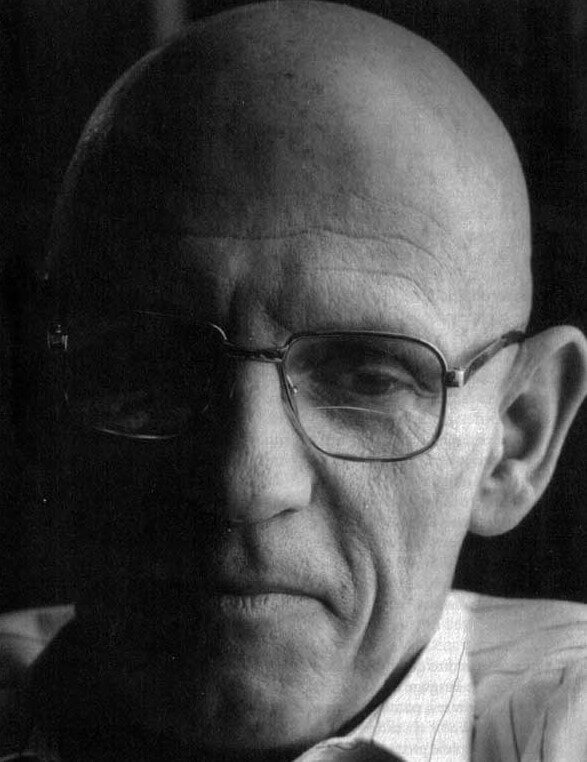
 

Foucault in 1984
Michel Foucault in April 1984, one of the last photographs taken of him before his death in June 1984. Photograph by Bruno de Monès. Source: Magazine Littéraire.


​ Gilles Deleuze

Seminar on Foucault, 1985-1986

Part I: Knowledge (Historical Formations)

Lecture 06, 26 November 1985

Transcribed by Annabelle Dufourcq; time stamp and supplementary revisions, Charles J. Stivale

Translated by Samantha Bankston; additional revisions, Charles J. Stivale


Part 1

… You can see the problem we ran into. If it is true that knowing entangles two forms, entangles the visible and the statable, then how is that possible? How is this possible once it is said that both forms are heterogeneous and non-communicating? “Heterogeneous and non-communicating”, what does that mean? It means that, between them, there is a kind of rift, a gap, or, according to [Maurice] Blanchot’s words, a non-relation. So how can we entangle two separate forms distributed by a non-relation? It is also necessary to be sure that such a gap exists between the visible and the statable.

Now I believe that there is such a gap, and in his own fashion, Foucault shows it in three different ways, if I consider all of his books. He shows it humorously, logically, and historically. [Pause] Humorously. Well, just ask the question: if there was a form common to the visible and the statable, what could it be? And the answer is given in the little book, This Is Not a Pipe, namely: if there were a form common to the statable and the visible, this form would appear in what is called a calligram. A calligram, what is it? It is when the writing takes the very form of the visible, that is, when the visible and the readable are united.

For example, you write a poem called the egg cup, you see, the egg cup, and you give it the visual shape of an egg cup. And you start with a long enough verse… – [Deleuze moves towards the blackboard] a piece of chalk, yes… well I don’t need it, you know, but if you have one… [Pause; he draws on the board and only comments audibly in fragments] Thank you very much — Here is an egg cup… Here is my beautiful egg cup… So, you write a verse here, one that is this long, a verse this long, there would be a very short verse with just a very small word, another small word and then [inaudible]. That’s a calligram. Yeah? Good!

To say: the common form of the visible and the readable, or the visible and the statable, is a calligram, uh… it’s not making you laugh, but we can say that it’s a humorous answer. Why? Because it is a perfectly artificial form. It is a perfectly artificial form, it is not the spontaneous form of language; language is not designed to take on the form of the visible. In other words, the form of the visible is a specific form. But, if the calligram appears to be a perfectly artificial process, it will have a much more important consequence, what consequence? By what right, under the painting that represents a pipe, can I write “this is a pipe”? By what right? By what right under or next to the drawing of a pipe, or even a visible pipe, can I write “this is a pipe”? Well, it all depends on what “this” means. [Pause]

First interpretation: “this” would be the drawing of the pipe. If “this” is the drawing of the pipe, what is the statement? This is a pipe [he’s drawing on the blackboard]. However, this, the drawing of the pipe, is not a statement. So, the statement “this is a pipe” immediately turns into “this is not a pipe”.

Second interpretation: “this” is not the drawing of the pipe, “this” is the statement. If “this” is the statement, the statement “this” which is a statement, is not a pipe, a visible pipe. So, you cannot say “this is a pipe” when confronted with the visible pipe, without the statement “this is a pipe” being transformed into “this is not a pipe”. So, what corresponds to the drawing of the pipe is the statement “this is not a pipe” and not the statement “this is a pipe”. That’s funny.  Hence [René] Magritte’s logical right to draw the famous pipe and write under it “this is not a pipe”. OK? All right. Are you all right? Is that clear? It’s… It’s part of Foucault’s affinity with surrealism. He’s always had that. His relationship with [Raymond] Roussel, his relationship with Magritte. It’s very surreal, this whole theme of the statement of the visible.

We will find the same thing in the more serious context of The Birth of the Clinic. In The Birth of the Clinic, Foucault shows very well that the clinic, when it was formed in the 18th century, was formed on a kind of surprising postulate: the conformity of symptoms and signs, or the conformity of visible disease and the statable disease. As if there was a visible grammar of the disease and a grammatical visibility of the disease. A disease must be simultaneously read and seen, and this is the basic postulate of the clinic. And it endures what it can endure, because in the 19th century, pathological anatomy will restore the heterogeneity of the visible disease and the communicable or statable disease, under conditions that we will see later, which is to say that it’s not about that… this is not what I want to develop today.

What I want to point out, speaking precisely of this postulate of the clinic in the 18th century, is that Foucault tells us: but it is only a dream. The dream is precisely what pathological anatomy falls into.  Pathological anatomy is like the awakening of this dream. And on page 117, you’ll find this passage that interests me a lot, “The clinic is a precarious balance, because it is based on a formidable postulate”, “a formidable postulate”,”…that is, that all the visible is statable and it is completely visible because it is completely statable. A postulate of such scope could only enable a coherent science if it was developed into a logic that was the rigorous continuation of it. However, the logical framework of clinical thought is not absolutely coherent with this postulate and reversibility without any vestige of the visible in the statable confines the clinic to a requirement and a limit as opposed to an original principle. The total describability is a present and distant horizon, it is the dream of a thought, much more than a basic conceptual structure. It cannot be said any better at the level of a medical example than: conformity, the unity or community of form between the visible and the statable, is not even a structure, it is a dream. It is a dream, just as the calligram is a dream. Just as the possibility of stating “this is a pipe” next to a visible pipe is a dream. So much for the humorous presentation of the irreducibility of the two forms, the visible and the statable.

I would add: there is also a logical presentation in Foucault. We have seen the logical presentation. We saw it because we spent hours and hours on “what is a statement?” And, if I summarize, the essential point here is that the statement has a specific purpose, that is, the statement has an object that is one of its internal variables. Thus, from the point of view of the logic of the statement, the statement refers to this object as one of its internal variables, it does not refer to a visible object presented as a state of things to which the statement would refer. It is the destruction of the logical theory of reference that will establish this gap between the statement that has its own internal object and the visible that is irreducible to the statement. This is another way of saying—and this time logically and no longer humorously—that the only statement that corresponds to the visible pipe is “this is not a pipe.”

Third point: historically. And this is undoubtedly what Foucault values most, because, at the very least, he updates the two previous points of view, but we would be able to find the previous points anyway. I think that what is really original in Foucault is the historical demonstration of the heterogeneity of the two forms: the visible and the statable. And, we saw that he was pursuing it in two books that echoed one other: The History of Madness and Discipline and Punish. And if I group together things that should be easy for you right now, very well, it’s good that it’s easy. What did The History of Madness tell us? Do you remember? There’s a place…. I erased the egg cup? [Pause]

The History of Madness told us: [Deleuze returns to the board] there is a place where we find the visibility of madness, [Deleuze draws on the board] which is the general hospital. I’m looking for statements that correspond. I use “correspond” in a very vague sense, in the sense of “equals X” because we already know that it is not a question of saying “it is the same form.” I’m looking for corresponding statements, and what do I find? I find statements that are medical, and not only medical, but also regulatory or literary statements, which are statements about insanity. Good. Note, you already have Foucault’s entire method, you can see how it’s not at all… how it breaks with linguistics. Madness is by no means the object, the referent of the statement, why? Because the statement has its own object, unreason. You will tell me: but unreason and madness are the same thing… No, they are not the same thing. Historically, they’re not the same thing, there’s nothing we can do about it. The madman is defined in the general hospital; the unreasonable, the man of unreason, is defined elsewhere at the level of medical statements. You will say to me: but they correspond to another. No, that doesn’t happen, because at the general hospital they do police work, they don’t engage in treatment. Of course, all this must be qualified, there is minimal care, but the fundamental act of the general hospital has nothing to do with medical operations, it has everything to do with police operations as evidenced by the grouping of madmen with, as we have seen, the unemployed, vagrants, beggars, etc.

Blanchot, who understands this very well since it is a subject common to him and Foucault, has a very beautiful analysis of The History of Madness in The Infinite Conversation. And he says: it is the confrontation… what Foucault is talking about is the confrontation of madness and unreason. Namely: how can we explain that in the 17th century a man could be enunciated as a man of unreason and find himself in the general hospital as a madman? It’s not the same form. In The Infinite Conversation, this confrontation, or, to use Michel Foucault’s expression, what would lead those who once passed the text of unreason to be condemned to madness? What is the relationship between the obscure knowledge of unreason and the lucid knowledge that science calls “madness”? Confronting madness and unreason.

The statements, once again, are statements of unreason, whereas visibility is a visibility of madness. At the general hospital, medical statements are not treated, they are statements about or unreasonable, but they are not treated at the general hospital, which makes madness visible or which is the very visibility of madness.

Discipline and Punish, in my opinion, takes the analysis further and this time considers what? It’s completely parallel to what we’ve seen, it’s completely parallel to the History of Madness. He considers the prison as a place of visibility, a place of visibility of the crime, a place of visibility of the offense and we have seen that the prison was a place of visibility, by definition, since the prison is, in fact, the panoptic. And, on the other hand, criminal law is a system of statements, and we take up the same question: is there a common form to the two? And Foucault’s answer, through long historical analyses, is: no! No. There is no common form, at the very moment when the prison appears or, if you prefer, becomes generalized, criminal law and criminal law statements search in a completely different direction. Criminal law does not include prison as its horizon. The entire evolution of criminal law in the 18th century was carried out without reference to prison. Indeed, prison is one punishment among others, so what happens? What is the criminal law concerned with?  Just as medical statements were not concerned with the madman but with unreason, what are criminal law and legal statements concerned with? The offender. Delinquency is the specific object of the statements.

Why? What does that mean exactly? Delinquency is the specific object of the statements, which means that: in the evolution of the law, the statements of criminal law in the 18th century classify and define offenses in a new way. Delinquency is the new object of statements of the law, that is, it is a new way of classifying offences. We will pick this theme up again later, but for the moment I am only trying to identify a schema, an almost formal schema.

So, you have, on the visible side, you have prison, the prisoner, on the other side you have statements, delinquency, okay. You will find this entire theme: Discipline and Punish, Part Two, chapters one and two. Chapter One: Analysis of criminal law statements in the 18th century. Chapter Two: Prison does not refer to a legal model. Prison is not caught at the horizon of the objects of the criminal law statement. Then where did it come from? It comes from a whole other horizon, which is what? Disciplinary techniques. Disciplinary techniques that are absolutely different from legal statements. Disciplinary techniques that you will find in the school – you can see how far this is from the law – in the school, in the army, in the workshop…. It is a completely different legal horizon, and we can have a military horizon, a scholarly horizon about which the same thing should ultimately be said: never can a legal statement say, in front of a prison, “this is a prison”, the legal statement should say, in front of a prison, “this is not a prison”. Perfect.

Second point. Of course, you have to expect an objection, of course the prison produces statements. And, of course, criminal law, as a form of expression, refers to particular contents. Criminal law refers to content, i.e., to the extent that criminal law statements classify offenses in a new way in the 18th century.  In the visible world, it is necessary that, apart from the statements, offences themselves have changed in nature. And, as we have seen, in the 18th century, there was a tendency to create a kind of mutation, and if not a mutation, at least an evolution of offenses, with offenses being attributed more and more to property offenses. And Foucault devotes three, four pages to this very, very important, very interesting change, which coincides with the end of the great jacqueries, the end of the jacqueries in 17th century crime was essentially an attack on people, with the great gangs, the rural jacqueries, and in the 18th century there is a kind of conversion, a change in offenses that has been very well studied by a historian named [Pierre] Chaunu. In the archives—these are things that can be found in the archives—he worked a lot in the Norman archives to try to show how offenses based on small criminal groups, unlike previous large gangs, develop statistically into types of fraud, damage to property, and no longer harm to individuals.

Well, then, I must say that the statements of course refer to extrinsic content and that the visibilities refer to statements. For example, prison generates statements. Prison regulations. Prison rules are statements. It doesn’t really matter if the visibilities refer to statements, to secondary statements. The fact that the statements refer to extrinsic content does not prevent the statement in its form from never having the form of the visible and the visible in its form from never having the form of the statement.

And yet – a third element – and yet, it’s as if there is a crossroads. And yet, there is a crossroads. That is, when the prison system imposes itself, coming from a completely different perspective than the legal one, then the prison is responsible for achieving the objectives of criminal law. It comes from somewhere else, it has a different origin than criminal law does, but once it knows how to impose itself… [Interruption of the recording] [29:31]

Part 2

… But I believe that, nevertheless, I am right in my presentation of Foucault’s thought. I am right because, if you look at the texts more closely, Foucault distinguishes two types of delinquency. A type of delinquency that can only be explained later, why he calls it that, and what he calls “delinquency-illegality”. I’m just saying, delinquency-illegality is a concept of delinquency that makes it possible to classify offenses in a new way. And it distinguishes delinquency-illegality from delinquency-object, with a small hyphen. When he says that prison produces delinquency, the context is very clear: it is always the delinquency-object, in my opinion. And it is true that prison produces the delinquency-object. And, the delinquency-object is second only to delinquency-illegality, i.e., the delinquency-classification of offenses.

So, this is a second stage – and I’m drawing your attention to this because, later, we will find this when we get to “what does the death of man mean?”  In The Order of Things, we will see that Foucault’s historical analyses are most often binary, in the sense that they make distinctions two times, two successive times. We will have to wonder why there is this very, very curious, very striking binarity. Now let’s take a look at Discipline and Punish.  The first time, prison and criminal law have two different irreducible forms, but the second time they intersect. They intersect, namely: the criminal law redirects prisoners, i.e., perpetually resupplies prisoners; the prison perpetually reproduces delinquency.

Fine, as a result, we are always stumbling into the need to maintain these three points of view that we are trying to disambiguate. Namely, the heterogeneity of the two forms, the negation of any isomorphism, there is no isomorphism between the visible and the statable. That is the first point. The second point: the statement is what has the primacy, it is the one that is determinate. The third aspect: there is mutual capture between the visible and the statable, from the visible to the statable and from the statable to the visible.

As we have seen, it is typically the case that the prison reproduces delinquency, criminal law leads back to the prison, or provides prisoners again; there you have mutual capture. You can see that all of Foucault’s thought, indeed, becomes irreducible and all the more irreducible to the analysis of propositions, to linguistic analysis, that you see that the visible and the statable form a completely different relationship than the proposition and the referent, than the proposition and the state of things, on the one hand. And, on the other hand: the visible and the statable form a completely different relationship, obviously, than the signified and the signifier. I cannot say: the prison is the signified and criminal law is the signifier. Neither a referent of the proposition nor a signifier. [Pause]

Foucault can therefore, quite rightly, consider that his logic of statements coupled with a physics of visibility is presented in one form…, or rather in two new forms. As a result, I took all this up again, well, I don’t know, I hope I didn’t talk about it in the same way… as a result, we are facing it, at this level — I’m making a connection to our previous session — we found ourselves faced with four confrontations as a function of this fundamental heterogeneity of the visible and the statable. We found ourselves faced with four confrontations.

The first confrontation was the one with Kant. And why was it necessary, it was necessary for a very simple reason: it came to mind, like that, like a kind of mist, that, after all, Kant had been the first philosopher to build man from and on two heterogeneous faculties. The faculty of receptivity – and, after all, the visible is very similar to receptivity – and the faculty of spontaneity, and after we saw that the entire statement was determinate, that it had primacy, it looks very similar to a kind of spontaneity. Hence the necessity for a confrontation with Kant under the general question: can we say that Foucault is, in a certain way, neo-Kantian?

The second necessary confrontation was the one with Blanchot, which we have had the opportunity to invoke quite often. Since one of Blanchot’s fundamental themes is: speaking is not seeing. Blanchot’s “speaking is not seeing” and Foucault’s formula “what we see is not found in what we say”, “the visible is not found in the statable” seem to immediately impose this second confrontation: what is the relationship between Foucault and Blanchot?

The third necessary confrontation was the one with cinema. Why? Because a whole aspect of modern cinema and undoubtedly the greatest contemporary directors are defined in the most basic way, if we look for the most basic character in these directors, we can say: they have introduced a fault, a fundamental gap between audio and visual in cinema. And this is no doubt how they have promoted the audiovisual to a new stage by introducing a gap between seeing and speaking, between the visible and the spoken word.[1] And each of you is able to recognize three of the greatest names in cinema, in contemporary cinema, namely: [Hans-Jürgen] Syberberg, the Straubs [Jean-Marie Straub and Danielle Huillet] and Marguerite Duras.

However, I would just like to point out, because this is important to note if we have time, that Foucault obviously had a very, very profound interest in cinema, particularly in the cinema of Syberberg and in that of Marguerite Duras. I don’t know how he felt about the Straubs, but I assume he was very interested in the Straubs. In fact, Foucault was almost directly involved in a film that I saw, but that unfortunately I can’t remember, which was a film that René Allio made about Foucault’s research on Pierre Rivière…[2] Pierre Rivière, who had a case of criminal monomania, and who sold off all he had, a little peasant who liquidated everything he owned, Allio made a film about him, so I would really need someone to help me when we get to that point, if anyone here remembers the film for a very simple reason, because Foucault published a notebook about the little guy, Pierre Rivière, where Pierre Rivière explains in a school notebook… it’s part of… it was the first of the lives of infamous men that Foucault dreamed about. Pierre Rivière was an infamous man, a little infamous man such as Foucault wanted… dreamed about.

So, there is a natural problem here: what is the relationship between seeing and speaking? There is Pierre Rivière’s notebook and then there is his visible behavior before the crime and the visible crime. What was the relationship between Allio’s film and…? Is it just a voice-over reading the notebook? It’s a problem. And if it’s not a voice-over reading the notebook, I make a hypothesis, it’s because if it’s a voice-over reading the notebook — I can’t remember, I can’t remember at all — if it’s a voice-over reading the notebook, it’s because the filmmaking didn’t live up to what Foucault wanted. But then what else can we do? We will see, how contemporary cinema works, of which we can say that cinema that has completely broken off from voice-over by force, it is forced… it had to break off… well, that’s the third point.

A student: [Inaudible]

Deleuze: Is it hot? Is anyone still smoking? Oh no, now, be nice, you’re going to have a break, right? And you can smoke during the break. There you go. But who is smoking? Oh, yeah? Already when we… Yes, open that up a little bit, right? You’re out of control? Out of control. [Pause] Did you see that, who is smoking? Denounce them! [Laughter] Listen… huh! Pretend that you are in the subway… Yes, but some people smoke in the subway… Is that better?

A student: Yeah, yeah.

Deleuze: Good… We’re at the last confrontation. Well, if we have conducted these three confrontations well, we are ready to ask ourselves: but, as for the “relationship”, between quotation marks, as for the relationship between the visible and the statable, what is Foucault’s own answer? Is it the same as Kant’s? Is it the same as Blanchot’s? Is it the same as the one from cinema? Or does Foucault have a unique response? This leads us to the fourth and final confrontation, namely: why did Foucault feel so much pleasure and affinity with the poet Raymond Roussel? What did he get out of Raymond Roussel? Why did he feel the need to write a book on Raymond Roussel?

That’s it, that’s our program. And we already started it, since the last time we said: well yes, there is a very curious Kantian adventure, so it was the first confrontation. There is a very curious Kantian adventure that is what? It is because Kant is the first, I said, to construct man according to two heterogeneous, irreducible faculties. And what are these two irreducible heterogeneous faculties? They are, you remember, they’re receptivity and spontaneity, but what are they? Well, receptivity is the faculty of intuition, and by intuition, in the Kantian sense, we must understand something very precise; it is the form in which all that is given to me is given. What is the form in which all that is given is given? The very rigorous Kantian answer is that everything that is given is given in space and time. So, space-time is the form of intuition. All that is given is given in space and time, space and time are the form of intuition in which I grasp everything that is given to me and everything that is givable, everything that is givable. If someone spoke to me about something that is not in space and time, I would say, it cannot be given to me. Maybe I can think it – that’s something different altogether — it can’t be given to me. This is the faculty of intuition, or space-time as the first form.

And second form: spontaneity, this time it is “I think”. Why is “I think” spontaneity? Or a different activity from receptivity? Well, because “I think” is the statement of a determination. It’s a determination. So, I talked last time about this consideration: but why does Kant construct man in this way and why wasn’t it done previously? Why did this idea of heterogeneous faculties…Why did we have to wait for Kant to do it? My answer was very simple: metaphysics cannot — it is not that it does not want to: it cannot — metaphysics cannot attain this theme of heterogeneous faculties. And to achieve this, Kant instantiates what he calls his own revolution, namely the substitution of criticism for metaphysics. Why, can’t metaphysics do this – as we saw last time – it is because what defines metaphysics from Christianity and its relationship with theology is the position of the infinite as primary in relation to the finite.

It’s only when infinity is primary in relation to the finite that our faculties are necessarily homogeneous by law. How odd, though. Why? Why, if infinity is primary in relation to the finite, are our faculties homogeneous by law? Because we are actually finite, but finitude is only a fact. What is primary in relation to the finite is infinity and infinity is what? It is first and foremost God’s understanding. Infinite understanding…all of the metaphysics from the seventeenth century is full of considerations about infinite understanding. But what is infinite understanding? God’s understanding? God is the being for whom there is no given, indeed God creates and creates ex nihilo, from nothing, there is not even any material given to him. Therefore, the distinction between a given and an action does not exist for God.

In other words, the difference between the given and created does not exist for God. The difference between receptivity and spontaneity does not exist for God. God is only spontaneity. And what is it when the given is given? The given is a fallen spontaneity. There is only the given for the living beings, because living beings are finite. The given is only fallen spontaneity. In other words, we, being finite beings, we say “there is something given”, for God there is none. In other words, it is only our finitude that makes the difference between receptivity and spontaneity. This difference does not apply at God’s level. But God is the law. I mean: it’s the state of things as is the case in law.

That’s it, it’s very simple, you see, well, what is Kant doing? For Kantianism to be possible, there must be a promotion of finitude, finitude must no longer be considered a mere fact, made by the living being, finitude must be promoted to the state of constituent power. See how, with constituent finitude, you can say to yourself: well, that’s why [Martin] Heidegger likes to appropriate so much from Kant. Kant is the advent of a constituent finitude, that is, finitude is no longer a simple fact that is derived from an original infinite, but rather it is finitude that is original. That’s the Kantian revolution. From then on, what comes to light is the irreducible heterogeneity of the two faculties that compose it, receptivity and spontaneity, the receptivity of space-time, the spontaneity of “I think”. Finally, man becomes deformed. Deformed in the etymological sense of the word, i. e. de-form, it limps on two heterogeneous and unsymmetrical forms, receptivity of the intuition, spontaneity of “I think”. That’s where we were. So, we started again, I think, but I hope we added some things. So that you are ready to make just a little bit of an effort towards something a little more difficult.

It is because, if you have followed this theme of Kant, you can expect something from Descartes to Kant — from Descartes who still explicitly maintained the primacy of the infinite over the finite, and who was therefore a great classical thinker, that is to say from the 17th century — well, from Descartes to Kant, the famous formula of the cogito, “I think, therefore I am”, changes everything in its meaning. And we’re going to see… if I revisit this, and if I revisit it it’s because we’re going to see that it concerns Foucault directly. And, after all, the last part of The Order of Things contains numerous references to Kant and takes up the Heideggerian theme of the Kantian revolution, which consists in this: having promoted its constituent finitude and thus broken free from the old metaphysics that presented us with an infinite constituent and a constituted finitude. With Kant, finitude is what becomes constituent. Now, Foucault recalls this theme very well, I do not think that these are new points from The Order of Things, simply that Foucault uses this admirably and perhaps it is Heidegger who is the first, that… undoubtedly it is Heidegger to have defined Kant by this operation of constituent finitude. And so I am saying right now that the cogito must take on a whole new meaning.

And, indeed, in Descartes, I ask you to pay careful attention, in Descartes how is the cogito introduced? I suppose even those who don’t know anything, huh… so I’ll speak for everyone, even those who don’t know anything at all about Descartes. Descartes first tells us “I think”. What is “I think”? It’s the first proposition. Proposition A: “I think”. Good, he thinks, okay. What does that mean, “I think”? “I think” is a determination. It is a determination, and what’s more it is an indubitable determination. Indubitable! And yes, there is no doubt about it. Why is it indubitable? Because I can doubt anything I want, I can even doubt that you exist, and I can even doubt that I exist. Even me, yes. What can’t I doubt? There’s only one thing I can’t doubt, and that’s that I think. Why can’t I doubt I’m thinking? Because doubting is thinking. It’s not about talking, saying “Oh, really? Oh, really?” You have to try to understand. I can doubt everything, I can doubt that 2 and 2 are 4. What do I know about 2 and 2 being 4? I don’t know, I don’t know. I can doubt that. But I can’t doubt that I, who doubts, thinks. So, I think it’s an indubitable determination. There you go, that’s all.

Proposition B. [Pause] We can see that the cogito is not “I think, therefore I am”, it’s more complicated than that. Proposition B: I am. And why am I? Hey, hey! For a very simple reason: it is because in order to think, I have to be. If I think, I am. The statement of the cogito, at level B, is therefore: “but, if I think, I am”. Proposition A: “I think.” Proposition B: “Now, if I think, I am.” Why is it that if I think, I am? Well, “I think” is an indubitable determination. A determination must be about something, something undetermined. Any determination determines something undetermined. In other words, “I think” presupposes “to be”, presupposes a being. I don’t know what this being is, I don’t have to know. “I think” is a determination that implies an indeterminate being. I am. And “I think” will determine “I am”, since “I think” is a determination. But the determination implies an undetermined. How beautiful all this is! Ah! I would say, there’s no reason… you understand, I hope, what I mean when…, there’s no reason to object, it’s already so tiring to understand. I think, I am. Well, yes. If I think, I am; I am what? At this level: an undetermined existence.

Proposition C: but what am I? You see: proposition C is more than “I am”, it is what I am. What am I? What am I? I’m a thinking thing. I’m a thinking thing. That is, the “I think” determination determines the indeterminate existence “I am”. The “I think” determination determines the indeterminate existence “I am”. From which I must conclude: I am a thinking thing. The statement of the cogito would therefore be: A) “I think”, B) “but to think, you have to be”, C) “so I am a thing that thinks”. There you go. In other words, I would say that Descartes operates – this is very important for me, for the future – Descartes operates with two terms, “I think” and “I am”, and only one form “I think”. Indeed “I am” is an undetermined existence and therefore has no form. “I think” is a form, thought is a form, it determines undetermined existence: I am a thing that thinks. There are two terms, “I think” and “I am”, and only one form, “I think”. Hence the conclusion: I am a thinking thing. OK?

And now, listen to Kant. Kant keeps A and B, he keeps A and B, that is, he will say: okay, I think (A), and “I think” is a determination. And he will say: OK about B, determination implies an indeterminate existence, “I think” implies “I am”. In fact, the determination must be focused on something undetermined, and everything happens as if Kant was stuck at the end of B, and he said to Descartes: you can’t go any further. He can’t go any further. He says: you can’t conclude “I’m a thinking thing”, why? Why can’t Descartes conclude this…? Because, because it’s very simple, you know. It is true that “I think” is a determination, that is, it determines, it determines what? It determines an indeterminate existence, namely “I am”.

But, but, but…still it is necessary to know in what form – listen carefully, I am going to tell you a radical secret, a kind of mystery – it is still necessary to know in what form indeterminate existence is determinable. Descartes was in too much of a hurry, once again. [Laughter] He thought that determination could directly relate to the indeterminate. And like “I think”, determination meant “I am”, the undetermined existence, he concluded “I am a thing that thinks”. Nothing at all! Because when I said, “I am”, the indeterminate existence involved in the determination “I think”, I did not say under what form the indeterminate existence was determinable.

And in what form is undetermined existence determinable? Kant’s thought is still very prodigious. You have to try to live it. You can almost get ahead of Kant. Without having read it you can become Kant, because you can guess what Kant is going to say to us. Indeterminate existence is only determinable in space and time, i.e., in the form of receptivity. The indeterminate existence “I am” is only determinable in space and time. That is, I appear in space and time. That is, undetermined existence is only determinable in the form of receptivity. What a story! Why?” I think” is my spontaneity, my active determination. But now my spontaneity, “I think”, only determines my indeterminate existence in space and time, that is, in the form of my receptivity. What’s is that going to do? It’s going to be something strange!

In other words, the determination cannot directly relate to the undetermined, the “I think” determination can only relate to the determinable. [Pause] There are not two terms, determination and indeterminate, there are three terms: determination, indeterminate, determinable. Descartes skipped a term. But then, if my undetermined existence is only determinable in the form of receptivity, that is, as the existence of a receptive being, I cannot determine my existence as that of a spontaneous being. [Pause] I can only imagine my spontaneity, I can only be receptive, which is only determinable in space and time, I can only imagine my own spontaneity and represent it as what? As someone else controlling me. Like someone else controlling me.

In other words, I don’t know when, last year or the year before – I say this for those… – when I connected Kant’s cogito to [Arthur] Rimbaud’s famous formula, “I is an other”, it seems to me that I was spot on. I is an other. I was spot on if Kant was spot on.[3] Fortunately, Kant says it literally, so everything is fine. Kant literally says it in the first edition of the Critique of Pure Reason, and I will read the text slowly, because you need to understand it. “I think” expresses the act that determines my existence…” no difficulty there, it means the “I think” is a determination and, by the same token, it is my spontaneity. “I think” expresses the act that determines my existence. “Existence is therefore already given by this,” undetermined existence, that is. “Existence is therefore already given by this… but not in a way to determine it.” Understand: in my opinion, I am sure the translation is not that great here, but it is not terrible, “but not in way to determine it” means: not the way in which it is determinable. Existence is therefore already given by this, but not in the way that undetermined existence is already determinable. “This requires intuition of oneself”, that is, receptivity…”This requires the intuition of oneself, which is based on a form”, “which is based on a form”, “that is, time that belongs to receptivity.” Time is the form in which my existence is determinable. “I cannot, therefore,…”—this is the essence of Kant’s contribution—“I cannot, therefore, determine my existence as that of a spontaneous being, but I can only imagine the spontaneity of my act of thought or determination, and my existence is only ever determinable in intuition. Like that of a receptive being. My existence is only determinable in time, as the existence of a receptive being, which being receptive, therefore, represents its own spontaneity as the operation of another on it.” See how beautiful it is?

When I said: there is a gap, it’s the same thing. There’s a fault in the cogito, the cogito is completely cracked in Kant. The cogito was as full as an egg in Descartes, why? Because he was surrounded, bathed by God. With constituent finitude I walk on two unequal legs, receptivity / spontaneity, it is really the fault inside the cogito:  With “I think”, spontaneity determines my existence, but my existence is only determinable as that of a receptive being, so I am receptive, I represent my spontaneity as the operation of another on me and this other is “I”. See? All right.

What is Kant doing, where Descartes saw two terms and one form, he sees three terms and two forms. Three terms: determination, indeterminate, and determinable. Two forms: the form of the determinable, and the form of determination, i.e. intuition, space-time and “I think”, receptivity and spontaneity. There are two forms. Two heterogeneous forms. Receptivity is not a degraded spontaneity, as the 17th century metaphysics believes or tries to believe, there is heterogeneity between the two, so that I, being receptive, can only prove myself in time, can only imagine my spontaneity as the operation of another on me.

Well, what does Foucault tell us about how he is neo-Kantian? Foucault is neo-Kantian, because he posits the following shift — I already mentioned this, but I don’t want to… — space-time becomes light. It seems, to speak really quickly, that we can say that Einstein passed through this. All right. Kant’s space-time becomes light and defines the form of receptivity. The visible, the visible in the sense that we have seen it, since this visible will not even be given any meaning. This is the condition under which all sensory data is given. As we have seen, light is not attached to and is not dependent on sight, it is the condition under which all sensory data is given, it is the form of receptivity.

And what is the form of spontaneity? It is no longer the “I think”, it is the “one speaks”, the being of language or the “there is” of language. [Pause] This is the form of determination. There are two irreducible forms. There are two irreducible forms and, in this respect, at the end of the transformations that he subordinated to Kantianism, Foucault is necessarily faced with the same problem as Kant. What does the same problem as Kant mean? It means… well……. between receptivity and spontaneity, between light and language, between the determinable and the determined, there is a gap or non-relation, and yet there must be a relation… [Interruption of the recording] [1:16:00]

Part 3

… the last time, Kant’s answer, and, even if we summarize it, it will help us with our future analyses of Foucault, Kant’s answer will be: yes, we need a third element, we need a third, and not only do we need a third to connect the unrelated, i.e. space-time and “I think”, receptivity and spontaneity, but this third must be formless. An informal element, an obscure informal element which, on the one hand, is a great mystery, that would be homogeneous to intuition, space and time, and, on the other hand, would be homogeneous to “I think”, to the concept.

So: receptivity and spontaneity would be heterogeneous, but there would be a third instance that would be homogeneous, for its own sake, to intuition and homogeneous to “I think”. And that’s weird, what a strange feature! Kant tells us: it is what is most mysterious about man, and it is imagination. What is most mysterious about man: a feature that is homogeneous to each of the two heterogeneous features. And why is he saying that? Is it arbitrary? It’s not… he means something very simple… Look again, he says: the essence of the imagination is to schematize and what is a schema? Well, there you go. A scheme is a funny thing. A schema is a set of spatiotemporal determinations that correspond to a concept. A set of spatiotemporal determinations that correspond to a concept. Example: an equilateral triangle, it has a concept, it is a triangle [Pause] that has three sides and three equal angles. All right. A rectangular triangle has a concept, it’s a triangle that has a right angle.

What is the schema? The schema is the construction rule. How do you build a rectangular triangle, right? [Pause] I see well, there are some who have a blatant smile, I say to myself: they are ones who know and there are some who take on an abstract, annoyed expression, and I say to myself: these are the ones who have forgotten. So, I’m not going to take away the surprise, you can refer to your ordinary geometry textbooks, but for example, to make a rectangular triangle, you have to draw a circle. How do we draw, what is the rule for making a circle? Huh? I’m sending you back to your regular textbooks. This will be the schema of the circle, the rule for making a circle. Well, if you draw a circle, you take the semicircle.  The construction of the semicircle, how do you get a semicircle? All of that: schemas referring to schemas, huh. And then you draw your rectangular triangle, the construction rule is its schema. Similarly, an equilateral triangle, how do you make it? What do you need to make it? A ruler and a compass. Rulers and compasses are construction instruments. Huh, you see, you draw a line with the ruler, you take one end of the line, you use your compass, you do something, you see… well… there you go. Good. So these are construction rules, but admire what a construction rule is. A construction rule is a rule that constructs the object of a concept, the object that constructs that produces the object of a concept, does so where? In space and time.

Well, that’s enough. That’s great. That’s great. Here again, it is a very great Kantian discovery: the schema, the schema of the imagination. It’s a great concept. So, the schema is, on the one hand, homogeneous to space and time since it determines space and time, it is a determination of space and time. You can tell me: what role does time play in this? Well, just take a schema like that of the number, the schema of the number is what? The schema of the number is the rule according to which I can always add a unit to the previous number, that’s the schema of the number. It’s a temporal schema. So a scheme is homogeneous to space and time, since it determines a space-time. But it determines space and time as the corresponding….. as conforming to a concept, equilateral triangle, number… You see, it is therefore homogeneous to the space and time it determines and homogeneous to the concept whose construction of the object it allows.

Here’s a practical exercise: the definition of the lion is the concept. Oh? You define the lion. [Pause]…. We can conceive of several definitions. And what is the lion’s schema? You see that a schema is not an image at all. If I say: an image of numbers, you will say “two” or “three hundred”. And that’s not the schema of number, it is the rule of production of any number. If I tell you: the image of an equilateral triangle, you’ll have no trouble, you’ll just, you’ll draw an equilateral triangle. Finally: you’ll have no difficulty, I don’t know… but…. you’ll make one, regardless of whatever sheet of paper you use, you’ll make one more or less. All right. But that’s not the schema, the schema is not an image, it’s the rule of production of any image as corresponding to the concept or as conforming to the concept. So, the lion’s scheme is not a lion. A lion image is a lion, this one, oh yes, the lion I saw at the circus the other day or the one I saw on TV… well, that’s not a lion schema, it’s much better than that. That, indeed, is part of the mystery of the imagination. What would a lion’s schema be, for example? It is always a dynamism. It is a spatiotemporal dynamism. There, you can dream, you can dream, let’s dream. When you have a concept, a concept like the cow or like the lion, what is the cow scheme? It’s not this cow, that’s an image, that cow you know particularly well is an image of a cow.

But the cow schema, I’ll tell you what it is… we can vary, huh, there. Uh, the cow schema, for me, is the powerful migratory movement that takes any herd of cows from a meadow at any given time. Ah, see? … Suddenly, these animals that were completely, that were grazing, there, each one, a little scattered, all of a sudden, they migrate to the prairie, what a terrible five o’clock in the evening, five o’clock in the evening, the cows migrate to the prairie, spatiotemporal dynamism. What is the lion’s schema? It’s a scratch, it’s a spatiotemporal dynamism, it’s not part of the lion’s conceptual definition. Having claws, yes, it’s part of the lion’s conceptual definition, but the dynamism of the gesture…that would be the schema. In other words, it is a spatiotemporal determination that corresponds to a concept. There is nothing more paradoxical, since space-time and the concept are strictly irreducible, how can there be schemas that cause determinations of space and time to correspond to concepts.

That’s why Kant tells us: schematism is the most mysterious art. Well, we see a third instance where the two forms are not, the two forms are not reducible to each other. The two forms are not in conformity, but there would be a third instance which would, on its own, conform to one of the two forms and to the other of the two forms. The condition is that Kant leaves us… he leaves us, he can’t go any further. [Pause] The condition, in my opinion, is that it only makes sense if the schema is informal. But then, if it is informal, how can it be consistent with both forms? Kant’s answer is difficult: an art buried in the depths of the imagination. Buried. We shouldn’t ask a philosopher, whatever his genius happens to be, to go further when we’ve already gained so much more ground than Kant has, when we’re beset by other problems, it’s not something missing… It’s up to us, if we’re Kantians, to try to go further thanks to him, that’s all. So, will this be the case with Foucault? What will Foucault’s answer be? We know that, on this matter, we can no longer be Kantian, since Kant tells us nothing more. But will there be — that’s exactly my question for later — will there be, in Foucault’s case, something that works even vaguely like Kant’s schematism of the imagination?

So, since we can’t push the confrontation with Kant any further, I’m moving on to the second confrontation: Blanchot. And, if we were to make a general comparison, at what point is there a rapprochement between Foucault and Blanchot? — What time is it? Well, I think we could group the themes… Ah….. we could group the themes of a possible Foucault-Blanchot rapprochement. I see three of them. I see three fundamental ones. One, we will see it much later, so I can only quote it, because…. The second one we have seen at least in part and, the third one, that’s the one on which we will try to insist. But so that here I group them all three, namely, a certain… I can’t even say “conception”, but a certain call to the outside. The outside. The outside as a fundamental notion for Blanchot as for Foucault.

What is the outside? Well, this covers both the criticism of every interiority, plus it strikes me…the criticism of every interiority and also: the outside is not reduced, but exceeds the outside, because the outside is still a form, the outside as an informal element. And Foucault will pay tribute to Blanchot in the Critique journal in an issue devoted to Blanchot, and Foucault will write a very beautiful article entitled “The Thought from Outside.”[4] What does that mean, thought that comes from outside as opposed to thought that comes from inside? The thought from outside, I think the theme from outside is a very original theme in Blanchot, and that Foucault takes it up in his own way. So, we’ll have to see, but that’s for the future because we’re far from there right now.

The second similarity, as we have seen, is the elevation of “on” or “he”, namely the common criticism in both of any personalism and any personology, even in linguistics. We saw the devaluation of the “I” in favor of the non-person, that is, the third person, and, beyond the third person, beyond even “he”, “one”. And, in Blanchot, not only is there a “one speaks”, perhaps, we will see, perhaps a “one sees”, but above all there is a “one dies”. It is in The Space of Literature that the “one dies” line develops most.[5] And perhaps this line of “one dies”, which is so profound in Blanchot, and not “I die”, but death as an event of “one”, perhaps it is one with the problem we are saving for the future, that is, the problem from outside. “One dies” is a death that comes from outside. Good. In Foucault’s work, as we have seen, you will find, at the very level of the theory of the statement, how the first and second person give way to a non-person, that is, the position of the subject as a variable of the statement, irreducible to everything “I” and which is always in the form of a “he”, every “he” taking place in the procession of a “one”. “One speaks.”

And the “one dies”, you will also find them, but reinterpreted by Foucault. Because I believe finally, and this is one of the very… moving things about Foucault’s death, which is that Foucault is one of the men and there are not many of them, who died more or less as he thought death would be. He didn’t stop thinking about death much, although Foucault wasn’t sad, uh…he had a rather special relationship with death, I think that was his own way of thinking about death and very strangely enough he died in the way he thought about death. And what does that mean? I think that in Birth of the Clinic, you find a rather long analysis of [Xavier] Bichat, of Doctor Bichat, a very famous 19th century doctor who is famous precisely for having founded a new relationship between life and death, a new medical relationship between life and death. However, if you read these pages of Foucault’s in Birth of the Clinic, there is something that is obvious in them. It is because it is not a simple analysis, however ingenious and brilliant it may be, there is a kind of emotional tone in Foucault’s pages on Bichat, which, it seems to me, is as if Foucault was telling us indirectly, by using a Bichat inspired analysis, something that fundamentally concerned him.

And, if you ask yourself, what was new about the way Bichat conceived death, I think there is something new, so new that Bichat is a very fundamental modern thinker. It is that there was a certain conception that drags on everywhere from death, death as an indivisible and unbreakable moment. I would say that this is the classic conception of death, death as an indivisible and unbreakable moment where life ends. And you find this conception still very current, that’s what I would say… that’s it, that’s a criterion of the classical man. At the time of death, something incredible happens. This classic conception still animates [André] Malraux’s famous phrase: “Death is what transforms life into destiny.” You find the equivalent in ancient conceptions. I’m using an example from the moral conceptions of antiquity. If, for example, when we are told: the wise knows very well that we cannot say “I am or I was happy” before death, that is, death as an unparalleled moment can change the quality of a life and can retroactively change the quality of a life. So, we have death as the ultimate moment, death as the limit. I would say: this is the classical conception you’ll find among moralists, but also among doctors, and philosophers…all of this is the classical conception. Many of us live in this classical conception. It’s interesting to wonder how everyone thinks about death.

Not at all for Foucault. Nor with Bichat. I think that Bichat has two fundamental innovations. Bichat is famous for his definition of life, which opens his great book on life and death, and is a sublime book. This definition of life is – and this is famous in the history of medicine: life is the totality of functions that resist death. This definition seems weird, why? It even looks useless, because it is completely contradictory. Once we are told that death is non-life, but in the name of classical thought… The classical man cannot understand Bichat’s definition for the simple reason that… death is non-life, defining life as “the totality of functions that resist non-life”, it does not seem…it does not seem reasonable.

So, death as an unbreakable and immeasurable moment prevents or removes any meaning from Bichat’s sentence. But in fact, it means that Bichat is not a classical man. Because on two points Bichat’s formula takes on a frightening meaning. Namely: it is the affirmation, first point, that’s the first originality with respect to classical thought: it is the affirmation that death is coextensive with life, that it is not an unbreakable moment, that it is not a limit of life, that it is coextensive with life. That’s what it means… It’s not confused with life, but it is coextensive with life. Death is a potential coextensive with life. It doesn’t take much effort to deduce the “one” from it – without mixing everything up, Bichat does not say “one dies” – but, if death is a potential coextensive with life, one dies. [Pause]

And, the second novelty of Bichat’s thought, far from being an unbreakable moment, is that death is disseminated, pluralized, multiplied in life. It is both coextensive with life and it spreads into life in the form of partial deaths. So, death as a potential coextensive with life, first point; second point: partial, fragmented and multiple deaths, which continue after the big death, since what is called the big death is a legal death. Well, we don’t stop dying. Just like we started dying. And if you look at nothing but the table of contents – for lack of anything better, it’s already there, in Bichat’s great book – you’ll see that it’s about heart death, brain death, lung death and all kinds of other deaths. And it is with Bichat that this theme of multiple and partial death or multiple and partial deaths begin.

Now if I come back to Foucault, I think that Foucault is a man who thinks of death in a non-classical way, he thinks of death or he lives death in Bichat’s way. And I think he died that way. He died like that, which means what? It means: he died in the form of a “one dies”, taking his place – to speak like him – by taking his place in a kind of procession of death, by taking his place in a “one dies”, and he died in the same way as successive partial deaths. Then there would be, if you will, a whole development specific to Foucault with the theme in common with Blanchot, but in his own way and in his own style, that is to say with this reprisal of Bichat, but ultimately a confrontation is essential.

But I’m moving on to the third point of confrontation with Blanchot, which is the one that comes quite naturally to the place we are at in our analysis. And I am obviously referring to the great text… it is everywhere in Blanchot, but Blanchot’s most decisive text in The Infinite Conversation, the piece entitled “Speaking Is not Seeing.”[6] At this point in our analysis, speaking is not seeing because of the deformity, i.e., the heterogeneity of the visible and the statable, to which Foucault’s formula responds: “What we see cannot be found in what we say.” “Speaking is not seeing.” And I say to myself: let’s try, Blanchot’s text is very beautiful, with great poetic virtues, so let’s try, we, as non-poets, as we enumerate, to specify what Blanchot means. Because it’s very, very interesting: speaking is not seeing. Well, here too, I’m trying to enumerate in order to go slowly.

a) What does “speaking is not seeing” mean? Well, that obviously means one very simple thing at first, and that is that there is no need to speak about what we see. You see, it’s a little different. In concrete terms. We have to start from a very concrete basis. There’s no point in speaking about what we see, because if I speak about what I see, it’s gossip, it’s not worth it. It’s not that it’s impossible, you see, it’s worse than that, I can always speak about what I see, but what’s the point? What’s the point of speaking about what you see, since you see it? You will say to me: Oh yes, but the other one doesn’t see it. What am I talking about? Ah, very well, I’m not asking for more than that! Because if I can speak about what I see, under the condition that I speak to someone who does not see, it is because far from talking about what I see, I talk about what the other does not see.

b) Anyway, speaking is speaking about what someone doesn’t see, it’s not speaking about what someone sees. Because if someone was speaking about what they were seeing or if I was speaking about what someone else was seeing, it would be enough to see. There is no reason to mobilize the word. And, indeed, if I speak to say uh… usually when I speak it is to say: “Did you see that?”, with the implication of “You didn’t see it.” “Oh, did you see the funny guy”… it means “you didn’t see him.” Or, uh, if I’m talking about this machine right now, why am I talking to you about it? Because you see another end than I do. I’ll say: “Oh, I have a little red and blue circle there, on that stupid thing… and is there one?” I don’t see it, so I’m speaking about what I don’t see. She’s not going to answer me by talking to me about what she sees, but to me who can’t see… Good, none of that is difficult. So, at the limit, if you’ve understood that, speaking is speaking about what someone doesn’t see relatively, but it’s a relative that you have to elevate to the absolute. Therefore, to speak absolutely is to speak of something that is neither seen nor visible. Oh, really? To speak is to speak about… In other words, to speak, as Blanchot says very well, is not a view, not even a freed view, that is, even a generalized view, free from the limitations of the view. Speaking is not a better view than sight, it is not a view freed and freed from its conditions. Language is not a corrected view. So, you see, it must be said that speaking absolutely means speaking about what is absolutely not visible. Only then, and only under this condition, is the language worth the effort.

Second proposition: therefore, when we say “speaking is not seeing”, we define a superior exercise of speech. I could define… Blanchot does it… I’ll try… it’s a free comment of Blanchot’s that I am suggesting to you… If you read the text in The Infinite Conversation, you may very well have another commentary. That’s how I understand it. I mean, we’re forced to distinguish two exercises of speech. One I will call an “empirical exercise”. I speak, I speak, it’s even most of the… during the day, I have to have an empirical exercise of speech. I’m talking about what I see while someone else doesn’t see it. And again, if I’m very smart, if not, the times when I’m stupid, well, I’m talking about what that I see to someone who sees it too. Uh… I’m on the phone, and I say oh the cowboys are coming… I’m not teaching anyone, he’s old enough to see it too. Uh…. Well. So that’s the empirical exercise, but the empirical exercise is, in fact, when I say “Oh, you saw, it’s raining,” I presuppose that he didn’t see anything. Very well. So I talk to someone and tell them something they don’t see relatively. So, at this level, the empirical exercise of speech, I’m talking about things that, in one way or another, could just as easily be seen. What I call “higher exercise” is: I am talking about what is not visible or, if you prefer, I am talking about what can only be spoken. Ah… but this is indeed a second proposition, because what is that? The superior exercise of speech is born when speech is addressed to what can only be spoken.

Is there anything that can only be spoken about? We can stop right there, say: no. All right, but if we try: for Blanchot there is something that can only be spoken, there are even many things that can only be spoken. Probably death can only be spoken for Blanchot, but why? What is it, what can only be spoken, and which would define the superior exercise of speech? Notice: it’s not going to help us, unless it helps us, it’s, as well, something that can’t be spoken, which is implied, what can only be spoken is something that can’t be spoken from the point of view of empirical use. Since what can only be spoken can only be spoken, but the empirical use of speech is to speak about what can also be seen. What can only be spoken is what is hidden from any empirical use of the word. So what can only be spoken is what cannot be spoken from the point of view of empirical use.

Are you all right? It’s very simple, isn’t it? I mean, it’s like mathematics. What cannot, therefore… What can only be spoken from the perspective of the superior exercise is what cannot be spoken. In other words, what can only be discussed from the perspective of the superior exercise? Blanchot’s answer will be: it’s silence. That’s right, what can only be spoken about is silence, it’s pure Blanchot and it’s beautiful, it’s very beautiful. All right. In other words, what can only be spoken is the proper limit of speech. The superior exercise of a faculty is defined when that faculty has as its object its own limit, which can only be spoken. And, therefore, also, what cannot be spoken. Yes? Good.

Third proposition. So, we expect Blanchot to tell us exactly the same thing about vision. For, if speaking is not seeing, insofar as speaking is speaking about the limit of speech, speaking about what can only be spoken, why is it that… At first sight, we should say: and vice versa. If speaking is not seeing, seeing is not speaking. That is to say, for vision too, there would be an empirical exercise: it would be to see what can be as good, something else, for example what can be as well imagined or recalled or spoken. At that moment it would be an empirical exercise and the superior exercise of sight would be to see what can only be seen. But to see what can only be seen is to see what cannot be seen from the point of view of the empirical exercise of vision. What cannot be seen from the point of view of the empirical exercise of vision?  Pure light. [Pause] Goethe’s light. I only see light when it ricochets on something. [Pause] But the indivisible light, pure light, I do not see it and that is what can only be seen.

Oh, really? Well, there you go, all right. In other words, just as the word finds its superior object in what can only be spoken, so the view would find its superior object in what can only be seen. Well, there you go, sadness: why doesn’t Blanchot say it? Why is Blanchot… there is indeed the symptom of a difference between Foucault and Blanchot… Why is it that Blanchot does not say, to my knowledge, and will never say: “and vice versa”? Blanchot will never say “speaking is not seeing and vice versa.” In the text that I already quoted to you several times from The Order of Things, on the contrary, Foucault says “and vice versa,” “What we see is not found in what we say, and vice versa.” What we say is not found in what we see. He maintains that the two faculties of seeing and speaking in this respect as equals. “And vice versa.” Blanchot doesn’t say that. Is it because he’s not speaking about sight? Yes, he’s speaking about sight. He speaks about the view in two places, so it becomes more mysterious in appearance. He speaks of sight in the piece from The Infinite Conversation, “Speaking Is Not Seeing,” and he had spoken of it in another text, The Space of Literature, in the appendices or notes in The Space of Literature, under a title that suits us in advance: “Two Versions of the Imaginary.” Two versions of the imaginary: at this point, we can expect, if all goes well, that one will correspond to the empirical exercise of sight, the other to the superior exercise of sight.

I will take both texts. The text from The Space of Literature tells us: we must distinguish two images. One, the first image is the image that resembles the object and comes after it. To form an image, you must have perceived the object, it is the image of resemblance. It is an image, therefore, that resembles the object and comes after it. The other one, I’m simplifying… I’m simplifying, because it would take too long otherwise, but I think that this simplification is completely accurate, even though Blanchot doesn’t put it that way. The other – I’m taking up a Christian expression, one dear to Christianity – the other is the image without resemblance. This idea, which will be prodigious for a theory of the Christian imagination, namely, with sin, man has remained in the image of God, but he has lost the likeness. The image has lost its resemblance.  Image without resemblance. And this image without resemblance, it may be because it is truer than the object – and here I’m going back to a text of Blanchot’s—it is truer than the object… And Blanchot, in these very surprising pages, says: it is the corpse, it is the corpse that is truer than myself, the corpse that is truer than me, [Pause] to the extent that those who mourn me say: “how it looks like him, how death has frozen him in some aspect.” Nor the corpse… it is not the corpse that resembles the living thing I was, it is the living thing I was that resembles the magnificent corpse that I am. The image without resemblance appeared, by dying I washed myself of resemblance, I am pure image, pure corpse. Fine.

That’s the way Blanchot thinks, right, it’s not… Uh…. There you go, that’s “Two Versions of the Imaginary,” I simplified a lot, see the text for yourselves. In The Infinite Conversation, you find the same theme expressed in a different mode. Two Versions of the Imaginary. What is it? Or rather, no, two versions…… No, that’s, no… I take back “imaginary”. In the text “Speaking Is Not Seeing” there are two versions of sight, of the visible. From sight and the visible. First version: I see from a distance, I perceive from a distance. I seize things, objects from a distance. It is well known that I don’t start by seizing them from within me to project them, I seize the thing where it is. Modern psychology taught us that. I perceive from a distance, I seize from a distance. And then, Blanchot tells us, there is another visibility, it is when distance seizes me. I am seized by distance. According to him, therefore, being seized by distance is the opposite of seizing at a distance. And, according to him, this is a dream. It is a dream that seizes me through distance. That’s what he calls it, when I’m seized by distance instead of remotely seizing, that’s what Blanchot calls fascination. I am fascinated. It’s the same thing: being seized by distance or seeing the image rise without resemblance are the same thing. Art and dream are exercises of sight.

So, my God, but my God, my God, what’s going on? What prevents Blanchot from saying “and vice versa”, since all of the elements are there? It’s curious and we are very surprised by that, because you have to see the text, and see if you have the same impression as me… He is about to say it, “and vice versa.” Well, no, he doesn’t say it and he won’t say it. He won’t say it, because—sticking to our method—because he can’t say it. He can’t say it because it would ruin everything he thinks. Why? Because if he moves onto the example of seeing he doesn’t address anything other than speaking, it only confirms what he just said about speaking. Namely: the adventure of the visible does nothing but set up the true adventure, which must be that of speech for Blanchot. Thus, the idea that there is also a superior exercise of sight is only there to a preparatory degree for the sole superior exercise which is speech as it speaks about what can only be spoken, that is… [Interruption of the recording] [2:02:13]

Part 4

… It’s the technical power, it’s even… it’s technically explained. The technical power to maintain a completely undetermined ground and to bring out a determination. What are [Francisco] Goya’s monsters? It is determination as it immediately comes out of an undetermined person that remains throughout. This is what Blanchot calls a true relation between the determined and the undetermined. A true relation in such a way that the indeterminate remains through determination and that determination immediately emerges from the indeterminate. A determination that immediately comes out of the indeterminate and remains under determination is what we call a monster. So, all right.

Well, we have the answer. In my opinion, Blanchot cannot say “and vice versa”. He can say “speaking is not seeing”, but he can’t say “seeing is not speaking”, because he has never conceived only one form – I’m not saying he’s wrong – he’s never conceived only one form, determination, the form of determination, that is, speech, the form of spontaneity, speech, and speech is related to the purely undetermined. So seeing will either slip into the purely undetermined, or will only be a preparatory step for the exercise of speech. We don’t need to see the difference with Foucault, it explodes, that’s all we did. It is enough to recall that, for Foucault, there are two forms, the form of the visible and the form of the statable. Unlike Blanchot, Foucault gave form to the visible. That is, for Foucault…you will tell me: this is tiny, I think this difference is very important, it is not tiny. For Blanchot, everything went through a relation of determination and pure indeterminacy. For Foucault – and thus he is Kantian and not Cartesian – everything passes through a relation of determination and the determinable, both having their own form. There is a form of the determinable, no less than there is a form of determination. Light is the form of the determinable just as language is the form of determination. The statable is a form, but the visible is also a form. Foucault, on the other hand, will be forced to add “and vice versa”, and the “and vice versa” is not a small addition, it is a reworking of Blanchot’s theme, “speaking is not seeing.”

But, as a result, it leads us to our third confrontation, because if Blanchot hadn’t dared “and vice versa”, if Foucault thus crosses the gap, the rift between two forms, the form of the statable and the form of the visible, the form of determination and the form of the determinable, and well, those who had done it before him, strangely enough, not strangely enough, were the ones who brought cinema to the powers of the audiovisual and of an audiovisual creator, and an audiovisual creator was not going to be an audiovisual ensemble, but on the contrary a distribution of audio and visual on both sides of a gap. And I say: well, that’s what defines modern cinema.

And as we saw last year, I’m just summarizing, I’m trying to summarize for those who weren’t here or to pick up from that discussion, because it matters a lot to me… Here too I would like to enumerate. So, first proposition, what is going on in these works that they do not attract many spectators, as we know, but that, at the same time, they are the ones who make true cinema today, uh, these works like those of Syberberg, Straub or Marguerite Duras. What strikes me immediately is that, I would say, it is a new use of speech, a new use of speech. This new use of the spoken word, it completely fits into our problem, why? Because for a very long time, at least on the surface, and this is not very complicated, but at least on the surface, speaking was like showing. And cinema became speaking in this form, speaking was really a dimension of the visual image. Speaking was just showing.

And, on the other hand, speaking could just not be seen, but at that moment, speaking was off-screen. Now the off-screen, the unseen, the unseen, the unseen speech, heard but unseen speech, the off-screen is a dimension of visual space. The off-screen is a dimension of visual space, since it is an extension of visual space outside the frame. So, we don’t see it, that’s not why it’s not visual. We don’t actually see it. But off-screen it can only be defined as that which goes beyond the visual framework. Under these two aspects, I can say that the first speaking in cinema was of the type “speaking is seeing”. Either the speech of people we see on the screen makes us see something, or speech off-screen, and the off-screen, and this speech, the voice-over, this off-screen speech comes to furnish the off-screen, the off-screen being a dimension of the visual. But that’s no longer what happens with the cinema I’m talking about, another formula emerges.

What will the formula be? This time, there is a gap between seeing and speaking. What does this gap in film look like? Speech tells a story that you don’t see. Speech tells a story that we do not see, the visual image shows places that do not have or no longer have a history. That is, empty places. Empty places of history. And it is a short-circuit – it is a real short-circuit – between this history that we do not see and this sight that has no history, this empty sight from which a kind of very surprising emotion and creation will emerge. What would be the first? It seems good, well, if I am and I think that if I am… uh….. you could say that you can always look at pre-war filmmakers for… who approached this or maybe it was there, is there something already in [Joseph L.] Mankiewicz like this… it’s possible, the fact is, it couldn’t be isolated at that time. I mean, what I’m talking about couldn’t be said before the war. Why? It didn’t reach our threshold of perception, even if people did. It didn’t reach the threshold of perception. Even now, if we found ourselves at a film by Duras or one by Syberberg or the Straubs, our perceptual habits are strangely disrupted, so that, even if a director like Mankiewicz were to approach it, I don’t think it could appear, except as a kind of disorder (what is this use of speech?… all this, uh), but we couldn’t have said it like I am saying it now, and not at all because of my merit, but because the conditions weren’t there yet.

So… But, anyway, there’s no doubt that the first — I’m following Noël Birch — is, it’s [Yasuhiro] Ozu, everything came from that. It’s Ozu and yet Ozu arrives at speaking very late. Because he doesn’t need it… so he’s perfect, as he doesn’t need it, he’s in no hurry to get there. It’s around, I don’t know the exact date anymore, but it’s around ‘30, ‘31 when Ozu makes his first talking films. But Birch, Noël Birch, who wrote some very beautiful passages about Ozu, has a very beautiful formula, I think, which is quite good and accurate. He says that it’s with Ozu that the disjunction appears, the disjunction between a spoken event and an empty image of an event. The guy talks, tells about an event that is otherwise insignificant, and, in an empty space, where there is an off-camera character to whom he talks and he talks to himself in an empty space. There’s a disjunction between the spoken event and the empty event image. It is the same as: disjunction between a history that we do not see, and a place emptied of history.

Really quickly, I am going to mention Syberberg, and I’m taking the most rudimentary, clearest forms of this process, because, obviously, when it gets complicated, it makes great masterpieces but it is more difficult. Uh, well, for example, in Parsifal, the formula would be very complex, but the effect is very concrete. In Ludwig’s Cook [1972], it’s very simple, you have empty spaces, the king’s castles, and the king of Bavaria’s castles now… empty spaces. And what is speech? It’s the guy who walks tourists and the cook who reports what Ludwig was doing in these rooms when they weren’t empty. You’ll tell me why go through with this process? It makes everything abstract… strangely enough, it makes everything concrete. Notice that Claude Lanzmann, in his film, took up the process as common to Syberberg, Straub… what is it? It is a question of making people talk, in fact it avoids reconstructions which are very painful, it avoids archive images which aren’t any better, you see that there is… on the one hand it will make people talk about the deportation of Jews and on the other hand it will show empty spaces, spaces that are empty today. He will tell a story that we don’t see – no archive images – and he will show, and he will show empty places of history. It is, word for word, the technique of Straub, Syberberg or Marguerite Duras. There is a gap between what is said and what is seen. Speaking is not seeing. And if I stick with the most rudimentary forms, I’d say it is “Fortini/Cani”’s simplest formula in Straub, on the one hand there’s the voice of Fortini reading his pages and, on the other hand, there are empty landscapes to which the pages only refer indirectly.

Regarding one of their films, another film, the Straubs will talk about the great telluric crack. The great telluric fissure, there, that kind of gap that distributes speech and vision. In the case of Marguerite Duras, the distribution of voice and sight reaches a kind of summit in India Song. For those who have seen India Song [1975], you remember that the very lively process consists, on the one hand, in showing a ball, but a silent ball, do people speak? Yes, people speak, but they don’t open their mouths. They do not open their mouths, what they say will be heard on the other side of the gap. So what’s on the other side? There is a mixture of voices, some of which are called “timeless voices” by Marguerite Duras, others are called “guest voices”, people who were present at the ball, but who did not open their mouths until they were seen. Well, uh… no, I don’t want to, it would be too long. All this cinema is under the law of the disjunction of the visual and sound. Well… So…

What I am asking for is in the publication, in the edition, of Woman of the Ganges, Marguerite Duras makes a short preface where she explains it very well, she says: they are two films, the voice film and the sight film. These are two films, and then she picks a fight, a typical provocation, she says these two films have absolutely nothing to do with one another. No connection; furthermore, if they touch each other, everything dies! The junction causes them to die. Which obviously allows [Jean] Mitry to say: it’s anything about anything. So, if we agree that it is not “anything about anything”, what is it? It is quite obvious that it is not enough to… Although there is a very interesting film by [Jean] Eustache that goes in this direction… you know… photo presentation, visual, and commentary. And the more the commentary develops, the more it’s cut off from what the photos show. So much so that, here too, it’s provocative, but it’s good, so much so that we say to ourselves: but what is he talking about, all this has nothing to do with photography etc., and the gap between what he says and what he sees increases. Fine, but why do all this? It can’t be just anything about anything, otherwise it wouldn’t go beyond a rather weak surrealist exercise.

Well, in fact, let’s take the example of Marguerite Duras’s India Song again. What is common, if there is anything in common, between speaking and seeing? I’m not saying a common form, eh, I’m saying something in common. Is there something in common between speaking and seeing? Well, yes. The ball seen is valid for another ball that we do not see, the one where a kidnapping took place and where a mad love affair was born. So the present, frozen ball is valid for this other ball that we don’t see. And the voices on the other side of the picture, the voices tell us about this old ball that we won’t see. Why can’t we see it? Is it a matter, like that…It is because, to the extent that we’ve seen mad love born that it is no longer in the realm of the visible. Crazy love is beyond what we can see. Okay, but then, we’re touching on something very important for this film. It’s a very curious cycle. I would say: what the visual image buries… The visual image buries something. The visual image covers something. The visual image is worth it because of what’s underneath. It is the upper limit of sight, sight that captures what is not visible. Under the ground, I will seize the dead: a constant among the Straubs. Under the ball, I’ll grab the other buried ball. [Pause] This is the superior exercise of sight. The visual image is always worth what it recovers.

Last year we saw the Straubs make a few minutes of film by placing people on hills and making them recite a famous Mallarmé poem “and, under these hills, there are the corpses of communards”, we will not see these corpses.[7] The land is worth what it buries. This is a constant among the Straubs. They are the ones who go the furthest in this kind of stratigraphy, or, as Foucault would say, archaeology. The visual image is archaeological. Well, the visual image only makes sense to push something in and bury it. And the speaking image has the sense to show something that can only be spoken, since it is buried for sight, the event. The same event is buried underground, released into speech. It’s not just anything about anything, it’s the same event that only exists on both sides: once it’s released by speech, once it’s buried underground. So, there is a cycle. The more the earth… – it is this cycle that strikes me, it is the Straub cycle, a kind of cosmic cycle – the more the earth buries and steals the event from us, we only see empty spaces… the more the earth buries the event, the more speech frees it. In other words, speech is aerial, and sight is underground.

So it is across their fault, over their gap, over their radical heterogeneity, that the relationship between speaking and seeing will be established, it is over the non-relation and it is the non-relation of speaking and seeing that will somehow generate the relation between seeing that is increasingly buried underground and speech that is more and more airborne. Hence the importance for me, here, as I was saying earlier, the importance of the direct relationship with cinema, with the film that Allio drew from the case of Pierre Rivière, how… of course he did not have the option of imposing a relationship between the visual and… but it is obvious that a case like that of Pierre Rivière, you understand, would have encouraged research of this kind, since the kid’s notebook and the event were there once again, what he had done, that is to say, that kind of liquidation, murder of his whole family that he committed… In what relationship did the visible one also have… was it not necessary to push the visible underground so that speech could take on an aerial meaning? And “to push underground” does not mean that the image becomes ordinary. Straub’s images, Syberberg’s images are prodigious images.

Empty space is not a space that lacks anything. The empty space of events, whether it is Ozu’s space, Straub’s space, Syberberg’s space, or Duras’ space, they are extraordinarily living spaces, but they’re really about the life of things, a kind of inorganic life, the life of things, the life of the earth as it covers, that’s the earth, the earth is what covers, dig the earth: then you have the visible. But you don’t have the visible when you have unearthed the thing, you have the visible when you see the earth covering something. What does it cover? Well, what it covers is what speech says on the other side. On the other side. And it is because there are two sides that there is the cycle where what is underground sinks deeper and deeper into the ground so that speech makes it emerge more and more into the air, not in the light, but in the air.

Well, I would say that all this cinema, too, posits empty space as the form of the determinable and speech as the form of determination. However, Foucault’s relationship with this new cinema does not seem to me to be at all influential, I don’t think that there has been any influence in either direction. Foucault doesn’t influence Duras or Syberberg, but Duras or Syberberg don’t influence Foucault either. Each has arrived at this occurrence through their own research. That’s even better. There you go.

So therefore, we find ourselves facing the fourth thing and well… and what is Foucault’s specific answer? We just saw the beginning of an answer. The beginning of the answer that we just saw is even the complete answer, but I’m not sure it’s Foucault’s, I’m even sure it’s not Foucault’s. It is precisely this: necessarily the non-relation generates a relation. And why is that? How? The non-relation generates a relation, because speech and sight, as unrelated, each reach their own limit, but the limit specific to each is also the common limit that separates them. It is the common boundary that separates them and connects them to each other by separating them. It’s the Straub cycle. The boundary specific to each faculty is at the same time the common boundary that connects them to each other by separating them. I’ll tell you, it would be, for this problem, this would be my answer, I… I would go all the way there. The fact is, in my opinion, we can apply this to Foucault, but it would be a little inaccurate because I think he has another answer. He has another answer.

Hence the need for the fourth and final confrontation. He has another answer that he will look for more on the side of Raymond Roussel, the bizarre poet of the early 20th century. And furthermore, Raymond Roussel doesn’t provide him with answers, but with several elements for an answer. This is where we are now, the confrontation with Roussel, and what is Foucault’s own answer to this problem: what is the relationship between speaking and seeing?  That’s what we will cover next time… [End of the recording] [2:31:54]


Notes

[1] On the “gap”, see The Time-Image, pp. 250-252.

[2] “Moi, Pierre Rivière, ayant égorgé ma mère, ma sœur et mon frère…” (1976).

[3] See sessions 5 and 16 of Cinema seminar 3, December 13. 1983, and April 17, 1984.

[4] This essay — originally published in the journal Critique 229 (June 1966), pp. 523-546, republished in a volume (Paris: Fata Morgana, 1986) — appears in English in the volume Foucault-Blanchot (New York: Zone Book, 1987), as “Michel Foucault: The Thought from Outside”, trans. Brian Massumi.

[5] L’Espace littéraire (Paris: Gallimard, 1955); The Space of Literature, trans. Ann Smock (Lincoln, NE: The University of Nebraska Press, 1982).

[6] Maurice Blanchot, L’Entretien infini (Paris: Gallimard, 1969) ; The Infinite Conversation, trans. Susan Hanson (Minneapolis: The University of Minnesota Press, 1993).

[7] This is a reference to the film “Toute révolution est un coup de dés” [Everything is a roll of the dice] referring to Mallarmé’s poem, “Un coup de dés n’abolira jamais le hasard » (1897).

French Transcript

Edited

Dans la conférence du 26 novembre 1985, les sujets de discussion comprennent: le savoir comme entrelacement, et l’hétérogénéité du visible et de l’énonҫable; le non rapport du visible et de l’énonҫable, comme ces montré chez Foucault avec humouristiquement, logiquement et historiquement; la notion de délinquance, la prison, la délinquance-objet, et la délinquance-illégalisme; le non isomorphisme entre le visible et l’énonҫable; le primat de l’énoncé comme déterminant; la capture mutuelle entre le visible et l’énonҫable; le philosophe français René Descartes et le cogito; Kant, le cogito, la réceptivité, la spontanéité et le schéme de l’imagination; le schéme comme détermination de l’espace et du temps, conformément à un concept, permettant ainsi la construction de l’objet; la conception classique de la mort; l’anatomiste et pathologiste français Marie François Xavier Bichat et la détermination de la vie, la coextension de la mort à la vie, et la mort comme n’étant plus insécable mais disséminée, multiple et partielle; Blanchot et son L’entretien infini; l’image sans ressemblance; la vue, le visible à distance et le rêve; Blanchot et Foucault; et le cinéma et la distribution de l’audio et du visuel. Dans la deuxième partie de la conférence, Deleuze discute de l’hétérogénéité fondamentale du visible et de l’énonҫable en termes de confrontations avec: 1) Kant, et les deux facultés: réceptivité (visibilité) et spontanéité (l’énoncé); 2) Blanchot et l’idée que parler ce n’est pas voir; 3) le cinéma, et le faille entre l’audio et le visuel, entre le visible et la parole, avec considération de l’écrivain et cinéaste français Marguerite Duras, du réalisateur allemand Hans-Jürgen Syberberg et du cinéaste français Jean-Marie Straub; et 4) l’œuvre de Roussel.

Gilles Deleuze

Sur Foucault

1ère partie : Les formations historiques

6ème séance, 29 octobre 1985

Transcription : Annabelle Dufourcq (avec le soutien du College of Liberal Arts, Purdue University) ; l’horodatage et révisions supplémentaires, Charles J. Stivale

Partie 1

… Vous voyez bien le problème où nous étions. S’il est vrai que savoir, c’est entrelacer deux formes, c’est-à-dire entrelacer le visible et l’énonçable, et bien comment est-ce possible ? Comment est-ce possible, une fois dit, que les deux formes sont hétérogènes et non-communicantes ? « Hétérogènes et non-communicantes », ça veut dire quoi ? Ça veut dire que, entre elles, passe une sorte de faille, de béance, ou, suivant le mot de [Maurice] Blanchot, un non-rapport. [1 :00] Comment donc peut-on entrelacer deux formes séparées, distribuées par un non-rapport ? Encore faut-il être bien sûr qu’il y a concrètement une telle béance entre le visible et l’énonçable, une telle faille.

Or je crois qu’il y ait une telle faille, ; Foucault à sa manière le montre de 3 façons, si je considère l’ensemble de ses livres. Il le montre humoristiquement, logiquement et historiquement. [Pause] Humoristiquement, eh bien, [2 :00] il suffit de poser la question : s’il y avait une forme commune au visible et à l’énonçable, qu’est-ce qu’elle pourrait bien être ? Et la réponse est donnée dans le petit livre, Ceci n’est pas une pipe, à savoir : s’il y avait une forme commune à l’énonçable et au visible, cette forme apparaîtrait dans ce qu’on appelle un calligramme. Un calligramme, qu’est-ce que c’est, en effet ? C’est lorsque l’écriture prend la forme même du visible, c’est-à-dire lorsque se fait une unification du visible et du lisible. [3 :00]

Par exemple, vous faites un poème intitulé « Le coquetier », vous voyez, « Le coquetier », et vous lui donnez la forme visuelle d’un coquetier. Et vous commencez par un vers assez long — [Deleuze se déplace vers le tableau] … un morceau de craie, oui… enfin je n’ai pas besoin, vous savez, mais si tu en as…  [Pause] [Deleuze dessine au tableau et commente de façon audible par bribes seulement] Merci beaucoup — Voilà un coquetier… Voilà un beau coquetier… Alors vous faites un vers là, comme ça de cette longueur, [4 :00] un vers de cette longueur, un vers de cette longueur, un vers de cette longueur, il y aura un vers tout court, avec juste un tout petit mot, un autre petit mot, et puis vous remarquez, vous arrivez à un calligramme. Hein ? Bon !

Dire : la forme commune au visible et au lisible, ou au visible et à l’énonçable, c’est le calligramme, … ça ne vous fait pas rire, mais on peut dire que c’est une réponse humoristique. Pourquoi ? Parce que c’est une forme parfaitement artificielle. C’est une forme parfaitement artificielle, ce n’est pas la forme spontanée du langage, le langage n’est pas fait pour prendre la forme du visible.  En d’autres termes, la forme du visible est une forme propre. Mais, si le calligramme apparaît comme procédé parfaitement artificiel, ça va avoir [5 :00] une conséquence beaucoup plus importante, quelle conséquence ? De quel droit, sous le tableau qui représente une pipe, puis-je écrire « ceci est une pipe » ? De quel droit ? De quel droit sous ou à côté du dessin d’une pipe, ou même d’une pipe visible, puis-je écrire « ceci est une pipe » ? Eh bien, tout dépend ce que veut dire « ceci ». [Pause]

Première interprétation : « ceci » ce serait [Pause] [6 :00] la pipe dessinée. Si « ceci » c’est la pipe dessinée, l’énoncé c’est quoi ? C’est [Deleuze dessine au tableau] est une pipe. Or ceci, la pipe dessinée n’est pas un énoncé. Donc l’énoncé « ceci est une pipe » se transforme immédiatement en « ceci n’est pas une pipe ».

Deuxième interprétation : « ceci », ce n’est pas la pipe dessinée, « ceci », c’est l’énoncé. Si « ceci » c’est l’énoncé, l’énoncé « ceci » qui est un énoncé n’est pas une pipe, une pipe visible. [7 :00] Donc vous ne pouvez pas dire « ceci est une pipe », confronté à la pipe visible, sans que l’énoncé « ceci est une pipe », ne se transforme en « ceci n’est pas une pipe ». Donc ce qui correspond à la pipe dessinée, c’est l’énoncé « ceci n’est pas une pipe » et pas du tout l’énoncé « ceci est une pipe ». C’est amusant. D’où le droit logique de [René] Magritte de dessiner la célèbre pipe et d’écrire dessous « ceci n’est pas une pipe ». Ah ? [Pause] Bon. Ça va ? C’est clair ? C’est… [Pause] Ça fait partie des [8 :00] affinités de Foucault avec le surréalisme. Il a toujours eu ça. Son rapport avec [Raymond] Roussel, son rapport avec Magritte. C’est très surréaliste, tout ce thème de l’énoncé du visible là.

Dans un contexte plus sérieux, on trouvera la même chose dans Naissance de la clinique. Dans Naissance de la clinique, Foucault montre très bien que la clinique, quand elle se forme au XVIIIème siècle, se forme sur une espèce de postulat étonnant, à savoir : la conformité des symptômes et des signes ou, si vous préférez, la conformité [9 :00] de la maladie visible et de la maladie énonçable, comme s’il y avait une grammaire visible de la maladie et une visibilité grammaticale de la maladie. La maladie doit être simultanément lue et vue, ce sera le principe de base de la clinique. Et ça dure ce que ça peut durer, car enchaînera avec la clinique, au XIXème siècle, l’anatomie pathologique, et l’anatomie pathologique restaurera l’hétérogénéité de la maladie visible et de la maladie dicible [10 :00] ou énonçable dans des conditions qu’on verra plus tard pour dire ce n’est pas là-dessus que…, ce n’est pas ça que je veux développer aujourd’hui.

Ce que je veux indiquer, c’est que, parlant précisément de ce postulat de la clinique au XVIIIème siècle, Foucault nous dira : mais ce n’est qu’un rêve, rêve précisément dont va tomber l’anatomie pathologique. L’anatomie pathologique sera comme le réveil de ce rêve. Et page 117, vous avez ce texte qui m’intéresse beaucoup, « La clinique est un équilibre précaire, car elle repose sur un formidable postulat », « un formidable postulat », … à savoir « que tout le visible est énonçable [11 :00] et qu’il est tout entier visible parce que tout entier énonçable. » Un postulat d’une pareille portée ne pouvait permettre une science cohérente que s’il était développé dans une logique qui en fût la suite rigoureuse. Or l’armature logique de la pensée clinique n’est pas en cohérence absolue avec ce postulat, et « la réversibilité sans résidu du visible dans l’énonçable reste dans la clinique une exigence et une limite plutôt qu’un principe originaire. La descriptibilité totale est un horizon présent et reculé, c’est le rêve d’une pensée, beaucoup plus qu’une structure conceptuelle de base ». On ne peut pas dire mieux, là, au niveau d’un exemple médical, [12 :00] que : la conformité, c’est-à-dire l’unité ou la communauté de forme entre le visible et l’énonçable, n’est même pas une structure, c’est un rêve. C’est un rêve, de même que le calligramme est un rêve. De même que la possibilité d’énoncer « ceci est une pipe » à côté d’une pipe visible est un rêve. Voilà pour la présentation humoristique de l’irréductibilité des deux formes le visible et l’énonçable.

J’ajoute : il y a aussi une présentation logique chez Foucault. La présentation logique, nous l’avons vue. Nous l’avons vue puisque nous avons passé des heures et des heures sur « qu’est-ce qu’un énoncé ? ». [13 :00] Et, si je résume, là, le point essentiel, c’est que l’énoncé a un objet spécifique, c’est-à-dire l’énoncé a un objet qui est une de ses variables intérieures. Donc, du point de vue d’une logique de l’énoncé, l’énoncé renvoie à cet objet comme à une de ses variables intérieures, il ne renvoie pas à un objet visible présenté comme état de chose auquel l’énoncé se réfèrerait. C’est la destruction de la théorie logique de la référence qui va établir cette faille entre l’énoncé qui a son propre objet interne et le visible irréductible à l’énoncé. Ce qui est [14 :00] une autre manière de dire, mais cette fois-ci logiquement et non plus humoristiquement, le seul énoncé qui corresponde à la pipe visible, c’est « ceci n’est pas une pipe ».

Troisième point : historiquement. Et c’est sans doute ce à quoi Foucault tient le plus, parce que, à la rigueur, les deux points de vue précédents, il les renouvelle, mais on trouverait des précédents. Ce qui est vraiment original, il me semble, là, chez Foucault, c’est la démonstration “historique” de l’hétérogénéité des deux formes : le visible et l’énonçable. Et, on a vu qu’il le poursuivait à travers deux livres qui se font écho : Histoire de la folie et Surveiller et punir. [15 :00] Et si je regroupe les choses qui, pour vous, doivent être faciles, là, mais justement, très bien, c’est bien que ce soit facile. L’Histoire de la folie nous disait quoi ? Vous vous rappelez ? Il y a un lieu… J’efface le coquetier, hein ? [Pause]

L’Histoire de la folie nous disait : [Deleuze s’est mis devant le tableau] il y a un lieu de visibilité de la folie [Deleuze dessine au tableau] [16 :00] qui est l’hôpital général. Je cherche des énoncés qui correspondent. J’emploie « correspondent » en un sens très vague, en un sens « égale X » parce que… puisque nous savons d’avance qu’il ne s’agit pas de dire « c’est la même forme ». Je cherche des énoncés qui correspondent, qu’est-ce que je trouve ? Je trouve des énoncés, par exemple, médicaux, mais pas seulement médicaux, aussi des énoncés réglementaires ou littéraires, qui sont des énoncés portant sur la déraison. Bien. Remarquez, vous avez déjà toute la méthode de Foucault, vous voyez bien en quoi ce n’est pas [17 :00] du tout… en quoi il rompt avec la linguistique. La folie n’est nullement l’objet, le référent de l’énoncé, pourquoi ? Parce que l’énoncé a son propre objet, la déraison. Vous me direz : mais la déraison et la folie, c’est la même chose… Non, ce n’est pas la même chose. Historiquement, ce n’est pas la même chose, on n’y peut rien. Le fou, il est défini dans l’hôpital général ; le déraisonnable, l’homme de la déraison, il est défini tout à fait ailleurs, il est défini au niveau des énoncés médicaux. Vous me direz : mais, bon, mais ça se rencontre ? Non, ça ne se rencontre pas ; à l’hôpital général, on fait de la police, on ne soigne pas. Bien sûr, il faut nuancer tout ça, il y a un minimum de soin, mais l’acte fondateur de l’hôpital général [18 :00] n’a rien à voir avec une opération médicale ; il a tout à voir avec une opération policière dont témoigne la réunion des fous avec, on l’a vu, les chômeurs, les vagabonds, les mendiants, etc.

Blanchot, qui comprend très bien puisque c’est un sujet commun à lui et à Foucault, Blanchot fait une analyse très belle, dans L’Entretien infini, de L’Histoire de la folie. Et il dit : c’est l’affrontement… ce dont Foucault nous parle, c’est de l’affrontement de la folie et de la déraison. A savoir : comment expliquer au XVIIème siècle, qu’un homme énonçable comme homme de la déraison puisse se retrouver à l’hôpital général comme fou ? Ce n’est pas la même forme. [19 :00] Dans L’Entretien infini, cet affrontement, ou encore, pour reprendre l’expression de Michel Foucault : « qu’est-ce donc qui condamnerait à la folie ceux qui, une fois, ont tenté l’épreuve de la déraison ? » Quel rapport y a-t-il entre le savoir obscur de la déraison et le savoir clair, celui que la science appelle « folie » ? Affrontement de la folie et de la déraison.

Les énoncés, encore une fois, sont des énoncés de déraison, la visibilité est une visibilité de la folie. A l’hôpital général, on ne soigne pas ; les énoncés médicaux sont des énoncés sur [20 :00] ou de la déraison, mais on ne soigne pas à l’hôpital général qui rend la folie visible ou qui est la visibilité même de la folie.

Surveiller et punir, à mon avis, pousse plus loin l’analyse et envisage quoi cette fois-ci ? C’est tout à fait parallèle à ce qu’on a vu, c’est tout à fait parallèle à L’Histoire de la folie. Il envisage la prison comme lieu de visibilité, lieu de visibilité du crime, lieu de visibilité de l’infraction, [21 :00] et on a vu que la prison était un lieu de visibilité par définition, puisque la prison c’est, en effet, le panoptique. Et, d’autre part, le droit pénal, qui est un régime d’énoncé, et on reprend la même question : est-ce qu’il y a forme commune ? Et la réponse de Foucault, par de longues analyses historiques, c’est : non ! Non. Il n’y a pas forme commune, au moment même où la prison apparaît ou, si vous préférez, se généralise, le droit pénal, les [22 :00] énoncés de droit pénal cherchent dans une tout autre direction. Le droit pénal ne comporte pas, dans son horizon, la prison. Toute l’évolution du droit pénal au XVIIIème siècle se fait sans référence à la prison. En effet, la prison, c’est une punition parmi d’autres, alors qu’est-ce qui se passe ? De quoi s’occupe le droit pénal ? Le droit pénal s’occupe, exactement comme les énoncés médicaux s’occupaient non pas du fou mais de la déraison, les énoncés juridiques s’occupent de quoi ? Du délinquant. La délinquance, c’est ça l’objet spécifique des énoncés. [23 :00]

Pourquoi ? Qu’est-ce que ça veut dire, à la lettre ? La délinquance est l’objet spécifique des énoncés, ça veut dire que : les énoncés du droit pénal au XVIIIème siècle dans son évolution, dans l’évolution du droit, classent et définissent d’une nouvelle manière les infractions. La délinquance, c’est l’objet nouveau des énoncés de droit, c’est-à-dire c’est une nouvelle manière de classer les infractions. On retrouvera ce thème plus tard, là je cherche uniquement pour le moment à dégager un schéma, un schéma presque formel. [Pause] [24 :00]

Donc vous avez, du côté du visible, vous avez prison, prisonnier, de l’autre côté vous avez énoncés, délinquance, bien. Tout ce thème vous le trouvez : Surveiller et punir, deuxième partie, chapitres un et deux. Chapitre un : analyse des énoncés de droit pénal au XVIIIème siècle. Chapitre deux : la prison ne renvoie pas à un modèle juridique. La prison n’est pas prise dans l’horizon, dans les objets de l’énoncé de droit pénal. Mais alors d’où vient-elle ? Elle vient d’un tout autre horizon, qui est quoi ? Les techniques disciplinaires. Les techniques disciplinaires qui sont absolument différentes des énoncés juridiques. [25 :00] Techniques disciplinaires que vous retrouverez dans l’école — vous voyez à quel point c’est loin du droit — dans l’école, dans l’armée, dans l’atelier…. C’est un tout autre horizon juridique, vous pouvez avoir un horizon militaire, un horizon scolaire… si bien qu’à la limite il faudrait dire la même chose : jamais un énoncé juridique ne pourra dire, devant une prison, « ceci est une prison », l’énoncé juridique devrait dire, devant une prison, « ceci n’est pas une prison ». Parfait.

Deuxième point. Bien sûr, il faut prévoir une objection : bien sûr, la prison produit des énoncés. [26 :00] Et, bien sûr, le droit pénal, comme forme d’expression renvoie à des contenus, à des contenus particuliers. Le droit pénal renvoie à des contenus, c’est-à-dire que, dans la mesure où les énoncés de droit pénal classent les infractions d’une nouvelle manière au XVIIIème siècle, il faut bien que, en dehors des énoncés, dans le monde visible, les infractions aient elles-mêmes changé de nature. Et, on a l’a vu, au XVIIIème siècle, tend à se faire une espèce de mutation, sinon une mutation du moins une évolution des infractions, les infractions devenant de plus en plus des atteintes à la propriété. Et Foucault consacre trois, quatre pages [27 :00] à ce changement très, très important, très intéressant, qui coïncide avec la fin des grandes jacqueries, avec la fin, ou au XVIIème siècle la criminalité était essentiellement une atteinte aux personnes, avec les grandes bandes, les jacqueries rurales, et au XVIIIème siècle se fait une espèce de conversion, de changement des infractions qui a été très, très bien étudiée par un historien qui s’appelle [Pierre] Chaunu, à partir des archives — ce sont des choses qu’on peut trouver dans les archives — il a beaucoup travaillé dans les archives normandes pour essayer de montrer comment se développe statistiquement des infractions fondées sur les petits groupements de criminels, contrairement aux grandes bandes précédentes, et du type escroquerie, atteinte aux biens [28 :00] et non plus atteinte aux personnes.

Bon, alors, je dois dire que les énoncés, bien sûr, renvoient à des contenus extrinsèques et que les visibilités renvoient à des énoncés. Par exemple, la prison engendre des énoncés. Le règlement de la prison, les règlements de la prison sont des énoncés. Ça n’a pas grande importance que les visibilités renvoient à des énoncés, à des énoncés seconds, secondaires. Que les énoncés renvoient à des contenus extrinsèques, ça n’empêche pas que l’énoncé dans sa forme n’a jamais la forme du visible et le visible dans sa forme n’a jamais la forme de l’énoncé.

Et pourtant — troisième élément — et pourtant, il y a comme un croisement, [Pause] [29 :00] et pourtant, il y a comme croisement, c’est-à-dire : lorsque la prison s’impose, venant d’un tout autre horizon que l’horizon juridique, alors, alors la prison se charge de réaliser les objectifs du droit pénal. Elle vient d’ailleurs, elle a une autre origine que le droit pénal, mais, une fois qu’elle sait s’imposer… [Interruption de l’enregistrement] [29 :31]

Partie 2

… Mais, je crois que, quand même j’ai raison dans ma présentation de la pensée de Foucault. J’ai raison car, si vous regardez les textes de plus près, Foucault distingue deux types de délinquance. Un type de délinquance que l’on ne pourra expliquer que plus tard, pourquoi il l’appelle comme ça, et qu’il appelle la « délinquance-illégalisme ». [30 :00] Je dis juste, la délinquance-illégalisme, c’est la délinquance comme notion qui permet de classer d’une nouvelle manière les infractions. Et de la délinquance illégalisme, il distingue la délinquance-objet, avec un petit trait d’union. Quand il dit : la prison produit la délinquance, le contexte est très clair : il s’agit toujours de la délinquance-objet, à mon avis. Et c’est vrai que la prison produit la délinquance-objet. Et, la délinquance-objet, elle est seconde par rapport à la délinquance-illégalisme, c’est-à-dire la délinquance-classification des infractions. [31 :00]

Donc c’est dans un second temps… Et là, j’attire votre attention là-dessus parce que, plus tard, on retrouvera cela, dans, par exemple, quand on en sera à « qu’est-ce que ça veut dire la mort de l’homme ? », on verra que, dans Les Mots et les choses, on verra que les analyses historiques de Foucault, le plus souvent, sont binaires, en quel sens ? Elles distinguent le plus souvent deux temps, deux temps successifs. On aura à se demander pourquoi cette binarité très, très curieuse, très frappante. Là, on le voit dans Surveiller et punir. Premier temps : la prison et le droit pénal ont deux formes différentes irréductibles, [Pause] [32 :00] mais, dans un second temps, elles se croisent. Elles se croisent, à savoir, le droit pénal reconduit des prisonniers, c’est-à-dire refournit perpétuellement des prisonniers ; la prison reproduit perpétuellement de la délinquance.

Bon, si bien que nous rebutons sur, toujours, la nécessité où nous sommes de maintenir ces trois points de vue dans lesquels on essaie de se débrouiller. A savoir : hétérogénéité des deux formes, négation de tout isomorphisme, il n’y a pas isomorphisme [33 :00] entre le visible et l’énonçable. C’est le premier point. Deuxième point : c’est l’énoncé qui a le primat, c’est lui qui est déterminant. Troisième aspect : il y a capture mutuelle entre le visible et l’énonçable, du visible à l’énonçable et de l’énonçable au visible.

On l’a vu, c’est typiquement : la prison reproduit de la délinquance, le droit pénal reconduit à la prison, ou refournit des prisonniers ; là, vous avez capture mutuelle. Et je dis, vous voyez bien que toute [34 :00] la pensée de Foucault, en effet, devient irréductible et d’autant plus irréductible à l’analyse des propositions, à l’analyse linguistique, que vous voyez que le visible et l’énonçable sont dans un tout autre rapport que la proposition et le référent, que la proposition et l’état de chose, d’une part. Et, d’autre part : le visible et l’énonçable sont dans un tout autre rapport, évidemment, que le signifié et le signifiant. Je ne peux pas dire : la prison, c’est le signifié et, le droit pénal, c’est le signifiant. Ni référent de la proposition, ni signifié d’un signifiant. [Pause] Foucault peut donc, à bon droit, estimer que sa logique [35 :00] des énoncés, doublée d’une physique de la visibilité se présente sous une forme ou plutôt sous deux formes nouvelles.  Si bien que j’ai repris tout ça, enfin je ne sais pas, j’espère que je ne l’ai pas dit tel quel… Si bien que l’on se trouve devant, à ce niveau — je fais la soudure avec notre séance précédente — on se trouvait devant quatre confrontations à faire en fonction de cette hétérogénéité fondamentale du visible et de l’énonçable. On se trouvait devant quatre confrontations.

Première confrontation, c’était la confrontation avec Kant. Et pourquoi est-ce qu’elle était nécessaire ? Elle était nécessaire pour une raison très simple, c’est que : nous venait à l’esprit, comme ça, comme une espèce de petite [36 :00] buée, que, après tout, Kant avait été le premier philosophe à construire l’homme, à partir et sur deux facultés hétérogènes. Une faculté de réceptivité — et, après tout le visible ressemble bien à une réceptivité — et une faculté de spontanéité, et après tout, l’énoncé dont nous avons vu qu’il était déterminant, qu’il avait le primat, ressemble bien à une espèce de spontanéité. [37 :00] Donc nécessité d’une confrontation avec Kant sous la question générale : peut-on dire que Foucault est, d’une certaine manière, néo-kantien ?

Deuxième confrontation nécessaire : confrontation avec Blanchot, qu’on a souvent eu, déjà, l’occasion d’invoquer. Puisque l’un des thèmes fondamentaux de Blanchot, c’est : parler, ce n’est pas voir. Le « parler, ce n’est pas voir » de Blanchot et la formule de Foucault, « ce que nous voyons ne se loge pas dans ce que nous disons », « le visible ne se loge pas dans l’énonçable » semblent par-là même [38 :00] immédiatement imposer cette seconde confrontation : quel rapport entre Foucault et Blanchot ?

Troisième confrontation nécessaire : confrontation avec le cinéma. Pourquoi ? Parce que tout un aspect du cinéma moderne, et sans doute les plus grands auteurs contemporains, se définissent de la manière la plus sommaire, si l’on cherche le caractère le plus sommaire dans ces auteurs, on peut dire : ils ont introduit dans le cinéma une faille, une béance fondamentale entre l’audio et le visuel. Et c’est sans doute par-là qu’ils ont promu l’audiovisuel à un nouveau [39 :00] stade en faisant passer une “faille” entre voir et parler, entre le visible et la parole. [Sur la « faille », voir L’Image-Temps, p. 327] Et chacun de vous est capable de reconnaître trois des plus grands noms du cinéma, là, de toute évidence, du cinéma contemporain, à savoir : [Hans-Jürgen] Syberberg, les Straub [Jean-Marie Straub et Danièle Huillet] et Marguerite Duras.

Or je signale juste, parce qu’il y a matière si on avait le temps, que Foucault éprouvait évidemment pour le cinéma un intérêt très, très profond, notamment pour le cinéma de Syberberg et pour le cinéma de Marguerite Duras. Je ne sais pas ce qui en était pour les Straub, mais je suppose que lui aussi éprouvait un très vif intérêt pour les Straub. Enfin Foucault [40 :00] fut mêlé presque directement à un film que j’ai vu, mais que hélas, je ne me rappelle plus, qui est le film que René Allio a tiré de la recherche de Foucault sur Pierre Rivière… [“Moi, Pierre Rivière, ayant égorgé ma mère, ma sœur et mon frère…” (1976)] — … Pierre Rivière qui était un cas de monomanie criminelle c’est-à-dire qui avait liquidé tous les siens, un petit paysan qui avait liquidé tous les siens — Allio en a tiré un film, alors là j’aurais très besoin, pour quand on en sera là, de quelqu’un, si quelqu’un ici se rappelle ce film, parce que, pour une raison très simple, c’est que Foucault a publié le cahier du petit gars, de Pierre Rivière, où Pierre Rivière explique sur un cahier d’écolier… ça fait partie… c’était la première des vies, la vie des hommes infâmes, tels que Foucault rêvait. Pierre Rivière [41 :00] est un homme infâme, un petit homme infâme tel que Foucault le… le voulait, le… en rêvait.

Eh bien, donc là, il y a un problème tout naturel : quel rapport entre voir et parler ? Il y a le cahier de Pierre Rivière et puis il y a son comportement visible avant le crime et le crime visible. Dans quel rapport le film d’Allio mettait… ? Est-ce que c’est simplement une voix off qui lit le cahier ? C’est un problème. Et si ce n’est pas une voix off qui lit le cahier, je fais une hypothèse, c’est que si c’est une voix off qui lit le cahier — je ne me souviens plus, je ne me souviens plus du tout — si c’est une voix off qui lit le cahier, [42 :00] c’est que la réalisation du film a été en retrait sur ce que souhaitait Foucault. Mais alors qu’est-ce qu’on peut faire d’autre ? On verra, comment procède le cinéma contemporain, dont on peut dire, c’est un cinéma qui a complètement rompu avec la voix off, et c’est forcé, c’est forcé… qu’il ait rompu… enfin, ça, c’est le troisième point.

Un étudiant : [Propos inaudibles]

Deleuze : Il fait chaud ? Il y en a qui fume encore ? Ah non, là, soyez gentils, vous allez avoir une récréation, hein, et vous fumerez pendant la récréation. Voilà. Mais qui fume ? Ah bon ? Déjà quand on… Oui, vous ouvrez un petit peu, hein ? Vous êtes déchaînés, déchaînés ! [Pause] [43 :00] T’as vu, ça, qui fume ? Dénonce-le ! [Rires] Ecoute… hein ! Considérez ici que vous êtes dans le métro… Oui, mais il y en a qui fument dans le métro, … [Pause] ça va mieux ?

Un étudiant : Ouais, ouais.

Deleuze : Bon… Dernière confrontation. Bon ; si l’on a bien mené ces trois confrontations, on est mûr pour se demander : mais, quant au « rapport », entre guillemets rapport, quant au « rapport » du visible et de l’énonçable, quelle est la réponse propre de Foucault ? Est-ce que c’est la même que celle de Kant ? Est-ce que c’est la même que celle de Blanchot ? Est-ce que c’est la même que celle du cinéma ? Ou est-ce qu’il y a une réponse propre de Foucault ? Ce qui nous mène [44 :00] à la quatrième et dernière confrontation, à savoir : pourquoi Foucault éprouvait-il tant de plaisir et tant d’affinité avec le poète Raymond Roussel ? Qu’est-ce qu’il tirait de Raymond Roussel ? Pourquoi est-ce qu’il a éprouvé le besoin de faire un livre sur Raymond Roussel ?

Voilà, voilà notre programme. Et on l’a déjà entamé, puisque la dernière fois, on disait : ben oui, il y a une très curieuse aventure kantienne — c’était donc la première confrontation — il y a une très curieuse aventure kantienne, qui est quoi ? C’est que Kant est le premier, je disais, à construire l’homme sur deux facultés hétérogènes, irréductibles, et ces deux facultés irréductibles hétérogènes, c’est quoi ? C’est, [45 :00] vous vous rappelez, c’est la réceptivité et la spontanéité, mais qu’est-ce que c’est ?

Eh ben, la réceptivité, c’est la faculté d’intuition, c’est-à-dire par intuition, au sens kantien, il faut entendre quelque chose de très précis : c’est la forme sous laquelle tout ce qui m’est donné est donné. Quelle est la forme sous laquelle tout ce qui est donné est donné ? La réponse kantienne très rigoureuse : c’est tout ce qui est donné est donné dans l’espace et dans le temps. Donc, l’espace-temps, c’est la forme de l’intuition. Tout ce qui est donné est donné dans l’espace et dans le temps ; l’espace et le temps sont la [46 :00] forme de l’intuition sous laquelle je saisis tout ce qui m’est donné et tout ce qui est donnable, tout ce qui est donnable. Si on me parle de quelque chose qui n’est pas dans l’espace et dans le temps, je dirais, cela ne peut pas m’être donné. Peut-être que je peux le penser — c’est tout à fait autre chose — ça ne peut pas m’être donné. Voilà donc la faculté d’intuition, ou l’espace-temps comme première forme. Et deuxième forme : la spontanéité, cette fois-ci, c’est le « je pense ». Pourquoi est-ce que le « je pense » est une spontanéité, ou une activité par différence avec la réceptivité ? [47 :00] Eh bien, parce que « je pense », c’est l’énoncé d’une détermination. C’est une détermination.

[Ici commence le fragment de cette séance-ci qui se présente à WebDeleuze comme une séance à part, avec le titre « Leibniz (Foucault – Blanchot – Cinéma) », le 30 novembre 1986, séance qui évidemment n’a jamais eu lieu]

Alors, j’en étais là, la dernière fois, à cette considération : mais pourquoi est-ce que Kant construit ainsi l’homme et pourquoi est-ce que ça n’a pas été fait avant ? Pourquoi est-ce que cette idée des facultés hétérogènes… Pourquoi est-ce qu’il a fallu attendre Kant ? Là, ma réponse était très simple : la métaphysique ne peut pas — ce n’est pas qu’elle ne veut pas : elle ne peut pas — la métaphysique ne peut pas atteindre [48 :00] à ce thème des facultés hétérogènes. Et, pour y atteindre, Kant opère ce qu’il appelle lui-même sa révolution, à savoir la substitution de la critique à la métaphysique. Pourquoi, la métaphysique, elle ne peut pas — on l’a vu la dernière fois — c’est que ce qui définit la métaphysique depuis le christianisme et son rapport avec la théologie, c’est la position de l’infini comme premier par rapport au fini.

Seulement si l’infini est premier par rapport au fini, comprenez, nos facultés sont nécessairement homogènes en droit. [49 :00] Or, comme c’est curieux, ça. Pourquoi ? Pourquoi est-ce que, si l’infini est premier par rapport au fini, nos facultés sont homogènes en droit ? Parce que nous sommes finis “en fait”, mais la finitude n’est qu’un fait. Ce qui est premier par rapport au fini, c’est l’infini et l’infini c’est quoi ? C’est d’abord l’entendement de Dieu. L’entendement infini… toute la métaphysique, du XVIIème siècle, est remplie de considérations sur l’entendement infini. Mais l’entendement infini, c’est quoi ? L’entendement de Dieu. Dieu, c’est l’être pour lequel il n’y a pas de donné, en effet, Dieu crée et crée ex nihilo, [50 :00] c’est-à-dire à partir de rien, il n’y a même pas du matériau qui lui soit donné. Dès lors, la distinction d’un donné et d’un agi n’existe pas pour Dieu.

En d’autres termes, la différence entre donné et créé n’existe pas pour Dieu. La différence entre réceptivité et spontanéité n’existe pas pour Dieu. Dieu est uniquement spontanéité. Et qu’est-ce que c’est, dès lors, que le donné ? Le donné, c’est une spontanéité déchue. Il n’y a de donné que pour la créature, parce que la créature est finie. Le donné n’est qu’une spontanéité déchue. En d’autres termes nous, étant des êtres finis en fait, [51 :00] nous disons « il y a du donné », pour Dieu, il n’y en a pas. En d’autres termes, c’est uniquement notre finitude qui fait la différence de la réceptivité et de la spontanéité. Cette différence ne vaut pas au niveau de Dieu. Or Dieu, c’est le droit. Je veux dire : c’est l’état de chose tel qu’il est en droit. Voilà, c’est très simple, vous voyez, bon.

Qu’est-ce que fait Kant ? Pour que le kantisme soit possible, il faut qu’il y ait une promotion de la finitude, il faut que la finitude ne soit plus considérée comme un simple fait, fait de la créature, il faut que la finitude soit promue à l’état de [52 :00] puissance constituante. Voyez en quoi, la finitude constituante, vous pouvez vous dire : ben, c’est pour ça que [Martin] Heidegger aime tant se réclamer de Kant. Kant, c’est l’avènement d’une finitude constituante, c’est-à-dire : la finitude n’est plus un simple fait qui dérive d’un infini originel, c’est la finitude qui est originelle. C’est ça, la révolution kantienne. Dès lors, ce qui accède au jour, c’est l’irréductible hétérogénéité des deux facultés qui le composent, c’est-à-dire qui composent mon esprit, la réceptivité et la spontanéité, réceptivité de l’espace-temps, spontanéité du « je pense ». [53 :00] Enfin, l’homme devient difforme, difforme au sens étymologique du mot, c’est-à-dire dis-forme, il claudique sur deux formes hétérogènes et non-symétriques, réceptivité le l’intuition, spontanéité du « je pense ». On en était là. Alors, on a repris, je crois, j’espère qu’on a ajouté des choses. Si bien que vous êtes prêts à juste faire un tout petit effort vers quelque chose d’un peu plus difficile.

C’est que, si vous avez suivi ce thème de Kant, vous pouvez vous attendre à quelque chose, c’est que, de [René] Descartes [54 :00] à Kant — de Descartes qui maintenait encore explicitement le primat de l’infini sur le fini, et qui par-là était un grand penseur classique, c’est-à-dire du XVIIème siècle — eh bien, de Descartes à Kant, la formule célèbre du cogito, « je pense donc je suis », change tout à fait de sens. Et on va voir ; si je reprends ça, si j’ai besoin de le reprendre, c’est parce qu’on va voir que ça concerne directement Foucault. Et, après tout, la dernière partie de Les Mots et les choses comporte un grand nombre de références à Kant et reprend le thème heideggérien [55 :00] de la révolution kantienne, consiste en ceci : en avoir promu la finitude constituante et rompu ainsi avec la vieille métaphysique qui nous présentait un infini constituant et une finitude constituée. Avec Kant, c’est la finitude qui devient constituante. Or ce thème est très bien rappelé par Foucault ; je ne crois pas que ce soit un des points nouveaux des Mots et les choses, simplement Foucault l’utilise admirablement et peut-être est-ce que… Et sans doute, c’est Heidegger le premier, à avoir défini Kant par cette opération de la finitude constituante. Et donc je dis, à ce moment-là, il faut bien que « le cogito » prenne un tout nouveau sens. [56 :00]

Et, en effet, chez Descartes — là je vous demande de faire très attention — chez Descartes, le cogito se présente comment ? Je suppose même ceux qui ne connaissent rien, hein, donc je parle pour tout le monde, même ceux qui ne connaissent pas du tout Descartes. Descartes nous dit d’abord « je pense ». « Je pense », qu’est-ce que c’est ? C’est la première proposition. Proposition A, « je pense ». Bon, il pense, bien. Qu’est-ce que ça veut dire, « je pense » ? « Je pense », c’est une détermination. C’est une détermination ; bien plus, c’est une détermination indubitable. Indubitable ! Eh oui, indubitable. Pourquoi indubitable ? Parce que je peux douter de tout ce que je veux, [57 :00] je peux même douter que vous existiez, et je peux même douter que j’existe, moi. Même moi, oui. Pourquoi je ne pourrais pas douter ? Il n’y a qu’une chose dont je ne peux pas douter, c’est que je pense. Pourquoi que je ne peux pas douter que je pense ? Parce que douter, c’est penser. Il ne s’agit pas de discuter, de dire « ah bon ? ah bon ?… ». Il faut essayer de comprendre. Je peux douter de tout, je peux douter que 2 et 2 fassent 4. Qu’est-ce que j’en sais, moi, que 2 et 2 fassent 4 ? Je n’en sais rien. Je peux en douter. Mais je ne peux pas douter que, moi qui doute, je pense. Donc je pense est une détermination indubitable. Voilà, c’est tout.

Proposition B. [Pause] On voit bien que le cogito, [58 :00] ce n’est pas « je pense donc je suis », c’est plus compliqué que ça. Proposition B : je suis. Et pourquoi je suis ? Eh eh ! Pour une raison très simple : c’est que, pour penser, il faut être. Si je pense, je suis. L’énoncé du cogito, au niveau B, c’est donc : « or, si je pense, je suis ». Proposition A : « je pense ». Proposition B : « or, si je pense, je suis ». Pourquoi que, si je pense, je suis ? Ben, « je pense » est une détermination indubitable. Il faut bien qu’une détermination porte sur quelque chose, sur quelque chose d’indéterminé. Toute détermination détermine un indéterminé. [59 :00] En d’autres termes, « je pense » suppose « être », suppose un être. Je ne sais pas en quoi il consiste, cet être, je n’ai pas à le savoir. « Je pense » est une détermination qui suppose un être indéterminé, « je suis ». Et le « je pense » va déterminer le « je suis », puisque c’est une détermination le « je pense ». Mais la détermination suppose un indéterminé. Que tout cela est beau ! Ah ! Je dirais, il n’y a pas lieu… vous comprenez, j’espère, ce que je veux dire quand…, il n’y a pas lieu de faire des objections, c’est déjà tellement fatiguant de comprendre. Je pense, je suis. Ben oui. Si je pense, je suis ; je suis quoi ? [60 :00] A ce niveau : une existence indéterminée.

Proposition C : mais qu’est-ce que je suis ? Vous voyez : la proposition C, c’est plus « je suis », c’est ce que je suis. Qu’est-ce que je suis ? Je suis une chose qui pense. Je suis une chose qui pense. Ce qui veut dire, la détermination « je pense » détermine l’existence indéterminée « je suis ». La détermination « je pense » détermine l’existence indéterminée « je suis ». D’où je dois conclure : je suis une chose qui pense. L’énoncé du cogito serait donc : A) « je pense », B) « or, pour [61 :00] penser, il faut être », C) « donc je suis une chose qui pense ». Voilà. En d’autres termes, je dirais que Descartes opère — là c’est très important pour moi, pour l’avenir — Descartes opère avec deux termes, « je pense » et « je suis », et une seule forme « je pense ». En effet « je suis », c’est une existence indéterminée donc qui n’a pas de forme. « Je pense », c’est une forme, la pensée est une forme, elle détermine l’existence indéterminée : je suis une chose qui pense. Il y a deux termes, « je pense » et « je suis », [62 :00] et une seule forme, « je pense ». D’où l’on conclut : je suis une chose qui pense. Ça va ?

Et maintenant, écoutez Kant. Kant conserve A et B, il conserve A et B, c’est-à-dire il dira : d’accord, je pense (A), et « je pense » est une détermination. Et il dira : d’accord pour B, la détermination implique une existence indéterminée, « je pense » implique « je suis ». En effet, la détermination doit bien porter sur quelque d’indéterminé, [63 :00] et tout se passe comme si Kant éprouvait, à l’issue de B, un blocage ; il dit à Descartes : vous ne pouvez pas aller plus loin. Il ne peut pas aller plus loin. Il dit : vous ne pouvez pas conclure « je suis une chose qui pense », pourquoi ? Pourquoi est-ce que Descartes ne peut pas conclure… ? Parce que, parce que… c’est très simple vous savez. C’est vrai que « je pense » est une détermination, c’est-à-dire détermine, il détermine quoi ? Il détermine une existence indéterminée, à savoir « je suis ».

Mais, mais, mais… encore faut-il savoir [64 :00] sous quelle forme — écoutez bien, je vous dis là un secret radical, une espèce de mystère — encore faut-il savoir sous quelle forme l’existence indéterminée est déterminable. Descartes était trop pressé, une fois de plus [Rires]. Il a cru que la détermination pouvait porter sur l’indéterminé directement. Et comme « je pense », la détermination, impliquait « je suis », l’existence indéterminée, il concluait « je suis une chose qui pense ». Rien du tout ! Car lorsque j’ai dit « je suis », l’existence indéterminée impliquée dans la détermination « je pense », je n’ai pas dit pour cela sous quelle forme l’existence indéterminée [65 :00] était déterminable.

Et sous quelle forme l’existence indéterminée est-elle déterminable ? Kant, c’est quand même très prodigieux comme pensée. Il faut que vous essayiez de le vivre. Vous pouvez presque précéder Kant. Sans l’avoir lu, vous pouvez devenir Kant, car vous pouvez deviner ce que Kant est en train de nous dire. L’existence indéterminée n’est déterminable que dans l’espace et le temps, c’est-à-dire sous la forme de la réceptivité. L’existence indéterminée « je suis » n’est déterminable que dans l’espace et le temps, c’est-à-dire : je m’apparais dans l’espace et dans le temps. [Pause] [66 :00] C’est-à-dire l’existence indéterminée n’est déterminable que sous la forme de la réceptivité. Quelle histoire ! Pourquoi ? « Je pense », c’est ma spontanéité, ma détermination active. Mais voilà que ma spontanéité, le « je pense », ne détermine mon existence indéterminée que dans l’espace et dans le temps, c’est-à-dire sous la forme de ma réceptivité. Qu’est-ce que ça va faire ça ? Ça va faire une drôle de chose !

En d’autres termes, la détermination ne peut pas porter directement sur de l’indéterminé, la détermination « je pense » ne peut porter que sur du déterminable. [Pause] [67 :00] Il n’y a pas deux termes, la détermination et l’indéterminé ; il y a trois termes : la détermination, l’indéterminé, le déterminable. Descartes a sauté un terme. Mais alors, si mon existence indéterminée n’est déterminable que sous la forme de la réceptivité, c’est-à-dire comme l’existence d’un être réceptif, je ne peux pas déterminer mon existence comme celle d’un être spontané. [Pause] [68 :00] Je peux seulement me représenter ma spontanéité, moi, être réceptif, qui ne suis déterminable que dans l’espace et dans le temps ; je ne peux que me représenter ma propre spontanéité et me la représenter comme quoi ? Comme l’exercice d’un autre sur moi. Comme l’exercice d’un autre sur moi.

En d’autres termes, je ne sais plus quand, l’année dernière ou celle d’avant — je dis ça pour ceux… — lorsque j’avais rapproché le cogito de Kant de la formule célèbre de [Arthur] Rimbaud, « je est un autre », il me semble que j’avais raison à la lettre, « Je est un autre ». J’aurais raison à la lettre si Kant le disait à la lettre. [Voir les séances 5 et 16 du séminaire Cinéma 3, le 13 décembre 1983 et le 17 avril 1984] Heureusement Kant le dit à la lettre, alors tout va bien. Kant le dit à la lettre [69 :00] dans la première édition de la Critique de la raison pure, et je lis le texte lentement, vous devez le comprendre maintenant facilement. « Le “je pense” exprime l’acte qui détermine mon existence… » — pas de difficulté, ça veut dire le « je pense » est une détermination et, par-là même, c’est ma spontanéité. « Le “je pense” exprime l’acte qui détermine mon existence. L’existence est donc déjà donnée par-là… » — en effet, l’existence indéterminée — « L’existence est donc déjà donnée par-là… mais pas la manière de la déterminer… » — comprenez : à mon avis, je suis sûr que la traduction n’est pas bonne là, [70 :00] mais ce n’est pas gênant — « mais pas la manière de la déterminer » — ça veut dire : pas le mode sous lequel elle est déterminable. L’existence est donc déjà donnée par là, mais pas la manière, l’existence indéterminée est donc déjà donnée par là, mais pas la manière sous laquelle elle est déterminable — « Il faut pour cela l’intuition de soi-même… » — c’est-à-dire la réceptivité — « Il faut pour cela l’intuition de soi-même qui a pour fondement une forme », « qui a pour fondement une forme », « c’est-à-dire le temps qui appartient à la réceptivité » — Le temps, c’est la forme, en effet, sous laquelle mon existence est déterminable — « Je ne peux donc pas… » — voilà l’essentiel de l’apport de Kant — « Je ne peux donc pas déterminer mon existence comme celle d’un être spontané, [71 :00] mais je me représente seulement la spontanéité de mon acte de pensée ou de détermination et mon existence n’est jamais déterminable que dans l’intuition » — Comme celle d’un être réceptif – « Mon existence n’est déterminable que dans le temps, comme l’existence d’un être réceptif, lequel être réceptif, dès lors, se représente sa propre spontanéité comme l’opération d’un autre sur lui ». Vous voyez comme c’est beau ?

Quand je disais : il y a une béance, c’est la même chose. Il y a une faille dans le cogito, le cogito, il est complètement fêlé chez Kant. Il était plein comme un œuf chez Descartes, pourquoi ? Parce qu’il était entouré, baigné par Dieu. Avec la finitude constituante je marche sur deux jambes inégales, [72 :00] réceptivité-spontanéité, et c’est vraiment la faille à l’intérieur du cogito à savoir : le « je pense », spontanéité détermine mon existence, mais mon existence n’est déterminable que comme celle d’un être réceptif, dès lors moi, être réceptif, je me représente ma spontanéité comme l’opération d’un autre sur moi et cet autre, c’est « je ». Vous voyez ? Bon.

Qu’est-ce que fait Kant ? Eh bien, là où Descartes voyait deux termes et une forme, lui, il voit trois termes et deux formes. Trois termes : la détermination, l’indéterminé et le déterminable. Deux formes : la forme du déterminable, et la forme de la détermination, c’est-à-dire [73 :00] l’intuition, l’espace-temps et le « je pense », la réceptivité et la spontanéité. Il y a deux formes, deux formes hétérogènes. La réceptivité n’est pas une spontanéité dégradée, comme le croit ou comme essaie de la croire la métaphysique du XVIIème siècle ; il y a hétérogénéité entre les deux, si bien que moi, être réceptif, qui ne peux m’éprouver que dans le temps, je ne peux me représenter ma spontanéité que comme l’opération d’un autre sur moi.

Bon, qu’est-ce que nous dit en quoi Foucault est-il néo-kantien ? Foucault est néo-kantien, parce que supposez les glissements suivants — je l’ai déjà signalé, mais je ne veux pas les… — l’espace-temps devient lumière. [74 :00] On dirait, pour parler vraiment très vite, on dirait : Einstein est passé par là. Bon. L’espace-temps de Kant devient lumière et définit la forme de la réceptivité. Le visible, le visible au sens où on l’a vu, puisque ce visible ne sera même pas donné d’un sens. C’est la condition sous laquelle toutes les données sensorielles sont données. On l’a vu, la lumière n’est pas attachée ou n’est pas une dépendance de la vue ; c’est la condition sous laquelle toutes les données des sens sont données ; c’est la forme de la réceptivité.

Et la forme de la spontanéité, c’est quoi ? Ce n’est plus le « je pense », c’est le « on parle », l’être du langage ou le « il y a » du langage. [Pause] [75 :00] C’est la forme de la détermination. Il y a deux formes irréductibles. Il y a deux formes irréductibles et, à cet égard, à l’issue des transformations qu’il fait subir au kantisme, Foucault se trouve nécessairement devant le même problème que Kant. Le même problème que Kant, ça veut dire quoi ? Ça veut dire, eh bien, entre la réceptivité et la spontanéité, entre la lumière et le langage, entre le déterminable et la détermination, [Pause] il y a béance ou non-rapport et pourtant, il faut bien qu’il y ait un rapport… [Interruption de l’enregistrement] [1 :16 :00]

Partie 3

… la dernière fois, la réponse de Kant — et, même en la résumant, ça nous servira pour l’avenir de nos analyses sur Foucault — la réponse de Kant, ce sera : oui, il faut un tiers élément, il faut un troisième, et non seulement il faut un troisième pour mettre en rapport le sans-rapport, c’est-à-dire l’espace-temps et le « je pense », la réceptivité et la spontanéité, mais il faut que ce troisième soit sans forme. Un élément informel, un obscur élément informel qui, d’un côté — c’est le grand mystère — serait homogène à l’intuition, [77 :00] à l’espace et au temps, et, d’un autre côté, serait homogène au « je pense », au concept.

Alors : réceptivité et spontanéité seraient hétérogènes, mais voilà qu’il y aurait une tierce instance qui serait homogène, pour son compte, à l’intuition et homogène au « je pense ». Et c’est bizarre, ça, quelle drôle d’instance ! Kant nous dit : c’est le plus mystérieux de l’homme, et c’est l’imagination. Le plus mystérieux de l’homme : une instance qui est homogène à chacune des deux instances hétérogènes. Et pourquoi est-ce qu’il dit ça ? C’est arbitraire ? Ce n’est pas… il veut dire une chose très simple… Ecoutez encore, il dit : le propre [78 :00] de l’imagination, c’est de schématiser, et qu’est-ce que c’est qu’un schème ? Eh bien, voilà. Un schème, c’est un drôle de truc. Un schème, c’est un ensemble de déterminations spatio-temporelles qui correspondent à un concept, un ensemble de déterminations spatio-temporelles qui correspondent à un concept. Exemple : un triangle équilatéral, il a un concept, c’est un triangle [Pause] qui a trois côtés [79 :00] et trois angles égaux. Bon. Un triangle rectangle, ça a un concept, c’est un triangle qui a un angle droit.

Qu’est-ce que c’est que le schème ? Le schème, c’est la règle de construction. Comment vous construisez un triangle rectangle, hein ? [Pause] Je vois bien, il y en a qui ont un franc sourire, je me dis : ceux-là, ils savent, et il y en a qui prennent un air abstrait, gêné, je me dis : ceux-là, ils ont oublié. Alors je ne vais pas vous supprimer la surprise, vous vous rapporterez à vos manuels ordinaires [80 :00] de géométries, mais par exemple, pour construire un triangle rectangle, il faut tracer un cercle. Comment on trace, qu’est-ce que c’est la règle de construction d’un cercle ? Hein ? Je vous renvoie à votre manuel ordinaire. Ce sera le schème du cercle, la règle de construction du cercle. Bon, si vous tracez un cercle, vous prenez le demi-cercle… Construction du demi-cercle, comment on fait pour avoir un demi-cercle ? Bon, tout ça : schèmes renvoyant à des schèmes, hein. Et puis vous tracez votre triangle rectangle, la règle de construction, c’est son schème. De même un triangle équilatéral, comment le construire ? Là, ça se construit, avec quoi ? La règle et le compas. Règle et compas sont des instruments de construction. Hein, vous voyez, vous tracez un trait à la règle, vous prenez une extrémité du trait, de la ligne, vous agissez avec votre [81 :00] compas, vous faites quelque chose, vous voyez… bon… voilà. Bien. Alors ce sont des règles de construction, mais admirez ce que c’est qu’une règle de construction. Une règle de construction c’est une règle qui construit l’objet d’un concept — l’objet — qui construit, qui produit l’objet d’un concept, où ? Dans l’espace et dans le temps.

Eh bien, ça suffit. C’est formidable. Là encore, c’est une très, très grande découverte kantienne, le schème, le schème de l’imagination. C’est formidable comme notion. Donc, le schème, il est, d’une part, homogène à l’espace et au temps puisqu’il détermine l’espace, et le temps, c’est une détermination d’espace et de temps. Vous me direz : le temps, il joue quoi là-dedans ? Ben, il suffit de prendre un schème comme celui du nombre, [82 :00] le schème du nombre, c’est quoi ? Le schème du nombre, c’est la règle d’après laquelle je peux toujours ajouter l’unité au nombre précédent, c’est le schème du nombre. C’est un schème temporel. Donc un schème est homogène à l’espace et au temps, puisqu’il détermine un espace-temps. Mais il détermine l’espace et le temps comme correspondant…. Comme conformément à un concept, triangle équilatéral, nombre… Vous voyez, il est donc homogène à l’espace et au temps qu’il détermine et homogène au concept dont il permet la construction de l’objet.

Exercice pratique : définition du lion, c’est le concept. Ah ? Vous définissez le lion. [Pause] [83 :00] On peut concevoir plusieurs définitions. Et quel est le schème du lion ? Vous voyez qu’un schème, ce n’est pas du tout une image. Si je dis : une image de nombre, vous me direz « deux » ou « trois cents ». Et le schème du nombre, ce n’est pas ça, c’est la règle de production de tout nombre. Si je vous dis : images d’un triangle équilatéral, vous n’avez pas de difficulté, vous venez, vous tracez un triangle équilatéral. Enfin : vous n’avez pas de difficulté, je ne sais pas… mais… vous en faites un, indépendamment de toute feuille de construction, vous en faites un à peu près. Bon. Mais ce n’est pas ça le schème, le schème, ce n’est pas une image, c’est la règle de production de toute image comme correspondant au concept ou comme conforme au concept. Alors le schème du lion, ce n’est pas un lion. Une image de lion, c’est un lion, celui-ci, [84 :00] ah oui le lion que j’ai vu au cirque l’autre jour ou que j’ai vu à la télé… Bon, mais ce n’est pas ça un schème de lion, c’est bien mieux que ça. Ça, ça fait partie, en effet, des mystères de l’imagination. Un schème de lion, ce sera quoi, par exemple ? C’est toujours un dynamisme. C’est un dynamisme spatio-temporel. Vous pouvez rêver là, vous pouvez rêver, rêvons… Quand vous avez un concept, là, un concept comme la vache ou comme le lion, qu’est-ce que c’est le schème de la vache ? Ce n’est pas cette vache-là, c’est une image, ça, cette vache-là que vous connaissez particulièrement, c’est une image de vache.

Mais le schème de vache, je vais vous dire ce que c’est… on peut varier, hein, là. Le schème de vache, pour moi, c’est le puissant mouvement migrateur [85 :00] qui prend un troupeau quelconque de vaches dans une prairie à telle heure ou telle heure. Ahhh ! Vous voyez ? Tout d’un coup, là, ces bêtes qui étaient complètement… qui broutaient, là, chacune, un peu éparpillées, tout d’un coup, elles migrent dans la prairie, quel terrible cinq heures du soir, cinq heures du soir, les vaches migrent dans la prairie, dynamisme spatio-temporel. Qu’est-ce que c’est que le schème du lion ? Alors, c’est un coup de griffe, ça c’est un dynamisme spatio-temporel, ça ne fait pas partie de la définition conceptuelle du lion. Avoir des griffes, oui, ça fait partie [86 :00] de la définition conceptuelle du lion, mais le dynamisme du geste…, ce serait ça le schème. En d’autres termes, c’est une détermination spatio-temporelle comme correspondant à un concept. Il n’y a rien de plus paradoxal, puisque l’espace-temps et le concept sont strictement irréductibles, comment peut-il y avoir des schèmes qui fassent correspondre les déterminations de l’espace et du temps à des concepts ?

C’est pourquoi Kant nous dit : le schématisme est l’art le plus mystérieux. Bien, voyez une troisième instance les deux formes ne sont pas, les deux formes ne sont pas réductibles l’une à l’autre. Les deux formes ne sont pas conformes, mais il y aurait une troisième instance qui, elle, pour son compte, serait conforme à l’une des deux formes et à l’autre des deux formes. [Pause] La condition, c’est que [87 :00] et là, Kant, il nous laisse… il nous laisse, il ne peut pas aller plus loin. La condition, en effet, à mon avis, c’est que ça ne tient que si le schème est informel. Mais alors, s’il est informel, comment est-ce qu’il peut être conforme aux deux formes ? Difficile. La réponse de Kant : “un art enfoui dans les profondeurs de l’imagination”. Enfoui… Il ne faut pas demander à un philosophe, quel que soit son génie, d’aller plus loin que… quand on a fait déjà tant de route que Kant en a fait, quand on est pressé en plus par d’autres problèmes qu’il n’aille pas plus loin, ce n’est pas un manque… C’est à nous, si nous sommes kantiens, d’essayer d’aller plus loin grâce à lui, et puis voilà, c’est tout. Alors est-ce que ce sera le cas de Foucault ? Quelle sera la réponse de Foucault ? On sait que, sur ce point, [88 :00] on ne peut plus être kantien, puisque Kant ne nous dit rien de plus. Mais est-ce qu’il y aura — voilà exactement ma question pour plus tard — est-ce qu’il y aura, chez Foucault quelque chose qui fonctionne, même vaguement, comme le schématisme de l’imagination chez Kant ?

Donc, puisqu’on ne peut pas pousser plus loin la confrontation avec Kant, je passe à la seconde confrontation : Blanchot. Et, si l’on faisait une confrontation générale, sur quel point le rapprochement de Foucault avec Blanchot pourrait-il se faire ? — Quelle heure est-il ? — Bon, moi je crois que l’on pourrait grouper les thèmes de … aaahh… [89 :00] l’on pourrait grouper les thèmes de rapprochement possible Foucault-Blanchot. Moi, j’en vois trois. J’en vois trois fondamentaux. L’un, on le verra beaucoup plus tard, donc je ne peux que le citer, parce que… Le second, on l’a vu au moins en partie et, le troisième, c’est lui sur lequel on va essayer d’insister. Mais donc c’est là que je les groupe tous les trois, à savoir, une certaine… je ne peux même pas dire « conception », mais un certain appel au dehors. Le dehors, Le dehors comme notion fondamentale pour Blanchot comme pour Foucault.

Qu’est-ce que c’est que le dehors ? Eh bien, cela couvre à la fois [90 :00] la critique de toute intériorité ? En plus, il me frappe… la critique de toute intériorité et aussi : le dehors ne se réduit pas, mais dépasse l’extériorité, car l’extériorité est encore une forme, le dehors comme élément informel. Et Foucault fera hommage à Blanchot dans la revue Critique, dans un numéro consacré à Blanchot, Foucault fera un texte très beau qui est intitulé « La pensée du dehors ». [91 :00] Qu’est-ce que ça veut dire, est-ce que c’est la pensée qui vient du dehors par opposition à la pensée qui vient du dedans ? La pensée du dehors, le thème du dehors est un thème, je crois, très original chez Blanchot et que Foucault reprend à sa manière. Donc on aura à voir, mais ça c’est pour l’avenir puisqu’on est loin d’en être là.

La deuxième ressemblance, on l’a vu, c’est la promotion du « on » ou du « il », à savoir la critique commune chez les deux, de tout personnalisme et de toute personnologie même linguistique. On l’a vu, à savoir la dévalorisation du « je » au profit de la non-personne, c’est-à-dire de la troisième personne, [92 :00] et, au-delà de la troisième personne, au-delà même du « il », le « on ». Et, chez Blanchot, non seulement il y a un « on parle », peut-être, on va voir, peut-être un « on voit », mais surtout il y a un « on meurt ». C’est dans L’Espace littéraire que se développe le plus la ligne du « on meurt ». Et peut-être que cette ligne du « on meurt » si profonde chez Blanchot, non pas « je meurs », mais la mort comme événement du « on », [93 :00] peut-être est-ce qu’elle ne fait qu’un avec le problème que nous réservons pour l’avenir, c’est-à-dire le problème du dehors. Le « on meurt », c’est la mort qui vient du dehors. Bien. Chez Foucault vous retrouverez, on l’a vu, au niveau même de la théorie de l’énoncé, comment la première et la seconde personne font place à une non-personne, c’est-à-dire la position du sujet comme variable de l’énoncé, irréductible à tout je » et qui se présente toujours sous la forme d’un « il », tous les « il » prenant place dans le cortège d’un « on ». « On parle ».

Et le « on meurt », vous le retrouverez aussi, [94 :00] mais très réinterprété par Foucault. Car je crois finalement, et c’est une des choses très… tellement émouvantes, dans la mort de Foucault, c’est que Foucault fait partie des hommes et il n’y en a pas beaucoup, qui sont morts à peu près comme ils “pensaient la mort”. Il n’a pas cessé de beaucoup penser la mort, bien que il n’était pas triste Foucault, … il avait avec la mort un rapport assez spécial, je crois qui était sa manière de penser la mort et très curieusement, il est mort comme il pensait la mort. Et qu’est-ce que ça veut dire ? Je crois que dans Naissance de la clinique, vous trouvez une assez longue analyse de [Xavier] Bichat, du docteur Bichat, médecin du XIXème, très célèbre, qui est célèbre précisément pour avoir fondé [95 :00] un nouveau rapport de la vie et de la mort, un nouveau rapport médical de la vie et de la mort. Or, si vous lisez ces pages de Foucault dans Naissance de la clinique, il y a quelque chose qui est évident. C’est qu’il ne s’agit pas d’une simple analyse, si ingénieuse et si brillante qu’elle soit, il y a une espèce de tonalité affective dans ces pages de Foucault sur Bichat, qui, il me semble est quelque chose comme si, là, Foucault nous disait indirectement, en prenant le biais d’une analyse de Bichat, quelque chose qui le concernait fondamentalement.

Et, si vous vous demandez, qu’est-ce qu’il y avait de nouveau dans la manière dont Bichat concevait la mort, je crois qu’il y a quelque chose de nouveau, tellement nouveau que Bichat est un penseur moderne très fondamental. C’est qu’il y avait une certaine conception qui traîne partout de la mort, [96 :00] c’est la mort comme instant indivisible et insécable. Je dirais que c’est la conception classique de la mort, la mort comme instant indivisible et insécable avec lequel la vie se termine. Et vous retrouvez cette conception encore très, très actuelle, c’est à ça que moi, je dirais… c’est ça, c’est un critère de l’homme classique. Au moment de la mort, quelque chose se produit d’incommensurable. Cette conception classique, elle anime encore la phrase célèbre de [André] Malraux : « la mort, c’est ce qui transforme la vie en destin ». Vous trouvez l’équivalent dans les conceptions antiques. Je prends un exemple dans les conceptions morales de l’antiquité. Si par exemple, lorsqu’on nous dit : le sage sait bien que [97 :00] l’on ne peut pas dire « je suis où j’ai été heureux avant la mort », c’est-à-dire la mort comme instant incommensurable peut changer la qualité d’une vie et peut changer rétroactivement la qualité d’une vie. Donc la mort comme instant ultime, la mort comme limite. Je dirais : ça, c’est la conception classique que vous trouvez chez les moralistes, mais également chez les médecins, et les philosophes… tout ça, c’est la conception classique. Beaucoup d’entre nous vivent dans cette conception classique. C’est intéressant de se demander comment chacun pense la mort.

Foucault, pas du tout. Ou Bichat, pas du tout. Je crois que Bichat a deux nouveautés fondamentales. Bichat est célèbre pour la définition qu’il donne de la vie et qui ouvre son grand livre sur la vie et la mort, qui est un livre sublime. [98 :00] Cette définition de la vie, c’est — elle est célèbre dans l’histoire de la médecine — c’est : “la vie, c’est l’ensemble des fonctions qui résistent à la mort”. Cette définition, elle a l’air comme ça, bizarre, pourquoi ? Elle a même l’air inutile, parce que complètement contradictoire. Une fois dit que la mort, c’est la non-vie, nous dit-on, mais au nom de la pensée classique… Le classique, l’homme classique, il ne peut pas comprendre la définition de Bichat, pour une raison simple c’est que la mort c’est la non-vie, définir la vie par « l’ensemble des fonctions qui résistent à la non-vie », ça ne paraît pas…, ça ne paraît pas raisonnable.

Donc la mort comme instant insécable et incommensurable empêche ou retire [99 :00] tout sens à la phrase de Bichat. Mais en fait, ça veut dire que Bichat n’est pas un homme classique. Car sur deux points, la formule de Bichat prend un sens effarant. A savoir : c’est l’affirmation, premier point, première originalité par rapport par rapport à la pensée classique : c’est l’affirmation que la mort est coextensive à la vie, qu’elle n’est pas un instant insécable, qu’elle n’est pas une limite de la vie, elle est coextensive à la vie. C’est ça que veut dire… Elle ne se confond pas avec la vie, mais elle est coextensive à la vie. La mort est une puissance coextensive à la vie. Vous n’avez pas d’effort à faire pour en déduire le « on » — sans tout mélanger, Bichat ne dit pas « on meurt » — mais, si la mort est une puissance coextensive à la vie, on meurt. [Pause] [100 :00]

Et, deuxième nouveauté de la pensée de Bichat, dès lors, loin d’être un instant insécable, la mort est disséminée, pluralisée, multipliée dans la vie. Elle est à la fois coextensive à la vie et elle essaime dans la vie sous forme de morts partielles. Donc la mort comme puissance coextensive à la vie, premier point ; deuxième point : les morts partielles, parcellaires et multiples, qui se continuent d’ailleurs après la grande mort, puisque ce que l’on appelle la grande mort, la grande mort, c’est une mort légale. Eh bien, on n’en finit pas de mourir. Tout comme on a commencé à mourir. Et, si vous ne regardez ne serait-ce que la table des matières — faute de mieux, c’est déjà ça, du grand livre de Bichat — vous verrez qu’il est question de [101 :00] la mort cardiaque, la mort cérébrale, la mort pulmonaire et toutes sortes d’autres morts. Et c’est avec Bichat que commence ce thème de la mort multiple et partielle ou des morts multiples et partielles.

Or si je reviens à Foucault, je crois que Foucault est un homme qui pense la mort sur un mode non-classique, il pense la mort ou il vit la mort à la manière de Bichat. Et je crois qu’il est mort comme ça. Il est mort comme ça, ça veut dire quoi ? Ça veut dire : il est mort sous la forme d’un « on meurt », en prenant sa place — pour parler comme lui — en prenant sa place dans une espèce de cortège de la mort, en prenant sa place dans un « on meurt », et il est mort sur le mode des morts partielles successives. Là donc, il y aurait, si vous voulez, tout un développement propre à Foucault du thème commun avec Blanchot,  [102 :00] mais à sa manière à lui et dans son style à lui, c’est-à-dire avec cette reprise de Bichat, mais enfin la confrontation s’impose.

Mais je passe au troisième point de confrontation avec Blanchot qui est celui qui vient tout naturellement au point où nous en sommes de notre analyse. Et je me réfère évidemment au grand texte… c’est partout dans Blanchot, mais le texte le plus décisif de Blanchot, dans L’Entretien infini, le texte intitulé « parler, ce n’est pas voir ». Parler, ce n’est pas voir puisque, au point où nous en sommes, c’est exactement la difformité, c’est-à-dire l’hétérogénéité du visible et de l’énonçable, auquel répond la formule de Foucault : « ce que nous voyons ne se loge pas dans ce que nous disons ». « Parler, [103 :00] ce n’est pas voir ». Et je me dis : essayons, le texte de Blanchot est très beau, avec de grandes vertus poétiques, alors essayons, nous, en tant que non-poètes, en tant qu’on fait de la numérotation, de mettre au point ce que veut dire Blanchot. Parce que c’est très, très intéressant : “parler, ce n’est pas voir”. Eh bien, là aussi, j’essaie de numéroter, pour aller lentement.

a) Qu’est-ce ça veut dire « parler, ce n’est pas voir » ? Eh bien, ça veut dire évidemment une chose d’abord très simple, c’est qu’il n’y a pas lieu de parler de ce qu’on voit. Vous voyez, c’est un peu différent. Concrètement. Il faut bien partir d’une base très concrète. Il n’y a pas lieu de parler de ce qu’on voit, pourquoi ? Parce que si je parle de ce que je vois, c’est du bavardage, ce n’est pas la peine. Ce n’est pas que ce soit impossible, [104 :00] vous voyez, c’est pire que ça, je peux toujours parler de ce que je vois, mais quel intérêt ? A quoi ça sert, parler de ce qu’on voit, puisqu’on le voit ? Vous me direz : ah oui, mais l’autre ne le voit pas. A quoi je dis : ah très bien, je ne demande pas plus ! Car, si je peux parler de ce que je vois, sous la condition que je parle à quelqu’un qui, lui, ne voit pas, c’est que loin de parler de ce que je vois, je parle de ce que l’autre ne voit pas.

b) De toute manière, parler, c’est parler de ce que quelqu’un ne voit pas, ce n’est pas parler de ce que quelqu’un voit. Parce que, si quelqu’un parlait de ce qu’il voyait ou si je parlais de ce que quelqu’un voit, il suffirait de voir. [105 :00] Aucune raison de mobiliser la parole. Et, en effet, si je parle pour dire, généralement quand je parle c’est pour dire : « t’as vu ça ? », sous-entendu « tu ne l’as pas vu ». « Oh, t’as vu, le drôle de type »… ça veut dire « tu ne l’as pas vu ». Ou alors, si je parle de cette machine-là, j’en parle à vous hein ? Parce que vous voyez un autre bout que moi. Moi je dirais : « ah moi, j’ai un petit cercle rouge et bleu, là, sur c’te connerie…et là est-ce qu’il y en a un ? », je ne le vois pas alors je parle de ce que je ne vois pas. Elle, elle ne va pas me répondre en me parlant de ce qu’elle voit, mais à moi qui ne vois pas… Bon, ce n’est pas difficile tout ça. Donc, à la limite, si vous avez compris ça, parler, c’est parler de ce que quelqu’un ne voit [106 :00] pas relativement, mais c’est un relatif qu’il faut élever à l’absolu. Dès lors, parler absolument c’est parler de quelque chose qui n’est ni vu ni visible. Ah, bon ? Parler c’est parler de… En d’autres termes, parler, comme dit Blanchot très bien, n’est pas une vue, même une vue affranchie, c’est-à-dire, même une vue généralisée, libérée des limitations de la vue. Parler, ce n’est pas une vue meilleure que la vue, ce n’est pas une vue affranchie et libérée de ses conditions. Le langage n’est pas une vue corrigée. Donc, vous voyez, il faut dire que parler absolument, [107 :00] c’est parler de ce qui n’est absolument pas visible. Seul alors, et sous cette seule condition, le langage en vaut la peine.

Deuxième proposition : dès lors, lorsque nous disons « parler, ce n’est pas voir », nous définissons un exercice supérieur de la parole. Je pourrais définir… Blanchot le fait… j’essaie… — c’est un libre commentaire de Blanchot que je vous propose… Vous lirez le texte dans L’Entretien infini, et vous pourrez très bien avoir un autre commentaire. Moi, c’est comme ça que je le comprends. — Je veux dire, nous sommes forcés de distinguer deux [108 :00] exercices de la parole. L’un, je l’appellerai « exercice empirique ». Je parle, je parle, c’est même la plupart des… dans la journée, il faut bien que j’aie un exercice empirique de la parole. Je parle de ce que je vois en tant qu’un autre ne le voit pas. Et encore, si je suis très intelligent, sinon, les heures où je suis idiot, ben je parle de ce que je vois à quelqu’un qui le voit aussi. Je suis à la télé, et je dis « oh les cow-boys arrivent », je ne l’apprends à personne, il est assez grand pour le voir aussi que les cow-boys arrivent. Bon. Alors ça c’est l’exercice empirique, mais l’exercice empirique c’est, en effet, je dis « oh, t’as vu, là, il pleut », je suppose qu’il n’a rien vu. Très bien. Je parle donc à quelqu’un [109 :00] en lui disant quelque chose qu’il ne voit pas relativement. Donc, à ce niveau, l’exercice empirique de la parole, je parle de choses qui, d’une manière ou d’une autre, pourraient aussi bien être vues. Ce que j’appelle « exercice supérieur », c’est : je parle de ce qui n’est pas visible ou, si vous préférez, je parle de ce qui ne peut être que parlé. Ah… mais là, en effet, c’est une seconde proposition, parce que qu’est-ce que c’est ça ? L’exercice supérieur de la parole naît lorsque la parole s’adresse à ce qui ne peut être que parlé.

Est-ce qu’il y a quelque chose qui ne peut être que parlé ? On peut arrêter là tout de suite, dire : non. Très bien, mais si on essaie : pour Blanchot, il y a quelque chose qui ne peut être que parlé, il y a même [110 :00] plein de choses qui ne peuvent être que parlées. Sans doute la mort ne peut être que parlée pour Blanchot, mais pourquoi ? Qu’est-ce que c’est, ce qui ne peut être que parlé et qui définirait l’exercice supérieur de la parole ? Remarquez : ça ne va pas nous arranger, à moins que ça nous arrange, c’est, aussi bien, quelque chose qui ne peut pas être parlé, sous-entendu, ce qui ne peut être que parlé, c’est quelque chose qui ne peut pas être parlé du point de vue de l’usage empirique. Puisque ce qui ne peut être que parlé ne peut être que parlé, mais l’usage empirique de la parole, c’est parler de ce qui peut être également vu. Ce qui ne peut être que parlé, c’est ce qui se dérobe à tout usage empirique de la parole. Donc ce qui ne peut être que parlé, c’est ce qui ne peut pas être parlé du point de vue de l’usage empirique.

Ça va ? C’est tout simple hein ! Je veux dire : c’est comme mathématique. Qu’est-ce que qui [111 :00] ne peut pas, donc… Ce qui ne peut être que parlé du point de vue de l’exercice supérieur, c’est ce qui ne peut pas être parlé. En d’autres termes, qu’est-ce qui ne peut être que parlé du point de vue de l’exercice supérieur ? La réponse de Blanchot sera : c’est le silence. C’est ça, ce qui ne peut être que parlé, c’est le silence, c’est du pur Blanchot et c’est beau, c’est très beau. Bon. En d’autres termes, ce qui ne peut être que parlé, c’est la limite propre de la parole. L’exercice supérieur d’une faculté se définit lorsque cette faculté prend pour objet sa propre limite, ce qui ne peut être que parlé. Et, dès lors, aussi bien, [112 :00] ce qui ne peut pas être parlé ? Oui ? Bien.

Troisième proposition. Dès lors, on s’attend à ce que Blanchot nous dise exactement la même chose pour la vue. Car, si parler ce n’est pas voir, dans la mesure où parler, c’est parler de la limite de la parole, parler de ce qui ne peut être que parlé, pourquoi est-ce que… A première vue, il faudrait dire : et inversement. Si parler, ce n’est pas voir, voir, ce n’est pas parler. C’est-à-dire pour la vue aussi il y aurait un exercice empirique : ce serait voir ce qui peut être aussi bien, autre chose, par exemple, ce qui [113 :00] peut être aussi bien imaginé ou rappelé, ou parlé. A ce moment-là, ce serait un exercice empirique et l’exercice supérieur de la vue, ce serait voir ce qui ne peut être que vu. Mais voir ce qui ne peut être que vu, c’est voir ce qui ne peut pas être vu du point de vue de l’exercice empirique de la vision. Qu’est-ce qui ne peut pas être vu du point de vue de l’exercice empirique de la vision ? La pure lumière. [Pause] La lumière goethéenne. La lumière, je ne la vois que lorsqu’elle ricoche sur quelque chose. [Pause] [114 :00] Mais la lumière indivisible, la pure lumière, je ne la vois pas, et c’est par-là qu’elle est ce qui ne peut être que vu.

Ah bon ? Eh ben, voilà, très bien. En d’autres termes, de même que la parole trouve son objet supérieur dans ce qui ne peut être que parlé, la vue trouverait son objet supérieur dans ce qui ne peut être que vu. Eh bien, voilà, tristesse : pourquoi Blanchot ne le dit pas ? Pourquoi est-ce que Blanchot – là, il y a bien le symptôme d’une différence entre Foucault et Blanchot — pourquoi est-ce que Blanchot ne dit pas, à ma connaissance, et ne dira jamais : « et inversement » ? Blanchot ne dira jamais « parler, ce n’est pas voir et inversement ». [115 :00] Dans le texte que je vous ai déjà plusieurs fois cité des Mots et les choses, au contraire, Foucault dit « et inversement ». « Ce qu’on voit ne se loge pas dans ce qu’on dit, et inversement ». Ce qu’on dit ne se loge pas dans ce qu’on voit. Il maintient les deux facultés, voir, parler, comme à cet égard, égales. « Et inversement ». Blanchot ne le dit pas. Est-ce que c’est parce qu’il ne parle pas de la vue ? Si, il parle de la vue. Il parle de la vue en deux endroits — du coup ça devient plus mystérieux en apparence — il parle de la vue dans ce texte de L’Entretien infini, « parler, ce n’est pas voir », et il en avait parlé dans un autre texte, L’Espace littéraire, dans les appendices ou les annexes de L’Espace littéraire, [116 :00] sous un titre qui nous convient d’avance : « Deux versions de l’imaginaire ». Deux versions de l’imaginaire : au point où nous en sommes, nous pouvons nous attendre, si tout va bien, à ce que l’une corresponde à l’exercice empirique de la vue, l’autre à l’exercice supérieur de la vue.

Je prends les deux textes. Le texte de L’Espace littéraire nous dit : il faut distinguer deux images. L’une, la première image, c’est l’image qui ressemble à l’objet et qui vient après. Pour former une image, il faut avoir perçu l’objet, c’est l’image à la ressemblance. C’est une image, donc, qui ressemble à l’objet et qui vient après. L’autre, je schémat… je simplifie, [117 :00] parce que ce serait trop long sinon, mais je crois d’ailleurs que cette simplification est exacte à la lettre, bien que Blanchot ne s’exprime pas ainsi. L’autre — je reprends une expression chrétienne, chère au christianisme — l’autre, c’est l’image sans ressemblance. Cette idée qui va être prodigieuse pour une théorie de l’imagination chrétienne, à savoir, avec le péché, l’homme est resté à l’image de Dieu, mais il a perdu la ressemblance. L’image a perdu la ressemblance, l’image sans ressemblance. Et cette l’image sans ressemblance, c’est peut-être parce qu’elle est plus vraie que l’objet — là je rejoins un texte de Blanchot — elle est plus vraie que l’objet… Et Blanchot, dans ces pages très étonnantes, dit : c’est le cadavre, c’est le cadavre qui est plus vrai que moi-même, cadavre plus vrai que moi-même. [Pause] [118 :00] Au point que ceux qui me pleurent disent : « comme il se ressemble, comme la mort l’a figé dans une attitude ». Non plus le cadavre… ce n’est pas le cadavre qui ressemble au vivant que j’ai été, c’est le vivant que j’ai été qui est à la ressemblance du magnifique cadavre que je suis. L’image sans ressemblance a surgi, en mourant je me suis lavé de la ressemblance, je suis pure image, pur cadavre. Bon.

C’est la manière dont Blanchot pense, hein, ce n’est pas… Voilà, c’est les deux versions de l’imaginaire, je simplifie beaucoup, voyez vous-mêmes le texte, très beau. Dans L’Entretien infini, vous retrouvez le même thème sur un autre mode. Deux versions de l’imaginaire. [119 :00] C’est quoi ? Ou plutôt, non, deux versions…. Non, là, c’est, non… je retire « imaginaire ». Dans le texte « parler, ce n’est pas voir », c’est deux versions de la vue, du visible. De la vue et du visible. Première version : je vois à distance, je perçois à distance. Je saisis les choses, les objets à distance. C’est bien connu, je ne commence pas par les saisir en moi pour les projeter, je saisis la chose là où elle est. La psychologie moderne nous l’a appris. Je perçois à distance, je saisis à distance. Et puis, nous dit Blanchot, il [120 :00] y a une autre visibilité, c’est lorsque c’est la distance qui me saisit. Je suis saisi par la distance. Selon lui, donc, être saisi par la distance, c’est le contraire de saisir à distance. Et, selon lui, c’est le rêve. C’est le rêve qui me saisit par la distance. C’est ce qu’il appelle, lorsque je suis saisi par la distance au lieu de saisir à distance, c’est que Blanchot appelle la fascination. Je suis fasciné. C’est la même chose : être saisi par la distance ou voir se lever l’image sans ressemblance, c’est pareil. L’art, le rêve sont ces exercices de la vue. [121 :00]

Alors, mon dieu, mais mon dieu, mon dieu, qu’est-ce qui se passe ? Qu’est-ce qui empêche Blanchot de dire « et inversement », puisqu’il y a tous les éléments ? Curieux et, là-dessus on est très étonné, parce qu’il faut que vous voyiez le texte, si vous avez la même impression que moi… Il est à deux doigts de le dire, « et inversement ». Ben non, il ne le dit pas et il ne le dira pas. Il ne le dira pas, parce que, on garde notre méthode, parce qu’il ne peut pas le dire. Il ne peut pas le dire parce que ça ruinerait tout ce qu’il pense. Pourquoi ? Parce que s’il passe par l’exemple de voir c’est pas du tout pour dresser un autre cas que parler, c’est uniquement pour confirmer ce qu’il vient de dire sur parler. A savoir : l’aventure du visible ne fait que préparer la véritable aventure qui doit être celle de la parole pour Blanchot. Si bien que l’idée qu’il y a aussi un exercice supérieur de [122 :00] la vue n’est là que comme degré préparatoire au seul exercice supérieur qui est la parole en tant qu’elle parle de ce qui ne peut être que parlé, c’est-à-dire… [Interruption de l’enregistrement] [2 :02 :13]

Partie 4

… C’est la puissance technique, c’est même… ça s’explique techniquement. La puissance technique de maintenir un fond complètement indéterminé et d’en faire surgir une détermination. Les monstres de [Francisco] Goya, c’est quoi ? C’est la détermination en tant qu’elle sort immédiatement d’un indéterminé qui subsiste à travers elle. C’est ce que Blanchot appelle un rapport vrai du déterminé avec l’indéterminé. Un rapport vrai de telle manière que l’indéterminé subsiste à travers la détermination et que la détermination sorte immédiatement de l’indéterminé. La détermination qui sort immédiatement d’un [123 :00] indéterminé et qui subsiste sous la détermination c’est ce qu’on appellera un monstre. Alors, bon.

Eh bien, on a la réponse. Blanchot ne peut pas dire, à mon avis, « et inversement ». Il peut dire « parler, ce n’est pas voir », mais il ne peut pas dire « voir, ce n’est pas parler », car il n’a jamais conçu qu’une forme — je ne dis pas qu’il ait tort — il n’a jamais conçu qu’une forme, la détermination, forme de la détermination, c’est-à-dire la parole, forme de la spontanéité, la parole et la parole est en rapport avec l’indéterminé pur. Donc “voir”, ou bien glissera dans l’indéterminé pur, ou bien, ne sera qu’une étape préparatoire à l’exercice de la parole. [124 :00] On n’a pas besoin alors de voir la différence avec Foucault, elle éclate, on n’a fait que ça. Il suffit de rappeler que, pour Foucault, il y a deux formes, la forme du visible, la forme de l’énonçable. Contrairement à Blanchot, Foucault a donné forme au visible. C’est-à-dire, pour Foucault, vous me direz : c’est minuscule, moi je crois que c’est très important cette différence, elle n’est pas minuscule. Pour Blanchot, tout passait par un rapport de la détermination et de l’indéterminé pur. Pour Foucault — et par-là, il est kantien et non pas cartésien — tout passe par un rapport de la détermination et du déterminable, les deux ayant une forme propre. [125 :00] Il y a une forme du déterminable, non moins qu’il y a une forme de la détermination. La lumière est la forme du déterminable tout comme le langage est la forme de la détermination. L’énonçable est une forme, mais le visible est une forme aussi. Dès lors Foucault, lui, sera forcé d’ajouter le « et inversement », et le « et inversement » n’est pas une petite addition, c’est un remaniement du thème de Blanchot, « parler, ce n’est pas voir ». [Pause]

Mais, du coup, ça nous entraîne à notre troisième confrontation parce que [126 :00] si Blanchot n’avait pas risqué le « et inversement », si Foucault fait passer, donc, la béance, la faille entre deux formes, formes de l’énonçable et formes du visible, forme de la détermination et forme du déterminable. Eh bien, ceux qui l’avaient fait avant lui, bizarrement… non pas bizarrement, c’était ceux qui portaient le cinéma jusqu’aux puissances de l’audiovisuel et d’un audiovisuel créateur, et un audiovisuel créateur allait être non pas un ensemble audiovisuel, mais au contraire, une distribution de l’audio et du visuel de part et d’autre d’une béance. Et je dis : ben c’est ça qui définit le cinéma moderne. [127 :00]

Et comme on l’a vu l’année dernière, je résume juste, j’essaie de résumer pour ceux qui n’étaient pas là ou de reprendre du point de vue-là, parce que ça m’importe beaucoup… Là aussi je voudrais numéroter. Donc première proposition. Qu’est-ce qui se passe dans ces œuvres dont on sait bien qu’elles ne convoquent pas beaucoup de spectateurs, mais que, en même temps, c’est elles qui font le vrai cinéma aujourd’hui, ces œuvres comme celles de Syberberg, des Straub ou de Marguerite Duras. Qu’est-ce qui frappe immédiatement ? C’est que, je dirais, c’est le nouvel usage de la parole, nouvel usage du parlant. Ce nouvel usage du parlant, il s’insère complètement dans notre problème, pourquoi ? Parce que pendant très longtemps, au moins en apparence, ce n’est pas très, très [128 :00] compliqué, mais au moins en apparence, parler c’était faire voir. Et le cinéma est devenu parlant sous cette forme, le parlant était vraiment une dimension de l’image visuelle. Parler faisait voir.

Et, d’autre part, parler pouvait ne pas être vu, mais, à ce moment-là, c’était la parole hors-champ. Or le hors-champ, le non-vu, parole non-vue, entendue mais non-vue, le hors-champ est une dimension de l’espace visuel. Le hors-champ est une dimension de l’espace visuel, puisque c’est un prolongement de l’espace visuel hors du cadre. Alors, on ne le voit pas, ce n’est pas pour ça qu’il n’est pas [129 :00] visuel. On ne le voit pas en fait. Mais le hors-champ il ne peut se définir que comme ce qui dépasse le cadre visuel. Sous ces deux aspects, je peux dire que le premier parlant dans le cinéma était du type « parler, c’est voir ». Soit la parole de gens qu’on voit à l’écran et cette parole nous fait voir quelque chose, soit la parole hors-champ et le hors-champ, et cette parole, la voix-off, cette parole hors-champ vient meubler le hors-champ, le hors-champ étant une dimension du visuel. Or ça ne se passe plus comme ça avec le cinéma dont je parle, c’est une autre formule qui arrive.

Quelle va être la formule ? C’est que, cette fois-ci, il y a une béance entre [130 :00] voir et parler. Comment se présente cette béance cinématographiquement ? La parole raconte une histoire qu’on ne voit pas. La parole raconte une histoire qu’on ne voit pas, l’image visuelle fait voir des lieux qui n’ont pas ou qui n’ont plus d’histoire, c’est-à-dire des lieux vides, des lieux vides d’histoire. [Pause] Et c’est du court-circuit — c’est un véritable court-circuit — entre cette histoire qu’on ne voit pas et ce vu qui [131 :00] n’a pas d’histoire, ce vu vide, que va sortir une espèce d’émotion et de création très étonnante. Quel serait le premier ? Il semble bien, enfin si je suis et je crois que si je suis… on pourrait dire que l’on peut toujours chercher chez les cinéastes d’avant-guerre des… qui ont approché ça ou peut-être que c’était là, est-ce que, chez Mankiewicz, il y a quelque chose déjà de ce type… c’est possible, le fait est que ça ne pouvait pas être isolé à ce moment-là. Je veux dire, ce que je dis on ne pouvait pas le dire avant la guerre. Pourquoi ? Ça n’atteignait pas notre seuil de perception, même si des gens le faisaient. Ça n’atteignait pas le seuil de perception. Encore maintenant, quand on se trouve devant un film de Duras ou devant un film de Syberberg ou des Straub, nos habitudes perceptives sont étrangement bouleversées, si bien que, même si [132 :00] un auteur comme [Joseph] Mankiewicz s’en approchait, je crois que ça ne pouvait pas apparaître, sauf sous la forme d’une espèce de trouble : qu’est-ce que c’est que cet usage de la parole ?… tout ça, mais on n’aurait pas pu le dire comme je le dis, pas du tout à cause de mon mérite, mais parce que les conditions n’étaient pas encore là.

Alors… Mais, sans doute le premier en tout cas, je suis Noël Burch, c’est, c’est [Yasujiro] Ozu, tout est venu de là-bas. C’est Ozu ,et pourtant Ozu il arrive au parlant très tard. Parce qu’il n’en a pas besoin… alors lui, c’est parfait, comme il n’en a aucun besoin, il n’est pas pressé d’y arriver. C’est vers, je ne sais plus la date exacte, c’est vers 30, 31 qu’il fait ses premiers films parlants, Ozu. Mais Burch, Noël Burch, qui [133 :00] a écrit de très belles pages sur Ozu, a une formule tout à fait belle, je trouve, tout à fait bonne et exacte. Il dit, c’est avec Ozu qu’apparaît la “disjonction”, la disjonction entre un événement parlé et une image vide d’événement. Le type parle, raconte un événement, généralement d’ailleurs insignifiant, et, dans un espace vide, où il y a un personnage hors champ auquel il parle et lui il parle tout seul, là, dans un espace vide. Disjonction entre l’événement parlé et l’image vide d’événement. C’est la même chose que : disjonction entre une histoire qu’on ne voit pas et un lieu vide d’histoire. [Pour le texte de Burch, voir la séance 21 du séminaire Cinéma IV, le 7 mai 1985, où il s’agit de Pour un observateur lointain (Paris : Cahiers du Cinéma-Gallimard, 1982)]

[Ici se termine le segment qui se présente à WebDeleuze comme la séance du 30 novembre 1986 qui n’a jamais eu lieu.]

Je cite rapidement, Syberberg, et je prends les formes les plus rudimentaires, les plus claires de ce procédé, parce que, évidemment, quand ça se complique, [134 :00] ça fait de grands chefs d’œuvre, mais c’est plus difficile. Ben, par exemple, dans Parsifal, la formule serait très complexe, mais l’effet est très concret lui. Dans “Le cuisinier de Ludwig” [1972], c’est tout simple, vous avez des espaces vides, les châteaux du roi, les châteaux du roi de Bavière maintenant… espaces vide. Et la parole, c’est quoi ? C’est le type qui promène les touristes et le cuisinier qui rapporte ce que faisait Ludwig dans ces pièces quand elles n’étaient pas vides. Vous me direz pourquoi passer par ce procédé ? Ça rend tout abstrait… étrangement, [135 :00] ça rend tout concret. Remarquez que Claude Lanzmann, dans son film, il a repris le procédé commun à Syberberg, à Straub… qu’est-ce qu’il s’agit ? Il s’agit de faire parler, en effet ça évite les reconstitutions qui sont très pénibles, ça évite les images d’archives qui ne sont pas meilleures, vous voyez qu’il y a… d’un côté, il fera parler les gens sur la déportation des juifs et, d’un autre côté, il montrera les espaces vides, les espaces aujourd’hui vides. Il racontera une histoire qu’on ne voit pas — aucune image d’archive – [136 :00] et il fera voir, et il fera voir des lieux vides d’histoire. C’est, mot à mot, la technique Straub, Syberberg ou Marguerite Duras. Il y a une faille entre ce qui est dit et ce qui est vu. Parler, ce n’est pas voir. Et si j’en reste aux formes les plus rudimentaires, je dis c’est la formule la plus simple de “Fortini/Cani” chez Straub [1976] : d’un côté, la voix de Fortini qui lit ses pages et, de l’autre côté, les paysages vides auxquels les pages ne se rapportent qu’indirectement.

A propos d’un de leurs films, un autre film, les Straub parleront de la grande fissure tellurique, la grande fissure tellurique, [137 :00] là, cette espèce de béance qui va distribuer la parole et la vision. Dans le cas de Marguerite Duras, la répartition des voix et du vu atteint une espèce de sommet dans “India Song” [1975]. Pour ceux qui ont vu “India Song”, vous vous rappelez que le procédé très vivant consiste, d’une part, à faire voir un bal, mais un bal muet, est-ce que les gens ne parlent pas ? Si, les gens parlent, mais ils n’ouvrent pas la bouche. Ils n’ouvrent pas la bouche, c’est-à-dire que ce qu’ils disent sera entendu de l’autre côté de la béance. Alors de l’autre côté, il y a quoi ? Il y a un mélange de [138 :00] voix dont les unes sont dites « voix intemporelles » par Marguerite Duras, les autres sont dites « voix d’invités », c’est-à-dire des gens présents au bal, mais qui n’ont pas ouvert la bouche tant qu’on les voyait. Bon, Bon… non je ne veux pas, ce serait trop long. Tout ce cinéma est sous la loi de la disjonction du visuel et du sonore. Bien.

Alors… Ce que je demande, c’est, dans, dans la publication, dans l’édition de “La femme du Gange”, Marguerite Duras fait une courte préface où elle explique ça très bien, elle dit : ce sont deux films, le film des voix [139 :00] et le film de la vue. Ce sont deux films, et alors là, elle fait de la provocation, provocation typique, elle dit ces deux films n’ont strictement aucun rapport. Rien à voir, bien plus s’ils se touchent, tout meurt ! La jonction les fait mourir. Ce qui permet évidemment à [Jean] Mitry de dire : c’est n’importe quoi sur n’importe quoi. Alors, si l’on consent à ce que ce n’est pas « n’importe quoi sur n’importe quoi », qu’est-ce que c’est ? Il est bien évident qu’il ne suffit pas de… Quoi qu’il y ait un film très intéressant de [Jean] Eustache qui va tout à fait en ce sens… vous savez… présentation de photos, visuel, et commentaire. Et plus le commentaire se développe, plus il décolle de ce que montrent les photos. Au point que, là aussi c’est de la provoc’, mais c’est bien fait, au point que, [140 :00] on se dit : mais enfin de quoi il parle, tout ça, ça n’a aucun rapport avec la photo etc., et l’écart augmente entre le dit et le vu. Bien, mais pourquoi faire tout ça ? Il faut bien que ce ne soit pas n’importe quoi sur n’importe quoi, sinon ça ne dépasserait pas un exercice surréaliste un peu faible.

Eh bien, en effet, reprenons l’exemple de Marguerite Duras, de “India Song”. Qu’est-ce qu’il y a de commun, s’il y a quelque chose de commun, entre parler et voir ? Je ne dis pas une forme commune, hein, je dis : “un quelque chose de commun”. Est-ce qu’il y a un quelque chose de commun entre parler et voir ? Eh ben, oui. Le bal vu vaut pour un autre bal qu’on ne voit pas, [141 :00] celui où s’est noué un enlèvement et où est né un amour fou. Donc le bal présent, glacé vaut pour cet autre bal qu’on ne verra pas. Et les voix de l’autre côté de l’image, les voix nous parlent de ce vieux bal qu’on ne verra pas. Pourquoi est-ce qu’on ne le voit pas ? Est-ce que c’est affaire, comme ça… C’est que, dans la mesure où il a vu naître l’amour fou, il n’est plus du domaine du visible. L’amour fou est au-delà de ce qu’on peut voir. Bon, mais alors, [142 :00] on touche à quelque chose de très important pour ce cinéma. C’est un cycle très curieux. Je dirais : ce que l’image visuelle enfouit… L’image visuelle enfouit quelque chose. L’image visuelle recouvre quelque chose. L’image visuelle vaut par ce qu’il y a en-dessous. C’est la limite supérieure de la vue, la vue qui saisit ce qui n’est pas visible. Sous la terre, je saisirai les morts : constant chez les Straub. Sous le bal, je saisirai l’autre bal enfoui. [Pause] [143 :00] C’est l’exercice supérieur de la vue. L’image visuelle vaut toujours par ce qu’elle recouvre.

On a vu l’année dernière les Straub faire quelques minutes de cinéma en plaçant des gens sur des collines et en leur faisant réciter un poème de [Stéphane] Mallarmé célèbre « et, sous ces collines, il y a les cadavres des communards », on ne verra pas ces cadavres. [Il s’agit du film “Toute révolution est un coup de dés” [1977], la référence étant le poème de Mallarmé, « Un coup de dés n’abolira jamais le hasard » (1897)] La terre vaut par ce qu’elle enfouit. Constant chez les Straub. Ce sont eux qui vont le plus loin dans cette espèce de stratigraphie, ou, comme dirait Foucault, d’archéologie. [144 :00] L’image visuelle est archéologique. Bon, l’image visuelle n’a comme sens que d’enfoncer quelque chose qu’elle enfouit. Et l’image parlante a comme sens de faire monter quelque chose qui ne peut être que parlé, puisque enfoui pour la vue, l’événement. Le même événement est enfoui sous la terre, libéré dans la parole. Ce n’est pas n’importe quoi sur n’importe quoi, c’est le même événement qui n’a d’existence que biface : une fois libéré par la parole, une fois enfoui sous la terre. [145 :00] Si bien qu’il y a un cycle. Plus la terre… — c’est le cycle qui me paraît frappant, c’est le cycle des Straub, une espèce de cycle cosmique — plus la terre enfouit et dérobe à notre vue l’événement — nous ne voyons que des espaces vides — plus la terre enfouit l’événement, plus la parole le libère. En d’autres termes, la parole est aérienne et la vue est souterraine.

Donc c’est par-dessus leur faille, par-dessus leur béance, par-dessus leur hétérogénéité radicale, que s’établira le rapport entre parler et [146 :00] voir, c’est par-dessus le non-rapport et c’est le non-rapport de parler et de voir qui va d’une certaine manière susciter le rapport entre un voir de plus en plus enfoui sous la terre et une parole de plus en plus aérienne. D’où l’importance pour moi, là, dans ce que je disais tout à l’heure, l’importance de quand il a eu un rapport direct avec le cinéma, avec le film que Allio tirait du cas de Pierre Rivière, comment est-ce que… bien sûr, il n’avait pas la possibilité d’imposer un rapport entre le visuel et… mais c’est évident qu’un cas comme celui de Pierre Rivière, vous comprenez, aurait favorisé des recherches de ce genre, puisqu’il y avait le [147 :00] cahier encore une fois du gamin et l’événement, ce qu’il avait fait, c’est-à-dire cette espèce de liquidation, d’assassinat de toute sa famille qu’il avait fait… Dans quel rapport le visible là-aussi… est-ce qu’il n’y avait pas lieu d’enfoncer sous la terre le visible pour que la parole prenne un sens aérien ? Et « enfoncer sous la terre », ça ne veut pas dire que l’image devient quelconque. Les images de Straub, les images de Syberberg sont des images prodigieuses.

L’espace vide ce n’est pas un espace auquel manque quelque chose. L’espace vide d’événements, que ce soit l’espace d’Ozu, l’espace des Straub, l’espace de Syberberg, l’espace de Duras, ce sont des espaces extraordinairement vivants, mais c’est vraiment la vie des choses, une espèce de vie non organique, la vie des choses, la vie de la terre en tant qu’elle recouvre, c’est ça la terre, la terre, c’est ce qui [148 :00] recouvre, creusez la terre : là vous avez le visible. Mais vous n’avez pas le visible quand vous avez déterré la chose, vous avez le visible quand vous voyez la terre comme recouvrant quelque chose. Qu’est-ce qu’elle recouvre ? Eh bien, ce qu’elle recouvre c’est que la parole, de l’autre côté, dit. De l’autre côté, et c’est parce qu’il y a deux côtés qu’il y a le cycle où ce qui est sous terre s’enfonce de plus en plus sous terre pour que la parole le fasse de plus en plus émerger à l’air, pas à la lumière, mais à l’air.

Bon, et je dirais que tout ce cinéma, lui aussi, pose l’espace vide comme la forme du déterminable et la parole comme la forme de la détermination. Si bien que le rapport de Foucault avec ce nouveau cinéma ne me paraît [149 :00] pas du tout un rapport d’influence, je crois qu’il y a eu influence dans aucun des deux sens. Ce n’est pas Foucault qui influence Duras ou Syberberg, mais ce n’est pas non plus Duras ou Syberberg qui influencent Foucault. Chacun est parvenu à ce type par ses propres recherches. C’est encore mieux. Voilà.

D’où alors maintenant, on se trouve devant la quatrième chose, eh ben… et quelle est la réponse propre à Foucault ? On vient de voir un début de réponse. Le début de réponse qu’on vient de voir même la réponse complète, mais je ne suis pas sûr que ce soit celle de Foucault, je suis même sûr que ce n’est pas celle de Foucault. C’est exactement ceci, c’est : forcément le non-rapport engendre un rapport. Et pourquoi ? Comment ? Le non-rapport engendre un rapport, parce que la parole et la vue, [150 :00] en tant que sans rapport, atteignent chacune à sa propre limite, mais la limite propre à chacune, c’est aussi la limite commune qui les sépare. C’est la limite commune qui les sépare et qui les rapporte l’un à l’autre en les séparant. C’est le cycle des Straub. La limite propre à chaque faculté est en même temps la limite commune qui les rapporte l’un à l’autre en les séparant. Je vais vous dire, ce serait, pour ce problème, ce serait ma réponse, je… j’irais tout à fait là. [151 :00] Le fait est que, à mon avis, on peut l’appliquer ça à Foucault, ce serait un peu inexact parce que je crois qu’il a une autre réponse. Il a une autre réponse.

D’où la nécessité de la quatrième et dernière confrontation. Il a une autre réponse qu’il va beaucoup plus chercher du côté de Raymond Roussel, le poète bizarre du début du XXème siècle. Et bien plus, Raymond Roussel lui fournit, non pas des réponses, mais lui fournit plusieurs éléments de réponse. D’où : nous en sommes à ça : confrontation avec Roussel, et quelle est la réponse propre à Foucault quant à ce problème : quel rapport y a-t-il entre parler et voir ? Ce que nous ferons la prochaine fois. [Fin de l’enregistrement] [2 :31 :54]


Notes

https://en.wikipedia.org/wiki/The_Treachery_of_Images

For archival purposes, the transcription of this seminar by Annabelle Dufourcq took place starting in 2011 with the support of a Purdue University College of Liberal Arts grant. The translation was completed in 2018, and subsequent revision of the transcript and translation and time stamp were completed in January 2022. Additional revisions were added in February 2024 and February 2026.
Lectures in this Seminar

square
Reading Date: October 22, 1985
right_ol
square
Reading Date: October 29, 1985
right_ol
square
Reading Date: November 5, 1985
right_ol
square
Reading Date: November 12, 1985
right_ol
square
Reading Date: November 19, 1985
right_ol
square
Reading Date: November 26, 1985
right_ol
square
Reading Date: December 10, 1985
right_ol
square
Reading Date: December 17, 1985
right_ol
square
Reading Date: January 7, 1986
right_ol
square
Reading Date: January 14, 1986
right_ol
square
Reading Date: January 21, 1986
right_ol
square
Reading Date: January 28, 1986
right_ol
square
Reading Date: February 25, 1986
right_ol
square
Reading Date: March 4, 1986
right_ol
square
Reading Date: March 11, 1986
right_ol
square
Reading Date: March 18, 1986
right_ol
square
Reading Date: March 25, 1986
right_ol
square
Reading Date: April 8, 1986
right_ol
square
Reading Date: April 15, 1986
right_ol
square
Reading Date: April 22, 1986
right_ol
square
Reading Date: April 29, 1986
right_ol
square
Reading Date: May 6, 1986
right_ol
square
Reading Date: May 13, 1986
right_ol
square
Reading Date: May 20, 1986
right_ol
square
Reading Date: May 27, 1986
right_ol
square
Reading Date: June 3, 1986
right_ol

November 19, 1985

There is no common form to the visible and the enunciable, nor is there correspondence from form-to-form. There may not be a common form and yet there would be what is called a bi-univocal relation between the two forms. Well: neither one nor the other. There is no common form to seeing and speaking and there is no correspondence from form to form. No conformity, no correspondence. There is a gap, a disjunction to the point that, at this level, Foucault’s thought is expressed as a pure and simple dualism.

Seminar Introduction

After Michel Foucault’s death from AIDS on June 25, 1984, Deleuze decided to devote an entire year of his seminar to a study of Foucault’s writings. Deleuze analyses in detail what he took to be the three “axes” of Foucault’s thought: knowledge, power, and subjectivation. Parts of the seminar contributed to the publication of Deleuze’s book Foucault (Paris: Minuit, 1986), which subsequently appeared in an English translation by Seán Hand (Minneapolis: University of Minnesota Press, 1988).

For archival purposes, the English translations are based on the original transcripts from Paris 8, all of which have been revised with reference to the BNF recordings available thanks to Hidenobu Suzuki, and with the generous assistance of Marc Haas.

English Translation

Edited

Lasting over 3 hours, Deleuze provides a thorough review of previously covered material: statements distinct from words, sentences and propositions; intermixing of language systems (cf. Proust); rules of passage between levels of statements. Deleuze then defines different aspects of the statement: its “primitive function” and its “derivative function”, the latter with three facets, the “author function” (vs. the subject of enunciation), the unassignable “one”, the “one speaks” as the being of language. To clarify these distinctions, Deleuze considers examples from Beckett and Fitzgerald, and also from Sartre on the dream and perception, i.e., the discursive object being the world that surrounds a statement, the object at the limit of the vector field, with the discursive concept located at the intersection of the heterogeneous systems through which the statement passes. Continuing the recap, Deleuze summarizes the two main topics outlined to date, namely, the question of the archive (seeing and speaking, the visible and the statable) and the importance of constructing a corpus of words, sentences and propositions in a particular formation. The previous session’s discussion about light falling and language gathering is linked to painting (cf. Cézanne, Van Gogh and Gauguin), and concerning the being of language, Deleuze considers the medical statement as a regime of light, of visibility, with knowledge located at the conjunction of seeing and speaking. He then shifts the gap between seeing and speaking or, with Blanchot’s term, the “non-relation” between these (cf. The Order of Things), then the primacy of the statement over the visible (cf. The Archaeology of Knowledge), and then conquests, seizures, captures of the statement by the visible and struggle for release of the statement from the visible (cf. This is Not a Pipe). Deleuze then considers Foucault’s neo-Kantianism in Foucault, first distinguishing the point of view of God, for which there is no given, and the point of view of infinity, distinct from finite thought. Outlining Kant’s view, Deleuze relates these to Foucault’s perception (in the three kinds of texts identified earlier) of the gap between seeing and speaking as well as to the problem of knowledge when confronted with this gap, with both Kant and Foucault resorting to a third party’s intervention into this gap, with Foucault offering “mysterious art that will bring together statements and visibilities through a non-relation”.

Foucault at home, at work.


Gilles Deleuze

Seminar on Foucault, 1985-1986

Part I: Knowledge (Historical Formations)

Lecture 05, 19 November 1985

Transcribed by Annabelle Dufourcq; time stamp and supplementary revisions, Charles J. Stivale

Translated by Samantha Bankston [Initial translation by Mary Beth Mader]


Part 1

… So, we were at the point, if you recall, we were at the most precise point that consists in asking: but when all is said and done, what is a concrete statement [énoncé]? We know that it shouldn’t be confused with words, sentences, or propositions.  But how does it distinguish itself?  Why is this the most sensitive point?  Of course it’s curious that Foucault gives very little in the way of examples of a statement.  And the examples he does give are ones that cause us to dream.  As an elaborated example of the statement—and I think it’s even the sole example the gives—is AZERT.[1]  So, you see, the reader is surprised; s/he says: really? That is a statement?  AZERT.

Well, what is AZERT?  Again, it’s necessary to note that when following Foucault’s text to the letter AZERT is only a statement under certain conditions.  Thus, we get the impression that Foucault is using his sense of humor with this example. AZERT, what is it?  Oh, well, AZERT is what you can read on the first keys on the keyboard of a French typewriter.  A-Z-E-R-T, etc.  So that’s a statement?  You understand, then, our confusion doubles.  And why does he keep coming back to this example in the Archaeology (of Knowledge)?  He tells us: but pay attention to AZERT, the letters that are arranged on the keys of the French typewriter, are not a statement.  Oh really!  A-Z-E-R-T on the keys of the keyboard is not a statement.  On the other hand, if I copy the letters onto a piece of paper, that is a statement.  There you go…the example, that’s the key example of the statement.  If I copy them onto a piece of paper then that’s a statement.  That’s a statement of what?  Well, it is the statement of the order of letters as they are arranged on a French typewriter.  Good.

So, we will have a while to reflect on this point.  But in a certain sense that means that he doesn’t lavish us with examples, and why?  We can speculate.  Maybe because, in principle, he only considers statements, and he never ceased producing them in his previous books.  That does not help us.  Why doesn’t he want to give us examples?  Perhaps also because every example passes through words, sentences, and propositions.  It goes without saying, as I said: the statement should not be confused with words, sentences, or propositions.  That does not prevent it—it is not a question of uttering a statement without words, without sentences, or without propositions.  The statement is distinct yet inseparable from them.  For that reason we are led more concretely to look for characteristics of the statement with respect to both their differences and their inseparable relation with words, sentences, and propositions.

And I was saying, we were just on this point, but I wanted to come back to it because it is fundamental—it’s a fundamental point, and we must be very, very clear.  I wanted to come back as I was saying: there is primarily a big difference.  There’s primarily a big difference; of what does it consist?  Well, it’s that propositions, by their very nature, belong to a homogeneous system, and propositions cannot be freed, by a logician or even a linguist, except insofar as we determine the homogeneous system wherein the propositions take place, where they are the constitutive elements.  And, in fact, I was saying that you see how in this respect the logician and the linguist proceed in the same way.    They proclaim laws from a kind of abstraction—meaning that with respect to a given language, they proclaim conditions under which this language can be constituted as a scientific object.  And the conditions, they’re really simple: carve homogeneous systems into language.  For example, in English as it is spoken, a homogeneous system is carved into it: “standard English.”

And I was telling you that a linguist like [Noam] Chomsky strictly insists on this condition and says: there is no science that proceeds otherwise, which does not carve homogeneous systems.  Which amounts to saying what?  That the study of language and propositions in language will be done in a way where the homogeneous system is determined—determined by what?  It will be a matter of fixing constants, constants of all kinds, intrinsic constants.  It is through an ensemble of intrinsic constants that we will define a homogeneous system.

“Intrinsic constants”: what does that mean?  Well, phonological constants that define a system, but not only phonological constants: grammatical constants, semantic constants.  You have several levels of intrinsic constants.  These internal, intrinsic constants…you can locate them in every linguistic while they talk about universals, following Chomsky’s lead.  Universals are not things that are found fully realized in all languages; it is intrinsic constants that determine a homogeneous system.  Therefore, there will be, the linguists tell us with respect to a system, there will be phonological universals, syntactical universals, semantic universals.  Accordingly, when you have determined a homogeneous system, like “Standard English,” it is defined by intrinsic constants like, for instance, the phonological traits that remain within the system.  Very well.

You can add to the above that universals are affixed by extrinsic variables.  What are extrinsic variables?  It’s that of which you can make an abstraction while you develop your scientific study.  Extrinsic variables are what linguists will call “irrelevant” features.  Example: variables in pronunciation.  Meaning: these are variables outside of the homogeneous system, and these variations are not relevant with respect to the system under consideration; they correspond to external determinations.  For example: the accent of someone who speaks a particular language.  An accent will be considered irrelevant with respect to the system.

You’ll say to me: there are plenty of cases when an accent becomes relevant…strictly speaking, that changes nothing, because the very moment you consider an accent to be a relevant characteristic you’re no longer treating it like an extrinsic variable; you’re treating it like a constant that allows you to define a homogeneous subsystem, like for example, the French as it is spoken in Picardy…well, in that case the accent becomes a relevant feature. But it becomes a relevant feature by becoming an intrinsic constant that allows you to define a subsystem that is itself homogeneous.  Well then, what will a variable be?  An extrinsic variable?  Strictly speaking, it will not be a relevant feature with respect to the system.  It can be something else, it can be a feature that comes from another system intervening on the first one.  At this point, in order to consider this feature, this variable scientifically, you must restore the other intervening system, and at this point, the feature under consideration becomes a constant in the other system.

Thus, if you like, what I wanted you to understand was how scientific approaches, as well as the logic of propositions and the linguistics of propositions, play into a kind of distribution of intrinsic constants/ extrinsic variables.  The intrinsic constant being the determination of a homogeneous system.  And again, everyone knows, of course, that when we speak, we are not confined to a homogeneous system, and we move from one system to another.

But the man of science, the linguist as such will say: that is a simple matter of fact.  It is true that a sentence always belongs to several systems.  Yes: a sentence always belongs to several systems.  And you can take a quotation, you can take a part of a given sentence, and you can say: this part of the sentence belongs to such and such system, like “Standard English,” for example, and this part of the sentence belongs to another system, like “Black English,” for instance. So, if you push the analysis of no matter which sentence pretty far you will see that a sentence is always straddling different systems.  But they tell us: it is a simple matter of fact.  That does not prevent linguistics from being constituted as a science that isolates systems, considering each one to be homogeneous.

I will give an example of a sentence that belongs to several systems.  I am thinking about a very, very beautiful text by Proust, one that strikes me as one of the funniest texts in [Marcel] Proust when there is a big reception; it’s a big reception at the Guermantes’s, and they’re welcoming a grand duke of Russia.  The grand duke doesn’t know France well, he doesn’t know French customs well, he only knows the situations to be a bit strange, you know?  The dancers, all that, the dancers, the cabarets, but he still isn’t familiar with the world of Saint-Germain.  So he goes there… everybody… the grand duke who is very important, and all of the French nobility, all of the French aristocracy show their respects to the grand duke, and then it is a language of very forced aristocratic politeness.  And then there is a French duchess, and there’s a stream of running water, there is a stream of running water in the court, and there’s a French duchess who passes through, who wants to be introduced to the grand duke, and she passes through the length of the stream.  At this very moment, there is a gust of wind, and the French duchess is soaked, her beautiful dress completely wet, she is very perturbed, draws attention to herself, and while she is furious the grand duke, on the contrary, thinks that she did it to make him laugh. He does not understand French customs and says, “Look!” and thinking that he’s completely on the mark, he starts applauding and cries out, “Bravo, old girl!”  It’s this sentence in particular where I pass from one system to the other.  I move from a system of “the statement of high society” (“Grand Duke, allow me to introduce the duchess”) to something completely different, a system of plebeian language: “Bravo, old girl!”

What would a language linguist say?  A linguist would say: that does not matter; these are just extrinsic variables.  And regarding these extrinsic variables s/he would say: Well, yes, of course there’s a transition from one system to another, which doesn’t keep each system from being homogeneous on its own account.  You have a system of plebeian language that you can study linguistically, and then you have a system of language of high society that you can also study linguistically.  So each one will be defined by their constants.  Thus, it seems to me, we are always taken up—what I am saying is valid for all of linguistics—we are always taken up by this scientific requirement: either intrinsic constants or extrinsic variables.

Given that, what is a statement?  Well, a statement is neither a proposition nor a sentence.  Because a sentence, as we just saw, is made up of different segments, each of which belong to a homogeneous system.  A proposition falls completely within a homogeneous system.  Well, a statement “for Foucault” is neither a sentence nor a proposition.  Why?  Because what defines it is inherent variation that makes it pass intrinsically from one system to another.  Which amounts to what?  That a statement is inseparable from a field of vectors.  A statement is inseparable from a field of vectors, vectors being directional arrows by which the statement ceaselessly passes from one system to another system, from another system to a third one in order to return to the first and you will not have the outline of a statement if you don’t follow these arrows.  And if a linguist tells me, “But look, it is due to extrinsic reasons,” it is not true since language expresses them with intrinsic variables.

In other words, — no, not in other words, in the very same terms, the statement is inherent variation, intrinsic variation through which I move and ceaselessly pass from one system to another.  In other words, there is no such thing as a homogeneous statement.  Heterogeneity is the rule for the statement.  Why is it the rule for the statement?  There is nothing left to do but assert that it is the rule of the statement.  Because the statement does indeed have regularity, it doesn’t have any homogeneity.  The regularity of the statement is what? It is its rule for passage.  The rules of the statements are contrary to propositional rules.  Propositional rules are rules according to which a proposition belongs to such and such a system defined by intrinsic constants, defined as homogeneous.  The statement, on the contrary, only has rules of passage, rules of variation, that’s what defines its regularity.  In other words, rules of the statement are rules of variation, rules that are themselves variable.

Hence the connection I made with the linguist [William] Labov when I was saying that, in my opinion, Labov is the only person to have seen something fundamental, to know that there wasn’t a homogeneous system in language, and I was struck by how much the dialogue, the debate between Labov and Chomsky, is like every debate, a debate of the deaf. Because Chomsky responds to Labov approximately like this, he tells him: well obviously, but what you are saying is of no importance, every linguist knows that, in fact, a language blends several systems, and he adds: that is of no importance because a scientific study of language only begins from the moment when, by abstraction, we designate homogeneous systems.  Labov says: That is not the question. What Labov claims is that it is not legitimate to separate homogeneous systems in a language, since there are only passages from one system to another and each element of language is itself such a passage, is inseparable from a vector by which we move from one system to another.  So much so that a statement is strictly inseparable from the lines of inherent variation.

From that point forward, when Foucault talks about a family of statements, there’s a misunderstanding that must be avoided, the misunderstanding that would be introduced through the word “family”. That would be believing that the family of statements is a group of similar, homogenous statements in some way. [Pause] Ah….you see, you are already guessing right now, I hope, the enormity of the error.  What Foucault calls a family of statements is exactly the opposite.  Because there aren’t any homogeneous statements.  What we call a statement is a rule of passage from one homogeneous system to another homogeneous system, an internal rule of language. Thus, a family of statements is constructed by heterogeneous statements for the simple reason that each statement is itself heterogeneous with itself.  The statement is heterogeneity, there is no statement and there is no fragment of a statement that is not already a passage from one system to another, differentiating from them qualitatively.  Simply put, one must find-and finding the statement will entail finding all of the lines of inherent variation that are at work in the statement.  Therefore, the only groupings of statements are heterogeneous, since each statement is itself heterogeneous with itself.  So much so, that a family of statements will simply be a group of statements with a rule of passage in between. [Pause]

As a parenthetical, if you can understand all of this, then you can also understand what Foucault means when he says, “I was never a structuralist.” Because what is a structure?  By definition, a structure—and I haven’t used the word because it is too complicated, but now it is easy—it’s a system that is determined as homogeneous as a function of intrinsic constants.  Even if these constants are relations.  That goes without saying.  I am not saying that constants are necessarily terms; in phonology constants are phonological relations.  So now we can move forward a little using Foucault’s terminology, knowing that each time you find “a family of statements” in the Archaeology of Knowledge, don’t think that it means homogeneous statements… [Interruption of the recording] [25:51]

Part 2

… It is a milieu of dispersal.  A family of statements is a milieu wherein heterogeneous statements are disseminated, distributed.  From here the field of vectors that constitute the statement will define—this field of vectors, or rules of passage from one system to another at the level of the statement—this field of vectors or these rules of passage will define what Foucault calls the associated or adjacent space of the statement.  The statement is defined by its associated or adjacent space.  What is associated or adjacent space?  Hmmmm… [Pause] What is associated or adjacent space? [Pause] What is it…I no longer know what I wanted to say.  It is the field of vectors.  That’s essential, you understand, because, maybe, you will be less shocked when we later see that Foucault also says this: a curve is a statement.  Actually — Hey! Listen, it’s hectic in here this morning, huh? [Pause; something or someone interrupts Deleuze from outside]

A curve is a statement; in every case every statement is defined by the field of vectors associated with it. Go back to the example I gave you of Krafft-Ebing; I want to be clearer.  In the same sentence [Richard von] Krafft-Ebing passes from one system, German, standard German, to another system, Latin.  A linguist will say what?  A linguist will say: You see?  Well, there are two homogeneous systems: the German system, the Latin system.  S/he will add: Agreed, Krafft-Ebing passes from the German system to the Latin system in the same sentence, each defined by its own constants, but if he does that it holds no importance for we linguists.  That is what the linguist will say.  Why?  Because it happens for extrinsic reasons.  Extrinsic reasons of what kind?  Modesty or censorship? What he says is too crude, so he begins to speak in Latin.

It seems to me that Foucault said: not at all!  Okay, he discovers that it is for extrinsic reason, right, that he starts to speak Latin all of a sudden, but that does not create an obstruction except at the level of the statement.  There are intrinsic rules of passage, there is a line of inherent variation, so that for Krafft-Ebing, the statement can be defined as follows: a field of vectors that determine the passage from the German system to the Latin system. In other words: modesty and censorship cannot simply be considered intrinsic variables …, excuse me, as extrinsic variables, but there are also, in the statement, rules of passage of an inherent manner.

And if you consider any given statement, you will see that there is an equivalent.  Each system, each statement, is between several languages and passes from one language to another.  Take any scientific statement and you will perceive that it does not cease to pass between languages.  On that point, Foucault gives a great example of a scientific statement on page 48 of the Archaeology [of Knowledge].  “If there is unity…” — he takes the example from a clinical statement from the 19th century, a statement from clinical medicine… or, actually, no, it is not a statement of clinical medicine, but I think it is a statement from pathological anatomy, which does not really matter, a statement of the [Xavier] Bichat or [René] Laennec variety.  And he says, “If there is unity in a given statement, the principle is not a determinate form of statements,” which means that the principle is not a homogeneous system.  “Would it rather not be the ensemble of rules that are made simultaneously, or in turn — I am adding numbers — … firstly, purely perceptive—statements of description, that is—but also secondly, observations that are mediated by instruments—instrumental statements, that is—and thirdly, protocols of laboratory experience, statements of protocol, which is very, very different from statistic calculations—again, a different type of statement—and different from institutional regulations, or therapeutic prescriptions.”

A statement of pathological anatomy from the 19th century—we can say as much for any statement—straddles a collection of homogeneous systems, not being reduced to a single system, but consisting in a field of vectors that cause us to pass from one system to another all of the time, and never will we find, never will we find ourselves in the following situation: a homogeneous system in equilibrium.  Never.  Is this science’s dream?  No, perhaps it is a dream of pseudo-science, since the moment science advances it destroys its own systems of equilibrium.  Take physics or chemistry, etc., for example.  Nothing can be defined in equilibrium.  There you go, that is what I wanted to say.

There you have the first point. That’s…I was saying that this first point allows me to define the statement as a primitive function—I say that out of convenience because…even though Foucault doesn’t use this expression—as a primitive function in the sense that mathematicians distinguish a “primitive function” from a “derivative function.”  Primitive and derivative.  Thus, I’m saying: the statement as a primitive function is a vector field associated with the statement; that is, its rule of passage, which is no more general than it is.  These are rules that are no more general than the statement, contrary to what happens in linguistics or other structures.  This means that the statement always functions as a rule of passage from one system to another, no matter which level you take it, no matter how small the element under consideration.  So much so that by its very nature, a statement cannot be separated from its relation with other statements.  Because its rule is heterogeneity.  This is where the idea of a family of statements comes from, or what Foucault sometimes calls “a multiplicity,” and he opposes multiplicity to structure.  That is the first point.  The primitive function is the associate vector field.  That is what I want to be very clear.  That must be clear now.  No problems?  No questions?  No… good.  Beginning with that point I wanted to open up another aspect of the problem.

Thus, I’ve started looking at the second major difference. The second major difference, which bears this time on the following:  it is no longer the case, as we just saw, a relationship between the statement and other statements with which it forms a family by virtue of rules of passage, ah, ah, ah… it’s no longer that! It is no longer a question of inherent rules of variation, the relationship between the statement with other statements; what will it be then?  It will be a relationship between the statement and that which serves as its subject, object, and concept.

And the major theme of Foucault’s will be: the subject of the statement, the object of the statement and the concept of the statement are derivative functions of the statement itself.  And we can define, in the second place, we can define the statement no longer as a primitive function, but by its derivative functions, and we can define it by its derivative functions…that is, the place of the subject, the place of the object, and the place of the concept.  What does this signify?  This signifies that: we already know what to expect, that the subject of enunciation will not be the same thing as the subject of the sentence or proposition, that the object of enunciation and the concept of enunciation will not be the same thing as the signified of a word.

So, we will rediscover, at the level of this second domain, we will discover the same results, but in a new light.  And this time, the derivative functions of the statement, what no longer appear as a primitive function, that appears in an associated or adjacent space, in Foucault’s terminology…the derivative functions—that is, the subject of enunciation, the object of enunciation, the concepts of enunciation—appear in a space correlative to the statement.  So that the statement will be defined both by its associated space, its vector field, and by its correlative space, which we have not yet defined, but which we only know exposes the subject of enunciation, the object of enunciation, and the concept of enunciation.

Ahhhh, it’s all full, completely full. [Laughter; Deleuze refers no doubt to the classroom full of students] — Yes, that is clear for the first point?  I find all of this very important. — Listen: are you coming in or aren’t you? [Interruption of the recording due to students entering the class] [39:07]

…Well, um… good.  You see what I mean.  So, let’s try to determine derivative functions, since we can also easily define… we can define the statement by its primitive function—that’s been done—and in a way where we don’t have any remaining questions, but it’s already been accomplished—and we can also define it by its derivative functions.

So, we saw last time, and we were already there, I think, but it’s such a delicate matter that I took care to resume the discussion—and we saw the first feature—the first derivation of the statement: what is the subject of enunciation?  And Foucault tells us: and, well, the subject of enunciation, the statement, is not at all the subject of enunciation of a sentence.  The subject of enunciation of the sentence, and we already saw how, the linguist can attribute it to the level of discourse under the form of the shifter or self-referential.  As a typical example, I took the linguistics of [Émile] Benveniste.  The “I” as the first person, but the true first person; that is, as a self-referential.  “I am going for a walk” is not a true “I”.  Why?  Because it’s an “I” that is strictly assimilated to a “he”.  There is no difference in kind between the two propositions: “I am going for a walk” and “he is going for a walk.”  If you say, “I am going for a walk,” it does not differ in kind from “Pierre is going for a walk.”

However! However! If you say, “I swear,” it differs in kind from “he swears.”  And why?  It’s because when you say, “he swears” you describe in the exact same way as when you say, “he is going for a walk” or “I am going for a walk.”  When you say, “I swear,” you are not describing, you are swearing; meaning, you are doing it.  When you say, “I am going for a walk,” you are not doing it.  When you say, “I swear,” you swear.  In other words, in this instance the “I” in the first person cannot be assimilated to a “he”, because when you say, “he swears,” you are not doing it, you are describing it, but when you say “I swear” that’s something different entirely.  Here, you run into a roadblock, you run into the irreducibility of the “I” to a “he”, or the “I” as a pure first person, as a shifter or self-referential.  Now, perhaps it is true.  Foucault says, but perhaps it is true for the subject of enunciation of the sentence, but: is it true for the statement?  No.  Why?  Because it is true that the sentence is derived from the subject of enunciation: the subject who utters it.  Meanwhile, the statement is not derived from its subject, but actually, the opposite is the case.  It is the place of the subject that is derived from the statement.

From here I would specify: the place of the subject is a derivative function of the statement.  Everything depends upon the statement.  Once the statement has been given, it refers back to variable position of the subject in accordance with its nature.  Really?  Well, but listen: we are rediscovering the exact same thing as we did earlier.  And it’s not surprising. I was saying earlier: logical or linguistic concepts operate by intrinsic constants/extrinsic variables. The statement introduces us to a completely different given, lines of inherent or intrinsic variation.

Now, if I return to the concept of the subject of enunciation in Benveniste’s sentence, I will say: it is the same thing.  It operates by intrinsic constants and extrinsic variables.  In fact, what is an intrinsic constant?  It’s the form of the first person, it’s the shifter, as an intrinsic constant, from which the sentence, or from whatever the sentence happens to be, will be derived.  Every sentence is derived from a subject of enunciation, from a first person “I” that acts, not as a subject of the statement, but as the subject of enunciation.  I would say: the shifter is an intrinsic constant.  And if someone were to ask me, “Who is ‘I’?” I would reply: linguistically, it doesn’t matter, or, linguistically, “I” is the one who speaks…is “I”, the one who says “I”.  That demonstrates well that “I” is linguistically an intrinsic constant of what Benveniste calls discourse.

And I am saying: this entire way of thinking operates through intrinsic constants and extrinsic variables.  The extrinsic variable is whom?  Is what?  It is the one who says “I”.  That means that perhaps it doesn’t matter who it is.  Is “I”, is the one who speaks.  In the formula: and “I” is the one who speaks, you have combined the position of an intrinsic constant with the play of extrinsic variables, and that can be you, you, you or me.  Very well.  We mustn’t be shocked that at the level of the statement everything changes.  The statement refers to a place, a position, a place of a fundamentally variable subject.  It is an intrinsic variable.  Rather than the statement being derived from the position of a constant subject, a relative position of the subject is derived from the statement and depends upon its nature.  Meaning, the subject of the statement, as Foucault will say — actually, no, he doesn’t say it, but that is irrelevant, he thinks it …that means that… I’m mumbling, yes? — that is it an intrinsic variable; the position of the subject of the statement is an intrinsic variable that unfurls from the statement itself.

Wherefore, the examples that I gave you last time, which are examples that Foucault himself gives: a literary text has an author, and there you have a subject position, but a letter does not have an author, it has a signatory.  A contract has a guarantor, um, a volume has an editor, etc.  All of that entails subject positions that we cannot trace back to the form of an “I”.  These are derivative functions of the statement, they are intrinsic variables of the statement.  And even more: I reminded you that the same statement can have several subject positions.  As I was telling you last time, a letter from Madame de Sévigné obviously has a signatory, which is Madame de Sévigné in the respect where her letter is addressed to her daughter, but her proper name also refers to an author with respect to how she figures in literary circles in the 17th century, where her daughter provides a copy and reading of her letter.  At this very moment Madame de Sévigné becomes an author.

Let’s go back to the case of Proust.  The text In Search of Lost Time refers to an author who is Proust, the subject position, but also passes through a narrator, which is not the same thing as the author, but which is also a subject position.  What the relationship is between the author and the narrator is a problem that, for instance, great critics like [Gérard] Genette have studied very closely, or which [Roland] Barthes had studied very closely.  Last time I talked to you about free indirect speech, which interests me quite a lot, as a decidedly beautiful case of the statement that simultaneously refers to several subjects inserted into one another.  It is the statement that has several subject positions.  Very well, thus, I would say that the subject is an intrinsic variable of the statement.  It is derived from the statement, and not the inverse.

So, well, these subject positions that can be multiple—you already see the theme of multiplicity in Foucault—that can be multiple for the same statement…it’s not just that the subject position changes from one statement to another, and it’s not the case that all statements have a common subject position that would amount to the subject of enunciation.  The “I” in this case not only changes from one statement to another, but the same statement has several subject positions.

Then, what are these subject positions?  We must say that they’re literally the modulations of what?  Modulations of a third person, the intrinsic variations of the third person, of a “he” that is infinitely more profound than every “I”.  What is this “he”?  Just as I was saying earlier to pay attention to the fact that Benveniste’s “I” is not just any “I”… well, it’s the “I” of enunciation, and not the “I” of “I am going for a walk,” but it’s the “I” of “I swear.”

This is the same, I would say—but this reverses everything—as the “he” of [Maurice] Blanchot and Foucault, which is not any third person, but they completely reverse the schema.  They would even say: Oh, well, yes, the “he” of “he is going for a walk,” in the sense of “Pierre is going for a walk” can be assimilated to an “I” — they will make the opposite point, Blanchot and Foucault, that is, by asking: what is the true “he”?  It is the “one”.[2]  “One” is unassignable.  Those who know Blanchot remember his beautiful pages on “one dies” …, “one dies”, which is an infinitely more profound idea, and an infinitely more profound expression than “I die.”  “One suffers.”  That’s the third person.  Elevate something, elevate an expression to the power of “one.”

And the intense valorization of the “one” in Blanchot signifies what?  That signifies something very simple: all subject positions are only modulations of an anonymous “one”.  Of a “one that is a non-person.  And one would say that it’s a Benveniste completely turned on his head.  The secret of the statement is on the side of the non-person, and we cannot ever say anymore that it is the third person when we detach “one” from “he”.  We reach the domain of the non-person and the subject positions of the non-person are intrinsically variable.  “One speaks.”  Subjects, no matter what they are, as subjects of the statement, subjects of the statement are intrinsic variables of “one speaks.”

You will say to me: “one speaks,” what does that mean?  Well, uh, a text by Blanchot is intriguing in the way that [Franz] Kafka suggests.  When I read the text, I don’t even want to comment on it, because…it’s a matter of…if that tells you something about this text…” So, it is not enough for me to write…”, which is on page 29 of The Work of Fire,[3] which applies to Kafka. “So, it is not enough for me to write; I am unhappy.” This is the cleanest text, I think, where Blanchot explicitly attacks, since he doesn’t say anything, but it is implied, where he attacks linguists and the theory of the shifter. “So it is not enough for me to write; I am unhappy.” As long as I am not writing anything else, I am too close to myself, too close to my unhappiness, so that this unhappiness truly becomes mine in the mode of language: I am no longer truly happy.  It is only from this particular moment that I arrive at this strange substitution:  he is unhappy, such that language begins to constitute itself in unhappy language for me, to hint at and slowly project the world of unhappiness in such a way that it is realized in him. Well, maybe I would feel myself in the cause and my pain would be suffered in this world whence it is absent, where it is lost and me along with it, where it can neither be consoled nor soothed or satisfied, where, being foreign to itself, it neither remains nor disappears and lasts without the possibility of lasting.  Poetry is deliverance.  But this deliverance signifies that there is no longer anything, anything at all, to be delivered from, and I involved myself in the other and yet no longer found myself.  Very well.  Yes, yes, yes, yes, yes.  Alright, good.  Um.  “One.”  So, subject positions are intrinsic variables of the “one speaks.”

And when Foucault takes up this theme in Blanchot, he doesn’t modify it very much, why?  Because–and here I don’t want to repeat what was said previously; I am just making a point–you recall that we saw at what point Foucault’s theory of the statement needed a “one speaks,” a “one speaks” that has what status for Foucault?  If I say that he needs a “one speaks,” there is no difference between Foucault and Blanchot.  It might even be necessary to say: he is inspired by Blanchot in this case, and it’s true.  But it’s not that he breaks with Blanchot, but that he goes in a direction that is no longer that of Blanchot while, in Foucault’s case, he tries to determine the nature of this “one speaks.”

And we saw that this “one speaks” in Foucault, of which all subject positions are variants, is what he will call being-language in The Order of Things.  The being of language, or the manner in which language is ordered at a given moment, a manner that is itself extremely variable…and, again, it’s not the same manner through which language orders itself in the Classical Age, in the 17th century and is ordered in the 19th century, so the being of language is always an historical being and it’s this historical being that constitutes the figure of “one speaks,” according to a given moment.  Even though, The Archaeology of Knowledge does not call it “the being of language,” as in The Order of Things, but its equivalent is called “there is language.”  The “there is” of language is also an historical “there is,” since it varies according to a given era.  But once you provide the being of language, once you have realized how to determine the being of language or the “there is” of language–meaning, the “one speaks”–all subject positions of the statements from a corresponding era become variants, intrinsic variants of the “one”. This is very interesting, in my opinion, because I attach incredible importance to these concepts under consideration, which attacked all personology, including linguistic personology.  It’s very interesting that personology found a refuge in linguistics with the theory of shifters.

Hence the elevation of the “one” and of the third person amongst a certain number of authors whom I believe are very important.  It might even be necessary to draw a connection to a book by a great American author, [Lawrence] Ferlinghetti, who titled a novel, Fourth Person Singular,[4] which is a very important text on… Indeed, we might even need to say that the “one” and the “he” are irreducible to the ordinary “he”; this “one” as a condition of language is even like a kind of fourth person. Very well.

So, among the most moving texts by Foucault, I think that there are certain texts where Foucault tells us, but tells us in his own way, a very discrete way, that he personally does not want that, that personally, he does not want to come to his position as an intrinsic variable of the “one speaks” from his era. And you find, for example, at the beginning of the small… of the speech entitled “The Order of Discourse,” which is a speech that Foucault actually gave, you will find the following text: “I should have liked there to be a voice behind me which had begun to speak a very long time before, doubling in advance everything I was going to say, ‘You must go on, I can’t go on, you must go on, I’ll go on, you must say words, as long as there are any, until they find me, strange pain, strange sin, you must go on, perhaps it’s done already, perhaps they have said me already, perhaps they have carried me to the threshold of my story, before the story that opens on my story, that would surprise me, if it opened.” You immediately recognize the author of this text; it is one of the great authors of “one speaks,” the great murmur, namely [Samuel] Beckett. All right. Asserting his place as an intrinsic variable of “one speaks.” There will be a Blanchot place, there will be a Foucault place, there will be a Beckett place; after all, those who don’t like these places won’t come. I mean, people will occupy other places, but in a world that will not be the world of statements.

And in another text that I already quoted, in a lecture entitled “What is an Author?” the lecture ends with: “We can imagine a culture where discourses would circulate and be received without the author-function ever appearing.” Indeed, if it’s a subject position among others, we can conceive of a civilization that would not include this derivative, that would produce statements with derived functions, but there would be no author function. So, “we can imagine a culture where discourses would circulate and be received without the author function ever appearing. All discourses, regardless of their status, form, value, and whatever, or the treatment they are given, would take place in the anonymity of the murmur. We would no longer hear the questions that have been asked for so long: who really spoke? Is it really him/her and nobody else? With what authenticity, or originality? And what did he say from the depths of himself in his discourse? But we would hear other questions like these: What are the existential modes of this discourse? And what kind of family does the statement consist of? What are the existential modes of this discourse? Where was it kept from, how can it circulate, and who can be appropriated by it?  What are the situations that are arranged to make subjects possible? That is the question of the subject of the statement…What are the situations that are arranged to make subjects possible?  Who can perform these various subject functions? And behind all these questions, we would hardly hear anything but the sound of indifference: no matter who speaks.

So, at least we have an initial response to our second question: what is the correlative space of the statement? I would say: the correlative space of the statement is the order of places, the order of the places for possible subjects in the thickness of a “one speaks”. These are the functions derived from the statement. You see, I no longer define, as I did earlier, the statement by a vector field; I define it as an order of places and places in the “one speaks”, in the “there is language”.

By that I am saying: the subject of the statement, a function derived from the statement itself has nothing to do with the subject of the utterance of a sentence. And you will not discover a statement if you do assign its subject like a place in, as he says, the anonymous murmur.  You see that the proper name, which is a completely different function, is no longer a figure of the “I”, it is no longer a figure of the shifter, it is an intrinsic variant of the “one”.  It is under my own name that I am least a subject… that, no… it’s under my proper name that I am least an “I”. And indeed, your proper name does not announce a personality, it states – which is quite different – a singularity that is your place in the “one speaks”. Well, understand, the same thing should be done for the purpose of the statement and for the concepts of the statement. And if we do so, we can say to ourselves that we have finished this very delicate point regarding the statement. Yeah. Well, yes. You must feel that… [Deleuze does not finish the sentence]

I was saying: linguistics, not only at the level of the propositions, but at the level of the subject, operates by intrinsic constants / extrinsic variables. Intrinsic constants: the shifter. Extrinsic variation: the one that comes to occupy a place, the one who says “I”.

Let us consider the object, the object of the proposition. At the level of the object of the proposition we’re going find, not the statement…at the level of the object of the proposition we’ll find the same thing, so much so that it becomes monotonous, but the more monotonous it is, the more that, more that, uh, it’s clear, I think, maybe…not sure. What can the logic of propositions teach us? It teaches us that a proposition has a referent. [Pause] Or we could say, instead of reference, we could say: intentionality. That is, the proposition intends toward something, and it is not by chance that the theorists of propositions have naturally found a phenomenological vocabulary on intentionality. See [John] Searle recently in… never mind.

I’ll stick to larger concerns. I would say that the reference is an intrinsic constant of the proposition, and every proposition intends toward something. Every proposition intends toward, let’s say, what we’ll call, a state of things: this is its aspect of “assignation”. This is an intrinsic constant of the pr… the reference is an intrinsic constant of the proposition. That said, that there is indeed a state of things or there isn’t, which is an extrinsic variable. It is an extrinsic variable. I say, “The table is green,” uh, which is a proposition that addresses a state of affairs. It turns out that the table is white, so in this instance there is not a state of things that fulfills my intention, my propositional intent. You understand, the state of things itself is an extrinsic variable to the proposition, that goes without saying, but that the proposition intends toward a state of things, that is an intrinsic constant of the proposition; it’s not complicated. Then we can even take it a step further. Namely: the proposition “the table is green” keeps all its meaning even when there is no state of affairs that fulfills the intention when I was leaning up against a white table, but a state of affairs is still possible. It intends toward a possible state of affairs. It is possible, it would be possible, for the table to be green.

Another example: “I met a unicorn.” You know that unicorns do not exist. Or “I met a fairy”: you know that fairies don’t exist. Or, “I met a vampire”: they say vampires don’t exist. It’s less certain, but… but, let’s assume vampires don’t exist. “I met a vampire”: my proposition always has a reference, which is an intrinsic constant. Simply put, this time this intention is not the same as “the table is green”, because this intention cannot be fulfilled, why? Because the reality of the physical world excludes the possibility of there being vampires in the world. So, I cannot have met a vampire. I would say that the reference of my proposition remains empty. Remains empty: that is what we will call a fictitious proposition, such as, “I met a unicorn”. So, this time, I have an intention that cannot be fulfilled. Earlier I had an intention that could or could not be fulfilled, and now I have an intention that cannot be fulfilled; I can call it a second intention; I can even conceive of a third intention if I say, “The circle is square” … [Interruption of the recording] [1:12:16]

Part 3

… the others being contradictory…but, anyway, the reference to something is a constant of the proposition. Whether this reference is effectuated or not is an extrinsic variable. So, we remain at the question of intrinsic constant versus extrinsic variable.

Let’s move on to the statement. Here, Foucault’s texts are very, very difficult in the Archaeology [of Knowledge], because Foucault says, “Well, what’s going on?” At this point, I have the impression that we have everything we need to understand these texts. [Pause] In the end, what is given in the conception of the reference of the proposition is always a common world. It is assumed that the state of affairs to which the proposition refers is located in a common world in the homogeneous system of propositions. For example: “The table is green.” The propositional reference will be effectuated, or capable of being effectuated, by an object in the physically definable real world. In the so-called physically definable real world, “I met a vampire” is an empty intention, since nothing in the physically definable real world corresponds to it, but, but, but, but…. I can conceive, secondarily, a fictional world. And I will say: vampires exist in the world of fiction. So, I always define a homogeneous world in relation to such homogeneous systems of propositions. Likewise, with the square circle, I will define a world of nonsense or the absurd. A world common to a whole set of propositions that we will call nonsense. That’s what Foucault doesn’t want.

He gives an example in The Archaeology of Knowledge: “The gold mountain is in California.” “The gold mountain is in California.” And he says, “How is that a statement?” And I will say pretty much the same thing that he is saying, which at first will seem mysterious. He says: well, it’s a statement because it’s not enough to invoke fiction in general. It is a statement, because it is not enough to invoke fiction in general, it is necessary to say which specific rules this specific fiction (the gold mountain in California) obeys as a geological and geographical fiction. It must be said what specific rules apply to this geological and geographical fiction.

At first glance, we say to ourselves, yes, okay, but what exactly does he mean by this? I will take an example that seems a bit more striking. And of the same type. The Diamond as Big as the Ritz. The Diamond as Big as the Ritz must evoke something in those of you who have read it, it’s very beautiful novella by [F. Scott] Fitzgerald. The Diamond as Big as the Ritz: I read it, and I speak for those who have some familiarity with Fitzgerald. It’s signed “Fitzgerald”, that is, the statement contains his subject position. Why? I would say: who is the author – I might as well present him in the form of a sort of riddle – who is the author whose power of fiction passes through a theme of rich and modern life, a kind of rich modernity, uh, uh, in a grand hotel, and the adventure of this moving, nomadic, rich, prodigal life generates the very themes of fiction. The Diamond as Big as the Ritz. With respect to this statement, Foucault would be right to say that it is not a question of invoking the laws of fiction in general, but it is necessary to say which laws authorize…which specific rules authorize this chemical and geological fantasy: The Diamond as Big as the Ritz? My response would be: there’s no need to invoke fiction in general—it’s obvious.

If I take a fiction writer, all of a sudden I’ve lost my train of thought… [Charles] Perrault, in Perrault’s fairy tales, it’s obvious that I won’t find diamonds as big as the Ritz. You’ll tell me: yes, well, that doesn’t matter, there wasn’t a Ritz.  Yeah, well, uh. But, they’ll tell me, you’ll find diamonds like castles. No, I can’t find diamonds like castles.  That’s a fact… but I could, yes, with effort I could. I could: there plenty of magical stones, why shouldn’t there be magical diamonds in Perrault?  Yes, but we’ll have to use precise rules for diamond-castles. The precise diamond-castle rules are not the same as precise rules – if we want to be precise – precise cosmopolitan hotel rules are not the same as precise cosmopolitan diamond-hotel rules. That fiction is generated at the end of a cosmopolitan process, that’s Fitzgerald’s signature, that can be the signature of other people, but it is a particular subject position, and, on the other hand, it reflects on the object. What’s that supposed to mean?

I’m jumping to a completely different topic since it’s about… we are revolving around one of Foucault’s theme’s in order to understand it. There is a text by [Jean-Paul] Sartre that interests me a lot. This text of Sartre’s consists in saying: a dream is very delicate, a dream, because it is necessary to think about it between two other things. What are the other two things? And well: the world of perception.  And the world of perception—it’s inside The Imaginary [1940] that he develops this theme, in the chapter on dreams –the world of perception is a common world, one could say as well a homogeneous world, which is a common world, common to an open plurality of subjects. Well, we’re all in the world. It’s not complicated, no need to… [Deleuze does not finish the sentence]

Then he says: there’s something else. You know, when you fall asleep, when you’re about to fall asleep, before you really sleep and before you start dreaming, sometimes you have – or you can artificially produce it by pressing on your eye – we can see very particular kind of images that we’ll call hypnagogic images or pre-oneiric images, that occur before sleep, or – it is not quite the same thing, but it doesn’t matter – so-called entoptic lights, lights whose source is found inside the eye. If you press on your eye, you know it, you get these dots of light.

And then, Sartre says, these very strange images, the pre-oneiric images of this type, can be defined, because they are entirely valid for themselves, they exist without a world, and they are separated from the entire world.  And he tells us: I can see something very well, for example, by pressing on my eye I produce a kind of green surface strewn with white spots and I see a pool table, white balls… obviously it’s not going to happen, I’m going to have red things that are going to appear… Well, you see. I see a pool table with white balls on a green carpet. Or, maybe now he’s bragging, pretending to have an entoptic glow where he recognizes the face of the Aga Khan, Sartre, eh? And he remarks: if the face of the Aga Khan appears to me and I simply think that it is the face of the Aga Khan in image, it is a hypnagogic vision. In fact, the entoptic glow or the hypnagogic image has the ability to exist as if it is floating in the air.  I see a pool table, but it’s a pool table suspended in air, it’s not a pool table in the world. You see: I have the perceived pool table, the pool table in the world to which I give intentionality with propositions such as “who wants to play a game of pool?”, and then I have my entoptic, pre-oneiric pool table, which is in the air, which is not in the world.

And he says: the dream is between the two. Because of the dream surrounds itself with a world. The essence of the dream is to be surrounded – the text is very interesting, those who are interested will be able to relate to it, it is on pages 323-324 – The essence of the dream is to surround yourself with a world, only the world whose dream surrounds you is never the same as that of another dream. It’s not the same as another dream. So, we can never talk about the world of dreams, except at an abstract level… every dream surrounds itself with a world. Thus, it is both different from hypnagogic lights and different from the world of perception. Moreover, he said, it is not only every dream that surrounds itself with a world that is different from any other dream, however close it may be, but every dream image surrounds itself with a world.

This seems important to me, regardless of any Foucault-Sartre resemblance, because it seems to me that this is exactly what Foucault means when he talks about the object of a statement. Unlike a proposition that aims for a state of affairs, that considers a reference to be an intrinsic constant, and that aims for a state of affairs in a common world of propositions within the same homogeneous system, all proposition entail this common world – that is why it is referential, that is why a proposition has a reference that can or cannot be fulfilled – that is because every proposition refers to a common world that is valid for all the propositions within the same homogeneous system.  So you understand: what Foucault means at the level of the object is exactly what he just told us at the level of the subject. On the contrary, it is each statement that is surrounded by a world.  Each statement has its discursive object, the discursive object is not the object that the proposition is referring to.  The discursive object is the world that surrounds a given statement in its difference from any other statement.

So henceforth, what am I saying? All that remains is to link this up: the statement’s object is the limit of the inherent variation of the type that we talked about earlier.  The statement’s object is the object that corresponds to the statement as a rule of passage. A diamond as big as the Ritz is what? This is the Fitzgeraldian statement that moves from the cosmopolitan hotel to a fiction generated by this hotel, generated by the way of living in this hotel.  So, I would say: the statement’s object, to the letter, is the limit of lines of variation that the statement puts into play, or, if you prefer, the very object that corresponds to the field of vectors that corresponds to the statement.

So, we understand why Foucault says and tells us: no, you cannot invoke, for example, a world of fiction in general.  The object of the statement is never more general than the statement itself, it is on the same level as the statement. Even more so, it is derived from the statement, it is the second derivative, it is the second function derived from the statement, the first being the subject position. The object position of the statement is the second dimension. To be precise, the object is at the limit of the vector field. It sounds more confusing than the case of the subject, but it’s exactly the same.

So, I’m going to finish this point very quickly… What about the concept? It’s the same thing, it’s the same story, that’s why Foucault’s theory of the statement is ultimately very coherent. What is the concept? Here again, I am not trying to perform very deep analyses. In the first determination, it is the signified, it is the signified of a word. It’s not the same as the designated or the referent. It’s the signified of a word. So I would say: in the classic conception of the proposal, we would say that the concept is the extrinsic variable that refers to what? Which refers to intrinsic constants, namely the signifier(s). The intrinsic constant is the signifier.

Here too, Foucault has a completely different conception; which is what? What will the discursive concept be? We have seen that there was a discursive subject, as the derivative of the statement, a discursive object, as the derivative of the statement and, thirdly, as the derivative of the statement: the discursive concept, which very strangely Foucault… not very strangely, which Foucault sometimes calls (see The Archaeology of Knowledge pp. 80-81) calls a “pre-conceptual schema.” I’m saying not strangely, ultimately, because he might as well call the subject of the statement a pre-personal subject. [Pause]

And so, what is the concept of the statement, which should not be more general than the statement itself? I think we have the answer based on our previous analyses. I would say this time, I was saying about the object: the object of the statement is the limit of the vector field or the variation line that corresponds to the statement. Now I’d say… you’ll understand, it’s bright. The concept of the statement, the discursive concept, the concept specific to the statement, it is exactly at the intersection – it consists in this very intersection itself – at the intersection of systems, each of which is homogeneous, but heterogeneous between them; it is at the intersection of the heterogeneous systems through which the statement passes. At the intersection of all the heterogeneous systems through which such a statement passes. For example, a Krafft-Ebing concept will be at the intersection of the double system through which the statements pass, which will be its pre-conceptual schema.

Let’s take an example. Well, I would say, an example in the specific areas that Foucault studied. In the 19th century, statements about a strange disease, a strange disease: monomania, appeared. Monomania. Well, here’s a discursive concept: monomania. Why in the 19th century? What’s going on? What is this concept? This implies that psychiatry discovered a very strange type of delirium: a delirium of action. I am using this example, because Foucault will have dealt with a particularly striking case of monomania, criminal monomania in the case of Pierre Rivière in the 19th century.

So, what does that mean, a delirium of action? It means that the delusional character is in an action and not in an idea. Suddenly a guy kills his father, mother, little sisters, all of that, everyone gets killed. Or all of a sudden, a guy sets fire to a forest or some haystacks. We isolate this in the 19th century. Here!?? And before that, did it exist? There wasn’t a monomaniac before?  That’s the eternal question! As they say: so, what, there was no AIDS before? That’s a key question. We must be able to show how the question makes no sense. Of course, AIDS existed before; it was simply distributed differently, it was distributed in another way. Some symptoms belonged to one disease, others to another.

The history of disease is fascinating. The history of disease shows you… because it is at the line of several becomings. It is true that there are diseases that appear and then disappear. That’s true. But there is something else, there is a completely different becoming too—I’m not saying it’s more important, but just that the medical field itself does not group or separate diseases at all in the same way after this or that period. If you take mania—I’m using the specific examples that Foucault analyzed—in The History of Madness, you find a long description, in several chapters, of symptomatology in the seventeenth century, in the medical field in the seventeenth century. For example, there is a whole clinical picture of what the 17th century called “mania”. It goes without saying that what the 17th century calls “mania” is not unrelated to what we now call “mania”, but the differences are very important.

It would be very exciting, it seems to me, to do a history of medicine based on clusters of symptoms. Of course, it’s not without reason that at one time the medical field grouped symptoms in such a way. But you know there is still an autonomous act in the medical field, whatever the external reasons are, there is an intrinsic act of the medical field that can be really inventive and that affects the problem of statements, the constitution of statements, when, in the medical field, there is a kind of statement, statements that suddenly isolate or group symptoms in a new way. Well, AIDS is first and foremost a group of symptoms that, until then, had remained dissociated. Well, then it’s not… it’s not a question of knowing… it’s not very complicated… the question itself… you have to ask yourself, when you ask the question: but, this disease, did it exist before or didn’t it? You have to ask yourself under what conditions you are asking the question.  It can mean two things. Or it means: maybe there was a time when this virus wasn’t in Europe? That is a question that makes sense. Or it means: this virus was already there, but it was not isolated, i.e., the symptoms were not grouped together, they remained scattered in four or five diseases and then there were some factors that caused a redistribution of the symptomatology and, then, a new disease was isolated.

I’m going to come back to monomania. What caused a set of symptoms to be isolated and grouped under the heading “delirium of action” in the 19th century? Maybe for external reasons; namely, that there was a kind of bonus, that put a very, very interesting involvement of criminology into play, or, more so the rule of law. Epochs have very different kinds of crimes from one era to another, and maybe the property crimes that experienced a big increase in the 19th century, perhaps property crimes, property crimes, have encouraged the emergence of monomania as a concept. Maybe. Delusions of action.

Among the forms of monomania, there is a famous one which is querulous paranoia. Querulous paranoia is a procedural mania; people who go to trial after trial after trial. Notice that it is rare that they combine two at a time, it happens in successive segments, the succession of trials, segmental successions of trials.  Querulous paranoia is very interesting, as well as what we tell ourselves about it…well, why is it also isolated to the 19th century? It’s very strange. Because in the 17th century, in the classical age, there were already querulous people; you know that Racine wrote a comedy about it called The Litigants [Les Plaideurs]. It seems that querulous paranoia in the 19th century takes on a completely different, a completely new dimension. What dimension? Each time you have these groups at the intersection of several systems, you can assign a discursive concept. What is fundamental when you consider the concept of a disease? What is fundamental about it? A disease can keep the same name and then change completely. Completely change the main symptom. What is considered essential?

If you’ll allow me to discuss a subject that interests me a lot, eh, well, I was struck by the history of masochism and what interested me in masochism was this: It was that, there too, it had always existed, we did not have to wait for Masoch for this perversion to arise. It always existed, but, for a very, very long time, the fundamental factor of masochism involved the techniques of pain, the imposition of pain. Note: the symptomatology was detailed enough to try to specify: what kind of pain. It is obvious that I am taking masochistic type pain as cutaneous pain, i.e., superficial pain. This pain is no less atrocious, and the masochist can be, or really be made to be an abomination, of the type…but it is of the laceration type, much more than of the penetration type. The suffering is intense, yet superficial to the point where I believe that in a case of masochism where internal phenomena of internal pain really exists would not constitute pure masochism; we would have to look into, we’d have to see what else is happening.

Related to that, what happened with the appearance of Masoch in the 19th century? What becomes more and more important in masochistic symptomatology is no longer techniques of pain, but the fact that the distribution of pain happens via a contract. This allows me to make a statement, and here is the statement: masochism is inseparable from a contract between the two partners, that is, most often, it is the woman who causes suffering and the man who suffers. I’m not saying that’s always the case, but it is most often the case.  So, you see that the primary symptom is no longer the technique of pain, it’s the contract regime. I would say that the discursive concept has changed. Why did it change in the 19th century? Well, it involves… there is still research to be done… but I would say that, in any case, there is a discursive concept in the medical statements, but the same can be said for all other statements; there is a discursive concept at the exact intersection of all the systems through which the corresponding statement passes. The object of the statement is at the limit of the line of variation of the statement; there is a discursive concept at the intersection of homogeneous systems by which… You have to make the table of intersections. At the intersection of systems, you can mark the location of the concept of the statement. Alright, so far so good.

So… I can conclude. With regard to my second major difference between the statements, on the one hand, and words, sentences and propositions, on the other hand, what can I say? I can say that this time it is no longer a question of associated space, but, rather, correlative space or the functions derived from the statement. And even in three ways: the subject of the statement as a derived function, the discursive object as a second derived function, the discursive concept as a third derived function cannot be reduced, or confused with the sentence’s subject of enunciation, or with the referent object of the proposition, or with the signified concept of the word.  The discursive object, the discursive concept, and the discursive subject, which are three functions derived from the statement, are intrinsic variables of the statement itself.

So as a result, from one end of his theory of the statement to the other, Foucault did not stop ripping open the straitjacket, if we can say so, inside the straitjacket where logic and linguistics had put us, which consists in imposing on us a choice between intrinsic constants or extrinsic variables. At the first level, he will tell us: no, there are inherent lines of variation that are neither extrinsic variables nor intrinsic constants, by definition. And, at the second level, he will tell us: there are intrinsic variables and it is these lines of inherent variation and intrinsic variables that define the statement on all levels.

Now take a break!  Think about it for ten minutes… no more, OK? Ten minutes. And then tell me if you have any questions, because this is essential for what remains. I’m done with the statement, unless there are questions…. [Interruption of the recording] [1:46:57]

… [It’s necessary] that Foucault’s original conception of the statement be clear. Note, we haven’t finished with the statement, but we have finished with the specific question: how does the statement not merge with the words, sentences and propositions through which it passes? There you go. So it’s this point…I would like to, if it’s not clear, that…I’m ready to start again…So it’s clear? Good, then everything’s fine. Everything’s good. Everything’s great.

Hence… without anyone noticing it, we have already finished two main themes since the beginning of the year. I will very quickly summarize these two main themes, since we are going to discuss a third one. My first question was what is an archive? And that was our starting point. And the very simple answer was: an archive is audiovisual. But what does audiovisual mean? What audiovisual means, we can state in two ways, a broad way, a precise way, and that was the whole purpose of the first sessions. The broad way: an archive is made of this and that. Namely that it is made of seeing and speaking, it is made of content and expression, it is made of evidence to discursivity, it is made of visibility and the statement, and it is made by the visible and enunciable. And, we started from the repetition of these words in Foucault’s works. To be precise, what is an archive made of? On the one hand and on the other hand. “On the one hand and on the other hand” means: on the side of seeing and on the side of speaking, on the side of the visible and on the side of the enunciable.

First question: what does the archive do on the side of the enunciable? Three things. Three elements. A corpus of words, sentences and propositions. A well-chosen corpus according to the problem you are facing. As we have seen, I will not go back to that. If we need to go back over these points, tell me now, because afterward it will be too late. There you go. A corpus of words, sentences and propositions. A well-chosen corpus. If you ask me: why is it well-chosen? I already responded to this question, although this answer involves our future, namely the theory of power.

Second element: we breed from the corpus, a kind of diagonal, the “one speaks”, i.e., how, at a given time, language gathers in this corpus. Ah… It’s the “one speaks”, or the “there is language”, or the “being of language”. Language falls on the corpus and it falls in a certain way.

Third element: at the intersection of the being of the language and the corpus under consideration, there are statements. So, you can extract statements from words, sentences and propositions, if you started by building a corpus based on the problem you are posing. If you are interested in sexuality, say, for example in the 20th century, you need to build up your corpus of words, sentences and propositions that concern sexuality in this society, in this particular formation. You see how this corpus mobilizes language, how language falls on this corpus in a certain historical way, and then you identify the statements. We have seen the same process on the visible side.

You give yourself a corpus of visibilities…. — No, ah, no! How stupid of me! No, no, no, no, no, no! Especially not, especially not, since that would be a vicious circle in its purest form. — You give yourself a corpus of things, objects, states of things and sensitive qualities.  Ah, you see. You give yourself a corpus, you build it according to rules, depending on the problem you pose. From this corpus of things, states of things and sensitive qualities, and from this you create a diagonal, in the way that light falls on this corpus. Light is not a physical milieu. Light in the sense of an indivisible entity at such and such a time. Just as the gathering of language is not done in the same way following one formation or another, light does not fall in the same way on a corpus of things, states of things and sensitive qualities. A formation will be defined by the way light falls no less than by the way language gathers. I said a “Gothic conception” of light, and not a “Newtonian” conception of light. At the crossroads of the falling light and the corpus on which it falls, you release the visibilities which are neither things, nor states of things, nor sensitive qualities, but effects of light, or “second light” according to Foucault. Second light means sparkles, shimmers, and reflections. In such a formation, what is the mode of shimmers, sparkles, reflections…what is the distribution…that will give you the distribution of the looking and the looked at. Very well. This implies a very specific historical meaning.  Light in the 17th century is not the same as light in the 18th century.

Furthermore: understand, Foucault never thought that eras existed prior to what filled them; that would be stupid. An era cannot be defined and can only be dated according to the statements it possesses and the visibilities it deploys. An era is not an empty form. If I talk about the Classical Age, it is according to a given problem, which can vary, that the same age can form an era in relation to this or that field or corpus, while not forming one in relation to that of another. If I talk about the Classical Age, it means that I can characterize the 17th century by a certain number of statements and a certain number of visibilities, depending on any number of problems. That is, by a being of language and by a being of light. Light in the 17th century doesn’t fall like the light in the 19th century. The light does not fall in Velázquez’s painting the same way it does in Manet’s painting, to use two examples that Foucault analyzes.

On this point, I am asked questions that I am reading very quickly and that seem very important to me, which, in fact, could be addressed by our research on Foucault by going beyond the eras that Foucault explicitly focused on. For example, I think I mentioned a possible history in painting – and it was definitely the case – there is a history of the portrait, and I was just saying if you take the 19th century, everything novel that really mattered in painting no longer considered the portrait as a major theme, or a major aim of painting. And this culminates with [Paul] Cézanne, for whom the major theme of painting is explicitly still life and not portraiture at all, where there was a kind of destitution of portraiture even when he was still doing portraits. However, after Cézanne, there is a return to the portrait. With two very great painters who are two of his great successors, namely [Vincent] Van Gogh and [Paul] Gauguin. And you find, in Van Gogh’s letters, an awe-filled discovery that the age of the portrait was returning. You will tell me that it’s surprising if you have an impression that Van Gogh lived his work like that, at least at certain moments. Remember, for example, the famous portraits of the postman where he sees something very important in them, because he is thinking after Cézanne … [Interruption of the recording] [1:58:26]

Part 4

… There is a change in the regime of visibilities. The question we could ask is what we see in a portraits from the 19th century that we did not see, that was not the same as what we saw in the 17th century. We can conceive this difference in the course of returning to these problems, because we are not done with the visible.  We will have to… we will have to…the question continues to plague me regarding the relationship between the painter and the model, etc.. I think all these questions could fall under the following:  if Foucault is right, and it doesn’t really matter if he was right or not, but if it is true that Foucault sees paintings, above all, as regimes of light, and therefore subordinates line and color to light, then this means that lines and colors separate and unite in light, and obviously the regime of light is fundamental and conditions everything else.

And indeed, it goes without saying that there is a Van Gogh light. When will Van Gogh be able to conquer color? For a very long time he dealt with a mystical fear of color. “Color is too strong for me,” in other words, “I am not worthy of the color,” and it is at the cost of such torment that Van Gogh ends up conquering color! It goes without saying that light is what gives him his color, but what challenge posed by light? Van Gogh’s challenge posed by light is not Velasquez’s. At the ground of painting, we should talk about a kind of challenge of light that is absolutely fundamental. Oh, well… well, we’ll have to look at it since it’s essential.

The other question… as I’m finding this text… the important questions that arise for me, and I say this because it may not amount to anything, but I am less inclined to deal with them, is: what exactly is my relationship with Foucault… uh at least… uh philosophically? Could I note the similarities, the differences, and all that? I don’t know, it will depend on what you want, but it seems to me… anyway, as for the other question, the answer is visibility. That is part of our project. So, for the moment, I’ll leave it at that.  See, we still have two things left, from the point of view of the statements, on the side of the st-… we answered the question “what is an archive? “, but, on the side of the statements, if everything depends on the choice of a corpus, what is it really, what are the reasons that allow me to choose the corpus?

And, regarding the second aspect: what is this being of language? This “one speaks”? We’ve barely discussed this, this “one speaks”. [Pause] And in the same way, on the other hand, what is the corpus that allows us to choose things, states of things, qualities? Think how it exists medically: the Laennec corpus. The Laennec corpus, well, uh, for example, it involves the ear and percussion. Hearing and percussion. Hearing and percussion that enter into… well, don’t enter absolutely, but that penetrate medicine, medical statements, in a new way. There is a medical regime of light also. What is medical visibility? Something becomes visible that was not visible before. Pathological anatomy makes many things visible. For example, it makes tissues visible. What does that mean? Well, before, couldn’t we see tissues? No, because tissues are a discursive concept. We couldn’t see tissues. To see tissues, the concept of tissue must be constructed, a discursive concept that involves medical statements. Beforehand, tissues were distributed differently. Well… all this so… you see what we still have to do, but what I consider finished is the answer to the plain and simple question “what is an archive? »

Our second main theme was: what do we know? And then, as it goes on, all this, I summarize, so we spent a long time on the question “what is knowledge? » I simply say: nothing pre-exists knowledge for Foucault. I mean: knowledge does not presuppose, does not suppose a previous object, nor a pre-existing subject. Why? Knowledge is a conjunction. It is a conjunction of seeing and talking.  The rules of the formation of the visible and the rules of formation of the enunciable means that any combination of seeing and speaking constitutes knowledge. This is the summary of this second major theme.

There you go. That’s exactly where we are now. So, are there any questions to ask? There is nothing, or there is nothing beneath knowledge, there is nothing before knowledge and why? Because all knowledge is practice. Moreover, all knowledge is at least two practices: a practice of seeing and a practice of making statements [énoncer]. We don’t see states of things, we see visibilities. [Pause] We are not talking about words and sentences, we are talking about statements. The conjunction of the two is knowledge.

Hence the need to begin a third major theme in order to move forward. The third major theme, you can guess what it is, it is brought about by… What are the relations between seeing and speaking? What are the relations between the enunciable and the visible? This will be our third theme, which will be considered over several sessions. I’m going to ask one more time: are there any questions?  Are there any reasons to return to anything that we’ve covered from the beginning until now? Ah. No? Good. Well, there you go, there you go.

Third theme: we already set it up because we encountered it in the previous two themes. We find ourselves faced with a very complicated problem. Foucault proposes three kinds of texts that seem to be very poorly reconciled. Sometimes he tells us: seeing and speaking differ in kind and have nothing in common. [Pause] Or, if you prefer, there is a gap or rift between seeing and speaking. Or there is a disjunction of seeing-speaking, visible-enunciable. He tells us formally: there is no isomorphism. Which means two things. There is no common form to the visible and the enunciable, nor is there correspondence from form-to-form. There may not be a common form and yet there would be what is called a bi-univocal relation between the two forms. Well: neither one nor the other. There is no common form to seeing and speaking and there is no correspondence from form to form. No conformity, no correspondence. There is a gap, a disjunction to the point that, at this level, Foucault’s thought is expressed as a pure and simple dualism.

Seeing is not speaking, speaking is not seeing. There again, as we have seen, this is a point where he coincides with Blanchot. That speaking is not seeing is a theme dear to Blanchot. We will have to ask ourselves as we did with “one speaks”, another theme that was dear to Blanchot, about this valuation of the third person or the non-person; we will have to ask ourselves what the Foucault-Blanchot differences are. But, in short, it should be noted that at first sight Foucault strictly follows Blanchot’s thesis to the point where he even goes so far as to use Blanchot’s words, namely: between seeing and speaking there is not a relation but a non-relation. With a hyphen. A non-relation, the non-relation between seeing and speaking, i.e., radical disjunction. In a famous text, on p. 25 of The Order of Things, in a beautiful passage, Foucault says: “What we see is never found in what we say.” “What we see is never found in what we say.”

And if you have followed our analysis of the statement, you are better equipped to understand in detail why this heterogeneity between seeing and speaking exists. It is forced: if you remember that the statement does not refer to a state of things, the statement does not refer to a state of things in the world, but it refers to an object that is specific to it, to an object that is a function derived from the statement itself. If the statement refers, not to a state of things, but to a discursive object which is a function derived from the statement itself, it goes without saying that there is a non-relation between the statement and the extrinsic object, the state of things in the world. Well, there isn’t a common form. In other words: in the being of language and the being of light you have absolute heterogeneity.

It’s annoying, because that raises the question well… We thought we had answered the question “what do we know? “, but, we barely answered, so that everything is put into question. Because if there is absolute heterogeneity between the two poles of knowledge, how would these two poles constitute knowledge? As soon as knowledge is placed in its form, this form crumbles, disperses, is dispersed in both poles. This is the first kind of text of Foucault. This culminates in the use of the word non-relation borrowed from Blanchot or in the passage from The Order of Things: “What we see is never found in what we say” and vice versa.

There’s a second kind of text in Foucault: the statement has primacy over the visible. But what does it mean to “have primacy”? That’s not clear. It’s in this second kind of text where you find it? You find it all over the place in The Archaeology of Knowledge and, in a way, The Archaeology of Knowledge is only about statements. How is it possible that a book called The Archaeology of Knowledge only concerns statements? It is because only statements are determinate, and if we look more closely we realize that Foucault doesn’t just distinguish statements in The Archaeology of Knowledge — and we can find the dualism that we just talked about — Foucault distinguishes discursive formations, that is, the families of statements, and what he calls non-discursive formations, what he calls non-discursive formations, and which he only refers to negatively, correspond exactly to our visibilities, which would not be difficult to show.

But why does he refer to them negatively in the Archaeology, if they correspond to visibilities? For the reason I have just said, namely: only statements are determinate, so visibilities will only be treated negatively as non-discursive formations. Moreover, they will constitute the third space of the statement. You remember that the families of statements constituted the first space, the adjacent or associated space, the derived functions of “object, subject, concept” constitute the second space.  The correlative space and the non-discursive constitute a third space, which Foucault calls the complementary space of the statement. You see that visibilities are complementary to the statement or at least to the non-discursive. The statement has primacy, what does that mean? This is what Foucault summarizes in a formula from the Archaeology: “the discursive has discursive relationships with the non-discursive”.

Well, that’s annoying, because it doesn’t prevent the statement from having primacy, but — I’m repeating what I already said in…because it leads into our analysis, so I need to repeat it: don’t confuse primacy with reduction. To say that A has primacy over B never meant that B is reduced to A, on the contrary. Moreover, A can only have primacy over B if B does not have the same form as A. All right. Indeed, if B had the same form as A, it would not be primacy, it would be reduction. What undergoes the primacy of something necessarily has a different form than the form of what exercises that primacy. In other words, “having a primacy over” implies an irreducibility of what one has primacy over.

In other words, the statement can only have primacy over visibility because as such visibility is irreducible to the statement. What The Archaeology of Knowledge recognizes is the following: there is no question of deducing the non-discursive from the discursive.  There must be a form of the non-discursive, and after the analyses we did we are entitled to say that the form of the non-discursive is visibility with the condition of the being of light, the “there is light.” But you will never deduce light from language. Fortunately. From language, you will not deduce the slightest crumb of visibility. Language doesn’t have anything to do with seeing. What we see is never found in what we say. You can already see the first problem: how can I say at the same time that there is a difference of absolute nature; however, there is a primacy of one over the other and of course that primacy does not eliminate the difference in nature? But how is that possible?  How can a primacy exert itself despite the difference in nature while still allowing said difference in nature to persist? That’s the first problem.

Finally, the third point of view. Not only does Foucault tell us: there is a difference in nature, a gap, a disconnection between the visible and the enunciable, not only is there primacy of the statement over the visible, but, thirdly, there are, from one to the other and perpetually, conquests, seizes, embraces, captures and we see the visible capturing the statement and we see the statement tearing away from the visible; they are fighters who embrace each other. There isn’t an amorous conformity, but there is a terrible struggle. There’s a fight where each one tears off the other’s limbs. The statement grabs a piece of the visible and visibility in its claws, since we have seen that the statement has claws, it is always heterogeneous, and the visible also takes a piece of statement, a piece of language. It’s a terrible battle of seeing and speaking! And we, poor people, when we are left to our daily lives, we don’t understand anything because we live in the dust of the fight, and we say to ourselves that this dust testifies to the agreement of seeing and speaking, but not at all; it is the dust of their fight that we take as the mark of an agreement, yet it is a fighters embrace. In these texts he says it all the time, but especially the little text that comments on Magritte – I read you some passages – This is not a pipe… In This Is Not a Pipe he affirms this kind of fight several times; in a very beautiful passage he goes so far as to say: “Each shoots the the other’s target.” These are not amorous embraces, they’re fighting embraces. Each shoots the other’s target. This means that the statement shoots arrows at visibility targets and visibilities or light shoot arrows at language targets.

Well, work out out… our third text is to work out these three things. They don’t really go well together. How can I say at the same time that there is a difference in nature between A and B, to the point that there is no common form; secondly, there is a primacy of A over B – and then how can this primacy be exerted if there is no common ground; and, thirdly, there is a mutual presupposition and a common embrace of one toward the other – but how can they meet if there is no common form? Each one is fighting a ghost, what is it… How can this be managed?

So, I’m saying you find three kinds of texts on the relationship between seeing and speaking in Foucault; the first affirming radical heterogeneity; the second affirming the primacy of the statement over the visible; the third affirming reciprocal presuppositions and mutual captures between the visible and the enunciable.  Well, we are met with a problem.  Let me put it this way: how is it possible for a non-relation to be deeper than any relation? That is, how is it possible for a non-relation to relate to forms between what has been established as a non-relation? What a problem!

There you go. Well, this account that is at the same time different in nature, includes primacy of one over the other, and mutual embrace, would normally – and this is not a criticism – if you had done, if you… for those who have done a lot of philosophy or even a little bit, it should immediately strike you in the sense of “but! That reminds me of something.” Hence my question in this third theme. What I would like to address will relax us a little bit, but it will relax us by leading us to other difficulties.  This is it: ultimately, yes, it is telling us something, it is supposed to tell us something. It’s so obvious that Foucault doesn’t need to mention it, except on rare occasions, it’s somewhat similar to a Kantian inspiration.

And, after all, I think we can go even further because Kant is one of the philosophers that Foucault read the most, even though he published little on Kant, but he translated Kant’s Anthropology, and he devoted a very, very long, ongoing commentary to it, especially in The Order of Things, the reference to Kant is… Hence the question indeed… There is., not in all Foucault, but, at a certain level, there is a kind of neo-Kantianism, a very particular neo-Kantianism, because there have been a lot of neo-Kantian schools, and I am not saying at all that Foucault belongs to any of these neo-Kantian schools. I am saying that he himself, his thought, presents and invents a very particular neo-Kantianism. Because that’s what I would like to do…. So, as a result, we’re going to take a little walk through Kant, because maybe we’ll find something essential there regarding Foucault.

This is where I would like to tell you what happened with Kant, but from the point of view that interests us. With Kant came a strange new truth. Namely that man was composed of two heterogeneous faculties. So, he was by nature wobbly, crippled. That man was composed of two faculties that differed in nature. Ah ah ah! How odd! Did we have to wait for Kant for that? And what is this all about? Yes, the fact is that it took Kant to say: man or the human mind is composed of two faculties that differ in nature. Why did we have to wait for Kant? That’s a good philosophical question. Why couldn’t Descartes say it? He couldn’t do it. It’s not their fault, they couldn’t, it wouldn’t have made sense. Ah… So, we have something, if that… well, we have something for the whole philosophy.

What is a problem for philosophy? It’s nonsense to believe that philosophers contradict each other. Uh…we get a lot from…if we understand that, above all, we risk misunderstanding a lot of things in philosophy. So, you have to go very slowly. Kant tells us that we are composed of two absolutely heterogeneous faculties and what does this mean for him? We should not rush, Foucault’s work showed that it was, in essence, the faculty of the visible and the faculty of the enunciable. Kant’s is not that. Kant gives them a name, even several names: receptivity and spontaneity, or, if you prefer, intuition and understanding, or, if you prefer – all three are necessary – space-time and concept. Space-time as a form. There you go.

What does Kant mean? These are two forms. The form of receptivity, the form of spontaneity. Well, what he calls intuition or receptivity is the form where, for us, there is given. The form of receptivity is the form that we receive from the given, whatever the given happens to be. For example, I have the feeling of white when I look at the table, there is whiteness, a perception of white, a feeling of white, white is given to me. I would call “receptivity” the form through which white is given to me. But the form in which white is given to me is the same as the form in which red or odors are given to me, all that… Good. Kant, following very fine analyses, assigns this form the form of space and time. And this form of space and time, in which all that is givable to me, or all that is given to me, is givable, this form of givable in general, is space-time, and this is what Kant calls intuition. And intuition, for Kant, does not mean something divinatory, it means the faculty by which I receive a given as a receptive being.

Are you all right? You have to follow well, because you’ll see that it’s amazing. It’s amazingly intelligent and so beautiful. What is the form of spontaneity? What is spontaneity? It is more the form in which I receive the given. It’s the form in which I know something. To know, indeed, is to be active and undoubtedly it is the true activity of man, according to Kant, or one of the true activities of man. I know something, that doesn’t mean it’s given to me, it means a lot more. To know. What does it mean to know? To know is to arrange concepts, to arrange concepts. To put concepts in relation to each other.

And the concept is something that I form by virtue of my intelligence, it is not something that is given to me. A lion was given to me. Suddenly, there’s a lion chasing me. The lion is given, it is given in intuition, that is, in space and time. I stop and form the concept of a lion… The lion concept expresses my activity, as what? As a thinking being. I form the concept of a lion. So, I will say that the understanding is the faculty of concepts. The condition under which all that is given to me is given is space and time. What is the condition under which all the concepts I form are formed? The condition under which all formable concepts are formed, or all formed concepts are formable, is the “I think”. Only a being who thinks can form concepts. While a lion chases me, there is something given, and I am a receptive being. I receive the given. When I form the concept of a lion, I am spontaneous, i.e. I am a thinker and form concepts. The concept is the spontaneity of thought.

And indeed, it is not difficult to see that the “I think” is the condition of any concept. The form of any concept is identity, A is A. Identity, A is A, in fact, does not govern the given, it governs the concept. The lion is a lion, it is the statement of the concept “lion”. But under what conditions can I say “A is A”? One of the most amusing, interesting aspects of Kantian philosophy is determining the condition under which I can say “A is A”, i. e. forming whatever concept. It is how, more profoundly, I can say “me = me”, that is, the “me = me” is the foundation of all “A is A”. It is decisive for the history of philosophy, but it doesn’t really matter.

So, I say the condition under which the given is given to me is space-time. Everything that is given to me is given to me in space and time. You see it’s not complicated. Kant is not difficult at all, it takes a lot of trouble to read, but there is clarity in it, it’s, it’s… the Kantian light is something prodigious.  You just have to read the same sentence ten times, and there’s no philosopher who isn’t like that. It is only a question of a regime of reading. When someone says: philosophers are difficult, it’s because they don’t want to read the sentence ten times, or they don’t know how to parse the text. Obviously, to read the same sentence ten times you shouldn’t fixate on one point; you should have a vague feeling of what makes up a group of propositions, and at that moment you are able to read them ten times, that is clear. Philosophy is truly pure light, you can’t find anything clearer than philosophy…

So… what am I saying… so, you see, everything that is given, everything that is given to me, is given to me under the condition of space and time, where space and time are the form of my receptivity. It’s intuition. “I think” is the condition of any concept. It is because “me= me” that every A is A. That amounts to saying: it is because I think that I think concepts, so that “I think” has the form of spontaneity. Space-time is the form of my receptivity, “I think” is the form of my spontaneity. Intuition and understanding.

Are you all right? Between the two, there’s a gap. Kant is the first to have defined man or the human spirit according to a gap that runs throughout. [Pause] You understand, it’s not nothing when you talk about something great in philosophy, you have to ask philosophers what they have brought to philosophy.  What people bring to literature, philosophy, etc., is not complicated. So… uh… don’t let people who don’t contribute anything be…hide what the great philosophers contribute, but it’s not nothing to bring something like that, because it’s extraordinarily clear to the point that we think, but it’s not possible that it hasn’t been said before, this kind of fundamental imbalance of man.

From here I come back to my theme, it couldn’t be said before. Not that the others weren’t smart enough…, ah ah ah! Well, no, they were as great as Kant, they were also great, but on the other hand, on their side they found things that maybe they were already too preoccupied with what they found… uh not everyone finds the same thing. But the fact is, what Kant found or invented, they couldn’t invent it. Why? Why? For a very simple reason. I ask you for a moment to suddenly put yourself in God’s point of view. Pretend you are God. So, I’m experimenting, huh… It’s not easy, not easy, but uh, but uh… here it is! I can say one very simple thing, as for God, I tell you that for me, God, there is no given. We should not be confused: there is something given for poor creatures, which is even the definition of the creature. The creature is someone for whom there is a given. But I, God, who am the creator, am the one who gives or does not give, at that moment there would not have been anything at all, except me, I would not have created. But I create, that is, there is no given for me. I give the creature a creature of another type, that is, I make the world. There is no given. That is to say something very simple: from the point of view of infinity, there is no given. [Pause]

In other words, from God’s point of view, everything is a concept, [Pause] and the given is reduced to the concept, the given is one with the concept and the two can only be distinguished from the miserable point of view of man. That is, it is from the point of view of the creature that the given and the concept are two; from the point of view of the creator, that is, from the point of view of the infinite, the given is internalized in the concept. Do you understand? This is very important, and it is obvious that from God’s point of view there is no given, that is why it is very important that God does not create the world with this or that material, that he creates the world with nothing, creation ex nihilo, which will define Christian theology and where all heresies will be tested.  You see, you are heretics as soon as you do not take literally the idea that God creates the world out of nothing, otherwise the point of view of the infinite is completely turned on its head. Well, listen, it’s very simple, so you may understand very easily. Hence a text, for example, that I will take an example: Leibniz, a philosopher of the late seventeenth and early eighteenth centuries. Leibniz tells us… That’s the problem with Leibniz, a fascinating problem, Leibniz was one of the greatest mathematicians of his time, a very, very great mathematician in addition to a very, very great philosopher.

And this is the problem with Leibniz, he says: can there be two drops of water, two tree leaves, two hands, etc., that are absolutely similar, so that each point of one corresponds to one point of the other, i.e., there is no difference… of what? That there is no difference in concept. Can there be two absolutely identical drops of water, two absolutely identical tree leaves, two absolutely identical hands? Leibniz says: we think so, but we are miserable creatures. We think so because our mind is finite. And since our mind is marked by finitude, since we cannot go to infinity, we quickly stop specifying our concepts. And then we form a concept of a drop of water that is suitable for several drops of water, but, says Leibniz, this is not the case for God. God has an infinite understanding that contains all possible concepts, and these concepts go to infinity, that is, in God’s understanding, the specification of the concept is infinite.

As a result, in God’s understanding, if there are two drops of water, there are necessarily two concepts. They will not have the same concept. In other words, if we push the analysis far enough, we will always find an inner characteristic that distinguishes the two drops of water, and a drop of water is not the same as the neighboring drop of water. In other words, you understand what Leibniz sums up by saying: all difference is in the concept. Which is another way of saying: there is no given, or at least the given is reduced, the given is reduced to concept. Yes. Yes, if God’s infinite understanding exists. There you go.

Kant opposes Leibniz and, again, only fools say “Kant contradicts Leibniz” or “philosophers contradict themselves.” Kant tells us this: well, we’re going to do a test, you consider two hands, your two hands, both hands, both yours, these are my own personal ones, you cut them, you notice: you don’t have any trouble cutting one hand, the other one is more delicate, [Laughter] for the other you need the support of a neighbor, but we can still imagine that it works. You take both hands, you cut them, we don’t know how—you look at them. You can think them as absolutely… think them… I don’t wonder how they are given… You can think of them as being absolutely identical, that there is no difference in their features.

In fact, Leibniz is right in fact, everyone knows that no two leaves are the same, no two hands are the same without any variation in lines between right and left. But Kant says: that’s not the question, you can think of two absolutely identical hands and yet that doesn’t prevent them from being two. Moreover, even if they are completely identical, you will never be able to make them overlap, they are not stackable; there is a right hand and a left hand. A crazy paradox. You can’t make the two hands overlap, ah, as similar as they are… impossible! The paradox is not fundamentally incomprehensible, it is that you can only overlap them if you have an additional dimension. You can’t superimpose two similar triedres opposed at the top, why? Because two triedres have volume, you could only superimpose them if you make them move in the fourth dimension. Since the lived world has no fourth dimension, you cannot superpose them… [Interruption of the recording] [2:44:40]

Part 5

… Kant tells us: you can push the specification of the concept as far as you want, but you will never reduce the given to the conceptual. There is, in the given, something irreducible to the concept, that something is the position in space, namely: right and left, top and bottom, etc. These spatial determinations are irreducible to any conceptual determination. All right. We find Kant’s idea: heterogeneity between space-time on the one hand and the concept on the other. Good.

I’m coming back to my question: why? Why? Why? Why? Why? Why can Kant discover this and why couldn’t Leibniz? We have the answer. We have the answer: it is true that we’re talking about philosophy in the 17th century – I am not saying that that’s all it is – philosophy in the 17th century, whatever its relationship with religion happens to be, is quite different, and is a philosophy that is made and thought from the point of view of infinity. What then defines, to follow Foucault’s example, the basic statement of 17th century philosophy, of the Classical Age, is the Descartes statement, which no philosopher would question… if, moreover, there are any, but rather marginal philosophers, uh… infinity is first compared to the finite.

[Maurice] Merleau-Ponty, in a very beautiful text, tried to define philosophy in the 17th century when he said: it can only be defined as this: an innocent way of thinking about infinity.  Philosophy in the 17th century, the Classical Age, is an innocent way of thinking about infinity, it boldly thinks about infinity. And, you see, this culminates with Pascal. And the distinction of the orders of infinity, the finite being only, finally, a kind of thing that gets stuck between different orders of infinity. Finitude does not have its sufficiency. Finitude derives from infinity and from the orders of infinite and from the infinities of different orders. If this classical thought ends with Pascal in a certain way, it is with the conception of the orders of infinity.

Well, then, understand, I wouldn’t want to develop this point too much, but I can tell you… tell me if you understand, in a philosophical thought that privileges the infinite over the finite, that sets the infinite first over the finite, is completely precluded from grasping heterogeneity between the given and the concept. For a simple reason, from the point of view of infinity and in infinite understanding, the given is completely internal to the concept. The understanding of God, divine understanding, is always invoked by philosophers in the 17th century, of which ours is only a part, or an image – Spinoza will reply: our understanding is a part of divine understanding; Leibniz or Descartes, in another way, will say that man’s finite understanding is in the image of divine understanding, simply it is finite, while divine understanding is infinite – divine understanding and God, first in relation to the finite, guarantees homogeneity of the given to the concept, namely: from the point of view of infinity the given is reduced to the concept. There is an infinite specification of the concept and it is only because we are finite that we believe in the consistency of the given. And, from our creature’s point of view, that can be explained, but our creature’s point of view is that of finitude. It is from the point of view of finitude, therefore from a derived point of view, from a secondary point of view, that I can oppose the receptivity of the given and the spontaneity of the concept. But in itself, that is, in God, the given is confused with the concept.

Do you understand? Then it only takes you a little bit to grasp everything. What makes Kant capable of saying: no, there are two heterogeneous faculties, intuition and understanding, receptivity and spontaneity, space-time and “I think”? Well, this is a fantastic move from which modern philosophy has barely emerged or, at least, from Kant’s announcement of a new era of philosophy, a new formation of philosophy, namely: Kant is the one – to speak, to sum up very roughly — he is the one who establishes finitude as a constituent principle.  Kant opposes the classical distribution of the Classical Age, constituent infinity and constituted finitude – and this is a senseless revolution in philosophy – he opposes the point of view of a constituent finitude. It is man who is the constituent, it is the human spirit that is the constituent, and not the divine understanding. And it is constituent not because it would have infinite power, it is constituent, on the contrary, in its finitude itself and in the forms of its finitude.

The idea, once again, that finitude can be constitutive is a senseless philosophical move! Really far-reaching, uh, uh, uh… I don’t know, I’m looking at other domains, it’s exactly like moving from one musical regime to another musical regime… uh, I’m looking for equivalents in painting, I don’t even know… in architecture, we might find some… it’s a revolution, it’s a fundamental revolution.From Kant, you will seek the foundation not on the side of the infinite, but on the side of the finitude itself. It is the forms of finitude that are formative, so finitude is constitutive. Therefore, at that time, what the 17th century could neither see nor say was, on the contrary, what Kant was forced to see and say. If it is the finitude of man that is constitutive, then, indeed, the given and the concept do not meet. Since, in fact, they only met from the point of view of God’s understanding, from the point of view of God’s understanding for which there was no given. On the contrary, what is constitutive is finitude, the gap; the disjunction between intuition and concept is irreducible and can never be overcome. [Pause]

There you go. I would like you to have an idea of what it is, in effect, a great philosophy.  We can’t say about Kant that it’s a matter of taste, eh! I mean, what’s a deeply philosophical matter of taste is if you feel an affinity with Kant, but the importance of Kant, for example, is not a matter of taste. Kant, for example, can be credited with this kind of upheaval that causes all problems to be changed when they are reduced to a constituent finitude instead of being reduced to divine infinity. So, that means that what is essential is why what could not take place before Kant, the radical heterogeneity of intuition and concept, of the given and the concept, or, if you prefer, of space-time and “I think”, appears. As a result, we’ll have to find some kind of diversion.

There you see why, when Foucault finds this kind of immense gap between seeing and speaking, one feels like there is a slight commonality, because, finally, I can say that in Foucault there was a sufficient criticism of “I think” – and there’s a rupture with Kant in this respect – so that “I think” is replaced by “there is language”. It is Foucault’s criticism of the cogito, how it replaces – and we will have the opportunity to see it – how it replaces “I think”, the cogito, with “there is language” or, if you prefer, with a “whisper”. Likewise, it replaces the given, the intuition, or, if you prefer, it replaces space-time with light. Here too it would be relatively modern, because, notice, the overcoming of space-time towards light is something that has crossed both the sciences — with relativity — it is like a modern correction of Kantianism.

So, he makes this double correction: not intuition, not space-time, but light; not thought, not cogito, but language. But where he is neo-Kantian is between these two new instances, which are instances of finitude, he explains in The Order of Things that what Kant changes when the infinite gives way to constituent finitude, and that is how he understands Kant -that he will have understood Kant – he was not the first to understand him in this way, but this is how he draws his own philosophy in this apparently neo-Kantian format, namely : heterogeneity of the visible and the enunciable and nothing will be able to fill this gap between what we see and what we enunciate, between the visible and the enunciable. Fine.

But, once you say there’s this gap, and that it was Kant who dug it up or discovered it, how does Kant do it? There must be a relationship between space and time… If Kant was talking… He doesn’t talk like that, but it’s not very far off, because he talks about heterogeneity, about difference in nature, but he doesn’t use the word “gap” which is romantic, or “fault”, any of that… But he asks the question: but, my God, since these two faculties, space and time and “I think”, differ in nature, how is knowledge possible? If you prefer, how is it possible to know something? That is, how can we combine the given and the concept? Since knowledge is always a combination of the given and the concept. How is this possible, since the two faculties are completely different in nature?

Now, what does Kant tell us? It will be for the next time, I will finish here because there is enough…uh…he tells us: we must – I quote more or less, at least in spirit, but almost word for word – a third faculty must intervene as the most mysterious art buried in our soul. Not to fill the gap, but to connect the two faculties despite their gap, we need a mysterious art buried in our souls as the deepest secret, and Kant will call it, and Kant will say, yes, a faculty, a third faculty, which would be, on the one hand, homogeneous to space-time and, on the other hand, homogeneous to thought. A completely twisted, very, very mysterious faculty, which has a name: the imagination. And it is the imagination that establishes a relationship between the two faculties that are not related, intuition and thought. And the act by which the imagination establishes this relation in the non-relation is what Kant calls the schematism of the imagination.

And what interests me is that I believe that, given the differences, Foucault faces the same problem and the hesitation, the ambiguity of the three kinds of texts I just cited, which I am leaving, testify to the same problem, namely, whether the two forms, the form of the visible and the form of the enunciable, form a gap, differ in nature in such a way that their gap cannot be filled.  It will be necessary for a third party to intervene, which is at the same time, on its side, homogeneous to the form of the visible and homogeneous to the form of the enunciable.

So, will this third party be the imagination? What will its name be? We’ll see. But we’re not out of trouble with Kant himself. Because, even the imagination, how will it form a relation? It is not self-evident, it is a very special type of relation; it is the point where the non-relation must be relayed by a relation.  It is a very complicated operation that will not even be a process of relating. The non-relation must be maintained at the same time as a relation is introduced in the non-relation. The Schematism is the most mysterious art. Well, in Foucault also there is a very mysterious art that will bring together statements and visibilities through a non-relation. [End of the recording] [3:10:17]


Notes

[1] The Anglophone equivalent to AZERT is QWERTY, the first five letters on the left side of the top row of a keyboard.

[2] The French pronoun for “one” is “on”, which can also be used to refer to “they”, “we”, or an indefinite subject, unlike in English.

[3] Maurice Blanchot, La Part du feu (Paris: Gallimard, 1949) ; The Work of Fire, trans. Charlotte Mandell (Stanford: Stanford University Press, 1995).

[4] In fact, Ferlinghetti’s text is Her (New York: New Directions, 1960); the French translation is titled La Quatrième personne du singulier (Her) (Paris: Julliard, 1961).

French Transcript

Edited

Dans la conférence du 19 novembre 1985, les sujets de discussion comprennent: l’énoncé et les variables extrinsèques; la logique et la linguistique des propositions; l’hétérogénéité de l’énoncé; l’énoncé et les champs de vecteurs; le sujet, l’objet et le concept de l’énoncé; Blanchot et le on inassignable; l’écrivain irlandais Samuel Beckett; l’énoncés et propositions; L’archéologie du savoir de Foucault; le philosophe français Jean-Paul Sartre, le rêve et la perception; l’archive audio-visuelle et l’énonҫable; la lumière et le corpus des choses, des objets, des états de choses et des qualités sensibles; la peinture; les tableaux comme un régime de lumière qui conditionne tout le reste de la philosophie de Foucault; les rapports entre l’énonҫable et le visible; la disjonction entre voir et parler; La trahison des images (Ceci n’est pas une pipe) de l’artiste belge René Magritte; Foucault, le philosophe allemand Immanuel Kant, et la différence dans la nature des deux facultés de l’esprit humain (l’espace-temps comme forme d’intuition, et le concept); que la forme de tout concept est a = a; l’espace et le temps comme formes de réceptivité; je pense comme forme de spontanéité personnelle; l’intuition comme un déséquilibre fondamental chez humains; que du point de vue de l’infini, ou de Dieu, tout est concept; création ex nihilo; le philosophe allemand Gottfried Wilhelm Leibniz et différence comme étant dans le concept (que Kant oppose); Kant, la finitude constituante, et l’irréductibilité du donné au concept; la philosophie du XVIIe siècle, et l’infini et le fini; le mathématicien et écrivain français Blaise Pascal et les ordres de l’infini; et Kant, le jugement esthétique et le schématisme de l’imagination.

Gilles Deleuze

Sur Foucault

1ère partie : Les formations historiques

5ème séance, 19 novembre 1985

Transcription : Annabelle Dufourcq (avec le soutien du College of Liberal Arts, Purdue University) ; l’horodatage et révisions supplémentaires, Charles J. Stivale

Partie 1

… Alors, nous sommes sur le point, si vous vous rappelez, nous sommes sur le point le plus délicat, qui consiste à demander : mais après tout qu’est-ce que c’est qu’un énoncé concrètement ? Nous savons qu’il ne se confond ni avec des mots, ni avec des phrases, ni avec des propositions. Mais comment s’en distingue-t-il ? Pourquoi est-ce que c’est le point le plus délicat ? C’est curieux, en effet, le fait est que Foucault donne très peu d’exemples d’énoncé, et les exemples qu’il nous donne sont des exemples qui nous font rêver. Il donne comme exemple d’énoncé — et c’est même, [1 :00] je crois, à bien prendre le seul exemple développé — “AZERT”. Alors, vous voyez, le lecteur a une surprise, il dit : ah bon ? C’est ça un énoncé ? AZERT. Or, qu’est-ce qu’”AZERT” ? Encore faut-il bien voir que, à la lettre du texte de Foucault, AZERT n’est un énoncé que dans certaines conditions. Alors on a l’impression que, Foucault, il met tout son humour à cet exemple.

« AZERT », qu’est-ce que c’est ? Eh bien, azert, c’est ce que vous pouvez lire sur les premières touches du clavier d’une machine à écrire française. A-Z-E-R-T, [2 :00] et ça continue. Alors, c’est ça un énoncé ? Vous comprenez, notre perplexité-là redouble. Et pourquoi est-ce qu’il tient à cet exemple au point, dans L’Archéologie [du savoir] de revenir plusieurs fois là-dessus ? Mais il nous dit : mais faites attention, A-Z-E-R-T distribués sur les touches de la machine à écrire française ne sont pas un énoncé. Ah bon ! A-Z-E-R-T distribués sur les touches du clavier ne sont pas un énoncé. En revanche, si je les recopie sur une feuille de papier, c’est un énoncé. Voilà l’exemple, voilà l’exemple-clé de l’énoncé. Si je les recopie sur une feuille de papier, c’est l’énoncé. C’est l’énoncé [3 :00] de quoi ? Ben, c’est l’énoncé de l’ordre des lettres telles qu’elles sont distribuées sur une machine française. Bien.

Alors on aura longtemps à réfléchir sur ce point. Mais c’est dire que, d’une certaine manière, il ne nous gâte pas par les exemples, et pourquoi ? On peut faire des hypothèses. Peut-être qu’il est en droit de considérer que des énoncés, il n’a jamais cessé d’en produire dans ses livres précédents. Ça ne nous avance pas. Pourquoi est-ce qu’il ne veut pas donner d’exemple ? Peut-être aussi parce que tout exemple passe par des mots, des phrases et des propositions. Il va de soi que, lorsque je dis : l’énoncé ne se confond ni avec [4 :00] des mots, ni avec des phrases, ni avec des propositions, ça n’empêche pas que, il n’est pas question d’énoncer un énoncé sans mot, sans phrases et sans propositions. L’énoncé s’en distingue, mais il en est inséparable. C’est pour ça que, pour notre compte, nous sommes amenés plus concrètement à chercher les caractères de l’énoncé, à la fois dans leurs différences et dans leur rapport inséparable avec mot, phrases et propositions.

Et je disais, on en était là, mais je voudrais revenir parce que c’est fondamental, c’est un point fondamental, il faudrait qu’il soit très, très clair. Je voulais revenir… je disais : il y a une première grande différence. [5 :00] Il y a une première grande différence, en quoi consiste-t-elle ? Eh bien, c’est que des propositions, par nature, appartiennent à un système homogène et des propositions ne peuvent se dégager, par le logicien ou même par le linguiste, que dans la mesure où l’on détermine le système homogène dont elles font partie, dont elles sont des éléments. Et, en effet, je disais, vous voyez comment, à cet égard, le logicien et le linguiste procèdent de la même manière. Ils se réclament des droits [6 :00] d’une certaine abstraction, c’est-à-dire, dans une langue donnée, ils se réclament des conditions sous lesquelles on peut constituer cette langue comme objet scientifique. Et les conditions, c’est très simple : tailler dans la langue des systèmes homogènes. Par exemple, dans l’anglais tel qu’on le parle, on taillera un système homogène « l’anglais standard ».

Et, je vous le disais, un linguiste comme [Noam] Chomsky insiste énormément sur cette condition et dit : il n’y a pas de science qui ne procède ainsi, qui ne taille des systèmes homogènes. Ce qui revient à dire quoi ? C’est que l’étude de la langue et des propositions [7 :00] dans la langue se fera dans la mesure où le système homogène est déterminé, déterminé par quoi ? Il s’agira de fixer des constantes, constantes de tout ordre, des constantes intrinsèques. C’est par un ensemble de constantes intrinsèques qu’on définira le système homogène.

« Constantes intrinsèques », ça veut dire quoi ? Ben, des constantes phonologiques qui définissent un système, mais pas seulement phonologiques : constantes grammaticales, constantes sémantiques. Vous avez plusieurs niveaux de constantes intrinsèques. [Pause] Ces constantes intérieures, intrinsèques, vous en trouvez explicitement chez tous les linguistes [8 :00] lorsqu’ils parlent, à la suite de Chomsky, d’universaux. Les universaux, ce n’est pas quelque chose qui se trouve réalisé dans toutes les langues, c’est les constantes intrinsèques qui déterminent un système homogène. Donc, il y aura, nous disent les linguistes, eu égard à un système, il y aura des universaux phonologiques, des universaux syntaxiques, des universaux sémantiques. Là-dessus, quand vous avez déterminé un système homogène du type « anglais standard », il est défini par des constantes intrinsèques, par exemple, les traits phonologiques retenus dans le système. Bien.

Vous pouvez ajouter que, là-dessus, viennent se greffer [9 :00] des variables extrinsèques. Qu’est-ce que c’est que des variables extrinsèques ? C’est ce dont vous pouvez faire abstraction lorsque vous développez votre étude scientifique. Les variables extrinsèques, c’est ce que les linguistes appelleront, par exemple, des traits « non-pertinents ». Exemple : des variables de prononciation. C’est-à-dire : ce sont des variations en dehors du système homogène, ce sont des variations qui ne sont pas pertinentes par rapport au système considéré, elles renvoient à des déterminations [10 :00] extérieures, par exemple, l’accent de celui qui parle telle langue. L’accent sera considéré comme non-pertinent par rapport au système.

Vous me direz : il y a bien des cas où l’accent devient pertinent. Ça ne change strictement rien, parce que, lorsque vous considérez l’accent comme un caractère pertinent, à ce moment-là, vous ne le traitez plus comme une variables extrinsèques, vous le traitez comme une constante qui vous permet de définir un sous-système homogène, par exemple : le français tel qu’on le parle en Picardie ; alors là l’accent devient un trait pertinent. Mais il devient un trait pertinent en devenant une constante intrinsèque qui vous permet de définir un sous-système lui-même homogène. Ou bien alors, une variable, ce sera quoi, une variable extrinsèque ? Ce ne sera pas forcément un trait pertinent par rapport au système, [11 :00] ça peut être autre chose, ça peut être un trait qui vient d’un autre système interagissant sur le premier ; à ce moment-là, pour le considérer scientifiquement, ce trait, cette variable, il faut restituer l’autre système qui interagit et, à ce moment-là, le trait devient une constante de l’autre système.

Donc, si vous voulez, ce que je voudrais que vous compreniez, c’est que les démarches scientifiques aussi bien pour la logique des propositions que pour la linguistique des propositions, joue dans une espèce de répartition constantes intrinsèques-variables extrinsèques, la constante intrinsèque étant la détermination d’un système homogène. Et chacun sait, encore [12 :00] une fois, que, en fait, quand nous parlons, nous ne nous cantonnons pas dans un système homogène et nous passons d’un système à un autre.

Mais l’homme de science, le linguiste comme tel, dira : ça c’est un fait et uniquement un fait. C’est vrai qu’une phrase appartient toujours à plusieurs systèmes. Oui : une phrase appartient toujours à plusieurs systèmes. Et vous pouvez citer, vous pouvez prendre un membre de phrase, vous pouvez [prendre] une phrase donnée, vous pouvez dire : tel segment de la phrase appartient à tel système, par exemple « anglais standard », tel segment de la phrase appartient à un autre système, par exemple « black English ». Bon, si vous poussez l’analyse assez loin de n’importe quelle phrase, vous verrez que la phrase est toujours à cheval sur des systèmes différents. [13 :00] Mais on nous dit : c’est un fait et ce n’est rien qu’un fait. Ça n’empêche pas que la linguistique ne se constitue comme science que quand elle isole des systèmes dont chacun pour son compte est homogène.

Je prends un exemple de phrase qui appartient à plusieurs systèmes. Je pense à un texte de [Marcel] Proust très beau, très… un des textes, il me semble, les plus comiques de Proust, où c’est une grande réception, c’est une grande réception chez les Guermantes, et on accueille un grand-duc de Russie. Le grand-duc, il ne connaît pas bien la France, il ne connaît pas bien les usages de la France, il connaît plutôt déjà, il connaît seulement les milieux un peu bizarres, quoi, les danseuses tout ça, les danseuses, les cabarets, mais il ne connaît pas encore le monde de Saint-Germain. Alors il vient là, tout le monde… le grand-duc, c’est très important, [14 :00] toute la noblesse française, toute l’aristocratie française présente ses devoirs au grand-duc et puis c’est un langage d’une politesse aristocratique très poussé. Et puis il y a une duchesse française, il y a un jet d’eau, il y a un jet d’eau dans la cour, et puis il y a une duchesse française qui passe, qui veut être présentée au grand-duc et elle passe le long du jet d’eau. A ce moment-là, il y a un coup de vent et la duchesse française est inondée. Et le grand-duc, qui a déjà un peu trop bu, regarde, voit la duchesse qui est très honteuse d’être ainsi inondée, sa belle robe toute mouillée, elle est très gênée, elle se fait remarquer, d’autre part elle est furieuse, et le grand-duc, lui, au contraire, il croit qu’elle a fait ça pour le faire rire, [15 :00] il ne connaît pas les coutumes françaises. Il se dit « tiens… » et, croyant être tout à fait dans la note, il se met à applaudir et il crie : « Bravo, la vieille ! ». La phrase de Proust est une très longue phrase à la Proust, sublime phrase, où on apprend, dans le courant de la phrase, qui a des subordonnées, etc., que le grand-duc se dresse et crie « Bravo, la vieille ! ». C’est typiquement cette phrase où je passe d’un système à l’autre. Je passe d’un système « énoncé de mondanité » (« permettez-moi grand-duc de vous présenter la duchesse »), à tout à fait autre chose, c’est-à-dire un système de langage canaille, « Bravo, la vieille ! ».

Qu’est-ce que dira un linguiste de langues ? [16 :00] Un linguiste dira : ça n’a aucun intérêt, ce sont des variables extrinsèques. Et ces variables extrinsèques, il dira : ben oui, bien sûr il y a passage d’un système à un autre, ça n’empêche pas que chaque système est homogène pour son compte ; vous avez un système de langage canaille dont vous pouvez faire l’étude linguistique et puis vous avez un système de langage mondain dont vous pouvez faire aussi l’étude linguistique. Bon, chacun sera défini par ses constantes. Donc on est toujours pris, il me semble — ce que je dis vaut pour toute la linguistique — on est toujours pris dans cette exigence des pseudo-sciences… Enfin, non, je retire, on est toujours pris dans cette exigence scientifique [17 :00] : ou bien constantes intrinsèques, ou bien variables extrinsèques.

Là-dessus, qu’est-ce que c’est qu’un énoncé ? Eh bien, un énoncé, ce n’est ni une proposition, ni une phrase. Parce qu’une phrase, on vient de le voir, elle est faite de segments dont chacun appartient à un système homogène. Une proposition, elle est tout entière dans un système homogène. Bien. Un énoncé « à la Foucault » n’est ni phrase, ni une proposition. Pourquoi ? Parce que ce qui le définit, c’est la « variation inhérente » [Pause] [18 :00] qui le fait passer, qui le fait passer intrinsèquement d’un système à un autre. Ce qui revient à dire quoi ?  C’est qu’un énoncé est inséparable d’un champ de vecteurs. Un énoncé est inséparable d’un champ de vecteurs, les vecteurs étant les flèches directionnelles par lesquelles l’énoncé ne cesse de passer d’un système à un autre système, d’un autre système à un troisième, ou revenir au premier et vous n’aurez pas le dessin d’un énoncé si vous ne suivez pas ces flèches et, si un linguiste me dit « mais voyons c’est pour des raisons extrinsèques », ce n’est pas vrai [19 :00] puisque le langage les exprime avec des variables intrinsèques.

En d’autres termes… non pas en d’autres termes, en mêmes termes, l’énoncé, c’est, c’est la variation inhérente, la variation intrinsèque par laquelle je passe et ne cesse de passer d’un système à un autre. En d’autres termes, il n’y a pas d’énoncé homogène. L’hétérogénéité est la règle de l’énoncé. Pourquoi est-ce que c’est la règle de l’énoncé ? Il n’y a plus qu’à se laisser pousser, quoi, c’est la règle de l’énoncé. Parce que l’énoncé a bien une régularité, il n’a aucune homogénéité. La régularité de l’énoncé, c’est quoi ? C’est sa règle de passage. Les règles de l’énoncé, c’est le contraire [20 :00] des règles propositionnelles. Les règles propositionnelles, ce sont les règles d’après lesquelles une proposition appartient à tel ou tel système défini par des constantes intrinsèques et défini comme homogène. L’énoncé, au contraire, il n’a que des règles de passage, des règles de variation, c’est ça qui définit sa régularité. En d’autres termes, les règles de l’énoncé sont des règles de variation, des règles elles-mêmes variables.

D’où le rapprochement que je faisais avec le linguiste [William] Labov, lorsque je disais que, à mon avis, Labov est le seul à avoir vu quelque chose de fondamental, à savoir qu’il n’y avait pas de système homogène dans la langue. Et je suis frappé à quel point le dialogue, la polémique Labov-Chomsky, c’est comme toutes les polémiques, [21 :00] une polémique de sourds. Puisque Chomsky répond à Labov, à peu près, il lui dit : ben évidemment, mais ce que vous dites ça n’a aucun intérêt, tous les linguistes savent que, en fait, une langue mélange plusieurs systèmes, mais il ajoute : ça n’a aucun intérêt, parce qu’une étude scientifique de la langue ne commence qu’à partir du moment où, par abstraction, on distingue des systèmes homogènes. Labov dit : ce n’est pas la question. Ce que Labov prétend, c’est qu’il n’est pas légitime de séparer dans une langue des systèmes homogènes, puisqu’il n’y a que des passages d’un système à un autre et que tout élément de la langue est lui-même un tel passage, c’est-à-dire inséparable d’un vecteur par lequel on passe [22 :00] d’un système à un autre. Si bien qu’un énoncé est strictement inséparable de ces lignes de variation inhérentes.

Dès lors, lorsque Foucault parlera d’une famille d’énoncés, il y a surtout un contresens qu’il faut éviter. Le contresens qui serait induit par le mot « famille », ce serait de croire qu’une famille d’énoncés, c’est un groupe d’énoncés semblables, homogènes en quelque façon. [Pause] Ah… vous voyez, vous devinez déjà, maintenant, j’espère, l’énormité de l’erreur. [23 :00] Ce que Foucault appelle une famille d’énoncés, c’est exactement le contraire. Puisqu’il n’y a pas d’énoncés homogènes. Ce qu’on appelle un énoncé, c’est une règle de passage d’un système homogène à un autre système homogène, règle intérieure à la langue. Dès lors une famille d’énoncés est faite d’énoncés hétérogènes pour la simple raison que chaque énoncé est lui-même hétérogène avec soi. L’énoncé, c’est l’hétérogénéité, il n’y a pas d’énoncé et il n’y a pas de fragment d’énoncé qui ne soit déjà passage d’un système à un autre qui en diffère qualitativement. [24 :00] Simplement il faut trouver, et trouver l’énoncé, ce sera trouver toutes les lignes de variation inhérentes qui travaillent l’énoncé. Donc il n’y a des groupements que d’énoncés hétérogènes puisque chaque énoncé est déjà hétérogène avec soi. Si bien qu’une famille d’énoncés, ce sera simplement le groupe des énoncés entre lesquels il y a règle de passage. [Pause]

Par parenthèses, si vous comprenez tout ceci, vous comprenez du même coup en quoi Foucault peut dire : « je n’ai jamais été structuraliste ». Car qu’est-ce que c’est qu’une structure ? Par définition, une structure [25 :00] — je n’avais pas dit le mot pour que ce ne soit pas trop compliqué, mais maintenant c’est simple — c’est un système déterminé comme homogène en fonction de constantes intrinsèques. Même si ces constantes sont des rapports. Ça va de soi. Je ne dis pas que les constantes soient forcément des termes, en phonologie les constantes sont des rapports phonologiques. Si bien que nous pouvons progresser un peu dans la terminologie que Foucault se choisit, à savoir, chaque fois que vous trouverez dans L’Archéologie du savoir « famille d’énoncés » ne croyez surtout pas qu’il s’agit d’énoncés homogènes… [Interruption de l’enregistrement] [25 :51]

Partie 2

… c’est un milieu de dispersion. Une famille d’énoncés, c’est un milieu dans lequel les énoncés hétérogènes se disséminent, [26 :00] se distribuent. Dès lors, le champ de vecteurs qui est constitutif de l’énoncé va définir… – le champ de vecteurs, c’est-à-dire les règles de passage d’un système à l’autre au niveau d’un énoncé – ce champ de vecteurs ou ces règles de passage vont définir ce que Foucault appelle l’espace associé ou adjacent de l’énoncé. L’énoncé se définira par son espace associé ou adjacent. Qu’est-ce que c’est que l’espace associé ou adjacent ? Hmmmm… [Pause] [27 :00] Qu’est-ce que c’est que l’espace associé ou adjacent ? [Pause] Qu’est-ce que c’est que… je ne sais plus ce que je voulais dire. Ouais, bon, ben, c’est le champ de vecteurs, quoi, hein ? C’est le champ de vecteurs. C’est essentiel, ça, vous comprenez, parce que, peut-être, vous serez moins étonné quand, plus tard, on verra que Foucault nous dit aussi : une courbe est un énoncé. En effet… — ah ! écoutez, c’est agité ce matin, hein ? [Pause ; quelqu’un ou quelque chose à l’extérieur interrompt Deleuze]

Une courbe est un énoncé, en tout cas tout énoncé se définit par le champ de vecteurs qui lui est associé. Reprenez l’exemple que je vous donnais avec [Richard von] Krafft-Ebing, j’espère l’avoir rendu plus clair. Dans une même phrase, Krafft-Ebing passe d’un système, [28 :00] l’allemand, l’allemand standard, à un autre système, le latin. Un linguiste dira quoi ? Un linguiste dira : vous voyez ? Ben il y a deux systèmes homogènes : le système allemand, le système latin. Il ajoutera : d’accord, Krafft-Ebing passe, dans la même phrase, du système allemand au système latin, chacun défini par ses constantes, mais, s’il fait ça, ça n’a aucun intérêt pour nous, linguistes, dira le linguiste. Pourquoi ? Parce que c’est pour des raisons extrinsèques. Raisons extrinsèques de quelle nature ? La pudeur ou la censure. Ce qu’il a à dire [29 :00] est trop cru, alors il se met à parler latin.

Foucault dirait, il me semble : rien du tout ! D’accord, il se trouve que c’est pour des raisons extrinsèques, d’accord, qu’il se met tout d’un coup à parler latin, mais ça n’empêche pas qu’au niveau de l’énoncé, il y a des règles de passage intrinsèques, il y a une ligne de variation inhérente, et qu’un énoncé de Krafft-Ebing peut être défini comme ceci : un champ de vecteurs qui détermine le passage du système allemand au système latin. En d’autres termes : la pudeur et la censure ne peuvent pas être considérées simplement comme des variables intrinsèques… pardon, comme des variables extrinsèques, [30 :00] c’est aussi, dans l’énoncé de manière inhérente, des règles de passage.

Et, si vous considérez, n’importe quel énoncé, vous verrez qu’il y a l’équivalent. Tout système, tout énoncé, est entre plusieurs langues et passe d’une langue à une autre. Vous prenez un énoncé scientifique quelconque, vous apercevrez qu’il ne cesse de passer… Là Foucault donne un très bon exemple, d’un énoncé scient… p.48 de L’archéologie [du savoir] [Paris : Gallimard, 1969] « Si unité il y a… » — il prend l’exemple d’un énoncé clinique au XIXème siècle, un énoncé de médecine clinique… [31 :00] ou bien, non, ce n’est d’ailleurs pas un énoncé de médecine clinique, je crois que c’est un énoncé d’anatomie pathologique, mais ça importe peu. Un énoncé type [Xavier] Bichat ou [René] Laennec — Et il nous dit : « Si unité il y a » — dans un tel énoncé – « le principe n’en est pas une forme déterminée d’énoncés » — c’est-à-dire le principe n’est pas un système homogène — « ne serait-ce pas plutôt l’ensemble des règles qui ont rendu simultanément ou tour à tour possibles » — j’ajoute les numéros — premièrement, « des descriptions purement perceptives » — c’est-à-dire des énoncés de description – « mais aussi », deuxièmement, « des observations médiatisées par des instruments » — c’est-à-dire des énoncés instrumentaux – troisièmement, « des protocoles d’expériences de [32 :00] laboratoire » — des énoncés protocoles, ce qui est très, très différent – « des calculs statistiques » — encore c’est un type d’énoncés différent – « des règlements institutionnels, des prescriptions thérapeutiques ».

Un énoncé d’anatomie pathologique au XIXème siècle — on en dira autant de n’importe quel énoncé — est à cheval sur un ensemble de systèmes homogènes, ne se réduit jamais à un seul système, mais consiste en un champ de vecteurs qui nous fait passer tout le temps d’un système à l’autre, et jamais vous ne trouverez, et jamais vous ne vous trouverez dans la situation : système homogène en équilibre. Jamais. Est-ce que c’est un rêve de science ? Non. Peut-être que c’est un rêve de pseudo-science, puisque [33 :00] dès que la science avance, elle détruit se propres systèmes d’équilibre, voyez la physique, voyez la chimie, etc. Rien ne peut être défini en équilibre. Bon, voilà ; voilà ce que je voulais dire.

Voilà le premier point. C’est… Je dirais que ce premier point me permet de définir l’énoncé comme fonction primitive — je dis ça par commodité parce que… quoique Foucault n’emploie pas ce mot — comme fonction primitive au sens où les mathématiques distinguent « fonction primitive » et « fonctions dérivées », la primitive et les dérivées. Je dis donc : l’énoncé comme fonction primitive, c’est le champ de vecteurs associé à l’énoncé, [34 :00] c’est-à-dire sa règle de passage qui n’est pas plus générale que lui. Ce sont des règles qui ne sont pas plus générales que l’énoncé contrairement à ce qui se passe dans la linguistique et dans les structures. C’est-à-dire l’énoncé comme règle de passage d’un système à l’autre toujours, à quelque niveau que vous le preniez et si petit soit l’élément que vous considériez. Si bien que, par nature, un énoncé ne peut pas être séparé de son rapport avec d’autres énoncés puisque sa règle, c’est l’hétérogénéité. D’où l’idée de la famille d’énoncés ou de ce que Foucault appellera parfois « une multiplicité », et il opposera la multiplicité à la structure. Ça, c’est le premier point. La fonction primitive, c’est le champ [35 :00] de vecteurs associé. C’est ça que je voudrais qui soit très clair. Ça doit l’être maintenant. Pas de problème ? Pas de questions ? Pas… Voilà.

D’où, j’avais entamé, l’autre aspect. Une deuxième grande différence. Deuxième grande différence qui, cette fois porte, sur ceci : non plus, comme nous venons de voir, non plus le rapport de l’énoncé à d’autres énoncés avec lesquels il forme une famille, en vertu des règles de passage, ah, ah, ah… ce n’est plus ça ! Ça n’est plus les règles de variation inhérentes, le rapport de l’énoncé avec d’autres énoncés, ça va être quoi ? Ça va être le rapport [36 :00] de l’énoncé avec ce qui lui sert de sujet, d’objet et de concept.

Et le grand thème de Foucault, ça va être : le sujet de l’énoncé, l’objet de l’énoncé et le concept de l’énoncé sont des fonctions dérivées de l’énoncé lui-même. Et l’on peut définir, en second lieu, on peut définir l’énoncé, non plus comme fonction primitive, mais par rapport à ses fonctions dérivées, et on peut le définir par ses fonctions dérivées, c’est-à-dire la place du sujet, la place de l’objet et la place du concept. Ce qui signifie quoi ? Ce qui signifie que : on sait déjà ce [37 :00] à quoi il faut s’attendre, que le sujet de l’énoncé ne sera pas la même chose que le sujet de la phrase ou de la proposition, que l’objet de l’énoncé ne sera pas la même chose que l’objet de la proposition et que le concept de l’énoncé ne sera pas la même chose que le signifié du mot.

Donc on va retrouver, au niveau de ce second domaine, on va retrouver les mêmes résultats, mais sous un autre aspect. Et, cette fois-ci, les fonctions dérivées de l’énoncé, c’est ce qui apparaît non plus comme la fonction primitive qui apparaissait dans un espace associé ou adjacent, dans la terminologie de Foucault, les fonctions dérivées — c’est-à-dire le sujet de l’énoncé, l’objet de l’énoncé, [38 :00] les concepts de l’énoncé — apparaissent dans un espace “corrélatif” de l’énoncé. Si bien que l’énoncé se définira à la fois par son espace associé, le champ de vecteurs, et par son espace corrélatif que nous n’avons pas encore défini, mais dont nous savons seulement que cet espace corrélatif “expose” le sujet de l’énoncé, l’objet de l’énoncé et le concept de l’énoncé. [Pause]

Ahhh… C’est complet, quoi. C’est complet, c’est tout. [Rires ; Deleuze se réfère sans doute à la salle pleine d’étudiants] [Pause] Oui, ça va le premier point ? J’y tiens beaucoup, là, à tout ça ! Ecoutez : [39 :00] vous entrez, vous n’entrez pas ? [Interruption de l’enregistrement à cause des étudiants qui entrent] [39 :07]

… Alors… Bon. Vous voyez, quoi. Donc, essayons de déterminer les fonctions dérivées, puisqu’on peut aussi bien définir, on peut définir l’énoncé par sa fonction primitive — ça c’est fait, et dans la mesure où vous n’avez pas de question à poser, c’est acquis — et on peut le définir aussi par ses fonctions dérivées.

Alors on a vu, la dernière fois, et on en était là, je crois, mais c’est tellement délicat que j’avais le souci de reprendre, on a vu le premier aspect, la première dérivée de l’énoncé, à savoir : qu’est-ce que le sujet de l’énoncé ? Et Foucault nous dit : eh ben, [40 :00] le sujet de l’énoncé, ce n’est pas du tout le sujet d’énonciation de la phrase. Le sujet d’énonciation de la phrase, nous avons vu comment, là encore, le linguiste pouvait l’assigner au niveau du discours sous la forme de l’embrayeur ou du suis référentiel. J’avais pris comme exemple typique la linguistique de [Émile] Benveniste, le « je » comme première personne, mais vraie première personne, c’est-à-dire comme sui-référentiel. « Je me promène » n’est pas un vrai « je ». Pourquoi ? Parce que c’est un « je » strictement assimilable à un « il ». Il n’y a pas de différence de nature entre les deux [41 :00] propositions : « Je me promène » et « il se promène ». Si vous dites « Je me promène », il n’y a pas de différence de nature avec « Pierre se promène ».

En revanche, en revanche, si vous dites « Je le jure », il y a une différence de nature avec « il le jure ». Et pourquoi ? C’est parce que, quand vous dites « il le jure », vous décrivez, exactement comme quand vous dites « il se promène » ou « je me promène ». Quand vous dites « Je le jure », vous ne décrivez pas, vous jurez, c’est-à-dire vous le faites. Quand vous dites « Je me promène », vous ne le faites pas. Quand vous dites « Je le jure », vous jurez. En d’autres termes, le « je » à la première personne est là non-assimilable à un « il », [42 :00] car si vous dites « il le jure », vous ne faites rien, vous décrivez, mais, quand vous dites « Je le jure », c’est autre chose. Là vous avez une butée, vous butez sur l’irréductibilité du « je » à un « il », c’est-à-dire le « je » comme première personne pure, comme embrayeur ou comme suis référentiel. Or c’est peut-être vrai. Foucault dit, mais c’est peut-être vrai pour le sujet d’énonciation de la phrase, mais : est-ce que c’est vrai pour l’énoncé ? Non. Pourquoi ? Parce que c’est vrai que la phrase dérive d’un sujet d’énonciation ; la phrase dérive d’un sujet d’énonciation : le sujet qui la prononce. Tandis que l’énoncé, il ne dérive pas de son sujet, [43 :00] c’est même l’inverse. C’est la place du sujet qui dérive de l’énoncé.

D’où je dirais à la lettre : la place du sujet est une fonction dérivée de l’énoncé. Tout dépend de l’énoncé. Un l’énoncé étant donné, il renvoie à une position de sujet très variable d’après sa nature. Ah bon ? Mais alors, sentez : on retrouve exactement le même truc que tout à l’heure. Et ce n’est pas étonnant. Je disais tout à l’heure : les conceptions logiques ou linguistiques opèrent par : constantes intrinsèques-variables extrinsèques.  L’énoncé nous présente une tout autre donnée, les lignes de variation inhérentes ou intrinsèques. [44 :00]

Maintenant, si je reviens à la conception du le sujet de l’énonciation de la phrase chez Benveniste. Je dirais : c’est la même chose. Il opère par constantes intrinsèques et variables extrinsèques. En effet, la constante intrinsèque, c’est quoi ? C’est la forme de la première personne, c’est l’embrayeur, comme constante intrinsèque, d’où la phrase, d’où la phrase quelle qu’elle soit, va dériver. Toute phrase dérive d’un sujet d’énonciation, c’est-à-dire d’un « je » première personne qui agit, non pas comme sujet de l’énoncé, mais comme le sujet de l’énonciation. Je dirais : l’embrayeur est une constante intrinsèque. [45 :00] Et si on me dit en effet : qui est « je » ? Je réponds : linguistiquement, n’importe qui, c’est-à-dire est « je » celui qui le dit. Est « je » celui qui « je ». Ça marque bien quel point « je » est linguistiquement une constante intrinsèque de ce que Benveniste appelle le discours.

Et je dis : toute cette manière de penser opère par constantes intrinsèques et variables extrinsèques. La variable extrinsèque, c’est qui ? C’est quoi ? C’est celui qui dit « je ». C’est-à-dire ça peut être n’importe qui. Est « je » celui qui le dit. Dans la formule : est « je » celui qui le dit, vous avez réunis la position d’une constante intrinsèque et le jeu des variables extrinsèques, ça peut être [46 :00] vous, vous, vous ou moi. Bon. Il ne faut pas s’étonner que, au niveau de l’énoncé, tout change. L’énoncé renvoie à la place, à une position, à une place de sujet fondamentalement variable. C’est une variable intrinsèque. Loin que l’énoncé dérive d’une position de sujet constante, une position relative de sujet dérive de l’énoncé et dépend de sa nature. C’est dire que le sujet de l’énoncé, comme dira Foucault — non, il ne le dit pas, mais ça ne fait rien, enfin il le pense — ça veut dire [47 :00] que… « je murmure », oui, est une variable intrinsèque, la position de sujet de l’énoncé est une variable intrinsèque qui découle de l’énoncé lui-même.

D’où les exemples que je vous donnais la dernière fois, là qui sont des exemples de Foucault lui-même : un texte littéraire a un auteur, voilà une position de sujet, mais une lettre n’a pas un auteur, elle a un signataire, un contrat a un garant… un recueil de textes a un compilateur, etc. Tout ça, c’est des positions de sujet et que vous ne pouvez pas ramener à la forme d’un « je ». Ce sont des fonctions dérivées de l’énoncé, c’est des variables intrinsèques de l’énoncé. Et bien plus : je vous rappelais qu’un même énoncé peut avoir plusieurs [48 :00] positions de sujet. Une lettre de Mme de Sévigné, je vous disais la dernière fois, a évidemment un signataire, Mme de Sévigné dans la mesure où sa lettre s’adresse à sa fille, mais elle renvoie aussi à un auteur dans la mesure où elle circule dans les milieux littéraires du XVIIème siècle et où la fille en donne copie et lecture. A ce moment-là, Mme de Sévigné est un auteur.

Revenons au cas de Proust. Le texte de A la recherche du temps perdu renvoie à un auteur qui est Proust, position de sujet, mais passe aussi par un narrateur, qui n’est pas la même chose que l’auteur et qui est aussi une position de sujet. Quel rapport y a-t-il entre l’auteur et le narrateur, [49 :00] est un problème que, par exemple, des critique très profonds comme [Gérard] Genette ont étudié de très près, ou comme [Roland] Barthes, avaient étudié de très près. Je vous citais la dernière fois le discours indirect libre, qui m’intéresse particulièrement, comme, décidemment, un très beau cas d’énoncé qui renvoie simultanément à plusieurs sujets insérés les uns dans les autres. C’est un énoncé qui a plusieurs positions de sujet. Bon, je dirais donc que le sujet est une variable intrinsèque de l’énoncé. Il dérive de l’énoncé et non l’inverse.

Mais, alors, ces positions de sujet qui peuvent être multiples — vous voyez toujours le thème de la multiplicité chez Foucault — qui peuvent être multiples pour un même énoncé, non seulement la position de sujet varie d’un énoncé à un autre, loin que tous les énoncés [50 :00] aient une position de sujet commune qui serait le sujet d’énonciation, le « je », là, non seulement ça varie d’un énoncé à un autre, mais un même énoncé a plusieurs positions de sujet. Dès lors, ces positions de sujet, c’est quoi ? Il faut dire que c’est littéralement les modulations de quoi ? Les modulations d’une troisième personne, c’est-à-dire les variations intrinsèques de la troisième personne, d’un « il » infiniment plus profond que tout « je ». Qu’est-ce que c’est que ce « il » ? De même que, tout à l’heure je disais, faites attention, le « je » de Benveniste, il n’est pas n’importe quel « je », ben… c’est le « je » de l’énonciation, ce n’est pas le « je » de « je me promène », c’est le « je » de « je le jure ».

De même je dirais — mais ça [51 :00] renverse tout — le « il » de [Maurice] Blanchot ou de Foucault n’est pas n’importe quelle troisième personne, ils renverseraient complètement le schéma. Ils diraient même : oh, ben oui, le « il » de « il se promène », au sens de « Pierre se promène » est assimilable à un « je », ils feraient les réductions inverses, Blanchot et Foucault, le vrai « il » c’est quoi ? C’est le « on ». C’est le « on ». Le « on » inassignable. Ceux qui connaissent Blanchot savent et se rappellent les pages très belles de Blanchot sur « on meurt », « on meurt », idée infiniment plus profonde et expression infiniment plus profonde que « je meurs ». « On souffre ». [52 :00] C’est ça la troisième personne. Elever quelque chose, élever une expression à la puissance du « on ».

Et l’intense valorisation du « on » chez Blanchot signifie quoi déjà chez lui ? Ça signifie une chose très simple : toutes les positions de sujet ne sont que la modulation d’un « on » anonyme, d’un « on » qui est une non-personne. Et on dirait que c’est un Benveniste retourné complètement. Le secret de l’énoncé est du côté de la non-personne, on ne peut même plus dire la troisième personne, quand on dégage du « il » le « on ». On atteint au domaine de la non-personne, et les positions de sujet sont les variables intrinsèques de la non-personne, les variables intrinsèques du « on ». « On parle ». Les sujets, quels qu’ils soient, [53 :00] comme sujets de l’énoncé, les sujets de l’énoncé sont les variables intrinsèques du « on parle ».

Vous me direz : « on parle », qu’est-ce que ça veut dire ? Bon, un texte de Blanchot particulièrement prenant je trouve qui se propose de commenter [Franz] Kafka. Je lis le texte, je ne souhaite même pas le commenter, parce que… c’est question de… si ça vous dit quelque chose, quoi, ce texte… « Il ne me suffit donc pas d’écrire… » — c’est dans La Part du feu [Paris : Gallimard, 1949], p. 29, à propos de Kafka — « Il ne me suffit donc pas d’écrire : Je suis malheureux. » — C’est le texte le plus net, je crois, où Blanchot s’en prend, implicitement, puisqu’il ne dit rien, sous-entendu, s’en prend aux linguistes et à la théorie des embrayeurs — « Il ne me suffit donc pas d’écrire, Je suis [54 :00] malheureux. Tant que je n’écris rien d’autre, je suis trop près de moi, trop près de mon malheur, pour que ce malheur devienne vraiment le mien sur le mode du langage : je ne suis pas encore vraiment malheureux. Ce n’est qu’à partir du moment où j’en arrive à cette substitution étrange Il est malheureux, que le langage commence à se constituer en langage malheureux pour moi, à esquisser et à projeter lentement le monde du malheur tel qu’il se réalise en lui. Alors, peut-être, je me sentirai en cause et ma douleur s’éprouvera sur ce monde d’où elle est absente, où elle est perdue et moi avec elle, où elle ne peut ni se consoler ni s’apaiser ni se complaire, où étrangère à [55 :00] elle-même elle ne demeure ni ne disparaît et dure sans possibilité de durer. Poésie est délivrance. Mais cette délivrance signifie qu’il n’y a plus rien à délivrer, que je me suis engagé en un autre où pourtant je ne me retrouve plus ». Bon. Oui, oui, oui, oui, oui. Alors, bon. « On ». Voilà que les positions de sujet sont les variantes intrinsèques d’un « on parle ».

Et quand Foucault reprend ce thème de Blanchot, il le renouvèle très profondément, pourquoi ? Parce que — et là je ne voudrais pas revenir là-dessus, je fais juste un raccord — vous vous rappelez qu’on a vu [56 :00] à quel point la théorie de l’énoncé chez Foucault avait besoin d’un « on parle », d’un « on parle » dont quel est le statut chez Foucault ? Si je dis ça a besoin d’un « on parle », il n’y a pas encore de différence Foucault-Blanchot ; même il faudrait dire, là il reçoit son inspiration de Blanchot, et c’est vrai. Mais ce n’est pas qu’il rompe avec Blanchot, c’est qu’il va dans une direction qui n’est plus celle de Blanchot lorsque, pour son compte, il essaye de déterminer la nature de ce « on parle ».

Et on a vu ce que c’était que ce « on parle » chez Foucault, dont toutes les positions de sujet sont les variantes, c’est ce qu’il appellera l’être-langage, dans Les Mots et les choses. L’être du langage, c’est-à-dire la manière dont le langage se rassemble à tel moment, manière elle-même très variable, [57 :00] encore une fois, ce n’est pas de la même manière que le langage se rassemble à l’âge classique, au XVIIème siècle et se rassemble au XIXème siècle. Donc l’être du langage est toujours un être historique et c’est lui qui constitue la figure du « on parle » à tel moment. Ou bien ce que L’Archéologie du savoir n’appelle pas « l’être du langage », comme Les Mots et les choses, mais c’est l’équivalent, appelle « il y a du langage ». Le « il y a » du langage qui est aussi un « il y a » historique puisqu’il varie suivant les époques. Mais, une fois que vous vous donnez l’être du langage, une fois que vous avez su déterminer l’être du langage ou le « il y a » du langage, c’est-à-dire le « on parle », toutes les positions de sujet des énoncés de l’époque correspondante deviennent [58 :00] des variantes, des variantes intrinsèques de ce « on ». Très curieux, pour mon compte j’attache une importance énorme à ces conceptions qui se sont prises, qui ont combattu toute personnologie, y compris la personnologie linguistique. C’est très curieux que la personnologie a trouvé un refuge dans la linguistique avec la théorie des embrayeurs.

D’où l’élévation du « on » et de la troisième personne chez un certain nombre d’auteurs me paraît très importante. Il faudrait même se reporter au livre d’un grand auteur américain, [Lawrence] Ferlinghetti, qui a intitulé un roman Quatrième personne du singulier et qui est un texte très important sur… [59 :00] Il faudrait dire, en effet, le « on » et le « il » irréductibles au « il » ordinaire, ce « on » comme condition du langage, c’est bien comme une espèce de quatrième personne. Bon. [Voir Logique du sens, p. 125 ; il s’agit plutôt d’un texte de Ferlinghetti, Her (New York : New Directions, 1960) ; la traduction a paru en français sous le titre La Quatrième personne du singulier (Her) (Paris : Julliard, 1961), traduction de Jacqueline Bernard]

Et alors, parmi les textes les plus émouvants de Foucault, je crois qu’il y a ces textes où Foucault nous dit, mais, nous dit à sa manière, d’une manière très discrète, qu’il ne souhaite personnellement que ça, que, personnellement, il ne souhaite que venir à sa place, comme une variante intrinsèque du « on parle » de son époque. [Pause] Et vous trouvez, par exemple, au début du petit… du discours [60 :00] intitulé L’Ordre du discours, qui est un discours effectivement prononcé par Foucault, vous trouvez le texte suivant : « j’aurais aimé qu’il y ait derrière moi . . . une voix qui parlerait ainsi : “Il faut continuer, je ne peux pas continuer, il faut continuer, il faut dire des mots tant qu’il y en a, il faut les dire jusqu’à ce qu’ils me trouvent, eux les mots, jusqu’à ce qu’ils me disent — étrange peine, étrange faute, il faut continuer, c’est peut-être déjà fait, ils m’ont peut-être déjà dit, les mots, ils m’ont peut-être déjà dit, ils m’ont peut-être porté jusqu’au seuil de mon histoire, devant la porte [61 :00] qui s’ouvre sur mon histoire, ça m’étonnerait si elle s’ouvre”. » A la fin qui est comique, « ça m’étonnerait si elle s’ouvre la porte de mon histoire », vous avez tout de suite reconnu l’auteur de ce texte, c’est un des grands auteurs du « on parle », du grand murmure, à savoir [Samuel] Beckett. Bon. Venir à sa place comme variante intrinsèque du « on parle ». Il y aura une place Blanchot, il y aura une place Foucault, il y a une place Beckett, après tout, ceux qui n’aiment pas cette place-là, ils n’y viendront pas. Je veux dire les personnologues, ils occuperont d’autres places, mais dans un monde qui ne sera pas celui des énoncés.

Et dans un autre texte que j’ai déjà cité, dans une conférence intitulée “Qu’est-ce qu’un auteur ?”, la conférence de Foucault se termine par [62 :00] : « on peut imaginer une culture où les discours circuleraient et seraient reçus sans que la fonction-auteur n’apparaisse jamais. » En effet, si auteur, c’est une position de sujet parmi d’autres, on peut concevoir une civilisation qui ne comporterait pas cette dérivée, qui produirait des énoncés avec des fonctions dérivées, mais il n’y aurait pas la fonction auteur. Donc : « on peut imaginer une culture où les discours circuleraient et seraient reçus sans que la fonction-auteur n’apparaisse jamais. Tous les discours, quel que soit leur statut, leur forme, leur valeur, et quel que soit le traitement qu’on leur fait subir, se dérouleraient dans l’anonymat du murmure. On n’entendrait plus les questions si longtemps ressassées : “Qui a réellement parlé ? Est-ce bien lui et nul autre ? Avec quelle authenticité, ou quelle originalité ? Et qu’a-t-il exprimé du [63 :00] plus profond de lui-même dans son discours ?” Mais [on entendrait] d’autres questions comme celles-ci : Quels sont les modes d’existence de ce discours ? », c’est-à-dire de quelle famille d’énoncés s’agit-il ? « Quels sont les modes d’existence de ce discours ? D’où a-t-il été tenu ? Comment peut-il circuler ? Et qui peut se l’approprier ? Quels sont les emplacements qui y sont ménagés pour des sujets possibles ?” » — C’est ça la question du sujet de l’énoncé. — « “Quels sont les emplacements qui y sont ménagés pour des sujets possibles ? Qui peut remplir ces diverses fonctions de sujets ?” Et, derrière toutes ces questions, on n’entendrait guère que le bruit d’une indifférence : Qu’importe qui parle ».

Alors on a au moins une première réponse à notre seconde question, [64 :00] « qu’est-ce que c’est que l’espace corrélatif de l’énoncé ? » Je dirais : l’espace corrélatif de l’énoncé, c’est l’ordre des places, l’ordre des places pour des sujets possibles dans l’épaisseur d’un « on parle ». Ce sont les fonctions dérivées de l’énoncé. Vous voyez, je ne définis plus, comme tout à l’heure, l’énoncé par un champ de vecteurs, je le définis comme un ordre des places et des lieux dans le « on parle », dans le « il y a du langage ». [Pause]

Par-là je dis : le sujet de l’énoncé, fonction dérivée de l’énoncé lui-même n’a rien à voir avec le sujet de l’énonciation d’une phrase. Et vous ne découvrirez pas un énoncé si vous n’assignez son sujet comme une place dans, comme il dit, “le murmure anonyme”. Vous voyez que le nom propre, notamment une tout autre fonction, le nom propre n’est plus une figure du « je », ce n’est plus une figure de l’embrayeur, c’est une variante intrinsèque du « on ». C’est sous mon nom propre que je suis le moins sujet… que — non… ah… [Deleuze se corrige] — C’est sous mon nom propre que je suis le moins « je ». [66 :00] Et en effet, votre nom propre n’énonce pas une personnalité, il énonce — ce qui est tout à fait différent — une singularité, c’est-à-dire votre place dans le « on parle ». Bien, comprenez, il faudrait faire la même chose pour l’objet de l’énoncé et pour les concepts de l’énoncé. Et, si on y arrive, on pourra se dire qu’on a fini ce point très délicat sur l’énoncé. Ouais ? Eh ben, oui. Vous devez sentir ce… [Deleuze ne termine pas la phrase]

Je disais : la linguistique, non seulement au niveau des propositions, mais au niveau du sujet, elle opère par constantes intrinsèques-variables extrinsèques. [67 :00] Constantes intrinsèques : l’embrayeur. Variation extrinsèque : celui qui vient occuper la place, celui qui dit « je ».

Considérons l’objet, l’objet de la proposition. On va trouver au niveau de l’objet de la proposition, non pas de l’énoncé, au niveau de l’objet de la proposition on va trouver le même truc, au point que ça devient monotone, mais plus c’est monotone, plus que, plus que c’est clair, je pense, peut-être… pas sûr. Qu’est-ce que nous dit, en effet, la logique des propositions ? Elle nous dit qu’une proposition a un référent. [Pause] Ou on peut dire, au lieu de référence, on dira : intentionnalité. C’est-à-dire : la proposition vise quelque chose, et ce n’est pas par hasard que [68 :00] les théoriciens de la proposition ont retrouvé, comme naturellement, un vocabulaire phénoménologique sur l’intentionnalité. Voyez [John] Searle dans, récemment… mais peu importe.

J’en reste à de très grosses choses. Je dirai la référence est une constante intrinsèque de la proposition, toute proposition vise un quelque chose. Toute proposition vise, mettons, ce qu’on appellera, un état de chose ; c’est son aspect « désignation ». C’est une constante intrinsèque de la pr… La référence est une constante intrinsèque de la proposition. Ceci dit, qu’il y ait effectivement un état de chose ou pas, [69 :00] ça, c’est une variable extrinsèque. C’est une variable extrinsèque. Je dis : « la table est verte », c’est une proposition qui vise un état de chose. Il se trouve que la table est blanche, donc il n’y a pas, ici et maintenant, un état de chose qui vient remplir ma visée, mon intention propositionnelle. Vous comprenez, l’état de chose lui-même est une variable extrinsèque à la proposition, ça va de soi, mais que la proposition vise un état de chose, ça, c’est une constante [70 :00] intrinsèques de la proposition, ce n’est pas compliqué. Alors on peut même faire des échelons. A savoir : la proposition « la table est verte » garde tout son sens même quand il n’y a pas d’état de chose qui vient remplir l’intention, c’est-à-dire quand je suis appuyé sur une table blanche, mais il y a un état de chose possible. Elle vise un état de chose possible. Il est possible, il serait possible, que la table soit verte.

Autre exemple : « j’ai rencontré une licorne ». Vous n’ignorez pas que les licornes, enfin croit-on, n’existent pas. Ou bien « j’ai rencontré une fée », vous savez que les fées n’existent pas. Ou bien « j’ai rencontré un vampire », on dit que les vampires n’existent pas. C’est moins sûr que… mais, [71 :00], mais supposons que les vampires n’existent pas. « J’ai rencontré un vampire » : ma proposition a toujours une référence, c’est une constante intrinsèque. Simplement cette intention, cette fois-ci, n’est plus comme tout à l’heure « la table est verte », cette intention ne peut pas être remplie, pourquoi ? Parce que la réalité du monde physique exclut qu’il y ait des vampires dans le monde. Donc je ne peux pas avoir rencontré un vampire. Je dirai que la référence de ma proposition reste vide. Reste vide : c’est ce qu’on appellera une proposition fictive, du type « j’ai rencontré une licorne ». Donc, cette fois-ci, j’ai une intention qui ne peut pas être remplie. Tout à l’heure j’avais une intention qui pouvait ou non être [72 :00] remplie, là j’ai une intention qui ne peut pas être remplie ; je peux l’appeler une intention seconde, je peux même concevoir une intention tierce, si je dis : « le cercle est carré »… [Interruption de l’enregistrement] [1 :12 :16]

Partie 3

… les autres étant contradictoires. Mais de toute manière, la référence à un quelque choses est une constante de la proposition. Que cette référence soit effectuée ou non est une variable extrinsèque. Donc on en reste à constante intrinsèque et variable extrinsèque.

Passons à l’énoncé, là les textes de Foucault sont très, très difficiles, dans L’Archéologie [du savoir], car Foucault dit : eh ben, qu’est-ce qui se passe ? Au point où nous en sommes, j’ai l’impression que l’on a tout pour pouvoir les comprendre. [Pause] [73 :00] C’est que, finalement, dans la conception de la référence de la proposition, ce qui est donné, c’est toujours un monde commun. Il est posé que l’état de chose auquel la proposition se réfère est trouvé dans un monde commun au système homogène des propositions. Exemple. « La table est verte ». La référence propositionnelle sera effectuée par, ou effectuable par un objet dans le monde réel physiquement définissable, dans le monde dit réel physiquement définissable. [74 :00] « J’ai rencontré un vampire ». C’est une intention vide, puisqu’aucun état de chose dans le monde réel définissable physiquement, ne correspond… Mais, mais, mais…. Je peux concevoir, secondairement, un monde fictif. Et je dirais : les vampires existent dans le monde de la fiction. Donc je définis toujours un monde homogène en rapport avec tel système homogène de propositions. De même, le cercle carré, je définirai un monde du non-sens ou de l’absurde. Monde commun à tout un ensemble de propositions qu’on appellera les non-sens. [75 :00] Voilà ; c’est ça que Foucault ne veut pas.

Il donne un exemple dans L’Archéologie du savoir, c’est : « la montagne d’or est en Californie », « la montagne d’or est en Californie ». Et il dit : voilà, en quoi est-ce un énoncé ? Et je dis à peu près ce qu’il vous dit, qui va d’abord paraître mystérieux. Il dit : eh ben voilà, c’est un énoncé parce qu’il ne suffit d’invoquer la fiction en général. C’est un énoncé parce qu’il ne suffit d’invoquer la fiction en général, il faut dire à quelles règles précises, [76 :00] cette fiction précise — la montagne d’or en Californie — obéit comme fiction géologique et géographique. Il faut dire à quelles règles précises, cette fiction-là, géologique et géographique, obéit.

A première vue, on se dit, mais oui, mais d’accord, mais qu’est-ce qu’il veut dire au juste ? Je prends un exemple qui me paraît plus frappant, et du même type, “Un diamant gros comme le Ritz”. Un diamant gros comme le Ritz, ça doit évoquer quelque chose chez certains d’entre vous qui ont lu, c’est une très belle nouvelle de [F. Scott] Fitzgerald. “Un diamant gros comme le Ritz” : je lis ça, je parle pour ceux qui connaissent un peu Fitzgerald. [77 :00] C’est signé Fitzgerald, c’est-à-dire l’énoncé contient sa position de sujet. Pourquoi ? Je dirais : quel est l’auteur — je pourrais aussi bien présenter sous forme d’une espèce de devinette — quel est l’auteur dont toute la puissance de fiction passe par un thème de la vie riche et moderne, une espèce de modernité riche … en grand hôtel et que l’aventure de cette vie mouvante, nomade, riche, prodigue, [78 :00] va engendrer les thèmes mêmes de la fiction. “Un diamant gros comme le Ritz” ? Là, Foucault aurait raison de dire, à propos d’un tel énoncé, il ne s’agit pas d’invoquer les lois de la fiction en général, il faut dire quelles lois autorisent, quelles règles précises autorisent cette fantaisie chimique et géologique : un diamant gros comme le Ritz ?

Ma réponse ce serait : il ne faut pas invoquer la fiction en général, c’est évident. Si je prends un auteur de fiction, tout d’un coup évidemment il ne m’en vient pas à l’esprit… [Charles] Perrault, les contes de Perrault, c’est évident que je ne trouverai pas des diamants gros comme le Ritz. Vous me direz : oui, [79 :00] ben ça ne veut rien dire, il n’y avait pas le Ritz. Oui, bon, mais, on me dira, tu trouveras des diamants comme des châteaux. Non, je ne trouve pas des diamants comme des châteaux. C’est un fait ça… mais je pourrais, oui à la rigueur, je pourrais. Je pourrais : il y a bien des cailloux magiques, pourquoi il n’y aurait pas des diamants magiques chez Perrault ? Oui d’accord, mais les diamants comme des châteaux, c’est très spécial ! Mais il faudra faire intervenir des règles précises diamants-châteaux. Les règles précises diamants-châteaux, ce n’est pas la même chose que les règles précises — si on veut faire de la précision — ce n’est pas la même chose que les règles précises hôtel cosmopolite, que les règles diamants-hôtel cosmopolite. Que la fiction soit engendrée à l’issue d’un processus cosmopolite, ça c’est signé Fitzgerald, ça peut être signé d’autres gens, mais c’est une position de sujet particulière, et, en revanche, ça rejaillit sur l’objet. Qu’est-ce que ça veut dire ?

Je saute à tout à fait autre chose puisqu’il s’agit… [80 :00] On tourne autour d’un thème de Foucault pour essayer de la comprendre. Il y a un texte de [Jean-Paul] Sartre qui m’intéresse beaucoup. Ce texte de Sartre, il consiste à dire : le rêve, c’est très délicat, le rêve, parce qu’il faut le penser “entre” deux autres choses. Qu’est-ce que c’est, les deux autres choses ? Eh ben, le monde de la perception. Et le monde de la perception — c’est dans L’Imaginaire [1940] qu’il développe ce thème, dans le chapitre sur le rêve — le monde de la perception, [Pause] c’est un monde commun, on pourrait dire aussi bien monde homogène, c’est un monde commun, commun à une pluralité ouverte de sujets. [81 :00] Bien, nous sommes tous dans le monde. Ce n’est pas compliqué, hein, il ne faut pas…. [Deleuze ne termine pas la phrase]

Puis il dit : il y a autre chose. Vous savez, quand on s’endort, quand on est sur le point de s’endormir, avant de dormir vraiment et avant d’avoir des rêves, il arrive que l’on ait — ou bien on peut le produire artificiellement en s’appuyant sur l’œil — on peut avoir des images d’un type très particulier qu’on appellera des images hypnagogiques ou des images pré-oniriques, c’est-à-dire avant le sommeil, ou — c’est pas tout à fait la même chose, mais peu importe — des lueurs dites entoptiques, c’est-à-dire les lueurs dont la source est l’intérieur de l’œil. Si vous appuyez sur votre œil, vous le savez, vous obtenez ces lueurs. [82 :00]

Et là, dit Sartre, c’est très curieux ces images, les images pré-oniriques de ce types, elles peuvent se définir, parce qu’elles valent entièrement pour elles-mêmes, elles sont sans monde, elles sont séparées de tout monde. Et il nous dit : je peux très bien voir quelque chose, par exemple, en appuyant sur mon œil, je produis une espèce de surface verte parsemée de taches blanches et je vois un billard, des boules blanches… Évidemment ça ne va pas se faire, je vais avoir des choses rouges qui vont surgir… Bon vous voyez. Je vois un billard avec les boules blanches sur un tapis vert. Ou bien, là il se vante peut-être, il prétend avoir une lueur entoptique [83 :00] où il reconnaît le visage de l’Aga Khan, Sartre, hein ? Et il commente : si le visage de l’Aga Khan m’apparaît et que je pense simplement que c’est le visage de l’Aga Khan en image, c’est une vision hypnagogique. En effet la lueur entoptique ou l’image hypnagogique, elle a en propre d’être comme en l’air. Je vois un billard, mais c’est un billard en l’air, ce n’est pas un billard dans le monde. Vous voyez : j’ai le billard perçu, le billard dans le monde que j’intentionne avec des propositions du type « qui veut faire une partie de billard ? », et puis j’ai mon billard entoptique, pré-onirique, qui, lui, est en l’air, qui n’est pas dans un [84 :00] monde.

Et il dit : entre les deux, il y a le rêve. Car le rêve, lui, il s’entoure d’un monde. Le propre du rêve, c’est de s’entourer — le texte est très intéressant, ceux que ça intéresse s’y rapporteront, c’est page 323-324 — le propre du rêve, c’est de s’entourer d’un monde, seulement le monde dont un rêve s’entoure n’est jamais le même que celui d’un autre rêve. Ce n’est pas le même que celui d’un autre rêve. Si bien qu’on ne pourra jamais parler du monde du rêve, sauf à un niveau d’abstraction. C’est chaque rêve qui s’entoure d’un monde. Par-là, c’est à la fois différent des lueurs hypnagogiques [85 :00] et différent du monde de la perception. Bien plus, dit-il, ce n’est pas seulement chaque rêve qui s’entoure d’un monde différent de tout rêve si voisin soit-il, de tout autre rêve, c’est chaque image de rêve qui s’entoure d’un monde.

Ça me paraît important, indépendamment de toute ressemblance Foucault-Sartre, car il me semble que ce que veut dire Foucault à propos de l’objet de l’énoncé, c’est strictement ça. Contrairement à la proposition qui vise un état de chose, c’est-à-dire qui comporte une référence comme constante intrinsèque et qui vise un état de chose dans un monde commun aux propositions du même système homogène, toute proposition [86 :00] implique — c’est pour ça qu’elle est référentielle, c’est pour ça qu’une proposition a une référence qui peut être ou non remplie — c’est parce que toute proposition renvoie à un monde commun valable pour toutes les propositions du même système homogène. Dès lors, vous comprenez : ce que veut dire Foucault au niveau de l’objet, c’est exactement ce qu’il vient de nous dire au niveau du sujet. Là, au contraire, c’est chaque énoncé qui s’entoure d’un monde. C’est chaque énoncé qui a son objet discursif, l’objet discursif n’est pas l’objet auquel la proposition fait référence. L’objet discursif, c’est le monde dont s’entoure tel énoncé dans sa différence avec tout autre énoncé.

Dès lors, je dirais quoi ? [87 :00] Il n’y a plus qu’à enchaîner : l’objet de l’énoncé, c’est la limite de la variation inhérente telle qu’on vient de la voir tout à l’heure. L’objet de l’énoncé, c’est l’objet qui correspond à l’énoncé comme règle de passage. “Un diamant gros comme le Ritz”, c’est quoi ? C’est l’énoncé Fitzgéraldien comme passant de l’hôtel cosmopolite à la fiction engendrée par cet hôtel, engendrée par la manière de vivre le mode de vie dans cet hôtel. [Pause] Si bien que je dirais : l’objet de l’énoncé, c’est, oui, à la lettre, la limite des lignes de variation [88 :00] qui travaillent l’énoncé, ou, si vous préférez, l’objet très précis qui correspond au champ de vecteurs correspondant à l’énoncé.

Alors on comprend que Foucault dise et nous dise : non, vous ne pouvez pas invoquer, par exemple, un monde de la fiction en général. L’objet de l’énoncé n’est jamais plus général que l’énoncé, il est du même niveau que l’énoncé. Bien plus, il dérive de l’énoncé, c’est la seconde dérivée, c’est la seconde fonction dérivée de l’énoncé, la première étant la place du sujet. Le lieu de l’objet de l’énoncé, c’est la seconde dimension. A la lettre, l’objet est à la limite du champ de vecteurs. Ça a l’air plus confus que l’histoire du sujet, mais c’est exactement la même. [89 :00]

Donc, je vais très vite pour en finir avec ce point parce que… Et le concept ? C’est la même chose, là encore, c’est la même histoire, c’est pour ça que la théorie de l’énoncé chez Foucault est finalement très cohérente. Le concept, c’est quoi ? Là aussi je ne cherche pas à faire des analyses très profondes. En première détermination, c’est le signifié, c’est le signifié d’un mot. Ce n’est pas la même chose que le désigné ou le référent. C’est le signifié d’un mot. Du coup je dirais : dans la conception classique de la proposition, on dira que le concept, c’est la variable extrinsèque qui renvoie à quoi ? Qui renvoie à des constantes intrinsèques, à savoir le ou les signifiant(s). La constante intrinsèque, c’est le signifiant. [90 :00]

Là aussi, Foucault se fait une conception complètement différente, qui est quoi ? Qu’est-ce que ce sera le concept discursif ? On a vu qu’il y avait un sujet discursif, comme dérivé de l’énoncé, un objet discursif, comme dérivé de l’énoncé et, troisième dérivé de l’énoncé : le concept discursif, que très bizarrement Foucault… non pas très bizarrement, que Foucault appelle parfois, voyez L’Archéologie du savoir, pp.80-81, appelle un « schème pré-conceptuel ». Je dis : pas bizarrement, finalement puisqu’il pourrait aussi bien appeler le sujet de l’énoncé un sujet pré-personnel. [Pause]

Et alors, qu’est-ce que c’est le [91 :00] concept de l’énoncé, qui lui aussi doit pas être plus général que l’énoncé même ? On a la réponse toute faite, je crois en vertu de nos analyses précédentes. Je dirais cette fois-ci, je disais de l’objet : l’objet de l’énoncé, c’est la limite du champ de vecteurs ou de la ligne de variation correspondant à l’énoncé. Là je dirais… vous allez comprendre, c’est lumineux. Le concept de l’énoncé, le concept discursif, le concept propre à l’énoncé, il est exactement à l’entrecroisement — il consiste en cet entrecroisement même — à l’entrecroisement des systèmes, dont chacun est homogène, mais hétérogènes entre eux, il est à l’entrecroisement des systèmes hétérogènes par lesquels l’énoncé passe, [92 :00] à l’entrecroisement de tous les systèmes hétérogènes par lesquels tel énoncé passe. Par exemple, un concept de Krafft-Ebing sera à l’entrecroisement du double système par lequel les énoncés passent, ce sera son schème pré-conceptuel.

Prenons un exemple, bon, je dirais, un exemple dans les domaines que Foucault a particulièrement étudiés. Il surgit, au XIXème siècle, des énoncés portant sur une maladie, une maladie bizarre : la monomanie. Monomanie. Bien, voilà un concept discursif : monomanie. [93 :00] Pourquoi au XIXème siècle ? Qu’est-ce qui se passe ? Qu’est-ce que c’est ce concept ? Cela implique que la psychiatrie ait découvert une spécification très bizarre du délire : un délire d’action. J’insiste sur cet exemple, puisque Foucault se sera occupé d’un cas de monomanie particulièrement frappant, de monomanie criminelle dans le cas de Pierre Rivière au XIXème siècle.

Alors, qu’est-ce que ça veut dire un délire d’action ? Ça veut dire que le caractère délirant est dans un acte et non pas dans une idée. Tout d’un coup, un type tue son père, sa mère, ses petites sœurs, tout ça, tout le monde y passe. [94 :00] Ou bien tout d’un coup un type met le feu à une forêt ou à des meules de foin. On isole ça au XIXème siècle. Tiens !? Et avant, ça existait ? Il n’y avait pas de monomaniaque avant, c’est l’éternelle question ! Comme on dit : alors, quoi, il n’y avait pas de SIDA avant ? C’est une question clef, ça. Il faut arriver à montrer en quel sens la question n’a pas de sens. Bien sûr, il y avait du SIDA avant, simplement il était autrement distribué, il était autrement réparti. Certains symptômes allaient dans telle maladie, d’autres symptômes allaient dans telle autre maladie.

C’est passionnant, l’histoire des maladies. L’histoire des maladies, ça vous montre… parce que c’est à la ligne de plusieurs devenirs. C’est vrai qu’il y a des maladies qui apparaissent et puis qui disparaissent. [95 :00] Ça, c’est vrai. Mais il y a autre chose, il y a un tout autre devenir aussi, je ne dis pas plus important, mais c’est que la médecine elle-même, elle ne groupe pas, elle ne sépare pas du tout les maladies de la même façon d’après telle période ou telle autre. Si vous prenez la manie — là je prends les exemples que Foucault a particulièrement analysés, dans L’Histoire de la folie — vous trouvez une longue description, dans plusieurs chapitres, de la symptomatologie au XVIIème siècle, dans la médecine du XVIIème siècle. Par exemple il y a tout un tableau clinique de ce que le XVIIème siècle appelle « manie ». Il va de soi que ce que le XVIIème siècle appelle « manie » n’est pas sans rapport avec ce que nous appelons aujourd’hui « manie », mais les [96 :00] différences sont très importantes.

Ce serait très passionnant, il me semble, de faire une histoire de la médecine d’après les groupements de symptômes. Bien sûr, ce n’est pas sans raison que la médecine à un moment groupe les symptômes de telle manière. Mais vous savez il y a quand même un acte autonome de la médecine, quelles que soient les raisons extérieures, il y a un acte intrinsèque de la médecine qui peut être une véritable invention et qui touche tout droit, là, le problème des énoncés, la constitution des énoncés, lorsque, dans la médecine, intervient un type d’énoncés, des énoncés qui tout d’un coup isolent ou groupent des symptômes d’une manière nouvelle. Bon, le SIDA, c’est avant tout un groupement de symptômes qui, jusque-là, restaient dissociés. Bon, alors, [97 :00] ce n’est pas… il ne s’agit pas de savoir… c’est très compliqué… la question même… il faut… se demander, quand on pose la question, « mais, telle maladie, elle existait avant ou elle n’existait pas ? », il faut demander : à quelle condition on pose la question ? Ça peut vouloir dire deux choses. Ou bien ça veut dire : peut-être il y avait un moment où ce virus-là n’était pas en Europe ? C’est une question qui a un sens. Ou bien ça veut dire : ce virus était déjà là, mais il n’était pas isolé, c’est-à-dire les symptômes n’étaient pas groupés, ils restaient éparpillés dans quatre ou cinq maladies, et puis il y a certains facteurs qui ont fait qu’il y a eu une redistribution de la symptomatologie et, là, on isole une nouvelle maladie.

Je reviens à la monomanie. Qu’est-ce qui a fait qu’au XIXème siècle on a isolé [98 :00] et groupé un ensemble de symptômes sous la rubrique « délire d’action » ? Pour peut-être des raisons extérieures, à savoir qu’il y avait un genre de prime, alors là qui mettait en jeu de manière très, très intéressante la criminologie ou plutôt l’état du droit. Les époques ont des types de crimes très différents d’une époque à l’autre. Eh bien, peut-être que les crimes contre la propriété qui connaissent une grande expansion au XIXème siècle, peut-être les crimes contre la propriété, contre les biens, ont favorisé l’émergence de la monomanie comme concept. Peut-être. Des délires d’action. [99 :00]

Parmi les formes de monomanie, il y en a une célèbre qui est la « quérulence ». La quérulence, c’est la manie procédurière, les gens qui font procès sur procès sur procès. Remarquez qu’il est rare qu’ils en conjuguent deux à la fois, c’est par segments successifs, la succession des procès, succession segmentaire de procès, c’est très intéressant la quérulence et on se dit à propos… bon pourquoi, c’est isolé au XIXème siècle, là-aussi ? C’est très curieux. Parce qu’au XVIIème siècle, à l’âge classique, il y avait déjà des quérulents, vous n’ignorez pas que Racine en fait une comédie, “Les Plaideurs”. Il faut croire que la quérulence au XIXème siècle prend un aspect tout à fait différent, tout à fait nouveau. Quel aspect ? Chaque fois que vous aurez ces groupements [100 :00] à l’entrecroisement de plusieurs systèmes, vous pourrez assigner en effet un concept discursif. Qu’est-ce qui est fondamental lorsque vous prenez le concept d’une maladie ? Qu’est-ce qui est fondamental ? Une maladie peut garder le même nom et puis changer complètement. Changer complètement de symptôme principal. Qu’est-ce qui est essentiel ?

Si vous me permettez de prendre un sujet, là, qui m’intéresse beaucoup, hein, bon, j’avais été frappé par l’histoire du masochisme et ce qui m’intéressait, dans le masochisme, c’était ceci. C’était que — là aussi ça a toujours existé, on n’a pas attendu Masoch pour cette perversion, elle a toujours existé — mais, pendant très, très longtemps, [101 :00] le facteur fondamental du masochisme, ça a été les techniques de douleur, l’imposition de douleur. Remarquez : la symptomatologie était assez fine pour qu’on essaie de préciser : quel genre de douleur. Je prends, en effet, c’est évident, les douleurs de type masochiste sont des douleurs cutanées, c’est-à-dire c’est des douleurs superficielles. Elles n’en sont pas moins atroces, le masochiste peut se faire ou se faire faire vraiment des abominations, du type… mais c’est du type lacération, beaucoup plus que du type pénétration. C’est des souffrances intenses, mais superficielles au point que je crois que un cas de masochisme où il y aurait vraiment des phénomènes internes des douleurs internes, ce ne serait pas un masochisme pur, il faudrait chercher, il faudrait chercher qu’est-ce qui intervient d’autre. [102 :00]

Là-dessus qu’est-ce qui apparaît avec Masoch au XIXème siècle ? Ce qui prend de plus en plus d’importance dans la symptomatologie du masochiste, ce n’est plus des techniques de douleurs, c’est le fait que la distribution de douleur passe par un contrat. Si bien que je peux tenir un énoncé, voilà un énoncé : le masochisme est inséparable d’un contrat entre les deux partenaires, c’est-à-dire, le plus souvent, la femme qui fait souffrir et l’homme qui souffre. Je ne dis pas que c’est toujours le cas, mais le plus souvent. Bien, vous voyez que le symptôme primordial n’est plus la technique de douleur, c’est [Pause] [103 :00] le régime du contrat. Je dirais que le concept discursif a changé. Pourquoi est-ce que c’est au XIXème siècle qu’il change ? Bon, ça fait appel à… il y a des recherches à faire… mais je dirais que, de toute façon, il y a concept discursif, dans les énoncés médicaux, mais vous pouvez le faire pour tous les autres énoncés, il y a concept discursif très précisément à l’entrecroisement de tous les systèmes par lesquels l’énoncé correspondant passe. Il y a objet de l’énoncé à la limite de la ligne de variation de l’énoncé ; il y a concept discursif à l’entrecroisement des systèmes homogènes par lesquels… Il faut que vous fassiez la table des entrecroisements. A l’entrecroisement des systèmes, vous pouvez marquer la place du concept de l’énoncé. Eh bien, tout va bien. [104 :00]

Alors… Je peux conclure. Au niveau de ma seconde grande différence entre les énoncés, d’une part et, d’autre part, les mots, les phrases et les propositions, qu’est-ce que je peux dire ? Je peux dire que cette fois-ci il ne s’agit plus de l’espace associé, il s’agit de l’espace corrélatif ou des fonctions dérivées de l’énoncé. Eh bien, de trois manières, le sujet de l’énoncé comme fonction dérivée, l’objet discursif comme seconde fonction dérivée, le concept discursif comme troisième fonction dérivée, ne se réduisent, ne se confondent ni avec le sujet d’énonciation de la phrase, ni avec [105 :00] l’objet référent de la proposition, ni avec le concept signifié du mot. Objet discursif, concept discursif, sujet discursif comme étant les trois fonctions dérivées de l’énoncé, sont des variables intrinsèques de l’énoncé lui-même.

Si bien que, d’un bout à l’autre de sa théorie de l’énoncé, Foucault n’a pas cessé de briser le carcan, si l’on peut dire, le carcan dans lequel la logique et la linguistique nous avaient mis, carcan qui consiste à nous imposer l’alternative entre constantes intrinsèques ou variables extrinsèques. A un premier niveau, [106 :00] il nous dira : non, il y a des lignes de variations inhérentes qui ne sont ni des variables extrinsèques ni des constantes intrinsèques, par définition. Et, à un second niveau, il nous dira : il y a des variables intrinsèques et ce sont ces lignes de variation inhérentes et ces variables intrinsèques qui définissent l’énoncé à tous ses niveaux.

Vous allez prendre un repos ! Vous allez réfléchir, dix minutes… pas plus, hein ? Dix minutes. Et puis vous me direz s’il y a des questions à poser parce que c’est essentiel pour le reste. Moi j’en ai fini avec l’énoncé, à moins qu’il y ait des questions… [Interruption de l’enregistrement] [1 :46 :57]

… que la [107 :00] conception originale de l’énoncé par Foucault soit claire. Remarquez, on n’a pas fini avec l’énoncé, mais on a fini avec la question précise : en quoi l’énoncé ne se confond-il pas avec les mots, les phrases et les propositions par lesquelles, pourtant, il passe ? Voilà. C’est donc ce point… je voudrais que, si ce n’est pas clair, que… moi je suis tout prêt à recommencer… Donc c’est clair ? Bien, alors tout va bien. Tout va bien. Tout va très bien.

D’où, sans qu’on s’en soit aperçu, nous avons déjà fini, depuis le début de l’année, deux grands [108 :00[ thèmes. Je récapitule très vite ces deux grands thèmes, puisque nous allons aborder un troisième.

Ma première question c’était : qu’est-ce qu’une archive ? Et ce fut notre point de départ. Et la réponse très simple était : une archive est audiovisuelle. Mais qu’est-ce que veut dire audiovisuelle ? Ce que veut dire audiovisuelle, nous pouvons l’énoncer de deux manières, une manière large, une manière précise, et ça a été tout notre objet, les premières séances. Manière large : une archive est faite de ceci et cela, e-t. [109 :00] A savoir qu’elle est faite de voir et de parler, elle est faite de contenu et d’expression, elle est faite d’évidence et de discursivité, elle est faite de visibilité et d’énoncé, elle est faite de visible et d’énonçable. Et, on était parti de la fréquence de ces mots, chez Foucault. En un sens précis, de quoi est faite une archive ? D’une part et d’autre part. « D’une part et d’autre part », ça veut dire : du côté de voir et du côté de parler, du côté du visible et du côté de l’énonçable.

Première question : de quoi faite l’archive du côté de l’énonçable ? [110 :00] De trois choses, de trois éléments : Un corpus de mots, de phrases et de propositions, corpus bien choisi suivant le problème que vous vous posez. On l’a vu : je ne reviens pas là-dessus. S’il y a lieu de revenir sur des points, vous me le dites maintenant, parce qu’après ce serait trop tard. Voilà. Un corpus de mots, de phrases et de propositions. Corpus bien choisi. Si vous me dites : comment est-il bien choisi ? J’y ai répondu, bien que cette réponse engage notre avenir, à savoir la théorie du pouvoir.

Deuxième élément : on élève à partir du corpus, une espèce de diagonale, le « on parle », [111 :00] à savoir comment, à telle époque, le langage se rassemble sur ce corpus. Ah… C’est le « on parle », ou le « il y a du langage », ou le « l’être du langage ». Le langage tombe sur le corpus et il tombe d’une certaine manière.

Troisième élément : au croisement de l’être du langage et du corpus considéré, il y a des énoncés. Donc vous pouvez extraire des énoncés à partir des mots, des phrases et des propositions, si vous avez commencé par constituer [112 :00] un corpus en fonction du problème que vous posez. Si vous vous intéressez à la sexualité, bon, par exemple au XXème siècle, il faut que vous constituiez votre corpus de mots, de phrases et de propositions qui concernent la sexualité dans telle société, dans telle formation. Vous voyez comment ce corpus mobilise le langage, c’est-à-dire comment le langage tombe sur ce corpus d’une certaine manière historique et vous dégagez les énoncés. Même processus du côté du visible, on l’a vu.

Vous vous donnez un corpus de visibilités — non, ah, non ! Que je suis bête ! Non, non, non, non ! Surtout pas, surtout pas, puisque ce serait un cercle vicieux à l’état pur. — Vous vous donnez un corpus de choses, d’objets, d’états de chose et de qualités sensibles. [113 :00] Aah, vous voyez. Vous vous donnez un corpus, vous le constituez d’après des règles, en fonction du problème que vous posez. De ce corpus de choses, d’états de chose et de qualités sensibles, à partir de lui, vous élevez une diagonale, la manière dont la lumière tombe sur ce corpus, la lumière n’étant pas un milieu physique, la lumière étant une entité indivisible à telle ou telle ou telle époque. De même que le rassemblement du langage ne se fait pas de la même manière suivant telle ou telle formation, la lumière ne tombe de la même manière sur le corpus de choses, états de chose et qualités sensibles. Une formation se définira par la manière dont la lumière tombe non moins que [114 :00] par la manière dont le langage se rassemble. Je disais « conception goethéenne » et non pas « newtonienne » de la lumière. Au croisement de la lumière qui tombe et du corpus sur lequel elle tombe, vous dégagez les visibilités qui, elles, ne sont ni des choses, ni des états de chose, ni des qualités sensibles, mais sont des effets de lumière, « lumière seconde » dit Foucault. Lumière seconde, c’est-à-dire scintillements, miroitements, reflets. Dans telle formation, quel est le mode des miroitements, des scintillements, des reflets, des… quelle est la distribution ? Ça vous donnera la distribution du regardant et du regardé. Bien. Ça implique un sens historique très particulier. La lumière [115 :00] du XVIIème n’est pas la même que celle du XVIIIème.

Bien plus : comprenez bien, jamais Foucault n’a pensé que les époques préexistaient à ce qui venait les remplir, ce serait idiot. Une époque ne peut être définie et ne peut être datée qu’en fonction des énoncés qu’elle tient et des visibilités qu’elle déploie. Une époque n’est pas une forme vide. Si je parle d’un âge classique, c’est parce que, eu égard à tel ou tel problème — là c’est très varié — un même âge peut très bien former une époque par rapport à tel domaine ou tel corpus et ne pas en former par rapport à tel autre. Si je parle de l’âge classique, ça veut dire que, en fonction d’un certain nombre de problèmes, je peux caractériser le XVIIème siècle [116 :00] par un certain nombre d’énoncés et un certain nombre de visibilités. C’est-à-dire par un être du langage et par un être de la lumière. La lumière du XVIIème, eh bien, elle ne tombe pas comme la lumière du XIXème. La lumière ne tombe pas dans le tableau de Vélasquez comme elle tombe dans le tableau de Manet, pour retenir deux exemples analysés par Foucault.

Là-dessus, on me pose des questions, que je lis très rapidement, qui me paraissent très importantes, que, en effet, on pourrait faire, autour de notre recherche sur Foucault, des essais en sortant même des périodes étudiées par Foucault explicitement. Par exemple, j’ai fait allusion, la dernière fois, je crois, à une histoire, à une histoire possible [117 :00] — et ça a été fait sûrement — en peinture, à une histoire du portrait, et je disais juste, si vous prenez le XIXème siècle, tout ce qui a compté vraiment dans la peinture comme nouveauté a cessé de considérer le portrait comme un thème majeur, une recherche majeure de la peinture. Et ça culmine avec [Paul] Cézanne, pour qui le thème majeur de la peinture est explicitement la nature morte et pas du tout le portrait, une espèce de destitution du portrait même quand il faisait encore des portraits. Reste que, après Cézanne, il y a un retour au portrait, avec deux très grands peintres, qui sont les deux grands successeurs, à savoir [Vincent] van Gogh et [Paul] Gauguin. Et vous trouvez, dans les lettres [118 :00] de van Gogh, la découverte comme émerveillée que l’âge du portrait revient. Vous me direz c’est étonnant, si vous avez une vision,… van Gogh vivait son œuvre comme cela au moins à certains moments, rappelez-vous, par exemple, les célèbres portraits du facteur, il y voit, lui, quelque chose de très important parce qu’il pense que, après Cézanne… [Interruption de l’enregistrement] [1 :58 :26]

Partie 4

… Il y a changement dans le régime des visibilités. La question qu’on pourrait poser, c’est qu’est-ce qu’on voit, dans un portrait au XIXème, qu’on ne voyait pas, qui n’est pas la même chose que ce qu’on voyait au XVIIème ? Ça, on peut concevoir que, dans le courant, quand on retombera sur ces problèmes, parce qu’on n’a pas fini avec le visible, il faudra… il faudra… et en effet, la question se continue en me disant, en me demandant, en effet, les rapports du peintre et du modèle, [119 :00] etc., je crois que toutes ces questions pourraient tenir dans celle-ci : à savoir que, si Foucault a raison — et peu importe raison ou pas raison, si Foucault… — s’il est vrai que Foucault voit avant tout un tableau, les tableaux comme des régimes de lumière, et donc subordonne le trait et la couleur à la lumière, c’est la lumière, c’est-à-dire ce qui vent dire que c’est dans la lumière que se disséminent que se séparent et se réunissent les traits et les couleurs, c’est évidemment le régime de lumière qui est fondamental, c’est le régime de lumière qui conditionne le reste.

Et en effet, ça va de soi qu’il y a une lumière van Gogh. Quand est-ce que van Gogh arrivera à conquérir la couleur ? Parce que très longtemps il reste devant une crainte mystique vis-à-vis de la couleur. La couleur est trop forte pour moi », c’est-à-dire « je ne suis pas digne de la couleur », et c’est [120 :00] au prix de quelles tortures que van Gogh va conquérir la couleur ! Il va de soi que c’est la lumière qui lui donne la couleur, mais quelle épreuve de lumière ? L’épreuve de lumière de van Gogh, ce n’est pas celle de Velasquez. Il faudrait parler, à la base de la peinture, d’une espèce d’épreuve de lumière qui est absolument fondamentale. Ah, bon… ça alors on aura à le voir puisque c’est essentiel.

L’autre question… comme je trouve ce texte… les questions, là, qu’on me pose, importantes, je le dis, parce que ça se reposera peut-être, mais là je suis moins d’accord pour en traiter, c’est : qu’est-ce c’est que mon rapport exact avec Foucault… quant à… philosophiquement ? Ça veut dire, est-ce que je pourrais indiquer les ressemblances, les différences, tout ça ? Je ne sais pas, ça dépendra de ce que vous souhaitez, mais ça me paraît… En tout cas, quant à l’autre question, les visibilités, ça, ça entre dans notre [121 :00] projet. Alors je dis, pour le moment, je m’en tiens là. Vous voyez, il nous reste quand même deux choses, c’est du point de vue des énoncés, du côté des é… On a répondu à la question « qu’est-ce qu’une archive ? ». Mais, du côté des énoncés, si tout dépend du choix du corpus, qu’est-ce que c’est vraiment, qu’est-ce que c’est que ces raisons qui me permettent de choisir le corpus ?

Et, deuxième aspect : qu’est-ce que c’est que cet être du langage ? Ce « on parle » ? On a à peine abordé ça, ce « on parle ». [Pause] Et de la même manière, de l’autre côté, qu’est-ce que c’est le corpus qui permet de choisir des choses, des états de chose, des qualités ? Pensez que médicalement ça existe, bon : le corpus Laennec. Le corpus [122 :00] Laennec, ben, par exemple, ça implique l’oreille et les percussions. Audition et percussion. Audition et percussion qui font une entrée… oh pas une entrée absolue, mais qui pénètrent la médecine, les énoncés médicaux, d’une manière nouvelle. Il y a un régime de la lumière médicale aussi. Qu’est-ce que c’est qu’une visibilité médicale ? Quelque chose devient visible qui n’était pas visible avant. L’anatomie pathologique rend visible plein de choses. Par exemple, elle rend visibles les tissus. Qu’est-ce que ça veut dire ? Ben avant, on ne voyait pas les tissus avant ? Non, parce que les tissus, c’est un concept discursif. On ne voyait pas les tissus. Pour voir les tissus, il faut que le concept de tissu soit formé, concept discursif qui implique des énoncés de médecine. [123 :00] Avant, les tissus, on les répartissait autrement. Bon… tout ça donc… vous voyez ce qui nous reste à faire, mais ce que je peux considérer comme fait c’est la réponse à la question pure et simple « qu’est-ce qu’une archive ? ».

Notre deuxième grand thème c’était : qu’est-ce que savoir ? Et là, comme ça s’enchaîne, tout ça, je résume, alors on est resté très longtemps sur ce « qu’est-ce que le savoir ? ». Je dis simplement : rien ne préexiste au savoir pour Foucault. Je veux dire : le savoir ne présuppose pas, ne suppose pas un objet préalable, ni un sujet préexistant. Pourquoi ? Savoir est une conjonction. C’est une conjonction de voir [124 :00] et de parler. Toute combinaison de voir et de parler suivant les règles de formation du visible et les règles de formation de l’énonçable constitue un savoir. C’est le résumé de ce second grand thème. Voilà. C’est exactement là où nous en sommes. Donc, est-ce qu’il y a des questions à poser ? Il n’y a rien, ou il n’y a rien sous le savoir, il n’y a rien avant le savoir et pourquoi ? Parce que tout savoir est une pratique. Bien plus, tout savoir est au moins deux pratiques, pratique de voir, pratique d’énoncer. [Pause] [125 :00] On ne voit pas des états de chose, on voit des visibilités. On ne parle pas des mots et des phrases, on parle des énoncés. La conjonction des deux, c’est le savoir.

D’où la nécessité d’entamer, pour avancer, un troisième grand thème. Le troisième grand thème, vous devinez ce que c’est, c’est amené par : quels sont les rapports entre voir et parler ? Quels sont les rapports entre l’énonçable et le visible ? Ce sera notre troisième thème, qui nous tiendra plusieurs séances. Je fais un dernier appel : est-ce qu’il y a question à poser ? Est-ce qu’il y a lieu de revenir sur un point concernant cet ensemble depuis le début jusqu’à [126 :00] maintenant ? Aahh. Non ? Bien. Eh bien, voilà, alors voilà.

Troisième thème : on l’a préparé parce qu’on l’a déjà rencontré dans les deux précédents. C’est qu’on se trouve devant un problème très compliqué. Foucault nous propose, là, trois sortes de textes qui paraissent se concilier très mal. Tantôt il nous dit : voir et parler diffèrent en nature et n’ont rien de commun. [Pause] Ou, si vous préférez, il y a une [127 :00] béance ou une faille entre voir et parler. Ou il y a une disjonction voir-parler, visible-énonçable. Il nous dit formellement : il n’y a pas isomorphisme. Ce qui veut dire deux choses : Il n’y a pas de forme commune au visible et à l’énonçable, et il n’y a pas non plus de correspondance forme à forme. Il pourrait ne pas y avoir de forme commune, et pourtant il y aurait ce qu’on appelle une relation biunivoque entre les deux formes. Eh bien : ni l’un ni l’autre. Il n’y a pas de forme commune à voir et à parler, et il n’y a pas [128 :00] de correspondance de forme à forme. Ni conformité, ni correspondance. Il y a une béance, une disjonction au point que, à ce niveau, la pensée de Foucault s’exprime comme un pur et simple dualisme.

Voir n’est pas parler, parler n’est pas voir. Là aussi, c’est un point, on l’a vu, où il rencontre Blanchot. « Parler n’est pas voir » est un thème cher à Blanchot. On aura à se demander tout comme pour le « on parle », autre thème qui était cher à Blanchot, que cette valorisation de la troisième personne ou de la non-personne, on aura à se demander si… quelles sont les différences Foucault-Blanchot. [129 :00] Mais, en gros, il faut dire que Foucault, à première vue, reprend strictement la thèse de Blanchot, au point qu’il va jusqu’à dire, en reprenant les mots de Blanchot, à savoir : “entre voir et parler il n’y a non pas un rapport mais un non-rapport”. Avec un trait d’union. Un non-rapport, le non-rapport qu’il y a entre voir et parler, c’est-à-dire la disjonction radicale. Ce que, dans un texte célèbre, p.25 des Mots et des choses, Foucault exprime dans un très beau texte, lorsqu’il dit : « jamais ce qu’on voit ne se loge dans ce qu’on dit ». « Jamais ce qu’on voit ne se loge dans ce qu’on dit ».

Et si vous avez suivi notre analyse de l’énoncé, vous êtes mieux armés pour comprendre, à partir d’un détail, pourquoi il y a cette hétérogénéité entre voir et parler. [130 :00] C’est forcé : si vous vous rappelez que l’énoncé ne se réfère pas à un état de chose, l’énoncé ne se réfère pas à un état de chose dans le monde, mais l’énoncé se rapporte à un objet qui lui est propre, à un objet qui est une fonction dérivée de l’énoncé même. Si l’énoncé se rapporte, non pas à un état de chose, mais à un objet discursif qui est une fonction dérivée de l’énoncé même, il va de soi qu’il y a un non-rapport entre l’énoncé et l’objet extrinsèque, [Pause] l’état de chose dans le monde. [131 :00] Bon, il n’y a pas de forme commune. En d’autres termes : en l’être langage et l’être lumière vous avez une hétérogénéité absolue.

C’est embêtant, parce que là, ça pose bien la question… On avait cru répondre à la question « qu’est-ce que savoir ? », mais, à peine on y a répondu, que tout est remis en question. Parce que s’il y a une hétérogénéité absolue entre les deux pôles du savoir, comment est-ce que ces deux pôles constitueraient-ils le savoir ? A peine le savoir posé dans sa forme, cette forme s’émiette, se disperse, se disperse dans les deux pôles. Voilà la première sorte de texte de Foucault. Ça culmine avec l’emploi du mot « non-rapport » emprunté à Blanchot ou avec le texte des Mots et des choses : [132 :00] « ce qu’on voit ne se loge jamais dans ce qu’on dit » et inversement.

Deuxième sorte de textes de Foucault : l’énoncé a le primat sur le visible. Mais qu’est-ce que ça veut dire « avoir le primat » ? Ce n’est pas clair, ça. Cette seconde sorte de texte où vous [la] trouvez ? Vous la trouvez d’un bout à l’autre de L’Archéologie du savoir et, dans L’Archéologie du savoir, d’une certaine manière il ne s’agit que des énoncés. Comment est-il possible qu’il ne s’agisse que des énoncés dans un livre qui s’intitule L’Archéologie du savoir ? C’est parce que seuls les énoncés sont déterminants car, en effet, si on y regarde de plus près, on s’aperçoit que, dans [133 :00] L’Archéologie du savoir, il ne s’agit pas seulement des énoncés et que Foucault distingue — et que là on retrouve le dualisme de tout à l’heure — Foucault distingue les formations discursives, c’est-à-dire les familles d’énoncés, et ce qu’il appelle les formations non-discursives, ce qu’il appelle les formations non-discursives et qu’il ne désigne là que négativement correspondent exactement — ce ne serait pas difficile de le montrer — à nos visibilités.

Mais pourquoi est-ce que là, dans L’Archéologie [du savoir], il les désigne négativement, si ça correspond aux visibilités ? Pour la raison que je viens de dire, à savoir : seuls les énoncés sont déterminants. Dès lors, les visibilités ne seront traitées que négativement [134 :00] comme formations non-discursives. Bien plus, elles constitueront un troisième espace de l’énoncé. Vous vous rappelez que les familles d’énoncés constituaient un premier espace, l’espace adjacent ou associé, les fonctions dérivées « objet, sujet, concept » constituent un deuxième espace, l’espace corrélatif, et le non-discursif constitue un troisième espace, que Foucault appelle espace complémentaire de l’énoncé. Voilà que les visibilités sont complémentaires de l’énoncé ou du moins le non-discursif. L’énoncé a le primat, ce qui veut dire quoi ? Ce que Foucault résume dans une formule de L’Archéologie [du savoir] [135 :00] : “le discursif a des relations discursives avec le non-discursif”.

Bien, c’est embêtant, ça, parce que ça n’empêche pas, l’énoncé a le primat, mais — je redis là ce que j’avais dit déjà dans… parce que ça va lancer notre analyse, j’ai donc besoin de le reprendre — ne confondez pas primat avec réduction. Dire que A a le primat sur B n’a jamais voulu dire que B se réduise à A, au contraire. Bien plus, A ne peut avoir le primat sur B que si B n’a pas la même forme que A. Bon. En effet, si B avait la même forme que A, ce ne serait pas un primat, ce serait une réduction. Ce qui subit le primat de quelque chose [136 :00] est nécessairement d’une autre forme que la forme de ce qui exerce ce primat. En d’autres termes, « avoir un primat sur » implique une irréductibilité de ce sur quoi on a le primat.

En d’autres termes, l’énoncé ne peut avoir un primat sur la visibilité que parce que la visibilité et en tant que la visibilité est irréductible à l’énoncé. Ce que L’Archéologie du savoir reconnaît : il n’est pas question de déduire le non-discursif du discursif. Il faut bien qu’il y ait une forme du non-discursif, et nous sommes en droit, grâce aux analyses précédentes, de dire la forme du non-discursif, c’est la visibilité avec comme condition l’être lumière, le « il y a de la lumière ». Or vous ne déduirez jamais la lumière du langage. [137 :00] Heureusement. Du langage, vous ne déduirez pas la moindre miette de visibilité. Le langage ne fait rien voir. Ce que vous voyez ne se loge pas dans ce que vous dites. Vous voyez déjà un premier problème : comment est-ce que je peux dire à la fois, bon, il y a différence de nature absolue, il y a pourtant primat de l’un sur l’autre, et bien entendu le primat ne supprime pas la différence de nature ? Mais comment est-ce possible ? Car comment le primat peut-il s’exercer malgré la différence de nature et en la laissant subsister ? C’est un premier problème.

Enfin troisième point de vue. Non seulement Foucault nous dit : il y a différence de nature, béance, faille, disjonction entre le visible et l’énonçable, non seulement il y a primat de l’énoncé sur le [138 :00] visible, mais, troisième point, il y a, de l’un à l’autre et perpétuellement, des conquêtes, des prises, des étreintes, des captures, et l’on voit le visible capturer l’énoncé et l’on voit l’énoncé arracher du visible ; ce sont des lutteurs qui s’étreignent. Il n’y a pas conformité amoureuse, mais il y a un terrible combat. Il y a un combat où chacun arrache les membres de l’autre. L’énoncé prend dans sa pince — puisqu’on a vu qu’il a une pince l’énoncé, il est toujours hétérogène — il prend dans sa pince un bout de visible et la visibilité dans sa pince, elle aussi, elle prend un bout d’énoncé, [139 :00] un bout de langue. Terrible combat du voir et du parler ! Et nous, pauvres gens, quand on en reste là, à notre vie quotidienne, on ne comprend rien parce que l’on vit dans la poussière du combat, et on se dit que cette poussière témoigne de l’accord du voir et du parler, mais rien du tout, c’est la poussière de leur combat que nous prenons comme la marque d’un accord et c’est une étreinte de lutteurs. Et ça, ces textes-là où il le dit tout le temps, mais particulièrement le petit texte qui commente Magritte — je vous en avais lu des passages, Ceci n’est pas une pipe — Dans Ceci n’est pas une pipe, il affirme à plusieurs reprises l’espèce de combat ; il va jusqu’à dire dans un très beau texte : « chacun tire sur la cible de l’autre », ce n’est pas des étreintes amoureuses, c’est des étreintes de bagarre. [140 :00] Chacun tire sur la cible de l’autre. Ce qui revient à dire que l’énoncé envoie des flèches sur les cibles de visibilité et les visibilités ou la lumière envoient des flèches sur les cibles de langage.

Eh bien, débrouillez-vous… notre troisième texte est se débrouiller avec ces trois choses. Ça ne va pas tellement ensemble. Comment est-ce que je peux dire à la fois : il y a différence de nature entre A et B, au point qu’il n’y a aucune forme commune, deuxièmement, il y a primat de A sur B — et alors comment ce primat peut-il s’exercer s’il n’y a rien de commun — et, troisièmement, il y a présupposition réciproque et étreinte commune de l’un à l’autre — mais comment ils peuvent se rencontrer s’il n’y a pas de forme commune ? [141 :00] Chacun se combat un fantôme, qu’est-ce qui est… Comment ça peut s’arranger ?

Donc je dis que vous trouvez trois sortes de textes sur le rapport voir-parler chez Foucault, les premiers affirmant l’hétérogénéité radicale, les seconds affirmant le primat de l’énoncé sur le visible, le troisième affirmant les présuppositions réciproques et les captures mutuelles entre le visible et l’énonçable. Eh bien, on se trouve devant un problème. Je pourrais l’exprimer de la manière suivante : comment est-il possible qu’un non-rapport soit plus profond que tout rapport ? C’est-à-dire, comment se peut-il qu’un non-rapport rapporte l’un(e) à l’autre, les formes entre lesquelles il s’établit comme non-rapport. [142 :00] Quel problème !

Voilà. Eh bien, cette histoire, à la fois différence de nature, primat de l’un sur l’autre, étreinte mutuelle, normalement — et là ce n’est pas un reproche — si vous aviez fait, si vous… pour ceux qui ont fait beaucoup de philosophie ou un petit peu, ça devrait immédiatement vous dire quelque chose, comme au sens de « mais ! Ça me rappelle quelque chose ! ». D’où ma question dans ce troisième thème, ce que je voudrais aborder — ça nous reposera un peu, mais ça nous reposera en nous amenant dans d’autres difficultés — c’est : finalement oui, ça nous dit quelque chose, c’est supposé nous dire quelque chose. C’est tellement évident que Foucault n’a pas besoin de le citer, sauf de rares fois, c’est, d’une certaine manière, ce n’est pas étranger à une inspiration kantienne. [143 :00]

Et, après tout, je me dis on peut y aller d’autant plus que Kant est un des philosophes que Foucault a lu le plus, bien qu’il ait peu publié sur Kant, mais il a traduit [Introduction à] L’anthropologie de Kant [1950], il y a consacré un très, très long commentaire et, perpétuellement, notamment dans Les Mots et les choses, la référence à Kant se… D’où la question en effet… ça nous dit… je me dis… Il y a, pas dans tout Foucault, mais, à un certain niveau, il y a une espèce de néo-kantisme, un néo-kantisme très particulier parce que des écoles néo-kantiennes, il y en a eu beaucoup, je ne dis pas du tout que Foucault s’inscrit dans une de ces écoles néo-kantiennes ; je dis que, lui-même, sa pensée présente et invente un néo-kantisme très particulier. [144 :00] Car voilà ce que je voudrais… Alors, du coup, on va faire une petite promenade dans Kant, parce que peut-être qu’on va y trouver quelque chose d’essentiel pour Foucault.

Voilà, je voudrais vous raconter ce qui est arrivé avec Kant, mais du point de vue qui nous intéresse. Avec Kant a surgi une étrange nouvelle vérité, à savoir que l’homme était composé de deux facultés hétérogènes. Donc qu’il était par nature bancal, estropié. Qu’il était composé de deux facultés qui différaient en nature. Ah, ah ! Que c’est curieux ! [145 :00] Il a fallu attendre Kant pour ça ? Et qu’est-ce que c’est que cette histoire ? Oui ! Le fait est qu’il a fallu attendre Kant pour dire : l’homme ou l’esprit humain est composé de deux facultés différent en nature. Pourquoi fallait-il attendre Kant ? Voilà une bonne question philosophique. Pourquoi est-ce que Descartes ne pouvait pas le dire ? Il ne pouvait pas. Ce n’est pas de leur faute, ils ne pouvaient pas, ça n’aurait pas eu de sens. Aahh… Alors on tient quelque chose, si ça… bon, on tient quelque chose pour la philosophie tout entière.

Qu’est-ce que c’est qu’un problème pour la philosophie ? Bêtise de croire que les philosophes se contredisent… On tient beaucoup de… si on comprend ça, après tout on risque de comprendre beaucoup de choses dans la philosophie. Donc il faut aller très doucement. Kant nous dit que nous sommes composés de deux facultés absolument hétérogènes, et qu’est-ce que c’est chez lui ? [146 :00] Il ne faut pas se presser. Chez Foucault, on a vu que c’était, en gros, la faculté du visible et la faculté de l’énonçable. Chez Kant, ce n’est pas ça. Kant leur donne un nom, même plusieurs noms : réceptivité et spontanéité, ou, si vous préférez, intuition et entendement, ou, si vous préférez — les trois sont nécessaires — espace-temps et concept, l’espace-temps comme forme. Voilà.

Qu’est-ce qu’il veut dire, Kant ? Ce sont deux formes. Forme [147 :00] de la réceptivité, forme de la spontanéité. Eh bien, ce qu’il appellera intuition ou réceptivité, c’est la forme sous laquelle, pour nous, il y a du donné. La forme de réceptivité, c’est la forme sous laquelle nous recevons du donné, quel que soit ce donné. Par exemple, j’ai la sensation de blanc en regardant la table, là, c’est du blanc, une perception de blanc, une sensation de blanc, du blanc m’est donné. J’appellerais « réceptivité » la forme sous laquelle le blanc m’est donné. Mais la forme sous laquelle le blanc m’est donné, c’est la même que la forme sous laquelle le rouge ou bien sous laquelle les odeurs me sont données, tout ça… Bon. Kant, à la suite de [148 :00] très belles analyses, assigne cette forme comme étant la forme de l’espace et du temps. Et cette forme de l’espace et du temps, sous laquelle tout ce qui est donnable m’est donné, ou bien tout ce qui m’est donné est donnable, cette forme du donnable en général, c’est l’espace-temps, c’est ce que Kant appellera l’intuition. Et l’intuition, chez Kant, ça ne veut pas dire quelque chose de divinatoire, ça veut dire la faculté par laquelle je reçois, en tant qu’être réceptif, je reçois un donné.

Ça va ? Il faut que vous suiviez bien, parce que vous allez voir comme c’est prodigieux. C’est prodigieusement intelligent et puis si beau. La forme de la spontanéité, c’est quoi ? Qu’est-ce que c’est la spontanéité ? Ce n’est plus la forme sous laquelle je reçois un donné. [149 :00] C’est la forme sous laquelle je connais quelque chose. Connaître, en effet, c’est être actif et sans doute est-ce la vraie activité de l’homme, selon Kant, ou une des vraies activités de l’homme. Je connais quelque chose, ça ne veut pas dire que ça m’est donné, ça veut dire bien plus. Connaître. En effet, connaître, c’est quoi ? Connaître, c’est agencer des concepts, agencer des concepts. Mettre des concepts en rapport les uns avec les autres.

Or le concept, c’est quelque chose que je forme en vertu de mon intelligence, ce n’est pas quelque chose qui m’est donné. Un lion m’est donné. Tout d’un coup, là, il y a un lion qui me court après. Le lion est donné, il est donné dans l’intuition, c’est-à-dire dans l’espace et dans le temps. Je m’arrête et je forme le concept de lion. [150 :00] … Le concept de lion exprime mon activité, en tant que quoi ? En tant qu’être pensant. Je forme le concept de lion. Donc je dirai que l’entendement est la faculté des concepts. La condition sous laquelle tout ce qui m’est donné est donné, c’est l’espace et le temps. Quelle est la condition sous laquelle tous les concepts que je forme sont formés ? La condition sous laquelle tous les concepts formables sont formés, ou tous les concepts formés sont formables, c’est le « je pense ». Seul un être qui pense peut former des concepts. En tant qu’un lion me poursuit, il y a du donné et je suis un être réceptif. [151 :00] Je reçois du donné. En tant que je forme le concept de lion, je suis un être spontané, c’est-à-dire je suis pensant et forme des concepts. Le concept est la spontanéité de la pensée.

Et en effet, il n’est pas difficile de voir que le « je pense » est la condition de tout concept. La forme de tout concept, c’est l’identité, A est A. L’identité, A est A, en effet, ne régit pas le donné, elle régit le concept. Le lion est lion, c’est l’énoncé du concept « lion ». Mais à quelle condition puis-je dire « A est A » ? Ce sera un des aspects les plus amus… intéressants de [152 :00] la philosophie kantienne que la détermination de la condition sous laquelle je peux dire « A est A », c’est-à-dire former un concept quelconque. C’est que, plus profondément, je puisse dire « moi = moi », c’est-à-dire le « moi = moi » est le fondement de tout « A est A ». Ça va être déterminant pour l’histoire de la philosophie, mais peu importe.

Donc, je dis la condition sous laquelle du donné m’est donné, c’est l’espace-temps. Tout ce qui est donné m’est donné dans l’espace et dans le temps. Pas compliqué, vous voyez. Kant, ce n’est pas difficile du tout, ça prend beaucoup de peine à lire, mais c’est d’une clarté, c’est, c’est… la lumière kantienne est quelque chose de prodigieux, simplement il faut lire dix fois la même phrase, et il n’y a pas de philosophe qui ne soit comme ça. C’est uniquement une question de régime de lecture. Quand quelqu’un dit : les philosophes, c’est difficile, c’est parce qu’il ne veut pas lire dix fois la même phrase [153 :00] ou qu’il ne sait pas où couper le texte. Evidemment, pour lire dix fois la même phrase, il ne faut pas s’en tenir au point ; il faut avoir un vague sentiment de ce qui fait un groupe de propositions, à ce moment-là, il suffit de les relire dix fois, c’est limpide. La philosophie, c’est vraiment la lumière pure, vous ne pouvez pas trouver plus clair que la philosophie…

Alors… Qu’est-ce que je dis… Alors, vous voyez, tout ce qui est donné, tout ce qui m’est donné, m’est donné sous la condition de l’espace et du temps, d’où l’espace et le temps sont la forme de ma réceptivité. C’est l’intuition. Le « je pense » est la condition de tout concept. C’est parce que « moi = moi » [154 :00] que tout A est A. Ce qui revient à dire : c’est parce que je pense que je pense des concepts, si bien que le « je pense » a la forme de spontanéité. L’espace-temps c’est la forme de ma réceptivité, « je pense » c’est la forme de ma spontanéité. Intuition et entendement.

Ça va ?… Entre les deux, il y a une béance. Kant est le premier à avoir défini l’homme ou l’esprit humain en fonction d’une béance qui le traverse. [Pause] [155 :00] Vous comprenez : ce n’est pas rien quand on parle de quelque chose de génial en philosophie ; il faut demander aux philosophes ce qu’ils ont apporté en philosophie. Ce n’est pas compliqué, ce que les gens apportent en littérature, en philosophie etc. Alors… il ne faut pas trop que les gens qui n’apportent strictement rien, cachent ce que les grands philosophes apportent, mais ce n’est pas rien apporter quelque chose comme ça, parce que c’est extraordinairement clair au point qu’on se dit, mais ce n’est pas possible que ça n’ait pas été dit avant, cette espèce de déséquilibre fondamental de l’homme.

D’où : je reviens à mon thème, ça ne pouvait pas être dit avant. Ce n’est pas qu’ils n’étaient pas assez intelligents, les autres — ah ah ! Ben non, ils l’étaient autant que Kant, ils étaient aussi géniaux ; d’autre part, de leur côté ils trouvaient des choses alors peut-être qu’ils étaient déjà tellement occupés par ce qu’ils trouvaient… — tout le monde ne trouve pas [156 :00] la même chose. Mais le fait est que, ce que Kant trouvait ou inventait, eux ils ne pouvaient pas l’inventer. Pourquoi ? Pour une raison très simple. Je vous demande un instant de vous mettre, comme ça, du point de vue de Dieu. Faites comme si vous étiez Dieu. Alors, je fais l’expérience, hein… Ce n’est pas facile, pas facile, mais, mais… voilà ça y est ! Je peux dire une chose très simple, en tant que Dieu, je vous dis que pour moi, Dieu, il n’y a pas de donné. Il ne faudrait quand même pas confondre : il y a du donné pour les pauvres créatures, c’est même la définition de la créature. La créature c’est quelqu’un pour qui il y a du donné. Mais moi, [157 :00] Dieu, qui suis le créateur, c’est moi qui donne ou qui ne donne pas, à ce moment-là il n’y aurait rien eu du tout, sauf moi, je n’aurais pas créé. Mais, moi, je crée, c’est-à-dire qu’il n’y a pas de donné pour moi. Je donne à la créature une créature d’un autre type, c’est-à-dire je fais le monde. Il n’y a pas de donné. C’est-à-dire quelque chose de très simple : du point de vue de l’infini, il n’y a pas de donné. [Pause]

En d’autres termes, du point de vue de Dieu, tout est concept, [Pause] et le [158 :00] donné se réduit au concept, le donné ne fait qu’un avec le concept et les deux ne pourront se distinguer que du misérable point de vue de l’homme. C’est-à-dire, c’est du point de vue de la créature que le donné et le concept font deux ; du point de vue du créateur, c’est-à-dire du point de vue de l’infini, le donné s’intériorise dans le concept. Vous comprenez ? C’est très important, ça et c’est évident que, du point de vue de Dieu, il n’y a pas de donné, c’est pourquoi il est très important que Dieu ne crée pas le monde avec tel ou tel matériau, il crée le monde avec rien, création ex nihilo, qui définira la théologie [159 :00] chrétienne et où se fera l’épreuve de toutes les hérésies. A savoir : vous êtes hérétiques dès que vous ne prenez pas à la lettre l’idée que Dieu crée le monde avec rien, sinon le point de vue de l’infini est complètement bouleversé. Bon et bien écoutez, c’est tout simple, alors vous allez peut-être comprendre très facilement. D’où un texte, par exemple… je prends un exemple : Leibniz, philosophe de la fin du XVIIème et du début du XVIIIème siècle. Leibniz nous dit… Voilà, le problème que pose Leibniz, problème passionnant. Leibniz était un des plus grands mathématiciens de son époque, un très, très grand mathématicien en plus d’un très, très grand philosophe.

Et voilà le problème que pose Leibniz ; il dit : est-ce qu’il peut y avoir deux gouttes d’eau, deux feuilles d’arbre, [160 :00] deux mains etc. absolument semblables, c’est-à-dire telles que à chaque point de l’une correspondent un point de l’autre, c’est-à-dire il n’y ait pas de différence… de quoi ? Qu’il n’y ait pas de différence de concept. Est-ce qu’il peut y avoir deux gouttes d’eau absolument identiques, deux feuilles d’arbre absolument identiques, deux mains absolument identiques ? Leibniz dit : nous on le croit, mais nous sommes de misérables créatures. Nous le croyons parce que notre esprit est fini. Et comme notre esprit est marqué de finitude, comme nous ne pouvons pas aller à l’infini, nous arrêtons assez vite de spécifier nos concepts. Et nous formons alors un concept de goutte d’eau [161 :00] qui convient à plusieurs gouttes d’eau, mais, dit Leibniz, il n’en est pas ainsi pour Dieu. Dieu a un entendement infini qui contient tous les concepts possibles et ces concepts vont à l’infini, c’est-à-dire, dans l’entendement de Dieu, la spécification du concept est infinie.

Si bien que, dans l’entendement de Dieu, s’il y a deux gouttes d’eau, il y a forcément deux concepts. Elles n’auront pas le même concept. En d’autres termes, si l’on pousse l’analyse assez loin, on trouvera toujours un caractère intérieur par laquelle les deux gouttes d’eau se distinguent, par laquelle une goutte d’eau n’est pas la même que la goutte d’eau voisine, — Vous comprenez ? — en d’autres termes, ce que Leibniz résume en disant : toute différence est dans le concept. [162 :00] Ce qui est une autre manière de dire : il n’y a pas de donné, ou, du moins, le donné se réduit, le donné se réduit à du concept. Oui. Oui, s’il y a l’entendement infini de Dieu. Voilà.

Kant s’oppose à Leibniz et, là encore, seuls les imbéciles disent « Kant contredit Leibniz » ou « les philosophes se contredisent ». Kant nous dit ceci : bon, on va faire une épreuve, vous considérez deux mains, vos deux mains, les deux mains, les vôtres — ça c’est une épreuve personnelle — vous les coupez, remarquez : vous n’avez pas d’embarras pour couper une main ; l’autre c’est plus délicat, [Rires] pour l’autre il vous faut l’appui d’un voisin, mais [163 :00] on peut concevoir quand même que ça marche. Vous prenez vos deux mains, vous les coupez, on ne sait pas comment, vous les regardez. Vous pouvez les penser comme absolument… les penser… je ne m’interroge pas sur comment elles sont données… Vous pouvez les penser comme absolument identiques, c’est-à-dire qu’il n’y ait aucune différence dans les traits.

En fait, Leibniz a raison en fait, c’est-à-dire chacun sait qu’il n’y a pas deux feuilles semblables, il n’y a pas deux mains semblables qui n’aient aucune variation de traits entre la droite et la gauche. Mais Kant dit : ce n’est pas la question, vous pouvez penser deux mains absolument identiques et pourtant ça n’empêche pas qu’elles sont deux. Bien plus, elles ont beau être complètement identiques, vous ne pourrez jamais les faire se superposer, elles ne sont pas superposables, il y a une main droite et une main gauche. Paradoxe dément. Vous ne pouvez pas [164 :00] faire se superposer les deux mains, ahh, si semblables qu’elles soient… impossible ! Le paradoxe n’est pas fondamentalement incompréhensible c’est que vous ne pouvez faire une superposition que si vous disposez d’une dimension supplémentaire. Vous ne pouvez pas superposer deux trièdres semblables opposés par le sommet, pourquoi ? Parce que deux trièdres, c’est un volume, vous ne vous ne pourriez les superposer que si vous pouviez les faire bouger dans la quatrième dimension. Dans la mesure où le monde vécu n’a pas de quatrième dimension, vous ne pouvez pas faire superposer… [Interruption de l’enregistrement] [2 :44 :40]

Partie 5

… Kant nous dit : vous pouvez pousser aussi loin que vous voulez la spécification du concept, vous ne réduirez jamais le donné à du conceptuel. [165 :00] Il y a, dans le donné, quelque chose d’irréductible au concept, ce quelque chose c’est la position dans l’espace, à savoir : droite et gauche, haut et bas, etc. Ça, ce sont des déterminations spatiales irréductibles à toute détermination conceptuelle. Bon. On retrouve l’idée de Kant : une hétérogénéité entre l’espace-temps d’une part et, d’autre part, le concept. Bien.

Je reviens à ma question : pourquoi ? Pourquoi ? Pourquoi ? Pourquoi Kant peut-il le découvrir ? Pourquoi Leibniz ne pouvait-il pas ? On tient la réponse. On tient la réponse : c’est vrai que c’est la philosophie du XVIIème siècle — je ne dis pas qu’elle ne soit que cela ; la philosophie du XVIIème siècle, [166 :00] quels que soient ses rapports avec la religion – c’est tout à fait autre chose, ça — est une philosophie qui se fait et se pense du point de vue de l’infini. Ce qui définit alors, pour faire comme Foucault, l’énoncé de base de la philosophie du XVIIème siècle, de l’âge classique, c’est l’énoncé de Descartes, que aucun philosophe ne mettra en question… si, d’ailleurs, il y en a, mais des philosophes un peu marginaux. L’infini est premier par rapport au fini.

[Maurice] Merleau-Ponty, dans un très beau texte, essayait de définir la philosophie du XVIIème siècle, et il disait : on ne peut la définir que comme ceci : une manière innocente de penser l’infini. La philosophie du XVIIème siècle, l’âge classique, est une manière innocente de penser l’infini, il pense hardiment l’infini. Et, si vous voulez, ça, ça culmine avec Pascal. [167 :00] Et la distinction des ordres d’infini, le fini n’étant que, finalement, une espèce de truc qui se coince entre les différents ordres d’infini. Le fini n’a pas sa suffisance. Le fini dérive de l’infini et des ordres d’infini et des infinis de différents ordres. Si cette pensée classique, d’une certaine manière, s’achève avec Pascal, c’est avec la conception des ordres d’infini.

Bon, alors, comprenez, je ne voudrais pas trop développer ce point, mais je peux dire… vous me direz si vous comprenez, dans une pensée philosophique qui privilégie l’infini sur le fini, qui pose [168 :00] l’infini premier par rapport au fini, il est complètement exclu de saisir une hétérogénéité entre le donné et le concept. Pour une simple raison, c’est que, du point de vue de l’infini et dans l’entendement infini, le donné est complètement intérieur au concept. L’entendement de Dieu, toujours invoqué par les philosophes du XVIIème siècle, l’entendement divin, dont le nôtre n’est qu’une partie, ou qu’une image — Spinoza dira : notre entendement est une partie de l’entendement divin ; Leibniz ou Descartes, d’une autre façon, diront que l’entendement fini de l’homme est à l’image de l’entendement divin, simplement il est fini, tandis que l’entendement divin est infini  [169 :00] — l’entendement divin et le Dieu premier, l’infini premier par rapport au fini, garantit une homogénéité du donné au concept, à savoir : du point de vue de l’infini, le donné se réduit au concept. Il y a une spécification infinie du concept et c’est seulement parce que nous sommes finis, nous, que nous croyons à la consistance du donné. Et, de notre point de vue de créatures, ça s’explique, mais notre point de vue de créatures, c’est le point de vue de la finitude. C’est du point de vue de la finitude, donc d’un point de vue dérivé, d’un point de vue second, que je peux opposer la réceptivité du donné et la spontanéité du concept. Mais en soi, c’est-à-dire en Dieu, [170 :00] le donné se confond avec le concept.

Vous comprenez ? Alors il vous suffit d’un rien pour tout saisir. Qu’est-ce qui fait que Kant devient capable de dire : non, il y a deux facultés hétérogènes, l’intuition et l’entendement, la réceptivité et la spontanéité, l’espace-temps et le « je pense » ? Bien, un coup fantastique dont la philosophie moderne est à peine sortie ou, du moins, par quoi Kant a annoncé une nouvelle époque de la philosophie, une nouvelle formation de la philosophie, à savoir : Kant, c’est celui – pour parler, pour résumer très grossièrement — c’est celui qui érige la finitude en principe constituant. [171 :00] A la répartition classique, de l’âge classique, l’infini constituant et la finitude constituée, Kant oppose — et c’est une révolution insensée dans la philosophie — il oppose le point de vue d’une finitude constituante. C’est l’homme qui est constituant, c’est l’esprit humain qui est constituant, et non pas l’entendement divin. Et il est constituant non pas parce qu’il aurait une puissance infinie, il est constituant, au contraire, dans sa finitude elle-même et dans les formes de sa finitude.

L’idée, encore une fois, que la finitude puisse être constituante est un coup [172 :00] philosophique insensé ! Réellement de portée… je ne sais pas, je cherche dans d’autres domaines, c’est exactement comme le passage d’un régime musical à un tout autre régime musical… Je cherche des équivalents en peinture, je ne sais même pas… en architecture, on en trouverait peut-être… c’est une révolution, c’est une révolution fondamentale. Vous chercherez, à partir de Kant, vous chercherez le fondement non pas du côté de l’infini, mais du côté de la finitude elle-même. Ce sont les formes de la finitude qui sont formatrices, donc la finitude est constituante. Dès lors, à ce moment-là, ce que le XVIIème siècle ne pouvait ni voir ni dire, c’est, au contraire, ce que Kant est forcé de voir et de dire : si c’est la finitude de l’homme qui est constituante, [173 :00] alors, en effet, le donné et le concept ne se rejoignent pas. Puisque, en effet, ils ne se rejoignaient que du point de vue de l’entendement de Dieu, du point de vue d’un entendement de Dieu pour lequel il n’y avait pas de donné. Au contraire si, ce qui est constituant, c’est la finitude, la béance, la disjonction entre l’intuition et le concept est irréductible et ne pourra jamais être surmontée. [Pause]

Voilà. Je voudrais que, à partir de là, vous ayez quand même une idée de ce que c’est, en effet, à ce moment-là, une grande philosophie, on ne peut pas dire Kant, c’est… là ce n’est pas question de goût, hein ! Je veux dire, on peut… ce qui est une question de goût profondément philosophique, c’est si vous vous sentez en affinité avec [174 :00] Kant, mais l’importance de Kant, par exemple, ce n’est pas une question de goût. On peut assigner Kant, par exemple, dans cette espèce de bouleversement qui fait que tous les problèmes sont changés quand ils sont ramenés à une finitude constituante au lieu d’être ramenés à un infini divin. Alors c’est dire que c’est essentiel, mais c’est bien pour ça que, avec Kant, apparaît ce qui ne pouvait pas apparaître avant, c’est-à-dire l’hétérogénéité radicale de l’intuition et du concept, du donné et du concept, ou, si vous préférez, oui, de l’espace-temps et du « je pense ». Si bien que je dis qu’il faudra trouver une espèce de dérivation.

Voilà pourquoi, lorsque Foucault retrouve cette espèce de grande béance entre voir et parler, vous sentez bien qu’il y a un petit quelque chose de commun, parce que, enfin, je peux dire que, chez Foucault, il y a eu une critique suffisante du « je pense » — alors rupture avec Kant à cet égard [175 :00] — pour que le « je pense » soit remplacé par un « il y a du langage ». Ce sera la critique du cogito chez Foucault, comment il remplace – alors on aura l’occasion de le voir – comment il remplace le « je pense », le cogito, par un « il y a du langage » ou, si vous préférez, par un « on murmure ». De même il remplace le donné, l’intuition, ou, si vous préférez, il remplace l’espace-temps par la lumière. Là aussi, ce serait relativement moderne, parce que, remarquez, le dépassement de l’espace-temps vers la lumière, c’est quelque chose qui a traversé à la fois les sciences — avec la relativité — c’est comme une correction moderne du kantisme.

Donc il fait cette double correction : pas l’intuition, c’est-à-dire pas l’espace-temps, mais la lumière ; pas la pensée, pas le cogito, mais le langage. Mais, là où il est néo-kantien, c’est qu’entre ces deux nouvelles instances [176 :00] qui sont les instances de la finitude, les instances de la finitude, et il expliquera dans Les Mots et les choses, il expliquera en effet que le changement avec Kant, c’est lorsque l’infini laisse place à une finitude constituante et c’est de cette manière qu’il comprendra Kant, qu’il aura compris Kant — il n’aura pas été le premier à le comprendre ainsi — mais c’est de cette manière, qu’il pourra tirer sa propre philosophie sous cette forme apparemment d’un néo-kantisme, à savoir : hétérogénéité du visible et de l’énonçable, et rien ne pourra combler cette béance entre ce que nous voyons et ce que nous énonçons, entre le visible et l’énonçable. Bien.

Mais, une fois dit qu’il y a cette béance, et que c’est Kant [177 :00] qui l’a creusée ou qui l’a découverte en tout cas, comment il s’en tirait, Kant ? Il faut bien qu’entre l’espace et le temps il y ait un rapport… Si Kant parlait… Il se trouve qu’il ne parle pas comme ça, mais ce n’est pas très loin, il parle de l’hétérogénéité, de la différence de nature, il n’emploie pas le mot « béance » qui est romantique, ou « faille » tout ça… Mais il pose la question : mais, mon Dieu, puisque ces deux facultés, l’espace et le temps et le « je pense », diffèrent en nature, comment est-il possible qu’il y ait de la connaissance ? Si vous préférez, comment est-il possible de savoir quelque chose ? C’est-à-dire, comment peut-on combiner du donné et du concept ? Puisque connaître, c’est toujours combiner du donné et du concept, comment est-ce possible, puisque les deux facultés sont complètement différentes en nature ? [178 :00]

Or, qu’est-ce que va nous dire Kant ? Ce sera pour la prochaine fois, là je termine parce qu’il y en a marre… Il nous dira : il faut bien — je cite à peu près, du moins en esprit, mais presque mot à mot — il faut qu’une troisième faculté intervienne comme l’art le plus mystérieux enfoui, enfoui dans notre âme. Pas pour combler la béance, mais pour mettre en rapport les deux facultés malgré leur béance, il faut un art mystérieux enfoui dans nos âmes comme le plus profond secret, et Kant va l’appeler, et Kant va dire, oui, une faculté, troisième faculté, qui serait, d’un côté, homogène à l’espace-temps et, d’autre part, homogène [179 :00] à la pensée. Une faculté complètement tordue, très, très mystérieuse, qui a son nom : imagination. Et c’est l’imagination qui établit un rapport entre les deux facultés qui sont en non-rapport, l’intuition et la pensée. Et l’acte par lequel l’imagination établit ce rapport dans le non-rapport, c’est ce que Kant appelle le schématisme de l’imagination.

Or, ce qui m’intéresse, c’est que je crois, que, compte-tenu des différences, Foucault se trouvera devant le même problème, et l’hésitation, l’ambiguïté des trois sortes de textes que je viens de citer, dont je pars, témoignent pour ce même problème, à savoir, si les deux formes, la forme du visible et la forme de l’énonçable, [180 :00] sont béantes, diffèrent en nature de telle manière que leur béance ne peut pas être comblée, il faudra bien qu’un tiers intervienne, qui soit à la fois, pour son compte, homogène à la forme du visible et homogène à la forme de l’énonçable.

Alors est-ce que ce tiers sera l’imagination ? Quel nom aura-t-il ? On verra ça. Mais on n’est pas au bout de nos peines avec Kant même. Car, même l’imagination, comment elle va faire pour mettre en rapport ? Ça ne va pas de soi, c’est un type de rapport très spécial, c’est le point où il faut que le non-rapport soit relayé par un rapport ; c’est une opération très compliquée qui ne sera même pas une mise en rapport. Il faut que le non-rapport soit maintenu en [181 :00] même temps qu’un rapport est instauré dans le non-rapport. Le schématisme, l’art le plus mystérieux. Eh bien, chez Foucault aussi, il y a un art très mystérieux qui va mettre en rapport, dans le non-rapport, les énoncés et les visibilités. [Fin de l’enregistrement] [3 :01 :17]


Notes

For archival purposes, the transcription of this seminar by Annabelle Dufourcq took place starting in 2011 with the support of a Purdue University College of Liberal Arts grant. The translation was completed in 2018, and subsequent revision of the transcript and translation and time stamp were completed in December 2021, January 2022, and April 2022. Additional revisions were added in February 2024.

Lectures in this Seminar

square
Reading Date: October 22, 1985
right_ol
square
Reading Date: October 29, 1985
right_ol
square
Reading Date: November 5, 1985
right_ol
square
Reading Date: November 12, 1985
right_ol
square
Reading Date: November 19, 1985
right_ol
square
Reading Date: November 26, 1985
right_ol
square
Reading Date: December 10, 1985
right_ol
square
Reading Date: December 17, 1985
right_ol
square
Reading Date: January 7, 1986
right_ol
square
Reading Date: January 14, 1986
right_ol
square
Reading Date: January 21, 1986
right_ol
square
Reading Date: January 28, 1986
right_ol
square
Reading Date: February 25, 1986
right_ol
square
Reading Date: March 4, 1986
right_ol
square
Reading Date: March 11, 1986
right_ol
square
Reading Date: March 18, 1986
right_ol
square
Reading Date: March 25, 1986
right_ol
square
Reading Date: April 8, 1986
right_ol
square
Reading Date: April 15, 1986
right_ol
square
Reading Date: April 22, 1986
right_ol
square
Reading Date: April 29, 1986
right_ol
square
Reading Date: May 6, 1986
right_ol
square
Reading Date: May 13, 1986
right_ol
square
Reading Date: May 20, 1986
right_ol
square
Reading Date: May 27, 1986
right_ol
square
Reading Date: June 3, 1986
right_ol

November 12, 1985

How can this be a method? It’s a method — it seems to me very rich — because this method of visibilities can found a whole area of aesthetic analyses. We saw that it’s the same for architecture…architecture is a regime for the distribution of light. There are regimes of light, there are regimes of visibility, exactly as there are regimes of statements. What is a prison ? It is a regime of visibility. What is an asylum, a hospital? It is a regime of visibility. Think about it, it’s frightful…. Power is perpetually that by means of which we are seen and we are spoken about.

Seminar Introduction

After Michel Foucault’s death from AIDS on June 25, 1984, Deleuze decided to devote an entire year of his seminar to a study of Foucault’s writings. Deleuze analyses in detail what he took to be the three “axes” of Foucault’s thought: knowledge, power, and subjectivation. Parts of the seminar contributed to the publication of Deleuze’s book Foucault (Paris: Minuit, 1986), which subsequently appeared in an English translation by Seán Hand (Minneapolis: University of Minnesota Press, 1988).

For archival purposes, the English translations are based on the original transcripts from Paris 8, all of which have been revised with reference to the BNF recordings available thanks to Hidenobu Suzuki, and with the generous assistance of Marc Haas.

English Translation

Edited

Having previously considered the flip side of the question “what is a statement?” by examining visibilities, Deleuze insists on the importance of determining the corpus of knowledge, the criteria resting in power which is thus immanent to knowledge. So Foucault seeks the sites of power and of resistance to power in the 19th century, with experience always conditioned and gridded by power relations. Such relations are discussed, says Deleuze, in Foucault’s essay “The Lives of Infamous Men” (La vie des hommes infâmes), after which, in Foucault’s last books,  he seeks to “cross the line”. Remaining within this reflection on knowledge-power through the constitution of one’s corpus, Deleuze also reflects on how Foucault examined visibilities, how for Foucault, the “one sees” is light while the “one speaks” is language. Exploring how these distinctions emerge in The Birth of the Clinic, Deleuze then pursues them with examples from different regimes of visibility, notably figures of light for the painters Robert Delaunay and Paul Cézanne. Deleuze then delineates four levels of difference between statements and the group of words, sentences and propositions: first, the inherent mixture of systems in speech; second, the necessary choice to be made within this multiplicity, with Foucault’s own position regarding the subject being that statements have no author, but an “author function”, also emphasizing the example of free indirect discourse as a means of short-circuiting subject positions. Deleuze indicates that the statement refers to variable subject positions, all ordered according to a “one speaks”. As the session ends, Deleuze indicates a third level, within the proposition, referring to a state of affairs to which he will return in the next session.


Foucault College de France
Michel Foucault in front of the Collège de France, May 1984. Photograph by Michèle Bancilhon. Source: Magazine Littéraire.


Gilles Deleuze

Seminar on Foucault, 1985-1986

Part I: Knowledge (Historical Formations)

Lecture 04, 12 November 1985

Transcribed by Annabelle Dufourcq; time stamp and supplementary revisions, Charles J. Stivale

Translated by Mary Beth Mader; additional revisions, Charles J. Stivale


Part 1

. . .  to think [or: has thought] of Foucault. This point amounts to asking: but what is it, exactly, that he calls a statement? So then, my task, at the close of this effort, my task is to try to give an answer, an answer—and, here, you must press me if this answer is not clear and concrete. Because the question is indeed: what is a statement, insofar as a statement is not to be confused with words, sentences, or propositions.

So, on this point, you’ve got to be very severe. If I don’t give an answer, well, you’ll have to say: that won’t work, all that! In exchange for which . . . I’ll permit myself to go very slowly, that is, to take the detours that seem necessary to me, because, once again, it’s a question that seems complicated to me. And Archaeology of Knowledge is assuredly a difficult book. So, I permit myself certain detours, notably in order to answer a question that one of you asks me. And this question, I’ll read it so that you can retain it, and I think one can in fact ask it.

This is the question: “One can think [about] things without there being any visibility; there is no co-implication between the two,” says the person who asks the question. “On the other hand, one cannot think [about] words unless statements exist.” All that seems uncertain to me, okay, I’m trying to . . . – “even if their primary source is a ‘one,’ one cannot say that words are not statements, and thus the cause of statements would be statements themselves.” You see: I’m focusing minimally on this part of the question: one can speak of things independently of visibility, one cannot speak of words independently of statements. In my view, no, it wouldn’t work, if this were the view. But it’s complicated to try to get clear amid all of this. So, our fundamental question—still under the heading of “but what does ‘knowledge’ mean?”—is this sub-question: “but what does ‘statement’ mean?” And all we know to orient ourselves is that the statement, once again, is neither a word, nor a sentence, nor a proposition. Okay, so, where were we on this?

Here’s where, last time, I sensed the need to start with a detour, supposing that perhaps the other half, the other side of the question, namely, the question of visibility, could shed some light for us on the main question concerning the statement. And last time, we were about at this point. I was saying: you see, we’ve reached the point where, as for the story of the statement, Foucault’s method consists in saying: when you set out a problem, whatever problem it is, give yourself a corpus. You start from a corpus. A well-defined corpus, depending on the problem that you set for yourself, depending on the research you are conducting. You see, at this level, he does not grant himself the statement—that would be very, very vexing, there would be a vicious circle. He does not grant himself the statement, it’s a corpus of words, sentences, and propositions. Only they are no longer simply words, sentences, and propositions, since they are words, sentences, and propositions grasped insofar as they form a corpus. So, that’s already a first step in his method. The subjacent question arises from this—we saw it last time—“but how does one constitute the corpus?” How does once constitute the corpus? Try to understand how this question is, already, a very complicated one. For if I must start by constituting a corpus in order to manage to understand what [a] knowledge [un savoir] is, then the means I use to constitute the corpus must not presuppose anything from [a] knowledge [un savoir]. Otherwise, the method wouldn’t work.

In fact, from the start my problem has been: “what is knowledge?” And I say, for example, “to know is to state.” Okay, how are statements to be found? I start off from a corpus of words, sentences, and propositions. Here, an objection: “How do you constitute the corpus?” If in constituting a corpus, I appeal to anything that presupposes [a] knowledge, that won’t work. [Pause] As a result, in Foucault’s early books, you will not find any rules by which he constitutes his corpuses. You won’t find them. Furthermore, he goes so far as to say: Oh, me, I only make fictions, my corpuses are fictions. Which amounts to saying: I am a sort of novelist.

So, he’s not wrong. At the same time, we know very well that it is not true and that, right from his early books, he already had an idea that he would not develop until later. But what is this idea? If I then take the subsequent books, the answer explodes, and for us it is at least provisionally satisfactory, even if we will study it directly later this year. But if I already refer to this answer, these criteria for the constitution of the corpus, once we specify that these criteria must not be drawn from [a] knowledge, from what then will they be drawn? They will be drawn from power. That is, once a problem is given, I constitute the corresponding corpus by determining the sites of power put into play by the problem. Whence Foucault’s idea, which he had from the start, but which he will not explicate until much later, namely: power is strictly immanent to knowledge.

What’s the concrete result of this? We’ve already seen. He wants to constitute, for example, a corpus of sexuality, that is, a corpus of words, sentences, and propositions of sexuality in the period under consideration. How does he constitute the corpus? The answer is very simple: let us determine the sites of power put into play by sexuality at a given point in time, for instance, in the 19th century. What are sites of power “and of resistance to power,” put into play by sexuality at a given point in time? Well, he’ll tell us: ecclesiastical power, not in general, but particularly in the confession; the power of the schools, not in general, but particularly in boarding school rules; juridical power, on the level of expert witnesses, not in general, but with respect to psychiatric expert witnesses about perversions, etc. I can, in any case, set out a finite number of sites of power around which sites, around each of which sites, are formed circles of words, sentences, proposition. That’s how I constitute a corpus. Good.

But you see that this opens up for us, although we have just barely broached the question “what is knowledge?”, this opens future questions up for us.  What are these questions, above all? I can already indicate them, and then set them aside right away, since to move on to them I would already have had to settle the question: “what is knowledge?” They are: what actually are these centers of power? And, especially, why does Foucault break with phenomenology, from the start, by telling us all the time that “there is no wild experience, there is no free experience?” It’s because experience is always conditioned and gridded by power relations. And, finally, wild experience would be the experience we have, of centers of power when they question us, that is, the opposite of a wild experience, of a free experience. And also: whence Foucault’s doubt, Foucault’s melancholy, when he says: well, yes, people will say—he loved raising objections to himself, it’s always better to raise one’s own objections, since those from others, it’s . . .—so, he used to say: but people will say to me—in other words, “I’m objecting to myself”—“your thing’s no good, you’re not making it across the line,” he said. “You’re still staying on the side of power.”

But, my God, but my God, how he did not stay on the side of power! But, in his thought, did he stay on the side of power? In the sense that power relations, sites of power, are there to determine the corpuses. And in a very beautiful text, drawn here, as always, from this article, “The Lives of Infamous Men,” [“La vie des hommes infâmes”],[1] about which I spoke to you a bit last time, he says: “People will say to me” [Deleuze laughs], “people will say to me: ‘Here you are again, always with the same inability to cross the line, to cross over to the other side, to hear and to make heard the language that comes from elsewhere or from below; you always make the same choice, from the side of power, of what it says or what it causes to be said.’” And I believe that one of the reasons for Foucault’s long silence, there are many reasons, between History of Sexuality, Volume I and The Use of Pleasure, at least one reason, is this problem that became more and more pressing for him, namely: How to cross over to the other side? How to cross the line? Isn’t there something still beyond lines of power, and how does one reach them?

But, for the time being—we’ll see how this problem is set out and resolved by Foucault—but for the time being, we, we can be fully satisfied with this first answer. We are not yet asking the question of power, since we are in the midst of the question of knowledge, and we’re merely saying: oh, well, right, his corpus of words, sentences, and propositions, in fact he sticks to the conditions of his wager, he can form it without presupposing in any way what is in question, that is, “what is knowledge?” Because he forms the corpus of words, sentences, and propositions depending on the sites of power and resistance in operation, implicated by the corresponding problem. You set out a problem, for example: what is going on with sexuality in the 19th century? You form your corpus, without a vicious circle, to the extent that you ask: what are the words, sentences, and propositions that orbit around the sites of power implicated by sexuality or that concern themselves with sexuality? This is clear, right? It’s very important for what is to come, for us, since it shows a certain relation, a certain presupposing of power by knowledge.

So, once you have your corpus, what do you do? [corpus] that is highly varied, and you see that it gains its unity on this basis: it is the corpus of sexuality. What happens? [Deleuze considers the drawing on the board] Well, from this corpus, what do you induce? We saw this the last few times, something one can call by various names: a ‘there is,’ the ‘there is of language,’ or else—it amounts to the same thing—a ‘one speaks,’ or else—it amounts to the same thing—a language-being, a being of language. But what is this? This is an empty generality—‘one speaks,’ ‘there is language,’ a language-being. In what way is this linked to the corpus? How does one derive it from the corpus? It’s not complicated, you’ll recall, this is the result of the last sessions. It’s not a matter of a universal, it’s that language-being, the ‘one speaks,’ is inseparable from a given historical mode that it takes on in relation to a given formation. It is inseparable from its historical modality.

In other words, it is this ‘one speaks,’ this ‘there is language,’ this language-being, it is a way in which language gathers in a given formation. And in fact . . . So, “in a given formation,” that is, the way in which the language gathers . . . can I say in the 19th century? Yes, at a pinch, I can say: language gathers in a certain way in the 19th century. But it’s a large, a very large gathering: language-being in the 19th century or the ‘one speaks’ in the 19th century. It’s really a very vast gathering. Understand that in fact there is a gathering of language for each corpus. Each corpus effects a certain gathering of the whole language. And, in fact, the corpus of sexuality effects a certain gathering of the whole language around sexuality. And so much so that each corpus effects a gathering and each corpus refers to a language-being, to a ‘there is language.’ Only, I can speak of a ‘there is language’ proper to a whole historical formation to the extent that the historical formation is defined in relation to these corpuses, in relation to the whole of these corpuses. So, at that point, there will be a great gathering of [the] language that will correspond to the language of the period or of the formation. Okay. Are you still alright? Interrupt me if something isn’t right, because it’s got to . . . [Deleuze does not finish the sentence]

So, I would say . . . statements . . . here [pause; he writes and draws on the blackboard], it’s as if statements are at the intersection—that’s this dotted line—they are as if at the intersection of the corpus of words, sentences, and propositions, and the language-gathering on the corpus. Or else, in the book on Raymond Roussel, Foucault will tell us: to find statements, you have to break open or open up, one must break open, open up, words, sentences, and propositions. And what opens up words, sentences, and propositions? The ‘there is language.’ The ‘there is language,’ the gathering of language on the corpus that forces the corpus to open up and to release statements, which it would otherwise keep enclosed within. Okay.

But all this is metaphors, right? “Break open, open up,” okay, so, if I’m at my dotted line, like so, I’ve got the diagram for the statement, but I have to fill in the interval. [Deleuze indicates the blackboard drawing] Between the gathering of language and the corpus on which it gathers, that’s where the statement emerges. This still does not tell us what a statement is, but it will compel us to spell it out. There you have it. Time for break: I need to make a detour . . . [Interruption of the recording] [20:55]

Part 2

. . . pole of knowledge as essential as statements, I have no choice, I must find a result or configuration that is analogous in the case of the visible. Yet, it is certain that Foucault conducts the analysis directly for the statement and does this much less so for visibility. But this wouldn’t be the first time that the paths are so complicated that, right at the point where he seems not to move on to absolutely necessary analyses, it’s in fact there that a little clarity shows up for us. Since . . . what’s going on for visibilities? I would say: well, you know, it’s the same thing. It’s the same thing. You’d like to know what is visible at a certain period. We saw this theme. At a given period, there are things that can be seen and, when they can be seen, they are seen; there are others that cannot.

If, once again, the 17th century put the mad, vagabonds, and the unemployed in the same place, it’s not because it saw no difference, it’s because it sees a resemblance that will stop being perceptible in other periods. What resemblance? That’s what visibility will be. [Pause] If you’d like to know what a visibility is, you have to start from a corpus as well. It won’t be the same corpus. In this case, it will no longer be a corpus of words, sentences, and propositions—what’ll it be? It will be a corpus of objects, of things, of states of things, and of sensible qualities. You’ll perhaps understand immediately that what is at issue is that, in just the same way that statements . . . in the same way as for statements, we knew it, we did not know what they were. But we knew one thing: if statements have a sense, they refuse to be reduced to words, sentences, or propositions; they’re not the same thing. We do not know what visibilities are, but we know that if they exist, they refuse to be reduced to things, objects, states of things, or sensible qualities.

As a result, I start from a corpus of objects, things, etc. and in so doing, I presuppose nothing about what is to be found, namely: “what is a visibility?” I start off from a corpus, a corpus of things, states of things, sensible qualities at a given period. It could be an architectural corpus, among others. There will always be some architectures in my corpus. Or if I’m interested in painting, I start from a corpus constituted by this or that painting. I’m not going to discuss—just as it is false that the linguist discusses language in general, the linguist always starts from a determinate corpus—well, an art critic doesn’t discuss painting in the 17th century in general. The critic always starts from a determinate corpus, that is, a determinate set of paintings, and surely, the results would not be the same had another corpus been selected.

In any case, we have the same problem we had earlier: yes, but how do I constitute this corpus? In my view, Foucault’s answer—an implicit answer, but precisely, it can be . . .—the implicit answer will be the same as for the corpus of sentences, namely: I rely on sites of power and resistance at work in the problem I’m examining. What does this mean with respect to painting in the 17th century? It has to mean something if I am correct in this reading of Foucault, it has to mean something. And so, yes, for example, I see that in the 17th century—here I’m saying hugely banal and commonplace things—I see that in the 17th century at least an entire corpus of paintings can be defined as “portraiture.” Portraiture. I can think: okay, the second half of the 19th century sees a return to portraiture, notably with [Vincent] Van Gogh and [Paul] Gauguin. You don’t need to know much about painting to know that portraiture for Van Gogh and Gauguin is not part of the same corpus as portraiture for the 17th century painters, and thus that portraiture in general, portrait painting, does not form one corpus; it’s astride numerous corpuses.

What is at issue in the corpus of “17th century portraiture?” Among other things—I’m not saying “solely”—power relations, immediately. Which power relations? Power relations between painters and their models. What is the model in the 17th century? It is above all the lord, or better still, the king. What is [Diego] Velásquez’s Las Meninas, in the famous commentary that Foucault will derive from it? What’s happening there? What’s happening is that there’s a painting that shows us a facing view, as it were, of the royal family, and the painter who is looking at something, or someone, which we can’t see. We only see the painter’s gaze, and everything that everyone in the painting is looking at, as a reflection in the mirror at the back of the painting. And what everyone was looking at was the royal person, who, we can see this in the mirror, is looking at those who are looking at him. In other words, an exchange of looks, yes, but on the basis of a relation of powers: the power of the painter and the power of the king. Very well. So, it seems to me that at this level Foucault’s own analyses confirm that the corpus I will constitute is indeed determined on the basis of the sites of power at work in the problem that is posited. For example, “what is a portrait in the 17th century?” Okay. So, I have my corpus that I can call architectural, pictorial, whatever you want. Good.

Thus, until now, the parallelism between my two series, the statement and visibility, is verified. What do I do, once I have my corpus? Once I have my corpus . . . It’s possible that my corpus is just a single painting. It could be ten paintings. It could be the conjunction architecture-painting. You see, it could at the extreme be the corpus for the century, or the corpus of the historical formation. And so, once I have my corpus, I set up . . . I do the same thing, I set up my vertical line and I ask the question: what gathers in the corpus, on the corpus? It was not hard, earlier: what gathered on the corpus of words, sentences, and propositions was language-being in or as such-and-such a mode. Now, here, what gathers on the corpus, on the physical corpus of things, states of things, qualities, etc.? Well, it seems to me that Foucault’s answer was—I would say as much—“there is light.” Or else—but this won’t be easy to understand, or on the contrary, perhaps it will be, I don’t know—or else “one sees.” Or else “light-being,” the gathering of the whole of light on the corpus. Okay. What does that mean? It means that ultimately a painting is a figure of light. What is primary is light. No, at this point it’s not a matter of knowing whether it’s true, not true, etc. It’s a matter of knowing to what extent this idea is important and interesting. A bad idea is an idea of no interest. A good idea is an important and interesting idea.

So, okay. I understand what this means: but, of course, a table gathers, in a particular mode, in its mode, all the light of the world—it does not divide light, light is indivisible . . .—it gathers, in such-and-such a mode, all the light of the world. Exactly like a corpus of words, sentences, and propositions gathers in its own particular mode, all the language of the world.

What is primary is light. What does that mean? That means: do not think that light is a physical medium [un milieu physique]. Light is not a physical medium . . . that is, light is not Newtonian. Light is no more a physical medium than—it is also a physical medium, but, for example, light as a physical medium is called “secondary light”—light is something more than this. What is it? Well, it is indeed what Goethe and not Newton intended, namely: it is an indivisible, it is a condition, it’s a condition for experience and of the medium. It is an indivisible condition. It is what philosophers call an a priori. Mediums develop or are extended in light. Light is not a medium. Light is an a priori condition, that is—this originates with Goethe, against Newton—what can be divided is a secondary light. Primary light is an indivisible. It falls on the corpus of things, states of things, and qualities; exactly as the whole of language, language-being, fell on the corpus of words, sentences, and propositions. Light is not divisible: it falls. And, in falling, it captures that on which it falls. What is primary in painting is light; it is primary in relation to lines, primary in relation to colors. Colors and lines derive from light and not the reverse. A painting is first a tracing of light [un tracé de lumière].

You’ll ask me: but why does he say that? Why does he say that? Well, that’s what he says. So. It’s up to you to find out whether it suits you or not. If it does not suit you, then no matter. No matter. Try and grasp that it’s ridiculous to think: but, really, is it true or not? That makes no sense, because he is proposing an analysis in which he extracts a condition in relation to something that is conditioned. For his part, he has the sense, let’s suppose before a painting, for example, he has the sense that light plays the role of condition in relation to lines and colors. Can one make a theory as interesting as this one where color would be the light? It’s a stupid question: you’d have to actually create it. You’d have to create it, and then we’ll see. What? Is it a question of taste? No, it’s not a question of taste. It’s not by chance that some of us will feel compelled to say: no, it’s not light that’s primary.

So, then, everything is of the same value? No, not at all, everything is not the same value. You’d have to actually create it. So then: at the point where we now are, we in particular, what interests us? We can see well, and in what sense, that for Foucault a painting is above all a tracing of light. It’s not solid lines; in painting, the line [le trait] is a solid line. [Pause] Beyond solid lines, or rather, as a condition for all solid lines, there are lines of light. And lines of light are not solid lines painted in yellow. Indeed, for example, in Velásquez’s painting, Foucault gives us a description on page 11 [in The Order of Things],[2] a description, at one point, in terms of light: “the groove in the wall from which the light is pouring….” So, for the figure of light, here’s what he tells us: “This spiral shell presents us with the entire circle of representation: the gaze” — the gaze of the painter upon the canvas – “the gaze, the palette, and the brush, the canvas” — of which we see only the back — “the paintings, the reflections”, — etc. etc. . . . We can see only the frames, and the light that is flooding the pictures from the outside, but that they, in return, must reconstitute in their own kind, as though it were coming from elsewhere, passing through their dark wooden frames. And we do, in fact, see this light on the painting, apparently welling out from the crack of the frame; and from there it moves over to touch the brow, the cheekbones, the eyes, the gaze of the painter, who is holding the palette in one hand and in the other a fine brush . . . And so, the spiral is closed, or rather, by means of that light, is opened.”

We can see clearly the lines of light, these are not the solid lines drawn by the painter. They’re truly the condition that lays out the painting as a field—as a field of what? As a field of visibility. In other words, just as the ‘there is’ of language was an a priori, but an historical a priori, since it was the condition in relation to a particular corpus or to a particular historical formation, so the ‘there is’ of light is an historical a priori. Light in the 17th century, that is, the way in which light gathers, either in 17th century painting, or in 17th century portraits, or even in a single case, the way in which all the light in the world gathers in Velázquez’s Las Meninas. Such that visibilities will be exactly what I just said for statements. This will be the dotted line that opens up. To find the visibilities one must break things open, one must open qualities up. Visibilities are neither things, nor qualities. Well, then, what are they? They are what emerges when the corpus of things and qualities meets light-being. Visibilities are lines of light.

Okay. But, put differently, visibilities are not first defined as acts of a seeing subject, nor as the givens of a visual organ.[3] Especially not! They are neither qualities, nor states of things, nor visions. The ‘one sees’ is not a vision, the ‘one sees’ is light. The ‘one’ is light, just as the ‘one’ in ‘one speaks’ is language.

But then why call these visibilities? Because of “light.” Because they are given by light, by light as indivisible. And in as much as they are given by light, then, yes, they are related to sight, but they are related to sight only because they are given by light. Even more: it’s through light that they are related to sight. In other words, you see, they are related to sight only secondarily. Visibilities are related to sight only secondarily, they are in fact related to sight by light. But from here, there’s no more stopping. It’s a chain reaction [un emballement], since if visibilities are related to sight only secondarily, they do not relate to sight, or rather they are not related to sight without also being related to the other senses. To the ear, to touch, etc. Such that visibilities, far from being givens of the visual organ—what are they? They are complexes that are multi-sensorial, optical, auditory, tactile . . . But why call them “visibilities?” In fact, they are complexes of actions and reactions, multi-sensorial complexes of actions and reactions, of actions and passions. Why call these “visibilities?” They are visibilities insofar as these complexes exist only to the extent that they come [in]to [the] light. They do not exist as long as the light does not draw them to itself, as long as the light does not make them come. [Pause]

Oh, really? But does Foucault actually say that? That’s all very well, but does he say that? You understand? Visibilities are called visibilities because they find their condition in light, as indivisible, as an indivisible element—not at all Newton, but Goethe. Thus, visibilities are related to sight only secondarily and, to the extent that light relates them to sight, light does not relate them to sight without also relating them to the other senses. Does he say this? Yes, he says it. Yes, yes, yes. He says it, and in a very odd passage in Birth of the Clinic, where, there, the example he gives is no longer aesthetic or artistic, but epistemological. It concerns what happens in pathological anatomy and he tells us that, I’ll read the passage . . . It’s about the new methods introduced by [René] Laennec. And you know that Laennec is famous for, among other things, having introduced tactile and auditory data [des données] into medicine, into diagnostics. A percussion of illnesses and an auscultation of illnesses. And here’s how Foucault reads this: “When Corvisart” – he’s another physician of the period — “hears a heart that functions badly” –so, that’s auditory – “when Laënnec a high-pitched voice that trembles, what they see . . . is a hypertrophy, a discharge.”[4] “When Corvisart hears a heart that functions badly or Laënnec a high-pitched voice that trembles, what they see with that gaze that secretly haunts their hearing and, beyond it, animates it, is a hypertrophy, a discharge.”

“[T]hat gaze that secretly haunts their hearing …” That is: this gaze, this ‘one sees,’ is in fact not a gaze. It’s a light-being that draws to the light not only what is seen, but likewise what is heard and touched. This question of “coming [in]to [the] light” is not a question of space. When Corvisart hears a heart that functions poorly, there is something that comes to light. What? Hypertrophy. “[W]ith that gaze that secretly haunts their hearing and, beyond it, animates it,” and Foucault continues: “Thus, from the discovery of pathological anatomy, the medical gaze is duplicated: there is a local, circumscribed gaze”—that’s the ‘I see.’ There is a gaze that is I see, with my eye. “[T]here is a local, circumscribed gaze, the borderline gaze of touch and hearing.” The gaze of the ‘I see’ in fact is what my eye sees, which borders on what I sense, what I hear; it’s a “borderline gaze of touch and hearing, which covers only one of the sensorial fields.” Which covers only one of the sensorial fields, one among others: there is the optical field, but there is the auditory field, there is the tactile field, etc. One among others.

Foucault says as much: that’s only the first gaze, or rather, we should say, it’s only the secondary gaze, since this secondary gaze is conditioned—but in the same way as the other sensorial fields are—by a primary gaze. The primary gaze does not condition the secondary gaze without also conditioning the other sensorial fields, that is: it conditions the secondary gaze in its relations with the other fields. And in fact, Foucault tells us: “But there is an absolute gaze . . .” In fact, it’s not a gaze, it’s light-being . . . “[T]here is [also] an absolute, absolutely integrating gaze that dominates and founds all perceptual experiences. It is this gaze that structures into a sovereign unity that which belongs to a lower level of the eye, the ear, and the sense of touch.” The term ‘absolute gaze’ is plainly not a felicitous one . . . on the contrary, it is in fact very felicitous: one must replace it with light-being. It’s the same thing. The absolute gaze is light.

For those who were here in the other years, you’ll perhaps recall that in [Henri] Bergson there is a very similar theme: light is in things, the gaze is in things. “[T]here is [also] an absolute . . . gaze”—that is, a light-being —“that dominates and founds all perceptual experiences.” It’s also very close to Heidegger, you know, it’s the Lichtung. And in [Martin] Heidegger’s case the lineage with Goethe is immediate. But I believe no less in a lineage, in a lineage in the case of Foucault, a direct lineage to Goethe on the theme of light as an indivisible condition.

And he continues: “When the doctor observes, with all his senses being open, another eye . . .” When the physician observes with his eyes, but also when he percusses with his fingers, when he listens with his ears . . . “When the doctor observes, with all his senses open, another eye is directed upon the fundamental visibility of things . . .” What does “the fundamental visibility of things” mean? It means when things are no longer there as things, when things are broken open and they release pure visibilities. And what are pure visibilities? It’s the relation of things, states of things, and qualities with primary light as indivisible condition. At that point, visibilities emerge. When primary light falls on things, then things break open, they are shucked, they open up. They open up so that what can emerge? Pure visibility that rises [in]to the light. And this pure visibility, surely, will be related to the eye, but it will not be related to the eye without also being related to the other senses. So, all this is very good. This is all very good!

Whatever does this mean? This time, consider another thinker who happens also to be a painter himself. I talked about him in other years: [Robert] Delaunay. How is Delaunay also close to Goethe? It’s very simple. Delaunay, it’s not what he says. What does he make us see? He has an idea, a painter’s idea. His painter’s idea is very simple. It’s hard to do in painting, but it’s simple to say, namely: figures are not first solid, what is primary are figures of light. That is, visibility is the figure related to light. At that point, it’s no longer a solid figure. Light, too, is an indivisible condition, and what is this indivisible condition? The production of luminous figures. Light produces figures that belong to it.

You see: light is no longer composed, as it is for Newton. That’s the big distinction between the Newtonians and the Goetheans. Light is an indivisible condition and hence is productive; it produces figures that belong only to it. In other words, light is movement, light is production. Consequently, one must not confuse the things that move and the movements of light. Nor must one confuse the lines of things and the lines of light. Neither must one confuse the figure of the thing when light meets it with the very figures of light that light forms at the surface of things. And what is the painter’s task, for Delaunay? To break things open, to open states of things to reveal the pure figures of light. And what will this revelation be? It will be the figures for which Delaunay is famous: the circles, the half-circles, the helixes—with the great division: there are lunar figures and solar figures. The Moon is no less a light than the Sun, so that, ultimately, it’s a split condition. Light is an invisible condition: yes, but it has at least two sides: solar and lunar. Okay, and Delaunay’s luminous helixes, the circles, Delaunay’s luminous semi-circles, will affirm their primacy over both solid lines and colors. Colors are born of light, lines are born of light. What is primary is visibility, that is, the figure of light.

And Delaunay had an admirable remark, that explains his whole project, it was a witticism, sometimes it’s the witticisms … He was settling a score with Cubism, with the Cubists, and he said: you see, what is [Paul] Cézanne’s contribution to painting? He was terrific, Delaunay, he saw very clearly, he said, Cézanne’s fundamental contribution to painting is to have broken the fruit bowl. It’s nice, because to break the fruit bowl is to break things open.

Cézanne, in the 19th century, broke things open. Undoubtedly, the Impressionists had prepared the way, but, no, they had not broken things open in their materiality. They created a play of reflections, it was a very particular regime of light: they made reflections play across things. But as for Cézanne, he broke the fruit bowl. That is, he breaks open, he shatters the thing in its materiality. And he says: there’s no point in trying to glue it back together. Cubists are like guys — that works out fine for them, but in a certain way it’s right — he says: they’re guys who are constantly trying to glue the fruit bowl back together, but who go wrong. They put a piece that doesn’t go with another piece that doesn’t go, and they think they’ve glued it back together. And they actually have glued it back together. But you shouldn’t glue back together what Cézanne had broken. On the contrary, what should have been done was to take the direction Cézanne took, that is, to the new figures make emerge that Cézanne had made possible, that is, pure visibilities. There you have it.

So, I’m saying, okay, understand that I’m not trying to push Foucault toward points that he did not develop. That’s why, I would say, to answer your question: no, visibilities are not at all . . . there is no . . . it’s exactly like statements. Just as statements imply language, all things, in fact, imply visibilities: all you need to do is break them; in fact, they must be broken. The corpus is there only so that visibilities emerge, and visibilities are not givens [des données] of sight. They are related to sight, even more—I forgot—in the text I was reading to you, on 167,[5] he uses a very strange word: “In any case, the absolute limit and the ground of [all] perceptual exploration are always limned by the clear plane of an at least virtual visibility.” Do you see why “virtual visibility?” Because visibility is related really, actually, to sight only by the intermediary of light—which does not relate it to sight without relating it to the other senses.

Okay, so you see. What do you see? You see . . . I’ll tell you: how can this be a method? It’s a method, it seems to me very rich, because this method of visibilities can found a whole area of aesthetic analyses. Because we saw that it’s the same for architectures. To understand an architecture, one has to break open, one must see. It must be understood as: architecture is a regime for the distribution of light. There are regimes of light, there are regimes of visibility, exactly as there are regimes of statements. Before seeing in it . . . again, as I told you, a prison is what? It’s a regime of visibility. An asylum, a hospital, is what? It’s a regime of visibility. Think about it, it’s even frightful, and this is how, this is how it’s so tied to power, and why Foucault was so very, very aware that . . . power is perpetually that by means of which we are seen and spoken about. Power speaks us and power sights us.

When do you know you’re in the hospital? You know you’re in the hospital when, instead of the full door of your bedroom, you see that disturbing door through which you are seen. You know, with the three little bars, there, the three little bars where . . . and then you’re pretty sure that the door doesn’t close, that is, that the head monitor, as one says in both hospitals and schools, that the head monitor can come in at any moment. Awful! Awful! I won’t even discuss prisons: we saw that they are made for that, that is, their whole stone architecture is made so they operate, so that the prisoners can be seen without themselves seeing, and that those who see them cannot be seen.

You may say: if you propose this kind of an equation, I would say: this is an equation of visibility. How to solve the equation? With stones, that is, with things and states of things. But what you will have incarnated with stones, that’s your equation, that is, pure visibility. I’m saying: the prisoners must be seen without seeing, the guards must see without being seen. And, yes, this is what I would call a virtual visibility, a distribution of seeing and being seen. What actualizes it, what realizes this virtual visibility? There’s a perfectly simply answer: it’s stones, it’s a disposition of stones. A disposition of raw materials . . . A disposition of raw materials, which are materials you can touch, feel, hear, listen to, listen to the sound they make, etc. What is all this? It’s simply the actualization of the figure of light. You see, Foucault goes much farther than saying: there is one sense that has primacy. He does not at all say: sight has primacy over all the other senses. He tells us something much more profound. He says: light, as condition for sight, does not relate the visible to sight without also relating the visible to the other senses. It’s a primacy of light, it’s not a primacy of one sense over another. This is the way in which it’s completely Goethean.

Okay, so, I’m saying: you can derive a method of aesthetic analysis from this. You can derive a method of scientific analysis from this, using scientific statements. But what complicates things is that—but we can only see this later, since we’ve seen that it will be a problem for us, so we must definitely return to this problem—these two, here, they are extremely . . . they do not have the same form, no matter how complete the parallel between them, there is an absolute difference in nature between visibilities and statements. We can come back to this problem only later. But, in any event, that doesn’t rule out—I really want to say this, even at this point, since we can work all this out clearly later on but let me nonetheless remind you—that despite the fact that there is an absolute difference in nature between the two, this does not rule out that each one constantly captures the other. That is: regimes of visibility capture statements, statement regimes capture visibilities… [Interruption of the recording] [1:06:11]

Part 3

… Literature is composed not only of statements, it is also composed of visibilities captured by statements. How may this difference between statements and captured visibilities be indicated in language? I believe strongly that, in language, statements and descriptions are different in nature. Descriptions are not statements, they are visibilities. On my side, I have some very eminent logicians, [Bertrand] Russell, for example, who in his book that founded modern logic, Principles of Mathematics [1906], already indicated the difference in nature between propositions and descriptions. And, in a certain way, modern literature also worked out to a great extent the difference in nature between . . . in an entirely other way than Russell did . . . For example, I think the nouveau roman is wholly based on a certain dualism between statements and descriptions.

With Foucault, too, in his work, there are statements, philosophical statements—but why is his body of work interspersed from one end to the other with descriptions, be it descriptions of paintings, or descriptions of things that Foucault treats as if they were paintings? For example, when he describes the prison, he describes it as if it were a painting. There is a proper function of description in Foucault’s work that cannot be reduced to the statement. Moreover, there is an author, among the great geniuses of our literature, of modern literature, there is an author who it seems to me has established the value of this, the greatest luminist, if you will. Just as there are luminists in painting, great luminists in painting—Delaunay, for instance: he’s not a colorist, he’s not a draughtsman, he’s a luminist—okay, so, there are great luminists in literature.

I believe the greatest luminist in modern literature is [William] Faulkner. If I just try to show the Faulkner example in the framework we’ve just derived, what would we get? Can it . . . A method should have many applications, should be very fertile. What’s going on in Faulkner? First, there is something frightening, frightening: namely, it calls on all the senses, all the senses, including the basest senses. They are called upon by what? By light and the variations in light depending on the hour and the season. Faulkner’s descriptions . . . if you said to me: what is the fundamental object of the description? That is, that which can only be described—anything can be described, but it can also be something other than described. But what can only be described? Light, states of light. It’s precisely because they can only be described that they are so hard to describe.

Those who know Faulkner know very well that, to my knowledge, in the history of literature no author can match him for knowing how to describe, sometimes over a number of pages, a nuance of light that falls on a group of things. And the things are seen. But visibility is not the things that are seen. For the things that are seen are also heard, smelled, etc. Obviously, all the senses are called upon in Faulkner. Things are seen, smelled, handled, fondled, etc. All the senses are worked with a certain force . . . but with all the more force given that, all together, they are drawn toward the light. Light in August, they are drawn toward the light in August. They are drawn toward the light of five o’clock in the evening. Thus, visibility emerges, thus things open up and visibility emerges. There’s no author of light like Faulkner. And this is perhaps linked to the South, to the South of the US, since that is Faulkner’s setting—I’m specifying for those who do not know Faulkner—it’s perhaps linked to the light in the South, the light of August in a Southern state. Yeah, perhaps . . . What accounts for his having this genius for light? Okay, so, what does Faulkner do? Faulkner is the one who really makes multi-sensorial things emerge, not the supposed primacy of a sense, namely sight, but pure visibility. The cruel side of visibility, its absolute rawness. And it’s this light-being that gathers in each Faulkner novel, such that it’s fair to call the Faulknerian corpus the ‘there is of light’ as it falls on all of Faulkner’s novels, or on a particular novel, or on a particular page of a novel.

And at the same time, there are Faulknerian statements. And these Faulknerian statements, everyone knows that they emerge when? When Faulkner has, as the second pole of his genius, broken up the sentences, propositions, and words by relating to a whole of language that will blend them together. And what will the statements be? Faulknerian statements will be grasped at the point where one same name refers to two different persons, or else one same person to two different names. And it’s these genealogies, of these Southern families, in Faulkner . . .

And if I may add, in order to make it all coherent—but there’s no need—and what plays out in these two corpuses, the corpus of sentences and the physical corpus? What plays out at the level of Faulknerian statements, as at the level of Faulknerian visibilities? The answer is very simple: what plays out are abominable power relations, namely: the decadence, the decadence of the South, the degeneration of these powerful, old families—everyone who has read a bit of Faulkner knows this. Sites of power that are both consuming and consumed. And all this, the entirety of these statements linked to the sites of power astir within them, what does that yield? It yields—and here I find myself amid the best-known passages in Faulkner—it yields the famous story, full of sound and fury, told by an idiot. The story told by an idiot is the ‘one speaks.’ All that needs to be added is that not only is it told by an idiot, it’s seen by a moron. And the ‘seen by a moron’ is visibility, just as the ‘told by an idiot’ is statability [l’énonçabilité]. The statement only ever has an idiot for a subject, that is, a position as the ‘one’ of ‘one speaks.’ Visibility never has for a subject anything other than a ‘one’ in ‘one sees,’ that is, a place in light-being.

Okay, very good. Good, good, good, good, so then what? Well then, we thus agree, we’ve extracted everything we could from the parallelism. Now we have to backtrack. Let’s admit that we now have a vague idea of what a visibility is, by contrast to a seen thing. That’s one more reason to go back. Now we can’t put it off any longer, we’ve got to say: what is a statement? How is a statement neither like a word, a sentence, or a proposition? We have to try. I mean, in fact we have a vague idea. Having reached this point, we have a vague idea. Statements actually are not sentences, propositions . . . but how so? How so? How so? We must not give up. As long as we’ve not got a possible answer, we must not give up. So, we’ll search. But how, alright . . . are you alright? [Deleuze laughs] I’m not asking you that out of concern for your health, I’m asking that because . . . we’ll rest, okay, a little bit. But ten minutes, alright? No more than ten minutes! What time is it? [Response: 20 to 11] … [Interruption of the recording] [1:17:00]

… Are there any questions that would mean I couldn’t go on? No questions? One small question . . . No, no questions?

A student: [Inaudible comment]

Deleuze: Yes? A little question!

The student: You alluded to light in Heidegger . . .

Deleuze: Ah, yes, yes, well, that, that comes later, a parallel with Heidegger. Because, yes, yes, so, not right now! Another question? [Laughter] No other questions?

Good, well, let’s go, then. We have to move on since there are no questions. So, listen, now: I believe—it’s in the category of ‘I believe’—so, handle that how you wish—even so, I believe one can try to assign the difference between statements, on the one hand, and the group of “words, sentences, and propositions,” on the other, to four levels. Once we’ve looked at all four, we won’t be able to take anymore—but we won’t look at them today! Four levels. There you have it. And, so, that’s it! [Laughter]

So: the first level. I’m looking for the least occasion to . . . so . . . No? No questions? [Laughter] The first level. [Pause] It’s not only logic that deals with propositions. In a certain way—take care to number my levels, okay, because otherwise . . . in a certain way linguistics deals with propositions. What is a proposition in the linguistic sense? I would say that linguistics extracts propositions starting from sentences. But what do I mean? Oh, I mean something very, very simple. I mean: a sentence is what linguists call, let’s assume, speech.  Written or oral speech. But speech—you can tell right away that I’m referring to the classic linguistic distinction between language and speech [langue/parole]. Speech is always a de facto mixture [un mélange de fait], speech is a mishmash, speech is full of stuff.

A de facto mixture, what does that mean? What does it mix? It mixes very different systems. When you speak, you mix very different systems. What does ‘a system’ mean? Linguists try—and this is their primary scientific task, they say—to distinguish systems of language [langue] within speech [parole]: a system. How is a system defined? In two ways: its overall homogeneity [homogénéité d’ensemble]—that is, the homogeneity of the formation rules, its homogeneity overall—and the constancy of certain elements. Constant elements, overall homogeneity. It’s abstract.

Example: Spoken American[6] — an example that I invoke in all the greater good faith given that I do not speak it — numerous linguistic systems correspond to spoken American. Let’s consider two. What I’m saying is said constantly by linguists, but, I specify, is maintained by [Noam] Chomsky. So, if you will, from [Ferdinand de] Saussure to Chomsky, linguists tell us: scientific work on a language [langue] presupposes that one already would have extracted homogeneous and coherent systems that will be the object of scientific study. It’s not speech [parole] that can be studied scientifically, or, at least, it cannot immediately be so studied; it can be studied only afterwards. What matters at first is determining homogeneous and coherent systems.

An example: From spoken American, I take two systems. One will be called ‘Standard American,’ the other, ‘Black English’,[7] the language of Black Americans. That there are overlaps, encroachments, is not the question. One can define two systems. For example, the rules for the past participle are not the same. Okay. When I say that the linguist extracts by and he extracts propositions from sentences, I mean that he starts from a de facto mixture [un mélange de fait]—speech—and he extracts systems each of which is homogeneous and coherent. An ‘American Standard’ system, and a ‘Black English’ system, to take only two systems. It is such systems, and only such systems, that will be the object of a scientific study. The search for the constants and rules of homogeneity. Is that clear? Good.

That’s the first thing that matters to me. I would say that: a proposition in the linguistic sense is what is part of one or another system. You see that the linguistic proposition is not exactly the same as the sentence. The sentence mixes systems, the linguistic proposition belongs to a system that is definable by the homogeneity of its rules and the constancy of its elements. Okay. To me, that’s enough for now. I’m still on my first point.

To me, that’s enough for now. I seem like I’m thinking about something else entirely. I was telling you: a foundational book on statements about sexuality is the great classic by [Richard von] Krafft-Ebing: Psychopathia sexualis. For those of you who have not read it, I cannot recommend it to you too highly since in it you’ll learn the secret of all the perversions, including an extraordinary perversion, alas since fallen into obscurity, namely, the perversion of the braid cutters, [Laughter] which at one point, was a great hit in the Metro. They were base individuals who slid up behind young girls with lovely braids and cut off the braids of these young girls. And I say that because this was, when I read Krafft-Ebing, with enthusiasm and, simultaneously, the purest moral horror, [Laughter] I was stunned by the fact that Krafft-Ebing, who had seen it all, come across everything, he’s an expert witness before the courts, all that, and he maintained an imperturbable composure in the face of the vilest things, cases of sadism that will make you shudder, or else all of their masochists, all that, one can barely read it because it makes you so, so . . . it’s unbearable, or else people will exhume corpses, abominations, just horrors, horrors, horrors.

So, he’s seen everything, and then comes a moment when he cracks. Now that’s tremendous. The psychiatrist crumbles. Which goes to show that one can never say, “I can withstand anything.” He withstood everything, the disembowelments, the removal of viscera, all that, everything: you name it, and he’s perfectly fine, it’s even as if he’s recounting trivial things, all that just goes without saying for him. Then, all of a sudden, he completely loses his grip. He’s talking about the braid cutters, [Laughter] you don’t know what’s going on at all anymore, and Krafft-Ebing starts to say: such individuals—okay, I’m quoting by heart, it’s forever in my heart—such individuals are so dangerous that one must at all costs remove them and take away their freedom. For the sadists who kill, for the Sargent Bertrand who exhumes corpses, he had nothing but the cold words of the man of science. For the little girl and her braids, he crumbles. He says: this is heinous. It’s very curious, no? It’s very, very curious. Now that’s people’s thresholds.

People always have thresholds: you’ll see a terrific sadist suddenly be a masochist and then he bends back a little fingernail, and he crumbles, whereas the previous evening, he had horrific burns administered to him, it turns out that this, he couldn’t stand. I know someone—all this is an ethics course, I’m turning it into . . .—I know someone—and I understand this very well—who withstands, and due to his very occupation, he is forced to, he stands the dead, the spectacle of the dead, of death, in the saddest and most dreadful conditions. But there is one thing he can’t stand, the image of a boat going down. I don’t know whether you’ve ever seen images of boats going down, you see that often at the movies, and you think you get it, because something about it is so moving, it’s at the very edge of what’s bearable. The way a boat goes down, it’s as if what we had was a death even more terrible than any death of a person, it’s this kind of collapse, this collapsing . . . and so, right there, he cracks.

Well, the great Krafft-Ebing cracked at the sole thought that one could cut a young girl’s braids. And yet it doesn’t hurt very much . . . Anyway, that’s what we call a digression, what I just did. So, the great Krafft-Ebing, I already told you, what is a statement in Krafft-Ebing? It’s very curious, it’s a statement astride two languages. He writes in German, and in his German sentence, as soon as what he says offends modesty, he says it in Latin and in italics. To the extent that you can’t read Krafft-Ebing unless you’ve done Latin, or at least you’ll miss something. Okay, so I would say that typically Krafft-Ebing’s statements—and here I’m choosing my words carefully—Krafft-Ebing’s statements are astride two systems. I’m not saying: Krafft-Ebing speaks German at times and Latin at other times. I’m not talking about a de facto mixture, I’m talking about a combination in principle [une organisation de droit]. Krafft-Ebing’s statements constantly pass from the German system to the Latin system and from the Latin system to the German system. You’ll say: this is something of a special case. Let’s go on.

I believe that Foucault is rather close to—and since I’m not even sure that Foucault knew this author, the inverse as well—an American linguist, a specialist in what he himself termed ‘sociolinguistics,’ by the name of [William] Labov. I believe that it’s pronounced like that, I’m not sure. L A B O V, okay? Labov, yes? Labov conducted studies that seem very, very interesting to me, I say, uhm, you will understand why it seems close to Foucault, to me. He conducted studies on, for example, a young, black American who is explaining something, and Labov wonders, for example, how many times, over a short period—two minutes, for example, he’s explaining a game, for instance a very complicated black kids’ game in Harlem—he wonders how many times in two minutes the kid switches from Black English to Standard English and the reverse, with, as Labov puts it—and this is very interesting, it seems to me—with broad swathes of indiscernibility, that is, of segments of sentences that one could just as well tie to Black English as to Standard American. At times it’s one, at times it’s the other. At times, one wants to relate them to Black English, at other times to Standard American. In other words, the young black child constantly slides, that is, moves from one system to the other. He crosses over between systems [il fait une transversale de systèmes]. His statements cross over between systems. He constantly passes from one heterogeneous system to another.

If you’re following me, you must sense that we’re on to something here. I’m sticking with these two examples: Krafft-Ebing and Labov. Two very, very different examples. But think: what do you do when you speak? You constantly cross between systems. You see, even . . . if . . . this is why linguistics is nothing if it doesn’t have a pragmatics. I mean, even, I’ll take my miserable example, and make it quick: okay, I’m fed up, I start to tell a thing about the braids of . . . it’s not the same system as what I was saying before . . . I’m crossing over [je fais une transversale], as a way of gaining time, okay. Uh, or else, no! Or else I’ve got a strong pedagogical concern which means that I say to myself: they’re tired, they can’t follow well anymore. And so, I try to become lively . . . Nothing happens—but no matter. Although earlier I was referring to one homogeneous philosophical system, here I am indulging in a system, a system of tricks. Okay, okay, it’s worth what it’s worth. I crossed over . . . Good. In life, you don’t stop. You don’t stop. Okay.

What does Chomsky tell us? Chomsky says: ah, yes, but everyone knows this, he says. He says everyone knows this, that’s the situation in fact, but never was a science constituted on fact. A science must cut out its systems from the facts. Science begins only . . . Of course, when you speak, says Chomsky, you mix systems together, but science can be a science [only] of systems separated from each other. You understand? It’s somewhat like for physics: of course, perception mixes all sorts of systems, but as for scientific physics, it can be established only if it separates heterogeneous systems so as to constitute homogeneous systems. You see? That’s Chomsky’s position.

The Foucault-Labov position consists in saying: well, Chomsky understands nothing at all. He understands nothing at all. The problem is not at all one of fact. Of course, in fact one mixes. But the problem of principle [le problème de droit] is: are there in principle any homogeneous systems? Are there any homogeneous systems? Does ‘homogeneous system’ mean something in linguistics? And what if in principle there were only passages, there were only variations, there were only crossovers [transversales] between systems? Then, everything changes. Namely, what has a value in principle are no longer propositions, each one resituated within the coherent and constant, the homogeneous and constant, system—but . . what will it be? What counts is the statement. And how is the statement defined as different from the proposition? Every statement is the actual passing [passage en acte] from one system to another, as opposed to propositions which, for their part, belong to a given system.

Krafft-Ebing’s statements are the set of rules according to which he constantly passes, in the same sentence, from a German segment to a Latin segment. The statements of the young, black American child from Harlem are the set of rules by means of which he constantly passes from a segment of Standard English to a segment of Black English, and the reverse. In other words, the rules for a statement are the rules of variation. The statement is the linguistic instance [l’instance linguistique] that comprises variations, that is, transitions [passages] from one system to another. The statement is thus opposed to the proposition. And there will be no statement unless there is a transition [passage] from one system to another system that is heterogeneous to it. Which amounts to saying—and here you’ll recognize Foucault—which amounts to saying that the statement is not a structure, the statement is a multiplicity. By ‘structure,’ we mean the determination of a homogeneous system in relation to its constants. By ‘multiplicity,’ we mean the totality of the transitions [passages] and rules for passing [règles de passage] from one system to another system which is heterogeneous to it. However, there are no homogeneous systems, there are only transitions [passages] between heterogeneous systems.

Thus, if you wish to extract—here, this is very concrete—if you wish to extract the statement that corresponds to a sentence, here’s what you have to do: do not look for the linguistic propositions that correspond to the sentence, but do something else altogether: determine which transition [passage] from one system to another the sentence carries out, in both directions, and how many times it does so. It’s at that point that you’ll have a statement. Not only do statements come by the multiplicity, but each statement itself is a multiplicity. There is no structure, there are only multiplicities.

So, to me, that’s enough for the first level, I wouldn’t ask for more; I don’t know whether you’d like more, I could try to say more, but this seems to me already to be something very, very practical, which shows the extent to which what he calls a statement has no match in the propositions that linguists study. A linguistic proposition is by nature defined by its belonging to a homogeneous system defined by constants. A statement is exactly the opposite. Thus, we are all Krafft-Ebings, even if we speak neither German nor Latin, since we are constantly transitioning [de passer] . . . You’ll say: but in the case of Krafft-Ebing, it’s very simple, it’s for reasons of modesty, that is, reasons which have nothing to do with language. And that’s indeed what a linguist would say, but that’s idiotic! That’s completely idiotic. Because you can always attribute reasons of modesty to what is external to language, but they’re also variables of the language. It’s insofar as he speaks, and it’s insofar as he produces statements, that Krafft-Ebing composes them out of German and Latin. Moreover, this is the case for us all, we are always astride several languages. That’s good: we are all bilingual. And even further: we are multilingual, it’s just that we don’t know it. You’ll say that I’m using language in an illegitimate way: not at all, I’m using it in the strictest sense: a homogeneous system defined by constants. Phew. There you go, a first point that’s very clear. No questions? No question, no question.

The second level. And here, it’s obvious, there is a choice to be made. I mean, you can’t hold both at once, you can’t say: on a certain level, it’s the linguists who are right, and on another level, it’s the multiplicity. No, you can’t do that. You can’t hold the two positions. You can’t hold the two positions. If you believe in multiplicities, there is only one thing you can say, which is: each segment of what you say, no matter how small it is, each linguistic segment, is a transition [passage] between two heterogeneous systems. Never will you find any segment whatsoever that belongs only to one system. Thus, if you will, the theory of multiplicities, it seems to me, is radically opposed, in this sense, to structuralism. And Foucault is right, he’s entirely right to say, already in Archaeology of Knowledge, that he is not structuralist.

I believe that, actually, he is among those who believe in a doctrine of multiplicities—whereas multiplicities have nothing to do with structures. They’re something else. Why? Because, once again, they are rules for passing [règles de passage] between heterogeneous systems, and not at all formation rules for homogeneous systems. So, you’ll say: in order for there to be transitions between heterogeneous systems, there must surely be systems each of which is homogeneous? No, that’s not true. If there are only transitions between heterogeneous systems, this means that for its part the idea of a homogeneous system is an abstraction, and not only an abstraction, but an illegitimate abstraction. Only the transition matters. There you have it; hence the second level.

Okay, the second level: This time, I’m considering the sentence. Well, the sentence refers to a subject, but the subject to which it refers is the subject of enunciation [le sujet d’énonciation], bizarrely, incidentally, called “of enunciation.” A sentence has a subject of enunciation, which is not to be confused with the subject of the statement. If I say, “the sky is blue,” the subject of the statement is “the sky” and it’s not the subject of enunciation.

What is the subject of enunciation of the sentence? It’s the sentence insofar as it refers to a grammatical person. What is a grammatical person? The grammatical person is “I.” “I” is the subject of enunciation of the sentence. Any “I” whatsoever? No. There are “I”s that are grammatical persons in appearance only. If I say, “I am walking,” there is no difference in nature between the sentence “I am walking” and the sentence “He is walking.” In one case, “he” is the subject of the statement, in the other case, “I” is the subject of the statement. Thus, in the sentence “I am walking,” “I” is not the subject of enunciation, it is only the subject of the statement, and interchangeable with “he.” [Pause] On the other hand: I say, “I swear it,” “I swear it”—this time the “I” is not of the same kind as the “I am walking.” Why? Because I don’t walk by saying “I am walking.” I can walk and say, “I am walking,” but they’re not the same thing. Whereas, when I say, “I swear it,” I swear by saying “I swear it.” That’s the subject of enunciation, the true linguistic person. This is the true linguistic person, this is the first person.

What is this “I,” this true linguistic person? It’s what is called, what linguists call, a referential “am,” or if you prefer, a shifter. As they say, it initiates discourse. What is its very strange property? It’s that the “I,” the subject of enunciation, designates neither a person, nor a concept. Rather, neither some thing, nor a concept. Neither someone, nor a concept. What does it designate? It designates solely the one who says it.  The one who says “I” is “I.” “I” is the one who says it—that’s the formula of the referential “am.” It initiates discourse. Very well. In other words, the first person is the subject of enunciation by means of which, or to which, the sentence refers. This subject of enunciation is the “I” as first person who is irreducible to the third person. Irreducible to the third person. The “I” of “I am walking” is, on the contrary, perfectly reducible to the third person. What I have just summarized, in a very, very abbreviated way, is a famous theory, in France, at any rate, which you find all over. But I have summarized it particularly from the point of view of [Émile] Benveniste in Problems of General Linguistics,[8] since some of you who have studied some linguistics have recognized in what I’ve been saying a theme that is very close to what the English and Americans have called “speech acts” . . . [Interruption of the recording] [1:52:33]

Part 4

… Objection: Aren’t there languages with no first person? Benveniste devotes—who is an excellent linguist, so, here, I won’t . . .—Benveniste says that, even when the first person does not appear, its place is there. He refers to Japanese — uh, will you confirm this? Very good. [Deleuze is probably speaking to Hidenobu Suzuki who is recording the session] — It goes without saying, on this point, that in a sentence, this “I” as the subject of enunciation can of course be implied. There’s no need to quote me sentences that are not of the “I swear it” type. There are obviously plenty of those. And if it’s implied, that makes no difference: the sentence refers to a subject of enunciation that is implied or explicit. Good.

In other words, I would say: this subject of enunciation is an intrinsic constancy, it’s an intrinsic constant. And here, you’ll note that anyone at all can take the place of this linguistic “I.” “I” is the one who says it. Indeed, I’ll say “I,” but you’ll say “I” later on, or you’ll say “I” at the same time. “I” is the one who says it. Hence, the formula for the sentence, here, is: intrinsic constant, extrinsic variable. The intrinsic constant is the subject of enunciation, the referential “am,” the shifter. The extrinsic variables are the infinity of individuals who can say “I.” Alright? I would thus define the sentence by its intrinsic constant, the variables being necessarily extrinsic. This is the form of the “I” in linguistics. [Pause]

Very well. And so, perhaps all this is valid for sentences, but that shows that sentences, well, they’re not anything very interesting. Because—and here I’m hooking back up with Foucault—because, because what? Because at the level of statements, you’re going to see that it’s something else entirely. A statement indeed refers to a subject, right, no problem there. It refers to a subject. Ah, but things get complicated because not only does it refer to a subject, but it runs the risk of referring to lots of subjects; it rather has too many of them. You can sense already that the “I” will not be suited to expressing the subject of the statement. It has too many subjects. Because, on the one hand, you see, the subject is highly likely to vary in nature from one statement to another.

The second point: for one same statement, it is highly likely that it has numerous subjects, which of course are not reducible to a “we”—numerous heterogeneous subjects … yes, so let’s start. Numerous . . . The subject is very different, depending on the statements. Well, yeah. [Pause] So, here is a curious text, taken from a lecture, “What is an Author?” [1969] Foucault says: does a statement necessarily have an author? He says: no, a statement may have an author. There are certain statements that have an author, notably, literary statements, for example. Someone tells me something, and I say, “who’s that from?” And they answer: “that’s from Victor Hugo.” There is an author. So, certain statements have an author as their subject of enunciation.

But there are statements that have no author. For example, a letter I write. Am I going to say, I am the author of the letter? Sometimes, yes. I’ll say “I am the author of the letter” if it’s an anonymous, criminal letter. In that case, “author” no longer means “literary author,” it means “author of the crime.” An anonymous letter has an author: auctor delictis! See that? I just did what Krafft-Ebing does, I just produced a statement. As Foucault says, it’s not hard to produce statements [Deleuze laughs], we produce them all the time and yet they are rare, he says, in fact, because . . . the two things are very consistent . . . well, no matter.

So, apart from that, a letter has no author! Ah, right, it has no author, it has a signatory. Is the ‘author’ function the same thing as the ‘signatory’ function? No. If I write to a friend: “I can’t make it to the meeting, cheers,” uh, I can’t say that I am the author of the letter, I am the signatory to the letter. But what if I am Madame de Sévigné . . . ? Ah, here things become more complicated. I am a signatory in relation to my daughter to whom I am writing, my cherished daughter, but I am also an author, since my daughter has my letter sent round in literary circles, saying “Have you seen the letter my mother just sent me? You won’t believe how good it is!” And since public readings of Madame de Sévigné’s letter take place, she is an author. This is how one same statement has two subjects: Madame de Sévigné as an author, Madame de Sévigné as a signatory—those aren’t the same. Good.

Let’s take a case like [Marcel] Proust, who is cited by Foucault. The first sentence of Remembrance of Things Past: “For a long time I used to go to bed early.”[9] Foucault asks a very simple question—but I think we are now prepared to understand it: Is it a sentence? It stays the same. Is it the same statement? If I am the one who says it, I could have happened to say it by chance one day, I said to a friend, just off the cuff, “oh, you know, for a long time I used to go to bed early,” without knowing that it was in Proust. It’s not a very, very complex sentence . . . I’m not an author, I am, at that moment, the speaker of the sentence. But when Proust writes it as the first sentence of Remembrance of Things Past, he is the author of the sentence. Does the sentence refer only to an author? No, it refers to a narrator, who is not the author. The sentence has two subject positions: the author, the narrator.

A letter has a signatory and not necessarily an author. And Foucault continues: a contract has a guarantor—that’s actually the technical term—it doesn’t have an author. A text that you read on a wall in the street has a scriptor, which is not the same thing as an author. You see, there’s a huge, there’s a huge . . .: author, narrator, scriptor, signatory . . . at any rate, the list is wide open, you can make some up, you can make up plenty of them. And I stress that in my examples—I’ve already gone over to the other case, namely: one same statement that refers to a number of types of subjects. Madame de Sévigné’s statement, Proust’s statement, which goes by way of an author and a narrator. Or else—for those who were here in other years, we treated this at some length—the example of free indirect discourse. In free indirect discourse, you have a short-circuit of two subjects that occupy completely different positions. I’ll repeat very quickly for those who were not here, so they can understand, since, here, this is brilliant.

A statement of free indirect discourse is very interesting. It’s precisely a statement that you place in an enunciation that does not depend on the same subject of enunciation. If you will, it’s: “I tell her not to take this trip. She’ll take every precaution and doesn’t need any advice from me.” You see, this form that you find very frequently in the novel, is free indirect discourse because indirect discourse would be: “I tell her not to take this trip. She replied that she’ll take every precaution and doesn’t need any advice from me.” And here there’s a kind of break. In “I tell her not to take this trip” . . ., there is no “she replied that . . .” There is: “ … She’ll take every precaution, etc.” The subject of enunciation, “she,” slips right into my statement, of which I am the subject. There is a sort of slipping of one subject of enunciation into another subject of enunciation. Free indirect discourse is a very beautiful example.

So, the linguists, they are . . . to account for free indirect discourse, they occasionally rig together fascinating theories. It’s a very, very beautiful problem. Once we specify that when they are stupid, they say: free indirect discourse is a combination of direct and indirect discourse . . . That’s idiotic, really, that’s of no interest. And, plus, it’s not true. Grammatically, it’s not true, since there are grammatical tenses in indirect discourse that do not match any tenses from either of the two. There is thus an originality to free indirect discourse. You see: a subject interferes [il y a immixtion d’un sujet]. Free indirect discourse is like a vampire. One subject of enunciation comes and vampirizes another. A very beautiful case. It’s a case of one statement that refers to two subjects of enunciation. Good.

Which amounts to saying what? Well, all these subject positions, I return all the more to Krafft-Ebing . . . with him, it’s yet another thing, one could extend Foucault’s list. Krafft-Ebing’s statements do not refer to an author, they refer to what? To something very, very special in literature, it’s what is called a compilation, an anthologist. That’s a very old thing, the anthologist. It’s fortunate that there have been some. Since it’s something that in my view develops with the Greeks and Romans. I say it is “fortunate” that there have been anthologists because since we no longer have many texts from the Greeks and Romans, a great portion of the few we have come from anthologists. So, an anthologist, for example, a anthologist famous among Romans, a very, very useful one, it’s a source for everything, is Aulus Gellius. Aulus Gellius made a book that is composed of short chapters on: under what circumstances did the tragic poet say a given thing? And he quotes five verses from a lost tragedy. You see, it’s a sort of compilation. With Montaigne, there is also something like this, even though he is not an anthologist, there is a kind of compilation in effect. They’re very important, the anthologists, since thanks to them, we know plenty of things. And so, I would say: Krafft-Ebing is an anthologist. But Krafft-Ebing’s statements thus refer to a subject position, that is one as an anthologist.

What does all this mean? I’ll quickly finish this second point. I would say that, contrary to sentences that refer to a formal constant—to a first person, to an ‘I’ as first person or as the subject of an enunciation—the statement refers to variable subject positions, at times to several for a single one. And—it will all be clear to you—all of these subject positions are ordered in the cohort, in the long procession, of a ‘one speaks.’

They are the figures of a ‘one’ that are deeper than any ‘I.’ Here, Foucault converges once again with [Maurice] Blanchot, who, to my knowledge, went furthest in the direction of deposing linguistic personology, denouncing grammatical persons in favor of an ‘it’ or ‘one’ that is deeper. That is, what we have is the anti-Benveniste. Benveniste denounces the third person as a false person; Blanchot brandishes the ‘one’ as the expression of the non-person, and it is the non-person who is the true subject of the statement.[10] So much so that all subject positions, all these variable positions we’ve just seen, one by one come to characterize the figures of the ‘one’ without breaking the anonymity of this ‘one.’ This was Foucault’s dream, when he said: “to take up my place in an anonymous murmur,” in “The Discourse on Language.”[11] That is, the proper noun is no more than a figure for this ‘one speaks:’ Krafft-Ebing, Madame de Sévigné, all of them, all subject positions line up as the variables of a ‘one speaks.’ You understand?

This amounts to saying what? It amounts to saying, we saw earlier, that the sentence was defined by an intrinsic constant and extrinsic variables. The intrinsic constant was the ‘I’ as the subject of the enunciation. The extrinsic variables were all of the individuals who could say ‘I.’ I would say: the statement, on the contrary, is defined by a set of intrinsic variables. It’s the idea of an intrinsic variable.

This connects very well to my first level. My first level held: the statement is defined by rules for passing between heterogeneous systems. My second level says: the statement is defined by intrinsic variables, namely, by the set of subject positions to which it refers, each subject position consequently being a figure for the ‘one.’ It is an absolute anti-personalism. There is neither intrinsic constant, nor extrinsic variable. There are only intrinsic variables of the statement. Here, once again, this is very close to Labov. Labov, too, devises a theory of the intrinsic variables of language.

Well, then, we have worked well. So, I’ve come to the third level. Now you should be able to guess what the third level is. I’m telling you so that you’ll think about it: this time, we’re coming to the proposition. We are told that the proposition has a referent, that is, that it refers to a state of affairs. The state of affairs may or may not fulfill the reference. I say, ‘The sky is blue.’ The proposition refers to a state of affairs: ‘blue sky.’ The sky could be black. In that case, the reference of the proposition is not fulfilled, is not realized. That doesn’t prevent the proposition from having a reference. I would say that in the case of a proposition, there is reference to a state of affairs—that’s the constant, that’s the intrinsic constant. And the state of affairs is there or is not there to fulfill, to realize, the reference—that’s the extrinsic variable. Fine. [Pause] For a statement, this is not at all the case. For a statement, it’s entirely different. [End of the session] [2:12:11]

Notes

[1]  “The Life of Infamous Men”, 1977, transl. Paul Foss and Meaghan Morris, in Michel Foucault: Power, Knowledge, Truth (Sydney: Feral Publications, 1979), p. 88; ‘La vie des hommes infâmes’, 1977; Les Cahiers du chemin, 29 (15 January 1977), Dits et Écrits III (Paris, Gallimard, 1994) 237-253.

[2] Page 27 in the original.

[3] “Givens” are also “data”, as données.

[4] The Birth of the Clinic, p. 165, trans. adapted; Naissance de la Clinique (Paris: PUF, 1963), 169.

[5] The Birth of the Clinic, p. 165, translation adapted.

[6] That is, American English.

[7] Deleuze uses English here.

[8] Problèmes de linguistique générale (Paris: Gallimard, 1963).

[9] Marcel Proust, Remembrance of Things Past, Vol. I, Trans. C.K. Scott Moncrieff and Terence Kilmartin (New York: Vintage, 1982), p. 3.

[10] On Blanchot as the anti-Benveniste, and more generally on the linguistic opposition between them, see session 2 of the seminar on Anti-Oedipus and other reflections (June 3, 1980).

[11] Michel Foucault, “Appendix: The Discourse on Language” in The Archaeology of Knowledge and the Discourse on Language (New York: Pantheon, 1972), 215-239. Trans. A. M. Sheridan Smith. “The Discourse on Language” is a translation of L’Ordre du discours (Paris: Editions Gallimard, 1971), trans. Rupert Sawyer.


French Transcript

Edited

Dans la conférence du 12 novembre 1985, les sujets de discussion comprennent: la définition d’une énoncé dans la philosophie de Foucault; le pouvoir comme strictement immanent au savoir; les foyers du pouvoir et de la résistance concernant la sexualité au XIXe siècle; l’essai de Foucault La vie des hommes infâmes; énoncé, visibilité et le corpus; visibilités comme complexes d’action et de réaction; l’artiste français Robert Delaunay; Naissance de la clinique de Foucault; les régimes de visibilité et le pouvoir; énoncés et visibilités capturées; Richard von Krafft-Ebing et sa Psychopathia sexualis; le linguiste américain William Labov, des systèmes hétérogènes et passages dans la phrase; énoncé et multiplicités; linguistique, énonciation et les positions des sujets; le discours indirect libre; le linguiste et sémioticien français Émile Benveniste; Blanchot, le destitution de la personnologie linguistique, et le on et le je; et l’énoncé se définit comme variable intrinsèque. Deleuze passe aussi beaucoup de temps au milieu de la conférence sur la lumière. Parmi les sujets abordés dans cette discussion particulière, il y a: que la lumière n’est pas un milieu physique ni Newtonienne, mais qu’elle est première, une condition indivisible, un a priori; le sens de la lumière de l’écrivain allemand Johann Wolfgang von Goethe; cette lumière tombe sur le corpus et le capture; la lumière au XVIIe siècle et l’œuvre de l’artiste espagnol Diego Velázquez; les visibilités et la peinture comme des lignes de lumière; que le on voit est un état de lumière, pas des choses; les luministes de la littérature; et les énoncés et la lumière dans l’œuvre de l’auteur américain William Faulkner.

Gilles Deleuze

Sur Foucault

1ère partie : Les formations historiques

4ème séance, 12 novembre 1985

Transcription : Annabelle Dufourcq (avec le soutien du College of Liberal Arts, Purdue University) ; l’horodatage et révisions supplémentaires, Charles J. Stivale

Partie 1

… à penser de Foucault. Ce point revient à demander : mais qu’est-ce que c’est, au juste, qu’il appelle un énoncé ? Alors, à charge pour moi, à la fin de ce passage, à charge pour moi d’essayer de donner une réponse, une réponse où, là, il faudra que vous me coinciez si cette réponse n’est pas claire et concrète. Car la question est bien : qu’est-ce que c’est qu’un énoncé en tant que l’énoncé ne se confond ni avec des mots, ni avec une phrase, ni avec une proposition ?

Donc sur ce point, il faudra que vous soyez très sévères : si je ne donne pas de réponse, ben, il faudra dire : ça ne va pas tout, ça ! Moyennant quoi, je me donne le droit d’aller très lentement, c’est-à-dire de faire les détours qui me semblent [1 :00] nécessaires, parce qu’encore une fois, c’est une question qui me semble compliquée. Et L’Archéologie du savoir est sûrement un livre difficile. Alors je me donne le droit de certains détours, notamment pour répondre à une question que l’un d’entre vous me pose. Et, cette question, je la lis pour que vous la reteniez et, en effet, je crois qu’elle peut se poser.

La question est la suivante : « On peut penser les choses sans qu’il y ait une visibilité, il n’y a pas d’implication entre les deux » — dit celui qui pose la question – « en revanche on ne peut pas penser des mots sans qu’existent des énoncés » — tout ça cela ne me paraît pas sûr, hein, j’essaie de… – « même si leur source première n’est qu’un “on”, on [2 :00] ne peut dire des mots qui ne soient des énoncés, si bien que la cause des énoncés serait les énoncés eux-mêmes ». Vous voyez : je retiens au moins de la question : on peut parler de choses indépendamment de visibilité, on ne peut pas parler de mots indépendamment d’énoncés. A mon avis, non, ça n’irait pas si c’était ça. Mais c’est compliqué d’essayer de se débrouiller là-dedans. Donc, notre question fondamentale, toujours dans la rubrique « mais qu’est-ce que ça veut dire savoir ? », c’est cette sous-question « mais qu’est-ce que ça veut dire “énoncé” », et nous savons juste pour nous repérer que l’énoncé encore une fois ce n’est ni mot, ni phrase ni proposition. Bon, alors, où est-ce que nous en étions ?

C’est là que j’éprouvais, la dernière fois, le besoin de [3 :00] commencer par un détour, me disant que, peut-être, l’autre moitié, l’autre aspect de la question, à savoir la question de la visibilité, pouvait nous donner des lueurs sur la question principale de l’énoncé. Et, la dernière fois, on en était à peu près à ceci. Je disais : vous voyez, au point où nous en sommes, quant à cette histoire de l’énoncé, la méthode de Foucault consiste à dire : quand vous posez un problème, quel qu’il soit, donnez-vous un corpus. Vous partez d’un corpus, un corpus bien déterminé, d’après le problème que vous vous posez, d’après la recherche que vous faites. [4 :00] Vous comprenez : à ce niveau, il ne se donne pas l’énoncé, ce serait très fâcheux — il y aurait cercle vicieux — il ne se donne pas d’énoncé, c’est un corpus de mots, de phrases et de propositions simplement. Ce ne sont plus simplement des mots, des phrases et de propositions, puisque c’est des mots, des phrases et de propositions saisis en tant qu’ils forment un corpus. C’est donc déjà un premier point dans sa méthode. D’où la question sous-jacente — on l’avait vu la dernière fois — « mais, comment on constitue le corpus ? ». Comment on constitue le corpus ? Essayez de voir que, déjà, cette question est très compliquée. Car, [5 :00] si je dois commencer à constituer un corpus pour arriver à comprendre ce que c’est qu’un savoir, il faut que les moyens que j’emploie pour constituer le corpus ne présupposent rien d’un savoir. Sinon ça n’irait pas la méthode.

Mon problème, en effet, depuis le début, c’est « qu’est-ce que le savoir ? ». Et je dis, par exemple, savoir, c’est énoncer. Bon, comment trouver des énoncés ? Je pars d’un corpus de mots, de phrases et de propositions. Là-dessus : objection. « Comment tu constitues le corpus ? ». Si, pour constituer le corpus, je fais appel à quoi que ce soit qui présuppose un savoir, ça ne va pas. [Pause] [6 :00] Si bien que, dans les premiers livres de Foucault, vous ne trouverez pas des règles d’après lesquelles il constitue ses corpus. Vous ne trouverez pas. Bien plus, il ira jusqu’à dire : oh, moi, je ne fais que des fictions, mes corpus, c’est des fictions. Ce qui revient à dire : je suis une espèce de romancier.

Alors, il n’a pas tort. En même temps, on sait bien que ce n’est pas vrai et que, dès ses premiers livres, il avait déjà une idée qu’il ne développera que plus tard. Mais qu’est-ce que c’est, cette idée ? Si, alors, je me donne les livres suivants, la réponse éclate et, pour nous, est satisfaisante au moins provisoirement, quitte à ce que, plus tard, cette année, on l’étudie directement. Mais, si je me réfère déjà à cette réponse, ces quelques [7 :00] critères de constitution du corpus, une fois dit que ces critères ne doivent pas empruntés à un savoir, ils seront empruntés à quoi ? Ils seront empruntés au pouvoir. C’est-à-dire, un problème étant donné, je constitue le corpus correspondant dans la mesure où je détermine les foyers de pouvoir mis en jeu par le problème. D’où l’idée de Foucault, qu’il a dès le début, mais qu’il n’expliquera que plus tard, à savoir : le pouvoir est strictement immanent au savoir.

Ça donne quoi concrètement ? On l’a vu. Il veut constituer, par exemple, un corpus de sexualité, c’est-à-dire un corpus des mots, phrases et propositions de sexualité à une époque considérée. Comment [8 :00] constituer le corpus ? La réponse est très simple : déterminons les foyers de pouvoir mis en jeu par la sexualité à tel moment, par exemple, au XIXème siècle. Les foyers de pouvoir, et de résistance au pouvoir, mis en jeu par la sexualité à tel moment, c’est quoi au XIXème siècle ? Eh bien, il nous dira : le pouvoir ecclésiastique, non pas en général, mais particulièrement dans la confession, le pouvoir de l’école, pas en général, mais particulièrement dans le règlement d’internat, [9 :00] le pouvoir juridique, au niveau de l’expertise, pas en général, mais dans l’expertise psychiatrique des perversions, etc. Je peux, en tout cas, assigner un nombre fini de foyers de pouvoir autour desquels, autour de chacun de ces foyers, se forment des cercles de mots, de phrases, de propositions. Je constitue ainsi un corpus. Bien.

Mais vous voyez que ça, ça ouvre pour nous, alors qu’on a à peine entamé la question « qu’est-ce que le savoir ? », [10 :00] ça ouvre pour nous des questions futures, qui sont quoi avant tout ? Je peux déjà les marquer, puis les abandonner tout de suite, parce qu’il faudrait que j’aie déjà fini avec « qu’est-ce que le savoir ? » pour passer à ces questions. C’est : qu’est-ce que c’est que ces centres de pouvoir ? Et surtout, pourquoi est-ce que Foucault brise avec la phénoménologie, dès le début, en nous disant tout le temps « il n’y a pas d’expérience sauvage, il n’y a pas d’expérience libre » ? C’est que l’expérience, elle est toujours conditionnée et quadrillée par des rapports de pouvoir. Et, finalement, l’expérience sauvage, ce serait l’expérience que nous avons des centres de pouvoir quand ils nous interpellent, [11 :00] c’est-à-dire le contraire d’une expérience sauvage, d’une expérience libre. ” Et aussi : d’où le doute de Foucault, la mélancolie de Foucault, lorsqu’il dit : et bien oui, on me dira” – il adorait se faire à soi-même des objections, il vaut toujours mieux se faire à soi-même des objections, parce que celles des autres, c’est… – alors il disait : mais on me dira – c’est-à-dire « je m’objecte » – « mais ça ne va pas ton truc, tu ne franchis pas la ligne », dit-il. « Tu restes toujours du côté du pouvoir ».

Pourtant Dieu, pourtant Dieu, qu’il ne restait pas du côté du pouvoir ! Mais est-ce que, dans sa pensée, il ne reste pas du côté du pouvoir ? Au sens où les rapports de pouvoir, les foyers de pouvoir sont là pour déterminer [12 :00] les corpus. Et dans un texte très beau, emprunté là, comme toujours, à cet article « La Vie des hommes infâmes » [1977], dont je vous parlais un peu la dernière fois, il dit : « on me dira » [Rire de Deleuze], « on me dira : vous voilà bien avec toujours la même incapacité à franchir la ligne, à passer de l’autre côté, à écouter et à faire entendre le langage qui vient d’ailleurs ou d’en bas ; vous faites toujours le même choix, du côté du pouvoir, de ce qu’il dit ou de ce qu’il fait dire ». Et je crois que l’une des raisons du long silence de Foucault, il y a de multiples raisons, entre La volonté de savoir et L’usage des plaisirs, une des raisons au moins, c’est ce problème qui devenait de plus en plus urgent [13 :00] pour lui, à savoir : comment passer de l’autre côté ? Comment franchir la ligne ? Est-ce qu’il n’y a pas quelque chose encore au-delà des lignes de pouvoir et comment y arriver ?

Mais, pour le moment — on verra comment ce problème est posé et résolu par Foucault — mais, pour le moment, nous, nous pouvons être pleinement contents de cette première réponse. On ne pose pas encore la question du pouvoir, puisqu’on en est en plein dans la question du savoir et on dit juste : eh bien, oui, d’accord, son corpus de mots, de phrases et de propositions, effectivement, il tient bien les conditions de son pari, il peut le former sans rien préjuger de ce qui est en question, à savoir « qu’est-ce que le savoir ? », puisqu’il forme le corpus des mots, phrases et propositions en fonction des foyers de pouvoir et résistance mis en jeu, concernés par le problème correspondant. Vous posez un problème, [14 :00] par exemple : qu’est-ce qui se passe pour la sexualité au XIXème siècle ? Vous formez votre corpus, sans cercle vicieux, dans la mesure où vous vous demandez quels sont les mots, les phrases et les propositions qui tournent autour des foyers de pouvoir concernés par la sexualité ou concernant la sexualité. C’est clair, ça, hein ? C’est très important pour l’avenir, pour nous, puisque ça marque déjà un certain rapport, une certaine présupposition du pouvoir par le savoir.

Alors, une fois que vous avez votre corpus, qu’est-ce que vous faites, [corpus] qui est très divers ? Et vous voyez qu’il tient son unité de ceci : c’est le corpus de sexualité. Qu’est-ce qui se passe ? [Deleuze considère le tableau] Eh bien, [15 :00] de ce corpus, vous induisez quoi ? On l’a vu les dernières fois, quelque chose que l’on peut appeler de noms divers : un « il y a », le « il y a du langage », ou bien — ce qui revient au même — un « on parle », ou bien – ce qui revient au même – un être-langage, un être du langage. Mais voyez, qu’est-ce que c’est, ça ? Ça c’est une généralité vide, « on parle », « il y a du langage », [16 :00] un être-langage ; en quoi c’est lié au corpus ? Comment est-ce qu’on le conclut du corpus ? Ce n’est compliqué, vous vous rappelez, ça c’est le résultat des fois dernières. Il ne s’agit pas d’un universel, c’est que l’être-langage, le « on parle », est inséparable de tel ou tel mode historique qu’il prend par rapport à telle ou telle formation. Il est inséparable de sa modalité historique.

En d’autres termes, c’est ce « on parle », ce « il y a du langage », cet être-langage, c’est une manière dont le langage se rassemble sur telle ou telle formation. Et en effet… [17 :00] Alors, « sur telle ou telle formation », c’est-à-dire la manière dont le langage se rassemble… est-ce que je peux dire au XIXème siècle ? Oui, à la limite, je peux dire : le langage se rassemble d’une certaine façon au XIXème siècle. Mais c’est un grand rassemblement, très grand rassemblement : l’être-langage au XIXème siècle ou le « on parle » au XIXème siècle. C’est vraiment un rassemblement très vaste. Comprenez qu’en fait, il y a un rassemblement du langage pour chaque corpus. Chaque corpus opère un certain rassemblement de tout le langage. Et, en effet, le corpus de sexualité opère un certain rassemblement [18 :00] de tout le langage autour de la sexualité. Si bien que chaque corpus opère un rassemblement et chaque corpus renvoie à un être-langage, à un « il y a du langage ». Simplement je peux parler d’un « il y a du langage » propre à toute une formation historique, dans la mesure où la formation historique se définira par l’ensemble des corpus, par l’ensemble de ces corpus. Alors là, il y aura un grand rassemblement du langage qui correspondra au langage de l’époque ou de la formation. Bien. Ça va toujours ? Vous m’interrompez, hein, s’il y a quelque chose qui ne va pas, parce qu’il faut que ça, que ça… [Deleuze ne termine pas la phrase]

Alors, bien, je dirais… les énoncés… voilà [Pause ; Deleuze dessine les points au tableau en indiquant le schéma], [19 :00] les énoncés, ils sont comme au croisement (c’est cette ligne en pointillés), ils sont comme au croisement du corpus de mots, phrases et propositions et du rassemblement-langage sur le corpus. Ou bien, dans le livre sur Raymond Roussel, Foucault nous dira : “pour trouver les énoncés, il faut fendre ou ouvrir, il faut fendre, ouvrir, les mots, les phrases et les propositions”. Or qu’est-ce qui ouvre mots, les phrases et les propositions ? C’est le « il y a du langage ». C’est le « il y a du langage », le rassemblement du langage sur le corpus, qui force le corpus à s’ouvrir et à lâcher les énoncés [20 :00] que, sinon, il tiendrait enfermés. Bon.

Mais tout ça c’est des métaphores, hein ? « Fendre, ouvrir », alors bien, j’en suis à ma ligne en pointillés, voilà, je tiens bien le schéma pour l’énoncé, mais il faut que je remplisse l’entre-deux. [Deleuze indique le schéma au tableau] Entre le rassemblement du langage et le corpus sur lequel il se rassemble, c’est là que surgit l’énoncé. Ça ne nous dit pas ce qu’est un énoncé encore, mais ça nous forcera à le dire. Voilà. Repos : j’ai besoin d’un détour… [Interruption de l’enregistrement] [20 :55]

Partie 2

… pôle du savoir aussi [21 :00] essentiel que les énoncés, je n’ai pas le choix, il faut que je trouve un résultat analogue ou un ensemble analogue au niveau du visible. Or il est certain que Foucault fait directement l’analyse pour l’énoncé et la fait beaucoup moins pour la visibilité. Mais ce ne serait pas la première fois que les chemins sont si compliqués que, là où il semble ne pas procéder aux analyses absolument nécessaires, ce soit plutôt là que un peu de clarté vienne pour nous. Car, car, car… qu’est-ce qui se passe pour les visibilités ? Je dirais : mais [22 :00] vous savez, c’est la même chose. C’est la même chose. Vous voulez savoir ce qui est visible à une époque. On a vu ce thème. A une époque, il y a des choses qui peuvent être vues et, quand elles peuvent être vues, elles sont vues, il y en a d’autres qui ne peuvent pas.

Si le XVIIème siècle met dans le même lieu, encore une fois, les fous, les vagabonds, les chômeurs, ce n’est pas parce qu’il ne voit pas la différence, c’est parce qu’il voit une ressemblance qui cessera d’être perceptible à d’autres époques. Quelle ressemblance ? Ce sera ça la visibilité. [Pause] Bon, eh ben, si vous [23 :00] voulez savoir qu’est-ce qu’une visibilité, il faut aussi partir d’un corpus. Ce ne sera pas le même. Cette fois-ci ce ne sera plus un corpus de mots, de phrases et de propositions, ce sera quoi ? Ce sera un corpus d’objets, de choses, d’états de choses, et de qualités sensibles. Vous comprenez peut-être tout de suite que ce qui est en jeu, c’est que, exactement de la même façon que les énoncés…. de la même façon que les énoncés nous le savions, nous ne savions pas, qu’est-ce qu’ils étaient ? Mais, nous savions une chose : si ça a un sens, [24 :00] les énoncés, ça ne se laisse réduire ni aux mots, ni aux phrases ni aux propositions, ce n’est pas la même chose. Les visibilités, nous ne savons pas ce que c’est, mais nous savons que, si ça existe, ça ne se laisse réduire ni aux choses, ni aux objets, ni aux états de choses, ni aux qualités sensibles.

Si bien que, je pars d’un corpus d’objets, de choses etc., et, par-là, je ne présuppose rien de ce qui est à trouver, à savoir : « qu’est-ce qu’une visibilité ? ». Je pars d’un corpus, corpus de choses, états de chose, qualités sensibles à une époque. [Pause] Ça peut être un corpus [25 :00] architectural entre autres. Il y aura toujours des architectures dans mon corpus. Ou bien, si je m’intéresse à la peinture, je pars d’un corpus constitué par tel, tel, tel tableaux. Je ne vais pas parler — de même que c’est faux que le linguiste parle du langage en général, il part toujours d’un corpus déterminé – ben, un critique d’art ne part pas de la peinture du XVIIème siècle en général. Il part d’un corpus déterminé, c’est-à-dire un ensemble déterminé de tableaux et, sans doute, les résultats ne seraient pas les mêmes si on prend un autre corpus.

En tout cas, même problème que tout à l’heure : oui, mais, ce corpus, comment je le constitue ? [26 :00] La réponse de Foucault, à mon avis — réponse implicite, mais justement on peut la… — la réponse implicite sera la même que pour le corpus de phrases, à savoir : “je me réclame des foyers de pouvoir et de résistance mis en jeu par le problème que je considère”. Qu’est-ce que ça veut dire au niveau de la peinture du XVIIème siècle ? Il faut que ça veuille dire quelque chose, si j’ai raison, dans cette lecture de Foucault ; il faut que ça veuille dire quelque chose. Eh bien oui, par exemple, je vois que, au XVIIème siècle — là je dis des énormités, des évidences — je vois qu’au XVIIème siècle, au moins tout un corpus de peintures [27 :00] peut être déterminé comme « le portrait », le portrait. Je peux me dire : bon, dans la seconde moitié du XIXème siècle se fera un retour au portrait, notamment avec [Vincent] Van Gogh et [Paul] Gauguin. Il ne faut pas s’y connaître beaucoup en peinture pour savoir que le portrait, pour Van Gogh et Gauguin, ne fait pas partie de même corpus que le portrait chez les peintres du XVIIème siècle, donc que le portrait en général, la peinture de portrait, ne formerait pas un corpus, c’est à cheval sur plusieurs corpus. [28 :00]

Qu’est-ce qui est en jeu dans le corpus « portrait au XVIIème siècle » ? Entre autres — je ne dis pas « seulement » — immédiatement des rapports de pouvoir. Quels rapports de pouvoir ? Rapports de pouvoir entre le peintre et son modèle. C’est un rapport de pouvoir, le peintre et son modèle. Au XVIIème siècle, qu’est-ce que c’est le modèle ? C’est, avant tout, le seigneur, ou, mieux encore, le roi. Qu’est-ce que “Les Ménines” de [Diego] Vélasquez, dans le commentaire célèbre [29 :00] qu’en tirera Foucault, il s’agit de quoi ? Il s’agit d’un tableau qui nous montre comme de face la famille royale et le peintre qui regardent quelque chose, ou quelqu’un, qu’on ne voit pas. Le regard du peintre et ce que tous regardent, on ne le voit dans le tableau que sous la forme d’un reflet dans le miroir, au fond. Et ce que tous regardaient, c’était la personne royale, qui, on le voit dans le miroir, regarde ceux qui le regardent. En d’autres termes : échange de regards, soit, mais autour d’un rapport de pouvoirs : le pouvoir du peintre et le pouvoir du roi. [30 :00] Bon. Donc il me semble qu’à ce niveau les analyses mêmes de Foucault confirment : le corpus que je vais constituer est bien déterminé en fonction des foyers de pouvoir qui sont mis en jeu par le problème posé, par exemple « qu’est-ce qu’un portrait au XVIIème siècle ? ». Bien. J’ai donc mon corpus que je peux dire architectural, pictural tout ce que vous voulez. Bien.

Donc, jusque-là, le parallélisme entre mes deux séries, l’énoncé et la visibilité, se vérifie. Qu’est-ce que je fais, une fois que j’ai mon corpus ? Une fois que j’ai mon corpus… Mon corpus peut n’être qu’un seul tableau. Ça peut être dix tableaux. [31 :00] Ça peut être l’ensemble tableau-architecture, vous voyez : ça peut être, à la limite, le corpus du siècle, ou de la formation historique. Eh bien, une fois que j’ai mon corpus, je dresse…, je fais la même chose, je dresse ma verticale et je pose la question : qu’est-ce qui se rassemble dans le corpus, sur le corpus ? Ce n’était pas difficile tout à l’heure : ce qui se rassemblait sur le corpus des mots, phrases et propositions, c’était l’être-langage sur ou sous, tel ou tel mode. Là qu’est-ce qui se rassemble sur le corpus, sur le corpus physique des choses, états de choses, [32 :00] qualités etc. ? Bien. Il m’a semblé que la réponse de Foucault était — je dirais aussi bien — « il y a de la lumière », ou bien — mais ça ne va pas être facile à comprendre, ou si, peut-être, je ne sais pas — ou bien « on voit », ou bien « l’être lumière », le rassemblement de toute la lumière sur le corpus. Bon. [Pause] Ça veut dire quoi ça ? Ça veut dire qu’un tableau, finalement, c’est une figure de lumière. Ce qui [33 :00] est premier, c’est la lumière. Non, là il ne s’agit pas de savoir si c’est vrai, pas vrai etc., il s’agit de savoir jusqu’à quel point cette idée est importante et intéressante. Une mauvaise idée, c’est une idée qui n’a pas d’intérêt ; une idée bonne, c’est une idée importante, intéressante.

Alors, bon. Je comprends ce que ça veut dire : mais oui, un tableau rassemble, sur un mode particulier, sur son mode, toute la lumière du monde — il ne la divise pas, la lumière, elle est indivisible — il rassemble, sur tel ou tel mode, toute la lumière du monde. Exactement comme un corpus de mots, de phrases et de propositions rassemble sur son mode particulier, tout le langage du monde. [34 :00]

Ce qui est premier, c’est la lumière : ça veut dire quoi ? Ça veut dire : la lumière, ne croyez pas que ce soit un milieu physique. La lumière n’est pas plus un milieu physique, c’est-à-dire la lumière n’est pas newtonienne. La lumière n’est pas plus un milieu physique que — elle est aussi un milieu physique, mais, par exemple, on appellera « lumière seconde » la lumière comme milieu physique — la lumière, elle est quelque chose de plus. Qu’est-ce qu’elle est ? Eh bien, elle est ce que Goethe voulait, et non pas [Isaac] Newton, à savoir : c’est un indivisible, c’est une condition, c’est une condition de l’expérience et du milieu. [Pause] [35 :00] C’est une condition indivisible. C’est ce que les philosophes appellent un a priori. Les milieux se développent ou s’étalent dans la lumière. La lumière n’est pas un milieu. La lumière est une condition a priori, c’est-à-dire — c’est signé Goethe, contre Newton — ce que l’on peut diviser, c’est une lumière seconde. La lumière première est un indivisible. Elle tombe sur le corpus de choses, d’états de choses, et de qualités ; exactement comme le tout du langage, l’être-langage, tombait sur le corpus de mots, de phrases et de propositions. La lumière ne se divise pas : elle tombe. [36 :00] Et, en tombant, elle capture ce sur quoi elle tombe. Ce qui est premier, en peinture, c’est la lumière, premier par rapport aux lignes, premier par rapport aux couleurs. Les couleurs et les traits découlent de la lumière et pas l’inverse. Un tableau c’est d’abord un tracé de lumière.

Vous me direz : mais pourquoi il dit ça ? Ben, il dit ça, voilà ! A vous de savoir si ça vous convient ou pas. Si ça ne vous convient pas : aucune importance. Sentez que c’est idiot de se dire : mais enfin, c’est vrai ou ce n’est pas vrai ? Ça n’a pas de sens puisqu’il propose une analyse telle qu’il dégage une condition par rapport à quelque chose de conditionné. Lui, il a l’impression que, devant un tableau, par exemple, supposons, il a l’impression que la lumière joue le rôle de condition par rapport aux lignes et aux couleurs. Est-ce qu’on peut faire une [37 :00] théorie aussi intéressante où ce serait la couleur qui serait lumière ? Question stupide : il faut le faire. Il faut le faire, on verra bien. Hein ? Est-ce que c’est question de goût ? Non, ce n’est pas question de goût. Ce n’est pas par hasard que certains d’entre nous serons poussés à dire : non, ce n’est pas la lumière qui est première.

Alors tout se vaut ? Non, pas du tout, tout ne se vaut pas, il faut le faire. Voilà : au point où nous en sommes, nous, qu’est-ce qui nous intéresse ? On voit bien que, en quel sens, pour Foucault, un tableau c’est avant tout un tracé de lumière. Ce n’est pas des lignes solides, le trait, en peinture, c’est une ligne solide. [Pause] [38 :00] Au-delà des lignes solides, ou plutôt comme condition de toutes les lignes solides, il y a des lignes de lumière. Et des lignes de lumière, ce n’est pas des lignes solides peintes en jaune. Or, par exemple, dans le tableau de Vélasquez, Foucault nous fait une description p. 27 [dans Les Mots et les choses], une description, à un moment, en termes de lumière. [Pause] « L’échancrure par où se déverse la lumière… ». Alors la figure de lumière, voilà ce qu’il nous dit : « Cette coquille en hélice offre [39 :00] tout le cycle de la représentation : le regard » — le regard du peintre sur la toile – « la palette et le pinceau, la toile dont on ne voit que l’envers, les tableaux, les reflets » — etc. etc. — « On n’en voit plus que les cadres, et cette lumière qui baigne de l’extérieur les tableaux, mais que ceux-ci en retour doivent reconstituer en leur espèce propre, tout comme si elle venait d’ailleurs, traversant leurs cadres de bois sombre. Et cette lumière, on la voit, en effet, sur le tableau qui semble sourdre dans l’interstice du cadre ; et de là elle rejoint le front, les pommettes, les yeux, le regard du peintre qui tient d’une main la palette, de l’autre le fin pinceau. Ainsi se ferme la volute, ou plutôt, par cette lumière, elle s’ouvre » [Les Mots et les choses, p. 27]

On voit bien, on voit les lignes de lumière, ce ne sont pas des lignes solides tracées par le peintre. [40 :00] C’est vraiment la condition qui déploie le tableau comme champ, comme champ de quoi ? Champ de visibilité. En d’autres termes, de même que le “il y a du langage” était un a priori, mais un a priori historique, puisque c’était la condition relative à tel corpus ou à telle formation historique, le “il y a de la lumière” est un a priori historique. La lumière au XVIIème siècle, c’est-à-dire, la manière dont la lumière se rassemble, soit dans la peinture du XVIIème siècle, soit dans les portraits du XVIIème siècle, soit encore dans un seul cas, la manière dont toute la lumière du monde se rassemble dans “Les Ménines” de Vélasquez. Si bien que les visibilités, ce sera exactement comme ce que je viens de dire pour les énoncés. [41 :00] Ce sera la ligne pointillée qui s’ouvre ; pour trouver les visibilités il faut fendre les choses, il faut ouvrir les qualités. Les visibilités ne sont ni des choses, ni des qualités. Alors qu’est-ce que c’est ? C’est ce qui surgit à la rencontre du corpus de choses et de qualités, et de l’être-lumière. [Pause] Ce sont les lignes de lumière, les visibilités.

Bon. Mais alors, en d’autres termes, les visibilités ne se définissent pas d’abord comme des actes d’un sujet voyant, ni comme [42 :00] les données d’un organe visuel. Surtout pas : ce ne sont ni des qualités, ni des états de chose, ni des visions. Le “on voit” n’est pas une vision, le “on voit” c’est la lumière. Le “on”, c’est la lumière, exactement comme le “on parle”, le “on”, c’est le langage.

Mais alors pourquoi appeler ça des visibilités ? Parce que « lumière », parce qu’elles sont données par la lumière. Par la lumière comme indivisible. Et, en tant que données par la lumière, alors, oui, elles se rapportent à la vue, mais elles ne se rapportent à la vue que parce que données à la lumière, [43 :00] par la lumière. Bien plus : c’est par la lumière qu’elles se rapportent à la vue. En d’autres termes, comprenez, elles ne se rapportent à la vue que secondairement. Les visibilités ne se rapportent à la vue que secondairement, elles sont en effet rapportées à la vue par la lumière. Dès lors, on ne s’arrête pas, on ne peut plus s’arrêter. C’est un emballement car, si les visibilités ne se rapportent à la vue que secondairement, elles ne se rapportent pas à la vue, ou plutôt elles ne sont pas rapportées à la vue, sans être rapportées aussi aux autres sens. A l’oreille, au tact, etc. Si bien que les visibilités, loin d’être des données de l’organe visuel, [Pause] [44 :00] c’est quoi ? C’est des complexes multi-sensoriels, optiques, auditifs, tactiles… Mais pourquoi appeler ça des « visibilités » ? En fait ce sont des complexes d’actions et de réactions, des complexes multi-sensoriels d’actions et de réactions, d’actions et de passions. Pourquoi les appeler « visibilités » ? Ce sont des visibilités en tant que ces complexes n’existent que dans la mesure où ils viennent à la lumière. Ils n’existent pas tant que la lumière ne les tire pas à elle, tant que la lumière ne les fait pas venir. [Pause]

Ah bon ? Mais enfin, est-ce qu’il dit ça, [45 :00] Foucault ? Très bien, mais est-ce qu’il le dit ? Vous comprenez ? Les visibilités sont dites des visibilités parce qu’elles trouvent leur condition dans la lumière, comme indivisible, comme élément indivisible — pas du tout Newton, Goethe — dès lors les visibilités ne sont rapportées à la vue que secondairement et, dans la mesure où la lumière les rapporte à la vue, la lumière ne les rapporte pas à la vue sans les rapporter aussi aux autres sens. Est-ce qu’il dit ça ? Oui, il le dit. Oui, oui, oui, oui. Il le dit et dans un passage très curieux de Naissance de la clinique, où, là, l’exemple qu’il prend n’est plus esthétique, artistique, [46 :00] mais épistémologique. Il s’agit de ce qui se passe en anatomie pathologique, et il nous dit que, je lis le passage… C’est à propos des nouvelles méthodes introduites par [René] Laennec, et vous savez que Laennec est célèbre, entre autres, pour avoir introduit dans la médecine, dans le diagnostic, des données tactiles et sonores. Une percussion des maladies et une audition des maladies. Et voilà comment Foucault commente [47 :00] : « lorsque Corvisart » — c’est un autre médecin de la même époque – « entend un cœur qui fonctionne mal » — c’est donc auditif – « lorsque Laennec entend une voix aiguë qui tremble, c’est une hypertrophie et c’est un épanchement qu’ils voient » ; « Lorsque Corvisart entend un cœur qui fonctionne mal, Laennec entend une voix aiguë qui tremble, c’est une hypertrophie, c’est un épanchement qu’ils voient. De ce regard qui hante secrètement leur audition et au-delà d’elle l’anime… » [Naissance de la clinique, (Paris : PUF, 1963) p. 167]

« Ce regard qui hante secrètement leur audition… », c’est-à-dire : ce regard, ce “on voit”, [48 :00] ce n’est pas un regard en fait, c’est l’être-lumière qui tire à la lumière non seulement le vu, mais également l’entendu et le touché. Ce n’est pas une question d’espace, cette question de « venir à la lumière ». Lorsque Corvisart entend un cœur qui fonctionne mal, il y a quelque chose qui vient à la lumière, quoi ? Hypertrophie. « De ce regard qui hante secrètement leur audition et au-delà d’elle, l’anime… », et Foucault continue : « Ainsi le regard médical, depuis la découverte de l’anatomie pathologique, se trouve dédoublé : il y a un regard local et circonscrit » — ça c’est le “je vois”, moi je vois avec mon œil — « il y a un regard local et circonscrit, [49 :00] le regard limitrophe du toucher et de l’audition ». Le regard du “je vois”, en effet, c’est ce que voit mon œil, qui est voisin de ce que je sens, de ce que j’entends, « c’est un regard limitrophe du toucher et de l’audition et qui ne recouvre que l’un des champs sensoriels », qui ne recouvre que l’un des champs sensoriels, un parmi les autres : il y a le champ optique, mais il y a le champ auditif, il y a le champ tactile etc. Un parmi les autres.

Foucault nous dit bien : ça ce n’est que le premier regard, ou plutôt, il faudrait dire, ce n’est que le regard second, car ce regard second est conditionné — mais de même que les autres champs sensoriels — par un regard premier. Le [50 :00] regard premier ne conditionne pas le regard second sans conditionner aussi les autres champs sensoriels, c’est-à-dire : il conditionne le regard second dans ses rapports avec les autres champs. Et en effet, Foucault nous dit : « mais il y a un regard absolu » — en fait, ce n’est pas un regard, c’est l’être lumière — « il y a un regard absolu, absolument intégrant, qui domine et fonde toutes les expériences perceptives. C’est lui qui structure en une unité souveraine ce qui relève à un plus bas niveau de l’œil, de l’oreille et du tact ». Le mot « regard absolu » n’est évidemment pas heureux ; si, il est très heureux d’ailleurs, il faut y substituer l’être-lumière. C’est la même chose ; le regard absolu, c’est la lumière. [51 :00]

Pour ceux qui étaient là les autres années, vous vous rappelez peut-être que, chez [Henri] Bergson, il y a un thème très semblable : la lumière est dans les choses, le regard est dans les choses. « Il y a un regard absolu » — c’est-à-dire un être-lumière – « qui domine et fonde toutes les expériences perceptives ». C’est très proche aussi de [Martin] Heidegger, vous savez, c’est la Lichtung et, dans le cas de Heidegger, la filiation avec Goethe est immédiate, mais je crois non moins à une filiation, à une filiation dans le cas de Foucault, une filiation directe avec Goethe sur le thème de la lumière comme condition indivisible.

Et il continue : « Quand le médecin observe, quand le médecin observe [52 :00] tous ses sens étant ouverts, un autre œil »… quand le médecin observe avec ses yeux, mais aussi, quand il percute avec ses doigts, quand il écoute avec ses oreilles… « Quand un médecin observe, tous ses sens ouverts, un autre œil est posé sur la fondamentale visibilité des choses ». « La fondamentale visibilité des choses », ça veut dire quoi ? Ça veut dire quand les choses ne sont plus là comme choses, quand les choses sont fendues et ouvertes et libèrent les visibilités pures. Et les visibilités pures, c’est quoi ? C’est le rapport des choses, des états de chose, des qualités avec la lumière première comme condition indivisible. Alors les visibilités surgissent. Quand la lumière première tombe sur les choses, alors les choses se fendent, [53 :00] elles s’écaillent, elles s’ouvrent. Elles s’ouvrent pour faire surgir quoi ? La pure visibilité qui monte à la lumière. Et cette pure visibilité, sans doute, elle sera rapportée à l’œil, mais elle ne sera pas rapportée à l’œil sans être rapportée aussi aux autres sens. Donc ça va très bien. Ça va très bien !

Ça veut dire quoi ça ? Prenez un autre, cette fois-ci un autre penseur qui se trouve être un peintre lui-même. J’en ai parlé d’autres années : [Robert] Delaunay. En quoi Delaunay est proche de Goethe lui aussi ? C’est très simple. Delaunay, ce n’est pas qu’il nous dise : qu’est-ce qui nous fait voir ? [54 :00] Il a une idée, une idée de peintre. L’idée de peintre de Delaunay, elle est très simple, c’est difficile à faire en peinture, mais elle est très simple à dire, à savoir : les figures ne sont pas d’abord solides, ce qui est premier, c’est les figures de lumière. C’est-à-dire : la visibilité, c’est la figure rapportée à la lumière. A ce moment-là, ce n’est plus une figure solide. La lumière, elle aussi, c’est une condition indivisible et, cette condition indivisible, c’est quoi ? Production des figures lumineuses. La lumière produit des figures qui lui appartiennent.

Vous voyez : la lumière n’est plus composée, comme chez Newton, c’est ça la grande division entre les newtoniens et les goethéens. La [55 :00] lumière, c’est une condition indivisible et, dès lors, productrice, elle produit des figures qui n’appartiennent qu’à elle. En d’autres termes, la lumière est mouvement, la lumière est production. Dès lors, il ne faut pas confondre les choses qui se meuvent et les mouvements de la lumière. Et il ne faut pas confondre non plus les lignes de choses et les lignes de lumière. Et il ne faut pas confondre non plus la figure de la chose lorsque la lumière la rencontre et les figures mêmes de lumière que la lumière forme [56 :00] à la surface des choses. Et la tâche du peintre pour Delaunay, c’est quoi ? Fendre les choses, ouvrir les états de choses pour révéler les pures figures de lumière. Et qu’est-ce que ça va être cette révélation ? Ça va être les figures célèbres chez Delaunay, les cercle, les demi-cercles, les hélices, avec la grande division : il y a des figures lunaires et des figures solaires. La Lune n’est pas moins lumière que le soleil, si bien que, à la limite, c’est une condition fourchue, la lumière est condition indivisible : oui, mais elle a au moins deux faces, solaire et lunaire. Bon, et les hélices lumineuses de Delaunay, les cercles, les demi-cercles [57 :00] lumineux de Delaunay vont affirmer leur primat, et sur les lignes solides, et sur les couleurs. Les couleurs “sortent” de la lumière, les lignes “sortent” de la lumière. Ce qui est premier, c’est la visibilité, c’est-à-dire la figure de lumière.

Et Delaunay avait un mot admirable, qui fait tout comprendre de son entreprise, c’était un mot d’esprit, mais c’est parfois les mots d’esprit… Il réglait ses comptes avec le cubisme, avec les cubistes, et il disait : vous comprenez, qu’est-ce que c’est l’apport de Cézanne en peinture ? Il était génial, Delaunay, il avait bien vu, il disait l’apport fondamental de [Paul] Cézanne en peinture, c’est d’avoir cassé le compotier. C’est bien parce que casser le compotier, c’est fendre les choses.

Cézanne, au XIXème siècle, il a fendu les choses. Sans doute les impressionnistes avaient préparé, mais, non, ils n’avaient pas fendu les choses dans leur [58 :00] matérialité, ils avaient fait jouer les reflets, c’était un régime de lumière très particulier : ils avaient fait jouer les reflets sur les choses. Mais Cézanne, lui, il casse le compotier, c’est-à-dire il fend, il brise la chose dans sa matérialité. Et il dit : ce n’est pas la peine d’essayer de le recoller. Les cubistes, c’est comme des types – c’est bien fait pour eux, mais d’une certaine manière, c’est juste — il dit : c’est des types qui essaient perpétuellement de recoller le compotier mais qui se trompent, ils mettent un morceau qui ne va pas avec un autre morceau qui ne va pas et ils pensent avoir recollé. Et en effet, ils ont recollé. Mais il ne fallait pas recoller ce que Cézanne avait cassé. Il fallait au contraire aller dans la direction de Cézanne, c’est-à-dire faire surgir les nouvelles figures que Cézanne avait rendues possibles, [59 :00] c’est-à-dire les pures visibilités. Voilà.

Alors je dis, bon, comprenez que je ne cherche pas à pousser Foucault sur des points qu’il n’a pas développés, je dis juste : on en reste là au niveau des visibilités. C’est pour ça que, moi, je répondrais à ta question : non, les visibilités, ce n’est pas du tout… il n’y a pas de… c’est exactement comme les énoncés. De même que les énoncés impliquent le langage, mais toutes les choses impliquent des visibilités : il suffit de les casser. Or il faut les casser. Le corpus n’est là que pour que des visibilités surgissent et, les visibilités, ce ne sont pas des données de la vue. Elles sont rapportées à la vue, bien plus, j’ai oublié, dans le texte des… [60 :00] que je vous lisais, [page] 167, il emploie un mot très étrange : « de toutes façons la limite absolue, le fond de toute exploration perceptive sont dessinés toujours par le plan clair d’une visibilité au moins virtuelle ». Vous voyez, pourquoi « visibilité virtuelle » ? C’est que la visibilité ne se rapportera réellement, actuellement à la vue que par l’intermédiaire de la lumière et qui ne la rapporte pas à la vue sans la rapporter aux autres sens.

Bon, alors vous voyez. Vous voyez quoi ? Vous voyez… Je vais vous dire : en quoi ça peut être une méthode ? C’est une méthode, elle m’apparaît très riche, hein, parce que [61 :00] la méthode des visibilités, là, elle peut fonder tout un domaine d’analyses esthétiques. Puisqu’on a vu : pour les architectures, c’est pareil. Il faut fendre, pour comprendre une architecture, il faut voir, il faut la comprendre comme : l’architecture est un régime de distribution de la lumière. Il y a des régimes de lumière exactement, il y a des régimes de visibilité, tout comme il y a des régimes d’énoncés. Avant d’y voir… encore une fois je vous le disais, une prison, c’est quoi ? C’est un régime de visibilité. Un asile, un hôpital c’est quoi ? C’est un régime de visibilité. Pensez, c’est même terrifiant et c’est par-là que, c’est par-là que c’est tellement lié au pouvoir, et que Foucault en était très, très conscient que… le pouvoir, c’est [62 :00] perpétuellement ce par quoi on est vu et parlé. Le pouvoir nous parle et le pouvoir nous voit.

Quand est-ce que vous savez que vous êtes à l’hôpital ? Vous savez que vous êtes à l’hôpital lorsque, au lieu de la porte pleine de votre chambre, vous voyez cette porte inquiétante où vous êtes vus. Vous savez les trois petites barres là, et puis vous êtes sûrs que la porte ne ferme pas, c’est-à-dire que la surveillante générale, comme on dit dans les hôpitaux comme dans les écoles, que la surveillante générale peut entrer à chaque instant. Terrible, terrible ! Je ne parle pas des prisons : on l’a [63 :00] vu, elles sont faites pour ça, c’est-à-dire toute leur architecture de pierre est faite pour qu’elles fonctionnent, que les prisonniers soient vus sans voir eux-mêmes, et que ceux qui les voient ne soient pas vus.

Vous me direz : si vous vous donnez une équation de ce type, je dirais : ça c’est une équation de visibilité. Comment résoudre l’équation ? Avec des pierres, c’est-à-dire avec des choses et des états de choses. Mais ce que vous aurez incarné avec des pierres c’est votre équation, c’est-à-dire c’est la visibilité pure. Je dis : les prisonniers doivent être vus sans voir, les gardiens doivent voir sans être vus. Ça, oui, c’est ce que j’appellerais une visibilité virtuelle, une distribution de voir et d’être vu. Qu’est-ce qui l’actualise, [64 :00] qu’est-ce qui la réalise cette visibilité virtuelle ? Réponse toute simple : ce sont des pierres, c’est une disposition de pierres. Une disposition de matériaux… Une disposition de matériaux qui sont des matériaux que vous pouvez toucher, sentir, écouter, entendre, entendre le bruit qu’ils font, etc. Tout ça, qu’est-ce que c’est ? C’est uniquement l’actualisation de la figure de lumière. Vous comprenez, Foucault, ça va beaucoup plus loin que dire : il y a un sens qui a le primat ; il ne dit pas du tout : la vue a le primat sur les autres sens. Il nous dit quelque chose de beaucoup plus profond. Il nous dit : la lumière, comme condition de la vue, ne rapporte pas le visible à la vue, sans rapporter aussi, le visible aux autres sens. C’est un primat de la lumière, ce n’est pas un primat d’un sens sur un autre. [Pause] C’est [65 :00] par-là que c’est complètement goethéen.

Bon, je dis donc : vous pouvez en tirer une méthode d’analyse esthétique. Vous pouvez en tirer une méthode d’analyse scientifique, sur les énoncés scientifiques. Mais ce qui complique, c’est que — mais ça on ne pourra le voir que plus tard, puisqu’on a vu que ce sera un problème pour nous, il faudra bien revenir à ce problème — les deux, là, ils n’ont pas la même forme, ils ont beau être complètement parallèles, entre les visibilités et les énoncés il y a une différence de nature absolue. Ça, on ne pourra retrouver ce problème que plus tard. Mais, toutefois, ça n’empêche pas, je tiens à le dire, dès maintenant, parce qu’on pourra se débrouiller là-dedans que plus tard, mais, je vous rappelle quand même que, bien qu’il y ait une différence de nature absolue entre les deux, ça n’empêche pas que chacun des deux ne cesse pas de capturer l’autre. [66 :00] A savoir : les régimes de visibilité capturent des énoncés, les régimes d’énoncé capturent des visibilités… [Interruption de l’enregistrement] [1 :06 :11]

Partie 3

… La littérature n’est pas seulement faite d’énoncés, elle est faite aussi de visibilité capturée par les énoncés. Comment marquer cette différence dans le langage, entre les énoncés et les visibilités capturées ? Je crois fort à la différence de nature, dans le langage, entre les énoncés et les descriptions. Les descriptions ne sont pas des énoncés, ce sont des visibilités. J’ai pour moi de très grands logiciens, par exemple, [Bertrand] Russell qui, dans son livre fondateur de la logique moderne, les Principes des mathématiques [1903], marquait déjà la différence de nature entre les propositions [67 :00] et les descriptions. Et, d’une certaine manière, la littérature moderne a beaucoup développé la différence de nature aussi entre… — d’une toute autre manière que chez Russell — par exemple, le Nouveau Roman est, je crois, tout entier fondé sur une certaine dualité entre les énoncés et les descriptions.

Chez Foucault aussi, il y a chez lui des énoncés, des énoncés philosophiques, mais pourquoi est-ce que, d’un bout à l’autre, son œuvre est comme entrecoupée de descriptions, soit descriptions de tableaux, soit descriptions de choses que Foucault traite comme [68 :00] si c’était des tableaux. Par exemple, quand il décrit la prison, il la décrit comme si c’était un tableau. Il y a une fonction propre de la description chez Foucault qui ne se réduit pas à l’énoncé. Or, il y a un auteur, parmi les grands génies de notre littérature, de la littérature moderne, il y a un auteur, il me semble qui a imposé ça, si vous voulez le plus grand luministe, de même qu’il y a des luministes en peinture, de grands luministes en peinture — par exemple, Delaunay : ce n’est pas un coloriste, ce n’est pas un dessinateur, c’est un luministe — ben il y a de grands luministes en littérature.

Je crois que le plus grand luministe en littérature moderne, c’est [William] Faulkner. Si j’essaie de juste [69 :00] indiquer l’exemple Faulkner dans ce schéma qu’on vient de dégager, qu’est-ce que ça donnerait ? Est-ce que ça peut… Il faut qu’une méthode ait beaucoup d’applications, ait beaucoup de fécondité. De quoi il s’agit chez Faulkner ? D’abord quelque chose d’effarant, d’effarant, à savoir : tous les sens sont convoqués, tous les sens, y compris les sens les plus abjects, ils sont convoqués par quoi ? Par la lumière et les variations de lumière selon les heures et les saisons. Les descriptions de Faulkner… si on me disait : qu’est-ce que c’est que l’objet fondamental de la description ? C’est-à-dire ce qui ne peut être que décrit — n’importe quoi peut être décrit, mais ça peut être aussi autre chose que décrit — mais qu’est-ce qui ne peut être que décrit ? [70 :00] La lumière, les états de la lumière. C’est précisément parce qu’ils ne peuvent être que décrits qu’ils sont tellement difficiles à décrire.

Ceux qui connaissent Faulkner savent bien que, à ma connaissance, il n’y a pas dans l’histoire de la littérature mondiale, un autre auteur comme lui pour savoir décrire, parfois en plusieurs pages, une nuance de lumière qui tombe sur un ensemble de choses. Et les choses sont vues. Mais la visibilité, ce n’est pas les choses qui sont vues. Car les choses qui sont vues, elles sont aussi entendues, flairées etc. Tous les sens sont convoqués chez Faulkner évidemment. Les choses sont vues, flairées, maniées, tripotées etc. Tous les sens s’exercent avec une violence… mais avec d’autant plus de violence que, tous ensemble, [71 :00] ils sont tirés à la lumière. Lumière d’Août, ils sont tirés à la lumière d’août. Ils sont tirés à la lumière de cinq heures du soir. Alors la visibilité surgit, alors les choses s’ouvrent et la visibilité surgit. Il n’y a pas d’auteur de lumière comme Faulkner. Et c’est peut-être lié au sud, au sud des USA, puisque c’est le lieu de Faulkner — je précise pour ceux qui ne connaissent pas Faulkner — c’est peut-être lié à la lumière du sud, la lumière d’août dans un Etat du sud. Ouais, peut-être… Qu’est-ce qui fait qu’il a ce génie de la lumière ? Bon, qu’est-ce qu’il fait Faulkner ? Faulkner, c’est vraiment celui qui fait surgir des choses multisensorielles, [72 :00] non pas le primat d’un sens qui serait la vue, mais la pure visibilité. La visibilité dans son aspect de cruauté, de crudité absolue et c’est cet être-lumière qui se rassemble dans chaque roman de Faulkner, si bien que le corpus faulknérien, ce serait le « il y a de la lumière » telle que elle tombe sur l’ensemble des romans de Faulkner ou sur tel roman, ou sur telle page de roman.

Et, parallèlement, il y a les énoncés faulknériens. Et, ces énoncés faulknériens, chacun sait qu’ils surgissent quand quoi ? Quand Faulkner a, comme second pôle de son génie, cassé les phrases, les propositions, les mots en les rapportant à un tout du langage qui va les brasser. [73 :00] Et les énoncés ce sera quoi ? Les énoncés faulknériens seront saisis au point où un même nom renvoie à deux personnes différentes, ou bien où une même personne a deux noms différents. Et c’est les généalogies là, de ces familles du Sud, de Faulkner…

Et si j’ajoute, pour tout rendre cohérent — mais il n’y a pas besoin — et qu’est-ce qui se joue dans les deux corpus, le corpus de phrases et le corpus physique ? Qu’est-ce qui se joue au niveau des énoncés faulknériens, comme au niveau des visibilités faulknériennes ? La réponse est très simple : ce qui se joue, c’est d’abominables rapports de pouvoir, à savoir : la décadence, la décadence du Sud, [74 :00] la dégénérescence de ces familles anciennement puissantes — tous ceux qui ont lu un peu de Faulkner savent ça — des foyers qui sont à la fois des foyers de pouvoir rongeant et rongés, et tout ça, l’ensemble de ces énoncés rapportés aux foyers de pouvoir qui s’agitent en eux, ça donne quoi ? Ça donne — là je tombe dans ce qui est le plus connu chez Faulkner — ça donne la fameuse histoire, pleine de bruit et de fureur, racontée par un idiot. L’histoire racontée par un idiot, c’est le “on parle”, il faudrait juste ajouter qu’elle n’est pas seulement racontée par un idiot, elle est vue par un débile. Et le « vue par un débile », c’est la visibilité, comme le « racontée par un idiot », c’est l’énonçabilité. L’énoncé n’a [75 :00] jamais comme sujet qu’un idiot, c’est-à-dire une position dans le “on” de “on parle”. La visibilité n’a jamais comme sujet qu’un “on” dans “on voit”, c’est-à-dire une place dans l’être-lumière.

Alors très bien. Bon, bon, bon, bon, alors quoi ? Eh bien, dès lors, on est d’accord, on a tiré tout ce qu’on pouvait du parallélisme. Maintenant il faut revenir là. Admettons qu’on ait une vague idée, maintenant, de ce que c’est qu’une visibilité par distinction d’avec une chose vue. Raison de plus, pour revenir, maintenant on ne peut plus détourner, il s’agit de dire : qu’est-ce que c’est [76 :00] qu’un énoncé ? En quoi un énoncé n’est ni un mot, ni une phrase ni une proposition ? Il faut essayer. Je veux dire : on a une vague idée en effet. Au point où on en est, on a une vague idée. Les énoncés, en effet, ne sont pas des phrases, des propositions… mais en quoi ? En quoi ? En quoi ? Il ne faut pas lâcher. Il ne faut pas lâcher tant qu’on n’aura pas de réponse possible. Alors on va chercher. Mais, comment, bon… ça va ? [Rire de Deleuze] Je ne vous demande pas ça par souci de votre santé, je vous demande ça parce que… on va se reposer hein, un petit peu ; mais 10 minutes hein ? Pas plus de 10 minutes ! Quelle heure il est ? [Réponse : 11 heures moins 20]… [Interruption de l’enregistrement] [1 :17 :00]

… Est-ce qu’il y a des questions qui me permettraient de ne pas avancer ? Pas de questions ? Une petite question… Non, pas de questions ?

Un étudiant : [Propos inaudibles]

Deleuze : oui ? Une question !

L’étudiant : Vous avez fait une allusion à la lumière chez Heidegger…

Deleuze : Ah oui, alors ça, ça viendra après hein, un parallèle avec Heidegger parce que… Oui, oui, alors pas maintenant hein ! Une autre question ? [Rires] Pas d’autres questions ?

Bon, eh bien alors, allons-y, il faut bien avancer puisqu’il n’y a pas de question. Eh bien, écoutez, voilà : je crois — c’est [78 :00] du domaine du « je crois », alors vous vous débrouillez — je crois quand même que on peut essayer d’assigner la différence entre les énoncés, d’une part, et, d’autre part, le groupe « mots, phrases, propositions », à quatre niveaux. Quand on aura vu les quatre, on n’en pourra plus, mais on ne les verra pas aujourd’hui hein ! Quatre niveaux. Voilà. Eh bien, voilà c’est fini ! [Rires]

Donc : premier niveau. — Je cherche la moindre occasion de ne pas… enfin… Non ? Pas de questions ? [Rires] — Premier niveau. [Pause] [79 :00] Il n’y a pas que la logique qui s’occupe des propositions. D’une certaine manière — il faut bien les numéroter hein, mes niveaux, parce que sinon… — d’une certaine manière la linguistique s’occupe de propositions. Qu’est-ce que c’est qu’une proposition au sens linguistique ? Je dirais de la linguistique qu’elle extrait des propositions à partir des phrases. Mais qu’est-ce que je veux dire ? Oh je veux dire une chose très, très simple. Je veux dire : une phrase c’est ce que les linguistes appellent, supposons, de la parole. [80 :00] Parole orale ou écrite. Or, la parole — vous sentez tout de suite que je me réfère à la distinction classique en linguistique langue-parole — la parole, c’est toujours un mélange de faits, c’est une bouillie la parole, c’est plein de trucs, la parole.

Un mélange de faits, ça veut dire quoi ça ? Ça veut dire que ça mélange quoi ? Ça mélange des systèmes très différents. Quand vous parlez, vous mélangez des systèmes [81 :00] très différents. Qu’est-ce que ça veut dire, un système ? Les linguistes essaient — et c’est leur première tâche scientifique, disent-ils — de distinguer des systèmes de langue dans la parole ; un système. Un système se définit comment ? De deux manières : son homogénéité d’ensemble, c’est-à-dire homogénéité des règles de formation, son homogénéité d’ensemble et la constance de certains éléments. Eléments constants, homogénéité de l’ensemble. C’est abstrait. [82 :00]

Exemple : l’américain parlé — exemple que j’invoque avec d’autant plus de bonne foi que je ne le parle pas — l’américain parlé : lui correspondent plusieurs systèmes linguistiques. Prenons-en deux. Ce que je dis est perpétuellement dit par les linguistes, mais, je précise, est maintenu par [Noam] Chomsky. Donc, si vous voulez, de [Ferdinand de] Saussure à Chomsky, les linguistes nous disent : le travail scientifique sur une langue suppose qu’on ait déjà dégagé des systèmes homogènes et cohérents [83 :00] qui font l’objet de l’étude scientifique : ce n’est pas la parole qui peut être étudiée scientifiquement, ou, du moins, elle ne peut pas l’être immédiatement, elle ne peut l’être que par après. Ce qui compte d’abord c’est la détermination de systèmes homogènes et cohérents.

Exemple : l’américain parlé, je retiens deux systèmes. L’un, on l’appellera « l’américain standard », l’autre, on l’appellera « le black English », la langue des noirs américains. Qu’il y ait des chevauchements, des empiètements, ce n’est pas la question. On peut définir deux systèmes. Par exemple, les règles du participe passé ne sont pas les mêmes. [Pause] Bien. [Pause] Quand je dis : [84 :00] le linguiste part des phrases et il en extrait des propositions, je veux dire : il part d’un mélange de fait — la parole — et il extrait des systèmes dont chacun est homogène et cohérent. Un système « américain standard », un système « black English », pour ne retenir que deux systèmes. Ce sont ces systèmes, et seulement ces systèmes qui font l’objet d’une étude scientifique. Recherche des constantes et des règles d’homogénéité. C’est clair ? Bon. [Pause]

C’est la première chose qui m’importe. Je dirais que :  une proposition au sens linguistique, [85 :00] c’est ce qui fait partie de l’un ou l’autre des systèmes. Vous voyez que la proposition linguistique n’est pas tout à fait la même que la phrase. La phrase mélange les systèmes, la proposition linguistique appartient à un système définissable par l’homogénéité de ses règles et la constance de ses éléments. Bien. Ça me suffit pour le moment. J’en suis toujours à mon premier point.

Ça me suffit pour le moment. J’ai l’air de penser à tout à fait autre chose. Je vous disais : un livre fondamental sur les énoncés de sexualité, c’est le grand classique de [Richard von] Krafft-Ebing, Psychopathia [86 :00] sexualis. Ceux qui ne l’ont pas lu, je ne saurais trop vous en recommander la lecture puisque vous apprendrez là le secret de toutes les perversions, y compris une perversion fantastique, hélas tombée dans l’oubli, à savoir la perversion des coupeurs de nattes, [Rires] qui, à un moment, ont eu un grand succès dans le métro. C’était des individus ignobles qui se glissaient derrière des jeunes filles aux belles nattes et coupaient les nattes de ces jeunes filles. Et je dis ça parce que ça avait été, quand j’ai lu, moi, Krafft-Ebing, dans l’enthousiasme et en même temps l’horreur morale la plus pure, [Rires] j’avais été stupéfait de ceci que Krafft-Ebing, qui a tout vu, tout connu, il est expert des tribunaux, [87 :00] tout ça, et il garde un sang-froid imperturbable devant les choses les plus immondes, … les cas de sadismes qui vous font frémir, ou bien de tous leurs masochistes, tout ça, on peut à peine lire ça tellement on a les, les…, c’est insupportable, ou bien les gens qui vont déterrer des cadavres, des abominations, des horreurs, des horreurs, des horreurs.

Donc : il a tout vu, et puis il y a un moment où il craque. Ça c’est prodigieux. Le psychiatre s’écroule. Comme quoi, on ne peut jamais dire « je peux tout supporter ». Lui il a tout supporté, les éventrations, les extractions de viscères, tout ça, tout y passe, il est parfait, on dirait qu’il dit des choses insignifiantes quoi, ça va de soi ça pour lui. Puis, tout d’un coup, il perd les pédales. Il parle des coupeurs de nattes [Eclats de rires] [88 :00] et, on ne comprend plus du tout, et Krafft-Ebing se met à dire : de tels individus — je cite hein, c’est resté dans mon cœur à jamais [Rires] — de tels individus sont tellement dangereux qu’il faut à tout prix les soustraire et leur retirer la liberté. Pour les sadiques qui tuent, pour le sergent Bertrand qui déterre les cadavres, il n’a eu que des mots froids d’homme de science. Pour la petite fille et ses nattes, il s’écroule. Il dit : c’est odieux. C’est très curieux, hein ? C’est très, très curieux. Ça, c’est les seuils des gens.

Les gens, ils ont toujours des seuils : vous verrez un sadique terrible, tout d’un coup un masochiste et puis, il se retourne un petit ongle et il s’écroule. Alors que, la veille, il se faisait faire des brûlures abominables, il se trouve que, ça, il ne le supportait pas. Je connais quelqu’un — tout ça c’est un cours de morale, [89 :00] je le transforme en… — je connais quelqu’un — et je comprends très bien ça — qui supporte, et en vertu de son métier même, il est forcé, il supporte les morts, le spectacle des morts, de la mort, dans les conditions les plus tristes, les plus terribles, mais il y a une chose qu’il ne supporte pas, c’est l’image d’un bateau qui coule. Je ne sais pas si vous avez vu déjà des images de bateaux qui coulent, on voit ça au cinéma souvent, et on croit comprendre, parce qu’il y a quelque chose de tellement pathétique, c’est à la limite du supportable. La manière dont un bateau coule, c’est comme si, là, c’était une mort plus terrible encore que toute mort d’homme, c’est une espèce d’effondrement, mais d’effondrement… Eh bien, là, il craque.

Eh bien, le grand Krafft-Ebing craquait à l’idée que l’on puisse couper les nattes d’une [90 :00] jeune fille. Pourtant ça ne fait pas très mal… Enfin c’était ce qu’on appelle une digression, ce que j’ai fait là. Alors le grand Krafft-Ebing, je vous l’ai déjà dit, qu’est-ce que c’est qu’un énoncé Krafft-Ebing, c’est très curieux, c’est un énoncé à cheval sur deux langues. Il écrit en allemand et, dans sa phrase allemande, dès que ce qu’il dit offense la pudeur, il le dit en latin, et en italique. Si bien que vous ne pouvez pas lire Krafft-Ebing si vous n’avez pas fait de latin, du moins quelque chose vous échappe. Bien. Je dirais [91 :00] typiquement : les énoncés de Krafft-Ebing — et là je pèse mes mots — les énoncés de Krafft-Ebing sont à cheval sur deux systèmes. Je ne dis pas : Krafft-Ebing parle tantôt allemand tantôt latin, je ne parle pas d’un mélange de fait, je parle d’une organisation de droit. Les énoncés de Krafft-Ebing ne cessent de passer du système allemand au système latin et du système latin au système allemand. Vous me direz : c’est un cas, c’est un cas un peu spécial ; [92 :00] continuons.

Je crois que Foucault est assez proche, et inversement — car je ne suis même pas sûr que Foucault connaisse cet auteur — d’un linguiste américain spécialiste de ce qu’il appelle lui-même sociolinguistique, qui s’appelle [William] Labov — je crois que ça se prononce comme ça, je ne suis pas sûr, L-A-B-O-V [Deleuze répète les lettres plusieurs fois] ça va ? Labov, oui ? c’est ça, non ? Labov, hein ? — Labov fait des études qui me paraissent très, très intéressantes, je dis, je dis, vous comprendrez pourquoi ça me paraît proche de Foucault. Il fait des études sur, par exemple, un petit noir américain qui explique quelque chose, et Labov se demande, [93 :00] par exemple, combien de fois, sur une courte durée — par exemple deux minutes, il explique un jeu, par exemple un jeu très compliqué entre gamins noirs à Harlem — il se demande en combien de fois, en deux minutes, le gosse passe du black English à l’américain standard et inversement, avec, comme dit Labov — et c’est très intéressant, ça, il me semble — avec de larges plages d’indiscernabilité, c’est-à-dire des segments qu’on peut aussi bien rapporter au black English qu’à l’américain standard. C’est tantôt, tantôt. On a envie tantôt de les rapporter au black English, tantôt à l’américain standard. En d’autres termes, le petit noir ne cesse de déraper, [94 :00] c’est-à-dire de passer d’un système à l’autre, il fait une transversale de systèmes. Ses énoncés tracent une transversale de systèmes. Il ne cesse de passer d’un système hétérogène à un autre.

Si vous me suivez, vous devez sentir que l’on tient quelque chose là. Je m’en tiens à ces deux exemples, Krafft-Ebing et Labov. Deux exemples très, très différents. Mais, pensez : qu’est-ce que vous faites quand vous parlez ? Vous ne cessez pas de tracer des transversales entre systèmes. Vous comprenez, quand… même… [95 :00] c’est par là que, la linguistique, ce n’est rien s’il n’y a pas une pragmatique. Je veux dire, même, je prends mon exemple misérable, je fais court : bon, j’en ai marre, bon, je me mets à raconter un truc sur les nattes de…, ce n’est pas le même système que ce que je disais avant… je fais une transversale, une manière de gagner du temps, bon. Ou bien, non ! Ou bien j’ai un haut souci pédagogique, qui fait que je me dis : ils sont fatigués, ils ne peuvent plus bien suivre, alors j’essaie de me faire spirituel… rien du tout ! mais ça n’empêche pas. Alors que je me réclamais tout à l’heure d’un système homogène philosophique, voilà que je tombe dans un système, système des astuces bon, bon, ça vaut ce que ça vaut… j’ai fait une transversale… [96 :00] Bien. On n’arrête pas dans la vie. On n’arrête pas. Bon.

Qu’est-ce que nous dit Chomsky ? Chomsky nous dit : ah oui, mais ça tout le monde le sait, il dit, Chomsky. Il dit, tout le monde le sait, c’est la situation de fait, mais jamais une science ne s’est constituée sur le fait, une science doit découper dans les faits, ses systèmes. La science ne commence… Bien entendu, quand vous parlez, dit Chomsky, vous mélangez des systèmes, mais la science ne peut être qu’une science des systèmes dégagés les uns des autres, vous comprenez ? C’est un peu comme pour [97 :00] la physique, bien entendu, la perception mélange toutes sortes de systèmes, mais la physique scientifique, elle, ne peut s’établir que si elle sépare les systèmes hétérogènes, pour constituer des systèmes homogènes. Vous comprenez ? Voilà la position de Chomsky.

La position de Foucault-Labov, elle consiste à dire : mais, il n’a rien compris Chomsky, il n’a rien compris du tout. Le problème n’est pas du tout du “fait”. Bien sûr on mélange en fait. Mais le problème de droit, c’est : est-ce qu’il y a des systèmes homogènes en droit ? Est-ce qu’il y a des systèmes homogènes ? [98 :00] Est-ce que ça veut dire quelque chose un « système homogène » en linguistique ? Et supposez que, en droit, il n’y ait que des passages, il n’y ait que des variations, il n’y ait que des transversales entre systèmes ? A ce moment-là, tout change. A savoir : ce qui a une valeur de droit, ce ne sont plus les propositions, chacune replacée dans le système cohérent et constant, homogène et constant, ce sera quoi ? Ce qui compte, c’est l’énoncé. Et comment l’énoncé se définit-il par différence avec la proposition ? Tout énoncé est le passage “en acte”, le passage “en acte” d’un système à un autre, [99 :00] par opposition aux propositions qui, elles, appartiennent à tel ou tel système.

Les énoncés de Krafft-Ebing, c’est l’ensemble des règles d’après lesquelles il ne cesse de passer, dans une même phrase, d’un segment allemand à un segment latin. Les énoncés du petit noir américain d’Harlem, c’est l’ensemble des règles par lesquelles il ne cesse de passer, d’un segment d’anglais standard à un segment black English, et inversement. En d’autres termes, les règles d’un énoncé sont des règles de variation. [100 :00] L’énoncé est l’instance linguistique qui comprend les variations, c’est-à-dire les passages d’un système à un autre. Dès lors, l’énoncé s’oppose à la proposition. Et il n’y aura pas d’énoncé s’il n’y a pas de passage d’un système à un autre hétérogène. Ce qui revient à dire — et vous reconnaîtrez là du Foucault — ce qui revient à dire l’énoncé n’est pas une structure, l’énoncé est une multiplicité. On appellera structure la détermination d’un système homogène en rapport avec ses constantes. On appellera « multiplicité » [101 :00] l’ensemble des passages et des règles de passage d’un système à un autre système qui lui est hétérogène. Or il n’y a pas de systèmes homogènes ; il n’y a que des passages entre systèmes hétérogènes.

Donc, si vous voulez dégager — là c’est très concret — si vous voulez dégager l’énoncé qui correspond à une phrase, voilà ce qu’il faut faire : non pas chercher les propositions linguistiques qui correspondent à la phrase, mais faire tout autre chose, déterminer quel passage d’un système à un autre la phrase opère, dans les deux sens, et combien de fois. A ce moment-là, vous aurez un énoncé. Non seulement les énoncés vont par multiplicité, [102 :00] mais chaque énoncé est lui-même une multiplicité. Il n’y a pas de structure, il n’y a que des multiplicités.

Voilà, ben ça me suffit pour le premier niveau, je ne sais pas si vous en demandez plus, j’essaierai de dire plus, mais ça me paraît déjà quelque chose de très, très pratique, qui montre à quel point ce qu’il appelle énoncé n’a aucun correspondant au niveau des propositions qu’étudient les linguistes. Une proposition linguistique est par nature définie par son appartenance à un système homogène défini par des constantes. Un énoncé, c’est exactement le contraire. Donc, nous sommes tous des Krafft-Ebing, bien que nous ne parlions ni allemand, ni latin, [103 :00] car nous ne cessons pas de passer… Vous me direz : mais, dans le cas de Krafft-Ebing, c’est très simple, c’est pour des raisons de pudeur, c’est-à-dire qui n’ont rien à faire avec le langage, et c’est bien ce que dirait un linguiste, mais c’est idiot. C’est complètement idiot. Car, les raisons de pudeur, vous pouvez toujours les assigner à l’extérieur du langage, mais c’est aussi des variables de la langue. C’est en tant qu’il parle et c’est en tant qu’il produit des énoncés que Krafft-Ebing les compose avec de l’allemand et du latin. Or c’est notre cas à tous, on est toujours à cheval sur plusieurs langues. C’est bien : on est tous bilingues. Bien plus : on est multilingues, simplement on ne le sait pas. Vous me direz que j’emploie la langue en un sens illégitime : pas du [104 :00] tout, je l’emploie au sens le plus strict, système homogène défini par des constantes. Ouf : voilà un premier point, très clair. Pas de questions ? Pas de questions, pas de questions.

Deuxième niveau. Et là, c’est évident, il y a le choix à faire ; je veux dire, vous ne pouvez pas maintenir les deux à la fois. Vous ne pouvez pas dire : sur un certain plan, c’est les linguistes qui ont raison et, sur un autre plan, c’est la multiplicité. Non, vous ne pouvez pas. Vous ne pouvez pas maintenir les deux positions. Vous ne pouvez pas maintenir les deux positions. Si vous croyez aux multiplicités, [105 :00] vous ne pouvez dire qu’une chose, c’est que chaque segment, si petit qu’il soit, de ce que vous dites, chaque segment linguistique, est passage entre des systèmes hétérogènes. Vous ne trouvez jamais un segment, quel qu’il soit, qui n’appartienne qu’à un système. Donc, si vous voulez, la théorie des multiplicités, il me semble, s’oppose radicalement, en ce sens, au structuralisme. Et Foucault a raison, complètement raison de dire, déjà dans L’Archéologie du savoir, qu’il n’est pas structuraliste.

Je crois que, en effet, il fait partie de ceux qui croient à une doctrine des multiplicités, à une théorie des multiplicités, or les multiplicités n’ont rien à voir avec des structures. C’est autre chose. Pourquoi ? Parce qu’encore une fois ce sont des règles de passage entre systèmes hétérogènes, et pas du tout des règles de formation de systèmes homogènes. [106 :00] Alors, vous me direz : pour qu’il y ait des passages entre systèmes hétérogènes, il faut bien qu’il y ait des systèmes dont chacun est homogène ? Non, ce n’est pas vrai. S’il n’y a que des passages entre systèmes hétérogènes, ça veut dire que l’idée d’un système homogène pour son compte est une abstraction, et non seulement une abstraction, mais une abstraction illégitime. Seul le passage compte. Voilà, d’où deuxième niveau.

Eh bien, deuxième niveau : je prends cette fois-ci la phrase. Eh bien, la phrase renvoie à un sujet, mais le sujet auquel elle renvoie, c’est le sujet d’énonciation, bizarrement dit d’ailleurs, « d’énonciation ». [107 :00] Une phrase a un sujet d’énonciation qui ne se confond pas avec le sujet d’énoncé. Si je dis « le ciel est bleu », le sujet d’énoncé c’est « le ciel » et ce n’est pas le sujet d’énonciation.

Qu’est-ce que le sujet d’énonciation de la phrase ? C’est la phrase en tant qu’elle renvoie à une personne grammaticale. Qu’est-ce qu’une personne grammaticale ? La personne grammaticale, c’est « je ». [Pause] [108 :00] « Je » est le sujet d’énonciation de la phrase. N’importe quel je ? Non. Il y a des « je » qui ne sont qu’en apparence personne grammaticale. Si je dis « je me promène », il n’y a pas de différence de nature entre la phrase « je me promène » et la phrase « il se promène ». Dans un cas, « il » est le sujet d’énoncé, dans l’autre cas « je » est le sujet d’énoncé. Donc dans la phrase « je me promène », « je » n’est pas sujet d’énonciation, il est uniquement sujet d’énoncé interchangeable avec « il ». [Pause] [109 :00] En revanche, je dis : « je le jure », « je le jure », cette fois-ci le « je » n’est pas du type « je me promène », pourquoi ? Parce que je ne me promène pas en disant « je me promène ». Je peux promener et dire « je me promène », mais ce n’est pas la même chose. Tandis que, quand je dis « je le jure », je jure en disant « je le jure », ça c’est le sujet d’énonciation, la vraie personne linguistique. C’est la vraie personne linguistique, c’est la première personne. [110 :00]

Qu’est-ce que c’est ce « je », vraie personne linguistique ? C’est ce qu’on appellera, c’est ce que les linguistes appellent, un « sui-référentiel », ou, si vous préférez, un embrayeur. Comme on dit : il fait commencer le discours. Quelle est sa propriété très bizarre ? C’est que ce « je », sujet d’énonciation, ne désigne ni une personne, ni un concept. [111 :00] Ni quelque chose, plutôt, ni quelque chose ni un concept. Ni quelqu’un, ni un concept. Qu’est-ce qu’il désigne ? Il désigne uniquement celui qui le dit. Est « je », celui qui dit « je ». Est « je », celui qui le dit, c’est ça la formule du suis référentiel. Il fait commencer le discours. Bien.

En d’autres termes, la phrase trouve dans la première personne le sujet d’énonciation par laquelle ou auquel elle se réfère. Ce sujet d’énonciation, c’est le « je » comme première personne irréductible à la troisième personne. Irréductible à la troisième personne, le « je » de « je me promène » [112 :00] est, au contraire, parfaitement réductible à la troisième personne. Ce que je viens de résumer, très, très sommairement, c’est une théorie célèbre, en tous cas en France, que vous trouvez partout, mais je l’ai résumée particulièrement sous le point de vue de [Émile] Benveniste, Problèmes de linguistique générale [1963], puisque ceux d’entre vous qui ont fait de la linguistique ont reconnu dans ce que je racontais un thème très proche de ce que les Anglais et les Américains ont appelé les actes de parole… [Interruption de l’enregistrement] [1 :52 :33]

Partie 4

… Objection : est-ce qu’il n’y a pas des langues sans première personne ? Benveniste consacre — qui est un excellent linguiste, donc, là, je ne me permets pas de… — Benveniste dit que, même quand la première personne n’apparaît pas, sa place est là. Il invoque le japonais — : tu confirmes ? [113 :00] Très bien ! [Deleuze s’adresse sans doute à Hidenobu Suzuki qui enregistre la séance] — Il va de soi là-dessus, que, dans une phrase, ce « je » comme sujet d’énonciation peut être sous-entendu. Il ne faut pas me citer des phrases qui ne soient pas du type « je le jure », ça, évidemment, il y en a plein. Et, qu’il soit sous-entendu, ça ne change rien : la phrase renvoie à un sujet d’énonciation sous-entendu ou exprimé. Bien.

En d’autres termes, je dirais : ce sujet d’énonciation, c’est une constance intrinsèque, c’est une constante intrinsèque. Là-dessus, vous remarquez que n’importe qui peut venir à la place de ce « je » linguistique. Est « je » celui qui le dit. En effet, je dis « je », mais, toi, tu vas dire « je » tout à l’heure. Ou tu dis « je » en même temps. Est « je » celui qui le dit. [114 :00] Donc la formule, de la phrase-là, c’est : constante intrinsèque, variable extrinsèque. La constante intrinsèque c’est le sujet d’énonciation, le « suis » référentiel, l’embrayeur. Les variables extrinsèques, c’est l’infinité des individus qui peuvent dire « je ». D’accord ? Je définirais donc la phrase par sa constante intrinsèque, les variables étant nécessairement extrinsèques. C’est la forme du « je » en linguistique. Bien. [Pause]

Eh bien, peut-être que c’est valable [115 :00] pour les phrases tout ça, mais ça montre que, les phrases, ce n’est pas un truc bien intéressant. Car — et je ré-enchaîne avec Foucault — car, car quoi ? Car, au niveau des énoncés, vous allez voir tout à fait autre chose. Un énoncé, il renvoie bien à un sujet – ça oui, pas de problème. Il renvoie à un sujet. Ah, mais, ça se complique parce que, non seulement il renvoie à un sujet, mais il risque de renvoyer à pleins de sujets, il en a plutôt trop. Vous sentez déjà que le « je » ne va pas convenir pour exprimer le sujet de l’énoncé. Il en a trop de sujets. Parce que, d’une part, voilà, [116 :00] d’un énoncé à l’autre, le sujet risque fort de varier en nature.

Deuxième point : pour un même énoncé, il y a bien des risques pour qu’il y ait plusieurs sujets, bien entendu qui ne se réduisent pas à un « nous », plusieurs sujets hétérogènes. Oui, commençons donc. Plusieurs… Suivant les énoncés, le sujet est très différent. Ben, oui. [Deleuze cherche dans un texte] Voilà un texte curieux, tiré d’une conférence qui était “Qu’est-ce qu’un auteur ?” [1969] Foucault dit, un auteur, est-ce qu’un énoncé [117 :00] a nécessairement un auteur ? Il dit : non, un énoncé peut avoir un auteur, il y a certains énoncés qui ont un auteur, notamment, par exemple, les énoncés littéraires. On me dit quelque chose, je dis : « c’est de qui ça ? », on me répond : « c’est de Victor Hugo ». Il y a un auteur. Donc certains énoncés ont pour sujet, sujet d’énonciation, un auteur.

Mais il y a des énoncés qui n’ont pas d’auteur. Par exemple : une lettre que j’écris. Est-ce que je vais dire : je suis l’auteur de la lettre ? Oui, parfois. Je dirais « je suis l’auteur de la lettre », si c’est une lettre criminelle anonyme. A ce moment-là « auteur », ça ne signifie plus « auteur littéraire », ça signifie « auteur du délit ». Une lettre anonyme a un auteur : auctor delictis ! [118 :00] Vous voyez, je viens de faire comme Krafft-Ebing, je viens de produire un énoncé. Comme dit Foucault, les énoncés, ce n’est pas difficile à produire [Rire de Deleuze], on en produit tout le temps et pourtant ils sont rares, il dit, en effet, parce que… c’est très cohérent les deux choses… bon, peu importe.

Bon, une lettre, sinon, ça n’a pas d’auteur ! Ah, mais, ça n’a pas un auteur, ça a un signataire. Est-ce que la fonction « auteur », c’est la même chose que la fonction « signataire » ? Non. Si j’écris à un copain : « je ne peux pas venir au rendez-vous, salut » », je ne peux pas dire que je suis auteur de la lettre, je suis le signataire de la lettre. Mais, si je suis Madame de Sévigné… ? Ah, ça se complique. Je suis signataire par rapport à ma fille à qui j’écris, [119 :00] ma fille bien-aimée, mais je suis aussi auteur, puisque ma fille fait circuler dans les milieux littéraires ma lettre, en disant « vous avez vu la lettre que ma mère vient de m’envoyer ? Qu’est-ce qu’elle est bien ! », et qu’on fait des lectures publiques de la lettre de Madame de Sévigné, elle est auteur. Voilà qu’un même énoncé a deux sujets : Mme de Sévigné comme auteur, Mme de Sévigné comme signataire, ce n’est pas pareil. Bon.

Prenons alors un cas comme [Marcel] Proust, invoqué par Foucault. La première phrase de La Recherche du temps perdu : “longtemps je me suis couché de bonne heure”. Foucault demande, il pose une question très simple, je crois qu’on est armé pour la comprendre maintenant : est-ce que c’est une phrase ? Elle reste la même. Est-ce que c’est le même énoncé ? [120 :00] Si c’est moi qui le dis, j’ai pu le dire par hasard un jour, j’ai dit à un ami, comme ça : « oh tu sais, longtemps je me suis couché de bonne heure », sans savoir que c’était dans Proust, ce n’est pas une phrase très compliquée. Je ne suis pas auteur, je suis, à ce moment-là, locuteur de la phrase. Mais quand Proust l’écrit comme première phrase de La Recherche du temps perdu, il est auteur de la phrase. Est-ce que la phrase ne renvoie qu’à un auteur ? Non, elle renvoie à un narrateur, qui n’est pas l’auteur. La phrase a deux positions de sujet : l’auteur, le narrateur. [Pause]

Une lettre a un signataire et pas forcément un auteur. Et, Foucault continue : un contrat [121 :00] a un garant. En effet c’est le terme technique, il n’a pas d’auteur. Un texte que l’on lit dans la rue, sur un mur, a un rédacteur, ce n’est pas la même chose qu’un auteur. Vous voyez, il y a énormément, il y a énormément… : auteur, rédacteur, narrateur, signataire… enfin, la liste est ouverte, vous pouvez en inventer, vous pouvez en inventer plein. Et, j’insiste que, dans mes exemples, j’ai déjà débordé sur l’autre cas, à savoir : un même énoncé qui renvoie à plusieurs types de sujets. L’énoncé de Madame de Sévigné, l’énoncé de Proust, qui passe par un auteur et un narrateur, ou bien — pour ceux qui étaient là les autres années, on est resté là-dessus assez longtemps — l’exemple du discours indirect libre. [122 :00] Dans le discours indirect libre, vous avez court-circuit de deux sujets de positions absolument différentes. Je redis pour ceux qui n’étaient pas là, pour qu’ils comprennent, parce que, là, c’est lumineux.

Un énoncé de discours indirect libre, c’est très intéressant, c’est exactement un énoncé que vous mettez dans une énonciation qui ne dépend pas du même sujet d’énonciation. Si vous voulez c’est : « je lui dis de ne pas faire ce voyage. Elle prendrait toutes les précautions et n’avait pas de conseil à recevoir de moi ». Vous voyez, cette forme que vous trouvez très souvent dans le roman, c’est un discours indirect libre, parce que le discours indirect, ce serait : « je lui dis de ne pas faire ce voyage, elle me répondit : qu’elle prendrait toutes les précautions et qu’elle n’avait pas de conseil à recevoir de moi », [123 :00] et là, il y a une espèce de rupture. « Je lui dis de ne pas faire ce voyage »…, il n’y a pas « elle me répondit que… », il y a « …elle prendrait toutes les précautions » etc. C’est le sujet d’énonciation « elle » qui vient se glisser dans mon énoncé dont, moi, je suis le sujet. Il y a comme glissement d’un sujet d’énonciation dans un autre sujet d’énonciation. C’est un très beau cas le discours indirect libre.

Alors, les linguistes, ils sont… pour rendre compte du discours indirect libre, ils échafaudent parfois des théories passionnantes. C’est un très très beau problème. Une fois dit, quand ils sont stupides, ils disent : “le discours indirect libre, c’est un mixte de discours direct et indirect” ; ça c’est idiot, quoi, ça n’a aucun intérêt, en plus ce n’est pas vrai, grammaticalement ce n’est pas vrai, puisque il y a les temps grammaticaux du discours indirect qui ne correspondent pas aux temps de, [124 :00] ni de l’un ni de l’autre, donc il y a une originalité du discours indirect libre. Vous voyez : il y a immiscion d’un sujet, c’est comme un vampire, le discours indirect libre, c’est : un sujet d’énonciation qui vient en vampiriser un autre. Très beau cas. Là vous avez un énoncé qui renvoie à deux sujets d’énonciation. Bien.

Ce qui revient à dire quoi ? Eh bien, toutes ces positions de sujet, plus je reviens à Krafft-Ebing… lui, c’est encore autre chose, on pourrait continuer la liste de Foucault. Les énoncés de Krafft-Ebing, ils ne renvoient pas à un auteur, ils renvoient à quoi ? Quelque chose de très, très spécial dans la littérature, c’est ce qu’on appelle une compilation, un compilateur. C’est une très vieille chose, le compilateur. Heureusement qu’il y en a eu. [125 :00] Car c’est une chose qui, à mon avis, se forme chez les Grecs et les Latins. Je dis : heureusement qu’il y avait des compilateurs, puisque que, comme on n’a plus beaucoup de textes des Grecs et des Latins, une grande partie du peu qu’on a, nous vient de compilateurs. Alors un compilateur, par exemple, un compilateur célèbre chez les Romains, très, très utile, c’est une source de tout, c’est Aulu-Gelle. Aulu-Gelle, il fait un livre qui est composé de petits chapitres sur : dans quelles circonstances le poète tragique a-t-il dit ceci ? Et il cite cinq vers d’une tragédie perdue. Vous voyez : c’est une espèce de compilation. Chez Montaigne, il y a encore une espèce d’aspect, bien qu’il ne soit pas que compilateur, une espèce de compilation en acte. C’est très important, les compilateurs, parce qu’on connaît, grâce à eux, des choses. Eh bien, je dirais : Krafft-Ebing [126 :00] est un compilateur. Les énoncés de Krafft-Ebing renvoient à une position de sujet, dès lors, compilateur.

Qu’est-ce que ça veut dire tout ça ? Je conclus rapidement ce second point. Je dirais : contrairement aux phrases qui renvoient à une constante formelle, première personne, « je » comme première personne ou sujet d’énonciation, l’énoncé renvoie à des positions variables de sujet, parfois plusieurs pour un seul, et — vous allez tout comprendre — toutes ces positions de sujet s’ordonnent dans la cohorte, dans le long cortège d’un « on parle ». [127 :00]

Ce sont les figures d’un « on » plus profondes que tout « je ». Et, là, Foucault retrouve une nouvelle fois, [Maurice] Blanchot qui, à ma connaissance, est celui qui est allé le plus loin dans la direction suivante : destituer la personnologie linguistique, dénoncer les personnes grammaticales au profit d’un « il » ou d’un « on » plus profond, c’est-à-dire c’est l’anti-Benveniste. Benveniste dénonce la troisième personne comme une fausse personne, [Pause] Blanchot brandit le « on » comme l’expression [128 :00] de la non-personne et c’est la non-personne qui est le véritable sujet de l’énoncé. Si bien que toutes les positions de sujet, toutes ces positions variables qu’on vient de voir, viennent tour à tour marquer des figures du « on » sans briser l’anonymat de ce « on ». Et c’était le rêve de Foucault, quand il disait, dans L’Ordre du discours [Paris : Gallimard, 1971]  « prendre ma place dans un murmure anonyme ». C’est-à-dire le nom propre n’est plus qu’une figure de ce « on parle » : Krafft-Ebing, Madame de Sévigné… tout ça, tout, tout, toutes les positions de sujet s’alignent comme les variables d’un « on parle ». Vous comprenez ?

Ce qui revient à dire quoi ? Ce qui revient à dire, on a vu tout à l’heure, la phrase se définissait [129 :00] par une constante intrinsèque et des variables extrinsèques. Constante intrinsèque, c’était le « je » comme sujet d’énonciation. Variables extrinsèques : tous les individus qui pouvaient dire « je ». Je dirais : l’énoncé, au contraire, se définit par un ensemble de variables intrinsèques. C’est la notion de variable intrinsèque.

Et ça s’enchaîne très bien avec mon premier niveau. Mon premier niveau disait : l’énoncé se définit par des règles de passages entre systèmes hétérogènes. Mon deuxième niveau dit : l’énoncé se définit par des variables intrinsèques, à savoir l’ensemble des positions de sujet auxquelles il renvoie, chaque position de sujet étant, dès lors, une figure du « on ». [130 :00] C’est un anti-personnalisme absolu. Il n’y a ni constante intrinsèque, ni variable extrinsèque, il n’y a que des variables intrinsèques de l’énoncé. Et là encore c’est très proche de Labov. Labov aussi, il fait une théorie des variables intrinsèques de la langue.

Eh bien, on a bien travaillé. Alors j’en suis au troisième niveau. Là, vous devriez pouvoir deviner : quel est ce troisième niveau ? Je vous le dis pour que vous y réfléchissiez : cette fois-ci, on revient à la proposition. On nous dit qu’une proposition a un référent, c’est-à-dire qu’elle renvoie à un état de chose. [131 :00] L’état de chose peut ou non remplir la référence. Je dis « le ciel est bleu ». La proposition renvoie à un état de chose : « ciel bleu ». Il se peut que le ciel soit noir, à ce moment-là la référence de la proposition n’est pas remplie, n’est pas effectuée. Ça n’empêche pas que la proposition a une référence. Je dirais que, dans le cas d’une proposition, il y a référence à un état de chose, c’est la constante, c’est la constante intrinsèque. Et l’état de chose est là ou n’est pas là pour remplir, pour effectuer, la référence, c’est la variable extrinsèque. [Pause] Bon. Pour un énoncé, [132 :00] ce n’est pas du tout ça. Pour un énoncé, c’est complètement différent. [Fin de l’enregistrement] [2 :12 :11]


Notes

For archival purposes, the transcription of this seminar by Annabelle Dufourcq took place starting in 2011 with the support of a Purdue University College of Liberal Arts grant. The translation was completed in 2018, and subsequent revision of the transcript and translation and time stamp were completed in December 2021 and April 2022. Additional revisions were added in February 2024, February 2025, and February 2026.

Lectures in this Seminar

square
Reading Date: October 22, 1985
right_ol
square
Reading Date: October 29, 1985
right_ol
square
Reading Date: November 5, 1985
right_ol
square
Reading Date: November 12, 1985
right_ol
square
Reading Date: November 19, 1985
right_ol
square
Reading Date: November 26, 1985
right_ol
square
Reading Date: December 10, 1985
right_ol
square
Reading Date: December 17, 1985
right_ol
square
Reading Date: January 7, 1986
right_ol
square
Reading Date: January 14, 1986
right_ol
square
Reading Date: January 21, 1986
right_ol
square
Reading Date: January 28, 1986
right_ol
square
Reading Date: February 25, 1986
right_ol
square
Reading Date: March 4, 1986
right_ol
square
Reading Date: March 11, 1986
right_ol
square
Reading Date: March 18, 1986
right_ol
square
Reading Date: March 25, 1986
right_ol
square
Reading Date: April 8, 1986
right_ol
square
Reading Date: April 15, 1986
right_ol
square
Reading Date: April 22, 1986
right_ol
square
Reading Date: April 29, 1986
right_ol
square
Reading Date: May 6, 1986
right_ol
square
Reading Date: May 13, 1986
right_ol
square
Reading Date: May 20, 1986
right_ol
square
Reading Date: May 27, 1986
right_ol
square
Reading Date: June 3, 1986
right_ol

October 22, 1985

The archive refers to historical formations. The archive is always the archive of a formation. This does not tell us at all what an historical formation is, nor what an archive is. And then here is Foucault telling us, in The Use of Pleasure, so, in a very late book, here is Foucault telling us: my books have been historical studies, but not an historian’s work. Historical studies and not an historian’s work.

Seminar Introduction

After Michel Foucault’s death from AIDS on June 25, 1984, Deleuze decided to devote an entire year of his seminar to a study of Foucault’s writings. Deleuze analyses in detail what he took to be the three “axes” of Foucault’s thought: knowledge, power, and subjectivation. Parts of the seminar contributed to the publication of Deleuze’s book Foucault (Paris: Minuit, 1986), which subsequently appeared in an English translation by Seán Hand (Minneapolis: University of Minnesota Press, 1988).

For archival purposes, the English translations are based on the original transcripts from Paris 8, all of which have been revised with reference to the BNF recordings available thanks to Hidenobu Suzuki, and with the generous assistance of Marc Haas.

English Translation

Edited

​To introduce the first axis of Foucault’s thought, historical formations, Deleuze draws from his articles on Foucault, on The Archeology of Knowledge and Discipline and Punishment, the first two chapters of the Foucault book corresponding, respectively, to “A New Archivist” [Critique 274 (1970)] and “A New Cartographer” [Critique 343 (1975)]. Deleuze here provides an overview of the initial segment to prepare the detailed analysis. Following a bibliographical overview of Foucault’s writing, Deleuze points to Foucault’s first axis on the discipline of the archives, i.e., of historical formations, that Foucault approaches from the perspectives of “seeing” (le voir) and “speaking” (le parler). Deleuze adds several other dyads to these: the lesson of things and the lesson of grammar (that “seeing” is not “saying”), also the drawing and the text, and a third theme, the visible and the statable, i.e., visibilities and statements. Moreover, since “seeing” and “speaking” are conditions specific to each period (époque) which make behaviors and mentalities possible, Deleuze reviews how Foucault’s perspective on “seeing” and “speaking” developed from unreason (déraison) in the seventeenth century to disciplinary techniques in the eighteenth century. Deleuze emphasizes that, for Foucault, a statement regime is called a “discursivity” linked to types of evidence, as well as to non-discursive formations, distinctions that connect in turn, through the works Raymond Roussel, to a kind of “making seen”, first, in machines or mechanical processes, then in the linguistic process or the statable regime. Foucault also insists on the irreducibility of the statement and visibility, proceeding along two tracks, descriptions and statements, with the primacy given to statements over visibilities. Deleuze emphasizes Foucault’s debt to Maurice Blanchot (cf. The Infinite Conversation) and his statement “seeing is not speaking” as well as his term for the disjunction as “non-relation”. The four theses from Foucault that Deleuze defines here provide the seminar’s agenda: to understand how historical formations are constituted through the combination of regimes of statements and fields of visibility. Moreover, these forms, statements and visibilities, also constitute knowledge as the procedure without which truth has no existence.


Foucault Lecture 01
Pierre Boulez, Roland Barthes, Jean-Claude Risset, Gerald Bennett, Michel Decoust, Michel Foucault, and Gilles Deleuze, IRCAM, Paris, February 1978.


Gilles Deleuze

Seminar on Foucault

Part I: Knowledge (Historical Formations)

Lecture 01, 22 October 1985

Transcription: Annabelle Dufourcq (avec l’aide du College of Liberal Arts, Purdue University); time stamp and additional revisions, Charles J. Stivale 

Translated by Mary Beth Mader


Part 1

… A version of it was published in 10/18. I alert you to the fact that this edition is abridged. What does The History of Madness concern? It concerns two things. [Pause; noises of chairs being moved, interrupting Deleuze] It’d be better to wait. Yes. Yes! Ah. [Pause]

Lucien Gouty: That guy must have had a cup of coffee!

Deleuze: Yeh, I suppose. [Interruption of the recording]

… What’s the issue? For Foucault, the issue is knowing how a mode was formed; but a mode of what? For the moment, let’s say—at the cost of surprises down the road—a mode of confining mad people. In what? In what was called at the time a general hospital or houses of correction. And this confinement of mad people, or this constitution of a general hospital that includes mad people, among others, appeared in the 17th century, that is, in the Classical Age. And where, in this same period, is medicine? Which medicine? When I say medicine, can I say psychiatry? Obviously not—psychiatry does not exist, it does not exist as a discipline. And people talked about nervous ailment or illness of the humors or illness of the head. There is no reason to say: that’s the precursor of psychiatry. It’s a branch of medicine in the 17th century. And then what Foucault studies is how the general hospital and the asylum, and medicine also, developed such that at the end of the 18th century and the start of the 19th century there comes about what is often presented as a sort of liberation of mad people, namely: releasing the chains. And what is this supposed liberation about? So, roughly—but truly superficially—those are the broad subject areas of History of Madness.

1963: a book on a poet, a poet from the start of the 20th century, Raymond Roussel. Raymond Roussel. What’s it about? It’s about an apparently peculiar body of work and this peculiar body of work seems to ground or to enclose what Roussel himself calls a language process [un procédé de langage], a language process that Roussel tried to explain in a book entitled How I Wrote Certain of My Books, and where he gives the following example: Here are two propositions, ‘the white man’s letters on the hordes of the old plunderer’ [les lettres du blanc sur les bandes du vieux pillard] and ‘the white letters on the cushions of the old billiard table’ [les lettres du blanc sur les bandes du vieux billard].[1]

Between these two propositions a whole peculiar story will unfold. And one quickly sees that in the course of his analysis, Foucault lends an essential importance to a theme found very often in Roussel—the theme of the double or doubling. The double or doubling. So. That’s how I characterize, as superficially as it may be, the . . . these books by Foucault so that those who have not read them might select the book they will take on, since, once again, I strongly advise you to pick one book if you have not read any. For those of you who are interested in this aspect, the analysis of Roussel’s poetry, for example, and in the theme of the double, you could add a later preface of Foucault’s, a preface for another inventor of peculiar language. This is a preface he wrote for the re-publication of a bizarre book, Jean-Pierre Brisset, also an author from the start of the 20th century, an inventor of a kind of language and of a very, very bizarre interpretation of language, a book entitled Grammaire logique, the Grammaire logique by Brisset, from Editions Tchou.[2] Foucault writes the preface for it and returns to Roussel and tries to analyze what he presents as processes of language. He considers three processes of language at the boundary of a peculiar literature and of what Foucault calls an uncertain madness, that is: is he crazy, is he not crazy? The three processes are Roussel’s process, whose analysis he takes up again, Brisset’s process, which he analyzes, and the process of an American, in this case, entirely current, a contemporary American named [Louis] Wolfson, who had invented a special treatment of language for himself. There you have it. So, Raymond Roussel, that’s 1963.

The same year, in 1963, Foucault published Birth of the Clinic [Naissance de la clinique], with Presses Universitaires de France. And what is Birth of the Clinic? It is the examination of two things. How illnesses are grouped into symptoms, and at the same time, to what medical statements do these symptoms refer? This is examined across two periods, the 18th and 19th centuries, the 18th century and the start of the 19th century, the period of the clinic, the birth of the clinic. You see that the theme of places is present constantly in Foucault’s corpus. The asylum, the general hospital, the clinic, and thereafter, pathological anatomy.

1966, Gallimard, The Order of Things [Les Mots et les choses]. What is The Order of Things about? Is it about words and things? Perhaps. We’ll see about all that. But it is, rather, a highly elaborate analysis of representation in the Classical Age, that is, in the 17th and 18th centuries. And then of how, at the end of the 18th and in the 19th century, representation is subjected to a critique from which forces external to representation—life, labor, and language—will emerge. That’s ’66.

1969: Archaeology of Knowledge [L’Archéologie du savoir]. Archaeology of Knowledge is a theory of statements and it’s the great theory of statements in Foucault—once we specify that Foucault gives the word ‘statement’ a sense and a status that no one before him has given it.

Fast on the heels of Archaeology of Knowledge comes Discourse on Language [L’ordre du discours] in 1971, also from Gallimard.

But 1971 also saw the publication of an article on Nietzsche, which will receive a good deal of attention, entitled “Nietzsche, Genealogy, History,” [“Nietzsche, la généalogie, l’histoire”], published in an edited volume from PUF, Presses Universitaires de France, in honor of Jean Hyppolite. [Pause]

In 1973, a small publishing house, Fata Morgana, published a very curious text by Foucault that would fit well . . . that you could group with Roussel and Brisset, and which is a commentary on a painter, [René] Magritte. It was published under the title, This is Not a Pipe [Ceci n’est pas une pipe]. Why? Because This is Not a Pipe was the title of a painting by Magritte. And the odd thing is that Magritte’s painting simply represented a pipe, very well illustrated. And set out below it in writing there was: Ceci n’est pas une pipe—that was the title of the painting. How can a painting that purely and simply represents a pipe with utter clarity be called This is Not a Pipe? Very well. This very much interests Foucault. Why? Because you understand that . . . you surely can sense that there is the problem of the relation between a drawing and a statement here. What relation is there between a drawing and a statement? The relation need not be complex, since the statement that designates the illustrated pipe immediately becomes “This is not” and not “this is.” What is happening in this turn of phrase?

1975: Discipline and Punish [Surveiller et punir]. Here again, it’s a matter of a place: the prison. And no longer the asylum. In fact, it is quite striking that fourteen years later Discipline and Punish should be composed in a way comparable to History of Madness. In History of Madness, it’s a question of a place, the asylum or the general hospital, and of a set of medical statements. In Discipline and Punish, it’s a matter of a place: the prison. How is the prison born? How is the prison formed? How does a regime that is the regime of the prison become established? And, at the same time, it’s a study of a regime of statements, the statements of penal law. In what period? In the 18th century. So, that was ’75.

1976 saw the publication of the first volume of the project Foucault pursues from then on, The History of Sexuality [L’Histoire de la sexualité]. He has a specific conception of it in ’76, when he publishes the first volume of that history under the title: The Will to Knowledge [La Volonté de savoir]. So, that’s ’76. On this point, one must observe, if you’ve been following the dates, that whereas the pace of Foucault’s books is fairly regular, there is a great silence. A great and long silence. Because the second volume of The History of Sexuality will not come out until 1984. Foucault did not conceal, he explicitly said, that he had come to redo his first plan. He had found something that led him to do a complete reworking. What happened in those years of silence? What had he found? How did he rework his project? In any case, it is in ’84 that the two subsequent volumes come out: The Use of Pleasure [L’Usage des plaisirs], in which he explains the reworking of his The History of Sexuality project and why he had come to this reworking, and volume three. Volume 2: The Use of Pleasure, ’84 and, the same year, The Care of the Self [Le Souci de soi], also ‘84. Very well, we’ll have to manage amid all of this.

One must note, since we’ll have to think about this point, that Foucault destroyed some manuscripts that were already very well underway. Notably, there is a piece on Manet, or rather there was a piece on Manet, a book on Manet. That matters to us since This is Not a Pipe is a book on Magritte and it includes several extremely interesting pages, we will see, on Paul Klee. The Order of Things opens with a famous description that is among the best-known pages of Foucault’s, and which is the description of a Velásquez painting, Las Meninas, or The Ladies in Waiting. So, that there existed, or that he had written, an already very long manuscript on Manet should interest us since we will perhaps come to the point of wondering what in fact this manuscript could have contained. And the fact is that this manuscript, it does seem that this manuscript was destroyed, that Foucault destroyed this manuscript at the end of his life. On the other hand, I think that the will is formal, and that it prohibits any publication of work posthumously. This is consequential for us, since when he stopped publishing The History of Sexuality that did not mean that there was not a fourth volume with the title Confessions of the Flesh [Les Aveux de la chair]. It explored the Church Fathers and the period of the formation of Christianity with regard to the formation of sexuality, thus an essential moment, a fundamental moment. It seems thus far that this book . . . should not be published, if it is true that the will bears this definitive prohibition. There you have it.

So, in light of this, I said all of this only so that, once again, if you have not read any Foucault, you could spot a direction in which to go. For my part, what I would like is that some of you pick Discipline and Punish. But if you don’t know Foucault at all, or very little, it would be better to pick an entire book rather than skipping from one book to another. So. With that, well, we can start. But what time is it?

Lucien Gouty: Quarter to ten.

Deleuze: Quarter to ten. Then, if it wouldn’t bother you, we’ll wait until ten o’clock. Because I’m afraid that . . . [Interruption of the recording]

… who can get here only around quarter to ten or ten o’clock. Nevertheless, I will be here anyway, I’ll be here at nine o’clock. And I would like, for those who can, to be here as well, or at least those who have reason to see me. I mean that from nine o’clock to quarter to ten will be the time when you would work the most, that is, when with respect to what we will have done in the previous meeting, we could, for those who would have questions to ask, we could expand, we could return to a particular point, etcetera. And then at quarter to ten, ten o’clock, I . . . I’d proceed. You see? So, I’ll repeat so it’s quite clear. I’ll be here at nine o’clock. Very well, there could be five or ten or fifteen of you . . . And with those of you here, we’ll go back over the previous session. And we’ll expand upon what should be expanded upon or else those who would have questions to ask me . . . or something to say, any of that, or . . . or to say: ‘No, that’s not right, we have to go back over that.’ And then at quarter to ten, from quarter to ten, we’ll hold the new session until about one o’clock. There. And like this we’ll make progress, and each week, we’ll go back for a little bit to . . . so. Ahh! That seems to get you down! Oh, well, listen, we’re starting. We’re starting.

So, I would like to clearly indicate the sectioning [découpages]. Today, I would like to start with a kind of trial-and-error process. I am extending an invitation to you. The invitation is to trust the author you study. But what does “trusting an author” mean? It means, it means the same thing as trial and error, the same thing as proceeding by a kind of trial and error. Before really understanding the problem that someone sets out, or the problems someone sets out, you’ve got to . . . I don’t know what, you’ve got to ruminate a lot. You have to classify a good deal, to re-classify, the notions the author is in the process of inventing. One must at all costs silence the voices of objection in oneself. The voices of objection are those that would too hastily say: oh, but there’s something wrong here. And to trust the author is to say to oneself, let’s not speak too quickly, let . . . you have to let the author speak. You have to let the author speak. But all this, this all consists . . . you’ve almost got to, before knowing the meaning he gives to the words, you have to carry out a kind of . . . of frequency analysis. To be sensitive to the frequency of words. To be sensitive to his style itself. To be sensitive to his own obsessions. Today, I would like to distinguish [diviser] well, so that it’s clear, because this, this isn’t simple . . . in fact, Foucault’s thought is not simple. Why? Because I believe it is a thought that invents coordinates, it is a thought that develops along axes. [Pause]

And there is one of these axes, and in my view, it is the first, it is the first that Foucault develops, in his corpus, and this first axis, he will call archaeology. And archaeology is the discipline of the archives. But what does Foucault call an archive? He will try to say this in one particular book, Archaeology of Knowledge. But as for us, we don’t want to take for granted right away what is . . . we won’t . . . we’ll almost say: so, look, it revolves around what? Foucault’s whole first period, I’d say, roughly, from The History of Sexuality to Discipline and Punish, it revolves around what? What it revolves around will let us define the archive. And there is no doubt that the archive has something to do with history. The object of the archive is the historical formation. The archives refer to historical formations. At first sight, this does not move us forward, we are spinning . . . you see, this is what I wanted to do today, we are spinning in the words. Good. The archive refers to historical formations. The archive is always the archive of a formation. This does not tell us at all what an historical formation is, nor what an archive is.

And then here is Foucault telling us, in The Use of Pleasure, so, in a very late book, here is Foucault telling us: my books have been historical studies, but not an historian’s work. Historical studies and not an historian’s work. Everyone knows that Foucault has a very close relation with the adherents of what was called the New History, roughly, the students of [Fernand] Braudel, the Annales School. But a relation may be very complex. He tells us absolutely: I am not an historian. He tells us absolutely: I am and I remain a philosopher. And nevertheless, a whole part of this corpus treats historical formations. He repeats: granted, they are historical studies, [but] they are not an historian’s works. What does he mean? He specifies a bit. He specifies a bit when he says, still in The Use of Pleasure: don’t expect a history of behaviors or of mindsets from me. Here, the allusion is clear. It is true that the Annales School, at least in part, offers us a history of behaviors and of mindsets. For example: what is a history of behaviors? Here, too, we’re touching on very broad, very cursory, signs. I think, I’m thinking of a very, very interesting book of history: Comment on meurt en Anjou au XVII siècle, au XVIII siècle. [How One Dies in 17th and 18th Century Anjou] Comment on meurt en Anjou. [How One Dies in Anjou][3] You can’t put it any better: that’s a history of behavior. I can do the history of a behavior, the behavior of death. I could also do: how one is born. How one is born in Picardy at a given point in time. You can easily see that this marshals archives. But Foucault tells us: I do not do a history of behaviors. One can imagine a history of the maternal instinct; that has been done.

In short, the field of a history of behaviors is infinite. How do people eat? How do they die? How do they marry? How are they born? How are children raised? How does one give birth? Etc., etc., and this can be either a history of behaviors or a history of mindsets. And I think that many people took Foucault’s work at its beginnings to be of this kind. This is why people aligned him so closely with the New History. However, Foucault told us absolutely: No, I have nothing to do with that. It’s not at all that he says that it’s not interesting, he says that that is not his problem. And why is it not his problem? What interests him then?

All of a sudden, we’ve got a light. We’ve got a light if . . . if you have read a bit of Foucault, or even a lot—in that case, it’s all the more so. What interests him are not the behaviors, but what? Seeing. Seeing. Foucault’s histories always revolve around seeing. You’ll say to me: ‘But seeing—what is that? All you have to do is add that to the behaviors; there are visual behaviors.’ No, not for Foucault. On this point, we’ll have to wait—it’s going to be very complicated. But for him seeing is of another order than behavior. And what else interests him? Speaking. Speaking. Okay. And speaking, one can always say: well, speaking conveys a mindset. Well, no, for Foucault. It’s even the inverse. Seeing—and you’ve already got to get used to this idea, but it will not be easy—seeing is not a behavior among other behaviors, it is the condition for any behavior in a period. Speaking is not an expression of the mindset, it is a condition for the mindset in a period. Good. In other words, in speaking to us of seeing and speaking, Foucault claims to surpass a history of behaviors and mindsets to accede to the conditions for historical behaviors and historical mindsets. What can justify such an ambition? It will be up to us to try to find out. All we’ve got is the impression that this is so. Foucault does not treat seeing and speaking as variables of behavior or of mindsets. He treats them as conditions. There is a search for the conditions of historical formation. What are these conditions for an historical formation? What is said in a period. What is seen in a period. Each period will be defined, for the time being, . . . all this will change, as we make our way . . . but we’re using very imprecise words, for the time being. It’s as if each period defines itself above all by what it sees and makes seen and by what it says. Okay. This is to say that seeing and making seen and saying are not on the same level as behaving, and as having such and such an idea. A regime of saying is the condition for all the ideas of a period. A regime of seeing is a condition for all that a period does.

Good, okay, at this point, I’ll return to my theme. You see, before one has even understood, ten or twelve objections come to mind. So, it’s now or never to say to oneself: let’s calm down! Let’s wait. It’s already quite peculiar. If you followed me here, it’s very peculiar this sort of elevation of seeing and speaking as conditions. Let’s investigate, then. Let’s investigate—after all, perhaps I’m wrong. If I’m wrong, I won’t have any confirmation. Let’s look for confirmations. Consequently, I’ll try to make a chart. On one side of my chart, I’ll put “seeing,” and on the other side, “speaking.” I’ll make a line, and I think: what comes to mind? Okay, so, I’ll fill in my chart. Seeing, speaking. And I try to fill in my chart so as to be sure, before having started, that I’ve not betrayed Foucault. Good.

And right away I come upon—I’m not going in chronological order—right away I come upon the book entitled Les Mots et les choses [The Order of Things].[4] So, you’ll say to me, “But things, aren’t they merely what is visible? Let’s wait. Words and Things, what a strange dualism. It’s not merely what is visible, no. But anyway, things, that’s what’s visible; words, that’s what’s sayable. To see, to speak. Obviously, that’s not good enough. On this point, an objection: Foucault would be the first to denounce the title. He would say, ‘they didn’t understand, they didn’t at all understand what I meant by Les Mots et les choses, because this doesn’t mean words and that doesn’t mean things.’ The title has to be taken ironically. Okay, however, at first glance, the irony escapes one. Why is Les Mots et les choses [Words and Things] ironic? Let’s wait. Words, things.

One more step: the lesson of things.[5] You know what that is, in primary school, right? In primary school, in the old days, there were two basic disciplines: the lesson of things . . . uh, are there no more chairs? It’s those others who’ve stolen them from us. Are there any there? And… [Pause; one hears the noise from a chair]

In primary school, they had that, the lesson of things, which was distinct from what? Well, from the lesson of words, the grammar lesson. Lesson of words, lesson of grammar, and those were the two heads of the primary school. Good. There was the hour on the salt marsh, they showed us a salt marsh, that is—I’m taking one step, I’m taking one step forward—an image of a salt marsh, a figure of a salt marsh, the visible salt marsh or the visible umbrella, or let’s just say it all—the visible pipe. That was the lesson of things. The teacher said: this is a pipe. This is a salt marsh. And then what came after that, the following hour, was grammar. And now, it was the order of saying and not the order of the drawing. And the order of saying is something other than the order of drawing. And if saying is something other than seeing, at that point, saying “this is a pipe” is stated necessarily as “this is not a pipe.” That is: saying is not a seeing.

The lesson of things and the lesson of grammar refer in this case to the little book, about which I spoke, by Foucault, a commentary on Magritte, Magritte’s painting being a lesson of things, an illustration [dessin appliqué] of a pipe, the title of the painting: This Is Not A Pipe. And, necessarily, “this is a pipe” becomes “this is not a pipe” since saying is not seeing. Consequently, if what I see is a pipe, what I say, necessarily, is not a pipe. Very well. We’ll see what this means. For now, I would just like for you to be convinced of this: that before understanding anything at all, things have to churn about in your head. And if you don’t let them churn about in your head, then at that point you’ll have completely sensible objections, but at the same time, that you have completely sensible objections, you’ll understand nothing at all. So, refrain from any objections.

So. I’ve come to my second section. From things and words, we have slid over to: lesson of things, lesson of grammar. Or, if you prefer: the drawing, the text. As he will tell us in This Is Not a Pipe. Which gives me my third pair: drawing-text. [Deleuze writes on the blackboard] For now, then, I’ve mentioned two books by Foucault: The Order of Things and This Is Not A Pipe.

The third theme, which recurs really constantly in one particular book by Foucault: The Birth of the Clinic. The visible and the statable [l’énonçable]. The visible and the statable, this is a pair of notions that The Birth of the Clinic refers to constantly. In what form? How is a disease visible in a given period? What makes it be seen? [Qu’est-ce qui la fait voir?] The symptom, that’s what makes a disease be seen. How is the clinic defined when it is formed in the 18th century? Above all, the clinic is a new way of making disease be seen. But at the same time, disease is not simply a set of symptoms, that is, visible; it is also statable. It is a combination of signs. And the sign is readable just as much as the symptom is visible. The visible and the readable are not the same thing. The subject of The Birth of the Clinic is the visible and the statable in relation to disease, and with regard equally to the development of the clinic and to the development of pathological anatomy. One more step, then. Couldn’t we say: Here it is, what fundamentally interests Foucault, following this first axis that will allow us to define archaeology, what fundamentally interests Foucault is the pair—that gives me one more pair . . . [He writes on the board] the third one: visible and statable; so, the fourth one: visibilities and statements.

Oh, indeed? What does this imply? This advance, this move to a new pair: visibilities and statements? It implies that what is statable is the statement, what is visible is visibility. You’ll tell me: that’s pitiful! Not at all! Not at all. It complexifies. If this formulation has a meaning—‘that which is visible is visibility, that which is statable is the statement’—it simply means that statements will not be given ready-made… [Interruption of the recording] [46:40]

Part 2

. . . to speak. Visibilities are not to be confused with seen objects or qualities. So, this will become more complex. Okay, but that’s exactly what ‘statements are statable and visibilities are visible’ means.

So, I’ve made a bit of progress by moving to this—one, two, three, four—in moving to this fifth pair. But now I’m getting carried away. Ah, can’t do that! Here, again, I have to hold back. And why? Well, yes, visibility and statement: in what way is that constant throughout this whole first period of Foucault’s? Visibility, statement. Well, let’s look. History of Madness. I’m taking the two books that have already seemed to me to have a sort of parallelism. History of Madness, about the asylum, and Discipline and Punish, about the prison. What’s going on?

History of Madness tells us, well, in the 17th century the general hospital, the house of correction, the asylum, appears. But what is this? It is an architecture. An architecture. The prison, likewise, is an architecture. What is an architecture? It is an aggregate of stones, let’s say: it’s an aggregate of things, it’s a material aggregate. Okay. It that what it is? Yes, yes, of course it’s that. But if I define it, if I define the general hospital or the prison in this way, does that truly tell me something? Not much. Not much. I could always talk about a “prison” style. When I say, oh, this apartment building, it looks like a prison, I certainly do mean something. There is a prison style, there is a hospital style . . . What else could be it be, besides this? The hospital is a place where we see. Or if you prefer, it is a place that makes us see [un lieu qui fait voir]. The prison is a place where we see, it’s a place that makes us see.

What does that mean? It means a number of things. It means a number of things. It means that the asylum implies, or the general hospital implies, a certain way of seeing madness. Does it presuppose this way of seeing? No, the inverse is also true. It itself presupposes this way of seeing. In the asylum, the mad are seen. They are seen in the strict sense. They are seen in the strict sense because in the 17th century there are tours, the mad are displayed.

Note that still today the mad are displayed. Of course, it’s not done in the same way. There are tours where people, in the 17th century, go to see the mad behind bars. The general hospital is a place of visibility. Not simply because there are . . . tours. Obviously, for a deeper reason. The general hospital implies a new way of seeing madness. What does that mean? It means that the way is not the same as in the Renaissance, that it is not the same as in the Middle Ages. Did one see madness in the Renaissance and in the Middle Ages? Obviously, one saw it, but not in the same way. There wasn’t the same visibility of madness. Okay. Certainly, this visibility covered, included, the way in which the mad person saw himself. Okay. A certain way of seeing.

In fact, here is one of the essential themes of History of Madness: the general hospital united and assembled into a group, the mad, but also vagabonds, beggars, jobless people, and also libertines, reprobates . . .  all in the same grouping, the grouping of the general hospital. Okay, understand. We just move along bit by bit. Fairly quickly, since the 18th century and the end of the 17th century, voices spoke out. Voices spoke out to denounce this mixture. Sometimes in order to say, which does not amount to the same thing, one must separate the vagabonds from the mad; the vagabonds, the jobless, did not deserve to be likened to the mad. At other times, to say: the mad deserve special care, they should not be mixed in with the vagabonds. So, given that these voices spoke out to denounce the mixing of vagabonds and mad people, the mixing of the jobless and the mad in the general hospital, given that these voices spoke out this way, it thus looks like the 17th century did not make the distinction. Through a sort of shortcoming or through a sort of incapacity. Through a sort of blindness.

What Foucault shows is that it’s not that at all. It’s that if the 17th century mixed the mad with the vagabonds and jobless, this was done in the name of its own perception of madness; it was not in the name of a certain incapacity, it was in the name of a perfectly articulated perception, which, simply, would be articulated entirely otherwise in another historical formation. In History of Madness, he tells us that it is in the name of a collective sensibility, here’s the idea of collective perception . . . There is a collective perception of madness in the 17th century that grounds its assimilation to “vagabonds, beggars, libertines, jobless.”

Thus, I could try to define a way of seeing madness in the 17th century which would not be the same as the prior definition—Middle Ages, Renaissance—and which would not be the same as the subsequent one. This will be visibility, and indeed, what is an architecture? Well, an architecture is of course an aggregate of stones. But it is more, and it is above all, a place of visibility. Before sculpting stones what one sculpts is light. That’s Foucault’s idea.

Moreover, it becomes, at this juncture, a big idea. I don’t know if it’s true, if it’s not true, but his starting point is that architecture is a place of visibility. Architecture arranges visibilities. Architecture is the establishment of a field of visibilities. You see: always this ascent towards visibility as an ascent towards the condition. What conditions architecture is the visibility that one intends to realize. A way of seeing. Seeing madness in such and such a way. So, it’s as a function of the way in which the 17th century sees madness and not as a function of a blindness, that the mad are mixed with the vagabonds, the . . . etc. You’ll say: why? We’ll see all that. For now, we’re only looking for points of orientation.

And the prison? Shouldn’t we say the same thing about it, even though the prison comes about in the 18th century? It is an architecture, it is stones harder than any stone. Well: no. Prior to being stones harder than any stone, the condition for the prison is a regime of luminosity. It is a sculpture in light and there is no other definition of the prison. Light, seeing—but seeing what? Obviously, not seeing just anything whatsoever. Seeing those who are in prison, that is, seeing crime. Seeing crime. Prison is the place of the visibility of crime, just as the asylum is the place of the visibility of madness. This by itself should make us reflect on one point.

We said that—and we must also come back to this point, as well, but for now we are grouping certain notions together—we said that Foucault was particularly and almost exclusively interested in places of confinement: the asylum, the prison. Some solid objections were even advanced to him. For example, there is a very interesting page by Paul Virilio where he says: but Foucault, it’s . . . uh, it’s irksome because confinement is very outdated, and today the forms under which we are living are no longer forms of confinement, but something even worse. And so much so that Virilio thought that Foucault left out something fundamental about our modern societies, which no longer operate on confinement. Ahh.

Virilio’s page is interesting, it is very interesting. But it is—obviously, like every objection, this doesn’t detract at all from his page—it absolutely does not meet its mark. Why not? Because if there is anyone, who, before Virilio, said that the problem was not that of confinement, it is Foucault. He already said this with respect to places of confinement. In what sense? In the sense that the general hospital and the prison are only secondarily places of confinement. They are primarily spaces of visibility. That is, spaces of visual gridding.

And, in Discipline and Punish, Foucault works this out very much for and about the prison. He will say: What is a prison? What is the function of the prison? The function of the prison. And he’ll select a really fascinating text by an author from the end of the 18th century, part of a reformist movement at the end of the 18th century, namely, [Jeremy] Bentham, B E N T H A M, who had written a book called The Panopticon. The Panopticon. The panoptic. And the panoptic, which was the model prison, what was it? The panoptic was a place where the inhabitants, called “the prisoners,” had to be seen at every moment without themselves seeing. And the prisoners would be seen at each moment by people called “overseers” [surveillants] over-seers [sur-veillants], who, themselves, would see them without themselves being seen. So, here we have a distribution of light and shadow. How was this distribution to be made? It’s not hard, the panoptic, was, roughly, [He draws on the blackboard] an encirclement. A thick encirclement with window slots along the outside periphery and along the inside periphery so that light penetrates. At the center, there is a tower, a tower with shutters. Here, on the periphery, with an outside window, and an inside window, are the cells. Light permeates the cells. The central tower, the control tower, has shutters so that the prisoner can see nothing of what happens in the tower. However, from the tower everything that goes on in the cells can be seen. But the prisoners cannot see the cell next to theirs. On the one hand, you have: being seen without seeing. On the other hand, you have: seeing without being seen. This is the panoptic.

In other words, the prison is a form of light, is a distribution of lights and shadows prior to being a pile of stones. Does this implicate a conception of painting, in Foucault? Perhaps . . . according to which light itself would also be a condition of painting, a condition of the act of painting. We have reason to wonder about this. A painting is a visibility. I can say of painting that it is the art of visibilities. Perhaps, in this we might have one reason for which painting and architecture have an essential relation, a close relation.

So, I’ve substantiated the idea of visibility as much with respect to History of Madness as with respect to Discipline and Punish. And I repeat: prison is the visibility of crime, crime brought to light, just as the general hospital is the visibility of madness in the 17th century. The way in which the 17th century sees madness, brings it to light. However, on the other hand, there is the statement. Why “on the other hand?” Why? The fact is . . . the fact is . .  What does that mean? At the same time as the hist . . . At the same time as the asylum in the 17th century, there is a certain state of medicine that includes a category of illnesses—once again: illnesses of the humors, illnesses of the head, illnesses of the nerves. There is no question of mental illnesses. Foucault’s analyses are definitive ones: the 17th century knew nothing of the category of mental illness, for simple reasons we will see, which are that with respect to medicine, it never distinguished soul and body and there is no psychology; therefore, there is no mental illness. But there are illnesses of the head, there are illnesses of the humors, there are illnesses of the nerves, that is: neuroses — the word appears starting in the 18th century— neuroses, which are nervous illnesses. Very well.

So, there are a certain number, a certain body of statements, a certain set of statements about a group of illnesses. These illnesses are statables [des énonçables]. But here’s the raw fact, as an historical fact: medicine does not enter the general hospital. The general hospital does not have medicine as its origin. Even more: The general hospital, the asylum, the house of correction have nothing to do with medicine. One does not treat in the general hospital. Ah, one does not treat in the general hospital . . . So, then, where does the general hospital come from? Foucault’s answer—I’m really condensing this analysis and very simply—it comes from the police [la police], absolutely not from medicine. And the medicine that treats, it treats, but it treats outside of the general hospital. So. It’s as if there were a heterogeneity between the general hospital, the place of madness’s visibility, and medicine, the place of the statability of illnesses of the head. Will they connect at all? Yes, once the two of them are constituted, there will be contact. But the genealogy is independent. There will be contact, but it is not the same formation. And when I spoke about a parallelism with Discipline and Punish, you will find a theme, you will find the same theme treated more deeply in Discipline and Punish.

Let me return to History of Madness for a brief moment. So, statements, medical statements, what are they about, since they do not enter, they do not concern, what one sees at the general hospital? What do they concern? What is the object of these statements? It is—and this is undoubtedly what is of powerful interest in the 17th century or the Classical Age, to have formed this notion—medical statements concern a notion that is specific to the 17th century: unreason. Unreason. The general hospital contains mad people and makes them be seen, but medicine states unreason. Once again, the question is not to know whether there is a connection between the two, the question is first to say and to show that the formation of the two is altogether different. Good.

I return to Discipline and Punish. [Pause] Prison is a way to see crime, it is a place of the visibility of crime, of crime punished, of crime as punished crime. To make punished crime be seen. And, actually, it is a place of light, that distributes light and shadow. At the same time, in the same period, what is the regime of the statement? Well, in the same period, there is a penal law. Even more than that: there is a whole movement to reform the penal law, in the 18th century, a very interesting movement. And it’s all the more interesting for what reason? It’s all the more interesting because as soon as one studies this great movement of penal law and its reform, one notices that this movement is not about the prison—and that the prison is foreign to penal law. So, needless to say there will be a connection . . . That’s not the question. The point is that, from the point of view of penal law, the prison is but one particular sanction in certain very precise cases of crime, but that all kinds of other sanctions are planned and that, furthermore, penal law considers the prison only with a kind of fundamental unease. As if, when faced with the prison, penal law constantly formulated the statement: this is not a prison. This is not a pipe, this is not a prison. Penal law conceives of a whole regime of sanctions without referring to the prison or with minimal reference to prison. Prison is, in penal law, a genuine foreign body. So, then where does the prison come from if it does not come from the law? It comes from something entirely different, it comes from what Foucault will call disciplinary techniques. Disciplinary techniques of work, of the army, of school. And the prison will be born, not from a juridical grouping [ensemble], but from an extra-juridical disciplinary grouping.

And, in fact, what are the statements of the law about? Just as the 17th century had medical statements that concerned unreason, and invented this notion, so the statements of the law, in the 18th century, concerned delinquency and invented that notion. Between the statements of delinquency and the prison as a place of visibility, there is a heterogeneity. There will be contact, there will be all sorts of relations, but there is a heterogeneity; it’s not the same archaeological formation. Just as there is between the general hospital and the statements of medicine. Thus, here is a new pair: visibilities, statements. What is needed is a comparative analysis of: the prison as a place of crime’s visibility; and penal law as the statement of delinquency; likewise, a comparative analysis of the general hospital as the visibility of madness; and medical statements as statements of unreason. Each one has its line, its own line, independent of the other.

Let’s continue our research into pairs. Now, we’ll try to think out how the pair visibilities-statements is grounded in Foucault. You see that the visible and the statable in Birth of the Clinic is as if transformed into visibility-statement. Once again, architecture must be taken in this sense, architecture as a regime of light. A new pair. I can just as well say that in the prison . . . and on a number of occasions in Discipline and Punish Foucault says this . . . expresses himself this way: the prison is an evidence [une évidence]. As the general hospital is an evidence. This use of the word ‘evidence’ is interesting since evidence is a visibility. Foucault thus makes evidence an historical conception. Each historical formation has evidences. Its evidences. And, in the subsequent period, what was an evidence ceases to be one. That the mad could and even must be grouped together with the vagabonds, etcetera, etcetera, is an evidence for the 17th century—it is not a blindness. In other words, it seems to me that here Foucault’s great historical principle comes into view: every historical formation sees all that it is capable of seeing; every historical formation sees all it can see. And its correlate: every historical formation says all it can say.

An historical formation will be defined by its evidences, that is, by its regime of light. And what?—its discursivities, a statement regime will be called a discursivity by Foucault. Evidence and discursivity. In Archaeology of Knowledge, we will once again be perturbed because the pair changes, but it changes in such a way that we run a great risk. What is this great risk? It’s that we risk seeing only one term of the pair. And yet the other one is there, but it is no longer designated any way other than negatively. And we’ll find the expressions: non-discursive formation-discursive formation. So, here, seeing, visibilities, are now designated only negatively under the name of non-discursive formations. Why is this? What has happened? The first answer, but an insufficient one, is simple and consists of saying that Archaeology of Knowledge is a book entirely dedicated to the question: “what does ‘statement’ [‘énoncé’] mean?” Thus, since he does not consider the other pole, the other head, visibilities, insofar as he alludes to them there, he alludes to them there solely in a negative way. But the question would just pop up again, it pops up again—I leave it as it is, namely: why does Foucault feel the need to devote a book to statements, separated from visibilities?

I continue my research, restricted to terminology, and I see that, again, the pair will shift, but always under the classifications of seeing/speaking. In the book on Raymond Roussel, Foucault tells us that, according to him, there are two kinds of works by this poet, two kinds of works. . . In fact, the book will even spot—but I can’t yet take this into account—three kinds of works by Roussel. But we will stick with the two that are easiest. He tells us: on the one hand, there are books that describe machines, extraordinary machines, and these machines do what? They allow us to see a strange spectacle. [Pause] Machines that allow you to see a strange spectacle. Okay. So, what does this mean, machines . . . ? And, indeed, we will see . . . later, we will talk about Raymond Roussel as Foucault sees him and Raymond Roussel in his own terms. In fact, there are extraordinary machines that make one see spectacles, crazy spectacles. And the whole of Roussel’s book describes these spectacles produced from mysterious machines, where, for example, the dead recount the final moment of their life, try to recount it in glass cages. That’s interesting, that idea of the machine. You can sense that we’re close to a confirmation. What we are looking for are the confirmations of what we said earlier about architecture. Plainly, all machines are not optical. It would be stupid to say: every machine is optical. On the other hand, what is less stupid is to say: every machine whatsoever allows something to be seen.

Every machine makes something be seen, in addition to what it does. The steam engine makes something be seen. So . . . optical machines, all the more so, make something be seen. But to say: the machine necessarily makes something be seen is the same as saying: architecture is a sculpture in light. Thus, machines that make something be seen that could not be seen apart from the machine. In other words, visibility is inseparable from a kind of process [processus] that should in fact be called—well, it’s not . . . it’s not important—a kind of process that should be called a machinic process. And descriptions of machines or of machinic processes define a first kind of work by Raymond Roussel. What is the second kind of work? It is books, in this instance, that do not rely on descriptions of machines insofar as they make a spectacle be seen, but that rely on a linguistic operation [procédé]. No longer on a process [processus], but on an operation [procédé]. And what is a linguistic operation? It is an enunciative regime [un régime énonciatif]. The process is machinic, but the operation is enunciative. The second kind of Raymond Roussel’s works concerns enunciative operations [procédés]. Very good. Here we have a new pair: machinic process/enunciative operation.

If I were to try to summarize all this, I will thus appeal to terms that are not Foucault’s, to try to cover all of this . . . You can see that we followed, what, a kind of dualism, a very curious dualism that shifted across the range of Foucault’s books, that alters, that takes on varying aspects. So, I’m thinking of a terminology that a linguist uses, namely, the linguist [Louis] Hjelmslev. Hjelmslev speaks of . . . I’m just restricting this to the words alone, because they seem able to perhaps help us here. He talks about the form of content and the form of expression. He says: there are forms of content and forms of expression. And this is where my invocation of Hjelmslev stops. Why? Because in his work, he’s a linguist, a pure linguist, in his work, the form of expression is a way to re-baptize what linguists called the signifier—there are reasons to want this new baptism—and the form of content is a way to re-baptize what linguists called the signified. We know that this is the case in Hjelmslev’s work.

I’m borrowing Hjelmslev’s words, but I’m saying right away: so, let’s assume that form of content has nothing to do with the signified, let’s assume that form of expression has nothing to do with the signifier. And, in a certain way, this is just what Foucault will show. What is the form of expression in a given historical formation? It is the regime of statements. What is the form of content? I would say, for example, that the prison is a form of content. The general hospital is a form of content.

And, for me in fact, we find the expression, ‘the prison-form,’ with a hyphen between the two words, numerous times in Discipline and Punish. The prison-form is a form of content, since it is not a form of expression; the form of expression is penal law. Penal law is a form of expression, and the prison is a form of content. Medicine is a form of expression, with its statements. The general hospital or the asylum is a form of content. Only, in Foucault’s work, and we will see why this is, the form of expression no longer has nothing to do with a signifier, the form of content no longer has anything to do with a signified. Why? Because visibilities are irreducible to a signified, just as statements are irreducible to a signifier.

Foucault says constantly: discursivities nullify themselves by entering into the order of the signifier. Moreover, visibilities are not of the nature of a signified, either. Why? That’s something we’ll have to search for. But we’ve really made some progress here. You’ll have to grant me, you’ll have to grant me, at this point, this whole list, concerning seeing and speaking, but we’ve at least reached an expression, a formulation of a much more rigorous foundational pair: field of visibilities/regime of statements, or, if you prefer, visibilities and statements.

Foucault’s very curious dualism is founded on this: the irreducibility of one form to another. Seeing and speaking. Once we specify that to see is not simply the empirical exercise of the eye, it is to constitute visibilities. To see or to make see. To state is not the empirical exercise of language, it is to constitute statements. However, it is not easy, to constitute visibilities, to constitute statements, it is not at all easy. It does not exist ready-made since it varies across time periods. And how is such a regime of statements constituted? How is such a place of visibility formed?

Well, we just may have made a tiny bit of progress, since . . . First question: hasn’t the way that Foucault claims to go beyond a history of behaviors and mindsets become clearer? Aren’t –we’re not trying to justify everything, but aren’t the following formulations becoming a little bit clearer? — visibilities are not things among other things, and visions, evidences, are not actions among others actions. Seeing. But it’s a condition in virtue of which any action, passion, etc. arises. All that is done in a period can only be done if it arises in the light. What is done and undergone in a period presupposes its regime of light. And likewise, all that is thought in a period, all the ideas of a period, presuppose its statement regime. Statements are not ideas among other ideas, nor are they simple communications between ideas. They are conditions for the deployment [le déploiement] of all the networks of ideas that operate in a period. Visibilities are not only givens like other givens; they are conditions of light that make possible bringing to light, raising into light, what is done and what is undergone in a period. Foucault does not do a history of mindsets and a history of behaviors, he ascends to the conditions proper to each period, which make both behaviors and mindsets possible. In other words, he works as a philosopher and not as an historian. Seeing and speaking determine the conditions because seeing is superseded toward fields of visibilities and speaking is superseded toward regimes of statements.

And, so, this is what . . . [Interruption of the recording] [1:33:26]

Part 3

… So, I . . . Ahhh. I’ll repeat what I said and what those who were not here missed. Uh . . . I’m thinking of our sessions in the following way. This is so that you can manage your arrival times well. I’ll be here at 9am every time, whence my state already . . . Around 9am, I’ll be here and I’ll review with those who will be here the points deemed necessary from the preceding session, or else we’ll go a bit further in a one direction or another. That will put us at 9:45 or 10am, at which point I’ll start the new session. Because there are lots of you who are arriving between 9:30 and 10, which bothers me. You see, it’s in this way that I shift… I do this. And, so, each time, there will be a beginning that will consist re-examining points raised in the preceding session in greater depth. Do you follow me? Bad faith . . . Well, in any case, it doesn’t apply to you, you arrive at 10 o’clock.

Claire Parnet: But your course is at 10 o’clock, that’s . . .

Deleuze: No. This year it’s at 9 o’clock.

Claire Parnet: Oh, really!

Deleuze: Everything changed due to the reforms.

Claire Parnet: Six hours of class, if you review each time, you’ll always end at 1:30 [several inaudible words]!

Deleuze [laughing]: Ill will, bad faith. Well. Anyway, you’ll see, surely.

Okay, see, it amounts to saying what? It amounts to speaking in a way, uh  . . . a philosophical way. Namely: seeing and speaking are pure elements. Seeing and speaking are part of an analysis into elements. Seeing is thus not a behavior, speaking is not an idea. It’s not a history of ideas, a history of behaviors. It is ascending truly to conditions, that is, to visibilities and statements. Only we’re not finished here. Because right away, at least what came before has strengthened us for something. For what has it made us strong? For avoiding, not a misinterpretation of Foucault, but a kind of mutilation. The mutilation would be this: in virtue of the force and originality of Foucault’s theory of statements, of the thoroughly novel notion of the statement he contrives, to make of Foucault someone for whom there are only statements, to the point that the visible would merely be the residue of statements, or illusions projected by the statement, and in which Foucault would be reduced to what? Let’s put it entirely simply: to a philosopher of language, or, worse, to an analytic philosopher. I mean: Anglo-American analytic philosophy. There is nonetheless good reason to compare Foucault to these authors, some linguists, some analytic philosophers, assuredly. But what I insist upon, is, once again, this: “so bizarre a dualism.” The visibility/statement dualism.

And no doubt, a certain number of you have seen Foucault during his lifetime. Those of you who saw him, all you had to do was see him, I believe, to know two things. To know that, of course, he was less passionate about what he himself said than about what he heard said.  Uh . . .  But he also had a passion for seeing. He had a sort of visual genius, no less than a genius for the statement. And why am I saying this, and why do I introduce a note of a personal nature, here? Because I recall a text in which a commentator on El Greco, the painter, spoke about the elongated forms of Greco’s, elongated bodies, and suggests that it is not without relation to El Greco’s astigmatism. He was astigmatic, but in any case, okay . . . that sets out a good problem. Is the elongation of the body as a pictorial technique an effect of the astigmatism? No, certainly not. But why should there not be a complex relation between the two? Indeed, I want to emphasize Foucault’s myopia. I mean: his passion for seeing, in a certain way, must we, it is legitimate to, relate this sort of passion for seeing with what he meant by ‘seeing?’ For, when he spoke of visibilities . . . I was telling you, visibilities, are not things and objects, and one can justify this philosophically—this cannot be things and objects, it’s something else.

But when Foucault speaks about it, what is it? The expressions that recur constantly are: glimmering, glittering, radiance. Radiance, glimmering, glittering . . .  his very style, his style is a style of light. The materiality of his style is extraordinarily luminous, that is, it’s shimmerings, glitterings, radiance. The visible is not the thing or the object, nor even the quality. The visible is the glimmering, the glittering, the radiance.

That’s what a visibility is. We must investigate why that is so. Just as I said: statements are something altogether different than words and sentences. Okay. So, I’m saying: he has a passion for seeing no less than a passion for stating. And for this reason, he is a truly great describer of paintings. If you will, I could also have put, among my pairs, and I’ll add it as the last one: description/stating [énonciation]. Description . . . description is always description of a painting. A description is an entirely different thing than a statement. Moreover, on that point, he crafts descriptions throughout his corpus that are either descriptions of paintings, of the painting by Velasquez, description of the painting by Magritte . . . but also descriptions of the prison, descriptions of the asylum . . . This is how I answer the question ‘How can we speak of a visibility? It’s that speaking of a visibility is describing, and describing is not the same thing as stating. And Foucault advances on two tracks, along two non-symmetrical paths: descriptions and statements.

As a result, we must consider: what is a painting? What is Foucault’s theory of descriptions and not merely: what is the theory of statements? That said . . . That said, I seem to be saying the contrary, but it must be said. It does not seem contestable to me that there is a primacy of statements. Statements have primacy over visibilities. Only, what does “to have primacy” mean? What we have here are problems for the future. What does “to have primacy” mean? The primacy of statements over visibilities culminates in The Archaeology of Knowledge, but Foucault will never renounce this point. In fact, you find in The Archaeology of Knowledge a very curious expression, as Foucault tells us: “the discursive has discursive relations with the non-discursive.” There is no better way to express the primacy of the discursive. The discursive has discursive relations with the non-discursive, that is, the statement has enuciative relations [des relations énonciatives] with the non-statement [le non-énoncé], with the visible.

Primacy of statements? We must say: yes. There is a primacy of statements. Except that what I would like to point out here is this, and I ask you already to reflect here, this point will occupy us greatly later, it’s a very exacting point, very precise. It’s that primacy has never meant “reducibility,” and this appears evident to me. Any understanding of Foucault that would translate the primacy of the statement over the visible in terms of the reducibility of the visible to the statement deeply mutilates Foucault’s thought. Further, something only has primacy over something else to the extent that this other thing is of another nature. You cannot draw the conclusion of reduction from primacy, on the contrary. The statement has primacy over the visible—what does “primacy” mean? In any case, “primacy” does not mean that the visible reduces to the statement.

What is more, at the point where we now find ourselves, we should posit all sorts of theses at once. Four theses. If you’ll grant me these seeing/speaking pairs. First thesis . . . And I believe that they are all to be found in Foucault’s work. First thesis: there is a difference in nature between seeing and speaking, between the visible and the statable. In more scholarly terms: there is no isomorphism. What does “isomorphism” mean? There is no isomorphism, Foucault says this constantly, and he said it explicitly in This Is Not a Pipe and in Birth of the Clinic, really constantly, in all his books, isomorphism is rejected. There is no isomorphism between seeing and speaking, that is, between the visible and the statable. This means: there is no conformity. “What does “conformity” mean? It means: either a common form, or a correspondence between the two forms. A bijective function between the two forms. Foucault denies the seeing-speaking conformity, correspondence, isomorphism. In other words, we never see what we speak about, and we never speak about what we see.

Does he say this? Yes, he says this, he says it constantly. So, this is why I say: this is the first great thesis. Notably, at the opening of The Order of Things. We’ll look at these texts later, in detail, but I summarize one of Foucault’s great texts: what we see never resides in what we say. What we see . . uh, on page 21, as I recall it. “What we see never resides in what we say” and he adds, “and even if what we say proceeds by metaphor, etc.”—there’s a pretty long sentence here—“even if what we say proceeds by metaphor, displacement, etc., it never makes us see what we see.”[6] Which means what? To speak is not to see, to see is not to speak.

There is a disjunction between seeing and speaking. There is a disjunction, there is no conjunction, there is a disjunction between seeing and speaking. You’ll say to me: but that’s not true; I can speak about what I see and I can see what I speak about. If you said that to me, you wouldn’t have followed so far. Of course, you always can, but the question is: is this of any interest? When you speak about what you see, isn’t it . . . it’s of interest only if you communicate it to someone who himself does not see it. Because if it’s someone who sees the same thing you do, I don’t quite see, uh . . . the point of saying what you see. Look, a boat! Okay, that’s about it. Look, someone who . . . Uh. Okay. So. Do you understand? So: the seeing-speaking disjunction. What does that mean, again? And what does it stimulate? In this regard, Foucault, plainly, is a part, I don’t know, of a set of thoughts, since he is in a certain relation to other thinkers. We will have to scrutinize this theme of a fundamental disjunction between seeing and speaking rather carefully. Once again, this seems like a platitude or even something contestable, but do realize that it must be understood in a particular way, at the point where we are now.

What is interesting is not that speaking and seeing are not the same thing. What is important, once again, is not speaking and seeing. It is, rather, what speaking refers to and what seeing refers to. Perhaps seeing and speaking don’t go together, but what doesn’t go together is what seeing refers to and what speaking refers to—once we specify that, according to Foucault, what seeing refers to is visibilities, and what speaking refers to is statements. Thus, this amounts to saying: between statements and visibilities there is a difference in nature, there is no isomorphism. And once again what did he show in History of Madness? That there was no isomorphism between the hospital and medicine, each had its own formation. The hospital comes from the police, unreason comes from medicine. Likewise, the prison came from the disciplinary, delinquency came from the judicial. There is no isomorphism, there is no common form.

Moreover, I’m saying: this should make us think of other authors . . . Very well. Yes, above all of Blanchot, and Foucault frequently indicated his gratit . . . his debt to Blanchot. There is no question of considering him to be a disciple of Blanchot, I think that there is more of an encounter between the two, especially since, starting from the same thesis—seeing is not speaking—Foucault and Blanchot will work out the theme in two fairly different ways.

And, indeed, “seeing is not speaking” is a great text of Blanchot’s, it runs throughout his corpus, and it’s a particular chapter, one of the most beautiful, among the most beautiful pages from Maurice Blanchot, in The Infinite Conversation.[7] To speak is not to see. To speak is not to see. You will notice that Blanchot does not add: to see is not to speak. I believe that Foucault is the one who makes it reciprocal: to see is not to speak. On what condition, in what . . . and what is the meaning, what difference from Blanchot? Well, no matter, that’s what we’ll see later on. This will be a problem for us: the relations with Blanchot. But the very regime of a disjunction between seeing and speaking, those of you who were here last year, you will perhaps recall that we ran into it in another context, which was the context of cinema. And it had seemed to us, when we worked on speech in the cinema, that certain directors [auteurs] in modern cinema made very special use of speech and of speaking, in the sense that it was a use that was disjunctive in relation to the visual image—between speaking and the visual image, there were relations of disjunction. It has seemed to us that this was above all confirmed or represented by three great current directors: the Straubs, Marguerite Duras, and Syberberg. What is this seeing-speaking disjunction? As Marguerite Duras says, it’s as if there were two films, two films, that is, without isomorphism, the film of voices and the visual film. And the voices evoke an event that we will not see, whereas the visual image presents places without events—empty places or mute places. Think, for example, those of you who have seen this film, of India Song, where the visual image is shunted off in one direction and the film of voices in another. Okay.

What we see does not reside in what we say. What we say does not make us see. There is seeing and there is saying, but they are in a disjunctive relation, which is to say, a non-relation. “Non-relation,” this odd expression, is from Blanchot. Blanchot says: ‘between seeing and saying, between seeing and speaking, between speaking and seeing, there is a non-relation.’ And he adds: ‘this non-relation that is perhaps more absolute than every relation.’ That’s curious. This non-relation that is perhaps more absolute . . . You’ll see, if you happen to read This Is Not a Pipe, that Foucault takes up the expression “non-relation,” in This Is Not a Pipe, saying: between the drawing and its title, that is, between the visible and the statement, there is a non-relation. Which amounts to saying: there is a disjunction. Ah, is there a disjunction? Okay, but at the same time, we return to the following point: this non-relation must certainly, in a certain way, be a relation and even be more profound than any relation. The two forms are irreducible. The form of the visible and the form of the statable are irreducible. There is neither conformity, nor correspondence, nor isomorphism. There is non-relation, there is disjunction.

And this non-relation must even be, in a certain paradoxical original way, a relation and this will not be a relation between two forms, this will not be a conformity. Do you notice what we are circling around? We are really at the heart of the problem of truth as Foucault will set it out. Because the truth has always been defined by conformity, conformity between the thing and the representation, conformity of saying and seeing. Very well.

So, Foucault’s first thesis is, and he will never recant this, is the heterogeneity of the two forms, difference in nature: what we see is not contained in what we say and vice versa. Second thesis: Which one comes first? The question cannot be asked. There is a reciprocal presupposition here. Each one presupposes the other. There is a reciprocal presupposition here. Third thesis: The statement nonetheless has primacy over the visible. We come back to our problem. Where does this primacy come from? You see that the primacy does not imply any reduction. Granted, the two are irreducible. Granted, one has primacy over the other. But far from entailing a reduction, primacy presupposes irreducibility. I can exert a primacy or a power only over what resists me, only over that which has another form.

And, finally, the fourth thesis: there are, in one direction as in the other, mutual captures, namely—this is surely what will be the most complicated in Foucault—statements constantly grasp, capture, the visible. Visibilities constantly grasp, capture, statements. But how is this possible, since these are two heterogeneous, irreducible forms. Now this, this is going to be the most beautiful part. In my view, this is what is most beautiful in Foucault, this system of double capture. Visibilities take hold of statements, statements take hold of visibilities.

And it is in this little book, This Is Not a Pipe, that Foucault works it out most thoroughly. He speaks of the incision of statements into the visible, of the incursion of the visible into the statement. Incursion, incision, he says: each—here, I’m quoting from memory, but by heart, almost by heart—“each one sends its arrow into the target of the other.” Each one sends its arrow into the target of the other, and he adds—here I can guarantee the word—it’s a “battle.” It’s a battle. You see why he adds “it’s a battle” and really experiences the relation between visibilities and statements as a battle. He necessarily experiences it as a battle, and it must be a battle because they are not of the same form. There can be no agreement between statements and visibilities. There can be no agreement. Why? Because agreement is a common form or a correspondence of form to form. But there is neither a common form, nor a formal correspondence between the visible and the statable. If there are phenomena of capture, this will thus not be in the form of an agreement, of a conformity, it will be in the form of a capture, of a violent capture, a battle. So, you’ll say to me: those are just words. Yes, but these words allow us to circumscribe the problem.

As a result, I find myself with these four fundamental theses: difference of nature or heterogeneity of the two forms, the form of the visible, the form of the statable. Hence, non-relation. Reciprocal presupposition of the two, each one presupposing the other. Third: primacy of one over the other, primacy of the statement over visibility. Fourth: mutual capture, wrestlers’ holds between visibilities and statements, as in a battle.

What does this amount to saying? This already gives us an entire agenda. We’ll have to make do with these four theses. All that I can conclude for the moment is what? What is an archive? And, listen, I’ll answer, I’ll give a final answer which will be, in a sense, the most disappointing, and will stop being disappointing if you take into account everything it took for us to get to it. I’ll say: well, here it is: the archive is fundamentally audiovisual. And so: see you later, my work here is done! The archive is audiovisual—only this commonplace has been transformed by Foucault. Because, let’s go on: right away, what is archaeology?  Archaeology is the study of historical formations. In what way is it something different than history? Because it concerns ascending right to the conditions, the visible and the statable, and because history will never be able to identify pure statements or visibilities. These are pure elements: they require a philosophical analysis.

And so: What is an historical formation? I now can say: an historical formation is an arrangement [agencement] of the visible and the statable, it’s a combination, it’s a way of combining visibilities and statements, once we specify that, as we’ve seen, any statement . . . The two are irreducible, but it is not the case that any statement can combine with any visibility. There are combinations or captures that rule out anything going together with anything else. The coherence of a period stems from the fact that its visibilities, in virtue of their own form, are combinable with its statements in virtue of their own form. That’s what will define this interlacing, this intertwining, of visible [things] and statable [things] that varies across historical formations. No historical formation sees from another one, that is, has the visibilities and the statabilities of another one. And we can even say that this is what defines . . . as soon as there is a variation in the statement regime and the fields of visibility, you can say: we are entering another historical formation. Hence, archaeology, this arrangement [agencement] of the visible and the statable as constitutive of the historical formation, is what Foucault will call, in his own terminology, a deployment [dispositif]. A deployment.

And, lastly—you’ve had enough, huh. . .  And, lastly, I’ll close on the following point: the two, the two—seeing and speaking, that is, visibles and statables—make up what he will call a savoir, a form of knowledge. To know [savoir] is always to produce the non-relation between the visible and the statable, it is to combine the visible and the statable, to produce mutual captures of the visible and the statable. At stake is the problem of truth. You will perhaps notice that I have defined in the same way the archive, audiovisual, the historical formation, a combination of the visible and the statable, and knowledge [savoir]. Well, yes. The reason is that for Foucault there is nothing, there is nothing beneath knowledge. Everything is a knowledge. Everything is knowledge. There is no experience prior to knowledge. This is his break with phenomenology. There is not, as Merleau-Ponty said, a ‘wild experience,’ there is not lived experience or, rather, lived experience is already a knowledge.

Except that not all knowledge is a science. But there is nothing beneath knowledge. What is an historical formation? They are thresholds of knowledge, varying greatly amongst themselves, that knowledge has constituted in a time period, a stacking of thresholds, a stacking of thresholds set out in various directions. Whence ‘archaeology of knowledge.’ It is knowledge that is the object of an archaeology, because knowing is precisely to combine the visible and the statable. In what sense? In the sense, I’ll just start into, now, what I’d like to do next time and . . . in the sense that the visible refers to a process [processus], as we saw, the statable refers to an operation [procédé]. To put knowledge together, that is, to combine the process [processus] of visibility with the operation [procédé] of statability, the operation [procédé] for the creation of statements—what is this? The process [processus] plus the operation [procédé] is a procedure [procédure]. Knowledge is a procedure [procédure]. Truth does not exist independently of the procedure [procédure], and the procedure [procédure] is the combination of the visible process [processus] and the statable operation [procédé]. So, now we have an entire group of notions. We did a whole survey, just about, of what? Of what is, plainly, just the first axis of Foucault’s thought.

So, next time, starting at 9 o’clock, I’ll be here and . . . to examine with you, to examine with those here then, how . . . if there are things to revisit . . . all of that. But I would like for you to think about all this. It’s sort of the plan for our upcoming sessions. So, those of you who can tell that it won’t concern them, you of course don’t come back. Those who think that it does concern them, come back, and at the start, if you have questions, at the start, we’ll take care of those questions and then go on from there. [End of the recording] [2:09:31]


Notes

[1] See Michel Foucault, Death and the Labyrinth: The World of Raymond Roussel, trans. Charles Ruas (New York: Continuum, 2004), 15. Orig: Michel Foucault, Raymond Roussel (Paris: Gallimard, 1963), 21.

[2] Michel Foucault, “Sept propos sur le septième ange?” Dits et écrits, I, 1954-1975 (2001). Paris : Gallimard, Quarto, 13-25. Preface to La Grammaire logique de Jean-Pierre Brisset (Paris: Tchou, 1970).

[3] This is close to a title published in 1971: Les Hommes et la mort en Anjou aux XVIIe et XVIII siècles. Essai de démographie et de psychologie historiques (Paris-La Haye, Mouton, 1971). (English title would be: Men and Death in 17th and 18th Century Anjou. Essay in Historical Demography and Psychology).

[4] The English title would be “Words and Things”.

[5] Or “object lesson,” la leçon de choses.

[6] The Order of Things, 9; orig. 25. Translation adapted.

[7] Maurice Blanchot, The Infinite Conversation, trans. Susan Hanson (Minneapolis, MN, University of Minnesota Press, 1992); L’entretien infini (Paris, Éditions Gallimard, 1969).

French Transcript

Edited


Dans la conférence du 22 octobre 1985, Deleuze introduit le premier axe de la pensée de Foucault qu’il examinera dans le séminaire: les formations historiques. Les autres sujets de discussion comprennent: la discipline des archives; le voir et le parler comme conditions de formations historiques; la leçon des choses et la leçon de grammaire, le voir n’est pas le dire; le dessin et le texte; le visible et l’énonçable, les visibilités et les énoncés; le voir et le parler comme des conditions propres à chaque époque qui rendent possibles les comportements et les mentalités; l’asile, l’hôpital général, et la prison comme lieux qui font voir; lieux de confinement et de la quadrillage visuelle; le philosophe anglais Jeremy Bentham, le Panopticon et le panoptique; la prison comme une question de lumière et d’ombre; la déraison du XVIIe siècle et le lieu de visibilité; le régime des énoncés et la réforme du droit pénal du XVIIe siècle; les techniques disciplinaires et l’invention de la notion de délinquance; formations discursives et non discursives; les œuvres de l’écrivain français Raymond Roussel comme faisant voir: 1) les machines ou les processus machiniques, 2) le procède linguistique ou le régime énonciatif, et 3) l’irréductibilité de l’énoncé et de la visibilité; la disjonction ou le non rapport entre le voir et le parler; les visibilités et les énoncés comme conditions; le primat et la non réductibilité des énoncés sur les visibilités; le théoricien littéraire, philosophe et écrivain français Maurice Blanchot et son L’Entretien infini; l’image visuelle comme le présentation des lieux sans événement; visibilités comme ne cessent de capturer les énoncés, et la bataille entre les deux; les formations historiques et l’entrelacement, la combinaison, des régimes d’énoncés et des champs de visibilités; et le savoir comme procédure (processus de visibilité + procédé d’énoncabilité).

Gilles Deleuze

Sur Foucault

1ère partie : Les formations historiques

1ère séance, 22 octobre 1985

Transcription : Annabelle Dufourcq (avec le soutien du College of Liberal Arts, Purdue University) ; l’horodatage et révisions supplémentaires, Charles J. Stivale

Partie 1

… Une version a paru dans 10/18. Je signale que cette édition est abrégée. De quoi est-ce qu’il s’agit dans L’histoire de la folie ? Il s’agit de deux choses. [Pause ; les bruits de chaises qui interrompent Deleuze] Il vaut mieux attendre. Ouais. Ouais ! Ah. [Pause]

Lucien Gouty : Il a dû boire du café, celui-là.

Deleuze : Eh ben, oui. [Interruption de l’enregistrement] [0 :58]

… [1 :00] Il s’agit de quoi ? Il s’agit pour Foucault de savoir comment s’est formé un mode, mais un mode de quoi ? Mettons, pour le moment — quitte à avoir ensuite des surprises — un mode d’enfermement des fous. Dans quoi ? Dans ce qu’on appelle, à l’époque, l’hôpital général ou les maisons de corrections. Et cet enfermement des fous, ou cette constitution d’un hôpital général qui comprend, entre autres les fous, apparaît au XVIIème siècle, c’est-à-dire à l’âge classique. Et, parallèlement, [2 :00] où en est la médecine ? Quelle médecine ? La médecine, est-ce que je peux dire la psychiatrie ? Evidemment pas, la psychiatrie n’existe pas, elle n’existe pas comme discipline. Et l’on nous parle ou de maladie des nerfs ou de maladie des humeurs ou des maladies de la tête. Il n’y a aucune raison de dire : c’est la préfiguration de la psychiatrie. C’est une branche de la médecine au XVIIème siècle. Et puis, ce que Foucault étudie, c’est comment a évolué l’hôpital général et l’asile et la médecine aussi, de telle manière que, à la fin du XVIIIème et au début du XIXème [siècle] se produit, ce qu’on présente [3 :00] souvent comme une espèce de libération des fous, à savoir, faire tomber les chaînes. [Pause]

Et de quoi il s’agit dans cette libération apparente ? Voilà en gros, mais vraiment superficiellement, voilà les grandes rubriques de L’histoire de la folie. 1963 : un livre sur un poète, sur un poète du début du XXème, Raymond Roussel. Raymond Roussel. De quoi s’agit-il ? [4 :00] Il s’agit d’une œuvre en apparence insolite et cette œuvre insolite, elle semble s’ancrer ou elle semble envelopper ce que Roussel appelle lui-même un procédé de langage, procédé de langage que Roussel essaie d’expliquer dans un livre intitulé Comment j’ai écrit certains de mes livres [Paris : Alphonse Lemerre, 1935], et où il donne l’exemple suivant : voici deux propositions, « Les bandes du vieux billard » et « les bandes du vieux pillard ». [Voir Raymond Roussel (Paris: Gallimard, 1963)] Entre les deux propositions, [Pause] [5 :00] toute une histoire insolite va se dérouler. Et, dans le courant de son analyse, on s’aperçoit vite que Foucault attache une importance essentielle à un thème qui est très fréquent chez Roussel et qui est celui du double et de la doublure. Le double ou la doublure.

Voilà. Je caractérise ainsi, aussi superficiellement que ce soit les… ces livres de Foucault pour que ceux qui n’en ont pas lu puissent choisir celui qu’ils prendront, puisqu’encore une fois, je vous conseille vivement de prendre un livre, si vous n’en avez pas lu. Pour ceux qui s’intéresserait à cet aspect, l’analyse de la poésie de Roussel, par exemple, et du thème du double, [6 :00] ceux-là, vous pourriez joindre une préface ultérieure de Foucault à un autre inventeur de langage insolite, cette fois il s’agit d’une préface qu’il a fait à la réédition d’un livre bizarre, Jean-Pierre Brisset, auteur également du début du XXème siècle, inventeur du langage et d’une interprétation du langage très, très bizarre, livre intitulé Grammaire logique, la Grammaire logique de Brisset. Foucault le préface…, Edition Tchou [1970], Foucault le préface et revient sur Roussel et essaie d’analyser ce qu’il présente comme des procédés de langage. Il considère trois, [7 :00] trois procédés de langage à la frontière d’une littérature insolite et de ce qu’il appelle, de ce que Foucault appelle une incertaine folie, c’est-à-dire : est-il fou, est-il pas fou ? Les trois procédés, c’est le procédé de Roussel, dont il reprend l’analyse, le procédé de Brisset, qu’il analyse, et le procédé d’un américain, là, tout à fait actuel, d’un américain contemporain qui s’appelle Wolfson et qui s’était inventé un traitement spécial du langage. Voilà. Donc Raymond Roussel, c’est 1963.

La même année Foucault publiait, en 1963, Naissance de la clinique, [Pause] [8 :00] aux Presses universitaires de France. Et Naissance de la clinique, c’est quoi ? C’est la considération de deux choses. Comment les maladies se groupent en symptômes et, en même temps, à quels énoncés médicaux, ces symptômes renvoient ? Ceci considéré sur deux périodes, XVIIIème et XIXème siècles, XVIIIème et début XIXème, la période de la clinique, la naissance de la clinique. Vous voyez que le thème des lieux est constamment présent dans l’œuvre de [9 :00] Foucault. L’asile, l’hôpital général, la clinique et, ensuite, l’anatomie pathologique.

1966, Gallimard, Les mots et les choses. Il s’agit de quoi dans Les mots et les choses ? Est-ce qu’il s’agit des mots et des choses ? Peut-être, On verra tout ça. Et il s’agit, plutôt, d’une analyse très poussée de la représentation à l’âge classique, c’est-à-dire au XVIIème et au XVIIIème siècles. Puis [10 :00] comment, à la fin du XVIIIème et au XIXème siècle, la présentation est soumise à une critique d’où vont se dégager des puissances hors-représentation qui seront la vie, le travail et le langage. Ça c’est 66.

1969 : L’archéologie du savoir. L’archéologie du savoir, c’est une théorie des énoncés et c’est la grande théorie des énoncés chez Foucault, une fois dit que Foucault donne au mot « énoncé » un sens et un statut que [11 :00] personne ne lui avait donnés auparavant.

Avec L’archéologie du savoir, s’enchaîne bien L’ordre du discours de 1971, chez Gallimard aussi. Mais en 1971 également, avait paru un article sur Nietzsche dont on aura beaucoup à s’occuper sous le titre « Nietzsche, la généalogie de l’histoire », qui a paru dans un recueil collectif : hommage à Jean Hippolyte aux Presses universitaires de France. [Pause]

En 1973 [12 :00] avait paru, dans une petite maison d’édition, Fata Morgana, un texte très curieux de Foucault qui irait bien… que vous pourriez grouper avec Roussel et [Jean-Pierre] Brisset et qui est, cette fois-ci, un commentaire sur un peintre, Magritte et qui paraît sous le titre Ceci n’est pas une pipe. Pourquoi ? Parce que « Ceci n’est pas une pipe » était le titre d’un tableau de Magritte. Et ce qu’il y a de curieux, c’est que le tableau de Magritte se contentait de représenter une pipe, très bien dessinée, et, d’une écriture appliquée, en dessous, il y avait : « Ceci n’est pas une pipe », c’était le titre du tableau. Comment un tableau représentant une pure et simple pipe en toute clarté [13 :00] peut-il s’intituler “Ceci n’est pas une pipe” ? Bon, ça intéresse beaucoup Foucault. Pourquoi ? Parce que vous comprenez que…, sans doute vous pouvez pressentir qu’il y a le problème d’un rapport entre un dessin et un énoncé. Quel rapport y a-t-il entre un dessin et un énoncé ? Il faut croire que le rapport est complexe, puisque l’énoncé qui désigne la pipe dessinée tourne immédiatement en « Ceci n’est pas » et non pas en « ceci est ». Qu’est-ce qui se passe dans cette tournure ? Bon.

1975, [14 :00] Surveiller et punir. Là encore il s’agit d’un lieu : la prison. Et non plus l’asile. En effet il est très frappant que, à 14 ans de distance, Surveiller et punir soit construit d’une manière comparable à L’histoire de la folie. Dans L’histoire de la folie, il s’agissait d’un lieu, l’asile ou l’hôpital général et d’un ensemble d’énoncés médicaux. Dans Surveiller et punir, il s’agit d’un lieu : la prison, comment naît la prison ? Comment [15 :00] se forme la prison ? Comment s’impose un régime qui est le régime de la prison ? Et, en même temps, étude d’un régime d’énoncés, les énoncés de droit pénal. A quelle époque ? Au XVIIIème siècle. Donc c’était de ‘75.

1976, apparaît le premier tome de l’entreprise où Foucault se lance, à partir de ce moment-là, L’histoire de la sexualité. [16 :00] Et dont il a une certaine conception en ‘76, quand il publie le premier tome de cette histoire sous le titre : La volonté de savoir. C’est donc ‘76, ça. On doit constater que, là-dessus, alors que, si vous avez suivi les dates, le rythme de Foucault est assez régulier, il y a un grand silence. Un grand et long silence. Puisque le tome II de L’histoire de la sexualité ne paraîtra qu’en 1984. [17 :00] Foucault n’a pas caché, il a dit formellement, qu’il avait été amené à remanier son premier plan, il avait trouvé quelque chose qui entraînait un remaniement total. Qu’est-ce qu’il s’est passé dans ces années de silence ? Qu’est-ce qu’il avait trouvé ? Comment il a remanié son projet ?

En tout cas, c’est en ‘84 que paraissent deux tomes suivants, L’usage des plaisirs, où il s’explique sur le remaniement du projet de L’histoire de la sexualité et pourquoi il a été amené à ce remaniement, et le tome III. Le tome II : L’usage des plaisirs, ‘84 et, la même année, Le souci de soi, ‘84 également. Bien, on aura à se débrouiller dans tout ça. [18 :00]

Il faut signaler, parce qu’on aura à réfléchir, hein, sur ce point que Foucault a détruit des manuscrits déjà très entamés. Notamment il y a un Manet ou plutôt il y avait un Manet, un livre sur [Edouard] Manet. Ça nous importe puisque Ceci n’est pas une pipe est un livre sur [René] Magritte et qui comprend quelques pages extrêmement intéressantes, on le verra, sur Paul Klee. Les mots et les choses commence par une description célèbre qui fait partie des pages les plus connues de Foucault qui est la description d’un tableau de [Diego] Vélasquez, “Les Ménines ou les suivantes”. [19 :00] Donc qu’il y ait existé ou qu’il ait fait un manuscrit déjà très long sur [Edouard] Manet doit nous intéresser puisqu’on sera peut-être amené à se demander : qu’est-ce qu’il pouvait bien y avoir dans ce manuscrit ? Et, le fait est que, ce manuscrit, il semble bien que ce manuscrit ait été détruit, que Foucault ait détruit ce manuscrit à la fin de sa vie. D’autre part, je crois que le testament est formel et exclut toute publication d’œuvre posthume. Ce qui, pour nous, a de la conséquence, puisque le moment où il a arrêté la publication de L’histoire de la sexualité n’empêchait pas qu’il y avait un quatrième tome sous le titre Les aveux de la chair, [20 :00] qui envisageait les Pères de l’Eglise et la période de la formation du christianisme quant à la formation de la sexualité, donc un moment essentiel, un moment fondamental et que ce livre, jusqu’à maintenant, semble… semble ne pas devoir être édité, s’il est vrai que le testament porte cette injonction définitive. Voilà.

Alors, en fonction de ça, tout ça je l’ai dit uniquement pour que, encore une fois, si vous n’avez pas lu du Foucault, vous voyiez dans quelle direction vous orienter. Moi, ce que je souhaiterais, c’est que certains d’entre vous prennent Surveiller et punir, mais si vous ne connaissez pas du tout Foucault, ou très peu, il vaut mieux prendre un livre complètement que sauter d’un livre à un autre. Voilà. Là-dessus, [21 :00] ben on va commencer, mais quelle heure est-il ?

Lucien Gouty : Dix heures moins le quart.

Deleuze : Dix heures moins le quart, alors, si ça ne vous ennuie pas, on va attendre 10 heures. Parce que j’ai peur que… [Interruption de l’enregistrement] [21 :13]

… qui ne peuvent arriver que vers 10 heures moins le quart, 10 heures. Néanmoins je serai là quand même, je serai là à 9h. Et je voudrais que ceux qui peuvent y soient aussi, ou, du moins, ceux qui ont à me voir. Je veux dire que de neuf heures à dix heures moins le quart, ce serait le moment où vous travailleriez le plus, c’est-à-dire où, sur ce qu’on aurait fait la dernière fois, on pourrait, pour ceux qui auraient des questions à poser, on pourrait faire des développements, on pourrait revenir sur tel point etc. Et puis à dix heures moins le quart, dix heures, j’avancerais. [22 :00] Vous comprenez ? Donc, je répète, que ce soit bien clair. Moi, je serai là à 9h. Très bien, vous pourriez être cinq ou dix ou quinze… Avec ceux-là on reviendrait sur la séance d’avant. Et on développerait ce qui devrait être développé ou bien ceux qui auraient à me poser des questions ou à dire quelque chose, tout ça, ou à dire : non ça ne va pas, il faut revenir là-dessus. Et puis à dix heures moins le quart, à partir de dix heures moins le quart, on ferait la nouvelle séance jusque vers une heure. Voilà et, comme ça, on progresserait et, chaque semaine, on reviendrait sur… un petit moment sur… [23 :00] Voilà. Ahh ! Ça a l’air de vous abattre ! Oh ben écoutez, on commence. On commence.

Alors je voudrais bien marquer les découpages. Aujourd’hui je voudrais commencer par une espèce de tâtonnement. Je vous lance un appel. Cet appel, ça consiste à faire confiance à l’auteur que vous étudiez. Mais qu’est-ce que signifie « faire confiance à un auteur » ? Ça veut dire, [24 :00] ça veut dire la même chose que tâtonner, que procéder par une espèce de tâtonnement. Avant de bien comprendre le problème que pose quelqu’un ou les problèmes que pose quelqu’un, il faut beaucoup…, je ne sais pas quoi, il faut beaucoup ruminer. Il faut beaucoup grouper, regrouper, il faut… les notions qu’il est en train d’inventer. Il faut faire taire en soi, à tout prix les voix de l’objection. Les voix de l’objection, c’est celles qui diraient trop vite : “oh, mais, là, il y a quelque chose qui ne va pas”. Et faire confiance à l’auteur, c’est se dire, ne parlons pas trop vite, laisser… eh… il faut le laisser parler. [25 :00] Il faut le laisser parler, lui. Mais, tout ça, ça consiste… avant de savoir le sens qu’il donne aux mots, il faut faire une espèce d’analyse de fréquence. Etre sensible aux fréquences de mots. Etre sensible à son style même. Etre sensible à ses obsessions à lui. Aujourd’hui, je voudrais bien diviser, pour que ce soit clair, parce que, ça, ce n’est pas simple… en effet, ce n’est pas simple la pensée de Foucault, pourquoi ? Parce que je crois que c’est une pensée qui invente des coordonnées, c’est une pensée qui se développe d’après des axes. [Pause]

Et il y a un de ces axes, [26 :00] et à mon avis, c’est le premier, c’est le premier que Foucault développe dans son œuvre et, ce premier axe, il l’appellera “l’archéologie”. Et, l’archéologie, c’est la discipline des archives. Seulement, qu’est-ce que Foucault appelle une archive ? Il essaiera de le dire dans un livre précis, L’archéologie du savoir, mais, nous, on ne cherche pas à prendre à la lettre tout de suite, qu’est-ce que… On ne va pas… On va se dire, presque : mais, voyons, ça tourne autour de quoi ? Toute la première période de Foucault, presque, je dirais, de L’histoire de la folie à Surveiller et punir, ça [27 :00] tourne autour de quoi ? Ce autour de quoi ça tourne, nous permettrait peut-être de définir l’archive. Et il n’y a pas de doute que l’archive a quelque chose à voir avec l’histoire. L’archive a pour objet la formation historique. Les archives renvoient à des formations historiques. Ça ne nous avance pas, à première vue on tourne…, vous comprenez, c’est ça que je veux faire aujourd’hui, on tourne dans des mots. Bien, l’archive renvoie à des formations historiques. L’archive est toujours l’archive d’une formation. Ça ne nous dit pas du tout : qu’est-ce qu’une formation historique ? ni qu’est-ce qu’une archive ? [28 :00]

Et voilà que Foucault nous dit, dans L’usage des plaisirs, livre donc très tardif, voilà que Foucault nous dit : “mes livres ont été des études d’histoire, mais non pas un travail d’historien”. Etudes d’histoire et non travail d’historien. Tout le monde sait que Foucault a un rapport très étroit avec les tenants de ce qu’on a appelé la nouvelle histoire, en gros, les élèves de [Fernand] Braudel, l’Ecole des annales, mais un rapport peut être très complexe. Il nous dit formellement : je ne suis pas historien. Il nous dit formellement : je suis et je reste philosophe. Et pourtant, toute une partie de son œuvre considère [29 :00] les formations historiques. Il nous redit : d’accord, ce sont des études d’histoire, ce n’est pas un travail d’historien. Qu’est-ce qu’il veut dire ? Il précise un peu. Il précise un peu lorsqu’il dit : n’attendez pas de moi, toujours dans L’usage des plaisirs, n’attendez pas de moi une histoire des comportements ni des mentalités. Là, l’allusion est claire. Il est vrai que l’Ecole des annales, au moins en partie, nous propose une histoire des comportements et des mentalités. [Pause] Exemple : qu’est-ce que c’est une histoire de comportements ? Là aussi on tourne autour [30 :00] de signes très gros, très sommaire. Je me dis, je pense à un livre d’histoire très, très intéressant : Comment on meurt en Anjou au XVIIème siècle, au XVIIIème siècle. [Les Hommes et la mort en Anjou aux XVIIe et XVIII siècles. Essai de démographie et de psychologie historiques (Paris-La Haye : Mouton, 1971)]. Comment on meurt en Anjou ? On ne peut pas dire mieux : ça c’est une histoire de comportement, je peux faire l’histoire d’un comportement, comportement de la mort. Je pourrais faire aussi : comment on naît. Comment on naît en Picardie à tel moment. Vous voyez bien que ça mobilise des archives. Or Foucault nous dit : je ne fais pas une histoire des comportements. On peut concevoir une histoire de l’instinct maternel, ça a été fait.

Bref, le domaine d’une histoire des comportements est infini. [31 :00] Comment on mange ? Comment on meurt ? Comment on se marie ? Comment on naît ? Comment on élève ses enfants ? Comment on accouche ? Etc. etc. et ça peut être tantôt une histoire des comportements, tantôt une histoire des mentalités. Et je crois que beaucoup de gens ont pris l’œuvre de Foucault à ses débuts comme de ce type. C’est pourquoi on l’a tant rapprochée de la nouvelle histoire. Or Foucault nous dit formellement : non, je n’ai rien à faire avec ça. C’est pas du tout qu’il nous dise que ce n’est pas intéressant, il dit que ça n’est pas son problème. Et pourquoi ce n’est pas son problème ? Qu’est-ce qui l’intéresse alors ?

Tout d’un coup on a une lumière. On a une lumière si vous avez lu un peu de Foucault ou même, à plus forte raison, [32 :00] beaucoup. Ce qui l’intéresse, c’est, non pas les comportements, mais quoi ? Voir. Voir. Ça tourne toujours autour de voir, les histoires de Foucault. Vous me direz : mais, voir, mais qu’est-ce que c’est ? Il n’y a qu’à l’ajouter aux comportements. Il y a des comportements visuels. Non, pas pour Foucault. Là, il va falloir attendre, ça va être très compliqué. Mais, voir, pour lui, c’est d’un autre ordre que le comportement. Et qu’est-ce qui l’intéresse encore ? Parler. Parler. Bien. Et parler, on peut toujours dire : parler traduit une mentalité ? Ben non, pour Foucault. [33 :00] C’est même l’inverse. Voir — et il faut déjà se faire à cette idée, mais ça ne va pas être facile — voir n’est pas un comportement parmi les autres, c’est la condition de tout comportement à une époque. Parler n’est pas une expression de la mentalité, c’est une condition de la mentalité à une époque. Bien.

En d’autres termes, en nous parlant de voir et de parler, Foucault prétend déborder une histoire des comportements et des mentalités pour s’élever aux conditions des comportements historiques et des mentalités historiques. Qu’est-ce qui peut justifier une telle ambition ? Ce sera à nous d’essayer de le trouver. On a juste l’impression que c’est ainsi. [34 :00] Foucault ne traite pas voir et parler comme des variables de comportements ou de mentalités, il les traite comme des conditions. Il y a une recherche des conditions de la formation historique et ces conditions d’une formation historique, c’est quoi ? Qu’est-ce qu’on “dit” à une époque ? Qu’est-ce qu’on “voit” à une époque ? Chaque époque se définirait, pour le moment — ça va changer tout ça, je veux dire, à mesure que nous avancerons — mais on emploie des mots, pour le moment, très inexacts. C’est comme si chaque époque se définissait avant tout par ce qu’elle voit et fait voir et par ce qu’elle dit. [35 :00] Bon. C’est dire que voir et faire voir et dire ne sont pas de même niveau que se comporter et avoir telle ou telle idée. Un régime de dire est la condition de toutes les idées d’une époque. Un régime de voir est une condition de tout ce que fait une époque.

Bien, alors, là, je reprends mon thème. Vous comprenez, avant même qu’on ait compris, dix ou douze objections nous viennent à l’esprit. C’est le moment ou jamais de se dire : calmons-nous ! Attendons. C’est déjà insolite. Si vous m’avez suivi, C’est très insolite cette espèce d’érection de voir et de parler comme [36 :00] condition. Cherchons, alors, cherchons. Après tout, je me trompe peut-être. Si je me trompe, je n’aurai pas de confirmation. Cherchons des confirmations. Du coup, j’essaie de faire un tableau. Je mets d’un côté mon tableau « voir », de l’autre côté « parler ». Je fais un trait et je me dis : qu’est-ce qui me vient ? Bon, alors je vais compléter mon tableau. Voir, parler. Et j’essaie de remplir mon tableau pour être sûr que, avant d’avoir commencé, je n’ai pas trahi Foucault. [37 :00] Bien.

Et je tombe immédiatement — je ne prends pas l’ordre chronologique — je tombe immédiatement sur le livre intitulé Les mots et les choses. Bien, vous me direz : mais, les choses, ce n’est pas seulement du visible ? Attendons. Les mots et les choses, quel curieux dualisme. Hein, ce n’est pas seulement du visible, non, mais, enfin, les choses, c’est visible, les mots, c’est du dicible. Voir, parler. Evidemment ça ne suffit pas. Là-dessus, objection : Foucault sera le premier à dénoncer le titre. [38 :00] Il dira : on n’a pas compris, on n’a pas du tout compris ce que je veux dire par Les mots et les choses parce que ça ne veut pas dire les mots et ça ne veut pas dire les choses. Le titre doit s’entendre ironiquement. Bon, pourtant, à première vue, l’ironie échappe. Pourquoi est-ce que Les mots et les choses, c’est ironique ? Attendons. Les mots, les choses.

Un pas de plus : la leçon de choses. Vous savez ce que c’est, à l’école primaire, hein ? À l’école primaire, dans le temps, il y avait deux disciplines fondamentales : la leçon de choses… — eh, il n’y a plus de chaises ? C’est les autres qui nous ont [39 :00] volé, il y en a là ? Et… [Pause ; on entend le bruit d’une chaise]

A l’école primaire, il y avait ça, la leçon de choses, qui se distinguait de quoi ? Ben de la leçon de mots, la leçon de grammaire. Leçon de choses, leçon de grammaire et c’était les deux têtes de l’école primaire. Bon. Il y avait l’heure sur le marais salant, on nous montrait un marais salant, c’est-à-dire — je fais un pas, je fais un pas en avant — une image de marais salant, une figure de marais salant, le marais salant visible ou le parapluie visible, [40 :00] ou — disons tout — la pipe visible. C’était la leçon de choses. Le maître disait : ceci est une pipe. Ceci est un marais salant. Voilà. Et puis venait, l’heure suivante, c’était la grammaire. Cette fois-ci, c’était l’ordre du dire et non pas l’ordre du dessin. Et, l’ordre du dire, c’est autre chose que l’ordre du dessin. Et, si dire c’est autre chose que voir, à ce moment-là, le dire « ceci est une pipe » s’énonce nécessairement [41 :00] comme « ceci n’est pas une pipe », c’est-à-dire : le dire n’est pas un voir.

La leçon de choses et la leçon de grammaire renvoient cette fois-ci au petit livre, dont je parlais, de Foucault commentant Magritte, le tableau de Magritte étant leçon de choses, dessin appliqué d’une pipe, titre du tableau : « Ceci n’est pas une pipe ». Et forcément : « ceci est une pipe » devient « ceci n’est pas une pipe » dans la mesure où dire n’est pas voir. [Deleuze reprend sa place] Dès lors, si ce que je vois est une pipe, ce que je dis, nécessairement, n’est pas une pipe. Bien. On verra ce que ça veut dire. Pour [42 :00] le moment je voudrais juste que vous soyez persuadés de ceci : qu’avant de comprendre quoi que ce soit, il faut que les choses vous tournent dans la tête. Et, si vous ne les laissez pas vous tourner dans la tête, à ce moment-là vous aurez des objections toutes droites. Vous aurez des objections toutes droites, mais en même temps que vous aurez des objections toutes droites, vous ne comprendrez rien à rien. Donc : gardez-vous de toute objection. Voilà.

Moi j’en suis à ma seconde rubrique. De choses et mots nous avons glissé à : leçon de choses, leçon de grammaire. Ou, si vous préférez, le dessin, le texte. Comme il nous le dira dans Ceci n’est pas une pipe. Ce qui me donne mon troisième couple : dessin-texte. [Deleuze écrit au tableau] Pour le moment, [43 :00] j’ai fait allusion, donc, à deux livres de Foucault : Les mots et les choses et Ceci n’est pas une pipe.

Troisième thème, qui revient très constamment chez Foucault dans un livre précis : Naissance de la clinique. Le visible et l’énonçable. Le visible et l’énonçable, c’est un couple de notions que Naissance de la clinique invoque constamment. Sous quelle forme ? De quelle manière une maladie est-elle visible à telle époque ? [44 :00] Qu’est-ce qui la fait voir ? Le symptôme, c’est ce qui fait voir une maladie. Comment se définit la clinique quand elle se forme au XVIIIème siècle ? La clinique est avant tout une nouvelle manière de faire voir la maladie. Mais, en même temps, la maladie n’est pas seulement ensemble de symptômes, c’est-à-dire visible, elle est aussi énonçable. Elle est une combinaison de signes. Et, autant le symptôme est visible, autant le signe est lisible. [45 :00] Le visible et le lisible, ce n’est pas la même chose. Le visible et l’énonçable, au niveau des maladies, aussi bien dans la formation clinique que dans la formation anatomie pathologique, va faire l’objet de Naissance de la clinique. Un pas de plus alors ? Est-ce qu’on ne pourrait pas dire : voilà, ce qui intéresse fondamentalement Foucault suivant ce premier axe qui va nous permettre de définir l’archéologie, ce qui intéresse fondamentalement Foucault, c’est le couple – ça me fait un couple de plus… [Il écrit au tableau]. Troisième : visible et énonçable. Eh bien, quatrième : les visibilités et les énoncés.

Ah bon, qu’est-ce [46 :00] que ça implique, cette progression, ce passage à ce nouveau couple,  les visibilités et les énoncés ? Ça implique que ce qui est énonçable, c’est l’énoncé ; ce qui est visible, c’est la visibilité. Vous me direz : c’est piteux. Pas du tout ! Pas du tout. Ça, ça se complique. Si cette formule a un sens : « ce qui est visible, c’est la visibilité, ce qui est énonçable, c’est l’énoncé », ça veut simplement dire que les énoncés ne seront pas donnés tout faits. [Interruption de l’enregistrement] [46 :40]

Partie 2

… prononcer. Les visibilités ne se confondent pas avec les objets ou les qualités vus. Ça va se compliquer, alors. Bon, mais c’est bien ce que veut dire : les énoncés sont énonçables et les visibilités sont visibles.

Donc j’ai fait un [47 :00] petit progrès en passant à ce cinquième couple. Mais, là, je m’emballe. Il ne faut pas ! Là encore, il faut se calmer. Et pourquoi ? Ben oui, visibilité et énoncé, en quoi c’est constant dans toute cette première période de Foucault ? visibilité, énoncé. Eh bien, cherchons. Histoire de la folie. Je prends les deux livres qui m’ont paru déjà avoir une espèce de parallélisme. Histoire de la folie, à propos de l’asile, et Surveiller et punir, à propos de la prison. Qu’est-ce qui se passe ? [48 :00]

L’Histoire de la folie nous dit : bon, au XVIIème siècle apparaît l’hôpital général, la maison de correction, l’asile. Or, qu’est-ce que c’est ? C’est une architecture. Une architecture. De même, la prison, c’est une architecture. Une architecture, c’est quoi ? C’est un agrégat de pierres, mettons : c’est un agrégat de choses, c’est un agrégat matériel. Bon. Est-ce que c’est ça ? Oui, oui, bien sûr, que c’est ça. Mais, si je le définis, si je définis l’hôpital général ou la prison de cette manière-là, est-ce que ça me dit réellement quelque chose ? [49 :00] Pas grand-chose. Pas grand-chose. Je pourrais toujours parler d’un style « prison ». Quand je dis : oh ! cet immeuble, on dirait une prison, je veux bien dire quelque chose. Il y a un style prison, il y a un style hôpital… Qu’est-ce que ça pourrait être d’autre ? L’hôpital, c’est un lieu où l’on voit. Ou, si vous préférez, c’est un lieu qui fait voir. La prison, c’est un lieu où l’on voit, c’est un lieu qui fait voir.

Qu’est-ce que ça veut dire ? Ça veut dire plusieurs choses. Ça veut dire plusieurs choses. Ça veut dire que l’asile implique, ou l’hôpital général implique une certaine manière de voir la folie. [50 :00] Est-ce qu’il suppose cette manière de voir ? Non, l’inverse aussi est vrai, il suppose lui-même cette manière de voir. Dans l’asile, les fous sont vus. Ils sont vus à la lettre. Ils sont vus à la lettre puisque au XVIIème siècle, il y a des visites, on montre les fous.

Remarquez : aujourd’hui encore, on montre les fous. Ce ne sera pas, sûrement, de la même manière. Il y a des visites où les gens, au XVIIème siècle, vont voir les fous derrière les barreaux. L’hôpital général est un lieu de visibilité. Pas simplement parce qu’il y a des visites. Evidemment pour une raison plus profonde. [51 :00] L’hôpital général implique une nouvelle manière de voir la folie. Qu’est-ce que ça veut dire ? ça veut dire que ce n’est pas la même que celle de la Renaissance, que ce n’est pas la même que celle du Moyen Âge. Est-ce qu’à la Renaissance et au Moyen-âge on voyait la folie ? Evidemment on la voyait, pas de la même façon. Il n’y avait pas la même visibilité de la folie. Bon. Sans doute, cette visibilité, elle couvre, y compris, la façon dont le fou se voit lui-même. Bien. Une certaine manière de voir.

En effet, voilà un des thèmes essentiels de L’histoire de la folie, c’est que l’hôpital général réunit [52 :00] et groupe dans un ensemble les fous, mais aussi les vagabonds, les mendiants, les chômeurs et aussi les libertins, les dépravés… tout ça dans un même ensemble, l’ensemble de l’hôpital général. Bien, comprenez. On avance tout doucement. Assez vite, dès le XVIIIème siècle et dès la fin du XVIIème, des voix s’élèveront. Des voix s’élèveront pour dénoncer ce mélange et tantôt pour dire, ce qui ne revient pas au même, il faut séparer les vagabonds des fous, [53 :00] les vagabonds, les chômeurs n’ont pas mérité d’être assimilés à des fous ; tantôt pour dire : les fous méritent des soins spéciaux, il ne faut pas les mélanger avec les vagabonds. Bon, lorsque ces voix s’élèvent pour dénoncer le mélange des vagabonds et des fous, le mélange des chômeurs et des fous dans l’hôpital général , lorsque des voix s’élèvent ainsi, on a l’impression, du coup, que le XVIIème siècle n’avait pas fait la différence. Par une espèce de manque ou par une espèce de cécité. Par une espèce d’aveuglement.

Ce que Foucault montre, c’est que ce n’est pas du tout [54 :00] ça. C’est que si le XVIIème siècle mélangeait les fous avec les vagabonds et les chômeurs, c’était au nom de sa propre perception de la folie, ce n’était pas au nom d’une cécité, c’était au nom d’une perception parfaitement articulée qui, simplement, dans une autre formation historique, sera articulée tout autrement. C’est, nous dit-il dans L’histoire de la folie, au nom d’une “sensibilité collective”, voilà l’idée de perception collective… Il y a une perception collective de la folie au XVIIème siècle qui fonde son assimilation avec « vagabonds, mendiants, libertins, chômeurs ». [Pause] [55 :00]

Donc je pourrais essayer de définir une manière de voir la folie au XVIIème siècle qui ne sera pas la même que celle d’avant, Moyen-âge, Renaissance, et qui ne sera pas la même que celle d’après. Ce sera la visibilité et, en effet, qu’est-ce que c’est qu’une architecture ? Ben une architecture, bien sûr c’est un agrégat de pierres, mais c’est avant tout et bien plus un lieu de visibilité. Avant de sculpter des pierres, ce qu’on sculpte, c’est la lumière. — C’est ça l’idée de Foucault.

Or ça devient, à ce moment-là, une grande idée. Je ne sais pas si c’est vrai, si ce n’est pas vrai, mais son point de départ c’est que l’architecture est un [56 :00] lieu de visibilité. L’architecture aménage des visibilités. L’architecture c’est l’instauration d’un champ de visibilités. Vous voyez : toujours cette montée vers la visibilité comme une montée vers la condition. Ce qui conditionne l’architecture, c’est la visibilité qu’on prétend effectuer. Une manière de voir. Voir la folie de telle ou telle manière. Eh bien, c’est en fonction de la manière dont le XVIIème siècle voit la folie et non pas en fonction d’un aveuglement, que l’on mélange les fous avec les vagabonds, les… etc. [57 :00] Vous me direz : pourquoi ? On verra tout ça, là on cherche uniquement des points de repère pour le moment.

Et la prison ? Est-ce qu’il ne faut pas dire la même chose, bien que, elle, elle surgisse dans le XVIIIème siècle ? C’est une architecture, c’est des pierres plus dures que toute pierre. Et ben non. Avant d’être des pierres plus dures que toute pierre, la prison a pour condition un régime de luminosité. C’est est une sculpture de lumière et il n’y a pas d’autre définition de la prison. “Lumière”, “voir”, mais voir quoi ? Évidemment pas voir n’importe quoi. Voir ceux qui sont dans la prison, c’est-à-dire voir le crime. Voir le crime. La prison est le lieu de visibilité du crime, tout comme l’asile est le lieu [58 :00] de visibilité de la folie. Déjà ça devrait nous faire réfléchir sur un point.

On a dit que — et sur ce point il faudra revenir aussi, mais, là, on groupe des notions — on a dit que Foucault s’intéressait particulièrement et presque exclusivement aux milieux d’enfermement, l’asile, la prison. On lui a fait même des objections consistantes, par exemple, il y a une page très intéressante de Paul Virilio, qui consiste à dire : mais Foucault, c’est…, c’est ennuyeux parce que c’est très daté, l’enfermement et, aujourd’hui, les formes dans lesquelles nous vivons ne sont plus des formes d’enfermement, mais c’est encore pire. Si bien que Virilio pensait que Foucault laissait échapper quelque chose de fondamental quant à nos [59 :00] sociétés modernes qui ne procèdent plus par enfermement.

C’est intéressant la page de Virilio, elle est très intéressante, mais elle est, évidemment, comme toute objection — ça ne retire rien à la page de Virilio — elle ne porte absolument pas. Pourquoi ? Parce que s’il y a quelqu’un qui a dit, avant Virilio, que le problème n’était pas celui de l’enfermement, c’est Foucault. Il l’a dit déjà au niveau des milieux d’enfermement ; en quel sens ? En ce sens que l’hôpital général et la prison ne sont que secondairement des milieux d’enfermement. Primairement ce sont des lieux de visibilité, c’est-à-dire des lieux de quadrillage visuel.

Et, dans Surveiller et punir, Foucault le développera [60 :00] beaucoup pour et à propos de la prison. Il dira : qu’est-ce que c’est une prison ? Quelle est la fonction de la prison ? La fonction de la prison et il va chercher un texte très fascinant d’un auteur de la fin du XVIIIème, d’un réformisme de la fin du XVIIIème, à savoir [Jeremy] Bentham, qui avait écrit un livre intitulé Le Panopticon, Le Panopticon. Le panoptique. Et, le panoptique, qui était la prison modèle, c’était quoi ? Le panoptique, c’était un lieu [61 :00] dont les habitants, nommés « les prisonniers », devaient être vus à chaque instant sans voir eux-mêmes. Et ils seraient vus à chaque instant par des gens nommés « surveillants », surveillants, qui, eux, les verraient sans être vus eux-mêmes ; Voilà une répartition de la lumière et de l’ombre. Comment se ferait cette répartition ? Ce n’est pas difficile, le panoptique, c’était, en gros [Deleuze dessine au tableau] une circonférence, circonférence épaisse avec creusée de fenêtres [62 :00] à la périphérie extérieure et à la périphérie intérieure de telle manière que la lumière traverse. Au centre : une tour, une tour à volets. Là, à la périphérie, avec fenêtre extérieure, fenêtre intérieure, il y a les cellules. Les cellules sont traversées de lumière. La tour centrale, la tour de contrôle a des volets de telle manière que le prisonnier ne puisse rien voir de ce qui se passe dans la tour. En revanche de la tour on voit tout ce qui se passe dans les cellules. En revanche, les prisonniers ne voient pas la cellule d’à côté. D’un côté vous avez : être vu sans voir. De l’autre côté vous avez : voir sans être vu. [63 :00] C’est le panoptique.

En d’autres termes, la prison est une forme de lumière, est une distribution de lumières et d’ombres avant d’être un tas de pierres. Est-ce que ça engage chez Foucault une conception de la peinture ? Peut-être, où la lumière elle-aussi serait condition de la peinture, condition de l’acte de peindre. On aura à se le demander. Un tableau c’est une visibilité. Je peux dire de la peinture qu’elle est l’art des visibilités. Peut-être est-ce qu’il y a là une des raisons pour lesquelles elle a avec l’architecture un rapport essentiel, un rapport intime. [64 :00]

Donc j’ai justifié l’idée de visibilité aussi bien au niveau de L’histoire de la folie qu’au niveau de Surveiller et punir. Et je redis : la prison c’est la visibilité du crime, le crime mis en lumière, tout comme l’hôpital général c’est la visibilité de la folie au XVIIème siècle. La manière dont le XVIIème siècle voit la folie, la porte à la lumière. Mais, de l’autre côté, il y a l’énoncé. Pourquoi « de l’autre côté » ? Pourquoi ? Le fait est…, le fait est… Qu’est-ce que ça veut dire ? En même temps que [65 :00] l’hist… En même temps que l’asile au XVIIème siècle, il y a un certain état de la médecine qui comporte une catégorie de maladies, encore une fois : maladies des humeurs, maladies de la tête, maladies des nerfs. Il n’est pas question de maladies mentales. Les analyses de Foucault sont définitives : le XVIIème siècle ignore la catégorie de maladie mentale, pour des raisons simples qu’on verra qui est qu’au niveau de la médecine, il n’a jamais distingué l’âme et le corps et il n’y a pas de psychologie, donc il n’y a pas de maladie mentale. Mais il y a des maladies de la tête, il y a des maladies des humeurs, il y a des maladies de nerf, à savoir les névroses — le mot apparaissant dès le XVIIIème siècle — ça s’appelle une névrose qui sont des maladies de nerf. [66 :00] D’accord.

Il y a donc un certain nombre, un certain corps d’énoncés, un certain ensemble d’énoncés sur un groupe de maladies. Ces maladies sont des énonçables. Mais voilà le fait brut, comme un fait historique : la médecine ne pénètre pas l’hôpital général. L’hôpital général n’a pas pour origine la médecine. Bien plus : l’hôpital général, l’asile, la maison de correction n’a rien à voir avec la médecine. On ne soigne pas dans l’hôpital général. Ahh, on ne soigne pas dans l’hôpital général mais alors d’où il vient l’hôpital général ? La réponse de Foucault — je résume beaucoup cette analyse très simple — il vient de la police absolument pas de la médecine. [Pause] [67 :00] Et la médecine qui soigne, elle soigne, mais elle soigne hors de l’hôpital général. Bon. Tout se passe comme s’il y avait hétérogénéité entre l’hôpital général, lieu de visibilité de la folie, et la médecine, lieu d’énonçabilité des maladies de la tête. Est-ce qu’il y aura des rencontres ? Oui, il y aura des rencontres, une fois que les deux se constituent. Mais la généalogie est indépendante. Il y aura rencontre, mais ce n’est pas la même formation. [68 :00] Et, quand je parlais d’un parallélisme avec Surveiller et punir, vous trouverez un thème, vous trouverez le même thème approfondi dans Surveiller et punir.

J’en viens un court instant à L’histoire de la folie. Alors, les énoncés, les énoncés médicaux, ils concernent quoi ? Puisqu’ils ne pénètrent pas, ils ne visent pas ce qu’on voit à l’hôpital général ? Qu’est-ce qu’ils visent, eux ? Qu’est-ce que c’est l’objet de ces énoncés ? C’est – et sans doute est-ce là l’intérêt puissant du XVIIème siècle ou de l’âge classique d’avoir formé cette notion – les énoncés médicaux portent sur une notion spécifique du XVIIème [69 :00] siècle : la déraison. La déraison. L’hôpital général contient les fous et les fait voir, mais la médecine énonce la déraison. Encore une fois la question n’est pas de savoir s’il y a rencontre entre les deux, la question c’est d’abord de dire et de montrer que la formation des deux est tout à fait différente. Bien.

Je reviens à Surveiller et punir. La prison, [Pause] c’est une manière de voir le crime, c’est un lieu de visibilité du crime, du crime puni, [70 :00] du crime en tant que crime puni. Faire voir le crime puni. Et, en effet, c’est un lieu de lumière, qui distribue la lumière et l’ombre. En même temps quel est le régime d’énoncé, à la même époque ? Ben, à la même époque, il y a un droit pénal. Bien plus, il y a tout un mouvement de la réforme du droit pénal, au XVIIIème siècle, mouvement très intéressant. D’autant plus intéressant que quoi ? D’autant plus intéressant que, dès qu’on étudie ce grand mouvement du droit pénal et de sa réforme, on s’aperçoit que ce mouvement ne concerne pas la prison et que la prison est étrangère au droit pénal. [71 :00] Alors il va de soi qu’il y aura rencontre, mais ce n’est pas la question. C’est que, du point de vue du droit pénal, la prison n’est qu’une sanction particulière dans certains cas très précis de crime, mais que toutes sortes d’autres sanctions sont prévues. Et que, bien plus, le droit pénal ne considère la prison qu’avec une espèce de malaise fondamental, comme si le droit pénal ne cessait, devant la prison, de formuler l’énoncé : “ceci n’est pas une prison” ; ceci n’est pas une pipe, ceci n’est pas une prison. Le droit pénal pense tout un régime de sanctions [72 :00] sans se référer à la prison ou avec une référence minimale à la prison. La prison est, dans le droit pénal, un véritable corps étranger. Mais alors d’où vient la prison puisqu’elle ne vient pas du droit ? Elle vient de tout à fait autre chose, elle vient de ce que Foucault appellera les “techniques disciplinaires”. Techniques disciplinaires du travail, de l’armée, de l’école. Et c’est d’un ensemble non pas juridique mais d’un ensemble disciplinaire extra-juridique, que la prison va naître. [73 :00]

Et, en effet, les énoncés du droit, ils portent sur quoi ? Tout comme le XVIIème siècle avait des énoncés médicaux qui portaient sur la déraison et inventaient cette notion, les énoncés du droit, au XVIIIème siècle, portent sur la délinquance et inventent cette notion. Entre les énoncés de délinquance et la prison comme lieu de visibilité, il y a hétérogénéité. Il y aura rencontre, il y aura toutes sortes de rapports, mais il y a hétérogénéité, ce n’est pas la même formation archéologique, [Pause] [74 :00] tout comme entre l’hôpital général et les énoncés de la médecine. Donc, voilà un nouveau couple : les visibilités, les énoncés. Il faudra faire une analyse comparée de : la prison comme lieu de visibilité du crime, et le droit pénal comme énoncé de délinquance, de même analyse comparée entre l’hôpital général comme visibilité de la folie et les énoncés médicaux comme énoncés de déraison. Chacun a sa ligne, a sa ligne propre, indépendante de l’autre.

Continuons dans notre recherche de couples. Là on va essayer de penser comment est fondé, chez Foucault, le couple visibilités-énoncés. [75 :00] Vous voyez que le visible et l’énonçable de la Naissance de la clinique s’est comme transformé en visibilité-énoncé. Encore une fois, l’architecture doit être prise comme ça, l’architecture comme régime de lumière. Nouveau couple. Je peux dire aussi bien que, dans la prison… et dans Surveiller et punir, il arrive à plusieurs reprises à Foucault de dire, de s’exprimer ainsi : “la prison est une évidence”. Comme l’hôpital général est une évidence. C’est intéressant, cet emploi du mot « évidence » puisque l’évidence est une visibilité. [Pause] Foucault se fait donc de l’évidence une conception historique. [76 :00] Chaque formation historique a des évidences. Ses évidences. Et, à l’époque suivante, ce qui était une évidence cesse de l’être. Que les fous puissent et même doivent être réunis aux vagabonds, etc. etc., c’est une “évidence” pour le XVIIème siècle, ce n’est pas un aveuglement. En d’autres termes se dessine, il me semble, le grand principe historique de Foucault : toute formation historique voit tout ce qu’elle est capable de voir, toute formation historique voit tout ce qu’elle peut voir. Et le corrélat : toute formation historique dit tout ce qu’elle peut dire.

Une formation historique se définira par ses évidences, [77 :00] c’est-à-dire son régime de lumière, et quoi ? Ses discursivités, un régime d’énoncé sera nommé par Foucault une discursivité. Evidence et discursivité. Dans L’archéologie du savoir, nous allons, là, alors, être troublés à nouveau parce que le couple évolue, mais il évolue de telle manière qu’on court un grand danger. [78 :00] Le grand danger, c’est quoi ? C’est qu’on risque de ne plus voir qu’un terme du couple. Et pourtant l’autre est là, mais il n’est plus désigné que négativement. Et l’on trouvera les expressions : formation non discursive / formation discursive. Voilà que le “voir”, les visibilités ne sont plus désignées que négativement sous le nom de formations non-discursives. Pourquoi ? Qu’est-ce qui s’est passé ? La première réponse, mais insuffisante, elle est simple, consiste à dire que L’archéologie du savoir est un livre tout entier consacré à « que faut-il entendre par énoncé ? ». Donc, comme [79 :00] il ne considère pas l’autre pôle, l’autre tête, les visibilités, pour autant qu’il y fait allusion, il y fait allusion d’une manière seulement négative. Seulement la question ne ferait que rebondir, elle rebondit, je la laisse intacte, à savoir : pourquoi Foucault éprouve-t-il le besoin de consacrer un livre aux énoncés séparés des visibilités ?

Je continue mes recherches uniquement de terminologie et je vois que, encore, le couple va se déplacer mais toujours sous les rubriques voir-parler. Dans le livre sur Raymond Roussel, Foucault nous dit que, selon lui, il y a deux sortes d’œuvres [80 :00] chez ce poète, deux sortes de… En fait, le livre s’apercevra même, mais, ça, je ne peux pas en tenir compte encore, qu’il y a trois sortes d’œuvres chez Roussel, mais on se tient aux deux les plus faciles. Il nous dit : tantôt il y a des livres qui décrivent des machines, des machines extraordinaires, et ces machines font quoi ? Elles nous donnent à voir un spectacle insolite. [Pause] Des machines qui vous donnent à voir un spectacle insolite. [81 :00] Bien. Qu’est-ce que ça veut dire, ça, alors, des machines… ? Et en effet on verra… plus tard, on parlera de Raymond Roussel, tel que le voit Foucault et de Raymond Roussel pour lui-même… En effet, il y a d’extraordinaires machines qui font voir des spectacles, des spectacles insensés. Et tout le livre de Roussel décrit ces spectacles issus de machines mystérieuses où, par exemple, des morts récapitulent le dernier moment de leur vie, et ne cessent de le récapituler dans des cages de verre. C’est intéressant, ça, cette idée de la machine. Sentez qu’on va avoir une confirmation, ce qu’on cherche, c’est des confirmations de ce qu’on disait tout à l’heure pour l’architecture. Bien sûr, toutes les machines ne sont pas optiques. Ce serait bête de dire : toute machine est optique. [82 :00] En revanche, ce qui est moins bête, c’est de dire : toute machine, quelle qu’elle soit, donne à voir quelque chose.

Toute machine fait voir, en plus de ce qu’elle fait. La machine à vapeur, elle fait voir quelque chose. Donc… Les machines optiques à plus forte raison, elles font voir. Mais dire : la machine fait voir nécessairement quelque chose, c’est la même chose que dire : l’architecture est une sculpture de lumière. Donc des machines qui font voir quelque chose qu’on ne pourrait pas voir hors de la machine. En d’autres termes, la visibilité [83 :00] est inséparable d’une espèce de processus qu’il faudra bien appeler – enfin ce n’est pas… peu importe là – une espèce de processus qu’il faut appeler “processus machinique”. Et des descriptions de machines ou de processus machinique définissent une première sorte d’œuvre chez Raymond Roussel. La deuxième sorte d’œuvre c’est quoi ? C’est les livres, cette fois-ci, qui ne reposent pas sur des descriptions de machines en tant qu’elles font voir un spectacle, mais qui reposent sur un procédé linguistique, non plus sur un processus, mais sur un procédé. [84 :00] Et qu’est-ce que c’est qu’un procédé linguistique ? C’est un régime énonciatif. Le processus est machinique, mais le procédé est énonciatif. La seconde sorte d’œuvres de Raymond Roussel concernera des procédés énonciatifs. Bien. Voilà un nouveau couple : processus machinique-procédé énonciatif, bien.

Si j’essayais de résumer tout ça, je fais appel à, alors, des termes qui ne sont pas de Foucault, pour essayer d’englober tout… Vous voyez on a suivi, quoi, une espèce de dualisme, un très curieux dualisme qui se déplace suivant les livres de Foucault, qui se nuance, qui prend telle ou [85 :00] telle apparence. Ben, je pense à une terminologie qu’emploie un linguiste, à savoir le linguiste [Louis] Hjelmslev. Hjelmslev parle de… — je retiens les mots uniquement, parce qu’ils me paraissent pouvoir peut-être nous aider — il parle de forme de contenu et forme d’expression. Il dit : il y a des formes de contenu et il y a des formes d’expression. J’arrête là mon invocation de Hjelmslev, pourquoi, parce que, chez lui, c’est un linguiste, un pur linguiste, chez lui, “la forme d’expression” est une manière [86 :00] de rebaptiser ce que les linguistes appellent le signifiant — il a des raisons pour vouloir ce nouveau baptême — et “la forme de contenu” une manière de rebaptiser ce que les linguistes appelaient le signifié. Ça, on sait que c’est ainsi, chez Hjelmslev.

J’emprunte les mots à Hjelmslev, mais je dis immédiatement : bon, supposons que forme de contenu n’ait rien à voir avec signifié, supposons que forme d’expression n’ait rien à voir avec signifiant. Et, d’une certaine manière, c’est bien ce que montrera Foucault. Qu’est-ce que c’est que la forme d’expression dans une formation historique donnée ? C’est le régime des énoncés. [87 :00] Qu’est-ce que c’est que la forme de contenu ? Je dirais, par exemple que la prison est une forme de contenu. L’hôpital général est une forme de contenu.

Et, pour moi, en effet, on rencontre plusieurs fois dans Surveiller et punir, l’expression, avec un tiret entre les deux mots, la forme-prison. La forme-prison, c’est une forme de contenu, car ce n’est pas une forme d’expression, la forme d’expression, c’est : droit pénal. Le droit pénal est une forme d’expression, et la prison une forme de contenu. La médecine est une forme d’expression, avec ses énoncés, l’hôpital général ou l’asile est une forme de contenu. Simplement, chez Foucault, et on verra pourquoi, [88 :00] la forme d’expression n’a plus rien à voir avec un signifiant, la forme de contenu n’a plus rien à voir avec un signifié. Pourquoi ? Parce que les visibilités sont irréductibles a un signifié, de même que les énoncés sont irréductibles à du signifiant.

Foucault ne cessera de dire : les discursivités s’annulent à se mettre sous l’ordre du signifiant. Or les visibilités ne sont pas plus du signifié. Pourquoi ? Ça il faudra le chercher. Mais voilà qu’on a avancé. Il faut que vous m’accordiez, Il faut que vous m’accordiez, là, toute cette liste, autour de voir et de parler, mais on est au moins arrivé à une expression, à une formulation du couple de base beaucoup plus rigoureuse : champ de visibilités, régime d’énoncés, ou, si vous préférez, visibilités et énoncés. [89 :00]

Le très curieux dualisme de Foucault est fondé sur ceci : irréductibilité d’une forme à l’autre. Voir et parler. Une fois dit que, voir, c’est, pas simplement l’exercice empirique de l’œil, c’est constituer des visibilités. Voir ou faire voir. Enoncer, ce n’est pas l’exercice empirique du langage, c’est constituer des énoncés. Or ce n’est pas facile, constituer des visibilités, constituer des énoncés, ce n’est pas facile du tout. Ça n’existe pas tout fait puisque ça varie avec les époques. [90 :00] Et comment s’est constitué tel régime d’énoncé ? Comment s’est formé tel lieu de visibilité ?

Alors, peut-être est-ce qu’on a fait un tout petit progrès parce que… Première question : est-ce que n’est pas devenue plus claire la manière dont Foucault prétend déborder une histoire des comportements et des mentalités ? Est-ce que… Il ne s’agit pas encore de tout justifier, mais est-ce que ne deviennent pas un peu plus claires les formules suivantes : les visibilités ne sont pas des choses parmi les autres, et les visions, les évidences ne sont pas des actions parmi les autres. Voir. [91 :00] Mais c’est une condition sous laquelle surgit toute action, passion, etc. Tout ce qui se fait à une époque ne peut se faire que s’il surgit à la lumière. Le faire et le subir d’une époque supposent son régime de lumière. Et, de même : tout ce qui se pense à une époque, toutes les idées d’une époque, supposent son régime d’énoncés. Les énoncés ne sont pas des idées parmi les autres, ce ne sont pas non plus les simples communications entre idées, c’est les conditions pour le déploiement ]92 :00] de tous les réseaux d’idées qui s’opèrent à une époque. Les visibilités ne sont pas seulement des données comme les autres, ce sont des conditions de lumière qui rendent possible la menée au jour, la montée au jour de ce qui se fait et se subit à une époque. Foucault ne fait pas une histoire des mentalités et une histoire des comportements, il s’élève vers les conditions propres à chaque époque qui rendent possibles et les comportements et les mentalités. En d’autres termes, il travaille comme un philosophe et non comme un historien. Voir et parler déterminent des conditions [93 :00] dans la mesure où voir se dépasse vers les champs de visibilité et parler se dépasse vers les régimes d’énoncés.

Et, en effet, voilà ce que… [Interruption de l’enregistrement] [1 :33 :26]

Partie 3

Voilà, je… Aahh. Je redis ce que j’ai dit et qui a échappé à ceux qui n’étaient pas là. Je concevrai nos séances de la manière suivante, c’est pour que vous contrôliez [94 :00] bien vos heures d’arrivée. Chaque fois, je serai là à 9 heures, moi, d’où mon état déjà… Vers 9h, quoi, je serai là et je reprendrai avec ceux qui seraient là, les points jugés nécessaires de la séance précédente, ou bien on ira un peu plus loin dans telle ou telle direction. Ce qui nous mettrait vers 10 heures moins le quart, 10 heures où je ferais la nouvelle séance. Parce qu’il y en a beaucoup qui arrivent entre 9 heures et demie et 10 heures, ce qui me gêne, moi. Vous comprenez, par-là, je tourne habilement… je fais… et, donc, chaque fois il y aurait un début qui consisterait à approfondir des points de la séance précédente. Vous me suivez ? Mauvaise volonté… Ah ben, de toute manière, ça ne se pose pas pour vous, [95 :00] vous arrivez à 10 heures.

Claire Parnet : Mais ton cours il est à 10 heures, c’est…

Deleuze : Non. Cette année il est à 9 heures.

Claire Parnet : ah bon !

Deleuze : Tout a changé à cause de la réforme.

Claire Parnet : Six heures de cours, si tu approfondis à chaque fois, tu finis toujours à une heure et demie [quelques mots inaudibles] !

Deleuze [en riant] : Malveillance, mauvaise volonté.

Bien. Enfin vous verrez bien, quoi ! Alors, vous voyez, ça revient à dire quoi ? Ça revient à parler de manière… comme philosophique. A savoir : voir et parler sont des éléments purs. Voir et parler font partie d’une analyse d’éléments. Donc, voir ce n’est pas un comportement, parler ce n’est pas une idée. Ce n’est pas une histoire des idées, une histoire des comportements. C’est s’élever vraiment vers les conditions, à savoir les visibilités [96 :00] et les énoncés. Seulement on n’a pas fini. Car, tout de suite, au moins, ce qui précède nous a rendus forts pour quelque chose. Ça nous a rendus forts pourquoi ? Pour éviter, non pas un contresens sur Foucault, mais une espèce de mutilation. La mutilation ce serait celle-ci : c’est en vertu de la force et de l’originalité de la théorie des énoncés chez Foucault, de la notion tout à fait nouvelle qu’il dégage de l’énoncé, faire de Foucault, quelqu’un pour qui il n’y a que des énoncés, au point que le visible ne serait que des résidus d’énoncés, ou des illusions projetées par l’énoncé et où Foucault serait réduit à quoi ? Disons-le [97 :00] tout simple : à un philosophe du langage, ou, pire, à un philosophe analytique. J’entends : la philosophie analytique anglo-américaine. Or, qu’il y ait lieu de comparer Foucault et ces auteurs, tantôt des linguistes, tantôt des philosophes analytiques, c’est sûr, mais, ce sur quoi j’insiste, c’est, encore une fois, sur ce : « un dualisme si bizarre ». Dualisme : visibilité-énoncé.

Et, sans doute, un certain nombre d’entre vous ont vu Foucault de son vivant. Ceux qui l’ont vu, il suffisait de le voir, je crois, pour savoir deux choses. Pour savoir que, bien sûr, [98 :00] il avait une passion moins pour ce qu’il disait lui-même, que pour ce qu’il entendait dire. Mais il avait aussi une passion de voir. Une espèce de génie visuel chez lui, non moins qu’un génie d’énoncé. Et, pourquoi est-ce que je dis ça et que je me réfère à une note, là, personnelle ? Parce que je me rappelle un texte où un commentateur du Gréco, le peintre, parle des formes allongées du Greco, des corps allongés et suggère que ce n’est pas sans rapport avec son astigmatisme au Greco. Il était astigmate, mais enfin, bon… ça pose un bon problème. Est-ce que l’allongement du corps comme technique picturale est un effet de l’astigmatisme ? Non, [99 :00] certainement pas, mais pourquoi est-ce qu’il n’y aurait pas un rapport complexe entre les deux ? Or j’insiste sur la myopie de Foucault. Je veux dire : sa passion de voir, d’une certaine manière, est-ce qu’il faut mettre, est-ce qu’on doit, est-ce que c’est légitime de mettre en rapport cette espèce de passion de voir avec ce qu’il entendait par “voir” ? Car, quand il parle des visibilités… Je vous disais, les visibilités, ce n’est pas des choses et des objets – et on pourra le justifier philosophiquement, ça, ça ne peut pas être des choses et des objets, c’est autre chose.

Or, quand Foucault en parle, c’est quoi ? Toujours les expressions qui reviennent constamment, c’est : miroitement, scintillement, éclat. Eclat, miroitement, scintillement, son style même, son style est un style de lumière. [100 :00] La matérialité de son style est extraordinairement lumineuse, c’est-à-dire c’est des chatoiements, des scintillements, des éclats. Le visible ce n’est pas la chose ou l’objet, ni même la qualité. Le visible c’est le miroitant, le scintillant, l’éclatant.

C’est ça une visibilité. Il faudra chercher pourquoi. De même que je disais : les énoncés c’est tout à fait autre chose que des mots et des phrases. Bon. Donc je dis : il y a une passion de voir non moins qu’une passion d’énoncer chez lui. Et c’est pour ça que c’est un très grand descripteur de tableaux. Si vous voulez, parmi mes couples, j’aurais pu aussi bien mettre, et je l’ajoute en dernier [Deleuze va au tableau] : description, énonciation. Description, la description [101 :00] est toujours description d’un tableau. Une description, c’est tout à fait autre chose qu’un énoncé. Or, à cet égard, il fait des descriptions qui sont, dans toute son œuvre, soit descriptions de tableaux, du tableau de Velasquez, description du tableau de Magritte, mais aussi descriptions de la prison, descriptions de l’asile… Je réponds par là à : comment peut-on parler d’une visibilité ? C’est que parler d’une visibilité, c’est décrire et, décrire, ce n’est pas la même chose qu’énoncer. Et Foucault va sur deux pas, sur deux pieds, deux pieds dissymétriques : les descriptions et les énoncés.

Si bien qu’on aura à considérer : qu’est-ce qu’un tableau ? Qu’est-ce que [102 :00] la théorie des descriptions chez Foucault, et pas seulement : qu’est-ce que la théorie des énoncés ? Ceci dit… Ceci dit, j’ai l’air de dire le contraire, mais il faut le dire. Il ne me paraît pas douteux qu’il y a un “primat” des énoncés. Les énoncés ont le primat sur les visibilités. Seulement, qu’est-ce que veut dire « avoir le primat » ? C’est des problèmes pour l’avenir, là. Qu’est-ce que veut dire « avoir le primat » ? Le primat des énoncés sur les visibilités culmine avec L’archéologie du savoir, mais Foucault ne reviendra jamais sur ce point. Et, en effet, vous trouvez dans L’archéologie du savoir, une expression très curieuse, Foucault nous disant : “le discursif a des relations discursives avec le non-discursif”. On ne peut pas mieux dire le primat du discursif. Le discursif a des relations, a des [103 :00] relations discursives avec le non-discursif, c’est-à-dire l’énoncé a des relations énonciatives avec le non-énoncé, avec le visible.

Primat des énoncés ? Il faudra dire : oui. Il y a un primat des énoncés. Seulement ce que je veux marquer c’est ceci, et je vous demande déjà de réfléchir, ça nous occupera énormément, plus tard, là, ce point, c’est un point très méticuleux, très précis. C’est que jamais le primat n’a voulu dire « réductibilité », et ça me paraît évident. Toute compréhension de Foucault qui traduirait le primat de l’énoncé sur le visible en termes de réductibilité du visible à [104 :00] l’énoncé est profondément mutilante pour la pensée de Foucault. Bien plus, quelque chose n’a le primat sur quelque chose d’autre que dans la mesure où ce quelque chose d’autre est d’une autre nature. Vous ne pouvez pas conclure du primat à la réduction, au contraire. L’énoncé a le primat sur le visible, qu’est-ce que veut dire « primat » ? En tout cas « primat » ne veut pas dire que le visible se réduise à l’énoncé.

Bien plus, au point où nous en sommes, il faudrait poser toutes sortes de thèses à la fois. Quatre thèses. Si vous m’accordez ces couples voir-parler. Première thèse… Et je crois qu’elles sont toutes chez Foucault. Première thèse : il y a [105 :00] différence de nature entre voir et parler, entre le visible et l’énonçable. En termes plus savant : il n’y a pas isomorphie. Qu’est-ce que veut dire « isomorphie » ? Il n’y a pas isomorphisme, Foucault ne cessera de le dire et il le dit explicitement dans Ceci n’est pas une pipe et dans Naissance de la clinique, mais, constamment, dans tous ses livres, l’isomorphisme est récusé. Il n’y a pas isomorphisme entre voir et parler, c’est-à-dire entre le visible et l’énonçable. Ça veut dire : il n’y a pas conformité. « Conformité », ça veut dire quoi ? Ça veut dire [106 :00] ou forme commune, ou correspondance entre les deux formes. Correspondance biunivoque entre les deux formes. Foucault nie la conformité, la correspondance, l’isomorphisme voir-parler. En d’autres termes, on ne voit jamais ce dont on parle et on ne parle jamais de ce qu’on voit.

Est-ce qu’il le dit ? Oui, il le dit, il ne cesse de le dire. Et c’est bien pour ça que je dis : c’est la première grande thèse. Notamment au début des Mots et des choses, on verra ces textes plus tard, en détails, mais je résume un grand texte de Foucault : ce qu’on [107 :00] voit ne se loge jamais dans ce qu’on dit. « Ce qu’on voit » — dans mon souvenir p. 21 — « Ce qu’on voit ne se loge jamais dans ce qu’on dit », et il ajoute, « et ce qu’on dit a beau procéder par métaphore etc. » — il y a une assez longue phrase — ” a beau procéder par métaphore, déplacement, » etc. « il ne nous fait jamais voir ce qu’on voit”. Ce qui veut dire quoi ? Parler n’est pas voir, voir n’est pas parler.

Il y a disjonction entre voir et parler. Il y a disjonction, il n’y a pas de conjonction, il y a “disjonction” entre voir et parler. Vous me direz : mais ce n’est pas vrai, je peux parler de ce que je vois, [108 :00] et je peux voir ce dont je parle. Si vous me disiez ça, c’est que vous n’auriez pas suivi. Bien sûr, vous pouvez toujours, la question c’est : est-ce que ça a de l’intérêt ? Lorsque vous parlez de ce que vous voyez, est-ce que ça n’a d’intérêt que si vous le communiquez à quelqu’un qui ne voit pas, lui. Parce que si c’est quelqu’un qui voit la même chose que vous, je ne vois pas très bien l’intérêt de dire ce que vous voyez… Tiens, un bateau… Bon… c’est tout, quoi ! Tiens quelqu’un qui… Bon. Voilà. Vous comprenez ? Alors : disjonction voir-parler. Ça veut dire quoi encore ça ? Et ça éveille quoi ? A cet égard, Foucault, évidemment, [109 :00] fait partie, je ne sais pas, d’un ensemble de pensées, étant dans un certain rapport avec d’autres penseurs. Il faudra voir d’assez près qu’est-ce que c’est que ce terme d’une disjonction fondamentale voir-parler. Ça paraît, encore une fois, une platitude ou, même, quelque chose de discutable, mais pensez qu’il faut le comprendre d’une certaine manière au point où nous en sommes.

Ce qui est intéressant, ce n’est pas que parler et voir soient pas la même chose. Ce qui est important, ce n’est pas parler et voir, encore une fois. C’est ce à quoi renvoie parler et ce à quoi renvoie voir. Peut-être que, voir et parler, ça ne va pas ensemble, mais ce qui ne va pas ensemble, c’est ce à quoi renvoie voir et ce à quoi renvoie parler ; une fois dit que, selon Foucault : ce à quoi renvoie voir, c’est à des visibilités et ce à quoi renvoie parler c’est à des énoncés. Alors ça revient à dire : entre les énoncés et les visibilités. [110 :00] il y a différence de nature, il n’y a pas d’isomorphie. Et qu’est-ce qu’il a montré encore une fois dans L’histoire de la folie ? Qu’il n’y avait pas isomorphie entre l’hôpital et la médecine, chacun a sa formation. L’hôpital vient de la police, la déraison vient de la médecine. De même la prison vient du disciplinaire, la délinquance vient du judiciaire. Il n’y a pas isomorphie, il n’y a pas forme commune. [Pause]

Or je dis : ça doit nous faire penser à d’autres auteurs… Bon. Oui, avant tout à [Maurice] Blanchot, et Foucault a souvent marqué sa reconnai… sa dette vie à vis de Blanchot. [111 :00] Il n’est pas question de le considérer comme un disciple de Blanchot, je crois plus qu’il y a rencontre entre les deux, surtout que, à partir de la même thèse “voir ce n’est pas parler”, Foucault et Blanchot vont développer le thème de deux manières assez différentes.

Et, en effet, « voir ce n’est pas parler » c’est un grand texte de Blanchot, ça parcourt toute son œuvre et c’est un chapitre précis, qui est un des plus beaux, parmi les plus belles pages de Maurice Blanchot, dans L’Entretien infini, Editions Gallimard [1969]. Parler ce n’est pas voir. Parler ce n’est pas voir. Vous remarquerez que Blanchot n’ajoute pas : “voir ce n’est pas parler”. Je crois qu’il appartient à Foucault de faire la réciproque, voir ce n’est pas parler. A quelle [112 :00] condition, dans quel… et qu’est-ce que signifie, quelle différence avec Blanchot ? Bon, peu importe c’est ce qu’on verra plus tard. Ce sera un problème pour nous : rapports avec Blanchot. Mais le régime même d’une disjonction entre voir et parler, ceux qui étaient là l’année dernière, vous vous rappelez peut-être qu’on l’a rencontré à un autre niveau qui était le niveau du cinéma. Et il nous avait semblé, quand on travaillait sur la parole au cinéma, que certains auteurs du cinéma moderne faisaient de la parole et du parlant, un usage très particulier en ce sens que c’était un usage “disjonctif” avec l’image visuelle et que, entre la parole et l’image visuelle, il y avait des rapports de disjonction. [113 :00] Il nous avait semblé que c’était, avant tout, vérifié ou représenté par trois grands auteurs actuels, à savoir : les Straub, Marguerite Duras et [Hans-Jürgen] Syberberg. Qu’est-ce que c’est que cette disjonction voir-parler ? C’est que, comme dit Marguerite Duras : c’est comme s’il y avait deux films, deux films, c’est-à-dire sans isomorphie, le film des voix et le film visuel. Et les voix évoquent un événement qu’on ne verra pas, [114 :00] tandis que l’image visuelle présente des lieux sans événement, lieux vides ou lieux muets. Pensez, par exemple, ceux qui ont vu ce film, à “India Song” [1975] où l’image visuelle est renvoyée d’un côté, le film des voix d’un autre côté. Bon.

Ce qu’on voit ne se loge pas dans ce qu’on dit. Ce qu’on dit ne fait pas voir. Il y a du voir et il y a du dire, mais dans un rapport disjonctif, autant dire un non-rapport. « Non-rapport », cette expression insolite, elle est de Blanchot. Blanchot dit : “entre voir et dire, entre voir et [115 :00] parler, entre parler et voir, il y a un non-rapport”. Et il ajoute : “ce non-rapport qui est peut-être plus absolu que tout rapport”. Curieux, ça. Ce non-rapport qui est peut-être plus absolu… Vous verrez, s’il vous arrive de lire Ceci n’est pas une pipe, que Foucault reprend l’expression « non-rapport », dans Ceci n’est pas une pipe, en disant : entre le dessin et son titre, c’est-à-dire entre le visible et l’énoncé, il y a un non-rapport. Autant dire : il y a disjonction. Ah, il y a disjonction ? Bon, mais, en même temps, on retombe sur le point suivant : ce non-rapport [116 :00] doit bien, d’une certaine manière, être un rapport et même être plus profond que tout rapport. Les deux formes sont irréductibles : la forme du visible et la forme de l’énonçable sont irréductibles. Il n’y a ni conformité, ni correspondance, ni isomorphie. Il y a non-rapport, il y a disjonction.

Et il faut bien que ce non-rapport soit, d’une certaine manière originale paradoxale, un rapport et ce ne sera pas un rapport des deux formes, ce ne sera pas une conformité. Sentez autour de quoi on tourne ? On est en plein dans le problème de la vérité tel que le posera Foucault, parce que la vérité, elle a toujours été définie par “la conformité”, conformité de la chose et de la représentation, conformité [117 :00] du dire et du voir. Bon.

Donc la première thèse de Foucault c’est — et il ne reviendra jamais là-dessus — c’est : hétérogénéité des deux formes, différence de nature, ce qu’on voit ne se loge pas dans ce qu’on dit et réciproquement. Deuxième thèse : qui est premier ? La question ne se pose pas. Il y a présupposition réciproque. L’un et l’autre se présupposent. Il y a présupposition réciproque. Troisième thèse : il n’y en a pas moins primat [118 :00] de l’énoncé sur le visible. On revient à notre problème. D’où vient ce primat ? Vous voyez que le primat n’implique aucune réduction. D’accord les deux sont irréductibles, d’accord l’un a le primat sur l’autre. Mais, loin d’entraîner une réduction, le primat suppose l’irréductibilité. Je ne peux exercer un primat ou un pouvoir que sur ce qui me résiste, que sur ce qui a une autre forme.

Et enfin quatrième thèse : il y a, dans un sens comme dans l’autre, des captures mutuelles, à savoir — c’est ça, sans doute, qui va être le plus compliqué chez Foucault — les énoncés ne cessent de capter, de capturer du visible. [119 :00] Les visibilités ne cessent de capter, de capturer des énoncés. Mais comment est-ce possible, puisque c’est deux formes hétérogènes irréductibles. Ça, ça va être le plus beau. A mon avis, c’est le plus beau chez Foucault, ce système de la double capture. Les visibilités s’emparent d’énoncés, les énoncés s’emparent de visibilités.

Et, c’est dans ce petit livre, Ceci n’est pas une pipe, que Foucault le développe le plus. Il parle “d’incision des énoncés dans le visible”, “d’incursion du visible dans l’énoncé”. Incursion, incision, il dit : chacun — là, je cite de mémoire, mais par cœur, presque par cœur – [120 :00] “chacun envoie sa flèche dans la cible de l’autre”. Chacun envoie sa flèche dans la cible de l’autre et il ajoute — là je garantis le mot — “c’est une bataille”. C’est une bataille. Vous voyez pourquoi il ajoute « c’est une bataille » et vit vraiment le rapport des visibilités et des énoncés comme une bataille. Il le vit nécessairement comme une bataille, et ce doit être une bataille, puisque ce n’est pas la même forme. Il ne peut pas y avoir accord entre les énoncés et les visibilités. Il ne peut pas y avoir accord. Pourquoi ? Parce que, l’accord, c’est une forme commune ou une correspondance de forme à forme. Or il n’y a ni forme commune ni correspondance formelle entre le visible et l’énonçable. [121 :00] S’il y a des phénomènes de capture, ce sera donc, pas sous forme d’un accord, d’une conformité, ce sera sous forme d’une capture, d’une capture violente, une bataille. Alors, vous me direz : c’est des mots. Oui, mais ces mots nous permettent de cerner le problème.

Si bien que je me retrouve avec ces quatre thèses fondamentales : différence de nature ou hétérogénéité des deux formes, forme du visible, forme de l’énonçable. Donc non-rapport. Présupposition réciproque des deux, chacun présuppose l’autre. Troisièmement : primat de l’un [122 :00] sur l’autre, primat de l’énoncé sur la visibilité. Quatrièmement : capture mutuelle, étreinte de lutteurs entre les visibilités et les énoncés, comme dans une bataille.

Qu’est-ce que ça revient à dire ça ? Ça nous fait déjà un programme, ça. Il va falloir se débrouiller avec ces quatre thèses. Tout ce que je peux conclure pour le moment, c’est quoi ? Qu’est-ce qu’une archive ? Et, comprenez, je vais répondre, je vais donner une réponse finale qui sera, en un sens, la plus décevante et qui cessera d’être décevante si vous tenez compte de tout ce qu’il a fallu pour y arriver. Je dirais : et ben voilà, l’archive, elle est fondamentalement audiovisuelle. Et puis : salut les gars, quoi… ! [Rires] L’archive, elle est audiovisuelle, seulement cette platitude a été transformée par Foucault. Parce que, continuons : dès lors, qu’est-ce que c’est que l’archéologie ? [123 :00] L’archéologie, c’est l’étude des formations historiques. En quoi c’est autre chose que de l’histoire ? Parce qu’il s’agit de s’élever jusqu’aux conditions, le visible et l’énonçable, et que jamais l’histoire ne pourra dégager les énoncés ni dégager les visibilités pures. Ce sont des éléments purs : il faut une analyse philosophique.

Si bien que : qu’est-ce que c’est une formation historique ? Je peux dire maintenant : une formation historique, c’est un agencement de visible et d’énonçable, c’est une combinaison, c’est une manière de combiner des visibilités et des énoncés, une fois dit que, on l’a vu, n’importe quel énoncé… Les deux [124 :00] sont irréductibles, mais n’importe quel énoncé ne se combine pas avec n’importe quelle visibilité. Il y a des combinaisons ou des “captures” qui excluent que n’importe quoi, aille avec n’importe quoi. La cohérence d’une époque est faite de ce que ses visibilités, en vertu de leur forme propre, sont combinables avec ses énoncés en vertu de leur forme propre. C’est ça qui définira cet entrelacement, cet entrecroisement des visibles et des énonçables qui varient d’après chaque formation historique. Aucune formation historique ne voit, c’est-à-dire n’a les visibilités et les énonçabilités d’une autre. Et c’est même ça qui définit… dès qu’il y a une variation du régime d’énoncé et des champs de visibilité, vous pouvez dire : nous [125 :00] entrons dans une autre formation historique. Donc l’archéologie, cet agencement du visible et de l’énonçable comme constitutifs de la formation historique, c’est ce que Foucault appellera, dans sa terminologie à lui, un dispositif. Un dispositif.

Et, enfin, on en a assez hein… Et, enfin, je termine sur le point suivant : les deux, les deux — voir et parler, c’est-à-dire les visibles et les énonçables — constituent ce qu’il appelle “un savoir”.  Savoir, c’est toujours effectuer le non-rapport [126 :00] entre le visible et l’énonçable, c’est combiner le visible et l’énonçable, c’est opérer les captures mutuelles du visible et de l’énonçable. Et il y va du problème de la vérité. Vous remarquerez peut-être que j’ai défini de la même manière archive, audiovisuel, formation historique, combinaison de visible et d’énonçable et savoir. Eh oui. C’est que, pour Foucault, il n’y a rien, il n’y a rien sous le savoir. Tout est un savoir. Tout est savoir. Il n’y a pas d’expérience avant le savoir : c’est sa rupture avec la phénoménologie. Il n’y a pas, comme disait Merleau-Ponty, une “expérience [127 :00] sauvage”, il n’y a pas de vécu ou plutôt le vécu est déjà un savoir.

Simplement tout savoir n’est pas une science, mais il n’y a rien sous le savoir. Qu’est-ce que c’est qu’une formation historique ? Ce sont les seuils de savoir très divers les uns des autres qu’il a constitués à une époque, un empilement de seuils, un empilement de seuils diversement orientés. D’où “archéologie du savoir”. C’est le savoir qui est l’objet d’une archéologie car, savoir, c’est précisément combiner le visible et l’énonçable. En quel sens ? En ce sens — j’entame, là, ce que je voudrais faire la prochaine fois — en ce sens que [128 :00] le visible renvoie à un processus, on l’a vu, l’énonçable renvoie à un procédé. Combiner savoir, c’est-à-dire combiner le processus de visibilité et le procédé d’énonçabilité, le procédé de création des énoncés, c’est quoi ? Le processus plus le procédé, c’est une procédure. Le savoir est procédure. La vérité n’existe pas indépendamment de la procédure et la procédure c’est la combinaison du processus visible et du procédé énonciatif. Voilà tout un ensemble de notions. On a fait le tour, à peu près, de quoi ? De ce qui n’est, évidemment, que le premier axe de la pensée de Foucault.

La prochaine fois, donc, dès 9 heures, [129 :00] je serai là et pour voir avec vous, pour voir avec ceux qui seront là, comment…, s’il y a des choses sur lesquelles revenir, tout ça. Mais je voudrais que vous réfléchissiez à tout ça, c’est comme un peu le programme de nos séances suivantes. Alors, ceux qui voient que ça ne les concerne pas, vous ne revenez pas, surtout. Ceux qui pensent que ça les concerne, vous revenez et, au début, si vous avez des questions, au début, on règlera ces questions et puis on continue. [Fin de l’enregistrement] [2 : 09 :31]


Notes

For archival purposes, the transcription of this seminar by Annabelle Dufourcq took place starting in 2011 with the support of a Purdue University College of Liberal Arts grant. The translation was completed in 2018, and subsequent revision of the transcript, translation and time stamp were completed in December 2021 and April 2022. Additional revisions were added in February 2024 and February 2026.
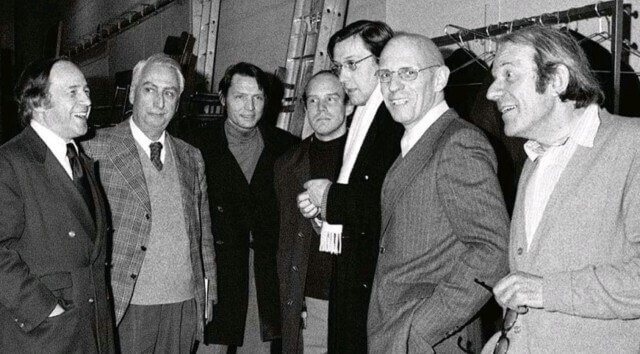
Lectures in this Seminar

square
Reading Date: October 22, 1985
right_ol
square
Reading Date: October 29, 1985
right_ol
square
Reading Date: November 5, 1985
right_ol
square
Reading Date: November 12, 1985
right_ol
square
Reading Date: November 19, 1985
right_ol
square
Reading Date: November 26, 1985
right_ol
square
Reading Date: December 10, 1985
right_ol
square
Reading Date: December 17, 1985
right_ol
square
Reading Date: January 7, 1986
right_ol
square
Reading Date: January 14, 1986
right_ol
square
Reading Date: January 21, 1986
right_ol
square
Reading Date: January 28, 1986
right_ol
square
Reading Date: February 25, 1986
right_ol
square
Reading Date: March 4, 1986
right_ol
square
Reading Date: March 11, 1986
right_ol
square
Reading Date: March 18, 1986
right_ol
square
Reading Date: March 25, 1986
right_ol
square
Reading Date: April 8, 1986
right_ol
square
Reading Date: April 15, 1986
right_ol
square
Reading Date: April 22, 1986
right_ol
square
Reading Date: April 29, 1986
right_ol
square
Reading Date: May 6, 1986
right_ol
square
Reading Date: May 13, 1986
right_ol
square
Reading Date: May 20, 1986
right_ol
square
Reading Date: May 27, 1986
right_ol
square
Reading Date: June 3, 1986
right_ol

November 5, 1985

What is immediately given? Foucault’s answer would be: what is immediately given are words, sentences, and, if push comes to shove, propositions … But Foucault tells us: be careful, what I call ‘statement,’ what I feel the need to call ‘statement,’ can be reduced neither to words, nor to sentences, nor to propositions, nor to speech acts. And really, it’s in this sense that I remind you that the concept of the statement in Foucault is so original that he could just as well have invented a new word to designate this thing. Because he does not conceal from us the fact that according to him, what he calls ‘statement’ does not match anything that linguists or logicians have so far been talking about. He thus invokes the radical originality of the concept of statement he offers us.

Seminar Introduction

After Michel Foucault’s death from AIDS on June 25, 1984, Deleuze decided to devote an entire year of his seminar to a study of Foucault’s writings. Deleuze analyses in detail what he took to be the three “axes” of Foucault’s thought: knowledge, power, and subjectivation. Parts of the seminar contributed to the publication of Deleuze’s book Foucault (Paris: Minuit, 1986), which subsequently appeared in an English translation by Seán Hand (Minneapolis: University of Minnesota Press, 1988).

For archival purposes, the English translations are based on the original transcripts from Paris 8, all of which have been revised with reference to the BNF recordings available thanks to Hidenobu Suzuki, and with the generous assistance of Marc Haas.

English Translation

Edited

After the usual recap of previous key points, Deleuze considers the work by Krafft-Ebing and his Psychopathia Sexualis, to which Deleuze contrasts Foucault’s perspective, also emphasizing the emergence of statements in government and in schools. Then, Deleuze considers the very method of extracting statements, i.e., necessarily by constituting a corpus to unlock the patterns that define statements, but in a fashion that is depersonalized (to the extent possible). Deleuze likens this to Gabriel Tarde’ microsociology and finds examples in Foucault’s “Lives of Infamous Men” and in the History of Madness. The method consisting of determining the sites of power [les foyers de pouvoir] around which the words, sentences and propositions are organized, Deleuze argues that Foucault’s method for these sites leads him to identify “singularities” as constitutive of a corpus, thereby designating a “there is” of language. Linking this gathering of language to historical formations (e.g. the Classical age, and Nietzsche and Mallarmé, also works by Blanchot), Deleuze says that for Foucault, the “there is” of language is an “anonymous murmur”, discovered by breaking open language and statements to the corpus of visibility, the being-light of each period. For Foucault, this glimmering of visibilities emerges in the work of Raymond Roussel, poetry constituted as knowledge (savoir).

Foucault Chomsky Debate
Foucault debating Noam Chomsky on Dutch television, with host Fons Elders, November 1971


Gilles Deleuze

Seminar on Foucault, 1985-1986

Part I: Knowledge (Historical Formations)

Lecture 03, 05 November 1985

Transcribed by Annabelle Dufourcq; time stamp and supplementary revisions, Charles J. Stivale

Translated by Mary Beth Mader


Part 1

What would be very bad would be if you had no questions. But it may be that you have questions, and you are keeping them for yourselves: that is very good. So, there is no need to go back over things?

Question: [Inaudible]. . . couldn’t one consider the Nazi regime to be a phenomenon of . . . [Inaudible]

Deleuze: If one could not what?

Question: [Inaudible]

Deleuze: Why not? I mean: but this has little to do with Foucault. Yes, it would be up to you to ask yourself whether one could consider collective phenomena as illnesses. I don’t know, I don’t know at all.

So, there are no problems, for the moment? I mean: no problems with respect to where we are regarding Foucault? Yes?

Question: [Inaudible]

Deleuze: What you say is very interesting. Roughly, you are telling me that I am not sufficiently taking into account a development, or changes, in Foucault, or of the progress of his pursuits.

Interlocutor: [I?] used the word “shift” . . .

Deleuze: shift . . . yes, but, well, since it’s a scholarly word, “shift,” yes, okay, don’t be attached to the word. I can say this: when it’s a matter of commenting on certain of Foucault’s notions, there are two rather different tasks involved: to try to show the novelty of the notions and their interrelations, and on the other hand—and yet these must both be done at once—to try to show the development that Foucault went through to come up with that. So, it’s fairly true that for me, personally, the questions of development interest me less than the question of the coherence in a system of new concepts. That’s why I find that remark entirely justified. But it doesn’t seem all that difficult to me. I’ll take an example: we could say that until Archaeology of Knowledge what predominates in Foucault is: what is knowledge [savoir]? What is it to know? And then with Discipline and Punish, and the book called, paradoxically, The Will to Knowledge (History of Sexuality), we very quickly notice that Foucault sets off in fact into a new dimension. And that it’s no longer exactly about knowledge [savoir], but it’s about power. And then we notice that, here it’s less tricky to tell, so explicitly does he say it, that with the last two books, The Use of Pleasure and The Care of the Self, he discovers yet another dimension. In this sense, to go back to this word, there is a series of shifts. They would need to be indicated. They must be indicated.

You will notice that I insist on the following point, that is, since I began with the question ‘what is knowledge?,’ in my view, I do not have to indicate, within that question, a fundamental development. And yet, the answer to this question is not the same in Birth of the Clinic as in Archaeology of Knowledge. If there is a shift within the question ‘what is knowledge?,’ it is nonetheless the case that ‘what is knowledge?’ is a question that has a consistence, and for which there are elements of an answer in all of the books up to Discipline and Punish. Thereafter, there is a shift: the question becomes ‘what is power?’ There is indeed the discovery of a new dimension, we will see, and actually, once we will have finished all I have to say about ‘what is knowledge?, we’ll move on to ‘what is power?’ And at that point, I’ll try to indicate that, in fact, there is, as you say, a shift. [Pause]

But, here’s what interests me even more: what interests me even more is that, of course, there is a new dimension, but that it is not by chance that he moves from one dimension characterized as knowledge to another dimension characterized as power. I mean, it must be that something in the dimension of knowledge forced him to move to another dimension. It must be then that the question ‘what is knowledge?’ ran up against another problem, ran into the problem that is found at the very heart of the question of knowledge. Such that to explain these shifts my entire method would be: what is there in a statement—when Foucault pushes his analysis of the statement as far as he can—that forces us to leave this domain of knowledge and establish ourselves in the domain of power? Moreover, this something that forces us to leave the domain of knowledge must be lodged in the heart of knowledge itself. We thus must discover, in the statement itself, something to which the statement cannot give an answer. So much so that, in this sense, what never ceases to interest me—quite a bit more, if you wish, than Foucault’s development—is how the set of new concepts that he creates, how this set has a consistence. What interests me is not that Foucault follows an analysis of knowledge with an analysis of power. What interests me is: what are the anchor points that meant that, in the very domain of knowledge, the move to a problem of power had to be made?

And that, in my opinion, is already present in History of Madness. What is present in History of Madness, starting from History of Madness, is not what is fully present in Archaeology of Knowledge. It’s not an analysis of power that will arise only later, but it’s the need to go beyond the statement toward another case. So, it’s only afterwards that we will learn that this other case is that of power. But the need to go beyond the statement toward another case is plainly posited in Archaeology of Knowledge. But what this other case is, we cannot know yet. Such that, once we discover, through the analysis of power, what this other instance is, at that point, it’s as if a sort of blank space in Archaeology of Knowledge was filled in.

So, one can certainly speak about shifts from one book to the other, but it seems to me, assuming we add that each time these shifts take place they fill a blank in the preceding period. But for all those who find that I do not grant enough importance to a development, that seems to me very legitimate and, in fact, that is not what most interests me. What most interests me, well, I would like to say that, for me, all of Foucault’s new concepts are developed along three axes, it’s a thinking along three axes, that is, a thinking in space, it’s not a thinking on one plane, it’s a thinking in space. You have, let’s say: a first ‘knowledge’ axis, a second ‘power’ axis, and a third, let’s say, ‘desire’ axis.

[Deleuze goes to the blackboard] What I mean is that both are nevertheless true. It is true that Foucault starts at the knowledge axis. And then later reaches the power axis. Then he explores the axis of desire. It looks like there is a development from one axis to another, or in any case a shift. But for my part what most interests me, in what I want to do this year, is not that he moves from one axis to another in succession. What interests me is the whole of the three axes and how the new concepts are shared out depending on the three axes that constitute a space. So, actually, it is not hard to correct what I say all along by introducing the idea that, or by constantly reintroducing the idea that: Ah, well, but he started with knowledge to then raise this to power, and then to desire. [Deleuze returns to his seat] What I mean is that these are corrections that you make yourselves, and that can entail many modifications, but it’s not desirable that you have the same reading as I do, certainly not. What I’m offering is intended to help your reading. That is, the only thing that I ask of you is that you would kindly consider what I propose to you, but not at all that you grant that I’m right. On the contrary, you must construct, you must do your own reading, your reading.

So, anyway, what we addressed the last time, is the very beginning of the question, in my view the most difficult question in the whole of Foucault’s corpus, namely: ‘what is a statement?’ And what we said, and, on this then, I see, it seems to be very clear, since there were no questions, we saw—we must proceed very carefully—we looked at a first theme of Foucault’s, namely: the statement, the statements of a period (because statements refer to historical formations, we’ve seen this from the start), well, the statements of a period are never hidden . . . And yet. And yet. The two must be held in tandem. And yet they are never immediately given. That’s quite a complicated idea. Statements are never hidden. In fact, we saw this—I won’t go back over that since that’s all good—every period says all that it has to say. Every period says all that it can say. It hides nothing, or, at least, what it hides is altogether secondary, in the sense that history has never been made by state secrets. The state secret is really a tiny thing in relation to the movement of history. Roughly, we can say that a period says all that it has to say.

Okay, we saw that, we explicated it a good deal, so I suppose that you’ll grant me that, or that you’ll grant it to Foucault. But that would make no sense if he did not add, too: but be careful, that does not mean that statements are immediately given, that is, are immediately readable. So, now things are getting complicated. Both non-secret, non-hidden and yet not immediately readable or visible. Not immediately readable. What does that mean? We vaguely understand, if you will, but still very vaguely, we understand that Foucault is saying to us: statements are never hidden, but be careful! You won’t get there unless you ascend to the conditions that permit their extraction. But that itself produces a problem: extract them from what? I am saying, and understand this, this is why we are going very, very slowly. I am saying: statements are never hidden, but they are not immediately given because they must be extracted.

In fact: the statement will be an original notion created by Foucault. To repeat, they must be extracted. From what? Every period states all that it has to state. But if you do not ascend to the conditions for the statement in a period, you may never find them. In other words, you still have to know how to read. But what is reading, for Foucault? A period doesn’t hide anything . . . Yes: for the archaeologist who knows how to read statements. The statement must be read, that is, in this case, extracted from something. Extracted from what? You’ve really got to be imbued with this problem. It doesn’t matter whether you agree with the problem or not. It doesn’t matter: that’s not our question. You have to act as if you agreed for a while. Even if it means retracting your agreement. But, I mean, perhaps you have a sense that now this is starting to be interesting. To me, it was already interesting because Foucault was telling us: you know, every period says all that it has to say. It was a principle of historical study, and a very interesting one: there is nothing secret. But the “there is nothing secret” is immediately supplemented by: if you do not know how to read statements, you will never find them. They must be extracted. And archaeology will be: the extraction of the statements of a period, the extraction of the statements of an historical formation, insofar as they are never immediately given, insofar as they are never immediately readable.

But then what is immediately given? Perhaps we’ll make progress if we ask: what is immediately given? Foucault’s answer would be: what is immediately given are words, sentences, and, if push comes to shove, propositions—later I’ll clarify this ‘if push comes to shove.’ But Foucault tells us: be careful, what I call ‘statement,’ what I feel the need to call ‘statement,’ can be reduced neither to words, nor to sentences, nor to propositions, nor to speech acts. And really, it’s in this sense that I remind you that the concept of the statement in Foucault is so original that he could just as well have invented a new word to designate this thing. Because he does not conceal from us the fact that according to him, what he calls ‘statement’ does not match anything that linguists or logicians have so far been talking about. He thus invokes the radical originality of the concept of statement he offers us. And his general thesis will be: the statement is reducible neither to words, nor to sentences, nor to propositions, nor to speech acts.

Oh, okay, well, what then? At least, in our very slow advance—which I wanted to be very, very slow—this is a place to pause a bit. What can we draw from this? It does not reduce to any of these things. Okay, let’s take advantage of this. It clearly means that if we stick to the words used in a given period, to the sentences said in a period, to the propositions that can be identified in a period, to the speech acts pronounced in a period, we will not grasp and we will not be able to grasp the statements. And even more! Here is where we will have the sense that statements are hidden. If you stick with the words, sentences, and speech acts, you’ll say: the statements are hidden. That’s not at all because statements are in fact hidden, that’s because statements cannot be reduced to words, sentences, or speech acts.

Oh, really? Look! How about an example? I’m wondering about sexuality in the 19th century. You can see right away that the example I bring up is an example that Foucault will work out in his late writings. He will work it out in the first volume of his History of Sexuality, namely, in the book called The Will to Knowledge [La Volonté de savoir]. And he chooses a very good example in the chapter, right from the start, in the very lovely opening to The Will to Knowledge, the first chapter is called “We Other Victorians.” The Victorian Period. And what is usually said about the Victorian Period? Why does it interest us? We are frequently told that it is a period that saw a deep repression of sexuality and that, notably, speaking about sexuality was forbidden.

Furthermore this even frames a certain ready-made history. We are told that in the 19th century sexuality was spoken about little or not at all, and then along came Freud. Okay. . . But such a conception is dubious, after all. Along came Freud, and then what? And along came Freud and then people start talking about sexuality. He talked about sexuality, finally. So, there are problems here. Right away, if I take this proposition—it’s not a statement—this proposition: Freud came along and taught us that the child, quite young, already had a sexuality. Oh? So, seriously, what bothers us? What bothers every decent soul about such a proposition? Perhaps we don’t uphold it today any more, in large part thanks to Foucault. And if we no longer uphold it, that doesn’t mean that the psychoanalytic manuals did not uphold it, a long time ago, things were presented to us that way.

What bothers us? What bothers us right away are things that we practically feel ashamed to talk about. We say to ourselves: but look here, weren’t there wet nurses at the time? Wasn’t there anyone who changed the little child? What does it mean to say they didn’t know that there was an infantile sexuality, or they didn’t talk about it? When one wet nurse ran into another one, didn’t she talk about the phenomenon of infantile sexuality in the baby? She didn’t talk to herself when she was changing the kid? That’s weird, don’t you think? I don’t know, it’s seriously very, very strange. And then, so what about the phenomena of onanism? You mean people didn’t know about onanism? So, at this point, you say, well, obviously, it was known. So, it was known, and people didn’t talk about it? Now this, you should sense, is pure Foucault. In what sense? One shouldn’t be surprised if Foucault tells us—and we will see the importance of this for philosophy in general, here, I’m putting words in his mouth, but you do find the equivalent in Foucault — “I give more importance to a statement from a wetnurse than from a great psychiatrist.” That is, you have to choose the statements you’ll address. Okay, so what does all this mean?

There is a book published at the end of the 19th century, that starts at the end of the 19th century, which became the great classic of the period, and did so independently of all of Freud’s influence and of psychoanalysis. This is the huge book that remained the foundation of everything, the book by Krafft-Ebing. Krafft-Ebing published his enormous book: Psychopathia sexualis. Psychopathia sexualis—what do you know? The title is in Latin. It’s very interesting that the title is in Latin. In our enthusiasm, let’s read the sub-title, as well. The [French] subtitle says: “for the use of jurists and physicians.” Good. You go through the book and you can see that it’s a classification of all the existing and imaginable sexual perversions, with case reports, cases that, for the most part, in the great majority, cover the whole of the 19th century. The greatest horrors appear there: love with corpses, love for excrement . . . Genuine abominations that are all numbered, with case studies. And when one pages through these case studies, one is struck by the fact that, from time to time, in a study—the book is in German, but it is translated into French, published by Payot—so, that, in each case study, at the point that seems the most striking, the sentence becomes Latin. Is that a real way of hiding? If you take into account that at the time the least high school student . . .

Part 2

. . . and we’ll see what part of it we’ll need to draw from It is certainly significant that the subtitle is “for use by jurists and physicians” and that the statements of the book include bits of sentences in Latin. One can’t forget that, one can’t ignore that. Apart from that, everything is stated. It’s the book from the Victorian era.

Understand: what are we in the process of seeing? If you stick to the words and sentences, you’ll have the sense that something is hidden. And, sure: there are forbidden words, and that’s the whole theme of the first chapter: “We Other Victorians,” there are forbidden words, there are metaphorized sentences. You will speak of this or that only by metaphor. There are repressed propositions. Foucault contests none of that. However, if you stick with words, sentences, and propositions, well, then yes, you’ll say: something is hidden. That’s because you’ve not known how to reach the true statements. Plus, how will the Victorian Era be defined? By a genuine proliferation of statements on sexuality. And it’s as if words are prohibited, sentences are metaphorized, and propositions are repressed just to make statements on sexuality proliferate. And Foucault goes in search of these statements: where to look for them? Where to find them? [Pause]

Let’s see, let’s see, let’s draw up the list. In the first chapter. He discovers a first site of statements on sexuality in what? In the Church and the confession [confession] and the techniques of avowal [aveu], which track down sexuality, including childhood sexuality. What priest does not know that there is a childhood sexuality? And what priest does not know that its expression, from earliest childhood, are already the sign of original sin? Any priest whatsoever knows this. Moreover, 19th century priests knew all they could know in this period about childhood sexuality. Furthermore, it will be easy for Foucault to show that this had long been the case: since the Council of Trent the Church gave itself the task of producing statements on sexuality. Good. So, that’s a first site of statements.

Second site, in the 19th century, then: government. As we saw the last time, over the course of the 19th century, and already in the 18th century, at the end of the 18th century, the State strikes out into a genuine biopolitics, that is, it conceives its functions to include a genuine management of life. To manage and to control life. How do you think it could not take an interest in the phenomenon of sexuality, in the city and in the country, in contraceptive customs, in the development of the birth rate? So, the second site.

The third site: the school. One would really have to not consult the requisite statements—you can see that Foucault’s method is taking shape here—to be blind to statements, to not know how to read, in order to believe that sexuality was not spoken of in the 19th century school. In a sense, that’s all they do. And of course, that’s in order to sanction it; but because it’s sanctioned, it is spoken of all the more. And the surveillance of children and the regulation of schools constantly make statements on sexuality proliferate. To be specific: take this, it’s obvious, the conditions in the 19th century boarding school. You’d have to be idiotic to think that, among students as well as among monitors, a non-stop production of statements on sexuality does not take place.

And Foucault especially takes up the example of what are called ‘reformist movements’ in pedagogy, in 19th century Germany, notably connected to the great philanthropist of the period who was called Basedow. And he recounts the success of 19th century sex education related to these movements: “In order to show the success of the sex education given the students, Basedow had invited all the dignitaries that Germany could muster (Goethe was one of the few to decline the invitation). Before the assembled public, one of the professors…asked the students selected questions concerning the mysteries of sex, birth, and procreation. He had them comment on engravings that depicted a pregnant woman, a couple, and a cradle. The replies were enlightened, offered without shame or embarrassment. No unseemly laughter intervened to disturb them—except from the very ranks of an adult audience more childish than the children themselves, and whom [the professor] severely reprimanded.” [TN: Michel Foucault, History of Sexuality: Volume I, p. 29; original p. 41] You’d think you were reading a report in a memorandum from 1960. We were regularly told in 1960 that in sex education courses it was in fact the parents who snickered, perturbed, and that the children listened, very soberly. Well, we need to back up. That’s what was already going on in the heart of the 19th century, and Foucault says, at this point, not without a stylistic flourish, the sentence is vintage Foucault: “At the end, they all applauded these cherub-faced boys who, in front of adults, had skillfully woven the garlands of discourse and sex.” [TN: Michel Foucault, History of Sexuality: Volume I, p. 29] So, what matters to me about this? Let’s recall. Three sites for the production of statements, each quite independent of the other: the Church, with the institution of the confessional, of the confession; the policies of the State; the school. And there are plenty of others.

Whence perhaps the idea, which will astonish us less when we get to it, but that will be in quite some time—whence one of the fundamental theses we get when Foucault directly addresses the question of power, namely, one of his great theses: no, power does not repress, or it represses only secondarily. What does it do? It does something much more profound and, doubtless, more formidable that repressing: it forms, it shapes. It does not silence, it does worse: it makes speak. It disciplines, it standardizes [normalise]. But repression is entirely secondary in relation to the positive operations of power.

Power does not repress, it disciplines, it manages, it controls, it standardizes, etcetera. It does not silence, it makes speak. It does not prevent acting, it makes act.

In other words: yes, sexuality is the secret, only here’s the thing: the secret is there only so that it can be spoken about, the secret merely indicates a certain kind of statement, a certain family of statements, it does not signify a non-statement, a non-statable. It signifies a particular kind of statement.

The secret is that about which one speaks. And the final sentence of the chapter I refer to in fact says: “What is peculiar to modern societies, in fact, is not that they consigned sex to a shadow existence, but that they dedicated themselves to speaking of it ad infinitum, while exploiting it as the secret.” [TN: Michel Foucault, History of Sexuality: Volume I, p. 35; original p. 49]

In other words, you see, we’ve just taken a considerable step forward. Yes. If you stick—and certainly the example of sexuality was a particularly striking example—if you stick to words, you see that there are prohibited words. If you stick to sentences, you see that there are sentences that can be uttered only by way of metaphor, only metaphorized. If you stick to propositions, you see that there are repressed propositions. Plainly—but all those are secondary effects. All you can conclude from this is that statements cannot be reduced to words, phrases, propositions.

And if you have the means, if you know how to accede to statements, at that point, you see that the statements of a period proliferate and that nothing is hidden. Secrecy is there only to be betrayed. Not even to be betrayed, to betray itself. Otherwise, what is the priest’s work in the confessional in relation to a little child?—we can certainly see from this that it is not to repress. For a long time, the Inquisition said, and the byword of the Inquisition always was: ‘I do not repress.’ I do not repress, I guide souls. However, uhm, I no longer know what I was saying, well, anyway, you can complete the thought yourselves.

It’s very important because it lets us take a step forward, now we can attack the question, what is . . .  Very good. We’ve just firmly established and confirmed this point, that indeed needed to be confirmed in the most concrete way possible: if the statement exists—we don’t yet know what it is—if there are statements, do not expect to find them in sentences, words, propositions, speech acts. Where will you find them? Okay, we’re starting, at this point we can now work out, or look for, what Foucault’s method is.

So: today’s first idea. There will be three, we may not have the time to finish them all. The first idea, the first great idea of Foucault’s: what do you have to do to extract statements? Here I am, faced with sentences, words, propositions. So, what should I do with this? With respect to the problem that I set out, with respect to a given problem, I must, Foucault tells us, form a corpus. Be careful: the corpus is not a corpus of statements, since we don’t know what statements are. The corpus is a corpus of words, that is, a set of words, of sentences, of propositions, and of speech acts. I must start from this sort of set called a “corpus.” In fact, it is from this corpus—you see, we’ve made a minuscule advance here, I’m no longer saying: statements will be extracted from words, sentences and propositions, with which they are not to be confused. I’m saying something markedly different: statements will be extracted, may be extracted, from a corpus of words, sentences and propositions. My question is: what has the word ‘corpus’ added? Alright? The more you feel like you already understand, the farther away we’ll be. That’s why it’s very important to go so slowly. We’ve only just introduced the notion of the corpus and we don’t yet know what a ‘corpus’ is.

And yet we can easily tell that there is a good deal to talk about here. For after all, a corpus, you can tell what is expected of it. You can identify the statements of a period only if you’ve known how to form a corpus of words, sentences and propositions that were in fact used, in fact said, in fact pronounced in the period. It’s not about forming them in your head. These sentences must have been said or written in the period. These speech acts must have been pronounced in the period. That’s how you get to be historians, or much more: archaeologists.

But what is a corpus, anyway? This is very interesting because there is a whole story here. Foucault doesn’t pick this term by chance. Because here, as much as he’s the one who invents ‘statement,’ in the sense that he gives the notion, to the same degree, when it comes to ‘corpus,’ this is a term he borrows, and borrows from linguists. And, of course, he borrows it from linguists he never talks about, as far as I know, but it’s doubtless from the linguists to whom he is closest. This is a very interesting school, very different from that of Saussure, a school that is called “distributionalism,” and whose great exponents are Bloomfield and Harris. And here’s roughly what Bloomfield and Harris have told us in founding their conception of language: they said, you can never—this is why it had such a large linguistic impact—you can never analyze language in general, not even a language, it’s not true, he said. How can one work on language or on a language? Bloomfield showed very well that all linguists have always worked like this, they just didn’t say so. Notice: they didn’t say so, but then, why did they not say so? What does the fact that they don’t say so, while they quite evidently do so, hide? Well, what every linguist does is to start from a given corpus, that is, to start from a determinate set, which can be unlimited, but is nonetheless finite in principle, a finite set of words, sentences and propositions. And one cannot study language in any other way. Ah, this is very interesting because . . . [Deleuze does not finish the sentence]

Consequently, the distributionalists, of the Bloomfield sort, are to my knowledge the only linguists explicitly to recommend a corpus. That is to say: to study a language, any language whatsoever, one must start from an historically determined or determinable corpus. And, consequently, what will object of linguistics be? To identify, in this corpus, what are the, what they call—this is the second intersection with Foucault—‘regularities.’ To identify the regularities that concern the elements of the corpus. How they conceive of these regularities is an entirely other problem. But, when Foucault will tell us, in Archaeology of Knowledge that discovering what a statement is is out of the question if one does not start from a determinate corpus, a corpus of words, sentences, and propositions and speech acts, and when he will tell us, the second point, that a statement is a regularity, to the degree that he will speak of an “enunciative regularity” [TN: statement regularity], it is in this respect that his double contact with distributionalism must be highlighted.

That said: two questions arise: How does Foucault conceive of a corpus? Second question: how does he conceive of a regularity, which defines the statement? To identify the regularities of a corpus is the common task set out by Bloomfield and Foucault. However, once this common task is posited, they have nothing else in common. That is, to the two questions—“how does one determine the corpus?” and “how does one define enunciative regularity?”—Foucault’s answers have strictly nothing any longer to do with those of the distributionalist linguists.

Do you understand? Okay, good, we keep coming back to this because this is interesting, for linguistics generally. Everyone! What is a linguist supposed to talk about if not a determinate corpus, that is, a finite set of words, sentences and propositions? Except that the linguist does not say this, or he acts like he’s not doing it. Why? This is where linguistics is twisted. This is not good! They hide the corpus that they start off from. Why? Perhaps because they have formalist aspirations. The analysis of propositions relies on a formalization; it has every interest in hiding its corpus, which is an irreducible raw material.

In other words, the analysis of propositions is above all concerned with what? To generate possible propositions, independently of the question: do they correspond to speech acts, to sentences that have in fact been formulated? Propositional analysis cannot differentiate [ne peut pas faire de différences] between the possible and the real. Thus, even while it begins from a real, determinate corpus, it will act as if it does not begin there. The aspiration of linguistics aspiration to reach language and the phenomena of language itself means that it will equally obscure the corpus to which it belongs.

I would say that psychoanalysis starts from a corpus, too: the analytic corpus is the set of words and sentences in fact formulated by a determinate patient. What the patient says. But once the patient formulates a sentence, it is well known that the analyst substitutes another sentence for it. What is more, it is well known that the analyst will develop, to this end, a theory of what is called “double inscription.” That is, to a sentence inscribed in the preconscious system, there corresponds, following the laws of interpretation, another sentence inscribed in the unconscious system. This theory of double inscription is quite famous and is adopted in what is termed ‘the topical hypothesis’ in Freud. Two inscriptions, which correspond to two different sentences. Consequently, psychoanalysis, too, is compelled, although it starts from a determinate, finite, corpus, constantly to hide this corpus it starts from, because it would like to end up with sentences of an entirely other type, that is, of another level of inscription. So much so that Foucault can say, in Archaeology of Knowledge: all linguists constantly start from a determinate and finite corpus, but they hide this. It has seemed to us that this thesis of Foucault’s must be corrected: yes, “all” except the distributionalists. That doesn’t change much. So, if instead one must start from a corpus and one must not hide it, one will find statements only if one is able to supply the formation rules for the corpus, for constituting the corpus that is set aside.

So, you have a problem—this becomes very, very concrete if you want Foucault to be of use for you in some way in your own work. You have a problem: the method that Foucault would recommend for you is this: depending on your problem, for example whether it be “What is God?,” “What is . . .” uh,  . . . let’s say, a smaller problem, uh . . . well, I don’t see a smaller problem . . . you can supply one yourselves. “What is a priest?” “What is this, what is that?” You won’t make any headway, you won’t be able to state anything, if you have not constituted your historical corpus. I’m not saying that you have to stick to that corpus, okay? We’re at stages that are extremely . . .You must constitute your corpus.

However, the corpuses that are vintage Foucault are very, very curious because even at this juncture there are all sorts of things that you’ve got to have a feel for. This is not of the order of whether he is right or not. You have to have a feel for his originality, you have to know whether this originality in particular suits you or not, and if not, you go find other authors. Because there is a telltale mark of Foucault’s in the constitution of corpuses and this is what means it no longer has anything to do with Bloomfield. If I try to come up with a way to say this on the spot, I don’t have any readymade solution, but: Foucault always looks for statements—I’m going quickly here—looks for what a follower of Foucault’s, François Ewald, has called “statements without references.” I believe that the word is fairly correct if one explains his taste. It’s really striking, in Foucault’s body of work, that he has a taste, which seems almost immoderate at first glance, for very little-known authors, and even at times for authors so little known as to be nearly anonymous. It’s almost like—it’s hardly any different from: ‘In that time period, one would say.’ [‘On dit à telle époque.’] ‘In that time period, one would say.’ I’m weighing my words, because we will not be able to make good use of this until later, but is it by chance that next Foucault will work out an entire theory of the “one” [on] as being infinitely deeper that the ‘I’ and the ‘you,’ and will oppose all ‘linguistic personology,’ of Benveniste’s sort of personology, precisely because the third person is the only true person according to him?

Very well, so, in any case, I’ve taken one step too many here, you see: you’ve got to feel that we should not at all go too fast. So, I now retract what I said. I’m quite happy to have said it, but I retract it right away. And I’m coming back, I’m slowing myself down. And I’m slowing myself down, that means: well, okay, this corpus—what? Statements without referent, without references—what does that mean? In fact, he rather infrequently cites the great philosophers. He was very much criticized for this. It’s not that he does not know them, he knows them admirably well. He does not cite them. Is that affectation? He knows them and I even suppose that his relation with the great philosophers nourishes the new concepts he forms, starting with the concept of the statement. And yet, when he constitutes a corpus, he does not address the great texts. What is more, he rarely addresses the texts by great men, whether great philosophers or others. And why?

So then, if we take the approach here of . . .  since we’re doing a kind of research, we have to use everything . . . There is a sociologist from the end of the 19th century called Gabriel Tarde. He does a microsociology, what he himself calls a sociology of the infinitesimal, and he presents his whole program like this: he says, what interests me are not ready-made social structures, nor is it the great ideas of great men. What interests me, he says—here, I’m quoting verbatim—“are the small ideas of small men.”  Very good, okay: the small ideas of small men—what is that? Let’s borrow examples from Tarde to do a sociology of the infinitesimal, what today would be called a ‘micro-sociology.’ He says: what interests me is how and when a local custom, a new local custom, is introduced. Or else, in which bureau [service] did a bureaucrat [fonctionnaire], a ministerial bureaucrat, one day sign with an official signature that ten years later was required throughout the ministry. He invented a new kind . . ., which bureau director invented a new kind of official signature? He says: that’s what micro-sociology is. When was it that the peasants stopped hailing the landowner, and where did they stop, and when did they stop? Tarde finds this fascinating.

In Discipline and Punish, Foucault will speak about small, negligible inventions and will say that they must be put into relation with the great technological inventions. For example, that after all the small, negligible invention of the prison van is worth the great, technological invention of the steam engine. Very well. A very curious text by Foucault is called “The Lives of Infamous Men” [“La vie des hommes infâmes”]. What is “The Lives of Infamous Men?” It’s a project by Foucault that he did not have the time to develop, except in one instance, and he tells us very clearly what he wants. He says: infamous men are not the great men, not the great men who achieved glory through evil. Glory through evil, for example, at least in its legends, the legend of Gilles de Rais, or the legend of Sade. Infamous men are not these diabolical men of legend. And he says: for my part, what I’m interested in, says Foucault, in this very, very curious text, are the small infamous men.

You’ll say: what’s the difference between a great infamous man and a small infamous man? Well, it’s that a small infamous man is a criminal existence, but a banal one, which is drawn into the light for a brief moment to the extent that it clashes with the powers that be. For example, a neighborhood pervert, who at one point is rendered a minor news item. The lives of infamous men—what does that mean? In the clash with the powers that be, these small infamous men felt the need to draft a little plea, a sort of small confession. Foucault tells us: I’ll take that for my corpus.

Okay, he takes that for his corpus. You see, it’s almost, it’s close to an anonymous murmur. Foucault is interested in the problems of sexuality. The immediate reaction: he will constitute a corpus of statements from the 19th century. We’ve just seen this corpus. Who will he consult? Will he consult the great thinkers of the period? No. Will he go look and see whether Freud had any precursors? No. He will look for—to the letter—what one could call “wet nurses’ texts.” Whence the theme of the archivist. He’ll take a wet nurses’ advice manual. Nothing is worth a wet nurses’ advice manual if you want to know what 19th century sexuality is. Or else, he won’t even take Krafft-Ebing, because Krafft-Ebing, that’s second-hand material. He’ll go look at the texts from which Krafft-Ebing took his cases. They could be legal verdicts. They could be expert witness reports by physicians. All of that—those are not the great thinkers. Expert witness reports, wet nurses’ advice manuals, legal verdicts. Here, too, you see, I’m saying something a bit too soon. Can one say that the expert witness is the author of the statements he pronounces? Can one say that the magistrate is the author of the ruling? No. When, much later, Foucault says: but, you know, ‘author’ is a highly relative and complex notion, one should not relate sentences to an author, perhaps you start to understand what he means.

Likewise, he’ll say: ‘subject,’ the subject of a proposition, the subject of an utterance, this is a very, very, very vague notion. There are a thousand ways for a statement to refer to a subject. There is not one univocal way to refer to a subject. There are a thousand ways, it all depends on the kind of statement. And in the same way, you cannot say that the judge who delivers a ruling is the author of the ruling, you’ll find another term. You cannot say that the expert witness who submits a report is the author of that report, you’ll find another term. But these terms will be highly important. If you write a letter, Foucault will say, in a text entitled precisely, “What is an Author?,” if you write a letter, you are not an author of the letter. What are you? You are the signatory of the letter. If you like words, you have to master all these words. When will one say “you are the author of the letter?” If you go to court, if it’s an anonymous letter, if it’s considered an infraction. At that point, it will be a matter of being an author in the sense of being an author of an infraction. Okay, that’s to say that the words ‘author’ or ‘subject’ can have so, so many senses that, perhaps . . . Okay. In any case, you see, you form your corpus like that, with statements without references, that is, which do not refer to an author, to a determinate author, and which do not necessarily have a uniform subject.

Once again, that’s why, … I take as key examples—even though Foucault did not take much interest in this—sentences and texts from wet nurses, speech acts from wet nurses when two wet nurses meet up and talk about the kid that they each took care of. Okay, you’ll say: that’s all very well, but, then what? He forms his, his . . . that presupposes that one will consult the archives, eh? Right, but . . . then one needs intuition to form the corpus? Certainly, one needs a lot of intuition. History of Madness is wholly made up of a corpus of statements on madness in the 17th century. Where do these statements come from? Statements that come from the police. Statements that come from the medicine of the time.

And, as Foucault says—here, at such points, he even has moments of great joy—these medical statements of the time owe very little to Descartes. It’s not that Descartes was of no importance—we’ll see the importance of the thinkers—but for now this importance is not at the level of the corpus. It’s not Kant . . . on the contrary, Kant, he could perhaps enter into the corpus, at what point? For example, he enters very well into a 19th century corpus on marriage. Why? At that point, through one of his least known works, namely, a work called precisely Metaphysics of Law. Not Foundations of the Metaphysics of Law, but Metaphysics of Law, in which he considers judicial statements current at the time. [TN: Eléments Métaphysiques de la Doctrine du Droit (first part of Métaphysique des moeurs), tranlated by Jules Barni (Paris: Auguste Durand, 1853)] At that point, yes, granted, he’ll be a part of the corpus. But aside from that, you’d go look in, not even in the great jurists, you’d go look for all you need: the wet nurse, the expert witness, the local magistrate, all that . . . the prison warden . . . to see what statements they produce.

But, you’ll say: so, it’s all up to intuition? Well, no! No, there is a small methodological point. We won’t be able to develop it, but it must be said, for what is to come: what’s the method? You see, in order to form my corpus of sentences, of propositions, of words, it is necessary that I have a rule that does not presuppose words, sentences, and propositions—a rule that is directed to another dimension. I have no choice. Unless you find another method, that’s possible. At that point, you leave Foucault behind. Foucault’s idea, but it will take him some time.

Did he have it from the start? All that are problems that in the end do not seem that interesting to me . . . He had it halfway, not quite, a little, a lot . . . whatever you want. But he only managed to bring it out clearly bit by bit. What is it? In order to know to which set of sentences, statements. . . a highly varied set—since they are sentences from wet nurses, expert witnesses, judges, pupils, teachers, etc.—in order to form a corpus for sexuality in the 19th century, well, then, you must attend to something that is neither a word, nor a sentence, none of that whatsoever. Not a statement, since what we’re looking for is: what is a statement? Well, were I to give Foucault’s answer in rough form, once he had it entirely, it would be: you must determine for yourself the sites of power [les foyers de pouvoir] that produce such sentences, the sites of power around which the words, sentences and propositions will be organized.

See, here he gives a very, very interesting answer. But could he have supplied it from the start? The fact is that he does not explicitly supply it in Archaeology of Knowledge. In Archaeology of Knowledge, one has the sense—one has some doubt. One has the sense that the choice of the corpus is up to intuition, even though one says, no, there is a method. He already has a method, but he does not say what it is. On the other hand, in History of Sexuality the method explodes. I’ll analyze it. He asks: what are the sites of power concerned with sexuality in the 19th century? You see, what matters is that no reference is made in this question to words, sentences, propositions, or speech acts. It is thus a question that concerns sites of power. I add straightaway—since, otherwise, it would make no sense, the method would obviously be bad—sites of power and of resistance. What are the sites of power and of resistance to power that sexuality concerns? The answer, as we have seen, is not an exhaustive answer, perhaps there are others. We’ll make do with a particular listing: the Church with respect to the confession; the government with respect to the management of the life of a population . . . [Interruption of the recording]

Part 3

From here on, you see, now we’ve really got a method. If you have determined the sites of power that a question concerns, you can form the corpus of corresponding words, sentences, propositions, and speech acts. Consequently, you will set aside [retenir] the statements current in the 19th century from the school, the political management of life, and the confession. Thereafter, what you’ll need is not to look at the great authors, but to throw yourself into the confession manuals, and if need be to go look at the treatises called those ‘of casuistry,’ since casuistry was largely occupied exactly by the problem of sexuality in relation to the confession: what questions should be asked in order to track down the sexuality of the penitent, of the faithful? Good, and then at that point you’ll have your corpus of words, sentences and propositions. But if your problem is not sexuality, but madness, you will still need to constitute your base corpus. Foucault would say that if you have not constituted your corpus, you cannot advance, your study will not be serious. It’s an odd sort of method.

Understand that this is also a method that belongs truly to him. If we reconsider the question of his development, I believe that one of the reasons for which he will move from studying the domain of knowledge to studying the domain of power is that already at the level of knowledge, and of “what is a statement?,” he could methodologically constitute the corpuses he needed only by granting himself sites of power and of resistance to power. That’s what pointed to the places where one had to look, the spots where one had to look for the words, sentences and propositions in use in a period. So, from here on, he has a corpus, for example, the corpus of the statements on sexuality in the 19th century. I would say: Krafft-Ebing’s whole book, Psychaopathia sexualis, is a compendium, is already a sub-corpus. It’s a corpus that belongs to the larger corpus.

From this point . . . so, here we can pause, or even combine two things in one. Either you’ll say—and I am entirely inclined to this—well, yes, he gave himself the means to constitute corpuses, that is, he fulfilled his program, the first phase [degré] of which was: how to constitute a corpus from which one can extract statements? Or else you have a reaction, and you say to yourself: no, there is something wrong here, this method is not yet sufficient. You could come up with plenty of things to think, of course. You could say to yourself: well, no, as for me, I’m positing problems independently of a corpus. That’s your right: try. At that point, you’ll need another method. Or else you say to yourself: yes, I agree, one needs a corpus to posit a problem, but you don’t feel you agree with Foucault about the way in which he determines his corpuses. It’s then up to you to rely on another method, Bloomfield’s, for instance, which constitutes corpuses in a way completely different from Foucault. So. Or else, and this is something I eschew, you say to yourself: well, no, that’s not Foucault at all, that’s not what he says. At that point, that concerns me in particular and it distresses me too much, so I don’t take it into consideration. So. Alright? Have you understood? Once again, it’s . . . [Deleuze does not complete the sentence]

So, here, we can in fact say: we good and well grant him his corpus. To repeat: it’s not a corpus of statements. Since his big thesis is: if you have constituted a corpus, then, perhaps, you will be able to extract them. Since you could not extract sentences, propositions, etc., treated outside of a corpus, you will perhaps be able to extract from the corpus cases that must be called cases of ‘statements.’ So: what is a statement? No answer to this question is possible if you have not first constituted a corpus of sentences, words, propositions, that were actually issued in a given period… [Inerruptiion of the recording]

… That doesn’t tell you exactly how to make a corpus. Yes and no. Yes and no. When you set out to make a corpus, you can always fail at it. What do I mean? You aim for—I always return to this clear example—the corpus of sexuality in the 19th century. First thing: you’ve determined, you’ve determined your sites of power and resistance, and the orientations of the corpus stem from those: go look into the wet nurses, go look into the priests and casuists, go look into the prefects who monitor population in the period, go look into the schools, the reformist, philanthropic movements regarding the schools, etc. But here, it goes without saying that you must be sensitive, for example, either to the emergence of new words, or to the new use of words that are already long used.

I’ll give an example: you make a corpus, you’re looking for a corpus for madness in the 19th century. You come upon certain texts by physicians who used the word ‘paranoia.’ Okay. You come upon other texts by physicians who use the word ‘monomania.’ There is a date for the emergence of this word, and this emergence date certainly refers to a great author who, for example, first isolated ‘monomania’—in this case, this is Esquirol. Okay. But what interests you even more is not that it is Esquirol, but the current use of the word ‘monomania’ in the 19th century. Thus, you have certain key words, signal words, and then you have some types of statements . . . No, I’m not saying ‘statements,’ yet; you have types of sentences. For instance, I’ll take an example in Foucault himself, in History of Madness. Here’s a sentence, it’s even a slogan, you can picture demonstrations using this slogan: “The mad to the madhouse.” It’s a sentence. Here we’ll see beautifully that although it is a sentence, it’s not a statement. We can show that it’s a sentence, even though there is no verb. That’s something propositional analysis can do easily.

“The mad to the madhouse.” Okay, so: in what sense is it part of a corpus? In my view, it is part of at least three corpuses and three altogether different corpuses. The first corpus: “The mad to the madhouse” means: you shouldn’t mix the mad with the vagabonds, since vagabonds don’t deserve that. Vagabonds deserve special treatment that should distinguish them from the mad. It is shaming for vagabonds to put them in the same places as the mad. For, first of all, they are afraid, they risk having to undergo the violent episodes of the mad, etc. You see. I would say, for the sentence, “The mad to the madhouse,” here is a first statement. The statement is: let’s separate the mad from the vagabonds since it is unjust to put the vagabonds with the mad. So, that’s the first statement.

The second statement, for that same sentence, “The mad to the madhouse,” this time, means just the reverse. The mad and the vagabonds must be separated because the mad deserve special care. This time, it is in the name of the mad that the demand to separate the mad from the vagabonds is made. This is another statement.

The third case, and here, I’m getting ahead of myself—this was not imagined by Foucault, but that’s not important. The third case: a reactionary demonstration of today. “The mad to the madhouse” means: let’s restore the old asylums and stop the neighborhood therapy centers, let’s reconstitute the old asylum. It’s a proposal one could call reactionary in relation to the development of relations to madness. That is, down with sectorization, let’s go back to the old asylums. That’s a third statement.

We’ll stick to the first two: the first separated the mad from the vagabonds because the vagabonds did not deserve to be mixed in with the mad. That’s what one said already fairly commonly in the 18th century. The other statement: separate the vagabonds from the mad because the mad deserve special care; this time, the separation is done to benefit the mad. This is a statement that appears only with the 19th century.

I would say: the two are not part of the same corpus. They do rightly belong to a corpus of madness; they do not belong to the same statement regime. The first belongs to an 18th century corpus, the other to a 19th century corpus. So, I still stress this point, you see—pay attention to in what sense I would say—Yes, of course there is a development in Foucault. Once again, to understand what he calls sites of power and of resistance, one must wait for Discipline and Punish and History of Sexuality. However, right from Archaeology of Knowledge, the determination of a corpus that archaeology requires can be done only if one already brings in such sites. You’ll say to me: But if he already brings them in in Archaeology, what does he call them? Very good, what does he call them? If we find that out, we’d at least have a hypothesis about Foucault’s transformations. And will the first designation in Archaeology thereafter retain a meaning? In my view, yes. He calls them—and he gives them a very special name, and this can only be grasped much later—he calls them ‘singularities.’ To constitute a corpus, one must first have determined a certain number of singularities. These singularities are what he will later discover as being the sites of power and of resistance.

Why does he call these ‘singularities?’ Here, I’d be at a loss, I won’t examine this for the moment. We won’t be able to see this until we already know what a statement is. But so, okay, I’m of course saying that it’s not a matter of “applying;” you won’t have corpuses by applying Foucault’s rules. You have to put some inventiveness into it; it’s a method of invention, they are rules for invention. So, what he proposes is that you constitute your problems, a problematic field. What will that be? Well, the first determination of a problematic field will be the constitution of a corresponding corpus. And with this, I’ve finished the first point. I am no longer faced with the vastness, the infinity, of what is said in a period, I find myself before specialized corpuses. At most, I am faced with the corpus of the period. No matter how large, it will in principle be a finite number of words, sentences, propositions, and speech acts.

And from this we get the second point: you see, our task is already plotted out: how will we extract statements? All we’ve got is: in order to have the slightest chance of extracting statements from words, sentences, and propositions, a specialized corpus still had to be constituted. Foucault’s second step: this specialized corpus allows me . . . he only has three steps, so . . . and the second step, I’ll tell you right away, although it interests me very much, it will seem very disappointing. But that’s the thing: the more it seems disappointing, the better it is. And, so, the third step will be brilliant. The second step is this: Foucault tells us that a corpus ultimately implies a certain way of being of language as a whole.

I mean: this seems disappointing because we had the very specialized notion of corpus and we end up with considerations about language as a whole, which we thought were dispelled by the notion of a corpus. We must therefore ask what Foucault means. Foucault says: yes, well, in Archaeology of Knowledge—now I’m grouping passages from pages 145-148 [TN: original French pagination]—an essential text about (one has to realize this): there is language, the ‘there is’ of language, language is a ‘there is.’ What does he mean by such a thing? In The Order of Things, a book published before Archaeology, I believe he already had the same idea, but it went by a different name; it was not the ‘there is’ of language, it was “the being of language.” It’s an odd expression, a being of language, this time on pages 57-59, 316-318, 395-397 [TN: original French pagination]. How can we forget that you find an odd expression in Husserl and Merleau-Ponty: language-being [l’être-langage] (with a hyphen), a language-being, the being of language, the ‘there is’ of language?

Very well: what does this mean? In the book Archaeology of Knowledge, Foucault provides a precious indication. He says: just as his predecessors, according to him, failed regarding the corpus, so they failed regarding the ‘there is’ of language—as if the two were strictly correlated. Why did they fail regarding the ‘there is’ of language, or language-being? According to Foucault, his predecessors failed regarding this language-being or this ‘there is’ of language. Why? Because they were interested in the directions that language offers and not in the dimension in which language is given. Because they were interested in and followed one of the directions that language offers, they forgot and neglected the dimension in which a language is given—given in the form of a ‘there is’ of language, or in the form of a language-being. And what is a direction that language offers? Well, at one point, it is the fact that language designates, it is the relation of designation. At another point, it is the relation of signification, the fact that language signifies. At still another point, it is the fact that language is itself composed of units said to be signifying.

You see, this is very important, the signifier is a part, and is only a part, according to Foucault, of the directions that language offers. Hence, when certain linguists will define language by means of the signifier, all they do is define language by one of its directions, instead of reaching the dimension in which language offers itself. So, I can say: designation, signification, the signifier, are solely directions that language offers and not the dimension within which it shows itself in the form of a ‘there is,’ or in the form of a language-being.

So, what is this dimension? Here, you can once again see that he multiplies his departures from linguistics. Roughly, he can claim about all of linguistics that it has only taken account of the directions and not of the dimension. So, okay: what is the dimension, in which language gives itself in the form of and as ‘there is,’ a ‘there is?’ Here, I’m summarizing. It’s up to you to consult the texts. I think this is what he means: it’s that, when it comes down to it, in The Order of Things, he will use the expression “a gathering of language.” It’s rare, one should flag the word; it is surely important because Foucault is an author who long wagered on the contrary of gathering. He’s an author who constantly explains that things exist only in a disparate, disseminated state. So, if he uses the word ‘gathering’ in this text, in these passages from The Order of Things, that’s because there is an important reason for it. A gathering of language, language-being is a gathering of language.

What does that mean? Well, contrary to what happens in Husserl or Merleau-Ponty, language-being or the being of language is still historical, that is, language-being is always a mode of being, a way of gathering language, and a way of gathering language proper to a period, that is, proper to an historical formation. It’s as though each historical formation had its way of gathering language into a ‘there is language.’ It is interesting because it opens up a new area of comparative study. One could distinguish the great historical formations, by, among other means, their ways of gathering [the] language. Language, the ‘there is language,’ the ‘there is [some] language,’ will never be separable from a given mode that it assumes in a given historical formation.

You’ll say: but how about some examples! Granted, always examples. The Order of Things examines two historical modes of being of language, of language-being, in the 17th century and at the end of the 19th and in the 20th centuries. That should provide us with an idea, that should be enough to give us an idea. And what does he tell us? Listen. We can no longer even reply that: yes, what defines the mode of being of language is linguistics. No, because we saw that linguistics was invested in the directions and not in this dimension in conformity to which language is given. Let’s put things in a very vague way—since they would be analyses that would really take us . . . we’d lose track of our problem, ‘what is a statement?’—I’m trying to suggest to you, it’s up to you to go see if the idea pleases you.

Foucault thinks, it seems to me, that in the Classical Age, that is, the 17th century historical formation, well, during this formation, in this Classical Age, language gathers in a certain way, in a certain mode. What is more, between the two modes, the 17th century Classical mode and the modern mode, from the end of the 19th century and the start of the 20th century, Foucault will say—so, the theme is important to him, some of you know, we’ll have the chance to return to this point, to the famed thesis of the death of Man in Foucault—Man is an existence between these two modes of being. That is, Man is a transitory existence, vacillating between two modes of being of language: the Classical mode of being from the 17th century, and the modern mode of being, from the end of the 19th and start of the 20th centuries. Man has existed between these two modes of being.

What can he mean? As always, we are not in a rush, but, well, I’ll try to say, it’s very . . . how the . . . assuming that each period gathers language in a way proper to it, how does the 17th century work? Foucault will say: it gathers language in representation. And here I don’t have the time, the whole analysis of 17th century theory of language, which Foucault carries out in The Order of Things, will confirm this idea: language appears in the 17th century as the framing, the grid for representation. To the extent that it is in representation that language gathers and manifests its language-being or its ‘there is language,’ its ‘there is [some] language.’ It is representation that constitutes the dimension in conformity to which language is given, and no longer one of its directions.

And it is so true that, in fact, designation, signification, etc. will depend on representation for Classical thought. Very well. It’s just a matter of giving you an inkling of things to come. What happens in the 19th century? At the end of the 19th century, this is part of the great tasks of The Order of Things, when he starts to talk about what happens for we who are called ‘moderns.’ In these texts, he invokes two authors as being fundamental for a new language-being: Nietzsche and Mallarmé. This is curious, because for once he invokes great authors. He adds Artaud to them. So, he forms a trinity of great authors.

And what does he tell us? He tells us: 19th century linguistics dismembered language, so plainly we won’t look in linguistics for language-being, that is, for the gathering of language. Linguistics dismembered language, on the one hand, into irreducible languages or into great families of irreducible languages; and on the other hand, it dismembered it along the directions of language: designations, significations, signifiers. Thus, at no point can linguistics give us an answer. What effects the gathering of language from the 19th century onward? Foucault answers: no longer representation, but something very different: literature. That’s the function of literature. And literature takes on a function that it had not had.

Of course, there was literature before then—you can see the objection right away, you have to beware of objections because it’s stupid. Was there a literature in the 17th century? Yes, there was a literature, but it absolutely did not have the specificity of a power, which it took on only at the end of the 19th century. Towards the end of the 19th century, ‘literature’ changes sense; it is a word that changes sense. And why? Because at that point literature becomes the way to gather language ‘outside’ of all possible representation. And that is Mallarmé’s endeavor: to gather language outside of all representation. The absence of representation being designated by Mallarmé as “sonorous inanity.” The being of the word, the being of the word discovered as sonorous inanity, or, for those who know a bit of Mallarmé, designated by such splendid expressions, which Mallarmé proliferates, piles up . . . But notice that, with Mallarmé—in fact, this is the clearest case—a gathering of language outside of all representation comes about, literature becomes the non-representative power that gathers language in a wholly other way, in an opaque language-being that had no equivalent in the 17th century. For in the 17th century, it was representation that effected the gathering of literature.

And here, you can see, for those familiar with it, you can see a new Foucault-Blanchot encounter, since this is exactly how Blanchot will define modern literature: by its discovery of a language-being that is irreducible to designation, signification, etc. He makes of Mallarmé one of the greatest instigators of this, one of the greatest initiators. Literature gives up every requirement of representation so as to gather an opaque language, irreducible to every representation, and to put this language to work as, really, the totality of language. To gather the whole of language. If you think of authors who are the most important for us, it goes without saying that a project such as Joyce’s can only be understood on the basis of a Mallarméan perspective, which claims to discover in literature, in the new function of literature, the ‘there is’ of language, the gathering of language that is tied to our historical formation.

So, what will we do? Grant this . . . um, the little I’ve said is just so that . . . these are not at all definitions, this is a new theme. I simply wanted you to assess the importance of this new theme. And I do mean that, in my view, the study of the types of gathering of language in Foucault remains barely sketched out, and barely sketched out in two cases: the historical formation in the 17th century, which gathers language in representation, and the historical formation from the 19th and 20th centuries, which gathers language in literature. It is thus a task that is still largely to be pursued. With the exception that perhaps Blanchot pursued it, in particular with respect to literature in its modern function. But, as for me, what interests me is the immediate conclusion that issues from this. You can see how we make progress, but at the same time, it seems disappointing, once again. We make progress because, now, we can say: once we have constituted a corpus, of greater or lesser range, but still finite, we can derive a language-being from this corpus, that is to say, a way that language gathers as a function of this corpus, or even, if you will, as a function of the whole historical formation, that is, as a function of the whole set of corpuses of a given historical formation.

You see, our first step was—it’s shaping up as a method—our first step was: once you find yourself with the sentences and words of a period, you’ll have nothing unless you have constituted, unless you know how to constitute, the corpus—the corpus relative to whatever problem you set out. There is no absolute corpus, every corpus is relative. The second stage: relative to this corpus, you will define: a way in which language gathers in this corpus, that is, a way of being of language, and, arguably, if you examine ever more corpuses of a period, the way in which language gathers in an historical formation, that is in a period. So: that’s the second condition.

I’ve got a problem: if you are feeling dazed, I can continue with easy things. If you are not feeling dazed, I’ll continue now with something that will require your attention. Either way is fine with me, because I plan for both your intelligence and your lapses. But you just have to tell me, because, well . . . Okay, I see that I can continue with the difficult material . . . although it’s not really very difficult. It’s on this basis that Foucault will draw the conclusion about this second aspect, the language-being or the gathering of language. Whether there is a dimension of language that exceeds all the linguistic dimensions? This is precisely it. Linguistics presupposes. Not only does it presuppose corpuses, but it therefore presupposes that there is language. And this is what linguistics will never be able to treat: the ‘there is’ of language or language-being.

Okay, so, if this is so, if there is some language, if there is a dimension irreducible to all the directions, it goes without saying that one cannot hold that language begins. There is no question of holding that language begins. You’ll say: oh, well, that goes without saying. Not at all! That does not go without saying. At least, it does not go without saying in the sense that Foucault understands it. It doesn’t at all go without saying, because people constantly hold that language begins. And Foucault does not want us to hold that language begins. All he says is: For all time, there is a language-being, that is, a way that language gathers, depending on each historical era. All we can say is that language-being varies, since it is historical, but does not begin; it has no beginning.

Here, again, he rejects every problem of origin. You’ll say: that goes without saying. And my answer is: no, that does not go without saying. One should not hold that language begins. Who is he against here? Against everyone! Since, to my knowledge, there are three ways of holding that language begins. And three famed formulations correspond to these three ways. The first formulation is: I speak. When one thinks that ‘I speak’ tells us something essential, we hold that language begins. The second formulation—it is no less famous—is: it speaks. Who could have said such a thing? Well, at any rate, it was said. ‘It speaks’ is likewise a way to hold that language begins. And then there is a third way—these three ways should be paired with musical instruments; I can hear them. The third, that’s the little flute, is: the world speaks. How much more modest in appearance, and how much more ambitious in reality?—but just as pernicious for Foucault. ‘The world speaks.’

And Foucault wants none of them . . . So, what will he say? What is the formulation that corresponds to ‘there is [some] language’ or language-being? Foucault has got his formulation and it’s up to him to show that it cannot be confused with any of the other three. For Foucault: ‘one speaks,’ or ‘they speak,’ what he calls ‘the anonymous murmur.’ The anonymous murmur. And he never stops referring to the anonymous murmur, he simply will ask that a place be made for him in the anonymous murmur. And he will invoke the greatest creator of anonymous murmur, namely Beckett, saying that it would be too marvelous for him if his own discourse, Foucault’s, came to have a place in the discourse of Beckett’s characters—which everyone knows are not ‘I’s, are not worlds, and are not ‘it’s. So, good.

What’s the difference? You’ll say: there’s no reason to fight, okay, between ‘it speaks,’ ‘one speaks,’ and ‘the world speaks’ . . . yes, if you don’t like philosophy, it’s not important. If you do philosophy, you say to yourself: maybe there are big differences between these formulations. Let’s suppose they are statements. ‘I speak.’ What does that mean? It means that language begins with the one who says ‘I.’ Who is ‘I’? It’s the one who says it. ‘I’ is the one who says it. ‘I’ is the one who says ‘I.’ In other words, I is a shifter. Those of you who have done no linguistics at all, don’t worry about it. Just let yourself be lulled by the words. Those who have done very little, you don’t need to have done much, it’s a shifter [TN: In English in the original.]. That is, when I say: “I is the one who says ‘I’,” I have defined the primary shifter [le premier des embrayeurs]. ‘I speak’ is the shifter of language.

Language begins with what? Language begins with these shifters, this is what one calls ‘a linguistic personology,’ which engenders, if not language, at least the act of language, or discourse, starting with two linguistic persons—the two real linguistic persons being I and you. This is Benveniste’s linguistic personology. ‘I speak.’ Okay? Consult Benveniste, Problems in General Linguistics, the chapter on shifters. [TN: Problèmes de linguistique générale, Editions Gallimard; English edition: Trans. Mary Elizabeth Meek, Coral Gables, Florida: University of Miami Press, 1971.] But you must have already read all this long ago . . . Oh, no! It’s true: there are some “first levels” here . . .Uhm, you don’t . . . no, well, it’s not at all important. But Benveniste is very beautiful. There. You get that? Good. That’s one way to hold that language begins. The theory of shifters is very interesting. In Jakobsen, you’ll find long articles on the role of shifters.

The second proposition: ‘it speaks,’—what is that? It’s once again a way of holding that language begins. Why? Because this time language begins from a moment that is assignable, which no longer is the one who says ‘I,’ the first who says ‘I.’ Because, in Benveniste’s case, it is indeed a matter of being the first to say ‘I’ since I is the one who says ‘I’. If I say it before you do, it’s me, you’d have to wait, because we can’t all speak at once. So, there is a reason to speak very quickly when one says ‘I speak,’ whereas if one says ‘one speaks,’ there is no need rush… [Interruption of the recording]

Part 4

. . . gathers language-being in representation. And it’s Phèdre, let’s say. No. That’s another function of literature. Nevertheless, it’s a show, yes; what he/it presents to us, it’s truly language-being outside of representation. The anonymous murmur. The fantastical murmur. The ‘one speaks.’ But, no matter. So: ‘it speaks’ is a way of having language begin other than with ‘I speak.’ In this case, one will say: language begins with the signifier. And that’s precisely what the one who has said ‘it speaks’ means. Language begins with the signifier and since the signifier obtains in the unconscious, and since the unconscious is signifying, the unconscious is structured like a language. Oh?

And then there are those who say, ‘the world speaks,’ the third way of having language begin. It’s as if the world silently held the capacity for a mute meaning. The world has a mute meaning and it is the place of language to flush out this meaning, to garner this meaning. The logos is language that garners. It’s no longer a matter of the gathering of language. It’s a matter of language insofar as it gathers the mute meaning of the world. Language or logos as garnering the mute meaning of the things of the world. You find this theme in Husserl, and then in Heidegger, who will work it out in a special, a very special, way, and then it is taken up and worked out in a very original way by Merleau-Ponty, in his final works, notably in The Visible and the Invisible. So much so that language, in a certain way, does nothing but make explicit the mute meaning already in things. Language reposes on the mute meaning of the world, it reposes on a muteness replete with meaning. Language will be the development of the world’s meaning to the extent that through language it is the world that speaks. Language starts at the boundary between the world and words. This is Merleau-Ponty’s idea.

However, these three themes—for example, in a little text by Foucault, “Discourse on Language,”—will be very violently rejected . . . no, not violently, but with great force. And Foucault will substitute for this . . . so, understand that, at this point, in fact, it’s very, very different. Because, if I translate into Foucault’s terms, the first formulation, ‘I speak,’ reduces language to one direction, the direction of shifters, that is, the direction of the subject who speaks. The second, the ‘it speaks,’ reduces language to one of its directions, the direction of the signifier. The third, ‘the world speaks,’ reduces language to one of its directions, this time, to the state of the world, or the world intended, aimed at, through language [le monde intentionné, visé, à travers le langage].

Well, in the name of his principle, Foucault rejects all three. What is the formulation that will correspond to the dimension of language independently of its directions, that is, to the gathering of language or the ‘there is’ of language? Once again, it can only be ‘one speaks.’ Assuming one understands that, in the ‘one speaks,’ which is the non-beginning of language, one must say that all subjects, no matter who, all the possible and imaginable ‘I’s, will find a place there. All the signifiers will therein form their chain. Everything there is to be said about the world will come to occupy it. But the ‘there is of language is not to be defined by any of these directions. It is to be defined by the dimension that is proper to ‘one speaks,’ to the anonymous murmur, that is to say: to the statement.

I summarize the two points. You will tell me: we’re dawdling, we’re not exactly going quickly . . . So much the better, we’re not exactly going quickly because, now, the question explodes, and we can’t defer any longer, and we have the means to give an answer. We can’t defer any longer, and we have the means to give an answer! Namely, the first rule: with words, sentences, proposition, you constitute a corpus, related to your problem. Second rule: you extract a ‘there is’ of the language, a gathering of the language, a language-being. Third point: all you need do now is to reach out your hand and garner the statements. The action of language-being upon the corpus will liberate statements for you.

You’ll say: that’s easily said, easily said. That’s right. And therefore our problem will be: what is a statement?—once we specify that now we can suppose, and this will have been today’s session, that we have the means to answer the question. Last time, we did not have the means to answer the question, now we have acquired the means. I can simply say, to entice us, that . . . see, it’s as if in order to discover statements, one had to not just stick to the words, sentences, and propositions, one had to break them open. One has to open words up, to break sentences open, to break propositions open, in order to extract statements. Exactly like one breaks open a shell.

So, this is where we are, but, all of a sudden, I think, ah! It is time to . . . while I have you, now, this is going to be very easy, so, it’s going to be very, very easy, what is left for us to do. Can you still do more? Are you holding up? Okay, I had hoped that you would say no, but I didn’t dare [?]. It occurs to me, all of a sudden, but I’ve said this constantly from the start: you know, the statement, the statable, that’s just half of knowledge for Foucault. There is the other half, there is seeing.

And I can tell very well that some of you do not agree, and that distresses me. So, I think: let’s take advantage of this, because if knowledge is made of two halves, then what we’ve just said for statements must also have its equivalent for visibilities, in Foucault. Since, if it had no equivalent, I could no longer say: you know, Foucault attaches as much importance to seeing as to stating. And if it has an equivalent, and if one can show that it has an equivalent, at that point, I secretly prevail. Because if it has an equivalent, that means that knowledge is not simply stating, and that it really is the combination of the statable and the visible.

So, let’s make a small excursus: can Foucault give us an analogous and equally lovely account with respect to the visible? Why not? What would such an account amount to? It would amount to this. First proposition: you know, visibilities are never hidden. Every period sees what it can see, every period makes seeable all that it can make seeable. Only, watch out!—while they are never hidden, visibilities are nonetheless never immediately given. Up to here, we’re good, right? It’s even like a kind of tracing.

Second proposition: if you stick to things or even to qualities, or even to states of things, you will never reach visibilities. You’ll will never reach the visibilities of a period. Visibilities are no more reducible to things or objects, to states of things, or to sensible qualities, than statements are reducible to words, sentences, or propositions.

Third proposition: You must extract visibilities from a physical corpus, that is, you must break open things and objects so as to extract the visibilities from them. How, on what conditions, do you form your corpus of visibilities?

Fourth proposition: There has to be a ‘there is;’ just as there has to be a ‘there is’ of language that is irreducible to all linguistic directions, so there must be a ‘there is’ that is irreducible to all sensible, that is, phenomenological, directions.

What is this quite simple ‘there is?’ It is the ‘there is’ upon which Goethe died. The ‘there is light.’ There is light and each period has a light-being [un être-lumière], a mode of being of light. And light gathers in each period according to a certain mode. What will define the visibilities of a period is the ‘there is light,’ or the light-being, which varies from one formation to another. And when Foucault, and why does Foucault feel the need to write about paintings, from one end of his body of work to the other? What is a painting, for him? It’s a regime of light, before being a set of lines and colors.

What defines a painting? It’s a gathering of light. What above all distinguishes—I don’t mean solely, exclusively—but what above all distinguishes Velásquez and Manet? The regime of light in Velásquez’s painting, Las Meninas, and the regime of light in Manet’s painting, Le bar des Folies Bergères. The idea is that there is a light-being just as there is a language-being [un être-langage], and that these two beings are heterogeneous. This means that beneath the language-being at work in a corpus, in a linguistic corpus, you extract statements and visibilities. You will extract them when the light-being converges with a visible corpus. For example, a painting that forms a corpus or an element of a corpus. And visibility, what will that be?

Here, we’ve got to land squarely back on our feet: it cannot be a thing, quality, state of things, or object . . . Is it a fluke if Foucault’s style . . . I can’t say that it’s a problem in Foucault, it so much goes without saying for him, it’s his way of living. So, he doesn’t really have much need to talk about it. He does better than talking about it, it permeates his whole style. His whole style, what’s that? Only one thing in the order of the visible interests Foucault: facets, sparklings, glimmerings, reflections, flashes. That’s it. What interests him are not things. In other words, the visibilities are glimmerings, sparklings, and flashes, and not reflections and not the things on which reflections form.

In other words, it seems to me, Foucault in this respect is very Goethean, in the sense of Goethe’s theory of colors, when Goethe discusses the effects of light. And visibilities are effects of light, just as statements are effects of the ‘there is language.’ And will Foucault say this explicitly? Yes, in a very important text which we will look at closely, in the book entitled Raymond Roussel. Foucault tells us: there are two lights—that’s exactly what I need—there are two lights: a first light, he uses the word “first light.” (What else are you going to say?) First light is the ‘there is light,’ the ‘there is [some] light,’ the way in which light gathers—that’s the first light. And under the action of this first light there are no longer things, but things come to count for their glintings, sparklings, and reflections. And he congratulates Raymond Roussel for having built his entire oeuvre between the first light and sparklings or glintings.

So, I can say, obviously, that seeing is the second pole of knowledge [savoir], since seeing tells, in its way—which is irreducible to the statement’s way—an analogous tale [histoire]. Just as one must break open words and sentences to extract statements, so one must break open things and qualities to extract visibilities. And just as, when one reaches the meeting point—the junction, the interference—between a corpus and a gathering of language, one will extract statements, so, when one reaches the interaction between a physical corpus and a gathering of light, one will discover flashes, glintings, and sparklings. Then things will fade away, leaving flashes and sparklings in their place, exactly as words and sentences faded away to leave statements in their place. And the splendor of Raymond Roussel, according to Foucault, is to have created works of both kinds: a first part of his oeuvre (an example of this type of text is “The View,” [“La Vue”]), in which things are broken open so as to release glintings; and for the other sort of text, Impressions of Africa, in which words and sentences are broken open so as to release statements. And thus Raymond Roussel, in poetry, traversed the two poles of knowledge and constituted poetry as knowledge [savoir].

In any event, we now find ourselves at the third point. Now that all this has been said, we have the means to extract statements, so far, so good, just as we perhaps have the means to extract visibilities. And so: what is a statement? Our answer must account for its difference from words, sentences and propositions.

This is where we are. If we get there, if we get to that, well, we will have finished ‘what is knowledge?’ We will have finished ‘what is knowledge?’ fairly quickly. Okay, are there any questions? You know, is there anything? I want you to think about all this, okay, between now and the next time, I don’t know. There’s nothing?

Question: (inaudible)

Deleuze: We’ll get to that. It implicates our whole future. For now, we must very firmly establish the difference in nature between the two, that is, why there is no common form. We’re not at that point, yet. There must certainly be something that relates them, you’re right about that.

So, if you have nothing to say to me . . . yeah?

Question: [Inaudible]

Deleuze: I don’t understand. Re-state that, re-state that. We are all tired, right? You’re saying: why don’t I speak about languages, right?

Question: [Inaudible] … this material appears in the world like planets … [Inaudible]

Deleuze: But I think I understand . . . yes?

Question: With respect to linguistics, I don’t understand, because there is no linguistics prior to its historical appearances. There is not one language that would be a metaphysical material . . .

Deleuze: But neither is there for light, for Foucault: there is no light that is not relative to an historical formation.

Question: But it’s still nonetheless physical?

Deleuze: No! No, no! Not for Foucault. No more than it is for Goethe. Here, if you say to me “but light is a physical reality,” you might as well also say, “it’s a thing” or “it’s a state of things,” etc. Foucault doesn’t treat light as a physicist! Okay, so you’ll say to me, “but he has no right!” . . . I don’t know. At that point, I beg you: read Goethe. He does not talk about light as a physicist. Goethe explains himself at length on this point. He talks about light and tells us: Newton talks about light as a physicist, but I apply another kind of language to light. What is this other kind of language? Notice, um. . . Goethe will use the word ‘phenomenology.’ He does a phenomenology of light.

In any case, light is, absolutely for Foucault, is absolutely historical, since the physical being of light definable by Newton or definable by Aristotle is itself part of a knowledge that is a perfectly historical knowledge. And if you say: “but even before there were human beings, there was light.” Well, yes, but there were strata, there were stratifications, there was an archaeology. There were no human beings, but it was still relative to an historical formation. Yeah, in any case, he does not claim to do a physics of light for us.

Yes?

Question: [Inaudible; no doubt concerning the French title of The Order of Things, Les Mots et les Choses (Words and Things)]

Deleuze: No, since he always said, and here one must believe him [a brief jump in the recording without interruption] . . . he always said this as a way to kid around. He said: this title, he said, I quote verbatim, he said, he wrote: this title must be understood ironically. He adds: it’s obvious that ‘Words” does not designate ‘words’ and ‘Things’ does not designate ‘things.’ You can’t say it any better than that: statements are something other than words and visibilities are something other than things. So, then, why did he call it Words and Things? I think he had a reason, since what it would be, to be precise, you have to understand the title as “from the angle of words and from the angle of things.” From the angle of words, there are statements that cannot be reduced to words, and from the angle of things, there are visibilities that cannot be reduced to things. [End of the recording]

French Transcript

Edited

Dans la conférence du 05 novembre 1985, les sujets de discussion comprennent: la série des déplacements chez Foucault: la question du savoir, puis la question du pouvoir, puis la question du désir; pourquoi et comment le déplacement du savoir au pouvoir chez Foucault; l’archéologie comme l’extraction des énoncés d’une époque; des mots, des phrases et des propositions comme ce qui est immédiatement donné; le psychiatre austro-allemand Richard von Krafft-Ebing et sa Psychopathia sexualis; que pour trouver les énoncés il faut constituer un corpus; les linguistes américains Leonard Bloomfield et Zellig Harris, le distributionalisme et dégager les régularités qui définissent les énoncés; sociologue français Gabriel Tarde et microsociologie; les énoncés du XIXe siècle; la notion de corpus et les foyers de pouvoir et de résistance; la dimension dans laquelle le langage est donné; l’être du langage comme historique; le rassemblement du langage comme lié à une formation historique (représentation pour le XVIIe siècle, littérature pour le XIXe siècle); la philosophe français Maurice Blanchot et sa théorie de la littérature du comme irréductible à la représentation, dont le poète français Stéphane Mallarmé est un exemple; la linguistique présuppose que tout corpus est relatif; qu’il n’y a jamais de commencement du langage; l’être-langage et le murmure anonyme; le sens silencieux muet des choses et du monde, et la phénoménologie; le rassemblement du langage et le on parle, le murmure anonyme ou énoncé; le corpus de visibilité; l’être-lumière de chaque époque; un tableau comme un rassemblement de lumière; Raymond Roussel; et comment l’être-langage et l’être-lumière d’une même époque sont hétérogènes.

Gilles Deleuze

Sur Foucault

1ère partie : Les formations historiques

3ème séance, 05 novembre 1985

Transcription : Annabelle Dufourcq (avec le soutien du College of Liberal Arts, Purdue University) ; l’horodatage et révisions supplémentaires, Charles J. Stivale

Partie 1

… Et ce qui serait très mal, ce serait que vous n’ayez aucune question. Mais il se peut que vous ayez des questions et que vous les gardiez pour vous : ça c’est très bien ! [Rires ; pause] Donc il n’y a pas lieu de revenir sur des choses ?

Un étudiant : Je me demande si… [Propos inaudibles] …ne peut-on considérer le régime nazi comme un phénomène de… [Propos inaudibles]

Deleuze : Si, on ne peut pas quoi ?

L’étudiant : [Propos inaudibles]

Deleuze : Cette quoi… ?

L’étudiant : [Propos inaudibles] [1 :00]

Deleuze : Pourquoi pas ? Je veux dire : mais ça a peu de chose à voir avec Foucault ça. Oui, ce serait à vous de vous demander dans quelle mesure on peut considérer des phénomènes collectifs comme des maladies. Je ne sais pas, je ne sais pas du tout… [Très longue pause] [2 :00] Alors il n’y a pas de problème pour le moment ? Je veux dire : pas de problème quant au point où on en est concernant Foucault ? Oui ?

Un étudiant : [Propos inaudibles] [3 :00]

Deleuze : C’est très intéressant ce que vous dites, oui. [4 :00] En gros, vous me dites que je ne tiens pas assez compte d’une évolution, ou de changements de Foucault, ou du progrès de ses démarches.

L’étudiant : [Propos inaudibles] …employé le mot déplacement…

Deleuze : Déplacement… oui, mais enfin comme c’est un mot savant « déplacement », oui, mais enfin ne vous attachez pas au mot. Je vais vous dire, s’il s’agit de commenter certaines notions de Foucault, c’est deux tâches assez différentes : essayer de montrer la nouveauté des notions et leurs rapports, et d’autre part — et pourtant il faut bien faire les deux en même temps — essayer de montrer l’évolution que Foucault a traversée pour arriver à ça. [5 :00] Alors c’est assez vrai que, moi personnellement, les questions d’évolution m’intéressent moins que la question de la cohérence dans un système de nouveaux concepts. C’est pour ça que je trouve cette remarque tout à fait justifiée. Mais ça ne me paraît pas très difficile. Je prends un exemple : on peut dire que, jusqu’à L’Archéologie du savoir, ce qui domine chez Foucault c’est : qu’est-ce que le savoir ? Qu’est-ce que savoir ? Et puis, avec Surveiller et punir et le livre qui s’appelle paradoxalement La volonté de savoir, on s’aperçoit [6 :00] très vite que Foucault se lance en effet dans une nouvelle dimension, et qu’il ne s’agit plus exactement du savoir, mais qu’il s’agit du pouvoir. Et puis on s’aperçoit que, là on a moins de peine à s’en apercevoir, tellement il le dit explicitement, on s’aperçoit que, avec les deux derniers livres, L’usage des plaisirs et Le souci de soi, c’est encore une autre dimension qu’il découvre. En ce sens, pour reprendre le mot, il y a une série de déplacements. Il faudra les marquer. Il faut les marquer.

Vous remarquerez que j’insiste sur le point suivant, c’est que, comme j’ai commencé par la question « qu’est-ce que le savoir ? », à mon avis, [7 :00] je n’ai pas à marquer, à l’intérieur de cette question, une évolution fondamentale. Et pourtant, la réponse à cette question n’est pas la même dans La naissance de la clinique et dans Archéologie du savoir. S’il y a déplacement à l’intérieur de la question « qu’est-ce que le savoir ? », il n’en est pas moins que « qu’est-ce que le savoir ? » est une question qui a sa consistance et qui trouve des éléments de réponse dans l’ensemble des livres jusqu’à Surveiller et punir. Ensuite il y a un déplacement : la question devient « qu’est-ce que le pouvoir ? ». Il y a bien découverte d’une nouvelle dimension, on le verra, et en effet, quand on aura fini tout ce que j’ai à dire sur « qu’est-ce que le savoir ? », on passera à « qu’est-ce que le pouvoir ? ». Et là, j’essaierai de marquer que, en effet, il y a, comme vous dites, un déplacement. [Pause] [8 :00]

Mais, voilà ce qui m’intéresse encore plus : ce qui m’intéresse encore plus, c’est que, bien sûr, il y a une nouvelle dimension, mais que ce n’est pas par hasard qu’il passe d’une dimension qualifiée comme savoir à une autre dimension qualifiée comme pouvoir. Je veux dire : il faut bien que quelque chose dans la dimension du savoir l’ait forcé à passer à une autre dimension. Il faut donc que la question « qu’est-ce que le savoir ? » se soit heurtée à un autre problème, au problème qui se présente au sein même de la question du savoir. Si bien que, pour rendre compte des déplacements, toute ma méthode serait : qu’est-ce qu’il y a [9 :00] dans un énoncé — lorsque Foucault pousse le plus loin qu’il peut son analyse de l’énoncé — qui nous force à quitter ce domaine du savoir pour nous installer dans le domaine du pouvoir ? Or il faut que ce quelque chose qui nous force à quitter le domaine du savoir soit inscrit dans le savoir lui-même. Donc il faudra que nous découvrions, dans l’énoncé même, quelque chose à quoi l’énoncé ne peut pas répondre. Si bien que, en ce sens, ne cessera pas de m’intéresser bien plus, si vous voulez, que le parcours de Foucault, [10 :00] que en quoi l’ensemble des nouveaux concepts qu’il crée, en quoi cet ensemble a-t-il une consistance ? Ce qui m’intéresse, ce n’est pas que Foucault fasse succéder une analyse du pouvoir à son analyse du savoir. Ce qui m’intéresse, c’est : quels sont les points d’ancrage qui ont fait que, dans le domaine du savoir même, il fallait passer à un problème du pouvoir.

Et ça, à mon avis, c’est déjà présent dans L’Histoire de la folie. Ce qui est présent dans L’Histoire de la folie, ce n’est pas, dès L’Histoire de la folie, ce qui est pleinement présent déjà dans L’Archéologie du savoir, ce n’est pas une analyse du pouvoir qui surviendra qu’après, mais c’est la nécessité de dépasser l’énoncé vers une autre instance. [11 :00] Alors c’est seulement après que nous apprendrons que, cette autre instance, c’est celle du pouvoir. Mais la nécessité de dépasser l’énoncé vers une autre instance est pleinement posée dans L’Archéologie du savoir. Mais quelle est cette autre instance ? On ne peut pas le savoir encore. Si bien que, lorsqu’on découvrira, par l’analyse du pouvoir, quelle est cette autre instance, à ce moment-là c’est comme si une espèce de blanc de L’Archéologie du savoir était rempli.

Alors on peut certainement parler de déplacement d’un livre à l’autre, mais, il me semble, à condition d’ajouter que ces déplacements, à chaque fois qu’ils s’opèrent, viennent remplir un blanc de la période précédente. [Pause] [12 :00] Mais pour tous ceux qui trouvent que je n’attache pas assez d’importance à une “évolution”, ça me paraît très légitime et, en effet, ce n’est pas ce qui m’intéresse le plus. Ce qui m’intéresse le plus, voilà, je voudrais dire que, pour moi, tous les concepts nouveaux de Foucault se développent sur trois axes, c’est une pensée à trois axes, c’est-à-dire c’est une pensée dans l’espace, ce n’est pas une pensée sur un plan, c’est une pensée dans l’espace. Vous avez, mettons, un premier axe « savoir », un deuxième axe « pouvoir », un troisième axe, mettons, « désir ».

[Deleuze se lève et va au tableau] Ce que je veux dire, c’est que pourtant les deux sont vrais. Il est vrai que Foucault commence [13 :00] par l’axe du savoir, puis atteint à l’axe du pouvoir, puis explore l’axe du désir. On dira, d’un axe à l’autre, il y a évolution ou il y a, en tout cas, déplacement. Mais ce qui m’intéresse, moi, pour mon compte, dans ce que je veux faire cette année, ce n’est pas qu’il passe d’un axe à l’autre successivement ; ce qui m’intéresse, c’est l’ensemble des trois axes et comment les nouveaux concepts se ventilent en fonction de ces trois axes constituant un espace. Alors, en effet, ce n’est pas difficile à ce moment-là de corriger, chaque fois ce que je dirai en y introduisant l’idée de, ou en réintroduisant constamment l’idée que : ah mais il a commencé par le savoir pour s’élever jusqu’au pouvoir, puis au désir. [14 :00] [Pause ; Deleuze revient à sa place] C’est-à-dire que c’est des corrections que vous faites vous-mêmes et qui peuvent entraîner beaucoup de changements, mais il n’est pas souhaitable que vous ayez la même lecture que moi, sûrement pas. Moi, ce que je vous propose, c’est pour aider la vôtre. C’est-à-dire la seule chose que je vous demande, c’est de bien vouloir considérer ce que je vous propose, mais pas du tout de me donner raison. Il faut au contraire que vous construisiez, que vous fassiez votre lecture propre, votre lecture à vous.

Alors, finalement, ce qu’on a abordé la dernière fois, c’est le tout début de la question, à mon avis la plus difficile dans toute l’œuvre de Foucault, à savoir : qu’est-ce qu’un énoncé ? Et ce qu’on a dit — et, là-dessus, donc, [15 :00] je vois, ça semble être clair, puisqu’il n’y a pas de question — on a vu — il faut procéder très doucement — on a vu un premier thème de Foucault à savoir : l’énoncé, les énoncés d’une époque — puisque les énoncés renvoient à des formations historiques, ça on l’a vu dès le début — eh bien, les énoncés d’une époque ne sont jamais cachés. Et pourtant. Et pourtant. Les deux doivent être tenus l’un avec l’autre. Et pourtant ils ne sont jamais immédiatement donnés. C’est compliqué déjà comme idée. Les énoncés ne sont jamais cachés. On l’a vu en effet, je ne reviens pas là-dessus puisque tout va bien, toute époque dit tout ce qu’elle a à dire. Toute époque [16 :00] dit tout ce qu’elle peut dire. Elle ne cache rien, ou, du moins, ce qu’elle cache est tout à fait secondaire, au sens où jamais l’histoire ne s’est faite par des secrets d’Etat. Le secret d’Etat, c’est vraiment une petite chose par rapport au mouvement de l’histoire. En gros, nous pouvons dire qu’une époque dit tout ce qu’elle a à dire.

Bon, ça on l’a vu, on l’a beaucoup développé, donc je suppose que vous me l’accordez ou plutôt que vous l’accordez à Foucault. Mais ça n’aurait aucun sens s’il n’ajoutait pas aussi : mais attention, ça ne veut pas dire que les énoncés soient immédiatement donnés, c’est-à-dire soient immédiatement lisibles. Alors ça se complique, ça. [Pause] [17 :00] A la fois non secrets, non cachés et pourtant non immédiatement lisibles ou visibles, non immédiatement lisibles. Ça veut dire quoi ? On comprend vaguement, si vous voulez, mais encore très vaguement, on comprend que Foucault est en train de nous dire : les énoncés ne sont jamais cachés, mais attention ! Vous n’y atteindrez que si vous vous élevez jusqu’à des conditions qui permettent de les extraire. Mais ça, ça lance un problème : les extraire de quoi ? Je dis, comprenez, c’est pour ça que l’on va très, très doucement. Je dis : les énoncés ne sont jamais cachés, mais ils ne sont pas immédiatement donnés parce qu’il faut les extraire.

En effet, l’énoncé va être une notion originale [18 :00] formée par Foucault. Il faut les extraire, encore une fois : de quoi ? Toute époque énonce tout ce qu’elle a à énoncer. Mais, si vous ne vous élevez pas jusqu’aux conditions de l’énoncé à une époque, vous ne risquez pas de les trouver. En d’autres termes : encore faut-il savoir lire. Mais qu’est-ce que c’est que lire pour Foucault ? Une époque ne cache rien… oui : pour l’archéologue qui sait lire les énoncés. L’énoncé doit être lu, c’est-à-dire, dans ce cas, extrait de quelque chose. Extrait de quoi ? Il faut bien vous pénétrer de ce problème. Peu importe si vous êtes d’accord avec ce problème ou pas. Peu importe : ce n’est pas [19 :00] notre question. Il faut faire comme si vous étiez d’accord un certain moment. Quitte à revenir sur votre accord. Mais, je veux dire, peut-être sentez-vous : c’est là que ça commence à être intéressant. Pour moi c’était déjà intéressant parce que Foucault nous disait : vous savez toute époque dit tout ce qu’elle a à dire. C’était un principe d’étude d’histoire, d’étude historique très intéressant : il n’y a pas de secret. Mais le « il n’y a pas de secret » est immédiatement complété par : si vous ne savez pas lire les énoncés, vous ne les trouverez jamais. Il faut les extraire. Et l’archéologie, ce sera l’extraction des énoncés d’une époque, l’extraction des énoncés d’une formation historique en tant qu’ils ne sont jamais immédiatement donnés, [20 :00] en tant qu’ils ne sont jamais immédiatement lisibles.

Mais alors qu’est-ce qui est immédiatement donné ? On va peut-être avancer si on se demande : qu’est-ce qui est immédiatement donné ? La réponse de Foucault, ce serait : ce qui est immédiatement donné, c’est des mots, des phrases et, à la rigueur — je préciserai tout à l’heure ce « et à la rigueur » — des propositions. Mais Foucault nous dit : attention, ce que j’appelle « énoncé », ce que j’éprouve le besoin d’appeler « énoncé », ne se réduit ni aux mots, ni aux phrases, ni aux propositions, ni aux actes de parole. Et, en effet, c’est en ce sens [21 :00] que, je vous rappelle que le concept d’énoncé chez Foucault est si original qu’il aurait pu aussi bien inventer un mot nouveau pour désigner cette chose-là. Puisqu’il ne nous cache pas que selon lui, ce qu’il appelle « énoncé » ne correspond à rien de ce dont les linguistes ou les logiciens nous ont parlé jusqu’à maintenant. Donc il se réclame d’une originalité radicale du concept d’énoncé qu’il nous propose. Et sa thèse générale, ce sera : l’énoncé ne se ramène ni aux mots, ni aux phrases, ni aux propositions, ni aux actes de parole.

Ah bon, alors ? Au moins dans notre progression tellement lente — et que je voudrais [22 :00] très, très lente — on s’arrête un peu là. Qu’est-ce qu’on peut tirer de ça ? Ça ne se ramène à rien de tout ça. Bon : profitons-en. Ça veut dire clairement que si nous en restons aux mots employés à une époque, aux phrases dites à une époque, aux propositions dégageables à une époque, aux actes de parole proférés à une époque, nous ne saisirons pas et nous ne pourrons pas saisir les énoncés. Bien plus ! C’est là que nous aurons l’impression que les énoncés sont cachés. Si vous en restez aux mots, aux phrases, aux actes de parole, vous direz : les énoncés sont cachés. Ce n’est pas du tout parce que les énoncés sont cachés effectivement, c’est parce que les énoncés ne se réduisent ni aux mots, ni aux phrases, ni aux actes de parole. [23 :00]

Ah bon ? Tiens ! Essayons de donner un exemple. Je m’interroge sur la sexualité au XIXème siècle. Vous voyez tout de suite que l’exemple que j’invoque est un exemple que Foucault développera tardivement. Il le développera dans le premier tome de son Histoire de la sexualité, à savoir dans le livre intitulé La volonté de savoir. Et il prend un très bon exemple dans le chapitre, dès le début, dans le très beau début de La volonté de savoir, le chapitre, le premier chapitre s’intitule : “Nous autres Victoriens”, la période [24 :00] victorienne. Et qu’est-ce qu’on entend dire sur la période victorienne, en quoi est-ce qu’elle nous intéresse ? On nous dit souvent que c’est une période où s’est exercée une profonde répression de la sexualité et que, notamment, il était défendu d’en parler.

Bien plus, ça organise une certaine histoire toute faite. Au XIXème siècle, nous dit-on, on ne parlait pas ou on parlait peu de la sexualité, et puis Freud est arrivé. Bon… une pareille conception est quand même [25 :00] louche… Freud est arrivé, alors quoi ? Et puis Freud est arrivé et puis on s’est mis à parler de la sexualité. Il a enfin parlé de la sexualité. Alors il y a des problèmes. Tout de suite, si je prends cette proposition — ce n’est pas un énoncé — cette proposition : Freud est arrivé et nous a appris que l’enfant, tout petit, avait déjà une sexualité. Ah ? Alors, quand même, qu’est-ce qui nous trouble ? Qu’est-ce qui trouble toute âme honnête à une pareille proposition ? Peut-être qu’on ne la tient plus aujourd’hui, en grande partie grâce à Foucault. Et puis si on ne la tient plus, n’empêche qu’on l’a tenue dans les manuels de psychanalyse. Il y a longtemps, on nous présentait les choses comme ça.

Qu’est-ce qui [26 :00] nous gêne ? Ce qui nous gêne immédiatement, c’est des trucs dont on a presque honte de parler. On se dit : mais voyons, il n’y avait pas de nourrices à l’époque ? Il n’y avait personne qui changeait un petit enfant ? Qu’est-ce que ça veut dire ? On ne savait pas qu’il y avait une sexualité infantile ou on n’en parlait pas… Quand une nourrice rencontrait une autre nourrice : elle ne parlait pas des phénomènes de sexualité infantile chez le bébé ? Elle ne se parlait pas à elle-même, quand elle changeait le gosse ? C’est bizarre ça, vous ne trouvez pas ? Je ne sais pas, c’est quand même très, très bizarre. Et puis, et alors, les phénomènes d’onanisme ? L’onanisme, ce n’était pas connu ça ? Alors là on se dit : évidemment, c’était connu. [27 :00] Alors, c’était connu et on n’en parlait pas ? Sentez que c’est du pur Foucault : en quel sens ? Il ne faudra pas s’étonner si Foucault nous dit — et on verra l’importance que ça a pour la philosophie en général, là je le fais parler, mais il y a l’équivalent chez lui — « j’attache plus d’importance à un énoncé de nourrice qu’à l’énoncé d’un grand psychiatre ». C’est-à-dire : il faut choisir les énoncés auxquels vous allez vous adresser. Bon qu’est-ce que ça veut dire tout ça ?

Il y a un livre qui arrive à la fin du XIXème siècle, qui commence à la fin XIXème siècle, qui est devenu le grand classique de l’époque et qui se fait indépendamment de toute influence de Freud et de la psychanalyse. [28 :00] C’est le livre colossal qui est resté la base de tout, le livre de [Richard von] Krafft-Ebing. Krafft-Ebing publie son énorme livre : Psychopathia sexualis [1886]. Psychopathia sexualis : tiens, le titre est en latin. C’est très intéressant que le titre soit en latin. Dans l’entrain, lisons jusqu’au sous-titre. Le sous-titre nous dit : « à l’usage des juristes et des médecins ». Bon. On parcourt le livre, l’on voit que c’est un classement de toutes les perversions sexuelles [29 :00] existantes et imaginables, avec des exposés de cas, cas qui, pour la plupart, la plus grande majorité, couvrent l’ensemble du XIXème siècle. Les plus grandes horreurs y apparaissent : amour avec des cadavres, amour pour les excréments… de véritables abominations qui sont chaque fois numérotées, avec des analyses de cas. Et, quand on feuillette ces analyses de cas, on est frappé de ceci que, de temps en temps, dans une analyse — le livre est en allemand, mais il est traduit en français, chez Payot — donc que, dans chaque analyse de cas, [30 :00] au moment qui paraît le plus frappant, la phrase devient latine. [Rires] Est-ce une véritable manière de cacher ? Si vous considérez que, à l’époque, le moindre lycéen… [Interruption de l’enregistrement] [30 :19]

Partie 2

… et on verra quel parti on a à en tirer. Il importe sûrement que le sous-titre soit « à l’usage des juristes et des médecins » et que les énoncés du livre comportent des morceaux de phrases en latin. On ne peut pas l’oublier, on ne peut pas le négliger. A part ça, tout est dit, tout est “énoncé”. C’est le livre de l’ère victorienne. [31 :00]

Comprenez : qu’est-ce qu’on est en train d’apercevoir ? Si vous en restez aux mots et aux phrases, vous aurez l’impression que quelque chose est caché. Eh oui, il y a des mots défendus, et c’est tout le thème du premier chapitre : « nous-autres victoriens », il y a des mots défendus, il y a des phrases métaphorisées. Vous ne parlerez de ceci et de cela que par métaphores. Il y a des propositions réprimées. Foucault ne discute rien de tout ça. Seulement, si vous en restez aux mots, aux phrases [32 :00] et aux propositions, eh bien, oui, vous allez dire : il y a du caché. C’est que vous n’avez pas su atteindre aux vrais énoncés. De plus l’ère victorienne se définira comment ? Par un véritable “pullulement” des énoncés de sexualité. Et l’on dirait que les mots ne sont interdits, les phrases ne sont métaphorisées, les propositions ne sont réprimées que pour faire pulluler ces énoncés de sexualité. Et Foucault part à la recherche de ces énoncés : où les chercher ? Où les trouver ? [Pause]

Voyons, voyons, faisons la liste. Dans le premier chapitre, [33 :00] il découvre un premier foyer des énoncés de sexualité dans quoi ? Dans l’Eglise et la confession et les techniques d’aveu, qui traquent la sexualité y compris la sexualité infantile. Quel prêtre ne sait qu’il y a une sexualité infantile ? Et quel prêtre ne sait que ces manifestations, dès la plus tendre enfance, ne sont déjà le signe du péché originel ? N’importe quel prêtre sait ça. Or les prêtres du XIXème siècle savaient tout ce qu’ils pouvaient savoir à cette époque sur la sexualité infantile. Et, bien plus, [34 :00] Foucault n’aura pas de peine à montrer que ça date d’il y a longtemps, que, depuis le Concile de Trente, l’Eglise s’est donnée pour tâche de produire des énoncés de sexualité. Bien : voilà donc un premier foyer d’énoncés.

Deuxième foyer au XIXème siècle : le gouvernement. C’est que, on l’a vu la dernière fois, dans le courant du XIXème siècle et déjà au XVIIIème, l’Etat se lance dans une véritable biopolitique, c’est-à-dire, conçoit, parmi ses fonctions, une véritable gestion de la vie. Gérer et contrôler la vie. Comment voulez-vous qu’il ne s’intéresse pas au phénomène de la sexualité à la ville et dans la campagne, [35 :00] aux coutumes de contraception, à l’évolution de la natalité etc. ? Deuxième foyer.

Troisième foyer : l’école. Il faut vraiment ne pas se reporter aux énoncés nécessaires – vous voyez que la méthode de Foucault là se dessine – il faut être aveugle aux énoncés, il faut ne pas savoir lire, pour croire que à l’école au XIXème siècle, on ne parle pas de sexualité. En un sens on ne fait que ça. Et sans doute c’est pour la “sanctionner”, mais on en parlera d’autant plus [36 :00] qu’il faut la sanctionner. Et la surveillance des enfants et le règlement des écoles ne cessent de faire pulluler les énoncés de sexualité, à savoir : pensez à ceci – c’est évident – les conditions de l’internat au XIXème siècle. Il faudrait être idiot pour croire que ne se produit pas, aussi bien chez les élèves, que chez les surveillants, une production incessante d’énoncés de sexualité.

Et Foucault prend particulièrement l’exemple de ce qu’on appelle les mouvements réformistes, en pédagogie, en Allemagne au XIXème siècle, autour notamment d’un grand philanthrope de l’époque qui s’appelait [Johann Bernhard] Basedow, [37 :00] b-a-s-e-d-o-w. [Pause] Et il raconte le succès de l’éducation sexuelle au XIXème siècle autour de ces mouvements. « Pour montrer le succès de l’éducation sexuelle qu’on donnait aux élèves, Basedow avait convié ce que l’Allemagne pouvait compter de notable (Goethe avait été un des rares à décliner l’invitation). Devant le public rassemblé, un des professeurs pose aux élèves des questions choisies sur les mystères du sexe, de la naissance, de la procréation : il leur fait commenter des gravures qui représentent une femme enceinte, un couple, un berceau. Les réponses sont éclairées, sans honte ni gêne. Aucun rire malséant ne vient les troubler – sauf justement du côté d’un public adulte, plus enfantin que les enfants eux-mêmes, [38 :00] et que le professeur [Wolke], sévèrement, réprimande » [La Volonté de savoir, p. 41]. On se croit dans un compte-rendu, dans un protocole de 1960 ; on nous a assez dit, en 1960, qu’avec les cours d’éducation sexuelle et bien c’était les parents qui ricanaient, gênés, et que les enfants écoutaient, très sérieux : bien il faut reculer, c’est en plein XIXème siècle, ça se passait déjà comme ça et Foucault, là, il ne manque pas un effet de style, c’est une phrase signée Foucault : « On applaudit finalement ces garçons joufflus qui, devant les grands, tressent d’un savoir adroit les guirlandes du discours et du sexe. » Alors : qu’est-ce qui m’importe là-dedans ? Retenons, parce que… retenons. Trois foyers de production d’énoncés, très indépendants l’un de l’autre [39 :00] : l’Eglise — avec l’institution du confessionnal, de la confession — la politique d’Etat, l’école. Et il y en a bien d’autres.

D’où peut-être l’idée, qui nous étonnera moins quand on arrivera à ce point — mais dans longtemps — d’où une des thèses fondamentales lorsque Foucault abordera directement la question, à savoir, une de ses grandes thèses, non le pouvoir ne réprime pas, ou ne réprime que secondairement, qu’est-ce qu’il fait ? Il fait quelque chose de beaucoup plus profond et, sans doute, de plus terrible que la répression, il forme, il façonne ; il ne fait pas taire, il fait pire : il fait parler. [40 :00] Il discipline, il normalise. Mais la répression est tout à fait secondaire par rapport aux opérations positives du pouvoir. pas taire, il fait parler. Il n’empêche pas d’agir, il fait agir.

En d’autres termes : oui, la sexualité est le secret, seulement voilà : le secret n’est là que pour qu’on en parle, le secret désigne simplement un certain type d’énoncés, une certaine famille d’énoncés, ça ne signifie pas un in-énoncé, un in-énonçable, cela signifie : un type particulier d’énoncés. [41 :00] Le secret, c’est ce dont on parle. Et, la dernière phrase de ce chapitre auquel je me réfère dit en effet : « Ce qui est propre aux sociétés modernes, ce n’est pas qu’elles aient voué le sexe à rester dans l’ombre, c’est qu’elles se soient vouées à en parler toujours en le faisant valoir comme le secret » [La Volonté de savoir, p. 49].

En d’autres termes, vous voyez, là, on vient de faire un pas assez considérable. Oui. Si vous en restez — et, sans doute l’exemple de la sexualité était un exemple particulièrement frappant — si vous en restez aux mots, vous voyez qu’il y a des mots interdits. Si vous en restez aux phrases, vous voyez qu’il y a des phrases qu’on ne peut prononcer qu’avec [42 :00] métaphore, que métaphorisées. Si vous en restez aux propositions, vous voyez qu’il y a des propositions réprimées. Evidemment, mais tout ça ce sont des effets secondaires. Vous pouvez seulement en conclure : les énoncés ne se réduisent pas aux mots, aux phrases, aux propositions.

Et si vous avez le moyen, si vous savez vous élever jusqu’aux énoncés, à ce moment-là vous voyez que les énoncés à une époque pullulent et que rien n’est caché. Le secret n’est là que pour se trahir. Même pas pour être trahi, pour se trahir lui-même. Quelle est l’opération du prêtre au confessionnal vis-à-vis d’un petit enfant sinon, par-là, on voit bien que ce n’est pas réprimé. Il y a longtemps que l’Inquisition a toujours dit, et la devise de l’Inquisition, ça a toujours été [43 :00] : “je ne réprime pas”. Je ne réprime pas, je gère les âmes. Mais … je ne sais plus ce que je disais, enfin vous complétez de vous-mêmes.

C’est très important parce que ça nous lance dans un…, ça nous fait faire un pas ; maintenant on peut attaquer la question, qu’est-ce que c’est … D’accord on vient d’assoir juste et de confirmer ce point, qu’il fallait bien confirmer le plus concrètement possible : l’énoncé, s’il existe — on ne sait pas encore ce que c’est — s’il y a des énoncés, ne vous attendez pas à les trouver dans des phrases, des mots, des propositions, des actes de parole. Vous les trouverez où ? Bon, on commence, à ce moment-là on peut élaborer, ou chercher, quelle est la méthode de Foucault. [44 :00]

D’où : première idée d’aujourd’hui. Il va y en avoir trois, on n’aura peut-être pas le temps de les finir. Première idée, première grande idée de Foucault : pour extraire les énoncés qu’est-ce qu’il faut faire ? Je me trouve devant des phrases, des mots, des propositions. Eh bien, qu’est-ce que je dois faire avec ça ? Eu égard au problème que je pose, eu égard à tel ou tel problème, je dois, nous dit Foucault, former un corpus. Méfiez-vous : le corpus, ce n’est pas un corpus d’énoncés, puisqu’on ne sait pas ce que c’est les énoncés. Le corpus, c’est un corpus de mots, c’est-à-dire un ensemble de mots, de phrases et de propositions et d’actes  [45 :00] de parole. Il faut que je parte d’un tel ensemble nommé « corpus ». En effet, c’est de ce corpus — vous voyez, on fait un progrès minuscule — je ne dis plus maintenant : les énoncés vont être extraits des mots, des phrases et des propositions, avec lesquels ils ne se confondent pas ; je dis, ce qui est notablement différent : les énoncés s’extrairont, pourront être extraits, d’un corpus de mots, de phrases et de propositions. La question c’est : qu’est-ce qu’a ajouté le mot « corpus » ? — Ça va ? Plus vous aurez l’impression de comprendre, plus on en sera loin, c’est pour ça que c’est très, très important d’aller si lentement — on a juste introduit la notion de corpus et on ne sait pas ce que c’est : « corpus ».

Et pourtant on sent bien qu’il y a fort à parler de ça, [46 :00] parce qu’après tout, un corpus, vous voyez ce qu’on en attend. Vous ne pourrez dégager les énoncés d’une époque que si vous avez su former un corpus de mots, de phrases et de propositions effectivement employés, effectivement dites, effectivement proférées à l’époque. Il ne s’agit pas de les former dans votre tête. Il faut que ces phrases aient été dites ou écrites à l’époque. Il faut que ces actes de parole aient été proférés à l’époque. C’est par là que vous êtes historiens, bien plus : archéologues.

Or, qu’est-ce que c’est un corpus ? C’est très intéressant car c’est toute une histoire. Ce n’est pas par hasard que Foucault reprend ce terme. Car là, autant c’est lui qui invente « énoncé » au [47 :00] sens où il va prendre cette notion, autant « corpus », c’est un terme qu’il emprunte et qu’il emprunte à des linguistes. Et sans doute il l’emprunte à des linguistes dont il ne parlera jamais, à ma connaissance, mais c’est sans doute les linguistes dont il est le plus proche. C’est une école très intéressante, très différente de celle de [Ferdinand de] Saussure, une école que l’on appelle “le distributionnalisme”, le
« distributionnalisme », et qui a comme grands représentants [Leonard] Bloomfield et [Zellig S.] Harris. Et voilà en gros ce que nous disaient Bloomfield et Harris pour fonder leur conception du langage. [48 :00] Ils disaient : vous savez, vous ne pouvez jamais — et c’est par-là que ça avait une grande portée linguistique — vous ne pouvez jamais analyser le langage en général, ni même une langue, ce n’est pas vrai, dit-il. Comment on travaille sur le langage ou sur une langue ? Bloomfield montrait très bien que tous les linguistes ont toujours fait comme ça, seulement ils ne le disent pas. Tiens : ils ne le disent pas, mais alors, pourquoi ils ne le disent pas ? Qu’est-ce que ça cache qu’ils ne le disent pas, alors qu’ils le font de toute évidence ? Eh bien, ce que fait tout linguiste, c’est partir d’un corpus donné, c’est-à-dire partir d’un ensemble déterminé, qui peut être illimité, mais qui n’en est pas moins fini en droit, un ensemble fini de mots, de phrases et de propositions. Et on ne peut pas étudier une langue autrement. [49 :00] Ah ça, c’est très intéressant parce que… [Deleuze ne termine pas la phrase]

Dès lors, les distributionnalistes, du type Bloomfield, sont, à ma connaissance, les seuls linguistes à se réclamer explicitement d’un corpus. A savoir : pour étudier une langue, quelle qu’elle soit, il faut partir d’un corpus historique déterminé ou déterminable. Et, dès lors, quel sera l’objet de la linguistique ? Dégager, dans ce corpus, quelles sont les, ce qu’ils appellent — seconde rencontre avec Foucault — ce qu’ils appellent des « régularités ». Dégager les régularités qui concernent les éléments du corpus. [50 :00] Comment ils conçoivent ces régularités ? C’est un tout autre problème. Mais, lorsque Foucault nous dira, dans L’Archéologie du savoir, il n’est pas question de découvrir ce qu’est un énoncé, si l’on ne part pas d’un corpus déterminé, corpus de mots, de phrases et de propositions et d’actes de parole, et lorsqu’il nous dira, deuxième point, un énoncé c’est une régularité, au point qu’il parlera de « régularité énonciative », il faut, à cet égard, marquer sa double rencontre avec le distributionnalisme.

Ceci dit, deux questions : comment Foucault conçoit-il un corpus ? [51 :00] Deuxième question : de quelle manière conçoit-il une régularité, ce qui définit l’énoncé ? Dégager les régularités d’un corpus, c’est la tâche commune que se proposent Bloomfield et Foucault. Mais, cette tâche commune étant posée, il n’y a plus rien de commun. C’est-à-dire, aux deux questions « comment déterminer le corpus ? » et « comment définir la régularité énonciative ? », les réponses de Foucault n’ont strictement plus rien à voir avec celles des linguistes distributionnalistes.

Vous comprenez ? Alors, bon, on revient toujours à ça parce que c’est intéressant, ça, pour la linguistique en général. Tout le monde ! Comment… De quoi voulez-vous qu’un linguiste parle, sinon d’un corpus [52 :00] déterminé, c’est-à-dire d’un ensemble fini de mots, de phrases et de propositions ? Seulement il ne le dit pas ou il fait comme s’il ne le faisait pas. Pourquoi ? C’est là que c’est tordu, la linguistique. Ce n’est pas bien ça ! Ils cachent le corpus dont ils partent. Pourquoi ? Parce que peut-être qu’ils ont des prétentions formalistes. L’analyse des propositions se réclame d’une formalisation, elle a tout intérêt à cacher son corpus qui est un matériau irréductible.

En d’autres termes, l’analyse des propositions s’occupe avant tout de quoi ? D’engendrer des propositions possibles, indépendamment de la question : répondent-elles à des actes de parole, à des phrases qui ont été effectivement [53 :00] formulés ? L’analyse propositionnelle ne peut pas faire de différences entre le possible et le réel. Donc, tout en partant d’un corpus réel déterminé, elle fera comme si elle n’en partait pas. La linguistique, sa prétention de s’élever jusqu’à la langue et aux phénomènes du langage même, fait que aussi, elle va occulter le corpus dont elle part.

La psychanalyse, elle aussi, elle part d’un corpus, je dirais : le corpus analytique, c’est l’ensemble des mots et des phrases effectivement formulés par un patient déterminé, [54 :00] ce que dit le patient. Mais lorsque le patient formule une phrase, il est bien connu que l’analyste y substitue une autre phrase. Bien plus, il est bien connu que l’analyse élaborera, à cette intention, une théorie dite « de la double inscription ». C’est-à-dire : à une phrase inscrite dans le système préconscient, correspond d’après des lois d’interprétation, inscrite, une autre phrase inscrite dans le système inconscient. Cette théorie de la double inscription est bien célèbre et reprise dans ce qu’on appelle « l’hypothèse topique » chez Freud. [55 :00] Les deux inscriptions, qui correspondent à deux phrases différentes. Dès lors, il est forcé aussi que la psychanalyse, bien qu’elle parte d’un corpus déterminé, fini, ne cesse de cacher ce corpus dont elle part, puisque ce à quoi elle veut arriver c’est à des phrases d’un tout autre type, c’est-à-dire d’un autre niveau d’inscription. Si bien que Foucault peut dire, dans L’Archéologie du savoir : tous les linguistes ne cessent pas de partir d’un corpus déterminé et fini, mais ils le cachent. Il faut corriger, nous a-t-il semblé, cette thèse de Foucault : oui tous, sauf les distributionnalistes — ça change peu de choses — alors, s’il faut partir d’un corpus et si [56 :00] il ne faut pas le cacher, au contraire, on ne trouvera les énoncés que si on est en mesure de donner les règles de formation du corpus, de constitution du corpus retenu.

Donc vous avez un problème — ça devient très, très concret, si vous voulez que Foucault vous serve à quelque chose pour vos propres travaux à vous — vous avez un problème : la méthode que vous conseillerait Foucault, c’est ceci : en fonction de votre problème, par exemple que ce soit « qu’est-ce que Dieu ? », « qu’est-ce que… » … alors un problème plus petit, … comment, je ne vois pas de problème plus petit… vous suppléez vous-mêmes. « Qu’est-ce qu’un prêtre ? », « qu’est-ce que ceci, qu’est-ce que cela ? ». Vous n’avancerez pas, vous ne pourrez rien énoncer si vous n’avez pas constitué votre corpus historique. Je ne dis pas qu’il faudra en rester à ce corpus, hein — on est, on est dans une, [57 :00] dans des étapes extrêmement… — il faut constituer votre corpus historique.

Or les corpus « signés » Foucault, c’est très, très curieux, parce que, déjà là, il y a toutes sortes de choses qu’il faut que vous sentiez. Ce n’est pas du domaine s’il a raison ou pas. Il faut que vous sentiez son originalité, il faut savoir si cette originalité-là vous convient à vous et, sinon, vous cherchez d’autres auteurs. Parce qu’il y a une marque de Foucault dans la constitution des corpus et c’est par là que ça n’a plus à rien à voir avec Bloomfield. Ce que j’essaie de dire comme ça, je n’ai pas de solution toute faite, mais, Foucault cherche toujours des énoncés — je vais vite — ce que un disciple de Foucault, François Ewald, a appelé des « énoncés sans référence », soit que le mot est assez [58 :00] juste si on explique le goût. C’est très frappant que, dans l’œuvre de Foucault, il éprouve un goût à première vue presque immodéré pour des auteurs très peu connus et même si peu connus que, parfois, ça touche à l’anonymat. C’est presque du niveau, c’est à peine différent, d’un « on dit à telle époque ». On dit à telle époque. Je calcule mes mots parce que on ne pourra en tirer parti que plus tard, mais est-ce que c’est par hasard que Foucault développera ensuite toute une théorie du on comme étant infiniment plus profond que le je et le tu, et s’opposera à toute “personnologie linguistique”, du type la personnologie de [Émile] Benveniste, précisément parce que la troisième personne est la seule vraie personne selon lui.

Bon, donc, en tout cas, là j’ai fait un pas [59 :00] de trop, vous voyez : il faudrait que vous sentiez qu’il ne faut pas du tout aller trop vite, là je retire ce que j’ai dit. Je suis bien content de l’avoir dit, mais je le retire tout de suite. Et je reviens, je me calme. Et je me calme, ça veut dire : bon bien ce corpus, quoi, des énoncés sans référent ? sans référence ? ça veut dire quoi ? En effet il cite assez peu les grands philosophes. On le lui a beaucoup reproché. Ce n’est pas qu’il ne les connaisse pas, il les connaît admirablement. Il ne les cite pas, est-ce que c’est coquetterie ? Il les connaît et même je suppose que son rapport avec les grands philosophes nourrit les nouveaux concepts qu’il forme, à commencer par celui d’énoncé. Et ça n’empêche pas que, quand il constitue un corpus, il ne s’adresse pas aux grands textes. [60 :00] Bien plus, il s’adresse très rarement aux textes des grands hommes, grands philosophes ou autres. Et pourquoi ?

Tiens, alors si on procède là par… comme on fait une espèce de recherche, il faut utiliser tout… Il y a un sociologue de la fin du XIXème siècle, qui s’appelle Gabriel Tarde. Il fait une microsociologie, ce qu’il appelle lui-même une sociologie de l’infinitésimal, et il présente son entreprise comme ceci, il dit : ce qui m’intéresse, ce ne sont pas les structures sociales toutes faites et ce ne sont pas non plus les grandes idées des grands hommes. [61 :00] Ce qui m’intéresse, dit-il – là je cite exactement – « ce sont les petites idées des petits hommes ». Bon, d’accord : les petites idées des petits hommes, c’est quoi ? Prenons des exemples empruntés à Tarde pour faire une sociologie de l’infinitésimal, ce qu’on appellerait aujourd’hui une “microsociologie”. Il dit : ce qui m’intéresse, c’est comment et quand s’introduit une coutume locale, une nouvelle coutume locale ? ou bien en quel service un fonctionnaire un jour, un fonctionnaire de ministère, a-t-il signé avec un paraphe qui, dix ans après s’imposait dans tout le ministère ? Il a inventé un nouveau type…, quel directeur de bureau a inventé un nouveau type de paraphe ? Il dit : ça, c’est de la microsociologie. Quand est-ce que les paysans ont [62 :00] cessé, et à quel endroit ont-ils cessé, et quand ont-ils cessé de saluer le propriétaire ? Tarde, il trouve ça passionnant.

Foucault, dans Surveiller et punir, parlera des petites inventions dérisoires et dira qu’il faut les mettre en rapport avec les grandes inventions technologiques. Par exemple qu’après tout la petite invention dérisoire de la voiture cellulaire vaut bien la grande invention technologique de la machine à vapeur. Bien. Un texte très curieux de Foucault s’appelle : “La vie des hommes infâmes” [1977], et “la vie des hommes infâmes”, c’est quoi ? C’est un projet de Foucault qu’il n’a pas eu le temps de développer, sauf une fois, [63 :00] et il nous dit très bien ce qu’il veut. Il dit : les hommes infâmes, ce n’est pas les grands hommes, ce n’est pas les grands hommes qui ont atteint à la gloire par le mal. La gloire par le mal par exemple — du moins dans sa légende — la légende de Gilles de Rais, ou la légende de Sade. Ce ne sont pas ces hommes diaboliques légendaires, les hommes infâmes. Et il dit : moi ce qui m’intéresse, dit Foucault, dans ce texte très, très curieux, ce sont les petits hommes infâmes.

Vous me direz : quelle est la différence entre un grand homme infâme et un petit homme infâme ? Eh bien, c’est qu’un petit homme infâme, c’est une existence criminelle, mais banale, qui est tirée [64 :00] à la lumière, un court moment, dans la mesure où elle se heurte au pouvoir. Par exemple : un pervers de quartier, qui à un moment est tiré au niveau d’un fait divers. La vie des hommes infâmes, ça veut dire quoi ? Dans le heurt avec le pouvoir, ces petits hommes infâmes ont éprouvé le besoin de rédiger un placet, une espèce de petite confession. Foucault nous dit : je le prends dans mon corpus.

Bon, il le prend dans son corpus. [Pause] [65 :00] Vous voyez c’est presque, c’est proche d’un murmure anonyme. Foucault s’intéresse aux problèmes de la sexualité, réaction immédiate : il va constituer un corpus des énoncés au XIXème siècle. Ce corpus, on vient de le voir. A qui va-t-il s’adresser ? Est-ce qu’il va s’adresser aux grands penseurs de l’époque ? Non. Est-ce qu’il va aller chercher si Freud avait des précurseurs ? Non. Il va chercher à la lettre ce qu’on pourrait appeler des « textes de nourrices ». D’où le thème de l’archiviste. Il prendra un manuel de nourrices, rien ne vaut un manuel [66 :00] de nourrices si vous voulez savoir ce que c’est que la sexualité au XIXème siècle. Ou bien, il ne prendra même pas Krafft-Ebing, parce que Krafft-Ebing, c’est de la deuxième main. Il ira voir les textes dont Krafft-Ebing tire les cas. Ça peut être des jugements de justice. Ce peut être des rapports d’expertise de médecins. Tout ça, ce n’est pas des grands penseurs. Rapports d’expertise, manuels de nourrices, jugements de tribunaux. Là aussi, vous comprenez, je dis quelque chose un peu trop tôt. Est-ce qu’on peut dire que l’expert est auteur des énoncés qu’il propose ? Est-ce qu’on peut dire que [67 :00] le juge du tribunal est auteur du jugement ? Non. Lorsque, plus tard, Foucault nous dira : mais vous savez « auteur », c’est une notion très relative et très complexe, il ne faut pas rapporter les phrases à un auteur, peut-être est ce que vous commencez à comprendre ce qu’il veut dire.

De même il dira : « sujet », sujet d’une proposition, sujet d’énonciation, c’est une notion très, très floue. Il y a mille manières pour un énoncé de renvoyer à un sujet. Il n’y a pas une manière univoque de renvoyer à un sujet. Il y a mille manières, tout dépend du type d’énoncés. Et de la même manière, vous ne pouvez pas dire que le juge qui rend un jugement soit auteur du jugement, vous trouverez un [68 :00] autre mot. Vous ne pouvez pas dire que l’expert qui rend une expertise soit auteur de l’expertise, vous trouverez un autre mot. Mais ces mots auront beaucoup d’importance. Si vous écrivez une lettre, dira Foucault, dans un texte intitulé précisément “Qu’est-ce qu’un auteur ?” [1969], si vous écrivez une lettre, vous n’êtes pas auteur de la lettre. Vous êtes quoi ? Vous êtes signataire de la lettre. Si vous aimez les mots, il faut tenir tous ces mots. Quand est-ce que l’on dira « vous êtes auteur de la lettre » ? Si vous passez en justice, si c’est une lettre anonyme, si on la considère comme un délit. A ce moment-là, ce sera auteur au sens de : auteur d’un délit. Bon, c’est dire que les mots « auteur » ou « sujet » peuvent avoir tellement, tellement de sens que, peut-être… Bon. En tout cas, vous voyez, vous formez votre corpus comme ça, avec des énoncés sans référence, c’est-à-dire qui ne renvoient [69 :00] pas à un auteur, à un auteur déterminé et qui n’ont pas forcément un sujet univoque.

Encore une fois, c’est pour ça…, je prends comme exemples-clefs — encore que Foucault ne s’y soit pas beaucoup intéressé — des phrases et des textes de nourrices, des actes de paroles de nourrices lorsque deux nourrices se rencontrent et se parlent du gosse dont elles s’occupent respectivement. Bon, vous me direz : mais c’est très bien tout ça, alors quoi ? Il forme son, son… ça suppose qu’on va consulter les archives, hein ? D’accord mais… alors il faut une intuition pour former le corpus ? Sans doute, il faut beaucoup d’intuition. L’Histoire de la folie est tout entière constitution d’un corpus des énoncés sur la folie [70 :00] au XVIIème siècle et c’est des énoncés qui viennent de quoi ? Des énoncés qui viennent de la police, des énoncés qui viennent de la médecine du temps.

Et, comme dit Foucault — là, à ces moments-là, il a des grandes joies même — ces énoncés de la médecine du temps doivent très peu à Descartes. Ce n’est pas que Descartes n’ait pas d’importance — on verra l’importance des penseurs — mais pour le moment, ce n’est pas au niveau du corpus. Ce n’est pas Kant… si, Kant, il pourra peut-être s’introduire dans le corpus, à quel moment ? Par exemple, il s’introduirait très bien au XIXème siècle dans un corpus sur le mariage. Pourquoi ? A ce moment-là, par une de ses œuvres qui sont les moins connues, à savoir une œuvre qui s’appelle précisément “Métaphysique du droit”, pas “Fondements de la métaphysique du droit”, mais “Métaphysique du droit” [Il s’agit du texte de Kant Métaphysique des mœurs, dont la première partie est “Doctrine du droit”, et la deuxième partie, “Doctrine de la vertu”, 1795], où il reprend des énoncés juridiques courants à l’époque. A ce moment-là, oui, très bien, [71 :00] il fera partie du corpus, mais, sinon, on ira chercher, même pas des grands juristes, on ira chercher tout ce qu’il faut : la nourrice, l’expert, le juge de quartier, tout ça… le gardien de prison… pour voir quels énoncés ils produisent.

Mais, vous me direz : alors c’est livré à l’intuition ? Eh bien, non ! Non, il y a un petit point méthodologique. On ne pourra pas le pousser, mais il faut le dire, pour l’avenir, la méthode, c’est quoi ? Il faut bien, pour former mon corpus de phrases, de propositions, de mots, que j’aie une règle qui ne suppose pas les mots, les phrases et les propositions, qui s’adresse à une autre dimension, [72 :00] comprenez. Je n’ai pas le choix. A moins que vous trouviez une autre, ça c’est possible, à ce moment-là, vous quitterez Foucault ; à ce moment-là, l’idée de Foucault, mais il lui faudra du temps.

Est-ce qu’il l’avait dès le début ? Tout ça, c’est des problèmes qui finalement ne me paraissent pas tellement importants… il l’avait à moitié, pas tout à fait, un peu, beaucoup… tout ce que vous voulez. Mais il n’arrivera à la tirer au clair que peu à peu. C’est quoi ? Pour savoir à quel ensemble de phrases, d’énoncés… ensemble très divers puisque des phrases de nourrices, des phrases d’experts, des phrases de juges, des phrases d’écoliers, des phrases de professeurs etc., pour former un corpus de sexualité au XIXème siècle, eh bien, il faut vous adresser à quelque chose qui n’est ni mot, ni phrase ni quoi que ce soit, ni énoncé, [73 :00] puisque ce qu’on cherche, c’est : qu’est-ce que c’est qu’un énoncé ? Eh bien, la réponse de Foucault, si je la donne brutalement lorsqu’il la possède pleinement, ce sera : il faut que vous vous fixiez les foyers de pouvoir, qui sont producteurs de telles phrases, autour desquels les mots, les phrases, les propositions s’organisent.

Vous voyez, là il donne une réponse très, très intéressante. Mais est-ce qu’il pouvait la donner dès le début ? Le fait est qu’il ne la donne pas explicitement dans L’Archéologie du savoir. On a l’impression, dans L’Archéologie du savoir, on a un doute, on a l’impression que le choix du corpus est livré à l’intuition, bien que [74 :00] on se dise que non, il a une méthode. Il a déjà une méthode, mais cette méthode, il ne la dit pas. En revanche, dans La Volonté de savoir, la méthode éclate. Je la décompose : il se demande quels sont les foyers de pouvoir concernés par la sexualité au XIXème siècle. Vous voyez : ce qui importe, c’est que, dans cette question, nulle référence n’est faite à des mots à des phrases, à des propositions, à des actes de parole. C’est une question, donc, qui concerne les foyers de pouvoir. J’ajoute immédiatement car, sinon, ça n’aurait pas de sens, la méthode serait évidemment mauvaise : foyers de pouvoir et de résistance. Quels sont les foyers de pouvoir [75 :00] et de résistance au pouvoir que la sexualité concerne ? [Pause] Réponse, on l’a vu, ce n’est pas une réponse exhaustive, peut-être qu’il y en a d’autres, on se contentera d’une certaine énumération : l’Eglise sous l’aspect de la confession, le gouvernement sous l’aspect de la gestion de la vie d’une population… [Interruption de l’enregistrement] [1 :15 :39 ; ici se trouve un trou sonore, une silence qui dure jusqu’à 1 :16 :43]

Partie 3

… Dès lors, comprenez, là on tient vraiment une méthode. Si vous avez déterminé les foyers de pouvoir concernés par une question, vous pouvez former le corpus des mots, des phrases et des propositions et des actes de parole correspondants. [77 :00] Vous allez retenir, dès lors, les énoncés courants au XIXème siècle de l’école, de la gestion politique de la vie et de la confession. Nécessité pour vous, dès lors, non pas de chercher de grands auteurs, mais de vous précipiter sur les manuels de confession, au besoin d’aller voir les traités dits « de casuistique », la casuistique étant grandement précisément occupée par le problème de la sexualité dans ses rapports avec l’aveu : quelles questions poser pour traquer la sexualité chez le pénitent, chez le fidèle ? Bon et, dès lors, vous aurez votre corpus de mots, de phrases et de propositions. [78 :00] Mais, si votre problème, ce n’est pas la sexualité, mais si c’est la folie, il faudra toujours que vous constituiez un corpus de base. Si vous n’avez pas constitué votre corpus, vous ne pouvez pas avancer ; Foucault dirait : votre étude ne sera pas sérieuse. C’est une drôle de méthode.

Vous comprenez, en même temps, c’est vraiment une méthode qui lui appartient ça. Je crois que, une des raisons pour lesquelles, il passera — si on repose la question de l’évolution — de l’étude du domaine du savoir à l’étude du domaine du pouvoir, c’est que déjà au niveau du savoir et de « qu’est-ce qu’un énoncé ? », il ne pouvait méthodologiquement constituer les corpus dont il avait besoin qu’en se donnant des foyers de pouvoir et de résistance au pouvoir. C’était ça les indices [79 :00] des endroits où il fallait chercher, des lieux où il fallait chercher les mots, les phrases et les propositions en usage à une époque. Donc, dès lors, il a un corpus, par exemple, le corpus des énoncés de sexualité au XIXème siècle. Je dirais : tout le livre de Krafft-Ebing, la Psychopathia sexualis, est un recueil, est déjà un sous-corpus. C’est un corpus qui appartient au plus grand corpus.

A partir de là, alors là, on peut faire une pause, de deux choses l’une même. Ou bien vous allez dire — et moi je penche tout à fait vers cela — eh bien oui, il s’est donné les moyens de constituer des corpus, c’est-à-dire, il a rempli son programme, [80 :00] dont le premier degré était : comment constituer un corpus d’où on pourra extraire des énoncés ? Ou bien vous avez une réaction et vous vous dites : non, il y a quelque chose qui ne va pas, cette méthode ne suffit pas encore. Vous pouvez même vous dire plein de choses. Vous pouvez vous dire : oh ben non, moi, je pose des problèmes indépendamment d’un corpus. Oh, c’est votre droit, essayez ! À ce moment-là, il vous faudra une autre méthode. Ou bien vous vous dites : oui, je suis d’accord, il faut un corpus pour poser un problème, mais vous ne vous sentez pas d’accord avec la manière dont Foucault détermine ses corpus. A charge pour vous de vous réclamer d’une autre méthode, par exemple, celle de Bloomfield, [81 :00] qui constitue des corpus tout autrement que Foucault. Voilà. Ou bien, chose devant laquelle je recule, vous vous dites : oh ben non, ce n’est pas du tout ça ! Foucault, ce n’est pas ce qui dit, à ce moment-là, ça me concerne moi, et ça me fait trop de peine, donc je n’en tiens pas compte. Voilà. D’accord ? Vous avez compris ? Encore une fois c’est…. [Deleuze ne termine pas la phrase]

Alors là, on peut en effet se dire : bon, eh bien, on lui accorde son corpus. Encore une fois, ce n’est pas un corpus d’énoncés. Puisque la grande thèse, c’est : si vous avez constitué un corpus, alors, peut-être, vous allez pouvoir en dégager ; puisque vous ne pouviez pas dégager des phrases, des propositions etc., traités hors-corpus, vous allez peut-être pouvoir dégager du corpus des instances qu’il faudra appeler des énoncés. [82 :00] Donc : qu’est-ce qu’un énoncé ? Il n’y a pas de réponse possible à cette question si vous n’avez pas d’abord constitué un corpus de phrases, de mots, de propositions tenus, effectivement tenus, à une époque donnée… [Interruption de l’enregistrement] [1 :22 :14]

… Ça ne dit pas exactement comment faire un corpus. Oui et non. Quand vous vous proposez de faire un corpus, vous pouvez toujours le rater. Je veux dire quoi ? Vous vous proposez — je reviens toujours à cet exemple clair — corpus de la sexualité au XIXème siècle. Vous avez fixé, première chose, vous fixez vos foyers de pouvoir et de résistance, et il en découle des directions de corpus : aller voir [83 :00] du côté des nourrices, aller voir du côté des prêtres et des casuistes, aller voir du côté des préfets qui font du contrôle de population à l’époque, aller voir du côté des écoles, des mouvements philanthropiques réformateurs de l’école etc. Mais là, il va de soi que vous devez être sensibles, par exemple, à soit l’apparition de nouveaux mots, soit à l’emploi nouveau de mots déjà anciens.

Je prends un exemple : vous faites un corpus, vous cherchez un corpus de la folie au XIXème siècle. Vous tombez sur certains textes de médecins qui emploient le mot « paranoia », bon. Vous tombez sur d’autres textes de médecins qui emploient le mot « monomanie ». [84 :00] Ce mot, il a une date d’apparition, sans doute date d’apparition renvoie un grand auteur, celui qui, par exemple, a isolé la première fois « monomanie » – dans le cas précis, c’est [Jean-Étienne] Esquirol. Bon, mais ce qui vous intéresse encore plus, ce n’est pas que ce soit Esquirol, c’est l’usage courant du mot « monomanie » au XIXème siècle. Donc vous avez certains mots-clefs, des mots-phares, et puis vous avez des types d’énoncés… Non je ne dis pas encore « énoncés » : vous avez des types de phrases. Par exemple, je prends un exemple qui est dans Foucault lui-même, dans L’Histoire de la folie. Voilà une phrase, c’est même un slogan, on peut concevoir des manifestations avec ce slogan : « les fous [85 :00] à l’asile ». C’est une phrase. Là on va voir à merveille que, si c’est une phrase, ce n’est pas un énoncé. On peut montrer que c’est une phrase, bien qu’il n’y ait pas de verbe, ça, l’analyse propositionnelle le fait facilement.

« Les fous à l’asile ». Bon, voilà, en quel sens fait-elle partie d’un corpus ? A mon avis, elle fait partie au moins de trois corpus et trois corpus tout à fait différents. Premier corpus : « les fous à l’asile » signifie : il ne faut pas mélanger les fous et les vagabonds, car les vagabonds ne le méritent pas. [86 :00] Les vagabonds méritent un traitement spécial qui doit les distinguer des fous. C’est une honte pour les vagabonds de les mettre dans les mêmes lieux que les fous. Parce que, d’abord, ils ont peur, ils risquent de subir les crises violentes des fous, etc. Vous voyez. Je dirais, pour la phrase « les fous à l’asile », voilà un premier énoncé. L’énoncé c’est : séparons les fous et les vagabonds car il est injuste de mettre les vagabonds avec des fous. Voilà : premier [87 :00] énoncé.

Deuxième énoncé pour la même phrase : « les fous à l’asile », cette fois-ci, signifie juste le contraire. Il faut séparer les fous et les vagabonds, car les fous méritent des soins spéciaux. Cette fois-ci c’est au nom des fous qu’on réclame la séparation des fous avec les vagabonds. C’est un autre énoncé.

Troisième cas — là j’anticipe, il n’était pas envisagé par Foucault, mais ça n’a pas d’importance — troisième cas : manifestation réactionnaire aujourd’hui. « Les fous à l’asile », ça signifie : reformons les vieux asiles et arrêtons les thérapies de quartier, [88 :00] reconstituons le vieil asile. C’est une proposition qu’on pourra dire réactionnaire quant à l’évolution des rapports avec la folie, c’est-à-dire : à bas la sectorisation, retour aux vieux asiles. C’est un troisième énoncé.

On s’en tient aux deux premiers ; le premier : séparer les fous d’avec les vagabonds car les vagabonds ne méritent pas d’être mélangés aux fous, c’est ce qu’on dit déjà assez couramment au XVIIIème siècle. L’autre énoncé : séparer les vagabonds et les fous parce que les fous méritent des soins spéciaux, cette fois-ci la séparation se fait en faveur des fous, [89 :00] c’est un énoncé que n’apparaît que au XIXème siècle.

Je dirais : les deux ne font pas partie du même corpus. Les deux appartiennent bien à un corpus de la folie, ils ne font pas partie du même régime d’énoncé. Les uns, le premier appartient à corpus XVIIIème siècle, l’autre appartient à un corpus XIXème siècle. Alors j’insiste toujours là-dessus, vous comprenez ; voyez en quel sens je dirais : oui, bien sûr, il y a une évolution de Foucault. Encore une fois, pour comprendre ce qu’il appelle “les foyers de pouvoir et de résistance”, il faudra attendre Surveiller et punir et La Volonté de savoir. Mais, dès L’Archéologie [du savoir], la détermination [90 :00] d’un corpus que réclame l’archéologie ne peut se faire que si l’on fait déjà intervenir de tels foyers. Vous me direz, mais alors, il les fait déjà intervenir dans L’Archéologie [du savoir], comment est-ce qu’il les appelle ? Très bien, comment est-ce qu’il les appelle ? Si on trouve ça on aura au moins une hypothèse sur les transformations de Foucault. Et est-ce que la première appellation dans L’Archéologie [du savoir] gardera un sens ensuite ? A mon avis, oui. Il les appelle et il leur donne un nom très particulier — et ça on ne pourra le comprendre que plus tard — il les appelle des “singularités”. Pour constituer un corpus, il faut d’abord avoir fixé un certain nombre de singularités. Ces singularités, c’est ce qu’il découvrira plus tard, comme étant les foyers de pouvoir et de résistance.

Pourquoi est-ce qu’il appelle cela des singularités ? Là je serais perdu, ça, [91 :00] je ne le considère pas. Je ne le considère pas pour le moment. On ne pourra le voir que lorsque l’on saura déjà ce que c’est qu’un énoncé. Mais donc voilà, je vous dis bien sûr, il ne s’agit pas “d’appliquer”, vous n’aurez pas des corpus en appliquant les règles de Foucault, il faut y mettre de l’invention, c’est une méthode d’invention, c’est des règles d’invention. Donc, ce qu’il vous propose, c’est de constituer vos problème ; un champ problématique, ce sera quoi ? Eh bien, la première détermination d’un champ problématique, ce sera la constitution du corpus correspondant. D’où — j’en ai fini avec le premier point — je ne me trouve plus devant l’immensité, l’infinité, de ce qui est dit à une époque, je me trouve devant des corpus spécialisés. A la limite, je me trouve devant le corpus de l’époque. [92 :00] Si grand soit-il, ce sera, en droit, un nombre fini de de mots, de phrases et de propositions et d’actes de parole.

D’où, deuxième point — vous voyez, notre tâche elle est toute tracée — comment va-t-on en extraire des énoncés ? Comment va-t-on en extraire des énoncés ? Notre seul acquis, c’est : pour pouvoir, pour avoir la moindre chance d’extraire les énoncés à partir des mots, des phrases et des propositions, encore fallait-il avoir constitué un corpus spécialisé. Second pas de Foucault : ce corpus spécialisé me permet… — il n’y a que trois [93 :00] pas, alors — et le deuxième pas, je le dis tout de suite, mais il m’intéresse beaucoup, il va avoir l’air très décevant. Mais justement, plus ça a l’air décevant, mieux c’est. Et puis le troisième pas va être lumineux. Le deuxième pas, c’est ceci : Foucault nous dit, finalement un corpus implique une certaine manière d’être du langage tout entier.

Je veux dire : ça paraît décevant puisqu’on tenait la notion très spécialisée de corpus, et on débouche sur des considérations sur le langage tout entier, dont on croyait que le corpus était fait pour les conjurer. Aussi il faut se demander ce que Foucault veut dire. [94 :00] Foucault dit : oui, eh bien dans L’Archéologie du savoir, là je groupe les textes, pp. 145-148, texte essentiel sur « il faut prendre conscience de ceci » : « il y a » du langage, le « il y a » du langage, le langage est un « il y a ». Qu’est-ce qu’il veut dire par pareille chose ? Dans Les Mots et les choses, livre antérieur à L’archéologie [du savoir], je crois qu’il y avait déjà la même idée, mais sous un autre nom, ce n’était plus le « il y a » (entre [95 :00] guillemets) du langage, c’était “l’être du langage”. C’est une expression insolite, un” être du langage”, cette fois-ci pp. 57-59, 316-318, 395-397. Comment oublier que, chez [Edmund] Husserl et chez [Maurice] Merleau-Ponty, vous trouvez une expression insolite : « l’être-langage » (avec un petit tiret), un « être-langage », l’être du langage, le « il y a » du langage.

Bon, qu’est-ce que ça veut dire, ça ? Dans le texte de L’Archéologie du savoir, Foucault nous donne une indication précieuse. Il dit  [96 :00]: de même que ses prédécesseurs, selon lui, ont raté le corpus, ils ont raté le « il y a » du langage, comme si les deux étaient strictement corrélatifs. Pourquoi est-ce qu’ils ont raté le « il y a » du langage, ou l’être-langage ? Selon Foucault, les prédécesseurs de Foucault ont raté cet être-langage ou ce « il y a » du langage. Pourquoi ? Parce qu’ils se sont intéressés aux directions que le langage propose et non pas à la dimension dans laquelle il se donne. A force de s’intéresser et de suivre une des directions que le langage propose, on a oublié [97 :00] et on a négligé la dimension dans laquelle un langage se donne, sous la forme d’un « il y a » du langage, ou sous la forme d’un être-langage. Et qu’est-ce que c’est qu’une direction que le langage propose ? Eh bien, tantôt, c’est le fait que le langage “désigne”, c’est le rapport de désignation. Tantôt, c’est le rapport de signification, le fait que le langage signifie. Tantôt, c’est le fait que le langage soit lui-même composé d’unités dites signifiantes.

Vous voyez, c’est très important, [98 :00] le signifiant fait partie, et fait seulement partie, selon Foucault, des directions que le langage propose. Donc, lorsque certains linguistes définiront le langage par le signifiant, ils ne feront que définir le langage par une de ses directions, au lieu d’atteindre à la dimension dans laquelle le langage se donne. Donc je peux dire : la désignation, la signification, le signifiant, sont uniquement des directions que le langage propose et non pas la dimension dans laquelle il se manifeste sous la forme d’un « il y a », ou sous la forme d’un être-langage.

Alors, qu’est-ce que c’est, cette dimension ? Par-là, [99 :00] à nouveau, vous voyez qu’il multiplie ses ruptures avec la linguistique. Il peut dire en gros, de toute la linguistique, qu’elle n’a tenu compte que des directions et pas la dimension. Alors, bon, qu’est-ce que c’est la dimension, dans laquelle le langage se donne, sous la forme et en tant que « il y a », un « il y a » ? Là je résume, à vous de voir les textes. Je crois qu’il veut dire ceci : c’est que, à la limite, il emploiera, dans Les Mots et les choses, l’expression « un rassemblement du langage ». C’est rare, il faut marquer le mot, il est sûrement important, parce que Foucault est un auteur qui a longtemps parié sur le contraire du rassemblement. C’est un auteur qui ne cesse d’expliquer que les choses n’existent qu’à l’état dispersé, [100 :00] disséminé. S’il emploie le mot « rassemblement », dans ce texte, dans ces textes des Mots et les choses, c’est donc qu’il a une raison importante. Un rassemblement du langage, l’être-langage c’est un rassemblement du langage.

Ça veut dire quoi ? Eh bien, contrairement à ce qui se passe chez Husserl ou chez Merleau-Ponty, l’être-langage ou l’être du langage est encore historique, c’est-à-dire, l’être-langage est toujours un mode d’être, une façon de rassembler le langage, et une façon de rassembler langage propre à une époque, c’est-à-dire propre à une formation historique. Tout se passe comme si chaque formation historique avait sa manière de rassembler le langage en un « il y a le langage ». C’est intéressant, parce que ça ouvre un nouveau domaine d’études comparatives. On pourra distinguer les grandes formations [101 :00] historiques, entre autres, pas seulement, mais, entre autres, par leur manière de rassembler le langage. Le langage, le “il y a langage”, le “il y a du langage” ne sera jamais séparable de tel ou tel mode qu’il prend sur telle formation historique.

Vous me direz : mais enfin des exemples ! Soit, toujours des exemples. Les Mots et les choses considère deux modes d’être historique du langage, de l’être-langage, au XVIIème siècle et à la fin du XIXème et au XXème. Ça doit pouvoir nous donner une idée, ça doit suffire pour nous donner une [102 :00] idée. Et qu’est-ce qu’il nous dit ? Comprenez. On ne peut même plus répondre : oui, ce qui définit le mode d’être du langage, c’est la linguistique. Non, puisqu’on a vu que la linguistique s’investissait dans les directions et pas dans cette dimension selon laquelle le langage se donne. Disons alors des choses très vagues — parce que ce serait des analyses qui nous prendraient vraiment… on y perdrait notre problème « qu’est-ce qu’un énoncé ? » — j’essaie de vous suggérer, à vous d’aller voir, si ça vous plaît, cette idée.

Foucault pense, il me semble, que l’âge classique, c’est-à-dire la formation historique XVIIème, eh bien, sur cette formation, à cet âge classique, le langage se rassemble d’une certaine manière, sur un certain mode. Bien plus, entre les deux modes, le mode classique [103 :00] du XVIIème et le mode moderne, fin du XIXème début XXème, Foucault dira — c’est donc que le thème est important pour lui, l’homme ; certains connaissent, on aura l’occasion de revenir dessus, le fameux thème de la mort de l’homme chez Foucault — l’homme est une existence entre ces deux modes d’être. C’est-à-dire : l’homme est une existence transitoire, vacillante, entre deux modes d’être du langage : le mode d’être classique du XVIIème siècle, le mode d’être moderne, fin XIXème, début XXème. L’homme a existé entre ces deux modes d’être.

Qu’est-ce qu’il peut vouloir dire ? Comme toujours, on n’est pas pressé, mais enfin, j’essaie de dire, c’est très… comment le…, à supposer que chaque époque rassemble le langage d’une manière qui lui est propre, comment [104 :00] opère le XVIIème siècle ? Foucault dira : il rassemble le langage dans la « représentation ». Et là, je n’ai pas le temps, c’est toute l’analyse de la théorie du langage au XVIIème siècle, que Foucault fait dans Les Mots et les choses, qui va confirmer cette idée : le langage apparaît au XVIIème siècle comme la nervure, le quadrillage de la représentation. Si bien que c’est dans la représentation que le langage se rassemble et manifeste son être-langage ou son “il y a langage”, son “il y a du langage”. C’est la représentation qui constitue la [105 :00] dimension selon laquelle le langage se donne, et non plus une de ses directions.

Et c’est si vrai que, en effet, la désignation, la signification, etc. vont être des dépendances de la représentation pour la pensée classique. Bon, il s’agit juste de vous faire pressentir des choses. Au XIXème siècle, qu’est-ce qui se passe ? Fin XIXème… là, ça fait partie des grandes tâches des Mots et les choses, quand il commence à parler de ce qui se passe pour nous, dits « modernes » ; il invoque deux auteurs, dans ces textes, comme étant fondamenta[ux] pour un nouvel être-langage : Nietzsche et [Stéphane] Mallarmé. C’est curieux puisque, pour une fois, il invoque de grands auteurs. Il y joint [106 :00] [Antonin] Artaud. Donc, il fait une trinité de grands auteurs.

Et qu’est-ce qu’il nous dit ? Il nous dit : la linguistique du XIXème siècle a démembré le langage, donc ce n’est évidemment pas dans la linguistique qu’on va chercher l’être-langage, c’est-à-dire le rassemblement du langage. Elle a démembré le langage, d’une part, en langues irréductibles ou en grandes familles de langues irréductibles, d’autre part elle l’a démembré d’après les directions du langage : désignations, significations, signifiants. Donc ce n’est pas la linguistique qui peut nous répondre, à aucun moment. Qu’est-ce qui opère le rassemblement du langage [107 :00] à partir du XIXème siècle ? Foucault répond : non plus la représentation, mais quelque chose de très différent : la littérature. C’est la fonction de la littérature. Et la littérature prend une fonction qu’elle n’avait pas.

Bien sûr, il y avait une littérature avant — vous voyez tout de suite l’objection, il faut se garder des objections parce que c’est bête — la littérature, il y avait une littérature au XVIIème siècle ? Oui, il y avait une littérature, mais elle n’avait absolument pas la spécificité d’un pouvoir qu’elle a prise seulement à la fin du XIXème. Vers la fin du XIXème siècle, « littérature » change de sens, est un mot qui change de sens. Et pourquoi ? Parce que la littérature devient, à ce moment-là, la manière de rassembler le langage “en dehors” de toute représentation possible. Et c’est la tentative [108 :00] de Mallarmé : rassembler le langage en dehors de toute représentation. L’absence de représentation étant désignée par Mallarmé comme « inanité sonore ». L’être du mot, l’être du mot découvert comme inanité sonore, ou, pour ceux qui connaissent un peu Mallarmé, désigné par d’aussi splendides expressions que Mallarmé fait pulluler, accumule… Mais sentez que, avec Mallarmé, en effet, c’est le cas le plus clair, se fait un rassemblement du langage hors de toute représentation, la littérature devient la puissance non représentative qui rassembler le langage d’une tout autre manière, dans un être-langage opaque qui n’avait pas d’équivalent [109 :00] au XVIIème siècle, car au XVIIème siècle, c’était la représentation qui opérait le rassemblement de la littérature.

Et là, vous pouvez voir, pour ceux qui le connaissent, vous pouvez voir une nouvelle rencontre Foucault-[Maurice] Blanchot, puisque c’est exactement comme ça que Blanchot définira la littérature moderne : par sa découverte d’un être-langage, irréductible à la désignation, à la signification etc. et dont il fait de Mallarmé un des plus grands instigateurs, un des plus grands initiateurs. La littérature abandonne toute exigence de la représentation pour rassembler un langage opaque, irréductible à toute représentation et le faire jouer comme, réellement, totalité du langage. Rassembler tout le [110 :00] langage. Si vous pensez à des auteurs qui sont pour nous les plus importants, il va de soi qu’une entreprise comme celle de Joyce ne peut se comprendre que sur le fond d’un horizon mallarméen, qui prétend découvrir dans la littérature, dans la nouvelle fonction de la littérature, le « il y a » du langage, le rassemblement du langage lié à notre formation historique.

Donc, qu’est-ce qu’on va faire… accordez ça… le peu que j’ai dit, c’est uniquement pour que… ce n’est pas du tout des définitions, c’est un nouveau thème. Je voudrais juste que vous évaluiez l’importance de ce nouveau thème. Et je dis bien que, à mon avis, l’étude, les types du rassemblement du langage reste, chez Foucault, à peine esquissée et à peine esquissée pour deux cas, la formation [111 :00] historique du XVIIème siècle, qui rassemble le langage dans la représentation, et la formation historique du XIXème-XXème qui rassemble le langage dans la littérature. C’est donc une tâche qui est largement à poursuivre. Sauf que, peut-être, Blanchot l’a poussée particulièrement en ce qui concerne la littérature dans sa fonction moderne. Mais, moi, ce qui m’intéresse, c’est la conclusion immédiate qui en sort. Voyez en quel sens on progresse, mais en même temps, ça paraît décevant, encore une fois. On progresse parce que, maintenant, nous pouvons dire : quand nous avons constitué un corpus, plus ou moins étendu mais toujours fini, nous pouvons conclure de ce corpus un être-langage, c’est-à-dire une manière dont le langage [112 :00] se rassemble en fonction de ce corpus, ou, à la limite, en fonction de toute la formation historique, c’est-à-dire en fonction de l’ensemble des corpus de telle formation historique.

Vous voyez : notre premier pas, c’était — ça se dessine comme méthode — notre premier pas, c’était : une fois dit que vous vous trouvez devant des phrases et des mots d’une époque, vous n’aurez rien si vous n’avez pas constitué, si vous ne savez pas constituer le corpus, corpus relatif à tel ou tel problème que vous posez, il n’y a pas de corpus absolu, tout corpus est relatif. Deuxième étape, relatif à ce corpus, vous définirez : une manière dont le langage se rassemble dans ce corpus, [113 :00] c’est-à-dire un mode d’être du langage, et, à la limite, si vous considérez de plus en plus [de] corpus d’une époque, la manière dont le langage se rassemble dans une formation historique, c’est-à-dire dans une époque. Voilà : c’est la seconde condition.

J’ai un problème — si vous vous sentez abrutis, je vais continuer avec des choses faciles ; si vous n’êtes pas abrutis, je continue là avec quelque chose où il me faut votre attention ; alors moi, ça m’est égal, parce que je prévois, et votre intelligence et vos défaillances, mais il faut me le dire, parce que, bon ; je vois que je peux continuer dans le difficile…. quoique ça ne soit pas très difficile — D’où la conclusion que Foucault en tirera concernant ce deuxième aspect, l’être-langage ou [114 :00] le rassemblement du langage. S’il y a une dimension du langage qui excède toutes les directions linguistiques, ah ? C’est exactement ça. La linguistique présuppose. Non seulement elle présuppose des corpus, mais du coup elle présuppose qu’il y a du langage. Et c’est ça que la linguistique n’arrive pas à traiter : le « il y a » du langage ou l’être-langage.

Eh bien, s’il en est ainsi, s’il y a du langage, s’il y a une dimension irréductible à toutes les directions, il va de soi qu’on ne peut pas faire commencer le langage. Il n’est pas question de faire commencer le langage. Vous me direz : oh, ben ça va de soi. Rien du tout ! Ça ne va pas de soi. Du moins ça ne va pas de soi tel que l’entend Foucault. Ça ne va pas de soi du tout, [115 :00] car on n’arrête pas de faire commencer le langage. Et Foucault ne veut pas qu’on fasse commencer le langage. Tout ce que Foucault dira c’est : il y a de tout temps un être-langage, c’est-à-dire une manière dont le langage se rassemble en fonction de chaque époque historique. Tout ce qu’on peut dire, c’est que l’être-langage varie, puisqu’il est historique, mais il ne commence pas, il n’a pas de commencement.

Là encore il récuse tout problème d’origine. Vous me direz : ça va de soi. Et je vous réponds : non, ça ne va pas de soi. « On ne fera pas commencer le langage », contre qui il en a ? Contre tout le monde ! Car, à ma connaissance, il y a trois manières dont on essaye de faire commencer le langage. [116 :00] Et, à ces trois manières correspondent trois formules célèbres : la première formule, c’est : je parle. Quand on pense que « je parle » nous dit quelque chose d’essentiel, on fait commencer le langage. La seconde formule — elle est non moins célèbre — c’est : « ça parle ». Qui a pu dire une chose comme ça ? Mais enfin ça été dit. « Ça parle », c’est aussi une manière de faire commencer le langage. Et puis il y a une troisième manière — il faudrait leur assigner des instruments de musique à ces trois manières, je les entends — la troisième, c’est la petite flûte, c’est : « le monde parle ». Combien plus modeste en apparence, combien plus ambitieuse [117 :00] en réalité ? mais, selon Foucault, également pernicieuse. “Le monde parle”.

Et Foucault ne veut d’aucune… Alors qu’est-ce qu’il va dire ? Quelle est la formule qui répond à « il y a du langage » ou l’être-langage ? Foucault tient sa formule, à charge pour lui de montrer qu’elle ne se confond avec aucune des trois autres. Chez lui, « on parle », ou « ils parlent », ce qu’il appelle « le murmure anonyme », le murmure anonyme, et il ne cessera de se réclamer du murmure anonyme, il demandera juste qu’on lui fasse une place dans le murmure anonyme. Et il invoquera [118 :00] le plus grand créateur de murmure anonyme, à savoir [Samuel] Beckett, en disant que ce serait trop beau pour lui si son discours à lui, Foucault, venait prendre une petite place dans le discours des personnages de Beckett, dont chacun sait que ce ne sont pas des « je », ne sont pas des mondes et ne sont pas des « ça ». Alors, bien.

Quelle différence ? Vous me direz : il n’y a pas de quoi se battre, hein, entre « ça parle », « on parle », « le monde parle »… Oui, si vous n’aimez pas la philosophie, ce n’est pas important. Si vous faites de la philosophie, vous vous dites : peut-être qu’il y a de grandes différences entre ces formules. Mettons que ce soit des énoncés. « Je parle », ça veut dire quoi ? Ça veut dire le langage commence avec celui qui dit « je ». [Pause] [119 :00] Qui est « je » ? C’est celui qui le dit. Est « je » celui qui le dit, est « je » celui qui dit « je ». En d’autres termes, « je » est un embrayeur. Ceux qui n’ont pas fait du tout de linguistique, vous laissez tomber. Vous vous laissez bercer par les mots. Ceux qui en ont fait très peu, il ne faut pas en avoir fait beaucoup, c’est un shifter, un embrayeur. A savoir, quand je dis : est « je » celui qui le dit, j’ai défini le premier des shifters, le premier des embrayeurs. « Je parle » est l’embrayeur du langage.

Le langage commence avec quoi ? Le langage commence avec ces shifters, ou ces embrayeurs, [120 :00] c’est ce qu’on appellera « une personnologie linguistique », qui engendre, sinon le langage, du moins, l’acte du langage, ou le discours, à partir des deux personnes linguistiques. Les deux personnes réelles linguistiques étant le « je » et le « tu ». C’est la personnologie linguistique de Benveniste. « Je parle ». D’accord ? Reportez-vous à Benveniste, Problèmes de linguistique générale, au chapitre sur les embrayeurs, éditions Gallimard [1966]. Mais vous devez avoir lu déjà tout ça depuis longtemps… Ah non ! C’est vrai : il y a des « premier cycle »… , vous ne… non… enfin ça n’a aucune importance. Bon, mais c’est très beau, Benveniste. Voilà. Vous voyez ça ? Bien. [121 :00] C’est une manière de faire commencer le langage, c’est très intéressant la théorie des embrayeurs. Chez [Roman] Jakobson, vous trouverez de longs articles sur le rôle des embrayeurs.

Deuxième proposition : « ça parle », c’est quoi ça ? C’est une manière de faire commencer le langage encore, pourquoi ? Parce que, cette fois-ci, le langage commence à partir d’un moment qui est assignable, qui n’est plus celui qui dit « je », le premier qui dit « je ». Parce que, dans le cas de Benveniste, il s’agit bien d’être le premier à dire « je », puisque est « je » celui qui le dit. Si je le dis avant vous : c’est moi, il faudra que vous attendiez, puisqu’on ne peut pas parler tous ensemble. Donc il y a intérêt à parler très vite, quand on dit « Je parle », tandis que, si on dit « on parle », il n’y a pas à se presser… [Interruption de l’enregistrement] [2 :01 :54]

Partie 4

… rassemble l’être-langage dans la représentation, et c’est Phèdre, mettons. [122 :00] Non, c’est une autre fonction de la littérature. Pourtant c’est un spectacle, oui, ce qu’il nous présente, c’est, vraiment l’être-langage hors de la représentation. Le murmure anonyme. Le fantastique murmure. Le « on parle ». Mais enfin peu importe, alors : « ça parle », c’est une manière de faire commencer le langage, autrement que le « je parle ». Cette fois-ci, on dira : le langage commence avec le signifiant. Et c’est bien ce que veut dire celui qui a dit « ça parle ». Le langage commence avec le signifiant et comme il y a du signifiant dans l’inconscient et comme l’inconscient est signifiant, l’inconscient est structuré comme un langage. Ah ? [Pause ; en réfléchissant, Deleuze fait quelques bruits de respiration] [123 :00]

Et puis il y a ceux qui disent « le monde parle », troisième manière de faire commencer le langage. C’est comme si le monde disposait en silence d’un sens muet. Le monde a un sens muet et il appartient au langage de faire lever ce sens, de recueillir ce sens. Le logos est langage qui recueille. Il ne s’agit plus du rassemblement du langage. Il s’agit du langage en tant qu’il rassemble le sens muet du monde. Le langage ou le logos en tant que recueil du sens muet des choses du monde. [124 :00] Vous trouvez ce thème chez Husserl, puis chez [Martin] Heidegger, qui le développera d’une manière particulière, très particulière, et repris développé de manière très originale par Merleau-Ponty, dans ses œuvres de la fin et notamment dans Le Visible et l’invisible [1964]. Si bien que le langage, d’une certaine manière, ne fait que porter à l’explicite, le sens muet qui est déjà dans les choses. Le langage s’adosse au sens muet du monde, il s’adosse à une mutité pleine de sens. Il va être développement du sens du monde, si bien que, à travers le langage, c’est le monde qui parle. [125 :00] Le langage commence à la frontière du monde et des mots. C’est l’idée de Merleau-Ponty.

Or ces trois thèmes, par exemple dans un petit texte de Foucault, L’Ordre du discours [1970], ces trois thèmes seront récusés avec une grande violence… violence non, avec une grande force. Et Foucault y substitue… alors comprenez que, à ce moment-là, en effet, c’est très, très différent. Car, si je traduis en Foucault, la première formule, « je parle », réduit le langage à une direction, la direction des embrayeurs, [126 :00] c’est-à-dire la direction du sujet qui parle. La deuxième, le « ça parle », réduit le langage à une de ses directions, la direction du signifiant. La troisième, « le monde parle », réduit le langage à une de ses directions, cette fois-ci, l’état de monde, ou le monde intentionné, visé, à travers le langage.

Bien, au nom de son principe, Foucault refuse les trois. Quelle est la formule qui correspondra à la dimension du langage indépendamment de ses directions, c’est-à-dire le rassemblement du langage ou le « il y a » du langage ? Encore une fois, ça ne peut être que « on parle ». A condition de comprendre que, dans le « on parle », qui est le non-commencement du langage, il faut dire que tous les sujets, quels qu’ils soient, [127 :00] tous les je possibles et imaginables, viendront prendre place. Tous les signifiants viendront faire leur chaîne. Tout ce qu’il y a à dire sur le monde viendra se loger. Mais le « il y a » du langage ne sera défini par aucune de ces directions, il sera défini par la propre dimension du « on parle », du murmure anonyme, c’est-à-dire : de l’énoncé.

Je résume les deux points — Vous me direz : on piétine, on ne va pas vite ; tant mieux, on ne va pas vite — parce que, maintenant, éclate la question, et on ne peut plus reculer et on a les moyens de répondre. On ne peut plus reculer et on a les moyens de répondre ! A savoir, première règle : avec des mots, des phrases, des propositions, vous constituez un corpus, relatif à votre problème. [128 :00] Deuxième règle : vous dégagez un « il y a » du langage, un rassemblement du langage, un être-langage. Troisième point : vous n’avez plus qu’à prendre la main et recueillir les énoncés. L’action de l’être-langage sur le corpus va vous délivrer les énoncés.

Vous me direz : vite dit, vite dit ! En effet. D’où notre problème, ce sera : qu’est-ce qu’un énoncé ? Une fois dit que, maintenant, nous pouvons estimer — et ça aura été la séance d’aujourd’hui — avoir les moyens de répondre à la question. La dernière fois, nous n’avions pas les moyens de répondre à la question, maintenant nous avons acquis les moyens. Je peux juste dire, pour nous tenter que… comprenez, tout se passe comme si, pour découvrir les énoncés, il fallait, non pas s’en tenir aux mots, aux phrases et aux propositions, il fallait les “fendre”. Il faut ouvrir les mots, [129 :00] fendre les phrases, fendre les propositions pour dégager les énoncés, exactement comme on fend une coquille.

Alors, nous en sommes là, mais, tout d’un coup je me dis, ah ! Il est temps de…, pendant que je vous tiens, là ça va être très facile, donc, ça va être très, très facile, ce qu’il nous reste à faire. Vous pouvez encore, vous tenez bien le coup ? Eh bien, je souhaiterais que vous me disiez non, mais je n’osais pas… S’il fallait, hein, bon. Je me dis, tout d’un coup, mais je n’ai pas cessé depuis le début de dire, vous savez l’énoncé, l’énonçable, ce n’est que la moitié du savoir chez Foucault. Il y a l’autre moitié : il y a “voir”.

Et puis je sens bien que, parmi vous, il y en a déjà qui ne sont pas d’accord, [130 :00] et ça m’afflige. Alors je me dis : profitons-en, car, si savoir est fait de deux moitiés, ce qu’on vient de dire pour les énoncés, ça doit aussi avoir son équivalent chez Foucault pour les visibilités. Parce que, si ça n’avait pas son équivalent, je ne pourrais plus dire : vous savez, Foucault, il attache autant d’importance à voir qu’à énoncer. Et, si ça a son équivalent, et si on peut montrer que ça a son équivalent, à ce moment-là, je triomphe en cachette. Car, si ça a son équivalent, c’est que savoir ce n’est pas simplement énoncer et que c’est vraiment la combinaison de l’énonçable et du visible.

D’où — faisons une petite parenthèse – [131 :00] est-ce que Foucault peut nous raconter une histoire analogue et aussi belle à propos du visible ? Pourquoi pas ? Qu’est-ce que ça donnerait cette histoire ? Ça donnerait l’histoire que voici.

Première proposition : vous savez, les visibilités ne sont jamais cachées. Toute époque voit ce qu’elle peut voir, toute époque fait voir tout ce qu’elle peut faire voir. Seulement, faites attention, n’étant jamais cachées, les visibilités ne sont pourtant jamais immédiatement données. Jusque-là ça va, hein ? C’est même comme un décalque. [132 :00]

Deuxième proposition : si vous en restez aux choses ou même aux qualités, ou même aux états de chose, vous n’atteindrez jamais aux visibilités. Vous n’atteindrez jamais aux visibilités d’une époque. Pas plus que les énoncés ne se réduisent à des mots, à des phrases et à des propositions, les visibilités ne se réduisent à des choses ou objets, à des états de chose ou à des qualités sensibles. [Pause]

Troisièmement, troisième proposition : il faut que [133 :00] vous dégagiez un corpus physique des visibilités, c’est-à-dire il faut que vous fendiez les choses et les objets pour en dégager les visibilités. Vous formerez votre corpus de visibilités, à quelles conditions ?

Quatrième proposition : Il faut bien qu’il y ait un « il y a », de même qu’il y a un « il y a » du langage irréductible à toutes les directions linguistiques, il faut qu’il y ait un « il y a » irréductible à toutes les directions sensibles, c’est-à-dire phénoménologiques.

Qu’est-ce que ce « il y a » [134 :00] tout simple ? C’est le « il y a » sur lequel Goethe est mort. Le « il y a la lumière ». Il y a la lumière et chaque époque a un être-lumière, un mode d’être de la lumière et la lumière se rassemble sur chaque époque, d’après un certain mode. Ce qui définira les visibilités d’une époque, c’est le « il y a la lumière », ou l’être-lumière qui varie d’une formation à l’autre. Et pourquoi Foucault éprouve-t-il, d’un bout à l’autre de son œuvre le besoin de décrire des tableaux ? Qu’est-ce que c’est qu’un tableau pour lui ? C’est un régime de lumière, avant d’être [135 :00] un ensemble de lignes et de couleurs.

Qu’est-ce que qui définit un tableau ? C’est un rassemblement de la lumière. Qu’est-ce que qui distingue avant tout — je ne dis pas seulement, exclusivement, mais qu’est-ce que qui distingue avant tout – [Diego] Velásquez et [Edouard] Manet ? Le régime de la lumière qu’il y a dans le tableau de Velásquez, « Les Ménines », et le régime de la lumière qu’il y a dans le tableau de Manet, « Le bar des Folies Bergères ». Il y aurait un être-lumière tout comme il y a un être-langage et ces deux êtres sont hétérogènes. Si bien que, sous l’être-langage agissant sur un corpus, sur un corpus linguistique, vous dégagez les énoncés et les visibilités, vous allez les dégager [136 :00] lorsque l’être-lumière rencontre un corpus visible, par exemple : un tableau qui forme un corpus ou un élément d’un corpus. Et qu’est-ce que ce sera la visibilité ?

Là, il faut retomber sur nos pieds : elle ne doit être ni une chose, ni une qualité, ni un état de chose, ni un objet… Est-ce un hasard si le style de Foucault… je ne peux pas dire que ce soit un problème dans Foucault, ça va tellement de soi pour lui, c’est sa manière de le vivre, donc il n’a pas tellement besoin d’en parler, il fait mieux qu’en parler : ça anime tout son style. Tout son style, c’est quoi ? Il n’y a qu’une chose qui intéresse Foucault dans l’ordre du visible : les facettes, les miroitements, les scintillements, [137 :00] les reflets, les éclats. Voilà. Ce qui l’intéresse, ce n’est pas les choses. En d’autres termes, les visibilités, ce sont les scintillements, les miroitements, les éclats et non pas les reflets et non pas les choses sur lesquelles les reflets se forment.

En d’autres termes, il me semble, Foucault, à cet égard est très goethéen, au sens de la Théorie des couleurs [1810], lorsque Goethe traite des effets de lumière. Et les visibilités, ce sont les effets de lumière, tout comme les énoncés sont les effets du « il y a langage ». Et est-ce que Foucault le dira explicitement ? Oui, dans un texte très important que nous aurons à voir [138 :00] de près, dans le livre intitulé Raymond Roussel [1963], Foucault nous dit : il y a deux lumières – c’est juste ce qu’il me faut – il y a deux lumières : une lumière première, il emploie le mot « lumière première », qu’est-ce que vous voulez dire, la lumière première c’est le « il y a lumière », le « il y a de la lumière », la manière dont la lumière se rassemble, ça c’est la lumière première. Et, sous l’action de cette lumière première, il n’y a plus de choses, mais les choses se mettent à valoir pour leurs scintillements, leurs miroitements, leurs reflets. Et il félicite Raymond Roussel d’avoir construit toute son œuvre entre la lumière première et les miroitements ou scintillements.

Donc je peux dire, évidemment, « voir » est le second pôle du savoir, car « voir » raconte, à sa manière, irréductible [139 :00] à celle de l’énoncé, raconte à sa manière une histoire analogue. De même qu’il faut fendre les mots et les phrases pour dégager les énoncés, il faut fendre les choses et les qualités pour dégager les visibilités. Et, de même que l’on dégagera les énoncés, lorsque l’on arrivera au point de rencontre, à la jonction, à l’interférence d’un corpus et d’un rassemblement du langage, de même on découvrira les éclats, les scintillements, les miroitements, quand on arrivera à l’interaction d’un corpus physique et d’un rassemblement de la lumière. Alors les choses s’évanouiront pour laisser place aux éclats et miroitements, exactement comme les mots, les phrases [140 :00] s’évanouissaient pour laisser place aux énoncés. Et la gloire de Raymond Roussel, selon Foucault, c’est d’avoir fait des œuvres de deux sortes, une première partie de son œuvre — exemple textes du type du texte intitulé “La vue” où il s’agit de fendre les choses pour faire surgir les scintillements — et, autre type de textes, Impressions d’Afrique [1909], où il s’agit de fendre les mots et les phrases pour faire surgir les énoncés. Et ainsi Raymond Roussel, en poésie, a parcouru les deux pôles du savoir et a constitué la poésie comme savoir.

N’empêche que, maintenant, nous nous trouvons devant [141 :00] le troisième point. Tout ceci étant dit, nous avons les moyens de dégager les énoncés, très bien, tout comme nous avons les moyens, peut-être, de dégager les visibilités. Eh bien, qu’est-ce que c’est qu’un énoncé ? Il faut que, dans notre réponse, nous rendions compte de sa différence avec les mots, les phrases et les propositions.

Nous en sommes là. Si on en arrive là, si on en arrive à ça, eh bien, on aura fini avec « qu’est-ce que savoir ? ». On en aura assez vite fini avec « qu’est que savoir ? ». Bon, est-ce qu’il y a des questions ? Est-ce qu’il y a des trucs, quoi ? [Pause] Je voudrais que vous pensiez à tout ça, hein, d’ici la prochaine fois, je ne sais pas moi. Pas de truc ?

Un étudiant : [Propos inaudibles] [142 :00]

Deleuze : Ça on verra, ça engage tout notre avenir. Pour le moment, il faudra d’abord que l’on assoie très fermement la différence de nature entre les deux, c’est-à-dire pourquoi il n’y a pas de forme commune. Ça, on n’en est pas encore là. Il faudra bien qu’il y ait quelque chose qui les mette en rapport, vous avez raison. Eh bien, si vous n’avez rien à me dire… ouais ?

Un étudiant : [Propos inaudibles]

Deleuze : [Pause] [143 :00] Je ne comprends pas. Redis, redis… On est tous fatigués hein ? Tu me dis : pourquoi je ne parle pas des langues, hein ?

L’étudiant : [Propos inaudibles] … cette matière apparaît dans le monde comme les planètes… [Propos inaudibles]

Deleuze : mais je crois comprendre… oui ?

Un étudiant : Pour la linguistique, je ne comprends pas parce qu’il n’y a pas de linguistique avant ses manifestations historiques, il n’y a pas une langue qui soit une matière métaphysique…

Deleuze : Mais pour Foucault non plus pour la lumière : il n’y a pas de lumière qui ne soit relative à une formation historique.

L’étudiant : Mais c’est encore physique quand même ?

Deleuze : Non ! Non, non ! Pas pour Foucault. Pas plus que pour Goethe. [144 :00] Ça, si tu me dis « mais la lumière c’est une réalité physique », tu pourrais dire aussi bien « c’est une chose » ou « c’est un état de chose » etc. Foucault ne traite pas de la lumière en physicien, ça ! Ça, alors tu me diras « mais il n’a pas le droit ! »… Je ne sais pas, à ce moment-là je te supplie : lis, Goethe. Il ne parle pas de la lumière en physicien. Goethe s’explique beaucoup là-dessus, il parle de la lumière et il nous dit : Newton a parlé de la lumière en physicien, moi, j’apporte sur la lumière un autre langage. Qu’est-ce que cet autre langage ? Remarque, Goethe emploiera le mot de « phénoménologie ». Il fait une phénoménologie de la lumière.

En tout cas la lumière est, absolument pour Foucault, est absolument historique, puisque l’être physique de la lumière [145 :00] définissable par [Isaac] Newton ou définissable par Aristote fait lui-même partie d’un savoir qui est un savoir parfaitement historique. Et si tu dis : « mais même avant qu’il y ait des hommes, il y avait la lumière », et ben oui, mais il y avait des strates, il y avait des stratifications, il y avait une archéologie, il n’y avait pas d’hommes, mais c’était toujours relatif à une formation historique. Ouais, en tout cas, il ne prétend pas nous faire une physique de la lumière. [Pause] Oui ?

Un étudiant : [Propos inaudibles ; sans doute, à propos du titre Les Mots et les choses]

Deleuze : Non, puisque il a toujours dit, et là il faut le croire, [un saut bref dans l’enregistrement, mais sans interruption]… il l’a toujours dit pour rigoler. Il a dit : ce titre, il dit, je cite exactement, il a dit, il a écrit : ce titre doit s’entendre ironiquement. [146 :00] Il ajoute : il est évident que « Les mots » ne désignent pas des mots et « les choses » ne désignent pas des choses. On ne peut pas dire mieux : les énoncés sont autre chose que des mots et les visibilités sont autre chose que des choses. Mais alors pourquoi a-t-il appelé ça Les Mots et les choses ? Je crois qu’il avait une raison, puisque ce serait, à la lettre, il faut comprendre le titre « du côté des mots et du côté des choses ». Du côté des mots, il y a les énoncés qui ne se réduisent pas aux mots et, du côté des choses, il y a les visibilités qui ne se réduisent pas aux choses. [Fin de l’enregistrement] [2 :26 :35]


Notes

For archival purposes, the transcription of this seminar by Annabelle Dufourcq took place starting in 2011 with the support of a Purdue University College of Liberal Arts grant. The translation was completed in 2018, and subsequent revision of the transcript and translation and time stamp were completed in December 2021, with additional revisions in April 2022. Additional revisions were added in February 2024 and February 2026.
Lectures in this Seminar

square
Reading Date: October 22, 1985
right_ol
square
Reading Date: October 29, 1985
right_ol
square
Reading Date: November 5, 1985
right_ol
square
Reading Date: November 12, 1985
right_ol
square
Reading Date: November 19, 1985
right_ol
square
Reading Date: November 26, 1985
right_ol
square
Reading Date: December 10, 1985
right_ol
square
Reading Date: December 17, 1985
right_ol
square
Reading Date: January 7, 1986
right_ol
square
Reading Date: January 14, 1986
right_ol
square
Reading Date: January 21, 1986
right_ol
square
Reading Date: January 28, 1986
right_ol
square
Reading Date: February 25, 1986
right_ol
square
Reading Date: March 4, 1986
right_ol
square
Reading Date: March 11, 1986
right_ol
square
Reading Date: March 18, 1986
right_ol
square
Reading Date: March 25, 1986
right_ol
square
Reading Date: April 8, 1986
right_ol
square
Reading Date: April 15, 1986
right_ol
square
Reading Date: April 22, 1986
right_ol
square
Reading Date: April 29, 1986
right_ol
square
Reading Date: May 6, 1986
right_ol
square
Reading Date: May 13, 1986
right_ol
square
Reading Date: May 20, 1986
right_ol
square
Reading Date: May 27, 1986
right_ol
square
Reading Date: June 3, 1986
right_ol

March 4, 1986

There is a changing of form. And today, even the books that are the most… what does one talk about? No longer about man as subject; rather, the subject or composite is the so-called “man-machine” system. The man-machine system, well, that’s something different. The man-machine form is something different. The energetics machine did not form a man-machine system with man. That which forms a man-machine system with man is a machine of the third kind, our machines, the machines of our age, the age of silicon.


Seminar Introduction

After Michel Foucault’s death from AIDS on June 25, 1984, Deleuze decided to devote an entire year of his seminar to a study of Foucault’s writings. Deleuze analyses in detail what he took to be the three “axes” of Foucault’s thought: knowledge, power, and subjectivation. Parts of the seminar contributed to the publication of Deleuze’s book Foucault (Paris: Minuit, 1986), which subsequently appeared in an English translation by Seán Hand (Minneapolis: University of Minnesota Press, 1988).

For archival purposes, the English translations are based on the original transcripts from Paris 8, all of which have been revised with reference to the BNF recordings available thanks to Hidenobu Suzuki, and with the generous assistance of Marc Haas.

English Translation

Edited


Deleuze continues discussing power with Foucault’s The Order of Things by rejecting the uproar that Foucault’s supposed “death of man” sentiment raised and reconsidering the previous session’s discussion of the diagrammatic mutation of forces and concomitant changing of forms. Following the appendix to Deleuze’s book on Foucault (titled “On the Death of Man and Superman”), Deleuze proposes three great phases, first, details on the Classical Age, with a contrast between perspectives of Pascal (and “two infinities”) and Spinoza (finding a third infinity, much admired by Leibniz). He then takes up the formations developed by Foucault, notably political economy, philology and biology, but understood in the Classical Age as wealth, general grammar, and natural history. Hence, this era is one of order, with man situated in a place on the corresponding table, with the God-form as that which provides order. Second, in the eighteenth-century, the shift occurs bringing man into contact with different forces of the outside, and for man in the nineteenth century, now conscious of his finitude, his component force enters into relations with external forces of this finitude, hence not his own, but which he proceeds to make his own, notably life, work, language, the triple root of finitude. Tracing these three formations, Deleuze observes that whereas these forms correspond, for example, to watchmaking and to carbon, i.e., to energetic machines, the subsequent age of the man-made machine is the age of silicon. So, Deleuze returns to the “God is dead” statement as a truism, the “man-form” replaced the “God-form”, but what interests Nietzsche, Deleuze argues, is what will replace the “man-form”, leading to the age of the Overman, i.e., toward possible forms beyond the second one, the “man-form”. Deleuze asks, for the next meeting, what would the new forces constitute other than man?


Foucault Poland
Foucault during demonstration of the CDFT (Confédération française démocratique du travail) in support of the Solidarność movement in Poland, 13 April 1981. Photograph by Gerald Bloncourt. Source: Culture PL


Gilles Deleuze

Seminar on Foucault, 1985-1986

Part III: Power

Lecture 14, 04 March 1986

Transcribed by Annabelle Dufourcq

Translated by Christopher Penfield; additional revisions, Charles J. Stivale


Part 1

… We have come, then, to the very end of what we had to do regarding this analysis of the axis of power, which is to say, the second axis; and this end concerns the theme of the death of man in The Order of Things. It is a very delicate subject, obviously. It’s the death of man. What I mean is that there will always be those who call it fascist. And in fact, this is what happened to Foucault, but he’s not the first person to whom it’s occurred. I mean that the death of man was announced by Nietzsche in conjunction with the concept of the overman, and the accusation of a real fascism in Nietzsche was frequent. As soon as The Order of Things came out, what people grasped onto was the theme of the death of man, together with the same accusation of fascism. One psychoanalyst at the time devoted a lengthy book to The Order of Things, where he analyzed for over a hundred pages what he took to be a striking resemblance between The Order of Things and Mein Kampf. Next, there were a great many critiques undertaken in the name, precisely, of the rights of man. What do the rights of man become when man dies? Recently, not long after Foucault’s death, these critiques were taken up again with much virulence and led by a hypocritical question: how could Foucault have claimed to participate in political struggles when he had announced the death of man?[1]

Okay. The question is complicated because, from the beginning, one wonders (and this goes equally for Nietzsche): who dies, exactly? Or, to use a less tragic term, who disappears, if something disappears? Who disappears? If I think of the death of man and the overman in Nietzsche, there have been two major interpretations; we could call them the CB interpretation and the A interpretation. The CB interpretation is the comic book interpretation, namely, the overman as superman. It imagines that what disappears is existing man, in favor of a new existent. And for Nietzsche, this interpretation has often been given of the production of a new existent. The A interpretation would be the academic interpretation: what disappears at most is not existing man, but the concept of man. It would no longer be the existent, but the concept. At that point, it would be a gentler disappearance; and by what right – and this leads to new critiques – by what right does one speak of the death of man, since what has disappeared is only the concept of man?

I believe that neither for Nietzsche nor for Foucault do either of these two interpretations hold. It is neither existing man who disappears, nor the concept of man. So, then what is it? What enables one to speak in such dramatic terms of the death of man? It is through this question that we return to our problem; it’s almost like a summary, like a test of power-knowledge relations. What I mean is: we have previously seen that relations of forces were the place of perpetual mutations, of mutations that we could call “diagrammatic”. Forces enter into mutation. We do not yet know very well what “mutation” means, but we just remember: yes, mutation is an adventure of forces. Forms are constantly changing, and according to our entire prior analysis of power/knowledge, we can say very quickly: yes, that works, the mutations of forces determine the changing of forms.

So, the death of man – we are advancing a little bit – concerns what? It concerns a form. This is why I can say: it is a question of neither the concept of man nor of existing man. It is a question of the “man” form. It is the man form that disappears in favor of something else. But what is the “man” form, since it can be reduced neither to existing man nor to the concept of man? Well, I do not yet know what the “man” form is. What I can say is that every form is composite, that there is no simple form. Why? And if every form is composite, what are the elements of the form? We have seen it. We have seen it, every form is a composite of forces. It is a curious conception of composition, for you see that composition implies that the component elements are neither of the same kind nor at the same level as the composite. To discover the elements of a composite form, you must jump outside the level of composition. To discover the component elements of a form, you must get to the informal elements, which are forces. Every form is a composite of forces.

There is an author in the history of philosophy who explained very well that when…– I am not saying that this idea has become established; on the contrary, I want to underscore that it is original – the components are never at the same level as the composite, are not on the same plane. It’s Leibniz at the beginning of The Monadology who explains very well that if one remains on the plane and at the level of a composite form, one will discover nothing but composites to infinity. To discover the component elements, you must really situate yourself at another level. It is in this sense that we can say: every form is a composite of forces. You see, for example (I’m just trying to make this idea quite simple), in biology, I can say… I do not know if it’s true, but I can say, and everyone understands what I mean: an organic form is a composite of forces. Thus, the man form would be a composite of forces, say. Let us try, anyway, to advance in this direction. I would say: there are component forces in man, which is to say, there are forces that are exercised in man. We will see what those might be. Here we…, for the moment, we will work in the abstract to try to understand a possibility. There are component forces in man.

Note that I say “in man”; I am not saying “there are component forces of man”. If I said “there are component forces of man,” I would have already prejudged the composite. “The component forces of man” would imply that what is composite is man. I know nothing about that. I cannot say that yet. I can say: “there are component forces in man.” Which is to say, there are forces that are exercised in man. Good. The component forces in man: there you have the first proposition for trying to disentangle such a complicated problem. There are component forces in man. Second proposition: these component forces in man necessarily enter into relation with forces from the outside [du dehors]. You see that I very much need the notion of outside, such as we analyzed it last time. These component forces in man necessarily enter into relation, if you like… these forces interior to man necessarily enter into relation with the forces of the outside.

In any case, my first two propositions are that in some sense, there are component forces in man, and in some way, these component forces enter into relation with the forces of the outside. That’s good. I would like for you to understand, already at this point, a little something based on the third proposition, the third hypothesis. The third hypothesis that I am making is a question, namely: from what case is man derived as a composite? Which is to say: first proposition [Deleuze writes on the board], component forces in man. Second proposition… Clearly it is very abstract, what are the component forces? We don’t yet know anything about it… Second proposition: these component forces in man necessarily enter into relation with other forces, forces from the outside in relation to man.

Third proposition: from the combination of component forces and forces of the outside, a composite is born; what is this composite? Is it necessarily man? No, not necessarily. The component forces in man can enter into relation with forces from the outside, such that the composite will not be man but something else. Well… something else?! But what? It can be man; everything depends on the forces of the outside. In any case, you will have component forces in man that enter into relation with forces from the outside. Okay, then, the composite can be man, but the composite can be something else entirely. It can be… some hypotheses… Could it not be God? But then, God is a composite? Of course, not God such as he exists, but the “God” form. The form itself is a composite. Not existing God. You have a “God” form, which will be a composite, and a composite of what? Well, evidently of component forces in man and forces from the outside. Not clear yet? Not clear.

But at any rate, the composite could be God and not man. Second case: component forces enter into relation with other forces of the outside, and there, the composite will be man. Still a struggle. Third case: component forces in man with still other forces from the outside, and the composite will no longer be man; it will be something else that we can call… again a new form… that we will call “overman”. You will tell me: all that is unintelligible. Yes, for the moment. For the moment. In other words, what changes is the form, the composite form. It is not a matter of saying “man no longer exists”. The death of man announces that man has ceased being the form composed by the present forces. [Pause] Right?

In other words, what changes is the form, and the form changes when there is a mutation of forces. When is there a mutation of forces? It is crazy what we are putting forward. There is a mutation of forces when, to be precise, the component forces in man enter into relation with new forces from the outside. This will be a mutation. In other words, the form changes, and we could define it as a function. This is why it is neither a concept nor an existent. The form that changes is the function. The composite form is the function. And the component elements, that is, the forces, are the variables. The function changes when the variables mutate. The mutation of variables would be the new forces of the outside. It is the arrival of new forces from the outside. New forces from the outside arrive, enter into relation with the component forces of man in such a way that the composite itself changes. So that we grasp… I mean, it doesn’t seem like it because we grasp this abstractly, eh. There you are. Meditate. The ideal would be… the ideal would be… you see: one would be pure intelligence, that would suffice, I would have finished. That would be good. All that, it’s because we have a body that it’s not finished. But I am speaking in the classical style [comme un classique]. We will see why I am speaking in the classical style.

Good, we’re going to envisage three cases; after all, our story is short. We’re going to imagine three cases. I define the first as the period when the component forces in man enter into relation with forces from the outside, such that what they compose is not yet man, but rather God. Let us call this period the classical period. And then we will envision a second case where the component forces in man enter into relation with new forces of the outside, in such a manner that the composite of these two kinds of force no longer composes God, but rather man. This will be the advent of the “man” form.

In other words, in the classical period there is a concept of man – keep in mind that we are still in the process of freeing ourselves from all kinds of misconceptions, about Foucault as well as about Nietzsche, and even though what I am saying now is centered on Foucault and not Nietzsche, the same conclusions would hold for Nietzsche. … For classical thought, clearly there is a concept of man, a concept of man as rational animal, whatever you want. Moreover: men exist. It would be meaningless to say: in the classical epoch, men do not exist; well, men exist, it goes without saying. That’s not interesting at all. What is important is that there is not a man form that determinates a function. There is a God form that determines a function, and fundamentally, the function of knowledge.

The nineteenth century will be the second period when the component forces enter into relation with forces from the outside, such that the composite of forces is man and no longer God. Thus the nineteenth century will take the form: “God is dead”. Which signifies less that God does not exist, and more that the concept of God does not. It is very meticulous. And then a third period that we can conceive. The component forces in man enter into relation with three kinds of forces from the outside. I am going back over this because this new formulation brings a good deal of clarity. Classical period: the component forces in man enter into relation with forces from the outside of the first kind. The composite has God as form, the “God” form. Secondly, the nineteenth century: the component forces in man enter into relation with forces of the outside of the second kind, and then in this case, but only in this case, the composite is man, the “man” form. And third: our modernity? I do not know, so we will put this in the conditional to be very prudent; we are not sure, we are sure of nothing. The component forces in man enter into relation with forces of the outside of a third kind. And the composite, let us call it the overman, even though this term is Nietzschean and has no place in Foucault. Let us understand at least negatively a form that would no longer be either the God form or the man form.

As Foucault says in a very interesting passage, which appears in the discussion following his conference on “What is an Author?”, he says: oh, you know, the death of man, it’s nothing to cry over. Then that, too, was taken badly because it was said: you see, not only does he want to kill man, but he doesn’t even want to cry over man. He says: well yes, it is a change of form. That doesn’t cause anyone to die, eh. Obviously not, the seventeenth century did without the man form, according to Foucault’s interpretation, and that did not prevent men from existing.

So then, what is the interest? You will see all the same that this changes quite a lot. It did not prevent men from existing, but they existed in another way. The form does not concern existence, but the mode of existence; the form concerns neither the existence nor the forces, but radically concerns the ways of existing. So then, is it wrong to say that we do not exist in the classical mode, that we do not exist in the romantic mode, but that we exist in a different way today? Good, we have advanced a little bit. So, what disappears or does not disappear is the form, I said. From the form, we passed to the function; and from the function, we passed to the idea of the way of existing or mode of existence. I do not know if what I am saying is very interesting, but it goes without saying that everything else is idiotic, so we do not have a choice.

That is, to think that man begets an overman is effectively an idea suited for comic books, which is one domain, but it is not philosophy. Nor is it sufficient to say that it is the concept of man that changes. The comic book interpretation is excessive; the concept interpretation is insufficient; we have thus hit the truth, since we have reached the golden mean [la juste moyenne]. So here, I would like for you to have a kind of abstract intuition already of what is meant by the death of man. The forces in relation with one another no longer compose man or did not yet compose man. And at one point, they composed man.

In other words, there are component forces in man, and the component forces in man only become the component forces of man if they enter into relation with forces from the outside capable of producing the man composite. I will repeat this ten times in varied forms so that you familiarize yourselves with this idea, so that it becomes very simple for you as a point of method. It is, you see, our obligatory method. …For highly pedagogical reasons, I am excluding giving you a summary of The Order of Things. It is up to you to read it…, or to reread it. I would like for my role to be … uniquely this: to draw out some presuppositions that perhaps could enrich your reading; thus, I will not recount for you what Foucault says, but I will have you see it anew. What interests me are all the presuppositions that Foucault does not volunteer to say, since the presuppositions are by nature implicit, and they explain that he says what he says, so I will signal each time that I return to the literal text of Foucault, but I will return to it very little, since that is not what concerns me. The literal text must be something that you read.

You see that we thus have three great parts in this study of the death of man. The first part is the classical period: the component forces in man enter into relation with the forces from the outside of the first kind, in such a way that what is composed is not man but God. That is what we must render concrete. And well, if you consider the thought of the seventeenth century – here, for my part, I am providing a justification for what seems to me to be Foucault’s point of departure, which he does not even feel the need to say – if you consider the thought of the seventeenth century, if you have read a little of the philosophers of the seventeenth century, not even that much, you ought to be convinced. Why?

Because how do you recognize thought from the seventeenth century? If we look for what is characteristic of this thought. We can provide several such characteristics, but it seems to me in any case that the primary one has been very well provided by [Maurice] Merleau-Ponty. There is a class of books that sometimes…, that one tends sometimes to disdain but which can sometimes be very rich. These are books that are a bit… books that are less… I don’t know, I don’t want to speak ill of… books for very bourgeois libraries, one places them there and never opens them … In this series there is, for example, the complete edition of Nobel Prize speeches since the beginning of the Nobel Prize, bound luxuriously, which is nice! It is usually doctors in their waiting rooms who put them there. And well, in this series of books, there are often extraordinary things. Merleau-Ponty was charged with… just like that, he had accepted, it must have amused him, to make for Mazenod publishing, which made many books of this genre (M A Z E N O D, I believe), a giant book called the Dictionnaire des philosophes célèbres [Dictionary of Famous Philosophers] … [Interruption of the recording] [32:49]


Part 2

… a very beautiful book. Very remarkable. So much so that it is worth taking the trouble to open the book. And when it comes to classical thought, Merleau-Ponty gives an introduction, a few pages on classical thought; how does he characterize it? He says one thing that has always struck me. I have never forgotten this passage, which seems very beautiful to me. He says: you know, the classics can be recognized on the basis of an innocent way of thinking infinity. An innocent way of thinking infinity. I find that both very convincing and, in a certain way, too beautiful a formula, because I am not sure about “innocent”. I mean, it is surely false if “innocent” means “calm and tranquil,” for it is an uncommonly anguished way of thinking infinity; but the fact is that they did not stop thinking infinity, and that is what it is to be classical.

To be classical, which I am deriving from Merleau-Ponty: what is it to be classical? To be classical is to think infinity. Why is it anguishing to think of infinity? I would first like, what are the fundamental texts? Dated from the seventeenth century? It’s the text on two infinities in Pascal’s Pensées; it’s Letter XII of Spinoza, the famous letter to Louis Meyer where Spinoza distinguishes four or five infinities.[2] I can thus make the amendment: perhaps it is innocent, but it’s uncommonly anguished. Why? Because what classical thought discovers is the infinite universe. The infinite universe. Why, even if it is innocent, is this uncommonly anguished? It’s quite simple: man lost his center. Man, you see. Man, well, he is no longer centered. There is no center in the infinite, or, as they say, the center is everywhere, and the circumference is nowhere, or vice versa.

Classical man is fundamentally decentered. He laments the good old days. What were the good old days, before classical man? When one inquired in order to know what revolved around what: whether it was the earth that revolved around the sun, or the sun around the earth. Why were these the good old days? They were the good old days because there had been a center, whatever it might be. One might have preferred that it be the sun which revolved around the earth and that the earth be the center; but in any case, even if the earth revolves around the sun, it is still a center, which is good. It’s reassuring, comforting. Ah. But, you understand, if the universe is infinite, then that is the ruin of centers. There are nothing but localized centers.

We sometimes make Pascal out to be a precursor of modernity, it’s… why not? But we invoke Pascalian anxiety in order to turn it into a kind of proto-existentialism. That’s not true. The modernity of Pascal lies in the perfection with which he incarnates the classical age; for a very simple reason, which is that all of Pascalian anxiety is an anxiety about the infinite, whereas existential anxiety is an anxiety about finitude. There is a radical conversion that makes Pascal not especially a precursor in this regard, but fully a man of the seventeenth century.

And I would like for you to understand that if there is an anxiety to classical thought, it’s because ultimately not only does this thought think infinity, but it thinks a multiplicity of infinities. Not only would a single infinity suffice to make man lose his centers, but in fact, and strictly speaking, man never ceases being caught between orders of multiple infinities. Everything is infinite. There are orders of infinity, and I truly believe that one of the key thoughts of the whole seventeenth century is this idea of orders of infinity; it is not by accident that I cite two foundational texts, but I could have cited any number of them. I took as a seminal text the “two infinities” by Pascal, two orders of the infinite, the infinity of magnitude [grandeur] and the infinity of smallness; and man is caught between these two orders of infinity.

So here is the Pascalian problem in “the two infinities” text: how to ground [fixer] the finite, if it is true that, on the one hand, the finite is exceeded by the infinity of magnitude that appears in the universe (it is not even a question of God) and, on the other hand, plunges into the infinity of smallness, insofar as each atom itself contains an infinity in the sense of the infinitely small? How to ground the finite, if it is caught in the short circuit of two orders of infinity, the infinitely large and the infinitely small? Hence the idea of a kind of wandering of man in a world that has no center. In Spinoza’s letter to Meyer, it is revealed that ultimately everything is infinite, which does not mean that everything becomes conflated since there are orders of infinity; but how can man, that finite creature, recognize himself? How can he recognize himself in these orders of infinity? And Spinoza tells us that there is a first infinity, the self-infinite, the infinite by itself, and he tells us: this is what God is.

But there is a second order of infinity, that which is infinite no longer by itself but by virtue of its cause, and this second order of infinity is the world. And then there is a third order of infinity, for in the infinity by virtue of its cause, that is, in the infinity of the second kind, you can always abstract a finite portion, only here is the thing: all these finite portions that you have separated in the infinite whole communicate with a third infinity, which is what? It is a very curious infinity, which cannot be equaled by any number even though it is included between two limits, and Leibniz, as mathematician, will congratulate Spinoza for having found the formula for this third infinity, saying “Ah that, Spinoza”… However, he was miserly in his praise for Spinoza, given his panicked fear of being compromised by frequenting Spinoza, with whom it was incriminating to associate. Yet Leibniz cannot hide his admiration here, and he says: yes, he was able to see that something that had a maximum and a minimum nevertheless presented a form of infinity, an order of infinity, namely, that which cannot by equaled by any number even though it is included between two limits. If you like, it is the equivalent of the infinitely small.

And moreover, at this level of the third infinity, the seventeenth century already completely handles paradoxes that will appear later, that will be taken up in modern thought with transfinite numbers, namely, the idea of an infinity that is the double of another infinity, only this third infinity is defined as magnitude that cannot be equaled by any number. And such magnitudes can be double or half those of another when the limits are half the limits of the other. Good, and well, I would just like for you to keep in mind the variety of orders of infinity for seventeenth century thought.

Therefore, I will move on to another small point. What is the mode of thought – here, I have just tried to define the element of classical thought, the element of seventeenth century thought, as the thought of the infinite, and thus they are straightaway caught up in the fundamental problem of orders of infinity, which makes it unsurprising that in effect this was the century of infinitesimal calculus. So now I move on to another problem, which is no longer “what is the element of classical thought?”, but “how does classical thought proceed?”

Now, it seems to me that whatever the differences may be between the great thinkers of the seventeenth century, be it Pascal, Descartes, Malebranche, Spinoza, or Leibniz, there is something shared in common among them. There is a kind of universal method, which is what? It is this: every created thing is a mixture. A mixture of what? A mixture of reality and limitation. One principle of classical logic is that all reality is perfection. All reality is perfection. That comes by way of the logic of the Middle Ages, but they make use of it in a very specific way. It will become truly the method of classical thought. A thing being given, what in it is real? What is limitation? What is reality, what is limitation? For example: a body. What is the reality within it, in a body, and what is limitation? That which is reality is perfection, and that which is limitation is imperfection. It will be necessary to disentangle the one from the other, and that is the problem of the seventeenth century. In a body, what is reality, what is perfection?

And on the other hand, what is limitation, which is to say, imperfection? In a mind or in an idea, what is reality? What… They will forge the notion of quantity of reality or of perfection. What quantity of reality or perfection? A body is divisible, right? A body is divisible, and the divisibility is a limitation, an imperfection. So then, what is real in a divisible body? Well, perhaps it is force, Leibniz will say, because force is indivisible, and indivisibility is a perfection. At that point, we must go up from the body to force. The soul is indivisible, which means that it has more reality than the body, that it does not have the imperfection of the body.

I’m not going far, eh; I mean these are really things, if I dare say, that are quite silly from the seventeenth century, and it is a way of thinking that has become so foreign! But we can truly rediscover its novelty, we can even rediscover the eternity of this classical thought, if you not only attend to the major, very beautiful theses that they develop, but also to the kind of quotidian logic that these theses put in play. I believe that the very nerve of thought from the seventeenth century is this: to separate out that which is imperfection or limitation from that which is perfection or reality. [Pause]

The problem of extension can therefore be understood in the seventeenth century if you begin with these very simple things. They unearth a fantastic problem, which is: must we attribute extension to God or not? God thinks, that goes without saying, but is God extended? To attribute thought to him is no difficulty, eh. You will tell me: why attribute thought to him? Well, for them it goes without saying, it doesn’t matter. But for extension, they unearth something. If… you see, see what this problem involves; you must be convinced that this is not, for you, a matter of indifference, or you must proceed as if it were not. You must proceed as if you were tormented by the question of knowing whether you can attribute extension to God. I would even like for there to be some people here for whom this problem would remain urgent. You see, if the class were done well, someone would have stood up and said: for me, this is the only urgent problem. But nothing! Nothing!

Another time, perhaps… So then, what is involved in this? Extension is divisible; if I have reasons for attributing extension to God, it is because, within the extension of the visible world, I think I can conceive of at least one kernel, something indivisible, a matrix of extension that would not be divisible and that could be attributed to God. Or else I would have to say: that which is divisible is sensible extension, but beyond sensible extension, there is an intelligible extension. It is Malebranche who makes a whole theory of intelligible extension. Or else it is Spinoza who will consider that extension is an attribute of God, but that extension as attribute is indivisible and that only extension as mode of this attribute is divisible. Or else it will be Leibniz who will distinguish extensio, extension, and spatium, the extension that is divisible, but spatium being of a different nature. Good.

Does God have a body? The question is quite simple, meaning: is there something in the body that I can assign as reality or perfection, or else is the body inseparable from its imperfection or its limitation? Well, all we must do is draw the conclusions. What classical thought is seeking is to grasp something = x, whatever it may be, that can be raised to infinity. Is there something or nothing that can be raised to infinity in this thing here? In a body, is there something that can be raised to infinity? It doesn’t matter what order of infinity, there will surely be degrees of perfection. But the real, which is to say, the perfect is that which can be raised to an order of infinity. That is what it means to be raisable to infinity.

And you will ask me: did the seventeenth century conflate the indefinite and the infinite? Clearly not. But this question is of no interest. The indefinite was a final order of infinity. It was an order of infinity. The indefinite – for example, the series of numbers, that is, the possibility of always adding a unity to a last number, however large it may be – this indefinite, which today we oppose to the infinite (though it will be precisely a problem of knowing how we have come to oppose the infinite and the indefinite), is for the seventeenth century just the reverse: the indefinite is included within the infinite and is nothing but the final order of infinity. What in a thing can be raised to infinity? If there is nothing, it is because this thing is indistinguishable from its proper limitation. If there is something that can be raised to infinity, then it must be, and subsequently the reality or perfection thereby extricated belongs to God. That which is raisable to infinity is relatable by nature to God. Eh? Good.

What does all that mean? We take up our problem. What are the component forces in man? What are the component forces in man? Here again, behold a text by Spinoza such as On the Improvement of the Understanding. He explicitly asked this question: what are the component forces in man? Once again, this is not to be conflated with the component forces of man. I would say generally that the component forces in man, for nearly the entire seventeenth century, with some variations, will be said to be the understanding and the will. It is the understanding and the will. But precisely, human understanding is finite; we understand only a little bit about things. Finitude of the human understanding, the human understanding is limited. But there is a reality in the understanding, which is that it nevertheless participates in an order of infinity. It may well be limited, but it participates in an order of infinity; otherwise, it would not have reality or perfection.

Which order of infinity? Compare it to the imagination. What difference is there between imagining a triangle and thinking a triangle, conceiving a triangle? It’s not difficult: imagining a triangle is ultimately always setting your sights on a particular triangle. But when you say “the triangle has three angles equal to two right angles,” you formulate a proposition of the understanding that holds for all possible triangles. You imagine always a particular triangle, but you conceive an infinity of triangles. The infinity of possible triangles. It’s quite simple. The understanding participates in an order of infinity. In this way it can be raised to infinity, and the understanding of God is the infinite understanding. And the finite understanding is simply one part of the infinite understanding.

How does Leibniz – I am accumulating examples – how does Leibniz prove the existence of God? He says this: it does not suffice to define God as the infinitely perfect being. For I am not sure that such a notion doesn’t entail a contradiction; and Leibniz says, in effect: there are notions that entail contradiction, for example, the greatest speed. The greatest speed entails contradiction, because if I define speed as affecting a moving body that travels across a circumference – he gives all the physical reasons for defining speed in this way – affecting a moving body that travels across a circumference, then there will not be a greatest speed, for I can always increase the radius of the circle, in which case I will have a moving body that goes even faster than the preceding one. In other words, the greatest speed can only be understood within the order of the indefinite, which is to say, the last order of infinity.

But he tells us: infinitely perfect isn’t like that, it’s very different. The most perfect being is very different than the greatest speed. Why? Because the most perfect being is the being that possesses all the perfections raised to infinity, without limitation; and he tells us that such a being cannot be contradictory, for contradiction is a limitation. Good. It doesn’t much matter, all this. It is up to you to familiarize yourselves more and more with this form of thought. Therefore, I can draw a conclusion from it, the conclusion that matters to me, which is what? The component forces in man, for example, will and understanding, will enter into relation with forces from the outside of a certain kind; it is here that we have to be concrete.

What kind of force from the outside? A force that does not belong to man. A force that is not in man, which is the mystery of the seventeenth century: how is there in man something that does not belong to him? What is it? It is, I would say, the force of elevation to infinity. From whence does it come that our thought has the power to raise something to infinity? That is the problem of the seventeenth century, if we can summarize a period in one problem. From whence does it come that our thought has the power to raise to infinity? You see right away the answer: it is a proof that God exists. If God did not exist, we would not be able to raise something to infinity. Why? Because we, as men, are finite. It is a proof of the existence of God that is, in my opinion… this proof underlies all the explicit proofs that the seventeenth century develops. You see: the proof would be, exactly, that our thought has a power that does not belong to it, the power to raise something to infinity. This power does not belong to it, so it must depend on a being that is itself infinite. A finite being cannot account for the power that it has to raise something to infinity. Good.

Alright then… here is my answer. In the classical period, the component forces in man enter into relation with forces from the outside that we can define as follows: forces to raise to infinity, which I can even say are plural, since there are several orders of infinitude. But in this way, the component forces in man are themselves raised to infinity. The finite understanding of man raised to infinity is the infinite understanding of God. In short, when the component forces in man encounter, as a force of the outside, the force to raise to infinity, they form a composite; taken as a whole – that is, the component forces in man, on the one hand, and on the other, the force of the outside, the force to raise to infinity – they form a composite, and this composite is God, the God form. In other words, the seventeenth century does not think man, it thinks God. And why does it not think man? It cannot think man, since the component forces in man enter into relation with forces such that the composite is not man but God. So that, of course, the seventeenth century speaks of man, but it does not make man the form that would derive from the composition of forces. The composite is God and all the orders of infinity that derive therefrom.

I come now to the text of Foucault. I return, then, to the letter of Foucault’s text on the classical period in The Order of Things. What does he tell us? His literal thesis – but I would just like to have given you the conditions for better understanding it — His literal thesis, it’s … it consists in telling us: you know, there is no precursor, there is no… for what happens in a given historical formation, do not look for precursors in the previous formation. For example: in the seventeenth and eighteenth centuries, you would search in vain for the equivalent of what appears obvious to us today, which we call “political economy”. You would equally search in vain for the equivalent of what we call “linguistics” or even “philology”. And you would search in vain for the equivalent of what we call “biology”.

However, the thought of the seventeenth century speaks to us about, and presents us with, other formations. What are these other formations? They are the analysis of wealth, general grammar, and natural history. And Foucault tells us: do not think that natural history is preparatory for biology or that the analysis of wealth is preparatory for economics. It will take a real mutation to go from these formations of knowledge from the seventeenth century to the formations of knowledge of the nineteenth century, namely, economics, linguistics, and biology. In other words, political economy will be founded on the appearance of something that could not appear in the knowledge of the seventeenth century. So then, must we say that our biology is better? We don’t know if it is better; to be better or not better, here, … is of little interest, it’s not very important. What does the seventeenth century tell us? Now you will be better situated perhaps to understand the literal analyses of Foucault.

He tells us first: what is the analysis of wealth in the seventeenth century? Well, it is either one of two things. Either it is the analysis of currency [la monnaie] as means of exchange, which is on the whole well known as the mercantilist thesis; or it is the analysis of agricultural labor as the foundation of wealth, which is very generally the pole of the physiocrats. And in effect, the analysis of wealth in the seventeenth century is divided according to these two main currents, the mercantilist current and the physiocrat current. Now, I believe that there is something in common between the two. What is of interest… to the mercantilists about currency? The novelty of the seventeenth and eighteenth centuries, from the point of view of currency, is to seek no longer to define currency by intrinsic qualities, but to understand currency as a function of exchange. It is exchange that explains currency. Currency as universal sign, as universal sign that constitutes the exchangeability of wealth. Or, if you prefer, currency makes wealth circulate and thereby augments it. Good, it is an order of infinity. It is an order of infinity. The thought of the Middle Ages, the thought of… — this seems to me to be very important… one would have to develop it, in the end… right now we have lost the thread if I develop… — You understand, if we take, in the little that I perceive in this domain, if we take the Middle Ages… The Renaissance, everything shifts at the moment of the Renaissance. But the majority of theories of currency attach themselves to the intrinsic qualities of currency. The true novelty of mercantilism is to have extricated from currency something that can be raised to infinity. Something that can be raised to infinity through exchange and circulation. No doubt it is a very low order of infinity, but once again, what counts is that it is an order of infinity.

From then on, they will be able to deploy a table of wealth – whence the surprising, enormous success of this notion in the seventeenth century of making the table of something – the table is precisely a deployment. And in Foucault’s The Order of Things, you find all the time, with regard to the classical period, this notion – I will insist on this because for us, later on, it will be an essential notion of Foucault – of deploying. The analysis of wealth deploys, deploys a whole table, develops a whole table. The thought of the seventeenth century will be the thought of deployment, of development.  Currency deploys wealth, currency develops wealth.

And the analysis of wealth will be precisely this operation by which exchange does not take place without a development or deployment of wealth by currency, which is to say, a potential elevation to infinity. In other words, mercantilism, in its own way, uses currency to raise wealth to infinity. You will tell me: of course, not in fact. No, but in principle. That the infinity of wealth is thinkable in principle, which is to say, that wealth is an increasing quantity. The table is the domain of an indefinite development, which is to say, in the sense of the seventeenth century, according to an order of infinity.

As for the Physiocrats, on the other hand, what is their objection to mercantilism? It is very interesting. One of the principal objections that the physiocrats make to the mercantilists is the following: but you do not see that exchange itself and commerce and the circulation of wealth is itself costly. You see, they say: it cannot be currency. It cannot be exchange. It cannot be commerce. Because all that is itself costly. It is precisely, if you take up the terms that I have used, I would say: between the mercantilists and the Physiocrats, there is a kind of polemic typical of the seventeenth century, and which extends throughout the entire eighteenth century, namely: what is real, that is, what is perfection and therefore raisable to infinity? The mercantilists answer by saying: it is currency; that is what raises wealth to infinity. Through exchange and through commerce. The Physiocrats say: no, commerce is still… and money… are still burdened by a radical imperfection; they are not what can be raised to infinity. But it is a question in any case of making a table that rests on something raisable to infinity. The response of the Physiocrats is that, in effect, commerce is costly, industry itself is costly.

Thus, the order of infinity entailed by the analysis of wealth must be sought elsewhere. And where can one find it? Well, what really corresponds to an order of infinity is not commerce, money, or currency, but rather land [la terre]. Why? It’s the properties of the earth – conditionally, of course, one can make all the restrictions that one likes, but that is what can be raised to infinity in principle. Of course, land exhausts itself, but it must be seen under what conditions. And then it must be seen at what point one can renew it with what precautions of agricultural labor etc. But it is land that is the real power [puissance] of raising to infinity; it is what commerce presupposes, what industry presupposes, and in other words, that which is first is… [Interruption of the recording] [1:19:28]

… you see the table, the table of wealth, for example, is constitutive of the thought of the seventeenth century. And I will say: same thing for general grammar. What is it a question of? It is a question of arriving at…, for the grammarians of the seventeenth century, it is a question of arriving at ultimate elements which, if not infinite, would be at least universal. General grammar is inseparable from universal language, that is, making a table of ultimate elements. And what are the ultimate elements? They are whatever is infinite in concrete languages. What is infinite? Here, too, a power of raising to infinity works upon language according to the thought of the seventeenth century.

And what will be these ultimate characteristics that are infinite or indefinite in languages? They will be the roots. They will be the roots. [Pause] And general grammar will be an entire grammar of roots, a discovery of something not raisable to infinity, but uncovered when one raises to infinity; and general grammar will make the table of roots and will deploy, will develop… It’s still a thought of development, of deployment – oh dear! … This isn’t your fault, it’s mine… [Laughter] You see that in all that, I am forgetting one. — What is natural history? Natural history is the development of a table of living beings that will propose to classify them according to the order of resemblances and differences, including infinitely small differences, which is to say, the order of resemblances and differences extending to infinity. Just as general grammar made use of roots, natural history will make use of characteristics.

Hence Foucault will be able to define the thought of the seventeenth century as a thought of order, but you see that by “order” he understands precisely what I am proposing to define as raising to infinity, which is to say, order appears when things are integrated in a table that extracts what can be raised to infinity or what is infinitely distributable. Therefore, I will try to conclude: it’s never man that is thought. What is thought is never man. Man has his place in the table. Speaking man has his place. Living man has his place. The man of commerce or working the land has his place, that goes without saying, but the form through which one conceives of man is not man but God.

Why? Because the form that dominates in the seventeenth century is the form composed by component forces in man, on the one hand, and forces from the outside that can be raised to infinity, on the other. Well, that which is composed when the component forces in man enter into relation with forces of the outside that can be raised to infinity is God, not man. So it is that God is infinitely wealthy; the voice of God, the logos, is infinitely expressive [parlant]; not the infinitely laboring, but the infinitely creating, producing, the infinitely generative [produisant]. So it is that the earth is but an order of infinity below the infinity of God… etc. etc. Good, hence the question: what happened?

What could have happened? In the middle of the eighteenth century, something shifts. Something in the middle of the eighteenth century, and which will explode open in the nineteenth century? An encounter. Perhaps you understand better. The component forces in man – clap of thunder! – will enter into relation with forces from the outside of an entirely other nature. Everything transpires as if the force of raising to infinity was finished [fini]. It dissipated, precisely like an atmospheric change. The force of raising to infinity deserted us. What could have happened? Like a changing sky, that’s when other forces came upon us. The component forces proper to us, men, united with other forces, which are no longer forces of elevation to infinity, but nearly the opposite. From then on, it is no longer God that will be the composite of forces; it will be something quite different, and perhaps this other thing, then, this other composite form will merit the name of “man”. But everything depends, you see, everything depends on what kind of forces are encountered by the component forces in man.

You want a short break. I would like for you to think this over, but take a good break, reflect and think! Come back in about 10 or 12 minutes. But think about this because, before going on to the next stage, I will continue with the first if you find it necessary…  [Interruption of the recording] [1:27:29]


Part 3

… or do we take this point to be…? Okay, let me specify that this is really only an introduction to the reading of The Order of Things; it is up to you to see how he analyzes natural history, the analysis of wealth, general grammar… What I have said, I’ve barely delved into all this because the text is absolutely clear, thus there is… I have just claimed to try to recount the basic foundations of the text, but not at all the text itself. Alright, no questions, no problems?

So then, we are primed for the second age. And here we will see what is so important in the method that is a comparison of forces, for you will see how… I will try to explain the originality in Foucault… how he will appear to take up a well-known thesis but will put it to use in an entirely different way. And here, too, I need to disclose something, namely, that he does not feel the need to tell us that there is a well-known thesis and that he is using it in a different way. It is up to us, as readers, to recognize it.

For what is the well-known thesis? The well-known thesis is that at the end of the eighteenth century, a reversal took place. And a fundamental reversal at that, which is generally called the Kantian reversal or Copernican turn, since Kant declares that he is going to make a revolution in philosophy analogous to the one that Copernicus brought about in natural science. So, what does the Kantian revolution or new Copernican revolution consist in? There is a book by Jules Vuillemin, a book that is very excellent for the history of modern philosophy, called L’héritage kantien et la révolution copernicienne,[3] and by way of the Neo-Kantians, he takes note of the fundamental revolution in philosophy brought about by Kantianism.

If I were to summarize this book in one phrase, but a phrase that can be elaborated upon, I would say the following: with Kant, finitude becomes constitutive. Finitude becomes constitutive. That is, it becomes foundational. Which, for the seventeenth century and the classical age, would be an absolutely unintelligible proposition. The finite, by nature, is constituted. What is constitutive is necessarily the infinite. And what’s more, the orders of infinity constitute all that there is at each level of being. The idea that a finite being as such could be foundational, originary – until then, for all of the seventeenth century, by definition the finite is the derivative. Only the infinite is originary. That there is an originary finitude presupposes a reversal, a toppling of all the concepts. It is at this moment, notably, that the indefinite will be removed from the orders of the infinite, from the orders of infinity, and will become the reiteration of an action of the finite subject, the reiteration of the action of a finite self; and it is at this moment that the Kantian ‘I think’ will take on a foundational value. Now, what is the fundamental difference between the Kantian ‘I think’ and the Cartesian ‘I think’? It’s that the Cartesian ‘I think’ maintained the primacy of the infinite over the finite.

As Descartes says in the Meditations, the infinite is primary in relation to the finite. He says this in regard to the cogito and the ‘I think’ itself. The operation of the cogito is possible only on the basis of the infinite. The infinite is primary in relation to the finite. With Kant, the ‘I think,’ how to put this, envelops, falls back on [se rabat] – we will see that these words will be very important for Foucault – folds back on its proper finitude. And this is why the Kantian ‘I think’ is entirely different than the Cartesian ‘I think,’ as we saw in the first… quarter, when I tried to show that the Kantian ‘I think’ referred to the form of time. And precisely in referring to the form of time, it posits itself as the act of a finite self [moi].[4]

In other words, the promotion of finitude is the act of so-called modern thought at the end of the eighteenth and beginning of the nineteenth centuries. Moreover, in detail you will see if you read Kant that the relation between infinite understanding and finite understanding is reversed, since finite understanding is no longer a derivative of infinite understanding, but rather just the inverse.  It is infinite understanding that is a differential of finite understanding, a derivative of finite understanding. All this is of little importance. You thus see that in philosophy, I believe that this has often been said, although it was said in a particularly brilliant and convincing manner by Vuillemin, but it has often been said that modern thought, such as it takes form in the nineteenth century, is defined by this promotion of finitude to the point that finitude becomes constitutive. And it is true that the entire nineteenth century will begin to call the infinite into question, not only as regards God, but regarding all the orders of infinity, notably, toward the end of the nineteenth century, though this is prepared by the entire history of mathematics during the nineteenth century.

I will cite what is only a very typical case of wresting infinitesimal calculus, so-called infinitesimal, of wresting differential calculus from any hypothesis of infinity and turning it into a method of finitude. All the notions of…, all the notions that are current in the mathematics of the seventeenth century, “tending towards,” “tending towards… infinity,” “approaching a limit,” “tending towards,” “limit,” “infinitely small” are banished, and moreover, a mathematician of the nineteenth century will call this the Gothic hypothesis. He will call it “the Gothic hypothesis of the infinitely small”.[5]

In other words, there is a finitist reinterpretation of infinitesimal calculus. Okay, that is one example among others. But it is a kind of conversion of the finite, for it is the finite that is constitutive. It is the finite self that is constitutive. This is a fundamental change. Good. Thus, the ordinary interpretation consists in telling us: man becomes conscious of his proper finitude. Man becomes conscious of his own finitude, and of course, there are reasons for why it is at this moment that he becomes conscious of his proper finitude. But you sense, of course, that this means what? Is it that before he believed himself to be infinite? No, as we have seen. But he thought on the basis of God, which is to say, he thought on the basis of the infinite. Now, does Foucault take up this interpretation? He takes up the result. Substitution of the finite point of view for the order of the infinite. He takes up the result. What interests me is the great originality, if we consider the detail of what he says in The Order of Things, for he does not at all say: in the nineteenth century, man becomes conscious of his finitude.

What does he tell us? He tells us: in the nineteenth century… I would like for you to have the impression that this is a very small difference and that, at the same time, it is a decisive difference and that, moreover, it involves his entire method, for reasons that we will see. What does he say? Thus, here, I am speaking of what The Order of Things says by the letter. He says the following: in the nineteenth century, man – understood as the component forces in man – enters into relation with forces that are not his, enters into relation with forces of the outside, which, instead of being the elevation to infinity, are forces of finitude. The component forces in man enter into relation with external forces of finitude.

This is the second kind of force from the outside. You see, he does not say, once again, man becomes conscious in himself of forces that would be the forces of finitude and of his proper finitude. He says: the forces in man encounter forces of finitude. And it is during a second moment – there are thus two moments – it is during a second moment that man appropriates for himself these forces of finitude and discovers them as his proper finitude. That is, he decomposes the original thesis into two moments. And this strikes me as typical of the manner in which he proceeds. We will see why. But first we must see this point: all the originality of The Order of Things, on this point, the difference between the classical period and the nineteenth century, hinges on the two moments that Foucault distinguishes.

First moment: the forces in man enter into relation with external forces of finitude that are not his own. Second moment: he makes these forces his own. You see the two moments? Here, it is necessary, because the text is…, there is a formal passage… That his analysis of the nineteenth century distinguishes two moments, that is no problem, there are two moments that are perpetually distinguished. But at the end when he gathers his analysis, when he summarizes his analysis, on pages 401ff: “We suppose” – I will read slowly and comment at the same time — “We suppose that the historicity discovered within man was extended to the objects he had made, the language he spoke, and – even further still – to life.” You see, here he explicitly goes after the common interpretation: that man would become conscious of his finitude and would extend it, applying it to language, life, and production. “We suppose that the historicity [first] discovered within man was extended to the objects he had made, the language he spoke, and – even further still – to life. According to this point of view, the study of economies, the history of literatures and grammars, and even the evolution of living beings are merely the effects of diffusion, over increasingly more distant areas of knowledge, of a historicity first revealed in man.”

There you have the common interpretation. And here he makes his turn, he does his about-face as he loves so much to do: “In reality, it was the opposite that happened,” which is the point that is very interesting in The Order of Things. “In reality, it was the opposite that happened. Things first of all received a historicity proper to them, which freed them from the continuous space that imposed the same chronology upon them as upon men.” The continuous space, which is ultimately what we are calling the elevation to infinity. Things first of all received a historicity proper to them, which freed them from the continuous space of the seventeenth century, which is to say, from this serial space. “So that man found himself dispossessed,” by which he means: history did not arrive by way of man, but first came about with things. The things produced by man, the words pronounced by man, life, all this is what was historical before man discovers himself as historical. If the nineteenth century is the discovery of history, history was first discovered outside of man before being within man.

And after that? But then man, in this first moment, discovers history as the history of things, as the history of life, as the history of language; but in that case, Foucault says, “in that case, man is not himself historical: since time comes to him from somewhere other than himself, since time comes to him from somewhere other than himself” – time comes to him from somewhere other than himself — “he constitutes himself as a subject of history only by the superimposition of the history of living beings, the history of things, and the history of words. He is subjected to the pure events those histories contain. But immediately…” — this is where the second moment begins — “but this relation of simple passivity is immediately reversed; for what speaks in language, what works and consumes in economics, what lives in human life, is man himself; and, this being so, he too has a right to a development [devenir] quite as positive as that of beings and things, one no less autonomous – and perhaps even more fundamental: is it not a historicity proper to man, one inscribed in the very depths of his being, that enables him to adapt himself like any living being,” etc. etc.?

In other words, you see there that the two moments are marked explicitly. First moment: man enters into relation, that is, the forces in man enter into relation with forces that affect not man himself, but that affect things, words, living beings, thus with forces from the outside. Second moment: man appropriates for himself, man appropriates for himself this finitude. First moment: man enters into relation with external forces of finitude. Second moment: man appropriates this finitude for himself. So then, why this detour? What is the interest of this detour? We will see that this detour will be essential. I am leaving to the side the question: “is this true historically?”, or else we must not leave it aside, I don’t know.

Let us then summarize Foucault’s thesis. What are these forces of finitude? What are these forces of finitude? Foucault tells us: they are life, labor, language. These, then, are the forces, which, in order to better understand, perhaps, we might say are the three forces that will dethrone the infinite. Triple root of finitude. The triple root: it is not man who is the root of finitude, but the forces that he confronts and that he encounters. Forces of life, forces of language and of labor: these are what will dethrone the orders of infinity.

And why was there no biology in the seventeenth century? Because the seventeenth century could not recognize life, since life is a finite force. Thus, it did not enter into the “reality = perfection” schema. It is all the more real, and all its power [puissance] comes from its finitude, as Bergson will say much later: vital impulse is finite. Finitude of vital force. Finitude of the power of life. Finitude of language. Finitude of labor. So it is that labor is not at all considered at this level as a power of man; rather, it is a force with which man is confronted, precisely as when the physicist speaks of work, the work or labor of a force. It is thus in encountering the three figures of finitude, the three forces of finitude, that everything will change, which is to say, will undergo mutation. What will be reversed is the force of raising to infinity.

What will the two moments be? Well, we see it clearly: biology replaces natural history, what does this mean? It means that for the indefinite series of living beings, what will be substituted in its place? The idea that life is a finite force proceeding by a kind of production that is comparable but non-linear [non-alignable]: what does this mean? It would be like planes, yes, planes of organization of life. For example, arthropods and vertebrates no longer enter into a linear series or, at the limit, one could pass through resemblance and difference from one end to the other. But arthropods imply a kind of plane of life that would be irreducible and heterogeneous to the plane of life that produces the vertebrate. There will thus be so many heterogeneous planifications, irreducible to one another, that will mark each time life thrusts forth in this or that direction. This is what the biology of the nineteenth century, and already at the end of the eighteenth century, will bring out by the name of branches [embranchements]. And there will be branches that are irreducible to one another. Hence the discovery of a force of finitude of life that can be neither totalized nor aligned in an indefinite series.

In other words, there are no longer general sciences; it is the epoch of comparative sciences. For example, for language at the same time, there will be planes of organization of language that, each time, actualize a finite force, which is that of language, and mark such and such type of language or some other type of language as planes of organization. What does this imply? That the root, such as it had been studied in the seventeenth century, has been substituted out by the study of inflections. And philology will present itself as the study of inflections, and the roots themselves will be subordinated to inflections.

So, too, with the founding concept: if the founding concept of philology is inflection, the founding concept of biology is organization, planes of organization. And finally, with labor, which will found political economy, does this mean that labor had been ignored by the analysis of wealth in the seventeenth century? Of course not. Labor had not been ignored, but it had not been considered as an irreducible unit of measurement. The treatment of labor as irreducible unit of measurement will be the creative act of political economy. And here Foucault, no doubt, joins up with the famous and very beautiful texts of Marx, when Marx poses the question: when does political economy begin? And he says: let us suppose that it begins with Adam Smith.

Why does it begin with Adam Smith? Because Adam Smith discovers a labor that is no longer characterized or qualified as such or such, but rather labor in general [quelconque], abstract labor as the unit of measurement of all production. And he can quite readily say: you see the physiocrats in the eighteenth century, they already bring out a very firm, very certain concept of labor, but it is still a labor qualified as such or such, namely, as agricultural labor. But pure labor, abstract labor as irreducible unit of measurement of production, is the basic activity of classical political economy, which made Engels say: Adam Smith is the Luther of political economy, for just as Luther went beyond external religion toward religiosity, which is to say, toward subjective religion, as Marx says, so too Adam Smith went beyond external wealth toward subjective labor, pure labor that is no longer even qualified as such or such in relation to its object. Abstract labor. Good.

So, in all of these analyses by Foucault, it will be a matter of showing – here, I will no longer go back over this… – how biology[6] comes to depose and replace the analysis of wealth, how philology comes to depose and replace general grammar… and so on, which you can fill in for yourselves.

Hidenobu Suzuki: Philology.

Deleuze: That’s right. And so, the two moments are always as follows: the force of finitude is first encountered by man outside of man (first moment). Second moment: man appropriates for himself, interiorizes this force of finitude and thereby constitutes his proper history. What is important for us? If you like, yes, in this way I am trying to give a schema, you see… That’s what I would say, simplifying greatly. Take natural history: there is always the constitution of a table, that is, of a series that I am saying can nearly be raised to infinity, that is, can in principle be continued to infinity, by means of which living beings are situated according to resemblance and difference. Good, you have a kind of linear schema of the series.

By contrast, the finitude of life in the nineteenth century engenders a figure of differentiation: starting from the nucleus or the finite impulse [élan] of life, there will be a differentiation between heterogeneous lines. For each line… Four great lines, since there are four great branches, according to Cuvier and then according to his successor, according to Von Baer, four branches in which, from one branch to another, there will be analogies but no continuity, instead there will be rupture, as if life embarked on one path, and another path, and another path. And you understand, for example, what something like embryology, notably under the form of a comparative embryology, what it was from the beginning with Von Baer. He translated into embryology Cuvier’s great ideas on the branches, … which consists in showing what? That embryology, the development of the embryo will take place, according to the species and the genus to which it belongs, will take place alone the path of this or that branch. Four principal branches that will be like four planes of life, and you cannot align living beings in a linear series, in a linear series that you can continue to infinity.

So, then you see where I am going here, but I am tired, so I don’t know, I have the impression that all this has not become very clear. You tell me. If I go immediately to the solution before I lose all my ideas, you see the answer: the component forces in man, in the historical formation of the nineteenth century, no longer enter into relation with the forces of elevation to infinity, but with the triple force or three forces of finitude. Life, labor in the physical sense, abstract labor… Life, labor, language.

Subsequently, these component forces in man enter into relation with forces of finitude; what will they compose? At that moment they compose man, they compose the “man” form. And the nineteenth century is precisely the age of this form, which is to say, it is in the nineteenth century that the “man” form is composed. Yes, I have the impression that… — I cannot do it anymore. Is this a little bit clear or not at all? I cannot do it… Okay. Perhaps I will take this up again next time. —

So, let’s finish, let’s try to go a little further because what comes next is quite simple. Who says that the component forces in man… You must accept this way of posing the problem. This is why I insisted so much at the beginning on my abstract exposition: if you do not give yourselves the idea of component forces in man that enter into relation with forces from outside, all of this loses its meaning.

I am just saying: who says that the component forces in man must remain component forces in man? Do they enter into relation with new forces or not? The history of man consists in the fact that the component forces in man enter into relation with forces that always vary. Are we in the age when the component forces in man are confronting and entering into relation and intertwining with forces from the outside of a new kind? Good, I am going to say something very simple. For example, when the forces of man confront and intertwine with finite forces of life… what are the finite forces of life? We can say it or try to say it scientifically: it is principally, among other things, the force of carbon. The success of life is the success of carbon and of carbon compounds.

Why has carbon had so much success in the universe? Why was life made with carbon? Here it takes on a concrete role, yes, it takes a very concrete direction. Man married carbon. You will tell me: no, because if there had been no carbon, then there would have been no life, and there would have been no man. It’s not that. It’s not that. You see, man qua composite form is related to a force of finitude: carbon. What new force… — I am saying whatever comes to mind, eh? – What new – given my state — What new force does man confront? It is well known, it is well known, as soon as you touch a computer…

Let’s talk about computers, since everyone talks about them, why wouldn’t we talk about them? Well yes, when you touch a computer, the component forces in you enter into relation with… you don’t need to know it, with a completely new kind of force. It’s not carbon but silicon. You will tell me: so what? Well, yes. It is silicon that replaces carbon, with the machines that are called… Well look at that, marvelous! With machines of the so-called “third kind” [troisième espèce]. Because the machines of the first kind refer to the classical age, the pulley type etc., horology, horological mechanisms; the machines of the second kind, so-called “energetics” [énergétiques] machines, refer to the nineteenth century, the steam engine. And today we are told that it is the age of the third machines, machines of the third type, information technology, for calculating… etc. etc. [Interruption of the recording] [2:06:00]

Part 4

… the component forces in man always enter into relation with a new type of force, what will be composed? It will no longer be God, and it will no longer be man. It’s not our fault, there is nothing wrong with saying that. It is the death of man. Obviously, it is the death of man in favor of another composite. There is a changing of form. And today, even the books that are the most… what does one talk about? No longer about man as subject; rather, the subject or composite is the so-called “man-machine” system. The man-machine system, well, that’s something different. The man-machine form is something different. The energetics machine did not form a man-machine system with man. That which forms a man-machine system with man is a machine of the third kind, our machines, the machines of our age, the age of silicon. Good.

Okay then, what does this mean? You understand, no one gets indignant at the proposition “God is dead”. No one gets indignant because everyone is over it; one can very well even save God by saying that the fact that death is in God is precisely the reason why God surpasses his own death. All that is very simple. No one is outraged. God is dead, God died, what does it mean? It means: man took the place of God. This is very well known, a celebrated story. It was carried out from the perspective of thought by Feuerbach, who puts man in the place of God and says: it’s not God who is originary and man who is derivative; it’s man who is originary and God who is derivative. God is an inversion of man. To say “God is dead” and to put man in God’s place is the inversion of the inversion. Look at an admirable book by Feuerbach called The Essence of Christianity. Feuerbach is a Left Hegelian, as they were called, one of the greatest philosophers of the Hegelian Left. Good.

Thus, the replacement of God by man is … it really has become … how to put it … you see, it’s something that goes without saying. And it often happens that one gives either credit or blame to Nietzsche, saying: Nietzsche? Oh yes, he is the thinker of the death of God! Not at all! You know: not at all! For a very simple reason, namely, that at the moment when Nietzsche is writing, the death of God is already a kind of truism [Lapalissade] that is everywhere in the background [ça traîne partout]. So then, you think that a thinker like Nietzsche would have gone back over something that would have already been said countless times… There is no need even to write it, Feuerbach had stated it, had restated it, all that. Nietzsche … but strictly speaking, if you want to have some understanding of Nietzsche, it is clear in Nietzsche’s texts that the death of God is absolutely not his concern. It’s not his concern, and in all of Nietzsche’s passages where he speaks frequently of the death of God, he does so in finding it extremely funny. There are great comic passages in Nietzsche, who has enormous comedic force [puissance]. It makes him laugh! And it makes him laugh only… not at all because God dies, which is a very sad thing, but it makes him laugh because it is something that was so often said in his day that if he felt the need to restate it, it is, as he says himself, in order to add several new versions.

So, he will invent different versions, providing seven or eight versions… If we finish what I would like to say about Foucault in time, … we will take a closer look this year at the possible convergences of Foucault with Nietzsche, and then we will consider this question of the death of God in Nietzsche, where he provides or invents different versions. It’s great: God dies, but how does God die? So, he will say: this version here, another version there, another version… all of the versions that Nietzsche proposes are perfect. Thus, we can say that he provides new comic versions. It makes you laugh, and Nietzsche is not at all the one who announces the death of God – it had already been announced, it’s very old news, you know, very old news … He is the one who infinitely varies the versions of the death of God. Okay, but what is thus very important in Nietzsche is that before him, the death of God was the announcement that man had taken the place of God. That is what Nietzsche reverses. What interests Nietzsche is not the death of God, but the death of his successor, the death of man.

Why? Because Nietzsche’s idea, which was developed admirably well by [Pierre] Klossowski in his book on Nietzsche and the Vicious Circle,[7] is that God is the guarantor of identity; and if God is dead, then there is no longer a guarantor of identity, that is, man can no longer be identified. Thus, the death of God contains already, in advance, the death of his successor, the death of man. And what makes Nietzsche novel here is, if you like, precisely akin to what happens in history, in the discipline in history, when it comes to Marx. It was the bourgeois historians of the nineteenth century who invent the notion of class, but bizarrely, they bring classes to a halt at a certain moment. The entire history of the nineteenth century is built on the struggle between two classes, the aristocracy and the bourgeoisie. According to authors who are not at all revolutionary, like [François] Guizot. Guizot writes a whole history of class struggle. When it is said also that class struggle is a Marxist idea, that is absolutely false. It is an idea of the bourgeois historians of the nineteenth century. The whole French Revolution is interpreted in the nineteenth century as the victory of the bourgeois class over the aristocratic class. Only, when they get to the bourgeois class, they consider it to be universal, the universal class.

It is the class of the rights of man, thus it is the class of the universal, thus there is no other class, thus they find themselves… the bourgeoisie, the bourgeois find themselves confronted by these bizarre beings who say: “we are a class, we take up a class position,” namely, the proletariats. And the great debates, the important debates of the nineteenth century, concerned whether one can consider the workers to be a class. Guizot wants for the bourgeoisie to be a class and for there to be a class struggle by which the bourgeoisie triumphs over the aristocracy, but he does not want for there to be a working class. And you see why he blocks it off: it’s not only as a function of his own interests that he blocks off the classes there; he blocks off the classes there because the bourgeoisie is the bearer of the universal. How would there be a class after or beyond or below? Good.

And what is it that not only Marx but the entire socialist movement of the nineteenth century does? They show that the class struggle does not end with the bourgeoisie, that there is a third class. That the proletariat is a class. And moreover, that it is this class – and here the same story begins again – that in a certain manner it is this class, the working class or the proletariat, that bears the universal. It goes so far that in the texts of the romantic Marx, the texts from the romantic period in Marx, you have the perpetual theme: who is man, and nothing but man? And Marx answers that it is necessarily the proletariat because he has neither family nor country, he is alienated, etc. etc. He thus has no quality; he is subjected to abstract labor, to the law of abstract labor; he is man and nothing but man. In this way he is the bearer of the universal. You see: the whole problem is that after the bourgeoisie, a third subject is indicated, a third-class position. I would say: it is the same thing in history: the death of God / the death of man.  For Feuerbach, the changing of forms ends with man; man is the bearer of the universal. Thus, in a struggle which is that of history itself, man replaces God.

And there we are, in Nietzsche, you have the protest, an equivalent of the Marxist protest, but in a completely different sense – I do not at all mean that it is the same thing. Nietzsche says: but not at all! Moreover: the death of God is not a very big deal because…, it’s not very important because, when man takes the place of God, it ultimately amounts to the same thing, and in fact, the death of God already contains the death of man because there is no longer any possible identity or identification when God is dead.

So, what happens? Well, toward a new age, the age of the overman, what does that mean? It does not mean anything extraordinary. It means: the component forces in man confront or will confront forces from the outside of a different nature. And this confrontation, this clash will compose a new form that will no longer be that of God, nor that of man. So, what will it be? What happens at this third level? What are these forces? We have seen that for the classical age, there were the forces of infinity. For the nineteenth century, the forces of finitude. What is there besides the infinite and the finite? One has the impression of having exhausted the options here, as with the aristocracy-bourgeoisie, and that there is nothing else… After man … either there is nothingness or man must endure. Nietzsche… there is a kind of wager in Nietzsche. No, he thinks that there can be other forms.

So, will he tell us something about these other forms, about what the overman is? “Overman” is, for the moment, an empty name to designate the other form. What are these forces that are neither those of elevation to infinity nor those of finitude? What are they? What would exceed these forces, no longer answering to the finite-infinite duality? We could no longer even say if they are finite or infinite, because they would be of yet another nature. Appreciate that physics too has not ceased searching on this side of things, when earlier I invoked silicon. It is very curious how this reverberates with the evolution of the sciences, eh, all the attempts to constitute a kind of limitless finite [fini illimité]. I’m mixing everything together: the eternal return, what is that in Nietzsche? It is a way of expressing something that is no longer either finite or infinite.

Okay, this third form would thus be “overman”. What would that mean? I return to Foucault: the component forces in man join together with forces from the outside of a new type, of a third type. I can state it better now: the forces of the classical age were infinitely cumulative forces, raisable to infinity, infinitely cumulative forces. The forces of the nineteenth century are essentially forces of diffraction, forces of differentiation; differentiation of the branches of life, differentiation of the families of languages, which is why science became a comparative science; differentiation of modes of production. Good, the forces of finitude – I believe it would be easy to develop this – the forces of finitude are forces of diffraction, forces of divergence, of differentiation; the forces of the infinite are forces of accumulation and seriation, of serialization. What are the new forces? And how, with the component forces in man, would they constitute something other than man?

Good, listen, we will stop there because I have the impression that this isn’t working any more, since the break… [End of the session] [2:21:09]


Notes

[1] The appendix to Deleuze’s Foucault (pp. 124-132), titled “On the Death of Man and Superman”, corresponds to much of what Deleuze develops, notably the passage from the Classical Age to the 19th century, towards “a formation of the future”.

[2] On the letter to Meyer, see session 7 of the Spinoza seminar, 20 January 1981.

[3] Jules Vuillemin, L’Héritage kantienne et la Révolution copernicienne (Paris : PUF, 1954) [The Kantian Legacy and the Copernican Revolution].

[4] See session 7 of the Foucault seminar, November 26, 1985.

[5] Regarding this vague reference to a 19th century mathematician, Deleuze refers to “a mathematician from the 19th century” who considers differential analysis as “a Gothic hypothesis” on two other occasions in the seminars: in Leibniz and the Creation of Concepts, session 3, 29 April 1980, and in Spinoza and the Velocity of Thought, session 10, 10 February 1981. For a possible identity of this mathematician, see the Spinoza reference: given the flow and substance of the paragraph in which this reference arises — where Deleuze discusses how mathematicians came to assert that the founding of infinitesimal calculus need not depend on an hypothesis of the infinitely small – this eminent “mathematician from the 19th century” who provides infinitesimal calculus with “its definitive status” may well be none other than Karl Weierstrass whom Deleuze identifies at the end of this very paragraph.

[6] Deleuze misspeaks here, saying “biology” rather than “political economy”.

[7] Pierre Klossowski, Nietzsche and the Vicious Circle, trans. Daniel W. Smith (London: Athlone Press, 1997; Chicago: University of Chicago Press, 1998).


French Transcript

Edited

Dans la conférence du 4 mars 1986, les sujets de discussion incluent: le thème de la mort de l’Homme dans Les mot es les choses de Foucault; les rapports des forces comme lieux de mutations perpétuelles; forme comme un composé de forces; les modes d’existence; l’ordre d’infinité; la Pensée Classique, l’Univers infini et la perte du centre; Spinoza; le Mercantilisme: la monnaie, l’échangeabilité des richesse, les tableaux et le déploiement, le coût de l’échange; la grammaire générale; la révolution kantienne: la finitude devient constituante; les forces composantes dans l’homme: vie, travail, langage et forces du Dehors; le XIXe siècle et la forme ‘Homme’; l’âge des machines; le système homme-machine; l’âge du silicium (àpres ceux de l’horlogerie et du carbone); le philosophe et anthropologue allemand Ludwig Feuerbach et la mort de Dieu, et l’effet de ceci sur l’identité humaine; et Nietzsche, la mort de l’Homme, les forces et le Surhomme (Übermensch).

Gilles Deleuze

Sur Foucault

2ème partie : Pouvoir

14ème séance, 04 mars 1986

Transcription : Annabelle Dufourcq (avec le soutien du College of Liberal Arts, Purdue University) ; l’horodatage et révisions supplémentaires, Charles J. Stivale


Partie 1

… Alors nous arrivons tout à fait à la fin de ce que nous avions à faire sur cette analyse de l’axe du pouvoir, c’est-à-dire le deuxième axe et cette fin concerne le thème de la mort de l’homme dans Les Mots et les choses. [Pause] Et [1 :00] c’est évidemment un sujet très délicat. C’est la mort de l’homme. Je veux dire : il y a toujours de quoi se faire traiter de fasciste. Et, en effet, ça a été fait, mais ce n’est pas le premier à qui ça arrivait. Je veux dire : la mort de l’homme a été annoncée par Nietzsche en rapport avec le concept de surhomme, et l’accusation d’un véritable fascisme de Nietzsche a été fréquente. Dès la parution des Mots et les choses, ce qui a été retenu, c’est le thème de la mort de l’homme avec la même accusation de fascisme. [2 :00] Un psychanalyste, au moment des Mots et les choses consacrait un gros livre où il analysait pendant plus de cent pages ce qu’il estimait une ressemblance hallucinante entre Les Mots et les choses et Mein Kampf. Ensuite il y a eu de très nombreuses critiques au nom, précisément, des droits de l’homme. Qu’est-ce que ça devient, les droits de l’homme, quand l’homme meurt ? Récemment, peu de temps après la mort de Foucault, ces critiques ont été reprises avec beaucoup de virulence et sous une question hypocrite : comment Foucault pouvait-il prétendre participer à des luttes politiques alors qu’il avait annoncé la mort de l’homme ? [L’annexe du livre Foucault s’intitule « Sur la mort de l’homme et le surhomme » et correspond à beaucoup de ce que développe Deleuze dans cette séance, surtout le passage de l’âge classique au XIXe siècle ; voir pp. 131-141]

Bon. [3 :00] La question, elle est compliquée parce que, dès le début, on se dit — et ça vaudrait également pour Nietzsche — qu’est-ce qui meurt au juste ? Ou bien, pour employer un terme moins tragique, qu’est-ce qui disparaît, si quelque chose disparaît ? Qu’est-ce qui disparaît ? Si je pense à la mort de l’homme et au surhomme chez Nietzsche, il y a eu deux grandes interprétations. On pourrait dire, comme ça, l’interprétation BD et l’interprétation U. L’interprétation BD, c’est l’interprétation bande-dessinée, à savoir le « surhomme » comme « superman ». [Rires] Ça suppose que ce qui disparaisse, ce soit l’homme existant au profit [4 :00] d’un nouvel existant. Et pour Nietzsche, il est arrivé souvent qu’on interprète : production d’un nouvel existant. L’interprétation U ce serait l’interprétation universitaire : ce qui disparaît, au plus, ce n’est pas l’homme existant ; ce serait le concept d’homme. Ce ne serait plus l’existant ; ce serait le concept. A ce moment-là, ce serait une disparition plus douce, et de quel droit — et ça engendre de nouvelles critiques — de quel droit parler de la mort de l’homme, alors que ce qui disparaît, c’est seulement le concept d’homme ?

Je crois que ni [5 :00] pour Nietzsche, ni pour Foucault, aucune de ces deux interprétations ne va. Ce n’est ni l’homme existant qui disparaît, ni le concept d’homme. Alors qu’est-ce que c’est ? Qu’est-ce qui permet de parler en termes si dramatiques de la mort de l’homme ? C’est par-là que nous revenons à notre problème : c’est presque comme un condensé, comme une épreuve des rapports pouvoir-savoir. Je veux dire : nous avons vu précédemment que les rapports de forces étaient le lieu de mutations perpétuelles, de mutations qu’on pourrait appeler « diagrammatiques ». Les forces sont en mutation. [6 :00] On ne sait pas encore bien ce que signifie « mutation », mais on retient juste : oui, la mutation, c’est une aventure des forces. Les formes, elles, sont en constant changement, et d’après toute notre analyse précédente de pouvoir/savoir, nous pouvons dire très rapidement : oui, ça, ça va, ce sont les mutations de forces qui déterminent les changements de formes.

Voilà que la mort de l’homme — nous avançons un tout petit peu — concerne quoi ? Concerne une forme. [7 :00] C’est pour ça que je peux dire : il ne s’agit ni du concept d’homme, ni de l’homme existant. Il s’agit de la forme « homme ». C’est la forme homme qui disparaît au profit d’autre chose. Mais qu’est-ce c’est la forme « homme », puisqu’elle ne se laisse réduire ni à l’homme existant, ni au concept d’homme ? Eh bien, je ne sais pas encore ce que c’est que la forme « homme ». [8 :00] Ce que je peux dire, c’est que toute forme est composée, il n’y a pas de forme simple. Pourquoi ? Et si toute forme est composée, qu’est-ce que c’est que les éléments de la forme ? On l’a vu. [Pause ; bruits de quelqu’un qui prend sa place] On l’a vu, [Pause] toute forme est un composé de forces. [9 :00] C’est une conception curieuse de la composition, puisque vous voyez que la composition implique que les éléments composants ne soient pas de même nature ni de même niveau que le composé. Pour trouver les éléments d’une forme composée, il faut sauter hors du niveau de composition. Pour trouver les éléments composants d’une forme, il faut atteindre à des éléments informels qui sont les forces. Toute forme est composée de forces.

Il y a un auteur, dans l’histoire de la philosophie, qui a très bien explique que lorsque… — je ne dis pas que cette idée s’impose, je veux au contraire marquer qu’elle est originale — les composantes ne sont jamais de même niveau que le composé, [ils] ne sont pas sur le même plan. [10 :00] C’est [Gottfried] Leibniz au début de La Monadologie [1714] qui explique très bien que, si l’on reste sur le plan et au niveau d’une forme composée, on ne trouvera jamais que du composé à l’infini. Pour trouver les éléments composants, il faut réellement s’installer à un autre niveau. C’est en ce sens qu’on peut dire : toute forme est un composé de forces. Vous voyez, par exemple, je cherche juste à rendre cette idée toute simple, en biologie, je peux dire… je ne sais pas si c’est vrai mais je peux dire, tout le monde comprend ce que veut dire : une forme organique est un composé de forces. Donc la forme homme serait un composé de forces, soit. [11 :00] Essayons, là, toujours d’avancer dans cette voie. Je dirais : il y a des forces composantes dans l’homme, c’est-à-dire il y a des forces qui s’exercent dans l’homme. On verra ce que ça peut être. Là on…, pour le moment, on travaille dans l’abstrait pour essayer de comprendre une possibilité. Il y a des forces composantes dans l’homme.

Constatez bien que je dis « dans l’homme » ; je ne dis pas, « l y a des forces composantes de l’homme ». Si je disais, « il y a des forces composantes de l’homme », je préjugerais déjà du composé. « Des forces composantes de l’homme » impliquerait que, ce qui est composé, c’est l’homme. [12 :00] Je n’en sais rien. Je ne peux pas dire ça encore. Je peux dire : « Il y a des forces composantes de l’homme ». C’est-à-dire : il y a des forces qui s’exercent dans l’homme. Bien. Les forces composantes dans l’homme, voilà la première proposition pour essayer de débrouiller un problème aussi compliqué. Il y a des forces composantes dans l’homme. Deuxième proposition : ces forces composantes dans l’homme entrent nécessairement en rapport avec des forces du dehors. Vous voyez que j’ai très besoin de la notion de dehors telle que nous l’avons analysée la dernière fois. Ces forces composantes dans l’homme entrent nécessairement en rapport, si vous voulez… ces forces intérieures à l’homme entrent nécessairement en rapport avec des forces du dehors. [13 :00]

De toute façon, mes deux premières propositions, c’est, de toute façon, de toute façon qu’il y a des forces composantes dans l’homme, de toute façon ces forces composantes entrent en rapport avec des forces du dehors. C’est bien. Je voudrais que, déjà, à ce moment-là vous compreniez un petit quelque chose, à partir de la troisième proposition, la troisième hypothèse. La troisième hypothèse que je fais, c’est une question, à savoir : dans quel cas en dérive-t-il l’homme comme composé ? [Pause] [14 :00] C’est-à-dire : première proposition [Deleuze écrit au tableau], forces composantes dans l’homme. Deuxième proposition… Evidemment c’est très abstrait, qu’est-ce que c’est que les forces composantes ? On n’en sait rien encore… Deuxième proposition : ces forces composantes dans l’homme entrent nécessairement en rapport avec d’autres forces, des forces du dehors par rapport à l’homme.

Troisième proposition : de la combinaison forces composantes/forces du dehors, naît un composé ; [15 :00] quel est ce composé ? Est-ce que c’est nécessairement l’homme ? Non, pas forcément. Les forces composantes dans l’homme peuvent entrer en rapport avec des forces du dehors telles que le composé ne sera pas l’homme, mais autre chose. Tiens… autre chose ?! Mais quoi ? Ça peut être l’homme, tout dépend des forces du dehors. De toute manière vous aurez des forces composantes dans l’homme qui entrent en rapport avec des forces du dehors. Alors, d’accord, le composé peut être l’homme, mais le composé peut être tout à fait autre chose. Ça peut être… des hypothèses… Est-ce que ça ne pourrait pas être [16 :00] Dieu ? Mais alors, Dieu est un composé ? Bien sûr, pas dieu tel qu’il existe, mais la forme « dieu ». La forme, elle, c’est un composé. Pas dieu existant. Vous avez une forme « Dieu » qui serait un composé et un composé de quoi ? Ben évidemment de forces composantes dans l’homme et de forces du dehors. Pas clair, hein ? Pas clair.

Mais, enfin, le composé pourrait être dieu et pas l’homme. Deuxième cas : forces composantes entrent en rapport avec d’autres forces du dehors, là le composé serait l’homme. Encore un effort. Troisième cas : forces composantes dans l’homme avec [17 :00] encore d’autres forces du dehors et le composé ce serait plus l’homme, ce serait quelque chose qu’on peut appeler… une nouvelle forme encore… qu’on appellera « surhomme ». Vous me direz : tout ça, c’est inintelligible. Oui, pour le moment. Pour le moment. En d’autres termes, ce qui change c’est la forme, c’est la forme composée. Il ne s’agit pas de dire « l’homme n’existe plus ». La mort de l’homme annonce que l’homme a cessé d’être la forme composée par les forces en présence. [Pause] Ah ?

En d’autres termes, ce qui change, c’est la forme, [18 :00] et la forme change lorsqu’il y a mutation des forces. Quand est-ce qu’il y a mutation des forces ? C’est fou ce qu’on avance. Il y a mutation des forces lorsque, dans le cas précis, lorsque les forces composantes dans l’homme entrent en rapport avec de nouvelles forces du dehors. Ce sera une mutation. En d’autres termes, la forme qui change, on pourrait la définir comme une fonction. C’est par là que ce n’est ni un concept ni un existant. La forme qui change, c’est la fonction. [19 :00] La forme composée, c’est la fonction. Et les éléments composants, c’est-à-dire les forces, ce sont les variables. La fonction change quand les variables mutent. La mutation des variables, c’est de nouvelles forces du dehors. C’est l’arrivée de nouvelles forces du dehors. De nouvelles forces du dehors arrivent, entrent en rapport avec les forces composantes dans l’homme de telle manière que le composé lui-même change. Du coup, on tient… Je veux dire, on n’en a pas l’air parce qu’on le tient abstraitement, hein. Voilà. [20 :00] Méditez. L’idéal, ce serait… l’idéal ce serait… vous voyez : on serait pure intelligence, ça suffirait, j’aurais fini. Ce serait bien. Tout ça, c’est parce qu’on a un corps que ce n’est pas fini. Mais je parle comme un classique. On va voir pourquoi je parle comme un classique.

Bien, on va envisager trois cas ; après tout, notre histoire est courte. On va imaginer trois cas. Je définis le premier comme l’âge où les forces composantes dans l’homme entrent en rapport avec des forces du dehors telles que ce qu’elles composent, ce n’est pas encore l’homme, mais c’est Dieu. [21 :00] Appelons cet âge, l’âge classique. Et puis, nous envisagerons un second cas où les forces composantes dans l’homme entrent en rapport avec de nouvelles forces du dehors de telle manière que le composé de ces deux sortes de forces compose non plus dieu, mais l’homme. Ce sera l’avènement de la forme « homme ».

En d’autres termes, à l’âge classique, il y a un concept d’homme… rendez-vous compte, on est en train, quand même, de se libérer de toutes sortes de contresens, [22 :00] aussi bien pour Foucault que pour Nietzsche, quoique ce que je dis, là, est centré sur Foucault et pas sur Nietzsche, mais les mêmes conclusions vaudraient pour Nietzsche. Je ne sais plus ce que… Oui. Pour la pensée classique, évidemment il y a un concept d’homme, il y a un concept d’homme, animal raisonnable, tout ce que vous voulez. Bien plus : les hommes existent. Ça ne voudrait rien dire de dire : à l’époque classique, les hommes n’existent pas ; ben, les hommes existent, ça va de soi. Ce n’est pas intéressant tout ça. Ce qui est important, c’est qu’il n’y a pas de forme « homme » qui détermine une fonction. Il y a une forme « Dieu » qui détermine une fonction, et fondamentalement la fonction de savoir. [23 :00]

Le XIXe siècle sera ce deuxième âge où les forces composantes entrent en rapport avec des forces du dehors telles que le composé des forces, c’est l’homme et non plus Dieu. Si bien que le XIXème siècle sera sous la forme : « Dieu est mort ». Ce qui signifie moins que Dieu n’existe pas, et plus que le concept de Dieu n’est pas. C’est très minutieux, quoi. Et puis un troisième âge que nous pouvons penser. Les forces composantes dans l’homme entrent en rapport avec des forces du dehors trois, du type trois. [24 :00] Je reprends parce que cette nouvelle formulation apporte beaucoup de clarté. Age classique : les forces composantes dans l’homme entrent en rapport avec des forces du dehors du type un. Le composé, c’est Dieu comme forme, la forme « Dieu ». Deuxièmement, XIXème siècle : les forces composantes dans l’homme entrent en rapport avec des forces du dehors du type deux et voilà que, dans ce cas, mais seulement dans ce cas, le composé c’est l’homme, la forme « homme ». Et trois : notre modernité ? Je ne sais pas, alors on met au conditionnel parce que c’est [25 :00] très prudent, on n’est pas sûr, on n’est sûr de rien. Les forces composantes dans l’homme entrent en rapport avec des forces du dehors du type trois. Et le composé, appelons-le « surhomme » bien que ce terme soit nietzschéen et n’a pas d’espace chez Foucault. Comprenons au moins négativement une forme qui ne serait plus ni la forme dieu, ni la forme homme.

Comme dit Foucault, dans un texte très intéressant, qui est dans la discussion qui a suivi sa conférence sur « Qu’est-ce qu’un auteur ? », il dit : oh, vous savez, la mort de l’homme, il n’y a pas de quoi pleurer. Alors là aussi, ça a été mal pris, [Rires] parce qu’on a dit : vous voyez, non seulement [26 :00] il veut tuer l’homme, mais il ne veut pas pleurer sur l’homme. [Rires] Il dit : ben oui, c’est un changement de forme. Ça ne fait mourir personne, hein. Evidemment non, le XVIIème siècle, s’est passé de la forme « homme », suivant l’interprétation de Foucault, et ça n’a pas empêché les hommes d’exister.

Alors, quel intérêt ? Vous allez voir que ça change beaucoup quand même. Ça n’a pas empêché les hommes d’exister, mais ils existaient d’une autre façon. La forme, ça concerne non pas l’existence, mais le mode d’existence, ça ne concerne ni l’existence, ni les forces, la forme, mais ça concerne singulièrement les manières d’exister. Alors, est-ce mal dire que nous n’existons pas sur le mode classique, que nous n’existons pas [27 :00] sur le mode romantique, que nous existons d’une autre façon aujourd’hui ? Bien, on a avancé un peu. Voilà que ce qui disparaît ou ne disparaît pas, c’est la forme, je disais. De la forme, on est passé à la fonction, et de la fonction, on est passé à l’idée de manière d’exister ou mode d’existence. Je ne sais pas si ce que je dis est très intéressant, mais il va de soi que toute autre chose est idiote, donc on n’a pas le choix.

C’est-à- dire que penser que l’homme engendre un surhomme est une idée, en effet, digne des bandes dessinées ; c’est un domaine, mais ce n’est pas de la philosophie. Ou dire que c’est le concept d’homme qui change, là, ce n’est pas suffisant. L’interprétation bande dessinée, elle est excessive, c’est bon à [28 :00] dire ; l’interprétation par le concept, elle est insuffisante ; nous sommes donc dans la vérité puisque nous sommes dans la juste moyenne. Alors, ça, je voudrais déjà que vous en ayez une espèce de pressentiment abstrait, de ce que veut dire la mort de l’homme. Les forces en rapport les unes avec les autres ne composent plus l’homme ou ne composaient pas encore l’homme. Et, à un moment, elles ont composé l’homme.

En d’autres termes, il y a des forces composantes dans l’homme ; les forces composantes dans l’homme ne deviennent forces composantes de l’homme que si elles entrent en rapport avec des forces du dehors capables de produire le composé homme. Ça, je veux bien le répéter dix fois sous [29 :00] des formes variées pour que vous vous familiarisiez avec cette idée, pour qu’elle devienne pour vous très simple comme point de méthode. C’est, vous voyez, notre méthode obligée. Il ne va pas s’agir pour nous car et pour des raisons hautement pédagogiques, j’exclus de vous faire un résumé des Mots et les choses, c’est à vous de le lire. Je voudrais que mon rôle, ce soit… ou de le relire… que mon rôle soit uniquement celui-ci : dégager des présupposés qui, peut-être, pourraient enrichir votre lecture, donc je ne vous raconterai pas ce que dit Foucault ; je vous y renverrai, hein. Ce qui m’intéresse, c’est tout ce qu’il y a comme présupposés que Foucault ne se propose pas de dire, puisque les présupposés sont par nature implicites, et expliquent qu’il dise ce qu’il dit. [30 :00] Donc je signalerai chaque fois lorsque je reviens au texte littéral de Foucault. Mais j’y reviendrai très peu, puisque ce n’est pas ça qui me soucie. Le texte littéral, il faut que vous le lisiez.

Vous voyez que nous avons donc trois grandes parties dans cette étude de la mort de l’homme. La première partie, c’est ceci : l’âge classique, les forces composantes dans l’homme entrent en rapport avec des forces du dehors de type 1, de manière à ce que ce qui est composé, ce n’est pas l’homme, c’est Dieu. C’est ça qu’il faut rendre concret. Eh bien, si vous considérez la pensée du XVIIème siècle, [31 :00] là je parle pour mon compte, pour justifier, il me semble, le point de départ de Foucault, ce qu’il n’éprouve même pas le besoin de dire, si vous considérez la pensée du XVIIème siècle, si vous avez lu un peu les philosophes du XVIIème, même pas beaucoup, vous devez être convaincus, pourquoi ?

Parce que, à quoi vous reconnaissez une pensée du XVIIème siècle ? Si on cherche la caractéristique de cette pensée. On peut en donner plusieurs, mais il me semble, en tout cas que la première, elle a été très, très bien donnée par [Maurice] Merleau-Ponty. Il y a une race de livres qui parfois…, que l’on tend parfois à mépriser et puis qui, parfois, sont très riches. C’est les livres un peu pour, pour… les livres qui sont moins… je ne sais pas, je ne veux pas dire de mal… des livres pour [32 :00] bibliothèques très bourgeoises, on les met et on ne les ouvre jamais… dans cette série, il y a, par exemple, l’édition complète des discours du prix Nobel depuis le début du prix Nobel, alors ça fait des reliures de luxe, c’est bien ! C’est généralement les médecins dans leur salle d’attente qui mettent ça. [Rires] Eh bien, dans cette série de livres, il y a souvent des choses très extraordinaires. Merleau-Ponty avait été chargé — comme ça, il avait accepté, ça devait l’amuser — de faire, pour les éditions Mazenod, qui faisaient beaucoup de choses dans ce genre de livres, M-A-Z-E-N-O-D, je crois, un gros livre qui s’appelait le Dictionnaire des philosophes célèbres … [Interruption de l’enregistrement] [32 :49]

Partie 2

… un livre très, très beau, très remarquable. Si bien que ça vaut la peine d’ouvrir le livre. Et, [33 :00] quand il s’agit de la pensée classique, Merleau-Ponty fait une introduction, quelques pages sur la pensée classique, comment la caractériser selon lui. Et il dit une chose, moi, qui m’a toujours frappé. Je n’ai jamais oublié ce texte qui me paraît très beau. Il dit : vous savez, le classiques, ils se reconnaissent à ceci : une manière innocente de penser l’infini. Une manière innocente de penser l’infini, je trouve ça à la fois très convaincant et, d’une certaine manière, la formule est trop belle, parce que, « innocent », ce n’est pas sûr. Je veux dire, c’est sûrement faux si « innocent » veut dire « calme et tranquille », car c’est une manière singulièrement angoissée de penser l’infini, mais le fait est qu’ils n’arrêtent pas de penser l’infini, et c’est ça être classique.

Être classique, je dirais, alors là, je dérive de Merleau-Ponty, [34 :00] qu’est-ce qu’être classique ? Être classique, c’est penser l’infini. Pourquoi est-ce que c’est angoissé cette pensée de l’infini ? Je voudrais d’abord, qu’est-ce que c’est les textes fondamentaux ? Marqués XVIIème siècle. C’est le texte sur les deux infinis dans les Pensées de Pascal, c’est la lettre XII de Spinoza, la célèbre lettre à Louis Meyer où Spinoza distingue quatre ou cinq infinis. [Sur cette lettre à Meyer, voir la séance 7 dans le séminaire sur Spinoza, le 20 janvier 1981] Je peux donc corriger : peut-être est-ce innocent, mais c’est singulièrement angoissé, pourquoi ? C’est que ce que découvre la pensée classique, c’est l’univers infini. [35 :00] L’univers infini. Pourquoi est-ce que, même si c’est innocent, c’est singulièrement angoissé ? C’est tout simple, l’homme a perdu son centre. L’homme, vous voyez. L’homme, ben, il n’a plus de centre. Il n’y a pas de centre dans l’infini, ou, comme on dit, le centre est partout et la circonférence nulle part, ou l’inverse.

L’homme classique est fondamentalement décentré. Il regrette les beaux jours. Qu’est-ce que c’était les beaux jours, avant l’homme classique ? [36 :00] C’était quand on discutait pour savoir qui tournait autour de qui, si c’était la terre qui tournait autour du soleil ou le soleil autour de la terre. Pourquoi c’était les beaux jours ? C’était les beaux jours parce que, là, il y avait un centre, quel qu’il soit. On aurait préféré, peut-être que ce soit le soleil qui tourne autour de la terre et que la terre soit centre, mais, en tout cas, même si la terre tourne autour du soleil, c’est encore un centre, c’est bien. C’est rassurant, c’est confortant. Ah. Mais, vous comprenez, si l’univers est infini, c’est la ruine des centres. [37 :00] Il n’y a que des centres locaux.

On fait parfois de Pascal un précurseur de la modernité, c’est… pourquoi pas ? Mais on invoque l’angoisse pascalienne pour en faire une espèce de pré-existentialiste. Ce n’est pas vrai. La modernité de Pascal, elle est dans la perfection avec laquelle il incarne l’âge classique ; pour une raison très simple, c’est que toute l’angoisse pascalienne, c’est une angoisse de l’infini, alors que l’angoisse existentielle, c’est une angoisse de la finitude. Il y a une conversion radicale qui fait que Pascal n’est pas spécialement précurseur à cet égard, il est pleinement homme du XVIIème siècle. [Pause] [38 :00]

Or je voudrais que vous compreniez que s’il y a une angoisse dans la pensée classique, c’est parce que, finalement, non seulement cette pensée pense l’infini, mais elle pense une multiplicité d’infinis. Non seulement un seul infini suffirait à faire que l’homme perd ses centres, mais, en fait, l’homme ne cesse à la lettre d’être coincé entre des ordres d’infinis multiples. Tout est infini. Il y a des ordres d’infini et je crois que, vraiment, une des pensées clef de tout le XVIIème siècle, c’est cette idée des ordres d’infini. Ce n’est pas par hasard que je citais deux textes fondamentaux, mais j’aurais pu en citer mille. Je prenais comme texte phare [39 :00] les deux infinis pascaliens, deux ordres de l’infini, l’infini de grandeur et l’infini de petitesse, et l’homme, il est coincé entre ces deux ordres d’infini.

Comment fixer — voilà le problème pascalien dans le texte « les deux infinis » — comment fixer le fini, s’il est vrai que, d’un côté, il est débordé par l’infini de grandeur, tel qu’il apparaît dans l’univers (il ne s’agit même pas de Dieu) et, d’un autre côté, plonge dans l’infini de petitesse, dans la mesure où chaque atome contient lui-même une infinité au sens de l’infiniment petit ? [40 :00] Comment fixer le fini, s’il est pris dans le court-circuit de deux ordres d’infinité, l’infiniment grand et l’infiniment petit ? D’où l’idée d’une espèce d’errance de l’homme dans un monde qui n’a pas de centre. Dans la lettre à Meyer de Spinoza éclate que finalement tout est infini, ce qui ne veut pas dire que tout se confonde puisqu’il y a des ordres d’infinité, mais comment l’homme peut-il se reconnaître, lui créature finie ? Comment peut-il se reconnaître dans ces ordres d’infinité ? [41 :00] Et Spinoza nous dit : il y a un premier infini, c’est l’infini par soi, l’infini par soi-même, il nous dit : ça c’est Dieu. Mais il y a un deuxième ordre d’infini, c’est ce qui est infini non plus par soi-même mais par sa cause, et ce deuxième ordre d’infini, c’est le monde.

Et puis il y a un troisième ordre d’infini, c’est que dans l’infini par sa cause, c’est-à-dire dans l’infini de second type, dans l’infini par sa cause, [42 :00] vous pouvez toujours abstraire une portion finie, seulement voilà : toutes ces portions finies que vous avez séparées dans l’ensemble infini, elles communiquent avec un troisième infini, qu’est- ce que c’est ? C’est un infini très curieux, c’est ce qui ne peut être égalé par aucun nombre, bien que compris entre deux limites, et Leibniz, mathématicien, félicitera Spinoza d’avoir trouvé la formule de ce troisième infini, il dira ah, ça, Spinoza… pourtant il était avare de compliments vis-à-vis de Spinoza vu sa peur panique d’être compromis par la fréquentation de Spinoza, qui était très compromettante, [43 :00] Leibniz, là, ne peut pas cacher son admiration, et il dit : oui, il a su voir que quelque chose qui avait un maximum et un minimum présentait quand même une forme d’infini, un ordre d’infini, à savoir : ce qui ne peut être égalé par aucun nombre bien que compris entre deux limites. Si vous voulez, c’est l’équivalent de l’infiniment petit.

Et, bien plus, à ce niveau de ce troisième infini, le XVIIème siècle manie déjà complètement des paradoxes qui ensuite apparaîtront, seront repris dans la pensée moderne avec les nombres transfinis, à savoir l’idée d’un infini qui est le double [44 :00] d’un autre infini, simplement ce troisième infini est défini comme grandeur qui ne peut être égalée par aucun nombre. Et de telles grandeurs peuvent être double ou moitié de celles d’une autre lorsque les limites sont à la moitié des limites de l’autre. Bon, enfin, je voudrais juste que vous reteniez la variété des ordres d’infini pour la pensée du XVIIème siècle.

Dès lors, voilà, je passe, je glisse à un autre petit point. Quel est le mode de pensée — là je viens d’essayer de définir l’élément de pensée classique, l’élément de pensée du XVIIème siècle, penser l’infini, [45 :00] et dès lors, ils sont tout de suite pris dans le problème, le problème fondamental des ordres d’infinité, ce n’est pas étonnant en effet que ce soit le siècle du calcul infinitésimal — Je glisse à un autre problème qui n’est plus « quel est l’élément de la pensée classique ? », mais « comment procède la pensée classique ? ».

Or il me semble que, quelles que soient les différences entre les grands penseurs du XVIIème siècle, que ce soit Pascal ou Descartes, que ce soit Malebranche, Spinoza ou Leibniz, il y a quelque chose de commun entre eux. Il y a une espèce de méthode universelle, qui est quoi ? Qui est : [46 :00] toute chose créée est un mixte. Un mixte de quoi ? Un mixte de réalité et de limitation. Un principe de la logique classique, c’est que toute réalité est perfection. Toute réalité est perfection. Ça leur vient de la logique du Moyen-Age mais ils s’en servent d’une manière tout à fait spéciale. Ça va devenir vraiment la méthode de la pensée classique. Une chose étant [47 :00] donnée, qu’est-ce qui est réel en elle ? Qu’est-ce qui est limitation ? Qu’est-ce qui est réalité, qu’est-ce qui est limitation ? Par exemple : un corps. Qu’est-ce qui est réalité là-dedans, dans un corps, qu’est-ce qui est limitation ? Ce qui est réalité est perfection, ce qui est limitation est imperfection. Il va falloir débrouiller l’un de l’autre, c’est ça, c’est ça le problème du XVIIème siècle. Dans un corps qu’est-ce qui est réalité, qu’est-ce qui est perfection ?

Et, d’autre part, qu’est-ce qui est limitation, c’est-à-dire imperfection ? Dans un esprit ou dans une idée, qu’est-ce qui est réalité ? Quel… [48 :00] Ils forgeront la notion de quantité de réalité ou de perfection. Quelle quantité de réalité ou de perfection ? Un corps est divisible, ah bon ? Un corps est divisible, la divisibilité c’est une limitation, c’est une imperfection. Alors, qu’est-ce qui est réel dans un corps divisible ? Ah ben, peut-être la force, dira Leibniz, parce que la force est indivisible et que l’indivisibilité est une perfection. A ce moment-là, il faut s’élever du corps à la force. [Pause] Bien. L’âme est indivisible, aaahh. [49 :00] Ça veut dire qu’elle a plus de réalité que le corps, elle n’a pas l’imperfection du corps.

Je ne vais pas loin, hein, je veux dire c’est vraiment des choses, si j’ose dire, toutes bébêtes au XVIIème siècle, et c’est une pensée qui nous est devenue tellement, tellement étrangère ! Mais on peut retrouver, vraiment, sa nouveauté, on peut retrouver même son éternité à cette pensée classique, que si vous êtes sensibles non pas aux grandes thèses très, très belles qu’ils développent, mais à l’espèce de logique quotidienne que ces thèses mettent en jeu. Je crois que, là, le nerf même de la pensée du XVIIème siècle, c’est : démêler ce qui est imperfection ou limitation et ce qui est perfection ou réalité. [Pause] [50 :00]

Le problème de l’étendue, on peut dès lors le comprendre au XVIIème siècle, si vous partez de ces choses très, très simples. Ils buttent sur un problème fantastique qui est : est-ce qu’il faut attribuer l’étendue à Dieu ou pas ? Dieu pense, ça va de soi, mais est-ce que Dieu est étendu ? Qu’on lui attribue la pensée, pas de difficulté, hein. Vous me direz : pourquoi lui attribuer la pensée ? Enfin, pour eux, ça va de soi, peu importe. Mais pour l’étendue, ils buttent, là. Si…, voyez, voyez ce que ce problème engage, il faut vous convaincre que ce n’est pas pour vous un problème tombé dans l’indifférence, il faut faire comme si. Il faut faire comme si [51 :00] vous tourmentait la question de savoir si vous pouvez attribuer de l’étendue à Dieu. Je voudrais même qu’il y en ait ici pour qui ce problème serait resté urgent. Vous voyez, si la salle était bien faite, quelqu’un se serait levé et aurait dit : pour moi, c’est le seul problème urgent. Mais rien ! Rien !

Une autre fois peut-être… Alors, à quoi ça engage, ça ? L’étendue est divisible ; si j’ai des raisons pour attribuer l’étendue à Dieu, c’est que, sous l’étendue du visible, je pense pouvoir penser au moins un noyau, un [52 :00] quelque chose d’indivisible, une matrice d’étendue qui ne serait pas divisible et qui, elle, pourrait s’attribuer à dieu. Ou bien il faudrait que je dise : ce qui est divisible, c’est l’étendue sensible, mais, au-delà de l’étendue sensible, il y a une étendue intelligible. Ça, c’est Malebranche qui fait toute une théorie de l’étendue intelligible. Ou bien c’est Spinoza qui considèrera que l’étendue est un attribut de Dieu, mais que l’étendue comme attribut est indivisible et que seule est divisible l’étendue comme mode de cet attribut. [53 :00] Ou bien ce sera Leibniz qui distinguera l’extensio, l’étendue, et le spatium, l’étendue étant divisible, mais le spatium étant d’une autre nature. Bon.

Dieu a-t-il un corps ? La question est toute simple ; ça veut dire : est-ce qu’il y a dans le corps quelque chose que je puisse assigner comme réalité ou perfection, ou bien est-ce que le corps est inséparable de son imperfection ou de sa limitation ? Bien, il ne nous reste presque [54 :00] plus qu’à tirer les conclusions. Ce que cherche la pensée classique, c’est saisir dans quelque chose égale x, quoi que ce soit, ce qui peut être élevé à l’infini. Est-ce qu’il y a quelque chose qui peut être élevé à l’infini ou rien, dans cette chose-là ? Dans un corps, est-ce qu’il y a quelque chose qui peut être élevé à l’infini ? Peu importe quel ordre d’infinité, il y aura sûrement des degrés de perfection. Mais le réel, c’est-à-dire le parfait, c’est ce qui peut être élevé à un de degré, [55 :00] à un ordre d’infini. L’élevable à l’infini, c’est ça.

Et vous me direz : est-ce que le XVIIème siècle confondait l’indéfini et l’infini ? Evidemment non. Mais cette question n’a aucun intérêt. L’indéfini était un dernier ordre d’infini. C’était un ordre d’infini. L’indéfini, par exemple la suite des nombres, vous voyez, c’est-à-dire la possibilité d’ajouter toujours une unité au dernier nombre, si élevé soit-il, cet indéfini que nous, aujourd’hui, nous opposons à l’infini — mais justement ce sera un problème de savoir [56 :00] comment nous nous sommes arrivés à opposer l’infini et l’indéfini — pour le XVIIème siècle c’est l’inverse, l’indéfini est compris dans l’infini et n’est que le dernier ordre d’infinité. Qu’est-ce qui est élevable à l’infini dans une chose ? S’il n’y a rien, c’est que cette chose se confond avec sa propre limitation. S’il y a quelque chose d’élevable à l’infini, eh bien, il faut le faire et, dès lors, la réalité ou perfection ainsi dégagée appartient à Dieu. L’élevable à l’infini est rapportable par nature à Dieu. Hein ? [Pause] [57 :00] Bon.

Qu’est-ce que ça veut dire tout ça ? On tient notre problème. Les forces composantes dans l’homme, c’est quoi ? Quelles sont les forces composantes dans l’homme ? Voyez un texte là encore de Spinoza comme le Traité de la Réforme. Il posait explicitement cette question : quelles sont les forces composantes dans l’homme ? Encore une fois on ne confond pas avec les forces composantes de l’homme. Les forces composantes dans l’homme, ben, là à peu près tout le XVIIème siècle, avec des variations, je dirais en gros, ils diront très volontiers : ah ben, les forces composantes dans l’homme, c’est l’entendement et c’est la volonté. C’est l’entendement et la volonté. [Pause] [58 :00] Mais, précisément, l’entendement humain est fini, nous ne comprenons que peu de choses. Finitude de l’entendement humain, l’entendement humain est limité. Mais il y a une réalité dans l’entendement, c’est que, quand même, il participe à un ordre d’infinité. Il a beau être limité, il participe à un ordre d’infinité, sinon il n’aurait pas de réalité ou de perfection.

A quel ordre d’infinité ? Comparez avec l’imagination. [59 :00] Quelle différence y a-t-il entre imaginer un triangle et penser un triangle, concevoir un triangle ? Ce n’est pas difficile, imaginer un triangle, c’est finalement toujours viser un triangle particulier. Mais quand vous dites « le triangle a ses trois angles égaux à deux droits », vous formulez une proposition de l’entendement c’est-à-dire qui vaut pour tout triangle possible. Vous imaginez toujours un triangle particulier, mais vous concevez l’infinité des triangles. L’infinité des triangles possibles. C’est tout simple. L’entendement participe d’un ordre d’infinité. [60 :00] Par là-même, il est élevable à l’infini et l’entendement de Dieu, c’est l’entendement infini. Et l’entendement fini n’est qu’une partie de l’entendement infini.

Comment est-ce que Leibniz — j’accumule les exemples — comment est-ce que Leibniz prouve l’existence de Dieu ? Il dit ceci : il ne suffit pas, il ne suffit pas de définir Dieu comme l’être infiniment parfait. Car je ne suis pas sûr qu’une telle notion n’implique pas contradiction. [61 :00] Et Leibniz dit : en effet, il y a des notions qui impliquent contradiction, par exemple la plus grande vitesse. La plus grande vitesse implique contradiction parce que, si je définis la vitesse comme affectant un mobile qui parcourt une circonférence — il donne toutes les raisons physiques pour définir la vitesse sous cette figure — affectant un mobile qui parcourt une circonférence, il n’y a pas de plus grande vitesse puisque je peux toujours augmenter le rayon du cercle, et j’aurai, à ce moment-là, un mobile qui va encore plus vite que le précédent. En d’autres termes, la plus grande vitesse ne peut se comprendre que dans l’ordre de l’indéfini, c’est-à-dire le dernier ordre d’infini. [62 :00]

Mais il nous dit : infiniment parfait, ce n’est pas ça, c’est très différent. L’être le plus parfait, c’est très différent de la plus grande vitesse, pourquoi ? Parce que l’être le plus parfait, c’est l’être qui possède toutes les perfections élevées à l’infini, sans limitation ; et il nous dit : un tel être ne peut pas être contradictoire, car la contradiction est une limitation. Bon. Peu importe, tout ça. C’est pour que vous vous familiarisiez de plus en plus avec cette forme de pensée. Dès lors, moi je peux en tirer une conclusion, la conclusion qui m’importe, c’est quoi ? Les forces composantes dans l’homme, par exemple, la volonté, l’entendement, vont entrer en rapport [63 :00] avec des forces du dehors d’un certain type, c’est là qu’on avait besoin de concret.

Quel type de force du dehors ? Une force qui n’appartient pas à l’homme. Une force qui n’est pas dans l’homme, et c’est ça le mystère du XVIIème siècle : comment y a-t-il dans l’homme quelque chose qui ne lui appartient pas ? C’est quoi ? C’est, je dirais, la force d’élévation à l’infini. « D’où vient que notre pensée a le pouvoir d’élever quelque chose à l’infini ? », c’est ça le problème du XVIIème siècle, si l’on peut résumer une époque dans un problème. D’où vient que notre pensée a le pouvoir d’élever à l’infini ? Vous voyez tout de suite la réponse, c’est une preuve que Dieu existe. [64 :00] Si Dieu n’existait pas, on ne pourrait pas élever quelque chose à l’infini, pourquoi ? Parce que nous, hommes, nous sommes finis. C’est une preuve de l’existence de Dieu qui est, à mon avis… cette preuve-là elle est sous-jacente à toutes les preuves explicites que le XVIIème siècle développe. Vous voyez : la preuve ce serait, exactement, notre pensée a un pouvoir qui ne lui appartient pas, pouvoir d’élever quelque chose à l’infini. Ce pouvoir ne lui appartient pas, donc doit dépendre d’un être lui-même infini. Un être fini ne peut pas rendre compte du pouvoir [65 :00] qu’il a d’élever quelque chose à l’infini. Bien.

Eh bien alors… voilà ma réponse : à l’âge classique, les forces composantes dans l’homme entrent en rapport avec des forces du dehors qu’on peut définir comme ceci : forces d’élever à l’infini, je peux même dire qu’elles sont plurielles puisqu’il y a plusieurs ordres d’infinitude. Mais, ainsi, les forces composantes dans l’homme sont elles-mêmes élevées à l’infini. L’entendement [66 :00] fini de l’homme élevé à l’infini, c’est l’entendement infini de Dieu. Bref, lorsque les forces composantes dans l’homme rencontrent, comme force du dehors, la force d’élever à l’infini, elles forment un composé, toutes ensemble elles forment un composé, c’est-à-dire les forces composantes de l’homme d’une part et, d’autre part, la force du dehors, force d’élever à l’infini, elles forment un composé et ce composé c’est Dieu, la forme Dieu. En d’autres termes le XVIIème siècle ne pense pas l’homme, il pense Dieu. Et pourquoi il ne pense pas l’homme ? Il ne peut pas penser l’homme puisque les forces composantes dans l’homme entrent [67 :00] en rapport avec des forces telles que le composé ce n’est pas l’homme, c’est Dieu. Si bien que, bien sûr, le XVIIème siècle parle de l’homme, mais il ne fait pas de l’homme la forme qui dérive de la composition des forces. Le composé, c’est Dieu et tous les ordres d’infini qui en dérivent.

Je viens au texte de Foucault, là. Je rejoins alors la lettre du texte de Foucault sur l’âge classique dans Les Mots et les choses. Qu’est-ce qu’il nous dit ? Sa thèse littérale – mais [68 :00] je voudrais juste vous avoir donné des conditions pour mieux la comprendre — sa thèse littérale, c’est… ça consiste à nous dire : vous savez, il n’y a pas de précurseur, il n’y a pas… ce qui se passe dans une formation historique donnée, n’allez pas chercher des précurseurs dans la formation précédente. Par exemple : au XVIIème siècle et au XVIIIème, vous chercheriez en vain l’équivalent de ce qui nous paraît évident aujourd’hui et que nous appelons « économie politique ». Vous chercheriez en vain également l’équivalent de ce que nous appelons « linguistique » ou même « philologie ». Et vous chercheriez en vain l’équivalent de ce que nous appelons « biologie ».

En revanche, la pensée du XVIIème siècle nous parle et nous présente [69 :00] d’autres formations. Ces autres formations, c’est quoi ? C’est l’analyse des richesses, c’est la grammaire générale et c’est l’histoire naturelle. Et Foucault nous dit : ne pensez pas que l’histoire naturelle prépare la biologie, ne pensez pas que l’analyse des richesses prépare l’économie. Il faudra des uns aux autres, de ces formations de savoir du XVIIème siècle aux formations de savoir XIXème, économie, linguistique, biologie, il faudra une véritable mutation. En d’autres termes, l’économie [70 :00] politique sera fondée, se fondra sur l’apparition de quelque chose qui ne peut pas apparaître dans le savoir du XVIIème siècle. Alors est-ce qu’il faut dire que notre biologie, c’est mieux ? On ne sait pas si c’est mieux, le mieux ou le pas mieux, là… intéresse peu, hein, ce n’est pas très important. Qu’est-ce que le XVIIème siècle nous dit ? Là alors vous serez peut-être en mesure de mieux comprendre les analyses littérales de Foucault.

Il nous dit d’abord : qu’est-ce que c’est que l’analyse des richesses au XVIIème siècle ? Eh bien, c’est ou bien, de deux choses l’une, c’est ou bien l’analyse de la monnaie comme moyen d’échange, [71 :00] et c’est, en gros, c’est bien connu sous le nom de thèse mercantiliste. Ou bien c’est l’analyse du travail agricole comme fondement de la richesse, et c’est, en très gros, le pôle des Physiocrates. Et, en effet, l’analyse des richesses au XVIIIème siècle se divise suivant ces deux grands courants, le courant mercantiliste et le courant des Physiocrates. [72 :00] Or je crois qu’il y a quelque chose de commun entre les deux. Qu’est- ce qui intéresse… qu’est-ce que la… qu’est-ce qui, dans la monnaie, intéresse les Mercantilistes ? La nouveauté du XVIIème et du XVIIIème, du point de vue de la monnaie, c’est de ne plus chercher à définir la monnaie par des qualités intrinsèques, mais de comprendre la monnaie en fonction de l’échange. C’est l’échange qui explique la monnaie, la monnaie comme signe universel, comme signe universel [73 :00] qui constitue l’échangeabilité des richesses. Ou, si vous préférez, la monnaie fait circuler les richesses et, par-là, les augmente. Bien, c’est un ordre d’infini. C’est un ordre d’infini. La pensée du Moyen-Âge, la pensée de … — ça, ça me paraît très, très important… il faudrait le développer, enfin… à ce moment-là, on perdrait le fil si je développe — Vous comprenez, si on prend, dans le peu que je vois dans ce domaine, si on prend le Moyen-Âge… La Renaissance, tout bouge au moment de la Renaissance. Mais la plupart des théories de la monnaie s’attachent aux qualités “intrinsèques” de la monnaie. La vraie nouveauté du mercantilisme, c’est [74 :00] avoir dégagé de la monnaie quelque chose d’élevable à l’infini, quelque chose d’élevable à l’infini par l’échange et la circulation. Sans doute, c’est un ordre d’infinité très bas, mais, encore une fois, ce qui compte, c’est que ce soit un ordre d’infinité.

Dès lors ils vont pouvoir déployer un tableau des richesses et le tableau — d’où le succès étonnant, énorme de cette notion au XVIIème siècle, faire le tableau de quelque chose — le tableau, c’est précisément déployer. Et vous trouvez tout le temps, dans Les Mots et les choses de Foucault, vous trouvez tout le temps, à propos de l’âge classique, cette notion qui pour nous — j’insiste là-dessus, parce que pour nous, plus tard, ça va être une notion essentielle de Foucault — “déployer”. L’analyse des richesses [75 :00] déploie, déploie tout un tableau, développe tout un tableau. La pensée du XVIIème siècle sera la pensée du déploiement, du développement. La monnaie déploie la richesse, la monnaie développe la richesse.

Et, l’analyse des richesses, ce sera précisément cette opération par laquelle l’échange ne se fait pas sans un développement, un déploiement des richesses par la monnaie, c’est-à-dire une élévation potentielle à l’infini. En d’autres termes, le mercantilisme, à sa manière, se sert de la monnaie pour élever la richesse à l’infini. Vous me direz : [76 :00] bien sûr, pas en fait. Non, mais en droit ! Que l’infini de la richesse soit pensable en droit, c’est-à-dire que la richesse soit une quantité croissante. Le tableau est le milieu d’un développement indéfini, c’est-à-dire, au sens du XVIIème siècle, d’après un ordre d’infinité.

Et les Physiocrates, de l’autre côté, qu’est-ce qu’ils objectent aux Mercantilistes ? C’est très intéressant. Une des objections principales que les Physiocrates font aux Mercantilistes, c’est : mais vous ne voyez pas que l’échange lui-même et que le commerce et que la circulation des richesses est elle-même coûteuse. Vous voyez, ils disent : ça ne peut pas être la monnaie. [77 :00] Ça ne peut pas être l’échange. Ça ne peut pas être le commerce. Parce qu’il est lui-même coûteux. C’est exactement, si vous reprenez les termes que j’ai employés, je dirai : entre les Mercantilistes et les Physiocrates, il y a une espèce de polémique typique XVIIème siècle et qui se prolonge pendant tout le XVIIIème, à savoir : qu’est-ce qui est réel, c’est-à-dire qu’est-ce qui est perfection et, dès lors, élevable à l’infini ? La réponse des Mercantilistes, c’est : c’est la monnaie, c’est elle qui élève à l’infini la richesse, par l’échange et par le commerce. Les Physiocrates disent : non ! Le commerce est encore… et l’argent… sont encore grevés d’une imperfection radicale ; [78 :00] ce n’est pas eux qui peuvent être élevés à l’infini. Mais il s’agit de toute manière de faire un tableau qui repose sur un quelque chose d’élevable à l’infini. La réponse des physiocrates, c’est que, en effet, le commerce est coûteux, l’industrie elle-même est coûteuse.

Donc l’ordre d’infinité qu’implique l’analyse des richesses doit être cherchée ailleurs. Et où est-ce qu’on peut le trouver ? Eh bien, ce qui réellement correspond à un ordre d’infinité, ce n’est pas le commerce, ce n’est pas l’argent, ce n’est pas la monnaie, c’est la terre. Pourquoi ? C’est les propriétés de la terre, à condition, bien sûr ; on peut faire toutes les restrictions qu’on veut, [79 :00] mais c’est elle qui est élevable à l’infini, en droit. Bien sûr, la terre s’épuise, mais il faut voir dans quelles conditions. Et puis, il faut voir à quel point on peut la renouveler avec quelles précautions du travail agricole etc., mais c’est elle la vraie puissance d’élévation à l’infini, c’est elle que le commerce suppose, c’est elle que l’industrie suppose, etc. En d’autres termes, ce qui est premier, c’est rentes foncières… [Interruption de l’enregistrement] [1 :19 :28]

… vous voyez tableau, le tableau des richesses, par exemple, est constitutif de la pensée du XVIIème siècle. Et je dirais : même chose pour la grammaire générale. Il s’agit de quoi ? Il s’agit d’arriver à.., pour les grammairiens du XVIIème, il s’agit d’arriver à des éléments ultimes qui, sinon infinis, seraient du moins [80 :00] universels. La grammaire générale est inséparable de la langue universelle, c’est-à-dire faire un tableau des éléments ultimes. Et les éléments ultimes, c’est quoi ? C’est des choses qui sont, à l’infini, des langues concrètes. Qu’est-ce qui est à l’infini ? Là aussi, une puissance d’élever à l’infini travaille le langage suivant la pensée du XVIIème.

Et qu’est-ce que ce sera, ces caractères ultimes à l’infini ou à l’indéfini des langues ? Ce seront les racines. Ce seront les racines. [Pause] Et la grammaire [81 :00] générale sera toute une grammaire des racines, découverte de quelque chose non pas d’élevable à l’infini, mais de découvert lorsqu’on élève à l’infini, et la grammaire générale fera le tableau des racines et déploiera, développera… C’est toujours une pensée du développement, du déploiement — … oh la la ! … Ce n’est pas votre faute, c’est la mienne… [Rires] Vous voyez, quoi, tout ça, quoi, j’en oublie un. — Qu’est-ce que c’est que l’histoire naturelle ? L’histoire naturelle, c’est le développement d’un tableau [82 :00] des êtres vivants qui se proposera de les classer suivant l’ordre des ressemblances et des différences, y compris différences infiniment petites, c’est-à-dire l’ordre des ressemblances et des différences prolongeables jusqu’à l’infini. Tout comme la grammaire générale se réclamait des racines, l’histoire naturelle se réclamera de caractères.

D’où Foucault pourra définir, lui, [83 :00] la pensée du XVIIème siècle comme une pensée de l’ordre, mais vous voyez que dans « l’ordre », il entend exactement ce que je vous propose de définir comme l’élévation à l’infini, c’est-à-dire l’ordre apparaît lorsque les choses sont intégrées dans un tableau qui extrait ce qui est élevable à l’infini ou ce qui est distribuable à l’infini. Dès lors, j’essaie de conclure : ce n’est jamais l’homme qui est pensé. Ce n’est jamais l’homme qui est pensé. L’homme a sa place dans le tableau. [84 :00] L’homme parlant a sa place. L’homme vivant a sa place. L’homme marchant et travaillant la terre a sa place, cela va de soi, mais la forme sous laquelle on pense l’homme, ce n’est pas l’homme, c’est Dieu.

Pourquoi ? Parce que la forme qui domine au XVIIème siècle, c’est la forme composée par, d’une part, des forces composantes dans l’homme et, d’autre part, des forces du dehors qui sont l’élévation à l’infini. Or les forces composantes dans l’homme entrant en rapport avec des forces du dehors d’élévation à l’infini composent Dieu et non l’homme. Si bien que Dieu, c’est l’infiniment riche, c’est l’infiniment parlant ; la voix de Dieu, le logos, [85 :00] c’est non pas l’infiniment travaillant, mais l’infiniment créant, produisant, l’infiniment produisant. Si bien que la terre n’est qu’un ordre d’infini inférieur à l’infinité de Dieu… etc. etc. Bon, d’où la question : qu’est-ce qui se passe ?

Qu’est-ce qui peut se passer ? Milieu XVIIIème, ça bouge, ça bouge. Milieu XVIIIème et qui va éclater au XIXème siècle ? Une rencontre. Peut-être que vous comprenez mieux. Les forces composantes dans l’homme — coup de tonnerre ! — vont entrer en rapport avec des forces du dehors d’une tout autre nature. Tout se passe comme si la force d’élévation à l’infini, ça a été fini. [86 :00] Elle s’est dissipée, exactement comme une atmosphère change. La force d’élévation à l’infini nous a désertés. Qu’est-ce qui a pu se passer ? Voilà que d’autres forces, là, comme un ciel qui change, voilà que d’autres forces sont arrivées sur nous. Nos forces composantes à nous, hommes, se sont unies à d’autres forces, qui ne sont plus des forces d’élévation à l’infini, mais presque tout le contraire. Dès lors, ce n’est plus Dieu qui sera le composé des forces, ce sera bien autre chose et peut-être que cet autre chose, alors, cette autre forme composée, méritera le nom de « l’homme ». Mais tout dépend, vous voyez, tout dépend avec quel type de forces les forces composantes dans l’homme se rencontrent. [87 :00]

Vous voulez un peu de repos ? Je voudrais que vous réfléchissiez à ça, mais reposez-vous bien, réfléchissez, pensez, hein ! D’autre part, dans 12 minutes, hein, 10 minutes, vous êtes revenus, hein ? Mais pensez à ça parce que, avant de passer au second stade, je continuerai sur le premier si vous trouvez ça nécessaire. [Interruption de l’enregistrement] [1 :27 :29]

Partie 3

… Ou est-ce qu’on considère ce point comme… ? Bon, je précise bien que ceci ce n’est vraiment qu’une introduction à la lecture des Mots et les choses, hein ? C’est à vous de voir comment il analyse l’histoire naturelle, l’analyse des richesses, la grammaire générale. Ce que j’ai dit, j’ai à peine, à peine entamé tout ça, parce que le texte [88 :00] est d’une clarté absolue, donc il y a… J’ai juste prétendu essayer de raconter les fondements du texte, mais pas du tout le texte lui-même. Oui, pas de question, pas de problème ?

Alors nous sommes mûrs pour le deuxième âge. Et c’est là qu’on va voir ce qu’il y a de très important dans la méthode qui est une comparaison des forces, car vous allez voir comment. Je vais essayer d’expliquer la nouveauté chez Foucault, comment il va avoir l’air de reprendre une thèse bien connue, mais il va la reprendre d’une tout autre façon. Et, là aussi, j’ai besoin de dévoiler quelque chose, dans quelle mesure ? C’est qu’il n’éprouve pas le besoin de nous dire : il y a une thèse bien connue, [89 :00] et de nous dire : mais moi je la prends d’une autre façon. C’est à vous, lecteurs, de le trouver.

Car quelle est la thèse bien connue ? La thèse bien connue, c’est que, à la fin du XVIIIème siècle, à la fin du XVIIIème siècle, se fait un renversement. Et un renversement fondamental que l’on appelle généralement « renversement kantien », ou révolution copernicienne puisque Kant annonce qu’il va faire en philosophie une révolution analogue à celle que Copernic opéra dans la science de la nature. Donc la révolution kantienne ou nouvelle révolution copernicienne [90 :00] consiste en quoi ? Un livre de Jules Vuillemin, un livre très, très excellent pour l’histoire de la philosophie moderne s’appelle L’héritage kantien et la révolution copernicienne [Paris : PUF, 1954], et, à travers les néo-kantiens, il prend acte de la révolution fondamentale en philosophie opérée par le kantisme.

Et si je résume ce livre en une phrase, mais une phrase développable, ça donnerait à peu près ceci : avec Kant, la finitude devient constituante. La finitude devient constituante. [91 :00] C’est-à-dire c’est elle qui est fondatrice. Ce qui pour le XVIIème siècle et pour l’âge classique serait une proposition absolument inintelligible. Le fini, par nature, est constitué. Ce qui est constituant, c’est nécessairement l’infini. Et, bien plus, ce sont les ordres d’infinité qui constituent tout ce qui est à chaque niveau de l’être. L’idée qu’un être fini comme tel puisse être fondateur, originaire, jusque-là, pour tout le XVIIème siècle, [92 :00] par définition le fini, c’est le dérivé. Seul l’infini est originaire. Qu’il y ait une finitude originaire suppose un renversement, une bascule de toutes les notions. C’est à ce moment-là que l’indéfini notamment va être arraché aux ordres de l’infini, aux ordres d’infinité et deviendra la réitération d’un acte du sujet fini, la réitération de l’acte d’un moi fini, ou c’est à ce moment-là que le “je pense” kantien va prendre la valeur de fondement. Or quelle est la différence [93 :00] fondamentale entre le je pense kantien et le je pense cartésien ? C’est que le “je pense” cartésien maintenait le primat de l’infini sur le fini.

Comme dit Descartes dans les Méditations, l’infini est premier par rapport au fini. Il le dit à propos du cogito et du “je pense” lui-même. L’opération du cogito n’est possible que sur fond d’infini. L’infini est premier par rapport au fini. Avec Kant, le “je pense”, comment dire, enveloppe, se rabat — on verra que ces mots seront très importants pour Foucault — se replie sur sa propre finitude. Et c’est pourquoi le “je pense” kantien est tout différent du “je pense” cartésien ; on l’a vu dans la première…, dans le premier trimestre, lorsque j’ai essayé de montrer que le “je pense” kantien renvoyait à la [94 :00] forme du temps. Et, renvoyant à la forme du temps, précisément, il se posait comme l’acte d’un moi fini. [Sur ce point, voir la séance 7, le 26 novembre 1985]

En d’autres termes, la promotion de la finitude est l’acte de la pensée dite moderne à la fin du XVIIIème et au début du XIXème. Bien plus, dans le détail, vous verrez que, si vous lisez Kant, que le rapport de l’entendement infini et de l’entendement fini se renverse, puisque l’entendement fini n’est plus un dérivé de l’entendement infini, mais c’est juste l’inverse. C’est l’entendement infini qui est une différentielle de l’entendement fini, qui est une dérivée [95 :00] de l’entendement fini. Peu importe tout ça. Vous voyez donc que, en philosophie, je crois que ça a été souvent dit, bien que ce soit dit d’une manière particulièrement brillante et convaincante par Vuillemin, ça a été assez souvent dit que la pensée moderne, telle qu’elle se forme au XIXème siècle, se définit par cette promotion de la finitude au point que la finitude devient constituante. Et c’est vrai que tout le XIXème siècle commencera à mettre en question l’infini, non seulement au niveau de Dieu, mais au niveau de tous les ordres d’infinité, notamment vers la fin du XIXème siècle, mais c’est préparé par toute l’histoire des mathématiques durant le XIXème. [96 :00]

Je ne cite qu’un cas très typique, arracher le calcul infinitésimal, dit infinitésimal, arracher le calcul différentiel à toute hypothèse d’infini et en faire une méthode de la finitude. Toutes les notions de…, toutes les notions qui sont courantes dans les mathématiques du XVIIème siècle, « tendre vers », « tendre vers… à l’infini », « se rapprocher d’une limite », « tendre vers », « limite », « infiniment petit », sont conjurées et, bien plus, un mathématicien du XIXème siècle appellera ça « l’hypothèse gothique ». Il dira « l’hypothèse gothique de l’infiniment petit ». [A la lumière d’une référence presque identique dans le séminaire sur Spinoza, séance 10, le 10 février 1981, on peut risquer de considérer que dans le contexte de la discussion dans ce paragraphe – où Deleuze parle de l’hypothèse de l’infiniment petit vis-à-vis de la fondation du calcul infinitésimal – Deleuze nomme en fait celui qui a donné au calcul infinitésimal son statut définitif, Karl Weierstrass. Voir aussi Deleuze, Sur Spinoza, ed. David Lapoujade (Paris : Minuit, 2024), p. 363]

En d’autres termes, [97 :00] il y a une réinterprétation finitiste du calcul infinitésimal. Bon, ça, c’est un exemple entre autres. Mais c’est une espèce de conversion au fini, c’est le fini qui est constituant. C’est le moi fini qui est constituant. C’est un changement fondamental. Bien. Donc, l’interprétation ordinaire consiste à nous dire : l’homme prend conscience de sa propre finitude. L’homme prend conscience de sa propre finitude ; bien sûr, il y a des raisons pour lesquelles c’est à ce moment-là qu’il prend conscience de sa propre finitude. Mais vous sentez, bien sûr, ça veut dire quoi ça ? Alors avant il se croyait infini ? On a vu que non. Mais il pensait à partir de Dieu, c’est-à-dire il pensait à partir [98 :00] de l’infini. Or, est-ce que Foucault reprend cette interprétation ? Il en reprend le résultat, substitution du point de vue fini à l’ordre de l’infini. Il en reprend le résultat. Ce qui m’intéresse, c’est la très grande nouveauté si l’on considère le détail de ce qu’il dit dans Les Mots et les choses, car il ne dit pas du tout : au XIXème, l’homme prend conscience de sa finitude.

Qu’est-ce qu’il nous dit ? Il nous dit : au XIXème… — Je voudrais que vous ayez l’impression que c’est une très petite différence et que, en même temps, c’est une différence décisive et que, en plus, ça engage toute sa méthode, on va voir pourquoi [99 :00] — Qu’est-ce qu’il dit ? Donc, là, je parle de, à la lettre, ce que disent Les Mots et les choses. Il dit ceci : au XIXème siècle, l’homme — sous-entendu les forces composantes dans l’homme — entre en rapport avec des forces qui ne sont pas les siennes, entrent en rapport avec des forces du dehors qui, au lieu d’être l’élévation à l’infini, sont des forces de finitude. Les forces composantes dans l’homme entrent en rapport avec des forces extérieures de finitude. [100 :00]

C’est le second type de forces du dehors. Vous voyez, il ne dit pas, encore une fois, l’homme prend conscience en lui de forces qui seraient des forces de finitude et de sa propre finitude. Il dit : les forces dans l’homme rencontrent des forces de finitude. Et c’est dans un second moment — il y a donc deux moments — et c’est dans un second moment que l’homme s’approprie ces forces de finitude et les découvre comme sa propre finitude. C’est-à-dire, il décompose en deux moments la thèse originaire. Et ça me paraît typique de la manière dont il procède. Ça, on verra pourquoi. Mais d’abord, il faut bien voir ce point : toute l’originalité des Mots et les choses, sur ce point, [101 :00] la différence entre l’âge classique et le XIXème siècle, repose sur ceci : les deux moments que Foucault distingue.

Premier moment : les forces dans l’homme entrent en rapport avec des forces extérieures de finitude qui ne sont pas les siennes. Deuxième moment : il fait siennes ces forces. Vous voyez les deux moments ? Là il faut – parce que le texte est…, il y a un texte formel… Que son analyse du XIXème siècle distingue deux moments, il n’y a pas de problème, il y a bien deux moments perpétuellement distingués. Mais, à la fin, quand il ramasse son analyse, quand il résume son analyse, [102 :00] pages 380-381 : « on suppose » — je lis lentement et je commente en même temps — « on suppose qu’on a étendu l’historicité découverte en l’homme aux objets qu’il avait fabriqués, au langage qu’il parlait et, et plus loin encore à la vie » [p. 380]. Vous voyez, là il s’en prend explicitement à l’interprétation courante : l’homme prendrait conscience de sa finitude et l’étendrait, et l’appliquerait [103 :00] au langage, à la vie et à la production. « On suppose qu’on a étendu l’historicité » — d’abord — « découverte en l’homme aux objets qu’il avait fabriqués, au langage qu’il parlait et, et plus loin encore à la vie. L’étude des économies, l’histoire des littératures et des grammaires, en fin de compte l’évolution du vivant ne seraient rien que l’effet de diffusion, sur des plages de la connaissance, d’une historicité découverte d’abord en l’homme ».

Voilà l’interprétation courante. Et, là, il fait son tour, il fait sa volte-face comme il aime tant les faire : « C’est en réalité le contraire qui s’est passé », ça le point est très intéressant, dans Les Mots et les choses. « C’est en réalité le contraire qui s’est passé. Les choses ont reçu [104 :00] d’abord une historicité propre qui les a libérées de cet espace continu qui leur imposait la même chronologie qu’aux hommes » — l’espace continu, qui est finalement ce qu’on appelle l’élevable à l’infini. –« Les choses ont d’abord reçu une historicité propre qui les a libérées de l’espace continu » — du XVIIème siècle, c’est-à-dire de cet espace sériel. — « Si bien que l’homme s’est trouvé comme dépossédé », il veut dire : l’histoire n’est pas arrivée par l’homme, elle est d’abord arrivée aux choses. Les choses produites par l’homme, les mots prononcés par l’homme, la vie, [105 :00] c’est ça qui a été historique avant que l’homme se découvre lui-même comme historique. Si le XIXème siècle est la découverte de l’histoire, l’histoire a été d’abord découverte hors de l’homme avant de l’être dans l’homme.

Et ensuite ? Mais alors l’homme, à ce premier moment, l’homme découvre l’histoire comme l’histoire des choses, comme l’histoire de la vie, comme l’histoire du langage, mais, alors, dit Foucault, « mais alors, l’homme n’est pas lui-même historique. Le temps lui venant d’ailleurs que de lui-même » — le temps lui venant d’ailleurs que de lui-même — « il ne se constitue comme sujet [106 :00] d’histoire que par la superposition de l’histoire des êtres, de l’histoire des choses, de l’histoire des mots, il est soumis à leurs purs événements, mais aussitôt… » [p. 381] — c’est là que commence le second temps — « mais aussitôt ce rapport de simple passivité se renverse, car ce qui parle dans le langage, ce qui travaille et consomme dans l’économie, ce qui vit dans la vie humaine, c’est l’homme lui-même et, à ce titre, il a droit lui aussi, à un devenir tout aussi positif que celui des êtres et des choses, non moins autonome et peut-être plus fondamental. N’est-ce pas une historicité propre à l’homme et inscrite profondément dans son être qui lui permet de s’adapter » etc., etc. ?

En d’autres termes, voyez, là, les deux moments et explicitement marqués. Premier moment : l’homme [107 :00] entre en rapport, c’est-à-dire les forces dans l’homme entrent en rapport avec des forces qui affectent non pas l’homme lui-même, mais qui affectent les choses, les mots, les vivants, donc avec des forces du dehors. Deuxième moment : l’homme s’approprie, l’homme s’approprie cette finitude. Alors pourquoi ce détour ? Quel est l’intérêt de ce détour ? On va voir que ça va être essentiel, ce détour. Je laisse de côté la question : « est-ce que c’est vrai historiquement ? », ou bien il ne faut pas la laisser de côté, [108 :00] je ne sais pas.

Alors résumons la thèse de Foucault. Qu’est-ce que c’est que ces forces de finitude ? Qu’est-ce que c’est que ces forces de finitude ? Foucault nous dit : c’est vie, travail, langage. Voilà les forces, alors, là, peut-être qu’on comprend mieux, ce sont les trois forces qui vont, comment dire, détrôner l’infini. Triple racine de la finitude. La triple racine, ce n’est pas l’homme qui est racine de la finitude, c’est les forces qu’il affronte et qu’il rencontre : forces de la vie, [109 :00] forces du langage et du travail, c’est ça qui va détrôner les ordres d’infini.

Et pourquoi est-ce qu’au XVIIème siècle, il n’y avait pas de biologie ? Parce que le XVIIème siècle ne pouvait pas reconnaître la vie, parce que la vie est une force finie. Donc, elle n’entrait pas dans le schéma « réalité = perfection ». Elle est d’autant plus réelle, et toute sa puissance vient de sa finitude, comme dira encore [Henri] Bergson bien plus tard : l’élan vital est fini. Finitude de l’élan vital. Finitude de la puissance de vie. [Pause] Finitude du langage. [110 :00] Finitude du travail. Si bien que le travail n’est pas du tout considéré à ce niveau-là comme une puissance de l’homme ; c’est une force à laquelle l’homme se confronte exactement comme lorsque le physicien parle du travail, le travail d’une force. C’est en rencontrant, donc, les trois figures de la finitude, les trois forces de finitude que tout va changer, c’est-à-dire que va s’opérer la mutation, que ce qui va être comme renversé, c’est la force d’élévation à l’infini.

Les deux moments, [111 :00] qu’est-ce que ce sera ? Ben on voit bien : la biologie remplace l’histoire naturelle, ça veut dire quoi ? Ça veut dire qu’à la série indéfinie des êtres vivants, va se substituer quoi ? L’idée que la vie est une force finie qui procède par une espèce de production comparable mais non-alignable. Qu’est-ce que ça veut dire ? Il y aurait comme [112 :00] des plans, oui, des plans d’organisation de la vie. Par exemple, les arthropodes et les vertébrés n’entrent plus dans une série alignable, ou, à la limite, on peut passer par ressemblance et différence d’un extrême à l’autre. Mais les arthropodes impliquent une espèce de plan de vie irréductible et hétérogène au plan de vie qui produit le vertébré. Il y aura donc comme des planifications hétérogènes, irréductibles les unes aux autres, qui marqueront chaque fois une poussée de la vie dans telle ou telle direction. C’est ce que la biologie du XIXème, et déjà à la fin du XVIIIème, [113 :00] dégagera sous le nom des « embranchements ». Et il y aura des embranchements irréductibles les uns aux autres. Donc découverte d’une force de finitude de la vie qui ne se laisse ni totaliser, ni aligner dans une série à l’indéfini.

En d’autres termes, il n’y a plus de sciences générales ; c’est l’époque des sciences comparées. Par exemple, pour le langage en même temps, il y aura des plans d’organisation du langage qui, chaque fois, actualisent une force finie qui est celle du langage, et qui marquent, comme des plans d’organisation, tel type de langues, tel autre type de langues, tel autre type de langue. Ce qui implique [114 :00] quoi ? C’est qu’on substitue à la racine, telle qu’elle était étudiée au XVIIème siècle, on substitue l’étude des flexions. Et la philologie se présentera comme l’étude des flexions, et les racines elles-mêmes seront subordonnées aux flexions.

De même, le concept fondateur, si le concept fondateur de la philologie, c’est la flexion, le concept fondateur de la biologie, c’est l’organisation, les plans d’organisation. Et enfin le travail qui va fonder l’économie politique, est-ce que ça veut dire que le travail était ignoré par l’analyse des richesses du XVIIème siècle ? Bien sûr que non. Le travail n’était pas ignoré, [115 :00] mais il n’était pas considéré comme unité de mesure irréductible. Le traitement du travail comme unité de mesure irréductible, ce sera l’acte créateur de l’économie politique. Et là, Foucault, sans doute, retrouve des textes célèbres et très beaux de Marx, lorsque Marx pose la question : quand est-ce que commence l’économie politique ? Et il dit : supposons qu’elle commence avec Adam Smith.

Et pourquoi est-ce qu’elle commence avec Adam Smith ? C’est parce qu’Adam Smith découvre un travail qui n’est plus caractérisé ou qualifié comme tel ou tel, mais qui est le travail quelconque, le travail abstrait comme unité de mesure de toute production. [116 :00] Et il a beau jeu de dire : voyez encore les Physiocrates au XVIIIème, ils dégagent déjà un concept très ferme, très sûr de travail, mais c’est encore un travail qualifié comme tel ou tel, à savoir le travail agricole. Mais le travail pur, le travail abstrait comme unité de mesure irréductible de la production, ça c’est l’acte de base de l’économie politique classique, ce qui faisait dire à Engels : Adam Smith c’est le Luther de l’économie politique, c’est le Luther de l’économie politique car, de même que Luther a dépassé la religion extérieure vers la religiosité, c’est-à-dire la religion subjective, dit Marx, Adam Smith a dépassé les richesses extérieures vers le travail subjectif, le travail pur [117 :00] qui n’est même plus qualifié comme tel ou tel par rapport à son objet. Le travail abstrait. Bon.

Donc, dans toutes ces analyses de Foucault, il s’agira de montrer — là je ne reprends pas non plus… — comment la biologie [Deleuze veut dire « économie politique » ici] vient destituer et remplacer l’analyse des richesses, comment la philologie vient destituer et remplacer la grammaire générale, et comment le langage vient remplacer et destituer… non, comment, comment… enfin vous complétez de vous-mêmes.

Hidenobu Suzuki : La philologie.

Deleuze : C’est ça. Et alors les deux moments, c’est toujours : la force de finitude est d’abord rencontrée par l’homme hors de l’homme, premier moment. Deuxième moment : l’homme s’approprie, intériorise [118 :00] cette force de finitude et, par-là, constitue sa propre histoire. Qu’est-ce qui est important pour nous ? Si vous voulez, voilà, oui, si j’essaie de donner un schéma comme ça, vous voyez… Je dirais, en simplifiant beaucoup, prenons l’histoire naturelle, il y a toujours constitution d’tableau, c’est-à-dire d’une série, je dis, presque élevable à l’infini, c’est-à-dire en droit que l’on peut poursuivre à l’infini, par laquelle on situe des êtres vivants par ressemblance et différence. Bon, vous avez une espèce de schéma linéaire de la série.

Au contraire, la finitude de la vie au XIXème siècle engendre une figure de la différenciation, à partir du noyau [119 :00] ou de l’élan fini de la vie, il va y avoir différenciation entre lignes hétérogènes. A chaque ligne… Quatre grandes lignes, puisqu’il y a quatre grands embranchements, selon Cuvier et puis selon son successeur, selon Von Baer, quatre embranchements où il y aura, d’un embranchement à l’autre, il y aura des analogies, mais il n’y aura aucune continuité, il y aura rupture, comme si la vie s’engageait dans une voie, dans une autre voie, dans une autre voie. Et vous comprenez que, par exemple, une chose comme l’embryologie, notamment sous la forme d’une embryologie comparée, ce qu’elle a été dès le début avec Von Baer. Il traduit en embryologie les grandes idées de Cuvier sur les embranchements… consiste à montrer quoi ? Que l’embryologie, le développement de l’embryon va se faire, suivant les espèces et les genres auxquels il appartient, va se faire sur la voie de tel ou tel [120 :00] embranchement. Quatre embranchements principaux qui vont être comme quatre plans de vie, et vous ne pouvez pas aligner les vivants dans une série linéaire, dans une série linéaire que vous pouvez poursuivre à l’infini.

Alors, je dis, vous voyez où je veux en venir, là, mais je suis fatigué, alors je ne sais pas, j’ai l’impression que ça ne tourne pas très clair, tout ça. Vous me direz. Si je vais tout de suite à la solution avant de perdre toutes mes idées… Vous voyez la réponse : les forces composantes dans l’homme, dans la formation historique XIXème, les forces composantes dans l’homme n’entrent plus en rapport avec des forces d’élévation à l’infini, mais avec [121 :00] la triple force ou les trois forces de finitude. Vie, travail au sens physique, travail abstrait… Vie, travail, langage.

Dès lors, ces forces composantes dans l’homme entrent en rapport avec des forces de finitude ; qu’est-ce qu’elles vont composer ? A ce moment-là, elles composent l’homme, elles composent la forme « homme ». Et c’est le XIXème siècle qui est précisément l’âge de cette forme, c’est-à-dire que c’est au XIXème siècle que la forme « homme » est composée. [Pause] [122 :00] Oui, j’ai l’impression que… — je n’y arrive plus… c’est clair un peu ou pas du tout ? Je n’y arrive pas… Bon. Peut-être que je reprendrai la prochaine fois. —

Alors achevons, essayons d’aller un peu en avant, parce que c’est tout simple ensuite. Qu’est-ce qui vous dit, qu’est-ce qui nous dit que les forces composantes dans l’homme… Il faut que vous acceptiez cette manière de poser le problème. C’est pour ça que j’insistais tellement au début sur mon exposé abstrait, si vous ne vous donnez pas l’idée de forces composantes dans l’homme qui entrent en rapport avec des forces du dehors, tout ça perd son sens.

Je dis juste : qu’est-ce qui nous dit que, les forces composantes [123 :00] dans l’homme, ça reste des forces composantes dans l’homme ? Est-ce qu’elles entrent en rapport avec de nouvelles forces ou pas ? L’histoire de l’homme consiste en ceci que les forces composantes dans l’homme entrent en rapport avec des forces toujours variées. Est-ce que nous sommes à l’âge où les forces composantes dans l’homme affrontent et entrent en rapport et s’enlacent avec des forces du dehors d’un nouveau type ? Bon, je vais dire une chose très simple. Par exemple, lorsque les forces de l’homme affrontent et s’enlacent avec des forces finies de la vie… qu’est-ce que c’est les forces finies de la vie ? On peut le dire ou essayer de le dire scientifiquement. C’est, entre autres, et principalement la force du carbone. Le succès de [124 :00] la vie, c’est le succès du carbone et des composés carbonés.

Pourquoi est-ce que le carbone a eu tellement de succès dans l’univers ? Pourquoi est-ce que la vie s’est faite avec du carbone ? Là, ça prend un rôle concret, ben oui, ça prend un côté très concret. L’homme a épousé le carbone. Vous me direz : non, parce qu’il n’y aurait pas eu de carbone, il n’y aurait pas eu de vie, il n’y aurait pas eu d’homme. Ce n’est pas ça. Ce n’est pas ça. Vous voyez : l’homme en tant que forme composée, il est en rapport avec une force de finitude : le carbone. Quelle nouvelle force… — je dis n’importe quoi, là, hein ? — Quelle nouvelle… — vu mon état — … Quelle nouvelle force l’homme affronte-t-il ? C’est bien connu, c’est bien connu, dès que vous touchez un ordinateur…

Parlons d’ordinateurs puisque tout le monde en parle, pourquoi qu’on n’en parlerait pas ? [125 :00] Hein ? Eh ben, oui, quand vous touchez un ordinateur, les forces composantes en vous, mais entrent en rapport avec, vous n’avez pas besoin de le savoir, avec une force d’un tout nouveau type, ce n’est pas le carbone, c’est le silicium. Vous me direz : la belle affaire ! Eh oui. C’est le silicium qui relaie le carbone, avec les machines dites, justement, tiens ! merveille ! Avec les machines dites de « troisième espèce ». Car les machines de première espèce renvoient à l’âge classique, du type poulie, etc. horlogerie, mécanisme d’horlogerie ; les machines de seconde espèce dites « énergétiques » renvoient au XIXème siècle, machine à vapeur. Et l’on nous dit aujourd’hui, c’est l’âge des troisièmes machines, les machines de type trois, les machines informatiques, à calculer, etc. etc. … [Interruption de l’enregistrement] [2 :06 :00]

Partie 4

… toujours des forces composantes dans l’homme entrent en rapport avec un nouveau type de forces, qu’est-ce qui sera composé ? Ce ne sera plus Dieu et ce ne sera plus l’homme. Ce n’est pas de notre faute, il n’y a rien de mal à dire ça. C’est la mort de l’homme. Evidemment, c’est la mort de l’homme au profit d’un autre composé. Il y a changement de forme. Et aujourd’hui, même les livres les plus… on nous parle de quoi ? On nous parle, non plus de l’homme comme sujet, mais le sujet c’est, ou le composé c’est, le système dit « homme-machine ». Le système homme-machine, bon, c’est autre chose. La forme homme-machine, c’est autre chose. La machine énergétique ne formait pas avec l’homme un système homme-machine. Ce qui forme avec l’homme un [127 :00] système homme-machine, c’est une machine de troisième espèce, nos machines, les machines de notre âge, l’âge du silicium. Bien.

Bon, alors, ça veut dire quoi ? Vous comprenez, personne ne s’indigne de la proposition « Dieu est mort ». Personne ne s’indigne parce que tout le monde y est fait, quoi, même on peut très bien sauver Dieu et dire que le fait que la mort soit en Dieu est précisément la raison pour laquelle Dieu surpasse sa propre mort, ça c’est tout simple. Personne ne s’indigne. Dieu est mort, Dieu est mort, ça veut dire quoi ? Ça veut dire : l’homme a pris la place de Dieu. C’est très connu, ça. C’est une histoire très connue. Elle fut effectuée du point de vue de la pensée par [128 :00] [Ludwig] Feuerbach ; c’est Feuerbach qui met l’homme à la place de Dieu, qui dit : ce n’est pas Dieu qui est originaire et l’homme qui est dérivé, c’est l’homme qui est originaire et Dieu qui est dérivé. Dieu est un renversement de l’homme. Dire « Dieu est mort » et mettre l’homme à la place de Dieu, c’est le renversement du renversement. Voyez un livre admirable de Feuerbach qui s’appelle L’essence du christianisme [1841]. Feuerbach est, comme on dit, un hégélien de gauche, un des plus grands philosophes de la gauche hégélienne. Bien.

Donc le remplacement de Dieu par l’homme, c’est, comment dirai-je, c’est vraiment une… c’est devenu une vraie… comment dire… enfin, vous voyez, un truc qui va de soi. Et il arrive souvent que l’on en fasse crédit ou débit à Nietzsche, en disant : Nietzsche ? Ah oui, c’est le penseur de [129 :00] la mort de Dieu ! Rien du tout ! Vous savez : rien du tout ! Pour une raison très simple, c’est que au moment où Nietzsche écrit, mais, la mort de Dieu, c’est déjà une espèce de Lapalissade, ça traîne partout. Alors, vous pensez, un penseur comme Nietzsche qui irait reprendre un truc qui aurait déjà été dit mille fois… Il n’y a même pas besoin de l’écrire, Feuerbach l’a dit, l’a redit, tout ça. Nietzsche, mais à la lettre, si vous voulez un peu comprendre Nietzsche, ça éclate dans les textes de Nietzsche, la mort de Dieu, ce n’est absolument pas son affaire. Ce n’est pas son affaire et dans tous les textes de Nietzsche où il parle très souvent de la mort de dieu, c’est en trouvant ça extrêmement drôle. C’est des textes de grand comique de Nietzsche, qui a une puissance comique énorme. Ça le fait rire ! Et ça le fait rire uniquement… pas du tout parce que dieu meurt, ça c’est une chose très triste, [Rires] mais ça le fait rire parce que [130 :00] c’est un truc qui a tellement été dit à son époque que s’il éprouve le besoin de le redire, c’est, comme il le dit lui-même, pour y ajouter quelques versions inédites.

Alors il va inventer des versions, il donne sept ou huit versions, si on a fini … ce que je voudrais dire sur Foucault à temps, … je verrais, on verrait de plus près cette année les rapprochements possibles de Foucault avec Nietzsche et, là, on envisagerait cette question de la mort de Dieu chez Nietzsche où il donne des versions, il invente des versions. C’est très bien : Dieu meurt, mais comment Dieu meurt-il ? Alors il va dire : cette version-là, une autre version, une autre version… elles sont toutes parfaites les versions que Nietzsche propose. Donc on peut dire qu’il apporte du nouveau sur le comique des versions. Il fait rire et, Nietzsche, c’est celui qui, pas du tout annonce la mort de Dieu, elle est déjà annoncée, c’est une très vieille nouvelle, vous savez, une très vieille nouvelle, [131 :00]… il n’y aurait pas de quoi, pas de quoi… oui. C’est celui qui varie à l’infini les versions de la mort de Dieu. Bon, mais alors, ce qui est très important chez Nietzsche, c’est que, avant lui, ceci, la mort de Dieu était l’annonce que l’homme prenait la place de Dieu. C’est ça que Nietzsche renverse. Ce qui intéresse Nietzsche, ce n’est pas la mort de Dieu, c’est la mort de son successeur, c’est la mort de l’homme.

Pourquoi ? Parce que l’idée de Nietzsche, elle a été développée admirablement par [Pierre] Klossowski dans son livre sur Nietzsche et le cercle vicieux [Paris : Mercure de France, 1969] c’est que Dieu est le garant de l’identité et que, si Dieu meurt, il n’y a plus [132 :00] de garant de l’identité, c’est-à-dire l’homme ne peut plus être identifié. Donc la mort de Dieu contient déjà, comme par avance, la mort de son successeur, la mort de l’homme. Et, là où Nietzsche est nouveau, c’est exactement la même histoire, si vous voulez, que dans l’histoire, dans la discipline historique, au niveau de Marx. Les historiens bourgeois du XIXème siècle, c’est eux qui inventent la notion de classe, mais, bizarrement, ils stoppent les classes à un certain moment. Toute l’histoire du XIXème siècle est construite sur la lutte entre deux classes : aristocratie et bourgeoisie. Chez des auteurs qui n’ont rien de révolutionnaire, du type [François] Guizot. Guizot fait toute une histoire de la lutte des classes. Lorsqu’on dit aussi [133 :00] que la lutte des classes c’est une idée des marxistes, c’est absolument faux. C’est une idée des historiens bourgeois du XIXème siècle. Toute la Révolution française au XIXème siècle est interprétée comme la victoire de la classe bourgeoise sur la classe aristocratique. Simplement, quand ils arrivent à la classe bourgeoise, ils estiment qu’elle est l’universel, qu’elle est la classe universelle.

C’est la classe des droits de l’homme, donc c’est la classe de l’universel, donc il n’y a pas d’autre classe, donc ils se trouvent… la bourgeoisie, les bourgeois se trouvent devant ces êtres bizarres qui disent : nous sommes une classe, qui prennent une position de classe, à savoir les prolétaires. Et les grandes discussions, là, les discussions importantes au XIXème, c’est : est-ce que l’on peut considérer les ouvriers comme une classe ? Guizot veut bien que la bourgeoisie soit une classe [134 :00] et qu’il y ait lutte de classes par quoi la bourgeoisie triomphe de l’aristocratie, il ne veut pas qu’il y ait une classe ouvrière. Et vous voyez pourquoi il bloque : ce n’est pas seulement en fonction de ses propres intérêts qu’il bloque les classes là, il bloque les classes à cet endroit parce que la bourgeoisie est porteuse de l’universel. Comment y aurait-il une classe après, ou au-delà ou en-dessous ? Bien.

Et qu’est-ce que fait non seulement Marx, mais tout le mouvement socialiste au XIXème ? C’est montrer que la lutte des classes ne s’arrête pas avec la bourgeoisie, qu’il y a une troisième classe. Que le prolétariat est une classe. Et, bien plus, que c’est elle — et la même histoire recommence — d’une certaine manière, que c’est elle, la classe ouvrière ou le prolétariat, qui porte l’universel. Ça va si loin que, dans les textes de [135 :00] Marx romantique, les textes de la période romantique de Marx, vous avez perpétuellement le thème : qui est homme, et rien qu’homme ? Et la réponse de Marx, c’est, c’est forcément le prolétaire parce qu’il n’a ni famille ni patrie, il est aliéné etc. etc. Il n’a donc aucune qualité, il est soumis au travail abstrait, à la loi du travail abstrait, il est homme et rien qu’homme. Par là-même, il est porteur d’universel. Vous voyez : tout le problème c’est bien, après la bourgeoisie, pointe un troisième sujet, une troisième position de classe. Je dirais : c’est la même chose dans l’histoire : la mort de Dieu / la mort de l’homme. Pour Feuerbach, les changements de formes s’arrêtent avec l’homme, l’homme est porteur de l’universel. [136 :00] Donc, dans une lutte qui est celle de l’histoire elle-même, l’homme remplace Dieu.

Et puis voilà, chez Nietzsche, vous avez la protestation, un équivalent de la protestation marxiste, mais en un tout autre sens, je ne veux pas dire du tout que ce soit la même chose. Lui il dit : mais pas du tout ! Bien plus : la mort de Dieu, ce n’est pas très grave parce que…, ce n’est pas très important parce que, lorsque l’homme prend la place de dieu, ben, finalement, ça revient tout à fait au même et, en fait, la mort de Dieu contenait déjà la mort de l’homme parce qu’il n’y a plus d’identité ou d’identification possible lorsque Dieu est mort.

Alors qu’est-ce qui se passe ? Bon, vers un nouvel âge, âge du surhomme, ça veut dire quoi ? Ça ne veut pas dire des choses extraordinaires. [137 :00] Ça veut dire : les forces composantes dans l’homme affrontent ou vont affronter des forces du dehors d’une autre nature. Et cette confrontation, cet affrontement composera une forme nouvelle qui ne sera plus ni celle de Dieu, ni celle de l’homme. Alors qu’est-ce que ce sera ? Qu’est-ce qui se passe à ce troisième niveau ? Qu’est-ce que c’est que ces forces ? On avait vu que, pour l’âge classique, c’était : forces de l’infini. Pour le XIXème : forces de la finitude. Qu’est-ce qu’il y a d’autre que l’infini et le fini ? On a l’impression d’avoir épuisé, là, comme avec aristocratie-bourgeoisie, qu’il n’y a rien d’autre… Après l’homme, il y a… ou bien le néant ou bien : il faut que l’homme dure. Nietzsche, lui… il y a une espèce de [138 :00] pari chez Nietzsche. Non, il pense qu’il peut y avoir d’autres formes.

Alors est-ce qu’il va nous dire quelque chose sur ces autres formes, sur qu’est-ce que c’est ce surhomme ? « Surhomme » c’est, pour le moment, un nom vide pour désigner l’autre forme. Qu’est-ce que c’est que ces forces qui ne sont ni celles de l’élévation à l’infini, ni celles de la finitude ? Qu’est-ce que c’est ? Qui dépasseraient des forces qui ne répondraient plus à la dualité fini-infini ? On ne pourrait même plus dire si c’est fini ou si c’est infini, parce que ce serait d’une autre nature encore. Sentez que la physique n’a pas cessé aussi de chercher de ce côté-là, quand tout à l’heure j’invoquais le silicium. C’est très curieux comme ça retentit avec l’évolution des sciences, hein, toutes les tentatives pour constituer une espèce de fini illimité. Je mélange tout : [139 :00] l’éternel retour, qu’est-ce que c’est chez Nietzsche ? C’est une manière de dire quelque chose qui n’est plus ni fini ni infini.

Bon, cette troisième forme ce serait donc « surhomme ». Mais ça voudrait dire quoi ? Je reviens à Foucault : les forces composantes dans l’homme s’unissent à des forces du dehors d’un nouveau type, d’un troisième type. Je peux mieux dire maintenant : les forces de l’âge classique, c’était des forces cumulables à l’infini, l’élévation à l’infini, des forces cumulables à l’infini. Les forces du XIXème, c’est essentiellement des forces de diffraction, des forces de différenciation ; [140 :00] différenciation des embranchements de la vie, différenciation des familles de langues, c’est pour ça que la science devenait une science comparée ; différenciation des modes de production. Bien, les forces de finitude je crois, ce serait facile de développer ça, les forces de la finitude sont des forces de diffraction, les forces de divergence, de différenciation ; les forces de l’infini sont les forces de l’accumulation et de la sériation, de la mise en série. Qu’est-ce que c’est les nouvelles forces ? Et comment, avec les forces composantes dans l’homme constitueraient-elles autre chose [141 :00] que l’homme ?

Bon, écoutez, on arrête là, parce que j’ai l’impression que ça ne va plus, que, depuis la récréation, là… [Fin de la séance] [2 :21 :09]


Notes

For archival purposes, the transcription of this seminar by Annabelle Dufourcq took place starting in 2011 with the support of a Purdue University College of Liberal Arts grant. The translation was completed in 2018, and subsequent revision of the transcript and translation and time stamp were completed in March 2022, with additional revisions in May 2022 and in February 2024 and February 2026.
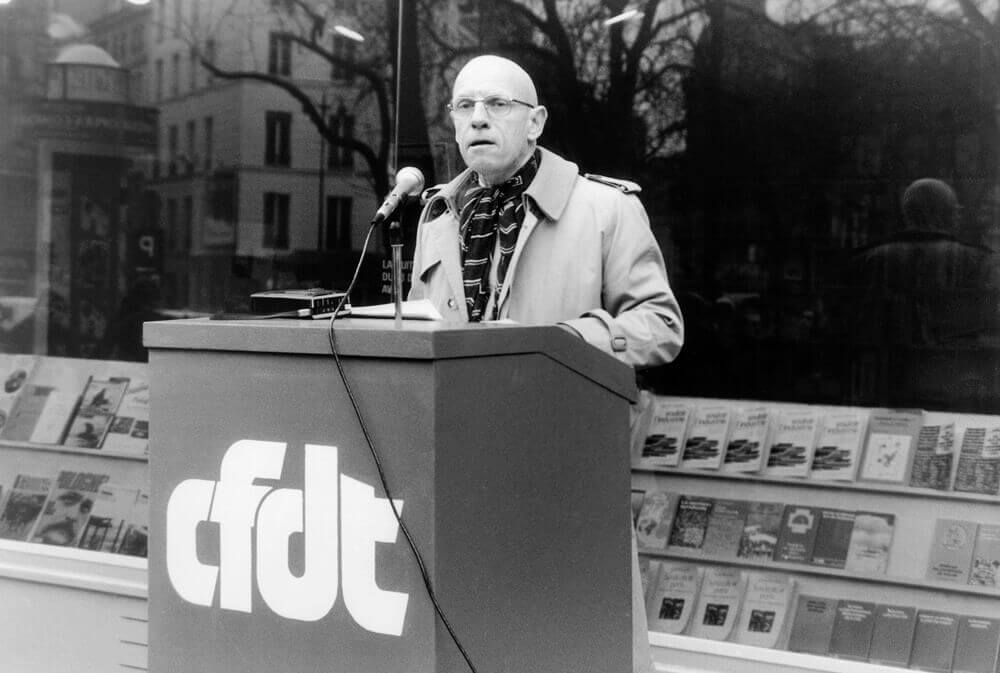
Lectures in this Seminar

square
Reading Date: October 22, 1985
right_ol
square
Reading Date: October 29, 1985
right_ol
square
Reading Date: November 5, 1985
right_ol
square
Reading Date: November 12, 1985
right_ol
square
Reading Date: November 19, 1985
right_ol
square
Reading Date: November 26, 1985
right_ol
square
Reading Date: December 10, 1985
right_ol
square
Reading Date: December 17, 1985
right_ol
square
Reading Date: January 7, 1986
right_ol
square
Reading Date: January 14, 1986
right_ol
square
Reading Date: January 21, 1986
right_ol
square
Reading Date: January 28, 1986
right_ol
square
Reading Date: February 25, 1986
right_ol
square
Reading Date: March 4, 1986
right_ol
square
Reading Date: March 11, 1986
right_ol
square
Reading Date: March 18, 1986
right_ol
square
Reading Date: March 25, 1986
right_ol
square
Reading Date: April 8, 1986
right_ol
square
Reading Date: April 15, 1986
right_ol
square
Reading Date: April 22, 1986
right_ol
square
Reading Date: April 29, 1986
right_ol
square
Reading Date: May 6, 1986
right_ol
square
Reading Date: May 13, 1986
right_ol
square
Reading Date: May 20, 1986
right_ol
square
Reading Date: May 27, 1986
right_ol
square
Reading Date: June 3, 1986
right_ol

March 11, 1986

For each historical formation, I have as first question: with which forces coming from the outside do the forces in man – that’s right, ‘the forces in man’ and not ‘forces of man’ – do the forces in man enter into relation? Second question: once this relation of forces is assumed, what form follows from it? … In certain cases, this can be the form man. I would say that, at that moment, the form ‘man’ follows from the relation of forces in man with other forces coming from outside, without specifying which. This implies that … in other formations, the forces in man enter into relation with other forces coming from outside, but the composite is a form which is not that of man, which is not man. Hence, you understand, following such a method, it goes without saying that the form ‘man’ has not always existed and will not always exist. The form ‘man’ is the composite of forces in man with the forces coming from outside under a certain historical formation. But under other historical formations, the composite form will not be man, it will be something else.

Seminar Introduction

After Michel Foucault’s death from AIDS on June 25, 1984, Deleuze decided to devote an entire year of his seminar to a study of Foucault’s writings. Deleuze analyses in detail what he took to be the three “axes” of Foucault’s thought: knowledge, power, and subjectivation. Parts of the seminar contributed to the publication of Deleuze’s book Foucault (Paris: Minuit, 1986), which subsequently appeared in an English translation by Seán Hand (Minneapolis: University of Minnesota Press, 1988).

For archival purposes, the English translations are based on the original transcripts from Paris 8, all of which have been revised with reference to the BNF recordings available thanks to Hidenobu Suzuki, and with the generous assistance of Marc Haas.

English Translation

Edited

Deleuze continues examining how Foucault traces three “ages” in The Order of Things (begun in the previous session), seeking to address the distinction between life as infinite and life in its finitude. Thus, in the Classical Age, these are the forces of elevation to the infinite (cf. Pascalian anxiety, which Deleuze calls a thought of unfolding (le dépli), and he offers the handy formulation: “force in man + forces of elevation to the infinite yield as composite the ‘God-form’”. Then, continuing to the next “age”, the nineteenth century, with the triple forces of finitude in life, language and labor, that is, a thought of re-folding (repli), Deleuze again notes that the Kantian revolution inspired Foucault to see the nineteenth-century transformation as replacement of the originary infinity with a constitutive finitude, man first encountering the exterior forces of finitude (life, language, labor), and then making finitude his own. The rest of the session is devoted to tracing how these two moments are developed in the successive formations on specific issues: questions of life (Jussieu, Lamarck, Geoffroy Saint-Hilaire, Cuvier, and Darwin), questions of death (Bichat), labor (Adam Smith, Marx and Engels, and David Ricardo) and grammar and philology (Bopp and Schlegel). Each formation corresponds to developments of pleating and folding, leading Deleuze finally to consider a third formation (with Nietzsche, the figure of the Overman), with the “death of man” question which, for Foucault, simply means that the “man-form” is no longer comprehensible to contemporaries, an age of genetic code, cybernetic machines, the revenge and rise of silicon, with which the forces of man now enter into contact, unleashing an “unlimited finite”. Concluding with the poetic vision of Rimbaud’s “Letter of the Seer”, Deleuze suggests that this formation’s “Overman” is charged with rocks, animals, and literature.


Foucault Lecture 25
Deleuze, background, with Jean-Paul Sartre, left, and Michel Foucault, right, during a press conference in Paris near Place Vendôme on 17 January 1972. Photograph by Élie Kagen.

Gilles Deleuze

Seminar on Foucault, 1985-1986

Part II: Power

Lecture 15, 11 March 1986

Transcribed by Annabelle Dufourcq; time stamp and additional revisions, Charles J. Stivale

Translated by Christian Kerslake; additional revisions and time stamp, Charles J. Stivale


Part 1

[Noises of students and several vague words from Deleuze] … I begin with a delicious activity, an autocritique. Because I was truly unhappy with the second part of our preceding session. So, what made it no longer work all of a sudden? Obviously, it was not your fault, it was mine. Note that this is the charm of courses; one believes one is relating to something very well, and then it does not work, it undoes itself. Everyone who does courses must have had this experience. Sometimes, happily, it is the opposite. One believes one doesn’t relate to something and then it works, and it forms as one is speaking. It is curious, that; but in fact, for myself, I was rather … in the second part of last time, I was rather in the other position.

I thought I was grasping it well and then: nothing at all. It derailed, it derailed. Then I said to myself: why? Despite everything, why? What happened in this second half? The first half, for me, worked. That is also the charm of courses – I signal it to you but you all know it – it is that whoever does a course doesn’t have quite the same point of view as the one who listens, to the extent that, while I’m doing a course, which is a strong moment for me, for many of you, on the contrary, it could very well be a weak moment; and inversely, what would be a strong moment for you, for me will be… [Deleuze does not complete this] I think that this is what makes the activity of the course interesting, and not at all of the same type as a book and reading a book.

So anyway, I asked myself: what has happened so that I derail like that and lose my thread? And I said to myself that I had perhaps attempted …, that this was perhaps what eluded me, I had attempted to systematise something that Foucault had not wanted to systematise. And that therefore I had massively hardened positions which …, for reasons that I will to try to seek, positions which were, in Foucault, completely supple, all in their evocation, and that I myself had made too much of concepts, very assignable concepts, and that at that moment, there was a hardening that had made it so that I could no longer cover the totality of the texts about which I was thinking. This is to say that it is not the having systematised which was bad, it was having systematised at the moment when it was not necessary, on points where it was not necessary.

Hence it seems to me now that a certain number of things were valid in what I said last time – for me anyway, you can discuss your opinions afterwards – a certain number of things were valid and others were not. So, I am forced to start again because one cannot base oneself on a stew like that of the last time. I am forced to start again and try to better mark the places where one can systematise, and those where on the contrary, it is necessary to let very fluid kinds of currents flow. It is so fluid, – in this regard, not always, but on this point – Foucault’s thought is so fluid that, in my commentary, I sometimes had the air of contradicting the letter of Foucault. For example, Foucault talks from time to time of the infinity of life. For myself, on the contrary, I strongly insist on this: that in Foucault’s thought, life is a force of finitude. I don’t think this is serious; for example, when he talks of the infinity of life, it is in a sentence implying through its context that one can in a certain sense talk of the infinity of life, but this doesn’t rule out that, in its most fundamental force, life is finite, there is a finitude of life.

So, it seems to me that one must distinguish those places where there is a simple supple expression, and the places where, on the contrary, the expression becomes very categorical. And last time I was not given the means to bring about such a distinction. Thus, once again, the necessity of recommencing certain points and of being …yes.[1]

And there is one thing that is left over from what we did last time. What is left over is the general problem, “relation of forces to forms”. And this relation is presented in the following manner: the forces are always a complex, that is, a set of relations of forces with force. There is always a relation of forces in the plural.

Hence our first question is: assuming a historical formation, the forces in man – I explained that last time, that’s valid – the forces in man necessarily enter into relation with the forces of the outside. Which forces? Observe: in every assignable historical formation, the forces in man enter into relation with forces come from the outside. But, depending on the formation, they do not enter into relation with the same forces. Therefore, the forces of man will enter into relation sometimes with some forces, sometimes with other forces, coming from outside. So that, for each historical formation, I have as first question: with which forces come from the outside do the forces in man – that’s right, ‘the forces in man’ and not ‘forces of man’ – do the forces in man enter into relation?

Second question: once this relation of forces is assumed, what form follows from it? What form follows from it? In certain cases, this can be the form man. I would say that, at that moment, the form ‘man’ follows from the relation of forces in man with other forces come from outside, without specifying which. This implies that, in other cases, that is, in other formations, the forces in man enter into relation with other forces come from outside, but the composite is a form which is not that of man, which is not man.

Hence, you understand, following such a method, it goes without saying that the form ‘man’ has not always existed and will not always exist. The form ‘man’ is the composite of forces in man with the forces come from outside under a certain historical formation. But under other historical formations the composite form will not be man, it will be something else. One had an experience of it – I’m summarising – because it still held; one already had an experience of it during the classical formation. The classical formation, in the classical age, considers forces in man, but these forces in man enter in relation with which other forces from outside? I would say: they enter into relation with all the forces of elevation to the infinite. And what is that, a “force of elevation to the infinite”?

Concretely, that means what? It does not matter where this force is. I would say … Perhaps it is the force of representation. And it would perhaps be a possible definition of representation to say: to represent is to give oneself the possibility of elevating to the infinite. That would be what representation is. At least it would be a definition, it is difficult to define representation. It is necessary to see if this would not be a possible definition, a valid definition: to represent oneself is to elevate something to the infinite, or to grasp something that is subsequently represented as being capable of being raised to the infinite. There is not one force alone of elevation to the infinite. Why is that? Because there are orders of infinity. We saw that last time: there is an infinity through itself, for example, which cannot be confused with something which is only infinite through its cause. There is an infinitely large, but there is also an infinitely small: there are orders of infinity. These orders of infinity are not indeterminate, they are hierarchised.

Why? Since they tend towards the most perfect infinity, that is, infinity through itself. And I would say: if you try to define the thought of the 17th century, it seems that it is that. The thought of the 17th century is a thought which fundamentally thinks the infinite and the orders of infinity. And the problem of man in the 17th century is: man is lost in the orders of the infinite. That will burst through with Pascal. And I would say to you: there …, as a matter of fact one will see that in the method of Foucault it is very important to break false lineages. … Whatever the greatness of Pascal for us today, there is no reason to make a lineage from Pascal to certain contemporary authors that would be illegitimate. Pascalian anxiety is an anxiety in relation with the infinite and the orders of the infinite. Where is man in all these orders of infinity? Where is a place to be found for man, if every time one assigns a place, this place slips away in favour of an infinite? Man is decentered for Pascal because, fundamentally, he is swept up in orders of the infinite: the infinitely large, the infinitely small.

When I say: when the forces in man enter into relation with the forces of elevation to the infinite, which are both very different from each other, very divergent, but which all converge towards God, the form composed by this ensemble of forces (forces in man and forces of raising to the infinite), this means what? This is not man; it is God. The form composed by this ensemble of forces, it is God. Hence the idea that in the classical age the form ‘man’ strictly speaking has no place for the simple reason that the infinite is always first in relation to the finite. It has so little place that the forces in man only compose themselves in order to compose something other than man, since they themselves enter into relation with forces that raise it to the infinite. The forces in man, these are understanding and the will, and regarding these the philosophers of the 17th century will say to us: yes, but the human understanding is finite; if one raises it to the infinite in order to isolate it at the level of the infinite, once it is said that perfection is what can be raised to the infinite, then one has the divine understanding, which is itself infinite. And the human understanding is only a limitation, the human understanding is only a limitation of the divine understanding

Hence at all the levels of the thought of the 17th century, this means what? This is perhaps what I did not know how to do last time, to finally isolate the essential concept, or what revealed itself to be the essential concept. To say the forces in man enter into relation with the forces of elevation to the infinite is to say what? It is to say that everything which presents itself will develop itself, will deploy itself, will deploy itself to the infinite and in a continuous manner. The knowledge of the 17th century will constitute itself through tables, tables in which will take place … continuous tables, in which every thing, every being, will take its place, in a kind of deployment to the infinite. The thought of the 17th century will be fundamentally a thought of the unfold [dépli], of deployment, of development.

Thus, the analysis of wealth will develop itself in a kind of table, the table of wealth. The analysis of the living being will develop itself in a kind of table of organic characters which will form a continuous series, the continuous series according to which each living being takes its place. And the continuity of the series is a fundamental character because it is its order of infinity for it [c’est son ordre d’infini à elle], it is its order of infinity for it. And I insist on that because perhaps then we touch on a word that we constantly come across in all of Foucault’s work: the idea or the hypothesis of an unfold of things and beings. To unfold, to develop. The unfold is a word which returns constantly, constantly.[2]

But, at the point we have reached, you can see how that word is inscribed in the thought of the 17th century. Classical thought unfolds things and beings according to continuous series which mark the order of infinity proper to creatures. And it has often been noted that, for example, natural history in the 17th century does not content itself with being systematic. By ‘system’ one must understand the distribution of identities and differences in the living being. What is identical? What is different, etc? But the system itself develops itself in series and the series is something specific, consisting in the arrangement of living beings in an order such that, through little differences, one passes from one to another according to an order of continuity which is an order of infinity of the creature, of the infinity of the creature. Thus, the theme that from that moment the analysis of wealth, natural history, and the analysis of discourse or general grammar will proceed though continuous tables, capable of being prolonged to the infinite.

The thought of the 17th century is a thought of deployment and of the unfolded. One unfolds things and beings and, through that, in unfolding things and beings, one forms the continuous series of things and beings. Fine, I don’t want to say anything more about that because everything that I said last time in this regard seems to be of value and it is this notion of the unfold that seems to me fundamental. Good. Why? We do not yet know why it should be fundamental. I simply observe that if the idea of the unfold appears when Foucault analyses the thought of the 17th century, is it by chance that the same word appears in every other context and runs through all Foucault’s work?

I pass then to the other formation. I would therefore say: the forces in man … the formula of the classical age according to Foucault, would be: the forces in man enter into relation with the forces of infinity, and, from that moment, all together they compose what? They compose the idea of God and not the form ‘man’. You will say to me: But how can one say that God is composite? Thus, I correct myself by saying ‘the idea of God.’ God is without doubt, as all the authors of the 17th century remind us, an unfathomable unity. But what precisely does that mean, unfathomable unity? That doesn’t stop his idea from being composite. What composes the idea of God for an author of the 17th century? We know the answer: all the perfections capable of being raised to the infinite. Everything which is capable of being raised to the infinite can be related to God.

In other words, God is composed, or rather the idea of God is composed, by all the forms, as they say – it is an expression of Leibniz himself – by all the forms taken absolutely, that is, independently of their limits. Hence the problem for the 17th century — it is interesting to know why something was a problem in one epoch and, perhaps, is no longer one today — the problem in the 17th century was: is the extended a property, an attribute, of God? Good. The answer is simple. It depends. Necessarily, it depends. If you can extract from the extended something of the infinite, then, yes, the extended is an attribute of God. If you cannot, that is, if the extended is inseparable from its limitation, if the extended only participates in inferior orders of infinity, for example, the indefinite, if it only participates in inferior orders of infinity, it cannot be infinite through itself, and consequently it is not attributable to God.

It follows that it would be stupid to say: in the 17th century certain authors attribute the extended to God and others refuse to attribute the extended to God. What must be said is that, in the 17th century, all the authors who think that there is in the extended something of the infinite properly speaking, attribute it to God; while all those who think that the extended is inseparable from its own limitation refuse the attribution to God. Descartes will refuse the attribution to God, but Malebranche and Spinoza, in two very different ways, who discover in the extended something of the infinite-through-itself, that is, an infinity of the first order, attribute it necessarily to God. At that point what is concerned is an indivisible extension, infinite, which from that moment forms part of the attributes of God. There you go. What’s happening? — You’ll be interrupting me, ok, if there’s something that’s not right because I’d like… Is there something that’s not right?

A student: [Inaudible comments]

Deleuze: What?

The student: [Inaudible words] … one can have also a form which is the form of man?

Deleuze: Not in that case, but in another formation. And with other forces.

The student: When one thinks force in man, it is indeed necessary to think a form of man.

Deleuze: No.

The student: [Inaudible words] … that is what I don’t understand.

Deleuze: No, no. If not, all will be lost. We have seen …

The student: [Inaudible comment]

Deleuze: No! One does not presuppose! If one presupposes, because everything is mixed in … of course, one can make assumptions [supposer] … but this is not what counts. What counts is the difference of nature between the level of forces and the level of forms. And we have seen that from the beginning. Forces, they are informal. So, when I say ‘the forces in man’, that has the air of presupposing the form ‘man’. No! I do not presuppose at all the form ‘man’, I just consider the forces which, as such, are called human. “Are called human”, you will say, that assumes … Because they are not in animals. They are … good …, it is as if they are the place of the space of forces, for example, I say: understanding, the will. I do not presuppose at all a form of man, I take understanding as a force, I say ‘It is a force in man’. The fact is that animals … good, good. I take, if you like, I can consider man as …, at this point, if you say to me ‘that presupposes man’: no!

I define man as a type of forces and uniquely a type of forces, and I ask: these forces, for example understanding and will, which I call forces in man or human forces, because they do not present themselves amongst the animals, because they distinguish themselves, they occupy a certain region in the field of forces, I say: with which other forces do they enter into relation? In the 17th century, with the forces of elevation to the infinite, hence: the understanding will only be a limitation of infinite understanding. And, at this point, the composite is not man, it is God. You see: forces in man + forces of elevation to the infinite yield as composite the God form, the composed form God. And if someone says to me, here again, God is not composite, I say: yes, God is not composite, but his form is composite, that is, his presentation is composite. If I summed everything up, I would say: the 17th century is the age of representation… [Interruption of the recording] [31:42]


Part 2

So let us pass to the following formation. The 19th century: what happens? Which mutations, since we have seen that every relation of forces implied a type of diagram? The diagram is the statement of relations of forces, it does not engage any form yet. There has been a mutation of the diagram. The diagram of classical thought is, once again, the force in man that embraces the forces of elevation to the infinite. In the 19th century formation, what happens? The forces in man come up against and embrace the forces of finitude. What are these forces of finitude? According to Foucault, they are triple: life, language, labour.

You say to me: but life, labour, language existed in the 17th century … That is not the question. They existed, yes, but labour was dissolved in the series of wealth, in the table of wealth. Life was as if developed, deployed, in the continuous series of natural history. That was what counts. You sense immediately where I want to get to. It is that here one will find oneself before what? The inverse phenomenon, the inverse category. The whole thought of the 19th century will be a thought of the finite, of re-folding [repli]. The forces in man refold themselves onto the forces of finitude. They fall back on the forces of finitude. A folding [pliure], a pleating [plissement] is produced. The forces in man are refolded around the forces of finitude. They refold themselves, they fall back on the forces of finitude. If I insist on that, it is because, no less frequently than the word ‘unfold’ [dépli] in Foucault, you find, throughout his work, ‘fold [pli]’, ‘folding [pliure]’, ‘bending back [pliage]’. This is another pole.

But no doubt, just as it is constant in all his books, it is the basis of all his metaphors. I believe the metaphors of Foucault are like … that they truly have the unfold and the fold as their matrices. Why is this important to me? For reasons that cannot be understood at this point. For you can sense that this will be a necessary moment of a confrontation to come, when we will inquire into the precise nature of the relation Foucault-Heidegger. For it has long been the case that Heideggerian thought has been presented as a thought of the fold. And what is Being according to Heidegger? Well, Being is precisely the fold. It is the fold of Being and beings. Being [L’être] is indissociable, inseparable, from the fold that it forms with being [l’étant]. What is that? In Heidegger, it is fundamentally linked to the discovery of a constitutive finitude.

Therefore, it is here for the first time that one has the occasion to mark the importance in Foucault of these terms ‘fold’ and ‘unfold’, and also no doubt to sense that their roots are very different from the outset to what one finds in Heidegger. But it is here that, little by little, one will be led to proceed to a confrontation. Nevertheless, this is not our object for the moment. You see, I’ll restrict myself to this: the thought of the 19th century would be characterised by this: that, instead of human forces, the forces in man, unfolding themselves insofar as they enter into relation with forces of elevation to the infinite, there, on the contrary, the forces in man fold themselves, refold themselves, fall back on themselves, insofar as they enter into relation with the forces of finitude: life, labour, language. The triple root of finitude, the force of man surrounds like a helix, surrounds this triple root of finitude.

And that was what I insisted on last time, and on that point, it was still okay. I mean: it still worked. I insisted from that moment on the importance of taking into consideration that, for Foucault, the forces of finitude – life, labour, language – present themselves as exterior to man. Just as the force of elevation to the infinite was not a force in man, but was exterior to man, so the forces of finitude – life, language, labour – are exterior to man. It is imposed upon man from the outside under some formation. Labour is pain and time; it is a force imposed upon man. Language is an involuntary force, a force imposed on man. In the case of life, this goes without saying.

Therefore, I would say Foucault’s innovation is to be found here, at the level of this formation of the 19th century, for the idea that the revolution of the 19th century, the revolution in thought of the 19th century, lies in its having substituted for the infinite the idea of a constitutive finitude is fairly widespread and predates Foucault. It is not the infinite which is originary, it is finitude which is constitutive. I would say to you that this is the Kantian revolution. The human understanding is not a simple limitation of a divine understanding which would be originary; the human understanding, as finite, is constitutive. Thus, I can say that, according to a classical schema, the revolution of the 19th century is defined through the substitution of the originary infinity with a constitutive finitude.

Why does Foucault not hold to this schema and why is it that he renews it? Well, speaking for myself, I have the impression that the classical schema, ‘substitution of constitutive finitude for the originary infinite’ is all very interesting, but it leaves something vague: what was it that brought about this evolution at such a moment? Why is it that, all of a sudden, man comes to consciousness, not of his finitude – he is already conscious of that, even in the 17th century, it was even the source of his anguish and his unhappiness – but why is it that man all of a sudden comes to consciousness that his finitude is constitutive? That is, that it is not the limitation of a divine understanding, but that it is, on the contrary, the foundation of the world inhabited by man and of the knowledge put into action by man. I believe that the reason is … it is very simple. It is precisely what Foucault indicates. If you are following, this is why it was necessary at all costs to show clearly that the forces of finitude were not in man, but that man encounters them as forces come from the outside. It is because man at the end of the classical age comes up against the forces of finitude, that is, discovers life, labour, and language, it is because he comes up against these exterior forces, that he will come to consciousness of his own finitude with regard to himself, man.

Therefore, Foucault gives an explanation of what the classical schema leaves unexplained to the extent that he distinguishes two moments. The two moments, what are they again? These two moments are: first moment, the forces in man come up against the triple root of finitude, that is, against the exterior forces of finitude (life, labour, and language); second moment: man makes this finitude his own.

You see that it was very important for Foucault to distinguish two moments in the analysis of the formation of the 19th century, in order to explain why, at this point, the finitude of man becomes constitutive. This comes down to saying, in effect: when man, when the forces in man encounter as external forces, as forces come from outside, the forces of finitude, and no longer of the elevation to the infinite, then and then only, is the composite form man. It is no longer God, it is man. The forces in man come up against the forces of finitude: the composite corresponding to this new combination, to this new diagram, is the form ‘man’. I have the feeling that this is difficult. I do not know if it is difficult. This is the last time that we have to do with abstract things. After, it is … Therefore, you must gather yourselves for a last effort.

Appealing to a privileged example, I would like to verify this history of the unfold and the fold. The Birth of the Clinic, if I had to summarise it …, I certainly don’t want to save you from reading it, but I’ll just summarise. What would be a summary of Foucault’s book, The Birth of the Clinic? The distinction of two formations: the clinic, which corresponds to the classical age, and pathological anatomy, which corresponds to the 19th century. How to define the clinic? It is the constitution, at the level of diseases, which are treated as species, the constitution of a table, of a continuous table, which puts in place the series of signs and of symptoms. Unfolding [Dépliement], deployment of a table of signs and symptoms on the surface of the body. And the theme of the surface of the body is fundamental throughout the clinic. It is necessary that diseases declare themselves at the surface of the body, captured in a table which will mark the continuity of signs and symptoms. The clinic is fundamentally the unfold, the unfold of disease.

And now what happens in the 19th century? There is a discovery of tissues, the notion of tissue dominates, and will be the great notion on which pathological anatomy will found itself, replacing the clinic. And pathological anatomy gives or gives back a depth to the body, thanks to what? Thanks to the pleating of tissues; the tissue is what folds itself. At the limit, it is almost the birth of a topological space in medicine. The tissues fold themselves and the folds, the foldings of tissues give a depth back to the body, and to disease, a volume. And Foucault sees here two very different moments of the medical gaze. The clinical gaze on the surface which constitutes the table, and the gaze in depth of the pathological anatomist, which follows the folds of tissues in such a manner that it burrows into the depth of the body. As Foucault says, what do you want to do in an empirical autopsy? It is not that autopsy was not known, it was known, it existed for a very long time; but that it was devalorised, made secondary, follows immediately from the point of view of the clinic. With pathological anatomy, it recaptures all its force and will conquer new powers. To burrow into the depth of the body: but it was necessary that there were tissues capable of folding themselves and then, to be sure, of unfolding themselves. I note also that in The Birth of the Clinic most of the book is constituted on metaphors, not only metaphors, but on metaphors and the concepts of the fold and unfold. The thought of the unfold characterising the formation of the 17th century and the thought of the fold characterising the formation of the 19th century. Fine.

So then, there are two necessary moments in the 19th century formation. The encounter, the terrible encounter of man with the forces of finitude: first moment. Second moment: the manner in which man appropriates these forces of finitude and erects himself in constitutive finitude. I insist on this even when the traditional schema only says to us: constitutive finitude replaces the infinite. Foucault transforms the schema by distinguishing the two moments and I think that this transformation is very important; we will see the consequences. Is this second point clear? Okay.

Well, one glimpses a bit more when the forces in man coil themselves around the forces of finitude, when they fall back on the forces of finitude, life, language, etc., what happens? I mean: let us link together the troubles this introduces into the thought of the 17th century. Why is that the thought of the 17th century, in its specificity, cannot survive, cannot survive this test? Here we will see, even if it means that I depart from Foucault on certain points – which is to say that I’m making use of authors he does not cite, although I am quite sure, and it is obvious, that he knew them very well. But he does not say everything he knows …

Thus, I will sometimes attempt to allow authors to intervene… but just enough not to get in the way of your reading the text. I do not claim to give a summary. I will just say this: we will encounter three points. The 19th century will be the birth of biology, finite force of life, discovery of the finite force of life; of political economy, discovery of the finite force of labour; and of philology, discovery of the finite force of language. The explicit theme of Foucault is that in the 17th century, there could not have been biology, there could only have been a natural history; there could not have been philology, there was and could only have been a general grammar. At our current point, you are able to understand this. If I call biology, in effect, the science which founds itself on the finitude of life, I think that this is a correct definition; if I call political economy the science which found itself on the finitude of labour; nothing of that could appear in the 17th century, which for its part on the contrary developed, unfolded tables to the infinite: table of wealth, table of organic characters, etc. There was a place for natural history, there was no place for biology.

So let us try to mark out two moments in the birth of biology. It is around … The first moment is around the time of [Antoine de] Jussieu, the famous specialist of plants, and others. … Good. What happens? In a certain manner they still think in terms of the 17th century, namely the series of plants, the great continuous series of plants or even the great animal series where one will pass from species to another species, from genus to another genus, from class to another class, etc., by continuous transition. Table of living beings capable of being developed to the infinite. Immediate question: what is it that prevents them, in the 17th century, from being evolutionists, that is, from affirming that there is a history which makes us pass from one term of the series to the following term? You understand that one must even reverse the question: that question is not even posed. It is the series itself which prevents them from being evolutionists. There is no history of the living being, there is a natural history, there is a history of nature.

The history of nature consists in what? Well, it consists in the development of a series in which each element, each term of the series has its place, and each place has a term. The very idea that a term could pass into another is a idea that is strictly deprived of meaning from the point of view of the series. The development of living beings in continuous series excludes every history in which a living being evolves or a species is changed into another species. The series is the order of places of each species in continuity, in the continuity of nature; there is no place for a history, the serial point of view excludes history.

Now, around the time of Jussieu, what happens? More and more importance is attached … It is not that this was not known before, it was already known in [Carl] Linnaeus, the representative of classical natural history, but more and more importance was attached to two facts: that the organic characters, in a same species …, that the organic characters are all coordinated in a species, and that they are hierarchised, that is, that there is a character, for example in a species, which is more important than the others and which, in a certain fashion, determines the others. For example … and the point of view of functions is permitted to intervene from this moment. What is most important in plants is the function of reproduction. The function of reproduction will express itself in the organic character cotyledon, or in an absence of cotelydon, or in two cotyledons. Good.

One can put that in series, but this character, being more important than the others, will determine other characters which are correlative to it. There will be at the same time the correlation of characters, at the level of a species, and the primacy of a character over the others. Correlation and hierarchy. For the animal, certain authors think that what is essential, the dominant character, is the alimentary function. If the alimentary function is dominant, the teeth will be the principal character; but characters cannot be linked to each other indiscriminately. A type of teeth will bring with it a type of muscles, a type of stomach, a type of intestine. There is therefore simultaneously the coordination and subordination of characters, coordination and subordination of characters at the level of species.

Understand: to the extent that this point – which again was already known in the series of the 17th century, but … – to the extent that this point passes to the level of the primary plan [premier plan], the series is fractured. The series is fractured, that is, everything happens as if the terms of the series were – and here I weigh my words – attracted by a depth, and the series truly finds itself fractured there at the same time. You have no longer, or you tend to no longer have, a series of characters in continuity with each other and without evolution, each being having a place and each place having a fixed being, without history; there, on the contrary, the characters in a species, coordinating and hierarchising themselves, form a kind of weight which will fracture the series and draw every living being – but what does that signify, ‘each living being’? – into a depth which is no longer serial. If I were to make a sketch … but you see … I would put my series there, like that, and then at every moment where you highlight the coordination and the subordination of the characters, that makes a kind of disturbance there, which will, as it were, fracture the series, make the living being descend into depth, that is, will reveal what will appear as a new dimension.

As a result, in a sense, the idea of a continuity capable of being developed in series is fundamentally threatened in this first moment. To the series of surface is opposed (or it starts to be opposed) a wholly different approximation of the living being where the living being leaves the surface and sinks, sinks down, due to the weight of coordinated and hierarchised characters, and will escape the series. The series is… This is the word Foucault uses: “Jussieu fractures the series”. With an air of paradox that is very important, there will be all kinds of efforts to save the continuous series. Then, as a matter of fact, in the period of Jussieu … and Jussieu still imagines ramified series. The ramified series is … with discontinuities, with ramifications.

Thus, the series will infinitely complicate itself. Or else, then, a prodigious manner of attempting to save the series, which will be what? To inject history into it. You see, it is this that is very important in Foucault’s analysis because it concerns his method. His whole method of analysis and notably his method concerning statements: we will come back to that later, before too long. History was fundamentally repugnant to the series. Once again, each being had its fixed place, each place was for a determined being and there was no passage from one to the other. But when the series comes to know these fractures, bizarrely a means for trying to save the series will be to inject history into it, under what form? By discovering a force of life which will be defined how? As a tendency to a more and more differenciated [différenciée] composition, a tendency of life to compose more and more differenciated organisms, that is, organisms in which the characters present a maximum of correlations and subordinations.

An organizing force of life which will traverse the series in order to produce more and more complex organisms, that is, in coordinated and subordinated characters, and what is that? That is [Jean-Baptiste] Lamarck. But I’ll go very quickly, because it is not my concern at all to summarise the thought of Lamarck, what interests me is the manner in which Foucault situates Lamarck. Understand that he situates Lamarck and the first real appearance, finally the first incontestable appearance, of an evolutionism … he situates it in this way: Lamarck still thinks the living being under the form of development in series (in this sense he is a man who still belongs to the 17th century, to the classical age), and, in the face of the dangers, in the face of the threats that in his period put pressure on the idea of the series, he saves the series by making a historical force of life, by defining life as an organizing force that does not cease to produce more and more differenciated organisms, each in its place gathering a maximum of coordinated and subordinated characters. So yes, it is very curious: under a certain aspect – and one must say this of all thinkers – under a certain aspect they belong to an age, but under another aspect, they belong to another age. Lamarck belongs fully to natural history and, nevertheless, he introduces into natural history what is most repulsive to it, namely a historical process.

But why does he introduce this historical process? In order to save the series. So that here Foucault excels, although he does so constantly: he excels in his treatment of what results, and you already sense that it will form part of his theory of statements: for there is no question of establishing a lineage from Lamarck to [Charles] Darwin. They do not belong to the same formation. I say that this pertains to his conception of the statement, because statements that are apparently similar in fact belong to completely different families. We will see that as a matter of fact, Darwin is … this is another soil, as Foucault will say, another archaeological soil. Lamarckism can only be comprehended on the soil of the continuous series. Now this soil of the continuous series comes straight from the 17th century, and Lamarckism, as also in another way Jussieu, is simply an expression of the troubles that this continuous series undergoes in a first moment. Therefore, if I summarise the first moment at the level of biology, I will say: well, yes, the series tends to fracture itself to the benefit of a depth upon which the living being will refold itself, fall back on itself.

If I make a very simple schema: there is my continuous series [Deleuze writes on the board] which excludes history since each being of the series has been fixed and then, to the extent that the coordination and subordination of characters takes on more and more importance at the level of a term, at the level of a species, the series will be fractured, that is, there will be a reorganization in depth, the discovery of a depth, and life is no longer sought in the movement that traverses the continuous series, it is sought in depth in the movement through which the living being refolds itself, falls back into this depth, onto this depth. In other words, what the first moment introduces is what? It is the fundamental concept of organization, organization being the correlation and subordination of characters. That is the first moment.

Second moment: the great [Georges] Cuvier. The great Cuvier, who did what? At first sight, it does not seem like much. Substituting for ‘organization’, ‘plan [plan] of organization’. Plan of organization. The fundamental act of Cuvier, that is, the basic statement on which perhaps everything in Cuvier depends is the idea that there are plans of organization of life. What is a plan of organization? This is the second moment. One no longer discovers centers of organization which threaten the series, one discovers plans of organization which bring it about that there are no longer series, that every series is impossible. Cuvier discovers what he calls branchings [embranchements], great branchings of life. At first sight one might say: it’s fine, he is still stepping back to a higher generality. Which is to say, beyond the species, there are genera, and beyond genera, there are classes, etc.

Well, for his part, he goes still higher, he marks branchings. But no, not at all. This would be a misinterpretation, for the branching is a concept of a wholly other nature, it is a concept which is not at all on the same line as the others, since, on the contrary, it will render the classifications useless, it will put classification in question. What is the idea of branching? It is the idea that life is inseparable from plans of organization which exclude each other. Why is this important? It consists in saying that life is not only an organizing force, as Lamarck would say, a force of organization, it is a dispersive force.

The finitude of life is its dispersive force. Life proceeds according to a small number of plans of organization irreducible to each other and each exclusive of each other. Cuvier distinguishes four of them — it will undergo many variations, but four remains a sacred number — vertebrates, molluscs, articulata, zoophytes. The criteria of branchings … This will also vary throughout his work. Towards the end, he thinks that the fundamental character that defines the branchings is the nervous system, but the nervous system is susceptible precisely to four organizations, four plans, four plans of organization. In the case of vertebrates, this is: brain and an enclosed marrow in a bony envelope; another plan: nervous masses, scattered among the viscera, disseminated among the viscera, and reunited with each other via fibres. Masses reunited via fibres. This is a wholly different organization to vertebrate organization. Third plan: two ganglionary cords uniting with two principal ganglions above the oesophagus.

Fourth: the nervous mass is hardly discernible from the rest; tendency to indistinction. Good. Cuvier’s idea is: one does not pass from one plan to another. Understand, and this is very important for me: the living being will be defined by what? The manner in which it refolds itself according to this or that plan. This is what is astonishing in Cuvier, I think. An artist of folding. You will see what that sets going in the emergent biology. The living being is defined by the manner in which it folds itself according to this or that plan of organization. And that is where we find the finitude of life. There is only an unfolded life. In other words: end of the series! The branchings do not add themselves to series as more general concepts, the branchings render all putting into continuous series outmoded… [Interruption of the recording] [1:18:55]


Part 3

… you, embryo of a vertebrate, you do not fold yourself, you are not oriented in your embryogenesis in the same way as the embryo of an insect. And, between these different plans, there is an irreducible gulf, that is, each living being is sunk in the depth of its own plan and refolded onto its plan. You see that the series is completely broken there: this is the second moment. Then commences a period of biology, right at the birth of biology, of an extreme wealth, very beautiful, very beautiful, although looked at with an unkind eye, this was a biology full of polemics; these have not ceased to this day; they were polemics, however, which should still touch us and which it would be wrong to believe have been surpassed.

For you can see right away where I want to arrive. If I recount for you the histories of the fold, I have several ulterior motives: to give a basis to the comparison of Foucault with Heidegger, of course, but you will probably not be surprised if we arrive at the conclusion, for example, that what are the fundamental problems today concerning the genetic code and microbiology if not the way in which the chains of the genetic code fold and unfold? The figure of the unfold and the fold seems the constitutive figure of life. That does mean that, in the case of the genetic code, this should be at the same level, this will certainly be another biological formation, but it is ultimately just to say that here perhaps one touches on a problem it is worthwhile our dwelling on a little.

For, when I say: Cuvier had an enemy, whom he in turn made his enemy, this was [Etienne] Geoffroy Saint-Hilaire, a very great biologist. So now Geoffroy Saint-Hilaire turns up and says: there is unity of composition. That is a statement signed by Geoffroy Saint-Hilaire: “there is unity of composition”; that is, that there is unity of composition for all living beings whatever they may be. Therefore Geoffroy Saint-Hilaire opposes the unity of composition to the finite plurality of the plans of organization. There is a single plan [or plane, plan] of composition, whereas Cuvier affirmed the determinate plurality of four plans of organization. Then you will say to me, I imagine someone will say to himself at this point, well yes, that means that Cuvier is a fixist – he does not believe in evolution – which is true, and so that means that Geoffroy Saint-Hilaire believes in evolution.

No. Neither believes in evolution. We will see that evolution will be something else again. It is this point that must be explained. When Geoffroy Saint-Hilaire shows up and says “there is unity of the plan of composition”, one wants to say: he is returning to the continuous series. And, even there, no, he does not return to the continuous series. What should be said, in the style of Foucault, is that Geoffroy Saint-Hilaire is fully of the same epoch as Cuvier, he is under the same formation. Because what does he want to say? Geoffroy’s texts are quite extraordinary. He says: Cuvier distinguishes four plans of organization, but, by dint of folding, one could always pass from one plan to another.

Now that becomes interesting, and there is a very beautiful and comical page of Geoffroy – well, “very comical”, I hope that you will find it amusing — a page of Geoffroy where he says: for my part, I am going to show you how one passes from vertebrate to cephalopod — The cephalopod, this is not …, it is not an animal that is very … I will not even say what it is, the cephalopod, so that you will keep the secret; ‘cephalopod’, look it up in your petit Larousse, I do not want you to avoid any reading. In fact, the cephalopod, you understand, is no great thing – so, to pass from the vertebrate to the cephalopod, we tell ourselves: Cuvier is exaggerating. And here we have his formula. His formula is — I will only cite the start of the text –: “It suffices …” – there is a lot of humour in Geoffroy – “it suffices to lead the head back towards the feet and the pelvis towards the nape of the neck.” He makes foldings, he makes foldings; it is quite astonishing: starting from Cuvier’s folds, he will seek out the conditions under which one can fold a living being in order to obtain the axes and orientations of the other plan.[3]

At this point, the polemic starts up between Cuvier and … Cuvier is hopping mad. Why is he hopping mad? You understand that here one arrives at something that should be central for us, or which should be central for Foucault, namely that it is the same argument – the existence of pleatings – that allows Cuvier to say “you will not pass from one plan of organization to another, that is, each type of living being folds itself on its plan of organization”, and which allows Geoffroy to say “you will pass from one plan of organization to another if you make as many foldings as is necessary.” At the end of n foldings, you will have changed orientations, and you will have passed from the vertebrate to the cephalopod. It is the same thing that you can interpret in two senses. There are irreducible foldings which impose on me four plans of organization; or it is through folding that I will pass from a plan of organization to another. Obviously, the foldings are not the same. They cannot be the same, if not it would not be serious. And, in fact, Geoffroy – it is astonishing – makes the foldings upon anatomical elements. This is an anatomist. He makes foldings on anatomical elements. And notably on the bony elements. He makes foldings on the skeleton.

[Karl Ernst] Von Baer, for his part, immediately replies: none of that will work! Doesn’t it work? For my part, I don’t know. Why doesn’t it work? You can go and find Von Baer’s answer to him, in the name of embryology. He says: one can always fold solid elements in whatever direction, but there is no tissue which would support these foldings. There is not a single tissue which would support these foldings, so Geoffroy’s theory only works if one reduces the living being to its skeleton. If you wrap the skeleton around itself, if you join up what are called the girdles [ceintures] – it’s striking as language – if you join up the girdles, and then if you take account of the muscles and of the tissues, obviously, you cannot not make a folding, you will break everything, you will tear it apart … No, you do not break it, since it’s solid. You will tear apart the ligaments.

So, to speak like Foucault,[4] Geoffroy and Cuvier belong to the same archaeological soil, to the same family of statements, even though they say the opposite to each other. You can see why: because they have in common the falling back, and the not ceasing to fall back, of the living being upon …. or of folding it onto plans of organization or onto a plan of composition. In every way, the living being is refolded in depth instead of spreading itself out on the surface along a series. This is what is common to Cuvier and Geoffroy. And yet … there is more, what is shared is the refusal of every evolutionism. Because for Geoffroy one can pass from a mode of folding to another mode of folding, but these successive modes, these different modes of folding mark the degrees of development. They mark degrees of development. Now each type of animal has a degree of development which is assigned to it. It will not transcend its degree of development, which therefore condemns it to such a plan of organization. What Cuvier would call ‘plan of organization’ is for Geoffroy the degrees of development of a single and same plane of composition. And at this degree, each takes part in the other, it is very beautiful.

So, both refuse all evolution. Moreover, to the extent that on Cuvier’s side, with von Baer, a fantastic science, embryology, was founded, on Geoffroy’s side, Geoffroy himself founds a fantastic science which will form a part of biology, namely, teratology or the science of monsters. For, if every plan of organization is only a degree of development for a single and same plan of composition, from Geoffroy’s perspective, it can still happen that a living being should be stopped in its development by external circumstances, by an accident or by a disease. And what is a monster? Geoffroy will propose his great definition of the monster: it is either a fixation or a retardation of development. A fixation or a retardation of development, that is: it has not attained its development; prevented by an external cause, it remained fixed.

For example, there is a very interesting monstrosity about which Geoffroy says: ah yes, it has remained at the crustacean stage, it has not transcended the degree of development of the crustacean. The crustacean is … Geoffroy is full of statements, of formulas which are quite spiritual, er, he … To be crustacean, says Geoffroy, broadly speaking, is to have one’s skin on one’s bones. There is a monstrosity where the skin is on the bones; in effect, there is a very light integument on the carapace. To have one’s skin on the bones. And the flesh is on the inside. That is a crustacean. So to have development halted at the crustacean stage, that means I have my skin on the bones. It is … well, it is a disease, it is a known monstrosity. … Or in embryology, for example, one does not overlook the fact that the hands develop themselves before the arms. Assume that an embryo develops itself and develops normal hands, but then an accident comes at the moment …or a virus arrives at the moment it is in the process of fabricating its arms. It will have perfectly normal hands and atrophied arms. This is a known monstrosity.

Well, this is the very illustration of Geoffroy’s definition: the monster is a retardation of development or a fixation of development. In this case the embryo has its development fixed at the stage ‘formation of hands’. It can no longer form an arm, a normal arm. Assuming that the formation of the arm was posterior to that of the hand. Here I make an indication, I open an unnecessary parenthesis, but for the sake of epistemology: when a famous discipline will invent or will say that it invents the notion of fixation and regression, and will explain the neuroses through the phenomena of arrest and regression, one must render to each what belongs to him, which is to say: what is already fully original is the application to the domain of the neuroses of concepts that are teratological in type, dating back to Geoffroy Saint-Hilaire, for instance, regression; for Geoffroy Saint-Hilaire, arrest of development, the fixation of development are the two principal formations of monsters. But it is well known that neurotics are monsters. [Laughter]

So, you see, it is around this theme of the folding that I can say: of course, they understand the foldings, the folds, the refoldings of finitude, that is finitude, it is the fold, it is what folds itself, it is what refolds itself, it is what refolds me. Whereas raising to the infinite is what unfolds itself, it is what deploys; it is not more difficult than that. The thought of the 17th century is a thought of deployment, why? Because it reacts against the Renaissance and against the Middle Ages. Then must one say that it was a thought of the fold, the Renaissance and the Middle Ages …? It was something else again.

But the 17th century affirms the unfold, as the law of clear and distinct thought, as the law of order. If you want to grasp order, unfold things. That is the method …. It would even be necessary … one could go in both directions … Take the Cartesian method, take a method dear to the 17th century: every time you will see the formation of series, the formation of chains, the search for contiguities, all that, a thought of development, of the unfold. With 19th century thought comes the obscurity of the fold. It is necessary to fold things. At that moment, you have the discovery of finitude. To fold the living being on the plane of composition or to fold on the plan of organization, all that runs parallel. But last point: Darwin. What role does Darwin play here?

Well, you know, with Darwin, what is involved is precisely not the series. When Darwin will affirm and inject history, that is, evolution, into biology, what does he do exactly? What does he do exactly? He brings something new. There is now a trinity, he is simultaneously against Cuvier and against Geoffroy. But how are Darwin, Cuvier and Geoffroy a trinity, at the horizon of our biology? Why is it that … even though Lamarck… You see the big difference: even though Lamarck introduced history into the series, in order to finally save the idea of an animal series, this means he was still at the first moment of biology. This was not the case for Darwin. For Darwin, that was not the problem. That was not his problem. I mean: Darwin is happy to accept the same terms as Cuvier. What were Cuvier’s terms? The series proceeds via small differences, but there are large differences between plans of organization. In other words, there are insurmountable differences which break up every possible series.

You understand? Tired? But I will not stop there, because if I stop, that will be like the other time. So, when you’ve had enough, you’ll just stop listening … or … What time is it?

Lucien Gouty: 11 o’clock, coming up to ten past.

Deleuze: Then I’ll go on but take a short pause … but … ah. No, no! I’ll finish Darwin first, because if not, we won’t be able to move on. You understand Darwin … but nevertheless for those who have read a little Darwin, what I am saying will have a grotesque air. What I am saying is that for Darwin, the little differences are all the same to him, he never thought about re-establishing the series, the series that proceeds via little differences. What I am saying has a stupid air about it, since it is well known that Darwin, on the contrary, perpetually invokes the little differences of a child in relation to its parents. To be sure, he needs to do that. But why? Is it in order to put into series that he invokes the little differences? Not at all. It is in order to be able to reply to the question: why are the large, apparently insurmountable differences imported into life? Why does life, which ceaselessly produces little differences, proceed nevertheless through the action of large differences? Now that, you understand, is a problem that could not be posed before Cuvier or before Von Baer.

And what is Darwin’s answer, then, which is such an innovation? You will see, it is that it really engages with things; I will recount it, let us see. Darwin’s answer comes in two stages, it seems to me. It consists in saying: if you take, not a environment, not a general environment, for example water, but if you take a determinate territory, a determinate region in an environment, under what conditions can a maximum of living beings survive? This is the new question of Darwin. This is the Darwinian question: assuming a territory, under what conditions can a maximum of living beings survive? That is a question has no equivalent either in Geoffroy nor in Cuvier. But the answer will join Cuvier and Geoffroy up with each other again. It consists in saying: they will have all the more chance of surviving the more they diverge, the more their characters diverge. Assume a determinate region and then two closely neighbouring species which live in this region; ‘closely neighbouring’ here means that their food is identical or similar. There is one that will get the better of the other and which will liquidate the other. You see that the whole theme of natural selection is given in profile there. They could not coexist. Assume the contrary, that the two species which live on this territory are very different, then they have chances of coexisting, of surviving. They do not appeal to the same nourishment.

Good: it is by dint of divergences that a maximum of living beings can live on a determinate territory. In other words, life will define itself as a tendency to produce large differences through an accumulation of little differences. This is the condition of survival: the tendency to produce large differences. That is, life is no longer considered as a force of dispersion, but as a force of divergence.

Henceforth, Darwin will tell us that it is not surprising that life should be traversed by these kinds of break between plans of organization. What is left over – second aspect of the Darwinian thesis – is this: how can there be history, transformation? Well then, precisely, the creation of large divergences. But how is it that they can be created, these divergences? Since every living being seems already to suppose distinct plans, distinct plans of organization. Darwin’s answer will be that here you cannot infer from the evolution of the embryo to the evolution of the species. You cannot apply the laws of embryology, why? For a very simple reason: because, in embryology, the forms are already given. You are always the embryo of a form; the forms here are already fixed. For example, an embryo of a wolf is an embryo of a wolf, it will produce a wolf. Even with little differences, it is sad, but … Whereas at the level of the evolution of species, the forms are not fixed. You only have forces in relations. The forms are not fixed, they are themselves fluid. There is no species which would be wolf and then a species, etc. You see, he overturns everything. If species are the product of an evolution operating through accentuated divergence, you cannot already give yourself species, that is, forms, beforehand.

So, what is Darwin’s true revolution? It is not evolutionism at all, it is to have thought life in terms of population and not of form. Population on a given territory. Any population whatever on a given territory. You cannot already give yourself forms. And evolution, what is that? It is precisely that this population will only be able to survive to the extent that it splits and produces divergent forms which allow its members to survive on the territory. In other words, Darwin’s evolutionism has nothing to do with Lamarck’s evolutionism. For Lamarck’s evolutionism is typically a serial evolutionism, an evolution that injects history into the series, whereas Darwin’s evolutionism is typically an evolutionism which confirms the collapse of series to the advantage of the refolding of the living being onto a force of life which will be a force of divergence and of accentuating divergence. Now all of this, at whatever level, whether it be Cuvier, whether it be Darwin, whether it be Geoffroy, is done at what price? This refolding of the living being onto the finitude of life is always done to the profit of putting death into life. In this shadow of death, depth is thus created.

Theory of catastrophes in Cuvier, theory of selection in Darwin, theory of monstrosities and of arrests of development in Geoffroy. The finitude of life will put life into a fundamental relation with death that the 17th century ignored. In other words, to death … The 17th century, I believe, could only think death in the manner of a wisdom [d’une manière sage]. What does wisdom signify? It is ancient wisdom that says to us: what are you complaining about? In so far as you are not dead, you have nothing to complain about; and when you are dead, you can no longer complain; therefore, death is an instant. But what I am summing up as wisdom or moralism – it is the moralism of Epicurus: it is impossible to think death, which is an instantaneous event – that also held for all the medicine of the period; it had its epistemological version, it had its scientific version: death as decisive and indivisible instant.

And I think I already said this to you when we were talking about something else: when one finds the famous formula ‘death is what transforms life into a destiny’ in [André] Malraux, and then again in [Jean-Paul] Sartre, far from being a modern formula – this removes nothing of its beauty – it is fully the expression of classical thought, it is death as instant, instant which, precisely, brings about a kind of transvaluation of life: it transforms life into destiny.

But the thought of 19th century, and perhaps our own, has a completely different conception of death. Just as the living being folds itself onto finitude of life, life in a certain manner refolds itself onto death. What does that mean? The great book on death, in my opinion, remains a book that Foucault loved and admired immensely: this is [Xavier] Bichat’s book, a famous doctor, Physiological Researches upon Life and Death [Recherches physiologiques sur la vie et la mort]. And Bichat proposed a celebrated definition of life which indeed sometimes causes laughter, but only in imbeciles. It is: life is the set of functions which resist death.[5]

Now the imbeciles – and they were numerous, not so much now, but there were numerous imbeciles in Bichat’s day – they say: that’s a big vicious circle. In effect, to define life as the set of functions which resist death would suppose, they say, that one could define death independently of life. Okay, but the objection is idiotic, because the objection would only be valid if Bichat maintained the classical conception of death. Death presupposes life, yes, therefore one cannot arrive at Bichat’s definition if death is conceived as a decisive instant which terminates life.

But Bichat, for his part, in his book, proposes to us what I believe is the first great modern conception of death. He proposes it on two points. First point: death is not a decisive instant which marks the end of life, death is coextensive with life. Second point, which accounts for the first, which clarifies the first: the living being is inseparable from the partial deaths which traverse it. And what one calls death, far from being a decisive instant is always the global effect of several partial deaths. There are three partial deaths: the death of the brain, the death of the lungs, the death of the heart. And even if life does not cease, the living being, at least the animal, is rarely alive: not only is there sleep, but there are partial sleeps. The living being does not cease being traversed by partial sleeps which are veritable deaths. Partial sleep in Bichat comes to echo partial death. At one and the same time, death is coextensive with life and there is a plurality of deaths.

Therefore, in neither of these two senses can death be considered as decisive and indivisible instant. Now it is Cuvier’s achievement, I say to you … Biologically, the living being can only be pushed back onto the force of life, onto the finite force of life, to the extent that death is inscribed all the more profoundly in the living being itself. And this is something that will greatly disturb very Foucault, who always had a kind of relation with death… And I think you will find, in The Birth of the Clinic, 5 or 6 pages on Bichat and on the theory of death in Bichat. If you read it, you will see for yourselves. For myself, I have the feeling that, of course, this is an interesting epistemological analysis of the thought of Bichat, but there is something more, there is something more which … where Foucault expresses his … his own relation, his own relation with death and a kind of adherence to what … to the manner in which Bichat presented things.

So, you see that I’ve done a summary there of one of the three [forces of finitude]; it ended up taking a while, but to me it appears necessary. At the level of the formation of biology, we have clearly seen our two times. If I try to summarise the two times, I would say: first time – the two times are grouped together in the formula ‘when the forces in man encounter the forces of finitude’ – first time: one encounters the organizing force of life, one encounters an organizing force of life which is marked by finitude and which compromises the series of the 17th century. Second time: the organizing force refolds itself in depth, at the same time that living beings refold themselves on their plan of organization. These are the two stages. Now what Foucault will show in The Order of Things is that aside from biology, the same thing is produced at the level of political economy and its birth in the 19th century and at the level of philology and its birth in the 19th century… [Interruption of the recording]

The hypothesis, the minor hypothesis, not very interesting, that I will propose to you, is this. Again, when we arrive at the issue of a confrontation of Foucault with Heidegger, and I am obliged to shed some light on what Heidegger calls the fold, and to state that this is a very profound theme in Foucault, that of the fold and of the unfold … I think one can rather quickly arrive at the conclusion that the origin of this notion in Foucault does not lie in Heidegger; and this seems to me to go without saying, in the light of the very different use he makes of it. So, it is true that there has been in this regard an encounter of Foucault with Heidegger, but in Foucault, the notion of fold and unfold has a completely different origin. And I think that the originating principle lies in this history we are in the process of seeing: the fold and unfold are like two functions of thought, the one consisting in developing to the infinite according to the mode of classical thought, the other consisting in falling back onto finitude in accordance with a thought which is elaborated with the 19th century. So that is a first point, which seems to me important. In this regard it remains for us to see, and perhaps you have already, the equivalent of what we just saw for biology in the 19th century formation in the fields of political economy and philology or linguistics. So, here I’m going to go very quickly, in order to give you just the landmarks.

What happens in political economy? Well, once again, in the 17th century, there is no political economy, there is an analysis of wealth and there is a table of wealth capable of being developed to the infinite, at the same time as needs. Of course, this is an infinite which is only indefinite, but again, we saw that the indefinite was an order of the infinite for the … It was no doubt the lowest order of infinity, but it was an infinity, such is the incapability of the 17th century to think outside the orders of infinite. ‘Incapable’ is a compliment, it is not a critique. Now, in an analysis of wealth, of course, labour has its place, and the notion of labour already exists and already serves its purpose. But labour, such that it is employed in the 17th century, indissolubly links together two things. It links what one could call the labour of production [travail production] and the labour commodity.

And the two are connected, the two are not separate: hence a great equivocation in the notion of labour in the 17th century. Labour is a commodity, and indeed it is paid for. The payment of labour is called the wage. To the extent that labour receives a wage, it is a commodity. But considered as production, it is something else, it is a unit of measure, it is a unit of measure of the product. Fine. That comes down to saying, in the notion of labour in this state, that labour is essentially qualified. This will be a labour … of the manufacturing kind or even a commercial labour, or an agricultural labour. Labour is this, this, and this. And finally, the function of labour is to be a relative unit of measure, a relative unit of measure that leads back to what? That leads exchange back to need. I’m going very quickly, these are just the milestones.

Fine: where is the fracture? From the moment there is a table of wealth, a series of wealth where labour, such as it is conceived, assures the circulation of wealth in the table. The great fracture is Adam Smith. This is the first moment of the 19th century formation, and there again one will rediscover the two moments. And what does Adam Smith do? It could be that he does something very important, that is, he dissociates the two aspects of labour, the waged aspect and the unit of measure aspect. So that perhaps Adam Smith’s most important texts consist in saying to us: regardless of whether labour should be paid well or poorly, the unit of labour remains identical. That implies what? It implies what Marx calls “Adam Smith’s stroke of genius”, that is, to have isolated labour as the subjective essence of wealth, or of having isolated abstract labour as being no longer qualified as this or that.

In celebrated texts, Marx tells us: political economy starts with Adam Smith, why? Because Adam Smith isolates abstract labour and therefore isolates labour power tout court, labour power tout court [Deleuze repeats]. And by virtue of the same, adds Engels in a very interesting text, Adam Smith is the Luther of political economy. Why? Because labour power tout court or … the subjective essence of wealth, is more or less the same operation as is made by Luther at the level of religion. At the level of religion, Luther substituted – in short to go quickly – Luther substituted for exterior religion an interior religiosity which, in a certain way, is any religiosity whatever, the subjective essence of religion. Likewise. the rupture of Adam Smith with the 17th century, according to Marx, is: from objective wealth he separated out the subjective essence of wealth under the form of abstract labour, of labour tout court, of labour power tout court. In other words, with Adam Smith, thanks to the dissociation of the two aspects of labour, waged labour and labour of production, commodity labour and labour of production, labour becomes the unit of measure … [Interruption of the recording] [2:05:43]


Part 4

… Here again, it is a kind of operation of folding. There are pages of Marx where he explains it very well, he calls it an enchantment [féérie], the enchantment according to which capital appropriates labour, the phantasmagoria, the kinds of refolding of labour onto capital. And at this point, what is the difference, the fundamental difference [David] Ricardo-Marx? Here again, just like Geoffroy Saint-Hilaire and Cuvier, just like Darwin and Cuvier belong to the same archaeological soil, Marx and Ricardo belong to the same archaeological soil.

For Marx will make the inverse operation. For his part, he will make the inverse folding, to fold capital onto labour. And how? By reinterpreting the distinction between waged labour – productive labour, commodity labour – labour of production. Marx will say: the distinction is completely different, Ricardo indeed saw a distinction, but the true distinction is totally different to what Ricardo believed. That is, the distinction between the two aspects of labour consists in this: it is that the labourer only receives a wage for a part of his abstract labour. In fact, he receives a wage equal to the necessary subsistence of himself and his family. But he still works by definition more than he is paid. You see? In other words, what Marx operates with is no longer the difference between labour commodity and productive labour, but a difference (and this is Marx’s novelty) between waged labour over non-waged labour, labour-commodity over non-paid labour which ends up, in effect, belonging to capital. So, literally, he makes the inverse folding.

It’s a bit trifling. So much the worse if it is … At the same time, I’m embarrassed because this is so summarised … but I believe that it is not wrong … On the two foldings, in any case, it is … And, then, you understand that … I no longer know what I wanted to say … You understand … Yes … Yes.

You understand how here too political economy appears when the forces in man are refolded onto labour power with the two complementary operations: either ‘labour folded onto capital’ or ‘capital folded onto labour itself.’ Namely, the part of capital that is folded onto capital itself is what Marx will analyse as being surplus value. And when one objects to him ‘but how can you distinguish in time the part of waged labour, the part of labour that is paid, and the part of labour that is extorted’, when one says, ‘it is never assignable, what does this story of surplus value mean?’, he [Marx] plays the game, he plays it well, by explaining: but surplus labour [surtravail] is the very condition of waged labour, therefore it can obviously never be part of it; one can never say: this, this is paid labour, and that, that is exploited labour, extorted labour. Therefore, there are all sorts … two modes of folding. Good. But all this is to entice you to read the pages on Smith and Ricardo in The Order of Things.[6]

Finally, as for philology, what happens? The thought of the 17th century was truly a thought, how to put it, of general or universal science, of general or universal knowledge. General analysis of wealth, general grammar, general series of living beings, general here indicating an order of infinity. With the 19th century, the general is replaced by the comparative. Comparative plans of organization, whether they are posited as irreducible or are posited as reducible. Anatomy becomes comparative. Economy becomes comparative. The modes of production, philology, becomes comparative. So how does this happen in our final topic, philology?

First time … if one takes up our two times again. What is it that will break general grammar and its table? The table of general grammar is founded in the 17th century on the determination of roots. The 17th century does not ignore flexions. But the flexions are subordinated to roots. It is the roots which constitute the table in its capacity to be developed, the unfolded table of languages that will allow general grammar to be put into effect. The reversal at the end of the 18th century concerns the primacy of flexions over roots. The linguistics of the future finds its first, original act there: the study of flexions. Now that has immense consequences and there too it is the study of flexions which will fracture general grammar, to benefit of what? To the benefit, precisely, of a comparative philology.

For – second time – what is it that appears with [Franz] Bopp or with [Friedrich] Schlegel? Here too it is as if there is a refolding onto the depth indicated by the flexions. What is this fold onto depth indicated by the flexions? It is that the flexions are formal elements which can neither be defined through what they signify, nor through what they designate, even if the whole of general grammar was a grammar of designations, of significations. Flexion, pure formal grammatical element, hence here too there are plans of language, for example – and it is through this that linguistics is already a comparative linguistics – two fundamental plans will be distinguished where language can fold itself: languages without flexion, affixed, and flexional languages. In the affixed languages, you have combinations of linguistic atoms, combinations which can be very, very numerous.

But it is the same as with the combinations of atoms. In the flexional languages, it is the flexions which determine the combinations. But, as there is no atom and that each element is already flexional or flexioned, perhaps one no longer has any more combinations. This is a problem we touched on earlier. In every case, the first aspect of this philology is the separating out of formal elements which are neither signifying nor designating.

Second point following from it: if there are such formal elements which neither designate nor signify, they only have a value through their relations with each other. For example, the flexions of the verb – m, s, t, indicating the first, second, and third person – well, these are not valid through what they indicate, they have a value through their distinctive position. They each have a value in relation to the other, the one in relation to the others. The formal elements are indissociable from the relations in which they are caught up; such is the populating of this new depth. In other words, a dissociation is made between language and the letter. The 17th century fundamentally linked language, general grammar, with the letter. Now, the letter is an autonomous atom. But now, on the contrary, there is liberation of sound in relation to the letter. We are on the way to the phoneme, the phoneme being a set of positions, of distinctive oppositions, defined neither through what it represents, nor through what it signifies, but through the distinctive positions into which it enters. M, s, t, here, as flexions, are distinctive positions. This therefore implies the liberation of sound in relation to the letter that will be one of the conditions for the discovery of what will later be called the phoneme.

Third aspect: in the 17th century, in general grammar, language really defines itself through what it designates and through what it signifies. Now language will be apprehended in a wholly different manner. It will be apprehended neither as designation, nor as signification, but as action, and more profoundly, as willing. And the whole of Romantic philology will lead up to the idea of willing of a people which is expressed in language. You rediscover there at the same time the dispersion of languages following plans of composition of the formal elements, the finite will, in short it is the whole of language that is refolded onto the force of finitude. It is refolded in depth onto the force of finitude. For the unfold of the classical age is substituted the folding of languages according to the plans of organization, in such a manner that everything converges on what? A finite willing which is expressed in different languages according to such or such a people. The wills of the people as bases of language. In Schlegel, for example, this is pushed very far. Good, then I will beg your forgiveness for being so rapid but refer you back to the texts.

So, we have almost finished what I hoped to finish today. It comes down to saying what, at the point where we are? Well, I will conclude this point on the formation of 19th century very quickly, as follows: the 19th century formation I would say, summarising it in too facile a manner … it is precisely the formation in which the forces in man encounter and embrace the three forces of finitude, and fall back on them in appropriating it. Then the combination of forces in man and the forces of finitude yields a composite that is the form ‘man’. But why should it endure in this form? It did not exist as form. Of course, again, men existed, but if you have understood the argument since the outset, this is not the question. Men existed … yes, but there was not the form ‘man’ in the 17th century. And why should it endure later on? Perhaps it will not and can only endure for a certain period of time. Why would there not be other forms?

We can say this: there will be other forms, if there is another formation. There will be another formation, if the forces in man enter into relation with the new forces come from the outside, which will no longer be either those of raising to the infinite, as in the 17th century, nor those of finitude, as in the 19th century. At this point, if there are indeed still other forces come from the outside which would define a third formation, I would say the composite that they form, all these forces, will not be the form ‘man’. Then for convenience sake, one can always call it the overman, since that has the authority of Nietzsche. But what Nietzsche wanted to say was that … as Foucault would say, it was simultaneously much more and much less than has been said about it, in any case it was not the stupidities that have been said about it, nor the fascist propositions that have been foisted on it, it was something very … very simple, very new to be sure, but very simple, which consisted in saying: really, the form ‘man’ implies and supposes a certain relation of forces; if the relation of forces change, there is no reason for the form ‘man’ to subsist. And the proof … Then Foucault adds: moreover, already in the classical age, nothing like that existed yet.

Therefore, if it is not yet there in the classical age, why should it be later on? … Why couldn’t one say right now that it will no longer exist? But after all, the form ‘man’, it is not necessary to exaggerate, it was not so famous, not famous. I do not say the existing man, it does not concern … The death of man, that means: existing men no longer recognize themselves in the form ‘man’. This is perhaps a good thing. But what could it mean? Even in Nietzsche, what can it mean? It is on this that I was wrong to attempt to systematise Foucault too much. It is a series …, it should be taken as a series … of indications, of evocations, of the type: does that say something to you or not? Okay.

This is precisely what is left over to do. There would be two questions: which new forces intervene? What new forces from outside? And there I must voice my perplexity, that is, I see a textual version of Foucault and a version that is less textual, but which appears easier to me. There is something that I do not understand. For this is the principal indication Foucault gives us, he tells us: the philology of the 19th century dispersed language according to the families of language. This is comparative philology. You see? But, at the same time, he also says: this is a special case, it is only the case for philology. He tells us that – I must give you the reference if you want to check it for yourselves … here, he tells us this at page 306 and those following…

Lucien Gouty: In The Order of Things?

Deleuze: in The Order of Things, and he adds: from that moment, these dispersions of language will provoke a compensation [contrepartie]. If philology disperses language into irreducible families, literature takes on a new function and what we call literature in the modern sense of the word is an operation consisting in the regrouping of language. ‘Rassembler’ is the word he uses. Literature conceived as counterpart of linguistics. Good.[7]

My difficulty is: why does he say this of language and only of language? Since at first sight, it is also true for life, and it is true for labour. It is true for life: we have seen the dispersive force of plans of organization, no less than of families of languages. And it is true for the economy: we have seen the dispersion of modes of production irreducible to each other, the conditions of production. Good. He explains himself on this point and says that, in the two other cases, it is under the influence of external circumstances that there is such a dispersion whereas, in the case of language, it is for internal reasons. To me, that does not seem … Pardon for saying this, it is not an objection I am making, it is, it is … this is why I would like to propose a schema to you that is simultaneously simpler and … [Deleuze does not finish the sentence]

There is something here that I do not understand. If you understand it yourselves, all the better, tell me right now. I do not see why he extracts language and literature there, for that appears to me on the contrary to define the 20th century formation or the 21st century. What happened? It is true that the 19th century formation only recognised the forces of finitude by dispersing the products. It is through this that it formed a comparative science: families of language, plans of organization, modes of production. If I ask now: with what new forces come from the outside do the forces in man enter into relation? Well, I would say that it is not special to language that a regrouping produces itself or tends to produce itself. One can use Foucault’s very word: regrouping of life, regrouping of labour, regrouping of language. And I cannot see why Foucault restricts himself to extracting [language]; above all because it complicates what follows for history, the shadow of the overman.

Life regroups itself, I suppose as a hypothesis… Here, pardon me, I am truly saying little things. Life regroups itself under what form? Under the form of the genetic code. Life is regrouped in the genetic code. The genetic code is the place of bending back [pliage], or of fundamental folding [pliure]. And this is a new form of fold. It is a completely different manner of folding. Labour regroups itself in what are called machines of the third kind: cybernetic machines, computing machines. Or, in accordance with what I said to you the other time, they regroup in silicon. Life is carbon, but there is the revenge of silicon. That has been posited from the beginning. From the 19th century onwards, one asks oneself: why is it that it is the formula water-carbon that has triumphed. That is the problem of life. If there is a problem of life, it is the astonishing success of the formula water-carbon, hydrogen-carbon.

This is not obvious; why can’t it be otherwise? For reasons closely related to genetic chains. For reasons closely related to the genetic code. Carbonated chains were necessary in order to have stability, the required relations with heat, etc. But, again, why carbon and then why the relation carbon-hydrogen? All that was very favourable, but it did not exclude other vital forms. And for a long time microbiologists in biological chemistry have asked, why not silicon? Then reasons are given, and these reasons are statistically convincing, up to a point. Yes, carbon presented more chances for the living being to form itself and deploy itself. And silicon? With another combination, because it would be difficult, or it would require fantastic pressures; but other combinations have been seen during the formation of the world; there were silicon-hydrogen combinations, for instance. The chance of silicon, it cannot be … When one asks: are there other forms of life? That does not mean: are there Martians? It means: are there vital forms which are founded on something other than the hydrogen-carbon combination?

So, silicon, good. Today, what is interesting in the histories of the new machines? The new machines, they are the revenge of silicon, it’s amazing. Silicon is on the rise. Carbon used to be preferred and then wham! [Laughter] Through a bias, which is the technological bias, it is the great revenge of silicon. One does not write theses on carbon; one writes theses on silicon. I believe that this is something fundamental. I would say: labour regroups itself in machines of the third kind or, if you prefer, roughly speaking, labour regroups itself in silicon. Language regroups itself in what today one calls literature. So let us retain Foucault’s idea, but by joining it to the two others.

What is this force of regrouping? This force of regrouping, I think, is what could be called the unlimited finite. For want of a better word, it would be necessary to find another word. But it is neither of the finite, nor of the infinite. And you see it very well even at the level of the genetic code. What is the formula of the unlimited finite? It is that the components are never of the same level and of the same nature as the composite. If you understand that – it is the basis of the genetic code – if you understand that, you can see how a finite number of components can give a practically unlimited number of compounds. Because, in effect, if the components are of another nature and at a different level to the composite, you will be able to analyse the composite at its own level as an infinity of facets, even if its components at another level are of a finite number. This is what will be called a combinatory. What is proper to a combinatory is to operate with finite elements of a level A in order to produce unlimited compounds at level B. This is what is proper to the genetic code, this is what is proper to language, this is what is proper to … Fine.

What does that suggest? What does the regrouping of the code mean … life regrouping itself in the genetic code? Well, there is no problem with that, there is indeed a unity of composition of the genetic code. It will distinguish itself through its folds, through its foldings, etc. And what is definitively ruled out in genetic research today? It is not that a man can become a rabbit, but that a genetic code (of someone, of a body) captures a fragment of code from another living being.[8] In the always admirable example of the wasp and the orchid, what happens is that the wasp … and not the orchid has caught, captured a fragment of the genetic code of the wasp. It is as if there are inter-captures of fragments of code. This is what one can call a re-grouping of life in the genetic code. And this takes part … this is in the process of transforming the whole conception of evolution today. There are these … inter-captures of fragments of code.

So, I’m saying: suppose the forces in man enter into relation with this new type of forces that I call, for convenience sake, the ‘unlimited finite’, regrouping life into the genetic code. Regrouping labour into silicon, regrouping language into literature … And I ask: what is the composite here? Well, it is no longer God nor man. After all, moreover, the form ‘man’ only designates itself to the extent that there is death in it, as we have already seen: it only designates itself through the nuptials of forces of finitude.

Fine, in line with convention one can always call that the overman, but it is such a rotten word – although this is not Nietzsche’s fault – that it would be worth finding another … But how would one define the overman? For myself, I think three things must be said about the overman. It is he who unites himself with silicon, that is, it is he who is charged with the rocks themselves. One can talk about it like this because, if not … He who … and it is like this, I suppose … it is … Foucault, he … yes. He is charged with the rocks. Why the rocks? Because as you know silicon dominates in the inorganic world, while carbon dominates in the living world. So, I’m saying: he is charged with the rocks, with the rocks themselves.

All this in order to lead up to the other aspect: he is charged with the animals themselves. Who said that? Who appealed to a species of man beyond man who is charged with the animals themselves? [Arthur] Rimbaud did. To be charged with the animals themselves. But to the letter, it seems to me … here I am not doing science, because it is on the contrary science that …. I go back to a bit of poetry, it’s the capture of a fragment of code. To be charged with animals, again, that does not mean becoming a rabbit, it means capturing a fragment of code exactly as the wasp does … not as the orchid captures a fragment of code of the wasp.[9]

If you take this into account, then from this moment the tracks of evolution are completely changed; it does not proceed through filiation. Evolution would not come about through filiation, as biologists and geneticists say today, it would come about through the capture of code. Therefore, my three aspects are very coherent: charged with the rocks themselves, charged with the animals themselves, charged with literature, what would that be? The overman would be charged with these three things, that would be the overman, on condition of saying: what is it that is literature is today? Foucault gives us a definition of it, and so I will stop right there.

The next time I will try to add something. Try to look at the way he defines literature … you’ll see it in The Order of Things, pages 59, 394, 397.[10] It is, for him …, literature is precisely the operation through which one is charged with the being of language, that is, it is the regrouping of language. Well, this is the triple regrouping which would permit a vague shadow to be given to this fluid notion of the overman. [End of the recording] [2:39:49]


Notes

[1] Like the preceding session, the discussion in this session correspond quite precisely to the Appendix in Deleuze’s book, Foucault (1986; trans. 1988), an appended chapter with the title “On the Death of Man and Superman,” divided into the three following segments: “I – The ‘Classical’ Historical Formation” pp. 124-126, “II – The Historical Formation of the Nineteenth Century” pp. 126-129, “III – Towards a Formation of the Future?” pp. 129-131. Hence the reader can follow each part of this session juxtaposed to the three more concise segments published in the book of which this seminar will be the result.

[2] On these points, see Foucault (translation), pp. 126-127.

[3] See Deleuze’s reference to Geoffroy Saint-Hilaire, “Principes de philosophie zoologique, which contains the polemic with Cuvier on folding,” Foucault (translation), p. 152, note 8.

[4] See the conclusion of this confrontation of nineteenth-century scholars in Foucault (translation), pp. 128-129.

[5] On Bichat in this context, see Foucault (translation), p. 130.

[6] The discussion of these successive moments corresponds to Foucault, pp. 128-129.

[7] The pagination that Deleuze gives here to the French edition of The Order of Things appears imprecise since that page to which he refers is in chapter VIII whereas the discussion of “regrouping of language” takes place in the first section of the following chapter; see his reference to this regrouping in Foucault, p. 153, notes 16-17.

[8] On folding and the genetic code, see Foucault, p. 131.

[9] The discussion of rocks and Rimbaud corresponds to the final paragraph of Foucault, pp. 131-132.

[10] This reference to the French edition of The Order of Things corresponds to the English edition, pp. 382-385, according to the final footnotes in the translation of Foucault, p. 153.

French Transcript

Edited

Dans la conférence du 11 mars 1986, les sujets de discussion comprennent: les forces dans les humains; le rapport des forces aux formes; les forces et l’infini; les forces de la finitude: la vie, le langage, le travail, et où ces forces se replient dans les humains; la métaphore du pli et du dépli chez Foucault; Naissance de la clinique de Foucault et le regard médical; le naturaliste et zoologue français Georges Cuvier et les embranchements de la vie; les figures du pli et du dépli et la vie; Cuvier et la pluralité finie des plans d’organisation; le travail au XVIIe siècle; l’économiste et philosophe écossais Adam Smith et le philosophe allemand Friedrich Engels sur la force de travail; le philosophe et économiste allemand Karl Marx et l’économiste politique britannique David Ricardo sur le travail, le capital et le pli; le pliage des langues; le poète, philosophe et philologue allemand Friedrich Schlegel; grammaire; les flexions comme un élément formel grammatical pur; la philologie romantique allemande et l’idée du vouloir d’un peuple; le rassemblement du langage et le «fini-illimité»; la combinatoire et le code génétique; les inter-captures de fragments de codes; et le Surhomme (Übermensch).

Gilles Deleuze

Sur Foucault

2ème partie : Pouvoir

15ème séance, 11 mars 1986

Transcription : Annabelle Dufourcq (avec le soutien du College of Liberal Arts, Purdue University) ; révisions supplémentaires et l’horodatage, Charles J. Stivale


Partie 1

[Bruits des étudiants et quelques mots vagues de Deleuze] … Je commence par, activité délicieuse, une autocritique. Parce que j’étais vraiment mécontent de la seconde partie de notre séance précédente. Alors qu’est-ce qui a fait tout d’un coup que ça n’allait plus ? Evidemment, ça [1 :00] n’était pas votre faute, c’était la mienne. Remarquez, c’est le charme des cours ; on croit tenir très bien quelque chose, et puis ça ne passe pas, ça se défait. Tous ceux qui font des cours ont dû avoir cette expérience. Parfois, heureusement, c’est l’inverse. On croit ne pas tenir quelque chose, et ça passe et ça se forme à mesure qu’on parle. C’est curieux, ça ; mais enfin, moi, j’étais plutôt…, dans notre seconde partie de la dernière fois, j’étais plutôt sur la versant inverse.

Je croyais bien tenir et puis, rien du tout. Ça déraillait, ça déraillait. Alors je me suis dit : pourquoi ? Quand même, pourquoi ? Qu’est-ce qui s’est passé, dans cette seconde moitié ? La première moitié, pour moi, allait. Là aussi le charme des cours — je vous le signale mais vous le savez tous — c’est que [2 :00] celui qui fait un cours n’a pas tout à fait le même point de vue que celui qui l’écoute. Au point que, dans la mesure où je fais un cours, ce qui est moment fort pour moi, pour beaucoup d’entre vous, peut très bien être, au contraire, un moment faible et inversement, ce qui sera moment fort pour vous, pour moi ce sera… Je crois que c’est ça qui rend l’activité du cours intéressante et pas du tout du même type qu’un livre et lire un livre.

Mais, enfin, bon, je me disais : qu’est-ce qui s’est passé pour que je déraille comme ça et que je ne tienne plus mon fil ? Et je me suis dit que j’avais peut-être tenté…, [3 :00] que c’était peut-être ça qui m’avait perdu, j’avais tenté de systématiser quelque chose que Foucault n’avait pas voulu systématiser, et que donc j’avais énormément durci les positions qui…, pour des raisons que je vais essayer de chercher, des positions qui étaient, chez Foucault, toutes en souplesse, toutes en évocation et que moi j’avais trop voulu en faire des concepts, des concepts très assignables, et que, à ce moment-là, ça avait été un durcissement qui avait fait que je ne pouvais plus couvrir l’ensemble des textes auxquels je pensais. C’est-à-dire que ce n’est pas d’avoir systématisé qui était mauvais, c’est d’avoir systématisé au moment où il ne fallait pas, sur les [4 :00] points où il ne fallait pas.

D’où, cette fois-ci, un certain nombre de choses tenaient dans ce que j’ai dit, il me semble, la dernière fois, enfin pour moi, ce sera à vous, après, de dire votre avis… Un certain nombre de choses tenaient et d’autres ne tenaient pas. Donc, là, je suis forcé de reprendre parce qu’on ne peut pas rester sur une telle bouillie comme celle de la dernière fois. Je suis forcé de reprendre en essayant de, de mieux marquer là où on peut systématiser, là où, au contraire, il faut laisser des espèces de courants très fluides. [Pause] C’est si fluide, [5 :00] même — à cet égard, pas toujours, mais sur le point où on en est — la pensée de Foucault est parfois si fluide, que, dans mon commentaire, j’ai parfois l’air de contredire la lettre même de Foucault. Par exemple, Foucault parle de temps en temps de l’infini de la vie. Moi, j’insiste au contraire beaucoup sur ceci que, dans la pensée de Foucault, la vie est une force de finitude. Je ne crois pas que ce soit grave, par exemple, quand il parle de l’infini de la vie, c’est dans une phrase qui implique que, en vertu du contexte, on peut en un certain sens parler de l’infini de la vie, mais ça n’empêche pas que, dans sa force la plus fondamentale, la vie est finie, [6 :00] il y a une finitude de la vie.

C’est donc tout ça qu’il faut, là où il y a simple expression souple, là où au contraire, quand l’expression devient très catégorique, c’est tout ça qu’il faut, il me semble, distinguer. Et, la dernière fois, je ne me suis pas donné les moyens d’opérer cette distinction. Donc, encore une fois, la nécessité de reprendre certains points et d’être, ouais… [Comme la séance qui précède, les propos dans cette séance correspondent assez exactement à l’annexe du livre de Deleuze, Foucault, chapitre en appendice qui s’intitule « Sur la mort de l’homme et le surhomme », divisé entre les segment suivants : « I – Formation historique ‘classique’ » pp. 131-134, « II – La formation historique du XIXe siècle » pp. 134-137, et « III – Vers une formation de l’avenir » pp. 138-141. On peut ainsi suivre chaque partie de cette séance à partir de ces trois segments plus concis publiés dans le livre dont ce séminaire sera le résultat.]

Or il y a une chose qui subsiste dans ce qu’on a fait la dernière fois. Ce qui subsiste c’est le problème général « rapport des forces aux formes ». Et ce rapport se présente de la manière suivante : [7 :00] les forces sont toujours un complexe, c’est-à-dire un ensemble de rapports de forces avec la force. Il y a toujours un rapport de forces au pluriel.

D’où notre première question, c’est : une formation historique étant donnée, les forces dans l’homme – ça, je me suis expliqué là-dessus la dernière fois, ça vaut — les forces dans l’homme entrent nécessairement en rapport avec des forces du dehors. Quelles forces ? Voyez : dans toute formation historique assignable, [8 :00] les forces dans l’homme entrent en rapport avec des forces venues du dehors. Mais, suivant la formation, elles n’entrent pas en rapport avec les mêmes forces. Donc les forces de l’homme entreront en rapport tantôt avec telles forces, tantôt avec telles autres forces venues du dehors. Si bien que, pour chaque formation historique, j’ai comme première question : avec quelles forces venues du dehors les forces « dans » l’homme — je dis bien « les forces dans l’homme » et pas les « forces de l’homme » — les forces dans l’homme entrent- elles en rapport ?

Deuxième question : une fois donné ce rapport de forces, quelle forme en découle ? [Pause] [9 :00] Quelle forme en découle ? Dans certains cas, ce peut être la forme homme. Je dirais, à ce moment-là, que la forme « homme » découle du rapport des forces dans l’homme avec d’autres forces venues du dehors, pas n’importes lesquelles. Ce qui implique que, dans d’autres cas, c’est-à-dire sur d’autres formations, les forces dans l’homme entrent en rapport avec d’autres forces venues du dehors, mais le composé [10 :00] est une forme qui n’est pas celle de l’homme, qui n’est pas l’homme.

D’où, vous comprenez, d’après une telle méthode, il va de soi que la forme « homme » n’a pas toujours existé et n’existera pas toujours. La forme « homme », c’est le composé des forces dans l’homme avec des forces venues du dehors sur une certaine formation historique. Mais, sur d’autres formations historiques, la forme composée ne sera pas l’homme, ce sera autre chose. Et on en faisait l’expérience et, là, je résume, parce que ça tenait encore, on en faisait l’expérience déjà quand on se donnait la formation classique. [Pause] [11 :00] La formation classique, à l’âge classique, considère des forces dans l’homme, mais ces forces dans l’homme entrent en rapport avec quelles autres forces venues du dehors ? Je disais : elles entrent en rapport avec toutes les forces d’élévation à l’infini. Qu’est-ce que c’est que ça, une « force d’élévation à l’infini » ?

Concrètement, ça veut dire quoi ? Peu importe où est cette force. Je dirais : peut-être c’est la force de la représentation. Et ce serait peut-être une définition possible de la représentation que de dire : représenter, c’est se donner la possibilité d’élever à l’infini. [Pause] [12 :00] Ce sera ça, la représentation. Au moins ce serait une définition ; c’est difficile de définir la représentation. Il faut voir si ce ne serait pas une définition possible, une définition valable : se représenter, c’est élever quelque chose à l’infini, ou saisir quelque chose que, dès lors, on se représente comme élevable à l’infini. Il n’y a pas une seule force d’élévation à l’infini, pourquoi ? Parce qu’il y a des ordres d’infini. On l’a vu la dernière fois, il y a un infini par soi-même, par exemple, qui ne peut pas être confondu avec quelque chose qui est seulement infini par sa cause. Il y a un infiniment grand, [13 :00] mais il y a aussi un infiniment petit, il y a des ordres d’infinitude. Ces ordres d’infinitude ne sont pas quelconques ; ils sont hiérarchisés.

Pourquoi ? Puisqu’ils tendent vers l’infini le plus parfait, c’est-à-dire l’infini par soi-même. Et je disais : si vous essayez de définir la pensée du XVIIème siècle, il me semble que c’est ça. [Pause] La pensée du XVIIème siècle, c’est une pensée qui fondamentalement pense l’infini et les ordres d’infini. [14 :00] Et le problème de l’homme au XVIIème siècle, c’est : l’homme est perdu dans les ordres d’infini. Ça éclatera avec Pascal. Et je vous disais : là, et en effet, on va voir que dans la méthode de Foucault, c’est très important de rompre les fausses lignées. Quelle que soit la grandeur de Pascal pour nous aujourd’hui, il n’y a aucune raison de faire de Pascal à certains auteurs contemporains une lignée qui serait illégitime. L’angoisse pascalienne est une angoisse en rapport avec l’infini et les ordres d’infini. Où est l’homme dans tous ces ordres d’infini ? Où trouver une place pour l’homme si, [15 :00] chaque fois qu’on assigne une place, cette place se dérobe au profit d’un infini ? L’homme est décentré pour Pascal parce que, fondamentalement, il est pris dans des ordres d’infini, l’infiniment grand, l’infiniment petit.

Quand je dis : lorsque les forces dans l’homme entrent en rapport avec des forces d’élévation à l’infini, qui sont très différentes les unes des autres, très diverses, mais qui convergent toutes vers Dieu, la forme composée par cet ensemble de forces — forces dans l’homme et forces d’élévation à l’infini –, c’est quoi ? Ce n’est pas l’homme, [16 :00] c’est Dieu. La forme composée par cet ensemble de forces, c’est Dieu. D’où l’idée qu’à l’âge classique, la forme « homme » n’a strictement aucune place pour la simple raison que l’infini est toujours premier par rapport au fini. Elle a si peu de place que les forces dans l’homme ne se composent que pour composer autre chose que l’homme, puisqu’elles-mêmes entrent en rapport avec des forces qui l’élèvent à l’infini. Les forces dans l’homme, c’est l’entendement, la volonté, et voilà que les philosophes du XVIIème siècle vont [17 :00] nous dire : oui, mais l’entendement humain est fini ; si on l’élève à l’infini pour en dégager à l’infini, une fois dit que la perfection, c’est ce qui est élevable à l’infini, on a l’entendement divin qui, lui, est infini. Et l’entendement humain n’est qu’une limitation, l’entendement humain n’est qu’une limitation de l’entendement divin.

D’où, à tous les niveaux de la pensée du XVIIème siècle, ce sera quoi ? Et c’est peut-être là ce que je n’ai pas su faire la dernière fois, dégager finalement ce qui était le concept essentiel ou ce qui allait se révéler comme le concept essentiel. Dire que les forces dans l’homme entrent en rapport avec des forces d’élévation à l’infini, c’est [18 :00] dire quoi ? C’est dire que tout ce qui se présente va se développer, va se développer, va se déployer, va se déployer à l’infini et de manière continue. Le savoir du XVIIème siècle va constituer des tableaux, tableaux dans lesquels vont prendre place…, tableaux continus, dans lesquels chaque chose, chaque être prendra sa place, dans une espèce de déploiement à l’infini. La pensée du XVIIème siècle serait fondamentalement une pensée du [19 :00] dépli, du déploiement, du développement.

D’où : l’analyse des richesses va se développer en une espèce de tableau, le tableau des richesses. L’analyse du vivant va se développer en une espèce de tableau des caractères organiques qui vont former une série continue, la série continue suivant laquelle chaque vivant prend sa place. Et la continuité de la série [20 :00] est un caractère fondamental parce que c’est son ordre d’infini à elle, c’est son ordre d’infinitude à elle. Et j’insiste là-dessus que peut-être, alors, dans toute l’œuvre de Foucault, nous butons sur un mot que nous rencontrons constamment : l’idée ou l’hypothèse d’un dépli des choses et des êtres. Déplier, développer. Le dépli, c’est un mot qui revient constamment, constamment. [Voir surtout Foucault, pp. 133-134]

Mais, là, au point où nous en sommes, vous voyez comment il s’inscrit dans la pensée du XVIIème siècle. [21 :00] La pensée classique déplie les choses et les êtres suivant des séries continues qui marquent l’ordre d’infinité propre aux créatures. Et on a souvent remarqué que, par exemple, l’histoire naturelle au XVIIème siècle ne se contente pas d’être systématique. Par « système », il faut entendre la répartition des identités et des différences dans le vivant. Qu’est- ce qui est identique ? Qu’est-ce qui est différent, etc. ? Mais le système lui-même [22 :00] se développe en série et la série, c’est quelque chose de différent qui consiste à ranger les vivants dans un ordre tel que, par petites différences, on passe de l’un à l’autre suivant un ordre de la continuité qui est un ordre de l’infinité de la créature, de l’infinitude de la créature. Donc le thème que, dès lors, l’analyse des richesses, l’histoire naturelle, l’analyse du discours ou grammaire générale, procèdera par de tels tableaux continus, prolongeables à l’infini. [23 :00]

La pensée du XVIIème siècle est une pensée du déploiement et du dépli. On déplie les choses et les êtres et, par-là, en dépliant les choses et les êtres, on forme la série continue des choses et des êtres. Voilà, je ne voudrais pas en dire plus parce que tout ce que j’ai dit la dernière fois à cet égard me paraît valoir, et c’est cette notion de dépli qui me paraît fondamentale. Bien. Pourquoi ? On ne sait pas encore pourquoi elle doit être fondamentale. Je constate simplement que si l’idée du dépli apparaît lorsque Foucault analyse la pensée du XVIIème siècle, est-ce que c’est par hasard que le même mot apparaît dans de toutes autres occurrences et parcourt tout…, toute l’œuvre de Foucault ? [24 :00]

Je passe alors à l’autre formation. Je dirais donc : les forces dans l’homme… La formule de l’âge classique selon Foucault, ce serait : les forces dans l’homme entrent en rapport avec des forces d’infinitude et, dès lors, toutes ensemble elles composent quoi ? Elles composent l’idée de Dieu et non pas la forme « homme ». Vous me direz, mais comment est-ce qu’on peut dire que Dieu est composé ? C’est comme ça que je corrige en disant « l’idée de Dieu ». Dieu sans doute est, comme le rappellent tous les auteurs du XVIIème siècle, Dieu est unité insondable. Mais justement, unité insondable, ça veut dire quoi ? Ça n’empêche pas que son idée soit composée. Qu’est-ce qui compose [25 :00] l’idée de Dieu pour un auteur du XVIIème siècle ? On sait la réponse : toutes les perfections élevables à l’infini. Tout ce qui est élevable à l’infini est rapportable à Dieu.

En d’autres termes, Dieu est composé, ou plutôt l’idée de Dieu est composée par toutes les formes, comme ils disent — c’est une expression de Leibniz lui-même — par toutes les formes absolument prises, c’est-à-dire indépendamment de leurs limites. D’où problème pour le XVIIème siècle — c’est intéressant de savoir pourquoi quelque chose était un problème à une époque et, peut-être, ne l’est plus aujourd’hui — problème pour le XVIIème siècle : est-ce que l’étendue est une propriété, est un attribut de Dieu ? [Pause] Bon. [26 :00] La réponse, elle est simple. Ça dépend. Nécessairement ça dépend. Si vous pouvez extraire de l’étendue quelque chose d’infini, alors, oui, l’étendue est un attribut de Dieu. Si vous ne pouvez pas, c’est-à-dire si l’étendue est inséparable de sa limitation, si l’étendue ne jouit que d’ordres d’infinité inférieurs, par exemple l’indéfini, si elle ne jouit que d’ordres d’infinité inférieurs, elle ne peut pas être infinie par soi-même et, dès lors, elle n’est pas [27 :00] attribuable à Dieu.

Si bien que ce serait stupide de dire : au XVIIème siècle certains auteurs attribuent l’étendue à Dieu et d’autres refusent d’attribuer l’étendue à Dieu. Ce qu’il faut dire, c’est que, au XVIIème siècle, tous les auteurs qui pensent qu’il y a dans l’étendue quelque chose d’infini à proprement parler l’attribuent à Dieu, tous ceux qui pensent que l’étendue est inséparable de sa propre limitation, refusent l’attribution à Dieu. Descartes refusera l’attribution à Dieu, mais Malebranche et Spinoza, de deux manières très différentes, qui découvrent dans l’étendue quelque chose d’infini par soi, c’est-à-dire un infini du premier ordre, l’attribuent nécessairement à Dieu. [28 :00] A ce moment-là, il s’agit d’une étendue indivisible, infinie, qui, dès lors, fait partie des attributs de Dieu. Voilà. Qu’est-ce qui se passe ? Vous m’interrompez, hein, s’il y a quelque chose qui ne va pas, parce que j’aimerais bien… une chose qui ne va pas ?

Un étudiant : [Propos inaudibles]

Deleuze : Quoi ?

L’étudiant : [Quelques mots inaudibles] … on peut avoir aussi une forme qui est la forme de l’homme ?

Deleuze : Pas dans ce cas-là, pas dans ce cas-là, dans une autre formation. Et avec d’autres forces.

L’étudiant : quand on pense la force dans l’homme, on doit aussi penser une forme de l’homme parce qu’il puisse avoir…

Deleuze : Non.

L’étudiant : … c’est ça que je ne comprends pas.

Deleuze : Non, non. [29 :00] Sinon tout serait perdu. On a vu…

L’étudiant : [Propos inaudibles]

Deleuze : Eh non ! On ne présuppose pas ! Si, on présuppose, parce que tout est mélangé, bien sûr, on peut supposer… mais ce n’est pas ça ce qui compte. Ce qui compte, c’est la différence de nature entre le niveau des forces et le niveau des formes. Et ça, depuis le début, on l’a vu. Les forces, elles sont informelles. Alors quand je dis « les forces dans l’homme », ça a l’air de présupposer la forme « homme ». Non ! Je ne présuppose rien de la forme « homme » ; je considère juste des forces qui, en tant que telles, sont dites humaines. « Sont dites humaines », vous me direz, ça suppose… Parce qu’elles ne sont pas dans les animaux. Elles sont, bon…, elles sont comme [30 :00] à tel endroit de l’espace des forces ; par exemple je dis : l’entendement, la volonté. Je ne présuppose rien d’une forme de l’homme, je prends l’entendement comme une force, je dis « c’est une force dans l’homme ». Le fait est que les animaux… bon, bon. Je prends, si vous voulez, je peux considérer l’homme comme…, à ce moment-là, si vous me dites « ça présuppose l’homme », non !

Je définis l’homme comme un type de forces et uniquement un type de forces, et je demande : ces forces, par exemple entendement et volonté, que j’appelle forces dans l’homme ou forces humaines, parce qu’elles ne se présentent pas chez les animaux, parce qu’elles se distinguent, elles occupent dans le champ de forces, une certaine région, je dis : avec quelles autres forces est-ce qu’elles entrent en rapport ? [31 :00] Au XVIIème siècle, avec les forces d’élévation à l’infini, d’où : l’entendement ne sera qu’une limitation de l’entendement infini. Et, à ce moment-là, le composé, ce n’est pas l’homme, c’est Dieu. Vous voyez : forces dans l’homme + forces d’élévation à l’infini donnent comme composé la forme Dieu, la forme composée Dieu. Et si on me dit, là aussi, Dieu n’est pas composé. Je dis : oui, Dieu n’est pas composé, mais sa forme est composée, c’est-à-dire sa représentation est composée. Si je résumais tout, je dirais : le XVIIème siècle, c’est l’âge de la représentation… [Interruption de l’enregistrement] [31 :42]

Partie 2

… Passons à la formation, donc, suivante. XIXème siècle : qu’est-ce qui se passe ? Quelles mutations, puisqu’on a vu que tout rapport de forces [32 :00] impliquait une espèce de diagramme ? Le diagramme, c’est l’énoncé des rapports de forces, ça n’engage encore aucune forme. Il y a eu mutation du diagramme. Le diagramme de la pensée classique, c’est, encore une fois, force dans l’homme qui étreignent les forces d’élévation à l’infini. Dans la formation XIXème, qu’est-ce qui se passe ? Les forces dans l’homme vont se heurter et étreindre des forces de finitude. Qu’est-ce que c’est que ces forces de finitude ? Selon Foucault, elles sont triples : la vie, le langage, le travail. [33 :00]

Vous me direz : mais la vie, le travail, le langage, ça existait au XVIIème siècle… Ce n’est pas ça la question. Ça existait, oui, mais le travail était dissous dans la série des richesses, dans le tableau des richesses. La vie était comme développée, dépliée, dans la série continue de l’histoire naturelle. C’est ça qui compte. Vous sentez tout de suite où je veux en venir. C’est que, là, on va se trouver devant quoi ? Le phénomène inverse, la catégorie inverse. Toute la pensée du [34 :00] XIXème va être une pensée du fini, du repli. Les forces dans l’homme se replient sur les forces de finitude. Elles se rabattent sur les forces de finitude. Il se produit une pliure, un plissement. Les forces dans l’homme se replient autour des forces de finitude. Elles se replient, elles se rabattent sur les forces de finitude. Si j’insiste là-dessus, c’est que, non moins fréquent que le mot « dépli » chez Foucault, vous trouvez, dans toute [35 :00] son œuvre, « pli », « pliure », « pliage ». C’est un autre pôle.

Mais, sans doute, comme c’est constant dans tous ses livres, c’est la base de toutes ses métaphores. Je crois : les métaphores de Foucault ont comme… ont vraiment comme matrices le dépli et le pli. Pourquoi est-ce que ça m’importe ? Pour des raisons qu’on ne peut pas comprendre encore maintenant. Car vous sentez bien que ce sera là un moment nécessaire d’une confrontation à venir quand on se demandera : quels sont les rapports au juste Foucault-Heidegger ? Car il y a longtemps que la pensée heideggérienne [36 :00] a été présentée comme une pensée du pli. Et qu’est-ce que l’être selon Heidegger ? Ben, l’être, c’est précisément le pli. C’est le pli de l’être et de l’étant. L’être est indissociable, inséparable du pli qu’il forme avec l’étant. Qu’est- ce que c’est que ça ? Chez Heidegger, c’est fondamentalement lié à la découverte d’une finitude constituante.

Donc c’est ici qu’on a pour la première fois l’occasion de marquer l’importance chez Foucault de ces termes « pli » et « dépli » et, sans doute, de pressentir que leur enracinement chez Foucault, est très différent au point de départ de ce qui se passe chez Heidegger. [37 :00] Mais c’est là que, petit à petit, on sera amené à procéder à une confrontation. Mais ce n’est pas notre objet pour le moment. Vous voyez, je m’en tiens à ceci : la pensée du XIXème siècle serait caractérisée par ceci : c’est que, au lieu que les forces humaines, les forces dans l’homme, se déplient en tant qu’elles entrent en rapport avec des forces d’élévation à l’infini, là, au contraire, les forces dans l’homme se plient, se replient, se rabattent en tant qu’elles entrent en rapport avec des forces de finitude : vie, travail, langage. La triple racine de la finitude, la force de l’homme entoure comme une hélice, [38 :00] entoure cette triple racine de la finitude.

Or, c’est…, c’est là que, la dernière fois, j’insistais, et, là, c’était encore bon. Je veux dire : ça allait encore. J’insistais dès lors sur l’importance de bien considérer que, pour Foucault, les forces de finitude, la vie, le travail, le langage, se présentent comme extérieures à l’homme. De même que la force d’élévation à l’infini n’était pas une force dans l’homme, mais était extérieure à l’homme, de même les forces de finitude, la vie, le langage, le travail, sont extérieures à l’homme. Il s’impose à l’homme du dehors sur telle formation. [39 :00] Le travail, c’est la peine et le temps ; c’est une force imposée à l’homme. Le langage, c’est une force involontaire, une force imposée à l’homme. Pour la vie, ça va de soi.

Donc, je disais : c’est ça la nouveauté de Foucault, au niveau de cette formation du XIXème, car vous trouvez un peu partout — et ça préexiste à Foucault — l’idée que, en effet, la révolution du XIXème siècle, la révolution de pensée du XIXème siècle, c’est quoi ? Encore une fois : avoir substitué à l’infini l’idée d’une finitude [40 :00] constituante. Ce n’est pas l’infini qui est originaire, c’est la finitude qui est constituante. Je vous disais : c’est la révolution kantienne. L’entendement humain n’est pas une simple limitation d’un entendement divin qui serait originaire ; l’entendement humain, en tant que fini, est constituant. Donc je peux dire que, suivant un schéma classique, on définit la révolution du XIXème par la substitution à l’infini originaire, d’une finitude constituante.

Pourquoi Foucault ne s’en tient-il pas à ce schéma et pourquoi est-ce qu’il le renouvelle ? [41 :00] Ben moi, j’ai l’impression que ce schéma classique, « substitution de la finitude constituante à l’infini originaire », il est très intéressant, mais il nous laisse dans le vague sur : qu’est-ce qui a entraîné à tel moment cette révolution ? Pourquoi est-ce que, tout d’un coup, l’homme prend conscience, non pas de sa finitude – ça, il en avait toujours conscience, même au XVIIème siècle, c’était même son angoisse et son malheur — mais pourquoi est-ce que l’homme prend tout d’un coup conscience que sa finitude est constituante ? C’est-à-dire qu’elle n’est pas la limitation d’un entendement divin, mais qu’elle est, au contraire, le fondement du monde habité par l’homme et de la connaissance effectuée par l’homme. [42 :00] Je crois que la raison, elle est…, elle est très simple. C’est précisément celle que Foucault indique. Mais, si vous comprenez bien, c’est pour ça qu’il fallait à tout prix, c’est pour ça qu’il était nécessaire de bien montrer que les forces de finitude n’étaient pas dans l’homme, mais que l’homme les rencontrait comme des forces venues du dehors. C’est parce que l’homme se heurte, à la fin de l’âge classique, à des forces de finitude, c’est-à-dire découvre la vie, le travail, le langage, c’est parce qu’il se heurte à ces forces extérieures, [43 :00] qu’il va prend conscience de sa propre finitude à lui, homme.

Donc ce que le schéma classique laissait sans explication, Foucault donne une explication par…, dans la mesure où il distingue deux moments. Les deux moments, c’est quoi, encore une fois ? Les deux moments c’est : premier moment, les forces dans l’homme se heurtent à la triple racine de la finitude, c’est-à-dire aux forces de finitude extérieures, vie, travail, langage ; deuxième moment : l’homme fait sienne cette finitude.

Vous voyez qu’il était très important pour Foucault de distinguer deux moments dans l’analyse de la formation XIXème siècle, [44 :00] pour expliquer pourquoi, à ce moment-là, la finitude de l’homme devient constituante. Ce qui revient à dire, en effet : lorsque l’homme, lorsque les forces dans l’homme, lorsque les forces dans l’homme rencontrent comme forces extérieures, comme forces venues du dehors, des forces de finitude, et non plus d’élévation à l’infini, alors, et alors seulement, la forme composée c’est l’homme. Ce n’est plus Dieu, c’est l’homme. Les forces dans l’homme se heurtent aux forces de finitude : le composé qui correspond à cette nouvelle combinaison, à ce nouveau diagramme, c’est la forme « homme ». [45 :00] J’ai le sentiment que c’est difficile. Je ne sais pas si c’est difficile. C’est la dernière fois qu’on a à faire des choses abstraites. Après, c’est, c’est… Donc c’est pour vous convier à un dernier effort.

Sur un exemple privilégié, je voudrais vérifier cette histoire du dépli et du pli. Naissance de la clinique, si j’avais à résumer…, je tiens surtout à ne pas vous épargner la lecture, hein ? [46 :00] Donc je résume juste. Qu’est-ce que ce serait le résumé du livre de Foucault Naissance de la clinique ? La distinction de deux formations : la clinique, qui correspond à l’âge classique, et l’anatomie pathologique, qui correspond au XIXème. Comment définir la clinique ? C’est la constitution, au niveau des maladies, qui sont traitées comme des espèces, la constitution d’un tableau, d’un tableau continu qui met en place la série des signes et des symptômes. [47 :00] Dépliement, déploiement d’un tableau des signes et des symptômes à la surface du corps. Et le thème de la surface du corps est fondamental dans toute la clinique. Il faut que les maladies, là, se déclarent à la surface du corps, prises dans un tableau qui va marquer la continuité des signes et des symptômes. La clinique est fondamentalement le dépli, le dépli des maladies. [Pause]

Et voilà que, au XIXème siècle, qu’est-ce qui se passe ? Il y a découverte des tissus, la notion de tissu domine, va être la grande [48 :00] notion sur laquelle va se fonder l’anatomie pathologique qui va remplacer la clinique. Et l’anatomie pathologique donne ou redonne une profondeur au corps, grâce à quoi ? Grâce au plissement des tissus, le tissu, c’est ce qui se plie. A la limite, c’est presque la naissance d’un espace topologique en médecine. Les tissus se plient et les pliements, les pliages des tissus redonnent une profondeur au corps et, à la maladie, un volume. Et Foucault y voit deux moments très [49 :00] différents du regard médical. Le regard en surface de la clinique qui constitue ses tableaux, le regard en profondeur de l’anatomiste pathologiste, qui suit les pliements de tissus de telle manière qu’il fouille la profondeur du corps. Comme dit Foucault, qu’est-ce que vous voulez faire de l’autopsie empirique ? Ce n’est pas qu’on ne connaît pas l’autopsie, on la connaît, elle existe depuis tellement longtemps, l’autopsie, mais qu’elle soit dévalorisée, qu’elle soit secondarisée, ça va de soi, du point de vue de la clinique. Elle reprend toute sa force et va conquérir [50 :00] de nouveaux pouvoirs avec l’anatomie pathologique. Fouiller la profondeur du corps : encore fallait-il qu’il y ait des tissus capables de se plier et, dès lors, de se déplier bien sûr. Là, dans Naissance de la clinique, je remarque aussi que la grande majorité du livre est constituée sur des métaphores, non seulement des métaphores, mais sur des métaphores et des concepts de pli et de dépli. La pensée du dépli caractérisant la formation du XVIIème siècle et la pensée du pli caractérisant la formation XIXème. Bien.

Alors, donc, il y a deux moments nécessaires dans la formation XIXème. [51 :00] La rencontre, mais terrible, la terrible rencontre de l’homme avec les forces de finitude : premier moment.  Deuxième moment : la manière dont l’homme s’approprie ces forces de finitude et s’érige lui-même en finitude constituante. J’insiste sur ceci alors que le schéma traditionnel nous disait seulement : la finitude constituante remplace l’infini. Foucault transforme en distinguant les deux moments et je crois que cette transformations est très importante, on va voir les conséquences. Bon, est-ce que ce second point va ? [52 :00] Ça va ? Bien.

Alors on va voir un peu lorsque les forces dans l’homme s’enroulent autour des forces de finitude, lorsqu’elles se rabattent sur les forces de finitude vie, langage etc., qu’est-ce qui se passe ? Je veux dire : mettons en rapport quels troubles ça introduit dans la pensée du XVIIème. Pourquoi est-ce que la pensée du XVIIème, dans sa spécificité, ne peut pas survivre, ne peut pas survivre à cette épreuve ? On va voir, là, quitte même à ce que je laisse [53 :00] Foucault sur certains points, c’est-à-dire je me serve d’auteurs qu’il ne cite pas, bien que je sois très sûr que, et c’est évident, qu’il les connaisse très bien. Mais il ne dit pas tout ce qu’il sait.

Donc j’essaierai de faire intervenir parfois des auteurs… tout ça, pour justement que ça ne vous empêche pas la lecture. Je ne prétends pas donner un résumé. Je dis juste ceci : on va voir sur trois points. Le XIXème siècle va être la naissance de la biologie, force finie de la vie, découverte de la force finie de la vie, de l’économie politique, découverte de la force finie du travail, et de la philologie, découverte de la force finie du langage. Le thème explicite de Foucault, c’est qu’au XVIIème siècle, il ne pouvait [54 :00] pas y avoir de biologie, il ne pouvait y avoir qu’une histoire naturelle ; il ne pouvait pas y avoir d’économie politique, il ne pouvait y avoir qu’une analyse des richesses ; et il ne pouvait pas y avoir de philologie, il n’y avait et il ne pouvait y avoir qu’une grammaire générale. Au point où on en est, ça, vous pouvez le comprendre. Si j’appelle biologie, en effet, la science qui se fonde sur la finitude de la vie, je crois que c’est une définition correcte ; si j’appelle économie politique la science qui se fonde sur la finitude du travail, tout ça ne pouvait pas [55 :00] apparaître au XVIIème siècle qui, lui, au contraire, développait, dépliait des tableaux à l’infini : tableau des richesses, tableau des caractères organiques, etc. Il y avait place pour l’histoire naturelle, il n’y avait pas place pour la biologie.

Ben, essayons de repérer, dans la naissance de la biologie, les deux moments. C’est autour… Le premier moment, c’est autour de [Antoine de] Jussieu, célèbre spécialiste des plantes, et d’autres… Bon. Qu’est-ce qui se passe ? D’une certaine manière, ils pensent encore en termes du XVIIème, à savoir [56 :00] la série des plantes, la grande série continue des plantes ou même la grande série animale où l’on passera d’espèce à une autre espèce, de genre à un autre genre, de classe à une autre classe etc. par transition continue. Tableau des êtres vivants développable à l’infini. Question immédiate : qu’est-ce qui les empêche, au XVIIème siècle, d’être évolutionnistes, c’est-à-dire affirmer qu’il y a une histoire qui nous fait passer d’un terme de la série au terme suivant ? Comprenez qu’il faut même renverser la question : ça ne se pose même pas. [57 :00] C’est la série elle-même qui les empêche d’être évolutionnistes. Il n’y a pas d’histoire du vivant, il y a une histoire naturelle, il y a une histoire de la nature.

L’histoire de la nature, elle consiste en quoi ? Ben, elle consiste dans le développement d’une série où chaque élément, chaque terme de la série a sa place et chaque place a un terme. L’idée même qu’un terme puisse passer dans un autre est une idée strictement dénuée de sens du point de vue de la série. Le développement des êtres vivants en série continue exclut toute histoire par laquelle un vivant évoluerait [58 :00] ou une espèce se changerait en une autre espèce. La série, c’est l’ordre des places de chaque espèce dans la continuité, dans la continuité de la nature ; il n’y a aucune place pour une histoire, c’est le point de vue sériel qui exclut l’histoire.

Or, autour de Jussieu, qu’est-ce qui se passe ? On attache de plus en plus d’importance… Ce n’est pas que c’était pas connu avant, c’était déjà connu chez [Carl von] Linné, représentant de l’histoire naturelle classique, hein, mais on attache de plus en plus d’importance à deux faits : que les caractères organiques, dans une même espèce…, que les caractères organiques sont coordonnés les uns aux autres dans une espèce [59 :00] et qu’ils sont hiérarchisés, c’est-à-dire qu’il y a un caractère, par exemple, dans une espèce, plus important que les autres et qui, d’une certaine façon, détermine les autres. Par exemple… et on fait intervenir à ce moment-là le point de vue des fonctions. Ce qui est le plus important dans les plantes, c’est la fonction de reproduction. La fonction de reproduction s’exprimera dans le caractère organique cotylédon ou absence de cotylédon ou deux cotylédons. Bien.

On peut mettre ça en série, mais [60 :00] ce caractère, étant plus important que les autres, va déterminer d’autres caractères qui lui sont corrélatifs. Il y aura à la fois corrélation de caractères, au niveau d’une espèce, et primat d’un caractère sur les autres. Corrélation et hiérarchie. Pour l’animal, certains pensent que ce qui est essentiel, le caractère dominant, c’est la fonction alimentaire. Si la fonction alimentaire est dominante, les dents vont être un caractère principal, mais n’importe quel caractère ne peut pas se lier à n’importe quel autre. Un type de dents entraînera un type de muscles, un type d’estomac, [61 :00] un type d’intestin. Il y a donc à la fois coordination et subordination des caractères, coordination et subordination des caractères au niveau des espèces.

Comprenez : à mesure que ce point — qui était déjà connu, encore une fois, dans la série du XVIIème — mais à mesure que ce point passe au premier plan, la série est fracturée. La série est fracturée, c’est-à-dire tout se passe comme si les termes de la série étaient — là je pèse mes mots — étaient attirés par une profondeur, et la série se trouve vraiment, là, fracturée à chaque fois. Vous n’avez plus ou vous tendez à ne plus avoir une série de caractères en continuité les uns avec les autres et sans évolution, [62 :00] chaque être ayant une place et chaque place ayant un être bien fixe, pas d’histoire ; là, au contraire, les caractères, dans une espèce, se coordonnant et se hiérarchisant, forment une espèce de poids qui va fracturer la série et entraîner comme chaque vivant — mais qu’est-ce que signifie « chaque vivant » ? — dans une profondeur qui n’est plus sériale. Si je faisais un dessin, mais, vous voyez… ah, je ferais ma série, là, comme ça, et puis à chaque moment où vous faites valoir la coordination et la subordination des caractères, ça fait comme une espèce de remous, là, qui va comme fracturer la série, faire descendre en profondeur le vivant, c’est-à-dire qui va révéler [63 :00] ce qui va apparaître comme une nouvelle dimension.

Si bien que, en un sens, l’idée d’une continuité développable en série est fondamentalement menacée dans ce premier moment. A la série de surface, s’oppose ou commence à s’opposer une tout autre approximation du vivant où le vivant quitte la surface et s’enfonce, s’enfonce, suivant quoi ? suivant son poids de caractères coordonnés et hiérarchisés, il va échapper à la série. La série est… C’est le mot qu’emploie Foucault : [64 :00] “Jussieu fracture la série”. Avec un paradoxe qui est très important, il y aura tous les efforts pour sauver la série continue. Alors, en effet, à l’époque de Jussieu et Jussieu encore imagine des séries ramifiées. La série ramifiée, c’est… avec des discontinuités, avec des rameaux.

Donc la série se complique infiniment. Ou bien, alors, une manière prodigieuse de tenter de sauver la série, ce sera quoi ? Y injecter de l’histoire. Vous voyez, c’est ça qui est très important dans l’analyse de Foucault parce que ça concerne sa méthode. Toute sa méthode d’analyse [65 :00] et notamment sa méthode concernant les énoncés, on le verra plus tard, on va le voir tout à l’heure. La série répugnait fondamentalement à l’histoire. Encore une fois, chaque être y avait sa place fixe, chaque place était pour un être déterminé et il n’y avait pas de passage de l’un à l’autre. Mais quand la série connaît ces fractures, bizarrement un moyen pour essayer de sauver la série ça va être d’y injecter de l’histoire, sous quelle forme ? En découvrant une force de vie qui se définirait comment ? Comme une tendance [66 :00] à une composition de plus en plus différenciée, tendance de la vie à composer des organismes de plus en plus différenciés, c’est-à-dire des organismes dans lesquels les caractères présentent un maximum de corrélations et de subordinations.

Force organisatrice de la vie qui va parcourir la série pour produire des organismes de plus en plus complexes, c’est-à-dire aux caractères coordonnés et subordonnés, et c’est quoi ça ? C’est [Jean-Baptiste] Lamarck. Je vais très vite, parce qu’il ne s’agit pas pour moi du tout de résumer la pensée de Lamarck, ce qui m’intéresse, c’est la manière dont Foucault situe Lamarck. [67 :00] Comprenez qu’il situe Lamarck, et la première apparition réelle, enfin la première apparition incontestable d’un évolutionnisme, il le situe comme : Lamarck pense encore le vivant sous les espèces du développement en série — en ce sens c’est un homme qui appartient encore au XVIIème siècle, à l’âge classique — et, devant les dangers, devant les menaces qui pèsent à son époque sur l’idée de série, il sauve la série en faisant de la vie une force historique, en définissant la vie comme une force organisatrice qui ne cesse de produire des organismes de plus en plus différenciés ramassant, [68 :00] chacun à sa place, un maximum de caractères coordonnés et subordonnés. Si bien que c’est très curieux oui, d’un certain côté — et il faut dire ça de tous les penseurs — d’un certain côté, ils appartiennent à un âge ; d’un autre côté, ils appartiennent à un autre âge. Lamarck appartient pleinement à l’histoire naturelle et, pourtant, il introduit dans l’histoire naturelle ce à quoi celle-ci répugnait le plus, à savoir un processus historique.

Mais pourquoi introduit-il ce processus historique ? Pour sauver la série, si bien que Foucault, là, excelle, c’est constant chez lui, excelle dans le résultat suivant et ça fait partie [69 :00] de sa théorie des énoncés, vous sentez déjà : pas question d’établir une lignée de Lamarck à Darwin. Ils n’appartiennent pas à la même formation. Je dis que ça appartient à sa conception de l’énoncé, parce que des énoncés apparemment semblables appartiennent en fait à des familles complètement différentes. On va voir, en effet, que Darwin c’est…, c’est un autre sol, comme dirait Foucault, un autre sol archéologique. Le lamarckisme ne peut se comprendre que sur le sol de la série continue. Or ce sol de la série continue, il vient tout droit du XVIIème siècle et le lamarckisme, tout comme, d’une autre manière, Jussieu exprime simplement les troubles que cette série continue éprouve dans un [70 :00] premier moment. Donc, si je résume le premier moment au niveau de la biologie, je dirais : eh ben oui, la série tend à se fracturer au profit d’une profondeur sur laquelle le vivant va se replier, se rabattre. [Pause ; Deleuze se déplace]

Si je fais un schéma tout simple : voilà ma série continue [Deleuze écrit au tableau] qui excluait l’histoire puisque chaque être de la série était fixe [71 :00], et puis, là, à mesure que prend de plus en plus d’importance la coordination et la subordination des caractères au niveau d’un terme, au niveau d’une espèce, la série va être fracturée, c’est-à-dire il va y avoir comme une réorganisation en profondeur, découverte d’une profondeur et la vie n’est plus cherchée dans le mouvement qui parcourt la série continue, elle est cherchée en profondeur dans le mouvement par lequel le vivant se replie, se rabat dans cette profondeur, sur cette profondeur. En d’autres termes, ce que le premier moment introduit, c’est quoi ? C’est le concept fondamental d’organisation, l’organisation [72 :00] étant la corrélation et la subordination des caractères. Ça, c’est le premier moment.

Deuxième moment : le grand Cuvier. Le grand Cuvier. Le grand Cuvier, qu’est-ce qu’il fait, lui ? A première vue, ça n’a l’air de rien. Substituer à « organisation » « plan d’organisation ». Plan d’organisation. L’acte fondamental de Cuvier, c’est-à-dire l’énoncé de base dont, peut-être, tout le reste dans Cuvier dépend, c’est l’idée qu’il y a des plans [73 :00] d’organisation de la vie. Qu’est-ce que c’est un plan d’organisation ? C’est le second moment. On ne découvre plus des centres d’organisation qui menacent la série ; on découvre des plans d’organisation qui font qu’il n’y a plus de série, que toute série est impossible. Cuvier découvre ce qu’il appelle des embranchements, les grands embranchements de la vie. A première vue, on pourrait se dire : bon et ben il recule toujours vers une généralité croissante. C’est-à-dire, au-delà de l’espèce, il y a des genres, au-delà des genres il y a des classes, etc.

Eh ben, lui, [74 :00] il va encore plus haut, il marque des embranchements. Pas du tout. Ce serait un contresens, car l’embranchement est un concept d’une tout autre nature, c’est un concept qui n’est pas du tout sur la même ligne que les autres, puisque, au contraire, il va rendre inutile les classifications, il va mettre en question la classification. Qu’est-ce que c’est l’idée de l’embranchement ? C’est l’idée que la vie est inséparable de plans d’organisation exclusifs les uns des autres. C’est important ça, pourquoi ? Ça consiste à dire que la vie n’est pas seulement une force organisatrice, comme Lamarck disait, [75 :00] une force d’organisation, c’est une force dispersive.

La finitude de la vie, c’est sa force dispersive. La vie procède suivant un petit nombre de plans d’organisation irréductibles les uns aux autres et exclusifs les uns des autres. Cuvier en distingue quatre — il variera beaucoup, mais quatre reste un chiffre sacré — vertébrés, mollusques, articulés, zoophytes. Les critères des embranchements… Il variera aussi dans toute son œuvre. [76 :00] Vers la fin, il pense que le caractère fondamental qui définit les embranchements, c’est le système nerveux, mais que le système nerveux est susceptible justement de quatre organisations, de quatre plans, de quatre plans d’organisation. Dans le cas des vertébrés, c’est : cerveau et moelle enfermés dans une enveloppe osseuse ; autre plan : des masses nerveuses éparses, parmi les viscères, disséminées parmi les viscères et réunies les unes aux autres par des filets. Masses réunies par des filets. [77 :00] C’est une tout autre organisation que l’organisation vertébrée. Troisième plan : deux cordons ganglionnaires qui s’unissent à deux ganglions principaux au-dessus de l’œsophage.

Quatrième : la masse nerveuse est très peu discernable du reste, tendance à l’indistinction. Bon. L’idée de Cuvier, c’est : on ne passe pas d’un plan à un autre. Comprenez, et là, ça m’importe beaucoup : le vivant va se définir [78 :00] par quoi ? La manière dont il se plie suivant tel ou tel plan, et c’est ça qui est étonnant chez Cuvier, je crois. Un artiste de la pliure. Vous allez voir ce que ça engage dans la biologie naissante. Le vivant se définit par la manière dont il se plie suivant tel ou tel plan d’organisation, c’est ça la finitude de la vie. Il n’y a pas de vie dépliée. En d’autres termes : finie la série ! Les embranchements ne s’ajoutent pas aux séries comme des concepts plus généraux, les embranchements rendent caduque toute mise en série continue… [Interruption de l’enregistrement] [1 :18 :55]

Partie 3

… vous, [79 :00] embryon de vertébré, ben vous ne vous êtes pas pliés, vous ne vous êtes pas orientés dans votre embryogénèse de la même manière qu’un embryon d’insecte. Et, entre ces différents plans, il y a un fossé irréductible, c’est-à-dire chaque vivant est enfoncé dans la profondeur de son propre plan et replié sur son plan. Vous voyez que la série, là, est complètement cassée, c’est le second moment. Alors va commencer une période de la biologie, tout à fait à la naissance de la biologie, d’une richesse extrême, et très gaie, très gaie, bien que considérée d’un très mauvais œil, c’était une biologie pleine de polémiques, ça n’a pas cessé maintenant, mais c’était des polémiques qui doivent nous toucher encore et dont on aurait tort de croire qu’elles sont dépassées.

Car vous voyez tout de suite où je veux en venir [80 :00] si je vous raconte toutes ces histoires de pli, j’ai plusieurs arrière-pensées : fonder la comparaison de Foucault avec Heidegger, bien sûr, mais aussi, peut-être, que vous soyez moins étonnés si on arrive à la conclusion que, par exemple, quels sont les problèmes fondamentaux aujourd’hui concernant le code génétique et la microbiologie sinon la manière dont les chaînes du code génétique se plient et se déplient ? La figure du dépli et du pli me semble la figure constitutive de la vie, ce qui ne veut pas dire que, dans le cas du code génétique, ce soit au même niveau, ce sera sûrement une autre formation biologique, mais enfin, c’est pour dire que, là peut-être, on touche un problème qui vaut que nous… que on traîne un peu sur lui.

Car, quand je dis : [81 :00] Cuvier avait un ennemi dont il était l’ennemi, c’était [Etienne] Geoffroy Saint-Hilaire, très grand biologiste. Et voilà que Geoffroy Saint-Hilaire arrive et dit : il y a unité de composition. Ça, c’est un énoncé signé Geoffroy Saint-Hilaire, il y a unité de composition, c’est-à-dire il y a unité de composition pour tous les vivants quels qu’ils soient. Donc Geoffroy Saint-Hilaire oppose l’unité de composition à la pluralité finie des plans d’organisation. Il y a un seul plan de composition, tandis que Cuvier affirmait la pluralité déterminée [82 :00] de quatre plans d’organisation. Alors vous me direz, je suppose quelqu’un qui se dise, à ce moment-là, ben oui, ça veut dire que Cuvier est fixiste — ne croit pas à l’évolution — et, là, c’est vrai, et ça veut dire que Geoffroy Saint-Hilaire croit à l’évolution.

Non. Ni l’un ni l’autre ne croit à l’évolution. On va voir que l’évolution, ça va être encore autre chose. C’est ce point qu’il faut expliquer. Lorsque Geoffroy Saint-Hilaire arrive et dit « il y a unité du plan de composition », on a envie de dire : il revient à la série continue. Et, là encore, non, il ne revient pas à la série continue. Ce qui nous ferait dire, en style Foucault, Geoffroy Saint-Hilaire est pleinement du même âge que Cuvier, [83 :00] il est sur la même formation. Parce que, qu’est-ce qu’il veut dire ? Les textes de Geoffroy, ils sont très extraordinaires. Il dit : Cuvier distingue quatre plans d’organisation, mais, à force de plier, on pourra toujours passer d’un plan à un autre.

Là, ça devient intéressant et il y a une page très belle et très comique de Geoffroy — enfin « très comique » … j’espère que vous la trouverez drôle — une page de Geoffroy où il dit : moi je vais vous montrer comment on passe du vertébré au céphalopode. — Le céphalopode, ce n’est pas…, ce n’est pas un animal très… je ne vous dis même pas ce que c’est, le céphalopode, pour que vous gardiez le mystère [Rires] ; « céphalopode », vous chercherez dans votre Petit [84 :00] Larousse, hein, je ne veux vous éviter aucune lecture. Enfin, céphalopode, comprenez, ce n’est pas grand-chose, quoi — alors passer du vertébré au céphalopode, on se dit, Cuvier, il exagère. Et voilà sa recette. Sa recette [de Geoffroy], je ne vous cite que le début du texte. « Il suffit… » — il a beaucoup d’humour, Geoffroy — « il suffit de ramener la tête vers les pieds et le bassin vers la nuque… [il] suffit de ramener la tête vers les pieds et le bassin vers la nuque », il fait des pliages, il fait des pliages, c’est très étonnant, ça, les pliages de Cuvier. Il va chercher sous quelles conditions on peut plier un vivant pour obtenir les axes et les orientations de l’autre plan. [85 :00] [Deleuze donne la référence suivante à Geoffroy Saint-Hilaire : « Principes de philosophie zoologique (qui contient la polémique avec Cuvier sur le pliage) », Foucault, p. 136, note 8.]

A ce moment-là, la polémique est partie entre Cuvier, et Cuvier est fou-furieux. Pourquoi est-ce qu’il est fou-furieux ? Comprenez que, là, on est dans quelque chose qui devrait être central pour nous, ou qui devrait être central pour Foucault, à savoir que c’est le même argument — l’existence des plissements — qui permet à Cuvier de dire, « vous ne passerez pas d’un plan d’organisation à un autre, c’est-à-dire chaque type de vivants se plie sur son plan d’organisation », et qui permet à Geoffroy de dire « vous passerez d’un plan d’organisation à un autre si vous faites autant de plissements qu’il faut ». Au bout de « n » plissements, vous aurez changé les orientations, [86 :00] et vous serez passé du vertébré au céphalopode. C’est la même chose que vous pouvez interpréter dans les deux sens. Ce sont les pliures irréductibles qui m’imposent quatre plans d’organisation, ou bien c’est par pliure que je passerai d’un plan d’organisation à un autre. Evidemment ce n’est pas les mêmes pliures. Ça ne peut pas être les mêmes, sinon ce ne serait pas sérieux. Et, en effet, Geoffroy, c’est étonnant, il fait des pliures sur éléments anatomiques. C’est un anatomiste. Il fait des pliures sur éléments anatomiques, [Pause] et notamment éléments osseux. Il fait des pliures sur squelette.

[Karl Ernst] Von Baer, lui, répond tout de suite [87 :00] : ça ne va pas tout cela ! Est-ce que ça ne va pas ? Je ne sais pas, moi. Pourquoi est-ce que ça ne va pas ? Là, vous pouvez inventer ce que Von Baer va répondre, au nom de son embryologie à lui. Il dit : on peut toujours plier dans n’importe quel sens des éléments solides, mais il n’y a pas un tissu qui supporterait ces pliures. Il n’y a pas un seul tissu qui supporterait ces pliures, donc la théorie de Geoffroy ne marche que si l’on réduit le vivant à son squelette. Si vous entourez le squelette, si vous y joignez ce qu’on appelle les ceintures — c’est épatant comme langage — si vous y joignez les ceintures, si vous tenez compte des muscles [88 :00] et des tissus, évidemment, là, vous ne pouvez pas, vous ne pouvez pas faire une pliure, vous casserez tout, vous déchir… non, vous ne casserez pas ! On ne casse pas du solide ! Bous déchirerez, vous déchirerez les ligaments.

Donc, pour parler comme Foucault [Voir la conclusion de cet affrontement des chercheurs du 19e siècle dans Foucault, pp. 136-137], Geoffroy et Cuvier appartiennent au même sol archéologique, à la même famille d’énoncés bien qu’ils disent le contraire l’un de l’autre. Vous voyez pourquoi : parce qu’ils ont en commun de rabattre et de ne pas cesser de rabattre le vivant sur… ou de le plier sur des plans d’organisation ou [89 :00] sur un plan de composition. De toute manière, le vivant est replié en profondeur au lieu de s’étaler en surface le long d’une série. C’est ça qui est en commun chez Cuvier et chez Geoffroy. Et pourtant, en plus ce qu’il y a de commun, c’est le refus de tout évolutionnisme. Parce que pour Geoffroy, on peut passer d’un mode de pliage à un tout autre mode de pliage, [Pause] [90 :00] mais ces modes successifs, ces modes différents de pliage marquent des degrés de développement. Ils marquent des degrés de développement. Or chaque type d’animal a un degré de développement qui lui est assigné. Il ne dépassera pas son degré de développement qui, donc, le condamne à tel plan d’organisation. Ce que Cuvier appelait « plan d’organisation », c’est, pour Geoffroy, les degrés de développement d’un seul et même plan de composition. Et à ce degré, là, chacun prend une partie de l’autre, c’est très beau.

Donc l’un comme [91 :00] l’autre refuse toute évolution. Bien plus, de même que, du côté de Cuvier, on avait fondé, avec Von Baer, une science fantastique qui était l’embryologie, du côté de Geoffroy, Geoffroy lui-même fonde une science fantastique qui va pleinement faire partie de la biologie, à savoir : la tératologie ou science des monstres. Car, si chaque plan d’organisation n’est qu’un degré de développement pour un seul et même plan de composition, dans la perspective de Geoffroy, il peut toujours arriver qu’un vivant soit arrêté dans son développement par des circonstances extérieures, [92 :00] par un accident, par une maladie. Et qu’est-ce que c’est qu’un monstre ? Geoffroy va lancer sa grande définition du monstre : c’est ou bien un fixé ou bien un retardé de développement. Un fixé ou un retardé de développement, c’est-à-dire : il n’a pas atteint son développement, empêché par une cause extérieure, il est resté fixé.

Par exemple, il y a une monstruosité très intéressante dont Geoffroy dit : ah ben oui, il en est resté au stade crustacé, il n’a pas dépassé le degré de développement du crustacé. Le crustacé c’est… Geoffroy, il est plein d’énoncés, de formules qui sont très, très spirituelles. [93 :00] Le crustacé, dit Geoffroy, en gros, c’est avoir la peau sur les os. Il y a une monstruosité où on a la peau sur les os, en effet il a un tégument très léger sur sa carapace. Avoir la peau sur les os. Et la chair est à l’intérieur. C’est ça un crustacé. Alors être resté, arrêté le développement au stade crustacé, j’ai que la peau sur les os… c’est… bon, c’est une maladie, c’est une monstruosité connue. Ou bien…, ou bien, en embryologie vous n’ignorez pas, peut-être, que les mains se développent avant les bras. Supposez qu’un embryon se développe et développe ses mains normales et puis un accident vient au moment… un [94 :00] virus arrive au moment où il est en train de fabriquer ses bras. Il aura des mains parfaitement normales et des bras atrophiés. C’est une monstruosité connue. Bien.

C’est l’illustration même de la définition de Geoffroy, le monstre c’est un retardé de développement ou un fixé de développement. Dans le cas l’embryon a eu son développement fixé au stade « formation des mains ». Il n’a plus pu former un bras, un bras normal. Une fois dit que la formation du bras était postérieure à celle de la main. Bien. — Alors je vous signale, là j’ouvre une parenthèse inutile, mais c’est pour faire de l’épistémologie — que lorsqu’une discipline célèbre [95 :00] inventera ou dira qu’elle invente les notions de fixation et de régression, expliquera les névroses par des phénomènes de fixation et de régression, il faut rendre à chacun ce qui lui appartient, c’est-à-dire c’est, ce qui est déjà pleinement original, c’est l’application au domaine des névroses de concepts typiquement tératologiques qui datent de Geoffroy Saint-Hilaire, à savoir la régression, c’est-à-dire l’arrêt de développement, la fixation de développement sont, selon Geoffroy Saint-Hilaire, les deux, les deux principales formations de monstres. Or il est bien connu que les névrosés sont des monstres. [Rires]

Alors, vous voyez, [96 :00] c’est autour de ce thème de la pliure que je peux dire : bien sûr ils comprennent les pliures, les plis, les replis de la finitude, c’est ça la finitude, c’est le pli, c’est ce qui se plie, c’est ce qui se replie, c’est ce qui me replie. Tandis que l’élévation à l’infini, c’est ce qui déplie, c’est ce qui déploie, ce n’est pas plus difficile que ça. La pensée du XVIIème siècle est une pensée du déploiement, pourquoi ? Parce qu’elle réagit contre la Renaissance et contre le Moyen Age. Alors est-ce qu’il faut dire que c’était une pensée du pli, la Renaissance et le Moyen Age… ? C’était encore autre chose.

Mais le XVIIème siècle s’affirme et affirme le dépli, comme la loi de la pensée claire et distincte, comme la loi de l’ordre. Si vous voulez saisir l’ordre, dépliez les choses. C’est ça la méthode… il [97 :00] faudrait même, on pourrait aller dans tous les sens… Prenez la méthode cartésienne, prenez une méthode chère au XVIIème siècle, vous y verrez à chaque fois la formation des séries, la formation des chaînes, la recherche des contiguïtés, tout ça, une pensée du développement, du dépli. Avec le XIXème vient la pensée obscure du pli. Il faut plier les choses. A ce moment-là vous avez la découverte de la finitude. Plier le vivant sur le plan de composition ou plier sur le plan, sur un plan d’organisation, tout ça c’est pareil. Mais dernier point : Darwin. Darwin, qu’est-ce qu’il vient faire là-dedans ?

Ben, vous savez, Darwin, justement, ce n’est pas la série. Lorsque Darwin va affirmer et va injecter l’histoire, c’est-à-dire l’évolution, dans la biologie, [98 :00] qu’est-ce qu’il fait au juste ? Qu’est-ce qu’il fait au juste ? Il apporte quelque chose de nouveau, c’est la trinité, à la fois contre Cuvier et contre Geoffroy. Mais en quoi Darwin, Cuvier et Geoffroy sont-ils une trinité, à l’horizon de notre biologie ? En quoi est-ce que… alors que Lamarck… vous voyez la très grande différence, alors que Lamarck introduisait l’histoire dans la série pour finalement sauver l’idée d’une série animale, c’est-à-dire il en était au premier moment de la biologie. L’autre, pas du tout. Darwin, ce n’est pas ça son problème. Ce n’est pas ça son problème. Je veux dire : Darwin, il accepte [99 :00] parfaitement les termes mêmes de Cuvier. Et qu’est-ce que c’était les termes de Cuvier ? La série procède par petites différences, mais il y a de grandes différences entre plans d’organisation. En d’autres termes, il y a des différences insurmontables qui rompent toute série possible.

Vous comprenez ? Fatigués ? Mais je ne m’arrête pas là, parce que si je m’arrête, ça va être comme l’autre fois ; donc quand vous en avez assez, vous n’écoutez plus et puis voilà [Rires], ou bien… Quelle heure est-il ?

Lucien Gouty : 11h, il va être 11h 10

Deleuze : Alors je vais quand même m’arrêter un peu, mais… ah ! Non, non ! Je finis d’abord Darwin, parce que, sinon, on n’en [100 :00] sortira pas. Vous comprenez Darwin… mais, et pourtant, et pourtant, pour ceux qui ont lu un peu Darwin, ce que je dis va avoir l’air grotesque. Ce que je dis, c’est que, Darwin, ça lui est égal les petites différences, il n’a jamais pensé rétablir la série. La série qui procède par petites différences. Ça a l’air stupide, ce que je dis, puisqu’il est très connu que Darwin, au contraire, invoque perpétuellement les petites différences d’un enfant par rapport à ses parents. Oui, il en a besoin. Mais pourquoi ? Est-ce que c’est pour mettre en série qu’il invoque les petites différences ? Pas du tout. C’est pour pouvoir répondre à la question : pourquoi les grandes différences [101 :00] apparemment insurmontables l’emportent-elles dans la vie ? Pourquoi la vie, qui ne cesse de produire de petites différences, procède pourtant à coup de grandes différences ? Or, ça, comprenez, c’est un problème qu’on ne pouvait pas poser avant Cuvier ou avant Von Baer.

Et qu’est-ce que c’est la réponse de Darwin, alors, qui est une nouveauté ? C’est que, vous allez voir, elle engage tellement de choses, je vous raconte, on va voir. Elle est à deux étages, il me semble, la réponse de Darwin. Elle consiste à dire : si vous prenez, non pas un milieu, non pas un milieu général, par exemple l’eau, [102 :00] et si vous prenez un territoire déterminé, une région déterminée dans un milieu, à quelle condition un maximum de vivants peut-il survivre ? Ça c’est la question nouvelle de Darwin. C’est ça la question darwinienne : un territoire étant donné, à quelle condition un maximum de vivants peut-il survivre ? Là c’est une question qui n’a aucun équivalent ni chez Geoffroy, ni chez Cuvier. Mais, la réponse, elle va rejoindre Cuvier et Geoffroy. Ça consiste à dire : ils auront d’autant plus de chances de survivre qu’ils divergeront davantage, que leurs caractères divergeront davantage. [103 :00] Supposez, supposez une région déterminée et puis deux espèces très voisines qui vivent sur cette région ; « très voisines », ça veut dire que leur alimentation est identique ou semblable. Il y en a qu’un qui l’emportera sur l’autre et qui liquidera l’autre. Vous voyez tout le thème de la sélection naturelle qui se profile là. Ils ne pourront pas coexister. Supposez au contraire, que les deux espèces qui vivent sur ce territoire soient très différentes, là, ils ont des chances de coexister, de survivre. Ils ne s’adressent pas à la même nourriture. [104 :00]

Bien, c’est à force de divergences qu’un maximum de vivants peut vivre sur un territoire déterminé. En d’autres termes, la vie va se définir comme tendance à produire de grandes différences par accumulation des petites différences. C’est la condition de survie : tendance à produire de grandes différences. C’est-à-dire la vie n’est plus considérée comme une force de dispersion, mais comme une force de divergence. [Pause]

Dès lors, Darwin nous dira qu’il n’est pas étonnant que la vie soit traversée par ces espèces de failles entre plans d’organisation. [105 :00] Reste que — second aspect de la thèse darwinienne – comment est-ce qu’il peut y avoir histoire, transformation ? Eh ben précisément, création des grandes divergences. Mais comment est-ce qu’elles peuvent être créées, ces divergences ? Puisque tout vivant semble déjà supposer des plans distincts, des plans d’organisation distincts. La réponse de Darwin ce sera : voilà, vous ne pouvez pas conclure de l’évolution de l’embryon à l’évolution des espèces. Vous ne pouvez pas appliquer les lois de l’embryologie, pourquoi ? Pour une raison très simple, parce que, dans l’embryologie les formes sont déjà données. Vous êtes toujours l’embryon d’une forme, là les formes, elles sont déjà fixées. Par exemple, un embryon [106 :00] de loup, c’est un embryon de loup, il donnera du loup. Même avec des petites différences, hein, c’est triste, mais… Tandis qu’au niveau de l’évolution des espèces, les formes ne sont pas fixées. Vous n’avez que des forces en rapport. Les formes ne sont pas fixées, elles sont elles-mêmes fluentes. Il n’y a pas une espèce qui serait le loup et puis une espèce etc. Vous voyez, il retourne tout. Si les espèces sont le produit d’une évolution opérant par divergence accentuée, vous ne pouvez pas vous donner des espèces déjà, c’est-à-dire des formes avant.

D’où la vraie révolution de Darwin, c’est quoi ? Ce n’est pas du tout l’évolutionnisme, c’est d’avoir pensé la vie en termes de population et pas de forme. Population sur un territoire donné. Une population quelconque sur un territoire donné. Vous ne pouvez pas vous donner déjà des formes. [107 :00] Et l’évolution, c’est quoi ? C’est précisément que cette population ne va pouvoir survivre que dans la mesure où elle se scinde et produit des formes divergentes qui permettent à ses membres de survivre sur le territoire. En d’autres termes, l’évolutionnisme de Darwin n’a rien à voir avec l’évolutionnisme de Lamarck. Car l’évolutionnisme de Lamarck est typiquement un évolutionnisme sériel, un évolutionnisme qui injecte de l’histoire dans la série, tandis que l’évolutionnisme de Darwin est typiquement un évolutionnisme qui entérine l’écroulement des séries au profit du repli du vivant sur une force de vie qui va être force de [108 :00] divergence et d’accuser la divergence. Or tout ceci, à quelque niveau que ce soit, que ce soit Cuvier, que ce soit Darwin, que ce soit Geoffroy, ça se fait à quel prix ? Ce repli du vivant sur la finitude de la vie se fait toujours au profit de mettre la mort dans la vie. A l’ombre de la mort, la profondeur se crée de cette manière.

Théorie des catastrophes chez Cuvier, théorie de la sélection chez Darwin, théorie des monstruosités et des arrêts de développement chez Geoffroy. La finitude de la vie va mettre la vie dans un rapport fondamental avec la mort que le XVIIème siècle ignorait. [109 :00] En d’autres termes, à la mort… Le XVIIème siècle, je crois, ne pouvait penser la mort que d’une manière sage. Qu’est-ce que signifie la sagesse ? C’est la vieille sagesse, ça, qui nous dit : de quoi tu te plains ? Tant que tu n’es pas mort, tu n’as pas à te plaindre et puis, une fois que tu es mort, tu ne peux plus te plaindre, donc la mort, c’est un instant. Mais, ce que je résume là comme sagesse ou comme moralisme — c’est le moralisme d’Epicure : impossible de penser la mort qui est un événement instantané — ça valait aussi pour toute la médecine de l’époque, ça avait sa version épistémologique, ça avait sa version scientifique : la mort, instant décisif et insécable. Et, encore une fois, je crois vous l’avoir dit à propos d’autre chose : [110 :00] lorsque l’on trouve dans [André] Malraux, et repris par [Jean-Paul] Sartre, la formule célèbre « la mort, c’est ce qui transforme la vie en destin », loin que ce soit une formule moderne, ça n’ôte rien à sa beauté, mais c’est pleinement l’expression de la pensée classique, c’est la mort comme instant, instant qui, précisément, opère cette espèce de transvaluation de la vie, elle transforme la vie en destin.

Mais la pensée du XIXème, et peut-être la nôtre encore, a une tout autre conception de la mort. De même que le vivant se replie sur la finitude de la vie, la vie d’une certaine manière se replie sur la mort. Qu’est-ce que ça veut dire, ça ? Le grand livre sur la mort, à mon avis, ça reste encore un livre que Foucault aimait et admirait immensément, c’est le livre de [Xavier] Bichat [111 :00], célèbre médecin, Recherches physiologiques sur la vie et la mort [1800]. Et Bichat a proposé de la vie une définition célèbre qui fait rire et qui n’a jamais fait rire que les imbéciles. C’est : la vie c’est l’ensemble des fonctions qui résistent à la mort. [Sur Bichat et ces propos, voir Foucault, pp. 138-139]

Alors je dis : les imbéciles ils disent — et ils étaient nombreux, maintenant il n’y en a plus, imbéciles nombreux du temps de Bichat — ils disent : “grossier cercle vicieux”. Définir, en effet, la vie comme l’ensemble des fonctions qui résistent à la mort, ça supposerait disent-ils que l’on puisse définir la mort indépendamment de la vie. Bon, l’objection est idiote, car l’objection ne vaudrait que si Bichat maintenait la conception classique de la mort. [112 :00] La mort suppose la vie, oui, donc on ne peut pas faire la définition de Bichat “si” la mort est conçue comme instant décisif qui termine la vie.

Mais Bichat, lui, dans son livre, nous propose, je crois, la première grande conception moderne de la mort. Il la propose sur deux points. Premier point : la mort n’est pas un instant décisif qui marque la fin de la vie, la mort est coextensive à la vie. Deuxième point qui rend compte du premier, qui explicite le premier : le vivant est inséparable des morts [113 :00] partielles qui le traversent. Et ce qu’on appelle la mort, loin d’être un instant décisif est toujours l’effet global de plusieurs morts partielles. Il y a trois morts partielles : la mort du cerveau, la mort du poumon, la mort du cœur. Et la vie même ne cesse, le vivant, du moins l’animal, vit rarement, non seulement il y a le sommeil, mais il y a les sommeils partiels. Le vivant ne cesse de traverser des sommeils partiels qui sont de véritables morts. Le sommeil partiel chez Bichat vient faire écho à la mort partielle. A la fois la mort est coextensive à la vie et il y a pluralité de morts.

Donc, [114 :00] en aucun de ces deux sens, la mort ne peut être considérée comme instant décisif et insécable. Or c’est comme l’achèvement, en effet, chez Cuvier, je vous dis… Biologiquement le vivant ne peut être rabattu sur la force de vie, sur la force finie de la vie que dans la mesure où la mort s’inscrit au plus profond du vivant même. Et, ça, c’est quelque chose qui troublera très, très fort Foucault, qui avait toujours avec la mort une espèce de rapport… Et je crois que vous trouverez, dans Naissance de la clinique, une… 5 ou 6 pages sur Bichat et sur la théorie de la mort chez Bichat. Si vous les lisez, vous verrez vous-mêmes. Moi j’ai le sentiment que, bien sûr, c’est une analyse épistémologique de la pensée de Bichat extrêmement intéressante, mais qu’il y a quelque chose de plus, qu’il y a quelque chose de plus qui… où Foucault exprime son [115 :00] propre rapport, son propre rapport avec la mort et une espèce d’adhésion à ce que… à la manière dont Bichat présentait les choses.

Donc vous voyez, là, je résume, j’ai fait, là qu’un des trois, ça ne va pas très vite, mais ça me paraissait nécessaire. Au niveau de la formation de la biologie, on a bien vu nos deux temps. Si j’essaie de résumer les deux temps, je dirais : premier temps… Les deux temps se groupent sous la formule « quand, quand les forces dans l’homme rencontrent les forces de la finitude ». Eh bien, premier temps : on rencontre la force organisatrice de la vie, on rencontre une force organisatrice de la vie qui est marquée de finitude et qui compromet les séries [116 :00] du XVIIème siècle. Deuxième temps : la force organisatrice se replie en profondeur, en même temps que les vivants se replient sur leur plan d’organisation etc. C’est les deux étapes. Or ce que Foucault va montrer dans Les Mots et les choses, à part cela pour la biologie, c’est : la même chose se produit au niveau de l’économie politique et de sa naissance au XIXème et au niveau de la philologie et de sa naissance au XIXème… [Interruption de l’enregistrement] [1 :56 :41]

… L’hypothèse, l’hypothèse que… l’hypothèse de détail, pas très intéressante que je vous proposerai, c’est celle-ci… Encore une fois, quand on arrivera à une confrontation [117 :00] de Foucault avec Heidegger, et que j’essaierai d’expliquer un peu ce que Heidegger appelle le pli, et qu’on constatera que c’est un thème très profond chez Foucault, celui du pli et du dépli, je crois que l’on sera amené à conclure assez vite que l’origine de cette notion chez Foucault ne vient pas de Heidegger — ce qui me paraît aller de soi, vu l’utilisation très différente qu’il en fait — qu’il y a donc eu, à cet égard, rencontre de Foucault avec Heidegger, mais que chez Foucault, la notion de pli et de dépli a une tout autre origine. Et je crois que, l’origine principale, c’est cette histoire que nous sommes en train de voir : [118 :00] le dépli et le pli comme deux fonctions de la pensée, l’une qui consiste à développer à l’infini suivant le mode de pensée classique, l’autre qui consiste à rabattre sur la finitude conformément à une pensée qui s’élabore avec le XIXème siècle. Donc, ça, c’est un premier point qui me paraît important. Là-dessus il nous resterait à voir, mais, vous en avez peut-être assez, l’équivalent de ce qu’on vient de voir pour la biologie, dans la formation XIXème siècle, à propos de l’économie politique et de la philologie ou de la linguistique. Alors là, je vais très, très vite, pour vous donner juste des points de repères.

Qu’est-ce qui se passe en économie politique ? Ben, au XVIIème siècle, [119 :00] encore une fois, ben, il n’y a pas d’économique politique, il y a une analyse des richesses, et il y a un tableau des richesses développable à l’infini en même temps que les besoins. Bien sûr, c’est un infini qui n’est qu’un indéfini, mais, encore une fois, on a vu que l’indéfini était un ordre d’infini pour le… c’était sans doute l’ordre le plus bas d’infini, mais c’était un infini, tellement le XVIIème siècle est incapable de penser en dehors des ordres d’infini. « Incapable », c’est un compliment, ce n’est pas une critique. Or, dans une analyse des richesses, bien sûr, le travail a de l’importance et la notion de travail existe déjà et sert déjà. [120 :00] Mais le travail, tel qu’il est employé au XVIIème siècle, lie indissolublement deux choses. Il lie ce qu’on pourrait appeler « le travail production » et « le travail marchandise ».

Et les deux sont liés, les deux ne sont pas séparés, d’où une grande équivoque dans la notion de travail au XVIIème siècle. Le travail est une marchandise ; en effet, il est payé, le paiement du travail s’appelant salaire. Dans la mesure où le travail reçoit un salaire, il est une marchandise. [121 :00] Mais, en tant que production, il est autre chose, il est unité de mesure, il est unité de mesure du produit. Bien. Ce qui revient à dire, dans cet état de la notion de travail, que le travail est essentiellement qualifié. Ce sera un travail… manufacturier ou bien un travail commercial, ou bien un travail agricole. Le travail est ceci, ceci, ceci. Et, finalement, la fonction du travail, c’est d’être une unité de mesure relative, une unité de mesure relative qui ramène quoi ? Qui ramène l’échange au besoin. [122 :00] Je vais vite, hein, c’est juste des jalons, que… Bien.

Qu’est-ce que c’est la fracture ? Dès lors, il y a un tableau des richesses, une série des richesses où le travail, tel qu’il est conçu, va assurer la circulation des richesses dans le tableau. La grande fracture, c’est Adam Smith. C’est le premier moment de la formation XIXème, là encore on va retrouver deux moments. Et qu’est-ce qu’il fait Adam Smith ? Peut-être qu’il fait quelque chose de très, très important, c’est-à-dire il dissocie les deux aspects du travail, l’aspect salarié et l’aspect unité de mesure. [Pause] Si bien que des textes peut-être les plus importants d’Adam [123 :00] Smith consistent à nous dire : que le travail soit bien payé ou mal payé, l’unité de travail reste identique. Ce qui implique quoi ? Ce qui implique ce que Marx appelle « le coup de génie d’Adam Smith », c’est-à-dire avoir dégagé le travail comme essence subjective de la richesse, ou d’avoir dégagé le travail abstrait comme n’étant plus qualifié comme tel ou tel.

Dans des textes célèbres, Marx nous dit : l’économie politique commence avec Adam Smith, pourquoi ? Parce que Adam Smith dégage le travail abstrait et, donc, dégage la force de travail tout court, [124 :00] la force de travail tout court. Et, par là même, ajoute Engels, dans un texte très intéressant, Adam Smith est le Luther de l’économie politique. Pourquoi ? Parce que la force de travail tout court ou le… l’essence subjective de la richesse, c’est à peu près la même opération que celle que Luther a faite au niveau de la religion. Au niveau de la religion, Luther a substitué, enfin pour aller vite, Luther a substitué à la religion extérieure, la religiosité intérieure qui, d’une certaine manière, est la religiosité quelconque, l’essence subjective de la religion. [125 :00] De même la rupture de Adam Smith avec le XVIIème siècle, selon Marx, c’est : de la richesse objective, il a dégagé l’essence subjective de la richesse sous la forme du travail abstrait, du travail tout court, de la force de travail tout court. En d’autres termes, avec Adam Smith, grâce à la dissociation des deux aspects du travail, travail salarié et travail production, travail salaire, travail production, travail marchandise, travail producteur, le travail devient unité de mesure… [Interruption de l’enregistrement] [2 :05 :43]

Partie 4

… Là encore c’est une espèce d’opération de pliage. Il y a des pages de Marx où il explique très bien, il appelle ça une féérie, la féérie d’après laquelle le capital s’approprie le travail, [126 :00] la fantasmagorie. C’est cette espèce de repliement du travail sur le capital, et à ce moment-là, qu’est-ce que c’est la différence, la différence fondamentale Ricardo-Marx ? Là encore, tout comme Geoffroy Saint-Hilaire et Cuvier et tout comme Darwin et Cuvier appartiennent au même sol archéologique, Marx et Ricardo appartiennent au même sol archéologique.

Car Marx fera l’opération inverse. Il va, lui, faire le pliage inverse, plier le capital sur le travail. Et comment ? En réinterprétant la distinction travail salarié-travail producteur, travail marchandise-travail production. Marx va dire : la distinction est tout autre ; Ricardo voyait bien une distinction, [127 :00] mais la vraie distinction est tout autre que celle que Ricardo croyait. C’est-à-dire la distinction entre les deux aspects du travail consiste en ceci : c’est que le travailleur ne reçoit un salaire que pour une partie de son travail abstrait. En effet, il reçoit un salaire égal à la subsistance nécessaire de lui-même et de sa famille. Mais il travaille toujours par définition plus que pour ce quoi il est payé. Vous voyez ? En d’autres termes, ce que Marx fait, c’est non plus une différence travail marchandise – travail producteur, mais une différence, [128 :00] et c’est ça la nouveauté de Marx, travail salarié sur travail non-payé, travail marchandise sur travail non-payé qui va, en effet, appartenir au capital. Donc, à la lettre, il fait le pliage inverse.

Peu importe, hein… tant pis si c’est… J’ai honte, en même temps, parce que c’est tellement sommaire, mais je crois que ce n’est pas faux. Sur les deux pliages, en tout cas, c’est… Et, alors, vous comprenez que… [Pause] Je ne sais plus ce que je voulais dire déjà… Vous comprenez… oui… Oui. [129 :00]

Vous comprenez comment, là aussi, l’économie politique apparaît lorsque les forces dans l’homme se replient sur la force de travail avec les deux opérations complémentaires ou bien « le travail plié sur le capital » ou bien « le capital plié sur le travail même ». A savoir : la part du capital qui se plie sur le capital même, c’est ce que Marx analysera comme étant la plus-value, et lorsqu’on lui objectera : mais comment vous pouvez distinguer dans le temps la part de travail salarié, la part de travail payé et la part de travail extorqué ? On lui dira : mais ce n’est jamais assignable, mais qu’est-ce que ça veut dire, cette histoire de la plus-value ? Il a beau jeu, quoi, il a beau jeu d’expliquer : mais le surtravail est une condition même du travail salarié. Donc, évidemment, on ne pourra jamais faire la part, on ne pourra jamais dire : ceci c’est du travail payé, et cela c’est du travail [130 :00] exploité, extorqué. Donc, il y a là toutes sortes… deux modes de pliage. Bon. … Mais tout ça c’est pour vous entraîner à lire les pages sur Smith et Ricardo dans Les Mots et les choses. [La discussion des « temps » successifs correspond à Foucault, pp. 135-136]

Pour la philologie, finalement, je dirais : qu’est-ce qui se passe ? La pensée du XVIIème était vraiment une pensée, comment dire, de la science générale ou universelle, du savoir général ou universel. Analyse générale des richesses, grammaire générale, série générale des êtres vivants, le général indiquant ici un ordre d’infinité. Avec le XIXème siècle, le général est remplacé par le comparé. [131 :00] Les plans d’organisation comparés, soit qu’on les pose irréductibles, soit qu’on les pose comme réductibles. L’anatomie devient comparée. L’économie devient comparée. Les modes de production, la philologie devient comparée. Et, là aussi, ça se fait comment, alors, dans notre dernier point, la philologie ?

Premier temps… Si on reprend nos deux temps. Qu’est-ce qui va briser la grammaire générale et son tableau ? Le tableau de la grammaire générale est fondé au [132 :00] XVIIème siècle sur la détermination des racines. Le XVIIème n’ignore pas les flexions. Mais les flexions sont subordonnées aux racines. C’est les racines qui constituent le tableau développable, le tableau dépliable des langues et qui va permettre de dégager la grammaire générale. Le renversement, le renversement de la fin du XVIIIème, c’est le primat des flexions sur les racines. [Pause] La future linguistique, là, trouve son premier acte d’origine : l’étude des flexions. [133 :00] Or ça a des conséquences immenses, et c’est l’étude des flexions qui va, là aussi, fracturer la grammaire générale, au profit de quoi ? Au profit, précisément, d’une philologie comparée.

Car, deuxième temps, avec Bopp ou avec Schlegel, qu’est-ce qui apparaît ? C’est, là aussi, comme : repliement sur cette profondeur indiquée par les flexions. Qu’est-ce que c’est que ce pli sur la profondeur indiquée par les flexions ? C’est que les flexions sont des éléments formels qui ne peuvent se définir ni par ce qu’elles signifient, ni par ce qu’elles désignent. Alors que toute la grammaire générale était une grammaire des désignations, des [134 :00] significations. La flexion, élément formel grammatical pur, d’où, là aussi des plans de langue, par exemple — et c’est par-là que la linguistique est déjà une linguistique comparée — on distinguera deux plans fondamentaux où le langage peut se plier, les langues sans flexion, affixes, et les langues à flexions. Dans les langues affixes, vous avez combinaisons d’atomes linguistiques, combinaisons qui peuvent être très, très nombreuses.

Mais c’est comme des combinaisons d’atomes. [135 :00] Dans les langues à flexions, c’est la flexion qui détermine les combinaisons. Mais, comme il n’y a pas d’atome et que chaque élément est déjà flexionnel ou flexionné, peut-être que vous avez encore plus de combinaisons. C’est un problème qu’on va aborder tout à l’heure. En tout cas, le premier aspect de cette philologie, c’est dégagement d’éléments formels qui ne sont ni signifiants ni désignatifs, du moins ni significatifs, ni désignatifs.

Deuxième point qui en découle : s’il y a de tels éléments formels qui ne désignent ni ne signifient, ils ne valent que par leurs rapports les uns avec les autres. Par exemple, les flexions du verbe – n, s, t, comme indicateurs de première, deuxième, [136 :00] troisième personne –, ben, ils ne valent pas par ce qu’ils indiquent ; ils valent par leur position distinctive. Ils valent l’un par rapport à l’autre, l’un par rapport aux autres. Les éléments formels sont indissociables des relations dans lesquelles ils sont pris, c’est ça le peuplement de cette nouvelle profondeur. En d’autres termes, se fait une dissociation du langage et de la lettre. Le XVIIème siècle liait fondamentalement le langage, la grammaire générale, avec la lettre. Or la lettre est un atome autonome. Là, au contraire, il y a libération du son par rapport à la lettre. [137 :00] On est sur la voie du phonème, le phonème étant un ensemble de positions, d’oppositions distinctives, et ne se définissant ni par ce qu’il représente, ni par ce qu’il signifie, mais par les positions distinctives dans lesquelles il entre. N, s, t, là, comme flexions, sont des positions distinctives. Donc ça implique la libération du son par rapport à la lettre qui sera une des conditions pour la découverte de ce qu’on appellera plus tard le phonème.

Troisième aspect : au XVIIème siècle, dans la grammaire générale, le langage se définit vraiment par ce qu’il désigne et par ce qu’il signifie. Maintenant le langage va être appréhendé d’une tout autre manière. Il va être appréhendé non pas comme désignation, ni [138 :00] comme signification, mais comme action et, plus profondément, comme vouloir. Et toute la philologie romantique va amener l’idée du vouloir d’un peuple qui s’exprime dans la langue. Vous retrouvez là, à la fois, la dispersion des langues suivant des plans de composition des éléments formels, le vouloir fini, bref c’est tout le langage qui se replie sur la force de finitude. Il se replie en profondeur sur la force de finitude. Au dépli de l’âge classique se substitue le pliage des langues suivant les plans d’organisation, [139 :00] de telle manière que tout converge en quoi ? Un vouloir fini qui s’exprime dans des langues différentes suivant tel ou tel peuple. Les vouloirs du peuple comme bases du langage. Chez [Friedrich] Schlegel, par exemple, c’est poussé très loin. Bon, alors là, je vous demande pardon d’être si rapide, mais je vous renvoie aux textes.

Si bien qu’on a presque fini ce que j’espérais finir aujourd’hui. Ça revient à dire quoi, au point où nous en sommes ? Eh ben, je conclus ce point sur la formation XIXème siècle très vite, hein, à savoir : la formation XIXème siècle, je dirais, en résumant trop facile, c’est exactement la formation dans laquelle les forces dans l’homme rencontrent et étreignent [140 :00] les trois forces de finitude, et se rabattent sur elles en se les appropriant. Alors la combinaison des forces dans l’homme et des forces de finitude donne un composé qui est la forme « homme ». Mais pourquoi durerait-elle cette forme ? Elle n’existait pas comme forme. Bien sûr, encore une fois, les hommes existaient, mais, si vous avez compris depuis le début ce n’est pas la question. Les hommes existaient, ben oui, mais il n’y avait pas de forme « homme » au XVIIème siècle. Et pourquoi est-ce qu’elle durerait après ? [141 :00] Pas sûr, elle peut durer un certain temps. Pourquoi est-ce qu’il n’y aurait pas d’autres formes ?

Nous pouvons dire : il y aura d’autres formes, s’il y a une autre formation. Il y aura une autre formation, si les forces dans l’homme entrent en rapport avec de nouvelles forces venues du dehors qui ne seraient plus ni celles de l’élévation à l’infini, comme au XVIIème, ni celles de la finitude, comme au XIXème. A ce moment-là, s’il y a bien encore d’autres forces venues du dehors définissant une troisième formation, je dirais le composé qu’elles forment, toutes ces forces, ne sera pas la forme « homme ». Alors commodité pour commodité, on peut toujours appeler ça « surhomme », puisque ça a l’autorité de Nietzsche. Mais ce que voulait dire Nietzsche c’était ça, c’est-à-dire, [142 :00] comme dirait Foucault, c’était à la fois beaucoup plus et beaucoup moins qu’on ne lui a fait dire, en tout cas c’était pas les bêtises qu’on lui a fait dire, ni les propositions fascistes qu’on lui a prêtées, c’était une chose très, très… très simple, très nouvelle sûrement, mais très simple, qui consistait à dire : réellement, la forme « homme » implique et suppose un certain rapport de forces, si le rapport de forces change, il n’y a pas de raison que la forme « homme » subsiste. Et la preuve… Alors Foucault ajoute : bien plus, … déjà à l’âge classique, il n’y en avait pas encore.

Donc s’il n’y en avait pas encore à l’âge classique, pourquoi qu’il y en aurait… pourquoi que, maintenant, on ne pourrait pas dire qu’il n’y en a plus ? Mais, après tout, la forme « homme », [143 :00] il ne faut pas exagérer, elle n’a pas été tellement fameuse, pas fameuse… Je ne dis pas l’homme existant, il ne s’agit pas… La mort de l’homme, ça veut dire : les hommes existants ne se reconnaissent plus dans la forme « homme ». C’est peut-être bon. Mais qu’est-ce que ça pourrait vouloir dire ? Même chez Nietzsche, qu’est- ce que ça peut vouloir dire ? C’est là que j’avais tort d’essayer de trop systématiser Foucault. C’est une série…, il faut prendre ça comme une série de… d’indications, d’évocations, du type : est-ce que ça vous dit quelque chose ou pas ? Voilà.

C’est ça qui nous reste, juste. On aurait deux questions : quelles nouvelles forces interviennent ? Quelles nouvelles forces du dehors ? Et là, je dois dire ma perplexité, c’est-à-dire je vois une version textuelle Foucault et [144 :00] une version… moins textuelle mais qui me paraîtrait, moi, plus facile. Il y a quelque chose que je ne comprends pas. Car voilà l’indication principale que nous donne Foucault ; il nous dit : la philologie au XIXème siècle a dispersé le langage d’après des familles de langues. C’est la philologie comparée. Vous voyez. Mais, en même temps, et il dit : c’est un cas spécial, c’est le cas seulement de la philologie. Il nous dit ça… il faut que je vous donne la référence si vous voulez vous-mêmes vérifier… [Pause pendant que Deleuze cherche] voilà, il nous dit ça [145 :00] page 306 suivantes…

Lucien Gouty : Des Mots et les choses ?

Deleuze : des Mots et les choses, et il ajoute : dès lors, cette dispersion du langage va susciter comme une contrepartie. Si la philologie disperse le langage en familles irréductibles, la littérature prend une nouvelle fonction, et ce que nous appelons littérature au sens moderne du mot, c’est une opération qui consiste à rassembler le langage. « Rassembler » est le mot qu’il emploie. La littérature conçue comme contrepartie de la linguistique. Bien. [Pause] [La pagination que donne Deleuze ici est inexacte puisque, en parlant de « rassembler le langage » dans Foucault, il donne des références qui correspondent au chapitre IX des Mots et les choses, vers pp. 316-318 ; voir Foucault, p. 139, notes 16 et 17]

Mon trouble, [146 :00] c’est : pourquoi dit-il ça du langage et seulement du langage ? Puisqu’à première vue, c’est vrai aussi pour la vie et c’est vrai aussi pour le travail. C’est vrai pour la vie, on l’a vu, la force dispersive des plans d’organisation, non moins que des familles de langues. Et c’est vrai pour l’économie, on l’on a vu, la dispersion des modes de production irréductibles les uns aux autres, les conditions de production. Bien. Il s’explique là-dessus, et il dit que, dans les deux autres cas, c’est sous l’influence de circonstances extérieures qu’il y a une telle dispersion, [147 :00] tandis que, dans le cas du langage, c’est pour des raisons internes. Ça ne me paraît pas… pardon de dire ça, ce n’est pas une objection que je fais, c’est, c’est… c’est pour ça que je voudrais vous proposer un schéma à la fois plus simple et… [Deleuze ne termine pas la phrase]

Là, il y a quelque chose que je ne comprends pas. Si vous le comprenez, vous, tant mieux, à ce moment-là vous me direz. Je ne vois pas pourquoi il extrait, là, le langage et la littérature, car ça me paraît définir, au contraire, la formation XXème siècle ou XXIème. Qu’est-ce qui se passe ? C’est vrai que la formation XIXème ne reconnaissait les forces de finitude que en dispersant les produits. C’est par là qu’il faisait une science comparée : familles de langues, [148 :00] plans d’organisation, modes de production. Si je demande maintenant : avec quelles nouvelles forces venues du dehors les forces dans l’homme entrent-elles ? Ben, je dirais que ce n’est pas spécial au langage que se produit ou tend à se produire un rassemblement, en employant le mot même de Foucault, rassemblement de la vie, rassemblement du travail, rassemblement du langage, et que je ne vois pas pourquoi Foucault tient à extraire surtout que ça complique pour, ensuite, l’histoire, l’ombre du surhomme.

La vie se rassemble, le langage…, je suppose comme hypothèse… Là, pardonnez-moi, je dis vraiment des petits trucs. [149 :00] La vie se rassemble sous quelle forme ? Sous la forme du code génétique. La vie se rassemble dans le code génétique. Le code génétique est le lieu de pliage ou de pliure fondamentale. Et c’est un nouveau mode du pli. C’est une tout autre manière de plier. Le travail se rassemble dans les machines dites de troisième espèce, machines cybernétiques, machines… machines d’ordination. [150 :00] Ou, conformément à ce que je vous disais l’autre fois, se rassemble dans le silicium. La vie c’est le carbone, il y a la revanche du silicium. Ça a été posé dès le début, hein. Dès le XIXème siècle, on se demande : pourquoi est-ce que c’est la formule eau-carbone qui a triomphé, c’est ça le problème de la vie. S’il y a un problème de la vie, c’est le succès étonnant de la formule eau-carbone, hydrogène-carbone.

Ce n’est pas évident, pourquoi que ça ne s’est pas fait autrement ? Pour des raisons très proches des chaînes génétiques. Pour des raisons très proches du code génétique. Il fallait des chaînes carbonées pour avoir la stabilité, les rapports voulus avec la chaleur, etc., [151 :00] et pourquoi le carbone encore une fois et puis le rapport carbone hydrogène ? Tout ça était très favorable, mais ça n’exclut pas d’autres formes vitales. Et il y a très longtemps que les microbiologistes demandent, en chimie biologique, pourquoi pas le silicium ? Alors on donne des raisons, mais ces raisons, elles sont convaincantes statistiquement, jusqu’à un certain point. Oui, le carbone présentait plus de chance pour que le vivant… pour que le vivant se forme et se déploie. Et le silicium ? Avec une autre combinaison, parce que ce serait difficile, ou alors il faudrait des pressions fantastiques, mais on en a vu d’autres dans la formation du monde, pour qu’il y ait des combinaisons silicium-hydrogène. La chance du silicium, elle ne peut pas être… Quand on demande : est-ce qu’il y a d’autres formes de vie ? Ça ne veut pas dire : est-ce qu’il y a des martiens ? Ça veut dire : est-ce [152 :00] qu’il y a des formes vitales qui sont fondées sur autre chose que la combinaison hydrogène-carbone.

Alors le silicium, bon. Aujourd’hui, qu’est-ce qu’il y a d’intéressant dans les histoires… des nouvelles machines ? Les nouvelles machines, c’est la revanche du silicium, c’est épatant, ça. Le silicium nous revient. On avait préféré le carbone et puis pan ! [Rires] Par un biais, qui est le biais technologique, c’est la grande revanche du silicium. On ne fait pas des mémoires avec du carbone, hein. On fait des mémoires avec du silicium. Je crois que c’est quelque chose de fondamental. Je dirais : le travail se rassemble dans les machines de troisième espèce ou, si vous préférez, pour parler gros, le travail se rassemble dans le silicium. Le langage se rassemble dans ce qu’on appelle aujourd’hui la littérature. Ça, gardons l’idée [153 :00] de Foucault, mais en y joignant les deux autres.

Qu’est-ce que c’est que cette force de rassemblement ? Cette force de rassemblement, je crois, c’est ce qu’on pourrait appeler le fini illimité. Faute d’un meilleur mot, hein, il faudrait trouver un autre mot. Mais ça n’est ni du fini, ni de l’infini. Et vous le voyez très bien même au niveau du code génétique, qu’est-ce que c’est que la formule du fini illimité ? C’est que les composants ne sont jamais du même niveau et de même nature que le composé. Si vous comprenez ça — c’est la base du code génétique — si vous comprenez ça, vous voyez comment un nombre fini de composants peut donner un nombre pratiquement illimité de composés. Parce que, en effet, si les composants sont d’une autre nature et à un autre niveau que le composé, vous pourrez analyser le composé à son niveau [154 :00] d’une infinité de façons, bien que ses composants à un autre niveau soient en nombre fini. C’est ce qu’on appellera une combinatoire. Le propre d’une combinatoire c’est opérer avec des éléments finis d’un niveau A pour produire des composés illimités de niveau B. C’est le propre du code génétique, c’est le propre du langage, c’est le propre de… Bien.

Qu’est-ce que ça donnerait, ça ? Qu’est-ce que ça veut dire le rassemblement du code… la vie se rassemble dans le code génétique ? Ben, c’est que, là, il n’y a pas de problème, il y a bien unité de composition du code génétique. Il va se distinguer par ses pliures, par ses pliages, etc. Et qu’est-ce qui n’est pas exclu perpétuellement dans les recherches génétiques aujourd’hui ? C’est pas du tout qu’un homme [155 :00] devienne un lapin, mais c’est qu’un code génétique, par exemple de quelqu’un, d’un corps, capture un fragment de code d’un autre vivant. [Sur le code génétique dans ce contexte, voir Foucault, p. 140] Dans l’exemple toujours admirable de la guêpe et de l’orchidée, voilà que la guêpe…, non voilà que l’orchidée a capté, capturé un fragment de code génétique de la guêpe. Il y a comme des inter-captures de fragments de code. C’est ça qu’on peut dire un rassemblement de la vie dans le code génétique. Et ça fait partie… et c’est ça qui est en train de changer : toute la conception de l’évolution aujourd’hui. C’est ces… inter-captures de fragments de code. [156 :00]

Je dis, alors : supposez les forces dans l’homme entrent en rapport avec ce nouveau type de forces que j’appelle par commodité « fini illimité », rassemblement de la vie dans le code génétique. Rassemblement du travail dans le silicium, rassemblement du langage dans la littérature… Et je dis : quel est le composé ? Ben, ça n’est plus ni Dieu ni l’homme. Après tout, bien plus, la forme « homme » ne se dessinait que dans la mesure où il y avait la mort en elle, on l’a vu aussi : elle ne se dessinait que par épousailles de forces de finitude.

Bien, alors on peut toujours appeler ça conventionnellement le surhomme, mais c’est un mot tellement pourri, que maintenant ce n’est pas la faute de Nietzsche, [157 :00] qu’il vaudrait mieux trouver un autre… Mais comment on définirait le surhomme ? Moi, je crois que le surhomme, il faudrait dire trois choses. C’est celui qui s’unit au silicium, c’est-à-dire c’est celui qui s’est chargé des roches elles-mêmes. On peut en parler comme ça, parce que… sinon, celui… et c’est comme ça, je suppose… c’est, c’est… Foucault, il… ouais, il s’est chargé des roches. Pourquoi des roches ? Parce que vous savez le silicium domine dans le monde inorganique comme le carbone domine dans le monde vivant. Donc je dis : il s’est chargé des roches, des roches elles-mêmes.

Tout ça c’est pour amener l’autre aspect : il s’est chargé des animaux mêmes. Qui a dit ça ? Qui a appelé à une espèce d’homme au-delà de l’homme qui se chargerait des animaux [158 :00] mêmes ? C’est [Arthur] Rimbaud. C’est Rimbaud. Se charger des animaux mêmes. Mais à la lettre, il me semble, là je ne fais pas de la science, parce que c’est au contraire la science que… que… je ramène à un peu de poésie, c’est la capture d’un fragment de code. Se charger des animaux, encore une fois, ça ne veut pas dire devenir lapin, ça veut dire capturer un fragment de code exactement comme la guêpe… non comme l’orchidée capture un fragment de code de la guêpe. [La discussion des roches et de Rimbaud correspond au dernier paragraphe de Foucault, pp. 140-141]

Alors vous vous rendez compte, à ce moment-là, les voies de l’évolution, elles sont complètement changées, ça ne se fait pas par filiation. L’évolution, elle ne se ferait pas par filiation, comme disent les biologistes aujourd’hui, les généticiens aujourd’hui, elles se feraient par capture de code. Donc mes trois aspects sont très, très cohérents : chargé des rochers eux-mêmes, chargé des animaux eux-mêmes, chargé de la [159 :00] littérature, qu’est-ce que c’est que ça ? Le surhomme, il serait chargé de ces trois choses, ce serait ça le surhomme, à condition de dire : qu’est-ce que c’est que la littérature aujourd’hui ? Foucault nous en donne une définition, donc, là, je m’arrête là.

La prochaine fois, j’essaierai d’ajouter quelque chose. Essayer de regarder la manière dont il définit la littérature… vous le verrez dans Les Mots et les choses, pages 59, 394, 397. C’est, pour lui…, la littérature, c’est précisément l’opération par laquelle on se charge de l’être du langage, c’est-à-dire c’est le rassemblement du langage. Ben, c’est ce triple rassemblement qui permettrait de donner une vague ombre à cette notion floue de surhomme. [Fin de la séance] [2 :39 :49]


Notes

For archival purposes, the transcription of this seminar by Annabelle Dufourcq took place starting in 2011 with the support of a Purdue University College of Liberal Arts grant. The translation was completed in 2018, and subsequent revision of the transcript and translation and time stamp were completed in March 2022, with additional revisions completed in May 2022 and also in February 2024 and February 2026.
Lectures in this Seminar

square
Reading Date: October 22, 1985
right_ol
square
Reading Date: October 29, 1985
right_ol
square
Reading Date: November 5, 1985
right_ol
square
Reading Date: November 12, 1985
right_ol
square
Reading Date: November 19, 1985
right_ol
square
Reading Date: November 26, 1985
right_ol
square
Reading Date: December 10, 1985
right_ol
square
Reading Date: December 17, 1985
right_ol
square
Reading Date: January 7, 1986
right_ol
square
Reading Date: January 14, 1986
right_ol
square
Reading Date: January 21, 1986
right_ol
square
Reading Date: January 28, 1986
right_ol
square
Reading Date: February 25, 1986
right_ol
square
Reading Date: March 4, 1986
right_ol
square
Reading Date: March 11, 1986
right_ol
square
Reading Date: March 18, 1986
right_ol
square
Reading Date: March 25, 1986
right_ol
square
Reading Date: April 8, 1986
right_ol
square
Reading Date: April 15, 1986
right_ol
square
Reading Date: April 22, 1986
right_ol
square
Reading Date: April 29, 1986
right_ol
square
Reading Date: May 6, 1986
right_ol
square
Reading Date: May 13, 1986
right_ol
square
Reading Date: May 20, 1986
right_ol
square
Reading Date: May 27, 1986
right_ol
square
Reading Date: June 3, 1986
right_ol

January 7, 1986

For Foucault, there are only ever practices. Still, the two practices, that of knowledge and that of power, are irreducible. So that power cannot be known. And yet there is a reciprocal presupposition, or at least, power will be known indirectly. It will be known indirectly, that is, it will be known in relations of knowledge. It is knowledge that provides us with a knowledge of power.

Seminar Introduction

After Michel Foucault’s death from AIDS on June 25, 1984, Deleuze decided to devote an entire year of his seminar to a study of Foucault’s writings. Deleuze analyses in detail what he took to be the three “axes” of Foucault’s thought: knowledge, power, and subjectivation. Parts of the seminar contributed to the publication of Deleuze’s book Foucault (Paris: Minuit, 1986), which subsequently appeared in an English translation by Seán Hand (Minneapolis: University of Minnesota Press, 1988).

For archival purposes, the English translations are based on the original transcripts from Paris 8, all of which have been revised with reference to the BNF recordings available thanks to Hidenobu Suzuki, and with the generous assistance of Marc Haas.

English Translation

Edited


Part II of the seminar focuses on power, the second axis of Foucault’s thought, starting with Deleuze’s review as well as with key terms: historical formations or strata of statements and visibilities; the intertwining of the latter, also as language and light, yet remaining heterogenous, constantly battling, occurring via a “non-relation”, but a relation between the forms occurring due to the dimension of power. While knowledge is formal and stratified, power is informal and unstratified, with a boundary like a curve regularizing relations between singular points, with knowledge relations linked to power relations, the latter thus understood as relations of forces. Deleuze notes three aspects of these relations and their heterogeneity and joins Foucault to Kant through heterogeneity and reciprocal presupposition, but while quickly observing that Foucault needed to add a third axis (part III of the seminar), he remains focused on the first two axes. With no systematic account of the principles of power in Foucault, Deleuze pursues these principles by understanding power as practice, which is how, Deleuze says, Foucault approached all historical problems, linking his published works to his interviews. Situating Discipline and Punish within ongoing European leftist debates of the 1960s-70s, and to Foucault’s activism in the GIP (Prisons Information Group), Deleuze considers three practical problems: the new types of struggles (concerning power), the role of the intellectual (concerning knowledge), and the meaning of “to be subject”, with Deleuze selecting different examples of ruptures (e.g., in Yugoslavia, in Italy, and France). Besides the transversal type of engagement, Foucault also proposed the “specific intellectual”, influenced by American types of “new subjectivities”, the subject defined as a small incarnation of singularities. Hence, the three practices (struggles, intellectuals, subjectivities) form the linkage between historical formations and the here-now. Deleuze then seeks principles, first being: do not seek large aggregates, but rather microphysics, corpuscles in contrast to the wave, distinctions that Foucault links to Durkheim versus Gabriel Tarde (Foucault tending toward the latter). After outlining Foucault’s denunciation of six postulates of classical theories of power, Deleuze leaves the last one for the next session, the linkage made between the State and law.


Deleuze at Place Vendôme in Paris on Monday, 17 January 1972, during a demonstration for prisoner’s rights, with Michel Foucault and Jean-Paul Sartre in the background.
Photograph by Élie Kagen.


Gilles Deleuze

Seminar on Foucault, 1985-1986

Part II: Power

Lecture 09, 07 January 1986

Transcribed by Annabelle Dufourcq; time stamp and revisions, Charles J. Stivale

Translated by Christopher Penfield; subsequent revisions, Charles J. Stivale


Part 1

… Many of you followed his courses at one time or another and were affected by him and loved him. I believe the tribute to offer him, the kind we can offer, is to reread his books in order to evaluate their importance, starting from The Birth of History, because I believe he truly created a major body of work.[1]

Thus, moving forward, we begin the second part of this study on Foucault. The second part is the second axis of his thought, and this second axis concerns power. It was necessitated by the first axis, which concerned knowledge. All of last quarter, we were led in effect to see how the domain of knowledge demanded, under very precise conditions, a response that had to come from elsewhere. And we rightly sensed that this response, which had to come from elsewhere, could doubtless only come from an analytic of power. Only from an analysis of power relations. I will try to summarize once again what we learned from the previous analysis of knowledge.

The first point is that historical formations appear as strata, as stratified formations. We will see, perhaps, that in relation to the problem of power, this notion of stratum or stratification, such as it appeared very rapidly at the beginning of the Archaeology of Knowledge, takes on a new importance in relation to the problem of power. We must feel right away that the question will be: is power itself stratified? But we are not there yet, after all. How do these stratified formations present themselves? They appear as veritable sedimented layers. Layers of what? Layers of seeing and speaking. Spoken words accumulate, visibilities accumulate: layers of seeing and speaking.

Second point: these layers refer to two forms, seeing and speaking, but, more precisely, the form of the visible and the form of the statable.[2] And each stratified formation is composed of the intertwining of these two forms: the visible and the statable, or their formal conditions, light and language.

Third point: although these two forms intertwine to constitute stratified formations, there is heterogeneity between them. These are two irreducible forms, without common measure. The visible is not the statable. Speaking is not seeing. So, the intertwining of these two forms is a real battle, and can only be conceived as grappling [étreinte], hand-to-hand combat, battle. And finally, in a practical sense, isn’t this what interests Foucault and explains much of his style? That is, everything transpires as though for him, it was something like a matter of hearing cries beneath the visible and, inversely, of extracting visible scenes from words. Flashes of lightning beneath words, cries beneath the visible, a perpetual grappling of the two. This is what we saw in [Raymond] Roussel: lightning flashes that escape words. In [Jean-Pierre] Brisset as well – another unusual author, whom Foucault commented upon more briefly than he did Roussel –, he will seek cries beneath the words.

I’ll open here a very brief parenthesis because I have said little about Brisset and Foucault’s text on him, but Brisset’s book on language contains very curious operations, which it would be wrong to take as exercises of fanciful etymology.[3] There is a beautiful passage by Brisset on the word “saloperie” [“muck”]. And how does Brisset proceed? He says: well, what is “saloperie”? It is sale [dirty], unclean, eau [water], because water is the universal origin out of which frogs come, and we are all frogs – that is Brisset’s great idea – “sale – eau – pris”, être pris [to be taken], meaning that the captives, in war, are put in a kind of wet field, thrown into dirty water. The captives are put in dirty water: sale – eau – pris; they are taken, pris, in dirty water, l’eau sale. There you have it.

You see the procedure? The word, if this were an etymology, would be a pitiful trick, but it is better than that: from the word, he will extract a visible scene, the captive who bathes there in a kind of pit of dirty water. Good. Thereupon, from this visible scene, he extracts a cry. The vanquishers, around this pit, normally cry out: “sale eau – pris” [“dirty water – taken”]. You see, they insult the captives. From this, a new return to a visible scene, sal – eau – pris. La salle [the room] (like the one we are in), aux [at a] prix [price]. In effect, the vanquishers are not content to just insult the captives by saying “sale – eau – pris”, that is, taken in the dirty water; further, they buy them to make them slaves. They buy them in what is thereupon a salle [room] aux prix [at a price]. I will stop myself here because, in Brisset, it never ends.

But in what way isn’t this an etymological exercise? You see, perpetually, he sets out from the word, extracts a visual scene, and adds sound effects to the visual scene. The sound effects, the first sound effects of the visual scene induce another visual scene. And he will evoke the sound effects for the second visual scene. It is a very interesting poetic procedure that produces Brisset’s most beautiful passages, and perpetually there is this kind of animated story jumping from a cry to a visual scene, a visibility, and from a visibility to a cry… This is, of course, why Foucault could not pass on Brisset. Thus, heterogeneity of two forms, which are perpetually in a relation of capture, of hand-to-hand grappling with each other.

However, fourth point: even if one says these are relations of battle, how is the hand-to-hand combat possible? How is the grappling possible, since the two forms are irreducible? And we have seen the reply at the level of the fourth point, which can ultimately be nothing other than this, namely: there must be a relation between these two forms without relation, the visible and the statable, light and language; there must be a relation between these two forms without relation, therefore the relation can only come from another dimension. It is another dimension that will bring out the relation in the non-relation of the two forms.

You see, — if I’m insisting here because this is going to important for us, even before we understand what this is — I have no choice, this other dimension must be informal and non-stratified, otherwise it would not respond to the problem. It would not be a response. This other dimension must differ from that of knowledge, and it must be distinguished from knowledge, among other things, by the following: it will not be stratified, and it will not be formal.

In other words, there will be no forms of power. I would almost say that we must understand abstractly before seeing concretely. And we saw in the last point, in fact, why and how knowledge was itself surpassed toward [se dépassait lui-même vers] another dimension. And that was the subject of our last meeting: how knowledge is surpassed by another dimension. And the response to which… and this was the analysis with which we ended, that of azert, A Z E R T. The analysis of this unusual example of azert, which was like Foucault’s own contribution alongside the exercises of Roussel and Brisset – these very curious pages of Foucault where he played around with azert, azert, saying: well, you ask for an example of a statement, I give you one, azert. Take that! Well, we saw where it led him. Namely, it led him to the idea that the boundary, the distinction to make, does not pass between the statement and what it designates, nor even between the statement and what it means/signifies.

What, then, does the boundary pass between? The boundary passes between the statement and what it embodies or actualizes. And what does it actualize? What is this boundary between the statement and what it actualizes? A statement is defined by its regularity, which is to say, it is the analogue of a curve. [Pause] But what does a curve do? It regularizes relations between singular points, between singularities. Azert regularizes relations between singular points, that is, the relations between the letters in the French language and the fingers. Between the frequency of letters, the proximity between the letters and the relations of fingers. Here, then, are relations between singularities. Azert is a statement as the curve passing through the neighborhood of these singularities. In other words, to what does the statement azert refer? It actualizes relations of forces. These force relations are the relations of forces between the letters and fingers, in the French language.

I would say precisely: this is how knowledge is surpassed by power. Why? Because power is a relation, and the power relation is strictly the same as a relation of forces or the relation of forces. And in Foucault, the power relation, in the singular, and relations of forces, always in the plural, are strictly synonymous. If knowledge is surpassed by power, it is to the extent that the relation between the two forms, the form of the visible and the form of the statable…, is surpassed by the relations of forces that it (the relation between the two forms) embodies. So, we have the abstract formula for the knowledge-power relation before concretely understanding what power is. And you see, then, the importance, for what lies ahead, of Foucault’s remark on the statement as an element of knowledge: the statement is always in relation to something else, although this other thing is distinguished infinitely or little from it. This amounts precisely to saying: relations of knowledge are fundamentally in relation with something else, which are relations of power, although the two – power relations and knowledge relations – are distinguished infinitely or little. The other thing that is nearly the same, but this is a “nearly”.

Hence our problem becomes: what is power? We already know Foucault’s fundamental answer: power is a relation. Just as knowledge is a relation of forms, power is a relation of forces. We will see. Foucault thinks that if we understood what force relations were, the concept of power would have to be radically altered. Now, you may say, rightly so: but fortunately, he is not the only one to have defined power as relations of forces. If there is originality to Foucault at this level, it must be sought in his concept of relations of forces.

There we are: I have tried to consolidate our gains. So, I will make a strong appeal: are there any problems with what happened in the first term, or no? All is well? Ah, there is another question: whether, in your reading of Foucault, you agree with the way the problem of knowledge has been presented, but we can hold onto that until the end of the year … I don’t know. Well, it is now that we would have to speak, if… if you would like to. You don’t wish to? Fine. Ah!? Yes?

A student: [Inaudible comment]

Deleuze: Speak up, I cannot hear anything.

The student: The term “discursive formations” has never had a place in your analyses. You speak of historical formations… [Inaudible comments]

Deleuze: It’s not false, it’s not false, yes, yes, yes. “Never” is perhaps a bit severe… Um. I think I mentioned it. I prefer …. I used instead the term “statement regime”. Yes. I will tell you why I believe…, why, in effect, you are completely right… It’s … but well, one always makes a choice with terminology. On the other hand, he very, very rarely uses the word “strata”, and I have accorded essential significance to “strata”. Uh… Clearly, these are the little choices that one makes.

But I have another reason for why I have, in effect, spoken very little of “discursive formation”. It’s that I fear ambiguity in this regard. By contrast, I suspect that Foucault much enjoyed the ambiguity in this regard. For “discursive” has a specific meaning in French and in philosophical terminology. It is a certain regime … of deduction. It is a certain deductive regime that defines a discourse. And he himself will take up the word “discourse,” for example, in the title L’Ordre du discours.[4] It goes without saying that he comes up with a completely new conception of discourse. And what constitutes the novelty of Foucault’s conception of the discursive? It’s that a discursive formation is a family of statements. So … It can be said at once that he makes the statement into a concept that is very, very paradoxical and completely new. Discursive, then, in Foucault is a certain way of getting to his conception of the enunciative.

As a result, for me, I had no reason to take back up the term “discursive” in Foucault, because it is not a term of malice. It is a kind of relatively neutral word, where one could insert many things and by means of which he comes to his own in particular, namely, statements, a family of statements, the statement regime. But each time that I have spoken of a statement regime, you could say “discursive formation”. And what I have tried to show is how a family of statements in Foucault – which was not at all defined by a resemblance of the statements with one another, but nearly by the possibility of prolonging the series of completely different singularities – was an even more original concept. So, in effect, my “discursive formations” are “a family of statements”. Yes, your remark is completely fair.

As in many other cases, it seems to me, I am led to make – well, to each their own reading, eh? — I am led to privilege certain terms, to barely cite other terms… I don’t know, I don’t know. This will surely again be the case for power. There is a passage in Foucault where he uses a word once that appeared to me so important and so illuminating for the whole of his theory, the word “diagram,” that I will insist enormously on the diagram, … even though Foucault uses the word only once, yet in an essential passage. Thus, everything also depends on … you know, …each of us are like that. If we are led to privilege certain terms in relation to others when we read, it is also to the extent that we accord to such and such a passage a decisive significance. A book is never homogeneous, eh? A book is made of strong moments [temps forts, ‘highlights’] and weak moments. The weak moments are sometimes brilliant. … I am speaking rhythmically, “weak” moments in the rhythmic sense.

It is clear, then, that two people who read a book with passion – it suffices that there be passion – I am not sure that the distribution of strong beats and weak beats will be the same in the two readings. So that the differences between readings, as you know, come well before problems of interpretation. When a book is rich and beautiful, the differences between readings occur already at the level of the rhythm of the reading. And though you may well read quietly to yourself, there is no reading that is not rhythmic. That is, before you have even understood what it is about, there are signals that reach you. And these signals are like little lamps that light up, and where you say to yourself: ‘ah! There is something important.’

And it is true that reading is entirely a breathing exercise, a rhythmic exercise before being an intellectual exercise. There you make … the criteria for choosing when to say: ‘ah! That is what’s essential.’ And it is not because the author italicized phrases … well, sometimes. Because when he uses italics, that means he is giving his own reading, that means he is in the process of reading himself and addresses himself to his reader, saying: this is what is important! Then you must listen, because the author still has a privileged point of view, it is he who knows, right? But you are often compelled to go beyond the italics. So, this is a question of the theme of rhythm, of the distribution of strong and weak beats, such that, again, interpretation follows from this rhythm. This is even how the reader participates in the creation of the author. It’s a bit like when…, you know, when you read philosophy or, even more so, when you read literature, it is very similar to when you listen to music. Strictly speaking, you do not hear music if you do not grasp the rhythm, or even sometimes something else. It is often said, and this seems obviously correct: one literally does not hear Mozart if one does not appreciate the distribution of accents. If you do not distinguish the accents, Mozart, ultimately, is a mediocre musician, a musician of the axis… Okay. So, you see, it’s not so bad that you can fail to literally perceive it. In literature and philosophy, it is also like this.

I am thinking of an author like Leibniz. Take a passage from Leibniz. But even before … in reading it, you cannot fail to ask yourself: but at what height is it situated? Like music. At what height? At what level? A thought always has several levels, always discloses itself on several levels. To read is to assign such and such a passage to this or that level.

So, in fact, I come across … I am returning to Foucault … “discursive formation,” if I come across “discursive formation,” I would place it on the lowest level. Not at all that it is a bad notion, but it is a tricky notion. I could very well conceive how someone else, on the contrary, would make it central. That would be a completely different distribution of rhythms and strong and weak beats. It is for this reason that what I truly aim to do is not at all to impose on you a reading, but only to propose one to you, so that you can then come up with your own. And understand that when that moment comes, …it will not do – you have not at all said this to me, you had such kindness and it showed that your question was perfect – it will not do to tell me, ‘Therefore you’re wrong.’ If you distribute the accents differently in your reading…. Obviously, there are untenable readings. There are always untenable readings. These are the readings that banalize, that transform what is new into cliché …. Just look at what imbeciles are saying about Foucault today …. So, at this point it must be said that these are not untenable readings, these are non-readings. They have never read, they do not know how to read … just as there are people who do not know how to hear music. I say it all the more cheerfully because I am one of them. It is a sense that you lack. What is irritating is to do a book on Foucault when you lack any reading whatsoever; that is unfortunate. But otherwise, all readings that are actually readings are good ones.

Let’s get going, then. Especially because in this story … no, I will still conclude these general remarks by saying the following: all that we found, in a certain manner – and here again, it is a question of rhythm – all that we found at the level of the axis of knowledge will be as though displaced at the level of the other axis, the axis of power, and will take other resonances. Namely, at the level of the knowledge axis, what did we find? We found three points that concerned the two forms of knowledge. To wit, firstly, there is a difference in kind or heterogeneity between the two forms. Secondly, this does not prevent there being reciprocal presupposition and mutual grappling. The visible presupposes the statable, and the statable presupposes the visible, the two perpetually hand in hand. And thirdly, this does not prevent, however, there being a primacy of one over the other, namely, a primacy of the statement over the visibility.

We must maintain these three tonic accents: heterogeneity, reciprocal presupposition, primacy. Primacy of one over the other. Good. This time around, we will rediscover these three themes, these three accents, at the level of power-knowledge relations. And it must be the case that, between power and knowledge, there is heterogeneity, difference in kind, and in a certain manner, non-relation. And it must also be the case that, at the same time, there is reciprocal presupposition – there is no knowledge without power and no power without knowledge. And it must be the case, again, that there is primacy of one over the other, [Pause] namely, that power is determining.

And, if there is heterogeneity, you see right away what that means, namely: power in itself is not known, is not an object of knowledge. However, in the first term, I drew a connection between Foucault and Kant precisely at the level of the irreducibility of the heterogeneity of the two forms, which in Kant were not the visible and the statable, but rather intuition and understanding. Here, I could equally make a connection with Kant, for Kant is doubtless the first to have posited a difference in kind or radical heterogeneity between two functions of reason. And he called these two functions of reason ‘practical reason’ and ‘theoretical reason,’ and the two were heterogenous, yet practical reason had primacy over theoretical reason and was determining. And the primacy of practical reason was bound to be a fundamental theme for Kant. Yet what did the heterogeneity of the two functions of reason, the practical function and the theoretical function, entail? That practical reason is not known and does not give rise to knowledge. Practical reason was determined by the moral law according to Kant, but the moral law was neither a matter of knowing nor an object of knowledge. There was nothing to know in the domain of practical reason. [Pause]

It is different in Foucault because the two, knowledge and power, both refer to practices. For Foucault, there are only ever practices. Still, the two practices, that of knowledge and that of power, are irreducible. So that power cannot be known. And yet there is a reciprocal presupposition, or at least, power will be known indirectly. It will be known indirectly, that is, it will be known in relations of knowledge. It is knowledge that provides us with a knowledge of power. Thus, all the themes we discovered in the relation between the two forms of knowledge are going to be surpassed following the other axis. As a result, if I were called on – you indeed see! [Deleuze goes to the board] – if I were called on to present Foucault’s thought, for the moment, I would do so as two axes, the knowledge axis and the power axis, with the displacement of a type of problem from one axis to the other.

What is going on there now? A third axis gets added. It will have been necessary for something in the distribution of the two axes to appear insufficient to Foucault – for a more or less urgent problem to become, for him, increasingly so – in order for him to add this third axis and, in the end, to reorganize his thought. But we are not yet there. Although … we are going to touch on it already… And what I would like is, for all this time that we are going be focused on the problem of power, that you be aware of the numerous occasions that suggest, even in a very indistinct manner, the necessity of a third axis. But for now, we will contend with the two axes, that is, this kind of excrescence on knowledge, the power axis, which thereby comes to intersect the axis of knowledge. This will be an increasingly three-dimensional thought as soon as he will have found the third axis. Good. Good, good, good.

So then, what is power? Today, I would mostly like to stay focused on what Foucault did not provide, namely, an account of the principles of power. And why did he not provide an account of principles? In a way, it is obvious. Because in a way, all his thought consists in saying that power does not have a principle, … and further, he wanted, and selected for himself in the writing of his books, the point of view of immanence, namely: power is taken up in relations of knowledge, thus it must be grasped immanently in relation to knowledge. But, as we have seen from the beginning, immanence does not prevent there being a difference in kind between power and knowledge. So that, for me, I would assert the other possibility and emphasize the difference in kind between power and knowledge. And at that point, I am entitled to try, on the basis of Foucault’s texts, to draw out some principles of power. Only, the sole task, for me, will be at every instant to not forget that this is all well and good, but it does not change the fact that power does not exist except in its relations of immanence with knowledge.

You see, I believe that Foucault, in his texts, privileges the relations of immanence with knowledge, but maintains nonetheless that there is a difference in kind between power and knowledge. As for me, in order to clarify Foucault’s thought and only for this purpose, I would like to do the opposite, to emphasize the difference in kind without forgetting in any case that there is immanence. Well, when I read, therefore, “principle of power,” what does that amount to saying? It is already…. Is “What is power?” a legitimate question? By this I mean, is power answerable to a question of the form “what is?”, once it has been said that power, like knowledge, is a practice? In other words, we must take seriously that power is something that is practiced. But you will tell me that this is also true of knowledge. Yes, okay, as we have seen. Knowledge is something that is practiced, it is to see and to speak, and nothing preexists seeing and speaking. Well, power, too, is something that is practiced. Only, these are two practices that differ in nature. It does not suffice to say that the question “What is power?” refers to a practice; the inspiration for the question must itself be practical.

What does it mean for the question’s inspiration itself to be practical? It means: what difference does today make? And here, we touch upon Foucault’s method: in a certain sense, Foucault never posed anything other than historical problems. Yet Foucault never posed a historical problem without centering his thought on the concerns of today, here and now. Why does he admire Kant? No doubt he admires Kant … for the whole of his philosophy, but he particularly admires Kant because Kant, according to Foucault, was doubtless one of the first philosophers to pose the question of the subject in the coordinates here-now, and because the transcendental or universal subject in Kant is inseparable from a subject here and now, which is to say: what difference is made by Kant’s present-day, by the age of the Enlightenment? And Foucault opposes Kant to Descartes in saying that Descartes remained at the level of a universal self, for the subject of the Cogito is any subject, whereas the Kantian subject is always a subject who says “me, in the age of Enlightenment.”

And how, for Foucault, is the historical problem fundamentally tied to the question “what difference does today make”? Precisely by the notion of practice. It is the notion of practice, it is practice itself that is the sole continuity of history up until now, up until the present. It is the chain of practices that is the sole historical continuity. Taking into account ruptures, mutations in practices, etc., it is the practical element that goes from the ancient past to now… [Interruption of the recording] [42:40]

Part 2

…and inversely. This allows me to respond to a question which greatly interests me, namely, in what sense does that which is not explicitly part of an oeuvre — this is the kind of question that Foucault posed very well, for example, and [Pierre] Klossowski too, apropos of Nietzsche — in what sense, for example, are Nietzsche’s letters part of his oeuvre? Are they part of it, or are they not? The question I would pose is: in what sense do Foucault’s interviews and discussions form part of his oeuvre? Say, in effect, that a problem was posed of a publication of interviews. What meaning would they have? It seems clear to me… The interviews always develop the “here-now” that corresponds to a book, the book bearing upon a historical period. As a result, at every moment, there is a strict correlation between the interviews and the books. And this is where I would like to begin, before even really beginning my analysis. This is what I would like to develop, the importance of these two questions: “how did things happen in a given period?”, “what difference does today make?”.

There will be continuity, but a kind of subterranean continuity. And only practice enables us to grasp this continuity, which is not a reflective continuity. This is why he will not speak of it in his books. But the topicality of his books arises quite clearly from the urgency of the here-now. So that the coherence of Foucault from the perspective of his life, of his oeuvre, appears to me very…, very clear. How so? Let’s take Discipline and Punish. Discipline and Punish, as we have seen, treats a short duration, from the mid-eighteenth to the early nineteenth century. What is it about? It’s about criminal law and the prison. Good. In parallel, what is Foucault concerned with in the interviews he gives at this time? The prison today. Practically speaking, Discipline and Punish can be considered as the book to which corresponds what practice?

During that period, around 1970, Foucault forms a so-called leftist group, which, I believe, had a great deal of importance because it was ultimately the only post-’68 formation. It seems to have functioned, or to have proposed functioning, in a very particular way; here, too, it was a question of practice, and this group was the “Prison Information Group” or GIP. I would say: it is the only leftist group that functioned, though perhaps I am exaggerating. In any case, it spread, since a psychiatry information group and emigrant information groups constituted themselves on the model of the GIP.  And at that time, there were a great many proliferations.

What is unfortunate, among those who speak today of May ’68, is that they turn it into a kind of intellectual phenomenon, forgetting that it was a global phenomenon and global practice, that May ’68 was the expression in France of something that happened or would happen in Italy, Japan, America, etc., and that we cannot even think this period if we fail to globalize it. Now, I would say that after ’68, what happens? Well, there was a reconstitution of relatively centralized groups. I remember: the Gauche prolétarienne [Proletarian Left] was very centralized; there were leaders there [Laughter]. leaders out for blood. What did Foucault do during this period? I speak of practice, but I believe that … it’s not a way of making a parenthesis, it’s that it is very difficult to understand, to live … to live today if you do not sense a bit what always remained for him a practical problem.

I have the feeling that, … there was first an evaluation for Foucault, namely, a practical evaluation: something is going to take place in the prisons. Good, it is a political evaluation. In my view, it is very difficult to understand anything in politics without making these evaluations: what is going to take place…, an impression that something is going to play out, take place in the prisons. You will tell me that it isn’t difficult, that there were movements, and yes, the movements had begun. But I will reprise the same point made about reading, that what is difficult is to say: well, yes, that is important, that, that is not going to fail. There is a great evaluation by Foucault, in saying: there is something there. As if, in the torpor following ’68, a hotbed was reignited, but now in the prisons. This had been preceded by the great prison movement in America. Foucault was working on the prisons, working theoretically on the prison, and while he appeared to be working theoretically on the prison from the eighteenth to the nineteenth century, he was acutely aware of the prison movement in America, … acutely aware of the case of George Jackson who, at that time, was of great importance, … and he sensed that something was about to happen in France.

And what is his idea for the formation of the GIP? Well, it is to form a non-centralized group. In this way, it is a descendent of ’68. How did ’68 present itself? As a non-centralized movement that wanted to be non-centralized. To what did it immediately give rise? A new kind of struggle. [Félix] Guattari, before ’68, had taken up – in what was already an interpretation of a new form of struggle that was emerging – the idea of transversal struggles, by opposition to centralized struggles of the classical kind, which is to say, centralized around the union, around the party. You see immediately that it was clearly a question of the Communist party and the CGT [General Confederation of Labor]. Transversal struggles: it seems that May ’68 was the bursting forth of a transversal network where struggles ceased being centralized. Thus, a new kind of struggle. We will see what importance this has when we return to theory. And how did the GIP take form? What is a transversal struggle, by opposition to centralized struggles? It is a struggle where there is no representative. No one is represented. No one can say “I represent this”.

You understand [Deleuze laughs], if you believe in philosophy, you will never think it is an intellectual affair when one speaks of a critique of representation today. One cannot critique representation if one is not attentive to the practice entailed by such a critique. And the practice entailed by such a critique is very simple; it means: “I will never speak for others,” “I will never take myself to be the representative for someone else”. Now, this was strangely new. Foucault, I believe …. There are people who do not have the right to critique representation because, when they critique representation, it is really lip-service, and they critique representation while claiming to represent something or someone. I would say that this is the academic critique of representation. There are only ever practical critiques. If I critique representation as a philosopher, I commit myself to something as well: not being part of any committee, it’s as simple as that. That is, never represent anything. Otherwise, it won’t go well. How do you wish, on the one hand, to say that “representation isn’t okay,” or to do philosophy that is not a philosophy of representation, and then unconcernedly continue representing? None of that can be taken seriously. I mean, if we pose the question of life and the oeuvre, it’s not that one must be coherent at all costs, but that one cannot have very good ideas, right?, if one doesn’t realize that one is still within representation in saying “down with representation”. Fine.

What did Foucault grasp? Well, he grasped something rather curious in favor of the prison movement. He grasped that people never ceased speaking for the prisoners. But that the prisoners themselves never spoke. You must remember…, though it isn’t ancient, things have actually changed quite a bit in not so many years. Because now it is no longer true, there are the small announcements in Libération, for example; there, the prisoners speak on their own behalf, good… But, you know, even after ’68, it was astounding, on T.V., there were always shows on the prisons, since it had already become a fashionable topic. And literally everyone did the talking, lawyers from the left, lawyers from the right, prison visitors (they were marvelous, the prison visitors, often these remarkable women), all that, judges, people in the street, the janitor and all that, anyone except for the prisoners. What’s more: except for former prisoners. So, for Foucault, that made him crack up. There was only one kind of person who did not have the right to speak about the prison, those who had been there or those who were there. Thus, the critique of representation would mean: prisoners do not need representatives in order to say what they have to say. Clearly, a group had to be organized.

How is it made? A transversal group, a non-centralized group. One starts with a working hypothesis: Foucault and others had devised a questionnaire. It wasn’t a joke, huh! — I mean … a practice, a practice… I am trying to say what a practice was for Foucault. — It wasn’t a joke because, as for the questionnaire, where were they going to place it? Where was he going to place his questionnaire? First, he makes a questionnaire, a series of hypotheses, but what mattered was that it be the prisoners who respond and who rework the questionnaire. Yet Foucault was not a prison visitor, he could not go to the prisons. So fine, that happened all on its own. First, how is a network constituted? A network isn’t secret, you know. One had to stand in line. One had to go stand in the lines at the prison gates, and then pass out the questionnaire to wives, to wives and to parents who were there, standing in line to see the prisoners. It’s not that easy because the people who were standing in line asked each other what this thing was, and then of course, the guards quickly understood… And as soon as they had a copy of the questionnaire, it started to go wrong. Good: a practice was constituted, and Foucault constituted his practice.

And he started, truly, in the lines outside the prison, in the procession of people who stood in line and who often, well, like anyone, they did not want a scene … one passed them the paper, they did not understand why … it is bizarre what was being asked of them, since one asked them ultimately to pass the paper to the prisoners or to respond themselves afterwards… etc. And little by little it worked. It required teams, you see, and it happened. It’s not at all centralized, it wasn’t at all pyramidal, it was one group there, another group there… transversal relation, it was the people who stood in line at the prisons.

Good, and then, the groups expanded. To wit, a third group: Foucault and the others joined the former inmates. Good, and that was a great addition, with various tensions and relations of power. All that wasn’t simple, each time it was necessary… There was, as I was just saying, the reaction of panic from certain people who stood in line at the prison gates because they did not want a scene. But, when the former prisoners were brought in, there were tensions among them, there were relations of power, which provided support already to Foucault’s claim: there are relations of power everywhere. There was one prisoner who arrived, he arrived first, good, thus he had prestige…. Foucault had his prisoner. It was… at the same time, it was a great parade, all that… There was the prisoner, exactly like the philosophy department had its worker. [Laughter] The prisoner, there was Foucault’s prisoner. And when a second prisoner arrived, the first was jealous. So, there were conversations between them that were very, very curious; they looked each other up and down, and then it didn’t go too well because one said “how many years did you do?”. The other said “I did eight years” – “where at?” – “At Melun”. And the other distrusted him because the first had done fifteen years and in harder jails. There was a question of the severity of the housing, the prisons, all that… So, it made for a turf battle [ça faisait des petits foyers].

Foucault knew very well how to negotiate all that, he arranged everything, good, but it was very tiring, it was… New transversal relation with a third group, the former inmates. And then… seek out lawyers, seek out magistrates… then, in the union of the judicial authorities, all that… The network … moved around, each time with relations of forces, relations of power, all that. Relations… good. And then, well, it had to extend outward [déborder]. At a certain point there were movements in neighboring countries… And then to go beyond each province. It was necessary to not reconstitute … a pyramidal organization, but how to do this? How does one ensure, for example, that the GIP of Lyon remains absolutely in charge of its initiatives? Um… Collect money? This made up a fourth group: who was going to give money? And pamphlets, making the pamphlets, all that… Right, and then especially, that it be the prisoners who speak: not easy to go looking for prisoners in prisons so that the prisoners speak. It’s not easy at all.

What is happening in this type of struggle? There was, in all that, a Foucauldian inspiration, which next led to the development of groups that investigated psychiatric asylums, psychiatric hospitals… And I believe, I would hypothesize, that one of the reasons for the silence and kind of dejected hopelessness that Foucault experienced much later on was … what might be called the failure of this movement. It was the failure of this movement, where “failure of this movement” refers to the fact that around 1971-1972, many people had the impression that something was going to change under so much pressure. That something was truly going to change in the regime of incarceration. And then, afterward, it was part of the post-’68 situation, when the lid was put back on, it was, it was… There were changes, one cannot say there were no changes, I believe there were many more than Foucault thought; but Foucault, who had wanted for there to be even more, was rather beaten down, because he considered it – wrongly, in my view – to have been a failure.

Still, for a moment — okay … I would add … you will see where I would like to take this …. For a moment, there was a keen interest in making a connection with the American movements. Good, it was necessary that this GIP network develop in this direction, pushing literally a kind of transversal, always a kind of relation of transversality, pushing a transversal toward America. Good. What happens? This is where I might use something like Spontaneist metaphors, it happened almost by itself: that’s when Jean Genet appears. Jean Genet, who was closely tied to the Black Panthers …, who himself was not an intellectual reflecting on the prisons, but who had had a notorious and substantive experience as a prisoner…. He comes just then. Very good. And he plays a pivotal role as a kind of hinge. And Jean Genet does not act within the GIP in his capacity as a prestigious author or intellectual. No doubt his prestige is useful. Clearly, but he is active, and insofar as he is active, it is not in his capacity as intellectual but as intermediary with the Black Panthers. What does all of this mean?

Well, I want to get to this point: there are three practical problems of the here-now. And this long parenthesis on the GIP…, I could not draw out the three problems unless… It seems to me that there are three practical problems for every here-now. It’s: what new type of struggle, if there is any, what new type of resistance to power? You will tell me: ‘but you speak of resistance to power before having spoken of power.’ Well, yes, it doesn’t matter: there are sites of power, there are sites of resistance to power, and the sites of resistance to power are sites of power. That’s clear. Good. When I say “resistance to power,” I am also saying “power”. Thus: what new type of struggle, today, here and now, whatever the period? It may very well be that I reply to myself: the period is not promising, so there’s no new type of struggle on the horizon.

Second question: is there a particular role, today, here and now, which would be that of the intellectual? [Pause] Is there yet another question? Ah perhaps, but what would it be? The other question. Perhaps there are other questions. Here and now, what does it mean “to be subject”? Perhaps… Perhaps not… Why do I say that, are these the three questions? Let me go slowly.

First, if you take a good look at these three questions, I would say: the one clearly concerns power. What new type of struggle today? The second clearly concerns knowledge. What is the role of the intellectual today? If there is a particular role; perhaps there is no particular role… this is the practical question of knowledge. The third question, if there is a third question, what is it? Good, all of that is not just in Foucault’s head. No more than May ’68 was in the head of intellectuals. What is it, then?

We must go back a long time, this is part of our history. And what is part of our history, I believe – I am giving a very brief history –, is that it all began to change starting with and based upon 1950. As a function of what? As a function of the Yugoslavian experience and rupture. It is the great date of what seems to me the first time, in a communist country, that centralism was called into question. What presents itself at that time as the experience of Yugoslavian self-determination, with a theoretician-practitioner [Milovan] Djilas who at that time is a comrade of [Josips Broz] Tito and whom Tito would later imprison, is the Yugoslavian rupture, which was the great detonator. And starting with the Yugoslavian rupture, the question, which no doubt had been subjacent before, bursts forward in the form of a new, non-centralized politics. And the chance, in a capitalist country, of establishing a new kind of struggle. The theme of transversality begins to take form after 1950.

And if the starting place, at least generally, was the Yugoslavian experience, by what path did it spread? It did not spread from there as though from top to bottom; it spread through networks, by way of broken lines. It passed by way of Italy and the reinterpretation of Marxism by the Italians, notably by one Italian – we will see, because all this is tied fairly closely to Foucault – by one Italian whom I believe to be very important named [Mario] Tronti, T-R-O-N-T-I, who was a member of the communist party and who attempted a reinterpretation of Marxism on the basis of Italian conditions. What were the Italian conditions? The Italian economic conditions were very different than the Yugoslavian conditions, but the existence of a kind of double market in the Italian economy, a black market with temporary labor, off-the-books work, etc., which had taken hold in Italy very early on in a kind of institutionalized form, had been fundamental for the formation of a theme of autonomy. And autonomy, the theme of autonomy, began with Tronti, and was also permeated by the idea of new forms of non-centralized struggle.[5]

Now, from the beginning, this theme of transversal struggles, of non-centralized struggles, inspired first by Yugoslavian self-determination, then by Italian autonomy, had been mingled with a question that was more unclear, more difficult, which was what? Something like: toward a new subjectivity. Are we subjects in the same way as forty or fifty years ago? What does it mean to be subject? Can we attempt to disengage ourselves from centralization without being subject in a new way? Without there being a new style of subjectivity? Tronti went very far in reintroducing a new subjectivity into Marxism, and for him, Marxism was the promotion of a new subjectivity. Which clearly ties Tronti, in a certain way, to the Frankfurt School. All that is quite meticulous as a network.

Yet at the same time as in Italy, and each reciprocally influencing the other, there formed around Sartre in France the theme of: toward a new working class, notably associated with a close friend of Sartre, one of whose pseudonyms was [André] Gorz. And, with Gorz, there emerged: toward a new working class, in the double sense of new struggles, a new form, new forms of struggle, new forms of resistance to power and a new subjectivity. And even in France, other groups before ’68 were developing this question. This triple question: new forms of struggle, a new role for the intellectual, new subjectivity. It was all three. It seems to me that these were the three great poles of what turned around ’68, of what exploded in ’68, and again, these are only theoretical questions if you see that they do not await theoretical answers; they are undertaken practically, materializing practically in history.

And in France, these will also be the three questions, doled out differently, in a very subtle way, as the groups already hated each other, but… There was thus: around Sartre, but there was also Socialism and Barbarism – they turned entirely around these three questions. There was also Situationism. Finally, there were the dissidents of the Communist Party, namely, the Communist Voice, where at that time [Félix] Guattari, who launched his theme of transversality and who had already launched his theme of a micropolitics of desire; and there will clearly be an echo in Foucault, when Foucault launches his own theme of a microphysics of power. You see precisely what the transversal, non-centralized struggles isolate as a kind of element that must be analyzed: whether microphysics or micropolitics, it’s the transversal relations between restricted groups… Good.

In this light, I want to get to the following point: the three questions respond more or less to the three famous Kantian questions. The three Kantian questions are: what can I know? What should I do? “What can I know?”, Critique of Pure Reason; “what should I do?”, Critique of Practical Reason. For what can I hope? Here, we must admire Kant’s perspicacity when he thought that these were the three fundamental questions since, so many years later, we see… “What should I do?”, that is: what are the new types of struggles today? What are the new pockets of resistance to power? “What can I know?”, that is: what is the role of the intellectual? “For what can I hope?”, that is: is there a new subjectivity? Perhaps you sense that my third axis is planted there, is planting itself in there, is in the process of growing on this terrain. So, what will Foucault do?

This is not at all to diminish, I believe, the depth of his originality, to say: Foucault is, in this regard, the last, I believe, to have taken up this set of questions in order to propel them to a point where they had never been. But these questions have their origin beginning with 1950, and they also permeate Italian Marxism, Yugoslavian Marxism, the Sartrian circles, the pre-’68 milieu… Foucault will give them an echo after ’68, and perhaps on the first question (the new types of struggles), he  will not provide – he’ll create a… he’ll express this theme very strongly – but perhaps he will not provide not it with a radical innovation, and his innovation will have been much more to have brought it into practice, that is, to have constituted the GIP in the mode of a new type of struggle. But the new type of struggle, transversality, transversal struggles, etc., to which Foucault, at the end of his life, will still refer, about which he will still sum up the principal features, I believe that this is not what is most innovative in his work.

On the other hand, the two other questions – that we’ll see [indistinct words] – the two other questions, specifically, “Is there a new role for the intellectual that will be renewed?”, by proposing the following outline which has, it seems to me, a great historical value: “we are done with the era in which the intellectual was the guardian of values”. In fact, we are not yet done with it, since the ancient figure of the intellectual as guardian of values was to be reawakened, resuscitated in the form of the intellectual as guardian of the rights of man. But Foucault was able to think, at a certain moment, that this figure of the intellectual had died. And he opposed to this ancient figure of the intellectual, the so-called universal intellectual, what he called the “specific intellectual”, or what we could just as well call the “singular intellectual”, if you have held onto the theme of singularity in Foucault. It was no longer in the name of his universality that the intellectual acted, but in the name of his specificity or singularity.

What does this mean? Well, in fact, if you ask what is … it’s not at all despicable at this or that period. When does the intellectual begin to be a bearer of the universal? There, one would have to provide a very good and very precise history … I don’t know … Can we already say this of the Renaissance? That the intellectual in the Renaissance is the bearer of a kind of universality? I do not know, because universality is firstly Catholicism. So, is the catholic intellectual, the catholic cleric already a figure of the universal intellectual? Perhaps, I do not know, it’s too complicated.

In the eighteenth century, if you take the far-reaching interventions of Voltaire in politics, there is something there like an intellectual as bearer of universality. In the name of what does he interfere in juridical affairs? In the name of the Enlightenment, in the name of justice. The Enlightenment! If I make a giant leap in history, I jump to [Émile] Zola. In his famous intervention in the Dreyfus Affair, Zola explicitly presents himself — in what may be the first time the very term “intellectual” appeared as such — The “Manifesto of the Intellectuals” in support of Dreyfus is archetypically a manifesto in which the intellectual presents himself as guardian of universal values, namely: no national reason can justify a false judgment, a tampering with evidence, etc. It is in the name of the universal that the military is denounced.

It would be necessary to follow — if I am still taking up those who played a great intellectual role — André Gide, when André Gide denounces the conditions of a jury in a famous trial at the time, the conditions of justice, or when he denounces the conditions of colonial labor, these are the interventions of a great intellectual who has a great impact, for which Gide will never be forgiven… His homosexuality was something that could be readily forgiven at the time, but the history of the Congo was too difficult for him to be forgiven. Alright.

And then, more recently, Sartre. It’s not wrong to say, as has been said, nor is there anything … hostile in saying that in Sartre, there was in fact something relatively close to Voltaire or to Zola, that the courage of this man … perhaps when it comes to Sartre there were both aspects: the birth of a new role for the intellectual and the maintenance and completion of the ancient figure of the intellectual, the intellectual as guardian of universal values. But according to Foucault’s analysis, there was a moment when this breaks off. He situates this break with the atomic bomb, when physicists intervened against the atomic bomb. For you must realize that when physicists intervened against the atomic bomb, they did something that was in fact very curious, namely: it wasn’t in the name of universal values, but in the name of their situation that was specific to them as physicists. They said: we who know what we are talking about, we are telling you that… The intellectuals did not make use of values like justice etc., they made use of their specific situation, namely: we who have made this bomb, we know that… and that’s what has been hidden from you. It is on the basis of their singular situation… The distinctive case, although relatively late, is [Robert] Oppenheimer, the atomic physicist, it’s Oppenheimer who spoke from the depths of the laboratory where he was, in the name of the laboratory where he was. It was a completely new figure of the intellectual that Foucault identified very, very well.

And if Genet was going to speak about the prisons, it was not in the name of rights and eternal values, but rather in the name of the singular experience that he, Jean Genet, had undergone, which could be linked to the singular experience of the Black Panthers in America, which could be linked to the singular experience of the French in prison at the moment when Genet had been put in prison, etc. It was in the name of singularity, of one’s proper singularity as intellectual, that the intellectual was going to be able to speak. In a certain manner, it would never again be in the name of rights, even if they were the rights of man, but rather in the name of life and a singular life. [Pause] Well, then, I really believe that in Foucault, the three questions are reunited. They are reunited as though for the last time, for now, not for the last time forever, but the period is very bad today … and thus the questions are again disunited in a kind of night of the non-question. … But they are reunited for the provisional last time, in the most original and strongest way in Foucault… And once again it is not a matter of abstract reflections.

When Foucault asks: “are there new types of struggles today?”, “is there a new role for the intellectual?”, “are there chances for a new subjectivity?”, what does that show?  On the horizon of the question about “new types of struggles”, there is the experience of the GIP. On the horizon of the question “are there chances for a new subjectivity?”, there is surely the attraction he felt toward American communities, the interest he had in forms at once … sometimes solitary forms, sometimes communal forms, where he clearly emphasized that for him, in effect, the problem of the formation of a new subjectivity was concretely a mode of evading identification. Modes of evading identification are equally modes of community; there are group subjectivities, notably the American groups… and what the American groups are today developing — You know, things that develop do so in mediocrity and inanity just as much as in grandeur, no? It’s always, as that other guy said [no doubt, Brisset],[6] it’s always also [your] muck [c’est toujours, comme disait l’autre, c’est toujours aussi (ta) saloperie] – so are there in American communities today, in German communities today, is there a new form of subjectivity being developed? Quite clever someone who would respond [Bien malin celui qui répondrait]. In any case… There again, these aren’t theoretical questions, one must go and see. With the Americans, it’s not easy. Fine.

Thus, it may very well be that, in his own life, Foucault passed from one question to the other, that he discovered quite late the practical questions: new subjectivities — it was necessary that he understand them in his own manner, and the question that I believe he understood that the most profoundly – [is] the necessity of a new situation for the intellectual – whence the very ambiguous relations between Foucault and Sartre. Very ambiguous relations … I would say: these relations were very good, but they were relations where, theoretically, Foucault surely had a great admiration for Sartre but had no affinity with Sartre’s thought. I believe he had a great affinity with Heidegger, as we will see later, but not with Sartre. But that does not prevent him from having a great amount of respect for Sartre, and then … things were very good between them… But the ambiguity stems from the fact that Foucault considered Sartre to be the last figure of the bygone intellectual and Foucault, personally, had to live like – to the extent that he considered himself an intellectual, or that he agreed to be taken for an intellectual – Foucault had to live under another image, not better but something other… [Interruption of the recording] [1:29:28]

Part 3

… I imagine he does not mean “as a function of the self,” as a function of the self as individual, of the self as person. No. I can think that I embody singularities, but with regard to the singularities, I can only ever embody them. …So, I embody a small lot of singularities, we are all like that, no? What does it mean, a subject? No doubt a subject is an incarnation of singularities. It is here already that I would like you to feel the third axis, which will be revealed to us much later, but which is already there. This axis of subjectivation…, it is in the process of… and yet we are quite far from it. Hence, now at last, we are ready, and subsequently you will see that what I am saying amounts to this: the only historical continuity going from past times to now is what? Practices, and in what sense? The practice of struggle, the practice of knowledge, the practice of subjectivity. This is what establishes the correlation between historical formations and the here-now.

For, after all, when we posed the question of the here-now, we can say to ourselves: but hasn’t history perpetually been made by means of transversal struggles? Hasn’t history perpetually been a fabric, a network of transversal struggles, before these struggles are centralized? Doesn’t everything happen this way? Doesn’t centralism each time come to cover over with its pyramid and stifle all that had been rich and had been created through a form of transversality, through a transversal form? I do not wish to convince you, I am simply saying that …

I have no sympathy for the Surrealist movement, and I have no sympathy for Surrealism because I see there a dirty, centralized organization, with tribunals, excommunications, etc. What had there been before? Can we clearly see the succession? There had been Dada, there had been Dadaism, and Dadaism is a network. Dadaism is a transversal network that affects all countries…; from Eastern Europe to America, Dadaism traverses the entire world. Precisely because it is not centralized. And what does André Breton do? Those who like André Breton, you correct this yourselves, eh! What does André Breton do? He reestablishes order. He reestablishes order, and he makes something national, something quite French. Surrealism feels French. And he establishes his tribunals, and he launches his excommunications, and he will subject everyone to forced labor, namely, the pages of automatic writing and idiotic little games … and all that. Okay. He gives the order. And he makes it into a French centralism. Okay: Dada will not recover from this, and if there is a politics in art or in literature, you can take this example because it really was a political struggle. It was a political struggle, namely: Dada was absolutely consumed, devoured, was no longer possible because of the reordering imposed by Surrealism.[7]

Well, if this is so, one can say that after all, transversal struggles do not date back only to 1968. So, let’s take a giant leap back in history. This is what Foucault, by the way, foresaw very clearly: at the time of the Reformation, but before Luther had made his own kind of surrealism, that is, his own recentralization, the struggles of the Reformation – at the level of the peasantry just as much as, indeed before the reforms supported by the Lords – had been composed of all manner of movements of transversal struggle, engaging the people of the cities, the people of the countryside, etc.; and the period of the Reformation was a very great moment for transversal struggles. So, finally, perhaps we will discover that the three questions – the new types of struggle, the situation of the intellectual, the new modes of subjectivity – have not ceased being posed throughout history, and that this is the true continuity of history, though only practices provide the continuity of history.

So, in light of all this, which allows us to take the necessary precautions in posing the question, we can ask: what are the principles of power in general? We no longer risk, in effect, succumbing to responses by way of centralization. I have tried to … what is the word for chasing away the devil?

Lucien Gouty: To exorcize

Deleuze: To exorcize! What I have tried to exorcize here is a response to the question “what is power?” that would be a central response. To the question “what is power?”, the only suitable response is a transversal one that splinters power into a multiplicity of sites. So, what will this be? Are there principles for this multiplicity? Power… [Interruption of the recording] [1:35:52]

…on Rivière, on Pierre Rivière who had slaughtered his family… How did he distribute what goes into the notebook – written or sound image – and the crime itself – visual image? That there would be, there, a relation between the statement and the visibility, and to know if this is the place to find an original solution, given that very original solutions were found in cinema for taking account of these relations between the visible and the statement. Especially since, in the case of the murder of Pierre Rivière, or rather the murders committed by Pierre Rivière, …the notebook where he recounts his whole story has a very mobile role, sometimes conceived as coming after the crime and sometimes as coming before it etc., which raises all sorts of questions. Thus, for the problem of seeing-speaking relations, I myself would be very interested to rewatch the film on the basis of how [René] Allio cinematically treated these relations between seeing and knowing. — But there must not be too many of you because we will run out of room.

A student: It’s like that [Inaudible comment]

Deleuze: It’s like that, so there can be many of you. — So, let’s continue, but I think that everything which came before was absolutely indispensable as practice, already, and as practice of power.

Now, then, it is as if we returned to the question: what are the principles… What is power? And well, if there are principles, they will clearly be practical principles. But only if there are principles. What is the principle that Foucault always brings out? Well, it is, strangely, that in the texts of Foucault, there is no long study at the level of principles, as I told you. If you want to locate that level, there are a few pages, two or three that go very quickly, at the beginning of Discipline and Punish, pages 22-24 – it doesn’t go very far at the level of principles, I am saying –, and in History of Sexuality Volume 1, a little bit longer this time, pages 82-85.[8] This is to say that…, and well, we will do the opposite; we are going to go a little off-center, though only with the idea that it is really in order to be clearer, and we instead are going to focus at some length on this question of the principles according to which we can think power.

Now, the greatest of these principles in Foucault, it seems to me, is constantly called forth by his concrete analyses, namely: one must not start from large aggregates. One must not start from large aggregates. What are these large aggregates? Well, in the modern world, for example, they are the large institutions. You see right away this means that in order to evaluate power, one must not start from large institutions that are already made, like the State, the law, and classes. In the end, Foucault is the only one to have made a leftist theory of power, I believe. He is not the only one to have proposed it, but to have done it… Good, must not start from large aggregates, why? No doubt because the large aggregates are given as already made, the genesis and exercise of which must both be shown. The law, the State, classes are already entities, how to put it, that are much too big. This immediately explains his appeal, from the beginning of Discipline and Punish, to a microphysics. Once it has been said that microphysics consists in saying, in the domain of the physical sciences, that, beyond the great aggregates – if I give a very rough summary of microphysics – beyond the great aggregates that are statistical aggregates, a science of molecular corpuscles must be attained and constituted.

What, then, are corpuscles? Power must be grasped at the level of molecules and corpuscles rather than at the level of great institutions. This is what “microphysics of power” means before anything else. It means something very simple in appearance, but what is this molecular power? The State, classes, the law, these are powers that we will call molar. And, well, no, in order to grasp power, one must go all the way to molecules. It is a metaphor. Good. History of Sexuality Volume 1, page 92: “The analysis, made in terms of power, must not assume that the sovereignty of the state, the form of the law, or the over-all unity of a domination are given at the outset”. In other words, the theory of power must be local rather than global, molecular rather than statistical. “… [T]hese [the sovereignty of the state, the form of the law, or the over-all unity of a domination] are only the terminal forms power takes”. It’s not that there is no State or no law, but that these are statistical expressions of an agitation of another nature. Power is a molecular agitation before being a statistical organization. Hence, once again, all I am doing is justifying the term “microphysics of power”. But, if the word “microphysics” must be taken seriously, it’s because we will find there the great microphysical unity, namely: the corpuscular wave. Power is not a matter of large aggregates, but rather of waves and corpuscles. There are political waves and political corpuscles. So that should remind us of something or someone about which Foucault, however, never speaks.

I will tell a story today, which will be…, which will conduce toward … a reprise, that is, a series of stories. I am telling a story. At the end of the nineteenth and beginning of the twentieth centuries, two sociologists opposed each other in an inexpiable war. What the hell! [Diable!] If I say this, it is because it is true to the letter. It must be believed that there was not only the question of knowledge, but also the question of power. The one will be crushed by the other, but, as always, the one who was crushed is the best. It’s about [Émile] Durkheim, the great Durkheim, and Gabriel Tarde. Gabriel Tarde is the founder of microsociology, which will disappear in France and go on to America, whence it will return to France, by the American route, without us knowing that America was only returning to us what it had taken. O what sorrow! [Laughter]

Okay, what happened between Durkheim and Tarde? Here again, I think that this parenthesis is necessary. When I say that Durkheim crushed Tarde, it was a veritable war and a conquest that Durkheim won, a conquest of primary education, of secular morality, and of the university. The deans were Durkheimians. I mean, statistically, the number of deans of faculty who were Durkheimians, you’d think that… they were high-ranking civil servants. Tarde was not an academic by training, he was a justice of the peace… Fortunately, he had been received by the Collège de France – there was quite a strong opposition at that time between the Sorbonne and the Collège de France – he taught his courses, which must have been marvelous courses, but… well, his influence…, his non-Durkheimian disciples were massacred, to the point where they fell back on the law and, very oddly – I abound in anecdotes today – very oddly, the disciples of Tarde were very important in the formation of European movements and also in legal disciplines; for example, a great jurist named [Maurice] Hauriou, not the more recent [André] Hauriou, but his father, the old Hauriou… who was of great importance at the time of the Matignon Agreements [1936] and had a political influence, was a direct disciple of Tarde. And Tarde went in two directions, on the side of the Matignon Agreements and on the side of Europe. Very bizarre. He was a federalist who announced federal Europe… in the end, very, very bizarre, very curious. No matter![9]

But all of this is to say: what is it that Durkheim did? If there has been a sociology of large aggregates, it was this one. And how did Durkheim found sociology as a science? He said: it’s quite simple, there are two sorts of representations. There is individual representation, which is the concern of psychology, which is worth nothing, by the way, … and then there are collective representations. The two differ in kind. Collective representations are not of the same nature as individual representations, and sociology is the science of collective representations. Okay. I am simplifying a great deal. But the notion of collective representation is fundamental… I can say that it is typical of molar sociology. It is the sociology of the large aggregate. And it was wonderful, Durkheim’s sociology is quite beautiful, at least for those who like that sort of thing.

What did Tarde say? Tarde said: well, yes, what Durkheim says is very good and interesting, but in the end, these collective representations, these large aggregates do not emerge readymade; where does something like that come from? So then, Durkheim went into a rage, the question “where does it come from?” was not to be asked, and perhaps he was right. But Tarde renewed the charge, saying: no, no, you know, not everything that is socially composed presupposes the large aggregates, there is always… What is there always? And well, …in large groups, there are currents of imitation and then there are moments of invention. And then he said: you see, what interests me is the way in which an employee of the ministry …writes his signature. There is a moment, for example, or a period where the type of signature of the ministry changes, and Tarde says: that is what’s good, something small, a small social invention. Society is formed by currents of imitation and movements of invention, and they are always small imitations and small inventions. You see, there, I am not even giving the theory, I am saying what interested Tarde. You will tell me: fine, but what is all that about?

Thereupon falls the inexorable judgment of Durkheim and the Durkheimians, which is “Death to Tarde. He wants to reduce sociology to psychology.” In fact, he wants to explain collective representations, that is, social phenomena, by imitations and inventions. In other words, he wants to explain the social by the individual; an individual imitates another, an individual invents. You see? Tarde never recovered from this in France. And yet… and yet Tarde said something that had absolutely nothing to do with what Durkheim would have had him say, for in Tarde, social imitation never goes from an individual to another individual, and social invention does not depend upon an individual. So then what does he mean in referring to imitation and invention? This is where it becomes quite beautiful. But you understand, it must… Well, he had said it clearly, repeatedly, but nothing would do; he was always taken to be saying that the social is explained by the psychological. There are misunderstandings that one can never take back. It is sad, no? It is sad. Tarde was very sad. So, what did he mean? He meant the following: imitation is a wave or a current of propagation. It is a current of propagation.

Okay, let us accept this, we can understand vaguely, and we will see what comes of it. It is a wave of propagation. What is invention? Invention is an encounter between two different imitative currents. Good. Invention always comes from the crossing of two orders. Thus, imitation is some wave of propagation, and invention is the point of encounter between two currents, two waves of propagation. So obviously, the question… This is still nothing. The question that becomes serious is: okay, but between what and what does imitation happen? From where does the current of propagation depart, to where does it go? And that is where Durkheim awaited him, saying: “well, you see clearly that it goes from one individual to another individual, thus you are doing psychology. However much you say that imitation is a current of propagation, this current of propagation can only go from one individual to another individual, since you reject collective representations.”

Now, Tarde in turn said that a current of imitation or of propagation does not go from an individual to another individual. It goes from where to where? It goes from a state of belief to a state of belief, or from a state of desire to a state of desire. What is propagated is belief or desire. You see where I want to take this. It is not a matter of doing a sociology of representation, but rather of doing a sociology of what there is beneath representations and what representations presuppose; and what representation presupposes is belief or desire. And a representation is not propagated, which is why Durkheim had to posit it ready made. But beliefs and desires are inseparable from waves of propagation and constitute true sociology, that is, microsociology; to do microsociology is to conduct the study of waves of propagation of beliefs or desires that traverse a social field. This becomes a great idea that has nothing to do with psychology, but that has to do with microsociology. Beliefs and desires are social corpuscles.

You see the force of the critique against Durkheim. Durkheim remains at the level of representations, he does not see what there is beneath representation. What is beneath representation… Representation is a large aggregate, a molar instance. Beneath representations, there are corpuscles of belief and desire, and corpuscles of belief and desire are inseparable from waves of propagation, and the wave of propagation of belief or desire is imitation. So it is only secondarily that one can say the believer imitates someone; that is conversion. Someone converts to Christianity at the first moments of the Church; that means that Christianity as belief, that is, as molecule, as social particle, spreads following a wave of propagation. That is what imitation is. And invention will be the formation of a new desire at the meeting point of two currents of propagation of belief or desire, or the formation of a new belief.

I will not say more about it because that would be … I dream of one year teaching a course on Tarde, but… Tarde is very beautiful. It is the true microsociology, which is to say, the Americans never attained this point of non-psychology. Yeah, it is only Tarde who knew how to maintain a microsociology psychology [une microsociologie psychologie] without the least … um … with its history there, … notably his great theme that representations are never quantifiable, whereas there is a social quantification of beliefs and desires, and he made a great theory of social quantification that involves an entire logic, … and he redid everything, then, on the basis of his microsociology, since he will reproach logic for being a logic of representation, instead of being, as it ought to have been, a logic of belief and desire, but only, if logic becomes a logic of belief and desire, at that point new quantifiers must be introduced into logic. And he sketches an astonishing logic of belief and desire. So, this is to indicate the importance…

Now, I believe – I don’t mean at all that there was an influence – that there is often in Foucault a veritable Tardian tone. I would say to the letter that, you see, imitation and invention in Tarde correspond completely – you will only be able to understand what I mean a little bit later – correspond completely to what Foucault calls relations of force, because, I will say right away, to avoid any misunderstanding, for Foucault, and he is formal in this regard, relations of force have nothing to do with violence, in other words are irreducible to violence. They have an entirely different nature. Why call them “relations of force” since they cannot be explained in terms of violence? We will see, we will see why, precisely relations of force are something that exceed violence from all sides [rapports de forces quelque chose qui excède la violence de toutes parts], but you understand that if relations of force exceed violence, I can very well say: imitation is a relation of forces, invention is a relation of forces, it’s obvious. It’s obvious. Imitation implies a relation of forces between what imitates and what is imitated. Invention implies a force relation between the currents whose encounter gives rise to invention. Good.

And I am saying that very often, Foucault’s tone strangely recalls Tarde. For example, Foucault has an extraordinary taste for what he himself calls…, one time…, there is a passage in Discipline and Punish where he speaks of … small social inventions, and he says: the prison car, one never speaks of it, he says, but it’s an odd little invention. Obviously, one speaks of the blast furnace, one speaks of big technical inventions, and one does not speak of small social inventions. I have the feeling that … I don’t know if Foucault knew Tarde, I think he must have known him, but even if he didn’t know him, it is an astonishing encounter. Because there, it is literally almost a text that would be signed by … The prison car as small social invention, by contrast to the big technical inventions, well it’s … it’s pure Tarde. So, all of this is only a starting point. You see, the relations of force are molecular relations, micro-relations between elements that function like corpora. Good, it’s with this that we will need to sort things out.

So, in trying to arrange Foucault’s texts well, I would say that from this, we could abstract six principles from his microphysics of power. Six. That’s a lot. And these six principles are equally denunciations of what he took to be postulates in classical theories of power. Thus, we can extract six postulates denounced by Foucault. Let’s do it. – Ah, I thought that was a watch… it’s a… you see, I thought that was a bracelet; thank you very much! —

First: we will call this the postulate of property. Foucault tells us: political theories proceed as though power were the property of something or someone. Well, power is the property of no one. Property of what? Well for example, even the Marxists, at least at first glance, make of power the property of the dominant class. Discipline and Punish, page 26: “Now, the study of this micro-physics presupposes that the power exercised on the body is conceived not as a property, but as a strategy”. It’s the first time we encounter this word that will take an ever-greater importance in Foucault. Power is not a property, but a strategy.

In other words, there is an absolute functionalism of power. Power is not possessed, is not a property, but rather is exercised. It is exercised. It is never possessed, it is not a property. If you have already understood everything we have said, this shouldn’t surprise you, because… at the risk of getting ahead of ourselves, if it is true that power is fundamentally relational, it cannot be a property. A relation is not a property. If power is a relation, and if we take seriously the expression “relation of forces,” and if we say that “power is relationality itself,” it cannot be a property, even of a supposedly dominant class. It is exercised, that is, power is a strategy. A strategy… Good, good, good. … And now, what should this new word make us think of? But we will have to pay close attention, and in particular, we must not confuse strategy and stratum. Because knowledge refers to strata and stratification, but power, on the other hand, refers to strategies.

Moreover, strategy appears there where there is no stratification, there where there is no property. The sedimentary layers can be possessed, but power is exercised rather than possessed. And how will Foucault define strategy? “Innumerable points of confrontation, innumerable points of confrontation, sites of instability.” It is forced, but he does not say “sites of instability” for the pleasure of being clever; rather, it is that in the micrological domain, in the microphysical domain, there is by nature no equilibrium, it is a domain that repudiates equilibrium. This is no corpuscular equilibrium. There is no wave-like equilibrium. There is no microphysical equilibrium. There is no stability. There is only statistical stability, which is to say, the stable is the large aggregate. Large aggregates are possessed, it is true, but you can guess that power is fundamentally diffuse, fluid, unstable at the level of microphysics.

This does not mean that at the level of large aggregates… so understand, at the level of large aggregates, of course it is possessed, of course it is stable, of course it is in equilibrium. But that is not the source of power. It’s not that, and we must attain to this microphysical layer which does not admit of sedimentation, which is pure strategy and not stratum, innumerable points of confrontation, sites of instability; and what are these innumerable points of confrontation, these sites of instability? It is what we saw before, singularities rather than psychological individuals. Tarde would say they are quantities of belief and desire, corpuscles of belief and desire that are fundamentally unstable, fluid, swept along by waves, etc. Innumerable points of confrontation, sites of instability: relations of forces are relations between singularities. These are waves of singularities, just as microphysics speaks to us of corpuscular waves, that is, waves which guide a corpuscle; and, well, relations of forces guide singularities.

But you … have not yet done anything if you stick to the large aggregates that this microphysics will come to form. It is not a matter of saying that the large aggregates do not exist; the large aggregates are effectively constituted by this microphysics, which is to say, microphysics constitutes a macrophysics. The large aggregates are nothing other than states of affairs [faits] composed of these corpuscles and these waves, but at the same time, the states of affairs stratify the corpuscles and waves, [Pause] which is to say, they make large aggregates out of them, the global effects of which are all anyone considers. The large aggregates are the global effect of microphysics.

Okay, everything alright? Then I will again open a parenthesis, just as I will keep doing later. There is one thing that Foucault never speaks about – we will do a test, eh, we will do a little confirmation test by taking an example outside those given by Foucault. I say to myself: Foucault never spoke about primitive societies. Why did he never speak about so-called “primitive” societies? He never spoke of them for a very simple reason, I believe, and it is not at all that he did not like ethnography and ethnology; it is because he wanted to operate on short and well-determined series. We have seen it, right… He had such horror of universal history that he feared, evidently, that if he did not take up a well-assigned, well-determined series, then he would seem to lapse into a kind of universal vision of history. But if we do not have the same fears, then we can always try, because, if you followed everything a moment ago, I would like to find in modern ethnology the same story as that between Durkheim and Tarde, for after all, the same stories can be found.

In modern ethnology, it is well known that primitive societies are said to be Stateless. Foucault could say: yes, perhaps they are Stateless, but they are not without power. Good, but after all, if the so-called “primitive” societies do not present us with a large aggregate that exceeds them, they present us all the same with large aggregates, which are what? They are the great lines of filiation. Like the Marxists say, what stands in for the State in primitive societies is kinship. Okay, the great lines of kinship, the great lines of filiation that we refer to fairly as great lineages. I would say that the great lineages in primitive societies are the collective representations of the base or, if you prefer, the large aggregates. In modern societies, the large aggregate is instead the State and the law. Well, we are assuming, it’s easy to say.

Here I notice that an oeuvre as admirable as that of [Claude] Levi-Strauss… At least, I am not speaking of the Mythologiques, because when it comes to the Mythologiques, perhaps everything changes, the Mythologiques are a curious story… but I am speaking of the Elementary Structures of Kinship, an already antique book. At the level and moment of the Elementary Structures of Kinship, there is no doubt that Levi-Strauss develops a structuralism based on large aggregates, and, of course, structures are only ever molar. Here, notice that we are reaching the point where we will be able perhaps to confirm our analyses on the difference between Foucault and structuralism. Structures are fundamentally in equilibrium. A structural disequilibrium, well, it happens, it happens, but a disequilibrium is still the structure in question. The structure qua structure designates a state of equilibrium. In other words, Levi-Strauss says this explicitly when he affirms that malfunctions and disequlibria are consequences, the consequences of something else. Good.

In this way, then, with regard to primitive societies, Levi-Strauss develops a macrosociology based on the great lineages of kinship, the great lines of filiation. And what does he tell us? He tells us that there are relations between great lines of filiation. These relations are alliances – among which one privileged case is marriage – alliances, marriages, which are forms of exchange between one filiative line, one lineage of filiation, and another. And he tells us finally that if one considers the totality of exchanges within a sufficient social space, one will find that there is a generalized exchange – this is what he called generalized exchange, by contrast to restricted exchange, where one limits oneself to two lineages, to the relation of two lines – and that generalized exchange forms a closed cycle. Closed cycle = structure. There you have it.

A number of ethnologists reacted, saying that while Levi-Strauss’s oeuvre, with respect to the Elementary Structures of Kinship, was very admirable in its systematization of ethnological data, in their view, no primitive society had ever functioned like that. They said, in a sense, that that had never worked like that. It works like that in the mind of Levi-Strauss, fair enough, but never has a primitive society been able to work like that. You see that those who objected to Levi-Strauss invoked a functionalism, a practice: what are the effective social practices? In other words, it was the English and the Americans. And notably, one of the greatest ethnologists, along with Levi-Strauss, was an Englishman named [Edmund] Leach, a great ethnologist. And just as there had been a Tarde-Durkheim polemic, here was born another polemic, Leach-Levi-Strauss, where each showed a kind of genius in the art of not understanding what the other was saying… [Interruption of the recording] [2:15:47]

Part 4

… because in all the societies I know of, well, in all the primitive societies, their great concern is that what happens not seem like an exchange. That is their first theme: it must not seem like an exchange, and when one speaks to them of exchange, they are not at all happy about it. For example, for them, a woman is not exchanged, not ever. A woman is either given or stolen or sometimes both at once. It must be either a theft or a gift. But exchange, that won’t do… It is a gift or a counter-gift, a gift that obliges etc., the whole well-known theme that Leach takes up in his own way. And you will see what he will draw from it. This is his first point, which Levi-Strauss, in a certain manner, had recognized in saying: exchange is unconscious. And the strength of Leach is to have said: but why is exchange unconscious? Why do they care so much… If it was a matter of exchange, why were they so anxious to hide it? It is bizarre, there is no shame in exchanging.

So, Levi-Strauss was forced to say that it is because, if they recognized that it was a matter of exchange, then they would understand that the cycle is closed, and they do not want the cycle to be closed. Leach says: but if they do not want the cycle to be closed, perhaps that is because it is not closed, that is, because there is no structure. Good, it is getting interesting. And why would the cycle not be closed? It is that Levi-Strauss’s whole hypothesis presupposes that relations of alliance are deduced from a line of filiation and stem from lines of filiation. There are first the lines of filiation, and then they exchange something. They exchange women, they exchange products, they exchange titles, emblems. Exchange takes place between two filiative lines. Good.

Is alliance an exchange? Yes, alliance is an exchange if it passes between filiative lines, between lineages. And never has a primitive society functioned on the basis of lineage. No one believes in lineages. I am simplifying a bit, there. Never, ever have they functioned like that, says Leach. They function entirely otherwise. They function, in fact, through alliances. But the alliances are not at all exchanges because alliances do not presuppose the great lines of filiation but are constituted otherwise and elsewhere. Alliances do not admit of being derived from lines of filiation. Alliances are autonomous. And in fact, they are literally wangled, manipulated by groups that Leach calls local groups, Leach’s local groups in opposition to groups of filiation. And the local groups do not cover the groups of filiation, and it is the local groups that organize the marriages. It is the local groups that decide the gifts and counter-gifts; in other words, what must be understood? What many ethnologists had said, but it is Leach who brings it all together. The alliances are a matter of practice. There is an ethnologist who will say and who will employ a very curious word, saying that it is not a structure, but a process [procédé]. It is a matter of practice, of a process. Let us say hardly a strategy. A society strategizes before structuring itself.

And Leach poses his great question: does the position of an individual in the social field owe to their belonging to the lineages of their father or the lineages of their mother, or to the two lineages, or even – which is quite different – does their position come from the fact that their father and mother are allied? It is a very good question, because if you read with care the Elementary Structures of Kinship, you will see that Levi-Strauss is for the first response, and if you read Leach with care, you will see that Leach is for the second response. The position of the individual in the social field comes from the fact that their parents are allied and not at all from their participating in the lineages of the father, the mother, or both.

In other words, what is Leach’s perpetual theme? It is that the great lineages form a vertical structure. It is incontestable. On that point, Levi-Strauss is unbeatable, and he definitively established the status of this vertical structure. But the network of alliances is not derived from this vertical structure. The network of alliances, and here I cite Leach by heart, the network of alliances is a lateral network. In other words: transversal. Perpendicular, says Leach, to the structure, to the filiative structure, irreducible to this structure, organized by small local groups and constituting not at all an exchange in a closed cycle, but in perpetual disequilibrium, which is to say, constituting a physical microsystem in perpetual instability. [Pause] And in effect, the alliances are constantly broken in favor of other alliances etc. It is at the level of alliances that you find the microphysics of power.

And I would say, in primitive societies, what is the relation of forces? The relation of forces passes by the network of alliances that is irreducible to the structure, irreducible to the filiative structure. What’s more, there is such an opposition between the two, it is so clear the network of alliances is not derivative and always calls into question the filiative structures, that the filiative structures will be reorganized according to the network of alliances at this or that moment. There will be an effect and, finally, the lines of filiation will translate only the state of the network of alliances. There is a microphysics of alliance at work beneath the macrophysics of filiation. In other words, there are series beneath the structure. See, then, how Foucault, who had nothing to do with this example, will be able to oppose strategy and structure. Saying: but a social field is not defined by a structure, it is defined by the set of its strategies. In a primitive society, the networks of alliance are really, yes really, the relations of forces.

And you see that this can involve violence, but that this does not entail it necessarily. A relation of forces is something entirely different. If I give you something, it is a relation of forces. We know it well, even in our society. If I give you something, it is a whole system of gift/counter-gift, but it would be idiotic to compare a relation of forces to violence. If I give you a present, eh… you see. I give you a present, you say: wow, what is he going to ask of me next? You say: no no no, I do not want it, you are too kind, it’s too much. You say: yes, yes, yes, I’ll take it. What a relation of forces! I press it in your hand, I put it in your pocket: yes! Keep it, keep it! – No, I don’t want it! It is a fantastic relation of forces, there is no violence. Well, there is no apparent violence. That’s the relation of forces. If force relations were a punch in the mouth, but that would be… the world would be so clear! [Laughter] But it’s not at all like that.

You understand, a man and a woman, if the relations of force were simply the moment when they say difficult things, when they sleep with each other… but the world would be a delight! But the force relations are disgusting precisely because it’s… it’s of this nature… I am doing this, ah, you ask me to do it? Well, yes, well yes. I am doing it, I am doing it yes yes! So, the other is infected. It doesn’t bother you too much? Oh no, no no… that is a relation of force… It’s filthy, true muck. That’s it, to do something all while showing how unhappy one is to do it, that one does it for the other. And there, you say “oh that’s nothing!”. And one starts coughing, “oh I’ve taken cold!” … “oh no it’s not your fault at all!”. All that which composes our everyday life, all these extortions, these disgusting extortions, eh… of which one is sometimes a bit ashamed afterward, but one says to oneself… those are relations of forces. So long live the moment when it breaks out into punching! We say: perhaps it will release something, eh… if not… well, that’s what force relations are like. So… societies work like that, strategizing, one has a strategy. A domestic quarrel is an incredible strategy, it’s a…. [Deleuze does not finish the sentence]

So, then, long live Tarde! Long live the microsociology of Tarde, you understand? Because to do sociology is precisely this, to grasp relations of forces, and not at all to do psychology. So all I am saying is that you see what Foucault might say – and I have taken this example of primitive societies, once again, to which nothing corresponds in his work – because he will be able to tell us that in modern societies, it is no different. There, too, the network of alliances infinitely overflows the large bodies like the State etc. The large bod…, if you take what will be called an important family, if you take the network of its alliances, you see how it overflows the institutions, the relations of forces overflow…

Take… you understand, we must make use of recent events; so, what is it that is most surprising and joyous in the Boutboul affair? [Laughter] It is a marvel, the Boutboul affair. It is a marvel, what do you see? Here you can make your transversal network: woman jockey [Darie Boutboul], good, that’s how I say it, woman jockey. A lawyer husband [Jacques Perrot], lawyer but mixed up in the races, so I make my transversal line there. Good. Husband murdered. Well, on that point, a stepmother, [Laughter] a strange lawyer, blacklisted [radiée], a blacklisted lawyer [Marie-Elisabeth Cons-Boutboul]. Ahh, she has relations with the… – and so the network branches out to infinity – with the Jesuit missions. [Laughter] These are the Jesuits, what are they doing in there? [Laughter] It is they who blacklisted the… So, the lawyer is dead, then who did it? Is it the stepmother who killed the lawyer, or is it the Jesuit seen by the stepmother, who says that the Jesuits are terrible assassins… Good: a cluster. Social assemblages are clusters. And it strategizes on all sides. The declarations of the stepmother, of Madame Boutboul, are declarations of high strategy, it’s clear. …Everyone strategizes, and then they show it to us on TV. It is truly a variety show in its pure state, [Laughter] it’s…. Oh! I forgot the dead father off in his corner! [Laughter] So how did he die? Forming his strategy, he says: “Oh, it is because I was separated from my wife, so it was not necessary for the girl to feel too much grief!” [Laughter] It’s very strange.

Claire Parnet: He made an even more bizarre declaration, he said: at 45 years of age, one is not the master of his actions like at 73 years of age, so we don’t know at what age it begins!

Deleuze: Ah yes, that’s good too. It’s in order to spare the girl pain that he passed himself off as dead rather than pass himself off as separated from his wife, that’s very interesting! That’s high strategy. Good, this is how a social field, a society, works. That’s right. All of this to conclude: a society is strategic. Understand that what this entails is really very important: power is not the property of anyone, but rather is the exercise of everyone. That is what “strategy” means: the Strategic Principle. And we saw and we begin to understand how strategy is opposed to structure, but also, more finely and profoundly, how it is opposed to strata.

Second principle. Localization. Which is to say, this is the second denounced postulate, namely, the tendency to localize power in an apparatus. And here, Foucault clearly has in mind one of the theses, from the same time period, of [Louis] Althusser, who, in a very beautiful text, showed or tried to show that even private powers had only the appearance of dispersion and actually functioned like special State apparatuses. Foucault is literally the opposite of this. I do not pose the question here of what brings about this difference between Althusser and Foucault because it would be necessary to go back to how Althusser himself posed the problem. But I want to just retain Foucault’s point of view, namely, that even public powers have an origin, have procedures, have exercises, that is, everything essential to power, which the State no doubt supervises or covers, but which it does not constitute. You see in what sense this is the anti-Althusser, Althusser saying: even the private powers are special State apparatuses. Foucault says: even the State apparatus only administers procedures of power that come from elsewhere. And, in effect, you have guessed why: if the State apparatus is a constituent element of the large aggregates, if it forms large aggregates, then by definition, the State apparatus presupposes relations of power; it does not explain power relations. It presupposes relations of forces that come from elsewhere.

Where Foucault is very strong, of course, it is because he has very concrete examples. He says: take a cog of the State apparatus like the police… It would be all too easy if he took more ambiguous institutions. But, if there is something that belongs, seems to belong to the State and to be a part of the State apparatus, it is the police. This is the understanding of all those who define the State as the monopoly on force. Well, Foucault says: well no. If we concretely consider policing techniques, we see that the procedures of police power are by nature, not by exception but constantly and always and even originally, covered by the State, reutilized by the State, but that the State is absolutely not the origin of them. The police has its own techniques of power, its procedures of power. You will say: sure, but the police, what does that mean? Well, there are sources of policing that reveal themselves already at the level of communes without a State apparatus.

You will say: yes, but there is the commune, there is always another power. No, not necessarily. Not necessarily. And in any case, even when there is another power, the police is measured by its independence in relation to other sites of power. The police force is itself an autonomous site of power, and it always has been; this is how it purports to function. So, the State, in fact, can globalize police power or can appropriate for itself police powers. Police powers do not come from the State. In the same way, he will show why. Because police powers are disciplinary powers, and the disciplines always preceded the moment when the State appropriated them. The State appropriates the disciplines, it is not at the origin of the disciplines. The disciplines of the school, the disciplines of the army, the private disciplines, the disciplines of the Church etc. always preceded the State. Disciplinary techniques are recuperated by the State. They do not find in the State their origin.

And in Discipline and Punish, Foucault will show the same thing, especially with regard to the prison. As we have seen, the prison was not part of the horizon of penal law; it is irreducible to juridical power, relatively independent of juridical power, having a power proper to itself, the power of the prison or power in the prison. Power in the prison, where the judge and right have nothing to do with what Foucault will call a “disciplinary supplement,” in that disciplinary technique, and where the State serves the prison more than the prison being a cog in the State apparatus. [Pause] In other words, you see, there, power does not admit of being localized in an apparatus. We must pay attention to the word “local” because Foucault will use it in two senses. There is no contradiction between the following two kinds of phrases in Foucault: power does not admit of being localized, that is, it is diffuse, this is what that means, power does not admit of being localized, it is diffuse, that is, it swarms throughout the whole social field; and the other kind of Foucault phrase, that power always consists in local sites, the affirmation of the local character of power, which signifies this time that power is never global. And the two are perfectly coherent. It does not admit of being localized because it is diffuse; however, it is always local because the global is what the large aggregates are, and relations of power operate below the large aggregates.

Third postulate denounced by Foucault: postulate of subordination. This is the postulate according to which power would be subordinate to a mode of production as infrastructure. [Pause] This is to say: there would be relations of production that would define an infrastructure, and power, which would be only political, would express this infrastructure, whatever the complexity of that expression. Foucault’s idea is very simple: you cannot speak of relations of production without already placing there, and without interlacing them with, relations of power. Thus, the relations of power obviously do not stem from relations of production, because there are no relations of production definable independently of their interlacing with power relations.

And in fact, let’s return to an example in our primitive societies. The relations of production are strictly inseparable from relations of alliance, from the transversal network which we spoke of earlier, since it is this transversal network of alliances that will determine who works for whom, who the members of such-and-such a filiation are that work with what members of such-and-such other filiation. It’s simple. Thus: refusal of every subordination of power relations relative to so-called economic relations or to relations whatever they might be.

Fourth postulate. Postulate of the essence or attribute. Power would have an essence and would be an attribute, and, qua attribute, it would qualify those who possess it as dominant, distinguishing them from those over whom it is exercised: the dominated. That is the postulate of the essence or attribute. Foucault’s response – here, too, we are ready and waiting, now I can go quickly – is that power has no essence but is functional, operational. It has neither essence nor interiority. And why? It is not an attribute, but rather a relation, and it is because it is relational that it is not an attribute. In other words, the power relation is the set of force relations in a social field, and therefore power passes by way of dominated forces no less than by dominant ones.

Power passes no less… here we must reflect just a little bit on what he means. Power passes by way of dominated forces no less than by dominant forces. You see: it is not an attribute that distinguishes the dominant and the dominated, but a relation that relates the dominant to the dominated and the dominated to the dominant. Hence the text from The History of Sexuality Volume One or from Discipline and Punish, I no longer know which: “power invests the dominated, it passes by and through them, it finds support in them, just like they themselves, in their struggle against it, find support in turn in the holds that it exercises over them” [Discipline and Punish]. And perhaps here is one of the most precise examples, a moment ago I invoked the prison for the preceding postulate, now one of the most precise examples analyzed by Foucault is the example of the lettres de cachet. About which I have already said a few words to you. And the lettres de cachet – which are an institution truly proper to the French monarchy, I believe, following Foucault, there is no equivalent during that period – seem typical insofar as they indicate a transcendence of power. And they are often presented as being the expression of the pure arbitrariness of the king, where, independently of any procedure of inquiry, the king decides on imprisonment, the internment of someone, and no doubt that was true in several cases, notably, in the case of the great lords. But the technique of the lettre de cachet is completely different, I said.

And what does the technique of the lettre de cachet demonstrate? That the true process of the lettre de cachet is this: a member of the family, a neighbor, a colleague, an officemate, whatever, sends a request and says: Mr. so-and-so is completely nuts, completely crazy, and must be locked up …, put him in prison. My lord, put him in prison.” After which there is an investigation. In other words, it’s not the arbitrariness of the king, but the way in which the dominated participate in the arbitrariness of the king. Power passes through the dominated as much as through the dominant. The lettre de cachet is fundamentally demanded by the families, the neighbors for every creature who causes a little trouble, that is, against whom one cannot unleash a judicial procedure.

It must be a small trouble, in the manner of Tarde, a micro-trouble. If it was a large trouble, if he had committed a crime, the normal procedure would be used. The “lettre de cachet” procedure is made for the microphysics of offense, for the infractions, the small infractions that are not punishable from the legal point of view, and Foucault gives an example of a lettre de cachet, very moving incidentally, the letter of…, the petition sent by…, what was her name, ah… well I made a mistake.

Ah no, I did not make a mistake. The lettre de cachet, I lost it … — ah! The wife of Nicolas Bienfait. Madame Bienfait, who, in the seventeenth century… Here it is: “I take the liberty to very humbly point out to your Royal Highness that the said Nicolas Bienfait, livery coachman, is a most wanton man who is beating her to death and others and who is selling everything, having already caused the death of his two wives, the first of which had her child die inside her body, the second, after his having sold and devoured her by his ill-treatment” – I do not understand that, no matter – “did die in languor even going so far as to want to strangle her on the verge of her death.” There is nothing condemnable by the law in all that; the lady cannot do anything. “The heart of the third, he wants to eat on a spit, not counting all the other murders he has committed. Your Royal Highness, I throw myself at the feet of Your Majesty in order to implore Your Mercy. I hope you will render me justice from your goodness, for my life being at peril all the time, I shall not stop praying to God for the preservation of your health.” [10]

Now, as I was telling you, what happens today when one undertakes a so-called “voluntary commitment”? A woman is massacred by her husband, what can she do? Well, she requests a lettre de cachet, that is, she requests that the guy be locked away if he is… She requests that the guy be locked away, there is an investigation, the police come to see the concierge, the lettre de cachet in its pure state, and then he is locked away if the police investigation… There is a psychiatrist who comes, all that. Good. Power passes. Power is in a force relation, passes through the dominant, through the dominated, no less than through the dominant. This is the postulate, then, the denunciation of the postulate of the attribute: power is not an attribute, but a relation.

Fifth postulate. Postulate of modality. In many classical theories, power is treated as though it had two modalities: either this, or that. Either it proceeds by violence and is repression, or it proceeds by ideology. Repressive or ideological. [Pause] Repression or ideology, one gets the sense that this is a very impoverished alternative, because what Foucault ceaselessly shows is that power can act on souls and on bodies, but even when it acts on souls, it acts otherwise than by ideology. And even when it acts on bodies, it acts otherwise than by violence and repression. If we had to wait for power to be repressive, you know… for quite some time there would no longer have been power, it proceeds entirely differently. It is repressive in the last instance, yes, when it cannot do differently, but otherwise it can very well do without being repressive [mais sinon il se passe très bien d’être répressif]. It has more subtle means that are neither ideology nor repression. Why? Here is perhaps the most essential point, but we will have to return to it; for now, I will indicate it, introducing it very quickly.

The force relation is not violence. Why isn’t it violence? Because the relation of forces is the relation of force with force. This is very important, because if I say that the force is essential in the relation, this means that there is a reason, in the concept of force, for why force is never by itself, for why force always forms part of a multiplicity; it is a property of force to be set in relation to another force. Therefore, every force is a relation of forces. There is not one force, there are relations of forces. What is violence? Is it a relation of forces? No. Violence is not a relation of forces. That is, violence is not the relation of a force with another force. What is violence? Violence is the relation of a force with a being or an object.

And this is fundamental, obviously, to the analysis of Foucault, who does not even insist on it because, for him, it is so self-evident; but still, we must make it clear. It is… and yes, when I suffer violence, it is not my force that suffers violence, it is my body, which is perhaps the seat of a force, my own, but what is destroyed by the force? It’s not another force, another force is not destroyed by force; what would it mean for a force to be destroyed by another? A force is quite incapable of destroying another force. On the other hand, a force can very well destroy a body, yes, a being or a thing. The force of a bomb destroys a city as a body or a living being as a body. Violence expresses the relation of a force with a thing, an object, or a being.

What do we call a relation of forces? It is the relation of a force with a force. What is the relation of a force with a force? Foucault will say in an interview – though he does not develop this point in his books – that the relation of a force with a force is an action on an action. It is not an action on a body, but an action on an action, the latter action being real or possible. Force is an action on a real or possible action. It’s quite precious, we’ll have to return to this. An action on an action is not violence, never does violence act on an action; violence is exercised on the support of an action, on the subject of an action. Violence does not act on an action.

What is an action on an action? He gives some examples in an interview that is republished in the Gallimard edition of [Hubert L.] Dreyfus and [Paul] Rabinow’s book on Foucault.[11] He gives examples that are very unusual to us, but this will be precisely the opportunity for us to take a look. He says: relations of forces are not at all of the type “do violence” or “repress”, but rather: incite, provoke, combine. This may seem like nothing, but we will have to take a closer look. You see what he means at first sight: a force does not do violence to another force, but a force can incite another force. A force can combine other forces. Those are indeed relations of forces. Thus, the relations of forces are not at all of the type “do violence,” but rather: incite, provoke, combine. We will leave this for now, it’s too obscure for us when we don’t yet have the means to give a commentary on it. We will have them soon. So, we are leaving it to the side.

And I say to myself: in Discipline and Punish, what are the relations of forces that he studies? If you take the whole of Discipline and Punish, I will try to make a list. In Discipline and Punish, I would say: what do force relations do? Organize space, namely, like … “lining up” in school. Line up in school, that is, straighten up, enclose, divide up, serialize. To make a series is not the same thing as lining up. To serialize, for example, is to make a list for a composition: first, second, third. There you have it. In other words, there you have a first aspect: distribute space. The functions of which Foucault speaks in Discipline and Punish, the title of the first great function: distribute space, enclose, divide up, straighten up, serialize.

Second great type of function: put time in order. This is to subdivide time itself, hour, half-hour, minute, second, program the act, program an act, decompose a gesture. These are prescriptive functions in time, no longer distributive functions in space. You will tell me: where does this happen? Well, the place it happens is quite evidently the workshops, the first factories. The decomposition of the gesture, mechanized labor. It is a prescriptive function in time. And well, it’s … there is perhaps an intense underlying violence, there are no lashes, the workers were not formed by lashing the whip, in a sense it was worse.

Third great function: to compose in space-time. And this time, what is it to compose in space-time? It is to produce a useful effect that is greater than the sum of elementary forces. To produce a so-called “useful” effect that is greater than the sum of composite forces. There it is. Those are relations of forces, not repression and ideology.

And this links up again with History of Sexuality Volume One; you remember our whole theme, what was there in History of Sexuality Volume One? If we remain at the level of words and phrases, we can always believe that sexuality was repressed. But if we know how to read, if we know how to extract the statements of the period, we will perceive that on the contrary, sexuality was perpetually solicited, invited to express itself and to speak. On what condition? Precisely on the condition of letting itself be distributed in space, ordered in time, and composed in space-time. This is what Foucault will translate by saying in a nutshell: modern societies proceed not by ideology or repression, but by normalization. What is it to normalize? To normalize is the relation of forces par excellence, namely, to distribute in space, order in time, compose in space-time. Hence the denunciation of the fifth postulate.

Finally, there will be a sixth postulate denounced by Foucault, the postulate of legality. The link that most theories make between the State and the law. And since that one is more complicated than those preceding it, we will save it for the next time. That’s the last one. [End of the recording] [2:59:44]


Notes

[1] Deleuze is no doubt referring to his friend and colleague François Châtelet who died during the Christmas break, 26 December 1985.

[2] Of the different translations in use for l’énonçable, notable, the enunciable or the articulable, we opt for the statable.

[3] Brisset, La Grammaire logique (1878), re-edited at Éditions Tchou (1978).

[4] While this title translates easily as “the order of discourse”, that is not the title under which this important work by Foucault (Paris: Gallimard, 1971) is known in English: see “The Discourse on Language” published as an appendix (pp. 215-237) to The Archeology of Knowledge (New York: Harper & Row, 1972), translation of the former by Rupert Sawyer, of the latter by A.M. Sheridan Smith.

[5] Deleuze will develop these political perspectives briefly in Foucault, pp. 89 and 115, and p. 144 note 28 and p. 150 note 45, and at great length later in this seminar, notably in session 19, April 15, 1986, session 23 (in which Félix Guattari participates and intervenes), May 13, 1986, and session 24 (in which Éric Alliez intervenes on Italian Marxism), May 20, 1986.

[6] See the reference to Brisset earlier in this session.

[7] Deleuze will return to this distinction regarding Dada and Surrealism in “P as in Professor,” in L’Abécédaire de Gilles Deleuze.

[8] The references in the text are to the translations; in Foucault, Deleuze provides different page numbers for Discipline and Punish: “Only a few pages, since he adopts a method that is completely different from the ‘thesis’, He is content to suggest abandoning a certain number of postulates which have traditionally marked the position of the left” (pp. 24-25), with footnote reference DP 26-29, and SP 31-33. He concludes this comment by saying, “And we have to wait for The History of Sexuality for a more detailed exposition” (p. 25). On the six postulates that Deleuze will outline further on, see Foucault, pp. 24-30.

[9] What complicates this anecdote are several factual details: the historical event of the Matignon Agreements took place in 1936; Gabriel Tarde died in 1904, but certainly could have known and influenced Maurice Hauriou, a jurist and law professor who died in 1929. The younger Hauriou, however, a leftist aged 39 in 1936, could well have been part of the Agreements. As Deleuze concludes here, “no matter!”

[10] “The Life of Infamous Men”, 1977, transl. Paul Foss and Meaghan Morris, in Michel Foucault: Power, Knowledge, Truth (Sydney: Feral Publications, 1979), p. 88.

[11] Michel Foucault, Un parcours philosophique (Paris: Gallimard, 1984; Michel Foucault, Beyond Structuralism and Hermeneutics (University of Chicago Press, 1982, 1983); see “On the Genealogy of Ethics” (interview with Foucault conducted in English), in Foucault (ed. Paul Rabinow), Ethics: Subjectivity and Truth, The Essential Works 1 (New York: The New Press, 1997).

French Transcript

Edited

La conférence du 7 janvier 1986 marque la deuxième partie du séminaire où Deleuze examine le deuxième axe de la pensée de Foucault, le pouvoir. Les autres sujets de discussion comprennent: les formations historiques ou stratifiées, d’énoncés et de visibilités; le visible; Raymond Roussel; le rapport savoir-pouvoir; le sujet universel kantien; le hic et nunc; le ici-maintenant des entretiens en corrélation avec les livres de Foucault; luttes centralisées et transversales; mai 1968; Guattari; la critique de la représentation; le mouvement des prisons; les foyers de résistance au pouvoir et les nouveaux types de lutte; le rôle de l’intellectuel dans la lutte; qu’est-ce qu’être sujet (au moment du séminaire); l’année 1950 comme point de départ de beaucoup de ces questions; le politicien communiste, théoricien et auteur yougoslave Milovan Djilas; la rupture yougoslave; Le philosophe et politicien italien Mario Tronti et le marxisme; le travail noir; la nouvelle subjectivité; les rapports transversaux entre groupes restreints; la microphysique du pouvoir; l’auteur français André Gide et la justice; l’écrivain et militant politique français Jean Genet et les Black Panthers; les scientifiques et la bombe atomique; le sujet comme une incarnation des singularités; continuité historique et subjectivité; le centralisme à la Français du surréalisme; le sociologue français Émile Durkheim; Gabriel Tarde; imitations et inventions sociales et les corpuscules de la croyance et du désir; grands ensembles) et microphysique; l’anthropologue et ethnologue français Claude Lévi-Strauss; les six postulats de Foucault; sociétés primitives et l’échange, don et contre-don; les lignages (structures verticales) et le réseau d’alliances (ou pratiques); Nietzsche; les séries et les rapports des forces; le pouvoir est diffus et ne se laisse pas localisé, il est local et jamais global; le pouvoir n’est pas essence ni attribut, et n’a pas d’intériorité; l’exemple de la lettre cachet; la microphysique de délit; et force comme un rapport entre les forces.

Gilles Deleuze

Sur Foucault

2ème partie : Pouvoir

9ème séance, 07 janvier 1986

Transcription : Annabelle Dufourcq (avec le soutien du College of Liberal Arts, Purdue University) ; l’horodatage et révisions supplémentaires, Charles J. Stivale


Partie 1

… Beaucoup d’entre vous ont suivi ses cours, à un moment ou à un autre, et ont été marqués par lui, et l’ont aimé. Je crois qu’un hommage à lui rendre, et celui qu’on peut lui rendre, c’est relire ses livres pour en évaluer l’importance, depuis la Naissance de l’histoire [1961]. Car je crois qu’il a fait réellement une œuvre. [Deleuze parle sans doute de François Châtelet qui est mort le 26 décembre 1985]

Alors, à partir de maintenant, nous commençons comme la seconde partie de cette étude sur Foucault. [1 :00] Et la seconde partie, c’est le deuxième axe de sa pensée, et ce deuxième axe de sa pensée concerne le pouvoir. Il était exigé par le premier axe, qui concernait le savoir, et tout le trimestre précédent nous avons été comme amenés en effet à voir comment le domaine du savoir exigeait dans des conditions très précises une réponse qui devait venir d’ailleurs. Et nous avons juste pressenti que sans doute, cette réponse qui devait venir d’ailleurs, elle ne pouvait venir que d’une analytique du pouvoir, que d’une analyse des rapports de pouvoir. [2 :00] J’essaye de résumer une fois de plus ce que nous retenons de l’analyse précédente du savoir.

Le premier point, c’est que les formations historiques se présentent comme des strates, des formations stratifiées. On va voir peut-être que par rapport au problème du pouvoir, cette notion de strate ou de stratification, telle qu’elle apparait très rapidement au début de L’Archéologie du savoir, prend une importance, prend une nouvelle importance par rapport au problème du pouvoir. Vous le sentez tout de suite ; en tous cas, il faut le sentir tout de suite, que la question ce serait : et le pouvoir lui, est-ce qu’il est stratifié ? [3 :00] Mais enfin, on n’en est pas encore là. Ces formations stratifiées se présentent comment ? Elles se présentent comme de véritables couches sédimentaires. Couches de quoi ? Couches de voir et de parler. Les paroles s’entassent, les visibilités s’entassent. Des couches de voir et de parler.

Deuxième point : ces couches font appel à deux formes : voir et parler, mais plus précisément, forme du visible et forme de l’énonçable. Et chaque formation stratifiée est faite de l’entrelacement de ces deux formes : le visible et [4 :00] l’énonçable, ou leur condition formelle, la lumière et le langage.

Troisième point : bien que ces deux formes s’entrelacent pour constituer les formations stratifiées, il y a hétérogénéité des deux formes. Ce sont deux formes irréductibles, sans commune mesure. Le visible n’est pas l’énonçable. Parler n’est pas voir. Si bien que l’entrelacement des deux formes est une véritable bataille et ne peut être conçue que comme étreinte, corps à corps, bataille. [5 :00] Et finalement, pratiquement, est-ce que ce n’est pas ça qui intéresse Foucault et qui explique beaucoup de son style ? A savoir : tout se passe comme si, pour lui, il s’agissait un peu d’entendre sous le visible des cris, et inversement, arracher aux mots des scènes visibles. Des éclairs sous les mots, des cris sous le visible, perpétuelle étreinte des deux. On l’a vu ça, à propos de Roussel, de Raymond Roussel, c’est ça qu’il va chercher chez Roussel. Les éclairs, là, qui s’échappent des mots, et chez [Jean-Pierre] Brisset – ô [6 :00] trotteur insolite, que Foucault commente, plus brièvement qu’il commente Roussel — et chez Brisset, il va chercher des cris sous les mots.

J’ouvre une parenthèse très rapide, parce que j’en ai peu parlé, de Brisset, du texte sur Brisset, mais… Brisset, ce livre sur le langage [La Grammaire logique (1878) ; nouvelle édition avec préface de Foucault (Paris : Tchou, 1970)] a de très curieuses opérations qu’on aurait tort de prendre pour des exercices d’étymologie fantaisistes. Il y a une belle page de Brisset sur le mot « saloperie ». La démarche de Brisset… qu’est-ce qu’il nous dit, Brisset ? Il dit : eh bien voilà, « saloperie », c’est quoi ? C’est sale, pas propre, sale ; eau, e-a-u, — car l’eau, c’est l’origine universelle, c’est de là que sortent les grenouilles, [7 :00] et nous sommes tous des grenouilles, c’est la grande idée de Brisset — sal-o-prie, être pris. Ça veut dire que les captifs, dans la guerre, les captifs sont mis dans une espèce de… de terrain, humide, ils sont jetés dans de l’eau sale, les captifs sont mis dans l’eau sale : sale-eau-pris. Ils sont pris dans l’eau sale. Voilà.

Vous voyez la démarche ? Le mot. Si c’était de l’étymologie, ce serait une misérable astuce mais c’est mieux que ça. Du mot, il va arracher une scène visible : le captif-là qui baigne dans une espèce de fosse avec de l’eau sale. [8 :00] Donc, et là-dessus, de cette scène visible, il arrache un cri : les vainqueurs, autour de cette fosse, crient normalement « saloperie ! ». Vous voyez, ils injurient les captifs. De ça, nouveau retour à une scène visible : saloperie devient salle-aux-prix. A savoir la salle, salle comme ici — aux, a-u-x — prix, p-r-i-x. En effet, on ne se contente pas d’injurier, les vainqueurs ne se contentent pas d’injurier les captifs en disant « saloperie », c’est-à-dire tu es pris dans l’eau sale, [9 :00] ils les achètent pour en faire des esclaves, ils les achètent dans ce qui est dès lors une salle aux, a-u-x, prix, p-r-i-x. Je m’arrête parce que des comme ça, dans Brisset, ça n’a pas de cesse.

Mais en quoi ce n’est pas un exercice étymologique ? Vous voyez, perpétuellement il part des mots, il en extrait une scène visuelle, il bruite la scène visuelle. Le bruitage, le premier bruitage de la scène visuelle, induit une autre scène visuelle, et il va évoquer le bruitage de la seconde scène visuelle. C’est un procédé poétique très intéressant qui fait les plus belles pages de Brisset et perpétuellement, il y a cette espèce d’histoire animée qui saute d’un cri à une scène visuelle, à une visibilité, [10 :00] d’une visibilité à un cri, ce pour quoi, évidemment, Foucault ne pouvait pas passer à côté de Brisset.  Donc, hétérogénéité des deux formes qui sont perpétuellement en rapport de capture, d’étreinte, de corps à corps, l’une avec l’autre.

Mais, quatrième point, même si on dit, c’est des rapports de bataille, comment le corps à corps est-il possible, comment l’étreinte est-elle possible ? Puisque les deux formes sont irréductibles. Et l’on a vu la réponse, au niveau de ce quatrième point, finalement ça ne peut pas être autre chose que ceci la réponse, à savoir : il faut bien qu’il y ait un rapport entre les deux formes sans rapport, le visible et l’énonçable, la lumière et le langage. Il faut bien qu’il y ait un rapport entre ces deux formes sans rapport, dès lors le rapport ne peut venir que d’une autre [11 :00] dimension. C’est une autre dimension qui va faire surgir le rapport dans le non-rapport des deux formes. Vous voyez, si là j’insiste parce que ça va être très important pour nous, même avant qu’on comprenne quoi que ce soit – je n’ai plus le choix, il faut que cette autre dimension soit informelle et non stratifiée, sinon ce ne serait pas une réponse au problème. Ce n’est pas une réponse. Il faut que cette dimension soit une autre dimension que celle du savoir, et qu’elle se distingue du savoir entre autres choses par ceci : elle ne sera pas stratifiée, elle ne sera pas formelle.

En d’autres termes, attendez-vous… il ne peut pas y avoir de forme du pouvoir. Je veux dire, presque, il faut comprendre abstraitement avant de voir concrètement. [12 :00] Et on a vu en dernier point, en effet : pourquoi et comment le savoir se dépassait lui-même vers une autre dimension. Et ça a été l’objet de notre dernière séance : comment le savoir se dépasse vers une autre dimension ? Et la réponse à laquelle… et c’était l’analyse sur laquelle on a terminé, de azert. Et l’analyse de cet exemple insolite, azert, qui était comme la contribution propre de Foucault à côté des exercices de Roussel et des exercices de Brisset, ces très curieuses pages de Foucault quand il s’ébat dans azert, azert, en disant : mais voilà, vous demandez un exemple d’énoncé, je vous le donne : azert. Et puis allez-vous faire voir.  Eh bien, on a vu où ça le menait. [13 :00] A savoir, ça le menait à l’idée suivante, que la frontière, la distinction à faire, ne passe pas entre l’énoncé et ce qu’il désigne, ni même entre l’énoncé et ce qu’il signifie.

Mais alors entre quoi passe la frontière ? La frontière passe entre l’énoncé et ce qu’il incarne, ou ce qu’il actualise. Et qu’est-ce qu’il actualise ? Qu’est-ce que c’est ça, cette frontière entre l’énoncé et ce qui l’ actualise ? … L’énoncé se définit par une régularité c’est-à-dire est l’analogue d’une courbe. [Pause] Mais [14 :00] qu’est-ce que fait une courbe ? Elle régularise des rapports entre points singuliers, elle régularise des rapports entre singularités. Azert régularise des rapports entre points singuliers, c’est-à-dire les rapports entre les lettres dans la langue française et les doigts, entre la fréquence des lettres, les voisinages de lettres, et les rapports de doigts. Voilà des rapports entre singularités. Azert est l’énoncé, comme la courbe [15 :00] qui passe des voisinages de ces singularités. En d’autres termes, l’énoncé azert renvoie à quoi ? Il actualise des rapports de force. Ces rapports de force, c’est des rapports de force entre les lettres et les doigts dans la langue française.

Je dirais exactement : voilà comment le savoir se dépasse vers le pouvoir. Pourquoi ? Parce que le pouvoir est rapport, et que le rapport de pouvoir, c’est strictement la même chose qu’un rapport de force. Et chez Foucault, rapport de pouvoir, au singulier, et rapports de force, au pluriel, sont strictement synonymes. Si le savoir se dépasse vers [16 :00] le pouvoir, c’est dans la mesure où les relations des deux formes — forme du visible et forme de l’énonçable — c’est dans la mesure où la relation des deux formes se dépasse vers des rapports de force qu’elle incarne. Si bien qu’on a la formule abstraite du rapport savoir-pouvoir, avant de comprendre concrètement de quoi il s’agit dans le pouvoir. Et vous voyez l’importance alors, pour tout notre avenir, de la remarque de Foucault : l’énoncé comme élément du savoir, l’énoncé est toujours un rapport avec autre chose, bien que cette autre chose s’en distingue infiniment ou peu. Ça revient exactement à dire : les relations de savoir sont fondamentalement en rapport avec autre chose qui sont [17 :00] les rapports de pouvoir, bien que les deux, rapport de pouvoir et relations de savoir, se distinguent infiniment peu. L’autre chose, presque semblable. Seulement c’est un “presque”.

D’où notre problème devient bien : qu’est-ce que c’est le pouvoir ? On sait déjà la réponse fondamentale de Foucault : le pouvoir est rapport, tout comme le savoir est relation de forme, le pouvoir est relation de forme, le pouvoir est relation de force. Vous me direz, ce n’est pas très fort, le pouvoir est rapport de force. Ça dépend, ça dépend on va voir. On va voir. Foucault pense que si on avait compris [18 :00] ce que signifie rapport de force, la conception du pouvoir en aurait été radicalement changée. Or, vous direz à bon droit : Mais ce n’est pas le seul à avoir défini le pouvoir par des rapports de force, heureusement. Si il y a de l’originalité de Foucault à ce niveau, c’est au de la conception du rapport de force qu’il faut la chercher.

Voilà, j’ai essayé de regrouper notre acquis, alors là je lance un vif appel : est-ce qu’il y a des problèmes sur tout ce qui s’est passé au premier trimestre ou bien est-ce que tout va bien ? [Pause] Il y a une autre question : est-ce que dans votre lecture de Foucault, vous êtes en accord avec la façon dont est représenté le problème du savoir ? Mais ça, on va le garder pour la fin de l’année si… je ne sais pas. Enfin c’est maintenant qu’il faudrait parler si vous en avez envie. Vous n’en avez pas envie… Bien… Ah ! Ouais ? [L’étudiant commence] Parlez fort, parlez, je n’entends pas.

L’étudiant : Le terme de « formation discursive » n’a jamais figuré dans votre analyse.

Deleuze : Ce n’est pas faux.

L’étudiant : Vous parlez de formation historique… [Propos inaudibles]

Deleuze : Ce n’est pas faux. Oui, oui, oui, oui. « Jamais », c’est peut-être un peu sévère. Il me semble que j’en ai parlé, je préfère… j’espère que ça y est aussi parfois, j’ai plutôt employé le terme régime d’énoncé, [20 :00] régime d’énoncé, ouais. Je vais vous dire pourquoi, je crois… Pourquoi… En effet, vous avez tout à fait raison. Mais enfin, on fait toujours son choix dans la terminologie. En revanche, il emploie très, très rarement le mot « strate », et j’y ai donné une importance essentielle à « strate ». Évidemment, c’est des petits choix qu’on fait, comme ça.

Mais j’ai une raison pour laquelle j’ai très peu, en effet, parlé de formation discursive : c’est que je redoute un peu, en effet, l’ambiguïté à cet égard. Au contraire, je suppose que Foucault aimait beaucoup l’ambiguïté à cet égard. Car, « discursive » a un sens précis en français, et dans la terminologie philosophique. C’est un certain régime de déduction, un certain régime déductif, qui définit un discours. Et lui-même reprendra le mot « discours », [21 :00] par exemple, dans un titre : L’Ordre du discours. Il va de soi qu’il se fait des discours une conception complètement nouvelle. Et en quoi consiste la nouveauté de la formation du discursif chez Foucault ? C’est que une formation discursive, c’est une famille d’énoncés. Alors, une fois dite, il se fait de l’énoncé une conception paradoxale et complètement nouvelle. Alors, « discursif », c’est chez lui une certaine manière de faire passer sa conception de l’énonciatif.

Du coup, moi je n’avais pas de raison, il me semble, de reprendre le terme discursif chez lui, parce que c’est un terme de malice. C’est une espèce de mot relativement neutre, [22 :00] où on peut mettre beaucoup de choses, et par lequel il fait passer son truc à lui, à savoir les énoncés, la famille d’énoncés, le régime d’énoncés. Mais presque chaque fois que j’ai parlé de « famille d’énoncés », vous pouviez dire « formation discursive ». Et ce que j’ai essayé de montrer, c’est en quoi une famille d’énoncés chez Foucault — qui ne se définissait aucunement par une ressemblance des énoncés entre eux, mais presque par la possibilité de prolonger les séries de singularité, ce qui n’est pas tout à fait différent — était une conception encore plus originale. Alors, en effet, « formation discursive », c’est « famille d’énoncés ». Mais votre remarque est tout à fait juste.

Dans bien d’autres cas, il me semble, je suis amené à faire — chacun sa lecture — je suis amené à privilégier certains termes… à ne guère [23 :00] citer d’autres termes. Je ne sais pas, je ne sais pas. Ça se reproduira pour le pouvoir sûrement. Il y a un… il y a une page de Foucault où il emploie une fois un mot qui me paraît tellement important, tellement éclaircissant pour l’ensemble de sa théorie, c’est le mot « diagramme ». Et j’insisterai énormément sur le diagramme, bien que… bien que le mot ne soit employé par Foucault que une fois mais dans une page essentielle. Alors tout dépend aussi, là vous savez, chacun de nous est comme ça : si on est amené à privilégier certains termes par rapport à d’autres quand nous lisons, c’est aussi dans la mesure où nous accordons à telle page ou à telle page, une importance décisive. Un livre, il n’est jamais homogène, un livre, il est fait de temps forts et de temps faibles, les temps faibles étant parfois géniaux. Je parle rythmiquement, [24 :00] les temps faibles au sens rythmique.

Alors… C’est évident que deux personnes qui lisent avec passion un livre, il suffit que la passion soit là, je ne suis pas sûr que la distribution des temps forts et des temps faibles soit la même dans deux lectures. Si bien que les différences entre lectures, elles précèdent de beaucoup, vous savez, les problèmes d’interprétation. Les différences entre lectures, quand un livre est riche, et beau, elle se passent déjà au niveau du rythme de la lecture. Et vous avez beau lire tout bas, il n’y a pas de lecture qui ne soit rythmique, ; c’est-à-dire avant même que vous ayez compris ce dont il était question, il y a des signaux qui vous parviennent, et ces signaux, c’est des trucs qui, comme des petites lampes, qui s’allument et que vous vous dîtes : « ah ! [25 :00] là, c’est quelque chose d’important ».

Et c’est vrai que la lecture, c’est tout un exercice respiratoire, un exercice rythmique, avant d’être un exercice intellectuel. Et là, les critères du choix pour quelqu’un, pour dire : « ah là, c’est essentiel », ce n’est pas parce que l’auteur a mis en italique des phrases, parce que quand il met en italique, ça veut dire que c’est sa lecture à lui, ça veut dire qu’il est en train de se lire lui-même, et que il s’adresse à son lecteur en disant : « ça c’est important ». Alors il faut l’écouter, parce qu’il a quand même un point de vue privilégié, l’auteur. C’est lui qui sait, hein. Mais vous êtes souvent amenés à déporter les italiques, alors ça, il y a une question, de ce thème du rythme, la distribution des temps forts et des temps faibles, qui fait que encore une fois, l’interprétation découle [26 :00] de cette rythmique. C’est même par-là que le lecteur, il participe quand même à la création de l’auteur. C’est un peu comme quand, vous savez, quand vous lisez de la philosophie, ou à plus forte raison quand vous lisez de la littérature, c’est très proche de lorsque vous écoutez de la musique. A la lettre, vous n’entendez pas de la musique si vous ne saisissez pas le rythme, ou même parfois autre chose. On a souvent dit, et ça me paraît d’une justesse évidente : on n’entend pas Mozart, on n’entend pas la lettre si l’on n’est pas sensible à la distribution des accents. Si vous ne répartissez pas les accents, Mozart, à la limite, est un médiocre musicien. C’est un musicien de l’accent. Alors ce n’est pas mal. Vous pouvez [27 :00] ne pas le percevoir à la lettre. Mais dans la littérature et dans la philosophie, c’est comme ça aussi.

Je pense à un auteur comme Leibniz ; vous prenez une page de Leibniz, mais avant même, en la lisant, vous ne pouvez pas ne pas vous demander à quelle hauteur est-ce, comme une musique, à quelle hauteur, à quel niveau. Comme une pensée à toujours plusieurs niveaux, elle s’expose à plusieurs niveaux. Lire, c’est assigner telle page à tel niveau, telle page à tel niveau.

Alors, en effet, je reprends Foucault, « formation discursive », je tombe sur « formation discursive » ; moi, je le mettrais au plus bas niveau, pas du tout que ce soit une mauvaise notion, mais [28 :00] c’est une notion piège. Je conçois très bien quelqu’un qui, au contraire, en ferait le centre. Ce serait une tout autre distribution des rythmes, et des temps forts et des temps faibles. C’est pour ça que la seule chose que je prétends moi, ce n’est pas du tout vous imposer une lecture, c’est vraiment vous en proposer une, pour que vous vous fassiez la vôtre. Et comprenez que, à ce moment-là, ça ne servirait pas — ce que vous ne m’avez pas dit du tout, vous avez eu cette gentillesse, ça montrait que votre question était parfaite — ça ne servirait pas de me dire : « mais là, t’as tort ». Si vous distribuez autrement les accents dans votre lecture, évidemment il y a des lectures intenables, il y a des lectures intenables, toujours, c’est des lectures qui banalisent, c’est des lectures qui transforment les choses nouvelles en choses toutes faites, voyez ce que les imbéciles disent aujourd’hui [29 :00] sur Foucault. Alors à ce moment-là, il faut dire, ce n’est pas des lectures intenables, c’est des non-lectures. Ils n’ont jamais lu, ils ne savent pas lire. Tout comme il y a des gens qui ne savent pas entendre de la musique — je le dis d’autant plus gaiement que j’en suis un — c’est un sens qui vous manque. Ce qui est embêtant, c’est de faire un livre sur Foucault lorsque toute lecture vous manque, c’est fâcheux. Mais sinon, toutes les lectures qui sont des lectures sont bonnes. Voilà.

Alors on y va. Surtout que dans cette histoire… non, je termine encore ces remarques générales en disant : tout ce qu’on a trouvé d’une certaine manière — et là aussi c’est une question de rythme ici — tout ce qu’on a trouvé au niveau de l’axe du savoir va comme se [30 :00] déplacer au niveau de l’autre axe, l’axe de pouvoir, et prendre de nouvelles résonances. A savoir, au niveau de l’axe du savoir, on avait trouvé quoi ? On avait trouvé trois choses qui concernaient les deux formes du savoir. A savoir, première chose : il y a différence de nature ou hétérogénéité des deux formes. Deuxième chose : ça n’empêche pas qui il y ait présupposition réciproque et étreintes mutuelles, le visible suppose l’énonçable et l’énonçable suppose le visible, les deux, corps à corps, perpétuellement. Et la troisième chose, ça n’empêche pas enfin qu’il y ait primat de l’un sur l’autre, à savoir, primat de l’énoncé sur la visibilité.

Et il fallait maintenir ces trois accents toniques [31 :00] : hétérogénéité, présupposition réciproque, primat. Primat de l’un sur l’autre. Eh bien, ces trois thèmes, ces trois accents, on va les retrouver cette fois-ci au niveau des rapports pouvoir-savoir. Et il faudra bien qu’entre le pouvoir et le savoir, il y ait hétérogénéité, différence de nature, d’une certaine manière non-rapport. Il faudra bien aussi qu’il y ait présupposition réciproque : pas de savoir sans pouvoir et pas de pouvoir sans savoir. Il faudra bien encore qu’il y ait primat de l’un sur l’autre, [Pause] à savoir que ce soit le pouvoir qui soit [32 :00] déterminant.

Et s’il y a hétérogénéité, vous voyez tout de suite ce que ça veut dire. A savoir, le pouvoir en lui-même n’est pas su, il n’est pas objet de savoir. Mais dans le premier trimestre, j’avais fait un rapprochement entre Foucault et Kant, au niveau précisément de l’irréductibilité de l’hétérogénéité des deux formes, qui chez Kant n’étaient pas le visible et l’énonçable, mais étaient l’intuition et l’entendement. Là, je pourrais faire également un rapprochement avec Kant. Car Kant est sans doute le premier à avoir posé une différence de nature entre deux fonctions de la raison, une hétérogénéité radicale entre deux fonctions de la raison. Et ces deux fonctions de la raison, [33 :00] il les appelait « raison pratique » et « raison théorique ». Et les deux étaient hétérogènes, et pourtant la raison pratique avait le primat sur la raison théorique. Elle était déterminante. Et le primat de la raison pratique devait être un thème fondamental de Kant. Et pourtant, l’hétérogénéité des deux fonctions de la raison, fonction pratique et fonction théorique, entrainait quoi ? Que la raison pratique ne soit pas connue et ne donne rien à connaitre. La raison pratique était déterminée par la loi morale selon Kant, mais la loi morale, elle, n’était pas connaissance ni objet de connaissance. Il n’y avait rien à connaitre dans le domaine de la raison pratique. [Pause] [34 :00]

Chez Foucault, c’est différent parce que les deux, aussi bien le savoir que le pouvoir, se réfèrent à des pratiques. Pour Foucault, il n’y a que des pratiques. Reste que les deux pratiques, pratique du savoir et pratique du pouvoir, sont irréductibles. Si bien que le pouvoir ne peut pas être su. Et pourtant il y a présupposition réciproque. Ou du moins le pouvoir sera indirectement su, il sera indirectement su, il sera su, dans les relations de savoir. C’est le savoir qui nous donnera un savoir du pouvoir. [35 :00] Bon, vous voyez tous les thèmes là qu’on a trouvés comme rapport entre les deux formes du savoir vont se déplacer suivant l’autre axe. Si bien que si j’avais à – vous voyez bien, hein ? [Deleuze se lève pour aller au tableau] – si j’avais à présenter la pensée de Foucault, pour le moment, j’aurais comme les deux axes, avec déplacement, d’un type de problème d’un axe à l’autre, axe du savoir, axe du pouvoir.

Qu’est-ce qui se passe maintenant ? Il s’ajoute un troisième axe. Il aura [36 :00] fallu que quelque chose apparaisse insuffisant à Foucault dans la distribution des deux axes, qu’un problème plus ou moins urgent devienne pour lui de plus en plus urgent, pour qu’il ajoute ce troisième axe, et fasse un remaniement de sa pensée à la fin. Mais on n’en est pas là, quoique… on l’a déjà abordé, et ce que je voudrais, c’est que tout ce moment où on va rester sur le problème du pouvoir, vous sentiez à plusieurs occasions, comment se profile, mais de manière même très confuse, la nécessité d’un troisième axe. Mais pour le moment on va se battre avec les deux axes, c’est-à-dire cette espèce d’excroissance sur le savoir : l’axe du pouvoir, qui vient donc recouper l’axe du savoir. Ce sera de plus en plus une pensée en trois dimension, dès qu’il aura trouvé le troisième axe. [37 :00] Bien. Bien, bien, bien.

Eh bien, qu’est-ce que le pouvoir ? Là, je voudrais aujourd’hui que, presque, on en reste à ce que Foucault n’a pas fait, à savoir, un exposé des principes du pouvoir. Et pourquoi il n’a pas fait un exposé des principes ? Parce que d’une certaine manière, c’est évident ; d’une certaine manière, toute sa pensée consiste à dire : le pouvoir n’a pas de principe. Mais enfin, dire le pouvoir n’a pas de principe… Et en plus, il voulait, et lui a choisi alors, dans la rédaction de ces livres, il a choisi le point de vue de l’immanence. A savoir, le pouvoir est pris dans des rapports de savoir. Donc il faut le saisir dans son immanence au savoir. Mais, on l’a su depuis le début, l’immanence n’empêche pas la différence de nature [38 :00] entre pouvoir et savoir. Si bien que si moi, je prends l’autre possibilité, je mettrais l’accent sur la différence de nature entre pouvoir et savoir. Et à ce moment-là, je suis en droit d’essayer, à partir des textes de Foucault, de dégager des principes du pouvoir. Simplement, la seule tache pour moi, ce sera de ne pas oublier, à chaque instant, que tout ça, c’est très bien, mais ça n’empêche que le pouvoir n’existe que dans ces relations d’immanence au savoir.

Vous voyez, Foucault dans ses textes, je crois, privilégie les relations d’immanence au savoir mais n’en maintient pas moins qu’il y a différence de nature entre pouvoir et savoir. Moi, je voudrais, pour éclaircir la pensée de Foucault, et uniquement dans ce but, je voudrais faire l’inverse, mettre l’accent sur la différence de nature, sans oublier toutefois qu’il y a immanence. [39 :00] Eh bien quand je dis… Donc, principe du pouvoir ça revient à dire quoi ? C’est déjà, qu’est-ce que le pouvoir ? Est-ce que c’est une question légitime ? Je veux dire, le pouvoir, est-ce qu’il est justiciable de la question qu’est-ce que ? Une fois dit que le pouvoir, c’est comme le savoir, c’est une pratique. En d’autres termes, pour le prendre au sérieux, le pouvoir, ça se pratique. Vous me direz, la savoir aussi, oui, d’accord, mais on l’a vu, le savoir, ça se pratique, c’est voir et parler, et rien ne préexiste à voir et à parler. Eh bien, le pouvoir aussi ça se pratique, simplement c’est deux pratiques qui diffèrent en nature. Il ne suffit [40 :00] pas de dire que la que la question « qu’est-ce que le pouvoir ? » renvoie à une pratique. Il faut que l’inspiration de la question soit elle-même pratique.

L’inspiration de la question est elle-même pratique, ça veut dire quoi ? Ça veut dire : qu’en est-il aujourd’hui ? Et là, on touche quelque chose sur la méthode de Foucault. Jamais Foucault n’a posé, d’une certaine manière, n’a posé autre chose que des problèmes historiques. Et pourtant, jamais Foucault n’a posé un problème historique sans que le centre de sa pensée ne concerne aujourd’hui, ici et maintenant. [Pause] Pourquoi admire-t-il Kant ? Sans doute, il admire Kant pour l’ensemble de sa philosophie. [41 :00] Mais il admire particulièrement Kant parce que Kant, selon Foucault, a été sans doute un des premiers philosophes à poser la question du sujet dans les coordonnées ici maintenant. Et que le sujet transcendantal, le sujet universel chez Kant, est inséparable d’un sujet ici et maintenant, c’est-à-dire : qu’en est-il aujourd’hui, au moment de Kant, qu’en est-il au siècle des lumières ? Et il oppose Kant à Descartes en disant : Descartes en restait à un moi universel. Le sujet du cogito c’est un sujet quelconque, tandis que le sujet kantien sera toujours un sujet du moi au siècle des Lumières.

Et pourquoi est-ce que le problème historique pour Foucault est fondamentalement lié à la question « qu’en est-il aujourd’hui ? » ? [42 :00] Précisément par la notion de pratique. C’est la notion de pratique, c’est la pratique, qui est la seule continuité de l’Histoire jusqu’à maintenant, jusqu’à présent. C’est l’enchaînement des pratiques qui est la seule continuité historique. Compte tenu des ruptures, des mutations de pratiques, etc., c’est l’élément pratique qui va de l’ancien temps, qui va du passé au maintenant. [Interruption de l’enregistrement] [42 :40]

Partie 2

… et inversement, [43 :00] ce qui me permettrait de répondre à une question, moi qui m’intéresse beaucoup, c’est : en quel sens ce qui ne fait pas partie explicitement d’une œuvre — c’était une question que Foucault avait très bien posée, par exemple, [Pierre] Klossowski aussi à propos de Nietzsche — en quel sens, par exemple, les lettres de Nietzsche font-elles partie de l’œuvre ? Est-ce qu’elles en font partie, est-ce qu’elles n’en font pas partie ? La question que je poserais, c’est : en quel sens les entretiens de Foucault font-ils ou ne font-ils pas partie de son œuvre ? Si se posait le problème d’une publication des entretiens… quel sens est-ce qu’ils ont ? Ça me paraît évident. Les entretiens développent toujours le ici-maintenant qui correspond à un livre, le livre lui portant sur une période historique. [44 :00] Si bien qu’il y a une corrélation stricte entre les entretiens et les livres. Et c’est là ce que je voudrais commencer avant même de commencer vraiment mon analyse, c’est ça que je voudrais développer, l’importance de ces deux questions : comment ça se passe à telle époque ? Qu’en est-il aujourd’hui ?

Il y aura continuité mais une espèce de continuité souterraine. Et il y a que la pratique qui peut faire saisir cette continuité, ce n’est pas une continuité réflexive. C’est pour ça qu’il n’en parlera pas dans ses livres. Mais l’actualité de ses livres vient de ce que le ici-maintenant s’impose de toute évidence. Si bien que la cohérence de Foucault du point de vue de sa vie, de son œuvre, m’apparaît très claire. Qu’est-ce qui se passe ? Je prends Surveiller et punir. [45 :00] Surveiller et punir, on l’a vu, traite d’une durée courte, fin du 18ème début du 19ème siècle. Il s’agit de quoi ? Il s’agit du droit pénal et de la prison. Bon. Parallèlement, dans les entretiens de cette époque, de quoi s’occupe Foucault ? La prison aujourd’hui. Pratiquement, Surveiller et punir peut être considéré comme le livre auquel répond quelle pratique ?

Foucault forme à cette époque-là, autour de ‘70, un groupe dit « gauchiste » qui, je crois, a eu [46 :00] beaucoup d’importance parce que ça a été la seule formation après 68, il me semble, à avoir fonctionné ou à avoir proposé un fonctionnement très particulier — là aussi c’est une question de pratique — et ce groupe c’est le Groupe Information Prison (GIP). Je dis que c’est le seul groupe gauchiste qui ait fonctionné — peut être que j’exagère — il a essaimé en tout cas, puisque sur le modèle du GIP s’est constitué un Groupe Information Psychiatrie, des Groupe Information Émigrés, et à ce moment-là, il y a eu de grands foisonnements.

Ce qu’il n’y a de pas bien, n’est-ce pas, chez ceux qui parlent aujourd’hui de Mai 68, c’est qu’ils en font une espèce de phénomène intellectuel en oubliant [47 :00] que ce fut un phénomène mondial et de pratique mondial, et que mai 68, ça a été l’expression en France de quelque chose… qui se passait ou qui se passerait en Italie, au Japon, en Amérique, etc., et qu’on ne peut maintenant penser cette période si on ne la mondialise pas. Or, je dis que, après 68, qu’est-ce qui se passe ? Il y avait re-formation de groupes relativement centralisés. Je me rappelle la Gauche Prolétarienne était très centralisée. Il y avait des chefs là-dedans, [Rires] des chefs qui voulaient du sang. Qu’est-ce qu’a fait Foucault à cette époque ? Je parle de pratique mais je crois que ce n’est pas [48 :00] une manière de faire une parenthèse, c’est que c’est très difficile de comprendre, de vivre aujourd’hui si vous n’avez pas un peu le pressentiment que c’est ce qui est toujours resté pour nous problème pratique.

J’ai le sentiment que il y a eu d’abord une évaluation chez Foucault, à savoir évaluation pratique : “quelque chose va se passer dans les prisons”. Bon ; c’est une évaluation politique. — À mon avis, c’est très difficile de comprendre quoi que ce soit en politique sans être traversé par ces évaluations : « qu’est-ce qui va se passer ? », hein ? L’impression que quelque chose allait se jouer, se passer dans les prisons — Vous me direz, “ce n’est pas difficile, il y avait eu des mouvements”. Oui, les mouvements commençaient. Mais je recommence la même chose que pour la lecture : ce qui est difficile, c’est de dire : “ah ben oui, ça [49 :00] c’est important ; ça, ça ne va pas avorter”. Il y a eu une grande évaluation de Foucault se disant “là il y a quelque chose” comme si dans la torpeur de l’après 68, bizarrement, un foyer se rallumait mais dans les prisons. Ça avait été précédé par le grand mouvement des prisons en Amérique. Foucault travaillait sur les prisons, travaillait théoriquement sur la prison ou il avait l’air de travailler théoriquement sur la prison au 18ème-19ème [siècles], il était très sensible au mouvement des prisons en Amérique, il était très sensible à l’affaire [George] Jackson qui à l’époque avait une grande importance, et il pressentait « quelque chose va se passer en France ».

Et son idée de la formation du GIP, c’est quoi ? Eh bien, c’est faire un groupe non centralisé. Bon. Par-là, c’est une descendance [50 :00] de ‘68. ‘68 se présente comment ? Un mouvement non centralisé, qui se voulait un mouvement non centralisé. Disons tout de suite : un nouveau type de lutte. [Félix] Guattari avant ‘68 avait lancé, ce qui était une interprétation déjà de formes de luttes qui surgissaient, l’idée de luttes “transversales”, par opposition aux luttes centralisées de type classique, c’est-à-dire centralisées autour d’un syndicat, autour d’un parti ; il s’agissait évidemment du parti communiste et de la CGT. Les luttes transversales, il semble que mai 68 a été l’éclatement d’un réseau transversal où les luttes cessaient d’être centralisées. Donc un nouveau type de lutte, on va voir l’importance que ça a quand on va revenir à la théorie. [51 :00] Et le GIP s’est formé comment ? Qu’est-ce que c’est une lutte transversale par opposition aux luttes centralisées ? C’est une lutte où il n’y a pas de représentants. Personne ne se fait représenter. Personne ne peut dire « je représente ceux-ci ».

Comprenez… [Rire de Deleuze] si vous croyez à la philosophie, vous ne penserez jamais que — lorsqu’on parle d’une critique de la représentation aujourd’hui — vous ne penserez pas que c’est une affaire d’intellectuels. On ne peut pas critiquer la représentation si l’on n’est pas sensible à la pratique qu’entraîne une telle critique. Et la pratique qu’entraîne une telle critique est très simple : ça veut dire “je ne parlerai [52 :00] jamais pour les autres”, “je ne me croirais jamais le représentant de quelqu’un”. Alors ça, c’était étrangement nouveau. Foucault, je crois — il y a des gens qui n’ont pas le droit de critiquer la représentation, parce que quand ils critiquent la représentation, c’est vraiment du bout des lèvres, et ils critiquent la représentation en prétendant représenter quelque chose ou quelqu’un — je dirais que c’est la critique académique de la représentation. Il n’y a de critique que pratique. Si je critique en tant que philosophe la représentation, je m’engage à quelque chose aussi : ne faire partie d’aucune commission. C’est aussi simple que ça. C’est-à-dire, ne jamais rien représenter ; sinon ça ne va plus. [53 :00] Comment voulez-vous d’un côté dire “la représentation, ça ne va pas, il faut faire une philosophie qui n’est pas une philosophie de la représentation”, et puis continuer tranquillement à représenter ? [Rires] Ce n’est pas bien sérieux. Je veux dire, si on pose la question de la vie et de l’œuvre, ce n’est pas qu’il faille être cohérent à tout prix, mais c’est qu’on ne peut pas avoir de très bonnes idées, n’est-ce pas, si on ne s’aperçoit pas qu’on est encore en représentation quand on dit « à bas la représentation » …

Qu’est-ce qu’il a saisi, Foucault ? Il a saisi quelque chose de crucial à travers les prisons. Il a saisi que les gens ne cessaient pas de parler pour les prisons, mais que les prisonniers, ils ne parlaient jamais. Il faut quand même vous remettre, ce n’est pourtant pas vieux, les choses elles ont beaucoup bougé, en pas tellement d’années, parce que maintenant ce n’est plus vrai, il y a les petites annonces de Libération, par exemple. [54 :00] Les prisonniers ils parlent pour leur compte. Bon. Mais vous savez, même après 68, c’était effarant ! À la télé, il y avait tout le temps des émissions sur les prisons puisque c’était déjà un sujet à la mode. Et on faisait parler strictement tout le monde : les avocats de gauche, les avocats de droite, les visiteuses de prison — elles étaient épatantes, c’était souvent des dames merveilleuses — et tout ça, des juges, des gens de la rue, la concierge, tout n’importe qui sauf les prisonniers. Bien plus : sauf les anciens prisonniers. Foucault, ça le faisait plutôt marrer, ça. Il n’y avait que une personne qui n’avait pas le droit de parler de la prison, c’était celle qui y était. [55 :00] Donc, la critique de la représentation, ça voulait dire : les prisonniers, ils n’ont pas besoin de représentants pour dire ce qu’ils ont à dire. Simplement, il fallait organiser un groupe.

Comment il fait ? Un groupe transversal, un groupe non centralisé. On part d’une hypothèse de travail : Foucault et d’autres, ils avaient élaboré un questionnaire ; ce n’était pas marrant, hein ? – je veux dire, une pratique, une pratique, j’essaie de dire ce qu’a été une pratique pour Foucault — ce n’est pas marrant parce que le questionnaire, où est-ce qu’il allait le placer ? Où il allait le placer, son questionnaire ? D’abord il fait son questionnaire, une série d’hypothèses, mais puis il s’agissait que ce soient les prisonniers qui répondent et qui remanient le questionnaire. Il n’était pas visiteuse de prison, Foucault ! Il ne pouvait pas faire les prisons, etc. Alors, bon, ça se fait tout seul. En premier, comment se constitue un réseau ? Ce n’est pas secret, un réseau, vous savez. Il fallait faire la [56 :00] queue, il fallait aller dans les queues aux portes des prisons, et puis passer le questionnaire aux femmes, aux femmes et aux parents, qui faisaient la queue pour voir les prisonniers. Ce n’était pas la balade parce qu’ils se demandaient ce que c’était ce truc, les gens qui faisaient la queue. Et puis il est évident que les gardiens, ils ont vite compris… et que, dès qu’ils ont eu un exemplaire du questionnaire, ça a commencé à mal tourner. Bon, se constituait une pratique, et Foucault constituait sa pratique.

Et il a commencé vraiment aux queues des prisons, dans les défilés de gens qui faisaient la queue, et souvent, ben ils sont comme tout le monde, ils ne veulent pas d’histoire, ils ne comprennent pas comment c’est bizarre ce qu’on leur demande là, [57 :00] et puis, si on leur demandait de passer le papier aux prisonniers mêmes ou bien de répondre eux-mêmes… et puis, petit à petit, ça a marché. Il a fallu des équipes … ça s’est fait, ce n’était pas du tout centralisé, ce n’était pas pyramidal, là, un groupe, un autre groupe : rapport transversal, les gens qui faisaient la queue aux prisons.

Bon, et puis les groupes, ça a essaimé, à savoir : Troisième Groupe. Foucault et les autres ont joint d’anciens détenus. Ça, ça a été un apport formidable, avec des tensions, des rapports de pouvoir, ce n’était pas simple, il fallait à chaque fois… Il y avait, je disais tout à l’heure, des réactions de panique des personnes qui faisaient la queue aux portes de prisons parce qu’elles ne voulaient pas d’histoire. Mais quand les anciens prisonniers parlaient, [58 :00] il y avait des tensions entre eux, il y avait des rapports de pouvoir — ça donnait déjà raison à Foucault ! — il y avait des rapports de pouvoir partout. Il y avait un prisonnier qui arrivait, il arrivait le premier. Bon. Il avait un prestige — et Foucault avait son prisonnier [Rires], en même temps, c’était la grande parade tout ça — il y avait le prisonnier… le département de philosophie avait son ouvrier [Rires] et il y avait le prisonnier à Foucault. Et quand le second prisonnier est arrivé, il était jaloux du premier ! Alors il y avait des conversations entre eux qui étaient très, très curieuses : ils se toisaient et puis ça n’allait pas fort ; ils disaient « toi t’as fait combien ? » et puis l’autre il disait « j’ai fait huit ans », « où ça ? », « Melun », et puis l’autre le méprisait parce que le premier, il avait fait 15 ans et puis dans des centrales plus dures, il y avait une question de la dureté des [59 :00] maisons des prisons tout ça — alors ça faisait des petits foyers. Et Foucault savait très bien tout ça, il arrangeait tout. Mais c’était très fatigant. Nouveau rapport transversal avec un nouveau groupe, les anciens détenus, et puis chercher les avocats, les magistrats. Alors dans le syndicat de la magistrature, le réseau se déplaçait, chaque fois avec des rapports de forces, des rapports de pouvoir, tout ça. Il fallait déborder à un moment, il y a eu des mouvements dans des pays voisins ; et puis déborder en province. Et il ne fallait pas restituer une organisation pyramidale. Comment faire ? Comment faire, par exemple, pour que le GIP à Lyon soit absolument maître de ses initiatives, recueillir l’argent, ça faisait un quatrième groupe, qui allait donner de l’argent, [60 :00] les brochures, faire des brochures, tout ça. Et puis surtout que ce soit les prisonniers qui parlent. Pas facile d’aller chercher les prisonniers dans les prisons pour que les prisonniers parlent, ce n’est pas facile du tout.

Qu’est-ce que c’étaient, ces types de but ? C’était, bon, tout ça, il y a eu une inspiration Foucault, qui a fait ensuite les groupes d’enquêtes sur les asiles, les asiles psychiatriques, sur les hôpitaux psychiatriques. Tout ça s’est développé. Et moi je crois, je fais l’hypothèse que l’une des raisons du silence, de l’espèce d’abattement, de baisse d’espoir qu’a eu Foucault, plus tard, bien plus tard, ça été ce qu’on peut appeler l’échec de ce mouvement, en appelant échec de ce mouvement le fait que, vers 71-72, beaucoup de gens ont eu l’impression que quelque chose allait changer [61 :00] tant la pression avait été grande, que quelque chose allait changer dans le régime pénitentiaire. Et puis après, ça a fait partie de l’après 68, lorsque le couvercle s’est refermé, ça a été, ça a été… il y a eu des changements, on ne peut pas dire qu’il n’y ait pas eu des changements. Je pense qu’il y en a eu beaucoup plus que Foucault le pensait, mais Foucault, qui aurait voulu, lui, qu’il y en eut encore plus, a été assez abattu par ce qu’il a considéré, à mon avis à tort, comme un échec.

Reste qu’à un moment, bon, j’ajoute — vous allez voir où je veux en venir — tout ça à un moment, bon, il a fallu, il y avait un vif intérêt, faire un lien avec les mouvements américains. Il fallait que ce réseau du GIP se développe, pousse à la lettre [62 :00] une espèce de transversale, toujours une espèce de rapport de transversalité, vers l’Amérique. Qu’est-ce qui arriva ? C’est là que je retrouve des métaphores spontanéistes — ça a fait presque tout seul — voilà que surgit : Genet. Voilà que surgit Jean Genet. Jean Genet qui était très lié aux Panthères Noires, qui avait pour son compte — qui n’était pas un intellectuel réfléchissant sur les prisons — mais qui avait une expérience notoire et solide de prisonnier. Il arrive là-dedans, très bien. Et il joue son rôle là, cette espèce de rôle de charnière, et Jean Genet n’agit pas dans le GIP à titre d’auteur [63 :00] prestigieux ou d’intellectuel — sans doute il y avait du prestige, évidemment — mais il est actif et en tant qu’il est actif et pas en tant qu’intellectuel, c’est en tant qu’intermédiaire avec les Panthères Noires. Bon, qu’est-ce que ça veut dire tout ça ?

Je veux en venir à ceci : il y a trois problèmes pratiques du ici-maintenant, et sans cette longue parenthèse sur le GIP, je ne pourrais pas dégager les trois problèmes. Il me semble qu’il y a trois problèmes pratiques pour tout ici-maintenant. C’est : quel nouveau type de luttes, s’il y en a, quel nouveau type de résistance au pouvoir ? [64 :00] Vous me direz, “mais tu parles de résistance au pouvoir avant d’avoir parlé du pouvoir”. Oui, ça n’a pas d’importance. Il y a des foyers de pouvoir, il y a des foyers de résistance au pouvoir, et les foyers de résistance au pouvoir sont des foyers de pouvoir. C’est évident. Bon. Quand je dis résistance au pouvoir je dis aussi bien pouvoir. Donc : tel nouveau type de vie. Aujourd’hui, ici et maintenant, quel que soit l’époque, il se peut très bien que je me réponde à moi-même: l’époque, elle n’est pas fameuse, pas de nouveau type de lutte en vue. Bien.


Deuxième question : y-a-t-il un rôle particulier aujourd’hui, ici et maintenant, qui serait celui de l’intellectuel ? [Pause] [65 :00] Y-a-t-il encore une autre question ? Ah, peut-être, mais qu’est-ce que ce serait, l’autre question ? Peut-être qu’il y a une autre question. Ici et maintenant, qu’est-ce que signifie être sujet ? Peut-être, peut-être pas. Pourquoi je dis que ce sont les trois questions ? Laissez-moi aller doucement.

D’abord, si vous regardez bien ces trois questions, je dirais : l’une concerne évidemment le pouvoir : « quel nouveau type de luttes aujourd’hui ? ». [Pause] La seconde concerne évidemment le savoir : [Pause] [66 :00] « quel est le rôle de l’intellectuel », un rôle particulier ? Peut-être qu’il n’a pas un rôle particulier, mais c’est la question pratique du savoir. La troisième question, qu’est-ce qu’elle serait s’il y a une troisième question ? Bon, tout ça, ce n’est pas dans la tête de Foucault, pas plus que mai 68 n’est dans la tête d’intellectuels. C’est quoi alors ?

Il faut remonter il y a longtemps, ça fait partie de notre histoire. Ce qui fait partie de notre histoire je crois — là je fais de l’histoire très sommaire mais… — c’est que tout ça se met à bouger, à partir et autour de 1950. En fonction de quoi ? En fonction de l’expérience et de la rupture yougoslave. [67 :00] C’est la grande date de la première mise en question, il me semble, en pays communiste du centralisme, ce qui se présente à ce moment-là comme l’expérience de l’autogestion yougoslave, avec un théoricien-praticien : [Milovan] Djilas qui, à ce moment-là, est un compagnon de [Josip Broz] Tito, et que Tito devait mettre en prison plus tard. C’est la rupture yougoslave qui a été un grand détonateur. Et à partir de la rupture yougoslave, la question qui sans doute était sous-jacente a éclaté sous la forme : une nouvelle politique [68 :00] non centralisée, et la chance, en pays capitalistes, d’instaurer des luttes d’un nouveau type. Le thème de la transversalité commence à naître après 1950.

Et si le foyer de départ — enfin de gros départ — a été l’expérience yougoslave, par quels chemins elle a essaimé ? Elle n’a pas essaimé par un mouvement du haut en bas ; elle a essaimé par réseaux, par lignes brisées. C’est passé par l’Italie, et la réinterprétation du marxisme par les Italiens, notamment par un Italien, on verra — parce que c’est assez lié à Foucault tout ça — par un Italien que je crois très important qui s’appelle [Mario] Tronti, T-R-O-N-T-I, [69 :00] qui était un membre du parti communiste et qui a tenté une réinterprétation du marxisme en fonction des conditions italiennes. Qu’est-ce que c’était que les conditions italiennes ? Les conditions économiques italiennes étaient très différentes des conditions yougoslaves, mais l’existence d’une espèce de double marché dans l’économie italienne, d’un secteur noir, de travail intérimaires, d’un travail noir etc. qui avait pris en Italie, très tôt, une espèce de forme institutionnelle, a été fondamentale pour la formation d’un thème de l’autonomie. [Deleuze développe ces perspectives politiques brièvement dans Foucault, pp. 96 et surtout 123, et plus longuement plus tard dans ce séminaire, notamment les séances 19, 15 avril 1986, 23 (à laquelle participe Félix Guattari), le 13 mai 1986, et 24 (dans laquelle Éric Alliez intervient), le 20 mai 1986]

Et l’autonomie, le thème de l’autonomie, est partie de Tronti [70 :00] qui était traversé aussi par l’idée d’une nouvelle forme de lutte non centralisée. Or dès le début, ce thème des luttes transversales, des luttes non centralisées, inspirées par l’autogestion yougoslave, puis par l’autonomie italienne, a été mêlé à une question plus confuse, plus difficile, et qui était quelque chose comme : vers une nouvelle subjectivité. Est-ce que nous sommes sujets de la même manière qu’il y a 40 ans, 50 ans ? Que signifie être sujet ? Peut-on tenter de se dégager [71 :00] de la centralisation sans être sujet d’une nouvelle façon, sans qu’il y ait un nouveau style de subjectivité ? Et Tronti allait très loin dans la réintroduction d’une nouvelle subjectivité dans le marxisme. Et pour lui, le marxisme, c’était la promotion d’une nouvelle subjectivité. Se faisait par Tronti, évidemment, un certain lien avec l’École de Francfort. Tout ça est très minutieux.

Mais en même temps qu’en Italie — et l’un d’ailleurs influençant l’autre, c’était réciproque — autour de Sartre en France, autour de Sartre en France se formait le thème de “vers une nouvelle classe ouvrière”, notamment avec un proche de Sartre, un proche de Sartre [72 :00] dont l’un des pseudonymes était [André] Gorz. Et avec Gorz surgissait “vers une nouvelle classe ouvrière”, double sens de nouvelles luttes, de nouvelles formes de luttes et de résistance au pouvoir et d’une nouvelle subjectivité. Et en France même, d’autres groupes avant 68 développaient ces questions, cette triple question : nouvelles formes de lutte, nouveau rôle de l’intellectuel, nouvelle subjectivité. C’était les trois pôles, il me semble, les trois grands pôles de ce qui tourne autour de ‘68, de ce qui éclatera en ‘68. Et encore une fois, ce ne sont des question théoriques que si vous voyez qu’elles n’attendent pas des réponses théoriques, qu’elles se font pratiquement. [73 :00] Elles se dessinaient pratiquement dans l’histoire.

Et en France, ce sera aussi les trois questions – – dosées diversement, c’était très subtile, les groupes se haïssaient déjà en eux — il y a avait donc Sartre, mais il y avait aussi « Socialisme et Barbarie » qui tournait tout à fait autour de ces trois questions ; il y avait aussi le Situationnisme ; il y avait enfin les dissidents du PCF à savoir “La voie communiste”, il y avait Guattari, qui lançait son thème de la transversalité et qui lançait déjà son thème d’une micro-politique du désir. Il y aura évidemment un écho chez Foucault lorsque Foucault lancera son thème d’une micro-physique du pouvoir. Voyez en quoi précisément les luttes transversales non centralisées [74 :00] dégagent une espèce d’élément, qu’il faudra analyser, mais microphysique, ou microlitique, ces rapports transversaux entre groupes restreints.

Si bien que je veux en venir à ceci : les trois questions répondent assez aux trois célèbres questions kantiennes, toutes proportions gardées. Les trois questions kantiennes, c’est : Que puis-je connaître ? Que dois-je faire ?… Que puis-je connaître ? Critique de la raison pratique…, pardon, Critique de la raison pure. [75 :00] Que dois-je faire ? Critique de la raison pratique. Que puis-je espérer ? Là, Il faut admirer la perspicacité de Kant lorsqu’il a pensé que c’était les trois questions fondamentales puisque tant d’années après nous voyons… Que dois-je faire ? c’est-à-dire, quels sont les nouveaux types de luttes aujourd’hui ? Quels sont les nouveaux foyers de résistance au pouvoir ? ; Que puis-je connaître ou savoir ? c’est-à-dire , quel est le rôle de l’intellectuel ? Que puis-je espérer : c’est-à-dire, «y a-t-il une nouvelle subjectivité ? Peut-être est-ce que vous sentez que mon troisième axe, il est [76 :00] planté là : il se plante là-dedans, il est en train de pousser sur ce terrain-là. Alors qu’est-ce que fera Foucault ?

Ce n’est en rien diminuer, je crois, la profondeur de son originalité que dire : Foucault est à cet égard le dernier à avoir repris l’ensemble de ces questions pour les porter à un point où elles n’avaient pas été portées. Mais ces questions, elles ont leur origine à partir de 1950, et elles traversent aussi bien le marxisme italien, yougoslave, les milieux sartriens, les milieux mai 68. Foucault va leur donner un écho après 68 et peut-être que, sur la premier question (nouveaux types de luttes), il n’apportera pas – il fera une…, il exprimera ce thème de manière très forte — mais peut-être est-ce qu’il n’apportera pas [77 :00] une nouveauté très radicale, et sa nouveauté aura été beaucoup plus de l’avoir fait pratique, c’est-à-dire d’avoir constitué le GIP sur le mode d’un nouveau type de lutte. Mais le nouveau type de lutte, la transversalité, les luttes transversales, etc., dont Foucault à la fin de sa vie refera encore, récapitulera encore les caractères principaux, je crois que ce n’est pas le plus nouveau chez lui.

En revanche, les deux autres questions – que nous allons [mots indistincts] – les deux autres questions à savoir, y a-t-il un nouveau rôle de l’intellectuel qu’il renouvellera, en proposant le schéma suivant qui a, il me semble, une grande valeur historique, « nous en avons fini [78 :00] avec l’époque où l’intellectuel était le gardien de valeurs ». [Pause] En fait, on n’en avait pas fini puisque devait se réveiller, devait ressusciter la vieille figure de l’intellectuel gardien de valeurs sous la forme de l’intellectuel gardien des droits de l’homme. Mais Foucault pouvait penser à un certain moment que cette figure de l’intellectuel était partie. Et il opposait à cette vieille figure de l’intellectuel, l’intellectuel dit universel, à l’intellectuel universel, il opposait ce qu’il appelait « l’intellectuel spécifique », ou qu’on pourrait aussi bien appeler « l’intellectuel singulier », si vous avez retenu [79 :00] le thème de la singularité chez Foucault. Ce n’était plus au nom de son universalité que l’intellectuel agissait. C’était au nom de sa spécificité ou de sa singularité.

Qu’est-ce que ça veut dire ça ? Bon, en effet, si vous demandez – ce n’est pas du tout méprisable à telle et telle époque – si vous demandez, quand est-ce que l’intellectuel commence à être un porteur d’universel ? Là, il faudrait faire de l’histoire très, très bien et très près, et je ne sais pas, est-ce qu’on peut le dire déjà de la Renaissance ? Que l’intellectuel de la Renaissance est porteur d’une espèce d’universalité ? Je ne sais pas, parce que l’universalité, c’est d’abord le Catholicisme. Alors est-ce que l’intellectuel catholique, est-ce que le clerc catholique est déjà une [80 :00] figure de l’intellectuel de l’universel ? Peut-être, je ne sais pas, c’est trop compliqué, mais enfin…

Au 18ème siècle, si vous prenez les interventions retentissantes de Voltaire en politique, il y a quelque chose là comme un intellectuel porteur d’universalité. Il se mêle d’affaires juridiques au nom de quoi ? Des Lumières, de la justice… les Lumières… Si je fais un grand bond dans l’histoire, je saute à [Émile] Zola, dans son intervention célèbre pour l’affaire Dreyfus, se présente explicitement — c’est là qu’apparaît peut-être pour la première fois le terme même d’intellectuel en tant que tel — le « Manifeste des intellectuels » en faveur de Dreyfus est typiquement un manifeste où l’intellectuel se présente [81 :00] comme gardien des valeurs d’universalité, à savoir : aucune raison nationale ne peut justifier un faux jugement, un trafic de preuves, etc. C’est au nom de l’universel que sont dénoncés les militaires.

Mais il faudrait suivre, si je prends encore ceux-là qui aient eu un grand rôle d’intellectuel, André Gide, quand André Gide dénonce les conditions d’un jury dans un procès célèbre à l’époque, les conditions de la justice, quand il dénonce les conditions du travail colonial, c’est des interventions [82 :00] de grands intellectuel et qui ont un grand retentissement, qui ne seront jamais pardonnées à Gide son homosexualité, on lui aurait pardonné mille fois à l’époque, mais l’histoire du Congo, ça c’était plus difficile à lui pardonner. Bien.

Et puis, plus récemment Sartre. Sartre, ce n’est pas faux de dire comme on l’a dit, et ça n’a rien d’hostile, dire que chez Sartre il y avait quelque chose de relativement proche de Voltaire, ou de Zola, que le courage de cet homme ait passé à, encore peut-être… il y avait… peut-être qu’au niveau de Sartre, il y avait les deux : la naissance d’un nouveau rôle de l’intellectuel et le maintien et l’aboutissement de la vieille figure de l’intellectuel gardien des valeurs de l’universel. [83 :00] Mais dans l’analyse de Foucault, il y a un moment où il se situe au niveau de la bombe atomique, lorsque les physiciens sont intervenus contre la bombe atomique. Ils ont fait, en effet, un acte très curieux. Ce n’était pas au nom des valeurs de l’universel, c’était au nom de leur situation spécifique, à eux, les physiciens. “Nous qui savons de quoi nous parlons, nous vous disons que…”. L’intellectuel ne se réclamait pas de valeurs, justice, etc., mais il se réclamait de sa situation spécifique, à savoir : “nous qui avons fait cette bombe, nous qui avons fait cette bombe,  nous savons [84 :00] que… et voilà ce qu’on vous cache”. C’est à partir de sa situation singulière… le cas typique, quoi que relativement tardif, c’est [Robert] Oppenheimer, le physicien atomiste Oppenheimer, qui parlait du fond du laboratoire où il était, au nom du laboratoire où il était,  c’était une toute nouvelle figure de l’intellectuel que Foucault a très, très bien dégagée.

Et si Genet allait parler des prisons, ce n’était pas au nom du droit et de valeurs éternelles. Ce n’était pas au nom… C’était au nom de son expérience singulière à lui, Jean Genet, qui pouvait se lier à l’expérience singulières des Panthères noires en Amérique, [85 :00] qui pouvait se lier à l’expérience singulière des Français en prison à un moment où Genet avait été mis en prison, etc. C’était au nom de la singularité, de sa propre singularité d’intellectuel, que l’intellectuel allait pouvoir parler. D’une certaine manière, ce ne serait plus jamais au nom des droits, même si c’étaient les droits de l’homme ; ce serait toujours au nom de la vie, et d’une vie singulière. [Pause] Alors je crois réellement que chez Foucault, les trois questions se sont réunies. Elles se sont réunies comme pour la dernière fois actuellement, pas pour la dernière fois pour toujours, mais la période est très mauvaise aujourd’hui, donc les questions se sont à nouveau désunies dans une espèce de nuit de la non-question, mais [86 :00] là, elles se sont réunies pour la dernière fois provisoirement de la manière la plus forte chez Foucault, à savoir… et encore une fois il ne s’agissait pas de réflexions abstraites.

Quand Foucault demande, « est-ce qu’il y a de nouveaux types de luttes aujuord’hui ? », « est-ce qu’il y a un nouveau rôle de l’intellectuel ? », « est-ce qu’il y a des chances pour une nouvelle subjectivité ?”, qu’est-ce que ça prouve ? A l’horizon de la question “nouveau types de luttes”, il y a l’expérience du GIP. À l’horizon de “y a-t-il des chances pour une nouvelle subjectivité ?”, il y a surement l’attrait qu’il éprouvait pour les communautés américaines, l’intérêt qu’il éprouvait pour des formes, à la fois, tantôt des formes solitaires, tantôt des formes communautaires, où il marquait très bien [87 :00] que pour lui, en effet, le problème de la formation d’une nouvelle subjectivité, concrètement, c’était une manière de se dérober à l’identification. Les manières de se dérober à l’identification, c’était aussi bien des manières communautaires que des subjectivités de groupe, notamment les groupes américains. Est-ce que les groupes américains aujourd’hui élaborent…  — Vous savez, les choses qui s’élaborent, ça s’élabore dans la médiocrité, la nullité aussi bien que la grandeur, c’est toujours, comme disait l’autre [sans doute, Brisset], c’est toujours aussi de la saloperie [Rires]… – Eh ben, est-ce que dans les communautés américaines, est-ce que dans les communautés allemandes aujourd’hui, est-ce que s’élabore une nouvelle forme de subjectivité ? Il est bien malin celui qui répondrait. En tout cas, il faut bien… et là aussi ce n’est pas des questions théoriques, il faut aller y voir, il faut aller y voir ; [88 :00] aux Américains, ce n’est pas facile.

Donc il se peut très bien que, dans sa vie même, Foucault soit passé d’une question à l’autre, qu’il ait découvert très tardivement les question pratiques : les nouvelles subjectivités — il fallait qu’il le comprenne à sa manière, et je crois qu’il a compris le plus profondément cela — la nécessité d’une nouvelle situation d’intellectuels. D’où les rapports très ambigus de Foucault et de Sartre, les rapport très ambigus. Je veux dire, ils étaient très bien, ces rapports, Foucault avait sûrement une très grande admiration pour Sartre mais aucune affinité avec la pensée de Sartre ; il avait une très grande affinité, on le verra plus tard, ça je crois, avec Heidegger, mais pas avec Sartre ; et ça n’empêche pas qu’il avait pour Sartre un très grand respect, et puis, [89 :00] c’était très bien entre eux. Mais l’ambiguïté, elle venait de ce que Foucault considérait que Sartre était la dernière figure de l’intellectuel, et que Foucault personnellement devait se vivre comme — dans la mesure où il se prenait pour un intellectuel, où il acceptait de se prendre pour un intellectuel — Foucault devait se vivre sous une autre image, pas meilleure, mais autre chose. [Interruption de l’enregistrement] [1 :29 :28]

Partie 3

… je suppose qu’il ne veut pas dire « en fonction de soi », en fonction de soi comme individu, de soi comme personne. Non. Je peux considérer que j’incarne des singularités, mais les singularités, je ne fais jamais que les incarner. Alors j’incarne un petit lot de singularités, on est tous comme ça, hein, ? Qu’est-ce que ça veut dire un sujet ? Sans doute qu’un sujet c’est une incarnation de singularités. Alors, c’est déjà par-là que je voudrais que vous sentiez que le troisième axe, [90 :00] qui se révèlera bien plus tard pour nous, mais il est déjà là. Cet axe de la subjectivation… comment … il est en train de… et pourtant on en est bien loin. D’où, enfin, maintenant, on est comme prêt, dès lors vous voyez que ce que je reviens à dire, c’est que la seule continuité historique qui irait des temps passés à maintenant, c’est quoi ? C’est la pratique, en quel sens ? Pratique de lutte, pratique de savoir, pratique de subjectivité. C’est ça qui établit la corrélation entre les formations historiques et le ici-maintenant.

Car, après tout, on peut se dire, du coup, quand on a posé la question du ici-maintenant, on peut se dire : [91 :00] mais est-ce que l’histoire n’a pas été perpétuellement faite par des luttes transversales ? Est-ce que l’histoire n’a pas été perpétuellement un tissu, un réseau de luttes transversales, avant que ces luttes soient centralisées ? Est-ce que tout ne s’est pas passé comme ça ? Est-ce que, chaque fois, le centralisme n’est pas venu recouvrir, recouvrir de sa pyramide et étouffer tout ce qui avait été riche et ce qui s’était créé sous une forme de transversalité, sous une forme transversale ? Je ne souhaite pas vous convaincre, je dis juste que, comme ça…

Là, je n’ai pas de sympathie pour le mouvement surréaliste et je n’ai pas de sympathie pour le Surréalisme parce que j’y vois une sale organisation centralisée, avec tribunal, excommunication, etc. [92 :00] Qu’est-ce qu’il y avait eu avant ? On voit très bien la succession ? Il y avait eu Dada, il y avait eu le Dadaïsme et, le Dadaïsme, c’est un réseau. Le Dadaïsme, c’est un réseau transversal et qui affecte tous les pays, tous les pays, de l’Europe… de l’Europe de l’Est à l’Amérique,  … Le Dadaïsme traversera le monde entier précisément parce qu’il n’est pas centralisé. Et qu’est-ce que fait André Breton ? Ceux qui aiment André Breton, vous corrigez de vous-mêmes, hein ! Qu’est-ce qu’il fait, André Breton ? Il remet de l’ordre. Il remet de l’ordre, et il fait un truc national, un truc bien français. Le Surréalisme sent le français. Et il établit ses tribunaux, et il lance ses excommunications, et il mettra tout le monde au travail forcé, [93 :00] à savoir les pages d’écriture automatique et les petits jeux débiles… et tout ça. Bon. Il remet de l’ordre, et il en fait un centralisme français. Bon : Dada ne s’en remettra pas, je veux dire, là, s’il y a une politique dans l’art ou dans la littérature, vous pouvez prendre cet exemple parce que ça a été vraiment une lutte politique. Ça a été une lutte politique, à savoir : Dada s’est fait absolument manger, dévorer, Dada n’était plus possible à cause de la remise en ordre opérée par le surréalisme.

Bon, s’il en est bien ainsi, on peut le dire, mais, après tout, ça ne date pas de 68, les luttes transversales. Alors, faisons un grand saut dans l’histoire. C’est ce que Foucault, d’ailleurs, pressentait très fort : au moment de la Réforme, mais avant que Luther fasse son Surréalisme à lui, c’est-à-dire fasse sa recentralisation, [94 :00] les luttes de la Réforme ont été, mais an niveau aussi bien de la paysannerie, avant qu’il fasse sa réforme appuyée par les Seigneurs, il y a eu toutes sortes de mouvements de luttes transversales engageant les gens des villes, les gens de la campagne etc., et la période de la Réforme a été un très, très grand moment de luttes transversales. Alors, finalement, peut-être est-ce qu’on découvrirait que les trois questions : les nouveaux types de lutte, la situation de l’intellectuel, les nouveaux modes de subjectivité, mais, n’ont pas cessé de se faire dans l’histoire, et que c’est ça la vraie continuité de l’histoire, mais seule la pratique est la continuité de l’histoire.

Alors, en vertu de tout ceci, on peut se dire, dès lors, ça nous donne les précautions nécessaires [95 :00] pour pouvoir poser la question : eh ben alors, quels sont les principes du pouvoir en général ? On ne risque plus, en effet, de tomber dans des réponses par centralisation. Ce que j’ai essayé de… de… comment on dit… pour chasser le diable, là, quel est le mot ?

Lucien Gouty : D’exorciser.

Deleuze : D’exorciser ! Ce que j’ai essayé d’exorciser, là, c’est une réponse à « qu’est-ce que le pouvoir ? » qui serait une réponse centrale. A la question « qu’est-ce que le pouvoir ? », ne peut convenir qu’une réponse transversale qui émiette le pouvoir en une multiplicité de foyers. Alors, qu’est-ce que ce sera ? Est-ce qu’il y a des principes de cette multiplicité ? Le pouvoir… [Interruption de l’enregistrement] [1 :35 :52]

… sur Rivière, sur Pierre Rivière, qui avait égorgé sa famille… [96 :00] Comment est-ce qu’il a distribué ce qui revient au cahier — image écrite ou sonore — et le crime lui-même — image visuelle ? Que, là, il y aurait un rapport entre l’énoncé et la visibilité et savoir s’il y a lieu où trouver une solution originale, une fois dit que les solutions très originales ont été trouvées au cinéma pour rendre compte de ces rapports entre le visible et l’énoncé. Surtout que, dans le cas du meurtre de Pierre Rivière, des meurtres faits par Pierre Rivière, le cahier où il raconte toute son histoire a un rôle très mobile, tantôt est conçu comme venant après le crime, tantôt comme venant avant, etc., ça pose toutes sortes de questions. Donc pour le problème des rapports voir-parler, moi m’intéresse beaucoup [97 :00] de revoir le film sur la base de : comment [René] Allio a-t-il traité cinématographiquement de ces rapports entre voir et savoir ? — Mais il ne faut pas que vous soyez trop nombreux parce qu’il n’y aurait plus de place.

Un étudiant : C’est comme ça… [Propos inaudibles]

Deleuze : C’est comme ça, alors vous pouvez être très nombreux. — Eh ben, nous continuons, mais je crois que tout ce qui précède était absolument indispensable en tant que pratique, déjà, et pratique de pouvoir.

Et maintenant, alors, on fait comme si on revenait à la question : les principes, qu’est-ce que c’est que… Qu’est-ce que le pouvoir ? Eh ben, si principes il y a, ce sera évidemment des principes de pratique. Mais si principes il y a, le principe que rappelle tout le temps Foucault, c’est quoi ? Eh ben, c’est, bizarrement, que dans les textes de Foucault, il n’y a pas de longue étude au niveau des principes, je vous le disais. Si vous voulez vous [98 :00] y repérer, il y a quelques pages au début… deux ou trois pages qui vont très vite, au début de Surveiller et punir, page 30-33, ça ne va pas loin, au niveau des principes, je dis, et, dans La Volonté de savoir, pages 108…, c’est un peu plus long, là, 108-112. C’est dire que…, eh ben, nous, on va faire l’inverse, on va décentrer un peu, mais uniquement dans l’idée que c’est bien pour être plus clair, et on va, au contraire, s’attacher assez longtemps à cette question des principes sous lesquels on peut penser le pouvoir. [Voir la commentaire de Deleuze dans Foucault, « Un nouveau cartographe », p. 32 : tandis que dans Surveiller et punir, « il se contente de suggérer l’abandon d’un certain nombre de postulats qui ont marqué la position traditionnelle de gauche, il faudra attendre La volonté de savoir pour un exposé plus détaillé »]

Or le plus grand de ces principes chez Foucault, il me semble, il va le rappeler tout le temps dans ses analyses concrètes, c’est : il ne faut pas [99 :00] partir des grands ensembles. Il ne faut pas partir des grands ensembles. Qu’est-ce que c’est, ça, des grands ensembles ? Ben, dans le monde moderne, c’est, par exemple, les grandes institutions. Vous voyez tout de suite ce que ça veut dire : pour évaluer le pouvoir, il ne faut pas partir de grandes institutions toutes faites, du type : l’Etat, la loi, les classes. Finalement Foucault est le seul à avoir fait une théorie gauchiste du pouvoir, je crois. Il ne l’est pas le seul à se l’être proposé, mais à l’avoir fait… Bon, il ne faut pas partir des grands ensembles, pourquoi ? Sans doute parce que les grands ensembles se donnent tout faits, [100 :00] ce dont il faut montrer, et la genèse et l’exercice. La loi, l’Etat, les classes sont déjà des entités, comment dire, beaucoup trop grosses. Ça explique immédiatement son appel à une — dès le début de Surveiller et punir — à une microphysique. Une fois dit que la microphysique a consisté à dire, dans le domaine de la science physique, que, au-delà des grands ensembles, les grands ensembles étant statistiques — si je donne un résumé très grossier de la microphysique — eh bien, au-delà des [101 :00] grands ensembles qui étaient des ensembles statistiques, il fallait atteindre et constituer une science des molécules corpuscules.

Qu’est-ce que c’est, alors, des corpuscules ? Il faut saisir le pouvoir au niveau des molécules et corpuscules et pas au niveau des grandes institutions. Voilà ce que veut dire avant tout « microphysique du pouvoir ». Ça veut dire une chose très simple en apparence, mais qu’est-ce que c’est que ce pouvoir moléculaire ? L’Etat, les classes, la loi, ce sont des pouvoirs qu’on appellerait molaires. Eh ben non. Pour saisir le pouvoir, il faut aller jusqu’aux molécules. C’est une métaphore. Bon. [La] Volonté de savoir, [102 :00] p.120 [p. 121]: « L’analyse, en termes de pouvoir, ne doit pas postuler, comme données initiales, la souveraineté de l’Etat, la forme de la loi ou l’unité globale d’une domination » — en d’autres termes, la théorie du pouvoir doit être locale et non pas globale, elle doit être moléculaire et non pas statistique — « celles-ci » — la souveraineté de l’Etat, la forme de la loi ou l’unité globale d’une domination – « n’en sont que des formes terminales ». Ce n’est pas qu’il n’y ait pas d’Etat, ce n’est pas qu’il n’y ait pas de loi, c’est que ce sont des expressions statistiques d’une agitation d’une autre nature. Le pouvoir est une agitation moléculaire avant d’être une organisation statistique. D’où — encore une fois, je ne fais que [103 :00] justifier le terme « microphysique du pouvoir » — mais, si le mot « microphysique » doit être pris au sérieux, c’est qu’on y trouvera la grande unité microphysique, à savoir : onde, corpuscule. Le pouvoir n’est pas affaire de grands ensembles, c’est une affaire d’ondes et de corpuscules. Il y a des ondes et des corpuscules politiques. Du coup, ça doit nous rappeler quelque chose ou quelqu’un dont Foucault, pourtant, ne parle jamais.

Je raconte une histoire ; aujourd’hui, ce sera…, ça va aider à… une reprise, c’est-à-dire une série d’histoires. Je raconte une histoire. A la fin du 19ème [104 :00] et au début du 20ème siècle, deux sociologues s’opposent dans une guerre inexpiable. Diable ! Si je dis ça, c’est que c’est vrai à la lettre. C’est qu’il faut croire qu’il y avait non seulement la question de savoir, mais question de pouvoir. L’un sera écrasé par l’autre, mais, comme toujours, celui qui a été écrasé est le meilleur. Il s’agit… il s’agit de [Emile] Durkheim, le grand Durkheim, et de Gabriel Tarde. Et Gabriel Tarde est le fondateur de la microsociologie qui disparaîtra de France et qui ira en Amérique, où elle revient en France, par la voie de l’Amérique, sans qu’on sache que l’Amérique ne faisait que nous rendre ce qu’elle nous avait pris. Ô douleur ! [Rires] [105 :00]

Bon, qu’est-ce qui se passait entre Durkheim et Tarde ? Là encore, je crois que cette parenthèse est nécessaire. Quand je dis Durkheim a écrasé Tarde, ça a été une véritable guerre, et c’est une conquête qui a fait gagner Durkheim, conquête de l’enseignement primaire, la morale laïque et conquête de l’université. Les doyens étaient des durkheimiens. Je veux dire, statistiquement, le nombre de doyens de facultés qui étaient des durkheimiens, à croire que…, c’étaient des grands commis d’Etat. Tarde, il n’était pas universitaire de formation, il était juge de paix, … Heureusement il avait été recueilli par le Collège de France — il y avait une très forte opposition, à ce moment-là, Sorbonne-Collège de France [106 :00] — il faisait ses cours, qui devaient être des cours merveilleux, mais, … bon, son influence.., ses disciples non-durkheimiens étaient massacrés, au point qu’ils se repliaient sur le droit et, très bizarrement — j’abonde en anecdotes aujourd’hui — très bizarrement les disciples de Tarde ont été très importants dans la formation des mouvements européens et aussi dans des disciplines juridiques, par exemple, un très grand juriste qui s’appelait [Maurice] Hauriou, pas un Hauriou récent, mais le père du Hauriou récent [André], le vieil Hauriou… le vieil Hauriou… qui a eu beaucoup d’importance au moment des accords de Matignon [1936], qui a eu une influence politique…, était un disciple direct de Tarde. Et il a été dans deux directions, Tarde, du côté des accords de Matignon et du côté de l’Europe, très bizarre. C’était un fédéraliste, il annonçait l’Europe fédérale… enfin très, très bizarre, très curieux. [107 :00] Peu importe ! [Ce qui complique cette anecdote sont plusieurs détails de fait : l’événement historique indiqué par « les accords de Matignon » sous le Front populaire a eu lieu en juin 1936 ; Gabriel Tarde est mort en 1904, mais certainement a pu connaître et influencer Maurice Hauriou, juriste et professeur de droit, lui mort en 1929. Le fils, André Hauriou, gauchiste qui eut 39 ans en 1936, aurait pu participer aux Accords. Comme conclut Deleuze, « peu importe » !]

Mais, tout ça pour dire que : qu’est-ce qu’il faisait, Durkheim ? S’il y a eu une sociologie des grands ensembles, c’est bien celle-là. Et comment Durkheim fondait-il la sociologie comme science ? Il disait : c’est tout simple, il y a deux sortes de représentations. Il y a la représentation individuelle, c’est l’affaire de la psychologie, qui ne vaut rien, d’ailleurs, … et puis, il y a les représentations collectives. Les deux diffèrent en nature. Les représentations collectives ne sont pas de même nature que les représentations individuelles. La sociologie, c’est la science des représentations collectives. Bon. Je simplifie beaucoup. Mais la notion de représentation collective est fondamentale chez [Durkheim]. Je peux dire que c’est de la sociologie typiquement molaire. C’est de la sociologie de grand ensemble. Et c’était merveilleux, c’est très beau la sociologie de Durkheim, enfin [108 :00] pour ceux qui aiment ça quoi.

Tarde, qu’est-ce qu’il disait ? Tarde, il disait : ben oui, c’est très bien ce qu’il dit, Durkheim, c’est bien intéressant, mais enfin, ces représentations collectives, ces grands ensembles, quand même, ils ne naissent pas tout faits, d’où ça vient un truc comme ça ? Alors, là, Durkheim entrait dans une colère, la question « d’où ça vient ? » n’avait pas à être posée, peut-être qu’il avait raison. Mais, Tarde revenait à la charge, il disait : non, non, vous savez, tout ce qui se fait socialement, ça ne présuppose pas les grands ensembles, il y a toujours… Qu’est-ce qu’il y a toujours ? Eh ben, sous les grands ensembles, il y a des, il y a des courants d’imitation, et puis il y a des moments d’invention. Et puis il disait : vous voyez, moi, ce qui m’intéresse, c’est la manière dont un employé de ministère [109 :00] fait son paraphe. Il y a un moment, par exemple, il y a une époque où ça change, le type de paraphe d’un employé de ministère, et il dit : ça c’est bon, Tarde, c’est un petit truc, une petite invention sociale. La société, elle se forme par courants d’imitation et mouvements d’invention, et c’est toujours des petites imitations et des petites inventions. Vous voyez, là, je ne fais même pas de la théorie, je vous dis ce qui intéressait Tarde. Vous me direz : bon, qu’est-ce que c’est que tout ça ?

Là-dessus tombe le jugement inexorable de Durkheim et des durkheimiens qui est : « mort à Tarde ! Il veut ramener la sociologie à une psychologie ». [110 :00] En effet, il veut expliquer les représentations collectives, c’est-à-dire les phénomènes sociaux par des imitations et des inventions. C’est-à-dire : il veut expliquer le social par l’individuel ; un individu en imite un autre, un individu invente. Vous voyez ? Tarde ne s’en est jamais relevé en France. Et pourtant… et pourtant Tarde disait quelque chose qui n’avait absolument rien à voir avec ce que lui faisait dire Durkheim car, chez Tarde, l’imitation sociale ne va pas d’un individu à un autre individu et l’invention sociale ne dépend pas d’un individu. Alors qu’est-ce qu’il appelle imitation [111 :00] et invention ? C’est là que ça devient très beau. Mais vous comprenez, il faut… Bon, ben, il avait beau le dire, le répéter, rien n’y ferait : on lui ferait toujours dire : le social s’explique par le psychologique. Il y a des contresens qu’on ne peut pas remonter. C’est triste hein ? C’est triste. Il était très triste, Tarde. Alors qu’est-ce qu’il voulait dire ? Il voulait dire ceci, il voulait dire : l’imitation, c’est une onde ou un courant de propagation. C’est un courant de propagation.

Bon, acceptons, on peut comprendre vaguement, on va voir ce que ça donne. [112 :00] C’est une onde de propagation. L’invention, c’est quoi ? L’invention, c’est une rencontre entre deux courants imitatifs différents. Bon. L’invention, elle se fait toujours au croisement de deux ordres. Donc l’imitation c’est une onde de propagation quelconque, l’invention c’est le point de rencontre entre deux courants, deux ondes de propagation. Alors, évidemment, la question… Ce n’est encore rien, ça. La question qui devient sérieuse, c’est : d’accord, mais entre quoi et quoi se fait l’imitation ? D’où va, d’où part le courant de propagation ? Où va-t-il ? Et on l’attend là, et Durkheim lui dit : « ben, vous voyez bien, [113 :00] ça va d’un individu à un autre individu, vous faites donc de la psychologie. Vous aurez beau dire : l’imitation est un courant de propagation, ce courant de propagation ne peut aller que d’un individu à un autre individu, puisque vous récusez les représentations collectives ».

Or, Tarde disait ceci : un courant d’imitation ou de propagation ne va pas d’un individu à un autre individu. Il va d’où à où ? Il va d’un état de croyance à un état de croyance ou d’un état de désir à un état de désir. Ce qui se propage, c’est croyance ou désir. [114 :00] Vous voyez où je veux en venir. Il ne s’agit pas de faire une sociologie de la représentation, il s’agit de faire une sociologie de ce qu’il y a sous les représentations et que les représentations supposent ; et ce que la représentation suppose, c’est la croyance et le désir. Et une représentation ne se propage pas, c’est pour ça qu’il faut que Durkheim se la donne toute faite. Mais les croyances et les désirs sont inséparables d’ondes de propagation et faire de la vraie sociologie, c’est-à-dire de la microsociologie, faire de la microsociologie, c’est faire l’étude des ondes de propagation de croyances ou de désirs qui parcourent un champ social. Ça devient une très grande idée qui n’a rien à voir avec de la psychologie, mais qui a bien à voir avec de la microsociologie. Les croyances et les désirs sont les corpuscules sociaux.

Vous voyez la force de la critique contre [115 :00] Durkheim : Durkheim en reste aux représentations, il ne voit pas ce qu’il y a sous la représentation. Ce qu’il y a sous la représentation… La représentation est un grand ensemble, c’est une instance molaire. Sous les représentations, il y a les corpuscules de croyance et de désir et les corpuscules de croyance et de désir sont inséparables d’ondes de propagation et l’onde de propagation de la croyance et du désir, c’est l’imitation. Alors c’est secondairement, on peut dire que le croyant imite quelqu’un, c’est la conversion. Quelqu’un se convertit au Christianisme aux premiers moments de l’Eglise, ça veut dire que le Christianisme comme croyance, c’est-à-dire comme molécule, comme particule sociale, se répand [116 :00] suivant une onde de propagation. C’est ça l’imitation. Et l’invention, ce sera la formation d’un nouveau désir au point de rencontre de deux courants de propagation de croyance ou de désir, ou la formation d’une nouvelle croyance.

Je n’en dis pas plus parce que ce serait… je rêve de faire un an un cours sur Tarde, mais…. C’est très beau, très beau, Tarde. C’est de la vraie microsociologie, c’est-à dire les Américains, ils n’ont jamais atteint ce point de non-psychologie. Oui, il n’y a que Tarde qui ait su maintenir une microsociologie sans le moindre … avec son histoire, là, des… notamment son grand thème, c’est notamment : les représentations ne sont jamais quantifiables tandis qu’il y a une quantification sociale des croyances et des désirs, et il fait une grande théorie de la quantification [117 :00] sociale qui engage toute une logique, et il dit aussi : jusqu’à moi, il dit… il refait tout alors, à partir de sa microsociologie, parce qu’il va reprocher à la logique d’être une logique de la représentation, au lieu d’être, comme il aurait fallu l’être, une logique de la croyance et du désir, mais seulement, si la logique devient une logique de la croyance et du désir, à ce moment-là, il faut introduire de nouveaux quantificateurs en logique. Et il esquisse une étonnante logique de la croyance et du désir.

Donc c’est dire l’importance… Or, là, je crois — je ne veux pas dire du tout qu’il y ait eu influence — qu’il y a souvent chez Foucault un véritable ton “tardien”. Je dirais à la lettre que, vous voyez, l’imitation et l’invention chez Tarde correspondent tout à fait — vous ne pouvez comprendre ce que je veux dire que un peu plus tard — correspondent tout à fait à ce que Foucault appelle des « rapports de force ». Car, je dis tout de suite, pour éviter tout contresens, pour Foucault [118 :00] — et il est formel à cet égard — les rapports de forces n’ont rien à voir avec la violence ; en d’autres termes, ils ne se ramènent pas, ils ne se réduisent pas à la violence. Ils ont une tout autre nature. Pourquoi les appeler « rapports de force » puisqu’ils ne s’expliquent pas par la violence ? On verra, on verra pourquoi, précisément c’est ça les rapports de forces, quelque chose qui excède la violence de toutes parts, mais, vous comprenez que, si les rapports de forces excèdent la violence, je peux très bien dire : l’imitation est un rapport de forces, l’invention est un rapport de forces, c’est évident. C’est évident. L’imitation implique un rapport de forces entre ce qui imite et ce qui est imité. L’invention implique un rapport de force entre les courants à la rencontre desquels se fait l’invention, etc. Bien.

Et je dis que, très souvent, le ton [119 :00] de Foucault rappelle étrangement Tarde. Foucault a un goût extraordinaire, par exemple, pour ce qu’il appelle lui-même…, une fois…, il y a un passage de Surveiller et punir où il parle de…, des petites inventions sociales, et il dit : la voiture pénitentiaire, on n’en parle jamais, dit-il, mais c’est une drôle de petite invention. Evidemment on parle du haut-fourneau, on parle des grosses inventions techniques et on ne parle pas des petites inventions sociales. Ça, j’ai le sentiment que… je ne sais pas si Foucault connaissait Tarde, je pense qu’il devait le connaître, mais, même s’il ne le connaissait pas, c’est une rencontre étonnante. Parce que, là, c’est à la lettre presqu’un texte qui serait signé par … La voiture pénitentiaire comme petite invention sociale, par opposition aux grosses inventions techniques, ben c’est, c’est du pur Tarde. Alors tout ceci uniquement comme point de départ. Vous voyez : les rapports de force sont des rapports [120 :00] moléculaires, des micro-rapports entre éléments qui fonctionnent comme des corpus. Bon, c’est avec ça qu’il va falloir se débrouiller.

Alors, en essayant de bien classer les textes de Foucault, je dirais que, à partir de là, sa microphysique du pouvoir se présente sous… ou on pourrait en abstraire six principes. Six. Ça fait beaucoup. Et ces six principes sont autant de dénonciations de ce qu’il considère comme des postulats dans les théories classiques du pouvoir. Donc, on pourrait dégager six postulats dénoncés par Foucault. [Sur les six postulats, voir Foucault, pp. 32-38] Allons-y. — Ah je croyais que c’était une montre… c’est un… [121 :00] tu vois, j’ai cru que c’était un bracelet ça… c’est une erreur, merci beaucoup. –

Premier : on appellerait ça le postulat de la propriété. Foucault nous dit : les théories politiques font comme si le pouvoir était la propriété de quelque chose ou de quelqu’un. Or le pouvoir n’est la propriété de personne. Propriété de quoi ? Ben, par exemple, même les Marxistes, à première vue en tout cas, ils font du pouvoir la propriété de la classe dominante. Surveiller et punir, p.31 : « L’étude de cette microphysique [122 :00] suppose que le pouvoir qui s’y exerce ne soit pas conçu comme une propriété, mais comme une stratégie. » C’est la première fois que nous rencontrons ce mot qui va prendre une importance de plus en plus grande chez Foucault. Le pouvoir n’est pas une propriété, mais une stratégie.

En d’autres termes, il y a un fonctionnalisme absolu du pouvoir. Le pouvoir ne se possède pas, ce n’est pas une propriété, il s’exerce. Il s’exerce. Il ne se possède jamais, ce n’est pas une propriété. Si vous avez compris déjà tout ce qu’on a dit, ça ne doit pas vous étonner, parce que – quitte à devancer, [123 :00] s’il est vrai que le pouvoir est fondamentalement rapport – rapport, il ne peut pas être une propriété. Un rapport n’est pas une propriété. Si le pouvoir est rapport et si l’on prend au sérieux l’expression « rapport de forces », et si l’on dit « le pouvoir c’est le rapport même », il ne peut pas être une propriété même d’une classe supposée dominante. Il s’exerce, c’est-à-dire le pouvoir est une stratégie. Stratégie… Bon, bon, bon. Stratégie, stratégie… Voilà que ce mot nouveau doit nous faire penser quoi ? Mais qu’il va falloir faire très attention et que, notamment, il va falloir ne pas confondre stratégie et strate. [124 :00] Car le savoir renvoie aux strates et aux stratifications, mais le pouvoir, lui, renvoie aux stratégies.

Bien plus, la stratégie apparaît là où il n’y a pas stratification, là où il n’y a pas de propriété. Les couches sédimentaires, elles peuvent être possédées, le pouvoir, il n’est pas possédé, il est exercé. Et comment définir… comment Foucault définira-t-il la stratégie ? « Points innombrables d’affrontements, points innombrables d’affrontements, foyers d’instabilité ». C’est bien forcé, mais ce n’est pas « foyers d’instabilité » par plaisir pour faire le malin, c’est que, dans le domaine micrologique, dans le domaine microphysique, [125 :00] il n’y a pas d’équilibre ; par nature, c’est un domaine qui répudie l’équilibre. Les strates sont en équilibre, le non-stratifié n’est jamais en équilibre. Il n’y a pas d’équilibre corpusculaire. Il n’y a pas d’équilibre ondulatoire. Il n’y a pas d’équilibre microphysique. Il n’y a pas de stabilité. Il n’y a de stabilité que statistique, c’est-à dire le stable, c’est le grand ensemble. Les grands ensembles, oui, sont possédés, mais vous pouvez deviner que, le pouvoir, il est fondamentalement diffus, fluent, instable, au niveau de la microphysique.

Ça ne veut pas dire qu’au niveau des grands ensembles… alors comprenez : au niveau des grands ensembles, bien sûr il est possédé, bien sûr il est stable, bien sûr il est en équilibre. [126 :00] Mais, ce n’est pas ça la source du pouvoir. Ce n’est pas ça, il faut arriver, là, à cette couche microphysique qui ne se laisse pas sédimenter, qui est pure stratégie et pas strate, points innombrables d’affrontement, foyers d’instabilité, qu’est-ce que c’est ces points innombrables d’affrontement, ces foyers d’instabilité ? C’est ce qu’on a vu précédemment, c’est des singularités, ce n’est pas des individus psychologiques. Tarde dirait : mais, c’est des quantités de croyance et de désir, c’est des corpuscules de croyance et de désir qui sont fondamentalement instables, fluents, pris sur des ondes, etc. Points innombrables d’affrontement, foyers d’instabilité, en d’autres termes : les rapports de forces sont des rapports entre singularités. Ce sont les ondes de singularités, [127 :00] exactement comme la microphysique nous parle d’ondes corpusculaires, c’est-à dire d’ondes qui pilotent un corpuscule, eh bien, les rapports de forces pilotent des singularités.

Or vous ne… vous n’avez encore rien fait, si vous vous en tenez aux grands ensembles que cette microphysiques va former. Il n’est pas question de dire que les grands ensembles n’existent pas, les grands ensembles seront effectivement constitués par cette microphysique, en d’autres termes la microphysique constitue une macrophysique. Les grands ensembles, ben, ils ne sont rien d’autre que faits composés de ces corpuscules et de ces ondes, [Pause] [128 :00] mais, en même temps, ils les stratifient, c’est-à-dire ils en font de grands ensembles dont on ne considère plus que les effets globaux. Les grands ensembles sont l’effet global de la microphysique. Ouais, ça va ? Hein ?

Alors j’ouvre une parenthèse encore, comme ça je n’en ouvrirai plus après. Il y a une chose dont Foucault ne parle jamais ; on va faire une épreuve hein, on va faire une petite épreuve de confirmation en prenant un exemple en dehors des exemples de Foucault. Je me dis : Foucault n’a jamais parlé des [129 :00] sociétés primitives. Pourquoi il n’a jamais parlé des sociétés qu’on appelle « primitives » ? Il n’en a jamais parlé pour une raison très simple, je crois, ce n’est pas du tout parce qu’il n’aimait pas l’ethnographie, l’ethnologie, c’est parce qu’il tenait à opérer sur des séries courtes et bien déterminées. On l’a vu. Il avait tellement horreur de l’histoire universelle, qu’il craignait, évidemment, que s’il ne prenait pas des exemples dans une série bien assignée, bien déterminée, il aurait l’air de tomber dans une espèce de vision universelle de l’histoire. Mais, si on n’a pas les mêmes peurs, on peut toujours essayer, car la même histoire qu’entre Durkheim et Tarde, si vous l’avez suivie, tout à l’heure, je voudrais la retrouver dans l’ethnologie moderne, car après tout, les mêmes histoires se retrouvent.

Dans l’ethnologie moderne, il est bien connu que les sociétés primitives sont dites sans Etat. [130 :00] Foucault pourrait dire : oui, elles sont peut-être sans Etat, mais elles ne sont pas sans pouvoir. Bien, mais, enfin, si les sociétés dites « primitives » ne présentent pas un grand ensemble qui les dépasse, elles présentent quand même de grands ensembles, c’est quoi ? C’est les grandes lignes de filiation. Comme disent les marxistes, ce qui remplace l’Etat dans les sociétés primitives, c’est la parent, bon, les grandes lignes de parenté, les grandes lignes de filiation qu’on appelle justement les grands lignages. Je dirais que les grands lignages dans les sociétés primitives sont les représentations collectives de base ou, si vous préférez, les grands ensembles. Dans les sociétés modernes, le grand ensemble, c’est plutôt l’État [131 :00] et la loi. Bon, supposons, ça, c’est vite dit. Voilà.

Je remarque qu’une œuvre aussi admirable que celle de [Claude] Lévi- Strauss. Du moins je ne parle pas des Mythologiques, parce qu’au niveau des Mythologiques peut-être que tout change, les Mythologiques, c’est une drôle d’histoire, qu’est-ce que… mais je parle des Structures élémentaires de la parenté, livre déjà ancien. Au niveau et au moment des Structures élémentaires de la parenté, il n’y a pas de doute que Lévi-Strauss fait un structuralisme fondé sur les grands ensembles et, évidemment, il n’y a de structures que molaires. Là, sentez qu’on en est au point où on va pouvoir peut-être confirmer nos analyses sur la différence entre Foucault et le structuralisme. Les structures sont fondamentalement en équilibre. Un déséquilibre [132 :00] structural, eh ben, ça arrive, ça arrive, mais un déséquilibre est toujours la structure en question. La structure en tant que structure désigne un état d’équilibre. En d’autres termes, Lévi-Strauss le dit explicitement quand il affirme que les dysfonctionnements, les déséquilibres sont des conséquences, conséquences d’autre chose. Bon.

Voilà que Lévi-Strauss fait donc, au niveau des sociétés primitives, une macrosociologie fondée sur les grands lignages de parenté, les grandes lignées de filiation. Et il nous dit quoi ? Il nous dit qu’il y a des rapports entre [133 :00] grandes lignes de filiation. Ces rapports, ce sont les alliances — dont un cas privilégié sont les mariages — alliances, mariages, et qui sont des formes d’échange entre une ligne filiative, une lignée de filiation et une autre. Et il nous dit enfin que, si l’on considère la totalité des échanges sur un espace social suffisant, on s’apercevra qu’il y a un échange généralisé — c’est ce qu’il [134 :00] appelle l’échange généralisé, par différence avec l’échange restreint où l’on se contente de deux lignées, du rapport de deux lignées — et que l’échange généralisé forme un cycle fermé. Cycle fermé = structure. Voilà.

Plusieurs ethnologues ont réagi et, tout en disant que l’œuvre de Lévi-Strauss, au niveau des Structures élémentaires de la parenté, était très…, était admirable, dans la systématisation des données de l’ethnologie, que, à leur avis, jamais une société primitive n’avait fonctionné comme ça. Ils ont dit, en quelque sorte, ça n’a jamais marché comme ça. Ça marche comme ça dans la tête de Lévi-Strauss, ça d’accord, mais jamais une société primitive n’a pu marcher comme ça. Vous voyez [135 :00] que ceux qui ont objecté à Lévi-Strauss invoquaient un fonctionnalisme, une pratique : quelles sont les pratiques sociales effectives ? En d’autres termes, c’était des Anglais et des Américains. Et, notamment, un des plus grands ethnologues, avec Lévi- Strauss, était un Anglais qui s’appellait, qui s’appelle toujours [Edmund] Leach, un très grand ethnologue. Et s’est produit, tout comme il y avait eu une polémique Tarde-Durkheim, s’est produit une autre polémique Leach-Lévi-Strauss où chacun montrait une espèce de génie dans l’art de ne pas comprendre ce que disait l’autre… [Interruption de l’enregistrement] [2 :15 :47]

Partie 4

… parce que dans tous les sociétés que je connais, eh ben, dans toutes les sociétés primitives, leur grand souci, c’est que ce qui se passe n’ait pas l’air d’un échange. [136 :00] Ça, c’est son premier thème : il faut que ça n’ait pas l’air d’un échange, et quand on leur parle d’échange, ils ne sont pas contents du tout. Par exemple, pour eux, une femme, elle n’est pas échangée, jamais. Une femme, elle est ou donnée ou volée ou, parfois, les deux à la fois. Il faut que ce soit du vol ou du don. Mais l’échange, ça, ce n’est pas… C’est du don ou du contre-don, c’est du don qui oblige, etc., tout le thème bien connu que Leach reprend à sa manière. Et vous allez voir ce qu’il va en tirer. Voilà son premier point : ce que Lévi-Strauss, d’une certaine manière, avait reconnu en disant : l’échange est inconscient. Et la force de Leach, c’est de dire : mais pourquoi il est inconscient, l’échange ? Pourquoi est-ce qu’ils tiennent tellement… Si c’était [137 :00] de l’échange, pourquoi est-ce qu’ils tiendraient tellement à le cacher ? C’est bizarre, ça, il n’y a pas de honte à échanger.

Alors Lévi-Strauss serait forcé de dire : c’est parce que, s’ils reconnaissaient que c’était de l’échange, ils comprendraient du coup que le cycle est fermé, et ils ne veulent pas que le cycle soit fermé. Leach dit : mais, s’ils ne veulent pas que le cycle soit fermé, c’est peut-être parce qu’il n’est pas fermé, en d’autres termes, parce qu’il n’y a pas de structure. Bon, ça devient intéressant. Et pourquoi le cycle ne serait pas fermé ? C’est que toute l’hypothèse de Lévi-Strauss suppose que les relations d’alliance se déduisent d’une ligne de filiation et découlent des lignes de filiation. Il y a d’abord les lignes de filiation, et puis elles échangent quelque chose. Elles échangent des femmes, elles échangent des produits, [138 :00] elles échangent des titres, des emblèmes. L’échange se fait entre deux lignes filiatives. Bon.

Est-ce que l’alliance est un échange ? Oui, l’alliance est un échange s’il se passe entre lignes filiatives, entre lignages. Et jamais une société primitive n’a fonctionné sur base de lignage. Les lignages, personne n’y croit. Je schématise un peu, là. Jamais, jamais ils n’ont fonctionné comme ça, dit Leach. Ils fonctionnent tout autrement. Ils fonctionnent, en effet, par alliances. Mais les alliances ne sont nullement des échanges parce que les alliances ne présupposent pas les grandes lignes de filiations ; elles se font autrement [139 :00] et ailleurs. Les alliances ne se laissent pas déduire des lignes de filiation. Les alliances sont autonomes. Et, en effet, elles sont, à la lettre, magouillées, manipulées par des groupes que Leach appelle des groupes locaux, les groupes locaux de Leach, par opposition aux groupes de filiation. Et les groupes locaux ne recouvrent pas les groupes de filiation, et ce sont les groupes locaux qui organisent les mariages. Ce sont les groupes locaux qui décident des dons et des contre-dons. En d’autres termes, qu’est-ce qu’il faut comprendre ? [140 :00] Ce que beaucoup d’ethnologues avaient dit, mais c’est Leach qui fait le… qui rassemble l’ensemble. Les alliances sont l’affaire d’une pratique. Il y a un ethnologue qui dira et qui emploiera le mot très curieux, il dira : ce n’est pas une structure, c’est un procédé. C’est affaire de pratique, d’un procédé, disons à peine une stratégie, une société stratégise avant de se structurer.

Et Leach pose sa grande question : la position d’un individu dans le champ social, est-ce qu’elle est due à ce qu’il appartient aux lignages de son père ou bien aux lignages de sa mère, ou bien aux deux lignages, ou bien — ce qui est tout à fait différent — est-ce que [141 :00] sa position vient de ce que son père et sa mère sont alliés ? Elle est très bonne la question, parce que si vous lisez avec soin Les Structures élémentaires de la parenté, vous verrez que Lévi-Strauss est pour la première réponse, si vous lisez avec soin Leach, vous verrez que Leach est pour la seconde réponse. La position de l’individu dans le champ social vient de ce que ses parent sont alliés et pas du tout de ce qu’il participe aux lignages du père, de la mère ou des deux.

En d’autres termes, quel est le thème perpétuel de Leach ? C’est : les grands lignages forment une structure verticale. C’est incontestable. Ça, Lévi-Strauss est imbattable sur ce point, et il a donné le statut de cette structure verticale d’une manière définitive. [142 :00] Mais le réseau des alliances ne se déduit pas de cette structure verticale. Le réseau des alliances, et, là, je cite Leach par cœur, le réseau des alliances est un réseau latéral, en d’autres termes, transversal, perpendiculaire, dit Leach, à la structure, à la structure filiative, irréductible à cette structure, organisé par de petits groupes locaux et constituant non pas du tout un échange en cycle fermé, mais en perpétuelle déséquilibre, c’est-à-dire constituant un microsystème physique en perpétuelle instabilité. [Pause] [143 :00] Et, en effet, les alliances sont constamment rompues au profit d’autres alliances etc. C’est au niveau des alliances que vous trouvez la microphysique du pouvoir.

Et je dirais, dans les sociétés primitives, quel est le rapport de forces ? Le rapport de forces passe par le réseau d’alliances irréductible à la structure, irréductible à la structure filiative. Bien plus, il y a une telle opposition entre les deux, il y a une telle évidence que le réseau des alliances ne se déduit pas et met toujours en question les structures filiatives, au point que les structures filiatives seront remaniées d’après le réseau des alliances à tel ou tel moment. Il y aura un effet et, finalement, les lignes, les lignes de filiation ne feront que traduire toujours l’état du réseau des alliances. [144 :00] Il y a une microphysique de l’alliance qui travaille sous la macrophysique de la filiation. En d’autres termes, il y a les séries sous la structure. Voyez comment Foucault pourra, alors, lui qui n’a rien à voir avec cet exemple, comment Foucault pourra opposer la stratégie et la structure. Dire : mais un champ social ne se définit pas par une structure, il se définit par l’ensemble de ses stratégies. Dans une société primitive, les réseaux d’alliance sont vraiment, oui, sont vraiment les rapports de forces.

Et vous voyez que ça peut comporter [145 :00] la violence, mais que ça ne l’implique pas nécessairement. Rapport de forces, c’est tout à fait autre chose. Si je te donne quelque chose, c’est un rapport de forces. On le sait bien, même dans notre société. Si je te donne quelque chose, c’est tout le système du don-contre-don, mais un rapport de forces, ce serait idiot de la mesurer à la violence. Si je te fais un cadeau, hein… vous voyez. Je te fais un cadeau, toi, tu dis : ouh la la, qu’est-ce qu’il va me demander ensuite ? Tu dis : non, non, non, je n’en veux pas, tu es trop gentil, tu es trop… Tu dis : si, si, si, j’y tiens. Mais quel rapport de forces ! J’y colle dans la main, j’y fous dans la poche : si ! Garde-le ! Garde-le ! — Non je n’en veux pas ! C’est un rapport de forces fantastique, il n’y a pas de violence. Enfin il n’y a pas de violence apparente. C’est ça les rapports de force. Si les rapports de force, c’était un coup de poing dans la gueule, mais ce serait… le monde serait tellement clair ! [Rires] Mais, ce n’est pas ça du tout !

Vous comprenez, un homme et une femme, [146 :00] si les rapports de force, c’étaient simplement le moment où ils disent des choses dures, où ils se tapent dessus… mais le monde serait un enchantement ! Mais les rapports de force, c’est dégoutant, parce que, justement, c’est… c’est du type… Je fais ça, ah tu me demandes de faire ça ? Mais oui, mais oui. Je fais ça, je le fais, oui, oui ! Alors l’autre est empoisonné. Ça ne t’embête pas trop ? oh non, non, non… ça c’est un rapport de forces… saleté, vraie saloperie. C’est ça, faire quelque chose tout en montrant bien qu’on est malheureux de le faire, on le fait pour l’autre. Et là, tu dis « oh, ce n’est rien ! ». Et on se met à tousser, « oh j’ai pris froid ! » … « oh non, ce n’est pas ta faute du tout ! ». [Rires] Tout ça qui fait notre vie quotidienne, tous ces chantages, tous ces chantages dégoutants, dont on a parfois un peu honte après, mais on se dit… c’est, [147 :00] c’est, c’est ça les rapports de forces. Alors vive le moment où ça éclate en coups de poing ! On se dit : il va peut-être en sortir quelque chose, … sinon… ben, c’est comme ça les rapports de forces. Alors les sociétés, ça marche comme ça, ça stratégise, on a une stratégie. Une scène de ménage, c’est une incroyable stratégie, c’est une…. [Deleuze ne termine pas la phrase]

Alors, là, vive Tarde ! Vive la microsociologie de Tarde, vous comprenez. Parce que faire de la sociologie, précisément, c’est ça, c’est saisir les rapports de forces, et ce n’est pas du tout faire de la psychologie. Alors tout ce que je veux dire, c’est que : vous voyez en quel sens Foucault peut dire — et j’avais pris cet exemple des sociétés primitives, encore une fois, qui ne correspond à rien chez lui — parce qu’il pourra nous dire, Foucault, que, dans les sociétés modernes, ce n’est pas autrement. Là aussi, le réseau des alliances déborde infiniment les grandes instances [148 :00] du type Etat, etc. Si vous prenez ce qu’on appellera une famille importante, si vous prenez le réseau de ses alliances, vous voyez comment ça déborde les institutions, … les rapports de forces, ça déborde…

Prenez… vous comprenez, il faut se servir des événements récents, qu’est-ce qu’il y a de plus étonnant et joyeux que l’affaire Boutboul ? …  [Rires] C’est une merveille, l’affaire Boutboul. C’est une merveille, qu’est-ce que vous voyez ? Là vous pouvez faire votre réseau transversal : femme jockey, bon je la mets là, femme jockey [Darie Boutboul]. [Rires] Un mari avocat [Jacques Perrot], avocat mais mêlé aux courses, alors je fais ma ligne, là, transversale. Bon. Mari assassiné. Bon, là-dessus, on flanque une belle-mère, [Rires] avocate bizarre, radiée, une avocate radiée [Marie-Elisabeth Cons-Boutboul]. Ahh, elle est en rapports avec les… — du coup, le réseau [149 :00] tend une branche qui va à l’infini — avec les missions des Jésuites. [Rires] Ce sont des Jésuites, qu’est-ce qu’ils font là-dedans ? [Rires] C’est eux qui ont fait radier la… Alors est-ce que… l’avocat est mort, alors c’est qui ? Est-ce que c’est la belle-mère qui a tué l’avocat ou est-ce que c’est le Jésuite vu que la belle-mère, elle dit que les Jésuites sont de terribles assassins ? Bon : une bouillie. Les agencements sociaux, c’est des bouillies. Et ça stratégise de tous les côtés. Les déclarations de la belle-mère, de Madame Boutboul, c’est des déclarations de haute stratégie, c’est évident. Tout le monde stratégise, et puis alors on nous montre ça à la télé. C’est vraiment la variété à l’état pur, [Rires]  c’est…. Ah ! J’oubliais le père mort dans son coin ! [Rires] Alors pourquoi qu’il était mort ? Il dit, alors il fait sa stratégie, il dit : « Oh, c’est parce que j’étais séparé de ma femme, alors il ne fallait pas que la petite ait trop de chagrin ! ». [Rires] C’est très bizarre.

Claire Parnet : Il a fait une déclaration encore plus bizarre, il a dit : à 45 ans, on n’est pas maître de ses actes comme à 73 ans, [150 :00] alors on ne sait pas à quel âge ça commence !

Deleuze : Ah oui, c’est bien aussi. C’est pour ne pas faire de peine à la petite qu’il s’est fait passer pour mort au lieu de se faire passer pour séparé de sa femme, c’est très intéressant ! C’est une haute stratégie, ça. Bon, c’est comme ça que marche un champ social, une société. C’est bien. Bon. Tout ceci pour conclure : une société, ben oui, c’est stratégique. Dès lors, comprenez, la conséquence est vraiment très grande : le pouvoir n’est la propriété de personne, en revanche, il est l’exercice de tout le monde. C’est ça que veut dire « stratégie », le principe stratégique. Et on a vu et on commence à comprendre comment la stratégie s’oppose à la structure, mais plus finement et plus profondément, s’oppose aux strates.

Deuxième principe. Localisation. [151 :00] C’est-à-dire, c’est le second postulat d’énoncé, à savoir la tendance à localiser le pouvoir dans un appareil. Et, là, Foucault en a évidemment aux thèses, à la même époque, de [Louis] Althusser qui, dans un texte très beau, montrait ou essayait de montrer que même les pouvoirs privés n’avaient qu’une apparente dispersion et fonctionnaient comme des appareils d’Etat spéciaux. Foucault, c’est l’antithèse, à la lettre. Là je ne pose pas la question de qu’est-ce qui amène cette différence entre Althusser et Foucault parce qu’il faudrait remonter à la manière dont Althusser posait le problème pour son compte. Mais je veux juste retenir le point de vue de Foucault, à savoir, bon, [152 :00] que même les pouvoirs publics ont une origine, ont des procédés, ont des exercices, c’est-à-dire tout ce qui fait l’essentiel du pouvoir, que l’Etat, sans doute, contrôle ou couvre, mais qu’il ne constitue pas. Vous voyez en quel sens c’est l’anti- Althusser, Althusser disant : même les appareils, même les pouvoirs privés sont des appareils d’Etat spéciaux. Foucault dit : même l’appareil d’Etat ne fait que gérer des procédés de pouvoir qui viennent d’ailleurs. Et, en effet, vous avez deviné pourquoi : si l’appareil d’Etat est un élément constituant des grands ensembles, s’il forme des [153 :00] grands ensembles, l’appareil d’Etat, ben, par définition, il suppose les rapports de pouvoir, il n’explique pas les rapports de pouvoir. Il suppose les rapports de forces qui viennent d’ailleurs.

Là où Foucault est très fort, c’est que, évidemment, il a des exemples très concrets. Il dit : prenez un rouage de l’appareil d’Etat comme la police. Eh ben, c’est évident. Un rouage de l’appareil d’Etat comme la police… Il se donnerait tout trop facile s’il prenait des institutions plus ambiguës. Mais, si quelque chose appartient, semble appartenir à l’Etat et faire partie de l’appareil d’Etat, c’est la police. Tous ceux qui définissent l’Etat par le monopole de la force l’entendent ainsi. Ben il  it : ben non. Si l’on considère concrètement les techniques policières, [154 :00] on voit que les procédés du pouvoir de la police sont par nature, non pas par exception, mais constamment et toujours et même à l’origine, sont couverts par l’État, réutilisés par l’Etat, mais l’Etat n’en est absolument pas l’origine. La police a ses techniques de pouvoir, la police a ses procédés de pouvoir. Vous me direz : mais alors, oui, mais la police, ça veut dire quoi ? Ben, il y a des foyers de police qui se révèlent déjà au niveau des communes sans appareil d’Etat.

Vous me direz : oui, mais il y a la commune, il y a toujours un autre pouvoir. Non, pas forcément. Pas forcément. Et, de toute manière, même quand il y a un autre pouvoir, la police se mesure à son indépendance par rapport aux autres foyers de pouvoir. Elle est elle-même foyer de pouvoir [155 :00] autonome, elle l’a toujours été, c’est comme ça qu’elle prétend fonctionner. Alors l’État, en effet, peut globaliser le pouvoir de police ou peut s’approprier des pouvoirs de police. Les pouvoirs de police ne viennent pas de l’Etat. De la même manière, il montrera pourquoi. Parce que, les pouvoirs de police, c’est des pouvoirs disciplinaires et que les disciplines ont toujours précédé le moment où l’Etat se les appropriait. L’Etat s’approprie les disciplines, il n’est pas à l’origine des disciplines. Les disciplines de l’école, les disciplines de l’armée, les disciplines privées, les disciplines de l’Eglise, etc., ont toujours précédé l’Etat. Les techniques disciplinaires sont récupérées par l’Etat. Elles ne trouvent pas dans l’Etat [156 :00] leur origine.

Et, Foucault, dans Surveiller et punir, montrera la même chose surtout à propos de la prison. On l’a vu, la prison ne fait pas partie de l’horizon du droit pénal ; elle est irréductible au pouvoir juridique, elle est relativement indépendante du pouvoir juridique, elle a son pouvoir à elle, pouvoir de la prison et pouvoir dans la prison, pouvoir dans la prison où le juge et le droit n’ont rien à faire, ce que Foucault appellera un « supplément disciplinaire », dans cette technique disciplinaire, et l’Etat couvre la prison plus que la prison n’est un rouage de l’appareil d’Etat. [Pause] [157 :00] En d’autres termes, vous voyez, là, le pouvoir ne se laisse pas localiser dans un appareil. Il faut faire attention au mot « local » parce que Foucault l’emploiera en deux sens. Il n’y a pas contradiction entre les deux types de phrases de Foucault suivants : le pouvoir ne se laisse pas localiser, c’est-à dire il est diffus ; ça veut dire ça, le pouvoir ne se laisse pas localiser, il est diffus, c’est-à-dire il essaime dans tout le champ social. Et l’autre type de phrases de Foucault : le pouvoir consiste toujours en foyers locaux, l’affirmation du caractère local du pouvoir, [158 :00] qui signifie, cette fois le pouvoir n’est jamais global. Et les deux sont parfaitement cohérents. Il ne se laisse pas localiser parce qu’il est diffus ; en revanche, il est toujours local puisque le global, c’est les grands ensembles et que le pouvoir, les rapports de pouvoir travaillent sous les grands ensembles.

Troisième postulat dénoncé par Foucault : postulat de la subordination. C’est le postulat d’après lequel le pouvoir serait subordonné à un mode de production comme infrastructure. [Pause]  C’est-à-dire : il y aurait des rapports de production qui définiraient une infrastructure [159 :00] et le pouvoir, qui serait seulement politique, exprimerait cette infrastructure quelle que soit la complexité de cette expression. L’idée de Foucault est très simple, c’est que vous ne pouvez pas parler de rapports de production sans y mettre déjà et sans les entrelacer avec des rapports de pouvoir. Donc les rapports de pouvoir ne découlent évidemment pas des rapports de production, parce qu’il n’y a pas de rapports de production définissables indépendamment de l’entrelacement qu’ils ont avec les rapports de pouvoir. [Pause]

Et, en effet, revenons à un exemple, chez les primitifs, dans nos sociétés primitives, ben, les rapports de production, inséparables strictement [160 :00] des relations d’alliance, des rapports d’alliance, du réseau transversal dont on vient de parler, puisque c’est ce réseau transversal des alliances qui va déterminer qui travaille pour qui, quels sont les membres de telle filiation qui travaillent avec quels membres de telle autre filiation. C’est tout simple. Donc : refus de toute subordination des rapports de pouvoir vis-à-vis de relations dites économiques ou de relations dites quelles qu’elles soient.

Quatrième postulat. Postulat de l’essence ou de l’attribut. Le pouvoir aurait une essence et serait un attribut [Pause] [161 :00] et, en tant qu’attribut, il qualifierait ceux qui le possèdent, les dominants, en les distinguant de ceux sur lesquels il s’exerce : les dominés. C’est ça le postulat de l’essence ou de l’attribut. La réponse de Foucault — là aussi on s’y attend, maintenant je peux aller vite — c’est que le pouvoir n’a pas d’essence, il fonctionnel opératoire. Il n’a ni essence, ni intériorité. Et pourquoi ? Il n’est pas attribut, il est rapport, et c’est parce qu’il est rapport qu’il n’est pas attribut. En d’autres termes, la relation de pouvoir, c’est l’ensemble des rapports de force dans un champ social [162 :00] et, dès lors, le pouvoir ne passe pas moins par les forces dominées que par les dominantes.

Le pouvoir ne passe pas moins… Là, il va falloir juste réfléchir un petit peu à ce qu’il veut dire. Le pouvoir ne passe pas moins par les forces dominées que par les forces dominantes. Vous voyez : ce n’est pas un attribut qui distingue le dominant et le dominé, c’est un rapport qui rapporte le dominant au dominé et le dominé au dominant. Voilà le texte de Volonté de savoir ou de Surveiller et punir, je ne sais plus : le pouvoir investit les dominés, il « passe par eux et à travers eux, il prend appui sur eux, [163 :00] tout comme eux-mêmes, dans leur lutte contre lui, prennent appui à leur tour sur les prises qu’il exerce sur eux » [Surveiller et punir, pp. 31-32]. Et, peut-être, là, un des exemples les plus précis — tout à l’heure j’invoquais la prison pour le postulat précédent — maintenant un des exemples les plus précis analysés par Foucault, c’est l’exemple des lettres de cachet dont je vous avais déjà dit un mot. Et les lettres de cachet — qui sont une institution propre vraiment à la monarchie française, hein, je crois, d’après Foucault il n’y a pas d’équivalent à la même époque — semblent typiques pour indiquer une transcendance du pouvoir. Et on les présente souvent comme étant l’expression du pur arbitraire du roi. Indépendamment de toute procédure d’enquête, le roi décide l’emprisonnement, l’internement de quelqu’un et, sans doute, ça a été vrai de quelques cas, [164 :00] c’est-à-dire dans le cas, notamment, de grands seigneurs. Mais, la technique de la lettre de cachet, c’est complètement différent, je le disais.

Et la technique de la lettre de cachet, qu’est-ce qu’elle montre ? Que le vrai processus de la lettre de cachet, c’est ceci : un membre de la famille, un voisin, un collègue, collègue de bureau, n’importe quoi, envoie une demande et dit, untel il est complètement tapé, complètement fou, il faut l’enfermer. Mettez-le en prison. Monseigneur, mettez-le en prison. Là-dessus, il y a enquête. En d’autres termes, ce n’est pas l’arbitraire du roi, c’est la manière dont les dominés participent à l’arbitraire du roi. [165 :00] Le pouvoir passe par les dominés autant que par les dominants. La lettre de cachet est fondamentalement réclamée par les familles, les voisins pour toute créature qui trouble un petit peu, c’est-à-dire contre laquelle on ne peut pas déchaîner une procédure judiciaire.

Il faut que ce soit le petit trouble, à la manière de Tarde, c’est un microtrouble. Si c’était un grand trouble, s’il avait commis un délit, la procédure normale serait utilisée. La procédure « lettre de cachet », elle est faite pour la microphysique du délit, pour les délits, les petits délits qui ne sont pas sanctionnables du point de vue du droit. Et Foucault donne un exemple de lettre de cachet, très émouvant d’ailleurs, la lettre de…, la supplique envoyée par…, [166 :00] comment qu’elle s’appelle, ah… — ah ben, je me suis trompé, aah non, je ne me suis pas trompé, lettre de cachet, j’ai perdu… ah ! — La femme de Nicolas Bienfait. Madame Bienfait qui, au XVIIème siècle… Voilà : « Je prends la liberté de représenter très humblement à Monseigneur que ledit Nicolas Bienfait, cocher de remise, est un homme fort débauché qui me tue de coups » — qui la tue de coups – « et qui vend tout, ayant déjà fait mourir ses deux femmes, dont la première, il lui a tué son enfant dans le corps. La seconde, après lui avoir vendu et mangé par ses mauvais traitements » — je ne comprends pas, peu importe – « l’a fait mourir en langueur jusqu’à vouloir l’étrangler la veille de sa mort ». Voyez, il n’y a rien de condamnable par la loi [167 :00] dans tout ça, elle ne peut rien faire, la dame. « La troisième il lui veut lui manger le cœur sur le gril, sans bien d’autres meurtres qu’il a fait. Monseigneur je me jette aux pieds de votre grandeur pour implorer votre miséricorde, j’espère de votre bonté que vous me rendrez justice car ma vie étant risquée à tout moment, je ne cesserai de prier le Seigneur pour la conservation de votre santé ». [« La vie des hommes infâmes », 1977 ; Dits et Écrits, vol. IV, pp. 249-250]

Or, je vous disais, aujourd’hui, qu’est-ce qui se passe quand on fait un placement dit volontaire ? Une femme se fait massacrer par son mari, qu’est-ce qu’elle peut faire ? Eh ben, elle demande une lettre de cachet, c’est-à-dire elle demande que le type soit interné s’il est… Elle demande que le type soit interné, il y a une enquête, la police vient voir la concierge, la lettre de cachet à l’état pur, et puis il est interné si l’enquête de police… Il y a un psychiatre qui vient, tout ça. Bien. Le pouvoir passe. [168 :00] Le pouvoir est en rapport de force, passe par les dominants, par les dominés, non moins que par les dominants. C’est le postulat, ça, donc, d’énonciation du postulat de l’attribut : le pouvoir n’est pas attribut, il est rapport.

Cinquième postulat. Postulat de la modalité. C’est que, dans beaucoup de théories classiques, on fait comme si le pouvoir avait deux modalités : ou bien, ou bien. Ou bien il procède par violence et c’est la répression, ou bien il procède par idéologie. Répressif ou idéologique ; [Pause] [169 :00] répressif ou idéologique. Répression ou idéologie, on sent bien que c’est une alternative très pauvre, parce que ce que Foucault ne cesse de montrer, c’est que le pouvoir peut agir sur les âmes et sur les corps, mais, même quand il agit sur les âmes, il agit autrement que par idéologie. Et même quand il agit sur les corps, il agit autrement que par violence et répression. S’il fallait attendre que le pouvoir soit répressif, vous savez, hein… il y a longtemps qu’il n’y aurait plus de pouvoir, il procède tout autrement. Il est répressif en dernière instance, oui, quand il ne peut pas faire autrement, mais sinon il se passe très bien d’être répressif. Il a des moyens plus subtils qui ne sont ni l’idéologie, ni la répression. Pourquoi ? Voilà le point peut-être le plus essentiel, [170 :00] mais, là, il faudra revenir sur lui, je le donne actuellement, je l’indique, je l’introduis très vite.

Le rapport de force, ce n’est pas la violence. Pourquoi ce n’est pas la violence ? C’est que le rapport de forces, comprenez déjà, c’est le rapport de la force avec la force. Ce qui est très important, parce que si je dis la force est essentielle dans le rapport, ça veut dire qu’il y a une raison dans la notion de force. Pour que la force ne soit jamais toute seule, que la force fasse toujours partie d’une multiplicité, il appartient à la force d’être en rapport avec une autre force. Dès lors, toute force est rapport de forces. Il n’y a pas une force, il y a des rapports de forces. Qu’est-ce que c’est que la violence ? Est-ce que c’est un rapport de forces ? Non. La violence n’est pas un rapport de forces. C’est-à-dire la violence n’est pas le rapport d’une force avec une autre force. [171 :00] Qu’est-ce que c’est la violence ? La violence, c’est le rapport de la force avec un être ou un objet.

Et, ça, c’est fondamental, évidemment, dans l’analyse de Foucault qui n’insiste même pas là-dessus tellement, pour lui, ça va de soi, mais, enfin, il faut bien le dégager. C’est… et oui, la violence, quand je subis une violence, ce n’est pas ma force qui subit une violence, c’est mon corps qui est peut-être le siège d’une force, la mienne, mais qu’est-ce qui est détruit par la force ? Ce n’est pas une autre force, une autre force ; elle n’est pas détruite par la force. Qu’est-ce que ça veut dire qu’une force en détruit une autre ? Une force est bien incapable de détruire une autre force. En revanche, une force peut très bien détruire un corps, ça oui, un être ou une chose. La force d’une bombe détruit [172 :00] une ville comme corps ou un vivant comme corps. La violence exprime le rapport d’une force avec une chose, un objet ou un être.

Qu’est-ce qu’on appelle un rapport de forces ? C’est le rapport d’une force avec une force. Qu’est-ce que le rapport d’une force avec une force ? Foucault dira, dans un entretien — alors qu’il ne développe pas, ça, dans ses livres — dans un entretien, il dira, le rapport d’une force avec une force, c’est une action sur une action. Ce n’est pas une action sur un corps, c’est une action sur une action, la seconde action étant réelle ou possible. La force est une action sur une action réelle ou possible. C’est très précieux, il faudra revenir là-dessus. [173 :00] Une action sur une action, ce n’est pas une violence, jamais la violence n’a agi sur une action, la violence s’exerce sur le support d’une action, sur le sujet d’une action. Une violence n’agit pas sur une action.

Qu’est-ce que c’est une action sur une action ? Il donne des exemples. C’est un entretien qui est reproduit dans le livre de [Hubert L.] Dreyfus et [Paul] Rabinow sur Foucault chez Gallimard [Michel Foucault, Un parcours philosophique, 1984 ; Michel Foucault, Beyond Structuralism and Hermeneutics (University of Chicago Press, 1982, 1983) ; voir Dits et Écrits IV, pp. 383-414 et 609-631] Qu’est-ce que c’est… ? Il donne des exemples très insolites pour nous, mais justement, ce sera pour nous l’occasion de chercher. Il dit : les rapports de forces, c’est du type non pas du tout « faire violence » ou « réprimer », c’est du type : inciter, susciter, combiner. [174 :00] Ça a l’air de rien, mais, là, on aura à chercher. Vous voyez ce qu’il veut dire à première vue : oui une force ne fait pas violence à une autre force, mais une force peut inciter une autre force. Une force peut combiner d’autres forces. Ça, oui, ça c’est des rapports de forces. Donc les rapports de forces sont du type, non pas du tout « faire violence », mais du type : inciter, susciter, combiner. On laisse ça ; c’est trop obscur pour nous quand on n’a pas encore les moyens de commenter ça. On les aura bientôt, hein. Alors on laisse de côté ça.

Et je me dis : dans Surveiller et punir, qu’est-ce que c’est les rapports de forces qu’il étudie ? Si vous prenez l’ensemble de Surveiller et punir, j’essaie de faire la liste. Dans Surveiller et punir, je dirais : les rapports de forces, c’est quoi ? [Pause] [175 :00] C’est [Pause] organiser dans l’espace, à savoir du type… « mettre en rang » à l’école, mettre en rang à l’école, c’est-à-dire ranger, enfermer, quadriller, sérier. Faire une série, ce n’est pas la même chose que mettre en rang. Sérier, c’est, par exemple, faire une liste pour la composition : premier, [176 :00] deuxième, troisième. Voilà. En d’autres termes, voilà un premier aspect : répartir dans l’espace. Les fonctions dont Foucault nous parle dans Surveiller et punir, premier grand titre de fonction : répartir dans l’espace, enfermer, quadriller, ranger, sérier.

Deuxième grand type de fonction : ordonner dans le temps. C’est subdiviser le temps lui-même, heure, demi-heure, minute, seconde, programmer l’acte, programmer un acte, décomposer un geste. Ça, c’est des fonctions d’ordonnance dans le temps, non plus de répartition dans l’espace. Vous me direz : où ça se passe ? Ben, l’endroit où ça se passe de toute évidence, c’est les ateliers, les premières usines. La décomposition du geste, [177 :00] le travail mécanique. C’est une fonction d’ordonnance dans le temps. Eh ben, c’est… il y a peut-être une violence sous-jacente intense ; il n’y a pas des coups de fouet, on n’a pas formé les ouvriers avec des coups de fouet, en un sens ça a été pire.

Troisième grande fonction : composer dans l’espace-temps. Vous voyez : répartir dans l’espace, ordonner dans le temps, composer dans l’espace-temps. Et, cette fois-ci, composer dans l’espace-temps, c’est quoi ? C’est produire un effet utile supérieur à la somme des forces élémentaires. Produire un effet dit « utile » supérieur à la somme des forces, des forces composantes. Voilà. C’est ça les rapports de forces, ce n’est pas répression et idéologie. [Pause] [178 :00]

Et, ça se ré-enchaîne avec Volonté de savoir ; vous vous rappelez tout notre thème, dans La Volonté de savoir, qu’est-ce qu’il y avait ? Si on en reste aux mots et aux phrases, on peut toujours croire que la sexualité a été réprimée. Mais, si l’on sait lire, si l’on sait dégager les énoncés de l’époque, on s’aperçoit que, au contraire, la sexualité a été perpétuellement sollicitée, conviée à s’exprimer et à parler. A quelle condition ? Précisément à condition de se laisser répartir dans l’espace, de se laisser ordonner dans le temps et de se laisser composer dans l’espace-temps. C’est ce que Foucault traduira en disant en gros : les sociétés modernes ne procèdent pas par idéologie ou répression, elles procèdent par normalisation. [179 :00] Qu’est-ce que normaliser ? Normaliser, c’est le rapport de forces par excellence, à savoir, c’est répartir dans l’espace, ordonner dans le temps, composer dans l’espace-temps. Voilà donc la dénonciation du cinquième postulat.

Enfin il y aurait un sixième postulat dénoncé par Foucault, c’est le postulat de la légalité, le lien que la plupart des théories font entre l’État et la loi. Et, comme là c’est plus compliqué que les précédents, nous gardons pour la prochaine fois. C’est le dernier. [Fin de la séance] [2 :59: 44]


Notes

For archival purposes, the transcription of this seminar by Annabelle Dufourcq took place starting in 2011 with the support of a Purdue University College of Liberal Arts grant. The translation was completed in 2018, and subsequent revision of the transcript and translation and time stamp were completed in January 2022, with additional revisions added in May 2022 and also February 2024  and February 2026.
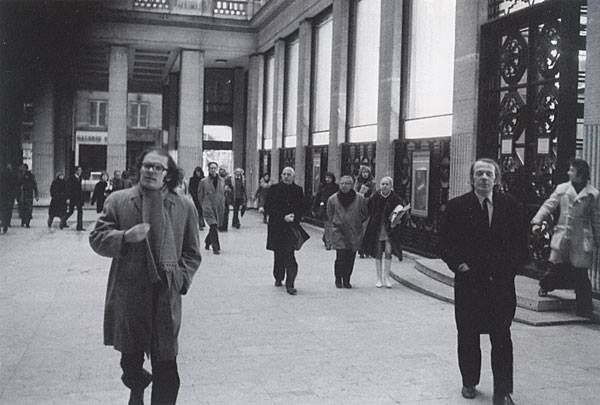
Lectures in this Seminar

square
Reading Date: October 22, 1985
right_ol
square
Reading Date: October 29, 1985
right_ol
square
Reading Date: November 5, 1985
right_ol
square
Reading Date: November 12, 1985
right_ol
square
Reading Date: November 19, 1985
right_ol
square
Reading Date: November 26, 1985
right_ol
square
Reading Date: December 10, 1985
right_ol
square
Reading Date: December 17, 1985
right_ol
square
Reading Date: January 7, 1986
right_ol
square
Reading Date: January 14, 1986
right_ol
square
Reading Date: January 21, 1986
right_ol
square
Reading Date: January 28, 1986
right_ol
square
Reading Date: February 25, 1986
right_ol
square
Reading Date: March 4, 1986
right_ol
square
Reading Date: March 11, 1986
right_ol
square
Reading Date: March 18, 1986
right_ol
square
Reading Date: March 25, 1986
right_ol
square
Reading Date: April 8, 1986
right_ol
square
Reading Date: April 15, 1986
right_ol
square
Reading Date: April 22, 1986
right_ol
square
Reading Date: April 29, 1986
right_ol
square
Reading Date: May 6, 1986
right_ol
square
Reading Date: May 13, 1986
right_ol
square
Reading Date: May 20, 1986
right_ol
square
Reading Date: May 27, 1986
right_ol
square
Reading Date: June 3, 1986
right_ol

January 21, 1986

Just as modern cinema breaks with the complementarity of seeing and speaking in favor of a seeing-speaking disjunction, so, too, Foucault, for his part, breaks with the seeing-speaking complementarity, such as it develops in classical philosophy and such as phenomenology still conserves it, where, in a certain manner … speaking becomes linked to seeing. … With  Blanchot, with Foucault, there is no more linkage between speaking and seeing; there is a disjunction between seeing and speaking. So, in this sense, Foucault’s encounter with modern cinema seems very normal to me: same problem, same concern.

Seminar Introduction

After Michel Foucault’s death from AIDS on June 25, 1984, Deleuze decided to devote an entire year of his seminar to a study of Foucault’s writings. Deleuze analyses in detail what he took to be the three “axes” of Foucault’s thought: knowledge, power, and subjectivation. Parts of the seminar contributed to the publication of Deleuze’s book Foucault (Paris: Minuit, 1986), which subsequently appeared in an English translation by Seán Hand (Minneapolis: University of Minnesota Press, 1988).

For archival purposes, the English translations are based on the original transcripts from Paris 8, all of which have been revised with reference to the BNF recordings available thanks to Hidenobu Suzuki, and with the generous assistance of Marc Haas.

English Translation

Edited

After a brief consideration of Foucault’s relationship with cinema in terms of his problem of the visible and the statable (cf. René Allio’s film on Pierre Rivière), Deleuze returns to power as presented in a diagram exposing a relation of forces, distinguishing characteristics of power in contrast to knowledge, and how power reveals active as well as reactive affects. Addressing the plurality of forces, Deleuze returns to the example of the rise of pastoral power, then to the diagram of power with two different definitions, and to diagrams in different societies, hence indicating mutations from one diagram to another. Deleuze raises the question of origins of a diagram with different responses (the Outside, the dice throw as emission of singularities), and such relinkages of diagrams correspond to “Markov chains”, but also to Nietzsche’s Zarathustra and “the iron hand of necessity” shaking the cup of chance. As regards the diagram, Deleuze describes it as informal, non-stratified, perpetually mutating, abstract without being general, and in fact, virtual yet real, then provides details of how mathematical concepts correspond the knowledge-power distinctions. Moreover, since institutions are forms that integrate micro-relations of power, Foucault resuscitates the word “government” to designate relations of forces most generally, discussing how institutions as molar agencies actualize and integrate molecular relations of forces (cf.  Disipline and Punish, The History of Sexuality). As an example of molecular sexuality, Deleuze considers how Proust describes sexuality in Sodom and Gomorrah through numerous variables of the body and pleasures.


Foucault and Genet
Michel Foucault with Jean Genet at a Paris demonstration in the wake of the killing of Mohamed Diab by police in 1972.


Gilles Deleuze

Seminar on Foucault, 1985-1986

Part II: Power

Lecture 11, 21 January 1986

Transcribed by Annabelle Dufourcq; time stamp and additional revisions, Charles J. Stivale

Translated by Christopher Penfield; additional revisions, Charles J. Stivale


Part 1

… So, you see… well, let us begin by taking a step backwards. We had left open a void, and at last we have the means to fill this void. We are returning to the moment when we…, we were trying… to see clearly the seeing/speaking duality, or the visible/statable duality. And if you recall, we said that it was in fact very interesting because it intersects with an adventure in contemporary cinema. And we said: yes, perhaps this explains, among other reasons, why Foucault was so interested in contemporary cinema.

And in what did this shared adventure consist? This shared adventure consisted in the following: that contemporary cinema, in certain of its forms, had broken with a complementarity that characterized so-called “classical” cinema. The complementarity that characterized so-called “classical” cinema, to give a very rough summary, is the complementarity of the field of vision, on the one hand, and on the other, of the off-screen and voice-over. And if contemporary cinema, through its most advanced figures, has broken with this complementarity, it is in favor of what? There is no longer complementarity between a field of vision and an off-screen doubled by a voice-over, but instead there is a disjunction between two fields: a sonorous field and a visual field.

And in very different forms, you will find this in auteurs like the Straubs [Jean-Marie Straub and Danièle Huillet], Marguerite Duras, and [Hans-Jürgen] Syberberg. In this respect, it seems not to be arbitrary that these auteurs are often grouped together. They have in common that they have broken with a certain form of classical cinema in order to introduce a new mode of exploration, a properly audiovisual exploration, taking the form of a disjunction of the visual image and the sound image. In the Straubs, this disjunction appears in the form of an image that, when we were occupied with cinema last year, I proposed to call stratigraphic, that is, an image of empty earthen space, which can be taken as what the earth covers over [recouvre] and will not be shown. But what will be shown is the sedimentary character, the stratified character of tectonic space. And the voice, for its part, evokes what the earth covers over, that is, raises up what the earth buries.[1]

As a result, you find, in the words of one commentator on Straub and Duras: a story that has no place, for a place that has no story. The visual image shows you an empty place, an empty space, a place that has no story. The sound image tells you a story that has no place. And it’s the whole cavernous space, Straub’s space of fissures, the telluric space of the Straubs, during which the voice elevates what the earth takes down. In Duras, if you take “India Song”, it is another approach, but… it is another form, but one which can be grouped under the same rubric: this great fault line, this great audiovisual disjunction. “India Song”, for example, which is the purest expression of this, though I no longer recall the date … no one remembers the date of “India Song”? 1974, that’s very… we will see why that interests me. Indeed, “India Song”, in the visual image, presents us with a ball – which has no other function than to cover a silent ball, since, even when the characters speak, they keep their mouths closed, ensuring the visual-sound disjunction – thus, presents us with a silent ball that stands in for another ball that took place elsewhere and at another time.

So, there is something analogous; it is not the telluric method of the Straubs, but a dramatic method by which what is shown to us covers [recouvre] the old ball, and this old ball is what the voices will be discussing. As a result, you have there a pure disjunction of the sound image, which evokes an old ball, and the visual image, the current ball that we are shown, the silent ball, which has no other function than to cover over and sink the old ball that the voices by contrast exhume. Thus, a seeing-speaking disjunction. And in Syberberg, you have still other methods that will culminate with Hitler, but which begin already with Ludwig … or even with Theodor Hierneis …, and which are also distributed according to a great disjunction between visual image and sound image.

So, I can say, indeed, that what had been in a certain way the exploration of classical cinema changes completely; it is no longer the same exploration at all. Classical cinema was not really audiovisual because it still subordinated the sound image to the visual image. If it is only recently that cinema has become truly audiovisual, it is because the audiovisual can posit a strict equality between the sound image and the visual image only by eliminating the subordination of one to the other, and thus proceeding by way of a disjunction between the sonorous and the visual. There is no longer an off-screen, there is no longer a voice-over. There are two fields that rival each other, each of which is sufficient. It is the great seeing-speaking disjunction.

Now, I was saying that just as modern cinema breaks with the complementarity of seeing and speaking in favor of a seeing-speaking disjunction, so, too, Foucault, for his part, breaks with the seeing-speaking complementarity, such as it develops in classical philosophy and such as phenomenology still conserves it, where, in a certain manner – we will see this when will have occasion to speak of [Martin] Heidegger or [Maurice] Merleau-Ponty –, speaking becomes linked to seeing. With Foucault, who in this regard follows [Maurice] Blanchot… with Blanchot, with Foucault, there is no more linkage between speaking and seeing; there is a disjunction between seeing and speaking. So, in this sense, Foucault’s encounter with modern cinema seems very normal to me: same problem, same concern.

Hence, this is where we left open a void, where I was talking about the interest, if we could, in re-watching the film that René Allio, in 1976 – this is where the dates are important, I believe it was 1976 –, drew from Foucault’s work I, Pierre Rivière, Having Slaughtered My Mother, My Sister, and My Brother. Why? Because it was central to our problem. Why was Foucault interested in this film? Well, first, why was he interested in the case of Pierre Rivière, murderer of his parents from the nineteenth century? Why did it appeal to him so much? No doubt for a reason that we have already seen: because Pierre Rivière is an example of what Foucault calls, in a very specific sense, infamous men. And it is a young infamous man. Good, we have looked at this, so I will not return to it. But more profoundly, because the murder case of Pierre Rivière poses a very particular problem; one could find something equivalent, but this case poses, in a particularly acute way, a problem of the relationship between the act and the story, between the action and the narration. We might say just as well: between seeing and saying, between the visible and the statement.

What is visible? The criminal act. What is stated? The notebook written by Pierre Rivière. What is the link between the murder and the story, that is, between the visible action and the statable text? [Pause] And, long before being a question about the film, Foucault had asked the question thusly, because, in his course and in his own commentary on Rivière’s notebook, the publication of which he thus assured, in his short commentary, he says: the relationship between the text and the murder is very complicated. The text does not recount the action. And you see why this problem interests him: it is truly an exemplary case of the relation between the visible and the statable. The text does not recount the action, just as the statement does not recount the visible. The text does not recount the action. But, from one to the other, there is a whole weave of relations. They support each other, they propel one another in relations that have not stopped changing. And in effect, it is a mobile relation, a modifiable relation, a variable relation between the stated text and the visible action. In effect, for, initially, Rivière the murderer had conceived a kind of intertwining of the notebook and the murder. One end of the notebook would be written before the murder, the other end afterward, and then the notebook would be sent off. You see: the visible action and the written notebook, the scriptable notebook, would intertwine… [Interruption of the recording] [14:02]

Part 2

… But in any case, the other projects persist. For Rivière says that he thought about his notebook so much that the words were practically ready-made, the sentences already written in their being. Good.

You see that I am saying that what could interest both a director and what interested Foucault in the idea of a cinematographic staging of Pierre Rivière was essentially the following: how would cinema distribute the notebook and the murder? Which is to say, the visible and the statable? In this sense, the undertaking to film Pierre Rivière could have two concerns: either a commercial concern that would be of little interest, namely, the history of a murder; or a real cinematographic concern that could only arise at a time when cinema had become aware of a possible disjunction between seeing and speaking, which would find in Pierre Rivière a privileged subject matter, since the whole document Pierre Rivière took its interest in the division between the notebook written by the murderer and the murder committed. You see? Now, this is in 1976, I believe. What happens in 1976 from the point of view of cinema? This is why I asked about the date.

Let us assume in effect – it would be necessary to verify, but in any case, it does not change anything – the three auteurs with whom we are concerned, Straub, Marguerite Duras, and Syberberg, had already begun. Further, I believe – but my apologies, I should have verified this, but I did not have a reference book on hand, so I was unable to do so – I believe that Moses und Aron, which already appears late in Straub’s oeuvre, is from 1975. In any case, Straub’s important films, not the essential ones, but some of Straub’s important films had already appeared before 1975. Duras, in my opinion…, you are saying “India Song”, as you recall, would be from 1974, so a bit earlier. Syberberg had already made… 1974 must also be the year of Syberberg’s Ludwig. So, this new audiovisual cinema is actually very recent. René Allio, who up until then was known for, it seems to me, a very classical form of cinema, very interesting but very classical, found himself confronting a type of problem that seems new to me. It is technically very simple… I mean that it is a technical question: how will one distribute the story of the notebook and the story of the murder? How will one distribute the statable and the visible, once recourse to a voice-over has been excluded?

You will say to me: why is recourse to a voice-over excluded? Well, … as you like, if you resort to a voice-over, you provide this problem with a ready-made solution. What is the disadvantage? It is that you do not account for the specificity of the notebook; you do not prevent the voice-over, at that moment, from having no other function than to guide the vision of the visual image, or in other words, you subordinate what is given in the notebook to what is given in visibility. Thus, strictly speaking, you could do it, but it would be of no cinematographic interest. And Allio, though a director who had, again, remained very classical until then, understood this very well, and since it is certain that Foucault took a great deal of interest in the film adaptation of Pierre Rivière, it is very likely and even certain, I believe Allio said so, it is certain that Allio and Foucault spoke at length about the solution.

And it is a solution, for those who saw the film the other night, a solution in fact very close to …, perhaps we could even say that if there is something reproachable about the film, it is perhaps that there is something pedantic in the application of a principle that is much more complex than the voice-over. But Allio, with, I believe, a great deal of cinematographic intelligence, grasped and inserted himself well into this current – which is, again, quite surprising if one considers Allio’s prior works – this current of Duras and Syberberg, solely on the occasion of this film, because this film demanded it. What do I mean? Well, the first image – you are going to immediately understand, I believe, even those who did not watch the film – the first image seemed striking to me, yet precisely it showed almost the limits of the film; it is too perfect, that is, one has the impression of something systematic.  It is even so systematic that the same method will not be able to appear with such crudeness. What does the foreground of the film show? It shows a central tree that divides a Norman meadow. It takes place in Normandy, there is a meadow and then a tree in the middle. It is an empty space. … It is the only empty space of the film. It is like an homage to this new cinema; an empty space à la Straub. Only, what makes…? Okay, it doesn’t matter.

And at the same time, what do we hear? We hear the sounds and the formulations of the circuit court. Understand what I mean: it is not a voice-over, these are not off-screen sounds. It is: contamination, the confrontation of heterogeneous visual and sound images. You have the three strikes of the gavel [Deleuze knocks three times], we begin by hearing the three gavel strikes at the same time as we see the tree and the Norman meadow; we hear the three strikes [Deleuze knocks three times], about which we say, look, it announces the opening of the play, yet it does not announce the opening of the play, but rather the opening of the trial, as is indicated by the following… “Gentlemen…” um… no, “the court is now in session” or else “please rise,” I no longer recall… at any rate, a legal formulation.

This, I am saying, is prototypically the disjunction of the sound image; it is not a voice-over, but the confrontation of two fields: sound field and visual field. I am saying: here is such a pure image of the visual-sound disjunction that it is too perfect. And personally, I do not know… if those who were there… so it bothered me, it bothered me because I said to myself: there is something that doesn’t work, it is anthological, as they say, it is a piece of bravura, one cannot maintain like that for long, and in fact never did Straub or Marguerite Duras or Syberberg ever proceed like that. It is a little bit forced. Okay, good. And next, happily, it cannot continue like that with the double sound-visual source, it’s not tenable, it won’t work, everyone would leave. But it will play out a whole series of discrepancies [décalages] between the sound image and the visual image, in such a manner that the notebook will never function as voice-over. The notebook must inspire and fill a sufficient sound image while the gaze invests a visual image that is itself sufficient, the two never coinciding.

As a result, I took some notes, very poorly because I could not see anything. So… Well, … I will go quickly so that this becomes clearer. What appears to be a voice-over says at a certain point something like “my mother never stopped talking and speaking…”, and the whole visual image shows the mother all alone saying not a word with her mouth closed. At one point … I noted some things down, I already no longer remember… “At one point my parents were arguing all the time” says the voice that seems, again, to be a voice-over, and the image shows the kid, Pierre Rivière, who is working a field, with no parent and no sound of dispute. Then, at one point, the visual image, we are told that Pierre Rivière was bizarre, that he did grotesque things to animals, that he hurt them badly and that it made him laugh; and, among other things, we are shown Pierre Rivière forcing a draft horse to climb onto a manure heap, and then the horse loses its balance, it falls over… all this is a catastrophe, and Rivière laughs hard. But it is much later in the film that the sound image will describe this scene that we are first shown visually. You see: a whole system of discrepancies [décalage].

So, to summarize, I would say: I believe that what is interesting about the film is the way that Allio knew to be aware of this problem – the disjunction between seeing and speaking, between the visible and the statable – and distributed it throughout the whole film using different means, the purest of which being that of the foreground. And surely this responded to the intention of Foucault; I imagine that in the discussions between Allio and Foucault, Foucault would say to Allio, well, you are the filmmaker, what are you going to find in order to take into account this visual-sound double game? And that Foucault, for his part, had in mind solutions along the lines of Duras, Syberberg, and Straub, as, no doubt, did Allio as well.

So, if that is what is interesting about the film, at the same time, perhaps, perhaps, I do not know but perhaps, in my opinion, in my impression as a recent viewer, a certain limitation of the film is that the method is flat [plaqué], a bit flattened out. It does not, as in the case of Duras …, it does not emerge from the very exigency of the work. Alright… perhaps. That is what I wanted to say, I wanted thus to fill in what we had left open as an empty category regarding this relationship between Foucault and cinema in terms of his problem of the visible and the statable, or his problem of the seeing-speaking disjunction.

Is there anything to add to what has just been said? [Pause] Among those who saw the film, do you have anything to add? [Pause] No? [Pause] Is there anyone here among the undergrads [premier cycle] who saw the film? [Laughter] You’ll say no, obviously… No undergrads saw it? Fine. Nothing to add, okay. So then, after this detour backwards, we are continuing going forward. Yes?

A student: [Inaudible question]

Deleuze: Did you see the film?

The student: [Inaudible reply]

Deleuze: Ah! [Laughter] Yes, stand up because we will hear you better if you stand. Sorry to ask this of you…

Another student: [Inaudible question]

Deleuze: It is a primacy that implies no homogenization. I had said: it is exactly like in Kant, where there is a duality between what Kant calls understanding and what he calls intuition. There is an understanding-intuition duality. The understanding has primacy, but that does not at all mean that intuition is reducible to the understanding. So, what does that mean, primacy without reducibility? A has primacy over B, and yet B does not allow itself to be reduced at all to A. It is, if you like, a bit like if I were to say, well yes, those who govern have primacy over those who are governed, from the point of view of the government, and yet this does not imply a reduction of the governed to those who govern. So why is there primacy? I believe it is very simple, it was already Kant’s sole reason: there is a primacy of the active over the passive. Or, if you prefer, there is a primacy of the active over the receptive. Why? Because the active is what does something. It is what does something.

So, when Foucault recognizes a primacy of the statement over the visible, it is in the name of the activity of language through which statements produce themselves. Just like, in Kant, there is an activity of the understanding and a receptivity of intuition. So, this is what it means. As for cinema, it has nothing to do with primacy. It has nothing to do with primacy because primacy, it seems to me, belongs to a kind of philosophical reflection on two irreducible terms. Unless… can we say that there is also, in this cinema of the audiovisual, a primacy of the statement? There, I think the answer is no, because, on the other hand, the work of the visible matter makes it so… I suppose we would have to say that either, for cinema, there is no primacy, or else that cinema has nothing to do with the question “which has primacy?”, that this is not a question for it, not a question that interests it. Yes. Good.

So, forget all that, since you do not want to say anything, and finally we are continuing on. Last time, we delved into the question of power in the following form: given that power is a set of relations of forces corresponding to a formation, power is presented in a diagram, and I attached a great deal of importance to the word “diagram,” which Foucault uses one time. Why? Because it gave me a reason, or rather it gave me a convenient word for clearly marking that we were no longer in the domain of the archive. The archive is the archive of knowledge. The archive of knowledge is not opposed to, but distinguished from, the diagram of power. Now, we have seen, and this was our principal objective last time, that there were two characteristics of the diagram, insofar as it is an exposition of relations of forces. Its general definition would be: exposition of relations of forces.

But what are the characteristics of the diagram? The first characteristic of the diagram is that it brings together [met en présence] non-formed matters and non-formalized functions. In this way, it distinguishes itself from the archive of knowledge. And last time we had just made… In what way is power distinguished from knowledge? And there, the answer should thus be my two characteristics of the diagram, it should be the two differences between power and knowledge.

Thus, power will be a set of non-formed matters and non-formalized functions. By contrast to knowledge, which presents formed matters and formalized, finalized functions. Every form of knowledge implies an already formed matter and an already formalized, finalized function. You sense, if you understand this, that every form of knowledge implies a formed matter and formalized function, and you should already understand why the visible and the statable come together at the level of knowledge. [Pause] It is because formed matters are distinguished by visibility, in the sense that Foucault gave to “visibility,” which is not simply sight, as we saw in the first term; I could say that formed matters are distinguished by visibility, and finalized functions are distinguished by statements.

But as for power, it speaks to us of something else, speaks to us… but I cannot say otherwise…. Power presents to us something else, it regards non-formed matters and non-formalized functions. You will say: that is so abstract! But at any rate, I hope that it was less so the last time. It is precisely abstract, it is abstract. In fact, non-formed matters and non-formalized functions are pure abstraction; it is matter and then voila, matter qua matter or function qua function. How could I put in any variety? The answer is simple: there is a great amount of variety to the diagram, or to diagrams, for the simple reason that non-formed matters are not inevitably one and the same matter, and non-formalized functions are not necessarily one and the same function but are only distinguished by the space-time variable. Thus, in order to define a non-formed matter or a non-formalized function, I will only be able to take into account the space-time variable, following this first characteristic of the diagram.

So non-formed matter will be: some multiplicity, taken to be human… You will tell me: ah, but human is a form! Yes, yes, yes, we will see why we cannot escape, this amounts to saying that we already in fact cannot escape from determinations of knowledge when we speak of power, it goes without saying, but be patient; we will understand why we cannot speak of power in its pure state and can only speak of power as already incarnate in a form of knowledge. It is unavoidable. But that does not prevent the distinction from being valuable.

Thus, I will say: some human multiplicity, without at all specifying… – in this way it is diagrammatic – without at all specifying what multiplicity it is. Some human multiplicity in a closed space, this multiplicity being small, small multiplicity in a closed space. There you have a diagrammatic trait: to impose a task, to impose some task, to impose some task on a small multiplicity in a closed space. I will say: there you have a category of power. It is a diagrammatic trait or a trait of the diagram. If I now say: to control the principal events – I am not specifying which ones – to control the principal events in a large multiplicity itself situated in an open space, I am defining another diagrammatic trait. Thus, the abstraction of the diagram does not prevent its potential varieties, since I have at my disposal a space-time variable that is largely sufficient. And there are all sorts of types of multiplicities. In effect, at this moment, I will define a multiplicity by the way in which it spreads out in a space. Multiplicities will vary according to the type of space and also according to the way it which they occupy the space; so I will have a great deal of variety in the diagram, or from one diagram to another.

Thus, you see, if I say, “to impose a task on a small multiplicity in a closed space,” or if I say “to control the principal events of a large multiplicity in an open space,” I provide categories of power. On the other hand, if I say, “to punish, to educate, to put to work, to teach”, etc., these are not categories of power, these are categories of power/knowledge. These are categories of knowledge, which of course imply power, but they are categories of knowledge. Why? Notice that all these terms in fact mobilize formalized functions and formed matters. The schoolchild, worker, prisoner are formed matters. To impose some task on a small multiplicity in a closed space was a category of power, but now I am in the concrete, there is no matter that is not formed. What is this generic multiplicity? It is a multiplicity of children, so the function will not be to impose a task, but simply to teach. To teach a multiplicity of children in a closed space that will be called the high school or elementary school. But, next door, to impose some task on a small multiplicity in a closed space will become… the formed matter has become the prisoner and no longer the schoolchild, and to impose some task is not to teach but to punish. Is it surprising that, after all, there are punishments at school and there are lessons in the prison? No, they respond to the same diagrammatic trait. You understand? But, thus, if I consider power in the abstract, it being said that power is an abstraction, if you tell me “in fact, it’s never separated!” Clearly, it’s never separated, Foucault is the first to say it. If I make an analysis, it is to mark the difference in that which is not separated in reality.

What must be called “power” is the diagram, which consists in swirling together [brasser] non-formed matters and non-formalized functions. And I would distinguish it in this way from archives of knowledge, which begin from the moment when the functions are formalized and finalized, that is, when it is no longer a question of imposing some generic task, but of teaching, or punishing, or putting to work in a factory, or the like. It is no longer a question of some generic closed space, but sometimes of a school, sometimes a prison, sometimes a workshop…, sometimes a factory. There you have it, that is the first characteristic of the diagram.

And we saw last time: the second characteristic by which power will also be distinguished from knowledge. It is that knowledge, as we saw previously throughout the first term, always proceeds from within a form and, even better, from one form to another. It proceeds following the form of the visible, light, following the form of the statable, language; and better, it proceeds from one form to another, that is, it interweaves the visible and the statable. Whereas power, for its part, goes from one point to another. Power is a set of relations that are punctual and not formal. The point is what… there is a text where Foucault uses the slightly strange expression ‘state of power,’ a ‘state of power.’ I believe that what must be called a power, according to Foucault, is the point, once it has been said that power ceaselessly establishes relations between points, between points in the plural.

What, then, is a point or a state of power? A point of power? Well, here, I believe this must be taken very seriously because it will be important for us. You recall what I told you: the diagram is the exposition of relations of forces. Now, the relation of forces does not add to the force, there is not the force plus its relation with other forces. Force is fundamentally plural, there is force only in the plural. That is, force is, in its essence, a relation with another force. It is with force that the word ‘one’ loses all meaning. There is no force that is not a relation with other forces. It is on this basis that Nietzsche founded his pluralism of forces. Forces are not unifiable. It was a very simple idea, yet so well confirmed by physics, by the physics of forces, which is very important. Good.

“On this basis” means: a force is fundamentally related to other forces, that is, a force has no essence [Pause], but is defined by the fact that it affects other forces and is affected by other forces. That a force always affects others… You see, it has no essence, a force has nothing but affects… That a force always affects others, this is what we will call its spontaneity. Even if it is determined so as to affect other forces, the aspect through which it affects others is its spontaneity; the aspect through which it is always also affected by other forces is what we will call its receptivity. In other words, a force has active affects and reactive affects. [Pause] Its active affects express the manner in which it affects other forces, and its reactive affects express the manner in which it is affected by other forces. I could refer to its active affects as points of spontaneity, like this, I dream… I am trying to build a vocabulary… The other aspect, the reactive affects, I could refer to them as points of receptivity. Good.

So, we sense… okay, what is a point? Well, we have seen – I am returning to my whatsit [truc] – it is a diagrammatic trait expressing a relation of forces, that is, a force that acts on other forces. To impose some task on a limited multiplicity, to impose a force that imposes a task on a small multiplicity of other forces. And I told you that we can diversify according to the aspects retained of a space-time, and this will yield: to arrange [ranger] – a force which arranges others – to arrange, to be arranged; to arrange, on the side of the force that affects, that arranges other forces; to be arranged, on the side of the forces affected. And I told you that there is more than just arranging, there is classifying, a hierarchical series, first, second, third, fourth, fifth, which is also a diagrammatic trait, that is, a category of power, a force that classifies other forces. Here I will again have two affects: to classify – to be classified. To be arranged is a reactive affect, and to arrange is an active affect. To classify and to be classified, etc., I have given all kinds of examples…

You see that we must not believe that reactive affects are simply symmetrical, for there is a specificity of the affect “to be arranged” in relation to the affect “to arrange”. Reactive affects are not the simple… the simple repetition of the active affect. To be arranged responds to arranging, yes, it is a relation of forces. To classify, then, to arrange is, for example, at school… it is the schoolmaster who says, who… all the students wait at the door without smoking, … the schoolmaster arrives and he places them two-by-two. The force of the schoolmaster is to arrange. The force of the students is to be arranged, for there must be a force to support force. To be arranged is a reactive affect of force, like arranging is an active affect of force. An affect of receptivity, to be arranged. But it is not the same thing as the results of the arrangement. The result of the arrangement is a classification. First, second,… thirtieth … all that. Good, you can go in both directions, since you have two kinds of teachers. Teachers are distinguished by the following: those who give the results of the arrangement by beginning at the end, and those who give the results of the arrangement by beginning at the beginning. They do not follow the series going the same direction: these are not the same affects that are distributed in the class, the young passive forces that receive the instruction of the schoolmaster do not at all feel the same affects.

I remember very well in my childhood — I am opening a parenthesis — better or for worse, the teachers who began at the end were considered to be properly sadistic. For there is no doubt that it was original. There are fewer teachers who begin at the end than at the beginning; any teacher who distinguishes themselves from the average does not appear clear to the child, and from the moment when it does not appear clear to the child, he has good reasons for thinking that there is some kind of dirty trick going on. And, in effect, with the teachers who begin at the end, it is not at all the same type of emotion, that is, the affects are going to be … fine. First of all, it is completely despicable, eh — and I’m emphasizing it quickly — because in the last place, it’s a hammer blow, immediately, it is a heavy blow. The guy begins: thirty-first, ah… it is a hammer blow.

In the other case, let us consider, when the last place comes at the end, it’s not joyous obviously, the anxiety grows, but to me it still seems less inhuman than the massive… um… and, after all, inversely, the anguish grows … when one begins at the end, the anxiety grows for the one in first place, who says: fifth place… ah, am I going to be first place? It’s not good, it seems to me, it is not a good thing. It is better for the first place student to be immediately situated in first place, and humaneness must grow as the order descends…; whereas in this case, on the contrary, by beginning at the end, one makes the first place student more and more prideful. So… the little last place student was stunned… In any case, it is not at all the same distribution of affects in the classroom. It is only the middle that doesn’t give a damn. [Laughter] The middle doesn’t give a damn either way, then. They don’t give a damn because, whether it goes in one direction or the other, they are still there in the middle and are the only ones who don’t move.

But, thus, … the affects … understand that, based on a small variation like that, the distribution of affects in the social field, that is, in the class, in the space considered, changes completely. So, I would say that I can define power as every relation from one point to another, if I understand what “point” means. And here, I am simply suggesting that “point” must be understood as the strict equivalent to “affect”; a point of force is not the origin of a force but the affect, that is, its relation with another force that affects it or that it affects. That is what defines a point. I would say, then, that power, the power relation, goes from one point to another. Which amounts to… it is the development of the simple idea: all force is plural, there are only pluralities of forces.

So, I am here returning to a theme … that we have sketched a little bit, saying: among the diagrams… Foucault, at the end of his life, accorded a great deal of importance to pastoral power, to this ecclesiastical power. Why? Because he saw there the first power that proposed to individualize its subjects. But how to define pastoral power, this power of the church? Foucault defines it in his manner… But, for me, this evokes something because I tried to tell you: this whole conception of Foucault is very Nietzschean. It is very Nietzschean, and it is so Nietzschean that, strictly speaking, he had no reason to say so. Now, it is all the more important for our purposes that Nietzsche is surely the first to have posed the question, in cold and cynical terms… no, not cynical, in cold terms: what does the power of the priest consist in? And this is perhaps one of the most novel things in his philosophy: what is the power of the priest? What does it consist in? I am not at all saying “cynical,” I am saying: he demands a positive theory of the power of the priest. Where does this strange power come from? Hence Nietzsche also can exclaim at the end of his life: “I am the first to have done a psychology of the priest!” By psychology, he means something very elevated. “I am the first to have done a psychology of the priest.”

So, Foucault would be the second. What does this mean? But consider the great psychology of the priest that Nietzsche provides in the second treatise of the Genealogy of Morals, for he does not only provide a psychology of the priest, but a psychology of the mutation of the priest. And this second treatise of the Genealogy of Morals begins by providing the psychology of the Jewish priest, so as to pass on to the psychology of the Christian priest. Now, how – I do not want to go back over all of this, but it is just so you better understand what is at stake in this matter of the diagram and relations of forces – how does Nietzsche define the Christian priest, that is, the pastor? It is the pastor, and Nietzsche often uses the form “the pastor,” the expression “the pastor”. How does he define the pastor? He gives a very strange definition, but it is so beautiful: it is one who returns force against itself… [Interruption of the recording] [1:00:32]

Part 3

… Hence the possibility of defining power without ever speaking of man. For all the histories, like the death of man, etc., we will see later on, we will see very soon that if these ideas of Foucault were so misunderstood, it is because, from the beginning, nothing was understood of what he was saying. A diagram of power makes no appeal to the “man” form, even if it presupposes it. It must be entirely articulated in terms of affects and relations between the affects and relations of forces.

This is why I can say: if the first determination of the diagram is the swirling together of non-formed matters and non-formalized functions, the second definition of the diagram, equal to the first, incidentally, is an emission of affects or singularities, an emission of affects or singularities corresponding to a social field, corresponding to a collective field.

And grant me that there is a strict implication from one definition to the other. Ultimately, they are two ways of saying the same thing. This wouldn’t be difficult to show, but it doesn’t much matter. The two say absolutely the same thing. And the two definitions give us two differences between power and knowledge. Knowledge passes through forms and operates within forms. Power establishes relations from a singular point to another singular point, from one point to another. Knowledge regards formed matters and formalized functions; power regards only non-formed matters and non-formalized functions.

Hence you may understand my question better. Foucault uses this word “diagram” one time, and he uses it concerning disciplinary societies, which is to say, what he considers to be our societies, and I told you last time: good, very well, but there remains a problem for us, we readers of Foucault. Does this mean that the diagram of power exists only for our societies? And that, before these societies, other previous societies were ruled [régies] by something other than a diagram of forces? For example: did the sovereign replace the power of the diagram? There was a power of the sovereign and not a power of the abstract diagram. I would say: definitely not. Quite evidently not. For the sovereign, in turn, is only a formalized and finalized function that presupposes a diagram. It is thus for every society, for every social field, no matter what it is, that we must say there is a diagram. Which brings us finally to an important problem, which we saw last time, and in this regard, I would like to add something that will prepare us going forward.

I was saying that just before our disciplinary societies, you have, according to Foucault, the societies of sovereignty, and this is another diagram, their diagram is not disciplinary. “Disciplinary” designates a certain set of relations of force with force, but it is not the only relation. Once again, in a diagram of sovereignty, it is no longer a question of composing forces, as in discipline…; it is a question of levying forces. The sovereign is a force that levies other forces. It is a power of levies. And levying is an active affect, just as “being levied” or, rather, “being the force on which one levies something” is a reactive affect. It will thus be another distribution of singularities in societies of sovereignty, other relations of forces, fine, but there will be a diagram. It must be said that the diagram is not reserved for disciplinary societies, but there is a disciplinary diagram just like there is a diagram of sovereignty.

And so, in this spirit, I was saying, in the limit case, regarding matters with which Foucault was never the least bit concerned, in so-called primitive societies, there is a diagram, the diagram of alliances, which is a very particular diagram, some aspects of which will remain in the diagram of feudalism, for example, with a network of alliances but conceived in a new way. So with diagrams, you can multiply them, you can make as many as you like, especially since there are inter-diagrams, I was saying.

And, finally, we must ask ourselves… we will see what kind of problem arises from this, we will be compelled to see… It will be necessary in the end to say that diagrams are always intermediary, much more than they belong to a social field. Diagrams are always intermediary between a social field in the process of disappearing and a social field in the process of emerging. Why? You will see where I want to take this. It is something that will concern a fundamental instability of the diagram. The relations between forces in a social field are fundamentally unstable. What is stable? You will see right away what is stable, namely, the strata, yes, the very formation, but the diagram that is like the motor of the formation is itself fundamentally unstable.

But, at any rate, we will see this… This is why there are, according to the text of Foucault, there will be…, we will be able to speak of a Napoleonic diagram, as I told you. The Napoleonic diagram is Napoleon precisely at the hinge point of the conversion from the society of sovereignty into disciplinary society; he presents himself as the resurrection of the ancient sovereign, of the great Emperor, but in the service of a completely new society that will be a society…, a diagram of the organization of detail, a kind of secular pastor, the surveillance of cattle. And the Napoleonic diagram will be the conversion of the society of sovereignty into the society of discipline.

But, to better emphasize the diagrams, which are everywhere and vary greatly from each other, I say to myself, okay then, for the first-year students…, I could give them an assignment. It would be: construct… There would be problems, like in geometry, you know. Construct the diagram of feudalism. So, if they speak to me of the knight, I will cross it out and mark zero: [Laughter] they have not understood what a diagram is, they must only speak of affects of singularities and relations of forces. They will therefore be forbidden the word “knight”, and each affect will be defined by a force relation, but there will surely be an “x” (small x) that will only be able to be performed by horse. Very interesting. Do you want me to give you an assignment…? Even for everyone, eh? Or a written quiz, that would be marvelous… And then I will give you the grades, and after, the comments, eh? I will begin with last place, obviously… Okay. Alright, then.

And then another topic would be: in your view, …are we still within the disciplinary diagram, or are we already within a society that refers to a new diagram? I was telling you last time, the partisans of the idea of a postmodern era, in which we would have entered, means above all that, according to them, the diagram has already… how do you say it? “Molted” or “mutated” [mué ou muté]? You say “mutated”? You are sure? Mutated. The diagram has mutated. The diagram has molted… Yes, you say “mutated,” good. They are not the same, but yes, good. Alright, then.

Or I could ask: and the Greek city-state, does it have a diagram? I mean, this interests me greatly because Foucault, at the end of his life, converts all his reflection into a reflection upon… in part, not all his reflection, but a reflection upon the Greek city-state assumes a particular importance. So that, if I jump into his last book, one of his last books about which nothing at all has been said, The Use of Pleasure, I say to myself: is there enough there to find a diagram? And here we would see the originality of Foucault’s method because we would have to see how Foucault defines the Greek city-state, how ancient historians defined the Greek city-state, how contemporary historians define the Greek city-state. This would then be a privileged terrain where we could directly evaluate Foucault’s originality in relation to historians. Now, if you read The Use of Pleasure, it seems to me that what he retains as an essential characteristic of the Greek city-state is very interesting, because, if I take as criteria the best current historians of ancient Greece, [Paul] Vernant or [Marcel] Detienne, for example, I would not say that it is in opposition, but that it does not coincide. It is not opposed to, but does not coincide with, the principle traits retained by Vernant or Detienne.

What, in fact, strikes Foucault about the Greek city-state? He does not think that the Greeks were some miracle, eh, he does not make the Greeks into an astounding idea. In this regard, he is full of implicit irony vis-à-vis Heidegger, for he does not see in the Greeks the world-historical gesture or gest. He says: oh no, these are interesting people, but in the end, it is nothing earth-shattering; no, they are not at all the shepherds of Being. They are not the shepherds of Being, but in a sense, as always, Foucault says, this is his form of humor: they did much less and much more, depending on your perspective. So, what is greater than “being the shepherds of Being”? If you look at the text, you can read The Use of Pleasure by searching for it: what diagram of the Greek city-state does this book imply? He has a very curious idea, which is that the Greeks invented something very strange in the relations between forces: they think that force is only exercised legitimately over other forces when the forces are free. You will tell me: great, but what are free forces? Well, no doubt it refers to preexisting diagrams. And this obviously refers to the Greek citizens… You will tell me: yes, but here I have lapsed into the error I was denouncing, and I cannot help myself to the Greek citizen, the free man. I cannot help myself to the free man since the free man is not diagrammatic. It’s not that this does not exist, but that it is not diagrammatic.

So, I must choose another word. It’s not just a semantic distinction: I will speak of free agents, free agents, that is, those who are presumed to not be already determined by a pre-existing power relation; this is an abstraction, which I can very well make. “Free agent,” by contrast to agents who are already determined by pre-existing power relations, for example, slaves. And the great idea of the Greeks is a rivalry between free men. I believe that is what Foucault is saying: I believe it, but is is up to you to say it and to see if… His idea of the Greeks appears to me to be very strong… We will pick all this back up, so it’s not pressing, it’s just to anticipate where we’ll be going. His idea of the Greeks is that what they invented politically is something that has not ceased inspiring democracy afterward. If they are democrats, it is in this sense: for them, free men are in a state of free rivalry. Why is this diagrammatic? Because I do not say in what domain. In all the domains. In any domain. So, we must not be surprised that the Greek city-states did not stop warring with each other, since they lived fundamentally as rivals. It is not the barbarians: the barbarians did not compete with the Greeks, from the Greeks’ perspective. However, the Greeks compete with Greeks. Greekness is the rivalry of free men.

So let us remove “man,” since I can no longer say it. It is the rivalry of free agents, with the corresponding affects. Take Plato; it is striking, in Plato, the extent to which he registered [recueilli] this. It’s not that he was in agreement: Plato said that this was what the Greek city-state was going to die from. But I am saying “in all the domains,” and in politics, it is a matter of competing: this is precisely what defines free men, what defines citizens, to be agents who are able, who are capable of competing with one another. Hence the Greek theme, namely, to be the best. What is the best? So, Socrates exults, saying: ah yes, but in which domain? In which domain? You talk about racing, so, if talking about racing, the best is the fastest, he says. For the footrace, it is the fastest. Here, there is a simple question and a simple response. But can you say this for politics or for medicine? Is the best doctor the one who cures the fastest? Then the interlocutor says: “no, Socrates, it is not the one who cures the fastest, it must be the one who cures well.” “Ah, yes, but isn’t running fast the same as running well?” Then the interlocutor says: “Ah, yes Socrates, but already I no longer understand…” So, Socrates says: “Okay, come on, we’ll start again. So, the best doctor is not the one who goes fastest, thus the good is not the fast?” The interlocutor, he… [Deleuze does not finish the sentence] So okay, it’s not the fast. What will rivalry be, then?

There is a dialogue that I find to be Plato’s most beautiful, namely, The Statesman. And now, Plato comes to say: well, yes, the politician – this is how this text by Plato inspires all of pastoral power – the politician is the pastor of men, and with respect to that, one sees plenty of … – it is great theater – plenty of people who arrive and say: it is I! It is I! You see: it is I.  Then everything goes. The pastor of men is the one who takes care of man as a flock. So: the butcher arrives and says: who takes better care of man than I do, by providing him with meat? The weaver arrives and says: but no, it is I! Yes, it is I who clothe him, giving him his own wool. Without me, he would be like a completely shorn sheep. It is I, the pastor of men, etc., and everyone battles: that is the Greek city-state.

You pose a question and he replies to you: it is I, it is I, it is I! Go say that where the emperor of China resides; there will be no rivalry among free agents. There will be free men where the emperor of China resides, certainly, but they will not enter into a rivalry, into a pure and direct rivalry. They will not compete. They will perhaps compete in secret, but in order for rivalry there to be precisely the relation by which forces pass… And then, it may not be the footrace… Rivalry in the Olympic games – that is why the Greeks invent the games, with their theme of competition among free people, among free agents – so they invent the Olympics, absolutely, but they also invent democracy… Democracy is not liberty, nor is it equality, but rather the power to compete [rivaliser]. The power to compete is an affect. You understand, I would say, that rivalry is the diagram of the Greek city-state, just as I was saying that alliance is the primitive diagram. And is it surprising that they invent eloquence? Rivalry, I would say, implies the form of the good adaptable to each domain. The form of the good, insofar as it is adaptable to each domain, is what defines rivalry.

What is the form of the good in the domain of speaking? The form of the good in the domain of speaking is eloquence. The Greeks will thus have institutions of eloquence. The form of the good in the domain of physical exercise is, as we put it, speed, at least in certain physical exercises it is speed; consequently, the Greeks will have the Olympics. And just like that. I could say that the diagram of the Greek city-state…– just as there is a disciplinary diagram, a diagram of sovereignty and a thousand other diagrams – I would say that the diagram of the Greek city-state is rivalry among free agents. And, once again, in a despotic society, in an imperial society, rivalry among free agents cannot take place. Good.

So then, you see our problem: we now find ourselves not, as we first believed, before a sole diagram, but before an open multiplicity of diagrams. This suits us, but remember that each diagram is itself a multiplicity, multiplicity of relations of forces, multiplicity of singularities, multiplicity of … affects. Well, yes. Each diagram is a multiplicity, and there is a multiplicity of diagrams. But then, where do the diagrams come from? This is an importance question. What traverses them? [Qu’est-ce qui les parcourt?] … What is this diagrammatic materiality? What is that kind of thing? Well, no doubt there is neither beginning nor end. There is neither beginning nor end, neither an origin of forces nor an end of forces. There are only reincarnations [avatars] of forces. There are only metamorphoses of forces. The question of origin and the question of destination are disqualified from the point of view of forces. What does this mean? It means that not only are there mutations from one diagram to another, but every diagram is a place of mutation, and that this is what defines the diagram: it is a place of mutation.

And then, how to define a mutation? A short text by Foucault will say it, in The Order of Things, page 217: “mutations that suddenly decide…” — here, then, this will interest us because it once again prepares our future — “mutations that suddenly decide that things are no longer perceived” — I am putting in parentheses the following: “(described)” — I close my parenthesis: “expressed…” — There you have it: listen carefully — “…these mutations that suddenly decide that things are no longer perceived, (described), expressed, characterized, classified, and known in the same way…” Suddenly I no longer speak, I no longer perceive — remove the “I” — suddenly one no longer perceives in the same way. Suddenly one sees something that one did not see before. Suddenly things are said that were not said before.

You will tell me: we are not in the domain of the visible and the statable. Of course, of course, we are in the domain of the visible and the statable, but there was a mutation. For there to have been a mutation, the diagram must have passed through it. What assures the mutation is the diagram. The diagram is the mutation itself. Relations of forces are in perpetual mutation. There is no longer, I can no longer even speak of current society. So-called current society is only the conjunction of what is still in the process of disappearing and what is still in the process of emerging. Parenthesis: [Antonio] Gramsci said extremely profound things about this, about this intermediary characteristic of every society. [Pause] So, good.

But finally, this brings us to a… a very delicate point, which is what? I would almost put it: where does the diagram come from? Where does the diagram come from? Since we saw that it did not presuppose any forms. I can invoke no form. It is primary in relation to forms. Forms follow from it. We do not yet know how, but it is primary in relation to forms. It is primary in relation to knowledge. It precedes all knowledge. No doubt nothing could be known if there were no diagram, but the diagram does not belong to the domain of knowledge.

So then, where does the diagram come from? We will see Foucault’s reply. For the moment, let us content ourselves with what we can. It must be said, there are two replies… The diagram … it will be necessary to consider one after the other…. The diagram always comes from outside. For me, I’d like this: the diagram comes from outside, but what does that mean? Either it means nothing or else it requires an analysis of this notion of outside. We can be sure that it requires an analysis of this notion of outside and that it will be necessary to take account of this notion of the outside in Foucault, which is all the more important given that, in an article written in homage to [Maurice] Blanchot, he titled his text “The Thought of the Outside”.[2]  So, I would say: the diagram comes from outside, but we do not know what Foucault might have in mind by “outside”.

Second reply: the diagram always comes from another diagram. Oh yeah: why? Because every diagram is mutation. Every diagram is a mutation of a preceding diagram, which was itself already mutation. The diagram is fundamentally mutant. It even expresses, in a society, the mutations that are possible. Good. How to join the two together? If you have followed everything I have said, I would say: if you want a definition of the diagram, it is very simple, namely, the casting of a dice throw [l’émission d’un coup de dés].[3] What is it to think? To think is to cast a dice throw. We are Mallarmeans. What are the points on the die? The points on the die are affects or singularities. These are singular points. To think is to cast a dice throw. To think is to cast a dice throw. As soon as you think something, you have cast a dice throw. Your molecular brain cast a dice throw, and you say: I think. What allows Descartes to say “I think” is that his brain cast a dice throw. Each time that you think, you cast a dice throw or, at least, your brain casts a dice throw for you. I cast a dice throw, good, which is to say: I produce a distribution of singularities. To cast a dice throw means: to produce a distribution of singularities. Okay? You have released some such combination. That is what a diagram is, a distribution of singularities, a roll of the dice.

Only, here, understand, we’re going to… …we are going to understand everything. For I would say: every diagram comes from a preceding diagram. Well, yes, there are drawings [tirages]. There are successive drawings. There are successive drawings. So, you give yourself – because we cannot go back infinitely – you give yourself a first roll of the dice, you call it “diagram 1”, and then you give yourself a second roll of the dice, which yields “diagram 2”. In what relation is diagram 2 to diagram 1? You could conceive several cases. Either the drawings are completely independent of each other, which is the independence of the cases claimed by pure statistics. Each roll of the dice is presumed to be radically independent of the other. That is the extreme case.

Second case: the preceding dice throw fixes the conditions under which the following dice throws are cast. This does not remove chance. But it makes a mixture that we will call a mixture of chance and dependency. We discussed this, if… those who were here last year, we discussed this with regard to cinema, it was what we thought should be called “re-linkages” [réenchaînements] rather than linkages. When there is a succession of dice throws such that the second dice throw partially depends on the conditions produced by the first, the conditions determined by the first. Those who know a little bit in this domain know that what I am in the process of describing are called mixtures of the aleatory and dependency, or “Markov chains,” named after the scholar [Andreï Markov] who studied this kind of linkage or re-linkage.

For me, I believe that the relation between a diagram and another diagram, between a diagram and the diagram following, is typically a Markov chain; that is, each diagram is a dice throw, but the second diagram re-links together with the preceding one because the preceding one fixed the conditions under which the second throw, the second casting took place. Typical Markov chain. We dwelled on this for longer. Now I don’t have the time, this year, and then it would be necessary to start over, but those whom this interests would do well to refer to statistics manuals, to probabilities, to a chapter on Markov chains that currently plays a very important role in mathematics and physics.

But then, perhaps you understand certain themes, after all…To think is to cast a roll of the dice: of course, this is from Mallarmé, but it was also, independently of Mallarmé, from Nietzsche. And [Thus Spake] Zarathustra is full of this conception of thought: to think is to cast a roll of the dice. When you will have thrown the dice on the table of the earth. When I will have thrown the dice on the table of the earth. It is even a question, at that moment, of the table which splits – this is more than we should take on – which splits according to a principal disjunction. Good.

And with regard to this conception of the dice throw thought, it will be important to confront Mallarmé and Nietzsche, for it is doubtful that they meant exactly the same thing, yet in the end, it is nevertheless the same family. This is better explained, in light of what we were just saying, by Nietzsche’s formula: the iron hand of necessity – I am citing this formula because Foucault loved it and cited it, notably in his article on Nietzsche – the iron hand of necessity that shakes the cup of chance. The iron hand of necessity that shakes the cup of chance. This is the fundamental formula of Zarathustra. The iron hand of necessity that shakes… I repeat it because you must know it by heart. The iron hand of necessity that shakes the cup of chance.

For me, I don’t know…, I would like especially to not flatten, to not make this subject to a scientific formula, but I would say: it is clear that this implies – I am not saying that it is reducible to – this implies a conception that is already a Markov chain. What is the iron hand of necessity? It is that every preceding dice throw determines conditions. That is the necessity, the cup. Every dice throw… What is the cup, when you play dice? The cup, it appears to be a cup, but not at all. The cup is the preceding throw. That is the cup. The preceding throws determine certain conditions on the basis of which, on the basis of which a new casting takes place. The new casting is random, yes, but within a mixture of chance and necessity, within a mixture of chance and dependency. It depends on conditions fixed by the preceding throws, so that I have a Markov chain. Ah.[4]

I would say: from one diagram to another, there is a re-drawing and redistribution following the second drawing. So let us say that from primitive societies to imperial societies, from imperial societies to ancient or archaic societies, from archaic societies to the Greek city-state, from the Greek city-state to the Roman world, from Rome to feudalism, from feudalism to the societies of sovereignty, from the societies of sovereignty to disciplinary societies, etc., what must be conceived is a multiplicity of re-drawings where the state of forces, the singular points, the affects, are redistributed at each level… at each diagrammatic state. You understand? This would be obviously a way of restoring universal history, which would horrify Foucault, thus it must be said at the same time: no, this is not universal history since you make constant appeal to mutations and re-drawings. Everything is re-drawn [retiré]. Constantly, everything is re-drawn. It is only in the dreary periods, in the periods when we are beaten down, that we no longer believe that everything is re-drawn. Yet there always come the dawns, when one perceives that a new roll of the dice is possible. Which is to say: a new roll of the dice is possible, that is, thought, thought again becomes possible.

Meanwhile, what must be done, between two moments when it is quite difficult to think? There is but one thing: bow one’s back. Bow one’s back beneath the iron hand of necessity and wait for the iron hand of necessity to shake the cup of chance; good, that’s a matter of practical work. In any case, each time that you think, you rattle a kind of cup, and then what is it…, what is it that makes it so that sometimes it works and sometimes it doesn’t? Surely the force [puissance] of the re-linkages, with what it is re-linked together… this is complicated, but it is no longer our problem [ce n’est plus notre problème].  [Interruption of the recording] [1:38:41]

… This is a… he’s very important… in research on new pedagogical methods, and he faced the problem of schizophrenic children, of autistic children, and he conducted some extraordinary studies, which are not in fact studies but a kind of practice where he followed these kinds of children along their trajectories.[5] He followed them not at all by hiding…. And in order to understand what this space was… and it is very difficult to understand… Whether it be an animal, a man or a patient, it is impossible, I believe, to understand whatever it is if one does not follow it, and this is the limitation of psychoanalysis, namely, that from the couch it is difficult to understand, whatever the case may be… But the trajectories of a schizophrenic child, their stoppages, the lines traced in space, the customary paths – by “customary paths” I mean the paths that the child ordinarily takes – all this, he treated in an extraordinary manner. And here, too, just as I was saying that Pierre Rivière calls for cinema, even more so, the trajectories of a schizophrenic child call for a cinematographic transcription, which is indispensable for understanding these trajectories, these markers in space… Now, this is not a theoretical study because it must be supported by the child’s spatiotemporal markers in order to enter into the least degree of communication with the child. And with regard to this, the studies of [Fernand] Deligny, in my opinion, have nothing anywhere that would be their equal. It is very beautiful. Good.

So, I have arrived at the conclusions of this second part. You see: my first part on power was a very general discussion of postulates. My second part on power, where we have arrived at the end, was: what are the differences between power and knowledge? And these differences, at the heart of this second part, you see that we have gone over them using several terms. Power is strategy, by contrast to strata; it is the diagram, by contrast to the archive; it is microphysics, by contrast to macrophysics or molar physics. Good, next we could add…. I would nearly add the forms of knowledge… Forms are always the forms of knowledge, the forms of the archive. Everything that is formed is already archived, a matter of strata… Well, the forms are subject to history. Forces are instead subject to a mutation, subject to the diagram; I would say, for the sake of convenience, that forces are taken up in a becoming. And just as we must distinguish power and knowledge, we must distinguish the becoming of forces and the history of forms. History is morphological. Good.

This amounts to saying what? Well, once again, regarding this whole domain of power, if I multiply its characteristics, then I would say: it is informal, so that whereas knowledge is always formed, the diagram is informal, going from one point to another, a many-pointed system and not a formal one; it is non-stratified, the non-stratified matter invoked by [Herman] Melville[6] — “and we go from stratum to stratum in the hope of finding the non-stratified element” –, non-stratified and unstable; it is diffuse; it is in perpetual mutation; it is abstract and yet is not general — you see that this is the only way I can mark abstraction and, at the same time, variability– it is abstract without being general, it varies, in fact, and is not general because it varies with the coordinates of space-time, as we saw.

And if I wanted to try to summarize everything, I would say: in a certain manner, but one which we will have to try to understand, it is virtual, it is virtual. But just as I said that “it is abstract without being general,” I would say: it is virtual without being irreal. It is virtual without being fictional. Why is it virtual? Well, because it is made up of small emergences, micro, small emergences and vanishings. At every moment it reworks itself. That which materialized in it vanishes in favor of something else, in favor of another relation of forces. Abstract without being general, virtual without being fictional, virtual without being irreal. Indeed, we will make a great deal of the distinction which consists in recalling this: the virtual is opposed not to the real, but to the actual. There is a reality to the virtual. The virtual is real; it is un-actual, but it is real. What is opposed to the real is not the virtual but the possible. Possible is opposed to real, yes. But virtual is not opposed to the real; it is opposed to the actual.[7]

So, I can very well say of the diagram that it is, once again, informal, non-stratified, unstable, diffuse, many-pointed, abstract without being general, virtual without being fictional or irreal. Last characteristic: it is… it all revolves around the same thing, it never ceases to be made the object of re-linked drawings [tirages réenchaînés], Markov chains… [Interruption of the recording] [1:46:48]

Part 4

… azert, when he said: “when I say ‘azert,’ I state something [j’énonce]; it is the statement of the series of the succession of letters on the keyboard of a French typewriter, A Z E R T.”[8] If I say “azert,” I am stating the succession of letters on the keyboard of a French typewriter, that is a statement. He said: but these same letters are not a statement. Why? It is something other, he said, than a statement, and yet, he added, something that is nearly the same. It is nearly a statement, and it is not one. You remember.

Now this should become illuminated, this text by Foucault, for we ought to distinguish, in effect, two levels. First level: a roll of the dice, which is not simply random, but it is normal, since we saw that, in a Markov chain, there is no pure chance. It is not pure chance, it is a casting of singularities, and each letter being a singularity, a singular point, azert is a casting of singularities, following what? We have seen, not following pure chance…. I could throw out a casting of letters following pure chance, if I said all of a sudden, “b, e, k, p.” In this case, I have just cast something randomly. So, one might ask me to do this 20 times. However, it would have to be difference persons than me because my own first casting will have already predetermined me. So, someone else makes a different casting, good, all that… I would make a list of random castings of letters. A Z E R T is not a random casting, it is a casting that already follows the statistical laws of frequency in the French language, but not purely: the laws of frequency paired with laws concerning the relations among fingers, digital relations.

Thus: a mix of relations of literal frequency and relations of digital dynamics. It is complex. Here, I could say, this is typical of a mixture of necessity and chance. Azert. Good, you have thrown a casting of singularities, but this is not yet a statement. However, you say “azert,” you state something. In that case, it is a statement, why? Foucault tells us: it is like a curve…, you have traced…, it is as if you had traced the curve passing through the neighborhood of singular points.

And I told you: in the theory of equations – it does not matter whether one is familiar with it or not, that is not the question, so those who know nothing will understand … should understand what I am saying. In the theory of differential equations in mathematics, you have the distinction between two levels of mathematical existence. What are the two levels of mathematical existence? Distribution of singular points. The singular points, in mathematics, are, for examples, vertices, nodes, nodes of a curve, focal points of a curve, points of tangency [points de rebroussement]. Singularity is itself a mathematical notion. So, you have a first domain of existence. The distribution of singularities in a vector field. It is amazing because, believe me, you do not need to know a single mathematical word in order to understand this. You would have to know if you wanted to do mathematics, but to understand it with regard to concepts, you do not need to. Thus: the distribution of singularities, there, I cast singularities within a vector field. I throw my points. That is one domain of existence in mathematics.

Second level of existence: you trace the curve that passes through these singularities, or rather, that passes through the neighborhood of these singularities; now, this is what you call … what is this? It is no longer at all…, this no longer refers simply to the vector field, but presupposes a… what we will call an integration. The curves are integral curves. You thus have: (1) the domain of singularities distributed in the vector field; and (2) the trace of integral curves that pass through the neighborhood of the singularities. And of course, in mathematics, the two are indissociable. But the fact that they are indissociable does not prevent them from differing in kind. These are two distinct operations. Good.

And, well, understand that this is exactly the power-knowledge problem. Power is the casting of singularities, the distribution of singularities, as we have seen. The strata, knowledge, are the trace of curves that pass through the neighborhood. Good, you grant me, therefore, that the following goes without saying: the two are inseparable, and yet they are distinct. The two are inseparable because the singular points remain indeterminate, which is to say: we do not know if they are either points of tangency or inflection points, or nodes or focal points. You know their existence, but you ignore their nature insofar as you do not have the integral curves that pass through the neighborhood, which alone will say what their nature is. Thus, the casting of singularities is not separable from the integral curves. Inversely, the integral curves are inseparable from the pure distribution of singularities in the vector field. And well, it is the same thing. The relations of forces are actualized in the relations of forms that constitute knowledge. You understand? It is a question of actualization. Therefore, if I say, very roughly, that power is actualized in knowledge, strategics is actualized in the strata, then the question that remains for you, in this third part, is: what does it mean “to be actualized”?

And well, to be actualized means two things. I will say it right away… I will say it right away so that you will follow better. To be actualized means, on the one hand, to be integrated, and on the other hand, it means to be differentiated. What is actualized? What is actualized is a virtuality insofar as it is real but not actual. What does a virtuality do when it is actualized? It does two things, it is integrated, and it is differentiated, both at once. If one understands that, then one will no longer have problems regarding the power-knowledge relation. To be actualized is to be integrated and differentiated.

Hence the first point. When relations of forces are actualized, those which are vanishing, unstable, etc., what does this mean? Well, it means that they have a fluid materiality, non-formed matter, and that they have diffuse functions, non-formalized functions. To be actualized is to fix matter, therefore, to form it, and this is to finalize the function, therefore to formalize it. All I am saying is that in order to be actualized, and actualized well, the relations of forces must be integrated. So, this idea is at once very complicated and very simple. So that you can choose: either the simpler or the more complicated. Either the simpler: it is very good, very clear.

Foucault tells us: you know, we must never begin with institutions in order to understand the social field, because institutions are integrations. These are integral curves, curves of integration. These are the curves of integration of relations of forces. Relations of forces, which are micro-powers, are integrated in large institutions. The institutions are molar. The molar institutions, that is, institutions as a whole are the integrations of the relations of forces of this entire microphysics of power.

And that is why it was necessary to not begin with the State, nor with any other institution, in order to understand power. It is because the State and plenty of other things are processes of integration. Integration of what? Well, of relations of forces that will be differential relations. It is simple, that is what is meant by “microphysics of power”. As he says: the State is a terminal state, a terminal form. Institutions are forms, they are forms that integrate the micro-relations of power. So that if it was necessary to designate by a name the relations of power, the relations of forces, then the name “State” would be not at all suitable. What would be the suitable name? He says it in an interview published by [Hubert L.] Dreyfus and [Paul] Rabinow in their book on Foucault.[9]

There, in this interview, Foucault says very well: we must resuscitate the old word “government” by taking it in the most general sense it has ever had in order to designate, by the letter, all the relations of forces, whatever they be. The shepherd governs the flock. The nurse governs children, on calls this a governor. Government is force, and all force will be said to be governing that imposes a task on some multiplicity. That is, government is a matter of micro-power. Every relation of forces, such as a force imposing a task on a multiplicity of other forces distributed in a confined space, is a government. One can be a governor of children, a governor of citizens… all that amounts to the same. Government precedes the State. Since the government adequately refers to relations of forces, whereas the State is only an incarnation. You see: government expresses molecular relations that constitute power. Whereas the State and other institutions are the integral curves that actualize these relations of forces.

As a result, Foucault will insist strongly in saying: but the State, you know, there is no essence of the State; why would people ask themselves what the essence of the State is? The State is a process, there is no State, but a process of state-ification [étatisation]. And here again, this remark by Foucault must be generalized, for the same thing will be said about the family. The micro-physics of power is not an operation that would consist in searching for the secret of large ensembles in small ensembles. One is not doing microphysics if one explains the State by the family. Micro-physics makes appeal to a difference in kind between what is instituted, the domain of what is instituted, and the relations of another nature that are presupposed by all that is instituted.

As a result, the family is also a molar institution. It must be said: there is no family, there is a process of familialization that varies and that is defined how? By that which it integrates, some sort of relations of power. It integrates such-and-such affects, such-and-such singularities in a social field. The State will integrate others and, according to the social fields, it depends: things that were in another field, integrated by the family, may very well be able to be integrated by the State. It may well be that one institution outweighs others; and this varies in all periods, hence: the strata are perpetually reworked according to the relations of forces that they incarnate in themselves. If you take a given period. Good.

For example, in the sixteenth century, you will have to ask yourselves… an institution like the family, what kind of relations of forces does it integrate? And the State, what kind? And the church? And today you will not have the same responses. Things that were, in fact, as one always says, things that were a family affair have passed over to the State, let us suppose, and that simply means that the processes of familialization, of ecclesia-…, of ecclesia-…, anyway, you see what it is, of pasteurization [Laughter], the processes of pastoralization, the processes of state-ification vary according to the strata under consideration. But whatever the stratum under consideration, you do not have families, nor even a structure… – you see the extent to which he was never structuralist – you have processes of familialization, you have processes of state-ification, these are exactly integrations, … not exactly, it is the equivalent, if you like, of what mathematicians call an integration.

But then, what will be very interesting in Foucault, in our reading of Foucault, is that, I would say: institutions are exactly molar agencies [instances] that actualize, that integrate molecular relations of forces. So, what is interesting is to follow history… I was saying: there is a becoming of forces, but there is a history of forms, therefore there is a history of institutions. It would be necessary to conduct a history of each large molar agency that integrates, in a manner varying greatly according to the period, relations of forces, and which relations of forces. You understand, this opens up an entire enormous field to history. What are these molar agencies? I would say, take the case of a molar agency, the family, say: the father. The integration as institutional process takes place according to a giant molar agency: the father for the family, right? [Pause]

For politics, it might be the sovereign, the king: giant molar agency. In societies of sovereignty the relations of force are politically integrated around the person of the sovereign. Juridical integration takes place around the molar agency: the law. Therefore, it should surprise you even less. You have seen, in our first part on power, we saw the critique of… the great critique of law in Foucault. When he told us: but, you know, law is only ever a result of illegalisms, and he proposed to us this curious notion of illegalism. Illegalism taken at the microphysical level. You see what he meant: law is a form of integration. It is a form of actualization. Why yes, it is a process of actualization. I could also say that there is a giant molar economic agency, since economy, politics, familial, etc. are distinguished at the molar level, at the level of forms. I could say: there is an economic agency, there is a giant economic agency, which is what? Well, let us say it is money. Good, I can get all that from the molar agencies which themselves have a history. History of money through the social fields. History of the father through the social fields. Good.[10]

And for sexuality, is there a molar agency? Well, yes, there is a molar agency. The molar agency around which all the micro-sexual, micro-sexed relations are actualized and integrated is what one calls “sex” [le sexe].[11] Sex. Alright then, whence one of the fundamental theses of Foucault’s History of Sexuality, Volume 1, when he begins his history of sexuality: it is to align himself… It is the entire end of the book that is splendid, a sexuality without sex. You will understand nothing about sexuality if you do not extricate it from this giant molar agency that only actualizes it or actualizes its effects, namely: sex. But a micro-physics of sexuality should ignore this molar agency. But what is a sexuality without sex? Now would be a good moment to re-establish both the difference and the complementarity of the molar and the molecular. Of micro- and macro-physics. So, we must not let this opportunity slip away because what is… what is it that he can call sexuality without sex? One senses that it is important to him; that, for him, it is a very bad way of conceiving sexuality to introduce into it… to start from the notion of sex. It doesn’t work like that. Yes, yes, yes, sexuality is integrated in sex, but it is not at all a good idea to conflate it with this agency … What a settling of scores with psychoanalysis this is! This is the end of History of Sexuality, Volume 1.

So, we will try, since he left us a bit… here we must take some risks… happily, they are not large risks that we are taking. What could Foucault have had in mind by this history of molecular sexuality or of sexuality without sex? For this expression is not one that I am making up… the appeal to a sexuality without sex is the object of the entire end of History of Sexuality, Volume 1. Well, I tell myself, he was thinking of something very specific. Well, he was thinking of something quite precise… what I mean is that it is a nod to a great author who drew this out wonderfully, namely, Proust. I don’t mean that he was inspired by Proust; I mean he encountered him.

For I am going to recount for you… Because I have the impression that this is obviously not well understood. What is the very curious conception of sexuality that Proust developed? And you will see in what sense this completely opens up our understanding of this molecular sexuality–molar sex problem. When I say a girl–a boy, I designate…, I speak in molar terms; I nearly said that I speak in statistical terms. There are, statistically speaking, girls and boys, but a girl is a statistical creature, and a guy is a statistical creature. Yes. Well, I could stop there, by the way.

But Proust in Sodom and Gomorrah… – it’s not by accident that the book takes this title – he is going to explain that there are three levels. Only, he explains it in a way that is so beautiful, so beautiful that we cannot manage to follow it. It is too beautiful. There are three levels. There is a level of large molar ensembles. And this might be a re-reading of all of In Search of Lost Time. There are the large molar ensembles. What are these? In a social field, I would say that the large molar ensemble is the set of heterosexual loves distributed within this field. That is Proust’s idea, eh. It is a statistical set. And if you read all of In Search of Lost Time and all of the loves… you will see that the heterosexual loves are presented in this form. A kind of first layer, a set that traverses the entire social field.

But this set contains so many accidents that one says to oneself… It is so difficult for all that to work normally, this set of heterosexual loves, that one says to oneself: this is fishy, there is something else underneath. And what is there beneath this horizontal ensemble? This horizontal ensemble, in music one would say a melodic ensemble… What is there beneath this horizontal ensemble of heterosexual loves that are distributed in a society, according to Proust? There is a discovery that makes one quake in terror: two vertical homosexual series. And beneath the fabric of relationships where the man relates to the woman and the woman to the man, there are two fragmented [en pointillés] series, two vertical series, one according to which the man relates only to the man and the other according to which the woman relates only to the woman; these are the two homosexual series. The one is called Sodom, for the man, and the other is called Gomorrah, for the woman. And these two homosexual series, independent of each other, face to face with one another, fall under the abominable prophecy: each of the sexes will die individually. And this is the domain of shame and guilt, or in any case the domain of the secret. All that is what Proust says.

And oftentimes, we readers stop ourselves there. …Because we always love for our great authors to be authors of guilt… So then, one says to oneself: ah good, so yes, there is nothing else beyond this. But in the end, for Proust, that’s not the case, because although guilt exists, he has his affair with a certain ease. And in fact, there is a third domain. And how… it would have to be called… it is neither horizontal nor vertical… We must name it: it is transversal. It is transversal. So, today, I would like for us to end on this point, so that you are able to reflect.

What is this new domain? This third domain? I am being schematic because… [Deleuze goes to the board] this third domain… Here you go: I will have to draw the following table, in order to understand. [He draws on the board] Here you have a global man, you see, global or molar. I will call him M1. And Proust tells us: you know, he is globally a man, by the predominance of one pole, but he has the two sexes. He has the two sexes… He is predominantly m, but he has m and w. [Pause] Are you following me?

Quite simply, that is the misery of our condition, that we have the two sexes, but that they are divided. This is a fundamental idea in Proust: everything is always divided. Which is to say, this is never communicated [ça ne communique pas]. Never in Proust. In Proust, things are always boxed away. And this is never communicated. You must open the box and pull out what is there, and it is always like some kinds of demons, from a Japanese garden that are.. that are pulled from a box. There you have it.

So, I have my man, M1. He has the two divided series. In other words, he is not going to be able to settle on his own. There is an animal like that. We are snails. The snail is hermaphroditic. But it cannot fertilize itself all alone. It must go seek out another snail who is also hermaphroditic. It is marvelous. There is no reason to be jealous of snails. [Laughter] You see, there is already the virtual here, but in order to be actualized, it must pass by way of the other. The snail is a hermaphrodite, yes, but a virtual one. However, it is real, but it’s not actual. It is real: it has two sexes. But it is not actual. It can only be actualized if it enters into relations with another snail. That is what we will call “the knowledge of snails”. Well. … I can mark down… this is “woman 1,” and she, too, has two sexes. With the predominance of the feminine pole. She is woman-man, but she is globally woman. Molarly. You see?

But you sense well enough that, in my…, this does not suffice. If I want to make a true combination of all the possible situations, I cannot do it for two [à deux]. I need four terms at a minimum. In fact, why is a man necessarily united with a women; and a woman, necessarily with a man? It is possible, it may be considered reprehensible, but it is possible that a man be united with a man and a woman with a woman. I need to have another man and another woman. I need an M2, who himself is both man and woman, and a W2, who herself is both woman and man. You understand? Good. I have the minimum molecular basis.

Let us try the combinations. The molecular combinatorics. Sense that, insofar as I remain at M1, M2, W1, W2, I am in the domain of sex [je suis dans le sexe]. Already – perhaps it is only the beginning – when I am in m, w, with the possible combinatorics, I have passed into the molecular, which is to say: it differs in kind. Let us try the combinatorics. I start from M1, and I say: M1m, you see? M1m – that is, man considered with respect to his man pole, if you are following me – can enter into relation with what? He can enter into relation with… I will start there: with M2m or with M2w. Ah. Globally, I would say: this is homosexuality. Molecularly, it’s not the same. Proust attaches enormous importance to this. Good. That is all for that relation there.

A student: W1

Deleuze: What?

The student: W1

Deleuze: W1? W there?

The student: Not there, W1.

Deleuze: Ah, okay! So, he can re-enter into relation with W1w; he can re-enter into relation with W1m. I have not taken account of W2, since it will not present a new combinatorics, a new term. I have four of them. On the other hand, I can consider, now,… I am never going to find it. I didn’t make my graph sufficiently [wide] …You can consider: M1w. So, this can re-enter into relation… But it is already necessary for me to beware, you understand; if I hesitate, it is because I already have cases that are taken. So: M1w can enter into relation with: M2m. You see, do I have it? Yes. I have it there. And can this enter into relation with M2w, no, it is not a relation. It can enter into relation with W1w, that is fine, I don’t have that.

A student: Yes, yes you do.

Deleuze: I cannot have it: I have W1w with M1m. Eh? Not W1w — Ah, I sense that I can’t do this, I’m going to snap [Laughter] — And then he can enter into relation with… W1m. W1m, I do not have it either. W1m [Pause] … And then, after 2, 4, 6… afterward I should have 7 combinations. So, good, that works… Oh yes! Oh yes! And then I have [Pause]… A seventh combination, this should be: W1… so now, and two w… W1… oh la la. We are too tired. W1w and W2w. I don’t have that? And then W1w and W2m. Do I not have it? So: 4, 6, 8…

A student: There is one too many.

Deleuze: There is one too many… it seems to me… Wait, ok? [A student makes a suggestion] Listen, I will research it, I cannot go on any longer. It’s the one up high that is wrong? W1w, W2w…

Comments by several students at the same time: [Inaudible]

Deleuze: Ah no, that works. What?

A student: Seventh. It is W1m [Inaudible comment]

Deleuze: Can you repeat?

The student: You did W two times, not M1w with W1m.

Deleuze: Ah, I did M1w two times with W1m.

The student: On the board that should be the sixth.

Deleuze: 2, 4, 5, 6. [Pause] No.

The student: … seventh

Deleuze: M1w… Ah listen, I no longer understand. [Pause] I find myself in the grotesque situation of the mathematics professor who messes up during his demonstration. [Laughter] So, I will come back to this next week, I will have the time… but you see the principle.

I am asking: why is this so important in Proust? Because… only… this is the only way to explain the way he multiplies the kinds of homosexuality, in order to show that…, and his entire theme is that there are combinations such that the homosexual can expect from a woman…, the male homosexual, for example, can expect from a woman what the man would give to him, and inversely. There are homosexual women who can expect from a man what they would expect from a woman. So that the two homosexual series crumble completely. It is in this sense that I say: he completely pulverizes guilt, it is there on a second level, but at the third level, it bursts apart on all sides. And it is obviously the third level that is interesting, which is to say, that is his great idea, his great theme of a sexuality that is vegetal and thus innocent, a vegetal and innocent sexuality that will go beyond the series of guilt; this is why it strikes me as so annoying when one stops at the two great series of Sodom and Gomorrah, which are still statistical series.

And then, at this level, I was saying – it is only for this reason that I was developing this theme – at this level, understand, it is a question of a sexuality without sex. A sexuality without sex, then, presents itself how? With only, only the following elements [données], the following variables: the body and its pleasures. And the expression “the body and pleasures” occurs constantly in Proust, and when Foucault will speak of a sexuality without sex, we must not be surprised to commonly find, under his pen, the same terms: “the body and pleasures.” And if Foucault, I believe, refuses the notion of desire, it is precisely because he cares about this idea of the body and its pleasures as being the sole direct expression of a sexuality without sex. You see that, here, we come to a molecular sexuality, whereas the two other levels were at the statistical or molar or global level. Moreover, Proust will go as far as to say: local pleasures; local is opposed to global in every sense of the term…There you have it.

Listen, remember where we are because, I believe, we can no longer keep going, or in any case, I cannot. [End of the recording] [2:28:26]


Notes

[1] On these filmmakers and different aspects of their work, see sessions 21 and 24 of Cinema seminar IV, May 7 and 28, 1985.

[2] See Critique 229 (June 1966), Dits et Écrits I, pp. 518-539, and “Maurice Blanchot: The Thought from Outside”, trans. Brian Massumi, in Foucault/Blanchot (New York: Zone Books, 1987).

[3] Reference to the poem by Stéphane Mallarmé, “Un coup de dés n’abolira jamais le hasard” (A dice toss will never eliminate chance) (1897).

[4] On the relinkings and dice throws, see Foucault, pp. 116-118.

[5] The reference throughout this paragraph is to the researcher named near the paragraph’s end, Fernand Deligny.

[6] This is reference to Melville’s Pierre, or The Ambiguities; see the previous session, 10, January 14, 1986.

[7] On these distinctions, see above all Difference and Repetition, pp. 208-209.

[8] Deleuze develops this example in earlier sessions of this seminar, notably session 5, November 19, 1985, at the start of session 8, December 17, 1985, and will return to it in sessions 12 and 13.

[9] Michel Foucault, Beyond Structuralism and Hermeneutics (Chicago: University of Chicago Press, 1982, 1983).

[10] Much of this development, and what follows on sexuality, is succinctly indicated in Foucault, pp. 74-76.

[11] In this translation, the English “sex” is retained to translate the French le sexe so as to preserve consistency with the English translation of Foucault’s History of Sexuality, Volume 1. However, the semantic range of the French word should be kept in mind: le sexe also, and quite relevantly, refers to genitalia, including specifically the penis, as well as to “gender” more generally.

French Transcript

Edited

Dans la conférence du 21 janvier 1986, les sujets de discussion comprennent: Foucault et le cinéma contemporain; la disjonction entre le champ sonore et le champ visuel; le rapport entre le visible et l’énonҫable; le pouvoir pastoral; diagrammes et catégories de savoirs et de pouvoirs; les multiplicités, les forces affectées, les points de réceptivité et la distribution des affects; Généalogie de la morale de Nietzsche; pouvoirs, d’un point à un autre, et savoirs (formes); affects et singularités; diagrammes et sociétés; les anciens Grecs; la rivalité des hommes libres des cités; Platon; diagrammes, tirages successifs et coups des dés; les réenchaînements et chaînes de Markov; Nietzsche et Mallarmé; enoncés, singularités et mathématiques; courbes intégrales et voisinages; la notion d’actualisation (intégration et différenciation) du pouvoir dans le savoir; les institutions et les intégrations des rapports de pouvoir; les instances molaires; Histoire de la sexualité de Foucault; et l’écrivain français Marcel Proust et la sexualité.

Gilles Deleuze

Sur Foucault

2ème partie : Pouvoir

11ème séance, 21 janvier 1986

Transcription : Annabelle Dufourcq (avec le soutien du College of Liberal Arts, Purdue University) ; l’horodatage et révisions supplémentaires, Charles J. Stivale


Partie 1

… Alors, vous voyez… eh ben, commençons par un, par un retour en arrière. On avait laissé un vide, et enfin, nous avons les moyens de combler ce vide. Nous revenons au moment où nous nous, où nous essayions… où on essayait d’y voir clair dans la dualité voir-parler, ou visible-énonçable. Et, si vous vous rappelez, on s’était dit, c’est quand même très intéressant parce que ça recoupe une aventure du cinéma contemporain. [1 :00] Et on s’était dit : eh oui, c’est peut-être cela qui explique, entre autres raisons, que Foucault s’intéressait beaucoup au cinéma contemporain.

Et en quoi consistait cette aventure commune ? Cette aventure commune consistait en ceci : c’est que le cinéma contemporain, sous certaines de ses formes, avait brisé avec une complémentarité qui caractérisait le cinéma dit « classique ». La complémentarité qui caractérisait le cinéma dit « classique », si je la résumé très sommairement, c’est la complémentarité du champ, d’une part, et, d’autre part, d’un hors-champ et d’une voix off. [2 :00] Et si le cinéma contemporain, sous ses figures les plus avancées, a rompu avec cette complémentarité, c’est au profit de quoi ? Il n’y a plus complémentarité d’un champ avec un hors-champ doublé d’une voix off, mais il y a disjonction entre deux champs, champ sonore et champ visuel.

Et, cela, sous des formes très différentes, vous le trouvez chez des auteurs comme les Straub [Jean-Marie Straub et Danièle Huillet], Marguerite Duras, [Hans-Jürgen] Syberberg. A cet égard, il me semble que ce n’est pas arbitrairement [3 :00] que ces auteurs sont souvent rapprochés. Ils ont en commun d’avoir brisé avec une certaine forme du cinéma classique pour instaurer un nouveau mode d’exploration, exploration proprement audiovisuelle, sous la forme d’une disjonction de l’image visuelle et de l’image sonore. Chez les Straub, cette disjonction apparaît sous la forme d’une image que, lorsqu’on s’occupait de cinéma l’année dernière, je vous proposais d’appeler stratigraphique, c’est-à-dire une image d’espace terrestre vide qui vaut par ce que la terre recouvre [4 :00] et qui ne sera pas montré, mais ce qui sera montré, ce sera le caractère sédimentaire, le caractère stratifié de l’espace tectonique. Et la voix, de son côté, évoque ce que la terre recouvre, c’est-à-dire fait monter ce que la terre enfouit. [Sur ces cinéastes et ces divers aspects, voir les séance 21 et 24 du séminaire sur le Cinéma IV, le 7 et le 28 mai 1985]

Si bien que vous vous trouvez, pour reprendre les termes d’un commentateur de Straub et de Duras : une histoire qui n’a pas de lieu, pour un lieu qui n’a pas d’histoire. L’image visuelle vous montre un lieu vide, un espace vide, un lieu qui n’a pas d’histoire. L’image sonore vous raconte une histoire qui n’a pas de lieu. [5 :00] Et c’est tout l’espace des cavernes, l’espace des fissures de Straub, l’espace tellurique des Straub, pendant que la voix fait lever ce que la terre fait descendre. Chez Duras, si vous prenez “India Song” [1975], c’est une autre voie, mais qui… c’est une autre forme, mais qui peut se grouper sous la même rubrique : cette grande faille, cette grande disjonction audiovisuelle. “India Song”, par exemple, qui est l’expression la plus pure de cela, mais je ne me souviens plus la date… personne n’a à l’esprit la date de “India Song” ? ‘74, c’est très… on va voir pourquoi ça m’intéresse. Eh bien, “India Song”, lui, dans l’image visuelle nous présente un bal — qui n’a pas d’autre [6 :00] fonction que de recouvrir un bal muet, puisque, même quand les personnages parlent, ils gardent la bouche fermée, ce qui assure la disjonction visuel-sonore — donc, nous présente un bal muet qui vaut pour un autre bal qui s’est déroulé ailleurs et à un autre moment.

Donc il y a quelque chose d’analogue, ce n’est pas le procédé tellurique des Straub, mais c’est un procédé dramatique par lequel ce qui nous est montré recouvre l’ancien bal, et cet ancien bal, il en sera question dans les voix. Si bien que vous avez là une disjonction pure de l’image sonore, qui évoque un ancien bal, et de l’image visuelle, le bal actuel qu’on nous montre, bal muet, et qui n’a pas d’autre fonction que recouvrir et enfoncer l’ancien bal que les voix, au contraire, [7 :00] exhument, donc disjonction voir-parler. Et chez Syberberg, vous avez encore d’autres procédés qui culmineront avec “Hitler” [1977], mais qui commencent déjà avec “Ludwig” [1972], et qui assurent — ou bien avec “Le cuisinier [de Ludwig”, 1973] — et qui se distribuent aussi selon une grande disjonction image visuelle, image sonore.

Donc je peux dire, en effet, ce qui a fait, d’une certaine manière, l’exploration du cinéma classique change complètement, ce n’est plus du tout la même exploration. Le cinéma classique n’était pas vraiment audiovisuel parce qu’il subordonnait encore l’image sonore à l’image visuelle. Si c’est tout récemment que le cinéma est devenu vraiment audiovisuel, c’est parce que l’audiovisuel [8 :00] ne peut poser une stricte égalité de l’image sonore et de l’image visuelle qu’en supprimant la subordination de l’un à l’autre et, donc, en passant par une disjonction du sonore et du visuel. Il n’y a plus de hors-champ, il n’y a plus de voix off. Il y a deux champs qui rivalisent l’un avec l’autre, dont chacun est suffisant. C’est la grande disjonction voir-parler.

Or je disais, de même que le cinéma moderne rompt avec la complémentarité du voir et du parler, au profit d’une disjonction voir-parler, Foucault rompt, pour son compte, avec la complémentarité voir-parler telle [9 :00] qu’elle de développe dans la philosophie classique et telle que la phénoménologie la conserve encore, où d’une certaine manière — on verra ça quand on aura à parler de [Martin] Heidegger ou de [Maurice] Merleau-Ponty — où, d’une certaine manière, parler s’enchaîne avec voir. Avec Foucault, qui, à cet égard prend la suite de [Maurice] Blanchot… avec Blanchot, avec Foucault, il n’y a plus d’enchaînement du parler avec voir, il y a disjonction du voir et du parler. Donc, en ce sens, la rencontre de Foucault avec le cinéma moderne me paraît très normale : un même problème, un même souci.

D’où, c’est là que nous avions laissé un vide, d’où je disais l’intérêt, si l’on pouvait [10 :00] revoir le film que René Allio, en 1976 — là les dates sont importantes, en 1976, je crois bien — a tiré du travail de Foucault, “Moi, Pierre Rivière, ayant égorgé ma mère, ma sœur et mon frère”. Pourquoi ? Parce que c’était en plein dans notre problème. Pourquoi Foucault s’est-il intéressé à ce film ? Ben, d’abord, pourquoi est-ce qu’il s’est intéressé au cas de Pierre Rivière, assassin de ses parents au XIXème siècle ? Pourquoi est-ce que ça lui a tellement plu ? Sans doute, pour une raison qu’on a vue déjà : parce que Pierre Rivière fait partie de ce que Foucault appelle, en un sens très particulier, « les hommes infâmes ». Et c’est un jeune homme infâme. Bien, [11 :00] ça on l’a vu, je ne reviens pas là-dessus. Mais, plus profondément, parce que le meurtre de Pierre Rivière pose un problème très particulier. On peut trouver l’équivalent, mais, là, il le pose particulièrement, d’une façon particulièrement aiguë, un problème du rapport de l’acte et du récit, du geste et de la narration. On dirait aussi bien : du voir et du dire, du visible et de l’énoncé.

Qu’est-ce qui est visible ? L’acte criminel. Qu’est-ce qui est énoncé ? Le cahier écrit par Pierre Rivière. Quel est le lien du meurtre et du récit, c’est-à-dire du geste visible et du texte énonçable ? [Pause] [12 :00] Eh bien, avant qu’il soit question du film, Foucault avait posé la question ainsi, parce que, dans son cours et dans son propre commentaire du cahier de Rivière, dont il assurait donc la publication, dans son court commentaire, il dit : c’est très compliqué le rapport du texte et du meurtre. Le texte ne relate pas le geste. Et vous voyez pourquoi ça l’intéresse, ce problème : c’est vraiment un cas exemplaire du rapport entre le visible et l’énonçable. Le texte ne relate pas le geste, de même que, on l’a vu, l’énoncé ne raconte pas le visible. Le texte ne relate pas le geste. Mais, de l’un à l’autre, il y a toute une trame de relations. Ils se soutiennent, ils s’emportent l’un l’autre [13 :00] dans des rapports qui n’ont d’ailleurs pas cessé de se modifier. Et, en effet, c’est un rapport mouvant, un rapport modifiable, un rapport variable entre le texte énoncé et le geste visible. En effet, car, dans un premier temps, Rivière l’assassin avait conçu une espèce d’entrelacement du cahier et du meurtre. Un bout du cahier serait écrit avant le meurtre, un autre bout après, et puis le cahier serait envoyé. Vous voyez : le geste visible et le cahier écrit, et le cahier scriptible, [14 :00] s’entrelaceraient… [Interruption de l’enregistrement] [14 :02]

Partie 2

… Mais de toute manière, les autres projets subsistent. Car Rivière dit bien qu’il a tellement pensé à son cahier que, pratiquement, les mots étaient tout faits, les phrases étaient déjà écrites dans sa tête. Bien.

Vous voyez que je dis que ce qui pouvait intéresser à la fois un cinéaste et ce qui intéressait Foucault dans l’idée d’une mise en scène cinématographique de “Pierre Rivière”, c’était essentiellement : comment le cinéma allait-il distribuer le cahier et le meurtre, c’est-à-dire le visible et l’énonçable ? En ce sens l’entreprise de tourner “Pierre Rivière” pouvait avoir deux soucis : ou bien un souci commercial et ce serait [15 :00] de peu d’intérêt, à savoir : l’histoire d’un meurtre ; ou bien un réel souci cinématographique, et ça ne pouvait venir qu’à un moment où le cinéma avait pris conscience d’une disjonction possible entre voir et parler, qui allait trouver dans Pierre Rivière une matière privilégiée puisque tout le document Pierre Rivière prenait son intérêt dans la répartition entre le cahier écrit par l’assassin et l’assassinat commis. Vous voyez ? Or c’est en ‘76, je crois. Qu’est-ce qui se passe en 76 du point de vue du cinéma ? C’est pour ça que je demandais la date.

Supposons en effet — il faudrait vérifier, mais, de toute manière, ça ne change pas — les trois auteurs qui nous occupent, Straub, Marguerite Duras, Syberberg, ont déjà commencé. Bien plus, je crois — mais je m’excuse [16 :00] ; j’aurais dû vérifier mais je n’avais pas de dictionnaire sous la main, donc je n’ai pas vérifié — je crois bien que “Moïse et Aaron” [1975] qui est déjà loin dans l’œuvre des Straub, est de ‘75, je crois. En tout cas, des films importants des Straub, pas l’essentiel, mais des films importants des Straub ont déjà paru, avant ‘75. Duras, à mon avis…, enfin tu dis, “India Song” [1975] dans ton souvenir, serait de 74, donc de peu de temps avant. Syberberg a déjà fait… ‘74, ça doit être aussi “Ludwig” de Syberberg. Donc c’est quand même très récent, ce nouveau cinéma audiovisuel, très récent. René Allio qui jusque-là était connu pour un cinéma, il me semble, très classique, très intéressant mais très classique, se trouve devant un type de problème [17 :00] qui me semble nouveau. C’est très simple, techniquement… je veux dire, là, c’est de la technique : comment va-t-on distribuer l’histoire du cahier et l’histoire du meurtre ? Comment va-t-on distribuer l’énonçable et le visible, une fois dit que le recours à une voix off est exclu ?

Vous me direz : pourquoi est-ce que le recours à une voix off est exclu ? Ben… comme vous voulez, si vous recourrez à une voix off, vous donnez à ce problème une solution toute faite. Quel est l’inconvénient ? C’est que vous ne rendez pas compte de la spécificité du cahier, vous n’empêchez pas, à ce moment-là, la voix off de n’avoir d’autre fonction que de guider la vision de l’image visuelle, en d’autres termes, vous subordonnez les données du cahier aux données de la [18 :00] visibilité. Donc, à la lettre, on peut le faire, ça n’a pas d’intérêt cinématographique. Et Allio, cinéaste pourtant, encore une fois, très classique jusque-là, l’a très bien compris, et puisqu’il est sûr que Foucault éprouvait beaucoup d’intérêt pour la mise en film de Pierre Rivière, il est très probable et même il est sûr, je crois que Allio l’a dit, il est sûr que Allio et Foucault ont beaucoup parlé de la solution.

Et c’est une solution — pour ceux qui ont vu le film l’autre soir — c’est une solution, en effet, très proche de ce qu’on peut…, peut-être même à la limite, s’il y avait quelque chose de reprochable au film, c’est peut-être qu’il y a quelque chose de scolaire dans l’application d’un principe [19 :00] beaucoup plus complexe que la voix off. Mais Allio, avec beaucoup, je le crois, d’intelligence cinématographique, a bien saisi et s’est bien inséré dans ce courant — et c’est pour nous assez surprenant, encore une fois si l’on pense à l’œuvre précédente d’Allio — ce courant Duras, Syberberg, uniquement à l’occasion de ce film, parce que ce film l’exigeait. Je veux dire quoi ? Bon, ben, la première image — vous allez tout de suite comprendre, je crois, même ceux qui n’ont pas assisté à la projection du film — la première image me paraît frappante, mais justement elle montre presque les limites du film, elle est trop parfaite, c’est-à-dire on a l’impression de quelque chose de systématique. C’est même tellement systématique que le même procédé ne pourra pas paraître avec autant de [20 :00] crudité. Le premier plan du film montre quoi ? Il montre un arbre central qui divise un pré normand. Ça se passe en Normandie, il y a un pré et puis un arbre au milieu. C’est un espace vide. … C’est le seul espace vide du film. C’est comme un hommage à ce nouveau cinéma, un espace vide à la Straub. Simplement, qu’est-ce qui fait que… ? Bon, peu importe.

Et, en même temps, qu’est-ce qu’on entend ? On entend les bruits et les formules de la cour d’assise. Vous comprenez ce que je veux dire [21 :00] : ce n’est pas une voix off, ce n’est pas des bruits off. C’est : contamination, confrontation d’une image visuelle et d’une image sonore hétérogènes. Vous avez les trois coups [Deleuze frappe les trois coups], on commence par entendre les trois coups en même temps qu’on voit l’arbre et le pré normand, on entend les trois coups [Deleuze frappe les trois coups] dont on se dit, tiens, ça annonce l’ouverture de la pièce de théâtre, mais ça n’annonce pas l’ouverture de la pièce, ça annonce l’ouverture du procès, comme l’indique la suite… « Messieurs… » … non, « la séance est ouverte » ou bien « debout la cour arrive », je ne sais plus… enfin une formule juridique.

Là, je dis c’est typiquement la disjonction [22 :00] de l’image sonore, ce n’est pas une voix off, c’est la confrontation de deux champs : champ sonore et champ visuel. Je dis : là c’est une image si pure de la disjonction visuel-sonore qu’elle est trop parfaite. Et, personnellement je ne sais pas… si ceux qui étaient là… du coup ça m’a gêné, ça m’a gêné parce que je me suis dit : c’est, c’est … il y a quelque chose qui ne va pas, c’est anthologique comme on dit, c’est un morceau de bravoure, on ne peut pas tenir comme ça longtemps, et en effet, jamais Straub ou jamais Marguerite Duras, ou jamais Syberberg ne procèdent comme ça. Ça fait un peu appliqué. Bien. Et ensuite, alors heureusement, ensuite, il ne peut pas continuer comme ça avec la double source sonore-visuelle, ce n’est pas tenable ça, ça n’irait pas, tout le monde s’en irait, quoi. Mais il va jouer de toute [23 :00] une série de décalages entre l’image sonore et l’image visuelle, de telle manière que le cahier ne fonctionnera jamais comme voix off. Il faut que le cahier inspire et remplisse une image sonore suffisante pendant que la vue investit une image visuelle elle-même suffisante, les deux ne coïncidant jamais.

Si bien que j’ai pris quelques notes, très mal parce que je n’y voyais rien. Alors… Bon, ça donne des choses… Je dis vite pour que ce soit plus clair. Ce qui paraît être une voix off dit à un moment quelque chose comme « ma mère ne cessait de dire et de parler… », et l’image visuelle montre la mère, [24 :00] toute l’image visuelle montre la mère toute seule qui ne dit pas un mot et qui a la bouche close… à un moment… j’ai noté des choses, je ne me rappelle déjà plus… « A un moment mes parents se disputaient tout le temps », dit la voix qui semble, encore une fois, une voix off, et l’image montre le gosse, Pierre Rivière, qui laboure un champ, pas de parent et pas de bruit de dispute. Ensuite, à un moment, l’image visuelle, on nous dit que Pierre Rivière était bizarre, qu’il faisait faire aux animaux des choses grotesques et qu’il leur faisait beaucoup de mal à eux, les animaux, et que, lui, ça le faisait rigoler, et, entre autres, on nous montre Pierre Rivière forçant un cheval de labour à monter sur un tas de fumier et puis le cheval perd l’équilibre, il se renverse… tout ça, c’est la catastrophe, et Rivière rigole bien. Mais c’est bien après dans le film, [25 :00] que l’image sonore décrira cette scène qu’on nous a d’abord montré visuellement. Vous voyez : tout un système de décalage.

Alors je crois que, si je me résume, je dis : c’est ça qui, il me semble, fait l’intérêt du film, la manière dont Allio a su très bien prendre conscience de ce problème, la disjonction du voir et du parler, du visible et de l’énonçable, et l’a distribué sur tout le film avec des moyens différents, le moyen le plus pur étant le moyen du premier plan. Et, sûrement, ça répondait à l’intention de Foucault ; moi, j’imagine que leurs entretiens, Allio-Foucault, c’était du type : Foucault disant à Allio, eh ben, c’est toi le cinéaste, qu’est-ce que tu vas trouver pour rendre compte de ça, de ce double jeu visuel-sonore ? [26 :00] Et que Foucault, lui, avait présent à l’esprit les solutions Duras, Syberberg, Straub et, sans doute, Allio aussi.

Alors, si c’est ça qui fait l’intérêt du film, qu’est-ce qui fait en même temps, peut-être, peut-être, je ne sais pas, peut-être, une certaine limitation du film ? C’est que, à mon avis, à mon impression de récent spectateur, le procédé est plaqué, un peu plaqué. Il ne sort pas, comme dans le cas de Duras et de… il ne sort pas de l’exigence même de l’œuvre. Bon… peut-être. Voilà ce que je voulais dire, je voulais donc remplir ce qu’on avait laissé comme case vide quant à ce rapport de Foucault avec le cinéma en fonction de son problème du visible et de l’énonçable ou de son problème de la disjonction voir-parler.

Est-ce qu’il y a quelque chose [27 :00] à ajouter là-dessus ? [Pause] Il y en avait qui ont vu le film, vous n’avez rien à ajouter, ceux qui ont vu le film ? [Pause] Non ? [Pause] Est-ce qu’il y a quelqu’un, là, du premier cycle qui a vu le film ? [Rires] On va dire non, évidemment… Pas du premier cycle qui a vu le film ? Bon. Rien à ajouter, Bien. Alors, après ce retour en arrière, ben nous reprenons en avant. [Pause] Oui ?

Un étudiant : [Question inaudible]

Deleuze : Tu l’as vu, le film ?

L’étudiant : [Propos inaudibles]

Deleuze : Ah ! [Rires]

Deleuze : Oui, lève-toi parce qu’on entend mieux si tu te lèves. Pardon de te demander ça.

Un autre étudiant : [Question inaudible] [29 :00]

Deleuze : C’est un primat qui n’implique aucune homogénéisation. J’avais bien dit : c’est exactement comme chez Kant. Il y a une dualité de ce que Kant appelle l’entendement et de ce qu’il appelle l’intuition. Il y a dualité entendement-intuition. L’entendement a le primat, mais ça ne veut pas du tout dire que l’intuition soit réductible à l’entendement. Alors qu’est-ce que ça veut dire le primat sans réductibilité ? A a le primat sur B, et pourtant B ne se laisse en rien réduire à A. C’est, si vous voulez un peu comme si je disais, ben oui, les gouvernants ont le primat sur les gouvernés, du point de vue du gouvernement, et pourtant ça n’implique pas une réduction des gouvernés aux gouvernants. Alors pourquoi [30 :00] y a-t-il primat ? Moi je crois que c’est très simple, c’était déjà la seule raison de Kant : il y a un primat de l’actif sur le passif. Ou, si vous préférez, il y a un primat de l’actif sur le réceptif. Pourquoi ? Parce que l’actif c’est ce qui fait quelque chose. C’est ce qui fait quelque chose.

Alors, lorsque Foucault reconnaît un primat de l’énoncé sur le visible, c’est au nom de l’activité du langage dans lequel les énoncés se produisent. Tout comme chez Kant, il y a une activité de l’entendement et une réceptivité de l’intuition. Donc ça ne veut pas dire autre chose. Quant au cinéma il n’a rien à faire avec le primat. Il n’a rien à faire avec le primat parce que le primat, presque, appartient, il me semble, à une espèce de réflexion [31 :00] philosophique sur les deux termes irréductibles. Est-ce que… A moins… est-ce qu’on peut dire, il y a également, dans ce cinéma de l’audiovisuel, il y a un primat de l’énoncé ? Là il me semble : non, parce que, d’autre part, le travail de la matière visible fait que… Je suppose que, ou bien il faudrait dire : pour le cinéma, il n’y a pas de primat, ou bien il faudrait dire : il n’a rien à en faire de la question « qui a le primat ? », ce n’est pas une question pour lui, ce n’est pas une question qui l’intéresse. Oui. Bien.

Alors vous oubliez tout ça puisque vous ne voulez rien dire, et puis on continue. La dernière fois on avait avancé dans la question du pouvoir sous la forme, une fois dit que [32 :00] le pouvoir, c’est l’ensemble des rapports de forces qui correspondent à une formation, le pouvoir se présente dans un diagramme, et j’attachais beaucoup d’importance au mot, que Foucault employait une fois, le « diagramme ». Pourquoi ? Parce que ça me donnait une raison, ou plutôt ça me donnait un mot commode pour bien marquer que nous n’étions plus dans le domaine de l’archive. L’archive, c’est l’archive de savoir. A l’archive de savoir, non pas s’oppose mais, de l’archive de savoir se distingue le diagramme de pouvoir. Or on a vu, et c’était notre objet [33 :00] principal, la dernière fois, on a vu qu’il y avait comme deux caractères du diagramme. Comme en tant qu’il est exposition des rapports de forces. Sa définition générale ce serait : exposition des rapports de forces.

Mais quels sont les caractères du diagramme ? Le premier caractère du diagramme, c’est qu’il met en présence des matières non-formées et des fonctions non-formalisées. Par-là, il se distingue de l’archive du savoir. J’en suis — Et la dernière fois, on a juste fait — : en quoi le pouvoir se distingue-t-il du savoir ? Et, là, ça doit être donc mes deux caractères du [34 :00] diagramme, ça doit être deux différences du pouvoir et du savoir. Donc le pouvoir, ce serait un ensemble de matières non-formées et de fonctions non-formalisées, par différence avec le savoir qui, lui, présente des matières formées et des fonctions formalisées, finalisées. Tout savoir implique une matière déjà formée et une fonction déjà formalisée, déjà finalisée. Vous sentez, si vous comprenez ça, que tout savoir implique matière formée et fonction formalisée, vous devez déjà comprendre pourquoi le visible et l’énonçable interviennent au niveau du [35 :00] savoir. [Pause] C’est que les matières formées se distinguent par la visibilité, au sens que Foucault a donné à « visibilité » qui n’est pas simplement la vue, on l’a vu au premier trimestre. Je peux dire les matières formées se distinguent par la visibilité et les fonctions finalisées se distinguent par les énoncés.

Mais le pouvoir, lui, nous parle d’autre chose, nous parle — mais je ne peux pas dire autrement — le pouvoir, lui, nous présente autre chose, il considère des matières non-formées et des fonctions non-formalisées. [36 :00] Vous me direz : comme c’est abstrait ! Mais, enfin, j’espère que ça l’était moins la dernière fois. Précisément c’est abstrait, c’est abstrait. En effet, des matières non-formées et des fonctions non-formalisées, c’est la pure abstraction, c’est la matière, et puis voilà, la matière en tant que matière ou la fonction en tant que fonction. Comment-est-ce que je pourrais y mettre la moindre variété ? La réponse est simple : c’est qu’il y a une grande variété du diagramme, ou des diagrammes, pour la simple raison que les matières non-formées ne sont pas forcément une seule et même matière, les fonctions non-formalisées ne sont pas nécessairement une seule et même fonction, mais se distinguent uniquement par la variable espace-temps.

Donc, pour définir une matière non-formée [37 :00] ou une fonction non-formalisée, je ne pourrais tenir compte que de la variable espace-temps, d’après ce premier caractère du diagramme. Alors matière non-formée ce sera : multiplicité quelconque, sous-entendu : humaine… Vous me direz : ah, mais humain, c’est une forme ! Oui, oui, oui, on va voir pourquoi on ne peut pas échapper, ça revient à dire qu’on ne peut pas échapper en fait déjà à des déterminations de savoir quand on parle du pouvoir, ça va de soi, mais soyez patients, on va comprendre pourquoi on ne peut pas parler du pouvoir à l’état pur, on ne peut parler du pouvoir que déjà incarné dans un savoir. C’est forcé. Mais ça n’empêche pas la distinction en droit de valoir.

Donc, [38 :00] je dirais : multiplicité humaine quelconque, sans préciser du tout — c’est par là que c’est du diagramme — sans préciser du tout de quelle multiplicité il s’agit. Multiplicité humaine quelconque dans un espace fermé, cette multiplicité étant peu nombreuse, multiplicité peut nombreuse dans un espace fermé. Voilà un trait diagrammatique : imposer une tâche, imposer une tâche quelconque, imposer une tâche quelconque à une multiplicité peu nombreuse dans un espace fermé. Je dirais : voilà une catégorie de pouvoir. C’est un trait diagrammatique ou un trait de diagramme. Si je dis maintenant [39 :00] : contrôler les événements principaux — je ne précise pas lesquels — contrôler les événements principaux dans une multiplicité nombreuse elle-même située dans un espace ouvert, je définis un autre trait diagrammatique. Donc l’abstraction du diagramme n’empêche pas ses variétés éventuelles puisque je dispose d’une variable espace-temps qui est largement suffisante. Et des multiplicités il y en a toutes sortes de types. En effet, je définirai, à ce moment-là, une multiplicité par la manière dont elle se répand dans un espace. D’après le type d’espace, les multiplicités varieront, d’après la manière dont elles occupent l’espace, [40 :00] ça variera aussi, j’aurai donc une grande variété dans le diagramme ou d’un diagramme à un autre.

Donc, vous voyez, si je dis : imposer une tâche à une multiplicité peu nombreuse dans un espace fermé, ou si je dis : contrôler les événements principaux d’une multiplicité nombreuse dans un espace ouvert, si je dis ça, je donne des catégories de pouvoir. En revanche, je dis : punir, éduquer, faire travailler, enseigner etc. etc., je dis tout ça, je dis : ce ne sont pas des catégories de pouvoir ; [41 :00] ce sont des catégories de pouvoir-savoir. Ce sont des catégories de savoir qui, bien sûr, implique du pouvoir, mais ce sont des catégories de savoir, pourquoi ? Vous remarquez que tous ces termes, en effet, mobilisent des fonctions formalisées et des matières formées. Matières formées, c’est : écolier, ouvrier, prisonnier. Imposer une tâche quelconque à une multiplicité peu nombreuse dans un espace fermé, c’était la catégorie [42 :00] de pouvoir, mais maintenant je suis dans le concret, il n’y a pas de matière qui ne soit formée, cette multiplicité quelconque, c’est quoi ? C’est une multiplicité d’enfants, alors la fonction ce sera, non pas imposer une tâche, simplement ce sera : enseigner. Enseigner à une multiplicité d’enfants dans un espace fermé qu’on nommera le lycée ou l’école. Mais, la porte à côté, imposer une tâche quelconque à une multiplicité peu nombreuse dans un espace fermé, ça devient… la matière formée c’est devenu le prisonnier et non plus écolier et imposer une tâche quelconque, c’est quoi ? Ça n’est pas enseigner, [43 :00] c’est punir. Est-ce que c’est étonnant que, après tout, il y ait des punitions à l’école et qu’il y ait de l’école à la prison ? Non, elles répondent au même trait diagrammatique. Vous comprenez ? Mais, donc, si j’abstrais le pouvoir, étant dit que c’est une abstraction, si vous me dites : en fait, ce n’est jamais séparé ! Evidemment, ce n’est jamais séparé. Foucault est le premier à le dire. Si je fais une analyse, c’est pour distinguer ce qui n’est pas séparé dans la réalité.

Ce qu’il faut appeler « pouvoir », c’est le diagramme, qui consiste à brasser des matières non-formées et des fonctions non-formalisées. [44 :00] Et je le distinguerais ainsi des archives du savoir qui, elles, commencent à partir du moment où les fonctions sont formalisées et finalisées, c’est-à-dire il n’est plus question d’imposer une tâche quelconque, il est question soit d’enseigner, soit de punir, soit de faire travailler à l’usine, soit etc. Il n’est plus question d’un espace fermé quelconque, il est question tantôt d’une école, tantôt d’une prison, tantôt d’un atelier, je ne sais plus, tantôt d’une caserne. Voilà, c’est ça le premier caractère du diagramme.

Et on a vu la dernière fois : deuxième caractère, par quoi le pouvoir va aussi se distinguer du savoir. C’est que le savoir, on l’a vu précédemment, dans tout le [45 :00] premier trimestre, procède toujours à l’intérieur d’une forme et, bien mieux, d’une forme à une autre. Il procède suivant la forme du visible, la lumière, suivant la forme de l’énonçable, le langage, et mieux, il procède d’une forme à une autre, c’est-à-dire il entrelace le visible et l’énonçable. Tandis que le pouvoir, lui, il va d’un point à un autre. Le pouvoir est un ensemble de relations ponctuelles et non pas formelles. Le point, c’est ce que… il y a un texte où Foucault emploie l’expression un peu étrange de « état de pouvoir », un « état de pouvoir ». Je [46 :00] crois que ce qu’il faut appeler un pouvoir, selon Foucault, c’est le point, une fois dit que le pouvoir ne cesse d’établir des relations entre points, entre points au pluriel.

Alors qu’est-ce que c’est un point ou un état de pouvoir ? Un point de pouvoir ? Ben là, il faut, je crois, prendre ça très au sérieux parce que ça va être important pour nous. Vous vous rappelez ce que je vous disais : le diagramme est l’exposition des rapports de forces. Or le rapport de forces ne s’ajoute pas à la force, il n’y a pas : la force plus son rapport avec d’autres forces. La force est fondamentalement plurielle, il n’y a de force qu’au pluriel. C’est-à-dire la force est, dans son essence, rapport avec [47 :00] une autre force. C’est avec la force que le mot « un » perd tout sens. Il n’y a pas de force qui ne soit rapport avec d’autres forces. C’est là-dessus que Nietzsche avait fondé son pluralisme des forces. Les forces ne sont pas unifiables. C’était une idée très simple, mais tellement confirmée par la physique, par la physique des forces, très importante.

Bien. Là-dessus dire : une force est fondamentalement en rapport avec d’autres forces, c’est dire qu’une force n’a pas d’essence, [Pause] [48 :00] mais se définit par ceci qu’elle affecte d’autres forces et est affectée par d’autres forces. Qu’une force en affecte toujours d’autres… Vous voyez, elle n’a pas d’essence, elle n’a que des affects, une force… Qu’une force en affecte toujours d’autres, c’est ce qu’on appellera sa spontanéité. Même si elle est déterminée à affecter d’autres forces, mais l’aspect sous lequel elle en affecte d’autres c’est ça sa spontanéité, l’aspect sous lequel elle est toujours aussi affectée par d’autres forces c’est ce qu’on appellera sa réceptivité. En d’autres termes, une force a des affects actifs et des affects réactifs. [Pause] [49 :00] Ses affects actifs expriment la manière dont elle affecte d’autres forces, ses affects réactifs expriment la manière dont elle est affectée par d’autres forces. Ces affects actifs je peux les appeler des points de spontanéité, comme ça, je rêve — j’essaie de faire un vocabulaire — l’autre aspect, les affects réactifs, je peux les appeler des points de réceptivité. Bon.

Alors on sent… eh bien, qu’est-ce que c’est qu’un point ? Ben on a vu — je reviens à mon truc — voilà un trait diagrammatique exprimant un rapport de forces, c’est-à-dire une force qui agit sur d’autres forces. Imposer une tâche quelconque [50 :00] à une multiplicité restreinte, imposer une force qui impose une tâche à une multiplicité peu nombreuse d’autres forces ; et je vous disais : on peut varier suivant les aspects retenus d’un espace-temps et ça donnera : ranger – une force qui en range d’autres – ranger, être rangé ; ranger du côté de la force qui affecte, qui range d’autres forces ; être rangé du côté des forces affectées. Et je vous disais : il n’y a pas que ranger, il y a sérier, une série hiérarchique, premier deuxième, troisième, quatrième, cinquième, ça aussi c’est un trait diagrammatique, c’est-à-dire une catégorie de pouvoir, [51 :00] une force qui série d’autres forces. Là j’aurai à nouveau deux affects : sérier – être sérié. Être rangé, c’est un affect réactif, ranger c’est un affect actif. Sérier et être sérié, etc., j’avais donné toutes sortes d’exemples….

Vous voyez que il ne faut pas croire que les affects réactifs soient le simple symétrique, il y a une spécificité de l’affect « être rangé » par rapport à l’affect « ranger ». Des affects réactifs ne sont pas la simple… la simple répétition de l’affect actif. Être rangé répond à ranger, oui, c’est un rapport de forces. [52 :00] Sérier, alors, ranger, c’est, par exemple, à l’école… c’est le maître qui dit, qui… tous les élèves attendent à la porte sans fumer… le maître arrive et ils se mettent deux par deux. La force du maître, c’est de ranger. La force des élèves, c’est d’être rangé car il faut une force pour supporter la force. Être rangé est un affect réactif de la force, comme ranger est un affect actif de la force. Un affect de réceptivité, être rangé. Mais ce n’est pas la même chose que les résultats de la composition. Les résultats de la composition, là, c’est une sériation. Premier, deuxième, … [53 :00] trentième… tout ça. Bon, parcourable dans les deux sens, puisque vous avez deux sortes de professeurs : les professeurs se distinguent par ceci : ceux qui donnent les résultats de la composition en commençant par la fin, et ceux qui donnent les résultats de la composition en commençant par le début ; ils ne parcourent pas dans le même sens la série : ce ne sont pas les mêmes affects qui sont distribués dans la classe, les jeunes forces passives qui reçoivent l’enseignement du maître ne ressentent pas du tout les mêmes affects.

Je me rappelle très bien, dans mon enfance — je fais une parenthèse — étaient considérés, à tort ou à raison, étaient considérés comme proprement sadiques les professeurs qui commençaient par la fin. Car il n’y a pas de doute que c’était original. Il y a moins de professeurs qui commencent par la fin que par le début ; tout professeur qui se distingue de la moyenne ça ne paraît pas clair [54 :00] à l’enfant. Dès le moment où ça ne paraît pas clair à l’enfant, il a de fortes raisons de considérer qu’il y a un sale coup là-dessous. Et, en effet, les professeurs qui commencent par la fin, ce n’est pas du tout le même type d’émotion, c’est-à-dire l’affect va être… bon. D’abord c’est complètement salaud, hein, je le souligne comme ça, parce que le dernier, c’est un coup de massue, immédiatement, c’est un grand coup. Le type commence : trente et unième… c’est un coup de massue.

Dans l’autre cas, considérons, lorsque le dernier vient en dernier, ce n’est pas gai évidemment, l’angoisse monte, mais moi ça me paraît quand même moins inhumain que l’énorme… et, après tout, [55 :00] inversement, l’angoisse monte… quand on commence par la fin l’angoisse monte pour le premier, il se dit : cinquième… ah, est-ce que je vais être premier ? Ce n’est pas bien, ça, il me semble que c’est quelque chose de pas bien. Il vaut mieux que le premier, il soit tout de suite envoyé à son état de premier, il faut que l’humanité croisse à mesure que ça descend… alors… tandis que, là, au contraire, on rend, il me semble qu’à commencer par le fin, on rend le premier de plus en plus orgueilleux. Donc c’est… on a assommé le petit dernier, là… En tout cas, ce n’est pas du tout la même distribution des affects dans la salle. Il n’y a que le milieu qui s’en fout. [Rires] Le milieu, il se fout de tout, alors. Il s’en fout parce que, lui, ben que ça aille dans un sens ou dans un autre, il est toujours là et c’est le seul à pas bouger.

Mais, donc… il ne faut pas… [56 :00] les affects… comprenez que, sur une petite variation comme ça, la distribution des affects dans le champ social, c’est-à-dire dans la classe, dans l’espace considéré, change complètement. Alors, c’est dire, je dirais, bon, et ben oui je peux définir le pouvoir comme tout rapport d’un point à un autre, si je comprends bien ce que veut dire « point ». Et, là, je suggère juste que « point » il faudrait le comprendre comme l’équivalent strict de « affect » ; un point de force, ce n’est pas l’origine d’une force, c’est l’affect, c’est-à-dire son rapport avec une autre force qui l’affecte ou bien qu’elle affecte. C’est ça qui définit un point. Je dirais, dès lors, le pouvoir, la relation de pouvoir, va d’un point à un autre. Ce qui revient… c’est le développement de la simple idée : toute force est plurielle, [57 :00] il n’y a que des pluralités de forces.

Alors, je reprends un thème, là… je reprends un thème qu’on avait un peu esquissé, je vous dis : parmi les diagrammes, en effet… Foucault, à la fin de sa vie, attache beaucoup d’importance au pouvoir pastoral, à ce pouvoir ecclésiastique. Pourquoi ? Parce qu’il y voit le premier pouvoir qui se propose d’individualiser ses sujets. Mais comment définir le pouvoir pastoral, ce pouvoir d’église ? Foucault le définit à sa manière, bon… Mais, moi, ça évoque quelque chose parce que j’ai essayé de vous dire : c’est très nietzschéen toute cette conception de Foucault. C’est très nietzschéen, et c’est tellement nietzschéen que, à la lettre, il n’a aucun besoin de le [58 :00] dire. Or, c’est d’autant plus important pour ce qui nous occupe que Nietzsche est sûrement le premier à avoir posé la question, en termes froids et cyniques… non, pas, d’ailleurs, cyniques… en termes froids : en quoi consiste le pouvoir du prêtre ? Et c’est peut-être une des choses les plus nouvelles dans sa philosophie : qu’est-ce que le pouvoir du prêtre ? En quoi consiste-t-il ? Je ne dis pas du tout « cynique », je dis : il réclame une théorie positive du pouvoir du prêtre. D’où vient cet étrange pouvoir ? D’où, Nietzsche peut s’exclamer, lui aussi, à la fin de sa vie : « je suis le premier à avoir fait une psychologie du prêtre ! » [59 :00] Par psychologie, il entend quelque chose de très haut. « Je suis le premier à avoir fait une psychologie du prêtre ».

Donc Foucault serait le second. Qu’est-ce que ça veut dire ? Mais considérez : la grande psychologie du prêtre que Nietzsche fait, c’est dans Généalogie de la morale, deuxième dissertation, car il ne fait pas seulement une psychologie du prêtre, mais une psychologie de la mutation du prêtre. Et cette seconde dissertation de La Généalogie de la morale commence par faire la psychologie du prêtre juif, pour passer à la psychologie du prêtre chrétien. Or comment — je ne veux pas reprendre tout ça, mais c’est juste pour que vous compreniez encore mieux ce dont il est question dans cette affaire de diagramme et de rapport de forces [60 :00] — comment Nietzsche définit-il le prêtre chrétien, c’est-à-dire le pasteur ? C’est le pasteur et Nietzsche emploie souvent la forme « le pasteur », l’expression « le pasteur ». Comment est-ce qu’il définit le pasteur ? Il le définit très étrangement, mais c’est si beau : c’est celui qui retourne la force contre elle-même… [Interruption de l’enregistrement] [1 :00 :32]

Partie 3

… D’où la possibilité de définir le pouvoir sans jamais parler d’homme. Pour toutes les histoires, là, la mort de l’homme etc., on le verra plus tard, on verra très bientôt que si ces idées de Foucault ont été si mal comprises, c’est parce que, dès le début, on ne comprend rien à ce qu’il dit. Un diagramme de pouvoir ne [61 :00] fait aucun appel à la forme « homme », même s’il la présuppose. Il doit tout entier s’énoncer en termes d’affects et de rapports entre les affects et de rapports de forces.

D’où je peux dire : si la première détermination du diagramme c’est : brassage de matières non-formées et de fonctions non-formalisées, la seconde définition du diagramme, qui vaut la première, d’ailleurs, c’est : une émission d’affects ou de singularités, une émission d’affects ou de singularités correspondant à un champ social, correspondant à un champ collectif. [Pause] [62 :00]

Et, accordez-moi que, d’une définition à l’autre, il y a stricte implication. Les deux, finalement, sont deux manières de dire la même chose. Ce ne serait pas difficile à montre, enfin peu importe. Les deux disent strictement la même chose. Et les deux définitions nous donnent deux différences du pouvoir avec le savoir. Le savoir passe par les formes et opère dans les formes. Le pouvoir établit des relations d’un point singulier à un autre point singulier, d’un point à un autre. Le savoir considère des matières formées et des fonctions formalisées, le pouvoir ne considère que des matières non-formées et des fonctions non-formalisées.

D’où : vous comprenez [63 :00] peut-être mieux ma question, c’est que, une fois dit que ce mot « diagramme », Foucault l’emploie une fois, il l’emploie à propos des sociétés disciplinaires, c’est-à-dire ce qu’il estime être nos sociétés et je vous disais la dernière fois : bon, très bien, mais nous on reste sur ce problème, nous lecteurs de Foucault. Est-ce que ça veut dire que le diagramme de pouvoir n’existe que pour nos sociétés ? Et que, avant ces sociétés, les autres sociétés, sociétés précédentes étaient régies par autre chose qu’un diagramme de forces. Par exemple : est-ce que le souverain remplaçait le pouvoir du diagramme ? Il y avait un pouvoir du souverain et pas un pouvoir du diagramme abstrait. Je dis : surtout pas. De toute évidence, non. Car le souverain, à son tour, [64 :00] n’est qu’une fonction formalisée et finalisée qui suppose un diagramme. C’est donc de toute société, de tout champ social, quel qu’il soit qu’il faut dire qu’il y a diagramme. Ce qui va nous amener enfin à une, à un problème important et, ça, on l’a vu la dernière fois et je voudrais, à cet égard, ajouter quelque chose qui préparera notre futur.

Je disais : juste avant nos sociétés disciplinaires, vous avez, selon Foucault, les sociétés de souveraineté, et bien c’est un autre diagramme, leur diagramme n’est pas disciplinaire. « Disciplinaire » désigne un certain ensemble de rapports de la force avec la force, mais ce n’est pas le seul rapport. Encore une fois, dans un diagramme de souveraineté, il [65 :00] ne s’agit plus de composer les forces, comme dans la discipline, de composer les forces entre elles, il s’agit de prélever sur les forces. Le souverain c’est une force qui prélève sur les autres forces. C’est une puissance de prélèvements. Et, prélever, c’est un affect actif, tout comme « être prélevé » ou plutôt « être la force sur laquelle on prélève quelque chose », c’est un affect, ça, réactif. Donc ce sera une autre distribution des singularités dans les sociétés de souveraineté, ce sera un autre, d’autres rapports de forces, bon, mais il y aura un diagramme. Il faut dire : le diagramme n’est pas réservé aux sociétés disciplinaires, mais il y a un diagramme disciplinaire tout comme il y a un diagramme de souveraineté.

Et alors, dans l’entrain, je disais, à la limite, des choses dont Foucault ne s’est jamais le moins du monde occupé, dans les sociétés dites primitives, il y a un diagramme, c’est le diagramme des alliances, [66 :00] qui est un diagramme très particulier et dont quelque chose subsistera dans le diagramme de féodalité par exemple, avec un réseau d’alliances mais conçu d’une nouvelle manière. Si bien que, les diagrammes, vous pouvez les multiplier, vous pouvez en faire autant que vous voulez, des diagrammes, surtout qu’il y a des inter-diagrammes, je disais.

Et, finalement, il faudrait se demander — on va voir quel genre de problème ça va nous lancer, ça va nous forcer à voir — il faudrait dire finalement que, les diagrammes, ils sont toujours intermédiaires, beaucoup plus qu’ils n’appartiennent à un champ social. Les diagrammes, ils sont toujours intermédiaires entre un champ social en train de disparaître et un champ social en train de naître. Pourquoi ? Vous voyez bien où je veux en venir. C’est quelque chose qui concernerait une instabilité fondamentale du diagramme. [67 :00] Les rapports de forces dans un champ social sont fondamentalement instables. Qu’est-ce qui est stable ? Vous voyez tout de suite ce qui est stable, c’est que les strates, oui, c’est la formation même, mais le diagramme qui est comme le moteur de la formation, lui, il est fondamentalement instable.

Mais, enfin, on va voir ça… C’est pour ça que il y a, d’après le texte de Foucault, il y aurait…, on pourrait parler d’un diagramme napoléonien, je vous disais. Le diagramme napoléonien c’est que Napoléon exactement à la charnière de la conversion de la société de souveraineté en société disciplinaire ; il se présente comme la résurrection de l’ancien souverain, du grand Empereur, mais au service d’une société complètement nouvelle qui va être une société de… un diagramme d’organisation du détail, une espèce de pasteur laïque, la  [68 :00] du bétail. Et le diagramme napoléonien va être la conversion de la société de souveraineté en société de discipline.

Mais, pour mieux insister sur des diagrammes, et il y en a partout, et très variés les uns les autres, je me dis, bon, alors, on pourrait faire, là, c’est pour les premier cycles, là, moi, c’est… qui n’ont pas voulu, je leur en veux, parce qu’ils n’ont pas voulu tout à l’heure…, alors je conçois, moi je pourrais leur donner des devoirs. Ce serait : construisez — ce serait des problèmes, comme en géométrie, vous savez — construisez le diagramme de féodalité. Alors s’ils me parlent du chevalier, là, je barre, je mets zéro [Rires] : ils n’ont pas compris ce que c’est qu’un diagramme, il faut qu’ils ne parlent que d’affects de singularités et de rapports de forces. Ils s’interdiront donc le mot chevalier et chaque affect sera défini par un rapport de force, [69 :00] mais il y aura sûrement un « x » (petit x) qui ne pourra être effectué que par cheval. Très intéressant. Vous voulez que je vous donne un devoir… ? Même pour tous hein ? Ou une interrogation écrite, ce serait épatant… Et puis je donnerais les résultats, après, les notes, hein ? Je commencerais par la fin évidemment… Bon. Alors, bien.

Et puis un autre sujet ce serait : est-ce que, selon vous… nous sommes encore dans le diagramme disciplinaire ou est-ce que nous sommes déjà dans une société qui fait appel à un nouveau diagramme ? Je vous le disais la dernière fois, les partisans de l’idée d’une ère postmoderne, dans laquelle nous serions entrés, ça veut dire avant tout que, selon eux, le diagramme a déjà… comment on dit : mué ou muté ? [70 :00] muté ? On dit muté ? Vous êtes sûrs ? muté. Le diagramme a muté. Le diagramme a mué… Oui, on dit muté, bon. Ce n’est pas la même chose, mais, oui, bon. Alors, bien.

Ou bien, je peux dire : et la cité grecque, elle a un diagramme ? Je veux dire, ça m’intéresse beaucoup parce que Foucault, à la fin de sa vie, convertit toute sa réflexion à une réflexion sur… en partie, pas toute sa réflexion, mais une réflexion sur la cité grecque prend une importance particulière. Si bien que, si je saute dans ce dernier livre, un des derniers livres dont on n’a pas encore du tout parlé, L’Usage des plaisirs, je me dis : est-ce qu’il y a de quoi trouver un diagramme ? Et là on verrait bien l’originalité de la méthode de Foucault parce qu’il faudrait voir comment Foucault définit la cité grecque, comment les historiens [71 :00] anciens définissaient la cité grecque, comment les historiens contemporains définissent la cité grecque. Là ce serait un terrain privilégié où on pourrait évaluer directement l’originalité de Foucault par rapport aux historiens. Or, si vous lisez L’Usage des plaisirs, il me semble que ce qu’il retient comme caractère essentiel de la cité grecque, c’est très, très intéressant parce que je ne dis pas que ça s’oppose, mais ça ne coïncide pas, si je prends comme critère les meilleurs historiens de la Grèce antique actuels, par exemple, [Paul] Vernant ou [Marcel] Detienne, ça ne coïncide pas. Ça ne s’oppose pas, mais ça ne coïncide pas avec les traits principaux retenus par Vernant ou par Detienne.

En effet, qu’est-ce qui frappe Foucault dans la cité grecque ? Il ne pense pas que les Grecs ce soit le miracle, hein, il ne se fait pas des Grecs une idée formidable. [72 :00] A cet égard, il est plein d’ironie sous-entendue vis-à-vis de Heidegger, il n’y voit pas le geste ou la geste historico-mondiale, hein, dans les Grecs. Il dit : oh non, ce sont des gens intéressants, mais enfin, ça ne casse rien quoi ; Non, ils ne sont pas les bergers, ils ne sont pas du tout les bergers de l’Etre. Ils ne sont pas les bergers de l’Etre, mais, en un sens, comme toujours, il dit, Foucault, ça c’est sa forme d’humour, ils ont fait beaucoup moins et beaucoup plus à votre choix. Alors quoi de plus que « être les bergers de l’Etre » ? Si vous regardez le texte, vous pouvez lire L’usage des plaisirs en cherchant ça : quel diagramme de la cité grecque ce livre implique ? Il a une idée très curieuse, c’est que les Grecs, ils ont inventé quelque chose de très, très bizarre dans les rapports entre forces. Il pense que la force ne s’exerce [73 :00] légitimement sur d’autres forces que lorsque les forces sont libres. Vous me direz : bon, mais qu’est-ce que c’est des forces libres ? Ben, sans doute, ça renvoie à des diagrammes préalables. Et ça renvoie évidemment aux citoyens grecs… vous me direz : ah oui, mais, là, que je tombe dans l’erreur que je dénonçais, je ne peux pas me donner le citoyen grec, l’homme libre. Je ne peux pas me donner l’homme libre puisque ce n’est pas diagrammatique, l’homme libre. Ce n’est pas que ça n’existe pas, c’est que ce n’est pas diagrammatique.

Donc il faut que je prenne un autre mot. Ce n’est pas simplement une distinction de mots, je dirais des « agents libres », des agents libres, c’est-à-dire qui soient supposés ne pas être déjà déterminés par un rapport de pouvoir préalable ; ça c’est une abstraction, je peux très bien la faire. « Agent libre », par opposition aux agents qui sont déjà déterminés par des rapports préalables de [74 :00] pouvoir, par exemple les esclaves. Et la grande idée des Grecs, c’est une rivalité entre hommes libres. Je crois que c’est ça, ce que dis Foucault ; je crois, c’est à vous de le dire et de voir si… Son idée des Grecs, elle me paraît très forte… On reprendra tout ça, donc ce n’est pas pressé, c’est juste pour lancer l’avenir. Son idée des Grecs, c’est que ce qu’ils ont inventé, politiquement, alors, là, on voit qu’ils ont fait une invention politique qui n’a pas cessé d’inspirer la démocratie, après. S’ils sont démocrates, c’est en ce sens ; c’est que, pour eux, les hommes libres sont en état de libre rivalité. Pourquoi c’est diagrammatique ? Parce que je ne dis pas dans quel domaine. Dans tous les domaines. Dans le domaine quelconque. Alors il ne faut pas s’étonner que les cités grecques, elles n’en cessent pas de se faire la guerre, ils se vivent [75 :00] fondamentalement comme rivaux. Ce n’est pas les barbares : les barbares ne rivalisent pas avec les Grecs, pour un Grec. En revanche, le Grec rivalise avec le Grec. La grécité, c’est la rivalité des hommes libres.

Alors, supprimons « homme », bon, puisque je ne peux plus le dire. C’est la rivalité des agents libres et, avec les affects correspondants. Prenez Platon, c’est frappant, chez Platon, à quel point il a recueilli ça. Ce n’est pas qu’il soit d’accord, Platon, il dit : c’est ça dont la cité grecque va mourir. Mais je dis « dans tous les domaines », c’est dans la politique, il s’agit de rivaliser : les hommes libres se définissent précisément par ceci, les citoyens se définissent par ceci, c’est que ce sont des agents qui peuvent, qui sont capables de rivaliser les uns avec les autres. [76 :00] D’où le thème du, du… Grec ; le thème du Grec c’est : être le meilleur. Quel est le meilleur ? Et la question socratique, c’est, c’est…, elle est complétement liée à ça : quel est le meilleur ? Alors Socrate jubile, il dit : ah oui, mais dans quel domaine ? Dans quel domaine ? Tu parles de la course, alors, si parles de la course, le meilleur c’est le plus rapide, il dit. Pour la course à pied, c’est le plus rapide. Là il y a une question simple, il y a une réponse simple. Mais est-ce que tu peux dire ça pour la politique ou pour la médecine ? Est-ce que le meilleur médecin, c’est celui qui soigne le plus vite ? Alors l’autre il dit : « non, Socrate, ce n’est pas celui qui soigne le plus vite, il faut qu’il soigne bien ». – « Ah, mais oui, mais courir vite n’est-ce pas courir bien ? » Alors l’autre il dit : « ah ben oui Socrate, mais déjà je comprends plus, [77 :00] … ». Alors Socrate dit : « bon, allez, on recommence. Alors le meilleur médecin, ce n’est pas celui qui va le plus vite, donc le bien, ce n’est pas le vite ? ». L’autre, il … Alors bon, ce n’est pas vite ? Qu’est-ce que ce sera la rivalité, là ?

Il y a un dialogue que je trouve être le plus beau de Platon, c’est Le politique. Voilà que, Platon, il est arrivé à dire : bah oui, le politique — c’est par là que ça inspire tout le pouvoir pastoral ce texte de Platon — il est arrivé à dire : le politique c’est le pasteur des hommes, et, là-dessus, on voit plein de… — c’est du grand théâtre — plein de gens qui arrivent et qui disent : c’est moi ! C’est moi ! Vous voyez : c’est moi. [78 :00] Alors tout y passe. Le pasteur des hommes, c’est celui prend soin de l’homme comme troupeau. Alors : le boucher arrive et dit : qui prend soin de l’homme autant que moi, en lui fournissant la viande ? Le tisserand arrive et dit : ah non, c’est moi, hein ! Oui, c’est moi qui l’habille, je lui donne sa propre laine. Sans moi, il serait comme un mouton tout nu. C’est moi le pasteur des hommes, etc., et tous se battent : c’est la cité grecque.

Vous posez une question et il vous est répondu : c’est moi ! c’est moi ! c’est moi ! Allez dire ça chez l’empereur de Chine, il n’y aura pas rivalité des agents libres. Il y aura des hommes libres chez l’empereur de Chine, parfaitement, mais ils n’entreront pas en rivalité, en rivalité pure et directe. Ils ne rivaliseront [79 :00] pas. Ils rivaliseront peut-être en cachette, mais que la rivalité soit précisément, là, le rapport par lequel les forces passent… Et puis, ça peut être pas la course à pied… La rivalité dans les jeux olympiques — c’est pour ça qu’ils inventent les jeux, les Grecs, c’est avec leur thème de la rivalité des gens libres, des agents libres — alors ils inventent les olympiades, forcément, mais ils inventent aussi la démocratie, mais ils inventent encore… la démocratie ce n’est pas la liberté, ce n’est pas non plus l’égalité, c’est le pouvoir de rivaliser. Le pouvoir de rivaliser, ça, c’est un affect. Vous comprenez, je dirais, le diagramme de la cité grecque c’est la rivalité, tout comme je disais : le diagramme primitif, c’est l’alliance. [80 :00] Et quoi d’étonnant s’ils inventent l’éloquence ? La rivalité, je dirais, implique la forme du bien adaptable à chaque domaine. La forme du bien, en tant qu’adaptable à chaque domaine, c’est… c’est ça qui définit la rivalité.

Quelle est la forme du bien dans le domaine du parler ? La forme du bien dans le domaine du parler, c’est l’éloquence. Les Grecs auront donc des institutions d’éloquence. La forme du bien dans le domaine de l’exercice physique, c’est, mettons, [81 :00] la vitesse, enfin dans certains exercices physiques, c’est la vitesse ; dès lors les Grecs auront les olympiades. Et tout comme ça, quoi. Je peux dire le diagramme de la cité grecque… — tout comme il y a un diagramme disciplinaire, un diagramme de souveraineté et mille autres diagrammes — je dirais le diagramme de la cité grecque, c’est la rivalité des libres agents. Et, encore une fois, dans une société despotique, dans une société impériale, il ne peut pas y avoir de rivalité des libres agents. Bon.

Alors, vous voyez notre problème : nous nous trouvons maintenant non pas, comme on le croyait d’abord, devant un seul diagramme, mais devant une multiplicité ouverte de diagrammes. Ça nous va, mais vous retenez que chaque diagramme [82 :00] est lui-même une multiplicité, multiplicité de rapports de forces, multiplicité de singularités, multiplicité de… d’affects. Eh ben oui. Chaque diagramme est une multiplicité, il y a une multiplicité de diagrammes. Mais, alors, d’où ils viennent les diagrammes ? C’est une question importante, ça. Qu’est-ce qui les parcourt ? Qu’est-ce que c’est que ce… Qu’est-ce que c’est que cette matière diagrammatique ? Qu’est-ce que c’est que cette chose-là ? Eh bien, sans doute est-ce qu’il n’y a ni début, ni fin. Il n’y a ni début, ni de fin, il n’y a pas d’origine des forces ni de fin des forces. Il n’y a que des avatars des forces. Il n’y a que des métamorphoses de forces. La question de l’origine et la question [83 :00] de la destination sont disqualifiées par le point de vue des forces. Ce qui veut dire quoi ? Ce qui veut dire que, non seulement il y a des mutations d’un diagramme à l’autre, mais que tout diagramme est un lieu de mutation et que c’est ça qui définit le diagramme, c’est un lieu de mutation.

Et alors comment définir une mutation ? Un court texte de Foucault le dira, dans Les Mots et les choses, page 229 : « mutations qui font que soudain… » — alors, là, ça va nous intéresser, parce que ça prépare encore une fois notre avenir — « mutations qui font que soudain les choses ne sont plus perçues » — je mets entre [84 :00] parenthèses la suite – « (décrites) » — je retire ma parenthèse – « énoncées… » — Voilà : écoutez bien — « Ces mutations qui font que soudain les choses ne sont plus perçues, (décrites), énoncées, caractérisées, classées et sues de la même façon… » Soudain je ne parle plus, je ne perçois plus — supprimez le « je » — soudain on ne perçoit plus de la même manière. Soudain on voit quelque chose qu’on ne voyait pas avant. Soudain des choses se disent qui ne se disaient pas avant.

Vous me direz : on n’est pas dans le domaine du visible et de l’énonçable. Bien sûr, bien sûr, on est dans le domaine du visible et de l’énonçable, mais il y a eu une mutation. Pour qu’il y ait mutation, il faut que le diagramme soit passé par là. [85 :00] Ce qui assure la mutation, c’est le diagramme. Le diagramme, c’est la mutation même. Les rapports de forces sont en perpétuelle mutation. Il n’y a plus, je ne peux même plus parler de société actuelle. La société dite actuelle n’est que la conjonction de celle qui est encore en train de disparaître et de celle qui encore en train de naître. Parenthèse : [Antonio] Gramsci a dit là-dessus des choses extrêmement profondes, sur ce caractère intérimaire de toute société. [Pause] Alors, bon.

Mais, finalement, ça nous amène à un… un point très, très délicat, ça, [86 :00] qui est quoi ? Je dirais presque : d’où vient le diagramme ? D’où vient le diagramme ? Puisqu’on a vu qu’il ne présupposait rien des formes. Je ne peux invoquer aucune forme. Il est premier par rapport aux formes. Les formes en découlent. On ne sait pas encore comment, mais il est premier par rapport aux formes. Il est premier par rapport au savoir. Il précède tout savoir. Sans doute rien ne pourrait être su s’il n’y avait pas le diagramme, mais le diagramme n’est pas du domaine du savoir.

Alors, d’où il vient, le diagramme ? On verra la réponse de Foucault. Pour le moment contentons-nous de ce qu’on peut. Il faut dire, deux réponses… Le diagramme — qu’il faudra considérer l’une après l’autre — le diagramme vient toujours du dehors. [87 :00] Moi je veux bien : le diagramme vient du dehors, mais ça veut dire quoi ? Ou bien ça ne veut rien dire ou bien ça exige une analyse de cette notion de dehors. On peut être sûr que ça exige une analyse de cette notion de dehors et qu’il faudra rendre compte de cette notion du dehors chez Foucault qui est d’autant plus importante que, dans un article en hommage à [Maurice] Blanchot, il intitulait son texte « La pensée du dehors » [Voir Critique 229 (juin 1966), Dits et écrits I, pp. 518-539] Donc je dirais : le diagramme vient du dehors, mais on ne sait pas ce que Foucault peut bien entendre par « dehors ».

Seconde réponse : le diagramme vient toujours d’un autre diagramme. Ah ouais ; pourquoi ? Parce que tout diagramme est mutation. Tout diagramme est mutation d’un diagramme précédent [88 :00] qui était déjà mutation. Le diagramme est fondamentalement mutant. Il exprime même, dans une société, les mutations possibles. Bien. Comment réunir les deux ? Si vous avez suivi tout ce que j’ai dit, je dirais : si vous voulez une définition du diagramme, elle est très simple, c’est : l’émission d’un coup de dés. [Référence au poème de Stéphane Mallarmé, « Un coup de dés n’abolira jamais le hasard »] Qu’est-ce que c’est que penser ? Penser, c’est émettre un coup de dés. Nous sommes mallarméens. Qu’est-ce que c’est que les points sur le dé ? Les points sur le dé ce sont des affects ou des singularités. Ce sont des points singuliers. Penser, c’est émettre un coup de dés. Penser, c’est émettre un coup de dés. Dès que vous pensez quelque chose, vous avez émis un coup de dés. Votre cerveau moléculaire [89 :00] a émis un coup de dés et vous dites : je pense… Ce qui permet à [René] Descartes de dire « je pense », c’est que son cerveau a émis un coup de dés. Chaque fois que vous pensez, vous émettez un coup de dés ou, du moins, votre cerveau émet pour vous un coup de dés. J’émets un coup de dés, bon, c’est-à-dire : je produis une répartition de singularités. Emettre un coup de dés, ça veut dire : produire une répartition de singularités. D’accord ? Vous avez sorti telle combinaison. C’est ça un diagramme, c’est une répartition de singularités, c’est un coup de dés.

Seulement, voilà, comprenez, on va tout…, on va tout comprendre. Car je dis : tout diagramme vient d’un diagramme précédent. Et ben oui, il y a des tirages. Il y a des tirages successifs. Il y a des tirages successifs. [90 :00] Alors vous vous donnez — parce qu’on ne peut pas remonter à l’infini — vous vous donnez un premier coup de dés, vous l’appelez « diagramme 1 », et puis, vous vous donnez un second coup de dés, qui donnera « diagramme 2 ». Dans quel rapport est le diagramme 2 avec le diagramme 1 ? Vous pouvez concevoir plusieurs cas. Ou bien les tirages sont complètement indépendants les uns des autres, c’est l’indépendance des cas dont se réclame la pure statistique. Chaque coup [91 :00] de dés est supposé radicalement indépendant de l’autre. Ça, c’est le cas extrême.

Deuxième cas : le coup de dés précédent fixe des conditions sous lesquelles le coup de dés suivant est émis. Ça ne supprime pas le hasard. Mais ça fait un mixte qu’on appellera un mixte de hasard et de dépendance. On en a parlé, si… ceux qui étaient là, l’année dernière, on en a parlé, à propos du cinéma, c’était ce qui nous paraissait devoir être appelé des « réenchaînements » et non pas des enchaînements. Lorsqu’il y a succession de [92 :00] deux coups de dés tels que le second coup de dés dépend partiellement des conditions produites par le premier, des conditions déterminées par le premier ; ceux qui savent un peu dans ce domaine savent que ce que je suis en train de décrire, c’est ce qu’on appelle les mixtes d’aléatoire et de dépendance ou « chaîne de Markov » du nom du savant [Andreï Markov] qui a étudié ce type d’enchaînement ou de réenchaînement.

Moi je crois que le rapport d’un diagramme avec un autre diagramme, d’un diagramme avec le diagramme suivant est typiquement une chaîne de Markov, c’est-à-dire chaque diagramme est un coup de dés, mais le second diagramme réenchaîne avec le précédent parce que le précédent [93 :00] a fixé des conditions dans lesquelles le second coup, la seconde émission se fait. Chaîne typique de Markov. On était resté là-dessus plus longtemps. Là je n’ai pas le temps, cette année et puis il faudrait recommencer, mais ceux que ça intéresse se reporteraient dans des manuels statistiques, de probabilités, se rapporteraient à un chapitre sur les chaînes de Markov qui joue actuellement en mathématiques et en physique un rôle très, très important.

Mais, alors peut-être comprenez-vous certains thèmes, après tout… Penser, c’est émettre un coup de dés : bien sûr, c’est du Mallarmé, mais c’était aussi, et indépendamment de Mallarmé, c’était aussi du Nietzsche. Et Zarathoustra est plein de cette conception de la pensée : penser, c’est émettre un coup de dés. Quand tu auras lancé les dés sur la table de la terre, quand j’aurais lancé les dés sur la table de la terre, il est même question, à ce moment-là, de la table [94 :00] qui se fend — c’est plus qu’il nous en faudrait — qui se fend suivant une disjonction principale. Bien.

Et, si cette conception de la pensée coup de dés, ce serait très important de confronter, à cet égard, Mallarmé et Nietzsche car il est douteux qu’ils veuillent dire exactement la même chose, mais, enfin, c’est quand même de la même famille. S’explique mieux, en vertu de ce qu’on vient de dire, la formule de Nietzsche : la main de fer de la nécessité — formule, je la cite parce que Foucault l’aimait et la citait, dans son article sur Nietzsche notamment, il cite cette formule de Nietzsche — la main de fer de la nécessité qui secoue le cornet du hasard ; la main de fer de la nécessité qui secoue le cornet du hasard — c’est la formule fondamentale de Zarathoustra — la main de fer [95 :00] de la nécessité qui secoue — je le répète parce qu’il faut que vous le sachiez par cœur, hein — la main de fer de la nécessité qui secoue le cornet du hasard.

Moi, je ne sais pas…, moi je dis, je dis…, je voudrais surtout ne pas aplatir, ne pas rendre ça justiciable d’une formule scientifique, mais je dis : c’est évident que ça implique — je ne dis pas que ça se réduit — ça implique une conception qui est déjà une chaîne de Markov. La main de fer de la nécessité, c’est quoi ? C’est que tout coup de dés précédent détermine des conditions. Ça c’est le nécessaire, c’est le cornet. Tout coup de dés… Qu’est-ce que le cornet, quand vous jouez aux dés ? Le cornet, ça a l’air d’être un cornet, mais pas du tout. Le cornet, c’est le coup précédent. C’est ça le cornet. Les coups précédents déterminent certaines conditions à partir desquelles, à partir desquelles [96 :00] se fait la nouvelle émission. La nouvelle émission est au hasard, oui, mais dans un mixte de hasard et de nécessité, dans un mixte de hasard et de dépendance. Elle dépend de conditions fixées par les coups précédents, si bien que j’ai une chaîne de Markov. Ah. [Sur les réenchaînements et le coup de dés, voir Foucault, pp. 124-125]

Je dirais : d’un diagramme à l’autre, il y a retirage et redistribution d’après le second tirage. Si bien que, mettons, des sociétés primitives aux sociétés impériales, aux sociétés impériales antiques, archaïques, des sociétés archaïques à la cité grecque, de la cité grecque au monde romain, de Rome à la féodalité, de la féodalité aux sociétés de souveraineté, des société de souveraineté [97 :00] aux sociétés disciplinaires, etc. etc. il faut concevoir une multiplicité de retirages où l’état des forces, les points singuliers, les affects, se redistribue à chaque niveau… à chaque état diagrammatique. Vous comprenez ? Ce qui serait une manière de restaurer, évidemment, l’histoire universelle, ce dont Foucault a horreur, donc il faut dire en même temps : non, ça ce n’est pas de l’histoire universelle puisque vous faites appel constamment à des mutations, à des retirages. Tout est retiré. Constamment tout est retiré. Il n’y a qu’aux périodes mornes, aux périodes où nous sommes abattus, où on n’y croit plus que tout est retiré. Mais viennent toujours les aurores où on s’aperçoit qu’un nouveau coup de dés est possible. C’est-à-dire : un nouveau coup de dés est possible, c’est-à-dire penser, penser redevient possible.

Entre temps, qu’est-ce qu’il faut faire, entre deux moments où c’est bien difficile [98 :00] de penser, entre deux moments où c’est bien difficile de penser ? Il n’y a qu’une seule chose : courber le dos, courber le dos sous, sous la main de fer de la nécessité, et attendre que la main de fer de la nécessité se mettent à secouer le cornet du hasard ; bon ; c’est, c’est du travail pratique. En tout cas, chaque fois que vous pensez, vous agitez une espèce de cornet, et puis qu’est-ce qui…, qu’est-ce qui fait que tantôt ça marche, tantôt ça ne marche pas ? Sûrement la puissance des réenchaînements, avec quoi ça se réenchaîne, qu’est-ce que…c’est compliqué, ça, mais ce n’est plus notre problème… [Interruption de l’enregistrement] [1 :38 :41]

… C’est un… Il est très important… [La référence ici est sans doute à Fernand Deligny dont le nom se trouve vers la fin de ce paragraphe] dans la recherche de nouvelles méthodes pédagogiques, et il s’est confronté au problème des… au problème d’enfant schizophrènes, [99 :00] d’enfants autistes, et il a fait des études extraordinaires, qui ne sont pas des études, en fait, qui sont une espèce de pratique où il a suivi de tels enfants dans des parcours. Il les a suivis, pas du tout en se cachant… Il les a… Et pour comprendre ce que c’est que l’espace d’un… et c’est très difficile de comprendre quoi que ce soit quand on…. Que ce soit un animal, un homme ou un malade, c’est impossible, je crois, de comprendre quoi que ce soit si on ne le suit pas, c’est ça la…, c’est ça la limitation de la psychanalyse, c’est que, sur un divan, il est difficile de comprendre quoi que ce soit à…. Mais les parcours d’un enfant schizophrène, ses arrêts, les lignes qu’il trace dans l’espace, les chemins coutumiers…, par « chemins coutumiers », il faut entendre les chemins [100 :00] qu’il prend d’ordinaire… tout ça, il en a traité d’une manière extraordinaire et, là aussi, tout comme je disais “Pierre Rivière” appelle le cinéma, à plus forte raison les parcours d’un enfant schizophrène appellent une transcription cinématographique qui est indispensable pour comprendre ces parcours, ces repères dans l’espace, ces… Or ce n’est pas de l’étude théorique, là, parce qu’il faut bien s’appuyer sur ses repères spatiotemporels, à un enfant, pour entrer le moins du monde en communication avec lui. Et, ça, les études de [Fernand] Deligny, à mon avis n’ont aucun correspondant nulle part. C’est très, très beau. Bon. [Pause]

Alors j’en arrive aux conclusions de cette seconde partie. Vous voyez : ma première partie sur le pouvoir, c’était [101 :00] à la discussion des postulats très généraux. Ma seconde partie sur le pouvoir, on arrive à la fin, c’était : quelles sont les différences entre pouvoir et savoir ? Et ces différences, au cours de cette seconde partie, vous voyez qu’on les a fait passer à travers plusieurs termes. Le pouvoir, c’est la stratégie, par différence avec les strates ; c’est le diagramme par différence avec l’archive ; c’est la microphysique par différence à la macrophysique ou physique molaire. [102 :00] Bon, puis, oh, on pourrait en ajouter… J’ajoute presque les formes du savoir… Les formes, c’est toujours les formes du savoir, c’est les formes de l’archive. Tout ce qui est formé est déjà archivé, c’est affaire de strates… Eh bien, les formes sont objets d’une histoire. Les forces sont plutôt objet d’une mutation, sont objet de diagramme, je dirais, par commodité, les forces sont prises dans un devenir. Et, de même qu’il faut distinguer le pouvoir et le savoir, il faut distinguer le devenir des forces [103 :00] et l’histoire des formes. L’histoire est morphologique. Bien.

Ce qui revient à dire quoi ? Ben, encore une fois, tout ce domaine du pouvoir, si je multiplie ses caractères, je dirais : il est informel tandis que le savoir est toujours formé ; le diagramme est informel, il va de point à point, c’est un système multi ponctuel, non pas formel ; il est non stratifié, la matière non-stratifiée que [Herman] Melville invoquait [dans Pierre, ou les ambiguïtés », voir la séance précédente, le 14 janvier 1986] — « et nous allons de strate en strate dans l’espoir de trouver l’élément non-stratifié » — ; il est non-stratifié, il est instable ; [104 :00] il est diffus ; il est en perpétuelle mutation ; il est abstrait, sans être pourtant général — vous voyez que c’est la seule manière dont je peux marquer l’abstraction mais, en même temps, la variabilité — il est abstrait, sans être général, en effet, il varie, il n’est pas général parce qu’il varie avec les coordonnées d’espace-temps, on l’a vu.

Et si je voulais essayer de tout résumer, je dirais : d’une certaine manière, mais il va falloir essayer de comprendre, d’une certaine manière, il est virtuel, il est virtuel. Mais, de même que je disais « il est abstrait sans être général », je dirais : il est virtuel sans être irréel. Il est virtuel sans être fictif. [105 :00] Pourquoi il est virtuel ? Ben parce qu’il est fait de petites émergences, micro, de petites émergences et d’évanouissements. A chaque instant il se remanie. Ce qui se dessinait en lui, là, s’évanouit au profit d’une autre chose, au profit d’un autre rapport de forces. Abstrait sans être général, virtuel sans être fictif, virtuel sans être irréel. En effet, nous tenons énormément à la distinction qui consiste à rappeler ceci : le virtuel s’oppose non pas au réel, mais à l’actuel. Il y a une réalité du virtuel. Le virtuel est réel, il est inactuel, mais il est réel. [106 :00] Ce qui s’oppose à réel, ce n’est pas virtuel, c’est le possible. Possible s’oppose à réel, oui. Mais virtuel s’oppose pas à réel, il s’oppose à actuel. [Ces distinctions se trouvent chez Deleuze surtout dans Différence et répétition, pp. 269-272]

Donc je peux très bien dire du diagramme qu’il est, encore une fois, informel, non-stratifié, instable, diffus, multi ponctuel, abstrait sans être général, virtuel sans être fictif ou irréel. [Pause] Dernier caractère : c’est… tout ça tourne autour de la même chose, il ne cesse de faire l’objet de tirages réenchaînés, chaînes de Markov… [Interruption de l’enregistrement] [1 :46 :48]

Partie 4

… AZERT, où il disait : lorsque je dis « AZERT », [107 :00] j’énonce ; c’est l’énoncé de la série de la succession des lettres sur le clavier d’une machine à écrire française, A-Z-E-R-T. [Deleuze a déjà développé cet exemple dans les séances 5 et 8, le 18 novembre et le 17 décembre 1985, et le reprendra lors des séances 12 et 13] Si je dis AZERT, j’énonce la succession des lettres sur le clavier d’une machine à écrire française, c’est un énoncé. Il disait : mais ces lettres mêmes ne sont pas un énoncé. Pourquoi ? C’est autre chose, disait-il, qu’un énoncé, et pourtant, ajoutait-il, quelque chose de presque semblable. C’est presque un énoncé et ça ne l’est pas. Vous vous rappelez.

Maintenant ça doit devenir lumineux, ce texte de Foucault, car nous devons distinguer, en effet, deux niveaux. [108 :00] Premier niveau : un coup de dés, qui n’est pas simplement au hasard, mais c’est normal, puisqu’on a vu que dans une chaîne de Markov, il n’y avait pas de hasard pur. Ce n’est pas un pur hasard, c’est une émission de singularités et, chaque lettre étant une singularité, un point singulier, AZERT est une émission de singularités d’après quoi ? On l’a vu, non pas d’après le hasard pur…. Je pourrais faire une émission de lettres d’après le hasard pur, si je dis tout d’un coup « b, e, k, p ». Là je viens de faire une émission au hasard. Alors on peut me demander d’en faire 20. Plutôt il faut que ce soit des personnes différentes parce que, moi, ma première émission m’aura déjà prédéterminé. Donc un autre fait une autre émission, bon, tout ça… Je prendrais une liste des émissions au hasard de lettres. A-Z-E-R-T n’est [109 :00] pas une émission au hasard, c’est une émission déjà d’après des lois statistiques de fréquence dans la langue française, mais pas pures : de lois de fréquence jumelées avec des lois concernant les rapports des doigts, les rapports digitaux.

Donc : un mélange de rapports de fréquence littérale et de rapports dynamiques digitaux. C’est complexe. Là, je peux dire, c’est typiquement un mixte de nécessité et de hasard. AZERT. Bon, vous avez fait une émission de singularités, ce n’est pas encore un énoncé. [Pause] En revanche, vous dites « AZERT », vous énoncez. Là c’est un énoncé, pourquoi ? Foucault nous dit : c’est comme la courbe…, [110 :00] vous avez tracé…, c’est comme si vous aviez tracé la courbe qui passe au voisinage des points singuliers.

Et je vous disais : dans la théorie des équations, peu importe que l’on connaisse ou que l’on ne connaisse pas, ce n’est pas la question, ça ; donc ceux qui ne savent rien comprennent… doivent comprendre ce que je dis. Dans la théorie des équations différentielles en mathématiques, vous avez la distinction entre deux niveaux d’existence mathématique. Les deux niveaux d’existence mathématique, c’est quoi ? Répartition des points singuliers. Les points singuliers, en mathématiques, c’est, par exemple, des sommets, des nœuds, des nœuds de courbe, des foyers de courbe, des points de rebroussement. La singularité, c’est une notion mathématique elle-même. Eh bien, vous avez un premier domaine d’existence. [111 :00] La répartition des singularités dans un champ de vecteurs. C’est épatant, là, parce que, croyez-moi, vous n’avez pas besoin de savoir un mot mathématique pour comprendre ça… Vous auriez besoin si vous vouliez faire des mathématiques, mais pour le comprendre en concepts vous n’avez pas besoin. Donc : la répartition des singularités, là, j’émets des singularités dans un champ de vecteurs. Je lance mes points. Ça c’est un domaine d’existence en mathématiques.

Deuxième niveau d’existence : vous tracez la courbe qui passe par ces singularités, ou, plutôt, qui passe au voisinage de ces singularités. Or c’est ce que vous appelez… c’est quoi ça ? Ce n’est plus du tout…, ça ne renvoie plus simplement au champ de vecteurs, ça suppose une… ce qu’on appellera une « intégration ». Les courbes sont des « courbes intégrales ». Vous avez donc : le domaine des singularités [112 :00] réparties dans le champ de vecteurs (1) et (2). Vous avez : le tracé des courbes intégrales qui passent au voisinage des singularités. Et, bien sûr, en mathématiques, les deux sont indissociables. Mais qu’ils soient indissociables n’empêche pas qu’ils diffèrent en nature. Ce sont deux opérations distinctes. Bon.

Eh ben, comprenez que c’est exactement le problème pouvoir-savoir. Le pouvoir, c’est l’émission de singularités, la distribution de singularités, on l’a vu. Les strates, le savoir, c’est le tracé des courbes qui passent au voisinage. Bon, vous m’accordez, dès lors, que ça va de soi : les deux sont inséparables et, pourtant, ils sont distincts. Les deux sont inséparables parce que les points singuliers restent indéterminés, [113 :00] c’est-à-dire on ne sait pas si c’est des points de rebroussement ou des points d’inflexion, ou des nœuds ou des foyers. Vous savez leur existence, mais vous ignorez leur nature tant que vous n’avez pas les courbes intégrales qui passent au voisinage et qui, seules, vont dire quelle est leur nature. Donc l’émission de singularités n’est pas séparable des courbes intégrales. Inversement les courbes intégrales sont inséparables de la répartition pure de singularités dans le champ de vecteurs. Eh ben, c’est la même chose. Les rapports de forces s’actualisent dans les relations de formes qui constituent le savoir. Vous comprenez ? C’est une question d’actualisation. Dès lors, si je dis, en très gros : eh bien, le pouvoir s’actualise dans le savoir, le stratégique [114 :00] s’actualise dans les strates, la question qui nous reste, dans cette troisième partie, c’est : que signifie « s’actualiser » ?

Eh bien, « s’actualiser » veut dire deux choses. Je le dis tout de suite… Je le dis tout de suite parce que c’est… pour que vous suiviez mieux. « S’actualiser », ça veut dire, d’une part, s’intégrer et, d’autre part, ça veut dire se différencier. Qu’est-ce qui s’actualise ? Ce qui s’actualise, c’est une virtualité en tant qu’elle est réelle mais non actuelle. [115 :00] Qu’est-ce que fait une virtualité quand elle s’actualise ? Elle fait deux choses, elle s’intègre et elle se différencie, les deux à la fois. Si on comprend ça, ben, on n’aura plus de problème quant au rapport pouvoir-savoir. S’actualiser, c’est s’intégrer et se différencier.

D’où le premier point : quand les rapports de forces s’actualisent, eux qui sont évanouissants, instables etc., ça veut dire quoi ? Eh ben, ça veut dire qu’ils ont une matière fluente, la matière non-formée, ils ont des fonctions diffuses, les fonctions non-formalisées. Ben, s’actualiser, c’est fixer la matière, dès lors, la former, [Pause] et c’est finaliser la fonction, [116 :00] dès lors la formaliser. Tout ce que je dis, c’est que pour s’actualiser, eh bien, il faut que les rapports de forces s’intègrent. Alors c’est à la fois très simple et très compliqué, cette idée, quoi. Si bien que vous pouvez choisir : ou le plus simple ou le plus compliqué. Ou le plus simple : c’est très bien, c’est très clair.

Foucault nous dira : vous savez, il ne faut jamais partir des institutions pour comprendre le champ social ; Parce que les institutions c’est des intégrations, c’est des …intégrations. C’est des courbes intégrales, c’est des courbes d’intégration. C’est les courbes d’intégration des rapports de forces, [117 :00] les rapports de forces qui sont des micro-pouvoirs s’intègrent dans les grandes institutions. Les institutions sont molaires. Les institutions molaires, c’est-à-dire les institutions d’ensemble sont les intégrations des rapports de forces de toute cette microphysique du pouvoir.

Et c’est pour ça qu’il ne fallait pas partir de l’Etat ni d’une institution quelconque pour comprendre le pouvoir. C’est que l’Etat et bien d’autres choses sont des processus d’intégration de quoi ? Eh bien, des rapports de forces qui seront des rapports différentiels. C’est simple, c’est ça que veut dire « microphysique du pouvoir ». Comme il dit : l’Etat, c’est un état terminal, c’est une forme terminale. Les institutions sont des formes, ce sont des formes qui intègrent les micro-rapports de pouvoir. [118 :00] Si bien que s’il fallait désigner d’un nom les rapports de pouvoir, les rapports de forces, le nom « Etat » ne serait pas du tout convenable. Quel serait le nom convenable ? Il le dit dans un entretien publié par [Hubert L.] Dreyfus et [Paul] Rabinow dans leur livre sur Foucault [Michel Foucault, Un parcours philosophique (Paris : Gallimard, 1984) ; Michel Foucault, Beyond Structuralism and Hermeneutics (University of Chicago Press, 1982, 1983)]

Là, dans cet entretien, Foucault dit très bien : il faudrait ressusciter le vieux mot de « gouvernement » en le prenant au sens le plus général qu’il avait dans le temps pour désigner, alors à la lettre, tous les rapports de forces, quels qu’ils soient. Le berger gouverne le troupeau. La nurse gouverne les enfants, on l’appelle une gouvernante. Le gouvernement, c’est la force, toute force sera [119 :00] dite gouvernante qui impose une tâche à une multiplicité quelconque. C’est-à-dire le gouvernement, là, c’est du micro-pouvoir. Tout rapport de forces tel qu’une force impose une tâche à une multiplicité d’autres forces réparties dans un espace restreint, c’est un gouvernement. On peut être gouvernante d’enfants, gouvernant de citoyens… ça revient au même tout ça. Le gouvernement précède l’Etat puisque le gouvernement se dit adéquatement des rapports de forces, alors que l’État ne fait qu’incarner. Vous voyez : le gouvernement exprime les rapports moléculaires qui constituent le pouvoir. Tandis que l’État et d’autres institutions sont les courbes intégrales [120 :00] qui actualisent ces rapports de forces.

Si bien que Foucault sera très fort pour dire : mais l’Etat, vous savez, il n’y a pas d’essence de l’Etat ; pourquoi est-ce que les gens se demandent quelle est l’essence de l’Etat ? L’Etat, c’est un processus, il n’y a pas d’Etat, il y a des processus d’étatisation. Et, là encore, il faut généraliser cette remarque de Foucault car on dira la même chose de la famille. La micro-physique du pouvoir, ce n’est pas une opération qui consisterait à chercher dans de petits ensembles le secret des grands ensembles. On ne fait pas de la micro-physique si on explique l’Etat par la famille. La micro-physique fait appel à une différence de nature entre l’institué, [121 :00] le domaine de ce qui est institué, et des rapports d’une autre force supposée…, d’une autre nature supposée par tout ce qui est institué.

Si bien que la famille, c’est aussi une institution molaire. Il faut dire : il n’y a pas de famille, il y a un processus de familialisation qui varie et qui se définit comment ? Par ceci qu’il intègre telle sorte de rapports de pouvoir. Il intègre tels affects, il intègre telles singularités dans le champ social. L’Etat en intègrera d’autres et, suivant les champs sociaux, ça dépend ; des choses qui étaient dans un autre champ, intégrées par la famille, pourront très bien être intégrées par l’État. Il se peut très bien qu’une institution l’emporte sur d’autres ; et ça varie à toutes les époques, [122 :00] d’où : les strates sont perpétuellement remaniées d’après les rapports de forces qui s’incarnent en elles. Si vous prenez une époque donnée. Bon.

Par exemple, XVIème siècle, vous aurez à vous demander… eh bien, une institution comme la famille, quel type de rapports de forces est-ce qu’elle intègre ? Et l’Etat, quel type ? Et l’église ? Et aujourd’hui vous n’aurez pas les mêmes réponses. Des choses qui étaient, en effet, comme on dit toujours, des choses qui étaient l’affaire de la famille, là, sont passées à l’Etat, mettons, supposons, eh bien, ça veut dire simplement que les processus de la familialisation et de… d’ecclésia… d’ecclésia… enfin, vous voyez quoi… de pasteurisation, [Rires] les processus de pasteurisation, les processus d’étatisation [123 :00] varient d’après les strates considérées. Mais quelle que soit la strate considérée, vous n’avez pas des familles, ni même une structure… — vous voyez à quel point il n’est jamais structuraliste — vous avez des processus de familialisation, vous avez des processus d’étatisation, c’est exactement des intégrations, c’est… non pas exactement, c’est l’équivalent si vous voulez de ce que les mathématiciens appellent une intégration.

Mais alors, ce qui serait très intéressant chez Foucault, dans notre lecture de Foucault, ce serait du coup, je dirais : les institutions sont exactement des instances molaires qui actualisent, qui intègrent des rapports de forces moléculaires. [Pause] [124 :00] Alors, ce qui est intéressant, c’est suivre l’histoire… Je disais : il y un devenir des forces, mais il y a une histoire des formes, dès lors il y a une histoire des institutions. Il faudrait faire une histoire de chaque grande instance molaire qui intègre, de manière très variable suivant les époques, qui intègre des rapports de forces et quels rapports de forces. Vous comprenez, ça ouvre à l’histoire tout un champ énorme. Et qu’est-ce que c’est, ces instances molaires ? Je dirais : le cas d’une instance molaire, bon, pour la famille, mettons : le père. L’intégration comme processus institutionnel se fait en fonction d’une grosse instance molaire : le père pour la famille, hein ? [Pause] [125 :00]

Pour la politique, ça peut être le souverain, le roi : grosse instance molaire. Dans les sociétés de souveraineté, les rapports de force s’intègrent politiquement autour de la personne du souverain. L’intégration juridique se fait autour de l’instance molaire : la loi. Dès lors, ça doit encore moins vous étonner. Vous avez vu, dans notre première partie, sur le pouvoir, on a vu la critique de… la grande critique de la loi chez Foucault. Quand il nous disait : mais, vous savez, la loi, ce n’est jamais qu’une résultante des illégalismes et qu’il nous proposait cette notion insolite d’illégalisme. L’illégalisme valant au niveau [126 :00] microphysique. Vous voyez ce qu’il voulait dire : la loi, c’est une forme d’intégration. C’est une forme d’actualisation. Ben oui, c’est un processus d’actualisation. Je peux dire aussi qu’il y a une grosse instance molaire économique, puisque économie, politique, familial etc., se distingueront au niveau molaire, au niveau des formes. Je peux dire : il y a une instance économique, il y a une grosse instance économique, c’est quoi ? Ben, mettons, c’est l’argent. Bien, tout ça, je peux dégager les instances molaires qui, elles-mêmes, ont une histoire. Histoire de l’argent à travers les champs sociaux. Histoire du père à travers les champs sociaux. Bon. [Pause] [Beaucoup de ce que Deleuze développe ici, y compris ce qui suit sur la sexualité, se situe de manière succincte dans Foucault, pp. 82-84] [127 :00]

Et pour la sexualité, il y a une instance molaire ? Ben oui, il y a une instance molaire. L’instance molaire autour de laquelle tous les rapports micro-sexuels, micro-sexués s’actualisent, s’intègrent, c’est ce qu’on appelle « le sexe ». Le sexe. Bon, alors, d’où une des thèses fondamentales de La Volonté de savoir de Foucault, quand il commence son histoire de la sexualité : c’est se réclamer…. C’est toute la fin qui est splendide du livre, une sexualité sans sexe. Vous ne comprendrez rien à la sexualité si vous ne la dégagez de cette grosse instance molaire qui ne fait que l’actualiser ou en actualiser les effets, à savoir : le sexe. Mais une micro-physique de la [128 :00] sexualité doit ignorer cette instance molaire. Mais qu’est-ce qu’une sexualité sans sexe ? Là, ce serait, ce serait le bon moment de refixer et la différence et la complémentarité du molaire et du moléculaire, du micro- et du macro-physique. Alors il ne faut pas laisser échapper cette occasion parce que qu’est-ce que c’est… qu’est-ce qu’il peut appeler la sexualité sans sexe ? On sent qu’il y tient beaucoup, que, pour lui, c’est une très mauvaise manière de penser la sexualité que d’y introduire… de partir de la notion de sexe. Ça ne marche pas comme ça. Oui, oui, oui, la sexualité, elle s’intègre dans le sexe, mais, si vous la confrontez avec cette instance, ce n’est pas bien, ce n’est pas bon, ça, ce n’est pas bon… Quel règlement de compte avec la psychanalyse, là ! C’est la fin de La Volonté de savoir.

Alors essayons, [129 :00] comme il nous laisse un peu… là il faut bien prendre des risques… heureusement ce n’est pas des grands risques qu’on prend. Qu’est-ce qu’il pouvait avoir dans la tête, Foucault, avec cette histoire de sexualité moléculaire ou de sexualité sans sexe ? Puisque l’expression, là, je ne l’invente pas, c’est… l’appel à une sexualité sans sexe est l’objet de toute la fin de La Volonté de savoir. Ben, je me dis, il pensait à quelque chose de très, très précis. Il ne pouvait pas ne pas penser à quelque chose de très, très précis… je veux dire, c’était un clin d’œil à un grand auteur qui a dégagé cela à merveille, à savoir Proust. Je ne veux pas dire qu’il s’inspirait de Proust, je veux dire qu’il l’a rencontré.

Car je vais vous raconter parce que j’ai l’impression qu’on ne le comprend pas tellement évidemment. Qu’est-ce que la conception très curieuse que Proust se fait de la sexualité ? Et vous allez voir en quel sens ça nous ouvre tout pour une compréhension de ce problème sexualité moléculaire [130 :00]-sexe molaire. Quand je dis une fille-un garçon, je désigne…, je parle en termes molaires, je dirais presque : je parle en termes statistiques. Il y a statistiquement des filles et des garçons, mais une fille c’est une créature statistique et un bonhomme c’est une créature statistique. Oui. Ben je pourrais m’arrêter là, d’ailleurs.

Mais Proust dans Sodome et Gomorrhe… — ce n’est pas par hasard qu’il prend ce titre, Sodome et Gomorrhe — il va nous expliquer qu’il y a trois niveaux. Seulement il l’explique d’une manière si belle, si belle qu’on n’arrive plus à suivre. C’est trop beau. Il y a trois niveaux. Il y a un niveau des grands ensembles molaires. Et ça peut être une relecture de toute La Recherche du temps perdu, [131 :00] hein ? Il y a les grands ensembles molaires. C’est quoi ? Dans un champ social, je dirais que, les grands ensembles molaires, c’est l’ensemble des amours hétérosexuelles qui se distribuent dans ce champ. C’est l’idée de Proust, hein ? C’est un ensemble statistique. Et, si vous lisez toute La Recherche du temps perdu et tous les amours… vous verrez que, les amours hétérosexuelles, elles se présentent sous cette forme. Une espèce de première nappe, un ensemble qui traverse tout le champ social.

Mais cet ensemble a tellement d’accidents qu’on se dit… Il y a tant de peine pour que ça marche [132 :00] normalement tout ça, cet ensemble d’amours hétérosexuelles, qu’on se dit : c’est louche, il y a quelque chose là-dessous. Et qu’est-ce qu’il y a sous cet ensemble horizontal ? Cet ensemble horizontal, en musique on dira un ensemble mélodique… sous cet ensemble horizontal des amours hétérosexuelles qui se répartit dans une société, qu’est-ce qu’il y a selon Proust ? Il y a une découverte à faire frémir d’horreur : deux séries verticales homosexuelles. Et, sous les tissus de rapports où l’homme renvoie à la femme et la femme à l’homme, il y a deux séries en pointillés, deux séries verticales, l’une d’après laquelle l’homme ne renvoie qu’à l’homme et l’autre d’après laquelle la femme ne renvoie [133 :00] qu’à la femme, ce sont les deux séries homosexuelles, l’une dite de Sodome, pour l’homme, l’autre dite de Gomorrhe, pour la femme. Et ces deux séries homosexuelles indépendantes l’une de l’autre, face à face l’une avec l’autre, sont sous la prédiction abominable : chacun des sexes mourra de son côté. Et c’est le domaine de la honte et de la culpabilité, en tout cas le domaine du secret. C’est tout ça qu’il dit, Proust.

Et, souvent, nous lecteurs, nous nous arrêtons là… [134 :00] parce qu’on aime toujours que nos grands auteurs soient des auteurs de la culpabilité, alors… Alors, donc on se dit : ah, ben, oui alors, il n’y a rien au-delà. Mais enfin, pour Proust, ce n’est pas le cas, parce que la culpabilité, ça existe, mais il en fait son affaire avec une certaine aisance. Et, en effet, il y a un troisième domaine. Et comment… il faudrait l’appeler… il n’est plus ni horizontal ni vertical… Il faut lui donner son nom : il est transversal. Il est transversal. Alors je voudrais, aujourd’hui, qu’on termine là-dessus, pour que vous puissiez réfléchir.

Qu’est-ce que c’est ce nouveau domaine, ce troisième domaine ? Je suis schématique parce que… [Deleuze se lève pour aller au tableau] ce troisième domaine… Voilà : il faudrait faire le tableau suivant, pour comprendre [Deleuze dessine au tableau]. [Pause] [135 :00] Voilà un homme global, vous voyez, global ou molaire, hein, un homme global. Je l’appelle H1. [Pause] Ah. Et Proust nous dit : vous savez, il est globalement un homme, par prédominance d’un pôle, mais il a les deux sexes. Il a les deux sexes, à prédominance petit h, mais il a h, il a f. [Pause] Vous me suivez ?

Simplement, ça c’est la misère de notre condition, on a bien les deux sexes, mais ils sont cloisonnés. C’est une idée fondamentale chez Proust : tout est toujours cloisonné. C’est-à-dire, ça ne communique [136 :00] jamais, jamais chez Proust. Chez Proust, toujours les choses sont dans des boîtes, hein. Et ça ne communique pas. Il faut ouvrir la boîte et tirer ce qu’il y a, et c’est toujours comme des espèces de diables, de jardin japonais qu’il y a dans…, qu’on tire de la boîte. Voilà.

J’ai donc mon homme H1. Il a les deux sexes cloisonnés. C’est dire qu’il ne va pas pouvoir s’arranger tout seul. Il y a une bête comme ça. Nous sommes des escargots. L’escargot est hermaphrodite. Mais il ne peut pas se féconder tout seul. Il faut qu’il aille chercher un autre escargot qui lui aussi est hermaphrodite. C’est épatant. Il n’y a pas lieu de jalouser les escargots. [Rires] Vous voyez, là, il y a déjà du virtuel, mais, pour s’actualiser, il faut passer par l’autre. L’escargot, c’est un hermaphrodite, [137 :00] oui, mais virtuel. Pourtant, c’est réel, mais ce n’est pas actuel. C’est réel : il a les deux sexes. Mais ce n’est pas actuel. Ça ne peut s’actualiser que si ça passe par la relation avec un autre escargot. C’est ce qu’on appellera « le savoir des escargots ». Alors. Je peux marquer… ça, c’est « femme 1 » et, elle aussi, il n’y a pas de raison : deux sexes, avec prédominance du pôle féminin. Elle est femme-homme, mais elle est globalement femme, molairement. Vous voyez ?

Mais vous sentez bien que, dans mon…, [138 :00] ça ne suffit pas. Si je veux faire une vraie combinatoire de toutes les situations possibles, je ne peux pas la faire à deux. J’ai besoin de quatre termes au minimum. En effet, pourquoi est-ce qu’un homme s’unirait forcément à une femme et une femme forcément à un homme ? Il est possible, il est condamnable, mais il est possible, qu’un homme s’unisse à un homme et une femme à une femme. J’ai besoin d’un autre homme et d’une autre femme. J’ai besoin d’un H2 qui lui-même est homme et femme, et d’un F2 qui, elle-même, est femme et homme. Vous comprenez ? Bien. J’ai la base minimum moléculaire. [139 :00]

Essayons les combinaisons, la combinatoire moléculaire. Sentez que, tant que je reste à H1, H2, F1, F2, je suis dans le sexe. Déjà — peut-être que ce n’est que le début — quand je suis dans h, f avec la combinatoire possible, je suis passé dans le moléculaire, c’est-à-dire ça diffère en nature. Essayons la combinatoire. Je pars de H1, et je dis : H1h, vous voyez ? H1h — c’est-à-dire homme considéré sous son pôle [140 :00] homme, d’accord, vous me suivez ? — peut entrer en rapport avec quoi ? Il peut entrer en rapport avec… je commence par-là : avec H2h ou avec H2f. Ah. Globalement je dirais : c’est de l’homosexualité. Moléculairement, ce n’est pas la même. Proust attache énormément d’importance à ça. Bien. C’est fini pour cette relation-là…

Un étudiant : F1.

Deleuze : Quoi ?


L’étudiant : F1.


Deleuze : F1 ? [141 :00] F là ?


L’étudiant : Non pas là, F1.

Deleuze : Ah, d’accord ! Alors il peut rentrer en rapport avec F1f ; il peut rentrer en rapport avec F1h. Je n’ai pas à tenir compte de F2, puisque ça ne présenterait pas de combinatoire nouvelle, de terme nouveau. J’en ai quatre. D’autre part, je peux considérer, maintenant… Je ne vais jamais m’y retrouver, moi. Je n’ai pas fait mon tableau assez bien… Je vais considérer : H1f. Alors ça peut rentrer en rapport… Mais il faut déjà que je me méfie, vous comprenez, si j’hésite, c’est parce que [142 :00] j’ai déjà des cas qui sont pris. Alors : H1f, ça peut entrer en rapport avec : H2h. Voyons, est-ce que je l’ai ? Oui. Je l’ai, là. Et ça peut entrer en rapport avec H2f, non, ce n’est pas un rapport. Ça peut entrer en rapport avec F1f, ça c’est bon, je n’ai pas ça.

Un étudiant : Si, si.

Deleuze : Je ne peux pas l’avoir : j’ai F1f avec H1h, hein ? Pas F1f — Ah je sens que je n’en peux plus, je vais craquer [Rires] — Et puis il peut entrer en rapport avec… F1h. F1h, [143 :00] je ne l’ai pas non plus. F1h… [Pause] Et puis, après 2, 4, 6… après je dois avoir 7 combinaisons. Alors, bon, ça, ça marche…. Ah ben oui ! Ah ben oui ! Et puis j’ai [Pause] … Une septième combinaison, ça doit être : F1… alors maintenant, et deux F… F1 — oh là là, je m’y perds, on est trop fatigué — F1f et F2f. Je ne l’ai pas, ça ? [144 :00] Et puis, F1f et F2h. Est-ce que je ne l’ai pas ? Alors : 4, 6, 8…

Un étudiant : Il y en a un de trop.

Deleuze : Il y en a un de trop… il semble. Attendez, hein… [Un étudiant suggère quelque chose] Écoutez, hein, je le rechercherai, je n’en peux plus. C’est celui du haut qui ne va pas ? F1f, F2f. Ben non, ça va. Quoi ?

Commentaires des plusieurs étudiants en même temps [Propos inaudibles]

Deleuze : Ah non, ça va. Quoi ?

Une étudiante : Septième. C’est F1h… [Propos inaudibles]

Deleuze : Répétez ?

L’étudiante : Vous avez donné deux fois F, non H1f avec F1h.

Deleuze : Ah, j’ai donné deux fois H1f [145 :00] avec F1h.

L’étudiante : Au tableau ça doit être le sixième.

Deleuze : 2, 4, 5, 6. [Pause] Non.

L’étudiante : … septième

Deleuze : H1f… Ah écoutez, je ne comprends plus. [Pause] Je me trouve dans la situation grotesque du professeur de mathématiques qui se trompe dans sa démonstration. [Rires] Alors, je vais revoir, hein, d’ici la semaine prochaine, j’aurai le temps… heu… mais vous voyez le principe.

Je dis : pourquoi est-ce que c’est très important chez Proust ? Parce que… seulement, il n’y a que ça pour expliquer la manière dont il multiplie les types d’homosexualité, pour montrer que…, et tout son thème c’est : il y a des combinaisons telles que [146 :00] l’homosexuel peut attendre d’une femme…, l’homosexuel mâle, par exemple, peut attendre d’une femme ce que l’homme lui donnerait et inversement. Il y a des homosexuelles femmes qui peuvent recevoir d’un homme ce qu’elles attendent d’une femme. Si bien que les deux séries homosexuelles sont complètement émiettées. C’est en ce sens que je dis : la culpabilité, il la pulvérise complètement, elle est à un second niveau, mais, au troisième niveau, elle éclate de tous les côtés. Et c’est évidemment le troisième niveau qui l’intéresse, c’est-à-dire c’est sa grande idée, son grand thème d’une sexualité végétale et donc innocente, sexualité végétale et innocente qui va dépasser les séries de culpabilité, c’est pour ça que ça me paraît tellement fâcheux lorsque l’on s’arrêt aux deux grandes séries de Sodome et Gomorrhe qui sont encore des séries statistiques.

Et, alors, à ce niveau, je disais — c’est [147 :00] uniquement pour ça que je développais ce thème — à ce niveau, comprenez, il s’agit bien d’une sexualité sans sexe, une sexualité sans sexe qui, alors, se présente comment ? Avec uniquement, uniquement les données suivantes, les variables suivantes : le corps et ses plaisirs. Et l’expression « le corps et les plaisirs » intervient constamment chez Proust, et lorsque Foucault parlera d’une sexualité sans sexe, il ne faudra pas s’étonner que l’on retrouve couramment, sous sa plume, les termes mêmes : « le corps et les plaisirs ». Et si Foucault, je crois, refuse la notion de désir, c’est précisément parce qu’il tient à cette idée du corps et ses plaisirs comme étant la seule expression directe d’une sexualité sans sexe. Vous voyez que, là, on arrive à une sexualité moléculaire, alors que les deux autres niveaux, [148 :00] hein, les deux autres niveaux étaient des niveaux statistiques ou molaires ou globaux. Bien plus, Proust va jusqu’à dire des plaisirs locaux, local s’opposant à global dans tous les sens du terme… voilà.

Ecoutez, retenez bien où nous en sommes parce que, je crois, on n’en peut plus, en tout cas, moi, je n’en peux plus. [Fin de la séance] [2 :28 :26]


Notes

For archival purposes, the transcription of this seminar by Annabelle Dufourcq took place starting in 2011 with the support of a Purdue University College of Liberal Arts grant. The translation was completed in 2018, and subsequent revision of the transcript and translation and time stamp were completed in January 2022, with additional transcript and translation revisions in May 2022 and also in February 2024 and February 2026.
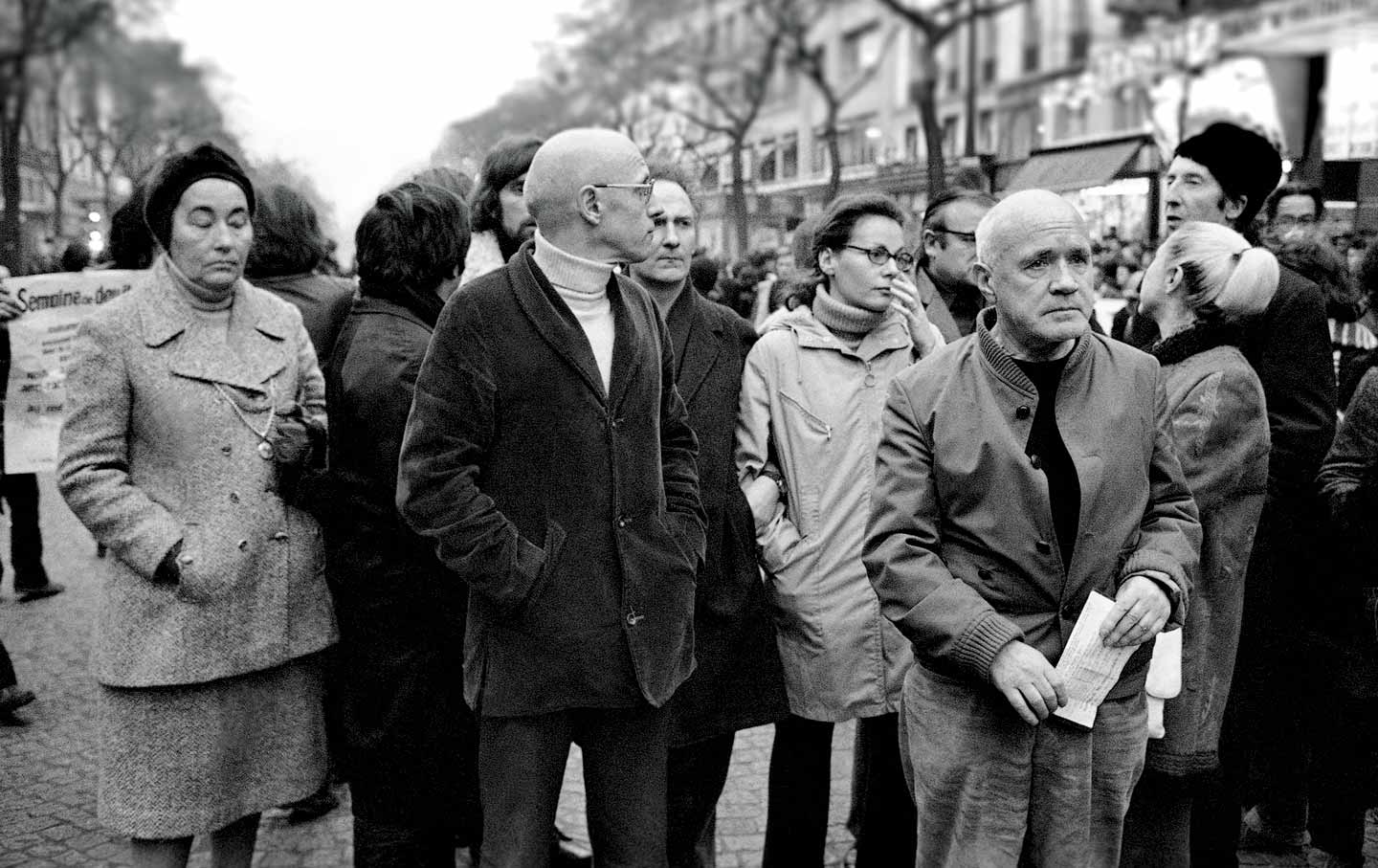
Lectures in this Seminar

square
Reading Date: October 22, 1985
right_ol
square
Reading Date: October 29, 1985
right_ol
square
Reading Date: November 5, 1985
right_ol
square
Reading Date: November 12, 1985
right_ol
square
Reading Date: November 19, 1985
right_ol
square
Reading Date: November 26, 1985
right_ol
square
Reading Date: December 10, 1985
right_ol
square
Reading Date: December 17, 1985
right_ol
square
Reading Date: January 7, 1986
right_ol
square
Reading Date: January 14, 1986
right_ol
square
Reading Date: January 21, 1986
right_ol
square
Reading Date: January 28, 1986
right_ol
square
Reading Date: February 25, 1986
right_ol
square
Reading Date: March 4, 1986
right_ol
square
Reading Date: March 11, 1986
right_ol
square
Reading Date: March 18, 1986
right_ol
square
Reading Date: March 25, 1986
right_ol
square
Reading Date: April 8, 1986
right_ol
square
Reading Date: April 15, 1986
right_ol
square
Reading Date: April 22, 1986
right_ol
square
Reading Date: April 29, 1986
right_ol
square
Reading Date: May 6, 1986
right_ol
square
Reading Date: May 13, 1986
right_ol
square
Reading Date: May 20, 1986
right_ol
square
Reading Date: May 27, 1986
right_ol
square
Reading Date: June 3, 1986
right_ol

May 27, 1986

You wouldn’t confuse one of Mondrian’s lines with one of… of Kandinsky’s. Likewise, you do not confuse the concepts surrounding one philosopher with the concepts of another. Even if you can draw a connection between both of their concepts—just as you can between a painter’s lines and those of some other painter—I mean that major concepts are signed, and I see philosophy as a  creative task. It’s a question of creating new concepts as they’re needed. Not according to social requirements but ones that are arguably deeper.


Seminar Introduction

After Michel Foucault’s death from AIDS on June 25, 1984, Deleuze decided to devote an entire year of his seminar to a study of Foucault’s writings. Deleuze analyses in detail what he took to be the three “axes” of Foucault’s thought: knowledge, power, and subjectivation. Parts of the seminar contributed to the publication of Deleuze’s book Foucault (Paris: Minuit, 1986), which subsequently appeared in an English translation by Seán Hand (Minneapolis: University of Minnesota Press, 1988).

For archival purposes, the English translations are based on the original transcripts from Paris 8, all of which have been revised with reference to the BNF recordings available thanks to Hidenobu Suzuki, and with the generous assistance of Marc Haas.

English Translation

Edited

As the first of two “optional” end-of-semester sessions, here we have the “music session”, with an important focus on Pierre Boulez’s Pli selon pli (with two recorded parts played during the session and commentary from an unnamed seminar participant). After the considerable development of “line of the fold” in the Foucault seminar as well as in the Foucault book, Deleuze is here well advanced in preparing his analysis of the fold, and indeed, Boulez’s work and title, derived from Mallarmé’s poetry, will play a key, if somewhat understated role in Deleuze’s final seminar and next book, both on the fold and on Leibniz and the Baroque. Starting on what he meant previously by “interpretation” as related to the seminar on Foucault, Deleuze asserts that we have to draw the lines as the signature of philosophical concepts, hence indicating already his larger project, What Is Philosophy? However, with the session’s main focus on linking the concept of the fold and unfolding (le dépli) as an artistic gesture (cf. Heidegger, Merleau-Ponty, and Mallarmé), Deleuze asks the unnamed presenter to offer selections from Pierre Boulez’s composition Pli selon pli, which incorporates selected Mallarmé poems, and to which Deleuze provides a reading of one of these poems. For Deleuze, this presentation provides evidence of thought’s relationship with art, particularly with the fold, not just in Mallarmé’s poetry (to which Deleuze refers in considerable detail). Deleuze also draws on the English essayist Thomas de Quincey and his book Revolt of the Tartars for additional support on this relationship. However, given the abrupt ending of the session, it is possible that the complete recording is missing.


Foucault Lecturing at Berkeley
Foucault lcturing at Berkeley in the early 1980s. Photograph by Randy Badier.


Gilles Deleuze

Seminar on Foucault, 1985-1986

Part III: Subjectivation 

Lecture 25, 27 May 1986

Transcribed by Annabelle Dufourcq; time stamp and additional revisions, Charles J. Stivale

Translated by Billy Dean Goehring; additional revisions, Charles J. Stivale


Part 1

… And I’m just coming back to my answer… the answer I gave to… to somebody… obviously, what I’ve offered you is an interpretation of Foucault’s thought.[1] But what do I mean by interpretation? For me, to interpret… I think it’s beautiful how Heidegger puts it, that all interpretation is an act of violence. For me, to interpret means, strictly speaking, two things. It means uncovering an author’s original concepts, and as I’ve often said, concepts are particular to philosophy no less than colors are to painting, or lines. You wouldn’t confuse one of [Piet] Mondrian’s lines with one of… of [Wassily] Kandinsky’s. Likewise, you do not confuse the concepts surrounding one philosopher with the concepts of another. Even if you can draw a connection between both of their concepts—just as you can between a painter’s lines and those of some other painter—I mean that major concepts are signed, and I see philosophy as a creative task. It’s a question of creating new concepts as they’re needed, not according to social requirements but ones that are arguably deeper.

Thus, to talk about a philosopher is necessarily to interpret them, to the extent that it involves drawing out the new concepts they were able to invent. These concepts are sometimes designated by well-known common nouns, despite having radically new meanings. Sometimes they’re designated by less familiar common nouns. By that I mean common nouns which take on new senses. Sometimes it’s necessary—but why is it suddenly necessary? We have to look in each case—sometimes it’s necessary to coin a word, a new name. So, I judge that this year, based on my own way of reading, we’ve covered a few concepts that I picked out as concepts original to Foucault.

The second way I understand “interpretation” is as mapping out the lines, following a certain order—this order can be very complex, but you have to choose one, at any rate—to map out the lines that tie these concepts together and to other concepts from other philosophers who are especially relevant to the philosopher under consideration. You see, for me… I say “for me” not because I feel I’m right but because I want to be clear—I’m not saying that everyone understands interpretation this way. For me, interpretation is absolutely not the search for what something means.

I understand interpretation to mean uncovering conceptual nodes, or conceptual creations,[2] and mapping out how concepts are connected to each other. So, maybe today and next time, for those who want to come… I think the only reason to come in would be if you had something to say about our work this year. There are two sorts of things you can bring me, plus whatever else you come up with. The first thing you can say is “Personally, I see things differently.” That is, you’ll say, “Foucault has some very original concepts that you’ve overlooked,” or “There are some links between concepts that you missed.” It might be on particular aspects or on the whole. Then I’d say you’d be offering a different interpretation.

And I believe that not all interpretations are worthwhile; an interpretation’s criterion, what makes it better than another, is its richness—it isn’t its inherent truth [but] its richness, its weight; it’s its weight. Just as one talks about the weight of a color, concepts have weight. You’d have to define a concept’s coordinates… I mean, if we’re talking about color, one talks about… about light, saturation, and weight. In music, you have other criteria. In philosophy, you’d have to define the coordinates of a concept. Are we talking about the concept’s weight like we talk about the weight of a color? Do we mean that a concept is saturated? Uh… so on, and so forth… But really, that’d be a different analysis.

So, of course what I want from you is to say, in general or in particular, not that “there’s something wrong” [with my account], since that’d hurt my feelings, but that there’s something important that I failed to see. That’s all. Well… but I’ll back up even further, while I have a few of you who—legitimately—understand interpretation totally differently and who’d say that my take on interpretation, as I’ve just tried to describe it, is insufficient and shouldn’t abandon the question “What does it mean?”  For my part, you see, if I’m leaving the question, “What does it mean?” aside, it’s because “what it means” strictly depends on the novelty of the invented concepts and chains of concepts, and it will always mean [what it means] according to the concepts invented. That’s why I say that the true reversal, for me… in my opinion it holds for all philosophy, again, that concepts are signed. You can’t say “I think” without referring to Descartes and without drawing from Descartes’s world. And if you transform it as much as Kant did, then you create a new concept, but this new concept traces a line you have to account for: in what sense it derives from Descartes and in what way Kant transforms it. That means something very simple: proper nouns never designate people; proper nouns name operations, either of nature or of the mind. There is a lot to console us in that, since we are made of proper nouns, but we are not people… [Interruption of the recording] [9:00]


Part 2

… How do you recognize it? You recognize it by the need… Then, how do you recognize that it’s a new concept? It… How do you recognize concepts? … It comes back to working with coordinates. Thus, that’s what I want from you—maybe a little today and then next time. If you have nothing to say, then hey—I won’t have anything to say, either. So, we’ll meditate in silence. And then today… it’s just… yes, because there are some small things I had to skip, because I got too caught up in my schema last time… uh… I do have some things… so, a line, I said there was a line from Foucault between Foucault and Heidegger, Merleau-Ponty, around this business of the fold and the unfold. I’d like to take this opportunity, perhaps, to say very briefly and even very vaguely since this is no longer my subject… you see that I already… I have nothing else to say, so uh… I’ll force myself a bit and try to discuss the relationship between this business of the fold and the unfold… well, it doesn’t seem to me very fundamental.

And… and well, in the same vein, I asked one of you who, by the way, suggested that we take a look at… Anyway, it’s someone contemporary with Foucault, Pierre Boulez… and who Foucault knew very well, and Boulez knew Foucault very well… There’s a piece or rather a set of pieces of Boulez which are titled Fold by Fold.[3] And I thought, hey now! If there was someone competent among us—and I have to say that this year we’ve had so many great talents… I’ve always been very pleased with Paris VIII audiences, but rarely do we have… I can now say at the year’s end that I’ve been teaching people of whom I feel most know Foucault’s writing as well as I do. That’s been very, very special to me and a sort of force…

But I was saying, we have this work, Fold by Fold, and Boulez borrows the expression, “fold by fold” from a poem by Mallarmé, and he calls it Fold by Fold and the pieces, this complex piece by Boulez, is built around three great Mallarmé poems, two to a lesser extent, right—yes?[4]

The presenter: [Inaudible comments; he explains the organization of Boulez’s composition in dialogue with Deleuze]

Deleuze: That’s it, yes, the title…

The presenter: [Inaudible comments]

Deleuze: Okay, yes—

The presenter: [Inaudible comments]

Deleuze: The three “Improvisations” …

The presenter: And the final piece is “Tombeau”…

Deleuze: Ah, I forgot “The Tomb” for [Paul] Verlaine![5]  Uh… then, it’s not music based on a few Mallarmé poems, it’s… Few musicians, I think, have reflected as much as Boulez has on the musical text/poetic text relationship. So, when he borrows—we’ll see under what conditions—when he borrows from Mallarmé for the main title of this work, Fold by Fold, it must be noted that he takes it out of its context—the Mallarméan context being very interesting, we’ll see, but also very precise—no doubt, he removes it from its context… perhaps, perhaps it’s that he wants to highlight the fold of poetry and that of music; perhaps he wants to highlight something about the poem-music relationship. It’s not about adding something to Mallarmé’s poems, which weren’t lacking anything—Boulez is the first to realize it and to say it… Ah yes! It may be an operation, then, that would consist in a little folding—why? To what end? Maybe if we get a handle on that, we’ll have no problem jumping ahead, we’ll be able to jump ahead and recall some things Heidegger told us about the nature of the fold, since Heidegger’s the one who made the fold a philosophical concept. Which would let us come back to Foucault who, when he gets his hands on the notion of the fold, maybe handles it in another way that, by the way, wasn’t missed on either Boulez or Heidegger.

So, then I don’t at all know how it’s going to go, if it’s going to work, if we’re going to listen uh… You’ve chosen certain clips… What do you have in mind? Listen for a bit? And then you try to explain your selection…?

The presenter: [Inaudible comments] … to make a short presentation…

Deleuze: Okay, yes, yes.

The presenter: Fold by Fold is the title…

Deleuze: You speak loudly… I feel, so we’ll need for you and me to switch places… is that okay?

The presenter: [Inaudible] … I move there like that, I could….

Deleuze: Okay, yes. But if we can’t see you, we can’t hear you turned around; you can’t really hear someone from behind. You can do the opposite: have us listen first and then talk after. Maybe the shock of listening to it is good, too.

The presenter: [Inaudible; he speaks while changing places, hence a long pause, with noise of chairs and of students]

Deleuze: There, that’s good. [Pause] … We have the right… it’s private, right? It’s private; it’s not public. Anyway, surely …  [Pause, sounds of participants] … And you have every right, if you find the music too beautiful, we’ll stop there, and we won’t talk anymore since … [Pause] [Brief interruption of the recording]

The presenter: We will begin with the first piece of [inaudible words]

Deleuze: “The Gift”, that is!

The presenter: The first piece, “The Gift of the poem”, from Mallarmé’s poem.

Deleuze: Right. For those who know Mallarmé, I’ll remind you, it’s “I bring you the child of an Idumean night” … [Pause] For those who don’t know this, [inaudible remark] … [Pause

[First movement: The Gift] [See https://www.youtube.com/watch?v=W56pQqEVetA] [18:52-34:10]

The presenter: So, this was the first movement. [Pause] … [indistinct words] a musical portrait of Mallarmé, [indistinct words] … This is a movement with a rather complicated genesis. [indistinct words; details on the development of this movement in the work]

[He then explains the musical and orchestral construction of the first movement as well as some details about the score] … It’s already deliberately structured by Pierre Boulez [indistinct words] … So, the first page can be considered as a page of declaration, in the first chord [indistinct words] …

So, the first verse, the first poem [indistinct words] … It’s the only time where Boulez allowed for us to hear the text perfectly to such an extent that there are [indistinct words] … The singer has the choice between talking in a low voice or [indistinct words] [Pause] … first part which shows his interest in leaving some room for chance, for the aleatory. [indistinct words] … And there, Boulez separated the three groups from one another, [indistinct words] … [He describes the function of each group, first the middle one, then the lower, then the upper] the much more eventful upper group with more agitated interventions. [indistinct words] … That poses enormous problems of [indistinct word] the score as the conductor [indistinct words] …

Boulez [indistinct word] enormously the different modes [indistinct words] of instruments. He is looking for the tones and sonorities of instruments for the way that Mallarmé sought out sonorities in words, [indistinct words] [He gives several details about the use of the instruments’ different capabilities within this process, with a reading of each instrument’s role in the movement]

A student: Did Boulez try to work with three sound groups or with [indistinct words] …, and what was the need for that? [Laughter; pause]

The presenter: I think that the need came from the fact that Boulez did not want a fixed organization like … [Pause] So, I’ll try to talk to you about this afterwards. [Pause]

[indistinct words] [He comments on the strong role of the piano] … and this part ends on a fermata [indistinct words] … and then we move on to the soprano’s return in the movement. So, there are so many verses here that aren’t borrowed from the poem, but only fragments [indistinct words] … Here as well, a good deal is left up to the soloist’s prerogative since [indistinct words] … and in the obligatory borrowings, she sometimes can choose between several solutions and it’s normally up to the instrumentalist to decide, up to the prerogative of soloist [indistinct words] …

The references are, in order, first, to the sonnet corresponding to “Improvisation III”, second, to the sonnet corresponding to “Improvisation II”, and third, to the sonnet corresponding to “Improvisation I”, and several pages further on, toward the end of this movement [indistinct words] …  And “The Gift” ends with a third and final part which, there again, calls on the [indistinct word] choice of the conductor. The orchestra is divided in two levels: the upper lever and the lower level … [Pause; sounds of chairs, interruption in the presenter’s comments]

So, the orchestra is divided in two levels: the upper lever and the lower level, and the succession in the [indistinct words] … in five parts: A B C D E. So that gives us: in the upper part A B C D E [he writes on the board] and within this part [indistinct words], the conductor chooses the trajectory that he wants to take. Then, basically, there are some rules that intervene, that is, the whole of the [indistinct words] … necessarily, and the succession of letters in a line should be respected, that is, well, you can play A B; then, if you want to leave this line and go to A, you’re required to eventually work back up to C, but you can’t get to D or E. Thus, if one wants to [indistinct word], you’re forced to go back down to B, you can eventually play BC and climb up to D, and the two E parts are required to be played together. So, Boulez determined six possible trajectories by leaving it up to the conductor to choose which trajectory to carry out.[6]

Deleuze: I would just like…a side note… if you’ll let me? You find it…and you’ll find this everywhere in contemporary music—the blending of two sorts of rules. I’m trying to connect back up with our discussion. You constantly find in contemporary music the blending of actually binding rules with optional rules. On several points he’s already laid out certain rules for the singer: she can speak the lyric, she can sing it… There you have a very good example where you have a blend of rules in which some are binding, and some are optional. And that, in current music—I’m also thinking of [Luciano] Bério, for example—you find… Recall how, in a completely different context, of course, in Foucault, there is this game of binding rules and optional rules even at the level of statements. Yet this is a beautiful case of musical statements that present this complex of rules very different from each other. And that’s all I wanted to add…

The presenter: In Boulez’s work, in fact, optional rules are used, not in all of his works, but [indistinct words] he uses [indistinct words] … pure chance [indistinct words] …

Deleuze: Yes, never! Never.

The presenter: … in any event, to preserve the conductor’s or the soloist’s ability to choose, to make a certain number of possible choices, and I think that [indistinct words] … but the choice should be determined by a person; it’s not the intervention of pure chance [indistinct words] …

Deleuze: And it’s forced, eh? The difference—you’re absolutely right—the difference between Boulez and [John] Cage in this regard, it’s required; there can’t be pure chance… [Interruption of the recording] [55:37]


Part 3

Deleuze: What’s funny is that, at the same time, he moves back closer to Cage; this represents Boulez’s step towards… reunion with Cage.

A student: Can I ask a question?

Deleuze: Yes, yes, yes, yes!

The student: [indistinct words] When the soloist comes in, how can one know … [indistinct words]

The presenter: So, at the moment when there are [indistinct words] … the soprano comes back here, and on the previous page, Boulez marked [indistinct words] … in other words, the whole orchestra is then led by the conductor. So, at that point, the hierarchical organization can be respected. And then, when it comes to the soprano’s intervention, [Pause] she takes syllables from verses [indistinct words] … And there, she has a choice to make between three columns A, B, C … So, she has two required concerns: she must choose three syllables in the same column, either AAA, BBB, or CCC. But she has to distribute them… over time in two [indistinct words] … [Pause] She has an optional insert [indistinct words] … [Pause]

The student: [indistinct words]

The presenter: So, when she sings, she of course has her own line with precise notes to be sung…

The student: Her line is independent?

The presenter: Her line is independent. So there, the orchestra is no longer divided in blocs but is reunited, and at that point, there is [indistinct words] … a resonance that supports the soprano’s voice, at least makes the words more intelligible—not a lot, but more so than with the whole orchestra performing scattered sounds [indistinct words] … would mask the soprano’s voice.

The student: [indistinct words]

The presenter: To a certain extent, yes—ultimately, I’d say yes. In the end, one would have to ask Boulez [indistinct words] …

The student: [indistinct words]

The presenter: I don’t know, [Pause] that might be less clear, since the structures aren’t the same; there, it is the lyrics that intervene and… [indistinct word] of the soprano, whereas previously, the music is written out entirely, there aren’t [indistinct words] … movement between the three blocks, and in each case, [indistinct words] … [Pause] I was thinking that eventually there are [indistinct words] … to make some remarks about … [He explains to Deleuze what he hoped to present next]

Deleuze: I’d like to… we don’t have unlimited time, I mean, unfortunately; I’d almost like for you to choose another piece, if it were possible, another passage… Myself, I’m struck by this morning’s questions on the singer’s role that I think you only partially answered, since there are actually several instances in what you played for us… where the words… the point is that she casts words, and there are word-casting with very different functions uh… already it seems to me, in what you said and what you played for us, there is a lot… there is a lot to reflect on. So, I’d almost like, if you wouldn’t mind, for you to do the same thing, only with another piece. For you to forget those who are already interested or familiar, or what you can gather from reading Mallarmé’s poems, and so on. We’ll say what we have to for the books, the book that will help you, and so on… not difficult. So, we’ll act a little as though it said something differently to everyone. So, you take either “The Tomb,”[7] if you like, or something of… an “Improvisation” …

The presenter: I think we would have to listen to an improvisation,

Deleuze: That’s fine, it’s your choice.

The presenter: … regardless, because it’s delicate… we can bring together the orchestral movements …

Deleuze: Okay, which improvisation?

The presenter: So, “Improvisation I on Mallarmé”…

Deleuze Okay, is it “This virginal long-living lovely day”? That’s right, yes. [Pause]

The presenter: Well, I think it might be best to listen.[8] [64:15-64:50]

Deleuze [interrupting the recording]: Uh… could you… could you stop and rewind… is that possible?

The presenter: From the start?

Deleuze: No, no, no, no! It’s the tempo for me reading the poem because it really changes if you’ve… I’ll read it plainly, alright, so that you’ll hear the sonorities, otherwise it’s…

[Deleuze reads]

“This virginal long-living lovely day / will it tear from us with a wing’s wild blow / The lost hard lake haunted beneath the snow / By clear ice-flights that never flew away!

A swan of old remembers it is he/ Superb but strives to break free woebegone / For having left unsung the territory / To live when sterile winter’s tedium shone.

His neck will shake off this white throe that space / Has forced the bird denying it to face, /
But not the horror of earth that traps his wings.

Phantom imposed this place by his sheer gleam, / He lies immobile in scorn’s frigid dream /
Worn by the Swan dismissed to futile things.”[9]

There we are… now you might have a better idea… Let’s…

Deleuze: You already grasp—because the poem, “This virginal long-living lovely day,” is an extraordinary demonstration of voice, at the start…

[Transmission of the Boulez recording: see https://www.youtube.com/watch?v=I3lK4OJuGKw] [66 :40-72 :05]

The presenter: So, in this first improvisation, I’m going to try to see to what extent the form of Mallarmé’s sonnet influenced the improvisation’s musical form. To better [indistinct words] … of the score according to the organization into quatrains and tercets with interludes between each [indistinct word]. [Pause]

The divisions aren’t mine; it’s indicated on the score—it’s by Boulez. [He’s writing on the board as he speaks] The first quatrain, then, he puts at zero. At A, an instrumental interlude, interlude 1. At B, the second quatrain. At C, interlude 2. At D, the tercet. At E, interlude 3. [Pause, sound of students’ voices speaking] … At F, the second tercet. And at G, one can’t call it an interlude, but a coda, an instrumental coda. [Pause]

So, the divisions are very clean since, in the interludes, the voice doesn’t intervene at all, at any time. These are purely instrumental passages. So, if we follow the alternation, we can eventually divide the piece in two groups—one which would go from zero to C, the other which would go from D to G—which would each alternate between instrument-and-voice, instruments-only, instrument-and-voice, instruments-only. There’s the same alternance in the entire [indistinct word].

That’s one form of the whole piece’s organization. It’s one possible reading, but there are others. [indistinct words] … One can see the different parts as organized by tempo as a determining mode of organization. So, [indistinct words] … A B C D E F G [he draws on the board] So, at the top, to in moderate A; in B, very moderate; in C, very slow; in D, again, not too slow; [Pause] in E, moderate; [Pause]; in F, not too slow; and in G, very slow.

Then, with one exception, one could have another mode of organization, which would be the following: [indistinct words; he describes a different organization of rhythms] [Pause] So, the different parts [indistinct words] … Next, if someone is working on the instrumentation of the different parts, work undertaken by Dominique [indistinct name] in his work on Boulez, [indistinct words] … to distinguish four possible modes of instrumentation: he called the first alpha, instrumental [indistinct word] composed of [indistinct words] …; instrumentation beta which has vibraphone and harp in A, and vibraphone, harp, and gong in E; and instrumentation gamma is the most instrumental, without [indistinct words] …

So, if we drew up a third schema… can I erase one? [indistinct words] [Pause; he draws a new schema] … So, this organization would allow us to see the arch shape, rather traditional in [indistinct words] … [Pause] By taking middle part, C, as the peak of the arch, as the form’s culminating point, which is equally in relation with [indistinct words] … At this point, let’s still consider Part C as a coda, something not contradicted by the [indistinct word] of the score; it’s starting from [indistinct word] that the tempo becomes important, [indistinct words] … So, these different forms aren’t… they coexist. All readings are possible, [indistinct words] … the plurality of discourse that emerges. [Pause]

A student: [indistinct words]

The presenter: [indistinct words]

The student: That—it’s called improvisation”?

The presenter: It’s called “Improvisation I on Mallarmé”.

The student: [indistinct words]

The presenter: No, no, no, [indistinct words] … no room for randomness. Well, what it is, it’s that there are effectively two versions. A first version was presented in concert [indistinct words] … The grand version [indistinct words] …  by Boulez so that it pairs with “Improvisation III” when the work is played in its [indistinct words] … In that case, there’s a correspondence. The first movement corresponds to “Tombeau” [fifth movement], “Improvisation I” goes with “Improvisation III” [indistinct words] …, and “Improvisation II” would be the center of the form [i.e. the arch]. But there isn’t any room for randomness.

The student: [indistinct words]

The presenter: Randomness [indistinct words] … [Pause]

Deleuze: I think that seems like enough, right? You’ve given us a very rich subject. A lot to think about.

The presenter: [indistinct words; he explains something regarding the presentation he’d planned]

Deleuze: Yeah, thankfully, because, if you had, it’s not what I wanted, in any case; what I wanted was for… nobody wanted that.

The presenter: That gives us something to think about…

Deleuze: Yeah, that’s exactly what I had in mind, and I think you did it very, very well, that is, we are all… thanks to you, we have material where we can… I wouldn’t dare say “analyze in a different way”—neither is it a question of analyzing it philosophically—but [we can] think about the subject with which I began: Fold by Fold. I’d almost say that we have a good case here, thanks to you.

But where are the folds? And what does it mean to “fold”? And what does it mean to “unfold”? What does “fold by fold” mean? What do “fold and unfold” mean as artistic or philosophical gestures? Personally, you know, it occurred to me, while I was listening, that somebody might be able to—it’s not my thing, I mean—but really, I wondered whether a Heideggerian could comment along these lines on Heidegger’s main take on the fold and the unfold; in other words, he could render it as a musical presentation. It should exist, after all, because some Heideggerian musicians uh… He is very close… I mean, a comparison between a great musician, for example, [Karlheinz] Stockhausen with Heidegger, would be as valuable as a comparison between Boulez and Mallarmé. Now, in my opinion, one would be surprised to see that, once again, the fold and the unfold are presented as creative acts… or something else, other operations, eh, other operations…. that’s what… So, at least you had something to add… thanks to you, we can dwell a little on this point.

The presenter: Well, this organization [indistinct words] … [He speaks about the organization of the final movement, “Tombeau”, then connects to another Boulez piece]

Deleuze: Yes, there, we don’t need to hear any more… I mean, with regard to the text you’re reading, we don’t need to listen to anymore. I mean it’s the text, Points de repère[10] … Right, yes, it’s the same text. Yes. Yes, yes, yes because he did it deliberately. The text is so far from the music that…

The presenter: [indistinct words]

Deleuze: Right, right.

The presenter: Otherwise, in [indistinct title], there’s an article by Foucault on Boulez.

Deleuze: Ah…. Tell us! Do you have it with you? Give us the rundown. Is it a long article?[11]

The presenter: No, there’s… a column.

Deleuze: You’ve marked the important passages? Is that it?

The presenter: [indistinct words]

Deleuze: Oh, it’s long. [Laughter] I mean, it’s long, it’s not… [Pause] You’ve read it… you have… do you have another copy, or is that your copy? Does it say anything essential?

The presenter: In this paragraph, here…

Deleuze: You found it?

The presenter: There’s something

Deleuze: This? This one?

The presenter: Yes, that one. [Pause; Deleuze prepares himself to read]

Deleuze: “During a time in which we were being taught the privileges of meaning, of the lived through [du vécu], the sensuous [du charnel], of foundational experience [de l’expérience originaire], subjective contents or social significations…” — See, this applies to everyone but especially to phenomenology — “[…] to encounter Boulez and music was to see the twentieth century from an unfamiliar angle—that of the long battle…” – Hey, a theme very dear to Foucault… — “that of the long battle around the ‘formal.’ It was to recognize how in Russia, in Germany, in Austria, in Central Europe, through music, painting, architecture, or philosophy, linguistics, and mythology, the work of the formal had challenged the old problems and overturned the ways of thinking. A whole history of the formal in the twentieth century remains to be done: attempting to measure it as a power of transformation, drawing it out as a force for innovation and a locus of thought, beyond the images or the ‘formalism’ behind which some people tried to hide it.” — He’s telling us that this formal is less formal than it seems — “And also recounting its difficult relations with politics” – Alright — “We have to remember that it was quickly designated, in Stalinist or fascist territory, as enemy ideology and detestable art.” — That’s funny — “Boulez only needed a straight line, without any detour or mediation, to go to Stéphane Mallarmé, to Paul Klee, to René Char, to Henri Michaux, and later to Cummings. Often a musician goes to painting, a painter to poetry, a playwright to music, via an encompassing figure and through a universalizing aesthetic. […] Boulez went directly from one point to another, from one experience to another, drawn by what seemed to be not an ideal kinship but the necessity of a conjuncture…”[12] That’s curious, eh? I think it’s a text of… transition from Foucault—what year is this?

The presenter: ’82.

Deleuze: ’82? That was quick! [Laughter] Let’s check… it’d be better for my case if it were ’72. [Laughter]

The presenter: ’82.

Deleuze: Okay, okay… You don’t always get what you want… So, there you have it. I’d like for you all to bear with me, in these final musings, since we’re putting everything together. This bit about music with Boulez, this folding business with Heideggerian ontology, this story… the movement of the fold and unfold in Foucault, with all the problems that entails… This article recalls the problem of thought’s relationship with art, with a possible glimpse at painting also… How do we sort it out? We aren’t even looking for coherence. First thing… uh, my first comment, is how I see it. The fold—I wouldn’t say that it’s a metaphor, but I would say that it’s a strong term. I don’t know if it’s metaphorical or not. It’s a strong term in… And how does it appear? What does the fold involve? As I see it, it’s that the fold concerns something that’s hidden at first glance. [Pause]

What does the folding? What does the folding is something that conceals and that folds in order to conceal. In this sense, it’s not only the curtain that will fold, it’s not only the lace that will fold like a so-called pleated curtain. But (even) the dust, the fog will fold. And after all, one of Mallarmé’s problems was that of presence and absence, an invocation to the fold, you’ll find it everywhere. Just like you constantly see lace, the fog, the fan that folds and unfolds. The movement of being folded, or the movement of folding and unfolding, is fundamental. And, if Boulez’s piece is called Fold by Fold, it’s due to a poem by Mallarmé of which I’ll read the first stanza: “At times” that is, at certain times… “At times, when no breath stirs it…”[13]

“At times, when no breath stirs it, all / The almost incense-hued antiquity / As I feel widowed stone let her veils fall / Fold by fold furtively and visibly / Floats or seems not to bring its proof unless / By pouring time out as an ancient balm.”

That’s it. Fold by fold, all the commentaries will tell you, but we can’t say, then, that we’re still dealing with the poem… what does that mean? It concerns Bruges, the famous city in Belgium, uh… and at timesat times, when no breath stirs it… That is, when there isn’t yet any wind, to put it plainly, early in the morning, before there is any wind. Well, there is the fog, which dissipates. The fog dissipates and “all the almost incense-colored antiquity,” that is, the “widowed stone,” that is, Bruges. Bruges the dead, Bruges the widow, begins to emerge as the fog’s folds come undone.

I mean… and at the same time, they “come to be” [se font] — what “comes to be”, right, the fog, you see, in certain hollows or at certain times, you have the impression that its folds come down just like the folds in a curtain. And that already takes us to something we cannot avoid… they’re fundamentally linked, the fold and something we see… what, that we see through the fold, to the extent that the fold comes undone… I don’t know what it’d require… We’d have to find just the right formula. Well, in relation to the fold or in the fold, something unfolds.  If we say that, we’ve already stopped considering the fold and the unfold as two opposites. In the fold, something unfolds; Bruges emerges. In the fold of the fog, Bruges emerges.

A short work by Thomas de Quincey, famous 19th century English author, was recently translated, where there are… everyone has their favorite lines—I read it: a story about an Asian people, then a part of the Russian empire, who emigrate, who all pick up and leave, a big tribe… all leave the Russian empire and head back east. And the text is sublime. It’s called The Revolt of the Tartars. Editor: Actes Sud. And, in the end, we’re shown the place where they’re going to reach, through the catastrophes, they’ve overcome every catastrophe, and they arrive, and we see them arrive. We seem them arrive at their refuge. Listen to what it says: “There arose a vast, cloudy vapor.”[14] “There arose a vast, cloudy vapor […]. Through the next hour, during which the gentle morning breeze had a little freshened, the dusty vapor had developed itself far and wide into the appearance of huge aerial draperies…” “Through the next hour, during which the gentle morning breeze had a little freshened, the dusty vapor had developed itself far and wide into the appearance of huge aerial draperies, hanging in mighty volumes from the sky to the earth; and at particular points, where the eddies of the breeze acted upon the pendulous skirts of these aerial curtains, rents were perceived…”[15]

[End of the recording; given that this de Quincey text continues (see session 11 from the seminar on Leibniz and the Baroque) and also since Deleuze usually makes a final remark announcing the end of each session, it is possible that some of the recording is missing] [1:41:54]


Notes


[1] This was Deleuze’s response to a comment by Georges Comtesse the previous week, May 20, 1986.

[2] “Conceptual design” is a common translation for this phrase but given Deleuze’s frequent description of philosophy as a creative endeavor, “creation” might be more appropriate.

[3] The title is taken from a Mallarmé poem, “Remémoration d’amis belges”, of which Boulez makes no direct use. In the poem, the poet describes how a mist that covers the city of Bruges gradually disappears. Let us note that while we provide the translation of “pli selon pli” as “fold by fold”, the Tom Conley translation of this title and phrase in The Fold: Leibniz and the Baroque is “fold after fold”.

[4] The composition is in five movements, the first and last using a line from a Mallarmé poem, the three middle movements using the entire text of a Mallarmé sonnet. The movements and their associated poems are: Don – “Don du poème”; Improvisation I sur Mallarmé – “Le vierge, le vivace et le bel aujourd’hui” ; Improvisation II sur Mallarmé – “Une dentelle s’abolit” ; Improvisation III sur Mallarmé – “A la nue accablante tu” ; Tombeau – Mallarmé’s poem of the same name. See also the discussion of Mallarmé, that this discussion in many ways prepares and announces, in session 9 of the Leibniz and the Baroque seminar, February 3, 1987.

[5] This refers to a commemorative poem (or “tombeau”) written on January 10, 1897, following the death of Verlaine.

[6] While the translation follows the text as transcribed, Deleuze and the presenter, in particular, refer to sheet music and/or other diagrams/notation of Boulez’s composition. Emily Adamowicz’s dissertation offers an excellent account of the “rotational array” described above; her work is replete with helpful diagrams and musical notation. Cf. Emily J. Adamowicz, “A Study of Form and Structure in Pierre Boulez’s Pli selon Pli,” Electronic Thesis and Dissertation Repository 3133 (2015).

[7] This refers to the fifth movement of Boulez’s composition, one of several by Mallarmé.

[8] This is Boulez’s « Improvisation 1 on Mallarmé” corresponding to the Mallarmé poem that Deleuze reads immediately after.

[9] Stéphane Mallarmé, Collected Poems and Other Verse, trans. E.H. and A.M. Blackmore, introduction by Elizabeth McCombie (Oxford: Oxford University Press, 2006), 66-69.

[10] Presumably this refers to Pierre Boulez, Points de repère (Paris: Christian Bourgois, 1981).

[11] The selections that follow defer to Robert Hurley’s translation of the article, including his bracketed translation notes. See Michel Foucault, “Pierre Boulez, Passing Through The Screen,” trans. Robert Hurley, in Essential Works of Foucault vol. 2: Aesthetics, Method, and Epistemology, ed. James D. Faubion (New York: The New Press, 1998), 241-244. The original text, “Pierre Boulez, l’écran traversé”, appeared in a collection edited by M. Colin, J.-P. Leonardini, et J. Markovits, Dix ans et après. Album souvenir du festival d’automne (Paris: Messidor, 1982), pp. 232-236; see also Dit et Écrits IV (Paris : Gallimard, 1994), pp. 219-222.

[12] See the Hurley translation, pp. 242-243.

[13] Mallarmé, 59-61. Translation slightly modified to accommodate Deleuze’s reading: e.g., “fold by fold” where the translator has it “fold on fold,” to reflect the typical translation for the title of Boulez’s piece. See note 3 on other variations of this expression.

[14] Reading the original English, one sees that Deleuze appears to omit nearly a page separating the arrival of the dust cloud and the line which begins “Through the next hour.” Cf. William Edward Simonds, De Quincey’s Revolt of the Tartars, Edited with Introduction and Notes (Boston: Athenaeum, 1899), 53-54. The ostensible omission is indicated in brackets; see also the analysis that Deleuze will present of this text in session 11 of the seminar on Leibniz and the Baroque, March 3, 1987.

[15] The French translation, which Deleuze reads here, has “the pendulous skirts” as “les plis.”

French Transcript

Edited

Dans la conférence du 27 mai 1986, Deleuze commence par expliquer ce que veut dire par «interprétation» par rapport à son cours sur Foucault. Les autres sujets de discussion comprennent: la création de concepts; la nouvelle acception des noms et des mots; les concepts originaux amenés par Foucault (Deleuze affirme qu’il en faut en tracer les lignes, la signature des concepts philosophiques); le pli et le dépli comme geste artistique; l’invocation du pli chez poète français Stéphane Mallarmé; et l’essayiste anglais Thomas de Quincey et son livre La révolte des Tartares. Une grande partie de la conférence consiste en l’écoute du compositeur, chef d’orchestre et écrivain français Pierre Boulez, Pli selon pli: Portrait de Mallarmé, qui incorpore des vers de la poésie de Mallarmé. Deleuze lectures aussi une partie de la poésie de Mallarmé.

Gilles Deleuze

Sur Foucault

3ème partie : Subjectivation

25ème séance, 27 mai 1986

Transcription : Annabelle Dufourcq (avec le soutien du College of Liberal Arts, Purdue University) ; l’horodatage et révisions supplémentaires, Charles J. Stivale

Partie 1

… Et je reprends juste la réponse… la réponse que j’ai faite à… à quelqu’un… : évidemment oui, c’est une interprétation de la pensée de Foucault que je vous ai proposée. [Il s’agit d’une réponse à un commentaire de Georges Comtesse, le 27 mai 1986] Mais qu’est-ce que je n’entends par interprétation ? Pour moi, interpréter… Je trouve beau le texte de Heidegger où il dit toute interprétation fait usage de violence. Pour moi, interpréter, ça veut dire, très strictement, deux choses. Ça veut dire : dégager les concepts originaux d’un auteur, car j’ai eu l’occasion souvent de vous le dire : pour moi, les concepts, [1 :00] en philosophie, sont aussi singuliers que les couleurs en peinture ou les lignes. Vous ne confondez pas une ligne de Mondrian avec une ligne de… de Kandinsky. De même, vous ne confondez pas les concepts qui renvoient à tel philosophe avec des concepts qui renvoient à tel autre, bien qu’entre les concepts de l’un et de l’autre, il peut y avoir des rapports tout comme entre les lignes de tel peintre et les lignes de tel autre peintre. Mais je veux dire, les grands concepts sont signés, et je vis la philosophie comme une besogne de création. Il s’agit de créer de nouveaux concepts suivant des nécessités, nécessités qui ne sont pas des nécessités sociales, qui sont sans doute [2 :00] de plus profondes nécessités.

Donc je dis : parler d’un philosophe, c’est forcément l’interpréter dans la mesure où c’est dégager les concepts nouveaux qu’il a su inventer. Ces concepts, parfois, sont désignés par des noms communs bien connus, et pourtant leur contenu est complètement renouvelé, parfois par des noms communs moins connus. Je veux dire : par des noms communs mais qui prennent une nouvelle acception. Parfois il y a nécessité, mais pourquoi une nouvelle nécessité ? Il faut voir dans chaque cas, parfois il y a nécessité de créer un mot, un nom nouveau. [3 :00] Donc j’estime cette année avoir proposé, suivant ma lecture à moi, un certain nombre de concepts que je désignais comme les concepts originaux apportés par Foucault.

Le deuxième sens de « interpréter » pour moi, c’est : tracer les lignes, suivant un certain ordre — cet ordre peut être très complexe, mais il y a de toute manière un ordre qu’il faut bien choisir — tracer les lignes qui unissent ces concepts entre eux et avec d’autres concepts d’autres philosophes avec lesquels le philosophe considéré a des rapports privilégiés. [4 :00] Vous voyez que, pour moi… Je ne dis pas ce « pour moi » avec le sentiment d’avoir raison, je le dis pour que ce soit plus clair, je ne dis pas que tout le monde comprend interpréter comme cela. Pour moi, interpréter ne signifie absolument pas chercher ce que ça veut dire.

Pour moi, interpréter signifie dégager les nœuds conceptuels, c’est-à-dire les créations conceptuelles et tracer les lignes qui vont d’un concept à un autre. Alors quand je dis, aujourd’hui peut-être et l’autre séance pour ceux qui voudront bien y venir… – je crois que vous n’avez de raison d’y venir que si vous avez quelque chose à me dire à votre tour sur notre travail de cette [5 :00] année. Vous pouvez avoir à me dire deux sortes de choses, plus celles que vous inventerez. La première sorte de choses que vous pouvez me dire c’est : moi, je vois les choses autrement. C’est-à-dire, vous me diriez : il y a des concepts très originaux de Foucault et t’es passé à côté, ou : il y a des liens entre concepts que tu n’as pas vu. Ça peut porter ou sur des points de détail ou sur l’ensemble. A ce moment-là je dirais : vous offririez une autre interprétation.

Et je crois que toutes les interprétations ne se valent pas, le critère d’une interprétation et ce qui fait qu’elle est meilleure qu’une autre, c’est sa richesse, [6 :00] ce n’est pas sa vérité par nature, c’est sa richesse, c’est son poids, c’est son poids tout comme on parle du poids d’une couleur il y a un poids du concept. Il faudrait définir les coordonnées d’un concept… je veux dire : si vous pensez à la couleur on parle de… de la lumière, de la saturation et du poids. En musique c’est d’autres critères. En philosophie, il faudrait définir des coordonnées d’un concept. Est-ce qu’on parle du poids du concept comme on parle du poids d’une couleur ? Est-ce qu’on peut dire qu’un concept est saturé ? … Tout ça, quoi… Mais enfin, ce serait une autre recherche, ça.

Donc ce que j’attendrai de vous, c’est évidemment que, ou bien sur le détail ou bien sur l’ensemble, vous disiez : eh ben oui, [7 :00] non pas « il y a quelque chose qui ne va pas », ça me ferait de la peine ; mais que vous me disiez : il y a encore quelque chose de mieux et tu ne l’as pas vu. Voilà. Ou alors… mais je ne recule encore plus, là, que je me trouve devant certains d’entre vous — et ce serait légitime — qui comprennent interpréter d’une tout autre manière et qui me disent que la conception que je me fais d’interpréter, telle que je viens d’essayer de la résumer, est une conception insuffisante qui ne doit pas laisser de côté la tâche de « qu’est-ce que ça veut dire ? ». Pour moi, vous comprenez, si je laisse de côté la tâche « qu’est-ce que ça veut dire ? », c’est parce que « ce que ça veut dire » dépend étroitement de la nouveauté des concepts et des enchaînements de concepts inventés et ça voudra toujours dire d’après les concepts inventés. C’est pour ça que je vous disais : un vrai [8 :00] renversement pour moi… ce que je dis vaut vraiment, à mon avis, pour toute la philosophie, encore une fois les concepts ils sont signés. Vous ne pouvez pas dire « je pense » sans vous référer à Descartes et sans le faire sortir du monde de Descartes. Et si vous le transformez autant que Kant le fait, à ce moment-là, vous créez un nouveau concept, mais ce nouveau concept a une ligne dont il faudra que vous rendiez compte : en quel sens ça dérive de Descartes et de quelle manière Kant le transforme. Ce qui veut dire une chose très simple à laquelle je crois : les noms propres n’ont jamais désigné des personnes, les noms propres désignent des opérations soit de la nature, soit de l’esprit. Il y a là toutes sortes de consolations pour nous car nous sommes des noms propres, mais nous ne sommes pas des personnes…  [9 :00] [Interruption de l’enregistrement]

Partie 2

… A quoi vous le reconnaissez ? Vous le reconnaissez au besoin… Alors, comment on reconnaît que c’est un nouveau concept ? Ça… A quoi on reconnaît les concepts… ça renverrait au travail des coordonnées. Donc j’attends de vous cela, peut-être un peu aujourd’hui, et puis la prochaine fois. Si vous n’avez rien à dire, moi je n’aurai rien à dire non plus, hein. Donc, nous méditerons en silence. Et puis aujourd’hui… c’est juste… oui, parce que j’ai des petites choses que j’ai dû laisser tomber, parce que la dernière fois, mon schéma m’intéressait trop… J’ai des choses en effet… alors une ligne, la ligne que j’avais annoncée de Foucault entre Foucault et Heidegger, Merleau-Ponty, autour de cette histoire du pli et du dépli. Je voudrais à cette occasion, peut-être, dire très rapidement et même très confusément parce que ce n’est plus mon sujet… vous sentez que j’ai déjà… je n’ai [10 :00] plus rien à dire, alors… C’est en me forçant un peu que je vais essayer de parler des rapports de cette histoire du pli et du dépli. Bon, ça ne me paraît pas très fondamental.

Et… Et puis, dans le même ensemble j’ai demandé à l’un d’entre vous, qui voulait bien, d’ailleurs, me le proposer en partie, que l’on se penche… C’est quand même quelqu’un qui est un contemporain de Foucault, Pierre Boulez… et que Foucault connaissait très bien et Boulez connaissait très bien Foucault. Il y a une pièce ou plutôt un ensemble de pièces de Boulez qui s’appellent « Pli selon pli ». [Le titre général de l’œuvre est emprunté à un sonnet de Mallarmé, « Remémoration d’amis belges », dont Boulez ne fait pas un usage direct] Et moi je me disais : tiens ! S’il y avait quelqu’un de compétent parmi nous, et je dois dire que, cette année, il y a eu énormément de compétents… J’ai toujours été [11 :00] très content du public de Paris VIII, mais rarement est arrivé… je peux le dire maintenant, c’est la fin de l’année que je fasse un cours devant des gens dont j’avais le sentiment qu’une grande partie connaissait les textes de Foucault aussi bien que moi.

Alors pour moi, ça a été très, très important, et ça a été une espèce de force… Mais je dis : voilà cette œuvre, « Pli selon pli », et Boulez, lui, emprunte la formule « Pli selon pli » à un poème de [Stéphane] Mallarmé. Et il l’appelle « Pli selon pli et les pièces », et cette pièce complexe de Boulez est faite autour de trois grands poèmes de Mallarmé, plus accessoirement deux, c’est cinq, je crois, hein ? C’est cinq. [12 :00] [La composition est en cinq mouvements, le premier et le dernier utilisant une ligne d’un poème de Mallarmé, les trois mouvements du milieu utilisant le texte entier d’un sonnet de Mallarmé. Les mouvements et leurs poèmes associés sont : Don – d’après le poème intitulé « Don du poème » ; Improvisation sur Mallarmé I – d’après le sonnet « Le vierge, le vivace et le bel aujourd’hui… » ; Improvisation sur Mallarmé II – d’après le sonnet « Une dentelle s’abolit… » ; Improvisation sur Mallarmé III – d’après le sonnet « A la nue accablante tu… » ; Tombeau – d’après le sonnet qui porte ce titre ; voir à ce propos la discussion de Mallarmé, que cette séance prépare, dans la séance 9 du séminaire sur Leibniz et le baroque, le 3 février 1987]

L’intervenant : [Propos audibles ; il explique la répartition de la composition de Boulez en dialogue avec Deleuze]

Deleuze : C’est ça, oui, pour le titre…

L’intervenant : [Propos inaudibles]

Deleuze : D’accord, oui…

L’intervenant : [Propos inaudibles]

Deleuze : Les trois improvisations…

L’intervenant : [Propos inaudibles]

Deleuze : Oui ?

L’intervenant : Et en dernière pièce, « Tombeau » …

Deleuze : Ah, j’oubliais le tombeau de [Paul] Verlaine ! [Il s’agit un poème après le décès du poète, écrit le 10 janvier 1897] [Pause] Donc, c’est non pas de la musique sur un certain nombre de poèmes de Mallarmé, c’est… Peu de musiciens, je crois, ont autant réfléchi que Boulez sur le rapport texte musical-texte poétique. Alors, quand il emprunte — on verra dans quelles conditions — quand il emprunte à Mallarmé [13 :00] pour en faire le titre général de cette œuvre, « Pli selon pli », il faut voir qu’il l’arrache à son contexte — le contexte mallarméen étant très intéressant, on le verra, mais très précis aussi — il l’arrache à son contexte sans doute… peut-être, peut-être est-ce qu’il veut marquer le pli du poétique et du musical, peut-être qu’il veut marquer quelque chose dans les rapports poèmes-musique.

Il ne s’agit pas, en effet, d’ajouter quelque chose aux poèmes de Mallarmé qui n’ont jamais manqué de rien ; Boulez est le premier à le savoir et à le dire… ah oui ! Il s’agit peut-être d’une opération, alors, qui serait un peu faire pli, pourquoi ? [14 :00] Dans quel but ? Peut-être que si on a une idée là-dessus, on pourra sauter, là, sans souci, on pourra sauter et se rappeler certaines choses que Heidegger nous disait sur la nature du pli, puisque c’est lui qui fait du pli un concept philosophique, Heidegger. Ce qui nous permettrait de revenir à Foucault qui, lui, quand il s’empare de la notion de pli, s’en empare peut-être encore en un autre sens qui n’ignore, d’ailleurs, ni Boulez, ni Heidegger.

Si bien qu’alors je ne sais pas du tout comment ça va se passer, si ça va marcher, si on va écouter… Tu as choisi certains moments… Comment tu conçois ? On écoute un bout ? Et puis tu [15 :00] essaies de dire pourquoi tu as choisi ça… ?

L’intervenant : [Propos indistincts] … faire une présentation rapide…

Deleuze : D’accord, oui, oui.

L’intervenant : Donc « Pli selon pli », c’est le titre…

Deleuze : Tu parles fort… j’ai l’impression, alors il faut que tu acceptes de venir à ma place et moi à la tienne… ça t’ennuie ?

L’intervenant : [Propos indistincts] … me mettre là-bas comme ça, je pourrais…

Deleuze : D’accord, oui. Mais si on ne te voit pas, on ne peut pas entendre, derrière, on entend très mal quelqu’un de dos. Tu peux faire l’inverse : faire écouter d’abord et puis parler après. Peut-être que le choc de l’audition est bien aussi.

L’intervenant : [Propos indistincts ; il parle en changeant de place, pause, bruits de chaises et des participants] [16 :00]

Deleuze : Voilà, c’est bien là. [Pause] On a le droit… c’est privé, hein, c’est privé, hein, ce n’est pas public. D’ailleurs, sûrement … [Bruits des participants] [17 :00] [Pause] … Et vous aurez tout droit, si vous trouvez la musique trop belle, on s’arrête, là, et on ne parle plus, puisque… [Pause] [Interruption de l’enregistrement] [17 :38]

L’intervenant : On va commencer par la première pièce de… [Mots indistincts] [18 :00]

Deleuze : C’est-à-dire, c’est « le Don » !

L’intervenant : La première pièce « Don du poème » de Mallarmé

Deleuze : C’est ça. Pour ceux qui connaissent Mallarmé, je le rappelle, c’est « Je t’apporte l’enfant d’une nuit d’Idumée » [Pause] … ceux qui ne le connaissent pas… [mots indistincts]

[Première pièce : Don] [18 :52-34 :05] [Pour voir cette pièce : https://www.youtube.com/watch?v=W56pQqEVetA]

L’intervenant : C’était donc la première pièce. [Pause] [mots indistincts] … un portrait musical de Mallarmé, [mots indistincts] … C’est une pièce avec une genèse un peu compliquée. [35 :00] [mots indistincts ; détails sur le développement de chaque pièce dans l’œuvre] [36 :00]

[Il explique ensuite la construction musicale et orchestrale de la première pièce, aussi bien que des détails sur la partition] [37 :00-38 :00] C’est déjà une volonté de la part de Pierre Boulez de structurer [mots indistincts] …  Alors la première page, on peut la considérer comme page de déclaration, au premier accord [mots indistincts] … [39 :00-40 :00]

Alors le premier vers, le premier poème [mots indistincts] … c’est le seul moment où Boulez a décidé que l’on entendrait parfaitement le texte à tel point qu’il y a [mots indistincts] … La chanteuse a le choix entre parler à mi-voix ou [mots indistincts] [41 :00] [Pause] … première partie qui présente l’intérêt de laisser une certaine place au hasard, à l’aléatoire. [mots indistincts] … [42 :00] … Et là, Boulez a séparé les trois groupes les uns des autres, [mots indistincts] … [Il décrit la fonction de chaque groupe, celui du milieu et du bas, puis supérieur]  et le groupe supérieur qui est beaucoup plus événementiel avec des interventions plus agitées [mots indistincts] … [Pause] [43 :00] Ça pose d’énormes problèmes de [mot indistinct] la partition comme chef [mots indistincts] … [44 :00] …

Boulez [mot indistinct] énormément les différents modes [mot inaudibles] des instruments. Il recherche les timbres et les sonorités des instruments pour la façon dont Mallarmé fait des recherches sur les sonorités des mots, [mots indistincts] [Il donne quelques détails sur l’emploi des capacités différentes des instruments dans cette recherche, avec une lecture du mouvement d’instrument en instrument dans la pièce] [45 :00-46 :00] …

Un étudiant : Est-ce que Boulez essaie de travailler avec les trois masses sonores ou avec [mots inaudibles] …, et quelle nécessité à ça ? [Rires ; pause] [47 :00]

L’intervenant : Je crois que la nécessité vient du fait que Boulez ne voulait pas d’une organisation fixe comme [Pause] … Alors, je vais essayer de vous le dire après. [Pause]

[mots indistincts] [Il commente le rôle fort du piano] [48 :00] … et cette partie se termine sur un point d’orgue [mots indistincts] … et on passe ensuite au retour de la soprane dans la pièce. Alors il y a tellement de vers-là qui ne sont plus empruntés au « Don du poème », mais seulement des fragments [mots indistincts] … [49 :00] Là également on a une part assez importante du libre-arbitre de la soliste puisque [mots indistincts] … et dans les emprunts obligatoires, elle a quelquefois le choix entre plusieurs solutions, et c’est normalement à l’instrumentiste de décider, au libre-arbitre de la soliste [mots indistincts] … [Pause] [50 :00]

Alors les emprunts sont successivement faits en premier au sonnet qui va donner l’Improvisation 3, en second au sonnet qui va donner l’Improvisation 2, et en troisième place, au sonnet qui va donner l’improvisation 1 et quelques pages plus loin, vers la fin de cette pièce [mots indistincts] … Et « Le Don » se termine par une troisième et dernière partie qui, là encore, fait appel aux choix [mot indistinct] du chef. L’orchestre est divisé en deux niveaux : [51 :00] le niveau supérieur et le niveau inférieur … [Pause, bruits des chaises, interruption dans le discours de l’intervenant]

Alors, l’orchestre est divisé en deux niveaux : le niveau supérieur et le niveau inférieur, et la succession dans les [mots inaudibles] … [52 :00] en 5 parties : A B C D E. Alors ça nous donne : à la partie supérieure A B C D E [il écrit au tableau] et à l’intérieur de cette partie [mot indistinct] le chef choisit le trajet qu’il décide d’effectuer. Alors, simplement, il y a quelques règles qui interviennent, c’est-à-dire que l’ensemble des [mots indistincts] … obligatoirement et la succession des lettres dans une même ligne doit être respectée, c’est-à-dire que, bon, vous pouvez jouer A B ici, vous êtes obligés, ensuite, si vous voulez quitter cette ligne de passer à A ici, vous pouvez éventuellement remonter à C, mais vous ne pouvez pas remonter à D ni à E. Donc si on veut [mot indistinct], on est obligé de redescendre à B, on peut jouer éventuellement B C et remonter à D, descendre à B, et les deux parties E se jouent obligatoirement ensemble. Alors Boulez a déterminé [53 :00] six trajets possibles en laissant au chef le choix du trajet à effectuer.

Deleuze : Je voudrais juste… une parenthèse… tu permets ? Vous le trouvez… et ça vous le trouvez constamment dans la musique contemporaine : le mélange entre deux sortes de règles. J’essaye de raccrocher à notre travail. Vous trouvez constamment dans la musique contemporaine le mélange entre des règles vraiment contraignantes et des règles facultatives. A plusieurs reprises, il a déjà fait appel à certaines règles facultatives de la cantatrice, elle peut prononcer le mot, elle peut le chanter… Là, vous avez un exemple très bon où vous avez un mélange de règles dont les unes sont contraignantes les autres sont facultatives. Et, ça, dans les œuvres de musique actuelle, [54 :00] je pense, par exemple, à [Luciano] Bério aussi, vous trouvez des…, vous trouvez des… Je vous rappelle comment, dans un tout autre contexte bien sûr, chez Foucault, il y a ce jeu de règles contraignantes et de règles facultatives au niveau même des énoncés. Or là, c’est un beau cas de ces énoncés musicaux qui présentent ce complexe de règles très différentes les unes des autres. Et c’est tout ce que je voulais ajouter…

L’intervenant : Chez Boulez, effectivement, on emploie des règles facultatives, pas dans la totalité de ses œuvres, mais [mots indistincts] il emploie [mots indistincts] … le hasard pur [mots indistincts] …

Deleuze : Oui, jamais ! Jamais.

L’intervenant : … de toute façon garder la possibilité pour le chef ou pour le soliste de choisir, de faire un certain nombre de choix possibles, et je crois [mots indistincts] … mais le choix doit être déterminé par une personne, ce n’est pas l’intervention [55 :00] du hasard pur [mots indistincts] …

Deleuze : Et c’est forcé, hein ? La différence, tu as complètement raison, la différence entre Boulez et Cage à cet égard, c’est forcé, il ne peut y avoir de hasard pur… [Interruption de l’enregistrement] [55 :37]

Partie 3

Deleuze : Ce qui est marrant d’ailleurs, c’est que, en même temps, il s’est rapproché à nouveau de Cage, ça représente un pas de Boulez vers… des retrouvailles avec Cage.

Un étudiant : Je peux poser une question ?

Deleuze : Oui, oui, oui, oui !

Un étudiant : [mots indistincts] [56 :00] Lorsque la soliste intervient, comment peut-on savoir… [mots indistincts]

L’intervenant : Alors au moment où il y a [mots indistincts] … la soprano rentre à nouveau ici, et la page précédente, Boulez a marqué [mots indistincts] … c’est-à-dire que tout l’orchestre est dirigé par le chef à ce moment-là. Donc l’organisation verticale [57 :00] peut être respectée à ce moment-là. Et alors, en ce qui concerne l’intervention de la soprano, [Pause] elle prend des syllabes de vers [mots indistincts] … Et, là, elle a un choix à faire entre trois colonnes A, B, C … Alors, elle a deux affaires obligés, elle doit prendre trois syllabes dans la même colonne, soit AAA, soit BBB, soit CCC. Mais elle doit les répartir … dans le [58 :00] temps en deux [mots indistincts] … [Pause] Elle a un insert facultatif [mots indistincts] … [Pause] [mots indistincts] …

Un étudiant : [mots indistincts]

L’intervenant : Alors, au moment où elle chante, elle a évidemment une ligne propre [59 :00] avec des notes précises à chanter…

L’étudiant : Sa ligne est indépendante ?

L’intervenant : Sa ligne est indépendante. Alors, là, l’orchestre n’est plus divisé en blocs, il est réuni, et on a à ce moment-là, [mots indistincts] … une résonance qui soutient la voix de la soprano, permet d’ailleurs une certaine intelligibilité du texte, pas énorme, mais elle est plus grande que s’il y avait tout l’orchestre jouant un son dispersé [mots indistincts] … masquerait la voix de la soprano.

L’étudiant : [mots indistincts] [60 :00]

L’intervenant : Dans une certaine mesure, oui ; enfin, moi, je dirais oui, enfin il faudrait demander à Boulez [mots indistincts] …

L’étudiant : [mots indistincts]

L’intervenant : Je ne sais pas, [Pause] c’est peut-être moins évident de dire ça, puisque que les structures ne sont pas les mêmes, là il y a d’abord le texte qui intervient [61 :00] et… [mot indistinct] de la soprane, alors que, auparavant, la musique est complètement écrite, il n’y a pas [mots indistincts] … mouvance entre les trois blocs, et dans chaque cas, [mots indistincts] … [Pause] Je pensais qu’il y a éventuellement [mots indistincts] … faire des remarques sur … [il explique à Deleuze ce qu’il avait espéré présenter]

Deleuze : Moi, je voudrais… on n’a pas un temps illimité, je veux dire, hélas, [62 :00] je voudrais presque que tu choisisses un autre morceau, si c’était possible, un autre passage… Moi je suis frappé sur les questions de ce matin sur le rôle de la cantatrice où je crois que tu n’as répondu que partiellement, parce que, en fait, il y a plusieurs cas dans ce que tu nous as fait écouter… où les mots… ce qui compte c’est qu’elle lance des mots et il y a des lancer de mots qui ont des fonctions très différentes… Déjà il me semble, dans ce que tu as dit et dans ce que tu nous as fait écouter, il y a beaucoup… il y a à réfléchir beaucoup. Alors je voudrais presque, si ça ne t’ennuie pas, que tu fasses la même chose pour une autre pièce seulement. Que tu laisses tomber : ceux que ça intéresse ou bien connaissent déjà, ou bien se renseigneront en lisant les poèmes de Mallarmé, tout ça. On dira tout ce qu’il faut [63 :00] pour les livres, le livre qui vous aidera, tout ça… pas difficile. Alors on fait un peu comme si ça disait quelque chose, inégalement, à tout le monde. Alors tu prends ou bien « Le Tombeau », [C’est-à-dire, le cinquième morceau dans la composition de Boulez] comme tu veux, ou bien quelque chose de… une « improvisation »…

L’intervenant : Je crois qu’il faudrait quand même écouter une improvisation …

Deleuze : Très bien, tu choisis…

L’intervenant : … parce que c’est délicat… on peut ramasser une des pièces orchestrales…

Deleuze : D’accord, quelle improvisation tu prends ?

L’intervenant : Alors, « Improvisation I sur Mallarmé » [mots indistincts] …

Deleuze : D’accord, c’est « Le vierge, le vivace et le bel aujourd’hui » ? C’est ça oui. [Pause]

L’intervenant : Bon, je pense que le mieux est peut-être de l’écouter… [64 :00] [Pause ; il s’agit de « Improvisation 1 sur Mallarmé » de Boulez qui correspond au poème que Deleuze lira tout de suite] [64 :15-64 :50] [Pause]

Deleuze [interrompant la diffusion]: Tu peux… tu peux arrêter et revenir… c’est possible ?

L’intervenant : Dès le début ?

Deleuze : Non, non, non, non ! Le temps que je lise le poème parce que ça change tellement si vous avez… [65 :00] Je le lis platement, hein, pour que vous saisissiez les sonorités, sinon c’est…

Deleuze lit :

Le vierge, le vivace et le bel aujourd’hui / Va-t-il nous déchirer avec un coup d’aile ivre / Ce lac dur oublié que hante sous le givre / Le transparent glacier des vols qui n’ont pas fui !

Un cygne d’autrefois se souvient que c’est lui / Magnifique mais qui sans espoir se délivre / Pour n’avoir pas chanté la région où vivre / Quand du stérile hiver a resplendi l’ennui.

Tout son col secouera cette blanche agonie / Par l’espace infligée à l’oiseau qui le nie, / Mais non l’horreur du sol où le plumage est pris. [66 :00]

Fantôme qu’à ce lieu son pur éclat assigne, / Il s’immobilise au songe froid du mépris / Que vêt parmi l’exil inutile le Cygne.

Voilà… Vous allez peut-être mieux saisir… Vas-y…

Deleuze : Saisissez déjà — parce que c’est extraordinaire comme travail de la voix, « Le vierge, le vivace et le bel aujourd’hui » au début. [Pour voir cette pièce : https://www.youtube.com/watch?v=I3lK4OJuGKw]

[Diffusion de la pièce :  « Le vierge, le vivace et le bel aujourd’hui »] [66 :40-72 :05]

L’intervenant : Alors, dans cette première improvisation, je vais essayer de voir dans quelle mesure la forme du sonnet de Mallarmé a influencé la forme musicale de l’improvisation. Pour mieux [mots indistincts] … de [73 :00] cette partition suivant l’organisation en quatrains et puis en tercets avec des interludes entre chaque [mot indistinct]. [Pause]

Le découpage n’est pas de moi, il est indiqué sur la partition, alors il est de Boulez. [Il écrit au tableau en parlant] En zéro, donc, il met le premier quatrain. En A, [74 :00] un interlude instrumental, interlude 1. En B, le second quatrain. En C, l’interlude 2. En D, le tercet. En E, l’interlude 3. [Pause, son des voix d’autres étudiants qui lui parlent] … En F, le second tercet. Et en G ce qu’on appellera plus un interlude, mais ça fait une coda, coda instrumentale. [Pause]

Alors les séparations sont très nettes puisque, dans les interludes, la voix n’intervient pas du tout, à aucun moment. Ce sont des passages [75 :00] purement instrumentaux. Alors, si on respecte l’alternance, on peut éventuellement diviser la pièce en deux blocs, un qui irait de O à C, l’autre qui irait de D à G qui respecteraient l’un et l’autre l’alternance instrument-et-voix, instrument seul, instrument-et-voix, instrument seul. Il y a la même alternance dans toute la [mot indistinct].

Ça, c’est une forme d’organisation de toute la pièce, c’est une lecture possible, mais il y en a d’autres, [mots indistincts] … On peut prendre les tempi des différentes parties comme mode d’organisation déterminant. Alors, [76 :00] [mots indistincts] … A, B, C, D, E, F, G [il dessine au tableau] Alors en haut, alors en A modéré, en B très modéré, en C très lent, en D pas trop lent à nouveau, [Pause] en E modéré, [Pause] en F [77 :00] pas trop lent, et en G très lent.

Alors, à une exception près, on pourrait avoir un autre mode d’organisation, ce serait le suivant : [mots indistincts ; il décrit une répartition différente des rythmes] [Pause] Alors, les différentes parties [mots indistincts] … [78 :00] Ensuite, si on fait un travail sur l’instrumentation des différentes parties, travail qui a été fait par Dominique [nom indistinct] dans son ouvrage sur Boulez, [mots indistincts] distinguer quatre modes d’instrumentation possibles : alors, le premier, qu’il a appelé alpha, [mot indistinct] instrumental composé de [mots indistincts] … ; l’instrumentation béta qui est vibraphone et harpe en A, vibraphone, harpe et gong en E ; et l’instrumentation gamma, c’est le plus instrumental, [79 :00] sans [mots indistincts] …

Alors si on refait un troisième schéma… Est-ce que je peux en effacer un [mots indistincts] [Pause ; il dessine au tableau] … Alors, cette organisation permettrait de voir la forme en arche, assez traditionnelle en [mots indistincts] … [Pause] [80 :00] En prenant la partie C, médiane, comme sommet de l’arche, comme point culminant de la forme, qui est également en rapport avec [mots indistincts] … Considérons toujours à ce moment-là la partie C comme une coda, ce qui n’est pas démenti non plus par la [mot indistinct] de la partition ; c’est à partir de [mot indistinct] que le temps devient important, [mots indistincts] … Alors ces différentes formes ne sont pas … cohabitent. Toutes les lectures sont possibles, [mots indistincts] … [81 :00] la pluralité du discours qui apparaît. [Pause]

Un étudiant : [mots indistincts]

L’intervenant : [mots indistincts]

L’étudiant : Ça, ça s’appelle improvisation ?

L’intervenant : Ça s’appelle « Improvisation I sur Mallarmé ».

L’étudiant : [mots indistincts]

L’intervenant : Non, non, non, [mots indistincts] … pas de place à l’aléatoire. [82 :00] Bon, ce qu’il y a, c’est qu’il en existe, effectivement, deux versions. Une première version a été donnée en concert [mots indistincts] … La grande version [mots indistincts] … par Boulez de façon à faire pendant à l’improvisation 3 lorsque l’œuvre est jouée dans son [mots indistincts] … A ce moment-là, on a une correspondance. La première pièce fait pendant au « Tombeau », l’improvisation 1 fait pendant à l’improvisation 3 [mots indistincts] …, et l’improvisation 2 serait le centre de la forme. Mais il n’y a pas de place pour l’aléatoire. [83 :00]

Un étudiant : [mots indistincts]

L’intervenant : L’aléatoire … [mots indistincts] [Pause]

Deleuze : Moi ça me paraît suffisant, hein ? Tu as donné une très riche matière.

L’intervenant : [mots indistincts ; il dit qu’il n’a pas pu parler de tout ce qu’il voulait]

Deleuze : Ben, heureusement, écoute, parce que, si tu l’avais faite, ce n’est pas, en tout cas, ce n’est pas ce que je souhaitais, c’est ce que… personne ne souhaitait cela.

L’intervenant : … des éléments de réflexion…

Deleuze : Ben, c’est exactement ça, moi, que je souhaitais, et je crois que tu l’as très, très bien fait, c’est-à-dire, [84 :00] on est tous…, grâce à toi, on est devant une matière où on peut… je n’oserais pas dire « analyser d’une autre manière », il ne s’agit pas non plus d’analyser philosophiquement, mais il s’agit de rêver à cette histoire dont je partais : pli selon pli. Je dirais presque : là on a un bon cas, grâce à toi.

Mais où est-ce qu’ils sont les plis ? Et qu’est-ce que ça veut dire « plier » ? Et qu’est- ce que ça veut dire « déplier » ? Qu’est-ce que ça veut dire « pli selon pli » ? Qu’est-ce que veulent dire « plier et déplier » comme gestes artistiques ou philosophiques ? Car, moi, ce qui me frappait, tu sais, en t’écoutant, il y a un truc qu’on pourrait faire, ce n’est pas mon affaire, je veux dire, mais je me disais : un heideggérien [85 :00] pourrait commenter, vraiment, sur ce mode les grands thèmes de Heidegger sur le pli et le dépli, c’est-à-dire il pourrait en faire une présentation musicale. Après tout, ça doit exister parce que des musiciens heideggériens… Il est très proche… je veux dire, une confrontation d’un grand musicien, par exemple, de [Karlheinz] Stockhausen avec Heidegger, vaudrait bien une confrontation de Boulez avec Mallarmé. Or, à mon avis, on s’apercevrait avec étonnement, que là encore, il s’agit du pli et du dépli comme acte créateur… ou bien d’autre chose, d’autres opérations, hein, d’autres opérations… c’est ça que… Alors, à moins que tu aies quelque chose à ajouter… grâce à toi, on peut rêver un petit peu sur ce point.

L’intervenant : Bon, cette organisation, enfin, [86 :00] [mots indistincts ; il parle de l’organisation de la fin, « Tombeau », puis se réfère à une autre composition de Boulez] … [87 :00]

Deleuze : Oui, là, il ne faut plus l’écouter, lui… Je dis : quant au texte que tu dis, il faut plus l’écouter, lui. Je veux dire c’est le texte de « Point de repère » que tu… [Référence sans doute à Pierre Boulez, Points de repère (Paris: Christian Bourgois, 1981)] … C’est ça, oui, c’est le même texte. Oui. Oui, oui, oui parce qu’il l’a fait exprès. Le texte est tellement en retrait sur l’œuvre que…

L’intervenant : [mots indistincts]

Deleuze : C’est ça, c’est ça, c’est ça.

L’intervenant : Sinon, il y a dans [mot indistinct] un article de Foucault sur Boulez… [88 :00]

Deleuze : Ah… Raconte ! Tu l’as, là ? Raconte les points. Il est long, cet article ? [Il s’agit d’un écrit de Foucault « Pierre Boulez, l’écran traversé », paru dans Dix ans et après. Album souvenir du festival d’automne, éds. M. Colin, J.-P. Leonardini, et J. Markovits (Paris : Messidor, 1982) pp. 232-236 ; voir Dits et écrits, IV (Paris : Gallimard, 1994), pp. 219-222]

L’intervenant : Oh non, il y a … une colonne.

Deleuze : Tu as marqué les passages importants ? C’est ça ?

L’intervenant : [mots indistincts]

Deleuze : Oh, c’est long. [Rires] Je veux dire : c’est long, oui, ce n’est pas… [Pause] Toi qui l’as lu… tu l’as… tu as un autre numéro ou c’est ton numéro, ça ? Est-ce qu’il dit quelque chose d’essentiel ?

L’intervenant: Dans ce paragraphe-là, là…

Deleuze : Tu as trouvé ?

L’intervenant : Il y a quelque chose.

Deleuze : Ça ? Celui-là ?

L’intervenant : Oui, celui-là. [Pause, Deleuze se prépare à lire] [89 :00]

Deleuze : « A l’époque où on nous apprenait les privilèges du sens, du vécu, du charnel, de l’expérience originelle, des contenus subjectifs ou des significations sociales… » — Vous voyez : il y en a pour tout le monde, mais avant tout pour la phénoménologie — « rencontrer Boulez et la musique, c’était voir le XXème siècle sous un angle qui n’était pas familier : celui d’une longue bataille… » — Tiens : un thème qui lui est si cher, à Foucault… — « celui d’une longue bataille autour du ‘formel’ ; c’était reconnaître comment en Allemagne, en Russie, en Autriche, en Europe centrale, à travers la musique, la peinture, l’architecture ou la philosophie, la linguistique et la mythologie, le travail du formel avaient défié les vieux problèmes et bouleversé [90 :00] les manières de penser. Il y avait à faire toute une histoire du formel au XXème siècle : essayer d’en prendre la mesure comme puissance de transformation, le dégager comme force d’innovation et lieu de pensée, au-delà des images du ‘formalisme’ derrière lesquelles on a voulu le dérober. » — Il nous dit que ce formel n’est pas tellement formel que ça. — « Et raconter aussi ses difficiles rapports avec la politique. » — Bon — « II faut pas oublier qu’il avait été désigné, en pays stalinien ou fasciste, comme l’idéologie ennemie et l’art haïssable. » — C’est marrant. – « … Pour aller à Mallarmé, à Klee, à Char, à Michaux, comme plus tard pour aller à [e.e.] Cummings, Boulez n’avait besoin que [91 :00] d’une ligne droite, sans détour ni médiation. Souvent un musicien va à la peinture, un peintre à la poésie, un dramaturge à la musique par le relais d’une figure englobante et au travers d’une esthétique dont la fonction est d’universaliser . . . Boulez allait directement d’un point à un autre, d’une expérience à une autre, en fonction de ce qui semblait être non pas une parenté idéale, mais la nécessité d’une conjoncture». C’est curieux, hein, j’ai le sentiment que c’est un texte de… de transition de Foucault, ça, c’est quelle année ?

L’intervenant : ’82.

Deleuze : 82 ? Alors ça va plus vite ! [Rires] Vérifions… ça m’aurait mieux été que [92 :00] ça soit 72. [Rires]

L’intervenant : ‘82

Deleuze : D’accord, d’accord… On n’a pas toujours ce qu’on veut… Alors voilà. Moi, je voudrais que vous acceptiez, dans ces rêveries finales, qu’on mélange un peu tout. Cette histoire de musique avec Boulez, cette histoire du pli avec l’ontologie heideggérienne, cette histoire… le mouvement du pli et du dépli chez Foucault avec tous les problèmes que ça traîne… Cet article nous le rappelle : problème des rapports de la pensée avec l’art, [93 :00] avec des échappées aussi possibles sur la peinture… Comment se débrouiller ? On ne cherche même pas la cohérence. Première chose… Je fais une première remarque, que je prends comme ça. Le pli, je ne dirais pas que c’est une métaphore, mais je dirais que c’est un terme fort. Je ne sais pas s’il est de nature métaphorique ou pas. C’est un terme fort chez…. Et comment est-ce qu’il nous apparaît ? Le pli concerne quoi ? Ce qui me frappe, c’est que le pli concerne quelque chose qu’il cache à première vue. [Pause] [94 :00]

Qu’est-ce qui fait des plis ? Ce qui fait des plis, c’est quelque chose qui cache et, cela fait des plis pour cacher. En ce sens, ce n’est pas seulement le rideau qui fera des plis, ce n’est pas seulement la dentelle qui fera des plis comme un rideau dit plissé. Mais la poussière, le brouillard feront des plis. Et chez Mallarmé, après tout, dans un certain problème de Mallarmé qui est celui de la présence et de l’absence, l’invocation au pli, vous la trouvez constamment. Tout comme vous trouvez [95 :00] constamment la dentelle, le brouillard, l’éventail qui se plie et se déplie. Le mouvement de se plier ou mouvement de plier et de déplier est fondamental. Et, si la pièce de Boulez s’appelle « Pli selon Pli », c’est en vertu d’un poème de Mallarmé dont je lis la première strophe : « A des heures… » c’est-à-dire à certaines heures… « A des heures et sans que tel souffle l’émeuve… » [Il s’agit du poème signalé ci-dessus, « Remémoration d’amis belges »]

« A des heures et sans que tel souffle [96 :00] l’émeuve / Toute la vétusté presque couleur encens / Comme furtive d’elle et visible je sens / Que se dévêt pli selon pli la pierre veuve / Flotte ou semble par soi n’apporter une preuve / Sinon d’épandre pour baume antique le temps antique le temps ».

Voilà. Pli selon pli, tous les commentaires vous l’apprennent, mais à ce moment-là, on ne peut pas dire qu’on est encore entré dans le poème… ça veut dire quoi ? Il s’agit de Bruges, [97 :00] ville célèbre de Belgique… et c’est à des heures… à des heures et sans que tel souffle l’émeuve… C’est-à-dire qu’il n’y a pas encore de vent, pour parler très platement, c’est le tout petit matin, quand le vent n’est pas encore là. Au petit matin, il n’y a pas le vent. Eh bien, il y a le brouillard qui se dissipe. Le brouillard se dissipe et « Toute la vétusté presque couleur encens », c’est-à-dire la pierre veuve, c’est-à-dire Bruges, Bruges la morte, Bruges la veuve, se met à apparaître à mesure que les plis du brouillard se défont. [98 :00]

Je dis… et en même temps, je dis aussi bien « se font », ce qui se font, hein, le brouillard, vous voyez, dans certains creux ou à certains moments, on a l’impression que ses plis descendent, comme on dira les plis d’un rideau. Et ça nous met déjà dans quelque chose qu’on ne peut pas éviter… sont fondamentalement liés le pli et quelque chose que l’on voit… quoi, que l’on voit à travers le pli, à mesure que le pli se défait… — Je ne sais pas ce qu’il faudrait… il faudrait trouver la formule absolument juste — bon, en rapport avec le pli ou dans le pli quelque chose se déplie. [99 :00]

Si nous disons ça, nous avons déjà cessé de considérer le pli et le dépli comme deux opposés. Dans le pli quelque chose se déplie, Bruges apparaît. Dans le pli du brouillard, Bruges apparaît. Récemment a été traduit un petit livre de Thomas de Quincey, célèbre auteur anglais du XIXème, où il y a pour moi… — chacun a ses phrases préférées — je lisais ça, c’est l’histoire d’un peuple asiatique compris à ce moment-là dans l’empire russe et qui déserte, qui émigre, qui s’en va tout [100 :00] entier, une grande tribu… quitte tout entier l’empire russe et tend à rejoindre l’orient. Et le texte est sublime. Ça s’appelle La Révolte des tartares, de Thomas de Quincey. Editeur : Acte Sud. [Voir l’analyse que Deleuze fera de ce texte dans la séance 11 du séminaire sur Leibniz et le baroque, le 3 mars 1987]

Et, à la fin, on nous présente l’endroit où ils vont arriver, à travers les catastrophes, ils ont surmonté toutes les catastrophes, et ils arrivent et on les voit arriver. On les voit arriver près de la terre d’accueil. Ecoutez bien ce qu’il dit : « on commence à voir un nuage de poussière ». « On commence à voir un nuage de poussière. » — On commence à voir un nuage de poussière – « Pendant l’heure suivante, [101 :00] quand la douce brise du matin eut quelque peu fraîchi, le nuage de poussière s’amplifia et prit l’apparence d’immenses draperies aériennes… », « Pendant l’heure suivante, . . . le nuage de poussière s’amplifia et prit l’apparence d’immenses draperies aériennes, dont les lourds pans retombaient du ciel sur la terre : et en certains endroits, là où les tourbillons de la brise agitaient les plis de ces rideaux aériens, apparaissaient des déchirures… »

[Fin de l’enregistrement ; étant donné que ce texte continue (voir la séance indiquée ci-dessus dans le séminaire sur Leibniz et le baroque) et aussi que Deleuze offre d’habitude une remarque qui termine chaque séance, il est possible qu’un morceau de l’enregistrement manque ici] [1 :41 :54]

Notes

For archival purposes, the transcription of this seminar by Annabelle Dufourcq took place starting in 2011 with the support of a Purdue University College of Liberal Arts grant. The translation was completed in July 2019, and subsequent revision of this session — updated transcript and translation — and time stamp were completed in April 2022, with additional revisions made in June 2022 as well as in February 2024.

Lectures in this Seminar

square
Reading Date: October 22, 1985
right_ol
square
Reading Date: October 29, 1985
right_ol
square
Reading Date: November 5, 1985
right_ol
square
Reading Date: November 12, 1985
right_ol
square
Reading Date: November 19, 1985
right_ol
square
Reading Date: November 26, 1985
right_ol
square
Reading Date: December 10, 1985
right_ol
square
Reading Date: December 17, 1985
right_ol
square
Reading Date: January 7, 1986
right_ol
square
Reading Date: January 14, 1986
right_ol
square
Reading Date: January 21, 1986
right_ol
square
Reading Date: January 28, 1986
right_ol
square
Reading Date: February 25, 1986
right_ol
square
Reading Date: March 4, 1986
right_ol
square
Reading Date: March 11, 1986
right_ol
square
Reading Date: March 18, 1986
right_ol
square
Reading Date: March 25, 1986
right_ol
square
Reading Date: April 8, 1986
right_ol
square
Reading Date: April 15, 1986
right_ol
square
Reading Date: April 22, 1986
right_ol
square
Reading Date: April 29, 1986
right_ol
square
Reading Date: May 6, 1986
right_ol
square
Reading Date: May 13, 1986
right_ol
square
Reading Date: May 20, 1986
right_ol
square
Reading Date: May 27, 1986
right_ol
square
Reading Date: June 3, 1986
right_ol