November 22, 1983

You find [filmmakers] constantly in the most different Third World cinemas, and I believe once again that our European misinterpretation is to believe that — but it’s also their trap – it’s to believe that it’s a question of reconstituting a memory which would be a memory of their people or even of their own life, of their own individuality as exemplary individuality, or representative individuality. That’s not it. It’s a much more — how to say it? — a much more culturally revolutionary act. It’s here that the memory of the world takes on its rough edges. It will no longer have the very clean and smooth side that is found in textbooks – or in books — whether they are Marxist or bourgeois. There, cinema has a kind of chance to create overwhelming time-images in which cinema takes on an intense political value. And I must say that if it is true that for Welles, the political aspect’s link to cinema of the era, in my opinion, was not fundamental — it was present sometimes, but it was not fundamental — on the other hand, for Resnais, the political aspect of cinema of the era, already appears to me in Resnais.

Seminar Introduction

In contrast to his rather apologetic return at the start of year 2 to the Cinema material discussed in year 1, Deleuze commences year 3 with a forthright proposal to discuss the intersection of cinema with the theme of truth, time and the falsifier. Adopting this topic, that constitutes the focus of chapter 6 in The Time-Image, means that Deleuze intends to situate these thematics within the broader framework of the concepts introduced in years 1 & 2 as well as those that inform his development in The Time-Image.

For archival purposes, the English translations are based on the original transcripts from Paris 8, all of which have been revised with reference to the BNF recordings available thanks to Hidenobu Suzuki, and with the generous assistance of Marc Haas.

English Translation

Edited

“Last Year in Marienbad”, by Resnais and Robbe-Grillet

After reviewing material developed in the previous session, Deleuze justifies the crystalline formations in contrast to organic forms by drawing from Bergson’s Matter and Memory, then links crystalline formations to “descriptions” through Robbe-Grillet’s comments on “Last Year in Marienbad”, particularly his theories of description and narration. Developing a distinction between “organic description” and “crystalline description”, Deleuze adds “the falsifier” as the creator of the crystal-image or crystalline formation, a first definition that he then examines within cinema (Robbe-Grillet, Fellini, Godard). Concluding that this creation leads to “voyance” (illuminated vision) and thus to power of the false, Deleuze suggests that the falsifier author inserts himself within the crystalline formation and, in fact, (second definition) exists not in the singular, but in a multiplicity, a chain of falsifiers. Then starting “applications”, that is, examples of the falsifier and powers of the false in description and narration, Deleuze considers Melville’s The Confidence-Man, then powers of the false in Welles, Robbe-Grillet and Resnais, and in certain directors of Third World cinema. Deleuze thereby prepares the important encounter between the problem of time and powers of the false, insofar as the powers of the false overlap with filmmakers of the direct time-image.


Gilles Deleuze

On Cinema, Truth and Time: The Falsifier, 1983-1984

Lecture 2, November 22, 1983 (Seminar 46)

Transcription: La voix de Deleuze, Hélène Burhy (Part 1), Marc Haas (Part 2) and Nadia Ouis (Part 3); additional revisions to the transcription and timestamp, Charles J. Stivale

Translation: Samantha Bankston

[Please note that the order of the three parts of this seminar, both at the University of Paris-8 and at WebDeleuze, is completely confused since the transcription of Part 2 (which is about sixty minutes long) is missing altogether and since the initial transcription (marked ‘1’ at Paris 8) does not correspond to this session at all, but instead to the beginning of the following session. With the help of Marc Haas, we have re-established the order that corresponds to the recording; hence, the transcript as well as the translation are solely available on this site]


Part 1

In the first session, I had mentioned the general theme of our research this year, and then the research trajectory that I had started, and that I would prefer not to start over. As you recall, our research theme this year will be “truth and time: the falsifier”, which obviously only makes sense if we discover a deep relationship, in any case a relationship, an enunciable relationship, between this character of the falsifier and truth and time. On this point, I had provided the research trajectory, but I had not said what I expected from you regarding this trajectory. And at the same time, what I expect from you is only one of the reasons we are in this room, and then—I have not said—our task was, of course—before I explain to you what I expect from you with this research trajectory, we need to devote the first part to…how do I put it?—To situating these notions of truth, time, and the falsifier within their relations. And I had begun with something very simple—so I would prefer not to go back—and I would like to finish what I had started the first time.

I had started with a very simple point, which is: if we try to define the false, we can…we can define it as the confusion between the real and the imaginary, insofar as this confusion is assumed, a notion of logical assumption is assumed or effectuated in what we call an error. So, quite simply, I am giving myself—and I am not pretending to say anything interesting or profound about error or the false, I am saying: the confusion between the real and the imaginary constitutes the false insofar as it is effectuated in what we call an error. But that’s not what interests me. What interests me is—and this was my whole theme the first time—it’s that, on the other hand, there is a… In certain cases [Pause]—not everywhere, and not in any way whichever—in certain cases, there is an indiscernibility between the real and the imaginary. I should point out for the future that ultimately it’s not the real or the imaginary that interest me at all, because I can’t manage to get interested in these problems—each of us has her own preferred problems—I absolutely cannot manage to get interested in this problem, but that’s my misfortune this year: I need, I need to go through it in order to get to what interests me, which is time.

Alright, well, I am proposing that the indiscernibility of the real and the imaginary is completely different from the confusion between the real and the imaginary. And why? First of all, it seems to me, I would like to point out five reasons why the indiscernibility of the real and the imaginary cannot be conflated with a simple confusion between the two. My first reason is that we’ll talk about the indiscernibility of the real and the imaginary—I want to hold off on examples for a little while. I’m just trying to establish one notion right away—we’ll talk about indiscernibility once we find ourselves in front of a circuit where the one runs behind the other. To the point where we no longer know which one comes first. And not only does one run behind the other, the real and the imaginary, but one is reflected in the other, to the point that not only do we no longer know which comes first, but we do not know which is which either; in other words, a circuit where the real and the imaginary run behind one other and are reflected in each other around a point of indistinction. Such a circuit, around a point of indistinction, will constitute the indiscernibility of the real and the imaginary. [Pause]

Second feature: I am saying that such an indiscernibility of the real and the imaginary does not define, or is not defined by, the false. The false is the simple confusion between the real and the imaginary; it is not the indiscernibility of the real and the imaginary. The indiscernibility of the real and the imaginary does not refer to the false but refers to something that we can agree to call, that we can agree to call “the power of the false”. So, in no case will we confuse the power of the false with the false as is effectuated in error. [Pause] But already, problems abound, problems are at our throats. There is a power of the false. What can this be, the power of the false? What can we expect from such a power? Is it diabolical? Well, if you recall the trajectory of our research, for those of you who were here, we know in advance that Nietzsche will have something to say about all of these points, the power of the false.

Third feature: the indiscernibility of the real and the imaginary, well, we can’t be content in saying: “It happens in someone’s head”. [Pause] The indiscernibility of the real and the imaginary never happens in the head. [Pause] By “in the head” I mean in the brain as well as in the mind. In the brain, if you feel materialistic, in the mind, if you feel idealistic, it bears no importance, absolutely no importance. None of this occurs in the head, it is not in the head. And why do I care about this? It’s because one of the auteurs who has taught us the most about the indiscernibility of the real and the imaginary so far, namely [Alain] Robbe-Grillet, and who has clearly demarcated the difference between such indiscernibility and merely the false, at a certain point in his analysis—it’s not that he’s wrong, he must have just had enough, so he looks for the most simple—he tells us: well yes, finally, in Last Year at Marienbad [1961]—there is a very beautiful example of a construction of the indiscernibility of the real and the imaginary—what should be said? If need be, it happens in the head of one character, and then later, if need be, in the head of the other character; and later, if need be, between two heads, from one head to the other. And it would be even better to say: it happens in the spectator’s head, and all of Last Year at Marienbad happens in the spectator’s head.

In my opinion, it goes without saying that this is a text that you have to consider—the authors’ texts, you always have to give them coefficients—it’s a text to get over, right? To get over it. For us, it is still interesting because we tell ourselves that if we had to take such a passage literally, that “it happens in the head of the spectator”, which spectator would it be? As we will rediscover with this problem, what is this spectator? What is this spectator’s head in which the indiscernibility of the real and the imaginary operate? For sure, it would not be your head, there. Then what spectator? Not an average spectator, so what?  An ideal spectator, an ideal spectator who does not exist? Perhaps, perhaps an ideal spectator who doesn’t exist? And then, how could we define all of this? We’ll set it aside for now.

I’m saying that it is obvious that the indiscernibility of the real and the imaginary does not happen in someone’s head. Why? Because it happens in a certain type of image. There are types of images that not only induce us to confuse the imaginary and the real but, more so, there is a type of image where the real and the imaginary are strictly indiscernible in the image. The indiscernibility of the real and the imaginary characterizes a certain type of image. Notice that this is where the problems lie, so it doesn’t happen in the head. What happens in the head is the possible confusion of the imaginary with the real; that is to say that what happens in the head is error. But the power of the false, which is something else entirely, the indiscernibility of the real and the imaginary around a point of indistinction, does not happen in the head. It happens on the face or in a certain type of image that, from then onward, will distinguish itself from other films. So we will have a formula for this type of image that we are seeking.

Fourth feature: well, let’s try to give them a name, but for the moment, this name cannot be justified. That is to say, at the beginning, you have no choice; you have to grant me a lot of things that I can only justify as we go along. Here, I am saying, well, if this name doesn’t please you, you can pick another name. I quite prefer to call these images that constitute the indiscernibility of the real and the imaginary, I would like to call them “crystalline images” [Pause] or “crystalline formations”. Obviously, this means that I am endowing “crystal” with a particular meaning; it means that I have to justify this appellation to you. But before I can do all that, why? Why does the word “crystal” appeal to me? To the point of saying: yes, if it is true that the indiscernibility of the real and the imaginary refers to a certain type of image that differs from other types, then it’s a very particular type of image, and this very particular type of image will be defined, will be introduced as the crystal-image. Oh, there are many advantages to using this word; I can talk about them right now. I should point out that in talking about the advantages, I am not saying everything, and I am not justifying the word.  I owe you, by the way, an analysis that would justify the concept of crystal-image, the crystalline image, but I can talk about the advantages right now.

The advantages become clear when speaking about crystalline formation in order to define this indiscernibility, [Pause] the crystalline is distinguished from what? The crystalline formation is fundamentally different, it can be put into an oppositional pair, a binary opposition with what? With the organic form. Obviously, it would be very advantageous for us, that is, for the sake of clarity that we are all seeking, it would be very advantageous for us to be able to suggest a sign for “organic form” and “crystalline formation”; why? Because as I showed in the first session—and I’m not going to come back to this, it would take too long, otherwise I wouldn’t be able to say anything new, so I’m counting on your own ingenuity; but that goes without saying—for those who weren’t here, the true is the organic form. The true is the organic form or it’s organic representation.

This is not only true in philosophy, it is also true in art. I was invoking [Wilhelm] Worringer who defines classical representation as organic representation.  In Worringer’s book, Form in the Gothic [1911], translated into French by Gallimard, you will find a definition, a chapter on organic representation, which he calls classical representation, representation of classical art, where you can easily see it, and one can transpose the theory of the true.[1]

Let’s suppose that the true is indeed representation or the organic form, and here, it interests me even more that crystalline representation can to a greater extent refer to the power of the false. [Pause] On one condition, which I will try to explain a little more now, without going back over everything I did last time, how the organic form of the true and the crystalline formation of the power of the false are distributed. You see, this is my fourth point. [Pause] Once again, I am calling this real-imaginary indiscernibility the crystalline formation or the power of the false, as opposed to the organic form which is the form of the true.

So after all, it’s not a matter of indifference for you; the true has no potentiality [puissance],[2] the true has a form. I think that all the words I’m trying to situate are important, at least for me, because when I use “form of the true”, when I use “crystalline formation” and not crystalline form, it’s on purpose, because it seems to me that if we can speak of “power of the false” in the literal sense of the word “potentiality”, we won’t speak about a potentiality of the true. Perhaps we can speak about a power of the true, but that is not the same thing. In any case, the true in itself is form and the development of form, which is not at all the same thing as a potentiality.

So you see, with this fourth feature, this fourth point, that I am trying to advance just a teensy bit toward a possible distribution between organic form and crystalline formation. And there is a passage at the beginning of chapter three in Matter and Memory, and again, there’s a passage of Bergson’s that seems very, very curious to me, where Bergson seems to be talking about something else entirely, so I’ll tell you what he’s talking about [Pause], which was very important in his time.  Once it was said that Matter and Memory, that’s 1899 [1896]—No, I don’t know anymore, yes….well, I don’t know anymore. It’s the end of the 19th or the very beginning of the 20th century—and psychology was still of the mind that there is no such thing as an unconscious psychological state, and even the idea of an unconscious psychological state was nonsense. During this same period, Freud began to violently attack this conception of psychology. But during this very period, Bergson did the same just as violently.

And what interests me in the beginning of chapter three from Matter and Memory is where Bergson says, it’s still curious—it’s still curious, he says it like this, he tells us to imagine and think, he thinks, and he writes while thinking—he says: It’s still very strange because it’s commonly admitted that perceived objects exist outside our perception. But the problem he poses is common; everyone admits that perceived objects—except—everyone spontaneously admits that perceived objects exist outside our perception in one form or another. But we don’t admit that psychic states exist outside our consciousness.[3]

—And if there’s any way you could move to the back, that would be good, there or to the sides, that would be good. There’s still plenty of space in this room. –

You see the problem, right? He says: It’s curious, everyone admits that. Everyone admits that. For example, he says himself, I’m in a room, [Pause] I am perceiving. But at no time do I doubt the existence of a background behind me, nor do I doubt that there is a corridor that I do not perceive, that after the corridor, there is a small courtyard outside and then if I go out, there is a street, etc. Good. I don’t doubt that the objects of my perception extend outside—remember the word “extend”—I don’t doubt that the objects of my perception extend beyond my perception. And here, strangely enough, I doubt that my psychic states extend beyond my consciousness. He asks: But why? It is very curious, why?

You see the problem. It is very curious, indeed. I am here, in this room, and I say to myself: well, alright, there is the room and then there is the corridor, and then there is the street, and then, and then there is the world. Good. But, on the other hand, [Pause] I’m in the midst of thinking about something, and I have the impression that it’s in my consciousness and that it doesn’t extend outside of my consciousness. Not normal, he says, not normal.  We would need to explain this strange belief; maybe we are right to believe it, but why? Why? He says, well, ultimately, it is for a very simple reason. It’s because we split existence into two distinct parts. We split the existent in two distinct parts. And one… [Pause]—Or the existent [l’existant], he doesn’t speak like that, but we can say it, we split the existent into two distinct parts—One that we’ll call “the real”, [Pause] and the real is defined by [Pause] the legal and causal connections that we are supposed to obey. It is causal and legal connection that is going to define the real. [Pause] Namely, if I am in a room, I had to enter it, that’s the causal connection; I had to enter it, that is, a corridor led me there. It was necessary for this corridor to come from a place, the place from which the corridor comes can be another corridor, but by dint of going through the corridors, one will end by arriving outside. All of this: legal and causal connections. And this is what is going to define the real.

On the contrary, how do we define the imaginary? We define it through capriciousness and discontinuity— “Oh! an idea is running through my head”—capriciousness and discontinuity. And then I forget, then a memory comes to me. But the memory doesn’t happen according to legal and causal connections. For example, all of a sudden, here, I have a memory of my childhood. And then it lasts three seconds, and then I come back to what I was doing. Okay. Therefore, about this whole domain, of capricious discontinuity, I will say: without a doubt, it exists, but not in the form of the real, since the real is the legal and causal connection that involves continuity and law. On the contrary, I have the discontinuous and the capricious here. Well, I would say: It is the existent. Of course it is. But it is an existent that is only defined by its presence to consciousness, for as long as this presence endures. [Pause] That’s why I would say that a psychic state does not exist outside of its presence to consciousness. You see that I have split the existent into two parts: one defined by causal and legal connection, that is the real; another defined by its pure presence to consciousness as long as this presence endures, and that is the imaginary. [Pause]

I would say—and I speak for myself—this is the first part of what Bergson says. In a way, it is childish, so you have every reason to be disappointed. But you have to be patient with philosophers. You understand that I can say that what he is in the process of defining for us is what I would call the organic form of truth. That’s the organic form. The organic form, is the existent’s distinction according to two poles: [Pause] the real subjected to causal and legal connections, the imaginary defined by a pure presence to consciousness. [Pause] The real is what distinguishes one from the other.  In any case, the true is the relationship between the two under the form of distinction. The true is what distinguishes the one from the other. The false is effectuated in error and that is what confuses the one with the other. [Pause] Good.

After this parenthetical, Bergson continues. He says: But if you think about it, it doesn’t happen like that at all. Because let’s think about it. Well, if you want to think about it, this story of exceptions, the object extends and continues outside the perception that I have of it. Yes, but you would have to say yes and no, because it’s true, the object is extended outside of the perception that I have of it. I don’t see the corridor, but the room that I apprehend extends into the corridor. Of course, but is this corridor that I don’t perceive foreign to all perception? Do we have to say that the object extends outside of the perception that I have of it, or the objects are extended? No, no, it’s much more complicated than that, says Bergson. Because these objects that are extended outside of the perception that I have of them are possible perceptions. Furthermore, these are perceptions effectuated by the Others.

Now, by necessity, it becomes complicated. I am perceiving in a room where I am someone whose gaze may be turned towards the corridor. I have reasons to infer that Others extend into the perceptions that I have. So, the object that I do not perceive is not radically different from all perceptions, and we can even say to a certain extent that things are perceptions. [Pause] But I can’t talk like that so quickly: objects in space are extended independently of all perceptions.  Of course, we would need to be able to distinguish between the object itself and at least one possible perception. Rather, we would have to say that the objects that I do not perceive are almost perceptions, quasi-perceptions. Alright. [Pause] In other words, what exists outside of the perception that I currently have is still perceptions. And if we are speaking about objects that do not exist independently of the perceptions that I have of them, then we are finally forced to speak about unconscious perceptions. [Pause]

Alright, but he doesn’t care much about that, these are just suggestions that he is in the midst of making. And he says: And suddenly, we realize that there is no difference in nature between the perceived object and the perception. So that when the object is extended independently of the perception that I have of it, it is still the conscious perception that is extended into possible perceptions or unconscious perceptions. If I am forced to say this right now, I would no longer have any trouble saying that on the flip side the imaginary also extends beyond the consciousness I have of it, [Pause] and that my memories extend infinitely beyond the consciousness I have of them when I actualize them. [Pause] In other words, we will say of both perceived objects and imagined states, of real states and imagined states, that they have a wide fringe of indistinction such that the real extends outside of my consciousness no more than the imaginary extends outside of my consciousness.

There is a fringe of indistinction, there is a fringe of indistinction. This indistinction, as opposed to the first point of view, which, for me, was the organic form of the true, is the crystalline formation this time. What I will call crystalline formation is this fringe of indistinction such that the imaginary extends outside my consciousness no less than the real extends outside my perception. Is that clear?

A woman student: No.

Deleuze: Huh? Huh? What? Is it not clear?

The student: No.

Deleuze: But I’m dumbstruck. [Laughter] So, it’s going to become very clear, otherwise I can’t… It’s going to become very clear because, Bergson’s last point, and this is what I want to get at: where does the illusion come from? Where does it come from that we don’t see or settle into this kind of crystalline indistinction? —Again, he doesn’t use the word “crystalline”, but I don’t care. —Where does it come from…this is the great illusion, and it’s going to make us take a giant step forward, and a step that we don’t understand. We don’t understand. We are not in a position to understand it yet; we can only register it, and still. There is nothing to understand. He tells us: You know where this illusion comes from, which makes you believe that the states of the imaginary do not extend outside of your consciousness whereas you believe that the states of the real extend outside of your perception? Do you know where it comes from?

Well, it’s that you believe and that everyone believes—this is where the great Bergson comes in, the rest were small remarks —it’s that we all believe that space preserves, a crazy idea, we live inside a crazy idea. We live inside the following crazy idea: that space is a form of preservation. Namely that things are preserved in space—which literally means nothing, but we are convinced of this—as well as of the idea that time destroys. We think that space preserves and that time destroys. Therefore, psychic states that are temporal are believed not to exist outside of consciousness [Pause] and objects of perception that are in space are believed to exist independently of perception.

But this is the most bizarre idea, this idea that space preserves and that time destroys. He is touching upon something here—to my knowledge, only he knew how to say that—It is really a strange idea. Here is the passage: “In order to unmask the illusion [entirely], we would have to go and seek out its origin”—it would be necessary to go and seek out its origin—“and through all of its detours follow the double movement by which we happen to posit objective realities without relation to consciousness, and states of consciousness without objective reality”—we have seen that it was the organic distinction—“Space thus appearing”—the illusion, this is it—“space [appears] then to indefinitely preserve things that are juxtaposed within it”—space appears to indefinitely preserve things that are juxtaposed within it—“while time would gradually destroy states that succeed one another within it”.  [Matter and Memory, Part III, paragraph 11]

This sort of mad illusion is what interests me.  This is what makes the whole problem of memory completely disturbed, since we will say to ourselves: well, how can we reconstitute the past, since the past is what no longer is? We know that the past is no longer since time is fundamentally destructive, since only the present is. Alright, we are going to find ourselves confronted with all sorts of problems. But where does this readymade idea that we construct come from: space indefinitely preserves things that are juxtaposed within it, and time destroys the states that succeed one another within it?

You see, what interests me with this question is that this is the first time we encounter a theme deeply linked to time. What if time did not destroy anything? That answers everything: what if time did not destroy anything? In that case, it would be completely normal for our psychic states to endure outside our consciousness. And why, but why do we have this idea? Well, Bergson’s answer is always the same, but the formulation is splendid; it is due to practical necessities. It is due to necessities for action. In the end, what interests us is the present because it is in the present that we act.

So all of our force consists of what?[4] Bergson’s beautiful formulation: “We open space indefinitely in front of us”, we don’t stop opening space indefinitely, while “we close time behind us as it flows.” [Matter and Memory, Part III, paragraph 13] And he tells us that this is within the same movement, but we have to experience it physically, right? I move forward, I move forward, stubborn head, boom, boom, boom, boom. And when I move forward, it’s as if I were opening space in front of me, but on the condition that I close time behind me. What a strange process, and that’s what moving forward is all about. That’s why it’s better not to move forward too much. [Laughter] It’s a mad endeavor, moving forward, it’s a truly mad endeavor. I open space on the condition that I close time. [Pause]

Maybe I will realize that it’s the contrary, that time is fundamentally open, while space is fundamentally closed. The day I grasp this a great wisdom will take hold of me, and at least I will have gained something, I won’t have to move anymore. That’d be a celebration. [Pause] Beckett’s characters discovered this fundamental truth, so they hardly move at all. Well, is everything alright? That was my…You see that with this fourth remark, I simply tried to specify the state of the two formations a little bit, the organic formation and the crystalline formation, or, rather, the organic form and the crystalline formation.

Fifth remark: this is the last one on this point. Well, such crystalline images, which are defined by the indiscernibility of the real and the imaginary, such crystalline images [Pause] — let’s try to multiply names — are what we will call “descriptions”. You will tell me: it is strange to call those “descriptions”. It will be important because for those of you who were here last time, you will remember that I would like our research this year to include a real theory of description. Let’s call it “description”, but why? We can follow [Alain] Robbe-Grillet: Robbe-Grillet emphasizes description. He considers one of the new aspects of what has been called the nouveau roman to hinge precisely upon descriptions; this is not its only novelty, but it is one.[5]

And he asks us: What do I call description? [Pause] Well, he doesn’t really try to define it; he tells us what he thinks description does. It is substituted for its object. He says: In the nouveau roman, description replaces the object, is substituted for its object. What does this mean? It means two things. It means: it destroys its object as it describes it. [Pause] This is what he calls an eraser. In effect, it replaces its object; instead of the object, you have a description. It erases its object, it is substituted for its object as it describes it and at the same time it creates its object by its power of description. [Pause] Description such as Robbe-Grillet defines it is an operation by which I substitute something for the object that both erases the object and creates an object, erases an object and creates an object. [Pause] What does that mean?

In concrete terms, we can see quite clearly what this means. You see, a description that is substituted for its object, that is to say, that both erases it and creates it, suppresses it and creates it, means that the description will be an infinite description. It is a description that will not cease to be recaptured and revived. We are familiar with them, the famous descriptions that animated the nouveau roman. It will be recaptured, revived, superimposed, etc… It will be an infinite description. Insofar as it erases the object and creates an object, what does it do? It establishes a circuit. It is necessary that the created object constantly exits the description, by the force of the description, by the power of the description. An object must exit the description by the power of the description. And an object must enter the description by the force of the description. It doesn’t stop entering and exiting. The description will be the point of indistinction around which the real, that is, the object and the imaginary, the created object, [Deleuze corrects himself] the erased object and the imaginary, the created object, will not stop running behind one another. In the infinite description, the real and the imaginary become indiscernible [Pause] so that the infinite description responds to the crystalline formation… [Interruption of the recording] [45:56]


Part 2

…And [Jean] Ricardou, in his book entitled Le nouveau roman,[6] he provides, analyzes two cases—you will see—that respond to our cases exactly, to the cases we were seeking. He analyzes what he calls the “phenomena of capture”, and what he calls the “phenomena of liberation”. [Pause] There you go. [Pause] Capture is precisely this: an object or a character that is supposed to be real will suddenly become imaginary. [Pause] I am insisting on “supposed” because a supposed character, posed, that is to say, one that refers to a position of consciousness or reality, a supposedly real character will enter into [Pause] an imaginary formation. This is one case. For example, sometimes you start in the same sentence, the beginning of the sentence sets up a supposedly real character, which in the second part of the sentence becomes an image on a postcard. It would be a great misunderstanding to say: it was a postcard from the beginning. Obviously, it was not a postcard from the beginning.

Here is an example pulled from Robbe-Grillet, Project for a Revolution in New York. “There is a young girl lying on the floor, gagged and tightly bound”— here, I chose this for you— “From the coppery complexion of her skin and the abundant, long, smooth, supple and shiny bluish-black hair, she must be mixed-race with a good deal of Indian blood. And, seated at the table, a man”—that’s still within the real, right?—“Seated at the table is a man in a white coat, with a stern face and gray hair, wearing steel-rimmed glasses.”— Pay attention —“Behind these glasses, whose crystal”—that’s in there, that’s not me—“whose crystal throws stylized slivers”—why in the hell did he have to invoke the crystal to make the transition? Ah, what intuition—“Behind his glasses, whose crystal throws stylized slivers, he watches the level of the liquid with a concern that high precision measurements require. There is nothing in the image”—there’s the image—“to indicate the exact nature or even the intended effect of this colorless product, whose injection needs this type of mise-en-scène, and causes the young prisoner to be filled with anxiety. The uncertainty regarding the exact meaning of the episode is all the greater because work’s title is missing,” etc. There, it became a picture in a book. A fragment of reality came and went, was transformed into an image in a book in the course of a single sentence.  And in the middle, there was an invocation of a crystal. Good.

There are all sorts of other examples; I’ll give you one more example…Here, an example from Ricardou himself, I think. “The blonde girl”—it’s questionable, they’re always about young girls, well, it’s… [Laughter]—“the young blonde who escapes her surveillance, approached the cephalopod. She lifts up a tentacle with her baguette, and the tentacle falls back down. Then, as if she entranced, sits on her knees on the sand, and begins to contemplate”—she is the one who contemplates, she contemplates the cephalopod, and the sentence continues: “By observing more attentively—by observing the mother’s red swimsuit more attentively, we notice”—that means that there is an observer—“we notice the effect of a simple piece of detachable cardboard, closed by a strip inserted into a postcard slot”. The first part is a real scene position, the second part is its absorption by an imaginary formation. The real enters the imaginary.

You are going to tell me, but it implies a style, novels, all that, what can that do? Crystalline formation. It is a crystalline formation because it doesn’t happen in our head. In my opinion, it can’t happen in our head, but it can happen in things, in devices, a book is a thing, it can happen in devices, as if… [Deleuze does not finish the sentence]

The other aspect, let’s look at it. What he calls “liberation”, that means that this time something from the imaginary will come out and take up a position in reality. Where is it? Here it is. [Pause] Again, Project for a Revolution in New York by Robbe-Grillet. He describes—describes—a pattern, a pattern formed by wood, the textures of wood on a door. It’s typical of the imaginary, like when I look at stains on the ceiling, and I can detect men in them, you know, or I can detect a landscape, right. “The surface of the wood is covered all around with a brownish varnish, where lighter lines constitute a parallel or barely divergent network of sinuous curves around darker nodules, in round or oval forms, and sometimes even triangular ones.  A collection of changing signs, in which I have detected human figures for a long time”—here he is in the process of saying that the hero is imagining human figures through the vague patterns of the wood on the door —“Always, a young woman”—it’s sick people —“a young woman is lying on the left side and presenting herself from the front, clearly naked. But here comes a man with silver hair” —period—“But here comes a man with silver hair dressed in a long white coat with a high surgeon’s collar, who enters the field from the right, in the foreground.” From this point on, a scene is created that refers to a supposition of reality. It is the reverse of what we saw earlier, it is no longer the supposed real, the supposed real that enters into the imaginary. Now it’s the imaginary that reproduces the supposed real. The double operation cannot be better understood. Description is what erases the object, that is, forces it to enter into the imaginary, and that which creates the object forces it to leave the imaginary.  And in this constant movement, of capture and liberation, what is accomplished is the circuit where the real and the imaginary run after one another around the point of indistinction, while reflecting each in the other.

A student [near Deleuze]: [Inaudible remarks]

Deleuze: Completely, yes, completely since the young girl is what? She is in both, she is indiscernible.  There is always a fundamental element that is indiscernible, that is common, that is strictly common, that is caught in the system, that never stops running behind, behind itself.  There is a fundamental point of indistinction without which the circuit could not work. It’s necessary that the young girl be there, and in the real scene, and on the door, and on the postcard, and in reality.

This is only valuable if I say: this is the status of the crystalline description, which implies that there are indeed two types of description. [Pause] What would I call “organic description”? Well, that’s quite simple; I don’t need to insist on it that much. On the contrary, I would say that organic description is a description that presupposes, and does not describe its object without presupposing it, without really supposing it to be distinct from the description itself. [Pause] Organic description is a description that presupposes the independence of its object. You will tell me, perhaps… [Deleuze changes direction without finishing the sentence]

Let me give you an example. Please understand what I mean by presupposing or supposing. Here, you have to take the word seriously. I am describing the triangle, three straight lines enclosing a space. [Pause] Maybe there is no triangle, nothing tells me that there are triangles in nature, maybe the triangle is not real. Are there even right angles? We don’t know, and that’s not even what matters. I cannot say: the triangle is three right angles enclosing a space, without presupposing that the object of my description is independent from my description, even if it doesn’t exist, it doesn’t matter whether it exists or not. That’s why I insist on the word “supposed”. And Robbe-Grillet says it himself, he says: we didn’t wait for the nouveau roman to describe, but before us, he says that description had another function. In my language, I was saying in effect—and he quotes Balzac’s descriptions—Balzac’s famous descriptions, which at the time were also extremely novel, I think, and they corresponded precisely to what we call, or what we can call, “organic descriptions”, that is, they were descriptions that presupposed the real distinction of the object they addressed. They presupposed the independence of the object they addressed, that is, the object is supposed to exist outside the description, since it was going to constitute the environment acting on the character, and in which the character was going to act.

So, I would say at this point, just as there is a distinction that we tried to see earlier between organic form and crystalline formation, now there is a distinction between two types of description: organic description, which presupposes the independence, or the real distinction of its object with the description; and crystalline description, an infinite description that never ceases to revive the indiscernibility of the real and the imaginary. [Pause]

Which leads me to my second point. That’s a concluding point, right? I just want to expand on the second point before I ask you if everything is okay. Because maybe some of the problems that remain will be resolved by the second point, since I only did half of it.

What I find very important is that within the idea of a crystalline image, what counts? That’s why I’m not interested in the history of the crystal. Well, in a crystal, there’s something, there’s something, there is something.  Last time, I was quoting, I was quoting Victor Hugo’s improvised verses, which I find so beautiful, “The emerald in its facets hides a clear-eyed ondine” [For these verses in Hugo and the corrections made to Deleuze’s quotation, see the previous session]. The emerald in its facets hides…well, um, witches know it well: there’s always something in the ball, the so-called crystal ball. So my second point, you see, is organized in a relatively logical way. My first point was about crystalline formation and the power of the false, which had to be distinguished from the organic form and truth. My second point is: we can’t stop just yet. If I’m granted crystalline formations in the world, what are they, what’s inside them? What do we see inside?

Oh, but we’re already in over our heads, because seeing, to see, is what? You see, my doublets, my oppositions, are going to come out because what belongs to the organic form? It’s vision, it’s vision. And to what does vision belong? Vision belongs to the true. [Pause] Like that, I’m saying it like that, huh? It’s a question of the idea, but I could, ah well, it’s a tradition that goes back to Plato, right? Whereas when I say: “The emerald in its facets hides a clear-eyed ondine”, that’s not vision. I’d call it “clairvoyance”. It’s a function other than sight; there are numerous functions of sight. In relation to crystalline formation, the eye becomes the eye of clairvoyance and no longer that of vision. But clairvoyance concerns the power of the false. Not that it is false; you recall our distinctions. I am not going over our distinctions again. It’s in clairvoyance that the power of the false is most prevalent. Oracles are deceptive, and not because they are false—that is very important—not because they are false, but because they wield the power of the false. [We hear someone knocking] Macbeth says it, Macbeth will live it to his doom. Witches tell us things in such a way that… [Pause]

A messenger: [Inaudible remarks in the background]

Deleuze: Huh? What’s he saying? [Laughter] What’s my interrupter saying? [Pause] I’m going to forget my idea, which was so beautiful, just when… Ah, yes, you remember Macbeth, don’t you? He’s told that he can proceed, that he can sleep peacefully, that a man who is not born of a woman must…

A messenger: [Inaudible remarks in background]

A student [close to Deleuze]: He is not coming in?

Deleuze: Uh, what… oh.

The messenger [in the background]: Open the door!… But they’re looking at me and laughing!

Deleuze: But I can’t see him; [Laughter] they can’t open the door?

The messenger: That’s because they’re blocking it.

Deleuze: Well, if they can’t do otherwise, then they can’t, they can’t not block it.

The messenger: Let me in, please, I have a message. I work in the department. I have a message here for Monsieur Professor.

Deleuze: Well, say the message. [Laughter]

The messenger: In order to say it, you have to let me in first. [Laughter]

Deleuze: The messenger has entered, [Pause] I don’t see him but I feel him, I see him, no, yes, I see him. [Pause]

The messenger: They won’t let me in, my leg is stuck outside!

Deleuze: But can you not deliver a message with one leg outside? [Pause]

The messenger: Let me in, please. [He appears to be getting angry]

Deleuze: That’s not the tone of negotiation, is it? [Pause]

The messenger: How could you… [Inaudible remarks]

Deleuze: Don’t worry about it. [Pause]

The messenger [while coming in]: It’s not possible; there are tons of people in the corridor.

Deleuze: Yeah. [Pause] Ah. What’s the message?

The messenger: A gentleman from the NRF [press] in St. Cloud would like to know if 1 bis, rue de Bizerte, still works.

The students [exasperated]: Ahhh, come on!

The messenger: I apologize for the production, for the interruption, it was a gentleman who seemed to [remarks not entirely clear] [Pause] I apologize, but… [remarks not clear] [Pause].

[Laughter] [His voice is heard as he slowly leaves the room; interruption, students’ voices: Who is this guy?… Let him go, then! [Deleuze remains silent]

A student [helping Deleuze]: We were at witches, right?

Deleuze: You see, I’m sure there’s a witch’s eye here. Witches see with an oblique eye, if you translate them over and over again. The witch’s eye is oblique. Macbeth, when he hears that, the witches’ clairvoyance: misfortune will befall you of a man not born of a woman, when the forest will move, and then I don’t know what else—all the rest, which you remember, go look at your Macbeth, eh? —what’s his reaction? Well, he says everything’s fine, everything’s fine. What the witches say can only be said via indirect language. They don’t speak the false; they speak under the power of the false, otherwise they wouldn’t be seers. So whoever goes to consult the witches can’t understand what they’re saying, unless she is a witch herself. Ah, what a story, and Macbeth will figure it out for himself, he’ll say something magnificent at some point, he’ll say: they speak to us so indirectly that they lead us where they wanted. Right. The witch’s clairvoyance is linked to the power of the false, not to the false. Very well.

In other words, what I mean is that the crystal-image, if there are crystal-images, fundamentally refers to a falsifier. The falsifier is not…basically, we know that the falsifier may have a thousand faces. But at the end of the day, at the end of the day, the falsifier is neither someone who deceives himself—that’s the confusion between the real and the imaginary—nor someone who deceives us, and yet s/he’s someone who is driven by the power of the false. [Pause] What’s that? S/he’s the creator of crystalline formations. What does s/he do? S/he enacts a kind of counter-creation. Creation is organic, but he opposes crystalline counter-creation to the organic creations of God and truth. It could be the devil, couldn’t it? The devil acts as the great agent of crystalline counter-creation.

How can we explain—well, here I’m just putting forward a theme, since it’s not literature we’re interested in, it’s philosophy we’re interested in, it’s cinema we’re interested in—how can we explain, in a certain number of authors, and not just any authors, in auteurs, there is a perpetual presence of what, what can we call them? Sometimes real hypnotists or magnetizers, like the character in Last Year at Marienbad. And in a text commenting on Last Year in Marienbad, Robbe-Grillet says: It’s a story of persuasion, it’s a story of persuasion. It’s about—and you’ll recognize Robbe-Grillet’s theory of description as was just discussed —it’s about a reality that the hero creates through his own vision. So who does he persuade? The woman. Is the woman the victim of a falsifier? We don’t know. Is the woman herself a falsifier, another falsifier? We don’t know. We don’t know. They’ve gained access to clairvoyance, a reality that the hero creates through his own vision, that’s clairvoyance.

How can we explain—in Fellini’s [Pause], in a film that is very fundamental, very fundamental for us both in terms of time and the power of the false, namely 8 ½—the strange, very important character of the telepath? The telepath, who deceives neither himself nor us, is illuminating. He’ll have two great moments, the telepath, when he does his trick and comments afterwards in terms that are very…and at the end, in the final scene, as if it weren’t the final word that he had on the matter, but as if he were fundamental, Fellini’s telepath in 8 ½. We’ll see, there’ll be plenty of others.[7]

So I’m just saying, well, at least we have a definition, an initial definition of the falsifier. What’s a falsifier? It’s the one who creates crystalline formations. [Pause] It could be a magnetizer, it could be a telepath, it could be whatever you like, it could be a fairy, it could be a sorcerer. [Pause] But what is it, ultimately? Well, yes, in one way or another, you’d have to say it’s the auteur. It’s the auteur. The auteur, in fact, brings about a counter-creation. So, for example, depending on the case, it’s ultimately—and this is an easy path to follow—the filmmaker herself/himself. Hence Godard’s sketch “The Great Swindler”,[8] where he puts himself into the scene wearing a fez while filming. He’s the falsifier, the great swindler. If there was a swindler in ultimate sense, it’s Godard himself, as he’s filming.[9]

Okay, so it boils down to saying—note that we’re no longer on the theme of description, we’ve embarked on a theme that is connected to that of description, which is narration—and it’s the auteur, it’s even the narrator who is the one that creates. If the crystal-image were description, wouldn’t it be the narrator who creates the crystal-image? The auteur, yes. If we stopped there, it wouldn’t work, because—and this is what I was trying to say last time—thunderclap: the auteur only comes into existence in this way, under the power of the false, once he himself passes through the crystal. S/he must pass through it, s/he must put herself/himself into it. The falsifier would be nothing if s/he didn’t pass through the crystal formation himself. Why?

I’ve said it, so I’m not going back to it. I’m just stressing, think about it, it’s why I was strongly opposing the “form of the true” to the “power of the false”.[10] If you attach importance to the notion of power…Once again, power is inseparable from a series of potentialities. “Power” [puissance] is either a word used in that way, as the equivalent of power [pouvoir], or “power” is to be taken literally, while “the” power refers to a series of powers. Just as “form” refers to the unity of a set, “power” refers to a multiplicity of powers. So it should come as no surprise that there will be a whole host of characters embodying the falsifier. It’s just that “the” here is like a generic article.[11] The falsifier doesn’t exist independently of a chain of falsifiers.

Independently of a chain of falsifiers, and the one who seemed to be the auteur—and that’s why there isn’t a final word for the power of the false—the one who appeared to us as the auteur of the crystalline formation, therefore external to this formation, has already passed into the formation, no doubt in another form: a power amongst the powers of the series, and maybe not the highest power. Maybe the highest, but what is the highest power? Will there be one? There are going to be problems, very big problems.

Understand that as soon as I spoke about the power of the false, I couldn’t escape the idea of a series of potentialities, a series of powers—just as a number passes through various powers, the power of 1, the power of 2, the power of 3, to the nth power—and I can’t speak of power except from the point of view of the multiplicity of other powers that collectively constitute a series. And so, this is very important, because in response to my question, “But what do we see in the crystal?”, you see, I had an initial theme in this second part: “Who creates the crystal?” I could say, I don’t really know, but we’ll call her/him the “auteur”, in any case, the one who creates the crystal, the crystalline formation, yeah? The auteur of a counter-creation, we’ll call him the devil, we’ll call her/him a demon, we’ll call her/him any name you’d like: hypnotist, etc., but already this hesitation signified that the auteur had passed into the crystal and that there was already a chain of falsifiers, a chain of falsifiers to different powers.

So what are these, these falsifiers to different powers? Well, that’s why I could give them names. There’s the hypnotist, there’s the magnetizer, there’s the telepath. Is that all? No, I don’t even know where I’m going here, there’s the usurper, there’s the counterfeiter, there might be the true moneyer. What do you mean, there might be a true moneyer? Ah, that’s what really interests us, because my crystalline formation, if it’s apt, not only refers to the power of the false, but it’s able to internalize [Pause] the series of the powers of the false, since the power of the false can only exist in the form of an unlimited series of powers. Simply put, the power of the false is the creation of the crystal, the series of powers is what’s in the crystal, that which clairvoyance sees in the crystal. Well, if the crystal, like the emerald, contains in its facets, if the crystal, in its facets, contains the open series of the powers of the false, from the telepath to the magnetizer to the usurper, etc., etc., what’s to say that the truthful man, the organic man of the true, will not unwillingly be caught in the crystal itself? What an adventure that would be for the truthful man.  In fact, the truthful man has always been one of the falsifiers. Hence, once again, Nietzsche’s striking words resound: the truthful man will understand that he has not ceased to be a falsifier. The truthful man himself would be part of the series. [Pause]

And indeed, it’s very curious, I’m using very quick examples here, since we’ll have a chance to regroup them later. Take Welles’ film, [Pause] F for Fake [1973]. As I was saying, “fake” is not the false, it’s the power of the false. Orson Welles never hid the fact that he did not at all like the type of cinema referred to as cinéma vérité [Pause], nor direct cinema. Besides, he lumps them together; direct cinema, cinéma vérité, it’s a dead end for him, it leads nowhere. And actually, one of his great joys is in film about the power of the false, he says so explicitly, it’s funny, isn’t it? Here, I’m going to fling some cinéma vérité at you. Okay, I’m flinging some cinéma vérité at you, but he flings a piece of cinéma vérité at us, or pieces of it, in what? Precisely in this film that claims to be fundamentally about the power of the false and the falsifier.

In “The Great Swindler”, a short film, a sketch filmed by Godard, there’s a moment when a policeman interrogates a girl who does cinéma vérité, and she talks to him, and he says to her, but what do you do? And she says: I’m a reporter. And he says, but I don’t understand, reporting with what, you’re reporting with a camera? She says, yes. Then the policeman says, ah yes, I see, that’s what we call cinéma vérité, you’re doing the same thing as Monsieur Rouch. [Laughter] So this time it’s not the same situation as with Welles, since it’s well known that Godard has great admiration for [Jean] Rouch. It’s more of a playful joke, which precisely means: don’t believe that cinéma vérité lays any claim to truth. As Rouch says, cinéma vérité means the truth of cinema, not the cinema of truth. But perhaps the truth of cinema means being completely false, in other words, being the power of the false. Rouch has a lot to say on this point. But what interests me is that in both cases, the case of Welles and that of Godard, you see, they introduced the truthful man, the supposedly truthful man, into the chain of the falsifier, of the falsifiers. We’ll see how Melville pushed this very, very far in his novels. The production of the truthful man, at some point, is a…it will become quite good, it’s one of the powers of the false, not even the best one, not the best one.

Not the best one, I’ll say, but then it gets more complicated, because I’ll quickly get back to the point: power means that they’re not at all created equal, they’re not all at the same level. By definition, not all powers have the same power. No power is truer than another, but some powers are more powerful than others. So when we say there is a series of falsifiers, we don’t mean that everything is false. [Pause] And after all, if Welles can say, but I’m a falsifier, in a very cheerful tone, if Godard can say, I’m a falsifier, with a Swiss accent—with which, by the way, he testifies to his status as a falsifier; this accent itself is not clear, [Laughter] and he could very well not have had it, so, it’s his own little crystal, like, well—obviously, it’s not in the same way that a loser will say: no, I’m not a falsifier. All the same, one must have faith that not all falsifiers are created equal. So, if Picasso is a falsifier insofar as he reproduces Velázquez, as Welles suggests, that’s one meaning of the word “falsifier”, then we’ll have to see what becomes of the falsifier. Well, even supposing he is a falsifier, but it is not in same sense that Picasso is a falsifier by reproducing Velázquez as it is when someone trying to copy Picasso produces a bad Picasso. They’re not the same kind of falsifiers, are they?

There’s a… What does it mean, ultimately? So, what would the final falsifier be, the falsifier’s final word? You could possibly say—and I’d be all for it, but that would commit us even further, so we shouldn’t say it just yet—it’s the one who creates truth, the one who creates truth. But that doesn’t make it the same as the truth, because the fact that truth is creation is something that still remains misunderstood, I mean, that’s so, so curious. What does it mean, to create the true, to create truth? That truth is an operation of creation is so…the last power of the false, that is, the nth power. Well then, we’re not there yet.

So, I’m just saying that I already have two definitions of the falsifier. They’re mysterious, so we’ll see how things progress in the course of this year. First definition of the falsifier: [Pause] one who creates the crystalline image. It’s not all…All of that is not justified, it’s suggested, it’s for seeing, yeah? The one who creates crystalline images. Second definition: he who is in the crystal itself, in the crystalline formation, taking part in a series of increasing powers, a series of implied, increasing powers, insofar as the series of increasing powers refers to the power of the false. Those are two definitions.

Finally, note that, just like earlier, I distinguished between two types of description—the organic power of the true and the crystalline power that referred to the power of the false—now, I’ll be forced to distinguish between two types of narration. There will be an organic narration, [Pause] and a crystalline narration? Yes, but it’s better to vary the terms. I’d say there’s a veridical narration, or one that has veridical pretenses, and there’s a falsifying narration. Can I distinguish between them? Yes, I can distinguish between them quickly, because for the majority of you, we’ve already been working together since, since last year, so I can go just a little quicker, but for those of you who are new, I’d like to be clear anyway; how could we define the two types of narration that would close the circle for us? And so, what’s a true narration? [Pause] What is it?… [Interruption of the recording] [1:31:54]

… are decidable. Why? That’s fine with me because I have some…that makes me happy, it brings me great joy, even if I don’t seem that way. Because throughout the first part of what I was saying, I never stopped invoking the indistinguishability of the real and the imaginary, and that’s how I finally defined the crystalline description. At the level of narration, I am saying that truthful narration is where instances are discernible, which implies—you can already guess—that falsifying narration is where instances are undecidable. In other words, at the level of narration, we’ll encounter a notion of undecidability just as rigorous as the notion of indiscernibility at the level of narration [Deleuze means: description].

Just, we need to explain a tiny bit, what does it mean, huh? A truthful narrative is not a true narration, strictly speaking; it’s a narrative that claims to be true, and I’m saying that it’s perfectly, sufficiently defined if we affirm that, if we define it like this: narrative instances are decidable. What does that mean, and what are narrative instances? Oh, there are a lot of them. There are a lot, but they can be grouped into two terms that are often used by linguists and even literary critics: the subject of enunciation, the subject of the statement. [Pause] I say a sentence: [Pause] “Pierre has, Pierre has left Paris”, “Pierre has left Paris”: the subject of the statement is Pierre; the subject of enunciation is me saying that Pierre has left Paris. It’s not complicated. It’s obvious that in some cases, it gets complicated. And there are cases where it does get complicated, but where, at the end of a complicated analysis, you can attribute and distribute the subjects, the subject of the statement and the subject of enunciation. That’s it, I’ll call narration truthful, every narration where—to put it in the simplest terms, with the simplest conditions—the subject of enunciations and the subject of the statement are ultimately, are immediately or ultimately discernible. [Pause] If we confuse them, then that is what will be called a grammatical or linguistic error. Alright.

Here’s another sentence I’ve talked about so much in other years, so I won’t repeat it, but I need it now. [See, for example, Lecture 21 of the seminar on Cinema 1, June 1, 1982] Here’s another sentence: [Pause] “Her cheeks were flushed” —that is, she blushed, eh?—“her cheeks were flushed. No, we wouldn’t make her feel ashamed.” Yes, “Her cheeks were flushed”, no, she…yes, it would be better…no, there, no. “She turned completely red”—it’s worse literarily, but…—“she turned completely red. No, she would not be ashamed.” Well, [Pause] it’s a little sentence like that: “She turned completely red. No, she would not be ashamed.” Everyone understands what I’m saying.

What do I see? I’d have to…I’m too lazy to go to the blackboard right now, but it wouldn’t be difficult to write it out on the blackboard. You frame the entire sentence, and say: what is the subject of enunciation? It’s the person who says the sentence. Right. There’s no difficulty with “she turned completely red.” Who’s the subject of the statement? It’s her, “she turned completely red.” The subject of enunciation is me saying, “she turned completely red.” No, she wouldn’t be—I don’t remember what I said, er—”no, she wouldn’t be insulted.” “She” is always the subject of the statement. The subject of enunciation, it’s not me; it’s her, I’m making her speak, right? [Pause] I’m making her speak, she’s the one who’s supposed to say: “No, I wouldn’t be insulted.” But since I’m making her speak, I’m subjecting her to the proposition, but I’m repeating her words. And you can sense very well that the two elements of the sentence, separated by a simple comma, have a completely different status. “She would not be insulted” has “she” as the subject of enunciation, by way of me.  The heterogeneity of the two parts of the sentence is marked by the conditional tense, right? In other words, “She would not be insulted” has, by way of me, “she” as the subject of enunciation.  The whole sentence has “me” as the subject of enunciation, but the part of the sentence that has “she” as the subject of enunciation is part of the sentence that has me as the subject of enunciation. In other words, an enunciation is inserted into a statement that refers to another subject of enunciation.

You’ll tell me, we can still manage. Not sure, not sure. Not sure we can manage. In other words, we’re on the verge of cases where the subject of enunciation is undecidable. In the sentence, “She’s blushing, no, she wouldn’t be ashamed,” are the subjects of enunciation decidable, even when all is said and done, even after grammatical analysis? Not sure. Why? Because of what I’ve provided here, and what I’ve talked about at other times, other years, and which is well known, and which causes all kinds of problems with grammar: free indirect discourse as opposed to simple indirect discourse, which is quite simple, and which is well known, when I say: “She told me she wouldn’t be ashamed.” And when I say: “No, she wouldn’t be insulted,” I pretend like I’m the one who is speaking, but in fact she’s the one speaking, and I’m repeating her words: I won’t be insulted. Where is the subject of enunciation? In free indirect discourse, which grammarians can’t escape, perhaps precisely because it’s not a grammatical form, don’t I, don’t I, don’t I find myself in front of an undecidability between the two subjects, the subject of enunciation and the subject of the statement? I would call that a falsifying narration. Not that whatever it says is false, but it’s done under the auspices of the series of powers; meaning, it is done under the power of the false. [Pause]

Although perhaps, I don’t want to go over this once again, but this is what I suggested in previous years—my question was: isn’t free indirect discourse, which you find in every language, ultimately coextensive with the whole of language? Is there any reason, as linguists do, to distinguish between the subject of enunciation and the subject of the statement, once you’ve said that, in my opinion, the whole of language is permeated by free indirect discourse, such that subjects are not decidable, except in arbitrary conditions that are organic conditions, and that language is precisely not an organic formation? Well, it doesn’t really matter, does it?

See where we’re at, huh, well? So there you have my two definitions of the falsifier. And then I’d just like to say in conclusion—you’re not too tired, are you okay?—I’d just like to say very quickly that these are some applications. Some applications, that would resolve the problem, we haven’t even started on our main problem, which is time. What’s time got to do with it? We saw it crop up a little bit once. I’ll tell you what, yeah? I can tell you in advance, so that you understand that all of this is not arbitrarily connected. What’s at work in the crystalline formation is time, it’s time, that’s it. It’s time that is responsible for everything, and the series of powers, it’s time, it’s all time. The falsifier, that’s time; the power of the false, that’s time. There is no other falsifier, and if we can, well, if we can, the man of time, the falsifier, is Chronos. Chronos is the god of time. And that it’s…we don’t know, after all.

I’m saying, here, I would like to take a few examples, for the moment, bearing in mind that I’m concerned with all three: cinema, literature, and philosophy. First, I’d like to take a few very quick examples from literature, then from cinema, solely to… Don’t expect any more progress in the analysis, yeah? We’ve done enough today.

A woman student: Shit.

Deleuze: You want more progress? Still more progress, always more progress? I’m all for it, but examples provide a moment of repose, and then it’s…and anyway I need them first. And then there can be true progress in the analysis. You have to understand that, don’t you? I’ll take an example from literature, and two or three examples from cinema. [Interruption of the recording] [1:45:04]

Part 3

… A literary example is the novel by Melville, Herman Melville, that I was telling you about, whose title is translated into French as Le Grand escroc.[12] And the great swindler is, thus, the confidence-man: the trustworthy man.

How does this happen? It happens on a boat. Ah, but what’s a boat to Melville? You know, it’s not nothing. Melville knows what a boat is; I don’t, but he does. And what he tells us about what a boat is, is so beautiful, so beautiful, for it’s going to give us confirmation, we who didn’t know—ah! but I find it more…—He says twice what a boat is —he says it many other times and just as clearly—he says it in a wonderful short story called “Benito Cereno” [1855]. And in “Benito Cereno”, this is what he tells us: the ship is like a house. He doesn’t say that; I’ll summarize: the ship is like a house. “Both house and ship, the one by its walls and blinds, the other by its high bulwarks like ramparts, hoard from view their interiors till the last moment.” See, I’m following to the letter: the house and the ship are hiding something.  There’s something “in them” —these are formations of interiority—there’s something “in them”, and whatever this thing is, we don’t see it right away. “But the case of the ship in relation to the house”—but the case of the ship—“there is this addition” [Pause]—so there, he tells us: but beware, that the ship is even better than the house; well, it has a particularity that the house doesn’t have—“the living spectacle that it contains”—both the house and the ship contain a living spectacle—“the living spectacle that the ship contains, upon its sudden and complete discloser”—upon its sudden and complete discloser—“has, in contrast with the blank ocean which zones it, something of the effect of enchantment.”[13] —The ship sits on the blank ocean, while the house sits on a busy street; that’s what he says, and that’s it, it’s wonderful, because the ship is a house in the void—“the living spectacle that it contains, upon its sudden and complete discloser—that is, the swarming life on the ship—“has, in contrast with the blank ocean which zones it, something of the effect of enchantment”—the ship seems unreal—“These strange costumes, gestures, and faces, but a shadowy tableau just emerged from the deep, which directly must receive back what it gave”. He says: what is the ship, what is the house? He tells us as if textually, the house is an organic image, an organic form. The ship is a crystalline formation. He says this in his own way.

At the beginning of The Confidence Man, everything takes place on a ship, on a boat, which happens to be a riverboat this time. “Its great white bulk with two tiers of small embrasure-like windows”—see, there’s always a cut into the resemblance of a house—“its great white bulk with two tiers of small embrasure-like windows, well above the waterline, the Fidèle, though,” —the Fidèle, that’s the name of the boat–“The Fidèle might at a distance, have been taken by strangers for some whitewashed fort on a floating isle”—you see: it’s not the boat that moves; it’s as if the boat were perched on a floating island, [Pause] and this impression, which already sets up the theme of unreality, is going to be developed in this second passage—“the passengers buzzing on their decks”—that is, life on the boat, life swarming on the boat—“the passengers buzzing on the decks seemed like”—the image, it’s splendid because we see what he means even if we are familiar with neither boat nor stock exchange—“the passengers buzzing on the decks seemed like merchants in an exchange, while from quarters unseen, comes a murmur of bees in a comb.”[14] Look at the sailors with the ropes, there, all busy, and it looks exactly like what you see on TV every morning, this joyful spectacle of the stock exchange, or if you remember [Marcel] L’Herbier’s film, Money, [1928], all these guys climbing on chairs, making gestures, acting like semaphores. Unless we’re very knowledgeable, we don’t understand a thing, it’s a kind of…Just as we don’t understand when sailors untie a little knot out of nowhere. Alright.

There in his crystal boat, what is Melville busy doing? He’s creating his circuit of indiscernibility, precisely because the boat is a crystal-image. He says: “whitewashed fort on a floating isle”, and he’s given himself the impression of unreality on a deserted river, on a deserted sea. The crystal-image appears in the form of an indiscernible circuit, an indiscernible circuit of the imaginary and the real, the boats, the sailors, the money-changers. Although, it is not the same: it’s not a metaphor—above all, for me, it’s especially important that it’s not a metaphor—it has nothing to do with metaphor. It’s that, under the conditions of the crystal boat, of the crystalline image, a real-imaginary circuit has been created where the two are strictly—and become strictly—indiscernible. Okay, that’s how The Confidence Man starts off, but once inside, what’s the narrative going to be? That’s description.

The narration is not going end up being nothing. Because the narration is going to start with a character, a bizarre character who is a mute albino. I’m going to need all that, so I’d like you to retain it. It all starts with a mute albino who expresses himself—the boat is full of passengers—who expresses himself by writing on a slate: “charity”. And he always keeps to the subject: “charity”, the subject of the statement, but he changes the rest of the statement. “Charity thinketh no evil”, and he holds up his chalkboard. “Charity is patient, it does not get carried away”, and he holds up his drawing. “Charity endures all things.” The others push him, they kick him. And the other passengers say: “What kind of creature is this? Ah, he’s mute, and what’s more, he’s a mute! Not only is he albino, but he’s mute, and all of that starts off perfectly. Okay.

Immediately afterwards, he’s pushed into a corner and disappears. And he’s proceeded by a legless black man on the boat, a legless black man who’s insulted even worse by the passengers. They call him a “painted decoy”, painted decoy. One of them says: “you painted decoy”. And the poor black guy, he begs for charity, he says: Ah! Yes…—He says: I’m still joyful, because…but charity for the poor black man. Right. And there’s a strange scene amongst the men, how so? How could one not recognize them? The men of truth, the men of truth who say: “but that’s a painted decoy”, “he’s a fake cripple”. And then, a good reverend—after all, there are good men of truth, but we’re getting ahead of ourselves—lo and behold, there are men of truth, there are bitter men of truth. They are what Melville would call misanthropes.

The man of truth is extremely Nietzschean. In Nietzsche, we will find less humorous texts, but they are just as beautiful. The man of truth is the misanthrope. The misanthrope has always claimed truth for himself. The truthful man is the misanthrope. So there’s a misanthrope who says: but you don’t see…You don’t allow yourself to be pitied! And when you say to him: But of course! And even if he wasn’t as legless as he seemed, it doesn’t matter! He invokes the truth, the somber and bitter man invokes the truth. But there’s also the jovial man who invokes the truth: “Let’s trust him”—even if it means verifying what he says—“Let’s trust him anyway”, and the Reverend Father [says], “let’s trust this poor black legless man.”

So there are two series of men of truth, there are the bitter ones, the somber ones and the jovial ones. Right. And now the poor black man, in order for the Reverend Father to save him from the somber misanthrope, who is all set to throw him overboard, saying: he’s a decoy, a painted decoy, the Reverend Father says: “But come on my good sir, do you have people here on this big boat who can vouch for you?” And the poor black starts reciting a strange litany: he says, yes—see, he’s the second of the strange characters, there was the albino with the charity, the mute albino; there’s the legless black man, two, who starts reciting a litany of men who surely know him well, know very well that he’s legless and can vouch for him. And he says: “First, there’s the man with the weeper”, a man with a large crêpe band on his hat, indicating mourning. “And then there’s the man in gray, and then there’s the man with the cap and then…”—in fact, I’m skipping a few because I want to just build up a sufficient enough series—“and then there’s the man with the ledger, and then there’s the good herb doctor, and then there’s the last one”—the most handsome—the last one, is it the last one? The one with a colorful suit. And when we get to him in the novel, he calls himself “the cosmopolitan”. The cosmopolitan. And it’s through him that Melville’s greatest formula bursts forth: “metaphysical scamp”. [Laughter] Okay good.

Here’s a series that goes from albino, so you see it’s a series that goes from 1…2…1, 2, 3, 4, 5, 6, 7, if I only count the main characters, a series of seven characters. Good, so what do we understand right away? They all come face-to-face with men of truth. On the boat, they all come face-to-face with men of truth, in the two forms of the truthful man: the good-natured form and the bitter form. And each in the series is running an obscure scam, but a scam that becomes increasingly complex, which at first seems like small financial scams but then it expands and becomes a massive speech scam, where it’s no longer a matter of taking money from others, from truthful men, but it’s a matter of “persuading them of something”, as Robbe-Grillet would say. But persuade them of what? And why? And with the cosmopolitan, it takes on a cosmic dimension, but to persuade them of what? We’ll see, we’ll see.

What is the situation with the narration? Look at the situation with the narration—and that’s just what I wanted to say—the situation is very curious. I’ll take a specific example: the man with the crêpe band on his hat—one of the powers of the series, one of the men in the series—the man with the crêpe band tells a story about his unhappy marriage. He married a very wicked woman, he explains. [Pause] He claims to have married a very wicked woman. He points out that the sign, the main symptom of this woman’s wickedness was that she fondled people, she fondled people, [Laughter], which he declares is both an immodest attitude and shows a great falseness of the soul, so he claims. Thus, he tells the story of his unhappy marriage. He’s the man with the crêpe band; so the man with the crêpe band has an unhappy marriage. But the story is complemented and corroborated by the man in gray. The story is complemented and corroborated by the man in gray. As it is complemented and corroborated, it is told by a character who says “I” and who is not the man in gray, who seems to be the author, Melville. But this character is there, and it’s not clear why at first. So there are already the three: the man in gray…no, the man with the crêpe band, complemented and corroborated by the man in gray, three: a mysterious “I” who tells the story as the man in gray told it. Four: this story is cast in doubt by the man in the cap. [Pause] Right. The man in the cap says: oh no, no, no, it can’t be true, a story like that. And he convinces a truthful man who had previously been convinced that the story was a sad story. He convinces the truthful man that it’s a fake story. But here’s the thing, here’s the thing: both the man with the crêpe band to whom the story supposedly happened and the man with the cap who denies the story are part of the series of power. In other words: it’s the same con man under different powers, under two powers. Alright.

Can I say: the same one? What do you want me to say? How do you want me to speak? No, it’s not the same one! Yes, it is! I wanted to talk about the power of the false, on the condition that I make a correction: the power of the false only exists in the unlimited series of powers. Well, yes, it’s the same character who tells, modifies, and distorts his own story under distinct powers. Okay.

So I’ll say: cinema, in order to go very quickly, well, that…An entire section of modern cinema, contemporary cinema, is preoccupied with this theme. The falsifier, the powers of the false. I’ll cite three cases without making any value judgments about these bodies of work. The most fundamental case is obviously Welles. Welles never stopped…I believe that if there is a unity to his body of work, this is it, in the question of the power of the false and the series of powers in which this power of the false is made manifest, in other words, the fundamental theme of the falsifier. Which he expresses quite clearly in his final film, that bizarre sort of testament, F for Fake. It’s crystal clear. I should point out that here too, the film is constructed in a serial form, a series of powers of the false. Indeed, it’s not difficult; in Positif, Gérard Legrand gave an excellent…recalled a very good découpage in F for Fake.[15]

First: There’s the introduction of a very strange lady who is dressed like Orson Welles. Let’s see. Although she differs from him in every respect, Oja Kodar is presented and all the men in the street turn around to look at her. The first scene: Oja Kodar, who has the same large hat as Orson Welles, etc.. And they look at one other, and they’re posed as doubles of one another. Second: a scene presenting Welles as a conjurer; well, he’s the picture of the falsifier. Oja Kodar, too, is a falsifier. It’s an analogous series to that of Melville. Right. The third one doesn’t matter, I don’t need it.

Fourth: The introduction of the journalist Clifford Irving, author of the fake memoirs by—how do you pronounce it? [A student helps him pronounce the name] – [Howard] Hughes, the presenter of Hughes’ fake memoirs, Hughes being an American billionaire famous for his life, really his life as a falsifier. You’ll recall that “Citizen Kane” [1941], Welles’ first great film, was about another American billionaire, no less comparable to a falsifier and the powers of the false. In other words, from beginning to end, it runs through Welles’ œuvre; the introduction of Irving, the journalist, the author of Hughes’s fake memoirs. But I’ve already raised this question: remember that the story isn’t so clear-cut, since Hughes himself had doubles in his capacity as the great falsifier. He had his own series of Hughes fakes and that…Who dictated the fake memoirs? Did Irving do them himself? Did a Hughes double dictate them? Was it the real Hughes pretending to be his double? All of that is the power of the false: it’s impossible for the power of the false to exist without it being presented in the form of a series, a series of characters where the subjects…And in the series, the subjects will be undecidable. Is it Hughes? Is it his double? See for yourselves!

So the presentation of Irving, the author of Hughes’ fake memoirs, and prior to that, a book on the counterfeit painter Elmyr de Hory [Fake, 1969], is a presentation of the latter, who immediately sets out to justify himself. So then, Irving says: he liked Hughes’ fake memoirs and a fake painter, a falsifier in painting. He intends to justify himself, a falsifier in painting.

Fifth: An intervention from Welles who reassures the viewer. This is fantastic. For an hour, the viewer will not hear or see anything false. He emerges in his rightful place in the series: “I am the truthful man.” I am the man of truth: “For one hour, you will not hear anything false.” It will be true! It will be true, for one hour you won’t hear anything false. But it turns out that the truthful man is no less a part of it. It’s not the false truthful man who’s part of the series of falsifiers. Already in Nietzsche, it’s the truthful man as such who takes part in the series of falsifiers. Good.

Sixth: a dialogue between Elmyr, the falsifier painter, and Irving. The painter discloses his method, his ambition and his activities, a disclosure that is often corrected by Irving. Which of the two is the falsifier? Seventh: and there’s nothing false about it, it’s a dialogue in direct cinema. Welles has a good laugh. Seventh: commentary by Welles and Reichenbach in one of the best Parisian restaurants. More stories of falsifiers. The series continues. Eighth, etc., well, never mind. Ninth: Welles’ meditations in front of Chartres Cathedral, and the way he integrates the image of Chartres Cathedral is magnificent. Because I assure you, I seem like…but it’s really filmed in the way that is sometimes painted by painters, by the Impressionists, by Monet. It’s truly symptomatic of the crystal-image. There’s Welles’ long meditation in front of Chartres Cathedral, where he fully assumes the role of the great man of truth. Tenth: the story of Oja Kodar. We return to the young woman from the beginning, her affair with Picasso. She is said to have had an incredible affair with Picasso. The story of Oja Kodar’s grandfather. At the end of this scene, Welles intervenes again to point out to the viewer that an hour has passed and that during the previous twenty minutes, the affair with Picasso, we’ve been pulling the viewer’s leg. You’ve got your series. This is even a circular series, because we’re back to the point of departure.

I’m just going to say this really quickly: if you take all of Welles’ work, that’s it; you discover it constantly, but constantly, constantly. He needs a series of falsifiers. And the problem is that he likes posing a question, it’s cinema of the question. These falsifiers are obviously not equal. But what are Welles’ great series of falsifiers? Take The Lady from Shanghai [1947].[16] The Lady from Shanghai is magnificent, because there you rediscover the boat theme, the Melvillian boat theme. Needless to say, Welles has boundless admiration for Melville, otherwise he would never have starred in Moby Dick [an unfinished film from 1971], which isn’t a very good film, but there you go. As I was saying, the boat is called Circe, a theme that harkens back to Homer. Circe is the falsifier par excellence, the falsifier witch. Everything takes place on the Circe and with which series? A trio, and we don’t know which one is the greater falsifier. There’s the man with the pig’s face, scheming his own pseudo-suicide. There’s the lawyer, the hemiplegic lawyer, who makes it out to be an actual murder…no, sorry, who arranges his pseudo-murder—no…or suicide; actually, I don’t remember anymore, it doesn’t matter—the lawyer makes it out to be a true death, and what’s more, there’s the lady from Shanghai who is a falsifier, who is the falsifier par excellence, since she…we learn that she runs all of the gambling in Chinatown. And it all ends in one of the most beautiful crystal images in all of cinema, the famous image where the boat is no longer the crystal, but it’s the mirrors that multiply the characters, that multiply the two characters, the lawyer and the lady from Shanghai, as the lawyer goes to kill the lady from Shanghai and himself, I believe. There you go.

Falstaff [1965; Chimes of Midnight], what is it about Falstaff that is so fascinating? In… Why? You have to look at Welles’ treatment of Shakespeare. What is fascinating about Falstaff? It’s that it’s a fantastic network of falsifiers. They’re falsifiers, they’re all falsifiers. And he arrives… And his stroke of genius was to insist on that point. I’m not saying it’s not in Shakespeare, but in my opinion, if I dare say something to this effect, he’s really twisted Shakespeare, because it’s in Shakespeare, but secondarily. I don’t think that…They’re all falsifiers, namely Falstaff, the very name, the very name evokes the false, but it’s one of the powers of the false. As it happens, he’s fundamentally good, and Welles values Falstaff’s goodness enormously. Really? He values goodness. Well, yes, why not? Why shouldn’t there be a beneficial power of the false? Why not, at this point where we’re at, we’re putting everything into the crystal, and why not the good too? He’s fundamentally good, and how does that prevent him from pushing a falsifying narrative? What’s to stop him from being a falsifier? He’s good, that’s all. But his friend, the young prince, is a troubling kind of falsifier. And why is he a falsifier? He’s the falsifier of falsifiers.

Because what Shakespeare perfectly insists upon, but what Welles insists upon enormously, is that the old king is a usurper. He’s the first of his dynasty, he’s usurped the throne. He’s usurped the throne. And in the famous scene in which Falstaff and the young prince embark on a bizarre comedy in which they each take turns playing the role of the old king scolding his son—in other words, where there’s a scene of inversion—where first the son plays his own part, the prince plays his own part, and Falstaff plays the part of the old king saying to his son: “Behave yourself…” etc., etc., and then all of a sudden the son has an angry outburst and says: “I’m the one who is going to be the old king, and you’re going to be the prince!” And Falstaff senses that something fishy is going on; he loses control, and he gets out of it as best he can. But you’ve got this trio: and the old usurper, the old usurping king, who takes on a very noble attitude, who takes on, etc… who lectures his son and is basically a usurper, and Welles’ stroke of genius is to have constituted a series of three in this form. Three falsifiers, good.[17]

I’ll think of other films, but I don’t need to talk about this one. I’m not even going to talk about it…Talk about La Soif du mal [Touch of Evil, 1958][18] because it’s really poorly translated, it’s really an avatar of, like, the devil, the title, it’s a speck, a speck of the devil, a speck of the demon, I don’t know what, a trace, a trace of the devil… [Interruption of the recording] [2:17:51]

… or the man who looks for the proof that never was…When it comes to his wife, of course… He couldn’t care less. What he needs is proof, proof, proof. He’s the truthful man in all its ugliness. And the other one, the other one, the disturbing American policeman played by Welles, and so the falsifiers, it’s the relationship between the two falsifiers that is going to be very, very important.

If I’m thinking of other films—and I’d like to go quickly in order to finish—if I’m thinking of another film… I’m just saying, but it’s constant, here I don’t need to invoke Robbe-Grillet’s filmmaking for once. One of Robbe-Grillet’s best films is The Man Who Lies [1968], and we’ll have the opportunity to look at The Man Who Lies more closely, to talk about it at greater depth, but the man who lies is obviously not the man who tells lies. The man who lies is…not even, I can’t say the falsifier, because the man who lies has absolutely no control over the situation. He’s inseparable from a chain of falsifiers.

And finally, I’ll quote a little—it goes without saying—Resnais, Resnais and the importance… Do you want crystalline images? In Resnais, we’re going to see the sphere of I Love You, I Love You, the sphere of I Love you, I Love You [1968]. And is the sphere of I Love you, I Love You going to be? An aspect of fundamental indiscernibility, I’d say, first between the real and the imaginary, and then between what and what? We’re going to see…We’ve only got a few moments left, so let’s wrap it up. And was it by chance that he made this film, Stavisky [1974], which wasn’t successful.  Are we to believe that he made Stavisky just like that? You have to listen to what Resnais says. The theme of the falsifier is not only as powerful as it is in Robbe-Grillet, but just as powerful and important for him, albeit in a completely different way, as in Welles.

And that this theme—I’m not at all saying that it exhausts contemporary cinema—that this theme is decisive. Why is it decisive for contemporary cinema, for part of contemporary cinema? It’s not difficult: We already have the answer… If it’s true that contemporary cinema is partly defined by its ability to create images that must be called crystalline or of a crystalline type, then it’s only natural that contemporary cinema, part of contemporary cinema, should find itself absorbed in this problem of the power of the false.

Because, ultimately, in order for everything to be slightly coherent, I’ve just quoted three auteurs for whom, and I’m sure you’ll agree, the power of the false and the theme of a series, of a serialization of the powers of the false, is fundamental. So I’m going to ask the brute question: is it by chance—well, we’re stumbling on something here—is it by chance that these are filmmakers of time? Is it by chance—I realize that cinema has always been preoccupied with time, but, but, but… —In the majority of auteurs, time and images of time end with something else. That’s what I was trying to show last year, that they generally end with the movement-image. It was an extremely important moment in cinema when cinema tried to construct the time-image, which I called direct time-images, and which last year I didn’t have time to develop, to analyze in detail.

If I ask myself who the great film auteurs who made direct time-images are and who finally understood memory in this way, in a non-psychological way, I’d say it’s Welles and Resnais above all. In two different ways, it’s them, it’s them, both of them… I don’t even need to say the two greatest, those who posed this problem: how can the cinematographic image directly reach time? This implies non-chronological time, obviously, since chronology is a way in which the time-image is always derived from something else. So how does the time-image reach directly into the flesh, into the flesh of time? The answer is a-chronologically, by overthrowing chronology, thus convening all the powers of the false.

And the sphere of I Love you, I Love You, which I’m invoking as a crystal-image, what is it? It’s the sphere known as “beyond time”. In I Love you, I Love You, you have a film that isn’t even about time, a film that constitutes as many time-images as in Muriel [1963], as many as in Last Year in Marienbad [1961]. And in all three cases, you also still had the problem of the perpetual falsifier. And I would say, in the same manner, it was Welles who first invented the time-image in cinema? It goes without saying that what we call depth of field in Welles is not simply a stroll in space: it’s someone who enters into their past. It’s someone who enters into their past. It’s a stroll into a past. It’s an exploration into the past. It’s a temporal exploration, much, much more than the simple addition of a third dimension of space. And if you think of Welles’ great depth of field images, you’ll see that each time, they’re connected… [Deleuze doesn’t finish the sentence] And I’d like to add… For me, there are a number of great filmmakers, Welles and Resnais, above all, who have risen to the challenge of constructing a direct time-image in cinema. They were able to pass through crystal-images. Alright, good.

And then there are others who are in a completely different situation. I would almost say that…It really strikes me that…If this category makes sense, so-called Third World cinema, I think that cinema…I only have one idea about so-called Third World cinema, and what strikes me is that, in very different ways—I’m not claiming to create a category for it, between Indian film, Filipino film, Moroccan film, or Egyptian film, for all that—I’m saying: if there were a constant? Why shouldn’t there be a constant? Just as we can speak of German Expressionism, why can’t we speak in some way about cinema in Third World? I’m saying that what they have in common is the direct construction of memory. You’ll tell me that’s a platitude. No, it’s self-explanatory. It’s not at all the case that they wish to relate to the past; first of all, it’s extremely equivocal—so I’ll add: the constitution of a non-psychological memory; it’s not a question of finding one’s roots, it’s not that. —It’s that oppression, misery, colonization, whatever the case—there are very, very different cases in all these countries—which have made a veritable break from their chronology, a kind of chronological rift. This can come in the form of: but yes, we’ve stolen their past, it can be that. But it can also take more complicated forms: a sort of chronological rift. We didn’t just steal their past, we transplanted them, we exported them, we put them in other territories, and so on. Right. [Pause] So it’s not a question of them reconstituting a memory. First of all, their government would hate it, and that would be nothing, strictly speaking. But that’s not the issue. Reconstituting a memory has never served anyone. What has been of service—and this is much more upsetting, much more aggressive—is to serve the world as a memory, to constitute a place that can only be a memory of the world. Because that upsets the world.[19]

Where’s my memory? Even people have a memory, but not me, huh? but that a place… It’s the secular mystery, it’s the secular mystery of oppression. I mean, what’s the Christian mystery? In some tiny village, Christ was born, the universal became incarnate. You have countless beautiful passages by Péguy on this theme; you also have passages by Kierkegaard on this universality that is incarnated in the purest singularity: this tiny village, etc. Okay. But what about the secular mystery? There are mysteries in secularism too. It’s that a disinherited place, a disinherited place—not at all because it’s rediscovering its memory, but precisely because of its misery, as a precise consequence of what was suffered, etc.—is like the irrefutable witness of the memory of the world. —I don’t mean that is should be put in a museum, that it should be conserved like that. Everything that happens is valuable for the memory of the world.

Everything that people do now in this regard serves as a memory of the world, [but] it’s not up to them to remember! I am not saying that the Third World as to reestablish its memory. I’m saying that all actions in currently poor, destitute, exploited countries, that everything occurring there is inscribed in a memory of the world. So, it’s not surprising: I think that in cinema, I’d almost say that the exemplar of all these cinemas, one of the most advanced, it seems to me, is nonetheless Canadian cinema. I think that a guy like [Pierre] Perrault is quite important in modern cinema, fundamentally important, fundamentally., So, of course, the younger generation treats him like an old fart, in the manner: you’re hassling us with your tales of memory. And I think it’s because they haven’t understood him. He’s not at all pretending that the Quebecois – well, yes, he is pretending this; I won’t at all say, it’s less clear than I’m stating it; of course, the Quebecois… — they have to rediscover their memory. He says this, but he also say something much more profound, much funnier: Quebec also has to make an effort and, in this location, a location surrounded by an entirely different civilization, the memory of the world must me inscribed there, for a memory of the world.

The memory of the world and time are the same. Time is not something that destroys, but something that conserves. The form in which time conserves is the memory of the world. Well, the memory of the world is in Quebec or in the Philippines, not in our libraries. Well, it’s this memory of the world, this is what the cinematographic image is…It would be another way of reaching the time-image, and I think that in this respect, Third World cinema, when it doesn’t fail, let’s say, there’s a danger…It’s that filmmakers…It’s not by chance! I’m thinking of the Egyptian, I don’t even know his name anymore…The theme of memory, you find it constantly…[20]

A student: Youssef Chahine.

Deleuze: You constantly find it in…Chahine, you find them constantly in the most diverse Third World films, and I think once again that our misunderstanding as Europeans is to believe that—but it’s also a bit of a trap for them—it’s to believe that it’s a question of reconstituting a memory that would be that of their people or even that of their own lives, that of their own individuality as an exemplary or representative individuality. It’s not that. It’s an act that is much more…—how shall I put it? —much more culturally revolutionary. That is where the memory of the world will take on these rough edges! It won’t have, it won’t have at all the clean, smooth edges you find in manuals, whether they’re—in manuals or in books—whether they’re Marxist or whether they’re bourgeois.

In the third world, cinema has a kind of chance to make disruptive time-images where cinema takes on intense political value. And I have to say that while it’s true that in Welles, the political aspect is connected to the cinema of time, in my opinion, it wasn’t fundamental, it was occasionally present, but it wasn’t fundamental. In Resnais, on the other hand, it seems to me that the political aspect of the cinema of time is already in Resnais.

So, here we are. Next time, we’re going down…Oh yes, I’m specifying so that next time we can follow up on what we just did, if you will, the encounter between time and the power of the false. Why are these the same auteurs? Now we need to establish a solid connection between the problem of time and the power of the false. [End of the session] [2:23:02]


Notes

[1] On Worringer, see session 3 from the seminar on Painting, April 28, 1981; session 3 from the Cinema seminar I, November 24, 1981; and session 14 from the seminar on Leibniz and the Baroque, April 7, 1987.

[2] Puissance and pouvoir are both translated as “power” in English, but puissance denotes potentiality. See: “‘J’ for Joy”, a Spinoza-inspired discussion of the creative potential of puissance, as opposed to the representational power of the sad passions, pouvoir, in L’Abécédaire de Gilles Deleuze (1988-1989).

[3] The quotation in the chapter from Matter and Memory that comes close to what Deleuze attributes to Bergson is this quote, in part III, paragraph 11: “Everyone admits that the images actually present to our perception are not the whole of the matter. But, on the other hand, what can be a non-perceived material object, an image not imagined, unless it is a kind of unconscious mental state?” We refrain hereafter from using quotation marks except when Deleuze quotes Bergson’s text directly.

[4] Elan, signaling the élan vital in Bergson.

[5] See Robbe-Grillet’s discussion of description in The Time-Image, p. 15 and especially pp. 63-64; for Robbe-Grillet’s text here, see Pour un nouveau roman (Paris: Minuit, 1963) pp. 65-66, 126-127, and 140; see also Deleuze’s analysis of Robbe-Grillet in sessions 18 and 19 of the Cinema seminar I, May 11 and 18, 1982.

[6] Jean Ricardou, Le nouveau roman (Paris : Seuil, 1973).

[7] See Deleuze comments on the telepath in 8 ½ in The Time-Image, p. 16 and p. 102.

[8] Occasionally translated as “The Confidence Man”.

[9] See Deleuze comments on Godard’s film in The Time-Image, p. 173 and p. 175.

[10] The “power of the false” is a translation of “la puissance du faux”, but the English term “power” is used in the literature to translate both “puissance”, which is akin to “potentiality” in English, and “pouvoir”, which denotes representational power in Deleuze’s philosophy. In all future instances where “power” appears in the translation, the original is “puissance”, unless stated otherwise.

[11] Unlike in English, a noun in French is typically preceded by a definite article that often serves to mark generality (e.g. la puissance, le pouvoir), whereas English typically denotes generality by omitting a definite article (e.g. potentiality, power). Deleuze’s remarks here are intended toward the specificities of French grammar.

[12] Herman Melville, The Confidence Man, 1857.

[13] The original passage from Melville’s “Benito Cereno” reads, “Both house and ship, the one by its walls and blinds, the other by its high bulwarks like ramparts, hoard from view their interiors till the last moment; but in the case of the ship there is this addition; that the living spectacle it contains, upon its sudden and complete disclosure, has, in contrast with the blank ocean which zones it, something of the effect of enchantment. The ship seems unreal; these strange costumes, gestures, and faces, but a shadowy tableau just emerged from the deep, which directly must receive back what it gave.”

[14] The original passage in Melville reads: “Merchants on ‘change seem the passengers that buzz on their decks, while, from quarters unseen, comes a murmur as of bees in a comb.”

[15] Positif, Issue 167, March 1975; Deleuze gives a partial reference to it in The Time-Image, p. 190, note 25, along with the subsequent découpage.

[16] For this film, see The Time-Image, p. 148.

[17] On Falstaff, see The Time-Image, pp. 185-190.

[18] On Touch of Evil, see The Time-Image, pp. 185-190

[19] On Third World cinema, see The Time-Image, pp. 282-291.

[20] On the “memory of the world”, see The Time-Image, p. 159 and pp. 286-287.


French Transcript

Edited

Gilles Deleuze

Sur Cinéma, vérité et temps : le faussaire, 1983-1984

2ème séance, 22 novembre 1983 (cours 46)

Transcription : La voix de Deleuze, Hélène Burhy (1ere partie), Marc Haas (2ème partie) et Nadia Ouis (3ème partie) ; révisions supplémentaires à la transcription et l’horodatage, Charles J. Stivale

[Notons que l’ordre des trois parties de ce séminaire, à la fois à Paris 8 et à WebDeleuze, est entièrement confus car la transcription de la partie 2 (d’une durée d’à peu près soixante minutes) y manque tout à fait puisque la transcription initiale (indiquée 1 à Paris 8) ne correspond pas du tout à cette séance, mais au début de la séance suivante ; avec l’aide de Marc Haas, nous établissons l’ordre qui correspond à l’enregistrement]

Partie 1

Dans la première séance, j’avais indiqué le thème général de notre recherche cette année et puis les directions de recherche que j’avais commencées, et que je ne voudrais pas recommencer. Vous vous rappelez juste que notre thème de recherche cette année ce serait « vérité et temps, le faussaire », ce qui n’a de sens évidemment que si l’on découvre un rapport profond, en tout cas un rapport, un rapport énonçable, entre ce personnage du faussaire et la vérité et le temps. Là-dessus, j’avais donné des directions de recherche, mais je n’avais pas dit, ni ce que j’attendais de vous quant à ces directions. Et ce que j’attends [1 :00] de vous, c’est en même temps, et ça ne fait qu’un avec les raisons pour lesquelles nous sommes dans une salle, et puis — je n’avais pas dit — notre tâche, c’était forcément, avant que je vous explique ce que j’attends de vous dans ces directions de recherche, il fallait que nous consacrions déjà une première partie à — comment dire ? — asseoir ces notions de vérité, de temps et de faussaire dans leurs relations. Et j’étais parti d’une chose très simple — donc je ne voudrais pas reprendre — et je voudrais compléter ce que j’avais fait la première fois.

J’étais parti d’un point très simple qui est : si l’on essaie de définir le faux, on peut, on peut le définir par la confusion du réel et de l’imaginaire, en tant que cette confusion est assumée, [2 :00] notion d’assomption logique, est assumée ou effectuée dans ce qu’on appelle une erreur. Donc, tout simple, je me donne, et je ne prétends rien dire d’intéressant ou de profond sur l’erreur ou le faux, je dis : la confusion du réel et de l’imaginaire constitue le faux en tant qu’effectué dans ce qu’on appelle une erreur. Mais ce n’est pas ça qui m’intéresse. Ce qui m’intéresse c’est — et c’était tout mon thème la première fois — c’est que, il y a d’autre part, une… Dans certains cas [Pause] — pas partout, pas n’importe comment — dans certains cas, une [3 :00] indiscernabilité du réel et de l’imaginaire. Je précise pour l’avenir que finalement, ce n’est pas du tout le réel et l’imaginaire qui m’intéressent parce que je n’arrive pas à m’intéresser à ces problèmes — chacun de nous a ses problèmes préférés — je n’arrive absolument pas à m’intéresser à ce problème, mais voilà mon malheur cette année : j’ai besoin, j’ai besoin de passer par là pour arriver à ce qui m’intéresse qui est le temps.

Alors, bon, je suppose que l’indiscernabilité du réel et de l’imaginaire, c’est tout à fait autre chose qu’une confusion du réel et de l’imaginaire. Et pourquoi ? D’abord, il me semble, je voudrais indiquer cinq raisons pour lesquelles l’indiscernabilité du réel et de l’imaginaire ne peut pas être confondue avec une simple confusion des deux. [4 :00] Ma première raison, c’est qu’on parlera d’indiscernabilité du réel et de l’imaginaire — j’ai envie de repousser les exemples plus tard, donc. Je essaie juste de fixer déjà une notion — on parlera d’indiscernabilité lorsqu’on se trouvera comme devant un circuit où l’un court derrière l’autre. Au point qu’on ne sait plus lequel est premier. Et non seulement l’un court derrière l’autre, le réel et l’imaginaire, mais l’un se réfléchit dans l’autre, au point que non seulement on ne sait plus lequel est le premier, mais on ne sait pas non plus lequel est lequel, en d’autres termes, un circuit où le réel et l’imaginaire courent l’un derrière l’autre et se réfléchissent l’un dans l’autre autour d’un point d’indistinction. Un tel circuit, autour d’un point d’indistinction, [5 :00] constituera l’indiscernabilité du réel et de l’imaginaire. [Pause]

Deuxième caractère : je dis qu’une telle indiscernabilité du réel et de l’imaginaire ne définit pas ou ne se définit pas par le faux. Le faux, c’est la simple confusion du réel et de l’imaginaire ; ce n’est pas l’indiscernabilité du réel et de l’imaginaire. L’indiscernabilité du réel et de l’imaginaire ne renvoie pas au faux mais renvoie à quelque chose que nous convenons d’appeler, que nous sommes convenus d’appeler « puissance du faux ». Donc en aucun cas, nous ne confondrons la puissance du faux avec le faux tel qu’il est effectué dans l’erreur. [Pause] [6 :00] Mais déjà, les problèmes abondent, les problèmes nous montent à la gorge. Il y a une puissance du faux. Qu’est-ce que ça peut être, une puissance du faux ? Que faut-il attendre d’une telle puissance ? Est-elle diabolique ? Bon, juste, si vous vous rappelez, ceux qui étaient là, la direction de recherche, nous savons d’avance que Nietzsche aura à nous dire quelque chose sur tous ces points, la puissance du faux.

Troisième caractère : l’indiscernabilité du réel et de l’imaginaire, eh bien, nous ne pouvons pas nous contenter de dire : « Elle se produit dans la tête de quelqu’un. » [Pause] [7 :00] L’indiscernabilité du réel et de l’imaginaire ne se produit jamais dans la tête. [Pause] Par « dans la tête », j’entends aussi bien dans le cerveau que dans l’esprit. Dans le cerveau, si vous vous sentez matérialiste, dans l’esprit, si vous vous sentez idéaliste, aucune importance, strictement aucune importance. Tout ça ne se produit pas dans la tête, ce n’est pas dans la tête. Et pourquoi je tiens à ça ? C’est parce que un des auteurs qui pourtant nous a le plus appris sur l’indiscernabilité du réel et de l’imaginaire, à savoir [Alain] Robbe-Grillet, et qui a bien marqué la différence entre une telle indiscernabilité et le simple faux, à un certain moment de son analyse – ce n’est pas qu’il ait tort, c’est qu’il doit en avoir assez, il cherche le plus simple — il nous dit : eh bien oui, finalement, dans “L’année dernière à Marienbad” [1961] — très beau cas d’une construction [8 :00] d’indiscernabilité du réel et de l’imaginaire — qu’est-ce qu’il faut dire ? A la rigueur, ça se passe dans la tête d’un personnage, tantôt, à la rigueur, dans la tête de l’autre personnage ; tantôt, à la rigueur, entre les deux têtes, d’une tête à l’autre. Et il vaut mieux encore dire : ça se passe dans la tête du spectateur, et toute “L’année dernière à Marienbad” se passe dans la tête du spectateur.

À mon avis, il va de soi que c’est un texte qu’il faut prendre — le texte des auteurs, il faut toujours leur donner des coefficients — c’est un texte pour en finir, hein ? Pour en finir. Pour nous, il est quand même intéressant parce que nous nous disons, s’il fallait prendre un tel texte à la lettre, « ça se passe dans la tête du spectateur », de quel spectateur s’agirait-il ? Comme [9 :00] on retrouvera ce problème, qu’est-ce que c’est que ce spectateur ? Qu’est-ce que c’est que cette tête de spectateur dans laquelle s’opèrerait l’indiscernabilité du réel et de l’imaginaire ? À coup sûr, ce ne serait pas la tête de vous, là. Alors d’un spectateur quoi ? Ni d’un spectateur moyen, alors quoi ? D’un spectateur idéal, d’un spectateur idéal qui n’existe pas ? Peut-être, peut-être d’un spectateur idéal qui n’existe pas ? Et alors, comment est-ce qu’on pourrait définir tout ça ? On le laisse de côté.

Je dis, c’est évident que l’indiscernabilité du réel et de l’imaginaire ne se passe dans la tête de personne. Pourquoi ? Parce que ça se passe dans un certain type d’image. Il y a des types d’images qui non seulement nous induisent à confondre l’imaginaire et le réel mais où, bien plus, il y a un type d’image où le réel et l’imaginaire sont strictement [10 :00] indiscernables dans l’image. L’indiscernabilité du réel et de l’imaginaire caractérise un certain type d’image. Voyez que les problèmes là, donc ça ne se passe pas dans la tête. Ce qui se passe dans la tête, c’est la confusion possible de l’imaginaire avec le réel, c’est-à-dire ce qui se passe dans la tête, c’est l’erreur. Mais la puissance du faux, qui est tout à fait autre chose, l’indiscernabilité du réel et de l’imaginaire autour d’un point d’indistinction, cela ne se passe pas dans la tête. Cela se passe sur les faces ou dans un certain type d’image qui, dès lors, se distinguera d’autres films. Donc on aura une formule de ce type d’image à chercher.

Quatrième caractère : [11 :00] ben, essayons de leur donner un nom, mais pour le moment, ce nom, il ne peut pas être justifié. C’est-à-dire, au début, vous n’avez pas le choix ; il faut bien m’accorder beaucoup de choses que je ne pourrais justifier qu’au fur et à mesure. Là, je dis, ben, si ce nom ne vous convient pas actuellement, vous mettez un autre nom. Moi, ça me plairait bien d’appeler ces images qui constituent l’indiscernabilité du réel et de l’imaginaire, je voudrais les appeler « images cristallines » [Pause] ou « formations cristallines ». Evidemment, ça implique que je donne à « cristal » un certain sens ; ça implique que j’aie à me justifier devant vous de cette appellation. Mais avant même de pouvoir faire tout ça, pourquoi ? Pourquoi est-ce que le mot « cristallin » [12 :00] me tente ? Au point de dire : oui, s’il est vrai que l’indiscernabilité du réel et de l’imaginaire renvoie à un certain type d’images par différence avec d’autres types, un type bien particulier d’images, ce type bien particulier d’image se définira, se présentera comme l’image-cristal. Oh j’ai beaucoup d’avantages à employer ce mot ; je peux les dire tout de suite. Je précise qu’en disant les avantages, je ne dis pas du tout et je ne justifie pas le mot. Je vous dois, en effet, une analyse qui justifierait, en effet, le concept d’image-cristal, d’image cristalline, mais les avantages, je peux les dire tout de suite.

Les avantages, c’est qu’en parlant de formation cristalline pour définir cette indiscernabilité, [Pause] [13 :00] je comprendrai mieux, le cristallin se distingue de quoi ? La formation cristalline se distingue fondamentalement, elle peut être mise en couple d’opposition, en opposition binaire avec quoi ? Avec la forme organique. Évidemment, ce serait très avantageux pour nous, c’est-à-dire pour la clarté à la recherche de laquelle nous sommes tous, ça serait très avantageux pour nous de pouvoir proposer un signe « forme organique » et « formation cristalline » ; pourquoi ? Parce que j’ai montré, là, dans la première séance — et je ne vais pas revenir là-dessus, ça serait trop long, sinon je ne pourrai rien dire de nouveau, donc je renvoie à votre propre ingéniosité ; mais ça va de soi — pour ceux qui n’étaient pas là, le vrai, c’est la forme organique. Le vrai, c’est la forme organique ou c’est la [14 :00] représentation organique. Ce n’est pas seulement vrai en philosophie, c’est vrai en art. J’invoquais [Wilhelm] Worringer qui définit la représentation classique comme représentation organique. Voyez dans un livre de Worringer qui s’appelle L’Art gothique [1911], traduit en français chez Gallimard, où vous trouverez une définition, un chapitre sur la représentation organique, qu’il appelle représentation classique, représentation de l’art classique, et où vous le verrez facilement, on peut transposer à la théorie du vrai. [Sur Worringer, voir aussi la séance 3 du séminaire sur Painting, le 28 avril 1981 ; la séance 3 du séminaire sur le Cinéma 1, le 24 novembre 1981 ; et la séance 14 du séminaire sur Leibniz et le Baroque, le 7 avril 1987]

Supposons que le vrai, ce soit bien la représentation ou la forme organique, et là, ça m’intéresse d’autant plus que la représentation cristalline, puisse à plus forte raison renvoyer, elle, à la puissance du faux. [Pause] À une condition, c’est que, j’essaie d’expliquer maintenant un peu sans revenir du tout à ce que j’ai fait [15 :00] la dernière fois, comment se distribueraient la forme organique du vrai et la formation cristalline de la puissance du faux. Vous voyez, c’est mon quatrième point. [Pause] Encore une fois, j’appelle cette indiscernabilité réel-imaginaire, c’est la formation cristalline ou la puissance du faux par opposition à la forme organique qui, elle, est la forme du vrai.

Alors après tout, ce n’est pas indifférent pour vous ; le vrai n’a pas de puissance, le vrai a une forme. Je crois que tous les mots que j’essaie de situer sont importants, en tout cas pour moi, parce que quand j’emploie « forme du vrai », quand j’emploie « formation cristalline » et pas forme cristalline, [16 :00] c’est exprès puisqu’il me semble que si l’on peut parler de « puissance du faux » au sens propre du mot « puissance », on ne parlera pas d’une puissance du vrai. On pourra peut-être parler d’un pouvoir du vrai, mais ce n’est pas la même chose. En tout cas, le vrai est en soi forme et le développement de la forme, ce qui n’est pas du tout la même chose qu’une puissance.

Alors vous voyez, j’essaie juste dans ce quatrième caractère, quatrième point, d’avancer un tout petit peu dans une répartition possible entre forme organique-formation cristalline. Et il y un passage, là encore il y a un passage de Bergson qui m’apparaît très, très curieux, au début de Matière et mémoire, chapitre trois, où Bergson a l’air de nous parler de tout à fait autre chose si bien que je vous raconte [17 :00] ce dont il parle [Pause] et qui était très important à son époque. Une fois dit que Matière et mémoire, c’est 1899 [1896] — Non, je ne sais plus, oui… enfin, je ne sais plus. C’est fin 19ème ou tout début 20ème — et que la psychologie en était toujours à l’idée qu’il n’y a pas d’état psychologique inconscient, et que même l’idée d’état psychologique inconscient était un non-sens. Et à la même époque, Freud commençait à prendre à partie violemment cette conception de la psychologie. Mais à la même époque, Bergson le faisait non moins violemment.

Et ce qui m’intéresse, c’est ce début du chapitre trois de Matière et mémoire [18 :00] où Bergson dit, c’est quand même curieux — c’est quand même curieux, il le dit comme ça, il nous raconte imaginer et réfléchir, il réfléchit, là, et il écrit tout en réfléchissant — il dit : C’est quand même très bizarre parce qu’on admet couramment que les objets perçus existent hors de notre perception. Mais le problème qu’il pose, c’est courant ; tout le monde admet que les objets perçus – sauf — tout le monde admet spontanément que les objets perçus existent hors de notre perception sous une forme ou sous une autre. Mais on n’admet pas que les états psychiques existent hors de notre conscience. [19 :00] [La citation dans le chapitre de Matière et mémoire qui s’approche de ce que Deleuze attribue à Bergson est celle-ci, dans la partie III, paragraphe 11 : « Tout le monde admet, en effet, que les images actuellement présentes à notre perception ne sont pas le tout de la matière. Mais d’autre part, que peut être un objet matériel non perçu, une image non imaginée, sinon une espèce d’état mental inconscient ? » Nous nous gardons par la suite d’employer les guillemets sauf quand Deleuze cite le texte de Bergson directement]

— Et si il y a moyen que vous avanciez dans le fond, ce serait bien, là ou sur les côtés, là, ce serait bien. Il y a encore plein de places dans cette salle. —

Voyez le problème, hein ? Il dit : C’est curieux, tout le monde admet ça. Tout le monde admet ça. Par exemple, dit-il lui-même, je suis dans une pièce, [Pause] je perçois. Mais à aucun moment je ne doute de l’existence d’un fond derrière moi, je ne doute pas plus qu’il [20 :00] y a un couloir que je ne perçois pas, que après le couloir, il y a une petite cour à l’air et puis si je sors, il y a la rue, etc. Bon. Je ne doute pas que les objets de ma perception s’étendent hors — retenez le mot « s’étendent » — je ne doute pas que les objets de ma perception s’étendent hors de ma perception. Et voilà bizarrement, je doute que mes états psychiques s’étendent hors de ma conscience. Il dit : Mais pourquoi ? C’est très curieux, pourquoi ?

Voyez le problème. C’est très curieux, en effet. Moi je, je suis là, dans cette pièce, et je me dis : eh ben oui, il y a la pièce et puis il y a le couloir, et puis il y a la rue, et puis, et puis il y a le monde. Bon. Mais, en revanche, [Pause] [21 :00] je suis en train de penser à quelque chose, là, et j’ai l’impression que ça, c’est dans ma conscience et que ça ne se prolonge pas hors de ma conscience. Pas normal, il dit, pas normal. Il faudrait expliquer cette croyance bizarre ; peut-être que on a raison de croire ça, mais pourquoi ? Pourquoi ? Il dit, eh bien finalement, c’est pour une raison très simple. C’est parce qu’on a scindé l’existence en deux parties bien distinctes. On a scindé l’existence en deux parties bien distinctes. Et l’une… [Pause] — Ou l’existant, il ne parle pas comme ça, mais on pourrait le dire, on a scindé l’existant en deux parties bien distinctes — L’une qu’on va appeler « le réel », [Pause] [22 :00] et le réel, on le définit par [Pause] les connexions légales et causales auxquelles on est censé obéir. C’est la connexion causale et légale qui va définir le réel. [Pause] À savoir, si je suis dans une pièce, il a bien fallu que j’y entre, c’est la connexion causale ; il a bien fallu que j’y entre, c’est-à-dire qu’un couloir m’y conduise. Il fallait bien que ce couloir parte d’un endroit, l’endroit d’où part le couloir ça peut être un autre couloir, mais à force d’aller dans les couloirs, on finira bien par arriver dehors. [23 :00] Tout ça : connexions légales et causales. Et c’est ça qui va définir le réel.

Au contraire, l’imaginaire, nous le définissons comment ? Nous le définissons par le caprice et le discontinu — « Oh ! une idée me passe dans la tête » — caprice et discontinuité. Et puis j’oublie, un souvenir m’arrive. Mais le souvenir, il n’arrive pas suivant des connexions légales et causales. Par exemple, tout d’un coup, tiens, j’ai un souvenir de mon enfance. Et puis il dure trois secondes, et puis je reviens à ce que je faisais. Bon. Tout ce domaine, [24 :00] donc, du capricieux discontinu, je vais dire : sans doute, il existe, mais pas sous forme de réel puisque le réel, c’est la connexion légale et causale impliquant la continuité et la loi. Là, j’ai au contraire du discontinu et du capricieux. Eh bien, je dirais : C’est de l’existant. Bien sûr. Mais c’est un existant qui ne se définit que par sa présence à la conscience, pour autant que dure cette présence. [Pause] Voilà pourquoi je dirais qu’un état psychique n’existe pas hors de sa présence à la conscience. Vous voyez que j’ai scindé l’existant [25 :00] en deux parties : l’une définie par la connexion causale et légale, c’est le réel ; une autre définie par sa pure présence à la conscience autant que cette présence dure, et ça c’est l’imaginaire. [Pause]

Je dirais – alors là je parle en mon nom — voilà la première partie de ce qu’en dit Bergson. En un sens, c’est enfantin, vous avez toutes raisons d’être déçus. Mais il faut être patient avec les philosophes. Vous comprenez que je peux dire, ce qu’il est en train de nous définir, moi c’est ce que j’appellerais la forme organique du vrai. C’est ça la forme organique. La forme organique, [26 :00] c’est la distinction de l’existant suivant deux pôles : [Pause] le réel en tant que soumis à des connexions causales et légales, l’imaginaire en tant que défini par une pure présence à la conscience. [Pause] Le vrai, c’est ce qui distingue l’un de l’autre. Le vrai, c’est de toute manière le rapport des deux sous la forme de la distinction. Le vrai, c’est ce qui distingue l’un de l’autre. Le faux, effectué dans l’erreur, c’est ce qui confond l’un avec l’autre. [Pause] Bien. [27 :00]

Après cette parenthèse, Bergson continue. Il dit : Mais si on y réfléchit bien, ça ne se passe pas du tout comme ça. Car réfléchissons bien. Eh ben, si vous voulez bien réfléchir, cette histoire des exceptions, l’objet se prolonge et se continue hors de la perception que j’en ai. Oui, mais il faudrait dire oui et non, car c’est vrai, l’objet se prolonge hors de la perception que j’en ai. Je ne vois pas le couloir, mais la pièce que je saisis se prolonge dans le couloir. Bien sûr, mais est-ce que ce couloir que je ne perçois pas, est-ce qu’il est étranger à toute perception ? [28 :00] Est-ce qu’il faut dire que l’objet se prolonge hors de la perception que j’en ai, ou les objets se prolongent ? Non, non, c’est bien plus compliqué que ça, dit Bergson. Car ces objets qui se prolongent hors de la perception que j’en ai, c’est des perceptions possibles. Bien plus, c’est des perceptions effectuées par des autrui.

Or, au besoin, ça se complique. Je perçois dans la salle où je suis quelqu’un dont le regard peut être tourné vers le couloir. J’ai des raisons d’induire que autrui prolonge en perceptions les perceptions que j’ai. Donc, l’objet que je ne perçois pas, il ne se distingue pas radicalement de toutes perceptions, on peut même dire d’une certaine manière que les choses sont des [29 :00] perceptions. [Pause] Donc je ne peux pas dire comme ça et aussi vite : Les objets dans l’espace se prolongent indépendamment de toutes perceptions. Il faudrait, bien sûr, pouvoir distinguer l’objet lui-même et une perception au moins possible. Il faudrait plutôt dire que les objets que je ne perçois pas sont presque des perceptions, des quasi-perceptions. Bon. [Pause] En d’autres termes, ce qui existe hors de la perception que j’ai actuellement, c’est encore des perceptions. [30 :00] Et si on parle d’objets qui n’existent pas indépendamment des perceptions que j’en ai, on est bien forcé finalement de parler de perceptions inconscientes. [Pause]

Bon, mais il n’y tient pas énormément, c’est des suggestions qu’il est en train de faire. Et il dit : Et du coup, si on s’aperçoit que entre l’objet perçu et la perception, il n’y a pas une différence de nature. Si bien que lorsque l’objet se prolonge indépendamment de la perception que j’en ai, c’est encore la perception consciente qui se prolonge dans des perceptions possibles ou des perceptions inconscientes. Si je suis forcé de dire ça, à ce moment-là, je n’aurai plus aucune difficulté à dire que de l’autre côté, l’imaginaire aussi se prolonge au-delà de la conscience que j’en ai, [Pause] [31 :00] et que mes souvenirs se prolongent infiniment en dehors de la conscience que j’en ai quand je les actualise. [Pause] En d’autres termes, on dira de l’un comme l’autre des objets perçus et des états imaginés, des états réels et des états imaginés, on dira qu’ils ont une large frange d’indistinction telle que, de même que le réel se prolonge hors de ma conscience, l’imaginaire ne se prolonge pas moins hors de ma conscience.

Il y a une frange d’indistinction, il y a une frange d’indistinction. [32 :00] Cette indistinction, c’est par opposition au premier point de vue qui, pour moi, était la forme organique du vrai, voilà, cette fois-ci, c’est la formation cristalline. Ce que j’appellerai formation cristalline, c’est cette frange d’indistinction telle que l’imaginaire ne se prolonge pas moins hors de ma conscience que le réel ne se prolonge hors de ma perception. C’est clair ça ?

Une étudiante : Non.

Deleuze : Hein ? hein ? Quoi ? Ce n’est pas clair ?

L’étudiante : Non.

Deleuze : Mais je suis stupéfait. [Rires] Alors, ça va devenir très clair, sinon je ne peux pas… Ça va devenir très clair [33 :00] car, dernier point de Bergson, et c’est à ça que je veux en venir : d’où vient l’illusion ? D’où vient qu’on ne voit pas et qu’on ne s’installe pas dans cette espèce d’indistinction cristalline ? — Encore une fois, il n’emploie pas le mot « cristallin », mais ça m’est égal. — D’où vient que… Eh bien, la grande illusion, c’est ceci, et ça va nous faire un pas considérable, mais un pas qu’on ne comprend pas. On ne comprend pas. On n’est pas en état de le comprendre encore ; on ne peut que l’enregistrer, et encore. Il n’y a rien à comprendre. Il nous dit : Vous savez, d’où ça vient, cette illusion-là, qui vous fait croire que les états de l’imaginaire ne se prolongent pas hors de votre conscience alors que vous croyez que les états du réel se prolongent hors de votre perception ? Vous savez d’où ça vient ?

Eh bien, c’est que vous croyez et que tout le monde croit — là ça devient alors du grand Bergson, le reste, c’était des petites remarques [34 :00] — c’est que nous croyons tous que l’espace conserve une idée de fou, on vit sur une idée de fou. On vit sur l’idée folle suivante : que l’espace serait la forme de la conservation. À savoir que les choses se conservent dans l’espace — ce qui à la lettre ne veut strictement rien dire, mais on en est persuadés — tandis que le temps détruit. On pense que l’espace conserve et que le temps détruit. Dès lors, les états psychiques qui sont temporels passent pour ne pas exister hors de la conscience [Pause] et les objets de la perception qui sont dans l’espace passent pour exister indépendamment de la perception. [35 :00]

Mais c’est l’idée la plus bizarre, cette idée que l’espace conserverait et que le temps détruirait. Là il touche quelque chose — à ma connaissance, il n’y a que lui qui a su dire ça — C’est vraiment une drôle d’idée. Voilà le texte : « Pour démasquer [entièrement] l’illusion, il faudrait aller chercher à son origine » — il faudrait aller chercher à son origine – « et suivre à travers tous ses détours le double mouvement par lequel nous arrivons à poser des réalités objectives sans rapport à la conscience et des états de conscience sans réalité objective » — on a vu que c’était la distinction organique – « L’espace paraissant alors » — l’illusion, c’est ceci – « l’espace [36 :00] [paraissant] alors conserver indéfiniment des choses qui s’y juxtaposent » — l’espace nous paraît conserver indéfiniment des choses qui s’y juxtaposent – « tandis que le temps détruirait, au fur et à mesure, des états qui se succèdent en lui. » [Matière et mémoire, partie III, paragraphe 11]

C’est ça qui m’intéresse, cette espèce d’illusion démente. Ce qui fait qu’ensuite, tout le problème de la mémoire va être complètement troublé puisqu’on va se dire : ben, comment on peut reconstituer le passé, puisque le passé, c’est ce qui n’est plus ? On sait que c’est ce qui n’est plus puisque le temps est fondamentalement destructeur, puisque seul est le présent. Bon, on se trouvera devant toutes sortes de problèmes. Mais d’où nous vient cette idée que nous nous donnons toute faite : [37 :00] l’espace conserve indéfiniment les choses qui se juxtaposent en lui, le temps détruit les états qui se succèdent en lui ?

Voyez que là, ce qui m’intéresse, c’est quand même déjà, c’est la première fois que l’on rencontre un thème profondément lié au temps avec ce point d’interrogation. Et si le temps ne détruisait rien ? Ça répond à tout : et si le temps ne détruisait rien ? À ce moment-là, ce serait très normal que nos états psychiques subsistent hors de notre conscience. Et pourquoi, mais pourquoi est-ce qu’on a cette idée ? Eh bien, la réponse de Bergson, elle est toujours la même mais comme la formule est splendide, c’est à cause des exigences pratiques. C’est à cause des exigences de l’action. C’est que finalement, ce qui nous intéresse, c’est le présent parce que c’est dans le présent qu’on agit. [38 :00]

Si bien que tout notre élan consiste en quoi ? La très belle formule de Bergson : « Nous ouvrons indéfiniment devant nous l’espace », nous ne cessons pas d’ouvrir indéfiniment l’espace, tandis que « nous refermons derrière nous le temps à mesure qu’il s’écoule ». [Matière et mémoire, partie III, paragraphe 13] Et il nous dit que c’est dans le même mouvement, mais il faut le vivre physiquement, hein ? J’avance, j’avance, tête obstinée, poum poum poum poum. Et quand j’avance, c’est comme si j’ouvrais devant moi l’espace mais à condition de fermer derrière moi le temps. Quelle drôle de démarche, et c’est ça, avancer. [39 :00] C’est pour ça qu’il vaut mieux ne pas trop avancer. [Rires] C’est une opération démente, avancer, c’est une opération proprement démente. J’ouvre de l’espace à condition de fermer du temps. [Pause]

Peut-être que je m’apercevrais que c’est le contraire, que c’est le temps qui est fondamentalement ouvert et l’espace fondamentalement fermé. Le jour où je saisirai ça, une énorme sagesse s’emparera de moi, et au moins j’aurai gagné quelque chose, je n’aurai plus à bouger. Ce sera la fête, quoi. [Pause]  Les personnages de Beckett ont découvert cette vérité fondamentale, [40 :00] si bien qu’ils bougent extrêmement peu. Bon ben, tout va bien ? Ça, c’était ma… Voyez que par cette quatrième remarque, simplement, j’ai essayé de préciser un tout petit peu l’état des deux formations, la formation organique et la formation cristalline, ou plutôt la forme organique et la formation cristalline.

Cinquième remarque ; c’est la dernière dans ce point. Eh bien, de telles images cristallines donc, qui se définissent par l’indiscernabilité du réel et de l’imaginaire, de telles images cristallines [Pause] — cherchons à multiplier les noms — c’est ce que nous appellerons des [41 :00] « descriptions ». Vous me direz : c’est bizarre, appeler ça « descriptions ». Ce serait important puisque ceux qui étaient là la dernière fois, vous vous rappelez, je voudrais cette année que nos recherches comportent une véritable théorie de la description. Appelons ça la « description », mais pourquoi ? Là nous pouvons suivre [Alain] Robbe-Grillet : Robbe-Grillet donne de la description. Il estime qu’un des aspects nouveaux de ce que l’on a appelé le Nouveau Roman porte précisément sur les descriptions ; ce n’est pas la seule nouveauté mais c’en est une. [Voir la discussion de la description chez Robbe-Grillet dans L’Image-Temps, p. 15 et surtout pp. 63-64 ; pour le texte ici de Robbe-Grillet, voir Pour un nouveau roman (Paris : Minuit, 1963) pp. 65-66, 126-127, et 140 ; voir aussi l’analyse que fait Deleuze de Robbe-Grillet dans les séances 18 et 19 du séminaire sur le Cinéma 1, le 11 et le 18 mai 1982]

Et il nous dit : Ce que j’appelle description, c’est quoi ? [Pause] [42 :00] Eh bien, il n’essaie pas tellement de la définir ; il nous dit ce qu’elle opère, selon lui, la description. Elle se substitue à son objet. Il dit : Dans le Nouveau Roman, la description remplace l’objet, se substitue à son objet. Ce qui veut dire quoi ? Ce qui veut dire deux choses. Ce qui veut dire : elle détruit son objet à mesure qu’elle le décrit. [Pause] C’est ce qu’il appelle une gomme. En effet, elle remplace son objet ; au lieu de l’objet, vous avez une description. Elle gomme son objet, elle se substitue à son [43 :00] objet à mesure qu’elle le décrit et en même temps elle crée son objet par sa puissance de description. [Pause] La description telle que la définit là Robbe-Grillet est une opération par laquelle je substitue à l’objet un quelque-chose qui à la fois gomme l’objet et crée un objet, gomme un objet et crée un objet. [Pause] Qu’est-ce que ça veut dire, ça ?

Concrètement, on voit assez bien ce que ça veut dire. Vous voyez, une description qui se [44 :00] substitue à son objet, c’est-à-dire qui à la fois le gomme et en crée, le supprime et en crée, ça veut dire que la description sera une description infinie. C’est une description qui ne cessera pas de se reprendre et de se relancer. On les connaît, ces célèbres descriptions qui ont animé le Nouveau Roman. Elle se reprendra, se relancera, se superposera, etc… Ce sera une description infinie. En tant qu’elle gomme l’objet et crée un objet, qu’est-ce qu’elle fait ? Elle établit un circuit. Il faut que constamment l’objet créé sorte de la description, par la force de la description, par la puissance de la description. Il faut qu’un objet sorte [45 :00] de la description par la puissance de la description. Et il faut qu’un objet rentre dans la description par la force de la description. Ça ne cesse pas d’entrer et de sortir, la description sera le point d’indistinction autour duquel le réel, c’est-à-dire l’objet et l’imaginaire, l’objet créé, [Deleuze se corrige] l’objet gommé et l’imaginaire, l’objet créé, ne cesseront de courir l’un derrière l’autre. Dans la description infinie, le réel et l’imaginaire deviennent indiscernables [Pause] si bien que la description infinie répond à la formation cristalline… [Interruption de l’enregistrement] [45 : 56]

Partie 2

… Et [Jean] Ricardou, dans son, [46 :00] dans un livre intitulé Le nouveau roman [Paris : Seuil 1973] donne, analyse deux cas — vous allez voir — qui répondent exactement à nos cas, aux cas que nous cherchions. Il analyse ce qu’il appelle les « phénomènes de captures », et ce qu’il appelle les « phénomènes de libération ». [Pause] Voilà. [Pause] La capture, c’est exactement ceci : un objet ou un personnage supposé réel va tout d’un coup devenir imaginaire. [Pause] J’insiste sur « supposé » puisque [47 :00] un personnage supposé, posé, c’est-à-dire qui renvoie à une position de conscience ou de réalité, un personnage supposé réel va rentrer dans [Pause] une formation imaginaire. Voilà un cas. Par exemple, vous commencez parfois dans la même phrase, le début de la phrase dresse un personnage supposé réel, qui dans la seconde partie de la phrase devient image de carte postale. Ce serait un grand contresens de dire : c’était une carte postale dès le début. Évidemment, ce n’était pas une carte postale [48 :00] dès le début.

Voilà un exemple tiré de Robbe-Grillet, « Projet pour une révolution à New-York ». « Il y a là une jeune fille qui gît sur le sol, bâillonnée et ligotée étroitement » – tiens, je l’ai choisi pour toi – « D’après le teint cuivré de la peau et la chevelure abondante, longue, lisse, souple et brillante d’un noir bleuté, il doit s’agir d’une métisse possédant une bonne part de sang indien. Et, assis à la table, un homme » – ça, c’est toujours dans le réel, hein ? — « assis à la table un homme en blouse blanche, au visage sévère et aux cheveux gris, porte des lunettes cerclées d’acier. – [49 :00] Faites attentions – « Derrière ces lunettes, dont le cristal » – ça y est, ce n’est pas moi – « dont le cristal jette des éclats stylisés » – pourquoi diable est-ce qu’il lui a fallu invoquer le cristal, pour faire la charnière ? Ah, quelle intuition – « Derrière ses lunettes, dont le cristal jette des éclats stylisés, il surveille le niveau du liquide avec le soin que nécessitent les mesures de grande précision. Rien sur l’image » — voilà, l’image – « rien sur l’image ne permet de déceler la nature exacte ou même l’effet attendu de ce produit incolore, dont [50 :00] l’injection a besoin d’une telle mise en scène, et cause tant d’anxiétés à la jeune prisonnière. L’incertitude quant au sens exact de l’épisode est d’autant plus grande que le titre de l’ouvrage manque », etc. Là, c’est devenu une image dans un livre. Un fragment de réalité est passé, s’est transformé en image dans un livre, dans le courant d’une même phrase, avec au milieu, invocation à un cristal. Bon.

Il y a toutes sortes d’autres exemples ; je vais vous donner un exemple encore plus… Voilà, un exemple de Ricardou lui-même, je crois. « La fillette blonde » – c’est curieux, il s’agit toujours de jeunes filles, enfin, c’est… [Rires] – « la fillette blonde qui ainsi échappe à sa surveillance, [51 :00] s’est approchée du céphalopode. Avec sa baguette, elle soulève un tentacule, qui retombe. Puis, comme fascinée, elle se met à genoux sur le sable, et entre en contemplation » – c’est elle qui contemple, elle contemple le céphalopode, et la phrase continue : « En observant plus attentivement – en observant plus attentivement le maillot rouge de la mère, on constate » – ça veut bien dire qu’il y a un observateur – « on constate l’effet d’une simple pièce de carton amovible, terminée par une languette insérée dans une fente de la carte postale ». La première partie est une position de scène réelle, la seconde partie est son absorption par une formation imaginaire. Le réel rentre dans l’imaginaire. [52 :00]

Vous me direz, mais ça implique un style, des romans, tout ça, qu’est-ce que ça peut faire ? Formation cristalline. C’est une formation cristalline puisque ce n’est pas dans notre tête que ça se passe. À mon avis, ça ne peut pas se passer dans notre tête, mais ça peut se passer dans des choses, dans des appareils, un livre est une chose, ça peut se passer dans des appareils, comme si… [Deleuze ne termine pas la phrase]

L’autre aspect, cherchons. Ce qu’il appelle « libération », c’est-à-dire cette fois-ci, c’est quelque chose d’imaginaire qui va sortir, et qui va prendre une position de réalité. Où c’est ? Voilà. [Pause] Encore « Projet pour une révolution à New York » de Robbe-Grillet. [53 :00] Il décrit – décrit — le dessin, un dessin formé par le bois, les textures du bois sur une porte. C’est typiquement de l’imaginaire, comme lorsque je regarde des, des taches au plafond, et que j’en tire des bonshommes, vous voyez, ou que j’en retire un paysage, bon. « La surface du bois tout autour est recouvert d’un vernis brunâtre, où des lignes plus claires constituent un réseau parallèle ou à peine divergent de courbes sinueuses contournant des nodosités plus sombres, aux formes rondes ou ovales, et quelque fois même triangulaires. Ensemble de signes changeants, dans lequel j’ai depuis longtemps repéré des figures humaines » – là, il est en train de dire, le héros est en situation d’imaginer [54 :00] à travers les vagues dessins du bois de la porte des figures humaines – « Toujours, une jeune femme » c’est des malades – « une jeune femme allongée sur le côté gauche, et se présentant de face, nue de toute évidence. Mais voilà qu’un homme aux cheveux argentés » – point – « Mais voilà qu’un homme aux cheveux argentés vêtu de la longue blouse blanche au col montant des chirurgiens, entre dans le champ par la droite, au premier plan ». À partir de là se fera une scène qui renvoie à une supposition de réalité. C’est l’inverse de tout à l’heure, ce n’est plus le supposé réel, le réel supposé qui rentre dans l’imaginaire. [55 :00] C’est maintenant l’imaginaire qui restitue du réel supposé. On ne peut pas mieux comprendre la double opération. La description, c’est ce qui gomme l’objet, c’est-à-dire le fait rentrer dans l’imaginaire, et ce qui crée l’objet, c’est-à-dire le fait sortir de l’imaginaire. Et dans ce mouvement constant, de la capture et de la libération, ce qui est atteint, c’est le circuit où le réel et l’imaginaire se courent l’un après l’autre autour du point d’indistinction, et se réfléchissent l’un dans l’autre.

Une étudiante [près de Deleuze] : [Propos inaudibles]

Deleuze : Complètement, si, complètement puisque la jeune fille, elle est quoi ? Elle est dans les deux, elle est indiscernable. Il y a toujours un élément fondamental qui est indiscernable, qui est commun, qui est strictement commun, qui est pris dans le système, qui ne cesse de [56 :00] courir derrière, derrière lui-même. Il y a un point d’indistinction fondamental sans lequel le circuit ne pourrait pas se faire. Il faut qu’il y ait la jeune fille et sur la scène réelle et sur la porte, et dans la carte postale, et dans la réalité.

Alors ça, ça ne vaut que si je dis : voilà le statut de la description cristalline, ce qui implique qu’en effet, il y a deux types de description. [Pause] Qu’est-ce j’appellerais « description organique » ? Ben là, c’est tout simple ; je n’ai pas besoin d’insister énormément. Je dirais la description organique, c’est une description qui au contraire présuppose, ne décrit pas son objet sans le présupposer, sans le supposer réellement distinct de la description même. [Pause] La description organique, c’est une description [57 :00] qui présuppose l’indépendance de son objet. Vous me direz, peut-être que… [Deleuze change de direction sans terminer la phrase]

Je prends un exemple. Comprenez bien ce que j’entends par présupposer ou supposer. Là, il faut prendre le mot au sérieux. Je décris le triangle, trois droits enfermant un espace. [Pause] Peut-être qu’il n’y a pas de triangle, rien ne me dit qu’il y a des triangles dans la nature, peut-être que le triangle, ce n’est pas réel. Est-ce qu’il y a même des droits ? On ne sait pas, et ce n’est pas ça même qui compte. Je ne peux pas dire : le triangle, c’est trois droits renfermant un espace, sans présupposer que l’objet de ma description est indépendant de ma description, même s’il n’existe pas, [58 :00] peu importe qu’il existe ou pas. C’est pour ça que j’insiste sur le mot « supposé ». Et Robbe-Grillet le dit lui-même, il dit : on n’a pas attendu le Nouveau roman pour décrire, mais avant nous, dit-il, la description avait une autre fonction. Dans mon langage, je disais en effet – et, il cite les descriptions de Balzac — les fameuses descriptions de Balzac, qui à l’époque aussi étaient extrêmement nouvelles, il me semble, répondaient exactement à ce qu’on appelle, ou à ce qu’on peut appeler, « descriptions organiques », à savoir, c’étaient des descriptions qui présupposaient la distinction réelle de l’objet sur lequel elles portaient. Elles présupposaient l’indépendance de l’objet sur lequel elles portaient, à savoir, l’objet est supposé exister en-dehors de la description, [59 :00] puisqu’il allait constituer le milieu agissant sur le personnage, et dans lequel le personnage allait agir.

Donc, je dirais, à ce stade, tout comme il y a une distinction qu’on a essayé de voir tout à l’heure entre forme organique et formation cristalline, il y a maintenant une distinction entre deux types de description : description organique, qui présuppose l’indépendance, ou la distinction réelle de son objet avec la description ; et la description cristalline, description infinie qui ne cesse de recharger l’indiscernabilité du réel et de l’imaginaire. [Pause] [60 :00]

D’où je passe à mon second point. Voilà un point de terminé, hein ? Je voudrais juste développer le second point avant de vous demander si, si tout va bien. Car peut-être que des problèmes qui restent vont être réglés par le second point, et puis je n’ai fait qu’une moitié, là.

Moi ce que je trouve très important, c’est que dans l’idée d’une image cristalline, qu’est-ce qui compte? C’est pour ça que ce n’est pas l’histoire du cristal qui m’intéresse. Eh ben, dans un cristal, il y a quelque chose, il y a quelque chose. Je vous citais, je vous citais, la [dernière] fois-là, les vers de Victor Hugo improvisés, que je trouve si beau, « l’émeraude en ses facettes cache une ondine aux [61 :00] yeux clairs ». [Sur ces vers de Hugo et les corrections à la citation de Deleuze, voir la séance précédente] L’émeraude en ses facettes cache… enfin, hein, les sorcières le savent bien : il y a toujours quelque chose dans la boule, boule dite de cristal. Si bien que mon second point, voyez, ça s’organise relativement logiquement. Mon premier, c’était cette histoire: formation cristalline et puissance du faux qu’il fallait distinguer de forme organique et vérité. Mon second point, c’est: on ne peut déjà plus s’arrêter. Si on m’accorde des formations cristallines dans le monde, qu’est-ce que, qu’est-ce qu’il y a dedans ? Qu’est-ce qu’on voit dedans?

Oh mais déjà là, alors on est débordés, parce que voir, voir, c’est quoi? Voyez que moi, mes doublets-là, mes oppositions-là vont se constituer parce que, [62 :00] qu’est-ce qui appartient à la forme organique? C’est la vision, c’est la vision. Et la vision, à quoi appartient-elle? La vision, elle appartient au vrai. [Pause] Comme ça, je dis ça comme ça, hein ? C’est une question d’idée, mais je pourrais, ah bon, c’est une tradition depuis Platon, hein ? Tandis que lorsque je dis: « l’émeraude en ses facettes cache une ondine aux yeux clairs », ce n’est pas de la vision, ça. Je dirais que c’est de « la voyance ». C’est une autre fonction que la vue ; il y a tant de fonctions de la vue. Par rapport à la formation cristalline, l’œil devient [63 :00] œil de la voyance et non plus de la vision. Mais la voyance, c’est l’affaire de la puissance du faux. Non pas que ce soit faux ; vous vous rappelez nos distinction. Je ne reviens plus sur nos distinctions. C’est dans la voyance que la puissance du faux s’effectue de préférence. Les oracles sont trompeurs, pas du tout parce qu’ils sont faux — très important ça — pas du tout parce qu’ils sont faux, parce qu’ils manient la puissance du faux. [On entend quelqu’un qui frappe] Macbeth le dit, Macbeth le vivra pour son malheur. Les sorcières nous disent des choses de telle manière que… [Pause]

Un messager : [Propos inaudibles au fond]

Deleuze : Hein ? Qu’est-ce qu’il dit? [Rires] Qu’est-ce qu’il dit, [64 :00] mon interrupteur? [Pause] Je vais perdre mon idée qui était si belle, juste quand… Ah, oui, vous vous rappelez Macbeth, hein? On lui annonce qu’il peut y aller, qu’il peut dormir tranquille, qu’il faudra qu’un homme qui n’est pas né d’une femme…

Un messager : [Propos inaudibles au fond]

Une étudiante [près de Deleuze] : Il n’entre pas ?

Deleuze : heu, que… oh.

Le messager [au fond] : Ouvre la porte ! … Mais ils me regardent et ils rigolent !

Deleuze : Mais je ne le vois pas ; [Rires] ils ne peuvent pas ouvrir la porte?

Le messager : C’est parce qu’ils la bloquent.

Deleuze : Hé oui, ben s’ils ne peuvent pas faire autrement, ils ne peuvent pas, ils ne peuvent pas ne pas la bloquer.

Le messager : Laissez-moi, s’il vous plaît, j’ai un message. Je travaille au département. J’ai un message pour [65 :00] monsieur le professeur-là.

Deleuze: Eh bien, dites le message. [Rires]

Le messager : Pour le dire, il faut me laisser entrer d’abord. [Rires]

Deleuze : Le messager est entré, [Pause] je ne le vois pas mais je le sens, je le vois, non, oui je le vois. [Pause]

Le messager : On ne me laisse pas entrer, j’ai une jambe bloquée dehors !

Deleuze : Mais ne peut-on délivrer un message avec une jambe au-dehors? [Pause]

Le messager : Laissez-moi entrer, s’il vous plaît. [Il a l’air de se fâcher]

Deleuze : Ce n’est pas le ton d’une négociation, ça? [Pause]

Le messager : Comment pourriez-vous… [Propos inaudibles]

Deleuze : Ne t’occupe pas. [Pause]

Le messager [en entrant] : Ce n’est pas possible ; il y a plein de gens dans le couloir. [66 :00]

Deleuze : Ouais. [Pause]  Ah. Le message?

Le messager : Un monsieur de la [presse] NRF à St. Cloud qui voudrait savoir si 1 bis, rue de Bizerte, c’est toujours bon.

Les étudiants [exaspérés] : Ahhh, ça alors !

Le messager : Je m’excuse de ce numéro, de cette interruption, c’était un monsieur qui avait l’air de [propos pas tout à fait clairs] [Pause] Je m’excuse, mais … [propos pas clairs] [Pause] [Rires] [67 :00] [On entend sa voix en quittant la salle lentement ; interruption, voix des étudiants : Qui c’est, ce mec ? … Qu’il parte, alors ! Deleuze reste silencieux]

Un étudiant [en aidant Deleuze] : On est aux sorcières, hein ?

Deleuze: Vous voyez que, je suis sûr qu’il y a là un œil de sorcière. Les sorcières procèdent, si on les traduit maintes fois, elles voient d’un œil oblique. L’œil de la sorcière est oblique. Macbeth, quand il entend ça, la voyance des sorcières, le malheur t’arrivera d’un homme qui n’est pas né d’une femme, quand la forêt marchera, et puis je ne sais plus quoi — tout ça enfin, que vous vous rappelez, voyez votre Macbeth, hein ? [68 :00] — quelle est sa réaction ? Eh ben, il dit tout va bien, tout va bien. Ce que les sorcières disent, elles ne peuvent le dire — tiens — que dans un langage indirect. Elles ne disent pas le faux ; elles disent sous la puissance du faux, et sinon, ce ne seraient pas des voyantes. Si bien que celui qui va consulter les sorcières ne peut pas comprendre ce qu’elles disent, à moins qu’il ne soit lui-même sorcier. Ah, quelle histoire, et Macbeth l’apprendra, et dira, à un moment, il dira une chose splendide, il dira: elles nous le disent si indirectement  [69 :00] qu’elles nous entraînent là où elles voulaient. Bon. La voyance de la sorcière est liée à la puissance du faux, et non pas au faux. Bien.

En d’autres termes, ce que je veux dire, c’est que l’image-cristal, s’il y a des images-cristal, l’image-cristal renvoie fondamentalement à un faussaire. Le faussaire, ce n’est… simplement, on sait que le faussaire, il va peut-être avoir mille figures. Mais à la limite, à la limite, le faussaire n’est ni quelqu’un qui se trompe — ça c’est la confusion du réel et de l’imaginaire — ni quelqu’un qui nous trompe, [70 :00] et pourtant c’est quelqu’un qui est mené par la puissance du faux. [Pause] C’est quoi? C’est le constructeur des formations cristallines. Qu’est-ce qu’il fait? Il fait comme une espèce de contre-création. La création est organique, mais aux créations organiques de Dieu et du vrai, il oppose la contre-création cristalline. Ça peut être le diable, hein ? Le diable opère, c’est le grand agent de la contre-création cristalline. [71 :00]

Comment expliquer — alors, là je lance juste un thème puisque que il n’y a pas, il n’y a la littérature qui nous intéresse, il y a la philosophie qui nous intéresse, il y a le cinéma qui nous intéresse — comment expliquer, chez un certain nombre d’auteurs, et pas n’importe lesquels, dans le cinéma, la présence perpétuelle de quoi, qu’on pourra appeler comment? Tantôt de véritables hypnotiseurs ou de magnétiseurs, le personnage de “L’année dernière à Marienbad”. Et Robbe-Grillet, dans un texte commentant pour son compte “L’année dernière à Marienbad”, dit: c’est l’histoire d’une persuasion, c’est l’histoire d’une persuasion. Il s’agit — et vous allez reconnaître la théorie de la description chez Robbe-Grillet telle qu’on vient de la voir [72 :00] — il s’agit d’une réalité que le héros crée par sa propre vision. Et donc il persuade qui? La femme. La femme, est-elle victime d’un faussaire? On ne sait pas. La femme, est-elle elle-même un faussaire, un autre faussaire? Bon. On ne sait pas tout ça. Ils ont accédé à la voyance ; une réalité que le héros crée par sa propre vision, c’est la voyance.

Comment expliquer, chez Fellini, [Pause] dans un film qui est très fondamental, très fondamental pour nous à la fois quant au temps et quant à la puissance du faux, à savoir “Huit et demi”, l’étrange [73 :00] personnage très important du télépathe ? Le télépathe, qui ne se trompe pas et ne nous trompe pas, il fait surgir la lumière. Il aura deux grand moments, le télépathe, quand il fait son numéro et qu’il commente après le numéro dans des termes très…, et à la fin, dans la ronde finale, comme s’il avait non pas le dernier mot de quelque chose, mais comme s’il était fondamental, le télépathe de Fellini, dans “Huit et demi ». On verra, y en aura bien d’autres. [Deleuze commente le télépathe dans “8 ½” dans L’Image-Temps, p. 16 et p. 102]

Alors, je dis juste, eh ben voilà, on a au moins une définition, une première définition du faussaire. C’est quoi? C’est donc celui qui constitue les formations cristallines. [Pause] [74 :00] Ça peut être le magnétiseur, ça peut être le télépathe, ça peut être tout ce que vous voulez, ça peut être la fée, ça peut être l’ensorceleur. [Pause] Mais, c’est quoi finalement? Eh ben oui, c’est, d’une manière ou d’une autre, il faudrait dire, c’est l’auteur. C’est l’auteur. L’auteur, en effet, il procède à une contre-création. Alors, par exemple, suivant le cas, c’est finalement, c’est une voie facile à suivre, c’est le cinéaste lui-même. D’où Godard, dans son sketch « Le grand escroc », se met lui-même en scène avec une chéchia, en train de tourner. C’est le faussaire, [75 :00] le grand escroc. S’il y avait le escroc en dernière instance, c’est Godard lui-même en tant qu’il tourne. [Deleuze commente le film de Godard dans L’Image-Temps, p. 173 et p. 175]

Ce thème, je ne peux pas dire que ce soit très original: tous le suggèrent. Ce sont des faussaires, tous. D’accord, Fellini ne cesse pas de le suggérer, Godard aussi, bon, c’est des faussaires. L’auteur est un faussaire. Robbe-Grillet le dira aussi bien du cinéaste que du romancier, évidemment. C’est le faussaire. Et vous voyez au point où on en est, quand même, on n’en est plus à tomber dans le piège: ah, le faussaire, ça veut dire qu’il raconte des histoires, ce n’est pas ça. Le faussaire, il est en train de fabriquer ces types d’image où il y a indiscernabilité du réel et de l’imaginaire, c’est-à-dire il fabrique des formations cristallines. Par-là, il développe la voyance ; [76 :00] en tant qu’il développe la voyance, il est mené par la puissance du faux.

Bon, alors ça revient à dire — remarquez que là, on n’est plus dans le thème de la description, on a abordé un thème qui s’enchaîne avec celui de la description, qui est celui de la narration — et c’est l’auteur, bon, c’est bien le narrateur, celui qui fabrique. Si l’image-cristal était la description, celui qui fabrique l’image-cristal, est-ce que ça ne va pas être le narrateur? L’auteur, bien. Si on en restait là, ça n’irait pas, car — et c’est ce que j’essayais de dire la dernière fois –, coup de tonnerre: l’auteur n’aura d’existence ainsi, sous cette puissance du faux, [77 :00] que s’il passe lui-même dans le cristal. Il faut qu’il y passe, il faut qu’il s’y mette lui-même. Le faussaire ne serait rien s’il ne passait lui-même dans la formation cristalline. Pourquoi?

Je l’ai dit, alors je ne reviens pas là-dessus. Je précise juste, réfléchissez, c’est pour ça que j’opposais si fort « forme du vrai » et « puissance du faux ». Si vous attachez de l’importance à la notion de puissance… Encore une fois, la puissance est inséparable d’une série de potentialités. La puissance, ou bien « puissance » est un mot employé comme ça, comme l’équivalent de pouvoir, ou bien « puissance » est pris à la lettre, et « la » puissance renvoie à une série de [78 :00] puissances. Tout comme « la forme » renvoie à l’unité d’un ensemble, « la puissance » renvoie à une multiplicité de puissances. Donc il ne faudra pas s’étonner qu’il y aura tellement de personnages pour incarner le faussaire. C’est que « le », là, est comme un article générique. Le faussaire n’existe pas indépendamment d’une chaîne de faussaires.

Indépendamment d’une chaîne de faussaires, et celui qui nous semblait l’auteur — et c’est pour ça qu’il n’y a pas de dernier mot pour la puissance du faux — celui qui nous paraissait l’auteur de la formation cristalline, donc extérieur à cette formation, est déjà passé dans la formation, sans doute sous une autre forme [79 :00] : puissance parmi les puissances de la série, et peut-être pas la plus haute puissance. Peut-être la plus haute, mais qu’est-ce que c’est la plus haute puissance? Est-ce qu’il y en aura une? Ça, ça va être des problèmes, des problèmes très grands.

Comprenez que dès que j’ai dit la puissance du faux, je ne pouvais pas, je ne pouvais pas échapper à l’idée d’une série de potentialités, d’une série de puissances — tout comme un nombre passe par des puissances diverses, puissance 1, puissance 2, puissance 3, puissance petit n — et que je ne peux parler d’une puissance que du point de vue de la multiplicité des autres puissances qui constituent toutes ensemble une série. Alors ça, c’est très important, parce que à ma question: mais qu’est-ce que l’on voit dans le cristal, voyez, j’avais dans cette seconde partie, j’avais un premier thème: qui est-ce qui fabrique le cristal? [80 :00] Je pourrais dire, je n’en sais pas trop rien, mais on l’appellera en tout cas « auteur », celui-là, celui qui fabrique le cristal, la formation cristalline, hein ? Auteur d’une contre-création, on l’appellera donc diable, on l’appellera démon, on l’appellera de tous les noms que vous voulez: hypnotiseur, etc., mais déjà cette hésitation indiquait que l’auteur, il était passé dans le cristal et que déjà il y avait une chaîne de faussaires, une chaîne de faussaires à puissances différentes.

Alors qu’est-ce que c’est, c’est faussaires à puissances différentes? Hé ben, c’est pour ça je pouvais leur donner des noms. Il y a l’hypnotiseur, il y a le magnétiseur, il y a le télépathe. Est-ce que c’est tout? Non, je ne sais même pas où je vais là, il y a l’usurpateur, il y a le faux-monnayeur, il y a peut-être le vrai monnayeur. Qu’est-ce que ça veut dire, il y a peut-être le vrai monnayeur? Ah, c’est que ça nous intéresse beaucoup, parce que ma formation cristalline, si elle est apte, [81 :00] non seulement elle renvoie à la puissance du faux, mais elle est apte à intérioriser [Pause] la série des puissances du faux, puisque la puissance du faux ne peut exister que sous la forme d’une série illimitée de puissances. Comprenez, simplement, la puissance du faux, c’est la fabrication du cristal, la série de puissances, c’est ce qui est dans le cristal, ce que la voyance voit dans le cristal. Eh ben si, si le cristal comme ça, contient, telle l’émeraude, contient dans ses facettes, si le cristal dans ses facettes, contient la série ouverte des puissances du faux, du télépathe au magnétiseur à l’usurpateur, [82 :00] etc., etc., qu’est-ce qui me dit que l’homme véridique, l’homme organique du vrai, à son corps défendant, ne sera pas pris dans le cristal lui-même? Quelle aventure ce serait pour l’homme véridique. Voilà que l’homme véridique faisait de tout temps partie des faussaires. D’où le mot éclatant de Nietzsche, encore une fois: l’homme véridique comprendra qu’il n’a pas cessé d’être un faussaire. L’homme véridique lui-même ferait partie de la série. [Pause]

Et en effet, c’est très curieux, je prends là des exemples très rapides, [83 :00] puisque on aura l’occasion de les regrouper. Je prends le film de Welles, [Pause] « F comme Fake » [1973]. Et « fake », je disais, ce n’est pas le faux, c’est la puissance du faux. Orson Welles, il n’a jamais caché qu’il n’aimait pas du tout le cinéma dit cinéma-vérité, [Pause] ni le cinéma direct. Tout ça d’ailleurs, il le confond ; cinéma direct, cinéma-vérité, pour lui, c’est une impasse, ça [84 :00] ne mène à rien. Et justement, une de ses grandes joies, c’est que dans ce film sur la puissance du faux, il le dit explicitement, d’ailleurs il dit, c’est rigolo, hein, eh ben, là j’ai fait du direct, hein ? Là je vais vous flanquer du cinéma-vérité. Bon, je vous flanque du cinéma-vérité, mais il nous flanque un bout de cinéma vérité, ou des bouts, dans quoi? Précisément dans ce film, qui prétend porter fondamentalement sur la puissance du faux et le faussaire.

Dans « Le grand escroc », épisode, là, sketch tourné par Godard, il y a un moment où un policier interroge une fille qui fait du cinéma-vérité, et elle lui dit, et il lui dit, mais qu’est-ce que vous faites? Et elle dit: je fais de reportages. [85 :00] Et il dit, mais je ne comprends pas, des reportages avec quoi, avec une caméra, vous faites des reportages? Elle dit, oui. Alors le policier dit, ah oui je vois, c’est ce qu’on appelle du cinéma-vérité, vous faites comme monsieur Rouch. [Rires] Alors cette fois-ci ce n’est pas la même position, la même que Welles, parce que comme il est notoire que Godard a pour [Jean] Rouch une très, très grand admiration, c’est plutôt du type plaisanterie, à savoir ça veut exactement: surtout ne croyez pas que le cinéma-vérité prétende à la vérité. Comme dit Rouch, cinéma-vérité, ça veut dire vérité du cinéma et pas cinéma de la vérité. Mais la vérité du cinéma, c’est peut-être d’être complètement faux, c’est-à-dire d’être la puissance du faux. Sur ce point, Rouch a beaucoup à dire. Mais, ce qui m’intéresse, c’est que dans les deux cas, le cas de Welles [86 :00] et le cas de Godard, voyez, ils ont introduit l’homme véridique, l’homme supposé véridique dans la chaîne du faussaire, des faussaires. On verra que dans ses romans, Melville a poussé ça alors très, très loin. La production de l’homme véridique, à un moment, c’est une… ce serait très bien, c’est une des puissances du faux, pas la meilleure même, pas la meilleure.

Pas la meilleure, je dis, mais alors ça se complique quand même parce que je reprends très vite le point suivant: puissance, ça veut bien dire qu’elles ne se valent pas toutes, elles ne sont pas à la même hauteur. Par définition, les puissances ne sont pas à la même puissance. Il n’y a pas des puissances plus vraies qu’une autre, mais il y a des puissances plus puissantes les unes que les autres. Si bien que lorsque nous disons, il y a une série de faussaires, ça ne veut surtout pas dire tout est faux. [Pause] [87 :00] Et après tout, si Welles peut dire d’un ton très gai, mais je suis un faussaire, si Godard peut dire avec l’accent suisse, je suis un faussaire — ce par quoi d’ailleurs il témoigne de son état de faussaire ; cet accent même n’est pas clair, [Rires] et que il pourrait très bien ne pas l’avoir, alors, c’est son petit cristal à lui, quoi, bon — évidemment, ce n’est pas de la même manière qu’un minable dira: non, je ne suis pas un faussaire. Il faut croire que quand même, tous les faussaires ne se valent pas. Alors, si comme Welles le suggère, Picasso est un faussaire dans la mesure [88 :00] où il reproduit Velázquez, c’est un sens du mot « faussaire », il faudra voir ce que ça devient, à ce moment-là, un faussaire. Bon, même supposons que ce soit un faussaire, mais ce n’est pas tout à fait de la même manière que Picasso reproduisant Velázquez est un faussaire et que quelqu’un qui essaie de copier Picasso fait un mauvais Picasso. Ce n’est pas des faussaires du même genre, hein ?

Il y a… Qu’est-ce que ça veut dire finalement? Alors, qu’est-ce que ce serait le dernier faussaire, le dernier mot du faussaire? On pourrait dire à la rigueur — moi je serais tout prêt à, mais ça nous engagerait plus loin, il ne faut pas le dire tout de suite — c’est celui qui crée de la vérité, celui qui crée de la vérité. Seulement voilà, ça ne revient pas à la vérité, parce que, que la vérité soit création, c’est une chose qui reste encore incomprise, je veux dire, qui est tellement, tellement curieuse. Qu’est-ce que ça veut dire, [89 :00] créer du vrai, créer de la vérité? Que la vérité soit l’opération d’une création, c’est tellement… la dernière puissance du faux, c’est-à-dire la puissance petit n. Bon ça, on n’en est pas là.

Alors je dis juste que j’ai déjà comme deux définitions du faussaire. Elles sont mystérieuses, donc on verra si ça avance dans le courant de l’année. Première définition du faussaire: [Pause] celui qui fabrique l’image cristalline. Ce n’est pas des… Tout ça, ce n’est pas justifié, c’est suggéré, c’est pour voir, hein ? Celui qui fabrique des images cristallines. Deuxième définition: celui qui est dans le cristal lui-même, dans la [90 :00] formation cristalline, faisant partie d’une série de puissances croissantes, d’une série de puissances croissantes, sous-entendu, en tant que la série de puissances croissantes renvoie à la puissance du faux. Ça fait deux définitions.

Remarquez enfin, que, de même que tout à l’heure, je distinguais deux types de description — la puissance organique du vrai et la puissance cristalline qui renvoyait à la puissance du faux — là, je serai forcé de distinguer deux types de narration. Il y aura une narration organique, [Pause] [91 :00] et une narration cristalline? Oui, mais il vaut mieux varier les termes. Je dirais, il y a une narration véridique, ou à prétentions véridiques, et il y aura une narration falsifiante. Est-ce que je peux les distinguer? Oui, je peux les distinguer vite, parce que la plupart d’entre vous, on travaille déjà depuis, depuis l’année dernière ensemble, alors je peux aller juste un peu plus vite, mais pour ceux qui sont nouveaux, je précise, quand même, comment on pourrait définir les deux types de narration qui nous feraient boucler, là? Eh ben, une narration véridique, c’est quoi? [Pause] C’est quoi?… [Interruption de l’enregistrement] [1 :31 :54]

… sont décidables. Pourquoi? Ça me va [92 :00] bien parce que j’en ai… ça me contente, ça me met dans une grande joie, même si je n’en ai pas l’air. Parce que dans toute la première partie de ce que j’ai raconté, je n’ai pas cessé d’invoquer l’indiscernabilité du réel et de l’imaginaire, et c’est par-là que je définissais finalement la description cristalline. Au niveau de la narration, je dis la narration véridique, c’est celle où les instances sont discernables, ce qui implique — vous pouvez deviner d’avance — que la narration falsifiante, c’est celle où les instances sont indécidables. C’est-à-dire qu’au niveau de la narration, on va rencontrer une notion d’indécidabilité aussi, [93 :00] aussi rigoureuse, que la notion d’indiscernabilité au niveau de la narration [Deleuze veut dire : description].

Juste, il faut expliquer un tout petit peu, qu’est-ce que ça veut dire, hein ? Une narration véridique, ce n’est pas une narration vraie, forcément ; c’est une narration qui prétend au vrai, et je dis, elle est parfaitement suffisamment définie si l’on affirme que, si on la définit par ceci: les instances narratives sont décidables. Qu’est-ce que ça veut dire, et qu’est-ce que c’est que les instances narratives? Oh, il y en a beaucoup. Il y en a beaucoup, mais elles se groupent en deux termes, bien souvent employés par les linguistes et même par les critiques littéraires: sujet d’énonciation, sujet d’énoncé. [Pause] [94 :00] Je dis une phrase: [Pause] « Pierre a, Pierre a quitté Paris », « Pierre a quitté Paris » : le sujet d’énoncé, c’est Pierre ; le sujet d’énonciation, c’est moi qui dis que Pierre a quitté Paris. Ce n’est pas compliqué. C’est évident que dans certains cas, ça se complique. Et il y a des cas où ça se complique, mais où, à l’issue d’une analyse compliquée, vous pouvez attribuer et distribuer les sujets, le sujet d’énoncé et le sujet d’énonciation. Voilà, j’appellerai narration véridique toute narration, [95 :00] où — pour parler au plus simple, dans les conditions les plus simples — le sujet d’énonciations et le sujet d’énoncé sont finalement, sont immédiatement ou finalement discernables. [Pause] Si on les confond, c’est ce qu’on appellera une erreur grammaticale, ou linguistique. Bon.

Voilà une autre phrase dont j’ai tellement parlé les autres années que je ne la reprendrai pas, mais j’en ai besoin, là. [Voir par exemple la séance 21 du séminaire sur le Cinéma 1, le 1er juin 1982] Voilà une autre phrase: [Pause] « ses joues s’empourprèrent » [96 :00] — c’est-à-dire elle rougit, hein ? – « ses joues s’empourprèrent. Non, on ne lui ferait pas une telle honte ». Oui, « Ses joues s’empourprèrent », non, elle, … oui, il vaudrait mieux… non, voilà, non. « Elle devint toute rouge » — c’est moins bien littérairement, mais… – « elle devint toute rouge. Non, elle ne subirait pas une telle honte ». Voilà, [Pause] c’est une petite phrase comme ça: « Elle devint tout rouge. Non, elle ne subirait pas une telle honte ». Tout le monde comprend ce que je dis.

Qu’est-ce que je vois? Il me faudrait… j’ai la paresse là de ne pas aller au tableau, [97 :00] mais ce ne serait pas difficile de faire le tableau. Vous encadrez l’ensemble de cette phrase, et vous dites: quel est le sujet d’énonciation? C’est celui qui dit la phrase. Bon. Il n’y a pas de difficulté pour « elle devint tout rouge ». Quel est le sujet d’énoncé? C’est elle, « elle devint toute rouge ». Le sujet d’énonciation, c’est moi qui dis, « elle devint toute rouge ». Non, elle ne subirait pas — je ne sais plus ce que j’ai dit, heu – « non, elle ne subirait pas un tel outrage ». Sujet d’énoncé, c’est toujours « elle ». Le sujet d’énonciation, [98 :00] ce n’est pas moi ; c’est elle, je la fais parler, hein ? [Pause] Je la fais parler, c’est elle qui est censée dire: « non je ne subirais pas un tel outrage ». Seulement comme je la fais parler, je fais subir à la proposition, mais je rapporte ses paroles. Et vous sentez bien, en effet, que, séparés par une simple virgules, les deux éléments de la phrase ont un statut complètement différent. « Elle devint toute rouge, non elle ne subirait pas un tel outrage », l’hétérogénéité des deux membres de la phrase vous est marquée par le passage au conditionnel, hein ? En d’autres termes, « elle ne subirait pas un tel outrage » a pour sujet d’énonciation, à travers moi, a pour sujet d’énonciation: elle. L’ensemble de la phrase a pour sujet d’énonciation [99 :00] « moi », mais voilà que la partie de la phrase qui a pour sujet d’énonciation elle, fait partie de la phrase qui a pour sujet d’énonciation, moi. En d’autres termes, une énonciation est insérée dans un énoncé qui renvoie à un autre sujet d’énonciation.

Vous me direz, on peut encore se débrouiller. Pas sûr, pas sûr. Pas sûr que déjà là, on peut se débrouiller. En d’autres termes, on est en train d’approcher des cas où il y a indécidabilité du sujet d’énonciation. Dans la phrase « elle rougit, non, elle ne subirait pas une telle honte », est-ce que les sujets d’énonciation sont [100 :00] décidables, même en fin de compte, même après analyse grammaticale ? Pas sûr. Pourquoi? Parce que, ce que j’ai donné là, et ce dont j’ai parlé d’autres fois, d’autres années, et qui est bien connu, et qui fait toutes sortes de problèmes en grammaire: le discours indirect libre par opposition au discours indirect simple, qui est tout simple, lui qui est bien connu, lorsque je dis: « elle m’a dit qu’elle ne subirait pas cette honte ». Et lorsque je dis: « non, elle ne subirait pas pareil outrage », je fais comme si c’est moi qui parlais mais en fait, c’est elle qui parle, et c’est moi qui rapporte ses paroles : je ne subirai pas pareil outrage. Où est les sujet d’énonciation? Dans le discours indirect libre, dont les grammairiens ne se sortent pas, peut-être parce que justement [101 :00] ce n’est pas une forme grammaticale, est-ce que, est-ce que est-ce que, je ne me trouve pas devant une indécidabililté des deux sujets, du sujet d’énonciation et du sujet d’énoncé ? J’appellerai ça une narration falsifiante. Non pas qu’elle dise quoi que ce soit de faux, mais elle se fait sous les hospices de la série des puissances, c’est-à-dire elle se fait sous la puissance du faux. [Pause]

Si bien que peut-être, je ne veux pas encore une fois reprendre ça, mais c’est ce que je suggérais les autres années, ma question [102 :00] à moi, c’était: le discours indirect libre, que vous retrouvez dans toutes les langues, est-ce qu’il n’est pas finalement coextensif au langage tout entier? Est-ce qu’il y a lieu, comme le font les linguistes, de distinguer sujet d’énonciation et sujet d’énoncé, une fois dit que, à mon avis, le langage tout entier est pénétré d’un discours indirect libre, tel que les sujets ne sont pas décidables, sauf dans des conditions arbitraires qui sont des conditions organiques, et que précisément le langage n’est pas une formation organique ? Eh, bon, mais peu importe, hein ?

Voyez où on en est, hein, bon ? J’ai donc là mes deux définitions du faussaire. [103 :00] Et je voudrais juste alors dire pour en finir ça — vous n’êtes pas trop fatigués, ça va? — je voudrais juste dire très vite, là, c’est bien des applications. Des applications, ça permettrait au problème, on n’a, on n’a même pas entamé notre problème principal qui est le temps. Qu’est-ce que vient faire le temps là-dedans? On a vu une fois qu’il surgissait un tout petit peu. Je vais vous dire, hein ? Je peux vous dire d’avance, pour que vous compreniez que tout ça, ce n’est pas arbitrairement lié. C’est que ce qui travaille dans, dans la formation cristalline, c’est le temps, c’est le temps, c’est lui. C’est lui, c’est lui qui est responsable de tout, et la série des puissances, c’est le temps, tout ça, c’est le temps. Le faussaire, c’est le temps ; la puissance du faux, c’est le temps. Il n’y a pas d’autre faussaire, et que si nous pouvons, bon, si nous pouvons, [104 :00] l’homme du temps, le faussaire, c’est Chronos, quoi. Chronos, c’est le dieu du temps, c’est le dieu-temps. Et que c’est… on ne sait pas, après tout.

Je dis, voilà, je voudrais prendre des exemples, pour le moment, compte tenant, en fait, mon souci, c’est les trois: cinéma, littérature, philosophie. Je voudrais prendre d’abord des exemples très rapides en littérature, puis en cinéma, uniquement pour… Là, n’attendez plus de progrès dans l’analyse, hein ? On a bien fait assez aujourd’hui.

Une étudiante : Merde.

Deleuze : Tu veux du progrès? Encore du progrès, toujours du progrès? Moi je veux bien, mais des exemples, ça repose, et puis c’est… et puis j’en ai besoin d’abord. Et puis ce sont de véritables progrès dans l’analyse. Il faut le comprendre, hein ? Je vais prendre un [105 :00] exemple littéraire, et deux, trois exemples de cinéma. [Interruption de l’enregistrement] [1 :45 :04]

Partie 3

Exemple littéraire, c’est ce roman de Melville, d’Herman Melville, dont je vous parlais traduit en français sous le titre : Le Grand escroc. Et le grand escroc, c’est donc confidence-man : l’homme confiance.

Comment ça se passe ? Ça se passe sur un bateau. Ah ! Mais qu’est-ce que c’est qu’un bateau pour Melville ? Vous savez, ce n’est pas rien. Il sait ce que c’est un bateau, Melville ; moi, je ne sais pas, mais lui, il le sait. Et ce qu’il nous dit sur ce que c’est qu’un bateau, c’est tellement beau, tellement beau, car ça va nous donner une confirmation, nous qui ne savions pas — ah ! mais je le trouve plus… — Il le dit deux fois ce que c’est qu’un [106 :00] bateau — il le dit beaucoup d’autres fois mais aussi clairement — Il le dit dans une admirable nouvelle qui s’appelle « Benito Cereno » [1855]. Et dans « Benito Cereno », voilà ce qu’il nous dit : le navire est comme une maison. Il ne dit pas cela ; je résume : le navire, c’est comme une maison. « La maison comme le navire, l’une avec ses murs et ses volets, l’autre avec ses hauts pavois semblables à des remparts, jusqu’au dernier moment dérobent aux regards leur organisation intérieure ». Voyez, je suis à la lettre : la maison et le navire cachent quelque chose. Il y a quelque chose « en eux » [107 :00] — ce sont des formations d’intériorité — il y a quelque chose « en eux », et ce quelque chose, on ne le voit pas tout de suite. « Mais le cas du navire par rapport à la maison » — mais le cas du navire — « offre en outre cette particularité » [Pause] — donc là, il nous dit : mais attention, que le navire c’est encore mieux que la maison ; enfin il a une particularité que n’a pas la maison — « Le spectacle vivant qu’il recèle » — la maison comme le navire recèlent un spectacle vivant — « le spectacle vivant que le navire recèle, à l’instant soudain qu’il est révélé » — à l’instant soudain qu’il est révélé — « produit en quelque sorte, par contraste avec l’océan vide qui l’environne, [108 :00] l’effet d’un enchantement. » — Le navire est posé sur l’océan vide tandis que la maison, elle est posée dans une rue fréquentée ; il dit, et c’est ça, c’est formidable, car le navire, c’est une maison dans le vide — « Le spectacle vivant qu’il recèle à l’instant soudain qu’il est révélé » — c’est-à-dire, la vie fourmillante dans le navire — « produit en quelque sorte par contraste avec l’océan vide qui l’environne l’effet d’un enchantement » — le navire paraît irréel — « Ces costumes, ces gestes, et ces visages étrangers, semblent n’être qu’un mirage fantomatique surgi des profondeurs qui reprendront bientôt ce qu’elles [109 :00] ont livré ». Il le dit : qu’est-ce que le navire, qu’est-ce que la maison ? Il nous dit comme textuellement, la maison est une image organique, est une forme organique. Le navire est une formation cristalline. Il le dit, à sa manière, quoi.

Au début du Grand escroc, tout se passe dans un navire, sur un bateau, cette fois-ci un bateau fluvial. « Avec sa grande carène blanche, percée de deux étages de petites fenêtres » — voyez toujours une incise sur la ressemblance avec une maison — « avec sa grande carène blanche percée de deux étages de petites fenêtres pareilles à des embrasures, largement au-dessus de la ligne de flottaison, des étrangers auraient [110 :00] pu cependant prendre le Fidèle » — le Fidèle, c’est le nom du bateau — « le Fidèle à une certaine distance, pour quelque forteresse aux murs blanchis à la chaux sur une île flottante » — vous voyez : ce n’est pas le bateau qui bouge ; c’est comme si le bateau était posé sur une île flottante, [Pause] et, et cette impression, qui va déjà lancer alors le thème de l’irréalité, va se développer comment dans ce second passage — « Les passagers bourdonnant sur les ponts » — c’est-à-dire la vie dans le bateau, la vie fourmillante dans le bateau — « les passagers bourdonnant sur les ponts semblaient » — l’image, elle est splendide parce qu’on voit ce qu’il veut dire même si on [111 :00] ne connaît ni bateau ni bourse — « les passagers bourdonnant sur les ponts semblaient des vendeurs dans une bourse au change cependant que d’endroits invisibles montait un murmure d’abeilles dans une ruche ». Voyez les marins aux cordages, là, tout ça, ça s’affaire, et on dirait absolument quand vous voyez chaque matin à la télé, ce spectacle si joyeux de la bourse, ou si vous vous rappelez le film de [Marcel] L’Herbier “L’Argent” [1928], tous ces types qui grimpent sur des chaises, qui font des gestes, qui font comme des sémaphores là. Nous, à moins d’être très savants, on n’y comprend rien, c’est une espèce de… Tout comme on ne comprend rien là, tout d’un coup, les marins qui défont un petit nœud. Bon.

Voilà que dans son bateau de cristal, qu’est-ce qu’il est en train de faire, Melville ? Il fait son circuit d’indiscernabilité, précisément parce que le bateau est une [112 :00] image-cristal. Lui, il dit : « forteresse de chaux sur une île flottante », et qu’il s’est donné l’impression d’irréalité sur le fleuve désert, sur la mer déserte. Voilà que l’image-cristal apparaît sous la forme du circuit indiscernable, circuit indiscernable de l’imaginaire et du réel, les bateaux, les matelots, les changeurs. Pourtant ça ne se ressemble pas : ce n’est pas une métaphore — évidemment il me faut surtout pour moi que ce ne soit pas une métaphore — ça n’a rien à voir avec une métaphore. C’est que s’est fait aux conditions, sous les conditions du bateau cristal, de l’image cristalline, un circuit réel-imaginaire où les deux sont strictement — et deviennent [113 :00] strictement — indiscernables. Bon, ça part comme ça, Le Grand escroc, mais dedans, qu’est-ce que ça va être, la narration ? Ça, c’est la description.

La narration, ça ne va pas être rien, la narration. Car la narration, elle va commencer par un personnage, un personnage bizarre qui est un albinos muet. J’aurais besoin de tout ça, donc je voudrais que vous le reteniez. Tout commence par un albinos muet qui s’exprime — le bateau est plein de passagers — qui s’exprime en écrivant sur une ardoise : « la charité ». Et il garde toujours le sujet : « la charité », sujet d’énoncé, [114 :00] mais il change le reste de l’énoncé. « La charité ne pense pas le mal » et il brandit son tableau. « La charité est patiente, elle ne s’emporte point », et il brandit son tableau. « La charité endure toute chose ». Les autres, ils le poussent, ils lui donnent des coups de pieds. Et les autres passagers disent : mais qu’est-ce que c’est que cette créature ? Ah il est muet, et en plus il est muet ! Non seulement il est albinos mais il est muet, tout ça, ça part parfaitement, bon.

Immédiatement après il est poussé, alors il se met dans un coin, et il disparaît. Et lui succède sur le bateau, un noir cul-de-jatte, un noir cul-de-jatte qui se fait injurier, alors là encore pire, par les passagers. Ils le traitent de « piège maquillé », de piège maquillé. Il y en a un qui dit : « espèce de piège maquillé ». Et le pauvre noir, il [115 :00] demande la charité, il dit : Ah ! Oui… — il est resté gai quand même — il dit : je suis quand même gai, parce que… mais la charité pour le pauvre noir. Bon. Et il y a une bizarre scène chez les hommes, de quoi ? Comment déjà ne pas les avoir reconnus ? Les hommes de la vérité, les hommes de la vérité qui disent : « mais c’est un piège maquillé », « c’est un faux cul-de-jatte ». Et voilà qu’un bon pasteur — car après tout il y a des hommes de la vérité bons, mais ça, ça nous avance rudement — Voilà qu’il y a des hommes de la vérité, il y a des hommes véridiques amers. C’est ce que Melville appellera les misanthropes.

L’homme de la vérité, c’est très, très nietzschéen. On trouverait des textes moins drôles mais [116 :00] aussi beaux chez Nietzsche. L’homme de la vérité, c’est le misanthrope. Le misanthrope, il s’est toujours réclamé de la vérité. L’homme véridique, c’est la misanthrope. Alors il y a un misanthrope qui dit : mais vous ne voyez pas… Vous ne laissez pas apitoyer ! Et quand on lui dit : Mais si quand même ! Et puis même s’il n’était pas aussi cul-de-jatte qu’il en a l’air, ça ne fait rien ! Il invoque la vérité, l’homme sombre et amer invoque la vérité. Mais il y a aussi l’homme jovial qui invoque la vérité : « faisons lui confiance » — quitte bien sûr à vérifier ce qu’il dit – « faisons lui confiance quand même », et le Révérend Père [dit], « faisons confiance à ce pauvre noir cul-de-jatte ».

Donc il y a déjà deux séries d’hommes de la vérité, [117 :00] il y a les amers, les sombres et les joviaux. Bien. Et voilà que le pauvre noir, le Révérend Père pour le sauver du misanthrope sombre, qui est tout prêt à le flanquer dans l’eau, en disant : c’est un piège, un piège maquillé, le Révérend Père dit : « mais voyons mon bonhomme, tu as bien des gens ici sur ce grand bateau qui peuvent se porter garants ? » Et le pauvre noir se met à réciter une étrange litanie : il dit, oui – voyez, qu’il est le second des étranges personnages, il y a eu l’albinos à la charité, l’albinos muet ; il y a le noir cul-de-jatte, deux, qui se met à réciter sa litanie d’hommes qui, à coup sûr, le connaissent bien, savent bien qu’il est cul-de-jatte et [118 :00] peuvent se porter garants. Et il dit : « il y a d’abord l’homme au crêpe », un homme qui a un grand crêpe sur son chapeau, indiquant un deuil. « Et puis il y a l’homme en gris, et puis il y a l’homme à la casquette et puis… » — en fait, j’en passe un petit peu parce que je veux constituer juste une série suffisante – « et puis il y a l’homme au registre, et puis il y a le bon docteur herboriste, et puis il y a le dernier » — le plus beau — le dernier, est-ce le dernier ? Un qui a un costume tout bigarré. Et quand on arrivera à lui dans le roman, il s’appellera lui-même « le cosmopolite ». Le cosmopolite. Et c’est de lui [119 :00] qu’éclatera la plus grande formule de Melville : « crapule métaphysique ». [Rires] Ah bon.

Voilà une série donc qui va de l’albinos, alors vous voyez c’est une série qui va de 1… 2… 1, 2, 3, 4, 5, 6, 7, si je ne retiens que les personnages principaux, une série de sept personnages. Bon, qu’est-ce qu’on va comprendre assez vite ? Ils affrontent tous des hommes de la vérité. Ils affrontent tous sur le bateau des hommes véridiques, sous les deux formes de l’homme véridique : la forme bonasse et la forme amère. Et chacun de la série mène une obscure escroquerie, mais une escroquerie qui devient de plus en plus complexe, [120 :00] qui semble être d’abord de petites escroqueries d’argent mais enfle pour devenir une immense escroquerie du discours, où il ne s’agit plus de prendre l’argent des autres, des hommes véridiques, où il s’agit de les « persuader de quelque chose » comme dirait Robbe-Grillet. Mais les persuader de quoi ? Et pourquoi ? Et avec le cosmopolite, ça prend une dimension cosmique, mais les persuader de quoi ? On verra, on verra.

Quelle est la situation de la narration ? Voyez la situation de la narration — et c’est juste ce que je voulais dire — très curieux comme situation. Je prends une exemple précis : l’homme au crêpe — une des [121 :00] puissances de la série, un des hommes de la série — l’homme au crêpe raconte l’histoire de son mariage malheureux. Il a épousé une très méchante femme, il explique. [Pause] Il prétend avoir épousé une très méchante femme. Il montre que le signe, le symptôme principal de la méchanceté de cette femme, c’était qu’elle tripotait les gens, elle tripotait les gens, [Rires] ce qu’il explique être à la fois une attitude impudique et montrer une grande fausseté d’âme, prétend-il. Donc il raconte son mariage malheureux. C’est l’homme au crêpe ; l’homme au crêpe donc a un mariage malheureux. Mais l’histoire est confirmée et complétée par l’homme en gris. L’histoire est confirmée et complétée par l’homme en gris. [122 :00] Telle qu’elle est complétée et confirmée, elle est racontée par un personnage qui dit : « je » et qui n’est pas l’homme en gris, qui semble être l’auteur, Melville. Mais ce personnage-là, il vient là, on ne voit pas très bien pourquoi, à première vue. Donc il y a déjà les trois : l’homme en gris… non, l’homme au crêpe, confirmation et complément par l’homme en gris, trois : un « je » mystérieux qui raconte l’histoire telle que l’homme en gris l’a racontée. Quatre : cette histoire est mise en doute par l’homme à la casquette. [Pause] [123 :00] Bon. L’homme à la casquette dit : oh non, non, non, ça ne peut pas exister, une histoire comme ça. Et il convainc un homme véridique qui précédemment avait été persuadé que l’histoire était une triste histoire. Il va convaincre l’homme véridique que c’est une fausse histoire. Seulement voilà, seulement voilà, les deux : l’homme au crêpe auquel est arrivé l’histoire, plus censément, et l’homme à la casquette qui dément l’histoire, font partie de la série des puissances. En d’autres termes : c’est le même escroc sous des puissances différentes, sous deux puissances. [124 :00] Bon.

Est-ce que je peux dire : le même ? Qu’est-ce que vous voulez que je dise ? Comment voulez-vous que je parle ? Non ce n’est pas le même ! Si, c’est le même ! Je voulais parler de la puissance du faux, à condition de corriger : la puissance du faux n’existe que dans la série illimitée des puissances. Ben là oui, c’est le même personnage qui raconte, modifie, dément, sa propre histoire sous des puissances distinctes. Bon.

Alors je dis : cinéma, pour aller très vite, eh ben, qui… Toute une partie du cinéma moderne, du cinéma contemporain est poursuivi [125 :00] par ce thème. Le faussaire, les puissances du faux. Je cite trois cas sans mettre de jugement de valeur dans ces œuvres. Le plus fondamental : c’est évidemment Welles. Welles n’a pas cessé… Je crois que s’il y a une unité de cette œuvre, elle est là, elle est dans la question de la puissance du faux et de la série des puissances dans lesquelles cette puissance du faux se manifeste, c’est-à-dire le thème fondamental du faussaire. Qu’il l’exprime clairement dans son dernier film, cette espèce de testament bizarre ,”F comme fake”. Ça apparaît nettement. Je précise que là-aussi, le film est construit sous une forme sérielle, série de puissances du faux. [126 :00] En effet, il n’est pas difficile ; dans Positif, Gérard Legrand a donné un excellent… a rappelé un très bon découpage de “F comme fake”. [Positif, numéro 167, mars 1975 ; Deleuze en donne une référence partielle dans L’Image-Temps, p. 190, note 25, aussi bien que le découpage suivant]

Premièrement : présentation d’une dame très étrange qui est habillée comme Orson Welles. Tiens. Bien qu’elle s’en distingue à tout égard, présentation d’Oja Kodar sur laquelle tous les hommes se retournent dans la rue. La première séquence : Oja Kodar, qui a le même grand chapeau que Orson Welles, etc. Et ils se regardent, et ils sont en position de doubles l’un l’autre. Deuxième : séquence présentation de Welles en prestidigitateur ; bon, c’est une figure du faussaire. Oja Kodar aussi, c’est une figure du faussaire. C’est une série analogue à celle de Melville. [127 :00] Bon. La troisième, peu importe, je n’en ai pas besoin.

Quatrième : présentation du journaliste Clifford Irving, auteur des faux mémoires de — comment on prononce ? [Un étudiant l’aide à prononcer le nom] – [Howard] Hughes, présentateur des faux mémoires de Hughes, Hughes étant un milliardaire américain célèbre pour sa vie, vraiment sa vie de faussaire. Vous vous rappelez que “Citizen Kane” [1941], le premier grand film de Welles, était sur un autre milliardaire américain, non moins assimilable à un faussaire et aux puissances du faux. C’est dire que d’un bout à l’autre, ça traverse l’œuvre de Welles ; présentation du journaliste Irving auteur des faux mémoires de Hughes. Seulement j’avais déjà soulevé cette question : rappelez-vous que l’histoire n’est pas si claire, puisque Hughes avait lui-même des [128 :00] sosies en tant que grand faussaire. Il avait lui-même sa série de faux Hughes et que… Qui a dicté les faux mémoires ? Est-ce que c’est Irving qui les a faits tout seul ? Est-ce que c’est un sosie de Hughes qui les a dictés ? Est-ce que c’est le vrai Hughes se faisant passer pour son sosie ? Tout ça, c’est les puissances du faux ; impossible qu’il y ait la puissance du faux sans qu’elle se présente sous forme d’une série, d’une série de personnages où les sujets… Et dans la série, les sujets seront indécidables. Est-ce Hughes ? Est-ce son sosie ? Allez voir !

Donc présentation de Irving, auteur des faux mémoires de Hughes et précédemment d’un livre sur le peintre faussaire Elmyr de Hory [Fake, 1969], présentation de ce dernier qui entreprend aussitôt de se justifier. [129 :00] Donc là alors, Irving dit : il aimait les faux mémoires de Hughes et un faux peintre, un faussaire en peinture. Il entend se justifier, le faussaire en peinture.

Cinquièmement : intervention de Welles qui rassure le spectateur. Ça, c’est formidable. Pendant une heure, le spectateur ne verra et n’entendra rien de faux. Il surgit à sa place dans la série : « je suis l’homme véridique ». Je suis l’homme du vrai : « pendant une heure, vous n’entendrez rien de faux ». Ce sera vrai ! Ce sera vrai, pendant une heure on n’entendra plus rien de faux. Mais il se trouve que l’homme véridique n’en fait pas moins partie. Ce n’est pas le faux homme véridique qui fait partie de la série des faussaires. Déjà chez Nietzsche, c’est l’homme véridique en tant que tel qui fait partie de la série des faussaires. Bon. [130 :00]

Sixièmement : dialogue entre Elmyr, le peintre faussaire, et Irving. Le peintre expose sa méthode, son ambition, ses activités, exposé souvent rectifié par Irving. Lequel est le faussaire des deux ? Septièmement : et là, il n’y a rien de faux, c’est un dialogue cinéma direct. Welles se marre. Septièmement, commentaire de Welles et de Reichenbach dans un grand restaurant parisien. Autres histoires de faussaires. La série se prolonge. Huitièmement, etc., bon peu importe. Neuvièmement : méditations de Welles face à la cathédrale de Chartres et la manière d’intégrer l’image de la cathédrale de Chartres est splendide. Parce que là je vous assure, j’ai l’air de… mais elle est vraiment filmée à la manière dont elle est peinte parfois par les peintres, par les impressionnistes, par Monet. C’est vraiment symptomatique d’une image-cristal. [131 :00] Il y a la longue méditation de Welles devant la cathédrale de Chartres où là alors Welles assume, mais absolument, le rôle du grand homme véridique. Dixièmement : histoire d’Oja Kodar. On revient à la jeune femme du début, son aventure avec Picasso. On lui prête une aventure incroyable avec Picasso. Histoire du grand-père d’Oja Kodar. A la fin de cet épisode, Welles réintervient pour signaler au spectateur que l’heure était largement passée et que depuis vingt minutes, l’aventure avec Picasso, on fait marcher le spectateur. Vous avez votre série. Là, c’est même une série circulaire parce qu’on revient au point de départ.

Je dis juste pour aller très vite : si vous prenez toute l’œuvre de Welles, c’est ça ; vous retrouvez ça constamment, mais constamment, constamment. Il lui faut une série de [132 :00] faussaires. Et le problème, il aime bien poser une question, c’est un cinéma de la question. Ces faussaires évidemment ne se valent pas. Mais les grandes séries de faussaires chez Welles, c’est quoi ? Je prends “La dame de Shanghaï” [1947]. [Sur ce film, voir L’Image-Temps, p. 148] “La dame de Shanghaï”, c’est splendide parce que là vous retrouvez le thème du bateau, le thème melvillien du bateau. Inutile de vous dire que Welles a pour Melville une admiration sans borne, sans quoi il n’aurait jamais joué dans “Moby Dick” [film non terminé qui date de 1971], qui n’est pas un très, très bon film, mais voilà, bon. Le bateau, je vous le disais s’appelle le Circé, thème qui renvoie à Homère. Circé, c’est la faussaire par excellence, c’est la sorcière faussaire. Tout se passe dans le Circé et avec quelle série ? [133 :00] Un trio dont on ne sait pas lequel est le plus faussaire. Il y a l’homme à visage de porc, qui magouille son pseudo-suicide. Il y a l’avocat, l’avocat hémiplégique qui en fait un véritable assassinat… non, pardon, qui magouille son pseudo-assassinat — non… ou suicide ; enfin je ne sais plus, peu importe — L’avocat en fait une vraie mort, et encore plus loin, il y a la dame de Shanghaï qui est faussaire, qui est la faussaire par excellence, puisque elle… on apprend qu’elle tient tout le quartier chinois des jeux. Et tout se termine dans une des images-cristal les plus belles de tout le cinéma, [134 :00] la célèbre image où ce n’est plus le bateau qui est cristal, mais ce sont les miroirs qui multiplient les personnages, qui multiplient les deux personnages, l’avocat et la dame de Shanghaï lorsque l’avocat va tuer la dame de Shanghaï et se tuer lui-même, je crois. Voilà.

“Falstaff” [1965 ; “Chimes of Midnight”], qu’est-ce qui fascine dans “Falstaff” ? Dans… Pourquoi ? Il faut voir son traitement de Shakespeare chez Welles. Qu’est-ce qui fascine dans “Falstaff” ? C’est que c’est un fantastique réseau de faussaires. C’est des faussaires, c’est tous des faussaires. Et il arrive… Et son coup de génie, ça a été d’insister là-dessus. Je ne dis pas que ce ne soit pas dans Shakespeare, mais à mon avis, si j’osais dire quelque chose à cet égard, il a quand même très tordu Shakespeare, parce que ça y est dans Shakespeare, mais secondairement. Je ne crois pas que… C’est tous des faussaires, à savoir Falstaff, le nom même, le nom [135 :00] même évoque le faux, mais c’est une des puissances du faux. Il se trouve qu’il est fondamentalement bon, et que Welles tient énormément à la bonté de Falstaff. Ah bon ? Il tient à la bonté. Ben, oui pourquoi pas ? Pourquoi est-ce qu’il n’y aurait pas une puissance du faux bénéfique ? Pourquoi pas au point où on en est, on met tout dans le cristal, et pourquoi pas aussi le bon ? Il est fondamentalement bon et en quoi ça l’empêche de mener la narration falsifiante ? En quoi ça l’empêche d’être un faussaire ? Il est bon, c’est tout. Mais son copain, le jeune prince, lui, c’est un faussaire autrement inquiétant. Et pourquoi c’est un faussaire ? C’est un faussaire de faussaire.

Car ce sur quoi, ce qui est dans Shakespeare [136 :00] parfaitement, mais ce sur quoi Welles insiste énormément, c’est que le vieux roi est un usurpateur. C’est le premier de sa dynastie, il a usurpé le trône. Il a usurpé le trône. Et dans la fameuse scène où Falstaff et le jeune prince se lancent dans une comédie bizarre où tour à tour chacun joue le rôle du vieux roi grondant son fils — c’est-à-dire là où il y a la scène avec le renversement — où d’abord le fils joue son propre rôle, le prince joue son propre rôle, et Falstaff joue le rôle du vieux roi disant à son fils : « Tiens-toi mieux… » etc., etc., et puis tout d’un coup, le fils a une espèce d’explosion de colère et dit : c’est moi qui vais faire le vieux roi, et toi tu vas faire le prince ! Et Falstaff sent que quelque chose de louche est en train de se passer ; là il perd le contrôle, et il s’en tire comme il peut. Mais [137 :00] vous avez ce trio : et le vieil usurpateur là, le vieux roi usurpateur-là, qui prend des attitudes très nobles qui prend, etc… qui fait la morale à son fils, est fondamentalement un usurpateur, et le coup de génie de Welles, c’est d’avoir constitué la série des trois sous cette forme-là. Trois faussaires, bon. [Sur “Falstaff”, voir L’Image-Temps, pp. 185-190]

Je penserai à d’autres films, mais enfin ça, mais je n’ai pas besoin, de parler du film là. Je ne vais même pas dire…. Parler de “la Soif du mal” [1958 : “The Touch of Evil” ; voir L’Image-Temps, pp. 185-190] parce que c’est tellement mal traduit, c’est vraiment un avatar du diable, quoi, le titre, c’est un grain, un grain du démon, un grain de démon, je ne sais pas quoi, une marque, une marque du diable…. [Interruption de l’enregistrement] [2 :17 :51]

… ou de l’homme qui cherche l’épreuve n’a jamais été… Sa femme finalement, il apparaît évidemment que… Il s’en fout complètement. [138 :00] Ce qu’il lui faut, c’est des preuves, des preuves, des preuves. C’est l’homme véridique dans toute sa laideur. Et l’autre, l’autre, l’inquiétant policier américain joué par Welles, alors les faussaires, c’est le rapport entre les deux faussaires qui va être très, très important.

Si je pense à d’autres cinémas — là je voudrais aller vite pour en finir — si je pense à un autre cinéma… Je dis juste, mais c’est constant, là je n’ai pas besoin d’invoquer le cinéma de Robbe-Grillet pour une fois. Un des meilleurs films de Robbe-Grillet, c’est “L’homme qui ment” [1968], et on aura l’occasion de voir de plus près “L’homme qui ment”, d’en parler de plus près mais l’homme qui ment, ce n’est évidemment pas l’homme qui dit des mensonges. L’homme qui ment, c’est… même pas, je ne peux dire le faussaire, car l’homme qui ment, il ne domine absolument pas la situation. Il est inséparable d’une chaîne de faussaires.

Et enfin, [139 :00] je citerai un peu — ça va trop de soi – Resnais, Renais et l’importance… Vous voulez des images cristallines ? Dans, dans Resnais, on va voir, la sphère de “Je t’aime, je t’aime”, la sphère de “Je t’aime, je t’aime” [1968]. Et la sphère de “Je t’aime, je t’aime”, ça va être quoi ? Facteur d’une indiscernabilité fondamentale, je dirais, d’abord entre le réel et l’imaginaire et puis entre quoi et quoi ? On va voir… Il nous reste à peine quelques instants, donc achevons. Et est-ce par hasard qu’il a fait ce film qui n’a pas eu de succès, “Stavisky” [1974] ? Est-ce qu’il faut croire qu’il l’a fait comme ça, “Stavisky” ? Il faut entendre ce que dit Resnais. Le thème du faussaire est aussi puissant que, non seulement chez Robbe-Grillet, mais aussi puissant et aussi important pour lui quoique d’une toute autre manière, que chez Welles. [140 :00]

Et que ce thème – je ne dis pas du tout qu’il épuise le cinéma contemporain — que ce thème est déterminant. Pourquoi est-ce qu’il est déterminant pour le cinéma contemporain, pour une partie du cinéma contemporain ? Pas difficile : la réponse, on l’a d’avance. S’il est vrai que le cinéma contemporain se définit partiellement, partiellement par son aptitude à constituer des images qu’il faudra appeler images cristallines ou d’un type cristallin, il est complètement normal que le cinéma contemporain, une partie du cinéma contemporain, se trouve embarqué dans ce problème de la puissance du faux.

Car enfin pour terminer et pour que tout prenne un peu de cohérence, je viens de citer trois auteurs de cinéma pour qui, vous me l’accorderez, la puissance du faux et le thème d’une série, [141 :00] d’une sérialisation des puissances du faux, est fondamental. Je pose la question brute alors : est-ce que c’est par hasard — enfin là, on bute sur quelque chose — est-ce que c’est par hasard que ce sont les cinéastes du temps ? Est-ce que c’est par hasard — j’entends bien que le cinéma s’est toujours occupé du temps mais, mais, mais… — Chez la plupart des auteurs, le temps et les images du temps sont conclues d’autre chose. C’est ce que j’essayais de montrer l’année dernière, généralement elles sont conclues de l’image-mouvement. Ça a été un moment extrêmement important dans le cinéma lorsque le cinéma a tenté de construire des images-temps que j’appelais les images-temps directes, et que l’année [142 :00] dernière, je n’ai pas eu le temps de développer, d’analyser en détail.

Si je me demande qui sont les grands auteurs de cinéma qui ont fait des images-temps directes et qui finalement ont compris la mémoire par là-même, d’une manière non-psychologique, je dirais c’est avant tout Welles et Resnais. De deux manières différentes, c’est eux, c’est eux, les deux … Je n’ai même pas besoin de dire les deux plus grands, ceux qui se sont posés ce problème : comment dans l’image cinématographique atteint directement au temps ? Ce qui implique un temps non chronologique évidemment puisque la chronologie, c’est une manière dont l’image-temps dérive toujours d’autre chose. Donc comment atteindre l’image-temps directement dans sa chair, [143 :00] dans sa chair de temps ? Donc a-chronologiquement, en bousculant la chronologie, donc en convoquant toutes les puissances du faux.

Et la sphère de “Je t’aime, je t’aime”, ce que j’invoque comme image-cristal, c’est quoi ? C’est la sphère dite de « l’outre temps ». Dans “Je t’aime, je t’aime”, vous avez un film qui n’est même pas sur le temps, un film qui constitue des images-temps autant que l’était déjà “Muriel” [1963], autant que l’était déjà “L’année dernière à Marienbad” [1961]. Et dans les trois cas, vous aviez pourtant et aussi le problème du faussaire constamment. Et je dirais, de la même manière, qui a inventé, alors, le premier à avoir inventé l’image- temps au cinéma ? C’est Welles. Il va de soi que ce qu’on appelle profondeur de [144 :00] champ chez Welles, ce n’est pas simplement une promenade dans l’espace : c’est quelqu’un qui entre dans son passé. C’est quelqu’un qui entre dans son passé. C’est une marche dans un passé. C’est une exploration dans le passé. C’est une exploration temporelle, beaucoup plus, beaucoup plus que le simple gain d’une troisième dimension de l’espace. Et si vous pensez aux grandes images de profondeur de champ de Welles, vous verrez que chaque fois, elles sont liées… [Deleuze ne termine pas la phrase] Et je voudrais ajouter… Il y a un certain nombre de grands cinéastes pour moi, avant tout Welles et Resnais, qui se sont élevés à ce problème, donc de la construction d’une image-temps directe au cinéma. Ils pouvaient passer par des formes d’images-cristal. Eh bien, bon. [145 :00]

Et puis il y en a d’autres-là qui, eux, ont une situation toute autre. Je dirais presque que… Ça me frappe beaucoup… Si cette catégorie a un sens, les cinémas dits du tiers monde, je crois que les cinémas… Je n’ai qu’une idée sur les cinémas dit du tiers-monde, ce qui me frappe, c’est que de manières très différentes — je ne prétends pas en faire une catégorie, entre le cinéma indien, le cinéma philippin, le cinéma marocain, ou égyptien, tout ça — je dis : s’il y avait une constante ? Pourquoi il n’y aurait pas une constante ? Tout comme on peut parler de l’expressionisme allemand, pourquoi on ne pourrait pas parler d’une certaine manière du cinéma du tiers-monde ? Je dis, moi, ce qu’ils ont de commun, c’est la construction directe d’une mémoire. Vous me direz, c’est une platitude. Non, ça s’explique. Ce n’est pas du tout qu’ils [146 :00] souhaitent se rattacher au passé ; d’abord, c’est très équivoque — alors du coup, j’ajoute : la construction d’une mémoire non-psychologique ; il ne s’agit pas de se retrouver des racines, ce n’est pas ça. — C’est que l’oppression, la misère, la colonisation, quoique ce soit — il y a des cas très, très différents dans tous ces pays — ont fait véritablement une rupture de leur chronologie, une espèce de faille chronologique. Alors ça peut aller sous la forme de : mais oui, on leur a volé leur passé, ça peut être ça. Mais ça peut avoir des formes plus compliquées : une espèce de faille chronologique. On ne leur a pas seulement volé leur passé, mais on les a transplantés, on les a exportés, on les a mis dans d’autres territoires, etc. Bon. [Pause] [147 :00] Si bien qu’il ne s’agit pas pour eux de se reconstituer une mémoire. D’abord leur gouvernement détesterait ça, et ça ce ne serait rien, à la rigueur. Mais ce n’est pas ça le problème, se reconstituer une mémoire, ça n’a jamais servi à personne. Ce qui sert beaucoup c’est — et ça, c’est beaucoup plus embêtant, beaucoup plus agressif — c’est : servir au monde de mémoire, constituer un lieu qui ne peut-être qu’une mémoire du monde. Parce que ça, ça embête le monde. [Sur le cinéma du tiers-monde, voir L’Image-Temps, pp. 282-291]

Où en est ma mémoire ? Même mémoire d’un peuple, pas moi, hein ? mais qu’un lieu… C’est le mystère laïque, c’est le mystère laïque de l’oppression. Je veux dire le mystère chrétien, c’est quoi ? En tel petit village, le Christ est né, l’universel s’est incarné. [148 :00] Vous avez des pages innombrables et très belles de Péguy sur ce thème ; vous avez des pages aussi de Kierkegaard sur cette universalité qui s’incarne dans la plus pure singularité : ce petit village, etc. bon. Mais le mystère laïque ? On a aussi des mystères en laïcité. C’est qu’un lieu déshérité, un lieu déshérité — pas du tout parce qu’il retrouve sa mémoire, mais en fonction précisément de sa misère, en fonction précisément de ce qu’il a subi, etc. — soit comme le témoin irrécusable d’une mémoire du monde. Je ne veux pas dire qu’il faut le mettre en musée, qu’il faut le conserver comme ça. Tout ce qui s’y passe vaut pour une mémoire du monde.

Tout ce que les gens y font actuellement vaut pour une mémoire du monde, ce n’est pas à eux de se rappeler ! Je ne suis pas en train de dire : le [149 :00] tiers-monde, il faut qu’il reconquière sa mémoire. Je dis que toutes les actions des pays, actuellement pauvres, misérables, exploités, etc., c’est que chaque chose qui s’y passe soit inscrit comme une mémoire du monde. Alors ce n’est pas étonnant : je pense qu’au cinéma, je dirais presque l’exemplaire de tous ces cinémas, un des plus avancés, il me semble, c’est quand même le cinéma canadien. [Voir L’Image-Temps, pp. 182-189] Je crois comme un type comme [Pierre] Perrault a une importance dans le cinéma moderne, une importance fondamentale, fondamentale. Alors bien sûr, il se fait traiter par la génération jeune un peu de vieux con, sous la forme de : tu nous embêtes avec tes histoires de mémoire. Et je crois que c’est parce que il n’a pas été compris. Il ne prétend pas du tout que les Québécois – si, il le prétend, je ne dirai pas du tout c’est moins clair que je ne dis ; bien sûr, les Québécois… Il faut qu’ils retrouvent leur mémoire. Il le dit, [150 :00] mais il dit aussi quelque chose de beaucoup plus profond, de beaucoup plus drôle. — Il faut aussi que le Québec aille et que dans ce lieu, là dans ce lieu-là entouré par une tout autre civilisation, il faut que s’inscrive la mémoire du monde, pour une mémoire du monde.

La mémoire du monde et le temps, c’est pareil. Le temps n’est pas quelque chose qui détruit, quelque chose qui conserve. La forme sous laquelle le temps conserve, c’est la mémoire du monde. Eh bien, la mémoire du monde, elle est au Québec, ou bien elle est aux Philippines, elle n’est pas dans nos bibliothèques. Eh bien, c’est cette mémoire du monde-là que cette image cinématographique, elle est… Ce serait une autre manière d’atteindre à l’image-temps, et je crois qu’à cet égard, les cinémas du tiers-monde quand ils ne tombent pas, disons il y a un danger… C’est que [151 :00] les cinéastes… Ce n’est pas par hasard ! Je pense à l’Égyptien, je ne sais même plus de son nom… Le thème de la mémoire, vous le trouvez constamment… [Sur la « mémoire du monde », voir L’Image-Temps, p. 159 et pp. 286-287]

Un étudiant : Youssef Chahine.

Deleuze : Vous le trouvez constamment dans … Chahine, vous les trouvez constamment dans, dans les cinémas du tiers-monde les plus différents, et je crois encore une fois que notre contresens à nous, européens, c’est de croire que — mais c’est aussi un peu, eux, leur piège — c’est de croire qu’il s’agit de reconstituer une mémoire qui serait celle de leur peuple ou même celle de leur vie à eux, celle de leur individualité à eux comme individualité exemplaire, ou représentative. Ce n’est pas ça. C’est un acte beaucoup plus… — comment dirais-je ? — beaucoup plus, culturellement révolutionnaire. C’est que là, la mémoire du monde, elle prendra de ces aspérités ! Elle n’aura plus, elle n’aura plus du tout le côté bien propre et bien lisse qu’on trouve dans les manuels, qu’ils soient — dans les manuels ou dans les livres — qu’ils soient marxistes ou qu’ils soient [152 :00] bourgeois. Là, le cinéma a une espèce de chance de faire des images-temps bouleversantes où le cinéma prend une valeur politique intense. Et je dois dire que s’il est vrai que chez Welles l’aspect politique lié à un cinéma du temps à mon avis, n’était pas fondamental fondamental, c’était présent parfois, mais ce n’était pas fondamental. En revanche chez Resnais, l’aspect politique d’un cinéma du temps, m’apparaît déjà chez Resnais.

Voilà donc, on en est là. La prochaine fois, on va tomber… Ah oui, je précise pour qu’on enchaîne bien, la prochaine fois, on vient de faire, si vous voulez, la rencontre entre le temps et la puissance du faux. Pourquoi c’est les mêmes auteurs ? Il faut maintenant qu’on établisse un lien solide entre le problème du temps et la puissance du faux. [153 :00] [Fin de l’enregistrement] [2 :23 :02]


Notes

For archival purposes, the transcript and translation order now follows the actual recording, correcting the omission of segment two and the inclusion of the next session’s opening segment, at Paris 8 and WebDeleuze. The augmented and new time stamped version of the transcription was completed in May 2021. The translation was completed in June 2023. The updated platform site was completed in September 2023., and additional revisions were completed in February 2024, October 2025 and February 2026. [NB: The transcript time stamp is in synch with the WebDeleuze recording link provided here.]
Lectures in this Seminar

square
Reading Date: November 8, 1983
right_ol
square
Reading Date: November 22, 1983
right_ol
square
Reading Date: November 29, 1983
right_ol
square
Reading Date: December 6, 1983
right_ol
square
Reading Date: December 13, 1983
right_ol
square
Reading Date: December 20, 1983
right_ol
square
Reading Date: January 10, 1984
right_ol
square
Reading Date: January 17, 1984
right_ol
square
Reading Date: January 24, 1984
right_ol
square
Reading Date: January 31, 1984
right_ol
square
Reading Date: February 7, 1984
right_ol
square
Reading Date: February 28, 1984
right_ol
square right_ol
square right_ol
square right_ol
square right_ol
square right_ol
square right_ol
square right_ol
square right_ol
square right_ol
square right_ol

November 8, 1983

So, what is a truthful man? Because, after all, the truth, … I’ve just tried to show that it doesn’t at all exist readymade; one has to search for it … If you don’t distinguish it from the fake, you’re in a world of images anyway. So, we recognize a classical philosopher by what he tells us: we are lost in a world of images. … So, but what do they mean? Well, they mean: you recognize a classic because, in this world of images, where we do not recognize each other, they believe that philosophy gives us a certain way of recognizing ourselves here, namely, yes you have to sort out the world, in your images: two poles, the representative pole, the modification pole. One will give you the real, the other will bring you back into the imaginary; one will deliver essences to you, the other will let you fall into appearances. Of course, let’s  not exaggerate, you can never completely escape appearances, because you have passions, even the philosopher. But … as much as it’s within us, as much as this is possible, the truthful man will be what? He’ll be the one who, for the best, will allow himself to be modified only by form, who will subordinate the modifications of his soul and his body to the form, which is the form of the true.

Seminar Introduction

In contrast to his rather apologetic return at the start of year 2 to the Cinema material discussed in year 1, Deleuze commences year 3 with a forthright proposal to discuss the intersection of cinema with the theme of truth, time and the falsifier. Adopting this topic, that constitutes the focus of chapter 6 in The Time-Image, means that Deleuze intends to situate these thematics within the broader framework of the concepts introduced in years 1 & 2 as well as those that inform his development in The Time-Image.

For archival purposes, the English translations are based on the original transcripts from Paris 8, all of which have been revised with reference to the BNF recordings available thanks to Hidenobu Suzuki, and with the generous assistance of Marc Haas.

English Translation

Edited
Orson Welles, F for Fake
Orson Welles, F for Fake, 1973.


Deleuze’s introduction includes the theme, “truth, time, and the falsifier”, and the dual faceted approach, discussions of six texts and students’ own parallel research directions on Melville (The Confidence Man); Plato (specific dialogues); Nietzsche (Twilight of the Idols and Beyond Good and Evil); specific filmmakers “of the false” (e.g. Welles, Resnais, Robbe-Grillet); crystallography and its possible relations to philosophy; and the French New Novel. Deleuze asks three global questions: What is the strange relationship between the cinematographic image and time and the falsifier? Why is the falsifier a fundamental character from the cinema perspective? And what is the special relationship between cinema and the power of the false? Deleuze then reflects on the Classical distinction between true and false, noting that even if the false has no form, it does indeed have a power of action (puissance), defined as the indiscernibility of the real and the imaginary. Deleuze considers various facets of indiscernibility (cf. Robbe-Grillet & Resnais’s film “Last Year at Marienbad” and Robbe-Grillet’s commentary on the film in For a New Novel), quickly introducing “the falsifier” as the “ideal viewer”, the one who constructs the indiscernibility of the real and the imaginary. Considering this “concretion” of real and imaginary (cf. Welles’s “The Lady from Shanghai”), he proposes the obverse term to “organic” for the true, a “crystalline formation”. Finally, forecasting developments to come later in the seminar, Deleuze proposes that what one glimpses within the crystal is nothing other than aspects and accents of Time. [NB: See Chapter 6 of The Time-Image, “The powers of the false,” notably Melville, Nietzsche and Godard]

Gilles Deleuze

Seminar on Cinema, Truth, and Time – The Falsifier, 1983-1984

Lecture 01, 08 November 1983 (Cinema Course 45) [1]

Transcription: La voix de Deleuze, Farid Fafa (Part I) and Nadia Ouis (Part II) ; supplementary revisions and time stamp, Charles J. Stivale

Translation: Billy Dean Goehring


Part 1

Now I’m caught up in legal considerations: can a faculty room be considered a public place? Yes, because anyone can go on, but in some regards, no, it isn’t. [Pause] Is it a public service? There’s something to be said—is there a lawyer in the house? [Laughter] An argument could be made. It’s not clear whether it is a public place. [Pause] There are public places where smoking is allowed, places with ventilation, but it’s not ventilated here. [Laughter] [Pause] I mentioned this before and I’ll ask again, since unfortunately I can no longer handle a lot of smoke, I’ll ask anyone smoking to sit in the back half of the room. [Pause]

Several voices: [Indistinct comments]

Deleuze: I take issue with your argument about hygiene, because ultimately, if those with unhealthy life-choices endanger our well-being, it isn’t the worst thing in the world.

Student: That’s your opinion.

Deleuze: Yes, but my opinion is what matters. [Laughter] [Pause] How do we stop others from doing evil? [Laughter]

Student: You know, we could put them together. [Pause]

Deleuze: But then… Next it’ll be: Why don’t you move to a big lecture hall? [Laughter] So, it’s a new year. [Pause] What time is it? [Pause] I’m wondering whether we should start now or wait ten minutes, in case people show up late. Then again, I don’t know where we would fit them. [Laughter] [Pause] Well, perhaps we’ll start because… [Pause] Usually I start class, you know, as soon as I can, between 10:00 and 10:15—not like last year, at 10:30. Anyway. [Pause]

Well, as for what I think we’ll cover this year, if I were to give it a title, [Pause] it would be, it comes down specifically to—it would more or less come down to “Truth and Time” colon, right, colon “: the Falsifier.”[2] Out the gate, we’re already in the thick of it because—“Truth and Time: The Falsifier”—what place would “frauds” or “falsifiers” have in a consideration of truth and time? Thus, [Pause] this group of ideas is clearly intended to combine several different lines of inquiry. And, contrary to years prior, where we would only gradually come upon different topics, here I’d prefer to point some of them out, for practical purposes.

Because what I have in mind is that whether you do it in groups or on your own—in a single group or in several [pause] independent groups—[I’d like for] you all to look into—not all of these topics, because that’s not really what I’m going for, that would be too much—but afterwards, if you’re interested in something, [I’d like for] you to come back to something you’re interested in and explore that topic further. So, I’d love for you to decide, “Ah, well, I’ll take that up on my own”—and because you’ll do it on your own, you’ll have that much more to bring to the table. I know no one asked, but to explain why I wouldn’t want to move us to a bigger lecture hall, it’s because I don’t want anyone to ever hesitate to interrupt me if they have something to contribute, or whatnot, and that wouldn’t be possible in a lecture hall setting.

So, I’ll lay out research topics, in no particular order, that we’ll look at this year—for the time being, don’t worry if it isn’t obvious how they’re relevant; we’ll get there, we’ll work it out eventually—for anyone interested, I’d like… I plan on making a lot of use of a well-known American novelist, an American novelist named Herman Melville. So, for anyone interested in taking a closer look, I’d like for you to read or reread Melville—if possible, particularly his (unfortunately) least-known book, translated as The Great Crook, whose English title is—you know I’m going to butcher the pronunciation—The Confidence Man [1857]. [Pause] I don’t know how you’d translate that; it’s no accident that the French translator, who is very good, put it as “the great crook,” since the words, “the great crook” actually do appear in the novel. But “confidence man”—all I can think of would be to translate it with a hyphen: confidence-man, because the character is obviously not a man you can trust or confide in… Unfortunately the book is impossible to track down because it was never reprinted in French; those of you reading in English won’t have any problem. You can only get a copy if you can borrow one from a friend—plenty of people still have it—either that or you can borrow it from the library. That’s one research topic. Melville. I’ll spend a lot of time on him this year.

Our second topic is Plato, but not just any Plato. Famously, there’s a long, endless war between Plato and the so-called Sophists, which Plato waged throughout his career. I’ll also point out that, as readers, we’re very quick—being so very far removed from anything related to the Greeks—as readers we’re very quick to refer to “the Sophists” on the one hand and Socrates and Plato on the other. Upon closer examination, it seems as though even serious Plato scholars lump all the Sophists in together. Note that Plato covers his problems with the Sophists and his battle against the Sophists primarily through five main texts. Three of them are named after the three greatest Sophists we know of, since not much about them has survived. One of them is named—one of Plato’s dialogues is called Protagoras, and the other is called Gorgias. And the third, actually, there are two called “Hippias”—Hippias Minor and Hippias Major. There aren’t two [Sophists named] Hippias, but there are two Platonic dialogues. So there are three Sophists: Protagoras, Gorgias, Hippias.

If you read carefully—and this might be your goal, for those of you who take this avenue—if you read Plato’s dialogues carefully, you notice that Protagoras, Gorgias, and Hippias are by no means three versions of the same figure, that there are significant differences between them. It gets harder to talk about “the” Sophist; we ought to say the Sophists. Is the plural important? Is it the same sort of plural as when I refer to Platonists? We’ll have to look into the Sophists’ own pluralities, then. A Belgian philosopher from the turn of the century, named Eugene Dupreel, is now virtually unknown; he wrote what I think is a bizarre, fascinating book—one of the best books on the Sophists, to my knowledge; he’s the only one to have seriously considered the possibility of distinguishing Protagoras, Gorgias, and Hippias, without blurring them together under the empty moniker of “Sophist.” [3]

Together with these three dialogues, perhaps taking some of our cues from Dupreel, we’ll add two of Plato’s other major dialogues, one titled The Sophist, specifically where the Sophist is presented as a protean master, and The Statesman. I assume that those of you taking this path, just like those who will throw themselves into Melville, will have at least something to bring us this year, reading or re-reading such a literary genius—but more than simply reading it, what I’m looking for is for you to do so specifically through the lens of our course: “Truth, Time: The Falsifier.”

But for Plato, too, what approach should you take if you read Plato this year? What point of view? Obviously the fraud’s perspective, since the Sophists—in their very plurality, which makes us stumble over the “the,” the article, “the”—are depicted as frauds, and it’s for that reason they are not “one.” But why can’t there be one single fraud? Why can’t there be one and only one fraud? We might have a problem on our hands already; we don’t even know what it means.

Notice that I’m approaching it as… It’s just a feeling; I’m only feeling things out at this stage. If I hear “truth teller,” I more or less understand, ah yes, a truth teller! A truth teller, of course, there are lots of them. But each truth teller bears witness to a single form, the form of the One. How could a fraud represent the form of the One? Thus, maybe there are lots of truth tellers, but technically there is only one, whereas even if there is only one fraud, there are technically more than one of them, and these aren’t simply inversions of the same proposition. It’s that one and many clearly don’t mean the same thing in both cases. Alright, so our second research topic is Plato.

Third would be Nietzsche. Again, the point isn’t to read all of Nietzsche. It would mean focusing on two books in particular, plus anything else you care to add: Twilight of the Idols and Beyond Good and Evil. Why is that?

Student: [Asks for clarification]

Deleuze: Twilight of the Idols and Beyond Good and Evil. Necessary addendum for those who haven’t done so. You should have already read it, in any case, since it’s among the greatest books of all time: Thus Spake Zarathustra. — That being said, why these two books, Twilight of the Idols and Beyond Good and Evil? Because in both of these books, Nietzsche claims to have taken what he considers one of his most fundamental discoveries, the question of truth, and pushed it even further: “I am the first to have called truth into question.” Why? In order to replace it with what will sometimes be called “the power of the false,” and elsewhere “the will to power.” [Pause]

The third topic, the third direction you might take — They aren’t separate; we’re not going to have one section on this, another section on that, etc. All of these paths will intermingle, but still, again, what I’m asking is for you to pick one that speaks to you or that lines up with your own work. — Our third research topic, in keeping with what we’ve done over the last two years, is about the strange relationship between the cinematic image, time, and the falsifier. [Pause] Why is the falsifier such a foundational character [Pause] from a film perspective? Probably because, in a way, they reflect the director themself. Alright, but, but what makes a director any more a fraud than a playwright or a literary author? Between film and the power of the false, is there… — Cahiers du cinéma recently devoted a few short but excellent pieces to the power of the false—is there some relationship, [there’s a voice in the back] a particular relationship between…? – What’s going on back there? [A few respond] … Who wants in? Asking for a lecture hall? –   So, you see, why is that so interesting? I have a few authors in mind, here… [Noise in the room]

Student [back of the room]: Selfish! [Laughter]

Deleuze: What did he say?

Student [near Deleuze]: “Selfish.” [Pause, laughter]

Student: Jealous! [Laughter] [Pause]

Deleuze: Let him in! Clear the way. [Pause] Yes, suffice it to say… I don’t know what I was getting at. It’s an odd presence, regardless. Yes, I was saying, there’s a piece, which isn’t really a film, which probably shouldn’t be regarded as foundational, there’s a piece by [Jean-Luc] Godard, a sketch in a series of sketches, a series of sketches called The World’s Most Beautiful Swindlers, one of which Godard has titled “The Great Crook.” It, it, it… its structure is rather complicated. He doesn’t hide the fact that, while it’s not a one-for-one adaptation, Melville is his inspiration—Herman Melville. That is, he’s drawing from the book translated as “The Great Crook” [The Confidence Man], and it’s so well done. He may have changed a lot of it, but he’s held on to certain particular aspects of it—in the final instance, if there is a final instance, it’s noteworthy that Godard himself, as director, shows up wearing a fez.

I think that’s still anecdotal because I can’t say for sure, but what do we got? Take three famous directors: [Orson] Welles, [Alain] Resnais, [Pause] and—more as an aside, but there’s nothing pejorative implied here—[Alain] Robbe-Grillet, the theme of the fraud; it wouldn’t be all that interesting if the image’s content had a straightforward theme.

Student from before [outside the room]: Selfish [égoista]!

Deleuze: [Groans] There’s no need to say that over and over again. Let him try to get in; maybe then he will stop. I don’t know who he’s calling “selfish.” [Pause, various noises around the room] Is it someone blocking the door? Is it me? Is it all of us? First off, is “selfish” singular or plural? [Different responses] It’s singular? Is it Italian or Spanish [égoista vs. égoïste in French]? It’s Spanish—and feminine? It’s feminine, so it’s you [laughter] not me. If he keeps saying that, I’m going to lose my train of thought; I won’t be “selfish”; I’ll be “amnesiac.”

It’s interesting, because what’s unusual about all three cases – we’ll see – Welles, Resnais, Robbe-Grillet? Certainly compared to other directors, these three have most directly pursued a cinematic inquiry into time—that is, all three are creators of time-images. I claim that these three are instances where the time/image relationship is really, not theoretically, inverted—where the movement/time relationship is inverted, where movement, or what remains of it, becomes subordinate to time, rather than the other way around. In other words, all three directors construct time-images. Is it a coincidence that these three time-image makers—here’s what is important for our purposes—are at the same time the three directors who have taken the theme of the fraud or falsifier the furthest both materially and formally? There’s a link here that we don’t yet understand, which speaks to my title: “Truth and Time: The Falsifier.” [Pause]

What is it about time that makes it fundamentally linked to the character of the fraud? And is the fraud even a character? After all, I don’t need to look at everything Robbe-Grillet’s done and can just start with what’s widely thought to be his best film, The Man Who Lies [1968]. [Pause] But Welles, in the context of our task at hand this year, with Welles it won’t be hard to show, I believe, that for him the challenge with images consists in posing and answering the question as to whether the cinematic image can truly go through time, whether it can truly be expressed as a time-image. If that’s a main concern for him, there’s something that’s even more pressing, which concerns the power of the false. And Welles’s last film isn’t called “T for Time,” but F for Fake [1973]. But “fake” isn’t simply false; “fake” implies trickery, disguise—which are things a fraud does. Falsifications imply more than simply falsehood, and the whole film is spent—this might be important, we’ll take a closer look—depicting a series of falsifications, as if there couldn’t be just one falsification, as if one falsification necessarily requires that there be others. And I’d argue that Welles’s reflection on time takes the humorist form of a reflection on frauds. How can that be, and why?

After Welles, I think the one who went the furthest with cinematic images as time-images is probably Resnais; it’s unmistakable in a film which I think wasn’t very successful. Why did he feel the need to make a film on Stavisky [1974], a well-known fraud? Why is Welles so tormented, so obsessed with the idea of the fraud—what is a fraud? How am I a fraud? How am I not a fraud? [Pause] Why is Robbe-Grillet obsessed with “the man who lies”? All that in conjunction with this turn, whereby the image is no longer about movement but time. So, that’s another research topic for us to cover.

Finally, another topic for the course, to the extent they can be separated—at first glance, it seems irrelevant, it’s up to you to see if you can connect the dots; these are fundamentally linked, as I see it—I’d like for some of you, especially if you have any sort of scientific background, to dig into crystallography. This time the reading list is straightforward; you can pick up any crystallography textbook. While you read, have in mind the question of how to recreate it. Is it possible, and how is it possible, to form philosophical concepts based on scientific notions? Obviously you have to be careful when doing so. It’s not about forming philosophical concepts that have some bearing on crystallography; it’s about testing whether there’s some possible resonance between disciplines such that one has something to offer the other.

Our last research topic: when it comes to the false, to the power of the false, what does it affect? I think we’ll end up with two concepts with a whole history in logic; this time the research topic is about logic. On the one hand, there’s the idea of description—what is a description, and what counts as a description? And the idea of narration—what counts as narration? [Pause] These two themes—the reading list is huge because it’s relatively trendy—I mean, for starters, the New Novel consists in a type of reflection that leans into description, and new possibilities concerning the function of description. Robbe-Grillet himself builds up an entire concept of description. And while the New Novel claimed to reinvent the nature of description, by no means did it leave narration, i.e., storytelling untouched—it also reinvented narration.

Only that means, I think, that it lines up with a very important tendency in logic, in modern logic. I’m not saying that it was inspired by it. But why wouldn’t we bring them together if we manage to show that, at its root, modern logic faced a problem shared by new age novelists, a problem that forced them to distinguish between descriptions and propositions? Hence logical descriptions and propositions explicitly come on to the scene, making their appearance in modern logic. Of course, there was a precedent, with one of the greatest logicians, Bertrand Russell. For those of you who read in English—and it’s a shame that it still hasn’t been translated—you’ll find Russell’s theory of descriptions in a book titled Principles of Mathematics [1903]. But all of Russell’s books involve his theory of descriptions in… [Deleuze doesn’t finish this sentence] any modern logic textbook will refer to the theory of descriptions when it comes to modern logicians. Anyone who has even a small grasp, is even a little competent, the least bit familiar with logic today—I’d really appreciate it if you took a closer look at this topic, on description and narration, not just from the perspective of literary criticism or film criticism.

Why film criticism? We will have to consider what counts as description and what counts as narration in the context of cinematic images. After all, every filmmaker, every director does narration, but there are very few who have made narration a factor—how do I put this?—an independent variable, who have treated narration as one of the image’s components, that is, who have, in terms of film, really posed narration as a problem for the image, with both sound images and visual images. Personally, I’d argue that the three greatest, in my opinion—but that’s always what it is—the three who have done the best job at really taking narration and making it autonomous, making it an autonomous element in a film’s visual and audio images, are [Joseph] Mankiewicz, [Eric] Rohmer, and [Pier Paolo] Pasolini. It goes without saying in both Rohmer and Pasolini, since both of them put some of their films in the form of tales. [Pause] In the case of Mankiewicz, it’s evident in the way most of his films use flashbacks. As a device, a flashback is neutral; it’s a purely formal sequence which has lost any vested interest, [it’s] a second-hand experience; it doesn’t define anything, and it certainly doesn’t define the [film’s] narration. However, it does act as a signpost, signaling infinitely deeper processes or concealing infinitely deeper processes, ones we should think of as narrative devices unique to film.

[That] could be interesting in this regard since, if I say Mankiewicz, Pasolini, Rohmer – you’re welcome to add others if you have them – I’m simply laying them out, I’m just trying to indicate this criterion, what’s necessary for all three is that narration be an autonomous element of the image as such, of the visual and audio image. These three (plus others, eventually), would make a good research topic because that’s obviously one of the devices used in all three. At any rate, even if we leave it at these three, the narrative devices are completely different. There, that gives us three, six research topics—that’s a lot. Choose whichever one you like; you’re also free to choose none of them, i.e., to choose something else, but I’d appreciate it if you chose one of these. [Pause]

So, now that we’ve distributed the labor, [Pause; noise in the room] What’s wrong? Is everything alright? No?

Student: [Question about the Belgian author]

Deleuze: Dupréel. D-u-p-r-e-e-l. Eugene. The Sophists, which must have come out through Vrin or PUF, or else, if it was published in Belgium, it’s possible that it came out through Brussels, published by Brussels… [A student says something] What? … What else is there to say? I think it’s out of print. It’s out of print. [Laughter] No, no, we shouldn’t laugh. You can find it in libraries; we’re always working with books out-of-print, what can you do? But it’s a great book. Dupréel is fascinating; he’s a guy who really – he’s one of those guys who had the most bizarre ideas. Since he was Belgian, no one took him seriously, [laughter] and he is – I think he was a tremendous philosopher. Some of the things he did were extraordinary; he was full of ideas. He came up with the idea of the inter-cal – there’s the interval [and] the inter-cal [as in intercalary]. He said that life was made up of nothing but intervals, and that’s all it was. It’s true. He was very… It’s a deep mine; it feels like – it comes across as very striking, yeah. And then he vanished. I don’t even know if the Belgians still read him.

Student: They do!

Deleuze: Oh? Well, well, well. Have some of you read any Dupréel?

Student: Funny enough, he’s read more in sociology than in philosophy.

Deleuze: Ah, well, that’s no better, he’s fallen as far as sociology… yes, he’s become kind of conventional, in calling himself a sophist, he took on the legacy of the Sophists, you know.

Alright, so you see our task for the day; simply put, it’s to offer a sort of introduction. Ideally, this introduction—without forcing things, without coming across as arbitrary, but naturally flowing from one thing to the next—would go through all these topics, revealing how all these topics are related. What does crystallography have to do with any of this? What do we mean by power of the false, by time? And so on.

As a result, I’m not worried about anything else in this introduction, so much so that in fact, we won’t get started until after the introduction, during which I can’t be expected to explain myself, since all I can do to back up what I have to say is to ask whether you’re on the same wavelength. So my criterion is still: if you aren’t feeling it after this introduction, if you don’t get it, you’re welcome to leave and not come back. I mean it—leave and don’t come back, [because] that means that what we have in store for this year won’t be to your liking. If it does pique your interest, well, then stay. But I won’t claim to justify what I’m about to say; all I’m trying to do is establish connections, relationships, to pose problems.

Now before I start laying them out, I’ll first refer back to our title—the true and time, the true and time… no, “Truth and Time, the Falsifier.” And well, what does “the true” mean, anyway? [4] We don’t need… — Ah, well, before we get into it, right, I’m worried, despite appearances, that we’re running out of space. You’re all crammed in here, so there’s no room, there’s nowhere… we should make some room, there’s some here… [Pause] There’s no room for someone to squeeze in here? [Pause; people are shuffling around] — It’s a fine question, but all we can say is that, at any rate, what’s true isn’t the same thing as what’s real. And why isn’t true the same as real? Because we could put it loosely: “true” is the distinction between what’s real and what’s imaginary; you could also call it—at this point it makes no difference—the distinction between essence and appearance. “True” is not the essence; it’s the distinction between essence and appearance, the distinction between the real and the imaginary.

Well, that won’t get us very far, will it? By that same token, what is the false? False isn’t imaginary, it isn’t apparent. “False” means confusing the imaginary and the real, appearance and essence, [pause] and the act of mixing these up is what we call an “error.” [Pause] You might say, alright, we’re not making much progress, we keep stopping and starting after every little step.

But then, [pause] the distinction… — [someone knocks on the door] We should say there’s no one here, [laughter] they’re gone… [they knock again] If he knocks like that, I won’t be able to go on because… I’m starting to get scared… — See, the distinction between what’s real and what’s imaginary, between essence and appearance, lies within the image it’s supposed to describe. In effect, we aren’t able to get out of the image; thus, both the distinction as well as its confusion are within the image. [Interruption of the recording] [45:57-46:01]

… Ah, right, but if there’s some distinction or confusion between real and imaginary, it lies within the image it’s supposed to describe. Alright, but if both the distinction and the confusion between real and imaginary, essence and appearance, come from within the image [recording cuts out] one corresponding to the real and the other corresponding to the imaginary, what are these two aspects of the image? I’d claim that the part of the image corresponding to the real is its ability to represent something.

Now, as I say that, if you have any sort of background in philosophy, you immediately think: he’s more or less describing what dominated so-called Classical philosophy, like what you find in the 17th century. [Pause] The part of the image corresponding to the real is its representative value, the possibility of its representing something. What about the imaginary? Imaginary isn’t the same thing as image; yes, there’s something about the image that corresponds to the imaginary, but what is it? It’s not the image insofar as it’s able to represent something; it’s the image insofar as it expresses a modification of my body or my soul. [Pause]

For example, all throughout the 17th century you find these two poles—from Descartes to Malebranche—the explicit distinction between these two poles: representation and expression. Sensation, for example—it’s complicated: in what ways is a sensation an image? A sensation is perhaps an image because something is represented through it. But it also encapsulates a modification; it’s in this sense that what’s true isn’t given. Taken separately in the image, that which refers to the representation of something, which we’ll call the idea, or what have you, is the ideative aspect. And the part that merely expresses a modification of my soul or my body is the responsibility of truth-as-distinction. But notice the distinction at work in the image, between real and imaginary. There is an operative distinction between real and imaginary within the image even though neither the real nor the imaginary are a part of the image. What the image does have is these two sides: representation, modification. [Pause]. “Getting it wrong” is when I confuse the image’s two aspects; “getting it right” means being able to distinguish the two aspects.

A truth-teller—what is a truth-teller? [5]  The truth-teller is someone who distinguishes between the image’s two aspects, the one who doesn’t mistake emotional or bodily effects for representations of something. Take a desire, for example: you have a desire, alright, a desire is a modification, it’s a change in your body or your soul. It doesn’t represent anything. Which is the definition of “wishful thinking” [lit. “mistaking your desires for reality”]—wishful thinking is the mistake made by those who get it wrong. Right, wishful thinking means confusing modification with representation. That being said, with images it isn’t easy to differentiate between modifications and representations. See, so far, so good.

How do we tell them apart, then? There’s an expression that always comes up in the 17th century that sounds vague but is actually illuminating: “only what’s true has a form.” You find that line all over; you see it everywhere, again and again, throughout the Middle Ages. But in the more easily accessible texts, this line not only appears—it’s even elevated to the level of a basic principle or major axiom. The major axiom of the theory of knowledge in the 17th century is that “the false has no form.” There is only a form of the true.

Student: Is ignorance a part of falsehood?

Deleuze: What?

Student: Is ignorance a part of falsehood?

Deleuze: No, I was just saying that falsehood is the confusion between what’s real and what’s imaginary; ignorance, that is, not knowing… falsehood is embodied in error; ignorance, ignorance, if there’s absolute ignorance, if you take, if you imagine pure ignorance, well, it’s not going to get anything confused. There’s nothing real or imaginary, [so] there’s no falsity. No, no, you can’t say that someone ignorant is wrong; you’d simply say—and Plato would—they’re in non-being, they don’t mistake non-being for being. Which is what happens with error, not with ignorance. However there is no ignorance; there’s never ignorance. It’s only a limit case, there is never ignorance. For classical philosophers, there are people who make mistakes, that is, there is partial ignorance. There is never total ignorance; there is never total ignorance.

Right, well, [Pause] only what’s true has a form. What do you think of that? There is no form of the false. It’s the simplest idea in the world. Clearly we can’t disagree with them on that point. How would we go against such great philosophers? Only what’s true has form. Which means that getting it wrong isn’t at all a question of mixing up the two forms, confusing the form of the false for the form of what’s true. It’s when someone gives falsehood the form of truth, when someone attributes the form of truth to what isn’t true—whereas only what’s true has a form. Why?

If you understand what “form” means—and what does form mean? Ever since Aristotle, “form” has been straightforwardly understood to mean what’s universal and what’s necessary. [Pause] And from Aristotle to Kant, that doesn’t change. Form is the universal and necessary. [Pause] And what exactly does that mean—“Form is the universal and necessary”? Does that mean there is only one form? No. If I say the three angles of a triangle are equal to two right angles, alright, that’s a triangle; it’s not a circle. There are multiple forms. Then why should I nonetheless claim that form is the universal and necessary? It’s not because form itself is universal and necessary; [pause] it’s because I can only describe form in terms of what is universal and necessary. What does that mean? [Pause]

It’s not about actual universality, because then there would only be one single form. It’s not about actual necessity. [Pause] Yet, we can sort of understand it that way; we can say, well, okay, something is imaginary when it varies, bits and pieces are true or false, while what’s really true, right, is when it’s universal and necessary everywhere and all the time. Sure, but what do we mean by “everywhere and all the time”? A lot of folks get along just fine without ever thinking about triangles. So, what these philosophers are trying to tell us, they have something very simple in mind: a lot of people get along just fine without thinking about triangles. Even us—we aren’t always thinking about triangles. [Laughter] Thus, the claim that the form of the triangle is universal and necessary doesn’t mean that we think about it always and necessarily. They aren’t idiots; they’re well aware that we spend our time not thinking about triangles. However, they argue, if you do think about triangles, you cannot deny—here’s their main idea—you cannot deny, if you think of a triangle, you cannot deny that a shape with three angles necessarily implies three intersecting lines. Right, and if you think about a triangle’s three angles, you cannot deny that these angles are equal to two right angles. In other words, it’s a universality and a necessity in thought, or what philosophy considers “a universality and necessity de jure.” [Pause]

A form is a form insofar as it entails, not insofar as it is everywhere and always present, but insofar as it entails universality and necessity de jure, that is, if the judgments I make of it are themselves universal and necessary. Thus universal and necessary [are] the criteria for form or for what’s true, when it comes to adjudicating something about form. [Pause] I can say that man is a rational animal; that’s the form of man. [Pause] It is universal and necessary that he be a rational animal, i.e., it necessarily pertains to man and applies to all men. That doesn’t mean that there are men everywhere. So you see the difference between universality and necessity de jure, and universality and necessity de facto. If you understand that much, you’re already deep in the heart of pure philosophy. Well, I mean, they don’t just say things—they have systematic definitions and extremely rigorous demonstrations. So, all that being said, it doesn’t stop there; this is just a moment along the way.

Alright, so you understand what it means to say that the form of truth is what’s universal and necessary. Then I have a way to distinguish between what’s true and what’s false. Falsehood has no form, or judgments; by definition, it has no form. If you understand what form means, it’s obvious that falsehood has no form, and precisely because it has no form, my judgments of it lack all universality and necessity de jure. [Pause] Consequently, what is a truth-teller? Stripped of all de jure necessity and universality, what are they? Modifications, pure and simple modifications of images. Okay, a triangle! Well, I can draw it like this, I can draw it like that, I can draw it with red chalk, with white chalk—these are modifications, or if you prefer, they’re appearances, or if you prefer, they’re imaginary. [Pause]

What is a truth-teller, then? Because after all, truth isn’t – it isn’t – it isn’t… I was trying to demonstrate that it doesn’t simply exist; it has to be drawn out. The most classical philosophers always said: you have to uncover the truth; you don’t get it… It isn’t just there, waiting for you. If you don’t separate it from the false, you’re stuck in a world of images. You know they’re a classical philosopher when they say we’re lost in a world of images. It can even be a major source of anxiety, the anxiety of everything being swept up in a world of images. Classicism is nothing but anxieties, it’s awful; our relationship with God is anguished, desperate, etc. Classical philosophers weren’t exactly peaceful, eh? The classics are always baroque, and the baroques are always classic. But what do they mean? Well, what they’re saying is: the hallmark of Classical philosophy is that, if you cannot see yourself in this world of images, philosophy offers us a way of finding ourselves, namely, well, yeah, you have to sift through these images—their two sides, representation and modification. One gives you what’s real; the other makes you fall back into the imaginary. One will yield essences; the other will let you fall back into appearances. Of course, we shouldn’t exaggerate; you can never completely escape appearances, since you have passions—even philosophers.

But, but, but, but, but, but, insofar as it is possible– as they like to say, in their lovely classical way – inasmuch as we have it in us, insofar as it is possible to say, what is a truth-teller? It is someone who does their best to only let themselves be modified by form, who subordinates the modifications of their body and soul to form, which is the form of what’s true. [Pause] And what do we call it when one is modified by form? I might call it genuine information, the information of what’s true, the information of my soul by what’s true. The imprint of the truth on my soul – that’s what information is, and I claim that the double activity of both the truth modifying my soul and my soul—which, as much as it can, only lets itself be modified by form, by the truth—makes up the organic activity of man and truth.

I might even argue that the true is form, and that it’s organic form. But I wouldn’t want to get hung up on that. I’m only asking that you… since I brought this up so often in years prior, it’s not a big deal, and it’s true both in philosophy and in art, I’ll very quickly mention it and not say anymore, but for those who weren’t here and want to brush up on this point, I’ll refer you to a wonderful chapter by the German critic, [Wilhelm] Worringer, Worringer, I don’t remember… in Gothic Art [1911], where he explains how representation in classical art might be called “organic representation.” But it’s not hard to see that what Worringer sees in art is exactly the same procedure as what philosophers are doing. The form of truth is fundamentally tied to organic representation, that is, to the information of the heart by form. [6]

There, we’ve gotten the hard part out of the way. No more—that was just to present this history of the form of truth, but you can see how frustrating it is, right? Because from the start, if you’ve been following along, we’ve had an ulterior motive: that’s all well and good, that’s fine, right? But if this form of truth, defined as universal and the necessary, well, defined by de jure universality and necessity, this organic activity—what is it modeled after? Its model is the Eternal; fundamentally, it bears the seal of the Eternal. [Pause] And if you let go of time in that truth, what will become of that truth? Did they forget about time in their account of truth? How could they have overlooked that? Again, they’re not idiots. Yes, they bracketed the question of time in their concept of truth; what happens when their understanding of truth doesn’t account for time? Something’s dropped on their heads, and they fall into a series of paradoxes that the Greeks already dealt with, which will have constant repercussions into the 18th century, no, the 17th century, or the 18th—anyway, we can’t get into it now.

Moving onto my second comment. Very well, I’ll boil down all of that—I needed all of it—but I’ll boil it down to the following two points: in a so-called classical understanding of truth, what’s important is being able to discern between what’s real and what’s imaginary; the danger resides with the false, such as it’s taken up by the person who’s mistaken, the false being the confusion between real and imaginary or between essence and appearance or between representation and modification. That’s the perspective of truth’s organic form. There, that’s my take. [Interruption of the recording] [1:09:27]

Part 2

… I’ll move on to another comment. Everyone, unless they’re an idiot, is unbeatable in their own domain. And so talking about the so-called classical theory of “truth” is a bit of a silly situation that no longer makes sense. [Pause] There’s no room for discussion; we have to change the scenery. The sacred principle: you’re always right in your own domain. So the question is how to form your own domain: it’s not easy. You find yourself in a world with no footholds; everything is already taken. Like there’s a snail in every hole. Sure, we could tear them out, but it would mean violence. No. We’ll have to find our own foothold somewhere. Where’s our little patch of land? Alright, so the false doesn’t have a form. Whether the false has form isn’t up for discussion. Of course falsehood doesn’t have a form! However, we could say, then, we might respectfully say, okay, alright, Descartes, Malebranche—the false doesn’t have a form. What am I supposed to do with that? That’s obvious! It’s like two plus two is four. But is that our only criteria? Sure, the false has no form. But does it have power? [7]

See, in the dialogues, you can always—when you read Plato—Socrates’ interlocutors always say, “Indeed, Socrates, it is so.” Imagine Socrates says, “The false has no form.” The other one says, “I don’t know what you’re talking about, Socrates.” [Laughter] Socrates has to go back to the drawing board: “Well, consider the example of something fake: a chimera.” “Okay,” the other one says, “I’m thinking of a chimera.” Socrates: “Alright, what form does a chimera have?” The other one answers, “The form of a chimera.” Socrates cuts in—I’m riffing, just to give you a sense for the tone, for those of you who haven’t read Plato—Socrates responds: “Yes, but you claim that the chimera has wings, and hooves, and big teeth, but then it turns out to not have teeth at all, and then it doesn’t have wings, but fins.” The other one says, “Ah, yes, Socrates. You’re right, it’s true. I see what you mean.” Then Socrates says, “So, does the chimera have two forms?” The other one says, “Sure, it has two forms.” “Ah, but I’ve seen another form of chimera. Does that mean then that it has an infinite number of forms?” “Yes,” his disciple says. Socrates goes on: “But if it has infinite forms, can it be said to have a form?” Then the other one gets frustrated; he says, “By Zeus!”—It’s always by Zeus. [Laughter] “No, we can’t say that something has one form if it has an infinite number of forms.” Socrates says, “That’s no good, then. You’ve contradicted yourself.” Then the other says, “I’m done talking to you.” [Laughter] Then someone else takes the baton. It’s great.

So there’s no space for… but some have more of a backbone than others. Let’s imagine one of Plato’s interlocutors: this time, they say “Alright, the false doesn’t have a form. However, Socrates, I argue that it does have a power[8] or capability.” Socrates isn’t thrilled about it, because all of a sudden he has to prove that there’s no capacity without form, which is trickier – it’s a little more complicated. He may or may not end up getting out of it. We don’t know if he’s going to get out of it. That’s what’s so funny about Plato’s dialogues. You can’t assume that Socrates will always come out on top. What’s more, a lot of the time Socrates ends up agreeing with his interlocutor’s original position, who he’s been treating like an idiot, and it doesn’t bother him. He’ll say, well, see, we’ve seen the issue from all sides. [Laughter]

I think that the false might have power. What does that mean? What could that possibly mean? The power of the false. What is it? What I can say is that, if the idea of the power of the false means anything, it has nothing to do with form, otherwise I’d be going back on what we’ve already established. Neither does it have anything to do with confusing the real and the imaginary, or essence and appearance, or representation and modification. Do you see why? — We’re packing a lot in, so pay attention, we don’t have a lot of time, and it’s the first day— I can’t help it! There’s no avoiding it. If you’ve followed thus far, the confusion between real and imaginary, essence and appearance, representation and modification—that’s what the false is. [Pause] It’s the false in the sense of “making a mistake” or a misjudgment—that’s what the false is!

When I say that “the false has no form,” that it might have power, right, the false can’t be the power of the false. Moreover, right… no, that’s enough. I can’t define… if there is a power of the false, I already know that I won’t be able to define it as the mere confusion between real and imaginary, representation and modification, otherwise my whole thing will cave in, and we’re already done. That won’t do! So that’s out, and I’ll have to find something else. I’d like… In philosophy, you can do that, and it should be true of all disciplines, you know, where all you do is lay down constraints and requirements. It’s sometimes said that philosophers overcomplicate things for the fun of it; there’s nothing fun about overcomplicating things. Either they stop because they can’t go any further, or they keep pushing because they can’t avoid it. Personally, I think… personally, I’d much prefer to just say alright, the power of the false is the confusion between real and imaginary, and leave it at that. But it so happens that I cannot. No way, since that’s how I defined the false itself. So the power of the false cannot be the false itself.

What could it be, then, if it’s not the confusion between real and imaginary, essence and appearance? What could it be? Phew—I see a way out, an emergency exit. I’d argue that it’s undecidability. Well, we could also say… for now, there’s no reason to actually distinguish them; [we could also say] indiscernibility. [Pause] The power of the false is the indiscernibility between the real and the imaginary. The undecidability between real and imaginary. Which isn’t the same as “confusing between real and imaginary.” Not at all. [9]

Now we’re cooking! Only, it’s still a bit worrisome because what is that? What exactly does that mean? I need a domain, I need a context where the real and the imaginary are indiscernible, undecidable, where I can no longer say which is which. [Pause] According to Nietzsche, a key line in his work is: “If I’ve abolished the world of essences, I’ve also abolished the world of appearances.” That is, there is no more… Under the power of the false, there is no more essence than there is appearance. The power of the false doesn’t mean that everything is appearance. Appearances are shot, no less than essences. There’s an indiscernibility between essence and appearance; there’s an undecidability between real and imaginary. [10]

But where? Where does that happen? Where does the real and imaginary become indiscernible? Where does representation and modification become indiscernible? [Pause] Your first thought might be, well, in your head. It happens in your mind. We ought to give it some thought, since it’s been put out there. It’s in your head that the real and imaginary can be indiscernible, can enter into a relationship of indiscernibility. That itself is a curious turn of phrase. We’ll have to explain it. “A relationship of indiscernibility.” How can we describe indiscernibility as a relationship? At any rate, it’s completely different from confusion. [Pause] When I say that I’ve confused one for the other, that still implies an inherent distinction. When I say that the two are indiscernible, I deny any inherent distinction.

It’s in your mind that the real and imaginary become indiscernible—of course not, we know it’s not in our heads. Why? Because we never mix them up in our head. We never… Sorry, [I meant to say] indiscernibility — we do often mix them up, we get it wrong. But it never reaches the point of indiscernibility. The dreamer never finds the real and the imaginary indiscernible. To put it more simply, he is cut off from the real by the real… sorry, he’s cut off from the real by sleep; he’s detached from what’s real and ushered into the imaginary bound hand and foot. I can in no way claim that a dreamer “confuses” [Pause] the real and the imaginary. He doesn’t even confuse them. Much less does he find the two indiscernible; his slumber preserves them. Someone hallucinating — for the longest time it’s been said, described, demonstrated that someone hallucinating, for example, hears voices. But only in their head; they don’t think that other people can hear these voices. [Pause] No one who hallucinates thinks that other people can hear the voices they do. I wake up in the morning and I hear: “Shit! You bastard!” [Laughter] But I don’t ask if anyone else heard it. I know very well that they don’t; I know they can’t hear it. I know that what’s haunting me is all the more dangerous because no one can hear it. Right. That won’t do! It’s not in our head, then.

Why am I belaboring this point? There’s a book we’ll take a closer look at later on.  Robbe-Grillet’s work, both his novels and his films, relies—I think—fundamentally hinges on an indiscernibility between real and imaginary. An indiscernibility. [Pause] And he constantly tells us — the proof that his work hinges on such an indiscernibility is that he constantly says, in Last Year at Marienbad, for example: don’t bother asking whether something’s real or imaginary; it’s a meaningless question! He says, right, you’re free to say what you like. Some will say this is real, others will say no, this is what’s real, that’s only imaginary. You’re always free to divvy it up, but the question isn’t pertinent, you don’t see what’s really at issue; that’s not what matters. Thus, he explicitly requires an indiscernibility between the real and the imaginary. [Pause]

And he comments—I’m not saying that this is his final thought on the matter; rather, I’m trying to steer us away from any pitfalls. A text always lays out traps for us, especially in Robbe-Grillet’s case, who delighted in doing so. “It is at this point, of course, that matters become complicated”—when it comes to figuring out what this indiscernibility is all about—“It can here be a question only of a subjective, mental, personal occurrence,” he writes, concerning Last Year at Marienbad. “These things must be happening in someone’s mind.” These things must be happening in someone’s mind. [11]

Well, no! No, we can already tell—no! At most, what happens in someone’s head is a limited and temporary confusion between what’s imaginary and what’s real, [pause] but never indiscernibility. “These things must be happening in someone’s mind. But whose? The narrator-hero’s”—question mark, the man from Last Year at Marienbad—“Or the hypnotized heroine’s?”—the woman from Last Year at Marienbad. He says it “must be happening in someone’s mind.” The man’s mind? No. The woman’s mind? No. “Or else, by a constant exchange of images between them, in the minds of both, together?” That’s an improvement, because if it’s between the two, it isn’t in anyone’s mind; it would be in their back-and-forth, which is better. But ultimately he says that isn’t it, either. “It would be better to admit a solution of another order”—Is that so? It would be better to have it so that it’s we who exist in indiscernibility. There can be a confusion—confusion between the real and the imaginary, etc., between representation and modification, such confusion can take place in someone’s mind, but what can’t take place in someone’s mind is the indiscernibility between what’s real and what’s imaginary.

“It would be better to admit a solution of another order: just as the only time which matters is that of the film itself”—hang on, he mentioned time; that’s promising—“just as the only time which matters is that of the film itself, the only important ‘character’ is the spectator”—Holy smokes!—“in his mind”—italicized—“in his mind unfolds the whole story, which is precisely imagined by him.” [12] Just when you think he’s veering off, he comes right back. The question was whether it took place in the minds of the characters. The answer: no. What a relief. He quickly mentions time and then bang! He comes back to… No, it’s not in the minds of the characters, nor does it exist between their minds—it’s in the mind of the viewer.

So, things might get complicated as we build on Robbe-Grillet, as he’s playing a dirty trick on us. It feels like we’re being set up. Alright, if you say so, but what viewer? Which viewer? [Pause] A real viewer, someone like you and me, watching Last Year at Marienbad? If that’s what he means, there’s no way. It’s impossible, there’s no way, because with us, the real and the imaginary might get confused in our heads, but there isn’t an indiscernibility; the same for anyone else. Or maybe he’s referring to more of an “ideal” viewer, one that doesn’t apply to you and me. But who, then? And what characteristics does this ideal viewer have? What of its nature? It doesn’t really have a mind. We won’t find an indiscernibility between real and imaginary in the mind of this ideal spectator. Maybe this ideal spectator “constructs” the indiscernibility.  If it doesn’t happen in their mind, then it will need to be produced. And what do we call someone who creates an indiscernibility between what’s real and what’s imaginary? What can we do but give them the name they deserve? They hold the power of the false; they are a “falsifier.” Whereas someone who’s mistaken, someone who lies—whereas someone who’s mistaken has confused the real with the imaginary, someone who is a falsifier, who lies, constructs… [Interruption of the recording] [1:31:57]

… via any indiscernibility between real and imaginary. The power of the false is defined by the indiscernibility between the real and the imaginary and not by their confusion. Proposition one. Proposition two: in that regard, it refers to the fraud and not the fraudulent [Translator: the faker and not the fake, the falsifier and not the false]. And that’s okay since all I needed was for the power of the false to be defined by something other than the false itself. So that’s progress! Yes! A big improvement. — You all aren’t tired? Everything alright?  Because I’m moving on, I wouldn’t want for you all to get overwhelmed at the start, especially since I need to get a few things pinned down so that you can start your own research. — So we’ll dwell a bit more on this second item, we’ll dig a bit further into it. I’m claiming that the indiscernibility between the real and the imaginary… [Interruption of the recording] [1:33:02]

… in people’s heads, we already know that won’t be good enough—not wrong, but insufficient. Then what is it that… How to put this?  These… I’m looking for the right word…Concretions, or coalescences. These concretions or coal… Or, to borrow a word that Dupreel loved, “consolidations.” These concretions, these coalescences, these consolidations of the real and imaginary, where it’s undecidable what’s real and what’s imaginary. Picture it as a circuit, right? — Now, don’t press me on anything I’m about to lay out, because we’ll be able to fix it later on as we go… we’ll be able to look back and say, sheesh, we were really spouting a lot of nonsense the other day, but we should keep in mind that such nonsense might be useful.—

A circuit. Let’s imagine an “electric” circuit, or even better, a bit more in line with what we’ve already covered, an “electro-magnetic” circuit. What does a circuit imply? It means that something chases after something else. But in certain conditions, you can’t really say which is in front and which is behind, right? Which one is first in the Six-day race? You have to be a regular to know, to know the number of rounds ahead, otherwise you can’t tell; if I don’t know the number of rounds, I don’t know. Both things are chasing each other around along an electric or electromagnetic circuit in such a way that I don’t know not only which is first and which is second, but also which is this and which is that. In other words, the real and the imaginary, representation and modification, chase each other around such that I don’t know, and I cannot know—undecidability—I cannot know what is real and what is imaginary, I cannot know what is representation and what is modification. What I’m looking for is this kind of concretion between real and imaginary—Yes, just a moment, one second, I’m wrapping up—

Right away, if you want an example, we have a famous example. It’s no coincidence that it comes from Welles. The big scene at the climax of The Lady from Shanghai [1947]: [Pause] I find myself in a state where it’s not that I’m confusing the real and the imaginary; it’s that, chasing after each other, the two have become indiscernible. Which one is the real person? Which one is the mirror image? I don’t know. Not just me, which wouldn’t be so bad—the lawyer doesn’t know. Hence the famous shootout, and how does that turn out?  The glass shatters, as does this game of mirrors. The glass, the mirrors, is about much more than… What is it? What I’m saying is that these mirrors offer us a veritable electric or electromagnetic circuit, where the real and the imaginary chase after each other, to the point where they lose all possible discernibility, up until the glass breaks.

Ah, but if only! We’ll have to see whether… Whether this is just speculation. But what if we’re right? Aren’t we onto something crucial? Where is the line between the real person and the mirror image? Between representation and modification? Between real and imaginary? They’ve become indiscernible but not just under any circumstances — in the context of this hall of mirrors.

Right. What’s going on? What would this zone of indiscernibility between the real and imaginary be? It’d need to be a kind of formation where one side is the real and the other side is the imaginary. You might think, hold on, that’s exactly the same as the form of the true. Indeed! But this time I don’t need a form: a formation, I said, a formation where the side facing the real and the side facing the imaginary start to circulate such that it’s objectively indiscernible which is real and which is imaginary. It’s no longer an organic form, no longer the organic form of the true. [Pause] Both of this formation’s sides—or its n sides, since of course it seems like it will have n sides—not only do they run after each other, are each reflected in each other, to the point that [pause] I no longer know and can no longer know, as an objective principle of indetermination, a principle of indiscernibility, which is real and which is imaginary.

My name for this, as opposed to the organic form of the truth, my name for this would be a “crystalline formation” – I’ll explain my word choice later on – “a crystalline formation.” I’d argue that the crystalline formation refers back to the power of the false, just as organic forms refer us to the form of the true. And then I’d define, like, like… I’d claim that yes, there are crystals or crystal-images, and these crystal-images are coalescences of the real and imaginary such that one can no longer objectively distinguish which is real and which is imaginary, [pause] almost, you could almost say, with all that about mirrors, that what we were looking at was a crystal.

Then to rephrase that in terms of images, it’s as if from an optical perspective—and crystals are relevant for talking about optics—as if, from an optical perspective, you had a system of mirrors or what in optics they call “the actual image” and “the virtual image,” circling around in a way such that you can’t tell, even theoretically, which is which. Alright. We could just as easily say that a crystalline formation is the coalescence of an actual image and its virtual image. [Pause] Alright. Anyway, I’d say that this is the principle of indiscernibility between the real and the imaginary.

Alright, we can move on now that I have a definition for the power of the false, which, see, no longer consists in confusing the real and the imaginary. The power of the false or the falsifier is now defined as what constructs crystalline formations. If God is a fraud or falsifier— an idea which certain philosophers didn’t shy away from — if God is a falsifier, it’s because he makes crystalline formations. If God is truthful, it’s insofar as he makes organic forms. [Pause] Not sure, but… The devil is the one who makes crystalline formations, that must be it! [Laughter] That’s all I got. But we’re not done, not just yet.

As for my third comment: it’s that, right, so we’ve defined the crystal-image [pause] as the indiscernibility between the real and the imaginary. [Pause] Women in the 19th and into the 20th century, women had these albums where they’d get others to sign and leave a note, typically something sentimental—young girls, but sometimes even married women. And so men competed to write in these sorts of guestbooks. Great poets never passed on the opportunity. Whenever they went out—the poets who didn’t go out, obviously… But Mallarmé himself loved it; he has some splendid verses that were written in notebooks, so much so that I’m certain some of Mallarmé’s poems will never see the light of day, tucked away in the notebooks of young women. Which is a shame, because it was a lot like jazz, you really, you really had to know—it was improvisation at its purest—you had to know the right thing to say for the occasion; it was terrific, an incredible act of poetry. [13]

But Victor Hugo did that a lot, and it was beautiful, really beautiful. All of the ones I’ve read were splendid; he was really inspired. And so a lady, a lady asked him to write a few lines of verse in her—Valéry also did this a lot; it was a great time to be a poet—look it up in the Pleiade, there are some—in the collection the Pleiade put out—there are some wonderful examples of poetry of circumstance from Mallarmé. There are these women attending a ball, women dancing or who’ve come there to dance… wonderful. And Victor Hugo wrote, for one of the women who asked him, Victor Hugo wrote in her album. And I was really struck by it, I don’t know why, I think it has such a beautiful rhythm, it really left an impression on me when I read it, I have a vague memory of it, I read it when I was around 17 years old – and I have a lot of trouble reciting poetry by heart – this one has stuck with me; I’ve never had to look back at it; maybe if I do, I’ll find out that I’m getting it all wrong! [Laughter] And I don’t remember where I found it, but I swear, I promise… It’s real! [Laughter]

You know, in Orson Welles’s film, F for Fake, the conceit is that, for one hour, no lying, no telling tales. The viewer thinks, phew! And then these huge lies start to appear, Orson Welles takes out his watch and says, “It’s been an hour and twenty minutes since I said…” It’s been twenty minutes; the viewer didn’t realize that the lying started back twenty minutes ago. But since the period of truth was no less deceptive, it tracks.

So what he said, what Victor Hugo said to this woman, was: “the emerald in its facets”—the emerald in its facets—“hides a bright-eyed mermaid, the viscountess of Cette”—the woman’s name was c-e-t-t-e—“the viscountess of Cette, had sea-green eyes.” [14] It’s a blue-green color. In Homer, famously, Athena had sea-green eyes. I don’t know if this pattern, which is actually… It’s a very clever format; I can’t even call it a song, I thought it was an incredible format, which doesn’t obviously come down to the number of syllables. “The emerald in its facets / Hides a bright-eyed mermaid / The Viscountess of Cette / had sea-green eyes.” She must have been pleased to get such a great poem. [15]

And well, I’m latching on to the first two lines; I bring it up because I need the two first lines: “the emerald in its facets hides a bright-eyed mermaid.” What is a crystalline formation good for if not hiding something within? There’s obviously something inside. That goes without saying. You cannot have a crystal-image without “something” within, which we can see inside. It’s defined by the coalescence of the real and the imaginary. But what do we see in the crystal? That necessarily leads to the question: what is it that we see in the crystal? [Pause]

And well, in providing for the coalescence of the real and the imaginary, it has suppressed both the real and the imaginary, there is no longer a real or imaginary; they’re indiscernible. What can we see? We can no longer see anything but a series of modifications which are just as much representations of each other. We can no longer see anything but a series, a series of modifications which are at the same time mutual representations, alright then! We need to dig deeper; that’s not good enough! Well, one attempt: the crystalline formation refers not to the false, but to the power of the false.

But what exactly does “the power of the false” mean? There is no “power of the false.” There might be truth, [but] there is no “power of the false.” Power as such only exists as a series of powers: [pause] the first power, the second power, the third power, the n-th power. Potentialization only exists as a series of powers. It’s not that there’s power one, and then power two, and then power three. That’s not what we’re dealing with. Moreover, it points us to differential calculus, even from a strictly mathematical point of view. There are more complicated definitions, but one simple definition for differential calculus would be: it’s what allows an absolutely necessary comparison between different quantities of power. The notion of power is inseparable from that of differences in power. [Pause] Okay.

My response, see, I’ll provide a few responses in a row, each with its own payoff. What do I see in a crystalline formation? What do I see in the emerald? I see the bright-eyed mermaid, Viscountess de Cette. Well, okay, I see it, but the Viscountess, the mermaid—what is the mermaid? Uh, the mermaid is metamorphosis; it’s a perpetual state of metamorphosis. Hold on! As is often noted, the yacht in The Lady from Shanghai is named Circe, famous in Homer for her metamorphoses. This is what we see on the boat. Hold on, does that mean the boat in Lady from Shanghai is a crystalline formation? Ah, maybe, I’m bringing everything together to… if anyone knew how to demonstrate that a boat, if anyone saw boats, despite appearances, as disturbing crystalline formations—it was Herman Melville. Okay, let’s not get ahead of ourselves. [16] [Laughter]

In a crystalline formation, I see a series of modifications where each one is the representation of the next. There’s an indiscernibility between representation and modification. I see something real in each, I see a reality in one, and the unreal of the next. In other words, I can only see it as a series. Let’s take it further. Which of the crystalline formation’s series refers back to the power of the false? The series that I see in the crystal can only be a series of powers. It’s like mathematics.

A third point—and this is minor. If the power of the false appears in crystalline formations in the form of a sequence of powers—the first power, the second power… up to the nth power—then the fraud or falsifier comes through in the crystal. The falsifier appears in the crystal, yeah, it must be. Besides, they wouldn’t be a falsifier if they—who made the crystal—if they didn’t appear in the crystal. Obviously, they show up in the crystal. But the form in which they appear in the crystal isn’t the same as when they made it, when they constructed it. What form do they take when they appear? As the “n-th” power? We have no idea. There is a lot we need to go through before we’ll be in a position to say. What’s more, wouldn’t it be surprising to find a truth-teller in this sequence of powers? Meaning, wow, that the truth-teller is nothing but a power of the false. Now that would be a treat!

And isn’t it something along those lines… — this is pretty far removed from Nietzsche, but then again, we’re building a sort of hodgepodge, a collage—isn’t this somewhat similar to one of Nietzsche’s best lines: “the truth-teller”—that is, the truthful man—“always ends up discovering that he’s only ever lied.” Doesn’t that mean that he always ends up seeing himself in the crystal, what he had taken to be an organic formation? And he, the truth-teller, he belongs as part of the sequence of powers that appear in the crystalline formation. Right! And the falsifier, too. Which means: falsifiers only exist as series. [17]

We’ll have to come back to this, only next time I’ll be able to move more quickly. We’ve gotten a rough and ready understanding, at least. To quickly explain why falsifiers can only exist in sequence: it’s because, when it comes to “the” character of “the” falsifier, the only way I can think to define them would be as whoever makes crystalline formations coalesce. Because with crystalline formations, the falsifier ought to show up in the series of powers that appear within, which I see in the crystal; the power of the false consists in a sequence of falsifiers, then. Where I wouldn’t even be able to tell which one is the falsifier—In what way? How do I mean?

This is where Orson Welles shines, and no doubt one of the most brilliant moments in F for Fake is when he gives us three frauds—the biggest fraud being the one we think is the most honest, someone truthful—he presents us with: the American billionaire, the journalist who wrote fake memoirs, and the art forger. And it seems that the one who’s got everyone is obviously the billionaire, and for good reason, he’s a famous billionaire who’s had impersonators, who no one’s seen for fifty years, and in the end, maybe the poor journalist wasn’t the one who faked the memoirs; maybe the real billionaire gave him false information, or maybe it was someone impersonating the billionaire…  and so on. This series of modifications, where each is the representation of another modification, is the series of powers of the false, which raises the question: which one is the highest power? Let’s call the last power—if it exists—the Great Swindler. Right, the great swindler. “The metaphysical scumbag,” alright, the metaphysical scumbag. [18] [Laughter]

But is there one? I said that we can conceive of a truth-teller, a single truth-teller, but what about a falsifier? Oh no, falsifiers can only exist in a sequence. I couldn’t say that everyone is a fraud. I can claim that everyone is wrong, strictly speaking. That’s part of the classical understanding of truth. I can no longer even say “everyone”—here I’m dealing with a series of powers. I can compare them thanks to differential calculus, if necessary. There are series of powers of the false. I can’t even say “all”; I can’t say that “all” falsifiers only exist sequentially. They don’t exist as a group; there isn’t a set of all falsifiers. There is a series of falsifiers. A series is irreducible to a set. I can’t talk about the last false; what I can do is use a little “n” [xn], the n-th power, and call the n-th power the Great Swindler. But where is this Great Swindler?

That all sounds pretty bleak, but it comes with a major consolation. It’s that these frauds aren’t all equal; not all frauds are equal, and once again, we come back to a bit of Nietzsche. Nietzsche never thought that anything and everything was the same. No, things aren’t equal. It’s not the same. “Fake” obviously isn’t used in the same way in the case of a poor journalist writing fake memoirs for a fake man—we don’t even know whether he met with an imposter or with the real deal—and what Welles is signaling when he titles his work F for Fake. He quotes Picasso: “I’m perfectly capable of painting fake Picassos.” Obviously, a fake Picasso made by Picasso is different from when someone else makes a fake Picasso. What’s more, Picasso copies. What do I mean by copy? Velázquez. Bacon copies—what does it mean to say that he copies Velázquez? I could always say… Does that make them all falsifiers? No, not at all, it’s clear that the power of the false, to the extent that it develops in series, will lead us to powerful figures who are far removed from the baser powers of the false.

When Nietzsche discovers the power of the false, or the will to power, he observes that there are lower degrees of the will to power. For example, for Nietzsche, wanting power [pouvoir] is an instance of the will to power [puissance]. But it’s actually the weakest [form of the] will to power. Right. Thus, the will to power has different degrees or levels. Someone copying something already made, that might not be the power of the false, or it’s one aspect of the power of the false, of course. There’s a series of falsifiers. There is a series of falsifiers to varying degrees. What happens when we introduce the idea of value into that of crystalline formations? I mean in the sense of a, a to the first power, a2, a3 … we’ll have to see. Nietzsche will be a big help; hence why, right, I bring it up today. We’ll leave it at that for now because we’re already running late and we just started, and I want to check whether you’ve followed me thus far, if you understand.

I will say that at this point, I’m getting a little ahead of myself because I haven’t demonstrated it yet, but to just give you a general idea, I want to say, see: what you see in the crystal, this power of the false—what is it, ultimately? What I’ll try to show—I definitely haven’t demonstrated it yet, so for now it sounds arbitrary. But to give you an impression of what our work this year will be like—what I’ll try to show is that these powers of the false, strictly speaking, are accents or aspects, granted that we have to justify these two terms—accent and aspect—accents and aspects of time. What we see, what we see in the crystal, are aspects or accents of time. [Pause]

Hence there’s a fundamental relationship between time and this series of powers of the false. [Pause] Let’s suppose—but it’ll be a long time before we get there, I’m just trying to give you a birds-eye view, again, of what we have ahead of us—if that’s all fine, if I was able to demonstrate that, [let’s suppose] that what we see in the crystal is much like what someone famous said, a famous writer: “a bit of time in its pure state.” [19] “A bit of time in its pure state”—you can only see it in the emerald, in the crystal. You have to make yourself your crystal. Which doesn’t mean blocking out the world, oh no, not at all. Because you’ll also need to shatter your crystal; the crystal will need to be broken down, and thank God, God saw us coming, he’s subjected crystals to extremely interesting processes of decomposition, hence why it’s so important for you all to bury your noses in a crystallography textbook.

Well, if that’s the case, if what I see in the crystal is time, like some sorcerer—a sorcerer is just another fraud. What makes them a fraud? We’ll see whether they’re a fraud. A fraud doesn’t just mean someone who fools you, oh no. There are those who—some frauds do try to fool you, but other frauds do something very different. Right, so with Orson Welles’s frauds, okay then. If he said it, he said it, that’s not why he gets mixed up with… He has a clear understanding of his own genius. Alright, then, what was I saying? If that’s the case, if it comes down to accents of time, aspects of time, it’s only ever a sliver of time in its pure state, since I can never get a hold of the entirety of time in its pure state. In its pure state, I can only ever ask for a bit of time, and then a bit more, and a bit more…

I could describe crystals sort of like seeds. Whatever crystallography textbook you choose will also cover so-called “seed crystals” [germe cristallin] and how they’re different from “organic seeds” [germe organique]. They’re seeds of time, or put more simply, to borrow a phrase used by Guattari (though in a different sense): these crystals, these crystalline formations, are “crystals of time.” I’d call them crystals of time—these coalescences where the real and the imaginary are indiscernible are what I’d label “crystals of time.” Why “crystals of time”? Because what we find in this formation is a bit of time in its pure state, in the form of a series of powers. Alright. Okay? Good. [20]

That’s where we are so far. It’s gotten a little abstract. We need it to be a bit more concrete. Next time, I’ll go over some stories, starting with the most beautiful: the one Melville tells in The Confidence Man, on the condition that, obviously, on the condition that, at the very least, it supports our framework. I’ll gloss over any passages that don’t back us up, [Laughter] if it does back us up, I’ll cover it in class.

Any comments? Any questions or concerns? None? Thank you so much… Yes! You had something?

Student: Huh?

Deleuze: You should have… [End of the recording] [2:09:26]


Notes

[1] We should point out that what’s listed on Web Deleuze as the first session of this seminar on Cinema 3 (on November 2, 1983) corresponds to the first session of the previous seminar, Cinema 2, on November 2, 1982. The second session listed on Web Deleuze corresponds to the first session of the third seminar.

[2] Faussaire could also be “fraud,” “forger” (as in Tomlinson and Galeta’s translation of Cinema 2), “deceiver,” “conman,” etc. “Forger” and “falsifier” do a good job of describing someone who tries to pass off a “fake” as “the real thing,” but I feel that “fraud” additionally accounts for someone who tries to pass themselves off as being “the real deal.” Both “fraud” and “falsifier” will be employed in these sessions.

[3] See La légende socratique et les sources de Platon (Bruxelles: Fondation universitaire de Belgique, 1922).

[4] “The true” is an admittedly awkward turn of phrase in English. An English-speaker might distinguish between a “real” versus a fake designer bag, a “true” hero as opposed to an imposter. The following discussion about the true and the form of the true should be read in that context.

[5] We try to avoid any gendered language in translating l’homme véridique (and “truthful person” felt unnatural). A “truth-teller” or “straightshooter” is contrasted with a fraud, imposter, or forger.

[6]  On Worringer, see Session 3 of the seminar on Painting (April 28, 1981), Session 3 of the seminar on Cinema 1 (November 24, 1981), and Session 14 of the seminar on Leibniz and the Baroque (April 7, 1987).

[7]  Part of this discussion—especially what follows—roughly corresponds to Chapter 6 of Cinema 2, “The Powers of the False”.

[8] Translator’s note: It may be clear from context in most instances, but for clarity’s sake: in all that follows, “power” should be read primarily in terms of “capacity,” “ability,” “capability,” and not as a synonym for “strength.” The “power of the false” implies that, even if a fake lacks a true form, it can still do something or has an effect (not that the false is “powerful” as one might normally say in English).

[9]  Starting with the first chapter of Cinema 2, Deleuze elaborates on indiscernibility in several places. For the power of the false, see Chapter 6.

[10] Deleuze offers another version of this Nietzsche quote (without citing his sources) in Cinema 2, p. 139: “with the real world we have also abolished the apparent world.”

[11] Alain Robbe-Grillet, For A New Novel: Essays on Fiction, trans. Richard Howard (New York: Grove), p. 153.

[12] Robbe-Grillet, For A New Novel: Essays on Fiction, p. 153.

[13] On Mallarmé and the poetry of circumstance, see Sessions 9 and 11 of the Seminar on Leibniz and the Baroque, February 3 and March 3, 1987.

[14] Pers is an archaic French term for a blue-green color.

[15] Both quotes of Hugo’s poem, “What Gemma thinks of Emma” (in the posthumous collection The Whole Lyre [1889]) are a little off: the second line ends “bright-faced mermaid,” and line four: “had sea-green eyes.”

[16]  On the crystal-image in Lady in Shanghai, see Cinema 2, pp. 73-74.

[17] On “the truthful man” [here: “truth-teller”] in Welles, see Cinema 2, pp. 137-138. As for the Nietzsche quote, although Deleuze alludes to Beyond Good and Evil in this context in Cinema 2, the former does not contain this exact quote.

[18] For the series of falsifiers in F for Fake, see Cinema 2, p. 145.

[19]  Proust in Time Regained.

[20]  In Cinema 2, p. 295 no. 25, Deleuze credits Guattari for this term, citing The Machinic Unconscious.

French Transcript

Edited

Gilles Deleuze

Sur Cinéma, vérité et temps : le faussaire, 1983-1984

1ère séance, 08 novembre 1983 (cours 45)

Transcription : La voix de Deleuze, Farid Fafa (1ère partie) et Nadia Ouis (2ème partie) ; révisions supplémentaires à la transcription et l’horodatage, Charles J. Stivale

[Notons que la première séance de ce séminaire sur le Cinéma 3 à WebDeleuze (sous la date le 2 novembre 1983) correspond plutôt à la première séance du séminaire précédent, sur le Cinéma 2, le 2 novembre 1982. C’est la second séance à WebDeleuze qui correspond à la première séance du troisième séminaire]

Partie 1

Maintenant moi, les problèmes de droit me passionnent: est-ce qu’on peut assimiler une salle de faculté à un endroit publique? Oui, parce que tout le monde peut y entrer, mais à d’autres égards, non, non. [Pause] Est-ce que c’est un service publique? Il y a à dire, il n’y a pas un avocat ici? [Rire] Il y a à dire là-dessus. Il n’est pas sûr que ça soit un lieu publique. [Pause] Il y a des lieux publiques où il est permis de fumer, des lieux publiques aérés, là ce n’est pas aéré. [Rires] [Pause] [1 :00] J’ai proposé et je le redis bien, comme je ne peux plus, comme je ne peux plus, hélas, supporter beaucoup de fumée, je demande à ceux qui fument d’être dans la seconde moitié de la salle. [Pause]

Voix diverses : [Propos inaudibles]

Deleuze : Votre argument hygiénique me gêne beaucoup, parce que après tout, si ceux qui sont saisis d’une passion malsaine [2 :00] nous mettent en situation de danger, ce n’est pas absolument mal.

Un étudiant : Ça c’est votre point de vue.

Deleuze : Oui, mais mon point de vue est déterminant. [Rires] [Pause] Comment empêcher les autres de faire le mal? [Rires]

Une étudiante : Vous savez, on pourrait les mettre ensemble. [Pause]

Deleuze : Enfin… Je prévois que le second problème va être: pourquoi n’allez-vous pas en amphithéâtre? [Rires] Alors là, on reconnaîtra que l’année recommence. [Pause] Quelle heure il est? [Pause] [3 :00] Mon problème, c’est: est-ce qu’on commence ou est ce qu’on attend dix minutes, s’il y en a d’autres qui arrivent? Mais je ne vois pas où ils se mettraient, les autres. [Rires] [Pause] Bon, on peut commencer parce que… [Pause] D’habitude je ferai cours, oui, le plus tôt possible entre dix heures et dix heures et quart, pas comme l’année dernière, pas à dix heures et demie. Voilà. [Pause] [4 :00]

Alors, si j’essayais de donner un titre, [Pause] par commodité, à ce que je vous propose de faire cette année, ce serait, ça répondrait exactement à, à peu près exactement à:  « vérité et temps », deux points, deux points, je dicte « : le faussaire ». Alors immédiatement bon ben, du coup on est lancé, parce que « vérité et temps : le faussaire », pourquoi que le faussaire, il serait lié à un problème de la vérité et du temps? Si bien que [Pause] [5 :00] cet ensemble de notions évidemment est censé grouper un certain nombre de directions de recherche. Et j’aimerais bien là, contrairement aux autres années où les directions de recherches que nous avions, on les découvrait au fur et à mesure, je voudrais en indiquer quelques-unes dans un but, dans un but pratique.

Car je rêverais que soit par groupe, soit par individualité — donc par groupe de un ou de plusieurs, [Pause] indépendants ou groupés — vous vous engagiez — pas dans toutes ces directions de recherches ça ne m’intéresserait pas, ça serait trop — mais que [6 :00] d’après si quelque chose vous intéresse et si vous venez, plutôt si vous revenez c’est que quelque chose vous aura intéressé, que certains d’entre vous voient, aillent dans telle direction. Alors j’aimerais bien que vous vous disiez, « eh bien, ça, je vais m’y mettre pendant » ; alors là du coup indépendamment de moi, et comme vous l’auriez fait indépendamment de moi, vous m’apporteriez d’autant plus. Je précise, quoiqu’on ne me l’ait pas demandé, que si je ne veux vraiment pas aller en amphithéâtre, c’est parce que je souhaite toujours qu’il n’y ait pas de problème quant aux interventions de quelqu’un, quand il souhaite m’interrompre, quand il souhaite apporter quelque chose, tout ça, et que dans les conditions d’un amphithéâtre, cela est impossible.

Alors je dis les directions de recherche, sans ordre hiérarchique du tout, qui nous occuperons cette année — peu importe pour le moment qu’on ne voit pas pourquoi c’est lié à mon [7 :00] sujet, on le découvrira, on le découvrira petit à petit — je voudrais pour ceux que ça intéresse que… et je compte m’appuyer beaucoup sur un romancier Américain célèbre, un romancier Américain qui s’appelle Hermann Melville. Donc tous ceux que cette direction de recherche intéresse, je leur demande de lire ou relire Melville et particulièrement, s’ils le peuvent, un livre de Melville qui est hélas le moins connu en France, qui a été traduit sous le titre Le Grand escroc, et dont le titre anglais est — vous connaissez d’avance, ma prononciation déplorable — The Confidence Man [1857]. [Pause] [8 :00] Je ne sais pas comment on pourrait le traduire ; ce n’est pas par hasard que le traducteur français, qui est très bon, l’a traduit « le grand escroc », et en effet, la formule « le grand escroc » apparaît dans le roman, mais « confidence man », je ne verrai pour traduire qu’avec un trait d’union: l’homme-confiance, car évidemment, ce n’est pas l’homme de confiance, le personnage… Hélas ce livre est introuvable parce qu’il est épuisé et n’est pas réédité en français ; ceux qui lisent l’anglais n’auront pas de difficulté. Donc vous ne pouvez le trouver que si vous avez un ami qui l’a — il y a quand même beaucoup de gens qui l’ont — ou bien en le lisant ou en l’empruntant à une bibliothèque. Voilà une première direction, Melville ; ça m’intéresserait beaucoup cette année. [9 :00]

Deuxième direction, Platon, mais pas n’importe quel Platon. Je remarque qu’il est célèbre que, entre Platon et ce qu’on appelle les Sophistes, il y a une longue guerre interminable que Platon poursuit à travers toute son œuvre. Je remarque aussi que, on a vite fait nous, lecteurs, qui sommes si loin, si loin là de toutes ces histoires des Grecs, nous lecteurs, nous avons vite fait de parler « des Sophistes », d’une part, et d’autre part, de Socrate et de Platon. Mais que, dès qu’on lit d’un peu plus près [10 :00] et même des commentateurs de Platon, très sérieux, il me semble, parlent des Sophistes comme s’il y avait une unité. Je remarque que Platon traite ses problèmes avec les Sophistes et même sa guerre entre les Sophistes en fonction de cinq grands textes. Trois d’entre eux ont pour titre les noms des trois plus grands Sophistes, qui nous sont parvenus, parce qu’il ne nous est pas parvenu grand-chose. L’un s’appelle, l’un de ces dialogues de Platon s’appelle: Le Protagoras, l’autre s’appelle: Le Gorgias, et l’autre à vrai dire, il y en a deux qui s’appelle L’Hippias, [11 :00] Hippias mineur et Hippias majeur ; il n’y a pas deux Hippias, mais il y a deux dialogues de Platon. Je dis donc voilà trois Sophistes: Protagoras, Gorgias, Hippias.

Si on lit avec attention — et ça pourrait être un but de vos recherches, ceux qui prendraient cette direction — si l’on lit avec attention les dialogues de Platon, on s’aperçoit que Protagoras, Gorgias et Hippias ne sont pas du tout trois cas d’une même figure, qu’il y a entre eux de très grandes différences. Il devient donc difficile de parler « du » Sophiste ; il faut parler « des » Sophistes. Est-ce que ce pluriel a une importance ? Est-ce que c’est le même pluriel que lorsque je dis: les Platoniciens? [12 :00] Il faudrait voir les pluralités propres aux Sophistes, bien. Un philosophe belge du début de ce siècle qui s’appelait Eugène Dupréel qui est devenu très peu connu, qui a fait une œuvre, à mon avis, très insolite, très intéressante, a écrit un des meilleurs livre sur les Sophistes qui soit, et à ma connaissance c’est le seul à avoir fait une étude sérieuse sur la possibilité de distinguer Protagoras, Gorgias, Hippias et de ne pas les confondre sous un concept vide de « Sophiste ». [Voir La légende socratique et les sources de Platon (Bruxelles : Fondation universitaire de Belgique, 1922)]

A ces trois dialogues de Platon, donc où notre lecture peut être guidée par Dupréel, se joindraient [13 :00] deux grands dialogues encore de Platon, l’un intitulé Le Sophiste, mais où justement le Sophiste est présenté comme un maître protéiforme, et Le Politique. Je suppose certains d’entre vous qui prendraient cette direction de recherche tout comme ceux qui se lanceraient dans Melville, ils en auraient pour l’année, et cela leur aurait au moins apporté quelque chose, la lecture d’un génie littéraire aussi grand ou la relecture, parce que mon souci, c’est que ce ne soit pas une lecture comme ça, qu’elle soit vraiment vue d’un certain point de vue qui est précisément le point de vue que je vous propose: « vérité, temps: le faussaire ».

Mais, de même pour Platon, si dans votre année vous aviez lu ce texte de Platon d’un certain point de vue, quel point de vue? Evidemment le faussaire puisque le Sophiste [14 :00] dans sa pluralité même, qui fait qu’on hésite sur « le », sur l’article « le », est présenté comme le faussaire, et c’est pour ça qu’il n’est pas « un ». Mais pourquoi le faussaire ne peut-il pas être un ? Pourquoi est-ce qu’il ne peut pas y avoir qu’un faussaire et un seul? Bon, quelle est la pluralité exigée par la notion de faussaire? Là, on tient déjà un problème, peut-être ; on ne sait même pas ce qu’il veut dire.

Remarquez que je conçois ce que veut dire… Ce n’est que des sentiments, je reste au niveau des sentiments. Si on me dit « l’homme véridique », je comprends vaguement, l’homme véridique, ah oui! L’homme véridique, bien sûr, il y en a plusieurs. Mais chaque homme véridique témoigne pour une forme qui est la forme de l’Un. [15 :00] Le faussaire, comment témoignerait-il pour une forme qui serait la forme de l’Un? Donc peut-être que s’il y a plusieurs hommes véridiques en fait, il n’y en a qu’un en droit, tandis que même si il n’y a qu’un faussaire en fait, il y en a plusieurs en droit, et que les deux propositions ne sont pas simplement inverses. C’est qu’un et plusieurs n’ont évidemment pas le même sens dans les deux cas. Bon, voilà, deuxième direction : Platon.

Troisième direction: Nietzsche. Là aussi, il ne s’agirait pas de lire tout Nietzsche. Il s’agirait de lire avant tout deux textes, plus tous ceux que vous voudriez: Le Crépuscule des idoles et Par-delà le bien et le mal. Pourquoi?

Un étudiant : [Une précision sur le titre] [16 :00]

Deleuze : Le Crépuscule des idoles et Par-delà le bien et le mal. — Adjonction nécessaire pour ceux qui ne l’ont pas fait. De toute manière, il faut l’avoir lu, puisque c’est un des grands textes de l’humanité : Ainsi parlait Zarathoustra. — Ceci dit, pourquoi ces deux textes, Crépuscules des idoles et Par-delà le bien et le mal? C’est parce que c’est dans ces deux textes que Nietzsche prétend poser et pousser le plus loin ce qu’il appelle une de ses découvertes les plus fondamentales, à savoir la mise en question du problème de la vérité: « Je suis le premier à avoir mis en question la vérité ». Pourquoi? Pour la remplacer par quelque chose qu’il faudra bien appeler tantôt « puissance du faux », tantôt « volonté de [17 :00] puissance ». [Pause]

Troisième aspect, troisième direction de recherche. — Elles ne se distinguent pas, on n’aura pas un chapitre sur ceci, un chapitre sur cela, etc. Elles se mélangeront, toutes ces directions, mais encore faut-il, encore une fois, ce que je vous demande, c’est de prendre l’une celle qui vous convient le mieux ou qui coïncide avec votre propre travail. — Troisième direction de recherche, pour ne pas nous sortir de ce qu’on fait depuis deux ans, c’est : quel est le rapport bizarre entre l’image cinématographique, [18 :00] le temps et le faussaire? [Pause] Pourquoi est-ce que le faussaire est un personnage fondamental [Pause] du point de vue du cinéma? Sans doute parce que, d’une certaine manière, il est la réflexion du metteur en scène lui-même. Bon, mais, mais en quoi le metteur en scène, en quoi l’auteur de cinéma serait-il un faussaire plus qu’un auteur de théâtre, plus qu’un auteur de littérature? Y a-t-il entre le cinéma et la puissance du faux … — Les Cahiers du cinéma récemment [19 :00] ont consacré de courts textes, mais très bons, à la puissance du faux – est-ce qu’il y a un rapport, [On entend vaguement une voix au fond] un rapport particulier entre…? – Qu’est-ce qui se passe là-bas ? [Quelques réponses] … Qui voudrait entrer ? Qui réclame un amphithéâtre ? — Alors vous comprenez c’est très curieux ça, pourquoi? Je cite quelques auteurs, tiens… [Bruit dans la salle]

Un étudiant [du fond de la salle] : égoïsta! [Rires]

Deleuze: Qu’est-ce qu’il dit?

Un étudiant [près de Deleuze] : « égoïsta ». [Pause, rires]

Une étudiante : Jaloux ! [Rires] [Pause] [20 :00]

Deleuze : Qu’il entre! Ouvrez-lui. [Pause] Oui, il suffit de dire ça, alors… Je ne sais plus ce que je veux dire. C’est quand même curieux, cette présence. Oui, je disais, il y a une œuvre qui n’est pas une œuvre sans doute, qu’il ne doit pas trouver lui comme une œuvre fondamentale, il y a une œuvre de [Jean-Luc] Godard, qui est un sketch dans une série de sketchs, série de sketchs qui s’appelle « Les plus belles escroqueries du monde » et un sketch de Godard là-dedans, le sketch de Godard s’appelle « Le grand escroc ». C’est, c’est, c’est… c’est une structure assez complexe, et lui-même ne le cache pas, [21 :00] il ne reproduit pas, il s’inspire d’un épisode de Melville, de Hermann Melville, c’est-à-dire il a emprunté au livre traduit sous le titre Le Grand escroc, un passage qu’il réalise merveilleusement, qu’il transforme beaucoup d’ailleurs, mais garde des choses très, très précises, et pour nous là, peut-être finalement surtout que Le Grand escroc, bon ben, ça semble être en dernière instance, mais s’il y a une dernière instance, ça semble être Godard lui-même, en tant qu’il fait du cinéma, est coiffé d’une chéchia.

Je dis que ça c’est encore anecdotique parce que je ne suis pas sûr que ce soit sûr, mais qu’est ce qui se passe? Je prends trois auteurs très, enfin, connus, [22 :00] [Orson] Welles, [Alain] Resnais, [Pause] et — mettons plus accessoirement ; je dirais pourquoi ; il ne comporte aucun jugement péjoratif – [Alain] Robbe-Grillet, le thème du faussaire, si c’était un thème simplement du contenu de l’image, ce ne serait pas très intéressant.

L’étudiant précédent [de l’extérieur de la salle] : égoïsta !

Deleuze: [Grognement de Deleuze] Ce n’est pas la peine de répéter ça tout le temps, qu’il essaye d’entrer, que je lui explique ; comme ça, ce sera fini, peut-être. D’ailleurs je ne sais pas à qui il le dit ça, « égoïsta ». [Pause, bruits divers dans la salle] Est-ce que c’est à celui qui bloque la porte ? Est-ce que c’est à moi ? Est-ce que c’est à nous tous ? C’est un singulier ou un pluriel, « égoïste », hein d’abord? [Réponses diverses] C’est un singulier? [23 :00] C’est de l’Italien ou de l’Espagnol? C’est de l’espagnol, et c’est féminin? C’est féminin, alors c’est toi, [Rires] pas moi. S’il dit ça tout le temps, je vais tout perdre mes idées, alors là je ne serai plus egoista, je serai amnesica.

C’est curieux, parce que qu’est-ce qu’il y a de bizarre dans ces trois cas que je prends — on aura à voir ça — Welles, Resnais, Robbe-Grillet? C’est sûrement parmi les auteurs de cinéma, les trois qui ont fait le plus directement une recherche cinématographique sur le temps, c’est-à-dire c’est trois créateurs d’images-temps. Je crois que ces trois, trois cas où réellement se fait le renversement [24 :00] du rapport temps/image pas théoriquement, où se fait le renversement du rapport mouvement/temps, c’est-à-dire où le mouvement ou bien ce qui reste du mouvement devient subordonné au temps et pas l’inverse. En d’autres termes, ce sont trois constructeurs d’images-temps. Est-ce que c’est par hasard que ces trois constructeurs d’images-temps — là ça devient important pour nous — soient en même temps les trois auteurs qui ont le plus lancé matériellement et formellement le thème du faussaire? Là, il y a un lien qu’on ne peut pas encore comprendre et qui confirme mon titre: « Vérité et temps: le faussaire ». [Pause]

Quelle est cette nature du temps tel qu’il y a un rapport fondamental avec le [25 :00] personnage du faussaire? Et est-ce un personnage même le faussaire? Car enfin je n’ai pas besoin de citer toute l’œuvre de Robbe-Grillet et recommencer par ce qu’on convient généralement de trouver comme son meilleur film “L’homme qui ment” [1968]. [Pause] Mais Welles, dont on aura à s’occuper dans le cadre de ce travail cette année, Welles dont il n’est pas difficile de montrer, je crois, que le problème de l’image pour lui consiste à poser la question et à y répondre, à savoir si l’image cinématographique peut véritablement fouiller le temps, peut véritablement s’exprimer comme une image-temps? [26 :00] Si c’est ça son plus haut problème, il y a encore un problème plus haut pour lui qui est le problème d’une puissance du faux. Et le dernier film de Welles ne s’appelle pas T comme temps, mais “F comme Fake” [1973]. Or « fake », ce n’est pas simplement le faux ; « fake », c’est le trucage, le maquillage, c’est-à-dire les opérations du faussaire. Ce n’est pas le faux, c’est l’opération du faussaire, et tout le film est [27 :00] constitué — tiens ça devrait nous intéresser, nous confirmer — par l’exposé d’une chaîne de faussaires, comme s’il ne pouvait pas y avoir qu’un seul faussaire et qu’un faussaire en exigeait d’autres. Et je dirais que la réflexion de Welles sur le temps emprunte la forme humoristique d’une réflexion sur le faussaire. Comment est-ce possible et pourquoi?

Resnais qui est sans doute celui qui, il me semble, qui après Welles, a poussé le plus et le plus loin l’image cinématographique dans le sens d’une image-temps, on ne peut pas le séparer, par exemple, d’un film qui pourtant n’a pas eu, je crois, un très grand succès. Pourquoi est-ce qu’il a éprouvé le besoin de faire un film sur [28 :00] “Stavisky” [1974], faussaire célèbre? Pourquoi est-ce que Welles est tourmenté, obsédé par l’idée du faussaire, qu’est-ce qu’un faussaire, en quoi suis-je un faussaire, en quoi est ce que je ne suis pas un faussaire? [Pause] Pourquoi est-ce que Robbe-Grillet est obsédé par “L’homme qui ment”? Tout ça en rapport avec cette conversion qui fait que ce n’est plus le mouvement qui occupe l’image, c’est le temps. Voilà, donc une autre direction de recherche.

Enfin, encore une autre direction de recherche, c’est vous dire à quel point elles sont séparées — et à première vue ça n’a rien [29 :00] à voir, ce sera à nous d’essayer de faire des liens ; pour moi c’est fondamentalement lié — je voudrais que certains d’entre vous, surtout s’ils ont eu une formation un peu scientifique, s’occupent de cristallographie. Là, la bibliographie, elle n’est pas difficile, vous prenez n’importe quel manuel de cristallographie ; vous lisez avec un problème de récréation dans la tête. Est-il possible, et comment, est-il possible de s’inspirer de notions scientifiques pour constituer des concepts philosophiques? Evidemment il faut beaucoup de prudence dans une telle opération. [30 :00] Il ne s’agit pas de constituer des concepts philosophiques qui réfléchiraient sur la cristallographie ; il s’agit de voir s’il n’y a pas de communication possible entre des disciplines telles que l’une donne une matière libre à l’autre.

Dernière direction de recherche : lorsqu’il s’agit du faux, de la puissance du faux, qu’est-ce qu’elle affecte? Je crois que nous serons amenés à rencontrer deux notions qui ont toute une histoire logique ; cette fois-ci, ce serait une direction de recherche logique. Les notions, d’une part, la notion de description, qu’est-ce qu’une description, et qu’est-ce qu’on peut [31 :00] appeler une description? Et la notion de narration, qu’est-ce qu’on peut appeler une narration? [Pause] Ces deux thèmes — il y a une abondante bibliographie parce qu’ils sont relativement à la mode — je veux dire, à partir du Nouveau Roman, s’est fait un type de réflexion très poussé sur la description et de nouvelles fonctions possibles de la description. Chez Robbe-Grillet lui-même, vous trouvez toute une conception de la description. Et ensuite le Nouveau Roman a prétendu non seulement renouveler la nature de la description, mais [32 :00] non pas du tout se passer de la narration, c’est-à-dire d’une histoire racontée, mais renouveler la narration.

Seulement par-là, il rejoignait, je crois, un courant très important dans la logique, dans la logique moderne. Je ne veux pas dire qu’il s’en inspirait. Mais pourquoi que nous, on ne ferait pas la jointure si l’on arrive à montrer que, à l’origine de la logique, peut-être que là aussi, il y avait un problème qui n’était pas celui qui se retrouvera chez les romanciers futurs, mais que à l’origine de la logique moderne, il y avait un problème qui forçait les logiciens à distinguer les descriptions et les propositions ? [33 :00] Et que la logique des descriptions et des propositions, je crois bien, fait son entrée dans la logique, son entrée explicite. Elle a, bien sûr, des précédents, une fois de plus, avec un des plus grands logiciens qui soit, à savoir, Bertrand Russell. Pour ceux qui lisent l’anglais et là ça fait partie des hontes, ce n’est pas encore traduit, vous trouverez la théorie des descriptions de Russell dans un livre intitulé Principe des mathématiques [1903]. Mais tout livre sur Russell fait allusion à la théorie des descriptions chez…, [Deleuze ne termine pas la phrase] tout manuel de logique moderne parle de la théorie des description chez les logiciens modernes. [34 :00] Ceux donc qui ont le moindre sens ou la moindre compétence, la moindre habitude dans la logique actuelle, moi, ça me servirait beaucoup et je serais très content qu’ils se lancent dans cette direction de recherche sur description et narration, non seulement de point de vue de la critique littéraire ou de la critique cinématographique.

Pourquoi je dis critique cinématographique? Il faudra aussi se demander qu’est-ce que c’est qu’une description et qu’est-ce que c’est qu’une narration du point de vue de l’image cinématographique. Après tout, tous les cinéastes, tous les auteurs de cinéma, font des narrations, mais il y en a un petit nombre qui ont fait de la narration un facteur — comment dire ? — une variable indépendante et qui ont traité la [35 :00] narration comme une composante de l’image, c’est-à-dire qui ont vraiment posé, au niveau du cinéma, un problème de la narration dans l’image, dans l’image sonore comme dans l’image visuelle. Moi, je dirais, les trois plus grands à mon avis, hein — tout ça c’est comme ça — les trois plus grands qui ont vraiment saisi, qui ont fait de la dimension de la narration un facteur autonome, un élément autonome de l’image visuelle et sonore au cinéma, c’est [Joseph] Mankiewicz, [Eric] Rohmer et [Pier Paolo] Pasolini. Ce qui le montre facilement pour Rohmer et Pasolini, c’est que l’un comme l’autre [36 :00] présente un certain nombre de leurs films comme des contes. [Pause] Chez Mankiewicz, ce qui le montre évidemment, c’est que la plupart de ses films passent par le procédé du flash-back. Le procédé du flash-back n’a aucun intérêt ; c’est un procédé purement formel dénué de tout intérêt, une expérience secondaire ; il ne définit rien, et ce n’est évidemment pas lui qui définit la narration. En revanche, il est bien comme un poteau indicateur, indiquant des procédés infiniment plus profonds ou cachant des procédés infiniment plus profonds qu’il faudra appeler procédés narratifs propres au cinéma.

[Ça] pourrait être intéressant à cet égard car si je dis Mankiewicz, Pasolini, Rohmer – mais [37 :00] vous m’aidez d’avance si vous en ajoutez d’autres — je définirai simplement, je demanderai simplement si vous êtes d’accord sur ce critère, il faut que chez eux, la narration soit devenue un élément autonome de l’image comme telle, de l’image visuelle et sonore. Ces trois-là plus d’autres éventuels, ça ferait une bonne direction de recherche, de chercher parce que c’est évidemment un des procédés chez les trois. En tous cas, déjà s’en tenir à ces trois-là, les procédés narratifs sont complètement différents. Voilà, ça fait trois, six directions de recherches, c’est énorme. Alors vous choisissez celle que vous voulez ; vous avez même le droit de n’en choisir aucune, c’est-à-dire d’en choisir d’autres, mais moi, ça m’arrangerait [38 :00] que vous en choisissiez. [Pause]

Alors du coup, grâce à cette distribution de travail, [Pause ; bruit dans la salle] qu’est-ce qui ne va pas? Quelque chose qui ne va pas? Hein, non?

Une étudiante : [Question sur le nom de l’auteur belgique]

Deleuze : Dupréel, d-u-p-r-é-e-l,  Eugène, les Sophistes, où ça a pu paraître ça alors, chez Vrin ou aux Presses universitaires de France [39 :00] sûrement, ou alors non, c’est possible, si ça a paru en Belgique, c’est encore si ça a paru en Belgique, c’est à Bruxelles, publié à Bruxelles. … [Un étudiant dit quelque chose] Quoi ?… Et que dire d’autre ? À mon avis, c’est épuisé, c’est épuisé. [Rires] Ben non, il ne faut pas rire. Les bibliothèques, ça existe ; on a tout le temps affaire avec des livres épuisés, qu’est-ce que vous voulez faire? Mais c’est un beau livre. C’est curieux, Dupréel ; c’est un type qui avait énormément, c’est un des types qui avaient le plus d’idées bizarres. Comme il était Belge, personne ne le prenait au sérieux, [Rires] et c’est un, je crois que c’était un très grand philosophe. Il a fait des choses extraordinaires ; il lançait des, il lançait plein de notions. Il avait inventé la notion [40 :00] d’intercale ; il a des notions, l’intervalle, l’intercale. Il disait, mais il n’y a que des intervalles dans la vie, il n’y a que ça. C’était vrai. C’était très, très… C’est d’une richesse ; on se dit, c’est, on a l’impression que c’est très curieux, ouais. Et puis, il a disparu complètement. Je ne sais même pas si les Belges le lisent encore.

Un étudiant : Si !

Deleuze : Si? Ah bon, ah bon, ah bon. Il y en a parmi vous qui ont lu du Dupréel?

L’étudiant : Étrangement c’est plus en sociologie qu’en philosophie qu’on le lit.

Deleuze : Eh ben oui, ce n’est pas mieux, en sociologie, il était tombé… oui, il faisait une espèce de conventionnalisme, eh oui, parce qu’il se disait lui-même sophiste, il était l’héritier des Sophistes, oui.

Bon, alors vous voyez notre tâche ; elle est toute simple, c’est faire une espèce d’introduction. Le mieux, c’est si cette introduction – mais [41 :00] sans forcer les choses, sans vous paraître arbitraire du tout, mais comme dans un cour d’eau tout naturel — entraînait tous ces thèmes, c’est-à-dire nous découvrait le rapport entre ces thèmes : qu’est-ce que la cristallographie a à faire là-dedans ? La puissance du faux, le temps, qu’est-ce que ça veut dire, tout ça!

Si bien que dans cette introduction je n’ai pas d’autre but, si bien qu’en fait, on ne pourra commencer le travail que après cette introduction, et cette introduction, il ne faut pas que vous m’en demandiez trop, il ne faut pas me demander de me justifier puisque justifier ce que j’ai à dire, il faut juste demander que vous le sentiez. Alors c’est toujours mon critère ; si vous ne le sentez pas à l’issue de l’introduction, si vous ne le sentez pas, vous vous en allez, et vous ne revenez pas. Je veux dire, vous vous en allez, et vous ne revenez pas : ça veut dire que ce que je ferai cette année ne vous convient pas. Si vous sentez quelque chose, [42 :00] ben, vous restez. Mais je ne prétends pas justifier ce que je vais dire ; je prétends établir des liens, des rapports, poser des problèmes comme ça.

Là où j’y viens en les numérotant, je dis premièrement, vous comprenez, je reprends mon titre, le vrai et temps, le vrai et temps… non, « vérité et temps, le faussaire ». Je dis, eh bien, au moins, qu’est-ce que c’est que le vrai? Il ne faut pas… — Eh ben, avant de commencer quand même, hein, j’ai du souci, malgré les apparences, il n’y a pas moyen, je vois que vous êtes très, très serrés là, il n’y a pas moyen, il n’y a des places ici là si, si… il devrait avoir, quand même, il y a des places, ceux qui… [Pause] Il n’y a pas moyen qu’on se serre par là ? [Pause ; bruits des mouvements et déplacements] [43 :00] — c’est un bon sujet, mais tout ce qu’on peut dire, c’est que, en tous cas, le vrai, ce n’est pas la même chose que le réel. Et pourquoi le vrai, ce n’est pas la même chose que le réel? Parce que on peut parler très vaguement. Le vrai, c’est la distinction du réel et de l’imaginaire ; on dirait aussi bien, peu importe pour le moment, c’est la distinction de l’essence et de l’apparence. Le vrai, ce n’est pas l’essence ; c’est la distinction de l’essence et de l’apparence, c’est la distinction [44 :00] du réel et de l’imaginaire.

Bon, on ne va pas aller trop loin, hein ? Et de même, le faux, c’est quoi? Le faux, ce n’est pas l’imaginaire, ce n’est pas l’apparent. Le faux, c’est la confusion de l’imaginaire avec le réel, de l’apparent avec l’essence, [Pause] et l’on appelle « erreur » l’acte qui consiste à faire cette confusion. [Pause] Vous me direz, bon ben, ça ne va pas loin, ça va si peu loin qu’on arrête, on arrête, et on recommence, bon, d’accord.

Mais, mais alors, [Pause] la distinction… — [Bruit de quelqu’un qui frappe à la porte] Il faut dire, il n’y a personne, [Rires] c’est fini… [On frappe de nouveau] S’il tape comme ça, moi je ne peux plus parler parce que… je commence à avoir peur… — Vous comprenez la distinction du réel et de l’imaginaire, de l’essence et de l’apparence, c’est dans l’image qu’elle doit se produire. En effet, on n’a pas de moyen de sortir de l’image ; donc c’est dans l’image que se produit la distinction aussi bien que la confusion. [Interruption de l’enregistrement] [45 :57-46 :01, silence]

… Ah oui mais, s’il y a une distinction ou une confusion, du réel et de l’imaginaire, c’est dans l’image qu’elle doit se faire. Bon, mais si c’est dans l’image que se produisent et la distinction et la confusion du réel et de l’imaginaire, de l’essence et de l’apparence, [Interruption de l’enregistrement] mais l’un qui correspond au réel et l’autre qui correspond à l’imaginaire, qu’est-ce que c’est ces deux aspects de l’image? Je dirais que ce qui correspond au réel dans l’image, c’est son pouvoir de représenter quelque chose.

Du coup, à mesure que j’avance, vous vient une idée immédiate : si vous avez fait un petit peu de philosophie, il est [47 :00] en train de nous raconter, tant bien que mal, ce qui domine la philosophie dite classique telle qu’elle apparaît au 17ème siècle. [Pause] Ce qui correspond au réel dans l’image, c’est sa valeur représentative, sa possibilité de représenter quelque chose. Ce qui correspond à l’imaginaire dans l’image, c’est quoi? L’imaginaire, ce n’est pas la même chose que l’image ; il y a quelque chose dans l’image qui correspond à l’imaginaire, oui, qu’est-ce que c’est? Ce n’est plus l’image en tant qu’elle peut représenter quelque chose ; c’est l’image en tant ou en tant qu’elle représente quelque chose. C’est l’image en tant qu’elle exprime une modification de mon corps ou de mon âme. [Pause] [48 :00]

Et par exemple, vous trouvez dans tout le 17ème siècle l’affirmation de ces deux pôles de Descartes à Malebranche, la distinction explicite de ces deux pôles, ce qui représente quelque chose, ce qui exprime une modification. Par exemple une sensation, c’est compliqué: en quel sens une sensation est-elle une image? Une sensation est une image parce que peut-être qu’en elle, quelque chose représente. Mais aussi, elle enveloppe une modification ; c’est en ce sens que le vrai n’est pas donné. Débrouillé dans l’image, ce qui [49 :00] renvoie à la représentation de quelque chose et qu’on appellera dès lors l’idée, peu importe hein, ça sera l’aspect idéatif. Et ce qui ne fait qu’exprimer une modification de mon âme ou de mon corps, c’est la tâche de la vérité en tant que distinction. Mais voyez distinction opérant dans l’image entre le réel et l’imaginaire. La distinction entre le réel et l’imaginaire s’opère dans l’image bien que ni le réel ni l’imaginaire ne fassent partie de l’image. Ce qui fait partie de l’image, c’est les deux pôles représentatifs, modificatifs, [Pause] voilà. [Pause] L’erreur, [50 :00] c’est l’acte par lequel je confonds les deux aspects de l’image ; le vrai, c’est l’acte par lequel je distingue les deux aspects de l’image.

L’homme véridique, qu’est-ce que l’homme véridique? L’homme véridique est celui qui distingue les deux aspects de l’image, c’est-à-dire qui qui ne confond pas la modification de son âme et de son corps avec la représentation de quelque chose. En effet, prenez un désir, par exemple ; vous avez un désir, eh ben un désir c’est une modification, c’est une modification de votre corps et de votre âme. Ça ne représente rien. Qu’est-ce que ça veut dire, « prendre vos désirs pour des réalités ? », prendre vos désirs pour des réalités qui est l’opération du faux de l’homme qui [51 :00] se trompe ? Eh bien, prendre vos désirs pour des réalités, c’est confondre une modification avec une représentation. Ceci dit, ce n’est pas facile de distinguer dans l’image les modifications et les représentations. Vous voyez, c’est tout simple.

Alors comment est-ce qu’on peut les distinguer? Le 17ème siècle ne cesse pas de nous rappeler une formule qui paraît obscure mais qui, en fait, est lumineuse: « seul le vrai a une forme. » Ça, c’est une formule que vous trouvez alors partout ; vous la trouvez partout, de tous temps, de tous temps, dans tout le Moyen Age. Mais dans les textes qui nous sont plus facilement accessibles, elle, elle est non seulement conservée, mais portée à un niveau même particulièrement de principe fondamental, de grand axiome. Le grand axiome de la théorie de la connaissance [52 :00] au 17ème siècle, c’est « le faux n’a pas de forme ». Il n’y a de forme que du vrai.

Un étudiant : Est-ce que l’ignorance, c’est du faux?

Deleuze : Quoi?

L’étudiant : Est-ce que l’ignorance, c’est du faux?

Deleuze : Non, je viens de dire, le faux, c’est la confusion de l’imaginaire avec le réel ; l’ignorance, c’est-à-dire le non savoir… Le faux, dès lors, s’incarne dans l’erreur ; l’ignorance, c’est, l’ignorance, si il y a une ignorance absolue, si l’on prend, si l’on imagine une ignorance pure, ben elle ne risque pas de confondre quoi que ce soit. Il n’y a ni réel ni imaginaire, il n’y a pas de faux. Non, non, on ne peut pas dire que l’ignorant soit dans le faux ; on dirait simplement et — Platon le dirait — il est dans le non-être, il ne compte pas le non-être pour de l’être. Ce qui est le cas de l’erreur, [53 :00] l’ignorance, non. Simplement il n’y a pas d’ignorance, il n’y a jamais d’ignorance. C’est un état limite, quoi, il n’y a jamais d’ignorance. Pour les philosophes classiques, il y a des gens qui se trompent, c’est-à-dire des ignorances partielles. Il n’y a pas d’ignorance totale, il n’y a jamais d’ignorance totale.

Alors, bon, [Pause] seul le vrai a une forme. Que savez-vous de ça ? Il n’y a pas de forme du faux. Cette pensée, c’est la plus simple du monde. Evidemment on ne peut pas leur donner tort pour ça. Comment donner tort a des philosophes aussi grands? Il n’y a de forme que du vrai. Si bien que celui qui se trompe, ce n’est pas du tout quelqu’un qui confondrait dans les deux formes, la forme du faux et la forme du vrai. C’est quelqu’un qui donne au faux la forme du vrai, [54 :00] c’est quelqu’un qui donne à ce qui n’est pas vrai, la forme du vrai, mais il n’y a que le vrai qui ait une forme. Pourquoi?

Si l’on comprend ce que veut dire « forme », et qu’est-ce que veut dire forme? « Forme » a un sens très clair depuis Aristote ; forme, c’est: l’universel et le nécessaire. [Pause] Et de Aristote à Kant, ça ne changera pas. La forme, c’est l’universel et le nécessaire. [Pause] Et qu’est-ce que ça veut dire ça, « la forme, c’est l’universel et le nécessaire »? Est-ce que ça veut dire qu’il n’y a qu’une forme? Non. Si je dis le triangle a ses trois angles égaux à deux droits, eh ben, c’est le triangle, ce n’est pas le cercle. [55 :00] Il y a donc plusieurs formes. Alors pourquoi est-ce que je dois dire quand même que la forme, c’est l’universel et le nécessaire ? Ce n’est pas parce que la forme elle-même est universelle et nécessaire ; [Pause] c’est parce que ce que je dis de la forme, je ne peux le dire que sous les espèces de l’universel et du nécessaire. Qu’est-ce que ça veut dire? [Pause]

Il ne s’agit pas d’une universalité de fait, parce que à ce moment-là, il n’y aurait qu’une seule forme. Il ne s’agit pas d’une nécessité de fait. [Pause] Pourtant, on peut l’interpréter un peu comme ça ; on peut dire: eh ben, oui, [56 :00] l’imaginaire, c’est lorsque ça varie, vérité ici et erreur là-bas, tandis que le vrai vrai, eh bien, c’est ce qui est partout et toujours, universel et nécessaire. Oui, mais en quel sens est-ce que c’est partout et toujours? Beaucoup de gens ne pensent pas et vivent très bien sans penser au triangle. Voilà ce qu’ils veulent nous dire ces philosophes, ils veulent nous dire une chose très simple : beaucoup de gens, ben ils vivent très bien sans penser au triangle. Cela nous arrive même, et on ne pense pas toujours au triangle. [Rires] Donc dire la forme du triangle est universelle et nécessaire, ce n’est pas dire que on y pense toujours et nécessairement. Ils ne sont pas idiots ; ils savent très bien qu’on passe notre temps à ne pas penser au triangle. En [57 :00] revanche, ils disent, si vous pensez au triangle, vous ne pouvez pas nier — voilà, voilà leur grande formule — vous ne pouvez pas nier, si vous pensez au triangle, vous ne pouvez pas nier une telle figure avec trois angles implique nécessairement trois droites se coupant. Bon, et si vous pensez aux trois angles du triangle, vous ne pouvez pas nier que ces trois angles soient égaux à deux droits. En d’autres termes, c’est une universalité et une nécessité pensée ou ce qu’on appellera en philosophie « une universalité est une [58 :00] nécessité de droit ». [Pause]

Une forme est une forme en tant qu’elle est affectée, non pas en tant qu’elle se confond avec les autres ou en tant qu’elle est présente partout et toujours, mais en tant qu’elle est affectée d’une universalité et d’une nécessité de droit, c’est-à-dire que les jugements que je porte sur elle sont, eux, universels et nécessaires. Donc universel et nécessaire comme qualificatifs de la forme ou du vrai concernent l’opération du jugement qui affirme quelque chose de la forme. [Pause] [59 :00] Je peux dire l’homme est un animal raisonnable ; voilà la forme de l’homme. [Pause] Qu’il soit un animal raisonnable, c’est universel et nécessaire, c’est-à-dire cela appartient nécessairement à l’homme et cela vaut pour tous les hommes. Ça ne veut pas dire qu’il y ait partout des hommes. Voyez donc ce que veut dire universalité et nécessité de droit, par distinction avec universalité et nécessité de fait. Si vous avez compris ça, vous pénétrez déjà dans la plus pure philosophie. Bon, je veux dire, ils ne disent pas n’importe quoi ; ils ont des systèmes de définitions et de démonstrations extrêmement rigoureux. Donc accordez-moi tout ça, mais ça ne durera pas ; c’est un moment à passer, quoi. [60 :00]

Donc vous voyez que ça veut dire que, d’accord, la forme du vrai, c’est l’universel et le nécessaire. Dès lors, j’ai un moyen de distinguer le vrai et le faux. Le faux n’a pas de forme, c’est-à-dire les jugements ; par définition, il n’a pas de forme. Si vous avez compris ce que veut dire forme, le faux n’a pas de forme, c’est évident, et précisément parce qu’il n’a pas de forme, les jugements que je porte sur lui sont privés de toute universalité et nécessité de droit. [Pause] Dès lors, qu’est-ce que l’homme véridique? [61 :00] Privé de toute nécessité et universalité de droit, qu’est-ce que c’est? Des modifications, ce sont de pures et simples modifications d’images. Tiens, voilà un triangle! Bon, je peux le dessiner comme ceci, je peux le dessiner comme cela, je peux le dessiner avec une craie rouge, avec une craie blanche ; c’est des modifications ou si vous préférez, ce sont des apparences, ou si vous préférez, c’est de l’imaginaire. [Pause]

Dès lors, qu’est-ce que l’homme véridique? Car après tout, la vérité, ce n’est pas, ce n’est pas, ce n’est pas… je viens d’essayer de montrer que ça n’existait pas tout fait ; il faut la dégager. Les philosophes les plus classiques ont toujours dit: [62 :00] il faut dégager la vérité ; vous ne l’avez pas…. Elle n’est pas là, elle ne vous attend pas. Si vous ne la dégagez pas du faux, vous vous trouvez de toute manière dans un monde d’image. Alors vous reconnaissez un philosophe classique à ce qu’il vous dit: on est perdu dans un monde d’images. Ça peut être même une grande angoisse, l’angoisse de ce monde d’images qui balaie tout. Le Classicisme, mais c’est des angoisses, c’est terrible ; c’est des gens qui ont un rapport avec Dieu dans l’angoisse, le désespoir, bon, etc. Ce n’est pas des tranquilles, hein, les classiques ? Les classiques, c’est toujours des baroques, et les baroques, c’est toujours des classiques, alors. Mais qu’est-ce qu’ils veulent dire? Eh ben, ils veulent dire: vous reconnaissez un classique parce que dans ce monde d’images-là où on ne se reconnaît pas, ils estiment que la philosophie nous donne un certain moyen de nous y reconnaître, à savoir : [63 :00] ben oui, il faut que vous triiez le monde, dans vos images: deux pôles, le pôle représentatif, le pôle modification ; l’un vous donnera le réel, l’autre vous fera retomber dans l’imaginaire ; l’un vous livrera les essences ; l’autre vous laissera retomber dans l’apparence. Bien sûr, il ne faut pas exagérer ; vous ne pourrez jamais échapper complètement aux apparences, car vous avez des passions, même le philosophe.

Mais, mais, mais, mais, mais, mais, autant que faire se peut, comme ils aiment à dire dans leur beau langage classique, autant qu’il est en nous, autant qu’il est possible, l’homme véridique, ce sera quoi? [64 :00] Ce sera celui qui, pour le mieux, ne se laissera modifier que par la forme, qui subordonnera les modifications de son âme et de son corps à la forme, laquelle est forme du vrai. [Pause] Et cet acte par lequel la forme modifie sera quoi? Je pourrais dire que c’est une véritable information, l’information du vrai, l’information de mon âme par le vrai. L’empreinte du vrai sur mon âme, ce sera, [65 :00] ce sera ça l’information, et je peux dire que la double activité du vrai qui modifie mon âme, et mon âme — qui pour autant que faire se peut, ne se laisse modifier que par la forme, c’est-à-dire par le vrai — constitue l’activité organique de l’homme et du vrai.

Je dirais, à la limite, que donc le vrai, c’est la forme, et c’est la forme organique. Je ne voudrais pas m’appesantir là-dessus. Je demande juste qu’on me… parce que je l’ai fait abondamment d’autres années, alors ça ne fait rien, et c’est [66 :00] vrai en philosophie comme en art, je renvoie très rapidement et là je ne commente plus mais pour ceux qui n’étaient pas là et qui veulent se renseigner sur ce point, à un chapitre très beau du critique Allemand [Wilhelm] Worringer, Worringer, je ne sais plus…, dans L’Art gothique [1911], où il explique comment la représentation dans l’art classique peut être appelée « représentation organique ». Or les raisons que Worringer trouve dans l’art, vous n’avez qu’à les déplacer ; c’est exactement les mêmes raisons que celles des philosophes. La forme du vrai est liée fondamentalement à la représentation organique, c’est-à-dire à cette information de l’âme par la forme. [Sur Worringer, voir aussi la séance 3 du séminaire sur Painting, le 28 avril 1981 ; la séance 3 du séminaire sur le Cinéma 1, le 24 novembre 1981 ; et la séance 14 du séminaire sur Leibniz et le Baroque, le 7 avril 1987]

Voilà, on en a fini avec le dur ; plus jamais, ce était pour poser [67 :00] simplement cette histoire de la forme du vrai, mais remarquez que c’est embêtant, hein ? Parce que dès le début, si vous m’avez suivi, on a une arrière-pensée : c’est que c’est très bien tout ça, c’est très beau, hein ? Mais que cette forme du vrai définie par l’universel et le nécessaire, eh bien, plus par une universalité et nécessité de droit, cette activité organique, elle prend pour modèle quoi? Elle prend pour modèle l’Eternel ; elle est fondamentalement frappée du sceau de l’Eternel. [Pause] Et si vous lâchez le temps dans cette vérité-là, qu’est-ce que ça va devenir cette vérité-là? Est-ce qu’ils ont lâché le temps dans cette vérité-là? Comment ils ne l’auraient pas fait? Encore une fois, ils ne sont pas idiots. Oui, ils ont lâché le temps dans cette vérité-là et dans cette conception de la vérité, et quand ils ont lâché le temps dans [68 :00] cette conception de la vérité, qu’est-ce qui leur est arrivé? Comme on dit, quelque chose leur est tombé sur la tête, et ils sont tombés dans une série de paradoxes que déjà les Grecs maniaient et qu’ils n’ont cessé de se répercuter jusqu’au 18ème siècle, non jusqu’au 17ème, ou jusqu’au 18ème, mais tout ça, on ne peut pas le voir maintenant.

Je passe à ma seconde remarque. Très bien, je ne retiens de ce qui précède — j’avais besoin de tout ce qui précède — mais je ne retiens de ce qui précède que les deux points suivants: dans une conception dite classique du vrai, il s’agit de distinguer le réel et l’imaginaire, le danger c’est-à-dire le faux [69 :00] tel qu’il est assumé par l’erreur, le faux étant la confusion du réel et de l’imaginaire ou de l’essence et de l’apparence ou de la représentation et de la modification. Ça, c’est le point de vue de la forme organique du vrai. Voilà, c’est mon résumé. [Interruption de l’enregistrement] [1 :09 :27]

Partie 2

… Je passe à une deuxième remarque. Tout homme, à moins d’être idiot, est imbattable sur son propre terrain. Si bien que discuter la théorie dite classique du « vrai » est une aberration comique dénuée de tout sens. [Pause] [70 :00] Il n’y a jamais lieu de discuter ; il faut plutôt changer de terrain. Principe sacré: on a toujours raison sur son propre terrain. Donc le problème, c’est de se faire son terrain à soi: ce n’est pas facile. Vous arrivez dans un monde où les terrains sont occupés, tous les terrains. C’est comme des trous ; il y a un bigorneau dans chaque trou. Il y a une solution: arracher des bigorneaux, c’est la violence. Non. Il faut trouver une petite terre à vous, entre deux machins. Où elle est là, notre petite terre? D’accord, le faux n’a pas de forme. On ne va pas essayer de discuter: est-ce que le faux a une forme ou pas ? Évidemment qu’il n’a pas de forme, le faux! Seulement on peut dire, voilà, on peut dire alors [71 :00] avec beaucoup de respect, d’accord, d’accord, Descartes, Malebranche: le faux n’a pas de forme. Qu’est-ce que vous voulez que j’y fasse moi? C’est évident! C’est comme deux et deux font quatre. Mais, mais est-ce que c’est le seul critère? Par exemple le faux n’a pas de forme, bon! Mais est-ce qu’il n’a pas une puissance? [Une partie de ce qui précède et surtout qui suit correspond grosso modo au chapitre 6 de L’Image-Temps, « Les puissances du faux »]

Comprenez dans les dialogues, on peut toujours — quand vous lirez du Platon — celui qui est interrogé par Socrate dit toujours, « oui d’accord Socrate ». Mettons Socrate dit: le faux n’a pas de forme. — L’autre dit d’abord: Socrate, je ne comprends pas du tout ce que tu veux dire. [Rires] — Socrate, il y va, repart à zéro, lui dit: Eh bien, [72 :00] prends l’exemple de quelque chose de faux, d’une chimère. — Oui, dit l’autre, je prends l’exemple d’une chimère. – [Socrate] Eh bien, dis-moi la forme d’une chimère? — L’autre dit, la forme d’une chimère ; il dit, mais la seconde après, dit Socrate : la chimère — j’invente ; c’est pour vous donner, pour ceux qui n’ont jamais lu de Platon, pour vous donner le ton — Socrate répond : oui, mais tu dis, que la chimère, elle a des ailes, et puis des sabots, et puis des grandes dents, mais la seconde d’après, voilà qu’elle n’a plus de dents du tout, et puis elle n’a pas des ailes, mais elle a des nageoires. — L’autre dit: Ah, oui Socrate, mais oui, c’est vrai, j’ai vu ça, c’est comme tu dis. – Alors Socrate dit: Donc, elle a deux formes, [73 :00] la chimère? — L’autre dit: Ah ben, oui, elle a deux formes. — Ah mais, j’en ai vu une de chimère, dit Socrate, une autre forme. Alors il finit par faire dire, elle a une infinité de formes? — Oui, dit le disciple. — Socrate dit: Mais si elle a une infinité de formes, est-ce qu’on peut dire que ça a une forme? — Alors l’autre, il est embêté ; il dit : Ah — toujours c’est par Zeus — Ah par Zeus! [Rires] Non, on ne peut pas dire que ce qui a une infinité de forme ait une forme. — Alors, dit Socrate, tu te contredis, ça ne va pas du tout. — Alors l’autre, il dit: je ne veux plus te parler. [Rires] Il y en a un autre qui prend le relais. Tout ça, bon, c’est épatant.

Donc il n’y a pas lieu… mais il y en a parfois de plus résistants. Alors supposons un interlocuteur de Platon: ah d’accord, le faux, il n’a pas de forme. [74 :00] Seulement, moi je te dis, Socrate, qu’il a une puissance. Alors là, Socrate, il n’aime pas qu’on lui dise quelque chose comme ça parce que, du coup, à charge pour lui de montrer qu’il n’y a pas de puissance sans forme, ce qui va être plus compliqué, ce qui va être un peu plus compliqué. Mais enfin, il risque de s’en tirer ou bien de ne pas s’en tirer. On ne sait pas s’il va s’en tirer. C’est pour ça que les dialogues de Platon, c’est une drôle de chose. Il ne faut pas croire que Socrate y gagne toujours. Bien plus, la plupart du temps Socrate se retrouve à la place de celui, à la place de départ de celui qu’il était en train d’interroger et de traiter d’idiot, et il est très content à ce moment-là. Il lui dit: ben, tu vois, on a fait le tour de la question. [Rires]

Je dis le faux a peut-être une puissance. Qu’est-ce que ça veut dire ça? Qu’est-ce que ça peut vouloir dire? Il y aurait une puissance du faux. [75 :00] Qu’est-ce que c’est? Je peux dire une chose. Si l’idée d’une puissance du faux a un sens, premièrement, ça n’a rien à voir avec une forme, sinon je retomberais dans ce qu’on a réglé. Deuxièmement, ça n’a rien à voir avec la confusion du réel et de l’imaginaire, ni de l’essence et de l’apparence, ni de la représentation et de la modification. Vous comprenez pourquoi? — Là, c’est un tout petit peu plus serré. Donc faites bien attention, on n’en a pas pour longtemps, surtout une première fois. — Je ne peux plus! Je n’ai pas le choix. [76 :00] Car la confusion, si vous m’avez un tout petit peu suivi, la confusion du réel et de l’imaginaire, de l’essence et de l’apparence, de la représentation et de la modification, c’est le faux. [Pause] C’est le faux tel qu’il se réalise dans « l’acte de l’erreur » ou du jugement erroné ; c’est le faux!

Quand je dis « le faux n’a pas de forme », il a peut-être une puissance, ben, la puissance du faux, ça ne peut pas être le faux. Bien plus, oui… non pas, bien plus, cela suffit. Je ne peux pas définir… s’il y a [77 :00] une puissance du faux, je sais d’avance que je ne peux pas la définir par la simple confusion du réel et de l’imaginaire, de la représentation et de la modification, sinon je retombe dans mon machin, et on l’a déjà fini. Je ne peux pas! Alors il faut que je renonce ou que je trouve autre chose. Je voudrais que… En philosophie, on peut faire comme ça, et ça doit être vrai dans toutes les disciplines, vous savez, on n’avance que contraints et forcés. On dit parfois que les philosophes, ils en rajoutent pour le plaisir ; jamais on n’en rajoute pour le plaisir. Ou bien on s’arrête parce qu’on n’en peut plus, ou bien on avance parce qu’on ne peut pas faire autrement. Je vois bien moi que… Moi je préfèrerais dire: salut, voilà, la puissance du faux, c’est la confusion du réel et de l’imaginaire, et puis voilà. Mais il se trouve que je ne peux pas. [78 :00] Pas possible puisque je me suis servi de ça, pour définir le faux. Alors la puissance du faux, ce n’est pas le faux.

Alors qu’est-ce que ça peut-être si ce n’est pas la confusion du réel et de l’imaginaire de l’essence et de l’apparence? Qu’est-ce que ça peut être? Ouf, je vois bien une issue, vraiment une issue de secours. Je dirais: c’est l’indécidabilité. Ben voilà, une autre notion… Ou pour le moment, pas de raison en effet de distinguer, c’est l’indiscernabilité. [Pause] La puissance du faux, c’est l’indiscernabilité du réel et de l’imaginaire. [79 :00] C’est l’indécidabilité de ce qui est réel et imaginaire. Ce n’est pas du tout la même chose que la « confusion du réel et de l’imaginaire », pas du tout. [A partir du premier chapitre de L’Image-Temps, Deleuze développe l’indiscernabilité dans plusieurs chapitres, et sur la puissance du faux, voir le chapitre 6]

Quel progrès on a fait! Seulement, c’est un progrès bien inquiétant parce que qu’est-ce que c’est que ça? Qu’est-ce que c’est que ça? Il me faut un domaine, il me faut des terrains, où le réel et l’imaginaire sont indiscernables, indécidables, où je ne peux plus dire: ce qui est l’un est l’autre. [Pause] Comme dit Nietzsche, il estime que c’est une phrase-clé de son œuvre: « si j’ai aboli le monde des essences, j’ai aboli aussi le monde des apparences ». [80 :00] C’est-à-dire il n’y a plus… Sous la puissance du faux, il n’y a pas plus d’essence que d’apparence. La puissance du faux ne peut pas dire tout est apparence. Les apparences, elles ne sont pas moins ruinées que les essences. Il y a indiscernabilité de l’essence et de l’apparence, il y a indécidabilité entre le réel et l’imaginaire. [Quant à la citation de Nietzsche ici, Deleuze en offre une version différente (sans pour autant établir sa source textuelle) dans L’Image-Temps, p. 182 : « en même temps que le monde vrai, nous avons aboli aussi le monde des apparences »]

Mais où? Où est-ce que il y a ça? Où est-ce que le réel et l’imaginaire entrent dans un rapport d’indiscernabilité? Où est-ce que la représentation et la modification rentrent dans un rapport d’indiscernabilité? [Pause] Une première réponse, vous pourrez la concevoir, c’est: eh bien, [81 :00] c’est dans la tête. C’est dans la tête. Il faut quand même considérer cette réponse brièvement, parce qu’elle a été donnée. C’est dans la tête que le réel et l’imaginaire peuvent être indiscernables, peuvent entrer dans un rapport d’indiscernabilité. C’est même curieux cette expression. Il faudra la justifier: « rapport d’indiscernabilité » ; en quoi l’indiscernabilité peut-elle être dite d’un rapport? En tout cas, c’est complètement différent d’une confusion. [Pause] Lorsque je dis: je confonds l’un avec l’autre, ça maintient une distinction en droit. Lorsque je dis les deux sont indiscernables, je nie toute distinction de droit.

C’est dans la tête, l’indiscernabilité du réel et de l’imaginaire, [82 :00] ben non, évidemment, on sait très bien que ce n’est pas dans la tête. Pourquoi? Parce que dans nos têtes, on ne fait jamais la confusion. On ne fait jamais… Pardon, l’indiscernabilité, on fait souvent la confusion, c’est-à-dire on se trompe. Mais on n’atteint jamais à une indiscernabilité. Le rêveur, il n’atteint jamais à une indiscernabilité du réel et de l’imaginaire. Pour parler au plus simple, il est coupé du réel par le réel… pardon, par le sommeil, il est coupé du réel et livré pieds et poings liés à l’imaginaire. Je ne peux absolument pas dire d’un rêveur qu’il « confond » [Pause] le réel et l’imaginaire. Il ne le confond même pas. [83 :00] A plus forte raison, il n’arrive à aucune indiscernabilité des deux ; le sommeil l’en préserve. L’halluciné, mais il y a longtemps que tout le monde a dit, expliqué, bien montré, mais l’halluciné, par exemple, il entend des voix, il a des voix. Mais justement dans sa tête, il ne pense pas que les autres les entendent, ces voix. [Pause] [Il n’y a] pas d’halluciné qui pense que les voix qu’il entend, les autres peuvent les entendre. Je me réveille le matin et j’entends: « Salaud! Crapule ! ». [Rires] Mais je n’appelle pas quelqu’un pour [84 :00] dire, tu entends aussi? Je sais très bien qu’il n’entend pas ; je sais très bien qu’il ne peut pas entendre. Je sais très bien que les esprits auxquels je suis mêlé sont d’autant plus dangereux que personne ne les entend. Bon. Ça n’arrange rien! Donc ce n’est pas dans la tête.

Pourquoi j’insiste tellement là-dessus? Parce que j’ai besoin d’un texte qui me servira pour l’avenir. Robbe-Grillet, aussi bien dans ses romans que dans son cinéma, invoque, je crois, invoque fondamentalement une indiscernabilité du réel et de l’imaginaire, une indiscernabilité. [Pause] Et il ne cesse pas de nous dire, ce qui montre qu’il invoque une indiscernabilité, c’est qu’il ne cesse pas de nous dire, par exemple, [85 :00] à propos de “L’année dernière à Marienbad” [1961], mais vous ne demandez pas si c’est réel ou si c’est imaginaire, la question n’a pas de sens! Il dit: d’accord, on peut toujours dire tout ce qu’on veut ; les uns diront, il y a ceci de réel, les autres diront, ah non, c’est ça, là c’est l’imaginaire. Vous pouvez toujours essayer de faire le partage ; la question ne se pose pas, vous ne voyez pas le problème, ce n’est pas le problème. Donc il se réclame explicitement d’une indiscernabilité du réel et de l’imaginaire. [Pause]

Et il commente — mais je ne dis pas que ce soit l’expression de sa pensée dernière ; c’est, au contraire, [86 :00] pour nous éviter de tomber dans les pièges d’un texte. Un texte nous présente toujours des pièges, surtout dans le cas de Robbe-Grillet qui adore ça. C’est là évidemment que les choses se compliquent quand il s’agit de savoir qu’est-ce que c’est que cette indiscernabilité – « Il ne peut s’agir ici que d’un déroulement subjectif, mental, personnel » dit-il pour “L’année dernière à Marienbad” ; « Ces choses doivent se passer dans la tête de quelqu’un ». Ces choses doivent se passer dans la tête de quelqu’un. [Pour un nouveau roman (Paris : Minuit, 1963), p. 132].

Eh bien, non! Non, on peut dire d’avance, non! Ce qui se passe dans la tête de quelqu’un au pire, ce sont des confusions locales et provisoires de l’imaginaire et du réel, [Pause] mais [87 :00] jamais des constructions d’indiscernabilité. « Ces choses doivent se passer dans la tête de quelqu’un, mais de qui? Du héros narrateur? » Point d’interrogation, c’est-à-dire de l’homme de “L’année dernière à Marienbad” ; « Ou de l’héroïne hypnotisée? », la femme de “L’année dernière à Marienbad”. Il dit alors: « ça doit se passer dans la tête de quelqu’un ». Est-ce que c’est dans la tête de l’homme? Non. Est-ce que c’est dans la tête de la femme? Non. « Ou bien par un échange constant d’images entre eux, les deux ensemble? » Ça, ça, ce serait déjà mieux parce que si c’est entre deux têtes, ce n’est pas dans la tête de quelqu’un. C’est dans une tête à tête, ce serait mieux. Mais enfin, il dit: Non plus. « Il vaudrait mieux [88 :00] admettre une solution d’un autre ordre ». On se dit: Ah bon? Il vaudrait mieux admettre que c’est l’indiscernabilité, la confusion, voilà où nous en sommes: la confusion du réel et de l’imaginaire, etc., de la représentation et de la modification, peut se produire dans la tête de quelqu’un, mais ce qui ne peut pas se produire dans la tête de quelqu’un, c’est l’indiscernabilité du réel et de l’imaginaire.

« Il vaudrait mieux admettre une solution d’un autre ordre : de même que le seul temps qui importe est celui du film » — tiens, il introduit le temps ; c’est bon pour nous ça — « de même que le seul temps qui importe est celui du film, le seul “personnage” important est le spectateur ». On se dit: Zut alors ! « c’est dans sa tête » — mis en italiques [89 :00] – « c’est dans [la tête du spectateur] que se déroule toute l’histoire, qui est exactement imaginée par lui ». [P. 132] Alors on se dit ; ah bon, il nous avait sorti, puis il nous y remet. On s’est demandé, voyons: ce ne serait-y pas dans la tête des personnages? Réponse: non. On est soulagé. Il fait une lancée vers le temps, puis pan! Il nous ramène… Non ce n’est pas dans la tête des personnages, ni entre leurs têtes, d’une tête à l’autre, mais c’est dans la tête du spectateur.

Alors on peut enchaîner, on peut compliquer sur Robbe-Grillet puisqu’il est en train de nous faire un sale coup. On sent qu’il est en train de nous tendre des pièges. On dira bon, bon, bon, bon. Mais quel spectateur? Quel spectateur? [Pause] [90 :00] Un spectateur réel, qui serait vous, moi, assistant à “L’année dernière à Marienbad” ? Dans ce cas-là, c’est impossible. C’est impossible, impossible, impossible, parce que vous ou moi, on est dans la situation que dans notre tête peut se produire une confusion du réel et de l’imaginaire, mais non pas une indiscernabilité ; on est comme tout le monde. Ou bien alors il invoque un spectateur, qu’il faudra bien appeler un spectateur « idéal », qui n’est constitué ni de vous ni de moi. Mais alors de qui ? Et quelle sera la nature de ce spectateur idéal ? Qu’est-ce que ce sera ? En fait, il n’aura pas de tête. Qui ce sera? [91 :00] Ce spectateur idéal, ce n’est pas dans sa tête que se produira une indiscernabilité du réel et de l’imaginaire. Ce spectateur idéal, c’est peut-être celui qui « construira » l’indiscernabilité. Si elle ne se passe pas dans la tête, il faut bien la construire. Et comment appeler celui qui construit l’indiscernabilité du réel et de l’imaginaire? Comment l’appeler sauf en lui donnant le nom qu’il mérite? A savoir il tient la puissance du faux: il est « le faussaire ». Alors que l’homme qui se trompe, il est l’homme qui ment, alors que l’homme qui se trompe, c’est celui qui confond le réel avec l’imaginaire, mais le faussaire… l’homme qui ment, c’est celui qui construit… [Interruption de l’enregistrement] [1 :31 :57]

… moyen [92 :00] des indiscernabilités de réel et d’imaginaire. La puissance du faux se définit par l’indiscernabilité du réel et de l’imaginaire et non pas par sa confusion. Première proposition. Deuxième proposition: à ce titre, elle renvoie à un faussaire et non pas au faux. Et c’est normal puisque je réclamais uniquement que la puissance du faux ne soit pas définie par le faux. Donc on a fait un progrès! Oh! Considérable. — Vous n’êtes pas trop fatigués? Ça va? Parce que je m’arrête, je ne voudrais pas que la première fois, vous en ayez trop, surtout que j’ai besoin que vous voyiez un peu pour lancer vos propres recherches. – Alors on va juste faire toujours dans cette seconde remarque, dans le cadre de cette seconde remarque, il faut faire un petit pas en plus. Je dis l’indiscernabilité [93 :00] du réel et de l’imaginaire… [Interruption de l’enregistrement] [1 :33 :02]

… dans la tête des gens, nous paraîtra d’avance insuffisante, pas fausse, non mais insuffisante. Alors qu’est-ce que c’est que ces… Comment dire? Ces… je cherche un mot… Concrétions, ou coalescences. Ces concrétions ou coale… Ou alors je prends un mot qu’adorerait Dupréel, c’est « consolidé ». Ces concrescences, ces coalescences, ces consolidés de réel et d’imaginaire, tel que soit indécidable ce qui est réel et ce qui est imaginaire. Supposez un [94 :00] circuit, hein ? — Alors là je dis des choses ; il ne faudra à aucun moment me les reprocher parce que c’est tellement au fur et à mesure qu’on sera amenés à les corriger, à dire, eh ben, là ce jour-là, on avait dit vraiment des bêtises, mais il faut croire que peut-être ces bêtises vont nous servir. —

Ce circuit, imaginons un circuit « électrique », ou bien un circuit, bien mieux alors, un pas de plus au point où on en est déjà: un circuit « électro-magnétique ». Un circuit, ça veut dire quoi? Ça veut dire que quelque chose court derrière autre chose. Mais dans certaines conditions, on ne sait vraiment plus ce qui est en avant et ce qui est en arrière, hein ? Lequel est premier aux Six jours [95 :00] au Vélodrome? Il faut être un habitué pour savoir, pour savoir le nombre de tours d’avance, sinon on ne peut pas le savoir si je ne sais pas le nombre de tours, je ne sais pas. Deux choses se courent l’une derrière l’autre, mais on avance, sur un circuit électrique ou électro-magnétique, de telle manière que je ne sache pas non seulement laquelle est la première, laquelle est la seconde, mais laquelle est laquelle et laquelle est laquelle? En d’autres termes, le réel et l’imaginaire, la représentation et la modification, courent l’une derrière l’autre de telle manière que je ne sache pas, et que je ne puisse pas savoir — indécidabilité — je ne peux pas savoir ce qui est réel et ce qui est imaginaire, [96 :00] je ne peux pas savoir ce qui est représentation et ce qui est modification. Une telle concrétion entre de réel et d’imaginaire répond à ce que je cherche. [Pause] — Oui, tout de suite, ou tout à l’heure, je finis, là. —

Si vous voulez, tout de suite, si vous voulez un exemple, un exemple fameux nous vient. Tiens, ce n’est pas par hasard s’il est emprunté à Welles. La grande scène finale de “La Dame de Shangaï” [1947] : [Pause] je suis dans des conditions telles que je ne confonds pas du tout le réel et l’imaginaire. [97 :00] Je suis dans des conditions telles que les deux se courant l’un après l’autre, sont devenus indiscernables. Quel est le personnage réel? Quelle est son image dans le miroir? Je ne sais pas. Non seulement moi, ce qui ne serait pas grave, mais l’avocat ne le sait pas. D’où l’échange célèbre de coups de feu qui va quoi? Qui va briser les glaces et le jeu des glaces. Les glaces, les miroirs, ça agit beaucoup plus que… C’est quoi? Mais je dis, ce jeu de glaces, ce sont de véritables circuits électriques ou électro-magnétiques où le réel et l’imaginaire courent l’un derrière l’autre, [98 :00] au point qu’ils perdent toute discernabilité possible, jusqu’à ce que les glaces s’effondrent.

Ah mais si c’est comme ça! Il faudra voir, est-ce que… Est-ce que tout ça c’est des hypothèses? Mais alors si c’est ça? Est-ce qu’on n’est pas en train de gagner quelque chose de très important? Où est le personnage réel, où est sa modification dans le miroir? Où est la représentation et la modification? Où est le réel, où est l’imaginaire? Ils sont devenus indiscernables mais pas dans n’importe quelles conditions, dans les conditions de ce circuit de glaces.

Bon. Qu’est-ce que c’est ça? Je dirais, mais le lieu de l’indiscernabilité du réel et de l’imaginaire, [99 :00] c’est quoi? Il me faudrait comme une formation, dont une face soit tournée vers le réel, une face tournée vers l’imaginaire. Vous me direz: mais ça, c’est exactement la forme du vrai. Ah oui! Mais il me faudrait cette fois-ci non plus une forme: une formation, j’ai dit, une formation dont la face tournée vers le réel et la face tournée vers l’imaginaire entrent dans un tel rapport de circulation qu’est objectivement indiscernable, ce qui est réel et ce qui est imaginaire. Ce ne sera plus du tout une forme organique ; ce ne sera plus la forme organique du vrai. [Pause] Il faudra que [100 :00] les deux faces de ma formation — ou les petits « n » faces, parce que bien sûr, on sent qu’il y aura petit « n » faces — non seulement se courent l’une derrière l’autre, mais en se courant l’une derrière l’autre, se réfléchissent l’une dans l’autre, et se réfléchissent si bien que [Pause] je ne sache plus et je ne puisse plus savoir, comme dans un principe d’indétermination objectif, un principe d’indiscernabilité, ce qui est réel et ce qui est imaginaire.

Bon j’appellerai ça, par opposition à la forme organique du vrai, j’appellerai ça une « formation cristalline », quitte à justifier plus tard cette expression, « formation cristalline ». [101 :00] Et je dirais, la formation cristalline est et renvoie à la puissance du faux, tout comme la forme organique renvoyait à la forme du vrai. Et je définirai à ce moment-là, comme ça, comme ça… Je dirais: oui, il y a des cristaux ou des images-cristal, et les images-cristal sont des coalescences de réel et d’imaginaire telles que l’on ne puisse plus objectivement distinguer ce qui est réel et ce qui est imaginaire, [Pause] [102 :00] un peu, un peu si vous voulez comme si, dans une histoire de miroir, vous aviez, je dirais, un cristal.

Alors pour reparler en termes d’images, mais ça se transforme tout seul, c’est comme si du point de vue de l’optique — et les cristaux ils ont à faire avec l’optique — comme si du point de vue de l’optique, vous aviez un système de miroir ou ce qu’on appelle en optique: « l’image actuelle » et « l’image virtuelle » courraient l’une derrière l’autre de telle manière que vous ne puissiez plus, même en droit, distinguer ce qui est l’une et ce qui est l’autre. Voilà. On pourrait dire aussi bien:
une formation [103 :00] cristalline, c’est la coalescence d’une image actuelle et de son image virtuelle. [Pause] Voilà. De toute manière, je dirais: c’est le principe d’indiscernabilité du réel et de l’imaginaire.

Voilà, on avance un petit peu puisque j’ai une définition de la puissance du faux qui n’opère plus, vous voyez, par la confusion du réel et de l’imaginaire. La puissance du faux ou le faussaire se définit maintenant comme le constructeur des formations cristallines. Si Dieu est un faussaire — hypothèse devant laquelle certains philosophes n’ont pas reculé — si Dieu est un faussaire, c’est qu’il fait des formations cristallines. Si Dieu est véridique, [104 :00] c’est parce qu’il fait des formes organiques. [Pause] Pas sûr, mais enfin… Le diable fait des formations cristallines, évidemment ça! [Rires] Je n’ai que ça. Mais on n’a pas fini, pas tout à fait fini.

Ma troisième remarque est celle-ci: c’est que, d’accord, on a défini l’image-cristal [Pause] par l’indiscernabilité du réel et de l’imaginaire. [Pause] Au 19ème siècle et au 20ème siècle encore, [105 :00] les dames, les dames avaient des albums où elles demandaient aux gens d’écrire des pensées, généralement des pensées délicates, sur leur album, les jeunes filles, mais même parfois les femme mariées. Et alors les hommes rivalisaient pour écrire une espèce de livre d’or. Les grands poètes n’ont jamais négligé cette activité. Quand ils sortaient, les poètes qui ne sortent pas, évidemment… Mais Mallarmé lui-même adorait, il y a des vers splendides de Mallarmé qui sont sur des cahiers, au point que je suis sûr qu’il y a des inédits de Mallarmé dans les carnets de jeunes filles qu’on ne connaîtra jamais. Et c’est bien dommage, parce que là, c’était vraiment comme dans le jazz, c’était vraiment [106 :00], il faut savoir, c’était vraiment l’improvisation à l’état pur, le bon moment, c’était épatant ça, c’était une activité poétique merveilleuse. [Sur Mallarmé et la poésie de circonstance, voir surtout les séances 9 et 11 du séminaire sur Leibniz et le Baroque, le 3 février et le 3 mars 1987]

Mais Victor Hugo faisait ça beaucoup, et c’était très beau, et c’était très beau. Toutes celles que j’ai lues, splendides, il avait cette inspiration. Et voilà qu’une dame, une dame lui demande de mettre quelques vers sur son — Valery, il a fait ça beaucoup aussi ; c’était le bon temps ça pour les poètes. — Mais lisez dans la Pléiade, il y a quelques — dans l’édition de la Pléiade — il y a quelques vers de circonstance de Mallarmé comme ça qui sont splendides. Il y a des femmes au moment du bal où les femmes qui dansent ou qui vont pour danser… Des splendeurs. Et à une, qui demandait ça à Victor Hugo, [107 :00] Victor Hugo lui écrit ceci sur son album, sur l’album de la dame. Et ça m’a quand même tellement frappé, je ne sais pas pourquoi, c’est d’une telle beauté rythmique pour moi, ça m’a tellement frappé que ça je l’ai lu, j’ai un vague souvenir, je l’ai lu dans les environs de dix-sept ans, et moi qui ne me rappelle les vers par cœur que très, très difficilement, celui-là m’est resté, je n’ai jamais eu à le revoir ; peut-être que si je le revois, je m’apercevrais que ce que je raconte est complètement faux! [Rires] Et je ne sais plus où je l’ai trouvé, mais je vous jure que, je vous jure que… c’est vrai! [Rires]

Vous savez, dans le film de Orson Welles, “F comme Fake” [1973], il y a une convention: pendant une heure, on ne racontera pas d’histoires, on ne racontera pas de mensonges. Alors le spectateur se dit : ouf! et puis apparaissent des mensonges énormes, et Orson Welles prend sa montre [108 :00] et dit: il y a une heure vingt que j’avais dit… Il y a vingt minutes de plus, le spectateur ne s’est pas aperçu alors que depuis vingt minutes, le mensonge était revenu. Mais comme la période de vérité n’était pas moins menteuse, on s’y retrouve.

Alors ce qu’il disait, Victor Hugo, disait à la dame, c’était: « l’émeraude en ses facettes » — l’émeraude en ses facettes — « cache une ondine aux yeux clairs, la vicomtesse de Cette » — c-e-deux t-e c’était la dame — « la vicomtesse de Cette, avait les yeux couleur de pers », p-e-r-s. Savez, ce qu’on appelle le « pers », c’est une couleur bleu-vert. C’est célèbre depuis Homère, Athéna aux yeux pers. Alors je ne sais pas dans ce rythme, qui est [109 :00] en effet… C’est un rythme très, très savant ; je ne peux même pas dire que c’est une chanson, c’est un rythme qui me paraît extraordinaire, qui ne dépend pas évidemment du nombre des syllabes. « L’émeraude en ses facettes / Cache une ondine aux yeux clairs / La Vicomtesse de Cette / avait les yeux couleur de pers ». Elle devait être contente d’avoir un poème comme ça. [Les deux citations du poème de Hugo, « Ce que Gemma pense d’Emma » (dans le volume de poésie posthume Toute la lyre [1889]) – sont inexactes: le deuxième vers se termine « ondine au front clair », et le vers quatre, « avait les yeux verts de mers » ]

Eh bien, je retiens les deux premiers vers si je raconte ça c’est parce que j’ai besoin des deux premiers vers: « l’émeraude en ses facettes cache une ondine aux yeux clairs ». A quoi sert une formation cristalline s’il n’y a pas quelque chose dedans? Il y a évidemment quelque chose dedans. Elle est inséparable. L’image-cristal est inséparable d’un « quelque chose » qui est dedans [110 :00] et que l’on voit dedans. Elle, elle se définit par la coalescence du réel et de l’imaginaire. Mais qu’est-ce qu’on voit dans le cristal? On est forcé d’aborder ce problème: qu’est-ce qu’on voit dans le cristal? [Pause]

Eh bien, puisque en assurant la coalescence du réel et de l’imaginaire, elle a supprimé et le réel et l’imaginaire, il n’y a plus ni réel ni d’imaginaire, les deux sont indiscernables. Qu’est-ce qu’on peut voir? On ne peut plus voir qu’une série de modifications qui sont aussi bien les représentations les unes des autres. On ne peut plus voir qu’une série, [111 :00] une série de modifications qui sont en même temps les représentations les unes des autres, bon d’accord! Il faut aller plus loin ; ça ne suffit pas! Bien, un effort: la formation cristalline renvoie non pas au faux, mais à la puissance du faux.

Mais « la puissance du faux », qu’est-ce que ça veut dire? Il n’y a pas « la puissance du faux ». Il y a peut-être la vérité, il n’y a pas « la puissance du faux ». La puissance en tant que puissance n’existe que sous la forme d’une série de puissances: [Pause] a puissance 1, a puissance 2, a puissance 3, a puissance petit « n ». La potentialisation n’existe que sous la forme d’une série de puissances. Il n’y a pas de puissance 1, et puis de puissance 2, et puis de puissance 3. [112 :00] Ça n’existe pas ça. Bien plus, qu’est-ce qui nous l’affirmerait même du point de vue strict des mathématiques, le calcul différentiel. Le calcul différentiel ne peut avoir qu’une définition simple, il y a des définitions plus compliquées: c’est ce qui permet d’introduire une comparaison absolument nécessaire entre quantités de puissances différentes. La notion de puissance est inséparable des différences de puissances. [Pause] Bon.

Ma réponse, voyez, je fais des réponses successives, mais chaque fois, on gagne un tout petit pas. Qu’est-ce que je vois dans la formation cristalline? Qu’est-ce que je vois dans l’émeraude? Je vois l’ondine aux yeux clairs, c’est-à-dire la Vicomtesse de Cette. Bon, d’accord, je vois ça, mais la Vicomtesse de Cette, l’ondine, c’est quoi l’ondine? Eh oui, l’ondine, c’est la métamorphose, c’est la métamorphose [113 :00] en perpétuel état. Tiens! Comme on l’a souvent remarqué, le yacht sur lequel se passe “La Dame de Shangaï” s’appelle Circé, Circé célèbre dans Homère par ses métamorphoses. Voilà ce qu’on voit dans le bateau. Tiens, mais alors le bateau dans “La Dame de Shangaï”, c’est une formation cristalline? Ah peut-être, tiens, je mélange tout pour… Il y a quelqu’un qui a su à montrer qu’un bateau, et quelqu’un qui s’y connaissait en bateau, que malgré l’apparence les bateaux étaient des formations cristallines inquiétantes, et c’est Herman Melville. Bon, ne mélangeons pas tout. [Rires] [Sur l’image-cristal dans “La Dame de Shanghaï”, voir L’Image-Temps, pp. 98-99]

Dans la formation cristalline, je vois une série de modifications dont chacune est la représentation de la suivante. Il y a indiscernabilité de la représentation et de la modification. [114 :00] Je vois un réel dans chacun, je vois des réalités dans chacune, et l’irréel de la suivante. En d’autres termes, je ne peux voir qu’une série. Un petit pas de plus. Quelle série la formation cristalline renvoyait à la puissance du faux? La série que je vois dans le cristal ne peut être que la série des puissances. C’est comme des mathématiques. Pas lieu de discuter. — Rien? Non. Tout va bien. —

Troisième petit pas, tout petit pas. Si la puissance du faux apparaît dans la formation cristalline sous la forme d’une série de puissances, puissance 1, puissance 2… jusqu’à puissance petit « n », voilà que le faussaire est passé dans le cristal. [115 :00] Le faussaire est passé dans le cristal, eh oui, il fallait bien. D’ailleurs il ne serait pas un faussaire si lui, qui avait fait le cristal, il ne passait pas dans le cristal. C’est évident que le faussaire, il passe dans le cristal. Mais il ne passe pas dans le cristal sous la même forme qu’il le fait, qu’il le fabrique. Il passe dans le cristal sous quelle forme? A sa place peut-être? Est-ce qu’il est la puissance « n » ? On n’en sait rien. Il nous faudra tant, tant de recherches avant de pouvoir dire une chose comme ça. Bien plus, est-ce qu’on n’aura pas une surprise, de découvrir l’homme véridique dans la série des puissances ? De dire: Oh, l’homme véridique, mais ce n’est qu’une puissance du faux. Or ça, ce serait la joie!

Et n’est-ce pas quelque chose comme ça bien que… — là je suis très loin de Nietzsche, [116 :00] mais, après tout, si on fait un peu de recollement, de collage — n’est-ce pas quelque chose comme ça que Nietzsche dit dans un de ses plus beaux mots: « le véridique » — c’est-à-dire l’homme véridique – « finit toujours par comprendre qu’il n’a jamais cessé de mentir ». Est-ce que ça ne veut pas dire qu’il finit toujours par se découvrir dans le cristal, lui qui se croyait dans la formation organique? Et à sa place, à sa place d’homme véridique, il aura sa place dans la série des puissances qui apparaissent dans la formation cristalline, bien! Et le faussaire aussi. Ce qui veut dire: les faussaires n’existent qu’en chaîne. [Sur « l’homme véridique » chez Welles, voir L’Image-Temps, pp. 179-180 ; quant à la citation de Nietzsche, bien que Deleuze fasse allusion à Par-delà le bien et le mal dans ce contexte dans L’Image-Temps, la citation exacte ne s’y trouve pas]

Il faudra revenir là-dessus mais la prochaine fois je pourrai aller plus vite. Vous m’accorderez qu’on a vaguement fondé le principe. Pourquoi les faussaires n’existent qu’en chaîne? Si je résume pourquoi les faussaires n’existent qu’en chaîne, [117 :00] c’est parce que si je me donne « le » personnage « du » faussaire, je ne peux à mon avis le définir que par celui qui opère la coalescence des formations cristallines. Que dans une formation cristalline, le faussaire doit à son tour apparaître dans la série des puissances qui se découvrent à l’intérieur, que je vois dans le cristal, et que, dès lors, la puissance du faux est constituée par une chaîne de faussaires. Faussaires tels que je ne saurais même plus qui est faussaire, mais quoi? En quel sens d’abord? En quel sens?

Là, Orson Welles triomphe, et dans “F comme fake”, [118 :00] un des moments les plus brillants, c’est évidemment lorsque il met trois faussaires — dont le plus faussaire est celui qu’on croirait être le moins faussaire, l’homme véridique — où il met en présence: le milliardaire américain, le journaliste qui a écrit de faux mémoires, et le peintre faussaire. Et on s’aperçoit que celui qui a eu tout le monde, c’est le milliardaire évidemment, ce n’est pas par hasard que c’est le milliardaire parce que le milliardaire, sans doute, c’est le fameux milliardaire qui a des sosies, qui ne s’est pas montré au monde depuis cinquante ans et qui, après tout, ce n’est pas le pauvre journaliste peut-être qui a fait les faux mémoires, c’est le vrai milliardaire qui a dicté de faux mémoires, ou le sosie du milliardaire qui a dicté de vraies mémoires, qui étaient les faux mémoires du… etc. La série de modifications, dont chacune est la représentation d’une autre modification, c’est la série des puissances du faux [119 :00] où je me dis: quelle est la dernière puissance? La dernière puissance, on l’appellerai — si elle existe — le Grand Escroc. D’accord c’est le grand escroc. C’est « la crapule métaphysique », d’accord, c’est la crapule métaphysique. [Rires] [Pour la série de faussaires dans “F comme Fake”, voir L’Image-Temps, p. 190]

Mais est-ce qu’il y en a? Je disais, on peut concevoir l’homme véridique, un homme véridique, mais le faussaire? Ben non, le faussaire, il ne peut exister que dans la chaîne. Et je ne peux même pas dire: tout est faussaire. Je peux dire, tout est faux à la rigueur. Mais tout est faux, ça n’a aucun intérêt. Ça fait partie de la vision classique de la vérité. Je ne peux même plus dire « tout » : là, j’ai une série de puissances. Je peux les comparer grâce à un calcul différentiel, s’il y a lieu. Il y a des séries de puissances du faux. Je ne peux même pas dire « tout » ; je ne peux pas dire [120 :00] « tous » les faussaires, ils n’existent que sériellement. Ils n’existent pas dans un ensemble ; il n’y a pas d’ensemble des faussaires. Il y a une série de faussaires. Une série est irréductible à un ensemble. Je ne peux pas dire le dernier faussaire ; je peux toujours dire peti « n », puissance petit « n » et dire la puissance « n », c’est le Grand Escroc. Mais où il est, le Grand Escroc?

Tout cela a l’air désespérant, et pourtant il y a une grande consolation. C’est que tous ces faussaires ne se valent pas ; tous ces faussaires ne se valent pas, et là aussi, on retrouve un peu Nietzsche. Nietzsche n’a jamais pensé que n’importe quoi se valait. Non, ça ne se vaut pas, ça ne se vaut pas. Ce n’est évidemment pas dans le même sens qu’un pitoyable journaliste écrit de faux mémoires d’un faux homme dont on ne sait même pas si c’est le sosie qu’il a vu ou l’original et que Welles se réclame d’une œuvre qu’il va qualifier par l’expression: “F comme fake”. Il invoque le mot de Picasso: « je suis capable de tout même de faire des faux Picasso ». Ce n’est évidemment pas de la même manière que Picasso fait des faux Picasso, et qu’un autre fait des faux Picasso. Bien plus, Picasso copie. Copie, ça veut dire quoi? Velázquez. Bacon copie, ça veut dire quoi: [Bacon] copie Velázquez? Je peux toujours dire que… [122 :00] Est- ce que je dirais que tout est faux? Non, non, non, c’est évident que la puissance du faux, dans la mesure où elle se développe dans une série, va nous faire découvrir de singuliers personnages qui n’ont rien à voir avec les plus basses puissances du faux.

Lorsque Nietzsche découvre la puissance du faux ou la volonté de puissance, ça l’entraîne à dire: mais vous savez, il y a des très bas degrés de volonté de puissance. Par exemple, pour Nietzsche, celui qui veut le pouvoir, oui, c’est de la volonté de puissance. Mais c’est vraiment le degré le plus minable de la volonté de puissance. Bon. Il y a donc des degrés ou des puissances de la volonté de puissance. Il y a des puissances du faux. Celui qui copie quelque chose de déjà [123 :00] fait, ce n’est peut-être pas ça la puissance du faux, ou c’est un des aspects de la puissance du faux, bien sûr. Il y a une chaîne des faussaires. Il y a une chaîne de faussaires qui ne se valent pas. Qu’est-ce que c’est que cette introduction de la notion de valeur, dans la formation cristalline? Je le prends au sens de a, puissance a 1, puissance 2, puissance 3 ; il faudra voir tout ça. Nietzsche nous aidera beaucoup ; c’est pour ça que bon, j’essaye de résumer aujourd’hui. On en finit parce que pour une première fois, c’est déjà trop, et puis je voudrais que vous disiez si vous avez suivi, si vous voyez.

Je dirai au point où j’en suis : là je m’avance un peu parce que je ne l’ai pas encore montré, mais c’est pour que vous ayez une idée générale, moi, j’aurai envie de dire, vous voyez: ce qu’on voit dans le cristal, [124 :00] cette puissance du faux, qu’est-ce que c’est dans le fond? Ce que j’essayerai de montrer là — je ne l’ai absolument pas montré, donc pour le moment ça ne peut être qu’arbitraire. C’est juste pour vous donner une impression de consistance sur notre recherche cette année — ce que j’essayerai de montrer, c’est que ces puissances du faux, à la lettre, ce sont des accents ou des aspects, quitte à justifier les deux termes — accent et aspect — des accents et des aspects du temps. Ce qu’on voit, ce qu’on voit dans le cristal, ce sont des aspects ou des accents du temps. [Pause]

D’où le rapport fondamental entre la série des puissances du faux et le temps. [Pause] [125 :00] Supposons — mais ça nous prendra longtemps avant d’arriver là, je cherche uniquement à donner une idée de l’unité, encore une fois, de ce qu’on a à faire — s’il en était bien ainsi, si je pouvais montrer ça: que ce qu’on voit dans le cristal, c’est comme dit quelqu’un de célèbre, un célèbre écrivain, « un peu de temps à l’état pur » [de Proust dans Le Temps retrouvé] ; « un peu de temps à l’état pur », vous ne pouvez le voir que dans l’émeraude, dans le cristal. Il faut vous fabriquer votre cristal. Ce qui ne veut pas dire quelque chose à l’abri du monde, oh pas du tout, pas du tout. Car il faudra aussi que vous cassiez votre cristal ; il faudra que le cristal se décompose, et Dieu soit loué, Dieu a tout prévu, il a soumis le cristal à des processus de décomposition extrêmement intéressants, d’où l’importance [126 :00] pour vous, de vous enfouir dans un manuel de cristallographie.

Bon, mais s’il en est ainsi, si c’est bien le temps que je vois dans le cristal, comme la sorcière, sorcière, c’est une faussaire parmi les autres. Pourquoi c’est une sorte de faussaire? On verra si c’est une faussaire. C’est une faussaire, mais ça ne veut pas dire simplement quelqu’un qui vous trompe, oh non. Il y en a qui, il y a des faussaires qui vous trompent, et puis il y a des faussaires qui font bien autre chose. Bon, c’est Orson Welles faussaire, d’accord, très bien. S’il le dit, il le dit, ce n’est pas pour ça qu’il se confond avec…. Il a une vive conscience de son génie. Bon alors, qu’est-ce que je voulais dire? S’il en était bien ainsi, si c’est dans les accents du temps, les aspects du temps, [127 :00] c’est-à-dire chaque fois un peu de temps à l’état pur, car le temps à l’état pur, je ne l’aurai jamais tout entier. Tout ce que je peux demander, c’est un peu de temps à l’état pur, et encore un peu de temps à l’état pur, et encore un peu de temps à l’état pur…

Je pourrais appeler les cristaux comme des espèces de germes. Votre manuel préféré de cristallographie vous apprendra aussi ce qu’on appelle « un germe cristallin » et sa différence avec « un germe organique ». Ce sont des germes de temps ou bien plus simplement, là je reprends une expression qu’utilise, mais en un autre sens, Felix Guattari : ce sont les cristaux, les formations cristallines, ce sont des « cristaux de temps ». Je [128 :00] dirais, ce sont des cristaux de temps ; ces coalescences où le réel et l’imaginaire sont indiscernables, c’est cela que j’appellerais « cristal de temps ». Et pourquoi je l’appelle « cristal de temps »? Parce que dans cette formation, ce qui apparaît, c’est un peu de temps à l’état pur sous la forme de la série des puissances. Voilà. Ça va? Bon. [Dans L’Image-Temps, p. 110, note 24, Deleuze cite Guattari pour ce terme, venu de L’Inconscient machinique (Paris : Editions Recherche, 1979)]

J’en suis exactement à ceci. C’est devenu un peu abstrait. Il nous faut un peu de concret. La prochaine fois, je vous raconterai des histoires à commencer par la plus belle: de quoi nous parle Melville dans Le Grand escroc, à condition que évidemment, à condition, [129 :00] c’est la moindre des choses, que ça confirme notre schéma. Si ça ne le confirme pas, je vous cache les pages [Rires] ; si ça le confirme, je vous le dis.

Est-ce qu’il y a des remarques? Est-ce qu’il y a des problèmes, des questions? Il n’y en a pas? Merci, beaucoup… Si! tu voulais dire quelque chose toi ?

Un étudiant : Comment?

Deleuze : Tu aurais dû… [Fin de l’enregistrement] [2 :09 :26]

Notes

For archival purposes, the augmented and new time stamped version of the transcription was completed in May 2021. The translation was completed in July 2022. Additional revisions were completed in February 2024 and October 2025. [NB: The transcript time stamp is in synch with the WebDeleuze recording link provided here.]
Lectures in this Seminar

square
Reading Date: November 8, 1983
right_ol
square
Reading Date: November 22, 1983
right_ol
square
Reading Date: November 29, 1983
right_ol
square
Reading Date: December 6, 1983
right_ol
square
Reading Date: December 13, 1983
right_ol
square
Reading Date: December 20, 1983
right_ol
square
Reading Date: January 10, 1984
right_ol
square
Reading Date: January 17, 1984
right_ol
square
Reading Date: January 24, 1984
right_ol
square
Reading Date: January 31, 1984
right_ol
square
Reading Date: February 7, 1984
right_ol
square
Reading Date: February 28, 1984
right_ol
square right_ol
square right_ol
square right_ol
square right_ol
square right_ol
square right_ol
square right_ol
square right_ol
square right_ol
square right_ol

June 7, 1983

So, here we are, I’m saying, in the end, what have we done this year? And well it was agreed from the start that this would in some respects a kind of vast resumption of the previous year’s work. Fine. But the necessity for this return I tried to explain, and here what I would like to do in this last session is only to devote myself to a certain number of Bergsonian illustrations, some of which served us at the start, and … three others are new and would reintroduce the problem of the point that we’ve reached.

Seminar Introduction

In the second year of Deleuze’s consideration of cinema and philosophy, he commences the year by explaining that whereas he usually changes topics from one year to the next, he feels compelled to continue with the current topic and, in fact, to undertake a process of “philosophy in the manner of cows, rumination… I want entirely and truly to repeat myself, to start over by repeating myself.” Hence, the 82-83 Seminar consists in once again taking up Bergson’s theses on perception, but now with greater emphasis on the aspects of classification of images and signs drawn from C.S. Peirce. This allows Deleuze to continue the shift from considering the movement-image, that dominated early 20th century cinema, toward a greater understanding of the post-World War II emphasis on the time-image.

For archival purposes, the English translations are based on the original transcripts from Paris 8, all of which have been revised with reference to the BNF recordings available thanks to Hidenobu Suzuki, and with the generous assistance of Marc Haas.

English Translation

Edited

Fellini’s “Amarcord”

Deleuze starts the Seminar’s final session with an overview of the year’s arguments, then returns to Bergson and certain illustrations in Matter and Memory. With the goal of developing a full classification of images and signs, Deleuze started from movement-images and light-images, assigning centers of indetermination, and yielding three types of images: perception-image, action-image, between which is an affection-image. Then, the images’ composition yielded an indirect image of time as well as indirect figures of thought. Deleuze extracts from Bergson a parallel to the plane of the movement-image in the memory-image, i.e., the importance of recollections, linked to the Bergsonian apparatus of memory. Deleuze reaches a direct image of time in the coexistence of past with present, or (borrowing from Guattari) the “crystal of time”. By adapting the time crystal to the Bergsonian framework as the folding back of the present, Deleuze derives a direct figure of thought, plunging into deeper levels of reality through a circuit process, examples of which come from Fellini (“Amarcord”) and Rossellini (“Europe ‘51”, “Stromboli”). Finally, Deleuze reorganizes Bergson’s illustrations so that the direct time-image reveals at once regions of being and regions of thought, a thought-being or being of thought, aspects clearly requiring two more Seminars on cinema to explore fully.

Gilles Deleuze

Seminar on Cinema: Classification of Signs and Time, 1982-1983

Lecture 23, 7 June 1983 (Cinema Course 44)

Transcription: La voix de Deleuze, Camille Duquesne (Part 1) and [not indicated] (Part 2); additional revisions to the transcription and time stamp, Charles J. Stivale

Translation: Graeme Thomson & Silvia Maglioni

Part 1

You see… I began this year in a state of illness, and I’m ending it in illness, so I actually wanted not to have to come here this week, but then I said to myself that it’s not possible because I won’t have another week to apologize for not coming. So it was a kind of reflex of politeness that made me come. Anyway, today I’m going to take things very easy… I mean very slowly, and then not many, okay? And then, afterwards I’ll probably leave things like this. And the reason for all this, I’m sure, is because… it’s because I did a course on Pascal, which I didn’t want to do, and that I was putting off doing, and I said to myself, but yes! Yes! it’s a blow that… it’s a blow coming down from heaven, you know.

So, in the end what did we do this year? Well, we agreed from the beginning that in a certain way it would consist in a sort of vast resumption of what we had done the year before. But I tried to explain the necessity of this return. And here, what I would like to do in this last session, is simply to devote myself to a certain number of Bergsonian schemas, some of which served us at the beginning while others, namely three others, are new and will help us resume our programme from the point we’ve now reached. So today what we have to do concerns a certain number of Bergsonian schemas, obviously from the point of view of the question: what is useful to us in all this? As for other points of view… regarding other points of view we will exercise due caution by not speaking of them.

Well, what we did – and we managed this fairly quickly, which made me very happy – was to make a much richer classification of images and signs than we did last year. And that was at the beginning of this year, and I would say that now it seems much more complete, more satisfying as far as I’m concerned, and it began from a very simple principle – I’m not going to go over it again, don’t worry – we started from a plane that we called the plane of movement-images or light-images. On this plane, we assigned centers of indetermination. These centers of indetermination were strictly speaking defined by a gap, which I’ll indicate by these small dots, there. The plane of movement-images or light-images in relation to the centers of indetermination gave us three types of images, since the centers of indetermination had three aspects: a perception-image, we agree on that; an action-image… perception expressing what the center of indetermination retained from the world of movement-images acting upon it; action-images indicating how the center of indetermination reacted to the images that exerted their influence on it. [1]

And then, between the two – since what defined the center of indetermination was precisely a gap between perception and action – between the two was something about which I said: notice how in a way this is something that comes to occupy – these were just words – it comes to occupy the gap and yet it doesn’t fill it, and this was the affection-image. And if you remember, we were content with this alone, and for a long time we constructed our table of images and signs according to this first schema.

Then our table of images and signs – I’m not going to go over all this again – but here you had the matter-image which was either movement or light and which gave us the perception-image, the affection-image, the action-image and so on, and their related signs when they appear, in each case. And from the point of view of the composition of all these images, they gave us an indirect image of time, and from the point of view of the genesis of all these images, they gave us one or more indirect figures of thought. So they formed a large block.

Why not stop there? Because we’ve always considered the matter-image to be a very particular type of cut. It was a perspective, it was a mobile cut or a temporal perspective, or if you prefer, it was a modulation. And indeed, a movement-image, a cinematographic image, is a modulation as opposed to a photograph which, however artistic it may be, is much more… is much more like a mold. Modulation, mobile cut, temporal perspective, this plane of movement-images was simply that. And if it gave us an image of time, it was an indirect image of time, and if it gave us figures of thought, they were indirect figures of thought since they were always constructed or inferred from the movement-images. Fine.

And all this finally corresponds to the first chapter of Matter and Memory, which you’ve now had all year to read! And you remember that in this first chapter of Matter and Memory, it’s not as clear as I make it because Bergson’s case was obviously different… But one could say that this first chapter consists in distinguishing three meanings of subjectivity conceived as centers of indetermination. If I define a “subject” as a center of indetermination in a world of movement-images, thus receiving the influence of movement-images and reacting in the form action-images, I can say that the first chapter of Matter and Memory shows us three aspects of subjectivity: a perception aspect, an action aspect, and an affection aspect.

But, you will notice that, as has been noted – and this is the real reason I’m so pleased, as I hope we all are – to the best of my knowledge, there has never been a more materialist text than this first chapter of Matter and Memory, and it is fitting that an author so reputed… so reputed for his pure spiritualism, should in the first chapter of a key book which is his masterpiece, should drop right in this first chapter a materialist manifesto such as we have never seen, such as we’ve never seen even among the most materialist thinkers. Once again, in his view there is no problem… both perception and action… and affection, what do they all require? A gap, a gap between a received excitation and an executed movement. And what is this gap? He tells us: this gap is the brain. You can’t get more materialistic than that.

But why… obviously there’s more than just this first chapter. In fact, we will learn that there is a fourth aspect of subjectivity conceived as a center of indetermination. And so we will discover that this fourth aspect is only comprehensible in relation to a dimension other than that of the movement-image plane and that, nevertheless, it is not immediately apparent. In fact, if I always give myself my center of indetermination, that is, the existence of gaps between perceptions, sorry, I mean between the actions undergone and the reactions executed, the gap between excitation and response, I was saying, well, affection, in a certain way, comes to occupy this gap yet it does not fill it.

And yet on the other hand, there is something that comes to fill this gap. Between a perception, that is to say an excitation received by the center of indetermination on one of its sides, and a movement executed in response by the center of indetermination on another of its sides, there is a gap. That’s it, and it’s this very gap that measures the novelty of the performed action in relation to the received excitation. It is because in a certain way, I have time; on the contrary, there is an immediate sequence between the actions received and the actions performed. For example, say I kick the chair; if I am reasonably fit, the chair moves, it reacts immediately. You will tell me that there are mechanisms in matter that are precisely mechanisms of delayed reaction. This doesn’t change anything because they can only work through linkages that function immediately, or else what we have are mechanisms of the “imitation of cerebral mechanisms” type.

So what is this? What is it that comes? Something comes to fill the gap. Bergson’s celebrated answer is that, in fact we have recollections, and that all that had been said before about perception, action, affection, did not account for this new dimension: the fact that we have recollections. And we experience these recollections, at least the most common type, in the form of what Bergson himself calls – I remind you that the expression “movement-image” with a small hyphen was not actually present in Bergson; the thing was there, but not the small hyphen, although it’s nothing to boast about, it’s not such a major invention – on the other hand, what you do have fully in Bergson, is the strange expression “recollection-image” with a hyphen. We have, we, the centers of indetermination, what we have are not just perceptions, actions, and affections, or if you prefer, perception-images, action-images and affection-images; we are not defined solely by these three types of image which express the action upon us of movement-images, or which express what we are on the plane of movement-images. We also have recollection-images, and if we have these recollection-images it is of course because they are useful to us.

In what way are they useful? Well, they serve to compensate for our superiority-inferiority. Our superiority over things consists in the fact that our actions are not immediately linked with reactions, with the… with the excitations received. In a way, this is what he calls: “having the choice”. We have a certain amount of time to react, or if we don’t have this time, it’s panic stations, it’s the affection-image. But normally we have a bit of time. We see the lion a little bit before it attacks us. So that’s our superiority.

And there is equally an aspect of inferiority, namely that my action is no longer simply a consequence… it’s no longer, given my nature, a simple consequence of the received excitation. It is no longer determined, it no longer has ways in which it can be determined. I am in a position to choose. Okay, a lion approaches… well, if it doesn’t get too close, I can choose. Will I stay put and play dead? – Here I’m not choosing a heroic Tarzan-type reaction – but I can choose to stay put and play dead, or I can choose to leave on tiptoe or to run away? I have a choice. Mind you, if I’m a chicken, I don’t have a choice. It doesn’t have sufficient brainpower, there isn’t enough of a gap. Nothing can prevent a chicken from being a chicken, that is to say, that’s what it is. But we who are not chickens. What will make one of us play dead, another approach the lion by, for example, by singing it a lullaby… preferably a holy one. I would say right away, someone who sings a holy lullaby brings to mind something: he brings to mind the martyrs. He thinks that maybe it will work. And then the one who plays dead recalls through the ages, he recalls a completely different memory. For example, I think I would play dead. Unless I was once again inspired by Pascal, but it would go wrong again.

So, I remember seeing – but, everybody has seen something similar – a duck that was attacked by cows once, in a meadow. And the cows went into this very, very masterful position which comes from their heroic days that you would sometimes witness on a medow when a cat struck across the meadow. They arrange themselves in a circle, and then they pin down… the cows pin down the victim very quickly. And then I don’t know why, they obviously didn’t like this duck much, and they knocked it down. And the duck played dead. Often animals will adopt this behavior of playing dead that spares their lives. It’s not that the other animal believes them to be dead, in my view; the cow doesn’t believe the duck is dead, but it’s, I don’t know, it’s, it’s the… So, they played with the duck like it was a ball, and then they left it alone. If it had run, they would have crushed it, anyway.

So, I remember all that. Now you might be very afraid, that is, that the affection, the affection-image in this case is fear, but this is what I’m saying: it fills the gap, it fills the cerebral gap, this fear that goes up to your brain, and yet it doesn’t occupy it, no sorry, I mean it occupies it, but it doesn’t fill it. So, what is it that fills it? It’s recollection-images or rather it’s recollections that come – let’s speak more precisely, and this will justify Bergson’s little hyphen in speaking about recollection-images – it’s recollections that according to a given situation come to be actualized in images. These are therefore recollection-images that will guide us to choose the best course of action according to the excitation received. Okay?

Bergson’s question is simple. First, how can we represent this? Well, according to him… You will ask me, what proves that the recollection-image cannot… that we cannot account for it if we remain on the plane of the movement-image? Why wouldn’t the recollection-image be a fourth type of movement-image? Perhaps it could be. We should look at that. I would say that it’s possible that we’re not yet in a position to know, because in order to know if the recollection-image can be considered a fourth type of movement-image, we should already have asked –and known how to answer – the question as to where it arises from? Where does the recollection-image come from? Because previously we had at least shown where perception-images came from, or where action-images came from, or where affection-images came from, given this gap, that is, given the centers of indetermination. And from this point of view, we had the impression that nothing else could arise. But it was only an impression. Nevertheless, to give a figure to our impression, which is yet to be justified, we will say, well, there you see, we have to add to our movement-image plane a kind of… well what is it? [2]

Why a cone? Because it must have a point that coincides with its insertion… it must have a point that coincides with its insertion on the plane of the movement-image. It must culminate in S, S designating the center of indetermination. And why does it flare out like that? It’s the whole set of recollection-images – I’m talking about recollection-images, right? – It’s the whole set of recollection-images that form this conical figure. But why? According to whether I consider them more or less close to the point of their insertion, that is, according to whether I consider them more or less close, close to a present urgency. If there is no present urgency, my recollection-images result to be quite dilated. For example, I am in a state of reverie, and my reverie consists in a state of very dilated recollection-images. But I am in a state of reverie when I am in a present situation in which there’s no urgency. On the contrary, if the present situation is urgent, the recollection-images are more dense… and more and more contracted. Good.

So, you understand, this first… this first Bergsonian schema where he adds to the plane of movement-images… he adds this very unusual dimension to the plane of movement-images, giving it a conical figure, since it will be the whole set of recollections insofar as they are actualized at the point S, in recollection-images that come to fill the gap that defined this point S. So, there you have it, and this is the famous metaphor of the cone.

So what is the brain? From here on, everything will receive a double determination. What is the brain? It depends, since I have added a dimension to my diagram of the plane of matter. From the point of view of the matter plane, the brain is, strictly speaking, the gap between a received excitation and a performed action. From the point of view of the cone, the brain is the process of actualization of recollection in the form of recollection-images. The process of actualization of recollections in the form of recollection-images. But we have not forgotten that our plane of matter was completely mobile. We have not forgotten this mobility, and this mobility we could present as follows: plane of matter, M´, M´´.

So that in order to have… and each time, the movement-images change. You remember, there was S´, S´´, so that the real figure… but Bergson renounces it, because he wants his schemas to be clear, whereas we on the contrary…  A schema has two roles, to make what is said comprehensible, in which case it is insufficient, and to be sufficient in which case it makes what is said incomprehensible. If we take the second method, I would say that this cone never ceases to shift its vertex according to the infinite succession of planes of matter. Do you understand? It shouldn’t be too clear, but clear enough.

You see that although Bergson – we don’t yet know why – will make spiritualism triumph, he will also be able to say: but you see what concerns me isn’t a struggle between spiritualism and materialism, that’s not what it is. It’s that everything is matter from the perspective of M or S and so on, whereas everything is spirit from the perspective of the cone. But there is a common point which will obviously be the insertion of spirit into matter. Insertion of spirit into matter, this is what belongs both to the cone and to the plane of matter, and this is the point S. Translated in terms of matter, it is the brain; translated in terms of spirit, it is memory. There is only one thing that matter cannot explain according to Bergson – but the question is not whether he is right or wrong, but to explain why this is. There’s only one thing that matter can’t explain, and that is memory. Which leads us to the idea that memory is duration or that duration is memory. So that’s the first thing. There are more than… three. Okay? Okay. You’ll tell me – and here we have to proceed in order – you’ll certainly tell me: but in the end why wouldn’t the cone be a material cone? In which case it would be an excrescence of matter. We’ve already seen other examples of bridging gaps in matter; why shouldn’t we put cones in matter?

Well, it all depends on the answer to the questions: where does a recollection-image come from? And what might it consist of? Where can it come from, what could it consist of? Many people – and here I mean what we generally used to call psychologists – think that this isn’t such a problem and that we can simply say, okay it’s simple: recollection-images are in the brain. Of course, they don’t express it as simply as that, it’s a bit more complicated. But remember how Bergson laughs at this, and he has the right to do so, since he has already explained to us from the beginning that the brain itself is an image. Now the rule of images is that an image does not contain other images. An image presents, presents what appears in it. That’s all. Of course, there is sometimes an image in the image, but it’s not at all an image that would be as though it were in a box. There isn’t a box that would contain recollections. Anyway, I’ll pass on that. The question is: where does a recollection-image come from?

Hence the second… the second schema which, to my knowledge, is one of the most brilliant things, one of the most brilliant aspects in all of Bergsonism as well as being the most unusual. For this is what he says: he appeals to us, in the form of “listen, think a little”. In the recollection-image I reproduce, and I could say, the recollection-image is the reproduction of a former present. I can say: the recollection-image is the reproduction of a former present in an actual present or better, it is the representation of the former present in the actual present.

Well yes, and we live with that, and we say to ourselves, after all, it’s enough. So how can the former present be represented in the actual present? Here we can imagine many things.
But our initial tendency, especially if we are psychologists, is always to think of the past in relation to the actual present. That is, we think of the past in terms of the actual present in relation to which it is past. Every past is past in relation to an actual present. All past is past… – you understand, you have to really get this – I mean: I remember what I did yesterday; well, it’s the representation of a former present in relation to the actual present. I represent what I did yesterday; I think my past in terms of the present in relation to which it is past. And indeed, every past is past in relation to an actual present.

But also… but on the other hand, any past is past beginning from a present that it was. So it’s weird how no one had thought about this. And you have many things of this nature so that doing philosophy is a question of making these simple discoveries. One morning, you say to yourself, but that doesn’t work because people are always talking about or thinking about the past in relation to the present, the actual present which makes it the past. But in the end the past is also past in relation to the former present that it was. Okay. And you will ask me, what comes after that? Well, maybe this will change everything. Aahh…

There is a new present that I call the actual present, but in the end what makes it possible? I mean, why does the present pass and keep on passing? This is a question, it’s what we’ll call a metaphysical question. Metaphysical questions are very concrete. They consist in asking very simple things. They consist in playing the idiot and asking: “but why does the present pass?” So if someone says to me: well, that’s the very definition of the present, I answer: ah no, no, no, no. I want… I want an answer, I want to know what the present is. I want an answer, so I go back to Kierkegaard, I want a first-hand answer. I don’t want a derivative answer; I don’t want an answer made of generalities. I will not leave you alone until you tell me why the present passes.

Here we could give all kinds of answers; this is the difference, if you like, between psychology and metaphysics. Metaphysics does not look for laws. It seeks singular reasons. If someone says to me, it is the law of the present, and then, and then if they say to me: I define the present through the very idea that it passes, I say, well okay but no! It doesn’t suit me, and so then I grab hold of the guy and I don’t let him go. I tell him, no, no, tell me why. You see, I’m thinking of Shestov’s fine text on Job and God.[3] Job is the one who expected an answer from God at first hand. And he did not let go of God. He said to him, ah no, no, I will not leave you until you tell me why. Why do you afflict me with misfortunes when I am a righteous man, when I am man of virtue etc.? You afflict me with boils, plague, you make me lose my wealth, my herds and so on. Why? So then there are the devotees who come and say: well, this is God’s justice, these are the laws and so on. But Job isn’t having it. He says, I want a direct answer.

So let’s do the same thing! We want a direct answer: why does the present pass? Can we answer, if we want a first-hand answer, can we be satisfied with the following answer: it is because a new present has just arrived?  Oh no, oh no, oh no, that’s obviously not sufficient, because it tells us absolutely nothing new. “Because a new present has just arrived” simply consists in telling us again that the present passes. But we want to know the reason why it passes. If someone answers us, it is because a new present has just arrived… it’s even worse. This is so unsatisfactory that the question should be reversed: why did a new present arrive? A new present may have arrived because the former present passes. I always demand a first-hand reason.

So, if the present passes, it can’t happen afterwards. If the present passes, it can only happen at the same time as the present. It’s… it’s obvious; it’s pure childishness. It’s kindergarten, you know, meaning it’s philosophy. If the present passes, it can only happen at the same time that it is present.  Note well. It passes at the same time that it is present. In other words, it constitutes itself as past at the same time as it appears as present.  In my view, you will never finish meditating on this proposition which, according to Bergson, you cannot escape. So here we have the first-hand answer approaching, although we sense that it is not yet a direct answer. The present must constitute itself as past at the same time as it gives itself as the present. It cannot constitute itself as past once it is past, this is clear. It must therefore constitute itself as past the moment it is present. In other words, we have no choice, there must be strict contemporaneity between a present and the past that it was. No, sorry. Ouch, I got it all backwards, it’s just the opposite. There must be strict contemporaneity between the past and the present that it was.

There is no contemporaneity between the past and the present in relation to which it is past. In this case there is a dis-temporaneity. Between the past and the present in relation to which it is past, there is a difference in time, since the past was not present in relation to the present that it was… no, I mean in relation to the present in terms of it is past, it was only present in the form of the former present. It was before the actual present. But if I think of the past in relation to the present that it was, I must say that both are strictly contemporary. It is at the same time that the present gives itself as present and constitutes itself as past. In other words, there is contemporaneity between the past and the present that it was.

Aah, what an adventure! There is contemporaneity between… it is not difficult… Hence Bergson’s second splendid diagram… The line is supposed to be straight… that’s it. I can speak of a mobile present on this line, the present that passes. I would say that at each moment of this present, at each moment of this present, so I can subdivide it infinitely, at each moment of this present… [Tape interrupted] [46:42]

Part 2

… towards the future, another which falls back into the past, or which falls into the past. In other words, the present exists only in a redoubled form. The nature of the present is duplication. Here the idea starts to get extremely interesting and significant… and at each moment, the present redoubles into the present that it is, and the past that it was.[4]

In other words, there is a recollection of the present that is already there. There is a recollection of the present that doesn’t wait for a new present for it to be already there. There is a radical coexistence between… once again, the present that presents itself and the past that was this present. You will say to me: but if the present is constantly redoubled, if it is constantly duplicated, how is it that this is not visible to us? The answer is very simple: What use would it be to us? Only that which is useful for something, as we have seen, only that which serves to orient our actions will become a recollection-image. Only that past, only that recollection becomes a recollection-image. This amounts to saying that there is no recollection-image except in relation to a new present. But the recollection of the present itself, that is, this coexistence of the past with the present that it was, this redoubling of the present, what use would it be to us? And what’s more, it would disturb us enormously.

The whole line of action leads us to follow this path, and to neutralize, to repress this other one… except in certain cases, according to Bergson, cases that, according to him, could not be understood before him. It was necessary to discover this nature of the “redoubling of the present” in order to understand experiences that were considered strange and that were known about in psychiatry or in psychology, that had in fact been known throughout history, namely what was referred to as paramnesia, paramnesia or… the feeling of the already lived, paramnesia or the feeling of the already lived. And what is this feeling of the already lived or of paramnesia? It is an experience that sometimes happens, of having, strictly speaking, already lived a scene that is in the process of happening, that presents itself, and this experience is very particular since it is not a feeling of resemblance. It is not the feeling of having lived something similar, which would appeal to a memory; it is the feeling of having lived it down to the last detail. On the other hand, and this is very paradoxical, it is not a localizable feeling, that is, one that can be dated. We have lived it in some any-past-whatever, and not a week ago, or at most in a cyclical past, down to the smallest details.

For psychiatry as well as for psychology, the explanation of paramnesia has always been extremely complex. Bergson, on the other hand, makes it extremely simple, and it goes without saying that he was thinking of paramnesia from the beginning of his conception of the redoubling of the present. Suppose that following a failure of life… suppose there is a failure of life, of the vital impetus (élan vital) – the vital impetus which is what drives us on the line of action and what makes us repress what is not useful to us. What is useful to us are recollections in relation to actual presents. But a recollection in relation to the present that it was, the past in relation to the present that it was is not useful to us. What would we do with it? The present is there, that’s enough, if we have to deal with two of them, we repress one.

But suppose that there is a failure of the mechanism of adaptation to life. Here is where the following paradox will arise: since there is contemporaneity – here I’m speaking slowly so that you understand, so that you follow what I’m saying well – once we’ve established that there is contemporaneity or redoubling… of the past and of the present that it has been, suppose certain cases where instead of perceiving my present, I perceive the past that it already is. And if there is contemporaneity of the past and the present, here I begin to perceive the scene not as present, I start to perceive it as past, that is, I perceive, instead of perceiving things here… I perceive them there. I perceive the actual present as past, not in relation to a new present. I perceive the actual present as past in itself.

But then in these experiences, I perpetually live the redoubling of the present and the past in two instances, perpetual redoubling in two instances, redoubling of the present in two instances, one of which is constituted by the present that passes, and the other by a past that makes all presents pass. Hence, the present literally falls into the past. So, if I perceive the moment… But it is at the moment when it is present that it falls into the past. If I perceive the moment when it falls into the past, the aspect in which it falls into the past, I obviously perceive the actual present as past.

That’s it. I would say of any present – then this would be the second figure, which does not appear in Bergson, but I make it for my own amusement… they must be exactly equal, the two – quite simply, this time. What is this? This is the present that is; this is the contemporary past… the same thing as actual present and as though already past. The redoubling of the present – understand what I’m getting at here, the redoubling of the present, if this story is true, becomes something very odd…  for if the present redoubles at every moment, for my part I would call this redoubling – it’s more for my own projects… it’s… if the year had been longer, this is what we would have begun to address – well, we would have called it, I would have used an expression dear to Félix Guattari that he uses, I believe, in another context. I would have said that it’s exactly what Guattari calls a crystal of time, a crystal of time – that is to say, when a present “grasps in itself” the past that it has been. This kind of doubling of time in the doubling of the present will constitute a crystal of time. And there will be many little crystals of time of this nature.[5]

So Guattari is quite right in saying: Well, in the end, the crystals of time are refrains, little songs… yes. They are these perpetual operations by which a present redoubles. And so what happens when I apprehend this redoubling of the present in a crystal of time? What happens is that I live… literally, as a spectator of myself. On the one hand, I am being acted upon, and on the other hand I am watching myself act. See how far we are from the current formula of “I act” which was that of the plane of matter with S. I act, that is, I react, by having the choice, to the excitations I receive. Here, it is no longer a question of this. In this case the recollection of the present, or the contemporary past of the present that it was, is no longer a question of acting. It is a question of being in the situation of the redoubling that corresponds to this redoubling of the present, that is, at the same time as I am acted upon, I look at myself acting. And this is exactly the function of the crystal of time, as when I had my eye there, what is there in the crystal? It’s the same thing as there is outside; it’s the same thing, but outside the crystal, it’s the present, whereas inside the crystal, it’s the past itself.

And then it is no longer a recollection-image. It’s really what we should call a pure recollection… a pure recollection, a recollection of the present as such. Or it might go back a long way, it’s not just a recollection of the present as such, it can go back a long way; as long as it always obeys the following rule: it will be a past that will not be grasped in relation to the present in which it passed, but in relation to the present that it was. That is the crystalline formula.

Bizarre! Bizarre! That’s why I would say: well, yes, yes, if we were doing our cinema work, I would say, well yes, there are crystal images in cinema; there are… and there, for those who… There are the images – I think we talked about them last year – of Ophüls[6], he always makes pure crystals of time. Ah, things are always grasped from elsewhere, in what are veritable crystals. The images are grasped in crystals. Then in another manner, because he doesn’t conceive… you would have to see all the different styles of crystal. Crystal, crystal, it’s such a beautiful thing, so… Ah, that’s it! What I wanted to say was… yes, yes, yes, Fellini also created the most beautiful crystal images, which are no more beautiful than those of Ophüls, but which form different types of crystals; they are not the same kind of crystals. Okay. I say to myself now all of a sudden, I should have been in better shape, it seems to me, I don’t know, do you understand something, or not? Yes… is this okay? Are you okay with that? Fine.

Well then, you understand that, if you’re ok with all this, you have here what I could call our first “direct” figure of time. I have a direct time-image, it is the redoubling of the past, no, I mean of the present, that is, the coexistence of the past with the present that it has been, or the grasping of the past in the crystal. In some sense it’s like the crystal ball, what you see in a crystal ball, if you… if you put a little bit of effort into it. That’s what you’re supposed to see when you go to your psychic… No, it’s her who sees. It’s a function of the psychic, well, and then what? It’s one of the functions of clairvoyance… but then, another effort.

At that moment – it will be difficult for me to stop – I said, it is not only the coincidence of the actual present and the past that it already is. In the crystal, we can go back provided that we always grasp the past, once again, no in relation to the present according to which it is past, that is to say the actual present, but in relation to the present that it has been. Right. So, what does this mean? Well, if I go back… We’re going to perish… It’s hot, isn’t it? We can’t take it anymore! It’s curious, isn’t it? It must be connected because as far as I’m concerned, it’s not going well… but the more unbearable it becomes, the better I feel. All you healthy specimens, you’re all going to fall like flies, it will be amazing!

[A student talks to Deleuze]

What is it? No, we can’t open the windows, otherwise it’s me who’s going to fall! What was I going to say? Ah, yes, that’s it. I would expressly say that my schema will not coincide completely… if it resembles a schema made by Bergson, it’s only in the interests of simplification. I wouldn’t dare to correct Bergson.  The heat – I am not following him exactly… but those who want to compare, will make their adjustments and understand why. But what is this? I would say that ultimately it is my crystal of time… here is the present, and there… is the past that coexists with it, that is, the past that coexists with the present that it was. There is doubling or redoubling. You see?

So let’s take our scene here, our scene. You are here, in this state of discomfort, here I am overwhelmed by my illness, and here we all are united by the same courage. You have, say, the line T. What we see is this, this actual present. What we have every interest in hiding from ourselves is that – well, “every interest” – is that this present is already past. This present is so already past that it coexists with the past that was this present. And there, there is redoubling, and if at the closest point to the scene – because we are united by the same attention in an extreme effort that doesn’t permit any stray thought to flit through your mind – if one of you has a second of inattention, it will remind him of something. It’s not paramnesia; it reminds him of something, a memory, a memory that traverses him, a time when things had been so bad. Or even, someone suddenly stands up, anecdotally like Kierkegaard, flaps his arms, collapses, faints, and says: “This is unbearable!” because it reminds him, it reminds him of an extremely painful memory, namely a room, a police station where he was locked up with fifty other people, everyone suffocating. That’s actually what happened… the same or another. I’m getting exhausted looking for convincing examples; there’s no need, right? We could have…

One could say that these circuits are more or less wide. There I have aligned… I have begun from the strict redoubling of the present and the past… no, from the past and the present that it was. And yet, I remain in this perspective – what am I doing here? I am developing the crystal – and every time, I can have a circuit, of which the present that passes is part. And each time I think of this or that – for example, one might say it looks like a police station, one might say it looks like a hospital room, it looks like when I embarked as an emigrant for America – well, there you have it, each time… it’s not going to simplify things much but… It’s not just metaphors or comparisons, it’s a deeper and deeper aspect of reality that is revealed to me, circuits of thought that penetrate more and more in time while deeper and deeper aspects of reality are revealed to us.

You see there how I emerged from the bosom of the crystal of time, and this is the development of the crystal. The crystal of time gave me for the first time a direct image of time in the form of the redoubling of the present. Here, I have for the first time a direct figure of thought, in the form of the complementarity of different levels of thought… For I could not return. Each time, as Bergson says, and he says it wonderfully, I am forced to make a new circuit. And it would be foolish to believe that these are metaphors. They are not metaphors. Each time, a deeper and deeper aspect of reality emerges.

Well, then, I’m trying to say, well, if on condition – but since this is a concluding lesson, obviously, it looks like I’m applying things, but I beg you, don’t think I’m applying things – If I wanted to say this in terms of cinema, what would it consist in? In both of the first two cases, we really have images of the crystals of time. You want me to mention an example that has really struck me, that seemed to me quite admirable, that was broadcast on TV not long ago. What is it called again? Amar

Claire Parnet: Amarcord.[7]

Deleuze: Amarcord! Amarcord, Amarcord, Amarcord… There is an image that I think is quite sublime, it is the kids, the high school students… there is the big hotel that has just closed, it is winter, the winter that is returning. The high school students arrive there in a very melancholic mood, the season is over, it is the end of the holidays. In my memory, there is snow – but you forget so quickly that I think I have already forgotten – It seems that the snow starts to fall, and then you see them all there, in this cottony atmosphere. And then, each one – they are completely isolated from one another, there are five or six of them, each in their complete isolation at a precise distance from the others – you see how Fellini must have calculated all this, you see what a great filmmaker he is, and he had to calculate the… he had to block the scene so that they would be neither too close nor too far from one another – and literally, each of them performs his routine. There is one boy, the chubby one who is everyone’s favorite, the clown who pretends… who bends his arm and pretends to play the violin, swaying on the spot, if I remember correctly. Then there’s the big lanky boy with dark circles around his eyes, who walks in what is a shy dancer’s step, he doesn’t dare to dance, so he walks, but it’s a kind of rhythmic step, straight ahead, like that, with his collar up, and he walks horizontally, while another turns in circles. And then there is one who does I don’t know what… there must be five of them in all. And all this is so scientific… it is not enough to describe it to convey the scene, it is necessary to know that these completely isolated characters at the same time form a group, a group in which they become inseparable, there is a kind of identity between their inseparability and their separation. It’s a fantastic thing.[8]

And here what we have is so much the identity of the present with its own past, it is so much what I would call a crystal-image where a past – since it is, let’s suppose, Fellini’s childhood – a past – this what Fellini does all the time… he grasps a past not in function, not simply in terms of the present in relation to which it is past, but in terms of the present that it was. So, he doesn’t give us the old present. He gives us… but neither does he give us the recollection in relation to a new present. It’s what I call a crystal of time, meaning that he gives us the past in relation to the present that this past once was. Do you understand? Hence the very strange, life in this image, as though we were seeing the thing through a crystal ball. Yes well, now it is much clearer, I can’t say it better than that, anyway, we have to move along.

So here, I would say, there are certain images, certain images of Rossellini, which are typically part of this schema. And I even think that Rossellini was the one who made the most sense of out of this. It’s that each time, and it’s in this sense that he is really able to reach direct thought-images, it’s not only the crystals of time, it’s not that the crystals of time are insufficient, the crystals of time form a whole…  you have all these masterpieces, Ophüls who does everything in terms of crystals of time… and then Fellini, and yet they in no way resemble one another. But they have, they have some, I don’t know, they have, they have a specific aim, I don’t know. Yes, but with Rossellini, what is going on? Constantly a though is given the opportunity to constitute new circuits in function of the new aspects of the reality to be discovered.

So, I would say, here, I return to a typical case of Fellini [Deleuze means Rossellini here]. I think it’s Europe 51 [9], the bourgeoisie, the Italian bourgeoisie and the factory. It’s the present, and suddenly the revelation, the vision. You will see. At first glance, it looks like a crystal ball, but no. It’s not enough to say it. Assuming she feels it, and she certainly does, the Italian bourgeois woman in Europe 51 – no, it may not be in this – she suddenly says, “I thought I was seeing convicts” or “I thought I was seeing condemned men…” She sees the workers entering the factory and she says: “I thought I was seeing convicts”[10] Perception of the factory, another circuit. She couldn’t place us there, not even a little bit. “I thought I was seeing convicts”… but that changes everything. It’s another circuit of thought, a deeper aspect of reality. Yes, factories are prisons, yes, factories are prisons, and not metaphorically. I wouldn’t say that factories are like prisons. I would say, they may not be prisons, they’re not prisons, okay, but in another way, they are prisons. And yes, they are prisons.

One could conceive a third aspect, and this is what will happen, and it is so much part of Rossellini’s technique, that this is what happens in his admirable Stromboli. In the admirable Stromboli,[11] all the circuits of thought of the heroine will correspond to more and more profound aspects of the reality of the island, of the unbearable reality of the island, from the moment of the tuna fishing scene, and the death of the tuna, because to what does the woman’s horrified reaction correspond in terms of her circuits of thought: “No. Don’t make me touch it”. And this happens on the shores of the island, and it will end in the volcanic explosion and in the great cry of the heroine: “My God, what beauty, I’m finished”. “What beauty, I’m finished”. Something unbearable, which brings together the extremities of thought before everything collapses, to which corresponds the revelation this time of the whole island seen from above, with the fire of the volcano and the blackened island on the black sea, and here, you have exactly, it seems to me, this system. So, this time, we should speak of “circuits of thought” and no longer of “crystals of time”, and in the circuits of thought what corresponds, the correlate of each circuit of thought, is an aspect of reality.[12]

Ahhh, so – we’re almost done, oh joy – so let’s go back to the cone, let’s try to translate… See? It went very well in the end. My figure 1 of the redoubling of the crystal has passed into figure 2, of the circuit, and now it remains to make figure 2, figure 2 of the circuit pass into a last figure: figure 3. Which is obviously that of the cone. If I take my lines 1, 2, 3, 4… how do I find them on the cone? I make as many sections that will not be sections of recollection-images, but which will be sections that we might call regions of the past or of thought, regions of the past or of thought. And there, in each region, I will have – it will be obvious to anyone – all of thought and all of the past. These are not images, they are not recollection-images, it’s not psychology. They are regions of being. They are regions of being and of thought. You see why it all links up.

Here I had the deepest aspects, deeper and deeper aspects of reality, and there the deepest circuits of thought. Well, each one, each one of these cuts, is a region of thought-being, of being-thought. Simply, depending on the region on which you settle, as he says, one or other aspect predominates. Here, he uses some odd terms, but I don’t have time to quote from the texts – anyway one or other aspect predominates. So, let’s say that there are an infinite number of cuts since they don’t actually exist. You have to make them. Each time, you have to make them in the cone. All this is very mobile; you have to put it in motion. Just like the circuits, they do not pre-exist. You had to wait for Fellini’s bourgeois woman… no, sorry I mean Rossellini’s bourgeois woman, for these circuits to be discovered. You had to wait for the heroine of Stromboli and so on. So, let’s suppose that I have a circuit where what dominates is the factory. I’m taking a stupid example, since, in fact, it’s not a question of… I’m taking a detail. I would say the world viewed as work. And here we have a circuit where what dominates is prison. And there I have another a circuit where what dominates is cataclysm.

Bergson will go so far as to say that in each region, in each region of the cut, there are “shining points”.[13] This is what we would call singularities. Well, what does thinking mean? To think means at the same time to trace in being and in thought. Once again, each section corresponds to an aspect of being as well as a circuit of thought. When you think…What does it mean to think? For Bergson, it is quite simple: it is to place oneself in one of these regions. But here’s the thing: you always run the risk of being wrong. You always run the risk, it is always a risk. You start from the point S, which is the insertion in the matter-image. You have to make a leap when you think; you don’t know what you are going to think, you don’t know what you are looking for. Thinking – and here Bergson employs the expression “place ourselves from the outset”…[14] This is rather like what others would call “leaping”, placing ourselves from the outset in a particular region, but in what region? In the region that contains, I wouldn’t even say the answer I’m looking for, but which already contains the question that I’m not yet able to formulate. And I think that when, for me, I feel something is wrong, either in the world or in myself, and I make the leap, I place myself from the outset in a region, but what is this region supposed to reveal to me? Both an aspect of being that was hidden to me and a circuit of thought that I did not yet possess. So that I have to leap into a region, and I always risk either misjudging my leap, or placing myself in the wrong region. If I place myself in the wrong region, I can think whatever I want for as long as I want but what I think will be of no interest at all. It will include neither the question nor the answer to the question. So, this art of thinking is a very…

You understand that the cone, presented in its complete form, with the point of insertion in the plane of matter… I have given the continuation of figure 2, exactly in the same way as figure 2 gave the continuation of figure 1, the crystals of time.  That is to say, the direct figures of thought, or my direct images, my direct thought-images. The direct time-images, on which I would have liked to work at the end of this year, would have been the crystals of time, the… the circuits of thought and – and how can I say this? – the regions, the ontological noetic regions, that is to say, the regions of being and thought which explain, and which should explain, what still remained a problem in figure 2, that is to say, this complementarity between circuits of thought that are more and more vast, and aspects of reality that are more and more profound.

God, God, what beauty, I’m finished. Well, that’s it. So have a very good vacation. [End of the recording] [1:30:49]

Notes

[1] This discussion, including the discussion of conics, is a summary of the first four or five sessions, without the detailed references to Pierce that those sessions include.

[2] See the diagram of the cone, which Deleuze calls “Bergson’s second great diagram”, in The Time-image, note 22, p. 294.

[3] Leon Shestov, Sur la balance de Job. Peregrinations à travers les ȃmes, 1929, Paris: Plon, 1958. For a partial English translation see: http://shestov.phonoarchive.org/ijb/jb_0.html

[4] See the diagram of this line, which Deleuze calls “the third diagram [of Bergson]”, in The Time-Image, note 24, p. 295.

[5] See The Time-Image, note 25, p. 295. Here Deleuze quotes Guattari, mentioning that this term comes from L’inconscient machinique (Paris: Editions Recherche, 1979). Guattari, in fact, does not use the exact expression “crystal of time” in this volume, even if the idea seems implicit from some of his other crystalline formulations, notably in the following passage on the refrain in Proust: “All the forms of refrain act upon one another, but it is in its final state, that which is the vehicle of the most diagrammatic abstract machinism, which is the most ‘connected’ to all the other components, that it attains an interactive mode of efficiency. Thus, it is necessary that this final threshold be crossed so that, retroactively, the others can be crossed as well. The little facsimile phrase, the incubated refrain, the love potion, the compulsive catchphrase, the overactive refrain, etc., are thus traversed by the same machinism, by the same machinic phylum. Things will go the same with the other machinic ‘concentrates’, in other registers, such as the madeleine of Combray, the three steeples of Martinville, the goodnight kiss, the magic lamp, etc. Blocks of childhood, involuntary remembrances, crystals of perceptive intensity, faces, and landscapes only find their status in the Recherche only to the extent that they are already engaged in the metabolic process of the refrain considered in its terminal stage”. See F. Guattari, The Machinic Unconscious, (Trans. Taylor Adkins), Los Angeles: Semiotexte, 2011, p. 280.

However, in a 1985 interview on music for France Culture with the composer and musicologist David Jisse, later published in the review Chimeres, Guattari does employ the expression directly: “In my opinion, Proust is one of the greatest theorists of music. Because we can see that what is activated, implemented, through Vinteuil’s little phrase is a kind of crystal that is not only a musical crystal, it is a crystal of time. It is something that will reverberate in his relationship to visual art, his relationship to space, when he will circulate with the steeples of Martinville, etc., which will take relative positions. It is something that will modify his relationship to sexuality, his social relationship in the life of salons, etc. It is thus as if this kind of crystal, in my own language hyperdeterritorialized, were something that escapes the usual framings, the usual modes of location. It’s as if it takes control of the way in which the universes of reference are organized in relation to one another.” See https://www.cairn.info/revue-chimeres-2013-1-page-13.htm#no1.

[6] Max Ophüls (1902-1957) was a German-American film director whose career began in Germany before he fled first to France and then Hollywood where he oscillated between melodramas and film noir, producing such classics as Letter from an Unknown Woman (1948), Caught (1949) and The Reckless Moment (1949) before he returned to Europe where he made a trilogy of masterpieces, La Ronde (1950), Le Plaisir (1952) and Madame de… (1953). His last completed film was the experimental and controversial Lola Montes (1955).

[7] Amarcord (1973) is a film by Federico Fellini, a semi-autobiographical evocation of childhood and youth in fascist Italy. Set in the 1930s in the Emilian village of Borgo San Giuliani, it follows the adventures of a daydreaming adolescent boy growing up under Mussolini among a community of oddball characters who retreat into fantasy rather than mount a resistance to fascism. The scene Deleuze describes here can also be found in The Time-image, p. 92.

[8] The scene in question is not quite as Deleuze describes it. There is no snow but only a thick blanket of fog and a strong wind (a typical feature of Fellini’s films) that stirs up the dead leaves. Though following different rhythms and gestural patterns, most of the schoolboys seem to be plunged in a romantic reverie, imagining they are dancing with a partner.

[9] Europa 51 (1952) is a film by Roberto Rossellini, the second in a trilogy of films he made with Ingrid Bergman. Starring Bergman, Alexander Knox and Giulietta Masina, it tells the story of a bourgeois woman who, following her son’s suicide, decides she must discover more about the lives of the oppressed classes and embarks on a project of helping others less fortunate which increasingly brings her into conflict with her own high-society milieu, to the point that her husband eventually has her committed to a mental institution. The film contains a famous scene where the Bergman character, having agreed to substitute for a friend, experiences the intolerable harshness and relentless rhythms of factory labour.

[10] This example is also found in The Time-image, p. 46.

[11] Stromboli (1948) is a film by Roberto Rossellini, the first of a series of films he made with Ingrid Bergman. It tells the story of Karin, a displaced nurse, who at the end of the war, decides to marry an Italian prisoner of war she has fallen in love with and return with him to his native island of Stromboli. While he settles back into life as a fisherman, she finds it impossible to adapt to the harsh life of the island, the superstitions of the pious population and the subordinate role set out for its women. Her rebellion leads her to try to escape the island village but she is forced to confront the power of its volcano.

[12] The Stromboli example can also be found in The Time-Image, pp. 46-47

[13]There are always some dominant memories, shining points round which the others form a vague nebulosity. These shining points are multiplied in the degree in which our memory expands. The process of localizing a recollection in the past, for instance, cannot at all consist, as has been said, in plunging into the mass of our memories as into a bag, to draw out memories, closer and closer to each other, between which the memory to be localized may find its place.” See H. Bergson, Matter and Memory op. cit. p. 171.

[14] “We are driven to argue as though it was given to us after the manner of a memory, as an internal state, a mere modification of our personality; and our eyes are closed to the primordial and fundamental act of perception, the act, constituting pure perception, whereby we place ourselves from the outset in the very heart of things. And thus the same error, which manifests itself in psychology by a radical incapacity to explain the mechanism of memory, will in metaphysics profoundly influence the idealistic and realistic conceptions of matter.” See H. Bergson, Matter and Memory, op. cit. p. 67 (translation modified).

French Transcript

Edited

Dans la conférence du 7 juin 1983, Deleuze présente une récapitulation du séminaire. Sujets de discussion comprennent: schémas bergsoniens; le temps; l’image-temps directe; le dédoublement du présent; le souvenir; le présent comme toujours dédoublé et redoublé; le présent qui se présente, et le passé que le présent a été; et le souvenir du présent.

Gilles Deleuze

Sur le cinéma: une classification des signes et du temps

23ème séance, 7 juin 1983 (Cours 44)

Transcription : La voix de Deleuze, Camille Duquesne (1ère partie) et [non attribuée] (2ème partie) ; révisions supplémentaires à la transcription et l’horodatage, Charles J. Stivale

Partie 1

Vous comprenez… J’ai commencé cette année dans la maladie, je la termine dans la maladie alors j’avais très envie de pas venir là, cette semaine, et puis je me suis dit ce n’est pas possible parce que je n’aurai pas d’autre semaine pour m’excuser de pas être venu. Alors c’est par une espèce de réflexe de politesse que je suis venu. Donc aujourd’hui je vais faire des choses très douces parce que… je veux dire très lentes, et puis pas beaucoup, hein ? Et puis, après je partirai sûrement ainsi. Et tout ça, je suis sûr, c’est parce que, c’est parce que j’ai fait un cours sur Pascal [Rires], que je ne voulais pas faire, et que je reculais de faire, et je me suis dit, mais si ! mais si ! c’est un coup ça, [Pause] [1 :00] c’est un coup qui vient du ciel, quoi.

Alors voilà, je dis finalement, qu’est-ce qu’on a fait cette année ? Eh ben, c’était d’accord depuis le début, c’était sous un certain aspect une espèce de vaste, de reprise de l’année d’avant, bon. Mais la nécessité de cette reprise, j’avais essayé de l’expliquer. Et là, ce que je voudrais faire dans cette dernière séance, c’est uniquement me consacrer à un certain nombre de schémas bergsoniens dont les uns nous ont servi au début et dont les autres, à savoir trois autres, sont nouveaux et viendraient relancer le problème là où nous en sommes. Donc il s’agirait en tout d’un certain nombre, [2 :00] aujourd’hui, d’un certain nombre de schémas bergsoniens du point de vue évidemment de la question : qu’est-ce qu’il y a de bon pour nous là-dedans ?  D’autres points de vue, d’autres points de vue, nous sommes prudents et nous n’en parlerons pas.

Eh ben, ce qu’on a fait et ce qu’on a fait assez vite, ça m’était rendu rudement content, c’était une classification beaucoup plus riche que l’année dernière des images et des signes. Et ça, ça était tout le début de cette année, et je dis qu’elle me paraît maintenant beaucoup plus complète, plus satisfaisante pour moi, et elle partait d’un principe très simple — je ne vais pas la recommencer, rassurez-vous – [Deleuze se déplace vers le tableau] On partait d’un plan qu’on appelait [3 :00] le plan des images-mouvement ou des images-lumière. Sur ce plan, on assignait des centres d’indétermination. Ces centres d’indétermination étaient à proprement parler définis par un écart, d’où je mets de petits points, voilà. [Pause ; Deleuze écrit au tableau] Le plan des images-mouvement ou des images-lumières rapporté aux centres d’indétermination donnait trois types d’images puisque le centre d’indétermination avait trois aspects : une image-perception, on est d’accord là-dessus ; une image-action, [4 :00] la perception exprimant ce que le centre d’indétermination retenait du monde des images-mouvement agissant sur lui ; des images-action indiquant comment le centre d’indétermination réagissait aux images exerçant sur lui leurs influences. [Cette discussion, y compris la discussion des coniques, est un résumé des quatre ou cinq premières séances, sans les références détaillées à Pierce qui s’y trouvent]

Et puis, entre les deux, puisqu’il s’agissait d’un écart entre la perception et l’action — c’était même ça qui définissait le centre d’indétermination — entre les deux quelque chose dont je disais : attention ça vient occuper d’une manière — c’était des mots tout ça — ça vient occuper l’écart et pourtant ça ne le remplit pas, et c’était des images-affection. [Pause] [5 :00] Si vous vous rappelez, nous nous sommes uniquement contentés de ça, et pendant longtemps, on a construit notre tableau des images et des signes en fonction de ce premier schéma.

Alors notre tableau des images et des signes, je ne le recommence pas, mais vous aviez ici l’image-matière qui est mouvement ou lumière qui nous donnait là l’image-perception, l’image-affection, l’image-action, etc., et les signes quand ils se présentent, dans chaque cas. Et du point de vue de la composition de toutes ces images, ils nous donnaient une image indirecte du temps, et du point de vue de la genèse de toutes ces images, il nous donnait une ou des figures [6 :00] indirecte de la pensée. Ça formait donc un gros bloc.

Pourquoi ne pas arrêter là ? Parce que on a toujours considéré que l’image-matière était un type de coupe très particulier. C’était une perspective, c’était une coupe mobile ou une perspective temporelle, ou si vous préférez, c’était une [7 :00] modulation. Et en effet, une image-mouvement, une image cinématographique, c’est de la modulation par opposition à une photo qui, si artiste qu’elle soit, est du type beaucoup plus… est du type d’un moule. Modulation, coupe mobile, perspective temporelle, ce plan des images-mouvement n’était que cela. Et s’il nous donnait une image du temps, c’était une image indirecte du temps, et s’il nous donnait des figures de la pensée, c’était des figures indirectes de la pensée puisque toujours construites ou inférées à partir des images-mouvement. Bon.

Et tout cela correspond finalement [8 :00] au premier chapitre de Matière et mémoire que maintenant vous avez eu toute l’année pour lire ! [Rires] Et vous vous rappelez que dans ce premier chapitre de Matière et mémoire, ça n’est pas aussi clair que je ne le fais parce que l’affaire de Bergson évidemment était autre que… Mais, on pourrait dire que ce premier chapitre consiste à distinguer trois sens de la subjectivité conçue comme centres d’indétermination. Si je définis un « sujet » comme un centre d’indétermination dans un monde d’images-mouvement, donc recevant l’influence d’images-mouvement et réagissant en images-action, je dis que le premier chapitre de Matière et mémoire [9 :00] nous montre trois aspects de la subjectivité : un aspect perception, un aspect action, un aspect affection. [Pause]

Mais, vous remarquerez que, comme on dit — et c’est ça qui fait véritablement ma joie, notre joie à tous j’espère — que ce premier chapitre de Matière et mémoire à ma connaissance, il n’y a pas eu au monde un texte plus matérialiste, et qu’il est bon qu’un auteur si réputé, si réputé pour son spiritualisme pur, lâche, en premier chapitre d’un livre clé qui est son chef-d’œuvre, lâche en premier chapitre, un manifeste matérialiste comme on n’en a jamais vu, jamais vu même chez les matérialistes les plus… [Deleuze ne termine pas la phrase] Encore une fois, [10 :00] pour lui, qu’il n’y a aucun problème, aussi bien la perception que l’action que… qu’est-ce que ça… que l’affection, qu’est-ce que ça réclame ? Un écart, un écart entre une excitation reçue et un mouvement exécuté. Et qu’est-ce que cet écart ? Il le dit : cet écart, c’est le cerveau. On ne peut pas être plus matérialiste.

Alors pourquoi que… Il y a autre chose qu’un premier chapitre. C’est qu’on va apprendre qu’il y a un quatrième aspect de la subjectivité conçue comme centre d’indétermination. [Pause] [11 :00] Et voilà, on va apprendre que ce quatrième aspect n’est assurément compréhensible que suivant une autre dimension que celle du plan d’image-mouvement et que, pourtant, ça ne se voit pas tout de suite. C’est que, en effet, si je me donne toujours mon centre d’indétermination, c’est-à-dire l’existence d’écarts entre des perceptions, [Deleuze se corrige ici] entre des actions subies et des réactions exécutées, écart entre excitation et réponse, je disais bien, l’affection, d’une certaine manière, elle vient occuper cet écart, mais elle ne le remplit pas.

Et en revanche, il y a quelque chose qui vient remplir cet écart. Entre une perception, c’est-à-dire [12 :00] une excitation reçue par le centre d’indétermination sur une de ces faces, et un mouvement exécuté en réponse par le centre d’indétermination sous une autre de ces faces, il y a un écart. C’est ça, et c’est cet écart qui mesure la nouveauté de l’action exécutée par rapport à l’excitation reçue. C’est parce que d’une certaine manière, j’ai le temps ; au contraire, une chose, il y a enchaînement immédiat entre les actions reçues et les actions exécutées. Par exemple, je donne un coup de pied à la chaise ; si je suis très en forme, la chaise bouge : [Rires] elle réagit immédiatement. Vous me direz, il y a dans la matière, il y a des mécanismes [13 :00] qui sont précisément des mécanismes de réaction à retardement. Ça ne change rien puisque ça ne peut se faire que par des enchaînements qui, eux, fonctionnent immédiatement, ou bien alors c’est du type « imitation de mécanismes cérébraux ». Bon.

Alors qu’est-ce que c’est ça ? Qu’est-ce qui vient ? Quelque chose vient remplir l’écart. La réponse célèbre de Bergson, c’est que, en effet, nous avons des souvenirs, et que, tout ce qu’on a dit précédemment sur perception, action, affection, [14 :00] ne rendaient absolument pas compte de cette nouvelle dimension : nous avons des souvenirs. [Pause] Et ces souvenirs, nous en faisons l’expérience, au moins la plus courante, sous la forme de ce que Bergson appelle lui-même — je vous rappelle qu’ « image-mouvement » avec un petit trait d’union, ce n’était pas dans Bergson ; la chose y était, mais pas le petit trait d’union, il n’y avait pas de quoi s’en vanter, ce n’était pas une invention considérable — en revanche, ce qui est en toutes lettres chez Bergson, c’est l’expression bizarre « image-souvenir » avec un trait d’union. Nous avons, nous, centres d’indétermination, nous n’avons pas seulement des perceptions, des actions, et des affections, [Pause] [15 :00] ou si vous préférez, des images-perception, des images-action et des images-affection ; nous ne sommes pas seulement définis par ces trois types d’images qui expriment l’action sur nous des images-mouvement, ou qui expriment ce en quoi nous sommes sur le plan des images-mouvement. Nous avons aussi des images-souvenir, et ces images-souvenir, bien sûr si nous les avons, c’est qu’elles nous servent à quelque chose.

A quoi elles nous servent ? Eh ben, à… à compenser notre supériorité-infériorité. Notre supériorité sur le choses, c’est que nos actions ne s’enchaînent pas immédiatement avec les réactions, avec les… avec les excitations reçues. D’une certaine manière, [16 :00] c’est ce que lui appelle : « avoir le choix ». Nous avons un certain temps pour réagir, ou alors si nous n’avons pas ce temps, c’est la panique, c’est l’image-affection. Mais normalement, nous avons un certain temps. Nous voyons le lion un peu avant qu’il nous attaque. [Pause] Alors, donc ça c’est notre supériorité.

Et il y a aussi bien un aspect infériorité, à savoir mon action, elle ne dispose plus de la facilité d’être une simple conséquence compte tenu de ma nature, d’être une simple conséquence compte tenu de ma nature de l’excitation reçue. Elle n’est plus déterminée, elle n’a plus de voies de détermination. Je suis en situation de choisir, [17 :00] d’accord : un lion s’approche ; enfin s’il ne s’approche pas trop près, je choisis. [Rires] Vais-je rester et faire le mort ? — je choisis là, non pas la situation héroïque, c’est Tarzan ça ! – mais je choisis de rester ou de faire le mort ? ou bien je choisis de partir sur la pointe des pieds ou bien de partir en courant ? J’ai le choix. Remarquez si je suis un poulet, je n’ai pas le choix. Déjà il n’a pas assez de cerveau, hein, il n’a pas assez d’écart. Un poulet, rien ne l’empêchera d’être poulet, c’est-à-dire, de oh, c’est bien servir à ça. Mais nous qui ne sommes pas des poulets. Qu’est-ce qui va faire que l’un va faire le mort, [18 :00] l’autre va s’approcher du lion en, par exemple, en lui chantant une berceuse… pieuse, de préférence. Je dis tout de suite celui qui lui chante une berceuse pieuse, il se rappelle quelque chose : il se rappelle les martyrs. Il se dit, ça va peut-être marcher. [Rires] Et puis celui qui fait le mort, il se rappelle à travers les âges, ou bien il se rappelle un tout autre souvenir. Par exemple, moi je ferais le mort, je crois. A moins que je sois inspiré par Pascal à nouveau, mais ça tournerait mal à nouveau.

Alors, je me rappelle que, mais, tout le monde a vu ça, un canard qui s’est fait attaquer [19 :00] par des vaches une fois, dans une prairie. Et les vaches se sont mises dans cette position tellement, tellement magistrale qui remonte à leur époque héroïque et qu’on voit parfois dans les prairies lorsqu’un chat notamment traverse une prairie. Elles se sont mises en cercle, et puis elles coincent, elles coincent très vite, les vaches. Et puis je ne sais pas pourquoi ce canard ne leur plaisait pas, et elles l’ont enfoncé. Le canard, il a fait le mort. Souvent les animaux ont ce comportement-là de faire le mort qui leur épargne la vie. Ce n’est pas que l’autre les croit mort à mon avis ; la vache ne les croit pas mort, mais c’est, je ne sais pas, c’est, c’est le… [Deleuze ne termine pas la phrase] Alors elles ont joué un peu comme au ballon avec le canard, et puis elles l’ont, elles l’ont foutu la paix. S’il avait couru, elles, elles l’écraseraient, bon.

Alors bon, je me rappelle ça, tout ça. Vous avez beau avoir très peur, [20 :00] c’est-à-dire l’affection, l’image-affection là, dans ce cas-là, c’est la peur, mais c’est là que je dis : ça me remplit l’écart, ça me remplit l’écart cérébral, cette peur qui vous monte jusqu’au cerveau, mais ça ne l’occupe pas ; non, zut, ça l’occupe, mais ça ne le remplit pas. Ce qui le remplit, c’est quoi ? C’est des images-souvenir ou c’est des souvenirs qui viennent plutôt — alors parlons plus précisément, et ça va justifier le petit tiret de Bergson, image-souvenir — ce sont des souvenirs qui, en fonction de la situation présente, viennent s’actualiser en images. Ce sont donc des images-souvenirs [Deleuze écrit au tableau] qui vont guider la meilleure action à choisir [21 :00] en fonction de l’excitation reçue. D’accord ?

La question de Bergson est simple. [Pause] D’abord comment représenter ? Eh ben, selon lui… [Pause] Vous me direz, qu’est-ce qui prouve que l’image-souvenir, elle, ne peut pas, on ne peut pas en rendre compte en en restant sur le plan des images-mouvement ? Pourquoi est-ce que l’image-souvenir, ce ne serait pas une quatrième sorte d’image-mouvement ? Peut-être ; il faudrait voir. Je dis, peut-être on ne peut pas le savoir encore parce que pour savoir, si l’image-souvenir peut être traitée comme une quatrième sorte d’image-mouvement, [22 :00] il faudrait déjà avoir posée et su répondre à la question : d’où ça vient ? D’où ça vient les images-souvenir ? Car au moins précédemment, on avait montré d’où venaient les images-perception, d’où venaient les images-action, d’où venaient les images-affection, si l’on se donnait l’écart, c’est-à-dire si l’on se donnait les centres d’indétermination. Et de ce point de vue, on avait bien l’impression que rien d’autre ne pouvait venir. Mais ce n’était qu’une impression. N’empêche que si nous figurons notre impression, qui est à justifier, nous dirons, eh ben voilà, il faut ajouter à notre plan de l’image-mouvement [Pause] [23 :00] une espèce de quoi ? [Voir le schéma du cône, que Deleuze appelle « le second grand schéma de Bergson », dans L’Image-Temps, p. 108, note 21]

Pourquoi un cône ? Parce qu’il faut qu’il ait une pointe qui coïncide avec son insertion. [Pause, Deleuze tousse] Il faut qu’il ait une pointe qui coïncide avec son insertion sur le plan de l’image-mouvement. Il doit culminer en S, [Deleuze tousse] S désignant le centre d’indétermination. Et pourquoi ça s’évase comme ça ? C’est l’ensemble de toutes les images-souvenir — je parle d’images-souvenir, hein ? — c’est [24 :00] l’ensemble de toutes les images-souvenirs qui forme cette figure conique. Pourquoi ? Suivant que je les considère plus ou moins près [Pause, Deleuze dessine] de leur insertion, c’est-à-dire suivant que je les considère plus ou moins près, proche d’une urgence présente. S’il n’y a pas urgence présente, mes images-souvenir, elles sont assez dilatées. Par exemple, je suis en état de rêverie, et ma rêverie, [25 :00] c’est un état d’images-souvenir très dilaté. [Pause] Mais je suis en état de rêverie quand je suis dans une situation présente sans urgence. Au contraire, si la situation présente est urgente, les images-souvenirs-là sont épaisses, et sont de plus en plus contractées. [Pause] Bien.

Comprenez, ce premier, ce premier schéma bergsonien où donc il rajoute au plan des images-mouvement, [Pause, Deleuze tousse assez profondément] [26 :00] il rajoute au plan des images-mouvement cette dimension très insolite en lui donnant une figure conique, puisque ça va être l’ensemble des souvenirs en tant qu’ils s’actualisent au point S, dans des images-souvenir qui viennent remplir l’écart qui définissait le point S. Voilà, et c’est la célèbre métaphore du cône.

Dès lors, qu’est-ce que c’est que le cerveau ? Dès lors, tout va recevoir une double détermination. [27 :00] Qu’est-ce que c’est que le cerveau ? Ça dépend puisque j’ai ajouté une dimension à mon schéma du plan matière. Du point de vue du plan matière, le cerveau, c’est strictement l’écart entre une excitation subie et une action exécutée. [Deleuze tousse] Du point de vue du cône, le cerveau, c’est le procès d’actualisation du souvenir en images-souvenir, [Deleuze tousse] le processus d’actualisation du souvenir en images-souvenir. [Pause] [28 :00] Mais on n’a pas oublié que notre plan de la matière, il était tout à fait mobile. [Pause ; il demande « un petit kleenex » à quelqu’un] On n’a pas oublié cette mobilité, et cette mobilité, [Pause] nous pouvions la présenter comme ceci : [Deleuze dessine au tableau] plan de la matière, M prime, M second.

Si bien que pour avoir… et à chaque fois, les images-mouvement changent. Vous vous rappelez, il y avait S prime, S second si bien que la vraie figure, mais Bergson y renonce, parce qu’il veut que ses schémas soient [29 :00] clairs, mais nous au contraire… Il y a deux rôles du schéma, rendre compréhensible ce qui est dit et être insuffisant, et être suffisant et rendre incompréhensible ce qu’on dit. [Rires] Si on prend la seconde méthode, je dirai que ce cône ne cesse [Pause ; Deleuze dessine au tableau] de déplacer son sommet à l’infini suivant la succession des plans de matière. Compris ? Il faudrait que ça ne soit pas trop clair, mais assez clair.

Vous voyez que là où Bergson — on ne sait pas encore pourquoi — va faire triompher le [30 :00] spiritualisme, il va pouvoir dire : mais moi, mes affaires, ce n’est pas une lutte entre le spiritualisme et le matérialisme, ce n’est pas ça. C’est que tout est matière si je m’en tiens à M, à S, à tout ça, tout est esprit, si je m’en tiens au cône. Or il y a un point commun qui va être évidemment l’insertion de l’esprit dans la matière. Insertion de l’esprit dans la matière, c’est ce qui appartient à la fois et au cône et au plan de matière, c’est le point S. Traduit en termes de matière, c’est le cerveau ; traduit en termes d’esprit, c’est la mémoire. [Pause] Il n’y a [31 :00] qu’une chose que la matière ne peut pas expliquer selon Bergson — mais la question n’est pas « est-ce qu’il a tort ou raison ? » mais, surtout qu’on n’a pas dit pourquoi – il n’y a qu’une chose que la matière ne peut pas expliquer, c’est tout : la mémoire. Ce qui vous prépare à l’idée que la mémoire, c’est la durée [Pause] ou que la durée, c’est la mémoire. Bon, voilà, et d’une. Il y en a plus que… trois. D’accord ? Bon. Vous me direz — alors là, là-dessus, il fallait bien procéder par ordre — vous me direz certainement : mais enfin, pourquoi le cône ne serait-il pas un cône matériel ? Ce serait une excroissance de la matière. On en a vu bien d’autres déjà en flanquant des écarts dans la matière ; pourquoi on [32 :00] n’y mettrait pas des cônes dans la matière ?

Eh ben, voilà, tout dépend de la réponse aux questions : une image-souvenir, d’où ça peut bien venir ? Et en quoi ça peut bien consister ? D’où ça peut bien venir, en quoi ça peut bien consister ? Beaucoup de gens — et c’est généralement ce qu’on appelait les psychologues — considèrent qu’il n’y a pas tellement de problèmes et qu’on peut s’arranger, par exemple, en disant, eh ben, tiens, les images-souvenirs sont dans le cerveau. Ils ne disent pas ça aussi simplement ; c’est beaucoup plus compliqué. Rappelez-vous que Bergson lui, ça le fait rire, et il a le droit puisque, depuis le début, il nous a expliqué que le cerveau était une image. [33 :00] Or la règle des images, c’est qu’une image ne contient pas d’autres images. Une image présente, présente ce qui apparaît en elle. Voilà. Bien sûr, il y a parfois une image dans l’image, mais ce n’est pas du tout une image comme qui serait, qui serait comme dans une boite. Il n’y a pas une boite où il y aurait des souvenirs. Enfin, je passe là-dessus. La question c’est : d’où ça vient une image-souvenir ?

D’où le deuxième, le deuxième schéma qui, à ma connaissance, est une des choses les plus brillantes, quoi, un des aspects le plus brillant de tout le bergsonisme et le plus insolite. Car voilà ce qu’il dit : il fait appel à nous, sous la forme « écoutez, réfléchissez un peu ». [Pause] [34 :00] Dans l’image-souvenir, je reproduis, et je pourrais dire, l’image-souvenir, c’est la reproduction d’un ancien présent. Je peux dire : l’image-souvenir, c’est la reproduction d’un ancien présent dans un actuel présent [Pause] ou, pour jouer mieux sur les mots, c’est la représentation de l’ancien présent dans l’actuel présent. [Pause]

Eh ben oui, et on vit là-dessus, et on se dit après tout, ça suffit. Alors comment est-ce que l’ancien présent peut-il être représenté dans l’actuel ? Là, on va imaginer pleins de choses. [35 :00] Mais notre tendance de départ, notamment si nous sommes psychologues, c’est toujours de penser le passé par rapport à l’actuel présent. [Pause] C’est-à-dire nous pensons le passé en fonction de l’actuel présent par rapport auquel il est passé. Tout passé est passé par rapport à un actuel présent. [Pause] Tout passé est passé… — vous comprenez, ça, il faut bien, bien comprendre. — Je veux dire : je me rappelle ce que j’ai fait hier ; [36 :00] eh bien, c’est la représentation d’un ancien présent par rapport à l’actuel présent. Je me représente ce que j’ai fait hier ; je pense donc mon passé en fonction du présent par rapport auquel il est passé. Et en effet, tout passé est passé par rapport à un actuel présent.

Mais aussi, mais d’autre part, tout passé [Pause] est passé d’un présent qu’il a été. [Pause] Donc c’est bizarre, mais personne n’y avait [37 :00] pensé. Il y a des choses comme ça. Alors faire de la philosophie, c’est faire de ces découvertes toutes simples comme ça. Un matin, vous vous dîtes, mais quand même ça ne va pas parce que les gens y parlent, y pensent toujours au passé comme ça, par rapport au présent, donc à l’actuel présent dont c’est le passé. Mais enfin le passé, il est aussi passé par rapport à l’ancien présent qu’il a été. Bon. Vous me direz, et puis après ? Qu’est-ce que c’est ça ? Eh ben, ça va peut-être tout changer. Aahh. [Pause]

Il y a un nouveau présent que j’appelle l’actuel présent, [38 :00] mais enfin, qu’est-ce qui le rend possible ? [Pause] Je veux dire, pourquoi est-ce que le présent passe et il ne cesse de passer ? C’est une question, c’est ce qu’on appellera une question métaphysique. Les questions métaphysiques, elles sont très concrètes ; ça consiste à demander des choses aussi simples. Ça consiste à faire l’idiot ; vraiment « mais pourquoi le présent passe ? ». Alors si on me dit : ben, c’est la définition même du présent, moi je réponds : ah non, non, non, ah non. Je veux, je veux une réponse, alors je retombe dans Kierkegaard, je veux une réponse de première main. Je ne veux pas une réponse de seconde main ; je ne veux pas une réponse de généralités. Je ne vous laisserai pas [39 :00] tranquilles tant que vous ne m’aurez pas dit pourquoi le présent passe. [Pause]

Alors on pourrait donner toutes les réponses ; ça, c’est la différence, si vous voulez, entre la psychologie et la métaphysique. En effet, la métaphysique, elle ne cherche pas des lois. Elle veut des raisons singulières. Si on me dit, c’est la loi du présent, et puis, et puis si on me dit : je définis le présent tel que c’est contenu dans son idée qu’il passe, je dis, eh ben oui ! Mais ça ne me va pas, et puis j’attrape, j’attrape le type là ; je ne le lâche pas. Je lui dis, non, non, dis-moi pourquoi. Vous voyez, je pense au très bon texte de [Léon] Chestov sur Job et Dieu. [Le titre est Sur la balance de Job. Pérégrinations à travers les âmes (1929 ; Paris : Plon, 1958)] Job, c’est celui qui attendait une réponse de première main à Dieu. Et il n’a pas lâché Dieu. [40 :00] Il lui a dit, ah non, non, je ne te laisserai pas tant que tu ne me m’auras pas dit pourquoi. [Rires] Pourquoi tu m’accables de malheurs alors que je suis un juste, je suis « un », plus loin « juste », alors que je suis un homme vertueux etc. ? Tu me flanques la gale, l’épidémie, tu me fais perdre mes richesses, mes troupeaux tout ça. [Rires] Pourquoi ? Alors il y a les dévots qui arrivent et qui disent : ben, la justice de Dieu, eh bien, ce sont les lois, bon. Job, il dit : rien du tout, il me faut un réponse de première main.

Eh ben, faisons le même coup ! Nous voulons une réponse de première main : pourquoi le présent passe-t-il ? [Pause] Est-ce qu’on peut répondre, si l’on veut une réponse de première main, est-ce qu’on peut se contenter de la réponse suivante : c’est parce qu’un nouveau présent vient d’arriver ? [41 :00] Ah non, ah non, ah non, ça, ça, évidemment pas, ça, ça ne nous dit absolument rien. « Parce qu’un nouveau présent vient d’arriver ça », ça consiste à nous dire à nouveau : le présent passe. Or nous nous voulons une raison pour laquelle il passe. Si on nous répond, c’est parce qu’un nouveau présent vient d’arriver… bien, c’est si peut satisfaisant qu’il faudrait renverser la question : et pourquoi qu’un nouveau présent a pu arriver ? [Rires] Un nouveau présent a pu arriver parce que l’ancien présent passe. [Rires] Je réclame toujours ma raison de première main.

Alors, [Pause] si le présent passe, ça ne peut pas être par après. [42 :00] Si le présent passe, ça ne peut être qu’en même temps que le présent. C’est, c’est des évidences ; c’est des puérilités ; c’est du jardin d’enfants, quoi. Je veux dire c’est de la philosophie. Si le présent passe, ça ne peut pas être en tant qu’il est présent et en même temps qu’il est présent. Bon. [Pause] Attention alors, il passe en même temps qu’il est présent. En d’autres termes, il se constitue comme passé en même temps qu’il apparaît comme présent. [Pause] [43 :00] Vous n’aurez jamais fini de, à mon avis, de méditer sur cette proposition à laquelle vous ne pouvez pas échapper, selon Bergson. Voilà la réponse de première main qui approche. On sent que ce n’est pas encore la réponse de première main. Il faut bien que le présent se constitue comme passé en même temps qu’il se donne comme présent. Il ne peut pas se constituer comme passé une fois qu’il est passé, hein, forcément. Il faut donc qu’il se constitue comme passé une fois qu’il est présent. En d’autres termes, nous n’avons pas le choix, il faut qu’il y ait stricte contemporanéité entre un présent et le passé qu’il a été. — [Pause] [44 :00] Non, pardon. Aïe, aïe, aïe, j’ai tout inversé, c’est juste le contraire. — Il faut qu’il y ait stricte contemporanéité entre le passé et le présent qu’il a été. [Pause]

Il n’y a pas contemporanéité entre le passé et le présent par rapport auquel il est passé. Là, il y a dis-temporanéité. Entre le passé et le présent par rapport auquel il est passé, il y a différence de temps puisque le passé n’était présent par rapport au présent qu’il a été, [Deleuze se corrige] non, par rapport au présent par rapport auquel il [45 :00] est passé, il ne l’a été que sous forme de l’ancien présent. Lui était avant l’actuel présent. Mais si je pense le passé par rapport au présent qu’il a été, je dois dire : tous les deux sont strictement contemporains. C’est en même temps que le présent se donne comme présent et se constitue comme passé. En d’autres termes, il y a contemporanéité entre le passé et le présent qu’il a été. [Pause]

Aah, mais quelle aventure ! Il y a contemporanéité entre… ce n’est pas difficile… D’où second schéma splendide de Bergson. [Pause] [46 :00] [Deleuze fait un schéma au tableau] La ligne est supposée droite, [Rires] voilà. Je peux parler d’un présent mobile sur cette ligne, le présent qui passe. Je dirais que à chaque moment de ce présent, à chaque moment de ce présent, donc je peux le subdiviser à l’infini, à chaque moment de ce présent… [Interruption de l’enregistrement] [46 :42]

PARTIE 2

.. vers l’avenir, [Pause] une autre qui retombe dans le passé, ou qui tombe dans le passé. En d’autres termes, [47 :00] il n’existe de présent que dédoublé. La nature du présent, c’est le dédoublement. Là l’idée commence à devenir extrêmement intéressante et importante. [Pause] Et à chaque instant, le présent se dédouble en présent qu’il est, et passé qu’il a été. [Pause] [Voir le schéma de cette ligne, que Deleuze appelle « le troisième schéma [de Bergson] », dans L’Image-Temps, p. 109, note 22]

En d’autres termes il y a un souvenir du présent, il est déjà là. [Pause] Il y a un souvenir du présent qui n’attend pas un nouveau présent pour être déjà là. [Pause] [48 :00] Il y a coexistence radicale entre, [Pause] encore une fois, le présent qui se présente [Pause] et le passé qui a été ce présent. [Pause] Vous me direz : mais si le présent est constamment redoublé, s’il est constamment dédoublé, comment ça se fait que nous ne voyons pas ? La réponse est très simple : à quoi ça nous servirait ? [Pause] [49 :00] Ne devient image-souvenir que ce qui nous sert à quelque chose, on l’a vu, que ce qui sert à orienter nos actions. [Pause] Seul ce passé-là, seul ce souvenir-là ne devienne image-souvenir. Cela revient à dire qu’il n’y a d’image-souvenir que par rapport à un nouveau présent. [Pause] Mais le souvenir du présent lui-même, c’est-à-dire cette coexistence du passé avec le présent qu’il a été, ce dédoublement du présent, à quoi il nous servirait ? Et en plus, il nous gênerait énormément. [Pause] [50 :00]

Toute, toute la ligne de l’action entraîne à suivre ce chemin-là, et à neutraliser, à refouler celui-ci. [Pause] Sauf dans certains cas, selon Bergson, et des cas que, selon lui toujours, on n’avait pas pu comprendre avant lui. Il fallait découvrir cette nature du « redoublement du présent » pour comprendre ces expériences qu’on trouvait bizarres et qui étaient connues dans la psychiatrie, dans la psychologie, qui étaient connues partout, de tout temps, à savoir ce qu’on appelait la paramnésie, la paramnésie ou [Pause] [51 :00] le sentiment du déjà vécu, la paramnésie ou le sentiment du déjà vécu. Et qu’est-ce que c’est que le sentiment du déjà vécu ou de la paramnésie ? C’est l’expérience qui arrive parfois, d’avoir strictement déjà vécu une scène qui est en train de se faire, qui se présente, et cette expérience est très particulière puisque ce n’est pas un sentiment de ressemblance. Ce n’est pas le sentiment d’avoir vécu quelque chose de semblable, qui ferait appel à une mémoire ; c’est le sentiment de l’avoir vécu, mais dans chaque détail. D’autre part, fait très paradoxal, ce n’est pas un sentiment localisable, c’est-à-dire datable. [52 :00] On l’a vécu dans un passé quelconque, et non pas il y a une semaine ou à la rigueur dans un passé cyclique, dans ses moindres détails.

Aussi bien pour la psychiatrie que pour la psychologie, l’explication de la paramnésie a toujours été extrêmement complexe. Bergson, lui, ça devient extrêmement simple, et il va de soi qu’il pensait à la paramnésie dès le début de sa conception du dédoublement du présent. Supposez qu’à la suite d’un raté de la vie, il y a une défaillance de la vie, de l’élan vital — l’élan vital, c’est donc ce qui nous entraîne sur la ligne d’action et ce qui nous fait refouler ce qui ne nous est pas utile. — Ce qui nous est utile, c’est les souvenirs [53 :00] par rapport à des présents actuels. Mais le souvenir par rapport au présent qu’il a été, le passé par rapport au présent qu’il a été, ça ne nous est pas utile, qu’est-ce qu’on a à en faire ? Le présent est là, ça suffit déjà, si on nous en flanque deux, on refoule ça.

Supposez qu’il y a un raté du mécanisme d’adaptation à la vie. Voilà que va se faire le paradoxe suivant : puisqu’il y a contemporanéité — là, je parle lentement pour que vous compreniez, que vous suiviez bien — une fois dit qu’il y a contemporanéité ou dédoublement [Pause] [54 :00] du passé et du présent qu’il a été, supposez certains cas où au lieu de percevoir mon présent, je perçoive le passé qu’il est déjà. Et si il y a contemporanéité du passé, du présent, voilà que je me mets non pas à percevoir la scène comme présente, mais je me mets à percevoir comme passé, c’est-à-dire je perçois, au lieu de percevoir ici, [Deleuze dessine au tableau] je perçois là. Je perçois l’actuel présent comme passé, pas par rapport à un [55 :00] nouveau présent ; je perçois l’actuel présent comme passé en soi. [Pause]

Mais alors dans ces expériences-là, je vis, en effet, perpétuellement le dédoublement du présent et du passé en deux instances, dédoublement perpétuel en deux instances, dédoublement du présent en deux instances, dont l’une est constituée par le présent qui passe, et dont l’autre est constituée par un passé qui fait passer tous les présents. [Pause] D’où, à la lettre : le présent tombe dans le passé. [Pause] [56 :00] Alors si je perçois le moment… Or c’est au moment où il est présent qu’il tombe dans le passé. Si je perçois le moment où il tombe dans le passé, l’aspect sous lequel il tombe dans le passé, je perçois évidemment l’actuel présent comme passé. [Pause]

Voilà. Je dirais de tout présent — alors ce serait la seconde figure, qui n’apparaît pas chez Bergson, mais je la fais pour mon plaisir ; [Pause] il faut qu’elles soient bien égales, hein, les deux — tout simple, cette fois. Qu’est-ce que c’est ça ? [Deleuze dessine au tableau] Ça, c’est le présent qui est ; ça c’est le passé contemporain, [Pause] [57 :00] la même chose en tant que présent actuellement et comme déjà passé. [Pause] Le dédoublement du présent — comprenez où je voulais en venir, dédoublement du présent, si c’est vrai cette histoire, alors là c’est très curieux, si le présent se dédouble à chaque instant, j’appellerais ce dédoublement là pour mon compte – c’est plus pour mes projets à moi ; c’est… si l’année avait été plus longue, c’est ce qu’on aurait entamé — eh bien, on aurait appelé ça, là je me serais servi d’un mot que Félix Guattari aime beaucoup, mais qu’il emploie, je crois, un peu dans une autre occasion, je dirais ça c’est exactement comme Guattari appelle : un « cristal de temps », [58 :00] un cristal de temps, c’est-à-dire [Pause] lorsqu’un présent « saisit en soi » le passé qu’il a été. [Pause] Cette espèce de redoublement du temps dans le dédoublement du présent va constituer un cristal de temps. Et il y aura pleins de petits cristaux de temps comme ça. [Pause] [Dans L’Image-Temps, p. 110, note 24, Deleuze cite Guattari pour ce terme, venu de L’Inconscient machinique (Paris : Editions Recherche, 1979)]

Alors Guattari, il a tout à fait raison de dire : ben, finalement les cristaux de temps, c’est finalement des ritournelles, des petites chansons, oui. [59 :00] C’est ces opérations perpétuelles par lesquelles un présent se dédouble, et alors en effet, qu’est-ce qui se passe lorsque j’appréhende dans un cristal de temps ce dédoublement du présent ? Ce qui se passe, c’est que je me vis comme, à la lettre, comme spectateur de moi-même. D’une part, je suis agi, et d’autre part je me regarde agir. Voyez comme nous sommes loin de la formule courante de « j’agis » qui était celle du plan de matière avec S. J’agis, c’est-à-dire je réagis en ayant le choix, à des excitations que je reçois. Là, il ne s’agit plus de ça, mais que le souvenir du présent, ou avec le passé contemporain du présent qu’il a été, il ne s’agit plus d’agir. Il s’agit d’être dans la situation [60 :00] du dédoublement qui correspond à ce dédoublement du présent, c’est-à-dire à la fois, je suis agi et je me regarde agir, et c’est exactement la fonction du cristal de temps, comme quand j’avais mon œil là, qu’est-ce qu’il y a dans le cristal ? C’est la même chose qu’au dehors ; c’est la même chose, mais hors du cristal, c’est le présent ; dans le cristal, c’est le passé lui-même.

Et alors ce n’est plus une image-souvenir. C’est vraiment ce qu’il faudrait appeler un souvenir pur, [Pause] un souvenir pur, un souvenir du présent comme tel. Ou bien ça peut remonter à très loin, on ne s’en tient pas à un souvenir du présent comme tel, ce n’est pas simplement un souvenir du présent comme tel, [61 :00] ça peut remonter à très loin ; du moment que ça obéit toujours à la règle suivante : ce sera un passé qui ne sera pas saisi par rapport au présent en fonction duquel il est passé, mais qui sera saisi par rapport au présent qu’il a été. C’est ça la formule cristalline. [Pause]

Bizarre, bizarre ! C’est pour ça que je dirais : ben, oui, oui, si on faisait nos trucs de cinéma, je dirais, ben oui, il y a des images-cristal au cinéma ; il y a… et là, pour ceux qui… il y a des, des images — je crois bien qu’on en a parlé l’année dernière — d’Ophüls, c’est des purs cristaux de temps qu’il fait. Ha, les choses sont toujours saisies d’ailleurs, dans de véritables cristaux. Les images sont saisies dans des cristaux, [62 :00] d’une autre manière parce qu’il ne conçoit pas, il faudrait voir tous les styles de cristal. Le cristal, le cristal, c’est une chose si belle, si… Ha, [Pause] Je l’ai ! Qu’est-ce que je voulais dire… oui, oui, oui, c’est ça. Fellini aussi a constitué les plus belles images-cristal, non pas plus belles que celle d’Ophüls, mais c’est d’autres cristaux ; ce n’est pas les mêmes cristaux. Bon. Je me dis tout d’un coup, il aurait fallu que je sois en meilleure forme, ça me paraît, je ne sais pas, vous comprenez quelque chose, ou pas ? Oui, ça va ? Ça va ? Bon.

Bon alors, vous comprenez que, si ça va, [63 :00] vous avez là ce que je pourrais appeler notre première figure « directe » du temps. [Pause] J’ai une image-temps directe, c’est le dédoublement du passé [Deleuze se corrige] du présent, c’est-à-dire la coexistence du passé avec le présent qu’il a été, ou la saisie du passé dans le cristal. [Pause] Un peu, c’est la boule de cristal, ce que vous voyez dans une boule de cristal, si vous… si vous y mettez un peu de bonne volonté. [Rires] C’est ce que vous êtes censés voir quand vous allez consultez votre voyante ; ha non, c’est elle qui voit. C’est une fonction de voyance, bon, [64 :00] et puis après ? C’est une fonction de voyance. [Pause] Mais alors, [Pause] encore un effort.

À ce moment-là — ça va m’être difficile de m’arrêter – je disais, ce n’est pas seulement la coïncidence du présent actuel et du passé qu’il est déjà. Dans le cristal, on peut remonter à condition qu’on saisisse toujours le passé, non pas encore une fois, par rapport au présent en fonction duquel il est passé, c’est-à-dire l’actuel présent, mais en fonction du présent qu’il a été. Bon. Qu’est-ce [65 :00] que ça veut dire ça ? Eh ben, si je reprends… — On va périr… Il fait chaud, hein ? On n’en peut plus ! [Pause ; Deleuze efface le tableau] C’est curieux hein, ça doit être lié parce que vu que moi, ça ne va pas ; plus ça devient invivable, mieux je me sens. [Rires] Les bien-portants, vous allez tous tomber comme des mouches, ça va être épatant !

[Une étudiante parle à Deleuze]

Qu’est-ce qu’il y a ? Non, on ne peut pas ouvrir les fenêtres, sinon c’est moi qui tombe ! — Qu’est-ce que je voulais dire ? Ben oui, voilà. [Pause] [66 :00]

Je dis exprès que mon schéma, il ne va pas coïncider tout à fait, il ressemble à un schéma donné par Bergson pour des raisons uniquement de simplification. Ce n’est pas que je me permette de corriger Bergson. – La chaleur — Je ne le suis pas exactement, mais ceux qui compareront, rectifieront d’eux-mêmes et comprendront pourquoi. [Pause] Mais qu’est-ce que cela ? Je dirais, à la limite, c’est mon cristal de temps. [Deleuze écrit au tableau] Là, c’est le présent, [67 :00] et ça, [Pause] c’est [Pause] le passé qui coexiste avec lui, c’est-à-dire c’est le passé qui coexiste avec le présent qu’il a été. [Pause] Il y a dédoublement ou redoublement. Voilà. [Pause]

Alors prenez notre scène-là, notre scène. Vous êtes là, dans cet état de malaise, moi vaincu par la maladie, unis dans un même courage, nous sommes là. Vous avez, mettons, la ligne T. Ce que nous [68 :00] voyons, c’est ça, cet actuel présent. Ce que nous avons tout intérêt à nous cacher, c’est que — enfin, « tout intérêt » — c’est que ce présent est déjà passé. Ce présent est tellement déjà passé qu’il coexiste avec le passé qui a été ce présent. Et là, il y a redoublement. [Pause] Et si au plus près de la scène [Pause] — parce que nous sommes unis dans une même attention et dans un extrême effort qui ne laisse aucune pensée étrangère [69 :00] vous traverser — l’un de vous a une seconde d’inattention, ça lui rappelle quelque chose. Ce n’est pas une paramnésie ; ça lui rappelle quelque chose, un souvenir, un souvenir qui le traverse, une fois où il avait été aussi mal. Ou bien même, quelqu’un tout d’un coup se dresse, alors anecdote à la Kierkegaard, bat des bras, s’écroule, s’évanouit, et dit : « c’est insupportable », parce que ça lui rappelle, ça lui rappelle un souvenir extrêmement douloureux, à savoir une salle, un commissariat de police où il fut enfermé avec cinquante autres personnes, tout le monde étouffant. Voilà. C’est cela qui s’est passé, [Pause] [70 :00] le même ou un autre — Là je m’épuise en cherchant des exemples convaincants ; ce n’est pas la peine, hein ? On pourrait avoir… [Deleuze ne termine pas la phrase] —

On pourrait dire que ces circuits sont plus ou moins larges. Là j’ai coïncidé, j’ai décollé de la stricte réduplication du présent et du passé, [Deleuze se corrige] non, du passé et du présent qu’il a été. Et pourtant, je reste dans la perspective – qu’est-ce que je fais ? je suis en train de développer le cristal — et à chaque fois, je peux avoir un circuit, dont le présent qui passe, fait partie. Et chaque fois que je pense à ceci ou à cela [71 :00] — par exemple, on dirait un commissariat de police, [Pause] on dirait une salle d’hôpital, [Pause] on dirait, comme je me suis embarqué comme émigrant pour l’Amérique — bon, et ben voilà, à chaque fois – [Deleuze écrit au tableau] ça ne va pas le simplifier beaucoup mais… — ce n’est pas simplement des métaphores ou des comparaisons, c’est un aspect de la réalité de plus en plus profond qui m’est dévoilé, des circuits de pensées [72 :00] qui pénètrent de plus en plus dans le temps en même temps que des aspects de plus en plus profonds de la réalité nous sont découverts. [Pause]

Voyez là ? Je suis sorti du sein du cristal du temps, c’est le développement du cristal. Le cristal du temps me donnait pour la première fois une image directe du temps sous la forme du dédoublement du présent. Là, j’ai pour la première fois une figure directe de la pensée, sous la forme de la complémentarité des niveaux de pensées. [Pause, Deleuze écrit ces mots en les répétant] [73 :00] Car je ne pourrais pas revenir. À chaque fois, comme dit Bergson, et il le dit merveilleusement, « je suis forcé de faire un nouveau circuit ». Et la bêtise serait de croire que ce sont des métaphores. Ce ne sont pas des métaphores. Chaque fois, un aspect de la réalité de plus en plus profond en surgit.

Bon, alors, j’essaye de dire, bon, si à condition — mais comme c’est un cours de conclusion, évidemment, ça a l’air d’être des applications, mais je vous en supplie, ne croyez pas que c’est des applications — si j’essaye de le dire, quant au cinéma, qu’est-ce qu’il y a ? Autant, dans les deux premiers cas, vraiment, des images de cristaux de temps, alors c’est… Vous voulez que je vous cite un exemple qui m’a frappé, qui m’a paru une chose admirable, admirable, qu’ils nous ont donné à la télé il n’y a pas longtemps, dans… [74 :00] comment ça s’appelle ? Amar…

Claire Parnet: Amarcord. [L’exemple suivant se trouve aussi dans L’Image-Temps, p. 122]

Deleuze : Amarcord ! Amarcord, Amarcord, Amarcord [de Fellini, 1973] Il y a une image qui me paraît sublime, c’est les petits gars, les lycéens ; il y a le grand hôtel qui vient de fermer, c’est l’hiver, l’hiver qui revient. Les lycéens, ils arrivent, très mélancoliques, la saison est finie, c’est la fin des vacances. Dans mon souvenir, il y a la neige — mais on oublie tellement vite que j’ai déjà oublié — il y a la neige qui commence à tomber, et puis ils sont là, dans cette atmosphère cotonneuse. Et puis, chacun — ils sont absolument isolés, les uns des autres, il y en a cinq ou six, absolument isolés, à des distances, alors que Fellini a dû calculer ça, on voit ce que c’est un grand cinéaste, et il a dû calculer les…, [75 :00] il a dû faire les marques pour qu’ils ne soient pas trop près, pas trop loin — et à la lettre, chacun mène sa propre affaire. Il y en a un, petit gros, le préféré de tout le monde, le pitre qui fait semblant, qui se courbe et qui fait semblant de jouer du violon, en dansant sur place, dans mon souvenir. Il y a le grand dadais aux yeux cernés, qui, lui, marche, et c’est un pas de danseur timide ; il n’ose pas danser, alors il marche, mais c’est une espèce de pas rythmique, tout droit, comme ça, avec son cache-col, et il marche en horizontal, tandis que l’autre, il fait ses tournants. Il y a un troisième qui fait je ne sais plus quoi, ils doivent être cinq. Et c’est d’une telle science, d’une telle… — il ne suffit pas de le dire pour le faire, il faut savoir — que ces personnages absolument isolés, qu’en même temps ils composent un groupe, un groupe où ils sont inséparables, cette espèce d’identité de l’inséparabilité et la [76 :00] séparation. C’est un truc fantastique.

Et là, c’est tellement l’identité du présent avec son propre passé, c’est tellement ce que j’appelle une « image-cristal » où un passé — puisque c’est, supposons l’enfance de Fellini — un passé — c’est tout le temps ça qu’il fait, Fellini, saisir un passé non pas en fonction, non pas simplement en fonction du présent par rapport auquel il est passé, mais en fonction du présent qu’il a été. Donc il ne nous donne pas l’ancien présent ; il nous donne… mais il ne nous donne pas non plus le souvenir par rapport un nouveau présent. Ce que j’appelle un cristal de temps, c’est qu’il nous donne le passé par rapport au présent que ce passé a été. Vous comprenez ? [77 :00] D’où l’étrange, étrange vie, comme si on voyait la chose à travers une boule de cristal. Oui bien, voilà c’est beaucoup plus clair, je ne peux pas dire mieux, de toute façon, il faut bien s’entendre.

Alors là, je dirais bien, il y a certaines images, certaines images de Rossellini, qui sont typiquement là, ce schéma-là. Et même, je crois que Rossellini était celui qui a eu le plus sens de ça, [Pause] qu’à chaque fois, et c’est en ce sens qu’il atteint, vraiment, à des images-pensée directes, ce n’est pas seulement les cristaux de temps, ce n’est pas que les cristaux de temps soient insuffisants, cristaux de temps, c’est toute une… Encore une fois, les chefs d’œuvre, c’est bien Ophüls qui fait tout en cristaux de temps… [Pause] [78 :00] Et Fellini, et pourtant ils ne se ressemblent pas les deux. Mais ils ont, ils ont quelques, je ne sais pas, ils ont, ils ont un but, je ne sais pas. Eh oui, mais chez Rossellini, qu’est-ce qui se passe ? Constamment une pensée mise en demeure de constituer des nouveaux circuits en fonction de nouveaux aspects de la réalité à découvrir.

Alors, je dirais, voilà, je reviens, un cas typique de Fellini [Deleuze veut dire Rossellini]. Je crois que c’est Europe 51 [1952], la bourgeoise, la bourgeoisie italienne et l’usine. C’est le [79 :00] présent, et tout un coup la révélation, la voyance. Vous allez voir. À la première vue, on dirait c’est comme dans une boule de cristal, mais non. Il ne suffit pas de le dire. À supposer qu’elle le sente, et elle le sent, la bourgeoise italienne d’ Europe 51 — Non, ce n’est peut-être pas dans ceci — Elle dit tout d’un coup : « J’ai cru voir des condamnés », « J’ai cru voir des condamnés… ». Elle voit les ouvriers qui entrent dans l’usine et elle dit : « J’ai cru voir des condamnés ». [Pause] [Cet exemple se trouve aussi dans L’Image-Temps, pp. 64-65] Perception de l’usine, autre circuit. Elle ne pouvait pas nous mettre là-dedans, elle ne pouvait pas mettre un petit bout. « J’ai cru voir des condamnés », ça change tout. C’est un autre [80 :00] circuit de pensée, du coup, un aspect plus profond de la réalité. Oui, les usines sont des prisons, oui, les usines sont des prisons, et pas par métaphores. Je ne dirais pas, les usines sont comme des prisons. Je dirais, elles ne sont peut-être pas des prisons, ce n’est pas des prisons, d’accord, mais d’une autre manière, ce sont des prisons. Eh oui, ce sont des prisons.

On pourrait concevoir un troisième aspect, et c’est ce qui se passera, et c’est tellement une technique, ça, à Rossellini que c’est ce qui se passe dans l’admirable Stromboli [1950]. Dans l’admirable Stromboli, tous les circuits de pensée de l’héroïne, vont correspondre à des aspects de plus en plus profonds de la réalité de l’île, de la réalité [81 :00] insoutenable, insupportable de l’île, depuis, la pêche au thon, et la mort du thon, lorsque à quoi correspond comme circuits de pensée, la réaction d’horreur : « Non. Ne me le faites pas toucher ». Et ça se passe au bas de l’île, et ça finira dans l’explosion volcanique et dans le grand cri de l’héroïne : « Mon dieu, c’est trop beau, je suis finie », « c’est trop beau, je suis finie ». Quelque chose d’insupportable, qui réunit les extrêmes de la pensée avant que tout craque, auquel correspond la révélation cette fois ci de toute l’île vue d’en haut, avec le feu du volcan, l’île toute noire sur la mer noire, [82 :00] et là, vous avez exactement, il me semble, ce système. Alors, cette fois-ci, il faudrait parler de circuits de la pensée et non plus des cristaux de temps, et dans les circuits de la pensée ce qui correspond, le corrélât de chaque circuit de la pensée, c’est un aspect de réalité. [Pause] [L’exemple se trouve aussi dans L’Image-Temps, pp. 64-65]

Ahhh, si bien que — on a presque fini, joie — revenons au cône, essayons de traduire… Voyez ? Ça s’est très bien passé finalement. [83 :00] Ma figure 1 du dédoublement du cristal est passée dans la figure 2, du circuit, et maintenant, il reste à faire passer la figure 2, la figure 2 du circuit dans une dernière figure : figure 3. Évidemment celle du cône. Si je prends mes lignes 1, 2, 3, 4, [Pause] comment les retrouver sur le cône ? [Pause] Faire autant de sections qui ne seront pas des sections d’images-souvenir, [84 :00] qui seront des sections : régions du passé ou de la pensée, des régions du passé ou de la pensée. [Pause] Et là, j’aurai dans chaque région, personne – là, pour des raisons de temps — n’aura de peine à montrer qu’il y a, de toute manière, toute la pensée et tout le passé. Ce ne sont pas des images, ce ne sont pas des images-souvenir, ce n’est pas de la psychologie. Ce sont des régions d’être. Ce sont des régions d’être et de pensée, voyez pourquoi ça enchaîne.

Là, j’avais les aspects les plus profonds, de plus en plus profonds de la réalité, là, les circuits les plus profonds de pensée. Eh bien, chacun, chacune de ces coupes, c’est une région [85 :00] de pensée-être, d’être-pensée. Simplement, suivant la région sur laquelle vous vous installez, comme il dit, tel ou tel aspect prédomine. Là, il emploie de drôles de mots – je n’ai pas le temps de citer les textes — tel ou tel aspect prédomine. Alors, disons, il y a une infinité de coupes puisqu’elles n’existent pas. Il faut les fabriquer. À chaque fois, vous les fabriquez dans le cône. Tout ça, c’est très mouvant ; il faut mettre ça en mouvement. Tout comme les circuits, ils ne préexistent pas. Il fallait attendre la bourgeoise de Fellini… [Deleuze se corrige] de Rossellini, pour que ces circuits-là se découvrent. Il fallait attendre l’héroïne de Stromboli, etc. Alors, bon ça, et là supposons que j’ai un circuit où ce qui domine, c’est l’usine. [86 :00] Je prends un exemple idiot puisque, en fait, il s’agit de, il ne s’agit pas, je prends un détail. Je dirais le monde comme travail. Là, un circuit, ce qui domine c’est prison. Là, un circuit, aussi, ce qui domine, c’est cataclysme.

Bergson ira jusqu’à dire, à chaque région, à chaque région de la coupe, il y a des « points brillants ». C’est ce que nous, on appellerait des singularités. Bon, eh ben, penser, ça veut dire quoi ? Penser, ça veut dire à la fois tracer dans l’être et la pensée. Encore une fois, à chaque section correspond aussi bien à un aspect de l’être [87 :00] qu’un circuit de pensée. Quand vous pensez, que signifie penser ? Pour Bergson, c’est tout simple : c’est s’installer dans une de ces régions. Seulement voilà, vous avez toujours le risque de vous tromper. Vous avez toujours le risque, c’est toujours un risque. Vous partez du point S, qui est l’insertion dans l’image-matière. Il faut que vous fassiez un saut quand vous pensez ; vous ne savez pas ce que vous allez penser, vous ne savez pas ce que vous cherchez. Penser — et là, c’est Bergson emploie « s’installer d’emblée » [Bergson dit « nous placer d’emblée » à plusieurs reprises dans Matière et mémoire] — cela ressemble assez à ce que d’autres appelleraient « sauter », s’installer d’emblée dans la région, dans la région quoi ? Là, dans la région qui contient, je ne dirais même pas la réponse que je cherche, mais qui contient [88 :00] déjà la question que je ne sais même pas formuler. [Pause] Et je pense que quand, pour moi, je sens quelque chose ne va pas, ou dans le monde ou en moi, et je fais le saut, je m’installe d’emblée dans une région, qui est censée me révéler quoi ? À la fois, un aspect de l’être qui m’était caché et un circuit de pensée que je n’avais pas encore. Pour cela, il faut que je saute dans une région, et que je risque toujours de, ou bien rater mon saut, ou bien m’installer dans une mauvaise région. Si je m’installe dans une mauvaise région, je pourrais penser tout ce que je veux et longtemps, ce que je penserai n’aura strictement aucun intérêt. Ça ne comprendra ni la question, ni la réponse à la question. [89 :00] Alors, cet art de penser est une chose très… [Deleuze ne termine pas]

Comprenez que, donc le cône, présenté ainsi dans sa forme totale, avec le point d’insertion dans le plan de la matière, j’ai donné la suite de la figure 2, exactement comme la figure 2 donnait la suite de la figure 1, c’est-à-dire des cristaux de temps, c’est-à-dire les figures directes de la pensée, ou mes images directes, mes images-pensées directes. Les images-temps directes, sur lesquelles j’aurais voulu travailler en fin de cette année, cela aurait été les cristaux de temps, les… [Pause] les circuits [90 :00] de la pensée et — et comment dire ? — les régions, les régions noétiques ontologiques, c’est-à-dire, les régions d’être et de pensée, qui expliquent, et qui devraient expliquer, ce que restait encore un problème en 2, c’est-à-dire, cette complémentarité entre les circuits de pensée de plus en plus vastes, et les aspects de réalité de plus en plus profonds.

Dieu, dieu, c’est trop beau, je suis fini. Voilà, eh ben, ça y est. Eh bien, de très bonnes vacances. [Fin de l’enregistrement] [1 :30 :49]

Notes

For archival purposes, the augmented and new time stamped version of the transcription was completed in May 2021. The translation was completed in July 2022. Additional revisions were completed in February 2024. [NB: The transcript time stamp is in synch with the SocioPhilosophy recording link provided here.]

Lectures in this Seminar

square right_ol
square right_ol
square right_ol
square right_ol
square right_ol
square right_ol
square right_ol
square right_ol
square right_ol
square right_ol
square right_ol
square right_ol
square right_ol
square right_ol
square right_ol
square right_ol
square right_ol
square right_ol
square right_ol
square right_ol
square right_ol
square right_ol
square right_ol

May 31, 1983

Whether it is Pascal, whether it is Kierkegaard, whether it is Sartre, and then whether it is Péguy to come, we will see that it is Dreyer who descends from Kierkegaard, that it is Bresson who descends from Pascal …. A question which tortures me: why has there never been an atheist cinema? What is this deep connection of Christianity and cinema? How do you make atheist images? Godard attempted this, he came close to that. But no one is immune to the faith.

Seminar Introduction

In the second year of Deleuze’s consideration of cinema and philosophy, he commences the year by explaining that whereas he usually changes topics from one year to the next, he feels compelled to continue with the current topic and, in fact, to undertake a process of “philosophy in the manner of cows, rumination… I want entirely and truly to repeat myself, to start over by repeating myself.” Hence, the 82-83 Seminar consists in once again taking up Bergson’s theses on perception, but now with greater emphasis on the aspects of classification of images and signs drawn from C.S. Peirce. This allows Deleuze to continue the shift from considering the movement-image, that dominated early 20th century cinema, toward a greater understanding of the post-World War II emphasis on the time-image.

For archival purposes, the English translations are based on the original transcripts from Paris 8, all of which have been revised with reference to the BNF recordings available thanks to Hidenobu Suzuki, and with the generous assistance of Marc Haas.

English Translation

Edited

Carl Theodor Dreyer’s “Gertrud”

Still discussing the “mysteriously religious aspect” of philosophers of alternative thinking or choice, Deleuze first considers different shades of alternation within Dreyer’s and Bressons’s films, i.e., “men of white” (the “pious” according to Pascal); “men of gray” (the uncertain, not choosing); “men of black” (opting for evil); “men of true choice” (those who choose); and “the ass” (incapable of choosing). Shifting from choice to action, these thinkers and artists jumped to alternatives of modes of existence, and with true choice establishing a relation with God, Deleuze here evokes a Russian philosopher, Lev Shestov who, like Kierkegaard, established the opposition of two types of thinking, public versus private (e.g., Job and Abraham in their private relationship with God). With this choice rendering an “in-between” (entre-deux), neither incertitude nor hesitation, Deleuze points to the “women’s trilogy” in Dreyer (“Ordet”, “Day of Wrath”, “Gertrud”), then turns to Charles Péguy for his links to Bergson as the latter’s disciple. Péguy’s writing concern at once the problem of faith and the aesthetic problem, notably a stylistics of repetition (cf. Clio). Péguy’s Bergonism corresponds in Deleuze’s reading to previous discussions of the dual aspects of the event, its actualization and its potentialization, corresponding to the Bergsonian dual components of duration which provide a long-awaited encounter with the direct image of time.

Gilles Deleuze

Seminar on Cinema: Classification of Signs and Time, 1982-1983

Lecture 22, 31 May 1983 (Cinema Course 43)

Transcription: La voix de Deleuze en ligne, Thomas Straub (Part 1) and Florencia Rodriguez (Part 2); additional revisions to the transcription and time stamp, Charles J. Stivale

Translation: Graeme Thomson & Silvia Maglioni

[The audio recordings of this lesson, present on the Voix de Deleuze en ligne webpage at Paris 8 have been mixed up: part 1 actually corresponds to part 2 and vice versa. The attribution of the two parts of the transcription has accordingly been corrected from the mistaken reversed order given on the website]

Part 1  

…and for him, it wasn’t long, right? And then you… you can judge for yourselves how this resonates with you. What was it that amused me in all this? What interested me was to give you a sense, or try to give you a sense, of a breed of thinkers who, in terms of their thinking, speak to us about characters. That is to say… I would say that in doing so they literally change the status of what we mean by a character. Philosophers rarely speak about characters. Of course, there are dialogues, there are philosophical characters, or non-philosophical characters, but in these dialogues, it is the characters who speak and who put forward concepts. The authors I deal with are completely different. They’re… they continually talk about characters, and it is these characters themselves that they elevate to the status of a concept. This seems to me to be a kind of renewal; in fact, it was a way of renewing philosophical thought. And obviously, this implies that just as the characters they speak about will change their status so too will the concept. Theirs will be concepts of a new kind.

So, it is very odd indeed when Kierkegaard speaks to us of… But what comes to the forefront, what appears on the stage of philosophy with the authors I’m talking about? Well, some very strange things. For example, the “fiancée” not only maintains her singularity but becomes an actual person with a proper name. Here I’m thinking of Kierkegaard’s case. Her name is Regine, and at the same time she is a concept, a concept the likes of which we’ve never seen before, right? And here we have a form of thought he will unleash that is… I can’t really call it philosophical theater, and yet these philosophers will be led to make use of very particular modes of expression, including unfinished books, though more often a type of book where one might say to oneself… which often provoked a state of great indignation in so-called classical or traditional philosophers… through modes of expression which seem to me to be highly innovative.

I was telling you in the case of Kierkegaard, for example… You open some of Kierkegaard’s books and you will see – I’m not putting Nietzsche in this basket, although his work raises a similar problem, but again, he didn’t become entangled in this thought of an alternative or choice… that’s why I’m so annoyed that I got stuck in this thought of alternative and choice, which I think is a religious way of thinking. The reason why is not so clear. Yet at this point – and we will look at this today – it appears to be a form of thought based on mystery. It is a form of thought based on faith, and if necessary, faith as opposed to religion, whichever way you want to put it, but it is a form of thought based on faith. It’s a very bizarre thing.

So, what we saw last time was… we were still within the bounds of what for us was a relatively solid field. What we saw last time was that, under the general category of alternative, this whole lineage proposed an anti-morality, and this anti-morality could equally be called either the greatest immoralism or the most extreme moralism. And in what way was this moralism or immoralism radically opposed to morality? Because as I was saying, well, morality is always a question of what, in the end? It’s a question of referring actions, behaviors, feelings, people to values on the basis of which they can be judged. You moralize whenever you refer one of your actions to a value, and ask yourself: “Is this right or is it wrong?”

You are being moral or immoral or both, on the other hand, when you proceed in a completely different way. Ultimately you don’t think of judging, you have given up on judging. You think that actions and people judge themselves. Which means, finally, that what you’re asking for is – and this is a theme that we often find in Péguy[1], the one writer I haven’t yet spoken about in terms of this lineage – it’s … what we have is a weighing up … it’s a weighing up. It’s not a matter of referring actions and persons to values that will always be transcendental. It’s a matter of weighing the “immanent weight” of the modes of existence that this person or that action implies.

Up to this point, this is all fine for us because then it would really be a question of an immanence of modes of existence. Everything you do, everything you say, implies a certain mode of existence. Which mode? Discover the modes of existence! And this is what I was trying to explain last time: how, at the core of all of Pascal’s thought, but also at the core of Kierkegaard’s thought, and strangely even at the core of Sartre’s thought, it seemed to me that there was a whole dynamic developing, a dynamic of weighing up modes of existence, of an immanent weighing up of modes of existence. And from this what I tried to do was – because it was important to me – to understand what was at stake. So, do any of you have any remarks you’d like to make at this point, things you’ve thought about over the last week, or is all this quite clear?

So, let’s try to be even clearer then, by giving ourselves three minutes of recreation, three minutes of cinema. Because I don’t want to do things that are too, too facile, or say things that are too facile. What strikes me about Kierkegaard – I don’t know if I mentioned this last year or some other time – but what strikes me about Kierkegaard is that, all of a sudden, you come across a passage written in the middle of the 19th century, which has you saying to yourself: what is this? It’s not an example that he’s developing. Nor is it… I can’t even say that it’s a Danish theater production for a Sunday afternoon in Copenhagen. It’s not that either. There is something… you understand, I’m taking two examples because they are particularly clear.

All of a sudden in one passage, Kierkegaard says… he introduces this in a passage, something like the story of a bourgeois man who for twenty years has had breakfast with his family, has read the newspaper with his wife and children beside him… and now, all of a sudden, this bourgeois gets up, undoes his collar, rushes to the window and shouts: “The possible, or I shall suffocate!”[2] And that’s it! My question is: what is this new way of… It’s very strange that a philosopher should talk like this… Even better, there is a very beautiful text of Kierkegaard’s that I really like where he says… well, it’s always a bourgeois, because he has the idea that the bourgeois cannot be distinguished. For him, the bourgeois is imperceptible to the point that the knight of faith[3], which is to say the figure of supreme value for Kierkegaard, is according to him someone who, if you met them in the street, you’d think he was a bourgeois[4]. And this too is odd. I find it very interesting because he gives us a way to play the role of the knight of faith. You have to play him like a bourgeois, as if you were representing a bourgeois.

Then you have another typical Kierkegaard anecdote, which is, I would say, more audacious. A man, a man… a bourgeois, very wise, very quiet, good to children, this time single, held in high esteem by his whole neighborhood, goes crazy for an hour a day and his madness consists in this: he makes drawings of little children that are strictly identical. He repeats over and over the same image of the same little child. And the things is, Kierkegaard says… in his youth – I’m quoting the author himself here – he visited a brothel.[5] And since then he has been obsessed – and this is where this story of Kierkegaard gets really strange – what is he obsessed by? He is obsessed by the idea that he might have conceived a child there. So, in the Denmark of that epoch, in Copenhagen, he thinks he might have conceived a child. The problem is, you see, that all infants look alike. So, among all those infants, which one might be his? And this possibility anguishes him. This possibility suffocates him. It’s all very strange. There is a possibility, isn’t there… there is a possibility in “The possible or else I’ll suffocate” just as there is another possibility that suffocates me. Let’s start again! So, let’s try to resume our argument, I said that there are modes of existence.

So, let’s move on to cinema now. We can make these modes of existence alternate according to a Pascalian arrangement, according to a Pascalian order. They alternate, exactly in the same way that white, black and grey alternate. But my first task is to put things in order, that is, to find a law of alternation. As we have seen, there is indeed an alternation in Pascal’s wager, and I would say that this alternation – to correct what I said last time a little, though I don’t go back on it, and you’ll see why – this alternation does in fact concern God. First case, God exists. Second case, God does not exist. Third case, I don’t know if God exists or not. White, black, gray. The world will be painted in white, black and gray. As I said, this is the alternation. Is it a matter of choosing one term of the alternation rather than another? Absolutely not! That’s why I was insisting on you reading the actual text on the wager for yourselves. It is absolutely not a question of choosing white… of choosing between white, black and grey – the affirmation of God, the negation of God, the uncertainty of God. It has absolutely nothing to do with that. And yet, the alternation of terms is presupposed by the wager. But the serious question, the wager itself can only commence afterwards and is not concerned with this. Let’s say he takes that as his “basis”. So, regarding these alternations, I would say, let’s take a pause.

I see them clearly. If you accept the lineage of these thinkers, now I can name them all, these thinkers of faith, and strangely enough, it can be a secular faith – in the case of Sartre, it’s a secular faith. In the case of Dreyer in cinema, it is a secular faith. But it’s a secular faith that looks very much like a non-secular faith. In fact, I’ll take the two cases of Dreyer and Bresson. There is a certain affinity between the two. What does this affinity consist in? It is that they will present us with an alternation, and will do so even from an aesthetic point of view – because don’t forget that aesthetics is part of all this. The rhythmic alternations of white and black in Bresson, the geometric alternations, the way Dreyer pushes the rhythm towards a kind of geometric composition, composing geometric alternations to the point that what we have is almost a paving of space: a white square, a black square, a gray square or more often a black square followed by a white square… black square, white square. It is a very elaborate composition of tones, a highly tonal composition, what is in the end a geometric composition. So how is it presented?

If I try to make the list, a small list of characters, I would say there are men or women of white. There are men or women of white. Is this a good thing? Is this what the choice is all about? You can see right away that the answer is no. No! Why? White may be the cleanest color in the world, but it is also the most terrifying. White is a very rich color. Why is this? Because white is a prison for light. White imprisons light. This terrifying white, this icy white, what is it? It is the white of the cell, or of the clinic, the cellular white or clinical white.

And who are these men of white ultimately? Pascal gives them a name. They are the devout, they are those who have imprisoned God in white. They have imprisoned light in white. They are the men of authority. It is a whole mode of existence. They are the tyrannically devout. Far from choice having anything to do with them, in the alternation of terms we can say that these are the men of no choice. And they do not leave us any choice. In the name of what? In the name of a theological necessity. God’s order, the order of good that will apply whether we like it or not, corresponds exactly to what Pascal calls the devout. They claim not to choose, and they want to deny us any possibility of choice. Certainly, they are not the ones who wager, or at least who consciously wager. They have literally transformed light into something resembling a prison, and here we have Dreyer’s great images of the presbytery[6], with the most beautiful whites that cinema has ever produced, or the great prison images of Bresson: Jeanne’s cell[7], the cell of the condemned prisoner of war[8]. So, I would say, in my alternation, that this is the first category: the men of white. And white is the terrible.

And then there are the men of gray, and nor will the men of gray be the men of choice… of the choice. Why not? They are the ones who come next in the alternation, the men who by definition say: “We don’t know what to choose, we live in uncertainty.” Might there be any examples in the films of the directors I’m referring to here, that will confirm what we focused on last time, that will enable us to discover on another level, that of the image, what we had tried to develop on a conceptual level? Dreyer’s Vampyr: a poor hero who isn’t the vampire but the character of uncertainty. Also, this is one of the films where Dreyer deploys, where he develops a gray… a gray, a kind of very prodigious mist. And in Bresson, you have many characters of uncertainty. In part, the character of Pickpocket[9] who hesitates and doesn’t quite know how to choose between two equally violent emotions, that of theft and that of love. And even more so, Lancelot du Lac[10]. It is not by chance that one of the titles Bresson had imagined for Lancelot was precisely Uncertainty. What is it that he hesitates between?  Between two ways of lying in the face of courtly love – and in parenthesis, would courtly love represent a case of true choice? Well, we shall see… But Lancelot doesn’t get away with it. He betrays courtly love in two ways. Because he sometimes, well, in fact, he constantly hesitates between a love he has difficulty maintaining within the bounds of the courtly, and his loyalty to the king to whom he must give back the woman he loves. Uncertainty. These are the men of gray who take their place in the alternation.

And then, we have the men of black. Ah, the men of black! I’m sure that the first two cases present themselves as being outside the category of choice. They deny that it is a question of choice. The first, the devout, leave us no choice in saying: “It will be done, it’s the order of God, or simply order tout court.” The second group tell us that even if there is a choice: “I don’t know what to choose.” The men of black, at first sight, appear to choose. But what a horrible thing they choose! They choose if not evil, because it may not make sense to say they choose evil, in any case they choose for evil. They wager on evil. And at first sight, what can prevent me from wagering on evil?  Notice that it will not be the same. Already a consolation: it will never be the same evil that I do and that I continue to do by saying “It’s not my fault, I have no choice!” If I choose laziness… then I choose laziness, it is certain that by choosing this laziness, I raise laziness to a power that makes it nothing like the laziness I assume when I say: “I have no choice, it is not my fault, I cannot work.” If I could choose… but can I choose laziness? If I could choose laziness, I would raise it to the nth power. If I could choose evil, maybe it would be raised to the nth power. We don’t know. Who are these men of black? They seem to choose.

And there are some cases of this in the work of the two directors that I refer to here. There are many both in Dreyer’s films and in those of Bresson. In Bresson, in Les dames du Bois de Boulogne[11], there is Hélène and her revenge, her ruthless revenge. It is the story of an act of revenge, and it is a revenge she has chosen. The central character of Pickpocket, meanwhile, deliberately chooses to steal. In Bresson’s last film the situation becomes more complicated, because at the core of this last film, L’Argent[12], it seems to me, is a couple, a very Bressonian couple, the couple of two boys, the boy of white and the boy of black. And what has the boy of white chosen? He has chosen God and charity, it seems. The other one has chosen evil, murder, crime. They seem to be in opposition. Not at all! They form a pair. And here we have a stroke of genius on Bresson’s part, which is to have transformed all this into a screenplay that gives it a concrete intensity. And here we see that we are not at all in the domain of psychology, because it is not a psychological story. The boy of white, the devotee, is really a devotee who has the following idea: that in order to attain true devotion and to give alms one must necessarily begin by becoming an informer. One must begin by stealing and by giving false testimony.

What does all this mean? It means… it forms part of a domain where we find ourselves stepping into the greatest mysteries. Why does the boy of white think this? The boy of white thinks the way he does… Well, let’s focus on this way of thinking and we’ll see if we can draw something from it. So, it’s quite a strange situation because the boy of white, the boy of divine charity, begins where the boy of black ends. And what’s more, the boy of white has made theft and false testimony the condition of his practicing charity, whereas this very act of denunciation – actually both the theft and the false testimony – it is this very false testimony that the boy of white makes against the boy of black, who wasn’t yet black but becomes so on account of the testimony, that then precipitates him into crime. In other words, the boy of white and the boy of black are like two sides of the same coin, but what is it exactly? According to Bresson, it’s the two sides of the same filth, which is money itself. Neither of them chooses. Neither one nor the other chooses. We don’t choose for evil, but then again, we’ve more or less understood why we couldn’t choose for good. Because the good is precisely the instance that tells me: you have no choice for reasons which are metaphysical, namely, you cannot hide from God.

But, but, but… why can’t we choose for evil? Why can’t we choose for evil? Well, yes, we can choose for evil. Yes, yes, Bresson says so. And here is someone who said it even better. Yes, you can choose for evil, but not for long. You can choose for evil only once. The choice for evil – this is his formula, his motto – is “once and for all”. You can choose for evil once, not twice. Why? The commissioner in Pickpocket says it in the plainest form which is that of common sense: “You can’t stop”. The man of black cannot stop. This is what common sense would call a fatal slope. Well, it’s a bit plain to say you can’t stop.

But when it’s Mephisto himself who says it in Goethe, it already becomes less plain. Finally, it no longer comes to us from common sense but from someone who knows what he is talking about, that is, from the devil. And in Goethe, in Goethe’s Faust, Mephisto enters Faust’s house. He enters through the window… No, it’s through the door, yes, through the door. It’s a splendid, splendid scene![13] He enters through the door. And the conversation between him and Faust soon turns bitter, and he says: “Let me go back.” And Faustus says, “But what’s stopping you?” And he answers: “Well, it’s that you made the sign of God, the pentagram, on the landing, and the point is facing the way I’d like to go out the door, so I can’t go out through the door”, and Faust answers: “Well, since you are so clever, you can go out through the window or by the roof, or whatever”. And Mephisto says to him: “No, no, I have to go out the way I came in, I have to go out the way I came in. I came in through the door so I have to go out through the door.” “Why?” says Faust. And Mephisto’s sublime answer is: “We demons or spectres”, in modern translation “we demons or vampires, we demons or vampires, we are free for the first act, but we are already slaves for the second”[14]. Well, it’s already less plain here. The spirit of evil is free for the first act but is already a slave for the second. Which means that he doesn’t really choose. He can’t really choose.

Well, let’s continue. Why do I say that he can’t really choose? Someone who chooses once and for all doesn’t really choose. Well, if he chooses once and for all, it’s because he thought he was choosing only once. He thought he was choosing for the first time, and the second time, he realizes that, not only can he no longer choose but that he had never chosen in the first place. And indeed, Mephisto has not chosen. So, let’s leave this aside for now because it’s still obscure. Why does the man of black…? What I’m trying to say is not yet clear enough, it’s not yet sufficiently rigorous, since we are literally floundering.

And then, fourthly, there is, I suppose, the man of true choice. Why isn’t the man of black able to choose in the end, even though he thought he was choosing? It is because he chose the situation such that, once he had chosen it, he could no longer choose. But then who would the man of true choice be? So maybe we’ll move forward, then we’ll take a definitive step. We are on the edge of reason. A step into the unreasonable? Namely that the man of the true choice is the one who chooses for every time. What does this mean? It means that he chooses in such conditions that he will never stop making this choice again without altering it. Indeed, since there is only one choice. As we have seen, the only choice is whether one chooses or not. The man of true choice is the one who chooses to choose. Well, this choice of choice, will necessarily be something he makes for every time. That is to say, it is a choice that will never cease to recommence at every moment. We are forced. I mean, we are already forced to say this, wherever it leads us.

If it is true that the man of black could only wager on evil on the condition of making a false choice, that is, of choosing once and not being able to choose afterwards, this imposes upon us the idea that the man of true choice – who you understand should not at all be confused with the man of good, the man of white – the man of true choice is the one who chooses in
such conditions that this choice is not once and for all, but all for one. That is to say, a choice that will never cease to recommence, a wager that will never stop putting itself into play by re-wagering. So, in Bresson, but perhaps also the others, we already have four elements in our alternation. The character of white, the character of black, the character of grey and the luminous character, which is the name we could give to the character of true choice.

And then there is a fifth, a fifth, which is very useful, and this is the beast, and the finest of the beasts, the ass. Why? Because the ass is the creature of non-choice. Why? It’s not at all like the others with their false choices. It is the creature that is not in a state to choose. It is not in nature… I mean, it is not in a state to choose. But why is it not in a state to choose? Because… What is the ass’s situation? The ass’s situation is that it is not in a state to choose, because it is fundamentally in a state and in a situation where it can only undergo the consequences of man’s non-choices and choices. In other words, the ass, the poor ass, receives from events only the part that is accomplished on their borders that is damaging to them. It is in a situation where it receives and never ceases to receive the effect of people’s non-choices or choices, especially the effect of people’s non-choices, and this will be the ass’s torture. It will be all the blows with which it is afflicted. It will be the ass as the preferred victim of humanity, that is, as the preferred victim of the man of white, the man of black and the man of gray. But no doubt for the same reason, it will be the object of a preferential union for the man of choice, the luminous man, which is to say Christ. Hmmm…

Let me repeat… Yes, we could speak of the pathetic situation of the ass. The ass is pathos. Pathetic situation of the ass: it is not free. Its situation is therefore not a question of choosing or not choosing. In any case, it is unable to choose. But it is still clearly part of the list, it is clearly part of the list, because by not being in the situation to choose, it is in the animal situation of undergoing the effect of people’s non-choices or of people’s eventual choices. And suffering all the effects of humanity’s non-choices or false choices – the choice for evil, the choice for the whiteness of the devout – it will be charged with all sins by the devotee, it will be the preferred victim of the man of evil, a scapegoat, a creature that can easily be tortured, and so on. So it will be the preferential victim of man. And, in this sense, it receives – it is because of this that the ass is like the entire world – what it receives from all events… what it receives is an echo of all events. It gathers in its body the part of events that come to be actualized, and which comes to wound this body. There isn’t a single event that doesn’t end with the ass being beaten with a stick.

You understand what this means, that we are all asses. Obviously, you’ve understood this, but at the same time as being the preferential victim of man, whether it be the man of white, the man of gray or the man of black, it will also form the preferential union of the luminous man, that is, the man of choice, which is to say, since… We’ve been revolving around this since the beginning, which is to say Christ, who is the man of choice. Is that okay? Are you okay with that? Well, now we’re beginning to make some headway.

Let’s go back to Pascal. What is our whole history? All this filiation of thought, all this line of thought that I’m trying to trace here, to tighten up as much as I can, all of this preferential line, I’d say… I mean, the whole of this line of thought, we can present as moving from alternation to alternative. Only they’re not at all the same, alternation and alternative. It requires both. It requires alternation as a basis, and then it requires the alternative as an act. In both respects, it is the opposite of expressionism or even of dialectics, because dialectics required the opposition of black and white as the basis of its opposition, while its act, considered as an act of thought, would be the struggle of light with darkness.

Well, I can’t oppose more… I can’t make a harder duality than that, or a more solid duality than that. Whereas for the others, it’s not at all the same. For them, it’s no easy matter but there is no struggle. If you read Kierkegaard, Pascal, Péguy and so on, you can see that it’s not their domain. I don’t even think that they really understand what it means to struggle. It’s not a fight. For them, what counts is, on the one hand, as a basis, the alternation of white, gray and eventually… I mean of white and black, and eventually of gray. So, they don’t at all conceive white and black as… [Interruption of the recording] [46:47]

… they will create space like that, in the form of rhythmic or geometric alternation. These are alternations. In my view, you will be hard put to find, either in Bresson or in Dreyer, the slightest opposition between darkness and light, it is not their problem. This is very clear, for example, in one of Bresson’s films where he pushes rhythmic alternations the furthest, namely The Diary of a Country Priest[15]. What we have are alternations, a series of alternations. Well, and in the same way I would say that the act of thought in relation to this alternation will be the alternative, provided that we don’t confuse it… It’s not at all a question of struggle. There would be no struggle at all, in the sense of a struggle of the spirit against darkness. What there will be is an alternative.

Well, well, an alternative, but what do we mean by that? We’ve seen it. So, I’ll tell you the story in a nutshell, shuffling everything together. Whether it’s Pascal, whether it’s Kierkegaard, whether it’s Sartre or whether it’s Péguy – we’ll see later – and in cinematic terms, it’s strange, whether it’s Dreyer who descends from Kierkegaard, or whether it’s Bresson who I suppose descends from Pascal, there’s a question that tortures me: Why is it that there has never been an atheistic cinema? What is this profound link between Christianity and cinema? How can we manage to make atheistic images? Godard almost managed, his work partly revolved around that question, but nobody is spared from faith. Well, finally you can feel that… that… that, you feel that… well, I don’t know what to feel.

So, I would say this is the situation. You have your alternations. In a way, you have put things in order as if you were Pascal. And understand that putting things in order is already difficult. And then you’d wish to say: Well, there you have it, either white or black or gray. Well, no, that’s not how it is! Or you could say: There are two either/ors. There is an either/or of alternation and there is an either/or of alternative. There, you’ve put matters in order, put your terms in order. And again, I can also say… First box, “God exists” … it’s like at the casino. First box, “God exists”. Second box, “God doesn’t exist”. Third box, “Maybe he does, maybe he doesn’t”. That’s the alternation.

What we saw last time was that these thinkers of whom I speak were breaking away. Given that they needed that as a base, they were actually making a leap. This base was a springboard, and they were leaping. Why? They took the leap because they were leaving behind the alternation of terms for something else altogether: the alternative of the modes of existence supposed by those terms. Beneath the alternation of terms, it was necessary for them to discover the alternative of the modes of existence, in order to finally know what these terms concerned. And what would the alternative of the modes of existence, that they would discover as a kind of jumping on the spot, consist in exactly? They would tell us, they would all tell us that in any case it was a question of choosing: You are involved and whatever you do, you choose. That’s what the leap was. You see, they had the alternation of terms and they leapt up and down, telling us: You know that whatever you do, you choose, you’re involved.

But then again there are choices you can only make if you say: I don’t have a choice. There are choices that you can only make if you deny that there is a choice. And what are these choices you can only make on condition of denying that there is a choice? Strictly speaking, all the terms have an alternation, all of them! With no exceptions! The “God exists” of the devotee, the devotee can only say “God exists” on the condition that he has no choice, so it collapses. The “Maybe yes, maybe not” of uncertainty collapses too, being a non-choice. And the choice “God does not exist”, that of the man of evil, collapses even more, because it is the worst of the non-choices. He thought that it was enough to choose for the first act. This is the worst misunderstanding regarding choice. But choice exists only insofar as it is renewed at every moment. Of all the non-choices, that of the man of black, the man of evil is the worst.

So, when I leap from my base into the air, into the question we are now confronting, what do I discover? That all the terms I’ve placed in alternation are false terms, that is, if I relate them to modes of existence, they are modes of existence that, as the man said, are perfectly inauthentic. And we called these inauthentic modes of existence Sartre’s bad faith, Pascal’s diversion, Kierkegaard’s aesthetic stage, which is to say all those choices that can only be made on the condition of saying that there is no choice.

But then if I annul all… all my alternations, my whole series of alternations, if I cancel all that, what happens then? Well, I could only discover these false choices within the true choice that I was in the process of discovering at the same time. Namely, I discovered that they weren’t actually about choosing. I annulled all my alternations, all the successive terms of my alternation in saying: yes, these are choices that I could only make on condition of denying that I have a choice. And from then on, what is it that emerges, splendid, luminous? There is only one choice I can make, affirming that I have choice – and this is the authentic mode of existence – I need only choose choice itself, because if I choose choice, I can no longer choose anything I formerly chose on the condition of denying that I had a choice. Okay!

So much so that the man of faith is asked only one thing, and God asks only one thing of him, the God who is not the God of the devout, but who is the “living God”, what Pascal will call the living God, meaning the one with whom the man of faith has a private relationship. Well, this living God with whom the man of faith, what Kierkegaard will call the knight of faith, with whom the knight of faith has a living relationship, this relationship and this God himself are strictly inseparable from the choice I make when I choose God… No, not at all when I choose God, because this always a false choice – but from the choice I make when I choose the mode of existence I can only choose in knowing that I have the choice. And it is only in this mode of existence that I choose knowing that I have a choice, that I can enter into an unheard-of relationship with the living God, and that I become the knight of faith.

Which is to say… Well, what is it that occurs in the true choice? You see how I literally took a leap, I leapt from the alternation of terms to the alternative of modes of existence, and I don’t have to choose between modes of existence, since there is only one that I can choose knowing that I have the choice. All the others I could only choose by never having the choice. All this is very odd… this question… it’s very interesting indeed!

Except that we demand a little more because then this real choice, we understand, but we don’t understand anything anymore, because this choice is one I obviously make – I don’t need to explain why, it’s obvious simply because that’s the way it is – I make it through sacrifice. Indeed, I have sacrificed all the terms of the alternations. I have sacrificed everything. I have not only sacrificed diversion, which would be nothing, but I have sacrificed even my most sincere loves. In the case of Kierkegaard, I sacrificed Regine. I have even sacrificed my own life. So sometimes I survive, sometimes I die. This is the choice, in a way, it’s the choice of Joan of Arc. I say the choice of Joan of Arc because I’m thinking about cinema. She haunts Dreyer… Joan does, she haunts both Dreyer and Bresson. As for Kierkegaard, since he is a reformist, we should not be surprised that he’s not much interested in Joan of Arc. No, but it’s the same thing. His main concern is Abraham. Abraham’s sacrifice is no less important than Joan’s sacrifice. There is always a matter of sacrifice involved in this.

What does this mean? The moment I choose choice, that is, the moment I choose a choice such that I am able to make in knowing that I am choosing, the moment I have risen to the choice of choice, whether I die or not, it is for every time. And whether I die or not – this is where things will become extremely mysterious – everything is restored to me. No doubt because I have renounced everything, all the terms of the alternation, in favor of the only real choice, which was the choice of choosing. So, I renounced all the terms, and now, when I have made and continue to make the choice of choosing, everything is restored to me. Everything is restored to me. Well, here’s the mystery, everything is restored to me in the mode of faith.

So, everything is restored to me in the mode of faith… everything is restored to me in the mode of faith, what does this mean? This is the direction Kierkegaard goes in, which was only indicated by Pascal. I believe that there are texts that indicate it quite well in Pascal. It will be a truly Kierkegaardian contribution, this idea of things being “restored”, that is to say what he will call “repetition”. And this will be taken up again, although here – someone who never read Kierkegaard, and he couldn’t have known his work, I think… if he had known him… he might have known him, but I don’t think it’s very likely that he was familiar with his work ­– I mean even in someone like Péguy, everything is restored. Good!

It’s… it’s the character of Isaac [Deleuze here means Abraham] who chose the true choice. He entered into, he entered into a private relationship with God. And the true choice is indeed the choice of choice, which is the private relationship with God. It is the Pascalian wager that is opposed to the devout, that is opposed to the God of the devout. In this case, as Kierkegaard is always saying, it is the God of Job and Abraham. But there’s worse to come for us. It’s that for the first time, already with Pascal and then with Kierkegaard and then with a man, a great follower of this line, this time a Russian – it took a Russian orthodox to complete matters – namely Shestov[16],  the opposition of two types of thought, the public professor and the private thinker, will arise. But what had already emerged fully with Kierkegaard was that the man of true choice was the private thinker. The others, the devout, the man of evil, all of them, all those assistants of the false choice, were public professors, professors of virtues or vices, it amounts to the same thing. And here we will have the great attack on public professors, public professors who, for Kierkegaard, were obviously represented above all by Hegel and dialectics. And this will be Shestov’s great opposition, which already emerges fully in Kierkegaard, between Athens and Jerusalem.[17]

The private thinker is Job or Abraham, the one who enters into a private relationship with God, such that in choosing to choose, he will receive everything twofold. So, the choice that recommences without end, that never ceases to recommence – even if I die from the choice – but this choice is that I have made not once for all time but every time for one. So, it doesn’t matter if I die because of it, since everything will be restored to me in dying or in surviving beyond the white death. Everything will be restored to Joan of Arc just as everything will be restored to Christ just as everything was already restored to Job, everything, and finally, everything in the moment Isaac [Deleuze again means Abraham], in his idea of madness, in his private relationship with God, chooses to immolate Isaac, his much loved son for whom he had waited so long when he had him at the age of ninety.

And he gets up one morning, and this is what I was telling you, the great opposition that Kierkegaard makes between Agamemnon, the man of white, the Greek man, and the man from Jerusalem, Abraham. Agamemnon says: “I sacrifice my Iphigenia, she is the one I loved the most, I loved her more than anything else, but there is duty to consider, there is the fatherland, there is the nation, there is…” – I can think of many modern Agamemnons – “there’s all that, there’s war, there’s war, the winds must be favorable”. And Iphigenia cries, cries, cries. But does Agamemnon cry? No, he does not cry because he is a leader and a leader should not cry, and he tells her: “My tears are all in my heart, my daughter, we have no choice.” And again, the whole of Greece applauds, and what is merrier still is that all the Greek girls say: “Bravo, bravo!” Good.

But in the case of Isaac, nothing of the sort takes place. One day Abraham says to Isaac: “Get up! Come! We’re going to make a sacrifice!” And Isaac says: “Yes, but where is the beast?” –that is, where is the ass, if you like. And Abraham replies: “God will provide”. This “God will provide” is disturbing. Isaac trots behind Abraham and Isaac… no, Abraham, chooses to sacrifice Isaac. Why does he do this? Because he is in the private relation of the wager – what Kierkegaard for his part calls the alternative – he is in the private relation of the wager and no longer in the theological relation with the God of “there is no choice”, such that by choosing to sacrifice his son, Abraham makes a choice for the absurd. He wagers on the absurd. And now, Abraham will have everything restored to him. The choice that chooses itself as a choice, and that chooses itself in recommencing, will, in relation to this choice, have everything restored.

Does this mean… well… does this mean Regine will be restored to Kierkegaard who had abandoned her? Kierkegaard was unable to be a knight of faith, something which bothered him a lot. He said: “I do all I can, but I will never be a knight of faith. What I can at least be is a poet of faith.” And indeed, after all, the only knight of faith, you might say, for these thinkers is Christ. There is nothing wrong with being simply a poet of faith, it is already something. So they will be, they will be poets of faith. And Kierkegaard had his alternations, which were a bit like Proust’s alternations with his young girls. “Regine, shall I marry Regine?” He would wake up every morning, he would wake up asking: “So do I marry Regine? Do I give Regine her freedom? If I don’t marry her, will I do something even worse in seducing her only in order to abandon her…” Because Kierkegaard had a pretty shady past in this sense. So, it gnawed at him, it gnawed at him a bit like what happened at the Liberation. Should I join the Communist Party? There are people who lived the period of the Liberation like that, and it seems there were even some after May ’68…[18]

And the choice he makes, the choice he makes is to give up everything, therefore to abandon Regine all the more since he also gives her up… he gives up Regine. And so on…

[To a student] Yes, just a minute, I’m sure you have something to say about all this. The alternation, the whole alternation finally, Regine or not Regine and so forth. He chooses, he chooses. He enters into a private relationship with God, at least in the form of a poetry of faith. And everything will be restored to him. What does this mean? In the meantime, since he took his time in deciding all this, Regine had already married someone else. But she is restored to him. In what form is she restored to him? In what way? Is she restored to him in spirit? No! You can sense… the way all these authors are pursued by a fundamental problem which is that of incarnation. You can’t say that it restores … it doesn’t restore what they have lost. What they have lost is not restored to them through the wager, or in the form of resignation or acceptance. No! These people are in no way resigned. It is not restored to them simply in spirit, and yet neither is it restored to them in the flesh. So, what is going on here? It’s what they call the mystery of repetition. What do we gain from this? What do we gain? What we gain is that everything is restored to us. So, what does this mean? Let’s attempt… we are still mired in the aesthetic stage, you see we are not yet at the stage of… of faith, even poetic faith. So, I say to myself, here we are, let’s hypothesize a bit and see if we can go even further.

You see my two levels: alternation and alternative. Once again, you have taken as your base support the alternation of terms. You took the leap and you discovered the alternative, and moreover in discovering the alternative, everything is restored to you in terms of alternation. What does it mean to say that everything is restored to me in terms of alternation? I can only think in terms of light. At the first level of alternation, what was it that alternated? White, insofar as it imprisoned light, cellular white, the white of the cell or clinic. That terrible white! And black, insofar as wherever there is black, light ceases. You see that this isn’t the dialectical or expressionist idea of a combat. It is simply the cessation of light. Come on, let’s turn it off…  [Interruption of the recording] [1:13:18]

Part 2

The gray was uncertainty, it was the half-tone. There were the two pure tones and then the half-tone, the in-between hours, dawn or dusk, light arising, light going out, this was the third term of my alternation. I rise to the alternative, to the choice of choice, that is, I discover a choice that breaks with all the terms of the alternation, which is to say I’ve chosen the light. Only the light can be the choice of choice. The light is the only thing I can choose, knowing that it is a question of choosing.

Third moment: as soon as I have made this choice and made it again, since I can only make this choice by making it again at each moment, even in death, as soon as I have made this choice, everything is restored to me. What does it mean to say “everything is restored to me”? All the terms of the alternation. Fine, but in what form? I say everything is restored to me, so let’s take this literally, let’s allow ourselves to be led: white is restored to me just as black is restored to me just as grey is restored to me, but obviously in another form. And yet, it will be a physical form, which is why I cannot be satisfied with an answer such as: it is restored to me in spirit. But it’s no longer the same type of physics. Because what will be restored to me is a form of white. Is this a miracle or not? At the point we are now, it could well be a miracle. It is a white that no longer imprisons light. It is a white that is no longer the prison of light, and it is a black that is no longer the cessation of light, and it is an in-between that is no longer uncertainty or hesitation.

You see, we’re making a little bit of headway now because… well, yes, well yes, we can see a little bit better. This white is bountiful, the black is bountiful, and how bountiful is the gray! It is clear that they contained other powers. The white could be something other than a cell of light. Just as black could surely be something other than a cessation of light, and the in-between could well be something other than the midst of my uncertainty. So, what would it be? What is restored to me are whites, blacks and grays that are like the powers of luminosity, the powers of light. What I have lost is Regine, but this was a Regine of alternation; what is restored to me is a Regine of the alternative, that is, a luminous Regine. Well, but I want to touch her and I can’t touch this luminous Regine, yet she is once again… So, what kind of touch are we talking about now? What kind of touch are we talking about? For the moment, we can’t go any further.

They discovered that thought, even before being knowledge – and this is the great discovery of this whole German lineage – even before being knowledge, thought had a deeper ground and this deeper ground was called “belief”. And however strange the origin of all this may be, I believe it was with Kant… and yet, and yet… because it was Kant who had discovered that in thought there was something deeper than knowledge, which was belief, and that all knowledge presupposed belief. Well, but how? What path did it have to take? What a strange appearance this Kantian discovery would have… Everything is restored to us, this is the mystery, once again, either of faith or of repetition, white, black and gray as powers of light. You see? Whereas in the alternation of the terms, it was once again white that imprisoned light and black that marked its cessation.

Now, if you are sensitive to this, it seems to me, if you are at all sensitive to this question, independently of the problem of faith, you will understand there is already an aesthetic translation taking place. If you think of Dreyer’s cinema, well, this is exactly what I just told you about, it’s the world of Dreyer’s great trilogy. The three women. I put aside Joan of Arc for whom it is obvious, but the three women who rise to the choice and to the consciousness of their choice, to choice and to the consciousness of choice, and from then on, either in death or beyond death – we even have these three cases: one dies, one is “resurrected” and one isn’t even required to die. And so we have the woman of Ordet, the woman of Day of Wrath and the woman of Gertrud[19]. And Dreyer’s great trilogy presents precisely, and at the level of images, at the level of art, absolutely, this passage from alternation, from the alternation of blacks, grays and whites, to the alternative as a firm – to the letter – as a firm spiritual decision, the choice of choice that recommences at every moment. And at that point it is Gertrud who accedes to this choice. Everything is restored to her, beginning with what she had lost that was most precious, namely herself. Everything is restored to her, that is to say above all herself, and so she teaches us, just as Pascal said, that in the matter of the wager, the wager concerns ourselves. Just as Péguy would say in another manner. The same thing is true for Bresson’s A Man Escaped, or for his country priest. So, we stumble upon this, we stumble upon this, well… What happens? What happens? We cannot simply say, as I said before, we can’t just say well, this is where faith begins. Now that we’ve waded into this, we have to try to find a way out of it.

So, I say to myself, even if we accumulate these authors, there is one that we haven’t yet looked at and who interests me a lot because he is so… he is very interesting, and this is Péguy. Perhaps from Péguy we might get a glimmer, another glimmer… It’s very odd, this business… and then you can sense that – as we have said about many, since this has happened more than once – in order to finish, I need to address Péguy because he will allow us, in a quite pedagogical sense, to go back to Bergson. For Péguy claims to be and proclaims himself a disciple of Bergson. And Bergson was very fond of Péguy, I believe, though he found him an odd disciple… very odd. It’s not so much the Christianity that bothers Bergson – although, at that time… Bergson was Jewish, you know, and at the end of his life it appears that he had the intention of converting. But at the end of his life there was the Occupation, so obviously he did not convert because he wished to remain in solidarity with the Jews, and he wanted to wear the yellow star. So, conversion was out. However, all the declarations Bergson made towards the end of his life indicated a desire to convert. But in any case, his would not have been the same kind of Christianity as Péguy’s. And we’ll see, we will try to understand how Péguy could have believed himself to be a Bergsonian, and this amounts to the same problem.

What I would like to note is that for me Péguy… and this is why I would say that the problem of faith and that of aesthetics are inseparable. What is Péguy for us? As soon as we open any book of his, unless we have a particular vocation for faith, we see that he is above all a remarkable stylist, and it is this stylist who speaks to you in a way where you find yourself saying: well, I have never heard anything like that anywhere before, I have never heard that anywhere, and it’s because he has made a style of repetition. And notice that repetition is a theme common to this whole lineage. But the fact is that the others… Kierkegaard said, contra Hegel, who employed large oppositions, he said: I’m going to propose an equally interesting concept, a very Danish concept, he said it was a very Danish concept, which was a way to… well, it was a concept that came from his part of the world, since he was Danish, and so he said, I bring you the concept of repetition. But he didn’t make a style out of it.

Open any page of Péguy and one might speak of a litany because he does employ litany, but it wouldn’t be sufficient because what he does is something else entirely. He invents something so grandiose that, in my view, Péguy’s style is, if you like, akin to that of the great… I mean, the great mad prose stylists. I would say that it’s as important, and just as radical and innovative, as Joyce’s language and style. It’s something very, very peculiar, and yet the rules seem quite simple. I’d like to read you some but just a little sample, because I’d rather you discovered him for yourselves. You take any text of Péguy’s and then… I will read you a few short passages that will give you a feel of the power of repetition in this style.

Suppose you adopt this rule: you set down part of a first sentence, then you complete it. You will complete it by introducing new words which might be adverbs. But each time you introduce a new word you start the sentence again, taking into account the rhythmic values – for example there could be inversions, variations, grammatical variations, and what you will have will literally be… taken together Péguy’s sentences will be like a wave, not just any wave, but a wave that carries small pebbles with it. Each time, the sentence starts again, the sentence recommences from zero, a new word is added, then another new word, and each time it will be the whole sentence that starts over again. It is not within the sentence that he adds words, as if one crossed out a sentence one had just written to make it more perfect, and it is not that the previous sentence was imperfect either. What he gives the style is, if you like, something that will be the equivalent… something that is quite literally like the rhythm of a walk. It’s a way of walking, you see, and each time, each step takes up the whole sentence again by adding a little something. Kierkegaard’s sentences, as far as one can judge – which is difficult because he wrote in Danish – but according to the translations, it’s not… his constant theme is the idea of taking leaps. It’s not the same kind of walk. And then Péguy piles it on, he’s constantly telling us: I am a peasant, I am a peasant, so obviously, it’s a peasant kind of walk, you know.[20]

But what is he telling us here? What is he… Well, you’ll recognize right away, you’ll recognize our problem and the point we’ve now reached. And he says: When you consider an event – you remember, my whole theme is that there is an alternation and an alternative and we must not confuse the domain of alternation and the domain of the alternative. Péguy begins his history by saying: There are two cuts or there are two lines, there are two cuts or there are two lines. This is how it goes: listen carefully to this first quotation which is taken, I believe, from Victor Marie, Comte Hugo, a book that… – Péguy admired Hugo enormously – it’s a very fine book on Hugo and on many other things too. “The entire universality of the horizontal cut of the present time is infinitely multiplied by the entire universality of the sounding [coup de sonde]” – Let me continue for the moment – “The entire universality of the horizontal cut of the present moment is infinitely multiplied by the entire universality of the sounding.”

[Airplane noise overhead] Ah… it’s the airbus, it’s that stupid airbus, right? What’s that? It can’t be…

[A student]: It’s a Mirage, I think!

Ok, I’ll start again: “The entire universality of the horizontal cut of the present time is infinitely multiplied by the entire universality of the sounding, of its vertical deepening, by the entire universality of this vertical cut” – you see how we realize that the word shouldn’t be corrected – “by the entire universality of the sounding, by the universality of the vertical cut, of the vertical deepening, by the universality of the vertical cut and of its elevation, of the vertical thread” – cut, sounding, thread, each time we have to start again – “of the vertical thread, by the entire universality of the vertical past which is vertically the richest, of a vertical past that is infinite for each point of this horizontal universe…” – Yes, I got the caesura wrong – “Vertically the richest…” – Sorry, I’ll start again, you will understand everything – “The entire universality of the horizontal cut of the present time is infinitely multiplied by the entire universality of the sounding, of the vertical deepening, by the entire universality of the vertical cut and its elevation, of the vertical thread, by the entire universality of the vertical past which is vertically the richest, of a vertical past that is infinite for each point of this infinite horizontal universe of the present time”. Phew!

And I ask you, isn’t it the same thing? I’m not risking anything if I say, isn’t it the same thing when, in one of his finest books, Clio, he tells us: “One can say that inscription and recollection” – inscribe and recollect – “One can say that inscription and recollection are at right angles, she says” – because here it is Clio who speaks, he finds it more amusing that way – “One can say, she says, that inscription and recollection are…” – ah yes, there are two she-says – “One can say, she-says” – damn, I’m getting lost… yes, “One can say, she says, that inscription and recollection are… [21] [Interruption of the recording] [1:33:53]

…slides on a longitudinal groove along the event; history slides along parallel to the event. Memory is perpendicular. Memory sinks and dives and probes into the event. History is this brilliantly decorated, though slightly impotent general, who reviews the troops in full battle regalia on the field of maneuvers in some garrison town. He passes along the lines. And its inscription is some sergeant-major who follows the captain, or some garrison adjutant who follows the general, and who notes down when a cross strap is missing. But memory, but aging, she says, is the general on the battlefield, no longer passing along the lines, but on the contrary (perpendicularly) within his lines, fixed, entrenched behind his lines, launching, pushing forward his lines which stand there horizontal, crosswise before him. And behind a hillock the guard stood massed.”[22]

This is quite obscure… what is he telling us? Let’s try to make a schema, we’re not thinking of Bergson here… What time is it? Where is my chalk?… That’s exactly what he’s saying. I don’t need to start again. Oh, dear! [Deleuze draws the schema on the board] That doesn’t look like it, this is the horizontal line, you see, this is what he calls the cut, the horizontal cut. What do you place on this horizontal cut? You place [Deleuze writes on the board] instants or – let’s not be too rigorous, we’re in such a state – let’s put presents, presents that follow one another, a succession of presents… a succession of presents. From a to b, it’s a horizontal cut, a horizontal cut, but of what? If we knew that… Could we say that it is a horizontal cut of time? We don’t know, we don’t know. I can only say that… I can establish two vectors, it seems to me, from a I pass to b and this is what I would call – it’s not in Péguy but that doesn’t matter – a “protention”.[23] I go from a present to the new present. But I can also go from b to a, from the new present, from the present present to the old present, which is what I would call a “retention”. So, I keep the old present… [Deleuze continues to write on the blackboard] also to make it a bit nicer, I’ll alternate… you see, it’s nicer like that… here, here is my cut.

And he tells us that there’s something else, there’s a vertical cut and a vertical sounding. I don’t yet know what the event is but, he tells us, there, on the horizontal line, you pass along the event. You pass along the event, which means what? More than that, you walk along the presents, you pass from one present to another. But at each of these instants a, b, c, d, let’s imagine that there is a vertical cut, right? This time, I plunge into the event. The event is the halo of each present, the halo. H-A-L-O. It’s what surrounds every present.

When I live, in my daily life, I never stop passing alongside events. I am like the general who marches along the line of troops – as he has just said – a little impotent, because I am getting more and more tired. Then I put things in order. I would say I put everything here for the moment, this is the alternation… “Woman…” Damn! I was trying to quote by heart, but obviously I’ve forgotten. “Woman… you would put away God himself…” You don’t know this poem? “Woman, I tell you, you would put away God himself if… if… if he ever came down to set foot in your house” – Yes, it’s something like that: “Woman, you would put away God himself if he ever came down…”[24] This line, sometimes he calls it… it would take a lot of study to see why he calls it… it’s the line of… it’s the line of putting away, it’s the line of accumulation, only what I accumulate are diminishing values. And, we might add, this is the line of money, the accumulation of diminishing value. He wrote a quite interesting book on money which I don’t know if Bresson is familiar with…

So, we might as well say, if you followed me, that this is the line of alternation. Oh, look at that! White, black, gray, exactly as I look at time, I pass along time, I open my windows. It is white, it is black, it is gray. Call it what you will: line of aging, line of alternation, line of money, line of… it’s all the same. I pass along the event, or if you prefer, since it amounts to the same thing, along events. One event follows another. Well, if you’re at b… if I were Pascal, I’d say it was the line of diversion. No sooner do I reach a than I say, “Oh, let’s make haste to b,” no sooner am I at b than I say, “Oh, when will we get to c?” Right. That… [Deleuze points to the schema] that doesn’t count, that cross there… it’s not a pattern.

Then, suppose that at a bend in the road, you’re running alongside events, you see what an odd conception this is. At a push, it’s not the events that are moving, it’s not the presents that are moving, it’s you running like crazy, it’s you running like crazy along this line of the present, so it’s your own pauses that define the presents. Well, and then… mixing everything together, if you allow me, I could say – though I haven’t justified this yet – if one day you decided to choose to choose, that is to say, to choose in knowing that it’s a question of choosing, you couldn’t… you’d be literally expelled from this line. You would have made a sounding, and the sounding is the path of the vertical line. You see how there is a common point between the two lines: it is the path of the vertical line. It’s the sounding as he says, as he says in the first text… now you can perhaps understand it better:

“The universality of the horizontal cut of the present moment…” – that’s it! [Deleuze indicates on the board] – “is infinitely multiplied” – this is something we can’t yet understand – “is infinitely multiplied” – this will pose a problem – “is infinitely multiplied by the entire universality of the sounding, of the vertical deepening” – I just commented on sounding and vertical deepening – “by the entire universality of the vertical cut and the elevation of the vertical thread” – all of this works – “the universality of the vertical past which is vertically the richest” – I haven’t commented on this past – “of a vertical past” – not commented on – “that is infinite for each of the points of this infinite horizontal universe of the present time” – that I did comment on – “for each of the points of this infinite horizontal universe of the present time” – I mean, for each of the points I had distinguished on the horizontal line.

Well, now, instead of passing along events, you’re going to plunge into an event. If you’ve ever plunged into an event… So maybe we have a hasty approximation of what the order of faith is? Because if you have ever plunged into an event, literally speaking, you have never come back from it. Perhaps everything will have been restored to you. So, I say to myself, I’m beginning to understand – I don’t understand much for the moment, but I would say that to plunge into an event is no small matter. What does it mean to say that I plunge into an event? And what does this idea consist in? In my view, I have no choice. Here I’m beginning to make a bit of headway. You see, at a stretch, I could conceive of a relation from b to a, from c to a, from d to a, no less than in the other direction, from a to b, from b to c, from c to d. But what will happen here? We have to furbish this idea of “plunging into the density (épaisseur) of an event” with something. If an event has a density, it must have points. Yes, it has to have points.

Moreover, Péguy will make use of a word that, since I too happen to use it constantly, is a further reason for me to feel happy – he will use the term singularity… singularity. On this line, we have many singularities. “For in the density of an event”, he tells us – and this, once again, gives him the opportunity to create a very fine stylistic effect – Oh, no… he doesn’t say singularity but it doesn’t matter. I say it doesn’t matter because it amounts to the same thing, so it’s of no importance, it doesn’t matter. He says it very eloquently in two splendid passages in Clio:

“But is it not obvious that the event is not homogeneous, that perhaps it is organic, that there are what in acoustics we call…” – this is his acoustic metaphor – “that there are what in acoustics we call antinodes and nodes” – it is not only in acoustics, this also occurs in mathematics in the theory of functions – “plenitudes and voids, a rhythm, perhaps a way of regulating tensions and relaxations, periods and epochs, axes of vibration, points of uprising, points of crisis.”

Another, even clearer passage: “By a crisis point… there are critical points of the event… there are critical points of the event just as there are critical points of temperature, melting points, freezing points, boiling points, points of condensation, points of coagulation and of crystallization. And in the event there are even states of supercooling which will only precipitate, which will only crystallize…” – You see, supercooling is what happens when a physical state, the physical state of a body, has exceeded the threshold where normally it should melt, and it is in a state of supercooling – “these states of supercooling which will precipitate, which will crystallize, which are determined only thanks to the introduction of a fragment of a future event.”[25]

Great, we had to go all the way to the end. And it’s only when he says the craziest thing of all that we understand everything. I have no choice, I have no choice. If I plunge into c… if I stay on the horizontal, in c I will have relations with b and a. But if I plunge into c, I can wave all that goodbye because I plunge into the density of the event. And what shall I say now? Let’s start from d. If I keep to a temporal succession following the horizontal line, what I have is a dotted line… [Deleuze writes on the board] Excellent! You have understood everything, we have everything we need. We are saved. Faith has hit you.

You have an a´ there, so you don’t have just an a. This a´…  if I situate myself in the c sounding this famous c, it will become a´´. Why will it become second? Because it is b that occupies a that will have been transformed into a b´.  There, if I situate myself in the c sounding – here you should sense the emergence of a theory of time that will be of crucial importance to us – then we have b´´. Why? Because I have a c´, and I have an a´´´. This line is infinite, so what I can represent here is a ridiculously small part. The sounding of the event, the vertical sounding, the vertical thread, will unite an instant c not to b and a, but to b´ and a´´, while the instant b will unite… will conjugate not with c, b and a, but with c´, b´´ and a´´´. Here I would say that my horizontal line consists in the connections, the connections of the present time.

What is this? What we have are the conjunctions of an infinite past. Indeed, on my vertical line, I don’t find the old present, I find a b´, which is of a different nature to the old present that I will call “of the past”. Each sounding will grasp the totality of the past in the density of the event. Each sounding will be a small m, which will include on its vertical line a´, b´´, c´´´, d´´´´… and so on and so forth. At that moment, a in relation to b was only an old present, whereas a´ in relation to b is a real past. Only it is a past that… what? It is a past that is restored to you, that is restored to you in the vertical line or on the vertical line, in the density of the event.

And you will be able to say of the horizontal line that it is time, it is time. Just as you can say of the vertical lines that this is the eternal. But in fact, that’s not what it is, because the eternal has become time. In what way? Indeed, what is important is the point of intersection. It is that at each moment of the present, there is what he called this 90 degree encounter between the vertical cut and the horizontal line.

On the horizontal line you have the succession of a, b, c, d…  that is, the succession of presents that pass. Remember this well because we are making some headway. This is the succession of presents that pass. And on the vertical lines, what do we have? On the contrary, we have contemporaneity, the coexistence of an instant with all the pasts, which are not just old presents. The old present was a in relation to b, whereas what I call pasts would be a´, a´´, a´´´, , b´´, b´´´. You plunge down, you don’t reascend the course of time. You plunge into the event that restores to you within the event itself all you had lost on the first line. How could such an author say to Bergson, “Don’t you see that I am your disciple”? He has no reason to.

And I might add: What does he do in the last sentence that is so amazing and that makes me so happy? Well… “Sometimes there are in the event of these states of supercooling which precipitate…” – in what he calls points of crystallization, boiling points etc. So here we have my list of b´… no, I mean c´, b´´, a´´´. Everyone will define a critical point in my line-sounding. And he adds, “Sometimes I require a fragment of the future event”. Indeed, why shouldn’t it also go in the direction… of what is still to come? What he is doing is to integrate the future – not at all in the form of predestination, since he is not saying that the future has already been realized, it remains a future – but that doesn’t prevent my soundings from including fragments of future events that I myself, at that moment, would be incapable of recognizing, making me say: “What’s going on here?” And in a presentiment, I would say to myself: Yes, this belongs to me, in a kind of “inverted reminiscence”, it belongs to me, but it has not yet arrived.

So how can we say that he is Bergsonian? I would like to finish on this point because it is an extremely difficult one. So, if this is faith… well, maybe this is what faith is? Can you sense… what does it mean to say that everything is restored to us? In each sounding, well, yes…  , it’s not c that will be given back to you, it’s c´, b´´, a´´´, which is to say the powers. I could even have said c2, b3, d I don’t know what, a I don’t know what… What we have are elevations, potentialities, what is restored to you. These are potentialities.

And you will recall that last year and at the beginning of this year I was constantly reiterating the following story: in the event, there are two things… in the event, there are two things, there is the part of what is actualized in bodies. But there is also something else: there is a part that exceeds all actualization, there is a part that exceeds its actualization. And yet it is something real, it’s just that it isn’t actual. It’s real without being actual. It is, I said, the part which is non-actualized, but which is, on the other hand, fully expressed, the event as expressed and not as actualized. It will never be sufficient for me to actualize death in my body, in a certain way I will have to express it, to express it in part. Which part? The part that eludes accomplishment.[26]

And we find this conception of the event explicitly developed by Blanchot in his own particular style,[27] when he explicitly distinguishes between what can be actualized in the event and this kind of potential – which is nevertheless perfectly real and which is not a simple possibility – which has the potentiality of a power and which exceeds all actualization, the part of the accomplished event that cannot itself be accomplished. Here, I believe – and I think that Blanchot would perhaps recognize this, although I don’t remember at all if he ever wrote about Péguy – but it’s clear that Péguy had an influence on Blanchot that comes notably from the fact that Blanchot, in his youth, was an author and a thinker of faith, and the influence of Péguy on Blanchot seems to me to be something… something completely obvious…

Hidenobu Suzuki: He did write a text, there’s a text of his on Péguy…[28]

Deleuze: So, he wrote a text on Péguy. Well, he has everything you would need to understand him and he has clearly retained something fundamental from this.

Now, you understand, here we find… on our part, I would say we find exactly these two aspects of the event. Both are perfectly real. The part of the event that is actualized in states of affairs, that is a, b, c, d. And the part of the event that is expressed as pure power or quality and that can only be expressed, that is, the part of the event that eludes actualization. And in Clio, what iswhat is it that Péguy begin with? He begins with some splendid pages which read more or less as follows: How could you imagine that in an event there is not something that exceeds its actualization? For example, Homer writes the Iliad. An event is actualized, fine. There must be something which exceeds its actualization, since we will never have done with the Iliad, since there will always be a reader who will make a new actualization of the Iliad. We must therefore believe that in the event, there is a reservoir of potentiality, something that cannot be exhausted by its own actualization.

What’s so Bergsonian about this? It is known that Bergson opposed duration to homogeneous space, but that was for the basic readers of Bergson. For the great readers of Bergson – and this is the kind of leap Péguy makes – it is within duration itself that we find the true Bergsonian duality. And Bergsonian duration, according to Péguy, will be this point of juncture between the horizontal cuts and the vertical soundings. And then he proposes an image of Bergson that clearly no one before him had conceived of, with the exception of Bergson himself in his own texts. In my view, he is the only person who understood Matter and Memory at the time of its publication. He understood it, he re-translated it into his own language, he remade it, yet the authenticity of his Bergsonism is clear. But why?

Hence the concept that to me seems so brilliant, at least the word Péguy invents, whose brilliance must be noted. Each point of this junction of the two lines which constitutes the true status of the duration… what will this be? It is what he will call the Aternal (internel).[29] It will be the Aternal, that is, the junction between time and eternity. And there is never an eternity independent of this junction. There isn’t the eternal and then time and then their junction. There is only the Aternal, which is duration itself. And the Aternal is the presence of the eternal in time, that is, the presence of the sounding on the horizontal line and the presence of the horizontal line through the soundings.

So, is this what Bergson said? Yes, but he didn’t push the schema far enough, because he was in a hurry to make other schemas. And at the beginning of Chapter 3 of Matter and Memory you find a text that seems extraordinary to me because… I have tried to make this schema for… it isn’t actually in Péguy, I say this in all honesty. Péguy does not make a schema… it was to try to… to be as clear as possible. In Matter and Memory, Chapter 3, you’ll find a very simple schema, which is charming, which explains everything, and which explains the point where Péguy really anchored himself to Bergson. [Deleuze looks for the passage] Yes, but I can no longer find it. Very simply, I want to show you that it is there, you see? Here it is. Now, what is he telling us with this schema? Simply this… but it will get much more complicated later. Two horizontal lines, a vertical line, a junction point, a, b and up at the top c.[30]

This is what he tells us… what he tells us is still very odd. He says: it’s very strange because no one… I’m summarizing the text. You’re there, you’re in i. Well, a, b, i, it’s… Let’s call it – I hope this will bring back memories – the plane of matter, it’s the succession of pure presents, it’s the plane of matter. I am on this plane with my body, my body is in i, my body is in i, you see? He says, it is nonetheless very strange. Everybody admits that the line a-b extends outside my body, not only in what I see from a distance when I say, “Ah, I perceive that, it’s over there, it’s not in my body but it’s over there!” But nobody is surprised that the physical world continues beyond even what I can perceive. In other words, no one is surprised that there are images that are not perceived. Since I remind you that for him… he demonstrated that any movement of matter was an image, but never mind. Nobody is surprised that it continues outside of my consciousness.

And now, by a strange perversion – but one that will be very important and this will be the real perversion – in term of the vertical line, this is something I don’t want, namely I don’t want the past or, if you prefer, I don’t wish… I do wish for things to be extended beyond my consciousness, on the horizontal line. But I don’t wish for states to be extended beyond my consciousness on the vertical line. You’ll tell me that Freud did want this, but let’s not involve him in this story. Besides, Matter and Memory was 1896 – we don’t wish for states to be extended… in what? On the vertical line of time, in the same way as things continue outside of my consciousness on the horizontal line of matter. In other words, one wants space to preserve and time, on the contrary, to dissipate. He says – and this is the great mystery – why do people want this? How is it possible that people don’t realize that if they admit that objects extend beyond my body and the perception I have of it, then also states must exist no less beyond my body or outside of my consciousness and therefore beyond the images that I have of them?

In other words, there is a pure memory – this is the memory Péguy speaks of – there is a pure memory which constitutes an integral conservation, an integral conservation of all states, as much as matter and space constitute a conservation of all the constituent objects of a universe. And Bergson says he finds quite incomprehensible the attitude of people who wish for things to be lost in time but preserved in space. There is no more difficulty, says Bergson, in admitting that the past is preserved outside of me, than in admitting that an object exists outside of me. Now, everyone finds it quite normal that an object exists outside of me.

You see, what he is doing here is constructing an extremely simple schema. And this will be the idea that, in fact, there would be exactly what Péguy called the Aternal and that Bergsonian duration is found neither there nor there… [Deleuze indicates the schema] but is in fact the continual insertion of the vertical line in the horizontal line, and the continual tracing of the horizontal line in relation to the vertical. It’s the “passing alongside of”, at the same time as the “plunging into”, the vertical sounding. That’s what was needed. In other words, here we have the two components of duration.

So, the schema I proposed… what does it accomplish? It accomplishes absolutely nothing other than to complicate the Bergsonian schema, but it was already part of it. The Bergsonian schema was already all this, since it is enough to shift i there… [Deleuze indicates the schema] to move i along my line ab in order to obtain this very schema, and each of the vertical lines, once again, will be between a point i and not points a, b, c, d, but points a´, c´, b´´ and so on and so forth. And there you have the event, the event of the first line, the event of the second line, the event of the second line, the event of the third line. And here you have the event insofar as it is not exhausted by its accomplishment, and here instead you have the event insofar as it accomplishes itself in actualizing the state of things.

Yes. So, there’s only one problem remaining, which is how to justify this vertical line from the point of view of time. What is this vertical line? What conception of time might it imply? If we discover that, we will have discovered everything we needed. That is to say, you see what I’m getting at… it is at this level that we will be able to encounter direct time-images, if we manage to deepen this vertical line. But at least we have seen the extent to which Péguy, it seems to me, had already grasped something of Bergson, something that is, that will be completely irreplaceable.

I have the feeling I’ve forgotten something very, very… important but I can’t think what it is. Too bad.

So you’ve had enough, eh? If you want, you can speak next time. That way you’ll have had time to reflect before you start speaking.

Student: [Inaudible remarks]

Deleuze: Yes, well, it’s like you say. [Laughter] [End of the recording] [2:19:19]

Notes

[1] Charles Pierre Péguy (1873-1914) was a French poet, essayist and editor whose work, combining a frequently uneasy mix of socialist and nationalist ideas, made him a hero to both right and left. He was killed in battle in the early days of World War I. Among his most celebrated works are the long poem Le Porche du Mystère de la Deuxième Vertu (The Portico of the Mystery of the Second Virtue), Clio. Dialogue de l’Histoire et de l’âme païenne, L’argent and Eve.

[2] Variations of this scene are paraphrased both in the notes to The Movement-Image, where in the translation it is mistakenly attributed to one of Kierkegaard’s early works, The Concept of Dread (which nonetheless contains a lengthy discussion on being “educated by possibility”) and in What Is Philosophy? In actual fact, the episode, which Deleuze envisages here almost as if it were a scene in an Ibsen play, is reported in a somewhat less dramatic mode by Kierkegaard in The Sickness unto Death: “When someone faints, we call for water, eau de Cologne, smelling salts; but when someone wants to despair, then the word is: Get possibility, get possibility, possibility is the only salvation. A possibility – then the person in despair breathes again, he revives again, for without possibility a person seems unable to breathe”.

[3] Kierkegaard’s idea of the knight of faith or the knight of the infinite is most fully discussed in Fear and Trembling but also appears in Either/Or.

[4] Kierkegaard muses on the probable bourgeois guise of the knight of faith, and thus his unrecognizability, in a passage in Fear and Trembling: “As I said before, I have not found anyone like that; meanwhile, I may very well imagine him. Here he is. The acquaintance is made, I am introduced to him. The instant I first lay eyes on him, I set him apart at once; I jump back, clap my hands, and say half aloud, ‘Good Lord, is this the man, is this really the one – he looks just like a tax collector!’ But this is indeed the one. I move a little closer to him, watch his slightest movement to see if it reveals a bit of heterogeneous optical telegraphy from the infinite, a glance, a facial expression, a gesture, a sadness, a smile that would betray the infinite in its heterogeneity with the finite. No! I examine his figure from top to toe to see if there may not be a crack through which the infinite would peek. No! He is solid all the way through. His stance? It is vigorous, belongs entirely to finitude; no spruced-up burgher walking out to Fresberg on a Sunday afternoon treads the earth more solidly. He belongs entirely to the world; no bourgeois philistine could belong to it more. Nothing is detectable of that distant and aristocratic nature by which the knight of the infinite is recognized.” See Søren Kierkegaard, Fear and Trembling/Repetition, (Trans. Howard V. Hong & Edna H. Hong), Princeton: Princeton UP, 1983, pp. 38-39.

[5] Stages on Life’s Way quoted in The Movement-Image. “In Stages on Life’s Way (Trans. Walter Laurie, 1940), it is the story of the accountant who goes mad for one hour a day, and seeks a law which could capitalise and fix resemblance: one day he was in a brothel, but retains no memory of what happened there, it is the possibility which makes him mad”.

[6] Here Deleuze is no doubt specifically referring to Day of Wrath (1943) where the paving effect is achieved through the insistent play of white collars and hats against jet black cloaks.

[7] The Trial of Joan of Arc (Orig. Le procès de Jeanne d’Arc, 1962) is a film by Robert Bresson starring Florence Delay as Joan. The screenplay is drawn from the transcripts of Joan’s actual trial and initial rehabilitation. Bresson, it should be noted, was not a great enthusiast of Dreyer’s much acclaimed Passion.

[8] A Man Escaped or: The Wind Bloweth Where It Listeth (Orig. Un condamné à mort s’est échappé ou Le vent souffle où il veut, 1956) is a film by Robert Bresson based on the memoirs of André Devigny, a member of the French Resistance held in Montluc prison by the occupying Germans during World War II. The film follows the arduous and meticulous efforts of Fontaine, a prisoner of war (played by Francois Letterier), to escape his confinement.

[9] Pickpocket (1959) is a film by Robert Bresson starring Martin LaSalle and Marika Green. It was Bresson’s first original screenplay and centres on an occasional thief who falls in with a group of professional pickpocketers.

[10] Lancelot du Lac (1974) is a film by Robert Bresson inspired by the medieval romances of Chrétien de Troyes and others around the figure of King Arthur and the Knights of the Round Table at Camelot. Featuring unknown actors in the key roles (including the painter Luc Simon and the future film producer Humbert Balsan), it retells the story of Lancelot’s doomed courtly romance with Queen Guinevere as the order of Camelot, stricken by internal rivalries, crumbles.

[11] Les dames du Bois de Boulogne (1945) is Robert Bresson’s second film. In part a modern adaptation of Diderot’s Jacques le fataliste, it stars Maria Casares, Elina Labourdette, Paul Bernard and Lucienne Bogaert.

[12] L’argent (1983) was Bresson’s last film. Loosely inspired by the first part of Leo Tolstoy’s 1911 novella The False Coupon, the story concerns how the lives of two men, Yvon (an electrical worker) and Lucien (the assistant in a photography shop) become intertwined in the wake of a false banknote being used to pay for a picture frame. By bearing false witness when Yvon is wrongly accused of the fraud, Lucien becomes responsible for Yvon’s descent into a life of crime but his attempts to repair the damage by helping Yvon escape from prison lead implacably to tragedy.

[13] See Johann Wolfgang von Goethe, Faust I & II, (Ed. And Trans. Stuart Atkins), Princeton: Princeton UP, Part I, Lines 1385-1412.

[14] In the Atkins translation Mephistopheles’ reply is as follows: “For demons and for spectres there’s a rule:

where they’ve got in is where they must go out. The former’s up to us, the latter’s not in our control.”

[15] See Session 21 of the Cinema 2 seminar, note 24.

[16] Lev Isaakovich Shestov (18661938) was a Russian existentialist and religious philosopher, best known for his critiques of both philosophic rationalism and scientism. His works include studies on Dostoyevsky, Nietzsche and Kierkegaard.

[17] See Lev Shestov, Athens and Jerusalem, (Trans. Bernard Martin) Athens, Ohio UP, 1966. In the foreword Shestov writes: “The task which I have set for myself in this book, Athens and Jerusalem, consists in putting to proof the pretensions to the possession of truth which human reason or speculative philosophy make. Knowledge is not here recognized as the supreme goal of man. Knowledge does not justify being; on the contrary, it is from being that it must obtain its justification. Man wishes to think in the categories in which he lives, and not to live in the categories in which he has become accustomed to think: the tree of knowledge no longer chokes the tree of life.”

[18] See L’Abécédaire de Gilles Deleuze, G comme Gauche”, where Deleuze explains why he didn’t join the Communist Party.

[19] Gertrud (1964) was Dreyer’s last film. Based on the 1906 play of the same name by Hjalmar Söderberg, it stars Nina Pens Rode in the title role as a woman who goes through several relations with different men (an arrogant poet, her ambitious politician husband and a philandering young pianist), each of whom turn out to be disappointing in different ways but none of whom are able to blunt the absolute faith in and capacity for love that sustains her throughout her life. 

[20] On style in Péguy, see also L’Abécédaire de Gilles Deleuze, “S for Style”. An interesting comparison can be made between Deleuze’s description here of Péguy’s style and that offered by André Gide: “Péguy’s style is like that of very ancient litanies. It is like Arab chants, like the monotonous chants of heath and moor; it is comparable to the desert; a desert of esparto, a desert of sand, a desert of stone… Péguy’s style is like the pebbles of the desert which follow and resemble each other so closely, one so much like the other, but yet a tiny bit different; and with a difference which corrects itself, recovers possession of itself, repeats itself, seems to repeat itself, stresses itself, and always more clearly.” See Andre Gide, Nouveaux Pretextes: Réflexions sur quelques points de littérature et de morale, Paris: Mercure de France, 1918.

[21] Though the tape is interrupted at this point, here is the whole of the passage Deleuze quotes from: “One can say”, she says, that inscription and recollection are… at right angles”, she says, that they are inclined at ninety degrees with respect to one another. History is essentially longitudinal, memory essentially vertical. History essentially consists of passing along the event. Being inside the event, memory essentially and above all consists of not leaving it, staying in it and going back through it from within. Memory and history form a right angle. History is parallel to the event, memory is central and axial to it. History slides, so to speak, on a longitudinal groove…” See also The Time-Image, p.297 note 3.

[22] See Charles Péguy, Clio, Oeuvres Complètes, Paris: Gallimard, NRF, 1916, Volume IV, pp. 285-286.

[23] The term “protention” comes from Husserl who theorizes it in relation to memory: “Every memory contains expectation-intentions whose fulfilment leads to the present. Every process that constitutes its object originally is animated by protentions that emptily constitute what is coming as coming, that catch it and bring it toward fulfilment. However, the recollective process does not merely renew these protentions memorially. They are not only there in the process of catching what is coming; they have also caught it. They have been fulfilled, and we are conscious of this in the recollection”. See E. Husserl, On the Phenomenology of The Consciousness of Internal Time, (Trans. John Barnett Brough), Dordrecht, Boston, London: Kluwer Academic, 1991, p. 54.

[24] See Charles Péguy, Ève, in Oeuvres de Poésie 1873-1914, Paris: Gallimard, NRF, 1925.  

[25] See Clio, op. cit. p. 269. Deleuze comments on this passage and the previous one in session 4 of the seminar Cinema 2, and on these axes and the event see The Time Image, p. 297, note 3.

[26] On actualization, see session 4 of the Cinema 2 seminar, December 7, 1982.

[27] See session 4 of the Cinema 2 seminar, December 7, 1982.

[28] In his essay, “The Solitude of Péguy”, Maurice Blanchot speaks of the way Péguy is haunted by presentiments of an unrealised future, noting for example how shortly before his death he referred to himself in the third person and in the past tense: “In one of his last writings, L’Argent suite [Money, continued], in the course of a long examination of sin and grace, he suddenly used the following phrase: ‘That is what Péguy said when he said that by the creation of the freedom of man…’ What does this verb in the past tense mean, this mysterious intervention of an already impersonal Péguy? One might say that having all his life gotten ahead of duration, he had finally crossed the line of time and now, close to the end, he is obliged to look backward to see himself, perceiving the man that he still is in the form of a past that no longer exists.” See Maurice Blanchot, Faux Pas, (Trans. Charlotte Mandell), Stanford: Stanford UP, pp. 279-283.

[29] On the Aternel, see session 4 of the same seminar, and also What Is Philosophy? pp. 111- 113.

[30] Deleuze reproduces this schema by Bergson in The Time-Image, p. 297, note 3.

French Transcript

Edited

Toujours en discutant de « l’aspect mystérieusement religieux » des philosophes de la pensée alternative ou du choix, Deleuze considère d’abord différentes nuances d’alternance dans les films de Dreyer et de Bresson. Passant du choix à l’action, ces penseurs et artistes sautent sur des alternatives de modes d’existence, et le vrai choix établissant une relation avec Dieu, Deleuze évoque ici un philosophe russe, Lev Chestov qui, comme Kierkegaard, a établi l’opposition de deux types de pensée, publique et privée (par exemple, Job et Abraham dans leur relation privée avec Dieu). Avec ce choix de rendre un « entre-deux », ni incertitude ni hésitation, Deleuze souligne la « trilogie des femmes » chez Dreyer (« Ordet », « Jour de colère », « Gertrude »), puis se tourne vers Charles Péguy pour ses liens avec Bergson en tant que disciple de ce dernier. L’écriture de Péguy concerne à la fois le problème de la foi et le problème esthétique, notamment une stylistique de la répétition (cf. Clio). Le bergonisme de Péguy correspond dans la lecture de Deleuze aux discussions antérieures sur les aspects duaux de l’événement, son actualisation et sa potentialisation, correspondant aux composantes doubles bergsoniennes de la durée qui offrent une rencontre tant attendue avec l’image directe du temps.

Gilles Deleuze

Sur le cinéma: une classification des signes et du temps

22ème séance, 31 mai 1983 (Cours 43)

Transcription : La voix de Deleuze, Florencia Rodriguez (1ère partie à Paris 8, 2ème partie actuelle) et Thomas Straub (2ème partie à Paris 8, 1ère partie actuelle) ; révisions supplémentaires à la transcription et l’horodatage, Charles J. Stivale

[L’ordre de la transcription de cette séance est renversé à La Voix de Deleuze en ligne à Paris 8 vis-à-vis l’ordre actuel de l’enregistrement ; nous corrigeons cet ordre ici]

Partie 1

… et puis pas longtemps pour lui, hein ? Et puis vous, vous voyez comment ça résonne en vous. Moi ce qui m’amusait là-dedans c’était quoi ? Ce qui m’intéressait plutôt là-dedans, c’était vous faire sentir ou essayer de vous faire sentir, une race de penseurs, qui en tant que penseurs, nous parlent de personnages. C’est-à-dire, je dirais à la lettre, à la fois ils changent le statut du personnage — les philosophes, ils parlent assez peu de personnages. Bien sûr, il y a les dialogues, il y a des personnages philosophiques, ou non philosophiques, mais les dialogues, c’est des personnages qui parlent et qui font valoir des concepts. Les auteurs dont je m’occupe, c’est tout à fait différent. Eux, ce sont… ils nous parlent tout le temps « de personnages », [Pause] [1 :00] et ce sont ces personnages qu’ils élèvent à l’état de concept. C’est ça, moi, qui me paraît une espèce de renouvellement ; ça a été une manière de renouveler, en effet, la pensée philosophique. Et évidemment, ça implique que, à la fois, les personnages dont ils parlent vont changer de statut et le concept aussi. Ce sera des concepts d’un nouveau type. [Pause]

Alors c’est très curieux en effet, lorsque Kierkegaard nous parle. Alors, qu’est-ce qui accède sur le devant, sur la scène de la philosophie avec ces auteurs dont je vous parle ? Eh ben, des choses très étranges. Par exemple, « la fiancée » ne cesse pas d’être une singularité, [2 :00] bien plus, d’être une personne avec un nom propre. Je pense à Kierkegaard ; elle s’appelle Régine, et en même temps, elle est un concept, un concept comme on n’en avait encore jamais vu, hein ? [Pause] Et c’est une pensée alors qui, bon, va se lancer. Je ne peux même pas dire, c’est du théâtre philosophique, et pourtant ils seront amenés à faire usage de modes d’expression tout à fait particuliers, y compris des livres inachevés, [Pause] mais plus souvent un type de livres où on se dit… qui alors a souvent mis dans un état de grande indignation les philosophes dits [3 :00] classiques, traditionnels, des modes d’expression qui me paraissent, moi, très nouveaux.

Je vous disais dans le cas de Kierkegaard, par exemple, vous ouvrez des livres de Kierkegaard, et vous voyez — je ne mets pas Nietzsche là-dedans quoique ce soit un peu le même problème, mais lui, encore une fois, ne le mélangeait pas avec cette pensée de l’alternative ou du choix ; c’est par là que je suis si ennuyé de m’être embarqué là-dedans — cette pensée de l’alternative et du choix, c’est une pensée fondamentalement, je crois, fondamentalement religieuse. Et ce n’est pas évident ; pourquoi ? Encore au point où nous en sommes, et on va le voir aujourd’hui, c’est une pensée du mystère. C’est une pensée de la foi, au besoin de la foi opposée à la religion, tout ce que vous voulez, mais c’est une pensée de la foi. C’est très bizarre ! [Pause] [4 :00]

Alors bon, ce qu’on a vu la dernière fois, c’était… encore on restait dans un domaine relativement solide pour nous. Ce qu’on a vu la dernière fois, c’est que, sous la catégorie générale « d’alternative », toute cette lignée nous proposait une anti-morale, et cette anti-morale, vous pouviez l’appeler à votre choix, ou bien le plus grand immoralisme ou le plus extrême moralisme. Et en quoi moralisme ou immoralisme, ça s’opposait radicalement à la morale ? Parce que je vous le disais, eh ben, [5 :00] dans la morale, il s’agit toujours de quoi finalement ? Il s’agit de référer des actions, des comportements, des sentiments, des personnes, à des valeurs à partir desquelles vous pouvez les juger. [Pause] Vous faites de la morale quand vous rapportez un de vos actes à une valeur, et vous vous dites, eh bien, « est-ce que c’est bien ? est-ce que c’est mal ? »

Vous faites du moralisme, ou de l’immoralisme, les deux à la fois, lorsque vous procédez d’une toute autre manière. A la limite presque, vous ne pensez pas juger, vous avez renoncé à juger. Vous pensez que les actions et les personnes se jugent [6 :00] par elles-mêmes, se jugent d’eux-mêmes. Ce qui veut dire finalement que ce que vous réclamez, c’est — et là, c’est un thème qu’on retrouve alors très souvent chez [Charles] Péguy, quoi, chez Péguy, celui dont je n’ai pas encore parlé de cette lignée — c’est … c’est une pesée … c’est une pesée. Il s’agit non pas de référer les actions et les personnes à des valeurs toujours transcendantes ; il s’agit de peser le « poids immanent » des modes d’existence impliqués par telle personne, telle action. [Pause]

Jusque-là, ça irait parce que ce serait vraiment une immanence des modes d’existence. [7 :00] Tout ce que vous faites, tout ce que vous dites, implique un certain mode d’existence. Lequel ? Trouvez les modes d’existence ! Et voilà que la dernière fois j’ai essayé d’expliquer comment, à la base de toute la pensée de Pascal, mais aussi à la base de toute la pensée de Kierkegaard, et bizarrement à la base de la pensée de Sartre, il me semblait qu’il y avait tout ce jeu qui se développait, tout ce jeu d’une pesée des modes d’existence, d’une pesée immanente des modes d’existence. [Pause] Et j’ai essayé à partir de là, parce que ça j’y tenais, de dire ce qu’était, il me semblait, ce qu’était le pari. Est-ce qu’il y a là-dessus depuis une semaine, des remarques qu’un certain d’entre vous aient à faire, [8 :00] ou est-ce que ça va, c’est clair ?

Bon, on va essayer d’être encore plus clair alors, en nous donnant comme trois minutes de récréation, trois minutes de cinéma. [Pause] Car enfin je ne vais pas faire des choses trop, trop faciles, dire des choses trop faciles. Ce qui me frappe chez Kierkegaard, je ne sais pas si j’en avais parlé l’année dernière ou déjà. Ce qui me frappe chez Kierkegaard, c’est que, tout d’un coup, vous tombez dans une page en plein 19ème siècle, où vous vous dites : mais qu’est-ce que c’est ce truc-là ? Ce n’est pas un exemple qu’il développe. [Pause] Ce n’est pas, je ne peux même pas dire que, ce n’est pas non plus une mise en scène de théâtre danois pour le dimanche à Copenhague. Ce [9 :00] n’est pas ça non plus. Il y a quelque chose ; vous comprenez, je prends deux exemples parce qu’ils sont particulièrement nets.

Tout d’un coup dans une page, Kierkegaard dit, il introduit ça dans sa page, c’est comme l’histoire d’un bourgeois, dit-il, qui pendant vingt ans prenait son petit-déjeuner en famille, lisait le journal, avait sa femme, ses enfants à côté de lui, et tout d’un coup, ce bourgeois, il se lève, il défait son col, il se précipite à la fenêtre, et il crie : « Du possible sinon j’étouffe ». [Rires] Et puis voilà ! Ma question, c’est : qu’est-ce que c’est cette nouvelle manière de…, c’est très bizarre, un philosophe parler comme ça ? Bien mieux, il y a un texte [10 :00] très beau que j’aime beaucoup de Kierkegaard, c’est, il dit ceci, eh ben, c’est toujours des bourgeois — parce qu’il a une idée, c’est que le bourgeois, on ne peut pas le distinguer. [Rires] — Pour lui, c’est l’imperceptible, le bourgeois, au point que le chevalier de la foi, c’est-à-dire la valeur suprême de Kierkegaard, il dit tout le temps : mais si vous le rencontrez dans la rue, vous vous direz, tiens, c’est un bourgeois. Et là aussi c’est curieux. Moi ça m’intéresse beaucoup parce que c’est comme une manière, il nous donne une manière pour comment il faut « jouer » le chevalier de la foi. Il faut le jouer comme un bourgeois, comme si on représentait un bourgeois.

Bon, alors l’autre, une autre anecdote typique Kierkegaard, c’est, là, elle est, comme on dirait, plus audacieuse. Un homme, un homme, un bourgeois, [11 :00] très sage, très tranquille, gentil avec les enfants, il est célibataire celui-là, estimé de tout son quartier, [Pause] devient fou une heure par jour, [Rires] et sa folie consiste en ceci : il dessine des petits enfants qui sont strictement le même. Il répète, l’image du même petit enfant. Et c’est que, dit Kierkegaard, dans sa jeunesse — je cite Kierkegaard — il est allé au bordel. Et depuis il est poursuivi. Ça devient bizarre, l’histoire de Kierkegaard. Il est poursuivi par quoi ? Il est [12 :00] poursuivi par l’idée que : il y conçut peut-être un enfant. Alors, le Danemark à cette époque, Copenhague, il y conçut peut-être un enfant. Seulement vous voyez, tous les enfants se ressemblent. De tous ces enfants, lequel est peut-être le sien ? Et cette possibilité l’angoisse. Cette possibilité l’étouffe. C’est très bizarre, tout ça. Il y a une possibilité, n’est-ce pas … « du possible sinon j’étouffe » ; il y a une autre possibilité qui m’étouffe. Reprenons un peu ! Alors essayons un peu de reprendre notre truc. Je dis : [13 :00] il y a des modes d’existence.

Passons au cinéma ! On peut les faire alterner suivant un rangement pascalien, suivant un classement pascalien. Ces modes d’existence, ils alternent, exactement comme alternent le blanc, le noir, le gris. [Pause] Mais ma première tâche, c’est de mettre du rangement, c’est-à-dire, trouver une loi d’alternance. [Pause] On l’a vu, il y a bien une alternance dans le pari de Pascal, et je dirais cette alternance — pour corriger un peu ce que je disais la dernière fois, mais ce n’est pas [14 :00] du tout revenir, vous allez voir — cette alternance concerne bien Dieu. Premier cas, Dieu existe. Deuxième cas, Dieu n’existe pas. Troisième cas, je ne sais pas si Dieu existe ou pas. Blanc, noir, gris. On peindra le monde avec du blanc, du noir et du gris. Je dis ça, c’est l’alternance. Est-ce qu’il s’agit de choisir un terme de l’alternance plutôt qu’un autre ? Absolument pas ! C’est pour ça que j’invoquais votre propre lecture de la lettre du texte du pari. Il ne s’agit absolument pas de choisir le blanc, entre le blanc, le noir et le gris — l’affirmation de Dieu, la négation de [15 :00] Dieu, l’incertitude de Dieu. Il ne s’agit absolument pas de ça. Et pourtant, l’alternance des termes est présupposée par le pari. Mais les choses sérieuses, le pari lui-même, ne peuvent commencer qu’après et ne portent pas là-dessus. Disons qu’il prend ça pour « base ». Alors ces alternances, je dis, donnons-nous un repos.

Moi je les vois bien. Si vous acceptez la lignée de, finalement, ces penseurs, maintenant je dis leur nom, ces penseurs de la foi. Et bizarrement ça peut être une foi laïque d’ailleurs ; dans le cas de Sartre, c’est une foi laïque. Dans le cas de Dreyer au cinéma, c’est une foi laïque. Mais c’est une foi laïque qui ressemble tellement à une foi non laïque alors que… En effet, je prends les deux [16 :00] cas, Dreyer, Bresson. Il y a bien une certaine affinité entre les deux. Cette affinité, c’est quoi ? C’est qu’ils vont nous présenter une alternance, et même au point de vue esthétique ; comprenez que l’esthétique est concernée dans ce que je dis. Les alternances rythmiques de blanc et de noir chez Bresson, les alternances géométriques, tant Dreyer pousse le rythme à une espèce de composition géométrique, les alternances géométriques au point que c’est presque des pavages de l’espace, un carré blanc, un carré noir, un carré gris, ou du moins le plus souvent un carré noir, un carré blanc, un carré noir, un carré blanc. C’est une très haute composition des [17 :00] tons, une très haute composition tonale, une composition géométrique, enfin. Bon, et ça se présente comment ?

Si j’essaie de faire la liste, une petite liste là des personnages, je dirais il y a les hommes ou les femmes du blanc. Il y a les hommes ou les femmes du blanc. [Pause] Est-ce que c’est bon ça ? Est-ce qu’il va falloir, est-ce que c’est là-dessus que porte le choix ? On le voit tout de suite, non ! Non ! Pourquoi ? Le blanc, ça peut être la couleur la plus propre du monde, c’est aussi la plus terrifiante du monde. Le blanc est d’une grande richesse. Pourquoi ? Parce que le blanc, c’est la prison de [18 :00] la lumière. Le blanc emprisonne la lumière. Le blanc terrifiant, le blanc glacé, c’est quoi ? C’est le blanc de la cellule ou de la clinique, le blanc cellulaire ou le blanc clinique.

Et les hommes du blanc finalement, c’est quoi ? Pascal leur donne un nom. Ce sont « les dévots ». Ce sont ceux qui ont emprisonné Dieu dans le blanc. Ils ont emprisonné la lumière dans le blanc. Ce sont les hommes de l’autorité. C’est tout un mode d’existence. Ce sont les dévots tyranniques. [19 :00] Bien loin que le choix ait à porter sur eux, dans l’alternance des termes, on peut dire, ce sont les hommes du non-choix. Ils ne nous laissent pas le choix. Au nom de quoi ? Au nom d’une nécessité théologique. [Pause] L’ordre de Dieu, l’ordre du bien qui s’appliquera qu’on le veuille ou non, correspond exactement à ce que Pascal appelle « les dévots ». Ils prétendent ne pas choisir, et ils veulent nous refuser toute possibilité de choix. A coup sûr, ce ne sont pas eux qui parient ou, du moins, qui parient en le sachant. Ils ont fait de la lumière, à la lettre, quelque chose [20 :00] de carcéral, et ce sont les grandes images de presbytère de Dreyer, avec les blancs les plus beaux que le cinéma ait jamais produit, ou bien ce sont les grandes images carcérales de Bresson : la cellule de Jeanne, la cellule du condamné à mort. Je dis, dans mon alternance, voilà les premiers, les hommes du blanc. Et le blanc, c’est le terrible. [Pause]

Et puis il y a les hommes du gris, les hommes du gris, eh ben, eux non plus, ça ne va pas être les hommes de choix, du choix. Pourquoi ? [21 :00] Ils viennent à leur place dans l’alternance, c’est les hommes qui par définition disent : « Nous ne savons pas que choisir, nous vivons dans l’incertitude ». [Pause] Est-ce par hasard qu’il y en a alors, chez ces deux auteurs de cinéma auxquels je me réfère, pour confirmer tout ce qu’on a fait la dernière fois, pour retrouver sur un autre plan, sur un plan de l’image, ce qu’on avait essayé de voir sur un plan conceptuel ? “Vampyr” [1932] de Dreyer : un pauvre héros, non pas le vampire, mais le personnage de l’incertitude. Aussi est-ce un des films, où Dreyer déploie, développe, un gris, un gris, une espèce de brume très prodigieuse. [Pause] [22 :00] Chez Bresson, les personnages de l’incertitude, vous en avez beaucoup. [Pause] En partie, le “Pickpocket” [1959] qui hésite et ne sait pas très bien quoi choisir entre deux émotions aussi violentes l’une que l’autre, celle du vol et celle de l’amour, et plus encore, “Lancelot [du Lac]” [1974]. Ce n’est pas par hasard qu’un des titres que Bresson avait prévu pour Lancelot, c’était précisément “Incertitude”. [Pause] Il hésite entre quoi et quoi ? [23 :00] Entre deux manières de mentir à l’amour courtois. — Tiens, entre parenthèses, alors est-ce que l’amour courtois, ce serait un cas du vrai choix à mettre ? Bon, on le verra. — Mais Lancelot, il ne s’en sort pas. Il dément de deux manières l’amour courtois, tantôt parce que, toujours parce qu’il hésite entre son amour et a beaucoup de peine à le maintenir comme courtois, et sa fidélité au roi auquel il faut qu’il rende la femme aimée. Incertitude. Voilà les hommes du gris qui viennent donc dans l’alternance.

Et puis, les hommes du noir. Ah ! Les hommes du noir, ça ! Je suis sûr [24 :00] que les deux premiers se présentent comme en dehors de la catégorie du choix. Ils nient qu’il s’agisse de choisir. Les uns, les dévots, ne nous laissent pas le choix et nous disent : « Tu passeras, c’est l’ordre de Dieu ou c’est l’ordre tout court ». Les autres nous disent, à supposer qu’il s’agisse de choisir : « Je ne sais pas quoi choisir ». Les hommes du noir, eux, à première vue, ils choisissent. Mais quelle chose horrible ils choisissent ! Ils choisissent sinon le mal parce que ça n’a peut-être déjà aucun sens de dire qu’ils choisissent le mal, alors en tous cas, ils choisissent pour le mal. Ils parient pour le mal. Et à première vue, qu’est-ce qui [25 :00] peut m’empêcher de parier pour le mal ? [Pause] Remarquez que ce ne sera pas le même. Déjà une consolation : ce ne sera jamais le même mal que celui que je fais et que je cesse de faire en disant « ce n’est pas ma faute, je n’ai pas le choix ». [Pause] Si je choisis une paresse, je choisis la paresse, c’est certain qu’en choisissant la paresse, j’élève la paresse à une puissance qui fait qu’elle n’a plus rien à voir avec la paresse que j’ai lorsque je dis : « moi, je n’ai pas le choix, ce n’est pas de ma faute ; je ne peux pas travailler ». Si j’arrive à choisir — mais est-ce que je peux choisir la paresse ? – si j’arrivais à choisir [26 :00] la paresse, je l’élèverais à une nième puissance. Si j’arrivais à choisir le mal, peut-être que par-là même, il serait élevé à une nième puissance. On n’en sait rien. Qu’est-ce que c’est ces hommes du noir ? Ils ont l’air de choisir.

Et il y en a, il y en a aussi toujours chez les deux auteurs que je prends comme référence. Il y en a beaucoup chez Dreyer et il y en a beaucoup chez Bresson. Chez Bresson, dès “Les dames du bois de Boulogne” [1945], il y a Hélène et sa vengeance, [Pause] et sa vengeance impitoyable. C’est l’histoire d’une vengeance, et elle a choisi la vengeance. Le “Pickpocket”, [27 :00] sous un autre de ses aspects, il a bien choisi le vol. [Pause] Dans le dernier Bresson, ça se complique, car dans le dernier Bresson, “L’Argent” [1983], ce qui compte, il me semble, à mon avis, c’est un couple, un couple très bressonien, le couple des deux garçons, le garçon blanc et le garçon noir. Il y a le garçon blanc qui a choisi quoi ? Il a choisi Dieu et la charité, semble-t-il. [Pause] L’autre, il a choisi [28 :00] le mal, le meurtre, le crime. On dirait qu’ils s’opposent. Pas du tout ! C’est le doublet. Et là, il y a un coup de génie de Bresson, c’est de l’avoir transformé en scénario, c’est-à-dire de lui avoir donné ça, une intensité concrète. Et, là on voit bien qu’on n’est pas du tout dans le domaine de la psychologie, parce que ce n’est pas une histoire psychologique. Le garçon blanc, le dévot, c’est vraiment le dévot, il a une idée : c’est que pour arriver à la véritable dévotion et pour faire la charité, il faut commencer par la délation. Il faut commencer par le vol et par la délation.

Qu’est-ce que ça veut dire tout ça ? Ça veut dire, ça fait partie du domaine-là où nous, nous mettons les pieds dans les plus gros mystères. [29 :00] Pourquoi est-ce qu’il pense ça ? Le garçon blanc, il pense ça, et bon voilà, recueillons cette pensée, on verra bien si on arrive à en tirer quelque chose. Si bien que c’est assez curieux et que le garçon blanc, le garçon de la charité divine, commence par là où finit le garçon noir. [Pause] Bien plus, pour accéder à la charité, le garçon blanc s’est donné comme condition le vol et la délation, alors que cette délation, plutôt le vol et le faux témoignage, mais ce faux témoignage, c’est celui que le garçon blanc exerce contre le garçon noir qui n’était pas encore noir, et qui le devient à partir de ce faux témoignage et qui va être précipité dans le crime à partir de ce faux témoignage. [30 :00] En d’autres termes, le garçon blanc et le garçon noir sont absolument l’envers et la face, de quoi ? Selon Bresson, d’une même saleté, l’argent. [Pause] Ni l’un ni l’autre ne choisit. [Pause] Ni l’un ni l’autre ne choisit. On ne choisit pas pour le mal, mais encore une fois, on a vaguement compris pourquoi on ne pouvait pas choisir pour le bien. Parce que le bien, c’est précisément l’instance qui me dit : tu n’as pas le choix pour des raisons métaphysiques, [Pause] à savoir, tu ne te déroberas pas à Dieu.

Mais, mais, mais, pourquoi est-ce qu’on ne choisit pas pour le mal ? Pourquoi est-ce qu’on ne peut pas choisir pour [31 :00] le mal ? Eh bien, si, on peut choisir pour le mal. Oui, oui, Bresson le dit. Il y a quelqu’un qui l’a dit encore mieux. Oui, on peut choisir pour le mal, mais pas longtemps. On peut choisir pour le mal une fois. Le choix pour le mal, c’est sa formule, sa devise, c’est le « une fois pour toutes ». [Pause] On peut choisir pour le mal une fois, pas deux. Pourquoi ? Le commissaire dans “Pickpocket” le dit sous la forme la plus plate qui est celle du bon sens, « On ne peut pas s’arrêter ». [Pause] L’homme noir, il ne peut pas s’arrêter. C’est ce que le bon sens appelle « une pente fatale ». [32 :00] Bon, c’est un peu plat ça, on ne peut pas s’arrêter.

Mais quand c’est Méphisto qui le dit lui-même dans Goethe, c’est moins plat déjà. Finalement, ça nous vient non plus du bon sens mais de quelqu’un qui s’y connaît, c’est-à-dire d’un diable. Et dans Goethe et dans Faust de Goethe, Méphisto est entré chez Faust. Il est entré par la fenêtre, non par la porte, oui, par la porte. C’est une scène splendide, splendide ! Il est entré par la porte. Et puis, la conversation devient aigre entre Faust et lui, et il dit : « Laisse-moi repartir ». Et Faust dit : « Mais qu’est-ce qui t’en empêche » ? [Pause] [33 :00] Et il répond : « Voilà, c’est que, tu as fait sur le palier le signe de Dieu, le pentagramme, et la pointe est tournée du côté que j’aimerais prendre pour sortir par la porte ; alors je ne peux pas sortir par la porte », et Faust lui répond : « Ben, tu n’as qu’à sortir par la fenêtre, malin comme tu es, ou par le toit ou n’importe quoi ». Et Méphisto lui dit : « Non, non, je suis forcé de ressortir par où je suis entré ; je suis forcé de ressortir par où je suis entré, donc je suis entré par la porte, il faut que je ressorte par la porte ». « Pourquoi ? » dit Faust. Et réponse sublime de Méphisto : « Nous autres, diables [34 :00] ou revenants », traduisons moderne, « nous autres diables ou vampires, nous autres diables ou vampires, nous sommes libres pour le premier acte, mais nous sommes déjà esclaves du second ». Bon ! C’est moins plat là. L’esprit du mal est libre pour le premier acte, il est déjà esclave du second. [Pause] Ça veut dire qu’il ne choisit pas vraiment. Il ne peut pas choisir vraiment. [Pause]

Bon, continuons. Pourquoi je dis : il ne peut pas [35 :00] choisir vraiment ? Quelqu’un qui choisit une fois pour toutes, il ne choisit pas vraiment. Bon, s’il choisit une fois pour toutes, c’est qu’il a cru choisir une fois. Il a cru choisir la première fois, et dès la seconde fois, il s’aperçoit que, non seulement il ne peut plus choisir, mais qu’il n’avait pas choisi. Et en effet, Méphisto, il n’a pas choisi. Alors, laissons de côté parce que c’est obscur encore, ça. Pourquoi est-ce que l’homme noir … ? Ce n’est pas assez clair, ce n’est pas assez rigoureux ce que je suis en train de dire puisqu’on est en train, à la lettre, de patauger.

Et puis, quatrièmement, il y a, je suppose, l’homme du vrai choix. [Pause] [36 :00] L’homme noir, pourquoi est-ce que finalement il ne choisissait pas, bien qu’il crût choisir ? C’est parce qu’il choisissait la situation telle que, dès qu’il l’avait choisie, il ne pouvait plus choisir. L’homme du vrai choix, ce serait quoi ? Alors on va peut-être avancer, alors on va faire un pas définitif. On borde la raison. Un pas dans le non raisonnable ? A savoir, l’homme du vrai choix, c’est celui qui choisit pour toutes les fois. Ça veut dire quoi ? Ça veut dire qu’il choisit dans telles conditions qu’il ne cessera de recommencer son choix, pas de le changer, [Pause] en effet, puisqu’il n’y a qu’un choix. On l’a vu : le seul choix porte sur choisir ou pas. [37 :00] L’homme du vrai choix c’est celui qui choisit de choisir. Eh ben, ce choix du choix, il le fera nécessairement pour toutes les fois. C’est-à-dire, c’est un choix qui ne cessera de recommencer à chaque instant. On est forcé. Je veux dire, on est forcé déjà de dire ça, où que ça nous mène.

S’il est vrai que l’homme noir ne pouvait parier pour le mal qu’à condition de faire un faux choix, c’est-à-dire, de choisir une première fois et de ne plus pouvoir choisir après, ça nous impose l’idée que l’homme du vrai choix, qui ne se confond pas du tout, vous voyez, avec l’homme du bien, avec l’homme blanc… l’homme du vrai choix, c’est celui qui choisit dans [38 :00] de telles conditions que ce choix n’est pas une fois pour toutes, mais ce choix est toutes pour une, c’est-à-dire un choix qui ne cessera de recommencer, un pari qui ne cessera de se remettre en jeu et de re-parier. Bon, et puis Bresson, mais les autres aussi peut-être, on a donc déjà quatre dans notre alternance, hein ! L’homme blanc, l’homme noir, l’homme gris, l’homme lumineux, appelons-le celui du vrai choix.

Et puis un cinquième, un cinquième, et il est très utile, le cinquième, la bête, [39 :00] et la meilleure des bêtes, l’âne. [Pause] Pourquoi ? Parce que l’âne c’est la créature du non-choix. Pourquoi ? Pas du tout à la manière des autres, faux choix. C’est la créature qui n’est pas en état de choisir. Elle n’est pas en nature [Deleuze se corrige], pas en état de choisir. Mais pourquoi elle n’est pas en état de choisir ? Parce que … Quelle est la situation de l’âne ? La situation de l’âne, c’est qu’il n’est pas en état de choisir parce qu’il est fondamentalement en état et en situation de subir les conséquences des non-choix et des choix de l’homme. [Pause] [40 :00] En d’autres termes, l’âne, le pauvre âne, il ne reçoit des événements que la part qui s’accomplit dans les bords et qui les meurtrit. [Pause] Il est en situation de recevoir et de ne cesser de recevoir l’effet des non-choix ou des choix de l’homme, l’effet des non-choix de l’homme, et ce sera la torture de l’âne. Ce sera tous les coups dont il est chargé. Ce sera l’âne comme la victime préférentielle de l’homme, c’est-à-dire comme la victime préférentielle de l’homme blanc, de l’homme noir, et de l’homme gris. [Pause] [41 :00] Mais sans doute pour la même raison, ce sera l’objet de l’union préférentielle de l’homme du choix, de l’homme lumineux, c’est-à-dire du Christ. Mmmm… !

Si je peux répéter, oui mais… voilà la situation pathétique de l’âne. L’âne, c’est le pathos. Situation pathétique de l’âne : [Pause] il n’est pas libre. Sa situation n’est pas donc de choisir ou pas choisir. De toute manière, il est incapable de choisir. Mais il fait quand même partie de la liste [42 :00] éminemment, il fait partie de la liste éminemment, parce que n’étant pas en situation de choisir, il est en situation animale de subir l’effet des non-choix de l’homme ou de l’éventuel choix de l’homme. Et subissant tous les effets des non-choix ou des faux choix de l’homme — le choix pour le mal, le choix pour le blanc du dévot — il sera chargé de tous les péchés par le dévot, il sera la victime préféré de l’homme du mal, bouc émissaire, créature facile à torturer, etc., etc. Il sera donc la victime préférentielle [43 :00] de l’homme. Et, en ce sens, il reçoit — c’est par-là que l’âne est comme le monde entier — il reçoit de tous les événements, il reçoit un écho de tous les événements. Il en recueille dans son corps la part de ce qui se laisse actualiser, et qui vient meurtrir ce corps. Pas d’événement qui ne donne à l’âne un coup de bâton.

Comprenez ce que ça veut dire, que nous sommes tous des ânes. Évidemment, vous l’aviez compris, mais en même temps qu’il est la victime préférentielle de l’homme, que ce soit l’homme blanc, l’homme gris ou l’homme noir, [44 :00] il va être l’union préférentielle, de l’homme de la lumière, c’est-à-dire de l’homme du choix, c’est-à-dire, puisque … puisqu’on tourne autour de ça depuis le début, c’est-à-dire du Christ, [Pause] qui est l’homme de choix. — Ça va ? Ouais, ça va là ? Bon, on avance un tout petit peu. —

Revenons à Pascal. Toute notre histoire, c’est quoi ? Toute cette filiation de pensée, toute cette ligne de pensée que j’essaie de traquer là, de serrer au plus que je peux, moi, toute cette ligne préférentielle, je dirais, [Deleuze se corrige] toute cette ligne de pensée, je dirais, [45 :00] on peut la présenter comme allant de l’alternance à l’alternative. Seulement ce n’est pas du tout pareil, l’alternance et l’alternative. Elle a besoin des deux. Elle a besoin de l’alternance comme base, et elle a besoin de l’alternative comme acte. A ces deux égards, c’est l’opposé de l’expressionnisme ou même de la dialectique, car la dialectique avait besoin, pour base de l’opposition, [Pause] de l’opposition du blanc et du noir, [Pause] et son acte comme acte de pensée, c’était la lutte de la lumière avec les ténèbres.

Ben, je ne peux pas opposer plus … plus, je ne peux pas faire la dualité plus dure que ça, [46 :00] plus ferme que ça. Tandis que les autres, ce n’est pas ça du tout. Chez eux, ça ne se passe pas simplement, mais il n’y a pas de combat. Si vous lisez du Kierkegaard, du Pascal, du Péguy, tout ça, vous voyez bien que c’est, ce n’est pas leur domaine. Je crois même qu’ils ne comprennent pas bien ce que ça veut dire, des combats. Ce n’est pas des combats. Pour eux, ce qui compte c’est, d’une part comme base, l’alternance du blanc, du gris, [Deleuze se corrige] et éventuellement du blanc du noir, et éventuellement du gris. Donc ils ne se font pas du tout, du blanc et du noir, une conception comme … [Interruption de l’enregistrement] [46 :47]

… on se fera de l’espace comme ça sous forme d’alternance rythmique ou d’alternance géométrique. Ce sont des alternances. Vous chercherez en vain, à mon avis, [47 :00] chez Bresson, chez Dreyer, la moindre opposition ténèbres-lumière, ce n’est pas son affaire. C’est très net, par exemple, dans un des films où Bresson pousse le plus loin les alternances rythmiques, à savoir “Le journal d’un curé de campagne” [1951]. C’est des alternances, c’est une série d’alternances. Bon, et je dis de la même manière, l’acte de la pensée par rapport à l’alternance, ce sera l’alternative à condition de ne pas confondre… et pas du tout la lutte. Il n’y aurait pas du tout de lutte, lutte de l’esprit contre les ténèbres. Bon, il y aura une alternative.

Je dis bien, bien, bien, une alternative, mais qu’est-ce que ça veut dire ça ? On l’a vu. Alors je vous raconte l’histoire en résumé en brassant tout d’un seul coup. Que ce soit Pascal, que ce soit Kierkegaard, que ce soit Sartre, [48 :00] et puis que ce soit Péguy à venir, on va voir, et puis que ce soit, c’est bizarre, dans le cinéma, que ce soit Dreyer qui descend de Kierkegaard, je suppose, que ce soit Bresson qui descend de Pascal, je suppose, question qui me torture : pourquoi est-ce qu’il n’y a jamais eu de cinéma athée ? Qu’est-ce que c’est ce lien profond du christianisme et du cinéma ? Comment arriver à faire des images athées ? Godard, il a failli, il tournait autour de ça, mais personne n’est à l’abri de la foi. Bon, enfin vous sentez que, … que … que, vous sentez que … bon, je ne sais pas ce qu’il faut sentir.

Alors je dis voilà l’histoire. Vous avez vos alternances. [49 :00] D’une certaine manière, vous avez rangé comme si vous étiez Pascal. Et comprenez que ranger, c’est déjà difficile. Et alors vous auriez envie de dire : Eh ben voilà, mais ou bien ou bien déjà ; ou bien blanc, ou bien noir, ou bien gris. Eh ben, non ! Ou alors il faudrait dire : il y a deux « ou bien ou bien ». Il y a un « ou bien » de l’alternance et il y a un « ou bien » de l’alternative. Là, vous avez rangé vos trucs, vos termes. Et encore une fois, je peux dire aussi bien première case : « Dieu existe »… c’est comme au casino. Première case, « Dieu existe » ; deuxième case, « Dieu n’existe pas » ; troisième case, « peut-être bien que oui, peut-être bien que non ». Ça c’est de l’alternance.

Ce qu’on a vu [50 :00] la dernière fois, c’était que ces penseurs dont je vous parle s’arrachaient, en mettant qu’ils en avaient besoin comme base, eh ben, ils sautaient. Cette base était un tremplin, et voilà qu’ils sautaient. [Pause] Pourquoi ? Ils sautaient parce qu’ils quittaient l’alternance des termes pour tout à fait autre chose : l’alternative des modes d’existence supposée par les termes. Il fallait découvrir que sous l’alternance des termes, l’alternative des modes d’existence pour enfin savoir de quoi il s’agissait dans les termes. [Pause] [51 :00] Et l’alternative des modes d’existence, qu’ils allaient dégager comme dans cet espèce de saut sur place, allait consister en quoi ? Ils allaient nous dire, tous alors : de toute manière, il s’agit de choisir ; vous êtes embarqués ; quoi que vous fassiez, vous choisissez. [Pause] C’était ça, le saut. Vous voyez, ils avaient l’alternance des termes, ils sautaient et nous disaient : Mais quoi que vous fassiez, vous savez, vous êtes embarqués. [Pause] [52 :00]

Seulement voilà, il y a des choix que vous ne pouvez faire qu’à condition de dire : je n’ai pas le choix. Il y a des choix que vous ne pouvez faire qu’à condition de nier ce qu’il y est le choix. Et qu’est-ce que c’est, ces choix que vous ne pouvez faire qu’à condition de nier qu’il y ait des choix ? Strictement tous les termes, ils ont l’alternance, tous ! Pas un n’y subsiste ! Le « Dieu existe » du dévot, le dévot ne peut dire « Dieu existe » qu’à condition d’affirmer qu’il n’y a pas le choix, ça tombe. Le « peut-être bien que …oui », de l’incertitude, ça tombe ! C’est un non-choix. [Pause] Et le choix « Dieu n’existe [53 :00] pas », le choix de l’homme du mal tombe encore plus, car c’est le pire des non-choix. Il a cru qu’il suffisait de choisir pour le premier acte. C’est le pire contre-sens sur le choix. Or, le choix n’existe que dans la mesure où il se renouvelle à chaque instant. De tous les non-choix, l’homme du noir, l’homme du mal est le pire non-choix.

Donc, quand j’ai sauté de ma base en l’air, dans le thème où nous sommes, vous voyez, qu’est-ce que je découvre ? Que tous les termes que j’ai mis en alternance sont de faux termes, c’est-à-dire si je les rapporte à des modes d’existence, [ils] sont des modes d’existence, comme dit l’autre, parfaitement [54 :00] inauthentiques. En appelant « mode d’existence inauthentique » la mauvaise foi de Sartre, le divertissement de Pascal, le stade esthétique de Kierkegaard, c’est-à-dire, tous ces choix qu’on ne peut faire qu’à condition de dire : « il n’y a pas le choix ». [Pause]

Mais alors si j’ai, si j’ai annulé tous, toute mon alternance, toute ma série d’alternances, si j’ai annulé ça, mais qu’est-ce qui se passe ? Ben, je n’ai pu découvrir les faux choix qu’au sein même du vrai choix que je découvrais du même coup. A savoir je découvrais qu’il ne s’agissait de choisir de toute façon. J’annulais [55 :00] toute mon alternance, tous les termes successifs de mon alternance, en disant : oui, ce sont des choix que je ne pouvais faire qu’à condition de nier que j’ai le choix. Et dès lors, qu’est-ce qui sort, splendide, lumineux ? Il n’y a qu’un choix tel que je peux le faire, en affirmant que j’ai le choix — et c’est ça le mode d’existence authentique — je n’ai pas à choisir autre chose que le choix, car si je choisis le choix, je ne peux plus choisir tout ce que je choisissais à condition de me dire que je n’ai pas le choix. D’accord ! [Pause]

Si bien qu’à l’homme de foi, on ne demande qu’une chose, et Dieu ne demande qu’une chose, [56 :00] le Dieu qui n’est pas le Dieu des dévots, mais qui est le Dieu vivant, ce que Pascal appellera le Dieu vivant, [Pause] à savoir celui avec lequel l’homme de la foi a un rapport privé. Eh ben, ce Dieu vivant avec lequel l’homme de la foi, ce que Kierkegaard appellera le chevalier de la foi, avec lequel le chevalier de la foi a un rapport vivant, [Pause] ce rapport et ce Dieu lui-même est strictement inséparable — du choix que j’opère lorsque je choisis Dieu, pas du tout lorsque je choisis Dieu, c’est toujours un, un faux choix [57 :00] — du choix que j’opère lorsque je choisis le mode d’existence que je ne peux choisir qu’en sachant que j’ai le choix. Et c’est uniquement dans ce mode d’existence que je choisis en sachant que j’ai le choix, que j’entre dans une relation inouïe avec le Dieu vivant, et que je deviens le chevalier de la foi.

Ce qui revient à dire, bon, dans le vrai choix, qu’est-ce qui se passe ? Voyez, j’ai sauté à la lettre, j’ai sauté de l’alternance des termes à l’alternative des modes d’existence, et je n’ai pas à choisir entre des modes d’existence puisqu’il n’y en a qu’un seul que je puisse choisir en sachant que j’ai le choix. Tous les autres je ne pouvais les choisir qu’en n’ayant jamais [58 :00] le choix. C’est très curieux que … que cette question. C’est très curieux !

Simplement nous, on exige un peu plus parce qu’alors ce vrai choix, on comprend du coup, mais on ne comprend plus rien, car ce choix, je l’opère évidemment — je n’ai pas besoin d’expliquer pourquoi, ça va de soi puisque c’est comme ça — je l’opère dans le sacrifice. En effet, j’ai sacrifié tous les termes des alternances. [Pause] J’ai tout sacrifié. J’ai non seulement sacrifié le divertissement, ce qui ne serait rien, mais j’ai sacrifié jusqu’à mes amours les plus sincères. J’ai sacrifié Régine, [59 :00] Kierkegaard. [Pause] J’ai même sacrifié ma propre vie. Alors tantôt je survis, tantôt je meurs. C’est le choix, en quelque sorte, le choix de Jeanne d’Arc. Je dis le choix de Jeanne d’Arc parce que je pense au cinéma. Elle le hante, Dreyer, Jeanne, plutôt hante Dreyer et Bresson. Kierkegaard, il ne faut pas s’étonner, bon ! Il est réformiste, ce n’est pas son affaire, Jeanne d’Arc. Non, mais ça revient au même. Lui et son affaire, c’est Abraham. Le sacrifice d’Abraham n’est pas moindre que le sacrifice de Jeanne. Il y a toujours une histoire de sacrifice là-dedans. [60 :00]

Ça signifie quoi ? Au moment où j’ai choisi le choix, c’est-à-dire au moment où j’ai choisi un choix tel que je peux le faire en sachant que je choisis, au moment où je me suis élevé à ce choix du choix, [Pause] que je meurs ou pas, c’est pour toutes les fois. Et que je meurs ou pas — c’est là que ça va devenir extrêmement mystérieux — tout m’est redonné. C’est sans doute parce que j’ai renoncé à tout, à tous les termes de l’alternance, au profit du seul vrai choix qui était le choix de choisir. J’ai donc renoncé à tous les termes, [61 :00] et voilà que, lorsque j’ai fait et que je ne cesse de refaire le choix du choix, tout m’est redonné. Tout m’est redonné, bon ben, le mystère, tout m’est redonné sur le mode de la foi.

Bon, tout m’est redonné sur le mode de la foi, bon, tout m’est redonné sur le mode de la foi,  qu’est-ce que ça veut dire ? Kierkegaard fonce dans cette direction. Elle n’était qu’indiquée par Pascal. Je crois qu’il y a des textes qui l’indiquent assez bien chez Pascal. Ce sera un apport très, très proprement kierkegaardien, le thème du “redon”, c’est-à-dire ce qu’il appellera, lui, la « répétition ». Et ce sera repris, bien que là, aucun problème ; il n’a jamais lu Kierkegaard, et il ne pouvait pas le connaître, je crois. S’il avait pu peut-être le connaître — il aurait pu peut-être le connaître, mais ça me paraît [62 :00] exclu qu’il l’ait connu, même tel chez Péguy — tout est redonné. Bon !

C’est, c’est le personnage d’Isaac [Deleuze veut dire ici Abraham], il a choisi le vrai choix. Il est entré dans, il est entré dans le rapport privé avec Dieu. [Pause] Et le vrai choix, c’est en effet le choix du choix, c’est le rapport privé avec Dieu. C’est le pari pascalien qui s’oppose au dévot, [Pause] qui s’oppose au Dieu des dévots. Là, c’est le Dieu, comme dit Kierkegaard tout le temps, c’est le Dieu de Job et d’Abraham. Et voilà que ça ne va pas être le moins grave pour nous. C’est que pour la première fois, déjà avec Pascal [63 :00] et puis avec Kierkegaard et puis avec l’homme, un très, très grand continuateur, cette fois-ci un Russe — il fallait bien un orthodoxe pour faire le tout — à savoir [Léon] Chestov, va naître l’opposition de deux types de pensée, le professeur public et le penseur privé. Mais c’est pleinement chez Kierkegaard déjà, l’homme du vrai choix, c’est le penseur privé. Les autres, le dévot, l’homme du mal, tout ça, tous les aides du faux choix, c’étaient des professeurs publics, professeurs de vertus ou de vices, ça se vaut. Et ça va être la grande attaque contre les professeurs publics, professeurs publics qui sont évidemment pour Kierkegaard représentés avant tout par Hegel et la dialectique. [Pause] [64 :00] Et ça va être la grande opposition de Chestov, mais déjà pleinement chez Kierkegaard, entre Athènes et Jérusalem.

Le penseur privé, c’est Job, c’est Abraham, c’est celui qui entre avec Dieu dans une relation privée, telle que choisissant de choisir, il recevra tout au double. Donc le choix qui recommence sans cesse et qui ne cesse de recommencer — même si je meurs du choix — mais ce choix, c’est un choix que j’ai fait non pas une fois pour toutes mais toutes les fois pour une. Donc peu importe que j’y meurs, je retrouve tout en mourant ou je retrouve tout en survivant par-delà la mort blanche. Tout sera rendu à Jeanne d’Arc comme tout sera rendu au Christ et comme déjà tout était rendu à Job, [65 :00] tout, et enfin, tout comme Isaac [Deleuze veut dire, Abraham] dans son idée de fou, dans son rapport privé avec Dieu, choisit d’immoler Isaac, son fils tant aimé et qu’il a mis tant de temps à attendre quand il l’a eu à quatre-vingt-dix ans.

Et il se lève un matin, et c’est ce que je vous disais, la grande opposition que Kierkegaard fait entre Agamemnon, l’homme blanc, l’homme grec, et l’homme de Jérusalem, Abraham. Agamemnon, il dit : « Je sacrifie mon Iphigénie, c’est celle que j’aimais le plus, je l’aimais » [Pause] « plus que tout ; mais voilà, il y a le devoir, il y a la patrie, il y a la nation , il y a… » — je pense à des Agamemnons modernes [Rires] [66 :00] — « il y a tout ça, il y a la guerre, il y a la guerre, il faut que les vents soient favorables », et Iphigénie pleure, pleure, pleure. Mais Agamemnon pleure, non, il ne pleure pas parce qu’il est un chef et qu’un chef ne doit pas pleurer, mais il lui dit : « Les sanglots sont dans mon cœur, ma fille, nous n’avons pas le choix. » Bon ! [Pause] Et encore une fois, toute la Grèce applaudit, et ce qui est plus gai encore, c’est que toutes les jeunes filles grecques disent : « Bravo, bravo ! » Bon.

Mais Isaac, rien du tout. Voilà qu’Abraham dit un jour à Isaac : « Lève-toi ! Viens ! On va faire un sacrifice. » Isaac, oui, il dit : « Oui mais, où est la bête ? » [Rires] [67 :00] c’est-à-dire, où est l’âne, si vous voulez ? Abraham, il dit : « Dieu y pourvoira. » C’est inquiétant ce « Dieu y pourvoira ». Isaac trottine derrière Abraham et Isaac, non Abraham a choisi d’immoler Isaac. Pourquoi ? Parce qu’il est dans un rapport privé du pari — ce que Kierkegaard pour son compte appelle « l’alternative » — il est dans un rapport privé du pari, non plus dans le rapport théologique avec le Dieu du « il n’y a pas le choix », [Pause] tel que en choisissant de sacrifier, Abraham, c’est un choix pour [68 :00] l’absurde. [Pause] Il a parié pour l’absurde. Et voilà qu’à Abraham, il lui sera rendu. Le choix qui se choisit comme choix et qui se choisit comme recommençant, [Pause] par rapport à ce choix-là, « tout sera rendu ».

Est-ce que ça veut dire … bon ! Est- ce que Régine, elle sera rendue à Kierkegaard qui a abandonné Régine ? Kierkegaard, lui, il n’arrivait pas à être un chevalier de la foi ; ça l’embêtait beaucoup. Il disait, « je fais tout ce que je peux, je ne serai jamais un chevalier de la foi ». Ce que je peux être au moins, c’est un poète de le foi. Et en effet, après tout, le seul chevalier de la foi, on peut dire, c’est le Christ pour eux. Il n’y a pas d’inconvénient [69 :00] à être simplement poète de la foi, ce n’est pas mal déjà. Ils seront, ce seront les poètes de la foi. Alors bon, eh ben, Kierkegaard, il avait ses alternances. C’était tout à fait alternances du type Proust avec les jeunes filles. « Régine, est-ce que j’épouse Régine ? » Il se levait tous les matins, quoi, il se levait, « alors j’épouse Régine ? je rends à Régine sa liberté ? Je ne l’épouse pas ou bien je fais pire encore ; je la séduis pour l’abandonner ? » car Kierkegaard avait des arrière-fonds bien inquiétants. Alors ça le travaillait, ça le travaillait un peu comme à la Libération, je m’inscris au parti communiste ? [Rires], je m’inscris… il y a des gens qui ont vécu à la Libération comme ça, et il paraît qu’il y en a eu même [70 :00] après mai 68, [Rires] … eh ben. [Rires] [Voir L’Abécédaire de Gilles Deleuze, « G comme Gauche », où Deleuze explique pourquoi il ne s’est pas inscrit au Parti communiste]

Et, il fait le choix, le choix, c’est renoncer à tout, donc abandonner Régine d’autant plus qu’il renonce aussi et qu’il abandonne Régine. Tout ça… — [A un étudiant] Oui, tout à l’heure, oui ça tu dois avoir quelque chose à dire sur tout ça. — L’alternance, toute l’alternance enfin, Régine pas Régine, etc. Il choisit, il choisit. Il entre dans un rapport privé avec Dieu, au moins sous la forme d’une poésie de la foi. Et tout lui sera redonné. Ça veut dire quoi ? Entre temps, Régine, comme il a mis du temps à faire tout ça, Régine, elle en a épousé un autre. [Rires] Elle lui est rendue. Sous quelle forme est-ce qu’elle lui est rendue ? De quelle façon ? Elle lui est rendue en esprit ? [Pause] [71 :00] Non ! Vous sentez ! Tous ces auteurs sont poursuivis par un problème fondamental qui est l’incarnation. On ne peut pas dire que ça les rend … ça ne leur est pas rendu ce qu’ils ont perdu. Il ne leur est pas rendu grâce au pari, sous la forme d’une résignation, d’une acceptation. Non ! Ce n’est pas des résignés du tout. Ça ne leur est pas rendu simplement en esprit, et pourtant ça ne leur est pas rendu en chair et en os. Alors qu’est-ce que c’est cette histoire ? C’est ce qu’ils appellent « le mystère de la répétition ». [Pause] Qu’est-ce qu’on gagne ? C’est ce qu’on gagne. Ce qu’on gagne, c’est que tout nous soit rendu. Ça veut dire quoi alors ? Essayons, nous alors nous on est, on traîne au stade esthétique, [72 :00] vous pensez, on n’en est pas au stade de … de la foi, même poétique. Eh ben, je me dis ceci, voilà, supposons et on verra si on peut aller encore plus loin.

Voyez bien mes deux niveaux : l’alternance, l’alternative. Encore une fois, vous avez pris appui sur l’alternance des termes. Vous avez sauté, vous avez découvert l’alternative, d’ailleurs découvert, l’alternative, tout vous est rendu de l’alternance. Ça veut dire quoi, tout m’est rendu de l’alternance ? Je ne peux penser qu’en termes de lumière. [Pause] Au premier niveau de l’alternance, qu’est-ce qui alternait ? Le blanc, en tant qu’il emprisonnait la lumière, le blanc cellulaire, le blanc de la cellule ou de la clinique. Ce terrible blanc ! [73 :00] Le noir, en tant que là où était le noir, la lumière s’arrêtait. Voyez, ce n’était pas la pensée dialectique expressionniste d’un combat. C’est simplement la cessation de la lumière. Allez, on éteint… [Interruption de l’enregistrement] [1 :13 :18]

Partie 2

[A partir de ce moment, on entend de plus en plus distinctement le bruit des avions qui suivent un trajectoire au-dessus de l’université]

… Le gris c’était l’incertitude, c’était le demi-ton. Il y avait les deux tons purs et le demi-ton, [Pause] l’entre-deux heures, aurore ou crépuscule, lumière qui naît, lumière qui s’éteint, c’était le troisième terme de mon alternance. Je m’élève à l’alternative, au choix du choix, c’est-à-dire, je découvre un choix qui rompt avec tous les termes de l’alternance, ça veut dire, [74 :00] j’ai choisi la lumière. [Pause] Seule la lumière est le choix du choix. [Pause] Seule la lumière, est-ce que je peux choisir, en sachant qu’il s’agit de choisir.

Troisième moment : à peine j’ai fait ce choix et refait ce choix puisque je ne peux faire ce choix qu’en le refaisant à chaque instant, même dans la mort, à peine j’ai fait ce choix, tout m’est redonné. Qu’est-ce que ça veut dire « tout m’est redonné » ? Tous les termes de l’alternance. D’accord, sous quelle forme ? Je dis « tout m’est redonné », prenons à la lettre, laissons-nous guider : le blanc m’est redonné et le noir m’est redonné et le gris m’est redonné, mais évidemment, [75 :00] sous une autre forme. Et pourtant sous une forme physique, c’est pour ça que je ne peux pas me satisfaire d’une réponse qui serait : ça m’est redonné en esprit. Mais ce n’est plus la même physique. Car ce qui me sera redonné, c’est un blanc. Est-ce un miracle ou pas ? — Au point où on est là, il peut bien être des miracles [Rires] — C’est un blanc qui n’emprisonne plus la lumière. C’est un blanc qui n’est plus la prison de la lumière, et c’est un noir qui n’est plus la cessation de la lumière, [Pause] et c’est un entre-deux qui n’est plus incertitude ou hésitation. [Pause] [76 :00]

Vous voyez, on avance un tout petit peu parce que… bon ben, oui, ben oui, quand même, on voit un petit peu mieux. Le blanc est riche, le noir est riche, et combien riche est le gris ! Il est certain qu’ils avaient d’autres puissances en eux. Le blanc pouvait être autre chose qu’une cellule de lumière. Le noir pouvait sûrement être autre chose qu’une cessation de lumière, et l’entre-deux pouvait être bien autre chose [Pause] que le milieu de mon incertitude. Alors qu’est-ce que c’est ? Voilà que ce qui m’est redonné : ce [77 :00] sont des blancs, des noirs, des gris, qui sont comme les puissances du lumineux, les puissances de la lumière. Ce que j’ai perdu, c’est Régine, mais c’est une Régine d’alternance ; [Pause] ce qui m’est rendu, c’est une Régine d’alternative, c’est-à-dire, une Régine lumineuse. Bon, mais je veux la toucher, je ne peux pas la toucher, cette Régine lumineuse, mais elle est encore une fois… de quel tact parlons-nous ? De quel toucher parlons-nous ? Pour le moment, on ne peut pas aller plus loin.

La pensée s’est découverte comme, avant d’être connaissance [78 :00] — et c’est la grande découverte de toute cette lignée d’Allemands — avant même d’être connaissance, elle a un fond plus profond, et ce fond plus profond est dénommé « croyance ». Et si bizarre que ce soit, l’origine de tout ça, je crois, c’était chez Kant… et pourtant, et pourtant… car c’est Kant qui avait découvert que plus profond de la connaissance, il y avait dans la pensée la croyance et que toute connaissance présupposait la croyance. Bon, mais comment ? Quel tour ça devait prendre ? Quelle drôle d’allure ça devait prendre, cette découverte kantienne ? Tout nous est rendu, c’est le mystère, encore une fois, ou de la foi ou de la répétition, le blanc, le noir, le gris, [79 :00] comme puissances de la lumière. Vous voyez ? Alors que dans l’alternance des termes, c’était encore une fois le blanc qui emprisonne la lumière, le noir qui en marque la cessation.

Or, si vous êtes sensibles à ça, il me semble, si vous êtes le moins du monde sensible à ce thème, indépendamment de ce problème de la foi, vous comprenez, il y a déjà une traduction esthétique. Si vous pensez au cinéma de Dreyer, eh ben, c’est exactement ce que je viens de vous raconter, c’est la grande trilogie de Dreyer. Les trois femmes ? Je mets de côté Jeanne d’Arc pour qui c’est évident, mais les trois femmes qui s’élèvent au choix et à la conscience du choix, au choix et à la conscience du choix, [80 :00] et dès lors, soit dans la mort, soit par-delà la mort, il y a même les trois cas : une meurt, une entre guillemets « ressuscite » , une n’a pas besoin de mourir. Et c’est la femme d’ “Ordet” [1955] et c’est la femme de “Dies irae” [1943], et c’est la femme de “Gertrud” [1964]. Et la grande trilogie de Dreyer présente précisément, absolument alors, au niveau des images, au niveau de l’art, ce passage de l’alternance, de l’alternance des noirs, des gris et des blancs, à l’alternative comme ferme — comme faire à la lettre — comme ferme décision spirituelle, le choix du choix qui recommence [81 :00] à chaque instant. Et c’est Gertrud qui accède à ce choix à ce moment-là. Tout lui est rendu à commencer parce qu’elle avait perdu de plus précieux, à savoir, elle-même. Tout lui est rendu, c’est-à-dire et d’abord, elle nous apprend, bon, tout comme Pascal le disait, que dans l’affaire du pari, il s’agissait de nous-mêmes. Tout comme Péguy dira d’une autre façon. Même chose chez Bresson pour le condamné à mort [“Un condamné à mort s’est échappé”, 1956] ou pour le curé de campagne. Donc on bute là-dessus, on bute là-dessus, voilà, eh ben… Qu’est-ce qui se passe ? Comment ? On ne peut pas dire simplement, comme je disais, on ne peut pas se contenter de dire… [82 :00] on ne peut pas se contenter de dire, voilà c’est la foi qui commence là, dans quoi qu’on a mis nos pieds. Il faut quand même essayer de s’en tirer.

Alors je me dis, quitte à accumuler ces auteurs, il y en a un qu’on n’a pas vu et qui moi m’intéresse beaucoup parce que c’est tellement, c’est si curieux, si curieux, c’est, c’est Péguy. Peut-être que de Péguy va nous venir une lueur, une lueur de plus. C’est bizarre, cette histoire et puis, vous sentez que — comme on l’a dit pour beaucoup, il y a plus d’une fois — je termine, et j’ai besoin d’invoquer Péguy parce que ça va nous permettre, dans un souci tout pédagogique, un retour à Bergson. Car Péguy se réclame et se proclame disciple de Bergson. Et Bergson, [83 :00] il aime beaucoup Péguy, je crois, mais il trouve quand même que c’est un disciple bizarre… [Rires] très bizarre. Ce n’est pas tant le christianisme qui gêne Bergson — quoi que, à cette époque-là… Bergson était juif, comme vous savez — à la fin de sa vie, il est certain qu’il voulait se convertir. Mais à la fin de sa vie, c’était l’Occupation, donc évidemment il ne s’est pas converti puisqu’il voulait rester solidaire à des juifs, et il voulait porter l’étoile jaune. Donc, il a exclu qu’il se convertisse. Mais enfin, tous les témoignages de la fin de la vie de Bergson étaient pour la conversion. Mais en tous les cas, ça n’aurait pas été un christianisme à la Péguy. [84 :00] Et, on va voir, on va chercher comment Péguy a-t-il pu se croire bergsonien, et c’est ça le même problème.

Ce que je remarque justement, c’est que Péguy pour moi… c’est pour ça que je voudrais bien dire que ce problème de la foi et un problème de l’esthétique sont inséparables. C’est quoi Péguy pour chacun de nous ? Dès qu’on ouvre un livre de lui, à moins qu’on soit très doué pour la foi, c’est avant tout un styliste épatant, et c’est un styliste qui vous parle et où vous dites : ben ça, je n’ai jamais entendu ça nulle part, je n’ai jamais entendu ça nulle part. Car il a fait de la répétition un style. Et remarquez, la répétition, c’est un thème commun à toute la lignée. Mais le fait est que les autres… Kierkegaard, lui, il disait, [85 :00] contre Hegel qui va par grosses oppositions, je vais vous proposer un concept autrement intéressant, un concept bien danois, disait-il, un concept bien danois, ce qui était une manière de… bon, ça vient de chez lui, quoi, puisqu’il était danois, et il disait, je vous apporte le concept de répétition. Mais il n’en a pas fait un style.

Vous ouvrez une page de Péguy, c’est peu de parler de litanie parce que il se sert de la litanie, mais c’est autre chose. Il invente quelque chose d’aussi grandiose que, à mon avis, si vous voulez, le style de Péguy fait partie de ces grands, je veux dire, de ces grands déments du style. Dire que c’est pour moi une chose aussi importante que le langage et le style de Joyce, quoi, c’est [86 :00] d’une nouveauté aussi radicale, c’est quelque chose de très, très étrange, et pourtant la règle paraît très simple. Je voudrais vous en lire même un minimum parce que, sinon, je préfère que vous découvriez. Vous prenez n’importe quel texte de Péguy et puis… je ferai des courtes lectures, ce qui va vous laisser pressentir la puissance de la répétition de ce style.

Supposez que vous donniez comme règle celle-ci : vous lâchez une première phrase, puis vous allez la compléter. [On entend des bruits d’avions] Bon, vous allez la compléter en y introduisant des nouveaux mots, au besoin rien que des adverbes. [Pause] Mais voilà, chaque fois que vous introduirez un nouveau mot vous recommencerez la phrase, compte tenu de valeurs rythmiques [87 :00] telles que : il pourrait y avoir des inversions, des variations, des variations grammaticales, et ça va être à la lettre, vraiment ça c’est, ça va être… l’ensemble des phrases de Péguy, ça va être comme une vague, mais pas seulement comme une vague, mais comme une vague qui charrie des petits cailloux. Chaque fois, la phrase, elle se reprend, la phrase repart à zéro, il y a un nouveau mot ajouté, il y aura encore ensuite un nouveau mot, et chaque fois toute la phrase sera reprise. Ce n’est pas à l’intérieur de la phrase qu’il ajoute des mots, comme si on rayait une phrase qu’on vient d’écrire pour la rendre plus parfaite, et ce n’est pas non plus que la phrase précédente était imparfaite. Il va donner, si vous voulez, il va donner [Pause, bruit d’un avion] [88 :00] au style quelque chose qui va être équivalent, [le bruit d’un avion augmente] qui est, à la lettre… [Pause, bruit d’un avion] qui est à la lettre une marche. C’est une manière de marcher, vous voyez, et à chaque fois, et chaque pas reprend le tout de la phrase en y ajoutant un petit quelque chose. La phrase de Kierkegaard, autant qu’on puisse juger — c’est difficile parce qu’il écrit en danois, mais d’après les traductions, justement, ce n’est pas… lui, son thème perpétuel, c’est sauter ; ce n’est pas cette espèce de marche — puis, il en rajoute, Péguy, il passe son temps à dire, moi, je suis un paysan, moi je suis un paysan, alors évidemment, c’est la marche du paysan, quoi. [Sur le style chez Péguy, voir aussi L’Abécédaire de Gilles Deleuze, « S comme Style »]

Mais qu’est-ce qu’il nous dit là ? Qu’est-ce que… [89 :00] Eh ben, vous allez reconnaître tout de suite, vous allez reconnaître notre problème et où on en est. [Pause] Et il dit, voilà, [Pause] quand vous considérez un événement… — vous vous rappelez, tout mon thème, c’est : il y a une alternance et il y a une alternative, et il ne faut surtout pas confondre le domaine de l’alternance et le domaine de l’alternative — lui, Péguy, commence sa grande histoire en disant : il y a deux coupes ou il y a deux lignes, il y a deux coupes ou il y a deux lignes. Voilà ce que ça donne ; [Pause] [90 :00] écoutez bien, première citation qui est tirée, je crois bien, de Victor Marie, Comte Hugo, un livre qui… — Péguy avait une énorme admiration pour Hugo — qui est un très beau livre sur Hugo et sur bien d’autres choses. « Toute l’universalité de la coupe horizontale du temps présent, se multiplie infiniment, par toute l’universalité du coup de sonde » — Vous me laissez aller pour le moment — « Toute l’universalité de la coupe horizontale du temps présent, se multiplie infiniment, par toute l’universalité du coup de sonde. » — [Pause, bruit d’avion domine] Ah… c’est la navette, c’est cette connerie de navette, [91 :00] non ? [Réponses] C’est quoi ? [Réponses de la salle] Ce n’est pas possible… [Un étudiant : C’est le Mirage, je crois !] Ah alors je recommence… alors… –

[Deleuze lit, d’une manière assez brusque] « Toute l’universalité de la coupe horizontale du temps présent, se multiplie infiniment, par toute l’universalité du coup de sonde, de l’approfondissement vertical, par toute l’universalité de la coupe verticale » — vous voyez, on vient de s’apercevoir qu’il ne faut pas corriger le mot — « par toute l’universalité du coup de sonde, de l’approfondissement vertical, par toute l’universalité de la coupe verticale et de l’élévation, du fil vertical » — coupe, sonde, fil, à chaque fois, il faut recommencer — « du fil vertical, par toute l’universalité du passé vertical, verticalement le plus riche, [92 :00] d’un passé vertical infini, pour chacun des points de cet univers horizontal » — Oui, j’ai mal coupé — « verticalement le plus riche » — je recommence, vous allez tout comprendre — « Toute l’universalité de la coupe horizontale du temps présent, se multiplie infiniment, par toute l’universalité du coup de sonde, de l’approfondissement verticale, par toute l’universalité de la coupe verticale et de l’élévation, du fil vertical, par toute l’universalité du passé vertical, verticalement le plus riche, d’un passé vertical infini, pour chacun des points de cet univers infini horizontal du temps présent ». Ouf ! [Pause]

Est-ce la même chose, je vous le demande ? — Je ne risque rien, il faut dire — est-ce la même chose lorsque, [93 :00] dans un de ses plus beaux livres, Clio, il nous dit [Pause] : « On peut dire que l’inscription et la remémoration » — inscrire et remémorer — « On peut dire que l’inscription et la remémoration sont à angle droit, dit-elle » — parce qu’il fait parler Clio là, il trouve que c’est plus rigolo — « On peut dire, dit-elle, que l’inscription et la remémoration sont » — ah oui, il y a deux ’dit-elle’ — « On peut dire, dit-elle » — merde, je m’y perds… – Oui, « On peut dire, dit-elle, que l’inscription et la remémoration… [Interruption de l’enregistrement ; nous fournissons le texte cité du texte de Péguy] [1 :33 :53]

[« … sont à angle droit, dit-elle, qu’elles sont inclinées de quatre-vingt-dix degrés de l’une sur l’autre. L’histoire est essentiellement longitudinale, la mémoire est essentiellement verticale. L’histoire consiste essentiellement à passer au long de l’événement. La mémoire consiste essentiellement, étant dedans l’événement, avant tout à n’en pas sortir, à y rester, et à le remonter en dedans. La mémoire et l’histoire forment un angle droit. L’histoire est parallèle à l’événement, la mémoire lui est centrale et axiale. L’histoire glisse pour ainsi dire sur une rainure] [Ici reprend l’enregistrement] longitudinale le long de l’événement ; l’histoire glisse parallèle à l’événement. [94 :00] La mémoire est perpendiculaire. La mémoire s’enfonce et plonge et sonde dans l’événement. L’histoire, c’est ce général brillamment chamarré, légèrement impotent, qui passe en revue des troupes en grande tenue de service sur le champ de manœuvre dans quelque ville de garnison. Il passe au long des lignes. Et l’inscription, c’est quelque sergent-major qui suit le capitaine, ou quelque adjudant de garnison qui suit le général, et qui met sur son calepin quand il manque une bretelle de suspension. Mais la mémoire, mais le vieillissement, dit-elle, c’est le général sur le champ de bataille, non plus passant au long des lignes, mais perpendiculairement en dedans de ses lignes, au contraire, fixé, retranché [95 :00] derrière ses lignes, lançant, poussant ses lignes, qui alors sont horizontales, qui sont transversales devant lui. Et derrière un mamelon la garde était massée. » [Voir Charles Péguy, Clio, Oeuvres Complètes, (Paris: Gallimard, NRF, 1916) Tome IV, pp. 285-286]

Obscur… qu’est-ce qu’il est en train de nous dire ? Essayons de faire un tableau là, on ne pense pas à Bergson là, eh ? — Quelle heure il est ? Où est ma craie ? — [Pause] Voilà, il y a qu’à… c’est exactement ce qu’il dit. Je n’ai plus besoin de recommencer, oh là, là [Deleuze dessine le schéma au tableau] Ça, ça n’a pas l’air, ça, c’est la ligne horizontale, voyez, c’est ce qu’il appelle [Deleuze revient à sa place] la coupe, [96 :00] la coupe horizontale. Qu’est-ce que vous mettez sur cette coupe horizontale ? Vous mettez [Pause, Deleuze écrit au tableau] des instants ou là — ne soyons pas trop rigoureux, on est dans un tel état — mettons des présents, des présents qui se succèdent, une succession de présents, une succession de présents. [Pause] De a à b, c’est une coupe horizontale, coupe horizontale, disons, de quoi ? Si on savait de quoi… Est-ce qu’on peut dire que c’est une coupe horizontale du temps ? On n’en sait rien, [97 :00] on n’en sait rien. Je peux dire juste que… Je peux établir deux vecteurs, il me semble, de a, je passe à b, et c’est ce que j’appellerai — ce n’est pas dans Péguy mais ça ne fait rien — une « protention » : je vais d’un présent au nouveau présent. [Pause] Mais je peux aussi aller de b à a, du nouveau présent, de l’actuel présent à l’ancien présent, c’est ce que j’appellerai une « rétention ». Je garde l’ancien présent ; voilà, [Deleuze continue à écrire au tableau] même pour faire plus joli, [98 :00] je vais faire alterner… Vous voyez, c’est joli comme ça… Voilà, voilà ma coupe.

Et il nous dit, il y a autre chose, il y a une coupe verticale, et il y a un coup de sonde vertical. Je ne sais pas encore ce que c’est que l’événement, mais il nous dit, là, sur la ligne horizontale, vous êtes le long de l’événement. Vous longez l’événement, ce qui veux dire quoi ? Bien plus, vous longez les présents, vous passez d’un présent à un autre. [Pause ; Deleuze écrit au tableau] [99 :00] Mais à chacun de ces instants a, b, c, d, faisons comme s’il y avait une coupe verticale, bon. [Pause] Cette fois-ci, je m’enfonce dans l’événement. L’événement, c’est le halo de chaque présent, le halo. H-A-L-O. C’est l’entour de chaque présent.

Quand je vis, là, ma vie toute quotidienne, je ne cesse pas de passer là, le long des événements. [100 :00] Je suis comme le général qui défile là, le long des troupes, comme il vient le dire, un peu impotent, parce que je me fatigue de plus en plus. Puis je range, je dirais : je mets tout là, en ce moment, c’est l’alternance… « Femme… » — merde, j’essaye d’en citer par cœur, mais évidemment j’ai oublié — « Femme, [je vous le dis], vous rangeriez Dieu lui-même… » — vous ne connaissez pas cette… ? « Femme, [je vous le dis], vous rangeriez Dieu lui-même si… si… s’il venait un jour dedans votre maison » [s’il descendait un jour dedans votre maison] — oui, c’est quelque chose comme ça : « Femme, vous rangeriez Dieu lui-même s’il venait [descendait] un jour ». [Du poème, « Ève »] [101 :00] Cette ligne, tantôt il l’appelle — il faudrait beaucoup d’études pour voir pourquoi il l’appelle… [mots indistincts] [Pause] c’est la ligne du rangement, c’est la ligne de l’accumulation, seulement ce que j’accumule c’est des valeurs décroissantes. Et on rajoute, c’est la ligne de l’argent, accumulation de valeurs décroissantes. Il a écrit un livre assez intéressant sur l’argent dont je ne suis pas sûr que Bresson connaisse très, très bien…

Alors [102 :00] on dira aussi bien, si vous m’avez suivi, c’est la ligne d’alternance. Ah tiens là ! Du blanc, du noir, du gris, exactement comme je regarde le temps, je passe le long du temps, j’ouvre mes fenêtres. Il fait blanc, il fait noir, il fait gris. Appelez ça comme vous voulez : ligne de vieillissement, ligne d’alternance, ligne d’argent, ligne… Tout ça, ça se vaut. Je passe le long de l’événement, ou si vous préférez, ça revient au même, le long des événements. Un événement succède à un autre. Bien, [103 :00] si vous êtes en b… si c’était Pascal, on dirait c’est la ligne du divertissement. À peine je suis en a que je dis « oh vite b », à peine, je suis en b et je dis « oh là là, quand est-ce que ça va être c ? » Bien. Ça, [Deleuze indique le tableau] ça ne compte pas, cette croix… ce n’est pas un schéma. [Rires].

Puis, supposez qu’à un détour de chemin, vous êtes en train de défiler, de passer le long des événements, vous voyez, c’est marrant cette conception. À la limite, ce n’est pas les événements qui bougent, ce n’est pas les présents qui bougent, c’est vous qui courrez comme un fou, c’est vous qui courrez comme un fou sur cette ligne du présent, alors c’est vos arrêts qui définissent [104 :00] des présents. [Pause] Bon, et puis, [Pause] est-ce que tout mêlait, si vous me l’accordez, je pourrais dire, mais je n’ai pas encore justifié, s’il vous arrivait un jour de choisir de choisir, c’est-à-dire, de choisir en sachant qu’il s’agit de choisir, vous ne pourriez pas, vous seriez à la lettre expulsés de cette ligne. Vous auriez donné un coup de sonde, et le coup de sonde, c’est le tracé de la ligne verticale. Vous voyez qu’il y a donc un point commun entre les deux lignes : c’est le tracé [105 :00] de la ligne verticale. Coup de sonde ! comment il dit, comment il dit dans le premier texte… alors que maintenant vous pouvez peut-être comprendre mieux :

« L’universalité de la coupe horizontale du temps présent » — c’est ça ! [Deleuze indique au tableau] — « se multiplie infiniment » — ça, on ne peut pas encore comprendre — « se multiplie infiniment » — ça, ça va faire problème — « se multiplie infiniment par toute l’universalité du coup de sonde, de l’approfondissement vertical » — j’ai juste commenté « coup de sonde », « approfondissement vertical » — « par toute l’universalité de la coupe verticale et de l’élévation du fil vertical » — tout ça, ça marche — « l’universalité du passé vertical verticalement le plus riche » — je n’ai pas commenté « passé »  [Pause] [106 :00] — « d’un passé vertical » — pas commenté — « infini, pour chacun des points de cet univers infini horizontal du temps présent » — ça, j’ai commenté — « pour chacun des points de cet univers infini horizontal du temps présent » — c’est-à-dire pour chacun des points que j’avais distingué sur la ligne horizontale.

Eh ben, voilà que, au lieu de passer le long des événements, vous vous enfoncez dans un événement. S’il vous est jamais arrivé de vous enfoncer dans un événement…. Alors là, peut-être est-ce qu’on a une approximation hâtée de ce que c’est que l’ordre de la foi ? Parce que s’il vous vous est arrivé de vous enfoncer dans un événement, à la lettre, vous n’en êtes jamais revenus. Peut-être que tout vous aura été redonné. Ah ! du coup je me dis, je commence à comprendre — je ne comprends pas grande chose là — [107 :00] mais je me dis, s’enfoncer dans un événement, ce n’est pas rien. Qu’est-ce que ça veut dire « je m’enfonce dans un événement » ? Du reste qu’est-ce qu’il y a sur cette idée ? A mon avis, je n’ai pas le choix ; là je m’avance un peu. Vous voyez, là, à la rigueur, je pourrais concevoir un rapport de b à a, de c à a, de d à a, non moins que, dans l’autre sens, de a à b, de b à c, de c à d. Mais là, qu’est-ce qu’il va y avoir ? Il faut bien la meubler, « s’enfoncer dans l’épaisseur d’un événement ». Si un événement a une épaisseur, il faut qu’il ait des points. Eh oui, il faut qu’il ait des points.

Il y a plus, Péguy se servira [108 :00] d’un mot que… — comme ça m’arrive constamment de m’en servir aussi, c’est une raison de plus de me sentir tout heureux — il se servira du terme finalement « singularité », singularité. Sur cette ligne, il y a plein de singularités. « Car dans l’épaisseur d’un événement », il nous dit — et là, ça lui donne à nouveau occasion d’effet de style très beau — Oh non, il ne dit pas singularité, ça ne fait rien, il ne dit pas ; je dis, ça ne fait rien parce que ça revient au même, alors ça ne fait rien, ça ne fait rien — il le dit très bien dans deux passages splendides de Clio : [Pause]

« N’est-il pas évident que l’événement n’est point homogène, [109 :00] que peut-être il est organique, qu’il y a ce qu’on nomme en acoustique » — ça, c’est sa métaphore acoustique — « qu’il y a ce qu’on nomme en acoustique des ventres et des nœuds » — Ce n’est pas seulement en acoustique, c’est aussi en mathématiques, en théorie des fonctions — « des pleins et des vides, un rythme, peut-être une régulation, des tensions et des détentes, des périodes et des époques, des axes de vibration, des points de soulèvement, des points de crise ».

Autre texte encore plus net : [Pause] « Par un point de crise, il y a des points critiques de l’événement », « il y a des points critiques de l’événement comme il y a des points critiques [110 :00] de température, des points de fusion, de congélation, d’ébullition, de condensation, de coagulation, de cristallisation. Et même il y a dans l’événement de ces états de surfusion qui ne se précipitent pas, qui ne se cristallisent pas » — vous voyez la surfusion, c’est lorsque un état physique, l’état physique d’un corps, a dépassé le seuil où normalement il devrait fondre, il est en état de surfusion — « Ces états de surfusion qui ne se précipitent, qui ne se cristallisent, qui ne se déterminent que par l’introduction d’un fragment de l’événement futur » [111 :00] [Clio, p. 269 ; Deleuze commente ce passage et le précédent dans la séance 4 du séminaire Cinéma 2, et sur ces axes et l’événement, voir L’Image-Temps, p. 132, note 2]

Formidable, il fallait aller jusqu’au bout du bout. Du coup, c’est au moment qu’il dit la chose la plus folle qu’on comprend tout. Je n’ai pas le choix, je n’ai pas le choix. Si je m’enfonce en c, si je reste sur l’horizontale, j’aurais des rapports en c avec b, avec a. Si je m’enfonce en c, adieu tout ça, je m’enfonce dans l’épaisseur de l’événement. Et qu’est-ce que je vais dire ? Commençons par d : si je garde une succession temporelle suivant l’horizontale, voilà, c’est les pointillés. [Pause ; Deleuze écrit au tableau] Formidable, [112 :00] vous avez tout compris, il y a tout ce qu’il nous faut. On est sauvés, la foi vous a frappé.

Vous avez un a prime là, du coup vous avez un a prime là, vous n’avez pas un a. Cet a prime, si je m’installe dans le coup de sonde c, ce fameux c, il va devenir a second. Pourquoi qu’il va devenir a second ? Parce que c’est b qui occupe a qui se sera transformé en un b prime. [Pause] [113 :00] Là, si je m’installe dans le coup de sonde c, vous devez sentir naître une théorie du temps qui ne va pas finir de nous concerner. [Pause] Là vient b second. Pourquoi ? Parce que j’ai un c prime, et j’ai un a tierce. Cette ligne est infinie, donc ce que je représente est ridiculement petit. Le coup de sonde de l’événement, le coup de sonde vertical, le fil vertical, va réunir un instant c non pas à b et a, mais à b prime, a second, et l’instant b va réunir, [114 :00] il va se réunir, il va se conjuguer non pas avec c, b et a, mais avec c prime, b second, a tierce. Là je dirais : ma ligne horizontale, c’est les connexions, les connexions du temps présent.

Qu’est-ce que c’est ? C’est les conjonctions d’un passé infini. En effet, sur ma ligne verticale, je ne trouve pas l’ancien présent, je trouve un b prime, c’est d’une autre nature que l’ancien présent que j’appellerai [Deleuze écrit au tableau] « du passé ». Chaque coup de sonde va saisir [115 :00] la totalité du passé dans l’épaisseur de l’événement. [Pause] Chaque coup de sonde va être [Deleuze dessine au tableau] un petit m [Pause] qui va comporter sur sa ligne verticale a prime, b second, c tierce, d quatre, etc. etc. A ce moment-là, a par rapport à b n’était qu’un ancien présent, a prime par rapport à b est un véritable passé. Seulement c’est un passé qui, quoi ? C’est un passé qui vous est redonné, qui vous est redonné dans la ligne verticale, sur la ligne verticale, dans l’épaisseur de l’événement. [116 :00]

Et vous pourrez dire de la ligne horizontale, c’est le temps, c’est le temps. Et vous pourrez dire des lignes verticales, c’est l’éternel. Mais en fait, ce n’est pas ça, car l’éternel est devenu temps. En quoi ? En effet, ce qui est important, c’est le point de croisement. C’est que à chaque moment du temps présent, il y a ce qu’il appelait cette rencontre à 90 degrés entre le coup de sonde vertical et la ligne horizontale.

Sur la ligne horizontale vous avez la succession a, b, c, d, [117 :00] c’est-à-dire, la succession des présents qui passent. — Là, retenez bien parce qu’on est en train d’avancer. — C’est la succession des présents qui passent. Sur les lignes verticales, j’ai quoi ? La contemporanéité, au contraire, la coexistence d’un instant [Deleuze écrit au tableau] avec tous les passés, pas anciens présents. « Ancien présent » c’était a par rapport à b, ce que j’appelle des passés c’est a prime, a second, a tierce, b prime, b second, b tierce. [Pause] Vous pénétrez, vous ne remontez pas [118 :00] le cours du temps ; vous vous en enfoncez dans l’événement qui vous redonne au sein de l’événement ce que vous aviez perdu sur la première ligne. Comment un tel auteur ose-t-il à dire à Bergson, « ne voyez-vous pas que je suis votre disciple » ?  Il n’a pas de peine.

J’ajoute, qu’est-ce qu’il a fait de formidable avec sa dernière phrase qui me met dans la joie ? Et ben, « parfois il y a dans l’événement de ces états de surfusion qui se précipitent… », dans ce qu’il appelle les points de cristallisation, points d’ébullition, etc., c’est donc ma liste b prime, non là… c prime, b second, a tierce. Chacun définira dans ma ligne-coup de sonde, [119 :00] un point critique. Et il ajoute, « parfois j’ai besoin d’un fragment de l’événement futur ». En effet, pourquoi ça n’irait pas aussi dans le sens, [Pause] de ce qui reste à venir ? [Pause] Ce qu’il est en train de faire, c’est une intégration du futur — pas du tout sous forme d’une prédestination, puisqu’il ne dit pas du tout que le futur là, est déjà réalisé, ça reste un futur — mais ça n’empêche pas que mes coups de sonde pourront très bien comprendre des fragments d’événements futurs que moi-même, à ce moment-là, je serai bien incapable de reconnaître, et je dirais : tiens, qu’est-ce qui se passe ? [120 :00] Et dans un pressentiment, je me dirais : oui, ça m’appartient, dans une espèce de « envers de la réminiscence », ça m’appartient, mais ça ne m’est pas encore venu.

Bon, comment est-ce qu’il peut être bergsonien ? Je voudrais terminer là-dessus parce que c’est trop difficile tout ça. Alors si c’est ça, la foi, bon, peut-être que c’est ça la foi ? Vous sentez, qu’est-ce que ça veut dire « tout nous est redonné » ? Dans chaque coup de sonde, ben oui, c prime, ce n’est pas c qui vous sera redonné, c’est c prime, b second, a tierce, c’est-à-dire, c’est les puissances. J’aurais dû dire même c second, b second, a tierce, c’est-à-dire, c’est les puissances. J’aurais dû dire même c au carré, b cube, d je ne sais plus quoi, a je ne sais plus quoi. [121 :00] C’est des élévations, c’est des potentialisations, ce qui vous est redonné ; c’est des potentialisations.

Et vous vous rappelez, je n’ai pas cessé l’année dernière et au début de cette année de raconter l’histoire suivante : dans l’événement, il y a deux choses, dans l’événement, il y a deux choses, il y a la part de ce qui se laisse actualiser dans les corps. [Pause] Mais il y a autre chose aussi : il y a une part qui déborde toute actualisation, il y a une part qui déborde son actualisation. Et pourtant, c’est du réel, simplement ce n’est pas de l’actuel. Réel sans être actuel. C’est, je disais, la part du non actualisé, mais en revanche, [122 :00] c’est pleinement exprimé, l’événement en tant qu’exprimé et non pas en tant qu’actualisé. Il ne suffira jamais que j’actualise la mort dans mon corps, il faudra d’une certaine manière que je l’exprime, que je l’exprime dans sa part. Dans la part de quoi ? Dans la part de ce qui se dérobe à l’accomplissement. [Sur l’actualisation, voir la séance 4 du séminaire Cinéma 2, le 7 décembre 1982]

Et lorsque nous trouvons cette conception de l’événement explicitement développée par [Maurice] Blanchot, dans son style à lui. [Voir la séance 4 du séminaire Cinéma 2, le 7 décembre 1982] Lorsqu’il distingue explicitement ce qui se laisse actualiser de l’événement et cette espèce de potentiel – qui [123 :00] est pourtant parfaitement réel, qui n’est pas un simple possible — qui a la potentialité de la puissance et qui déborde toute actualisation, [Pause] la part de ce qui ne se laisse pas accomplir dans l’événement qui s’accomplit. Là je crois — et je crois que Blanchot peut-être le reconnaîtrait, encore que je ne me souvienne plus du tout s’il a jamais écrit sur Péguy — mais c’est très évident qu’il y a une influence de Péguy sur Blanchot qui vient notamment de ce que Blanchot, dans sa jeunesse, était un auteur et un penseur de la foi, et que l’influence de Péguy sur Blanchot, ça me paraît une des choses les plus, les plus évidentes …

Hidenobu Suzuki : Il a écrit [124 :00] un article, il a un article sur Péguy…

Deleuze : Il a un article sur Péguy, enfin, il a tout pour le comprendre et il en a… il en a retenu quelque chose de fondamental.

Or, vous comprenez, là on retrouve, pour notre compte je dis, on retrouve exactement nos deux aspects de l’événement. Tous les deux sont parfaitement réels. La part de l’événement qui s’actualise dans des états de choses, c’est a, b, c, d. La part de l’événement qui s’exprime comme puissance ou qualité pure et qui ne peut que s’exprimer, c’est-à-dire la part de l’événement qui dérobe l’actualisation. Et dans Clio, qu’est-ce que… par quoi commence Péguy ? Il commence par des pages splendides qui sont celles-ci : Comment voulez-vous que dans un événement quelque chose ne déborde pas l’actualisation ? Exemple : [125 :00] Homère écrit l’Iliade. Un événement s’actualise, d’accord. Il faut bien que quelque chose déborde son actualisation puisque nous n’en finirons jamais avec l’Iliade, puisqu’il y aura toujours un lecteur pour faire une nouvelle actualisation de l’Iliade. Il faut donc croire que dans l’événement, il y avait un réservoir de potentialité, quelque chose qui ne se laisse pas épuiser par sa propre actualisation.

Qu’est-ce qu’il y a de bergsonien là-dedans ? Il est connu que Bergson opposait la durée et l’espace homogène, mais c’était pour les petits lecteurs de Bergson. [Pause] Pour les grands lecteurs [126 :00] de Bergson — et c’est ça, et c’est ça l’espèce de bond de Péguy — c’est à l’intérieur de la durée, qu’il y a la véritable dualité bergsonienne. [Pause] Et la durée bergsonienne, ce sera, selon Péguy, ce point de jonction entre les coupes horizontales et les coups de sonde verticaux. Et alors il propose une image de Bergson que évidemment personne n’avait eu avant lui, sauf les textes. A mon avis, c’est le seul à avoir compris Matière et mémoire au moment de la parution. Il l’a compris, il l’a retraduit dans son langage à lui, il l’a refait, mais l’authenticité [127 :00] de son bergsonisme est évidente. Et pourquoi ?

D’où le concept qui me paraissait si brillant, du moins le mot si brillant de Péguy, il faut remarquer cela. Chaque point de jonction des deux lignes, qui constitue le vrai statut de la durée, ce sera quoi ? C’est ce qu’il appellera « l’internel ». [Sur « l’internel », voir la séance 4 du même séminaire, et aussi Qu’est-ce que la philosophie? pp. 106-108 ; What Is Philosophy? pp. 111-113] Ce sera l’internel, c’est-à-dire la jonction entre l’éternel et le temps. Et il n’y a jamais d’éternel indépendant de cette jonction. Il n’y a pas l’éternel et puis le temps et puis leur jonction. Il n’y a que l’internel qui est la durée elle-même. Et l’internel, c’est la présence de l’éternel dans le temps, c’est-à-dire la présence du coup de sonde sur la ligne horizontale et la présence de la ligne horizontale à [128 :00] travers les coups de sonde. [Pause]

Bon, est-ce que Bergson le disait ? Oui, mais il ne poussait pas assez loin le schéma, parce qu’il était pressé d’en faire d’autres de schéma. Et vous trouvez au début du chapitre 3 de Matière et Mémoire un texte qui me paraît extraordinaire parce que… le schéma-là, moi je me suis efforcé de le faire pour… il n’est pas dans Péguy, je le dis par honnêteté. Péguy ne fait pas de schéma ; c’était pour essayer de… d’être le plus clair possible. Dans Matière et Mémoire, chapitre 3, vous allez trouver un schéma tout simple, alors charmant, qui explique tout, et qui explique là le point où Péguy s’est vraiment ancré à Bergson. [Deleuze cherche le passage] Oui, mais je ne l’ai plus. [Pause] [129 :00] Tout simple, je vous montre qu’il est bien là, vous voyez ? C’est ça. [Rires] Or, qu’est-ce qu’il nous dit avec ce schéma ? Il se contente de ça… Mais comme ça se compliquera bien après, deux lignes horizontales, une ligne verticale, un point de jonction, a, b et là-haut c. [Deleuze reproduit ce schéma de Bergson dans L’Image-temps, p. 132, note 2]

Voilà ce qu’il nous dit ; il nous dit, c’est quand même très curieux. [Pause] [130 :00] Il nous dit : c’est très bizarre parce que personne — je résume le texte — vous êtes là, vous êtes en i. Eh ben, a, b, i, c’est ? Appelons-le — ça rappellera des souvenirs, j’espère — « le plan de la matière », c’est la succession des présents purs, c’est le plan de la matière. Je suis sur ce plan avec mon corps, mon corps est en i, mon corps, il est en i, vous voyez ? Il dit : c’est quand même bizarre. Tout le monde admet que la ligne ab se prolonge en dehors de mon [131 :00] corps, [Pause] non seulement dans ce que je vois à distance lorsque je dis : « Ah je perçois ça, qui est là-bas, qui n’est pas dans mon corps mais qui est bien là-bas », mais personne ne s’étonne que le monde physique continue au-delà même de ce que je perçois. En d’autres termes, personne ne s’étonne qu’il y ait des images non perçues. Puisque je vous rappelle que pour lui, il l’a montré, tout mouvement de la matière était une image, mais peu importe. Personne ne s’étonne que ça continue hors de ma conscience.

Et voilà que par une bizarre perversion — mais qui va être très importante, c’est ça la vraie perversion — pour la ligne verticale, je ne veux pas, [Pause] c’est-à-dire, [132 :00] je ne veux pas que le passé, [Pause] ou bien que, si vous préférez, je ne veux pas… Je veux bien que les choses se prolongent hors de ma conscience, sur la ligne horizontale ; je ne veux pas que des « états » se prolongent hors de ma conscience sur la ligne verticale — Vous me direz, si Freud, il veut bien, ne le mêlons pas à cette histoire ; en plus, Matière et Mémoire, c’est 1896 — on ne veut pas que les états se prolongent… dans quoi ? Dans la ligne [133 :00] verticale du temps, tout comme les choses se prolongent hors de ma conscience sur la ligne horizontale de la matière. En d’autres termes, on veut que l’espace soit un conservatoire et que le temps soit au contraire une dissipation. Il dit — et ça c’est le grand mystère — pourquoi que les gens veulent ça ? Comment ils ne s’aperçoivent pas que, s’ils admettent que les objets se prolongent hors de mon corps et hors de la perception que j’en ai, les états se perçoivent non moins hors de mon corps, hors de ma conscience, [134 :00] et hors des images que j’en ai ?

En d’autres termes, il y a une mémoire pure — c’est la mémoire dont Péguy nous parlait — il y a une mémoire pure qui est conservation intégrale, autant qu’il y a conservation intégrale de tous les états, autant que la matière et l’espace sont conservation de tous les objets constitutifs d’un univers. Et Bergson dit, c’est incompréhensible l’attitude des gens qui ne veulent que, dans le temps, les choses se perdent, et que dans l’espace, [135 :00] elles soient là. Il n’y a pas plus de difficulté, dit Bergson, à admettre que le passé se conserve hors de moi, qu’à admettre qu’un objet existe hors de moi. Or, tout le monde trouve très normal qu’un objet existe hors de moi.

Voyez, ce qu’il est en train de faire, donc lui, là, c’est un schéma extrêmement simple. Ça va être l’idée que, en effet, là il y aurait exactement ce que Péguy appelait « l’internel » et la durée bergsonienne, ce n’est ni là ni là [Deleuze indique le schéma], c’est l’insertion constante de [136 :00] la ligne verticale dans la ligne horizontale et le tracé constant de la ligne horizontale par rapport à la ligne verticale. C’est le passé le long de, en même temps que, le s’enfoncer dans, le coup de sonde vertical. Il fallait ça ; en d’autres termes, là c’est bien les deux composantes de la durée. [Pause]

Et alors, le schéma que je proposais, moi, qu’est-ce qu’il fait ? Il ne fait absolument rien d’autre que compliquer le schéma bergsonien, mais c’était dedans déjà. Le schéma bergsonien, il était déjà tout ça puisqu’il suffit de faire bouger i [137 :00] là, [Deleuze indique le schéma] de faire bouger i sur ma ligne ab pour avoir ce schéma-là, et chacune des lignes verticales, encore une fois, se fera entre un point i et non pas des points a, b, c, d, mais des points a prime, c prime, b second, etc., etc. Et là vous avez l’événement, en tant qu’il ne se laisse pas épuiser par son accomplissement, et là vous avez l’événement en tant qu’il s’accomplit actualisant l’état de chose.

Oui… Alors là-dessus, il ne reste plus qu’un problème : c’est que… comment justifier du point de vue du temps [138 :00] cette ligne verticale ? Qu’est-ce que c’est cette ligne verticale ? Quelle conception du temps elle peut impliquer ? Si on a trouvé ça, on aura trouvé tout ce qu’il nous fallait, c’est-à-dire, comprenez où je veux en venir, c’est à ce niveau qu’on pourra rencontrer des images directes du temps, si on arrive à approfondir là cette ligne verticale. Mais au moins on a vu de quelle manière Péguy avait bien saisi, il me semble, quelque chose de Bergson, quelque chose qui est, qui est tout à fait, tout à fait irremplaçable.

J’ai le sentiment d’avoir oublié quelque chose de très, très… important ; tant pis… et je ne sais plus quoi.

Deleuze [s’adressant à un auditeur] : Bon, on n’en veut plus eh ? Alors, c’est fini… alors toi, si tu veux bien, tu parles la prochaine fois ; d’autre part, tu auras bien réfléchi, tu commenceras [139 :00] à parler, hein ?

L’étudiant : [Propos inaudibles]

Deleuze : Ouais, eh ben oui, c’est comme tu dis. [Rires] [Fin de l’enregistrement] [2 :19 :19]

Notes

For archival purposes, this session’s transcription order is reversed on the Paris 8 and has been corrected here. The augmented and new time stamped version of the transcription was completed in May 2021. The translation was completed in July 2022. Additional revisions were completed in February 2024. [NB: The transcript time stamp is in synch with the SocioPhilosophy recording link provided here.]

Lectures in this Seminar

square right_ol
square right_ol
square right_ol
square right_ol
square right_ol
square right_ol
square right_ol
square right_ol
square right_ol
square right_ol
square right_ol
square right_ol
square right_ol
square right_ol
square right_ol
square right_ol
square right_ol
square right_ol
square right_ol
square right_ol
square right_ol
square right_ol
square right_ol

May 24, 1983

What interested me more was trying to identify a lineage of thinkers. And once again, when you identify a lineage, it’s a bit like in technology: one must not be shocked that the representatives of this lineage are extremely different. Again, I’m still very sad, because it questions the very nature of the concept in philosophy. It pains me when I hear people say: hey, generalities don’t mean anything, and then when they say that generally, they are making even more banal generalities, so we must not to speak of romanticism, we must not speak about this or that, we must not speak about symbolism. On the contrary, I believe that it is perfectly necessary to talk about this if we are building consistent concepts. And I told you there, we have a beautiful case, because it’s a lineage which is rather underground, where there are literally schools or trends, let’s call it trends, or currents.

Seminar Introduction

In the second year of Deleuze’s consideration of cinema and philosophy, he commences the year by explaining that whereas he usually changes topics from one year to the next, he feels compelled to continue with the current topic and, in fact, to undertake a process of “philosophy in the manner of cows, rumination… I want entirely and truly to repeat myself, to start over by repeating myself.” Hence, the 82-83 Seminar consists in once again taking up Bergson’s theses on perception, but now with greater emphasis on the aspects of classification of images and signs drawn from C.S. Peirce. This allows Deleuze to continue the shift from considering the movement-image, that dominated early 20th century cinema, toward a greater understanding of the post-World War II emphasis on the time-image.

For archival purposes, the English translations are based on the original transcripts from Paris 8, all of which have been revised with reference to the BNF recordings available thanks to Hidenobu Suzuki, and with the generous assistance of Marc Haas.

English Translation

Edited

Carl Theodor Dreyer’s “Day of Wrath”

With a possible title of “the choice”, the session follows artists and thinkers of the “alternative” or “either-or” lineage of thought: the Pascalian lineage of “the wager” (e.g., Kierkegaard; several now little studied 19th century thinkers, notably Charles Renouvier and Jules Lequier). Deleuze asks: what kind of figure does this lineage of thought take on through its different phases? After considering Pascal development of “orderings” (classements) and its link to “either-or” thinking, Deleuze provides a parallel analysis on how this thinking leads directly to contemporary approaches to organization of cases and practices within jurisprudence. Then, he turns to “either-or” thinking in filmmakers (e.g., Dreyer and Bresson; the Expressionists) and emphasizes that the orderings occur based on “modes of existence”. He draws examples of these from different fields and authors: conic sections in Pascal; the ordering of “young ladies in flower” in Proust, concluding that a subjective point of view connects to modes of existence of the persons making the choice (cf., Pascal, Kierkegaard, and Sartre). Deleuze’s examples move toward the Sartrean analysis of choice, which indicates some justifiable situations of no choice as well as the category of “bad faith”. In terms of a mode of existence, Deleuze discusses in Sartrean terms the French people’s “choices” during the Nazi Occupation, then turns to Pascal’s famous “wager” which, in fact, consists in the alternative of two modes of existence, one of the man of faith, the other of the atheist. The next session, he suggests, will take up the case of the deliberate choice of evil or the devil (cf. these reflections succinctly included in The Movement-Image, part 3 of chapter 7).

Gilles Deleuze

Seminar on Cinema: Classification of Signs and Time, 1982-1983

Lecture 21, 24 May 1983 (Cinema Course 42)

Transcription: La voix de Deleuze, Antonin Pochan (Part 1), Sophie Treguier (Part 2), Lucie Picandet (Part 3); additional revisions to the transcription and time stamp, Charles J. Stivale

English Translation: Graeme Thomson & Silvia Maglioni

Part 1

… I’m sure it’s in a western. I guess maybe, no I’m pretty sure the actor is Jimmy Stewart. I’m guessing that it must be an Anthony Mann[1] movie. And the scene I need, if such a scene exists, because after all… Well, anyway, the scene I need is one that starts out in a pretty classical way like in a lot of westerns. It’s where you have the experienced cowboy teaching a young guy how to shoot. But there are a lot of scenes like this. He’s teaching him to shoot, I think, and what I’m pretty sure of then is that the dialogue – this is the dialogue I’m interested in – has Stewart or perhaps it’s someone else, explaining to the little guy he’s telling him, “You understand, you understand, boy, it’s not at all a question of shooting first, it’s not about being the fastest, it’s about making the other guy hesitate for a second, just enough to ensure he loses. It’s not a question of trying to be first, but of forcing the other to be second, it’s about forcing the other to be late. Does that ring a bell?[2]

A student: That sounds familiar…

Deleuze: That’s it, everybody’s always telling me how this or that rings a bell, so you imagine my frustration. And I sometimes look for, for for specialists, and I don’t know any specialists in the western. There must be some out there, but I really urge you to look for yourselves! And if it doesn’t come to mind right away, I’m sure you’ll figure out what it is eventually, it’s just that this doesn’t mean anything to you right now.

The student: What year is that from, roughly? Is it Anthony Mann?

Deleuze: I think it’s by Anthony Mann, maybe. It doesn’t matter.

The student: I remember a film… It’s not with Jimmy Stewart, like the one you were talking about, it’s Brian Keith, and that other actor who died recently.[3]

Deleuze: Yes, but does it have this scene?

The student: He’s in a jail or he’s been taken to a jail somewhere, you know, in the desert.

Deleuze: And he teaches the guy to shoot?

The student: Yes, that’s right. That’s Brian Keith.

Deleuze: We’re dying to know more!

The student: And the other actor is…

Deleuze: Yes but that doesn’t matter. But what’s the title of the film?

The student: Well, I think…

Deleuze: I’ll find it, yes, it’s in…

The student: Because I know three or four of the actors…

Deleuze: What was the actor’s name again?

The student: It’s Brian Keith, and the other one, he died, he was in… you know that movie that he did in Hollywood with Yul Brynner.[4] It’s not that movie, but I’m sure he was the other actor.

Deleuze: Yeah, yeah.

The student: He died two, three years ago of I don’t know, I think it was cancer.

Deleuze: Well, yes. [Laughter]

The student: It’s not funny. He’s teaching him how to shoot…

Deleuze: Yes, but…

The student: And then, after the other one

Deleuze: It’s not the teaching him how to shoot that interests me, it’s this line of dialogue that I need to find.

The student: I seem to remember he says something along those lines

Deleuze: He says that?

The student: Yeah, maybe, that’s what he says

Deleuze: It seems.  Look, if any of you manage to find, once you’ve had a think, please write to me, send me a telegraph. It’s really… wellWhose is this? Is it yours? Well, then let’s get to work, since there’s nothing else to do.

So I was talking about this history of thought considered as a game. But to present thought as a game is already something quite shocking, and then it’s too easyAnd yet we are forced to, it’s a useful word for which… What?

The student: It was Steve McQueen who

Deleuze: It’s McQueen!

The student: And it’s Brian Keith who teaches him.

Deleuze: Oh, right, okay... So, yes, well, for us it was a question of identifying a lineage, that is to say, it was not at all a question of getting attached to this concept of play, which after all isnt so interesting, but what interested me more was trying to identify a lineage of thinkers. And once again, when you identify a lineage, it’s a bit like in technology: one shouldn’t be surprised that the representatives of this lineage turn out to be extremely different. Again, I’m still very sad, because it questions the very nature of the concept in philosophy. It pains me when I hear people say: hey, generalities don’t mean anything, and yet in saying that they tend to come out with generalities that are even more banal, the way we mustnt  speak about romanticism, we mustnt speak about this or that, we mustnt speak about symbolism. On the contrary, I believe that if we want to build consistent concepts it is absolutely necessary to speak about all this.

And I told you that here we have a perfect example, because it’s a lineage which is rather underground, and where there are literally schools or trends, let’s call them trends, or currents. There are well-known currents, and then there are underground currents, either because they have jumped from one point to another, or because they are excessively divergent, and so perhaps we can then construct a concept in line with these currents. So, I was saying, let’s trace what would almost be like two lines, so I sketched out a brief history. All of a sudden, it was like a thunderbolt had struck – I say a thunderbolt because, of course, we can always find precursors, but as far as I know, the point where things really explode is the wager, Pascal’s wager. And in fact it struck at a moment, and this is the philosophical expression that would correspond – it is not the expression of – but Pascal’s wager in fact emerged at a moment when what at that time was called the calculus of probabilities was being developed in mathematics. So we have to consider it in terms of this whole context.

And here I am forced to make a big leap. In reaction to Hegel, that is, to the “A is not non-A” of the Hegelian dialectic that we spoke about beforeto the “A is not non-A”, we have the response – and he presents it as a response, indeed as a kind of refutation of Hegel – we have theeither/or” of Kierkegaard, what Kierkegaard calls “the alternative”.

And then in the 19th century, you have a French current, which was very important in the 19th century, but which today has completely fallen has for a long time fallen completely into oblivion, except for the names, except for one name, but these are people who are no longer read. It’s one of the injustices of fate, you know. We don’t read anymore; there are some who we still read but who are not so great. There is a very strange school whose founder was called Renouvier[5]. He wrote a lot, he caused some tremors in his time because he was a philosopher from the margins, a non-academic philosopher. And in his work, what appears, this time in an atheistic mode – whereas I was talking about Pascal’s Jansenist Christianity and Kierkegaard’s reformism – what arises is the theme of a choice, the theme of a freedom-to-choose that is linked to a whole discontinuous conception of time, and Renouvier is a very, very peculiar thinker, it seems to me, very interesting. And this Renouvier had a friend, a friend who is read all the less because his work is no longer to be found, we only have a few fragments that were published posthumously, and he’s now only marginally known as one of the models for a character in a famous novel by Louis Guilloux[6], which tells the story of a professor of philosophy who is unable to write and who is burdened with having huge feet on which he can only walk with great difficulty[7]. And this was Jules Lequier[8], L-E-Q-U-I-E-R, who wrote some strange things in the form of dialogues that were obviously inspired by Pascal and who with his atheist friend Renouvier takes uptakes up in his own way the theme of freedom, of a freedom-to-choose. And then, as I said there is, there is there is Sartre. There is Sartre who in Being and Nothingness[9] and in his other works of that period, will greatly develop this idea of a freedom-to-choose, and much more, of a choice that he calls the existential choice. Okay.

So be it. And from our point of view, I would like to know because it’s a very complex form of thought, a very complex current what they mean exactly when they speak about a wager, an alternative, or a choice That’s my question. What becomes of thought in all this, that is to say, what figure does thought assume through these operations? Since, you remember, that the previous figure that we found in different ways in the ancient and modern dialectics and in expressionism was a mode of thought that was always posited in terms of  a struggle or combat. Here instead we have thought considered as a game… a kind of thought posited in terms of choice, alternative or wager.

Now, I proceed here by enumerating, because we  have to be sensitive to… I’ll try to make things clear. So I begin from the lowest, the simplest point, which consists in saying: first remark, first remark on these authors and this form of thought. What does it appear to consist of at first glance? Well, at first glance, it appears to be a question of sorting things out. It’s a question of sorting things out, but of sorting out what? It’s a question of sorting, therefore what we have finally on the horizon of choice, as what is presupposed by choice, is the idea of creating an order. But I would say, a form of order (classement) that is not the same as a classification.[10] What would be the possible difference between classifying and ordering? Let’s say, for example, that a classification consists in classifying things according to what they have in common. Botanists make classifications, zoologists make classifications. Why? Because they speak in terms of large families, which they divide into big genera which they then subdivide into species and so on. A classification is thus the division of something common.

Ordering on the other hand is a completely different matter. To order is to make an order of things that in their appearance – I’m not saying apparentlybut which in their appearance have nothing in common. Or in any case, even if they do have something in common, it is not in function of this something in common that they will be ordered. So if I manage to sort out things which in terms of their appearance have nothing in common, at that moment I’m no longer creating a classification but an order. And if I distinguish between ordering and classification, it’s for a simple practical reason, it’s to distinguish between these two different cases.

So, let’s take some passages from Pascal. What immediately becomes clear is that he is constantly proposing different orders of things. You know Pascal’s Pensées[11] is one of those books it’s one of those mystery books, since it’s a book that doesn’t really exist. I mean, it’s almost the equivalent of Nietzsche’s The Will to Power[12]. It’s a book that he planned but we’ll never know what shape it would have taken; it’s a bit like notes for a book, notes for a book to come, so much so that it will never arrive. It’s true. What we see in Pascal’s Pensées is the extent to which Pascal is enjoying himself, and in fact it’s a real joy. We sense that these are truly moments of pleasure for him: to create these orders, in the rigorous sense that I just tried to give to the idea of ordering, that is, to make an order of things that in appearance have nothing in common. That is to say, ordering is a form of classification that does not proceed by way of specific genera and differences. I can say that the greatest classifier of thought was Aristotle, precisely because he foundedI believe that it was Aristotle himself who founded the very concept of classification because he shows how genera are specified in terms of difference, and so in a sense, he produces classifications. Pascal, on the other hand, didn’t do this. With him we are in a completely different “atmosphere”, that of ordering.

So I’ll give you a few examples so that you can get a feel for the atmosphere” of this kind of thought. What I’d really like is for you to reread the Pensées, or to read… and you’ll see how… sometimes they don’t look like much. It’s it’s a bit like Nietzsche, often it doesn’t look like much. Here’s one: “There are only three sorts of people There are only three sorts of people: those who have found God and serve him; those who are busy seeking him and have not found him; those who live without either seeking or finding him. So you see, there are those who have found God, whom we can generally call persons of faith; at the other end of the spectrum are those who live without seeking him and who haven’t found him, let’s say these would be people who are indifferent or else atheist; and between these two are others who are striving to look for him but have not found him. The first onesI quote again from the text: “The first” – meaning the ones who have found God – “are reasonable and happy, the last…” – the atheists or those who are otherwise indifferent, meaning those who live without seeking him or who haven’t found him – “the last are foolish and unhappy; those in the middle…” – those who seek but haven’t found him – “are unhappy and reasonable.”[13] Good.

So, I would say that this is the way – and we’ll see other examples later – this is the way Pascal thinks. You’ll tell me, well, what does that mean? For me, it completely supports, once again, Michel Serres’ view, when Serres says that Pascal has nothing to do with dialectical thinking, and if he says so, and if it’s important that he says so, it’s precisely because many people have fashioned Pascal into a kind of precursor of modern dialectics, a kind of pre-Hegel.[14] And many Marxists – as far as I know all the Marxists who have confronted Pascal – have done so in order to turn him into a kind of dialectician. But you can see that this form of thought is, on the contrary, as I have just read, a type of “either/or” thought which has absolutely nothing to do with dialectics. So we really need to tighten up these concepts – sometimes we have to broaden them out, but other times they require tightening here it is not we are in a wholly different atmosphere, a completely different way of thinking.

Because he makes an order, and what does this order produce? This ordering is not a classification since it does not presuppose anything in common between the three… here we have three kinds of people, and there are only three. There are only three kinds of people. What do they have in common? First case, reasonable and happy; second case, reasonable and unhappy; third case, not reasonable and unhappy. What do we have here? You sense – I’m just saying this in order to wrap up these preliminary formal remarks – it’s we’ll call it an alternation. It’s an alternation, A, B, C.

[A woman’s voice is heard calling Deleuze from outside]

Deleuze: What?

A secretary: Can you pass by the office after your class?

Deleuze: Okay, okay. What time are you leaving?

The secretary: Before noon.

Deleuze: Okay.

The secretary: See you later.

Deleuze: Second case. There is a text, for example… there is a text by Pascal which is very interesting in a way, but there are many such texts. He asks a question that in itself doesn’t seem to amount to much: is it appropriate to honor people who are highly born? Is it appropriate to honor high-born people?[15] Good. So here’s a summary of  how the text develops. Ordinary people honor them because they are afraid of them: a) Ordinary people honor them because they are afraid of them; b) the half-clever… the half-clever despise them saying:They don’t fool me, they are just people like the others”; c) the clever ones honor them, saying: “They have the power so we have to take advantage of this; d) devout people despise them in the name of the justice of God; e) Christians honor them in the name of charity.[16]

An extremely interesting thought, but less so for its content than for its form. Here we see the typical procedure involved in this ordering: putting things in order independently of any common genus, putting in order according to forms or types of alternation. This alternation is even more marked since: a) ordinary people honor – for different reasons, for reasons that have nothing in common – so, ordinary people honor; b) the half-clever ones despise; c) the clever ones honor; d) the devout despise; e) true Christians honor. It is an alternation of honoring, despising, honoring, despising, honoring, despising, and each case is different.

A more important example, because what does Pascal do – and here I’m going to go very quickly since I talked about it earlier – what does he do as a mathematician or physicist? He orders things. Here I should underline that Euclidean geometry does much more I can’t say that it does only this, but Euclidean geometry makes classifications, and Euclid clearly states that in geometry it is best to proceed in terms of specific genera and differences. At this point, you make a classification of figures. You see those that have something in common, for example curves, and take curves as a genus, and you bring into play specific differences to obtain the different species of curves. You make a classification.

Pascal does not make classifications. What he does, thanks to extraordinarily new methods in mathematics, is to create an order. What is this order based on? Well, on finding the point of view – and here we’re making some headway, although we already looked at it last time, but now we can see this better, we can discover it at a deeper level – finding the point of view from which heterogeneous elements can be arranged, finding the point of view from which heterogeneous elements can be arranged. This is altogether different from the method of classification, which consists in finding so, anyway, the question is to find the subjective point of view, since a point of view refers to a subject, to find the point of view, that is to say the subjective point of view from which heterogeneous elements can be arranged, instead of finding the objective point, that is to say the genus which, by dividing itself, gives me a classification of things according to their homogeneity.

And I was saying, what is the great 17th century theory of conic sections? What did this bring about that was new compared to Greek mathematics, which was already aware of conic sections? Precisely this. In a very short treatise on conic sections[17], what does Pascal state precisely? Well, an order and not a classification. An order consisting of a certain number of curves apprehended as having nothing in common with one another. They have nothing in common, meaning they are not of the same genus. From then on, what will enable the process of ordering is to have found a point of view according to which they can be arranged and will allow themselves to be… [Tape interrupted]

… The point of view is what allows me to arrange heterogeneous things, things that are incommensurable with one another, and it allows me to arrange them according to this: that from this particular point of view what appears is an alternation between these things. And this is a process of thought, which it seems to me is not inventoried, which is not classical. It is, rather, what I would call a “typology”. So here you have you can sense that we have arrived right at the heart of the matter. This ordering of things according to a point of view that establishes between them, that introduces between them, an alternation is already the “either/or”. It is already the “either/or”, we are at the heart of the matter. But alas, this is only a starting point.

And as I was saying, well, regarding conical sections, you have your cone, you see the apex of your cone and then the cuts, all the cuts you can make. Now the cuts that you can make will give you… Let’s assume, to stick to the simplest examples, it’s not there are more but to stick to the simplest examples… it will give you a circle when – and you will recall this, I don’t need repeat it – when the cut is parallel to the base of the cone. A circle. And when the cut is at an angle, an ellipse. And when the cut actually cuts through these two cones, like this, you see they are… when the cut is vertical, it will give you a hyperbola. When the cut is slanted, at a vertical slant, it will give you a parabola. Now, just to keep it simple, you have four curves. And whatwhat is the point of view?

You see, Pascal is not looking for a common genus of these four curves. He is looking for a point of view from which these four curves can be ordered. And this point of view is the eye placed at the apex of the cone. Okay. So how do we order them? Well, you will notice from the nature of the cuts that some curves are closed and some curves are open. The circle and ellipse are closed, whereas the hyperbola and parabola are open. You can notice something else: some cuts are rectilinear, such as those that give the circle parallel to the base of the cone, or those that give the hyperbola, this time horizontally, cutting the two cones. Other cuts are at an angle. So, this will give you the following alternation, for example, you can establish the alternation. Circle: closed-rectilinear cut; hyperbola: open-rectilinear cut; ellipse: closed-slanted cut; parabola: open-slanted cut. Wonderful! He introduced an alternation, that is to say, he ordered the curves without passing through a common genus. He  ordered purely heterogeneous elements by introducing an alternation between the cases. The alternation of cases replaces definition or classification by genus and species.

Remember that this is a problem that is found in every domain, because what is at stake here are choices between modes of thinking that are of the utmost importance. Take the law, for example. The legal code very often proceeds in an Aristotelian manner, that is, by the classification of crimes. A “genus” will have its differences; you will have, for example, a first difference between first degree murder and second degree murder: with premeditation, without premeditation, in self-defense. You can constitute legal genera with differentiations, with specifications that give you species. In short, you will say that the code is a classification, that the penal code is a classification of crimes.

And here we have a completely different process, you understand that we don’t think in the same way at all, and that we are constituted, we have ways of thinking that are quite There are people who are unable to think according to a particular form. It’s very strange. And I even believe that there is a whole field of law which in the end is the only really interesting and creative field of law, namely jurisprudence, which is the study of cases, the study of cases that create problems, that is to say, they find themselves among those cases that don’t fit within existing classifications. And in this case, you will introduce alternations. And this will be the central question of jurisprudence: to find the subjective point of view. That’s why the word legislator can have two completely different meanings: a legislator is sometimes the one who assigns the great genera – this, if I may say so, would be the Aristotelian legislator and then we have the Pascalian legislator, the man of jurisprudence, who in actual fact is not really a legislator at all since he doesn’t make law. He causes it to shift by introducing alternations between cases. If I may, I’d like to go back to an example that is dear to me because it clarifies this whole question of jurisprudence. I choose this example, because for a long time it’s something I’ve found quite astonishing, and also to show you that it really constitutes a method, this method that I’m trying to this method of ordering.

You see, for the moment I have three notions by which to define this method: firstly, subjective point of view, which allows – and this would be the second aspect – which allows us to order heterogeneous elements without passing through a common genus. Third aspect, the ordering itself, consisting in an alternation of cases. I would say that this is a very important form of thought. And you understand that people who think in this way are very unlikely to be able to find common ground with those who think in the other manner, in terms of different genera, or with those who think dialectically. There will be numerous misunderstandings and I think that if people constantly argue… if people don’t agree, it’s because they are not posing the same kinds of questions; what you have in each case is a different type of problem.

Take the following example: you take a cab, you smoke, the cab driver tells you that smoking is prohibited, you tell him: I’m going to sue you, I’m going to sue you. So what does it mean to sue a cab driver who forbade you to smoke? You sue, it’s a case of jurisprudence – this example is no longer current but there’s… because it’s a question that’s long been settled. But there was a time, I imagine myself in that time, when the question was not settled. There was no by-law. Now there is a bylaw, the cab driver has the right to prohibit smoking. But in the name of what, legally speaking? The law is very interesting.[18]

So, here’s why. I sue, imagining we’re in that time when it was possible, and I say as a plaintiff that when I take a cab I enter into a rental contract with the cab driver. I rent the cab, the transaction by which I take a cab is, legally speaking, a rental. By definition, the tenant has the right to use, not to destroy, but to use and misuse the property he rents. A landlord cannot forbid me from smoking in the premises he rents to me. So I have the right to smoke in the cab: now I have my a).

The driver’s lawyer answers: not at all. Not at all, that’s not the way it is. A cab cannot be considered a private dwelling. When you take a cab, you are not making a rental contract, because the cab is a public service. In terms of public service, the cab driver has a perfect right – and this is the privilege of public service – to prohibit smoking: so this is my b). To recap: a) cab = rented premises, dwelling, rented mobile home; b) cab = public service, not a rental.

Let’s move on to c). Okay, I say, but even with a public service, don’t I make a contract? Indeed, when you take the bus there is a contractual relationship that intervenes, or when you take the subway, it is in the name of this contractual relationship that if you break your leg in the subway, the subway can be held responsible. So you have a contractual relationship with them. So, okay, the cab is a public service, but in itself, even as a public service, doesn’t the contractual relation take precedence over the other? And what is the other relationship involved in a public service? What is the other relationship involved in a public service? It’s our d). The other relationship involved in public service is a statutory relationship, the status being opposed to the contract. And it is because a public service does not only maintain a contractual relationship with its clients, but also includes and defines a statutory relationship in relation to its function, that it can prohibit smoking. So, my cases can multiply ad infinitum.

An offence to public decency. An offence to public decency Leibniz… Leibniz too was interested in law, and he didn’t have such modern examples to draw on an offense to public decency. So my a) consists in offending the decency of others. All of a sudden I strip off, and this offends others’ sense of public decency. Well, it seems that here there is no problem. Except that if I interpret the article of the law on indecency like that, if I interpret it in this way, then I will not be able to corner a certain number of people. For example, I cannot say that there is an offence to decency when there is a pornographic show before people who have paid for it. So it’s annoying if as a lawyer, I want to nail them for it. How do I nail them? Ah, here I have to do a lot of work, because the situation is extremely complex. I have to maintain the following tortuous idea: that the offence to public decency does not refer only to a) which would be an offence to the decency of those who witness it, but that “offence to decency”
can refer to the offence to the decency of the one who commits the offence. It therefore becomes an offence to his own decency. At that moment, thwack! I can nail him, and nail the spectators too from that point on, since they have all participated in this operation by which someone has offended their own sense of decency. Here too, I performed an ordering, I made alternations, just like with my alternation: cab, rented abode, public service, contractual relationship with public service, statutory relationship with public service. I ordered things, this is what ordering things consists of. Ordering as opposed to classifying. Fine.

Therefore, let us end this first remark in a completely different domain since we are trying to accumulate givens. This time it will be in the domain of the image, of the image, the aesthetic image.[19] We’ve looked at all kinds of examples, right? Indeed, you have to be able to select examples from many different areas in order to constitute a concept. So now, after having looked at scientific, moral and legal examples, let’s move on to some aesthetic examples.

There are a certain number of artists, who include both painters and film directors, who present us with what appear to be alternations, in particular alternations between white and black in the case of monochrome cinema, alternations between white and black and who are famous for their art in creating these alternations, either in a succession of images, or within a single image. Ultimately, they attain a very high aesthetic result that resembles a quite singular kind of paving or tiling: a white square, a black square, a white square, a black square! Wouldn’t paving be precisely one of the typical cases of what we have been speaking about since the beginning?  

Who are these directors who are able to alternate black and white so well and with such depth? Ah, one of them is undoubtedly Dreyer. Dreyer’s scenes are famous scenes where you have an extremely skillful alternation of black and white, where there are, for example, vertical black silhouettes flanking a horizontal white bed[20], or sometimes much more complex alternations that are made through slices. Or the alternation between one image and another. The examples we can take from Dreyer, not in Joan of Arc – we’ll see why, maybe we’ll have the occasion to look at this practically all-white film – but when he doesn’t proceed by pure whites, he proceeds by alternations of white, black and shadow. After all, doesn’t this resonate with Pascal’s three kinds of people? White, let’s say – surely it doesn’t, it doesn’t correspond but… – can’t we say white is the order of virtue, black is the order of evil and gray is the order of uncertainty? There is at least one film by Dreyer in which he uses grays with genius, which is Vampyr[21], whose hero is precisely the man of uncertainty. In Ordet[22] or in Day of Wrath[23], on the other hand, we have some celebrated alternations between white and black.

In Bresson, in a completely different way… because while in Dreyer there is a tendency, there is a typically Scandinavian tendency towards the mosaic, in Bresson’s films what we have is no longer a mosaic, here the alternations of white and black – especially in Diary of a Country Priest[24] include… they are considered a kind of pinnacle of Bresson’s art of light.

So, what do I attain from all this? Well, we already have something in painting, think of the great monochrome painters, what is it about… what is of interest to us in this? Well, it’s that previously, and if I take up a theme that we developed last year and returned to again this year, I said that there are all kinds, as much in cinema as in painting, there are all kinds of artists for whom the fundamental problem is Well, what is it? It’s the problem of a struggle, of a fight between light and darkness, with shadow translating the moments of this battle, a violent battle between light and darkness, or, if you prefer, between light and black. And this really is the basis of expressionism and expressionist light. I retain two things, as far as expressionism is concerned, or as far as this tendency is concerned: the opposition of light and darkness, and what follows from it, namely the battle between the two. First characteristic: light has something to do with its opposite, black, the black of darkness. Second proposition: there is hence a battle between light and darkness, and I would say that expressionism is strictly inseparable from this conception of light.

And last year, I was trying to formulate a notion that I called lyrical abstraction, one for which I had made an initial definition and that, now we have made some headway, I can define in two different ways.[25] The first way to define what I call lyrical abstraction, is that it concerns those for whom light has nothing whatsoever to do with black and darkness, and that the real problem of light for them is a very secondary one. For them, the real mystery of light and the real question regarding light is its relationship with white. And I was saying that it is in this way that they themselves that a director like Sternberg is the opposite of an expressionist, his problem is the question of light in its relationship with white. Second proposition: of course, this doesn’t prevent their work from including shades of black or from having shadows. No. But it will never be in the form of a combat. The second principle of lyrical abstractionthe first being that light has fundamentally to do with white the second principle of lyrical abstraction is that white, black and gray never enter into combat but into an alternation. And to paint, or to construct an image, will be to make white, black and gray alternate. It will be an alternation. Okay.

This is my first point. The slower we go, the better it will be, because we’re still sticking with the concept of alternation notice that I am still far from… you can all sense that what I want to get to is the idea of the alternative. But I don’t yet give myself the alternative. I really have to construct it progressively, piece by piece. For the moment, I have at most the idea of alternation, given that alternation is something I can define as making an order instead of making a classification, and as involving a subjective point of view according to which I can order heterogeneous elements. So white, black and gray will no longer be grasped in terms of relations of opposition; they will be heterogeneous elements that I order, and that I order by making them alternate. There will be you can already sense there will be no longer any struggle between white, black and gray; there will be, at most and at best, a choice to be made: What will I put there? In which case will it be white? In which case black? In which case grey? That’s our problem, so that was my first remark. This is the starting point of a typology. What is important to me is that you bear in mind this difference between classification and ordering. As I said, Pascal never classifies; he orders, and ordering is a completely new activity compared to classifying. So… is that clear? No problem? Are you fine with that?

Hidenobu Suzuki: Doesn’t the example of white, white and black appear also in Malevich? The white square on a white background, the black square on a background of

Deleuze: Yes, of course, of course Oh yes, oh yes, you find it in Malevich, you find it in painting, you find itwhere else would you find it then? you would find a very high level of it in Japanese… I think, I don’t know. Yes oh, there’s a whole history, no? You find it in Jasper Johns[26]. Yes, yes, but I think we could also find it before that. What interests me are alternations of white and black in classical painting, and the idea of light being conceived in relation to white… this is something we would find light not conceived in relation to… but then it has to be said that it’s actually much later… that what would be new in painting, what was new perhaps, was conceiving light in direct relation to black. But earlier on, earlier on it was conceived in relation to white, even technically speaking and not only in terms of thought, but this was also a question of coatings and so on. Light conceived in direct relation to darkness and in relation to black is, I don’t know it’s Caravaggio’s, it’s… perhaps, perhaps. Second remark, yes, it’s very hard because the coatings, the dark coatings it all depends on how you coat your canvas. Dark coatings, I think all that was introduced very late, around the 17th century, wasn’t it?

A student: [Inaudible remarks]

Deleuze: This is what we call a red preparation, but a brownish red, brownish red, yes before that you coat it with what, with chalk or I don’t know, milk, or what else?

The student: [Inaudible remarks]

Deleuze: It’s white, that is to say the first problem of this coating, whatever it is that you’re using as a primer, is the relationship of light with white. I mean, it’s actually beneath the painting that it arises, it’s not, it’s not only on the surface of the painting just as in cinema there are surely problems of film stock that affect the black and white.

Okay, second remark. Obviously, if we spend an hour on each remark it can get annoyingSo we have a typology, this ordering by alternation, and what would it be a typology of? What does this typology concern? I’ll go back to conic sections. Does my order, my typology really concern figures? Well, no, because the whole thing is actually very neat. In classificationclassification concerns figures, figures defined by their essence. The essence of a figure will be its genus plus its specific difference. I can say that classification concerns figures as essences. And indeed, to classify is to put these essences in order, whereas the question of conic sections according to Pascal When he orders circle, hyperbola, ellipse, parabola, is he classifying figures defined by their essence? No, no, no, no, and no. And why not? Because there is no genus, no specific differences. So, strictly speaking, he doesn’t classify. Now, let’s take this to its logical end. Not only did we need a subjective point of view to be able to perform the ordering I’m talking about but also what comes to be ordered are not objects. They are not objects definable in terms of an essence, they are not things definable by an essence. So what is given an order in Pascal’s ordering of conic sections?

Well, and here we have a second infinitely precious remark: what is ordered are modes of existence. But of what? Modes of existence of the cone on a plane of projection. The circle is the way in which the cone exists on the plane of projection when this plane intersects it following a parallel to the baseright? It’s obvious. The ellipse is another mode of existence of the cone on another plane of projection and so on. I say I haven’t by attaining the subjective point of view, I haven’t ordered essences because to order essences you have to be a Platonist or an Aristotelian, there is no escaping that. Which is why there is nothing to object to. But to put it simply, when I no longer resort to classification but to ordering, it is because I propose something else. I propose to order modes of existence. The conic sections constitute a series of the cone’s modes of existence on the plane of projection.

Let’s go back to Pascal’s text, when he asks himself: are men of illustrious birth despicable or honourable? Here he makes an order, so what does he order exactly? When he speaks about ordinary people, the half-clever, the clever, the devout, the true Christians, it’s a question that concerns modes of existence in relation to illustrious people. I identify these modes of existence. And the three cases in relation to God: he who has found God is, he tells us, happy and reasonable; he who does not seek him is unhappy and foolish; he who seeks him and does not find him is reasonable and unhappy. But one should not be misled, it is not a question of genera and specific differences. Here what he is defining are three modes of existence of man in relation to God.

I go back to my example of Proust: Shall I love… shall it be Albertine that I love? Or shall it be Andrée, or Giselle? What I’m putting in order is not Albertine, Giselle, Andrée and the whole gang of young girls. It could be any one of them – I don’t know how many there are – but it could be any of them, they are all there arranged in my mind. But what is alternation? What is ordering? [Airplane sounds] Never would the narrator dare to make an order of the young girls. On the other hand, what he is perfectly entitled to order are the modes of existence he would assume, supposing he were in love with this one rather than that one or that other one, or with that one rather than this one. He might say: “Ah yes, this one”, and he might fall for the worst, but this is all part of ordering.With this one, I am sure to fail”, which is  to say that I might be in love with her, but she will not return my love. Well, this is the one that I’m going to choose, this is the one, this is the one, this is the one, yet I know in advance that she won’t love me. In which case I subject myself to an unhappy love. Well, if I’ve ordered things well, this is quite legitimate, there is no law. I think, okay I subject myself to an unhappy love. Well, we all know very well that there are people who spend their entire lives subjecting themselves to unhappy loves. You can’t believe that they don’t already know that – all of which is going to help us move forward a little. Fine.

So, what are we doing now? We are in the midst of modifying our concept. The alternation of cases refers in fact to alternatives between different modes of existence. In other words, the subjective point of view, that is, the choice, the subjective point of view or the choice is made not between things – because things refer to essences, which themselves would justify classification – it refers neither to things nor to terms. The subjective point of view, which is to say the choice, concerns modes of existence. But what modes of existence? Obviously, the choice concerns the modes of existence of the one who chooses… [Tape interrupted]

Part 2

… You will tell me: one shouldn’t exaggerate, especially in the case of conic sections! But yes, we should. Because the eye, the abstract eye, is strictly identified with the apex of the cone, the point from which the cone appears in this or that form, according to a plane of projection. Hence the choice becomes the most profound act of subjectivity, but one which consists in the fact that it concerns the modes of existence of the subject who chooses. To choose is to choose between modes of existence. And what was put in order – and hence one understands why was ordered without the possibility of assigning a common genus because the common genus and its differentiation regulate essences, whereas here it is a question of ordering modes of existence and not essences. I who choose, can choose only between possible modes of existence which are “my” modes of existence.

That’s why all the authors I’m talking about will, at the level of this second remark, stumble upon – no, not stumble – will record a result which is inevitable, if you have followed all our detours, a result which is inevitable, meaning that what they will now require will be a theory and a practice of modes of existence. And this will be Pascal’s theory of modes of existence, which we will look at later. And it will also be the great Kierkegaardian theory of what he calls the stages of existence: the aesthetic stage, the ethical stage, and the religious stage. And in Sartre, it will be the distinction between two fundamental modes of existence: the authentic and the inauthentic. For the moment, we have no right to cast negative judgement on any one of these modes of existence. We have no reason to say that one is any better than another, and maybe we will never have occasion to say that one is any better than another. All I can say is that I’m now moving from the alternation of cases to the alternative between modes of existence. It’s the “either/or”. I live in the regime of “either/or”, and to exist is to choose a mode of existence. And the formula of existence is “either/or”, and this means to put in order, to give an order to these.

Hence we have the idea that for all these forms of thought when we try to define this current of thought, the easiest way would be to call it “existentialism”. The choice is existential since it concerns modes of existence. Hence the success of this word at the Liberation, the way Kierkegaard was presented as the ancestor of existentialism, Sartre as the creator of an atheistic existentialism, while Heidegger, who had nothing to do with this form of thought, and said so, was quick to distance himself from… [Tape interrupted]

Because by definition how could you expect Sartre to understand Heidegger? I mean, one can’t be as dumb as all that. I can only understand someone from his own point of view. And if I have something to say, it means I have another point of view. So it’s not that Sartre contradicts Heidegger and doesn’t understand him. It is that Sartre speaks from his own point of view about Heidegger, he speaks about Heidegger from his own point of view. From Heideggers point of view, it’s obvious that this can only produce misunderstanding. And it’s not the first time this has happened. When Kant critiques Descartes, he does not critique Descartes from Descartes’ own point of view. That would be stupid! That would be to suppose, once again, that Descartes was mistaken, from his own point of view, and that I know better than Descartes what Descartes’ point of view is. You mustn’t push it, as they say. When Kant criticizes Descartes, it can only be from Kant’s own point of view. It’s inevitable he will make objections to Descartes for the simple reason that Kant’s point of view cannot be that of Descartes, thus Descartes’ point of view does not include that of Kant.

So, there is never any problem. Sartre never proposed to understand Heidegger. A philosopher never proposes to understand another philosopher. He proposes to read him with passion, whatever you like, but it is not his problem to understand him. It’s not his problem to make objections either. His problem is in function of the new point of view – if he has found a new point of view – and to see what becomes of such and such an author from this new point of view, and that’s all. And maybe this author has nothing at all to do with the new point of view. At which point, he has no existence from this new point of view. Hence the pointlessness of any discussion in philosophy, of any question or objection, just as it is in mathematics, though for other reasons. That’s my second remark.

Third remark. We’d got to this point: to exist is to choose, and to choose is to choose one’s modes of existence, or to choose between modes of existence. To exist is to choose, and to choose is to choose between modes of existence. Well, that’s the formula of the alternative. But here, we have to admit to an objection, and this is the object of my third remark. In fact, there are cases where I don’t have a choice. In our existence, there are many cases where we don’t have a choice. Here things are going to get difficult because they will be very simple, extremely simple, but so simple that, I don’t know there is something that cannot be said, that’s how simple it is. I mean when you’re dealing with modes of existence, it’s it’s very difficult to talk about all that, isn’t it?

You see how we often say: “I have no choice”.  In my view, there are three cases where I would say this, cases that can also be mixed. One such case, which on the surface of it is the most noble: “It is my duty to…”. How can I have a choice in this case? Duty calls me. We call this case a moral necessity. And who has not known these moments when duty calls?  Second case: I am obliged. I have no choice because I am obliged. This is what we would call a physical necessity. There is a state of affairs, there is a situation that obliges me, I have no choice, oh no! I don’t have a choice! Third case, which would be the most insidious. I have no choice because I want it too much. I can’t resist, I don’t wish to resist my desire. This is important because it allows us not to confuse this thought of choice with a desire. “Ah, everything is pulling me, I can’t help falling in love withwith Albertine! It’s Albertine that I need, it’s… Everything pulls me towards her, I have no choice!” Or else: “Oh, I have to do something, I have to move. So you see, this is what we will call a psychological necessity. So these are the three hard necessities that seize hold of us: sometimes moral, sometimes physical, sometimes psychological.

I have to go to the secretary’s office! To the secretary’s office… I have no choice! [Laughter] Is it a physical necessity? Well… A moral necessity? Certainly. Duty calls. I have to go and sign I don’t know what form... A psychological necessity? Well, I could say that I need to go, I need a break, I can’t take it anymore! But that isn’t the case at all! [Laughter] But well… let’s say I take advantage of it, I go to the secretary’s office, you see the situation? Well. How do I explain… how do I explain the strange thing that happens in this case? And here, I seem to be leaningto… these are things that I suppose many of you already know. I would be happy if we could reach some kind of clarity on this point, because it seems self-evident but in reality it is so difficult.

Let’s add another simple example: a domestic scene, something that no longer happens, but that happened a lot when I was a child. The most fearful fathers, those who are determined to instruct their child in something, for example in solving a problem in mathematics. So here the typical family scene would be: Come here! Come, I’ll explain your math problem. Well, we sense that we’re heading for… that things will quickly degenerate, because the kid, even if he’s not very bright, very quickly realizes that his father is not cut out for teaching, that is to say, though he certainly knows enough mathematics to solve the problem himself, he’s no good at  explaining it. No good at all! That’s why the child panics when the father says: come here with your math problem. What happens after five minutes? The father gets angry and yells. The child screams and bursts into tears. So, what’s going on here? In Sartre’s analysis – and here I’m really doing an analysis in the style of Sartre…

Sartre would say: if you ask them, if it’s a good moment, well, you’ll see that each brandishesyou wouldn’t even need to ask them – each one brandishes their anger, or one brandishes anger and the other sorrow, as though it constituted an “in-itself”, as though they are trapped in an “in-itself”, the in-itself of tears or, if you like, what is basically an essence. I am angry, I am seized by rage. I am blinded by tears. The tears and the anger are like essences that have settled on me and penetrated me. But everyone knows that this is not true, because I “get” angry – I, the father – I “get” angry or rather I got angry. And why do I get angry? I get angry because I failed in my role as a teacher. Not being able to behave like a good teacher: a) I assume the role; b) I get angry, I’m no longer a teacher, I am an avenger. I get angry (je me mets en colere),[27] that is to say, in the manner of Sartre, that I constitute myself as an angry consciousness.

And the kid knows very well how to parry, he is no more stupid than the father; he constitutes himself as crying, or as whining, he goes waah and so on, which redoubles the father’s anger. Just as I “get” angry, I start to cry (je me mets en larmes) [28]. What an odd contradiction we are facing here. I can only get angry by pretending that anger is an in-itself, that is to say, a state that I don’t put myself in but which on the contrary gets into me. I start to cry, but I can only do so on condition that I do so as if tears were an essence or an in itself, that is, as if tears started in me.

In other words, there are choices that I can only make on condition that I myself believe that I do not choose and that I have no choice. There are choices that I cannot make, that is to say, whose very condition as a choice there are choices whose condition as a choice is that the one who makes this choice experiences himself as not having a choice. We’ll see that things are going to get very complicated, because this is not an easy idea to understand. That’s what will explode at the Liberation for Sartre; that’s why the Sartrean theory of choice will be, if not calculated in terms of the situation of the Occupation and Liberation, then at least fundamentally steered towards, fundamentally aimed at the situation of the Occupation and Liberation. But first, you must try to get a sense… because this is very interesting. I choose, I choose, I get angry, I constitute myself as angry, I constitute myself as in tears. But I can only do this by acting as if I have no choice. And I could not get angry if at the same time I did not affirm that it is anger that gets into me.

But for us this third comment is a very serious matter. I can just say very cautiously at this point that there are a number of situations in which I might say I have no choice. Maybe all of them, maybe all these situations where I say “I have no choice” are like this, though I can’t go so far as to say that… I can at most say that there are a certain number of situations where I say “I have no choice”, and where, in fact, this is my way of choosing. If that’s true, then it will let us make considerable headway regarding this third remark, namely: what is this choice between modes of existence? The fundamental choice between modes of existence will be the choice between choice and non-choice, that is to say the choice between the mode of existence that is capable of choosing and the mode of existence  that can only choose itself on condition of saying and affirming: I don’t have a choice. The choice is thus between choosing and not choosing so that not choosing still constitutes a choice. Not choosing is the choice I make on condition of thinking, believing and affirming that I had no choice. So there are two fundamental modes of existence. The problem for us is: what do these modes of existence consist in? And this will be the object of our fourth remark.

This mode of existence where I choose on condition of denying that I choose is what Sartre will call “bad faith”, or the mode of existence of the “bastards”. This brings us back to, this brings us back… I think, it takes me back to the past it’s very curious. We no longer think in this way, currently anyway – which doesn’t mean that it won’t come back, it doesn’t mean that these aren’t profound analyses – but I think that the problems of that time, those points of view, I mean those problems, have really changed. I feel like what I’m doing here is archeology but anyway, this is what Sartre called “bad faith”, or inauthentic existence. Pascal called it diversion (le divertissement)[29], diversion, and you have to understand what diversion means. It’s really a detour, a turning away (detournement)[30], to divert oneself.

Kierkegaard called this the “aesthetic stage of existence”, but why? Yet more importantly, he also considered it a part of the “ethical stage”. For what does Agamemnon do, Agamemnon who is a hero of the ethical stage, like all the Greeks? The Greeks are inseparable from ethos. Agamemnon is a man of ethics. And in the name of ethics, in the name of the ethos, Agamemnon sacrifices his daughter Iphigenia. And Kierkegaard, in some splendid pages in Fear and Trembling [31] – another book that I urge you to read and reread – in the splendid pages of Fear and Trembling, he comments abundantly on the case ofand Kierkegaard is a genius when he starts to comment, he really gets down to it, he goes all in, he makes a kind of prodigious theater out of it – the case of Agamemnon: he sacrifices his daughter, poor Iphigenia, and he weeps, he weeps and weeps, he has no choice. He has no choice, but why? The winds are unfavorable. The boats can’t leave. The high priest said that the winds would become favorable and that the boats would leave, and the whole fate of Greece is at stake. The ships must leave, the high priest said, but it will only happen if you sacrifice your daughter. Moral duty. The necessity of the situation. Despite all his desire to save Iphigenia, Agamemnon must sacrifice her, and Kierkegaard, who is in top form when he writes these pages, says that all of Greece applauds this, there are no young fiancés who do not applaud the sacrifice, saying: Agamemnon is a hero! He was capable of sacrificing his daughter, he was capable of sacrificing his daughter. And then all the young Greek girls say: Bravo! Bravo! What a patriotic act, Kierkegaard supposes here. But it seems there is no protest; everyone agrees, everyone thought it was an excellent decision and Agamemnon, it was well known, was a great leader.

And Kierkegaard says: Imagine that Agamemnon this is where we recognize the great Kierkegaard imagine that Agamemnon had had favorable winds, or didn’t have to leave, and one morning he got up and said: “Well, I have to sacrifice my Iphigenia”. Then the people of the neighborhood, the fiancés, all of them say to him:No! What is the matter with you, why?” And he answers: “For no reason, no duty. For the sake of the power of the absurd.” And everyone thinks, “He’s crazy!” And yet, here you will recognize a character who opposes Agamemnon point by point, who emerges from another book, from another civilization, and that is Abraham. And yet he had waited to have a son for a long, long time, and he wanted a son badly. And he has to sacrifice his son, not on account of moral duty, not on account of a critical situation, not on account of a desire he does not want to. So on account of what? What is this madness we are told about in the Old Testament? Because it can only be pure madness. What’s wrong with him? That’s the way it is. “It’s between God and me”, independent of anything, beyond all aesthetics, beyond all ethics.We will encounter this problem again. But in any case, Agamemnon, we just need to remember how Agamemnon sacrifices his daughter because he has no choice, while the other, Abraham, sacrifices his son because he has the choice. It’s very strange to sacrifice your son because you have a choice, even though you don’t want to. It’s a great mystery. Well, these are the kind of mysteries we often find in the Old Testament that Kierkegaard recounts here. Okay.

So my question is: let’s try to get a clearer view of this mode of existence, the mode of bad faith, or diversion. So, regarding that… well, we’ll see all this in a short while, since right now I’m afraid I have to go to the secretary’s office. [Tape interrupted]

… You have all manner of thoughts and reflections on diversion in Pascal’s Pensées. We have the impression that it is a simple matter, that it consists in saying: Well, people only think of having fun, instead of thinking about their condition and the relation of this condition, of the human condition, to God. And we say to ourselves: well, of course. So, for me, this is part of those things that fully concern thought, but where it’s a question of – if you like, I don’t know what to call it – they are passages that convey the feeling of thought. They’re not the kind of passages… there are, there are several levels of thought involved: there’s thought in its conceptual dimension and there’s also a feeling of thought. So, at first glance, they might seem to be extremely disappointing texts.

And he takes hunting as a typical example[32]. Here we have an example, a good example because it’s fashionable, the hunter. And he says, well yes, the hunter, this is the very epitome of diversion, the poor idiot. And what he says, of course, one has the impression that this is too simple. We could always add things to this, which would be bad Pascal, but it wouldn’t change the essence. In the end we see what he means. He tells us this: Well, you have these guys who chase rabbits, saying I’m going to get this rabbit, I’m going to nail it!” He takes this as the very essence of diversion. They chase the rabbit I’m going to get it! So here Pascal proceeds according to his method, he will order the cases. He asks: is it the rabbit that they really want? And the answer is: No, they don’t really want a rabbit, because if I bring them a rabbit, and I tell them “Here’s the rabbit you wanted, a real rabbit”, well, they won’t be happy, they won’t be happy. So it’s not the rabbit that they want. And Pascal immediately concludes, because  he’s in a hurry, he immediately concludes by saying: You see, it’s because there’s only one thing they’ll never admit, that it is the chase they seek and not the quarry. This is Pascal’s text à la lettre.

So, you will tell me how enormously disappointing this is. Enormously disappointing in appearance, because you will meet all kinds of hunters – none of them necessarily any brighter than any other – who will readily admit that what they seek is the chase and not the quarry, and that it is hunting itself that is a pleasure. Moreover, if we follow our method, which is also Pascal’s, what we choose is never an object or a term. What we choose is a subjective mode of existence that includes this term. So I would say quite literally that it’s not the rabbit the hunter chooses, it’s the hunt itself, since hunting is a mode of existence. Right. Good. That’s simple. And if we say to the hunter… Wait a minute, let’s slow things down here. You see, first case, I’m… I’m putting things in order: a) I desire a rabbit. But if someone gives me a rabbit, I no longer want it. I want to catch the rabbit myself; b) No, what I really want is to hunt. So, c) Let’s imagine a question. Why? Why is it that you want to hunt? So, here, the answers are various. Well, if I desire to hunt, for example some people will even go so far as to say, well, it’s not so much hunting I desire, it’s having a nice walk with friends, a nice walk with friends. So here everything’s fine, we’re having a walk, it’s in order to have a walk, it’s to get some exercise, okay. But there are others for whom the question will be more complicated, who will explain to you their affinity with animals and so on. Good. Even someone who at a pinch says – and you will find some people who will say this – it’s for the sake of movement. Hunting is a kind of movement that suits me well, it’s a taste for movement. That is, it’s a way of shaking off torpor. Fine.

So they will say exactly what Pascal claims they cannot say. Pascal says they will never admit that, in the end, hunting is simply a way for them to shake off their torpor. But that’s not true! You‘ll find a lot of hunters who admit that hunting is a way of shaking off their torpor, that is, to get themselves moving. Does this mean that Pascal is wrong? How could he be? Obviously not, he is not wrong. Because what he means, and the context shows it clearly enough, is that there is one thing that no hunter will admit to, and this is what we’re looking for. What won’t a hunter admit to? That is the crucial question. He will admit to the fact that he wants to kill, that he wants to get moving. He will admit to all of this. Modern hunters, in any case – and in the 17th century, it couldn’t have been any different – they will admit to all this, but there is one thing they will not admit to, and what is that? It’s that if they don’t get moving, they will die of boredom the minute they’re left alone with themselves.

I mean, this doesn’t seem like anything particularly important, but it’s already a great deal. What Pascal discovers in the depths of a consciousness is that, in his view, this consciousness can only exist by hiding it. This mode of existence may very well claim that it is restless but what it cannot say is: “I am restless because as soon as I am alone, I will die of anguish and boredom”. Here, Pascal once again becomes interesting. In other words, I will find all kinds of people in the world who will say: “Yes, I like movement” psychological necessity but I will find no one who will say: “Yes, I choose tumult because as soon as I find myself alone, I know and I feel that I am a miserable wretch“. This is something that we have to hide from ourselves. You see?

I mean, I insist on this point because taken at face value… a text taken at face value doesn’t seem to say much. And then, but You see “They do not know that it is the chase, and not the quarry, which they seek”. They do know, but here Pascal moves fast, a bit like the way mathematicians do. You know when mathematicians create something not when they teach, but when they create they begin with a demonstration focusing on the essential, they make a kind of sketch. They don’t demonstrate everything, they proceed there are huge ellipses in the texts of great mathematicians. So they throw something out there and they begin with that, but then they leave the rest or else between two fragments, they leave a big blank. Here, even more so. In Pensées, which is an unfinished book, I have the impression that Pascal leaves enormous ellipses. He appears to keep things simple, and then all at once: bang! What they can’t admit to themselves. “Man is so unhappy that he would be bored even if he had no cause for boredom, by the very nature of his temperament, and he is so vain that, though he has a thousand and one basic reasons for being bored, the slightest thing, like pushing a ball with a billiard cue, will be enough to divert him.[33] Anything, anything but admit this.

So, obviously, being a Christian, Pascal will translate this for us – though it is quite independent, it can be understood completely independently from Christianity – Pascal will translate this in terms of the relationship to God. Namely, he cannot accept the inscription in the human condition of a direct relationship with God or a face to face relationship with God, which is a way which is a Christian way of saying what I was speaking about without referring to Christianity, namely this kind of realization: in the evening, when the tumult – a Pascalian word this, this notion of tumult – when the tumult has died down, the guy looks at himself in his mirror, and says: In the end… or at least he has an inkling, the smallest inking that no matter how rich or socially successful he is, what is he in the end? Nothing but an idiot, a miserable wretch. So that would be this consciousness at bottom. From then on, he will be fully aware that he is constantly agitated, but what he will not be aware of is the reason for this agitation, but why won’t he be aware of it? Because the whole of his consciousness is made to escape, this consciousness within consciousness, it is a consciousness within consciousness that the whole of consciousness will desperately try to cover, namely, the revelation that if I am so agitated, it is because I cannot bear myself for a second.

So this is very close to Sartre. I mean, when Sartre launches his great analysis of bad faith, he tells us: Beware!here I’m summarizing a lot – Bad faith is neither lying nor the subconscious, because bad faith can only be understood in terms of the unity of a single consciousness. Bad faith is an operation that can only be understood in terms of the unity of one and the same consciousness, which excludes lying. In the lie, there is a splitting of consciousness, there is a double consciousness, consciousness of what I say and consciousness that it is not true. This isn’t bad faith. Lying has absolutely nothing to do with bad faith. But is not unawareness either.

What Sartre wants to say is that within consciousness there is another consciousness that this consciousness can only cover up and hide. And this is the operation of bad faith. And this operation of bad faith, Sartre will discover in his own way by saying… But bad faith – in the same way that Pascal tells us that diversion is our very mode of existence, at least for most of us, most of the time – Sartre will say that bad faith is the way we exist, at least most us, most of the time. And he calls this the inauthentic mode of existence, and it seems difficult to avoid this, since whether it’s bad faith strictly speaking or sincerity, it’s the same. Sincerity has bad faith and bad faith is sincere. It is actually this very union of sincerity and bad faith, it is actually this identity of sincerity and bad faith that defines the inauthentic mode of existence.

The sincere person is the one who says: “This is how I am”. Why is he in bad faith? This is how I am. I am a good boy, I am brave, etc. Or else, he will say: I am a coward. I am a coward. Honestly, I’m a coward. Oh, I’m a bastard! Okay. This can happen. But is it sincerity? Not at all. Because when I say: “This is how I am”, it may be a nice thing to say, but it’s just like Pascal’s hunter, it’s exactly the same. When I say: “This is how I am”, you must understand… What is there to understand, anyway? You should never say things like that, never. What I am, I necessarily present as an essence. That is to say, I present myself as being what I am. All that I’m telling you now comes from Sartre. In sincerity, I present myself as being what I am, or, as not being what I am not.

No, no, no, no. I’m going too fast. In sincerity, I always present myself as what I am. That is, what I am, I present as my essence. Except that there is no essence. There is no my essence. Moreover, this becomes completely contradictory since in presenting myself as my essence and being the one who presents it, I necessarily take a distance from what I am. I am what I am, in such a way that I, in all sincerity, can imply at the same time that I am not what I am. I am what I am, that is my essence: sincerity. But I, who tell you this, and who exist, am not my essence. I am not what I am. The proof is that when someone tells you: I am a coward”, you understand that he cannot be as much of a coward as all that since he admits he is a coward.

In other words, by affirming that I am what I am, I deny that I am this. This is the operation of sincerity. Look at me, I’m being completely open with you. Oh, if you only knew, and it’s even worse than you think, I’m a coward and I’m mean, I’m sneaky! That means, I am what I am: essence. But this isn’t entirely the case. I, who am telling you this, am therefore something other than my essence. I who tell you, in so far as I exist, am obviously something other than my essence – wink wink – you see, I am a good boy since I’m telling you all this. Sincerity is toxic: it is perfectly contradictory. In other words, someone who is sincere is in perfect bad faith.

The other pole of bad faith, I’m not… Oh, you know, I’m not an alcoholic. I’m not an alcoholic. Well, and the guy really believes it, he believes it. I’m not an alcoholic! Well. The proof, the proof that he’s sincere – we’ll see that this isn’t the same as the former case – is that I can stop when I want. Well, there are cases where stopping means something and stopping is the real choice, and authentic existence according to Sartre is very, very… But there are cases where it’s really part of the routine, right? I’m not an alcoholic, I can stop when I want! Why? Because we neglect a very important fact, that stopping is part of alcoholism itself, or rather there is a type of stopping that forms part of alcoholism itself. That’s why it won’t be so hard to distinguish between real stopping and false stopping. In fact, every alcoholic is no less alcoholic when he stops than when he drinks. How is stopping part of alcoholism itself? It is the famous “last drink”. And by definition, in alcoholism you have a last drink. There isn’t a continuous flow of drinks, not at all, that’s not the form it takes[34] [Tape interrupted]

Part 3

So the problem with “having done with alcoholism” is to transform this type of stopping that belongs to alcoholism into a completely different type of stopping that does indeed quit alcoholism. But there is a type of stopping that belongs completely to alcoholism. So, by saying: “I am not an alcoholic”, I appear to be saying that I deny what I am not. That is to say, I deny that I am an alcoholic. I deny that I am an alcoholic. This is just the opposite of the last example, that of sincerity. But precisely by denying what I am not, I deny that I am not that. I deny that I am not that, since the kind of stopping I invoke in order to say that I am not an alcoholic, is precisely part of alcoholism itself. So by saying that “I’m not”, I’m denying that I’m not. Which is bad faith.

And for Sartre sincerity and bad faith will be at the same time opposites and the same thing. They will be the two aspects. One is always both at the same time. One never ceases having a a foot in both camps: one in sincerity and one in bad faith. Okay. And why is that? Why? Because there’s only one thing that we cannot bear. And what we cannot bear – and here Sartre will in the end provide us with an atheist version of Pascalwhat I cannot bear is precisely what lies at the bottom of all consciousness, which he will sometimes call anguish, sometimes dereliction, sometimes the absurd, sometimes being in excess or, rather, being superfluous – something that my consciousness can only constitute by escaping it, by fleeing. This is a very Pascalian idea.

And regarding Kierkegaard, I don’t have time for this just now, so I’ll have to pass, alas. We’ll go back to it next time, but at another level. For the aesthetic stage, it’s a constant. What is it that the man of the aesthetic existence, the man of the aesthetic stage flees, according to Kierkegaard? What he flees and Kierkegaard analyzes this brilliantly – is a kind of despair intrinsic to boredom. What the man of aesthetics desires is to find something interesting. Give me something interesting! Give me something interesting! And he will cover, he will conceal, he will conceal boredom with all his masks. The man of aesthetic existence is the man of masks. Except that for Kierkegaard masks are strange things. Because the mask is first of all a mask that I borrow. And I always begin by borrowing masks, to fill my boredom and emptiness. So you know I play the smart alec. I think I’m Jimmy Stewart, a cowboy, whatever, so this is not… I borrow masks, and this is aesthetic existence, you see.

But one passes very quickly to a second level of aesthetic existence. Because the first is a little empty, its mediocre, so I must invent my own masks. I have to become the actor of my own plays. At this moment, the man of aesthetic existence becomes what he was in potential only, namely the seducer. He becomes more dangerous. He has become aggressive. He invents his own masks. But it turns out badly anyway, it turns out very badly, because when one invents one’s own masks and then makes an aggressive use of the mask, an offensive use of the mask, that is to say when one seduces, then beneath the mask or behind the mask is something that grows, which is like the feeling of an interiority. At the first stage, there was no interiority, there was emptiness, there was nothing but the mask and the void, whereas here we have an interiority, a relative interiority. In the words of one of Kierkegaard’s loveliest phrases: “The most abstract form for reserve is that it closes itself in[35] There is a withdrawal into oneself that closes in on itself since it is born behind the masks. And here, behind the masks, there is a feeling of annihilation, a feeling of boredom raised to the supreme power which joins a kind of feeling of annihilation. “My head is as empty and dead”, he said – and Kierkegaard knew all about it because he was a seducer too – “My head is as empty and dead as a theater in which the play is over.”[36] My head is as empty and dead… and dead as a theater where the play is over. That’s the other side of the mask.

So, you see, all that amounts to the same thing. How, therefore, can we define this inauthentic mode of existence, whether in terms of bad faith, or diversion, or the aesthetic stage? Well, in the end, it’s precisely this: a choice that I make whose condition is the claim that I don’t have a choice. Look how sincere I am. I am not the person of bad faith, or prey to the diversion of the hunter. And what’s underneath it all? Why am I hiding? Why will the condition of this consciousness be that of hiding what makes it possible, namely: I hide from myself that I choose. I hide from myself that I choose such and such a mode of existence, precisely because I can only choose  this mode of existence by saying to myself that I have no choice. That is to say, you understand, if I can say either that it’s my duty – sincerity or that it’s a question of personal taste I like to hunt, I like to move or  that it’s the situation that requires it. You will say to me that there are nevertheless cases – we must not exaggerate – there are cases where the situation requires it. Yes, maybe I don’t know, maybe. Sartre himself went very far, he said: No! There are never any such cases.

Now, let’s take the cases that preoccupied Sartre, the extreme cases: torture, threats, hostages, the threat to people, being tortured oneself. So, what choice do we have? How can I do otherwise than say that I was forced? If I am told: “Twenty people will die if you don’t talk” or when I am tortured these situations were very common at the time and they continue to be. What’s going on here? Can I say nonetheless… Don’t I have to recognize that there really is no choice? We’ll see later. For Sartre, there can be no doubt: one has a choice. And after all, after all, there is a choice one can make. There is, for example, in most cases, a possible choice which is that of suicide. I’m talking about in the case of being tortured. In other cases where there are hostages and so on, this seems to me to be the most complicated case Well, I don’t know, we’ll see, we’ll have to come back to this point.

But then, what I’ve just tried to define this was my fourth remark: we will call the mode of inauthentic existence, the mode of existence of one who chooses on condition of denying that they have a choice. It’s always the same story, if you like. Meaning that to choose is always to choose between choosing and not choosing, given that not choosing is to choose by saying I have no choice.

So, the fifth remark if you have managed to follow all this, you will have already understood everything, because from now on, if I become aware that it is a question of choosing – this is where things get bizarre – if I become aware that it is a question of choosing, from then on I no longer have to worry, I no longer have a choice, but in a completely different way than before. Before, I chose on condition of believing I had no choice. Now I know that it is a question of choosing. As Kierkegaard says, again in a formula all his own: “There is never a solution, there are only decisions”. I become aware that it is a question of choosing. Well, that’s it, I don’t have a problem. Why not? I don’t have a choice, because there is at least one thing I can’t choose: what I can’t choose are all the modes of existence that I could only choose on condition of believing that I don’t have a choice. In other words: I make the choice of choice. If I choose choice, I have already chosen a mode of existence. I don’t need to specify what there is to choose.

You see how far I am now from the terms of the choice. I have already qualified my mode of existence by choosing choice. By choosing choice, I have forbidden myself all the choices that I could only make if I said I had no choice. In other words, if I choose choice, I, Agamemnon, will not sacrifice Iphigenia, and I will say to the high priest, and to Greek public opinion:Expel me, do what you want with me, I will not sacrifice my sweet Iphigenia, because sacrificing sweet Iphigenia is something that I, father of Iphigenia, could only do by saying that I have no choice”. If I learn and become aware that there is a choice, I can no longer make the choice I would have made only by saying that I have no choice. Do you understand? Do you understand? Won’t this change your life?

A student: What about Abraham?

Deleuze: Ha ha! Abraham is right in the thick of it. He adds something. Perhaps you can sense Abraham’s arrival. He, the operation he will carry out is… But alas, I cannot yet tell you what Abraham’s operation will be. But what I can speak about now, is Pascal’s wager, and what it conceals. In other words, it’s a way of renewing… There was a point on which all philosophers had always agreed: the will, when we speak of the concept of will, the will has only one object, which is freedom. There is no will but the will to freedom, or if you like, freedom has no other object than itself. It is the same thing that he finds again, but in a very particular context which is this very, very, marked, very particular, a very singular way of thinking regarding choice… the only choice is that of choice. So someone might say: If you say that choice implies choosing to choose, you haven’t said anything at all! Oh, but yes, I have said a lot, since I have already excluded all sorts of things, all sorts of choices that would henceforth be impossible.

Hence Sartre’s idea: “We were never freer than we were under the Occupation. This thought that today seems well, what does it mean? It means that the majoritywell, you can already see the problems arising, because remember there were also fascists. But for the moment, we’ll leave those aside. But the majority of those who were called collaborators, those who made a deal with the fascists – who were all the Vichyists, all those who followed Pétain[37] that is to say the vast majority of the French, the majority were not fascists, they were… The French fascists were a localised minority. Whereas these people were not fascists. They supported them, but you can’t say that they were themselves fascists. On the other hand, there was something universal about them: they did not choose Pétain. I have never heard anyoneI have never heard a supporter of Pétain admit that they chose Pétain over De Gaulle. Never, never. This is even, it’s even a way of thinking that wouldn’t make sense to such people and for a very simple reason. Of course, collaboration wouldn’t have been possible for them unless they were fascists we’ll see which cases suppose, I mean pose, the problem of what constitutes a fascist as such. Yet collaboration was something they could only choose on condition of saying and believing that there was no choice, there was no choice. The Germans are here! We are occupied. I, as a factory manager, have to keep my machines running, I have my workers to feed and so on. What can I do? What do you want me to do? You have to, all right! I had to, all right, I had to. Okay, okay, I had to do it.

And what of those who became aware that there was a choice? Well, those who became aware that there was a choice were already part of the resistance. It’s not difficult. You’ll tell me – once again, I’m leaving aside the case of the fascists because there were a bunch of fascists who did choose. Well, they will pose a problem for us. But for the moment, we’ll proceed in order, we’ll put that to one side. Those who became aware that there was a choice  had already chosen because the choice of being a collaborator had become radically impossible for them. The choice of being a collaborator could only be made, once again, on condition of them saying to themselves… otherwise it’s very abstract, you can always say to yourself abstractly… Can one imagine a collaborator who would say: “I have chosen to be a collaborator”? No. You can of course imagine a fascist saying: I chose to be a fascist, and again, we’ll see under what conditions. But a collaborator who speaks in the name of the established order and in the name of the state of things, is by definition a collaborator. He speaks in the name of the state of things. In the name of the state of things, he cannot say, “I have chosen to be a collaborator“. He can’t say that.

What he will say instead is: Oh, my heart is with you, and my heart is with the resistance fighters. But you are children, you are poets, you are… and so on. I, who am a realist, know that, alas, we have no choice. Ah, if we had the choice! Ah, if we had the choice, I would be with you – we heard that, we heard that… – I would be with you with all my heart, if we had the choice, but I don’t have the choice, and then I have my wife to feed, I have my workers, I have to provide work for them, and so on. That’s it, and as soon as I chose, my choice was determined. Choosing to choose is not to choose in a vacuum. It is to choose a certain mode of existence, the mode of existence in which I am conscious of choosing. So by that very fact, you see how I was able to order two fundamental modes of existence beginning from a subjective point of view, that of choice: the mode of existence that I choose in knowing that I choose, in knowing that it is a choice, or the mode of existence that I can only choose by denying that it is a choice.

So things become very interesting here because we at once see why the authors of this lineage, that of choice, are opposed to morality. They are, literally speaking, immoralists. And I speak for Pascal as well as… They hate morality. And you can see why. Because morality speaks in the name of duty. It does not speak in the name of modes of existence. Morality is a discipline that, rightly or wrongly, regulates our actions according to transcendental values. And I see no other possible definition of morality. These transcendental values include good, evil, duty, virtue. And we will call “morality” any activity of this type, any discipline that judges actions by relating them to values: is it right, is it wrong? In this sense, Agamemnon is a man of morals. Whereas this lineage of immoralists is not at all a group of people for whom things are all the same. You have seen the ways in which things are not all the same. It’s a certain lineage that tells us: What you believe, what you do, what you say, you will judge not by relating it to transcendental values, but on the contrary, by relating it to the modes of existence that it supposes, the immanent modes of existence that it supposes.

Here the proof is very concrete, just as it is for good and evil. Yet the moral proof and the immoralist proof are completely opposed. There are things that the moral proof will strongly condemn and that the immoralist proof will recommend. Their struggle will in no way be abstract. But, in this thinking of choice that I call the current of immoralism, the immanent modes of existence it is very odd, isn’t it? For example, they can be very, very… in a sense, they can be even more rigorous than the moralists. Pascal is a case in point, wouldn’t you say? And even Sartre, who was burdened with a kind of immoralist morality that was worse than any morality. That was his Protestant past. And I would add his atheist revision, his atheist revision. But Sartre is not only an atheist. He never quite digested his reformism. Family inheritance is a heavy and powerful thing.

So, well what do I mean by all this? Of course, you can look for your own examples. When you hear something that seems outrageous, and this happens all the time! You just have to listen to what they say on TV… at least twice a day you find yourself thinking, “What the hell is that guy on about? What iswhat he’s talking about?” Yes, or in the street, in cafés, at the bar, you hear something vile, something extremely vile where the guy looks happy, he looks like he thinks he’s being clever for having said that vile thing. Something pretty disgusting. And you say to yourself… What you don’t do, in the name of higher values which would be those of good and evil, is say how bad what he’s saying is. You take the opposite tack. You say to yourself: Let’s see what mode of existence being able to say something like that implies. There is a certain degree of vulgarity, for example, there are certain phrases he uses that are extremely vulgar. You look at the guy furtively and you say to yourself in a flash, but a flash that makes you dizzy – because they say we have to love everyone you ask yourself how this guy can… what is the mode of existence that allows him to say that makes him capable of saying something like that? So here vertigo overtakes you, vertigo overtakes you, what is sometimes almost a physical vertigo. It’s too much, it’s too much. You say to yourself:Shit, so what might he be capable of, what is someone who says something like that, even as a joke, really capable of?” At that point, it’s not even dizziness anymore, it’s cold sweat that hits you. Holy shit! That’s it. That’s it, you understand. Okay.

So I’ll end with Pascal’s wager. Well, it’s not complicated. I was telling you please, I’m so far behind that… What is Pascal telling us? First of all, he’s telling us… that’s it. You’re going to wager, you’re going to wager heads or tails, heads or tails God exists. God doesn’t exist. But why would we want to bet in the first place? Well, let’s see.

What does this… second thing, what does this involve? It involves two modes of existence. It involves two modes of existence. Obviously, they’re not two modes of existence of God. So then two modes of existence of whom? Well, the mode of existence of a man who wagers that God exists, and the mode of existence of a man who wagers that God doesn’t exist. So the wager is absolutely not about the existence of God. The existence of God or the non-existence of God plays exactly the role of the term from which we started, that is to say, it constitutes the alternation, the alternation that corresponds to my first remark. But the alternative that I introduced in my second remark does not at all concern the existence of God but two modes of existence of man: the mode of existence of the man of faith and the mode of existence of the atheist, of the one who denies that a God exists, or who wagers that God does not exist. Do you understand?

Thirdly, then, what we already knew we shouldn’t do and you will see this from the text itselfis confuse we mustn’t confuse the wager – which I can say, strictly speaking, would be: Does God exist or does God not exist? – and the stake: what the wager involves, to use Pascal’s term, what the wager involves are two modes of human existence.

Third level of the wager of Pascal’s text. What do I have to lose? First answer there are, as it were, two sub-levels. First answer: nothing. By betting that God exists, that is, by choosing the mode of existence of the man who believes in God, I can lose nothing and I have everything to win. Why? Because by betting that God exists, I don’t lose my life. On the contrary, I stand to gain an infinite life. And in the text you’ll see where the misunderstanding arises that leads us to the hasty conclusion that the wager concerns the existence of God. This is because Pascal speaks of an infinite life, but you will see from the context the context is absolutely formal that the infinite life in the text on the wager has nothing to do with God’s infinity, but is the infinity of life that the man of faith gains, that is to say, the infinite life that this man gains is the Christian eternity. So I stand to gain an infinite life and I don’t even risk losing the one life I have.

Second sub-level I can lose nothing when I choose the mode of existence of the man who believes that God exists. I won’t lose anything, yet don’t I stake too much? I always have to weigh up the difference in the losewin. What I have to lose, what I can win and what I have to stake. What do I have to stake? Don’t I have to stake too much? Yes, in a way, I do have something to lose if God exists. No, that was stupid what I just said. I mean, I have something to lose if I choose the mode of existence of one who believes God exists. And what is this? Diversion… I lose diversion, and what I gain is having to bear myself for an infinite life and to rejoice in myself for this infinite life.

But, as we saw, what was diversion? It was the choice that one could only make if one said “I have no choice”. In other words, by losing diversion, I lose something, but what I don’t lose is choice itself. Therefore, if people knew that it is a question of choice, they would necessarily choose the mode of existence of the one who believes God exists, since this would be the only way to choose choice, and the only thing I would lose is this false choice which consists in choosing on condition of saying: “I don’t have the choice”. It’s beautiful. It’s a seminal text.

Therefore, the two questions that are usually asked regarding this text can only be answered with two dismissals, meaning that they are stupid questions. First question: How is this a proof of the existence of God? A stupid question, since it doesn’t claim to be a proof of the existence of God. Moreover, it doesn’t even concern the existence of God. Second question: To whom is the wager addressed? Is it for this type of person or for that type of person? Second stupid question, since the bet consists in ordering and making a typology of people‘s modes of existence.

So, if that’s the way it is, everything’s fine, there are just a few points left to consider, but they will create problems. And next time, this will be the object of our sixth remark. We’ve reached the following point: a typology, well… you see, up to now in terms of this typology, we’ve had to pass and I insist on this enormously we had to pass from the alternation of terms to the alternative of modes of existence. I believe that this is the whole genius of Pascal’s text. Because there are the two, there are the two: the alternation of terms must be, in game theory or in probability theory, the alternation of terms is simply a means of leading us to the alternative of modes of existence.

So, a typology of the modes of existence. Okay, I’ve got my two big notions here: authentic modes of existence, inauthentic modes of existence, or the mode of existence of the one who believes God exists and the mode of existence of diversion. Okay. I have all that. But there are all sorts of other cases. I mean, isn’t there, despite everything, I won’t say anymore… these are questions I’m asking very quickly now because this is where we’ll be starting from next time. Isn’t there, despite everything, a choice for the good? We are told: it is a matter of choosing choice, just choose choice. But isn’t there a choice for the good? What would that be? And above all, isn’t there a choice for evil? What prevents me from saying to Pascal: But I choose precisely diversion. Or even: I will be able to overcome bad faith on condition that I go all the way, I will be able to overcome diversion, meaning, meaning… I choose the devil, I make the choice against God. Ouch, ouch, ouch, ouch! I make the choice for evil. Is there such a thing? That’s what we have to confront.

At first glance, this doesn’t appear to be a risky question, because Georges Bataille made a remark that has always seemed right to me, and to everyone else, that the worst fascists have never said: “I chose”. They always said, even the highest, even the most responsible, they always said: “I obeyed”. I obeyed, that is, they invoked a non-choice. You never saw a fascist invoke a choice. It’s obvious that had Hitler survived and been put on trial, he would never have said: I chose, I chose to exterminate the Jews. Maybe, maybe he…, we can’t make him talk. But in any case, Goering never said this, Himmler never said it. Had Himmler already killed himself or not? I don’t know anymore, well, anyway, those who were tried, such as Eichmann, never said it. He said: I was only following orders, I am just a minor functionary. And as Bataille said very well, fascists generally invoke the established order, they don’t invoke choice. Okay.

But let’s suppose… We can think about this as a literary challenge, I have the impression that there were these unassuming little guys those that Genet spoke so well of at the Liberation – the little guys who were firing from the rooftops who had made the opposite wager: I may lose my life, but I’ll cause them grief right to the end, I’ll fight them right to the end. Well. Just as there were surely, there were no doubt militiamen who became fascists, who said to themselves: I will take this killing business right to the end and I’ll kill as many as I can. Let’s assume that happens. Why shouldn’t it be a choice? Now, what can we say about that? I will leave you with this burning question until next week. [End of the recording] [2:45:18]

Notes

[1] Anthony Mann was an American film director of German origins whose output ranged from film noir to historical epics but who is best known for a series of unsentimental westerns, often set in mountainous territory, which introduced a vertical inclination to the topography of the genre. His most famous films, several of which feature Jimmy Stewart, include Winchester ’73 (1950), The Naked Spur (1953), Bend of the River (1953), The Man from Laramie (1955) and Man of The West (1958).

[2] Here Deleuze is thinking about Mann’s 1957 western The Tin Star, starring Henry Fonda and Anthony Perkins but not Jimmy Stewart. The dialogue in question, which takes place between Perkins playing a young and inexperienced sheriff and Fonda as the wily bounty hunter he admires, following a confrontation in which Perkins’ sheriff is almost killed by a man he is trying to arrest, is as follows: “You pulled your gun too early / No he’d have pulled his first / You walk right up to a man, chances are he won’t gunfight, because at three feet he knows he’ll get hurt, maybe killed, even if he draws first. Pulling your gun, you just goaded him into trying to get you.”

[3] As will be seen later, the film Deleuze’s student is thinking of is Henry Hathaway’s Nevada Smith [1966], without James Stewart, but with Brian Keith and Steve McQueen. The film contains some scenes of shooting lessons but without the dialogue Deleuze describes. However, another slightly different version of this dialogue can be found in John Wayne’s last film, Don Siegel’s The Shootist (1976), with James Stewart as the doctor. The dialogue is between J.B. Book (Wayne) and Gillom Rogers (Ron Howard), who asks the question of how Book could kill so many men: “It isn’t always being fast or even accurate that counts. It’s being willing. I found out early that most men, regardless of cause or need, aren’t willing. They blink an eye or draw a breath before they pull the trigger. I won’t!” The actor who had died recently was of course McQueen, who passed away in 1980 not long after completing his last western, Tom Horn.

[4] Here the student is thinking of John Sturges’ The Magnificent Seven (1966), the Hollywood western remake of Kurosawa’s The Seven Samurai.

[5] Charles Renouvier (1815-1903) was a French philosopher who considered himself a “Swedenborg of history” and who sought to update the philosophy of Kantian liberalism and individualism in terms of the socio-economic realities of the late nineteenth century. His work had a considerable influence on the sociological method developed by Émile Durkheim.

[6] Louis Guilloux (1899-1980) was a French writer known for his Social Realist novels describing working class life and political struggles in the mid-twentieth century. His best-known book is Le Sang noir (Blood Dark), published in 1935, which some claim anticipated Sartre’s La Nausée.

[7] Set on a single day, towards the end of World War 1, Blood Dark, also known as Bitter Victory, centres around a failed philosophy teacher known as Cripure trapped in a provincial town in Brittany, far from the trenches but alert to senseless slaughter of the war, who gets involved in an equally absurd duel over a point of honour with a detested colleague.

[8] Jules Lequier (1814-1862) was a French philosopher from Brittany. Lequier had a conception of dynamic divine omniscience, wherein God’s knowledge of the future is one of possibilities rather than actualities. From this perspective omniscience would consist in the knowledge of necessary facts as necessary, and contingent facts as contingent.

[9]First published in 1943, Sartre’s Being and Nothingness: An Essay on Phenomenological Ontology (L’Être et le néant : Essai d’ontologie phénoménologique) is the book in which he develops his fullest philosophical account of the idea of  existentialism, exploring topics including consciousness, perception, social philosophy, self-deception, the existence of “nothingness”, psychoanalysis, and the question of free will.

[10] Deleuze makes an important distinction here between classification (classification) and classement (ordering, ranking) in relation to Pascal’s method (Pascal himself occasionally employed the term gradation). We have chosen to translate classement as “order” or “ordering” rather than “ranking”, which would suggest a hierarchy of value judgement not necessarily present in the idea of classement as it is used here.

[11] Pensées is the name given posthumously to fragments that Pascal had been preparing for an apology for Christianity, which was never completed. While it seems to consist of ideas and jottings, some of which are unfinished, it is believed that Pascal had already planned out the order of the book and had begun ordering his draft notes into a coherent form but died before he could complete the work. Subsequent editors have disagreed on the order in which his writings should be read.

[12] The Will to Power (Der Wille zur Macht) is a book of notes drawn from the literary remains of the philosopher Friedrich Nietzsche by his sister Elisabeth Förster-Nietzsche and Peter Gast (Heinrich Köselitz). The title derived from a work that Nietzsche himself had considered writing before he succumbed to madness.

[13] See Blaise Pascal, Pensées (Trans. A.J. Krailsheimer), London, Penguin, para. 160 (257).

[14] On this question see Michel Serres, Le paradigm Pascalien in Le système de Leibniz et ses modèles mathématiques, Paris, PUF, 1990.

[15] This reflection seems to begin in the Pensées from paragraph 335., op. cit.

[16] In the Krailsheimer translation, the actual text reads: “Ordinary people honour those who are highly born, the half-clever ones despise them, saying that birth is a matter of chance, not personal merit. Really clever men honour them, not for the same reason as ordinary people, but for deeper motives. Pious folk with more zeal than knowledge despise them regardless of the reason which makes clever men honour them, because they judge men in the new light of piety, but perfect Christians honour them because they are guided by a still higher light.

So opinions swing back and forth, from pro to con, according to one’s lights.” Cf. Pascal Pensées, op. cit., para. 337.

[17] See Blaise Pascal, Essay on Conics, written at the age of 17, available from http://euclid.trentu.ca/math/sb/3820H/Fall-2020/Essay_on_Conics_Pascal.pdf

[18] Deleuze raises these distinctions several times. See session 10 in the seminar on Foucault (January 14, 1986) and session 15 in the seminar on Leibniz and the Baroque (April 28, 1987). See also L’Abécédaire de Gilles Deleuze, “G for Gauche”.

[19] For a discussion of “either/or” alternation  in cinema, see The Movement-Image, op. cit., pp. 111-117.

[20] Here Deleuze makes indirect reference to the climactic scene of Ordet. See note 22.

[21] Vampyr (Vampyr – Der Traum des Allan Gray, 1932) is a horror film directed by Carl Theodor Dreyer from a script by Dreyer and Christen Jul. Based on elements from J. Sheridan Le Fanu’s 1872 collection of supernatural stories In a Glass Darkly, the film follows the story of Allan Gray, a student of the occult who enters the village of Courtempierre, which is under the curse of a vampire.

[22] Ordet (1955), originally released in English as The Word, is a film by Carl Theodor Dreyer that is today considered one of his greatest masterpieces. Based on a play by Danish Lutheran priest Kaj Munk, the film concerns a feud between two patriarchs – one, Morten, the stern widowed father of three very different sons, the other, Peter, the leader of a religious sect – over the possible marriage between their offspring that leads first to tragedy and then reconciliation. It is celebrated for an extraordinary closing sequence in which one of the characters, the wife of Morten’s eldest son, to appears to be miraculously resurrected from the dead by the middle son Johannes, a psychologically disturbed young man who at one point believes himself to be a reincarnation of Christ.

[23] Day of Wrath (Vredens dag, 1943) is a film by Carl Theodor Dreyer, adapted from the play Anne Pedersdotter, in which a young woman is forced into a marriage with an elderly pastor after her late mother is accused of witchcraft. When she falls in love with the pastor’s son, she too is suspected of being a witch.

[24] Diary of a Country Priest (Journal d’un curé de campagne, 1951) is a film written and directed by Robert Bresson, based on the novel by Georges Bernanos and starring Claude Laydu as a sickly young priest who has been assigned to his first parish, a village in northern France, where he becomes entangled in the violent resentments of a countess’s daughter. 

[25] See session 15 of the seminar on Cinema 1, April 20, 1982. See also Gilles Deleuze, The Movement-Image, op. cit., pp. 112-117.

[26] While Johns’ lithographs often explore gradations of black, white and grey, it might be said that the alternation between blacks and whites is even more central to the work of Franz Kline, though here the alternation between the two leans towards expressionist opposition.

[27] Je me mets en colère literally means “I put myself in a state of anger”. The unfolding of Deleuze’s subsequent reasoning beginning from this French formulation is difficult to render in English, where the most obvious equivalent would be “I get angry” or “I become angry”, both of which lack the clear element of choice or decision that is implicit in the French expression, suggesting that the building blocks of concepts are also in part linguistically specific entities. Even to say “I am seized with anger” would be to go in the opposite direction from where Deleuze is heading here. 

[28] The same translation problem occurs with Je me mets en larmes, although here the English “I start to cry” at least hints at the idea of choice that is present in the French formulation.

[29] Divertissement derives from the Latin divertere which means to turn away, e.g., turn away from a cause of worry. In Pensées 168, Pascal writes: “Diversion. As men are not able to fight against death, misery, ignorance, they have taken it into their heads, in order to be happy, not to think of them at all.”

[30] Clearly the sense Deleuze gives to the term detournement here is quite different to that given by Guy Debord and the Situationists.

[31] See Soren Kierkegaard, Fear and Trembling, (Trans. Howard. H. Hong & Edna V. Hong eds), Princeton NJ, Princeton UP, 1983

[32] See Pensées, op. cit. para. 136 (139)

[33] Ibid.

[34] On the last drink, see L’Abécédaire de Gilles Deleuze, “B for boire.

[35] See Soren Kierkegaard, Stages on Life’s Way (Trans. Howard. H. Hong & Edna V. Hong eds), Princeton NJ, Princeton UP, 1988.

[36] See Soren Kierkegaard, Journals and Notebooks 11, Pt. 1 – Loose Papers 1811-1843 (Niels Jørgen Cappelørn, Alastair Hannay, Bruce H. Kirmmse, David D. Possen, Joel D. S. Rasmussen, and Vanessa Rumble Eds.), Princeton NJ, Princeton UP, 2019, p. 280.

[37] Under Marshal Philippe Pétain (1856-1951), who was appointed Prime Minister in 1940, after Germany invaded France, the French government voted to transform the French Third Republic into the French State or Vichy France, an authoritarian regime that collaborated with the Nazi occupiers. After Germany and Italy occupied and disarmed France in November 1942, Pétain’s government worked in close partnership with Nazi Germany’s military administration.

French Transcript

Edited

Sous le titre possible de « le choix », la séance suit les artistes et les penseurs de la lignée de pensée « alternative » ou « either-or » : la lignée pascalienne du « pari » (par exemple, Kierkegaard ; plusieurs penseurs du XIXe siècle aujourd’hui peu étudiés, notamment Charles Renouvier et Jules Lequier). Deleuze se demande : quel type de figure cette lignée de pensée prend-elle à travers ses différentes phases ? Après avoir examiné le développement pascalien des « classements » et son lien avec la pensée « soit-ou », Deleuze propose une analyse parallèle de la manière dont cette pensée mène directement aux approches contemporaines de l’organisation des cas et des pratiques au sein de la jurisprudence. Puis, il se tourne vers la pensée « either-or » chez les cinéastes (par exemple, Dreyer et Bresson ; les expressionnistes) et souligne que les ordonnancements se produisent sur la base de « modes d’existence ». Il en tire des exemples provenant de différents domaines et auteurs : les sections coniques chez Pascal ; l’ordre des « demoiselles en fleurs » chez Proust, concluant qu’un point de vue subjectif se rattache aux modes d’existence des personnes qui font le choix (cf. Pascal, Kierkegaard et Sartre). Les exemples de Deleuze se rapprochent de l’analyse sartrienne du choix, qui indique certaines situations justifiables de non-choix ainsi que la catégorie de la « mauvaise foi ». En termes de mode d’existence, Deleuze discute en termes sartriens des « choix » du peuple français pendant l’Occupation nazie, puis se tourne vers le célèbre « pari » de Pascal qui, en fait, consiste en l’alternative de deux modes d’existence, l’un de l’homme de foi, l’autre de l’athée. La prochaine séance, suggère-t-il, abordera le cas du choix délibéré du mal ou du diable.

Gilles Deleuze

Sur le cinéma: une classification des signes et du temps

21ème séance, 24 mai 1983 (Cours 42)

Transcription : La voix de Deleuze, Antonin Pochan (1ère partie), Sophie Treguier (2ème partie), et Lucie Picandet (3ème partie) ; révisions supplémentaires à la transcription et l’horodatage, Charles J. Stivale ; révisions supplémentaires, Graeme Thomson et Silvia Maglioni

Partie 1

… Je suis sûr que c’est dans un western. Je suppose peut-être, non je suis presque sûr que l’acteur est [James] Stewart. [Pause] Je suppose vaguement que ça doit être un film de Anthony Mann. Et la scène qu’il me faut, si elle existe — parce qu’à la fin, on dit bon — la scène qu’il me faut, c’est une scène qui commence assez classiquement comme dans beaucoup de westerns, c’est le cow-boy expérimenté qui apprend à tirer à un petit gars. Mais là, il y en a plein comme ça. Il lui apprend à tirer, je crois, et ce dont je suis alors presque sûr, c’est que le dialogue [1 :00] — c’est le dialogue qui m’intéresse — c’est Stewart — ou un autre à la rigueur, je ne sais pas — expliquant au petit gars, il lui dit : « tu comprends, tu comprends, mon gars, il ne s’agit pas du tout de tirer le premier, il ne s’agit pas du tout d’être le plus rapide, il s’agit d’imposer à l’autre une seconde de retard qui va le perdre ». Il ne s’agit pas d’être le premier, il s’agit de forcer l’autre à être le second, il s’agit de forcer l’autre à être en retard. Ça ne dit rien à personne ?[1]

Un étudiant : [Propos inaudibles, mais sans doute, c’est « ça me dit quelque chose »]

Deleuze : C’est ça, tout le monde me dit, alors vous pensez mon état à la fin, tout le monde me dit, mais oui ça me dit quelque chose. [Rires] Et je cherche parfois auprès de, de, [2 :00] de… de spécialistes, et là je ne connais pas de spécialistes de westerns. Ça doit exister, mais je vous en supplie, cherchez ! [Rires] Non, si ça ne vous vient pas tout de suite, vous trouverez, c’est que ça ne vous dit rien.

Une étudiante : C’est de quelle année, à peu près ? [Rires] [Pause] D’Anthony Mann ?

Deleuze : Je crois que c’est de Anthony Mann, oui. Non rien.

L’étudiante : Ce n’est pas un film avec, tu dis, c’est James Stewart, mais moi je me souviens d’un avec Brian Keith, et il est mort dernièrement, le comédien. [Au fait, Steve McQueen est mort en 1980]

Deleuze : Oui, mais est-ce qu’il y a cette scène ?

L’étudiante : Il est dans une prison ou il va dans un prison quelque part, tu vois, dans le désert.

Deleuze : Il lui apprend à tirer ?

L’étudiante : Oui, justement. C’est Brian Keith.

Deleuze : On brûle.

L’étudiante : … et l’autre acteur, c’est…

Deleuze : Oui ça, ça m’est égal oui, oui. Mais le titre [3 :00] du film ?

L’étudiante : Euh je pense…

Deleuze : Ca, je trouverai oui ça, ça se trouve dans…

L’étudiante : Parce que je connais trois ou quatre comédiens…

Deleuze : Comment qui s’appelle ton acteur ?

L’étudiante : C’est Brian Keith, et l’autre, il est mort, il a joué dans les…, [Pause] vous savez les films qu’on avait fait à Hollywood avec, [Pause] avec Yul Brynner. [Elle pense au “The Magnificent Seven”] Non ce n’est pas ce film-là, mais je suis sûr que c’est ce comédien-là.

Deleuze : Ouais, ouais.

L’étudiante : Il est mort il y a deux, trois ans d’un, d’un je ne sais pas, d’un cancer.

Deleuze : Bah oui. [Rires]

L’étudiante : [En riant] Ce n’est pas drôle. Il apprend à tirer justement…

Deleuze : Oui mais…

L’étudiante: Et puis, après l’autre…

Deleuze : Ce n’est pas apprendre à tirer, c’est cette phrase là qu’il me faut.

L’étudiante : Lui apparemment, il le dit, quelque chose…

Deleuze : Il le dit ça ?

L’étudiante : Peut-être, il le dit, ça…

Deleuze : Il semble. [Rires] Ecoutez, si quelqu’un d’entre vous trouve, à la réflexion, [4 :00] qu’il m’écrive, qu’il me télégraphie. [Rires] C’est vraiment… bon. — A qui c’est ça ? c’est à toi. — Eh ben, alors travaillons, puisque il n’y a rien d’autre à faire.

Alors donc j’en étais à cette histoire de la pensée comme jeu. Mais déjà présenter la pensée comme jeu est une chose choquante, une chose choquante, et puis facile, et puis… Et pourtant on est bien forcé, c’est un mot commode à qui… Quoi ?

L’étudiant : C’était Steve McQueen à qui…

Deleuze : C’est McQueen !

L’étudiant : … à qui on apprend, c’est Brian Keith l’apprend, tu vois.

Deleuze : Ah d’accord, ah oui, bon. [Pause] [5 :00] Alors, oui bon, il s’agissait pour nous de dégager une lignée, c’est-à-dire il ne s’agissait pas du tout de nous attacher à ce concept de jeu qui n’a pas grand intérêt, mais ce qui m’intéressait davantage, c’était d’essayer de dégager une lignée de penseurs. Et encore une fois, quand on dégage une lignée, c’est un peu comme en technologie, il ne faut pas s’étonner que les représentants de cette lignée soient extrêmement différents. Encore une fois, j’ai toujours bien de la peine, parce que ça met en question la nature même du concept en philosophie. J’ai toujours du chagrin, quand j’entends des gens dire : oh, les généralités, ça ne veut rien dire, et puis généralement, quand ils disent ça, ils assènent d’autres généralités encore plus plates, alors il ne faut pas parler du Romantisme, il ne faut pas parler de ceci, [6 :00] de cela, il ne faut pas parler du Symbolisme. Moi, je crois, au contraire, qu’il faut parfaitement en parler, si l’on construit des concepts consistants.

Et je vous disais là, on a un beau cas, parce que c’est une lignée qui est plutôt souterraine, qui, il y a comme ça à la lettre des écoles, ou des tendances ; appelons ça des tendances, ou des courants. Il y a des courants évidents, et puis il y a des courants souterrains soit parce qu’ils ont sauté d’un point à un autre, soit parce qu’ils bifurquent trop, et peut-être qu’on peut construire alors un concept en fonction de ces courants. Je disais, moi, faisons presque comme deux lignes, je faisais une histoire très, très rapide. Tout d’un coup comme véritablement, un coup de foudre [7 :00] — je dis « un coup de foudre » parce que à ma connaissance on peut toujours, encore une fois, trouver des précurseurs, mais à ma connaissance, ça éclate vraiment — le pari, le pari de Pascal. Et ça éclate, en effet, à un moment, et c’est l’expression philosophique qui correspond — ce n’est pas l’expression de — mais le pari de Pascal émerge en effet à un moment où se développe en mathématiques ce qu’on appelle à cette époque le calcul des chances. Donc c’est pris dans tout un contexte.

Et puis, je suis forcé de faire un grand saut. En réaction contre Hegel, [8 :00] c’est-à-dire au « A n’est pas non-A » de la dialectique hégélienne telle qu’on l’a commentée autrefois, au « A n’est pas non-A », réplique, et il le présente comme une réplique, comme une espèce de réfutation de Hegel, répond le : « ou bien, ou bien » de Kierkegaard, ce que Kierkegaard appelle « l’alternative ».

Et puis au 19ème siècle, il y a un courant français, qui avait une très grande importance au 19ème siècle, et qui aujourd’hui est tout à fait tombé depuis longtemps, est tombé complètement dans l’oubli, [9 :00] sauf les noms, sauf un nom, mais c’est des gens qu’on ne lit plus. C’est l’injustice du sort, vous savez. On ne lit plus ; il y en a qu’on lit encore qui sont moins bien. Il y a une école très bizarre dont le fondateur était et s’appelait [Charles] Renouvier. Il a énormément écrit ; il a agité son époque parce que c’était un philosophe d’à côté, c’était un philosophe non-universitaire. [Pause] Et apparaît avec lui sur un mode athée — alors que je parlais du christianisme janséniste de Pascal, du réformisme de Kierkegaard — là surgit le thème d’un choix, [10 :00] le thème d’une liberté-choix [Pause] lié à toute une conception discontinue du temps, et Renouvier, c’est quelqu’un de très, très curieux, il me semble, très intéressant. [Pause] Et il avait un ami, ce Renouvier, ami alors que lui, on lit d’autant moins qu’on ne le trouve plus, et que ce sont des fragments posthumes qui ont été publiés de lui, et il ne connaît qu’une gloire indirecte, car il a servi, ça a été un des vagues modèles, d’un célèbre roman de [Louis] Guilloux, roman qui présente un professeur de philosophie qui n’arrive pas à écrire, et qui [11 :00] est pourvu d’immenses pieds sur lesquels il peut marcher avec de grandes difficultés [Le roman est Sang noir (1935)]. Et c’était Jules Lequier, L-E-Q-U-I-E-R, qui écrivait des choses bizarres sous forme de dialogues dont l’inspiration pascalienne est évidente, et qui reprend avec son ami Renouvier athée, qui reprend à sa manière le thème de la liberté, [Deleuze tousse] d’une liberté-choix. Et puis je disais il y a, il y a, il y a Sartre. Il y a Sartre qui va développer énormément, dans L’être et le néant et dans les [12 :00] ouvrages de cette époque, l’idée d’une liberté-choix, et bien plus, d’un choix qu’il appelle le choix existentiel. [Pause] Bon. [Pause]

Alors, soit. Et de notre point de vue, je voudrais, parce que c’est quand même une pensée très complexe, c’est un courant très complexe, qu’est-ce qu’ils veulent dire avec leur histoire de pari, d’alternative, ou de choix ? C’est ça ma question. Qu’est-ce que devient la pensée là-dedans, c’est-à-dire quelle figure prend la pensée à travers ces opérations ? Puisque, vous vous rappelez, que la figure précédente qu’on avait trouvée dans la dialectique ancienne, dans la dialectique [13 :00] moderne et dans l’expressionnisme, de trois manières différentes, c’était d’une certaine manière une pensée toujours posée comme lutte et combat, eh bon, c’est ça la pensée comme jeu, là, c’est cette espèce de pensée : choix, alternative, pari.

Or, je procède là en numérotant, parce que il faut être sensible à… j’essaie de dégager. Alors je pars du plus bas, du plus simple, et je dis : première remarque, première remarque sur ces auteurs et cette forme de pensée. De quoi s’agit-il à première vue ? Eh ben, à première vue, il s’agit de classer. [Pause] Il s’agit de classer, [14 :00] mais de classer quoi ? Il s’agit de classer, donc finalement ce qu’il y a à l’horizon du choix, c’est, comme présupposé du choix, il y a un classement. Mais je dirais, c’est un classement et pas une classification. Qu’elle serait la différence possible entre une classification et un classement ? Disons, par exemple, qu’une classification consiste à classer des choses à partir de ce qu’elles ont en commun. [Pause] Le botaniste fait une classification, le zoologiste fait une classification ; pourquoi ? Parce que il parle des grandes familles, [15 :00] les divise en grands genres, les subdivise en espèces, etc. Une classification serait la division d’un quelque chose de commun.

Tout autre serait le classement. Classer, c’est mettre en ordre des choses qui dans « leur apparaître » — je ne dis pas en apparence — qui dans « leur apparaître » n’ont rien de commun. Ou en tout cas, même si elles ont quelque chose de commun, ce n’est pas en fonction de ce quelque chose de commun qu’elles seront classées. Je dis, si j’arrive à mettre en ordre des choses qui en tant qu’elles apparaissent n’ont rien de commun, [16 :00] à ce moment-là, je ne fais pas une classification, je fais un classement. C’est par commodité ; c’est pour distinguer, en effet, ces deux cas que je distingue classification et classement.

Or je dirais, prenons alors, prenons des pages de Pascal. [Pause] Ça saute aux yeux que constamment, il nous propose des classements. Les Pensées de Pascal, n’est-ce pas, vous le savez, c’est un de ces livres, c’est un de ces livres mystères, puisque c’est un livre qui n’existe pas. Je veux dire, c’est tout à fait l’équivalent de la volonté de puissance de, de Nietzsche, quoi. C’est un livre projeté dont on ne saura jamais ce qu’il aurait été ; c’est, bon, des notes pour un livre, des notes pour un livre à venir, tellement à venir qu’il ne viendra pas. C’est vrai ; ce qu’on voit dans les Pensées  [17 :00] de Pascal, c’est à quel point Pascal s’amuse, bon, et vraiment c’est une vraie joie. Pour lui, on sent que c’est ses moments de plaisir : faire des classements, au sens rigoureux que je viens d’essayer de donner à classement, c’est-à-dire mettre en ordre des choses, qui apparaissent comme n’ayant rien de commun. C’est-à-dire le classement, c’est une classification qui ne précède, qui ne procède pas par genres et différences spécifiques. Je peux dire que le plus grand classificateur de la pensée a été Aristote, parce qu’il fondait précisément, et je crois que c’est Aristote qui fonde le concept de classification parce qu’il montre comment les genres [18 :00] sont spécifiés par une différence, et en sorte, il fait de la classification. Pascal, on se dit, ben non, on est dans une tout autre atmosphère, c’est un classement.

Alors je donne quelques exemples comme ceux-ci pour que vous entriez dans l’atmosphère de cette pensée ; je voudrais vraiment que vous les relisiez ou que vous les lisiez les Pensées de…, et tiens, parfois ça n’a l’air de rien. C’est, c’est comme Nietzsche, souvent ça n’a l’air de rien. Voilà. « Il n’y a que trois sortes de personnes. Il n’y a que trois sortes de personnes, les unes qui servent Dieu, l’ayant trouvé, les autres qui s’emploient à le chercher [19 :00] ne l’ayant pas trouvé, les autres qui vivent sans le chercher ni l’avoir trouvé ». [Dans le paragraphe 867 des Pensées, Pascal parle de quatre types de personnes, déjà décrits longuement dans le paragraphe 194] Donc voyez, il y a ceux qui ont trouvé Dieu, mettons en gros les hommes de la foi ; à l’autre bout, ceux qui vivent sans le chercher, ni l’avoir trouvé, mettons les indifférents ou les athées ; entre les deux, les autres qui s’emploient à le chercher et l’ont pas trouvé. [Pause] « Les premiers » — je reprends le texte — « les premiers » –ceux qui l’ont trouvé, Dieu, ceux qui ont trouvés Dieu, « les premiers sont raisonnables et heureux. [20 :00] Les derniers » — les athées, les indifférents, ceux qui vivent sans le chercher, ni l’avoir trouvé – « les derniers sont fous et malheureux. Ceux du milieu » — ceux qui le cherchent et ne l’ont pas trouvé – « ceux du milieu sont malheureux et raisonnables ». Bon.

Je dis, voilà comment — et on va voir d’autres exemples tout à l’heure — voilà comment Pascal pense. [Pause] Vous me direz, bon, qu’est-ce que ça veut dire ? Pour moi, ça donne complètement raison à, à encore une fois, à Michel Serres, lorsque Serres dit : mais Pascal, ça n’a rien à voir avec une pensée dialectique, et si il le dit, et si c’est important qu’il le dise, c’est précisément parce [21 :00] que beaucoup de gens font de Pascal une espèce de précurseur de la dialectique moderne, une espèce de pré-Hegel. Et que beaucoup de marxistes — et que tous les marxistes mêmes, à ma connaissance, qui se sont affrontés à Pascal — ça a été pour en faire une espèce de dialecticien. Or vous sentez bien que cette pensée, c’est une pensée, au contraire, telle que je viens de la lire, du « ou bien ou bien », qui n’a strictement rien à voir avec de la dialectique. Urgence de resserrer là les concepts — tantôt il faut les élargir, tantôt il faut les resserrer… ce n’est pas, on est dans une atmosphère toute autre, dans une manière de pensée toute autre.

Car il fait un classement, et voyez que ce classement produit quoi ? [22 :00] Alors. Ce classement qui n’est pas une classification puisque il ne présuppose rien de commun entre les trois, il y a trois sortes de personnes, et il n’y en a que trois. Il n’y a que trois sortes de personnes. Qu’est-ce qu’elles ont en commun ? Premier cas, raisonnable et heureux ; [Pause] deuxième cas, raisonnable et malheureux ; troisième cas, non raisonnable et malheureux. [Pause] Qu’est-ce que c’est que ça ? Sentez — je dis juste pour en finir avec ce premier, ces premières remarques formelles — c’est une, on appellera ça, une alternance. [Pause] [23 :00] C’est une alternance, A, B, C.

Une intervenante : [Quelqu’un appelle Deleuze de l’extérieur]

Deleuze : Quoi ?

L’intervenante : Tu peux passer au secrétariat après ton cours ?

Deleuze : D’accord, d’accord. Tu t’en vas à quelle heure ?

L’intervenante :  Avant midi.

Deleuze : D’accord.

L’intervenante  : A tout à l’heure. [Pause]

Deleuze : Deuxième cas, un texte, là comme ça, pour …, il y a un texte de Pascal qui est très intéressant, comme ça, mais on en trouve plein dans ce sens. Il pose la question qui n’a l’air de rien, est-ce qu’il convient d’honorer les personnes de grande naissance ? [24 :00] Est-ce qu’il convient d’honorer les personnes de grande naissance ? Bon. [Cette réflexion semble commencer dans les Pensées à partir du paragraphe 335] Alors voilà le développement du texte que je résume. Le peuple les honore parce qu’il en a peur. Petit a, le peuple les honore parce qu’il en a peur. Petit b, les demi-habiles, les demi-habiles les méprisent parce qu’ils disent « on ne me la fait pas, c’est des hommes comme les autres ». Petit c, [25 :00] les habiles les honorent, parce qu’ils disent : « ils ont le pouvoir, il faut en tirer quelque chose ». Petit d, les dévots les méprisent au nom de la justice de Dieu. Petit e, les Chrétiens les honorent au nom de la charité. [Pause]

Pensée extrêmement intéressante, moins par son contenu que par sa forme. [Pause] Là, on voit [26 :00] typiquement le procédé du classement : mettre en ordre indépendamment de tout genre commun, mettre en ordre sous la forme ou les espèces d’une alternance. L’alternance-là est encore mieux marquée puisque : petit a, le peuple honore, pour des raisons différentes, pour des raisons différentes qui n’ont rien de commun ; petit a le peuple honore. Petit b, les demi-habiles, heu, méprisent. Petit c, les habiles honorent. Petit d, les dévots méprisent. Petit e, les vrais Chrétiens honorent. C’est une alternance de honorer, mépriser, honorer, mépriser, honorer, mépriser, et chaque cas est [27 :00] différent.

Exemple plus sérieux parce que, qu’est-ce que fait — et là je vais très vite puisque j’en ai parlé précédemment – qu’est-ce que fait Pascal en tant que mathématicien ou physicien ? Il fait des classements. Je vous ferais remarquer que la géométrie euclidienne, elle, fait beaucoup plus – je ne peux pas dire qu’elle ne fasse que ça — mais que la géométrie euclidienne fait des classifications, et qu’il est bien dit par Euclide qu’il est bon de procéder en géométrie par genre et différence spécifiques. À ce moment-là, on fera une classification des figures. [Pause] On verra [28 :00] celles qui ont quelque chose de commun, et par exemple, les courbes, et l’on prendra les courbes comme genre, et on fera jouer les différences spécifiques pour obtenir les différentes espèces de courbes. On fera une classification.

Pascal ne fait pas de classifications. Pascal fait, grâce à des méthodes extraordinairement nouvelles en mathématiques, Pascal fait un classement. Ce classement repose sur quoi ? Ben, trouver le point de vue — là, on avance un peu, mais on l’a vu la dernière fois, là on le voit mieux, on le retrouve mieux, ça à un niveau [29 :00] plus profond — trouver le point de vue sous lequel des hétérogènes se laissent ranger, [Pause] trouver le point de vue sous lequel des hétérogènes se laissent ranger. Ce qui est tout à fait différent de la méthode de la classification, qui consiste à trouver — donc trouver le point de vue subjectif, point de vue, ça renvoie à sujet — trouver le point de vue, c’est-à-dire le point de vue subjectif sous lequel des choses hétérogènes se laissent ranger, au lieu de trouver le point objectif, c’est-à-dire le genre, [Pause] qui en se divisant, me donne une classification des choses en fonction de leur [30 :00] homogénéité.

Et je disais, qu’est-ce que c’est que la grande théorie au 17ème siècle des sections coniques ? Qu’est-ce qu’ils apportent de nouveaux par rapport aux mathématiques grecques qui connaissaient déjà les sections coniques ? C’est exactement ça. Dans un très court traité des sections coniques [« Essay sur les coniques », écrit à 17 ans], Pascal va affirmer précisément [Pause] quoi ? Et ben, un classement et pas une classification. Un classement d’un certain nombre de courbes saisies, appréhendées comme n’ayant rien de commun les unes avec les autres. Elles n’ont rien de commun [31 :00] les unes avec les autres, c’est-à-dire elles n’ont pas de genre commun. Dès lors, ce qui assurera le classement, c’est trouver un point de vue d’après lequel elles se laissent ranger, et se laissent…. [Interruption de l’enregistrement] [31 :15]

… Le point de vue, c’est ce qui me laisse ranger les choses hétérogènes, les choses incommensurables entre elles et qui me les laisse ranger en fonction de ceci, que de ce point de vue apparaît une alternance entre ces choses. Et c’est un procédé de pensée ça, il me semble, qui n’est pas, qui n’est pas inventorié, qui n’est pas classique, c’est ce que j’appellerais « une typologie ». Alors vous aurez et vous sentez qu’on est en [32 :00] plein dans notre sujet. Ce rangement des choses en fonction d’un point de vue qui établit entre elles, qui introduit entre elles une alternance, c’est le « ou bien ou bien ». C’est déjà le « ou bien ou bien » ; on est en plein dans notre sujet. Hélas, ce n’est qu’un point de départ.

Et je disais, bon, en effet, les sections coniques, vous voyez votre cône, vous voyez le sommet de votre cône et puis les coupes, toutes les coupes que vous pouvez faire. [Pause] Or les coupes que vous pouvez faire vont vous donner… supposons, pour rester aux cas les plus simples, ce n’est pas — il y en a d’autres encore — mais pour rester aux cas les plus simples, ça va vous donner un cercle, [33 :00] lorsque — vous vous rappelez je n’ai pas besoin de recommencer — lorsque la coupe est parallèle à la base du cône, un cercle. Lorsque la coupe est de biais, une ellipse. Lorsque la coupe, coupe en fait ces deux cônes, comme ça, vous voyez qui sont, … lorsque la coupe est verticale, ça va vous donner une hyperbole. Lorsque la coupe est de biais, de biais verticale, ça va vous donner une parabole. Bon, pour en rester aux cas les plus simples, vous avez quatre courbes. Est-ce que… le point de vue, c’est quoi ?

Voyez, Pascal ne cherche pas un genre commun à ces quatre courbes ; il cherche un point de vue sous lequel ces quatre courbes se laissent ranger. [34 :00] Ce point de vue, c’est l’œil mis au sommet du cône. [Pause] Bon. [Pause] Comment le ranger ? [Pause] Ben, vous remarquez que, d’après la nature des coupes, certaines courbes sont fermées, certaines courbes sont ouvertes. [Pause] Cercle, ellipse sont fermés, hyperbole, parabole sont ouvertes. [Pause] Vous pouvez remarquer autre chose : certaines coupes sont [Pause] [35 :00] rectilignes, rectilignes, celles qui donnent le cercle parallèle à la base du cône, ou bien celles qui donnent l’hyperbole cette fois-ci en horizontale, coupant les deux cônes. D’autres coupes sont de biais, bon. Ça vous donnera l’alternance suivante, par exemple, vous pouvez établir l’alternance : cercle : fermé-coupe rectiligne ; hyperbole : ouvert-coupe rectiligne ; ellipse : [36 :00] fermé-coupe de biais ; parabole : ouvert-coupe de biais. Formidable ! [Pause] Il a mis une alternance, c’est-à-dire il a rangé des courbes sans passer par un genre commun. Il a rangé de purs hétérogènes en introduisant une alternance entre les cas. Voilà que l’alternance des cas se substitue [Pause] à la définition ou à la classification par genre et espèce.

Remarquez qu’on retrouve ce problème partout, hein, parce que là aussi, c’est des choix de pensées qui sont très, très importants. Je pense au droit. En droit, [37 :00] le code procède très souvent de manière aristotélicienne, c’est-à-dire par classification des délits. [Pause] Un genre aura ses différences ; alors vous aurez, par exemple, une première différence, meurtre-assassinat : avec préméditation, sans préméditation, en légitime défense. Vous pouvez constituer des genres juridiques avec les différenciations, avec des spécifications qui vous donnent des espèces. En somme vous direz que le code est une classification, que le code pénal est une classification des [38 :00] délits.

Et c’est un tout autre procédé, sentez que vous ne pensez pas du tout de la même manière, et qu’on est constitué, qu’on a des natures de pensées assez… alors, il y a des gens qui n’arrivent pas à penser sous telle ou telle forme ; c’est très curieux. Et je crois même qu’il y a tout un domaine du droit qui finalement est le seul domaine vraiment intéressant et créateur du droit, à savoir la jurisprudence, qui est l’étude des cas, l’étude des cas qui font problèmes, c’est-à-dire là où la classification des cas qui ne répondent pas à la classification. Et là, vous mettrez des alternances. Vous allez retrouver le problème de la jurisprudence, ce sera : trouver le point de vue subjectif. C’est pour ça que le législateur a deux sens complètement différents [39 :00] : le législateur, c’est tantôt celui qui assigne les grands genres, c’est le législateur aristotélicien si j’ose dire, et puis il y a le législateur pascalien, l’homme de la jurisprudence. À vrai dire, il n’est pas législateur puisqu’il ne fait pas la loi ; il la fait bouger, lui, et il établira des alternances entre cas. Je reprends un exemple qui m’est cher parce que ça fait tout comprendre de la jurisprudence, si vous, si vous me permettez. Cet exemple, parce qu’il m’a, il m’a laissé rêveur longtemps, et c’est pour vous montrer que, que c’est vraiment une méthode, cette méthode que j’essaie de… cette méthode de classement.

Voyez j’ai trois notions pour le moment, pour définir cette méthode : point de vue subjectif, qui permet, deuxième [40 :00] caractère, qui permet de classer des hétérogènes sans passer par un genre commun ; troisième caractère, ce classement consistant en une alternance des cas. Je dis que c’est très important ça, cette pensée-là. Et comprenez que les gens qui pensent de cette manière, ben ils ont bien des chances de ne pas se comprendre avec ceux qui pensent de l’autre manière, par genres différents, ou avec ceux qui pensent dialectiquement, qu’il y aura des confusions et que je crois que les gens qui discutent tout le temps… si les gens ne sont pas d’accord, c’est parce que, ben oui, ce n’est vraiment pas les mêmes problèmes qu’ils posent ; vous n’avez pas du tout les mêmes types de problèmes, dans un cas ou dans l’autre.

Je prends l’exemple suivant : vous prenez un taxi, vous fumez ; le taxi [41 :00] vous dit, c’est interdit de fumer ; vous lui dites : je vais te faire un procès toi, je vais te faire un procès. Bon. [Pause] Alors ça veut dire quoi lui faire un procès au chauffeur de taxi qui vous a défendu de fumer ? Vous faites le procès, c’est un cas de jurisprudence — ça ne l’est plus maintenant, mais il y a…, parce que la question est réglée ; mais il y a eu un temps, je me place dans ce temps, où la question n’était pas réglée. — Il n’y avait pas de règlement administratif. Là il y a un règlement, le taxi a le droit d’interdire de fumer. Mais au nom de quoi juridiquement ? C’est très intéressant, le droit. [Deleuze soulève ces distinctions à plusieurs reprises. Voir la séance10 dans le séminaire sur Foucault, le 14 janvier 1986, et la séance 15 dans le séminaire sur Leibniz et le Baroque, le 28 avril 1987 ; voir aussi L’Abécédaire de Gilles Deleuze, « G comme Gauche »]

Eh ben voilà, eh ben voilà pourquoi. [42 :00] Je fais le procès du temps où c’était possible, [Pause] et moi, je dis en tant que plaignant, lorsque je prends un taxi, je fais avec le taxi un contrat de location. Je loue le taxi, l’opération par laquelle je prends un taxi, est une, juridiquement, est une location. Par définition, le locataire a le droit d’user, non pas de détruire, mais d’user et d’abuser de sa location ; un propriétaire ne peut pas m’interdire de fumer dans les locaux qu’il me loue. J’ai donc le droit de fumer dans le taxi. Petit a, j’ai fait un petit a. [43 :00]

L’avocat du chauffeur répond : pas du tout. Pas du tout, ce n’est pas ça. Le taxi ne peut pas être assimilé à un local d’habitation privé. Quand vous prenez un taxi, vous ne faites pas un contrat de location, car le taxi est un service public. [Pause] En tant que service public, le taxi a parfaitement le droit — et c’est le privilège du service public — d’interdire de fumer, bon. Petit b, nous voilà bien. Petit a : taxi, local à louer, habitation, habitation mobile louée ; petit b, [44 :00] service public non loué.

Petit c, d’accord que je dis, mais même avec un service public, est-ce que je ne passe pas un contrat ? En effet, quand vous prenez l’autobus il y a un rapport contractuel qui intervient, ou lorsque vous prenez le métro ; c’est au nom de ce rapport contractuel que si vous vous cassez la jambe dans le métro, le métro est responsable. [Pause] Il y a donc un rapport contractuel avec. Alors d’accord, le taxi est un service public, mais est-ce que en lui, comme service public, le rapport contractuel [45 :00] ne l’emporte pas sur l’autre ? Quel est l’autre rapport compris dans le service public ? Petit d, l’autre rapport compris dans le service public, c’est un rapport statutaire, le statut s’opposant au contrat. Et c’est parce que le service public n’entretient pas seulement un rapport contractuel avec ses clients, mais embrasse et définit un rapport statutaire, par rapport à sa fonction, qu’il peut interdire de fumer. Bon, voilà que mes cas se développent à l’infini. [Pause] [46 :00]

Offense à la pudeur. Offense à la pudeur. [Pause] Petit a — s’intéressait beaucoup au droit, Leibniz aussi s’intéressait au droit, et il ne disposait pas d’exemples aussi modernes. — Offense à la pudeur, bon. Petit a, ça consiste à faire offense à la pudeur des autres. Tout d’un coup je me mets tout nu, ben offense à la pudeur quoi, la pudeur des autres ; il semble qu’il n’y ait pas de problème. Seulement si j’interprète comme ça, l’article de la loi sur l’offense à la pudeur, si j’interprète comme ça, je n’ai pas moyen de coincer un certain nombre de gens. Par exemple, je ne peux pas dire [47 :00] qu’il y ait offense à la pudeur lorsqu’il y a un spectacle pornographique devant des personnes qui ont payé pour. [Pause] Alors c’est embêtant si je veux les coincer en tant que juriste. Comment les coincer ? Ah mais c’est que alors là, il faut que je cherche parce que c’est très complexe. Il faut que j’aie l’idée tortueuse suivante que : offense à la pudeur, ne renvoie pas à un petit a seulement, qui serait offense à la pudeur de ceux qui voient, mais que « offense à la pudeur » peut renvoyer à l’offense à la pudeur de celui qui fait l’acte délictueux. Il offense à sa propre pudeur. À ce moment-là, cric crac, je peux le coincer, [48 :00] et coincer les spectateurs dès lors, puisqu’ils ont participé à cette opération par laquelle quelqu’un offensait à sa propre pudeur à lui. Là aussi, j’ai fait un classement, j’ai fait des alternances. Voyez mon alternance taxi, habitation louée, service public, relation contractuelle dans le service public, relation statutaire dans le service public. J’ai rangé ; c’est ça, ranger. C’est ça, classer par opposition à classifier. Bien.

Dès lors, terminons cette première remarque dans un tout autre domaine puisqu’on essaie d’accumuler des objets donnés. Dans le domaine de l’image, [49 :00] de l’image, de l’image esthétique, cette fois-ci. [Pour une discussion de l’alternance « ou bien, ou bien » en cinéma, voir L’Image-Mouvement, pp. 157-165] On a vu des exemples de toutes sortes, hein ? Il faut, en effet, que vous arriviez à prendre vos exemples un peu partout pour, pour constituer un concept. Alors nous, on a vu les exemples scientifiques, moraux, juridiques, bon ; passons à des exemples esthétiques. [Pause]

Il y a un certain nombre d’artistes, soit des peintres, soit des auteurs de cinéma, qui nous mettent en présence de ce qui ressemble bien à des alternances, [Pause] notamment, alternance [50 :00] de blanc et de noir, dans le cas du cinéma non-couleur, alternance de blanc et de noir, et qui sont célèbres par leur art de ces alternances, soit dans la succession des images, soit dans la même image. À la limite, ils atteignent un très haut stade esthétique qui ressemble singulièrement à une sorte de pavage : un carré blanc, un carré noir, un carré blanc, un carré noir, tiens ! Est-ce que le pavage ne serait pas précisément un des cas typiques de ce dont nous parlons depuis le début ? [Pause]

Qui c’est ces auteurs qui savent faire alterner si bien, si profondément le noir et le blanc ? [51 :00] Ah, c’est Dreyer ; célèbres sont les scènes de Dreyer, où l’alternance du noir et du blanc extrêmement savante avec, par exemple, des silhouettes verticales noires qui flanquent un lit horizontal blanc, des alternances parfois beaucoup plus complexes qui se font vraiment par tranches. Ou bien alternance d’une image à une autre, les exemples de Dreyer, pas dans “Jeanne d’Arc” [1928] — on verra pourquoi, on aura peut-être l’occasion, parce que c’est un film pratiquement blanc — mais quand il ne procède pas avec du blanc pur, il procède par [52 :00] des alternances de blanc, de noir, et d’ombre. Après tout, est-ce que ça ne fait pas écho avec les trois personnes de Pascal ? Le blanc, mettons — sûrement ça ne fait pas, ça ne correspond pas, mais… — on ne peut pas dire le blanc, c’est l’ordre de la vertu ; le noir, c’est l’ordre du mal ; le gris c’est l’ordre de l’incertitude ? Il y a au moins un film de Dreyer où il joue des gris avec génie, c’est “Vampyr” [1932], dont le héros est précisément l’homme de l’incertitude. [Pause] [53 :00] Dans “Ordet” [1955] ou dans “Dies irae” [1943 ; “Jour de colère”] les alternances de blanc et de noir sont célèbres.

Chez Bresson, sous une tout autre forme, parce que chez Bresson — chez Dreyer, il y a une tendance tout à fait, il y a une tendance, il y a une tendance comme scandinave au pavage — chez Bresson, ce n’est plus du tout un pavage, mais les alternances de blanc et de noir, notamment dans “Le journal d’un curé de campagne” [1951], intègrent, ils sont considérés comme une espèce de sommet de l’art de la lumière chez Bresson. [Pause] [54 :00]

Bon, qu’est-ce que j’en tire là ? Ben, déjà quelque chose : en peinture, pensez aux grands peintres du blanc et du noir, bon et ben, qu’est-ce que, qu’est-ce que c’est, qu’est-ce qu’il y a d’intéressant pour nous là-dedans ? Voilà, c’est que précédemment, et si je reprends un thème qu’on a développé l’année dernière et retrouvé cette année, je disais, il y a toutes sortes, aussi bien au cinéma qu’en peinture, il y a toutes sortes d’artistes pour qui le problème fondamental, c’est quoi ? C’est le problème d’une lutte, d’un combat de la lumière et des ténèbres, [Pause] [55 :00] l’ombre traduisant [Pause] les moments de ce combat, violent combat de la lumière et des ténèbres, ou si vous préférez de la lumière et du noir. Et ça, c’est vraiment la base de l’expressionnisme et la lumière expressionniste. [Pause] J’en retire deux choses quant à l’expressionnisme, quant à cette tendance, opposition de la lumière et des ténèbres [Pause] et ce qui en découle : combat entre les deux. [56 :00] Premier caractère, la lumière a à faire avec son opposé, le noir, le noir des ténèbres. Deuxième proposition, dès lors, il y a un combat de la lumière et des ténèbres, je dirais que l’expressionnisme est strictement inséparable de cette conception de la lumière.

Et l’année dernière, j’essayais de former alors une notion qui était celle que j’appelais abstraction lyrique, et que j’avais défini d’une première façon et que maintenant alors on a fait un progrès, je suis plus capable de le définir de deux façons. [Voir la séance 15 du séminaire sur le Cinéma 1, le 20 avril 1982 ; voir aussi L’Image-Mouvement, pp. 158-162] Première façon de ce que j’appelle l’abstraction lyrique, là, [57 :00] c’est ceux pour qui la lumière n’a pas du tout à faire avec le noir, avec les ténèbres, que le vrai problème de la lumière pour eux, c’est un problème très second. Pour eux, le vrai mystère de la lumière et le vrai problème de la lumière, c’est son rapport avec le blanc. Et je disais que c’est par-là que eux-mêmes, quand c’est par-là, par exemple… qu’un auteur comme Sternberg est le contraire d’un expressionniste, son affaire, c’est le problème de la lumière dans ses rapports avec le blanc. Seconde proposition : bien sûr, ça n’empêche pas qu’il y ait chez eux des noirs, et qu’il y ait chez eux de l’ombre. [58 :00] Eh oui. [Pause] Seulement ça ne sera jamais sous la forme d’un combat. [Pause] Le second principe de l’abstraction lyrique, le premier étant la lumière a fondamentalement à faire avec le blanc, le second principe de l’abstraction lyrique, ce sera : le blanc, le noir et le gris n’entrent jamais dans un combat, mais dans une alternance. [Pause] Et peindre ou construire une image, ce sera faire alterner le blanc, le noir et le gris. [Pause] Ce sera une alternance. [59 :00] Bon.

Voilà mon premier point. Plus on va lentement, mieux que ce sera, parce qu’on tient quand même un concept, alternance. Remarquez que je suis loin, vous sentez, tous que ce à quoi je veux en venir, c’est à l’alternative. Mais l’alternative, accordez-moi, je ne me la donne pas du tout. Il faut vraiment que je la construise par un cheminement. Pour le moment, j’ai tout au plus l’alternance, une fois dit que l’alternance, je suis capable de la définir comme étant le classement par différence avec la classification et comme impliquant un point de vue subjectif d’après lequel je peux ranger des choses hétérogènes. Le blanc, le noir, le gris ne seront plus saisis comme des rapports [60 :00] d’oppositions ; ce seront des choses hétérogènes que je classe, et que je classe en les faisant « alterner ». Il n’y aura, vous sentez déjà, il n’y aura aucune lutte entre le blanc, le noir et le gris ; il y aura tout au plus et au mieux, un choix à faire : Que vais-je mettre là ? Dans quel cas du blanc ? Dans quel cas du noir ? Dans quel cas du gris ? Voilà notre problème, c’était donc ça ma première remarque. Voilà ce que c’est le point de départ d’une typologie. Ce qui m’importe, c’est que vous reteniez cette différence entre classification-classement. Je dirais Pascal ne fait jamais de classification ; il fait des classements, [61 :00] et faire des classements est une activité tout à fait nouvelle par rapport, classer, c’est tout à fait nouveau par rapport à classifier. Bon, c’est vu ça ? Pas de problème ? Tout va bien.

Hidenobu Suzuki : Est-ce que l’exemple là du blanc, à propos du blanc et du noir, est-ce qu’on ne le trouve pas dans [Kasimir] Malevich. Le carré blanc sur fond blanc, le carré noir sur fond…

Deleuze : Si, bien sûr, bien sûr, oh oui, oh oui, oh oui, on le trouve chez Malevich, on le trouve en peinture, on le trouve, où on le trouverait alors, on le trouverait à un point très haut chez, chez les Japonais, je crois, je ne sais pas. Oui oh, il y a toute une histoire, hein ? On le trouve chez Jasper Johns. Ouais, ouais, ouais, mais je crois qu’on le trouverait avant. Moi, ce qui m’intéresserait, c’est dans la peinture classique là, les alternances de blanc et de noir, et la lumière qui est pensée par rapport au blanc, on la trouverait, [62 :00] qui n’est plus du tout pensé par rapport… c’est même assez tardivement, il faut dire, que ce qui serait nouveau là, dans la peinture, peut-être que ce qui a été nouveau, ça a été de penser la lumière directement par rapport au noir. Elle a été beaucoup plus tôt, elle a été beaucoup plus tôt pensée par rapport au blanc, même techniquement, pas seulement pensée, mais c’est aussi une question des enduits tout ça. La lumière pensée directement par rapport aux ténèbres et par rapport au noir c’est, c’est, je ne sais pas, c’est de Caravage, c’est, peut-être, peut-être. Deuxième remarque, [Pause] oui, c’est très dur parce que les enduits, les enduits sombres, tout dépend de comment vous enduisez votre toile. Les enduits sombres, je crois que c’est très tardif, [Pause] [63 :00] le 17ème, hein ?

Un étudiant : [Propos inaudibles]

Deleuze : C’est ce qu’on appelle la préparation rouge, mais rouge brun, rouge brun, ben oui ; avant on enduit à quoi, avec de la craie ou je ne sais pas quoi, du lait, de c’est quoi ?

L’étudiant : [Propos inaudibles]

Deleuze : C’est blanc, c’est-à-dire le premier problème de cet enduit, quoi que ce soit qui le recouvre, c’est le rapport de la lumière avec le blanc. Je veux dire, c’est même sous le tableau que ça se pose, ce n’est pas, ce n’est pas dans le tableau seulement, tout comme il y a sûrement là en cinéma des problèmes de pellicule qui interviennent dans les noirs et blancs.

Bon, deuxième remarque. — Évidemment, si vous avez une heure par remarque, c’est embêtant. — Alors on a donc une typologie, [64 :00] ce rangement par alternance, et c’est une typologie de quoi ? Elle porte sur quoi, la typologie ? [Pause] Je prends les sections coniques. [Pause] Est-ce que mon rangement, ma typologie porte vraiment sur les figures ? Et ben non, parce que c’est très joli, dans la classification, la classification elle, elle porte sur des figures, et des figures définies par leur essence. L’essence d’une figure, ce sera son genre plus sa différence spécifique. Je peux dire, la classification [65 :00] porte sur des figures comme essence. Et en effet, classifier, c’est mettre en ordre les essences, hein, tandis que mon histoire des sections coniques selon Pascal, quand il classe cercle, hyperbole, ellipse, parabole, est-ce qu’il classe des figures définies par leur essence ? Non, non, non, non, et non. Pourquoi ? Il n’y a aucun genre, aucune différence spécifique. Il classe. Il n’a donc pas des…, à la lettre, il ne classe pas. Allons jusqu’au bout, non seulement il fallait un point de vue subjectif pour faire le rangement dont je parle, [66 :00] mais ce qui est rangé, ce n’est pas des objets. Ce n’est pas des objets définissables par une essence, ce n’est pas des choses définissables par une essence. Qu’est-ce qui est rangé dans le rangement pascalien des sections coniques ?

Ben, ah c’est une seconde remarque infiniment précieuse : ce qui est rangé, c’est des modes d’existence. De quoi ? Modes d’existence du cône sur un plan de projection. Le cercle, c’est la manière dont le cône existe sur le plan de projection lorsque ce plan le coupe, [Pause] suivant une parallèle à la base, [Pause] [67 :00] hein ? Évident. L’ellipse, c’est un autre mode d’existence du cône sur un autre plan de projection, etc. Je dis, je n’ai pas — en atteignant au point de vue subjectif — je n’ai pas rangé des essences car pour ranger les essences, il faut être platonicien ou aristotélicien, on n’en sort pas ; c’est pour ça qu’il n’y a rien à leur objecter. Mais simplement, quand j’emploie non plus des classifications, mais des classements, c’est que je me propose autre chose. Je me propose de ranger des modes d’existence. [Pause] Les sections coniques sont autant de modes d’existence du cône sur le plan de projection, voilà. [68 :00]

Je reprends les textes de Pascal, lorsqu’il se demande : les hommes d’illustre naissance sont-ils méprisables ou honorables ? Il range, il range quoi ? Quand il parle : le peuple, les demi-habiles, les habiles, les dévots, les vrais chrétiens, il s’agit de modes d’existences par rapport aux gens illustres. Je désigne des modes d’existence. Et les trois cas par rapport à Dieu : celui qui a trouvé Dieu, il est, nous dit-il, heureux et raisonnable ; celui qui ne le cherche pas, il est malheureux et fou ; [69 :00] celui qui le cherche et ne le trouve pas, il est raisonnable et malheureux. Mais on pourrait s’y laisser prendre ; ce n’est pas genres et différences spécifiques. Il est en train de définir trois modes d’existence de l’homme par rapport à Dieu. [Pause]

Je reprends mon exemple de Proust : est-ce que je vais aimer… c’est-y Albertine que je vais aimer ? Ou bien c’est-y Andrée, ou c’est-y Giselle ? Ce que je range, ce n’est pas Albertine, Giselle, Andrée, et tout le groupe des jeunes filles. Tout y passe — je ne sais  [70 :00] plus combien elles sont — mais tout y passe, elles sont là, elles sont rangées dans mon esprit. Mais l’alternance, c’est quoi ? Le rangement, c’est quoi ? [Bruits d’un avion] Jamais le narrateur n’oserait ranger des jeunes filles. En revanche, ce qu’il est parfaitement en droit de ranger, c’est les modes d’existence qu’il aurait à supposer que, il soit amoureux : celle-ci, plutôt que de celle-là, plutôt que de celle-là, et celle-là, plutôt que de celle-ci. Il peut dire : « ah oui, celle-ci », et il peut tomber sur le pire, mais elle fait partie du rangement, « avec celle-ci, je suis sûr d’échouer », c’est-à-dire « je peux être amoureux d’elle, elle, elle ne le sera pas de moi. Ben, c’est celle-là que je vais prendre, c’est celle-ci, [71 :00] c’est celle-ci, c’est celle-ci, pourtant je sais d’avance qu’elle ne m’aimera pas. » C’est-à-dire je m’offre un amour malheureux. Bon, si j’ai bien fait mon rangement, c’est très légitime, il n’y a pas de loi ; je pense que bon, je m’offre un amour malheureux. Bon, il est bien connu qu’il y a des gens qui passent leur vie à s’offrir des amours malheureuses. [Rires] On n’arrive pas à croire qu’ils ne le savent pas, ce qui va nous faire progresser vers des choses. Bien, bon.

De tout manière, qu’est-ce qu’on est en train de passer ? On est en train de changer notre concept. L’alternance des cas renvoie en fait à des alternatives [72 :00] entre modes d’existence. [Pause] En d’autres termes, le point de vue subjectif, c’est-à-dire le choix, le point de vue subjectif ou le choix se fait — non pas entre des choses, parce que les choses renvoient à des essences, qui elles-mêmes sont justifiables d’une classification — ne renvoie ni à des choses, ni à des termes. Le point de vue subjectif, c’est-à-dire le choix, porte sur des modes d’existence, et des modes d’existence, de quoi ? Évidemment le choix porte sur des modes d’existence de celui qui choisit… [Interruption de l’enregistrement] [1 :12 :55]

Partie 2

Vous me direz : il ne faut pas exagérer, pas dans le cas des sections coniques ! Si. [73 :00] Puisque l’œil, puisque l’œil abstrait s’est strictement identifié au sommet du cône, à partir duquel le cône apparaît sous telle ou telle forme, en fonction d’un plan de projection. [Pause] Voilà que le choix est déterminé comme l’acte le plus profond de la subjectivité, mais qui consiste à porter sur les modes d’existence du sujet qui choisit. Choisir, c’est choisir entre des modes d’existence. Et ce qui était rangé, et l’on comprend pourquoi dès lors, s’était ainsi rangé sans possibilité d’assigner un genre commun parce que le genre commun et sa différenciation règlent [74 :00] les essences, tandis que là, il s’agissait de ranger des modes d’existence et non pas des essences. Moi qui choisis, je ne choisis jamais qu’entre des modes d’existence possibles qui sont « mes » modes d’existence.

Voilà pourquoi tous les auteurs dont je parle, [Pause] dès le niveau de cette seconde remarque, buteront sur — pas buteront — enregistreront le résultat qui est inévitable, si vous avez suivi tous nos détours, qui est inévitable, à savoir, ce qu’il leur faut alors, c’est une théorie et une pratique des modes d’existence. [Pause] Et ce sera la théorie des modes d’existence [75 :00] de Pascal qu’on va voir plus tard. Et ce sera la grande théorie kierkegaardienne de ce qu’il appelle les « stades d’existence », avec la distinction de trois stades : le stade esthétique, le stade éthique, et le stade religieux. Et ce sera, chez Sartre, la distinction de deux modes d’existence fondamentaux : l’authentique et l’inauthentique. Pour le moment, on n’a pas le droit de mettre quoi que ce soit de péjoratif dans un de ces modes d’existence, hein ? On n’a aucune raison de dire : « l’un vaut mieux que l’autre », et peut-être qu’on n’aura jamais l’occasion de le dire, « l’un vaut mieux que l’autre ». Je dis juste : je suis en train de passer de l’alternance [76 :00] des cas à l’alternative des modes d’existence. C’est le « ou bien ou bien ». Je vis dans le régime du « ou bien ou bien », et exister, c’est choisir un mode d’existence. Exister et la formule de l’existence, c’est « ou bien ou bien », et ça veut dire ranger, [Pause] et ça veut dire classer. [Pause]

D’où l’idée que toute cette pensée, quand on essaye de la définir, tout ce courant de pensée le plus commode sera de l’appeler « existentialisme ». [Pause] [77 :00] Le choix est existentiel puisqu’il porte sur des modes d’existence. [Pause] D’où, à la Libération, le succès de ce mot et la manière dont Kierkegaard fut présenté comme l’ancêtre de l’existentialisme, Sartre comme le créateur d’un existentialisme athée, pendant que très vite, Heidegger qui n’avait rien à voir avec cette forme de pensée, le disait lui-même, et s’excluait, il va de soi, d’un… [Interruption de l’enregistrement] [1 :17 :55]

… Parce que par définition, comment voulez-vous que Sartre comprenne Heidegger ? [78 :00] Je veux dire, il ne faut quand même pas être plus bête que permis ; je ne peux comprendre quelqu’un que de son propre point de vue. [Pause] Si j’ai quelque chose à dire, j’ai un autre point de vue. [Pause] Dès lors, ce n’est pas que Sartre contredise Heidegger et ne le comprenne pas. C’est que Sartre parle de son propre point de vue de Heidegger ; il parle de Heidegger de son propre point de vue à lui, Sartre. Du point de vue de Heidegger, ça ne peut être qu’un contresens, c’est évident. Et ce n’est pas la première fois que ça se passe. Kant critique Descartes. Kant, ne critique pas Descartes du point de vue de Descartes. Ce serait idiot ! Ce serait supposer, encore une fois, que Descartes s’est trompé, de son propre point de vue et que moi, je sais mieux que Descartes [79 :00] quel est le point de vue de Descartes. Il ne faut pas pousser comme on dit, hein ? Lorsque Kant critique Descartes, ce ne peut être que du point de vue de Kant. [Pause] Qu’il fasse des objections à Descartes c’est forcé, pour la simple raison que le point de vue de Kant ne peut pas être celui de Descartes, que donc le point de vue de Descartes ne comprend pas celui de Kant.

Donc il n’y a jamais de problème. Sartre ne s’est jamais proposé de comprendre Heidegger. Jamais un philosophe ne se propose de comprendre un autre philosophe. Il se propose de le lire avec passion, tout ce que vous voulez, mais, ce n’est pas son problème le comprendre. Ce n’est pas non plus son problème de lui faire des objections. Son problème, c’est en fonction du nouveau point de vue — s’il a trouvé un nouveau point de vue –, c’est : voir ce que devient tel auteur de ce nouveau point de vue, [80 :00] un point, c’est tout. Et peut-être que cet auteur n’a rien à faire du tout avec le nouveau point de vue. Donc à ce moment-là, il n a pas d’existence du nouveau point de vue. D’où l’inutilité de toute discussion en philosophie, de toute question et de toute objection, [Rires] comme en mathématiques, pour d’autres raisons, voilà. Voilà la seconde remarque.

Troisième remarque. On en était à ceci : exister, c’est choisir, et choisir, c’est choisir des modes d’existences, ou choisir entre des modes d’existence. Exister, c’est choisir, et choisir, c’est choisir entre des modes d’existence. Bon c’est, c’est la formule de l’alternative. [81 :00] Alors là, il faut consentir une objection, et c’est l’objet de la troisième remarque. Eh ben, quand même, il y a des cas où je n’ai pas le choix. Dans l’existence, il y a bien des cas où on n’a pas le choix. Là, ça va devenir difficile parce que ça va être très simple, très simple, mais tellement simple que, je ne sais pas, qu’il y a quelque chose qu’on n’arrive pas à dire tellement c’est simple. Je veux dire quand on touche à, aux manières d’exister, c’est, c’est très difficile de parler de tout ça, hein ?

Comprenez, je dis souvent « je n’ai pas le choix ! ». [Pause] Je le dis, à mon avis, dans trois cas qui peuvent [82 :00] se mélanger. [Pause] Un cas, qui en apparence est le plus noble : « mon devoir est de… ». Comment aurais-je le choix ? Le devoir m’appelle. Ce cas, nous l’appelons une nécessité morale. Et qui n’a connu ces moments où le devoir l’appelait ? [Pause] [Rires] Deuxième cas, je suis forcé. Je n’ai pas le choix parce que je suis forcé. [Pause] [83 :00] C’est ce qu’on appellera une nécessité physique. [Pause] Il y a un état de chose, il y a une situation qui me force, je n’ai pas le choix, ah non! Je n’ai pas le choix ! Troisième cas, le plus sournois. Je n’ai pas le choix parce que j’ai trop envie de ça. Je ne peux pas résister, je n’ai pas envie de résister à mon désir. C’est important parce que ça nous permet justement de ne pas confondre cette pensée du choix avec un désir. « Ah ! Tout m’entraîne, ah je ne peux pas m’empêcher de tomber amoureux de, d’Albertine ! C’est Albertine qu’il me faut, c’est… [84 :00] tout m’y entraîne ; je n’ai pas le choix ! » [Pause] « Oh, il faut que je fasse quelque chose, il faut que je bouge. » Alors voyez, ça, c’est ce qu’on appellera une nécessité psychologique. Voilà les trois dures nécessités qui nous étreignent, tantôt morale, tantôt physique, tantôt psychologique.

Je dois aller au secrétariat ! [Rires] … Au secrétariat… je n’ai pas le choix, [Rires] nécessité physique ? Là ?… [Pause] Nécessité morale certainement. Le devoir m’appelle. Il faut que j’aille signer je ne sais pas quelle cause, bon. [85 :00] Nécessité psychologique, je pourrais dire : Oh ! J’ai envie de, je n’en peux plus ! Mais ce n’est pas le cas du tout ! [Rires]. Mais bon… j’en profite, je vais au secrétariat, voyez la situation ? Bon. Voilà… Eh ben… comment expliquer… comment expliquer la drôle de chose qui se passe ? Et là, j’ai l’air d’appuyer, de, de… c’est des choses, que je suppose, beaucoup d’entre vous connaissent déjà. Moi, je serais content si on arrivait à une espèce d’éclaircissement, parce que ça paraît aller de soi, en fait c’est tellement difficile.

Ajoutons encore un exemple simple, simple : une scène de famille, ça ne doit plus se faire maintenant, mais moi dans mon enfance, qu’est-ce que ça se faisait alors ? Les pères les plus [86 :00] redoutables, ceux qui veulent apprendre à leur enfant quelque chose, par exemple à faire un problème de mathématiques. Alors la scène de famille, c’est : Viens ! Viens, je vais t’expliquer ton problème de mathématiques. Bon, on sent que on y va, on se traîne, et très vite, le gosse s’aperçoit même, même si bête qu’il soit, que le père n’a aucun don pédagogique, [Rires] c’est-à-dire, il sait sûrement assez de mathématiques pour faire le problème lui-même, mais pour expliquer, rien. Rien ! C’est pour ça que l’enfant panique quand le père dit : amène ton problème de mathématiques. [Rires] Dans quel état il se trouve au bout de cinq minutes ? Le père est en colère et [87 :00] crie. L’enfant pleure et est en larmes. Bon, qu’est-ce qui se passe ? Analyse Sartre, je fais vraiment du « à-la-manière-de ». Analyse Sartre.

Sartre dit : si on les interroge, si c’est le moment, eh ben, chacun brandit — il n’y a même pas besoin de les interroger — chacun brandit la colère, l’un la colère, et l’autre le chagrin comme si c’était « un en-soi », comme s’ils étaient pris dans « un en-soi », l’en-soi des larmes, [Pause] en gros, si vous voulez, comme une essence. [Pause] [88 :00] J’ai la colère, je suis possédé par la colère. Je suis aveuglé par les larmes. Les larmes et la colère, là, sont comme des essences qui se seraient posées sur moi et qui m’auraient pénétré. Or chacun sait que ce n’est pas vrai, [Pause]  car je « me » suis mis en colère, moi, le père, je « me mets » en colère, et je me mets en colère. Pourquoi que je me mets en colère ? Je me mets en colère parce que j’ai raté la conduite du pédagogue. [89 :00] N’ayant pas pu tenir la conduite du pédagogue, petit (a), je prends la conduite, petit (b), la colère. Je ne suis plus le pédagogue, je suis le justicier. Je « me mets » en colère, c’est-à-dire, à la manière de Sartre : je me constitue comme conscience en colère.

Et le gosse, il sait très bien la parade, le gosse, il n’est pas plus bête que le père ; il se constitue comme pleurant, comme pleurnichant, waah, tout ça, [Rires] ce qui redouble la colère du père. [Rires] Je « me mets » en colère comme je « me mets » [90 :00] en larmes. Seulement voilà, quelle drôle de contradiction dans laquelle on est. Je ne peux me mettre en colère qu’en faisant comme si la colère était un en-soi, c’est-à-dire quelque chose dans quoi je ne me mets pas, mais qui au contraire se met en moi. Je me mets en larmes, mais je ne peux me mettre en larmes qu’à condition que de faire comme si les larmes étaient une essence ou un en-soi, c’est-à-dire comme si les larmes se mettaient en moi. [Pause] [91 :00]

En d’autres termes, il y a des choix que je ne peux faire qu’à condition de croire moi-même que je ne choisis pas et que je n’ai pas le choix. Il y a des choix que je ne peux faire, c’est-à-dire dont la condition même en tant que choix, il y a des choix dont la condition en tant que choix, c’est que celui qui fait ce choix se vive comme n’ayant pas le choix. [Pause] On va voir, ça va être très compliqué ça, parce que ce n’est pas facile, cette [92 :00] idée. C’est ça qui va exploser à la Libération pour Sartre ; c’est pour ça que la théorie sartrienne du choix va être non pas calculée sur la situation de l’Occupation et de la Libération, mais fondamentalement dirigée, visant fondamentalement les situations de l’Occupation et de la Libération. Mais avant, il faut que vous pressentiez ; en effet, c’est très curieux. Je choisis, je choisis, je me mets en colère, je me constitue comme en colère, je me constitue comme en larmes. Mais je ne peux le faire que [Pause] en faisant comme si je n’avais pas le choix. Et je ne pourrais pas « me mettre » en colère, si en même temps je n’affirmais [93 :00] que c’est la colère qui « se met » en moi. [Pause]

Mais c’est très grave pour nous, cette troisième remarque. Je peux juste dire avec beaucoup de prudence pour le moment : il y a un certain nombre de situations où je dis que je n’ai pas le choix. Peut-être toutes. Peut-être que toutes les situations où je dis « je n’ai pas le choix » sont comme ça, mais je ne peux pas encore affirmer, aller si loin. Je peux tout au plus dire : il y a un certain nombre de situations où je dis « je n’ai pas le choix », et où, en fait, c’est ça ma manière de choisir. Si c’est vrai ça, ça nous fait faire un grand progrès dans cette troisième remarque, à savoir : [94 :00] le choix entre les modes d’existence, c’est quoi ? Le choix fondamental entre les modes d’existence, ça va être le choix, ça va être entre le choix et le non-choix, c’est-à-dire le choix entre le mode d’existence qui se sait choisir et le mode d’existence [Pause] qui ne peut se choisir qu’à condition de dire et d’affirmer : je n’ai pas le choix. Le choix est donc entre choisir et ne pas choisir, si bien que ne pas choisir est encore un choix. [Pause] Ne pas choisir, c’est le choix que j’opère à condition  [95 :00] de penser, de croire et d’affirmer que je n’avais pas le choix. [Pause] Il y a là deux modes d’existence fondamentaux. Ce qui fait problème pour nous, c’est : en quoi consiste ces modes d’existence ? Et ça va être l’objet de notre quatrième remarque.

Ce mode d’existence où je choisis à condition de nier que je choisisse, c’est ce que Sartre appellera « la mauvaise foi », ou le mode d’existence des « salauds ». Ça ramène à, ça ramène… [96 :00] je me crois revenu à, dans le passé à, c’est très curieux, hein, ouais. On ne pense plus du tout comme ça actuellement — ça ne veut pas dire que ça ne reviendra pas, ça ne veut pas dire que ce n’est pas des analyses profondes — mais je crois que les problèmes d’alors, les points de vue, vraiment, les problèmes ont vraiment changés. J’ai l’impression de faire de l’archéologie [Rires] et, bon, mais enfin Sartre appelait ça « la mauvaise foi », ou l’existence inauthentique. Pascal appelait ça : « le divertissement », [Pause] le divertissement, et divertissement, il faut que vous compreniez ce que ça veut dire, c’est vraiment le détournement, [97 :00] se divertir, se détourner.

Kierkegaard appelait ça — mais pourquoi ? — le « stade esthétique de l’existence ». Mais bien plus, il y mettait aussi une partie du « stade éthique ». Car que fait Agamemnon, qui est un héros du stade éthique, comme tous les Grecs ? Les Grecs, c’est l’ethos. Agamemnon, c’est un homme de l’éthique. Au nom de l’éthique, au nom de l’ethos, Agamemnon sacrifie sa fille Iphigénie. [98 :00] Et, Kierkegaard, en des pages splendides, de Crainte et tremblement [1843] — livre aussi que je vous supplie de lire et de relire — dans les pages splendides de Crainte et tremblement, commente abondamment le cas de — il est génial Kierkegaard quand il se met à commenter ; il s’y met, il s’y met, il en fait une espèce de théâtre prodigieux — le cas Agamemnon : il sacrifie sa fille, la pauvre Iphigénie, et il pleure, il pleure, il pleure, il n’a pas le choix. [Pause] Il n’a pas le choix, pourquoi ? Les vents sont défavorables. Les bateaux ne peuvent pas partir. Le grand prêtre a dit que les vents deviendraient favorables et que les bateaux [99 :00] allaient partir, tout le sort de la Grèce est en jeu. Il faut que les bateaux partent, le grand prêtre a dit : ça marchera si tu sacrifies ta fille. [Pause] Devoir moral. [Pause] Nécessité de fait de la situation. Malgré toute son envie de sauver Iphigénie, Agamemnon doit la sacrifier, et dit Kierkegaard, qui est en pleine forme quand il écrit ces pages, [Rires] toute la Grèce applaudit, et il n’y a pas de jeunes fiancés qui n’applaudissent au sacrifice et qui disent : Agamemnon est un héros ! Il a su sacrifier sa fille, il a su sacrifier sa fille. [100 :00] Et alors toutes les jeunes filles grecques disent : Bravo ! Bravo ! Quel acte patriotique, suppose Kierkegaard, hein ? Mais il semble, il n’y a pas de protestation ; c’est une, tout le monde a trouvé ça très bien, et Agamemnon, on savait qu’Agamemnon était un grand chef.

Et Kierkegaard dit : imaginez que Agamemnon – c’est là qu’on reconnaît le très grand Kierkegaard – imaginez que Agamemnon ait eu des vents favorables, ou n’ait pas eu à partir, et un matin se soit levé en disant : « Tiens, il faut que je sacrifie mon Iphigénie ». Alors les gens du quartier, les fiancés, tout ça, lui disent, « Non mais, qu’est-ce qui te prend, pourquoi ? » [Rires] [101 :00] Il répond : « Pour rien, aucun devoir. En raison de la puissance de l’absurde ». Tout le monde se dit : « Il est fou ! » [Pause] Et pourtant, vous reconnaissez un personnage qui s’oppose point par point à Agamemnon, qui surgit d’un autre livre, d’une autre civilisation, et c’est Abraham. Et pourtant il avait attendu son fils longtemps, longtemps, longtemps, et il y tenait. Et il faut qu’il sacrifie son fils, pas en vertu d’un devoir moral, pas en vertu [Pause] d’une [102 :00] situation de fait, pas en vertu d’un désir, il ne désire pas. Alors en vertu de quoi ? Qu’est-ce que cette folie là qu’on nous raconte dans l’Ancien Testament ? Mais c’est le domaine de la folie pure. Qu’est-ce qu’il lui prend ? C’est comme ça. « C’est affaire entre Dieu et moi », indépendamment, au-delà de toute esthétique, au-delà de toute éthique. On retrouvera ce problème. En tout cas, Agamemnon, nous retenons juste, Agamemnon sacrifie sa fille parce qu’il n’a pas le choix, tandis que l’autre, là, Abraham, il sacrifie sa fille [fils] parce qu’il a le choix. Très curieux ça, sacrifier sa fille parce qu’on a le choix, quand même, alors même qu’on ne le désire pas. C’est un grand mystère. Enfin, ce sont les mystères courants dans l’Ancien Testament, [103 :00] revus par Kierkegaard, très bien.

Alors ma question, c’est : essayons d’y voir clair dans ce mode d’existence, mauvaise foi, divertissement. Eh ben, là-dessus, là-dessus, à tout à l’heure, quoi, à tout à l’heure, parce qu’il faut que j’aille au secrétariat, vous comprenez ? [1 :43 :24] [Interruption de l’enregistrement]

… Il y a toutes sortes de pensées sur le divertissement dans Les Pensées de Pascal. On a l’impression que c’est d’une simplicité ; ça consiste à dire : ben, les gens, ils ne pensent qu’à s’amuser, au lieu de penser à leur condition et au rapport de cette condition, de la condition humaine avec Dieu. On se dit : ah bon, ben, oui. [Pause] Alors, ça fait partie [104 :00] pour moi de ces choses qui sont pleinement de la pensée, mais où il s’agit de — si vous voulez, je ne sais pas comment appeler ça — c’est les pages de la sensibilité de la pensée. Ce n’est pas des pages ; il y a, il y a plusieurs niveaux de la pensée : il y a la conceptualité de la pensée, et il y a aussi une sensibilité de la pensée. Alors, à première vue, c’est des textes extrêmement décevants.

Et, il prend comme exemple typique, la chasse. [Voir Pensées, paragraphe 139] Ça, c’est un exemple, c’est un exemple bien parce que c’est, c’est à la mode, le chasseur. Et il dit, ben oui, vraiment le chasseur, c’est le cas même du divertissement, c’est-à-dire le pauvre type. Et ce qu’il dit évidemment, on a l’impression que quand même, il est trop simple, hein ? Mais [105 :00] on peut ajouter des choses, ce sera du mauvais Pascal, ça ne changera pas l’essentiel. On finit par voir ce qu’il veut dire. Il nous dit ceci : ben, voilà des types qui courent derrière des lapins, et puis qui disent : ce lapin, je l’aurai, je l’aurai. [Rires] Il prend ça, c’est ça, voilà, voilà un divertissement. Ils courent derrière le lapin, je l’aurai ! Alors il procède là, aussi suivant sa méthode, il va les ranger. Il dit : est-ce qu’ils veulent vraiment un lapin ? [Pause] Réponse : non, ils ne veulent pas vraiment un lapin, parce que si je leur apporte un lapin, et que je leur dise « tiens, voilà le lapin que tu veux, [Rires] [106 :00] c’est un lapin », eh ben, [Deleuze rigole] ils ne vont pas être contents, ils ne vont pas être contents. Donc, ce n’est pas un lapin qu’ils veulent. Et lui, il conclue tout de suite, parce qu’il est pressé, il conclue tout de suite, il dit : voyez, c’est parce qu’il n’y a qu’une chose qu’ils ne voudront jamais avouer, c’est qu’ils veulent la chasse, et non pas la prise. Voilà la lettre du texte de Pascal.

Vous me direz : éminemment décevant. Éminemment décevant en apparence, parce que [Pause] on rencontrera toutes sortes de chasseurs pas plus malins pour ça qui reconnaîtront très volontiers qu’ils veulent la chasse et pas la prise, et que chasser est un plaisir. Bien plus, si nous suivons notre méthode [107 :00] qui est aussi la méthode de Pascal, ce qu’on choisit, ce n’est jamais un objet, un terme. Ce qu’on choisit, c’est un mode d’existence subjectif [Pause] qui comprend ce terme. Donc je dirais à la lettre : le chasseur, ce n’est pas le lapin qu’il choisit, c’est la chasse parce que la chasse, c’est un mode d’existence. Bien. Bon. C’est simple. Et si on dit au chasseur, alors reculons, voilà. Voyez, premier cas : j’ai — je fais mon rangement — petit (a), je veux un lapin. Qu’on me donne un lapin, non, je veux un lapin par moi-même. — Petit (b), [108 :00] Non ce que je veux, c’est la chasse. Alors petit (c), ben supposez une question : mais pourquoi ? Pourquoi tu veux chasser ? Alors là, les réponses sont diverses, hein ? Ben, si je veux chasser, par exemple, il y en a même qui iront jusqu’à dire, ben ce n’est pas tellement la chasse finalement, c’est une bonne promenade avec des copains, une bonne promenade avec les copains. Là, et on est bien, on marche, c’est pour marcher, c’est pour faire de l’exercice, bon. Il y en d’autres qui seront plus compliqués, qui expliqueront l’affinité avec les bêtes. Bon, etc. Bien. [Pause] Même celui qui dit, à la rigueur vous en trouverez, qui diront : mais oui, c’est pour, c’est par [109 :00] goût du mouvement. La chasse est un type de mouvement qui me convient, c’est par goût du mouvement, c’est-à-dire c’est une manière de s’agiter. Bon.

Donc, ils diront exactement comme Pascal prétend qu’ils ne peuvent pas dire ; Pascal dit qu’ils ne conviendront jamais que finalement, la chasse n’est pour eux qu’un moyen de s’agiter. Ben si ! On trouvera un tas de chasseurs pour convenir que la chasse est un moyen de s’agiter, c’est-à-dire de prendre du mouvement. Est-ce que ça veut dire que Pascal ait tort ? Comment serait-ce possible ? Évidemment non, qu’il n’a pas tort. Car ce qu’il veut dire, le contexte le montre assez, c’est qu’il y a une chose dont aucun chasseur ne conviendra, voyez c’est ça qu’on est en train de chercher : de quoi ne conviendra pas un chasseur ? [110 :00] C’est ça notre question-épreuve. Il conviendra très bien qu’il veut tuer, qu’il veut faire du mouvement. Il conviendra. Les chasseurs modernes, en tout cas — et au 17ème, ça ne devait pas être mieux — ils conviendront très bien de tout ça, mais il y a une chose qu’ils ne conviendront pas, c’est quoi ? C’est que s’ils ne s’agitent pas, ils crèvent d’ennui dès qu’ils sont tout seuls avec eux-mêmes.

Je veux dire, ça à l’air de rien, mais c’est beaucoup. Ce que Pascal est en train de découvrir au fond d’une conscience, c’est que, selon lui, cette conscience ne peut exister qu’en se le cachant. Ce mode d’existence-là [111 :00] peut très bien dire « oui je m’agite ! », mais ce qu’il ne peut pas dire, c’est « je m’agite parce que dès que je suis tout seul, je crève d’angoisse et d’ennui ». [Pause] Là, Pascal redevient fort. [Pause] En d’autres termes, je trouverai tous les gens du monde pour dire : « Oui j’aime le mouvement », nécessité psychologique, mais je ne trouverai pas de gens pour dire, « Oui je choisis le tumulte parce que dès que je me trouve tout seul, je sais, je sens, que je suis un pauvre type ». C’est en effet ça quelque chose qu’on a intérêt à se cacher. [Pause] Voyez ? [112 :00]

Je veux dire, j’insiste là-dessus parce que le texte pris comme tel, [Pause] un texte pris comme tel, il ne paraît dire pas grand-chose, et puis, mais, voyez, « Ils ne savent pas que ce n’est que la chasse et non pas la prise qu’ils recherchent ». Mais si ! Ils le savent, mais Pascal va vite, un peu comme les mathématiciens. Vous savez, les mathématiciens, quand ils créent quelque chose, pas quand ils enseignent, quand ils créent, ils commencent une démonstration, l’essentiel, ils font comme une espèce d’esquisse. Ils ne démontrent pas tout ; ils procèdent, il y a des ellipses énormes dans les textes des [113 :00] grands mathématiciens. Alors ils lancent quelque chose là, ils commencent, et puis ils laissent le reste, ou bien entre deux fragments, ils laissent un grand blanc. Là, à plus forte raison, dans Les Pensées qui ne constitue pas un livre terminé, j’ai l’impression que Pascal fait des ellipses énormes. Il va au plus simple, et puis tout à coup : pan ! Ce que ils ne peuvent pas se dire. « Ainsi l’homme est si malheureux » — là c’est, c’est le vrai Pascal, ainsi l’homme est si… oh ! [Rires ; bruits d’avion] – « ainsi l’homme est si malheureux qu’il s’ennuierait même sans aucune cause d’ennui, par l’état propre de sa complexion ; et il est si vain, qu’étant plein de mille causes essentielles d’ennui, la moindre chose, comme un billard et une balle qu’il pousse, [114 :00] suffisent pour le divertir ». [Pensées, para. 139] Tout plutôt, ouais ! Tout plutôt, hein, n’importe quoi, mais pas…

Alors évidemment en tant que chrétien, Pascal va nous traduire ça — mais c’est très indépendamment, ça peut être compris très indépendamment du christianisme — Pascal va traduire ça, sous la forme du rapport avec Dieu. À savoir que il ne supporte pas l’inscription dans la condition humaine d’un rapport avec Dieu et d’un face à face avec Dieu, ce qui est une manière, ce qui est une manière chrétienne de dire ce que je disais, sans référence au christianisme, à savoir cette espèce de prise de conscience : le soir, quand le tumulte — mot pascalien, la notion de tumulte — quand le tumulte s’est éteint, que le type se regarde dans sa glace, et se dit, mais finalement, ou du moins a un pressentiment, à peine un pressentiment, que il a beau être riche, [115 :00] avoir réussi socialement, etc., qu’est-ce qu’il est ? Mais un crétin, un pauvre type. Alors, voilà, c’est ça le fond de cette conscience. Dès lors il va très bien pouvoir avoir conscience qu’il ne cesse de s’agiter, mais ce dont il n’aura pas conscience, c’est le pourquoi de cette agitation, à savoir, il n’en aura pas conscience. Pourquoi ? Puisque que toute sa conscience est faite pour fuir, cette conscience dans la conscience, c’est une conscience dans la conscience que toute la conscience va s’efforcer de recouvrir, [Pause] à savoir, la révélation que si je m’agite tant, c’est parce que je ne me supporte pas une seconde moi-même. [Pause] [116 :00]

Bon, alors là, c’est très proche de Sartre. Je veux dire, lorsque Sartre lance sa grande analyse de la mauvaise foi, il nous dit : Attention — je résume beaucoup — la mauvaise foi, ce n’est ni du mensonge ni de l’inconscient [Pause] parce que la mauvaise foi ne peut être comprise que dans l’unité d’une seule et même conscience. La mauvaise foi est une opération qui ne peut être comprise que dans l’unité d’une seule et même conscience, ce qui exclut le mensonge. Dans le mensonge, il y a une conscience dédoublée, il y a une conscience double, conscience de ce que je dis et conscience que ce n’est pas vrai. Ce n’est pas la mauvaise foi. Le mensonge n’a absolument rien à voir avec la mauvaise foi. [117 :00] Ce n’est pas non plus de l’inconscient. [Pause]

Ce que veut dire Sartre, c’est qu’il y a dans la conscience une conscience que cette conscience ne peut que recouvrir et se cacher. C’est ça l’opération de mauvaise foi. Et cette opération de la mauvaise foi, lui, il va la trouver à sa manière en disant : mais la mauvaise foi, exactement comme Pascal nous dit : le divertissement, c’est le mode sur lequel nous existons — la plupart d’entre nous et la plupart du temps — Sartre dira : la mauvaise foi c’est la manière dont nous existons la plupart du temps et la plupart d’entre nous. Et il appelle ça le mode d’existence inauthentique, et ça a l’air difficile de s’en tirer parce que, [118 :00] que ce soit la mauvaise foi à proprement parler, ou la sincérité, c’est pareil. La sincérité est de mauvaise foi et la mauvaise foi est sincère. C’est même cette union de sincérité et de mauvaise foi, c’est même cette identité de la sincérité et de la mauvaise foi qui définit le mode d’existence inauthentique.

Le sincère, c’est celui qui dit : « voilà comme je suis ». [Pause] Pourquoi il est-ce qu’il est de mauvaise foi ? Voilà comme je suis. Je suis un bon garçon ; je suis courageux, etc. Ou bien il dira : je suis lâche. Je suis un lâche. [119 :00] Sincèrement, je suis un lâche. Oh, je suis un salaud ! Bon. Ça arrive. Sincérité, rien du tout. Car lorsque je dis : « voilà comme je suis », c’est délicieux à dire, mais ça vaut le chasseur de Pascal, c’est du pareil au même. Lorsque je dis : « voilà comme je suis », comprenez bien… qu’est-ce qu’il y a à comprendre, d’ailleurs ? Il ne faut jamais dire des choses comme ça, jamais. Mais, ce que je suis, je le présente nécessairement comme une essence. C’est-à-dire, je me présente comme étant ce que je suis. Tout ça, c’est du Sartre ce que je vous dis. Dans la sincérité, je me présente comme étant ce que je suis, [Pause] [120 :00] ou, comme [Pause] n’étant pas ce que je ne suis pas.

Non, non, non, non, je vais trop vite. Dans la sincérité, je me présente toujours comme étant ce que je suis. [Pause] C’est-à-dire ce que je suis, je le présente comme mon essence. [Pause] Seulement voilà, il n’y a pas d’essence. Il n’y a pas mon essence. Bien plus, ça devient contradictoire parce que comme je me présente comme mon essence et que c’est moi qui le présente, je prends par là même une distance par rapport à ce que je suis. Je suis ce que je suis, de telle manière que moi, sincère, je puisse impliquer en même temps [121 :00] que je ne suis pas ce que je suis. Je suis ce que je suis, c’est mon essence : sincérité. Mais moi qui vous le dis et qui existe, je ne suis pas mon essence ; je ne suis pas ce que je suis. La preuve, c’est que je vous dis : je suis un lâche. Comprenez, il n’est pas tellement lâche puisqu’il dit qu’il est lâche.

En d’autres termes, en affirmant que je suis ce que je suis, je nie que je le sois. [Pause] C’est ça l’opération de la sincérité. Voyez-moi, je me mets à découvert. Oh, si vous saviez, et c’est encore pire que ce que vous croyez, [122 :00] je suis lâche et méchant, sournois ! Ça, ça veut dire, je suis ce que je suis : essence. Mais ça ne se complète pas. Moi qui vous le dis, [Pause] je suis donc autre chose que mon essence. Moi qui vous le dis, existant, en tant que j’existe, je suis évidemment autre chose que mon essence — clin d’œil — vous voyez, je suis un bon garçon ! Je vous dis tout ça. La sincérité est empoisonnée : elle est parfaitement contradictoire. En d’autres termes, le sincère étant parfaitement de mauvaise foi.

L’autre pôle de la mauvaise foi, je ne suis pas… oh vous savez, [123 :00] je ne suis pas alcoolique. Je ne suis pas alcoolique. [Pause] Eh bon, et le type, il y croit, il y croit. Je ne suis pas alcoolique ! Bon. [Pause] La preuve, la preuve de sincérité, on va voir que ce n’est pas la même : j’arrête quand je veux. [Rires] Bon, alors il y a des cas où arrêter, ça veut dire quelque chose et où arrêter ce sera le vrai choix, et l’existence authentique selon Sartre, c’est très, très… Mais il y a des cas où c’est vraiment de la routine, hein ? Je ne suis pas alcoolique, j’arrête quand je veux ! Pourquoi ? Parce que ça néglige un fait très important, c’est que l’arrêt fait [124 :00] partie de l’alcoolisme lui-même, ou qu’il y a un type d’arrêt qui fait partie de l’alcoolisme lui-même. C’est pour ça que ce ne sera pas tellement difficile à distinguer le vrai arrêt et le pas vrai arrêt. En effet, tout alcoolique n’est pas moins alcoolique en tant qu’il arrête que pendant qu’il boit. En quoi l’arrêt fait partie de l’alcoolisme lui-même ? C’est le fameux « dernier verre ». Et par définition, dans l’alcoolisme, il y a un dernier verre. Il n’y a pas une continuité de verres, ce n’est pas du tout, ce n’est pas du tout sous cette forme… [Interruption de l’enregistrement] [Sur le dernier verre, voir L’Abécédaire de Gilles Deleuze, « B comme boire »] [2 :04 :40]

Partie 3

… Donc le problème de « en finir avec un alcoolisme », c’est de transformer ce type d’arrêt qui appartient à l’alcoolisme en un tout autre type d’arrêt qui, lui, sort effectivement de l’alcoolisme. Mais il y a un type d’arrêt qui appartient complètement à [125 :00] l’alcoolisme. Si bien que, en disant : « je ne suis pas alcoolique », je dis [Pause] que, en apparence, je nie ce que je ne suis pas. [Pause] C’est-à-dire je nie que je le sois, alcoolique. Je nie que je sois alcoolique, c’est juste l’inverse de la dernière fois, de la sincérité. Mais justement en niant ce que je ne suis pas, je nie que je ne le sois pas. Je nie que je ne le sois pas, puisque l’arrêt que j’invoque pour dire que je ne le suis pas fait précisément partie de l’alcoolisme. Si bien qu’en disant « je ne le suis pas », je nie que je ne le sois pas. C’est la mauvaise foi ça.

Et la sincérité et la mauvaise foi pour Sartre, ce sera l’inverse et la même chose. Ce sera les deux aspects. On est toujours les deux à la fois. On ne cesse pas d’avoir un pied sincère et un pied dans la mauvaise foi. [Pause] Bon. Et pourquoi ça ? Et pourquoi ? Parce qu’il n’y a une chose qu’on ne peut pas supporter. [Pause] Et ce qu’on ne peut pas supporter, Sartre aura beau, eh ben finalement, il en [127 :00] donnera une version athée de Pascal : ce que je ne peux pas supporter, c’est précisément ce qu’il y a au fond de toute conscience que lui appellera tantôt « l’angoisse », tantôt « la déréliction », tantôt « l’absurde », tantôt « l’être en trop », « l’être de trop » plutôt, quelque chose que ma conscience ne peut se constituer qu’en le fuyant et par la fuite. C’est très, très pascalien comme thème.

Et Kierkegaard, là, je n’ai pas le temps, alors Kierkegaard, je passe, hélas. On le retrouvera la prochaine fois, mais à un autre niveau. Pour le stade esthétique, c’est constant. [128 :00] Qu’est-ce que l’homme de l’existence esthétique, du stade esthétique, qui fuit fondamentalement chez Kierkegaard ? Ce qu’il fuit, Kierkegaard l’analyse splendidement, c’est : une espèce de désespoir de l’ennui. Ce que réclame l’homme de l’esthétique, c’est de l’intéressant. « Donnez-moi de l’intéressant ». Donnez-moi de l’intéressant. [Pause] Et, il va recouvrir, il va recouvrir, il va recouvrir l’ennui de tous les masques. C’est l’homme du masque, l’homme de l’existence esthétique. Seulement les masques, voilà, c’est un drôle de truc pour Kierkegaard. Parce que le masque, c’est d’abord le masque que j’emprunte. Et je commence toujours par emprunter des masques [129 :00] pour combler mon ennui et mon vide. Alors je fais le malin, quoi ; je me prends pour [James] Stewart, pour un cow-boy, tout ça, [Rires] alors bon ce n’est pas… J’emprunte des masques, c’est l’existence esthétique, vous voyez, hein.

Mais on passe très vite à un second niveau de l’existence esthétique. C’est que celui-là, il est un peu vide, il est trop médiocre, si bien qu’il faut que j’invente mes propres masques.  Il faut que je sois l’acteur de mes propres pièces. À ce moment-là, l’homme de l’existence esthétique devient ce qu’il était en puissance seulement, à savoir : le séducteur. Il devient plus dangereux. Il est devenu agressif. Il invente ses [130 :00] propres masques. Mais ça tourne mal quand même; ça tourne très mal tout ça, parce que quand on invente ses propres masques et qu’on fait dès lors un usage agressif du masque, un usage offensif du masque, c’est-à-dire quand on séduit, [Pause] en deçà du masque, à l’arrière du masque, il y a quelque chose qui pousse, qui est comme le sentiment d’une intériorité. Dans le premier stade, il n’y avait pas d’intériorité, il y avait le vide, il y avait le masque et le vide, tandis que là y a une intériorité, une intériorité relative. [Pause] Phrase très belle [131 :00] de Kierkegaard : « La forme la plus abstraite du repliement, c’est quand celui-ci » — le repliement – « se renferme lui-même ». Il y a un repliement sur soi qui se renferme sur soi puisque il naît derrière les masques. [Pause] Et là c’est un sentiment d’anéantissement derrière les masques, un sentiment d’ennui élevé à la suprême puissance et qui rejoint une espèce de sentiment d’anéantissement. J’ai la tête aussi vide et morne, dit-il – il s’y connaissait puisqu’il était séducteur aussi, Kierkegaard – j’ai la tête aussi vide et morte qu’un théâtre où l’on vient de jouer. J’ai la tête aussi vide et morne, et morte qu’un théâtre où l’on vient de jouer. [132 :00] C’est l’envers du masque, ça.

Alors vous voyez tout ça, c’est ça revient au même. Comment définir ce mode d’existence alors inauthentique ? Soit la mauvaise foi, soit le divertissement, soit le stade esthétique. Et ben, finalement, c’est précisément ça : un choix que j’opère ayant pour condition l’affirmation que je n’ai pas le choix. [Pause] Voilà comme je suis de la sincérité. Je ne suis pas cela de la mauvaise foi, le divertissement du chasseur. Et qu’est-ce qu’il y a sous tout cela ? Pourquoi est-ce que je me cache ? Pourquoi est-ce que la condition de cette conscience va être de se cacher [133 :00] ce qui la rend possible ? À savoir : je me cache que je choisis. Je me cache que je choisis tel mode d’existence parce que précisément ce mode d’existence, je ne peux le choisir que si je peux me dire : je n’ai pas le choix. C’est-à-dire, comprenez que si je peux dire ou bien « c’est mon devoir », la sincérité ; ou bien « c’est mon goût », « j’aime chasser, j’aime me mettre en mouvement » ; ou bien « c’est la situation qui l’exige ». Vous me direz, mais il y a quand même des cas — il ne faut pas exagérer — il y a des cas où la situation exige. Ouais, peut-être, je ne sais pas, peut-être. [134 :00] Sartre, lui, il allait très loin, il disait : non ! Il n’y a jamais de cas.

Alors effectivement, prenons les cas qui occupaient Sartre, les cas extrêmes : la torture, la menace, les otages, la menace sur les gens, sur les gens, la torture sur soi-même, bon. Qu’est-ce qu’il y a à choisir ? Comment faire autrement que dire : j’ai été forcé ? Si on me dit : « Il y a 20 personnes qui vont y passer si tu ne parles pas » ou si on me torture, c’était des situations courantes à l’époque et qui continuent à être des situations courantes. Qu’est-ce qui se passe ? Est-ce que je peux dire quand même, est-ce que je ne dois pas reconnaître que là il n’y a pas le choix ? [135 :00] On verra tout à l’heure. Pour Sartre, il n’y a pas de doute : là même, il y a le choix. Et après tout, après tout, il y a le choix ; il y a par exemple, dans la plupart des cas, il y a un choix possible qui est le suicide. Je parle dans le cas de la torture sur soi-même. Dans les autres cas où il y a otages, etc., cela me paraît le cas le plus compliqué, bon, je ne sais pas, on va voir, on verra, il faudra revenir sur ce point.

Mais alors, voilà, je viens d’essayer de définir, c’était ma quatrième remarque : on appellera mode d’existence inauthentique, donc, le mode d’existence de celui qui choisit [136 :00] à condition de nier qu’il ait le choix. [Pause] C’est toujours le même thème, si vous voulez. Dès lors, choisir, c’est toujours choisir entre choisir ou ne pas choisir. Une fois dit que ne pas choisir, c’est choisir en disant je n’ai pas le choix. [Pause]

D’où, cinquième remarque, si vous avez suivi ça, vous avez tout compris, car dès lors, si je prends conscience qu’il s’agit de choisir — c’est là que ça devient bizarre — si je prends conscience qu’il s’agit de choisir, dès lors je n’ai plus à m’en faire, [Pause] je n’ai plus le choix, [137 :00] mais d’une toute autre manière que tout à l’heure. Tout à l’heure, je choisissais à condition de croire que je n’avais pas le choix. Maintenant je sais qu’il s’agit de choisir. Comme dit Kierkegaard, là aussi dans une formule dont il a le secret : « Il n’y a jamais de solution, il n’y a que des décisions ». Je prends conscience qu’il s’agit de choisir. Bon, ça y est, je n’ai pas de problème. Pourquoi ? Je n’ai pas le choix, car il y a une chose au moins que je ne peux pas choisir : ce que je ne peux pas choisir, c’est tous les modes d’existence que je ne pourrais choisir qu’à condition de croire que je n’ai pas le choix. En d’autres termes : le choix du choix. Si je choisis [138 :00] le choix, j’ai déjà choisi un mode d’existence. Je n’ai pas besoin de spécifier ce qu’il y a à choisir.

Voyez, je suis tellement loin des termes. J’ai déjà qualifié mon mode d’existence en choisissant le choix. [Pause] En choisissant le choix, je me suis interdit tous les choix que je ne me faisais qu’à condition de dire je n’ai pas le choix. En d’autres termes, si je choisis le choix, moi Agamemnon, je ne sacrifierai pas Iphigénie, et je dirai au grand prêtre, et à la l’opinion grecque, etc., « Expulsez-moi, faites de moi ce que vous voulez, je ne sacrifierai pas la douce Iphigénie, car sacrifier la douce Iphigénie, moi père d’Iphigénie, je ne pouvais le faire qu’en disant : je n’ai pas le choix ». [139 :00] Si j’apprends et si je prends conscience qu’il y a un choix, je ne peux pas opérer le choix que je n’aurai fait qu’en disant « je n’ai pas le choix ». Comprenez ? Est-ce que vous comprenez ? Est-ce que ça va changer votre vie ?

Une étudiante : Et Abraham ?

Deleuze : Haha ! Eh là, Abraham, il est en plein dans le coup. Il en rajoute. Vous sentez venir peut-être Abraham. Lui, l’opération qu’il va faire… mais hélas, je ne peux pas dire encore l’opération d’Abraham. Et pourtant, ce que je peux dire, c’est du coup, le pari de Pascal, et ce que ça cache, ce pari de Pascal. En d’autres termes, c’est une manière de renouveler… il y a eu un point sur lequel tous les philosophes ont toujours dit la même chose : la volonté, quand on parle du concept de volonté, la volonté n’a qu’un objet, c’est la liberté. [140 :00] Il n’y a de volonté que volonté de liberté ou si vous voulez, la liberté n’a pas d’autre objet qu’elle-même. C’est la même chose qu’il retrouve, mais dans un contexte très particulier qui est cette pensée très, très, très signée, très particulière, très singulière du choix. [Pause] Le seul choix, c’est celui du choix. Alors on va dire : Oh ! Ben, si tu dis le choix, il s’agit de choisir de choisir, tu n’as rien dit du tout ! Ben, si, j’ai dit beaucoup, puisque j’ai exclu déjà toutes sortes de choses, toutes sortes de choix qui sont dès lors impossibles. [Pause]

D’où le thème de Sartre : « Jamais nous n’avons été plus libres que sous l’Occupation ». [Rires] Cette pensée qui nous paraît là aujourd’hui… bon, qu’est-ce que ça veut dire ? [141 :00] Ça veut dire mais que, la majorité – alors, vous voyez déjà des problèmes se font, parce que, il y avait quand même des fascistes. Ah, pour le moment, on les laisse de côté, ceux-là. Mais la majorité de ce qu’on appelait les collaborateurs, ceux qui pactisaient avec les fascistes, ce qui … bon, en effet, si vous voulez, tous les Vichyssois, tous ceux qui ont suivi Pétain, c’est-à-dire l’immense majorité de la France, hein, ce n’étaient pas des fascistes, c’étaient… Les fascistes français étaient très localisés ; ce n’étaient pas des fascistes. Ils les supportaient, mais on ne peut pas dire que c’étaient des fascistes. En revanche, il y avait quelque chose qui était universel chez eux : ils ne choisissaient pas Pétain. [Pause] Je n’ai jamais entendu quelqu’un, [142 :00] je n’ai jamais entendu un pétainiste dire qu’il choisissait Pétain contre De Gaulle. Jamais, ça, jamais. C’est même, c’est même une manière de penser qui n’avait pas de sens pour lui, pour une raison très simple : c’est parce que la collaboration, ils ne pouvaient la faire à moins d’être fascistes, on verra alors quels cas supposent, alors, posent le problème du fasciste comme tel. Mais, parce que la collaboration, ils ne pouvaient la choisir qu’à condition de se dire et de croire : il n’y a pas le choix, il n’y a pas le choix. Les Allemands sont là ! On est occupés ; moi, directeur d’usine, il faut faire tourner mes machines, j’ai mes ouvriers à nourrir, etc. Que faire ? Que voulez-vous que je fasse ? Il faut bien, d’accord ! Il fallait bien, d’accord, il fallait bien. Bon.

Et ceux qui ont pris conscience qu’il y avait un choix ? [143 :00] Et ben, ceux qui prenaient conscience qu’il y avait un choix, par-là même, ils étaient déjà résistants. Ce n’est pas difficile. [Pause] Vous me direz – encore une fois je laisse de côté le cas des fascistes parce qu’il y avait une bande de fascistes qui choisissaient. Alors, ça, ça va nous poser un problème. Mais pour le moment, on procède par ordre, on laisse de côté. — Ceux qui prenaient conscience qu’il y avait un choix, oui, ils avaient déjà choisi puisque leur était devenu radicalement impossible le choix d’être collaborateur, le choix d’être collaborateur ne pouvant se faire, encore une fois, qu’à condition de se dire… sinon c’est très abstrait, vous pouvez vous dire toujours abstraitement…, on peut imaginer un collaborateur qui dirait : J’ai choisi d’être collaborateur. [144 :00] Non. Vous pouvez imaginer, en fait, un fasciste disant j’ai choisi d’être fasciste, et encore, on verra dans quelles conditions. Mais un collaborateur qui parle au nom de l’ordre établi et au nom de l’état des choses, est par définition, c’est ça un collaborateur. Il parle au nom de l’état des choses. Au nom de l’état de choses, il ne peut pas dire, « J’ai choisi la collaboration ». Il ne peut pas dire ça.

Il dira au contraire : oh, tout mon cœur est avec vous, et tout mon cœur est avec les résistants. Mais vous êtes des enfants, vous êtes des poètes, vous êtes des…, etc., vous. Moi qui suis réaliste, je sais bien, hélas, on n’a pas le choix. Ah si on avait le choix, ah si on avait le choix, comme je serais avec vous — on l’a entendu, ça, on a entendu que ça ah… — de tout cœur que je serais avec vous si on avait le choix, mais je n’ai pas le choix, et puis j’ai ma femme à nourrir, j’ai mes ouvriers, [145 :00] il faut que je les fasse travailler, etc., etc. Voilà, et dès que je choisissais, mon choix était déterminé. Choisir de choisir, c’est ne pas choisir du vide. C’est choisir un certain mode d’existence, le mode d’existence où j’ai conscience de choisir. Donc par-là même, voyez, j’ai pu ranger deux modes d’existences fondamentaux à partir du point de vue subjectif, le choix : le mode d’existence que je choisis en sachant que je choisis, en sachant qu’il s’agit d’un choix ; le mode d’existence que je ne peux choisir qu’en niant qu’il s’agisse d’un choix.

Alors ça devient très bien parce qu’on voit, du coup, pourquoi les auteurs de cette lignée, du choix, s’opposent à la morale. [146 :00] Ce sont, à la lettre, des immoralistes. Et je parle aussi pour Pascal aussi bien que… Ils détestent la morale. Et vous voyez pourquoi. Parce que la morale parle au nom du devoir. Elle ne parle pas au nom des modes d’existence. La morale est une discipline qui, à tort ou à raison, règle nos actions sur des valeurs transcendantes. Et je ne vois aucune autre définition possible de la morale. Ces valeurs transcendantes sont notamment le bien, le mal, le devoir, la vertu. Et on appellera « morale » toute activité de ce type, toute discipline qui juge des actions en les rapportant à des valeurs, est-ce bien, est-ce mal ? [147 :00] En ce sens, Agamemnon est un homme de la morale. [Pause] Tandis que cette lignée d’immoralistes, ce n’est pas du tout des gens pour qui tout se vaut ; vous l’avez vu, à quel point ça ne se vaut pas. C’est une certaine lignée qui nous dit : ce que vous croyez, ce que vous faites, ce que vous dites, vous le jugerez non pas en le rapportant à des valeurs transcendantes, mais au contraire, en le rapportant aux modes d’existence que cela suppose, aux modes d’existence immanents que cela suppose. [Pause] [148 :00]

Là, l’épreuve est très concrète, tout comme pour le bien et le mal. L’épreuve morale et l’épreuve immoraliste s’opposent complètement. Il y a des choses que l’épreuve morale condamnera fermement et que l’épreuve immoraliste recommandera. Ce ne sera pas du tout abstrait, leur lutte. Mais, dans cette pensée du choix, là, que j’appelle le courant de l’immoralisme, les modes d’existence immanents, c’est très curieux, hein ? Par exemple, ils peuvent être très, très, très, ils peuvent être en un sens plus rigoureux que les moralistes : Pascal, ce n’est pas rien, hein ? Et même Sartre qui a traîné une sorte de morale immoraliste pire que toute morale. Ça, c’était son passé protestant. [149 :00] Je dis version athée, version athée, version athée, Sartre, ce n’est pas seulement une version athée. Il n’a jamais bien digéré son réformisme. Le poids d’une famille est une hérédité puissante.

Alors bon, ben, qu’est-ce que je voulais dire ? Oui, vous pouvez faire des expériences. Vous entendez quelque chose qui vous paraît, mais, révoltant. Tout le temps ! Il suffit d’écouter la télé pour … on au moins deux fois par jour où on se dit, « Mais qu’est-ce qu’il dit ce type-là ? Qu’est-ce qu’il est en train de dire ? » Oui, ou bien dans la rue, au café, sur le comptoir, quelque chose d’ignoble, là, quelque chose de bien ignoble et où le type, il a l’air [150 :00] content, il a l’air de se trouver malin d’avoir dit cette ignominie-là. Quelque chose de bien dégoûtant, hein ? Et vous vous dites, vous vous dites pas du tout c’est mal ce qu’il dit, au nom de valeurs supérieures qui seraient le bien, le mal. Vous faites l’épreuve inverse. Vous vous dites : mais voyons, quel mode d’existence implique de pouvoir énoncer une chose comme ça ? Il y a un degré de vulgarité, par exemple, il y a des phrases qui contiennent un poids de vulgarité. [Pause] On regarde le type, pourtant ça ne se voit pas, et on se dit en un éclair, mais un éclair qui donne le vertige, quoi, parce qu’ il convient d’aimer tout le monde, on se dit, [151 :00] mais comment ce type, sur quel mode est-ce qu’il peut exister pour dire, pour pouvoir dire un truc comme ça ? Alors là, le vertige vous prend, le vertige vous prend, mais presque un vertige physique, parfois, hein ? C’est trop, c’est trop. On se dit « merde, alors, et de quoi il est capable, de quoi est capable quelqu’un qui dit ça même pour rigoler ? » À ce moment-là, ce n’est même plus des vertiges, c’est des sueurs froides qui vous prennent. [Rires] Vous vous dites, « Merde alors » ! Voilà. C’est ça, vous comprenez. Bon.

Alors je termine sur le pari de Pascal. Ben, ce n’est pas compliqué. Je vous disais, et je vous supplie, alors là j’ai pris [152 :00] tellement de retard que… Qu’est-ce qu’il nous dit, Pascal ? Première chose, il nous dit, voilà. Vous allez parier, vous allez parier croix ou pile, pile ou face : Dieu existe ou Dieu n’existe pas. Pourquoi qu’on va parier, d’abord, hein ? Bon. Voilà. [Pause]

Qu’est-ce que ça… Deuxième chose : qu’est-ce que ça engage ? Ça engage deux modes d’existence. [Pause] Ça engage deux modes d’existence. Eh ben, évidemment pas deux modes d’existence de Dieu. Alors deux modes d’existence [153 :00] de qui ? Eh ben, le mode d’existence de l’homme [Pause] qui parie que Dieu existe, et le mode d’existence de l’homme qui parie que Dieu n’existe pas. Donc le pari ne porte absolument pas sur l’existence de Dieu. L’existence de Dieu ou la non-existence de Dieu joue exactement le rôle de terme dont on était parti, c’est-à-dire, constitue l’alternance, l’alternance qui correspond à ma première remarque. Mais l’alternative que j’ai introduite dès ma deuxième remarque ne porte absolument pas sur l’existence de Dieu mais sur les deux modes d’existence de l’homme : le mode d’existence de l’homme de la foi, et le mode d’existence de l’athée, de celui qui nie qu’un Dieu existe, ou qui parie [154 :00] que Dieu n’existe pas. Comprenez ?

Troisièmement, donc, ce qu’il ne fallait déjà pas — vous verrez d’après la lettre du texte — il ne faut surtout pas confondre, il ne faut surtout pas se mélanger, si vous voulez, [Pause] le pari — dont je peux dire à le rigueur c’est : est-ce que Dieu existe ou Dieu n’existe pas ? — et le gage : ce que le pari engage — mot que Pascal emploie — ce que le pari engage, c’est deux modes d’existence de l’homme.

Troisième niveau du pari du texte de Pascal, ce que je risque de perdre. [155 :00] Première réponse, là il y a comme deux sous-niveaux. Première réponse : rien. [Pause] En pariant que Dieu existe, c’est-à-dire en choisissant le mode d’existence de l’homme qui croit à Dieu, je ne peux rien perdre et je ne peux que gagner tout. Pourquoi ? Parce que parier que Dieu existe, je n’y perds pas ma vie. [Pause] En revanche, je risque d’y gagner une infinité de vie. Et vous verrez dans le texte d’où vient le contresens, alors, qui fait dire si hâtivement que [156 :00] le pari porte sur l’existence de Dieu. C’est parce que Pascal parle d’une infinité de vie, mais vous verrez dans le contexte – le contexte est absolument formel –, l’infinité de vie n’est pas du tout, dont il s’agit dans le texte du pari, n’est pas du tout la vie infinie de Dieu, c’est l’infinité de vie que gagne l’homme de la foi, c’est-à-dire l’infinité de vie que l’homme gagne, à savoir l’éternité chrétienne. Donc je risque de gagner une infinité de vie et je ne risque même pas de perdre la vie une que j’ai. [Pause]

Deuxième sous-niveau : donc, je ne peux rien perdre quand je choisis le mode d’existence de l’homme qui croit que Dieu existe. [157 :00] Je ne peux rien perdre, mais est-ce que je ne gage pas trop ? C’est toujours la différence, là, perte-gain, et le gage, ce que j’ai à perdre et à gagner, et ce que je gage. Qu’est-ce que je gage ? Eh ben, là, en effet, est-ce que je ne gage pas trop ? Oui, d’une certaine manière, j’ai quelque chose à perdre si Dieu existe. C’est-à-dire – non, je viens de parler bêtement — j’ai quelque chose à perdre si je choisis le mode d’existence de celui qui croit que Dieu existe. Et quoi ? [Pause] Le divertissement. Le divertissement. [Pause] [138 :00] Je perds le divertissement, et je gagne de me supporter moi-même pour une infinité de vie et de me réjouir en moi-même pour une infinité de vie.

Mais on a vu que le divertissement, c’était quoi ? C’était le choix qu’on ne pouvait faire qu’à condition de dire « je n’ai pas le choix ». En d’autres termes, en perdant le divertissement, je perds bien quelque chose, mais je ne perds rien du choix. Dès lors, si les gens savaient qu’il s’agit de choisir, ils choisiraient nécessairement le mode d’existence de celui qui croit que Dieu existe, puisque c’est la seule manière de choisir le choix, [Pause] [159 :00] et la seule chose que j’y perde, c’est ce faux choix qui consiste à choisir, à condition de dire : « je n’ai pas le choix ». [Pause] C’est beau. C’est un texte tout à fait, enfin c’est un texte très, très fondamental, quoi.

Dès lors, aux deux questions qui sont ordinairement posées concernant ce texte, il faut répondre par deux fins de non-recevoir, à savoir ce sont des questions stupides. [Pause] Première question : « en quoi est-ce une preuve de l’existence de Dieu ? » Question stupide, puisque ça ne prétend pas être une preuve de l’existence de Dieu. [Pause] Bien plus, ça ne concerne [160 :00] pas l’existence de Dieu. Deuxième question : à qui s’adresse le pari ? Est-ce à tel type d’homme ou à tel autre ? Deuxième question stupide, puisque le pari consiste à classer [Pause] et à faire une typologie des modes d’existence de l’homme.

Alors bon, si c’est comme ça, tout va bien, il nous reste juste quelques points, mais qui vont faire difficulté. Et ce sera l’objet la prochaine fois de notre sixième remarque ; on en est exactement au point suivant : à savoir une typologie, bon, mais… [161 :00] Voyez la typologie jusqu’à maintenant, on a quand même, on est passé, j’insiste énormément là-dessus, il fallait arriver à passer de l’alternance des termes, à l’alternative des modes d’existence. Je crois que c’est toute l’astuce du texte de Pascal. Parce qu’il y a les deux, il y a les deux : l’alternance des termes ne doit être, dans le théorie des jeux, dans la théorie des chances, l’alternance des termes n’est qu’un moyen de nous conduire à l’alternative des modes d’existence.

Alors une typologie des modes d’existence, bon ! J’ai bien mes deux grands machins là : modes d’existence authentiques, modes d’existence inauthentiques, ou mode d’existence de celui qui croit que Dieu existe et mode d’existence « divertissement ». Bon. J’ai bien ça. Mais il y a toutes sortes d’autres cas. [162 :00] Je veux dire, est-ce qu’il n’y a pas, malgré tout je ne dirai plus… voilà les questions que je pose très vite parce que c’est de là que l’on partira. Est-ce qu’il n’y a pas un choix malgré tout pour le bien ? On nous dit : il s’agit de choisir le choix, contente-toi de choisir le choix. Mais est-ce il n’y a pas un choix pour le bien ? Qu’est-ce que c’est, ça ? Et surtout est-ce qu’il n’y a pas un choix pour le mal ? Qu’est-ce qui m’empêche de dire à Pascal : mais, je choisis précisément le divertissement, [Pause] et même, je saurai vaincre la mauvaise foi à condition d’aller jusqu’au bout, je saurai vaincre le divertissement, à savoir, à savoir : je choisis le diable, je choisis contre Dieu. Ah, aïe, aïe, aïe, aïe! [163 :00] Je choisis pour le mal. Est-ce que ça existe, ça ? C’est ça qu’il faudra traiter.

À première vue, ce n’est pas très, ce n’est pas très, très dangereux comme question, parce que Georges Bataille faisait la remarque qui m’a toujours paru juste, et à tout le monde : les pires fascistes n’ont jamais dit : « j’ai choisi ». Ils ont toujours dit toujours, même les plus hauts, même les plus responsables, ils ont toujours dit : « j’obéissais ». J’obéissais, c’est-à-dire ils ont invoqué un non-choix. On n’a jamais vu un fasciste invoquer un choix. [Pause] C’est évident que Hitler aurait survécu et aurait eu un procès, il n’aurait pas dit : j’ai choisi, j’ai choisi d’exterminer les Juifs. Peut-être, peut-être qu’il…, on ne peut pas le faire parler. Mais en tous cas, [164 :00] Goering ne l’a jamais dit, Himmler ne l’a jamais dit. Himmler s’était tué déjà ou pas ? Je ne sais plus, enfin, ceux qui en étaient, Eichmann n’a jamais dit. Il a dit : je suivais les ordres, moi je suis un petit fonctionnaire. Et comme disait très bien Bataille, ben les fascistes, ils invoquent généralement l’ordre établi, ils n’invoquent pas le choix. Alors ça, bon.

Mais supposons, on peut supposer comme une épreuve littéraire, quand même, moi j’ai l’impression qu’il y avait des petits gars – ceux, ceux dont parlait si bien Genet à la Libération — les petits types qui tiraient sur les toits qui avaient fait le pari contraire : j’y laisserai ma peau, mais je les emmerderai jusqu’au bout, je leur ferais du mal jusqu’au bout, là, bon. Il y a sûrement, il y a sûrement des petits miliciens qui se sont faits fascistes, en se disant « j’irai jusqu’au bout de, [165 :00] d’une espèce d’entreprise de tuerie. J’en tuerai autant que je peux ». Ça, ça arrive, supposons. Pourquoi que ce ne serait pas un choix ? Là, qu’est-ce qu’il y a à dire ? C’est dans ce problème brûlant que je vous laisse pour une semaine. [Fin de l’enregistrement] [2 :45 :18]

Notes

[1] Il est possible que Deleuze pense au film “Winchester ‘73” [1950] de Mann ; comme on verra plus loin, le film auquel pense l’étudiante de Deleuze est “Nevada Smith” [1966] de Henry Hathaway, sans James Stewart, mais avec Brian Keith et Steve McQueen, qui contient quelques scènes de leçons de tir, mais sans le dialogue que Deleuze décrit. Pourtant, Deleuze pourrait bien penser au film de Mann, “The Tin Star” [1957], avec Henry Fonda et Anthony Perkins, non pas Jimmy Stewart. Il s’agit d’un dialogue entre Perkin comme jeune sheriff sans expérience et Henry Fonda comme le chasseur de primes rusé qu’il admire, à la suite d’un affrontement entre le jeune sheriff qui a failli se faire tuer par un type qu’il essayait d’arrêter, comme suit : : “You pulled your gun too early / No he’d have pulled his first / You walk right up to a man, chances are he won’t gunfight, because at three feet he knows he’ll get hurt, maybe killed, even if he draws first. Pulling your gun, you just goaded him into trying to get you.” (Tu as tiré le fusil trop tôt / Non, il aurait tiré, lui, le premier / [Si] tu marches jusqu’à ton homme, il y a des chances qu’il ne se batte pas, parce que tout près, il sait qu’il risque de se faire mal, même d’être tué, même s’il tire le premier. En tirant le fusil, tu l’as provoqué afin qu’il tente de te descendre). Il y a une autre version de ce dialogue qui se trouve dans le dernier film de John Wayne, “The Shootist” [1976] de Don Siegel (avec James Stewart dans le rôle du médecin) entre J.B. Book (Wayne) et Gillom Rogers (Ron Howard), qui pose la question de comment Book a pu tuer tant d’hommes : « It isn’t always being fast or even accurate that counts. It’s being willing. I found out early that most men, regardless of cause or need, aren’t willing. They blink an eye or draw a breath before they pull the trigger. I won’t ! » (Ce n’est pas être rapide ou même précis qui compte. C’est vouloir. J’ai découvert très tôt que la plupart des hommes, malgré la cause ou le besoin, ne veulent pas. Ils clignent un œil ou tirent un souffle avant de tirer la gâchette. Moi, non !).

Notes

For archival purposes, the augmented and new time stamped version of the transcription was completed in May 2021. The translation was completed in June 2022. Additional revisions were completed in February 2024. [NB: The transcript time stamp is in synch with the SocioPhilosophy recording link provided here.]

Lectures in this Seminar

square right_ol
square right_ol
square right_ol
square right_ol
square right_ol
square right_ol
square right_ol
square right_ol
square right_ol
square right_ol
square right_ol
square right_ol
square right_ol
square right_ol
square right_ol
square right_ol
square right_ol
square right_ol
square right_ol
square right_ol
square right_ol
square right_ol
square right_ol

May 17, 1983

Today, then, I would really like to try to say a little about what this problem of the figures of thought is for me, because it is a problem which, indeed, in a certain way, can be presented as that of philosophy. It is also not that I am forgetting the rest, because I think that figures of thought are fundamentally inscribed, if they are fundamentally presented by philosophy, they are also inscribed in all that is art, and also in the cinema since, for me and for us, since, since all that we have done on this topic, the great authors of cinema, this is not only as painters, this is not only as architects, but this is also not only as thinkers. And of course, I hope that what we will have reached in philosophy, we will not be content to apply it to art or to cinema, but that we will be struck by encounters, sometimes expected encounters, sometimes unexpected encounters.

Seminar Introduction

In the second year of Deleuze’s consideration of cinema and philosophy, he commences the year by explaining that whereas he usually changes topics from one year to the next, he feels compelled to continue with the current topic and, in fact, to undertake a process of “philosophy in the manner of cows, rumination… I want entirely and truly to repeat myself, to start over by repeating myself.” Hence, the 82-83 Seminar consists in once again taking up Bergson’s theses on perception, but now with greater emphasis on the aspects of classification of images and signs drawn from C.S. Peirce. This allows Deleuze to continue the shift from considering the movement-image, that dominated early 20th century cinema, toward a greater understanding of the post-World War II emphasis on the time-image.

For archival purposes, the English translations are based on the original transcripts from Paris 8, all of which have been revised with reference to the BNF recordings available thanks to Hidenobu Suzuki, and with the generous assistance of Marc Haas.

English Translation

Edited
Eisenstein, Battleship Potemkin
Sergei Eisenstein, Battleship Potemkin, 1925.


Deleuze pursues discussion of the history of “figures of thought”, here explaining how the problem of such figures might, in fact, be considered as the problem of what is philosophy. After posing basic principles for thought in itself to think the possible (principles of identity, of non-contradiction, and of the excluded third) as well as to think the real (principles of causality and of finality), Deleuze emphasizes successive “great moments” in philosophy: Descartes and the importance of the Cogito; Leibniz’s reformulation of the principle of identity; Kant’s discovery of “synthetic judgments” (in contrast to Leibniz’s “analytic judgments”), then post-Kantian philosophers’ definition of synthetic identity (Fichte and Schelling); and Hegel taking literally the principle of non-contradiction. Then distinguishing the dialectic of Ancient Greece with modern dialectics (the former as a struggle with tumult and chaos in order to invent a spiritual life with its own forms), Deleuze argues that this notion emerges in modern times through Romanticism (e.g., Novalis, Hölderlin) then in Expressionism, through the cry, providing some privileged examples. Then asking, what other paths might exist to reconcile thought and the “existing”, Deleuze describes “either-or” thought as the player’s or gambler’s thought. Deleuze here prepares the next session by indicating several examples: in cinema, Dreyer and Bresson; in philosophy, Pascal the Catholic, Kierkegaard the reformist, and Sartre the atheist (a philosophy of choice, with choice as occurring between different modes of existence); and in literature, the numerous choices of Proust’s narrator, to which Deleuze links Pascal’s text on the wager.

Gilles Deleuze

Seminar on Cinema: Classification of Signs and Time, 1982-1983

Lecture 20, 17 May 1983 (Cinema Course 41)

Transcription: La Voix de Deleuze [transcribers not indicated] (Parts 1-3); additional revisions to the transcription and time stamp, Charles J. Stivale

Translation: Graeme Thomson & Silvia Maglioni

Part 1  

Yes, all this is very tricky. So… so you see, you see where we are. We spent some time defining or trying to define indirect images of time. And then we said that indirect images of time, the images of time that we had managed to define, and that included all kinds of figures, all kinds of different cases, were also accompanied by what this time should be called figures of thought. And so what we are embarking on now is this question of the figures of thought. So you see that by the end of the year we should ideally have time to finish with the figures of thought, to confront them with the images of time, and finally to move on to the principle of a time and a form of thought that would be as though direct. I hope we won’t have time because I’ve never finished a course in my life, so there’s no reason why… 

But today, then, I would really like to try to speak a little about what, in my view, this problem of the figures of thought consists in, because in a certain sense it is one that can be presented as the key problem of philosophy. And it’s not that I’m forgetting other matters, because I would say that the figures of thought, even if they are fundamentally presented by philosophy, also form part of everything to do with art, and also cinema, since for myself, as for all of us, considering all we’ve covered on this subject, the great film directors are not just like painters or architects, they are also like thinkers. And of course, I hope that whatever we obtain through philosophy, we won’t be satisfied in simply applying it to art or to cinema, but that it will furnish us with some striking encounters, both expected and unexpected.

That’s why today I would say, well, let’s see where this leads us, but let’s begin with the following question: how can the figures of thought be presented in terms of an entire history which is that of philosophy? Now I’m not going to go through the whole of this history, I’ll simply try to retain what interests me in this respect. Which means that today we’ll be doing more philosophy than anything else, okay. The time has come. And I would say that it’s immediately clear that this question of figures of thought is one that concerns something very concrete. It’s obviously very different from what it is to consider a thinker. So then my question is: how does one consider a thinker? How does one think about the thinker? The thinker is nobody, but how would you consider them, how do you consider them?

To give some random examples, I would say that you could regard them as a fearless fighter, a supreme fighter. Or you might consider them a sublime worker. You could think of them as a compulsive gambler. I don’t know what that means exactly. But if it means something, it’s certainly not a question of metaphors. To speak is to speak literally. I’m speaking literally if I say “the thinker is a supreme fighter”, or if I say “the thinker is an indefatigable worker”, or if I say “the thinker is a compulsive gambler”, and thank God, the list is far from closed, eh?  So you might say: when I think, what am I? In what do I recognize myself? If you don’t recognize yourself in any of these first three categories, it’s because there are others. Because after all, what are we talking about here?

This is the story I want to tell. It is that the figure of thought, what I call figure of thought, is thought itself insofar as it is capable of thinking the real or the existent: at that moment, it draws a figure. So I’m not at all using “figure” in the sense Hegel uses it when he speaks about the “figures of dialectics”. For me, thought produces a figure when it manages to think the real or the existent. But why is there a problem here? The problem, and I would like to say this quickly – I wish I had a watch, to make sure I don’t go on too long – when we ask what it is that thought thinks, why is this problematic? I would say that the problem is actually quite simple: what thought thinks, by virtue of the very fact that it is thought, is the possible. The possible is the immediate modality of thought. What you think insofar as you think it, you posit as possible. So where does the drama begin? It is that thought in itself – I say, in itself – has no way of distinguishing between the possible and the real. What thought thinks, it posits as possible, that’s all. Why is it that thought qua thought has no way of distinguishing between the possible and the real, or the possible and the existent? It’s obvious if you think about it.

Consider any concept or representation, it could be either an ox or a chimera or a triangle. This representation or concept is what thought thinks. It doesn’t matter whether the object of the concept or representation exists or not: nothing changes. Everything may change for us but nothing changes for thought, that is, nothing is changed in the representation. This is what Kant had already said in a famous page of Critique of Pure Reason[1]: you represent 100 francs to yourself – for reasons of nationality he said 100 thalers – you represent 100 francs to yourself: whether or not these 100 francs exist, and more crucially, whether you have them or not, is very important for you. But from the point of view of representation it’s clear that nothing changes. You make yourself a concept of the chimera, a fabulous animal. Whether chimeras exist or not changes a lot; yet it doesn’t change anything from the point of view of the concept, from the point of view of the representation. Which is what we have always translated in philosophy, by saying that the existent is external to its representation. The existent is the position of the object outside the concept.

So, whether the thing exists or not, nothing is changed in the concept. “The thing exists” means that it is posited outside the concept or the representation. “The thing does not exist” means that it is not posited… it is posited only through the concept and the representation. But the concept and the representation change nothing in terms of whether the thing exists or not. You have a concept of a triangle: that doesn’t tell you anything about whether triangles exist in nature. Are there triangles in nature? That’s another question, it doesn’t regard the concept. The concept remains the same, whether there are or not. Do you understand?

So, I can translate this by saying: understand that thought directly thinks the possible, that is to say, the essence. Indeed, the essence is what a thing is, independently of the question of our knowing whether or not it exists. The chimera is this or that, independently of the question of knowing whether or not there are chimeras. So thought thinks the essence, that is to say the possible, and as the existent is the position of the thing outside of the concept or the representation, thought has no way, or seems to have no way of thinking the existent or the real, since nothing changes in its concept, except that the object, the thing, either exists or does not exist. Do you understand? I mean, here I’m mainly addressing the non-trained philosophers among you, since for the others it goes without saying, at least I hope so. But it’s very important to understand this; and this is why there’s a problem in thought. And I would say that the eternal problem for thought is: I – I in this case being thought – how can I manage to think the real and the existent? How can I extricate myself from my sphere of the possible? How can I think something other than the essence? So, I would almost say that it’s from here, well…

Hence, it seems to me, we can distinguish two types of principles. Thought by itself thinks the possible. In the name of what? In the name of certain principles that we will call logical principles. Logical principles are principles that define what is possible and what is not… that determine what is possible and what is not possible. And these logical principles, I would say, are the principles of essences or of the possible, since they discern, they distinguish the possible from the non-possible or the impossible. In classical logic these principles are three in number. The first is the principle of identity, A is A.  And then there are two smaller principles that seem to be like specifications of the great principle of identity, A is A, that is to say, the thing is what it is. The second principle is called the principle of non-contradiction. A is not non-A, the thing is not what it is not. And then we have the third principle, called the principle of the excluded third or excluded middle: the thing is A or non-A, or if you prefer: between A and non-A, there is no middle party, hence the expression “principle of the excluded middle”, A or non-A. 

So, this is something I already find interesting, because if we look at these three principles of pure logic, we see that one is a principle of position or affirmation (A is A), the second is a principle of negation (A is not non-A), while the third is a principle of alternative or disjunction (A or non-A). So, I know what is impossible, that is to say, unthinkable. What is impossible or unthinkable is something that would not be what it is, so it would contradict identity; or that would be what it is not, in which case it would contradict non-contradiction,  and that would be both what it is and what it is not, meaning it would contradict the excluded middle. All is well. Under these three principles, I can think essences, the world of essences or the world of the possible, but I always come back to this question: how can I think something real? To think the real, the most immediate answer is… well, we have to resort to other principles.

And these principles could be determined quite quickly. Principle of causality: everything that is real has a cause. Principle of finality: everything that exists responds to external or internal ends, etc. Well, yes, but this is just where things begin. Because in the end, what are these principles? Principle of causality, principle of finality, one would almost have to say that they are empirical principles. I would have a hard time deducing them from logical principles. And do they really allow me to think the real or the existent? I would have to be able to think these principles in themselves. Is thought capable of thinking principles as bizarre as the principles of causality and finality? It’s by no means certain, and for a simple reason, which is that these two empirical principles refer to the infinite. Sure, everything has a cause, but this is itself the effect of another cause and so on ad infinitum. And in the same way finality too refers to the infinite. What does all this imply? How can I orient myself? Well, that’s my first point, just to let you see the problem.

Second point: let’s look for some extraordinary endeavours. That’s why I’m not going to redo the whole history of philosophy. I’ll do it this way, by marking the great moments. I’ll start by telling you about the extraordinary endeavour – I’ll be brief – the extraordinary endeavour of the philosopher Descartes during the first half of the 17th century. It is well known that Descartes, in the Meditations, tells us a story which is more or less the following, or which would seem to be the following – but since we’re devoting today to the way in which one should not read texts – we’ll go along with this “seems to be”. First meditation, in his book Meditations on First Philosophy[2], first meditation: I doubt, I doubt everything. I doubt what exists – maybe this woman doesn’t exist – I doubt the truth – maybe the three angles of a triangle are not equal to the straight angle – so I doubt the real, the true, I doubt everything.  Okay.

But there’s at least one thing I can’t doubt, and what is that? It’s that I who doubt, think. Because, of course, I can doubt that I doubt, but this doesn’t change anything: to doubt is to think, and to doubt that I doubt is still to think. So, I doubt everything, but still there will always be something I cannot doubt, namely that I, who doubt, think. And, that thinking, I am a thinking thing, res cogitans. It’s a bit more complicated than that, because – as you’ve already understood – it’s clear that Descartes doesn’t say or think for a moment that he doubts the existence of things. Descartes is like everyone else; he does not doubt the existence of the table. Why not? Because that would be a perfectly stupid operation. His question does not regard the existence of things; his question regards thinking about the existence of things. The whole operation of doubt concerns the knowledge that we have of things, not the things themselves. 

So what he’s saying is that he has the right to doubt the knowledge that we have of the table, and that he has even more right to doubt mathematical knowledge. And he asks himself: is there a knowledge that I cannot doubt? He answers: yes. In doubting, there is a knowledge of which I cannot doubt, which is the knowledge of me as a thinking being, as a doubting, therefore thinking, being. I know myself as a thinking being, thinking of a knowledge that cannot be doubted.  This is what he tells us; it’s the object of the first two Meditations. You understand, it’s an extraordinarily subtle operation, a very beautiful operation, if it speaks to you, meaning if you admire it with a philosophical love, that is, if…

So, well, what did he do? What remarkable thing did he do for philosophy with this theory? He is the first, as far as I know – we can look for precursors, we can always find precursors, but these are silly questions – he is the first to introduce into philosophy, although he doesn’t put it this way, a formula to which German philosophy will give a form, which is precisely the following: Self = Self. You’ll tell me, Self = Self is not such a big deal. Well, actually it is. Because I ask you to compare: “Self = Self” is a formulation of the identity principle “A = A” or “A is A”, “self is self”. You see, Descartes’ “self is self” is exactly:  For I who doubt everything, I who doubt all knowledge, there is still a knowledge I cannot doubt, which is the knowledge of me as a thinking being. So you have your two selves. For I who doubt everything, there is one thing I cannot doubt: the knowledge of me as a thinking being, I is I, I = I.

So what was actually occurring when philosophy was pervaded by this powerful formula that would lead it to the discovery of subjectivity? There is a big difference between the principle of identity that I invoked earlier, A is A, and this hammered-out formula, Self = Self. In fact, Self = Self is not a particular case of A = A. A = A applies to everything, I think. You see, you can sense right away that Self = Self is the identity of the thinker – meaning, not you or me but the identity of the thinker as such, that is, the identity of the subject of thinking. You will say to me: what difference does this make? A huge difference. The identity A = A is the identity of the thing that is thought. But the irksome thing about this principle of identity posited as A = A, or A is A, is that it was hypothetical. It was hypothetical. You see how wonderful philosophy is? All this is not just a matter of taste… it’s not… when you’re taken by something, you’re taken, that’s it… As I said, it was hypothetical. Obviously, because its complete formulation should have been: if there is A, A is A. If there is A, A is A. Okay. But maybe there is no A; maybe there is nothing. In other words, the principle of identity was a hypothetical judgment.

And indeed, as Descartes showed, I could always doubt A, not only in its existence, but even in its concept. – So there is no concept? What is a concept? – And he tells us: there is one thing I cannot doubt, I who doubt everything, I who doubt everything cannot doubt that I who doubt think, Self = Self.  It’s admirable that he discovered an identity which is no longer subjected to a hypothetical condition. He discovered an unconditioned identity. Self = Self is not a way… another way of saying A = A, it is a way of raising the hypothetical judgment implied by A = A to a judgment of a completely different nature, which we can call a “thetic judgment”: the position or auto-position of the self, thetic or categorical judgment.

A student: [Inaudible remark on the question of knowing if, in the “I think”, there is an ontological problem in Descartes]

Deleuze: Yes, but you’re asking too much, you know? We’d need to do an entire course on Descartes. What is a problem is all sorts of… that is to say, it’s a problem, but still, it’s a problem… it’s a problem that he was very quickly able to solve, you know. Of course, he will go through God, but if I have to… He will require God to be sure that the thinking self has an existence: yes, you’re right in that, but I’m not claiming to give a detailed account here… I’m only claiming to locate one particular point. I’m just isolating… because otherwise this would be a lecture on Descartes, God forbid!

It is this kind of Cartesian revolution which is… because you understand, it involves many things, even logically: the proposition “Self = Self” is not of the type, is not of the same type as the proposition “A is A”. It is, in fact, once again a thetic or categorical judgment. What Descartes did with the Cogito, the “Self = Self”, was to raise the hypothetical judgment to a thetic judgment, that is, to make the principle of identity take hold of a determined portion of the existent, a determined portion of reality, the reality of the thinking being, or the reality of the thinking subject. So you see that the principle of identity, by taking the form “Self = Self” irreducible to the form “A = A”, grasped hold of something real that Descartes would call the res cogitans, the thinking being. Okay. It was once again the auto-position of the self. The principle of identity left the logical sphere and took a first step into the real or the existent.

Well, yes, but there he is locked up, so to speak, in his citadel. Because to get out of the Cogito – and here you would be even more right – to get out of the Cogito, to get out of the thinking Self, and to be able to affirm by thinking, to be able to think, the reality of something other than the thinking subject, that is, the reality of something capable of being thought, for example, mathematics, or the reality of something not capable of being thought, but only experienced, lived, namely the sensible world, he will have to resort to a whole series of acrobatics, he will require a whole series of rationales and complications, all of which appeal to God as a guarantor. Well, there you have it.

Third point. Second overview. So, all I will retain from this first overview is that with Descartes, oddly enough, the principle of identity attains a categorical or thetic value and takes a completely new form, Self = Self, that will allow it to constitute itself as an islet of the existent, the res cogitans. Second sounding, second overview: Leibniz, one of the most extraordinary of all philosophers, and this follows on perfectly because he will say: okay, Descartes obtained his little islet, but what is needed is the adequation of thought with the whole of the existent. And he recommences. Every philosopher must recommence eternally. And he recommences by telling us: the principle of identity is the principle that rules over the possible: A is A. How then to think the real? How to think the existent? He will tell us that what we require is another principle, but that at the same time this other principle must not simply be an empirical principle. We must understand its relation to the principle of identity. And why is Descartes not sufficient in his view? Descartes is not sufficient in his view because what Leibniz demands is that thought should be capable of thinking the whole of the existent, that it should not just have its own little subjective islet – the res cogitans – but that it should be able to accede to a thought of all of the existent, of existence as a whole, of the real in its totality. What a program!  Hegel will remember this program. He will undertake it in a completely different way, but he will remember it.

And what will Leibniz say? He will tell us a story that seems like a fairy tale, no more than a fairytale, or pure science-fiction. He says: well, you know, it’s not difficult. You indeed have – beginning from Descartes – you indeed have the certainty of the self in its auto-position, Self = Self. But what Descartes did not see is that each Self contains the world in its totality. It was enough to think, at that moment, that thought, as a consequence of Self = Self, doesn’t simply refer only to the little islet of the res cogitans, but will refer to the whole of the real and the existent. If the Self understands world in its totality, each Self – which means, even my little islet – each thinking Self thinks the world in its totality. It’s just that it doesn’t know it. Indeed, if we only knew it?

And what does it mean to say that each Self thinks the world in its totality? It means that each Self is a point of view on the world. Each Self is a point of view on the world, that is to say that it expresses the whole world from its point of view. It expresses the whole world from its point of view. And what this “express” implies is that the world does not exist outside of the points of view which express it. The city does not exist outside of all the points of view there are on the city. What a fantastic idea. And that’s what the city is, it is the whole set of points of view there are on the city. Here we have a philosophy that is already perspectivist.

Each Self contains the totality of the world, what does this mean? Well, yes: he will invent a name to designate each of these Selves… using the word “monad”. Each monad expresses the totality of the world in its existence. You see: there is the principle of identity which governs the truths of essence, but the truths of existence refer to another domain: each Self expresses the whole world. Each Self expresses the whole world, which means that, well, one thing is obvious, which is the fact that I express the events that happen to me. That at least is certain. I express the events that happen to me.  I express everything that happens to me, from my birth to my death. Okay. Each and every one of us. But each of us, in long chains that compose the world. Julius Caesar expresses what happens to him.

But actually, things are much more positive. If each of us expresses what happens to us – and I’ll skip the reasons Leibniz gives for this – then each of us must also express everything that happens to others. That is to say: each of us expresses the world in its totality. We have no choice. If you ask me: why is this? I’ll say, just bear with me… because, here too, we would need a two-hour course on Leibniz[3]. It’s simply… it’s simply that he’s not stupid. [Interruption of the recording]

Part 2

… a small portion of the world, that which affects me from my birth to my death, my relationships, my surroundings: this is my sphere of clear and distinct expression. In other words, he will say: I express clearly and distinctly only what happens to my body, only what affects my body. But everything else, the totality of the world since there was a world and until the end of the world – for in his view I express no less the past than the future – I also express this, but I do so obscurely, indistinctly, unconsciously.

Let’s take an example, the crossing of the Rubicon. Well, the crossing of the Rubicon is something that each of us expresses. Each of us expresses it, but we do so unconsciously or indistinctly. On the other hand, there is one Self, a monad, who expresses it clearly and distinctly and this is the monad Julius Caesar. Good. You see, each Self expresses the infinity of the world. That is to say that everything that happens in the world, all the objects that make up the world, all the events that constitute the world are attributes of the Self.  They are the clear and distinct attributes of this or that Self, but they are more or less clear. Indeed, Julius Caesar expresses very clearly and distinctly the crossing of the Rubicon, but the companions of Julius Caesar express it perhaps only clearly and maybe not very distinctly, if they don’t understand what it concerns, and as for me, I express it…  nonetheless I do express it, since I learned it at school, but I express it abstractly. But you see how each Self expresses the totality of the world, meaning it contains the totality of the world as an attribute or predicate, an attribute or predicate of the subject. So… What is he doing here? 

So there you have it.  If the world is contained in each Self, in each subject, if the world is contained in each subject that expresses it, then every proposition of existence has a reason. Every proposition of existence, everything that he himself calls “truths of existence” in distinction to “truths of essence”, every truth of existence has a reason, which is what? The Self that understands it clearly and distinctly. That is to say: the Self of which it is the clear and distinct attribute. So it is that all of the existent and all of the real corresponds to a principle which is the principle of reason… the principle of sufficient reason. If identity governs essences, sufficient reason will govern existences. You will ask me: in what way does this follow, according to the distribution of two types of principles? It is that, at the same time, he discovered a relationship between the principle of reason which governs existences and the principle of identity which governs essences. Namely: the principle of reason is simply the inverse of the principle of identity; or rather, the principle of reason is the reciprocal of the principle of identity.

You will tell me: the reciprocal of the principle of identity? How can the formula “A is A” have a reciprocal?  The reciprocal of “A is A” is “A is A”. Well actually, no. Here again, Leibniz’s stroke of genius was to show that the reciprocal of “A is A” was not at all “A is A”. Why not? Because “A is A” hid something, namely that the principle of identity itself was already vectorized. Meaning that the true formula or the developed formula… if you develop the formula “A is A”, you get the formula: every analytic judgment is true.  We’ve never done so much philosophy. Every analytic judgment is true, what does that mean?  In Logic we call “analytic judgment” – you really have to know this by heart – we call “analytic judgment” any judgment in which the attribute is included in the subject. — [Student signals to Deleuze] No, not right now, sorry, later. – [Pause]

Good. Take the example of the triangle. A triangle has three sides. Or every body is extended. These are analytic judgments. Why?  Because you can’t say “triangle”, you can’t say “triangle”, by placing something under this word, by thinking something, without having already thought “three sides”. Indeed, “triangle” equals “three straight lines enclosing a space”. When you say: “the triangle has three sides”, you are saying: “the triangle is a triangle”. Any analytic judgment is true. And indeed, how could it be otherwise? Any analytic judgment is true, it is unlikely to be false. If there are triangles, it is true that a triangle is a triangle. In other words, the analytic judgment… or else, any body is extended. “Any body is extended” is an analytic judgment, since you can’t have defined “body” without having already invoked “extended”.

On the other hand, if you say: “every body is heavy”, that constitutes a problem. Could you define “body” without including weight in it, yes or no? If not, that’s an analytic judgment. But if you could define “body” without including “weight” in it, it wouldn’t be an analytic judgment. It’s a problem. But for Leibniz, there is no problem, or there will be no problem since it will be up to him to show that for him there is no problem. In any case, bear with me, “every analytic judgment is true” is simply the development of the principle of identity, “A is A”. It’s simply that you have vectorized the principle, since you have expressed it in terms of a subject and predicate. Meaning that an analytic judgment, which is to say a judgement where the predicate is contained in the subject, is true.

What will be the inverse, then, of the principle of identity, or rather the reciprocal of the principle of identity? The reciprocal of the principle of identity will be: every true judgment is analytic. But it seems this is much less certain. It was obvious that every analytic judgment was true. But the reverse case is less evident, wouldn’t you say? It’s not at all certain, even, at first glance, that “any true judgment is analytic”. But here Leibniz performs an astonishing operation. He begins by telling us: you can’t refute me, can you? You can’t refute this. He has us, yes, “Any analytic judgement is true”. So, we tell him… If we understand what “analytic” means, we tell him: well, yes, obviously, yes, it’s true that any analytic judgment is true. Well, he says: well, now you won’t be able to… if you’ve granted me that, you won’t be able to refute me when I say that all true judgement is analytic.

Why? We have only to reassemble the parts of Leibniz’s exposition: the Self doesn’t content itself with being the Cartesian islet, posited in its self-certainty. The Self expresses the world, that is, it understands the world as the set of its own attributes, whether clear and distinct, or else obscure. The Self understands the whole world in accordance with its own attributes.  Therefore, any true judgment, i.e., when I truthfully attribute something to a Self, such as “Caesar crossed the Rubicon”, it is an analytic judgment since “crossing the Rubicon” is an attribute contained in Caesar, insofar as Caesar expresses the world and expresses distinctly what happens to his body. “Crossing the Rubicon” was a predicate, an attribute of the subject Caesar. In other words, if the proposition “Caesar crossed the Rubicon”, a proposition of existence, is true, it is because it is analytic

Hence, not only is every analytic proposition true, but every true proposition is analytic. The principle of sufficient reason that governs existences, or that governs reality, is simply the reciprocal of of the principle of identity that governed essences. Only there is a small difference which will obviously result to be enormous: it is that in the case of essences, the analysis I have to make to demonstrate the identity between subject and predicate is a finite analysis, whereas the analysis that I have to make for existences in order to show the identity between subject and the predicate, that of “Caesar” and “crossing the Rubicon”, is strictly speaking an infinite analysis. You recognize Leibniz as a mathematician of the infinite. But what do we mean by infinite analysis? 

Well, I’ll break off my overview here, with this formidable operation that will ensure that thought no longer takes hold merely of an islet of existence determined as the thinking being or thinking Self, but refers to the world in its totality, by inventing a reciprocal of the principle of identity. It doesn’t matter, this is quite difficult to grasp. It doesn’t matter if you haven’t understood, it doesn’t really matter, does it? You should just remember that this is quite a good story. Indeed, it’s a crazy world, you know, a crazy world. It’s the point where rationalism joins with delirium, it’s rationalism’s greatest moment, where rationalism become pure madness, all these monads that express the world in its totality, each one with its little portion of clarity and so on, do you realize? So, this is something that plays out not only between Caesar and each of us, but even between each of us here, each with their portion of clarity. As he says, these monads, the monads or the Selves are without doors or windows. Without doors or windows. We have neither doors nor windows, yet we have the totality of the world within us. So how do we reach an agreement? Since each of us does not express clearly and distinctly the same portion.

By making connections – because making connections is something that interests him, but what does it represent? – Think about it because it seems to be… I was saying that it’s a fairy tale. But it also concerns a whole history of mathematics. How can we extend convergences, draw circles of convergence? Each of you would be the center of a circle of convergence. This is your portion of clear expression, what you clearly express of the world. Now there are some who express next to nothing. So, he will then say, suddenly he puts himself, he puts himself… it’s remarkable. He will say: very well, but a microbe, yes, a microbe is a subject. Obviously, a microbe is a subject. It’s just that, obviously… and it expresses the whole world. Okay, it expresses the whole world, since it’s a subject. But the portion of the world that it expresses clearly and distinctly is exceptionally small, isn’t it? An animal is a subject, it too expresses a portion… a cow, a cow clearly and distinctly expresses a portion of the world that fundamentally concerns it: grass. That’s already something, but it also expresses the totality of cows, and insofar as it expresses the totality of cows, each cow, all cows are contained in a single cow. The totality of cows is included in each cow, it’s the germinal lineage, it cannot be denied, it’s the germ cells. Well, this goes a long way, because it also expresses all cowherds, including those of Ulysses, just as it expresses the cowherd who saw Caesar cross the Rubicon: all of this in a single cow.

And yet, it doesn’t stretch as far as all that. The cow’s clear and distinct portion of expression is that it chews its grass, fine. What about you? It depends. When you are well, when you are well, your portion of clear and distinct expression, anyway…  it’s not so enormous for the likes of us, because we are finite. Our portion of clear and distinct expression is not enormous. Above all, it concerns what happens to us. What happens to us, well, that’s something. God, who is the monad of monads, he, he alone expresses clearly and distinctly the world in its totality. So he gives us little bits and pieces. But each of us also expresses the totality of the world. It’s simply the characteristic of God is to express the totality of the world clearly and distinctly. That’s fine. It’s a very beautiful…

And then, you must understand, this reversal of the principle of identity… he reverses the principle of identity, which seems to be the least reversible thing in the world. He does two prodigious things: he teaches us that the principle of identity is reversible, and that when we reverse it, we obtain something very different. And by doing so, he combines, that is, he discovers the way in which the principle of sufficient reason is anchored in the principle of identity. That is to say, he goes beyond the empirical and produces the most absolute rationalism that has ever been produced, meaning that he establishes the identity – and he is the first to do so – between the logical and the existent. He is the first to establish an identity between the logical and the existent. Until then, the logical was only the possible and not the existent. The second to do this would have to be Hegel. There will be only two who made such an attempt. And two is enough, because once it has been done twice… But it will be done twice very differently.

 [To a student] Yes, do you want to say something? Make it short, I beg you, because there is still so much to cover.

Student: Self equals self… [Inaudible remarks regarding a distinction between the superficial self and the deep self]

Deleuze: For Leibniz? What?

Student: [Inaudible]

Deleuze: You’re asking me that when I never spoke of a deep or superficial Self. What?

Student: [Inaudible]

Deleuze: Ok. You’re asking me: what is the difference between the deep and the superficial Self? I tell you: I didn’t speak about that. You tell me… So, you’re asking a question on your own part, which has nothing to do with this, with what we’re talking about. If it’s a question that you’re asking yourself, I would say: well, I don’t know, I don’t know. I would say, well, if you like, what would Leibniz’s answer be? He would say: there is no deep Self or superficial Self. You understand, you ask me what difference there is between the deep Self and the superficial Self?  I can only answer: what tells you that this is a problem? What tells you that these two notions are well-founded? [The student starts to answer] Oh no, don’t tell me why, because… I can think of some authors who have spoken about the deep Self and the superficial Self: Bergson, for example. But he has nothing to do with what we are talking about here. You, since you speak about it, you… So, Leibniz… Notice that, in what I have just said, Leibniz doesn’t at all distinguish between a deep Self and a superficial Self. He distinguishes between a clear and distinct portion of what the Self expresses and an obscure and confused portion. But for him, this is neither deep nor superficial, it is something else. The very distinction of a deep Self and a superficial Self forms part of a set of problems – I’m not at all saying that this is a false problem – but it’s part of a set of problems that has absolutely nothing to do with what we’re talking about today. So, I can’t answer the question, because if I did, we would have to change everything.

You understand what Leibniz did, I mean… I’ll tell you: he retained the principle of identity to govern essences and the possible, while in order to govern the existent, he took that principle of identity to infinity. And that’s amazing. That’s amazing! I would like to convey something of my enthusiasm to you regarding this. And what mathematics it took to achieve that. You see this is why science, the relationship between science and philosophy makes it continually necessary to return to this problem, to come back to this problem again and again, because at the moment I think we are only talking nonsense.  It’s… it’s obvious that…  we shouldn’t say, oh, in the 17th century they …  but it wasn’t the end of it, well I don’t know, that’s a whole other story. But, but, but, but, but … to carry the principle of identity to infinity, to carry it to infinity implied discovering its reciprocal, implied reversing it, which goes back to what I was saying about the infinite analysis which will govern the existent, while the finite analysis governs essences. But what did this imply? It implied revolutions in mathematics, which Leibniz was carrying out at the same time, since he was also a great mathematician. Which is to say that he created a whole calculus of infinity. Good.

Third… third overview. And here, you understand, each time there are risks, and here it is that a philosopher, or rather, a series of philosophers are born, and I must add that they are a new breed of philosophers. Just like Leibniz, they represented… and maybe it was Leibniz that made them possible. And these philosophers – and here I’m making another overview – I would say that for us they offer a first proposition, a first kind of proposition. And they tell us: yes, Descartes did succeed in something, because he was able to raise the hypothetical judgment to the state of thetic judgment, and he substituted “A = A” with “Self = Self”. And with this, they pay homage to Descartes. But then they say: his mistake was to conceive the “Self = Self” as a substance, res cogitans, a thinking substance, and in fact from that point on he sequestered himself on his little islet. So, then they again take up Leibniz’s attempt. And not surprisingly this will be the birth of the great German philosophy. But they won’t say, as Leibniz did, for reasons that – I’ll skip the reasons, because… no, I’ll mention the reason very quickly… – they won’t be able to, because no one after Leibniz will dare affirm that every true judgment is analytic. Why not? Because there will be a fundamental discovery, made by Kant, and Kant’s fundamental discovery will be that there are of course analytic judgments, but that there are also other judgments that can only be called “synthetic”.

And that when I say: a triangle has three angles, it is an analytic judgment because I cannot define “triangle” without having already said “three angles”. And when I say: a triangle has three sides, it’s an analytic judgment, because I can’t have conceived the triangle without having already included three sides in the concept, so “A is A”. But when I say: The three angles of a triangle are equal to two right angles, it is no longer analytic. It is a synthetic judgement because being equal to two right angles is not included in the concept of triangle; it is not an attribute of triangle. You will tell me this is where things become tricky but then does this mean they are against Leibniz? Yes and no, yes and no. Because Leibniz would say: yes, it is analytic, but yes, it is analytic! Only, at what price he would say it? Infinite analysis. It is analytic from the point of view of an infinite analysis. To which the others say: infinite analysis. That’s something you can only claim by invoking a God and the comprehension of a God. They have completely dropped the idea of divine comprehension; there is no more God-like comprehension; it’s over. They speak of the “Self = Self”. Descartes still maintained the idea of a God, but for them… well, it’s not that they are atheists, not at all, they will find their God. But they are reformists, so they will only find God from “Self = Self”. They no longer wish to presuppose a God. The whole Reformation has passed through this: they are no longer Catholics, they are Reformists, so they want to start [70:00] from the “Self = Self”.

Obviously, you can say: the angles of a triangle are equal to two right angles. But this is not analytic. Why isn’t it analytic? It’s because in order to prove it, what did you do, if you remember when you were a child, when you were all pupils in school? I don’t dare test you by asking who remembers how you demonstrate that a triangle’s angles are equal to two right angles, but first, one extends one side of the triangle [Deleuze draws on the board], secondly one raises a parallel to another side, extend one side of the triangle, [71:00] for example AB, I extend AB. Extend AB, raise the parallel BC prime, A… AC… no, or… well you see… I’ll do it anyway, because it would be a pity if you didn’t understand anything because of this. I’m making a very big triangle [Deleuze seems to imitate the voice of a pedantic high school teacher] to demonstrate that the three angles are equal to two right angles: what do you do? [72:00] You’re going to push this side, extend it, and then you’re going to raise a parallel BD, parallel to AC, and then you’ve got there, there, there, there, you’ve got two right angles, and then you’re going to demonstrate that this equals this and that equals that. There you have it. [Laughter]

Now, I ask you… it’s not the triangle that does this by itself. As Hegel says in a wonderful text, the triangle is not like a flower, it is not a bud that develops its own petals… that develops its own petals. No, it was something you had to do: synthetic judgment. The fact that the three angles are equal to two right angles is not contained in the concept of a triangle: it’s a synthetic judgment. Ah, well. So, in other words, what does this mean? Okay, okay, the foundation of everything is the “Self = Self”, as Descartes saw very well. But Descartes did not understand what “Self = Self” meant… [Interruption of the recording] [1:13:52]

… because what “Self = Self” means is a “synthetic” identity, and not an analytic one. This is Kant. This is Kant. And from here on, everything will gather speed, because then we will have the Kantians, the Post-Kantians, that is to say, those who follow on from Kant, the great philosophers who recognized Kant as their fantastic starting point, and who will ask: in what does the synthetic identity of the Self consist? What is synthetic identity, estimating that Kant was unable to answer the question he asked himself? Of course, Kant provided his own answer, but it was an insufficient one in their view, since in fact, in order to account for synthetic identity, he invoked something else, something irreducible to thought and to the Self. 

Their desire, on the contrary, is that synthetic identity be founded in the Self as such. And so they will state that synthetic identity is “Self is not the non-Self”. Self is not the non-Self: this is synthetic identity. And here again, as for Leibniz, we shouldn’t say that this isn’t so important. It’s actually a prodigious discovery. We have to consider all these formulas, if you will, in the same way you would consider the discovery of a chemical formula in a chemistry course. “Self is not the non-Self” is something astonishing, it’s astonishing, because it means that the Self can only posit itself as identical to itself by opposing itself to a non-Self. So that’s actually not Cartesian; that’s post-Kantian philosophy. It’s the “Self = Self” of Fichte. Fichte’s Self = Self is:  the auto-position of the Self implies opposing the Self to a non-Self, and the Self can posit itself as Self only through negation of the non-Self. 

So, you see, this is in fact extremely concrete, since how is this negation of the non-Self by the Self achieved? One can conceive… Is it art that manages it? In that case, it would be a philosophy of art. But merely saying this wouldn’t be the whole story, it doesn’t happen by itself. And so would it be through art that thought would think the existent? Or would it be morality that achieves it? Fichte will think that it is morality that makes it possible. Schelling will think much more – and here I’m being overly schematic, but this is to give you the guidelines you were asking for – Schelling will be much more inclined to believe that art is responsible, and the splendid pages Schelling devotes to art will consist in showing how, through art, thought is able to take possession of the existent.[4] Whereas for Fichte, it will be the moral act.[5] So, here too, your own preferences must come into play; you should already be able to sense whether you feel more attracted by… well.

So, you see, now we are not far from grasping this synthetic identity of the self. What is it that they do here? Well, you see, we still have this frontier between essences and existences. We began by putting it here [Deleuze draws on the board], and then we made it pass first between logical principles and then empirical principles of the type… logical principles of the identity type, empirical principles of the causality or finality type. And then we had the adventures of Descartes and Leibniz. With Leibniz, quite astonishingly, empirical principles were elevated above the empirical, since they became the principle of sufficient reason, which derived from the principle of identity, but which were the reversed formula of this principle of identity. And then the post-Kantians will raise the line of demarcation even higher. This time, they will say: okay, identity is empty identity, it is empty identity that allows you to think only the essence or the possible: it is analytic identity. But synthetic identity would already be the operation by which thought rises to the power of the existent and takes possession of the existent.

And what is synthetic identity? Well, it’s the principle of non-contradiction. Simply… simply, it was sufficient to understand the principle of non-contradiction. And all the others were quite wrong. They had the truth at hand, but they didn’t see it because they didn’t understand anything about the principle of non-contradiction. And they didn’t understand anything about the principle of non-contradiction, the post-Kantians maintained, because they thought that it was simply there, just like that, a mere double of the principle of identity, a simple consequence of the principle of identity, that “A is not non-A” was just a simple way of saying “A is A”. When in fact, the real dividing line was between the principle of identity and the principle of non-contradiction. And it was already at the level of a principle of non-contradiction, that is to say, of synthetic identity, that thought took possession of the existent and the real, and of the real in its reality, meaning in its very development, its genesis.

And that’s what I told you last time. It will arrive at a successful conclusion, it will explode, attaining its outcome, after Fichte and Schelling… arriving at its outcome in Hegel. And Hegel, once again contrary to what people say, is not at all someone who says: things contradict themselves. Once again, this is the major misinterpretation of the dialectic that I’ll call “modern dialectic”: never has a modern dialectician – and here I emphasize the word “modern”, I’ll explain why in a minute – never has a modern dialectician claimed that “things contradict themselves”. On the contrary, a modern dialectician would say: things do not contradict themselves. You will tell me: but everyone since philosophy began has said that “things don’t contradict themselves”! Yes. But by saying “things don’t contradict themselves”, the others think they are not actually saying anything about things. They think they are only saying something about the possibility of things, since if things contradicted themselves, they would be impossible.

So, when the others – meaning all those who came before Hegel, before the dialecticians, before the post-Kantians – when they said that things do not contradict themselves they were not actually saying anything about things. Hegel, and to a lesser extent Fichte and Schelling, his predecessors, is the first to think that when he says, “things do not contradict themselves”, he is saying something about things. Meaning that not only is he saying something about things, but he is saying how they come into being and develop. They arise and develop by not contradicting themselves. Here too, what a masterstroke… I mean, it’s a series of masterstrokes. It’s strange this history of philosophy, you know? Once something’s been done, you assimilate it and then you go from Leibniz to Hegel, and you put it all in order. That’s actually what I’m doing today, it’s… but in the end, understand…in what field… when I say this is all creation, well, obviously, it’s a form of creation. Each time, they create systems of concepts… it’s really… because they didn’t exist before, no? And so, once again, I take up my invocation: where would you want to put the idea of truth in all this? It’s not something where you’re going to say that it’s true or false, is it? To speak about a search for truth in philosophy, this is always what makes… I think it’s the only thing that academic philosophy is capable of, but trying to speak about truth in philosophy is precisely what prevents one from creating new concepts. What does all this have to do with truth? I hope it has nothing to do with truth, because truth has nothing to do with it.

So once again, what are they talking about? I try to summarize, because this is something I discussed in detail last time. They take the principle of non-contradiction quite literally. “A is not non-A”: well, that means that A can only be posited through the negation of its opposite. It does not mean that A is its opposite, but nor does it mean that “A is A”. It means “A is not non-A”. But to say “A is not non-A” means that what A is can only be obtained as the result of the negation of the negation. In other words, I don’t say “A is what it is not”; I say: A must pass into what it is not and deny what it is not in order to posit itself as what it is. This is genesis and development. And since it is at the same time the genesis and development of both the concept and the real, then thought and the existent are reconciled and become strictly one. And thus I would say, for example, that mind is not nature. But that would mean that mind is mind only by denying what it is not, that is, by denying nature, and it can deny nature only by passing into nature itself, since what it is implies precisely that it denies what it is not. How could it deny what it is not … [Interruption of the recording] [1:27:33]

Part 3

… and deny the opposite through which it passes? This is what we will call the Hegelian dialectic which, once again, does not consist in denying the principle of non-contradiction, but in developing the principle of non-contradiction by taking it literally. So if the principle of analytic identity is, according to Hegel, the empty principle of essences with which one can only think – as he says in his language – the abstract essentiality, on the other hand the principle of non-contradiction is the principle by which thought and the real generate and develop themselves simultaneously, marching in step, to the point that I can say: the real is the concept and the concept is the real. What an adventure!

Could we go further? Well, yes, why not, we could… no, we can’t… at no point can we go any further, but we can always go elsewhere, if we have reason to go elsewhere. Because I want to end these first overviews with a remark, and we can make a little note of it, because I am astonished to what extent people… it’s odd but people don’t seem to be very enthusiastic about what is nonetheless a fundamental question: what is it that distinguishes the ancient dialectic from the modern dialectic? Because in the end, we all know that the term dialectic was constantly used by Plato, and that Plato claims to undertake a dialectical philosophy. So does that mean he was already saying all this? No.

I’ll tell you that in my view, the difference, the big difference between the ancient and modern dialectic, is that the ancient dialectic is a dialectic, a form of thought, for which, on the contrary, things are contradictory. Which is why it’s so important to grasp that for Hegel they are not contradictory, quite the opposite. But the ancient dialectic pulls no punches. It says to us: look, the world is tumult and chaos, it is contradictory. Does that mean that for them the contradictory exists? The contradictory doesn’t exist for anyone except perhaps for certain philosophers who might pass for humorists: a number of philosophers who have made a theory of the impossible object, or a theory of the absurd. But it’s more among English thinkers that we would find these… these things. So, basically, nobody has ever said: the contradictory exists. And I’ve just shown how this applies particularly to Hegel.

When they tell us: the world is tumult and contradiction, the world is chaos, tumult and contradiction, it means that for them, the world is appearance. The world is appearance. And you, modern men – that is to say, ancient men, eh? You will see why I say “modern men”,
but let’s say: and you, ancient men – your task, your real task is to get out of this chaos. Does this mean taking refuge in thought? Not at all, not at all. In Plato, not at all, in no way is it an exit. Well, it’s also that, it depends, it depends on how you read the nuances. It’s a question of getting out of this contradictory world which is tumult and chaos, but for… for what reason? It’s a kind of combat, a kind of fight or struggle against appearances, against darkness, against chaos, against… all of this, against all the savagery of the world. And in the name of what? In order to establish – here you can choose according to the nuances – or to find, or recreate, or invent a spiritual life, a spiritual life which stands apart, and from whose point of view the tumult and chaos will only reach us in a muffled way.

Of course, we will never be able to silence it completely. But it will only reach us in a muffled way. It will be necessary to create a spiritual life that engenders its own forms which will no longer owe anything to the sensible, to the world of appearances.  You can call these whatever you want: abstract forms, or purely spiritual forms. And yet, they can also be political forms: the form of the city, the form of the city to come, the form of the city of the future, the form of the radiant city. They can be artistic forms, geometrical lines or organic lines. They can be scientific forms. In any case, what will be necessary will be to struggle and break with the contradictory in order to give rise to a spiritual life capable of generating its own forms. Fine.

You see that this is very different: I would say that this is… this is the ancient dialectic.  And what will be really fascinating in their thinking is this engendering of spiritual forms, and once again in all domains, whether political, artistic or mathematical. Spiritual forms that, from their point of view, will be surprisingly modern. So that I would say that – to finish with this point, as quickly as I can – in my view, there are many modern philosophers whose thinking closely resembles the ancient dialectic, and who, moreover, if we think of them, make us realise that we have lost the special vitality of this ancient dialectic – but if we consider them, we see how they restore to the ancient dialectic something of its original intensity.

And these are the ones we have been discussing in the last period, the expressionists. Expressionism. If you were to try to establish a kind of difference between German romanticism and expressionism, what would it be? It is that German romanticism is the great dialectic in the modern sense, ensuring that the genesis and the development of thought and things become one and the same genesis and development. Romantic philosophy will pass through Schelling and Hegel. Novalis and Hölderlin will have a very close relationship to Schelling and Hegel. And their thought will perpetually be that of positing things through the negation of their opposite. It will be the celebrated relationship between spirit and nature in romanticism, and the reconciliation of spirit with nature, either through moral duty, particularly in Fichte, or through artistic practice. And within romanticism you have all kinds of conflicting trends, but which continually circle around this problem.

But expressionism, which appeared much later in the 19th century, what will it do? What did its break with romanticism consist in? Attempting to reconcile spirit with nature makes you a sensualist. It’s strange thinking of Hegel being labelled a sensualist. You couldn’t tell, but he was a sensualist. Indeed, with your history, your whole history, in the end you remain attached, – and this is the supreme insult for a dialectician – you remain in the empirical, you flounder in the empirical, you remain attached to the sensual, to the sensible. You are prisoners of the tumult and chaos of the world. Simply, you bless it with reason. You do not see the task of modern man. Because the modern world is tumult and chaos, the task of modern man is to get out of this tumult and chaos. How? By building a spiritual life apart – you see how this is the opposite of the modern dialectic… of the Hegelian dialectic – by building a spiritual life apart, that is, a spiritual life that owes nothing to nature, to what exists. But you must make it exist; it is up to you to make something exist that you will not borrow from the already existent. And that something can be in a new union with God, many expressionists talk about a new union with God presupposing sacrifice, involving the spirit of sacrifice, that is, the loss of individuality, the loss of the self, in order to rise up to a spiritual universe that will create its own forms.

So it is not at all a question of simply fleeing the world: it is a question of fleeing the tumult of the world in order to build a spiritual universe, which will be the spiritual universe where modern man can live, where modern man in his modernity can find rest, and which will at the same time be the form of the Radiant City and an architectural form and if necessary a political form, certainly a pictorial form and so on.  And these will be the only things able to give a measure of peace to modern man, not at all an inactive peace, but an active and creative one. And expressionism will say: from now on we have only one means of expression to mark our horror of tumult and chaos, and our call for a separate spiritual universe, where the sounds of tumult and chaos would only reach us in a muffled way. You have this perpetual return – and this is not a metaphor – this splendid image of the spiritual universe where modern chaos arrives only in the form of muffled noises.

Student: Isn’t it a bit like what Michel Serres calls this kind of background noise of the transcendental?

Deleuze: I don’t know if Serres calls it that. Maybe, maybe, but I have some, I have, I don’t know if Serres, if Serres called it… if that’s what Serres called it, he would be a pure expressionist. But I don’t think that… It must be something else, because I don’t think he’s very expressionist[6].

They say that there is only one expression, it is the scream… it’s the scream… the scream or cry. And expressionism has never done anything but scream. And to scream also means to repel… and the image, the image of this expressionist thought, what would it be? This time, it would be like a pyramid or a triangle whose apex would never cease rising while pushing down the base. That’s the old dialectic, that’s what the ancient dialectic was.  And here we have an incredible renewal renovation of this ancient dialectic. Imagine a triangle that never ceases to raise its apex? Ah, this is the fabrication of life, the fabrication… what I can only call the construction of modern spiritual life, all the time repelling its base which is the tumult and chaos of the modern world. And its only means of expression is the scream, which has a double aspect: pushing down the base. I push down on the base of my foot, and at the same time from my head I try to elevate the apex of the triangle, and from my head to my feet, my feet to my head, there is the scream, the cry that is turned towards… it’s even more profound than the theory of the primal scream.  It’s something completely different from than the primal scream, isn’t it? Yes, see how the cry is turned, there, how it expresses both this effort to break free of the tumult and chaos and the opening towards a spiritual world, the mouth that cries out. Now, in the Hegelian dialectic, the cry had a great significance but one whose meaning was completely different.

Now we’ve already seen it – and here I come back to cinema – in comparing the expressionist cry and the Soviet cry. I mean, there are two great film directors who were capable of harnessing the powers of the cry, and these are the expressionists, particularly Murnau… Murnau more than all others, but also Lang, Lang and Murnau. No, I’m talking about cinema – and on the other hand we have Eisenstein. Well, you know making an image of a cry is no easy matter. It arises in all the arts, it arises in painting, it arises in philosophy, it arises everywhere. As for philosophical cries, that’s really something, to be able to let out a philosophical cry. It’s easy to scream like a baby, really easy. Even if they make it look difficult when you see on TV people searching for their primal scream. It looks really hard, but it doesn’t go very deep. It would be much better to get people to cry in another way. They have other cries to let out, yes, it’s…

With Eisenstein on the other hand, the cry is that of the modern dialectic. The cry, the admirable cries of Eisenstein, think of Battleship Potemkin what are they? These are prodigious scries, they are qualitative leaps, real qualitative leaps; they are leaps into the opposite quality, from sadness to anger, the leap from sadness to anger. Well. Here the cry represents a fantastic qualitative leap, that is to say: it is what I referred to as raising the instant to the power two. By jumping from one instant to the other, you raise the instant, the second instant to the power two, or to the nth power. This is the dialectical cry. And the cry of the sailors of the Potemkin is the dialectical cry. Whereas if you remember in Murnau’s Faust[7], Marguerite cries out, you have the cry of Marguerite. If you think about Pabst’s Pandora’s Box, alas, Lulu doesn’t cry out, as far as I can recall, but that is one of Pabst’s limits. It’s because Pabst wasn’t capable of… he renounced the difficult task of finding the image of her cry. Life is hard, but… I don’t know, maybe she does cry, I don’t have a clear memory remember, but I’m fairly sure she doesn’t. In any case, I’m sure that in Berg’s opera[8], she does cry, she screams, and she lets out a cry that is the most beautiful cry in the history of music. O at least what is one of the two most beautiful cries in the history of music.[9]

Actually, the other one is by the same author, Mary’s cry in Wozzeck.[10] You see how the expressionist cry is completely different from the Soviet cry… the Soviet cry is the extreme result of the Hegelian Marxist dialectic, which is to say the leap from sadness to anger. Comrades, you will not shoot at us! A mouth that cries out. This is the qualitative leap. The other cry is completely different. The cry of Marguerite, the cry of Marguerite in Murnau’s Faust which is an image of an incredible splendour. The cry of Berg’s Lulu, which is a prodigious sonic image, which brings you to tears. That’s the expressionist cry. This is Lulu who has fallen into the very depths of abjection, into tumult and chaos, and is murdered by Jack the Ripper. And her friend the Baroness… is she a Baroness?

Claire Parnet: The Countess.

Deleuze: The Countess, and her friend the Countess, just after Lulu’s death cry, will sing a kind of song that ascends to the heavens, which is the song of Lulu’s redemption. So, on one hand, we have the cry that is as if turned towards this tumult, this chaos from which we emerge, and which opens up towards a spiritual life capable of creating its own forms. This is what the expressionist cry consists in, and it mustn’t be confused with the Soviet cry, with the dialectical cry. Because suppose you hear a cry in the street, it becomes very important for you to know whether it is a dialectical cry or an expressionist cry, in order to know what to do. Because… I leave it up to you… I don’t want to force your reaction, what you do next becomes a matter for your own conscience… You might be mistaken, of course, if you behave towards a dialectical cry as if it were an expressionist cry, then woe betide. The contrary mistake is less important, in my view, and its consequences less serious.

Student: [Inaudible remarks]

Deleuze: What is the most urgent of these cries? Here, I think that here again there is no single answer, it depends on the situation. And yet, and yet… You see, this would be part of some practical exercises in philosophy. So, if it were possible, if there would only ten of us, we could ask ourselves questions of this nature, a kind of casuistry in philosophy, that would be nice. Well, but all that takes time, anyway, you must be exhausted, I’m not going to abuse you…

So… especially because, as you can see, we’re not done with this yet. Let’s say, we’ve just outlined a whole group. I insist on this, all the same: the move that the moderns made, that the post-Kantians made, was to raise the bar – as we might say in rather crude terms that I shouldn’t really be using – to raise it very high, I mean this barrier between the real and the possible. They said: but you know, thought already begins to adequately pervade the real and the existent at the level of the principle of non-contradiction. Perhaps you didn’t know this, but that’s how it is. Fine. Regarding this, I hope you have managed to… So it hasn’t ceased, the real hasn’t ceased in its rising up towards thought, just as thought hasn’t ceased in its descent into the real. Hence, we have this sort of expressionist strike back that marks a reaction against all that, which says: oh no, no, they were trying to foist upon us a thought that was mired in the real, and a real that rose up towards thought. At that point, there is no longer any real creation. You have to create, and, indeed, everything I’ve told you regarding the theory of the expressionist cry and spiritual life according to expressionism, is something you find explicitly in the works of the great expressionist artists, but you also find it in artists of a very different stamp who nonetheless have something in common with expressionism.

For example, in painting, this is the very theory of Kandinsky. It’s Kandinsky’s own theory as set down in Concerning the Spiritual in Art[11]. In Concerning the Spiritual in Art, you find a theory which, in my opinion, is no different to an expressionist manifesto. Everything is there: to leave behind the tumult of the world, to create the spiritual universe, that the spiritual universe must generate its abstract forms and so on, that this is the task of modern man, you find all this, word for word. For me, Concerning the Spiritual in Art is one of the greatest and most beautiful expressionist manifestos, perhaps the most beautiful, to the point that Kandinsky was already no longer an expressionist when he wrote it. But the theory remains completely expressionist, up to the invocation of a religious life and of what he calls “theosophy”[12], which is really something that seems… Yes, well that’s enough about that…

But why, at this point, why shouldn’t there also be a new breed of philosophers? You’ll say to me: why should there be? But as we gradually come to understand their underlying reasons – we see there is a principle that, until that point, has been neglected among the three logical principles. They would say: no, you see, all this business of your modern dialectic doesn’t work because in the end… well, imagine someone who says: I don’t care for this modern dialectic because it would really drag me into the tumult, and our modern task is to try not to get swept up in the tumult and chaos. The modern task is to elaborate the spiritual universe that will lead us out of the tumult and the chaos. This is what we just saw was the expressionist approach. So, let’s say that expressionism is a fundamental critique of romanticism and the romantic dialectic. Let’s suppose that the expressionists are right, let us suppose for a moment – it is not our business to… already at this point, the idea of being right makes no sense, but I’m just saying this for the sake of convenience, so we can move on – let’s suppose that they are right. Wouldn’t we then, wouldn’t we necessarily have to be expressionists, or would there be other paths?

But after all, we have forgotten our third little purely logical principle. I was saying: here we have things that in appearance are equal: identity, non-contradiction, excluded middle. Something is A or not A: it’s no longer the negation, it’s the alternative. Ah, well, well. So here’s my question: can I conceive, like the dialecticians after Kant… in the same way the post-Kantians reconcile thought and the existent at the level of the reinterpreted principle of non-contradiction – yes, I’m repeating myself because… I’m going slower because this is by way of a summary – can we conceive that… that what? That, in the same way that, yes, in the same way that the romantics and the dialecticians, that the modern romantic dialectic reconciled thought and the existent at the level of the principle of non-contradiction, even if it meant reinterpreting this principle, is it possible to conceive of a race of thinkers who would propose to reconcile thought and the existent at the level of the excluded middle, on condition that they reinterpret the principle of the excluded middle? This is less obvious, but it would be very interesting. Would we care for it more? Well, it would be up to each of you to answer, no? I don’t know.

In this case what would we have? Well, just what I was saying: it would be a thought that would no longer be either contradiction or combat, neither work nor… It would be an “either/or” thought. What is an “either/or” thought? It’s enough for me to call it this to imply that just as one could not reduce the principle of non-contradiction to that of identity, since this would be to forget that the principle of non-contradiction introduced something new to the concept of identity, namely two negations, the first negation being “is not”, and the second negation “not-A”, and that it therefore introduced the negation of the negation, it is equally true that when I say “x is A or not A”, I introduce something absolutely new that is included neither in the principle of identity nor in the principle of non-contradiction. Moreover, what we have here is a prodigious operation, which I like, and which consists in the fact that in this third perspective we are able to get rid of the verb “to be”. Because, after all, the principle of non-contradiction, even when understood dialectically, was always mired in the verb “to be”: it substituted “is not” for “is”; it affected the verb “to be” with negation. But in the principle of the excluded middle, though we keep the verb “to be”: x is A or not A, we shift, and what is it that we shift to? To the conjunction or

At last, at last, something new that lets us breathe. Finally, we have conjunctions instead of the eternal verb “to be”. Well, maybe there are other ways to proceed, but I ask myself: who are these people of “either/or”. So, thinking would be a question of alternatives. So, the thinker is a player? But it’s not enough to say that he’s a player, it’s frivolous, it’s too easy, it’s even a bit creepy to speak about thinking as if it were a game. Here too, we must speak literally: if to think is to play, and not to work, to do the work of the negative, nor to fight or… well. If to think is to play, you have to ask yourself “what is the game?”, and you mustn’t get it wrong. Is it chess? Is it something else? I’ll tell you why it’s not chess. And if it’s not chess… because if it’s chess we would be back to Leibniz, we would end up going back to Leibniz. I mean, I’m not going to demonstrate this because… but anyway, it can’t be chess. So what is it? What game are we talking about, what kind of game? And then doesn’t playing imply a kind of irresponsibility? No, there are games of unlimited liability, just as there are games of limited liability. Then there are wholly irresponsible games. That’s a lot of players, so we have to know who we’re talking about.

When Nietzsche regards thinking as playing, he’s quite open about it. He has never understood the notion of responsibility. It’s not that he’s against it, he simply doesn’t know what it means. That’s his business. He has, as they say, a moral lack in this regard, a very curious thing, well anyway. But there are other authors on the contrary for whom the idea of thinking as a form of play means that I am responsible for everything, I am responsible for the whole universe. So you see it’s not the same thing. So what are we… how are we going to deal with this? Right now, I just want us to try to get started on this a little because… and then we will discover many things, many things that will… well. I was hoping to go further today, alas!

For me, from a philosophical point of view “either/or” evokes a trinity. From the point of view of painting too, it evokes things. After all, there are many painters who do not think of painting in terms of opposition. Of course, you have painters who do think of painting in terms of opposition: the opposition of complementaries, for example. I wouldn’t say that this makes them dialecticians, but there are also painters who think about painting in a completely different way. You will find all these patterns in other fields too. You have to understand that they don’t just pertain to philosophy. Philosophy works for everybody, just as painting works for everybody, and then cinema too works for everybody. There are filmmakers… there are filmmakers who, well yes, in whose work I never see oppositions. What I see all the time are alternations. And yet this is where it gets complicated. I’ll take an immediate, simple example: there are filmmakers who create conflict or combat between white and black. They produce marvelous effects of light, which are like spiritual forms of light. We know these filmmakers, we’ve studied them a bit, we’ve talked about them a lot, they are the expressionists. Here there is a struggle, as we have seen, between light and darkness that passes through the contrast between white and black.

Let’s take a filmmaker like Dreyer, or like Bresson[13]. I have the feeling – this will have to be justified I know, but this isn’t the moment to ask me for my reasons, we’ll see about that later – I have the feeling that here things occur quite differently. Of course, you can say that this black is opposed to that white. But it’s by dint of saying things like this, though they’re not false, that we do worse, meaning that we misinterpret and even miss things. I have the feeling, when I see Dreyer’s images, that they alternate. We don’t have a contrast of black and white that would express the struggle between light and darkness. What we have is an alternation, which can be relentless, of white and black, as we do in floor tiles: a white tile, a black tile. And in Bresson’s work too, I can see that while we can talk about the incessant contrast between white and black, I have the impression that, here too, though it’s not like floor tiles, it is again much more in the form of an alternation or even an alternative. Okay. Let’s leave this as a pure question, since it will be for the next time. We’ll come back to this next time.

So, I think, then… to return to philosophy, I immediately see one author. He will found my lineage, I try to identify a lineage of the “either/or”, a lineage of the alternative, that is to say: I call the lineage of the alternative those for whom the relation between thought and the existent will be established at the level of the excluded middle on condition that this excluded middle is understood in a new way. Well, it begins – as far as I know, it didn’t exist before, though here too we will always find precursors – it begins with Pascal, Pascal the Catholic. [14] And he unveils his sublime text on the wager, based on an “either/or” logic. But “either/or” what? That’s another question “either/or” what? And then, I see as a second figure – and I’m so ignorant that I don’t even know if the latter knew the former’s work, though it must be documented somewhere – I see Kierkegaard, the reformist pastor, who, if asked to define his philosophy, and if he accepted – he wouldn’t accept, obviously – but if he did accept, I don’t know, either because he was distracted, or else, he was too much in love with Regine, he would say: it’s the philosophy of the alternative, it’s the “either/or”.[15] And, very strangely, considering I’ve been wanting for a long time to pay homage to this philosopher who I admire so much, I see a third figure, who is Sartre, who is an atheist, and who, in a certain way, if one were to ask him to define his philosophy, the innovations he brought to the table which made French existentialism possible, would say: it’s not difficult, it’s a philosophy of choice. It’s a very strange form of thought.[16]

Now I’m going to tell you my position, so that I don’t have to say it again next time, since I don’t wish to talk about myself. For my part, I’m not able to untangle all this very well, which is why I want to talk about it, because it doesn’t say anything to me, nothing at all. It tells me absolutely nothing, nothing, really nothing. All these notions mean absolutely nothing to me, and yet at the same time they fascinate me. So, mine is a kind of indifferent fascination, it’s very odd. So, I can’t… I hope that precisely… I want to talk to you about this now because I was thinking: maybe I’ll find out why I have this double state. It’s not even a double state: it fascinates me completely, and yet I don’t care at all, it doesn’t interest me, it’s a mystery. And there the problem arises – and I’d like to leave it at that. Strangely enough, I would say it’s not by chance that I made my list of filmmakers before – my two – because I believe that, if you accept that film directors, the great film directors are not uneducated, but are themselves profound thinkers, I don’t think I exaggerate when I say that even without asking him, Bresson has read Pascal, and many other things, but among others, Pascal, and that, for my part, I would be ready to say that Bresson is very close to Pascal, and that it is even less of an exaggeration to claim that Dreyer knows Kierkegaard very well.

So maybe this would give us some bridges. But, I mean, just what is at stake here? Exactly: what is it at stake? What is at stake in the “either/or”? If this is where thought must join the concrete, what does this imply? In other words, to think is to choose either one alternative or another.  Oh. But as soon as I hear that, I think: I need to know something more, because it’s so stupid to say that to think is to choose, it doesn’t mean anything! Unless we add more to this. Be careful. In what sense is “to think to choose”? In what sense?

Let’s take a random example from an author who is not part of this alternative current: Proust. The narrator, when he sees the group of young girls on the beach, he’s struck by all of them[17], he finds them all so charming, and he daydreams, he daydreams, like a good-for-nothing, and he says to himself – he plays – he asks himself: which one will I fall for?  Which one? Is it the little one with the big cheeks? Is it the tall one, the blonde one, the brunette? He’s ready to be in love but he’s not sure which one he’ll fall in love with. To put it simply: is it Albertine, is it Andrée, or is it Gisèle – I think there’s a Gisèle… yes, whatever – is it Albertine, Andrée or Gisèle? Who am I going to fall in love with? It’s a wager, it’s a choice. And here I feel ashamed making a comparison that may seem profane, here Pascal is religiously telling us: on what will you wager? What are you going to choose? And this is part of it, I’ve already told you, I’ve already told you how much it strikes me that each of us, once in our lives, will have this encounter. To encounter a great classical text, in my view, is something that happens only once in your life, to meet a great, very well-known classic text, very well known, and to be persuaded, to have the intimate persuasion… [Interruption of the recording] [2:14:20]

… I haven’t read, but perhaps you can correct me, I haven’t read enough of Pascal’s commentators, but all the commentators I’ve read of Pascal act as if, once again, what the wager concerns is whether God exists or does not exist? And then, as a complementary question, they draw the conclusion: to whom is the text of the wager addressed? For if it is a question of betting to know whether God exists or whether God does not exist, the wager must be addressed to a very select group of people. It is not for pure believers, nor for resolute atheists who have already answered the question. You see: the two questions posed by most of the commentators seem to me to be complementary. If it is true that the wager concerns whether God exist or not, one must ask oneself for whom the wager is written. I look at it, and I realize with astonishment – that’s why I ask you to read it – that, as far as I can see, in this text, which is short, which is a very short text, there isn’t a single line concerning the existence or non-existence of God. That the wager is not about whether God exists or not. That’s not what the choice is about. 

And when I ask myself, being in love, feeling ready to fall in love – “Will I choose Albertine or Andrée?” – what does the choice concern? The choice seems, this time, to be clearly between Albertine or Andrée: it’s one or the other, because there are only two; I suppose there are only two, if not it’s between four, five or eight. Is it Albertine, is it Andrée? In fact, it is not between Albertine and Andrée that I choose. Once I have chosen, the future will tell me that what I have chosen is something completely different to either Albertine or Andrée. And what will I have chosen? I think… I think that I’m choosing between Albertine and Andrée, I think I’m choosing between the existence of God and his non-existence. But not at all. What I was choosing was already something else entirely: I was choosing between the mode of existence I would have if I loved Albertine, if I chose Albertine, and the mode of existence I would have, in my imagination, if I chose Andrée. This was not selfishness. On the contrary. I was not in any way choosing between two so-called objective terms; I was choosing between two modes of existence of my own. I sensed and I knew perfectly well that Albertine would not afford me the same mode of existence as Andrée.

For example, perhaps the narrator already felt, and it’s obvious that he already felt it, it was enough to see Albertine’s face for him to be sure that Albertine would make him jealous. But that was all he was looking for, since for him, love was nothing but this: it was not necessary in it itself, what was necessary was to be jealous. Simply that one could not be jealous without being in love, but that was his problem, it is the infamous problem of Proust, his abject problem. Okay, his abject problem is the subordination of love to jealousy; the real purpose is jealousy. He felt that Andrée would not give him the kind of existence he wanted to choose, because she was not the kind of girl who could make him jealous. Well, let’s suppose, then, that in the choice there is, to sum up, I can say there is perhaps a superficial choice that masks a deeper choice.

I don’t want to get ahead of myself regarding Pascal, but then for Pascal would it be the same thing? Existence or non-existence of God, that’s got nothing to do with it. Nothing at all, it’s not that, that’s not what it concerns at all; he has no interest in that. What interests him is the mode of existence of the one who believes in God, and the mode of existence of the one who does not believe in God. And what he wants to tell us with the wager is: you have to wager between two modes of existence which are yours, and he absolutely does not want to say “does God exist or not? And here, I take you as witness, I mean, because it’s important, that’s why I beg you to read the text. And the challenge that I would set you is for someone to show me a single line that demonstrates this is a wager on the existence of God. It’s completely obvious that the wager has nothing to do with the existence of God. How could it have… it’s an obvious truth, no?

But then – and I’ll end on this to give you something to ponder for a week – but it’s very important the way we commit ourselves. I’ve just been told: it’s a matter of choosing. It’s a matter of choosing. And I would really like to. No, I wouldn’t like to, in fact, but in any case, I have to… There’s no arguing about it, this is the question that’s being imposed on me, so I say, okay, we’re not going to argue with Pascal, we’re not going to argue with Sartre, we’re not going to argue, we’re not going to say, “Oh, no, I don’t agree. We don’t agree? Even if we don’t agree, we have to pretend we do, since this is what is being asked of us, right? And if I I say: well, well, okay, so I choose this, it’s about making a wager, so I wager. But what are they teaching me? I’ll choose, I’ll choose, okay. But what is it that I’m choosing between?

Well, I have a presentiment, but it is not yet an analysis. We proceed by presentiment: the choice is not between two terms, it is not between two terms that I have to choose. You see, it is really the displacement of the excluded middle. It is not between two terms that the choice is made, so what is it between? It is between two modes of existence of the person who chooses. Ouch! a choice between two modes of existence of the person who chooses. Things are getting interesting.

One last effort: if the choice is between two modes of existence of the one who chooses, one cannot stop there, we are on – what do you call it? – the opposite of an ascent, we’re on a slope, but rushing down a slope at full tilt. If the choice is between two modes of existence of the one who chooses, in my view one cannot help but become aware – an abominable, awful, terrifying, vertiginous awareness – of this: that there are choices that one can only make on the condition of saying and believing that one has no choice. There are choices that can only be made on this condition… why?

Well, think about it, we should link up these three elements now. We have our three presentiments, okay? First: to choose is not to choose between elements; secondly, to choose therefore means to choose between two modes of existence of the person who chooses; therefore, there will be choices such that the one who makes them can only do so on the condition that he denies that he has a choice. There will be choices that can only be made on the condition of saying: oh, I have no choice. What will this imply? Probably shame, great shame. Ah, you know, I have no choice! Ah no, ah no, well no, I have no choice. For one thing we have no choice.

Hence Sartre’s formula: “never were we freer”. So, this interests me because, what a thought, we have there… one that poses the problem of the relationship between philosophical thought and political thought. When Sartre at the moment of the Liberation, wrote an article that had enormous impact in Le Figaro, a newspaper that had collaborated for a long time, and that the article began with the words: “Never were we freer than under the Occupation,” of course, one can see in this a philosopher’s paradox, at the limit of good taste. [18] What did mean by this. During that time, Sartre kept on repeating it: in any case, you did choose. In any case, you made your choice. Between Resistance or collaboration, you chose.

Only what defined the collaborator was that the choice he made was one he couldn’t really make, so cynical and shameful was this choice – it’s very strange, this moralism of Sartre’s – he could only make it on the condition of saying “but you know, we don’t have a choice!” And indeed, in a certain way – and here I am speaking before an audience that did not know the circumstances, so I will say a few words about it next time – in a certain way, the Resistance was not born all by itself, it was not born ready-made. I mean, there was no choice, there was the German occupation, there was no choice. And the first resistance fighters were told: “But the hostages are shot, the Germans shoot the hostages! You don’t realize what you are doing, we have no choice! We have no choice! Okay. And yet, it’s all too obvious that being a collaborator – I’m not saying being a Nazi, being a fascist or a Nazi, which would pose a whole other problem, we’ll see, we’re not done yet – but being a collaborator, that is, being for the established order, whatever it may be, being for the established order is a choice, but it’s a choice that I can only make on the condition that I say: I don’t have a choice.

Thus, we are pervaded by very strange and inglorious choices. All the choices that we keep making over and over again every morning, telling ourselves: it’s because I have no choice. So, what is choice about? It’s not about choosing between terms; it’s about choosing between two modes of existence. And what are these two modes of existence? Choosing consists of choosing and not choosing, since not choosing is still a choice, but not choosing is a choice that can only be made in conditions where one says, “I have no choice”, and where one believes one has no choice.

So, we are in fact choosing between choice and non-choice. Non-choice is itself a choice, since it is the form of choice that we make when we believe we have no choice. So, I think that Kierkegaard, Pascal and Sartre will have to… their first task will be, urgently, to form a new concept to designate this state of choices that we never stop making, these shameful choices that make up our life, that make up what Sartre in his own heightened style called the “bastards”[19]. This is the concept of bastard that you have in Sartre, and it’s a very interesting concept, he turned it into a philosophical concept that he sometimes he called by another name, “bad faith”. Bad faith, which would designate this type of choice that I can only make by saying “I have no choice”. This is what he called bad faith, but Kierkegaard for his part would give it another name, it would be a part of what he sometimes called the “aesthetic stage”, other times the “demonic stage”, and finally Pascal would forge an admirable concept to designate this mode of choice, he would call it “diversion”[20]. And it strikes me enormously how similar the two concepts of these two authors, Pascalian diversion and Sartrean bad faith, are.

So that’s all for today, and it will be on this whole theme of choice and the wager that we’ll start next time. [End of the recording] [2:29:40]

Notes

[1] Kant’s Critique of Pure Reason was first published in 1781. It was followed by Critique of Practical Reason (1788) and Critique of Judgement (1790). In the Guyer/Wood translation, the passage Deleuze refers to here reads: “A hundred actual dollars do not contain the least bit more than a hundred possible ones. For since the latter signifies the concept and the former its object and its positing in itself, then, in case the former contained more than the latter, my concept would not express the entire object and thus would not be the suitable concept of it. But in my financial condition there is more with a hundred actual dollars than with the mere concept of them (i.e., their possibility).” Cf. Immanuel Kant, Critique of Pure Reason, trans. Paul Guyer and Allen Wood Book II, Ch. III (Cambridge, Cambridge UP, 1998), p. 567.

[2] See Rene Descartes, Meditations on First Philosophy, trans. John Cottingham (Cambridge: Cambridge UP, 1996), in particular, the Second Meditation, pp. 16-23.

[3] Deleuze had done a five-session seminar on Leibniz in the spring of 1980, in which he developed these ideas in detail. See also the 1986-87 twenty-session seminar on Leibniz and the Baroque.

[4] See for example Friedrich W.J. Schelling, The Philosophy of Art, trans. Douglas W. Stott (Minneapolis, Minnesota UP, 1989).

[5] The key tenets of Fichte’s moral philosophy are laid out in J.G. Fichte, Foundations of Natural Right, trans. Michael Baur (Cambridge, Cambridge UP, 2000).

[6] Michel Serres (1930-2019) was a philosopher of science who worked to poetically pluralise and problematize dogmatic accounts of science through translation between different discourses. Here the student who interrupts Deleuze is clearly referring to Serres’ 1982 book Genèse (Genesis) in which Serres, using the frame of Balzac’s short story “The Unknown Masterpiece”, develops a theory of chaotic background noise from which the forms of things would emerge but which they do not completely escape. But as Deleuze correctly infers, this does not constitute a transcendental background for Serres, as the following passage attests: “The background noise is permanent, it is the ground of the world, the backdrop of the universe, the background of being, maybe. This ruckus never stops, the pandemonium of the gray sea, the fringed tumult of things themselves in the hollow of sleep, the imperceptible stirring of detail in the quiet. Every particle is aquiver while all is asleep. All is dormant, yet all is wakeful. Noises loom up, figures, shapes against this background. They appear and withdraw, take form and dissolve, grow and disappear by melting into the background. See Michel Serres, Genesis, (trans. Geneviève James and James Neilson), Ann Arbor, University of Michigan Press, 1995.

[7] Faust – A German Folktale (Orig. Faust – Eine deutsche Volkssage, 1926) is a film by F.W. Murnau based on the Faust legend, starring Gösta Ekman as Faust, Emil Jannings as Mephisto, Camilla Horn as Gretchen/Marguerite. The film existed in numerous versions, several edited by Murnau himself, with each cut being quite different from the others.

[8] Composed from 1929 to 1935, Alban Berg’s three-act opera Lulu charts the downward spiral of its doomed protagonist from Vienna high-society mistress to street prostitute in London where she meets her end at the hands of Jack the Ripper. The libretto was adapted from Frank Wedekind’s two Lulu plays, Erdgeist (Earth Spirit, 1895) and Die Büchse der Pandora (Pandora’s Box, 1904). Hampered by the unfavourable cultural climate of pre-war Nazi Germany where his atonal music was equated to degenerate art, Berg was unable to complete the orchestration before his death in 1935 and the opera was premièred in Zurich in an incomplete two-act version in 1937. It was only performed in its restored three-act version, completed by Friedrich Cerha, in 1979.

[9] See also L’Abécédaire de Gilles Deleuze (dir. Pierre-André Boutang, 1996), the episode “O for Opera”, where Deleuze speaks at length about Berg’s works and the question of the cry.

[10] Wozzeck is an opera in three acts by Alban Berg, who also wrote its German libretto. A dark story of madness and murder, Wozzeck is an adaptation of Büchner’s ground-breaking play, unfinished at the author’s death in 1837 and not performed until 1913. After seeing the play’s Vienna premiere, Berg immediately decided to base an opera on it but his progress on the work was slowed by the advent of World War I and military service. He completed the opera in 1922 and published the vocal score in 1922, presenting orchestral excerpts from the opera in concert in 1924. When Berg’s work was performed at the Berlin Staatsoper a year later, it was an immediate hit, though its success dismayed Berg, who felt that it should have been too modern for wide acceptance.

[11] As an example of Kandinsky’s closeness to the tenets of expressionism, which he views through a somewhat elitist lens, see for example the following passage: “The life of the spirit may be fairly represented in diagram as a large acute-angled triangle divided horizontally into unequal parts with the narrowest segment uppermost. The lower the segment the greater it is in breadth, depth, and area. The whole triangle is moving slowly, almost invisibly forwards and upwards. Where the apex was today the second segment is tomorrow; what today can be understood only by the apex and to the rest of the triangle is an incomprehensible gibberish, forms tomorrow the true thought and feeling of the second segment. At the apex of the top segment stands often one man, and only one. His joyful vision cloaks a vast sorrow. Even those who are nearest to him in sympathy do not understand him. Angrily they abuse him as charlatan or madman.” See Wassily Kandinsky, Concerning the Spiritual in Art, trans. Michael C.H. Sadler (The Floating Press, 2008), pp. 30-31.

[12] Theosophy is a religion established in the United States during the late 19th century whose principal founder was a Russian immigrant, Helena Blavatsky. Part of an occultist stream of Western esotericism that emerged in the 19th century, Theosophy drew upon both older European philosophies such as Neoplatonism and Asian religions such as Hinduism and Buddhism, preaching the existence of a single, divine Absolute of which the universe is perceived as its outward reflections. In Concerning the Spiritual in Art Kandinsky speaks briefly of his sympathy for Theosophical ideas. See Op. cit., p. 44.

[13] On the role of the alternative in Bresson and Dreyer’s work, see The Movement-Image, op. cit.  pp. 113-116

[14] On this lineage, see The Movement-Image, pp. 114-117 (on Pascal, see pp. 114-11). See also The Time-Image, pp. 177178.

[15] On Kierkegaard see The Movement-Image, pp. 116-117.

[16] See in this regard The Time-Image, pp. 176-178.

[17] “What I found delightful and different from everything else in the world, what had begun to endear itself to me so intensely that the sweetest joy in life was the hope of being with them again the next day, was really the whole group of girls, taken together, inseparable from those breezy afternoon hours up on the cliffs, on that stretch of grass where their faces lay, full of excitement for my imagination, Albertine, Rosemonde, Andrée making it impossible for me to know which of them made this place so precious, which of them I most longed to love.” See Marcel Proust, In Search of Lost Time Vol. II – In the Shadow of Young Girls in Flower, trans. James Grier, (London, Penguin, 2002).

[18] Sartre’s article, “The Republic of Silence,” in fact appeared in September 1944, not in the collaborationist newspaper Le Figaro but in Les Lettres françaises, an underground newspaper of the Resistance during the Occupation, and then decidedly left-wing following the Liberation.

[19] “Those who conceal from themselves this total freedom, under the guise of solemnity, or by making deterministic excuses, I will call cowards. Others, who try to prove their existence is necessary, when man’s appearance on earth is merely contingent, I will call bastards.” See J.P. Sartre, Existentialism is a Humanism, trans. Carol Macomber (New Haven & London, Yale UP, 2007), p. 49.

[20] On the idea of diversion see Blaise Pascal, Pensées, trans. Roger Ariew (Indianopolis, Hackett Publishing Co., 2004), pp. 38-43.

French Transcript

Edited

Deleuze poursuit la discussion de l’histoire des « figures de la pensée », expliquant ici comment le problème de ces figures pourrait, en fait, être considéré comme le problème de ce qu’est la philosophie. Deleuze met l’accent sur les « grands moments » successifs de la philosophie : Descartes et l’importance du Cogito ; la reformulation par Leibniz du principe d’identité ; la découverte par Kant des « jugements synthétiques » (par opposition aux « jugements analytiques » de Leibniz), puis la définition de l’identité synthétique par les philosophes post-kantiens (Fichte et Schelling) ; et Hegel prenant au pied de la lettre le principe de non-contradiction. Se demandant ensuite quelles autres voies pourraient exister pour réconcilier la pensée et l’« existant », Deleuze décrit la pensée « soit-ou » comme la pensée du joueur. Deleuze prépare ici la séance suivante en indiquant plusieurs exemples : au cinéma, Dreyer et Bresson ; en philosophie, Pascal le catholique, Kierkegaard le réformiste, et Sartre l’athée (une philosophie du choix, le choix s’effectuant entre différents modes d’existence) ; et en littérature, les nombreux choix du narrateur de Proust, auxquels Deleuze rattache le texte de Pascal sur le pari.

Gilles Deleuze

Sur le cinéma: une classification des signes et du temps

20ème séance, La voix de Deleuze, 17 mai 1983 (Cours 41)

Transcription: [aucun transcripteur attribué] (parties 1-2-3) ; révisions supplémentaires à la transcription et l’horodatage, Charles J. Stivale; révisions supplémentaires, Graeme Thomson et Silvia Maglioni

Partie 1

Ouais, c’est bien délicat tout ça. Alors. [Pause] Donc vous voyez, hein, vous voyez où on en est. On a passé du temps à fixer, à commencer à fixer des images indirectes du temps. Et puis on disait : les images indirectes du temps, les images du temps telles qu’on était arrivé à en fixer toutes sortes de figures, dans toutes sortes de cas, eh ben, elles s’accompagnent aussi, cette fois-ci, de ce qu’il faudrait appeler des figures de la pensée. Et c’est dans cette histoire des figures de la pensée qu’on se lançait. Alors vous voyez, d’ici [1 :00] la fin de l’année, dans l’idéal, il faudrait qu’on ait le temps de finir les figures de la pensée, de les confronter aux images du temps, et de passer enfin au principe d’un temps et d’une pensée qui seraient comme directs. J’espère qu’on n’aura pas le temps parce que je n’ai jamais fini un cours de ma vie, donc il n’y a pas de raison que… [Deleuze ne termine pas la phrase]

Mais aujourd’hui, alors, je voudrais vraiment essayer de dire un peu ce qu’est pour moi ce problème des figures de la pensée, parce que c’est un problème qui, en effet, d’une certaine manière, peut être présenté comme celui de la philosophie. Ce n’est pas non plus que j’oublie le reste, car je pense que les figures de la pensée sont fondamentalement inscrites, si elles [2 :00] sont fondamentalement présentées par la philosophie, elles sont également inscrites dans tout ce qui est art, et aussi dans le cinéma puisque pour moi et pour nous, depuis, depuis tout ce qu’on a fait là-dessus, les grands auteurs de cinéma, c’est non seulement comme des peintres, c’est non seulement comme des architectes, mais c’est aussi non seulement comme des penseurs. Et bien entendu, j’espère que ce qu’on aura obtenu en philosophie, on ne se contentera pas de l’appliquer à l’art ou au cinéma, mais que on sera frappé par des rencontres, tantôt des rencontres attendues, tantôt des rencontres inattendues.

C’est pourquoi aujourd’hui, moi, je dis bon, ben, [3 :00] on verra bien où ça nous mène, mais commençons par ce problème :  comment est-ce que les figures de la pensée peuvent être présentées à travers finalement toute une histoire qui est celle de la philosophie ? Alors je ne vais pas faire toute cette histoire, je vais essayer d’en retenir, moi, ce qui m’intéresse à cet égard. C’est-à-dire aujourd’hui, ben, on fera plutôt de la philosophie que, que autre chose, quoi. L’heure est venue. Et je dis, en effet, des figures de la pensée, comprenez tout de suite qu’il s’agit de quelque chose de très concret. Ce n’est évidemment pas du tout la même chose, si je considère le penseur, voilà ma question : comment considérez-vous le penseur ? Comment pensez-vous le penseur ? Le penseur, ce n’est personne, mais comment le considéreriez-vous, comment est-ce que vous le [4 :00] considérez ?

Je dis au hasard : vous pouvez le considérer comme un combattant vaillant, un suprême combattant. Vous pouvez le considérer comme un sublime travailleur. Vous pouvez le considérer comme un joueur invétéré. Je ne sais pas ce que ça veut dire. Si ça veut dire quelque chose, ce ne sont pas des métaphores. [Pause] Parler, c’est parler littéralement. Je parle littéralement si je dis « le penseur est un combattant suprême », ou si je dis « le penseur est un travailleur infatigable », ou si je dis « le penseur est un joueur invétéré », et Dieu merci, la liste n’est évidemment pas close, hein ? [5 :00] Alors vous dites : quand je pense, qu’est-ce que je suis, moi ? Dans quoi je me reconnais ? Si vous ne vous reconnaissez dans aucune de ces trois premières catégories, c’est qu’il y en a d’autres. Parce qu’après tout, qu’est-ce que c’est que tout ça ?

Voilà l’histoire que je veux raconter. C’est que la figure de la pensée, ce que j’appelle figure de la pensée, c’est la pensée elle-même en tant qu’elle arrive à penser le réel ou l’existant : à ce moment-là, elle dessine une figure. Je n’emploie pas donc du tout « figure » au même sens que Hegel lorsqu’il parle des « figures de la dialectique ». Pour moi, la pensée produit une figure lorsqu’elle arrive à penser le réel ou [6 :00] l’existant. Mais pourquoi est-ce qu’il y a là un problème ? Le problème, je voudrais le dire assez vite — oui, parce que j’aimerais bien une petite montre, pour que je ne déborde pas trop… [Pause] — ce que la pensée pense, en quoi il y a problème ? Je dirais, ben, il est tout simple le problème : ce que la pensée pense, du fait même que c’est pensé, c’est du possible. Le possible est la modalité immédiate de la pensée. Ce que vous pensez en tant que vous le pensez, vous le posez comme possible. Où commence le drame ? C’est que la pensée en elle-même [7 :00] — je dis bien : en elle-même — ne dispose d’aucun moyen pour distinguer le possible et le réel. Ce que la pensée pense, elle le pose comme possible, un point, c’est tout. [Pause] Pourquoi est-ce que la pensée en tant que pensée ne dispose d’aucun moyen pour distinguer le possible et le réel ? C’est évident — ou le possible et l’existant –, c’est évident si vous y réfléchissez.

Considérez un concept quelconque, ou une représentation quelconque, représentation soit d’un bœuf, soit d’une chimère, soit d’un triangle. [Pause] [8 :00] Cette représentation ou ce concept, c’est ce que la pensée pense. Rien n’est changé, que l’objet du concept ou de la représentation existe ou n’existe pas. Tout est changé pour nous ; rien n’est changé pour la pensée, c’est-à-dire rien n’est changé dans la représentation. [Pause] C’est ce que Kant disait déjà dans une page célèbre de La Critique de la raison pure : vous vous faites la représentation de 100 francs — il disait, lui, pour des raisons de nationalité, 100 thalers — vous vous représentez [9 :00] 100 francs : que ces 100 francs existent, bien plus, que vous les ayez ou que vous ne les ayez pas, c’est très important pour vous. Du point de vue de la représentation, rien n’est changé, ça va trop de soi. Vous vous faites un concept de chimère, animal fabuleux. Qu’il y ait ou qu’il n’y ait pas des chimères, ça change beaucoup ; ça ne change rien du point de vue du concept, du point de vue de la représentation. Ce qu’on a toujours traduit, en philosophie, en disant que l’existant, c’était extérieur à la représentation. L’existant, c’est la position de l’objet hors du concept.

Donc, que la chose existe ou n’existe pas, rien n’est changé dans le concept. « La chose existe », ça veut dire : elle est posée en dehors du concept ou de la représentation. « La chose n’existe pas », ça veut dire : elle n’est pas posée, elle n’est posée que [10 :00] par l’intermédiaire du concept et de la représentation. Mais le concept et la représentation ne changent en rien, que la chose existe ou pas. Vous vous faites un concept de triangle : ça ne vous dit en rien si des triangles existent dans la nature. Est-ce qu’il y a des triangles dans la nature ? C’est une autre question ; ça ne concerne pas le concept : le concept reste le même, qu’il y en ait ou qu’il n’y en ait pas. Vous comprenez ?

Donc, ce que je traduis en disant : comprenez, la pensée pense directement le possible, c’est-à-dire l’essence. En effet, l’essence, c’est ce qu’une chose est, indépendamment de la question de savoir si elle existe. La chimère est ceci, cela, cela, indépendamment de la question de savoir [11 :00] s’il y a des chimères. Donc la pensée pense l’essence, c’est-à-dire le possible, et comme l’existant c’est la position de la chose hors du concept ou de la représentation, la pensée ne dispose d’aucun moyen, ne semble disposer d’aucun moyen pour penser l’existant ou le réel. Puisque rien ne change dans son concept, sinon que l’objet, la chose, existe ou n’existe pas. Vous comprenez ? Je veux dire que, là, je m’adresse surtout aux non-philosophes de formation, parce que pour les autres, ça va de soi, j’espère, en tout cas. Mais c’est très important de comprendre ça ; c’est pour ça qu’il y a un problème de la pensée. Je dirais : le problème [12 :00] éternel de le pensée, ç’a été : moi, pensée, comment est-ce que je vais arriver à penser le réel et l’existant ? Comment est-ce que je vais sortir de ma sphère des possibles ? Comment penser autre chose que l’essence ? [Pause] Alors, je dirais presque, c’est à partir de là, bon.

D’où, d’où, il me semble, la distinction de deux types de principes. La pensée par elle-même pense le possible. Au nom de quoi ? Au nom de certains principes qu’on appellera des principes logiques. Les principes logiques [13 :00] sont des principes qui fixent ce qui est possible et ce qui ne l’est pas, qui déterminent ce qui est possible et ce qui n’est pas possible. [Pause] Et ces principes logiques, je dirais, ce sont les principes des essences ou du possible, puisqu’ils discernent, ils distinguent le possible du non-possible ou de l’impossible. Ces principes sont au nombre de trois dans la logique classique : l’un, c’est le principe d’identité, A est A. [Pause] Et puis deux petits principes qui semblent [14 :00] être comme des spécifications du grand principe d’identité, A est A, c’est-à-dire la chose est ce qu’elle est. Second principe, dit de non-contradiction : A n’est pas non-A, la chose n’est pas ce qu’elle n’est pas. [Pause] Et puis troisième principe, dit du tiers-exclu : la chose est A ou non-A, ou si vous préférez : entre A et non-A, il n’y a pas de tiers, d’où l’expression « principe du tiers exclu », [15 :00] A ou non-A. [Pause]

Ça m’intéresse déjà, parce que ces trois principes de pure logique, l’un est un principe de position ou d’affirmation (A est A), le second est un principe de négation (A n’est pas non-A), le troisième est un principe d’alternative ou de disjonction (A ou non-A). [Pause] Je sais donc ce qui est impossible, c’est-à-dire impensable. [Pause] Ce qui est impossible ou impensable, c’est quelque chose qui [16 :00] ne serait pas ce qu’elle est, donc elle contredirait à l’identité ; qui serait ce qu’elle n’est pas, elle contredirait à la non-contradiction ; [Pause] et qui serait à la fois ce qu’elle est et ce qu’elle n’est pas, elle contredirait au tiers exclu. Tout va bien. Sous ces trois principes, je pense les essences, le monde des essences ou le monde du possible, mais je retombe toujours là-dessus : comment penser quelque chose de réel ? [Pause] Pour penser le réel, la réponse la plus immédiate, c’est… eh ben, il faut recourir à de tout autres principes. [17 :00]

Et ces principes, ils ont été assez vite déterminés. Principe de causalité : tout ce qui est réel a une cause. Principe de finalité : tout existant répond à des fins externes ou internes, etc. Bon, ben oui, mais à partir de là, tout démarre. Puisque enfin ces principes, c’est quoi ? Principe de causalité, principe de finalité, il faudrait presque dire : c’est des principes empiriques ; j’aurais bien du mal à les déduire des principes logiques. Et est-ce qu’ils me permettent réellement de penser le réel ou l’existant ? [18 :00] Il faudrait que j’arrive à les penser eux-mêmes, ces principes. Est-ce que la pensée est capable de penser des principes aussi bizarres que les principes de causalité et le principe de finalité ? Pas sûr, pour une raison simple, c’est que ces deux principes empiriques renvoient à l’infini. D’accord, toute chose a une cause, mais elle est elle-même effet d’une autre cause, à l’infini. Et de même la finalité renvoie à l’infini. Qu’est-ce que c’est que ça ? Comment je vais m’y retrouver ? Bien. C’est mon premier point, pour que vous voyiez le problème.

Deuxième point [Pause] [19 :00] : cherchons quelques tentatives extraordinaires. C’est pour ça que je ne vais pas refaire toute l’histoire de la philosophie ; je fais comme ça, je marque des grands moments. Je vais vous raconter la tentative extraordinaire – pas longtemps – la tentative extraordinaire du philosophe Descartes, dans la première moitié du 17ème siècle. Il est bien connu que Descartes, dans les Méditations, nous raconte une histoire qui est à peu près celle-ci, ou qui semble être celle-ci — mais comme, aujourd’hui, ça va être consacré à la manière dont il ne faut pas lire les textes — elle semble être celle-ci. Première méditation, dans son livre les Méditations, première méditation [Pause] [20 :00] : je doute, je doute de tout. Je doute de l’existant — peut-être que cette femme n’existe pas –, je doute de la vérité — peut-être que les trois angles d’un triangle ne sont pas égaux à deux droits –, donc je doute du réel, du vrai, je doute de tout. [Pause] Bon.

Mais il y a au moins une chose dont je ne peux pas douter, [Pause] c’est quoi ? C’est que, moi qui doute, je pense. Parce que, bien sûr, je peux douter que je doute, ça ne change rien : douter, c’est penser, et douter que je doute, c’est encore [21 :00] penser. Donc je doute de tout, mais précisément il y aura toujours quelque chose dont je ne pourrai pas douter, à savoir que, moi qui doute, je pense. Et, que pensant, je sois une chose pensante, res cogitans. C’est un peu plus compliqué que ça, parce que — vous l’avez déjà compris d’avance — il est évident que Descartes ne dit pas et ne pense pas un instant qu’il doute de l’existence des choses. Descartes est comme tout le monde, il ne doute pas de l’existence de la table. Pourquoi ? Parce que ce serait une opération parfaitement idiote. Sa question ne porte pas sur l’existence des choses ; sa question porte sur la pensée de l’existence des choses. Toute l’opération du doute porte sur la connaissance [22 :00] que nous avons des choses, et non pas sur les choses elles-mêmes.

Donc, ce qu’il dit, c’est qu’il est en droit de douter de la connaissance que nous avons de la table, et que, bien plus, il est en droit de douter de la connaissance mathématique. Et il se demande : est-ce qu’il y a une connaissance dont je ne peux pas douter ? Il répond : oui. En tant que je doute, il y a une connaissance dont je ne peux pas douter, c’est la connaissance de moi comme être pensant, comme être doutant, donc pensant. [Pause] Je me connais comme être pensant d’une connaissance qui ne peut pas être mise en doute. [23 :00] Voilà ce qu’il nous raconte ; c’est l’objet des deux premières Méditations. Vous comprenez, c’est une opération extraordinairement subtile, très belle opération, si on aime ça, [Pause] si on aime ça d’un amour philosophique, c’est-à-dire si…

Alors, bon, qu’est-ce qu’il a fait ? Qu’est-ce qu’il a fait qui compte pour la philosophie, avec toute cette histoire ? Il est le premier, à ma connaissance — on aura beau lui chercher des précurseurs, on trouve toujours des précurseurs, mais c’est des questions idiotes — il est le premier à introduire en philosophie, bien qu’il ne le dise pas sous cette forme, une formule à laquelle la philosophie allemande donnera une forme, précisément, qui est la suivante [24 :00] : Moi = Moi. Vous me direz, Moi = Moi, il n’y a pas de quoi en faire une histoire. [Rires] Eh ben, si. Car je vous demande de comparer : « Moi = Moi » est une formulation du principe d’identité « A = A » ou « A est A », « Moi est Moi ». Vous voyez, le « Moi est Moi » de Descartes, c’est exactement : moi qui doute de tout, moi qui doute de toute connaissance, il y a une connaissance dont je ne peux pas douter, c’est la connaissance de moi comme être pensant. Donc vous avez bien vos deux Moi : moi qui doute de tout, il y a une chose dont je [25 :00] ne peux pas douter, c’est la connaissance de moi comme être pensant, Moi est Moi, Moi = Moi.

Lorsque la philosophie fut pénétrée par cette formule puissante, qui devait l’entraîner dans la découverte de la subjectivité, qu’est-ce qui se passait ? C’est qu’il y a une rude différence entre le principe d’identité que j’invoquais tout à l’heure, A est A, et cette formule martelée, Moi = Moi. En effet, Moi = Moi n’est pas un cas particulier de A = A. [Pause] A = A vaut pour toute chose que je pense. [26 :00] Vous voyez, vous sentez tout de suite : Moi = Moi, c’est l’identité du penseur — c’est-à-dire pas vous ou moi — l’identité du penseur en tant que tel, c’est-à-dire l’identité du sujet de la pensée. Vous me direz : quelle importance ? Une importance énorme. L’identité A = A, c’est l’identité de la chose pensée. Mais qu’est-ce qui était très gênant avec ce principe d’identité ainsi posé, A = A, A est A ? C’était qu’il était hypothétique. Il était hypothétique. — Comme c’est beau, la philosophie, vous voyez ? Tout ça, ce n’est pas affaire de goût, on a beau dire… ce n’est pas… quand on est lancé, on est lancé, [27 :00] ça y est… — Il était hypothétique. Évidemment, car sa formulation complète aurait dû être : s’il y a A, A est A. S’il y a A, A est A. D’accord. Mais peut-être qu’il n’y a pas A ; peut-être qu’il n’y a rien. En d’autres termes, le principe d’identité était un jugement hypothétique. [Pause]

Et en effet, comme Descartes le montrait, je pouvais toujours douter [28 :00] de A, non seulement dans son existence, mais même dans son concept. Donc il n’y a pas de concept ? Qu’est-ce que c’est que ça, un concept ? Et il nous dit : il y a une chose dont je ne peux pas douter, moi qui doute de tout, moi qui doute de tout je ne peux pas douter que moi qui doute je pense, Moi = Moi. Admirez : il a découvert une identité qui n’est plus soumise à une condition hypothétique ; il a découvert une identité inconditionnée. Moi = Moi n’est pas une autre manière de dire A = A, c’est une manière d’élever le jugement hypothétique impliqué par A = A à un jugement d’une tout autre nature, qu’on pourra appeler un « jugement [29 :00] thétique » : la position ou l’autoposition du moi, jugement thétique ou catégorique.

Un étudiant : [Propos indistincts ; il s’agit du problème de savoir si, dans le « je pense », c’est un problème ontologique chez Descartes]

Deleuze : Ouais, tu en demande trop, là, tu comprends ? Il faudrait faire un cours sur Descartes. Ce qui est un problème, c’est toutes sortes de… [30 :00] c’est-à-dire c’est un problème, mais encore, c’est un problème, c’est un problème très vite résolu par lui, quoi. Bien sûr, il passera par Dieu, mais si je dois… Il lui faudra Dieu pour être sûr que le moi qui pense ait une existence : ça oui, d’accord, tu as raison, mais tout ça, je le supprime, je ne prétends pas du tout donner un détail de… Je prétends repérer un point, là. Je fais uniquement du repérage, parce que sinon, ce serait un cours sur Descartes, Dieu m’en préserve. [Rires]

C’est cette espèce de révolution cartésienne qui est… parce que vous comprenez, ça engage plein de choses, même logiquement : la proposition « Moi = Moi » n’est pas du type, n’est pas du même type que la proposition « A est A ». C’est, en effet, encore une fois un jugement thétique ou catégorique. Ce que Descartes a fait avec le Cogito, [31 :00] le « Moi = Moi », ç’a été élever le jugement hypothétique au jugement thétique, c’est-à-dire faire que le principe d’identité morde sur une portion déterminée d’existant, sur une portion déterminée de réalité, la réalité de la chose pensante, ou la réalité du sujet pensant. Voilà que le principe d’identité, en prenant la forme « Moi = Moi » irréductible à la forme « A = A », mordait sur [32 :00] un quelque chose de réel que Descartes allait nommer la res cogitans, la chose pensante. Bon. C’était encore une fois l’autoposition du Moi, le principe d’identité sortait de la sphère logique et faisait un premier pas dans le réel ou l’existant.

Bon, oui, et puis le voilà enfermé, si j’ose dire, facilement, comme dans sa citadelle. Car pour sortir du Cogito — à plus forte raison, là, tu aurais encore plus raison — pour sortir du Cogito, pour sortir du Moi pensant, et pouvoir affirmer par la pensée, pour pouvoir penser, [33 :00] la réalité d’autre chose que du sujet pensant, c’est-à-dire la réalité d’un quelque chose de pensé, par exemple, les mathématiques, ou la réalité de quelque chose non seulement de pensé, mais d’éprouvé, de vécu, à savoir le monde sensible, il lui faudra une série d’acrobaties, il lui faudra une série de raisonnements, de complications, et qui font toujours appel à la garantie de Dieu. Bon, voilà.

Troisième point. Second sondage. Donc je retiens juste de ce premier sondage : avec Descartes, très curieusement, le principe d’identité atteint une valeur catégorique, thétique, prend une toute nouvelle forme, Moi [34 :00] = Moi, qui lui permet de se constituer comme un îlot d’existant, la res cogitans. Deuxième coup de sonde, deuxième sondage : Leibniz, [Pause] un des plus extraordinaires de tous les philosophes, et ça s’enchaîne bien parce que lui, il va dire : d’accord, Descartes, il a obtenu son petit îlot, mais ce qu’il faut, c’est l’adéquation de la pensée avec tout l’existant. [Pause] Et il recommence. Il faudra bien que chaque philosophe recommence éternellement. Et il recommence et il nous dit : le principe d’identité est le [35 :00] principe qui règne sur le possible : A est A. Comment penser dès lors le réel ? Comment penser l’existant ? Il nous dira : il faut un autre principe, mais il faut en même temps que cet autre principe ne soit pas simplement un principe empirique. Il faut que nous comprenions son rapport avec le principe d’identité. Et pourquoi est-ce que Descartes ne lui suffit pas ? Descartes ne lui suffit pas parce que ce que lui réclame, c’est que la pensée soit apte à penser tout l’existant, qu’elle n’ait pas son petit îlot subjectif — la res cogitans — mais qu’elle accède à une pensée de tout l’existant, de l’existant dans son ensemble, du réel dans sa totalité. Quel programme ! [36 :00] Hegel se souviendra de ce programme. Il le réalisera d’une tout autre manière, mais il s’en souviendra.

Et qu’est-ce qu’il va dire ? Leibniz va nous raconter une histoire qui paraît une histoire de fées, uniquement une histoire de fées, quoi, ou de science-fiction. Il nous dit : eh ben, vous savez, ce n’est pas difficile. Vous avez en effet — partons de Descartes — vous avez en effet la certitude du moi dans l’auto-position, Moi = Moi. Seulement ce que Descartes n’a pas vu, c’est que chaque Moi contient la totalité du monde. Il suffisait d’y penser, à ce moment-là, en effet : la pensée, grâce au Moi = Moi, [37 :00] ne porte plus simplement sur le petit îlot de la res cogitans, va porter sur l’ensemble du réel et de l’existant. Si le Moi comprend la totalité du monde, chaque Moi — mais alors, même mon îlot — chaque Moi pensant pense la totalité du monde. Simplement il ne le sait pas ; en effet, si on le savait, hein ?

Et qu’est-ce que ça veut dire, chaque moi pense la totalité du monde ? Ça veut dire : chaque Moi est un point de vue sur le monde. Chaque Moi est un point de vue sur le monde, c’est-à-dire : il exprime le monde entier de son point de vue, [38 :00] il exprime le monde entier de son point de vue.  Et l’exprimer, c’est-à-dire : le monde, il n’existe pas hors des points de vue qui l’expriment. La ville n’existe pas hors de l’ensemble des points de vue sur la ville. C’est une rudement belle idée. Et la ville, c’est ça, c’est l’ensemble des points de vue sur la ville. C’est une philosophie déjà perspectiviste.

Chaque Moi contient la totalité du monde, ça veut dire quoi ? Eh ben oui : chacun de ces Moi, il va créer un nom pour les désigner, le mot « monade ». Chaque monade exprime la totalité du monde, [39 :00] dans son existence. Vous voyez : il y a le principe d’identité qui règle les vérités d’essence, mais les vérités d’existence renvoient à un autre domaine : chaque Moi exprime le monde tout entier. Chaque Moi exprime le monde tout entier, ça veut dire : ben, il y a une chose évidente, c’est que j’exprime les événements qui m’arrivent. Ça, c’est sûr, au moins : j’exprime les événements qui m’arrivent ; tout ce qui m’arrive je l’exprime, de ma naissance à ma mort. Bien. Chacun de nous. Mais chacun de nous de chaîne en chaîne, évidemment, ça fait le monde : Jules César exprime [40 :00] ce qui lui arrive.

Mais c’est bien plus gai que ça : si chacun de nous exprime ce qui lui arrive — là, je passe sur les raisons que donne Leibniz pour ça –, il faut bien que chacun de nous exprime aussi tout ce qui arrive aux autres. C’est-à-dire : chacun de nous exprime la totalité du monde. On n’a pas le choix. Si vous me dites : pourquoi ? accordez-moi… laissez-vous aller, il faut se laisser aller, je veux dire parce que, là aussi, ça supposerait un cours sur Leibniz de, de,… deux heures. [Au fait, Deleuze avait fait un séminaire sur Leibniz de cinq séances, au printemps 1980, dans lequel il développe ces idées en détail ; voir aussi le séminaire de 1986-87 en vingt séances sur Leibniz et le Baroque] Simplement, simplement, il n’est pas idiot. [Interruption de l’enregistrement] [40 :43]

Partie 2

… une petite portion du monde, celle qui m’affecte [Pause] de ma naissance à ma mort, mes relations, mes entours : c’est ma sphère d’expression claire et distincte. [41 :00] En d’autres termes, il dira : je n’exprime clairement et distinctement que ce qui arrive à mon corps, que ce qui touche mon corps. [Pause] Mais tout le reste, la totalité du monde depuis qu’il y a un monde et jusqu’à la fin du monde — car j’exprime non moins le passé que le futur, selon lui — je l’exprime mais obscurément, indistinctement, inconsciemment.

Soit un exemple, le passage du Rubicon. Eh ben, le passage du Rubicon, chacun de nous l’exprime, chacun de nous l’exprime, mais inconsciemment, indistinctement. [42 :00] En revanche, il y a un Moi, une monade, qui l’exprime clairement et distinctement, c’est la monade Jules César. [Pause] Bon. [Pause] Voyez, chaque Moi exprime l’infinité du monde. [Pause] C’est-à-dire : tout ce qui se passe dans le monde, tous les objets qui composent le monde, tous les événements qui constituent le monde sont des attributs du Moi. [Pause] Ce sont les attributs clairs et distincts de tel ou tel Moi, mais [43 :00] ce sont les attributs plus ou moins clairs. En effet, Jules César exprime très clairement et distinctement le passage du Rubicon, mais les compagnons de Jules César l’expriment clairement, peut-être pas très distinctement, s’ils ne comprennent pas de quoi il s’agit, et moi je l’exprime, alors… Quand même, je l’exprime, puisque je l’ai appris à l’école, mais je l’exprime abstraitement, moi. Bon, mais tout ça, voyez, chaque Moi exprime la totalité du monde, c’est-à-dire contient la totalité du monde à titre d’attribut ou de prédicat, attribut ou prédicat du sujet. Bon. – [A des étudiants] Essayez de fermer… Qu’est-ce qu’il est en train de faire ? —

Eh ben, voilà. [Pause] [44 :00] Si le monde est compris dans chaque Moi, dans chaque sujet, si le monde est compris dans chaque sujet qui l’exprime, toute proposition d’existence a dès lors une raison. Toute proposition d’existence, tout ce qu’il appelle lui-même « vérités d’existence » par distinction avec les « vérités d’essence », toute vérité d’existence a une raison, qui est quoi ? [Pause] Le Moi qui la comprend clairement et distinctement. C’est-à-dire : le Moi dont elle est l’attribut clair et distinct. [Pause] [45 :00] Voilà que tout l’existant et tout le réel répond à un principe qui est le principe de raison, principe de raison suffisante. L’identité réglait les essences, la raison suffisante va régler les existences. Vous me direz : en quoi ça progresse, d’après la répartition de deux types de principes ? C’est que, en même temps, il a trouvé un rapport entre le principe de raison qui règle les existences et le principe d’identité qui règle les essences. A savoir : le principe de raison n’est que l’inverse du principe d’identité ; le principe de raison est la réciproque plutôt du principe d’identité.

Vous me direz : la réciproque du principe d’identité, comment est-ce que la formule « A est A » peut avoir une réciproque ? [Pause] [46 :00] La réciproque de « A est A », c’est « A est A ». Eh ben, non. Là aussi, le coup de génie de Leibniz, c’est d’avoir montré que la réciproque de « A est A », ce n’était pas du tout « A est A ». Pourquoi ? Parce que « A est A » cachait quelque chose, à savoir que le principe d’identité lui-même était déjà vectorisé. A savoir [Pause] : la vraie formule ou la formule développée, si vous développez la formule « A est A », vous obtenez la formule : tout jugement analytique est vrai. [Pause] – On n’aura jamais autant fait de la philosophie — Tout jugement analytique est vrai, ça veut dire quoi ? [47 :00] On appelle « jugement analytique », en logique, — il faut que vous le sachiez par cœur [Rires] — on appelle « jugement analytique », en logique un jugement tel que l’attribut est compris dans le sujet. [Pause] — [A quelqu’un] Oh non, pas tout de suite, pardon, tout à l’heure. —

[Pause] Bon. Exemple : le triangle, le triangle a trois côtés ; [Pause] tout corps est étendu. Ce sont des jugements analytiques, pourquoi ? [48 :00] Parce que vous ne pouvez pas dire « triangle », vous ne pouvez pas dire « triangle », en mettant quelque chose sous ces mots, en pensant quelque chose, sans avoir déjà dit « trois côtés ». En effet, « triangle » égale « trois droites enfermant un espace ». Lorsque vous dites « le triangle a trois côtés », vous dites : « le triangle est triangle ». Tout jugement analytique est vrai. Et en effet, comment en serait-il autrement ? Tout jugement analytique est vrai, il ne risque pas d’être faux. S’il y a des triangles, le triangle est triangle, c’est vrai. En d’autres termes, le jugement analytique, ou bien, tout corps est étendu. Tout corps est étendu, c’est un jugement analytique [49 :00] puisque vous ne pouvez pas avoir défini corps sans avoir invoqué déjà étendu.

En revanche, si vous dites « tout corps est pesant », là c’est un problème. Est-ce que vous avez pu définir « corps » sans y mettre de la pesanteur, oui ou non ? Si non, c’est un jugement analytique. Si vous avez pu définir « corps » sans y mettre « pesanteur », ce n’est pas un jugement analytique. Problème. Pour Leibniz, il n’y a pas de problème, il n’y aura pas de problème puisque ce sera à lui de le montrer qu’il n’y a pas de problème pour lui. En tout cas, accordez-moi, « tout jugement analytique est vrai » n’est que le développement du principe d’identité « A est A ». [Pause] [50 :00] Simplement vous avez vectorisé le principe, puisque vous l’avez exprimé en termes de sujet et prédicat, [Pause] à savoir : le jugement analytique est vrai, c’est-à-dire un jugement tel que le prédicat soit contenu dans le sujet.

Qu’est-ce que sera l’inverse, alors, du principe d’identité, la réciproque, plutôt, du principe d’identité ? La réciproque du principe d’identité, ce sera : tout jugement vrai est analytique. Or là, c’est beaucoup moins sûr, en apparence. C’était évident que tout jugement analytique était vrai. L’autre cas, c’est beaucoup moins sûr, hein ? Ce n’est pas du tout sûr, même, à première vue, « tout jugement [51 :00] vrai est analytique ». Il fait une opération étonnante, là, Leibniz, quand même, hein ? Il commence par bien nous dire : là, vous ne pouvez pas me le refuser, hein ? Vous ne pouvez pas le refuser, hein ? Il nous tient, hein, tout jugement est analytique est vrai. Alors on lui dit… Si on comprend ce que veut dire « analytique », on lui dit : ben oui, évidemment, oui, c’est vrai, tout jugement analytique est vrai. Ben, il dit : eh ben, vous n’allez pas pouvoir… si vous m’avez accordé ça, vous n’allez pas pouvoir me refuser aussi que tout jugement vrai est analytique.

Pourquoi ? Il n’y a plus qu’à ressouder, là, nos parties de l’exposé de Leibniz : le Moi ne se contente pas d’être l’îlot cartésien, posé dans la certitude de soi-même. [Pause] Le Moi exprime le monde, [52 :00] c’est-à-dire il comprend le monde comme l’ensemble de ses propres attributs, soit clairs et distincts, soit obscurs. Le Moi comprend l’ensemble du monde, au titre de ses propres attributs. Bon. [Pause] Dès lors, tout jugement vrai, c’est-à-dire lorsque j’attribue avec vérité quelque chose à un Moi, « César a franchi le Rubicon », [53 :00] c’est un jugement analytique puisque « franchir le Rubicon » était un attribut contenu dans César, en tant que César exprime le monde et exprime distinctement ce qui arrive à son corps. « Franchir le Rubicon » était un prédicat, un attribut du sujet César. En d’autres termes, si la proposition « César a franchi le Rubicon », proposition d’existence, est vraie, c’est parce qu’elle est analytique. [Pause]

D’où non seulement : toute proposition analytique est vraie, mais toute proposition vraie est analytique. Le principe de raison suffisante qui régit les existences, ou qui régit le réel, n’est que la réciproque [54 :00] du principe d’identité qui régissait les essences. Seulement il y a une petite différence qui va être évidemment énorme : c’est que dans le cas des essences, l’analyse que je dois faire pour montrer l’identité du sujet et du prédicat est une analyse finie, tandis que l’analyse que, pour les existences, je dois faire pour montrer l’identité du sujet et du prédicat, de « César » et de « franchir le Rubicon », est une analyse infinie. Vous reconnaissez Leibniz comme mathématicien de l’infini. Or une analyse infinie, qu’est-ce que ça peut bien vouloir dire ? [Pause]

Bon, j’arrête là mon sondage, cette opération formidable qui va faire [55 :00] que la pensée morde non plus sur un îlot d’existence qui serait déterminé comme la chose pensante ou moi pensant, mais porte sur la totalité du monde, en inventant une réciproque du principe d’identité. Peu importe, là c’est difficile ; si vous n’avez pas compris, ça ne fait rien, hein ? Retenez juste que c’est tout à fait bien, cette histoire. En effet, c’est un monde fou, quoi ; c’est un monde de fous. C’est le point où le rationalisme a épousé le délire, quoi ; c’est le plus grand moment du rationalisme, quoi, il est devenu complètement folie à l’état pur, toutes ces monades qui expriment la totalité du monde avec chacune sa petite portion de clarté, tout ça, vous vous rendez compte ? [Rires] Alors, vous, même, ça joue non seulement entre César et chacun de nous, [56 :00] mais même de nous à nous, chacun sa portion de clarté. Comme il dit, c’est des monades, les monades ou les Moi sont « sans portes ni fenêtres ». Sans portes ni fenêtres. On n’a ni portes ni fenêtres, on a la totalité du monde en soi. Alors comment on s’accorde ? Chacun n’exprime pas clairement et distinctement la même portion.

Alors faire les jonctions — parce que faire les jonctions, ça, ça l’intéresse, mais qu’est-ce que ça représente ? — Pensez un peu, parce que ça a l’air d’être… je dis, c’est un conte de fées ; non, c’est aussi toute une histoire des mathématiques. Comment est-ce qu’on peut prolonger des convergences, tracer des cercles de convergence ? Vous seriez chacun le centre d’un cercle de convergence ; c’est votre portion d’expression claire, ce que vous exprimez clairement du monde. Alors il y en a qui n’expriment presque rien. Il dira alors, du coup, il se met, il se met… — c’est, c’est, c’est formidable — il dira : très bien, mais un microbe, [57 :00] mais oui, un microbe, c’est un sujet. [Rires] Evidemment un microbe, c’est un sujet. Simplement, évidemment… et il exprime le monde entier. D’accord, il exprime le monde entier, puisque c’est un sujet. Mais voilà, la portion du monde qu’il exprime clairement et distinctement, alors là elle est vraiment toute petite, petite, petite, hein ? Un animal, c’est un sujet ; il exprime aussi une portion… la vache, elle exprime clairement et distinctement une portion du monde qui la concerne essentiellement : l’herbe. [Rires] C’est déjà ça, mais elle exprime la totalité des vaches, et en tant qu’elle exprime la totalité des vaches, chaque vache, toutes les vaches sont dans une vache. La totalité des vaches est comprise dans chaque vache, c’est la lignée germinale, on n’y peut rien, c’est le germen. [Rires] Eh ben, ça va loin, parce que [58 :00] ça exprime aussi alors, du coup, tous les gardeurs de vaches, [Rires] y compris ceux d’Ulysse, et du coup, ça exprime le gardeur de vaches qui a vu César passer le Rubicon : ça, c’est dans une vache, tout ça. Bon.

Mais enfin, ça ne va pas loin. Sa portion d’expression claire et distincte, elle mâchonne son herbe, bon. Vous ? Ça dépend. Quand vous allez bien, quand vous allez bien, votre portion d’expression claire et distincte, de toute manière, elle n’est pas très fameuse, mais pour nous tous, car nous sommes finis. Ben, notre portion d’expression claire et distincte, elle n’est pas grande. Elle concerne avant tout ce qui nous arrive. Ce qui nous arrive, bon, c’est déjà ça. Dieu, qui est la monade des monades, lui, lui seul, exprime clairement et distinctement [59 :00] la totalité du monde. Alors il nous donne des petits bouts. Mais chacun de nous exprime la totalité du monde, simplement le propre de Dieu, c’est d’exprimer la totalité du monde clairement et distinctement. Eh oui. C’est bien. C’est une très belle… [Deleuze ne termine pas la phrase]

Et alors, comprenez vraiment, ce retournement du principe d’identité, il retourne le principe d’identité qui paraît la chose la moins retournable du monde. Il fait deux coups prodigieux : nous apprendre que le principe d’identité est retournable, et que quand on le retourne, on obtient quelque chose de très différent. Et par là, il va combiner, c’est-à-dire il trouve la manière dont le principe de raison suffisante s’ancre dans le principe d’identité. C’est-à-dire il dépasse l’empirique, et il fait le rationalisme le plus absolu qu’on ait jamais fait, c’est-à-dire il identifie — et c’est le premier à identifier — le logique [60 :00] et l’existant. C’est le premier à identifier le logique et l’existant. Jusque-là, le logique, c’était le possible et pas l’existant, le second devant être Hegel. Il n’y en aura que deux pour se livrer à une telle tentative. Et puis deux, ça suffit, une fois que c’est fait deux fois… Mais ça aura été fait deux fois très différemment. — [A un étudiant] Oui, tu veux dire quelque chose ? Pas longtemps, je t’en supplie, parce qu’il y a tant à faire.

Un étudiant : Moi égale à moi… [Propos indistincts ; il s’agit d’une distinction entre le moi superficiel et le moi profond] [61 :00]

Deleuze : Pour Leibniz ? Quoi ?

L’étudiant : [Propos indistincts]

Deleuze : Tu me demandes ça, mais j’ai parlé de moi profond ni de moi superficiel. Quoi?

L’étudiant : [Propos indistincts]

Deleuze : Ouais. Tu me dis : quelle différence y a-t-il entre le moi profond et le moi superficiel ? Je te dis : je n’ai pas parlé de ça. Tu me dis… Alors c’est une question pour ton compte que tu poses, qui n’a rien à voir avec ça, avec ce qu’on est en train de dire. Si c’est une question pour ton compte, je dirais : bon, ben, [62 :00] je ne sais pas, je ne sais pas. Je te dirais, bon, si tu veux, Leibniz, qu’est-ce qu’il dirait, lui ? Il dirait : il n’y a pas de moi profond et de moi superficiel, lui. Tu comprends, tu me dis : quelle différence il y a entre le moi profond et le moi superficiel ? Moi, je te réponds : qu’est-ce qui te dit que c’est un problème, ça ? Qu’est-ce qui te dit que ces deux notions soient fondées ? [L’étudiant commence à répondre] Ah non, ne m’explique pas pourquoi, parce que… [Rires] Je connais des auteurs, moi, qui ont parlé du moi profond et du moi superficiel, par exemple, Bergson. Mais justement il n’a rien à faire avec ce dont on parle là. Toi, puisque tu en parles, toi… Alors, Leibniz, remarquez que, dans ce que je viens de dire, Leibniz, il ne distingue pas du tout un moi profond et un moi superficiel. Il distingue une portion claire et distincte de ce que le moi exprime et une portion obscure et confuse. Mais pour lui, [63 :00] ce n’est ni profond ni superficiel, c’est autre chose. La distinction même d’un moi profond et d’un moi superficiel fait partie d’un ensemble de problèmes — je ne dis pas du tout que c’est un faux problème — fait partie d’une ensemble de problèmes qui n’a strictement rien à voir avec ce dont on parle aujourd’hui. Alors je ne peux pas répondre à la question, parce que sinon, il faudrait tout changer, quoi.

Vous comprenez ce qu’il a fait, Leibniz, je veux dire. Voilà je vais vous dire : il a gardé le principe d’identité pour régir les essences et le possible, et pour régir l’existant, il a porté le principe d’identité à l’infini. Et c’est formidable, ça. C’est formidable ! Je voudrais vous communiquer quelque chose de mon enthousiasme. [Rires] Et quelles mathématiques il fallait pour ça. C’est pour ça, vous comprenez, que la science, les rapports science-philosophie, font que complètement [64 :00] revenir sur ce problème, tout le temps revenir sur ce problème, parce qu’actuellement je crois qu’on ne dit plus que des bêtises, quoi, c’est, c’est, c’est évident que… Il ne faut pas dire, ah au 17ème siècle ils …, mais, ça n’a pas cessé, enfin je ne sais pas, c’est autre chose encore, ça. Mais, mais, mais, mais, mais, … faire porter le principe d’identité dans l’infini, le porter dans l’infini, c’était découvrir sa réciproque, c’était le retourner, c’était tout ce que j’ai dit sur l’analyse infinie qui va régir les existants, tandis que l’analyse finie régit les essences. Mais ça supposait quoi ? Ça supposait des révolutions dans les mathématiques, que Leibniz faisait en même temps, en tant que c’était un grand mathématicien, à savoir : il créait tout un calcul de l’infini. [65 :00] Bon.

Troisième, troisième sondage. [Pause] Et là, vous comprenez, à chaque fois, il y a des risques, et voilà qu’un philosophe, et voilà que, plutôt, une série de philosophes naissent, et il faut dire : c’est une nouvelle race de philosophes. Tout comme Leibniz, ça représentait… et peut-être qu’ils sont rendus possibles par Leibniz. Et ces philosophes — je fais un sondage aussi –, je dis : ils nous tiennen une premiére proposition, un premier type de proposition. Et ils nous disent : oui, Descartes a bien réussi quelque chose, [Pause] [66 :00] parce qu’il a su élever le jugement hypothétique à l’état de jugement thétique, et il a substitué, à « A = A », « Moi = Moi ». Et ça, ils rendent hommage à Descartes. Mais ils disent : son erreur, ç’a été de concevoir le « Moi = Moi » comme substance, res cogitans, substance pensante, et dès lors, en effet, ils s’enfermaient dans un îlot restreint. [Pause] Donc ils reprennent la tentative de Leibniz. Ce n’est pas par hasard : c’est la naissance de la grande philosophie allemande. [Pause] Mais ils ne vont pas dire comme Leibniz, pour des raisons — là, je passe sur les raisons, parce que, parce que, [67 :00] si, je dis très vite la raison… — ils ne pourront pas car plus personne après Leibniz n’osera affirmer que tout jugement vrai est analytique. Pourquoi ? Parce qu’il y aura eu une découverte fondamentale de Kant, et la découverte fondamentale de Kant, ce sera que, il y a des jugements analytiques, bien sûr, mais qu’il y a des jugements aussi qui doivent être nommés « synthétiques ».

Et que lorsque je dis : un triangle a trois angles, c’est un jugement analytique parce que je ne peux pas définir « triangle » sans avoir déjà dit « trois angles ». Et que lorsque je dis : un triangle a trois côtés, c’est un jugement analytique, parce que je ne peux pas avoir conçu le triangle sans avoir déjà mis trois côtés [68 :00] dans le concept, donc « A est A ». Mais lorsque je dis : les trois angles d’un triangle sont égaux à deux droits, ce n’est pas analytique ; c’est un jugement synthétique [Pause] parce que, être égal à deux droits, ça n’est pas compris dans le concept de triangle ; ça n’est pas un attribut du triangle. Vous me direz : ça devient très délicat ; mais alors ils sont contre Leibniz ? Oui et non, oui et non. Car Leibniz dirait : si, c’est analytique, mais si, c’est analytique! Seulement, à quel prix il le dirait ? Analyse infinie. C’est analytique du point de vue d’une analyse infinie. Les autres disent [69 :00] : analyse infinie, vous ne pouvez dire ça et maintenir ça que si vous invoquez un Dieu et l’entendement d’un Dieu. [Pause] Eux, ils ont fait tomber l’entendement divin ; il n’y a plus d’entendement de Dieu ; fini. Ils parlent du « Moi = Moi ». Descartes, il gardait encore un Dieu, mais eux, bon, ce n’est pas qu’ils soient athées, oh pas du tout, ils le retrouveront, Dieu. Mais ils sont réformistes, donc ils ne retrouveront Dieu qu’à partir du « Moi = Moi ». Ils ne veulent pas présupposer un Dieu. Toute la Réforme est passée par là : ils ne sont plus catholiques, ils sont réformistes, donc ils veulent partir [70 :00] du « Moi = Moi ».

Évidemment, si vous dites : un triangle a ses angles égaux à deux droits, mais ce n’est pas analytique. Pourquoi que ce n’est pas analytique ? C’est que pour le découvrir, qu’est-ce que vous avez fait, si vous vous rappelez votre enfance, quand vous étiez petits garçons, petites filles, à l’école ? Je n’ose pas faire le test de savoir qui se rappelle comment on démontre qu’un triangle a les angles égaux à deux droits, mais premièrement, on pousse un côté du triangle [Deleuze dessine au tableau], deuxièmement on élève une parallèle à un autre côté, poussez un côté du triangle, [71 :00] par exemple AB, je prolonge AB. Prolongez AB, élevez la parallèle BC prime, A… AC… non, ou… enfin vous voyez. [Rires] Si, je le fais quand même, car ce serait dommage que vous ne compreniez plus rien à cause de ça. [Pause] Je fais un très gros triangle, [Deleuze semble imiter la voix d’un instituteur de lycée pédant] pour démontrer que les trois angles sont égaux à deux droits : qu’est-ce que vous faites ? [72 :00] Vous allez pousser ce côté-là, le prolonger, [Pause ; Deleuze dessine au tableau] et puis vous allez élever une parallèle BD, parallèle à AC, et puis vous avez là, là, là, là, vous avez bien deux droits, et puis vous allez démontrer les égalités de ceci et cela avec cela et ceci. Voilà. [Rires]

Or, je vous demande un peu … [Deleuze revient à sa place] ce n’est pas le triangle qui fait ça tout seul. Comme dit Hegel dans un texte merveilleux, le triangle n’est pas comme [73 :00] une fleur ; il n’est pas un bourgeon qui développe ses propres pétales, qui développe ses propres pétales. Non, il a bien fallu que vous le fassiez : jugement synthétique. Avoir les trois angles égaux à deux droits n’est pas contenu dans le concept de triangle : c’est un jugement synthétique. Ah, bon. Alors, en d’autres termes, ça veut dire quoi ? D’accord, d’accord, le fondement de tout, c’est le « Moi = Moi », Descartes l’a bien vu. Mais Descartes n’a pas compris ce que signifiait « Moi = Moi »… [Interruption de l’enregistrement] [1 :13 :52]

… car ce que signifie « Moi = Moi », c’est une identité « synthétique », [74 :00] et pas analytique. C’est Kant. C’est Kant. Et à partir de là, tout va se précipiter, car on appellera kantiens, post-kantiens, c’est-à-dire après Kant, les grands philosophes qui reconnaissent que Kant a été leur point de départ fantastique, et qui vont dire : en quoi consiste l’identité synthétique du Moi ? Qu’est-ce que l’identité synthétique, estimant que Kant n’a pas su répondre à la question qu’il posait lui-même ? [75 :00] Bien sûr, Kant a donné une réponse, mais une réponse selon eux insuffisante, puisqu’en effet, pour rendre compte de l’identité synthétique, il invoquait quelque chose d’autre, d’irréductible à la pensée et au Moi. [Pause]

Eux, ils veulent, au contraire, que l’identité synthétique soit fondée dans le Moi comme tel. Et voilà qu’ils vont dire : l’identité synthétique, c’est « le Moi n’est pas le non-Moi ». Le Moi n’est pas le non-Moi : voilà l’identité synthétique. Et là encore, tout comme pour Leibniz, il ne faut pas dire [76 :00] « eh ben, ce n’est pas grave », tout ça. C’est une découverte prodigieuse. Il faut considérer toutes ces formules comme, si vous voulez, comme vous considéreriez, dans un cours de chimie, la découverte d’une formule chimique. « Moi n’est pas non-Moi », c’est étonnant, c’est étonnant, parce que ça veut dire que le Moi ne se pose comme identique à soi qu’en s’opposant à un non-Moi. [Pause] Alors ça, ce n’est vraiment pas cartésien, ça ; c’est la philosophie post-kantienne. C’est le « Moi = Moi » de [Johann Gottlieb] Fichte. Le « Moi = Moi » de Fichte, c’est : l’autoposition du Moi implique l’opposition du Moi avec un [77 :00] non-Moi, et le Moi ne se pose comme Moi que par négation du non-Moi. [Pause]

Alors, comprenez, c’est très concret, en fait, parce que cette négation du non-Moi par le Moi, elle se fait comment ? On peut concevoir… Est-ce que c’est l’art qui la fait ? Dans ce cas-là, ce serait une philosophie de l’art. Hein, ce n’est pas le tout de dire ça ; elle ne se fait pas toute seule. Et ce serait dans l’art que la pensée penserait l’existant. Ou bien, est-ce que c’est la morale qui la fait ? Fichte pensera que c’est la morale qui la fait. Schelling pensera beaucoup plus — et là, je schématise énormément, mais c’est pour vous donner des directions que vous demandez — Schelling pensera beaucoup plus que c’est l’art qui la fait, et les pages splendides de Schelling sur l’art consisteront à montrer comment, dans [78 :00] l’art, la pensée prend possession de l’existant. Tandis que pour Fichte, ce sera l’acte moral. — Alors, là aussi, vos préférences doivent jouer ; vous devez déjà sentir si vous vous sentez attirés par… Bon –

Eh bien, voyez, cette identité synthétique du moi, on n’en est pas loin. Dès lors, eux, qu’est-ce qu’ils sont en train de faire ? Eh ben, voyez, la frontière, toujours, entre les essences et les existences, on a commencé par la mettre là [Deleuze dessine au tableau], on l’a fait passer entre principes logiques, d’abord, et principes empiriques du type, principes logiques du type identité, principes empiriques du type causalité, finalité. [79 :00] Et puis il y a eu l’aventure Descartes et Leibniz. Avec Leibniz, étonnant : les principes empiriques étaient élevés au-dessus de l’empirique, parce qu’ils devenaient principe de raison suffisante qui découlait du principe d’identité, qui était la formule renversée du principe d’identité. Là, avec les post-kantiens, ils vont faire passer la ligne de démarcation encore plus haut. Cette fois-ci, ils vont dire : d’accord, l’identité, c’est l’identité vide, c’est l’identité vide qui ne vous permet de penser que l’essence ou le possible, c’est l’identité analytique. Mais déjà l’identité synthétique, c’est l’opération par laquelle la pensée [80 :00] s’élève à la puissance de l’existant et prend possession de l’existant.

Et l’identité synthétique, c’est quoi ? Eh ben, c’est le principe de non-contradiction. Simplement, simplement, il suffisait de comprendre le principe de non-contradiction. Et tous les autres ont eu bien tort, ils avaient la vérité sous la main, mais ils ne l’ont pas vue parce qu’ils ne comprenaient rien au principe de non-contradiction.  Et ils ne comprenaient rien au principe de non-contradiction, les autres, disent les post-kantiens, parce qu’ils croyaient que c’était là comme ça, un simple double du principe d’identité, une simple conséquence du principe d’identité, [81 :00] que « A n’est pas non-A », c’était une simple manière de dire « A est A ». En fait, la vraie ligne de séparation, elle était entre principe d’identité et principe de non-contradiction [Deleuze continue d’écrire au tableau]. Et c’était déjà au niveau d’un principe de non-contradiction, c’est-à-dire d’identité synthétique, que la pensée prenait possession de l’existant et du réel, et du réel dans sa réalité, c’est-à-dire dans son développement même, dans sa genèse.

Et c’est ce que je vous disais la dernière fois. Ça va aboutir, ça va éclater, ça va trouver son aboutissement après Fichte et Schelling, ça va trouver son aboutissement dans Hegel. Et Hegel, contrairement [82 :00] encore une fois à ce qu’on dit, ce n’est pas du tout quelqu’un qui dit : les choses se contredisent. Encore une fois, ça, c’est le contresens majeur sur la dialectique que j’appellerai « dialectique moderne » : jamais un dialecticien moderne — je précise « moderne », je le dirai pourquoi tout à l’heure — jamais un dialecticien moderne n’a dit « les choses se contredisent ». [Pause] Bien plus, un dialecticien moderne dit : les choses ne se contredisent pas. Vous me direz : mais tout le monde dit « les choses ne se contredisent pas » depuis qu’il y a de la philosophie ! Oui. Mais en disant « les choses ne se contredisent pas », les autres pensent ne rien dire sur les choses. Ils pensent dire seulement [83 :00] quelque chose sur la possibilité des choses : si les choses se contredisaient, elles seraient impossibles.

Donc, lorsque les autres — tous ceux avant Hegel, avant les dialecticiens, avant les post-kantiens — lorsqu’ils disaient : les choses ne se contredisent pas, ils ne disaient rien sur les choses. Hegel, et à un moindre titre Fichte et Schelling, ses prédécesseurs, Hegel est le premier à penser que lorsqu’il dit, « les choses ne se contredisent pas », il dit quelque chose sur les choses. A savoir, non seulement il dit quelque chose sur les choses, mais il dit comment elles naissent et se développent. Elles naissent et se développent en ne se contredisant pas. Là aussi, quel coup ; je veux dire, c’est [84 :00] quand même une série de coups. C’est, c’est bizarre, cette histoire de la philosophie, vous savez, hein ? Une fois que c’est fait, hein, on assimile ça et allez hop, on passe de, de Leibniz à Hegel, on arrange tout ça. C’est même ce que je fais là aujourd’hui, c’est… mais rendez-vous compte enfin, que dans quel domaine… quand je dis : c’est de la création tout ça, ben, évidemment, c’est de la création. À chaque fois, ils créent des systèmes de concepts, c’est vraiment, ça ne préexiste pas, hein ? Et alors, encore une fois, je reprends mon invocation : la vérité, là-dedans, où vous voulez la mettre ? Vous n’allez pas dire : est-ce que c’est vrai ou faux, enfin, non. Parler d’une recherche de la vérité en philosophie, c’est toujours ça qui fait la… je crois que c’est la seule chose qui a fait la philosophie universitaire, c’est ça qui empêche de créer de nouveaux concepts, parler de vérité en philosophie. [85 :00] Qu’est-ce que ça peut avoir à faire avec la vérité ? J’espère bien que ça n’a rien à faire avec la vérité, parce que c’est la vérité qui n’a rien à faire.

Bon, qu’est-ce qu’ils veulent dire, encore une fois ? J’essaie de résumer, parce que je l’avais assez développé la dernière fois. Ils prennent à la lettre le principe de non-contradiction. « A n’est pas non-A » : eh bien, ça veut dire que A ne se pose que par la négation de son opposé. Ça ne veut pas dire que A est son opposé ; ça ne veut pas dire « A est A ». Ça veut dire « A n’est pas non-A ». Mais « A n’est pas non-A », ça veut dire que ce qu’est A, vous ne l’obtenez que comme le résultat de la négation de la négation. [Pause] [86 :00] En d’autres termes, je ne dis pas « A est ce qu’il n’est pas » ; je dis : A doit passer dans ce qu’il n’est pas et nier ce qu’il n’est pas pour se poser comme ce qu’il est. C’est la genèse et le développement. Et comme c’est la genèse et le développement du concept et du réel à la fois, la pensée et l’existant sont réconciliés et ne font strictement qu’un. [Pause] Et je dirais ainsi, par exemple, l’esprit n’est pas la nature. [Pause] Mais ça voudra dire : l’esprit [87 :00] n’est esprit [Pause] qu’en niant ce qu’il n’est pas, c’est-à-dire en niant la nature, et il ne peut nier la nature qu’en passant dans la nature elle-même, puisque ce qu’il est, implique précisément qu’il nie ce qu’il n’est pas. Comment pourrait-il nier ce qu’il n’est pas… [Interruption de l’enregistrement] [1 :27 :33]

Partie 3

… et nier de lui l’opposé par lequel il passe ? C’est ce qu’on appellera la dialectique hégélienne qui, encore une fois, ne consiste pas à nier le principe de non-contradiction, mais à développer le principe de non-contradiction, [88 :00] à le prendre à la lettre. Donc si le principe d’identité analytique est, selon Hegel, le principe vide des essences, avec lequel on ne peut penser — comme il dit dans son langage — que l’essentialité abstraite, en revanche le principe de non-contradiction est le principe par lequel la pensée et le réel s’engendrent et se développent simultanément, vont du même pas, au point que je peux dire : le réel est le concept et le concept est le réel. Quelle aventure ! [Pause] [89 :00]

Pouvait-on aller plus loin ? Eh ben oui, pourquoi pas, on pouvait… eh, non, on ne pouvait jamais, on ne peut… à aucun moment on ne peut aller plus loin, mais on peut aller ailleurs, [Rires] si on a des raisons d’aller ailleurs. Car je termine ces premiers sondages par une remarque : dès lors, on pourra en faire une petite notule, car je suis étonné à quel point, c’est curieux, mais les gens, ils ne sont pas enthousiastes pour cette question pourtant fondamentale : qu’est-ce qui distingue la dialectique antique de la dialectique moderne ? Car enfin, il est connu que le nom de dialectique, il est employé constamment par Platon, et que Platon prétend faire une philosophie dialectique. Alors est-ce que ça veut dire qu’il disait déjà tout ça ? [Pause] [90 :00] Non. [Pause]

Je vais vous le dire : à mon avis, la différence, la grande différence entre la dialectique ancienne et la dialectique moderne, c’est que la dialectique antique, c’est une dialectique, c’est une forme de pensée pour qui, au contraire, les choses sont contradictoires. C’est pour ça que c’est très important de comprendre que, chez Hegel, elles ne sont pas contradictoires, au contraire. Mais la dialectique antique, elle n’y va pas, elle n’y va pas de main morte. Elle nous dit : voyez, le monde est tumulte et chaos, [Pause] il est contradictoire. Est-ce que ça veut que, pour eux, ça existe, ça, le contradictoire ? [91 :00] Pour personne le contradictoire n’existe, pour personne. Sauf peut-être pour certains philosophes, mais qui passent un peu pour des humoristes : quelques philosophes qui ont fait une théorie de l’objet impossible, ou une théorie de l’absurde. Mais c’est plutôt du côté des Anglais qu’on trouverait ces, ces trucs. Alors, enfin, en gros, personne n’a jamais dit : le contradictoire, ça existe. Puisque je viens de montrer que surtout Hegel ne le disait pas.

Quand ils nous disent : le monde est tumulte et contradiction, le monde est chaos, tumulte et contradiction, ça veut dire que, pour eux, le monde est apparence. Le monde est apparence. Et vous, hommes modernes — c’est-à-dire antiques, hein ? Vous allez voir pourquoi je dis « hommes modernes », [92 :00] mais mettons : et vous, hommes antiques — votre tâche, votre tâche à vous, votre tâche actuelle, c’est de sortir de ce chaos. Est-ce que ça veut dire se réfugier dans la pensée ? Pas du tout, pas du tout. Chez Platon, pas du tout, ce n’est pas du tout une sortie. C’est aussi ça, ça dépend, ça dépend des nuances. Il s’agit de sortir de ce monde contradictoire qui est tumulte et chaos, pour… pour quoi ? Il s’agit d’un combat. Il s’agit d’une espèce de combat, de lutte contre les apparences, contre les ténèbres, contre le chaos, contre… tout ça, contre toute la sauvagerie du monde, quoi. [93 :00] Et au nom de quoi ? Pour établir — alors là, à votre choix, avec toutes sortes de nuances — ou retrouver, ou recréer, ou inventer une vie spirituelle, une vie spirituelle qui soit à part, et du point de vue de laquelle le tumulte et le chaos ne nous parviennent que d’une manière assourdie.

Bien sûr, on ne pourra jamais le faire taire complètement. Ne nous parviennent que d’une manière assourdie. Il faudra créer une vie spirituelle qui engendre ses propres formes, lesquelles formes ne devront plus rien au sensible, au monde des apparences. [94 :00] Appelons-les ce que vous voulez : formes abstraites, formes purement spirituelles. Et pourtant, ça peut être des formes politiques : la forme de la cité, la forme de la cité future, la forme de la cité de l’avenir, la forme de la cité radieuse. Ça peut être des formes artistiques, des lignes géométriques ou des lignes organiques. Ça peut être des formes scientifiques. De toute manière, il faudra combattre et rompre avec le contradictoire pour former une vie spirituelle capable d’engendrer ses propres formes. [95 :00] Bon.

Voyez que c’est très différent : je dirais que ça, c’est de la dialectique, en effet, c’est de la dialectique à l’ancienne. [Pause] Et ce qui va être passionnant, chez eux, ça va être cet engendrement des formes spirituelles, [Pause] dans tous les domaines encore une fois, politique, artistique, mathématique. Des formes spirituelles qui seront donc, de leur point de vue, étonnamment modernes. Si bien que je dirais que — pour finir avec ce point, le plus vite que je peux — à mon avis, il y a bien des modernes de notre époque qui ressemblent de très près à la dialectique ancienne, et qui, bien plus, si on pense à eux, alors — nous, on a perdu la vie spéciale de cette dialectique ancienne – mais [96 :00] si on pense à eux, ça redonne à la dialectique ancienne quelque chose de son, de son intensité.

C’est, ce dont on a parlé tous ces temps-ci, les expressionnistes. L’expressionnisme. Si vous essayez de bien établir une espèce de différence entre le romantisme et l’expressionnisme allemands, qu’est-ce que c’est ? C’est que le romantisme allemand, c’est la grande dialectique au sens moderne : faire que la genèse et le développement de la pensée et des choses soient une seule et même genèse et développement. La philosophie romantique passera par Schelling et par Hegel. Novalis, [97 :00] Hölderlin seront dans un rapport avec Schelling et Hegel extrêmement intime. [Pause] Et ce sera perpétuellement une pensée de la position par négation de l’opposé. Ce sera les fameux rapports de l’esprit et de la nature dans le romantisme, et la réconciliation de l’esprit avec la nature, [Pause] soit grâce au devoir moral, toujours Fichte, soit grâce à l’activité artistique. Et vous avez à l’intérieur du romantisme toutes sortes de tendances qui se disputent mais qui tournent toujours autour de ce problème.

L’expressionnisme, lui, bien plus tard donc, au 19ème siècle, qu’est-ce qu’il fera ? [98 :00] Sa rupture avec le romantisme portera sur quoi ? Vous avez voulu réconcilier l’esprit avec la nature : vous êtes des sensualistes. C’est une merveille, ça, que Hegel soit traité de sensualiste. [Rires] Ça ne se voyait pas, [Rires] mais c’était un sensualiste. [Pause] En effet, avec votre histoire, toute votre histoire, vous restez attachés, finalement — c’est l’injure suprême pour un dialecticien — vous restez dans l’empirique, vous pataugez dans l’empirique, vous restez attachés au sensuel, au sensible. Vous êtes prisonniers du tumulte et du chaos du monde. Simplement, vous le bénissez de la raison. [Pause] Vous ne voyez pas [99 :00] la tâche du monde moderne. Parce que le monde moderne est tumulte et chaos, la tâche de l’homme moderne est de sortir du tumulte et du chaos. [Pause] Comment ? En construisant une vie spirituelle à part — voyez, c’est le contraire de la dialectique moderne… [Deleuze se corrige] de la dialectique hégélienne — en construisant une vie spirituelle à part, c’est-à-dire une vie spirituelle qui ne doive rien à la nature, à ce qui existe. Mais vous devez la faire exister ; c’est à vous de faire exister quelque chose que vous n’emprunterez pas à l’existant. Et ce quelque chose, ça peut être dans une nouvelle union avec Dieu, disent beaucoup d’expressionnistes, une nouvelle union avec Dieu [100 :00] impliquant le sacrifice, impliquant l’esprit de sacrifice, c’est-à-dire la perte de l’individualité, la perte du moi, s’élever jusqu’à un univers spirituel qui créera ses propres formes. [Pause]

Donc il ne s’agit pas du tout de fuir simplement le monde : il s’agit de fuir le tumulte du monde pour construire un univers spirituel qui soit l’univers spirituel où peut vivre, où l’homme moderne en tant que moderne peut trouver le repos, et qui sera aussi bien la forme de la Cité Radieuse, que forme architecturale, que forme politique au besoin, forme picturale certainement, [101 :00] etc., etc., seules choses qui pourront donner la paix à l’homme moderne, pas du tout une paix inactive, mais une paix active et créatrice. Et l’expressionnisme dira : dès lors, nous n’avons qu’un moyen d’expression pour marquer notre horreur du tumulte et du chaos, et notre appel à un univers spirituel à part, où les bruits du tumulte et du chaos ne nous parviendraient qu’assourdis. Perpétuellement revient cette splendide, eh, pas métaphore, cette splendide image de l’univers spirituel où le chaos moderne n’arrive plus que sous forme de bruits assourdis.

Un étudiant : C’est un peu ce que Michel Serres appelle cette espèce de bruit de fond du transcendantal ?

Deleuze :  Je ne sais pas si Serres appelle ça comme ça. [Rires] Peut-être, peut-être, mais là, j’ai des…, j’ai, je ne sais pas [102 :00] si Serres, si Serres l’appelait… si ça correspondait à ça chez Serres, Serres serait un pur expressionniste. Or je ne pense pas que… Ça doit être autre chose, parce que je ne pense pas qu’il soit très expressionniste.

Ils disent qu’il n’y a qu’une seule expression, c’est le cri… c’est le cri… c’est le cri. Et l’expressionnisme n’a jamais fait qu’une chose : crier. Et crier, c’est aussi bien repousser…, et l’image, l’image de cette pensée expressionniste, c’est quoi ? Cette fois-ci, ce serait comme une pyramide ou un triangle dont le sommet ne cesserait pas de monter tout en repoussant la base. C’était ça, d’ailleurs, l’ancienne dialectique. C’est une étonnante rénovation, [103 :00] de l’ancienne dialectique. Imaginez un triangle qui ne cesse de monter son sommet, hein ? Ah, [Pause] c’est la fabrication de la vie. Fabrication, que dis-je, c’est la construction de la vie spirituelle moderne, tout en repoussant sa base qui est le tumulte et le chaos du monde moderne. Et son seul moyen d’expression, c’est le cri, qui a un double aspect : repousser la base. Je repousse la base de mon pied, et en même temps de ma tête, je ne cesse d’élever la pointe du triangle, et de ma tête à mes pieds et de mes pieds à ma tête, il y a le cri, le cri qui est tourné vers… c’est tout de même plus profond que la théorie du cri de naissance. [Rires] [104 :00] C’est autre chose que le cri de naissance, hein ? Ouais, voyez, le cri, il est tourné, là, il exprime à la fois cet effort pour se désengluer du tumulte et du chaos et cette ouverture vers un monde spirituel, la bouche qui crie. Or, dans la dialectique hégélienne, le cri, il avait un grand sens, mais c’était un tout autre sens.

On l’a vu — je reviens au cinéma — comparez le cri expressionniste et le cri soviétique. Je veux dire : il y a deux grands auteurs de cinéma qui ont su traiter du cri, c’est les expressionnistes, et notamment Murnau, je crois plus que tout autre, Lang aussi, Lang et Murnau – [Quelqu’un suggère un autre nom] Non, je parle de cinéma – et [105 :00] de l’autre côté Eisenstein. Bon, des images de cri, vous savez, ce n’est pas facile. Ça se pose dans tous les arts, ça se pose en peinture, ça se pose en philosophie, ça se pose partout. Des cris philosophiques, c’est quelque chose, arriver à pousser un cri philosophique. Facile, de pousser des cris de bébé, facile, ça. Pourtant ça a l’air difficile quand on voit à la télé la recherche du cri primal, ça a l’air rudement dur, mais enfin ça ne va pas loin. Il vaudrait mieux faire crier les gens autrement, quoi. Ils ont d’autres cris à pousser que, oui, c’est… [Deleuze ne termine pas la phrase]

Enfin chez Eisenstein, le cri c’est bien un cri dialectique moderne. Le cri, les admirables cris d’Eisenstein, pensez au “Cuirassé Potemkine” [1925], c’est quoi ? [106 :00] C’est quoi ? C’est des cris prodigieux, c’est des sauts qualitatifs, c’est des bonds qualitatifs ; c’est le saut dans la qualité opposée, de la tristesse à la colère, le saut de la tristesse à la colère. Bon. C’est un bond qualitatif fantastique, le cri, c’est-à-dire : c’est ce que j’appelais l’élévation de l’instant à la puissance deux. En sautant d’un instant à l’autre, vous élevez l’instant, le deuxième instant à la seconde puissance, ou à la puissance petit n. C’est ça, le cri dialectique. Et le cri des marins du Potemkine, c’est le cri dialectique. Tandis que si vous vous rappelez “Faust” [1926] de Murnau : Marguerite crie, [107 :00] le cri de Marguerite. [Pause] Si vous vous rappelez “Loulou” [1929] de Pabst, hélas, elle ne crie pas, dans mon souvenir, mais ça, c’est une infériorité de Pabst. C’est parce que Pabst n’a pas su…, a reculé devant une image de cri pas facile. La vie est dure, mais peut-être qu’elle crie, je n’ai pas assez de souvenir, mais je ne crois pas qu’elle crie. En tout cas dans l’opéra de [Alban] Berg [« Lulu »], elle crie, elle crie, et elle pousse un cri qui est le plus beau cri de l’histoire de la musique. Bon, alors, ou enfin un des deux plus beaux cris de l’histoire de la musique. [Rires] [Voir aussi L’Abécédaire de Gilles Deleuze, « O comme Opéra », où Deleuze parle longuement des œuvres de Berg et du cri]

Alors, alors. Ben, l’autre, c’est du même auteur, le cri de Marie dans « Wozzeck », [108:00] alors. [Pause] Voyez que le cri expressionniste, il est complètement différent du cri, ce n’est pas du tout… le cri soviétique, extrême issue de la dialectique hégélienne marxiste, c’est : de la tristesse à la colère. Camarades, vous ne tirerez pas sur nous ! Une bouche qui crie. C’est le bond qualitatif. [Pause] L’autre, ce n’est pas ça du tout. Le cri de Marguerite, le cri de Marguerite dans le “Faust” de Murnau qui est une image, mais splendide, splendide, splendide. Le cri de « Lulu » de Berg, qui est une image sonore mais prodigieuse, quoi, où vos larmes coulent. [109 :00] Ça c’est le cri expressionniste. C’est vraiment Lulu qui est tombée au fin fond de l’abjection, dans le tumulte et dans le chaos, et assassinée par Jack l’Eventreur. Et son amie la baronne… c’est la baronne ?

Claire Parnet : La comtesse.

Deleuze : La comtesse, et son amie la comtesse, juste après le cri de mort de Lulu, va chanter cette espèce de chant qui monte jusqu’au ciel, qui est le chant de la rédemption de Lulu. Bon. D’un côté, le cri qui est comme tourné vers ce tumulte, ce chaos dont on sort, et qui s’ouvre vers la vie spirituelle capable de créer ses propres formes, voilà ce qu’est le cri expressionniste, qu’il ne faut surtout pas confondre avec le cri soviétique, avec le cri dialectique. [110 :00] Car supposez que dans la rue vous entendiez un cri, il devient très important pour vous de savoir si c’est un cri dialectique, [Rires] ou un cri expressionniste, pour savoir ce qu’il faut faire. Car je laisse aux …, là je ne veux pas faire violence à vos consciences, ça devient affaire de votre conscience, ce que vous ferez suivant… Vous pouvez vous tromper évidemment, si vous vous comportez vis-à-vis d’un cri dialectique comme si c’était un cri expressionniste, là, le malheur s’abat sur vous immédiatement. L’erreur inverse est moins grave, à mon avis, entraîne moins de mauvaises conséquences pour vous.

Une étudiante : [Propos inaudibles]

Deleuze : Quel est le plus urgent de ces cris ? Là, je crois que, là aussi, il n’y a pas de réponse générale, [Rires] ça dépend de la situation. Et encore, et encore. Ça, ça ferait partie, voyez, des  [111 :00] exercices pratiques en philosophie. [Rires] Alors, on serait dix, si c’était possible, on serait dix, et on se poserait des problèmes comme ça, une espèce de casuistique en philosophie, ce serait bien. Bon, mais, ça prend du temps, tout ça, bon… Vous voyez, mais vous devez être épuisés, je ne vais pas abuser de vous. –

Alors, surtout que, vous allez comprendre que ce n’est pas fini. Car, mettons, on vient de faire tout un groupe. J’insiste là-dessus, quand même : le coup des modernes, des post-kantiens, ç’a été faire passer la barrière — comme on dit, vulgairement, mal, je ne devrais pas parler comme ça — très haut. Je veux dire : la barrière entre le réel et le possible. Ils ont dit : mais vous savez, la pensée, elle commence à pénétrer adéquatement le réel et l’existant déjà au niveau du principe [112 :00] de non-contradiction. Vous ne le saviez pas, mais c’est comme ça. Bon. Ça, j’espère que vous avez bien… Donc ça n’a pas cessé de…, le réel n’a pas cessé de monter vers la pensée, et la pensée n’a pas cessé de descendre dans le réel. D’où cette espèce de coup de pied expressionniste qui est une réaction contre tout ça, qui dit : oh non, non, on était en train de nous faire une pensée qui patauge dans le réel, un réel qui monte dans la pensée. À ce moment-là, il n’y a plus de vraie création. Il faut créer, et, et en effet, tout ce que je vous ai dit sur la théorie du cri expressionniste et de la vie spirituelle selon l’expressionnisme, vous la trouvez explicitement chez les grands auteurs expressionnistes, mais vous la trouvez aussi chez des auteurs qui sont très différents et qui, pourtant, ont quelque chose de commun avec l’expressionnisme.

Par exemple, en peinture, c’est la théorie même de Kandinsky. C’est la théorie même de Kandinsky dans [113 :00] Du spirituel dans l’art [Paris : Editions de Beaune, 1963] Dans Du spirituel dans l’art, vous trouvez une théorie qui, à mon avis, ne comporte aucune différence avec un manifeste expressionniste. Tout y est : sortir du tumulte du monde, créer l’univers spirituel, que l’univers spirituel engendre ses formes abstraites, etc., que c’est ça, la tâche de l’homme moderne, vous le trouvez mot à mot. Pour moi, De l’idéal dans l’art [Deleuze veut dire Du spirituel dans l’art] fait partie des plus beaux et des plus grands manifestes expressionnistes, et sans doute le plus beau, au point que Kandinsky n’était déjà plus expressionniste quand il l’a fait. Mais la théorie reste complètement expressionniste, jusque dans l’invocation d’une vie religieuse, bon, et d’une, ce qu’il appelle théosophie, c’est-à-dire vraiment quelque chose qui paraît… [114 :00] ouais, c’est, bon.

Mais [Deleuze s’esclaffe] pourquoi, au point où on en est, pourquoi est-ce qu’il n’y aurait pas aussi une nouvelle race de philosophes ? Vous me direz : mais pourquoi est-ce qu’il y aurait ? Mais c’est au fur et à mesure qu’on s’aperçoit des raisons qu’ils ont, qui, eux — il y a quand même un principe qui, jusque-là, a été négligé parmi les trois principes logiques — diraient : ben non, vous voyez, toute votre histoire de dialectique moderne, eh ben, ça ne va pas, parce que finalement, supposez quelqu’un qui dise : moi je ne veux pas de la dialectique moderne, parce que c’est vraiment m’entraîner dans le tumulte, et la tâche moderne, ce n’est pas suivre le tumulte et le chaos. La tâche moderne, c’est [Pause] [115 :00] élaborer l’univers spirituel qui nous fasse sortir du tumulte et du chaos. On vient de le voir : ce serait un expressionniste. Donc disons que l’expressionnisme est une critique fondamentale du romantisme et de la dialectique romantique. Supposons que les expressionnistes aient raison, supposons un instant – ce n’est pas notre affaire de… déjà au point où on en est, avoir raison n’a aucun sens, mais je dis là, par commodité, pour passer à autre chose — supposons qu’ils aient raison. Est-ce qu’on n’aurait pas alors, est-ce qu’il faudrait être nécessairement expressionniste, ou est-ce qu’on aurait d’autres voies encore ?

Mais après tout, on a oublié notre troisième petit principe purement logique. Je disais : il y a qui, en apparence, se valent : identité, non-contradiction, tiers exclu. [116 :00] Quelque chose est A ou non-A : ce n’est plus la négation, c’est l’alternative. Ah, tiens. [Pause] Voilà ma question : est-ce que je peux concevoir, tout comme les dialecticiens après Kant, tout comme les post-kantiens réconcilient la pensée et l’existant au niveau du principe de non-contradiction réinterprété – oui, je me répète parce que… je vais plus lentement puisque là, c’est un résumé — est-ce qu’on peut concevoir que… [Pause] que quoi ? que, de même que, oui, que [117 :00] de même que les romantiques et les dialecticiens, que la dialectique romantique moderne a réconcilié la pensée et l’existant au niveau du principe de non-contradiction, quitte à réinterpréter ce principe, est-ce qu’on peut concevoir une race de penseurs qui se proposeraient de réconcilier la pensée et l’existant au niveau du tiers exclu, à condition de réinterpréter le principe du tiers exclu ? Là, c’est moins évident, mais ce serait bien intéressant. Est-ce que ça nous plairait davantage ? Ce serait à chacun de vous de répondre, hein ? Moi, je n’en sais rien.

À ce [118 :00] moment-là, qu’est-ce que ce serait, ça ? Ben, c’est ce que je disais : ce serait une pensée qui ne serait plus ni contradiction ni combat, [Pause] ni travail ni… Ce serait une pensée du « ou bien… ou bien ». C’est quoi, une pensée du « ou bien… ou bien » ? Et du coup, il suffit que je dise ça pour dire : mais, pas plus qu’on ne pouvait réduire le principe de non-contradiction au principe d’identité, parce que c’était oublier que le principe de non-contradiction apportait de nouveau par rapport à l’identité, deux négations, une première négation « n’est pas », une seconde négation « non-A », et que donc il apportait la négation de la négation. [119 :00] Quand je dis « x est A ou non-A », j’introduis quelque chose d’absolument nouveau qui n’est pas compris dans le principe d’identité et n’est pas compris davantage dans le principe de non-contradiction. Bien plus, s’est fait une opération prodigieuse, là, qui me plaît bien, qui est que, enfin, je crois que dans cette troisième perspective, on est en train de se débarrasser du verbe « être ». Parce qu’après tout, le principe de non-contradiction, même compris dialectiquement, il pataugeait toujours dans le verbe « être » : il substituait « n’est pas » à « est » ; il affectait le verbe être de la négation. Mais dans le principe du tiers exclu, on garde bien le verbe « être » : x est A ou non-A, mais on déplace, et on déplace sur quoi ? Sur la conjonction ou. [120 :00]

Enfin, enfin, quelque chose de nouveau qu’on peut respirer. Enfin des conjonctions au lieu de l’éternel verbe « être ». Bon, alors peut-être qu’il y a d’autres manières de procéder, mais je me dis : et qui c’est, ça, ces types-là ? « Ou bien… ou bien ». Voilà que la pensée, c’est l’alternative. Dès lors, le penseur, c’est un joueur ? Mais cela ne suffit pas de dire : c’est un joueur, c’est léger, c’est tellement facile, c’est même un peu dégoûtant de parler de la pensée comme jeu. Là aussi, il faut parler littéralement : si penser, c’est jouer, et pas travailler, le travail du négatif, et pas combattre, ou… bon. Si penser, c’est jouer, il faut dire « quel jeu ? », et il ne faut pas se tromper.  [Pause] C’est-y les échecs ? C’est-y autre chose ? [121 :00] Je vais vous dire pourquoi ce n’est pas les échecs. Et si ce n’est pas les échecs, on se retrouve dans Leibniz. Si c’est les échecs, on se retrouve dans Leibniz. Enfin, je ne vais pas le démontrer parce que…, mais c’est, bon. Ça ne peut pas être les échecs. Alors c’est quoi ? Quel jeu, quel type de jeu ? Et puis jouer, est-ce que ça veut dire être irresponsable ou pas ? Non, il y a des jeux à responsabilité illimitée, il y a des jeux à responsabilité limitée, il y a des jeux irresponsables. Tout ça, ça fait beaucoup de joueurs ; il faut savoir de qui on parle.

Quand Nietzsche pense que penser, c’est jouer, lui, il ne se cache pas, quoi. La notion de responsabilité, il n’a jamais compris. Il ne sait pas. Ce n’est pas qu’il soit contre, [122 :00] il ne sait pas ce que ça veut dire. C’est son affaire. Il a, comme on dit, un manque moral à cet égard, très, très curieux, quoi, bon. [Rires] Mais il y a d’autres auteurs pour qui, au contraire, « penser c’est jouer », ça veut dire que je suis responsable de tout, je suis responsable de tout l’univers. Alors bon, ce n’est pas la même chose, vous voyez. Alors qu’est-ce qu’on, comment on va se débrouiller ? Essayons juste un tout petit peu, là, de commencer, parce que… et là, on va trouver plein de choses, plein de choses pour…, bon. Que j’espérais aller plus loin aujourd’hui, hélas !

« Ou bien ou bien », pour moi, ça évoque une trinité, du point de vue philosophique. [123 :00] Du point de vue peinture, ça évoque aussi des choses. Après tout, il y a bien des peintres qui ne pensent pas la peinture en termes d’opposition. Bien sûr, il y a des peintres qui pensent la peinture en termes d’opposition : opposition de complémentaires, par exemple. Je ne dirais pas pour ça que c’est des dialecticiens, mais d’une certaine manière, il y a des peintres qui pensent la peinture d’une tout autre manière. Vous allez retrouver tous ces schémas : comprenez que ça n’appartient pas simplement à la philosophie. La philosophie, elle travaille pour tout le monde, tout comme la peinture travaille pour tout le monde, et puis le cinéma travaille pour tout le monde. Il y a des cinéastes, il y a des cinéastes qui, ben oui, où je ne vois jamais d’oppositions, chez eux ; je vois tout le temps des alternances. Et pourtant, ça devient [124 :00] compliqué. Je prends un exemple immédiat, facile : il y a des cinéastes qui mettent en conflit, en combat, le blanc et le noir. Ils en tirent de merveilleux effets de lumière, qui sont comme des formes spirituelles de la lumière. Ces cinéastes, on les connaît, on en a un peu étudié, on en a beaucoup parlé, c’est les expressionnistes. [Pause] Il y a un combat, on l’a vu, de la lumière et des ténèbres qui passe par le contraste du blanc et du noir. [Pause]

Je prends un cinéaste comme Dreyer, [Pause] ou comme Bresson. [125 :00] [Sur l’alternance chez Bresson et Dreyer, voir L’Image-mouvement, pp. 160-163] J’ai le sentiment — ce sera à justifier, là, je le dis, il n’y a pas lieu pour le moment de me demander mes raisons, on verra — j’ai le sentiment que ça se passe tout autrement. Et vous pouvez dire, évidemment, vous pouvez dire : ce noir s’oppose à ce blanc. Mais c’est à force de dire des choses comme ça, qui ne sont pas fausses, qu’on fait pire, c’est-à-dire qu’on fait des contresens et qu’on passe à côté des choses. J’ai le sentiment, quand je vois des images de Dreyer, que ça alterne. Ce n’est pas un contraste du noir et du blanc qui exprimerait un combat de la lumière et des ténèbres. C’est une alternance, qui peut être impitoyable, de blanc et de noir, comme dans un pavage : un carreau blanc, un carreau noir. [Pause] [126 :00] Et chez Bresson, je vois bien qu’on peut constamment parler de contraste de blanc et de noir, et j’ai l’impression que, là aussi, ce n’est pas un pavage, mais que c’est beaucoup plus sous la forme d’une alternance ou peut-être d’une alternative. Bon. Laissons ça à l’état de pure question, puisque ce sera pour la prochaine fois. On retrouvera ça la prochaine fois.

Je pense, alors, je reviens à la philosophie. Je vois un auteur, immédiat. Ça va fonder ma lignée, j’essaie de dégager une lignée du « ou bien… ou bien », une lignée de l’alternative, c’est-à-dire : j’appelle lignée de l’alternative ceux pour qui [Pause] [127 :00] le rapport de la pensée et de l’existant se fera au niveau du tiers exclu à condition de comprendre le tiers exclu d’une nouvelle manière. [Sur cette lignée, voir L’Image-mouvement, pp. 161-165 ; sur Pascal surtout, voir pp. 161-162 ; voir aussi L’Image-temps, pp. 230-232] Eh ben, ça commence — à ma connaissance, ça n’existe pas avant, là aussi on trouvera toujours des précurseurs — ça commence avec Pascal, Pascal le catholique. [Pause] Et il nous lance son texte sublime, le pari, fondé sur un « ou bien ou bien ». Mais « ou bien ou bien » quoi ? Ça, c’est autre chose, alors, « ou bien ou bien » quoi ? Et puis, je vois en second lieu – et je suis même [128 :00] tellement ignorant que je ne sais pas si le second connaissait le premier, pourtant ça doit se savoir, ça – je vois Kierkegaard, le pasteur réformé, qui, si on lui demandait de définir sa philosophie, et s’il acceptait — il ne l’accepterait pas, évidemment — mais s’il acceptait, soit, je ne sais pas, il serait distrait, ou bien, il serait trop amoureux de Régine, dirait : c’est la philosophie de l’alternative, c’est le « ou bien, ou bien ». [Sur Kierkegaard surtout, voir L’Image-mouvement, pp. 163-164] Et, très bizarrement, et comme il y a bien longtemps que mon vœu était de rendre [129 :00] à ce philosophe un hommage, tant je l’admire, je vois un troisième, qui est Sartre, et qui, lui, est athée, [Pause] bon, et qui, d’une certaine manière, si on lui demandait de définir sa philosophie, ce qu’il a apporté de nouveau, ce par quoi il y a eu un existentialisme français, dirait : ce n’est pas difficile, c’est une philosophie du choix. Elle est très bizarre, cette pensée. [Voir à cet égard L’Image-temps, pp. 230-232]

Moi, je vais vous dire ma position, pour ne pas avoir à la redire la prochaine fois puisque, là, ce n’est pas de moi que je parle : je n’arrive pas à bien démêler, pour mon compte, c’est pour ça que j’ai envie d’en parler, parce que, rien ne me dit, là-dedans, mais rien, ça ne me dit absolument rien, rien, rien. Toutes ces notions ne me disent rien, et [130 :00] en même temps, elles me fascinent. Alors c’est une espèce de fascination d’indifférence, c’est très curieux. Alors je n’arrive pas… j’espère que précisément, j’ai envie de vous parler de ça parce que je me dis : je vais peut-être trouver, alors, pourquoi j’ai ce double état. Ce n’est même pas un double état : ça me fascine complètement, et je m’en fous à un point, ça ne m’intéresse pas, ça me… mystère. Et le problème part tout de suite — et je voudrais qu’on en reste là-dessus — Ah, bizarrement, je dis : ce n’est pas par hasard que j’ai fait ma liste de cinéastes avant — mes deux — car je crois que, si vous acceptez quand même que les auteurs, les grands auteurs de cinéma ne soient pas des incultes, mais soient profondément des penseurs aussi, ben je ne crois pas exagéré de dire à coup sûr, même sans lui demander, que Bresson a lu Pascal, et bien d’autres choses, mais entre autres Pascal, [131 :00] et que, pour mon compte, je serais très prêt à dire que Bresson est très proche de Pascal, et qu’il est encore moins exagéré de certifier que Dreyer connaît admirablement Kierkegaard.

Alors ça nous ferait peut-être des ponts. Mais, je veux dire, de quoi il s’agit ? Justement : de quoi il s’agit ? De quoi s’agit-il dans le « ou bien ou bien » ? Si c’est là que la pensée doit rejoindre le concret, de quoi s’agit-il ? En d’autres termes, penser, c’est choisir. Soit. Oh. Dès que j’entends ça, je me dis : il faut qu’on me dise quelque chose de plus, parce que c’est tellement bête, « penser c’est choisir », mais ça ne veut rien dire, ça, un truc comme ça ! À condition qu’on ne dise [132 :00] plein de choses : attention, voyez en quel sens « penser c’est choisir » ? En quel sens ?

Je prends un exemple, comme ça, qui ne fait pas partie d’un auteur de l’alternative : Proust. Voilà que le narrateur, quand il aperçoit le groupe des jeunes filles sur la plage [dans le volume II de La Recherche, A l’ombre des jeune fille en fleur], elles le frappent toutes, il les trouve toutes tellement charmantes, hein, et il rêvasse, il rêvasse, là, comme un bon à rien, et il se dit — il joue — il se dit : de laquelle je vais tomber amoureux ? De laquelle ? Est-ce que c’est de la petite aux grosses joues ? Est-ce que c’est de la grande, de la blonde, de la brune ? [133 :00] Il est prêt à être amoureux ; il ne sait pas bien de laquelle il va tomber amoureux. Mettons pour simplifier : est-ce d’Albertine, est-ce d’Andrée, ou est-ce de Gisèle — je crois qu’il y a une Gisèle, [Pause] ouais, enfin peu importe — est-ce d’Albertine, d’Andrée ou de Gisèle ? De qui je vais tomber amoureux ? C’est un pari, c’est un choix. Et — j’ai honte d’une comparaison qui peut paraître profane — voilà que, religieusement, Pascal nous dit : sur quoi allez-vous parier ? Qu’est-ce que vous allez choisir ? Et là, ça fait partie, je vous l’ai déjà dit, donc, je vous l’ai déjà dit à quel point ça me frappe, chacun [134 :00] de nous une fois dans sa vie a cette rencontre. Rencontrer un grand texte classique, à mon avis, on ne l’a qu’une seule fois dans sa vie, rencontrer un grand texte classique, très connu, et être persuadé, avoir la persuasion intime… [Interruption de l’enregistrement] [2 :14 :20]

… Je n’ai pas lu, mais vous pouvez peut-être me corriger, je n’ai pas assez lu de commentateurs de Pascal, mais tous les commentateurs que j’ai lus de Pascal font comme si, encore une fois, ce dont il s’agit dans le pari, c’est : est-ce que Dieu existe ou est-ce que Dieu n’existe pas ? Et dès lors, question complémentaire, ils en tirent la conclusion : à qui s’adresse le texte du pari ? Car s’il [135 :00] s’agit de parier pour savoir si Dieu existe ou si Dieu n’existe pas, il faut que le pari s’adresse à des gens très spéciaux. Il ne s’adresse, en effet, ni aux purs croyants ni aux athées résolus, qui ont déjà résolu la question. Vous voyez : les deux questions de la plupart des commentateurs me paraissent complémentaires. S’il est vrai que le pari concerne « est-ce que Dieu n’existe ou Dieu n’existe pas ? », il faut se demander pour qui est écrit le pari. Moi, je regarde, et je m’aperçois avec stupeur — c’est pour ça que je vous supplie de le lire — que, à mon avis, il n’y a pas dans ce texte, qui est court, qui est un texte très court, une ligne qui concerne l’existence ou la non-existence de Dieu. Que le pari ne porte en rien sur « Dieu existe » ou « Dieu n’existe pas », [136 :00] le choix n’est pas là. [Pause]

Et lorsque je me dis, amoureux, me sentant prêt à être amoureux, « est-ce que je vais choisir Albertine ou Andrée ? », où est le choix ? Le choix a l’air, cette fois-ci, d’être clairement entre Albertine ou Andrée : c’est l’une ou l’autre, parce qu’il n’y en a que deux ; je suppose qu’il y en ait que deux, sinon entre quatre, cinq, huit. Est-ce que c’est Albertine, est-ce que c’est Andrée ? En fait, ce n’est pas entre Albertine et Andrée que je choisis. Quand j’aurai choisi, et l’avenir me l’apprendra, que j’ai choisi tout à fait autre chose qu’entre Albertine et Andrée. Et j’aurai choisi quoi ? Je crois, je crois que je choisis entre Albertine [137 :00] ou Andrée, je crois que je choisis entre l’existence de Dieu et sa non-existence. Rien du tout. Ce que je choisissais, c’était déjà tout à fait autre chose : je choisissais entre le mode d’existence que j’aurais si j’aimais Albertine, si je choisissais Albertine, et le mode d’existence que j’aurais, dans mon imagination, si je choisissais Andrée. Ce n’était pas de l’égoïsme, au contraire. Je choisissais, non pas du tout entre deux termes dits objectifs ; je choisissais entre deux modes d’existence miens. Je pressentais et je savais parfaitement qu’Albertine ne me donnerait pas le même mode d’existence qu’Andrée.

Par exemple, peut-être que le narrateur sentait déjà, et c’est évident [138 :00] qu’il le sentait déjà, il suffisait de voir la tête d’Albertine pour qu’il soit sûr qu’Albertine le rendrait jaloux. Or il ne cherchait que ça, puisque pour lui, l’amour ce n’était rien d’autre que, ce n’était pas nécessaire ; ce qu’il fallait, c’était être jaloux. Simplement on ne pouvait pas être jaloux sans être amoureux, mais c’était son problème, c’est le problème infâme de Proust, problème abject, bon. Son problème abject, c’est la subordination de l’amour à la jalousie ; la vraie finalité, c’est la jalousie. Il sentait qu’Andrée ne lui donnerait pas le mode d’existence qu’il voulait choisir, parce que ce ne serait pas une fille à le rendre jaloux. Bon, supposons, alors, dans le choix, il y a, alors là, pour reprendre, je peux dire : il y a peut-être un choix superficiel qui cache un [139 :00] choix plus profond.

Je ne veux pas encore m’avancer pour Pascal, mais alors pour Pascal, ce serait la même chose ? Existence ou non-existence de Dieu, rien du tout. Rien du tout, mais ce n’est pas ça, ce n’est absolument pas ça ; ça lui est complètement égal. Ce qui l’intéresse, c’est le mode d’existence de celui qui croit en Dieu, et le mode d’existence de celui qui ne croit pas en Dieu. Et ce qu’il veut nous dire dans le pari, c’est : vous avez à parier entre deux modes d’existence qui sont les vôtres, et il ne veut absolument pas dire « est-ce que Dieu existe ou Dieu n’existe pas ? ». Et là, je vous prends à témoin, je veux dire, parce que c’est important, c’est pour ça que je vous [140 :00] supplie de lire le texte. Et le défi que je fais, c’est qu’on m’apporte une ligne tendant à montrer qu’il s’agit d’un pari sur l’existence de Dieu, alors que, de toute évidence, il ne s’agit pas du tout d’un pari sur l’existence de Dieu. Comment est-ce que… c’est une vérité qui saute aux yeux. Bon.

Mais alors déjà, juste — et je termine là-dessus pour vous laisser songer pendant une semaine — mais c’est très important la manière dont on a engagé. On vient de me dire : il s’agit de choisir. Il s’agit de choisir ; moi je veux bien. Non, je ne veux pas, d’ailleurs, mais enfin, il faut que… je n’ai pas à discuter, c’est le problème qu’on m’impose, alors je dis, bon d’accord, on ne va pas discuter avec Pascal, on ne va pas discuter avec Sartre, on ne va pas discuter, on ne va pas dire « ah non, je ne suis pas d’accord ». [141 :00] On n’est pas d’accord ? Même si on n’est pas d’accord, on fait comme si on l’était, c’est tout ce qu’on nous demande, hein ? Je dis : bon, bon, d’accord, alors c’est ça. Il s’agit de parier, bon ben, je vais parier, que je dis. Mais qu’est-ce qu’on est en train de m’apprendre ? Je vais choisir, je vais choisir, d’accord. Je vais choisir entre quoi et quoi ?

Eh ben, je viens de pressentir, mais ce n’est pas encore de l’analyse. On va par pressentiment : le choix, il n’est pas entre deux termes, il n’est pas entre deux termes entre lesquels choisir. Vous voyez, c’est vraiment le déplacement du tiers exclu. Il n’est pas entre deux termes entre lesquels choisir, alors il est quoi ? Il est entre deux modes d’existence de celui qui choisit. [142 :00] Aïe, aïe, aïe, aïe, aïe, voilà qu’un choix est entre deux modes d’existence de celui qui choisit. Mais ça devient très curieux.

Un dernier effort : si le choix est entre deux modes d’existence de celui qui choisit, mais on ne peut plus s’arrêter, on est dans une, on est dans une — comment est-ce qu’on appelle ça ? — le contraire d’une montée, une pente, mais une pente à toute allure. Si le choix est entre deux modes d’existence de celui qui choisit, à mon avis on ne peut pas s’empêcher alors de prendre conscience — une conscience abominable, affreuse, mais terrifiante, vertigineuse — de ceci : qu’il y a des choix qu’on ne peut faire qu’à condition de dire et de croire qu’on ne choisit pas. [Pause] [143 :00] Il y a des choix qu’on ne peut faire qu’à condition… pourquoi ?

Bon, réfléchissez, il faudrait lier les trois, là. On a nos trois pressentiments, hein ? Choisir, ce n’est pas choisir entre des éléments ; deuxièmement, choisir c’est choisir, dès lors, entre deux modes d’existence de celui qui choisit ; dès lors, [Pause] il y aura des choix tels que celui qui les fait ne peut les faire qu’à condition de nier qu’il choisisse. [Pause] Il y aura des choix qu’on ne pourra faire qu’à condition de dire : oh, je n’ai pas le choix. Qu’est-ce que ce sera, ça ? Sans doute, la honte, [144 :00] une grande honte. Ah, vous savez, je n’ai pas le choix ! Ah non, ah non, ah ben non, je n’ai pas le choix. D’abord, on n’a pas le choix.

D’où la formule de Sartre : « jamais nous n’avons été plus libre ». Alors ça m’intéresse parce que, quelle pensée, là… ça pose un problème des rapports pensée philosophique-pensée politique. Quand Sartre commençait, à la Libération, un article qui fit grande impression dans Le Figaro, journal qui avait longtemps collaboré, et que l’article commençait par : « Jamais nous n’avons été plus libres que sous l’Occupation [allemande] », bien sûr, on peut y voir un paradoxe de philosophe, à la limite du bon goût. [Au fait, l’article de Sartre, « La République du silence », a paru en septembre 1944 non pas dans un journal collaborationniste, mais dans Les Lettres françaises, un journal clandestin de la Résistance sous l’Occupation, puis décidément de gauche à la suite de la Libération] Qu’est-ce qu’il voulait dire ? Il n’a pas cessé de le dire, Sartre, à ce moment-là : de [145 :00] toute manière, vous choisissiez. De toute manière, vous choisissiez. Résistance ou collaboration, vous choisissiez.

Seulement, ce qui définissait le collaborateur, c’était que le choix qu’il faisait, il ne pouvait le faire, finalement, tant ce choix était cynique et infâme — très curieux, là, tout ce moralisme de Sartre — il ne pouvait le faire qu’à condition de dire « mais voyons, on n’a pas le choix ! ». Et en effet, d’une certaine manière — là je parle devant un public qui n’a pas connu les circonstances, donc j’en dirai quelques mots la prochaine fois — d’une certaine manière, la Résistance, elle n’est pas née toute seule, elle n’est pas née toute faite. Je veux dire : il n’y avait pas le choix, il y avait l’occupation allemande, il n’y avait pas le choix. Et les premiers résistants se sont fait entendre dire : mais on fusille les otages, les Allemands fusillent [146 :00] les otages ! Vous ne vous rendez pas compte de ce que vous faites, on n’a pas le choix ! On n’a pas le choix ! Bon. Pourtant, pourtant, c’est trop évident qu’être collaborateur — je ne dis pas être nazi, être fasciste ou nazi, ce qui poserait un tout autre problème, on le verra, on n’a pas fini — mais être collaborateur, c’est-à-dire être pour l’ordre établi, quel qu’il soit, être pour l’ordre établi, c’est un choix, mais c’est un choix que je ne peux faire qu’à condition de dire : je n’ai pas le choix.

Ainsi nous sommes pénétrés de bien étranges choix et de choix peu glorieux. Tous les choix que nous ne cessons pas de faire et de refaire chaque matin, en nous disant : c’est parce que je n’ai pas le choix. Si bien que, de quoi s’agit-il dans le choix ? Il ne s’agit pas de choisir entre des [147 :00] termes ; il s’agit de choisir entre deux modes d’existence. Et qu’est-ce que c’est que ces deux modes d’existence, peut-être ? Choisir, ça consiste entre choisir et ne pas choisir, puisque ne pas choisir, c’est encore un choix, mais ne pas choisir, c’est un choix qu’on ne peut faire que dans des conditions où l’on dit « je n’ai pas le choix », et où l’on croit qu’on n’a pas le choix.

Donc on choisit en fait entre le choix et le non-choix. Le non-choix lui-même est un choix, puisque c’est la forme du choix que l’on opère lorsque l’on croit qu’on n’a pas le choix. [Pause] Alors je crois que Kierkegaard, Pascal et Sartre devront… leur première tâche, ça va être, d’urgence, former un nouveau concept pour désigner cet [148 :00] état des choix qu’on ne cesse d’opérer, ces choix honteux qui font notre vie, qui font ce que Sartre appelait les « salauds », d’un mot dans son style emporté. [Rires] C’est ça, le concept de salaud chez Sartre, c’est un concept très intéressant, il en faisait un concept philosophique ; il lui donnait un autre nom parfois, c’était la « mauvaise foi ». La mauvaise foi, ça allait désigner ça, ce type de choix que je ne peux faire qu’à condition de dire « je n’ai pas le choix ». Ça allait être la mauvaise foi, mais Kierkegaard allait lui donner un autre nom pour son compte, [Pause] et ça allait être tantôt une partie de ce qu’il appellerait le « stade esthétique », [Deleuze tousse] tantôt le « stade démonique » [149 :00] — pas démoniaque, démonique – « démonique », et enfin Pascal allait forger un concept admirable pour désigner ce mode de choix, et il allait le nommer « le divertissement ». Et me frappe énormément à quel point le divertissement pascalien et la mauvaise foi sartrienne, les deux concepts des deux auteurs, se ressemblent.

Donc c’est tout ça, c’est tout ce thème du choix et du pari qu’on reprendra la prochaine fois. [Fin de l’enregistrement] [2 :29 :40]

Notes

For archival purposes, the augmented and new time stamped version of the transcription was completed in May 2021.The translation was completed in May 2022. Additional revision were completed in February 2024. [NB: The transcript time stamp is in synch with the WebDeleuze recording link provided here.]

Lectures in this Seminar

square right_ol
square right_ol
square right_ol
square right_ol
square right_ol
square right_ol
square right_ol
square right_ol
square right_ol
square right_ol
square right_ol
square right_ol
square right_ol
square right_ol
square right_ol
square right_ol
square right_ol
square right_ol
square right_ol
square right_ol
square right_ol
square right_ol
square right_ol

May 3, 1983

The real reason for existence is the negation of the negation. Hence, understand what I mean … It’s idiotic to say [that] Hegel thinks that things contradict each other, or that Hegel thinks that the contradiction is within things. Hegel thinks that non-contradiction puts identity into things. Hegel is the first to tell us: things don’t contradict each other. Because what were the others doing? They were telling us: the essences are identical, and the sensitive world is contradictory. For Hegel, it’s the opposite, it is obviously the opposite; he’s the first to tell us: the world is not contradictory. Why? Because the law of the world is “A is not non-A”, so, it’s the others who believe that things contradict each other. Hegel is really the first to say: no, they don’t contradict each other. The principle that governs existence is the principle of non-contradiction, the principle of non-contradiction taking the form of the negation of the negation.

Seminar Introduction

In the second year of Deleuze’s consideration of cinema and philosophy, he commences the year by explaining that whereas he usually changes topics from one year to the next, he feels compelled to continue with the current topic and, in fact, to undertake a process of “philosophy in the manner of cows, rumination… I want entirely and truly to repeat myself, to start over by repeating myself.” Hence, the 82-83 Seminar consists in once again taking up Bergson’s theses on perception, but now with greater emphasis on the aspects of classification of images and signs drawn from C.S. Peirce. This allows Deleuze to continue the shift from considering the movement-image, that dominated early 20th century cinema, toward a greater understanding of the post-World War II emphasis on the time-image.

For archival purposes, the English translations are based on the original transcripts from Paris 8, all of which have been revised with reference to the BNF recordings available thanks to Hidenobu Suzuki, and with the generous assistance of Marc Haas.

English Translation

Edited

Marcel Proust’s Time Regained from Raoul Ruiz’s film

After Georges Comtesse provides a counter-perspective on “lost time,” Deleuze responds by developing the interiority of time, reflecting supporting perspectives drawn from Leibniz, Péguy, and Bergson. Moreover, to another Comtesse question, Deleuze contrasts narrative point of view in Balzac and Proust, returning after 90 minutes of such responses to the dual aspects of the indirect image of time. Deleuze designates a first type of the image’s chronosigns as the “dynamic sublime”, i.e. the interval as variable present, the qualitative leap between instants; then, a second type as the interior of time or mathematical sublime, i.e. the Whole of time. Beyond these chronosigns, Deleuze outlines the corresponding indirect figures of thought, or “noosigns”, asking what does a “manner of thinking” mean? Thinking is then conceived as a battle with shadows preventing thought, having the figure for perpetual recommencement of the thought battle in the “counterbrand” (contremarque). Given the dialectic nature of the thought-battle, Deleuze broaches Hegel in some detail, to whom Deleuze opposes the “heads or tails” noosign, the alternative espoused by Pascal, with both Hegel’s and Pascal’s views to be developed in the next session.

Gilles Deleuze

Seminar on Cinema: Classification of Signs and Time, 1982-1983

Lecture 19, 3 May 1983 (Cinema Course 40)

Transcription: La voix de Deleuze, Anna Kraszewska (Part 1) and Jean-Charles Jarrell (Part 2); additional revisions to the transcription and time stamp, Charles J. Stivale

Translated, Billy Dean Goehring


Part 1

[It seems as though the recording cuts in right after an unrecorded question or comment]

… You’ve just laid out—you’ve given us a lot to chew on. You asked whether this lines up with Bergson. There’s no reason to bring Bergson into this. The only part of what you said where I start to get nervous is when you try to work in Spinoza. There’s even less reason to tie it back to Spinoza. There’s no need. I mean, it’s not a question worth asking. I think what you said at the end about the idea of time as such in Bergson wasn’t entirely accurate, but that’s neither here nor there. At any rate, what you’re talking about—you’re getting at something really interesting, and it has nothing to do with Bergson. Nothing to do with Spinoza, either.

But on the other hand, at one point you said something about red in Matisse [1:00], which reminded me of Goethe: red as “ideal satisfaction”—as opposed to green, which he calls “real satisfaction.” So, I’m on board for linking red to difference, but see, at that point, difference—even from your perspective; I’m putting this in your terms—isn’t enough. I mean that difference, as a concept, is still too general because it could mean a lot of things. Is it qualitative difference? Quantitative difference? Intensive difference? Goethe offers a definitive answer; I think that your whole schema is a lot closer to Goethe than to Bergson or Spinoza. Especially when you say that there’s something that has to be awakened in red, that we have to awaken something in red. Hence its being ideal satisfaction [2:00], an ideal satisfaction that needs to be realized, according to Goethe. You’re really onto something—not because it’s similar to Goethe, but because you’ve gotten there on your own.

But when it comes to the relationship between red and difference, between time and difference—if we grant that red is difference, which difference is it? What kind of difference? Then you have to develop a concept of difference that accounts for everything you said, right? But I really liked your… I’d have to disagree, that being said—I’d have to disagree because I have a lot at stake in there being an absolute difference between time and what we might call the plane of consistency.[1] For one simple reason: a plane is a perspective, a temporal [3:00] perspective even, as we saw. It’s a perspective on time, but it isn’t time. It’s not the end of the world—we can disagree—but I think you’ve brought us something great.

However, Comtesse wanted to revisit a particular aspect of his approach, regarding what we discussed last time about Proust, [Pause] I believe.

Georges Comtesse: I just wanted to touch on the question of how regained time is constituted in The Search, in light of what you proposed the other day about the inside of time. [Pause] [4:00] It has something to do with how Proust theorizes the relationship between time, timelessness, and eternity—which pervades not only The Search, but also what he wrote on desire before The Search, in Desires and Regrets and Jean Santeuil. Proust invokes or depicts a “certain moment,” a moment of repetition or a moment of desire which acts as a gap, a gap between two movements, between the movement of desire and that of its satisfaction. What he calls the movement of possession [5:00]. The moment of repetition is no more than the agony of desire—in Jean Santeuil, Proust says that desire is a pit of despair, the domain of hopeless love, since love, he says, is the dereliction of boundless death. Proust describes it as, “a dereliction as deep as solitude, as silence, and as the night,” and this dereliction suggests—it leads us to think of Jean Santeuil as driven…

Deleuze: He uses the word “dereliction”?

Comtesse: Of course. It’s in… it’s in…

Deleuze: No, no don’t say, “of course.” Just say “yes.” [Laughter] It’s in… ?

Comtesse: Jean Santeuil. “A dereliction as deep as solitude…” [6:00] “as silence and as the night.”

Deleuze: You have the page number?

Comtesse: Not the specific page number, but I can find it.

Deleuze: Do you remember what chapter?

Comtesse: It’s in the middle of the book. I’ll figure out which page…[2]

Deleuze: Please find the page number for me, will you?

Comtesse: Yes, of course. It indicates that Jean Santeuil is inherently driven, writes Proust, by a conversation with some god within him, in the depths of his mind. In other words, the moment of repetition is dumbfounding, removing the object, cutting off any movement toward it, blocking any relation to it—hence its being a gap. Desire, says Proust, follows a sort of enchanting logic [7:00], an enchanting desire subject to a fatal deception, [desire that] produces the Idea, as Proust puts it, i.e., the melancholic specter of a perfect body—in other words, the specter of the perfect body as prime mover; Proust also says it’s the body immobilized by desires, haunted by the gap. Via this specter, we are haunted by the dream of another life, by the real life that’s vanished, by the fading smile of our missing life, and by the intensity, the shining [8:00] brilliance whereby bodies or objects of desire become nothing but a brief flash or faint glimmer of something perfect, untouchable, inaccessible, laid bare, absent. This gap, or this moment of repetition, as it appears in Jean Santeuil, this moment of escape or of paralysis, will be exceeded, overcome, sublated, nullified, emptied out in the hollow center of a variable present—not a variable present described as the interval between two extensive movements, because the problem no longer applies at that level, but on the contrary, an [9:00] invariable or stagnant present, i.e., the rupturing or abolishing present, the present of repetition’s temporalization. For Proust, this stagnant, invariable, immobile present is the symptomatic present, the present symptomatic of the hollow center of the moment of repetition or of present desire, a reservoir of symptoms or of suffering. It’s the present that Proust calls deep slumber, restless torment, frustration, fear, nervous breakdowns, fatigue—what he also calls “strange and physiological modesty.” This stagnant present is what, in a 1906 letter to [10:00] Princess Bibesco, he also calls “the present of life’s nothingness,” or again in Jean Santeuil, the present of “the rupture whence stems life.” In other words, in order to understand how Proust conceives of time before Time Regained, one necessarily has to understand how the moment of repetition is related to the invariable present, since the moment of repetition is the past, the a priori past of an enduring symptomatic present threatened by the former’s future return. The invariable present is the interval between a necessarily nullified moment—[11:00] because it is this cancelling-out—and a moment to be prevented, as the threat of the future perfect. In other words, it stagnates between a moment retained and a moment anticipated.

On the other hand, you could say that the specter of the perfect body persists in the stagnant present of centered, empty, immobile time, which for Proust means that memory has nothing to do with commemorating the past, linking [to it] or infusing [us with it], but with recalling, recalling a former life, an extinct life, a truth which Proust defines—since he’s talking about truth—as neither matter, nor as an ideal form, but as matter in the luminous sense, or as the developmental principle thereof.  [12:00] That is why Proust thinks that the stagnant present, symptomatic time, is just one figure of time—in other words, that it’s a matter of exiting time, leaping out of time, out of the centered present, in order to grasp even a fraction what’s beyond life’s nothingness, life’s eternity. Hence Proust’s famous line: “Art rearranges life around its own truths.” Regaining lost time thus means stepping out of a time beset by repetition. Whereby Proust simply speaks of what he calls “atemporal moments,” atemporal [13:00] moments, and he writes “they’re moments freed from the order of time” and that they alone recover what he calls “unfixed time”—in other words, a time different from centered time, empty time, empty, immobile, stagnant time, under the threat of repetition’s return. The timeless moment, Proust says, is extracted from the invariable, symptomatic according to the specter persisting within, stemming from extinct or nullified life, the timeless moment of joy draws out the eternal essence where the reigning law of signs carries out the transmutation of centered time, as if, Proust writes, our life were “outside of [14:00] time,” eager to taste eternity and dissatisfied with the present, sorrowful over the past. Extracting, generating the eternal essence of signs, [word unclear] therefore via what Proust calls divine imagination, defined as the organ serving eternity.

In other words, these timeless moments generating eternal essences or the laws for signs lead to the emergence of what Proust calls “the true self,” i.e., it brings the soul back to life, the deadened soul, beyond the false self associated with symptomatic time. The “true self” comprises the timeless moments outside of time, sustained by the celestial nourishment, Proust says, of eternal essences. In other words, “the true self,” as the span [15:00] of timeless moments, is where Proust’s “eternal being” comes back, the place where extinct life is resurrected. In effect, you could say that the composition of timeless moments reconstitutes the eternity of life as the eternity of essences, recovering the time of eternal being that’s incorporated into the eternity of life—the time, in other words, of immortal desire, unbothered [16:00] by fathomless death, as opposed to Jean Santeuil—an immortal desire which, as Proust puts it, makes death a matter of indifferences, turning death into nothing more than a meaningless word, with no chance of happening, turning things into mere images of immortal desire—no longer, Proust says, as sensations enclosing a past, definitively nullifying the moment of repetition. At which point, the eternal being of time regained plays on the eternity of life, or the pure joy of immortal desire, whose satisfaction or happiness transforms the optical gaze, since it is contemplation [17:00] fascinated or enchanted by beauty. For Proust, beauty is the invisible substance of man’s eternal being, controlled by divine imagination as the organ for said eternal being, an organ that allows us to see the invisible.

Which brings me to my question. What is the relationship… [Laughter] What is the relationship between the invisible substance of eternal being—which incorporates the eternity of life, or feeds on eternal, celestial essences—and the Whole which you’ve referred to as time’s interior, as a terrifying monster rising up and threatening to land at any moment [18:00]? What is the relationship between this Whole and what Proust says about metaphor in what he writes on Flaubert? Metaphor, he says, can only… only imbue… imbue style with a sort of eternity. [Pause]

Deleuze: That’s fine, but I think it’s a clever bit of rhetoric that you pretend to ask me a question that, really, only you know how to answer. Yeah, I think I understood, but maybe I was wrong to put it so simply. How many [19:00] times are you distinguishing, overall? It seems to me that in your approach has two different times. There’s the time you’ve colored as rather tragic, using the word you picked up from Proust, “dereliction,” and then you mentioned time as living eternity. Now my question—but it’s a silly question, really—is just to make sure whether… whether I’ve been following everything you’ve said. Are there actually two? I mean, are there two levels, or two of whatever they are?

Comtesse: Yes, which means there’s a time defined by a symptomatic, stagnant, invariable moment or present, defined by a moment of repetition [20:00] [Deleuze: Okay, I see now] and this moment is precisely what happens in the search, in regained time, the time to be regained—time is what gets expressed.

Deleuze: There, see, you’ve split it in two.  Yes, of course. I thought there were differences, but we’re not going to circle back to that, because… Personally, I think there are three [times]. That’s why I ask. Since I wouldn’t divide it… that’s interesting—because I wouldn’t divide it up like you have, and it highlights a sticking point between you and me. You tend to isolate the—how to put this—you tend to isolate what I call the tragic; you single out despair, dereliction. So you’ve turned it into—you might be right [21:00]—you’ve turned it into a modality, one of the fundamental modalities of time in Proust.

I’d divide it quite differently. In Proust’s work, the way I see it, there is lost time—lost time. With lost time alone… I’m a lot more sensitive than you are—but to your credit, you have other strengths—I’m much more tuned into comedy. Lost time is about our low moments of despair, our heartbreaks, etc., as well as our small joys. It’s all lost time, as in “Oh! Where has the time gone?” I bring up my concern—I’m not going to challenge you on anything—as a segue into what we’re going to cover: Pascal. Proust’s lost time, [22:00] I claim, is his way of grappling with what Pascal called “diversion”—I may have been broken-hearted and suffered, really suffered, been absolutely gutted and, as Comtesse puts it, fallen into being, gripped with pure dereliction—well, that’s just one way of distracting myself. In that sense, there’s no meaningful difference between dereliction and diversion. They’re ways of fidgeting, of being restless. Alright, I fall in love with Albertine, okay, then, bam—disaster strikes: there’s jealousy, the terror of jealousy, the anguish of waiting, and so on. But [Pause; Deleuze coughs] [23:00] these moments are a flash in the pan. Not that he hasn’t suffered. Proust had his fair share of suffering, but that was his way of losing time, and we know that all of us have lost time in life; and generally speaking, we do so in tears—we have every reason to cry, but crying is only one form of restlessness.

So, for me, there is lost time, which could include what Comtesse put under the header of dereliction, but it would cover any sort of distraction, which might be happy, might be enjoyable, might be moments of happiness, tender moments. What makes it lost time? Obviously, it isn’t lost time. It isn’t lost for him, seeing as how it’s a whole section of his work. Everything has a part to play. It has a part in these monsters, [24:00] where everything has a part to play; at any rate, it isn’t lost. He’s distracted while having tea with the Duchess, but it isn’t lost. Still, it appears to be, it appears as lost time.

And then there’s another time, the very one that Comtesse described as what binds moments outside of their sequence in time, which he associated with the idea of “life’s eternity,” “essential” [time]. However, there’s the matter—and he and I may or may not agree on this point—the particular way in which Proust understands essences. [25:00] Because that’s not—because that’s not what he thinks matters, right? To a certain extent, I don’t think it’s true of everything you said, what you were saying sounded a lot more like Plato than Proust. Obviously everything you said—“essences” and “eternity,” etc.—ought to be understood in the extremely narrow sense in which Proust understood them.

For my part—what a perfect transition—what he says about what he calls “essence,” when he relates that to something other than eternity—because something that really stood out to me in your spiel was that it’s outside time, outside of time. He himself brings up eternity. That, I… he also mentions immortality, interestingly enough—what’s going on there [26:00]? And yet… how is this different from Plato? The difference is… It’s that, for Proust, I think, what he calls “essence”—and this is why essences aren’t outside of time—essence is a point of view; it’s not something in view. An essence is a perspective. That’s what makes an essence the object of creation. What is art? For Proust, it’s not about making something to view; it’s about creating a new point of view. For Proust, that’s ultimately what comes out of an artist’s work: an unprecedented point of view. In that sense, I’d argue that he’s Leibnizian. [27:00] He’s Leibnizian insofar as they both—stay with me—he and Leibniz both understand the world as inseparable. In Leibniz, you have the creation of predetermined points of view, arranged by God with a divine understanding. But in Proust’s case, that’s clearly no longer what it means to create a point of view.

Take a painter—say, Elstir—what does he do? Of course, he paints, but the essence doesn’t reside in the painting itself. The essence is in the perspective, and obviously, a painting involves all sorts of points of view. What does it mean for the essence to reside in the perspective? [28:00] Well, allow me to draw an immediate parallel—especially pertinent for when we eventually get around to Pascal—you just brought up Michel Serres, in his book on Leibniz[3], devoted a chapter to Pascal, which I think is the finest piece ever written on Pascal, about whom quite a lot has been written, you know? He basically says—I’m paraphrasing Serres’s point—he says: in the 17th century, around the turn of the 16th-17th century, something very important happens: the discovery of infinity—in every field: mathematics, astronomy, and so on. But infinity is rather frustrating because [pause] [29:00] it’s no longer even a question of whether the world is finite or infinite.

What they discovered in the 16th and 17th century was infinity as such. It is so fundamentally significant because it threw everything out of whack; everything lost its balance. I might even call it a turning point where man is deterritorialized, one of mankind’s major deterritorializations: there is no more center. Where is the center? Where do we find our center? At a fundamental level, everything was off kilter—for physical systems, for mathematics, etc. Right [30:00] and so, the problem pervades the 17th century. Then Serres goes on to say something really interesting. He says, well, their ultimate goal is to find a new center, but where are they going to find it? Finding a new center in an uncentered world doesn’t mean getting a brand new one; that’s not an option. It means changing our concept of what the center means.

Which brings us back to our running theme: what is philosophy? Philosophy is the creation of concepts. We’ve reached a point where our previous concepts no longer work. You have to figure out what sort of what sort of situation you’re dealing with, etc. Well, it’s up to the philosopher to come up with new concepts. There’s no way around it: either thought descends into an inevitable crisis or else… But the answer was right in front of them [31:00]—doesn’t it always work out? They’ll figure it out. These are some brilliant minds; we ought to have some faith in them. There are geniuses in philosophy, just as there are geniuses in art or science—next year, I’d like to explore that further, because Kant has a really great theory of genius… right, yeah, anyway—You see, they have no choice but to alter their understanding of the center.

How do they change their understanding of the center? This is where Serres’s analysis really shines, I think. He says that it involves all kinds of ruptures since, in broad terms, very broadly speaking, what was a “center” before that point? It was the center of a configuration. [Pause] It was the center of a configuration. What was the simplest configuration? The sphere, right. [Pause] [32:00] The center was characterized by equidistance. It implies a certain form of geometry—let’s call it geometry. Let’s say that “the center” meant the point of equilibrium. [pause] I’m really paraphrasing, but the more I paraphrase—that way you’ll have to do your own work—the more you have… In order to indicate the original idea, we have to pin down the very basics. Whether the “center” is the center of balance, or the [pause] center of configuration, it makes no difference.

So, when does the bomb drop? Well, it won’t… it isn’t—more than one person manages [33:00] to pull it off; it happens all over, completely independently, with very different authors: the concept of perspective. A perspective—in other words, say we’re told that the center isn’t the center of a shape [pause]—keep in mind that a shape’s center, the center of a configuration, more or less stands in for essence. I’d argue that essences are balanced configurations; it refers to a configuration in a state of equilibrium, a centered configuration. That’s what form is—it’s the same word in Greek, form or essence. [34:00]

Whereas now, they claim that isn’t what the center is, and for good reason: there isn’t one. It’s gone. There’s no more center of balance; things have lost their center of balance. At best, they think, that works for finite systems, but what would it mean to be the center of an infinite set? That sort of question came up as early as the Renaissance, right, and it marks an interesting shift: the center is no longer the center of a configuration, i.e., an essence; it is only a perspective. What does that mean? Well, it means [35:00] that the only way of putting things in order is to find their point of view. Before, the order of things depended on their center, on their point of equilibrium. They’ve lost their center of balance; the world has lost its center of balance. The world has no equilibrium. [Pause]

What happens when the idea of the center is replaced by that of a perspective? It’s still a point, but the center-point has become a perspective. Alright. Perspective is where we’ll find the world’s lost unity, where we’ll find the order, the order and the unity that the world has lost. That’s what Serres does such a good job of demonstrating [36:00], and as different as they may be, both Pascal and Leibniz gravitated down this path, and, both being scholars—that is, both concerned with science—both being great mathematicians, they each independently contributed to the development of a new branch of mathematics called “analysis situs”, [Pause] and another branch of mathematics later known as “projective geometry,” [Pause] obviously. You see, when it comes to scientific revolutions, [37:00], it’s about more than the scientific developments themselves; once again we see how science and philosophy are related, I think. Because, take projective geometry: as Serres demonstrates, it covers a wonderful chapter from the history of thought.[4]

In simplest terms, what is projective geometry? Well, it’s a way of dealing with cones—Oh, wow! It’s noon! No, I still have 15 minutes [Laughter]—It addresses the problem with cones. What problem with cones? It’s not difficult. [Deleuze moves toward the board] You’re given the following situation: [38:00] the apex of the cone, let’s call it A, stands in for an [pause, he’s drawing]—you might already guess—an eye. The apex of the cone isn’t a shape’s center of balance; the apex of the cone is a perspective. Right, a perspective. There must be an eye there, defined as A. That’s an eye. Revolutionary. We’ve gone from—see, we’ve gone from… I believe I’m borrowing, I think [39:00] I’m borrowing a specific phrase from Serres here: we’ve jumped from a geometry of the sphere to a geometry of the cone. Yet the jump from sphere to cone isn’t simply a matter of moving from one shape to another in a homogeneous space; we’re hit with a completely new space. What hits us? You can already guess: a so-called projective space, instead of Euclidean space, which is out the window. Euclidean space is the domain of balanced configurations.

Still, this is a funny sort of space, isn’t it? We don’t need to talk about actual space around us. Right away, imagine, then, the immediate consequences of the cone’s apex being an eye. If the cone is intersected by a plane [40:00] passing through the apex A, what is the projection? The cone’s projection becomes a point, is a point. If the intersecting plane is parallel to the base, [Pause] the projection of the cone is a circle. [pause] If it’s cut along an oblique, transversal plane, the cone’s projected as an ellipse. [pause] [41:00] If it’s cut along a—what do you call it… [Pause] a non-tangent plane? Like this. It doesn’t matter, you see what I mean, right?—if it’s cut along this plane, right, like so, you have… [A student suggests a term] generatrix, that’s it, generatrix. If you slice it along a generatrix, you get… [Deleuze writes on the board], like so… [Deleuze continues writing on the board] like so. And what is that? It’s called a hyperbola. [42:00] And if—I’m simplifying things; actually, there’s nothing stopping your cone, in fact there are two opposite cones—If you follow a plane that cuts through both cones, which didn’t happen early with the generatrix, [Pause] you get your perspective, see—I mixed up parabola and hyperbola, and always forget…

What’s going on? We’ve defined a set of shapes that, in the old days—“old days” meaning back when a shape [43:00] was defined by a center of configuration or by a center of balance—would have had nothing to do with each other, strictly speaking. These are infinite, the others are finite, as Pascal puts it; these are open, the others are closed. Parabolas and hyperbolas are open and infinite, cycles and ellipses are closed and finite. Yet what is it that unifies them? Here, with perspective, we’ve come to a new way of ordering things where there hadn’t been any [order]. So, it’s a fundamental transformation. [Deleuze returns to his seat] So, you find this in Leibniz as well as in Pascal, [44:00] and what follows as a result? We’ll see later on. Conveniently enough, what we’re going to cover…

But I bring it up now in part just to elaborate on what Comtesse said. He felt that with Proust, for completely different reasons, Proust… brings us back to this question of time. As far as I can tell, he—I think he really enjoyed… I’ve never done the sort of in-depth research I ought to have—I think he was aware, he knew what he was doing, he was an excellent philosophy student at the high school level; the baccalaureate was pretty intense in those days. [laughs] Proust must have had a professor—at some point in Proust’s many lives—someone who, I’m sure, must have gone over Leibniz, so he ought to have been exposed to Leibniz’s theory of perspective, [45:00] and that must have inspired him, I think. —Well, anyway, as I’ve said before, if you take anything away [from class], it’s up to you to take something away and do something with it… right? It doesn’t have to be groundbreaking for something to speak to you. Anyway, there you have Proust. Imagine that he had taken coursework on Leibniz, and let’s say it resonated with him, eh? I’m speculating. It resonated with him, and he starts to wonder what’s happening with these points of view, these perspectives on the city, this whole business with perspective. And what’s more, it’s an idea of perspective rooted in mathematics, since it formed the basis of projective geometry, and it forms a new kind of space.

With Euclidean space, there are no points of view. If you create a space fundamentally based on perspective, you get projective space, a new [46:00] type of space. Right, well, say that this piques his interest, and suddenly he realizes: this is exactly what happens in art.

In what way? Points of view do not exist; they don’t exist beforehand. Points of view do not exist beforehand. It’s not even the same as what the Germans will understand as a worldview [Weltanshauung]; this is different. See, it’s as though… if I climb a mountain, there are preexisting points of view out there in nature. At most, I can discover a new perspective, as a panorama. Oh, I’ve found a new vantage point, have you seen it from this angle? Etc. [Interruption of the recording]

… For example, the little patch of yellow wall, Vermeer’s little patch of yellow wall. But Vermeer’s little patch of yellow wall [47:00] is a perspective. It’s a perspective. In Van Gogh, for example, the idea of color as a point of view, rather than as something in view, where he’ll say: I pushed yellow a bit further, I took yellow a bit higher. What does he mean, he took it higher? What is he trying to say? He’s really saying that he’s taken up a higher perspective where yellow becomes, as he puts it, an arbitrary yellow, that is, something very closely associated with creation, you know? How Van Gogh calls himself an “arbitrary colorist.” But all great painters are arbitrary colorists, by definition. But anyway, moving on.

I just wanted to give you a sense for… As I was saying, when it comes to… What I meant was that [48:00] everything Comtesse said about life’s eternity, etc., doesn’t change the fact that, see, I wouldn’t call it history because Proust plays fast and loose with history. But it’s linked to time, in a way that’s almost… I wouldn’t call it… but it’s dated, it’s dated. There is someone who… there is someone who… it’s another writer we’ll cover later on, because he was a big deal at the time, and what’s more, he’s a disciple—or he claims to be a disciple—of Bergson: [Charles] Péguy. So from now until the end of the year, there’s going to be a lot of talk about Jesus. We’ll talk about Jesus with Pascal, we’ll talk about Jesus with Péguy, etc. But it’s no accident that, see, why it is that, on the… Not for Proust, I mean, that’s not what he’s worried about. Why are there so many Christians among these…? [49:00] Ultimately, perspective, point of view, the idea of the point, you could almost say—it’s almost a pagan idea to describe the point as the center of configuration. Defining the point as point of view affords us a new way of arranging things, allows us to organize the finite and the infinite—you can sense how, if you look for it, things can start to take on a very Christian hue, though it’s not fundamentally bound to Christianity.

Now I recall that at some point this year, in another context, I briefly brought up Péguy.[5] See, what fascinates me about Péguy is that [50:00], while today the major trend is to revisit writers from the 19th and 20th centuries with some of the strangest, most unusual styles of writing… Foucault highlighted [Raymond] Roussel, and there’s a lot of research on that front. Péguy has been overlooked because either his work is taken to be something for priests or pious souls… or else he’s talking about a major impulse to… [Deleuze doesn’t finish his sentence]

But what’s fascinating about him, about Péguy, is that Péguy invented a language. He was the first, the first one to invent a language of pure repetition, a language rhythmically inspired by pure repetition; [51:00] Péguy’s style is wild. Open to any page in Péguy and you’ll think, what the hell is this mad scientist talking about? While he needed this kind of language, what did he gain by it? His language is really… That’s why I’d like for you to read a little bit of it, it doesn’t matter what part of Péguy’s work—what’s going on with this litany, why exactly is he caught up in such a repetitive process? You’ve never heard anything like it. And what’s more, he pulled it off so well that no one else has even dared imitate it. I mean, Celine has imitators; you can find them in every trashcan—I’m not talking about Celine; I mean his imitators, the folks imitating him, as if… as if there were really something that… where was I going with this? I was… yes, as I was saying. Péguy coined a word [52:00] to indicate the intersection between time and eternity. It’s a wonderful word—“internal”—I’d call it a philosophical concept. Internal.[6] Yes, go ahead [Deleuze is probably responding to a question].

Well, I’d argue that this process of substituting the perspective for the center of configuration, which happens with Pascal, which happens with… etc., the perspective is an intersection. Because—I won’t belabor the point—but anyone who’s done the least bit of projective geometry can tell: if the cone is the finite perspective, there’s also an infinite perspective. Leibniz says as much in a few sublime passages: what is the infinite perspective? There’s an isomorphism for both sides, or at least something that [53:00] perfectly lines up with them. The infinite perspective is the cylinder. God is a cylinder. Whereas we are cones. [Laughs] The infinite perspective is the cylinder, right. Well, that’s, so that’s… with the concept of perspective, there’s the possibility, if you will, of there being an intersection between human temporality and God’s eternity. The relationship between eternity and time no longer has the same bearing, and that’s why I’m so drawn to this word, which I think will be useful. Péguy’s “internal” is such an intersection, and one name for this intersection, [54:00] this new way of understanding eternity and this new way of experiencing time, might be “perspective.”

See, so the idea of essence undergoes an absolutely fundamental transformation once essence ceases to be a stable configuration and becomes—the stable configuration structuring appearances becomes… Yeah, I’ll back up: essence ceases to be a stable configuration or the stable form that structures appearance and becomes a perspective that structures “apparitions.” [Pause] [55:00] The point of view is the apex of the cone; the apparitions are the circle, hyperbola, parabola, ellipse—these aren’t appearances. That’s what I was trying to say.

In my opinion, this might ultimately be—but we don’t really have time—this is where I’d ask Comtesse, but think about it for next time. Personally, see, I don’t believe that what… See, I’m on board for saying that death isn’t what Proust is worried about when it comes to what I’m calling his third aspect of time. But I do believe that it’s something related to death, the fact… either the fact of—in a way, it amounts to the same thing—getting older or dying early. Once again, it feels like [56:00] I have my thumb on the scale—don’t take it from me; Péguy has the same problem. One of Péguy’s main concerns is that some die young, while others die very old. That might not strike you as all that ground-breaking, but go see what he does with that—it all depends on where he takes it. He notes that Joan of Arc died young… she died young, but other saints were 90 when they died. Alright, so what? Whether you die young or you die old, what does it matter?

At the end of the day, what bothers him is this—and I claim that this comes up again in Proust—dying prematurely, dying without having finished one’s work, comes up time and time again in Proust. Even when he’s no longer a young man, he thinks it would be a premature death if he hasn’t yet finished his work or if—[57:00] even more so—if he doesn’t yet know what he wants to do. Okay. And on the other hand, he’s surrounded by people who… [Deleuze doesn’t finish his sentence] And here’s where he discovers something incredible, and at this point I want to tie in the two interventions I found so interesting. See, I’m emphasizing the importance of this discovery—which didn’t happen with any one person, but covers a span of history—time has an interior. Here again, you’ll say, sure, fine, but there’s only one way to test an idea; we need proof. I claim that time has an interior.

Well, alright, once again, that seems straightforward and yet we have to wade through a tidal wave of possible misinterpretations. [58:00] The most immediate misleading interpretation would be to think that time is within us—the idea of lived time. But that’s not what this is. Saying that time has an inside isn’t the same as saying that time is inside us. Or, at minimum, that would be a way to help us understand—this is my response to what you were saying about Bergsonian duration—could be that in order to wrap our heads around the seemingly simple formula, “time has an inside,” to explain what that means, we might have to get there by passing through the concept of lived time, the time within each of us, because that does help us distinguish… The time inside each of us—that’s our first way of delineating [59:00] external time, clock time.

Which is the route Bergson himself takes, so that wouldn’t be off base. On countless occasions, Bergson writes—what is duration? It’s our internal time. So I can’t say that you’re wrong, and yet, it’s worse than if you were wrong. I mean that, obviously, if you reduce Bergson down to that, then Bergson deserves the way he’s been treated. He doesn’t have a leg to… know what I mean? Again, when you have an idea, what do you when it’s something new? You have to go through a ton of degrees; you really have to… you have to take language, you can’t… you have to find openings, you have to make your own tunnels.

Thus, he offers us internal time—he discusses it a lot [60:00]; as early as his first book, Time and Free Will: An Essay on the Immediate Data of Consciousness, it was the most important point. But the further he delves into it, the more he recognizes that something else is going on: obviously, it’s fine to talk about our internal sense of time, since that allows us to distinguish clock time [pause], but it only roughly gestures at something much deeper—it isn’t that time is inside us; it’s that we are inside of time. In other words, time is an interiority, but it isn’t ours—it isn’t our interiority. Certainly, at a superficial level, we have an internal sense of time. Bergson is a psychologist—which isn’t a mark against him; he’s a great psychologist. [61:00] He could have very easily stopped there, and many Bergsonians do, eh? Because they haven’t taken it far enough. Oh, well. But…

There’s something inside time. It almost sounds like a horror film—what is inside time? It sounds like it’s swallowing up us, like it’s game over. It isn’t that time dwells inside of us. It’s we who live insofar as we are inside of time. Which seems to put Bergson at odds with Kant. And there is some conflict, something fundamentally anti-Kantian about Bergson: [62:00] that much is true. At the same time, there’s something no less fundamental which he owes to Kant. Besides, opposition can only exist between those who have at least a little in common—otherwise there is no opposition, since there’s no chance of them running into each other.

Because again, let’s go back in history, back to Pascal. He was the first to demonstrate it, even if he himself never, ever said it—apart from a few outstanding later texts, in what’s taken to be Kant’s last unpublished work, Opus postumum, but the issue never gets resolved. In The Critique of Pure Reason, he offers a fantastic definition of time: “the form of interiority.” “The form of interiority.” Yet if you know anything about Kant, you know that he doesn’t [63:00] mean by that “my interiority,” since Kant’s definition comes from a so-called transcendental perspective. “Transcendental”—even if you aren’t familiar, you can already tell what that means, that it’s different from the empirical self, the psychological self. The transcendental subject is a non-psychological subject.

The form of interiority. Form of interiority. Never has anything been so revolutionary. How so? You can see his line of reasoning; Kant points out that time cannot be defined by succession since… he’s already off to a strong start. Simultaneity [64:00]—this is also similar to Bergson, another parallel, another little bit that Bergson owes to Kant. Simultaneity is no less temporal than succession. There’s a tendency to think about simultaneity as if it were spatial because things occur at the same time, but “at the same time” is a reference to time; “meanwhile” is a mode of time. Succession is one after the other, not at the same time. Alright, that’s one of time’s modes, but simultaneity is a mode of time just as much as succession is. So you can’t define time as succession; succession is one mode of time among others. It’s back to the drawing board. You can’t characterize space in terms of simultaneity on the one hand and time in terms of succession on the other. Right. [65:00] Kant defines space as the form of exteriority and time as the form of interiority.

That being said, the form of exteriority is inside the subject just as much as the form of interiority. So, is a form of interiority. Perhaps Bergson doesn’t want the inside of time to be a form. So he has to deal with Kant. Maybe he doesn’t want the inside to be a form. But that doesn’t change what he owes to Kant; through Kant, he discovered that time only exists in and through [66:00] time’s “interiority,” and if we’ve gone beyond psychology, it’s because it’s not time which is inside us, but we who are inside time.

What is time’s interiority? Inside of time—this is basically where I’m headed with Proust, but we should not… I know I’m jumping around, but what I’m trying to explore is this notion that has an inside because—imagine, we’re being taken into a gaping maw, time’s interior. You’re inside of time as if you were in its bowels, where you couldn’t find—you can’t tell where it begins or ends. And what is this interior? Bergson devotes his entire career to describing it, and he never describes it as something tragic or ominous because, ultimately, [this interior] is fundamentally musical; [67:00] fundamentally, it will be the flow of music, or however you want to put it.

But it couldn’t be any more tragic—at any rate, this is how I approached it last time with Proust, for whom there is also an “inside of time,” and now we get to another aspect of Proust. Not regarding “point of view,” the way he contributes to the broader attempt to assimilate essence into perspective, the revolution surrounding the perspective of essence. Now we come to something else, another revolutionary aspect to Proust’s approach to time: the way he approaches the idea of time’s interiority, such that one lives within time—within this interior, you don’t have the same shape as you do in space and in time. [68:00] Do you see why I added “in time”?—Yes, one second, you can chime in as soon as I’ve finished, and then I really have to run over to admin. They’re going to close, so we’ll save your comment for when we get back after our break, alright? — Anyway.

And that’s what I was saying, his response is: you occupy time’s interior in a position of excess, excessive with regard to your internal time, the time within you. Inside time’s interior, within time, you occupy an excessive position, i.e., one incommensurate, first of all, with your position in space, then with clock time, [69:00] [and] thirdly, with your inner time. Within time’s interior, you are sublime, in a way. If you’re stupid, you’re sublimely stupid, [laughs] if you’re ugly, you’re sublimely ugly. Why? Because it’s as if you were distended, you are distended, as if you were infinitely stretched out so that the interior of time spans hundreds and hundreds of years. And you stride across these hundreds and hundreds of years spanning time’s interior, spanning the sublime, as if you were on stilts, [70:00] striding atop stilts from which you could fall at any moment.

You know what that means? “Falling at any moment”—that’s death! Ultimately, that’s why death is fundamentally bound up with time’s interiority, since death is like falling. If we say that you dwell within time’s interior, an immense domain—Proust calls it an immensity—that you climb on stilts, death is the ever-present possibility of you suddenly tumbling into… [Deleuze doesn’t finish his sentence]. Then, this immensity is what, for Proust, I’m calling the Whole of time—time’s interior. But it’s not to be privileged over and above other dimensions [71:00]. That’s why I’d argue that there are three dimensions of time in Proust. [First] there’s the dimension of lost time, the dimension of time regained—what Comtesse referred to as the eternities of life—and then there’s the inside of time, which is not privileged and is defined by this excess.

Comtesse: And yet in the eternity—in Time Regained—in the eternity of life, Proust explicitly says in Time Regained that, through experiencing the eternity of life, such eternity itself renders death indifferent, [Deleuze: Sure, sure] that is, it makes death like… Since he distinguishes the indistinct names of the fantastic and the colossal from words and things, [72:00] from signs. And so he says it’s just a word. Death is a word. [Deleuze: Of course, of course] What I’d like to know is: what then is the relationship between regained time and what you’re directly calling a monster, rearing its head—the Whole?

Deleuze: Well, I guess I like monsters. I understand your question, but it starts to get rather complicated, because otherwise… I’d say you’re absolutely right: death does not matter at all—death as such is unimportant. However, what is incredibly important is what triggers it, this infinite tumble into time’s interior, where I fall [73:00] off my stilts. What’s important, then, what matters is this fall, this fall—which you could depict pictorially, etc. That’s why I add a third moment, because… a third moment in Proust’s work. What I’m concerned with, where you and I differ, is that ultimately there is lost time, and then there is what he calls time in its pure state. [Interruption of the recording]

Part 2

… But when it comes to time in its pure state, I’d say it can take two forms. There are two forms of it. In one form, it is the infinite swell of time’s interior, and in the other it’s the form of, of, of… of life’s eternity such as you’ve defined it. Is that fair to say? I’m sure that works, right?

A student: It seems to me that [74:00] the insistence on time regained…

Deleuze: Hold on, we have to… I’m afraid that I have to leave, or else…

The student: I just want to say that it’s a problem in Pascal… they have to be isomorphic… [comments hard to make out]

Deleuze: [Deleuze answers as he makes his way to the door] In Pascal’s case, but not when it comes to what we’re talking about, not when it comes to Proust… Alright. Behave yourselves. I’ll be right back. [Interruption of the recording]

… Uh, still, that’s interesting because it brings us to our next point. You’ll have to—you’ll have to remind me that I’ve already talked about Pascal regarding the concept of perspective, eh? Because otherwise, I’ll forget what I already covered, and so, tell me if I repeat something we went over the week before—[75:00] remind me, okay, because… yes, yes, yes, real quick—keep it brief, right, because we don’t have a lot of time.

Student: [Comment is hard to make out—he mentions Deleuze’s use of “psychic cores” vis à vis time’s interior; other students are talking next to Deleuze while he’s trying to understand what this student is telling him] [76:00]

Deleuze: I don’t know. [Laughter] I don’t know. You’re asking me a question… I don’t have an answer for you. No, I’m not ashamed to say it; I don’t claim to know everything or have an answer for everything. I don’t know. I’ll remind you, I’ll go over the basic principle, because it’s so… generally speaking, the one asking the question is responsible for the answer, because they’re the only ones who know what they mean. If you’re asking, “Come on, what are you trying to get at with the interiority of time?” Well, among other things, my defense would be that it’s a complicated idea; we’re slowly working it out. I can’t simply pull out a definition for something so monstrous, [77:00] so awful; I cannot… so, I cannot give you an answer, because that’s what we’re doing. We’re trying, we’re trying to get a rough sense for what the inside of time might be. It’s not as easy as just saying, well, there’s the outside of time and then there’s the inside, right?

As for what you threw in about, I don’t know, psychic explosions? Psychic cores? I’m not exactly sure what a “psychic core” is; I don’t really know. I don’t have an answer for you. Besides, see, if that’s what we’re doing, if that brings you… You’re thinking of it as a “psychic core”; I’m calling it the “inside of time.” In place of what I’m calling time’s interiority, you’re calling it a “psychic core.” But I don’t know what to do with that. Yeah, I don’t know what to tell you, because I really don’t know. I don’t know. [78:00]

The student: Excuse me [remarks hard to make out] for my culture… [remarks hard to make out]

Deleuze: Ah, I see, in the context of your culture…

The student: … when you talk about meditation from a western perspective… meditation, elevation, psychologists [remarks hard to make out] they say that before meditation, there’s a mathematical process… for explosion…

Deleuze: For what?

The student: In any case, for explosion… there is…

Deleuze: For…? [Someone repeats: for explosion] For explosion? But I didn’t mention explosion; you’re the one that brought it up! [Laughter] What?

The student: What are we, if not an explosion? [Laughter]

Deleuze: If not an explosion? Plenty of things, I’d say! [Laughter] I mean, you say explosion, [79:00] but I could just as well say that we are, that we are… it reminds me of something I saw saying we were blades of grass. Why are we explosions rather than something else? It seems fine. I don’t have a problem with it, but it doesn’t seem necessary. When I look at us, the idea that we are explosions, sure, we might be black holes, who knows. There are so, so many things we could be.

Which means that it isn’t about your culture; it’s that you’re interested in explosion. As far as that goes, I don’t know. Well, my hope is that you’ll find what we’re doing helpful when it comes to your own problem, eh? Yes, you’re obsessed, an exploding core, yeah, that’s fine. It’s tricky because that’s actually pretty metaphorical, no? I mean, I guess it means something in physics—an exploding [80:00] core—but outside of physics, of course, a black hole is also a concept in astronomy, but we can’t do anything with that. Again, there’s a lot going on; we have to proceed very carefully. Personally, I’ve never experienced myself as an explosion, you know?

A student: It makes a lot of noise…

Deleuze: That’s interesting, yes, it’s too loud. [Laughter] No, it’s actually interesting, because it… it really is interesting…

The first student: Pardon me—if we start from [the idea that]… everything is possible, if everything has a chance of happening in space and on earth…

Deleuze: Everything is possible… sure.

The student: The sun is always exploding…

Deleuze: Yes, the sun—there’s a connection to be drawn between the sun and explosions, sure, but…

The student: … and then, what Pascal says, he saw explosions… [81:00]

Deleuze: Ah, you’ve already gone too far. Pascal according to you; to my knowledge, Pascal isn’t all that interested in explosions. [Laughs] I mean, even when it comes to physics—what he’s worried about in physics is something completely different from explosions. Explosions present certain problems for physics, but it’s not what Pascal is worried about.

The student: If we say that… [some word ending in -sion], I don’t agree.

Deleuze: You don’t agree with…? [Laughter]

The student: (…) -sion.

Deleuze: With what?

Several people (around Deleuze): Fission, fusion… fission?

Deleuze: He must mean fission. Uh… you don’t agree with it? Well, okay. [Laughter] No, that’s tricky… no, no… yes, I… well, I don’t know, I think that’s… you see… again, you’re back to disagreeing with… It’s hard to not agree with someone. That’s what’s difficult, right, [82:00] really, I don’t know.

Comtesse: Does… does—based on the notion of perspective you talked about earlier—doesn’t maintaining this idea of perspective, as Marcel Proust does, amount to the same thing as a narrator with the author’s point of view with classical novels, the author in a Balzacian novel?

Deleuze: No… Yes, yes, I see what you’re saying…

Comtesse: In other words, Proust’s criticism of Balzac is precisely that… the allegedly fake life of the author in novels, in classic fiction—he uses the expression to specifically counter… against… “point of view,” the idea that the author had a perspective on the world and [83:00] the idea that, the idea that literature was, according to that point of view, the expression of a real person, with a social role expressed through the character as an archetype, and that’s what a perspective is. But isn’t the narrator precisely what ruptures this understanding of point of view, that is, ruptures the author’s artificial life, that is, the illusory life he’s created, assuming that literature expresses life in the world, but as Proust puts it, the author only ever raises the undead, or corpses? Put another way, the question concerns the relationship between the creator’s perspective in classic novels, which had already begun to crack with Flaubert—and especially with Balzac—and what Proust calls, [84:00] when it comes to the narrator, what he calls the reflective power of the optical gaze, which captures something other than a point of view.

Deleuze: Yeah. I feel like—sorry—I still feel like, “what he calls” it—what was… tell me again what he called it because it struck me as an odd thing for Proust to say. It might be true; you said Proust called what kind of power…? Tell me again what you said. It was pretty strange—yeah.

Comtesse: I think it was a passage from In the Shadow of Young Girls in Flower…

Deleuze: No, just repeat what you said…

Comtesse: … he calls it the reflective power of the optical gaze, which he distinguishes from…

Deleuze: That’s so strange…

Comtesse: … from a perspective still rooted in the reflected spectacle, as he puts it…

Deleuze: Yeah… Do me a favor and get me the reference for that. It’s not that I doubt you. It’s just that [85:00] when I hear that, I think, wow, that wording is bizarre. True, everyone holds onto different details; every reader picks up on… It sounds weird to me. Find it for me… Hold on, I’ll make a note, right, because… you said he called it power…

Comtesse: So, there are two pieces on this, his critique of Balzac…

Deleuze: No, no, what I need—do me a kindness and find me the page numbers, okay? “The reflective power…”?

Comtesse: Reflective power as opposed to the reflected spectacle, which would imply…

Deleuze: No, the line from your quote… “the reflective power of the gaze…”

Comtesse: “… of the optical gaze.”[7]

Deleuze: “… of the optical gaze.” That’s so intriguing… I’ll give you my two cents, but I don’t want us to get caught up on it. Yeah, I can see what you’re getting at. Yes, you could say that. Only, I’m not sure if I… so that we don’t lose touch with the text … whether I have [86:00] a passage where he says something like—this isn’t a direct quote—essences are points of view? To answer you, I’d have to find it. I don’t have one on hand, but I’ll look. You make me want to… anyway. But obviously, you could say… as I see it, it wouldn’t be too much of a stretch because… we’d have to say that there are two… In a Balzacian novel, even if you can talk about the novelist’s perspective, that’s very different from what I was getting at, that is, the transformation of essence into a point of view… except that, again it’s so complicated; your question is too complicated for us to get into right now… because, I’m wondering, alright, he breaks with the classical novel. Which classical novel? Does he give homage to Balzac? Where did he think [87:00] Balzac was right on the money… or where did he think Balzac was ahead of his time? Regardless, his project is related to Balzac and doesn’t come down to a simple objection to Balzac; he holds on to certain aspects of Balzac’s work.

All I’d say is that clearly these two ways of understanding points of view, I think, if… My response to what you’ve just said is that they’d be two completely different understandings of perspective. There’s the ordinary sort of perspective when I say: there’s a point of view that exists in Euclidean space; that’s how one might define perspective. A point of view in Euclidean space, right? But it’s totally… and that’s not to say there isn’t a world of essences, essences understood here as persistent characters. In that sense, I’d argue, Proust would have every right to say, I don’t know if he [88:00] says as much with regard to Balzacian novels, you can see how characters are treated like essences. Moreover, Balzac himself uses the term, “[social] species.” They’re species, which doesn’t mean that they’re general. They’re species of the same branch; Vautrin is a species, right?

Well, so I’d claim, alright, what Proust takes issue with might be—might be, tentatively since I’ll have to go look over his work to see if there are passages I’ve missed—on the one hand, the insistence upon characters as essences and, second, the concept of point of view as a kind of perspective in Euclidean space. Right. That wouldn’t prevent Proust [89:00]—and at the same time some unrelated authors, because I haven’t gotten into… at the same time, I’m playing fast and loose, you might think I like this pairing, but I find it repulsive—seeing as Henry James and Proust have absolutely, positively nothing to do with each other. Nonetheless, they do pursue a similar theme: a post-Balzacian form of novel, distinguished with regard to perspective—the 20th century novel, right? So it’s… I’d argue that we’re dealing with a completely different understanding of perspective.

In my view, it’s because Proust’s characters are no longer essences. What are they, then? They’re… I think they’re precisely… they’re temporal perspectives, and that’s what completely disqualifies them from being essences. [90:00] This has nothing to do with Henry James, but in Henry James there’s just as much of a revolution regarding the status of the character. No, they’re like temporal perspectives; Charlus is a temporal perspective. Everything we said about excess… Characters no longer are, or correspond to, essences, and on the other hand, essence turns into perspective, but in a totally new sense of the term: perspective in the sense of projective geometry, or “analysis situs.” But this all might not be… I’d have to… we’ll come back to it later… if that’s alright…

Well, listen… Well, we won’t have… I just want to back up for a minute or two; it’s—once again—in order to set the stage for the problem at hand, these two figures will come in handy later [91:00]. Well, not figures of time, rather, but two indirect images of time. Everything leading up to this point—now I’m combining everything we’ve said about time, and it leads in two different directions. Again, what I’m calling an indirect image of time, is an image of time that isn’t quite a time-image because it isn’t direct, and because—it isn’t direct because it’s folded into (or stems from—either way) because it’s folded into the composition of movement-images—Thus, whether it’s a part of the composition of movement-images or stems from their composition, it’s an image… it’s not a time-image. And yet, it already reveals a great deal about… you can see how it still forces us to think about time. [92:00]

Because what are these two images of indirect time? Well, in order to keep—I’m back to what I’ve been worried about all year—my classification of signs, I’d argue that these indirect images of time describe veritable chronosigns. Alright, we have two chronosigns. I don’t have good words for them. The first, we saw, is the interval, or the variable present. I’m holding onto this concept since—even if Comtesse chimes in to complain that it doesn’t say all there is to say about the present since there are instances of an invariable present—I either don’t think such instances are fit for the job, or else we’re going to run into them later; maybe they’ll show up as a part of direct time, who knows? All I can say is that I’m holding onto it: the interval as a variable present, the interval of time. [93:00] How is it linked to movement? The interval, as variable present, gives us this or that unit of movement. Thus, it’s derived from units of movement; it maps onto periods of movement. That’s how it’s related to movement. The interval, or the variable present, the interval, or the variable present—I’m just getting my terms together—has an endpoint. [Interruption of the recording]

… we didn’t do it, we can’t do everything. But generally speaking, it’s sped up by its vectorization. It’s an accel-… it’s a… it’s an interval, an accelerated variable present. What occupies it? Well… what does it comprise? Well, this isn’t necessarily the case, right, remember—I’m just putting things in groups—it doesn’t have to, but it might consist in a so-called [94:00] jump, or qualitative leap. [Pause] Alright. The accelerated variable present, then, would be the production of a new quality. It’s the passage from one quality to another, the emergence of new qualities. Here, if it makes you happy—this one’s for you—as Eisenstein puts it: compression and explosion. Ahhhh.

I claim that the endpoint [of the interval/variable present] is the moment—which is rather ambiguous. See, at a certain point in our analysis, I could initially say, yes, the interval lies between two moments. [95:00] The variable present is the interval between two moments. In that case, the variable present or interval implies the notion of the moment, because it’s an interval between two moments, but only in an abstract way, in abstracto, and not concretely. How so? It doesn’t presuppose that there are actually two moments; it presupposes the concept of the moment, the dual concept of the moment, the binary concept of the moment. While, concretely, it’s the other way around: the variable present leads us to the moment via its acceleration [96:00].

As a result, concretely, the present isn’t an interval between two moments; it’s the qualitative leap characterizing one of the moments in a new capacity, i.e., which makes one and only one of the moments concrete. I’d like to go back over the whole problem of the moment, because I feel like I’m onto something here. Which is that the qualitative leap… see, there’s no contradiction, since you might object, “if you treat the qualitative leap as an interval, you already posit two moments, since it’s the interval between two moments.” I’d agree, that’s true, if you’re thinking of “moment” in abstract terms. But in concrete terms—as it should be—in concrete terms, the variable present is what [97:00] moves toward the moment as a limit, toward the second moment, a moment raised to the second power, or we might as well say, to the n-th power. And as a moment raised to the n-th power, it becomes concrete. In other words, the accelerated variable present is the production of the moment, the production of the concrete moment, if you treat the moment as m2 or mn.

What does that mean? It’s that—again I’m paraphrasing, going back over things to refresh your memory—Eisenstein knew what he was doing, really knew what he was doing when it came to his images. We might consider the famous scene—as quickly as I can—of the cream separator, [98:00], right, in The General Line. There is a present: the empty pipe of the separator.[8] The whole village is waiting, and what is produced? A new quality, the first drop, the first drop coming out of the separator. I’d argue that the present moment is the separator’s transition, with its empty pipe, and we’ve put, we’ve put the material… What I’m trying to get across is that the variable present is made up of all sorts of presents. I’d argue, for example, that we aren’t explosions, but a multiplicity of variable presents. So, there’s that. And then… alright. The production of new qualities.

So, we have a variable present, which you experience [99:00] in the gap, [e.g.] between two heartbeats, if you think, when you are… if you think, “Oh… what if the next one doesn’t happen?” Ha! That’s pretty dark! It’d be funny if I collapsed as if… mine stopped beating. [Pause] Well, now I’ve forgotten where I was going with that, because… [Laughter] see, well, I’m waiting, I’m waiting for the first drop of milk. I’m waiting for it to come back: the variable present. It speeds up, it accelerates; after I run, my heart beats really quickly—that’s a variable present. That’s what the variable present is—in this case, the variable present is your pulse. C’mon, is this separator going to start? A variable present. The first drop forms: the interval appears here as the qualitative jump [100:00], a qualitative leap. The emergence of a new quality. [Pause]

Thus, it’s the transition from one moment to the next. I’d describe it as the secret behind the qualitative leap. The transition from one moment to the next, the transition from one quality to another, necessarily takes the new quality [pause] to the next degree, raises the moment to a higher power. And when its power is raised, the moment is actualized as a moment [101:00], otherwise it never manifests as a moment. In other words, the moment is like speed—moments are always m2, or mn. I think Eisenstein was well aware of this given how the milk is depicted, the moment it’s formed by the selector is such that it isn’t merely drawn out but also raised to a higher level. What I mean is that the passage between qualities is never simply a material change; it’s also a formal change. The formal transition is what raises the moment [102:00] to a higher power.

Indeed, with Eisenstein’s images, the second power is when the running milk is replaced by water fountains, and the moment is elevated to a new power. What power this time? The power of luminescence, according to Eisenstein’s commentary, is replaced by—it happens as a sequence, but bear in mind that it’s about the moment; these are the powers of the moment—then replaced by fire, by fireworks. At which point, Eisenstein claims, it’s about color, it reaches the power of color, then by words flashing across the screen, [103:00] flashing numbers and letters, another formal transition: the image moves from the visible to the legible. We can’t see the milk any longer; we don’t even see the water; even the fireworks are gone—now we’re reading figures. The passage from the visible to the legible is a qualitative leap, but a formal qualitative leap. I’m saying that the variable present—which is the only thing I’m worried about—with the variable present, there is necessarily a qualitative leap, but in this qualitative leap, moments are always successively raised to higher and higher powers [104:00]. We could express it mathematically: m2, m3, m4, a series of potentializations. This is what I’d describe as the first aspect of time, and I’d call our first sign of time “the leap.” [Pause] I’m not too thrilled with that, because a “leap” isn’t a sign… a jump, a leap… but for the time being, I don’t have a better alternative. I’d like to find a word that more specifically refers to a type of sign, but oh well…

Our second aspect—the next chronosign was, you’ll recall, not the interval but the Whole of time. Or time’s Whole, since “Whole of time” could be time in general, which is off the mark. Time’s Whole was related to the movement as a whole, [105:00] and we described it not as a variable present but as the immensity of the future and the past. What does that mean? Well, as we discussed, it’s… Again, it could be a lot of things, just like in the first category, there were a lot of things on the table, but to summarize… we’ll keep it tight—I could go into more detail, but we’ve already covered it. With so many things going on and all; you can’t cover everything at once. There are different ways of understanding time’s Whole, just as there are different ways of describing the variable present.

In brief, just so that we can understand what time’s Whole is, I’ll just say that, well, it’s the great organic spiral. Again, I’m referring to Eisenstein since I have cinema in mind, but it’s the great spiral whereby… a logarithmic spiral open at both ends, [Pause] Eisenstein takes it up, [106:00] but all he does with it is return to well-worn conventions. [Pause] Either it’s [a spiral] or… one of you sent me a wonderful text by Delaunay, a contemporary… not our contemporary, but Eisenstein’s—right, Delaunay’s well-known helix. Time’s Whole, see, is related to the circle. But the circle is a closed shape. The circle… it’s never a circle… it’s never a circle; time isn’t a stable configuration, [so] it’s never a circle, it’s a semi-circle. What? See, you might say that since… it’s a question of personal preference—it’s up to you, right… there are a lot of moving parts here, you included—you might call it a spiral, time’s spiral, the spiral of time. [107:00]

You could call it the great helix, Delaunay’s helix, and between the helix and the spiral… You see… People who look at Delaunay’s paintings, there’s a moment where he discovers… when he discovers the helix, Delaunay is thrilled to pieces, and in the writing of his that I’ve seen, he says, finally! He had two main projects: to elevate painting, he countered cubism for being ill-equipped for the monumental. Leger makes the same argument; both make a huge leap towards restoring painting’s… if you like, here I, I, I’m moving rather quickly—cubism broke with easel painting, but what does it mean to break with easel painting, [108:00] if not to attaining the monumental, right? Well, according to the cubists, neither Delaunay nor Leger were able to capture the monumental. Interesting, so what’s going on? Painting has to reclaim the monumental in order to restore its contact with architecture. Delaunay’s first major triumph is when he uncovers possibilities for monumental painting, and it’s through what look like circles—only you have to introduce time into the monumental. Now, I promise, I’m not exaggerating… believe me. But like I asked Comtesse, right, you might respond: “show me a passage.” Maybe I’ll bring them in next time, if I remember to.

He uses the helix to introduce time into painting. [109:00] As if… you get a very fine example of a helix in Delaunay, where you have half-circles on either side of a vertical line, with all of these color effects, reaching the point where there’s an identity between light and color and time. Alright, but none of that matters. Look, I can call it a spiral, I can call it a helix, but why bring up Delaunay? Specifically because of what’s at stake in one of his terms, a term his friends coined to describe his work: simultanism.

And simultanism, far from overcoming time, [110:00] is the discovery of time’s Whole. Simultaneity—the simultaneity of what? The simultaneity of light and color, the simultaneity between different colors, etc., which injects time into the painting, following the helix. The helix is the immensity of the future and the past, and I might define simultaneity as the immensity of the future and the past. Above all, simultaneity is not the variable present. It’s the spiral, the helix, time’s Whole which gives us an idea of simultaneity. Time’s Whole is simultaneity, and that’s what, coincidently, Apollinaire and Blaise Cendrars try to achieve in literature, with simultaneous poetry. [111:00] As I see it, this simultanism refers specifically to the immensity of the future and the past, that is, the spiral of time, time’s Whole; it’s exactly what I’ve been referring to as the inside of time.

The inside of time is the spiral, the helix of colors, [Pause] simultanism, the [112:00] simultaneity of the future and past, and it’s within the interiority of time that we take on incommensurable proportions, incommensurable dimensions, etc. Moreover, in the writing of Delaunay’s that was shared with me, [at one point] he says, where he opposes the light of the sun and the light of the moon. And it’s great, it’s a lovely text, and it’s lovely because he says: ah, well, see, the sun is the Whole. The Whole is the light of the sun.

That’s simultanism. Whereas the moon—this is great, because it’s what ensures transitions. [113:00] The word comes back again and again. The moon deals with transition. Moonlight is about transition. As a result, the moon would be the variable present, while the sun would be simultanism… [Deleuze doesn’t finish this sentence]

So, obviously, at the same time, it gets complicated, you understand. These periods, they’re wonderful, you have to… and then, for us, our task, when we think about something… it’s, that’s where it gets complicated… Delaunay was furious when he was compared to the Futurists, and you can see why: it’s plain to see why. It’s because even though the Futurists are also striving towards simultanism, even though they also value simultaneity, the Futurists understand simultaneity as maximum speed. Nonsense! Awful nonsense, as far as [114:00] Delaunay is concerned! For them, it’s the height of kinetic movement; simultaneity is what results from a movement occurring at an infinite speed. Thus, it’s maximum kinetic movement. In other words, for [Futurists], simultaneity is the limit of the variable present, [Pause] whereas for Delaunay, it’s totally different: it isn’t maximum kinetic movement but the totality of the movement of color, or of light. [Pause] It’s the totality of movement-light, or of light-movement, [Pause] and so, it’s… [115:00] folks never hate each other as much as when they use the same terminology. Yeah, well, anyway.

Here’s the payoff. It all comes together quite nicely. See, I’m putting a lot of emphasis on the idea that the inside of time is really the same thing as the immensity of simultanism. Why is it the same thing? Well, that’s why I needed to bring in Proust, because it’s within the inside of time that we can take on these absolutely incommensurable proportions, that we can become giants, that is… anyway. And, I’d argue that time’s Whole affords a glimpse at both figures—there are a million ways in which you can understand it—both figures of the sublime such as we’ve distinguished them. There’s the figure of the mathematic sublime, [116:00] which I think is rather close to Delaunay’s style of simultanism. But there’s also dynamic sublime, [Pause] which I’d argue is a lot closer to something radically different from Delaunay: expressionism. [Pause] Well, anyway, all that is so much to say that… we should be able to lay everything out.

So, moving forward just a bit… I’ll stop here before I get into it, fine. We find ourselves with another problem: movement-images [117:00] don’t only come from chronosigns, i.e., from indirect images of time. Crucially, they also come from different shapes of thought. Indirect forms, not thought-images. They aren’t images; they aren’t thought-hyphen-images; they’re images—indirect images—of thought.

It’s no surprise that there’s a fundamental relationship between figures of time, images of time, and figures of thought. Well, it’s… so, we’ll need to do the same thing for thought. The composition of movement-images ought to give us figures of thought. We’ve only accomplished half of our task, that is, we’ve covered figures of… [118:00] images of time. But figures of thought… my two chronosigns… here, let’s find a word, we’ll call them—for the sake, for the sake of being technical and in order to fill out our table of signs—we’ll call them, following the Greek, noosigns, noosigns, n-o-o-signs. Thus we have chronosigns and noosigns.

Chronosigns—obviously I’m not satisfied with these terms, we’ll have to find other words for them—include jumps or leaps on the one hand, and on the other hand, the great spiral or helix. That’s a good one, because it isn’t like any other shape [119:00]. When you… when you come across a big spiral or helix, there’s no mistaking it—it’s a monumental sign. It’s the sign of the monumental, the sign of the sublime.

Then when it comes to noosigns—we’ll also need to figure out the noosigns. I’m thinking, okay, the shape of thought—what does that mean? Well, it means the way things are represented, as someone put it: that’s what it means to think. [Pause] We aren’t trying to figure out what it means to think, or what thinking signifies. We’re asking what shape or guise does thought take? [Pause] [120:00]

Still, you might think that’s an infinite subject… no, we’re not going to go there; we’ll tether it to our running preoccupation with cinema. Let’s come at it from the point of view of aesthetics. By necessity, we aren’t going to look to philosophers for help. They aren’t… they have… they might have… no, they don’t have any privileged insight here, you know? No more so than anyone else. We think as best we can. By that I mean that each of us thinks, not only using a particular method, but our way of thinking has a certain shape, and you can’t think without thereby engendering… this shape of thought, which I’ll call a “way of thinking,” isn’t at all the same thing as a method. Each of us has a way of thinking or not thinking.

A way of thinking—what exactly is a way of [121:00] thinking? So, there are different ways of thinking? You might have thought that thinking was… Yes! There are different ways of thinking! Hence why I believe there’s no possible common language between people who have different ways of thinking. Yet, what’s funny is that: maybe they’re different ways of thinking from different cultures, maybe they’re different ways of thinking within the same culture—nope, nothing in common. What I mean is that they don’t line up; what I’m calling a way of thinking doesn’t hinge on differences in civilization, culture, class, society. What does it depend on, then? Well, perhaps we’ll make some progress if we can manage to answer that question, but we still have to figure out what a way of thinking is. Ways of thinking, ways of thinking… [122:00] I’d claim, okay, [Pause] we’re relying on… ways of thinking, I need to draw them movement-images. Or else it’s cheating, right? We got to this point via our discussion earlier, on account of our two images of time, in particular.

I see ways of thinking—I see people whose way of thinking, right, is… —this is rather vague—is labor. Nothing wrong with that; everything has its pros and cons, you know? There are some brilliant people for whom thought is hard work, and there are idiots for whom thought is hard work—that’s not the point. Meanwhile, there are also people for whom—they might not be the same ones—thought is a battle, [123:00] a struggle. It’s fighting in the dark. Ah, but it’s more than just semantics, right, whether it’s labor or whether it’s fighting in the dark. Anyway.

But then what is the darkness? It doesn’t make sense for thought to fight in the dark if there isn’t anything dark about thought. [Pause] It’s complicated. This way of thinking implies that something about thought is capable of preventing us from thinking. People often say: “Well, I can’t think straight because of something outside.” But now we can’t think because of something in thought… well, hey… That’s very possible. In that case, thought would really be a fight, but a [124:00] fight against what? A fight with itself. Hmm, now the plot thickens. It would be a fight with itself. Thus, I couldn’t call it a duel, because a duel is something else. No, thinking would be such a particular aspect of a duel that “duel” wouldn’t capture it. Its fight in the dark—thought would ultimately be a battle. Why does it need to be a battle? Why would it need to be labor?

Well, I’ll tell you the secret: it’s because it starts over. It restarts. What’s the restart? It’s destined toto start over, [Pause] [125:00] forced to repeat what has already been thought. [Pause] Wow, this is getting more and more obscure. I mean, at least I know what to call it, to indicate where thought circles back to something that’s already been thought, and emerges as thought because… Thought perpetually referring to presuppositions, characterized by its circling back to what it’s presupposed—hence the struggle, the battle—thank goodness [I have the word]; I’ll call it a “countermark.” The countermark would be our first noosign. Check the dictionary to see what a countermark [126:00] refers to. I won’t go over it; I’ll get into it next time, okay? You’ll see right away. An obvious example of this way of thinking is that of dialectics. What I’ve been describing is the dialectic.

And why… [Pause] Obviously, we all know that the dialectic is labor insofar as it’s the labor of the negative in thought, and we know that the dialectic is, uh, [pause] combat qua opposition—the struggle between opposites and the labor of the negative, right. But actually, actually, I’d argue that the countermark is the true sign of the dialectic. How so? Because look [127:00]— I could almost leave it at that. I’m just scratching the surface so that we can get into it next time—Thought has always dealt with an already; an already what? The “already” that thought has already thought is known as the principle of identity, [Pause] and this presupposition of thought is expressed—it’s really the presupposition of thought—it’s famously expressed as “A is A.” A is A. [Pause] What does dialectics say? Only a moron—I mean no one; no one would even consider—you’d have to be a special kind of moron [128:00] to expect dialectics to say that “A is not-A.” Why? Lewis Carroll might say A is not-A in order to be funny; that’s even what we call non-sense. But Lewis Carroll’s genius does not reside in his being dialectical.

When it comes to philosophers, unless they’re trying to be funny, no one will argue that A is not-A; it never occurs to Hegel or to Marx to say that “A is not-A.” What they do say is infinitely more profound, albeit less surprising. What Hegel says is that “A is not not-A.” [Pause] [129:00] You might think, so what, Hegel, what’s the big deal? [Laughs] This claim, that “A is not not-A,” is proof of Hegel’s genius. [Pause] Alright, that is Hegel’s brilliant move? Indeed! What makes it such a stroke of genius? Because before Hegel, everyone knew that A was not not-A, and no one attached any importance to that fact. What people cared about was that A was A. When Hegel says, “A is not not-A,” he becomes the first to take [130:00] this well-known principle seriously, giving it a logical and ontological significance. Before Hegel, the principle of identity was logically and ontologically significant, but not so with the principle with non-contradiction.

If you hope to understand anything about dialectics, above all you can’t say that dialectics suspends the principle of non-contradiction. On the contrary, it was the first to respect it. It was the first to make the proposition, “A is not not-A,” logically and ontologically meaningful. Because if A is not not-A, it necessarily follows that A contains in its being [Pause] its relationship with what it is [131:00] not. If A is not not-A, it must be that A’s being contains the non-being of not-A. [Pause] Do you understand the reversal? You can’t define identity. You can’t make it a presupposition; you can only produce it through the principle of non-contradiction, understood as the negation of negation: it “is not not-A.” A is not not-A.

And that’s all that Hegel needs. He certainly doesn’t need to show that A is not-A, [132:00] for one simple reason: he wasn’t an idiot. He needed for A to not be not-A. And then, on that basis, he took all of philosophy by the throat, claiming: you fail to realize that you were distracted by the principle of identity, when what you needed to do was produce the principle of identity, to reproduce it in things. Yet you didn’t have the resources for doing so; you took it as a presupposition, so you weren’t able to reproduce it. Only the principle of non-contradiction lets you uncover the principle of identity in things. [Pause] If A is A, it’s because A is not not-A, and it is A insofar as it is not not-A [133:00], which results in A qua A. In other words, the principle of non-contradiction is the “countermark” of the principle of identity. It makes identity real, where philosophy before Hegel had been abstract; it never got to the concrete—according to Hegel—because philosophy didn’t know how to uncover identity, the identity it centered itself around; it didn’t know how to produce it in things. Thus, it was pure abstraction. It was metaphysical, and Hegel is the first, besides the empiricists, to propose—claiming to have finished Kant’s project—the transformation of metaphysics into logic, [pause] or into ontology. [134:00]

Well, it’s complicated; it sounds so simple, but it’s really, it’s really quite—it’s funny. See, that’s, that’s what dialectics is—backing up—that’s what makes it labor. It’s the labor of manifesting presupposed identity out in the world of things. It’s the labor of reproducing abstract identity in the world of concrete things. That implies the negation of negation. It’s the principle of… Then Hegel goes further, saying: you’ve never recognized how the principle of non-contradiction was [Pause] was more than merely another way of talking about the principle of identity. You never understood it; you never took it [135:00] seriously. The real difference, for Hegel, is between the principle of identity and the principle of non-contradiction. Whereas before Hegel, the difference was between the principle… take Leibniz—for Leibniz, the true difference was between the principle of identity, which reined over essences, and the principle of sufficient reason, or the principle of causality, which reined over existences. But, to reiterate, his genius was having taken… and this, see, this is a huge act of creation in philosophy—having taken that to its limit. The real, definitive boundary for existence is no longer the principle… —and for existing things [136:00] —is no longer the principle of causality. The principle of causality is, is, we’ll see, will be something dialectical, right. But it should have started higher up. The real logic governing existence is that of the negation of negation. [Pause]

So, you can see what I’m getting at, I’ll try to clarify next time, but you see what I’m getting at. It’s idiotic to say: Hegel thinks that things are contradictory, or Hegel thinks that contradiction exists within things. Hegel thinks that non-contradiction makes it so that things have identity. Hegel is the first to say—I mean literally—Hegel is the first thinker to argue that things are not contradictory. Because, what did other thinkers do? [137:00] They claimed that essences were what was identical, while the world of appearances was contradictory. Hegel does the opposite; it’s obviously the other way around. He’s the first to claim that the world isn’t contradictory. Why? Because the law of the world is “A is not not-A.” [Pause] It’s the others, then, who believe that things contradict themselves. Hegel is really the first to say no, they aren’t contradictory. The principle governing existence is that of non-contradiction—the principle of non-contradiction in the form of the negation of negation. [Pause] If you understand that, you understand [138:00] Hegel and the genius that makes him a great philosopher. Right, then, that’s all I’ll say. I’ll call—now that I’ve more or less explained it—I’ll use “countermark” to indicate such an image of thought.

And then there are folks who are completely different. —Oh, wow. You all have about had enough, well, I’ll speed through—We might confuse them with the first lot, but they’re completely different. Some folks—and here too, there are good and bad examples, because God, have these metaphors led to some mediocre work—there are those for whom thought is labor.. it’s not, no, it’s not, it isn’t a battle, it isn’t a struggle. [Rather] it… and they hate each other, they seem to hate each other… it is—I’ll just throw something out there—light doesn’t fight [139:00] the darkness. What the hell does that mean? There are those who think, what is that supposed to mean? Light battling dark—where? How do you figure? Have you actually experienced that? Is that what you think? Does light fight against the dark? They’ll say, well, I’ve never seen it. I’d argue—they might continue—that the clear and the obscure, or light and dark, alternate. Why is it a battle? It’s an alternation, right, it’s either/or. Either it’s day, or it’s night—it alternates. So why call it a battle? You, you, there’s something wrong with you. You see battles everywhere. [Laughter] I mean? Look. It’s an alternation. Note that Hegel [140:00] despises this. [Laughter] When he criticizes one of his rivals, or one of his masters, he’ll say, “They’ve reduced the labor of the negative to a simple alternation.” [Interruption of the recording]

… the alternation between light and dark. It’s a totally different understanding of light, a totally different understanding of color, a totally different understand of everything about so on and so forth. And then the same people say, well, then I’ll bet, heads or tails. Night or day. Heads or tails. As one of the greatest of these sorts put it: heads or tails? Heads or tails?[9] Let’s point out that it’s not really alternation; it’s an “alternative.” [Pause] [141:00] And so thought, for them, is forming alternatives, it’s posing the alternative, posing the “either… or…”, posing “either… or…” in whatever situation they find themselves in. The whole thing gets pretty funny, then.

We’ll call this—this is how I’ll refer to this type of thought—I’d call it the “heads or tails.” It’s one sign: heads-or-tails. Famously, these sorts of thinkers—using alternation or alternatives—come across as playful. They conceive of thought as a game. Often the, the, the player… with playful thoughts [142:00] there have been things that, well, there’s good and bad with everything, eh? Thought as a game, as has oft been repeated. What’s unusual is that you sometimes hear it from dialecticians. In which case I don’t know what they mean, because dialectics is not a game; it really isn’t a game. It’s, it’s, it’s the opposite, it’s the opposite, like I said before, it’s labor. It’s… it’s the countermark; it isn’t heads-or-tails.

It does get a little more serious when, with Nietzsche or [Stéphane] Mallarmé, we start to think of thought as a roll of the dice. Thought makes a roll of the dice. Then we’re no longer dealing with a metaphorical game. We don’t seem to be dealing with a dialectic. Some have made a tradition around this heads-or-tails; it’s formed a tradition. They sometimes get mistaken for dialecticians—you hear talk, for example, of dialectical thought in Pascal. Pascal has nothing to do with… for ages… for example, the way [Georg] Lukacs and [Lucien] Goldmann have interpreted Pascal as a proto-dialectician, a dialectical thinker par excellence. Once again, it’s to Serres’s credit—he says, you must not know the first thing about mathematics if you think Pascal’s thought is dialectical; it is anything but… Why would you have to not know the least bit of mathematics? Because every passage that’s cited as proof that Pascal is a dialectician or that he anticipates dialectics is explained from [144:00] a completely different perspective through the lens of these passages’ explicit mathematical references. So, Pascal’s thought is certainly extraordinary, but it’s absurd to call it dialectical. We ought to congratulate Serres on such a wonderful takedown, eh?

You see, based on what I’ve just said, dialectics is not for or against. For or against is a totally different mode of thought—that’s alternation-alternative. So then where would I claim we find this heads-or-tails form of thought, our second noosign? Well, you find it, let’s say, in Pascal. You find it in Kierkegaard. [Pause] [145:00] You find it especially in Sartre. [Pause] A catholic—if we’re pushing it—a reformist, and an atheist. How peculiar…we’ll have to see… well… Foundational, for our purposes, is the wager. Pascal’s wager: what does that mean, what’s it all about? You’ll see why we need it.

So, that’s where we are, to sum up. We’ll have to go into a bit more detail with Hegel and thought as countermark, as things stand, and [146:00] elaborate on the other aspect of thought as alternation-alternative. Those would be our two figures, our two fundamental figures of thought. [End of recording] [2:26:14]


Notes

[1] Plan.

[2] Transcript: It’s unlikely that Comtesse was able to provide Deleuze this information given that there is no line in Jean Santeuil such as Comtesse has presented it—especially not in the context of desire. A similar passage appears near the beginning, in a scene where a young Jean is being put to bed (much like the scene in Swann’s Way), but the passage in Jean Santeuil only contains the last few words of Comtesse’s quote, without “dereliction.” The (abridged) passage is as follows: “But when the moment of going to bed arrived […] no longer could he put off the saying of good nights […] he lie there, without moving, so that sleep might come while he lay abandoned […] to the horrible, shapeless suffering which, little by little, would grow as vast as solitude, as silence and as night”—translation is by Gerard Hopkins (London: Weidenfeld & Nicolson, 1955), p. 28. Part of what makes this dispute so impressive is the fact that Deleuze is so intimately familiar with Proust’s work that a single word strikes him as unusual.

[3] Leibniz’s System and His Mathematical Models (Paris: PUF, 1968).

[4] On perspective and conic theory, see session 3 of the seminar on Leibniz and the Baroque, Nov 18, 1987.

[5] See sessions 2 and 4 of this seminar, November 23 and December 7, 1982.

[6] On “the internal,” see What Is Philosophy?, pp. 111-113

[7] This sentence is not present in Proust’s In the Shadow of Young Girls in Flower (volume 2 of Proust’s In Search of Lost Time).

[8] For more on this scene, see sessions 11 and 12 of this seminar: February 22 and March 1, 1983.

[9] Likely Pascal, especially in Pensées II.3.

French Transcript

Edited

Après une contre-perspective sur le « temps perdu » présentée par Georges Comtesse, Deleuze répond en développant l’intériorité du temps, s’appuyant sur le soutien de Leibniz, Péguy et Bergson. De plus, à une autre question de Comtesse, Deleuze oppose le point de vue narratif de Balzac et de Proust, revenant après 90 minutes de telles réponses aux aspects doubles de l’image indirecte du temps. Deleuze désigne un premier type de chronosignes de l’image comme le « sublime dynamique », c’est-à-dire l’intervalle comme présent variable, le saut qualitatif entre les instants ; puis un deuxième type comme l’intérieur du temps ou le sublime mathématique, c’est-à-dire le Tout du temps. Au-delà de ces chronosignes, Deleuze esquisse les figures indirectes correspondantes de la pensée, ou « noosignes », en demandant, ce que signifie une « manière de penser » ? La pensée est ainsi conçue comme une bataille avec des ombres empêchant la pensée, la « contremarque » étant la figure du perpétuel recommencement de la bataille de la pensée. Étant donné la nature dialectique de la bataille de pensée, Deleuze aborde Hegel en détail, à qui Deleuze oppose le noosign « pile ou face », l’alternative adoptée par Pascal, les vues de Hegel et de Pascal devant être développées lors de la prochaine séance.

Gilles Deleuze

Sur le cinema: une classification des signes et du temps

19ème séance, 3 mai 1983 (Cours 40)

Transcription : La voix de Deleuze, Anna Kraszewska (1ère partie) et Jean-Charles Jarrell (2ème partie) ; révisions supplémentaires à la transcription et l’horodatage, Charles J. Stivale

Partie 1

[L’enregistrement semble commencer à la suite d’une question ou d’une intervention non-enregistrée]

… Tu viens de développer, tu viens de dire beaucoup de choses intéressantes, elles sont à toi. Et tu dis : est-ce que ça s’arrange avec Bergson ? Aucune raison que ça s’arrange avec Bergson. Dans tout ce que tu as dit, les seuls endroits où je commençais à m’inquiéter véritablement, c’est quand tu voulais que ça s’arrange avec Spinoza. Il n’y a pas non plus de raison pour que ça s’arrange bien fort avec Spinoza, tout ça. Aucune raison. Donc je veux dire ce n’est pas une question à poser. Sur ce qui est le temps même chez Bergson, je crois que ce que tu as dit à la fin n’est pas tout à fait exact, mais ça ne fait rien, ce n’est pas grave. De toute manière là, ton affaire, ton affaire qui est très intéressante, elle n’a rien à voir avec Bergson, je crois ; rien à voir avec Spinoza non plus.

Mais en revanche, ce que tu as dit sur, à un certain moment, sur le rouge chez Matisse [1 :00] me faisait penser à la formule de Goethe, sur : « le rouge, c’est la satisfaction idéale », par opposition au vert qu’il appelle, lui, « la satisfaction réelle ». Alors quand tu lies le rouge à la différence, je dis oui, mais tu comprends, la différence à ce moment-là, même de ton point de vue, c’est de ton point de vue que je me situe, ça ne suffit pas. Je veux dire, la différence, c’est un concept trop général encore, parce qu’il y en a beaucoup. C’est la différence qualitative, c’est la différence quantitative, c’est la différence intensive ? La réponse de Goethe, elle serait formelle, car tout ton schéma, il me semble, a plus à faire avec Goethe, en tout cas, qu’avec Bergson ou qu’avec Spinoza. Lorsque tu dis : il y a quelque chose qu’il faut réveiller dans le rouge, oui, il y a quelque chose qu’il faut réveiller dans le rouge, sûrement. C’est à ce titre qu’il est la satisfaction idéale [2 :00] et que cette satisfaction idéale doit passer au réel, selon Goethe. Ça, il y a quelque chose qui est bon, que tu tiens, pas parce que ça ressemble à Goethe, mais parce que tu le retrouves avec tes moyens à toi.

Mais quant au rapport du rouge et de la différence, et puis du temps et de la différence, d’accord, le rouge, c’est la différence, mais laquelle ? Quel type de différence ? À toi, à ce moment-là, de forger un concept de différence qui convienne avec tout ce que tu as dit, ça oui. Mais c’était, moi, j’aime bien ton… je me sentirais très en désaccord, ceci dit, très en désaccord parce que je tiens beaucoup à une différence absolue entre le plan qu’on appelle le plan de consistance ou autre chose, et le temps. Pour une simple raison : c’est que le plan c’est bien une perspective, c’est une perspective même, on l’a vu, [3 :00] temporelle. C’est une perspective sur le temps mais ce n’est pas le temps. Enfin, là, ce n’est pas grave, on peut être en désaccord sur un point, tout ça, mais c’est très bien, je crois que tu as amené des choses.

D’autre part, Comtesse souhaitait revenir sur un point précis de son point de vue à lui concernant ce qu’on avait dit la dernière fois sur Proust, [Pause] je crois.

Georges Comtesse : Je voulais intervenir justement sur la question de la constitution du temps retrouvé dans la Recherche par rapport avec ce que tu avais avancé l’autre fois sur l’intérieur du temps. [Pause] [4 :00] C’est donc sur, d’une certaine façon, la théorie des rapports chez Proust entre le temps, l’intemporel, et l’éternité, parce que, il me semble, cela traverse non seulement la Recherche, mais les écrits avant la Recherche sur le désir dans Les Plaisirs et le jours et dans Jean Santeuil. Proust fait ressurgir ou traduit un « certain instant », un instant de répétition ou un instant de désir qui est un instant d’écart, un instant d’écart entre deux mouvements, un mouvement de désir et un mouvement de sa satisfaction. C’est ce qu’il nomme le mouvement de la possession. [5 :00] L’instant de la répétition est justement celui de la souffrance du désir qui est, dit Proust dans Jean Santeuil, le désir, un puit de tristesse comme ressort de la désespérance de l’amour, car le désir, dit-il, est la déréliction de la mort démesurée. Proust écrit « une déréliction grande comme la solitude, comme le silence et comme la nuit », et cette déréliction, ça fait penser justement, ça amène à penser à Jean Santeuil qu’il est préposé…

Deleuze : Il emploie le mot « déréliction » ?

Comtesse : Bien sûr. C’est dans… c’est dans…

Deleuze : Ne me, ne me réponds pas « bien sûr » ; réponds-moi « oui ». [Rires] C’est dans… ?

Comtesse : Jean Santeuil. « Une déréliction grande comme la solitude… » [6 :00] « comme le silence et comme la nuit »

Deleuze : Tu as la référence ?

Comtesse : A la page exacte, non, mais on peut la retrouver.

Deleuze : Tu as le souvenir du chapitre ?

Comtesse : C’est au milieu du livre ; je vais te retrouver la référence.

[Il est peu probable que Comtesse ait pu fournir la référence que Deleuze demande étant donné que cette citation n’existe pas dans Jean Santeuil telle que Comtesse la présente, et surtout pas dans le contexte du désir. Car un texte semblable se trouve dans les premières pages lors de la scène au moment du coucher de l’enfant Jean (comme celle qui se trouve dans Du Cote de chez Swann) dont la version (abrégée ici) dans Jean Santeuil ne contient que les derniers mots que Comtesse emploie, sans le mot “déréliction” : “Mais au moment [de se coucher]… il fallait dire bonsoir, c’est-à-dire … ne plus même bouger pour pouvoir s’endormir, rester là comme une proie abandonnée … à l’horrible souffrance indéfinissable qui peu à peu devenait grande comme la solitude, comme le silence et comme la nuit” (Paris: Gallimard, La Pléiade, 1971) p. 205. Parmi d’autres aspects étonnants dans cette problème d’érudition est le fait que Deleuze connaît l’œuvre de Proust aussi intimement pour pouvoir noter un terme qui ne lui convient pas.]

Deleuze : Tu me la retrouves, s’il te plaît ?

Comtesse : Bien sûr, oui. Et ça fait penser à Jean Santeuil qui est préposé par la nature à la conversation, écrit Proust, de quelque dieu habitant en lui dans les marais de son esprit. Autrement dit, l’instant de répétition, c’est un instant d’un trouble vertigineux qui sépare de l’objet, qui coupe le mouvement vers lui, empêche le rapport, d’où l’instant d’écart. Le désir, dira Proust, est cette sensation d’une sorte de logique [7 :00] enchantée, un désir enchanté soumis à une déception fatale et qui fait surgir l’Idée, comme dit Proust, c’est-à-dire la hantise mélancolique d’un corps parfait qu’on puisse, écrit Proust, se crisper ses membres, autrement dit par la hantise du corps parfait comme premier moteur, dit Proust également, de l’immobilisation du corps aux désirs, par la hantise d’écart, de l’instant d’écart. Par cette hantise, on est hanté par le rêve d’une autre vie, par la vraie vie éteinte, par le sourire éteint de la vraie vie absente, et par l’intensité, la brillance [8 :00] lumineuse d’une telle vie qui fait que tout corps ou que tout objet du désir n’est rien d’autre qu’un léger scintillement ou un faible de miroitement d’un corps parfait, intouchable, inaccessible, dérobé, absent. Cet instant d’écart ou de répétition, comme on saisit dans le texte dans Jean Santeuil, cet instant d’échappement ou de paralysie, il sera excédé, débordé, relevé, anéanti, vidé dans un centre vide qui est le centre d’un présent variable, non pas, plutôt, comme un présent variable, comme on avait dit, intervalle entre deux mouvements extensifs, parce que le problème ne se pose même plus à ce niveau-là, mais au contraire d’un [9 :00] présent invariable ou stagnant, c’est-à-dire le présent de césure ou d’abolition, le présent de temporalisation de la répétition. Ce présent stagnant, invariable, immobile, c’est le présent symptomatique chez Proust, le présent symptomatique d’un centre vide de l’instant de répétition ou de son désir présent, une réserve de symptômes ou de souffrance. C’est le présent que Proust appelle la longue torpeur, la tourmente inquiète, l’insatisfaction, la peur, les crises nerveuses, la fatigue, ce qu’il appelle également « l’étrange et physiologique pudeur ». C’est donc le présent stagnant, ce qu’il appelle également vers 1906 dans une lettre à la princesse [10 :00] Bibesco, « le présent du néant de vie » ou bien le présent, comme il dit dans Jean Santeuil également, de « la déchirure où la vie découle ». Autrement dit, pour saisir la théorie du concept du temps, avant Le Temps retrouvé chez Proust, il s’agit certainement de saisir le rapport entre cet instant de répétition et ce présent invariable parce que l’instant de répétition, c’est le passé, le passé a priori de ce présent symptomatique durable et donc menacé d’un futur comme retour de cet instant. Le présent invariable est intervalle entre un instant aboli en lui, [11 :00] parce qu’il est cette abolition, et un instant qu’il s’agit de prévenir, car il est la menace du futur antérieur ; autrement dit il stagne entre un instant retenu et un instant prévenu.

Cependant on peut dire que la hantise du corps parfait persiste dans le présent stagnant du temps centré, vide, immobile et qui fait que, chez Proust, la mémoire n’est pas du tout la remémoration du passé, le raccord ou la perfusion, mais, comme dit Proust, le souvenir, le souvenir d’une vie antérieure, d’une vie éteinte, d’une vérité qui est pour Proust, que définit Proust, parce qu’il parle de la vérité, ni comme une matière, ni comme une forme idéale, mais comme le sens lumineux de la matière ou de la loi de développement de celle-ci. [12 :00] C’est pourquoi Proust pense que le présent stagnant, le temps symptomatique n’est, dit-il, qu’une figure du temps, qu’il s’agit, autrement dit, de sortir du temps, de sauter hors du temps, hors du présent centré, pour saisir hors du néant de vie, l’éternité de vie, dans le moindre objet, écrit-il. D’où le célèbre énoncé de Proust : « L’art recompose la vie autour de ses vérités qu’on a atteintes en soi-même » [Le Temps retrouvé, partie II] Retrouver le temps perdu, c’est donc sortir du temps menacé par la répétition. C’est alors que Proust simplement, à ce moment-là, parle de ce qu’il appelle « les instants intemporels », les instants [13 :00] intemporels, et il écrit « ce sont des instants affranchis de l’ordre du temps » et qui seuls retrouvent ce qu’il appelle, « le temps que rien ne fixe », autrement dit, un temps qui diffère du temps centré, du temps vide, du temps vidé, immobile, stagnant, menacé, menacé par le retour de la répétition. L’instant intemporel, dit Proust, s’extrait du présent invariable, symptomatique selon la hantise qui perdure en lui, sort de la vie éteinte ou abolie, l’instant intemporel de joie dégage l’essence éternelle ou la loi des signes traverse ici opère la transmutation du temps centré, comme si, écrit Proust, notre vie était « hors [14 :00] le temps », prêt pour goûter l’éternel et mécontent du présent, attristé du passé. L’extraction, le dégagement de l’essence éternelle des signes, [verbe pas clair] donc par ce que Proust appelle l’imagination divine qui est définie par lui comme l’organe qui sert l’éternel.

Autrement dit, les instants intemporels qui dégagent les essences éternelles ou les lois des signes réalisent l’émergence de ce que Proust appelle « le vrai moi », c’est-à-dire ressuscite l’âme morte, l’âme tombée morte au-delà donc du faux moi lié au temps symptomatique. Le « vrai moi », c’est la durée [15 :00] des instants intemporelles, hors le temps et qui se nourrit de la céleste nourriture, dit Proust, des essences éternelles. Autrement dit « le vrai moi » comme durée des instants intemporelles est le lieu du retour ce que Proust appelle « l’être éternel », l’être éternel perdu ou le lieu de la recomposition de la vie éteinte. En effet, on peut dire que la composition des instants intemporels recompose l’éternité de la vie comme l’éternité de l’essence éternelle, assure, autrement dit, de retrouver le temps de l’être éternel qui s’incorpore l’éternité de vie, le temps, autrement dit, d’un désir immortel, sans rapport [16 :00] avec la mort démesurée, différence avec Jean Santeuil, d’un désir immortel qui, comme dit Proust, rend la mort indifférente, qui fait que la mort improbable n’est qu’un mot vide de sens, d’une probabilité nulle et qui fait que les choses ne sont que des images de désir immortel, n’étant plus, comme dit Proust, que cette sensation qui enferme un passé, autrement dit, qui abolit définitivement l’instant de répétition. Et dès lors, l’être éternel du temps retrouvé jouit de l’éternité de vie ou de la joie pure d’un désir immortel dont la satisfaction ou le bonheur transmue le regard optique puisqu’elle est la contemplation fascinée [17 :00] ou enchantée de la beauté. La beauté comme dit Proust, est la substance invisible de l’être éternel de l’homme, selon l’imagination divine comme organe de cet être éternel, organe donc qui permet de voir l’invisible.

D’où ma question. Quel rapport… [Rires] Quel rapport entre la substance invisible de l’être éternel qui s’incorpore l’éternité de vie ou se nourrit d’essence éternelle, céleste, et ce Tout dont tu as parlé comme intérieur du temps ou comme monstre terrifiant qui se lève et qui suscite l’imminence [18 :00] de la chute ? Quel rapport entre ce Tout et ce que dit Proust de la métaphore dans son écrit sur Flaubert ? La métaphore, dit-il, peut seule, seule donner, donner une sorte d’éternité au style. [Pause]

Deleuze : C’est bien, mais enfin, je prends comme pur mouvement rhétorique que tu le présentes comme la question posée à moi, en effet, quelque chose où là, je te fais confiance, tu sauras seul répondre. Ouais, je crois qu’on a bien écouté, mais je me trompe peut-être pour parler tout simple. Tu en distingues combien [19 :00], en gros – je parle mal — de temps ? Il me semble que dans ton schéma, il n’y en a que deux. Il y a ce temps-là, auquel tu as donné des couleurs tragiques en évoquant donc le mot que tu affirmes chez Proust de « déréliction », et puis tu as parlé d’un temps de l’éternité vivante. À mon tour de te poser une question, mais là, c’est vraiment une question bête, c’est pour être sûr si… ai-je bien suivi l’ensemble de ce que tu disais ? Est-ce que ça en fait deux, ça ? Je veux dire, ça fait deux niveaux, deux de tout ce que tu veux ?

Comtesse : Oui, ça veut dire qu’il y a un temps qui se définit par rapport à un instant ou un présent symptomatique, stagnant, invariable, qui se définit par rapport à un instant [20 :00] de répétition, [Deleuze : D’accord, ça, j’ai compris] et il y a l’instant justement qui est le mouvement de la recherche, le temps retrouvé, le temps à retrouver, justement le temps qui s’exprime.

Deleuze : C’est ça, c’est, ça t’en fait deux. Oui, oui, oui, oui. Moi, si on avait des différences, mais enfin on ne va pas revenir là-dessus, parce que… Moi, je crois qu’il y en a trois. Alors c’est pour ça que je t’ai posé cette question. Et puis je ne ferais pas le découpage… ça c’est intéressant ; parce que je ne ferais pas le découpage comme toi, et je vois bien une de nos différences constantes. Toi, tu aimes bien isoler, le, comment dire, ce que j’appellerais enfin, tu aimes bien isoler le tragique ; tu aimes bien isoler le désespoir, la déréliction. Alors tu en as fait — tu as peut-être raison [21 :00] – tu en as fait une modalité, modalité fondamentale du temps chez Proust.

Moi, mon découpage, il serait très différent. Je veux dire, pour moi, chez lui, il y a le temps perdu, temps perdu. Temps perdu, c’est là déjà pour moi, je suis beaucoup plus sensible que toi — à charge de revanche, tu as d’autres avantages — moi, je suis beaucoup plus sensible au comique. Le temps perdu, c’est aussi bien nos mauvais moments de désespoir, nos amours malheureuses etc., que nos petites joies. Tout ça, c’est du temps perdu au sens de « oh, je perds mon temps » finalement. Alors j’ai introduit comme mon souci — je ne vais pas faire des rapprochements — comme mon souci, ça va être sur ce qu’on va commencer, ça va être Pascal. Le temps perdu proustien, [22 :00] je dirais, c’est sa manière à lui de comprendre ce que Pascal appelait « le divertissement », et j’ai beau avoir des amours malheureuses, et souffrir, et souffrir, vraiment, souffrir jusqu’au fond de moi-même, et comme dit Comtesse, tomber dans l’être, et me saisir dans la pure déréliction, eh ben, c’est les manières de me divertir. Au sens alors où le divertissement, et la déréliction, ce ne peut-être sans rapport, ça d’accord. Mais c’est des manières de m’agiter ; je m’agite quoi, je m’agite. Allez, je vais tomber amoureux d’Albertine, allez, bon, voilà. Alors là-dessus catastrophe ; il y a la jalousie, la terreur de la jalousie, l’angoisse de l’attente, etc. Mais, c’est [Pause ; Deleuze tousse] [23 :00] c’est clins d’œil ; pour moi, c’est clins d’œil. Ce n’est pas qu’il n’ait pas souffert. Il a vécu de souffrances, Proust, mais c’était sa manière de perdre le temps, et on sait que chacun de nous, on vit en perdant du temps, et généralement notre manière de perdre du temps, c’est pleurer, et que nous avons toutes les raisons de pleurer, mais c’est une manière de s’agiter, pleurer.

Alors pour moi, il y a le temps perdu où je mettrais non seulement tout ce que Comtesse a mis sous le signe de la déréliction, mais j’y joindrais en même temps l’ensemble des occupations qui peuvent être gaies, qui peuvent être très agréables, les moments de bonheur, les moments doux. Pourquoi c’est du temps perdu ? Évidemment ce n’est pas du temps perdu. Cela ne l’est pas perdu pour lui puisque ça fera un pan de son œuvre. Tout doit servir. Il fait partie de ces monstres, là, pour qui, [24 :00] tout doit servir ; de toute manière ça ne sera pas perdu. Alors il aura beau se divertir, chez la Duchesse, aller prendre le thé, ce ne sera pas perdu. C’est quand même en apparence, l’apparence du temps perdu.

Et puis il y a un autre temps, alors, qui répondrait tout à fait à ce que Comtesse a appelé cette espèce de rapport entre instants indépendamment de l’ordre du temps, et auquel il a lié la notion d’ « éternité de vie », mais c’est de l’ « essence ». Seulement là, il y a des questions, — là, où sans doute lui et moi, on serait en accord ou en désaccord — la manière très particulière dont Proust conçoit les essences. [25 :00] Car, ce n’est pas, car il ne conçoit pas, c’est ça qui est important, hein ? À un certain moment, mais je pense que ce n’est pas du tout dans ta pensée, on aurait cru que tu parlais de Platon plutôt que de Proust. Il va de soi que tout ce que tu as dit doit s’entendre, aussi bien « essence » que « éternité » etc., en un sens extrêmement spécial qui est le sens que Proust donne à tout ça.

Alors moi, je dirais aussi — pour préparer, comme ça ferait une transition, parfait — vous savez ce qu’il appelle « essence » quand il parle, en effet, et quand il lie ça à quelque chose qui n’est pas de l’éternité puisque ce que j’aimais beaucoup dans la citation que tu as faite : c’est en dehors de l’ordre du temps, en dehors de l’ordre du temps. Mais lui-même parle d’éternité. Ça je…, il parle aussi d’immortalité, c’est qui m’intéresse, qu’est-ce que, qu’est-ce que [26 :00] c’est ? Il fait quand même… En quoi ce n’est pas du Platon ? En quoi ce n’est pas… C’est que pour lui, c’est très curieux, je dirais, à mon avis, ce qu’il appelle « essence » — et c’est par là que les essences, elles ne sont pas hors du temps — l’essence, c’est un point de vue ; ce n’est pas quelque chose de vu. L’essence, c’est un point de vue. C’est pour ça que les essences, elles sont objets de création. L’art, c’est quoi ? Ce n’est pas la production de choses à voir pour Proust ; c’est la création de nouveaux points de vue. Ce qu’on crée finalement chez Proust et ce que les artistes créent à travers les œuvres, c’est des points de vue inouïs. En ce sens alors, je dirais, il est leibnizien. [27 :00] Il est leibnizien, sous, et parce que, il a au moins en commun – comprenez ce que je veux dire – il a en commun avec Leibniz cette idée que le monde est inséparable. Alors chez Leibniz, c’est une création de points de vue qui est prédéterminée, qui est prédéterminée par l’ordre de Dieu et par l’entendement divin. Mais chez Proust, il ne s’agit évidemment plus de ça, créer des points de vue.

Un peintre, hein, Elstir, qu’est-ce qu’il fait ? Bien sûr, il fait des œuvres, mais l’essence, elle n’est pas dans l’œuvre. L’essence, elle est dans le point de vue, et bien sûr, une œuvre implique toutes sortes de points de vue. Qu’est-ce que ça veut dire, l’essence, elle est dans le point de vue ? [28 :00] Permettez-moi, là, alors, de faire tout de suite une liaison — ça sera autant de fait quand j’aurai à parler de Pascal, dans ce qui nous reste à faire — Michel Serres justement que tu invoquais toi, dans son livre sur Leibniz [Le Système de Leibniz et ses modèles mathématiques (Paris : PUF, 1968)] consacre à Pascal un chapitre qui, à mon avis, est la meilleure chose qu’on ait écrite sur Pascal, et pourtant c’est un auteur sur lequel on a beaucoup écrit, hein ? Et il dit à peu près ceci — je résume la thèse de Serres — il dit : vous comprenez, au 17ème siècle, fin 16ème-17ème, il se passe quelque chose de très important qui est la découverte de l’infini dans tous les domaines : mathématiques, astronomique, et tout ça. Mais l’infini, c’est très embêtant, parce que, [Pause] [29 :00] ce n’est même plus la question : est-ce que le monde est fini ou infini ?

C’est la découverte de l’infini telle qu’elle se fait au 16ème et 17ème siècle. Elle a une importance fondamentale parce qu’elle fout en l’air le centre, le centre ; il n’y a plus de centre. Je dirais, avec grâce, c’est un grand moment où l’homme est déterritorialisé, une grande déterritorialisation de l’homme : il n’y a plus de centre. Où est le centre ? Où trouver un centre ? C’est un décentrement absolu, aussi bien décentrement des systèmes physiques, décentrement des mathématiques, etc. C’est un grand moment de crise. Bon, [30 :00] et là-dessus, ça sera un problème commun à tout le 17ème. Et, Serres dit quelque chose qui me fascine ; il dit : eh ben finalement, leur tâche, ça va être de retrouver un centre, seulement où est-ce qu’ils vont le retrouver ? Retrouver un centre dans un monde qui a perdu le centre, ce n’est pas en retrouver un qu’on n’avait pas vu, on n’a pas le choix : c’est changer le concept de centre.

Et je reviens à mon thème, là, sous-jacent : qu’est-ce qu’est la philosophie ? La philosophie, c’est de créer les concepts. Eh ben, quand vous vous trouvez dans la situation où les concepts précédents ne marchent plus. Alors il faudrait définir qu’est-ce que c’est ce type de situation, etc. Ben, le philosophe, c’est celui qui invente les nouveaux concepts. Alors ils n’ont pas le choix : ou bien la pensée va entrer dans une crise dont elle ne sortira pas, ou bien… Or la réponse est donnée d’avance, [31 :00] ça s’arrange toujours, hein ? Ils vont le trouver, il faut leur faire confiance, il y aura des génies. C’est par là qu’il y a un génie philosophique, non moins qu’un génie artistique, qu’il y a un génie scientifique. — L’année prochaine, j’aimerais bien qu’on étudie tout ça, parce qu’il y a une très belle théorie kantienne du génie… tiens, oui, mais enfin, bon. — Comprenez, il faut qu’ils changent la notion de centre, sinon ils sont perdus.

Comment ils vont changer la notion du centre ? C’est là que l’analyse de Serres est très forte, il me semble. Il dit : ben oui, ça implique une rupture avec toutes sortes de choses, parce que, en gros, en très gros, en résumant beaucoup, avant qu’est-ce que c’était qu’un centre ? C’était le centre d’une configuration. [Pause] C’était le centre d’une configuration. Quelle était la configuration la plus simple ? Ben, la sphère. [Pause] [32 :00] Le centre était défini par l’équidistance. Ça applique une certaine géométrie ; appelons-la géométrie. Le centre, c’était le point d’équilibre, mettons. [Pause] C’est très sommaire ce que je dis, mais plus c’est sommaire — c’est comme ça qu’il faut que vous procédiez dans votre propre travail — plus vous tenez… Pour marquer un concept original, il faut que vous ayez des coordonnées extrêmement simples. Le centre comme centre d’équilibre, voilà, [Pause] centre de configuration, c’est la même chose.

Qu’est-ce que ça va être, le coup de tonnerre ? Oh, ils ne vont pas, ce n’est pas, ce n’est pas l’un seulement [33 :00] qui va le faire, va se dégager chez beaucoup, et qui n’ont rien à voir, ou qui sont des auteurs très différents, va se dégager chez beaucoup la notion de point de vue. Point de vue, c’est-à-dire, imaginez quelqu’un qui vous dit : le centre n’est pas le centre d’une figure [Pause] — remarquez, centre d’une figure ou centre de configuration, ça renvoie à peu près à essence. Une essence, je peux dire, je pourrais dire, une essence, c’est une configuration équilibrée ; c’est une configuration en état d’équilibre, c’est une configuration centrée. C’est ça une forme, une forme ou une essence ; en grec, c’est le même mot. [34 :00]

Voilà qu’ils nous disent, imaginez, mais le centre, ce n’est pas ça, pour une bonne raison : il n’y en a plus. Il n’y en a plus. Il n’y a pas de centre d’équilibre, il n’y en a plus de centre d’équilibre. Ils disent, à la rigueur, ça marche pour un système fini, bon, mais une balance dont les fléaux sont infinis, texte-célèbre de Pascal, parmi les thèses scientifiques, centre d’un ensemble infini, qu’est-ce que ça veut dire ? Alors tout ça, ça commence dès la Renaissance, hein, et surgit cette curieuse conversion : le centre ne sera plus le centre d’une configuration, c’est-à-dire essence, il ne sera que point de vue. Qu’est-ce que ça veut dire ? Ben, ça veut dire [35 :00] que la seule manière de mettre de l’ordre dans les choses, c’est de trouver le point de vue. Avant, les choses étaient en ordre en fonction d’un centre, de leur centre, de leur point d’équilibre. Elles ont perdu le point d’équilibre ; le monde n’ a plus de point d’équilibre, le monde n’a plus d’équilibre. [Pause]

Qu’est-ce que ça veut dire, la notion de centre est remplacée par celle de point de vue ? C’est toujours un point, mais le point-centre est devenu le point de vue. Très bien. C’est dans le point de vue qu’on trouvera l’unité que le monde a perdue, et qu’on trouvera l’ordonnance, l’ordonnance et l’unité que le monde a perdues. Et ça, Serres le montre très [36 :00] bien, et que deux auteurs aussi différents d’esprit que Pascal et Leibniz s’orientent vers cette voie, et que, étant tous les deux savants, c’est-à-dire s’occupant de science, étant tous les deux grands mathématiciens, qu’ils vont participer indépendamment l’un de l’autre à la formation d’une nouvelle discipline mathématique qu’on appellera « analysis situs », [Pause] et à une autre discipline qu’on appellera plus tard « géométrie projective », [Pause] évidemment, ça dépend directement de ça. Vous comprenez, à la base des révolutions scientifiques, [37 :00] il y a non seulement des mouvements scientifiques très puissants, mais il y a – et là aussi, ça pose alors le problème des rapports science-philosophie, dont on parle, dont on ne dit jamais que des conneries là-dessus, il me semble. Parce que, prenez la géométrie projective, Serres le démontre, là ça fait partie, il me semble, de vraiment, des belles pages d’histoire de la pensée. [Sur le point de vue et la théorie des coniques, voir la séance 3 du séminaire sur Leibniz and the Baroque, le 18 novembre 1987]

La géométrie projective, qu’est-ce c’est au plus simple ? Voilà qu’elle s’empare du problème des coniques. — Ouh là là! Midi ! Non, j’ai encore un quart de heure alors. – [Rires] Elle s’empare du problème des coniques. Qu’est-ce que ça veut dire, le problème des coniques ? Ce n’est pas difficile. [Deleuze se déplace vers le tableau] Vous vous mettez dans la situation suivante : [38 :00] le sommet du cône, appelons le S, est assimilé à [Pause, il dessine] un – vous l’avez tout de suite reconnu – un œil. Le sommet du cône, ce n’est pas le centre d’une figure en équilibre ; le sommet du cône, c’est un point de vue. Bon, un point de vue. Il faut qu’il y ait là un œil, ce que S définit, c’est un œil. Quelle révolution. On est passé, vous comprenez qu’on est passé de… là, je crois que je reprends, je crois [39 :00] que je reprends exactement d’ailleurs une phrase de Serres en disant : on a sauté d’une géométrie de la sphère à une géométrie du cône. Or sauter de la sphère au cône, ce n’est pas simplement sauter d’une figure à une autre dans un espace homogène ; ça va vous flanquer un espace complètement nouveau. Ça va vous flanquer quoi ? Vous pouvez déjà le deviner : un espace dit projectif au lieu de l’espace euclidien ; ce n’est pas rien. L’espace euclidien, c’est celui des configurations équilibrées.

Là quand même, on est dans un drôle d’espace, hein ? Alors il n’y a même pas besoin de parler de nos espaces actuels. Déjà, imaginez, à ce moment-là, ce qu’ils ont d’inouïs, parce que, qu’est-ce qu’ils découvrent du coup, quand le sommet du cône, c’est un œil ? Que s’il coupe le cône par un plan [40 :00] qui passe par le sommet S, qu’est-ce que c’est la projection ? La projection du cône devient un point, est donc point. S’il le coupe par un plan parallèle à la base, [Pause] la projection du cône, c’est un cercle. [Pause] S’il le coupe par un plan oblique, transversal, la projection du cône, c’est une ellipse. [Pause] [41 :00] S’il le coupe par un plan — comment on appelle ça… [Pause] non-tangent ? C’est ça. Peu importe, vous voyez hein ? — s’il le coupe par un plan, oui, alors mettons, vous aurez… [Un étudiant suggère un terme] génératrice, génératrice, c’est ça. Si vous le coupez par une génératrice, vous aurez… [Deleuze écrit au tableau] ça, c’est ça, ce qui est là-dessus, [Deleuze continue au tableau] c’est ça, c’est ça, ce qui est là-dessus. Et ça, c’est quoi ? Ça s’appelle une hyperbole. [42 :00] Et si – car, j’ai simplifié ; en fait, vous n’aviez aucune raison de terminer votre cône ; en fait vous avez deux cônes opposés. — Si vous le coupez par un plan qui coupe vos deux cônes, ce qui n’était pas le cas tout à l’heure de la génératrice, [Pause] vous avez votre point de vue, voyez, — parabole et hyperbole, j’ai interverti, et puis j’en oublie encore… –

Qu’est-ce qui se passe ? Vous avez défini un ensemble de figures qui, du point de vue de l’ancien temps — j’appelle « ancien temps » lorsqu’une figure [43 :00] était définie par un centre de configuration ou par un centre d’équilibre — elle n’avait strictement rien à voir, ils n’ont rien à voir. Les unes sont infinies, les autres finies, comme dit très bien Pascal ; les unes sont ouvertes, les autres sont fermées. Parabole et hyperbole sont ouvertes et infinies, cercle et ellipse sont fermés et finis. Qu’est-ce qui les unifie, pourtant ? Là vous avez découvert, avec la notion de point de vue, vous avez découvert une nouvelle manière de mettre de l’ordre là où il n’y en avait plus. C’est donc fondamental, cette conversion. [Deleuze revient à sa place] Alors, que vous la trouviez aussi bien chez Leibniz que chez Pascal, [44 :00] et qu’est-ce qui va en sortir ? Ça on verra plus tard. Justement, ça tombe bien qu’on ait à parler de…

Mais si j’en parle maintenant, c’est un peu pour prolonger ce qu’a dit Comtesse. Il se trouve que, chez Proust, alors pour de tout autres raisons, Proust… revenons à cette question du temps. Moi, à mon avis, il vit – cela lui a bien plu, à mon avis, si… je n’ai jamais fait les recherches érudites qu’il faudrait faire là-dessus – à mon avis, il connaît, il connaît, c’était excellent élève de philosophie au niveau bachot, et à ce moment-là, c’était très sérieux, le baccalauréat. [Rires] Proust, il a dû avoir comme prof — on le sait dans toutes les vies de Proust — quelqu’un qui, je suis sûr, devait leur parler de Leibniz, donc il a dû entendre parler de la théorie de point de vue chez Leibniz, [45 :00] et ça a dû le passionner, moi je crois. — Alors, bon, c’est comme, je vous dis, hein, si vous tirez quelque chose, c’est à vous d’en tirer quelque chose et de faire quelque chose avec… hein ? Parfois il ne faut pas vous dire grand-chose pour que ça vous dise quelque chose. — Eh ben, Proust c’est ça. Imaginez qu’il ait eu un prof qui lui ait fait deux cours sur Leibniz, ça l’a frappé, supposons, hein, — j’essaye de reconstituer — ça l’a frappé, et il s’est dit, oh c’est bizarre cette histoire de points de vue, le point de vue sur la ville, cette histoire de points de vue. Et si on lui a dit en plus que c’était, que la notion des points de vue était fondée en mathématiques, puisqu’elle était à la base de la géométrie projective, et ça fait un nouvel espace.

L’espace euclidien, il n’a pas de point de vue. Si vous faites un espace qui se réfère fondamentalement au point de vue, c’est un espace projectif, c’est un nouveau [46 :00] type d’espace. Bon, eh ben, supposez que ça l’ait intéressé, tout d’un coup, il s’est dit : mais dans l’art, c’est absolument ça dans l’art.

Qu’est-ce que c’est ? Les points de vue, ça n’existe pas, ça ne préexiste pas. Les points de vue, ça ne préexiste pas. C’est très différent même d’une idée que les Allemands formeront de visions du monde, ce n’est pas ça. C’est, vous comprenez, c’est comme… bon, je peux dire : je gravis une montagne, mais dans la nature les points de vue, ils préexistent. Au mieux, je peux découvrir un nouveau point de vue, ça fera un panorama. Ah, j’ai trouvé le nouveau point de vue, tu connais ce point de vue ? [Interruption de l’enregistrement] [46 :47]

… Par exemple, le petit pan de mur jaune, le petit pan de mur jaune de Vermeer. Mais le pan de mur jaune chez Vermeer, bien sûr, c’est une chose vue. Mais par-delà une chose vue, ce jaune de Vermeer, [47 :00] c’est un point de vue. C’est un point de vue. Chez Van Gogh, par exemple, l’idée de la couleur comme point de vue, et pas comme chose vue, quoi, quand il dira : oui, ça, je l’ai poussé un peu haut, mon jaune, je l’ai poussé un peu haut, mon jaune. Je l’ai poussé un peu haut, ça veut dire quoi ça ? ça veut dire quoi ça ? C’est vraiment, je suis installé à ce point de vue plus élevé, où le jaune devient, comme il dit, un jaune arbitraire, c’est-à-dire quelque chose de très lié à la création, hein ? Quand il dit, quand Van Gogh dit : je suis un coloriste arbitraire, bon. Or tous les grands peintres sont des coloristes arbitraires par définition. Mais enfin bon, peu importe.

Voyez, je voulais juste vous faire sentir que… Alors je disais ça, à propos de… je dirais que [48 :00] tout ce que Comtesse a dit sur l’éternité de vie, etc., ça n’empêche pas que, voyez, je ne dirais pas que chez Proust, c’est historique parce qu’il s’en moque pas mal de l’histoire. Mais, c’est lié au temps, en un sens presque, de… je n’ose pas dire ça, vis-à-vis de…, mais c’est daté, c’est daté. Il y en a un, il y en a un, qui est un tout autre, mais dont j’aurai à vous en parler aussi, parce que pour le temps, ce n’est pas rien, et puis c’est un disciple, ou il prétend être un disciple de Bergson, c’est [Charles] Péguy. Ben, maintenant jusqu’à la fin de l’année, on va avoir beaucoup à parler de Jésus. On aura à parler de Jésus pour Pascal, on aura à parler de Jésus pour Péguy, etc. Mais ce n’est pas par hasard que, vous voyez, pourquoi est-ce que, sur le… Pas pour Proust, je veux dire, ce n’est pas son problème. Pourquoi est-ce qu’il y en a beaucoup qui sont chrétiens parmi ces… ? [49 :00] C’est que finalement, le point de vue, le point de vue, l’idée que le point, on pourrait presque dire, c’est presque une idée païenne, définir le point comme centre de configuration. Définir le point comme point de vue qui permet une nouvelle ordonnance, qui permet d’ordonner le fini et l’infini, sentez qu’il y a quelque chose qui au besoin peut venir, qui n’est pas lié fondamentalement, mais qui peut recevoir du christianisme un apport.

Alors je me souviens que dans le courant de cette année à propos d’autre chose où je parlais un tout petit peu de Péguy, [Voir les séances 2 et 4, le 23 novembre et le 7 décembre 1982] moi ce qui me fascine dans Péguy, vous comprenez, c’est que, c’est très curieux, [50 :00] alors que aujourd’hui, s’est fait un grand retour aux gens du 19ème et du 20ème qui écrivent, qui ont inventé des styles parfois les plus étranges, les plus insolites qui soient, puisque, on a… Foucault a ressorti [Raymond] Roussel, enfin, il y a eu une grande recherche en ce sens. Péguy, on le laisse de côté, parce que, ou bien il est tellement la chose des prêtres ou des esprits pieux que… ou bien on en parle dans un grand élan de… [Deleuze ne termine pas la phrase]

Mais ce qui est fascinant chez lui, chez Péguy, c’est Péguy inventeur d’un langage. Ça c’est, le premier, c’est le premier inventeur d’un langage de la répétition pure, et ce qu’il a tiré rythmiquement de la répétition pure, enfin, [51 :00] c’est insensé, le style de Péguy. Si vous ouvrez une page de Péguy, vous vous dites : mais qu’est-ce que c’est que ce fou de génie, quoi ? Alors qu’il ait eu besoin de ce langage, qu’est-ce qui lui est arrivé ? C’est un langage vraiment… — C’est pour ça que je souhaite que vous en lisiez aussi un petit peu, vous ouvrez n’importe quoi de Péguy — qu’est-ce que c’est que cette litanie, qu’est-ce que c’est que ce processus de la répétition comme on ne l’avait jamais entendu ? Et en plus, il a tellement réussi son coup que personne n’a osé l’imiter. Je veux dire, les imitateurs de Céline, on en trouve, on en trouve dans toutes les poubelles ; je ne dis pas ça pour Céline, je dis ça pour les imitateurs, les gens qui sont toujours imités, comme si, comme s’il y avait vraiment quelque chose que…, bon, pourquoi j’ai ajouté ça ? C’est que, c’est que… Ah oui, je reprends. Le mot qu’il crée, [52 :00] Péguy, ça aussi, lui aussi, on verra, pour indiquer le croisement du temps et de l’éternité. C’est ce très beau mot d’ « internel », ou je disais c’est un concept philosophique, l’internel. [Sur « l’Internel », voir Qu’est-ce que la philosophie? pp. 106-108 ; What Is Philosophy? pp. 111-113] — Oui, tout de suite. [Deleuze répond sans doute à quelqu’un avec une question]

Eh ben, je dirais que cette histoire de la substitution du point de vue au centre de configuration, qui se fait avec Pascal, qui se fait avec… etc., le point de vue, ce sera un croisement. Car, je ne vais pas insister, mais tous ceux qui ont fait un tout petit peu de géométrie projective le savent : si le cône est le point de vue fini, il y a aussi un point de vue infini. Leibniz le dira dans des textes sublimes : qu’est-ce que c’est que le point de vue infini ? Et finalement les deux, les deux d’une certaine manière, sont isomorphes, [53 :00] et en tout cas, parfaitement communicant, le point de vue infini, c’est le cylindre. Dieu, c’est un cylindre. Nous, on est des cônes. [Rires] Le point de vue infini, c’est le cylindre, oui. Bon, c’est, c’est, alors… à la notion de point de vue, il y a la possibilité, si vous voulez, d’un entrecroisement de la temporalité de l’homme et de l’éternité de Dieu. Et les rapports de l’éternel et du temps ne se poseront plus du tout de la même manière, et c’est pour ça je trouve admirable un mot qui doit nous servir. « L’internel » de Péguy, c’est ce point où s’entrecroise, et ce point où s’entrecroise cette nouvelle manière [54 :00] de comprendre l’éternité et cette nouvelle manière de vivre le temps, un de ces noms pourrait être « point de vue ».

Vous voyez, si bien qu’il y a une conversion de la notion d’essence tout à fait fondamentale lorsque l’essence cesse être la configuration stable pour devenir, la configuration stable qui ordonne les apparences pour devenir… Oui, je reprends bien : l’essence cesse d’être la configuration stable ou la forme stable qui ordonne les apparences pour devenir le point de vue qui ordonne « les apparitions ». [Pause] [55 :00] Le point de vue, c’est le sommet du cône ; les apparitions, c’est cercle, hyperbole, parabole, ellipse ; ce ne sont pas des apparences. Voilà ce que je voulais dire.

Et enfin, à mon avis, c’est peut-être là — mais enfin on n’a plus le temps — c’est là où je demanderai à Comtesse, mais réfléchis-y pour la prochaine fois. Moi, tu comprends, je ne crois pas à ce que… Là, tu comprends je serais d’accord pour dire : ce n’est pas la mort le problème de Proust dans ce que j’appellerais, moi, sa troisième dimension du temps. Je crois beaucoup plus que son problème, c’est quelque chose qui est lié à la mort, qui est le fait, ou bien le fait que – ça revient au même en un sens – ou bien le vieillissement, ou bien les morts prématurées. Et là aussi, j’ai [56 :00] l’air de forcer les choses ; je ne les force pas, c’est le même problème chez Péguy. Un des problèmes principaux de Péguy, c’est : il y en a qui meurent jeunes, et puis il y a ceux qui meurent très vieux. Vous me direz, oh ben alors il n’est pas fatigué ; oui pas fatigué, allez voir, allez voir ce qu’il en tire, tout dépend de ce qu’il en tire, lui. Il dit : Jeanne d’Arc, oui, elle meurt jeune, elle meurt jeune, mais il y a des saintes qui meurent à 90 ans. D’accord, qu’est-ce que ça veut dire tout ça, Mourir trop jeune ou bien mourir très vieux ? Qu’est-ce que ça veut dire ?

Son problème, c’est finalement aussi bien celui — et je dis, on retrouve ce thème chez Proust — c’est aussi bien la mort prématurée, mourir avant d’avoir fini son œuvre, thème qui revient constamment chez Proust. Il a beau ne plus être un tout jeune homme, il estime que pour lui, la mort serait prématurée s’il n’a pas fini son œuvre ou s’il dit, mais [57 :00] à la plus forte raison, quand il n’a même pas encore l’idée de ce qu’il veut faire. Bon. Et d’autre part, il se trouve devant des gens qui ont… [Deleuze ne termine pas la phrase] Et c’est là qu’il découvre quelque chose de prodigieux, et c’est sur ce point juste que je voudrais clore ces deux interventions qui m’ont beaucoup intéressées. Vous comprenez, moi j’insiste sur l’importance de cette découverte — là aussi qui ne date pas de untel ou untel, il faudrait en faire l’histoire — il y a un intérieur du temps. Là aussi vous me direz, bon, bon, mais les idées, elles n’ont qu’une unité de mesure, il faut les sonder. Je dis, il y a un intérieur du temps.

Ben oui, ce n’est pas, là aussi ce n’est pas difficile, et pourtant il y a tellement de contresens sur lesquels on se précipite. [58 :00] Le contresens le plus immédiat, c’est d’en conclure que le temps, il est en nous, et c’est le thème du temps vécu. Mais ce n’est pas du tout ça. Dire il y a un intérieur du temps, ce n’est pas dire que le temps est intérieur à nous. Ou du moins peut-être que pour faire comprendre — c’est là où je te réponds sur ce que tu disais quant à la durée bergsonienne –, peut-être que pour faire comprendre ce qu’il y a d’inconcevable dans la formule qui a l’air si simple : « il y a un intérieur du temps », pour faire comprendre ce qu’elle veut dire, il faut peut-être passer par ce premier niveau : le temps vécu, le temps intérieur à chacun de nous, parce que en effet ça nous permet de distinguer… Le temps intérieur à chacun de nous, c’est une première manière de se démarquer [59 :00] du temps extérieur, du temps chronométrique.

Et Bergson fera comme ça, si bien que tu n’as pas complètement tort. Il y a mille textes de Bergson sur : qu’est-ce que c’est la durée ? Ben, c’est le temps intérieur à nous. Donc, on ne peut pas dire : tu te trompes, et en même temps, c’est pire que si tu te trompais. Je veux dire, si tu ramènes Bergson à ça, évidemment, à ce moment-là, Bergson mérite la manière dont les manuels le traitent. Il n’a pas les moyens de, de… vous comprenez ? Encore une fois, quand on a une idée, comment vous voulez quand c’est nouveau ? Il faut que vous passiez par des tas de degrés ; il faut bien que vous… que vous preniez le langage, vous ne pouvez pas… il faut passer par des trous, il faut faire vos tunnels vous-mêmes.

Alors il nous dit : le temps intérieur, et puis il en parle [60 :00] beaucoup, et puis dans son premier livre L’essai sur les données immédiates, c’est même l’aspect qui l’emporte le plus. Mais plus qu’il va y aller, plus qu’il s’aperçoit qu’il s’agit bien d’autre chose, et que le temps intérieur à nous, bien sûr, c’est une idée pas mauvaise parce que ça permet, encore une fois, de se démarquer du temps chronométrique, [Pause] mais que c’est une manière très approximative de désigner quelque chose de beaucoup plus profond, à savoir que ce n’est pas le temps qui est intérieur à nous, c’est nous qui sommes à l’intérieur du temps. C’est-à-dire que le temps est une intériorité, et pas la nôtre, pas notre intériorité. Sans doute, à un premier niveau, le temps c’est notre intériorité. À ce moment-là, tout ce que vous voulez. Bergson est un psychologue, ce qui n’est pas un défaut ; c’est un grand psychologue, [61 :00] mais ça n’irait pas plus loin, ça serait déjà beaucoup. Et beaucoup des bergsoniens en sont restés là, les anti-bergsoniens en sont restés toujours là, hein ? C’est parce que ils ne sont pas allés très loin. Heu, bon. Mais…

C’est le temps qui a un intérieur. À ce moment-là, bon, je dis presque le film de terreur, qu’est-ce que c’est cette intériorité du temps ? Vous sentez bien que ça nous engloutit, fini de rire. Or ce n’est pas le temps que nous avons à vivre en nous. C’est nous qui avons à vivre en tant que nous sommes à l’intérieur du temps. Si bien que Bergson a l’air de s’opposer constamment à Kant, et c’est vrai, il y a un conflit, il y a un anti-kantisme de Bergson, fondamental : [62 :00] ça ne s’oppose pas. En même temps, il lui doit quelque chose de non moins fondamental. Bien plus, il ne peut avoir d’oppositions qu’entre les gens qui ont un petit rien de commun, sinon il n’y a pas d’opposition puisqu’ils ne risquent pas de se rencontrer beaucoup.

Car là aussi, remontons dans l’histoire, Pascal, remontons. Qui est-ce qui a affirmé le premier, sans s’expliquer là-dessus, sans nous dire jamais, jamais, jamais, sauf peut-être à la fin dans des textes extraordinaires, de ce qu’on appelle de la dernière œuvre non publiée de Kant, à savoir « L’opus postumum », mais sans jamais régler cette question. Il nous lance, dès la Critique de la raison pure, cette définition fantastique du temps : « c’est la forme d’intériorité », « c’est la forme d’intériorité ». Or si peu que vous en sachiez sur Kant, vous savez très bien que ça [63 :00] ne veut pas dire « mon intériorité à moi », puisque Kant fait précisément et donne cette définition du temps d’un point de vue qui est celui d’une philosophie qui se dit transcendantale. Et « transcendantale », même si vous ne savez pas ce que c’est, vous savez d’avance que ça signifie : ce qui est différent du moi empirique, du moi psychologique. Le sujet transcendantal c’est un sujet non-psychologique.

Forme d’intériorité, forme d’intériorité. On n’a jamais fait subir autant une telle révolution. Pourquoi ? Vous voyez tout de suite la raison de Kant qui nous dit : vous ne pouvez pas le définir par la succession, le temps parce que… et là déjà, c’est fort ce qu’il est en train de dire. La simultanéité, [64 :00] là aussi on retrouvera Bergson, avec ça, ça sera un autre rapport, un autre petit quelque chose que Bergson devra à Kant. La simultanéité, c’est du temps autant que la succession. Vous avez l’habitude de dire que la simultanéité, c’est de l’espace parce que c’est en même temps, mais « en même temps », c’est du temps ; « en même temps », c’est un mode du temps. La succession, c’est : pas en même temps, c’est l’un après l’autre. D’accord, c’est un mode du temps, mais la simultanéité, c’est un mode du temps pas moins que la succession. Donc vous ne pouvez pas définir le temps par la succession ; la succession, c’est un mode du temps parmi d’autres. Donc il faudra que vous trouviez autre chose. Vous ne pouvez pas définir l’espace comme l’ordre de la simultanéité et le temps comme l’ordre de la succession. Bon. [65 :00] Et Kant nous dit : je définis l’espace comme la forme d’extériorité et le temps comme la forme d’intériorité.

Ceci dit, la forme d’extériorité, elle n’est pas moins intérieure au sujet que la forme d’intériorité ou elle ne l’est pas plus. Voilà qu’il y a une forme d’intériorité. Alors peut-être que Bergson ne veut pas que l’intérieur du temps soit une forme. Là alors, à nouveau, il règlerait ses comptes avec Kant. Peut-être qu’il ne veut pas qu’il y ait une forme d’intériorité. Mais ce qui ne pourra jamais empêcher, ce que Bergson doit à Kant, c’est que c’est chez Kant qu’il a découvert qu’il y avait et que le temps n’existait que par et dans une [66 :00] « intériorité » du temps, et si la psychologie est dépassée, c’est parce ce n’est pas du temps qui est intérieur à nous, c’est nous qui sommes intérieurs au temps.

Qu’est-ce que c’est que l’intériorité du temps ? Et que dans l’intériorité du temps — c’est là-dessus que je raccroche tant bien que mal avec Proust, mais il ne faut pas, je sais que là je suis en train de tout mélanger, mais ce que je analyse, c’est pour mon compte cette idée d’une intériorité du temps parce que, imaginez, c’est une gueule ouverte qui vous prend, dans cette intériorité du temps. Vous êtes dans l’intériorité du temps exactement comme on est dans un boyau, un boyau qu’on ne connaîtrait pas, dont on ne connaît pas ni le début ni la fin. — Et qu’est-ce que c’est cette intériorité du temps ? Bergson va consacrer toute son œuvre à essayer de la décrire, et lui, il ne la prendra jamais sur un mode tragique car finalement elle sera fondamentalement musicale, [67 :00] elle sera fondamentalement écoulement, musique, tout ce que vous voulez.

Mais on ne pourrait la prendre plus au tragique, et de toute manière, et c’est dans ce sens que la dernière fois, je parlais, chez Proust, lui aussi, il y a une « intériorité du temps », et là, je parle d’un autre aspect de Proust. Je ne parle plus de l’aspect « le point de vue », la manière dont il participe à ces gens qui ont assimilé l’essence et le point de vue, qui ont fait cette révolution du point de vue de l’essence. Là je parle d’autre chose : l’une des révolutions de Proust vis-à-vis du temps, c’est à sa manière d’avoir repris le thème : il y a un intérieur du temps, et vous vivez dans cet intérieur du temps, et dans cet intérieur du temps, vous n’avez pas du tout la même figure que celle que vous avez dans l’espace et dans le temps. [68 :00] Vous voyez pourquoi j’ai ajouté « dans le temps » ? — Oui, une seconde, tu parles après dès que j’ai fini ça, et puis il faut que je bondisse au secrétariat, sinon je suis perdu hein. Il va fermer, alors tu parleras quand on reprendra, à la reprise de la séance, hein ? — Voilà.

Et c’est là que je disais, sa réponse c’est : à l’intérieur du temps, vous occupez une position démesurée, démesurée y compris par rapport à votre temps intérieur, y compris par rapport au temps qui vous est intérieur. Dans l’intérieur du temps, à l’intérieur du temps, vous occupez une position démesurée, c’est-à-dire sans commune mesure avec la position que vous occupez premièrement dans l’espace, deuxièmement dans le temps chronométrique, [69 :00] troisièmement dans le temps qui vous est intérieur. Et à l’intérieur du temps, d’une certaine manière vous êtes sublimes. Si vous êtes bêtes, vous êtes sublimement bêtes, [Rires] si vous êtes laids, vous êtes sublimement laids. Pourquoi ? Parce que vous êtes comme distendus, vous êtes comme distendus, vous êtes comme infiniment étirés de manière à ce que les unités de cet intérieur du temps soient forcément des siècles de siècles. Et sur ces siècles de siècles qui sont les unités à l’intérieur du temps, c’est-à-dire unités en fait qui sont les unités du sublime, vous marchez comme sur des échasses, [70 :00] vous marchez comme sur des échasses d’où tout d’un coup vous pourriez tomber.

Vous comprenez ? Ce « tout d’un coup vous pourriez tomber », c’est la mort ! Et c’est par là que la mort est finalement liée fondamentalement à cette intériorité du temps, puisque que la mort, c’est précisément comme la chute. Une fois dit que vous occupez à l’intérieur du temps, une place immense — c’est ça l’immensité selon Proust — que vous êtes toujours grimpé sur des échasses, la mort, c’est la chute toujours possible qui vous fait tomber instantanément dans les… [Deleuze ne termine pas la phrase] Alors, c’est cette immensité, ce que j’appellerais, moi, le Tout du temps chez Proust, presque, c’est cette intérieur du temps. Mais il n’a aucun privilège sur les dimensions [71 :00] les autres dimensions. C’est pour ça que moi, je dirais qu’il y a trois dimensions de temps chez Proust. Il y a, il y aurait la dimension du temps perdu, la dimension du temps retrouvé, ce que Comtesse a lié aux éternités de vie, et puis il y aurait l’intériorité du temps qui n’a pas de privilège, qui n’a pas de privilège et qui se définit par cette démesure.

Comtesse : Et pourtant dans l’éternité, dans Le Temps retrouvé, dans l’éternité de vie, Proust dit explicitement dans Le Temps retrouvé, que dans l’expérimentation de cette éternité de vie, cette éternité elle-même rend la mort indifférente, [Deleuze : Eh oui, eh oui] c’est-à-dire rendre la mort comme… Puisque lui, il différencie les noms indistincts du fantastique et du colossal des mots et des [72 :00] choses, des signes. Si bien qu’il dit, ce n’est qu’un mot. La mort est un mot. [Deleuze : Évidemment, évidemment] La question que je veux poser, quel est donc le rapport entre ce temps retrouvé et ce que tu appelles de façon si peu comique justement, le monstre qui se lève ou le Tout ?

Deleuze : Ah ben, moi j’aime bien les monstres, alors. Je comprends ta question, et là, mais cela devient trop compliqué, parce que sinon… Je dirais, moi si tu veux, tu as complètement raison : la mort n’a aucune importance, la mort en tant que mort. En revanche, ce qui a une importance infinie, c’est ce dont elle est le déclencheur, ce dont elle est le déclencheur, à savoir cette chute infinie dans l’intérieur du temps ; je tombe [73 :00] de mes échasses. Ce qui est important alors, là, ce qui est important, c’est ça, c’est cette espèce de chute, c’est cette espèce de chute qu’on peut figurer picturalement, etc., alors. C’est pour ça que moi, j’ajoute un troisième moment, parce que…, un troisième temps chez lui. Mon problème à moi, si tu veux, par rapport au tien, ce serait en quoi finalement il y a le temps perdu, et puis il y a ce qu’il appelle un peu de temps à l’état pur. [Interruption de l’enregistrement] [1 :13 :32]

Partie 2

… Mais, un peu de temps à l’état pur, à mon avis, il y en a deux formes. Il y en a deux formes. Il y a cette forme de l’agrandissement infini qui définit l’intérieur du temps, et il y a cette forme, là, des, des, des… de l’éternité de vie que tu as définie. Et comment ça s’arrange ? Je suis sûr que ça s’arrange, hein ?

Un étudiant: Il me semble que [74 :00] l’insistance du temps retrouvé…

Deleuze : Attends, il faut… Je suis navré, il faut, il faut que j’y aille, sinon… sinon je suis perdu.

L’étudiant : Je te le dis comme ça, c’est un problème chez Pascal… il faut qu’ils soient isomorphes… [Propos indistincts]

Deleuze : [Deleuze répond en se déplaçant vers la porte] Dans le cas de Pascal, oui, mais pas dans le cas de ce dont on parle, pas dans le cas de Proust… Bon. Soyez sages. Attendez-moi bien. [Interruption de l’enregistrement] [1 :14 : 33]

… Quand même, c’est intéressant parce que ça nous fait, ça nous fait avancer. Il faudra, il faudra me rappeler que j’ai déjà parlé de Pascal quant à la notion du point de vue, hein ? Parce que sinon, j’oublierai que j’en ai parlé, et puis, si je dis quelque chose qu’on a déjà vu la semaine d’avant, vous me dites, vous me le [75 :00] rappelez, hein, parce que… Oui, oui, oui, pas trop, pas trop long, hein, parce que on n’a plus beaucoup de temps.

L’étudiant : [Propos indistincts ; il parle de comment Deleuze parle de « noyaux psychiques » vis-à-vis de l’intériorité du temps ; on entend les voix de quelques étudiants près de Deleuze qui essaient de comprendre ce que cet étudiant lui dit] [76 :00]

Deleuze : Je ne sais pas. [Rires] Je ne sais pas. Vous me posez une question… Je n’y ai pas de réponse. Non, je ne me sens pas honteux ; moi, je ne suis pas censé tout savoir, ou répondre à tout. Je ne sais pas. Moi, je vous rappelle, je vous rappelle le principe, parce que c’est tellement… c’est généralement à celui qui pose la question d’y répondre, parce que il n’y a que lui qui sait ce qu’il veut dire. Alors, si vous me dites : mais enfin, tu parles de l’intériorité du temps, qu’est-ce que c’est pour toi ?  Là alors, pour d’autres raisons, je réponds : eh ben, c’est une notion difficile, on avance petit à petit. Je ne peux pas donner une définition d’une chose aussi monstrueuse, [77 :00] aussi abominable ; je ne peux pas, alors je ne peux pas répondre, parce qu’on ne fait que ça. On essaie de, on essaie de, de sentir vaguement ce que ça peut être que l’intérieur du temps. Ce n’est déjà pas facile de définir l’extérieur du temps, alors l’intérieur, hein ?

Alors, ce que tu ajoutes sur, je ne sais pas bien, sur les explosions psychiques ? Du noyau psychique ? Comme « noyau psychique » est pour moi une notion qui n’est pas claire, je ne sais pas bien, je ne peux pas te répondre. Mais je suis sûr que toi, tu as des réponses. Tu comprends, si, bien plus, c’est plutôt ce qu’on fait ici, si ça t’amène… Toi, tu as l’idée « noyau psychique », alors, en échange, je te donne « intérieur du temps », « intériorité du temps », tu me donnes « noyau psychique », mais je ne sais pas ce que j’en fais, moi. Oui, là, je ne peux pas te répondre, vraiment, parce que je n’en sais rien, je n’en sais rien. [78 :00]

L’étudiant : Mais s’il vous plaît [Propos indistincts], simplement, c’est pour ma culture… [Propos indistincts]

Deleuze : Ah, je comprends bien, que c’est pour ta culture…

L’étudiant : …quand vous parlez de la méditation, au sens occidental… ou la méditation, l’élévation, les psychologues [Propos indistincts] ils disent que avant de faire la méditation, il existe un procédé mathématique de… pour l’explosion…

Deleuze : Pour la quoi ?

L’étudiant : En tout cas, pour l’explosion… il existe,…

Deleuze : Pour… ? [Quelqu’un lui répète : pour l’explosion] Pour l’explosion ? Mais je n’ai pas parlé d’explosion, moi ; ça, c’est ton thème ! [Rires] Quoi ?

L’étudiant : Qu’est-ce que nous sommes, si nous ne sommes pas explosion ? [Rires]

Deleuze : Si on n’est pas explosion, qu’est-ce que nous sommes ? Le, le choix me paraît vaste ! [Rires] Je veux dire, tu dis, nous sommes explosion, [79 :00] je pourrais aussi bien dire que on est le, qu’on est des… ça me fait penser à ce qu’une fois on avait vu, qu’on est des parcs, des brins d’herbe. Pourquoi est-ce qu’on serait des explosions plutôt qu’autre chose ? Moi, je veux bien, je veux bien. Mais ça ne me paraît pas s’imposer. Quand je nous regarde, l’idée qu’on soit des explosions, oui, on peut être des trous noirs, moi je ne sais pas. On peut être tant, tant, tant de choses.

Alors, ça, ça confirme, ce n’est pas pour ta culture, c’est parce que tu sembles être très intéressé par le thème de l’explosion. Là, à ce niveau, moi, je ne sais pas, oui. Ben, mon souhait, c’est que ce qu’on fait ici te serve pour ton problème à toi, hein ? Oui, toi, tu es obsédé, noyau qui explose, bon, je veux bien. C’est dangereux parce que c’est vraiment très, très métaphorique, hein ? Je veux dire, ça veut dire quelque chose, je suppose, en physique, un noyau [80 :00] qui explose, mais, en dehors de la physique, alors bien sûr, trou noir, c’est aussi une notion astronomique, mais, alors on peut se servir de tout. Mais là aussi, il y a des trucs compliqués ; il faut le faire avec beaucoup de prudence. Moi, je ne me suis jamais vécu comme une explosion, tu vois ?

Un étudiant : Ça fait trop de bruit…

Deleuze : C’est intéressant, oui, c’est trop bruyant. [Rires] Non, c’est intéressant, en effet, parce que ça… enfin, c’est intéressant…

L’étudiant initial : Pardon, si nous partons de… tout est chance, tout est possible,dans l’espace et sur la terre… tout est chance…

Deleuze : Tout est possible… je veux bien, moi.

L’étudiant : Le soleil, toujours, il a fait l’explosion…

Deleuze : Oui, le soleil, oui, il y a une affaire du soleil et de l’explosion, d’accord, oui, mais…

L’étudiant : … et puis, que parle, que parle Pascal, il a vu déjà des explosions… [81 :00]

Deleuze : Ah, tu en dis déjà trop. Pascal, selon toi ; à ma connaissance, Pascal, ce n’est pas les explosions qui l’intéressent. [Rires] Je veux dire, même en physique ; son problème, ses problèmes de physique, c’est tout à fait autre chose que des problèmes d’explosion. Il y a des problèmes d’explosion, en physique ; ce n’est pas des problèmes de Pascal, ça.

L’étudiant : Si on dit que… [un mot qui se termine en -sion], je ne suis pas d’accord, moi.

Deleuze : Tu n’es pas d’accord avec… ? [Rires]

L’étudiant : (…) -sion

Deleuze : Avec quoi ?

Voix diverses [autour de Deleuze] : Fission, fusion… fission ?

Deleuze : Fission, il doit vouloir dire… tu n’es pas d’accord avec eux ? Ben, oui. [Rires] Non, c’est difficile… non, non… oui, je… ben, je ne sais pas, moi ça me paraît… tu comprends… là aussi, tu retombes à ne pas être d’accord avec… C’est difficile de ne pas être d’accord avec quelqu’un. C’est ça, le difficile, hein, [82 :00] vraiment, je ne sais pas.

Comtesse : Est-ce que… est-ce que, justement, à partir de la notion de point de vue, dont tu as parlé tout à l’heure, est-ce que maintenir avec Marcel Proust la notion de point de vue, ça n’est pas ramener, justement, le narrateur au point de vue du créateur de romans classiques, c’est-à-dire au créateur du roman balzacien ?

Deleuze : Non… Oui, oui, je vois ce que tu dis…

Comtesse : C’est-à-dire, la critique que fait Proust de Balzac, il dit justement… c’est-à-dire la critique qu’il fait de la supposée vie charlatanesque du créateur de romans, de récits classiques, il emploie cette expression, justement contre… contre… de « point de vue », en disant qu’il avait un point de vue sur le monde et [83 :00] qu’il pensait, et qu’il pensait que la littérature était, dans ce point de vue, l’expression d’une personne réelle, avec un état-civil, dont le personnage serait l’expression typique, et donc ça c’est un point de vue. Mais est-ce que justement le narrateur n’est pas la rupture de la notion de point de vue, c’est-à-dire la rupture avec la vie du créateur, à savoir la vie illusoire du créateur qui suppose que la littérature exprime la vie du monde, mais qui ne cesse, comme dit Proust, de réanimer en fait des morts-vivants ou des cadavres ? Autrement dit, la question se pose du rapport entre le point de vue du créateur de romans classiques, qui est déjà fêlé, d’ailleurs, avec Flaubert, mais surtout Balzac, et puis ce que Proust appelle, [84 :00] en ce qui concerne le narrateur, qu’il appelle le pouvoir réfléchissant du regard optique, qui capte autre chose que une position de point de vue.

Deleuze : Ouais. J’ai un sentiment, pardonne-moi, j’ai quand même un sentiment que, quand tu me flanques toujours « ce qu’il appelle », qu’est-ce que tu as… répète-moi ce qu’il appelle, parce que ça me paraît une drôle de phrase chez Proust. C’est peut-être vrai ; tu dis ce que Proust appelle le pouvoir… ? Non, mais répète ce que tu as dit. C’est très curieux ça, c’est très curieux, ouais, ouais.

Comtesse : Dans un texte, je crois c’est À l’ombre des jeunes filles [en fleurs]

Deleuze : Non, mais répète ce que tu as dit…

Comtesse : …il parle du pouvoir réfléchissant du regard optique, qu’il différencie justement…

Deleuze : Cc’est très curieux, ça, c’est très curieux…

Comtesse : …de quelqu’un qui aurait un point de vue qui en resterait au spectacle réfléchi, comme il dit…

Deleuze : Ouais… Sois gentil, trouve-moi aussi la référence. Ce n’est pas que je te soupçonne. C’est que [85 :00] quand je t’écoute, je me dis, mais, ça me paraît bizarre, ces mots-là. Ça me paraît bizarre. C’est vrai qu’on ne retient pas les mêmes mots, que chaque lecteur retient… Ça me paraît bizarre. Retrouve-moi… Attends, je note, hein, parce que… tu dis que il parlerait de : le pouvoir…

Comtesse : Donc il y a deux textes là-dessus, la critique de Balzac…

Deleuze : Non, non, ce qu’il me faut, c’est que tu aies la gentillesse de me donner les pages, hein ? « le pouvoir réfléchissant… ? »

Comtesse : Le pouvoir réfléchissant par opposé au spectacle réfléchi, qui impliquerait donc…

Deleuze : Non, mais tu avais cité une phrase… « le pouvoir réfléchissant du regard… »

Comtesse : … « du regard optique ». [Cette phrase ne se trouve pas dans A l’ombre des jeunes filles en fleur]

Deleuze : … « du regard optique ». Ça me paraît très, très curieux… D’accord, je te réponds en deux mots, pour qu’on n’en reste pas là. Je vois bien ce que tu veux dire, ouais. Et ça peut se dire, en effet. Alors, moi je ne sais plus si j’ai… parce que on n’en finirait pas avec les textes, est-ce que j’ai [86 :00] un texte où il dit quelque chose comme — là, je ne cite pas entre guillemets — les essences sont des points de vue ? Il faudrait que je cherche pour te répondre. Là, je n’ai pas, je n’ai pas, mais je vais chercher. Tu me donnes envie… bon. Mais, c’est évident, là tu peux dire… à mon avis, il n’y aurait pas tellement de problèmes parce que… il faudrait dire qu’il y a deux… Dans le roman balzacien, même si l’on peut parler d’un point de vue du romancier, ce n’est pas du tout au sens que je viens d’essayer de dégager, c’est-à-dire cette conversion de l’essence à l’état de point de vue… sauf que, là aussi c’est trop compliqué ; ta question, elle est trop compliquée pour le moment pour… parce que je me dis : d’accord, il rompt avec le roman classique. Quel roman classique ? Quel hommage il fait à Balzac ? Qu’est-ce qu’il estime [87 :00] que Balzac a parfaitement trouvé, a parfaitement… ou qu’est-ce qu’il estime que Balzac a parfaitement pressenti ? Quand même, son entreprise à lui, elle a quelque chose à faire avec Balzac qui ne se ramène pas simplement à une récusation de Balzac, et il a quelque chose a en retenir, de Balzac.

Et je dirais juste qu’évidemment, ces deux notions de point de vue, il me semble, si… Ma réponse à ce que tu viens de dire, c’est que ce seraient deux notions de point de vue complètement différentes. Bon, point de vue au sens ordinaire si je dis : point de vue dans un espace euclidien, ça existe, et c’est même ça qui permettra de définir la perspective. Une perspective, dans l’espace euclidien, ça existe tout à fait, hein ? Mais c’est tout à fait… et, ça n’empêche pas qu’il y ait un monde d’essences, à savoir les essences étant définies, à ce moment-là, comme des personnages stables. En ce sens, je dirais, ce que Proust serait très en droit de dire, je ne sais pas si il [88 :00] le dit quant au roman balzacien, vous voyez bien que les personnages sont traités comme des essences. Bien plus, Balzac lui-même emploie le terme « espèces ». Ce sont des espèces, ce qui ne veut pas dire que ce soient des généralités. Il y a des espèces à un seul membre. Ce sont des espèces à un seul membre ; Vautrin, c’est une espèce, hein ?

Bon, donc je dirais, moi : d’accord, ce que Proust reproche, peut-être — peut-être, sous réserve, à charge pour moi d’aller revoir ses textes que je n’ai pas présents dans l’esprit –, ce serait, d’une part, d’avoir conservé l’idée d’une essence du personnage, et, deuxième point, d’avoir conçu le point de vue comme une espèce de perspective en espace euclidien. Bon. Ça n’empêcherait pas que [89 :00] Proust — et à la même époque des auteurs qui n’ont aucun rapport avec lui, parce que là, je ne suis pas entré… en même temps, ce que je dis est très confus, très équivoque, j’ai l’air de favoriser cet, cet appariement qui me révulse — alors que Henry James et Proust n’ont strictement aucun, mais strictement aucun rapport. Ils ont quand même un thème commun qui les poursuit, c’est aussi ce thème du point de vue comme caractéristique du roman alors vraiment post-balzacien, du roman naissance vingtième siècle, hein. C’est donc… je dirais qu’ils se font du point de vue une tout autre conception.

À mon avis, c’est parce que, chez Proust, les personnages ne sont plus du tout des essences. Alors qu’est-ce qu’ils sont ? Ça c’est… Moi, je crois que précisément, ils sont des… ils sont des perspectives temporelles, et que ça les a destitués complètement du statut d’essence. [90 :00] Aucun rapport avec Henry James, mais chez Henry James, il y a une révolution aussi grande quant au statut du personnage. Non, c’est comme des perspectives temporelles ; Charlus, c’est une perspective temporelle. Tout ce qu’on a dit sur le démesuré, c’est… Les personnages ne correspondent plus, ne sont plus du tout des essences, et en revanche, l’essence, elle est devenue le point de vue, mais le point de vue en un sens tout à fait nouveau, c’est-à-dire le point de vue au sens de la géométrie projective, ou même de l’ « analysis situs ». Mais là-dessus, ce n’est peut-être pas… il faudrait… enfin on en reparlera puisque… si tu veux bien…

Bon, écoutez… Bon, on n’aura pas… Voilà ce que je voudrais juste, alors en deux minutes, regrouper ; c’est — une fois de plus — c’est ce qui me servira pour l’avenir, uniquement mes deux figures du temps, [91 :00] et puis entamer le problème suivant. Plutôt, pas figures du temps, les deux images indirectes du temps. Tout ce à quoi on est arrivé, maintenant, je mélange tout ce qu’on a fait sur le temps, et je dis : on en dégage deux directions. On appelle image indirecte du temps, encore une fois, une image du temps qui ne peut pas être appelée image-temps parce qu’elle n’est pas directe et parce que — elle n’est pas directe parce qu’elle se confond, ou elle découle, peu importe, c’est la même chose, parce qu’elle se confond avec la composition des images-mouvement. — Donc, confondue avec la composition, ou découlant de la composition des images-mouvements, c’est une image… ce n’est pas une image-temps, c’est une image indirecte du temps. Et pourtant, elle nous a déjà appris beaucoup sur… vous sentez qu’elle nous force à passer à un affrontement direct avec le temps. [92 :00]

Car les deux images indirectes du temps que nous avons, c’est quoi ? Eh ben, pour garder — je reviens à mon souci qui était mon souci de cette année –, ma classification des signes, je dirais ces images indirectes du temps constituent de véritables chronosignes. Ben, nous avons deux chronosignes, et là je n’ai pas des mots qui me satisfont. Le premier, on l’a vu, c’est l’intervalle ou le présent variable. Je maintiens cette notion car, même si Comtesse ajoute que ça n’épuise pas le problème du présent dans la mesure où il y a des formes de présent invariable, ces formes-là, ou bien je ne les considérerai pas n’étant pas capables de le faire, ou bien on les rencontrera plus tard, peut-être qu’elles feront partie d’un temps direct, je ne sais pas. Je dis juste, moi, ce que j’ai retenu, c’est l’intervalle comme présent variable, l’intervalle de temps. [93 :00] En quoi c’est lié au mouvement ? L’intervalle de temps, comme présent variable, nous donne une unité quelconque de mouvement. C’est l’unité de mouvement. Donc, en fait, il dérive des unités de mouvement, il constitue les unités de mouvement. C’est par là qu’il est relatif au mouvement. L’intervalle ou le présent variable, l’intervalle ou le présent variable — je groupe juste les notions que je retiens — a une limite. [Interruption de l’enregistrement] [1 :33 :28]

… ça, on ne l’a pas fait, on ne peut pas tout faire. Mais je dis, généralement sa vectorisation le précipite. C’est un présent accél… c’est un… c’est un intervalle, c’est un présent variable accéléré. Qu’est-ce qui le remplit ? Eh ben… ou, il constitue quoi ? Eh ben, il ne constitue pas nécessairement, hein, vous vous rappelez — tout ça, c’est des groupements que je fais — mais pas nécessairement, il peut constituer et se reconnaître à ce qu’on appelle [94 :00] un saut ou un bond qualitatif. [Pause] Bien. Le présent variable accéléré, donc, serait en ce sens la production de la qualité nouvelle. Il est passage d’une qualité à une autre, émergence de la qualité nouvelle. Tiens, alors là, pour te faire plaisir, un dernier plaisir, comme dit Eisenstein, compression et explosion. Bon. Aaahhh.

Je dis qu’il a une limite qui est l’instant, c’est très équivoque. Comprenez, à un certain niveau d’analyse, à un premier niveau, je peux dire : oui, l’intervalle est entre deux instants. [95 :00] Le présent variable est l’intervalle entre deux instants. À ce moment-là, présent variable ou intervalle suppose la notion d’instant. Je dis : oui, oui, mais ce n’est pas très intéressant. C’est vrai, l’intervalle suppose la notion d’instant, parce qu’il est intervalle entre deux instants, mais d’une manière abstraite, in abstracto, pas concrète. Pourquoi ? Ça ne s’oppose pas. Il ne présuppose pas en fait deux instants, il présuppose le concept d’instant, le concept bipartite d’instant, le concept binaire d’instant. Parce que, concrètement, c’est le chemin inverse, c’est le présent variable qui par son accélération [96 :00] même nous conduit à l’instant.

Si bien que concrètement, le présent n’est pas un intervalle entre deux instants ; c’est le saut qualitatif qui constitue l’un des instants abstraits à une nouvelle puissance, c’est-à-dire qui va faire passer un des instants au concret, et un seul. Là, moi, j’aimerais reprendre tout le problème de l’instant, déjà, parce que là, j’ai l’impression que je tiens quelque chose. Qui est que : le bond qualitatif, on me dira… vous comprenez, il n’y a pas contradiction, parce que vous aurez beau me dire « le bond qualitatif, si tu le conçois comme intervalle, tu as déjà mis deux instants, c’est un intervalle entre deux instants », je dis oui, c’est vrai, si vous prenez « instant » abstraitement. Mais concrètement — et il faut –, mais concrètement, le présent variable, c’est ce qui [97 :00] tend vers une limite qui est l’instant, à savoir le deuxième instant, et le deuxième instant, c’est un instant élevé à la puissance deux, ou ce qui revient au même, à la puissance petit n. Et c’est là, comme instant élevé à la puissance petit n qu’il devient concret. En d’autres termes, le présent variable accéléré, c’est la production de l’instant, c’est la production de l’instant concret si vous considérez l’instant concret comme i au carré, ou i puissance n.

Qu’est-ce que ça veut dire ? C’est ce que — encore une fois là je résume, je reviens sur un thème pour vous le rappeler juste –, c’est ce que Eisenstein a très bien compris, a très bien compris même au niveau de ses images. Je reprends l’image fameuse, là, mais le plus vite que je peux, de l’écrémeuse, [98 :00] hein, dans “La Ligne générale”. Il y a un présent : l’écrémeuse dont le tuyau est vide. [Sur cette scène, voir les séances 11 et 12 du même séminaire, le 22 février et le 1 mars 1983 ; voir aussi L’Image-Mouvement, p. 54] Et tout le village attend, production de quoi ? De la qualité nouvelle, la première goutte qui va sortir, la première goutte qui va sortir de l’écrémeuse. Je dirais, là : le présent, c’est le passage de l’écrémeuse montée avec son tuyau vide et on a mis le, on a mis le matériau, à… C’est en ce sens que je vous rappelle, le présent variable, on est composé de toutes sortes de présents. Moi, je dirais, par exemple on n’est pas des explosions, mais une multiplicité de présents variables. Bon, voilà. Et alors… Bon. Production de la qualité nouvelle.

Donc là, vous avez un présent variable, que vous vivez [99 :00] dans l’attente, comme entre deux battements de cœur, si vous vous dites, quand vous êtes… si vous vous dites « oh… et si ça ne reprenait pas ? » hein ? Ha ! Rire amer ! Là-dessus, j’aurais envie de m’écrouler, comme ça… ça ne reprend pas. [Pause]  Ben, là-dessus, je ne sais plus ce que je voulais dire, parce que… [Rires] vous me comprenez, bon, j’attends, j’attends la première goutte de lait. J’attends, bon, que reprenne tout ça : présent variable. Ça se précipite, ça s’accélère, si j’ai couru, là, mon cœur bat très vite, bon, c’est un présent variable. Tout ça, c’est des présents variables, les pulsations, c’est des présents variables. Bon, alors, cette écrémeuse, elle va marcher ? Présent variable. La première goutte se forme : l’intervalle apparaît, là, pour ce qu’il est : le bond qualitatif, [100 :00] le saut qualitatif. Surgissement d’une qualité nouvelle. [Pause]

Et voilà : le passage d’un instant à un autre, c’est ça. C’est ça le secret du bond qualitatif, je dirais. Le passage d’un instant à un autre, c’est-à-dire le passage d’une qualité à une autre qualité, est nécessairement la production de la nouvelle qualité [Pause] à une puissance supérieure, ou l’élévation de l’instant à une puissance supérieure. Et c’est sous la puissance supérieure que l’instant s’effectue comme instant, [101 :00] sinon il ne serait jamais effectué comme instant. En d’autres termes, l’instant, c’est comme la vitesse, encore une fois ; l’instant, c’est toujours i au carré, ou i puissance n. Et je dis, c’est ce que Eisenstein a très bien compris, puisque l’apparition du lait, la production du lait par l’écrémeuse est immédiatement relayée par des puissances qui ne vont pas du tout prolonger, qui vont élever cet instant à des puissances supérieures. Je veux dire : le passage d’une qualité à une autre ne se fait jamais, n’est jamais un passage simplement matériel, c’est aussi un passage formel. Et le passage formel élève l’instant [102 :00] à des puissances supérieures.

Et en effet, dans les images d’Eisenstein, puissance deux, c’est que : les flots de lait sont remplacés par des jets d’eau, c’est-à-dire qu’il donne à l’instant une nouvelle puissance. Quelle puissance, cette fois-ci ? La puissance du lumineux, suivant le commentaire d’Eisenstein, puis remplacée par — ça se fait successivement, mais comprenez, c’est rapporté à l’instant, ce sont les puissances de l’instant — puis remplacés par des feux, des feux d’artifices, où cette fois, dit Eisenstein, c’est la couleur, c’est la puissance de la couleur qui est atteinte, puis par des éclairs qui forment des chiffres sur l’écran, [103 :00] des éclairs lumineux qui forment des chiffres, nouveau passage formel : l’image passe du visible au lisible. On ne voit plus du lait, on ne voit même plus des jets d’eau, on ne voit même plus des feux d’artifices, on lit des chiffres, et le passage du visible au lisible est un bond qualitatif, mais un bond qualitatif formel. Je dis que dans le présent variable — c’est ça qui, c’est la seule chose qui m’importe –, dans le présent variable, il y a nécessairement saut qualitatif, mais que dans ce saut qualitatif, il y a toujours élévation de l’instant à une série de puissances [104 :00] supérieures. On pourrait l’exprimer mathématiquement : i puissance 2, i puissance 3, i puissance 4, c’est-à-dire une série de potentialisations. Pour moi, ce serait le premier aspect du temps, et je dirais ce premier signe du temps, c’est le saut. [Pause]  Ça ne me plaît pas bien, parce que le saut, ce n’est pas un nom de signe… le bond, le saut… mais, je ne vois rien de mieux pour le moment. Il faudrait trouver un mot qui renvoie plus à un type de signe, mais enfin…

Deuxième aspect, deuxième chronosigne, c’était, vous vous rappelez, non plus l’intervalle de temps, mais le Tout du temps, ou le Tout de temps, parce que ce n’est pas le temps en général, ça peut être un Tout de temps. Le Tout de temps, qui lui, cette fois-ci, était relatif à l’ensemble du mouvement, [105 :00] et qui n’apparaissait plus comme le présent variable, mais comme l’immensité du futur et du passé. Et ça, c’est quoi ? Eh bien, on l’a vu, c’est… — là aussi, il peut y avoir plein de choses, tout comme dans ma première catégorie, on mettait plein de choses, pour regrouper… on pouvait regrouper, j’aurais pu développer beaucoup mais comme on l’a déjà fait. Dans la seconde entre plein de choses, et des choix à faire, car vous ne pouvez pas tout dire à la fois. — Il y a des manières de concevoir ce Tout de temps, tout comme il y a des manières de concevoir le présent variable, très différentes les unes des autres.

Concevoir ce Tout de temps, je dis très vite : ben, ce sera la grande spirale organique. Et là aussi je cite Eisenstein parce que je pense au cinéma, mais c’est la grande spirale par laquelle… la spirale logarithmique ouverte au deux bouts, [Pause] dont Eisenstein se réclame, [106 :00] mais il ne fait que reprendre de très vieilles traditions. [Pause]  Ou bien c’est… — quelqu’un d’entre vous m’a passé des textes splendides de Delaunay, c’est contemporain… contemporain, pas de nous, mais de Eisenstein… –, bon, la fameuse hélice de Delaunay. Le Tout de temps, voyez, c’est lié au cercle. Mais le cercle, c’est une figure fermée. Le cercle… ce n’est jamais un cercle… ce n’est jamais un cercle, en effet, ce n’est pas une configuration stable, le temps, ce n’est jamais un cercle, c’est un faux cercle. C’est quoi ? Voyez, vous pourrez dire là, d’après… là, c’est vraiment à votre goût, — mais à votre goût, bon… ça engage bien des choses, ça vous engage vous-mêmes — Vous pourrez dire : c’est la spirale, la spirale de temps, la spirale du temps. [107 :00]

Vous pourrez dire : c’est la grande hélice, c’est la grande hélice de Delaunay, et entre l’hélice et la spirale… Vous voyez les grands… Ceux qui voient des tableaux de Delaunay, il y a un moment où il découvre… or, lorsqu’il découvre l’hélice, Delaunay est fou de joie, et les textes qu’on m’a passés disent : enfin ! Il avait deux projets : élever la peinture, il reprochait au cubisme d’être inapte au monumental — ça, ça m’intéresse beaucoup –, inapte au monumental. Léger fera le même reproche, c’est les deux qui font le grand bond, c’est-à-dire qui restituent à la peinture… si vous voulez, là, là, je, je, je, je, je vais vite : le cubisme rompt avec la peinture de chevalet, mais qu’est-ce que ça veut dire, rompre avec la peinture de chevalet, [108 :00] si ce n’est pas pour atteindre au monumental, hein ? Eh ben, les cubistes nous disent, nous disent, tant Delaunay que Léger, ils n’arrivent pas au monumental. C’est curieux, qu’est-ce qui se passe ? Il faut que la peinture reconquière le monumental pour retrouver ses rapports avec l’architecture. Le premier grand moment de joie de Delaunay, c’est lorsqu’il découvrira les possibilités d’une peinture monumentale, et ce sera avec ce qui semble être des cercles, mais il faut introduire dans le monumental le temps. Là, je vous jure, je n’exagère… croyez-moi. Mais vous pourriez me dire, comme je disais à Comtesse, hein : apporte les textes. Et je les apporterai peut-être la prochaine fois, si j’y pense.

Le temps, c’est avec l’hélice qu’il va l’introduire dans la peinture. [109 :00] Comme si, déjà… vous avez une très belle forme d’hélice chez Delaunay, lorsque vous prenez des demi-cercles par rapport à une verticale, un d’un côté, un autre de l’autre côté, avec tous les effets de couleur, là, où il va découvrir l’identité, à ce moment-là, de la lumière et de la couleur, et du temps. Bon, mais, ça ne fait rien tout ça. Or, voyez, je peux dire la grande spirale, je peux dire la grande hélice, mais chez Delaunay, pourquoi j’invoque Delaunay ? Parce que c’est, précisément, ce qui va constituer l’âme du nom qu’il crée, ou que des amis à lui créent pour désigner ce qu’il est en train de faire : le simultanéisme.

Et le simultanéisme, loin d’être une récusation du temps, [110 :00] c’est la découverte du Tout de temps, la simultanéité, qui est simultanéité de quoi ? Simultanéité de la lumière et des couleurs, simultanéité des couleurs les unes avec les autres, etc., et qui va mettre le temps dans le tableau, suivant l’hélice. L’hélice, c’est l’immensité du futur et du passé, et l’immensité du futur et du passé, je peux dire : c’est la simultanéité. Ce n’est surtout pas le présent variable qui est la simultanéité. Ce qui nous donne l’idée de simultanéité, c’est la spirale, la grande hélice, le Tout de temps. Le Tout de temps, c’est la simultanéité, et c’est ça que alors, du coup, Apollinaire et Blaise Cendrars essaieront d’obtenir en littérature avec la poésie simultanée. [111 :00] Comment faire ? La poésie simultanée, dans des ouvrages très étranges que ceux qui connaissent, si vous, enfin, très intéressant, c’est très intéressant, cette période, mais, il s’en passera, des choses, hein ? Et ce simultanéisme, qui pour moi coïncide exactement avec l’immensité du futur et du passé, c’est-à-dire la spirale de temps, le Tout de temps, c’est exactement ça que pour le moment j’appelle l’intérieur du temps.

L’intérieur du temps, c’est la spirale, l’hélice des couleurs, [Pause] le simultanéisme, la [112 :00] simultanéité du futur et du passé, et c’est dans cet intérieur du temps que nous prenons une taille sans commune mesure, ou des dimensions sans commune mesure, avec, etc. Bien plus, dans les textes précis de Delaunay, il y en a un qu’on m’a passé, formidable, où il dit, où il oppose la lumière du soleil et la lumière de la lune. Et c’est bien, ça, il est beau ce texte, qu’est-ce qu’il est beau, parce que il dit : ah, ben voyez, le soleil, c’est le Tout. Lumière du soleil : c’est le Tout.

C’est vraiment le simultanéisme. Mais, mais la lune, elle est formidable, parce qu’elle assure les passages. [113 :00] Le mot y est, tout le temps, revient. Pour la lune, c’est les passages. La lumière lunaire, c’est les passages. Si bien que c’est bien, la lune, ce serait le présent variable, le soleil, ce serait le simultanéisme, la… [Deleuze ne termine pas la phrase]

Alors, évidemment, en même temps, tout se mélange, vous comprenez. C’est beau, les époques, il faut… et puis nous, notre tâche, quand on réfléchit sur quelque chose, c’est… là où ça se mélangeait… Delaunay était furieux quand on le comparait aux Futuristes, et vous comprenez pourquoi ; ça, ça se comprend tout seul. C’est que les futuristes, ils veulent aussi le simultanéisme, ils veulent la simultanéité, mais les Futuristes, ils conçoivent la simultanéité comme la limite de la vitesse. Contresens ! Abominable contresens [114 :00] pour Delaunay ! Je veux dire, c’est une limite du mouvement cinétique pour eux ; un mouvement qui irait infiniment vite vous donnerait la simultanéité. Donc c’est une limite du mouvement cinétique. En d’autres termes, pour eux, la simultanéité, c’est la limite du présent variable, [Pause] alors que pour Delaunay, c’est quelque chose d’absolument différent : ce n’est pas la limite d’un mouvement cinétique, c’est la totalité du mouvement de la couleur, ou de la lumière. [Pause] C’est la totalité du mouvement-lumière, ou de la lumière-mouvement, [Pause] si bien que, c’est… [115 :00] c’est ce qui arrive toujours, en employant les mêmes mots, ils ne se sont jamais aussi haïs. Ouais, bon, peu importe.

Et voilà notre acquis. Mais tout se regroupe très bien. Vous voyez, j’insiste énormément sur ce point : l’intérieur du temps, c’est vraiment la même chose que cette immensité du simultanéisme. Et pourquoi c’est la même chose ? Ben, c’est pour ça que j’ai eu besoin, aussi, de passer par Proust, parce que c’est à l’intérieur du temps que nous prenons cette dimension par-delà toute commune mesure, que nous devenons vraiment des géants, c’est-à-dire que… bon. Et, ce Tout de temps, je dirais c’est aussi bien les deux figures, c’est-à-dire que vous pouvez le concevoir de mille manières, c’est les deux figures du sublime, telles que nous les avons distinguées. C’est la figure du sublime mathématique, [116 :00] dont je dirais qu’il est assez proche du simultanéisme type Delaunay. Mais c’est aussi la figure du sublime dynamique [Pause] dont je dirais cette fois qu’il est beaucoup plus proche de quelque chose qui est radicalement différent de Delaunay, à savoir de l’expressionnisme. [Pause] Bon, mais enfin, c’est vous dire combien tout ça est… mais, on devrait pouvoir retrouver, pouvoir mettre les choses. Voilà.

Et enfin, je passe alors, mais à peine, comme ça… parce que je pensais, je termine, là, où je pensais commencer, c’est bien. On se trouve devant un autre problème, c’est qu’on avait dit : des images-mouvement [117 :00] ne se dégagent pas seulement des chronosignes, c’est-à-dire des images indirectes du temps. S’en dégagent aussi fondamentalement des figures de la pensée. Figures indirectes, ce ne seront pas des images-pensée. Je veux dire : ce ne seront pas des images, ce ne seront pas des images, trait d’union, pensée ; ce seront des images de la pensée, des images indirectes de la pensée.

Et ce n’est pas étonnant qu’il y ait un rapport très fondamental entre les figures du temps, entre les images du temps, et les figures de la pensée. Bon, c’est… si bien que ce qui nous reste à faire c’est, pour la pensée, la même chose. La composition des images-mouvement doit nous donner des figures de la pensée. Nous n’avons fait que la moitié de notre tâche, c’est-à-dire, on a fait la partie figures du… [118 :00] images du temps. Mais les figures de la pensée… mes deux chronosignes… alors là, cherchons un mot, nous les appellerons — pour faire, pour faire, pour faire savant, et puis pour faire un beau tableau des signes — nous les appellerons, conformément au mot grec, des noosignes, puisqu’en grec la pensée, c’est le noos, le no-os, des noosignes, n-o-o-signes. On a donc des chronosignes et des noosignes.

Les chronosignes — évidemment je ne suis pas bien content de mes mots, il faudrait en retrouver d’autres –, c’est les sauts ou les bonds d’une part, et d’autre part, la grande spirale ou l’hélice. Ça, c’est un bon signe, parce que ce n’est pas une figure [119 :00] comme une autre. Quand vous trouvez… quand vous vous trouvez devant une grande spirale ou une hélice, vous pouvez dire : c’est le signe monumental. C’est le signe du monumental, ou c’est le signe du sublime.

Alors des noosignes, il faudra aussi qu’on en trouve, des noosignes. Et je me dis : ben oui, des figures de la pensée, ça veut dire quoi ? Ben, ça veut dire des manières de se représenter, comme dit l’autre, ce que veut dire penser. [Pause] À notre tour, on ne va pas se demander ce que signifie penser, ou ce que veut dire penser. Nous, on va se demander : sous quelle figure la pensée s’appréhende-t-elle ? [Pause] [120 :00]

Alors quand même, on se dit : oh, c’est un sujet infini… non, on ne va pas faire ça comme un sujet infini ; on va faire ça aussi en liaison avec notre souci perpétuel de cinéma. On va faire ça avec nos soucis d’esthétique. On ne va pas demander ça aux philosophes, forcément. Ce n’est pas… ils ont, peut-être qu’ils ont… non, ils n’ont même pas de privilège, là-dessus, les philosophes, hein ? Ils sont comme tout le monde. On pense tant bien que mal. Je veux dire, on pense tant bien que mal, c’est-à-dire : chacun pense, pas seulement d’après sa méthode, mais chacun a une certaine figure de la pensée, et on ne peut pas penser sans engendrer par-là même, c’est-à-dire… Et la figure de la pensée, je l’appellerai une « manière de penser », et ce n’est pas du tout la même chose qu’une méthode. Chacun de nous, il a sa manière de penser, ou de ne pas penser.

Et une manière de penser, mais qu’est-ce que c’est qu’une manière [121 :00] de penser ? Il y a des manières de penser, alors ? On pouvait croire que penser, c’était… Eh oui ! Il y a des manières de penser ! C’est pour ça que je crois que, entre personnes qui ont des manières de penser différentes, il n’y a pas de langage commun possible. Seulement, les manières de penser, c’est très curieux : on peut avoir des manières de penser correspondantes d’une civilisation à une autre, et en même temps, à l’intérieur d’une même civilisation, rien, pas commun. Je veux dire ça ne suit pas les différences ; ce que j’appelle manière de penser ne suit pas les différences de civilisations, de cultures, de classes, de sociétés. Alors, ça suit quoi, hein ? Ben, peut-être si on arrivait à une réponse, on avancerait, mais il faut encore savoir ce que c’est que ces manières de penser. Manières de penser, manières de penser, [122 :00] bon. Je dirais, eh ben oui, [Pause] on s’appuie sur… manières de penser, il faut que je les conclue des images-mouvement. Sinon, je tricherais, eh ben oui. Nos analyses précédentes, et notamment nos deux images du temps, nous ont mis sur la voie.

Moi, je vois des manières de penser ; moi, je vois des gens dont la manière de penser, hein, c’est… — j’emploie des mots vagues — c’est le travail. Et c’est pas mal, parce que, partout il y a du bon et du mauvais, vous savez, hein ? Il y a des gens de génie pour qui la pensée est un travail, il y a des idiots pour qui la pensée est un travail, ce n’est pas ça qui compte. Et en même temps, bizarre, c’est aussi des gens pour qui — ce n’est peut-être pas tout à fait les mêmes — la pensée est un combat, [123 :00] est une lutte. C’est comme une lutte avec les ténèbres. Oh, mais c’est autre chose que des mots, hein, si c’est une lutte avec les ténèbres, c’est un travail. D’accord.

Mais alors, ces ténèbres, c’est quoi ? Il n’y a pas de raison que la pensée ait à lutter avec les ténèbres s’il n’y a pas des ténèbres dans la pensée. [Pause] Ça se complique. Cette manière de penser implique qu’il y a dans la pensée quelque chose qui est capable de nous empêcher de penser. Jusqu’à maintenant, les gens, ils ont souvent dit : « ah oui, ce qui nous empêche de penser, c’est l’extérieur ». Ce serait dans la pensée qu’il y aurait quelque chose qui pourrait nous empêcher de penser… Aaahh, tiens… C’est bien possible. À ce moment-là, la pensée serait un véritable combat, mais un [124 :00] combat quoi ? Un combat avec elle-même. Hmm, ça se complique, ça. Elle serait un combat avec elle-même. Du coup, je ne pourrais pas dire que le signe de ça, c’est le duel, heureusement, parce que le duel, on s’en est servi pour autre chose, c’est un signe d’action. Non, la pensée, elle serait dans un état d’un duel si particulier que ce serait bien autre chose qu’un duel. Son combat avec les ténèbres, enfin, la pensée serait combat. Et pourquoi qu’elle serait combat ? Pourquoi qu’elle aurait à être combat ? Et pourquoi qu’elle aurait à être travail ?

Ben, je vais vous dire le secret : parce qu’elle serait « reprise ». Elle serait reprise. Reprise de quoi ? Et ben, elle aurait pour destin d’avoir à reprendre, [Pause] [125 :00] quoi ? Quelque chose de déjà pensé. [Pause] Oh, ça devient de plus en plus obscur. Je veux dire, je sais au moins comment j’appellerai ça, alors, un tel signe, où la pensée reprend quelque chose qui est déjà pensé, et naît comme pensée parce que… Donc la pensée qui renvoie perpétuellement à un présupposé, et qui se définit comme le recommencement de ce qu’elle présuppose, et elle a à recommencer ce qu’elle présuppose, et c’est là sa lutte, c’est là son combat, Dieu merci, j’appellerai ça alors une « contremarque ». Et la contremarque, ce serait le premier des noosignes. Vous vous reporterez dans votre dictionnaire, pour voir ce que ça [126 :00] rappelle, une contremarque. Je ne vous le dis pas, je le dirai la prochaine fois, hein ? Mais, comme ça. Et pourquoi je dis ça ? Vous sentez tout de suite. Dans cette manière de penser, un des exemples c’est évidemment la dialectique. Et ce que je suis en train de définir, c’est la dialectique.

Et pourquoi, que… [Pause] Évidemment, chacun sait que la dialectique, c’est le travail comme travail du négatif, dans la pensée, et chacun sait que la dialectique, c’est le combat, hein, [Pause] dans l’opposition, le combat des opposés et le travail du négatif, bon. Mais je dis, en fait, en fait, le vrai signe de la pensée dialectique, c’est la contremarque. Pourquoi ? Parce que voilà [127 :00] — je pourrais presque terminer là-dessus, comme ça. J’entame à peine, c’est pour lancer la prochaine fois. — La pensée a toujours pensé un déjà ; déjà quoi ? Ce déjà que la pensée avait toujours déjà pensé se nomme principe d’identité, [Pause] et il s’exprime, ce présupposé de la pensée, s’exprime — c’est bien le présupposé de la pensée –, il s’exprime sous la forme célèbre : « A est A ». A est A. [Pause] Qu’est-ce que dit la dialectique ? Il faut être un imbécile — justement, je ne cite personne ; personne, ça ne peut venir à la tête de personne –, il faut être un singulier imbécile [128 :00] pour croire que la dialectique dit « A est non-A ». Eh, pourquoi ? Parce que Lewis Carroll peut dire A est non-A, pour nous faire rire, c’est même ce qu’on appellera un non-sens. Mais Lewis Carroll a son génie, qui n’est pas dialectique.

En revanche, personne, en tant que philosophe, à moins pour vouloir faire rire, ne dira A est non-A, et jamais il n’est arrivé à Hegel ni à Marx de dire « A est non-A ». Ce qu’il dit, c’est quelque chose d’infiniment plus profond, et qui pourtant vous étonne moins. Ce que Hegel dit, c’est : « A n’est pas non-A ». [Pause] [129 :00] Vous me direz : ben, ce n’est pas très fort, alors, Hegel. [Rires] Eh ben si, c’est le coup de génie de Hegel. Le coup de génie de Hegel est d’avoir dit « A n’est pas non-A ». [Pause] Bon, ce serait ça, le coup de génie de Hegel ? Ben oui ! Pourquoi c’est ça le coup de génie de Hegel ? Parce que, que A ne fût pas non-A, avant Hegel, tout le monde le savait, et personne n’y attachait la moindre importance. Ce qui importait aux gens, c’était que A fût A. Quand Hegel dit « A n’est pas non-A », il est le premier à prendre au sérieux [130 :00] ce principe bien connu, c’est-à-dire à lui donner une valeur logique et ontologique. Le principe d’identité, avant Hegel, a une valeur logique et ontologique, mais le principe de non-contradiction n’en a pas.

Si vous voulez comprendre quelque chose à la dialectique, il ne faut surtout pas dire : la dialectique met en l’air le principe de non-contradiction. Au contraire, elle est la première à le respecter. Elle est la première à dire « A n’est pas non-A » en donnant à cette proposition un sens logique et ontologique. Car si A n’est pas non-A, il est nécessaire que A comporte dans son être [Pause] le rapport avec ce qu’il n’est [131 :00] pas. Si A n’est pas non-A, il faut que l’être de A comporte le non-être de non-A. [Pause] Est-ce que vous vous rendez compte du bouleversement ? Vous ne pourrez pas définir l’identité ; vous ne pourrez pas en faire un présupposé, vous ne pourrez que la produire par le principe de non-contradiction compris comme négation de la négation : « n’est pas non-A ». A n’est pas non-A.

Et voilà, Hegel n’en demande pas plus. Surtout, il ne demandait pas que A fût non-A, [132 :00] pour une raison simple : il n’était pas idiot. Il demandait que A ne fût pas non-A. Et il allait prendre toute la philosophie à la gorge à partir de là en disant : vous ne vous rendez pas compte, vous en êtes toujours tenus au principe d’identité comme présupposé, mais ce qu’il fallait, c’était produire le principe d’identité, c’était le reproduire dans les choses. Or vous n’aviez pas le moyen de le reproduire dans les choses ; vous vous le donniez comme un présupposé, vous n’aviez pas le moyen de le reproduire. Seul le principe de non-contradiction vous permet de faire passer le principe d’identité dans les choses. [Pause] Si A est A, c’est parce que A n’est pas non-A, et c’est A en tant qu’il n’est pas non-A [133 :00] qui va produire A en tant qu’il est A. En d’autres termes, le principe de non-contradiction est la « contremarque » du principe d’identité. Il fait passer l’identité dans le réel, et la philosophie avant Hegel a été abstraite ; elle n’a jamais touché au concret — là, c’est Hegel qui parle –, parce que elle n’a pas su faire passer l’identité, l’identité dont elle se réclamait, elle n’a pas su la produire dans les choses. Dès lors, elle était pure abstraction. Elle était métaphysique, et Hegel est le premier, à part les empiristes, qui propose ou qui pense achever Kant, à savoir la transformation de la métaphysique en logique, [Pause] ou en ontologie. [134 :00]

Bon, c’est compliqué ; ça a l’air très simple, mais c’est très, c’est très, très, c’est un truc très, très curieux. Vous comprenez, la dialectique, c’est — je reviens là-dessus –, c’est ça, c’est ça, et c’est par là que c’est un travail. C’est le travail de faire passer dans les choses l’identité présupposée. C’est le travail de reproduire l’identité abstraite dans les choses concrètes. Or cela implique la négation de la négation. C’est le principe de… Alors, Hegel, ça deviendra très fort, il dira : vous n’avez jamais vu que le principe de non-contradiction était, [Pause] n’était pas une simple manière de parler, par rapport au principe d’identité. Il pourra dire : vous ne l’avez jamais compris, vous ne l’avez jamais pris [135 :00] au sérieux. La vraie différence, pour Hegel, elle est entre le principe d’identité et le principe de non-contradiction. Tandis que avant Hegel, la différence, elle est entre le principe… prenez Leibniz : la vraie différence pour Leibniz, elle est entre le principe d’identité, qui règne sur les essences, et le principe de raison suffisante, ou le principe de causalité, qui règne sur les existences. Mais, je le répète bien, c’est un coup de génie fantastique qu’avoir fait passer… — et ça, c’est un acte, vous comprenez, c’est une grande création dans la philosophie –, avoir fait passer la limite au-dessus. La vraie limite, ce qui va définir l’existence, ce n’est plus le principe… — et l’existant [136 :00] — ce n’est plus le principe de causalité. Le principe de causalité, ça, ça, on verra, ce sera de la dialectique, oui. Mais il fallait commencer plus haut. La vraie raison de l’existence, c’est la négation de la négation. [Pause]

D’où, comprenez ce que je veux dire, j’essaierai de le dire plus clairement la prochaine fois, mais comprenez ce que je veux dire. C’est une idiotie de dire : Hegel pense que les choses se contredisent, ou que Hegel pense que la contradiction est dans les choses. Hegel pense que la non-contradiction fait passer l’identité dans les choses. Hegel, c’est le premier qui nous dise — je dis même, à la lettre –, Hegel est le premier penseur qui nous dise : les choses ne se contredisent pas. Parce que, qu’est-ce qu’ils faisaient, les autres ? [137 :00] Ils nous disaient : les essences, c’est l’identique, et le monde sensible, il est contradictoire. Hegel, c’est le contraire, c’est évidemment le contraire, c’est le premier à nous dire : mais le monde n’est pas contradictoire. Pourquoi ? Parce que la loi du monde, c’est « A n’est pas non-A ». [Pause] Alors c’est les autres qui croient que les choses se contredisent. Hegel, c’est vraiment le premier à dire : non, elles ne se contredisent pas. Le principe qui règle l’existence est le principe de non-contradiction, le principe de non-contradiction se présentant sous la forme de la négation de la négation. [Pause]

Si vous comprenez ça, vous avez tout compris [138 :00] de Hegel, et de son coup, et de son coup de génie et ce par quoi c’est un grand philosophe. Bon alors, je dis juste ça, voilà. J’appellerai — du coup j’ai presque justifié –, moi j’appellerai « contremarque » une telle image de la pensée.

Et puis vous avez d’autres types, tout à fait différents. — Oh, oh, là, là. Vous en pouvez plus, oh ben, je vais très vite. — On risque de les confondre avec les premiers, mais c’est tout à fait autre chose. Vous avez des types, et là aussi, c’est le pire et le meilleur, car Dieu que ces métaphores ont engendré des œuvres médiocres. Vous avez des types pour qui penser, ce n’est pas travailler, c’est, ce n’est pas, non, ce n’est pas, ce n’est pas combattre, ce n’est pas lutter. C’est… — et ils se détestent, on sent qu’ils vont détester les autres –, c’est — je lance un premier mot — la lumière ne combat [139 :00] pas les ténèbres. Qu’est-ce que c’est que cette histoire ? Il y a des gens qui disent : mais de quoi tu parles ? La lumière combat les ténèbres, mais où tu as vu ça ? Où tu as vu ça, toi ? Tu vis comme ça ? Tiens, tu penses comme ça ? La lumière, alors elle combat les ténèbres ? Il dit : moi, je ne vois pas ça comme ça, moi. Moi, je dirais plutôt, ils disent, le clair et le sombre, ou la lumière et les ténèbres, alternent. En quoi que c’est un combat ? C’est une alternance, tiens, c’est : ou bien, ou bien. Ou bien il fait jour, ou bien il fait nuit, c’est une alternance. Ben, pourquoi que tu appelles ça un combat ? Tu es, tu es, ça ne va pas ta tête ? Tu vois des combats partout, toi. [Rires] Ah bon ? Tiens. C’est une alternance. Remarquez que Hegel [140 :00] déteste ça. [Rires] Quand il veut critiquer un de ses rivaux, pourtant, ou un de ses maîtres, il dit : « il a réduit le travail du négatif à une simple alternance ». [Interruption de l’enregistrement] [2 : 20 :16]

… alternance de lumière et d’ombre. Ce n’est pas du tout la même conception de la lumière, ce n’est pas du tout la même conception de la couleur, ce n’est pas du tout la même conception de tout sur, etc. Et puis, c’est les mêmes gens qui disent : bon, allez, je parie, pile ou face ? Nuit ou jour ? Pile ou face ? Comme dit l’un d’entre eux parmi les plus grands [Sans doute, Pascal, notamment dans les Pensées, part. II, art. 3] : croix ou pile ? Croix ou pile ? Admettons. Ce n’est plus tout à fait alternance, c’est « alternative ». [Pause] [141 :00] Et voilà que penser, pour eux, c’est faire l’alternative, c’est poser l’alternative, poser le « ou bien, ou bien », poser le « ou bien, ou bien », dans quelle situation qu’on se trouve. Alors ça, ça devient comique, toute cette affaire.

On appellera ça — j’ai mon signe, pour ce type de pensée — je dirais, c’est le « pile ou face ». C’est un signe, pile ou face. Il est bien connu que les gens, là, de l’alternance ou de l’alternative, à première vue, ce sont des joueurs. Voilà qu’ils conçoivent alors la pensée comme jeu. Souvent des choses, le, le, le joueur… la pensée joueur, [142 :00] il y a eu des choses que, bon, il y a du bon et du mauvais partout, hein ? Pensée comme jeux, qui ont été dits et répétés. Ce qui me paraît bizarre, c’est que c’est parfois dit par des dialecticiens. Alors là, je ne comprends plus ce qu’ils veulent dire parce que, la dialectique, ce n’est pas du jeu, ce n’est vraiment pas du jeu. C’est, c’est, c’est le contraire, c’est le contraire, c’est du travail comme je viens… c’est… c’est de la contremarque, ce n’est pas du pile ou face.

Ça devient un peu plus sérieux lorsque, que ce soit Nietzsche ou que ce soit du côté de Mallarmé, on entend des thèmes que la pensée, c’est émettre un coup de dés. Il y a un coup de dés dans la pensée. Là, on sort de la métaphore du jeu. Là, on sent qu’on n’est plus dans la dialectique. Ou bien d’autres, pour qui [143 :00] c’est croix ou pile, et ça c’est une tradition, ça forme une tradition. Et parfois, on les mélange avec les dialecticiens, et l’on parle, par exemple, d’une pensée dialectique chez Pascal. Pascal n’a rien à voir… ça a été longtemps… par exemple, toute l’interprétation que [Georg] Lukacs et [Lucien] Goldmann ont donné de Pascal, Pascal dialecticien avant la lettre, penseur dialectique par excellence. Et là aussi, c’est une force de [Michel] Serres, alors, d’avoir dit : mais, mais, il faut ne pas savoir un mot de mathématiques pour penser que la pensée de Pascal est dialectique, ça ; elle est tout ce que vous voulez sauf… Pourquoi il faut ne pas savoir un mot de mathématiques ? Parce que tous les passages de Pascal qu’on invoque pour conclure que Pascal est dialecticien ou a un pressentiment de la dialectique, c’est des passages qui s’expliquent d’un [144 :00] tout autre point de vue par les références mathématiques explicites que ces passages comportent. Alors, à coup sûr, c’est une pensée pas ordinaire, la pensée de Pascal, mais la rapprocher de la dialectique est un non-sens. Et ça, je crois, alors là il faut faire hommage à Serres de l’avoir très, très, très bien montré, hein ?

Vous comprenez, d’après ce que je viens de dire, la dialectique ce n’est pas le pour ou le contre. Le pour ou le contre, ça, c’est un mode de pensée tout à fait différent, c’est l’alternance et l’alternative. Et je dirais que cette pensée, donc, de pile ou face, ce second noosigne, vous le trouvez chez qui ? Eh ben, vous le trouvez, mettons, chez Pascal. Vous le trouvez chez Kierkegaard. [Pause] [145 :00] Vous le trouvez éminemment chez Sartre. [Pause] Un chrétien catholique, d’une extrême violence, un réformiste, un athée. Curieux, ça… parce qu’on aura à voir… bon… Le texte de base, pour nous là, ce sera le pari. Ce sera le pari de Pascal : qu’est-ce qu’il veut dire, de quoi il s’agit là-dedans ? Mais, vous voyez pourquoi on en aura besoin.

Donc, je résume, nous en sommes là. Il va falloir que l’on creuse un peu cette histoire de Hegel et de la pensée comme contremarque, j’en suis là, et que [146 :00] l’on approfondisse l’autre aspect, la pensée alternance-alternative. Ce seraient nos deux figures, nos deux figures fondamentales de la pensée. [Fin de l’enregistrement] [2 :26 :14]


Notes

For archival purposes, the augmented and new time stamped version of the transcription was completed in May 2021. The translation was completed in May 2022. Additional revisions were also made in February 2024. [NB: The transcript time stamp is in synch with the SocioPhilosophy recording link provided here.]

Lectures in this Seminar

square right_ol
square right_ol
square right_ol
square right_ol
square right_ol
square right_ol
square right_ol
square right_ol
square right_ol
square right_ol
square right_ol
square right_ol
square right_ol
square right_ol
square right_ol
square right_ol
square right_ol
square right_ol
square right_ol
square right_ol
square right_ol
square right_ol
square right_ol

April 26, 1983

All that … I have been considering for several sessions, we can summarize this before taking a short break, it’s … what is this image of time about which I’m now saying now it works in the movement and works in the light, that is, composes the movement-image and composes the light-image? This is why I call it an indirect image of time, since it can only be grasped through the composition of the movement-image and the composition of the light-image. Well, this indirect image of time has four characteristics… : time as a whole – the Whole; the interval or the variable present; the instant; and  distance, you recall, distance defined … as indivisible, that is, non-extensive length. Well, we have one last problem regarding this figure of time, that we must sense these four themes as being strangely linked, very, very deeply linked… So obviously, if we discover how they are linked, we will take a very small step as if inside time; we will trace at least one path which could lead us towards, no longer an indirect image of time, but towards a time-image. But there, for the moment, we can only pose problems. And the problems I want to ask is … if we can try to relay and extend the Kantian theory of the sublime.

Seminar Introduction

In the second year of Deleuze’s consideration of cinema and philosophy, he commences the year by explaining that whereas he usually changes topics from one year to the next, he feels compelled to continue with the current topic and, in fact, to undertake a process of “philosophy in the manner of cows, rumination… I want entirely and truly to repeat myself, to start over by repeating myself.” Hence, the 82-83 Seminar consists in once again taking up Bergson’s theses on perception, but now with greater emphasis on the aspects of classification of images and signs drawn from C.S. Peirce. This allows Deleuze to continue the shift from considering the movement-image, that dominated early 20th century cinema, toward a greater understanding of the post-World War II emphasis on the time-image.

For archival purposes, the English translations are based on the original transcripts from Paris 8, all of which have been revised with reference to the BNF recordings available thanks to Hidenobu Suzuki, and with the generous assistance of Marc Haas.

English Translation

Edited

Dovzhenko‘s “Earth”

While Deleuze lays out some very specific goals for this session, among which is to review Kant’s theory of the sublime, the session transforms into the “story of red” (as Deleuze begins by saying) and ending with his own self-evaluation, “I was really off the mark (con) today.” Following a recap of the four steps of the light-image developed in the previous session, which ended with the emergence of red upon red, or God’s fury and that of Apocalypse, Deleuze wonders how this “red upon red” might also be at once choleric and peaceful, even elevating the hypersensitive being’s self-awareness. As the basis of the development’s fifth step, with reference both to Goethe’s Theory of Colors and to Kant’s theory of the dynamic sublime, Deleuze argues for red as the operation of this sublime and foundation of the totality, justifying these perspectives through a lengthy discussion of the chromatic wheel, at once for the derivation of colors (with references to Messiaen and Kandinsky) and for founding the indirect image of time working through light, with its four characteristics. Turning to Proust’s ­Time Regained to contrast the interior of time (and the open aspect of time) with the locus one occupies in space and time, Deleuze enters more fully into our experience of time both in terms of the Whole and in terms of the interval and instant. He links the final paragraph of Time Regained to the sublime, as developed in the cinema of Dovchenko and Eisenstein, in order to trace the path of the infinite distance that one acquires within time’s interior.

Gilles Deleuze

On the Cinema: A Classification of Signs and Time

Lecture 18, 26 April 1983 (Lecture 39)

Transcription: La voix de Deleuze, Jean-Charles Jarrell (parts 1 & 2); supplementary revisions to the transcript and time stamp, Charles J. Stivale

Translated by Christian Kerslake


Part 1

… the story of red, from which point of view? From the point of view of our second order of research, on time. That is to say, this second order of research on time was no longer the indirect image of time obtained starting from movement, but the indirect image of time obtained starting from light. In other words, it was what the musician [Olivier] Messiaen names in the title of one of his works, Chronochromie [1959-60]. And in Chronochromie, Messiaen’s text invokes the angel of the Apocalypse, crowned with a rainbow. [Pause] Now, a couple of you intervened specifically to say that, with regard to red, there was something very important which appeared or which occurred with Matisse. And I didn’t know, and I didn’t have the time to go and look at Matisse’s writings. And on that, it’s up to you to say if there are any … [Pause] Is there a red of Matisse which holds something important for us, at this particular juncture?

A student: What I would already observe about Matisse’s red is that it is a red that is often soothing. Moreover, the two paintings where it’s a question of this red, this story of red – there are two paintings, the one is called The Red Studio [L’Atelier Rouge] [1911], the other is called Red Interior [Intérieur rouge] [1947]. The first thing I would like to say about it is that it is a feeling. One has an immense feeling of inner peace.

Deleuze: Yes …

The student: That’s already not bad! [Laughter]

Deleuze: Certainly. Certainly … but it is therefore a very special inner peace, it is that of red …

The student: Yes, it is a peace which has nothing to do with what, still on the subject of time, Bachelard called repose. [Some indistinct words] It is a peace that is not a peace of repose, I would say it is an intensive peace. It is an intensive peace.

Deleuze: Yes … when … that reminds me, I didn’t think of it, but when Kandinsky talks about red[1], because Kandinsky also felt, knows red well, the schema he proposes is quite curious – Ah, wait, I need my chalk, I think I remember a little picture he proposes, you see … He gives us a little drawing … [Deleuze stands up to go to the board] – he proposes to us a little picture of yellow, a little picture of blue … His little picture of yellow is … [Pause, Deleuze draws on the board], it is expansion, it is the hot. His little picture of blue is [Drawing on the board]: the cold, it is retraction. And his picture of red, that would correspond absolutely to what you say – that’s what made me think of it [Deleuze draws animatedly on the board], we can say, in effect, it is a whirling peace, it’s molecular peace, it’s the peace of … I don’t know what. And he also links it to peace. But an effort … But what then is special about Matisse? When you talk about it, I say to myself: well, Kandinsky, at the limit, could be saying exactly the same thing. What is there in these paintings? Me, I don’t think I know The Red Studio, have you seen it?

Another student [perhaps Hidenobu Suzuki next to Deleuze]: No, it’s in New York.

Deleuze: Ah, okay.

The student: But I think it’s two paintings of Matisse that play with red, the background is completely red, and it’s an intensive red, but it is not purple, I think, it’s another red. But this red plays the role of being able to unify and distribute at the same time an enormous diversity of objects.

Deleuze: That’s good …

The student: It’s the same thing in the painting The Red Studio, around 1910, and the painting which is in the Beaubourg, The Magnolias, from 1942. It is a painting absolutely …

Deleuze: Are there any reproductions? Who will give me that? Ah good, it’s you! Is that the picture there?

The first student: [Inaudible remarks]

Deleuze: The picture is quite small … [Deleuze looks at the reproductions provided by the student].

The first student: It’s especially Red Interior which …. In The Red Studio, the red effectively … [Some indistinct words]. In Red Interior, there is a wide variety of reds, but at the same time it is an absolutely unique variety [Some indistinct words]. …

Deleuze: That the …?

The first student: The red makes no shadow by itself. The difference in the red is not at all numerical, in the sense that, as Leibniz would say, it is a difference purely of quality, a non-represented difference, non-represented.

Deleuze: Is that it? Yes, but the reproduction must be really dire … [Deleuze continues to study the reproductions].

The second student: [He comments on some images]

Deleuze: Ah, no, it’s Large Red Interior [1948] where he takes up The Red Studio again. But we can’t get much out of it because the reproduction is so dire. Oh well, it’s not their fault. But wait, those who have interests in this, on this point … is there a discussion on red in his writings? I don’t remember … Did you bring them with you?

The student: It’s definitely there in the index.

Deleuze: In the index? There is red? So, for those who want further information, please refer to the writings of Matisse, to the index, under red. Good, perhaps you can take it up later?

Okay, I would now like to do a short summary.[2] Since I’ve presented this in a form – you can judge for yourselves – in a form of stages which is quite variable, a kind of narrative which is done in stages, and under this aspect of chronochromy, I would like to recap where we’ve got to with this story of red. The first stage, we gave it to ourselves as being … what to call it? Well: infinite positing, the self-positing of the infinite, infinite distance as light. Simply put, if one already knew that one would leave this state, it’s because in this infinite distance or in this self-positing of the infinite, it’s like there is (but it’s not like there is, there actually is!) the will to manifest itself, the will to manifestation. Which implies, in effect, that this infinite light, this infinite distance, is not manifest in itself, and we have seen why: perpetually diffusing and never ceasing to diffuse, it does not reveal itself.

The second stage is that, as a function of the will to manifest itself, the infinite light arouses – well, yes, it’s very dialectical! – it arouses its other. It arouses its opposite, it arouses, as it were, its other half. And its other half is the infinite force of darkness. So now the infinite force of light arouses the infinite force of darkness. It arouses it as what opposes it, and as what through this opposition will render possible the manifestation of light. Good. I would say that this corresponds – graphically, pictorially, cinematographically, whatever you want, from the point of view of images – it corresponds to that well-known stage where the image is divided in two as if by a diagonal, light-darkness.

Third stage (and we see that, always dialectically, these stages engender themselves – it’s as beautiful as a novel, it’s the dialectical novel): well, these two opposed infinite forms, force of light, force of darkness, situate a zero, which is like the point of their confrontation. And this zero is the black, which is not the same thing as darkness. And at the same time, in relation to this zero we are already entering into the finite. It is this zero which is going to be the condition of possibility of finitude, that is to say, the point of equilibrium between the two infinite forces is going to constitute a zero which is going to be like the condition of finitude. That is to say, infinite distance is no longer represented as infinite distance, it is represented as finite distance in relation to zero. [Pause]. And in effect, for the infinite to manifest itself, it was necessary that, in its very opposition to the darkness, it pass through the finite. That is like a kind of third moment, where we no longer find ourselves faced with the opposition of two infinite forces, but faced with (as it were, face-to-face) distance that has become finite and zero. Distance is finite in relation to zero.

So that one could say … Schelling has a very nice word for it – I’m taking a bit from everywhere, I can’t say that I’m giving an account of Schelling; I try to make a bit of use of everyone I know – it’s what Schelling himself calls ‘quantitative differentiation’, quantitative differentiation, which will engender beings of nature, which will engender finite objects and beings.[3] And the stages of this generation, in this third great moment, the stages of this generation, we followed them through. It is that, if black represents degree zero, finite distance for its part is represented by white. I mean that for the infinite light-darkness relation is substituted the finite black-white relation. Black is like degree zero, white like finite distance. What do they have in common? What is there in common in the whole realm of the finite? It is: opacity.[4] [Pause] And white is like the first degree of opaque light; black is the last degree of opaque light, and finite distance is evaluated from white to black.

And then, still in this same third stage, but complicating it, the combinations of white and black will give us all the degrees of chiaroscuro [clair-obscur], where things begin to awaken to being, that is to say, where contours, vague contours are sketched out [Pause].[5] And finally, the last stage of this great moment of finitude: things acquire their contours, and nature presents itself simultaneously as the contour of all things, at the same time as things are presented as the divided contour of nature, this time under the species of a qualitative difference, that of yellow and of blue, yellow being a white that has become more opaque, and blue a black that has become less opaque.

Therefore, if you will, finite distance took a step towards zero, and zero took a step towards finite distance, and within that qualitative difference surges up. You see, there is a very subtle passage here; the texts are so much more complicated. I’m retaining a mere skeleton of it. This is the passage, notably in Schelling, from quantitative differentiation to qualitative difference. That was our third moment. At that moment, I can say that there is a nature, a nature and beings, and beings of nature. And this is the domain of the finite, with its double tendency: its tendency to expansion in the yellow, where the contour tends to be the contour of nature itself, and its tendency to contraction in the blue where the contour tends to be the contour of the thing in its particularity. But in any case, this is the domain of finitude.

Fourth moment: it is in the finite, in this play of finite distances, of quantitative differences, of qualitative differences, it is in this play of finitude that the infinite continues its work. And in effect, you will recall why, since all this only happened because the infinite had the strange will to manifest itself. The infinite must therefore manifest itself through finite distance and in finite distance. Finite distance is therefore in turn once again: that of white and black, that of the clear and the obscure, that of the yellow and the blue. These are the three degrees, or the three aspects of finite distance.

So, in my fourth moment, the infinite works in the finite, and what is that going to be? Well, if the world of the finite was the world of finite distance in relation to zero, that is to say, a world of degrees, the work of the infinite at the very heart of the finite will present itself as intensification.[6] As the intensification of what? Well, the intensification of finite degrees, an intensification of degrees of intensity. But what can that mean, an intensification of intensity? No doubt it will mean that intensity, that intensity such as it is in the finite world, intensity as it belongs to nature, under the form of differentiation, is going to be raised beyond itself, raised above itself. That is to say that the qualitative forms which we had just arrived at, the qualitative figures of finitude, the yellow figure and the blue figure, are going to be borne up, are going to be grasped, are going to be taken up, in a movement which is that of intensification. And to the extent that the two qualities are intensified – the two qualities of qualitative difference, but I would also say the two degrees, the clear and the obscure, and at the limit, distance and degree zero, that is to say, the white and the black –, to the extent that this intensification comes about, as if nature were carried beyond itself, what emerges is the red.

And how does it emerge? You’ll remember that it emerges under an apparently very modest form: it emerges under the form of the reddish reflection which accompanies the intensification of yellow and the reddish reflection which accompanies the intensification of blue. I won’t go back over the difficulty about what the intensification of blue means, because I tried to talk about it last time. You’ll remember that it is an attenuation of an attenuation, in response to which someone quite rightly said to me: but of course, it’s the equivalent of a negation of the negation. Well, fine, but it doesn’t matter.

Now this reddish reflection, it rises up in a brilliance, a scintillation. [Pause]. And if it rises to its extreme … but what is its extreme, since it is the infinite which works in the finite? – Its extreme, then, what is it? What can it be? Well, we know in advance: it is an extreme which is not given in nature, although it may be produced in nature, although it may appear in nature. But it is not given in nature. In fact, at the supreme point of intensification, the two red reflections come together, the red reflection of yellow and the red reflection of blue, the reflection of yellow-red and the reflection of blue-red, and the one abandons the yellow of which it was the intensification, the other the blue of which it was the intensification. A ruby-red[7] bursts out at that moment, which no longer owes anything to what preceded it, and in this ruby-red what announced itself in the reddish reflections now flares up: nature burns and the beings of nature burn. [Long pause].

Goethe will use the phrase “unbearable violence”[8], which will cause problems, on two fronts. About the yellow-red reflection, he used the phrase “unbearable violence.” You know, it’s a kind of … you see someone, and then behind them there’s this reddish reflection, and in your soul, what happens? This is what must happen, according to Goethe – and how could he be mistaken? He knows about it, because, well … He does not say so in the Treatise on Colors, but really, he’s talking to us about Mephisto [Pause]. Pure yellow passes very easily into red-yellow, by intensification, it’s understood. “Pure yellow passes very easily into red-yellow, and likewise the intensification of red-yellow into yellow-red …” – the degrees are multiple, you see? From yellow to red-yellow, from red-yellow to yellow-red –, “and likewise the intensification of this latter into yellow-red cannot be restrained. The pleasant, cheerful feeling created by red-yellow” – when the little red glow begins, it’s kind of pretty – “The pleasant, cheerful feeling created by red-yellow is intensified in deep yellow-red to a feeling of unbearable violence.”[9] And since it will be the same thing on the side of blue-red, or rather the red-blue which will become blue-red, and which will culminate in a red which no longer owes anything to either yellow or blue, this feeling of unbearable violence will become heightened. Another text by Goethe will speak of the unquiet.[10]

Good, so we are even more romantic than Goethe here, because at other moments he will say that it is terror. It is terror: we know that what burns nature is God’s anger, or that it’s what [Jakob] Böhme already called with a beautiful word, the wrath of God. The anger of God. And nevertheless, it is God who wanted to manifest himself. Well, that’s exactly how he manifests himself. Infinite but invisible light, he wanted to manifest himself from the beginning and he was possessed by his own devil. And the devil of God, the personal devil of God, is the will to manifest oneself. Who demanded such a thing of him?

And in order to manifest himself, he must oppose the darkness, and it is necessary that the darkness engender, and it is necessary that the infinite opposition of light and darkness engender nature, in its differentiations. [Pause] And thereupon, God must burn nature in an immense wrath that manifests what? That precisely manifests the work of the infinite in the finite. Nature burns: that is the work! That is the work of God! And who is the agent of God at that moment? It is … as I was saying, it’s Nosferatu, it’s Mephisto, about whom one can say: they are nothing other than God; they are the wrath of God. And in the homage that we paid to Murnau last time, we invoked the phosphorescent mask of Mephistopheles, in the famous light-effects of Murnau, or when Nosferatu becomes completely flat and separated from his own background [fond], that is to say darkness, separated from his own background by a kind of fiery halo, a literally reddening halo, a kind of fire which is behind him like a background deeper than the background. [Pause]

Good. But everything that has just been said will come in useful for us. This is our fourth moment. We could go off on a reverie, we could summon all sorts of texts on this species of nature that burns. All of it would come in useful. It’s the angel of the Apocalypse, it’s the spirit of Evil[11] … and it’s so many things. [Pause]. But our problem hardly gives us time to breathe, because our problem is: why is red also … what? Why is red also, as one of you said earlier, a strange inner peace, even ideal? And why, in other passages of Goethe’s Treatise on Colors, without Goethe posing the problem of reconciling such texts, why is it also gravity and dignity? [Pause] Why are cardinals red? [Laughter] He’s got an idea here, eh? Goethe has a highly mischievous idea about cardinals. If I could find it again, but … I’m afraid I can’t find it.

Ah, here it is: it’s at the moment when there is all the same … Of course, in the Treatise on Colors, you understand, he is not going to deal with the problem. He is going to leave it well alone because his business is really to make a treatise on colors. So, he’s not interested in metaphysics; he excludes it as much as possible. But he has just said to us: it is unquiet, the red. [Pause]. It is unbearable violence. And now he treacherously adds (paragraph 791): “the fact that the higher clergy have taken this unquiet color as its own doubtless permits …” – he doesn’t want to get too involved – “… doubtless permits one to say that it seeks to climb the unsteady ladder of incessant intensification to achieve the cardinal’s purple.”[12] Obviously, this is to attribute to the church, as Catholic church, an ambition that Goethe is quite ready to attribute to it, eh? But if it is fundamentally unquiet, why is aspiring to red going to become, in a kind of transformation – and here we can’t just be content with saying ‘it’s a dialectical transformation’ –, why is it going to become gravity and dignity, benevolence and grace, which is convenient for everyone? And what does that mean, which is convenient for everyone?

Well, because, according to Goethe, red is the only colour that suits old people as well as young people. He also says, in a very beautiful paragraph[13]: it is curious, it is the grace of youth and it is the serenity of old age, so that the only color that can be worn both by young and old is red. [Pause]. Well, the answer is very simple. It’s very simple … You just have to let yourself go …

Nature burns dreadfully in the red, and you burn yourselves in the red. Okay … like what? As what? As a being of nature. What burns in the fire of red is your ego, that is to say, it is you as sensible being. You are on the pyre. [Pause]. But at the same time, and this must remind you of something – and I don’t think I’m forcing it, it is … it is not … if we find something that we have seen from another point of view, all the better! – at the same time, red irresistibly arouses in you, at the very heart of the violence that it does to you as a sensible being, it irresistibly arouses in you a faculty by which you grasp yourself as a suprasensible being, that is to say, as soul. [Pause] So that these two things are not opposed. Disquiet is the unbearable violence of red, it is the effect it produces on you as a sensible being in so far as it burns you; and the gravity and nobility that it arouses in you is the effect it has on you, this time in so far is it makes an appeal to you as suprasensible being, above nature, that is to say, as soul.

Last question: by what power can red arouse in you this nobility, that is to say, this coming to consciousness, this consciousness of self as suprasensible being? Well, before answering this question, which gives us our fifth moment – yes, we are at the fifth moment – we’ll just retrace our steps a bit: do you not recognise, word for word, what Kant told us of the dynamic sublime? [Pause] Here we can almost say, in order to simplify everything: well of course, red is the operation of the dynamic sublime. For the dynamic sublime, as Kant defined it, as opposed to the mathematical sublime, what was it? [Pause] It was, you recall, that something unleashed in nature annihilates me, reduces me to nothing as sensible being, but at the same time arouses in me the awakening of a suprasensible faculty by which I think of myself as superior to nature in the form of: what does my life matter! [Pause] You see, it is exactly the passage from a red which consumes you as sensible being to a red that summons you as suprasensible being. And it’s the same red, it’s the same red, taken in two relations with yourself.

Hence, I come to my question: but by what right does red have a pre-power? Without doubt, of course, we said – but that does not suffice – we said: yes, red, it was the work of the infinite in the finite. – But then let’s come back a little more precisely to colors, because that would be good, it would be necessary that colors themselves prove us right; if the colors prove us right, all is well! – And well, how does red have the power to consume nature, and from there, to burn as sensible nature? It has this power because it is not itself of nature. It is in nature, but it is not itself of nature, as is testified by the rainbow. The rainbow as a natural ensemble indeed has a yellow which tends to red and a blue which tends to red, but the two do not meet.[14] [Pause]

In other words, a red which is no longer either yellow or blue is already the affair of a spirit which is … which can manifest itself in nature, but which is not itself natural. In other words, red is the intensification as supernatural, as suprasensible, of the two colors, yellow and blue. And the physicist does not know red. For the physicist, there are only two colors: yellow and blue. But the devil knows red, he who burns nature. And the devil, who is that? The devil is the chemist or the dyer. The chemist and the dyer say: there are three fundamental colors. Whereas the man of nature – [as opposed to] the man of magic, the chemist or the dyer – whereas the man of nature only knows two colors, yellow and blue, with which he makes all the others. While the chemist and the dyer work with three colors. Hence the very beautiful lines, very beautiful texts of … Newton … [Deleuze corrects himself] Goethe, which consist in saying roughly: if Newton did not understand what color was, it was because he was neither a chemist nor a dyer. It is because he was a physicist. Good.

In fact, the infinite intensification of the two finite qualities, yellow and blue, leaves nature behind. But by this very fact, what does it tell us – and Goethe has some extremely beautiful texts on that: red is the true mediation[15] – in fact, mediation, from all points of view on the dialectic, is always spirit –, it is the true mediation of the yellow and the blue. Why does he say: the true mediation? Here too, so as to oppose himself to those who would go too fast. Those who go too fast, they are the ones who tell us: the mediation of yellow and blue arises from their mixture, namely: it is green. No! Green is not a mediation, green is not the mediation of yellow and blue. Green, that will be a mixture, but we are not yet in the world of mixtures; we do not even know what a mixture is. Red is not a mixture of yellow and blue; red is a supreme intensification of yellow on the one hand, and of blue, on the other hand. It is therefore a third fundamental colour. In other words, it is the suprasensible colour, the two others being sensible colours.

But then, thunderclap, theatrical twist: here it is precisely because it is the true mediation of the two colors – the two primitive colors, yellow and blue –, that red is inseparable from an aspiration to totality. What it makes us aspire to is totality. Totality of what? Well, obviously, the totality as spirit, since there is no Whole of nature. It is only in burning that nature raises itself above itself, that is to say, discovers that what traverses it is an aspiration to the totality that it could not satisfy by itself. So, at that moment, the spirit of nature discovers that it is in a special relationship with something that transcends it … [Interruption of the recording]

… Romantic vision that Murnau will know well in his film ‘Sunrise’ [1927]: it is the gentle sunrise that raises itself above nature, and which is what? Which announces the ideal totality. But the ideal totality … wait! In our study of intensity, we are falling back on a notion from which we started when we studied the extensive aspect, movement and not light. What is this totality that will return on the side of the light, as ideal totality? This time it is going to be the totality of the color wheel.[16] Hence there is indeed a chronochromy, since there is an order of time that has passed through all these stages, all these moments that I have just recounted.

So that brings us exactly to where we are now. You see what a strange seesaw play the red involves! If I start again … And one which corresponds exactly to the dynamic sublime, for when the dynamic sublime invoked in us the consciousness of self as suprasensible being, it was inseparable from an aspiration to totality, to totality as spirit. And the dialecticians have always said that this thing spirit is the Whole. So red, as true mediation of the two primary colors, yellow and blue, will aspire to a totality that it alone can produce. It can be said that, through the red in nature, nature aspires to the totality, but it is only red that can satisfy this aspiration.

And indeed, Goethe will tell us: red, it is the ideal satisfaction.[17] I mean, what I would like to insist on is, you understand, that it’s not at all in the same sense that the same author (here I’m taking the example of Goethe, but Schelling will say similar things) can say to us that red is the anger of God and at the same time the spiritual aspiration to totality, that is to say, to harmony. It is precisely the dialectical movement that was in the dynamic sublime: I destroy you as sensible being, I give birth to you as suprasensible being. It is the adventure of spirit as pure spirit. So, for those who know a little Hegel, think of everything that Hegel retained from all that, since Schelling is recognized as the great predecessor of Hegel. Well, if that means anything to you, I’m happy; if it doesn’t mean anything to you, well, I’m very unhappy if that doesn’t mean anything to you, but …

Therefore, let us continue, just a little. What is this totality which will be engendered by red and satisfied by red, but which at the same time will no longer be red? This is therefore the last moment we have to look at. I would say of red that it is the ground of this totality. [Pause] How should I put it? It would be the chronic ground of this chromatic totality: chronochromy! If any of you like Messiaen, put on the record of ‘Chronochromie’, because …. I would also insist, I don’t know if I said it last time, that Messiaen is, to my knowledge, one of the rare musicians who was very, very deeply interested in the relationship between sounds and color. When I say one of the rare musicians, I mean that he was not interested in simple relations; he was interested in the relations between complexes of sounds and of complexes of colours.[18] So … what is this totality? Well, it comes back to things that, I believe, we did two years ago.[19] So it’s just for those who weren’t there that I recall it (or indeed even for those who were there). We need a little circle. You will understand immediately what this chromatic totality is going to be [Sound of Deleuze moving to stand in front of the board] and all the aspects it will allow us to rediscover in our whole first part on movement, whereas here, we are now in the adventure of light.

I have my two colors, I mark them with points. I give myself, there, a supposed totality. I haven’t constructed it yet. What allows me to construct it? [Deleuze sketches on the board]. There, I have yellow … there, I have blue … and there, I obviously have the red that I obtained by … So, this was not the circle of nature, it was a circle much deeper than nature, which I obtained by the intensification of yellow and the intensification of blue, and the union of the two intensifications, which Goethe calls ‘culmination.’[20] Therefore it is through these three points that the color wheel passes. So as soon as I have yellow-blue-red, I’ve got the layout of a color wheel. Again, what really matters to me is that the idea of mixing has absolutely not yet emerged at this level. If you confuse the levels, the whole progression is lost, because it’s only now, once you’ve laid out, once you’ve run a circle through your three points, that what will happen? Well, we’re going to have, in this last great moment, we’re going to have three stages again. It always happens in threes.

Well, my three colors – hence, it’s very important that they be three, and not two … – my three primitive colors – one of which is the intensification of the other two, but we saw that the intensification was absolutely specific and founded a colour that no longer owed anything to yellow or to blue since it did not belong to nature –, the first thing they are going to do, the first stage, is that they are going to mix themselves two-by-two, and that in mixing themselves two-by-two, what will emerge every time in an instant, what will emerge as if in an instant, is a new colour. If I mix red and yellow, I have – therefore I put between the two, since I’ve mixed them – I mix red and yellow, and I get orange. You see, you have to be very careful in all these accounts, because if I were to say, red is yellow which, passing through the orange, arrives at red, I would wreck everything. I would wreck everything because at that moment, the proper movement of red would become incomprehensible. Orange presupposes red, it cannot be a step on the way to red. It is when you have obtained red by your – demonic! – movement of intensification that, from that moment, you are able to mix it with yellow and get orange, which marks the red-yellow mixture. And then you mix red and blue, and you obtain violet. And further, you mix yellow and blue, and you get green. And now that your color wheel has been populated, it now includes: 1, 2, 3, 4, 5, 6 … it now contains the six colours. Good.

And now for the second stage. In this color wheel, whatever its species of inner harmony might be, this inner harmony will precisely manifest itself by the way in which, in the circle, certain colors call for others. And, in order to understand how certain colors call for others, all you have to do is trace the diameters. And what is going to correspond to each diameter? What we can call – I just determined them – the moments of the mixture that gave me orange, green and violet. So, I can say that these diameters are the distances of the color wheel, and you can trace a first diameter from red to green, you can trace a second diameter from yellow to violet, and you can trace a third diameter, which I add on top, from blue to orange. And you say: according to a diameter, one of the colors calls for the other. [Pause]

Now, observe that these distances, these diameters, these diameter-distances correspond to a well-known law, which you have just deduced from the color wheel: it’s what one calls the ratios between complementary colors. And in fact, what are complementary colors? What does one call complementary colours? One calls complementary colours one of the three primary colors, on the one hand, and on the other hand, the mixture of the other two, the ratio of complementarity, the diametrical relation which unites one of the three primary colors to the mixture of the other two. So I take my three primaries: yellow, that will be the complementary colour of the mixture of the other two. The mixture of the other two is: red and blue, it’s the mixture of red and blue, that is to say, violet [Deleuze indicates these ratios on the board]. You have your diameter going from yellow to violet; yellow and violet as complementary colors. You have the blue, second complementary colour … or rather, second primary color: its complementary is the mixture of the other two, that is to say, the mixture of red and yellow, that is to say, orange. And finally, red, its complementary is the mixture of yellow and blue, that is to say, green. Good. There, through the color wheel, you have made a veritable engendering, a veritable genesis of the complementaries. And you have rediscovered the notion of distance in your color wheel.

Could we go so far as to say, even if it means … if we made … after all, Kandinsky made a metaphysics of color.[21] Certainly, the metaphysics of color absolutely does not mean a symbolism of colors, where such a colour would signify this or that. But just as Kandinsky thinks, not that movements correspond to colour, but that colors have movements of their own, or simply put, intensive movements, could we not also think that colors have their own durations? When Messiaen explains that the business of music is not so much the sound, it is the duration, in multiple senses, all sorts of durations, and that the sound is only there to render – literally, which is a very great idea of Messiaen’s, [although] he is perhaps not the first to [say it], – that sound is only there to render durations audible. [Pause]. Can’t we say the same thing about colors, that colors are only there to render durations visible? Let us suppose so …

Well, we would have to go … but so much the better, the imagination would be transcended, but that doesn’t mean it has ceased; if you recall the sublime in Kant, the imagination has attained its limit … So, we still have a relation with the imagination, but it is an imagination which, precisely, in its relations with the sublime, never ceases to confront its own limit. Thus, it would be necessary to conceive that each of these diameters has a duration, is a duration, is a duration heterogeneous to the others, that the duration that … At this level, I will no longer speak of relations between complementaries; I would say, the relations between complementaries render durations visible. And it is never the same duration twice. The relation, for example, yellow-violet, one must think it as a duration, and it is not the same duration as the orange-blue relation, it is not the same duration as the red-green relation. Good. Let’s suppose it’s the case, eh? I mean, that would accentuate the chronochromic, or chronochromatic, aspect.

One would have to see it. If someone were to ask me for an example, I would say: at any rate, there are musical examples. I think that the work of Messiaen is a musical example. If someone asked me, I wouldn’t say look in Matisse – I’m not saying it’s not there in Matisse, but I don’t think that Matisse … You need a spiritualist painter, for this not to be forced. You need a painter who is truly spiritualist, and practically spiritualist, in his painting, I mean, not personally. And the one who would go furthest in this direction, who would come closest to color-duration, is, it seems to me, Kandinsky. But the fact is that he didn’t quite get there. It is curious that he didn’t. He got there with colour-movement. But he didn’t arrive at colour-duration, when everything, everything was pushing him, should have pushed him. Really, I don’t understand it. … Maybe there are posthumous notebooks where we would learn the truth! [Laughter]

And then, last stage, last stage. So, the combinations between complementaries, you can make all the combinations you want among the complementaries. You see, there, it is no longer the domain of mixtures, mixtures with their instants. There, it is combinations with their distances, with their durations, with their own durations. This is what Goethe will call harmonious combinations. You see: the harmony of the whole! He will say, the harmony of the whole … Ahh …

And finally, one more effort, and we’re there: in order to complete your pretty chronochromatic wheel, you still have to do something. [Pause] You are going to tense … what are they called, what will you be tensing here? You are going to tense chords [cordes].[22] You are going to tense chords, [Pause] and you will have three chords. The chords will be defined through this: the lines that you tense on the interior of the wheel, going from one color to another, skipping the intermediary color on the wheel…[Interruption of the recording]


Part 2

… This will give you the combinations that Goethe will call, to distinguish them from the previous ones which were the harmonious combinations, the characteristic combinations.[23] One chord will go, and will juxtapose, will go from yellow to red, skipping orange. Another chord will go from red to blue, skipping violet. Another chord will go from yellow to blue, and you will have also a chord from violet to green, a chord from green to orange, and a chord from orange to violet. You will have covered your wheel; your wheel will present itself as a perfect totality. And as I was saying, I suggested that the diameters of complementaries were our distances, from which we started. And there, the chords refer us back to what? The chords are true intervals, since you are always leaping a colour.

Here we are in the process of rediscovering at the end of the chronochromatic, chronochromic circle, the set of notions around which we revolved as images of time. So if we finally now rediscover them, at the completion of the circle, which is like a pacification, the spirit has risen above nature in a gentle dawn: it has discovered itself as soul. It has sacrificed itself, or at least, it has sacrificed the sensible being to which it was attached. And then you recall, in our homage to Murnau, this time, it’s … – but this also depends on the red, it is the red that governs everything – it’s the brilliance of Hélène, who sacrificed herself, who sacrificed herself to the bite of Nosferatu, and who in the end in fact engenders a gentle dawn, to speak like Schelling. Or it’s the end of ‘Sunrise’, the film by Murnau, where the reconciled couple, and the close-up of the woman’s face, gives birth to a gentle dawn. This time this dawn is the one that surrounds, or the one out of which the total colour circle comes into being, which is harmony, which is peace, etc., which is dignity, which is nobility, which is young, which is old, etc. etc.

Okay, good. All that, all that, what I’ve been carrying around with me for several sessions, then, we can sum it up before taking a short break, it is: what belongs … what is this image of time, of which I can now say that it works through movement and works through light, that is to say, it composes the movement-image and it composes the image-light? This is why I call it the ‘indirect image of time’, since it can only be grasped through the composition of the movement-image and the composition of the light-image. Well, this indirect image of time, it has four characters – if I bring together everything we’ve done since the beginning: time as whole – the Whole –; the interval or the variable present; the instant; and distance. You will remember, distance is defined as indivisible length … as magnitude, … no, yes, as indivisible length, that is to say, as non-extensive.

Good, well, one last problem is left over for us with regard to this figure of time. It is that we must feel that these four themes are strangely linked, very, very deeply linked, and that we do not yet see how – interval and instant, Whole and distance. Then obviously if we discover how they are connected, we will make a very small step, as it were, into the interior of time; we will mark out at least one path which could lead us towards, no longer an indirect image of time, but towards a time-image. But, for the moment, we can only pose some problems. And the problems I want to pose are such as almost to give a new answer, but I would prefer to just collect them together this time. However, nothing more is needed; no further prolongation is necessary. It suffices very well to itself. But that doesn’t matter. If one were to try to relay and prolong the Kantian theory of the sublime, one would do so on the basis of which problems?

Well, I can see how the present, or the interval, can tend towards the instant. I would even say that the variable present tends towards the instant, to what extent? To the extent that it accelerates. It is variable; to the extent that it precipitates and accelerates, it tends towards the instant. Good. I could even say that the interval is between two instants. Okay: the interval is between two instants. This is the mystery. I mean, we’re approaching the mystery. It is that, in so far as the variable present precipitates itself towards an instant, it reveals a strange power. It is as if – here I only want to speak through images – it raised the instant to the square, to the power of two. The present as interval precipitates us into an instant endowed with a second power, or an nth power.

Why? So I would say, the dynamic sublime is this: it is that the instant is never simply an instant, but that it is always an instant squared. By ‘instant squared’, I apologize, I can’t find any other easy formula. I mean to talk of that power, of that elevation of the instant to a higher power. Okay, that’s the problem. It is: the relation between interval and instant is such that the instant takes on an nth power. Why? And the nth power of the instant, I would say: well, it is that, the dynamic sublime. Therefore, I link my notion of present-interval to the notion of instant, there. Okay. Is this certain? No? I am trying to define an abstract schema: why this nth power? Why every time we experience an instant of which we think that it is an instant … – we don’t commonly experience instants, what we commonly live are presents – when our present is precipitated in a certain fashion, and sufficiently, in that case it gives rise to an instant, and this instant is to a power, to an nth power.

And then, second problem: each time that, in a certain way, we manage to conceive the Whole, or a Whole, not only do we perceive that this Whole has the immense for dimension, Kant’s mathematical sublime, but we perceive that we ourselves are not this Whole, but we plunge into this Whole, and that we ourselves, we strangely take on – but we would have to explain ourselves on this[24] – we strangely take on a sort of immensity in so far as we plunge into this Whole, as if we were touching on an infinite distance. That’s all of my four terms: Whole, distance, interval, instant. We reach an infinite distance when we plunge into the Whole; we attain to an instant of the nth power when we pass from the interval to its limit.

So what could happen? What is this story? Because that would be time, but under what form? I mean, in what way is it something other than Kant, while at the same time, fitting completely with Kant? My first remark concerns a consequence of the dynamic sublime, my second remark concerns a consequence of the mathematical sublime. It means, in the simplest way: we have a disproportionate place in time. You remember everything we said. We started from an excess of time. What did that mean, an excess? It meant: there is something that is too much, which is what? Maybe it’s ourselves. I mean: we occupy a disproportionate place in time, you, me. And on the other hand, we say: we attain to instants of an nth power. Well, that must to some extent be the same thing.

But what does that mean? I mean, at the point where we are, what can that mean? Well, nothing. I mean, we’d have to see if it corresponds to anything. So maybe we should leave that for the moment. But we come back to the experience, and ask: “But where are you having this experience? In the disproportionate place, which beings, and things, would have in time?” Disproportionate, that would mean what? We can advance a little bit at least. If that means anything, it means: disproportionate in relation to the place that these beings occupy in space and in the exteriority of time. There would be an interior of time, in which, whoever you are, you occupy a disproportionate place.

A student: Is there not the relationship, in Hegel, between the bad infinite and the good infinite, in so far as the good infinite is precisely the interiorised infinite? Perhaps interiorization is the way the dialectician brings the quantity of infinity into play, the way he understands it.

Deleuze: Perhaps, that would be a way of bringing everything together, and it would be kind of the same thing from the other side …

The student: …. For Hegel, when it is a question of quantity, with number, one passes from quantity to quality through the mediation of power, because power is number folded back into itself.

Deleuze: Oh yeah, it’s all there … in Hegel, one would rediscover all the notions, one would rediscover all of them. But I would almost say: one might rediscover them all everywhere, eh? In another way. In Kierkegaard: the instant to the nth power, the instant raised to the nth power, is even a notion that would be very, very close to Kierkegaard. Not that that means one should mix them all together!

I would like to take an example, because it troubles me a lot. It’s always the example of Proust, precisely, who lifts us up and allows us to enter, as it were, into a completely new kind of element. There is something about this work that I literally can never leave behind, because, to be sure, one can give solutions, [but they only ever partially succeed] … It is when, at the end of the Search, he says … You see, the whole of In Search of Lost Time is constructed principally on what he himself sometimes calls reminiscences. Reminiscences. Now, what are reminiscences? They are contaminations of instants at separated intervals. The intervals, the great intervals between two instants do not prevent two instants from colliding. A very large distance of time does not prevent a very distant instant and a current instant from colliding. This is the famous madeleine. I say that here we have a good example of what? Of what we could call a chord, a chord-interval, an interval or a chord tensed between two instants.

Now, what is the effect of this chord-interval tensed between two instants? To raise one of the instants – not both of them, that would be [impossible] … and here maybe we will shed a little light on something – to raise one of the instants to the square, to the second power, to the nth power. [Pause] Why? It would be good if we could just content oneself with saying – evidently one cannot content oneself with saying – that one of the two instants will necessarily be raised to the nth power since it is multiplied by the other. This is the mystery of speed. The mystery of speed is v2. That speed is a power. The mystery of the instant is i2; it is that the instant is always to a power greater than 1. Otherwise, it is not an instant. So, the chord, the chord from one instant to the other, can in effect explain the elevation of the instant to a second power or an nth power, since it multiplies the instant under consideration by the other.

And in fact, this multiplication, or this elevation to the higher power, one sees it clearly in Proust; it is known, it is celebrated. It is celebrated under what form? It is celebrated because he tells us – I’m going back to the eternal example of the madeleine – that, when he tastes the madeleine, it reawakens a portion of his childhood, a place from his childhood, etc. But once again, it does not at all reawaken them as he experienced them. It is not a living past that comes back to him. Not only is it not an intellectual past, but it is not a living past that comes back to him. It is a past such as it has never been lived. Indeed, this place from his childhood, he never lived it like that. I would say: that is the instant. To the power of two. You see, it is raised to a higher power. Everything happens as if the chord tensed between two instants, the present instant and the past instant, multiplied the past instant by the present instant, and from that moment, raised the past instant to a power that it, this past instant, never had. Okay, so here I would have … I sense the absolute insufficiency of what I’m saying, at the same time.

A student: There’s a film, ‘A Drift’[25] that I saw around the Boulevard des Italiens in Paris, in which every part is a certain flashback of something that has been shown at the start, but is different, is also inhabited by something else. One did not see it again in the same way, and practically …

Deleuze: Yeah … but that could be a bit dangerous because it could be something else. I don’t know what you’re referring to, but one could understand what you say under the form: every time, we grasp the past from another point of view. It is absolutely not that. Here, we grasp the past again under a power such as it has never been lived, such as it has never been grasped from any point of view [Pause]. So, I wouldn’t want to mix everything up, but we’ll see later … Actually, it’s not necessary … Otherwise, that … but I’ll stop because I am going … [Someone speaks] No, one second, because otherwise I’ll lose my idea, you can speak in good time, I’ll let you know.

Now, this is what Proust calls ‘time regained’ [Suddenly, while changing a cassette, a listener inadvertently plays some notes from a musical recording] … That’s nice … It’s what he calls ‘time regained’ [Laughter]. But now, at the end of his book, Proust tells us – I’m not distorting the text at all, he more or less says, he exactly says this … [Missing passage on the tape].[26]

… these instants raised to the nth power. So that there are other means than the madeleine, but that the goal of the work of art, it is that. He says: I enter into the Guermantes’ salon, and there I meet the gravest of all objections to my enterprise.” [Pause] “The gravest of all objections to my enterprise.” It is this that interests me, it’s in the letter of this text. The word ‘objection’ is there, spelled out; he encounters ‘an objection’, when he was certain of possessing the Whole of his work, the Whole, since it is a work as a Whole. “The gravest of all objections”, and this objection appears at first sight as derisory. He meets people he has not seen for years, and he doesn’t recognise them. And there follows a very brilliant Proustian passage, explaining this aging of people, notably at the level of their faces, as if … He analyzes all the types of aging, and he explains that aging is a geological, or else zoological, phenomenon … or else …

Or even an international phenomenon: a young girl he last saw when she was thin, with the figure of a dancer, now resembles an enormous old Turkish woman [Laughter].[27] So he asks: how did that happen that she became like that, Turkish? Literally, she has become Turkish, it’s very odd! So, well, he develops that. Or else, Proust, who never misses anything, asks a man who has bags under his eyes just like him: “That doesn’t bother you, does it?”, and the other man says: “What?”, and Proust understands that it’s not an illness, it’s … no, it’s the relationships, in … well, all that. So: an admirable section of Proust, there are pages and pages on this.

But how is that an objection? Why does he say: that is the objection to everything I wanted to do? Well, we can say: the objection is simply that aging is the discovery of aging and death, and that aging and death is the opposite of time regained. Because the opposite of time regained is not simply time lost; time lost is always good, eh. … What is really opposed to time regained, it is the time of death, and above all the time of aging. So, well … But why is that an objection? Because I’m thinking of another text by Proust, and it fascinates me on this issue. It stays with you, it’s a text that keeps coming back to you, which presents the following scene: he bends over to tie up his shoes, or untie them, I can’t remember, and he feels within him an unbearable pain. Why? Because that instant has just come into contact with a very old instant, an instant in which his grandmother made exactly the same gesture, and through the chance repetition of the grandmother’s gesture, he takes on a consciousness, but an acute, a super-acute consciousness, a consciousness of the nth power, that his grandmother is dead. Are you following me?[28]

Now for those who have read – I assume most of you have read some Proust –, I ask you: what difference is there between this story of the boot over which he bends, and the story of the madeleine? None! None! In both cases, you have a present instant which revives a past instant by conferring an nth power upon it. Now, it happens that in the case of the madeleine, it is time regained and it is ecstasy; in the case of the boot, why is it not ecstasy? Or conversely, in the case of the madeleine, why is there no panic? Why doesn’t the madeleine remind him of death? Why doesn’t it remind him of his mother’s death? [Pause] This story is prodigious. So much so that – I advance a little more in my attempt – when he says to us at the end: I enter into the Guermantes’ salon, and there I meet the gravest of all objections, in fact, if it’s the most serious objection to his work, it’s because it was already there. And in my opinion, it was there already in the apparent contradiction between the memory of the madeleine and the memory of the boot. There was not just an objection there; there was a kind of lived contradiction, between two absolutely opposite effects, for two things that nevertheless resemble each other. [Pause] So, how does this happen?

Well, it seems to me, here is the idea he has: we occupy in space and in time, we occupy a certain, a certain place. This place is very limited. I would say, there are two sides of the idea here: we do not live very long, and the place we occupy in space, we can move about in it, but not that much, eh? The place we occupy in time? No big deal. Easy enough to handle! At the same time, however small we are, it does not matter, this is not the real interest of our life: for at the same time, we plunge into a Whole. You ask me, what is this Whole? It is not a question of knowing, for the moment, what it is. It is not the universe, it is not … it does not mean, in Proust’s mind, it obviously does not mean – as we will see – it does not mean the universe. Let us suppose that we plunge into a whole, as an element. Moreover, this Whole is not the universe, it is: the interior of time. [Pause]. It is the interior of time.

And, in this interior of time – imagine a species … it’s something monstrous, eh … He is in the process of saying something monstrous! I mean, this interior of time, it’s … it’s terrible! It’s … you’ll understand why it’s terrible, but it’s a monster! It’s … everything goes well, all goes well, as long as one remains … Take hold of the place you occupy in space and time. If you let go …. travel, voyage, change places, it won’t change anything. But if you venture into this other dimension, you go into the interior of time. You will say to me: easy to say, but … but we let ourselves be guided, somehow. You go into the interior of time, and there, you discover something terrifying: that in the interior of time, you hold an incomparable place, disproportionate, compared to the place you have in space and time. Once again, it does not concern the universe. [Pause] It concerns your own interior time. It concerns you as a Whole. But we rediscover, we are in the process of rediscovering an idea that we have been carrying around with us from the beginning: the Whole, it is time, and time, it is that by virtue of which the Whole does not close. It is the open, and there is only one definition of time, it is the open. Just as there is only one definition of the Whole, it is: the Whole which changes, and the Whole which changes is time as open being. Good, this is what I’ve been carrying with me since the beginning.

But I don’t want to do anything other than to make you aware of this, what it is, to make you feel it, and then to give it some support. I think that Bergson had a very, very profound intuition. But maybe we are in the process of rediscovering it in Proust, because what is he telling us? In the interior of time, each of your years, each of your instants, each of your days, is underneath you. It is underneath you, that is to say, literally: you are seated on it. Let’s not hesitate to make very crude figurations: you are sitting on your days. As long as you are sitting on your days, it’s fine. You occupy your place. You occupy your place, your place in space and time. You are anchored, you’re fine! And again, you can move, you can travel, you won’t leave your place, you will always be sitting on your days. And then it is enough that, suddenly, you grasp yourself on the interior of time.

Once again, the interior of time … you can sense what I’m getting at. It is not closed at all; it is, on the contrary, the open, and that is why it is going to be catastrophic. What is closed is the space and time one occupies. These are the sets [ensembles]; the space and time that we occupy, are sets. These are relatively open, relatively closed sets. But when you grasp yourself on the interior of time, and not in an exterior time, you see, you grasp yourself in what I called – here everything comes together, everything becomes mixed up again – a temporal perspective, no longer a spatial perspective. And the temporal perspective is something that the spatial perspective cannot give us any idea about. The temporal perspective, well it’s the hour when the monsters come to the surface. You are no longer seated on your days, and you get up. And at that moment, your days become like stilts – it’s Proust who says this[29] – your days are as if on stilts, stilts that you know all too well will fall at any instant, enter an intensive fall. And it is in relation to these stilts, when you stand on your days, that you occupy a disproportionate place in time. Disproportionate in relation to what? Disproportionate in relation to the place you obtain, the place you occupy subjectively and objectively in space and time. I mean, what I call the interior of time is not subjective. It is no more subjective [than objective]. The subjective and the objective are completely in the space and time that you occupy.

Here’s the last sentence of In Search of Lost Time, the last, and so one must believe that he attaches a particular importance to it: “I understood now why it was that the Duc de Guermantes, who to my surprise, when I had seen him sitting on a chair, had seemed to me so little aged […] – he has seen the old man there, sitting on a chair, and he says to himself: oh, well, he has not aged so much, has he? Yes, I recognise him; I skip a long metaphor, because otherwise we’ll get lost in it: “[…] when he rose to his feet” – the Duke – “advanced with difficulty, trembling like a leaf, upon the almost unimaginable summit of his eighty-three years,” – this is where it starts – “as though men spend their lives perched upon living stilts which never cease to grow until sometimes they become taller than church steeples, making it in the end both difficult and perilous for them to walk and raising them to an eminence from which suddenly they fall.”[30] That is a beautiful text! One does not need to have lived eighty-three years, like the Duke of Guermantes. That happens at twenty years, it happens … it happens from time to time. I mean, this type of experience, really, twenty years, it’s enormous, that’s already stilts. Three years, it’s stilts. They are stilts from which we fall, but we always fall from the interior of time. It is the interior of time, and it is in the interior of time that I occupy a disproportionate place, [Pause] whether it is in relation to my twenty years or my eighty-three years. In any case, on the interior of time, I will always occupy a disproportionate place in relation to the place I occupy objectively and subjectively in space and time. I believe this is what he means.

“I was terrified that my own …” – my own stilts – I’ll re-read it, it’s so beautiful, isn’t it? “[A]s though men spend their lives perched upon living stilts …” – that is only valid for this Proustian description of the interior of time, which once again is neither subjective, nor objective: “[A]s though men spend their lives perched upon living stilts which never cease to grow until sometimes they become taller than church steeples, making it in the end both difficult and perilous for them to walk and raising them to an eminence from which suddenly they fall. And I was terrified by the thought that the stilts beneath my own feet might already have reached that height; it seemed to me that quite soon now I might not have the force to maintain my hold upon a past which already went down so far. But at least, if it were granted me for long enough to accomplish my work” – the force, if the force were granted to me for long enough – “… to accomplish my work, I should not fail to describe men first and foremost” – I should not fail first and foremost, it has become first and foremost! – “I should not fail to describe men first and foremost, even if the results were to make them resemble monsters, as occupying a place, a very considerable place compared with the restricted one which is allotted to them in space, a place on the contrary prolonged past measure – for simultaneously, like giants plunged into the years, they touch epochs that are immensely far apart, separated by the slow accretion of many, many days – in the dimension of Time.”[31]

It’s astonishing! He is saying to us: in the interior of time, – which you must not think of as either objective or subjective, I would say; think of it as a pure form – in the interior of time, and however little you have lived and however young you are, you are like giants, who touch on the one side a millennial past and on the other side to a profound future. And you have a size, an interior of time, which has nothing to do with your size in the sense of position that you have in space and time. And, when you think of yourself or when you experience yourself on the interior of time for short moments, you perceive, in effect, at that moment, that you are standing within the interior – and only within the interior of time – a disproportionate place, like a size, but an inner size.

In short, an infinite distance passes through you. An infinite distance traverses you because on the interior of time, what is there? Well, on the interior of time is the Whole of time as open. And here I return to the Bergsonian definition, or to the Bergsonian intuition: time is the open. And well, in the open, in the open, each of us occupies a disproportionate place which makes him a giant on stilts from which at each instant, he can fall, or risks falling. What is he is trying to tell us? On the interior of time, the distance between the instants widens in such a way that the two instants separate themselves, rising to a power without common measure with their succession in time, which is the immense or the disproportionate. In other words, in the Whole of time as open, it is each of us who is excessive. Which is not to say wonderful. It is also our ridiculousness, it is also our grotesqueness that is excessive, it is … it is each thing, each being, that takes on this gigantic excess on the interior of time.

I’ll now make a leap – even if it means confusing everything … but I don’t know … although it does seem pretty complicated to me – but it occurs to me that in cinema – to return to that – the stature of giant that someone obtains on the interior of time is also a problem of the image. If that’s what interests you, you can make … You are a painter or you make films, and you say to yourself, one day, like that, out of good will, you say to yourself, you are tormented by this problem: how to account for this disproportionate place that the most insignificant beings occupy on the interior of time as if they were giants? How to do that? For my part, I don’t know. I would say that in a painter like El Greco, there is a problem of this type. There is a problem of this type in El Greco.

But there is a kind of cinema I can see which is nevertheless not Proustian. There, it is not a question of Proust, you understand; it’s about [something else]; there’s no relation to what I’ve been saying, no longer any relation … Think of Dovzhenko.[32] Dovzhenko: he’s all about the peasants, isn’t he? His people are the peasants, Ukrainian peasants. For those who have seen films by Dovzhenko, this stands out. But it’s the same thing … we can also talk about the fantastic in Dovzhenko, the otherworldly in Dovzhenko. Well, his fantastic is to do with this. But how does he do it? Well, he’s got all kinds of procedures, that’s for sure; it would be necessary to study his procedures in that regard, just as it is necessary to study the Proustian procedures.

In fact, when one reads In Search of Lost Time, it does not belong to theoretical reflection. We have the feeling that each character he describes takes on the stature of a giant and walks as if on stilts, however grotesque they may be. Such a character is grotesque in the manner of a giant. In other words, following an expression of Proust himself, he’s a “sublime old gaffer” [sublime gaga]. I can’t remember which character he says, at the end, is a “sublime old gaffer.[33] Well, you’ve got the sublime right there. You see how this is what the dynamic sublime really is: it is this disproportionate place we take up on the interior of time, as if we were joining, however few days we have lived, as if we were joining together, on a stack of days upon which one is seated as if on stilts, what is most ancient, what is most current, and what is most to come.

Now with Dovzhenko, one always has the impression that the characters do not exist in length [as opposed to depth]. It is not that the characters themselves are magnified, rather they are characters whose every gesture, every image, whose light, etc, are explained as if they radiated from the very beginnings of Ukraine, and yet were at the same time the contemporaries of the Russian revolution; that is to say, the millennial Ukraine – which for some puts Dovzhenko in a bad light – the millennial Ukraine, and the most profound future. The most stupid peasant has the stature of a giant and touches the millennial Ukraine with his head, while with his feet (or the opposite, if you like – with his head, if you want to reverse the terms), he touches on the Russian revolution. There is something extraordinary there. These are truly, as he makes one of his characters say, heroes … only I’m missing an adjective, the something heroes, I can’t remember – I don’t dare to say it’s ‘gigantic’, that would be too good … but let’s say: the gigantic heroes of a fabulous epoch. But the fabulous epoch … [Unfinished sentence]

Another example, I would like to say – because in my opinion, he didn’t have the genius for that, his genius was elsewhere – is Eisenstein: what does he want to do? He wants to do the same thing, but he doesn’t have the means, he doesn’t have means to succeed in it as directly as Dovzhenko. Eisenstein noted that it was said that he always took up short durations – ‘Battleship Potemkin’: two days; ‘October’: in my memory, it’s ten days; the two days of ‘Potemkin’, the ten days of ‘October’; but what does he want to do, what is the mise en scène? It is, with quite other means, it seems to me, precisely to make these two days of Potemkin truly participate in an interior of time such as it reverberates, so that the battleship itself and each sailor become like kinds of giant, out of all proportion with the specific location, finally, of this particular incident, of this pre-revolutionary incident, but which in the interior of time go on to acquire another dimension, one that Proust will call – somewhat confusing matters – an “inconceivable dimension”[34], or what I will call, or what I have called from the beginning: a temporal perspective. Temporal perspective is what makes us giants on the interior of time. Again, grotesque or not, that is another issue. And I would say, that is the sublime; it is the mathematical sublime. In other words, it is on the interior of time that we have conquered an infinite distance [Pause].

Now we only have to follow the reverse path. On the other side, the present interval, we have seen, is the variable present. The interval is indeed variable, it is the interval of movement. But it is not arbitrary, it is vectorized. – Here, I’ll go very quickly, because it’s hard going. – When the interval is grasped as a vector, when this variable present is vectorized, what does it become? It literally becomes – we saw it, we talked about it … or, I don’t know … yes, we definitely talked about it – it becomes the qualitative leap, the qualitative leap, the leap from one quality to another.[35] – You can sense that I’m trying at the moment to bring together all the notions we have passed through for the last one or two months. – It becomes the qualitative leap, that is to say the passage from one quality to another, and, because there are two things at work here – happily this week I found a text that confirms that there are indeed two things, because I asked myself: do dialecticians really distinguish between the two things? It turns out that one of them, at least, does. It is not enough to speak of a qualitative leap. The qualitative leap is a double notion, the leap from one quality to another. For example, I pass from liquid to solid, ice, at degree zero. Or I pass from sadness to anger. In the qualitative leap, there are two things: there is the idea of a passage from one quality to another, and the idea of an accelerated passage. The latter is what I am calling ‘vectorization’, the accelerated passage from one quality to another – if the passage is not accelerated, we would not obtain the effect I am looking for – the accelerated passage, from one quality to another, and the sudden emergence of the new quality, the passage having been accomplished. But the one does not come after the other, since the emergence is instantaneous. I mean: it comes at the end of the passage, the emergence; there must be an accelerated passage and a bursting of the new quality.

I go back to my grotesque example of going bald: I’m losing hair, but at that point, there is no interest, there is no qualitative leap because I’m losing them day by day. There has to be a precipitation in it: then it begins to be interesting. It’s when they’re falling in clumps [Laughter]: that’s better, that’s great. Then it becomes very interesting. The new quality emerges: I am bald. Good. There must, therefore, be an accelerated passage from one quality to another and the instantaneous emergence of the new quality. Here you can sense that we are in the process of bringing together my two notions of the interval or variable present and the instant [Pause].

So I came across this text by Eisenstein in the Memoirs, which moves me enormously, where he says: “the center of equilibrium of my work” – he says it in passing – “the center of equilibrium of my work is often said to be the explosion” – that is to say, the upsurge of the new quality – and he says: but no, make no mistake about it, “before the explosion, there is what is even more important, there is the compression.”[36] That is to say, the qualitative passage is not only the leap from one quality to another. In fact, the leap from one quality to another involves two things. It is a complex notion, I shouldn’t have talked of the “leap from one quality to another” as if it were a simple notion. It is a complex notion because it implies the accelerated passage and the sudden bursting through of the new quality. – Consequently, it is by virtue of the acceleration of the passage that, necessarily, the new quality arises. In so far as it arises under this condition, under the condition of the accelerated passage, the new quality emerges in an instant, and the said instant is to the second power, to the nth power.[37]

I have found my operator, I mean, what elevates the instant – you will say to me, that wasn’t too difficult – it is that in the qualitative leap, there is indeed this acceleration of the passage from one instant to the other which will truly function as a multiplier, and which will constitute the qualitative leap – this is what I want to say – but here I also join up anew with another idea of Eisenstein’s: the qualitative leap is never simply material. When he says ‘material’, understand what that means: it does not simply concern, at the level of images, if I speak once more about cinema, … the qualitative leap does not simply concern the content of the image. One does not pass from sadness to anger, one does not pass from liquid to solid, just like that, as if there was simply a change in the content of the image or in the object of the image. He adds: the qualitative leap implies not only a change in the content of the image, but in the form, but in the form of the image. The emergence of the new quality is not only material, it is formal. This is what he will call, for example, the leap from gray to color. The change is not just material, it is formal. As one passes from sadness to anger – material change – another change is necessary, a formal leap is necessary. This is what he will expect from sound, and it’s this that will fascinate him with the talkie. It’s because the talkie implies precisely this multiplication of dimensions. The formal leap is the elevation to a higher power.

And all of a sudden, then, well, let’s return in order to finish – for real this time, no more time for diversion – let’s return then to Proust. I return to the story of the madeleine, okay, the story of the madeleine. You have two instants, however distant they are this time, and you have an accelerator. [Pause] The accelerator is that he’s currently eating this cake, the madeleine. And the accelerator will take you from one instant to the other, from the present instant to the past instant, but in a leap which is not simply a ‘material leap’, but which is also a ‘formal leap’, that is to say, with a supplementary dimension, or supplementary dimensions, or, if you prefer, with an nth power.

So that if I now try to unify all my aspects of time, I would say: on the interior of time as Whole – here are my conclusions – on the interior of time as Whole, we occupy an infinite distance, that is to say, we occupy a disproportionate place. In our present as present, – second proposition – in our present as variable present, we attain to these instants of an nth power. Rectification: is this forced? No, happily not. So, what happens otherwise? Otherwise, we content ourselves – and that can be very good, it can be prodigious –, we content ourselves with the place we occupy in space and time. And that can make for a life of adventures, it can make for a wonderful life, etc. Moreover, in the other regime, namely where we penetrate into the interior of time and where we attain to the power or to the powers of the instant, we cannot hold out for very long. So, it literally happens from time to time, and that’s enough; one does not need too much. Good.

Therefore, I would say: a disproportionate place, that is exactly the power of time as Whole. This is what it gives us. The instants of nth power, that is the power of time as interval. So if we took up again, for example … if, starting from that, we wanted to join up again with cinema, we would take up Eisenstein’s whole scheme once again. The open spiral – I’ll say it very quickly for those who remember or who know his texts – the open spiral is the open Whole, the fundamentally open Whole. The well-determined spirals are the parts and the set, the parts and the set. But precisely, the parts and the set – from the beginning of this year, I have tried to distinguish very firmly between the parts, the set and the Whole – the parts and the set plunge into the Whole.

And then, if you recall Eisenstein’s complete schema, not only are there clearly distinguished spirals, which correspond to the special proportions of the golden section, but there are chords which go from one point to another marked on the spirals. And these chords are no longer the great organic spiral; these are pathetic leaps, what he calls the pathetic, that is to say, leaps from one point to another, leaps between points. It’s a bit like the spiral … I would say that the spiral is … the bow. The organic spiral is like the bow, and the pathetic, that is to say the chords which will pass from one instant to another are at the same time like the string [corde] of the bow and arrow. The chord is the vectorized present, the accelerated present, and the arrow is the emergence of the new quality at a new power.

So that, in this set – Whole; the place that we have in the Whole; the variable present; and that toward which the variable present leads us – there would be that indirect image of time which sometimes corresponds to the movement-image, and sometimes to the light-image. So that what would be left for us to do in the last part, without further ado, since I had announced that movement-images and light-images not only gave rise to an indirect image of time, but that they also gave rise to figures of thought … well, that’s what I would like to look into next time, to start looking at next time. So I’d like to ask you, therefore, if it’s possible, to read some Pascal, to read in particular the famous text on the wager in Pascal, because I will be needing it.

I feel … I have been extremely off-mark, today … But that doesn’t matter, it doesn’t matter … [End of recording] [2:17:30]


Notes

[1] Wassily Kandinsky, Concerning the Spiritual in Art, translated by Michael T.H. Sadler (Auckland: The Floating Press, 2008), pp. 59-64.

[2] Cf. the material towards the end of Lecture 16 (12 April 1983), and in Lecture 17 (19 April 1983).

[3] Cf. Schelling’s early use of the phrase ‘quantitative difference’ in Presentation of My System of Philosophy (1801, from the period of the ‘Identity Philosophy’; translated by Michael Vater in J.G. Fichte and F.W.J. Schelling, The Philosophical Rupture between Fichte and Schelling, Albany: SUNY, 2013), # 23ff. In Difference and Repetition, Deleuze highlights the importance for him of the 1810 Stuttgart Seminars (translated by Thomas Pfau in Idealism and the Endgame of Theory: Three Essays by F.W.J. Schelling, Albany: SUNY, 1994), which contain a more nuanced discussion of ‘quantitative difference’ (cf. pp. 216-17 [Sämmtliche Werke, VII: 445-46]). Deleuze uses the French edition of Schelling’s essays translated by S. Jankélévitch (Essais, Paris: Aubier, 1946), where the discussion of difference quantitative in the ‘Conférences de Stuttgart’ can be found on pp. 327-328.

[4] On opacity and transparency, and their relation to Goethe’s fundamental concept of turbidity [Trübheit], see Johann Wolfgang von Goethe, Theory of Color (translated by Douglas Miller in Goethe, Scientific Studies, New York: Suhrkamp, 1988, Vol. 12 of the English Suhrkamp Goethe edition), # 146-149. In L’Image-Mouvement, Deleuze cites the French translation by Henriette Bideau, Traité des couleurs (Paris: Triades), first published in 1973, revised in 1980.

[5] Cf. Goethe’s Introduction to the Theory of Color: “The eye does not see shape as such, since brightness, darkness, and color operate together as the sole means for the eye to distinguish among objects or parts of objects. Thus we construct the visible world out of these three elements, and in the process we also make possible the art of painting, an art capable of producing on canvas a visible world far more perfect than the real world” (Ibid, p. 164).

[6] On intensification [Steigerung], cf. Theory of Color, #517-522 and # 699-700 (already cited in Lecture 17 of this course, 19 April 1983). # 150-151 are also fundamental for what follows: #150: “The most energetic light is blinding and colorless (e.g., sunlight or phosphorus burning in oxygen). Similarly, the light of the fixed stars comes to us largely without color. When viewed through a medium which is the least bit turbid, however, this light will seem yellow. As the medium becomes more turbid or its thickness increases, we will see the light gradually assume a yellow-red cast and ultimately intensify to ruby red.” #151: “On the other hand, darkness viewed through a turbid medium filled with light will create a blue color which grows lighter and paler as the medium becomes more turbid, but darker and deeper as it becomes more transparent. With the minimal degree of the most rarefied turbidity this color will appear to the eye as a beautiful violet.”

[7] Deleuze uses the phrase rouge-rouge, but Goethe’s German is rubinrot, translated into English as ‘ruby-red’.

[8] Theory of Color, # 774. The German phrase is unerträglich Gewaltsamen, translated into English by Douglas Miller in the Suhrkamp edition as ‘unbearable power’. The whole passage in Miller’s translation reads: “Pure yellow passes very easily into red-yellow, and the intensification of the latter to yellow-red is equally inevitable. The pleasant, cheerful feeling created by red-yellow is intensified in deep yellow-red to a feeling of unbearable power.”

[9] Theory of Color, # 774, translation modified.

[10] Bideau translates Goethe’s unruhig as inquiète, which is translated here as ‘unquiet.’ In # 777, blue-red is described as unruhig; and see footnote 12 below for the appearance of the term in # 791. The term inquiétude returns in sessions 10 and 17 of the seminar on Leibniz and the Baroque, 24 February and 12 May 1987.

[11] Cf. Schelling, Stuttgart Lectures, p. 232 [Sämmtliche Werke, VII 468]: “It is not the body that infests the spirit but rather vice versa. It could indeed be argued that evil itself proves perhaps the most spiritual [phenomenon] yet, for it wages the most vehement war against all Being; indeed, it wishes to destroy the very ground of all creation.”

[12] # 791 of Goethe’s German reads: “Indem die hohe Geistlichkeit diese unruhige Farbe sich angeeignet hat, so dürfte man wohl sagen, dass sie auf den unruhigen Staffeln einer immer vordringenden Steigerung unaufhaltsam zu dem Kardinalpurpur hinaufstrebe.” Deleuze uses the following French translation: “Le fait que le haut clergé se soit attribué cette couleur inquiète permet sans doute permet sans doute de dire que sur les degrés mouvants d’une ascension toujours progressante, il aspire irrésistiblement à la pourpre cardinalice.Inquiète translates the German unruhig; but note that the term ‘intensification’ [Steigerung] does not explicitly appear in the French version. Murray’s translation is used here, but with ‘unquiet’ instead of ‘uneasy’.

[13] Theory of Color, # 796.

[14] “Here we may note that past observers have mistakenly used the rainbow as an example of color totality although a major color—pure red or purple—is missing; this color cannot appear because, as in the usual prismatic image, yellow-red and blue-red cannot merge”, Theory of Color, # 814.

[15] Theory of Color, # 794. The German text states that “nun in der Vereinigung der gesteigerten Pole eine eigentliche Beruhigung, die wir eine ideale Befriedigung nennen möchte, stattfinden könne”, which the English translation renders as “a genuine resolution occurs in the union of the intensified poles, a satisfaction in the ideal realm.”

[16] The French term cercle chromatique will usually be translated here as ‘color wheel’, but sometimes as ‘chromatic circle’. The German is Farbkreis. On Goethe and the color wheel, see Cinema 1: The Movement-Image, 79-80.

[17] See note 15 above.

[18] See Claude Samuel, Conversations with Olivier Messiaen, translated by Felix Aprahamian (London: Stainer and Bell, 1976; original French edition, 1967), p. 17 (and pp. 18-23 on color more generally).

[19] See Lecture 6 of Deleuze’s Seminar on Painting, 19 May 1981.

[20] On ‘culmination’, see Theory of Color, # 523-530 and 828.

[21] On Kandinsky, see Lectures 3 and 4 of the Seminar on Painting, 28 April and 5 May 1981.

[22] The French term corde can mean chord or string/rope. The ensuing reference to Goethe’s ‘characteristic combinations’ leads us to the first paragraph under that rubric in the Theory of Color: “Besides the purely harmonious, self-generated combinations which always contain a totality, we can identify arbitrary combinations produced along the chords rather than the diameters of our color circle, i.e., so that the color lying between any two other colors is skipped.” (# 816). Thus ‘chord’ is meant here in a geometrical sense. However, at the end of the lecture, Deleuze will also use corde to designate the string of a bow.

[23] “We say these combinations have character because they possess a distinctive quality: they make a certain impression without satisfying us. Character appears only when the part stands out from the whole, when it is related to the whole without being lost in it” (Theory of Colors, # 817).

[24] See the discussion of Proust below.

[25] It is not clear which film the student is referring to.

[26] Given what Deleuze says in what follows, the passage must be the following one: “… I found myself suddenly in the salon, in the middle of a party which, as I soon discovered, was to seem to me very different from those that I had attended in the past, and was to assume a special character in my eyes and take on a novel signification. In fact, as soon as I entered the crowded room, although I did not falter in the project which I had gone so far towards formulating within me, I was witness of a spectacular and dramatic effect which threatened to raise against my enterprise the gravest of all objections. An objection which I should manage no doubt to surmount, but which, while I continued silently to reflect upon the conditions that are necessary to a work of art, could not fail, by presenting to my gaze in a hundred different forms a consideration more likely than any other to make me hesitate, constantly to interrupt my train of thought” (Marcel Proust, Remembrance of Things Past, translated by C.K. Scott Moncrieff, Terence Kilmartin and Andreas Mayor, London: Penguin, 1983, Vol. III, Time Regained, pp. 959-960; translation modified).

[27] Here is the passage: “Mme X–, for instance, had never seemed to me to bear any resemblance to her mother, whom I had known only as an old woman, looking like a little hunched Turk. The daughter, on the other hand, I had always known as a charming woman with an upright carriage, and this for many years she had continued to be, for too many years, in fact, for like someone who must not forget, before night falls, to put on his Turkish disguise, she had left things late and had then been obliged precipitately, almost instantaneously, to hunch herself up so as faithfully to reproduce the appearance of an old Turkish woman that had once been presented by her mother” (Ibid, Time Regained, 984).

[28] Cf. the following passage from Sodom and Gomorrah I in In Search of Lost Time: “On the first night, as I was suffering from cardiac fatigue, I bent down slowly and cautiously to take off my boots, trying to master my pain. But scarcely had I touched the topmost button than my chest swelled, filled with an unknown, a divine presence, I was shaken with sobs, tears streamed from my eyes […] I had just perceived, in my memory, stooping over my fatigue, the tender, preoccupied, disappointed face of my grandmother, as she had been on that first evening of our arrival, the face not of that grandmother whom I had been astonished and remorseful at having so little missed, and who had nothing in common with her save her name, but of my real grandmother, of whom, for the first time since the afternoon of her stroke in the Champs-Elysées, I now recaptured the living reality in a complete an involuntary recollection. This reality does not exist for us so long as it has not been recreated by our thought (otherwise men who have been engaged in a titanic struggle would all of them be great epic poets); and thus, in my wild desire to fling myself into her arms, it was only at the moment – more than a year after her burial, because of the anachronism which so often prevents the calendar of facts from corresponding to the calendar of feelings – that I became conscious that she was dead” (Remembrance of Things Past, translated by C.K. Scott Moncrieff and Terence Kilmartin, London: Penguin, 1983, Vol. II, Cities of the Plain, 783).

[29] In the final paragraph of Time Regained.

[30] Time Regained, op. cit., 1106-1107.

[31] Time Regained, p. 1107.

[32] Compare the discussion of Dovzhenko in Cinema 1: The Movement-Image, pp. 38-39.

[33] The passage concerns M. Argencourt and occurs in the section on the Guermantes’ salon in Time Regained: “I was tempted to laugh aloud at the sight of this sublime old gaffer, as senile in his amiable caricature of himself as was, in a more tragic vein, M. de Charlus, thunderstruck into humble politeness” (Time Regained, op. cit., 962).

[34]  Proust’s phrase is “cette dimension inconcevable et sensible”, translated as “this inconceivable yet apprehensible dimension” (Time Regained, p. 966).

[35] See Lectures 11 and 13 of this course, 22 February and 8 March 1983.

[36] Deleuze refers to this passage from the French edition of Eisenstein’s Memoirs (Mémoires, translated by Jacques Aumont, Paris: Union générale des editions, 1978) in Cinema 1: The Movement-Image, p. 35 (cf. p. 222, note 4).

[37] Deleuze discusses this ‘new quality’ in the same section of Cinema 1: The Movement-Image, pp. 35-37.

French Transcript

Edited

Alors que Deleuze expose des objectifs très précis pour cette séance, parmi lesquels la révision de la théorie kantienne du sublime, la séance se transforme en « histoire du rouge » (comme Deleuze commence par le dire) et se termine par sa propre auto-évaluation : « J’ai été extrêmement con, aujourd’hui. » Après un rappel des quatre étapes de l’image-lumière développées dans la séance précédente, qui s’est terminée par l’émergence du rouge sur le rouge, ou la fureur de Dieu et celle de l’Apocalypse, Deleuze se demande comment ce « rouge sur rouge » pourrait aussi être à la fois colérique et paisible, élevant même la conscience de soi de l’être hypersensible. En se référant à la fois à la théorie des couleurs de Goethe et à la théorie du sublime dynamique de Kant, Deleuze défend l’idée que le rouge est l’opération de ce sublime et le fondement de la totalité, justifiant ces perspectives par une longue discussion sur la roue chromatique, à la fois pour la dérivation des couleurs (avec des références à Messiaen et Kandinsky) et pour la fondation de l’image indirecte du temps agissant à travers la lumière, avec ses quatre caractéristiques. En se tournant vers Le Temps retrouvé de Proust pour opposer l’intérieur du temps (et l’aspect ouvert du temps) au lieu que l’on occupe dans l’espace et le temps, Deleuze entre plus pleinement dans notre expérience du temps à la fois en termes de Tout et en termes d’intervalle et d’instant. Il relie le dernier paragraphe du Temps retrouvé au sublime, tel qu’il se développe dans le cinéma de Dovjenko et d’Eisenstein, afin de tracer le chemin de la distance infinie que l’on acquiert dans l’intérieur du temps.

Gilles Deleuze

Sur le cinéma: une classification des signes et du temps

18ème séance, 26 avril 1983 (Cours 39)

Transcription : La voix de Deleuze, Jean-Charles Jarrell (1ère partie) et Jean-Charles Jarrell (2ème partie) ; révisions supplémentaires à la transcription et l’horodatage, Charles J. Stivale

Partie 1

… l’histoire du rouge, de quel point de vue ? Du point de vue de notre deuxième ordre de recherche, sur le temps. C’est-à-dire, ce deuxième ordre de recherche sur le temps, c’était non plus l’image indirecte du temps obtenue à partir du mouvement, mais l’image indirecte du temps obtenue à partir de la lumière. En d’autres termes, c’était ce que le musicien [Olivier] Messiaen nomme, en intitulant une de ses œuvres, « Chronochromie » [1958]. Et dans « Chronochromie », le texte de Messiaen invoque l’ange de l’apocalypse, couronné de l’arc en ciel. [Pause] [1 :00] Et voilà que deux d’entre vous étaient intervenus justement pour dire que, à propos du rouge, il y avait quelque chose de bien important qui apparaissait ou qui se passait chez Matisse. Et moi, je ne savais pas, et je n’ai pas eu le temps d’aller voir les écrits de Matisse. [Pause] Et voilà… Si bien que c’est à vous, là, de dire… s’il y en a qui… [Pause] Est-ce qu’il y a un rouge de Matisse, là, qui a quelque chose d’important pour nous, juste à ce moment là où… hein ? [Pause] [2 :00]

Un étudiant : Ce que je remarquerais, déjà, sur le rouge de Matisse, c’est que c’est un rouge qui est régulièrement apaisant. D’ailleurs, les deux tableaux où il est question… où il y a ce rouge, cette histoire de rouge, ce sont deux tableaux, l’un s’appelle « l’Atelier rouge » [1911], l’autre s’appelle « Intérieur rouge » [1948]. La première chose que je voudrais en dire, comme ça, c’est un sentiment. On a un immense sentiment de paix intérieure.

Deleuze : Oui ?

L’étudiant : C’est déjà pas mal ! [Rires]

Deleuze : Certes. Certes, certes… mais c’est donc une paix intérieure très spéciale, c’est celle du rouge…

L’étudiant : Oui, c’est une paix qui n’a rien à voir avec ce que, toujours à propos du temps, Bachelard appelait du repos. [Quelques mots indistincts] C’est une paix qui n’est pas une paix de repos, je dirais que c’est une paix intensive. [3 :00] C’est une paix intensive.

Deleuze : Oui… Lorsque…. Je me rappelle mieux, là, je n’y ai pensé mais, lorsque Kandinsky parle du rouge, car Kandinsky aussi sentait, s’y connaît bien en rouge, lui le schéma qu’il propose, c’est très curieux — Ah ben, il me faut ma craie, tiens ! ma craie… j’ai amené ma craie — je crois, je crois me rappeler que c’est ça le petit dessin qu’il propose, vous voyez… Il nous propose un petit dessin… — oh, la la [Deleuze se lève pour se mettre au tableau] — il nous propose un petit dessin du jaune, et un petit dessin du bleu… Son petit dessin du jaune, c’est… [Pause, Deleuze dessine au tableau] [4 :00], bien, c’est l’expansion, c’est le chaud. Son petit dessin du bleu, c’est… [Pause, Deleuze dessine au tableau], c’est le froid, c’est la rétraction. Et son dessin du rouge, ça répondrait tout à fait à ce que tu dis — c’est pour ça que ça m’y faisait penser, c’est… [Deleuze dessine au tableau], alors on peut dire, en effet, c’est la paix tourbillonnaire, c’est la paix moléculaire, c’est la paix… je ne sais pas quoi. Et lui aussi le lie à la paix. Mais un effort… Alors qu’est-ce qu’il y a de particulier chez Matisse ? Lorsque tu en parles, moi je me dis : oh ben, Kandinsky, à la limite, pouvait dire exactement la même chose. [5 :00] Qu’est-ce qu’il y a dans ces tableaux ? Moi, je ne crois pas connaître « l’Atelier rouge », tu l’as vu, toi ?

L’étudiant [peut-être Hidenobu Suzuki tout près de Deleuze] : Non, c’est à New-York.

Deleuze : Eh ben oui…

Suzuki : Mais, je crois c’est deux tableaux de Matisse qui jouent avec le rouge, le fond est tout à fait rouge, et c’est un rouge intensif, mais ce n’est pas du pourpre, je crois, c’est un autre rouge. Mais ce rouge joue le rôle de pouvoir unifier et distribuer en même temps une énorme diversité d’objets…

Deleuze : Ça, c’est bon…

Suzuki : C’est la même chose dans le tableau « l’Atelier rouge », vers [6 :00] 1910, et le tableau qui est à Beaubourg « les Magnolias », de 1942. C’est un tableau tout à fait…

Deleuze : Il y a des reproductions ? Qui me donne ça ? Ah bon, c’est toi ! Il y a, il y a le tableau ?

L’étudiant initial : [Propos indistincts]

Deleuze : Le tableau en tout petit… [Deleuze regarde les reproductions fournies par l’étudiant]

L’étudiant : C’est surtout « l’Atelier rouge » qui… dans « l’Atelier rouge », effectivement, le rouge [Quelques mots indistincts] Dans « l’Atelier rouge, il y a une grande variété de rouges, mais en même temps c’est une variété absolument comme unique [quelques mots indistincts]…

Deleuze : Que le… ?

L’étudiant : Le rouge ne fait pas d’ombre avec lui-même. La différence dans le rouge n’est pas du tout unique, au sens où, comme dirait Leibniz, c’est une différence purement de qualité, [7 :00] une différence non représentée, non représentée.

Deleuze : C’est ça ? Oui, mais la reproduction doit être tellement infâme… [Deleuze continue son étude des reproductions]

Suzuki : [Il commente sur quelques images]

Deleuze : Ah, non, ça c’est un grand intérieur rouge, où il reprend « l’Atelier rouge », oui… Mais là on ne peut rien en tirer parce la reproduction est une infamie. Enfin ce n’est pas de leur faute. Bon, ben, écoutez, hein, ceux que ça intéresse, ce point… Mais, toi, tu dis que dans les écrits, il y a des choses sur le rouge ? Je n’ai pas souvenir, alors… Tu ne les as pas amenées ?

Suzuki : Dans le registre, c’est très bien marqué…

Deleuze : Dans l’index ? Il y a rouge ? Hein, alors pour ceux qui veulent des compléments, qu’ils se reportent aux écrits de Matisse, à l’index, rouge. [8 :00] Bon, tu le reprends tout à l’heure, hein ?

Alors, voilà. [Pause] Je voudrais, là, très rapidement, donc, reprendre. Comme j’ai présenté ça sous une forme — mais vous corrigez de vous-même — sous une forme d’étapes qui est très variable suivant, une espèce d’histoire qui se fait par étapes, là. Dans cet aspect de la chronochromie, je vous rappelle où nous en sommes avec cette histoire de rouge. La première étape, on se la donnait comme étant… comment l’appeler ? Ben : la position infinie, l’autoposition de l’infini, la distance infinie comme lumière. Simplement, si on savait déjà qu’on allait en sortir, c’est parce que [9 :00] dans cette distance infinie ou dans cette autoposition de l’infini, il y a comme — il n’y a pas comme, il y a ! –, il y a le vouloir de se manifester, la volonté de manifestation. Ce qui implique, en effet, que cette lumière infinie, cette distance infinie n’est pas manifeste en elle-même, et on a vu pourquoi : diffusant perpétuellement et ne cessant de diffuser, elle ne se révèle pas.

Le deuxième stade, c’est que, en fonction de la volonté de se manifester, [Pause] la lumière infinie suscite — bon, oui, c’est très dialectique !… –, elle suscite son autre. Elle suscite son opposé, [10 :00] elle suscite comme son autre moitié. Et son autre moitié, c’est la force infinie des ténèbres. Donc voilà que la force infinie de la lumière suscite la force infinie des ténèbres. Elle la suscite comme ce qui s’oppose à elle, et ce qui par cette opposition va rendre possible la manifestation de la lumière. Bon. Je dis, ça, ça répond graphiquement, picturalement, cinématographiquement, tout ce que vous voulez, du point de vue des images, ça répond à ce stade bien connu où l’image est divisée en deux comme par une diagonale, lumière-ténèbres.

Troisième stade, et l’on voit que — dialectiquement toujours, ces stades s’engendrent — [11 :00] troisième stade, — c’est… c’est… c’est joli comme un roman, quoi… c’est le roman dialectique, c’est… — Eh ben, ces deux formes infinies opposées, force de la lumière, force des ténèbres, situent un zéro, qui est comme le point de leur affrontement. [Pause] Et ce zéro, c’est le noir, qui n’est pas la même chose que les ténèbres. [Pause] Et en même temps, par rapport à ce zéro nous entrons déjà dans le fini. C’est ce zéro qui va être la condition de possibilité de la finitude, c’est-à-dire le point d’équilibre entre les deux [12 :00] forces infinies va constituer un zéro qui va être comme la condition de la finitude. C’est-à-dire que la distance infinie ne se présente plus comme distance infinie, elle se présente comme distance finie par rapport au zéro. [Pause] Et en effet, pour que l’infini se manifeste, il fallait que, s’opposant les ténèbres, par-là même il passe par le fini. Ça, c’est comme une espèce de troisième moment, où nous ne nous trouvons plus devant l’opposition de deux forces infinies, mais devant le… comme le face à face [Pause] [13 :00] de la distance devenue finie et du zéro. La distance est finie par rapport à zéro.

Si bien qu’on pourrait dire… Schelling a un mot très beau — une fois dit que je prends un peu partout, hein, je ne peux pas dire que ce que je fais soit un récit de Schelling ; je me sers un peu de tous, un peu de tous ceux que je connais — c’est ce que Schelling nomme, lui, « la différentiation quantitative », la différentiation quantitative qui va faire éclore les êtres de la nature, qui va faire éclore les objets et les êtres finis. [14 :00] Et les étapes de cette éclosion, dans ce troisième grand moment, les étapes de cette éclosion, nous les avons suivies. C’est que, si le noir présente le degré zéro, la distance finie, elle, est représentée par le blanc. [Pause] Je veux dire que au rapport infini lumière-ténèbres s’est substitué le rapport fini blanc-noir. [Pause] Le noir est comme le degré zéro, le blanc comme la distance finie. Qu’est-ce qu’ils ont de commun ? Qu’est-ce qu’il y a de commun dans tout le règne du fini ? C’est : l’opacité. [Pause] [15 :00] Et le blanc, c’est comme le premier degré de la lumière opaque ; le noir, c’est le degré ultime de la lumière opaque, et la distance finie s’évalue du blanc au noir. [Pause]

Et puis, toujours dans cette troisième même étape, mais en compliquant, les combinaisons du blanc et du noir vont nous donner tous les degrés du clair-obscur, où les choses commencent à s’éveiller à l’être, c’est-à-dire où des contours, de vagues contours se dessinent. [Pause] [16 :00] Et enfin, dernier, dernière étape de ce grand moment de la finitude : les choses acquièrent leurs contours, et la nature se présente à la fois comme le contour de toutes les choses, en même temps que les choses se présentent comme le contour divisé de la nature, cette fois-ci, sous les espèces d’une différence qualitative, celle du jaune et du bleu, le jaune étant un blanc devenu plus opaque, [Pause] et le bleu un noir devenu moins opaque. [17 :00]

Donc, si vous voulez, la distance finie a fait un pas vers zéro, et zéro a fait un pas vers la distance finie, et là-dedans, ouais, a comme surgi la différence qualitative. Vous voyez, il y a un passage très subtil, là ; les textes sont tellement plus compliqués. J’en retiens, j’en retiens un squelette, quoi. C’est le passage, chez Schelling notamment, de la différentiation quantitative à la différence qualitative. Ça, c’était notre troisième moment. A ce moment-là, que je peux dire qu’il y a une nature, une nature et des êtres, et des êtres de la nature. [Pause] Et c’est le domaine du fini, avec sa double tendance : [18 :00] sa tendance à l’expansion dans le jaune où le contour tend à être le contour de la nature même, et sa tendance à la contraction dans le bleu où le contour tend à être le contour de la chose dans sa particularité. Mais de toutes manières, c’est le domaine de la finitude.

Quatrième moment : c’est dans le fini, [Pause] dans ce jeu des distances finies, des différentiations quantitatives, des différences qualitatives, c’est dans ce jeu de la finitude que l’infini continue son travail. Et en effet, vous vous rappelez pourquoi, puisque tout ça, ça [19 :00] ne s’est passé que parce que l’infini avait l’étrange volonté de se manifester. Il faut donc que l’infini se manifeste, à travers la distance finie et dans la distance finie. La distance finie, c’est donc tour à tour, encore une fois : celle du blanc et du noir, celle du clair et de l’obscur, celle du jaune et du bleu. C’est les trois degrés, ou c’est les trois aspects de la distance finie.

Voilà donc que dans mon quatrième moment, l’infini travaille dans le fini, et qu’est-ce que ça va être ? [Pause] [20 :00] Eh bien, si le monde du fini, c’était le monde de la distance finie par rapport à zéro, c’est-à-dire un monde des degrés, [Pause] le travail de l’infini au sein même du fini va se présenter comme l’intensification. Comme l’intensification de quoi ? Ben, l’intensification des degrés finis, une intensification des degrés d’intensité. Mais qu’est-ce que ça peut vouloir dire, une intensification de l’intensité ? Cela, sans doute, va vouloir dire que l’intensité, que l’intensité telle qu’elle est dans le monde fini, l’intensité telle qu’elle appartient à la nature, sous la forme de la différentiation, [21 :00] va être portée au-dessus d’elle-même, [Pause] portée au-dessus d’elle-même, bon. C’est-à-dire que les formes qualitatives auxquelles on venait d’aboutir, les figures qualitatives de la finitude, la figure jaune et la figure bleue, vont être portées, vont être saisies, vont être prises dans un mouvement qui est celui de l’intensification. [Pause] Et à mesure que les deux qualités s’intensifient — les deux qualités de la différence qualitative, mais je dirais aussi [22 :00] bien les deux degrés, le clair et l’obscur, et à la limite, la distance et le degré zéro, c’est-à-dire le blanc et le noir –, à mesure que se fait cette intensification, comme si la nature était portée au-dessus d’elle-même, ce qui surgit c’est le rouge.

Et il surgit comment ? Vous vous rappelez, il surgit sous une forme en apparence très modeste : il surgit sous la forme du reflet rougeâtre qui accompagne l’intensification du jaune et du reflet rougeâtre qui accompagne l’intensification du bleu. Je ne recommence pas la difficulté sur ce que veut dire intensification du bleu, puisque j’ai essayé de le dire la dernière fois. Vous vous rappelez que c’est une atténuation d’atténuation, ce à quoi, quelqu’un me disait très justement : ben oui, c’est l’équivalent d’une négation de la négation. [23 :00] Bon. Peu importe, hein ?

Voilà que ce reflet rougeâtre, bon, il monte, il monte, une brillance, un scintillement. [Pause] Et si il monte jusqu’à son extrême — mais qu’est-ce que c’est son extrême, puisque c’est l’infini qui travaille dans le fini ? — son extrême, alors, c’est quoi ? Ça peut être quoi ? Ben, nous le savons d’avance : c’est un extrême qui n’est pas donné dans la nature, bien qu’il puisse être produit dans la nature, bien qu’il puisse apparaître dans la nature. Mais il n’est pas donné dans la nature. [Pause] En effet, [24 :00] au point suprême de l’intensification, les deux reflets rouges se réunissent, le reflet rouge du jaune et le reflet rouge du bleu, le reflet du rouge-jaune et le reflet du rouge-bleu, et abandonne l’un le jaune dont il était l’intensification, l’autre le bleu dont il était l’intensification. Eclate à ce moment-là un rouge-rouge, qui ne doit plus rien à personne, [Pause] et dans ce rouge-rouge ce qui s’annonçait dans les reflets rougeâtres éclate : la nature brûle et les êtres de la nature brûlent. [Longue pause] [25 :00]

Et Goethe emploiera le mot — et là, ça va poser des problèmes, parce que… – « insupportable violence », et des deux côtés. Du reflet rouge-jaune il disait « insupportable violence ». Vous savez, c’est cette espèce de… vous voyez quelqu’un, et puis derrière lui, il y a ce reflet rougeâtre, et dans votre âme, qu’est-ce qui se passe ? Voilà ce qui doit [26 :00] se passer, selon Goethe — mais comment se tromperait-il ? Il s’y connaît, puisque c’est bien de… il ne le dit pas, dans le Traité des couleurs, mais c’est bien de Méphisto qu’il est en train de nous parler [Pause] — le jaune pur passe très facilement au jaune-rouge, sous-entendu par intensification. Le jaune pur passe très facilement au jaune-rouge. De même, l’intensification du jaune-rouge vers le rouge-jaune — vous voyez, les degrés sont multiples, hein ? du jaune au jaune-rouge, du jaune-rouge au rouge-jaune –, de même l’intensification de ce dernier vers le rouge-jaune ne peut être freinée. « Le sentiment d’agréable enjouement [27 :00] que nous donnait encore le jaune-rouge » — quand la petite lueur rouge commence, c’est joli — « le sentiment d’agréable enjouement que nous donnait encore le jaune-rouge s’aiguise jusqu’à une impression insupportable de violence dans le rouge-jaune intense ». [Théorie des couleurs, paragraphe 774] Et comme ça va être la même chose du côté du rouge-bleu, plutôt du bleu-rouge qui va devenir rouge-bleu et qui va culminer dans un rouge qui ne doit plus rien ni au jaune ni au bleu, nous grimpons dans ce sentiment d’une insupportable violence. Un autre texte de Goethe dira : l’inquiétude. [Le terme « inquiétude » revient dans les séances 10 et 17 du séminaire sur Leibniz and the Baroque, le 24 février et le 12 mai 1987]

Bon, alors on est encore plus romantique que [28 :00] Goethe, là, parce qu’il le dira à d’autres moments, c’est la terreur. C’est la terreur, nous savons que ce qui brûle la nature, c’est la colère de Dieu, ou c’est ce que [Jakob] Böhme appelait déjà d’un si beau mot, oui : le courroux de Dieu. La colère de Dieu. Et pourtant, c’est Dieu qui a voulu se manifester. Ben justement c’est comme ça qu’il se manifeste. Lumière infinie mais invisible, il voulait se manifester dès le début et il était possédé par son diable à lui. Et le diable de Dieu, le diable personnel de Dieu, c’est la volonté de se manifester. Qui lui a demandé une pareille chose ?

Et pour se manifester, il faut qu’il s’oppose les ténèbres, et il faut que les ténèbres, là, engendrent, et il faut que l’opposition infinie de la lumière et des ténèbres engendre [29 :00] la nature, dans ses différentiations. [Pause] Et là-dessus, il faut que Dieu brûle la nature dans un immense courroux qui manifeste quoi ? Qui manifeste précisément le travail de l’infini dans le fini. La nature brûle : voilà le travail ! voilà le travail de Dieu ! Et quel est l’agent de Dieu à ce moment-là ? C’est… je disais, c’est Nosfératu, c’est Méphisto, dont on peut dire : ils ne sont pas autre chose que Dieu ; ils sont la colère de Dieu. [Pause] Et dans, et dans l’hommage que, la dernière fois, on faisait à Murnau, [30 :00] on invoquait le masque de Méphistophélès phosphorescent, dans les fameux effets de lumière de Murnau, ou bien Nosfératu devenu complètement plat et séparé de son propre fond, c’est-à-dire des ténèbres, séparé de son propre fond par cette espèce de feu d’auréole, d’auréole à la lettre rougeâtre, cette espèce de feu qui est derrière lui comme un fond plus profond que le fond. [Pause]

Bon. Mais alors, tout ce qui vient d’être dit va nous servir. Ça, c’est notre quatrième moment. On pourrait rêver longtemps, on pourrait convoquer les textes sur cette espèce de nature qui brûle. Là, tout y vient, [31 :00] tout peut servir. Et c’est l’ange de l’Apocalypse, et c’est… et c’est l’esprit du Mal… et c’est, et c’est tant, tant, tant de choses. [Pause] Mais, notre problème, il nous laisse à peine le temps de respirer parce que notre problème, c’est : et pourquoi le rouge est-il aussi… est-il aussi quoi ? Pourquoi le rouge est-il aussi, comme il disait tout à l’heure, une étrange paix intérieure, et même idéale ? Et pourquoi est-il, dans d’autres textes de [32 :00] Goethe du Traité des couleurs, sans que Goethe pose le problème de la conciliation de pareils textes, pourquoi est-il gravité et dignité ? [Pause] Pourquoi les cardinaux sont-ils rouges ? [Rires] Il a une idée, hein ? Goethe, il a une idée extrêmement méchante pour les cardinaux. Si je pouvais la retrouver, mais… j’ai peur de ne pas la retrouver.

Voilà : c’est au moment où il y a quand même… Bien sûr, dans le Traité des couleurs, vous comprenez, il ne va pas traiter le problème. Il va nous laisser tout seuls parce que son affaire, c’est vraiment faire un traité des couleurs. Alors, [33 :00] ça ne l’intéresse pas, la métaphysique ; il l’exclut au maximum. Mais il vient de nous dire : c’est l’inquiétude, le rouge. [Pause] Bon. C’est la violence insupportable. Et il ajoute perfidement, paragraphe 791, « le fait que le haut clergé se soit attribué cette couleur inquiète … » [quelques mots indistincts] « le fait que le haut clergé se soit attribué cette couleur inquiète permet sans doute » — il ne s’engage pas trop –, « permet sans doute de dire que sur les degrés mouvants d’une ascension toujours progressante, il aspire irrésistiblement à la pourpre cardinalice ». Evidemment, c’est prêter à l’église, comme église catholique, [34 :00] une ambition que Goethe est tout prêt à lui prêter, hein ? Mais pourquoi est-ce que, alors que c’était fondamentalement inquiétude, pourquoi est-ce que aspirer au rouge va devenir, dans une espèce de transformation – là, on ne peut pas se contenter de dire : ben, c’est une transformation dialectique –, va devenir gravité et dignité, bienveillance et grâce, qui convient à tout le monde ? Qu’est-ce que ça veut dire, qui convient à tout le monde ?

Eh bien, parce que, selon Goethe, le rouge, c’est la seule couleur qui convienne aussi bien aux vieillards qu’aux jeunes gens. Il le dit aussi, dans un très beau paragraphe [796], il dit : c’est curieux, c’est la grâce de la jeunesse et c’est la sérénité de la vieillesse, si bien que il n’y a que une même couleur [35 :00] dont les jeunes et les vieux puissent s’habiller, c’est le rouge. [Pause]  Eh bien, la réponse, elle est très simple. Elle est très simple, si… voilà… c’est que… Il faut vous laisser aller. [Pause]

La nature brûle affreusement dans le rouge, et vous brûlez vous-mêmes dans le rouge. Bon. Comme quoi ? En tant que quoi ? En tant qu’être de la nature. Ce qui brûle dans le feu du rouge, c’est votre ego, [Pause] [36 :00] c’est-à-dire c’est vous comme être sensible. Vous êtes sur le bûcher. [Pause] Mais en même temps, et ça doit vous rappeler quelque chose — mais là, je crois que je ne force pas, c’est… ce n’est pas… si on retrouve quelque chose qu’on a vu d’un autre point de vue, tant mieux ! — mais en même temps, le rouge suscite irrésistiblement en vous, au sein même de la violence qu’il vous fait comme être sensible, il suscite irrésistiblement en vous une faculté par laquelle vous vous saisissez comme être suprasensible, [Pause] [37 :00] c’est-à-dire comme âme. [Pause] Si bien que les deux ne s’opposent pas. L’inquiétude et l’insupportable violence du rouge, c’est l’effet qu’il produit sur vous comme être sensible en tant qu’il vous brûle, [Pause] et la gravité et la noblesse qu’il suscite en vous, c’est l’effet qu’il a sur vous cette fois en tant qu’il fait appel à vous comme être suprasensible, au-dessus de la nature, c’est-à-dire comme âme.

Dernière question : par quel pouvoir [38 :00] le rouge peut-il susciter en vous, mais, cette noblesse, c’est-à-dire cette prise de conscience, cette conscience de soi comme être suprasensible ? Et ben, avant de répondre à cette question, qui fait notre cinquième moment –c’est ça, on en est au cinquième moment, cinquième moment — on revient juste un tout petit peu en arrière : est-ce que vous ne reconnaissez pas mot à mot ce que Kant nous disait du sublime dynamique ? [Pause] Voilà que nous pouvons dire, presque, pour tout simplifier : bien oui, le rouge, c’est l’opération du sublime dynamique. Car le sublime [39 :00] dynamique, tel que Kant le définissait, par différence avec le sublime mathématique, c’était quoi ? [Pause] C’était, vous vous rappelez, quelque chose de déchaîné dans la nature m’annihile, ne me réduit à rien comme être sensible, [Pause] mais en même temps suscite en moi l’éveil d’une faculté suprasensible par laquelle je me pense comme supérieur à la nature sous la forme de : qu’importe ma vie ! [Pause] Vous voyez, c’est exactement le passage [40 :00] du rouge qui vous consume comme être sensible au rouge qui vous convoque comme être suprasensible. Et c’est le même rouge, c’est le même rouge pris dans deux rapports avec vous-même.

D’où j’en viens à ma question : mais de quel droit le rouge a-t-il une pré-puissance ? Sans doute, bien sûr, on a dit — mais ça ne suffit pas… — on a dit, ben oui, le rouge, c’était le travail de l’infini dans le fini. — Mais alors revenons un peu plus précisément aux couleurs, parce que ce serait bien, il faudrait que les couleurs nous donnent raison ; si les couleurs nous donnent raison, tout va bien ! — Et ben oui, en quoi le rouge a-t-il le pouvoir de consumer la nature, [41 :00] et de là, brûler comme nature sensible ? Il a ce pouvoir parce que il n’est pas lui-même de la nature. Il est dans la nature, mais il n’est pas lui-même de la nature, comme en témoigne l’arc-en-ciel. L’arc-en-ciel comme ensemble de la nature a bien un jaune qui tend au rouge et un bleu qui tend au rouge, mais les deux ne se rejoignent pas. [Pause]

En d’autres termes, un rouge qui n’est plus ni jaune ni bleu, [42 :00] ça, c’est déjà l’affaire d’un esprit qui se… qui peut se manifester dans la nature, mais qui n’est pas de la nature. En d’autres termes, le rouge, c’est l’intensification comme surnaturelle, comme suprasensible, des deux couleurs, le jaune et le bleu. Et le physicien ne connaît pas le rouge. Pour le physicien, il n’y a que deux couleurs : [Pause] le jaune et le bleu. Mais le diable connaît le rouge, lui qui brûle la nature. Et le diable, c’est qui ? Le diable, c’est le chimiste ou c’est le teinturier. Le chimiste et le teinturier disent : il y a trois couleurs fondamentales. [43 :00] Tandis que l’homme de la nature — c’est-à-dire l’homme de la magie, quoi, le chimiste ou le teinturier — tandis que l’homme de la nature, il ne connaît que deux couleurs, le jaune et le bleu, avec lesquelles il fait toutes les autres. Tandis que le chimiste et le teinturier, ils travaillent avec trois couleurs… D’où les phrases très belles, les textes très beaux de… Newton … [Deleuze se corrige] de Goethe, qui consistent à dire en gros : si Newton n’a pas compris ce que c’était que la couleur, c’est parce que il n’était ni chimiste ni teinturier. C’est parce que c’était un physicien. Bon.

[Pause] En effet, l’intensification infinie [44 :00] des deux qualités finies, le jaune et le bleu, sort de la nature. Mais par là même, qu’est-ce que nous dit — et Goethe, là, a des textes extrêmement beaux — le rouge, c’est la médiation véritable — en effet, la médiation, de tous les points de vue de la dialectique, c’est toujours l’esprit –, c’est la médiation véritable du jaune et du bleu. Pourquoi il dit : la médiation véritable ? Là aussi, pour s’opposer à ceux qui iraient trop vite. Ceux qui vont trop vite, c’est ceux qui nous disent : la médiation du jaune et du bleu naît de leur mélange, à savoir : c’est le vert. Non ! Le vert n’est pas une médiation, le vert n’est pas la médiation [45 :00] du jaune et du bleu. Le vert, ce sera le mélange, mais on n’est pas dans le monde des mélanges encore ; on ne sait même pas ce que c’est qu’un mélange. Le rouge, ce n’est pas un mélange du jaune et du bleu, le rouge, c’est l’intensification suprême du jaune d’une part, et du bleu, d’autre part. C’est donc une troisième couleur fondamentale. En d’autres termes, c’est la couleur suprasensible, les deux autres étant des couleurs sensibles.

Mais alors, coup de tonnerre, coup de théâtre : voilà que précisément, parce qu’il est la médiation véritable des deux couleurs — des deux couleurs primitives, le jaune et le bleu –, le rouge est inséparable d’une aspiration à la totalité. Ce à quoi il nous fait aspirer, c’est à la totalité. [46 :00] Totalité de quoi ? Ben, évidemment, à la totalité comme esprit, puisqu’il n’y a pas de Tout de la nature. [Pause] C’est seulement en brûlant que la nature s’élève au-dessus d’elle-même, c’est-à-dire découvre que ce qui la traverse, c’est une aspiration à la totalité qu’elle ne pouvait pas par elle-même satisfaire. [Pause] Alors, à ce moment-là, l’esprit de la nature découvre qu’il est dans un rapport particulier avec quelque chose qui le dépasse… [Interruption de l’enregistrement] [46 :49]

… vision romantique que Murnau connaîtra bien dans son film “Aurore” [1927] : c’est la douce aurore qui s’élève au-dessus de la nature, [47 :00] et qui est quoi ? Et qui annonce la totalité idéale. Mais la totalité idéale, tiens ! Voilà que, dans notre étude de l’intensité, on retombe sur une notion dont on était parti lorsqu’on étudiait l’aspect extensif, le mouvement et non pas la lumière. Qu’est-ce que c’est que cette totalité qui va revenir du côté de la lumière, comme totalité idéale ? Ça va être, cette fois-ci, la totalité du cercle chromatique. D’où il y a bien une chronochromie, puisqu’il y a un ordre du temps qui a traversé toutes ces étapes, tous ces moments que je viens de raconter. [Pause] [48 :00]

Et voilà, au point où exactement on en est. Vous voyez quelle étrange jeu de bascule implique le rouge ! Si je recommence… Et, qui répond exactement au sublime dynamique, car lorsque le sublime dynamique suscitait en nous la conscience de soi comme être suprasensible, c’était inséparable d’une aspiration à la totalité, à la totalité comme esprit. Et les dialecticiens ne nous ont jamais dit que cette chose, toujours l’esprit, c’est le Tout. Voilà que le rouge, en tant que médiation véritable des deux couleurs primitives, le jaune et le bleu, [Pause] [49 :00] va aspirer à une totalité que lui seul peut produire. On peut dire que, par le rouge dans la nature, la nature aspire à la totalité, mais c’est seulement le rouge qui peut satisfaire cette aspiration.

Et en effet, Goethe nous dira : le rouge, c’est la satisfaction idéale. Je veux dire… Ce sur quoi je voudrais insister, c’est, vous comprenez, ce n’est pas du tout dans le même sens que ils peuvent…. Un même auteur — là je prends l’exemple de Goethe — peut nous dire… — ou Schelling dira des choses semblables –, [50 :00] que le rouge, c’est à la fois la colère de Dieu, et que c’est en même temps l’aspiration spirituelle à la totalité, c’est-à-dire à l’harmonie. C’est exactement le mouvement dialectique qui était dans le sublime dynamique : je te détruis comme être sensible, je te fais naître comme être suprasensible. [Pause] C’est l’aventure de l’esprit comme esprit pur, quoi. Alors, pour ceux qui connaissent un peu Hegel, pensez à tout ce que Hegel a retenu de tout ça, puisque Schelling est le prédécesseur, est reconnu comme le grand prédécesseur de Hegel. [Pause] [51 :00] Eh ben, que ça vous dise… Si ça vous dit quelque chose, ben, je suis content ; si ça ne vous dit rien, ben, alors là, je suis très malheureux, si ça ne vous dit rien, mais…

Alors continuons, juste un peu. Qu’est-ce que c’est que cette totalité qui va être engendrée par le rouge et satisfaite par le rouge, mais qui en même temps ne va plus être le rouge ? C’est donc le dernier moment qu’on ait à voir. Je dirais du rouge qu’il est le fondement de cette totalité. [Pause] Comment dire… Il serait le fondement chronique de cette totalité chromatique : chronochromie ! Si il y en a parmi vous qui aiment Messiaen, hein, mettez le disque, [52 :00] hein, « Chronochromie », parce que… J’insiste aussi, je ne sais pas si j’ai dit la dernière fois que Messiaen est, à ma connaissance, un des rares musiciens qui se soit intéressé très, très profondément aux rapports sons-couleurs. Quand je dis un des seuls musiciens, je veux dire qu’il ne s’est pas intéressé aux rapports simples ; il s’est intéressé aux rapports de complexes de sons et de complexes de couleurs. Alors… Qu’est-ce que c’est que cette totalité ? Ben là, ça revient à des choses que, je crois, on avait fait il y a deux ans. [Voir la séance 6 du séminaire sur Painting, le 19 mai 1981] Alors c’est juste pour ceux qui n’étaient pas là que je rappelle, ou bien même pour ceux… Il faut à nouveau un petit cercle. Vous allez comprendre tout de suite ce que va être cette totalité chromatique, [Bruit de Deleuze qui se déplace pour se mettre devant le tableau] et [53 :00] tous ses aspects qui vont nous permettre de retrouver comme avec toute notre première partie sur le mouvement, tandis que là, nous sommes toujours dans l’aventure de la lumière.

J’ai mes deux couleurs, je les marque par des points. Je me suis donné, là, une totalité supposée. Je ne l’ai pas encore construite. Qu’est-ce qui me permettait de la construire ? [Deleuze dessine au tableau] Là, j’avais le jaune… là, j’avais le bleu… et là, j’ai évidemment le rouge que j’obtenais par… Donc ce n’était pas le cercle de la nature, c’était un cercle bien plus profond que de la nature, que j’obtenais par intensification [54 :00] du jaune et intensification du bleu, et réunion des deux intensifications, ce que Goethe appelle « la culmination ». Donc c’est par ces trois points que passe le cercle chromatique. [Pause] Alors, quand j’ai jaune-bleu-rouge, je peux avoir le tracé d’un cercle chromatique. [Sur Goethe et le cercle chromatique, voir L’Image-Mouvement, pp. 79-80] Encore une fois, ce qui m’importe beaucoup, c’est que l’idée de mélange n’a absolument pas encore surgi à ce niveau. Si vous confondez les niveaux, n’est-ce pas, c’est… toute la progression est perdue, car c’est seulement maintenant, lorsque vous avez disposé, [55 :00] lorsque vous avez fait passer un cercle par vos trois points, qu’est-ce qui va se passer ? Eh bien, on va avoir, dans ce dernier grand moment, on va avoir à nouveau comme trois étapes. Ça va toujours par trois.

Et ben, mes trois couleurs — d’où, c’est très important qu’elles soient trois, et pas deux… — mes trois couleurs primitives — dont l’une est l’intensification des deux autres, mais on a vu que l’intensification était absolument spécifique et fondait une couleur qui ne devait plus rien ni au jaune ni au bleu puisqu’elle n’était pas de la nature –, la première chose qu’elles vont faire, la première étape, c’est qu’elles vont se mélanger deux à deux, [56 :00] et que se mélangeant deux à deux, chaque fois surgira comme en un instant, surgira comme en un instant une nouvelle couleur. Et si je mélange le rouge et le jaune, j’ai — donc je mets entre les deux, puisque j’ai mélangé, là… –, je mélange le rouge et le jaune, et j’ai l’orangé. Voyez, il faut faire très attention dans toutes ces histoires, parce que j’aurais dit, [Pause] le rouge, c’est [57 :00] le jaune qui, passant par l’orangé, arrive au rouge, je cassais tout. Je cassais tout parce qu’à ce moment-là, le mouvement propre du rouge devenait incompréhensible. L’orangé suppose le rouge, il ne peut pas être une étape vers le rouge. C’est lorsque vous avez obtenu le rouge, par votre manœuvre — démoniaque ! – [Rires] d’intensification que, à ce moment-là, vous pouvez le mélanger avec le jaune et obtenir l’orangé, qui marque le mélange rouge-jaune. Et puis vous mélangez le rouge et le bleu, [Pause] [58 :00] et vous obtenez [Pause] le violet. Et puis vous mélangez le jaune et le bleu, et vous obtenez le vert. Et voilà que votre cercle chromatique s’est peuplé, il comprend maintenant : 1, 2, 3, 4, 5, 6… il contient maintenant les 6 couleurs. [Pause] Bon.

Et puis, bon : seconde étape. [59 :00] Dans ce cercle chromatique, quelle que soit son espèce d’harmonie intérieure, précisément cette harmonie intérieure va se manifester par la manière dont, dans le cercle, certaines couleurs en appellent d’autres. Et, pour comprendre comment certaines couleurs en appellent d’autres, il suffit que vous traciez des diamètres. Et à chaque diamètre correspondra quoi ? Ce qu’on peut appeler — j’avais fixé — les instants du mélange qui me donnaient l’orangé, le vert, le violet. Là, je peux dire que ces diamètres [60 :00] sont les distances du cercle chromatique, et vous pouvez tracer un premier diamètre du rouge au vert, et vous pouvez tracer un second diamètre du jaune au violet, et vous pouvez tracer un troisième diamètre, que j’ajoute en plus, du bleu à l’orangé. Et vous dites : [Pause] suivant un diamètre, une des couleurs appelle l’autre. [Pause]

Or, observez que ces distances, [61 :00] ces diamètres, ces diamètres-distances répondent à une loi bien connue, que vous venez de déduire du cercle chromatique : c’est ce qu’on appelle les rapports entre couleurs complémentaires. Et que, en effet, les couleurs complémentaires, qu’est-ce que c’est ? Qu’est-ce qu’on appelle couleurs complémentaires ? On appelle couleurs complémentaires une des trois couleurs primitives, d’une part, et d’autre part, le mélange des deux autres, [Pause] le rapport de complémentarité, le rapport diamétral [62 :00] qui unit une des trois couleurs primitives au mélange des deux autres. [Pause] Alors, je prends mes trois primitives : le jaune, [Pause] ça va être la couleur complémentaire du mélange des deux autres. Le mélange des deux autres, c’est : le rouge et le bleu ; c’est le mélange du rouge et du bleu, c’est-à-dire du violet. [Deleuze indique ces rapports au tableau] Vous avez votre diamètre allant du jaune au violet, le jaune et le violet comme couleurs complémentaires. [Pause] Vous avez le bleu, seconde couleur complémentaire… plutôt, seconde couleur primitive : [63 :00] sa complémentaire, c’est le mélange des deux autres, c’est-à-dire le mélange du rouge et du jaune, c’est-à-dire l’orangé. Et enfin, le rouge : sa complémentaire, c’est le mélange du jaune et du bleu, c’est-à-dire c’est le vert. Bon. Là, par le cercle chromatique, vous avez fait un véritable engendrement, une véritable genèse des complémentaires. [Pause] Et vous avez retrouvé dans votre cercle chromatique la notion de distance.

Est-ce qu’on pourrait aller jusqu’à dire, quitte à faire… alors, si on faisait… après tout, Kandinsky fait une métaphysique de la couleur. [Sur Kandinsky, voir les séances 3 et 4 du séminaire sur Painting, le 28 avril et le 5 mai 1981] A coup sûr, métaphysique de la couleur, ça ne veut absolument pas dire un symbolisme des [64 :00] couleurs, où telle couleur signifierait ceci. Mais de même que Kandinsky pense que, non pas que des mouvements correspondent à la couleur, mais que les couleurs ont des mouvements qui leur sont propres, [Pause] simplement des mouvements intensifs, est-ce qu’on ne pourrait pas penser que les couleurs ont des durées qui leur sont propres ? Lorsque Messiaen explique que l’affaire de la musique, ce n’est pas tellement le son, c’est la durée, aux sens [65 :00] multiples, toutes sortes de durées, et que le son n’est là que pour rendre — à la lettre, ce qui est une très, très grande idée de Messiaen, ce n’est peut-être pas le premier à… –, que le son n’est là que pour rendre les durées audibles. [Pause] Est-ce qu’on ne peut pas dire la même chose des couleurs, que les couleurs ne sont là que pour rendre les durées visibles ? Supposons…

Alors, il faudrait aller… mais tant mieux, l’imagination serait dépassée, mais elle n’a pas cessé ; si vous vous rappelez le sublime chez Kant, l’imagination, elle a atteint sa limite… Alors on est toujours en rapport avec [66 :00] l’imagination, mais c’est une imagination qui, précisément, dans ses rapports avec le sublime, ne cesse d’affronter sa propre limite. Il faudrait concevoir que chacun de ces diamètres a une durée, est une durée, est une durée hétérogène à l’autre, que la durée que… Je ne parlerai plus, à ce niveau-là, de rapports entre complémentaires ; je dirais, les rapports entre complémentaires rendent visibles les durées. Et ce n’est jamais deux fois le même durée. Le rapport, par exemple, jaune-violet, il faut le penser comme une durée, et ce n’est pas la même durée que le rapport orangé-bleu, ce n’est pas la même durée que le rapport rouge-vert. Bon. Supposons, hein ? Je veux dire, ça accuserait l’aspect chronochromique, [67 :00] chronochromatique.

Alors, il faudrait le voir. Moi, si on me demande un exemple, je dirais : au moins, il y a des exemples musicaux. Je crois que l’œuvre de Messiaen est un exemple musical. Je dirais, si on me demandait, je ne chercherais pas dans Matisse, mais Matisse, je ne dis pas que ça n’y soit pas, mais je ne crois pas que Matisse… Il faut un peintre spiritualiste pour, pour que ce ne soit pas forcé. Il faut un peintre vraiment spiritualiste, et pratiquement spiritualiste, dans sa peinture, je veux dire, pas en tant qu’homme. Et celui qui irait le plus loin dans ce sens, qui approcherait le plus de couleur-durée, c’est, c’est Kandinsky, il me semble, pour moi. Mais le fait est qu’il ne l’a pas fait. C’est curieux qu’il ne l’ait pas fait. Il a fait, il a fait couleur-mouvement. [68 :00] Il n’a pas fait couleur-durée, alors que tout, tout, tout le poussait, aurait dû le pousser, tiens, oui… Je ne comprends pas. Il y a peut-être, il y a peut-être des carnets posthumes… [Rires] … où on apprendrait la vérité !

Et puis, dernière étape, dernière étape. Alors, les combinaisons entre complémentaires, vous pouvez faire toutes les combinaisons que vous voulez entre complémentaires. Vous voyez, là, ce n’est plus le domaine des mélanges, des mélanges avec leurs instants. Là, c’est les combinaisons avec leurs distances, avec leurs durées, avec leurs durées propres. C’est ce que Goethe appellera combinaisons harmonieuses. Vous voyez : l’harmonie du tout ! il dira, l’harmonie du tout… [69 :00] Ahhh…

Et enfin, plus qu’un effort, et ça y est : pour compléter votre joli cercle chronochromatique, il faut bien que vous fassiez encore quelque chose. [Pause] Vous allez tendre… ça s’appelle comment, là, ce que vous tendez, là ? Vous allez tendre des cordes. Vous allez tendre des cordes, [Pause] et vous aurez trois cordes. Les cordes se définiront par ceci : les lignes que vous tendez à l’intérieur du cercle, [70 :00] allant d’une couleur à une autre en sautant, [Pause] sur le cercle, la couleur intermédiaire… [Interruption de l’enregistrement] [1 :10 :14]

Partie 2

… Ça va vous donner des combinaisons que Goethe appellera, pour les distinguer des précédentes qui étaient des combinaisons harmonieuses, des combinaisons caractéristiques. Et une corde ira, et juxtaposera, et ira du jaune au rouge, en sautant l’orangé. Et une corde ira du rouge au bleu, en sautant le violet. Et une corde ira du jaune au bleu, et vous aurez aussi une corde du violet au vert, une corde du vert à l’orangé, une corde de l’orangé [71 :00] au violet. Vous aurez couvert votre cercle ; votre cercle se présentera comme totalité parfaite. Et je disais, je suggérais que les diamètres de complémentaires, c’étaient nos distances dont nous étions partis. Et là, les cordes nous renvoient à quoi ? Les cordes sont de véritables intervalles, puisque vous sautez toujours une couleur.

Voilà qu’on est en train de retrouver à la fin du cercle chronochromatique, chronochromique, l’ensemble des notions autour desquelles on tournait comme images du temps. [72 :00] Alors si on les retrouve à la fin, au bout du cercle qui est comme la pacification. L’esprit s’est élevé au-dessus de la nature par une douce aurore : il s’est découvert comme âme. Il s’est sacrifié, ou du moins, il a sacrifié l’être sensible auquel il était attaché. Et vous vous rappelez alors, à notre hommage à Murnau, c’est, c’est cette fois-ci — mais ça dépend aussi du rouge, c’est le rouge qui commande tout, hein ? — c’est le brillant de Hélène qui s’est sacrifiée, qui s’est sacrifiée à la morsure de Nosfératu, et à la fin, qui fait naître, en effet, une douce aurore, pour parler comme Schelling. [73 :00] Ou c’est la fin de “Aurore” [1927], le film de Murnau, où le couple [est] réconcilié, et le visage en gros plan de la femme fait naître une douce aurore. Cette aurore, cette fois-ci, c’est celle qui entoure, ou d’où sort le cercle chromatique total, qui est harmonie, qui est paix, etc., qui est dignité, qui est noblesse, qui est jeune, qui est vieux, etc., etc.

Alors, bon. Tout ça, tout ça, ce que je traîne alors depuis plusieurs séances, on peut le résumer avant de prendre un court repos, c’est : qu’est-ce qui appartient… qu’est-ce que c’est cette image du temps, [74 :00] dont je dis maintenant et qu’elle travaille le mouvement et qu’elle travaille la lumière, c’est-à-dire elle compose l’image-mouvement et elle compose l’image-lumière ? C’est pour ça que je l’appelle « image indirecte du temps », puisqu’on ne peut la saisir qu’à travers la composition de l’image-mouvement et la composition de l’image-lumière. Eh bien, cette image indirecte du temps, elle a quatre caractères — si je réunis tout ce qu’on a fait depuis le début — : le temps comme tout — le Tout –, [Pause] [75 :00] l’intervalle ou le présent variable, [Pause] l’instant, [Pause] et la distance. Vous vous rappelez, la distance définie comme longueur indi…, comme grandeur… non, comme…, oui, comme longueur indivisible, [Pause] c’est-à-dire comme non extensive.

Bon, ben, il nous reste un dernier problème quant à cette figure du temps. C’est qu’on doit sentir que ces quatre thèmes sont étrangement liés, très, très profondément liés, et que on ne voit pas encore comment, l’intervalle et l’instant, le Tout et la distance. [Pause] [76 :00] Alors évidemment, si on découvre comment ils sont liés, on fera un tout petit pas comme à l’intérieur du temps ; on marquera au moins un chemin qui pourrait nous conduire vers, non plus une image indirecte du temps mais vers une image-temps. Mais là, pour le moment, on ne peut poser que des problèmes. Et les problèmes que je veux poser, c’est presque y répondre à nouveau, et je voudrais juste colliger cette fois. Pourtant elle n’a besoin de rien ; elle n’a pas besoin de prolongement. Elle se suffit très bien à elle-même, mais ça ne fait rien. Si on peut essayer de relayer et de prolonger la théorie kantienne du sublime, et la relayer à partir de quels problèmes ? [Pause] [77 :00]

Eh ben, je vois bien comment le présent, ou l’intervalle, peut tendre vers l’instant. Je dirais même que le présent variable tend vers l’instant dans quelle mesure ? A mesure qu’il accélère. [Pause] Il est variable [Pause] ; à mesure qu’il se précipite et accélère, il tend vers l’instant. Bon. Je pourrais même dire que l’intervalle est entre deux instants. D’accord : l’intervalle est entre deux instants. [78 :00] Voilà le mystère. Je veux dire, on approche du mystère. C’est que, en tant que le présent variable se précipite vers un instant, il révèle un étrange pouvoir. C’est comme si — là je ne veux parler que par image — il élevait l’instant au carré, à la puissance deux. [Pause] Le présent comme intervalle nous précipite dans un instant doué d’une puissance deux, ou d’une énième puissance. [Pause] [79 :00]

Pourquoi ? Alors je dirais, le sublime dynamique, c’est ceci : c’est que l’instant ne soit jamais simplement un instant, mais qu’il soit toujours un instant au carré. Par « instant au carré », je m’excuse, je ne trouve pas d’autre formule facile. Je veux parler de cette puissance, de cette élévation de l’instant à une puissance supérieure. [Pause] Bon, ce qui fait problème, c’est ça. C’est : le rapport de l’intervalle et de l’instant est tel que l’instant prend une énième puissance. Pourquoi ? Et la énième puissance de l’instant, je dirais : eh bien, c’est ça, le sublime dynamique. [Pause] [80 :00] Je relie donc ma notion de présent-intervalle à la notion d’instant, là. [Pause] Bon. Est-ce que c’est sûr ? Non ? J’essaie de définir un schéma abstrait : pourquoi cette énième puissance ? Pourquoi chaque fois que nous vivons un instant dont nous pensons que c’est un instant… — on ne vit pas couramment des instants, ce qu’on vit couramment c’est des présents — lorsque notre présent se précipite d’une certaine façon, et suffisamment, voilà qu’il donne lieu à un instant et que cet instant est à une puissance, à une puissance petit n. [Pause]

Et puis, deuxième problème : [Pause] [81 :00] chaque fois que, d’une certaine manière, nous arrivons à concevoir le Tout, ou un Tout, [Pause] non seulement nous nous apercevons que ce Tout a pour dimension l’immense, le sublime mathématique de Kant, mais nous nous apercevons que nous-mêmes, nous ne sommes pas ce Tout, mais nous plongeons dans ce Tout, et que nous-mêmes, nous prenons très [82 :00] bizarrement — mais il faudrait s’expliquer là-dessus [voir la discussion de Proust ci-dessous] –, nous prenons très bizarrement une sorte d’immensité en tant que nous plongeons dans ce Tout, comme si nous touchions à une distance infinie. [Pause] C’est l’ensemble de mes quatre termes : tout, distance, intervalle, instant. Nous atteignons à une distance infinie lorsque nous plongeons dans le Tout ; nous atteignons à un instant de énième puissance [Pause] lorsque nous passons [83 :00] de l’intervalle à sa limite.

Qu’est-ce qui peut bien se passer ? Qu’est-ce que c’est que cette histoire ? Parce que ce serait ça le temps, mais sous quelle forme ? [Pause] Je veux dire, en quoi c’est autre chose que Kant, et en même temps, ça épouse complètement : ma première remarque concerne une suite du sublime dynamique, ma seconde remarque concerne une suite du sublime mathématique. Ça veut dire, au plus simple : nous avons une place démesurée dans le temps. Vous vous rappelez tout ce qu’on avait dit. On était parti d’un trop du temps. Qu’est-ce que ça voulait dire, il y en a trop ? Ça voulait dire : il y a quelque chose en trop, [84 :00] qui est quoi ? Peut-être c’est nous-mêmes. Je veux dire : nous occupons dans le temps une place démesurée, vous, moi. Et d’autre part, nous disons : nous atteignons à des instants de énième puissance. Bon, ça doit être un peu la même chose, tout ça.

Mais, qu’est-ce que ça veut dire ? Je veux dire, au point où on en est, alors, mais qu’est-ce que ça peut vouloir dire ? Ben, rien. Je veux dire, c’est… Il faudrait voir si ça répond à quelque chose. Je me laisse aller, là. Mais : l’expérience, l’expérience revient en disant : « mais, où tu fais cette expérience-là ? Une place démesurée, que les êtres, que les choses auraient dans le temps ? » . Démesurée, ça voudrait dire quoi ? Au moins, on peut avancer un petit peu. Si ça veut dire quelque chose, ça veut dire : démesurée [85 :00] par rapport à la place que ces êtres occupent [Pause] dans l’espace et dans l’extériorité du temps. Il y aurait un intérieur du temps, dans lequel, qui que vous soyez, vous occupez une place démesurée.

Un étudiant : Est-ce que ce n’est pas le rapport, chez Hegel, entre mauvais infini et bon infini, dans la mesure où le bon infini, c’est justement l’infini intériorisé ? Peut-être que l’intériorisation, c’est la façon dont le dialecticien fait jouer la quantité d’infini, la façon dont il la comprend.

Deleuze : Peut-être, ce serait un moyen de tout rejoindre, là, [Pause] et ce serait un peu la même chose de l’autre côté…

L’étudiant : … pour Hegel, quand il s’agit de la quantité, avec le nombre, on passe de la quantité à la [86 :00] qualité par la médiation de la puissance… parce que, la puissance, le nombre il se replie sur lui-même.

Deleuze : Ouais, oh, tout y est… Oh ça, chez Hegel, on retrouverait toutes les notions, on les retrouverait toutes. Mais je dirais presque : on les retrouverait toutes chez tous, hein ? D’une autre manière. Chez Kierkegaard, l’instant à la énième puissance, l’instant élevé à la énième puissance, c’est même une notion qui serait très, très proche de Kierkegaard. Ce n’est pas pour ça qu’il faut tous les mélanger !

Moi, je voudrais prendre un exemple parce qu’il me trouble beaucoup. C’est… alors… c’est toujours l’exemple, c’est, c’est l’exemple de Proust, justement, pour nous sortir, là, pour entrer comme dans une espèce d’élément complètement nouveau. Il y a quelque chose dont, à la lettre, je ne me sors pas dans cette œuvre parce que, bien sûr, on peut donner des solutions, [87 :00] comme ça, on peut… C’est lorsque, à la fin de la Recherche, il dit… Vous voyez, toute la Recherche du Temps Perdu, elle est construite principalement sur ce qu’il appelle lui-même, parfois, des réminiscences, des réminiscences. Or les réminiscences, c’est quoi ? C’est des contaminations d’instants à intervalles séparés. Des intervalles, de grands intervalles entre deux instants, n’empêchent pas deux instants de percuter. [Pause] Une très grande distance de temps n’empêche pas [88 :00] un instant très lointain et un instant actuel de percuter. C’est la fameuse madeleine. [Pause] Je dis, là, on a un bel exemple ; on a un bel exemple de quoi ? De ce qu’on pourrait appeler une corde, un intervalle-corde, un intervalle ou une corde tendue entre deux instants.

Or, quel est l’effet de cet intervalle-corde tendu entre deux instants ? Elever l’un des instants — pas les deux, ce serait… et là on va peut-être comprendre un petit quelque chose –, élever l’un des instants au carré, à la puissance deux, à la énième puissance. [Pause] Pourquoi ? Ce serait bien si on [89 :00] pouvait se contenter de dire — évidemment on ne peut pas se contenter de dire – ben, forcément, l’un des deux instants va être élevé à la énième puissance puisqu’il est multiplié par l’autre. C’est le mystère de la vitesse. Le mystère de la vitesse, c’est v2. C’est que la vitesse soit une puissance. [Pause] Le mystère de l’instant, c’est i2 ; c’est que l’instant soit toujours à une puissance supérieure à 1. Sinon ce n’est pas un instant. Alors, la corde, la corde d’un instant à l’autre, elle peut en effet expliquer l’élévation de l’instant à une puissance deux ou à une puissance petit n, puisqu’elle multiplie l’instant considéré par l’autre.

Et en effet, cette multiplication [90 :00] ou cette élévation à une puissance supérieure, on la voit bien chez Proust ; c’est connu, c’est célèbre. C’est célèbre sous quelle forme ? C’est célèbre puisque il nous dit — je reprends l’exemple éternel de la madeleine, bon — voilà que, quand il goûte la madeleine, ça réveille une portion de son enfance, un lieu de son enfance, etc. Mais encore une fois, ça ne les réveille pas du tout comme il les a vécus. Ce n’est pas un passé vivant qui lui revient. Non seulement ce n’est pas un passé intellectuel, mais ce n’est pas un passé vivant qui lui revient. C’est un passé tel qu’il n’a jamais été vécu. En effet, ce lieu de son enfance, il ne l’a jamais vécu comme ça. Je dirais : c’est ça l’instant [91 :00] puissance deux. Vous voyez, il est élevé à une puissance supérieure. Tout se passe comme si la corde tendue entre deux instants, l’instant présent et l’instant passé, multipliait l’instant passé par l’instant présent, dès lors, élevait l’instant passé à une puissance que lui, cet instant passé, n’a jamais eue. [Pause] Bon. Donc, là, j’aurais… je sens l’insuffisance absolue de ce que je dis, en même temps.

Un étudiant : Il y a un film, « A Drift » [Il n’est pas clair à quel film il se réfère] que j’ai vu près du cercle des Italiens à Paris, dans lequel chaque partie est un certain flashback de quelque chose qui a été montré au départ, qui est différent, qui est habité d’autre chose. Ce n’était pas de la même manière qu’on le revoyait, et pratiquement…

Deleuze : Ouais… ça… ça, ça peut être très dangereux parce que, ça peut être [92 :00] autre chose. Je ne sais pas ce qu’il y a dans ce dont tu parles, mais on peut le comprendre sous forme : chaque fois, on saisit le passé sous un autre point de vue. Ce n’est absolument pas ça. Là, on ressaisit le passé sous une puissance telle qu’il n’a jamais été vécu, qu’il n’a été saisi d’aucun point de vue. [Pause] Alors, je ne voudrais pas tout mêler, mais on verra tout à l’heure. Non, il ne faut pas… Sinon, ça… oui, tout de suite, hein, je termine parce que je vais… [Quelqu’un veut parler] Non, une seconde, parce que sinon je vais perdre mon idée, tu parles tout à l’heure, tout de suite, je te dirai.

Or voilà que… c’est ça que Proust appelle [93 :00] le « temps retrouvé » [Soudain, en changeant une cassette, un auditeur diffuse par mégarde quelques notes d’un enregistrement de musique] C’est joli… C’est ça qu’il appelle « le temps retrouvé » ! [Rires] Mais voilà que, à la fin de son livre, Proust nous dit — là je ne déforme pas du tout le texte, il dit à peu près, il dit exactement ceci … [passage manquant sur la cassette] [1 :33 :30]

[Étant donné ce que Deleuze dit par la suite, le passage semble bien être celui-ci : « En effet, dès que j’entrai dans le grand salon, bien que je tinsse toujours ferme en moi, au point où j’en étais, le projet que je venais de former, un coup de théâtre se produisit qui allait élever contre mon entreprise la plus grave des objections. Une objection que je surmonterais sans doute, mais qui, tandis que je continuais à réfléchir en moi-même aux conditions de l’œuvre d’art, allait, par l’exemple cent fois répété de la considération la plus propre à me faire hésiter, interrompre à tout instant mon raisonnement. » Le Temps retrouvé, partie II]

… ces instants élevés à la puissance n. Alors, qu’il y a d’autres moyens que la madeleine, mais que le but de l’œuvre d’art, c’est ça. Il dit : « J’entre dans le salon des Guermantes, et là je rencontre la plus grave des objections à mon entreprise », [Pause] [94 :00] « la plus grave des objections à mon entreprise ». C’est ça qui m’intéresse, c’est…c’est…c’est la lettre de ce texte. Le mot « objection » y est, en toutes lettres ; il rencontre « une objection », alors qu’il était sûr de posséder le Tout de son œuvre, le Tout, puisque c’est une œuvre comme un Tout. « La plus grave des objections », et cette objection, elle paraît à première vue dérisoire. Il rencontre des gens qu’il n’a pas vu depuis des années, et il ne les reconnaît pas. Et là, il y a un numéro proustien très brillant, en expliquant ce que c’est que le vieillissement des gens, notamment au niveau de leurs visages, là, comme si… Alors il y a… Il analyse tous les types de vieillissement, et il explique que le vieillissement, c’est un phénomène géologique, [95 :00] ou bien zoologique, ou bien… etc., que… ou bien…

Ou bien international : que telle jeune fille qu’il avait quittée mince et danseuse ressemble maintenant à une énorme, dit-il, à une énorme vieille femme turque… [Rires]. [Voici le passage : « Je n’avais jamais trouvé aucune ressemblance entre Mme X et sa mère, que je n’avais connue que vieille, ayant l’air d’un petit Turc tout tassé. Et, en effet, j’avais toujours connu Mme X charmante et droite et pendant très longtemps elle l’était restée, pendant trop longtemps, car, comme une personne qui, avant que la nuit n’arrive, a à ne pas oublier de revêtir son déguisement de Turque, elle s’était mise en retard, et aussi était-ce précipitamment, presque tout d’un coup, qu’elle s’était tassée et avait reproduit avec fidélité l’aspect de vieille Turque revêtu jadis par sa mère »] Alors, il dit : comment ça se fait, ça, qu’elle soit devenue comme ça, turque ? A la lettre, elle est devenue turque, c’est curieux ! Alors, bon, il développe… Ou bien, un homme qui a des poches sous les yeux telles que Proust, qui n’en rate pas une, hein, jamais, il lui dit : « Ça ne vous gêne pas, non ?» [Rires], et l’autre dit « quoi ? », et il comprend que ce n’est pas une maladie, que ce n’est pas une maladie, c’est… non, c’est les rapports, dans… bon, tout ça. Enfin, un passage admirable de Proust, il y a des pages et des pages là-dessus.

Mais en quoi c’est une [96 :00] objection ? Pourquoi il dit : ça, c’est l’objection à tout ce que je voulais faire ? Bon, on peut dire : l’objection, c’est simplement que le vieillissement, c’est la découverte du vieillissement et de la mort, et que le vieillissement et la mort, c’est le contraire du temps retrouvé. Parce que le contraire du temps retrouvé, ce n’est pas simplement le temps perdu ; le temps perdu, c’est toujours bon, hein… Ce qui s’oppose vraiment au temps retrouvé, c’est le temps de la mort, et surtout le temps du vieillissement. Alors, bon…. Mais, [Pause] pourquoi c’est une objection ? Parce que je pense à un autre texte de Proust, et là… là, ça me fascine. Là, je ne m’en sors pas bien, [97 :00] c’est, c’est un texte qui revient, qui présente la scène suivante : il se penche pour lacer ses chaussures, ou les délacer, je ne sais plus, et il sent en lui une douleur insupportable. Pourquoi ? Parce que cet instant-là vient d’entrer en rapport avec un instant très ancien, l’instant où sa grand-mère faisait exactement le même geste, et en refaisant par hasard le geste de la grand-mère, il prend une conscience, mais aiguë, une conscience suraiguë, une conscience à la énième puissance, que sa grand-mère est morte. Vous me suivez, hein ?

[Il s’agit d’un passage dans Sodome et Gomorrhe I d’A la recherche du temps perdu : « Je venais d’apercevoir, dans ma mémoire, penché sur ma fatigue, le visage tendre, préoccupé et déçu de ma grand’mère, telle qu’elle avait été ce premier soir d’arrivée, le visage de ma grand’mère, non pas de celle que je m’étais étonné et reproché de si peu regretter et qui n’avait d’elle que le nom, mais de ma grand’mère véritable dont, pour la première fois depuis les Champs-Elysées où elle avait eu son attaque, je retrouvais dans un souvenir involontaire et complet la réalité vivante. Cette réalité n’existe pas pour nous tant qu’elle n’a pas été recréée par notre pensée (sans cela les hommes qui ont été mêlés à un combat gigantesque seraient tous de grands poètes épiques); et ainsi, dans un désir fou de me précipiter dans ses bras, ce n’était qu’à l’instant–plus d’une année après son enterrement, à cause de cet anachronisme qui empêche si souvent le calendrier des faits de coïncider avec celui des sentiments — que je venais d’apprendre qu’elle était morte. »]

Or pour ceux qui ont lu — je suppose, la plupart d’entre vous ont lu du Proust –, je vous demande : quelle différence y a-t-il entre cette histoire [98 :00] de la bottine sur laquelle il se penche et l’histoire de la madeleine ? Aucune ! Aucune ! Dans les deux cas, vous avez un instant présent qui ressuscite un instant passé en lui conférant une puissance n. Or il se trouve que dans le cas de la madeleine, c’est du temps retrouvé et c’est l’extase ; dans le cas de la bottine, pourquoi ce n’est pas l’extase ? Ou inversement, dans le cas de la madeleine, pourquoi ce n’est pas la panique ? Pourquoi ça ne lui rappelle pas la mort, la madeleine ? Pourquoi ça ne lui rappelle pas la mort de sa mère ? [Pause] C’est prodigieux, cette histoire… Si bien [99 :00] que — j’avance un tout petit peu dans mon… dans ma tentative –, lorsque il nous dit à la fin : j’entre dans le salon des Guermantes, et je rencontre la plus grave objection, en fait, si c’est la plus grave objection à son œuvre, c’est qu’elle était déjà là. Et à mon avis, là où elle était déjà, c’était l’apparente contradiction [Pause] entre le souvenir de la madeleine et le souvenir de la bottine. [Pause] Il n’y avait là pas seulement une objection ; il y avait une espèce de contradiction vécue, entre deux effets absolument opposés pour, pourtant, deux choses qui se ressemblaient. [Pause] Alors, comment faire ? [Pause] [100 :00]

Ben, il me semble, voilà l’idée qu’il a : [Pause] nous occupons dans l’espace et dans le temps, nous occupons une certaine, [Pause] une certaine place. Cette place, elle est très limitée. Je dirais, voilà les deux versants de l’idée : on ne vit pas bien longtemps, la place qu’on occupe, dans l’espace, on a beau bouger, ce n’est pas grand-chose, hein ? La place qu’on occupe dans le temps, ce n’est pas grand-chose. Voilà ! Facile à régler ! En même temps, si petits que nous soyons, peu importe, ce n’est pas, ce n’est pas l’intérêt de notre vie, [101 :00] en même temps nous plongeons dans un Tout. Vous me direz, ce Tout, c’est quoi ? Il ne s’agit pas de savoir, pour le moment, ce que c’est. Ce n’est pas l’univers, ce n’est pas… ça ne veut pas dire, dans l’esprit de Proust, ça ne veut évidemment pas dire — on verra — ça ne veut pas dire l’univers. Supposons, nous plongeons dans un Tout, comme un élément. Bien plus, ce Tout, ce n’est pas l’univers, c’est : l’intérieur du temps. [Pause] C’est l’intérieur du temps. [Pause]

Et, dans cet intérieur du temps — imaginez une espèce… c’est quelque chose de monstrueux, quoi… Il est en train de dire quelque chose de monstrueux ! — Je veux dire, cet intérieur du temps, c’est… c’est terrible ! C’est… vous allez comprendre [102 :00] pourquoi c’est terrible, mais c’est un monstre ! C’est… Tout va bien, tout va bien, tant qu’on en reste… Tenez bien la place que vous occupez dans l’espace et dans le temps. Si vous la lâchez… Voyagez, voyagez, changez de place, ça ne changera rien. Mais, si vous vous risquez à cette autre dimension, vous allez dans l’intérieur du temps. Vous me direz : facile à dire, mais… mais on se laisse guider, tant bien que mal. Vous allez dans l’intérieur du temps, et là, vous découvrez quelque chose de terrifiant : que dans l’intérieur du temps, vous tenez une place incomparable, démesurée, par rapport à la place que vous avez dans l’espace et dans le temps. [103 :00] Encore une fois, il ne s’agit pas de l’univers. [Pause] Il s’agit de votre propre temps intérieur. Il s’agit de vous comme Tout. Mais on retrouve, on est en train de retrouver une idée qu’on traîne depuis le début : le Tout, c’est le temps, et le temps, c’est ce par quoi le Tout ne ferme pas. C’est l’ouvert, [Pause] et qu’il n’y a qu’une définition du temps, c’est l’ouvert. Tout comme il n’y a qu’une définition du Tout, c’est : le Tout qui change, et que le Tout qui change, c’est le temps comme étant ouvert. Bon, c’est ce que je traîne depuis le début, voilà, ça.

Non, mais je ne souhaite pas faire autre chose que le faire sentir, quoi, c’est… voilà, et puis le faire sentir, et puis l’appuyer sur… bon. Je pense que Bergson a eu cette intuition très, très profonde. [104 :00] Mais peut-être qu’on est en train de la retrouver chez Proust, parce que qu’est-ce qu’il nous dit ? Dans l’intérieur du temps, chacune de vos années, chacun de vos instants, chacun de vos jours, est en dessous de vous. Il est en dessous de vous, c’est-à-dire, à la lettre : vous êtes assis sur lui. Là, n’hésitons pas à faire des figurations très grossières : vous êtes assis sur vos jours. Tant que vous êtes assis sur vos jours, ça va. Vous occupez votre place. Vous occupez votre place, quoi, votre place dans l’espace et dans le temps. Vous êtes ancrés, vous, ça va ! Et encore une fois, vous pouvez bouger, vous pouvez voyager, vous ne quitterez pas votre place, vous serez toujours assis sur vos jours. [105 :00] Et puis il suffit que, tout à coup, vous vous saisissiez à l’intérieur du temps.

Encore une fois, l’intérieur du temps… vous sentez à quoi je veux en venir. Ce n’est pas du tout fermé ; c’est, au contraire ça, l’ouvert, et c’est pour ça que ça va être catastrophique. Ce qui est fermé, c’est… c’est… c’est l’espace et le temps, c’est l’espace et le temps qu’on occupe. Ça, c’est des ensembles ; l’espace et le temps qu’on occupe, c’est des ensembles. C’est des ensembles relativement ouverts, relativement fermés. Mais lorsque vous vous saisissez à l’intérieur du temps, et pas dans un temps extérieur, vous voyez, vous vous saisissez vous-mêmes dans ce que j’appelais — alors là on rejoint tout, on remélange tout –, une perspective temporelle, [106 :00] [non] plus une perspective spatiale. Et la perspective temporelle, c’est une chose dont la perspective spatiale ne peut nous donner aucune idée. La perspective temporelle, mais c’est… c’est… c’est l’heure où les monstres se lèvent. Vous ne restez plus assis sur vos jours, et vous vous levez. Et à ce moment-là, vos jours sont comme des échasses — c’est Proust qui le dit [Il s’agit du paragraphe final de Le Temps retrouvé] –, vos jours sont comme sur des échasses, échasses dont vous savez bien qu’à chaque instant, vous allez tomber, la chute intensive. Et c’est par rapport à ces échasses, lorsque vous vous dressez sur vos jours, que vous occupez dans le temps une place démesurée. Démesurée par rapport à quoi ? Démesurée par rapport [107 :00] à la place que vous obtenez, à la place que vous occupez subjectivement et objectivement dans l’espace et dans le temps. Je veux dire, là ce que j’appelle l’intérieur du temps, ce n’est pas du subjectif. Ce n’est pas plus subjectif… le subjectif et l’objectif, c’est… c’est tout à fait dans l’espace et dans le temps, là, que vous occupez.

Voilà la dernière phrase de A la recherche du temps perdu, [Pause] la dernière, donc il faut croire qu’il y attache particulièrement d’importance [Pause] : « Je venais de comprendre pourquoi le duc de Guermantes, dont j’avais admiré, en le regardant assis sur une chaise, [108 :00] combien il avait peu vieilli… » — il a vu le vieillard, là, assis sur une chaise, et il s’est dit : oh, ben, il n’a pas tellement vieilli, hein ? oui, je le reconnais ; je saute une longue métaphore, parce qu’on va s’y perdre sinon… — « Dès qu’il se lève … Dès qu’il s’était levé » — le duc –, « il ne s’était avancé qu’en tremblant comme une feuille, sur le sommet peu praticable de quatre-vingt-trois années », — c’est là que ça commence – « comme si les hommes étaient juchés sur de vivantes échasses, grandissant sans cesse, parfois plus hautes que des clochers, finissant par leur rendre la marche difficile et périlleuse, [109 :00] et d’où tout d’un coup, ils tombaient ». C’est un beau texte, ça ! Alors, ça, il n’y a pas besoin d’avoir quatre-vingt-trois ans, comme le duc de Guermantes. Ça arrive à vingt ans, ça arrive… ça arrive de temps en temps. Je veux dire, ce type d’expérience, vraiment, vingt ans, c’est énorme, c’est déjà des échasses. Trois ans, c’est des échasses. C’est des échasses d’où on tombe, mais on tombe toujours de l’intérieur du temps. C’est ça l’intérieur du temps, et c’est dans l’intérieur du temps que j’occupe une place démesurée, [Pause] que ce soit par rapport à mes vingt ans ou mes quatre-vingt-trois ans. De toute manière, à l’intérieur du temps, [110 :00] j’occuperai toujours une place démesurée par rapport à la place que j’occupe objectivement et subjectivement dans l’espace et dans le temps. Je crois que c’est ça qu’il veut dire.

« Je m’effrayais que les miennes… » — mes échasses, je relis, tellement c’est beau, hein ? – « comme si les hommes étaient juchés sur de vivantes échasses… » — ça, ça ne vaut que pour… c’est ça la description proustienne de l’intérieur du temps, qui encore une fois n’est ni subjectif, ni objectif : « Comme si les hommes étaient juchés sur de vivantes échasses grandissant sans cesse, parfois plus hautes que des clochers, finissant par leur rendre la marche difficile et périlleuse, et d’où tout d’un coup, ils tombaient. Je m’effrayais que les miennes » — d’échasses – « fussent déjà si hautes sous mes pas. Il ne me semblait pas que j’aurais encore [111 :00] la force de maintenir longtemps attachées à moi ce passé qui descendait déjà si loin. Du moins, si elle m’était laissée assez longtemps » — la force, si la force m’était laissée assez longtemps – « pour accomplir mon œuvre, ne manquerais-je pas d’abord d’y décrire les hommes » — ne manquerais-je pas d’abord, voilà que c’est devenu d’abord ! – « ne manquerais-je pas d’abord d’y décrire les hommes, cela dût-il les faire ressembler à des êtres monstrueux, comme occupant une place si considérable à côté de celle si restreinte qui leur est réservée dans l’espace, une place au contraire [112 :00] prolongée sans mesure puisqu’ils touchent simultanément, comme des géants plongés dans les années, à des époques si distantes entre lesquelles tant de jours sont venus se placer — dans le Temps. » [Fin du roman et de l’œuvre d’A la recherche du temps perdu]

C’est étonnant ! Il est en train de nous dire : dans l’intérieur du temps, — que vous ne devez penser ni comme objectif ni comme subjectif, je dirais ; pensez-le comme pure forme — dans l’intérieur du temps, et si peu que vous ayez vécu et si jeune que vous soyez, vous êtes comme des géants, qui touchez d’un côté à un passé millénaire et d’un autre côté [113 :00] à un futur profond. Et vous avez une taille, à l’intérieur du temps, qui n’a rien à voir avec votre taille au sens de position que vous avez dans l’espace et dans le temps. Et, lorsque vous vous pensez ou lorsque vous vous vivez à l’intérieur du temps à de courts moments, à ce moment-là, vous apercevez, en effet, que vous tenez à l’intérieur — et seulement à l’intérieur du temps — une place démesurée, bon, comme une taille, une taille intérieure.

Bref, une distance infinie vous traverse. Une distance infinie vous traverse parce qu’à l’intérieur du temps, qu’est-ce que c’est ? Eh ben, l’intérieur du temps, c’est le Tout du temps comme ouvert. [114 :00] Et je reviens toujours, là, à cette définition bergsonienne, ou à cette intuition bergsonienne : le temps, c’est l’ouvert. Eh ben, dans l’ouvert, dans l’ouvert, chacun de nous occupe une place démesurée qui fait de lui un géant sur des échasses dont à chaque instant, il peut tomber, ou il risque de tomber. Qu’est-ce qu’il est en train de nous raconter ? A l’intérieur du temps, la distance entre les instants se creuse de telle manière [Pause] que les deux instants s’écartent, [Pause] s’élèvent à une puissance [115 :00] sans commune mesure avec leur succession dans le temps, [Pause] et que c’est ça l’immense ou le démesuré. En d’autres termes, dans le Tout du temps comme ouvert, c’est chacun de nous qui est démesuré. Ce qui ne veut pas dire génial. C’est aussi bien nos ridicules, c’est aussi bien notre grotesque qui est démesuré, c’est… c’est… c’est chaque chose, chaque être, qui prend cette démesure gigantesque à l’intérieur du temps. Bon. [Pause]

Je saute, parce que… mais, quitte à tout embrouiller… mais je ne sais pas si c’est… c’est… Ça me paraît tellement compliqué, tout ça, que [116 :00] je me dis alors, dans le cinéma — je reviens à ça — la place de géant que quelqu’un obtient à l’intérieur du temps, c’est un problème de l’image, ça aussi, bon dieu. Si c’est ça qui vous intéresse… Vous faites…Vous êtes peintre ou vous faites du cinéma, et vous vous dites, un jour, comme ça, de bonne volonté, vous vous dites, vous êtes travaillé par ce problème : comment rendre compte de cette place démesurée que les êtres les plus insignifiants occupent à l’intérieur du temps comme s’ils étaient des géants ? Comment faire ? Comment faire ? [Pause] Je ne sais pas, moi ; je me dis… ben, je me… je me dis que… [117 :00] dans… dans… dans un peintre… chez un peintre comme Le Greco, il y a un problème de ce type. Il y a un problème de ce type dans Le Greco. Bon.

Mais il y a un type de cinéma que je vois, et qui pourtant, alors, n’est pas proustien. Là, il ne s’agit pas de Proust, vous comprenez ; il s’agit… aucun rapport, tout ce que je dis, plus aucun rapport, ce que je dis… C’est Dovjenko. Dovjenko, lui, c’est des paysans, hein ? Ses types, c’est des paysans, c’est des paysans ukrainiens. Pour ceux qui ont vu des films de Dovjenko, c’est frappant, ça. C’est même ça, c’est même ça, on parle toujours du fantastique de Dovjenko, du féerique chez Dovjenko. Ben, son fantastique c’est ça. Alors comment il fait ? Eh bien, il a toutes sortes de procédés, ça, sûrement ; il faudrait étudier là-dessus [118 :00] les procédés, tout comme il faut étudier les procédés proustiens.

En effet, quand on lit la Recherche du temps perdu, ce n’est pas de la réflexion théorique. On a le sentiment que chaque personnage qu’il décrit prend une stature de géant et marche comme sur des échasses, si grotesque qu’il soit. Il est grotesque à la manière d’un géant, ce personnage. En d’autres termes, suivant une expression de Proust lui-même, c’est un « gaga sublime », oui… [Rires] Je ne sais plus de quel personnage il le dit, à la fin, c’est un « gaga sublime ». [Au fait, il s’agit de la séquence suivante, toujours dans le salon des Guermantes dans Le Temps retrouvé : « la matière même de l’œil, par laquelle il l’exprimait, était tellement différente, que l’expression devenait tout autre et même d’un autre. J’eus un fou rire devant ce sublime gaga, aussi émollié dans sa bénévole caricature de lui-même que l’était, dans la manière tragique, M. de Charlus foudroyé et poli. »] Ben oui, le sublime est là. Vous voyez en quoi c’est bien ça, le sublime dynamique : c’est cette place démesurée que nous prenons à l’intérieur du temps, comme si on joignait, si peu de jours qu’on ait vécu pourtant, comme si on joignait, sur une pile de jours sur lesquels on sied comme sur des échasses, [119 :00] le plus ancien, le plus actuel, le plus à venir.

Or chez Dovjenko, les… [c’est] toujours l’impression que ce n’est pas des personnages en longueur, hein ? Ce n’est pas des personnages rendus grands, mais c’est des personnages dont chaque geste, chaque image, dont la lumière, etc., rend compte comme si ils tenaient au tout début de l’Ukraine et étaient en même temps les contemporains de la révolution russe, c’est-à-dire l’Ukraine millénaire — ce pour quoi Dovjenko se fera mal voir –, l’Ukraine millénaire et le futur le plus profond. Et le paysan le plus abruti a une stature de géant qui lui fait toucher de la tête l’Ukraine [120 :00] millénaire — ou l’inverse si vous voulez –, tandis que de ses pieds — ou de sa tête, si vous l’inversez –, il touche à la révolution russe. Là il y a quelque chose d’extraordinaire, dans… C’est vraiment, comme il fait dire à un de ses personnages dans un… les… les héros… seulement il me manque un adjectif… les héros, je ne sais plus quoi — je n’ose pas dire que c’est « gigantesques », ce serait trop beau… –, mettons, hein, mettons : les héros gigantesques d’une époque fabuleuse. Mais, l’époque fabuleuse, eh ben, bon…

Autre exemple, je voudrais dire, parce que à mon avis, il n’avait pas le génie pour ça, son génie était ailleurs, mais Eisenstein, qu’est-ce qu’il veut faire ? Il veut le faire, mais il n’a pas les moyens, il n’a pas les moyens d’y réussir aussi directement que Dovjenko. Eisenstein [121 :00] pensait qu’on dit toujours — il ramasse de courtes durées – “Le cuirassé Potemkine” : deux jours, Octobre, dans mon souvenir, c’est dix jours –, les deux jours de Potemkine, les dix jours d’Octobre, et qu’est-ce qu’il veut, et qu’est-ce que c’est la mise en scène ? C’est, avec de tout autres moyens, il me semble, c’est précisément faire que ces deux jours de Potemkine participent vraiment à un intérieur du temps tel qu’il se répercute, tel que le cuirassé lui-même et chaque marin deviennent comme une espèce de géant, qui n’a aucune mesure avec la place de, finalement, [122 :00] cet incident, de cet incident pré-révolutionnaire, mais qui dans l’intérieur du temps va acquérir cette dimension, ce que Proust appellera — toujours pour tout mélanger — une « dimension inconcevable » [Au fait, il s’agit de « cette dimension inconcevable et sensible »], ou ce j’appellerai, alors, ou ce que j’appelais depuis le début : une perspective temporelle. La perspective temporelle, c’est ce qui fait de nous des géants à l’intérieur du temps. Encore une fois, grotesques ou pas, c’est une autre affaire. Et je dirais, c’est ça, le sublime ; c’est ça le sublime mathématique. En d’autres termes, c’est à l’intérieur du temps que nous avons conquis une distance infinie. [Pause]

Alors je n’ai plus qu’à faire le chemin inverse. [123 :00] De l’autre côté, l’intervalle présent, l’intervalle présent, on l’a vu : c’est le présent variable. En effet, l’intervalle est variable, c’est l’intervalle de mouvement. Mais il n’est pas quelconque, il est vectorisé. — Là, je vais très vite, parce que il y en a marre… — Quand, quand l’intervalle est saisi comme vecteur, quand ce présent variable, quand ce présent variable est vectorisé, qu’est-ce qu’il devient ? Il devient à la lettre — on l’a vu, on en a parlé, ou je ne sais pas… oui, on en a parlé, sûrement… –, il devient le bond qualitatif, le saut qualitatif, [124 :00] le saut d’une qualité à une autre. [Voir les séances 11 et 13, le 22 février et le 8 mars 1983] — Sentez que j’essaie en ce moment de regrouper toutes les notions par lesquelles on est passé depuis un ou deux mois. — Il devient le saut qualitatif, c’est-à-dire le passage d’une qualité à une autre, et, car il y a deux choses, il y a deux choses, heureusement j’ai trouvé cette semaine un texte qui confirme qu’il y a bien deux choses, parce que je me disais : est-ce que les dialecticiens distinguent bien les deux choses ? Il y en a un, au moins, qui le fait. Il ne suffit pas de parler de saut qualitatif. Saut qualitatif, c’est une notion double, le saut d’une qualité à une autre. Par exemple, je passe du liquide au solide, la glace, au degré zéro. Je passe de la tristesse à la colère, vous voyez. Dans le saut qualitatif, il y a deux choses : il y a l’idée [125 :00] d’un passage d’une qualité à une autre, et d’un passage accéléré. C’est ça que j’appelle la « vectorisation », passage accéléré d’une qualité à une autre — si le passage n’est pas accéléré, on n’obtiendra pas l’effet à la recherche duquel je suis — passage accéléré, d’une qualité à une autre, et surgissement soudain de la nouvelle qualité, le passage étant accompli. Mais l’un ne vient pas après l’autre, puisque le surgissement est instantané. Je veux dire : il vient à la fin du passage, le surgissement ; il faut qu’il y ait passage accéléré et éclatement de la nouvelle qualité.

Je reprends mon exemple grotesque de devenir chauve : je perds des cheveux, mais à ce moment-là, pas d’intérêt [126 :00] encore, il n’y a pas de saut qualitatif parce que je les perds de jour en jour, etc. Il faut que ça se précipite ; là, ça commence à être intéressant. Ils tombent par touffes, [Rires] de mieux en mieux, épatant. Là, ça devient très, très intéressant. La nouvelle qualité surgit : je suis chauve. Bon. Il faut, donc, passage accéléré d’une qualité à une autre et surgissement instantané de la nouvelle qualité. Là, sentez, on est en train de réunir là mes deux notions d’intervalle ou présent variable et d’instant. [Pause]

Bon, je dis… Eisenstein, je tombe sur un texte d’Eisenstein, dans les Mémoires, très… qui alors me touche énormément, où il dit : « le centre d’équilibre de mon œuvre » — il dit, comme ça, en passant… – « le centre d’équilibre de mon œuvre, on dit souvent que c’est l’explosion » [127 :00] — c’est-à-dire, le surgissement de la nouvelle qualité — il dit : non, il ne faut pas s’y tromper, « avant l’explosion, il y a, ce qui est encore beaucoup plus important, il y a la compression ». [Deleuze cite ce passage des Mémoires d’Eisenstein dans L’Image-Mouvement, p. 54, note 4] Bon, c’est-à-dire, le passage qualitatif, ce n’est pas seulement le bond d’une qualité à une autre. En fait, le bond d’une qualité à une autre comporte deux choses… — c’est une notion complexe, je n’aurais pas dû dire « bond d’une qualité à une autre » comme si c’était une notion simple. C’est une notion complexe parce qu’elle implique le passage accéléré et l’éclatement soudain de la nouvelle qualité. — Dès lors, c’est en vertu de l’accélération du passage que, nécessairement, la nouvelle qualité surgit. En tant qu’elle surgit sous cette condition, sous la condition du passage accéléré, [128 :00] que la nouvelle qualité surgit en un instant, lequel instant est à une puissance deux, à une puissance petit n. [Dans le même passage de L’Image-Mouvement, Deleuze parle de cette nouvelle qualité]

J’ai trouvé mon opérateur, je veux dire, qui élève l’instant — vous me direz, ce n’était pas difficile –, c’est que dans le bond qualitatif, il y a bien cette accélération du passage d’un instant à l’autre qui va servir vraiment de multiplicateur, et qui va faire que le bond qualitatif — voilà ce que je veux dire, et là je rejoins alors à nouveau une idée d’Eisenstein –, le bond qualitatif n’est jamais simplement matériel. Quand il dit « matériel », comprenez ce que ça veut dire : ça ne concerne pas simplement, au niveau des images si je parle à nouveau cinéma, le bond qualitatif ne concerne pas simplement le contenu de l’image. On ne passe [129 :00] pas de la tristesse à la colère ; on ne passe pas du liquide au solide comme ça, comme si simplement se faisait un changement dans le contenu de l’image ou dans l’objet de l’image. Il ajoute : le bond qualitatif implique non seulement un changement dans le contenu de l’image, mais dans la forme, mais dans la forme de l’image. Le surgissement de la qualité nouvelle n’est pas seulement matériel, il est formel. C’est ce qu’il appellera, par exemple, le saut du gris dans la couleur. Le changement n’est pas simplement matériel, il est formel. [Pause] En même temps qu’on passe de la tristesse à la colère — changement matériel –, il faut un [130 :00] autre changement, il faut un saut formel. C’est ce qu’il attendra du son, et c’est ça qui le passionnera avec le parlant. C’est que le parlant implique précisément cette multiplication de dimensions. Le saut formel, c’est l’élévation à une puissance supérieure. [Pause]

Et du coup, alors, bon, revenons pour en finir — là, cette fois vraiment, plus de récréation — revenons alors à Proust. Prenez… je reviens à l’histoire de la madeleine, bon d’accord, l’histoire de la madeleine, eh ben oui. Vous avez deux instants, si lointains qu’ils soient cette fois, et vous avez un accélérateur. [Pause] [131 :00] L’accélérateur, c’est que… il prenne actuellement ce gâteau, la madeleine. Et l’accélérateur va faire passer d’un instant à l’autre, de l’instant présent à l’instant passé, mais dans un saut qui n’est pas simplement « saut matériel », qui est également « saut formel », c’est-à-dire avec une dimension supplémentaire, ou des dimensions supplémentaires, ou si vous préférez avec une puissance petit n.

Si bien que si j’essaie d’unifier, là, tous mes aspects du temps, je dirais : à l’intérieur du temps comme Tout — voilà mes conclusions, quoi — à l’intérieur [132 :00] du temps comme Tout, nous occupons une distance infinie, c’est-à-dire nous occupons une place démesurée. [Pause] Dans notre présent comme présent, — deuxième proposition — dans notre présent comme présent variable, nous atteignons à des instants de puissance petit n. Rectification : est-ce que c’est forcé ? Non, heureusement, heureusement. Sinon, qu’est-ce qui se passe ? Sinon, nous nous contentons — et ça peut être très bien, et ça peut être prodigieux –, nous nous contentons de la place que nous occupons dans l’espace et dans le [133 :00] temps. Et ça peut faire une vie d’aventures, ça peut faire une vie formidable, etc. Bien plus, dans l’autre régime, à savoir où nous pénétrons dans l’intérieur du temps et où nous atteignons à la puissance ou aux puissances de l’instant, on ne peut pas tenir très, très longtemps. C’est à la lettre : de temps en temps, et ça suffit bien ; il ne faut pas trop, quoi. Bon. [Pause]

Donc, je dirais : une place démesurée, voilà exactement la puissance du temps comme Tout. C’est ça qu’il nous donne. Les instants de puissance petit n, ça c’est… [134 :00] la puissance du temps comme intervalle. [Pause] Alors si on reprenait, par exemple… à partir de là, si on voulait rejoindre le cinéma, on reprendrait tout le schéma de, de Eisenstein. La spirale ouverte, je dis très vite pour ceux qui se rappellent ou qui connaissent ses textes, la spirale ouverte qui est le Tout ouvert, le Tout fondamentalement ouvert. [Pause] Les spires bien déterminées, c’est les parties et l’ensemble, les parties et l’ensemble. Mais justement, les parties et l’ensemble, les deux à la fois, que depuis le début on essaie de distinguer, puisque depuis le début de cette année, j’essaie de distinguer très… très ferme les parties…, l’ensemble [135 :00] et le Tout. Les parties et l’ensemble plongent dans le Tout. [Pause]

Et puis, si vous vous rappelez le schéma de Eisenstein complet, non seulement il y a des spires bien distinguées, qui répondent à des proportions spéciales de la section d’or, mais il y a des cordes qui vont d’un point à un autre marqué sur les spires. Et ces cordes, ce n’est plus la grande spirale organique ; ce sont les bonds pathétiques, ce qu’il appelle le pathétique, c’est-à-dire les sauts d’un point à un autre, les sauts des points. C’est un peu comme si la spirale, je disais de la spirale qu’elle est, qu’elle est l’arc. La spirale organique est comme l’arc, et le pathétique, c’est-à-dire [136 :00] les cordes qui font passer d’un instant à un autre, c’est comme à la fois la corde de l’arc et la flèche. La corde, c’est le présent vectorisé, le présent accéléré, et la flèche, c’est le surgissement de la nouvelle qualité à une nouvelle puissance. [Pause]

Si bien que, dans cet ensemble, Tout, la place que nous avons dans le Tout, le présent variable, ce à quoi nous conduit le présent variable, il y aurait cette image indirecte du temps qui correspond tantôt à l’image-mouvement, tantôt à l’image-lumière. Si bien qu’il nous resterait la dernière partie avant de… avant autre chose, la dernière partie, à savoir que j’avais annoncé que non seulement les images-mouvement et les images-lumière donnaient lieu à une image indirecte du temps, mais que aussi elles [137 :00] donnaient lieu à des figures de la pensée. C’est ça que je voudrais voir pour la prochaine fois, commencer la prochaine fois. Je vous le demande très instamment, si vous le voulez bien, donc, de lire un peu de Pascal, de lire notamment le texte célèbre sur le pari dans Pascal, parce que j’en aurai besoin.

Je sens… J’ai été extrêmement con, aujourd’hui… Mais ça ne fait rien, ça ne fait rien… [Fin de l’enregistrement] [2 :17 :30]


Notes

For archival purposes, this session is missing on WebDeleuze, and the order of parts 1 and 2 is reversed on Paris 8. The corrected, augmented and new time stamped version of the transcription was completed in May 2021, and the translation was completed in June 2022, with additional revisions completed in February 2024. [NB: The transcript time stamp is in synch with the SocioPhilosophy recording link provided here.]

Lectures in this Seminar

square right_ol
square right_ol
square right_ol
square right_ol
square right_ol
square right_ol
square right_ol
square right_ol
square right_ol
square right_ol
square right_ol
square right_ol
square right_ol
square right_ol
square right_ol
square right_ol
square right_ol
square right_ol
square right_ol
square right_ol
square right_ol
square right_ol
square right_ol

April 19, 1983

[The intensive movement], I would say, is what forces [the soul] to experience the intensity or to discover in it an intensity that it did not first know. This is why it should come as no surprise that this time, this other figure of time, is fundamentally linked to the soul in the form of its collapses and recoveries. So you have to design almost a series of what? A series of avatars, a kind of adventure of the soul through the experience of intensity, and it’s an entirely different atmosphere than what we saw previously with the extensive movement. So in this adventure, let’s try, I said, I would like to rely on a lot of authors at the same time, to retain certain moments. … But these are extremely floating moments.

Seminar Introduction

In the second year of Deleuze’s consideration of cinema and philosophy, he commences the year by explaining that whereas he usually changes topics from one year to the next, he feels compelled to continue with the current topic and, in fact, to undertake a process of “philosophy in the manner of cows, rumination… I want entirely and truly to repeat myself, to start over by repeating myself.” Hence, the 82-83 Seminar consists in once again taking up Bergson’s theses on perception, but now with greater emphasis on the aspects of classification of images and signs drawn from C.S. Peirce. This allows Deleuze to continue the shift from considering the movement-image, that dominated early 20th century cinema, toward a greater understanding of the post-World War II emphasis on the time-image.

For archival purposes, the English translations are based on the original transcripts from Paris 8, all of which have been revised with reference to the BNF recordings available thanks to Hidenobu Suzuki, and with the generous assistance of Marc Haas.

English Translation

Edited

Chiaroscuro in F.W. Murnau’s “Faust”

After a quick recap, Deleuze develops the time-image, recalling the movement-image’s composition as extensive movement and intensive movement, the movement-image as light-movement, eliciting another kind of indirect image of time, movement as intensity. Deleuze then recounts “adventure tales”, first of intensity, then of light-image’s intimacy with the soul, shifts that produce successive steps: light’s invisible diffusion as “Gründ” or foundation; the cause of light’s visibility from beyond this foundation, an “Ur Gründ” (linked by Deleuze to the neo-Platonists and to Jakob Böhme); light’s first condition for manifestation, the “Ab Gründ”, separated from its foundation; a point of equilibrium that marks a point of opacity, darkness and light in balance, an “Un Gründ”. Deleuze traces of successive traits of the “appearance” of light and form: striations (cf. German film Expressionism); degrees of chiaroscuro (cf. Murnau); degrees of “contour”; and color’s appearance inseparable from intensity as light. Referring to successive colors and mixtures that slowly emerge from black-white, Deleuze traces the stage of the spirit of evil insofar as it expresses God’s anger, through colors’ intensification, saturation and attenuation. Through this emergence, Deleuze shows (with Goethe) how color transforming into purple exceeds and burns nature, expressing God’s anger and suggests that this infinite working within the finite is the intensified “instant”, with a final step (the equivalency of red and the dynamic sublime) to be considered next.

Gilles Deleuze

Seminar on Cinema: Classification of Signs and Time, 1982-1983

Lecture 17, 19 April 1983 (Cinema Course 38)

Transcription: La voix de Deleuze, Antonin Pochan (Part 1) and Antonin Pochan; revisions, Clara Guislain (Part 2), and Charlène Thevenier (Part 3); additional revisions to the transcription and time stamp, Charles J. Stivale

Translation: Charles J. Stivale


Part 1

… So, you see the problem, right? Once again, the problem is: what indirect images of time will result from the composition of the movement-images? Once again, we’ll proceed in order, that is, we do not exclude there being cases in which direct images of time are given, direct images of time which we could call time-images just as we’ve spoken of movement-images. But it happens that, for the moment, we have no idea about these cases. So, it’s enough for us to say, well, insofar as movement-images are composed, we can only hope for one thing, for the moment; we can only hope for one thing: to reach indirect images of time. And no doubt, the composition of movement-images and indirect images of time are identical, at the extreme. And here we have seen a whole portion, a whole first part, of this enterprise: making indirect images of time emerge from the composition of movement-images; we have seen this with regard to extensive movement, that is, movement in space.

And we have seen that time arises under two aspects, time as the Whole, [Pause] and time as an interval, time as the Whole which makes us think of the aggregate of movement, [Pause] and time as an interval that makes us think of the smallest difference between two movements, or the passage, or the passage from one movement to another, as it tends towards a limit. And rightly or wrongly, it seemed to us that this was what, both from the point of view of theory and practice, had fascinated pre-war French cinema.

And then, we moved on to another aspect. Movement has another aspect which is intensive movement. And if extensive movement refers to the movement-image properly speaking, intensive movement refers to the reverse side of the movement-image, that is, to what we called the light-image. And you remember that, in fact, movement-image and light-image were like the reverse and the front side. So, it’s as if we reversed the movement-image and now we put it on the light-image side. And one wonders what indirect image of time will emerge from the light-image. [Pause] So, this time, it’s movement as intensity.

And these two movements are very different. Moreover, I would like you to sense that they don’t have with soul or spirit — because, no matter what we put on it, it’s… we’re using traditional words – they do not have at all the same relationship with the soul and the spirit. If I ask myself what is the relation of the extensive movement with the soul, I would say that it is an object-subject relation; it is the relationship under which the soul is invited to think and to find the reason for movement in space. [Pause] It’s the soul as a faculty of thinking that addresses movement in space, and it’s based on this that I was talking about a Cartesianism of the French school. Thought thinks extension and movement in extension, and as thought, what is the order to which it responds? It responds to the following order or requirement: to think the Whole of movement, or at least, to think the aggregate of movement in a Whole. And that corresponded fairly well to what we saw in Kant, being the mathematical sublime, [Pause] in the sense that in the mathematical sublime, it is thought which commands itself to think a Whole of movement and which, henceforth, forces the imagination to come up against its own limit, which is the imagination.

When it’s a matter of intensive movement, we enter another region of the soul, and this is not surprising. It seems this time that we are entering the region of the lived experience of the soul [Pause] and that its relationship with intensive movement is no longer a relationship of subject-object thinking or reflection, but that its relationship has become a vital relationship. And this time, it is not thought which gives or it is not spirit which gives a certain order which would be the order to think movement in its aggregate, but it is like the movement under its intensive form which penetrates right through the soul and which forces it [Pause] to think about intensity… [Pause] No, not even: I would say, which forces it to experience intensity or to discover in it an intensity that it didn’t know at first. This is why it should come as no surprise that this time, this other figure of time is fundamentally linked to the soul in the form of its falls and rises. [Pause]

It is therefore necessary to conceptualize almost a series of what? A series of avatars, a kind of adventure of soul through the experience of intensity, and it’s a completely different atmosphere than the one we saw previously with extensive movement. So, in this adventure, let’s try, I said, I would like to rely on a lot of authors at the same time, to retain certain moments, right, so certain moments. But these are extremely floating moments. This adventure is extremely difficult to relate. And I divide it into times in this way to try to be clearer. First, let me add a parenthesis on all this. Are there any questions? Are there any problems? And on the point we’ve reached?

Georges Comtesse: I would like to ask a question, a clarification rather. When you, in relation to Kant, when you spoke to us about, about the instant, the instant as a degree of intensity therefore in relation to the degree zero, this instant, it’s not… that therefore differs both from the variable present, as the interval of time between two extensive movements, and therefore it also differs from the instant equals zero.

Deleuze: Exactly.

Comtesse: So, that differs from both, but insofar as this instant, which is a degree of intensity, is therefore the instant of an ascent, of a reconversion, of a reversal, in relation to zero, it’s therefore an instant which is already in a distribution of intensity, therefore in a possible order, an order of distances. But if this instant that defines them as the before of a future that is already here and of a beyond of a past that recedes indefinitely in it, can’t we… if this instant differs from a variable present since it’s this before and the beyond in relation to a future and to a past, can’t we call this instant itself a new present, that is, a pure present or a present of caesura? In other words, isn’t the instant that we speak of as… even if we speak of a degree of intensity, isn’t this a new intensive present, no longer variable, but invariable? That’s my question, since this present, ultimately, is the present of an instant of shelter, the instant of shelter, that is, the instant that has recourse to the path of challenge or rebellion of the spirit, therefore to a presence of spiritual being. Could this spiritual being be the luminous intensity of an invariable present? Those are the questions.

Deleuze: They are interesting, but their interest — it’s not a “but”, this is not restrictive — their interest seems to me above all terminological. I mean, it depends on your goal. I mean, I would tend to push the difference in nature between presence and instant to the maximum. So, we agree, we agree on one point: in lived experience, present and instant form mixtures. [Pause] Let’s suppose we also agree on this, on this: the work of the concept consists, or rather begins, from the moment when we analyze a mixture. What does it mean “to analyze”? To analyze means here: to extract pure tendencies, not simply to analyze in the sense of extracting elements from the mixture, but to analyze the mixture according to tendencies, which tendencies alone are pure. So, if I try to analyze — we have complexes of presents and instants in our experience — there are two possible paths. [Pause]

In any case, let’s suppose that the difference is accepted, that is, we tell ourselves: there is a difference between present and instant, it is not the same concept. On this, depending on your goals, you can tell yourself: it will finally be necessary for the instant to be a type of present, that is, there will be two types of present or x types of present; either you will tell yourself – once again, it depends on the end you are pursuing, that you propose to yourself — or you tell yourself, well, no, I would prefer — what does it mean “I would prefer”? nor can we prefer just anything, it has to be possible — I would prefer to dig as much as possible into the difference in nature between the present and the instant. [Pause]

I would say, as for what Comtesse has just said, for me, the present is inseparable from a certain, literally, extent of time. Why do I use this term “extent” [étendue]? Because, precisely, I believe that the present, for my part, I would say, the present is a notion that fundamentally refers and expresses the relationship of time with an extensive movement, with a movement in space. In this sense, as we say, a present is a lapse; there is an extent of time in the present. In this sense, in fact, the present implies a duration and a type of duration; it is itself a duration. It is not in the duration, it is itself a duration, and I proposed to define the present as interval. Every interval is a present. [Pause]

I’m trying to clarify, at that point, how it’s quite different for me from the instant, in an example that would bring them both together. [Pause] I always go back to my example, the shift from quantity to quality that I talked about regarding something else. You shift from one state to another. Let’s say you go from a liquid state to a solid state. [Pause] I would say that any shift as a determined shift is a present. You shift from one opposite to the other — I am not saying that this is the only case of a present, there are intervals which are something other than shifts of opposites — but let us take as the case of an interval the shift from one opposite to its opposite, the shift from one opposite to another. Well, that’s a present, the shift, [Pause] the passage from one quality to another, and I would call “instant”, the upsurge of the new quality, which takes place in one move, which is therefore not an interval, but the extreme end of the interval, the interval being filled, or the change being accomplished, the emergence of ice. You will say the passage from solid state to liquid state is accomplished. That’s it, no more ice.

I would call “present” the shift from the hairy state to the bald state, but I would call “instant” the emergence of the new quality, “that’s it: you’re bald”. [Pause] In that sense, I’m not saying that’s the only sense of the word “instant” to me, but whatever all the senses of the word “instant” are, there will be that aspect whereby [Pause] the instant is defined as an interval… [Pause] sorry, the present is always defined as a variable interval. So, Comtesse proposes to consider the instant as an invariable present. [Pause] For me, this isn’t possible because I admit that, on the one hand, I don’t quite see how… [Interruption of the recording]

… And more, I go further, I tell myself, Comtesse’s remark implies that he has an idea in mind, behind it, in his head, and that therefore this idea would result in another point that, I, I’ve reached. Because he surely poses another problem that I don’t know. You’ll tell it to us: why would you prefer that the instant be an invariable present?

Comtesse: Well, quite simply because to speak as you did, for example, through your simple words, the discourse that you stated, namely, if the instant as a degree of intensity, it is the before of a future and it is the beyond of a past which recedes indefinitely into it, how then can it be defined otherwise, since one defines it in relation to a future and a past only as a present?

Deleuze: Well, no, why do you want there to be only the present, future and past? [Laughter] There are so many other things in time.

Comtesse: All right, and given, given, for example, that the instant, perhaps that would be… For example, if we take the time that starts from the instant, well the instant is an instant of shelter, which means that the catastrophic event I was talking about occurs starting from a post, that is, from a position of shelter. It is already healed, and from this instant, it never realizes it, and it remains in a certain void in relation to this unrealizable instant. So this unrealizable instant, we can perhaps call what it never realizes as an instant, but from which it is to speak in this way of the sublime, that is, ultimately to take the spirit seriously, and to take seriously the spiritual being or the spiritual nature of man, how does one not see here a perfect continuity with, let’s say, what always, always, a certain Christian tradition has thought as the meaning of the instant? Quite simply, if we take, for example, we take the… There is an old book by Georges Gusdorf called Mémoire et personne [Memory and Person] in two volumes.[1] What is very curious is that from the beginning of his book, he insists enormously on safeguarding, almost in Kantian terms but without quoting Kant, absolute safeguarding, that’s it… for him, it’s something that is essential, the absolute preservation of the meaning of the present, that is, of the present as the present of being. It is absolutely necessary that the present as present of being never waver. There must not be a cracked present and especially not a bursting of the present as the presence of being.

It is the same with Kant; for example, starting from this present which he calls “instant”, well, the past will recede indefinitely, that is, the instant, the catastrophic instant, will remain eternally unrealized in relation to the moment of healing. I say “healing” because perhaps the word “healing” [guérison] comes from “sentry box” [guérite], and “sentry box” means to take shelter precisely from bad weather, to have a place to take shelter from the weather. This is exactly Kant’s position, so we are healed. Good. How are we healed? One is almost always healed when one believes in time — and especially not in just any time — the supreme healing is to believe in this instant, or in this invariable present as the present of shelter which calls upon the spirit or calls upon a challenge to the spirit, a rebellion to the spirit, that is, to the spirit of being or the presence of spiritual being. That’s the problem.

Later, when Kant, for example, when Kant will approach, in the essay “On Radical Evil”,[2] [1792], when for the first time he will approach, he will approach, for example, the force of radical destruction of the other as the other, radical evil, the inclination to radical evil, that force is a force that he is going to think, but perhaps within an invariable present since he is going to bring this force along. Whereas he was brushing, for example, against a force of desire, a desire certainly unspeakable in philosophical discourse, but in any case, he was brushing against a force of desire, and he remakes the void of desire, that is, time, by saying I refer this force back to freedom, and therefore freedom will ensure a relationship to the present, and therefore will ensure the very conventional and very classic idea of ​​a so-called possibility, which was introduced moreover by Christian discourse, of freedom of man. Always Kant tries to ensure here as a function, in other words certainly, of a present and of a freedom inside a certain void. The question is to know if this void, the void of desire that determines time, is this not engaging us in a discourse of neurotization, or of neurosis? Because the neurotic is fundamentally defined by the emptiness of his desire, which is a desire, of course, which remains inexpressible. What is the relation of Kantian discourse to neurosis?; that was my ulterior motive. [Laughter]

Deleuze: Ahhhh. I’ll tell you, there that’s… what you just said, I emphasize that because it seems very curious to me every time we read texts. When we read great texts, [Pause] what creates the difference between readers, or one of the things that creates the greatest difference between readers, it’s not, it’s not always what one might believe. Personally, I believe that in all great texts, and even the greater they are, the more it’s this way, there is a comic spirit that runs through them intensely, but you never know where it is located. That’s why great literature is the funniest thing in the world, and that’s why writing is a joy. I mean, writing is always, literally always a way of laughing. And so, what creates the difference between readers is that, on the one hand, there are some people who do not know this elementary truth. So obviously, as is said, they take everything seriously; that creates a disaster, it creates disasters, it makes, that results in people who weep when reading Beckett or Kafka, [Laughter] you understand? That’s just not right! But I’m not talking about that.

The others, that’s what’s disturbing: between two readers, we know very well that, apart from those I’ve just mentioned, we know very well that these texts are riddled with degrees of humor or degrees of intense comedy, but each of us does not distribute them in the same way. That’s why I’m saying, about what Comtesse just said, and it’s very difficult, we cannot say here one is right and the other is wrong if we agree on this; in any case, there is something funny in all that. This is basic. You can’t read a book without telling yourself there’s something funny in all that. And this funniness is going to be precisely, in my opinion, it’s united to what you can call its deepest meaning.

Well, this funny something, in the text by Kant to which Comtesse is referring, there is this story in which, in fact, he tells us, he defines the dynamic sublime — and it is prodigious, and this is a text of enormous beauty — and he tells us: well, there we are, do you remember? The dynamic sublime is what reduces me to zero as a sensible being, therefore terror, but which at the same time awakens in me a faculty through which I discover myself as a suprasensible being. So, nature reduces me to nothing as a sensible being, but what happens in nature awakens in me a suprasensible faculty by which I feel myself dominating it. This idea of ​​the dynamic sublime is admirable, and he adds: on condition of being sheltered, which means literally — if I am not, or as the Comtesse says, in a sentry box — which means to say literally — here we can see to what extent a beautiful sentence in a text has all sorts of meaning — it means literally in Kant’s text, in fact, if I am not sheltered, terror will being so great, I would feel myself as such a zero as a sensible being, my panic will be such that the suprasensible faculty by which I could consider myself superior to nature will be completely blocked. So, in the storm, I can experience the sublime dynamics of the storm only to the extent that I am sheltered, that is the literal meaning.

At the same time, for me, Kant, it’s your choice, smiles softly or laughs intensely; he’s telling himself: “hey, I’m managing to write a good passage,” and to himself, he says: “well, yes”, he says to himself, “ah the storm, it’s beautiful! it’s beautiful! but stay on the shore”. And why does he say that, and why is this a properly Kantian type of comedy? Because he knows very well that, I believe, he knows very well that he is limping, and that he has one foot in pure Classicism and he has one foot in what is being announced, that he has one foot in the past, that he has one foot in the future; he does not really know what this future will be. This will be the future of his own disciples, the Romantics. A Classic foot, a Romantic foot. He’s acting like a clown; he’s acting like a clown.

But again, I’m saying it’s the text’s degree of humor, again; that doesn’t prevent there still being yet another [degree of] seriousness. The degree of humor is taken between two [degrees of] seriousness; in other cases, this is another figure. What is the other [degree of] seriousness? Why doesn’t he create it? There he has a serious reason for which he wants us ultimately to remain sheltered, and in my opinion, it does not depend at all on the interior of the text; it’s completely outside the text. He wants, for reasons — these are personal reasons for him, Kant… I mean, personal reasons, no, they are philosophical reasons – above all, he does not want us being able to experience the feeling of the dynamic sublime in action. Supposing that I experience it in the storm as I am shaken by the storm, at that moment, the storm reduces me, me as a physical being, to zero, and at the same time, it raises up within me the suprasensible faculty by which I exist as an infinite being. I can only experience it within sacrifice.

From there, we come back to cinema. I am thinking, for example — we will have the opportunity to talk about this later — of Hélène in “Nosferatu”; she offers herself in sacrifice, she gives her life as a sensible being. She gives her life to the Vampire, but at the same time, she discovers herself as a suprasensible being, and she rediscovers pure light. The spirit of sacrifice, the spirit of sacrifice actualizes [prend en acte] very well the two aspects of the dynamic sublime, the reduction to zero of my physical being and the elevation of a supra, supra, suprasensible being. Why doesn’t Kant want that? Why does he henceforth want us to stay safe? Because for him, this can only be realized by and within the moral law, [Pause] and therefore it would be very serious for him to grant to the play of nature in the dynamic sublime something which is reserved only for pure morality, namely the story of the spirit of sacrifice.

So, myself, I wouldn’t be like Comtesse, at the level of the text itself, that is, that’s why a textual commentary is infinite. Each person can put there not what he wants, but the texts, for example, what it insists on, and on which it places a serious emphasis, there would have to be, there were typographical signs in that period, there was the famous point of irony, to show clearly that what was being said was no longer serious. Anyway, it’s not good either to insert points of irony – it’s hard to know, in what someone says — I believe that degrees of humor, degrees of laughter, degrees of comedy are hinges and not only hinges, are passages, are… play a fundamental role as soon as soon as someone speaks. This is why speaking is fundamentally, at the limit, is fundamentally non-serious; writing is fundamentally not serious, all that, but it is very important, very important. So, what amuses me in this, for example, I have no doubt that Comtesse inserts his points of irony, his points of comedy in the texts, but it’s not in the same place as me. So, he will put a serious accent on a particular passage of the text, and on the contrary, I will insert a comic accent by saying: well yes, obviously, it’s good that, yeah… [Deleuze does not complete the sentence]

But anyway, to come back to this story of the instant, it’s all the adventures that I plan to recount that will see in what sense… So, I would like for us continue after, with Comtesse, it’s today that I have to talk about the instant and about, and about this story of the stepping back [recul] of the past and the imminence of the future. Understand, for me, the instant, for me, the present, is fundamentally linked to the relationship of the soul with movement in space, with extensive movement. Once again, I see, what are your presents? — what I am calling “your presents”, and when I was telling you, you are made up of an infinity of presents — your presents are all the intervals that compose you, and you are composed of intervals, interval between two steps, interval between two breaths, interval between two heartbeats; presents are nothing else. That’s what a present is, it’s an interval; I told you the bird’s present is its interval between two wing beats.

So, this is a fundamentally variable present, and since I do not conceive of intervals which are not variable, moreover I don’t conceive of intervals which do not tend towards [Pause] an infinitely small difference, that is, at the limit, the vector of the present is precipitation, it’s acceleration. In this sense, I can say the present tends towards the instant, but with all certainty, the instant is a limit, and I would never say that the instant itself is a present. So that, when I have finished with the adventure of intensity, I would like for us  to come back with Comtesse into this story of the instant. And is there anyone else who wanted to speak?

A student: Please, I’m going to… [Inaudible comments, on the topic of the soul]

Deleuze: I tried to announce already that I oppose intensive movement to movement in space. So, if in intensity, as I tried to show, there is a fall and a rise, it is obviously not in space, but in time. So, if you ask me, “how does the soul fall and rise in space?”, I’ll say, the question does not need to be asked since the soul can only fall and rise again in time. So, the question, it seems to me, has no object, right?

The student: [Inaudible comments]

Deleuze: It’s what?

The student: [Inaudible comments]

Deleuze: When you say, “you”, you mean “the soul”, is it the soul that produces itself? Well, no, since if you had followed — you were here, I remember, the last time — if you had followed what we saw on the dynamic sublime, if you grasped a little what Kant calls, for example, the dynamic sublime, you see quite well that it is a movement which affects both nature and the soul. It is not the soul that creates storms, for example; it’s nature that creates storms. On the other hand, that something… at the sight of a storm, sheltered or not, that is another question, that something occurs in the soul, yes. So, to your question, “is it the soul or is it something other than the soul that creates falls and rises?”, I would say here too the question hardly arises since it is the intensive relationship of the soul with something else that creates falls and rises.

The student: [Inaudible comments]

Deleuze: What you are saying is interesting because it is very legitimate. That amounts to saying, and there, I am always very sensitive to this, that a set of questions to which someone is closed, what you are saying, what you are telling me, that amounts to saying, what you are in process of recounting, for me is pure nonsense. So, I’m saying, very good, that’s good then, that’s very good. One cannot be open to all questions because what you are saying seems rather to indicate that you are very open to questions of movement in space. So fine, we can’t be open to all the problems. For me, there are also problems that say absolutely nothing to me; when I hear them, I ask myself, but what is that? There is, for me, there are problems; these don’t interest me. All you’re saying is that intensity isn’t something that really interests you; that’s valid, that’s valid. This is proof that there’s something else that interests you, but then you should not force yourself, you should not exhaust yourself too much. [Laughter] Yes?

A student: [A few words are indistinct at the start] … I had the impression that this way of setting up these three terms, present-time-instant, you are starting from a [indistinct words], the present was the reintroduction of the instant into something more global, and that the most important thing would be time. Whereas for me, I would tend, generally, starting from a presentiment or something else, to think that, I have the impression that the present while losing, which with the instant, while losing all temporal dimension, gains something much more important perhaps in temporality, which is timelessness.

Deleuze: Yeah?

The student: Wait, I mean intensity, intensity as something absolutely that is not referred to time.

Deleuze: That, that, this is something else again; in that kind of perspective, that would amount to saying, a veritable analysis of intensity cannot occur as a function of time since intensity here is in relation with… although we might call it other names, it’s in relation with a kind of eternity.

The student: Is the a-temporal, with an “a”, not “la”, but the a- [l-apostrophe-a] isn’t it still something other than eternity?

Deleuze: Okay, oh, you can always, you can always distinguish, can say yes, there is an atemporal that should not be confused with eternity. Anyway, it will have in common with eternity to be outside of time. It’s possible, it’s possible, I don’t know, I don’t know; it is up to you to construct your problems.

The student: That is, when a present, a moment, a present privileged by us would become profoundly present, then it would cease to be present and so to become the instant, to realize the very idea of an instant…?

Deleuze: Yes. I don’t mind, I don’t mind, but why are you saying based on that…

The student: … the temporal realization.

Deleuze: This is where I don’t understand how you draw the conclusion that, henceforth, there is no relationship with time. If I go back to my examples which are typically examples of intensity — going from water to ice; to call “instant” the emergence of the new quality, ice — but all that implies a completely different time than [Pause] extensive movement. It seems to me that it is inseparable from a time; [Pause] it seems to me that the instant is as deeply inscribed in time as the present itself, I mean at first glance, generally. I would simply say, it is surely not an interval. [Pause] Why does it seem to you that the instant and time are not directly related?

The student: That’s my general sense of it.

Deleuze: That’s your general sense of it. That’s quite valid. Yes, you have a feeling, an orientation, or ultimately you desire it, you desire it, so that’s possible.

The student: It seems to me that this is somewhat like the difference we’d find, I have the impression of sensing something like that in [Gaston] Bachelard’s dialectic of duration, and in this type of differential, precisely starting from a problematic of the instant as purely a differential of duration in his former teacher.

Deleuze: But his former teacher, [Henri] Bergson, was full of tricks. I mean, Bachelard, and this is fair play, when he takes issue with Bergson, he gives such a, such a reduced image of this and creates such a summary image of Bergsonian duration, but he’s right because he has something else to say; he must therefore simplify. Listen, maybe we’ll see that there will be a way to settle matters, for Comtesse and you and me, if we follow these adventures. That depends.

Me, I would say each time, in a text, as I was talking about the degrees of humor present in any text, you know, a text is apparently written in two dimensions, but there is a depth to the text. There is, in fact, a third dimension which results in there being several degrees there, and it looks homogeneous generally, but there is a sentence which refers to such a dimension of depth, another sentence that refers to another level of depth, etc. That’s why it’s always difficult… a page always involves a perspective, and it’s not at the same level, the sentences, or even sometimes when you have a relation of a main clause to the subordinate, well, the subordinate is not at the same level as the main clause. And that’s it, these are effects of perspective that create a text’s beauty, that create a great text’s beauty. When we talk about authors like, for example, like [Marcel] Proust who multiplies the subordinate clauses, you see clearly that not only do the subordinates refer to other tenses than the main one, but they refer to other levels of depth, to other effects of perspective than… Good.

So, listen, I’m trying to tell you, I’m trying to tell you this story, but without sticking to a single author, because I could have tried telling you about [Jakob] Böhme, tried telling you about [Friedrich] Schelling, all that. I told myself, well, but they’re so, they’re such subtle texts, so… they’re not too subtle for you, but they are… Myself, I derive something from them, I derive something quite succinct, and I would say, here is how everything begins in this story of the light-image and its intimacy with the soul.

First stage — we will state it like this for convenience — first stage: well, the light which is one with the spirit, we have seen it — since it is not with the spirit in the relation of an object to a subject, of an object of thought to a thinking subject, it is really life which is the spirit; it is spirit as life, or life as spirit, it doesn’t matter — there we start from this light, and we say, well, this light, we can call it God. God is light. In Böhme, there are very beautiful texts; we will find in Schelling, there are texts of this type, you have to let yourself go there, it’s, at this level, it’s really not, you understand… what would the objection mean, “oh no, God, it’s not light”? [Laughter] Well, God, it’s light, but, but, but, nonetheless, Bergson is not their disciple; he finds that in his own way, and we are not surprised, but by that very fact, despite that, by that very fact, God or the spirit, it’s the invisible. [Pause] It’s the invisible; light itself, it’s the invisible, it’s the state of perpetual diffusion. [Pause] And in all its trajectory, it doesn’t run into anything that could make it visible. [Pause] So I think it’s Bergson who rediscovers a theme of Romanticism, and even of a certain mysticism. When he takes up this theme, he explains to us, a light which diffuses, a light in the state of pure diffusion and by nature invisible, is transmitted in all directions and does not reveal itself and does not reveal itself anywhere. [Pause] This light-spirit-God, let’s follow the Germans and call it the Grund. This is the foundation, [Pause] this is the foundation or the first principle; [Pause] this is all about principles. There you go.

And what is the problem? The problem is that there must be in the spirit-light, there must be in God something which is not to be confused with it, and which is what? Which is the will to reveal itself. Even deeper than God, there is in God a will to reveal itself, to manifest itself. God itself does not manifest itself. I insist on this because you understand, this is an “idea”; you have to think about it a little bit, you have to dream about this idea. You see already, once again, it’s not a question, it’s really not a question of arguing; it’s about trying to understand what he’s getting into, to what extent it’s Romantic or to what extent an author like Jakob Böhme is already getting involved. Something is needed beyond the foundation. The light-foundation is everywhere, everywhere diffuse, in that way, invisible, unmanifested, unrevealed. There must be in God a will which is not to be confused with God itself and which is the will [Pause] of God to reveal itself, or the will by which God will reveal and manifest itself. In other words, the Grund must refer to an Ur Grund, Ur Grund, that is, a more than foundation, a beyond the foundation. [Pause] If pure intensity is called “light”, it must be said that pure intensity refers to an even deeper intension. The intension of intensity is this will to reveal oneself, to manifest oneself. [Pause] The foundation refers to more than foundation. [Pause]

On that, I would say, because we could confuse, we could say, well that’s very well known. The Platonists already said something like that. The Platonists, in fact, did not stop after Plato and even after Plotinus, the whole Platonist school, did not stop getting involved in an undertaking which, literally, had no limit. In their theory of the One with a capital O, of the pure One, they never ceased to constitute a regressive series in which they always had to reach a purer unity, purer and purer. And it was already a bit of a tendency of Plato, but it was very discreet; it’s with the Neoplatonists that it develops. And they say, there is first the One-Whole, with a little hyphen; first, there is the One-Whole. [Pause] And then there is the One beyond the Whole, the One from which the Whole proceeds. And then once again, an even purer One, because after all, that something proceeds from the One, it is an impurity of the One. There needs to be a One, from which nothing proceeds, as they say “the unparticipable One”. [Pause] But the unparticipable One, a nothing does not participate in it, but it’s what allows the participative One to participate in it. So there still needs to be an even purer “One”; [Pause] well, they embark on a theory that will animate what will later be called “negative theology”. It’s such a pure idea that nothing more can be said about it, good.

I’m saying, this story I’m starting from, it seems to be a bit like this light that refers more deeply, and you already understand that in fact, it’s done too quickly, because in fact, it’s just opposite. And here, Jakob Böhme, and here I believe that it still dates from Jakob Böhme… Ah no, that must have had, oh no, I withdraw what I said; there must already be seeds in the Renaissance. Jakob Böhme is at the beginning of the 17th century. He completely reverses the problem; for the Platonists, starting from the visible, it was a question of finding something that would be more and more invisible, more and more hidden. Whereas here, the movement is reversed; [Pause] it’s a matter of looking for what will force the invisible to let itself be seen, to stop being invisible. What will make light visible? An Ur Grund is needed which is the will to reveal itself, to manifest itself. Well, I would say this first stage where the light is invisible there, diffused, diffused everywhere, we can call it, we could call it as well “infinite spirit” or “infinite distance in all directions”. [Pause]

There we are; so, then, at this first stage only, I grasp hold of my invisible light, and it’s strange, a will in it [the light], but which is not to be confused with it, a will to manifest itself. Why does God want to manifest itself? Well, faced with such a mystery, we retreat. This is what you will find in the middle of the 17th century in the Leibnizian formula: “why something rather than nothing?” And see why [there’s] this reversal in relation to Platonism because here, and Comtesse would be absolutely right, it is a Christian thought, it’s a thought of creation. Why was there creation, that is, why did God manifest itself? It didn’t need to be manifest; it had only to remain pure light. So, if it is manifested, there was in It, It was the Grund, but there was a Ur Grund, a deeper than God that was God’s will to manifest, as a presupposition of God by itself. It gets complicated. [Pause] Let’s get away from this complex stage. [Laughter]

Second stage, second stage: [Pause] well, this light or the infinite spirit is going to meet its first condition of manifestation. [Pause] We are in the problem: how is light going to become visible? The first condition of manifestation, it’s insofar as an infinite force splits into two infinite forces. [Pause] This is infinite opposition. Infinite distance in all directions has become “infinite opposition.” It split into two equally infinite forces, one of which [Pause] is like light with the will to manifest and the other infinite force, where does it come from? It comes precisely from the will to manifest, if you want, rather the first infinite force; it is light, the Grund. The second infinite force, this time, it has gone into second position, it’s the will to manifest itself as it brings about the condition of manifestation. And what is the condition of manifestation? It is the abyss or darkness. It is therefore the split into light and darkness. Let’s call this second infinite force — because there, the texts are so difficult to…, I don’t know, and so variable — let’s call it, using a term from Jakob Böhme, the Ab Grund. The Ab Grund [Pause] is what seems like private, separated from its foundation. In Böhme, there will be, and this is repeated in Schelling, a whole series of plays on words, which only German allows, and there as well, what a degree of, what a kind of humor… [Interruption of the recording] [1:06:41]

Part 2

… All that is… But anyway, you see… And the moment of the splitting of the infinite opposition, it’s very interesting. Anyway, it’s very interesting for those who are interested in this. Because once again, the infinite split consists of exactly this: in the first stage, I had — you have to, you have to … well, it’s a matter of sympathy, all that — so you had invisible light and the will to manifest, the will to reveal, to exhibit [faire voir]. [Pause] There, now I am saying: we are witnessing the scission or the infinite opposition of two forces. The will to exhibit was not like a force that opposed the invisible light. It was like a “more than foundation” that worked within the foundation. There was immanence. Now there are two infinite forces in opposition. And one is like the light of our first step, and the other is the darkness that responds to the will to manifest – this is strange — although it’s the opposite of that. [Pause]

A student: Why?

Deleuze: Why? Because they provide what will prove to be the first condition of manifestation, namely, light will reveal itself — though it is not yet revealed – only in its opposition to darkness. Well, [Pause] it’s no longer infinite distance; it’s absolute opposition, [Deleuze corrects himself] it’s infinite opposition. [Pause]

This is a step further, and it corresponds, if you want to give a graphic representation of it, which you will find, and in Romanticism, and which you will then find – we’ll have to discuss it because here, I find, it gets included so much in all these currents — and that you will find in Expressionism, both in painting and in the cinema, it is the image divided in two. I already have here, there is something like the birth of an image, but an image, an image of infinite opposition, it’s a flickering image, right? But if there is an approximation of infinite opposition, it is the image, divided into two halves, light-darkness. There are paintings organized in this way, there are famous cinema images, at the beginning of German Expressionism, in which the diagonal divides an upper part all in light, a lower part all in darkness. Good. [Pause]

[Paul] Valéry will obviously be thinking this when he says, “to give back the light, supposes a somber moiety of shade”; “to give back light”, that is, to make light visible, “supposes a somber moiety of shade”.[3] The word “shade” [ombre] is bad, but all words are bad, it is not the shade which we will see can only arise much later; it is the abyss or darkness. There we have the second step. See that light has remained on its side. The will to manifest which was working in light has realized itself in darkness. Why? Because darkness is the first condition that will make possible the manifestation of light. [Pause]

Third stage: I would say — but it’s not so easy with these authors; it’s me who is trying to put some clarity into it, and henceforth, something false, some, who is trying to place here… There are certain texts which call for some very clear commentaries, and there are others in which there are texts of such a nature that if you remove their kind of uncertainty, the kind of luminous halo that surrounds them, you break them, but all I’m saying is a way of speaking – so it’s that I transformed infinite distance into the infinite opposition of light and darkness. But the opposition of two infinite forces, infinite opposition, marks a zero-point. This time, this zero is what we can call Un Grund. [Pause] And it is in relation to this zero, this zero-point, that light offers us its first manifestation or visibility or revelation. Why? What is this zero-point? It therefore expresses as the balance of two opposing infinite forces, the abyss of darkness, the infinite distance of light. What do we call it? It’s only here that we can speak of “black”. [Pause] By opposing light, the abyss has imposed a state of equilibrium which is the zero-point of night, the black, and suddenly light reveals itself as white light. [Pause] And so we no longer have light as an infinite distance; we have light as a distance in relation to zero, to night, to black.

See why this is. Although the abyss and darkness were already black, we could not yet speak of black about the abyss and darkness. At the beginning of this third stage, we therefore no longer have infinite distance, nor infinite opposition. We have finite distance, or a whole play of finite distances in relation to zero. [Pause] Or why say the zero is black, zero, the balance between the two forces? Here too, we moved a little too quickly. We should have said, strictly speaking, that the distance between the two forces was opacity. [Pause] The boundary between the two forces was opacity. [Pause] This diagonal dividing the image in two was pure opacity. But the opacity on one of its sides, on one of its backs, on one of its facets, the facet stretched towards the abyss and darkness was black, and on its facet stretched towards light, it was white.[4]

Because — and here, I am jumping from one author to another, but once again, as I am trying to discern an outline which is as much the outline of pre-Romanticism as Romanticism, I’m granting myself the right — because as Goethe will recall, white is the first opacity of light; [Pause] it’s the minimum opacity, black being the maximum opacity. [Pause] So the maximum opacity is degree zero; the minimum opacity is the degree that marks the distance in relation to the zero state. [Pause] There we’ll have white and black being the first conditions of manifestation, or the second, as you prefer, the second condition of revelation or visibility.

See why this is — since the first condition, we have seen, we can say about it, it was already a condition, we can say about it — it was the infinite opposition with the mise en abyme in which the will to manifest had passed as into its opposite, that is, — also there is a strange shift into the opposite — the will to manifest, the second stage passed into its opposite, that is, into the abyss, in darkness, which was opposed light. But here now, it’s white and black that oppose each other. They oppose each other along a finite distance which goes from minimum opacity, white, to maximum opacity, black. [Pause] So, in this third stage, I have and I hold onto the notion of distance in relation to zero, see, which was not contained at all in the previous two stages — each of my stages has to bring me something new — or if you prefer, the degrees of opacity, [Pause] and the degrees of opacity will form a scale. [Pause]

They will form a scale, and you can feel what will happen there, if I try, before detailing the scale of degrees of opacity. If I try to say what occupies this third step, what is it? Well, it is the birth of the visible. [Pause] It’s the emergence of the visible or what one could call the “appearing” [l’apparaître]. [Pause] And what does “appearing” imply? Let’s begin: what is this scale? [81:00] Because [the scale] itself can borrow different forms from this third stage. And when we spoke about the Expressionists last year regarding cinema, we saw it in much more detail, and here, I’m just picking up a point. Because that also applies to philosophy; this also applies to thought; that also applies to painting, all that.[5]

The first form of this scaling, of these degrees of opacity, will be streaks [stries]. [Pause] Streaks, that is, degrees of opacity will enter into an alternating series, a white line [raie], a black line, a white line, a black line, let’s say a luminous line, a dark line, a light line, a dark line. All that is well known; it’s what you could call “the Venetian blind method”, or the undergrowth method, light in the undergrowth – God, that’s been analyzed in painting, and created and inspired masterpieces – light in the undergrowth with its alternating streaks of light and shadow, or the Venetian blind on the sleeping woman,[6] [Pause] the streaks of the Venetian blinds on the sleeping woman’s face and body. There too, without speaking of painting, Expressionist cinema has given us images — feel what I am saying – although it may not move, it is fully belongs to the movement-image. It doesn’t need to move for that, in any case it doesn’t need to move in space for that to belong to the movement-image. That belongs to the large intensive images of German Expressionism.

And this first aspect of degrees of opacity, that is, these alternating series of light and shade, you find them, it seems to me above all, above all, he’s not the only one, in [Fritz] Lang’s work, in Lang’s work in his German Expressionist period, in which you have there some undergrowth of splendid beauty. You also find them in [Erich von] Stroheim’s work who then uses the alternating series with blinds or with bars. In particular, in I no longer remember which of the great the Stroheim films, there is a sleeping woman whose whole body is streaked, whose whole body and bed are streaked by the lines from the blinds, which is an image of a beauty, of a very, very great beauty.[7] Well, see, I would say that this is a first way to organize the degrees of opacity by having the maximum opacity and the minimum opacity alternate, luminous white and black, the black of the abyss.

A student: Excuse me, but we could speak of streaks, of luminous white and black streaks which is a striated scene, the opening credits of “Psycho” [by Hitchcock 1960].

Deleuze: Ah, there, that’s right, that’s, I mean, that would create a problem for me. You are correct to refer to that, in fact. It’s in “Psycho”, you’re sure, an opening with streaks?

The student: Before, before the shot, the displacement of [indistinct word] which will lead to the blinds…

Deleuze: Ah yes, you are right! But I wouldn’t shift, to force things in telling you, if I remember correctly, there were relations between Hitchcock and Expressionism. He knows Expressionism well, right? That reminds me of something, I don’t know where I saw it, but in his silent period, I don’t know, but in fact, in fact, well, and then you have to think, each you ought to be able to think of some… There we have the great light in cinema; in the light-image, these are great moments, these kinds of… Good.

But I’m saying, a second way — still remaining in my third step – a second way, it’s an entirely different way. Here, it’s no longer a question of alternating series, of luminous white and the black of the abyss. It’s not about streaks anymore. This time, it concerns something completely different, a mixture which itself passes through all the degrees, a mixture of luminous white and the black of the abyss, which will pass through all the degrees, with two arrows, towards the luminous, towards – here, we will use, we will change words, we will no longer say white and black — we will say, towards the light [clair] and towards the dark [obscur], and these will be all the degrees of the chiaroscuro. So, I would say, it’s not an alternating series since in each degree you have a mixture, of light [clair] and dark [obscur]. And this time, it’s like a mobile scale, whereas the scale of streaks is an immobile scale; this is a scale that constantly varies the values ​​through which it passes. It is a completely different technique; this is the “chiaroscuro” technique. [Pause] And of course, of course, of course, they don’t oppose each other, chiaroscuro-streaks, they are combined. Everything depends on the situations both in painting and in the cinematographic image, but I would say there too, there are gifts, there are attractions, there are enticements.

The “great one” of chiaroscuro – this is well known in German Expressionism — is rather [F.W.] Murnau, although there are some very beautiful chiaroscuros in [Fritz] Lang — that doesn’t prevent the one from being a chiaroscuro genius, that is, and who pushed it to a point, to my knowledge, no one pushed it [more], it was Murnau. And it happens, moreover, and I see at least one image, but there are surely others, or from Murnau in which, by a kind of coquetry, I don’t know, he makes the direct transformation into a static shot — if I remember, but since people are always wrong, then — in a static shot from “Sunrise: A Song of Two Humans” [1927], in which, the first moment, you know, we are looking for the supposed corpse of the young woman, right, in the big black lake, and there are the boats and there is the lantern of each boat, the light of each boat streaking the water. And you have a series of streaks and alternations, alternating series of black stripe of the lake, then luminous stripe of the lantern of a boat, of a rowboat. And there is a kind of convergence in a moment, and everything is transformed into a chiaroscuro, a chiaroscuro in its pure state which, in turn, will climb all the mobile degrees of its scale.

Likewise, think of painting, where you find, for example, in Caravaggio, stripes that are extraordinary. So, I don’t even need to refer to, something entirely different, to painting of undergrowth which, in landscapes, is a very, very important kinds of panting. As for chiaroscuro, well, this is a concern for the whole seventeenth century.

A student: Yes, but doesn’t that appear as a problem of opposition? In Rembrandt, isn’t that in fact a thematic of the degraded?

Deleuze: Yes, it is, absolutely, absolutely, absolutely, and that’s exactly why I said, it’s no longer about the infinite opposition between two forces, it’s about distances, distances relative to a zero-point. Absolutely, we have entered the realm of a real degradation. But something like that, feel that I’m seeking transitions, when it comes to streaks — who just spoke? [Deleuze seems to have heard something] — when it comes to streaks, something of the opposition still remains, but in the form of alternation. It is already no longer opposition, it is an alternation. We have slipped from infinite opposition to finite alternation. When we reach the degrees of chiaroscuro, there is no longer any opposition, except between a maximum and a minimum. And I’m saying, no doubt it’s there that the birth of the visible really appears, the appearing of the visible. And yet, chiaroscuro hides there — I would say, isn’t this the first instant of the visible? — yet chiaroscuro hides as much as it causes to appear, that is, it’s, it’s so much the instant, the first instant of the visible, that it’s in their disappearance even as the thing, as things appear.

The same student: There is something that, there is something that strikes me in this model concerning something earlier. It’s because that looks singularly arborescent to me, not only singularly arborescent, but an arborescence that also works with couples, and one wonders if this [arborescence] in your work… a bit in [Alain] Badiou’s work. It stems from contradictions. One gets the impression of being in a, in something entirely dialectical. And with the passage from streaked chiaroscuro to, how would I say it, dispersed, dispersive chiaroscuro, it seems to me that we then return from the arborescent to the rhizomatic, [Deleuze can be heard laughing or grumbling softly] and that in addition, it seems to me, here I’m going to say a word that I can’t find, I’m letting it out before having thought about it, it seems to me that we are going back to something qualitative…

Deleuze: Yes, listen there, I’m troubled and embarrassed because you’re forcing me to talk about myself and to recall here… All the same, your comment, it’s, I don’t know, I understand that you’re saying it in…, but I can’t do that. I’m not saying what I think at all. I’m currently recounting to you the story which is Böhme’s and Schelling’s, and if you tell me “it’s arborescent”, this thing, obviously, that’s even why I don’t feel like I’m Böhmian, nor Schellingian, so just like, when I recounted Kant to you, it’s as if I were telling you a story, so I’m telling you about Kant. And thank God, I don’t want to make the slightest objection to such deep and beautiful thoughts, and it would be shameful of me to do so, so but in this, if you want to say, but do you personally connect with all that? [Laughter] If you tell me, are you interested in all that? Yes, I’m very interested, I’m very interested. Because, as you finally say, it’s true that the schema is arborescent, but that they suddenly threw in such a… I’m thinking about this: take a tree painted by a seventeenth-century painter; it’s arborescent, okay, it’s arborescent. But it is also something other than arborescent. It’s, it’s, it’s… [Deleuze does not finish the sentence]

So, you’re right, it’s a schema, it’s the dialectic. What I’m telling you is, you know, Hegel didn’t invent dialectics, you know that. He hardened it enormously, [Laughter] he hardened it enormously, because the dialectic in Schelling is something with transitions, soft aspects, some… It’s not there. Hegel made a dialectic of war. It’s not that it’s not beautiful; it is wonderful, his dialectic of war. But there’s no more: it’s very… it really marks a very special step. Whereas in Schelling, it’s something quite different. So, you have arborescences, and then you suddenly have like kinds of mud, nebulae, and then it starts again, and then that, it’s, it’s the devil to find your way around.

So, you understand, here, I am trying to give you a schema in which we can situate ourselves. But then, you must not tell me that I’m disavowing what I said, because it’s not me. Myself, I don’t think any of that, it’s not me here, it’s not my fault, it’s Böhme’s fault. [Laughter] Anyway, it’s beautiful, it’s brutally beautiful. So, what really interests me… If you tell me, what interests you in that? What really interests me in this is the matter of intensities. And I believe that, as soon as intensities appear, precisely the oppositions can no longer introduce any, or they can only introduce some very, very ideally; these have become ideal oppositions, no longer real oppositions at all, but, in the end, it doesn’t matter.

So, here we have this chiaroscuro, well yes, so there, that proves him right, these are obviously no longer alternations, alternations of opposites. That has become a mixture that passes through all these degrees in a kind of… About the scale, literally, I can only say one thing: the scale has become mobile. But we are still… all the same, in this domain of distance from zero — and we’re taking another step, you see each time, we took one more step, towards the conditions of appearing — here, we have an appearing that merges with the very disappearance [disparaître] of things.

You’ll reply, but where do things come from? They’re not here yet. Well, no, well, no, they’re not here yet. They only have a disappearance [disparaître], they disappear before having appeared, that’s what is wonderful. Literally, I would say, they are no longer here, but they weren’t here yet. Well, before being here, they are already no longer here. What is that? It means that, in fact, chiaroscuro hides, hides and transcribes on its mobile scale, what will define things, namely the outline [contour]. It drowns it, and yet it is its dawn; it is like the announcement of the outline. A vague outline appears and disappears through the degrees of chiaroscuro.

But what will the outline be when it appears? We’ll see: can it appear, supposing it does appear, supposing it detaches itself from its “disappearing” in the chiaroscuro? The contour will have a different look; it will no longer be the dark [l’obscur]. It will be really… Goethe has a nice phrase, “the shady side of things”, when he defines… — Here you see, we could try to set up concepts at the same time; I don’t want to set up too much because you have to keep your mobility of vocabulary – we’d no longer be talking about light [clair] and dark as before, we wouldn’t be talking about white and black as we did for streaks; we would no longer speak of light and dark. Here we would even be talking about something else, we would be talking about the shadow [l’ombre], “the shady side of things”.

Well, this would be the appearance of the outline, but how, what does the outline define? The objects and this evanescent outline which disappears in chiaroscuro, which will appear in, in what? Anyway, what is this set of the appearing and disappearing outline? This is nature, or rather the spirit of nature. And through the disappearing of outlines, things, objects come together in a same nature. And through the appearing of outlines, things are distinguished from each other. And as Schelling will say, this is the world of “ego-ness” [égoïté], even if this is the ego-ness of nature. That’s strange because what a reversal this is then in relation to the ego. The self is the self of nature, selfishness. It’s the spirit of nature, and this whole third stage is the spirit become spirit of nature. [Pause] And this is no longer the will to reveal itself; what is it? This is already the first step of revelation, and the first step of revelation in Jakob Böhme receives the name of “desire”. This is the selfish desire [Pause] that runs through both nature and objects, and objects in nature.

And you will ask me, but that supposes the outline, right? And so, a third step is necessary. Yes, a third step was still needed in this third, no, what was necessary… I had streaks, as a first step, I had the degrees of chiaroscuro, but it wasn’t the outline yet, it was already the outline’s disappearing. [Pause] I need, through the spirit of nature, I need something more, I need a third moment. Let us call it the appearance of color inseparable from intensity as light. And aren’t we told that the degrees of chiaroscuro were already valid for colors? Yeah, they were anticipating color; they were at once the disappearing of colors and the appearing of colors.

What color? Ah, not just any color. In order for the color to appear, it is enough to darken white. White in the scale of degrees, you remember, was the minimum degree of opacity. I’m darkening white. Black was the zero-degree, maximum opacity, I tone down black. I darken white and town down black, fine, [Pause] and two colors emerge. [Pause] And those two colors are “desire,” and those two colors are called yellow and blue, the two figures of desire.

So here, if I refer — you see the path we’ve traced — if I refer to my second step: light now has become yellow, the abyss of darkness has become blue; yellow is white made darker, blue is black made lighter, Goethe’s definition. This is very important because it goes without saying that these definitions would not be valid, you understand, if you separate them from all the preceding context or from an equivalent context – I’m not saying that one particularly – in which light enters into struggle with darkness in infinite opposition, that’s the condition. If you do not give yourself this condition, then what I’ve just said is absolute nonsense. What I just said, namely, yellow is darkened white, blue is lightened black, loses all meaning, since it only makes sense insofar as the light does not split itself into color. If light splits like this, if you pose a problem such that light splits itself into color, you can’t say that anymore. Of course, you can only say that if you consider that light does not split itself into color. And why doesn’t it split itself into color? Because it is invisible. So, it cannot split itself into color. It is invisible and not only invisible; being invisible, it is indivisible. This is Goethe’s point of view. So, color can arise only in favor of the infinite opposition of light and darkness, or if you prefer, of white and black with another transformation.

If, on the other hand, for whatever reason, you favor the idea that light analyzes itself into color, splits itself into color, at that point, all this is not all for you, what we’re saying. In other words, what I’m relating, from a certain point of view, this is Böhme, from another point of view… from this point of view — Böhme already alludes to colors all the time, that’s why I can group them – this is Goethe. [Isaac] Newton would never say things like that because, for Newton, light divides itself into colors. For Goethe, light is invisible and indivisible and therefore only gives rise to colors through the infinite opposition of light with darkness. [Pause]

You’ll ask me, who is right? [Laughter] I guess, that’s a legitimate question. Try to understand what I mean. Even science cannot give you an answer to this question. Even science cannot give you an answer to this question because this question is precisely philosophical in nature. Why? Not at all because it is anti-scientific, but because it concerns the very conditions under which a scientific problem can be posed, and science is not the judge of the conditions under which the problems of science are posed. [Pause]

So, here we have the outline of things, and there’s my third degree, it is my third degree in my third stage. See the scale of opacities with white at the top, black at the bottom. Here we have black becoming lighter and having yielded a degree, blue as lightened black, white has descended by one degree having yielded yellow as darkened white. These are yellow and blue that make the outlines. [Pause] These are yellow and blue. — Not in fact, not always in fact, but by right; that’s what it is by right. – These are yellow and blue that make the outlines. To obtain an outline, it is necessary to opacify, to opacify light or to tone down black. [Pause] Things aren’t yellow or blue, but the outlines of things are yellow or blue. You’ll ask me, yellow or blue? Both at the same time. [Pause] Both at the same time. You’ll ask me, but then they are green? No, they are not green, no, they are yellow or blue, in a kind of disjunction; why am I saying that they are not green yet? Because we don’t know what green is; we know what yellow and blue are, that’s all.

So fine, why yellow or blue? Because yellow is the eccentric movement — that’s been told since time immemorial, from the Renaissance; they have very beautiful pages to which [Wassily] Kandinsky will return brilliantly — yellow as an eccentric movement, [Pause] a movement of expansion. So here, there is intensity, these are movements of intensity, although they have their expressions in space. And blue as a concentric movement, of contraction. And the proof that these are indeed intensive movements is that these movements depend on what? On this: that yellow is said to be the warm color and blue is said to be the cold color. And hot and cold form precisely the intensive scale, when yellow and blue succeed chiaroscuro, in a completely logical succession, right?

Agreed? And desire was born from… And you see why that’s the spirit of nature, the spirit of nature that never ceases uniting everything in yellow, that never ceases distinguishing everything in blue, and that is traversed by egoism, selfishness, its own egoism, Nature, the egoism of each thing that composes it. Schelling’s pages – each time I’m quoting the author who mainly emphasized this — the pages, Schelling’s on the egoism of nature and in nature, are among the most beautiful, the most beautiful philosophical poems that exist. [Pause] – Is this ok? You don’t have… ? — It’s the world of individuation, really; this is what later — here I’m mixing everything up — this is what later in [Arthur] Schopenhauer will appear as the world of individuation, well, Schopenhauer being the one who created and began his work almost with a theory of colors.[8]

Well, it’s time to move on to a fourth stage, but then it’s the most terrible one. Why? — After this fourth stage, we will stop because… – Why is it that it doesn’t remain there? We have a mystery here. It’s because intensity, you see, intensity has ceased; it left infinity — infinity of distance in the first stage; infinity of the opposition in the second stage — intensity passed into finite distances in relation to zero, yellow’s finite distance in relation to zero, blue’s finite distance in relation to zero … [Interruption of the recording] [1:53:27]

Part 3

… And, in a certain way, and here, he would be fully correct [reference to the student who made the previous comment] to say… to say that this is pure dialectic and that it is roughly arborescent here, it’s true. It is necessary for the infinite to work the finite. How could it be otherwise? — What a mess in all this; I mean what a mess I’ve made because this is … you have to feel, through what I’m saying so clumsily, what there is in this that has a breath that’s both philosophical and poetic — the infinite must indeed work the finite. Infinity has not disappeared to make way for the finite. The finite, itself, provided conditions of visibility, but infinity did not disappear. How is it going to be manifest in the finite? [Pause]

See now, this is no longer, the question is no longer, “how is there going to be something that manifests?”, but rather “in what manifests, how will the infinite manifest itself in the finite, that is, without suppressing the finite?” Infinity must manifest. And the finite, we have seen — under these three aspects: the streaks of white and black, the degrees of chiaroscuro, [Pause] the relation of yellow and blue — under these three aspects, it presented a kind of intensive scale, an intensive scale once again defined by the finite distance in relation to zero. This is where the idea of intensity as such appeared. Before, it was an infinite intensity, but an intensity that includes degrees; therefore, finitude, the degree, is the finitude of the intensity.

How will infinity manifest? Well, it will manifest as an infinite intensification of finite intensity. [Pause] Aaaah, by infinite intensification of finite intensity! How is such a thing possible? [Pause] See, each time, we thought we had lost a term, and then it comes back, we’ll never reach the end, really! Ah ah, what’s worse, eh? You understand, I always answer; I’m tormented by the question he’s going to ask, all that. Obviously, all this is a deeply religious thought. But what religion? What thought? What thinker? All that is the basis of the philosophy of nature; this is going to constitute all the great philosophy of nature of Romanticism.

Okay, and the infinite intensification of finite intensity, how do you get such a thing? And what would this be? I can immediately name this fourth stage, to put us immediately in the ambiance, it will be: the wrath of God. It will no longer be the spirit of nature, it will be the spirit of anger or the spirit of evil. It will be the spirit of evil as it expresses the wrath of God. And in this regard, Comtesse was perfectly right earlier to recall the theme of radical evil which will pose such a problem not only in Kant, but in all of Romanticism. This will be the wrath of God. Why is the infinite intensification of finite intensity the wrath of God? Well, there you go, this is not obvious.

You will intensify your degrees of intensity. What does “intensify” mean? It means to saturate. [Pause] That is, you have two degrees; at the end of my third stage, I had two degrees. Since white and black had slipped on the scale, I had two degrees as colors which were the finite intensities constituting the outline of nature and things: yellow and blue. You will intensify yellow and blue. You will saturate it. You will intensify it endlessly. What does this mean? You won’t stop creating yellow on yellow and you won’t stop creating blue on blue. But the operations are not equal because, as we have seen, yellow and blue are not symmetrical, right! Yellow and blue: yellow is the opacified, darkened white; blue is the toned down, lightened black.

Intensifying yellow is not very difficult; it is to increase its dimming, to increase its obscurity. If yellow is a darkened white, you will increase this darkness, this dimming, and you will have intensified your yellow. You will have saturated it. The opposite operation, to saturate blue, what is needed? Here, there is just a trick to understand — I beg you, then afterwards you’ll be done; you’ll figure it out — remember, blue is a lightening of black. To saturate blue, one must not lighten it even more. It is necessary to decrease the lightening that it represents compared to black. [Pause] Like blue, it’s not darkened black — there’s nothing darker than black — it’s a toned down black. To intensify blue is to tone down the lightening. To intensify yellow is to increase the dimming it represents with respect to white. To intensify blue is to tone down the lightening it represents in relation to black.

A student: Not necessarily. From the negative to the negative, intensification can be a positive of the positive. Here, I get the impression that you are causing an interplay of negative with the negative. That is, …

Deleuze: Ahhhh. Any color is, in any case, opacity. It is not: there are light colors and there are dark colors. There will be light colors and dark colors, but any color is more or less opaque. So, to intensify is, in any case, independently of the negative and the positive, to intensify is, in any case, to make more opaque. Saturating means, in any case, increasing opacity. It is not, on one side, making it more opaque and, on the other side, making it less opaque. There are colors only through opacity, for one simple reason, once again: color expresses the direct relationship of light with an opaque body. So, the color starts with what Goethe so aptly calls “lumen opacatum”, “lumen opacatum”, lumen opacatum, lumen opacatum, whatever you want [Deleuze changes the pronunciation of the second word slightly], opaque light, okay? Here, this kind of, well, very prodigious creation of… as a result, there is no… Here you mustn’t put the dialectic where it isn’t, we’ve had enough of that, good God! It seems to me that there is no dialectic; all color is opacity. To intensify color, which is an intensity of light, it’s necessarily to make it more opaque.

And the way to make yellow more opaque is to reinforce its opacity since it is itself the opacity of white. It is opacification… darkening… it is the darkening of white. And to opacify blue, as blue is a toning down of black, obviously, it is to diminish the lightening. [Pause] And what’s going on? And there, well, it’s easy to have this experience if you do that. And regardless of any diabolical intervention, [Laughter] you will see a splendid thing. You will see that this intensifying operation lifts and gives rise to a reddish hue. I am indeed saying: a reddish hue.

Goethe’s text was so beautiful that I couldn’t resist reading it because here it is with a precision, a kind of scientific precision. [Pause ; Deleuze hums, looking for the text] “The blue nor the yellow… ” — paragraph 699 of the Treatise on Colors, it is divided into very small paragraphs — paragraph 699: “Blue nor yellow cannot be concentrated without another phenomenon happening simultaneously…” — another phenomenon, this is an accompanying phenomenon, it is very important to me, you will see why – “In its most luminous state, color is something dark”. — See, this is what “lumen opacatum” has just said: there are no light colors, there are relatively light colors. But color in its very essence is necessarily opaque light. It is necessarily something obscure. Once again, Newton would never have said such a thing, or even conceived of such a thing. He couldn’t, as he presented the problem completely differently. — “In its most luminous state, color is something dark. If you concentrate it, it has to get darker” — Well, you have a dark yellow, a darkened yellow and a darkened blue. But since blue is a lightening, it will be a blue whose lightening will be toned down.

He is right to say, [reference to the student with the comment on dialectics] this is a dialectical movement, a negation of the negation, okay, yes. I was wrong to say that…, of course. But once again, it’s not my fault. So, if we concentrate color, as it’s itself opacity… Color is something dark; if you concentrate it, it must become darker. But at the same time, but at the same time… notice, it’s two things, right? [Pause] It needs to get darker on one side as well as the other, yellow needs to get darker, blue needs to get darker. “But at the same time, it is endowed with a hue that we designate by the word reddish”, reddish. That’s not reassuring.

Paragraph 700: “This hue is constantly increasing, so that at the highest degree of intensification” – that is, the more I intensify my yellow and the more I intensify my blue, the more the reddish hue … right? – “So that at the highest degree…” — Don’t you feel the wrath of God rising? It’s not in the intensification. On the contrary! I would say that it’s the love of God which recovers itself as infinite in the finite. It is that which intensifies the finite intensities, or it’s that which pushes us to intensify the finite intensities. It tells us: “Go ahead, go ahead, put some yellow on the yellow. [Laughter] And put some blue on the blue, go ahead,” and we poor innocents, we put our yellow back on the yellow, some blue on the blue. [Laughter] And we think we are doing it right, ad infinitum. And God cause it to rise “at the same time,” so we say, “I can’t help it, I didn’t do that,” right? “But at the same time, it has a hue that we designate by the word reddish.” [paragraph 700] “This hue is constantly increasing such that at the highest degree of intensification, it predominates.” — What does that mean? We can’t go too fast — “it predominates”… I’m just holding on to the fact that I have a reddish hue on both sides.

See, my fourth stage is the infinite intensification of finite intensities. Well, I intensify, so a first moment, — I have divisions each time — so a first moment of this fourth stage: I intensify my yellow and my blue; [Pause] second step: while I’m doing this, a reddish hue rises on both sides, reddish hue which will be what? Which will present itself as what? Which will also present itself in many forms. It will be like on the “surface” of intensified yellow or intensified blue. On their surface, it will be like a shimmer, a shine. [Pause] One commentator, a very good commentator on Goethe’s Treatise on Colors, Éliane Escoubas who sometimes came here, commenting on this text by Goethe, pointed out that in Homer, red is said of the sea in some very, very special conditions, not exactly red, but purple.[9] We will see later, the porphyry in Greek. The sea is porphyry. And what is it? This will interest us, the porphyry state, the red state of the sea. In Homer, it is when the sea is fragmented either under the waves of the storm, or even under the churning of oars, a kind of scintillating fragmentation. See, the shimmering of the sea, this shimmering, that’s the porphyry sea. That’s the intensification of blue.[10]

And the shimmering of an intensifying yellow is also, it’s like the first aspect of the reddish hue. And here, I’m starting over again with all my examples. This is not only philosophy, because it is important to have a theory of the shimmering or the reflection of the hue, the shimmering as the first image of the hue. I would say the shimmering is the fragmented hue. [Pause] It is the hue that composes, decomposes and recomposes. And it is already linked to the reddish. And what is that? If I come through this to cinema, it’s not my fault that this is the person who, who is, the person we always want to quote, the one who obtained, then in black and white, the most powerful effects shining in scintillating fragmentation, sometimes hallucinatory. It’s Murnau again.

I see at least three, three major types of images in Murnau that are fantastic shimmerings. Obviously here, it becomes, it becomes for how many years? I mean, I don’t know how you can save this stuff in cinema. They are condemned to disappear. The archangel from “Faust” [1926], the archangel from “Faust” whose feathers produce an unbelievable sparkle. [Éric] Rohmer, in his essay on Murnau’s “Faust”, has it very well, there is a page on shimmering in Murnau.[11]

Second example, “The Last Laugh” [1924], a shimmering of the city. And there, Murnau is not the only one; the Expressionists, for them, the city is above all something that sparkles. That’s why it hesitates. It is not yet the place of the devil since the devil, we will see that he needs more than sparkling. It’s not the place of the devil, it’s not the place of the human spirit, it’s where it’s still undecided. And some people are completely wrong because… for example, when there’s shimmering in Murnau, I have seen historians sometimes speak of an Impressionism that would suddenly take over from Expressionism. You have to be cockeyed to define Impressionism by the shimmering! Surely that’s not it. Shimmering belongs completely to the technique of light in Expressionism. It’s precisely, it’s precisely the first figure of this hue. And it’s no coincidence that Murnau’s great shimmerings are obtained through glass. The windows of the elevator in “The Last Laugh”, which will make the light of the street shimmer through the windows, recompose, decompose, etc., and shimmer there all ablaze. Or even, the genius of shimmering in “Sunrise” [1927] when the couple crossed the dark lake and arrived at the town where their love will be reunited. There you go, a shimmering that turns out well. Given this, I would say that shimmering is like the first figure of this reddish hue.

And then a second, a second figure of this reddish hue, it increases! Goethe has just told us, it increases. It is no longer a kind of scintillating shine; it increases, that is, it is truly a reflection. [Pause] It’s growing, it’s growing, and it keeps growing. What does that mean, it keeps growing? What is this, the infinite that has reintroduced itself into the finite? That is the work of the infinite in the finite. By dint of pushing the intensification, what will we attain? No longer a reddish hue which was like the announcement of a threat, but a flaming red which no longer owes anything either to blue or to yellow which were only finite determinations, and which will reconstitute the infinite in the finite, a red which no longer owes anything to either yellow or blue, [Pause] and moreover, which consumes them, which inflames them, and which is no longer anything more than a reddish hue accompanying them, but a blaze, a blaze that makes them disappear. There is only fire-red, and fire-red destroys both nature and its objects. And the fire-red there kindles, consumes selfishness. Schelling will insist on this point, the “fire of Sodom”.

And at this new step, again we find Murnau, and we find him in two ways, it seems to me, two of Murnau’s processes. First, we find the splendid fires because, imagine, doing that in black and white… The means of capturing fire in black and white, it’s not easy. Murnau’s processes were extremely complicated. We find it in “Faust” again, in what form? The great pyres, the pyre where Faust throws his books, and then above all, the pyre of the plague-stricken; there it is no longer shimmering; it is a kind of blaze. I would say, this is pre-color, it’s making color with… it’s red; the screen is red. Good.

There you are, there are these fires, and then there is a much more curious process in Murnau which we obviously find in “Nosferatu” [1922]. Where could the reddish hue and blue and yellow intersect, if not in a character as demonic and supernatural as Nosferatu? How awful! Nosferatu is the wrath of God. [Pause] And what is Murnau doing here? Not always, sometimes; that’s been analyzed. What is he doing? This was very well analyzed in the book by [Michel] Bouvier and [Jean-Louis] Leutrat who analyze “Nosferatu” shot by shot.[12] An astonishing thing, he has a background, a dark background on which, let’s say, a black background stands out. The open castle door and Nosferatu is on this background, stands on the doorstep, so on a black background. There would be a possible treatment by chiaroscuro. And sometimes Nosferatu is captured in chiaroscuro. [Pause] But in several cases, between the black background and Nosferatu, between the two, Murnau interposes a light spot which makes the silhouette of Nosferatu no longer stand out against its background. It is as if, literally, an Un Grund, a luminous bottomlessness, had been inserted between the background and the figure. As a result, Nosferatu is projected towards us and, at the same time, loses all thickness. He is now only a flat figure that blazes in this kind of, of fire, which is not motivated by anything.

There too, it’s a bit like the lights of Caravaggio when he throws out a light at you which is, as they say, pragmatically justified by nothing. And here, this light precisely will constitute the junction of the two intensifications, that is, it will be equal to a pure red. See, what I’m calling the work of the infinite in the finite, it is when the two lines of intensification of yellow and blue have each given off the reddish hue over their entire series, the two series intersect, there is no longer either yellow or blue; there is a pure red to which Goethe and many others reserve the name purple, [Pause] purple being defined as a red which is neither yellow nor blue.

Ah! But to finish up, a red that is neither yellow nor blue, what is that? Well, this is well known. In a way, we can say: it is not in nature. That is why the spirit of nature burns there; it is the blaze of the spirit of nature. It is nature left behind. It is the spirit that finds itself outside of nature. Why is pure red not in nature? [Pause] You know this because the two ends of the rainbow do not close, this misfortune of nature, which is the mark of its finitude, that is, ultimately, the mark of its inability to constitute a totality, therefore the mark of its “egoism”. The rainbow at one end has a yellow red, at the other end a blue red. But the yellow red and the blue red of the rainbow don’t overlap, except by prismatic experience, that is, when you make them overlap, this radical insufficiency of nature which shows us that nature is not the real place of infinity.

So, far from expressing the pinnacle of nature, purple expresses the moment when nature burns and when the spirit will find itself in this hearth: it’s the wrath of God. In other words: purple does not belong to nature, it belongs to the spirit, to the regained spirit. But the regained spirit comes in what form? The first figure of the regained spirit will, alas, be the spirit of evil. It’s Nosferatu, it’s Mephistopheles. And in fact, in Murnau too, in “Faust”, Mephisto’s head is phosphorescent, just as Nosferatu was also phosphorescent, who had lost all thickness. It’s awful, this story, this wrath of God, this spirit of evil. So there, all the more reason, you are right, this is the dialectic; you have to go through it. You have to go through Nosferatu to find the angels, you have to go through Mephistopheles. What?

A student: On condition that we remain here with Nosferatu.

Deleuze: You want to stop right away at Nosferatu. Okay, everyone can stop at the point they want, but anyway, you’re going to miss something. You will be very annoyed because how to explain? So far so good — my final points will be for next time — then how do I explain? And here too, the red, this flaming red, what is it? A second figure of the instant. It is no longer the finite instant, it is no longer the instant as a degree of finite intensity; it is the instant as intensification, that is, the work of the infinite in the finite. [Pause] And, in fact, the eye that sees, the instant of the eye that sees, is the burning of the eye. The German Romantics will state the effects of the burning of the eye, the instant of burning. It’s beautiful, all that. I suspect it may not be true. But it’s beautiful!

So, you understand, so he wants to stop at Nosferatu, and finally, first, it’s very unpleasant, it’s unpleasant because obviously he puts himself in Nosferatu’s shoes. But if we accept the sacred law “always put yourself in the place of the victim”, [Laughter] in the case of Nosferatu, it does not matter after all since we recognize this anyway. But that’s not possible because how do you explain that red, red, that terrible, terrifying color, which is the color of nature on fire, which is the manifestation of the spirit of evil, is also… and awakens in us an irresistible feeling — do you hear? Do you hear? Do you hear? [Laughter] — irresistibly in nobility and harmony — [A noise in the background, laughter, including Deleuze] This is in the name of Nosferatu. Alright, good, good, good, we’re moving into the spirit of Goethe. — It was something else. It was not Nosferatu’s own nobility, it was a different kind of nobility.

Well, the answer announces a fifth stage to us, and it will not come as a surprise to us. — I would just like to leave it there so that we can take things up next time depending on what you understood or did not understand – This won’t surprise us. It’s that what red will arouse in us, what is it? It is an irresistible aspiration to what? To the totality, this totality of which nature was deprived since it could not manage to make its yellow red and its blue red coincide, [Pause] therefore which called the spirit of evil, but the spirit evil that inflames nature only because nature had no red. Well, it’s got to make room itself for the spirit of goodness, that is, of salvation. Since what nature does not have, the spirit can provide it in the form of a harmonious totality of all the colors valuable as intensity.

A student: There’s a Matisse painting that is extraordinarily red which provides an extraordinary notion of the totality; he really paints red on red.

Deleuze: Ah well, that’s interesting. I’d don’t recall it, I don’t recall it; if you find a reproduction, you’ll show it to me.

The student: It’s at Beaubourg [Museum].

Deleuze: Ah, you’ve also seen this painting? It’s at Beaubourg? Ah well… So, what I’m asking you for the next time is to go back over all that, and then tell me what you think works and what doesn’t. And then, we’ll move forward, we’ll reach the end. So, reflect on this: at the level of red as I have just developed it, I would like you to feel that we find exactly the problem of the “dynamic sublime”. This is what I would like to show next time: that red and the dynamic sublime are completely equivalent. [End of the recording] [2:31:50]

Notes

[1] Georges Gusdorf, Mémoire et personne (Paris: PUF, 1951).

[2] The French title is “Sur le mal radical” (1792); Kant published his essay on ‘Radical Evil’ in 1792, and then republished it as the first chapter of Religion within the Bound of Bare Reason (1793).

[3] A reference to Valéry’s poem, Le Cimetière marin [1922; The Graveyard by the Sea]; see translation, https://allpoetry.com/The-Graveyard-By-The-Sea (accessed 27 February 2022).

[4] On these details of shadow and light, see The Movement-Image, pp. 49-50.

[5] See especially sessions 10 and 11 of Cinema seminar 1, February 23 and March 2, 1982.

[6] “Dormeuse aux persiennes” is the title of a painting by Picasso.

[7] Deleuze refers to this film by von Stroheim, “Foolish Wives” [1922] in The Movement-Image, p. 50.

[8] On Schopenhauer, see the seminar Anti-Oedipus and Other Reflections, June 3, 1980; the seminar on Painting, Session 8, June 2, 1981; and on Foucault, session 10, January 14, 1986.

[9] See the preface by Éliane Escoubas, “La Bildung des couleurs” in the translation of Goethe, Materials for the History of Color Theory, trans. Maurice Elie (Toulouse: Presses Universitaires du Mirail, coll. Philosophica, 2003), p. 9-23.

[10] On colors and especially “reddishness”¸see The Movement-Image, L’Image-Mouvement, pp. 52-53.

[11] See Éric Rohmer, L’organisation de l’espace dans le « Faust » de Murnau (Paris: 10/18, 1977).

[12] Michel Bouvier and Jean-Louis Leutrat, Nosferatu (Paris: Cahiers du Cinéma-Gallimard, 1981).

French Transcript

Edited

Après une rapide récapitulation, Deleuze développe l’image-temps, rappelant la composition de l’image-mouvement comme mouvement extensif et mouvement intensif, l’image-mouvement comme mouvement-lumière, suscitant une autre sorte d’image indirecte du temps, le mouvement comme intensité. Deleuze raconte ensuite des « récits d’aventures », d’abord d’intensité, puis d’intimité de l’image-lumière avec l’âme, des glissements qui produisent des étapes successives. Deleuze trace des traits successifs de « l’apparition » de la lumière et de la forme : stries (cf. l’expressionnisme cinématographique allemand) ; degrés de clair-obscur (cf. Murnau) ; degrés de « contour » ; et apparition de la couleur inséparable de l’intensité comme lumière. Se référant aux couleurs successives et aux mélanges qui émergent lentement du noir et du blanc, Deleuze retrace le stade de l’esprit du mal dans la mesure où il exprime la colère de Dieu, à travers l’intensification, la saturation et l’atténuation des couleurs. À travers cette émergence, Deleuze montre (avec Goethe) comment la couleur se transformant en violet dépasse et brûle la nature, exprimant la colère de Dieu et suggère que ce travail infini dans le fini est l’« instant » intensifié, avec une étape finale (l’équivalence du rouge et du sublime dynamique) à considérer ensuite.

Gilles Deleuze

Sur le cinema: une classification des signes et du temps

17ème séance, 19 avril 1983 (Cours 38)

Transcription : La voix de Deleuze, Antonin Pochan (1ère partie) Antonin Pochan;  relecture : Clara Guislain (2ème partie) et Charlène Thevenier (3ème partie) ; révisions supplémentaires à la transcription et l’horodatage, Charles J. Stivale

Partie 1

Alors vous voyez bien le problème, hein ? Le problème, c’est encore une fois : quelles images indirectes du temps vont découler de la composition des images-mouvement ? Encore une fois, on procède par ordre, c’est-à-dire on n’exclut pas qu’il y ait des cas où soient donnés des images directes du temps, des images directes du temps qu’on pourrait appeler des images-temps tout comme nous avons parlé d’images-mouvement. Mais il se trouve que ces cas, pour le moment, nous n’en avons pas [1 :00] l’idée. Alors on se contente de dire, eh bien, dans la mesure où l’on compose des images-mouvements, on ne peut espérer qu’une chose, pour le moment ; on ne peut espérer qu’une chose : c’est atteindre à des images indirectes du temps. Et sans doute la composition des images-mouvements et les images indirectes du temps sont identiques, à la limite. Et voilà qu’on a vu toute une portion, toute une première partie, de cette entreprise : faire surgir des images indirectes du temps à partir de la composition d’images-mouvement ; on l’a vu à propos du mouvement extensif, c’est-à-dire du mouvement dans l’espace.

Et l’on a vu que le temps surgissait sous deux aspects, le [2 :00] temps comme Tout, [Pause] et le temps comme intervalle, le temps comme Tout qui nous fait penser l’ensemble du mouvement, [Pause] et le temps comme intervalle qui nous fait penser la différence la plus petite entre deux mouvements, ou le passage, ou le passage d’un mouvement à un autre, en tant qu’il tend vers une limite. Et à tort ou à raison, il nous a semblé que c’était ça, que aussi bien du point de vue de la théorie que de la pratique, avait fasciné le cinéma français d’avant-guerre. [3 :00]

Et puis, on était passé à l’autre aspect. Le mouvement a un autre aspect qui est le mouvement intensif. Et si le mouvement extensif renvoie à l’image-mouvement à proprement parler, le mouvement intensif, lui, renvoie à l’envers de l’image-mouvement, c’est-à-dire à ce que l’on appelait l’image-lumière. Et vous vous rappelez que, en effet, que l’image-mouvement et l’image-lumière étaient comme l’envers et l’endroit. Donc c’est comme si on retournait l’image-mouvement et maintenant on la met du côté image-lumière. Et l’on se demande quelle image indirecte du temps va surgir de l’image-lumière. [Pause] C’est donc, cette fois-ci, le mouvement comme intensité. [4 :00]

Or ces deux mouvements sont très différents. Bien plus, je voudrais que vous sentiez qu’ils n’ont pas avec l’âme ou l’esprit — parce que, peu importe ce qu’on met là-dessus, c’est… on emploie des mots traditionnels — n’ont pas avec l’âme et l’esprit du tout le même rapport. Si je me demande quel est le rapport du mouvement extensif avec l’âme, je dirais que c’est un rapport objet-sujet ; c’est le rapport sous lequel l’âme est conviée à penser et à trouver la raison du mouvement dans l’espace. [Pause] [5 :00] C’est l’âme comme faculté de penser qui s’adresse au mouvement dans l’espace, et c’est par là que je parlais d’un cartésianisme de l’école française. La pensée pense l’étendue et le mouvement dans l’étendue, et en tant que pensée, quel est l’ordre auquel elle répond ? Elle répond à l’ordre ou à l’exigence suivante : penser le Tout du mouvement, ou du moins, penser dans un Tout l’ensemble du mouvement. Et ça répondait assez à ce que nous avons vu chez Kant être le sublime mathématique, [Pause] [6 :00] en ce sens que dans le sublime mathématique, c’est la pensée qui se commande de penser un Tout du mouvement et qui, dès lors, force l’imagination à se heurter à sa propre limite qu’est l’imagination.

Quand il s’agit du mouvement intensif, nous pénétrons dans une autre région de l’âme, et ce n’est pas étonnant. On dirait cette fois-ci que l’on pénètre dans la région du vécu de l’âme [Pause] et que son rapport avec le mouvement intensif n’est plus un rapport de penser sujet-objet ou de réflexion, [7 :00] mais que son rapport est devenu un rapport vital. Et cette fois-ci, ce n’est pas la pensée qui donne ou ce n’est pas l’esprit qui donne un certain ordre qui serait l’ordre de penser le mouvement dans son ensemble, mais c’est comme le mouvement sous sa forme intensive qui pénètre de part en part l’âme et qui la force [Pause] à penser l’intensité… [Pause] — non, même pas — je dirais, qui la force à vivre l’intensité ou à découvrir en [8 :00] elle une intensité qu’elle ne savait pas d’abord. C’est pour ça qu’il ne faudra pas s’étonner que ce temps, cette autre figure du temps, soit fondamentalement lié à l’âme sous la forme de ses chutes et de ses remontées. [Pause]

Il faut donc concevoir presque une série de quoi ? Une série d’avatars, une espèce d’aventure de l’âme à travers le vécu de l’intensité, et c’est une tout autre atmosphère que celle que l’on a vue précédemment avec le mouvement extensif. [9 :00] Alors dans cette aventure, essayons, je disais, je voudrais m’appuyer sur beaucoup d’auteurs à la fois, pour retenir certains moments, hein, donc certains moments. Mais c’est des moments extrêmement flottants. C’est extrêmement difficile à raconter, cette aventure. Et je la divise en temps comme ça pour essayer d’être plus clair. D’abord je fais une parenthèse sur tout ça. Il n’y a pas de questions ? Il n’y a pas de problèmes ? Sur le point là où on en est ?

Georges Comtesse: J’aimerais poser une question, une précision plutôt. Quand tu, quand à propos de Kant, tu nous as parlé du, de l’instant, l’instant comme degré d’intensité donc par rapport [10 :00] au degré zéro, cet instant, ce n’est pas, ça diffère donc à la fois du présent variable, comme intervalle de temps entre deux mouvements extensifs, et donc ça diffère aussi de l’instant égale zéro.

Deleuze : Tout à fait.

Comtesse : Ça diffère donc des deux, mais dans la mesure où cet instant, qui est un degré d’intensité, c’est donc l’instant d’une remontée, d’une reconversion, d’un retournement, par rapport au zéro, c’est donc un instant qui est déjà dans une distribution d’intensité, donc dans un ordre possible, une ordonnance des distances. Mais si cet instant qui les définit comme l’en deçà [11 :00] d’un futur qui est déjà là et qu’un au-delà d’un passé qui recule indéfiniment en lui, est-ce que, si cet instant diffère d’un présent variable puisqu’il est cet en deçà et cet au-delà par rapport à un futur et à un passé, est-ce qu’on ne peut pas l’appeler lui-même, cet instant, un nouveau présent, c’est-à-dire un présent pur ou de césure ? Est-ce que, autrement dit, l’instant dont on parle comme… même si l’on parle de degré d’intensité, est-ce que ce n’est pas un nouveau présent intensif, non plus variable, mais invariable ? C’est ma question, puisque ce présent, finalement, c’est le présent d’un instant d’abri, l’instant d’abri, c’est-à-dire l’instant qui a recours à la voie du défi [12 :00] ou de la rébellion de l’esprit, donc à une présence d’être spirituel. Est-ce que cet être spirituel, est-ce que ce serait l’intensité lumineuse d’un présent invariable ? Voici les questions.

Deleuze : Elles sont intéressantes, mais leur intérêt — ce n’est pas un « mais », ce n’est pas restrictif — leur intérêt m’apparaît avant tout terminologique. Je veux dire, ça dépend ton but. Je veux dire, moi, j’aurais tendance à pousser au maximum la différence de nature entre présence et instant. Alors on est d’accord, on est d’accord sur un point : dans le vécu, présent et instant forment des mixtes. [Pause] [13 :00] Supposons que l’on soit d’accord aussi sur ceci, sur ceci : le travail du concept consiste, ou commence plutôt, à partir du moment où l’on analyse un mixte. Qu’est-ce que voulant dire analyser ? Analyser voulant dire ici : dégager des tendances pures, non pas simplement analyser au sens de dégager des éléments du mixte, mais analyser le mixte d’après des tendances, lesquelles tendances sont seules, pures. Alors, si j’essaie d’analyser — nous avons dans notre expérience des complexes de présents et d’instants — il y a deux voies possibles. [Pause]

De [14 :00] toute manière, supposons que la différence soit acceptée, c’est-à-dire on se dit : il y a une différence entre présent et instant, ce n’est pas le même concept. Là-dessus, suivant vos buts, vous pourrez vous dire : il faudra finalement que l’instant soit un type de présent, c’est-à-dire il y aura deux types de présent ou x types de présent ; ou bien vous vous direz — encore une fois, ça dépend de la finalité que vous poursuivez, que vous vous proposez — ou bien vous vous dites, eh bien, non, je préférerais — qu’est-ce que veut dire je préférerais ? on ne peut pas non plus préférer n’importe quoi, il faut que ce soit possible — je préférerais creuser au maximum la différence de nature entre le présent et l’instant. [Pause] [15 :00]

Moi je dirais, quant à ce que viens de dire Comtesse, pour moi, le présent est inséparable d’une certaine, à la lettre, étendue de temps. Pourquoi j’emploie cette expression « étendue » ? Parce que, précisément, je crois que le présent, pour mon compte, je dirais, le présent est une notion qui renvoie fondamentalement et qui exprime le rapport du temps avec un mouvement extensif, avec un mouvement dans l’espace. En ce sens, comme on dit, un présent est un laps ; il y a une étendue de temps dans le présent. Dans ce sens, en effet, le présent implique une durée et un type de durée ; il est lui-même une durée. Il n’est pas dans la durée, il est lui-même une durée, [16 :00] et je proposais de définir le présent comme l’intervalle. Tout intervalle est un présent. [Pause]

J’essaie de préciser, à ce moment-là, en quoi c’est assez différent pour moi de l’instant, dans un exemple qui les réunirait tous deux. [Pause] Je reprends toujours mon exemple, le passage de la quantité à la qualité dont j’avais parlé à propos d’autre chose. Vous passez d’un état à un autre. Mettons vous passez de l’état liquide à l’état solide. [Pause] [17 :00] Je dirais que tout passage en tant que passage déterminé est un présent. Vous passez d’un contraire à l’autre — je ne dis pas que c’est le seul cas de présent, il y a des intervalles qui sont autre chose que des passages de contraires — mais prenons comme cas d’intervalle le passage d’un contraire à son contraire, le passage d’un contraire à l’autre. Eh ben, ça, c’est un présent, le passage, [Pause] le passage d’une qualité dans une autre, et j’appellerais « instant », le surgissement de la nouvelle qualité, qui, elle, se fait en un coup, [18 :00] qui est donc non pas un intervalle, mais l’extrémité de l’intervalle, l’intervalle étant rempli, ou le changement étant accompli, surgissement de la glace. Vous direz, le passage de l’état solide à l’état liquide est accompli. Ça y est, plus il n’y a de la glace.

J’appellerais « présent » le passage de l’état chevelu à l’état chauve, mais j’appellerais « instant » le surgissement de la nouvelle qualité, « ça y est : tu es chauve ». [Pause] En ce sens, je ne dis pas que c’est le seul sens du mot « instant » pour moi, [19 :00] mais quels que soient tous les sens du mot « instant », il y aura cet aspect par lequel [Pause] l’instant, lui, se définit comme un intervalle… [Pause] pardon, le présent se définit toujours comme un intervalle variable. Alors Comtesse propose de considérer l’instant comme un présent invariable. [Pause] Moi, ce n’est pas possible parce que j’avoue que, d’une part, je ne vois pas bien en quoi… [Interruption de l’enregistrement] [19 :50]

… Et plus, je vais plus, je me dis, la remarque de Comtesse implique qu’il a une idée dans la tête, derrière, dans la tête, et [20 :00] que donc que cette idée aboutirait à un autre point auquel, moi, j’aboutis. Parce qu’il pose sûrement un autre problème, je ne sais pas. Tu nous le diras : pourquoi toi, tu préférerais que l’instant soit un présent invariable ?

Comtesse : Eh bien, tout simplement parce que dire comme tu l’as fait, par exemple, de par tes simples mots, discours que tu as énoncé, à savoir si l’instant comme degré d’intensité, il est l’en deçà d’un futur et c’est l’au-delà d’un passé qui recule indéfiniment en lui, comment donc le définir autrement, puisqu’on ne définit par rapport à un futur et à un passé que comme un présent ?

Deleuze : Et non, pourquoi veux-tu qu’il n’y ait que le présent, le futur et le passé ? [Rires] Il y a tant d’autres choses dans le temps. [21 :00]

Comtesse : D’accord, et étant donné, étant donné, par exemple, que l’instant, ça serait peut-être… Par exemple, si on prend le temps qui part de l’instant, mais l’instant, c’est un instant d’abri, ce qui veut dire que l’évènement catastrophique dont je parlais, c’est à partir d’un poste, c’est-à-dire d’une position d’abris. Il est guéri déjà, et de cet instant, il ne l’effectue jamais, et il reste dans un certain vide par rapport à cet instant inéffectuable. Alors cet instant inéffectuable, on peut peut-être appeler ce qu’il n’effectue jamais comme un instant, mais d’où il est pour parler ainsi du sublime, c’est-à-dire finalement pour prendre au sérieux l’esprit, et pour prendre au sérieux [22 :00] l’être spirituel ou la nature spirituelle de l’homme, comment ne pas voir là une parfaite continuité avec, disons, ce que de toujours, de toujours, une certaine tradition chrétienne a pensé le sens de l’instant. Tout simplement, si on prend, par exemple, on prend les… Il y a un ancien livre de Georges Gusdorf qui s’appelle Mémoire et personne en deux tomes [Paris : PUF, 1951]. Ce qui est très curieux, c’est que dès le début de son livre, il insiste énormément sur la sauvegarde, presque en termes kantiens mais sans citer Kant, la sauvegarde absolue, ça le… pour lui, c’est quelque chose qui est essentiel, la sauvegarde absolue du sens du présent, c’est-à-dire du présent comme présent d’être. [23 :00] Il faut absolument que le présent comme présent d’être ne vacille jamais. Il ne faut pas qu’il y ait un présent fêlé et surtout pas un éclatement du présent comme présence d’être.

C’est la même chose chez Kant ; par exemple, à partir de ce présent qu’il appelle « instant », bon, le passé va reculer indéfiniment, c’est-à-dire que l’instant, l’instant catastrophique, restera éternellement un inéffectué par rapport à l’instant de la guérison. Je dis « guérison », parce que peut-être que le mot « guérir », ça vient de « guérite », et « guérite », ça veut dire se poster à l’abri justement des intempéries, avoir un endroit où se poster à l’abri des intempéries. C’est exactement la position de Kant, on est donc guéri. Bon. [24 :00] On est guéri comment ? On est presque toujours guéri lorsque l’on croit au temps — et surtout pas à n’importe quel temps — la suprême guérison, c’est de croire à cet instant, ou à ce présent invariable comme le présent de l’abri qui a recours à l’esprit ou au défi de l’esprit, à la rébellion de l’esprit, c’est-à-dire à l’esprit de l’être ou de la présence d’être spirituel. Ça, c’est le problème.

Lorsque Kant après, par exemple, lorsque Kant, il abordera dans l’essai Sur le mal radical [1792], lorsque pour la première fois, il va approcher, il va approcher, par exemple, la force de destruction radicale de l’autre en tant qu’autre, le mal radical, le penchant au mal radical, cette force-là, [25 :00] c’est une force qu’il va penser, mais peut-être à l’intérieur d’un présent invariable puisqu’il va rapporter cette force. Alors qu’il frôlait, par exemple, une force de désir, un désir certainement indicible dans le discours philosophique, mais en tout cas, il frôlait une force du désir, et il refait le vide du désir, c’est-à-dire le temps, en disant je rapporte cette force à la liberté, et donc la liberté va assurer un rapport au présent, et donc va assurer l’idée très conventionnelle et très classique d’une possibilité soi-disant, qui a été introduit d’ailleurs par le discours chrétien, de liberté de l’homme. Toujours Kant tente d’assurer ici en fonction, autrement dit, certainement d’un présent et d’une liberté à l’intérieur d’un certain vide. La question est de savoir [26 :00] si ce vide-là, le vide du désir qui détermine le temps, est-ce que ce n’est pas nous engager dans un discours de la névrotisation, ou de la névrose ? Parce que le névrosé se définit fondamentalement par le vide de son désir, qui est un désir, bien sûr, qui reste indicible. « Quel est le rapport du discours Kantien à la névrose ? », c’était mon arrière-pensée. [Rires]

Deleuze : Ahhhh. Je vais te dire, c’est là… ce que tu viens de dire, je souligne ça parce que ça me paraît très curieux chaque fois qu’on lit des textes. Quand on lit les grands textes, [Pause] ce qui fait la différence entre les lecteurs, ou une des choses qui fait le plus de différence entre les lecteurs, [27 :00] ce n’est pas, ce n’est pas toujours ce que l’on croit. Moi, je crois que dans tous les grands textes, et même plus qu’ils sont grands, plus c’est comme ça, il y a un esprit du comique qui les parcourt intensément, mais on ne sait jamais où il est placé. C’est pour ça que la grande littérature est la chose la plus drôle du monde, et c’est pour ça que écrire est une joie. Je veux dire, écrire, c’est toujours, c’est toujours à la lettre une manière de rire. Et alors, ce qui fait la différence entre les lecteurs, c’est que, d’une part, il y en a qui ne savent pas cette vérité élémentaire. Alors évidemment, comme on dit, ils prennent tout au sérieux ; ça fait une catastrophe, [28 :00] ça fait des catastrophes, ça fait, ça fait ceux qui pleurent en lisant Beckett ou Kafka, [Rires] vous comprenez ? Ça ne va plus ! Mais je ne parle pas de cela.

Les autres, c’est ça qui est troublant, entre deux lecteurs, on sait bien que, à part ceux dont je viens de parler, on sait bien que ces textes sont parcourus de degrés d’humour ou de degrés de comique intense, mais chacun de nous ne les distribue pas de la même manière. C’est pour ça que je dis ça, à propos de ce que vient de dire Comtesse, et c’est très difficile, là, on ne peut pas dire l’un a raison et l’autre a tort si on est d’accord sur ceci ; de toute manière, il y a quelque chose de drôle là-dedans. [29 :00] C’est la base. Vous ne pouvez pas lire un livre sans vous dire, il y a quelque chose de drôle là-dedans. Et ce drôle, ça va être précisément, à mon avis, ça ne fait qu’un avec ce que vous pouvez appeler son sens le plus profond.

Eh bien, ce quelque chose de drôle, dans le texte de Kant auquel Comtesse se réfère, il y a cette histoire où, en effet, il nous dit, il définit le sublime dynamique — et c’est prodigieux, et c’est un texte d’une beauté énorme — et il nous dit : voilà bon, ben, vous vous rappelez ? Le sublime dynamique, c’est ce qui me réduit à zéro comme être sensible, donc terreur, mais qui en même temps éveille en moi une faculté sous laquelle je me découvre comme être suprasensible. Donc la nature me réduit à un rien comme [30 :00] être sensible, mais ce qui se passe dans la nature éveille en moi une faculté suprasensible par laquelle je me sens la dominer. C’est admirable cette idée du sublime dynamique, et il ajoute : à condition d’être à l’abri, ce qui veut dire littéralement — si je ne suis pas, ou comme dit Comtesse, dans une guérite — ce qui veut dire littéralement — là on peut voir à quel point une belle phrase dans un texte a toutes sortes de sens — ça veut dire littéralement dans le texte de Kant, en effet, si je ne suis pas à l’abri, la terreur va être tellement grande, je me sentirais tellement zéro comme être sensible, ma panique sera telle [31 :00] que la faculté suprasensible par laquelle je pourrais me considérer comme supérieur à la nature sera complètement bloquée. Donc dans la tempête, je ne peux éprouver le sublime dynamique de la tempête que dans la mesure où je suis à l’abri, ça c’est le sens littéral.

En même temps pour moi, Kant, à votre choix, sourit doucement, ou rigole intensément ; il est en train de se dire : « tiens, je suis en train de réussir un bon passage », et lui-même, il se dit : « ben oui, il se dit, ah la tempête, c’est beau ! c’est beau ! mais restez sur le rivage ». Et pourquoi il dit ça, et pourquoi c’est un comique proprement kantien ? [32 :00] Parce qu’il sait très bien que, je crois, il sait très bien qu’il est en train de boiter, et qu’il a un pied dans le pur classicisme et il a un pied dans ce qui s’annonce, qu’il a un pied dans le passé, qu’il a un pied dans le futur ; il ne sait pas bien ce que sera ce futur. Ce sera le futur de ses propres disciples, les Romantiques. Un pied classique, un pied romantique, il fait le clown, il fait le clown.

Mais à nouveau je dis, c’est le degré d’humour du texte, à nouveau, ça n’empêche pas qu’il y ait encore un autre sérieux. Le degré d’humour est pris entre deux sérieux ; dans d’autres cas, c’est une autre figure. [33 :00] Quel est l’autre sérieux ? Pourquoi est-ce qu’il ne fait pas ? Là il a une raison sérieuse par laquelle finalement il veut qu’on reste à l’abri, et elle ne dépend pas du tout, à mon avis, de l’intérieur du texte ; elle est tout à fait extérieure au texte. Il veut pour des raisons — c’est des raisons personnelles à lui Kant… je veux dire, des raisons personnelles, non, c’est des raisons philosophiques — il ne veut surtout pas qu’on puisse éprouver le sentiment du sublime dynamique en pleine action. Supposer que je l’éprouve dans la tempête en tant que je suis secoué par la tempête, à ce moment-là, la tempête me réduit, moi comme être physique à zéro, et en même temps, elle soulève en moi [34 :00] la faculté suprasensible par laquelle je suis comme un être infini. Je ne peux l’éprouver que dans le sacrifice.

Par-là, on rejoint le cinéma. Je pense, par exemple — on aura l’occasion d’en reparler tout à l’heure — à Hélène dans “Nosferatu” ; elle s’offre en sacrifice, elle donne sa vie comme être sensible. Elle donne sa vie au Vampire, mais en même temps, elle se découvre comme être suprasensible, et elle retrouve la pure lumière. L’esprit de sacrifice, l’esprit de sacrifice prend très bien en acte les deux aspects du sublime dynamique, [35 :00] la réduction à zéro de mon être physique et l’élévation d’un être supra, supra, suprasensible. Pourquoi est-ce que Kant, il ne veut pas de ça ? Pourquoi est-ce que dès lors il veut qu’on reste à l’abri ? Parce que pour lui, cela ne peut être réalisé que par et dans la loi morale, [Pause] et que donc ce serait très grave pour lui d’accorder au jeu de la nature dans le sublime dynamique quelque chose qui n’est réservé qu’à la pure moralité, à savoir l’histoire de l’esprit de sacrifice.

Alors moi, je ne serais pas comme Comtesse, au niveau du texte même, c’est-à-dire [36 :00] c’est pour ça qu’un commentaire de texte, c’est infini. Chacun peut non pas y mettre ce qu’il veut, mais les textes, par exemple, ce sur quoi lui il insiste et sur lequel il met un accent sérieux, il faudrait qu’il y ait, il y avait des signes typographiques dans le temps, il y avait le fameux point d’ironie, pour bien montrer que ce qu’on disait n’était plus sérieux. Enfin ce n’est pas bien non plus de mettre des points d’ironie — allez donc savoir, dans ce que dit quelqu’un — je crois que les degrés d’humour, les degrés de rigolade, les degrés de comique sont des charnières et pas seulement des charnières, sont des passages, sont, jouent un rôle fondamental dès que quelqu’un parle. C’est pour ça que parler, c’est fondamentalement, à la limite, c’est fondamentalement non sérieux ; écrire, c’est fondamentalement non [37 :00] sérieux, tout ça, mais c’est très important, très important. Alors moi ce qui m’amuse là-dedans, par exemple, je ne doute pas que Comtesse mettent ses points d’ironie, ses points de comique dans les textes, mais ce n’est pas au même endroit que moi. Alors lui, il va mettre un accent de sérieux sur tel passage du texte, et moi je vais mettre, au contraire, un accent comique en disant : ben oui, évidemment, c’est bien que, ouais… [Deleuze ne termine pas la phrase]

Mais enfin, pour en revenir à cette l’histoire de l’instant, c’est toutes les aventures que j’ai à raconter qui vont voir en quel sens, j’aimerais alors que l’on reprenne après avec Comtesse, c’est aujourd’hui que j’ai à parler de l’instant et de, et de cette histoire du recul du passé et de l’imminence du futur. Comprenez, pour moi, l’instant, pour moi, le présent, [38 :00] il est fondamentalement lié au rapport de l’âme avec le mouvement dans l’espace, avec le mouvement extensif. Encore une fois, je vois, vos présents, c’est quoi ? — Moi ce que j’appelle vos présents, et quand je vous disais, vous êtes constitués d’une infinité de présents — Vos présents, c’est tous les intervalles qui vous composent, et vous êtes composés d’intervalles, intervalle entre deux pas, intervalle entre deux respirations, intervalle entre deux battements de cœur, les présents, ce n’est pas autre chose. Un présent, c’est ça, c’est un intervalle ; je vous disais le présent de l’oiseau, c’est son intervalle entre deux battements d’aile.

Alors c’est un présent fondamentalement variable, et comme je ne conçois pas d’intervalles qui ne soient pas variables, bien plus je ne conçois pas d’intervalles qui ne tendent vers [Pause] [39 :00] une différence infiniment petite, c’est-à-dire à la limite, le vecteur du présent, c’est la précipitation, c’est l’accélération. En ce sens, je peux dire le présent tend vers l’instant, mais à coup sûr, l’instant est une limite, et je ne dirais jamais que l’instant, lui, soit un présent. Alors ça, je voudrais que quand j’aurai fini avec l’aventure de l’intensité, on revienne avec Comtesse sur cette histoire de l’instant. Et il y a quelqu’un qui voulait parler aussi ?

Un étudiant : S’il vous plaît, je vais … [Propos inaudibles ; question à propos de l’âme] [40 :00]

Deleuze : J’ai essayé d’annoncer déjà que j’oppose le mouvement intensif au mouvement dans l’espace. Donc s’il y a dans l’intensité, comme j’ai essayé de le montrer, une chute et une montée, ce n’est évidemment pas dans l’espace, mais dans le temps. Alors si vous me dites, « comment que l’âme, elle tombe et elle remonte dans l’espace ? », je dis, la question n’a pas lieu de se poser puisque l’âme ne peut tomber et remonter que dans le temps. Donc la question, il me semble, n’a pas d’objet, hein ?

L’étudiant : [Propos inaudibles]

Deleuze : C’est quoi ? [41 :00]

L’étudiant : [Propos inaudibles]

Deleuze : Quand vous me dites, « vous », vous voulez dire « l’âme », est-ce que c’est l’âme qui produit elle-même ? Eh ben, non, puisque si vous aviez suivi — vous étiez là je me rappelle la dernière fois — si vous aviez suivi ce qu’on a vu sur le sublime dynamique, si vous avez un peu saisi ce que Kant appelle, par exemple, le sublime dynamique, vous voyez très bien que c’est un mouvement qui affecte à la fois la nature et l’âme. Ce n’est pas l’âme qui fait les tempêtes, par exemple ; c’est la nature qui fait les tempêtes. En revanche, que quelque chose… à la vue d’une tempête, à l’abri ou pas, c’est une autre question, que quelque chose se passe dans l’âme, oui. Alors à votre question, « c’est-y l’âme ou c’est-y autre chose que l’âme qui fait les chutes et les [42 :00] montées ? », je dirais là aussi la question ne se pose guère puisque c’est la rapport intensif de l’âme avec quelque chose d’autre qui fait les chutes et les montées.

L’étudiant : [Propos inaudibles]

Deleuze : Ce que vous dites est intéressant parce que c’est très légitime. Ça revient à dire, et ça, et j’y suis toujours très sensible qu’un ensemble de questions auxquelles quelqu’un est fermé, ce que vous dites, ce que vous me dites, ça revient à dire, ce que tu es en train de raconter, c’est pour moi, le non-sens pur. Alors je dis très bien, ça c’est bien alors, ça c’est très bien. On ne peut pas être perméable à toutes les questions parce que ce que vous dites [43 :00] semble plutôt indiquer que vous êtes très ouvert sur les questions du mouvement dans l’espace. Alors bon, on ne peut pas être ouvert à tous les problèmes. Moi, il y a des problèmes aussi qui ne me disent absolument rien ; quand je les entends, je me dis, mais qu’est-ce que c’est que ça ? Il y a moi, il y a des problèmes ; ça ne m’intéresse pas. Tout ce que vous dites revient à dire que l’intensité, ce n’est pas une chose qui vous intéresse bien, ça ; c’est légitime, c’est légitime. C’est la preuve que c’est autre chose qui vous intéresse, mais alors il ne faut pas forcer, il ne faut pas trop s’épuiser. [Rires] Oui ?

Un étudiant : [Quelques propos indistincts au départ] J’ai eu l’impression que cette façon de mettre en place ces trois termes présent-temps-instant, vous partez d’un [mots indistincts], … où [44 :00] le présent était la réintroduction de l’instant dans quelque chose de plus global, et que le plus important, ce serait le temps. Alors que moi, j’aurais tendance, comme ça peut-être, à partir d’un pressentiment ou autre chose, à penser que, j’ai l’impression que le présent qui perdant, qui avec l’instant, perdant toute dimension temporelle, gagne quelque chose beaucoup plus important peut-être en temporalité, qui est l’intemporalité.

Deleuze : Ouais.

L’étudiant : Attends, je veux dire l’intensité, l’intensité comme absolument quelque chose qui n’est pas rapporté au temps.

Deleuze : Ça, ça, c’est autre chose encore ; ça, dans une telle perspective, ça reviendrait à dire une véritable analyse de l’intensité ne peut pas se faire en fonction du temps car l’intensité est en rapport avec, là, on aura beau l’appeler avec d’autres noms, est en rapport avec [45 :00] une sorte d’éternité.

L’étudiant : Est-ce que l’atemporel avec l’a, pas là, mais l-apostrophe-a, n’est pas encore autre chose que l’éternité ?

Deleuze : D’accord, oh, vous pouvez toujours, vous pouvez toujours distinguer, dire oui, il y a un atemporel qui ne doit pas être confondu avec l’éternité. De toute manière, ça aura en commun avec l’éternité d’être hors du temps. C’est possible, c’est possible, moi je ne sais pas, je ne sais pas ; c’est à vous de construire vos problèmes.

L’étudiant : C’est-à-dire que lorsqu’un présent, un moment, un présent privilégié par nous autres deviendrait profondément présent, alors il cesserait de d’être présent pour devenir l’instant, pour effectuer l’idée même d’instant… ?

Deleuze : Eh oui. Je veux bien, [46 :00] je veux bien, mais pourquoi vous dites là-dessus…

L’étudiant : … l’effectuation temporelle.

Deleuze : C’est là que je ne comprends pas comment vous en tirez la conclusion que, dès lors, il n’y a pas de rapport avec le temps. Si je reprends mes exemples qui sont typiquement des exemples d’intensité — passage de l’eau à la glace ; on appelle « instant » le surgissement de la qualité nouvelle, la glace — mais tout ça implique un tout autre temps que [Pause] le mouvement extensif. Il me semble que c’est inséparable d’un temps ; [47 :00] [Pause] il me semble que l’instant est aussi profondément inscrit dans le temps que le présent lui-même, je veux dire à première vue, comme ça. Je dirais simplement, ce n’est sûrement pas un intervalle. [Pause] Pourquoi est-ce qu’il vous semble que l’instant et le temps, ce n’est pas en rapport direct ?

L’étudiant : Je le sens comme cela.

Deleuze : Vous le sentez comme ça. C’est très légitime. Oui, vous avez un sentiment, une orientation, ou finalement vous souhaitez, vous le souhaitez, ben c’est possible.

L’étudiant : Il me semble que c’est un peu la différence qu’on trouverait, j’ai l’impression de sentir quelque chose comme ça dans la dialectique de la durée de Bachelard, et dans ce type de différentiel, justement à partir d’une problématique de l’instant comme purement différentiel de la durée dans son ancien maître. [48 :00]

Deleuze : Mais son ancien maître, Bergson, il en a des malices. Je veux dire, Bachelard, et c’est de bonne guerre, quand il s’en prend à Bergson, il en donne une image si, si réduite et se fait de la durée bergsonienne une image si sommaire, mais il a raison parce que il a autre chose à dire ; il faut donc qu’il simplifie. Ecoutez, on va voir peut-être qu’il y aura moyen de s’arranger tous, et Comtesse et vous et moi, si on suit ces aventures. Ça dépend.

Moi, je dirais à chaque fois, dans un texte, comme je parlais des degrés d’humour présent dans tout texte, vous savez un texte, c’est écrit en apparence en deux dimensions, mais il y a une profondeur du texte. Il y a en fait une troisième dimension qui fait [49 :00] qu’il y a plusieurs degrés là, et il a l’air homogène comme ça, mais il y a une phrase qui renvoie à telle dimension de profondeur, une autre phrase qui renvoie à un autre niveau de profondeur, etc. C’est pour ça qu’il est toujours difficile… une page, ça implique toujours à une perspective, et ce n’est pas au même niveau, les phrases, ou même parfois quand vous avez un rapport principal subordonné, ben la subordonnée n’est pas au même niveau que la principale. Et c’est ça, c’est ces effets de perspective qui font la beauté d’un texte, qui font la beauté d’un grand texte. Quand on parle d’auteurs comme, par exemple, comme [Marcel] Proust qui multiplie les subordonnées, vous voyez nettement non seulement les subordonnées renvoient à d’autres temps que la principale, ça, mais ils renvoient à d’autres niveaux de profondeur, à d’autres effets de perspectives que… Bon.

Alors, écoutez, j’essaie de vous raconter, [50 :00] j’essaie de vous raconter cette histoire, mais sans m’attacher à un seul auteur, parce que j’aurais pu essayer de vous raconter Böhme, essayer de vous raconter Schelling, tout ça. Je me suis dit, bon, mais c’est tellement, c’est des textes tellement subtils, tellement… ils ne sont pas trop subtils pour vous, mais ils sont… Moi, j’en retire quelque chose, j’en retire quelque chose de très sommaire, et je dirais, voilà comment tout commence dans cette histoire de l’image-lumière et de son intimité avec l’âme.

Premier stade — on va mettre comme ça par commodité — première étape : eh bien, la lumière qui ne fait qu’un avec l’esprit, on l’a vu — puisqu’elle n’est pas avec l’esprit dans le rapport d’un objet par rapport à un sujet, [51 :00] d’un objet de pensée par rapport à un sujet pensant, elle est réellement la vie qui est l’esprit ; elle est l’esprit comme vie, ou la vie comme esprit, peu importe — là nous partons de cette lumière, et nous disons, bon, cette lumière, on peut l’appeler Dieu. Dieu, c’est la lumière. Chez Böhme, il y a des textes très beaux ; on retrouvera chez Schelling, il y a des textes de ce type, il faut se laisser aller là, c’est, à ce niveau, ce n’est vraiment pas, vous comprenez… qu’est-ce que voudrait dire une objection « ah non, Dieu, ce n’est pas la lumière » ? [Rires] Bon, Dieu, c’est la lumière, mais, mais, mais, Bergson n’est pourtant pas leur disciple ; il retrouve ça à sa manière à lui, et nous, ça ne nous étonne pas, mais [52 :00] par-là même, malgré cela, par-là même, Dieu ou l’esprit, c’est l’invisible. [Pause] C’est l’invisible, la lumière en elle-même, c’est l’invisible, c’est l’état de diffusion perpétuelle. [Pause] Et dans tout son parcours, elle ne se heurte à rien qui pourrait la rendre visible. [Pause] Donc je crois que c’est Bergson qui retrouve un thème du Romantisme, et même d’une certaine mystique. Quand il reprend ce thème, il nous [53 :00] explique, une lumière qui diffuse, une lumière à l’état de diffusion pure et par nature invisible, elle se transmet dans toutes les directions et ne se révèle pas et ne se révèle nulle part. [Pause] Cette lumière-esprit-Dieu, appelons-le comme les Allemand, le Grund. C’est le fondement, [Pause] c’est le fondement ou le premier principe ; [Pause] tout ça, c’est une histoire de principes. [54 :00] Voilà.

Et quel est le problème ? Le problème, c’est qu’il faut qu’il y ait dans l’esprit-lumière, il faut qu’il y ait en Dieu quelque chose qui ne se confond pas avec lui, et qui est quoi ? Qui est la volonté de se révéler. Encore plus profond que Dieu, il y a en Dieu une volonté de se révéler, de se manifester. Dieu lui-même ne se manifeste pas. J’insiste là-dessus parce que vous comprenez, c’est une « idée » ; il faut la réfléchir un petit peu, il faut rêver autour de cette idée. Vous voyez déjà, il ne s’agit pas encore une fois, il ne s’agit vraiment pas de discuter ; il s’agit d’essayer de comprendre dans quoi il se lance, dans quoi c’est romantique ou dans quoi un auteur comme Jakob Böhme est déjà en train de se lancer. [55 :00] Il faut quelque chose au-delà du fondement. La lumière-fondement, elle est partout, partout diffuse et par-là même, invisible, non manifestée, non révélée. Il faut qu’il y ait en Dieu une volonté qui ne se confond pas avec Dieu même et qui est la volonté [Pause] de Dieu de se révéler, ou la volonté par laquelle Dieu se révélera et se manifestera. En d’autres termes, il faut que le Grund renvoie à un Ur Grund, Ur Grund, c’est-à-dire [56 :00] un plus que fondement, un au-delà du fondement. [Pause] Si l’on appelle « lumière » l’intensité pure, il faudra dire que l’intensité pure renvoie à une intension encore plus profonde. L’intension de l’intensité, c’est cette volonté de se révéler, de se manifester. [Pause] Le fondement renvoie à un plus que fondement. [Pause] [57 :00]

Je dirais là-dessus parce qu’on pourrait confondre, on pourrait dire, mais ça, c’est très connu. Les Platoniciens disaient déjà quelque chose comme ça. Les Platoniciens, en effet, ils ne cessaient pas après Platon et même après Plotin, toute l’école platonicienne, ne cessait pas de se lancer dans une tentative qui, à la lettre, n’avait pas de limite. Dans leur théorie de l’Un avec un U majuscule, de l’Un pur, ils ne cessaient de constituer une série régressive où il leur fallait toujours atteindre à une unité plus pure, de plus en plus pure. Et c’était déjà un peu une tendance de Platon, mais c’était très discret ; c’est avec les néoplatoniciens que ça se développe. Et ils disent, il y a d’abord [58 :00] l’Un-Tout, avec un petit trait d’union ; il y a d’abord l’Un-Tout. [Pause] Et puis, il y a l’Un au-delà du Tout, l’Un dont le Tout procède. Et puis une fois encore, un Un encore plus pur, car après tout, que quelque chose procède de l’Un, c’est une impureté de l’Un. Il faudrait un Un, là, dont rien ne procède, comme ils disent « l’Un imparticipable ». [Pause] Mais l’Un imparticipable, un rien [59 :00] ne participe à lui, mais c’est lui qui donne à participer l’Un participable. Alors il faut encore un « Un » encore plus pur ; [Pause] bon, ils se lancent dans une théorie-là qui va animer ce que l’on va appeler ensuite la « théologie négative ». C’est une idée si pure qu’on ne peut plus rien en dire, bon.

Je dis, cette histoire dont je pars, elle a l’air de ressembler un peu à cette lumière qui renvoie plus profondément, et vous comprenez déjà qu’en fait, c’est trop vite fait, car en fait, c’est juste le contraire. Et là, Jakob Böhme, et je crois là que ça date quand même de Jakob Böhme ça… Ah non, ça devait avoir, oh non, [60 :00] je retire ce que j’ai dit ; ça doit avoir déjà dans la Renaissance des germes. Jakob Böhme, c’est début XVIIème siècle. Il renverse complètement le problème ; pour les Platoniciens, il s’agissait à partir du visible de trouver quelque chose qui serait de plus en plus invisible, de plus en plus caché. Tandis que là, le mouvement est inversé ; [Pause] il s’agit de chercher ce qui va forcer l’invisible à se laisser voir, à cesser d’être invisible. Qu’est-ce qui va rendre [61 :00] la lumière visible ? Il faut un « Ur Grund » qui soit la volonté de se révéler, de se manifester. Bien, je dirais ce premier stade où la lumière est invisible là, diffuse, diffuse partout, on peut l’appeler, on pourrait l’appeler aussi bien « l’esprit infini » ou « la distance infinie dans toutes les directions ». [Pause]

Voilà, je tiens donc, à cette première étape uniquement, ma lumière invisible, et c’est bizarre, [62 :00] une volonté en elle, mais qui ne se confond pas avec elle, une volonté de se manifester. Pourquoi Dieu a-t-il la volonté de se manifester ? Ben ça, devant un tel mystère, on recule. C’est ce vous retrouverez ça en plein XVIIème siècle dans la formule leibnizienne : « pourquoi quelque chose plutôt que rien ? » Et voyez pourquoi ce renversement par rapport au Platonisme parce que là, et Comtesse aurait tout à fait raison, c’est une pensée chrétienne, c’est une pensée de la création. Pourquoi est-ce qu’il y a eu création, c’est-à-dire pourquoi Dieu s’est-il manifesté ? Il n’avait pas besoin de se manifester ; il n’avait qu’à rester pure lumière. [63 :00] Donc s’il s’est manifesté, c’est qu’il y avait en Lui, c’est que Lui était le Grund, mais qu’il y avait un « Un Grund », un plus profond que Dieu qui était la volonté de Dieu de se manifester, comme un présupposé de Dieu par lui-même. Ça se complique. [Pause] Fuyons cette étape complexe. [Rires]

Deuxième étape, deuxième étape : [Pause] Eh bien, cette lumière ou l’esprit infini va rencontrer sa première condition de manifestation. [Pause] [64 :00] Nous sommes dans le problème : comment va-t-elle devenir visible, la lumière ? La première condition de manifestation, c’est qu’en tant que force infinie, elle se scinde en deux forces infinies. [Pause] C’est l’opposition infinie. La distance infinie dans toutes les directions est devenue « l’opposition infinie ». Elle s’est scindée en deux forces également infinies, dont l’une [Pause] est comme la lumière avec la volonté de se manifester [65 :00] et l’autre force infinie, elle vient d’où ? Elle vient précisément de la volonté de manifestation, si vous voulez, plutôt la première force infinie ; c’est la lumière, le Grund. La seconde force infinie, cette fois, elle est passée en second, c’est la volonté de se manifester en tant qu’elle suscite la condition de la manifestation. Et la condition de la manifestation, c’est quoi ? C’est l’abîme ou les ténèbres. C’est donc la scission en lumière et ténèbres. Cette seconde force infinie, appelons-la — car là les textes sont tellement difficiles de, [66 :00] je ne sais pas, et tellement variables – appelons-la d’un mot de Jakob Böhme la “Ab Grund”. Le Ab Grund, [Pause] c’est ce qui est comme privé, séparé de son fondement. Chez Böhme, il va y avoir, et c’est repris chez Schelling, toute une série de jeux de mots, que seul l’Allemand permet, et là aussi, quel degré de, quelle espèce d’humour… [Interruption de l’enregistrement] [1 :06 :41]

Partie 2

… Tout ça c’est… Mais enfin, vous voyez… Et le moment de la scission de l’opposition infinie, c’est très intéressant. Enfin c’est très intéressant pour ceux qui le veulent bien. Car encore une fois, la scission infinie [67 :00] consiste exactement en ceci : dans le premier stade, j’avais — il faut que vous, il faut … enfin c’est une affaire de sympathie, tout ça — vous aviez donc la lumière invisible et la volonté de manifestation, la volonté de révéler, de faire voir. [Pause] Là, voilà que maintenant je dis : on assiste à la scission ou à l’opposition infinie de deux forces. La volonté de faire voir n’était pas comme une force qui s’opposait à la lumière invisible. C’était comme « un plus que fondement » qui travaillait dans le fondement. Il y avait immanence. Maintenant il y a deux forces infinies qui s’opposent. Et l’une est comme la lumière de notre première étape, [68 :00] et l’autre, c’est les ténèbres qui répondent à la volonté de manifestation — c’est bizarre — bien que ça en soit le contraire. [Pause]

Un étudiant : Pourquoi ?

Deleuze : Pourquoi ? Parce qu’ils fournissent ce qui va se révéler être la première condition de la manifestation, à savoir la lumière ne se révèlera — mais encore elle n’est pas encore révélée — que dans son opposition aux ténèbres. Bon, [Pause] ce n’est plus la distance infinie, c’est l’opposition absolue, [Deleuze se corrige] c’est l’opposition infinie. [Pause] [69 :00]

C’est un pas de plus, et cela correspond, si vous voulez en donner une représentation graphique, que vous retrouverez, et dans le Romantisme, et que vous retrouverez alors — il faut en parler parce que là, je trouve, il s’insère tellement dans tous ces courants — et que vous retrouverez dans l’Expressionnisme, aussi bien en peinture qu’au cinéma, c’est l’image divisée en deux. J’ai déjà là, il y a comme la naissance d’une image, mais une image, une image de l’opposition infinie, c’est une image vacillante, hein ? Mais si il y a une approximation de l’opposition infinie, c’est l’image, divisée en deux moitiés, lumière-ténèbres. [70 :00] Il y a des tableaux ainsi organisés, il y a des images de cinéma célèbres, au début de l’Expressionnisme allemand, où la diagonale divise une partie supérieure toute en lumière, une partie inférieure toute en ténèbres. Bon. [Pause]

[Paul] Valéry pensera, de toute évidence quand il dira, “rendre la lumière, suppose d’ombre une morne moitié” ; “rendre la lumière”, c’est-à-dire rendre la lumière visible, “suppose d’ombre une morne moitié” [Le poème de Valéry, « Le Cimetière marin »] Le mot « ombre » est mal, mais tous les mots sont mal, ce n’est pas l’ombre [71 :00] dont on verra qu’elle ne peut surgir que bien après ; c’est l’abîme ou les ténèbres. Voilà, c’est la seconde étape. Voyez que la lumière est restée de son côté. La volonté de manifestation qui travaillait dans la lumière s’est effectuée dans les ténèbres. Pourquoi ? Parce que les ténèbres sont la première condition qui va rendre la manifestation de la lumière possible. [Pause]

Troisième étape : [72 :00] Je dirais — mais ça ne va pas si simple chez ces auteurs ; c’est moi qui essaie d’y mettre de la clarté, et dès lors, du faux, de, qui essaie d’y mettre… Il y a certains textes qui appellent des commentaires très clairs, et il y en a d’autres où il y a des textes de telle nature que si vous supprimez leur espèce d’incertitude, de halo lumineux qui les entourent, vous les brisez, mais c’est manière de parler tout ce que je dis — C’est que j’ai transformé donc la distance infinie en opposition infinie de la lumière et des ténèbres. Mais l’opposition des deux forces infinies, l’opposition infinie, marque un point zéro. Ce zéro, c’est cela que nous pourrons appeler cette fois-ci « Un Grund ». [Pause] [73 :00] Et c’est par rapport à ce zéro, à ce point zéro, que la lumière nous propose sa première manifestation ou visibilité ou révélation. Pourquoi ? Ce point zéro, c’est quoi ? Il exprime donc comme l’équilibre des deux forces infinies opposées, l’abîme des ténèbres, la distance infinie de la lumière. Comment l’appeler ? C’est seulement là que nous pourrons parler du « noir ». [Pause] [74 :00] En s’opposant à la lumière, l’abîme a imposé un état d’équilibre qui est le point zéro de la nuit, le noir, et du coup, la lumière se révèle comme lumière blanche. [Pause] Et nous n’avons donc plus la lumière comme distance infinie ; nous avons la lumière comme distance par rapport à zéro, par rapport à la nuit, par rapport au noir.

Voyez pourquoi. Bien que l’abîme et les ténèbres étaient déjà noires, on ne pouvait pas encore [75 :00] parler de noir à propos de l’abîme et des ténèbres. Au début de cette troisième étape, nous n’avons donc plus la distance infinie, ni l’opposition infinie. Nous avons la distance finie, ou tout un jeu de distances finies par rapport à zéro. [Pause] Ou pourquoi dire que c’est le noir, le zéro, l’équilibre entre les deux forces ? Là aussi, on s’est un peu trop pressé. Il aurait fallu dire en toute rigueur que la distance entre les deux forces, c’était l’opacité. [Pause] [76 :00] La frontière des deux forces, c’était l’opacité. [Pause] Cette diagonale qui séparait l’image en deux, c’était l’opacité pure. Mais l’opacité sur un de ses envers, sur un de ses endroits, sur une de ses faces, la face tendue vers l’abîme et les ténèbres c’était le noir, et sur sa face tendue vers la lumière, c’était le blanc. [À propos de ces oppositions, voir L’Image-Mouvement, pp. 73-74]

Car, — et là, je saute d’un auteur à l’autre, mais encore une fois, comme j’essaie de dégager un schéma qui est le schéma aussi bien du préromantisme que du Romantisme, je m’en donne [77 :00] le droit — car comme le rappellera Goethe, le blanc, c’est la première opacité de la lumière ; [Pause] c’est l’opacité minima, le noir étant l’opacité maxima. [Pause] L’opacité maximum, c’est donc le degré zéro ; l’opacité minima, c’est le degré qui marque la distance par rapport à l’état zéro. [Pause] Voilà que le blanc et le noir vont être les premières conditions [78 :00] de la manifestation, ou la seconde, comme vous préférez, la seconde condition de la révélation ou de la visibilité.

Voyez pourquoi — puisque la première condition, on a vu, on peut en dire, c’était déjà une condition, on peut le dire — c’était l’opposition infinie avec la mise en abîme, où la volonté de manifestation était passée comme dans son contraire, c’est-à-dire — aussi il y a un drôle de passage dans le contraire — la volonté de manifestation, la seconde étape passée dans son contraire, c’est-à-dire, dans l’abîme, dans les ténèbres, qui s’opposaient à la lumière. Mais là maintenant, c’est le blanc et le noir qui s’opposent. Ils s’opposent suivant une distance finie, [79 :00] qui va de l’opacité minimum, le blanc, à l’opacité maximum, le noir. [Pause] Donc, à ce troisième stade, j’ai et je tiens la notion de distance par rapport à zéro, voyez, qui n’était pas du tout contenue dans les deux stades précédents — il faut que chacun de mes stades m’apportent quelque chose de nouveau — ou si vous préférez les degrés d’opacité, [Pause] et les degrés d’opacité vont former une échelle. [Pause] [80 :00]

Ils vont former une échelle, et vous sentez bien ce qui va se passer là, si j’essaie, avant de détailler l’échelle des degrés d’opacité. Si j’essaie de dire ce qui occupe cette troisième étape, c’est quoi ? Eh bien, c’est la naissance du visible. [Pause] C’est le surgissement du visible ou ce que l’on pourrait appeler « l’apparaître ». [Pause] Et qu’est-ce que ça implique, l’apparaître ? Commençons : qu’est-ce que c’est que cette échelle ? [81 :00] Car elle peut emprunter elle-même à cette troisième étape des formes différentes. Et quand on avait parlé des Expressionnistes l’année dernière à propos du cinéma, on l’avait vu beaucoup plus en détail, et là je reprends juste un point. Car ça vaut aussi pour la philosophie ; ça vaut aussi pour la pensée ; ça vaut aussi pour la peinture, tout ça. [Voir surtout les séances 10 et 11 du séminaire sur le Cinéma 1, le 23 février et le 2 mars 1982]

La première forme de cet échelonnage, de ces degrés d’opacité, ce sera les stries. [Pause] Les stries, c’est-à-dire les degrés d’opacité entreront dans une série alternée, [82 :00] une raie blanche, une raie noire, une raie blanche, une raie noire, mettons une raie lumineuse, une raie sombre, une raie lumineuse, une raie sombre. C’est bien connu, ça ; c’est ce que l’on pourrait appeler « la méthode persienne », ou la méthode sous-bois, la lumière dans le sous-bois — Dieu que ça a été analysé en peinture, et fait et inspiré des chefs d’œuvres — la lumière de sous-bois avec ses stries de lumière et d’ombre alternées, ou bien la persienne sur la dormeuse [« Dormeuse aux persiennes » est le titre d’une peinture de Picasso], [Pause] [83 :00] les raies de la persienne sur le visage et le corps de la dormeuse. Là aussi sans parler de la peinture, le cinéma expressionniste nous a livré des images — sentez ce que je suis en train de dire — il a beau ne pas bouger, c’est pleinement de l’image-mouvement. Pas besoin que ça bouge pour que ça, en tout cas pas besoin que ça bouge dans l’espace pour que ce soit de l’image-mouvement. Cela fait partie des grandes images intensives de l’Expressionnisme allemand.

Et ce premier aspect des degrés d’opacité, c’est-à-dire ces séries alternées de lumière et d’ombre, vous les trouvez, il me semble avant tout, avant tout, ce n’est pas le seul, chez [Fritz] Lang, [84 :00] chez Lang dans sa période expressionniste allemande, où là vous avez des sous-bois de toute beauté. Vous les trouvez aussi chez [Erich von] Stroheim qui utilise alors les séries alternées avec persiennes, ou avec barreaux. Notamment dans je ne sais plus lequel des grands Stroheim, il y a une dormeuse dont tout le corps est strié, dont tout le corps et le lit est strié par les raies de la persienne, qui est une image d’une beauté, d’une très, très grande beauté. [Il s’agit du film “Folies de femmes” [1922] auquel Deleuze fait référence dans ce contexte dans L’Image-Mouvement, p. 75] Bon, voyez, je dirais ça c’est une première manière d’organiser les degrés d’opacité en faisant alterner l’opacité maximum et l’opacité minimum. Le blanc lumineux et le noir, [85 :00] et le noir de l’abîme.

Un étudiant : Excusez-moi, mais on pourrait parler des stries, des stries lumineuses blanc et noir qui est une scène striée, le générique de « Psychose » [de Hitchcock].

Deleuze : Ah ça c’est ça, ça, c’est je veux dire, ça, ça me ferait problème. Tu as raison d’invoquer ça, en effet. C’est dans « Psychose », tu es sûr, le générique à stries ?

L’étudiant : Avant, avant le plan, le déplacement du [mot indistinct] qui aboutira à la persienne….

Deleuze : Ah oui, tu as raison ! Mais je ne passerais pas, forcer les choses à te dire, si je me souviens bien, il y a eu des rapports Hitchcock-Expressionnisme. Il connaît bien l’Expressionnisme, non ? Ça me dit quelque chose, je ne sais plus où j’ai vu ça, mais dans sa période du muet, je ne sais pas, mais en effet, en effet, bon, et puis vous devez penser, [86 :00] chacun de vous doit pouvoir penser à des… Ça, c’est de la grande lumière au cinéma ; dans l’image-lumière, c’est des grands moments, ces espèces de… Bon.

Mais je dis, deuxième moyen — toujours dans ma troisième étape — deuxième moyen, c’est un tout autre moyen. Là, il ne s’agit plus de séries alternées, du blanc lumineux et du noir d’abîme. Il ne s’agit plus des stries. Il s’agit cette fois-ci de tout à fait autre chose, un mélange qui passe lui-même par tous les degrés, mélange du blanc lumineux et du noir d’abîme, qui va passer par tous les degrés, avec deux flèches, vers le lumineux, vers – là, on emploiera, on changera de mots, [87 :00] on ne dira plus blanc et noir — on dira, vers le clair et vers l’obscur, et ce seront tous les degrés du clair-obscur. Donc je dirais, ce n’est pas une série alternée, puisque dans chaque degré, vous avez un mélange, de clair et d’obscur. Et cette fois-ci, c’est comme une échelle mobile, alors que l’échelle des stries, c’est une échelle immobile ; c’est une échelle qui ne cesse de varier les valeurs par lesquelles elle passe. C’est une tout autre technique ; c’est la technique du « clair-obscur ». [Pause] Et bien sûr, bien sûr, bien sûr, elles ne s’opposent pas, clair-obscur-les stries ; ça se combine. Tout dépend des situations aussi bien en peinture [88 :00] que dans l’image cinématographique, mais je dirais là aussi, il y a des dons, il y a des attractions, il y a des attirances.

Le « grand » du clair-obscur — c’est bien connu dans l’Expressionnisme allemand — c’est plutôt Murnau, quoi qu’il y ait des très beaux clair-obscur chez Lang — ça n’empêche pas, celui qui est un génie du clair-obscur, c’est, et qui l’a poussé à un point, à ma connaissance, personne ne l’a poussé, c’est Murnau. Et il arrive, bien plus et je vois au moins une image, mais il y en a sûrement d’autres, ou de Murnau, où par une espèce de coquetterie, je ne sais pas, il fait la transformation directe en un plan fixe — si j’ai le souvenir mais comme on se trompe toujours, alors — en un plan fixe de “Aurore” [1927 ; “Sunrise : A Song of Two Humans”], où premier moment, [89 :00] vous savez, on cherche le supposé cadavre de la jeune femme, hein, dans le grand lac noir, et il y a les bateaux et il y a le fanal de chaque bateau, la lumière de chaque bateau qui strie l’eau. Et vous avez une série de stries et d’alternances, de séries alternées bande noir du lac, bande lumineuse du fanal d’un bateau, d’une barque. Et il y a une espèce de convergence à un moment, et tout se transforme en un clair-obscur, un clair-obscur à l’état pur qui, à son tour, va gravir tous les degrés mobiles de son échelle.

De même, pensez en peinture, [90 :00] vous trouvez, par exemple, chez Caravage, des striages qui sont extraordinaires. Je n’ai pas besoin d’invoquer alors même, tout à fait autre chose, la peinture de sous-bois qui, dans le paysagisme, est une peinture très, très importante. Quant au clair-obscur, ben, c’est l’affaire de tout le XVIIème siècle.

Un étudiant : Oui, mais est-ce que ça apparaît comme un problème d’opposition ? Est-ce que chez Rembrandt, ce n’est pas plutôt une thématique du dégradé ?

Deleuze : Si, tout à fait, tout à fait, tout à fait, et c’est bien pour ça que j’ai dit, il ne s’agit plus de l’opposition infinie entre deux forces, il s’agit des distances, des distances relatives à un point zéro. Tout à fait, on est entré dans le domaine d’un véritable dégradé. Mais quelque chose comme tout ça, sentez [91 :00] que je cherche des transitions, quand il s’agit de stries — qui vient de parler ? [Deleuze semble avoir entendu quelque chose] — quand il s’agit de stries, quelque chose de l’opposition demeure encore, mais sous forme d’alternance. Ce n’est déjà plus de l’opposition, c’est une alternance. On a glissé de l’opposition infinie à l’alternance finie. Quand on atteint les degrés de clair-obscur, il n’y a plus d’opposition, sinon entre un maximum et un minimum. Et je dis, c’est là sans doute que apparaît vraiment la naissance du visible, l’apparaître du visible. Et pourtant, le clair-obscur [92 :00] y cache — je dirais, est-ce que ce n’est pas le premier instant du visible ? — Pourtant le clair-obscur, il cache autant qu’il fait apparaître, c’est-à-dire que c’est, c’est tellement l’instant, le premier instant du visible, que c’est dans leur disparaître même que la chose, que les choses apparaissent.

Le même étudiant : Il y a quelque chose qui, il y a quelque chose qui me frappe dans ce modèle à propos de tout à l’heure. C’est que ça m’a l’air singulièrement arborescent, non seulement singulièrement arborescent, mais une arborescence qui en plus fonctionne avec des couples, et on se demande si celle-ci chez toi … un peu chez Badiou. Ça découle de contradictions, on a l’impression d’être dans une, dans quelque chose d’entièrement dialectique. Or, avec le passage de du clair-obscur strié au clair-obscur, comment dirais-je, dispersé, dispersif, il me semble qu’on retourne alors de l’arborescent au rhizomatique, [On entend Deleuze rigoler ou grogner doucement] et qu’en plus, il me semble, [93 :00] là je vais dire un mot que je ne trouve pas, je lâche avant d’avoir pensé, il me semble qu’on retourne dans du qualitatif…

Deleuze : Oui, écoute là, je suis troublé et gêné parce que tu me force à parler de moi et à rappeler, là… Quand même, ta remarque, elle est, je ne sais pas, je comprends que tu la fasses dans…, mais moi, je ne peux pas la faire. Je ne suis pas du tout en train de dire ce que je pense, moi. Je suis en train de vous raconter l’histoire qui est celle de Böhme et de Schelling, et si tu me dis c’est arborescent, ce truc-là, évidemment, c’est même pour ça que je ne me sens ni Böhmien, ni Schellingien, mais tout comme alors, lorsque je vous raconte Kant, c’est comme si je vous racontais, ben je vous raconte Kant. Et Dieu merci, je n’ai pas envie de faire la moindre objection devant des pensées aussi profondes et aussi belles, et ce serait une honte de ma part d’en faire, alors mais ça, si tu veux dire, mais tu t’y retrouves, toi, là-dedans ? [Rires] [94 :00] Si tu me dis, ça t’intéresse toi, tout ça ? Oui, ça m’intéresse beaucoup, ça m’intéresse beaucoup. Parce que, comme tu dis finalement, c’est vrai que le schéma est arborescent, mais qu’ils s’y flanquent tout d’un coup de tel… Je pense à ça : prends un arbre peint par un peintre du XVIIème siècle ; c’est arborescent, d’accord, c’est arborescent. Mais c’est aussi autre chose qu’arborescent. C’est, c’est, c’est… [Deleuze ne termine pas la phrase]

Alors tu as raison, c’est un schéma, c’est la dialectique. Ce que je te raconte c’est, vous le savez, Hegel, il n’a pas inventé la dialectique, ça, vous le savez. Il l’a énormément durcie, [Rires] il l’a énormément durcie, parce que la dialectique chez Schelling, c’est quelque chose avec des transitions, des douceurs, des… Ce n’est pas là. Il a fait une dialectique de guerre, Hegel. Ce n’est pas que ça ne soit pas beau; elle est merveilleuse, sa dialectique de guerre. [95 :00] Mais il n’y a plus : c’est très… ça marque vraiment un pas très spécial. Tandis que chez Schelling, c’est tout à fait autre chose. Alors vous avez des arborescences, et puis vous avez comme des espèces de boues, de nébuleuses tout d’un coup, et puis ça reprend, et puis ça, c’est, c’est le diable pour s’y retrouver.

Alors vous comprenez, là, j’essaie de vous donner un schéma où on s’y retrouve. Mais alors, il ne faut pas me dire que je me renie, parce que, ce n’est pas moi. Moi, je ne pense rien de tout ça, ce n’est pas moi là, ce n’est pas ma faute, c’est la faute à Böhme. [Rires] Enfin c’est beau, c’est rudement beau. Alors moi, ce qui m’intéresse… Si tu me dis, toi qu’est ce qui t’intéresse là-dedans ? Moi, ce qui m’intéresse là-dedans, c’est l’affaire des intensités. Or je crois que, dès que les intensités apparaissent, précisément les oppositions, elles ne peuvent plus en mettre, ou elles ne peuvent en mettre que très, très idéalement ; [96 :00] c’est devenu des oppositions idéales, plus du tout des oppositions réelles, mais, enfin peu importe.

Alors voilà, ce clair-obscur, ben oui, là alors, ça lui donne raison à lui, ce n’est évidemment plus les alternances, les alternances des contraires. C’est devenu un mélange qui passe par tous ces degrés-là dans une espèce… L’échelle, à la lettre, je ne peux dire qu’une chose : l’échelle est devenue mobile. Mais on est toujours… n’empêche, dans ce domaine de la distance par rapport à zéro. Et on a fait un pas de plus, vous voyez à chaque fois, on a fait un pas de plus, vers les conditions de l’apparaître. Là, on a un apparaître qui se confond avec le disparaître même des choses.

Vous dites, les choses, mais d’où ça vient ? Ça n’y est pas encore. Eh non, eh non, ça n’y est pas encore. Elles n’ont qu’un disparaître, elles disparaissent [97 :00] avant d’avoir apparu, c’est ça la merveille. A la lettre, je dirais, elles ne sont déjà plus là, mais elles n’étaient pas encore là. Eh ben, avant d’être là, elles ne sont déjà plus là. C’est quoi ça ? C’est que, en effet, le clair-obscur cache, cache et transcrit sur son échelle mobile, ce qui va définir les choses, à savoir le contour. Il le noie, et pourtant il en est l’aurore ; il est comme l’annonce du contour. Un vague contour apparaît et disparaît, à travers les degrés du clair-obscur. [98 :00]

Mais le contour, ce sera quoi, quand ça apparaîtra ? On verra : est-ce que ça peut apparaître, à supposer que ça apparaisse, à supposer qu’il se détache de son « disparaître » dans le clair-obscur ? Le contour, il aura une autre allure ; ce ne sera plus l’obscur. Ce sera vraiment… Goethe a une belle formule, « le côté ombreux des choses », quand il définit… — Là vous voyez, on pourrait essayer de fixer des concepts en même temps ; je ne veux pas trop fixer parce qu’il faut que vous gardiez votre mobilité de vocabulaire – On ne parlerait plus du clair et de l’obscur comme tout à l’heure, on ne parlerait plus du blanc et du noir comme pour les stries ; on ne parlerait plus du clair et de l’obscur. Là on parlerait encore d’autre chose, on parlerait de l’ombre, « le côté ombreux [99 :00] des choses ».

Bon, ce serait l’apparition du contour, mais comment, ça définit quoi, le contour ? Les objets et ce contour évanescent qui disparaît dans le clair-obscur, qui va apparaître dans, dans quoi ? De toute manière, cet ensemble du contour apparaissant et disparaissant, c’est quoi ? C’est la nature, ou plutôt l’esprit de la nature. Et par le disparaître des contours, les choses, les objets se réunissent en une même nature. Et par l’apparaître des contours, les choses se distinguent les unes des autres. Et comme dira Schelling, c’est le monde de l’égoïté, que ce soit [100 :00] l’égoïté de la nature. C’est bizarre ça parce que quel renversement alors par rapport à l’ego. Le moi, c’est le moi de la nature, l’égoïsme. C’est l’esprit de la nature, et tout ce troisième stade, c’est l’esprit devenu esprit de la nature. [Pause] Et ce n’est plus la volonté de se révéler, c’est quoi ? C’est déjà le premier stade de la révélation, et le premier stade de la révélation chez Jakob Böhme reçoit le nom de « désir ». C’est le désir égoïste [Pause] qui traverse et la nature et les objets, et les objets dans la nature. [101 :00]

Et vous me direz, mais ça suppose le contour ça, hein ? Or il faut donc un troisième stade. Oui, il fallait un troisième stade toujours dans ce troisième, non il fallait… J’avais les stries, comme première étape, j’avais les degrés du clair-obscur, mais ce n’était pas encore le contour, c’était déjà le disparaître du contour. [Pause] Il me faut, à travers l’esprit de la nature, il me faut encore quelque chose, il me faut un troisième moment. Nommons-le l’apparition de la couleur inséparable de l’intensité comme lumière. Et ne nous dit-on pas que les degrés de clair-obscur valaient déjà pour des couleurs ? Ouais, [102 :00] ils anticipaient sur la couleur ; ils étaient aussi bien le disparaître des couleurs, que l’apparaître des couleurs.

Quelle couleur ? Ah pas n’importe quelle couleur. Pour que la couleur apparaisse, il suffit d’obscurcir le blanc. Le blanc, vous vous rappelez, c’était, dans l’échelle des degrés, le degré d’opacité minimum. J’obscurcis le blanc. Le noir, c’était le degré zéro, l’opacité maximum, j’atténue le noir. J’obscurcis le blanc et j’atténue le noir, bon, [Pause] [103 :00] et surgissent deux couleurs. [Pause] Et ces deux couleurs sont « désir », et ces deux couleurs se nomment le jaune et le bleu, les deux figures du désir.

Voilà que si je me réfère — vous voyez le chemin parcouru — si je me réfère à mon second stade :
la lumière maintenant est devenue le jaune, l’abîme des ténèbres est devenu le bleu ; le jaune, c’est le blanc rendu plus sombre, le bleu, c’est le noir [104 :00] rendu plus clair, définition de Goethe. Très important parce que il va de soi que ces définitions ne seraient pas valables, vous comprenez, si vous les séparez de tout le contexte précédent ou d’un contexte équivalent — je ne dis pas celui-là particulièrement — où la lumière entre en lutte avec les ténèbres dans une opposition infinie, ça c’est la condition. Si vous ne vous donnez pas cette condition, alors ce que je viens de dire est un strict non-sens. Ce que je viens de dire, à savoir, le jaune est un blanc obscurci, le bleu est un noir éclairci, perd tout sens. Puisque cela n’a de sens que dans la mesure où la lumière ne se divise pas par elle-même en couleur. Si la lumière [105 :00] se divise ainsi, vous posez un problème tel que la lumière se divise elle-même en couleur, vous ne pouvez plus dire ça. Evidemment, vous ne pouvez dire ça que si vous considérez que la lumière ne se divise pas elle-même en couleur. Et pourquoi elle ne se divise pas elle-même en couleur ? Parce qu’elle est invisible. Donc elle ne peut pas se diviser elle-même en couleur. Elle est invisible et non seulement invisible ; étant invisible, elle est indivisible. C’est le point de vue de Goethe. Donc la couleur ne pourra surgir qu’à la faveur de l’opposition infinie de la lumière et des ténèbres, ou si vous préférez, du blanc et du noir avec une autre transformation.

Si, au contraire, pour des raisons quelconques, vous penchez pour l’idée que la lumière s’analyse elle-même en couleur, se divise elle-même en couleur, à ce moment-là, ce n’est pas pour vous tout [106 :00] ce qu’on est en train de dire. En d’autres termes, ce que je raconte, d’un certain point de vue, c’est Böhme, d’un autre point de vue… de ce point de vue — Böhme fait déjà allusion aux couleurs tout le temps, c’est pour ça que je peux les grouper — c’est Goethe. Jamais Newton ne dirait des choses comme ça parce que, pour Newton, la lumière se divise elle-même en couleurs. Pour Goethe, la lumière est invisible et indivisible et donc ne donne lieu à des couleurs que par l’opposition infinie de la lumière avec les ténèbres. [Pause]

Vous me direz, qui a raison ? [Rires] Je suppose, c’est une question légitime. Essayez de comprendre ce que je veux dire. Même la science ne peut pas vous donner de réponse à cette question. [107 :00] Même la science ne peut pas vous donner de réponse à cette question parce que cette question est précisément de nature philosophique. Pourquoi ? Pas du tout parce qu’elle est anti-scientifique, mais parce qu’elle concerne les conditions même sous lesquelles un problème scientifique peut être posé, et que la science n’est pas juge des conditions sous lesquelles les problèmes de la science se posent. [Pause]

Alors je dirais le contour des choses, voilà c’est mon troisième degré, c’est mon troisième degré dans ma troisième étape. Voyez, l’échelle des opacités avec, en haut le blanc, en bas le noir. [108 :00] Voilà que le noir s’est éclairci et a donné un degré, le bleu comme noir éclairci, le blanc est descendu d’un degré a donné le jaune comme blanc obscurci. C’est le jaune et le bleu qui font les contours. [Pause] C’est le jaune et le bleu. — Pas en fait, pas toujours en fait, mais en droit ; c’est comme ça en droit. — C’est le jaune et le bleu qui font les contours. Pour obtenir un contour, il faut opacifier, opacifier le clair ou atténuer le noir. [Pause] Les choses ne sont pas jaunes ou bleues, [109 :00] mais les contours des choses sont jaunes ou bleus. Vous me direz, jaunes ou bleues ? Les deux à la fois. [Pause] Les deux à la fois. Vous me direz, mais alors elles sont vertes ? Non, elles ne sont pas vertes, non elles sont jaunes ou bleues, dans une espèce de disjonction ; pourquoi je dis qu’elles ne sont pas vertes encore ? Parce qu’on ne sait pas ce que c’est que le vert ; on sait ce que c’est que le jaune et le bleu, c’est tout.

Alors bon, pourquoi jaune ou bleu ? Parce que, le jaune est le mouvement excentrique — ça c’est raconté de tout temps, dès la Renaissance ; ils ont de très belles pages que Kandinsky reprendra avec génie — le jaune comme mouvement excentrique, [Pause] [110 :00] d’expansion. Alors là, il y a de l’intensité, c’est des mouvements d’intensité, bien qu’ils aient leurs expressions dans l’espace. Et le bleu comme mouvement concentrique, de contraction. Et la preuve que c’est bien des mouvements intensifs, c’est que ces mouvements dépendent de quoi ? De ceci : que le jaune est dit la couleur chaude et le bleu est dit la couleur froide. Et le chaud et le froid forment précisément l’échelle intensive, quand le jaune et le bleu succèdent au clair-obscur, [111 :00] d’une succession toute logique, hein ?

D’accord ? Et le désir, il est né de… Et vous voyez pourquoi c’est ça l’esprit de la nature, l’esprit de la nature qui ne cesse de réunir tout en jaune, qui ne cesse de distinguer tout en bleu, et qui est traversé par l’égoïté, l’égoïsme, son égoïsme à elle, Nature, l’égoïsme de chaque chose qui la compose. Les pages de Schelling — je cite chaque fois l’auteur qui a principalement insisté — les pages, celles de Schelling sur l’égoïsme de la nature et dans la nature font partie des plus beaux, les plus beaux poèmes philosophiques qui soient. [Pause] [112 :00] — Ça va ? Vous n’avez pas… ? — C’est le monde de l’individuation, quoi ; c’est ce que plus tard — là je mélange tout — c’est ce qui plus tard chez [Arthur] Schopenhauer apparaîtra comme le monde de l’individuation, tiens, lequel Schopenhauer fit et commença son œuvre presque par une théorie des couleurs. [Sur Schopenhauer, voir le séminaire Anti-Oedipus and Other Reflections, le 3 juin 1980 ; sur la Peinture, la séance 8, le 2 juin 1981 ; et sur Foucault, la séance 10, le 14 janvier 1986]

Bon, il est temps de passer à une quatrième étape, mais alors c’est la plus terrible. Pourquoi ? — … Après cette quatrième étape, on arrêtera parce que… — Qu’est ce qui fait que ça n’en reste pas là ? Là il y a un mystère. C’est que, l’intensité, voyez, l’intensité a cessé ; elle a quitté [113 :00] l’infini — l’infini de la distance de la première étape, l’infini de l’opposition de la seconde étape — l’intensité est passée dans les distances finies par rapport à zéro, distance finie du jaune par rapport à zéro, distance finie du bleu par rapport à zéro … [Interruption de l’enregistrement] [1 :53 :27]

Partie 3

Or, d’une certaine manière, et là, il aurait trop raison [L’étudiant qui avait fait le commentaire précédent] pour dire… dire que c’est de la pure dialectique et que c’est rudement arborescent là, c’est vrai. Il faut bien que l’infini travaille le fini. Comment en serait-il autrement ? — Quel gâchis tout ça ; je veux dire quel gâchis de moi parce que c’est … il faut que vous sentiez à travers ce que je dis [114 :00] si maladroitement, qu’est-ce qu’il y a comme souffle à la fois philosophique et poétique là-dedans — Il faut bien que l’infini travaille dans le fini. L’infini n’a pas disparu pour laisser place au fini. Le fini, lui, a donné des conditions de visibilité. Mais il n’a pas disparu, l’infini. Comment est-ce qu’il va se manifester dans le fini ? [Pause]

Voyez maintenant, ce n’est plus, la question n’est plus, « comment va-t-il y avoir quelque chose qui se manifeste ? », mais « dans ce qui se manifeste, comment l’infini va-t-il se manifester lui-même dans le fini, c’est-à-dire sans supprimer le fini ? » Il faut que l’infini se manifeste. Or le fini, nous l’avons vu, [115 :00] sous ces trois aspects : les stries de blanc et noir, les degrés de clair-obscur, [Pause] le rapport du jaune et du bleu. Sous ces trois aspects, il présentait une espèce d’échelle intensive, échelle intensive encore une fois définie par la distance finie par rapport à zéro. C’est là qu’apparaissait l’idée de l’intensité comme telle. Avant, c’était une intensité infinie, mais une intensité qui comporte des degrés ; donc la finitude, le degré, c’est la finitude de l’intensité. [116 :00]

Comment l’infini va-t-il se manifester ? Eh ben, il va se manifester par une intensification infinie de l’intensité finie. [Pause] Aaaah, par une intensification infinie de l’intensité finie ! Comment une telle chose est-elle possible ? [Pause] Voyez, à chaque fois, on croyait perdu un terme, et puis il revient, on n’en finira jamais, quoi ! Ah ah, qu’est-ce qu’il y a de pire, hein ? Vous comprenez, je réponds toujours ; je suis tourmenté par la question qu’il va poser, tout ça. Évidemment tout ça, c’est une pensée profondément religieuse. [117 :00] Mais quelle religion ? Quelle pensée ? Quel penseur ? Tout ça, c’est à la base de la philosophie de la nature ; ça va constituer toute la grande philosophie de la nature du Romantisme.

Bon, et l’intensification infinie de l’intensité finie, comment obtenir une chose pareille ? Et qu’est-ce que ce serait ? Je peux tout de suite nommer ce quatrième stade, pour nous mettre tout de suite dans l’ambiance, ce sera : la colère de Dieu. Ce ne sera plus l’esprit de la nature, ce sera l’esprit de colère ou l’esprit du mal. Ce sera l’esprit du mal en tant qu’il exprime la colère de Dieu. [118 :00] Et à cet égard, Comtesse avait parfaitement raison tout à l’heure de rappeler le thème du mal radical qui va poser un tel problème non seulement chez Kant, mais dans tout le Romantisme. Ça va être la colère de Dieu. Pourquoi est-ce que l’intensification infinie de l’intensité finie, c’est la colère de Dieu ? Eh bien voilà, voilà, ce n’est pas évident.

Vous allez intensifier vos degrés d’intensité. Ça veut dire quoi, « intensifier » ? Ça veut dire saturer. [Pause] C’est-à-dire, vous avez deux degrés ; [119 :00] à la fin de ma troisième étape, j’avais deux degrés. Puisque le blanc et le noir avaient glissé sur l’échelle, j’avais deux degrés comme couleurs qui étaient les intensités finies constituant le contour de la nature et des choses : le jaune et le bleu. Vous allez intensifier le jaune et le bleu. Vous allez le saturer. Vous allez l’intensifier à l’infini. Ça veut dire quoi ? Vous ne cesserez pas de faire jaune sur jaune et vous ne cesserez pas de faire bleu sur bleu. Mais les opérations, elles ne se valent pas, parce qu’on a vu : le jaune et le bleu, ils ne sont pas symétriques, hein ! Le jaune et le bleu : le jaune, c’est [120 :00] le blanc opacifié, obscurci ; le bleu, c’est le noir atténué, éclairci.

Intensifier le jaune, ce n’est pas très difficile ; c’est augmenter son obscurcissement, augmenter son obscurité. Si le jaune, c’est un blanc obscur, vous allez augmenter cette obscurité, cet obscurcissement, et vous aurez intensifié votre jaune. Vous l’aurez saturé. Opération inverse, pour saturer le bleu, qu’est-ce qu’il faut ? [121 :00] Là, il y a juste une malice à comprendre — je vous en supplie, puis vous en aurez fini après ; vous en aurez tout compris — rappelez-vous, le bleu, c’est un éclaircissement du noir. Pour saturer le bleu, il ne faut pas l’éclaircir encore plus. Il faut diminuer l’éclaircissement qu’il représente par rapport au noir. [Pause] Comme le bleu, ce n’est pas un noir obscurci — il n’y a rien de plus obscur que le noir — c’est un noir atténué. Intensifier le bleu, c’est atténuer l’atténuation. Intensifier le jaune, c’est [122 :00] augmenter l’obscurcissement qu’il représente par rapport au blanc. Intensifier le bleu, c’est atténuer l’atténuation qu’il représente par rapport au noir.

Un étudiant : Pas forcément. Du négatif du négatif, l’intensification, ça peut être un positif du positif. Là, j’ai l’impression que tu fais jouer un négatif du négatif. C’est à dire…

Deleuze : Ahhhh. Toute couleur est, de toute manière, opacité. Ce n’est pas : il y a des couleurs claires et il y a des couleurs foncées. Il y aura des couleurs claires et des couleurs foncées, mais toute couleur est plus ou moins opaque. Donc intensifier, c’est de toute manière, indépendamment du négatif et du positif, intensifier, c’est de toute manière rendre plus opaque. [123 :00] Saturer, c’est de toute manière renforcer l’opacité. Ce n’est pas d’un côté rendre plus opaque et d’un côté rendre moins opaque. Il n’y a de couleurs que par l’opacité, pour une simple raison, encore une fois : c’est que la couleur exprime le rapport direct de la lumière avec un corps opaque. Donc la couleur commence avec ce que Goethe appelle si bien « lumen opacatum », « lumen opacatum », lumen opacatum, lumen opacatum, à votre choix [Deleuze change légèrement la prononciation du deuxième mot], lumière opaque, hein ? Là, cette espèce de création, bon, très prodigieuse de… si bien qu’il n’y a aucune… Là il ne faut pas mettre la dialectique là où elle n’est pas, on en a assez, bon Dieu ! Il me semble qu’il n’y a aucune dialectique, toute couleur est opacité. Intensifier la couleur, qui est une [124 :00] intensité de la lumière, c’est nécessairement la rendre plus opaque.

Or la manière de rendre le jaune plus opaque, c’est de renforcer son opacité puisqu’il est lui-même opacité du blanc. Il est opacification… assombri… il est assombrissement du blanc. Et opacifier le bleu, comme le bleu est atténuation du noir, évidemment, c’est diminuer l’atténuation. [Pause] Or qu’est-ce qui se passe ? Et là, bon, il est facile d’en faire l’expérience si vous faites cela. Et indépendamment de toute intervention diabolique, [Rires] vous verrez une chose splendide. Vous verrez que [125 :00] cette opération d’intensification fait lever et fait naître un reflet rougeâtre. Je dis bien : un reflet rougeâtre.

Le texte de Goethe était si beau que je ne résiste pas à le lire parce que là c’est avec une précision, une espèce de précision scientifique. [Pause ; Deleuze chantonne en cherchant le texte] “Le bleu ni le jaune…” — paragraphe 699 du Traité des couleurs, c’est divisé en paragraphes très petits — paragraphe 699 : « Le bleu ni le jaune ne se laissent concentrer sans qu’un autre [126 :00] phénomène se produise simultanément… » — un autre phénomène, c’est un phénomène d’accompagnement, c’est très important pour moi, vous verrez pourquoi – « Dans son état le plus lumineux, la couleur est quelque chose d’obscur. » — Voyez, c’est ce que vient de dire « lumen opacatum » : il n’y a pas de couleurs claires, il y a des couleurs relativement claires. Mais la couleur dans son essence même est nécessairement lumière opaque. Elle est nécessairement quelque chose d’obscur. Encore une fois, jamais Newton n’aurait dit une chose comme ça, ni même conçu une chose comme ça. Il ne pouvait pas, lui posant le problème complètement autrement. — « Dans son état le plus lumineux, la couleur est quelque chose d’obscur. Si on la concentre, il faut qu’elle devienne plus sombre » — Bon, vous avez un jaune sombre, un jaune assombri [127 :00] et un bleu assombri. Mais comme le bleu est une atténuation, ce sera un bleu dont l’atténuation sera atténuée.

Il a raison de dire, [L’étudiant avec le commentaire sur la dialectique] c’est un mouvement dialectique, une négation de la négation, d’accord, oui. J’ai eu tort de dire que…, bien sûr. Mais encore une fois, ce n’est pas ma faute. Si on la concentre donc la couleur, comme elle est elle-même opacité… La couleur est quelque chose d’obscur ; si on la concentre, il faut qu’elle devienne plus sombre. Mais en même temps, mais en même temps… remarquez, c’est deux choses, hein ? [Pause] Il faut qu’elle devienne plus sombre d’un côté comme de l’autre, que le jaune devienne plus sombre, que le bleu devienne plus sombre. Mais en même temps, elle est dotée d’un reflet que nous désignons par le mot ‘rougeâtre’ », rougeâtre. Ce n’est pas rassurant, [128 :00] ça.

Paragraphe 700 : « ce reflet augmente constamment, si bien qu’au degré le plus élevé de l’intensification” — c’est-à-dire plus j’intensifie mon jaune et plus j’intensifie mon bleu, plus le reflet rougeâtre… hein ? — « Si bien qu’au degré… » — Est-ce que vous ne sentez naître la colère de Dieu ? Elle n’est pas dans l’intensification. Au contraire ! Je dirais que c’est l’amour de Dieu qui se récupère comme infini dans le fini. C’est lui qui intensifie les intensités finies, ou c’est lui qui nous pousse à intensifier les intensités finies. Il nous dit : « Vas-y, vas-y, remets du jaune sur le jaune. [Rires] Et remet du bleu sur le bleu, vas-y », et nous pauvres innocents, [130 :00] on remet notre jaune sur le jaune, le bleu sur le bleu. [Rires] Et on croit bien faire, à l’infini. Et Dieu fait lever « en même temps », alors on dit : « je n’y peux rien, ce n’est pas moi qui ai fait ça, » hein ? « Mais en même temps elle est dotée d’un reflet que nous désignons par le mot : rougeâtre ! Ce reflet augmente constamment si bien qu’au degré le plus élevé de l’intensification, il prédomine » — Qu’est-ce que ça veut dire ça ? On ne peut pas aller trop vite — « il prédomine »… Je retiens juste que j’ai un reflet rougeâtre des deux côtés.

Voyez, ma quatrième étape, c’est l’intensification infinie des intensités finies. Eh bien j’intensifie, donc premier moment,  — j’ai chaque fois des divisions [130 :00] — donc premier moment de cette quatrième étape : j’intensifie mon jaune et mon bleu ; [Pause] deuxième étape : en même temps que je fais ça, un reflet rougeâtre s’élève de part et d’autre, reflet rougeâtre qui sera quoi ? Qui se présentera comme quoi ? Qui se présentera aussi sous plusieurs formes. Ce sera comme à la « surface » du jaune intensifié ou du bleu intensifié. À leur surface, ce sera comme un scintillement, une brillance. [Pause] [131 :00] Une commentatrice, une très bonne commentatrice du Traité des couleurs de Goethe, Éliane Escoubas qui venait ici parfois, commentant ce texte de Goethe, signalait que chez Homère, le rouge se dit de la mer dans des conditions très, très spéciales, pas exactement le rouge, mais le pourpre. [Voir la préface d’Escoubas, « La Bildung des couleurs » dans la traduction de Goethe, Matériaux pour l’histoire de la théorie des couleurs, trad. par Maurice Elie (Toulouse : Presses Universitaires du Mirail, coll. Philosophica, 2003, p. 9-23)] On va voir tout à l’heure, le porphyre en grec. La mer est porphyre. Et c’est quoi ? Ça va nous intéresser, l’état porphyre, l’état rouge de la mer. Chez Homère, c’est lorsque la mer se fragmente ou bien sous les [132 :00] lames de la tempête, ou bien même sous les coups de rames, une espèce de fragmentation scintillante. Voyez, le scintillement de la mer, ce scintillement, c’est la mer porphyre. Ça, c’est l’intensification du bleu. [Sur les couleurs et surtout le « rougeâtre »¸voir L’Image-Mouvement, pp. 77-79]

Et le scintillement d’un jaune qui s’intensifie, c’est aussi, c’est comme le premier aspect du reflet rougeâtre. Et là, je recommence avec tous mes exemples. Ce n’est pas seulement la philosophie, car c’est important d’avoir une théorie du scintillement ou du reflet du reflet, le scintillement comme première image du reflet. Le scintillement, je dirais, c’est le reflet fragmenté. [Pause] C’est le reflet qui se compose, [133 :00] se décompose et se recompose. Or il est déjà lié au rougeâtre. Et c’est quoi ça ? Si j’en viens au cinéma, ce n’est pas ma faute que ce soit celui-là qui, qui est, celui que l’on a tout le temps envie de citer, celui qui a obtenu, alors en noir et blanc, les effets de brillance de fragmentations scintillantes les plus puissants, hallucinants parfois. C’est Murnau encore.

Je vois au moins trois, trois grands types d’images de Murnau qui sont des scintillements fantastiques. Évidemment là, ça devient, ça devient pour combien d’années ? Je veux dire, je ne sais pas comment on peut sauver ces trucs-là au cinéma. Ils sont condamnés à disparaître. L’archange [134 :00] de “Faust” [1926], l’archange de “Faust” dont les plumes produisent un scintillement pas croyable. [Éric] Rohmer, dans son essai sur le “Faust” de Murnau, a très bien, il y a une page sur le scintillement chez Murnau. [Voir Eric Rohmer, L’organisation de l’espace dans le « Faust » de Murnau (Paris : 10/18, 1977)]

Deuxième exemple, “Le Dernier des hommes” [1924], scintillement de la ville. Et là, Murnau n’est pas le seul ; les Expressionnistes, pour eux, la ville, c’est avant tout quelque chose qui scintille. C’est pour ça que ça hésite. Ce n’est pas encore le lieu du diable puisque le diable, on va voir qu’il lui en faut plus que du scintillement. Ce n’est pas le lieu du diable, ce n’est pas le lieu de l’esprit humain, c’est là où c’est encore indécis. [135 :00] Et on a complètement tort parce que… par exemple, quand il y a les scintillements chez Murnau, j’ai vu des historiens parler parfois de tout d’un coup un impressionnisme qui viendrait prendre le relais de l’expressionnisme. Il faut être tapé pour définir l’impressionnisme par le scintillement ! Ce n’est sûrement pas ça. Ça fait complètement partie de la technique de lumière dans l’expressionnisme, le scintillement. C’est précisément, c’est précisément la première figure de ce reflet. Et ce n’est pas par hasard que les grands scintillements de Murnau sont obtenus à travers des vitres. Les vitres de l’ascenseur dans “Le Dernier des hommes”, qui vont faire que la lumière de la rue scintille à travers les vitres, se recompose, se décompose, etc., et scintille là de tous les feux. Ou bien encore, génie du scintillement dans “Aurore” [1927] lorsque le [136 :00] couple a traversé le lac ténébreux et arrive à la ville où son amour va se ressouder. Bien voilà, un scintillement qui tourne bien. Autant je dirais le scintillement, c’est comme la première figure de ce reflet rougeâtre.

Et puis deuxième, deuxième figure de ce reflet rougeâtre, il augmente ! Goethe vient de nous le dire, il augmente. Ce n’est plus une espèce de brillance scintillante ; il augmente, c’est-à-dire il est vraiment reflet. [Pause] Il augmente, il augmente, et il ne cesse pas d’augmenter. Ça veut dire quoi ça, il ne cesse pas [137 :00] d’augmenter ? Qu’est-ce que c’est, l’infini qui s’est réintroduit dans le fini ? Ça, c’est le travail de l’infini dans le fini. À force de pousser l’intensification, on va arriver à quoi ? Non plus à un reflet rougeâtre qui était comme l’annonce d’une menace, mais à un rouge flamboyant, qui ne doit plus rien ni au bleu ni au jaune qui n’étaient que des déterminations finies, et qui va reconstituer l’infini dans le fini, un rouge qui ne doit plus rien ni au jaune ni au bleu, [Pause] bien plus qui les consume, qui les enflamme, et qui n’est plus rien non plus qu’un reflet rougeâtre les accompagnant, mais un flamboiement, un flamboiement qui [138 :00] les fait disparaître. Il n’y a plus que le rouge-feu, et le rouge-feu détruit et la nature et ses objets. Et le rouge-feu là, embrase, consume l’égoïté. Schelling insistera sur ce point, le « feu de Sodome ».

Et à ce nouveau stade, encore on trouve Murnau, et on le trouve de deux façons il me semble, deux procédés de Murnau. On trouve d’abord les feux splendides parce que, imaginez-vous, faire ça en noir et blanc… Les moyens de capter le feu en noir et blanc, ce n’est pas facile. Les procédés de Murnau étaient extrêmement compliqués. On le trouve dans “Faust” encore, [139 :00] sous quelle forme ? Les grands bûchers, le bûcher où Faust jette ses livres, et puis le bûcher des pestiférés surtout ; là ce n’est plus du scintillement, c’est une espèce de flamboiement. Je dirais, c’est de la pré-couleur, c’est faire de la couleur avec… c’est du rouge ; l’écran est rouge. Bon.

Voilà, il y a ces feux, et puis il y a un procédé beaucoup plus curieux chez Murnau qu’on trouve évidement dans “Nosferatu” [1922]. Où le reflet rougeâtre et du bleu et du jaune pourraient-il se rejoindre, sinon dans un personnage aussi démoniaque et supra naturel que Nosferatu ? Quelle horreur ! Nosferatu, c’est la colère de Dieu. [Pause] [140 :00] Et qu’est-ce qu’il fait là, Murnau ? Pas toujours, quelquefois ; ça a été analysé. Qu’est-ce qu’il fait ? Ça a été très bien analysé dans le livre de [Michel] Bouvier et [Jean-Louis] Leutrat qui analysent plan par plan “Nosferatu” [Voir Nosferatu (Paris : Cahiers du Cinéma-Gallimard, 1981)]. Un truc étonnant, il a un fond, un fond ténébreux sur lequel se détache, mettons, un fond noir. La porte du château ouverte et Nosferatu est sur ce fond, se tient sur le seuil de la porte, donc sur fond noir. Il y aurait un traitement possible par clair-obscur. Et parfois Nosferatu est saisi en clair-obscur. [Pause] [141 :00] Mais dans plusieurs cas, entre le fond noir et Nosferatu, entre les deux, Murnau interpose un spot lumineux qui fait que la silhouette de Nosferatu ne se détache plus sur son fond. C’est comme si, à la lettre, un « Ungrund », un sans fond lumineux s’était inséré entre le fond et la figure. Si bien que Nosferatu est projeté vers nous et, en même temps, perd toute épaisseur. Il n’est plus qu’une figure plate qui flamboie dans cette espèce de, de [142 :00] feu, qui n’est motivé par rien.

Là aussi, c’est comme un peu les lumières du Caravage quand il vous flanque une lumière, qui n’est, comme on dit, pragmatiquement justifiée par rien. Et là, cette lumière-là précisément va constituer la jonction des deux intensifications, c’est-à-dire elle va valoir pour un rouge pur. Voyez, ce que j’appelle le travail de l’infini dans le fini, c’est lorsque les deux lignes d’intensification du jaune et du bleu ont chacune dégagé le reflet rougeâtre sur toute leur série, les deux séries se rejoignent, il n’y a plus ni jaune ni bleu ; il y a un rouge pur auquel Goethe et bien d’autres réservent le nom de pourpre, [Pause] [143 :00] le pourpre étant défini comme un rouge qui n’est ni jaune ni bleu.

Ah ! Mais pour en finir, un rouge qui n’est ni jaune ni bleu, qu’est-ce que c’est que ça ? Eh bien, c’est bien connu. D’une certaine manière, on peut dire : ce n’est pas dans la nature. C’est pour ça que l’esprit de la nature s’y brûle ; c’est le flamboiement de l’esprit de la nature. C’est la nature dépassée. C’est l’esprit qui se retrouve lui-même hors de la nature. Pourquoi est-ce que le rouge pur, ce n’est pas dans la nature ? [Pause] Vous le savez parce que les deux bouts de l’arc en ciel ne ferment pas, [144 :00] ce malheur de la nature qui est la marque de sa finitude, c’est-à-dire finalement, la marque de son impuissance à constituer une totalité, [Pause] donc la marque de son « égoïsme ». L’arc en ciel à un bout a un rouge jaune, à l’autre bout un rouge bleu. Mais le rouge jaune et le rouge bleu de l’arc en ciel ne se superposent pas, sauf par expérience prismatique, c’est-à-dire lorsque vous les faites se superposer, cette insuffisance radicale de la nature qui nous montre que la nature n’est pas le véritable lieu de l’infini.

Donc, loin d’exprimer le sommet de la nature, [145 :00] le pourpre exprime le moment où la nature brûle et où l’esprit va se retrouver dans ce foyer : c’est la colère de Dieu. Autant dire : le pourpre n’appartient pas à la nature, il appartient à l’esprit, à l’esprit retrouvé. Mais l’esprit retrouvé se présente sous quelle forme ? La première figure de l’esprit retrouvé, ce sera, hélas, l’esprit du mal. C’est Nosferatu, c’est Méphistophélès. Et en effet, chez Murnau aussi, dans “Faust”, la tête de Méphisto est phosphorescente, tout comme était aussi phosphorescent Nosferatu [146 :00] qui avait perdu toute épaisseur. C’est affreux, cette histoire, cette colère de Dieu, cet esprit du mal. Alors là, à plus forte raison, tu as raison, c’est de la dialectique ; il faut passer par là. Il faut passer par Nosferatu pour retrouver les anges, il faut passer par Méphistophélès. Quoi ?

Un étudiant : A condition qu’on en reste là à Nosferatu.

Deleuze : Toi, tu veux t’arrêter tout de suite à Nosferatu. D’accord, chacun peut s’arrêter au moment où il veut, mais enfin, il va te manquer quelque chose. Tu vas être bien embêté parce que comment expliquer ? Jusque-là ça va — mes derniers points seront pour la prochaine fois – après, comment expliquer ? Et là aussi, le rouge, ce rouge flamboyant, c’est quoi ? Une seconde figure de l’instant. [147 :00] Ce n’est plus l’instant fini, ce n’est plus l’instant comme degré de l’intensité finie ; c’est l’instant comme intensification, c’est-à-dire travail de l’infini dans le fini. [Pause] Et, en effet, l’œil qui voit, l’instant de l’œil qui voit, c’est la brûlure de l’œil. Les Romantiques allemands diront les effets de la brûlure de l’œil, l’instant de la brûlure. C’est beau, tout ça. J’ai des soupçons, ce n’est peut-être pas vrai. Mais c’est beau !

Alors, [148 :00] vous comprenez, alors il veut s’arrêter à Nosferatu, et enfin, d’abord c’est très désagréable, c’est désagréable parce qu’évidemment, il se met à la place de Nosferatu. Mais si on prend la loi sacrée « mettez-vous toujours à la place de la victime », [Rires] mais dans le cas de Nosferatu, ça ne fait rien après tout puisqu’on s’y retrouve quand même. Mais ce n’est pas possible car comment expliquer que le rouge, le rouge, cette couleur terrible, terrifiante, qui est couleur de la nature embrasée, qui est la manifestation de l’esprit du mal, soit aussi… et éveille en nous un sentiment irrésistible — tu entends ? tu entends ? tu entends ? [Rires] — irrésistible de noblesse et d’harmonie ? — [Un bruit au fond, rires, y compris Deleuze] [149 :00] C’est au nom de Nosferatu. D’accord, bon, bon, bon, on va dans l’esprit de Goethe. — C’était autre chose. Ce n’était pas la noblesse propre à Nosferatu, c’était une noblesse d’un autre type.

Eh bien, la réponse nous annonce une cinquième étape, et ce ne sera pas pour nous étonner. — Je voudrais juste en rester là pour qu’on reprenne les choses la prochaine fois d’après ce que vous avez compris ou pas compris — Pas pour nous étonner. C’est que, ce que le rouge va susciter en nous, c’est quoi ? C’est une irrésistible aspiration à quoi ? A la totalité, cette totalité dont la nature était privée puisqu’elle n’arrivait pas à faire coïncider son rouge jaune et son rouge bleu, [Pause] [150 :00] donc qui appelait l’esprit du mal, mais l’esprit du mal qui n’embrase la nature que parce que la nature n’avait pas de rouge. Eh bien, il doit faire place lui-même à l’esprit du bien, c’est-à-dire le salut. Puisque ce que la nature n’a pas, l’esprit peut le fournir sous forme d’une totalité harmonieuse de toutes les couleurs valant comme intensité.

Un étudiant : Il y a un tableau de Matisse qui est extraordinairement rouge qui donne une extraordinaire notion de la totalité, il peint vraiment rouge sur rouge.

Deleuze : Eh bien c’est intéressant ça. Je ne vois pas, je ne vois pas ; si tu trouvais [151 :00] une reproduction tu me la montrerais.

Un autre étudiant : Il est à Beaubourg.

Deleuze : Ah, toi, tu vois aussi ce tableau, toi ? Il est à Beaubourg ? ah bon…

Alors ce que je vous demande pour la prochaine fois, c’est de reprendre un peu tout ça, et puis dire ce qui vous paraît aller ou ne pas aller. Et puis, nous, on avancera, on fera la fin. Car réfléchissez à ceci : au niveau du rouge tel que je viens de développer, je voudrais que vous sentiez que l’on retrouve exactement le problème du « sublime dynamique ». C’est ça que je voudrais montrer la prochaine fois : que le rouge et le sublime dynamique s’équivalent tout à fait. [Fin de l’enregistrement] [2 :31 :50]

Notes

For archival purposes, this session is absent from WebDeleuze, available at Paris 8. The augmented and new time stamped version of the transcription was completed in April 2021. The revised transcription and translation were completed in March 2022, and additional revisions were added in February 2024. [NB: The transcript time stamp is in synch with the WebDeleuze recording link provided here.]
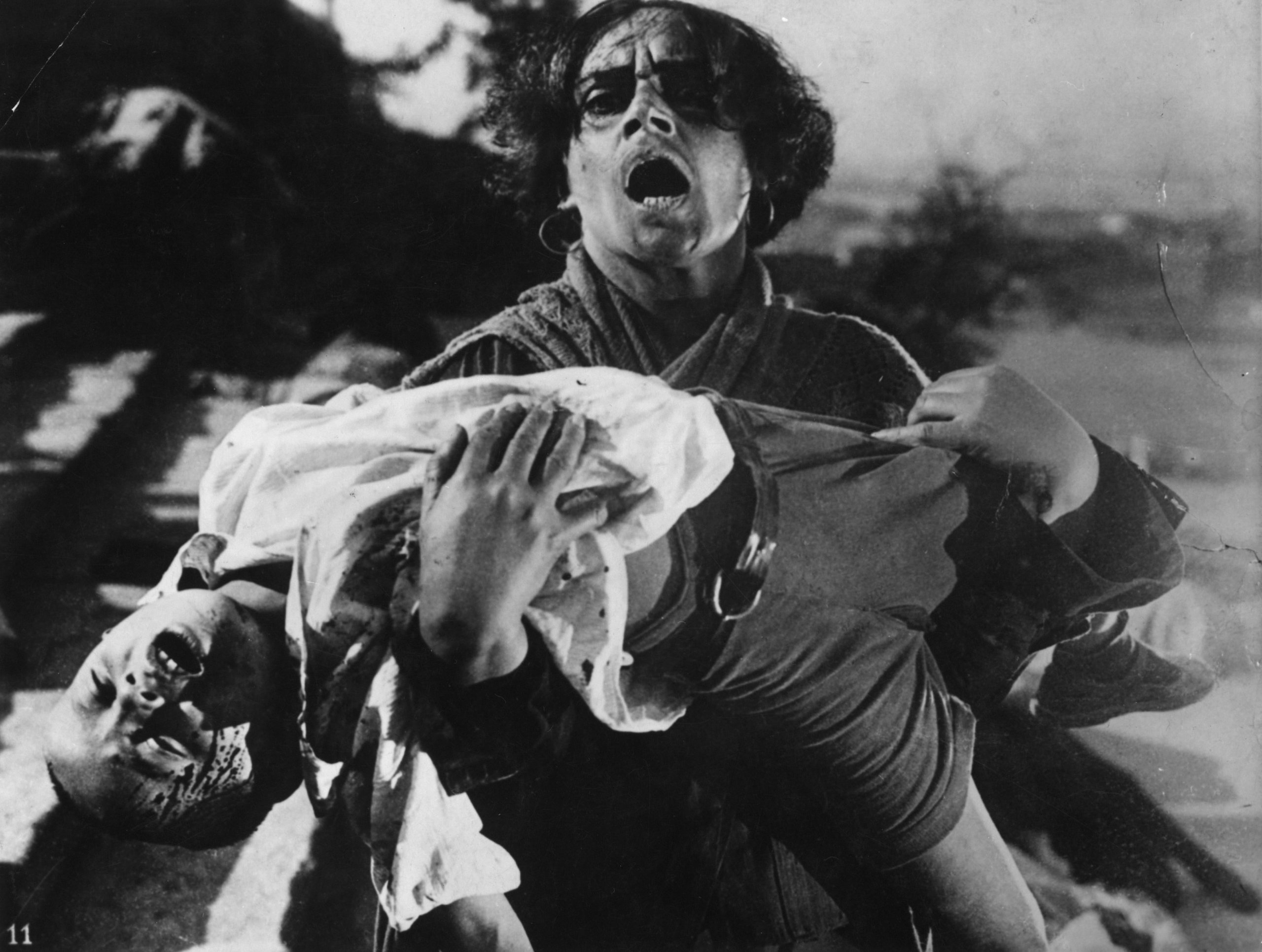
Lectures in this Seminar

square right_ol
square right_ol
square right_ol
square right_ol
square right_ol
square right_ol
square right_ol
square right_ol
square right_ol
square right_ol
square right_ol
square right_ol
square right_ol
square right_ol
square right_ol
square right_ol
square right_ol
square right_ol
square right_ol
square right_ol
square right_ol
square right_ol
square right_ol

April 12, 1983

But what is this order of time? This is no longer the variable present; it’s the instant. The instant is the feeling that something which is posed as the future, in a reflected manner, is actually already here. You are living an instant when, at the same time, you pose something as still to come, that is, eventual or probable or certain, and in another way, you discover that it’s already here. In other words, the instant is just this side of the future. It’s the imminence of the future, the substitution of imminence for the future. At the same time as the future gives way to the imminence, which is something quite different from the future, it is the “already here” of the future, and in the same movement an infinite retreat of the past. These are the two phases of the instant.

Seminar Introduction

In the second year of Deleuze’s consideration of cinema and philosophy, he commences the year by explaining that whereas he usually changes topics from one year to the next, he feels compelled to continue with the current topic and, in fact, to undertake a process of “philosophy in the manner of cows, rumination… I want entirely and truly to repeat myself, to start over by repeating myself.” Hence, the 82-83 Seminar consists in once again taking up Bergson’s theses on perception, but now with greater emphasis on the aspects of classification of images and signs drawn from C.S. Peirce. This allows Deleuze to continue the shift from considering the movement-image, that dominated early 20th century cinema, toward a greater understanding of the post-World War II emphasis on the time-image.

For archival purposes, the English translations are based on the original transcripts from Paris 8, all of which have been revised with reference to the BNF recordings available thanks to Hidenobu Suzuki, and with the generous assistance of Marc Haas.

English Translation

Edited

Superimposition in Gance’s “Napoleon”

Continuing to shift toward establishing foundations of the time-image, Deleuze first summarizes previous key points, and distinguishing the cinema image from the photo image, Deleuze likens the latter to a “luminous mold” (form imposed on matter), the former (with reference to Simondon) to a temporal molding of light, or “modulation”. Here Deleuze poses the problem for the rest of the seminar: what are the conditions necessary for deriving direct time-images? The “chronosign” leads the alternate sign system, with the “cinechrony” as a first indirect figure of time obtained through composition of movement-images, with two facets, the “interval” and the “immense” (time taken as a whole of past-future), and “chronochrony” as a second indirect figure, called images of time through composition of “modulation-images” or intensive movement, with its own signs (time as “order” and time as “instant”) corresponding, to Kant’s “dynamic sublime”. Development of this Kantian concept occupies the rest of the session, but Deleuze returns to Gance’s cinema of the mathematical sublime, yet also emphasizing the expression of the dynamic sublime in his texts and linking the former to the soul of movement and the latter to the soul of light, thus to the intersection of future and past. By reintroducing the perspectives of Jakob Böhme on soul and light, Deleuze develops four steps of this crucial intersection for the intensive movement of time.


Gilles Deleuze

Seminar on Cinema: Classification of Signs and Time, 1982-1983

Lecture 16, 12 April 1983 (Cinema Course 37)

Transcription: La voix de Deleuze (Paris 8), Fabienne Kabou (Part 1) and [transcriber not indicated] (Part 2); new transcription prepared by Marc Haas; additional revisions to the transcription and time stamp, Charles J. Stivale

Translation: Charles J. Stivale

Part 1

[A student is speaking to Deleuze]

Deleuze: What?

The student: [Inaudible comments]

Deleuze: Ah, why yes! Ah, yes! No, no, I remember, it was to know whether you, you yourself remember, [Laughter] a question like that, really, because I’d like to start class lightly. I’d like for us to have a very light session, very light, not harsh, [Laughter] in that way, a session for musing [rêverie]. [Pause] I’d like to try to be very clear about this story of the sublime in Kant because it’s really beautiful what he says. Anyway, you see, there’s no, there’s no question about the point we’ve reached, which would let me gain some time? [Pause] No questions? Well, then, we have to start, let’s get going. So, there we are, we need… The ideal would therefore be for you to have maintained a recollection of our long classification of movement-images and signs. [Pause]

There is one thing I’ve never said, because in my mind, I didn’t think to say it, and then I told myself that it goes without saying. When we relate the movement-image to cinema — I feel the need to say it now, you will understand why, because from now on, I will need it, I will need it more — when we relate the movement-image to cinema, that means, of course, that in the cinematographic image, there are things or people who move. But it’s not through this that it’s the movement-image. Strictly speaking, I would say it’s an image in movement; it’s already enough to distinguish it from photography. So, the image which presents us with people or moving objects will be called, in contrast to the photographic image, a cinematographic image, that is, an image in movement. I place myself in the static shot situation with moving people, a train, a gentleman. But why — it’s still my terminological concern, so you don’t believe that, after all, if you make up a word, or if you write it in a particular way, it will be there to look pretty — when I say “movement-image” with a hyphen, either it doesn’t make sense and it shouldn’t have been used, or else it implies something more, compared to the image in movement. [Pause]

And what more does that imply in relation to the image in movement? Immediately I think of the basic Bergsonian statement, for all of Bergsonism. Bergson keeps telling us: well, after all, to understand movement in its most concrete character, one must manage, by an act of the mind which he calls an intuition, to detach” or “extract” it from its moving body or vehicle. Our natural perception — and it’s here, it seems to me, that he is very strong — he says: our natural perception only grasps movement when attached to something that serves as a moving body or vehicle for it, either object or subject. But more important than the idea of object or subject is the idea of mobile body or vehicle. Well, he says, philosophy will only be a philosophy of movement if it succeeds in extracting movement from what serves as its moving body or vehicle.

Well, that’s interesting, but anyway, who does that? This is the cinematic image. Bergson doesn’t want it, and he doesn’t want it because he doesn’t know it, and he doesn’t know it because he can’t know it. This is why he criticizes cinema for simply giving us an abstract image of movement. But movement as separated from its moving body or its vehicle is not at all an abstract image of movement; it is movement in its essence, in its concrete essence, or it is movement as substance, as a real substance.

I’m saying, that’s what the cinematographic image does. Under what conditions and when? Since we’ve seen a first case of the cinematographic image, it is the image in movement, a fixed shot with something moving in the shot. It’s an image in movement, good, but you notice that the movement is not detached from a moving body or a vehicle. It’s the movement of the train, it is the movement of the character. Here, my current musing is: what is it, what is the movement-image that is not in the image in movement, and how does it arise in cinema? The easiest answer: well, it arises with the camera’s movement. The camera, the camera, well okay, but the camera is definitely a moving body; it’s a vehicle. For example, it is on a rail, or it is carried on someone’s back, or shoulder, etc. Yeah, yeah, yeah, yeah, yes, materially. But the camera’s movement is like — we saw it another year, last year – it could almost be called, and not at all in the sense of an abstraction, but of a concrete reality, the general equivalent of any possible movement, even if, in fact, there are movements that it cannot make; as long as it is on rails, these movements are relatively limited, so then there’s the crane, then there’s the hand camera, on a man’s back, there’s everything you want, on a man’s shoulder, good, a mobile camera, a liberated camera, the liberated camera of [F.W.] Murnau, etc. Good.

So, I’m saying, understand, although the camera … although the camera movement may on its own be related to a mobile body or to a vehicle, on the other hand – which is the camera itself, in movement – on the other hand, it’s in its relationship with movement that it traces — and the relationship of this movement with the other movements — the movements of the image in movement, there is something like a release. I mean, a movement emerges that is grasped independently [Pause] of its own mobile body or vehicle. [Pause] It’s a step towards this capture of pure movement, the camera’s mobility. [Pause] Why? Because it causes movement’s transformation. The famous example of the liberated camera in Murnau, it gets off a bicycle; Murnau puts it on a bicycle. He puts everything in an elevator — it’s “The Last Laugh” [1924] — he puts everything on an elevator; the elevator descends, the camera films the hotel’s lobby through the elevator’s windows, and, continuously, it emerges on a bicycle, a guy being on the bicycle, and obviously, it crosses the lobby. The camera’s movement, in a way, connects two movements with different mobile bodies: the elevator, the bicycle. It could show one of them and hide the other; it will show the elevator’s movement, it will hide the bicycle’s movement, it hardly matters. It tends, I’m saying, the camera’s movement tends to extract a pure movement from its varied mobile bodies and vehicles.[1]

Hence what struck me in a recent cinema project, hence what struck me greatly in [Wim] Wenders’s films, namely this sort of equivalence that runs through Wenders’s first films, the camera movement as equaling a plane, plus a train, plus a boat, plus walking, plus an automobile, etc. Notice in this equivalence, for example, in “Kings of the Road” [1976] or, even more in “Alice in the Cities” [1974], in which the changes of means of transportation are as if collected by the camera which is supposed to extract from all these means of transportation the pure movement detached from the vehicle. So that’s a means, it’s a tendency, to be discerned.[2] So, you will tell me, but nevertheless, there are still some people, that goes without saying, that goes without saying, there are still some people on the screen, there remains…, etc. But what’s important is that all these movements related to their mobile body and their vehicle are as if taken up again, they are not canceled out, but are taken up again in a deeper movement which, itself, detaches them or tends to detach them from the mobile body and from the vehicle. In this way, the image in movement becomes a movement-image. Good. [Pause]

But isn’t there another way to pass from the image in movement to the movement-image? Of course, there is another way. Because, for a long time, and even now, if you look in a film at the number of fixed shots and the number of mobile shots — calling mobile shots the shots that have camera movement — well, you see first of all that in all so-called classic cinema, right, there is a very great superiority of fixed shots. [Pause] When the camera became mobile, it invaded very few images. It is notorious, for example, that in [D.W.] Griffith’s films, the camera movements are all the more striking, and they are all the more splendid for being rare. They are reserved for certain privileged moments. [Pause] In “Faust” [1926] by Murnau, the camera movements are rare, [Pause] [13:00] and yet, as Noël Burch says very well, these are films that give us the impression of a fundamental mobility. Yet they operate mostly by fixed shots. They hold back their camera movements. Needless to say, what I’m saying also applies to many things in modern cinema.[3]

But then, in that case, when it is not the camera movement that assures or realizes, that produces this tendency to detach movement from the vehicle or from the mobile body, [Pause] what will satisfy this function [Pause] in the case of fixed shots, where that movement remains irreducibly attached to these mobile bodies and vehicles? So, it’s very simple. What will guarantee this is, what will guarantee and carry out this same tendency is the succession of shots, it’s the montage. [Pause] There are two ways for cinema to tend to surpass – I say, “tend to surpass”, not at all meaning that this is a failure – but, because if this tendency were completely realized, we would fall into abstraction. If movement were completely detached from all mobile bodies and vehicles, we would have a cinema that we could call, we would have images that we could call “abstract”. That’s been done.

But here, at the level where I’m situating myself, it is not even a question of that; it is a question of doubling the level on which movement relates to mobile bodies and vehicles, of doubling it at the same time by the outline, the drawing of a movement, if needs be the same, insofar as it no longer relates to its mobile body and its vehicle. And I’m saying that to produce this tendency to extract pure movement, you have two means: the camera movement or the montage of fixed shots. You can combine the two means with montage [Pause] at the level of movements, camera movements.

You understand, it’s in this sense that I can say: the cinematographic image is not only an image in movement, but it is really movement-image. [Pause][4] This highlights the difference between the cinematographic image and the photographic image. Why? Because, if I thus define the cinematographic image as a tendency to extract — I insist on tendency –, a tendency to extract pure movement from its mobile bodies and its vehicles, [Pause] I would say that almost here, the photo and cinema oppose each other quite fully. At which level? I have the feeling that even from the most technical, technological point of view, one can — and this is not at all a criticism — liken the photo to a kind of molding [moulage].

There is a text by [André] Bazin which seems very interesting to me — I don’t have it, but… – in which Bazin says something like: the photo is a luminous mold, it’s a luminous imprint [empreinte], [Pause] provided you understand what a mold is.[5] A mold, I mean — otherwise it would be too easy a criticism, a criticism of the photograph, but precisely I have no critical intention when I say the photograph is a molding — a mold, I mean, is not simply a form which imposes itself on a material from the outside. What happens when a child goes to the beach? See, in the old days — these aren’t the kinds of games anymore — these are old games that, then, used molds. So, children, for example, made a mold in the shape of a shell, then we put sand in it, some sand, and then that created the shell, right? There is a mold.

I’m saying, it is not simply the imposition of a form on a material. That would be a purely extrinsic operation. The walls of the mold, that is, the external shape, in fact, lead to what? A whole reorganization of the states of forces which one could call “the states of intermolecular forces of matter”. And it leads all of these intermolecular forces of matter, in the specific case, sand, leads them to a state of equilibrium. Once this state of equilibrium – it takes time – once this state of equilibrium is reached, you can unmold. This idea is very simple. I’m saying, in this sense, well, photography is a luminous mold, it’s a mold of light. It is a molding of light. [Pause]

Whereas what is the cinematographic image? There is indeed a difference in nature between the photo-image and the cinema-image. [Pause] This is a technical operation that has been very well analyzed by some people, [Pause] and it’s something we encountered on a specific topic several years ago, particularly about music when we were talking about music. It’s modulation. What really sets molding apart is modulation, I mean, what stands out in the sense of, at the same time, being concerned with. And there is an author who has analyzed very well, technologically, the difference between molding and modulation as two ends of the technological chain. It’s Gilbert Simondon.[6]

And[7] he says, well you see, a modulation, a modulator, how is it different from a mold, to mold or to modulate, especially since there are all sorts of transitions between molding and modulating? Well, a modulation is, if you will, a variable and continuous mold. It’s a variable and continuous molding. That is, in the case of a mold, the conditions of equilibrium are reached after a certain time. That needs to settle. So, there you have it, the first characteristic of the mold: the conditions of equilibrium are reached after a certain time. By conditions of equilibrium, I mean the state of the intermolecular forces of the material, in the molded material, what’s being molded. A second characteristic: once they are reached, we can demold; that does not change anymore. It is the role of the instant, it’s done.

In modulation, it’s just the opposite. In — see, sense that once again, I’m considering pure modulation — I would say, in pure modulation, the conditions of equilibrium are reached in an instant, [Pause] but at every instant also, they change. [Pause] You could just as well say that demolding never happens, or that demolding is constant and permanent. [Pause] In other words, Simondon says quite well: a modulation is variable and continuous, and temporal molding. Modulation is a variable, temporal and continuous mold which itself modifies, the conditions of equilibrium. That’s what a modulator is.

So here, I would say exactly, literally, if you’ve followed me, the cinematographic image is a movement-image, or, what amounts to the same thing, a modulation of light, [Pause] while the photographic image is a molding of light. [Pause] And in fact, a modulation of light, or [Pause] the tendency to extract movement from its mobile bodies and its vehicles, is exactly the same thing; it is the reverse and the front side of the same operation. [Pause] I could almost say, at the extreme, to modulate light is [Pause] not to cease, so it’s to tend toward and not to cease extracting the movement of its mobile body or its vehicle, and vice versa.

And this would be very valuable for us because it would make us come back to the double aspect of the cinematographic image. [Pause] From the beginning, from the beginning of this year, we’ve said, yes, [the image] is indissolubly movement-image and light-image. It’s the light-image as a modulation of light; [Pause] it is the movement-image as an extraction of the movement from its mobile bodies and its vehicles. [Pause] Well, but then, we return to the point we’ve reached in our analysis. — Are you okay, are you okay? Is this okay, nothing to…? – [Pause] I’m saying, this restarts everything because, on this, we have at our disposal, we again have at our disposal, I’m not going back over it, our whole series of types of movement-image. Types of image-movement, there are all kinds, each with its signs; we’ve covered all that.

And so, we reached the following problem: well, precisely in the case of these movement-images, or of these light-images, [Pause] we are going to reach a new type of image that we’ll have to call: “image of time”. And here, the questions rush in for us. [Pause] Why call them “image of time” and not “time-image”? It’s always out of a need for terminological rigor. We said, well yes, starting from, if we obtain an image of time, or images of time from movement-images, they are necessarily images of time. Why? Because they are obtained indirectly. They are obtained indirectly; they are obtained by the composition of movement-images.

Hence a question returned immediately, and that we’ll hold back for later since this will be the basis for the year-end, I assume: well, aren’t there other conditions through which we might reach indirect time-image? I could call a direct image of time a “time-image”. But as much as I apprehend time starting from and as a function of movement-images, I can only say: this is an indirect image of time. This is an image of time that I obtain through the composition of movement-images. And after all, that seemed to us to be a definition, one of the definitions of montage in cinema among many others, or one aspect of montage, the composition of movement-images such that an indirect image of time emerges. [Pause]

And here we have exactly, this is so that you have the whole problem in mind. [Pause] So we were in the process of adding to our classification of images and signs a new major category of image. We had created the whole classification of movement-images and the corresponding signs. We had obtained all sorts, all sorts of signs, I don’t know, but anyway, it could multiply, so 30, 40, 50. We named them; all that was a lot of fun. [Laughter] And then, now, we’re telling ourselves, well, we must add the indirect images of time, [Pause] the indirect images of time that derive from the composition, that is, from the montage of movement-images. And then we’ll have to add, perhaps, direct images of time. [Pause] So, from here onward, whether these are indirect images of time, or direct time-images, if they exist — we don’t even know yet if they exist and if they can exist, direct time-images — but assuming they exist, in any case, they will be grouped under the general title of “chronosigns”. They will be chronosigns. [Pause]

And what we began before the vacation [session 15, March 22, 1983] was a first sort of indirect image of time. Because after all, we didn’t say it because we had too many things to say; it seems to me, well now the moment has come — as we have a sort of pause, the before vacation and the afterward — well, it’s obvious that, in any case, we had to expect two indirect images of time. We had to expect two indirect images of time. Why was that? Because we have seen the front and reverse sides of the movement-image; it’s the movement-image and it’s the light-image. [Pause]

On one hand, it is [Pause] — let’s also take a term here that we sometimes encounter in Bergson — on one hand, it is “mobility”. I’m saying “Bergsonian term” because he defines it in a very special way. For him, mobility is movement in its essence, that is, extracted from its mobile body or vehicle, pure mobility. And the movement-image, on the one hand, is pure mobility, and therefore, it refers to its movement-image aspect, and on the other hand, it is pure modulation. [Pause] And, under this other aspect, inseparable from the first one, it refers to the reverse side of the movement-image, or to the front side, it doesn’t matter, the reverse side of the movement-image or the front side of the movement-image, it is the light-image. It’s mobility of movement. Once again, mobility of movement means for us something precise — it is not literature, here, it’s not a way of speaking — mobility of the movement means movement insofar as it is no longer related, or that it is not only related, to its mobile body or vehicle. So, on one hand, I have mobility of movement, and on the other hand, modulation of light.

In some ways, it’s the same; in other ways, it’s not. Why is that? Here again, I come back to it, because we’d need, we’d have to take another year, when, [Pause] in the dream of a course that I could do one day on “what is philosophy?” anyway, [Laughter] what would impress me the most is what I’ve already told you a lot, that is, whatever it is…, I’m trying to say it the most concretely possible, hence as flatly as possible, namely that philosophy obviously has no privilege in relation to the true and the false, and has nothing to say about the true and the false, but that it has something fundamental to say about constructing concepts. And so, what philosophy does is to build concepts; it is, like that, like architects, they build houses, musicians, they build sounds, etc. Well, the production of concepts is what philosophy is all about.

But, if that’s what philosophy is, what interests me is these kinds of interests or tastes, [Pause] which once again, means that, as well at the level, and so among philosophers, in philosophy, there are, there are as in all the other arts, there are producers, or creators, there are spectators, and there are all the intermediaries between the two. The spectator in philosophy is the one who says, “Oh, what a beautiful concept that is”. [Laughter] A beautiful concept, yes. But what does it mean, the one who says, “That’s a beautiful concept”? Because there, the problem is the same for the spectator and the creator. The spectator who tells himself about certain concepts, “what a beautiful concept”, that amounts to saying — I am a Cartesian, for example, if they are concepts from Descartes, [Pause] well — he will be marked by Descartes. If you grant me, what goes without saying is that philosophy has more urgent, higher and more important tasks than searching for truth, and since precisely its highest and most important task is to create concepts, with all the questions, obviously, that must arise: what is the point of this, why, why do this? Why do this rather than something else? But the creation of concepts is as important as the creation of colors and lines, as the creation of sound complexes, it’s as important, as beautiful, as good.

And I always come back to this, there is a matter of taste. There’s a matter of taste. What do you want, when, when you say …? I’m not going to tell someone, I assume, or no one’s going to tell me: you’re wrong in what you’re saying. That’s why I can’t stand objections, anyway; [Laughter] this isn’t, it’s not possible, I’m not wrong in what I’m saying. At the same, while it’s not possible, what is possible is something much more awful, that I don’t pose the right problems. Really, that’s awful. But once again, a problem, you have to risk a problem. You have to build these problems. There is no, there is nothing…The answers, I understand that the answers can be true or false, but the problems… [Pause] If someone tells me the year in which Descartes was born, yes, I say, that’s true or false. And there is only one way to re-establish, in my opinion, there is only one way to re-establish verification of knowledge in philosophy — it wouldn’t be difficult — the day we join the continuous verification of knowledge, it is in the form of questions and answers concerning philosophical concepts. Because here, this is frightening: at the level of the philosophers themselves, right? It’s the parade, really; it would consist… verifying knowledge in philosophy would consist in saying: what is the a priori in Kant? What is, what does Kant call transcendental, etc.? Solely creating definitions of concepts, but anyway.

When you feel, when you have a relationship with a philosopher that is favorable, or a relationship with a philosopher that is unfavorable, and you happen to express it in the form of “he’s wrong”, you feel that you are saying something shameful, after all. It is as if you were to tell a mathematician: ah, you are wrong! You wouldn’t dare say that to a mathematician because he would smack you. [Laughter] On the other hand, what might happen? I saw, at one point, I happened to read a mathematical journal. I remember some reviews of university theses by [Henri] Poincaré. And Poincaré said about a mathematician’s thesis — so it’s at a high level; a mathematics thesis is at a very high level — well, Poincaré said, in his judgement, speaking summarily: without any interest. Without any interest. That’s interesting, this judgment: without any interest. Understand why this is interesting. Because a mathematician is not going to reproach another mathematician for having made a mistake in his calculation or his proof. The mathematician didn’t make a mistake, or if he made a mistake, even that doesn’t matter, right? If he wrote 7 + 4 = 15, it doesn’t matter, it really doesn’t matter.

On the other hand, what happens is that people invent theorems that are without interest. It’s not that it’s false. It’s not that it’s false, it’s worse [Pause]: it doesn’t make mathematical sense. It’s true, it might be true, or it can be, why not, there’s no necessity, it doesn’t advance anything, it doesn’t advance anything, it doesn’t advance anything. This is a much more obscure, much more difficult field of thought. And it is true of all works of art; it is not true of sciences only. You will have films, well yes, zero. What does “zero” mean? It has no interest, none, no interest. It’s grabs things from right and left, they’re gimmicks… yes, it makes a whole; this whole: zero, no interest.

What does that mean, “it’s without interest”? It’s a funny thing. Or what does it mean, someone, and what is this “me” who can say: ah this, that interests me. Not “me” in my personality; that interests me. I mean, what is it that makes each of us have our preferred authors? So, it’s this taste that I would like to talk about one day. It is this taste that is one with the activity of creation; it is this viewer’s taste that is one with the activity of creation, and that constitutes the deepest affinity of the spectator and the creator, that consists in the character, for lack of a better word, I say, the interesting or important character, either of a concept, or of a painting, or of an image. What does it mean: this is interesting, and this is important, whereas it does not mean: is it true? The category of importance… [Interruption of the recording]

… I can say, understand that philosophers, well, when we say that they’ve contradicted each other, this is absolutely false. A philosopher has never contradicted another philosopher, any more than a mathematician has contradicted another mathematician. It’s much worse, [Pause] it’s much worse: [Pause] they haven’t stopped transforming their problems. They haven’t stopped transforming their problems. It’s obvious that if you want to understand something, for example, about the relationship between Bergson and Plato, well, it doesn’t happen by saying: one tells us this and the other tells us the opposite. It’s by asking ourselves, for example: in what way does one and then the other pose the problem of movement? And it becomes evident precisely that the way in which Bergson poses the problem of movement has no equivalent in Plato, or has only very marginal equivalents, but that, on the other hand, certain problems in Plato’s works have no equivalent in Bergson. What is this tension of problems, this tension of problematics?

So, well, that’s a bit of what I want to talk about with my image story. I’m saying, movement-image and light-image, these are the front and reverse sides, they’re inseparable. And you won’t have movement without light and transformation of lights, and you won’t have light without movement. [Pause] And practically, that doesn’t prevent that — and this will make big differences in images — practically, you have people who are interested – I’m coming back to my topic of importance and interest — what they are interested in is above all light. They are children of light, or children of the night. That’s what interests them. What do you want to tell them at that level? Do you want to tell them: “You’re wrong”? “You should be interested in something else”? You can always tell someone: “You should be interested in something else”, but I don’t see what right you have. It’s already quite wonderful that he’s interested in something. [Laughter]

I’m saying, there are certain authors about whom it’s said: their main concern is light. It’s true in painting, it’s true in cinema, it’s true in philosophy. There are others for whom the problem of light, well no, it doesn’t mean anything to them. They say what, well… there are some people in the cinema, there are some people for whom the real problem for them is movement. What does that mean, concretely? This is a way to qualify my idea. I’m indeed saying: by right. If you consider the image itself, any movement-image is light-image, any light-image is movement-image. I tried to show this in, at the very beginning of this year.[8] I’ve just specified this; it means pure mobility, and it means pure modulation. And mobility is a modulation, modulation is a mobility. All right, fine, all that goes without saying. But that doesn’t prevent there being authors who are only interested in movement, finally, because it redistributes lights. For them, movement is at a second power; what interests them is that movement makes light move. They will be called Luminists; that will be their primary problem.

And then you have other authors for whom light is fundamentally subordinate to movement. Light allows decompositions and compositions of movement. Light is one of the means by which one can extract pure mobility from movement, that is, the movement of one’s mobile body or of one’s vehicle. [Pause] Light is at the service of movement. [Pause] They can make great discoveries in the domain of light, but it is precisely because, for them, light will only be at a second power, that they will make discoveries of this type. I would say of this race of authors that they are Mobilists. At the same time, we shouldn’t harden the categories too much. Of course, of course, the Luminists are interested in movement; of course, the Mobilists are interested in light, and yet it’s a system completely… it’s a very, very different system. And furthermore, they will be able to converge towards common achievements by which we viewers are dazzled, both by the light which emerges from it and carried away by the movement. And that doesn’t prevent these achievements from being analyzable, and perhaps analyzable in two simultaneous ways, one in which it’s movement that drives the light, the other in which it’s light that commands movement. And it will not be created in the same way depending on one case or the other.

Hence, I’m saying, we had to expect two figures, two indirect images of time. [Pause] On the one hand, it’s necessary to draw from movement-images an indirect image of time, [Pause] and on the other hand, it’s necessary to draw from the light-image, from light-images, an indirect image of time. And this won’t be the same, this won’t be the same. So, I will already have two chronosigns, [Pause] a chronosign of the movement-image, a chronosign of the light-image. [Pause] And why are they separable, even though they are very, very intertwined? Well, for one simple reason. It is that movement-image, as its name suggests — with its problem of mobility and the extraction of movement from the mobile body or the vehicle — must be understood as extensive movement, movement in extension. [Pause] Time as an indirect image that emerges from it, well, as we have seen, it’s a time under a double aspect. This is what we saw the last time, just before the holidays, it’s time as the “interval” of movement; it corresponds to the part, and it is time as the Whole of movement. [Pause]

So, my first image – you see that this gets complicated — my first image of time — time such as it is extracted from movement and such as it is related to extensive movement — has itself two signs: the interval, the interval of extensive movement, the interval of movement, and the Whole of movement, the Whole of movement. I will not return to this point. The Whole of movement was, for example, what Descartes called the constancy of the quantity of movement in the universe. [Pause] Long before him, and in quite a different way, this is what the Greeks called the number, the great number of time… sorry, the great number of movement.

Okay, so I have a first indirect figure of time; let’s call it – so, it is time obtained by composition of movement-images — we can call it, literally, “cinechrony”, cinechrony. [Pause] Cinechrony is the figure of time as composed from and as a function of movement-images of extension, movement-images of extension. I’m saying that this figure of time, as we have seen, has two aspects: once again, time as interval which refers to the part of time… [Deleuze corrects himself] which refers to the part of movement, time as the whole that refers to the Whole of movement. Concretely, we have seen this, and I’m returning to the image at the point we reached, this time-image, rather this image of time, this first image of time; it is the image of the bird, it is that of the most beautiful of birds which is the bird of prey; it is the great circles of the soaring bird of prey. That is time as Whole, and it is the wing beats of the fleeing bird. And the wing beat is the interval of movement, just as the great circle which reveals the horizon of the world is the Whole of time.

What is time as an interval? It’s the present. The present is the in-between-beats. The present is the interval. And I can never say “the present” without adding the “variable present”. My present is eminently variable. No present is the same as another present. No beat happens the same way. So, there are, there are, there are, there are statistical balances: I can say, my present is the interval between an exhale and an inhale. It’s the interval between a contraction and a dilation. I will have defined my present by the pulmonary interval in one case; I will have defined my present by the cardiac interval in other cases. But already, it’s as much to say that I am straddling multiple variable presents. And it is according to my occupations that I refer to a particular present as a way to define my present, but I am a component of a multiplicity of virtual presents.

It’s very nice to know that. It’s very nice, and then obviously, first off, when they come apart, what is it that… when they come apart, when they burst, when the heart goes one way, the lungs  another, and the feet still elsewhere, this is what is called a panic situation, when there is no longer a common measure between the different variable presents that compose me. There has to be some kind of common measure, otherwise then, otherwise my heart goes one way when my feet go the other, right? Good. I’m saying, time as an interval is the variable present. There we have the first figure of time, or rather, there we have the first sign of time.

The second is the Whole, time as the Whole of movement, and time as the Whole of movement, what is it? This time, it is no longer the variable present, it is the immensity of the past and the future insofar as they are supposed to constitute a circle or a constant. Example: Descartes’s invariant, MV. A completely different example: the Great Year in certain forms of ancient thought, which represents the Whole of time, that is, the moment when all the planets find the same respective position. Are you following me?

So, I have two signs of time: the variable present and the immensity of the future and the past. Notice that it gets complicated because the vastness of the past and the future, ultimately, has no need of the present. Variable presents have no need for past and future. These are notions that are completely heterogeneous, which come from: the presents measure intervals of movement. [Pause] The line of the future and the past does something completely different; it measures the Whole of a movement or, in short, the Whole of movement in general. Good.

So, I’m saying, the first indirect image of time, the image I called cinechrony, that is, the image of time extracted from movement-images, it presents two signs to me: “the interval” and “the immense”. I’m no longer using “immense”, I’m using it for convenience, but I’m giving it a very concrete meaning, since what I’m calling “the immense” is the immensity of the future and the past. So, the interval and the immense are the two signs of time insofar as it relates to the movement-image. [Pause]

But, as we have just seen, we must expect another, another image, another indirect image of time, this time in relation to the other aspect of the movement-image. I could start another graph again. Here, we’ve restarted, we’ve restarted a graph that will be very, very, no, not complicated, very simple. I could create it, but it’s not worth it; you create it in your head. That if the reverse side is the light-image, we have seen that, in this sense, it was something other than this reverse side, it was not the same thing as…, that there was an order of importance, which you could sometimes, well yes, you can turn over, it’s an image that you can turn over. If it’s light that interests you, well, you turn it over, you place movement upside down. If it’s movement that interests you, you turn it over, the light is underneath.

And now then, I’m saying, suppose it’s light that we’re interested in. We therefore grasp our movement-image no longer as movement-image, but as modulation-image, light-image. [Pause] Well, light-images will also come out through montage, that is, through composition, an indirect image of time. [Pause] They won’t be the same, it won’t have the same signs, and for a very simple reason. What I could say: light is a movement. Okay, but this is not a case of movement. Why? I said, it’s like the front and reverse sides. It is like the front and reverse sides, one of them being extensive movement, light being intensive moment, [Pause] it’s intensity par excellence. Would it be possible to demonstrate or show that all intensities arise from light? [Pause] Without a doubt. Demonstrate, in what sense? Could we demonstrate it physically? Maybe, right, that, I don’t know, maybe, but why not? There are many things that would go in that direction. Can we show it in another way? I would say that all of Romanticism was the attempt, but the entirely successful attempt, to show from what point of view all intensities flowed from light. Good.

The movement-image was understood from movement in extension, extensive movement, that is, from a movement that is defined by displacement in space. The light-image can equally be defined as movement, but as intensive movement. It is to be expected that intensive movement has a completely different nature than the extensive movement: in what sense? Well, we already see it right away, the intensive movement, it has degrees, while extensive movement has parts. Good. A degree is not a part. [Pause] So, I can say: the second figure of time, the second indirect image of time, is the one that I draw or that I can draw through composition – but obviously it won’t be the same composition – that I can draw through composition of light-images, that is, modulation-images, that is, intensive movement-images.

And there, it would be obviously, solely by symmetry — it’s not required, not required — that we also find two signs of this second image of time. This second image of time, well, fine, it is time as I conclude it from compositions of light. A time such as I conclude it from compositions of light, what is that? What is that… I could tell what the parts were, the parts of movement, from the point of view of extension. I said it earlier: the parts of movement from the point of view of extension are time as interval. This is the interval. This is the interval of movement. See, there’s something clever here, it’s not funny, but there’s something clever all the same. I am wary since obviously I cannot define a part of movement as part of a space traversed. Above all, I must avoid it, because there, you could make an objection to me, and you would be right. You would say to me, what you’re saying is stupid, it’s stupid. [Pause] Ten meters, for example, is not a part of movement, it is a part of space traversed by a mobile body. Also, I’m saying, there are parts of movement, but I am careful not to identify parts of movement with parts of space traversed. This is why I said: the parts of movement are time as interval, [Pause] namely the part of the movement of a bird, of a particular bird, it’s the interval between two wing beats. [Pause]

So here… Well, for the intensive movement, that is, for light, I will have to find it as well. And I was saying, there is no part there, there are degrees, [Pause] yes, and the intensive movement will go through degrees. Oh, it’s going to go through degrees, but then… let’s just let it go here. We must try to move forward; to try to move forward, you have to muse, you have to… It’s going to go through degrees, but going through degrees, what is that? It has a name, it is descending and ascending, descending and ascending. I’m not saying that intensity is linked, or is reduced to that, but that’s it above all: intensity is something that rises and falls. Hey, but you will tell me, it occurs in extension, rising and falling. It’s possible, but it’s not, it’s not so with the extension… never would falling and rising have been isolated, isolable. It comes from intensity, falling and rising. Maybe; that’s what I think anyway. Fine.

On the other hand, what belongs to the extension as such is making circles [Pause] and arranging intervals. Amazing, that’s pure extension. Descending and ascending, passing through degrees; to descend and to ascend is to pass through degrees. That’s it, the origin of descending and ascending. It really is something entirely different. And feel that it’s a whole different time that we’re going to enter. And the degrees of light… and in fact, I’m coming back to…, light, it falls, and once again, what does it mean, to fall? That doesn’t mean it’s falling apart; it remains in itself. But that means that the ray of light comes out of it in a certain way: it falls. And light rises back up, right, all that’s fine… [Interruption of the recording][9]

… What are these degrees of light? We can call them — here, it’s just a hypothesis, because that would, that would bring us back to things that we saw last year or two years ago, I no longer know; for those who were here, it would make it possible to make links with last year, I believe — degrees of light, we can call them, even if it means justifying it only later, degrees of light, we can call them call them “colors”.[10] Colors would be degrees of light, that is, colors would be intensities of light. Can that be said? Well, in what sense? If it’s true, in any case, that would give me a name, a word, one more word to designate this new image of time. I would say that the image of time which corresponds to intensive movement or to light, this time is no longer a cinechrony, as earlier, but this image of time is a “chromochrony”, a chromochrony. I’m happy because this is the title of a great work by [Olivier] Messiaen.[11] So, fine. [Pause] And chromochrony, that is, the figure of time in relation to intensive movement, in relation to the light-image, well, it would itself have signs; what would these signs be? Let’s try to move forward a bit, ok? These are not the same ones, obviously, as earlier. Earlier it was the interval and the Whole.

Let us take any intensive quantity whatever. In any case, it falls. What do I mean by “it falls”? Do I mean it disappears? No. To fall is its appearing [apparaître]. So, let’s try to say, more and more, as one can, it doesn’t need to fall in order to fall. I mean, it falls onto you, it’s not the one falling. It can fall, it’s both, it’s both. An intensity can always fall. You’ll tell me, a movement in the extensive can always stop. Well, yes, okay, but it’s not the same thing at all. In fact, when I say, “an extensive movement can always stop”, that means, it can always lead into an interval, and there’d be no resumption afterwards. That’s its way of stopping. [Pause] But when I say: an extensive movement falls, and can always fall, well there, I have no notion of interval for the moment.

Furthermore, I have the impression that I will never have one. The interval belongs completely to the extensive movement. If I maintain my terminological rigor firmly, something else will be needed. Between two degrees, I couldn’t speak of an interval. When can I speak interval between two degrees? The answer is well-known: when I’ve substituted extensive quantities for intensive quantities that allow them to be measured. Namely, when I’ve substituted for heat the rise of the column of mercury; with the rise of the column of mercury which is an extensive movement, there I can say: there is an interval between two degrees. But insofar as being an intensive quantity, the notion of interval is completely unjustifiable. So, what can I do, what does that mean? I’m saying: the intensive quantity can always fall by itself, “fall” meaning “reach zero”. So, it has a relation toward zero. We already have something very important: it has a relation toward zero which is consubstantial with it.

Any intensive quantity is a function of zero. The extensive movement, as we have seen, was related, had a reference. I mean, you’ll be doing philosophy if you don’t stop twitching; you have to, you have to wade through these kinds of evidence, of, of platitudes, right? I’m saying, the extensive movement is not in an essential relation with a zero. If you think of extensive movement, you tell yourself: it must have a unit. The extensive relation is in relation with the unit, [Pause] or, what comes to the same thing, with something able to be used as a unit. And this is very different. The intensive movement, in its essence, in its intimacy, is in a relation with zero. Well, it’s its possibility of falling toward zero. And in fact, any intensity can drop to zero. But it doesn’t need to fall to zero to be an intensity, that is, to drop on top of us.

I would even say, falling toward zero is the vulgarity of intensity. It’s the vulgarity of intensity, that is, it’s the easiest way, for it – I’m imagining intensity as living — I would say, it’s the easiest way for it to make us feel something of its essence. [Pause] It’s falling toward zero because there, when it falls toward zero, it becomes glaring that as an intensity it was concerned with zero. But in its nobler essence, that is, in its intimate essence, it does not need to fall toward zero in order to be concerned with zero; it falls on us. It doesn’t need to fall itself. The light falls down on us, it does not stop, it does not reach zero for that; it keeps falling on us. And that’s the intensity; it won’t stop falling on us. And it is you who will plead for mercy, that is, it’s each one of us who will plead for mercy.

Perhaps extensive movement will not stop composing units. And in fact, the parts of movement, what are the parts of extensive movement? You have movements — well, I’ll take the simplest one — you have so-called linear movements, so-called circular movements, and it doesn’t stop, it doesn’t stop being composed. Looking at a spinning wheel, a spinning wheel, it’s a composition of movement, okay. The movement does not cease being composed, and the intensities do not stop falling, falling down on you. So, fine. But it’s already in this that they have a relation with zero. Why? Because what is it that defines an intensity? In what way is it a quantity? Well, it’s a quantity because, like any quantity, it’s the unit of a multiplicity, the unit of a plurality. [Pause] In the case of extension, it’s very simple; in the case of extensive movement, a unit of plurality, it’s very simple: plurality is the successive parts, the parts, and the unit is gathering into one. [Pause]

But in intensive movement? [Pause] That’s very odd. Kant tells us quite well: it is a unit [Pause] whose plurality is apprehended in the instant. Perhaps you notice, this is the introduction for the first time, well, of this word “instant”. I’m saying: you notice, because we feel that it will be extremely useful to us, “instant” is something concerning time. It is not at all the same as the present. We can say that we vaguely defined the present earlier, but we had nothing to say about the instant. The instant will perhaps fundamentally belong to our second figure of time.

So, we’ll certainly hold on to that. So, it’s a unit whose plurality is apprehended in the instant. How? In the form of its distance to zero, distance to zero. Why distance? The distance to zero fundamentally belongs to intensity. In what sense? In the sense that intensive distance is opposed to, or is distinguished from, extensive magnitude. [Pause] How is that distinguished? All distances are indivisible. “All distances are indivisible”, what does that mean? That means, “thirty degrees of heat” is defined by its distance from zero. [Pause] “Fifteen degrees of heat” is defined by its distance from zero. But thirty degrees of heat was never fifteen plus fifteen. Intensive quantities are not the product of an addition of parts. [Pause] As the other said, you won’t create heat by adding snowballs.[12]

Distances are indivisible. I mean, the distance, therefore the intensities. And I am in the process of defining intensity through two aspects: its degree, that is, its unit apprehended in the instant, [Pause] its plurality is defined as an indivisible distance from zero. Well, all intensities are indivisible distances according to their degree, are indivisible distances to zero, with respect to zero. But that doesn’t prevent thirty degrees from being more than fifteen degrees. Thirty degrees is not fifteen degrees plus fifteen degrees, but thirty degrees is more than fifteen degrees. Well, fine. So, I can introduce pluses and minuses. Yes, I can introduce pluses and minuses provided that I justify it, provided that it exists in another way than in extensive quantity. And in fact, I can say that one distance is greater than another, [Pause] but I cannot say by how much. You will tell me, but yes you can, thirty degrees is two times fifteen. You’re answering yourself in advance: but no, that’s not what it is. What is double is the rise of the column of mercury which itself is extension.

But then, if you cannot, if you cannot add intensities, distances, if you cannot add distances which are indivisible, what can you do? You can order them. Ordering is not the same as measuring; these are two different concepts. You order differences or distances, whereas for extensive movement, you juxtapose parts. Juxtaposing parts and ordering differences or distances are not the same. I would say that intensity is the set of ordered differences or ordered distances, calling distance, or difference, the relation of any intensive degree whatever with zero. [Pause]

Don’t I have two aspects of time? All that, that’s it, we’re acting a bit as… [Interruption of the recording]

… I have just found something like the two signs of this second image of time, this time which responds to intensive movement, or this time which responds to light, this time which responds to light. You remember that for extensive movement, we had time as a Whole, and time as an interval. Time as Whole was the immense, that is, the immensity of the future and the past, and time as interval was the present. And now, I have time as “order” or as “power” [puissance]. I don’t know, I see advantages in both words. So, that’s annoying, anyhow, but finally, for the moment, I see that, time as order or as power.

What would I call the order or the power of time? That’s quite different from time as Whole, right? The order and power of time is the set of distances and differences as ordinates. Time is what orders distances. My heart is stirred because I only say this on the condition that you see no objection to be made to it. I see some of you who are on the brink of a kind of sleep, but invincible. If you feel exhausted, you tell me, right, and then we’ll stop for a bit, ok? [Pause] So. I’m concluding this point.

Time as order; so there we find there’s to be an order of time which is not at all the same as the Whole of time. We will imagine battles between all these aspects of time. After all, this must animate mythology. When intervals of time, which are small gods, very small gods, tiny gods, intervals of time, the interval-god, it’s…, the Greeks were very familiar with this, they called it “a demon”. The interval was a demon. This was good, it was a great idea. Why? See, because the interval is demonic, because for the Greeks, the gods had kingdoms, they had kingdoms, it was… They were always gods of the limit. [Pause] It was the limit that was divine, and the demon is what always crosses the limit. It’s what jumps. The demon, by definition, is the jump. In Oedipus, there is a sentence which is, which is often very badly translated, because it’s translated literally – dead languages ​​can only be translated literally – it is Oedipus who says, invoking fate: “Which demon, which demon, which demon jumped the longest jump?” “Which demon jumped the longest jump?” Everything gets justified because what jumps is always the demon. And there, Oedipus finds that the leap was a bit strong. The jump that caused him to cross the limits was a bit strong. Which demon jumped the longest jump? So, if you don’t think about this relationship between the demon, the interval, the leap, obviously the sentence is obscure, it’s even unintelligible. Good, but anyway.

So, I was saying, we can… the interval can very well rebel; it’s demons who come to offend the gods. They will rebel against the Whole, the Whole of time. There is going to be the struggle of the Whole of time and the intervals of time. The variable presents go to war. Why are they going to war? Because they refuse to be parts of the Whole of time. Okay, so all of that, fine. What does it matter, when the variable presents rebel? So suddenly, even if it means showing a vast culture, we jump from Sophocles to Shakespeare. What does Hamlet mean when he says: “time is out of joint”, “time is out of joint”? Perhaps when the variable presents rebel against the Whole of time, then time gets out of join, that is, the immensity of the future and past no longer makes a loop, no longer makes a circle, good, but anyway.[13]

So, here we are, then, with… Well, yes, so I am going to withdraw the word “power”, and yet I need it, because all of this should be said to be powers of time: the first power of time, as we have seen, would be the interval; the second power of time would be the Whole of time; what is the third power of time? Well, that’s the one we’re talking about right now, in relation to intensive time. Well, I’m saying, it is the order of time, that is, the order of all distances, the order of all intensive differences, time as order, it orders distances. It would be like a kind of… it was not endowed before, a kind of depth of time, a depth of time in which all distances are ordered toward zero. And what is this zero? That would really be the abyss of time, this zero. In fact, the image of depth would have to be imposed on us since time would have to plunge into an abyss which is precisely [zero], and which has zero as its sign. Good, but then the order of time would then be something very different from the Whole of time. [Pause] And the second sign of the intensive image of time, as we have seen, is that in its distance toward zero, all intensity is apprehended in “the instant”, [Pause] and the instant would be precisely that aspect of time under which an intensity is intensity.

As a result, my two aspects of intensive time would be: the order of time, which would therefore be like the third power, and the instant which would be the fourth power. I will have four signs of the time, for the moment, for two figures. What is this instant then? [Pause] This instant would be the capture of intensive quantity, of any intensive quantity as a unit, whereas distance would be the capture of indecomposable plurality, that is, of its relation to zero. Good, but you see that they are two completely different figures, and yet they are both sublime, yet they are both sublime, and both, I would say, concern as closely as possible, that is, what affects us most deeply, otherwise they would not affect us, they concern our soul. Yet at first glance, that does not concern our soul since extensive movement concerns the world, concerns space. Intensity, if it is true that it has its source in light, well yes, but we know well that our soul has a very close relationship with the world and that [intensity] has a very close relationship with light. It would still be necessary to show how that concerns our soul.

So, fine. And I’m saying, in both cases, there is something sublime, and finally, Kant can be our intermediary [relai]. Because, when I spoke of the sublime in Kant, I only spoke about half of it, and is it by chance that Kant distinguishes two forms of the sublime, and that he says, there is a sublime – he says, in his language, in his very rigorous terminology – he tells us: there is a mathematical sublime and there is a dynamic sublime? [Pause] And he adds: the simplest figure, the figure of the mathematical sublime, is the immense — all that suits us greatly [Pause] — and the simplest figure of the dynamic sublime is the deformed or formless. That suits us greatly. [Pause] Why?[14]

There is a very common expression in physics in the 17th and the 16th century, and it is deformedly deformed speed. Deformedly deformed speed refers to and is opposed to uniformly accelerated movement, which is a very simple case. On the other hand, speed is the intensive quantity of the extensive movement. Speed is, [Deleuze coughs] it’s literally a distance, in the sense that I have just given to distance, it’s a difference. It is an intensive notion, therefore, the deformed. The dynamic sublime is the deformed or the formless.

And he tells us, an example of the mathematical sublime: “the starry vault of the sky” – and again, not just any conditions; he will state the conditions, since he says everything – “the starry vault of heaven”.[15] You are the night, you raise… “and trembling, I raised the palm of my body…” — it’s a verse, it’s a verse that suddenly I remember — “and trembling, I raised trembling the palm of my body”, but I don’t know the rest, otherwise I would have recited it all to you. [Laughter] It’s a very beautiful verse, well, I find it very beautiful.[16] Well, you raise the palm of your body trembling, there, under “the starry vault of the sky”. Either you are denatured or else you are invaded by the feeling of the sublime, but it’s a mathematical sublime. Either you are facing the sea, facing the calm sea which is limited only by the horizon, and you experience the feeling of the mathematical sublime. Right? Good.

But, but… — [Deleuze looks in his text] because here, I don’t want to, I can’t substitute for the text which is so convincing — but, any other case, and there you really feel that it isn’t the same case. [Pause] “You find yourself facing formless mountainous masses, piled on top of each other in savage disorder”, [Pause] or else you find yourself facing — we will see why — facing, “a dark raging sea, or else in the storm.”[17] It is no longer the starry celestial vault; it is the darkness from which a terrifying flash emerges. There you are, the sea in fury, the mountain in avalanche, the lightning in the dark sky. There you also experience the sublime, but you are not confused; there you are not mistaken, and you tell yourself: ah, that is a sublime dynamic. Earlier, you were saying: I’m fully within the mathematical sublime, good. What differences are there? Here, I’m making a long parenthesis which is uniquely on Kant. We are going to rest because this will provide us with a lot.

Well, the dynamic sublime, here we have the story of the dynamic sublime. Nature is unleashed, [Pause] yeah, it’s catastrophe, nature as catastrophe, flood, fire, ocean raging, all that, catastrophe. Nature is unleashed, and what do you feel? That you are nothing, Kant says, that you are nothing. I, man, I am nothing. In other words, it’s too strong for me. It’s too strong for me. I mean, it’s very simple. — Personally, I find these pages from Kant prodigious because they have such simplicity, and it swells, you understand, it’s really… in this respect, only music gives these, gives the same joys, the simplicity of a theme, for example, the simplicity of a musical theme, a very small theme, here, the simplicity of a motif and the way in which this motif will swell, will swell, will swell, and will offer something extraordinarily complex, an extraordinarily complex construction. In philosophy, you have exactly that. –

So, I find myself in this situation, the mountain, the avalanche, all that, the storm on a glacier, right, the storm on a glacier, and you feel that you are nothing. There are forces, there are unleashed forces, and yours are nothing compared to them. In other words, that falls upon you; it is not, it is not force, it is not intensity that you see that falls toward zero. It falls upon you, it reduces you to zero. It doesn’t need to reach zero, since you are what it’s reducing to zero. It’s too strong for me. So, you are nothing. [Pause] Hence a kind of terror. Who are you? You, a human, insofar as you are captured in all your sensible faculties. Also, you fear for your life, you tremble for your days. Good.

But, but, but, but, at the same time, Kant says – his outline is very simple, and how beautiful it is — Kant says, at the same time – we’ll see under what conditions, not under just any conditions – at the same time that you feel your own strength reduced to zero by the enormity of the force in whose presence you are, you feel being born in you, or awakening, or taking action, a spiritual faculty which itself dominates nature, a spiritual faculty which dominates nature and which tells you – it is not you who says it – and which says within you: “that does my human life matter?” I mean, the sublime, it’s made of all that, and if you tear off a piece, what does my human life matter? What does my human life matter? That is, I am nothing, I am nothing vis-à-vis nature, from the point of view of my sensible faculties, but nature in fury, I dominate you through my spiritual faculties. You can kill me; what does my death matter? And the raging ocean and the storm must awaken in you that spiritual faculty, from which, at the moment when you are reduced to zero by the forces of nature, you rise above nature in the form: my life has no importance.

You don’t seem convinced. [Laughter] Otherwise, I mean, there’s no problem, otherwise you don’t have the feeling of the sublime. See what Kant means: the feeling of “dynamic sublime” is made up of these two things: the way in which, facing an unleashed nature, you discover yourself as being zero from the point of view of your physical faculties, but where, at the same time, a faculty of the spirit awakens in you which makes you think about nature. And insofar as you think of nature, you think of nature, you think of it based on a spiritual faculty, therefore suprasensible, which makes you superior to this nature and which makes you say: “what does my life matter?”, which makes you say, “It’s God’s will.” Or, because Kant is very complicated, which perhaps makes you speak blasphemies, because in a strange text, Kant says: despair is also sublime when it is a rebellious despair; despair is also sublime when it’s a rebellious despair, which means, literally, if I understand correctly, when it’s not a despair out of fear, “ooh there, I’m going to die”, but when it is a despair of revolt, that is, “God, I spit on you”, etc. In any case, this is a faculty of the mind through which you think of nature and through which you present yourself as superior to the unleashed forces, in relation to which at the same time you are nothing from the point of view of your sensible faculties.

So obviously, Kant has, we could… Me, I think he does it on purpose because he has a lot of humor. We wouldn’t notice it, in his texts, we wouldn’t notice it, but when you look closely… No, there is a moment when obviously he’s laughing. He says [Deleuze laughs], for my story to be sublime… it amounts to saying: for my story of the dynamic sublime to work, what is needed? Well, you have to be sheltered, [Laughter] and so, he finds it quite funny, and he will show, so he will make a theory of the need to be sheltered. And so, we can see it very clearly, like that, he shouldn’t have gone out when there was a storm. [Laughter] And it’s so beautiful, [Pause] and why? We must first understand why it is necessary. If I’m on the raging ocean, on my little boat, well, I can’t follow this course of the dynamic sublime because I’m so scared — Kant says it’s normal — I’m so scared, that only one thing counts, namely the feeling that I can do nothing such that the whole process, the whole process of the dynamic sublime is cut off. I find myself facing forces of nature, and the feeling that as a creature endowed with sensible faculties, I can do nothing. And if there were only that, there would be no sublime. So, if I am not sheltered, I cannot experience the sublime.

In fact, let’s think about it. Let’s be even more Kantian than Kant because, in my opinion, here he’s being deliberately provocative. I can, even when I am in danger, I can achieve the dynamic sublime. I mean, not me, but there are people who have not ceased, in full danger, to reach for the dynamic sublime. [Pause] Yeah, that, I guess there are people, in catastrophes, who pretty much take this Kantian journey, and they’re caught up in the catastrophe, the feeling that they’re nothing, that their sensible forces are reduced to nothingness, are reduced to zero, since if intensity does not get reduced to zero, it reduces you to zero. Fortunately, it does not cease, you do not cease being reborn. And that’s the instant, that’s what the fundamental relationship with the instant is. And that’s going to result in it providing a very particular time, intensity. You no longer know where you are within an intensity, that is, you are reduced to zero, always. But anyway, good, so you are reduced to zero in your sensible faculties, but at the same time, you feel a suprasensible faculty awakening within you, a spiritual faculty through which you are superior to nature.

So, you see, at the same time, nature is superior to you in its unleashing and reduces you to zero as being endowed with sensible faculties, but awakens in you a spiritual faculty, a suprasensible faculty through which you think of nature, and you say: “what does it matter, I’m standing up to you, because I am spirit”. Good, well, how many commanders have died at sea [Laughter] asserting that they have spiritual power? Not only in Victor Hugo,[18] but in… there are some admirable ones, Melville’s commanders, there are strange commanders in Melville. Captain Ahab, Captain Ahab, is he sublime? Obviously, Captain Ahab is sublime, including, including in his revolted despair, since he is fundamentally revolted, since he competes with God. Alright, so every… [Deleuze does not complete the sentence]

And that doesn’t prevent it obviously from being easier to follow… I would say that it’s not impossible, when you’re in danger, to follow the path of the dynamic sublime. We introduce this miniscule correction, which does not authorize us to say: Kant was mistaken. We are saying, Kant is enjoying himself here. For what pleases me greatly is his phrase… See, when we discover ourselves as a spiritual faculty, superior to nature itself, [Pause] he can say that we hold ourselves in esteem — that’s his way of speaking – we hold ourselves in esteem, not at all an egotistical esteem, but esteem insofar as being spiritual. We discover in ourselves the spiritual faculty, we hold ourselves in esteem. And here is the text: “This self-estimation loses nothing from the fact that we must find ourselves safe in order to feel this exciting liking” – he just explained that one had to remain on the shore to admire the ocean’s fury, and that at that moment, we feel ourselves born as a spiritual being, superior to nature – “This self-estimation loses nothing from the fact that we must find ourselves safe in order to feel this exciting liking, since the danger is not genuine” – in fact, when I am on the shore and I am certain there’s no boat, otherwise I feel pity, compassion, if I am certain there’s no one in danger, the fact that the danger is not taken as genuine, I’m not taking the danger as genuine, there’s no one, and I am well sheltered there, under my rock, everything is fine – “since the danger is not genuine does not imply, whatever it might seem, does not imply that what there is of the sublime in our spiritual faculty is not genuine.”[19] That’s beautiful. Of course, I don’t take danger seriously; I am safely sheltered. That does not prevent the fact that, through the intermediary of unleashed nature and the spectacle of unleashed nature, a spiritual faculty has awakened in me which makes me think of nature and which I take seriously.

Which allows Kant to say: but, you know, what is sublime is never nature, and that’s his great conclusion. What is sublime is necessarily the soul because nature is only the occasional object, it is only the occasion [Pause] under which the feeling of the sublime awakens in us. But the true object of the feeling of the sublime is the spiritual faculty which awakens in us. Therefore, nature has only the appearance of the sublime, but the essence of the sublime is the spiritual faculty which awakens in us on the occasion of the natural appearance. [Pause]

So, about this, you see, I’m insisting, I would say that the sublime dynamic is made up of the common feeling of three powers. Three powers intervene: the power of nature in the formless or the deformed; [Pause] the impotence of my being as a physical being, that is, I am reduced to zero; the power of my spiritual being which rises above nature as formless. [Pause] There we are, these are the three powers-impotencies, and compared to my power as a spiritual being, the power of nature was nothing, is nothing anymore. What does it matter if I die? The power of nature is now nothing. But compared to nature, my power as a physical being is now nothing. You still have the theme of distance toward zero and of an order of time, of a power of time which marks, on the one hand, the infinite distance that there is between the force of nature and your physical being, and which marks, on the other hand, the infinite distance that there is between your faculty as a spiritual being and nature itself. In other words, this is a struggle between nature and spirit. Well, why draw such a boring conclusion? Obviously because we will need it later, the idea of ​​a fundamental struggle as it is expressed in the dynamic sublime.

And, if you agree to go back a little bit to the mathematical sublime as we saw it the last time, well, you may remember, we can clearly see that, in a completely different form, there was something similar. How did Kant define the mathematical sublime? I remind you, that is, the one that corresponds to the immense, to the starry vault of the sky when the weather is fine, to the calm sea. He defined it by telling us exactly this: your imagination is overcome, that was the first characteristic of the mathematical sublime. Your imagination collides with a limit it cannot cross. Nature exceeds the limits of your imagination. Anything you want, see that? Place it immediately in parallel with, on the side of the sublime dynamic, nature reduces you to zero as a physical being. There, nature reduces your imagination to impotence. And why does it reduce your imagination to impotence? Because the spectacle it presents to you forces you to perpetually change units of measurement [Pause] and not be able to maintain the previous units when you get to the next ones. I won’t go back over that because I think I commented on it in great detail. Your imagination cannot comprehend, as Kant says; its ability to comprehend is completely overwhelmed since it can’t recall the previous units when you reach the next ones. In other words, something exceeds the power of your imagination: it’s the immense.

Whereas in the purely mathematical evaluation of magnitudes, you can always convert one unit into another, and you can comprehend infinitely in the conceptual form of a number. But here, in the sublime, you are outside concepts. It is no longer about concepts, it is no longer about the concept of the sky/heaven; I mean, it is not about the sky as a science, such as astronomy, would analyze it. It concerns the analysis of the feeling of the sublime, that is, it concerns, as Kant says all the time, it concerns aesthetics and not science. For if you do the conceptual analysis of the sky, nothing else equals, obviously, the two structures of the sublime which belong to a completely different domain, namely, which belong to the domain of lived experience. So, your imagination encounters its limit, and this nature is pushed, this starry vault of the sky, it pushes your imagination to its limit, that is, it makes you experience the impotence of your imagination.

But at the same time — see, there is coexistence of the two movements, the two analyses are very symmetrical — but at the same time, this same nature, which reduces your imagination to impotence, requires your reason, [Pause] and convinces your reason, that is, your spiritual faculty, that there is a Whole of nature. [Pause] It is a Whole which is always an excess in relation to your strengths. It is a Whole that exceeds your strengths. It is a Whole which is a ”too much” in relation to you as a sensible being; that is, the imagination cannot satisfy, your imagination as a sensible faculty cannot satisfy the requirement of your mind as a supersensible faculty. Your mind, facing the starry sky, demands that it be presented with a Whole of nature, and your imagination, which alone could provide the image of this Whole to the mind, cannot do so.

This is why Kant will always define the sublime as a disagreement, a discordance of our faculties. Our faculties, instead… In everyday life, in the finite world, in the everyday world, our faculties never cease to be exercised harmoniously, without the deplorables, right… what we feel, we can touch, all that. What we imagine, we can remember, we can perceive, that’s, that’s… The sublime tears us away from ourselves. Why? Because it induces in our faculties a state of discordance. But you see that the two discordances, the mathematical discordance and the dynamic discordance, echo each other wonderfully, but they are not the same. In one case, you have a discrepancy… I would almost say that, in the case of the mathematical sublime, there is a sharp discordance between the two aspects of time, the interval and the Whole. [Pause] Your imagination reaches its limit which is not adequate to the Whole; it cannot cross [the limit], it is reduced to zero or, if you prefer, the interval gets shorter and shorter. But your mind continues to demand a presentation of the Whole of nature, the Whole being too much.

That’s what I was trying to explain about… So, suddenly, coming back to cinema, the French school of cinema, when [Abel] Gance says things… Here, Gance’s texts would be very beautiful because for Gance, this would be cinema of the mathematical sublime. You will tell me right away: objection, I suppose, objection. Precisely the storm, the storm, the railway accident in “La Roue” [1923], the storm in “Napoleon” [1927], okay. All right, things are always more complicated than people say. That doesn’t prevent it from being a mathematical conception of the sublime. For a very simple reason, it’s because what counts above all is movement, the Whole of movement. And I tried to explain the last times how the Whole of movement, he was trying to obtain it as much by polyvision, as by simultaneity, and by superimpositions. And in fact, superimposition, Gance’s famous superimpositions — when he tells us: I’m throwing 24 superimpositions at you, I know fully that you will not see them, but they will act on your soul — this is exactly, this is exactly the Kantian theme. He goes so far as to say — he attributes this to Nietzsche; I don’t know which text by Nietzsche; it may be in Nietzsche — he says: as Nietzsche says, it is the souls that envelop the bodies and not the reverse. It’s the souls that envelop the bodies and not the reverse. This is because, in fact, although he’s taking movement in space, what interests him is the relationship of movement in space with the soul. And I would say this is a conception, despite everything, of the mathematical sublime, namely, it is this “too much”, or this excess in relation to our imagination that exists in time as Whole, or in the idea of ​​a Whole of movement. With our imagination reduced to impotence, going beyond imagination and realizing oneself as a spiritual being, all that, Gance’s texts, which are completely lyrical, completely, go entirely in this direction.

In the dynamic sublime, it’s something else, you see; at the same time, it’s quite comparable. Once again, I am reduced to zero as a physical being, and at the same time, a spiritual faculty awakens in me which reduces to zero that which reduces me to zero, which reduces this sensible nature to zero. Fine. I would say, then, in our own language, let’s return to this: the mathematical sublime is the extensive sublime, and it’s the relationship, I would say, it’s exactly the relationship of the image-movement to the two aspects of time, the interval and the Whole. The dynamic sublime, I would say suddenly, is the relationship between intensive movement and time with a double aspect of time: the order of time, that is, time which plunges into the abyss, [Pause] and the instant. And this translates the soul and light, this time, just as earlier it was the soul and movement. For the dynamic sublime, in fact, in both cases, Kant will say that nature is only apparently sublime. The true sublime is the mind which affirms itself as a faculty through the sublime, through the sublime of nature, on the occasion of the sublime of nature, and in one case, it is the soul which affirms itself as the soul of movement, and in the other case, it is the soul which affirms itself as the soul of light… [Interruption of the recording]

… its side, its side, its too rational side would have to be suppressed. It would have to be taken almost much more in the direction of the imperative since, in this time, in fact, we cross the moment, we reach moment zero, we are reduced to nothing, even if it means then becoming the distance infinite. And there, we obviously circulate following an order of time. But what is this order? This is very different from our previous aspects of time.[20] It’s as if, it’s not… On the one hand, it’s no longer the variable present, it’s the instant. But what is the instant? — Here, I’m really stating things in the simplest way. — The instant, or the lived instant, is the presentiment that something which is posited as future, in a reflective way, is in fact already here. This is the instant.

You live an instant moment when, at the same time, I would say, you posit something as to come, that is, eventual or probable or certain, and you discover, in another way, you discover that it is already here. In other words, the instant is before [en deçà] the future. It’s what precedes the future, in what sense? I could just as well say: it is the imminence of the future. Well, no, well, no, it’s not at all far off, that’s it, it’s already here. At that moment, you are living an instant. Ah no, it’s not tomorrow; oh, I thought it was tomorrow. No, it’s here, it’s now. Good. Imminence, the substitution of imminence for the future, that’s what the instant is. Good. Does that happen to us all the time, for example, a feeling of death? I’m not choosing the happiest [example], but earlier that was very… or else, the feeling that it’s already there.

So, in old age, we have that; in old age, then, this time, it’s the reverse. Through a rational faculty, we think of death in the future, but somewhere, we know very well that it was already here. It is already [here], well yes, not for you, but for me, it is already here. Ah yes, well, I think it’s… but that’s not true, fine. Understand? It’s really the future’s substitution with a before [en deçà] of the future, of an “on this side” of the future, an imminence. We very rarely have it; it’s exactly as if someone, I have the feeling that there is something, someone behind my back, and I say, oh well, he’s already here. But it’s already here, right, all that, it’s already over. In a way, it’s already over.

But what comes along with that? There is a compensation. It’s that, at the same time as the future gives way to imminence, which is something completely different from the future, it’s something completely different from the future, it’s really on this side of the future. Do you think it’s for tomorrow? In fact, it’s already here. It’s the “already here” of the future, right, imminence, and, in the same movement, an infinite retreat of the past. That’s also the instant, it’s the two phases of the instant: it substitutes the imminent for the future, that is, a before of the future, and it constitutes itself as a beyond the past, it tears open the past. That is, what happened yesterday seems centuries ago to you, centuries ago. You see someone, or you remember, what happened two years ago, you remember, and it’s the same feeling of aging. Aging has both of them. You see someone you saw eight days ago, you tell yourself: no, no, it’s not possible; it’s as if it’s been centuries, all that is over, all that is over. It’s not, it’s not sad, right, it’s not sad at all.

It is a beyond of the past, a before of the future, the contamination of both. It’s as if time there had entered a corner in time that knocked it off its hinges. The infinitely distant past, the future, which is as if reversed, right? So, we will no longer speak, at the level of this time, of intensity; we will no longer speak of the immensity of the future and the past. We will speak, on the contrary, of this kind of disjunction between an immemorial and an imminent, an immemorial, that is, a beyond of the past, an imminent, a before of the future. And it would be this, this kind of order of time, this order of time with, as a correlate, the instant. Fine, it’s possible.

But it remains for us to see, then, what would this order of time be, always in relation to light. We have just discovered that light, just like movement, movement has a fundamental concern with the soul, and light has a fundamental concern with the soul, in one case in the form of intensive movement, in the other case, in the form of the extensive movement. What we need is really, really to manage to create for intensive movement what we’ve done, that is, to imagine. Let us try to imagine the story of the relations between light and the soul, it being said that these relations are going to be very precisely the content of our image of time, namely of this intensive time which emerges from light, or of the intensive composition that emerges from intensive movement. I mean, the whole journey of relations of soul and light is going to constitute the time of intensity. So, if that’s what it is, what would happen? We would have to reach something as complete as what we tried to do for extensive movement.

And fortunately, I was saying, it seems to me that we find elements that will jump across history. At the beginning of the 17th century, [there’s] this bizarre author I was telling you about, Jakob Böhme, Jakob Böhme, who tells us a very, very, very important story about the soul and light, since it will animate all of German Romanticism, and in particular, a philosopher called [Friedrich] Schelling, and just before, Goethe who, knowing Jakob Böhme very well, and who is concerned with the same problems of the soul and of light, since that’s what “Faust” is, [Pause] the Romantic problem of the spirit of evil, that’s it. [Pause] That’s part of it all, right, “Faust”. Goethe had written his Treatise on Colors, and his treatise on color is one of the greatest texts on colors as degrees of light, and the book ends on the relationship between color and soul.

And finally, if we try to connect cinema, just as we had for Gance, obviously, [there’s] German Expressionism, which never ceased to take up the same story, namely: the light-image. For they’re the ones are interested in light over movement, and they’re the ones for whom movement, however strong they push it, and God, how they push it in all directions, and for them, movement is subordinate to light; movement is only there to produce effects of light. This is precisely the opposite of the French school which, it seems to me, establishes the subordination of light to movement. [Deleuze coughs]

And they will come back to the problems, not of color, why? For a very simple reason. They will do it their way. I mean, it turns out that the whites and blacks of Impressionism [Deleuze means Expressionism] make up all the colors, make up all the colors, in what way? Does it make up all the colors? It composes at least one color, and that of Expressionism, sorry, and that’s where Expressionism has always recognized itself in its favorite color, namely red. And why do they obtain red effects? And why did one of the greatest Expressionists [Deleuze coughs] himself consider that his problem with light, or one of his problems with light, was producing red? Producing invisible red, producing red, that’s Murnau.

To make light sparkle, and to make it sparkle in such a way that the characters are captured as if in a kind of reddish brilliance, reddish brilliance, which will be that, well, which will be that of the spirit of evil par excellence, namely: Nosferatu on luminous background, Nosferatu on a background of light, a silhouette, like a kind of flattened silhouette on a background of light. Why is this, why is this brilliance of the image in Murnau? I think it’s the…, of all film authors, he’s the one who has achieved the most, or who made the most of light, really a brilliance, a phosphorescence, you know. And all the more so, in his “Faust” [1926], where precisely the reddishness of the light, the red light, there, takes on a meaning… good. But, do we… I mean, we have to start all over again because at that point, you have to enter into the problem of the light-spirits relationships – the words don’t matter when I say — soul, spirit.

And I’m saying that Böhme – we’ll stop soon, you should be able to take a bit more, right? — and I’m saying that Böhme was beginning, he was beginning a very, very curious story in which he told us more or less: well, here it is, God is light — I’m outlining greatly, right, as much as I was attached to Kant’s specifics, here, Böhme, I’m trying to extract themes that you also find in Schelling – God is light, only there you are, light – hey, that should tell us something – that’s what we don’t see. Light is what we do not see. It is the most hidden, it is the most buried. Light is God, but the God is the hidden.

I would say, if I was trying to establish my propositions, here is the initial proposition. You will tell me, but what does that mean, are they mystics? Not at all; as we have seen, that means an extremely simple thing: light by itself and in its state of diffusion — this is considered in a certain way by Bergson –, light in its state of pure diffusion, it’s by nature invisible. It is all the more invisible because there is no eye to see it. There is nothing. It diffuses, but it is not only because there is no eye. As long as light diffuses, it is invisible. What makes it visible? Remember — and here in my opinion, it’s obvious that Bergson was only making more rational, expressing more rationally this vision of German Romanticism – well, what makes light visible is when it collides with an opaque body which reflects it and refracts it. Otherwise, purely diffuse light is invisible. In other words, light becomes visible when it hits a black screen, Bergson tells us.

So, let’s accept this as a very old theme, which you can interpret theologically, which you can interpret metaphysically, which you can interpret poetically, which you can interpret scientifically. No matter, at this level of science, it is not very complicated in fact. It makes sense on its own. Light becomes visible when it collides with an opaque body which reflects it. It’s not complicated. There we are.

So, this is what he tells us, this is what Böhme tells us: God is light, [Pause] but by that very fact, [God] does not manifest itself. It [God] is not because it is light that it manifests itself; it is because it is light that it does not manifest itself, it is because it is light that it is the invisible. But insofar as it is light, it is possessed by something which is not to be confused with it, but which is deepest in it, which is not itself, but which is what Böhme already calls the “depthless within it” [sans-fond en lui], and the depthless within it, it’s the will to manifest itself. In all of this, Hegel is not far off. The depthlessness of God is the will to manifest itself. God is the unmanifest light, but the depthlessness of God is the will to manifestation. Alright, well, that’s the first moment. How beautiful the world was in that era! God only had to do… [Deleuze does not finish the sentence]

A second moment, it’s the wrath of God, what Böhme calls the wrath of God. I am angry, namely, God is going to oppose pure opacity, that is, dark shadows [ténèbres], to move on to its own manifestation. [Pause] And the wrath of God is the act by which God or light sets up darkness as a condition of its manifestation. At that moment, and in relation to this darkness which opposes light, it seems that the light becomes white. The wrath of God is the confrontation of white and black. The light has become white in relation to dark shadows. This is the first manifestation.

You will tell me, there, it’s still not very scientific. Yes and no. In fact, it takes on a very mystical appearance, this thing which opposes itself a limit to manifest itself, this light which is…, etc., but you can translate it very easily: it is in fact the passage from light to the opposition pair: white and black. Black will be darkness, darkness in its pure state; white will be light in relation to this darkness. That’s it, but for the moment, nothing is manifesting; these are the conditions of the manifestation. [Pause]

I’m just saying, a third moment – quickly, so you can catch up if necessary, and we’ll leave it at that — for something to manifest — everything is ready, for manifestation — but for something to manifest, what does it take? It takes a little more than the conditions of the manifestation. The darkness needs to lighten a little bit under the light, [Pause] and the white, the opposite of darkness, needs white to darken a little bit under the darkness.[21] When white darkens a little under the darkness, you have yellow which is an obscuring, a darkening of the white. When the black of the shadows fades a little bit, you have blue, which is a fading of black. [Pause] Yellow and blue are the form of the manifestation of things; things manifest as yellow or as blue. Yellow and blue race the outline of things. This third stage is the stage of what Schelling will splendidly call “the outline” [le contour], or “egoism”. [Pause] Selfishness is things that are like “I”’s, that have outlines. One more effort, which will show us everything, and then you’ll think about it.

You’ve faded the black, fourth step. It turns out that you cannot stop, because it always turns out, ever since light wanted to manifest, it was the movement of intensity, the intensive movement as such. [Pause] So white and black, yellow and blue, were degrees caught in this movement, but you can’t stop. This movement is inseparable from an intensification of terms. What will the intensification be? The intensification of blue, that’s well known, it’s… Rather what happens when a color is intensified, when you apply several layers, when you bring it to completion? There, for once, the physical experiences, everyone agrees, the experiences… more and more there emerges, emerges a glimmer, a reflection, a brilliance, which can be called “reddish” [rougeâtre]. And in the intensification of blue, you have the formation of a brilliance which will be called “blue-red”, and in the intensification of yellow, you have a brilliance which will be called “yellow-red”.

And at the outcome of the intensification of the two, you have what? You have a red which is neither yellow nor blue, which we will call purple, to give it a special name, which we will call purple, which does not exist in the rainbow, since the blue-red and the yellow-red do not intersect, but which exists in chemistry and in dyeing, in which the dyer and the chemist hold a secret, which is what? Which is not that of nature, which is the secret of the spirit. Red, red is the secret of the spirit since it is the intensification of the two optical colors, and the formation of the two, I would say, physical colors, blue and yellow, and the formation of a third color, which is the spiritual color, red. [Pause] But you see that this is tragic because what’s red going to be? It’s going to be the blaze of colors, and it’s going to be the blaze of the world, and it’s going to be fire in a pure state, or it’s going to be the spirit of evil, signed Mephisto, or signed Nosferatu. And it is through the spirit of evil that the spirit penetrates the world.

Oh, well then… So, there we are, this is just so you might think about this, [Laughter] right? Fine, we’ll come back to this next time. [End of the recording] [2:43:03]


Notes

[1] See the discussion of Murnau and Wim Wenders in The Movement-Image, pp. 22-24.

[2] On Wenders, see session 10 of the Cinema seminar 1, February 23, 1982.

[3] On Burch’s analysis, see The Movement-Image, pp. 46-47; Deleuze talks about this mobility effect in the previous session, March 22, 1983.

[4] Here begins the omission of 3 paragraphs on the Paris 8 and WebDeleuze sites.

[5] See The Movement-Image, p. 24, where Deleuze quotes Bazin, Qu’est-ce que le cinéma? (Paris: Editions du Cerf, 1958).

[6] On Gilbert Simondon and modulation, see the session in the A Thousand Plateaus IV seminar, February 27, 1979; see also session 5 in the seminar on Painting, May 12, 1981, where Deleuze refers to Simondon’s text L’individu et sa genèse physico-biologique (Paris: PUF, 1964); Deleuze addresses the molding-modulation distinction in The Movement-Image, pp. 23-24, and note 21.

[7] Here the transcription on the Paris 8 and WebDeleuze sites resumes.

[8] Notably, see session 2, November 23, 1982.

[9] Here begins, on the one hand, part 2 of the transcription on the Paris 8 site and, on the other hand, in part 1, 30 minutes of omitted text, although contained (yet misplaced) in part 2.

[10] This may be a reference Session 10 of the Cinema seminar 1, February 23, 1982.

[11] Although Deleuze pronounces this term as presented here, Messiaen’s composition is written “Chronochromie” (1958).

[12] On this vague reference, see session 12 of the seminar on Spinoza, March 10, 1981, where Deleuze attributes this quotation, without exact source, to Diderot.

[13] Deleuze develops this reference to “Hamlet” in several texts and seminars, notably in sessions 5 and 12 of Cinema seminar 3, December 13, 1983 and February 28, 1984; see also the seminar on Kant, session 5; in Essays Critical and Clinical, trans. Daniel W. Smith and Michael A. Greco (1993; Minneapolis: University of Minnesota Press, 1997), “On Four Poetic Formulas That Might Summarize The Kantian Philosophy”, pp. 27-35; finally, see The Time-Image, pp. 40-41, 112, 270-271.

[14] On the sublime and the formless, see The Movement-Image, pp. 53-54.

[15] Kant, Critique of Judgment, Book B, para. 29.

[16] See the poem by Paul Fort, “Le bercement du monde” [The lulling of the world] in which this verse appears, at the poem’s end:  “Je me tenais debout entre les genêts d’or, dans le soir où Dieu jette un grand cri de lumière… et je levais tremblant la palme de mon corps vers cette grande Voix qui rythme l’Univers” [I was standing between the golden broom trees, in the evening where God threw a great cry of light… and trembling I raised the palm of my body toward the great Voice that rhythms the Universe].

[17] Critique of Judgment, Book B, para. 26 [in fact, para. 29, in “General Comment on the Exposition of Aesthetic Reflective Judgment”].

[18] No doubt, in Hugo’s Les Travailleurs de la mer (1864) and Quatre-Vingt-Treize (1874).

[19] Kant, The Critique of Judgment, Book II, Part B, para. 28. While I begin this quote with the translation by Werner S. Pluhar, Critique of Judgment (Indianapolis/Cambridge: Hackett Publishing Co., 1987), p. 121, I follow Deleuze’s enunciation of the paragraph which seems to depart from the sense of Pluhar’s translation: “This self-estimation loses nothing from the fact that we must find ourselves safe in order to feel this exciting liking so that (as it might seem), since the danger is not genuine, the sublimity of our intellectual ability might also not be genuine.”

[20] On the order of time, see The Time-Image, pp. 273-276.

[21] Here ends both part 1 and part 2 of the transcription on Paris 8 and WebDeleuze.

French Transcript

Edited

Tout en poursuivant son cheminement vers l’établissement des fondements de l’image-temps, Deleuze résume d’abord les points clés précédents et, distinguant l’image cinématographique de l’image photographique, il compare cette dernière à un « moule lumineux » (forme imposée à la matière), tandis que  la première (en référence à Simondon) se lie à un moulage temporel de la lumière, ou « modulation ». Deleuze pose ici le problème pour le reste du séminaire : quelles sont les conditions nécessaires pour dériver des images-temps directes ? Le « chronosigne » mène au système de signes alternatif, avec la « cinéchronie » comme première figure indirecte du temps obtenue par composition d’images-mouvement, avec deux facettes, l’« intervalle » et l’« immense » (le temps pris comme un tout passé-futur), et la « chronochronie » comme seconde figure indirecte, appelée images du temps par composition d’« images-modulation » ou mouvement intensif, avec ses propres signes (le temps comme « ordre » et le temps comme « instant ») correspondant au « sublime dynamique » de Kant. Le développement de ce concept kantien occupe le reste de la séance, mais Deleuze revient au cinéma du sublime mathématique de Gance, tout en soulignant l’expression du sublime dynamique dans ses textes et en reliant le premier à l’âme du mouvement et le second à l’âme de la lumière, donc à l’intersection du futur et du passé. En réintroduisant les perspectives de Jakob Böhme sur l’âme et la lumière, Deleuze développe quatre étapes de cette intersection cruciale pour le mouvement intense du temps.

Gilles Deleuze

Sur le cinéma: une classification des signes et du temps

16ème séance, 12 avril 1983 (Cours 37)

Transcription : La voix de Deleuze, Fabienne Kabou (1ère partie) et [segment non attribué] (2ème partie) ; nouvelle transcription par Marc Haas ; révisions supplémentaires à la transcription et l’horodatage, Charles J. Stivale

Partie 1

[Un étudiant parle à Deleuze]

Deleuze : Quoi ?…

L’étudiant : [Propos inaudibles]

Deleuze : Ah, mais oui ! Ah oui ! Non, non, moi, je me rappelle, c’est pour savoir si vous, vous vous rappelez, [Rires] une question comme ça, quoi, parce que je voudrais reprendre doucement. Je voudrais qu’on ait une séance très douce, très douce, pas violente, [Rires] comme ça, une séance de rêverie. [Pause] Je voudrais essayer d’être très clair sur cette histoire du sublime chez Kant parce que c’est vraiment beau ce qu’il dit. Enfin, vous voyez, il n’y a pas de, il n’y a pas de question sur [1 :00] le point où on en est, qui me permettrait de gagner du temps ? [Pause] Pas de questions ? Eh ben alors, il le faut, allons-y. Donc, voilà, il faut… L’idéal, ce serait que donc, vous ayez gardé un souvenir de notre longue classification des images-mouvement et des signes. [Pause]

Il y a une chose que je n’ai jamais dite, parce que dans mon esprit je n’ai pas pensé à la dire, et puis je me suis dit qu’elle va de soi. Quand on rapporte l’image-mouvement au cinéma — j’éprouve le besoin de le dire maintenant, vous allez comprendre pourquoi, parce que, à partir de maintenant j’en aurai, j’en aurai plus besoin [2 :00] — quand on rapporte l’image-mouvement au cinéma, ça veut dire, bien sûr, que dans l’image cinématographique, il y a des choses ou des personnes qui bougent. Mais ce n’est pas par-là qu’elle est image-mouvement. À la rigueur, je dirais, ça c’est une image en mouvement ; ça suffit déjà de la distinguer de la photographie. Donc, l’image qui nous présente des gens ou des objets qui bougent sera dite par opposition à l’image photographique, une image cinématographique, c’est-à-dire une image en mouvement. Je me mets dans la situation plan fixe avec des gens qui bougent, un train, un bonhomme. Mais pourquoi – c’est toujours mon souci terminologique, [3 :00] que vous ne croyiez pas que,  après tout, si on invente un mot, ou si on l’écrit de telle manière, ce sera pour faire joli — quand je dis image-mouvement avec un trait d’union, ou bien ça n’a pas de sens et il ne fallait pas le dire, ou bien ça implique un quelque chose de plus, par rapport à l’image en mouvement. [Pause]

Et qu’est-ce que ça implique de plus par rapport à l’image en mouvement ? Immédiatement je pense à la déclaration bergsonienne de fond, pour tout le bergsonisme. Bergson ne cesse pas de nous dire : eh ben, finalement, pour comprendre le mouvement dans son caractère le plus concret, il faut arriver, par un acte de l’esprit qu’il appelle [4 :00] une intuition, à le « détacher » ou à « l’extraire » de son mobile ou véhicule. Notre perception naturelle — et c’est là, il me semble, qu’il est très fort — il dit : notre perception naturelle ne saisit le mouvement que rattaché à quelque chose qui lui sert de mobile ou de véhicule, soit objet, soit sujet. Mais plus important que l’idée d’objet ou de sujet, c’est l’idée de mobile ou de véhicule. Eh ben, il dit, la philosophie, elle, ne sera philosophie du mouvement que si elle arrive à extraire le mouvement de ce qui lui sert de mobile ou de véhicule.

Bien, ça c’est intéressant, mais enfin, qui est-ce qui fait ça ? C’est [5 :00] l’image cinématographique. Bergson ne le veut pas, et il ne le veut pas parce qu’il ne le sait pas, et il ne le sait pas parce qu’il ne peut pas le savoir. C’est pour ça qu’il reproche au cinéma de nous donner simplement une image abstraite du mouvement. Mais le mouvement en tant que séparé de son mobile ou de son véhicule, ce n’est pas du tout une image abstraite de mouvement, c’est le mouvement dans son essence, dans son essence concrète, ou c’est le mouvement comme substance, comme substance réelle.

Je dis, c’est ça que fait l’image cinématographique. À quelle condition et quand ? Puisqu’on a vu un premier cas de l’image cinématographique, c’est l’image en mouvement, plan fixe avec quelque chose qui bouge sur le plan. C’est une image en mouvement, bon, mais [6 :00] vous remarquez que le mouvement n’y est pas détaché d’un mobile ou d’un véhicule. C’est le mouvement du train, c’est le mouvement du personnage. Là, ma rêverie actuellement, c’est : qu’est-ce que c’est, qu’est-ce que l’image-mouvement qui n’est pas dans l’image en mouvement, et comment ça surgit dans le cinéma ? La réponse la plus facile : ben, ça surgit avec le mouvement de la caméra. La caméra, la caméra, bon, d’accord, mais la caméra, c’est bien un mobile ; c’est bien un véhicule. Par exemple, elle est sur rail, ou elle est portée sur le dos, ou bien sur l’épaule, etc. Ouais, ouais, ouais, ouais, oui, matériellement. Mais le mouvement de la caméra est comme — on l’avait vu une autre année, l’année dernière — pourrait être presque dit, et non pas du tout au sens d’une abstraction, mais [7 :00] d’une réalité concrète, l’équivalent général de tout mouvement possible, même si, en fait, il y a des mouvements qu’elle ne peut pas faire, tant qu’elle est sur rail, ces mouvements sont relativement limités, puis ensuite il y a la grue, puis il y a la caméra à la main, au dos d’homme, il y a tout ce que vous voulez, sur l’épaule d’un homme, bon, caméra mobile, caméra déchaînée, la caméra déchaînée de [F.W.] Murnau, etc. Bon.

Alors, je dis, comprenez, elle a beau… le mouvement de la caméra a beau être pour son compte rapporté à un mobile ou à un véhicule, en revanche – qui est la caméra même, en déplacement – en revanche, dans son rapport avec le mouvement qu’elle trace, et le rapport de ce mouvement avec les autres mouvements, les mouvements de l’image en mouvement, [8 :00] là il y a comme un dégagement. Je veux dire, un mouvement se dégage qui est saisi indépendamment [Pause] de son propre mobile ou véhicule. [Pause] C’est une étape vers cette saisie du mouvement pur, la mobilité de la caméra. [Pause] Pourquoi ? Parce qu’elle est transformatrice de mouvement. L’exemple célèbre de la caméra déchaînée chez Murnau, elle descend sur bicyclette ; Murnau nous la fout sur bicyclette. Il met le tout dans un ascenseur, c’est “Le dernier des hommes” [1924], il met le tout sur un ascenseur ; l’ascenseur descend, la caméra [9 :00] prend à travers les vitres de l’ascenseur le hall de l’hôtel, et, continument, elle débouche à vélo, un type étant sur le vélo, et évidemment, elle traverse le hall. Le mouvement de la caméra, en quelque sorte, enchaîne deux mouvements à mobiles différents : ascenseur, bicyclette. Elle pourrait en montrer un et cacher l’autre ; elle montrera le mouvement de l’ascenseur, elle cachera le mouvement de bicyclette, ça importe peu. Elle tend, je dis, le mouvement de la caméra tend à extraire un mouvement pur de ses mobiles et véhicules variés. [Voir la discussion de Murnau et de Wenders dans L’Image-Mouvement, pp. 37-38]

D’où ce qui me frappait dans un cinéma récent, d’où ce qui me frappait beaucoup chez [Wim] Wenders, à savoir cette espèce [10 :00] d’équivalence qui parcourt les premiers films de Wenders, mouvement de la caméra égale avion, plus train, plus bateau, plus marche à pied, plus automobile, etc. Voyez dans cette équivalence, par exemple, dans “Au fil du temps” [1976 ; “Kings of the Road”] ou de, encore plus dans “Alice dans les villes” [1974], où les changements de moyens de transports sont comme recueillis par la caméra qui est censée extraire de tous ces moyens de transports, le mouvement pur détaché du véhicule. Donc ça c’est un moyen, c’est une tendance, à dégager. [Sur Wenders, voir la séance 10 du séminaire sur le Cinéma I, le 23 février 1982] Alors vous me direz, mais pourtant, il reste des bonshommes, ça va de soi, ça va de soi, il reste des bonshommes sur l’écran, il reste, etc. Mais ce qui est important, c’est que tous ces mouvements [11 :00] rapportés à leur mobile et à leur véhicule sont comme repris, ils ne sont pas annulés, mais sont comme repris dans un mouvement plus profond qui, lui, les détache ou tend à les détacher du mobile et du véhicule. Par-là, l’image en mouvement devient image-mouvement. Bon. [Pause]

Mais, est-ce qu’il n’y a pas une autre manière de passer de l’image en mouvement à l’image-mouvement ? Évidemment, il y a une autre manière. Parce que, pendant longtemps, et même maintenant, si vous regardez dans un film le nombre de plans fixes et le nombre de plans mobiles — en appelant plans mobiles, [12 :00] les plans qui comportent un mouvement de caméra – ben, vous voyez d’abord que dans tout le cinéma dit classique, hein, il y a une très grande supériorité des plans fixes. [Pause] Quand la caméra est devenue mobile, elle a envahi très peu d’images. Il est notoire, par exemple, que chez [D.W.] Griffith, les mouvements de caméra sont d’autant plus frappants, et ils sont d’autant plus splendides qu’ils sont rares. Ils sont réservés à certains moments privilégiés. [Pause] Dans “Faust” [1926] de [F.W.] Murnau, les mouvements de caméra sont rares, [Pause] [13 :00] et pourtant, comme dit très bien Noël Burch, c’est des films qui nous donnent l’impression d’une mobilité fondamentale. Pourtant ils opèrent en majeur partie par plans fixes. Ils réservent leurs mouvements de caméra. Inutile de dire que ce que je dis vaut aussi pour beaucoup de choses du cinéma moderne. [Sur l’analyse de Burch, voir L’Image-Mouvement, pp. 69-70 ; Deleuze parle de cet effet de mobilité dans la séance précédente, le 22 mars 1983]

Mais alors, dans ce cas-là, quand ce n’est pas le mouvement de caméra qui assure ou qui réalise, qui effectue cette tendance à détacher le mouvement du véhicule ou du mobile, [Pause] qu’est-ce qui va remplir cette fonction [Pause] [14 :00] dans le cas des plans fixes, où le mouvement-là reste irréductiblement attaché à ces mobiles et véhicules ? Alors c’est très simple. Ce qui va le garantir, c’est, ce qui va garantir et effectuer cette même tendance, c’est la succession des plans, c’est le montage. [Pause] Il y a deux moyens pour le cinéma de tendre à dépasser – je dis tendre à dépasser, pas du tout que ce soit un échec – mais, parce que si cette tendance était complètement réalisée, on tomberait dans l’abstraction. Si le mouvement était complètement [15 :00] détaché de tout mobile et véhicule, on aurait un cinéma qu’on pourrait appeler, on aurait des images qu’on pourrait appeler « abstraites ». Ça a été fait.

Mais là, au niveau où je me place, il n’est même pas question de ça ; il est question de doubler le niveau où le mouvement se rapporte à des mobiles et à des véhicules, de le doubler en même temps par le tracé, le dessin d’un mouvement, au besoin le même, en tant qu’il ne se rapporte plus à son mobile et à son véhicule. Et je dis que, pour opérer cette tendance à extraire le mouvement pur, vous avez [16 :00] deux moyens : le mouvement de la caméra ou le montage des plans fixes. Vous pouvez combiner les deux moyens avec du montage [Pause] au niveau des mouvements, mouvements de caméra.

Vous comprenez, c’est en ce sens que je peux dire : l’image cinématographique, ce n’est pas seulement de l’image en mouvement, mais c’est vraiment de l’image-mouvement. [Pause] [Ici commence l’omission de 3 paragraphes sur les sites Paris 8 et WebDeleuze] Ça accuse la différence entre l’image cinématographique et l’image photographique. Pourquoi ? Parce que, si je définis ainsi l’image cinématographique comme tendance à extraire — j’insiste sur tendance –, tendance à extraire le mouvement [17 :00] pur de ses mobiles et de ses véhicules, [Pause] je dirais que presque, là, la photo et le cinéma s’opposent très bien. À quel niveau ? J’ai le sentiment que même du point de vue le plus techniciste, technologique, on peut — et ce n’est pas du tout une critique — assimiler la photo à une espèce de moulage.

Il y a un texte de [André] Bazin qui me paraît très intéressant — je ne l’ai pas, mais… — où Bazin dit quelque chose comme : la photo, c’est un moule lumineux, c’est une empreinte lumineuse, [Pause] [18 :00] à condition de bien comprendre ce que c’est qu’un moule. [Voir L’Image-Mouvement, p. 39, où Deleuze cite Bazin, Qu’est-ce que le cinéma ? (Paris : Editions du Cerf, 1958)] Un moule, je veux dire — sinon ce serait une critique, une critique de la photo trop facile, mais justement je n’ai aucune intention critique quand je dis la photo, c’est un moulage — un moule, je veux dire, ce n’est pas simplement une forme qui s’impose du dehors à une matière. Qu’est-ce qui se passe lorsqu’un enfant va sur la plage ? Voyez, dans le temps, ce n’est plus des jeux maintenant, c’est des vieux jeux, ça, alors, avec des moules. Alors les enfants, ils faisaient, par exemple, un moule en forme de coquille, puis on mettait du sable dedans, du sable, et puis ça faisait la coquille, hein. Il y a un moule.

Je dis, ce n’est pas simplement l’imposition d’une forme à une matière. Ça, ce serait une opération [19 :00] purement extrinsèque. Les parois du moule, c’est-à-dire la forme extérieure, en fait, induit quoi ? Tout un remaniement des états de forces qu’on pourrait appeler « les états de force intermoléculaires de la matière ». Et elle conduit l’ensemble de ces forces intermoléculaires de la matière, dans le cas précis, le sable, les conduit à un état d’équilibre. Une fois cet état d’équilibre – ça prend du temps – une fois cet état d’équilibre atteint, vous pouvez démouler. Cette idée, c’est très simple. Je dis, en ce sens, ben, la photo, c’est un moule lumineux, c’est un moule de lumière. C’est un moulage de la lumière. [Pause] [20 :00]

Tandis que l’image cinématographique, c’est quoi ? Il y a bien une différence de nature entre l’image-photo et l’image-ciné. [Pause] C’est une opération technique qui a été très bien analysée par certains, [Pause] et que nous, on a rencontré à propos d’une chose, il y a plusieurs années, notamment à propos de la musique quand on parlait de la musique. C’est la modulation. C’est ce qui se distingue vraiment du moulage, c’est la modulation. Je veux dire, ce qui se distingue au sens de, en même temps, avoir affaire avec. Et il y a un auteur qui a très bien analysé, technologiquement, la différence entre le moulage et la modulation comme deux extrémités de la chaîne technologique. C’est Gilbert Simondon. [21 :00] [Sur Simondon et la modulation, voir la séance dans le séminaire A Thousand Plateaus IV, le 27 février 1979 ; voir aussi la séance 5 dans le séminaire sur Painting, le 12 mai 1981 où Deleuze se réfère au texte de Simondon L’individu et sa genèse physico biologique (Paris : PUF, 1964) ; Deleuze s’adresse à la distinction moulage-modulation dans L’Image-Mouvement, pp. 38-39, et note 21 ] [Ici reprend la transcription sur les sites Paris 8 et WebDeleuze]

Et il dit, ben vous voyez, une modulation, un modulateur, en quoi c’est différent d’un moule, mouler, moduler, surtout qu’il y a toutes sortes de transitions entre mouler et moduler ? Eh ben, une modulation, c’est, si vous voulez, un moule variable et continu. C’est un moulage variable et continu. C’est-à-dire, dans le cas d’un moule, les conditions d’équilibre sont obtenues au bout d’un certain temps. Il faut que ça prenne. Donc voilà, premier caractère du moule : les conditions d’équilibre sont atteintes [22 :00] au bout d’un certain temps. Par conditions d’équilibre, j’entends l’état des forces intermoléculaires de la matière, dans la matière moulée, en train d’être moulée. Deuxième caractère : une fois qu’elles sont atteintes, on peut démouler ; ça ne change plus. C’est le rôle de l’instant, c’est fait.

Dans la modulation, c’est juste le contraire. Dans — voyez, sentez que encore une fois, je prends la modulation pure — je dirais, dans la modulation pure, les conditions d’équilibre sont atteintes en un instant, [Pause] mais à chaque instant aussi, elles changent. [Pause] [23 :00] Vous pouvez dire aussi bien que le démoulage ne se fait jamais, ou que le démoulage est constant et permanent. [Pause] En d’autres termes, Simondon dit très bien : la modulation, c’est un moulage variable et continu, et temporel. La modulation, c’est un moule variable, temporel et continu qui modifie lui-même les conditions d’équilibre. C’est ça un modulateur.

Je dirais exactement, alors là, à la lettre, si vous m’avez suivi, l’image cinématographique, c’est une image-mouvement ou, ce qui revient au même, une modulation de la lumière, [Pause] [24 :00] tandis que l’image photographique, c’est un moulage de la lumière. [Pause] Et en effet, modulation de la lumière, ou [Pause] tendance à extraire le mouvement de ses mobiles et de ses véhicules, c’est exactement la même chose ; c’est l’envers et l’endroit d’une même opération. [Pause] Je pourrais presque dire, à la limite, moduler la lumière, c’est [Pause] ne cesser, donc tendre à, ne cesser d’extraire [25 :00] le mouvement de son mobile ou de son véhicule, et inversement.

Or ce serait très précieux pour nous, puisque ça nous ferait retomber sur le double aspect de l’image cinématographique. [Pause] Dès le début, dès le début de cette année, on disait, oui, elle est indissolublement image-mouvement et image-lumière. Elle est image-lumière en tant que modulation de la lumière ; [Pause] elle est image-mouvement en tant qu’extraction du mouvement de ses mobiles et de ses véhicules. [Pause] [26 :00] Eh bien, mais alors, ça nous relance notre analyse au point où nous en étions. — Ça va, ça, ça va ? Ça va, rien à… — [Pause] Je dis « ça relance tout » parce que là-dessus, on dispose, on redispose, je ne le rappelle pas, de toute notre série de types d’image-mouvement. Des types d’image-mouvement, il y en a de toutes sortes, chacune avec ses signes ; tout ça on l’a vu.

Et, on arrivait donc au problème suivant : [27 :00] mais dans le cas, précisément, de ces images-mouvement, ou de ces images-lumière, [Pause] on va atteindre un nouveau type d’image qu’il faudra appeler : image du temps. Et là, les questions pour nous se précipitent. [Pause] Pourquoi les appeler image du temps et pas image-temps ? Toujours dans une nécessité de rigueur terminologique. On disait, ben oui, [28 :00] à partir, si l’on obtient une image du temps, ou des images du temps à partir des images-mouvement, ce sont forcément des images du temps. Pourquoi ? Parce qu’elles sont obtenues indirectement. Elles sont obtenues indirectement ; elles sont obtenues par la composition d’images-mouvement.

D’où une question qui rebondissait immédiatement, et que nous retenons pour plus tard, puisqu’elle nous fera la fin de notre année, je suppose : mais est-ce qu’il n’y a pas d’autres conditions où on atteindrait à des images-temps directes ? Une image du temps directe, je pourrais l’appeler « une image-temps ». Mais tant que j’appréhende le temps [29 :00] à partir et en fonction d’images-mouvement, je peux seulement dire : c’est une image indirecte du temps. C’est une image du temps que j’obtiens par la composition d’images-mouvement. Et après tout, ça nous semblait être une définition, une des définitions du montage parmi bien d’autres, dans le cinéma, à savoir nous appelions montage, ou un aspect du montage, la composition des images-mouvement telle qu’en sort une image indirecte du temps. [Pause]

Or, voilà exactement, c’est pour que vous ayez l’ensemble de ce problème présent à l’esprit. [Pause] [30 :00] Nous étions donc en train d’ajouter, à notre classification des images et des signes, une nouvelle grande catégorie d’image. On avait fait toute la classification des images-mouvement et des signes correspondants. On avait obtenu toute sortes, toutes sortes de signes, je ne sais plus, mais enfin ça pouvait se multiplier, donc 30, 40, 50. On les avait nommés ; c’était le bon temps tout ça. [Rires] Et puis, maintenant, on se dit, bon ben, il faut ajouter les images indirectes du temps, [Pause] les images indirectes du temps qui se tirent de la composition, c’est-à-dire du montage des images-mouvement. [31 :00] Et puis il faudra ajouter, peut-être, des images directes du temps. [Pause] Donc, à partir de là, que ce soit les images indirectes du temps, ou des images-temps directes, si ça existe — nous ne savons même pas encore si ça existe et si ça peut exister, des images-temps directes — mais à supposer que ça existe, en tout cas, ça se groupera sous le titre général de « chronosignes ». Ce seront des chronosignes. [Pause]

Or, ce qu’on avait commencé avant les vacances [c’est-à-dire la séance du 22 mars 1983], c’est une première sorte d’image indirecte du temps. [32 :00] Car après tout, on ne l’avait pas dit parce qu’on avait trop de choses à dire, il me semble, mais maintenant le moment est venu — comme on a une espèce de pause, l’avant les vacances et l’après — et ben, c’est évident que, en tout cas, il fallait s’attendre à deux images indirectes du temps. Il fallait s’attendre à deux images indirectes du temps. Pourquoi ? Puisqu’on a vu l’envers et l’endroit de l’image-mouvement, elle est image-mouvement et elle est image-lumière. [Pause]

D’une part, elle est [Pause] – prenons [33 :00] là aussi un terme que l’on rencontre parfois chez Bergson – d’une part, elle est « mobilité ». Je dis terme bergsonien parce qu’il le définit d’une manière très spéciale. Pour lui, la mobilité, c’est le mouvement dans son essence, c’est-à-dire extrait de son mobile ou véhicule, la mobilité pure. Or l’image-mouvement, elle est d’un côté mobilité pure, et par-là, elle renvoie à son aspect image-mouvement, et d’autre part, elle est modulation pure. [Pause] [34 :00] Et, sous cet autre aspect, inséparable du premier, elle renvoie à l’envers de l’image-mouvement, ou à l’endroit, peu importe, à l’envers de l’image-mouvement ou l’endroit de l’image-mouvement, c’est l’image-lumière. Elle est mobilité du mouvement. Encore une fois, mobilité du mouvement, ça veut dire pour nous quelque chose de précis — ce n’est pas de la littérature, là, ce n’est pas manière de parler — mobilité du mouvement, ça veut dire mouvement en tant qu’il n’est plus rapporté, ou qu’il n’est plus seulement rapporté, à son mobile ou véhicule. Donc, j’ai d’un côté mobilité du mouvement, et de l’autre, modulation de la lumière.

D’une certaine manière, c’est pareil, d’une autre manière, ce n’est pas pareil. Pourquoi ? Là aussi j’en reviens, parce qu’il faudra, il faudra une autre année, quand, [Pause] dans le rêve d’un cours que je pourrais faire un jour [35 :00] sur « qu’est-ce que la philosophie ? » enfin, [Rires] ce qui me frapperait le plus, c’est ce que je vous ai déjà dit beaucoup, c’est, quoi que ce soit…, j’essaie de le dire le plus concrètement, donc le plus platement possible, à savoir que la philosophie n’a évidemment aucun privilège par rapport au vrai et au faux, et n’a rien à dire sur le vrai et le faux, mais qu’elle a quelque chose à dire de fondamental sur : construire des concepts. Et donc, ce que fait la philosophie, c’est construire des concepts ; c’est, comme ça, voilà, comme les architectes, ils construisent des maisons, les musiciens, ils construisent des sons, etc. Eh ben, la production de concepts, c’est ça la philosophie.

Mais, si c’est ça la philosophie, moi, ce qui m’intéresse, c’est ces espèces d’intérêts ou de goûts, [Pause] [36 :00] qui font, encore une fois, que, aussi bien au niveau, et alors chez les philosophes, en philosophie, il y a, il y a comme dans tous les autres arts, il y a des producteurs, ou des créateurs, il y a des spectateurs, et il y a tous les intermédiaires entre les deux. Le spectateur en philosophie, c’est celui qui dit « Oh, quel beau concept, ça ». [Rires] Beau concept, oui. Mais qu’est-ce que ça veut dire, celui qui dit : « c’est un beau concept » ? Parce que là, le problème est le même pour le spectateur et le créateur. Le spectateur qui se dit à propos de certains concepts, « quel beau concept », ça revient à dire — je suis cartésien, par exemple, si c’est des concepts de Descartes, [Pause] bon — il sera marqué par Descartes. Si vous m’accordez, ce qui va de soi, que la philosophie [37 :00] a quand même des tâches plus urgentes et plus hautes et plus importantes que chercher la vérité, et puisque précisément sa tâche plus haute et plus importante, c’est créer des concepts, avec toutes les questions, évidemment, qui doivent surgir : à quoi ça sert, pourquoi, pourquoi faire ça ? Pourquoi faire ça plutôt qu’autre chose ? Mais la création des concepts, c’est aussi bien que la création des couleurs et des lignes, que la création des, des complexes sonores, c’est aussi important, aussi beau, aussi bien.

Et j’en reviens toujours à ça, il y a une affaire de goût. Il y a une affaire de goût. Qu’est-ce que vous voulez, quand, quand on dit… Je ne vais pas dire à quelqu’un, je suppose, ou quelqu’un ne va pas me dire : tu te trompes dans ce que tu dis. Pour ça, que je ne peux pas supporter les objections, enfin ; [Rires] ce n’est pas, pas possible, je ne me trompe pas dans ce que je dis. [38 :00] A la fois ce n’est pas possible, mais ce qui est possible, c’est quelque chose de bien plus terrible : c’est que je ne pose pas les bons problèmes. Ça alors, c’est terrible. Mais encore une fois, un problème, un problème, il faut le risquer. Il faut construire ces problèmes. Il n’y a pas, il n’y a pas quelque chose… Les réponses, je conçois que les réponses, ça peut être vrai ou faux, mais les problèmes… [Pause] Si on me dit : en quelle année est né Descartes, ça oui, je dis, c’est vrai ou faux. Et il n’y a qu’une manière de rétablir, à mon avis, il n’y a qu’une manière de rétablir le contrôle des connaissances en philosophie — ce ne serait pas difficile — le jour où on rejoindra le contrôle continu des connaissances, c’est sous forme : questions-réponses concernant des concepts philosophiques. [39 :00] Parce que là, c’est effarant, au niveau des philosophes mêmes, hein ? C’est la parade, enfin ; ça consisterait, contrôle des connaissances en philosophie, ça consisterait à dire : qu’est-ce que l’a priori chez Kant ? Qu’est-ce que, qu’est-ce que Kant appelle transcendantal, etc. ? Faire uniquement des définitions de concepts, mais bon.

Quand vous vous sentez, quand vous avez un rapport avec un philosophe qui est favorable, ou un rapport avec un philosophe qui est défavorable, et qu’il vous arrive de l’exprimer sous la forme « il se trompe », vous sentez bien que vous dites une chose honteuse, enfin. C’est comme si vous disiez à un mathématicien : ah tu te trompes ! Vous n’oseriez pas dire ça à un mathématicien, parce qu’il vous flanquerait une claque. [Rires] En revanche, [40 :00] qu’est-ce qui peut se passer ? J’ai vu, à un moment, ça m’est arrivé de lire une revue de mathématique. Je me souviens de comptes-rendus de thèses universitaires par [Henri] Poincaré. Et Poincaré disait à propos d’une thèse de mathématicien — donc c’est du haut niveau ; une thèse de mathématiques, c’est un très haut niveau — eh ben, Poincaré disait, son jugement, il était sommaire : sans aucun intérêt. Sans aucun intérêt. Ça c’est intéressant, ce jugement : sans aucun intérêt. Comprenez pourquoi c’est intéressant. Parce qu’un mathématicien ne va pas reprocher à un autre mathématicien de s’être trompé dans son calcul ou sa démonstration. Le mathématicien, il ne s’est pas trompé, ou s’il s’est trompé, même ça n’a [41 :00] aucun importance, hein ? S’il a écrit 7 + 4 = 15, ça n’a aucune importance, hein, vraiment aucune.

En revanche, ce qui arrive, c’est des types qui inventent des théorèmes qui n’ont strictement aucun intérêt. Ce n’est pas que ce soit faux. Ce n’est pas que ce soit faux, c’est pire [Pause] : ça n’a pas de sens mathématique. C’est vrai, ça peut être vrai, ou ça peut être pourquoi pas, il n’y a aucune nécessité, ça n’avance à rien, ça ne fait rien avancer, ça n’avance à rien. C’est un domaine de la pensée beaucoup plus obscure, beaucoup plus difficile. Et c’est vrai de toutes les œuvres d’art, ce n’est pas vrai des sciences seulement. Vous aurez des films, ben oui, [42 :00] zéro. Qu’est-ce que ça veut dire, zéro ? Ça n’a aucun intérêt, mais rien, aucun intérêt. C’est piqué à droite et à gauche, c’est des trucs… oui, ça fait un ensemble, cet ensemble : zéro, aucun intérêt.

Qu’est-ce que ça veut dire ça, « ça n’a aucun intérêt » ? C’est une drôle de chose. Ou qu’est-ce que ça veut dire, quelqu’un, et quel est ce « moi » qui peut dire : ah ça, moi, ça m’intéresse. Pas « moi » dans ma personnalité ; moi, ça m’intéresse. Je veux dire, qu’est-ce qui fait que chacun de nous a ses auteurs ? Alors c’est de ce goût-là que je rêverais de pouvoir parler un jour. C’est de ce goût qui ne fait qu’un avec l’activité de création ; c’est ce goût du spectateur qui ne fait qu’un avec l’activité de création, [43 :00] et qui constitue l’affinité la plus profonde du spectateur et du créateur, qui consiste dans le caractère, faute de meilleur mot, je dis, le caractère intéressant ou important, soit d’un concept, soit d’un tableau, soit d’une image. Qu’est-ce que veut dire : c’est intéressant et c’est important, alors que ça ne veut pas dire : c’est vrai ? La catégorie de l’importance… [Interruption de l’enregistrement] [43 :37]

… je peux dire, comprenez que les philosophes, mais quand on dit qu’ils se sont contredits les uns les autres, mais c’est absolument faux. Jamais un philosophe n’a contredit un autre philosophe, pas plus qu’un mathématicien n’a contredit un autre mathématicien. C’est bien pire, [Pause] c’est bien [44 :00] pire : [Pause] ils n’ont pas cessé de transformer leurs problèmes. Ils n’ont pas cessé de transformer leurs problèmes. C’est évident que si l’on veut comprendre quelque chose à, par exemple, aux rapports de Bergson et de Platon, eh ben, ce n’est pas en disant : l’un nous dit ceci et l’autre nous dit le contraire. C’est en se demandant, par exemple : de quelle manière l’un et l’autre posent-ils le problème du mouvement ? Et l’on s’aperçoit précisément que la manière dont Bergson pose le problème du mouvement n’a aucun équivalent avec Platon, ou n’a que des équivalents très marginaux, mais que, mais à charge de revanche, certains problèmes chez Platon n’ont [45 :00] aucun équivalent chez Bergson. Qu’est-ce que c’est que cette tension des problèmes, de tension des problématiques ?

Alors, eh ben, c’est un peu de ça que je veux parler avec mon histoire d’image. Je dis, image-mouvement et image-lumière, c’est l’envers et l’endroit, c’est indissociable. Et vous n’aurez pas de mouvement sans lumière et transformation des lumières, et vous n’aurez pas de lumière sans mouvement. [Pause] Et ça n’empêche pas que, pratiquement — et ça va faire de grandes différences dans les images – pratiquement, vous avez des gens qui s’intéressent — je reprends mon thème de l’importance et de l’intérêt — ce qui les intéresse, c’est avant tout la lumière. [46 :00] Ce sont des enfants de la lumière, ou des enfants de la nuit, quoi. C’est ça qui les intéresse. Qu’est-ce que vous voulez leur dire à ce niveau-là ? Vous voulez leur dire : « tu as tort » ? « Tu devrais t’intéresser à autre chose » ? On peut toujours dire à quelqu’un : tu devrais t’intéresser à autre chose, mais je ne vois pas de quel droit. C’est déjà bien beau qu’il s’intéresse à quelque chose. [Rires]

Je dis, il y a certains auteurs dont on se dit : leur affaire, c’est la lumière. C’est vrai en peinture, c’est vrai dans le cinéma, c’est vrai en philosophie. Il y en a d’autres pour qui le problème de la lumière, ben non, ça ne leur dit rien. Ils disent quoi, ben… il y en a dans le cinéma, il y en a pour qui le vrai problème pour eux, c’est le mouvement. Qu’est-ce que ça voudra dire, concrètement ? [47 :00] C’est pour nuancer mon idée. Je dis bien : en droit. Si vous considérez l’image en elle-même, toute image-mouvement est image-lumière, tout image-lumière est image-mouvement. Ça, j’ai essayé de le montrer dans, tout à fait au début de cette année. [Voir notamment la séance 2, le 23 novembre 1982] Je viens de préciser, ça veut dire : mobilité pure, et ça veut dire modulation pure. Or la mobilité est une modulation, la modulation est une mobilité. Bon, d’accord, tout ça, ça va de soi. Mais ça n’empêche pas que vous avez des auteurs qui ne s’intéressent au mouvement que, finalement, parce que ça redistribue les lumières. Pour eux, le mouvement, c’est une puissance seconde ; ce qui les intéresse, c’est que [48 :00] le mouvement, ça fait bouger la lumière. On les appellera les luministes, ce sera ça leur premier problème.

Et puis, vous avez d’autres auteurs pour qui la lumière, elle est fondamentalement subordonnée au mouvement. La lumière, elle permet des décompositions et des compositions de mouvement. La lumière, c’est un des moyens par lesquels on peut extraire la mobilité pure du mouvement, c’est-à-dire le mouvement de son mobile ou de son véhicule. [Pause] La lumière est au service du mouvement. [Pause] Ils peuvent faire de grandes découvertes dans le domaine de la lumière, mais c’est [49 :00] précisément parce que, pour eux, la lumière ne sera que puissance seconde, qu’ils vont faire des découvertes de ce type. Je dirais de cette race d’auteurs que, eux, ce sont des mobilistes. En même temps, il ne faut pas trop durcir. Bien sûr, bien sûr, les luministes, ils s’intéressent au mouvement ; bien sûr, les mobilistes, ils s’intéressent à la lumière, et pourtant c’est un système complètement…, c’est un système très, très différent. Et bien plus : ils pourront converger vers des réalisations communes où, nous spectateurs, nous sommes éblouis à la fois par la lumière qui s’en dégage et emportés par le mouvement. Et ça n’empêche pas que ces réalisations seront analysables, et peut-être analysables de deux façon simultanées, [50 :00] l’une où c’est le mouvement qui entraîne la lumière, l’autre où c’est la lumière qui commande au mouvement. Et ce ne sera pas fabriqué de la même manière suivant un cas ou l’autre.

D’où je dis, il fallait bien nous attendre à deux figures, à deux images indirectes du temps. [Pause] Il y a lieu de tirer, d’une part, des images-mouvement une images indirecte du temps, [Pause] et il y a lieu de tirer, d’autre part, de l’image-lumière, des images-lumière, une image indirecte du temps. [51 :00] Et ce ne sera pas la même, ce ne sera pas la même. Donc, j’aurai déjà deux chronosignes, [Pause] un chronosigne de l’image-mouvement, un chronosigne de l’image-lumière. [Pause] Et pourquoi ils sont séparables, même s’ils sont très, très mêlés ? Ben, pour une raison simple. C’est que l’image-mouvement, comme son nom l’indique — avec son problème de la mobilité et de l’extraction du mouvement du mobile ou du véhicule — doit se comprendre comme mouvement extensif, [52 :00] mouvement en extension. [Pause] Le temps comme image indirecte qui en sort, eh ben, c’est, nous l’avons vu : c’est un temps sous un double aspect. C’est ce qu’on a vu la dernière fois, juste avant les vacances, c’est le temps comme « intervalle » du mouvement ; il correspond à la partie, et c’est le temps comme Tout du mouvement. [Pause] [53 :00]

Donc, ma première image — voyez que ça se complique — ma première image du temps, le temps tel qu’il est extrait du mouvement et tel qu’il est rapporté au mouvement extensif, a lui-même deux signes : l’intervalle, l’intervalle du mouvement extensif, l’intervalle de mouvement, et le Tout de mouvement, le Tout du mouvement. Je ne reviens pas sur ce point. Le Tout du mouvement, c’était, par exemple, ce que Descartes appelait la constance de la quantité de mouvement dans l’univers. [Pause] [54 :00] C’est ce que bien avant lui, et d’une toute autre manière, les Grecs appelaient le nombre, le grand nombre du temps… pardon, le grand nombre du mouvement.

Bon, j’ai donc un première figure indirecte du temps, appelons-là – c’est donc, le temps obtenu par composition des images-mouvement — nous pouvons l’appeler, à la lettre, « cinéchronie »,  cinéchronie. [Pause] La cinéchronie, c’est la figure du temps en tant que composée [55 :00] à partir et en fonction des images-mouvement extension, des images-mouvement d’extension. Je dis que cette figure du temps, on l’a vu, a deux aspects, encore une fois : le temps comme intervalle qui renvoie à la partie de temps… [Deleuze se corrige] qui renvoie à la partie de mouvement, le temps comme tout qui renvoie au Tout du mouvement. Concrètement, on l’a vu, et je reviens à l’image à laquelle on était arrivé, cette image-temps, cette image du temps plutôt, cette première image du temps, c’est celle de l’oiseau, c’est celle du plus beau des oiseaux, c’est l’oiseau de proie, [56 :00] c’est les grands cercles de l’oiseau de proie qui plane. Ça, c’est le temps comme Tout, et c’est le battement d’aile de l’oiseau qui s’enfuit. Et le battement d’aile, c’est l’intervalle de mouvement, tout comme le grand cercle qui dégage l’horizon du monde, c’est le Tout du temps.

Le temps comme intervalle, c’est quoi ? C’est le présent. Le présent, c’est l’entre-deux-battements. Le présent, c’est l’intervalle. Aussi je ne peux jamais dire le présent sans ajouter le [57 :00] présent variable. Mon présent est éminemment variable. Aucun présent n’est le même qu’un autre présent. On ne bat pas de la même façon. Alors il y a des, il y a des, il y a des, il y a des équilibres statistiques : je peux dire, mon présent, c’est l’intervalle entre une expiration et une inspiration. C’est l’intervalle entre une contraction et une dilatation. J’aurai défini mon présent par l’intervalle pulmonaire dans un cas ; j’aurai défini mon présent par l’intervalle cardiaque dans d’autres cas. Mais déjà, autant dire que je suis à cheval sur de multiples présents variables. Et c’est suivant mes occupations que je me réfère à tel présent pour définir mon présent, [58 :00] mais je suis un composé d’une multiplicité de présents virtuels.

C’est très agréable de savoir ça. C’est très agréable, et puis évidemment, d’abord quand ils se disjoignent, qu’est-ce qui fait que… quand ils se disjoignent, quand ils éclatent, quand le cœur va d’un côté, les poumons d’un autre, et les pieds encore ailleurs, c’est ce qu’on appelle la situation de panique, quand il n’y a plus de commune mesure entre les différents présents variables qui me composent. Il faut bien qu’il y ait une espèce de commune mesure, sinon alors, sinon mon cœur va dans un sens quand mes pieds vont dans l’autre, hein ? Bon. Je dis, le temps comme intervalle, [59 :00] c’est le présent variable. Voilà la première figure du temps, ou plutôt, voilà le premier signe du temps.

Le deuxième, c’est le Tout, le temps comme Tout du mouvement, et le temps comme Tout du mouvement, c’est quoi ? Cette fois-ci, ce n’est plus le présent variable, c’est l’immensité du passé et du futur en tant qu’ils sont censés constituer un cercle ou une constante. Exemple : l’invariant de Descartes, MV. Tout autre exemple : la Grande Année [60 :00] dans certaines formes de la pensée antique, qui représente le Tout du temps, c’est-à-dire le moment où toutes les planètes retrouvent la même position respective. Vous me suivez ?

J’ai donc deux signes du temps : le présent variable et l’immensité du futur et du passé. Remarquez que ça se complique parce que l’immensité du passé et du futur, à la limite, n’a aucun besoin de présent. Les présents variables n’ont aucun besoin de passé et de futur. C’est des notions qui sont tout à fait hétérogènes, qui viennent de : les présents mesurent des intervalles de mouvement. [Pause] [61 :00] La ligne du futur et du passé, elle, elle fait tout à fait autre chose ; elle mesure le Tout d’un mouvement ou le Tout du mouvement tout court. Bon.

Alors je dis, la première image indirecte du temps, celle que j’appelais cinéchronie, c’est-à-dire l’image du temps extraite des images-mouvement, elle me présente deux signes : « l’intervalle » et « l’immense ». Je n’emploie plus « immense », je l’emploie par commodité, mais je lui donne un sens très concret, puisque ce que j’appelle « l’immense », c’est l’immensité du futur et du passé. [62 :00] Donc l’intervalle et l’immense sont les deux signes du temps en tant qu’il se rapporte à l’image-mouvement. [Pause]

Mais, on vient de le voir, nous devons nous attendre à une autre, à une autre image, à une autre image indirecte du temps, cette fois-ci, par rapport à l’autre aspect de l’image-mouvement. Je pourrais recommencer un tableau. Là, on est relancé, on est relancé dans un tableau qui va être très, très, non, pas compliqué, très simple. Je pourrais le faire, mais ce n’est pas la peine ; vous le faites dans votre tête. Que si l’envers, c’est l’image-lumière, on a vu que, en ce sens, c’était autre chose que [63 :00] cet envers, ce n’était pas la même chose que…, qu’il y avait un ordre des importances, que tantôt vous pouviez, ben oui, vous pouvez retourner, c’est une image que vous pouvez retourner. Si c’est la lumière qui vous intéresse, bon, vous la retournez, vous mettez le mouvement à l’envers. Si c’est le mouvement qui vous intéresse, vous la retournez, la lumière est en-dessous.

Et maintenant alors, je dis, supposons que ce soit la lumière qui nous intéresse. Nous saisissons donc notre image-mouvement non plus comme image-mouvement, mais comme image-modulation, image-lumière. [Pause] Eh ben, des images-lumière vont sortir aussi par montage, c’est-à-dire par composition, une image indirecte du temps. [Pause] Ce ne seront pas les mêmes, [64 :00] elle n’aura pas les mêmes signes, et pour une raison très simple. C’est que je pourrais dire : la lumière, c’est un mouvement. D’accord, mais ce n’est pas un cas de mouvement. Pourquoi ? Je disais, c’est comme l’envers et l’endroit. C’est comme l’envers et l’endroit, l’un des deux étant le mouvement extensif ; la lumière, c’est le moment intensif, [Pause] c’est l’intensité par excellence. Est-ce qu’il serait possible de démontrer ou de montrer que toutes les intensités découlent de la lumière ? [Pause] Sans doute. Démontrer en quel sens ? [65 :00] Est-ce qu’on pourrait le démontrer physiquement ? Peut-être, hein, ça je n’en sais rien, peut-être, mais pourquoi pas ? Il y a bien des choses qui iraient dans ce sens. Est-ce qu’on peut le montrer d’une autre manière ? Je dirais que tout le Romantisme a été la tentative, mais la tentative tout à fait réussie, pour montrer de quel point de vue toutes les intensités découlaient de la lumière. Bon.

L’image-mouvement s’entendait du mouvement en extension, du mouvement extensif, c’est-à-dire d’un mouvement qui se définit par déplacement dans l’espace. L’image-lumière peut se définir également comme mouvement, mais comme mouvement intensif. Il est à prévoir que le mouvement intensif a une tout autre nature [66 :00] que le mouvement extensif : en quel sens ? Ben, on le voit tout de suite déjà, le mouvement intensif, il a des degrés, tandis que le mouvement extensif, il a des parties. Bon. Un degré, ce n’est pas une partie. [Pause] Donc, je peux dire : la seconde figure du temps, la seconde image indirecte du temps, c’est celle que tire ou que je peux tirer par composition – mais évidemment ça ne sera pas la même composition – que je peux tirer par composition des images-lumière, c’est-à-dire [67 :00] des images-modulation, c’est-à-dire des images-mouvement intensives.

Et là, ce serait bien évidemment, uniquement par symétrie — ce n’est pas forcé, pas forcé — qu’on trouve aussi deux signes de cette seconde image du temps. Cette seconde image du temps, bon, ben, c’est le temps tel que je le conclus des compositions de la lumière ; un temps tel que je le conclus des compositions de la lumière, qu’est-ce que c’est, ça ? [68 :00] Qu’est-ce que c’est que… Je pouvais dire ce qu’étaient les parties, les parties de mouvement, du point de vue de l’extension. Tout à l’heure, je l’avais dit : les parties de mouvement du point de vue de l’extension, c’est le temps comme intervalle. C’est l’intervalle. C’est l’intervalle de mouvement. Voyez, par-là, il y a une malice, ce n’est pas drôle, mais c’est quand même une malice. Je me méfie puisque évidemment je ne peux pas définir une partie de mouvement comme partie d’un espace parcouru. Il faut surtout que j’évite, parce que là, vous pourriez me faire une objection, et c’est vous qui auriez raison. Vous me diriez, c’est idiot ce que tu dis, c’est idiot. [Pause] [69 :00] Dix mètres, par exemple, ce n’est pas une partie de mouvement, c’est une partie d’espace parcouru par un mobile. Aussi je dis, il y a des parties de mouvement, mais je me garde bien d’identifier des parties de mouvement avec des parties d’espace parcouru. C’est pour ça que j’ai dit : les parties de mouvement, c’est le temps comme intervalle, [Pause] à savoir la partie du mouvement d’un oiseau, de tel oiseau, c’est l’intervalle entre deux battements d’aile. [Pause]

Donc là… [70 :00] Eh ben, pour le mouvement intensif, c’est-à-dire pour la lumière, il va falloir que je trouve aussi. Et je disais, là il n’y a pas de partie, il y a des degrés, [Pause] eh oui, et le mouvement intensif va passer par des degrés. Oh, il va passer par des degrés, mais alors… laissons-nous aller, là. Il faut bien essayer d’avancer ; pour essayer d’avancer, il faut rêver, il faut… Il va passer par des degrés, mais passer par des degrés, c’est quoi, ça ? Ça a un nom, ça, c’est descendre et monter, descendre et monter. Je ne dis pas que l’intensité soit [71 :00] liée, soit réduite à ça, mais c’est ça avant tout : l’intensité, c’est quelque chose qui monte et qui descend. Tiens, mais vous me direz, ça se fait en extension, monter et descendre. C’est possible, mais ce n’est pas, ce n’est pas si avec l’extension… jamais descendre et monter n’auraient été isolés, isolables. Ça vient de l’intensité, descendre et monter. Peut-être, je dis ça comme ça. Bien.

En revanche, ce qui appartient à l’extension comme telle, c’est faire des ronds [Pause] et disposer des intervalles. Ça alors, c’est de la pure extension. Descendre et monter, passer par des degrés ; descendre et monter, c’est passer par des degrés. [72 :00] C’est ça l’origine de descendre et monter. C’est vraiment quelque chose de tout à fait différent. Et sentez que c’est un tout autre temps dans lequel on va entrer. Et les degrés de la lumière… et en effet, je reviens à…, la lumière, elle tombe, et encore une fois, ça veut dire quoi, tomber ? Ça ne veut pas dire qu’elle s’écroule ; elle reste en soi. Mais ça veut dire que le rayon de lumière, il en sort d’une certaine manière : il tombe. Et la lumière remonte, hein, c’est bien tout ça… [Interruption de l’enregistrement] [1 :12 :50]

[Ici commencent, d’une part, la partie 2 de la transcription sur le site Paris 8 et, d’autre part, dans la partie 1, l’omission de 30 minutes de texte, contenu pourtant dans la partie 2]

Ces degrés de la lumière, c’est quoi ? On peut les appeler — là, c’est juste une hypothèse, parce que ça [73 :00] nous, ça nous ramènerait à des choses qu’on a vues l’année dernière ou il y a deux ans, je ne sais plus ; pour ceux qui étaient là, ça permettrait de faire des joints avec l’année dernière, je crois — les degrés de la lumière, on peut les appeler, quitte à le justifier seulement plus tard, les degrés de la lumière, on peut les appeler des « couleurs ». [Il s’agit peut-être de la séance 10 du séminaire sur le Cinéma 1, le 23 février 1982] Les couleurs seraient les degrés de la lumière, c’est-à-dire les couleurs seraient des intensités de lumière. Est-ce que ça peut se dire ? Bon, dans quel sens ? Si c’est vrai, en tout cas, ça me donnerait un nom, un mot, un mot de plus pour désigner cette nouvelle image du temps. Je dirais que l’image du temps qui correspond au mouvement intensif ou à la lumière, c’est cette fois-ci non plus une cinéchronie, [74 :00] comme tout à l’heure, mais cette image du temps c’est une « chromochronie », une chromochronie. Je suis content parce que c’est le titre d’un grand ouvrage de [Olivier] Messiaen. [Bien que Deleuze prononce ce terme tel que nous le présentons ici, la composition de Messiaen s’écrit « Chronochromie » (1958)] Alors bien. [Pause] Et la chromochronie, c’est-à-dire la figure du temps en rapport avec le mouvement intensif, en rapport avec l’image-lumière, eh ben, aurait lui-même des signes ; qu’est-ce que ce serait, ces signes ? Essayons d’avancer un peu, hein ? Ce n’est pas les mêmes, évidemment, [75 :00] que tout à l’heure. Tout à l’heure c’était l’intervalle et le Tout.

Prenons une quantité intensive quelconque. De toute manière, elle tombe. Qu’est-ce que je veux dire par « elle tombe » ? Est-ce que je veux dire qu’elle disparaît ? Non. Tomber, c’est son apparaître. Essayons de dire, alors, de plus en plus, comme on peut, elle n’a pas besoin de tomber pour tomber. Je veux dire, elle vous tombe dessus, ce n’est pas elle qui tombe. Elle peut tomber, c’est les deux, c’est les deux. Une intensité, ça peut toujours tomber. Vous me direz un mouvement dans l’extensif, ça peut toujours s’arrêter. Ben, oui d’accord, [76 :00] mais ce n’est pas du tout la même chose. En effet, quand je dis « un mouvement extensif, ça peut toujours s’arrêter », ça veut dire : il peut toujours déboucher sur un intervalle, et qu’il n’y ait pas de reprise après. C’est ça, son mode d’arrêt. [Pause] Mais quand je dis : un mouvement extensif, ça tombe, et ça peut toujours tomber, mais là, je n’ai pas de notion d’intervalle pour le moment.

Bien plus, j’ai l’impression que je n’en aurai jamais. L’intervalle, ça appartient complètement au mouvement extensif. Si je tiens à ma rigueur dans les mots, il faudra autre chose. Entre deux degrés, je ne pourrais pas parler d’intervalle. Quand est-ce que je peux parler intervalle entre deux degrés ? [77 :00] C’est bien connu, la réponse : lorsque j’ai substitué aux quantités intensives des quantités extensives qui permettent de les mesurer. À savoir, lorsque j’ai substitué à la chaleur la montée de la colonne de mercure ; la montée de la colonne de mercure qui est un mouvement extensif, là je peux dire : il y a un intervalle entre deux degrés. Mais en tant que quantité intensive, la notion d’intervalle est complètement injustifiable. Alors, de quoi je peux, qu’est-ce que ça veut dire ? Je dis : la quantité intensive, elle peut toujours tomber par elle-même, « tomber » c’est-à-dire rejoindre zéro. Donc elle a un rapport à zéro. On a déjà quelque chose de très important, elle a un rapport à zéro qui lui est consubstantiel. [78 :00]

Toute quantité intensive est en fonction de zéro. Le mouvement extensif, on l’a vu, se rapportait, avait une référence. Je veux dire, vous ferez de la philosophie si vous ne cessez pas de remuer ; il faut, il faut patauger dans ces espèces d’évidences, de, de platitudes, hein ? Je dis, le mouvement extensif, il n’est pas en rapport essentiel avec un zéro. Si vous pensez à du mouvement extensif, vous vous dites : il faut bien qu’il ait une unité. Le rapport extensif est en rapport avec l’unité, [Pause] ou, ce qui revient au même : avec quelque chose d’apte à lui servir d’unité. Et c’est très différent. Le mouvement intensif, [79 :00] lui, dans son essence, dans son intimité, il est en rapport avec zéro. Bon, c’est sa possibilité de tomber à zéro. Et en effet, tout intensité peut tomber à zéro. Mais elle n’a pas besoin de tomber à zéro pour être une intensité, c’est-à-dire pour nous tomber dessus.

Je dirais même, tomber à zéro, c’est la vulgarité de l’intensité. C’est la vulgarité de l’intensité, c’est-à-dire, c’est la manière la plus facile, pour elle — j’imagine qu’elle vive, l’intensité — je dirais, c’est la manière la plus facile, pour elle, de nous faire sentir quelque chose qui est de son essence. [Pause] [80 :00] C’est tomber à zéro, parce que là, quand elle tombe à zéro, il devient éclatant qu’en tant qu’intensité elle avait à faire avec zéro. Mais dans son essence plus noble, c’est-à-dire dans son essence intime, elle n’a pas besoin de tomber à zéro pour avoir à faire avec zéro ; elle nous tombe dessus. Elle n’a pas besoin de tomber elle-même. La lumière nous tombe dessus, elle ne cesse pas, elle ne rejoint pas zéro pour ça ; elle ne cesse pas de nous tomber dessus. Et ça, c’est bien l’intensité, ça ne cessera pas de nous tomber dessus. Et c’est vous qui demanderez pitié, c’est-à-dire c’est chacun de nous qui [81 :00] demandera pitié.

Peut-être que le mouvement extensif, il ne cessera pas de composer des unités. Et en effet, les parties de mouvement, c’est quoi, les parties de mouvement extensif ? Vous avez des mouvements — ben je prends les plus simples — vous avez des mouvements dits linéaires, des mouvements dits circulaires, et ça ne cesse pas, ça ne cesse pas de se composer. Voir une roue qui tourne, une roue qui tourne, c’est une composition de mouvement, bon. Le mouvement ne cesse pas de se composer, et les intensités, ça ne cesse pas, de tomber, de vous tomber dessus. Alors, bon. Mais c’est déjà là qu’elles ont un rapport à zéro. Pourquoi ? Parce que ce qui définit une intensité, c’est quoi ? En quoi c’est une quantité ? Eh ben, [82 :00] c’est une quantité parce que c’est, comme toute quantité, c’est l’unité d’une multiplicité, l’unité d’une pluralité. [Pause] Dans le cas de l’extension, c’est très simple, dans le cas du mouvement extensif, unité de pluralité, c’est très simple : la pluralité, c’est les parties successives, les parties, et l’unité, c’est le rassemblement en un. [Pause]

Mais dans le mouvement intensif ? [Pause] C’est très curieux. Kant nous le dit [83 :00] très bien : c’est une unité [Pause] dont la pluralité est appréhendée dans l’instant. Peut-être que vous remarquez, c’est l’introduction pour la première fois, tiens, de ce mot, « instant ». Je dis : vous remarquez, parce que on sent que ça va nous être rudement utile, « instant », c’est quelque chose qui concerne le temps. Ce n’est pas du tout la même chose que le présent. On peut dire qu’on a vaguement défini le présent, tout à l’heure, mais l’instant on n’avait rien à en faire. L’instant, ça va peut-être appartenir fondamentalement à notre seconde figure du temps.

Donc on retient bien [84 :00] ça. Donc c’est une unité dont la pluralité est appréhendée dans l’instant ; comment ? Sous forme de sa distance à zéro, distance à zéro. Pourquoi distance ? La distance à zéro appartient fondamentalement à l’intensité. En quel sens ? Au sens où la distance intensive s’oppose, ou se distingue, de la grandeur extensive. [Pause] [85 :00] Comment est-ce que ça se distingue ? Toutes les distances sont indivisibles. Toutes les distances sont indivisibles, ça veut dire quoi ? Ça veut dire, trente degrés de chaleur se définit par sa distance à zéro. [Pause] Quinze degrés de chaleur se définit par sa distance à zéro. Mais trente degrés de chaleur, ça n’a jamais été quinze plus quinze. Les quantités intensives ne sont pas le produit d’une addition de parties. [Pause] [86 :00] Comme dit l’autre, vous ne ferez pas de la chaleur en additionnant des boules de neige. [Sur cette référence vague, voir la séance 12 du séminaire sur Spinoza, le 10 mars 1981, où Deleuze attribue cette citation, sans source exacte, à Diderot]

Les distances sont indivisibles. Je veux dire, la distance, donc les intensités. Et je suis en train de définir l’intensité par deux aspects : son degré, c’est-à-dire son unité appréhendée dans l’instant, [Pause] sa pluralité est définie comme distance indivisible à zéro. [87 :00] Bon, toutes les intensités sont des distances indivisibles en fonction de leur degré, sont des distances indivisibles à zéro, par rapport à zéro. Mais ça n’empêche pas que trente degrés, c’est plus que quinze degrés. Trente degrés, ce n’est pas quinze degrés plus quinze degrés, mais trente degrés, c’est plus que quinze degrés. Ah bon. Donc je peux introduire des plus et des moins. Oui, je peux introduire des plus et des moins, à condition de le justifier, à condition que ce soit d’une autre manière que dans la quantité extensive. Et en effet, je peux dire qu’une distance est plus grande [88 :00] qu’une autre, [Pause] mais je ne peux pas dire de combien. Vous me direz, mais si, trente degrés, c’est le double de quinze. Vous vous répondez d’avance : mais non, ce n’est pas ça. Ce qui est le double, c’est la montée de la colonne de mercure qui, elle, est de l’extension.

Mais alors, si vous ne pouvez pas, si vous ne pouvez pas additionner les intensités, les distances, si vous ne pouvez pas additionner les distances qui sont des indivisibles, [89 :00] qu’est-ce que vous pouvez faire ? Vous pouvez les ordonner. Ordonner, ce n’est pas la même chose que mesurer, c’est deux concepts différents. Vous ordonnez des différences ou des distances, tandis que pour le mouvement extensif, vous juxtaposez des parties. Juxtaposer des parties et ordonner des différences ou des distances, ce n’est pas pareil. Je dirais que l’intensité, c’est l’ensemble des différences ordonnées ou des distances ordonnées, en appelant distance, ou différence, le rapport d’un degré intensif quelconque avec zéro. [Pause] [90 :00]

Est-ce que je n’ai pas deux aspects du temps ? Tout ça, c’est tout, on fait un peu comme… [Interruption de l’enregistrement] [1 :30 :13]

… Je viens de trouver comme les deux signes de cette seconde image du temps, ce temps qui répond au mouvement intensif, ou ce temps qui répond à la lumière, ce temps qui répond à la lumière. Vous vous rappelez que pour le mouvement extensif, nous avions le temps comme Tout, et le temps comme intervalle. Le temps comme Tout, c’était l’immense, c’est-à-dire l’immensité du futur et du passé, et le temps comme intervalle, c’était le présent. [91 :00] Et maintenant, j’ai le temps comme « ordre » ou comme « puissance ». Je ne sais pas, je vois des avantages aux deux mots. Alors, c’est embêtant, d’ailleurs, ça, mais enfin pour le moment, je vois ça, le temps comme ordre ou comme puissance.

Qu’est-ce que j’appellerais l’ordre ou la puissance du temps ? C’est tout à fait différent du temps comme Tout, hein ? L’ordre et la puissance du temps, c’est l’ensemble des distances et des différences en tant qu’ordonnées. Le temps, c’est ce qui ordonne les distances. Mon cœur est ému parce que je ne le dis qu’à condition que vous n’y voyez aucun reproche. [92 :00] J’en vois qui sont à la limite d’une espèce de sommeil, mais invincible. Si vous vous sentez épuisé, vous me dites, hein, et puis on s’arrête un petit peu, hein ? [Pause] Alors. Je termine ce point.

Le temps comme ordre, voilà qu’il va y avoir un ordre du temps qui n’est pas du tout le même que le Tout du temps. On va imaginer des batailles entre tous ces aspects du temps. Après tout, ça doit animer la mythologie. Quand les intervalles de temps, qui sont des petits dieux, des tout petits dieux, des dieux minuscules, les intervalles du temps, le dieu-intervalle, c’est…, les Grecs connaissaient bien ça, ils appelaient ça « un démon ». L’intervalle, c’était un démon. [93 :00] C’était bien, c’était une belle idée. Pourquoi ? Voyez, parce que c’est démoniaque, l’intervalle, parce que les dieux, pour les Grecs, ils avaient des royaumes, ils avaient des royaumes, c’était… Ils étaient toujours dieux de la limite. [Pause] C’était la limite qui était divine, et le démon, c’est ce qui franchit la limite toujours. C’est ce qui saute. Le démon, par définition, c’est le saut. Dans Œdipe, il y a une phrase qui est, qui est souvent très mal traduite, parce que traduite littéralement – on ne peut traduire les langues mortes que littéralement – c’est Œdipe qui dit, en invoquant le destin : « Quel démon, [94 :00] quel démon, quel démon a sauté du plus long saut ? » « Quel démon a sauté du plus long saut ? » Tout se justifie parce que ce qui saute, c’est toujours le démon. Et là, il trouve que le saut a été un peu fort, Œdipe. Le saut qui lui a fait franchir les limites a été un peu fort. Quel démon a sauté du plus long saut ? Alors si vous ne pensez pas à ce rapport entre le démon, l’intervalle, le saut, évidemment la phrase est obscure, elle est même inintelligible. Bon, mais enfin.

Alors, je disais, on peut, l’intervalle, il peut très bien se rebeller, c’est les démons qui viennent offenser les dieux. Ils vont se rebeller contre le Tout, le Tout du temps. Il va y avoir la lutte du Tout du temps [95 :00] et des intervalles de temps. Les présents variables partent en guerre. Pourquoi ils partent en guerre ? Parce qu’ils refusent d’être des parties du Tout du temps. Bon, alors tout ça, bon. Qu’est-ce que ça peut faire, quand les présents variables se rebellent ? Alors du coup, quitte à, à montrer une vaste culture, nous sautons de Sophocle à Shakespeare. Qu’est-ce que veut dire Hamlet quand il dit : « le temps sort de ses gonds », « le temps sort de ses gonds » ? Peut-être que quand les présents variables se rebellent contre le Tout du temps, à ce moment-là, le temps sort de ses gonds, c’est-à-dire l’immensité du [96 :00] futur et du passé ne fait plus une boucle, ne fait plus un cercle, bon mais enfin. [Deleuze développe ces perspectives sur Hamlet dans les séances 5 et 12 du Cinéma 3, le 13 décembre 1983 et le 28 février 1984 ; voir aussi le séminaire sur Kant, la séance 5, et aussi un essai sur Kant dans Clinique et critique (Paris : Minuit, 1993) « Sur quatre formules poétiques qui pourraient résumer la philosophie kantienne », pp. 40-49 ; il invoque le « cri » de Hamlet aussi dans L’Image-Temps, pp. 58-59, 147, 352]

Puis nous voilà, alors, avec… Eh oui, alors je vais retirer le mot « puissance », et pourtant j’en ai besoin, parce qu’il faudrait dire de tout ça que c’est des puissances du temps : la première puissance du temps, on l’a vu, ce serait l’intervalle ; la seconde puissance du temps, ce serait le Tout du temps ; la troisième puissance du temps, c’est quoi ? Ben, c’est celle dont on parle en ce moment, par rapport au temps intensif. Ben, je dis, c’est l’ordre du temps, c’est-à-dire l’ordre de toutes les distances, l’ordre de toutes les différences intensives, le temps comme ordre, il ordonne les distances. Ce serait comme une espèce… il n’était pas doué avant, une espèce de profondeur du temps, [97 :00] une profondeur du temps où s’ordonnent toutes les distances à zéro. Et qu’est-ce que c’est, ce zéro ? Ça, ce serait vraiment l’abîme du temps, ce zéro. Il faudrait, en effet, l’image de la profondeur nous serait imposée, puisqu’il faudrait que le temps plonge dans un abîme qui est précisément, et qui a pour signe le zéro. Bon, mais alors l’ordre du temps, ce serait alors quelque chose de très différent du Tout du temps. [Pause] Et, second signe de l’image intensive du temps, on l’a vu, c’est que dans sa distance à zéro, toute intensité est appréhendée dans « l’instant », [Pause] [98 :00] et l’instant serait précisément cet aspect du temps sous lequel une intensité est intensité.

Si bien que mes deux aspects du temps intensif ce serait : l’ordre du temps, qui serait donc comme la troisième puissance, et l’instant qui serait la quatrième puissance. J’aurai quatre signes du temps, pour le moment, pour deux figures. Qu’est-ce que c’est que cet instant, alors ? [Pause] Cet instant, [99 :00] ce serait la saisie de la quantité intensive, de toute quantité intensive en tant qu’unité, tandis que la distance, ce serait la saisie de la pluralité indécomposable, c’est-à-dire de son rapport avec zéro. Bon, mais, vous voyez que c’est deux figures complètement différentes, et pourtant elles sont toutes deux sublimes, pourtant elles sont toutes deux sublimes, et toutes deux, je dirais, elles concernent au plus près, c’est-à-dire ce qui nous touche le plus profondément, sinon elles ne nous toucheraient pas, elles concernent notre âme. Pourtant à première vue, ça ne concerne pas notre âme, puisque le mouvement extensif, ça [100 :00] concerne le monde, ça concerne l’espace. L’intensité, s’il est vrai qu’elle a sa source dans la lumière, ben oui, mais nous savons bien que notre âme a un rapport très étroit avec le monde et qu’elle a un rapport très étroit avec la lumière. Encore faudrait-il montrer en quoi ça concerne notre âme.

Alors, bon. Et je dis, dans les deux cas, il y a du sublime, et voilà que enfin, Kant peut nous donner un relais. Car, lorsque j’ai parlé du sublime chez Kant, je n’ai parlé que de la moitié, et est-ce que c’est par hasard que Kant distingue deux formes du sublime, et qu’il dit, il y a un [101 :00] sublime – lui, dans son langage, dans sa terminologie très rigoureuse — il nous dit : il y a un sublime mathématique et il y a un sublime dynamique ? [Pause] Et il ajoute : la figure la plus simple, la figure du sublime mathématique, c’est l’immense – tout ça nous arrange beaucoup [Pause] — et la figure la plus simple du sublime dynamique, c’est le difforme ou l’informe. Ça nous arrange beaucoup. [Pause] [102 :00] Pourquoi ? [Sur ce sublime et l’informe, voir L’Image-Mouvement, pp. 79-80]

Il y a une expression très courante dans la physique du 17ème et du 16ème siècle, c’est la vitesse difformément difforme. La vitesse difformément difforme, c’est à propos, et ça s’oppose, au mouvement uniformément accéléré, qui est un cas très simple. D’autre part, la vitesse, c’est la quantité intensive du mouvement extensif. La vitesse, c’est, [Deleuze tousse] c’est à la lettre une distance, au sens que je viens de donner à distance, c’est une différence. C’est une notion intensive, donc, le difforme. Le sublime dynamique, c’est le difforme ou l’informe.

Et il nous [103 :00] dit, exemple de sublime mathématique : « la voûte étoilée du ciel » – et encore, pas n’importe quelles conditions ; il dira les conditions, puisqu’il dit tout – « la voûte étoilée du ciel » [Critique du jugement, Livre B, para. 29]. Vous êtes la nuit, vous dressez… « et je levais tremblant la palme de mon corps… » — c’est un vers, c’est un vers que tout d’un coup je me rappelle — « et je levais tremblant la palme de mon corps » [Voir le poème de Paul Fort d’où ces vers paraissent, « Du coteau qu’illumine l’or tremblant des genêts » : « Je me tenais debout entre les genêts d’or, dans le soir où Dieu jette un grand cri de lumière… et je levais tremblant la palme de mon corps vers cette grande Voix qui rythme l’Univers »], mais je ne sais plus le reste, sinon je vous aurais tout raconté. [Rires] C’est un très beau vers, enfin je le trouve très beau. Ben, vous levez tremblant la palme de votre corps, là, sous « la voûte étoilée du ciel ». Ou bien vous êtes dénaturés ou bien vous êtes envahis par le sentiment du sublime, mais c’est un sublime mathématique. [104 :00] Ou bien vous êtes devant la mer, devant la mer calme qui n’est bornée que par l’horizon, et vous éprouvez le sentiment du sublime mathématique. Hein ? Bon.

Mais, mais… — [Deleuze cherche dans son livre] parce que là, je ne veux pas, je ne peux pas substituer au texte qui est si convaincant — mais, tout autre cas, et là vos sentez bien que ce n’est pas le même cas. [Pause] « Vous vous trouvez devant des masses montagneuses sans forme, entassées les unes sur les autres dans un sauvage désordre » [Critique du jugement, Livre B, para. 26], [Pause] [105 :00] ou bien encore vous vous trouvez devant — on va voir pourquoi — devant, « devant sombre mer en furie, ou bien dans la tempête » [Critique du jugement, Livre B, para. 26]. C’est n’est plus la voûte céleste étoilée, c’est le noir dont sort un éclair terrifiant. Voilà, la mer en furie, la montagne en avalanche, l’éclair dans le ciel ténébreux. Là vous éprouvez également du sublime, mais vous ne confondez pas ; là vous ne vous trompez pas, et vous vous dites : ah, ça c’est du sublime dynamique. Tout à l’heure, vous disiez : je suis en plein dans [106 :00] le sublime mathématique, bon. Quelles différences ? Là, je fais une longue parenthèse qui est uniquement Kant. On va se reposer parce que ça va nous apporter beaucoup.

Eh ben, le sublime dynamique, voilà l’histoire du sublime dynamique. La nature se déchaîne, [Pause] ouais, c’est la catastrophe, la nature comme catastrophe, une inondation, le feu, le déchaînement des océans, tout ça, catastrophe. La nature se déchaîne, et qu’est-ce que vous éprouvez ? Que vous n’êtes rien, [107 :00] dit Kant, que vous n’êtes rien. Moi, homme, je ne suis rien. En d’autres termes, c’est trop fort pour moi. C’est trop fort pour moi. Je veux dire, elle est très simple. — Moi, je trouve ces pages prodigieuses de Kant parce que c’est d’une telle simplicité, et ça s’enfle, vous comprenez, c’est vraiment… à cet égard il n’y a que la musique qui donne ces, qui donne les mêmes joies, la simplicité d’un thème, par exemple, la simplicité d’un thème musical, tout petit thème, là, la simplicité d’un motif et la manière dont ce motif va s’enfler, va s’enfler, va s’enfler, et va donner quelque chose d’extraordinairement complexe, une construction extraordinairement complexe. En philosophie, vous avez tout à fait ça. –

Donc [108 :00] je me trouve dans cette situation, la montagne, l’avalanche, tout ça, l’orage sur un glacier, hein, l’orage sur un glacier, et vous sentez que vous n’êtes rien. Il y a des forces, il y a des forces déchaînées et que les vôtres ne sont rien à côté. En d’autres termes, ça vous tombe dessus ; ce n’est pas, ce n’est pas la force, ce n’est pas l’intensité que vous voyez qui tombe à zéro. Elle vous tombe dessus, elle vous réduit à zéro. Elle n’a pas besoin de tomber à zéro, puisque c’est vous qu’elle réduit à zéro. C’est trop fort pour moi. Donc, vous n’êtes plus rien. [Pause] D’où une espèce de terreur. [109 :00] Qui ça, vous ? Vous, homme, en tant que saisi dans toutes vos facultés sensibles. Aussi, craignez-vous pour votre vie, vous tremblez pour vos jours. Bon.

Mais, mais, mais, mais, en même temps, dit Kant – c’est très simple, son schéma, et qu’est-ce que c’est beau — Kant dit, en même temps – on va voir dans quelles conditions, pas dans n’importe quelles conditions – en même temps que vous sentez votre propre force réduite à zéro par l’énormité [110 :00] de la force en présence de laquelle vous êtes, vous sentez naître en vous, ou s’éveiller, ou passer à l’acte, une faculté spirituelle qui, elle, domine la nature, faculté spirituelle qui domine la nature et qui dit en vous – ce n’est pas vous qui le dites – et qui dit en vous : « qu’importe ma vie humaine ? » Je veux dire, le sublime, il est fait de tout ça, et si vous détachez un morceau, qu’importe ma vie humaine ? Qu’importe ma vie humaine ? C’est-à-dire je ne suis rien, je ne suis rien vis-à-vis de la nature, du point de vue de mes facultés sensibles, mais, nature en furie, je te domine de par mes facultés spirituelles. [111 :00] Tu peux me tuer ; qu’importe ma mort ? Et l’océan déchaîné et l’orage doivent faire naître en vous cette faculté spirituelle, d’où, au moment où vous êtes réduit à zéro par les forces de la nature, vous vous élevez au-dessus de la nature sous la forme : ma vie n’a pas d’importance.

Vous n’avez pas l’air convaincu. [Rires] Sinon, je veux dire, il n’y a pas de problème, sinon vous n’éprouvez pas le sentiment du sublime. Voyez ce Kant veut dire : le sentiment de « sublime dynamique » est fait de ces deux choses : la manière dont, devant une nature déchaînée, vous vous découvrez comme étant zéro du point de vue de vos facultés physiques, mais où, en même temps, s’éveille en vous une faculté de l’esprit [112 :00] qui vous fait penser la nature. Et en tant que vous pensez la nature, vous pensez la nature, vous la pensez à partir d’une faculté spirituelle, donc suprasensible, qui vous rend supérieur à cette nature et qui vous fait dire : « qu’importe ma vie ? », qui vous fait dire : « c’est la volonté de Dieu ». Ou, car Kant est très compliqué, qui vous fait dire peut-être des blasphèmes, car dans un texte étrange, Kant dit : est sublime aussi le désespoir quand c’est un désespoir révolté ; est sublime aussi le désespoir quand c’est un désespoir révolté, ce qui veut dire, à la lettre, si je comprends bien, quand ce n’est pas un désespoir de la peur, « ouh là là, je vais mourir », mais quand c’est un [113 :00] désespoir de la révolte, c’est-à-dire, « Dieu, je te crache dessus », etc. [Critique du jugement, Livre B, paragraphe 29] C’est de toute manière une faculté de l’esprit par laquelle vous pensez la nature et par laquelle vous vous posez comme supérieur aux forces déchaînées, par rapport auxquelles en même temps vous n’êtes rien au point de vue de vos facultés sensibles.

Alors évidemment, Kant il a, on pourrait… Moi, je crois qu’il le fait exprès parce qu’il a beaucoup d’humour. On ne le dirait pas, dans ses textes, on ne le dirait pas, mais quand on cherche bien… Non, il y a un moment où évidemment, il rigole. Il dit [Deleuze rigole], pour que mon histoire du sublime… ça revient à dire : pour que mon histoire du sublime dynamique marche, qu’est-ce qu’il faut ? Eh ben, il faut être à l’abri, [Rires] et alors, ça l’amuse beaucoup, et il va montrer, alors il va faire une théorie de la nécessité d’être à l’abri. [114 :00] Et alors on le voit très bien, lui, comme ça, il ne devait pas sortir quand il y avait l’orage, quoi. [Rires] Et c’est tellement beau, [Pause] et pourquoi ? Il faut d’abord comprendre pourquoi c’est nécessaire. Si je suis sur l’océan déchaîné, sur mon petit bateau, eh ben, je ne peux pas faire ce parcours du sublime dynamique, car j’ai tellement peur — Kant dit c’est normal — j’ai tellement peur, qu’une seule chose compte, à savoir le sentiment que je ne peux rien si bien que tout le procès, tout le processus du sublime dynamique est coupé. Je me trouve devant des forces de la nature, et le sentiment [115 :00] que moi, en tant que créature douée de facultés sensibles, je ne peux rien. Or s’il n’y avait que ça, il n’y aurait pas de sublime. Donc si je ne suis pas à l’abri, je ne peux pas faire l’expérience du sublime.

En fait, réfléchissons. Soyons plus kantien que Kant encore, parce que, à mon avis, là il fait de la provocation. Je peux, je peux, même quand je suis dans le danger, atteindre au sublime dynamique. Je veux dire, pas moi, mais il y a des gens qui n’ont pas cessé, en plein danger, d’atteindre au sublime dynamique. [Pause] Oui, ça, je suppose qu’il y a des gens, dans les catastrophes, ils font à peu près ce parcours de Kant, et ils sont pris dans la catastrophe, le sentiment qu’ils ne sont rien, que leurs forces sensibles sont [116 :00] réduites à néant, sont réduites à zéro, puisque l’intensité, si elle ne se réduit pas à zéro, elle vous réduit à zéro. Heureusement, ça ne cesse, vous ne cessez de renaître. Et c’est ça l’instant, c’est ça son rapport fondamental avec l’instant. Et ça va être ça qui va faire qu’elle fournit un temps très particulier, l’intensité. Vous ne savez plus où vous en êtes dans une intensité, c’est-à-dire vous êtes réduit à zéro, toujours. Mais enfin, bon, donc vous êtes réduit à zéro dans vos facultés sensibles, mais en même temps, vous sentez en vous s’éveiller une faculté suprasensible, une faculté spirituelle par laquelle vous êtes supérieur à la nature.

Donc vous voyez, à la fois, la nature est supérieure à vous dans son déchaînement et vous réduit à zéro comme être doué de facultés sensibles, mais s’éveille en vous une faculté spirituelle, une faculté suprasensible [117 :00] par quoi vous pensez la nature, et vous dites : « qu’importe, je te brave, car moi, je suis esprit ». Bon, eh bien, combien de commandants sont morts en mer [Rires] en s’affirmant comme puissance spirituelle ? Pas seulement dans Victor Hugo [sans doute, dans Les Travailleurs de la mer (1864) et Quatre-Vingt-Treize (1874)], mais dans… il y en a d’admirables, les commandants de Melville, il y a d’étranges commandants de Melville. Le capitaine Achab, le capitaine Achab, est-ce qu’il est sublime ? Évidemment, le capitaine Achab est sublime, y compris, y compris dans son désespoir révolté, puisqu’il est fondamentalement révolté, puisque il rivalise avec Dieu. Bon, donc, chaque…

Et ça n’empêche pas que c’est plus facile évidemment de parcourir… [118 :00] je dirais que ce n’est pas impossible, quand on est en danger, de faire le parcours du sublime dynamique. On introduit cette correction minuscule, qui ne nous autorise pas à dire : Kant s’est trompé. On dit, Kant, il s’amuse, là. Car, ce qui me plaît beaucoup, c’est sa phrase… Voyez que, lorsque nous nous découvrons comme faculté spirituelle, supérieure à la nature elle-même, [Pause] il peut dire que nous nous portons de l’estime — c’est sa manière de parler — nous nous portons de l’estime, pas du tout de l’estime égoïste, mais de l’estime en tant qu’être spirituel. Nous découvrons en nous la faculté spirituelle, nous nous portons de l’estime.  Et voilà le texte [Critique du jugement, Livre II, partie B, para. 28]  : « L’estime que nous nous portons, n’est en rien diminuée par le fait que nous devons nous voir en sécurité [119 :00] afin d’éprouver cette satisfaction exaltante » – il vient d’expliquer qu’il fallait rester sur la berge pour admirer l’océan en furie, et que à ce moment-là, nous nous sentons naître comme être spirituel, supérieur à la nature – « L’estime que nous nous portons n’est pas diminuée par le fait que nous devons rester en sécurité pour éprouver cette satisfaction exaltante. Et par conséquent, le fait que le danger ne soit pas pris au sérieux » – en effet, quand je suis sur le rivage, et que je suis sûr qu’il n’y a pas de barque, sinon j’éprouve de la pitié, de la compassion, si je suis sûr qu’il n’y a personne en danger, le fait que le danger ne soit pas pris au sérieux, je ne prends pas le danger au sérieux, il n’y a personne, et moi, je suis bien à l’abri, là, sous mon rocher, tout va bien – « le fait que le danger ne soit pas pris au sérieux n’implique pas, [120 :00] quoi qu’il pourrait sembler, n’implique pas que l’on ne prenne pas au sérieux ce qu’il y a de sublime dans notre faculté spirituelle ». C’est beau, ça. Bien sûr, je ne prends pas le danger au sérieux ; je suis à l’abri. Ça n’empêche pas que par l’intermédiaire de la nature déchaînée et du spectacle de la nature déchaînée, s’est éveillé en moi une faculté spirituelle qui me fait penser la nature et que, elle, je prends au sérieux.

Ce qui permet à Kant de dire : mais, vous savez, ce qui est sublime, ce n’est jamais la nature, et c’est sa grande conclusion. Ce qui est sublime, c’est forcément l’âme, car la nature n’est que l’objet occasionnel, elle n’est que l’occasion [Pause] sous laquelle s’éveille en nous le sentiment du [121 :00] sublime. Mais le véritable objet du sentiment du sublime, c’est la faculté spirituelle qui s’éveille en nous. Donc la nature n’a que l’apparence du sublime, mais l’essence du sublime, c’est la faculté spirituelle qui s’éveille en nous à l’occasion de l’apparence naturelle. [Pause]

Alors j’insiste là-dessus, vous voyez, que je dirais que le sublime dynamique est fait du sentiment commun [122 :00] de trois puissances. Trois puissances interviennent : puissance de la nature dans l’informe ou le difforme ; [Pause] impuissance de mon être comme être physique, c’est-à-dire je suis réduit à zéro ; puissance de mon être spirituel qui s’élève au-dessus de la nature comme informe. [Pause] Voilà, c’est ces trois [123 :00] puissances-impuissances, et par rapport à ma puissance comme être spirituel, la puissance de la nature n’était rien, n’est plus rien. Qu’importe que je meure ? La puissance de la nature n’est plus rien. Mais par rapport à la nature, ma puissance comme être physique n’est plus rien. Vous avez toujours le thème de la distance à zéro et d’un ordre du temps, d’une puissance du temps qui marque, d’une part, la distance infinie qu’il y a entre la force de la nature et votre être physique, et qui marque, d’autre part, la distance infinie qu’il y a entre [124 :00] votre faculté comme être spirituel et la nature elle-même. En d’autres termes, c’est un combat entre la nature et l’esprit. Bon, pourquoi en tirer une conclusion si plate ? Évidemment parce qu’on en aura besoin plus tard, ça, de l’idée d’une lutte fondamentale telle qu’elle s’exprime dans le sublime dynamique.

Or, si vous consentez à revenir un tout petit peu au sublime mathématique tel qu’on l’a vu la dernière fois, eh ben, vous vous rappelez peut-être, on voit bien que, sous une tout autre forme, il y avait quelque chose d’analogue. Kant définissait comment le sublime [125 :00] mathématique ? Je vous le rappelle, c’est-à-dire celui qui correspond à l’immense, à la voûte étoilée du ciel quand il fait beau, à la mer calme. Il le définissait en nous disant exactement ceci : votre imagination est dépassée, c’était le premier caractère du sublime mathématique. Votre imagination se heurte à une limite qu’elle ne peut franchir. La nature dépasse les limites de votre imagination. Tout ce que vous voulez, voyez, ça ? Mettez-le immédiatement en parallèle avec, du côté du sublime dynamique : la nature vous réduit à zéro comme être physique. Là, [126 :00] la nature réduit votre imagination à l’impuissance. Et pourquoi elle réduit votre imagination à l’impuissance ? Parce que le spectacle qu’elle vous donne vous contraint à changer perpétuellement d’unité de mesure [Pause] et à ne pas pouvoir conserver les unités précédentes quand vous arrivez aux suivantes. Je ne reviens pas là-dessus, parce que je crois que je l’avais commenté très en détail. Votre imagination ne peut pas comprendre, comme dit Kant ; [127 :00] sa faculté de compréhension est complètement dépassée, puisqu’elle ne peut pas retenir les unités précédentes lorsque vous arrivez aux suivantes. En d’autres termes, quelque chose excède le pouvoir de votre imagination : c’est l’immense.

Tandis que dans l’évaluation purement mathématique des grandeurs, vous pouvez toujours convertir une unité dans une autre, et vous pouvez comprendre à l’infini sous la forme conceptuelle d’un nombre. Mais là, dans le sublime, vous êtes hors des concepts. Il ne s’agit plus des concepts, il ne s’agit plus du concept de ciel ; je veux dire, il ne s’agit pas du ciel tel que une science, qui serait l’astronomie, en ferait l’analyse. Il s’agit de l’analyse du sentiment du sublime, c’est-à-dire qu’il s’agit, comme dit Kant tout le temps, il s’agit d’esthétique et non pas de science. Car si vous faites l’analyse conceptuelle du ciel, [128 :00] plus rien ne vaut, évidemment, des deux structures du sublime, qui appartiennent à un tout autre domaine, à savoir, qui appartiennent au domaine de l’expérience vécue. Donc, votre imagination rencontre sa limite, et elle est poussée, cette nature, cette voûte étoilée du ciel, pousse votre imagination à sa limite, c’est-à-dire, elle vous fait éprouver l’impuissance de votre imagination.

Mais en même temps — voyez, il y a coexistence des deux mouvements, c’est très symétrique les deux analyses — mais en même temps, cette même nature qui réduit votre imagination à l’impuissance, requiert votre raison, [Pause] [129 :00] et convainc votre raison, c’est-à-dire votre faculté spirituelle, qu’il y a un Tout de la nature. [Pause] C’est un Tout qui est toujours un excès par rapport à vos forces. C’est un Tout qui est en excès par rapport à vos forces. C’est un Tout qui est un trop par rapport à vous comme être sensible ; c’est-à-dire l’imagination ne peut pas satisfaire, votre imagination comme faculté sensible ne peut pas satisfaire à l’exigence de votre esprit comme faculté suprasensible. Votre esprit, devant le ciel étoilé, exige que lui soit présenté un Tout de la nature, [130 :00] et votre imagination, qui seule pourrait fournir l’image de ce tout à l’esprit, ne peut pas.

C’est pourquoi Kant définira toujours le sublime comme un désaccord, une discordance de nos facultés. Nos facultés, au lieu… Dans la vie quotidienne, dans le monde fini, dans le monde de tous les jours, nos facultés ne cessent de s’exercer harmonieusement, sans les déplorables, hein… ce que nous sentons, nous pouvons le toucher, tout ça. Ce que nous imaginons, nous pouvons nous le rappeler, nous pouvons le percevoir, ça c’est, c’est… Le sublime, il nous arrache à nous-mêmes. Pourquoi ? Parce qu’il induit dans nos facultés un état de discordance. [131 :00] Mais vous voyez que les deux discordances, la discordance mathématique et la discordance dynamique, elles se font merveilleusement écho, mais ce n’est pas les mêmes. Dans un cas, vous avez une discordance… Je dirais presque que, dans le cas du sublime mathématique, il y a une discordance aiguë entre les deux aspects du temps, l’intervalle et le Tout. [Pause] Votre imagination atteint sa limite qui n’est pas adéquate au Tout ; elle ne peut pas la franchir, elle est réduite à zéro ou, si vous préférez, l’intervalle se fait de plus en plus court. Mais [132 :00] votre esprit continue à exiger une présentation du Tout de la nature, le Tout étant trop.

C’est ce que j’essayais d’expliquer à propos… Alors du coup, en revenant au cinéma, l’école française du cinéma, lorsque [Abel] Gance dit des choses… Là, les textes de Gance seraient très beaux, parce que Gance, ce serait le cinéma du sublime mathématique. Vous me direz tout de suite : objection, je suppose, objection. Précisément la tempête, la tempête, l’accident de chemin de fer dans « La Roue » [1923], la tempête dans « Napoléon » [1927], d’accord. D’accord, c’est que les choses sont toujours plus compliquées qu’on ne dit. Ça n’empêche pas que c’est une conception mathématique du sublime qu’il se fait. Pour une raison très simple, c’est que ce qui compte avant tout, c’est le mouvement, le Tout du mouvement. Et j’ai essayé d’expliquer les dernières fois comment le Tout du mouvement, lui, il essayait de l’obtenir aussi bien par la polyvision, [133 :00] par le simultanéisme, et par les surimpressions. Et en effet, la surimpression, les fameuses surimpressions de Gance — lorsqu’il nous dit : je vous flanque 24 surimpressions, je sais bien que vous ne les verrez pas, mais elles agiront sur votre âme — c’est exactement, c’est exactement le thème kantien. Il va jusqu’à dire — il prête ça à Nietzsche ; je ne connais pas le texte de Nietzsche, il est peut-être dans Nietzsche — il dit : comme le dit Nietzsche, ce sont les âmes qui enveloppent les corps, et pas l’inverse. Ce sont les âmes qui enveloppent les corps et pas l’inverse. C’est que, en effet, il a beau prendre le mouvement dans l’espace, ce qui l’intéresse, c’est le rapport du mouvement dans l’espace avec l’âme. Et je dirais, c’est une conception, malgré tout, du sublime mathématique, à savoir, c’est ce trop, ou cet excès par [134 :00] rapport à notre imagination qu’il y a dans le temps comme Tout, ou dans l’idée d’un Tout du mouvement. Notre imagination réduite à l’impuissance, dépasser l’imagination et se réaliser comme être spirituel, tout ça, les textes de Gance qui sont complètement lyriques, complètement, vont tout à fait dans ce sens.

Dans le sublime dynamique, c’est autre chose, voyez, c’est en même temps très comparable. Encore un fois, je suis réduit à zéro comme être physique, et en même temps s’éveille une faculté spirituelle en moi qui réduit à zéro ce qui me réduit à zéro, qui réduit à zéro cette nature sensible. Bon. Je dirais, alors, dans notre [135 :00] langage à nous, reprenons : le sublime mathématique, c’est le sublime extensif, et c’est le rapport, je dirais, c’est exactement le rapport de l’image-mouvement aux deux aspects du temps, l’intervalle et le Tout. Le sublime dynamique, je dirais du coup, c’est le rapport du mouvement intensif et du temps avec un double aspect du temps : l’ordre du temps, c’est-à-dire le temps qui plonge dans l’abîme, [Pause] [136 :00] et l’instant. Et ça traduit l’âme et la lumière, cette fois-ci, tout comme tout à l’heure c’était l’âme et le mouvement. Car le sublime dynamique, en effet, dans les deux cas, Kant dira que la nature n’est qu’apparemment sublime. Le vrai sublime, c’est l’esprit qui s’affirme comme faculté à travers le sublime, à travers le sublime de la nature, à l’occasion du sublime de la nature, et dans un cas, c’est l’âme qui s’affirme comme âme du mouvement, et dans l’autre cas, c’est l’âme qui s’affirme comme âme de la lumière… [Interruption de l’enregistrement] [2 :16 :46]

… son côté, son côté, il faudrait lui supprimer son côté trop rationnel. Il faudrait le prendre presque beaucoup plus au sens de l’impératif, puisque dans ce temps, en effet, nous [137 :00] traversons le moment, nous rejoignons le moment zéro, nous sommes réduits à rien, quitte à ensuite devenir la distance infinie. Et là, on circule évidemment suivant un ordre du temps. Mais cet ordre, qu’est-ce que c’est ? C’est très différent de nos aspects précédents du temps. [Sur l’ordre du temps, voir L’Image-Temps, pp. 358-360] C’est comme si, ce n’est pas… D’une part, ce n’est plus le présent variable, c’est l’instant. Mais l’instant, c’est quoi ? — Là, je dis vraiment des choses au plus simple. — L’instant, ou l’instant vécu, c’est le pressentiment que quelque chose qui est posé comme futur, de manière réfléchie, est en fait déjà là. Ça c’est l’instant.

Vous vivez [138 :00] un instant lorsque, à la fois, je dirais, vous posez quelque chose comme à venir, c’est-à-dire éventuel ou probable ou certain, et que vous découvrez, d’une autre manière, que vous découvrez que c’est déjà là. En d’autres termes, l’instant, c’est l’en deçà du futur. C’est l’en deçà du futur, en quel sens ? Je pourrais dire aussi bien : c’est l’imminence du futur. Ah ben, non, ah ben, non, ce n’est pas du tout loin, ça y est, c’est déjà là. À ce moment-là, vous vivez un instant. Ah non, ce n’est pas demain ; oh je croyais que c’était demain. [139 :00] Non c’est là, c’est maintenant. Bon. L’imminence, la substitution de l’imminence à l’avenir, c’est ça l’instant. Bon. Ça nous arrive tout le temps, par exemple, une impression de mort ? Je ne prends pas le plus gai, mais tout à l’heure c’était très… ou bien, le sentiment que c’est déjà là, quoi.

Alors dans la vieillesse, on a ça ; dans la vieillesse, alors, cette fois-ci, c’est l’inverse. Par une faculté rationnelle, on pense la mort dans l’avenir, mais quelque part, on sait bien qu’elle était déjà là. Elle est déjà, ben oui, pas pour vous, mais pour moi, elle est déjà là. Eh oui, tiens, je crois qu’elle est… mais ce n’est pas vrai, bon. Comprenez ? [140 :00] C’est vraiment la substitution à l’avenir d’un en deçà de l’avenir, d’un en deçà du futur, une imminence. On l’a très rarement ; c’est exactement comme si quelqu’un, j’ai le sentiment qu’il y a quelque chose, quelqu’un derrière mon dos, et je dis, ah ben oui, il est déjà là. Mais c’est déjà là, quoi, tout ça, c’est déjà fait. D’une certaine manière, c’est déjà fait.

Mais ça s’accompagne de quoi ? Il y a une compensation. C’est que, en même temps que le futur fait place à l’imminence, qui est tout à fait autre chose que le futur, c’est tout à fait autre chose que le futur, c’est vraiment l’en deçà du futur. Tu crois que c’est pour demain ? En fait, c’est déjà là. C’est le « déjà là » du futur, quoi, l’imminence, et, dans le même mouvement, un recul infini du passé. C’est ça aussi [141 :00] l’instant, c’est les deux phases de l’instant : il substitue au futur l’imminent, c’est-à-dire un en deçà du futur, et il constitue comme un au-delà du passé, il écartèle le passé. C’est-à-dire, ce qui s’est passé hier, ça vous paraît il y a des siècles, il y a des siècles. Vous voyez quelqu’un, ou vous vous rappelez, ce qui s’est passé il y a deux ans, vous vous rappelez, et c’est le même sentiment du vieillissement. Le vieillissement, il a les deux. Vous voyez quelqu’un que vous avez vu il y a huit jours, vous vous dites : non, non, ce n’est pas possible ; c’est comme s’il y avait des siècles, c’est fini tout ça, c’est fini tout ça. Ce n’est pas, ce n’est pas triste, hein, ce n’est pas triste du tout.

C’est un au-delà du passé, [142 :00] un en deçà du futur, la contamination des deux. C’est comme si le temps, là, était entré dans le temps un coin qui l’a fait sortir de ses gonds. Le passé infiniment reculé, le futur qui s’est comme renversé, hein ? Donc on ne parlera plus, au niveau de ce temps, de l’intensité ; on ne parlera plus de l’immensité du futur et du passé. On parlera, au contraire, de cette espèce de disjonction entre un immémorial et un imminent, un immémorial, c’est-à-dire un au-delà du passé, un imminent, un en deçà de l’avenir. Et ce serait ça, cette espèce [143 :00] d’ordre du temps, cet ordre du temps avec, comme corrélat, l’instant. Bon, c’est possible.

Mais il nous reste à voir alors, qu’est-ce que ce serait cet ordre du temps, toujours par rapport à la lumière. On vient de découvrir que la lumière, tout comme le mouvement, le mouvement a une affaire fondamentale avec l’âme, et la lumière a une affaire fondamentale avec l’âme, dans un cas sous forme du mouvement intensif, dans l’autre cas, sous forme du mouvement extensif. Ce qu’il nous faut, c’est vraiment, c’est vraiment arriver à faire pour le mouvement intensif ce qu’on a fait, c’est-à-dire, imaginer. Essayons d’imaginer l’histoire des rapports de la lumière et de l’âme, [144 :00] étant dit que ces rapports vont être très précisément le contenu de notre image du temps, à savoir de ce temps intensif qui se dégage de la lumière, ou de la composition intensive qui se dégage du mouvement intensif. Je veux dire, tout le parcours des rapports de l’âme et de la lumière va constituer le temps de l’intensité. Alors si c’était ça, qu’est-ce qui se passerait ? Il faudrait qu’on arrive à quelque chose d’aussi complet que ce qu’on a essayé de faire pour le mouvement extensif.

Et heureusement je disais, il me semble qu’on trouve des éléments, qui vont sauter à travers l’histoire. Au début du 17ème siècle, [145 :00] cet auteur bizarre dont je vous parlais, Jakob Böhme, Jakob Böhme, qui nous raconte une histoire de l’âme et de la lumière très, très, qui sera très importante, puisqu’elle animera tout le Romantisme allemand, et notamment un philosophe qui s’appelle [Friedrich] Schelling, et juste avant, Goethe, qui connaissant très bien Jakob Böhme, et qui a à faire avec les mêmes problèmes de l’âme et de la lumière, puisque « Faust », c’est ça, [Pause] le problème romantique de l’esprit du mal, c’est ça. [Pause] [146 :00] Ça fait partie de tout ça, hein, « Faust ». Goethe avait écrit son Traité des couleurs, et son traité de la couleur, c’est un des textes les plus grands sur les couleurs comme degrés de la lumière, et le livre s’achève sur les rapports de la couleur et de l’âme.

Et enfin si on essaie de rejoindre, tout comme on avait pour Gance, le cinéma, évidemment, l’expressionnisme allemand, qui n’a pas cessé de reprendre la même histoire, à savoir : l’image-lumière. Car c’est eux qui s’intéressent à la lumière avant le mouvement, et c’est eux pour qui le mouvement, si fort qu’ils le poussent, et Dieu qu’ils le poussent dans toutes les directions, et pour eux, le mouvement est subordonné [147 :00] à la lumière ; le mouvement n’est là que pour produire des effets de lumière. C’est juste le contraire de l’école française qui fait, il me semble, la subordination de la lumière au mouvement. [Deleuze tousse]

Et ils vont reprendre les problèmes, pas de la couleur, pourquoi ? Pour une raison très simple. Ils le feront à leur manière. Je veux dire, il se trouve que les blancs et noirs de l’impressionnisme [Deleuze veut dire : l’expressionnisme]  composent toutes les couleurs, composent toutes les couleurs, de quelle façon ? Est-ce qu’elle compose toutes les couleurs ? Elle en compose au moins une, et celle de l’expressionnisme, pardon, et c’est là que l’expressionnisme s’est toujours reconnu dans sa couleur préférée, à savoir le rouge. Et pourquoi est-ce qu’ils obtiennent des effets rouges ? Et pourquoi un des plus grands des expressionnistes [Deleuze tousse] [148 :00] estime lui-même que son problème de la lumière, ou un de ses problèmes de la lumière, c’est produire du rouge ? Produire du rouge invisible, produire du rouge, c’est [F.W.] Murnau.

Faire scintiller la lumière, et faire scintiller de telle manière que les personnages soient saisis comme dans une espèce de brillance rougeâtre, brillance rougeâtre, qui sera celle, tiens, qui sera celle de l’esprit du mal par excellence, à savoir : Nosferatu sur fond lumineux, Nosferatu sur fond de lumière, silhouette, comme une espèce de silhouette aplatie sur fond de lumière. Pourquoi est-ce que cette, pourquoi est-ce que cette brillance de l’image, chez Murnau ? Je crois que c’est le…, de tous les auteurs de cinéma, c’est celui qui [149 :00] a atteint le plus, ou qui a fait le plus de la lumière vraiment une brillance, une phosphorescence, quoi. Et à plus forte raison, dans son “Faust” [1926], où précisément le rougeâtre de la lumière, la lumière rouge, là, prend un sens… bon. Mais, est-ce que, je veux dire, il faut tout reprendre, parce que à ce moment-là, il faut entrer dans le problème des rapports esprits-lumière — peu importe les mots quand je dis — âme, esprit.

Et je dis que Böhme – on va bientôt arrêter, vous devez plus en pouvoir, hein ? — et je dis que Böhme, lui, il commençait, [150 :00] il commençait une histoire très, très curieuse, où il nous disait à peu près : eh bien voilà, Dieu, c’est la lumière — je schématise beaucoup, hein, autant je m’attachais à la lettre de Kant, là, Böhme, j’essaie d’extraire des thèmes que vous retrouvez aussi chez Schelling – Dieu, c’est la lumière, seulement voilà, la lumière – tiens, ça devrait nous dire quelque chose – c’est ce qu’on ne voit pas. La lumière, c’est ce qu’on ne voit pas. C’est le plus caché, c’est le plus enfoui. La lumière, c’est Dieu, mais le Dieu, c’est le caché.

Je dirais, si j’essayais d’établir mes propositions, voilà la proposition de départ. Vous me direz, mais qu’est-ce que [151 :00] ça veut dire, c’est des mystiques ? Pas du tout, on l’a vu, ça veut dire une chose extrêmement simple : la lumière par elle-même et dans son état de diffusion — c’est repris d’une certaine manière par Bergson –, la lumière dans son état de diffusion pure, elle est par nature invisible. Elle est d’autant plus invisible qu’il n’y a pas d’œil pour la voir. Il n’y a rien. Elle diffuse, mais ce n’est pas seulement parce qu’il n’y a pas d’œil. Tant que la lumière diffuse, elle est invisible. Qu’est-ce qui la rend visible ? Rappelez-vous — et là à mon avis, c’est évident que Bergson ne faisait que rendre plus rationnel, exprimer plus rationnellement cette vision du Romantisme allemand — ben ce qui rend la lumière visible, c’est lorsqu’elle se heurte à un corps opaque qui la réfléchit [152 :00] et la réfracte. Sinon, la lumière purement diffuse, elle est invisible. En d’autres termes, la lumière devient visible lorsqu’elle se heurte à un écran noir, nous dit Bergson.

Donc, prenons ça comme un très vieux thème, que vous pouvez interpréter théologiquement, que vous pouvez interpréter métaphysiquement, que vous pouvez interpréter poétiquement, que vous pouvez interpréter scientifiquement. Aucune importance, à ce niveau des sciences, ce n’est pas très compliqué en effet. Ça se comprend tout seul. La lumière devient visible quand elle se heurte à un corps opaque qui la réfléchit. Ce n’est pas compliqué. Voilà.

Donc, voilà ce qu’il nous dit, voilà ce que Böhme nous dit : Dieu est lumière, [Pause] mais par-là même, il ne se manifeste [153 :00] pas. Ce n’est pas parce qu’il est lumière qu’il se manifeste ; c’est parce qu’il est lumière qu’il ne se manifeste pas, c’est parce qu’il est lumière qu’il est l’invisible. Mais en tant qu’il est lumière, il est possédé par quelque chose qui ne se confond pas avec lui, mais qui est le plus profond en lui, qui n’est pas lui, mais qui est ce que Böhme appelle déjà le « sans-fond en lui », et le sans-fond en lui, c’est la volonté de se manifester. Dans tout cela, Hegel n’est pas loin. Le sans-fond de Dieu, c’est la volonté de se manifester. Dieu, c’est la lumière non manifeste, mais le sans-fond de Dieu, c’est la volonté de manifestation. Bon, ben, c’est le premier temps. Que le monde était beau à cette époque ! Dieu n’avait à faire que… [Deleuze ne termine pas la phrase] [154 :00]

Deuxième temps, c’est la colère de Dieu, ce que Böhme appelle la colère de Dieu. Je suis colère, à savoir, Dieu va s’opposer l’opacité pure, c’est-à-dire les ténèbres, pour passer à sa propre manifestation. [Pause] Et la colère de Dieu, c’est l’acte par lequel Dieu ou la lumière dresse les ténèbres comme condition de sa manifestation. À ce moment-là, et par rapport à ces ténèbres qui s’opposent à la lumière, [155 :00] on dirait que la lumière devient blanche. La colère de Dieu, c’est la confrontation du blanc et du noir. La lumière est devenue blanche par rapport aux ténèbres noires. C’est la première manifestation.

Vous me direz, là, ce n’est quand même pas très scientifique ; oui et non. En effet, ça prend une apparence très mystique, cette chose qui s’oppose à elle-même une limite pour se manifester, cette lumière qui se…, etc., mais vous pouvez le traduire très facilement : c’est en effet le passage de la lumière au couple d’opposition : le blanc et le noir. Le noir, ce sera les ténèbres, [156 :00] les ténèbres à l’état pur ; le blanc, ce sera la lumière par rapport à ces ténèbres. Voilà, mais pour le moment, rien ne se manifeste ; c’est les conditions de la manifestation. [Pause]

Je dis juste, troisième moment — comme ça, vous rattraperez au besoin, et on en restera là — pour que quelque chose se manifeste — tout est prêt, pour la manifestation — mais pour que quelque chose se manifeste, qu’est-ce qu’il faut ? Il faut un peu plus que les conditions de la manifestation. Il faut que les ténèbres s’éclaircissent un petit peu sous la lumière, [Pause] [157 :00] et il faut que le blanc, l’opposé des ténèbres, il faut que le blanc s’obscurcisse un petit peu sous les ténèbres. [Ici se termine et la partie 1 et la partie 2 de la transcription sur Paris 8 et WebDeleuze] Lorsque le blanc s’obscurcit un petit peu sous les ténèbres, vous avez le jaune qui est un obscurcissement, un assombrissement du blanc. Lorsque le noir des ténèbres s’atténue un petit peu, vous avez le bleu, qui est une atténuation du noir. [Pause] Le jaune et le bleu sont la forme de la manifestation des choses ; [158 :00] les choses se manifestent comme jaune ou comme bleu. Le jaune et le bleu tracent le contour des choses. Ce troisième stade, c’est le stade de ce que Schelling appellera splendidement « le contour », ou « l’égoïsme ». [Pause] L’égoïsme, c’est les choses qui sont comme des « moi », qui ont des contours. Encore un effort, qui va tout nous montrer, et vous réfléchissez là-dessus.

Vous avez atténué le noir, quatrième étape. Il se révèle que vous ne pouvez pas vous arrêter, car il se révèle de tout temps, depuis que la lumière voulait se manifester, c’était [159 :00] le mouvement de l’intensité, le mouvement intensif comme tel. [Pause] Donc, le blanc et le noir, le jaune et le bleu, étaient des degrés pris dans ce mouvement, mais vous ne pouvez pas vous arrêter. Ce mouvement est inséparable d’une intensification des termes. Quelle va être l’intensification ? L’intensification du bleu, elle est bien connue, c’est… Plutôt qu’est-ce qui se passe quand on intensifie une couleur, quand vous passez plusieurs couches, quand vous la faites culminer ? [160 :00] Là, pour une fois, les expériences physiques, tout le monde est d’accord, les expériences… se dégage, se dégage de plus en plus une lueur, un reflet, une brillance, qui peut être dite : rougeâtre. Et dans l’intensification du bleu, vous avez formation d’une brillance qui sera dite rouge-bleu, et dans l’intensification du jaune, vous avez une brillance qui sera dite rouge-jaune.

Et à l’issue de l’intensification des deux, vous avez quoi ? Vous avez un rouge qui n’est [161 :00] plus ni jaune, ni bleu, qu’on appellera pourpre, pour lui réserver un nom spécial, qu’on appellera pourpre, qui n’existe pas dans l’arc-en-ciel, puisque le rouge-bleu et le rouge-jaune ne se rejoignent pas, mais qui existe dans la chimie et dans la teinture, en quoi le teinturier et le chimiste détiennent un secret, qui est quoi ? Qui n’est pas celui de la nature, qui est le secret de l’esprit. Le rouge, le rouge est le secret de l’esprit, puisqu’il est l’intensification des deux couleurs optiques, et la formation des deux couleurs, je dirais, physiques, [162 :00] le bleu et le jaune, et la formation d’une troisième couleur, qui est la couleur spirituelle, le rouge. [Pause] Mais voyez que c’est tragique parce que rouge, ça va être quoi ? Ça va être le flamboiement des couleurs, et ça va être le flamboiement du monde, et ça va être le feu à l’état pur, ou ça va être l’esprit du mal, signé Méphisto, ou signé Nosferatu. Et c’est par l’esprit du mal que l’esprit pénètre dans le monde.

Oh, mais alors… Enfin voilà, c’est juste pour que vous y pensiez, [Rires] hein ? Bon, on reprend ça la prochaine fois. [Fin de l’enregistrement] [2 :43 :03]


Notes

For archival purposes, on Paris 8 and WebDeleuze sites, the French transcript of the first part of this session is only partially transcribed, with several important segments omitted; the second part, while supplying part of these omitted segments, also repeats some of part one, and both transcriptions omit the final six minutes. Hence, the corrected, augmented and new time stamped version of the transcription was completed in April 2021. Additional revisions to the transcription and the translation were completed in February 2022 and also in February 2024. [NB: The transcript time stamp is in synch with the WebDeleuze recording link provided here.}

Lectures in this Seminar

square right_ol
square right_ol
square right_ol
square right_ol
square right_ol
square right_ol
square right_ol
square right_ol
square right_ol
square right_ol
square right_ol
square right_ol
square right_ol
square right_ol
square right_ol
square right_ol
square right_ol
square right_ol
square right_ol
square right_ol
square right_ol
square right_ol
square right_ol